Robert M. Boughton
Member, International Society of Codgers
Member, North American Society of Pipe Collectors
Member, Facebook Gentlemen’s Pipe Smoking Society
http://www.roadrunnerpipes21.biz (under construction)
http://about.me/boughtonrobert
Photos © the Author except as noted
Two years ago, I became the sudden, very fortunate and most of all surprised owner of four Dunhill pipes. Two – a natural Bruyere billiard #4103 and a sandblasted Shell Briar billiard #114 – were made in years not yet determined, although I suspect 1977 and 1965 respectively. The other two are a 1976 smooth Root Briar #433 and the 1954 sandblast Shell Briar Patent Canadian that is the cause of my mixed sorrow and pleasure in blogging its refurbish. You see, the four splendid examples of briar’s best use were gifted to me by a good friend who was ordered by his cardiologist to stop enjoying his beloved pipes, the only reason he gave them to me, and now I am forced to offer one for sale. Of course, the logical choice happens to be the jewel of my eye.
Larry L., as I will call him, was my patron in two senses of the word: for his generosity, and his status as the first person to buy a pipe on my original online store, and then another. He was a regular member of my local pipe club for a short time when he was 90 years old, which, based on the date of the bounteous gift makes him 92 now. Now he is the club’s only Emeritus Member. I’ve stayed in touch with Larry, by email and phone and several times in person, and although his physical and mental faculties are fit, he lacks the zest for life he had while savoring his large collection by himself and I’m sure more so in the company of his fellow pipe peers, where he was the fastest draw I’ve ever heard with raunchy and off-color jokes.
I have to question the wisdom of his young, well-meaning doctor who forced Larry to quit the hobby and activity he loved more than anything but his wife. And so to refurbish the pipe for sale after the cursory cleaning I performed when it was gifted to me was not an easy decision. When times are rough, the cost can be dear. At least I know I will get a decent price for the sacrificial and beautiful piece of craftsmanship or sleep better keeping it. My only happiness is the opportunity to share the details of the ’54 Canadian with readers.
When I first took a careful look at the pipe to date it, I thought the sandblasted Canadian was much older based on one of the many erroneous dating methods published online. Then, a few months ago as I began to advertise the pipe for sale on various forums, I made a better estimate but was still off by three years. On that occasion I had not understood parts of the dating flowchart on Pipephil. Returning to the same chart four days ago, with clarification of what Pipephil meant by “Dunhill aligned with Shell” in the nomenclature, I took a third stab at dating the sandblast Shell Briar, starting with Patent No. 417574, on Google’s Patent Search service. Google Patents almost always finds the desired invention, but again I came up with nothing.
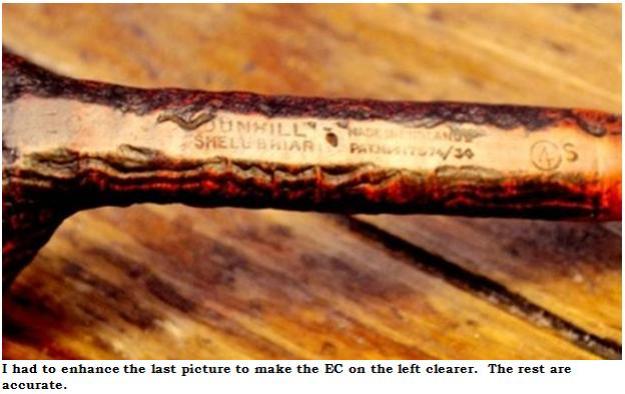
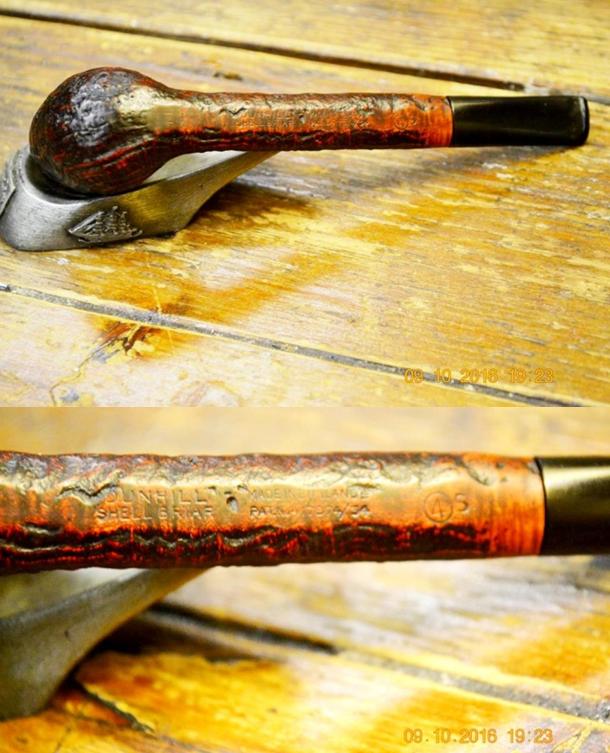
The nomenclature on the pipe reads, in capital blocks, EC on the far left of the smooth sitter bottom; Dunhill above Shell Briar; Made in England and a small 4 with a line under it above Patent No. 417574/34, and then to the far right, a circled 4 with an S. I have since learned, or come to believe from the veracity of certain sources, that EC is Dunhill’s way of indicating the pipe is a 5½″ Canadian; Shell is the type of finish characterized by deep, rugged sandblasting and a black stain, and the circled 4 with an S is a combination bowl size (running from 1-6) and group code, seeming to indicate in this case a Shell. I also was informed that 1954 was the last year of the Patent nomenclature and the same year Shell was replaced with Shell Briar.
Somewhat late, to be sure, I came to the conclusion the Patent might be British. I found the Espace.net link for the European Patent Office shown in the sources below, and had no trouble locating the Patent No. GB417574, granted October 8, 1934. From this research, it wasn’t difficult to understand the /34 represents the year the proprietary rights were granted to Dunhill for the special tube system within the bit and shank and extending to the mortise hole, and not the year of manufacture. Steve was good enough to explain something, the answer to which I suspected, when he clarified that “aligned with,” in respect to the words Dunhill and Shell, means beside and not above and below. As it turned out, therefore, mine was not aligned. This is central to dating the Dunhill.
Therefore, following the flowchart shown at the first source link below, I answered yes to the pipe having a suffix and Patent Number and then clicked on Narrow Down Your Dating. The next page said at the top, “Your Dunhill pipe has been crafted between 1921 and 1954.” Again I followed the yes line under “The Patent Number is 417574/34,” then (and here is the key to whether the pipe was made c. 1940 or c. 1950) no to “Dunhill stamping over London or Dunhill stamping aligned with Shell.” This led down to Dunhill suffixes 2-4, and mine being the little 4 with a line under it, the chart led to the bottom line: 1950 + suffix, making the year of manufacture 1954. I tell you, this has to be the most clandestine dating system I have encountered, reminiscent of the sort of codes and tradecraft of MI6, or what Le Carré called by a more apt name, the Circus. But I found my year of manufacture at last.
A couple of days ago, double-checking my course through the flowchart, I came across a blog by Steve, called “Reflecting on My Dunhill Collection,” from two years ago. My conclusion was vindicated by the following photos of his “ultimate pleasure” from one batch of pipes he received, a 1954 Dunhill Canadian identical to mine.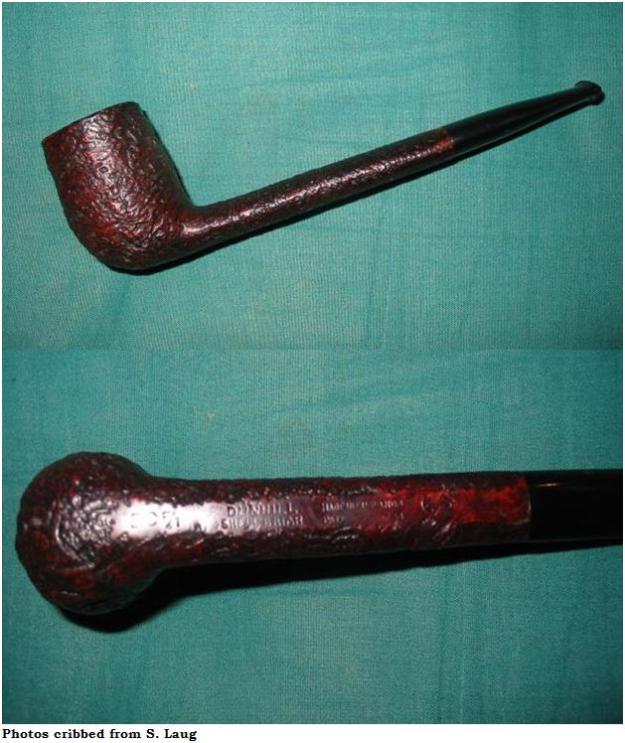 Having emailed Steve the updated result from the flowchart, I read his response within seconds after copying and pasting the photos of his pipe above: “That is my birth year pipe…what does it look like?” I referred him to his own blog and inserted the two pics of the twins above, adding that they are identical except for a lighter shade I gave mine.
Here is a copy of GB417574. 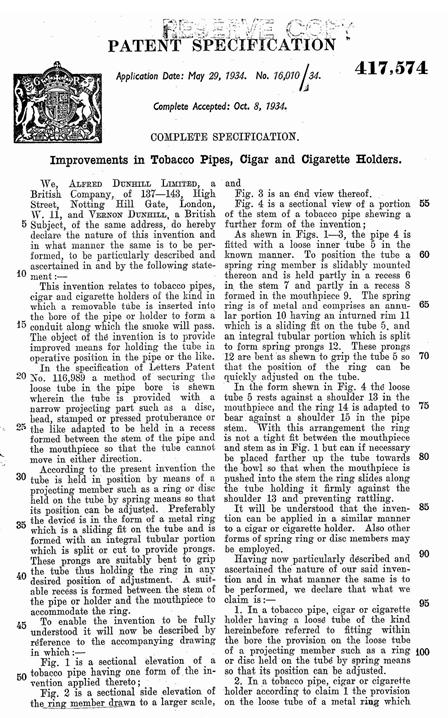
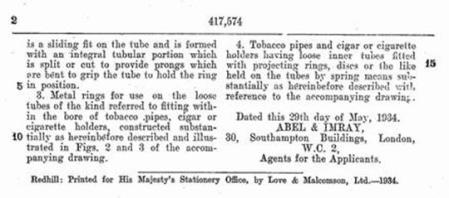
 The Patent is fascinating on several levels, some of which will be described later. Of particular importance to this blog is its detailed description of the system in which an improved, removable metal tube “is inserted into the bore…to form a conduit along which the smoke will pass.” A revised, spring ring to hold the tube in place with better effect than earlier Patents is added to supplement an improvement that was part of another Patent, GB116989, requested along with this one but granted the next year.
The version in the 1954 Canadian has two tubes and rings, one pair in the shank and leading to the mortise and the other within the mouthpiece and the rest of the bit. These innovations are not only clever but quite durable and effective, and the tubes can be seen with close scrutiny within the openings of the push tenon and shank. The most amazing aspect of the invention is the tiny size of its pieces that somehow fit the slim bit and shank of the Canadian.
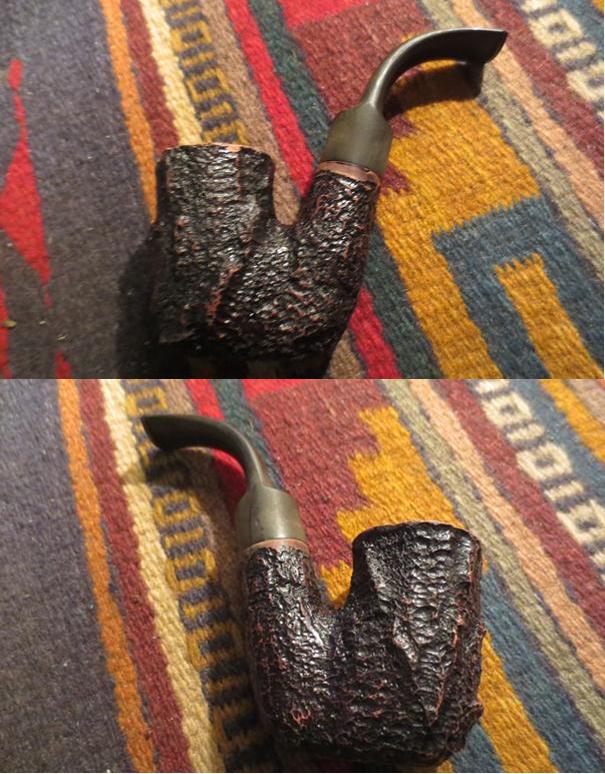
The pipe was in great condition when I received the gift.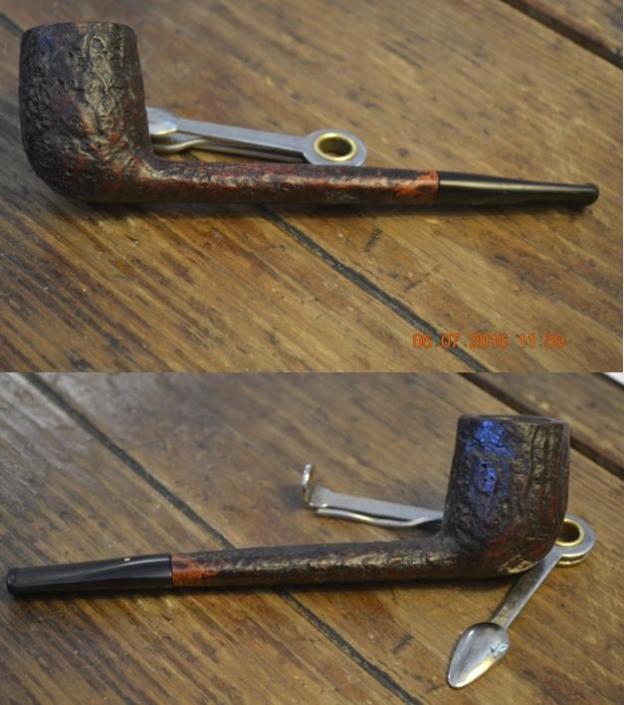
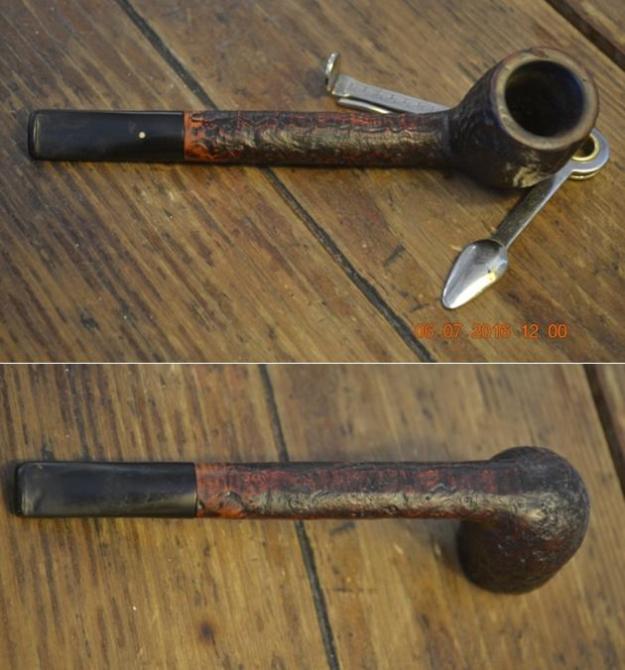
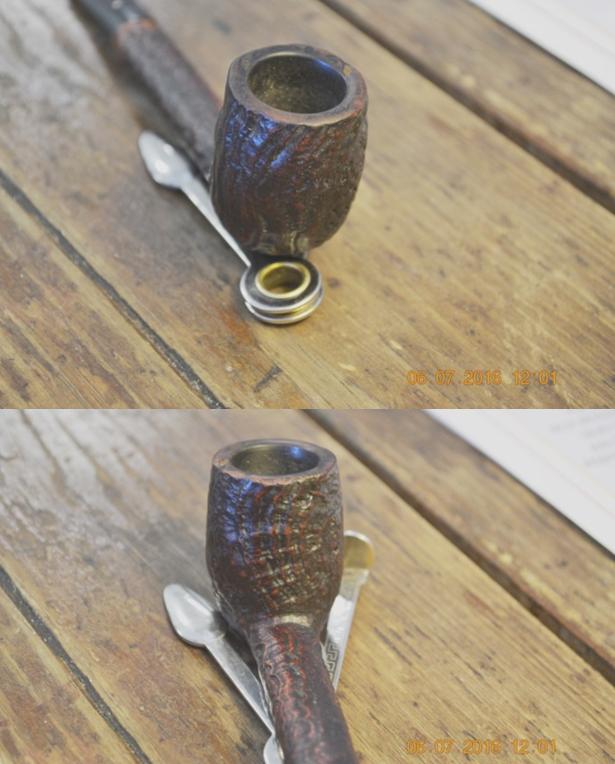
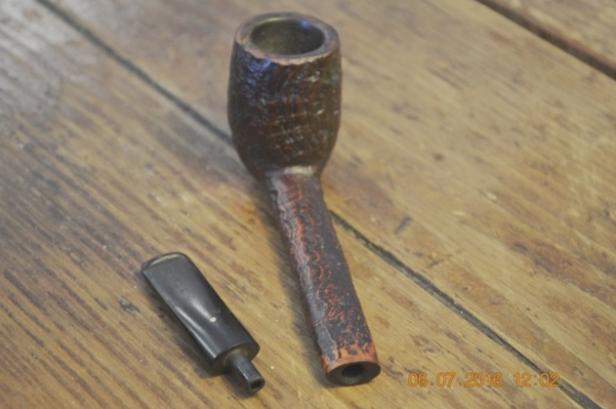
 To start the restore, I went at the rim with 220-grit sandpaper because of some dings that were too deep for micro mesh or even very fine paper. Even so, more work was needed later, as will be shown. Then I reamed the chamber and sanded it smooth with 180- and 320-grit paper and wiped the exterior using a soft cotton gun cleaner cloth with a little purified water.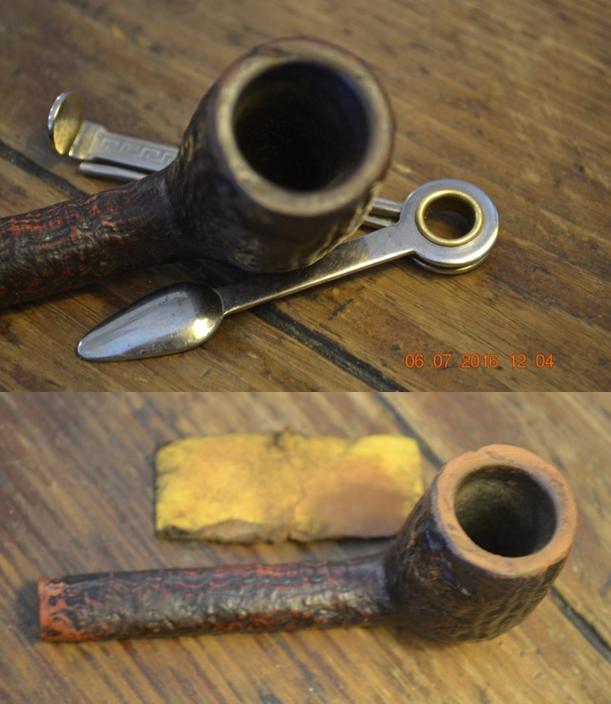
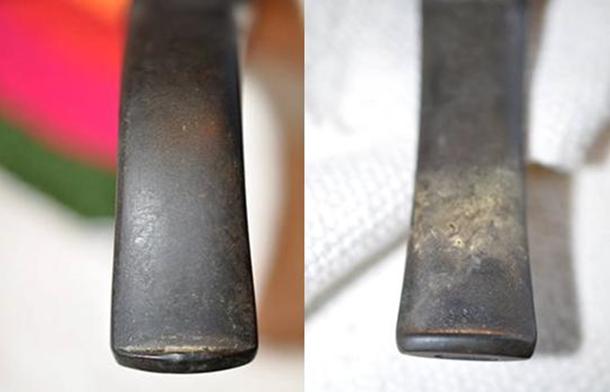
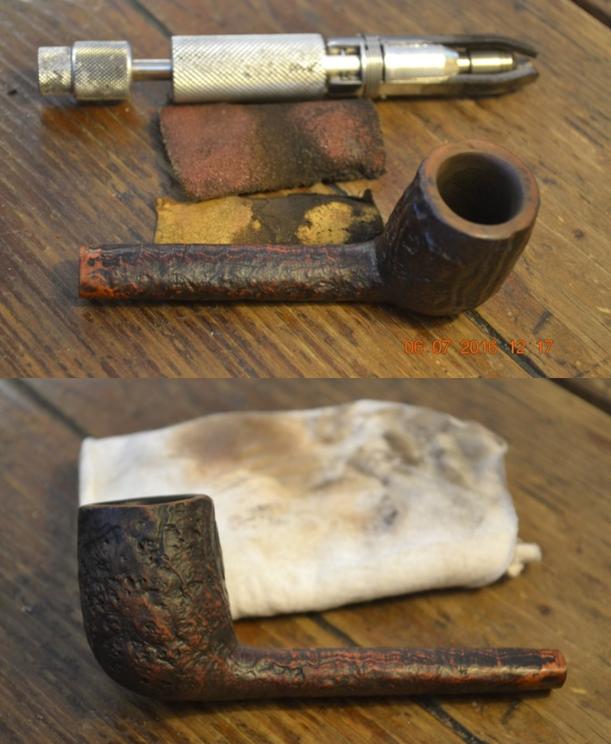 I figured I might as well knock off the bit, which was in good shape but needed some quick work with the only viable micromesh kit I had at the time. This was only last June, but my old set of usual pads was decimated and not yet replaced.
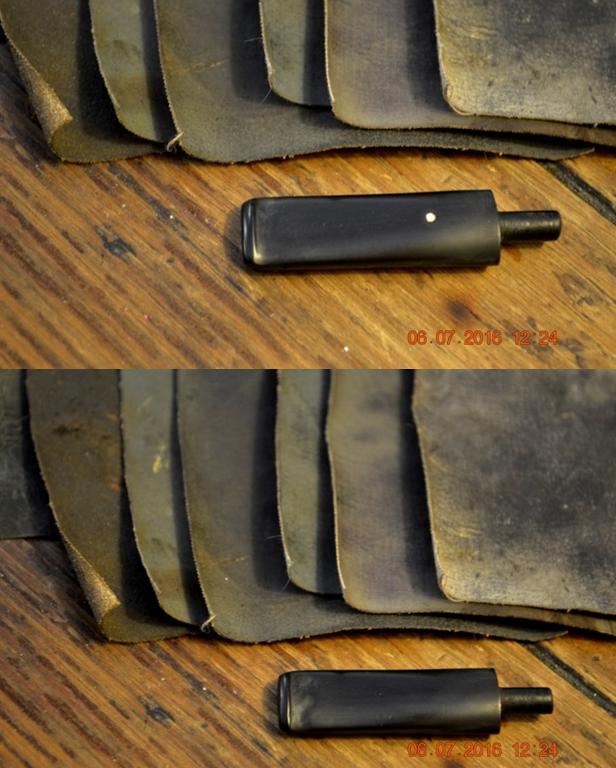 Retorting the pipe, I decided to take off a little of the darker color to show more of the natural rust hue of the briar, using super fine 0000 steel wool.
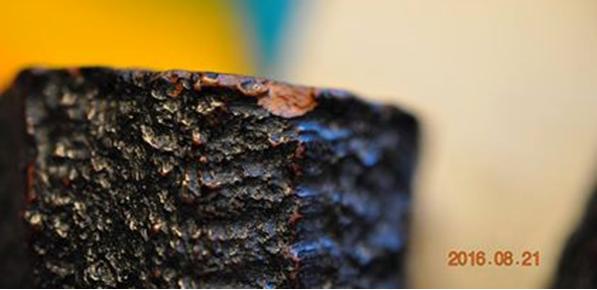
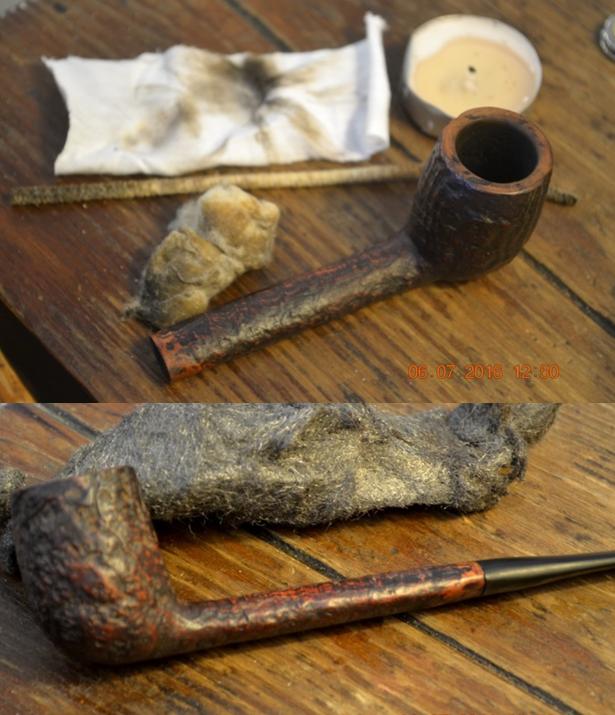 I re-stained the rim with Fiebing’s Medium Brown alcohol-based boot conditioner, flamed it with a Bic and micro meshed off the thin coat of char with 800 and 12000.
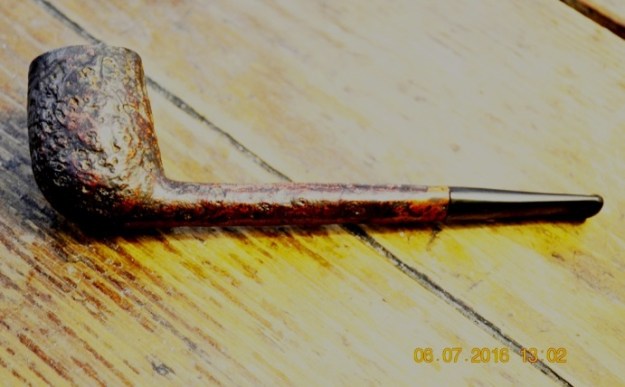
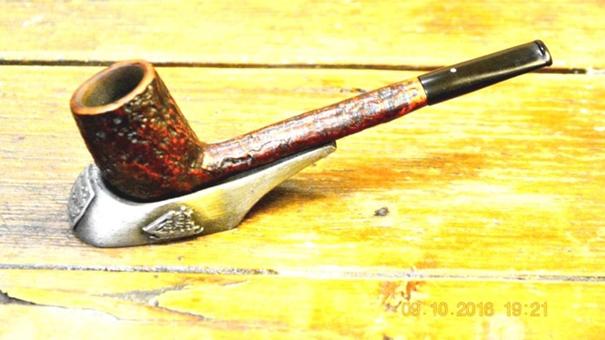
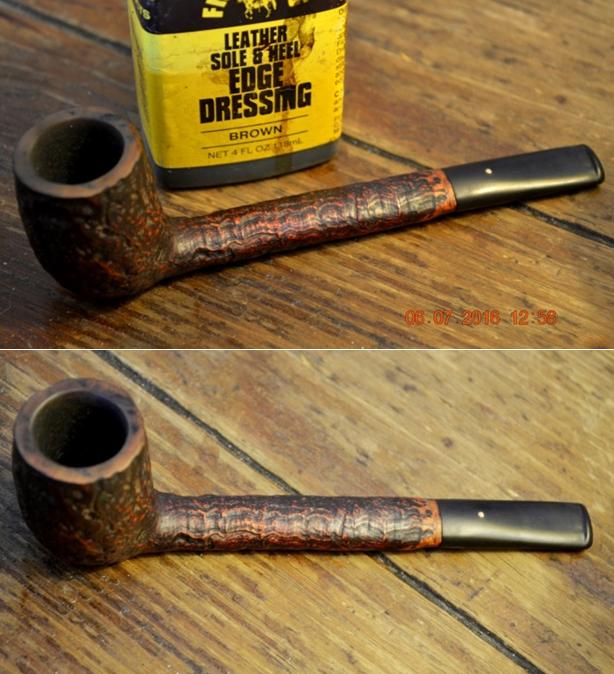 The touch-ups above were made June 7. I revisited the Canadian after transferring all of the photos so far, as well as seven more of the “finished” pipe, from my DSLR memory stick to the computer. Next is the left side view as it appeared two months to the day later.
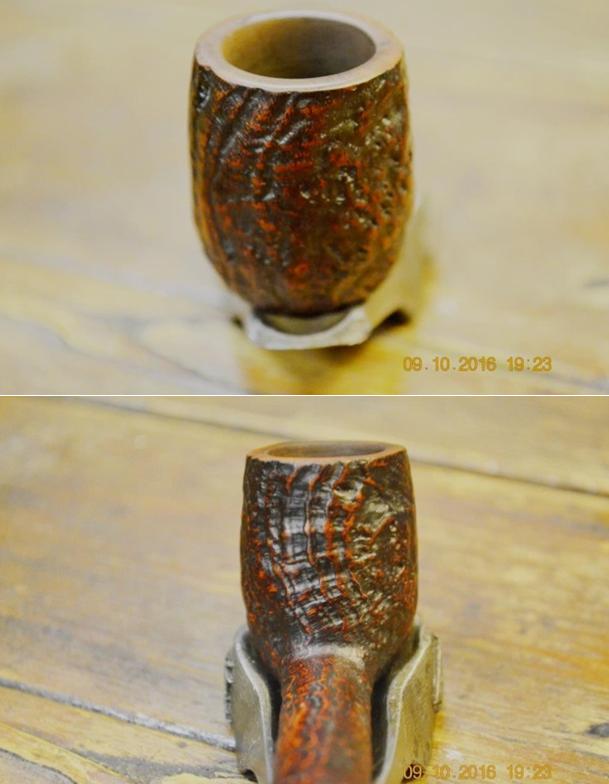
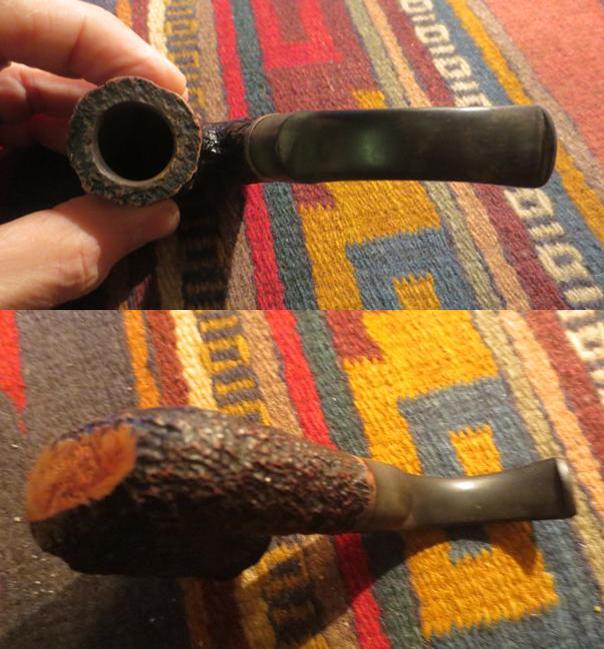
 I should have kept the original top view from when I thought the work was complete in July. As I did not, you’ll just have to take my word that the rim work was, I must confess, sloppy. And so, here is the rim after sanding again, with 180- and 320-grit papers, micro meshing all the way, staining with the medium brown and flaming it again, and micro meshing off the thin band of light char with 4000, 8000 and 12000 micro mesh once more.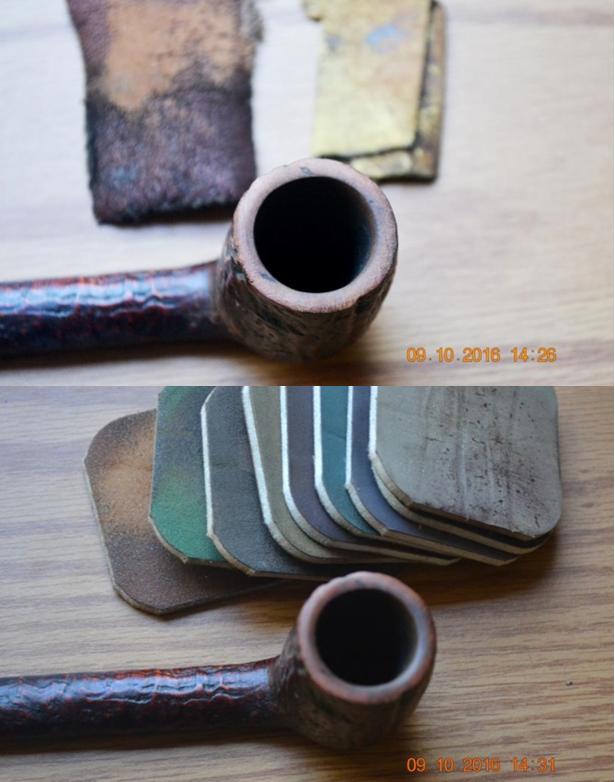
 The true finishing touches were adding a thick coat of Halcyon II wax, setting the stummel aside for a half-hour and buffing on the clean electric wheel as much of the wax as possible into the wood while removing the excess.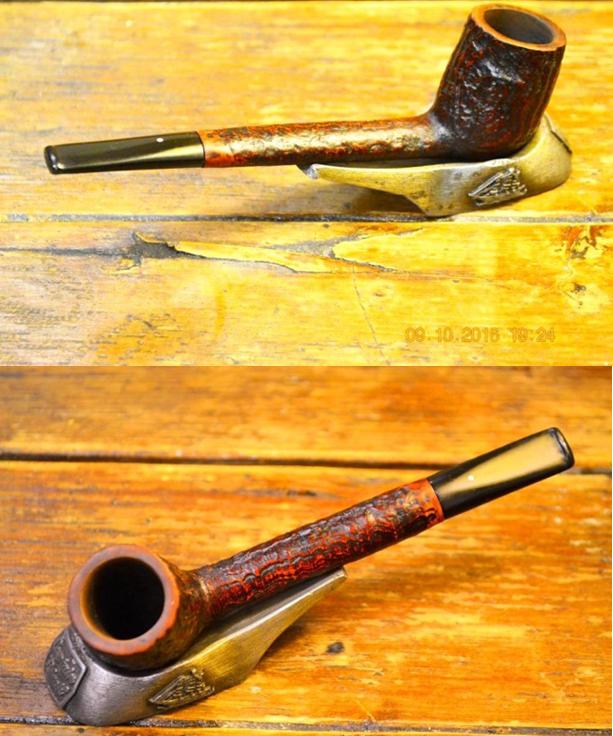
 The Patent, again, is an engaging document. In fact I consider the text worth reading despite its detailed description that is styled in universal Patent-ese. Somehow this Patent, among the millions of sterile, lackluster examples that tend to put most unaccustomed readers to sleep, shines with refined elegance one would expect only from the British. The just-more-than-one-page of text as well as the drawings have a secure place in pipe history. And then there are the little touches to enjoy For example, easy to miss, with the eyes scanning and expecting to read “shown,” is the repetition of the antiquated (chief. Brit., as the staid but thorough Oxford English Dictionary might add) “shewn.” Still more overlookable is the typical economy of language displayed in the first paragraph, referring to “We, Alfred Dunhill Limited, a British Company, of 137-143, High Street, Notting Hill Gate, London, W. 11, and Vernon Dunhill, a British Subject, of the same address….” At last, seen only by the greatest of Anglophiles, is the printer’s credit that states:
“Redhill: Printed for His Majesty’s Stationery Office, by Love and Malcomson, Ltd. – 1934.”
Redhill is a U.K. town next to Surrey, south of London. Love and Malcomson Ltd. was a British printer and later book publisher established in 1901 and lasting until 1983, when it was dissolved. The reference to His Majesty at the time of printing was King George V (r. 1910-1936). Easy to forget are the other His Majesties during Love and Malcomson’s illustrious time: prior to George V, King Edward VII (r. 1901-1910); King Edward VIII (r. 1936), until he became the only monarch in British history to abdicate – for the woman he loved – and King George VI (r. 1936-1952) of “The King’s Speech” fame.
And then, of course, there is Queen Elizabeth II (r. 1952-present), to whom Love and Malcomson was a loyal British Company for the first 31 years of her monarchy that has so far lasted 64 years, the longest of any British sovereign.
I’ll finish up with a fascinating tidbit about Dunhill history, what Saturday Night Live might have called a “Deep Thought by Jack Handy.” I never even considered the origin of the now famous White Dot atop Dunhill pipe stems. Then one day my research took me to a Pipedia page with a time line. Among the long list of dreary, bygone dates and facts, I came across this single, novel and somewhat sad bit of intelligence: in 1915, five years after the company formed, Alfred and his advisors came to the bright idea that their customers should be given some help whilst reattaching the bit, like, I suppose, after removing it to clean. I can’t with honesty know what they were thinking. But anyway, that conundrum gave birth to the now revered single White Dot – so that Dunhill buyers everywhere might know which side of the stem goes on top! I don’t know about the rest of you, but I find this reasoning behind the White Dot somehow discouraging, disappointing and downright depressing. I mean, did Alfred Dunhill Limited, the mighty British Company, get so many complaints about which side was up to conclude its loyal fans must be stupid? And were they maybe really that dense? The whole thing is just too much for me. My deepest thoughts on the meaning of the mysterious single White Dot have been dashed forever. I think I need to take a nap now, as the melancholy Jack Handy would do. 
SOURCES
http://www.pipephil.eu/logos/en/dunhill/cledat-en1.html
http://www.rdfield.com/Articles/A%20Dunhill%20Pipe%20Dating.htm
https://rebornpipes.com/2012/11/01/dunhill-pipe-shapes-collated-by-eric-w-boehm/
https://pipedia.org/wiki/Dunhill#Shell
http://www.loringpage.com/attpipes/dundate.htm
https://rebornpipes.com/2014/03/23/reflecting-on-my-dunhill-collection/
http://www.epo.org/searching-for-patents/technical/espacenet.html#tab1
https://worldwide.espacenet.com/publicationDetails/originalDocument?CC=GB&NR=417574A&KC=A&FT=D&ND=3&date=19341008&DB=en.worldwide.espacenet.com&locale=en_EP
https://worldwide.espacenet.com/publicationDetails/biblio?FT=D&date=19341008&DB=en.worldwide.espacenet.com&locale=en_EP&CC=GB&NR=417574A&KC=A&ND=4
http://www.cooperativepatentclassification.org/cpc/scheme/A/scheme-A.pdf
http://www.pipephil.eu/logos/en/dunhill/cledat-en1b.html
https://companycheck.co.uk/company/00070719/LOVE-AND-MALCOMSON-LIMITED/companies-house-data
https://en.wikipedia.org/wiki/English_and_British_monarchs_family_tree_(simple)
https://pipedia.org/wiki/Dunhill
http://www.historyonthenet.com/monarchy/timelinetwentiethcentury.htm

 He took some close-up photos of the bowl, the stamping and the GBD roundel in the stem. The first photo shows the rim damage and the thick cake in the bowl. The cake was hard and gritty. The overflow onto the rim was also thick and hid the bevel. The stamping on the left side of the shank was faint but I could read it with a loop and it said GBD in an oval with New Standard stamped below that. The roundel on the stem was in excellent condition.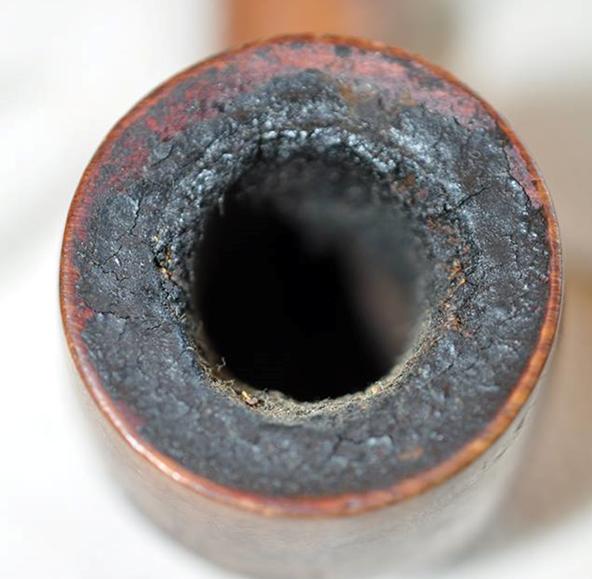
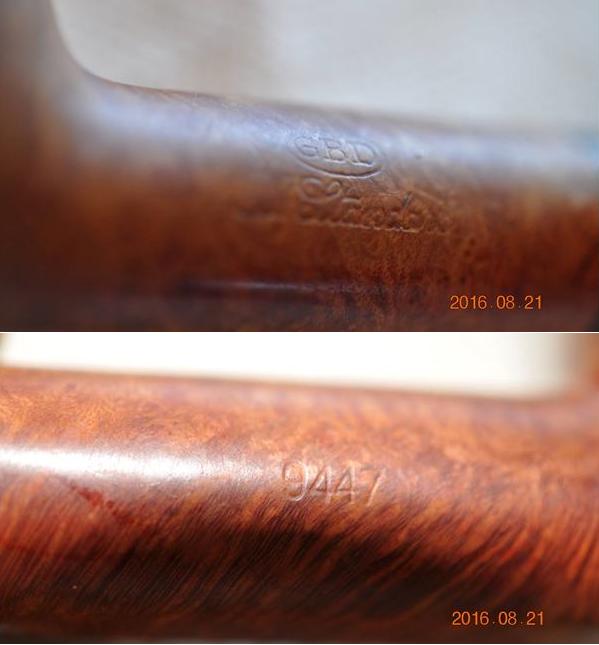
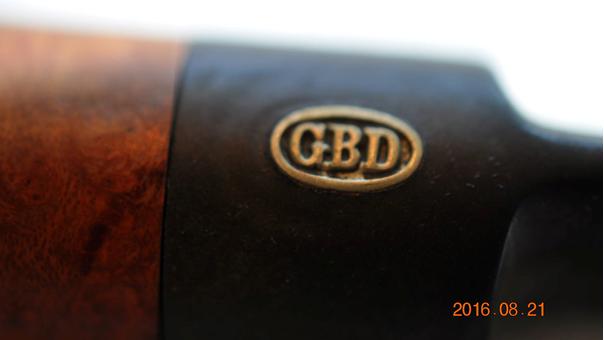 My brother reamed the bowl with a PipNet reamer and took the bowl back to bare briar. He scrubbed the externals with a tooth brush and Murphy’s Oil Soap and was able to remove the finish. The cake on the rim came off well. The finished stripped off to bare briar. He scrubbed the internals as well. The stem cleaned up nicely. The next photos show what the pipe looked like when it arrived in Vancouver.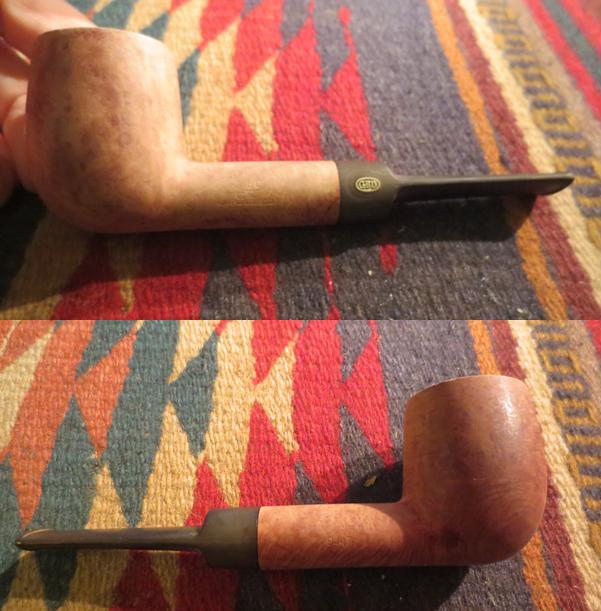
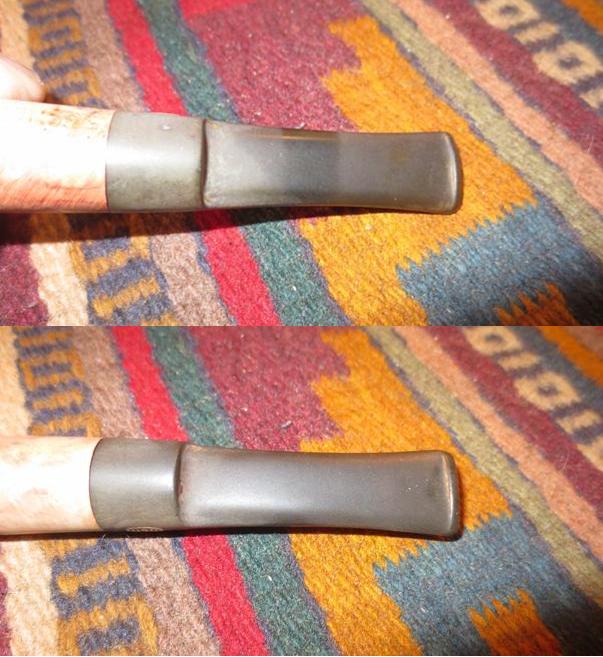
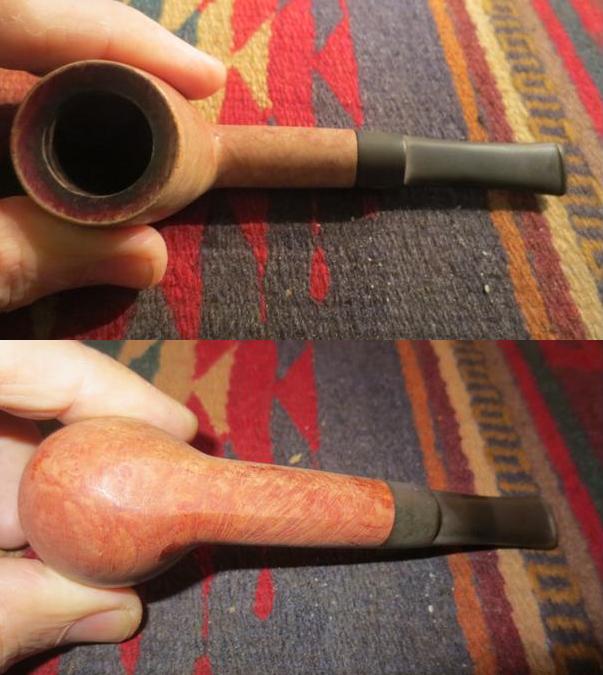 The stem had some oxidation but there were no tooth marks or tooth chatter on the surface of the stem.
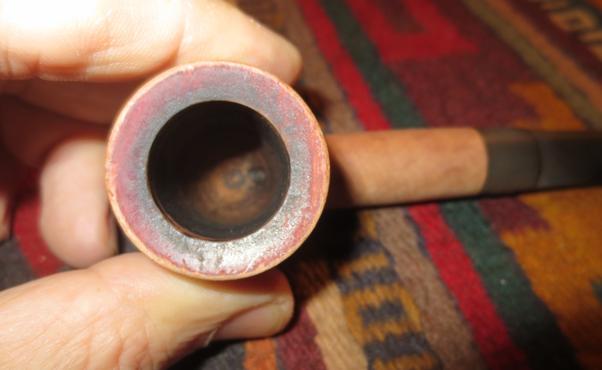
 In the photo below you can see that some of the finish on the rim did not come off with his scrubbing.
 I scrubbed off the surface of the bowl with acetone on cotton pads. I worked on the rim top to remove more of the hard cake that remained.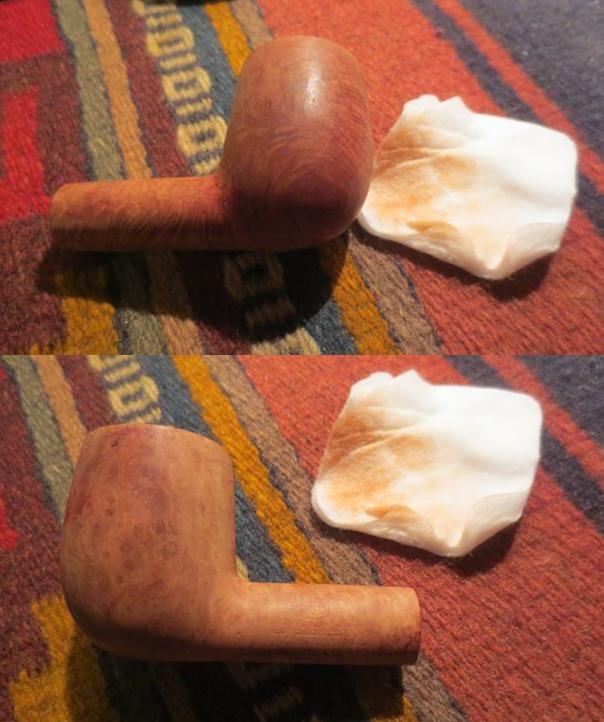
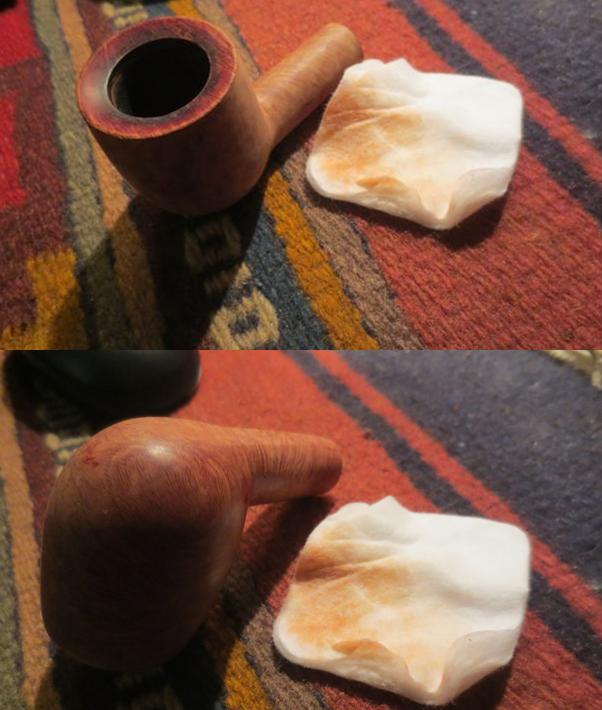 I sanded the rim with 220 grit sandpaper and scrubbed it some more with the acetone and I was able to remove all of the buildup and the stain from the rim.
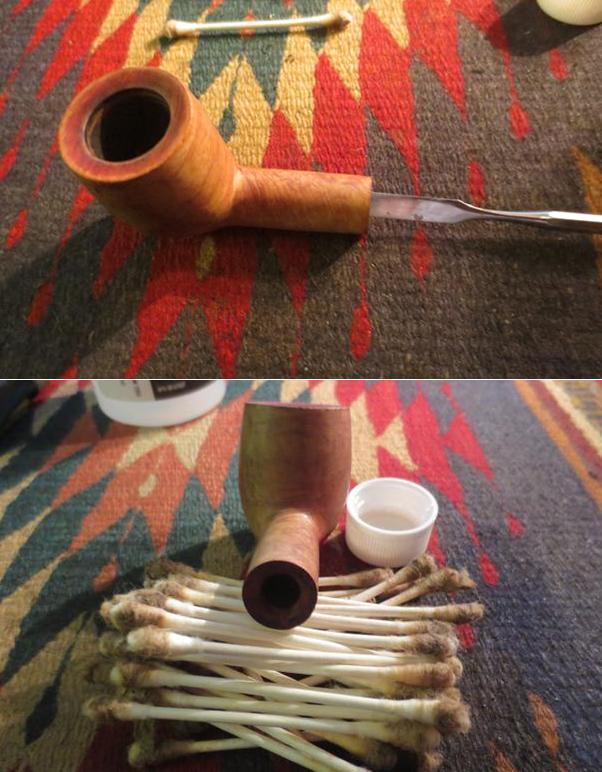
 I ran a pipe cleaner through the stem and it came out clean. I ran it through the airway to the bowl and rand some cotton swabs in the mortise. There were some ridges in the shank so I used a dental spatula to scrape out the inside of the mortise walls. I then scrubbed it again with alcohol, cotton swabs and pipe cleaners until the internals were clean.
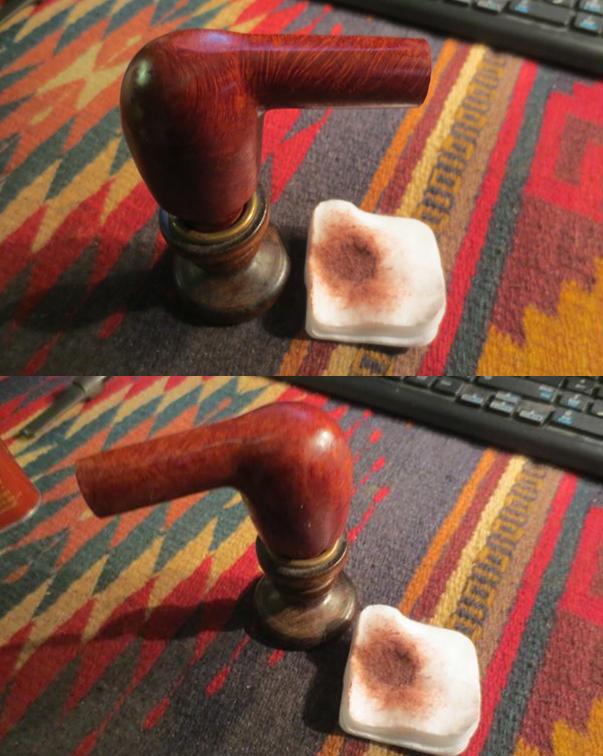
 I wiped down the surface of the bowl with alcohol and then gave it several coats of Cherry stain in Danish Oil. I set the bowl aside to dry. The photos below show the new stain and the colour of the bowl once I was finished.
 I hand buffed the bowl with a microfibre cloth and gave it multiple coats of Conservator’s Wax. I buffed it with a clean buffing pad to raise the shine. The photos below show the bowl.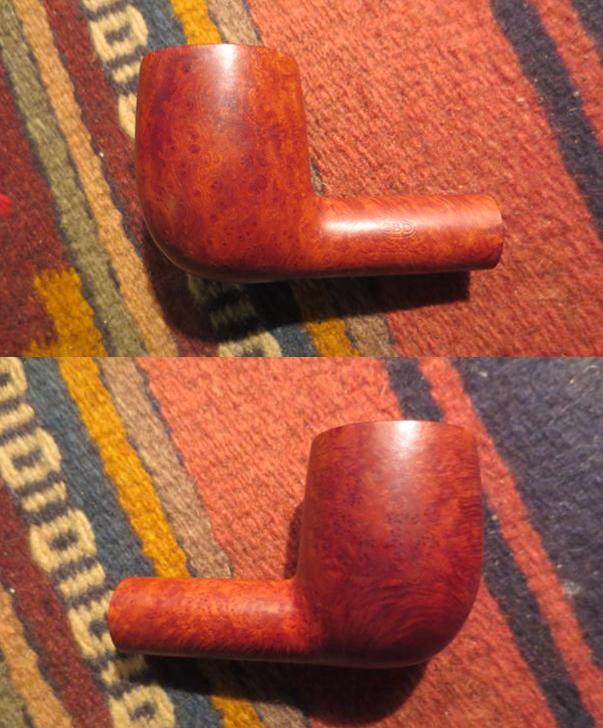
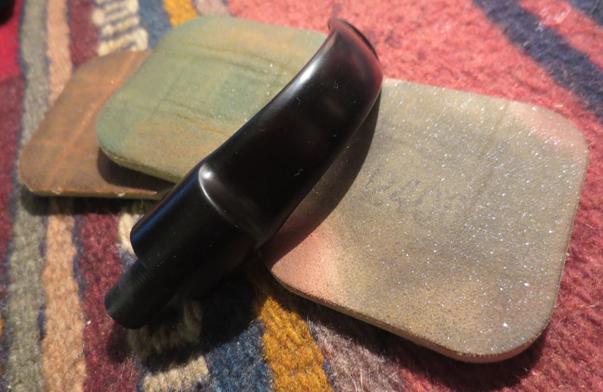
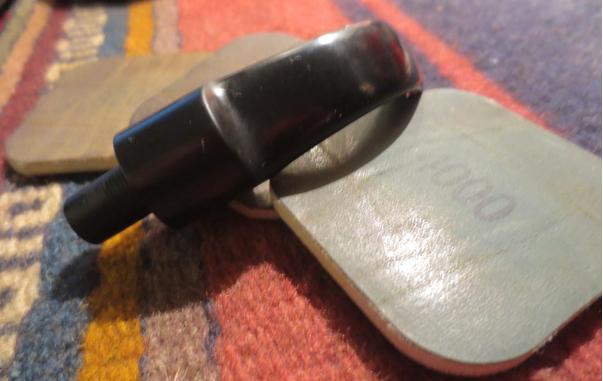
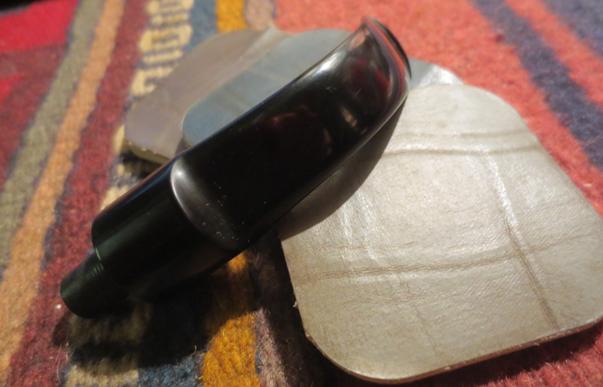
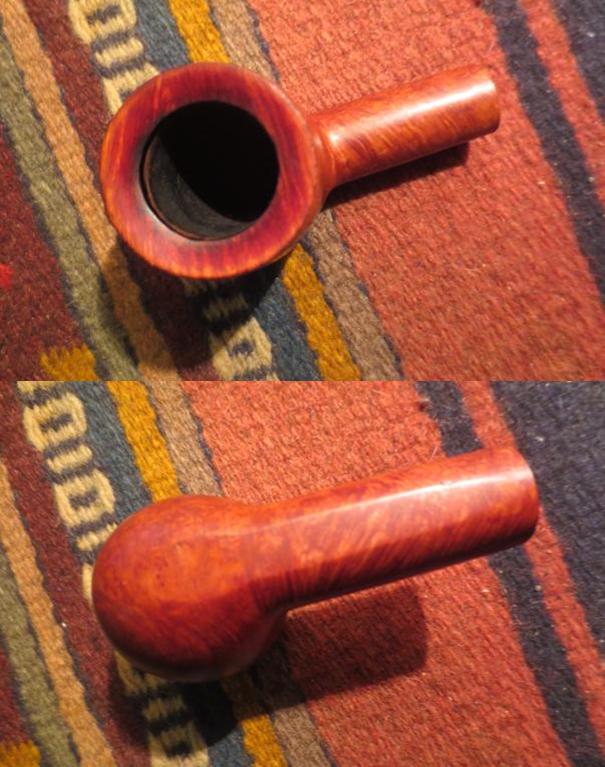 I polished the stem with micromesh sanding pads – wet sanding it with 1500-2400 grit pads and dry sanding it with 3200-12000 grit pads. I rubbed the stem down with Obsidian Oil after each set of three pads. After the last pad I set the stem aside to dry.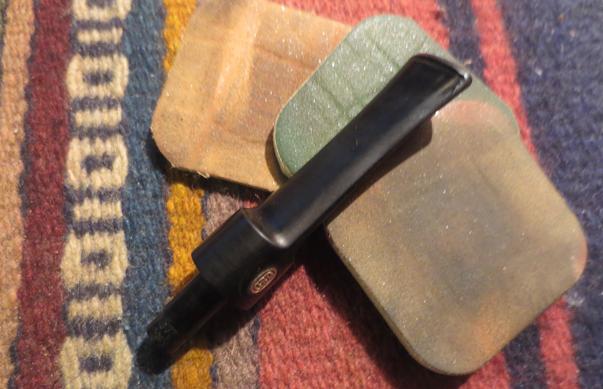
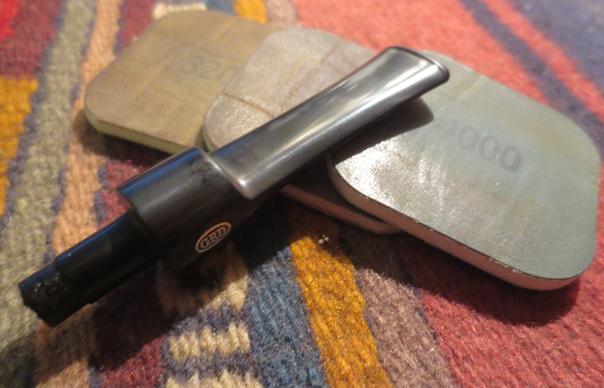
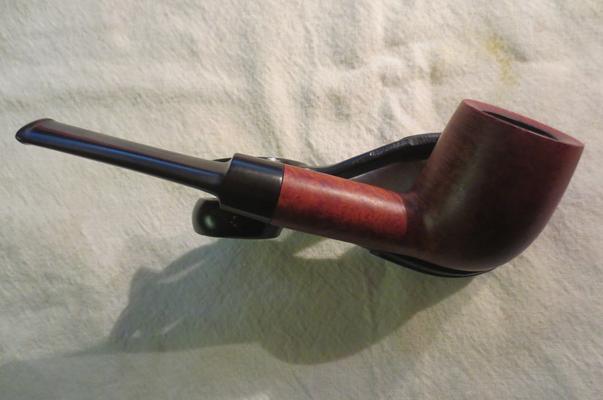
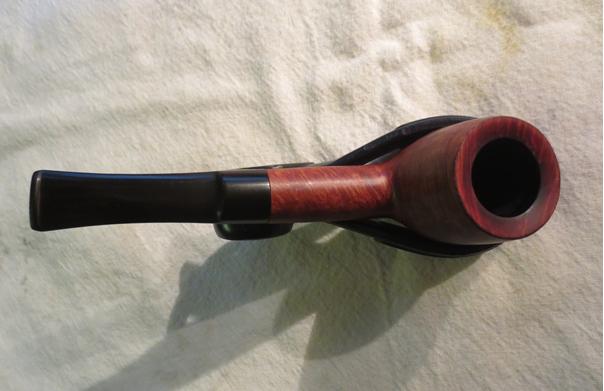
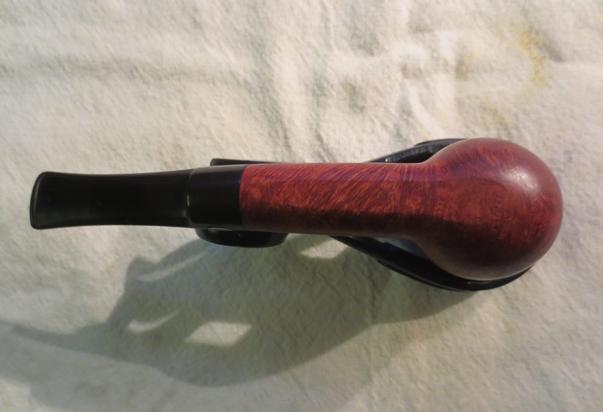
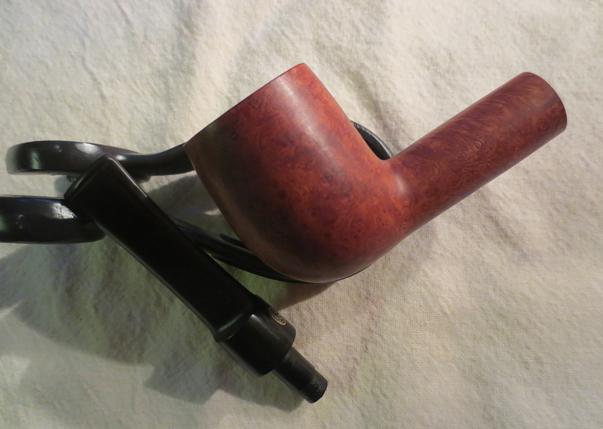
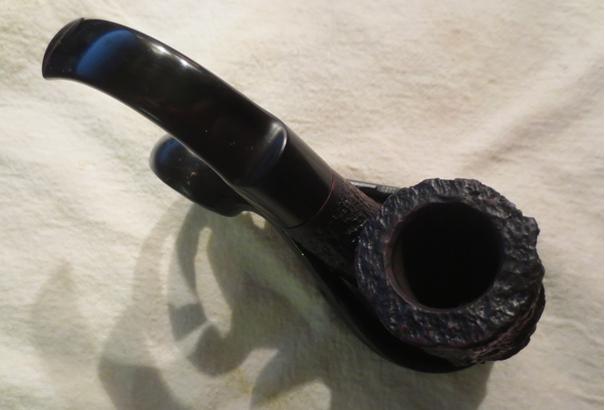
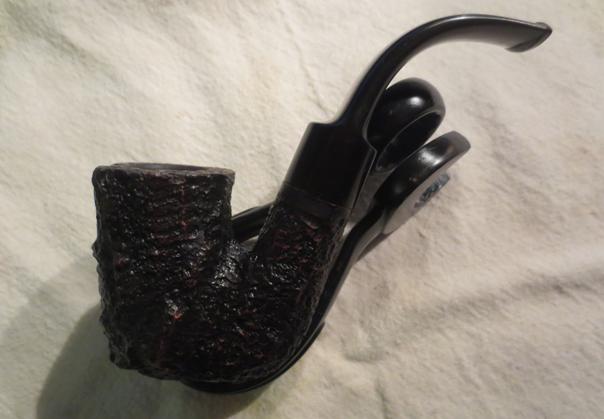
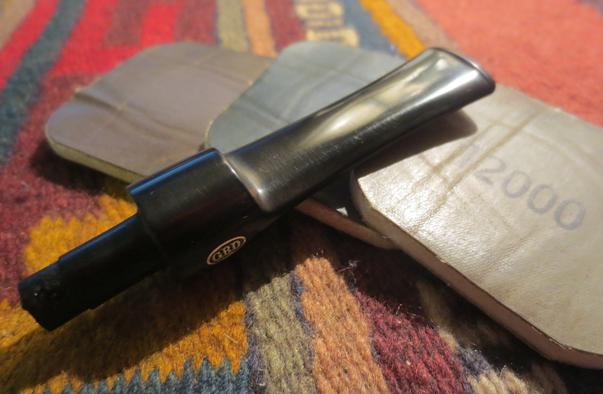 I buffed the bowl and stem with Blue Diamond on the wheel and then gave the bowl and stem multiple coats of carnauba wax. I gave the pipe several coats of carnauba wax and buffed it with a clean buffing pad. I hand buffed the pipe with a microfibre cloth to raise the shine. The finished pipe is shown in the photos below. It is a beautiful thick shanked pipe that is great in the hand. It should be a great smoking machine. The pipe will make a great addition for someone’s pipe rack. It is available if any of you wish to pick it up. Send me an email at slaug@uniserve.com or a message on Facebook and we can work out a deal.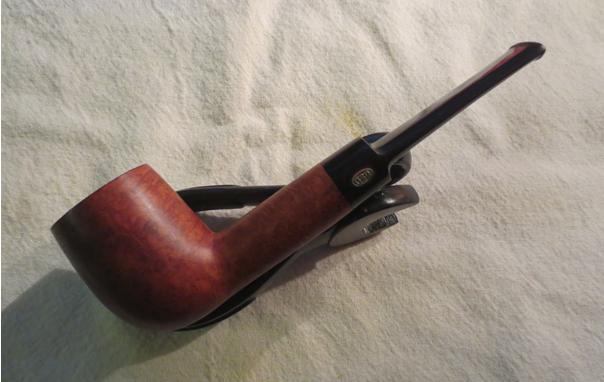













 rebornpipes