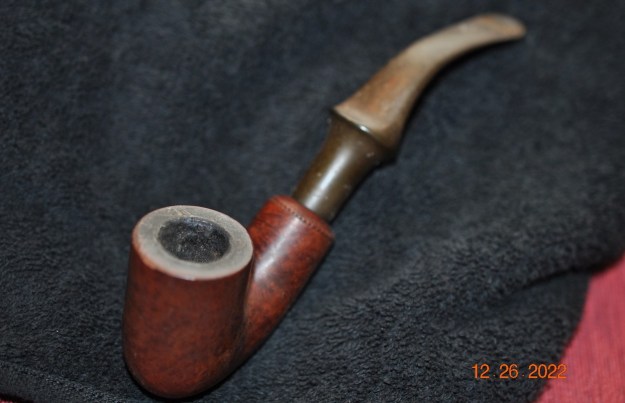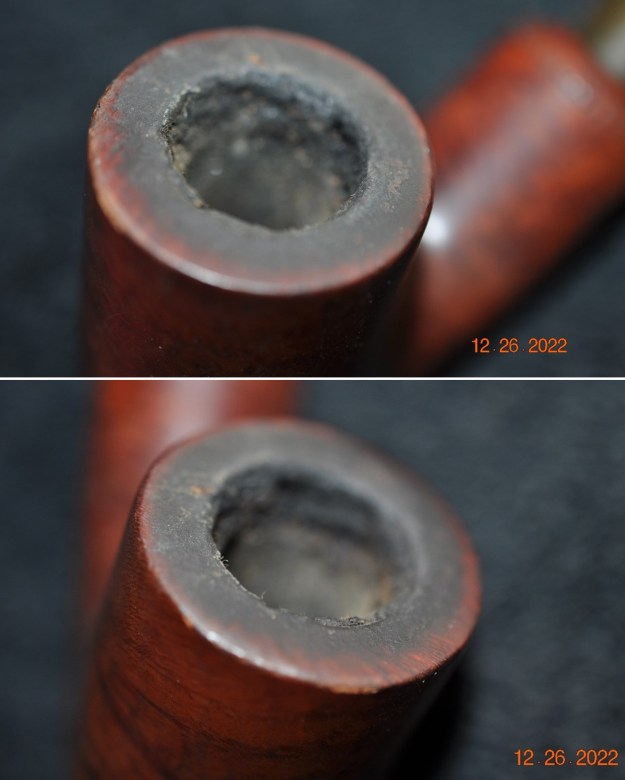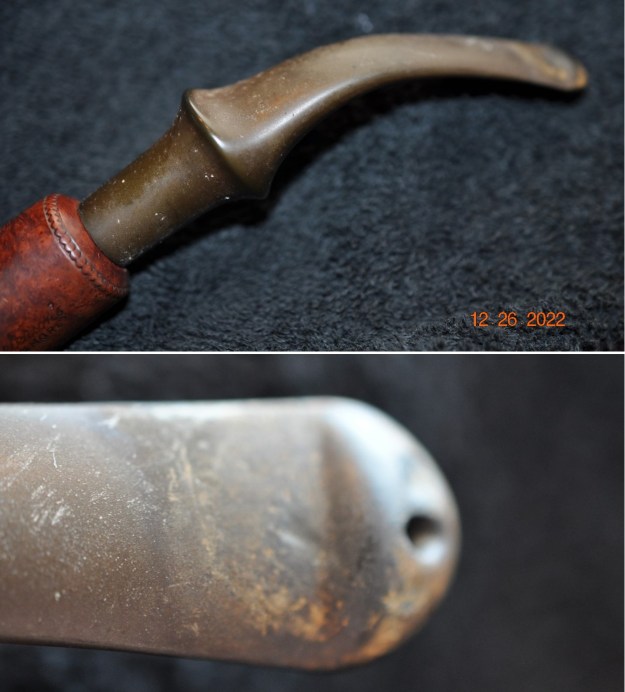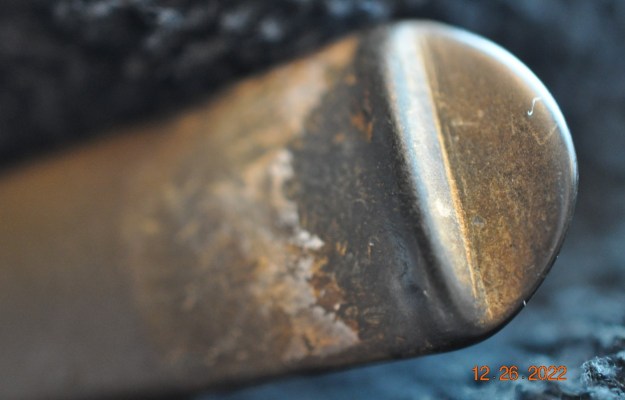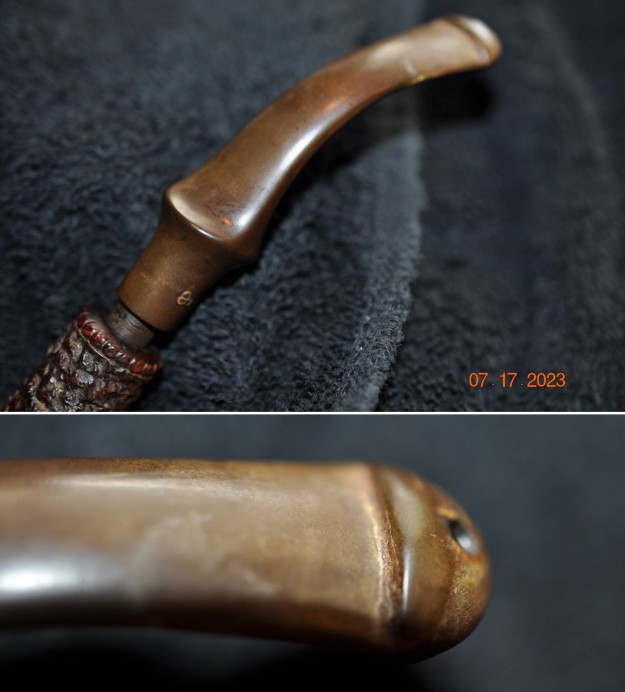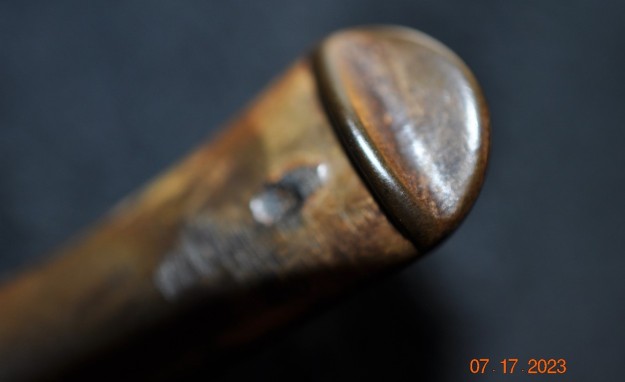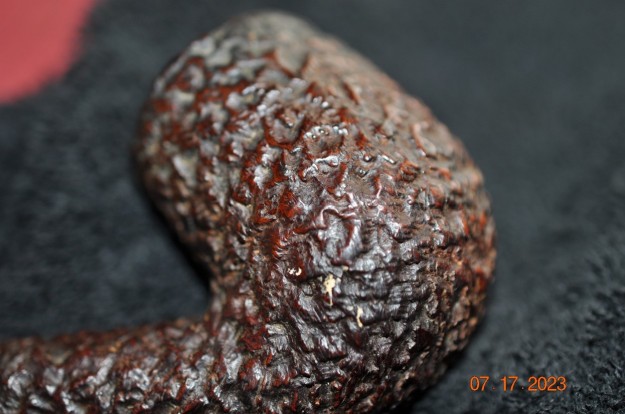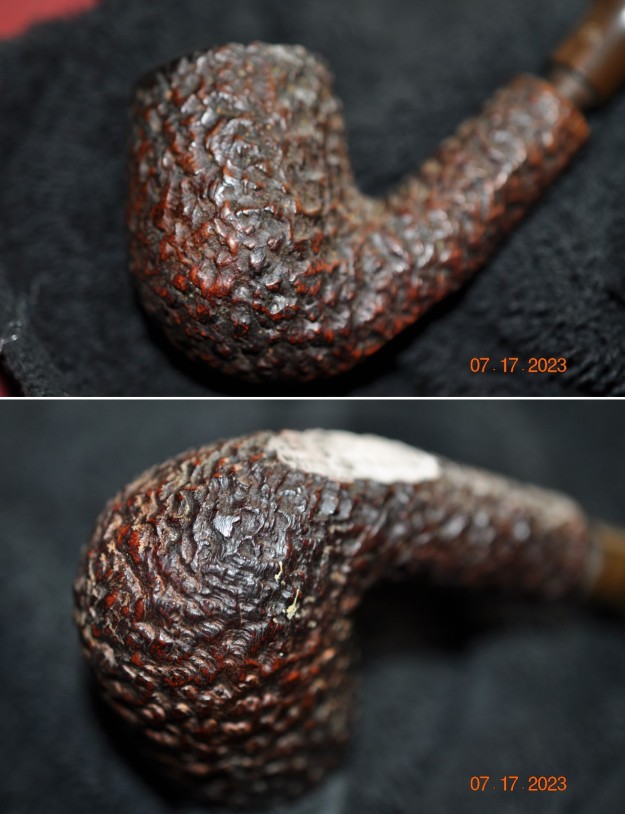
Tag Archives: vulcanite

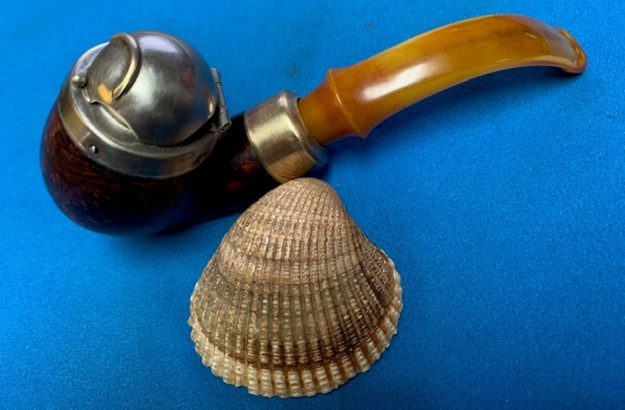
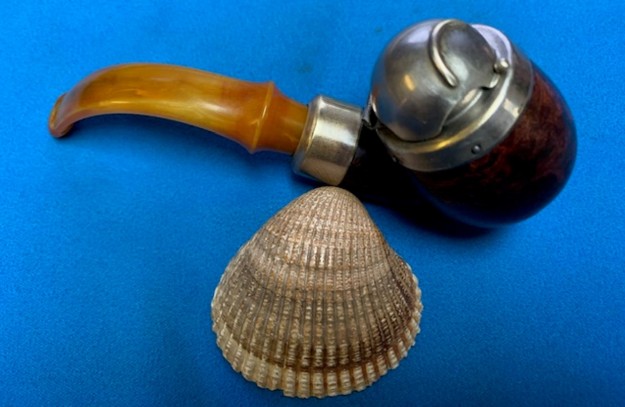
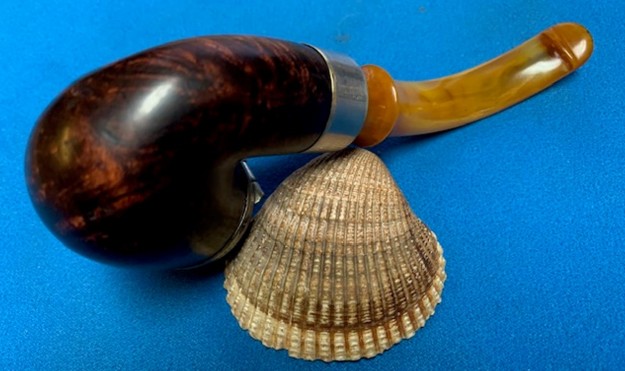
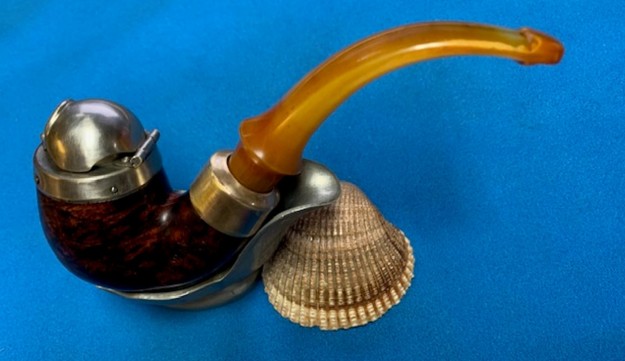
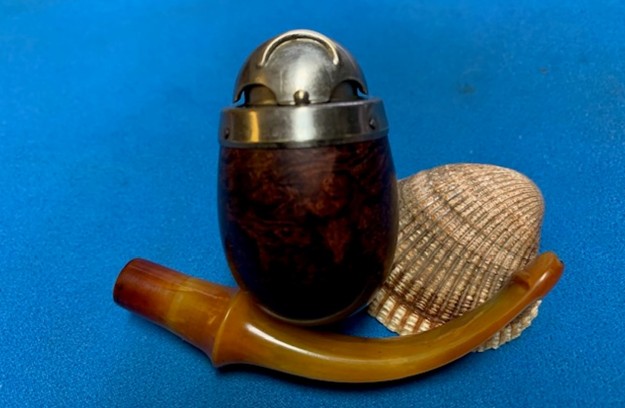
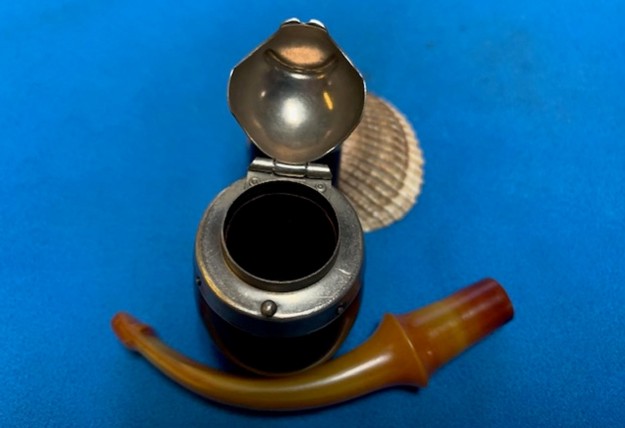
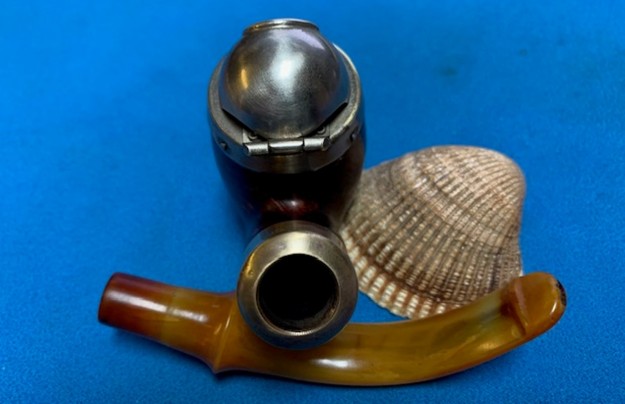
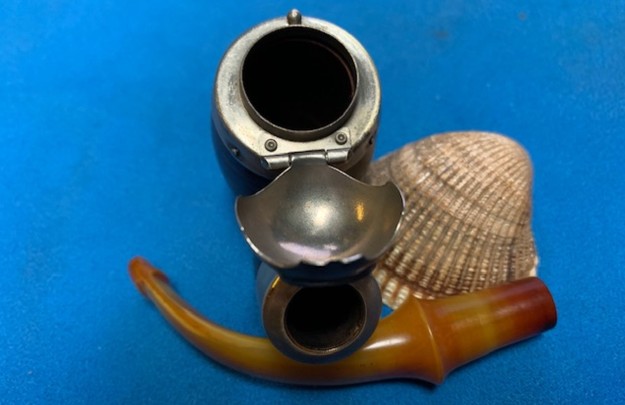
Putting Grandfather’s Genuine Amber Stemmed Meerschaum Bulldog back together again


Blog by Steve Laug

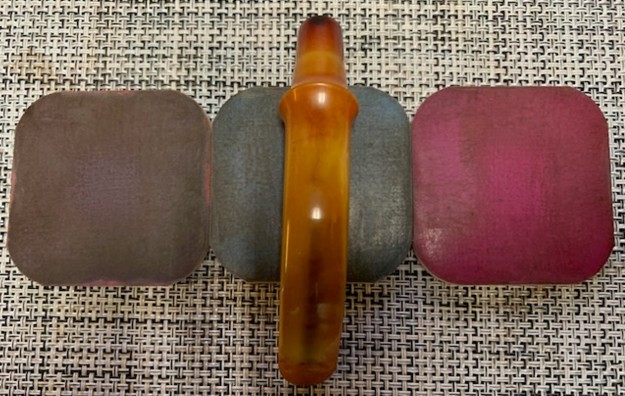
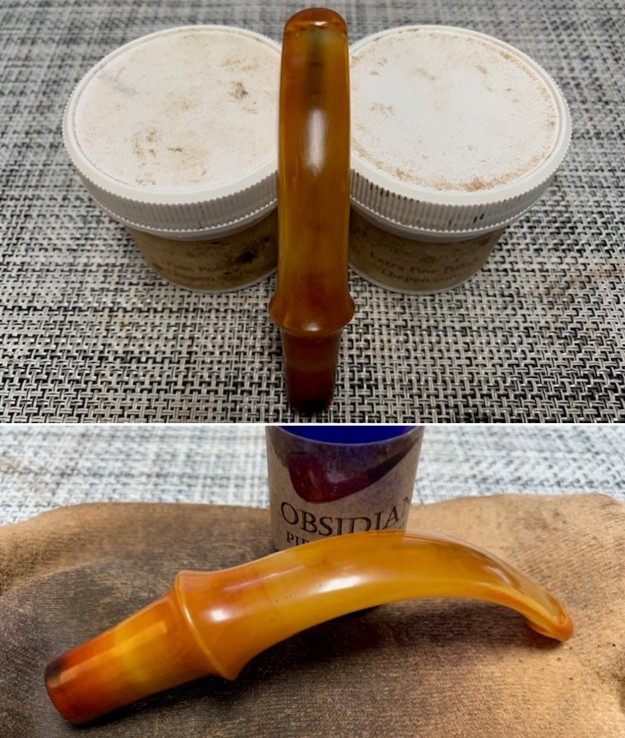
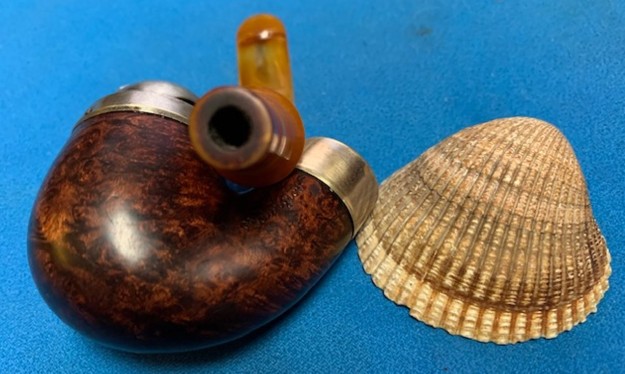
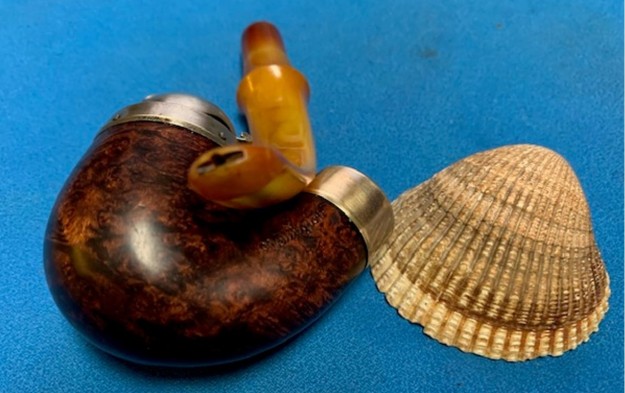
I decided I needed a change of pace in my restoration/clean up work. I went through my pipes waiting in the queue and chose the last one from a group of four pipes that were given to us by a woman in Columbus, Ohio, USA. It had belonged to her Grandfather who lived from 1882 to 1977. There were four pipes that she sent us from his estate – the metal bowled apple, a cased meerschaum Bulldog with a broken amber stem, a Whitehall rusticated apple and a BBB Glokar Fraternity Pipe.The cased Meerschaum Bulldog is the last of the lot and one that should be fixable and clean up well. I could see that it was an old timer and that it had been one of her Grandfather’s favourites like the other three. The pipe was dirty and well used. The finish had deep grime ground into the smooth meerschaum rim cap and the sides of the bowl. The rings around the cap are dirty with grime in the grooves. It had a moderate cake in the bowl that flowed onto the rim edges and rim top as a thick cake. It hard to assess the inner and outer edge of the rim there were thick spots of grime on the cap and bowl sides that should come off with work. The stem was amber and had been cleanly broken in half about mid stem. It was screwed on to a metal threaded tenon in the shank. It had tooth marks and chatter on both sides ahead of the stem. Jeff took photos of the pipe before he started his cleanup work. He started with the black leather case which was in good condition though missing the pin in one of the hinges. He opened the case and took photos of the pipe sitting in the case. He took a photo of the label on the inside of the case. It read Genuine Meerschaum around the outside of the black and gold octagonal label. On the inside of the label it reads Real Amber.He took photos of the condition of the bowl and rim top. You can see the cake in the bowl and the lava on the rim top. There are also nicks and scratches around the top and outer edge particular o the front right side of the bowl.He took photos of the broken stem. You can see the break is about halfway down the stem and is clean with no rough edges on the pieces. When the two parts are put together the fit is very clean and smooth. The fit against the shank end is smooth and undamaged. It should clean up well. Jeff also took photos of the tooth marks and chatter on both sides of the stem ahead of the button. They are not deep but are very visible in both photos. Even these marks are not flaking or showing too much depth in the damage.He took photos of the bowl sides and heel to give a sense of the condition of the pipe before clean up. I think it will clean up well. Jeff cleaned up the pipe with his usual regimen and when I received it the bowl had been reamed and washed with Murphy’s Oil Soap and rinsed clean. He was able to remove the lava on the rim and the grime around the bowl. It looked much better. He cleaned out the inside of the shank and stem with alcohol and pipe cleaners. He carefully cleaned the pieces of the broken stem and the fit together was still smooth. The pipe was ready for the next step in the process. I took photos of the pipe when I brought it to the work table. I decided to start my work on this pipe by rejoining the two parts of the stem. I looked at putting a metal tube inside but the amber is brittle and the airway was not big enough to accommodate even the smallest tube I had. I chose inside to glue the parts together with clear rubberized CA glue. I carefully painted the ends of each piece and then pressed them together. They aligned well and I held them until the glue set. I set the stem aside and let the repair cure.I took the family to breakfast and when I returned I put the stem on the shank and took photos of the repaired stem in place. I still needed to sand and smooth out the repairs but you can see the overall look of the pipe.I removed the stem and set it aside. I turned my attention to the bowl. I polished it with micromesh – dry sanding it with 1500-12000 grit pads. I wiped it down after each sanding pad with a damp cloth to remove sanding debris. The bowl began to take on a rich shine. You can see the patina around the bow and the shank. Now it was time to wax the bowl. I melted some beeswax on the stove top and painted it onto the meerschaum bowl. I apply the wax quite heavily as I plan on heating the bowl and wiping it off. I worked it into the twin rings around the bowl cap with the pipe cleaner. I took a few photos of the heavily waxed bowl. I set it aside and called it a night. I would heat and polish it in the morning. This morning I used the heat gun to melt the wax on the bowl. I held it by the metal tenon and carefully moved it over the heat gun. The wax dripped back in the bowl and I also wiped it down with a paper towel. The patina really came alive. You can see it nicely developed on the shank and moving up the bowl sides to the cap. It looks very good at this point and will only look better with buffing and with use. I set the bowl aside and turned my attention to the stem. I used a folded piece of 220 grit sandpaper to blend the repairs into the surrounding amber. I wanted it smooth and with no lumps of glue on the crack or tooth mark areas. I started polishing the stem with 600 grit wet dry sandpaper. I was happy with how the shine was developing.I polished the amber with micromesh sanding pads – wet sanding with 1500-12000 grit micromesh pads. I wiped the stem down after each pad with a cloth impregnated with Obsidian Oil to further polish and give some teeth to the pads. It came out looking very nice. I polished the stem with Before & After Pipe Stem Polish – both Fine an Extra Fine. I rubbed them on with my finger tips and polished them off with soft paper towel. I finished by rubbing the stem down with some Obsidian Oil on a soft impregnated cloth. It looked better.I don’t know how many times I have said this but I love it when I come to the end of a restoration and all of the parts come together and the pipe looks better than when we started the cleanup process. I put the stem back on the Genuine Meerschaum Real Amber Cased Bulldog and carefully buffed the bowl with Blue Diamond on the buffing wheel. I gave the bowl multiple coats of beeswax as shown above and the stem multiple coats of Conservator’s Wax by hand and buffed it by hand with a soft cloth. I also buffed it again with a microfiber cloth to deepen the shine. The finished pipe is a real stunning example of a classic Meerschaum Bulldog with an Amber Stem. It is beautiful and comfortable in hand. There was developing patina around the bowl and shank and was darker on the shank and the rim top. Give the finish pipe a look in the photos below. I can only tell you that it is much prettier in person than the photos capture. The dimensions of the pipe are Length: 5 inches, Height: 1 ½ inches, Outside diameter of the bowl: 1 ¾ inches, Chamber diameter: ¾ of an inch. The weight of the pipe is .95 ounces/27 grams. This meerschaum pipe is a great piece of pipe history that is in great condition. Thanks for walking through the restoration with me as I worked over another beautiful pipe. I will be keeping this one in my collection and enjoying it. Thanks for your time.

As always, I encourage your questions and comments as you read the blog. Thanks to each of you who are reading this blog. Remember we are not pipe owners; we are pipe men and women who hold our pipes in trust until they pass on into the trust of those who follow us.

New Life for a Peterson’s Sterling Silver 999 Rhodesian


Blog by Steve Laug

The next pipe on the table was purchased on 04/11/2023 our contact in Copenhagen, Denmark. It is stamped on the left side of the shank and reads Peterson’s [over] Sterling Filter. On the right side it is stamped Made in the Republic of Ireland (three lines) followed by the shape number 999. It had a Sterling Silver band on the shank that was stamped K&P in shield shaped cartouches. Underneath it was stamped Sterling [over] Silver. Next that there are three silver hallmarks. The first was Hibernia seated, arm on a harp for the country of manufacture. The second was a Crowned Harp designating sterling quality. The third mark was a date stamp and, in this case, a lower-case cursive “p” which dated the pipe as a 1981. Next to that it is engraved Zell am Lee in script followed by the date 1982. It was another pipe that was someone’s favourite. The bowl had a thick cake and lava build up on the rim top. The finish looked good underneath all of the grime and oils that were ground into the bowl sides and heel. The stem was made for a 9mm filter. It had light tooth marks and chatter on both sides ahead of the P-lip and on the underside edge of the button. The “P” stamp on the left side of the stem was clear and just needed to be touched up otherwise it looked good. Jeff took photos of the pipe before he started his clean up work on it. It is another pretty pipe! The next photos show the bowl and rim top as well as the stem condition. The bowl had a thick cake that is very visible. The rim top and edges have a heavy coat of tar. It is hard to know what the rim edge looked like underneath the lava. The rim top also had some darkening. The stem looked good with some tooth chatter and marks on both sides and the button. Jeff took photos of the sides and the heel of the bowl and shank to show birdseye and cross grain around the briar. It is unique and quite beautiful. I can’t wait to see it once it is cleaned and polished. The stamping on the shank sides and the Sterling Silver band was clear and very readable. It read as noted above. The band also has and engraved name and date on the centre of the band around the shank. It is readable and clear. It is a unique name that I am unfamiliar with. The “P” stamp on the left side of the taper stem is readable. I checked on Pipephil’s website to see what I could learn about the stamping on the pipe. I scrolled down the page (http://www.pipephil.eu/logos/en/logo-peterson-rep.html). There was a Peterson’s Sterling on the page and it had similar stamping on the shank though lacking the Filter stamp. I found the following photo of the band that was stamped similar to the one I am working on. The silver bears the K & P stamping like the one I have. Below that it reads Sterling Silver. The hallmarks on this one Are similar to mine other than the date stamp with the one on mine is a lower case “p”.I turned to Pipedia’s article on Peterson pipes to see what I could garner from that information. It is a great read in terms of the history of the brand (https://pipedia.org/wiki/Peterson#1950_-_1989_The_Republic_Era). It is well worth the read.

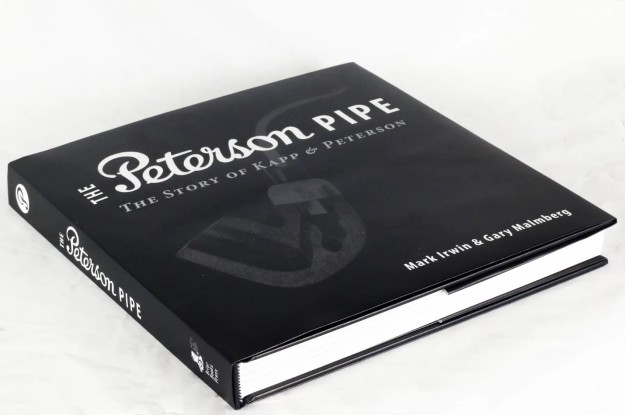
I then turned to the book I should have consulted first, The Peterson Pipe, by Mark Irwin and Gary Malmberg. On page 155 I found some information on the line.

Peterson’s US distributor during the early Republic era was Rogers Imports, Inc., a New York firm whose catalogs offered all varieties of smoker’s products. Rogers was the exclusive wholesale dealer for several prominent European pipe manufacturers, they also marketed accessories under their own name. On behalf of Kapp & Peterson they registered the Killarney, Shamrock and Sterling trademarks with the US Patent Office in the 1950s, and their catalogs also featured the System, Premier Selection and Supreme.

On page 156-157 in the same book there is a catalogue page with the Sterling shown on it. It sold for $7.50 in 1953. It read:

As the name implies the Sterling quality of this fine pipe is distinguished in a careful selection of its fine Mediterranean Bruyere, its careful workmanship and sparkling finish. Banded with a Sterling Silver band – a Hallmark of quality – the pipe is available in a handsome natural or dark rich walnut finish. Patent P-lip stem. Individually boxed.

With that information in hand I knew what I was dealing with in terms of the stamping on the pipe. It is a Republic era pipe. The three line Made in the Republic of Ireland stamp on the right side of the shank along with the K&P stamp with hallmarks tell me it was made in 1981 and the previous pipe man engraver it 1982. It is a beautiful pipe in a popular shape – 999.

Now, on to the restoration of this beautifully grained Peterson’s Sterling Filter 999 Rhodesian. With that information at hand I turned to work on the pipe itself. Jeff had thoroughly cleaned up the pipe. He reamed the pipe with a PipNet Pipe Reamer and cleaned up the remnants with a Savinelli Fitsall Pipe Knife.  He scrubbed the bowl with undiluted Murphy’s Oil Soap with a tooth brush. He rinsed it under running warm water to remove the soap and grime. He cleaned out the inside of the shank and the airway in the stem with alcohol, cotton swabs and pipe cleaners. He scrubbed the exterior of the stem with Soft Scrub to remove as much of the oxidation and calcification as possible. He soaked the stem in Before & After Deoxidizer and rinsed it off with warm water. I took photos of the pipe once I started to work on it. I took close up photos of the bowl and the stem. You can see the reamed bowl and the darkening and damage on inner edge of the bowl. The stem surface was clean but there is light tooth marks and chatter on both sides on and ahead of the button.I took a photo of the stamping on the sides of the shank. It is clear and readable as noted above. There is also a “P” stamp on the right side of the stem. I took photos of the stamping around the sterling silver band on the shank. They are clear and read as noted above. I removed the stem from the shank and took a photo to give a sense of the proportions of the pipe. It is really quite nice looking. I took a photo of the shank end of the stem to show the 9mm filter tenon.I decided to start my work on this one by reworking the inner edge of the rim with a folded piece of 220 grit sandpaper giving it a light bevel. I sanded the darkening on the rim top at the same time. It looked much better.I polished the briar and the rim top with micromesh sanding pads – dry sanding with 1500-12000 grit pads. I wiped the bowl down after each pad with a damp cloth. You can see the grain around the bowl and shank in the photos below. The bowl looks great and took on a shine as I finished the polishing. I rubbed the bowl and shank down with Before & After Restoration Balm. I worked it into the surface of the bowl sides and shank with my fingertips to clean, enliven and protect the briar. I let the balm sit for 10 minutes, then buffed with a cotton cloth to raise the shine. I polished the Sterling Silver band with a jewellers polishing cloth to remove the tarnish and protect it from further tarnishing. The photos show the bowl at this point in the restoration process. I set the bowl aside and turned my attention to the stem. Before I started working on it I fit a new 9mm Dr. Perl Junior in the tenon of the stem. It fits well and looks good. I touched up the stamped P on the left side of the tapered stem with white acrylic fingernail polish. I applied it to the stem with the applicator and scraped off the excess material with a 1500 grit micromesh sanding pad. It came out looking very good.I polished the stem with micromesh sanding pads – dry sanding with 1500-12000 grit sanding pads. I wiped it down after each sanding pad with a cloth containing some Obsidian Oil. I finished polishing the stem with Before & After Pipe Stem Polish – both Fine and Extra Fine and buffed it off with a cotton cloth. I gave it a coat of Obsidian Oil to preserve and protect the stem.I don’t know how many times I have said this but I love it when I come to the end of a restoration and all of the parts come together and the pipe looks better than when we started the cleanup process. I put the stem back on the Peterson’s Sterling Filter 999 Rhodesian and buffed the pipe with Blue Diamond on the buffing wheel. I carefully avoided the stamping on the shank sides during the process. I gave the bowl and stem multiple coats of carnauba wax on the buffing wheel and followed that by buffing it with a clean buffing pad on the buffer. I hand buffed the pipe with a microfiber cloth to deepen the shine. The finished pipe is a real stunning example of a Republic Era Peterson’s Sterling Filter 999 Rhodesian. Once again, the grain and the way the shape follows the grain is amazing. Give the finish pipe a look in the photos below. I can only tell you that it is much prettier in person than the photos capture. The dimensions of the pipe are Length: 5 ½ inches, Height: 1 ½ inches, Outside diameter of the bowl: 1 ½ inches, Chamber diameter: ¾ of an inch. The weight of the pipe is 1.55 ounces/44 grams. This Peterson’s Deluxe 4S is a great piece of pipe history that is in exceptional condition. Thanks for walking through the restoration with me as I worked over another beautiful pipe. I will be putting this one on the rebornpipes store in the Irish Pipemakers Section. Let me know if you are interested in adding it to your collection. Thanks for your time.

As always, I encourage your questions and comments as you read the blog. Thanks to each of you who are reading this blog. Remember we are not pipe owners; we are pipe men and women who hold our pipes in trust until they pass on into the trust of those who follow us.

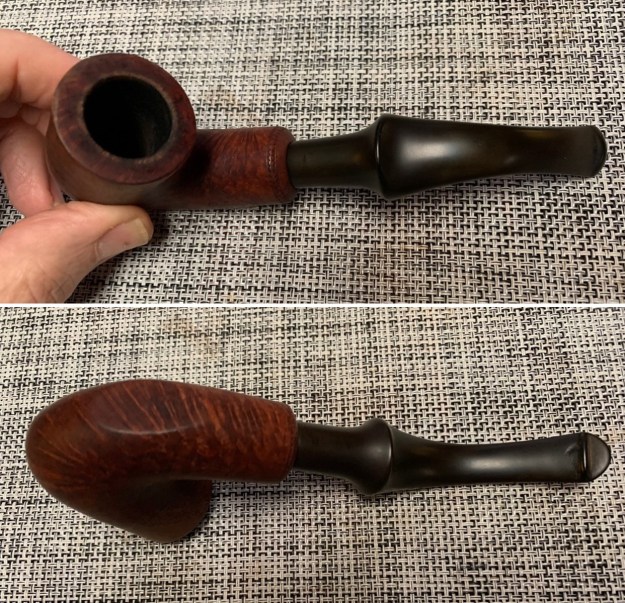
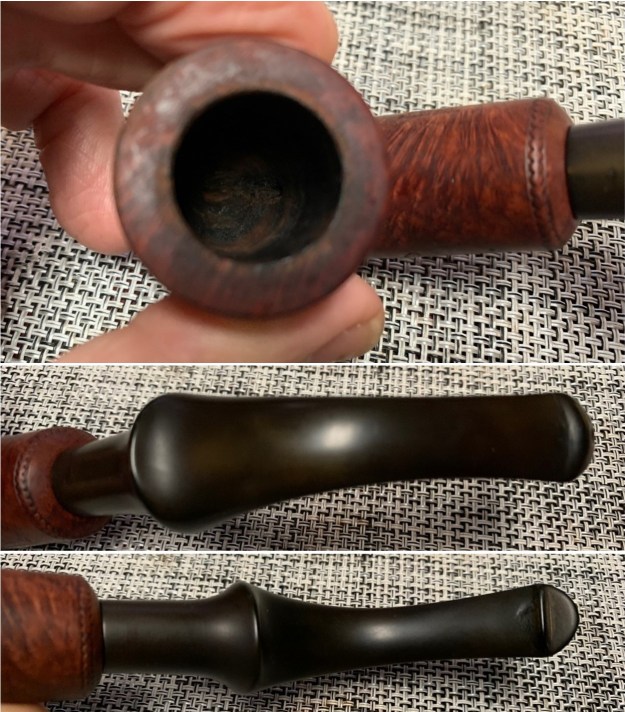
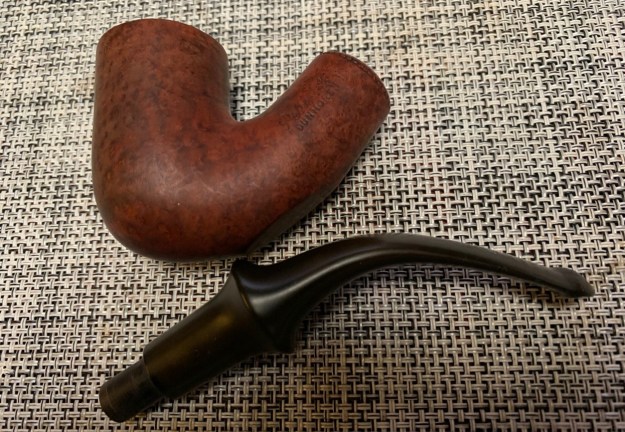
Fresh Life for a Peterson’s Dunmore 78 Bent Billiard


Blog by Steve Laug

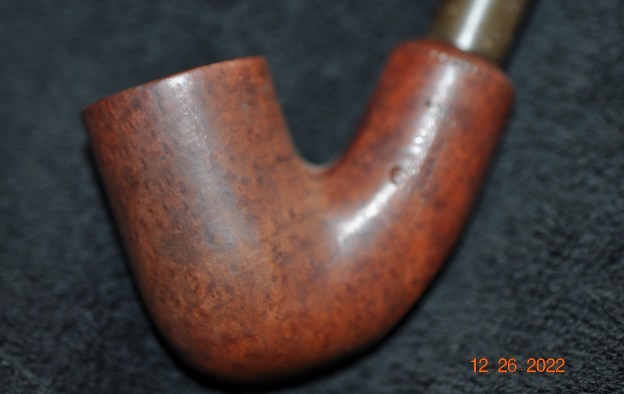
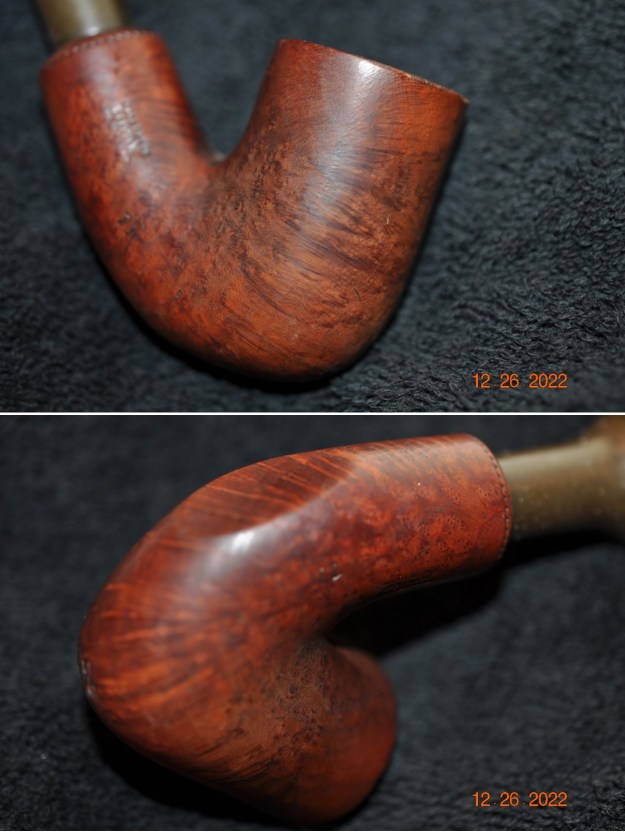
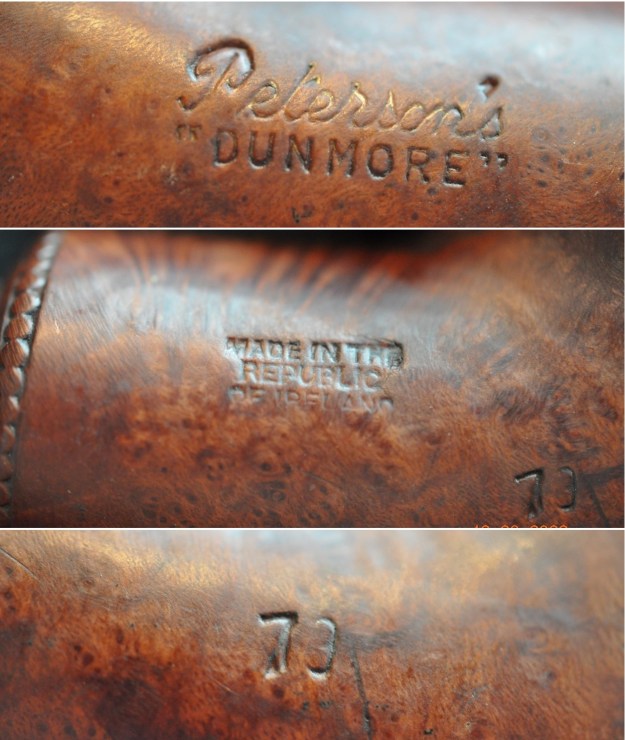
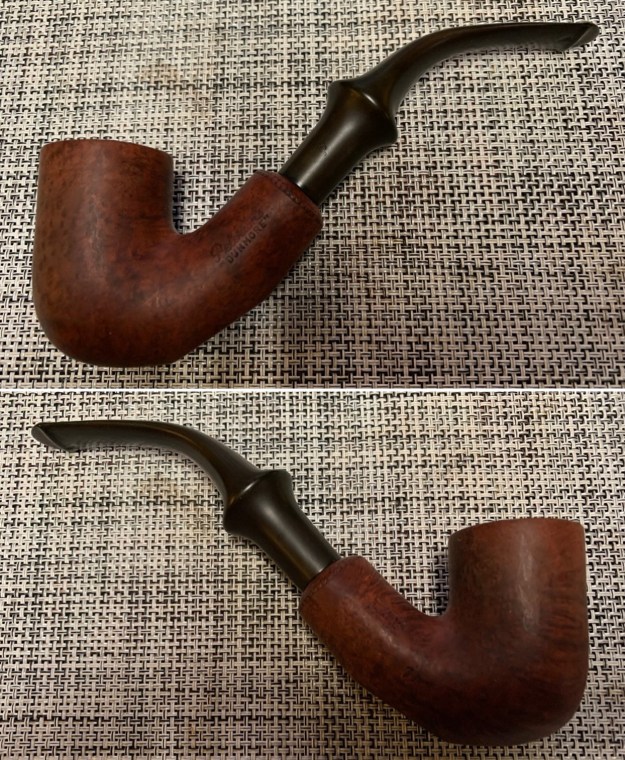
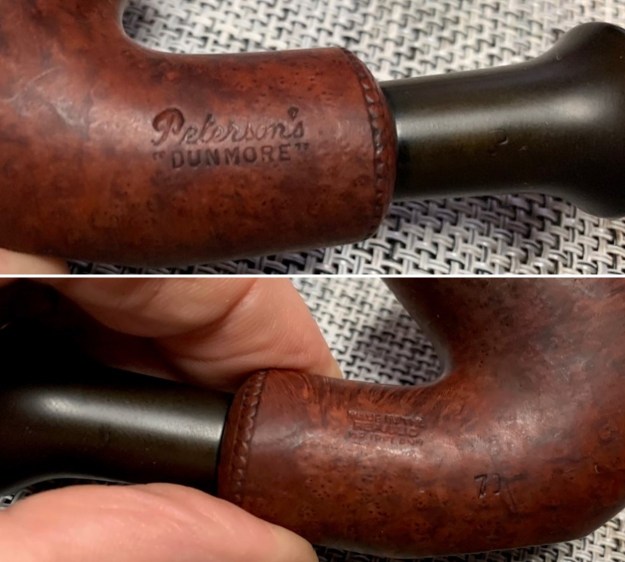
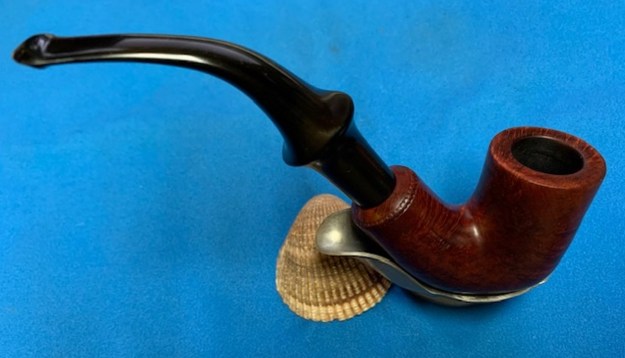
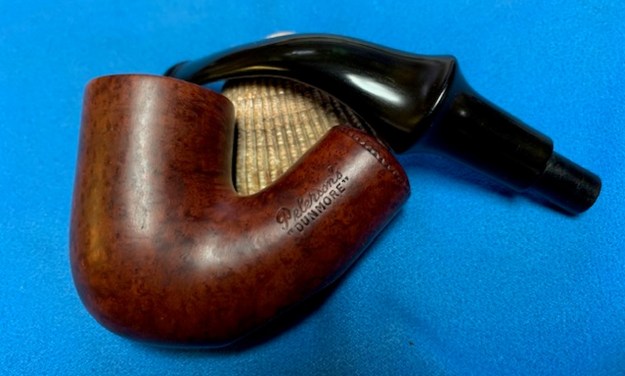
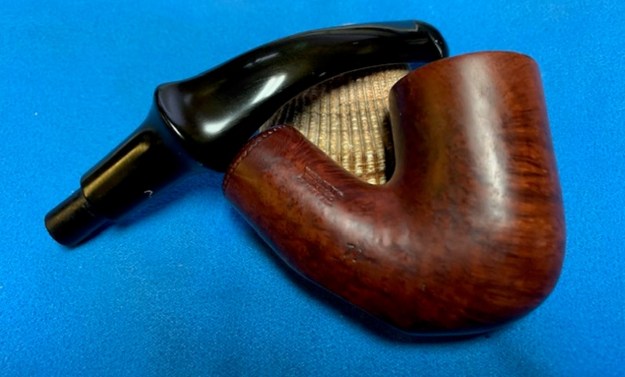
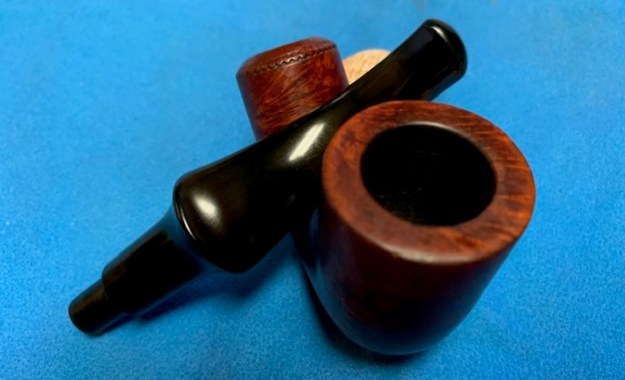
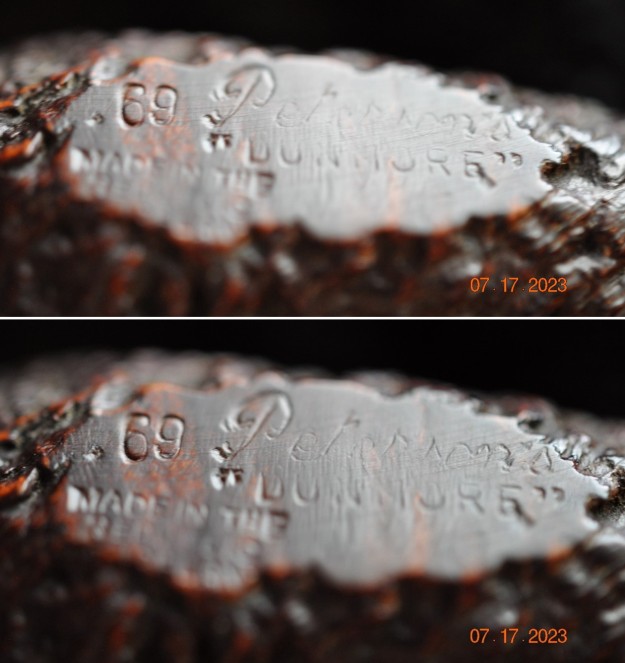
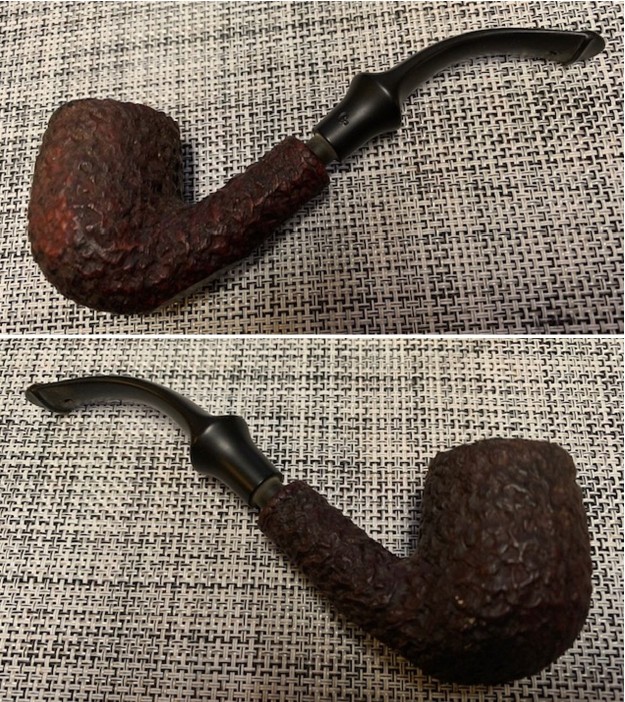
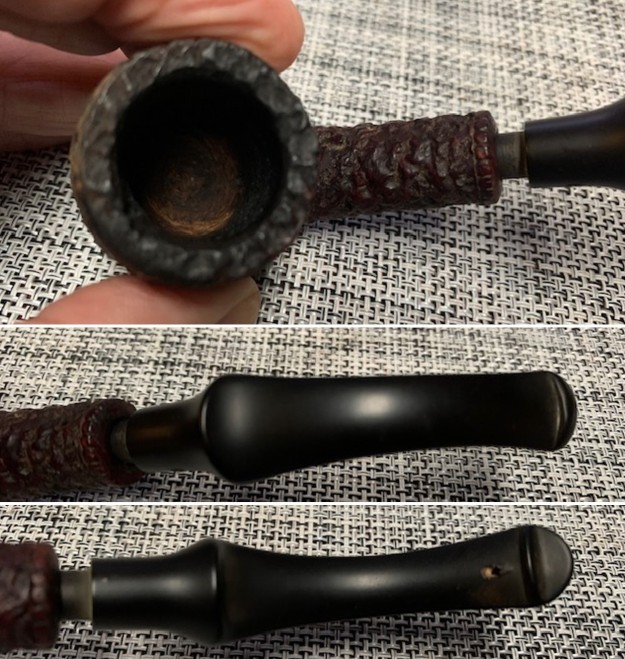
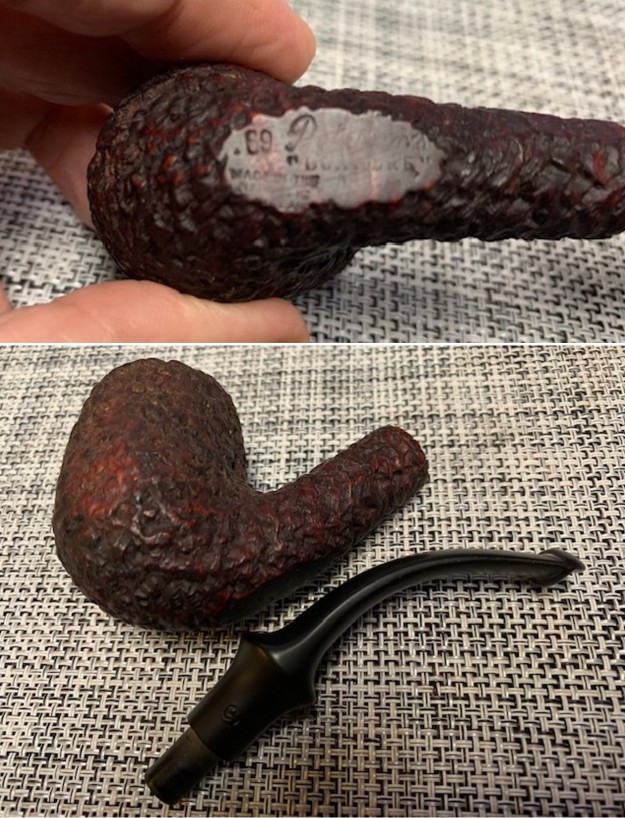
The next pipe on the table was purchased on 04/11/2023 our contact in Copenhagen, Denmark. It is stamped on the left side of the shank and reads Peterson’s [over] “Dunmore”. On the right side it is stamped Made in the Republic of Ireland followed by the shape number 78. It was another pipe that was someone’s favourite. The bowl had a thick cake and lava build up on the rim top. The finish looked good underneath all of the grime and oils that were ground into the bowl sides and heel. The beaded decoration on the shank end is in excellent condition. Like other Dunmores I have worked on, it had a flattened shank just next to the heel and the pipe functioned as a sitter. The stem had light tooth marks and chatter on both sides ahead of the P-lip and on the underside edge of the button. The “P” stamp on the left side of the stem was clear and just needed to be touched up otherwise it looked good. Jeff took photos of the pipe before he started his clean up work on it. It is a pretty pipe!The next photos show the bowl and rim top as well as the stem condition. The bowl had a thick cake that is very visible. The rim top and edges have a heavy coat of tar. It is hard to know what the rim edge looked like underneath the lava. The rim top also had some darkening. The stem looked good with some tooth chatter and marks on both sides and the button. Jeff took photos of the sides and the heel of the bowl and shank to show birdseye and cross grain around the briar. It is unique and quite beautiful. I can’t wait to see it once it is cleaned and polished. The stamping on the shank sides was clear and very readable. It read as noted above. Notice also the carved detail on the shank end in the photos as it is a feature of Dunmore pipes.I turned first to Pipephil’s site to remind myself of the background of the Dunmore line. Unfortunately, there was no information to be found there. I then turned to Pipedia’s article on Peterson pipes to see what I could garner from that information. It is a great read in terms of the history of the brand (https://pipedia.org/wiki/Peterson) but nothing specific to the Dunmore line of pipes.

I then turned to the book I should have consulted first, The Peterson Pipe, by Mark Irwin and Gary Malmberg. On page 298 there is an entry for Dunmore pipes. It reads as follows:

Dunmore (1971-c.1984 2006-10). Appeared first as Iwan Ries & Co. exclusive line “Dunmoor,” a Premier-grade in light-brown smooth or rustic red in all System shapes, with beading at the shank. Documented in the Associated Imports Catalog from 1973. Classic Range Dunmore shapes from ’78. A third Dunmore line (’06-10) featured standard and some B shapes, with beading around bowl instead of at shank-face, produced for European market.

On page 165 there were also photos of pages from a catalogue with the description: The unmounted Dunmore Premier debuted in both System and Classic Range shapes circa 1973 with a final appearance in the 1981 catalogue.

The information blurb on each page read: “Dunmore Briars.” Beautifully grained best quality briar in light-brown, matt or rustic finish. Often described as “Petersons Unmounted System” has all the advantages of the system range. Ten models each fitted with the Peterson Lip mouthpiece.

With that information in hand I knew what I was dealing with in terms of the stamping on the pipe. It is a Late Republic era pipe. It showed up in Peterson Catalogue in 1973. Now it was time to work on the pipe.

With that information at hand I turned to work on the pipe itself. Jeff had thoroughly cleaned up the pipe. He reamed the pipe with a PipNet Pipe Reamer and cleaned up the remnants with a Savinelli Fitsall Pipe Knife.  He scrubbed the bowl with undiluted Murphy’s Oil Soap with a tooth brush. He rinsed it under running warm water to remove the soap and grime. He cleaned out the inside of the shank and the airway in the stem with alcohol, cotton swabs and pipe cleaners. He scrubbed the exterior of the stem with Soft Scrub to remove as much of the oxidation and calcification as possible. He soaked the stem in Before & After Deoxidizer and rinsed it off with warm water. I took photos of the pipe once I started to work on it. I took close up photos of the bowl and the stem. You can see the reamed bowl and the darkening and damage on the rim top and the edges. The stem surface was clean but there are tooth marks and chatter on both sides on and ahead of the button and on the button itself on the underside.I took a photo of the stamping on the sides of the shank. It is clear and readable as noted above. There is also a “P” stamp on the right side of the stem. I removed the stem from the shank and took a photo to give a sense of the proportions of the pipe. It is really quite nice looking. I decided to start my work on this one by reworking the inner edge of the rim with a folded piece of 220 grit sandpaper giving it a light bevel. I sanded the darkening on the rim top at the same time. It looked much better.I polished the briar and the rim top with micromesh sanding pads – dry sanding with 1500-12000 grit pads. I wiped the bowl down after each pad with a damp cloth. You can see the grain around the bowl and shank in the photos below. The bowl looks great and took on a shine as I finished the polishing. I rubbed the bowl and shank down with Before & After Restoration Balm. I worked it into the surface of the bowl sides and shank with my fingertips to clean, enliven and protect the briar. I let the balm sit for 10 minutes, then buffed with a cotton cloth to raise the shine. I touched up the “P” stamp on the left side of the flared saddle stem with white acrylic fingernail polish. I applied it and worked it into the stamp with a tooth pick. Once it cured I scraped off the excess and sanded it smooth with a 1500 grit micromesh sanding pad. It is definitely better though the stamp is faint in some spots.  I filled in the deep tooth marks with KMS Black Rubberized CA glue. Once the repairs cured I used a small file to flatten them and sanded them smooth with 220 grit sandpaper. I started polishing the stem with 400 grit wet dry sandpaper. I polished the stem with micromesh sanding pads – I dry sanded with 1500-12000 grit sanding pads. I wiped it down after each sanding pad with Obsidian Oil on a cotton rag after each sanding pads. I find that the Oil gives some protection to the stem from oxidation and second it give the sanding pads bite in the polishing process. After finishing with the micromesh pads I rubbed the stem down with Before & After Fine and Extra Fine stem polish as it seems to really remove the fine scratches in the acrylic. I rub the Fine Polish on the stem and wipe it off with a paper towel and then repeat the process with the Extra Fine polish. I finish the polishing of the stem down with a final coat of Obsidian Oil and set the stem aside to let the oil absorb. This process gives the stem a shine and also a bit of protection. This nice looking Peterson’s Dunmore 78 Bent Billiard with a classic Peterson’s P-lip vulcanite stem looks much better now that it has been restored. The rim top and edges cleaned up very well. The rich brown stains on the bowl came alive with the polishing and waxing. I put the stem back on the bowl and carefully buffed the pipe with Blue Diamond on the buffing wheel using a light touch on the briar. I gave the bowl and the stem multiple coats of carnauba wax on the buffing wheel and followed that by buffing the entire pipe with a clean buffing pad. I hand buffed the pipe with a microfiber cloth to deepen the shine. The finished Peterson’s Dunmore is a beauty and fits nicely in the hand and looks very good. Give the finished pipe a look in the photos below. The dimensions of the pipe are Length: 6 inches, Height: 2 inches, Outside diameter of the bowl: 1 ¼ inch, Chamber diameter: ¾ of an inch. The weight of the pipe is 65 grams/2.29 ounces. I will be putting the pipe on the rebornpipes store in the Irish Pipemakers Section soon. If you are interested in adding this pipe to your collection send me a message or an email. Thanks for reading this blog and my reflections on the pipe while I worked on it. There are many more to come!

As always, I encourage your questions and comments as you read the blog. Thanks to each of you who are reading this blog. Remember we are not pipe owners; we are pipe men and women who hold our pipes in trust until they pass on into the trust of those who follow us.

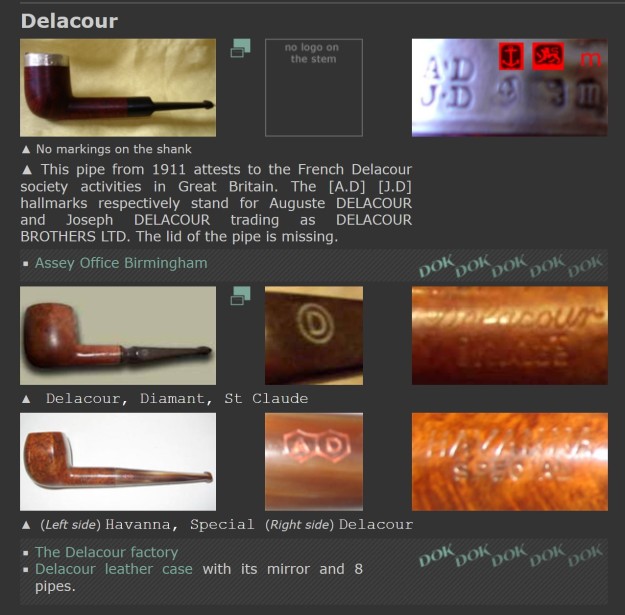
Restoring a 1911 BBB Glokar Rhodesian with Fraternity Silver Sigma Delta inlaid on the front.


Blog by Steve Laug

I decided I needed a change of pace in my restoration/clean up work. I went through my pipes waiting in the queue and chose pone from a group of four pipes that were given to us by a woman in Columbus, Ohio, USA. It had belonged to her Grandfather who lived from 1882 to 1977. There were four pipes that she sent us from his estate – the metal bowled apple, a cased meerschaum with a broken shank and an amber stem, a Whitehall rusticated apple and a BBB Glokar Fraternity Pipe.If you have followed rebornpipes for a while now you know that I really have a passion for BBB pipes. I have one BBB GLOKAR already that is a pleasure so when I saw this one I knew it would be one I would like to work on. Also, the fact that it is a taper stem Rhodesian also adds to its charm for me. I could see that it was an old timer but I would have to decode the silver hallmarks on the stem to pin down a date. It was well smoked, reamed with a knife. The stamp on the left side of the shank had BBB in a Diamond and on the underside of the shank it read ENGLAND next to the silver band. The oxidized and tarnished silver band was stamped with a BBB Diamond [over] L-B. That was followed by the word GLOKAR [over] Trademark. Underneath that were three silver hallmarks. The first mark was a cartouche with an anchor in it that was the mark for Birmingham, England. The second mark was a cartouche with a rampant lion – the symbol for Sterling Silver. The final mark was a cartouche with a lower case “m” in it that would give me the date for the pipe. The pipe was dirty and well used. The finish had deep grime ground into the smooth briar around the bowl. The bowl had tobacco debris in it and a very thick cake overflowing as lava onto the rim top. The rim top and edges were hard to assess because of the lava coat and the cake flowing out of the bowl onto the rim top. It was also hard to assess the outer edge of the rim. There were two Greek letters in Silver inlaid into the front of the bowl – a Sigma and a Delta which are attached to a Fraternity. The stem was hard rubber had a slight bend to it and fit the shank well. It had oxidation, calcification and light tooth marks and chatter on both sides ahead of the button. The button was the patented GLOKAR slot and airway through the stem. Jeff took photos of the pipe before he started his cleanup work. Jeff took photos of the rim top and bowl to show the condition. You can see the thick cake in the bowl and the lava coat on the top of the rim. The condition of the inner edge of the bowl is a hard to assess but the outer edge appears to have some damage on the front outer edge. It was obviously another of her grandfather’s favourite pipes. The hard rubber taper stem was oxidized, calcified and had tooth marks and chatter on both sides ahead of the button. It was nice but will take some work. Jeff took photos of the sides and heel of the bowl to show the grain and the bowl and shank and shape of the pipe. The twin rings around the bowl cap are in good condition and are very clean and undamaged. The shape of the bowl makes it quite nice looking. Jeff captured the inlaid Greek letters Sigma Delta on the front of the bowl. There were tarnished but looked very good. He took a photo of the stamping on the smooth panel on the left side of the shank. You can see that it is readable as noted above. The name of the brand is stamped on the top of the silver band. It reads as noted above. The stamp on the underside of the shank is ENGLAND and it is readable. Since the hallmarks were so clear, I turned to one of the numerous silver hallmark charts on line for the city of Birmingham, England to see what I could find out about the “m” date stamp and pin down and age for the pipe (https://www.silvermakersmarks.co.uk/Dates/Birmingham.html). I clicked on the section that applied to the date stamp on this pipe. The first chart below is the chart from 1773-2024.I am also including screen capture of the enlarged section on the Birmingham dates for the letter M. This chart covers pipes made in 1778-1986. I have drawn a read box around the hallmark pattern that matches the one on the BBB Silver ferrule. You can see that it dates the pipe to 1911. That means that this little pipe is roughly 112 years old.

With the information from the hallmark site I had a clear date for the manufacture of the pipe. It was definitely an old timer and really was another stellar acquisition.

I wanted know more about the GLOKAR stamp and what it signified. I had an inkling that I was dealing with a BBB system pipe not unlike the Peterson’s System pipes but I wanted to see what I could find out about that. I have a facsimile of a 1912 BBB Catalogue No. 20 that has a section dedicated to the Glokar. On page 107-110 there is information about the pipe and the various versions available. Interestingly it does not include a picture/drawing of my Poker. I quote the description of the Trademarked Glokar below.

The “Glokar” Mouthpiece does away with the great drawback of all ordinary pipes, viz., the unpleasant and possibly injurious, effect of the smoke upon the tongue, as the end of the stem has a smooth, concave surface, which while forming a pleasant rest for the tongue, acts as a barrier between it and the smoke. Instead of pressing through an ordinary round bore, the smoke leaves the mouthpiece through a fan-shaped slot, which is drilled in and upward direction – thus preventing saliva from entering the bore of the pipe.

Advantages:

  1. The bore, being kept dry, requires less cleaning than that of an ordinary pipe.
  2. As no saliva can reach the bowl, the tobacco can be consumed to the last particle.
  3. The shape of the mouthpiece affords the perfection of comfort for the mouth, tongue ad lips.

I took a photo of the picture that was included in the catalogue for the “GLOKAR” and have included it below. The cutaway diagram shows the system in the bowl and shank as well a the patented lip design. It is remarkably like a Peterson’s system pipe. One of the differences is the shape of the exit of the air way in the button. This one is a slot rather than a round hole.

Now it was time to work on the pipe. Jeff carefully cleaned the pipe from top to stern. He reamed it with a PipNet pipe reamer and then cleaned up the reaming with a Savinelli Fitsall Pipe Knife. He scrubbed out the internals of the shank, stem and shank extension with alcohol, pipe cleaners and cotton swabs until the pipe was clean. He scrubbed the exterior of the bowl with Murphy’s Oil Soap and a tooth brush to remove the grime and grit on the briar and stem. The finish looks much better and has a deep richness in the colour that highlights grain of the briar. The rim top looked good with some darkening and damage on the top and inner and outer edge of the bowl. Jeff worked it over with Soft Scrub All Purpose Cleaner to remove any remnants of oxidation. He then soaked the stem in bath of Briarville Pipe Stem Deoxidizer to remove the oxidation on the rubber. When the pipe arrived here in Vancouver I was amazed it looked so good. Here are some photos of what I saw.

Now time for a confession… when Jeff was cleaning it a pipe cleaner broke off in the stem just inside the Glokar style slot. He had tried many ways to remove it but could not. It was up to me to remove the blockage. Last evening, I got in a hurry to work on it so I used a heat gun to straighten the stem so I could work the offending piece of wire out. It dawned on my once I finished straightening it that I had forgotten to take any photos of the pipe when it arrived. Once finished, I took the following photos… sorry for my haste! I took photos of the bowl and the rim top to show the condition. It is clean and the damage is very clear. The bowl is very clean and there were nicks, burn damage and cuts all around the inner edge and top. The bowl was out of round due to the damage. The vulcanite stem is clean and the damage on the Glokar slot is very visible. The rest stem surface ahead of the button is clean and undamaged.I took a photo of the top of the shank and the silver band to capture the stamping on the silver. I took a photo of the BBB diamond on the left side of the shank. It is faint but it is still readable. I took a photo of the bowl and shank separated to show the condition of the pipe. It really is a great looking pipe. I started my work on the rim top by addressing the issues with the rim top and edge. I started by smoothing out the damage on the edge and smoothed out the top of the rim with a folded piece of 220 grit sandpaper. I lightly topped the bowl on a topping board with 220 grit sandpaper to flatten on the damage on the rim top. It looked much better! Once I started polishing it with the micromesh sanding pads you can see the rim top.I polished the briar with micromesh sanding pads – 1500-12000 grit pads. I dry sanded the briar and then progressively brought a shine to the pipe. It looked really amazing – the combination of rustic and smooth portions of the briar. It is a beauty!  I set aside the sanding pads to stain the rim top to match the rest of the bowl and shank on the pipe. I looked pretty good but I think with the rest of the micromesh sanding pads it would look very good. I went back to the sanding pads. I rubbed the bowl down with Before & After Restoration Balm. I worked it into the finish with my fingertips and into the twin rings with a shoe brush. The product works to clean, preserve and protect the briar. I let it sit and absorb for 10 minutes. I buffed it off with a soft cloth and then gave it a rigorous buff to raise the shine. It looks good at this point. I polished the silver band and silver inlaid letters on the front of the bowl with a jeweler’s cloth to remove any residual tarnish and also to protect it from future tarnish (at least for a while). With that done the bowl was finished other than the final buffing. I set the bowl aside and turned my attention to unplugging the broken pipe cleaner in the stem. I started by heating the stem with a heat gun and straightening it out. I took a photo of it once I had it straightened. I carefully straightened a paper clip and used it to probe the plugged area. It took time and patience to carefully work around the clog. I continued to pull out bits of pipe cleaners as I worked on it. I used two different paper clips that I worked with. I used a fine round file to push the clog out. I worked on it from both end of the stem. Finally, I blew through the stem and the clog of pipe cleaner piece flew out. In the photo below, it is the brown piece at the bottom of the photo. There was a chip out of the top side of the button. It had chipped away when Jeff was working on removing the broken piece. It was not big but it needed to be repaired. I greased a pipe cleaner with Vaseline and inserted it in the airway below the chipped area. I filled in the chipped area with black KMS CA rubberized glue. I removed the pipe cleaner and set it aside to let the glue cure. Once the repair cured I flattened out the repair with a flat file to smooth out the excess and flatten the surface of the button. I sanded the stem surface and shaped the repair to blend the repairs into the surrounding rubber. It looked quite good at this point in the process. With the repairs and reshaping of the button finished it was time to rebend the stem. I heated it with a heat gun to soften the rubber and once it softened bent it back to what was there previously.I bent the heated stem once it was flexible to match the previous bend it had before I straightened it. I put it back on the pipe and took the following photos. I polished out the chatter and marks on the stem surface with micromesh sanding pads – dry sanding with 1500-12000 grit sanding pads. I wiped it down with Obsidian Oil on a cloth after the sanding pads. I finished the hand polishing of the stem with Before & After Pipe Polish – both the Fine and Extra Fine polishes. I gave it a final coat of Obsidian oil and set it aside to dry. With the bowl and the stem finished I put the pipe back together and buffed it on the wheel using Blue Diamond to give it a shine. I gave the bowl and stem multiple coats of carnauba wax on the wheel and then buffed it with a clean buffing pad to raise the shine. I hand buffed it with a microfiber cloth to deepen the shine. It really is an amazing little pipe. The dimensions of this part of the pipe are – Length: 5 inches, Height: 1 ½ inches, Outside diameter of the bowl: 1 ¾ inches, Chamber diameter: ¾ of an inch. The weight of this pipe is 2.15 ounces /62 grams. This unique find – a 1911 BBB Glokar Rhodesian System pipe with a silver band is joining the other pipes in my collection of BBB pipes and will hold a place of honour while it is in my trust. This is another pipe that one day soon I will enjoy a special bowl of tobacco in it and be transported to a slower paced time in history where I can enjoy a respite. Thanks for walking through the restoration with me.

As always, I encourage your questions and comments as you read the blog. Thanks to each of you who are reading this blog. Remember we are not pipe owners; we are pipe men and women who hold our pipes in trust until they pass on into the trust of those who follow us.

Restoring a Charatan’s Make Belvedere 4 Saddle Stem Billiard with the stamping starred out


Blog by Steve Laug

The next pipe on the table is a strange one. It is a well made Charatan’s Make billiard with some nice grain around the bowl and shank. The stamping is quite clear though the entire stamp has been covered with flower/star stamps obliterating it for the most part. I am not sure what it means as I have not seen this before. Under the flower stamps it is stamped on the topside and reads Charatan’s Make[over] London England [over] Belvedere in three lines. On the underside it is stamped Made in London [over] England. Above that it has a number stamp 4 which I assume is a shape number. We purchased the pipe on 06/24/2023 from an auction in Garland, Texas, USA. The finish on the pipe was dirty but obviously well loved. There was a thick cake in the bowl with lava flowing up and onto the rim top and edges. It is heavier on the back side of the rim top but is present all the way around. The stem was oxidized and light calcification on the area around the button. There were light tooth marks and chatter on both sides. There was no CP stamp on the sides of the stem but it was stamped on the underside and read REGD NO [over] 203573. It had the DC or Double Comfort step down saddle stem. Jeff took photos of the pipe before he started his clean up work on the pipe.He took photos of the bowl and rim top to show their general condition. You can see the tars on the inner edge of thick lava coated rim top. The cake in the bowl is quite thick and there is tobacco debris on the walls of the bowl. The finish on the bowl is very dirty with grime and oils ground into the bowl, but still very stunning. This pipe has a classic Charatan Double Comfort stem that has some oxidation, calcification on the surface of the vulcanite. There is chatter and tooth marks on the top and underside. Jeff took some photos of the sides and heel of the bowl to give an idea of the grain on this particular piece of briar. It is amazing and I cannot wait to see what it looks like once it is polished and waxed. He took photos of the stamping on the top and underside of the shank to capture it for me. The first photo shows the topside of the shank and the floral/sunburst overstamping as noted above. The second shows the underside of the shank with the Made in London [over] England as noted above. You cannot see the numeral 4 but it is above the Made in London stamp.An added part of pipe restoration for me is to try to gather as much background on a brand and maker as I can find. With Charatan that is an enjoyable web to untangle. There is a lot of information and it can lead to understanding what era a pipe was made in. To try to figure out the era of the Charatan’s pipe I was working on I turned to the Pipephil website, Logos and Stampings (http://www.pipephil.eu/logos/en/logo-charatan.html). There is some really helpful information on each of the lines of Charatan’s Make pipes that entered the market. There is an alphabetical listing of the lines but the Belvedere they showed had a stem made for a 9mm filter while the one I have is a nonfiltered pipe. The site did give a short history of the brand. I quote the portion that is most pertinent.

The brand was founded in 1863 by Frederik Charatan. When his father retired in 1910, Reuben Charatan took over the family business. All the pipes were handmade until 1973. The brand name has been overtaken by Dunhill in 1978 and sold in 1988 to James B. Russell Inc. (NJ, USA). During the period 1988-2002 Charatans were crafted by Butz Choquin in St Claude (France). Dunhill re-purchased Charatan brand name in 2002 and Colin Fromm (Invicta Briars, Castleford) followed up on freehand production.

Next, I turned to Pipedia to see if I could find more information on the brand and possibly a link to the Belvedere line (https://pipedia.org/wiki/Charatan) but once again in the general article it was not listed. It did give a little more historical information. I quote the pertinent parts and have highlighted in red the sections that give information on this particular pipe.

In 1863 Frederick Charatan, a Russian/Jewish immigrant, opened a shop in Mansell Street, located in the borough of Tower Hamlets, London E1, where he began to carve Meerschaum pipes. These pipes got very popular soon, and thus Charatan moved to a bigger workshop in Prescot Street, just around the corner. Here he began to make briar pipes which should make the name famous the world over. Charatan was the first brand to make entirely hand-made briars from the rough block to the finished pipe including the stems. The nomenclature “Charatan’s Make” refers to this method of production and was meant to differentiate Charatan from other brands who “assembled” pipes from pre-drilled bowls and delivered mouthpieces.

Being the undisputed No. 1 in English pipemaking, Charatan was approached by Alfred Dunhill who was unsatisfied with the quality of the pipes he imported from France. During 1908 – 1910 Dunhill bought pipes from Charatan paying exorbitant prices to ensure he had some of the very best pipes for sale in England. In 1910 he lured away Joel Sasieni, one of Charatan’s best carvers, and opened his own small pipe workshop on 28 Duke Street. On the retirement of his father in 1910 Reuben Charatan took over the family business…

…The pre-Lane period (prior to 1955) and the Lane era pipes (1955 to until sometime between 1979 – 1984) are of primary interest the collector. The Lane era is often quoted as beginning about 1950… Charatan records are almost non-existent before Lane due to a factory fire, making it difficult to date pre-Lane pipes. Charatan used 4 basic grades prior to 1950: Supreme, Selected, Executive, and Belvedere. After 1950 Herman Lane’s influence began, and the grades started to expand. In 1955 Lane took over sole distributorship of Charatan in the US. In 1957 he introduced the Supreme S. Most of his other introductions were from the 60’s and early 70’s…

From this I am fairly certain I am dealing with an early Lane pipe made in 1955 and because of the Belvedere stamp it could potentially go back as far as before 1950. There are none of the expected Lane stampings on the pipe which is interesting though the Double Comfort bit helps point to the Lane time.

I continued digging further into the dating of the pipe, but what I had found above was a good start for me. If some of you would like to try your hand at dating it more accurately as to the time period it came out you might want to check out the article on Pipedia on Dating Charatans (https://pipedia.org/wiki/Dating_of_Charatans).

I also reread the article on Pipedia by the Italian fellow who contributed some really helpful information on the brand (https://pipedia.org/wiki/Charatan_-_Milan_2014). I quote the section on the Second period: Reuben Charatan 1910 – c. 1962. I have highlighted a portion of the section on the shank in red to point out some more helpful dating information.

– In 1962 Herman Lane took over the business from the Charatan family, although he had already influenced production from the 1950s.

– The pipes were mostly larger than the previous ones and corresponded in size to Dunhill group 5. These are slightly less rare, but still difficult to find.

– Stem: Usually in ebonite, saddle shaped or tapered, bearing a fine “CP” stamp, underbore system (see below) used when necessary.

– Shank: The shape code is stamped on it together with the nomenclature “CHARATAN’S MAKE LONDON ENGLAND” arranged in two lines. From 1955 onwards on the models marketed for the USA there is also a serif and circled capital “L” (but not all models bear this) which resembles the pound sterling symbol. The “L” is for Lane, the importer.

From 1958, Lane changed the nomenclature for models marketed for the US to clarify the message: “MADE BY HAND”.  In this period the underbore was introduced. Its manufacturing period ranged between 1920 and c.1930. This model was equipped with a duralumin plunger trap fitted in the stem, which served to clean the residue more easily. This particular model bore a special stamp on the stem, and also had its own catalogue…

QUALITY GRADES…The stem did not only display the stamps mentioned above. Another stamp that can help dating is the one referring to the quality of the pipe. Until Herman Lane arrived on the scene there were four quality grades. Starting with the lowest: Belvedere, Executive, Selected, and Supreme. Lane went on to add higher grades from time to time: Supreme S, Supreme S100, S150, S200, S250, S300, Coronation, Royal Achievement, Crown Achievement, and Summa Cum Laude; these last three are extremely rare and almost impossible to find. He also invented other, different grades, even changing the previous pipe classification standards. We will not go into detail here, but it means that if we find an S100 or Coronation the pipe was manufactured following Herman Lane’s acquisition. In particular, the FH mark, or Freehand pipe was commissioned to the famous Danish craftsman, Preben Holm.

Now I knew I was working on an early Lane pipe which actually means it was made around 1955 as shown by the stamping. I wanted to now see if I could find any information the shape 4 number as it was not listed in any shape charts I could find.

With that information at hand I turned to work on the pipe itself. Jeff had thoroughly cleaned up the pipe. He reamed the pipe with a PipNet Pipe Reamer and cleaned up the remnants with a Savinelli Fitsall Pipe Knife. He scrubbed the bowl with undiluted Murphy’s Oil Soap with a tooth brush. He rinsed it under running warm water to remove the soap and grime. He cleaned out the inside of the shank and the airway in the stem with alcohol, cotton swabs and pipe cleaners. He scrubbed the exterior of the stem with Soft Scrub to remove as much of the oxidation and calcification as possible. He soaked the stem in Briarville’s Pipe Stem Deoxidizer and rinsed it off with warm water. I took photos of the pipe once I started to work on it.  I took some photos of the rim top and stem. The rim top and bowl looked very good. The cake and lava overflow were gone and the inward inward edge of the rim was very clean. There was damage on the back and front of the inner rim edge. Jeff had been able to get rid of most of the darkening and all of the lava and tars. The rim top looked good with no marks or nicks on the surface or edges. The closeup photos of the stem shows that it is a much cleaner and better-looking stem. There is still some residual oxidation on the saddle and blade that I will need to deal with. The light tooth chatter was still present but faint and the stem looked really good. I took some photos of the stamping on the shank sides to show the condition after the cleanup. Often the stamping takes a hit with the cleaning and is lessened in its clarity. Jeff does a great job in leaving the stamping looking very good. I also removed the stem from the shank and took a photo of the pipe to show the proportions of the pipe. It is a pretty pipe. Now it was time to work on the pipe. I started working on this pipe by turning to the bowl. I chose to deal with the darkening and burn damage on the inner rim edges and top. I used a folded piece of 220 grit sandpaper to remove the damage and darkening. It took a little work but I was able to remove all of the darkening. It is a beautiful piece of briar with some great grain.Once rim edges were reshaped and reworked I needed to blend them into the rest of the briar. I polished the briar with micromesh sanding pads. I choose to dry sand the briar rather than wet sand it. Again, it is a matter of personal preference. I prefer to use the pads dry and find they work very well on the briar. I sand with each pad (9 in total) and group them by threes for ease of reference. I also work over the plateau areas at the same time. I wipe the bowl down after each pad with a damp cloth to remove the sanding debris and check the briar. I love seeing the developing shine on the briar as I move through the pads which is why I include so many photos of this step. For the past few years now I have been using Before & After Restoration Balm. It is a “waxy” paste/balm that is rubbed into the surface of the briar and the plateau. The product works to deep clean the nooks and crannies of finish, enliven and protect the briar. I worked it into the briar with my finger tips and let it sit for 10 minutes to do its work. I wiped it off with a soft cloth and buffed it with a cloth. The briar really took on a deep shine and the grain shone through. The photos I took of the bowl at this point mark the progress in the restoration. It is a gorgeous pipe. I set the bowl aside and turned my attention to the stem. The stem was in good nick other than the light oxidation on the top side. There some light tooth marks next to the button edge button chatter on the surface. I “painted” the surface in those areas with the flame of a light and raised them. I sanded out what remained with 220 grit sandpaper and then started polishing with 600 grit wet dry sandpaper.  I scrubbed the stem surface with Soft Scrub cleanser to remove the oxidation in the vulcanite. I was able remove all of the residual in the finish and the stem looked much better. I used micromesh sanding pads and water to wet sand the stem with 1500-12000 grit sanding pads. I wiped it down after each sanding pad with Obsidian Oil on a cotton rag after each sanding pad as I find it does two things – first it protects the vulcanite and second it gives the sanding pads bite in the polishing process.   After finishing with the micromesh pads I rub the stem down with Before & After Fine and Extra Fine stem polish as it seems to really remove the fine scratches in the vulcanite. I rub the Fine Polish on the stem and wipe it off with a paper towel and then repeat the process with the extra fine polish. I finish the polishing of the stem down with a final coat of Obsidian Oil and set the stem aside to let the oil absorb. This process gives the stem a shine and also a bit of protection from oxidizing quickly.I finished with the Blue Diamond and moved on to buffing with carnauba wax. Once I have a good shine in the briar and vulcanite I always give the bowl and the stem multiple coats of carnauba wax. I have found that I can get a deeper shine if I following up the wax buff with a clean buffing pad. It works to raise the shine and then I follow that up with a hand buff with a microfiber cloth to deepen the shine. It is always fun for me to see what the polished bowl looks like with the polished vulcanite and acrylic combination stem. It really is a beautiful pipe. The smooth finish around the bowl sides and shank show the grain shining through the rich brown stains of this Charatan’s Make London England Belvedere 4 Billiard overstamped with flower/sun figures. The finished pipe feels great in my hand. It is light and well balanced. Have a look at it with the photos below. The dimensions are Length: 6 inches, Height: 2 inches, Outside diameter of the bowl: 1 ½ inches, Chamber diameter: ¾ of an inch. The weight of the pipe is 2.01 ounces/57 grams. It is a beautiful pipe and one that I will be putting on the rebornpipes store in the British Pipe Maker section.

Thanks to each of you who are reading this blog. I am always open to questions and comments from you who are reading the blog. Remember we are not pipe owners; we are pipe men and women who hold our pipes in trust until they pass on into the trust of those who follow us.

Reconditioning a Peterson’s Deluxe 4S Bent Billiard with the Previous Pipe Man’s Autograph


Blog by Steve Laug

In the last box of pipes Jeff sent me there was a Peterson’s De Luxe that came to us from our contact in Copenhagen, Denmark on 04/11/2023. This one is a Peterson’s De Luxe Bent Billiard. It is stamped on the left side of the shank Peterson’s [over] Deluxe and on the right side it bears the shape number 4S near the bowl shank junction and Made in the Republic of Ireland (three lines). It was a dirty pipe when we received it. The walls of the bowl and shank had tars and oils ground into finish and it was quite grimy. There was a thick coat of lava on the rim top and the inner edge of the rim. There was a thick cake in the bowl that had remnants of tobacco stuck in it. The ferrule on the end of the shank was Sterling Silver. It was stamped Peterson’s [over] Dublin. That is followed by Sterling [over] Silver. Next that there are three silver hallmarks. The first was Hibernia seated, arm on a harp for the country of manufacture. The second was a Crowned Harp designating sterling quality. The third mark was a date stamp and, in this case, a lower-case cursive “n” which dated the pipe as a 1979. Next to that it is engraved RH in script followed by the date 1979. The stem was oxidized and there were tooth marks and chatter on the top and underside ahead of the button. When the stem was removed the tenon had the metal (aluminum) chimney screwed into the end. Jeff took some photos of the pipe before he started his cleanup work. He took photos of the bowl and rim top to show their general condition. You can see the tars on the bevelled inner edge of thick lava coated rim top. The cake in the bowl is quite thick and there is tobacco debris on the walls of the bowl. The finish on the bowl is very dirty with grime and oils ground into the bowl, but still very stunning. This pipe has a classic Peterson’s P-lip stem that has some oxidation, calcification on the surface of the vulcanite. There is chatter and tooth marks on the top and underside. Jeff took a photo of the fit of the stem against the shank. It is a part of the De Luxe design that the stem sit slightly above the shank end Sterling Silver ferrule. The second photo below shows the aluminum chimney in the shank end that is a part of the system design by Charles Peterson. It is threaded and turned into the tenon.Jeff took some photos of the sides and heel of the bowl to give an idea of the grain on this particular piece of briar. It is amazing and I cannot wait to see what it looks like once it is polished and waxed. He took photos of the stamping on both sides of the shank to capture it for me. The first photo shows the left side of the shank and the stamping as noted above. The second shows the right side of the shank with the Made in the Republic of Ireland stamp and shape number 4S.Jeff took photos of the stamping on the silver ferrule. It is oxidized and worn looking but the stamping is very clear and readable. The engraved initials on the silver and the date 1979 are clear and readable. I did a bit of work on Google to gather background on the DeLuxe line of pipes. The first information I found was on the Peterson’s website (https://www.peterson.ie/pipes/system/deluxe-system-smooth/). I quote from the description of the line below. I have highlighted several key portions in bold black for emphasis.

While the Deluxe stamp first appeared on our System pipes in 1940, the design itself dates to our 1896 and 1906 catalogues and, with the exception of the Supreme, has always marked our highest tier of System pipe. Like the System Standard and System Spigot lines, the Deluxe System pipe incorporates Charles Peterson’s patented System design, including a deep reservoir to collect excess moisture from the smoke; a graduated-bore mouthpiece that funnels the smoke and allows moisture to collect within the reservoir; a sturdy sterling silver military mount, which allows the pipe to be broken down and cleaned without damage or warping; and our patented P-Lip bit, which draws the smoke upward, thus reducing tongue bite. The Deluxe differs from those aforementioned lines, comprised of bowls with only the finest grain patterns and featuring a sterling silver mount and a push-gap stem, which was never designed to be flush-fitting, the space between the mount and stem base gradually decreasing with prolonged use. The Deluxe also elevates the System pipe by fixing each stem with a traditional chimney, an aluminum fitment that extends the tenon past the chamber’s airway for optimal System performance. Created for Peterson enthusiasts interested in acquiring the finest System pipe on the market, the Deluxe System will serve as the crown of any collection. Seen here in the Smooth finish.

From that information I knew how the De Luxe fit in the hierarchy of Peterson’s pipes. It was always the highest tier of the System pipes. It also was made with the gap in the fit of the stem to the shank on purpose with the idea that the distance would decrease over time with prolonged use. The attachment of a chimney at the end of the tenon to maximize System performance.

From there I also turned to Pipedia. I quote from an article by Jim Lilley and have included much of it below. (https://pipedia.org/wiki/A_Closer_Look_at_The_Peterson_Deluxe_System_Pipe). Once again I have highlighted pertinent sections in bold below.

By Jim Lilley

The version of the system pipe for our closer inspection is one of Peterson’s more recognizable series, the handsome and very distinctive Deluxe system pipes, which include the Darwin and Mark Twain. These pipes are at the top of the ‘system’ series in terms of quality and finish.

Each Peterson Deluxe is made from carefully selected, age mellowed root briar. In matt finish with hallmarked sterling silver mounts and a unique space fitting mouthpiece to allow for years of wear. They are available in a wide range of shapes numbered, as follows 1s,2s,3s,4s,5s,8s,9s,11s,12.5s,20s,XL5s, 20FB and 11FB.

The pipes are well carved, construction, engineering and workmanship, is outstanding. The stems are well drilled and aligned. Silver work is excellent, finish very good, and the often maligned briar is of outstanding quality.

The design is a very typically Peterson classic shape. Apart from the Darwin, the balance can be stem heavy, the bit is thick and chunky, especially in the larger versions. I also enjoy the sense of presence they give to the pipe, particularly if smoking in company with friends or strangers. They have a sophistication about them.

The smoking qualities are excellent, dry and cool. The draw is good, and the flavour is particularly great in new pipes. The Mark Twain’s are outstanding in this department.

As for the aesthetics and ergonomics, I find some shapes much more attractive than others. Favourites for me are the 1s,2s,3s,the Mark Twain’s and the Darwin deluxe. As a clencher most are very good to hang, except the beautiful Darwin which is more of a ‘hand holder.’

The one weakness I find is the modern orange/golden colour, (the so called natural) it is, in my opinion, less attractive than that found in the older Walnut finish of the eighties.

As far as value and cost is concerned, for the excellent quality finish, these are competitively priced at around $135 to $250 depending on size and briar grade.

For what it is worth, I reckon the Deluxe s are probably the best value range of pipes that Peterson produce, both in terms of functionality and value. There is not a thing wrong with these pipes. Those who malign the brand because they’re made by the hundreds using machines, are very wrong, IMHO. I like them a lot and the bang for the buck is the best I’ve ever seen for new pipes of this quality.

The De-luxes are all excellent smokers. The Darwin, of course, is a truly outstanding pipe, its only “flaw” being that it’s not a clencher. One particular aspect of this pipe, that appeals to me most is its physical beauty and presence, they are a pipe like no other. For me, they also offer a bowl capacity that I like and a balance in the hand that I appreciate. They are well named Deluxe s for giving that special experience.

With that information at hand I turned to work on the pipe itself. Jeff had thoroughly cleaned up the pipe. He reamed the pipe with a PipNet Pipe Reamer and cleaned up the remnants with a Savinelli Fitsall Pipe Knife. He scrubbed the bowl with undiluted Murphy’s Oil Soap with a tooth brush. He rinsed it under running warm water to remove the soap and grime. He cleaned out the inside of the shank and the airway in the stem with alcohol, cotton swabs and pipe cleaners. He scrubbed the exterior of the stem with Soft Scrub to remove as much of the oxidation and calcification as possible. He soaked the stem in Briarville’s Pipe Stem Deoxidizer and rinsed it off with warm water. I took photos of the pipe once I started to work on it.  I took some photos of the rim top and stem. The rim top and bowl looked very good. The cake and lava overflow were gone and the inward bevelled rim was very clean. There was also some darkening on the back bevelled rim edge. Jeff had been able to get rid of most of the darkening and lava and tars. The rim top looked very good with no marks or nicks on the surface or edges. The closeup photos of the stem shows that it is a much cleaner and better looking stem. The light tooth chatter was still present but faint and the stem looked really good.I took some photos of the stamping on the shank sides and the silver on the ferrule to show the condition after the cleanup. Often the stamping takes a hit with the cleaning and is lessened in its clarity. Jeff does a great job in leaving the stamping looking very good. I removed the stem from the shank and took a photo of the pipe at this point. Like other Peterson’s Deluxe pipes that I have worked on this stem had an aluminum chimney threaded into the tenon to extend into the lower part of the mortise and provides a funnel for drawing the smoke into the mouth of the smoker.I started my restoration work on this pipe by addressing the darkening around the inner edge of the bowl. I used a folded piece of 220 grit sandpaper to clean up the bevelled inner edge and the rim top with the same sandpaper. The finish rim top looked very good. All that remained was to polish it with micromesh.I started my polishing regimen on the bowl. I used nine micromesh sanding pads and dry sanded the bowl with 1500-12000 grit pads. I wiped the bowl down with a damp cloth after each pad. The bowl really shines by the final three pads.  I polished the Sterling Silver ferrule with a jewellers polishing cloth to remove the tarnish and protect it from further tarnishing. I worked some Before & After Restoration Balm into the surface of the briar with my fingertips to clean, enliven and protect it. I let the balm sit for a little while and then buffed with a cotton cloth to raise the shine. The photos show the bowl at this point in the restoration process. I set the bowl aside and turned my attention to the stem. I filled in the deep tooth marks with black CA glue and set it aside to let the repairs cure. I smoothed them out and blended in the repairs with 220 grit sandpaper and started to polish it with a folded piece of 600 wet dry sandpaper. Once it was finished it was smooth. I polished the stem with micromesh sanding pads – dry sanding with 1500-12000 grit sanding pads. I wiped it down after each sanding pad with a cloth containing some Obsidian Oil. I finished polishing it with Before & After Pipe Stem Polish – both Fine and Extra Fine and buffed it off with a cotton cloth. I gave it a coat of Obsidian Oil to preserve and protect the stem.I don’t know how many times I have said this but I love it when I come to the end of a restoration and all of the parts come together and the pipe looks better than when we started the cleanup process. I put the stem back on the Peterson’s DeLuxe 4S System and buffed the pipe with Blue Diamond on the buffing wheel. I carefully avoided the stamping on the shank sides during the process. I gave the bowl and stem multiple coats of carnauba wax on the buffing wheel and followed that by buffing it with a clean buffing pad on the buffer. I hand buffed the pipe with a microfiber cloth to deepen the shine. The finished pipe is a real stunning example of an Republic Era Peterson’s Deluxe 4S Bent Billiard. Once again, the grain and the way the shape follows the grain is amazing. Give the finish pipe a look in the photos below. I can only tell you that it is much prettier in person than the photos capture. The dimensions of the pipe are Length: 6 inches, Height: 2 inches, Outside diameter of the bowl: 1 ¼ inches, Chamber diameter: ¾ of an inch. The weight of the pipe is 2.36 ounces/67 grams. This Peterson’s Deluxe 4S is a great piece of pipe history that is in exceptional condition. Thanks for walking through the restoration with me as I worked over another beautiful pipe. I will be putting this one on the rebornpipes store in the Irish Pipemakers Section. Let me know if you are interested in adding it to your collection. Thanks for your time.

As always, I encourage your questions and comments as you read the blog. Thanks to each of you who are reading this blog. Remember we are not pipe owners; we are pipe men and women who hold our pipes in trust until they pass on into the trust of those who follow us.

Restoring a Republic Era Peterson’s Straight Grain 337 Bent Billiard


Blog by Steve Laug

The next pipe I have chosen is a Peterson’s pipe that came to us from our connection in Copenhagen, Denmark on 04/11/2023. It is a nice, beautifully grained Bent Billiard. This pipe was obviously a favourite of the previous trustee. It had been well smoked and there was a thick cake in the bowl and lava overflowing onto the rim top. The rim top had darkening around the inner edge of the bowl and some nicks on the outer edge of the bowl. The well grained briar was dirty with grime and dirt ground into the finish and some small dents and scratches on the bowl sides and heel. There was straight grain all around the bowl and shank with birdseye on the rim top and heel of the bowl and top and underside of the shank. The stamping on the shank is clear and readable. The left side is stamped Peterson’s [over] Straight Grain. On the right side it was stamped Made in the Republic of Ireland (3 lines) and near the bowl it is stamped with the shape number 337. The “P” stamp on the left side of the saddle stem is readable and faded. The stem was oxidized, calcified and had light tooth marks and chatter on both sides ahead of the button. Jeff took photos of the pipe before he started his clean up work on it. Jeff captured the thick cake in the bowl and the lava overflow onto the rim top and inner edge in his photos. You can also see the damage to the outer edge of the rim in the photos. The heavily oxidized and calcified stem surface had a lot of light tooth chatter and marks on the stem ahead of the button. He took photos of the heel and sides of the bowl to show birds eye grain on the heel and shank and the straight grain on the sides. It was quite beautiful. He took photos of the stamping on the sides of the shank and stem. It is readable and clear as noted above.I am including the information from Pipedia’s article on Peterson pipes. It is a great read in terms of the history of the brand (https://pipedia.org/wiki/Peterson). I have included a bit of the pertinent history here.

1950 – 1989 The Republic Era – From 1950 to the present time, the stamp for this era is “Made in the Republic of Ireland” in a block format generally in three lines but two lines have been used with or without Republic being abbreviated.

During the 1950’s and 60’s the Kapp & Peterson Company was still in the ownership of the Kapp family. However 1964 saw the retiral of the company Managing Director Frederick Henry(Harry) Kapp.
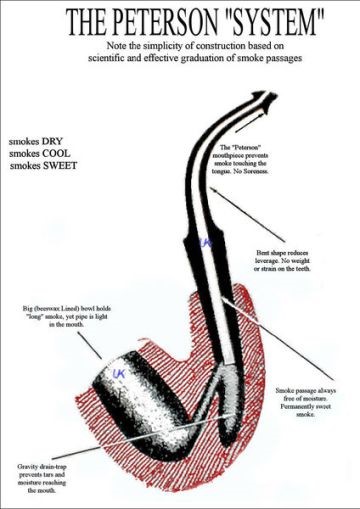
There was also a section on the Straight Grains on the site:

Straight grains: Peterson’s catalogue states that these pipes have Briars which are carefully examined for imperfections and have selected Briars of exceptional grain, known as Straight Grains, they are carefully selected, hand crafted and the increasingly rare skill required to make them is unique. Craftsmen shape, turn, sand and polish 150 year old roots of the Erica arborea tree/shrub. Only a very limited quantity of Straight Grains are available in any twelve month period. To my mind the sight of a beautiful natural straight grain bowl is truly a sight to behold. Pure class, they can be spotted a mile off! When coupled to the traditional high class Peterson gold or silverwork, these pipes are in a different quality league. Considering that such quality pipes when available, can be bought for prices starting at around $400 and upwards, they are to my mind a real bargain.

I turned to “The Peterson Pipe” by Mark Irwin and Gary Malmberg to get some background on the Peterson’s Straight Grain. On page 314 it had the following information.

Straight Grain Scarce premium grade stamp on models with exceptional Straight Grain, P-lip or fishtail mouthpiece as a line, appears in 1997, 2000 and ’05 catalogs. Specimen documented with bone-tenon extension indicating availability of such pipes before 1963, indeed, the ’40 catalog notes that ‘Hundreds of grosses of pipes may be made before even one STRAIGHT GRAIN bowl comes to hand.

A further reference to the line is found on Page 240 of the above book. I quote:

Grain – But what if the first choice a pipeman makes has to do with grain, if, for example he is only interested in pipes stamped STRAIGHT GRAIN? This is the top category in Peterson’s grading system, where availability is wholly dependent upon chance, with fewer than 2 percent of all bowls being so graded and stamped. While Peterson was stamping pipes STRAIGHT GRAIN as far back as the 1940s, so few of them have been made that they didn’t appear in the catalogs until 1997. Finding a Straight Grain in a desired shape can thus take years. If, however, the smoker is willing to bump his expectations down a notch to A-quality bowls, he can still find some spectacular grain choices, but his other choices are now much wider, since all current De Luxe and Natural finish pipes are made from A grade bowls, which are always free of fills.

Judging from the description above I believe that I am working on a rare Republic Era (1950 – 1989) Straight Grain Bent Billiard with beautiful grain and a matte-finish and a P-lip stem. Now it was time to work on the pipe.

With that information at hand I turned to work on the pipe itself. Jeff had thoroughly cleaned up the pipe. He reamed the pipe with a PipNet Pipe Reamer and cleaned up the remnants with a Savinelli Fitsall Pipe Knife. He scrubbed the bowl with undiluted Murphy’s Oil Soap with a tooth brush. He rinsed it under running warm water to remove the soap and grime. He cleaned out the inside of the shank and the airway in the stem with alcohol, cotton swabs and pipe cleaners. He scrubbed the exterior of the stem with Soft Scrub to remove as much of the oxidation and calcification as possible. He soaked the stem in Briarville’s Pipe Stem Deoxidizer and rinsed it off with warm water. I took photos of the pipe once I started to work on it.  I took close up photos of the bowl and the stem. You can see the reamed bowl and the darkening on the rim top and the edges. The stem surface was clean but there are light tooth marks and chatter on both sides on and ahead of the button. I took a photo of the stamping on the sides of the shank. It is clear and readable as noted above. There is also a “P” stamp on the right side of the saddle stem. I removed the stem from the shank and took a photo to give a sense of the proportions of the pipe. It is really quite nice looking. You can also see the white spot on the top of the stem that I think is a repair. I decided to address the damage to the rim top and inner edge of the bowl first. I cleaned up the inner edge and the rim top. The rim looks much better at this point. I polished the rim top and the rest of the briar with micromesh sanding pads – dry sanding with 1500-12000 grit sanding pads. I wiped the bowl down with a damp cloth after each sanding pad. The briar began to come alive. The bowl looked very good. I worked some Before & After Restoration Balm into the surface of the briar with my fingertips. It works to clean, enliven and protect the briar. I let it sit for 15 minutes then buffed it off with a soft cloth and raised the shine. The bowl looks great at this point. I touched up the “P” stamp on the stem with white acrylic fingernail polish. I pushed it into the stamp with a tooth pick to get it deep in the stamp. I scraped off the excess acrylic and polished the stamped area with a 1500 grit micromesh sanding pad. The curve of the “P” is weak but the stamp looks much better.I sanded out the tooth marks on the stem with 220 grit sandpaper and started polishing it with 600 grit wet dry sandpaper.I polished the stem with micromesh sanding pads – dry sanding it with 1500-12000 grit pads. I wiped the stem down with Obsidian Oil after each pad.I finished the hand polishing of the stem with Before & After Pipe Polish – both the Fine and Extra Fine polishes. I gave it a final coat of Obsidian oil and set it aside to dry.I am excited to finish this Republic Era Peterson’s Straight Grain 337 Bent Billiard. I put the pipe back together and buffed it with Blue Diamond on the buffing wheel. I gave the bowl and the stem multiple coats of carnauba wax. I hand buffed the pipe with a clean buffing pad to raise the shine. It is fun to see what the polished bowl looks like with beautiful straight and birdseye grain all around it. Added to that the black vulcanite stem was beautiful. This Peterson’s Straight Grain 337 Bent Billiard is great looking and the pipe feels great in my hand. It is light and well balanced. Have a look at it with the photos below. The dimensions are Length: 5 inches, Height: 1 ¾ inches, Outside diameter of the bowl: 1 ¼ inches, Chamber diameter: ¾ of an inch. The weight of the pipe is 38 grams/1.34 ounces. It is a beautiful pipe and a rare one that I will be adding to the rebornpipes store in the Irish Pipemakers Section soon. Thanks for walking through the restoration with me as I worked over this pipe. Thanks to each of you who are reading this blog.

As always, I encourage your questions and comments as you read the blog. Thanks to each of you who are reading this blog. Remember we are not pipe owners; we are pipe men and women who hold our pipes in trust until they pass on into the trust of those who follow us.
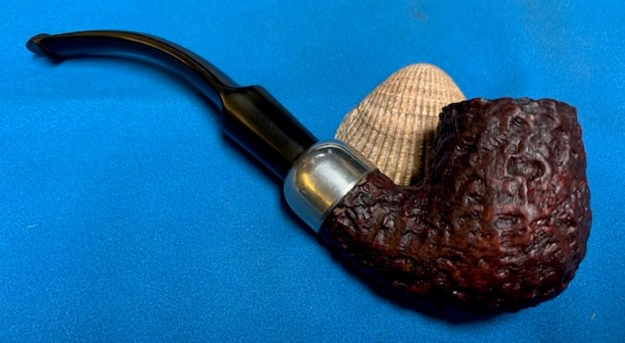
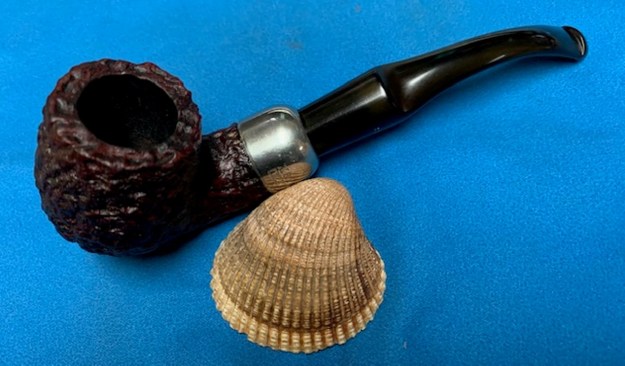
Restemming a Lightly Smoked Ropp De Luxe 804 Cherrywood


Blog by Steve Laug

Two of my daughters and I enjoy visiting our local Flea Market. They look for a lot of different things and I keep an eye out for pipes. Not long ago we were there and the girls found their things and I found these two Cherrywood Pipes – one is marked Royal Cherry [over] Made in France (top pipe in the photo below) and the other is marked Ropp in an oval [over] Deluxe [over] France [over] 804. Both are in good condition and both are without their stems. Here is what the pipes looked like when I brought them home. After finishing the Royal Cherry Cherrywood I turned my attention to the Ropp bowl. The octagonal bowl had strips of bark on four of the panels and smooth cherry stripped of the bark on the other four panels. The rim top and the heel of the bowl were stripped of bark and were smooth cherry wood. The shank is a cherry wood branch that has been threaded and screwed into the back side of the bowl. The bark on the shank is undamaged and looks good. The bowl and shank have been given a coat of varnish or shellac as it is smooth and shiny. The bowl has been smoked and there is a light cake in the bowl with some darkening and light lava on the bevelled inner edge of the bowl. The heel of the bowl is also smooth. It is stamped Ropp in an oval [over] De Luxe [over] France [over] 804. There was no stem that came with the pipe so one would need to be fit to the shank. I took a photo of the rim top to show the darkening and lava on the bevel and the light cake in the bowl. The shape of the bowl is well done and looks very good.I took a photo of the stamping on the heel of the bowl. It is clear and readable as noted above.I found a stem in my collection that would fit the shank but it would need to be bent to follow the flow of the shank and bowl. It was used and had some tooth marks in both sides of the stem ahead of the button.I reamed the bowl to take the cake back to bare walls. I used a Savinelli Fitsall Pipe Knife and scraped it clean. I sanded the walls of the bowl smooth with 220 grit sandpaper wrapped around a piece of dowel. The walls of the bowl were smooth and undamaged.I cleaned out the shank airway and mortise with alcohol, cotton swabs and pipe cleaners. I did the same with the airway in the new stem. The pipe was clean when I was finished.I cleaned up the bevelled rim top with a folded piece of 220 grit sandpaper to remove the light lava and the darkening. It came off very well and looked much better.I polished the smooth portions of the cherry with micromesh sanding pads – 1500-12000 grit pads. I dry sanded the wood and then wiped it down with a damp cloth. The polishing work progressively brought a shine to the pipe. It looked really amazing – the combination of bark and smooth portions of the cherrywood. It is a beauty! I rubbed the bowl down with Before & After Restoration Balm. I worked it into the finish with my fingertips. The product works to clean, preserve and protect the wood. I let it sit and absorb for 10 minutes. I buffed it off with a soft cloth and then gave it a rigorous buff to raise the shine. It looks good at this point. I set the bowl aside and turned to address the stem. I heated the stem with the flame of a Bic lighter to soften the vulcanite and bend it to match the curves of the bowl and shank. Once it was soft I bent it and it looks much better. I took photos of the stem surface to show the deep tooth marks on the surface of the stem. I painted the surface of the tooth marks with a lighter flame. I was able to lift them considerably. I filled in what remained with black CA glue. I set it aside to allow them to cure. Once the repair had cured I flattened out the repair with small file to blend it into the stem surface. I sanded it smooth with a folded piece of 220 grit sandpaper. I started the polishing on the stem with a piece of 600 grit sandpaper. I wiped it down with Obsidian Oil and set it aside. I polished the stem with 1500-12000 grit micromesh sanding pads – I dry sanded the chatter on the stem surfaces on both sides and the diameter of the saddle portion of the stem. I wiped it down with Obsidian Oil on a cloth after the sanding pads. Once finished it looked very good. I finished the hand polishing of the stem with Before & After Pipe Polish – both the Fine and Extra Fine polishes. I gave it a final coat of Obsidian oil and set it aside to dry. I am really happy with the way that this restemmed Ropp De Luxe 804 Cherrywood Pipe turned out. It is a nice looking pipe with a great shape and finished with bark on the bowl sides and shank and the rim top and heel of the bowl are smooth. The vulcanite saddle stem turned out very nice. The polished stem works well with the Cherrywood finish. The wood really came alive with the buffing. The bark finish gave the pipe a sense of depth with the polishing and waxing. I put the stem back on the bowl and carefully buffed the pipe with Blue Diamond on the buffing wheel using a light touch on the wood. I gave the bowl multiple coats of Conservator’s Wax and the stem multiple coats of carnauba wax on the buffing wheel. I buffed the pipe with a clean buffing pad to raise the shine. I hand buffed the pipe with a microfiber cloth to deepen the shine. The finished Ropp De Luxe 804 Bent Cherrywood really is a beauty and feels great in the hand and looks very good. Give the finished pipe a look in the photos below. The dimensions of the pipe are Length: 6 ½ inches, Height: 2 inches, Outside diameter of the bowl: 1 ¾ inches, Chamber diameter: ¾ of an inch. The weight of the pipe is 64 grams/ 2.26 ounces. I will be putting the pipe on the rebornpipes store in the French Pipemakers Section. If you would like to add it to your collection let me know. Thanks for reading this blog and my reflections on the pipe while I worked on it. It was a fun one to work on!

As always, I encourage your questions and comments as you read the blog. Thanks to each of you who are reading this blog. Remember we are not pipe owners; we are pipe men and women who hold our pipes in trust until they pass on into the trust of those who follow us.
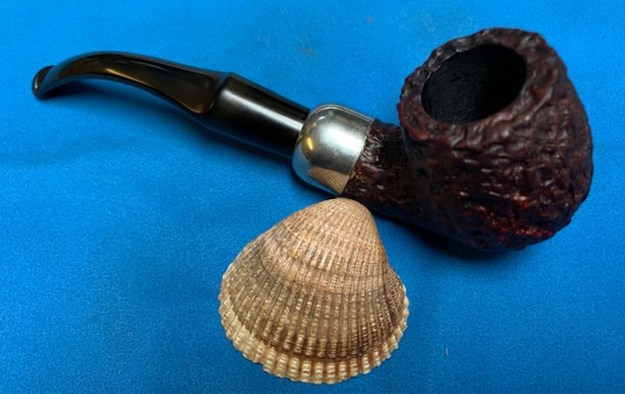
Restemming an Unsmoked Royal Cherry 4 Made France Cherrywood


Blog by Steve Laug

Two of my daughters and I enjoy visiting our local Flea Market. They look for a lot of different things and I keep an eye out for pipes. Not long ago we were there and the girls found their things and I found these two Cherrywood Pipes – one is marked Royal Cherry [over] Made in France (top pipe in the photo below) and the other is marked Ropp in an oval [over] Deluxe [over] France [over] 804. Both are in good condition and both are without their stems. Here is what the pipes looked like when I brought them home. I decided to work on the Royal Cherry pipe first. The bowl was covered with uninterrupted bark and seemed to have a varnish coat as there is a shiny coat on the bowl, rim top and the heel. The shank is a branch that has been threaded and screwed into the back side of the bowl. The top end of the shank is slightly tapered behind a branch nodule. The shank is not varnished or shiny. The rim top was smooth and there is a pointed nose on the front of the bowl. It has a split in it on the top that has been filled with putty. The bowl is unsmoked but there is some darkening on front inner edge of the bowl. The heel of the bowl is also smooth. It is stamped Royal Cherry [over] Made in France. There was some sticky substance on the heel from a price sticker. I took a photo of the rim top to show the clean and unsmoked bowl. You can also see the putty fill in the rim top on the pointed nose of the bowl. It is solid and smooth to the touch.I took a photo of the stamping on the heel of the bowl. It is clear and readable under the sticky substance left behind by a price tag.I found a stem that would fit the shank but it would need to be bent to follow the flow of the shank and bowl. I also put a band in the photo but ended up not using it.I touched up the shank end on the shank with a Cherry stain pen so that the smooth portion would match the stain on the smooth rim top and heel of the bowl.I heated the stem with the flame of a Bic lighter to soften the vulcanite and bend it to match the curves of the bowl and shank. Once it was soft I bent it and it looks much better.I sanded the diameter of the saddle portion to match the diameter of the shank. I used a folded piece of 220 grit sandpaper to reduce it to match the shank. I started the polishing with 600 grit wet dry sandpaper.I polished the stem with 1500-12000 grit micromesh sanding pads – I dry sanded the chatter on the stem surfaces on both sides and the diameter of the saddle portion of the stem. I wiped it down with Obsidian Oil on a cloth after the sanding pads. Once finished it looked very good. I finished the hand polishing of the stem with Before & After Pipe Polish – both the Fine and Extra Fine polishes. I gave it a final coat of Obsidian oil and set it aside to dry. I am really happy with the way that this restemmed, unsmoked Royal Cherry Bent Cherrywood Pipe turned out. It is a nice looking pipe with a great shape and finished with bark on the bowl sides and shank and the rim top and heel of the bowl are smooth. The vulcanite saddle stem turned out very nice. The polished stem works well with the Cherrywood finish. The wood really came alive with the buffing. The bark finish gave the pipe a sense of depth with the polishing and waxing. I put the stem back on the bowl and carefully buffed the pipe with Blue Diamond on the buffing wheel using a light touch on the wood. I gave the bowl multiple coats of Conservator’s Wax and the stem multiple coats of carnauba wax on the buffing wheel. I buffed the pipe with a clean buffing pad to raise the shine. I hand buffed the pipe with a microfiber cloth to deepen the shine. The finished Royal Cherry Bent Cherrywood really is a beauty and feels great in the hand and looks very good. Give the finished pipe a look in the photos below. The dimensions of the pipe are Length: 6 inches, Height: 2 inches, Outside diameter of the bowl: 1 ½ inches, Chamber diameter: ¾ of an inch. The weight of the pipe is 51 grams/ 1.80 ounces. I will be putting the pipe on the rebornpipes store in the French Pipemakers Section. If you would like to add it to your collection let me know. Thanks for reading this blog and my reflections on the pipe while I worked on it. It was a fun one to work on!

As always, I encourage your questions and comments as you read the blog. Thanks to each of you who are reading this blog. Remember we are not pipe owners; we are pipe men and women who hold our pipes in trust until they pass on into the trust of those who follow us.

Restemming and Restoring a Barling’s Make Ye Olde Wood Fossil 1553 Pot


Blog by Steve Laug

The next pipe is one that I have avoided working on for over a year. Not because it was particularly hard to work on but because of the fact that it is a Barling with a thin Dunhill Stem. The stem needed to be replaced and I was hoping I could replace it with a Barling stem that would match. I looked through all the stems that I have here and also have looked other places but no luck on the stem. So, I decided to shape a replacement stem for the pipe and finish the cleanup work on the bowl. It has only been sitting here for a year and a half. We purchased the Barling 04/09/2022 from an estate in Cleveland, Ohio, USA. It is stamped on the heel of the bowl and shank and reads Barling’s[arched over] Make [over] Ye Olde Wood [over] 1533. That is followed by Made in [over] England followed by Fossil in script. The letters TVF are at the end of the shank near the shank stem junction. Jeff took photos of the pipe before he did his cleanup work on the pipe.Jeff took a closeup photo of the bowl and rim to capture the condition of the pipe before he started his cleanup work. The rim top had a thick lava overflow and darkening on the back of the bowl. There was some burn and reaming damage on the inside edge of the bowl at the front of the bowl. The Dunhill stem is oxidized and dirty and there are light tooth marks and chatter on the surfaces ahead of the button. He also took photos of the sides and bottom of the bowl and shank to show the beautiful grain in the sandblast around the bowl. The photos show the general condition of the bowl and wear on the finish. It is very dirty but this is another beautiful pipe.  Jeff took a photo to capture the stamping on the shank. The photos show the stamping is clear and readable as noted above.I turned to Pipedia to refresh the details for a Family Era Pipe made between 1812-and late 1962 (https://pipedia.org/wiki/Barling). I am including portions of the article that are pertinent to this pipe. I have highlighted them in bold.

Family Era – 1812 – late 1962 Details

The Barling family-controlled production up till this point. Quality was excellent, however some sources indicate a marked inconsistency in quality starting as early as 1954. As stated earlier, Jonathan Guss suggests that the Algerian War for Independence played a role in the change in quality due to the lack of Algerian briar, which the company supplemented with briar sourced from other countries. (Guss)
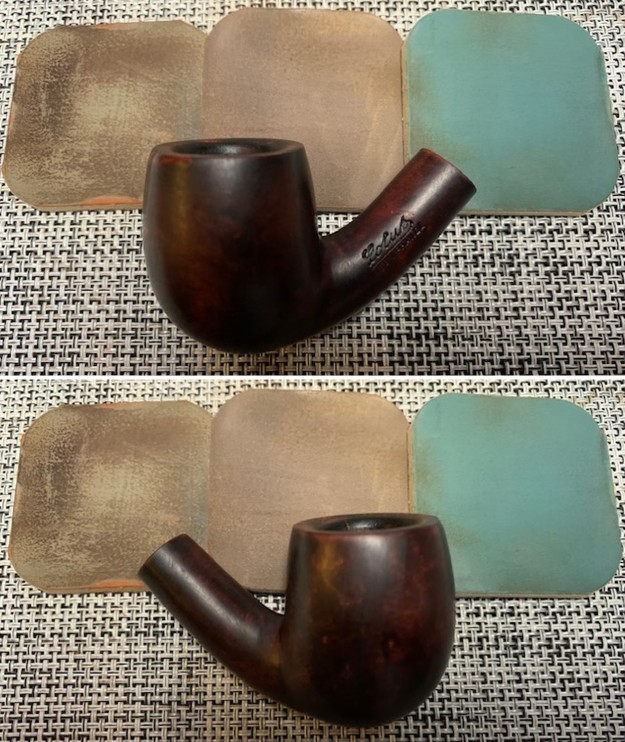
Prior to 1954 Barling pipes were made from old growth “extra extra” grade Algerian briar, of a quality no longer available. Barling conducted their own harvesting operations, looking for roots that ranged from 80 – 150 years of age. Jonathan Guss indicates that Barling had a commercial investment in Algeria as far back as 1928, though the nature and extent of this investment is not currently known.
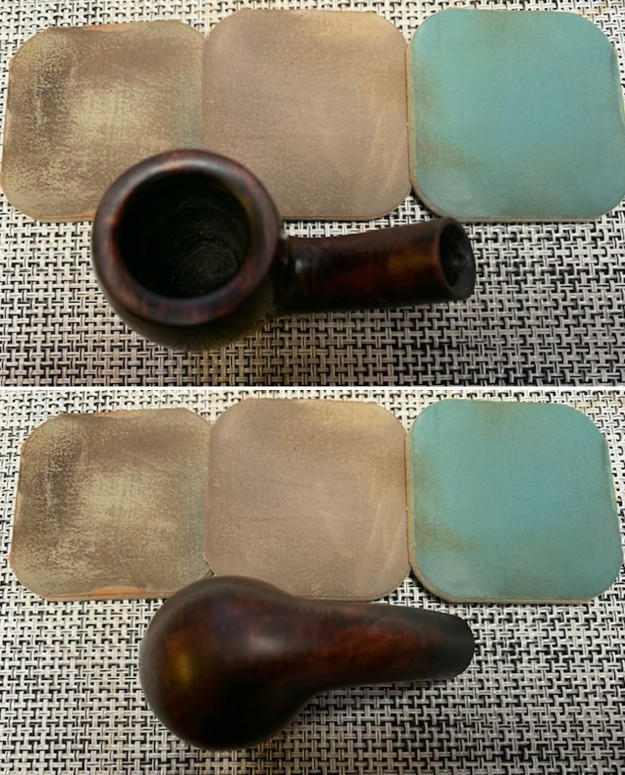
We do know that Barling conducted its own harvesting operations, as well as cutting and seasoning of their selected briar. These images from the 1920’s brochure, Romance Of The Barling Pipe, shows images of their Algerian ventures. Also, the copy states that Barling looked for briarroot that was about 50 years old.
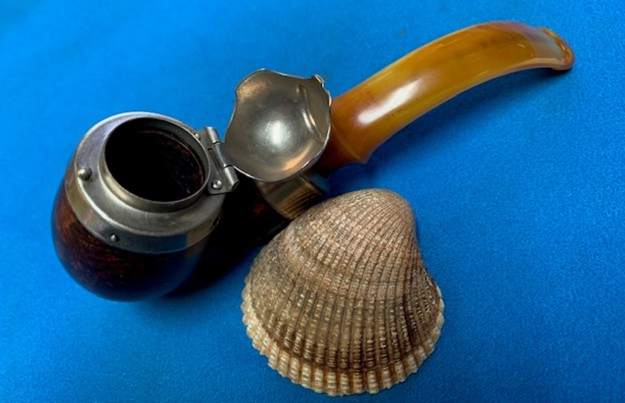
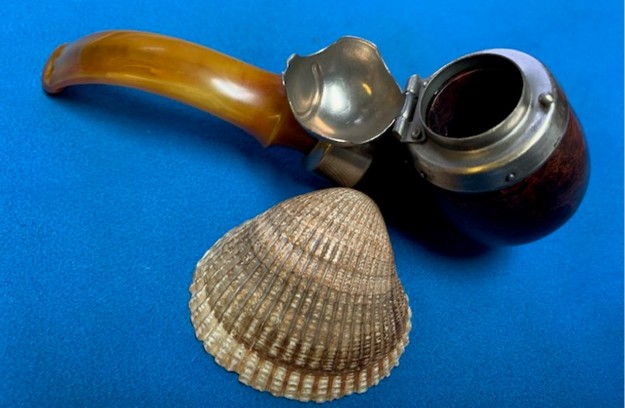
While many find the grain to be beautiful, this was not the aim of the Barling Company, and many of their pipes have rather unremarkable grain. The Barling Company’s intent was simple, to create the finest smoking instruments in the history of the world. Many connoisseurs believe that they achieved that goal admirably.

In addition to the smoking qualities of their air-cured wood, the Barling Company outfitted their bowls with hand made stems that many consider to be the most comfortable ever created. Their engineering is beyond reproach. Their silver work remains unsurpassed.

As an interesting side note, the soft Algerian Briar was not initially prized, as it was prone to burnout. But Barlng took the time to properly age and season this carefully selected wood for between 3 and 5 years, before finishing. They also made pipes with thicker walls, which helped defend against burnout. The porous mature of this briar resulted in excellent heat dispersion and provided a cool smoke.

Family Era Nomenclature:

Before discussing the nomenclature of the Family Era pipes it is important to note that there are no absolutes. Barling pipes from this period show a remarkable degree of variation when it comes to nomenclature. The following information can be applied in a general fashion.

According to Tad Gage, Pre-1946 stampings are minimal. Pre WW2 pipes rarely have size, shape or grading. But pipes have surfaced, hallmarked as early as 1925 with size marks, and as early as 1926 with model numbers. There may be earlier examples, and when we see them we will revise the dates.

Examples with silver hallmarks illustrate that a distinct change in nomenclature occurred around 1938-40, although clearly the war and London bombings impacted production of silver-mounted and of all English pipes. A George Yale Pipes & Tobacco catalog from 1941 features the familiar stampings such as “YE OLDE WOOD”, “TVF”, and style names like “Fossil”, and these were not generally found on pre-1940 pipes, although “YE OLDE WOOD” did inconsistently appear on some earlier examples. (Gage)

Sandblasts:

Until recently it was believed that Barling didn’t produce sandblasts until the late 1930’s and didn’t list them formally as part of the product line prior to 1943. It’s possible that Barling may have been producing sandblasts much earlier, possibly as early as 1917, the same year Dunhill is credited with inventing the sandblast. More on that possibility in a moment.

Logo Nomenclature:

…Barling also provided sterling work for BBB until BBB established their own silver working capabilities in Birmingham England, and started crafting its own silver fitments circa 1910. (Gage) By the time that Barling was making sterling fitments for BBB the Barling makers’ mark had been changed to “EB” over “WB” for Edward and William Barling. Many Barling briar pipes made prior to 1906 lack any company markings except for the name of the shop that sold them. As was common practice at the time, the majority of bowls Barling used prior to 1906 were imported from Saint-Claude or Jura to be finished in the Barling factories. If there was anything to identify Barling as the maker it was their maker’s mark, EB over WB, stamped into a sterling fitment. During the late 1800’s the BARLING’S MAKE stamp appears on some pipes, evidence that Barling was manufacturing some of their product completely in-house. The “BARLING’S MAKE” has the word “BARLING’S” arched over the word “MAKE” in capital block letters. Barling used this block letter logo until late 1962.

In addition to the block letter logo, Barling used a script logo for special pipes as well as for advertising, and packaging art…

…During the 1930’s and early 1940’s the BARLING’S MAKE logo appeared in a small version with a simpler letter style. Following the War, the small “BARLING’S MAKE” logo was discontinued and a larger logo was used. The larger logo would continue to be in use until 1962, when the 1930’s style logo was reintroduced along with the new numbering system.
Over the years there were a number of changes and adjustments to the nomenclature, though the company logo stamps remained a constant….

Ye Olde Wood Stamp:

Sometime around 1913, the “Ye Olde Wood” stamp made its appearance on selected pipes. An example exists stamped on a 1913 date hallmarked pipe.

This logo will continue to be used in the decades to come. Initially it was used to designate a higher grade than the average, much as the “Special” grade would after the Second World War. Price lists show the “Ye Olde Wood” pipes as a separate grade from the basic BARLING’S MAKE pipe. Eventually, “Ye Olde Wood” came to represent the company to the world. The use of “YE OLD WOOD” as a stamp prior to 1940 was haphazard, at best, although the company used the slogan in advertising materials from the early teens onward. (Gage)…

Model Numbers:

Also according to Tad Gage, the only four-digit number that denotes a Pre-Transition piece begins with “1,” which was used for pipes sold in England. Any other four-digit Barling pipe is a Transitional piece– (Tad Gage in P & T magazine)…

Now I knew I was dealing with a Pre-Transition, Family Era pipe bowl as shown by the stamping and the four digit shape number. I also knew from the 1 preceding 553 shape designates that it was made for pipes sold in England. As best as I can tell it was made in the 1940s and no later than 1962.

When the pipe arrived in Vancouver it was very clean. The briar and stem were spotless. The long Dunhill stem fit well to the shank. It appears that when it was fitted the shank was sanded slightly and smoothed out some of the sandblast but as I work on it I will know with more certainty. The shank end had been tapered to the stem. Jeff had reamed the bowl with a Pipenet Pipe Reamer and cleaned up the bowl walls with a Savinelli Fitsall Pipe Knife. He scrubbed the airway in the stem and shank with pipe cleaners, cotton swabs and alcohol. He scrubbed the exterior of the bowl and shank with Murphy’s Oil Soap (undiluted) and a tooth brush. He rinsed the exterior with warm running water and dried. He polished the briar and stem with a small drop of olive oil. The pipe really looked very good. It was going to be a fun one to work on for my part.  I took photos of the pipe when I brought it to the table for my work. This is what I saw. I took a photo of the rim and bowl to show the condition of the cleaned pipe. You can see the darkening and the damage on the front inner edge and the left side inner edge. The Dunhill stem is quite clean and I will be putting it in my can of stems for use on a Dunhill pipe in the future.I took a photo of the stamping on the heel of the bowl and the underside of the shank. It is clear and readable as noted above. I removed the stem from the shank and took a photo of the look of the bowl with the Dunhill stem. It looked interesting but was significantly longer than necessary.I went through my stems and found a nice saddle stem that was the right length in my mind and with some work would look great with the pipe.I set the Dunhill stem aside and turned my attention to the new stem. The tenon fit the shank perfectly so nothing needed to be done with that. The diameter of the saddle stem was larger than that of the modified shank. I used a file and 180 grit sandpaper to shape the stem. I put a plastic spacer between the shank and the stem so I could proceed without further damage to the shank. It worked well to shape the diameter of the stem to match the shank. I tried to match the diameter to the undamaged part of the shank. With the stem fit close I moved on to clean up the rim top and edge of the bowl to bring it back into round. I gave the rim a slight bevel to reduce the damage on the front inner edge of the bowl.I put the stem on the shank and took a photo to have a look at the sanded portion of the shank. It went from the end inward about ½ inches. The sandblast had been smoothed out to the point that it was virtually gone on the end. It is slightly tapered rather than the straight angle that should have been there along the top of the shank. I thought it might be worth put a small band on it to cover the damaged area and provide a straight angle. It would be cosmetic as there were no cracks to the shank end. I found a nice decorative band in my collection of bands that had some beading along the shank end. I took a photo of the band alongside the bowl to show what it looked like.I pressed the band on to the shank end and took photos of how it looked. It covered the damaged area well and took care of the tapered end of the shank. I like the way it looked.I took a photo of the pipe without the band and with the band in place. To me the band really helped with the tapered shank end. It gave a touch of bling to the pipe and cleaned up the flow from the bowl to the end of the stem. I like how it looked.I touched up the inner edge of the bowl with a Maple stain pen to blend the rim edges and top into the stain on the rest of the bowl. It really helped with blending the bevelled edge and giving the bowl a better sense of round.I worked some Before & After Restoration Balm into finish of the briar with my fingertips to clean, enliven and protect it. I let the balm sit for a little while and then buffed with a cotton cloth to raise the shine. The Restoration Balm really makes the sandblast grain stand out beautifully. I sanded out the file and 180 sanding marks on the stem surface and saddle portion with 220 grit sandpaper. I started polishing the stem with 600 grit wet dry sandpaper. It was starting to look much better. I polished the stem with micromesh sanding pads – wet sanding with 1500-2400 grit pads and dry sanding with 3200-12000 grit pads. I wiped the stem down after each pad with Obsidian Oil. I finished the hand polishing of the stem with Before & After Pipe Polish – both the Fine and Extra Fine polishes. I gave it a final coat of Obsidian oil and set it aside to dry.The Barling’s Make Ye Olde Wood 1553 Fossil Pot restemming and restoration was finished. I polished the bowl and stem with Blue Diamond to polish out the remaining small scratches. I used a very light touch so as not to damage the stamping on the shank. I gave the bowl multiple coats of Conservator’s Wax and the stem multiple coats of carnauba wax. I buffed the pipe with a clean buffing pad to raise the shine. I hand buffed it with a microfiber cloth to deepen the shine. The pipe polished up pretty nicely. The depths of the sandblast came alive with the buffing and works well with the decorative brass band and the polished black vulcanite saddle stem. Altogether this Barling’s Make Ye Olde Wood Fossil Pot has a rich look. The finished pipe is shown in the photos below. The shape, finish and flow of the pipe and new stem work very well. The dimensions are Length: 5 inches, Height: 1 ½ inches, Outside diameter of the bowl: 1 ¼ inches, Chamber diameter: 7/8 of an inch. The weight of the pipe is .99 ounces/28 grams. I will be putting it on the rebornpipes store in the British Pipemakers Section soon. If you are interested in adding it to your collection let me. I have one of these and they are a cool dry smoke. Thanks for walking through the restoration of this fine old Barling’s Make pipe. It was a pleasure to work on.

As always, I encourage your questions and comments as you read the blog. Thanks to each of you who are reading this blog. Remember we are not pipe owners; we are pipe men and women who hold our pipes in trust until they pass on into the trust of those who follow us.