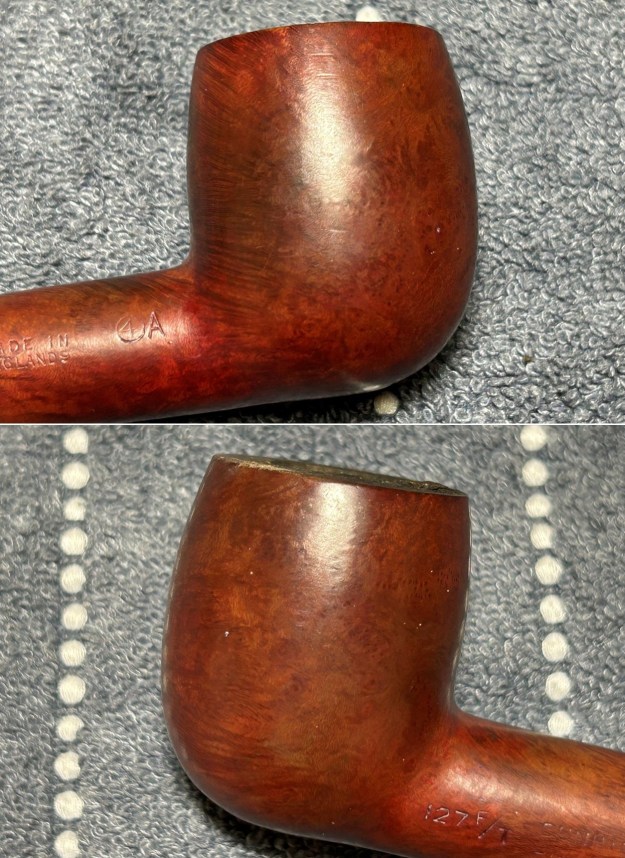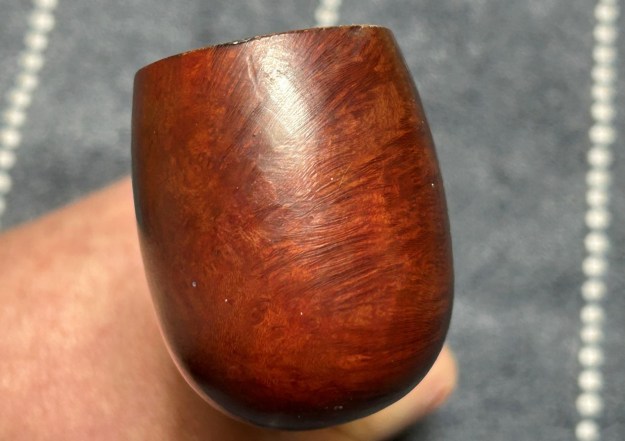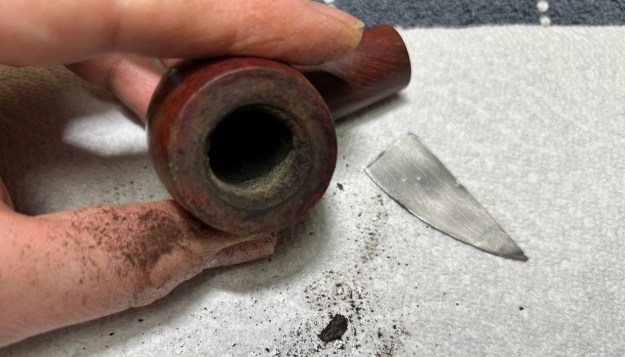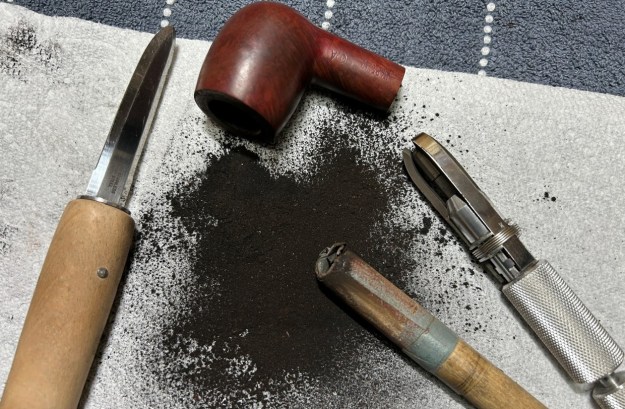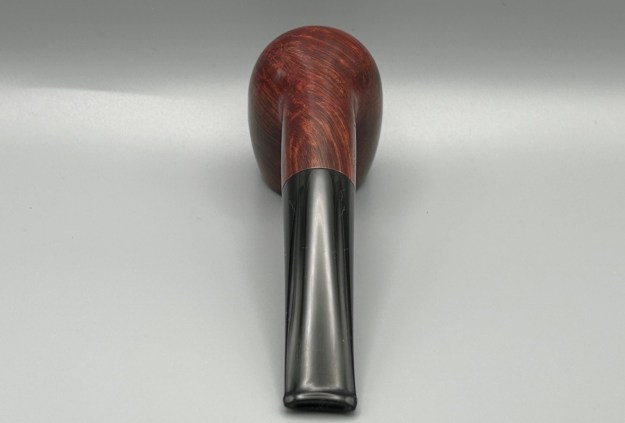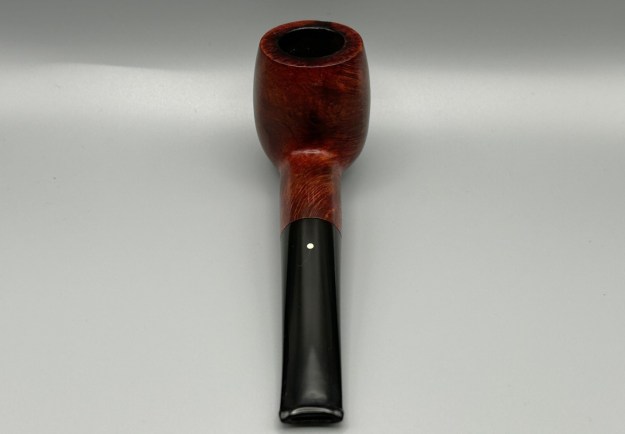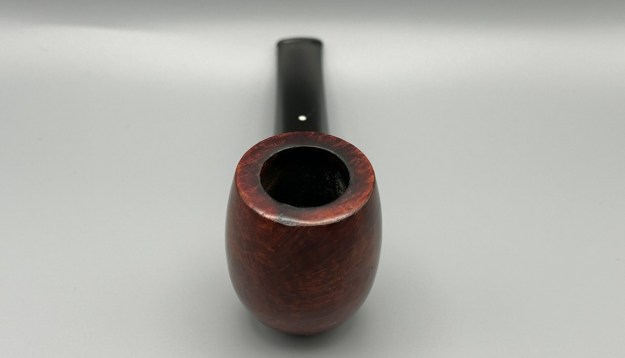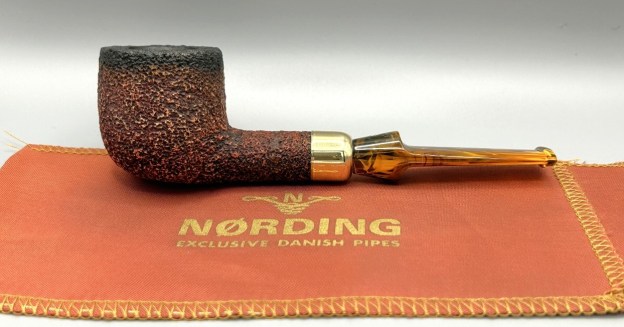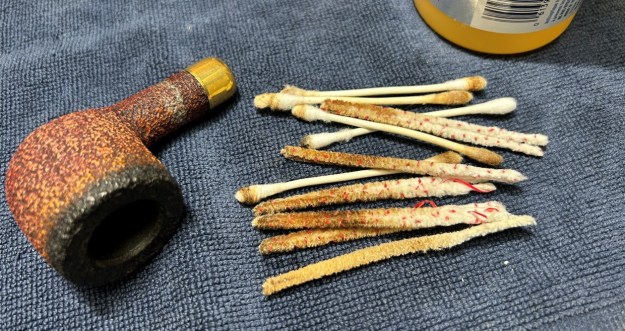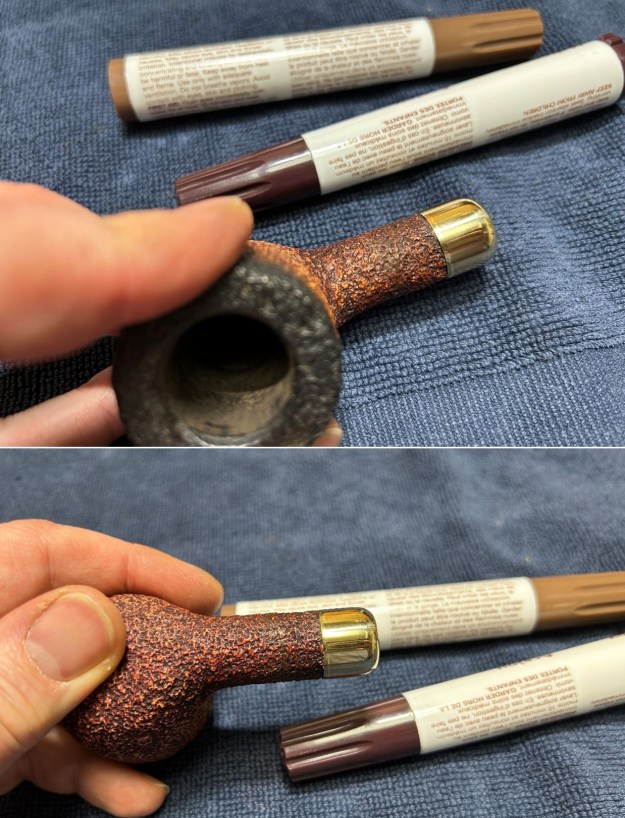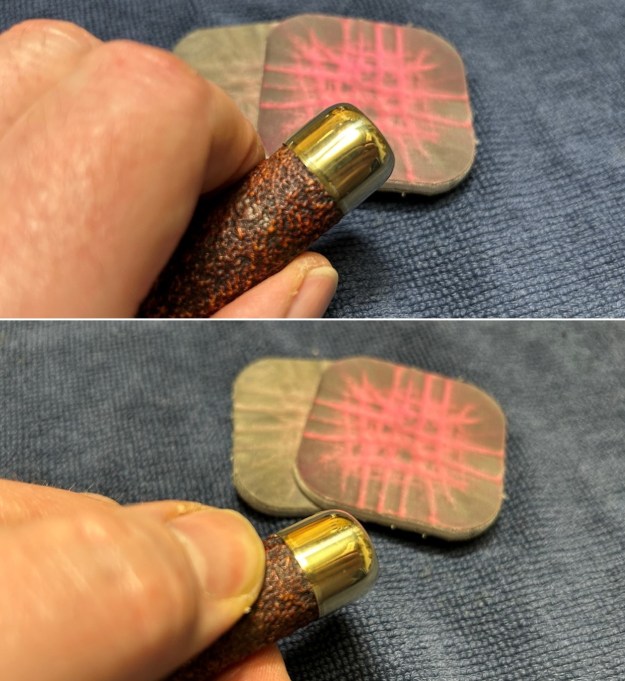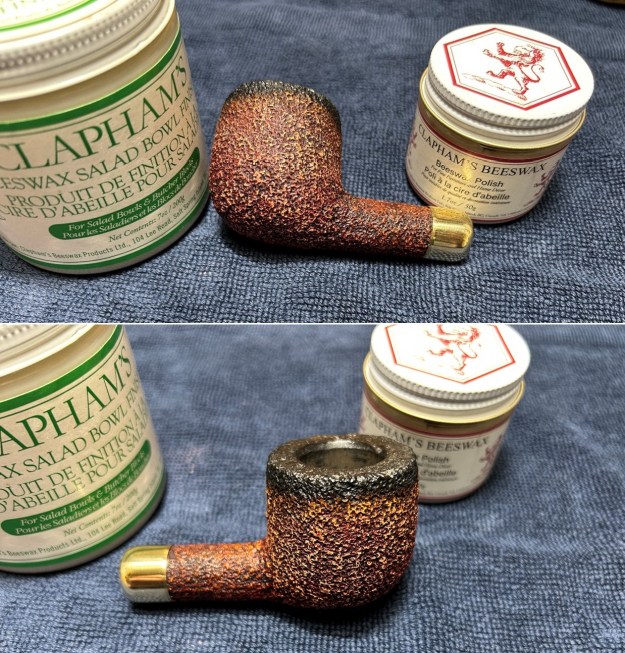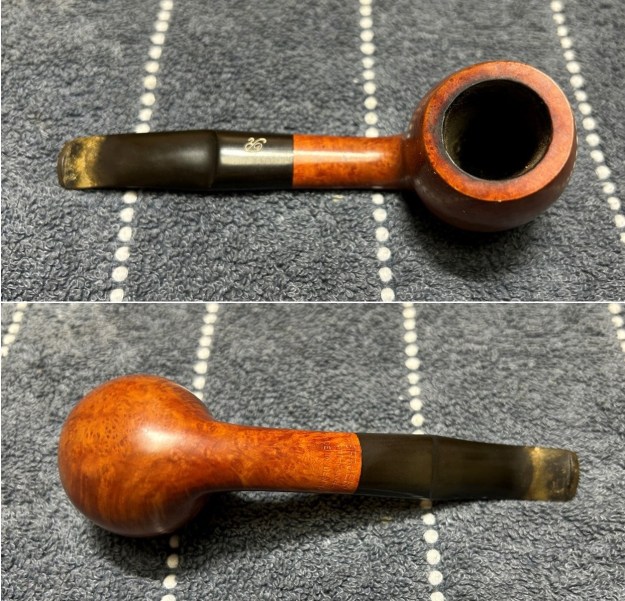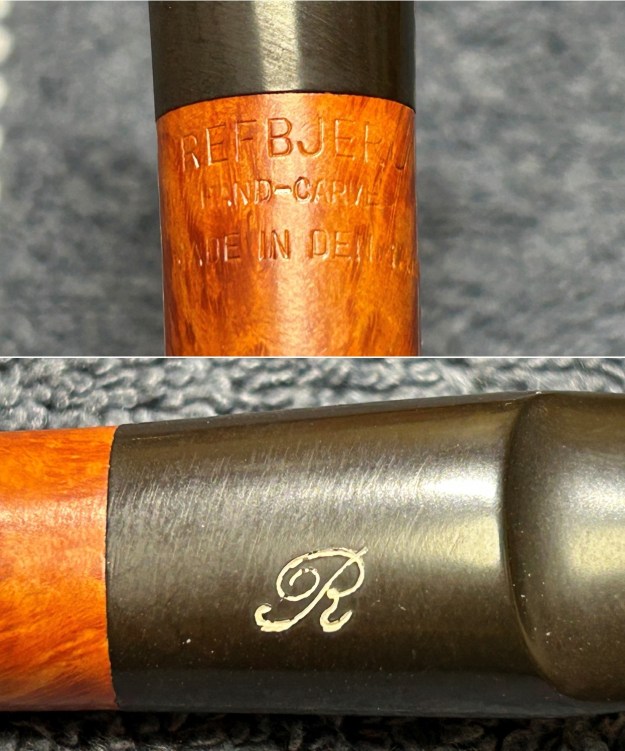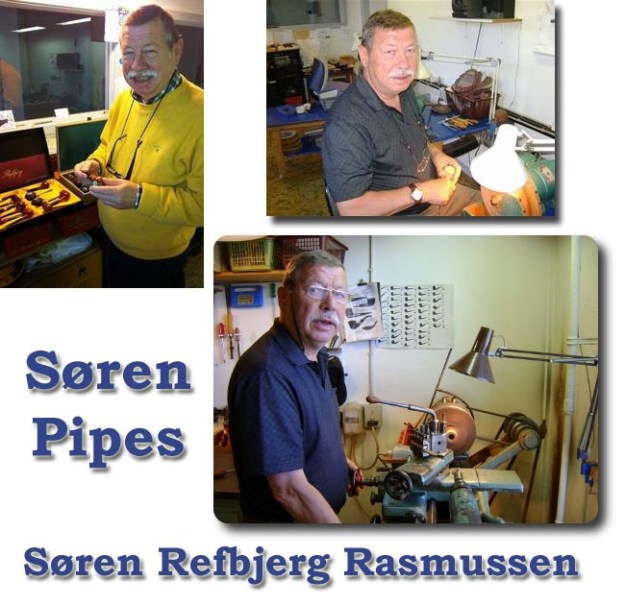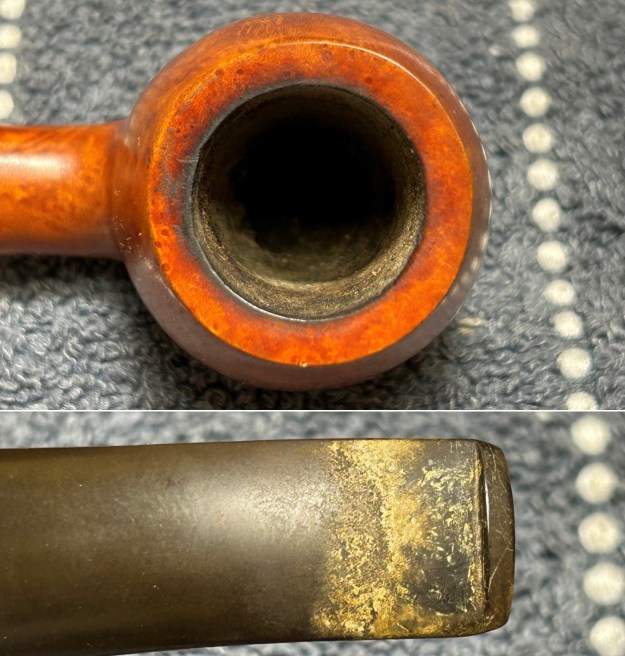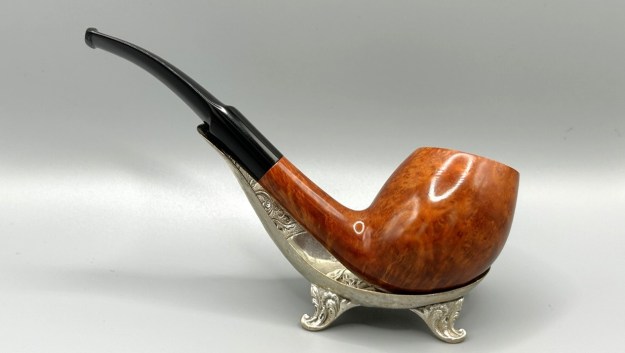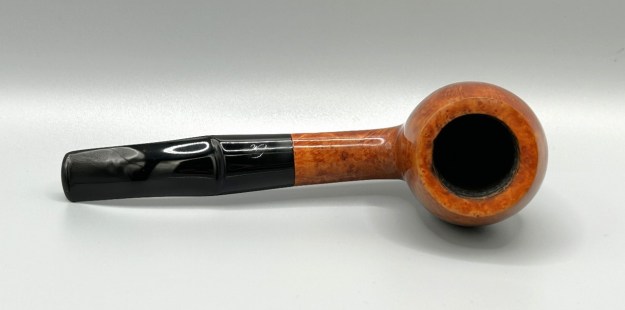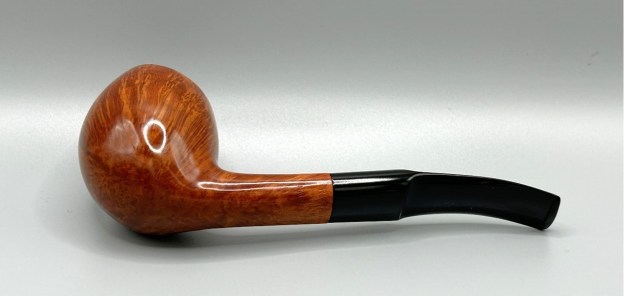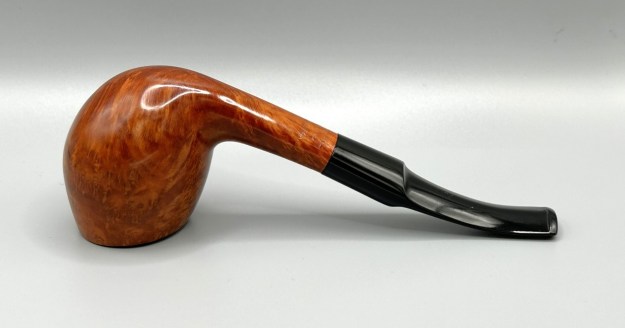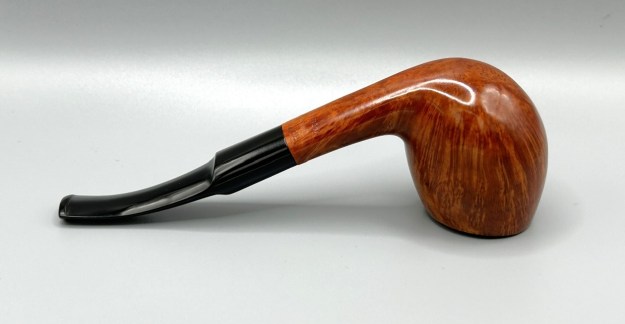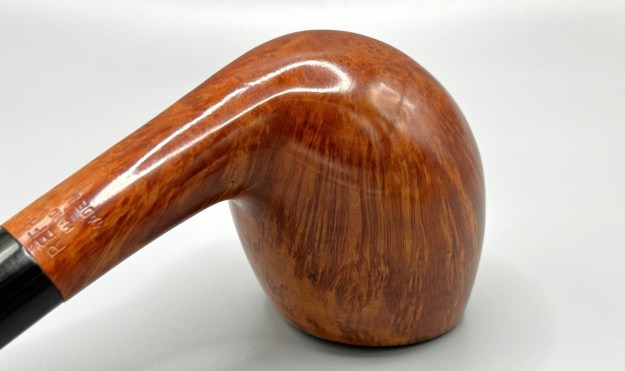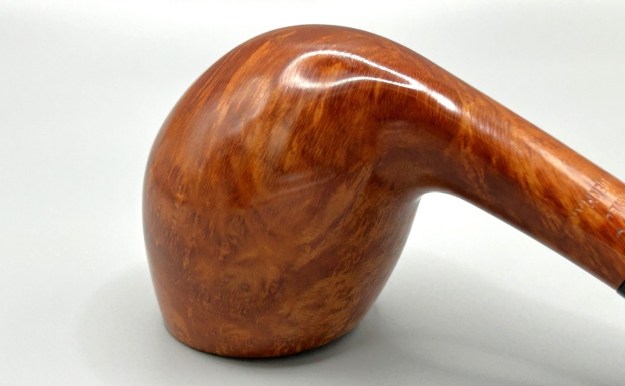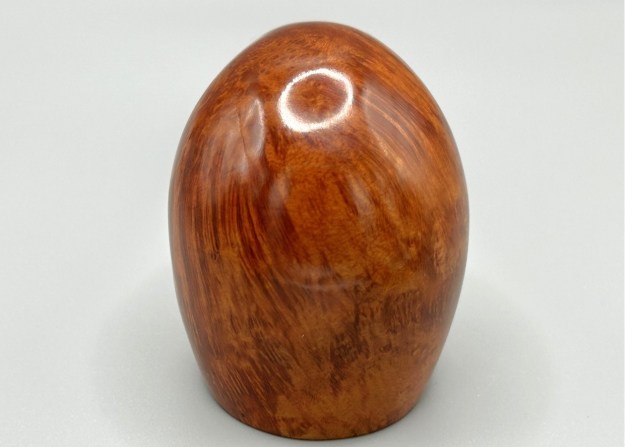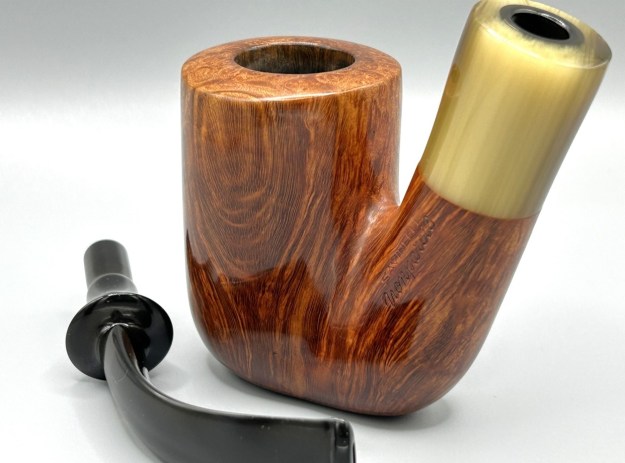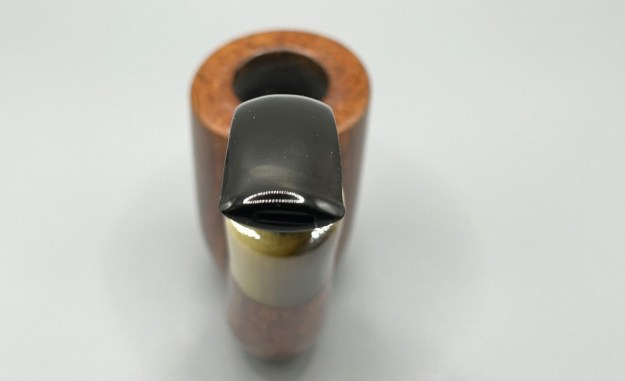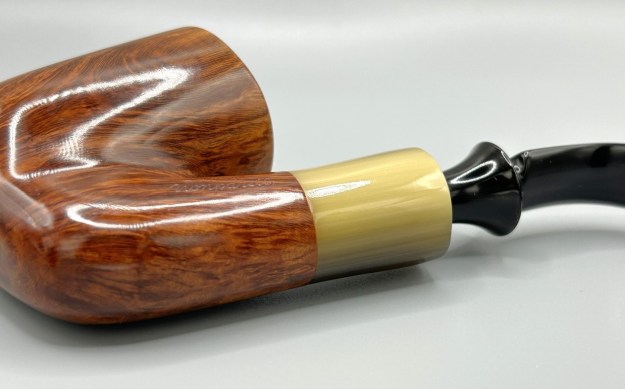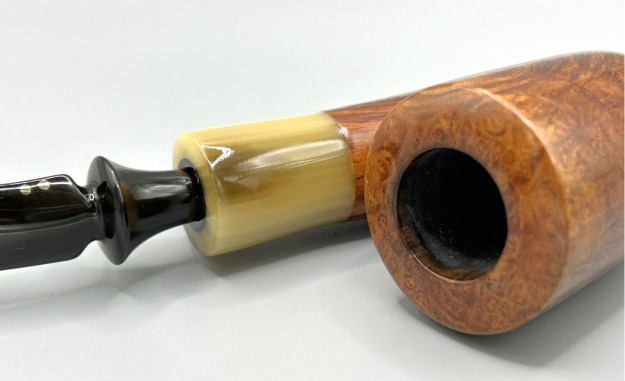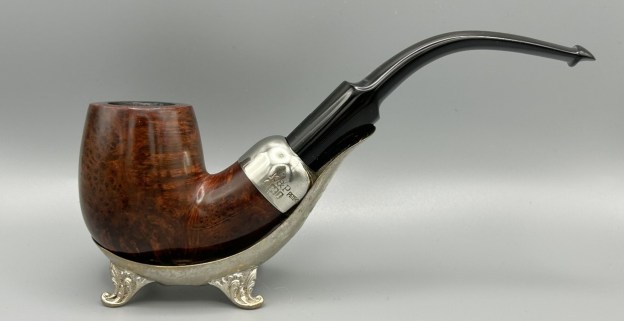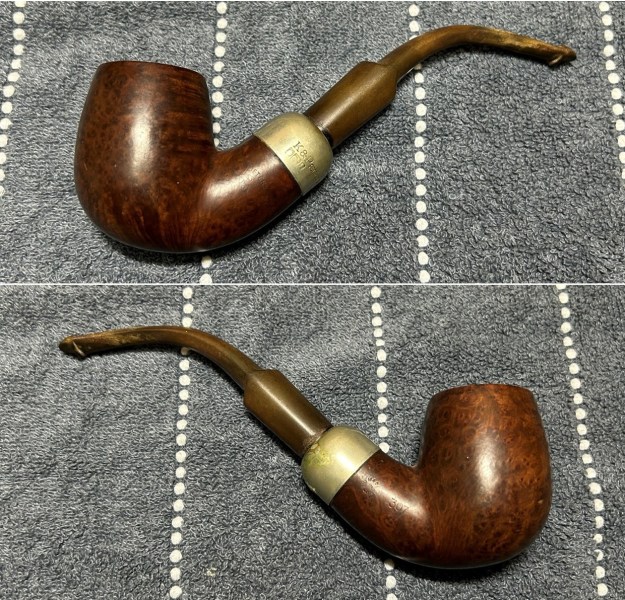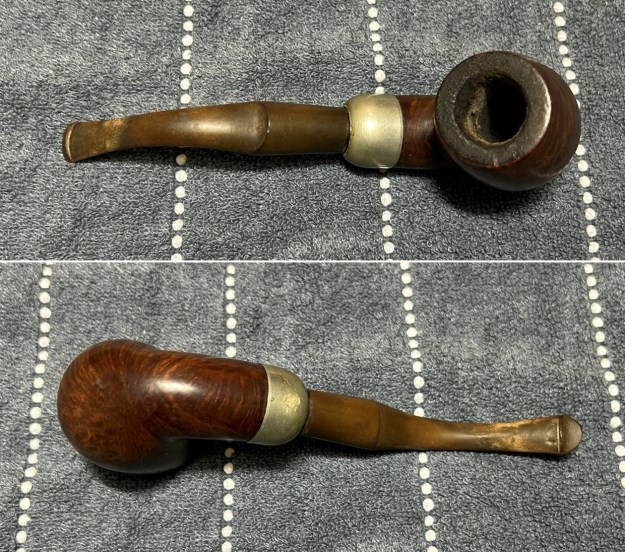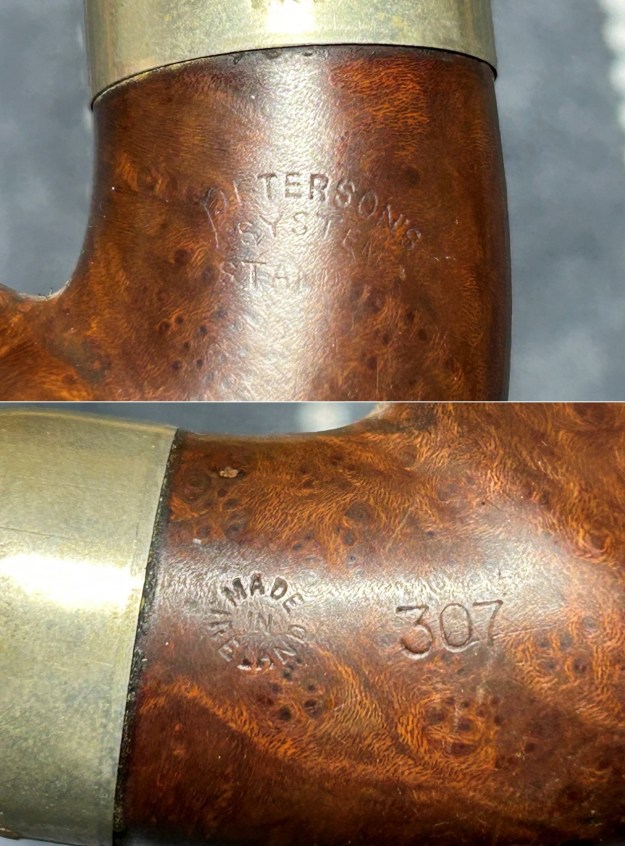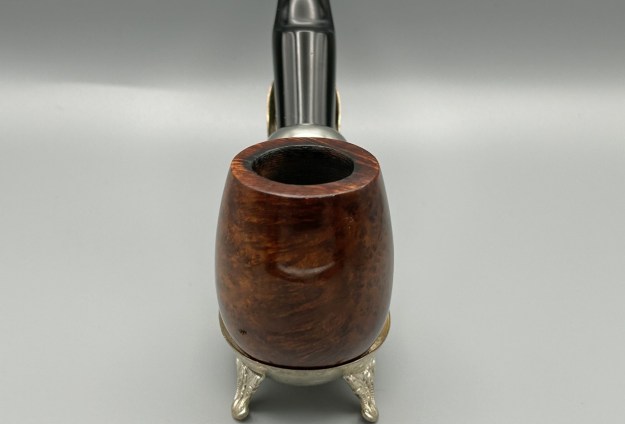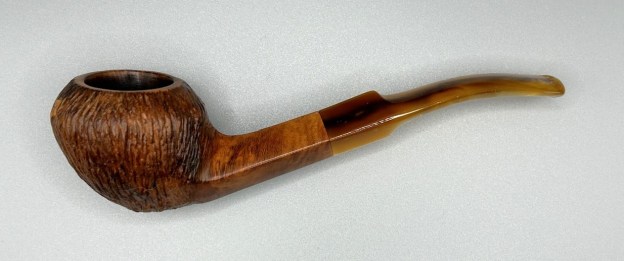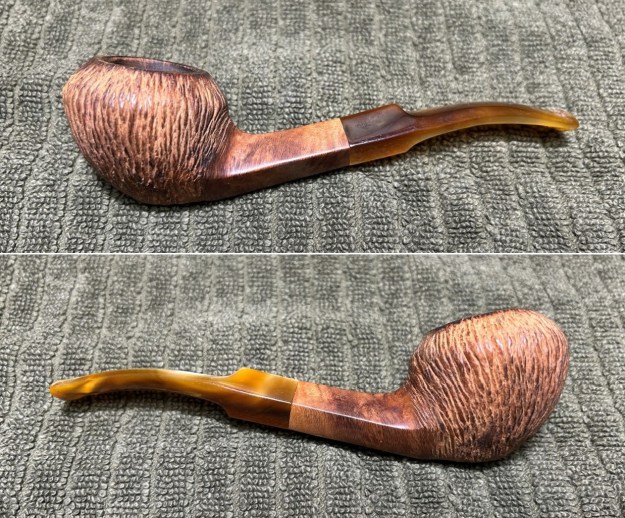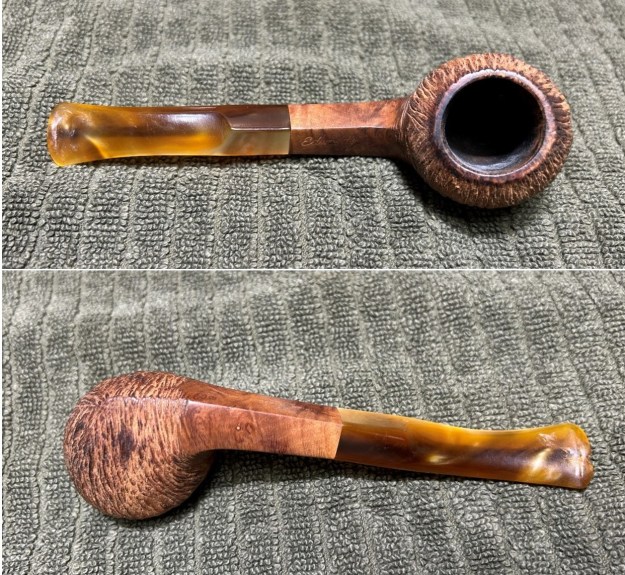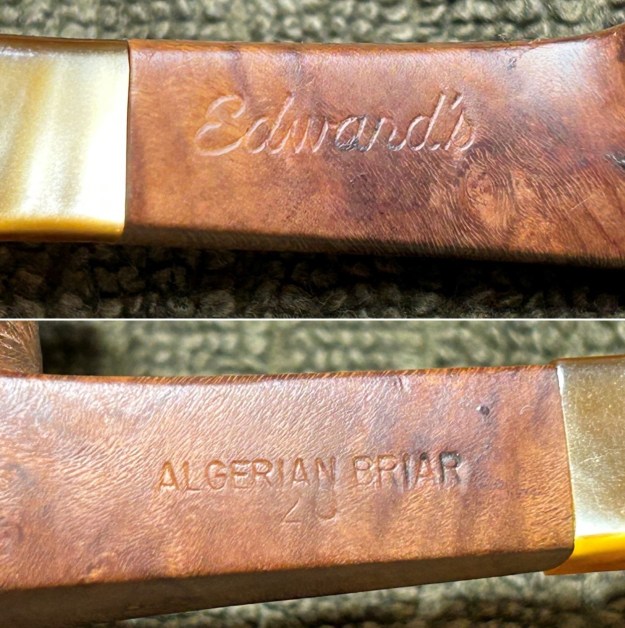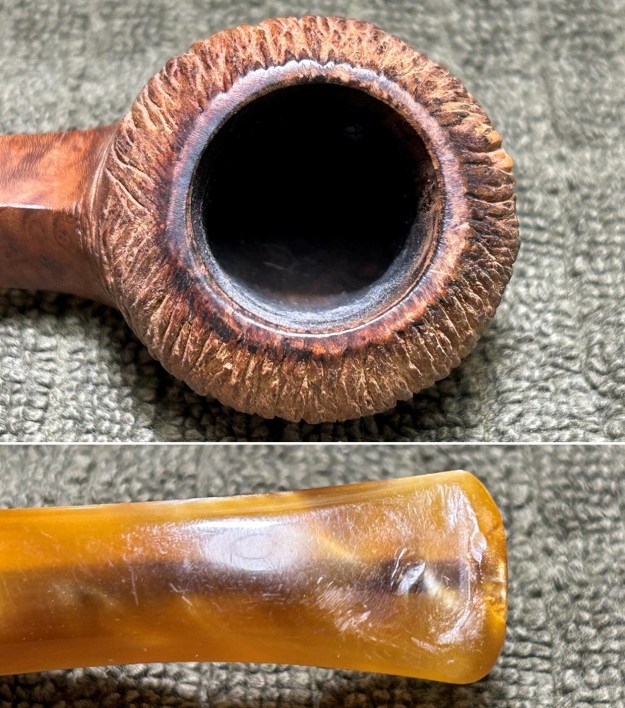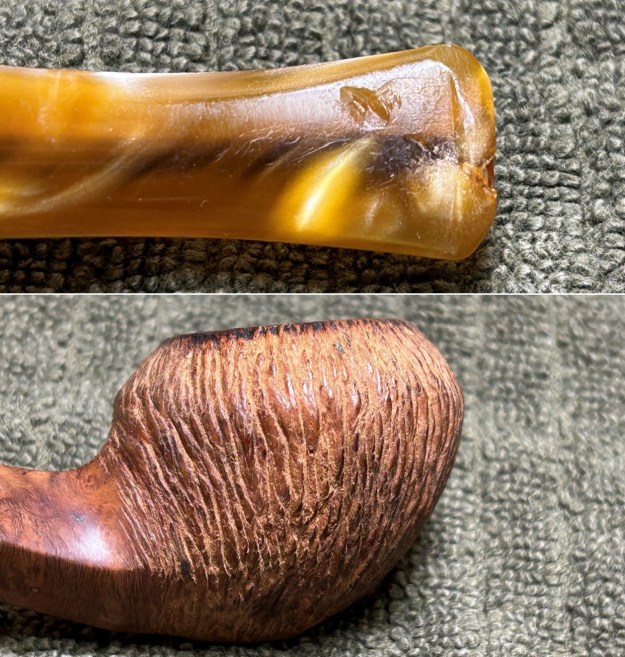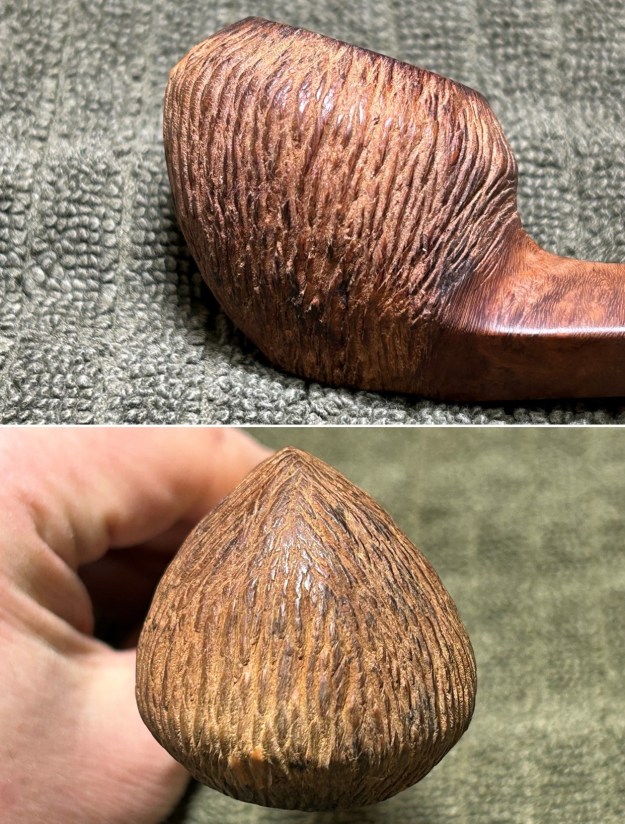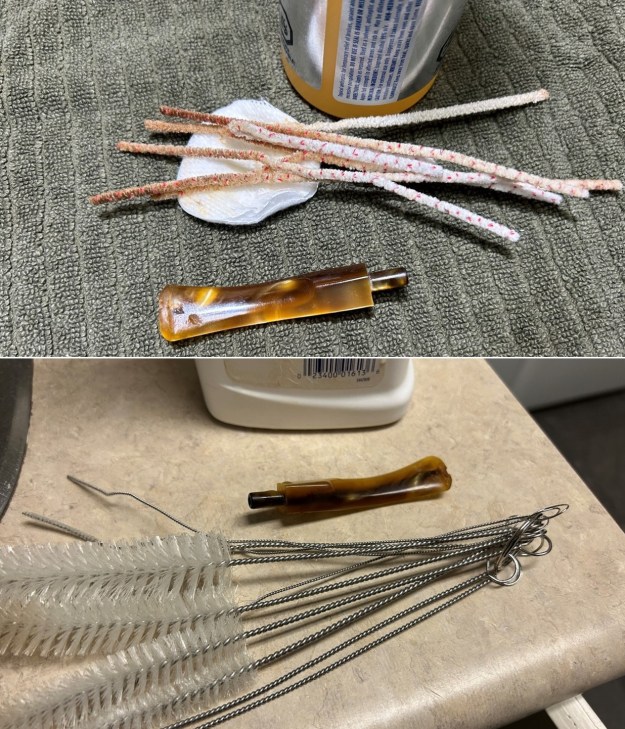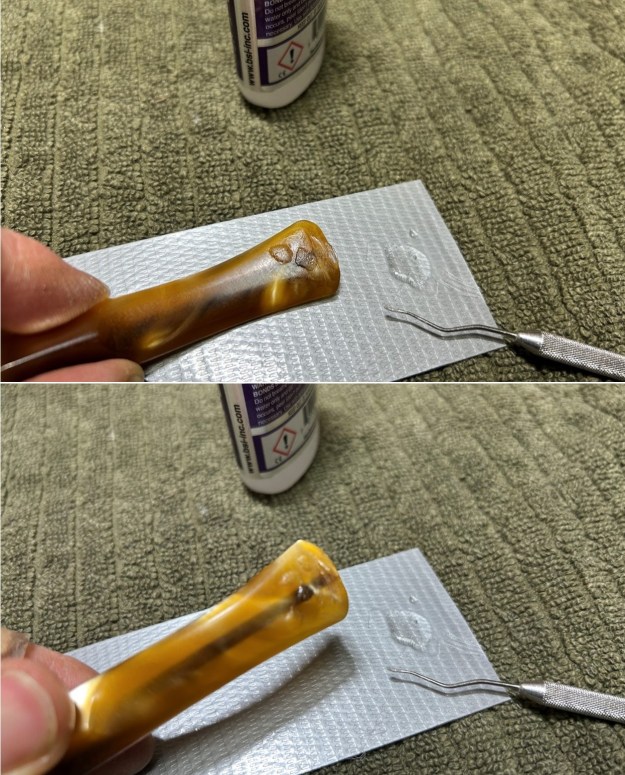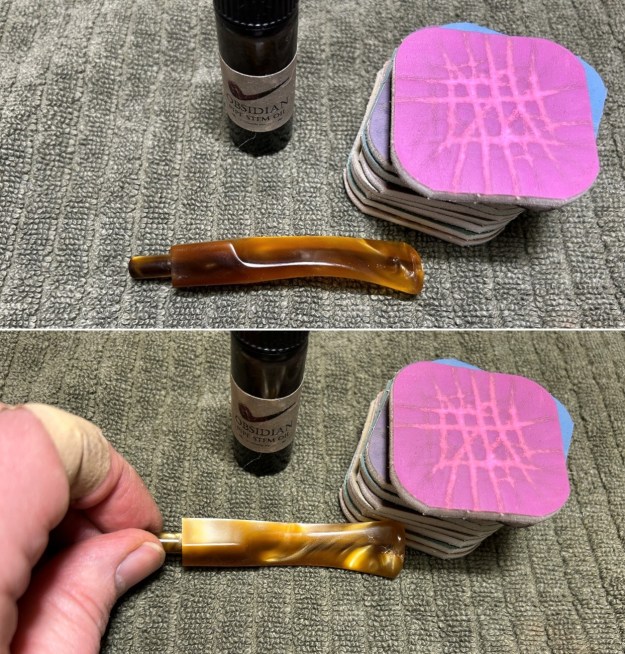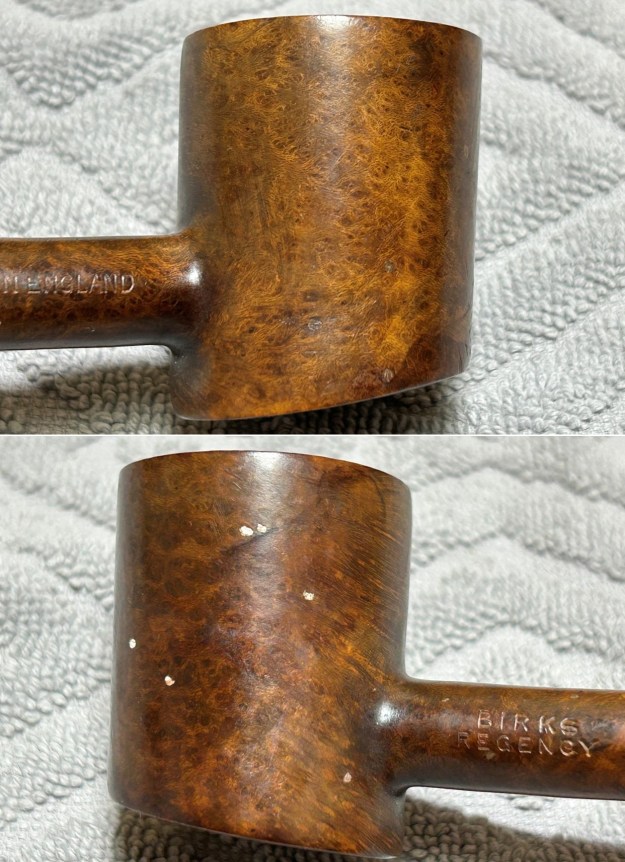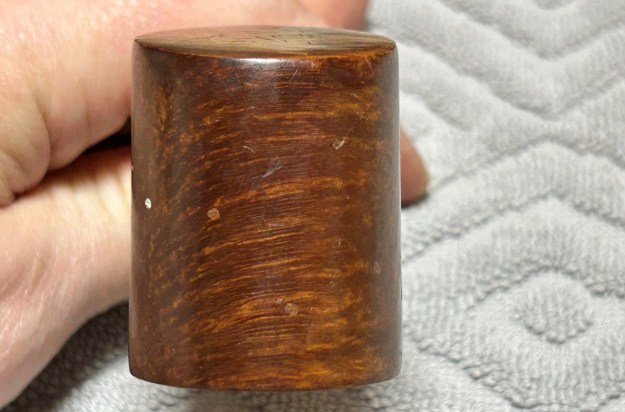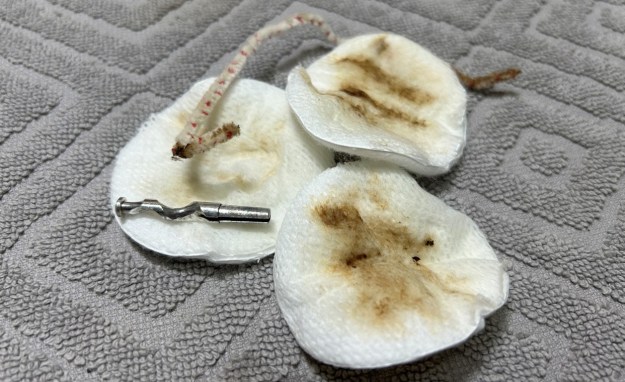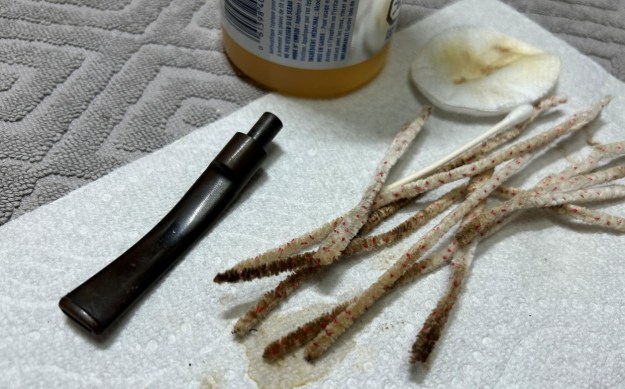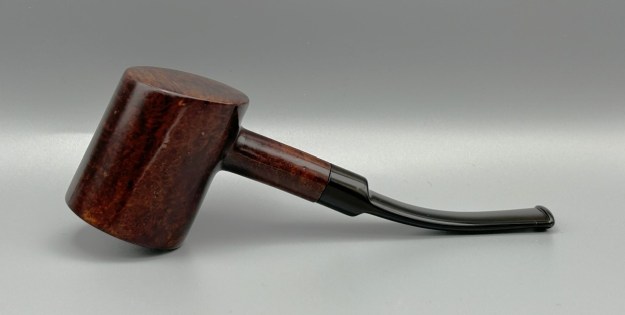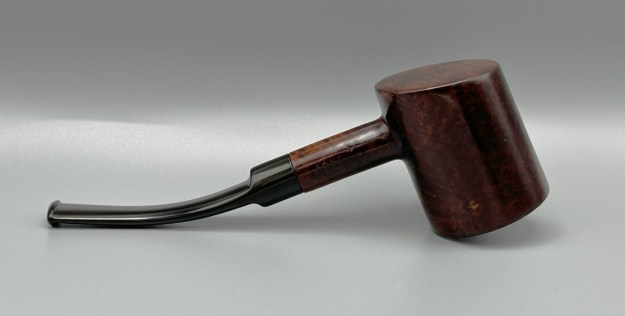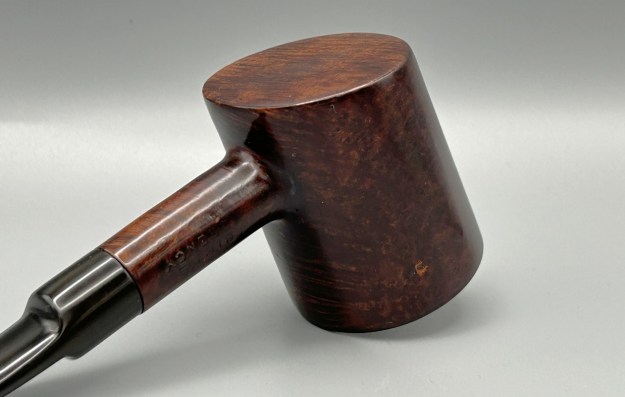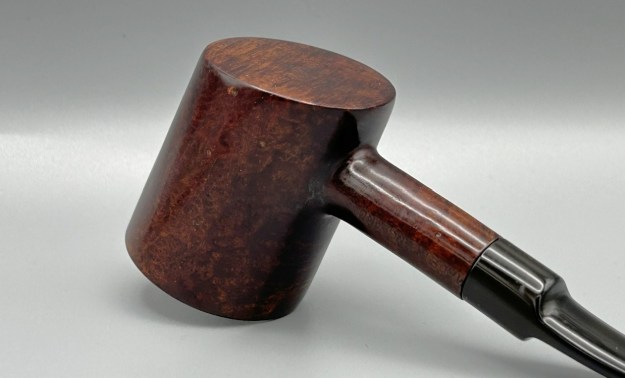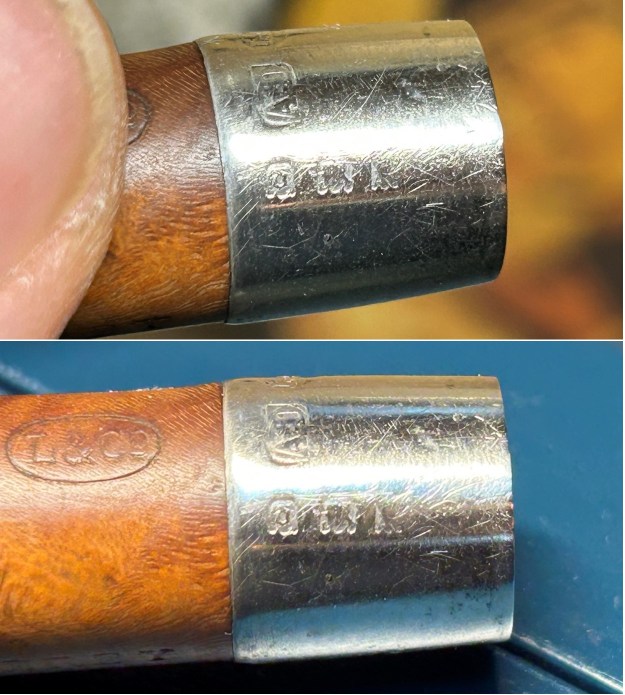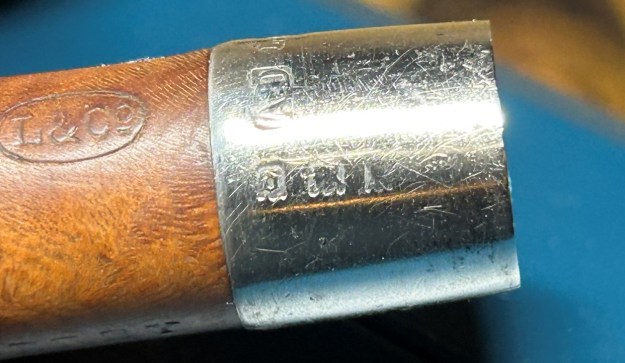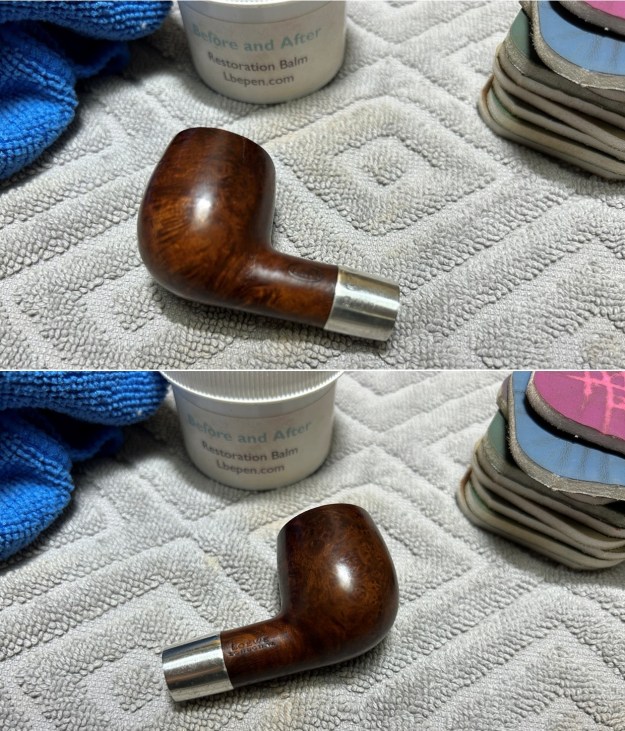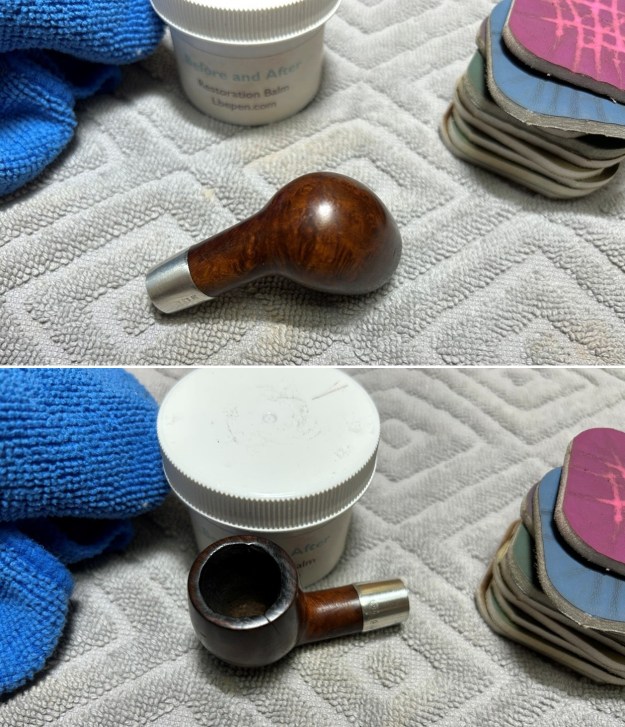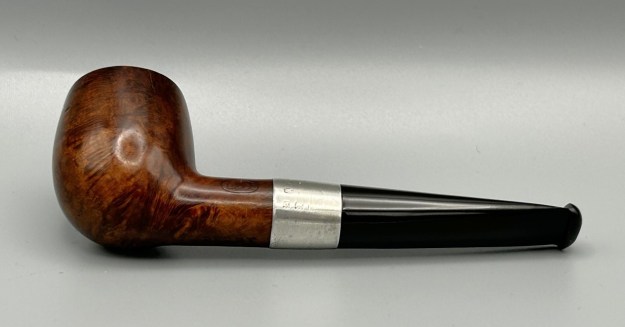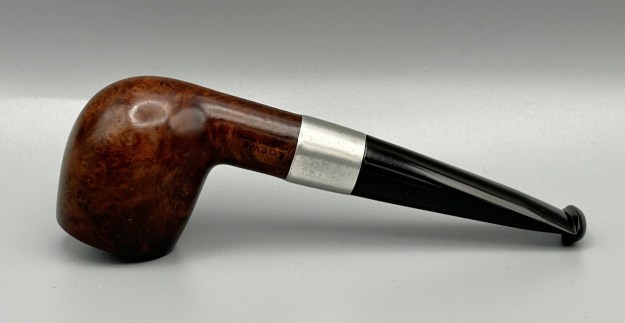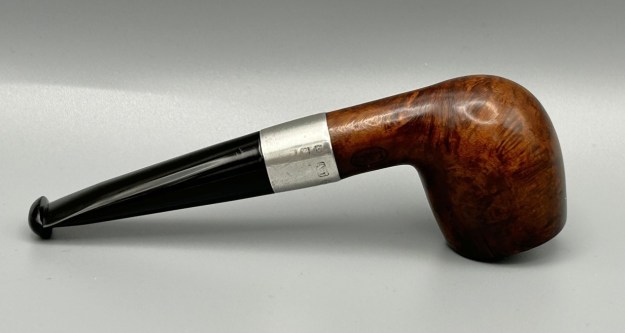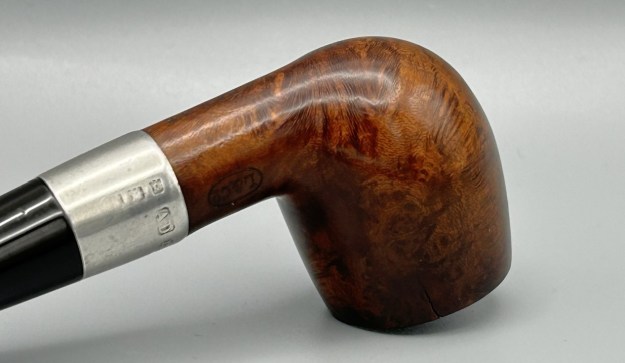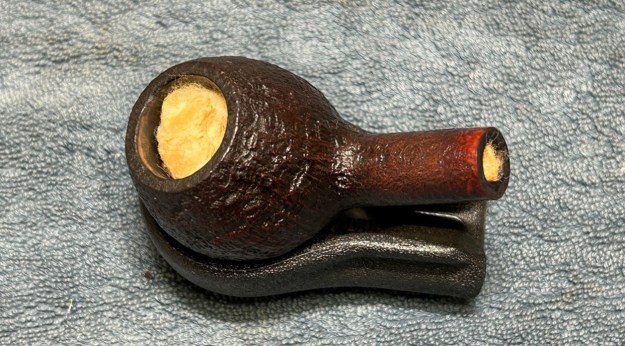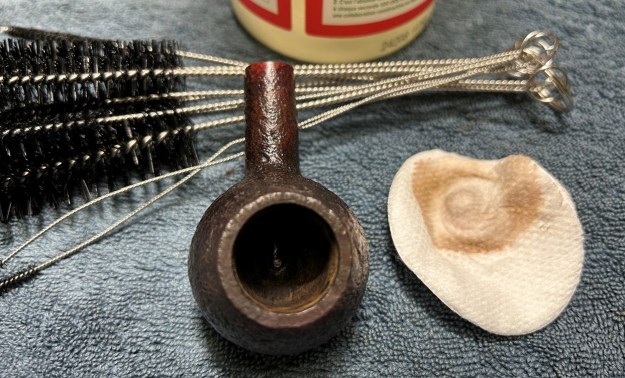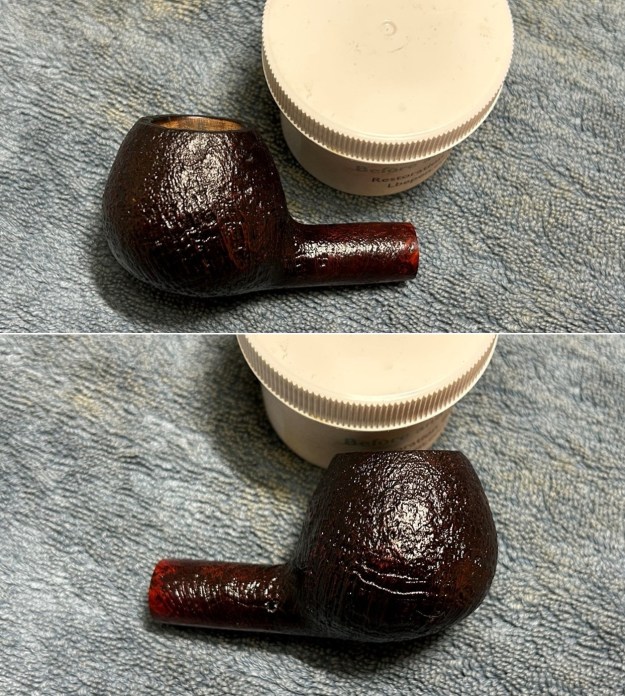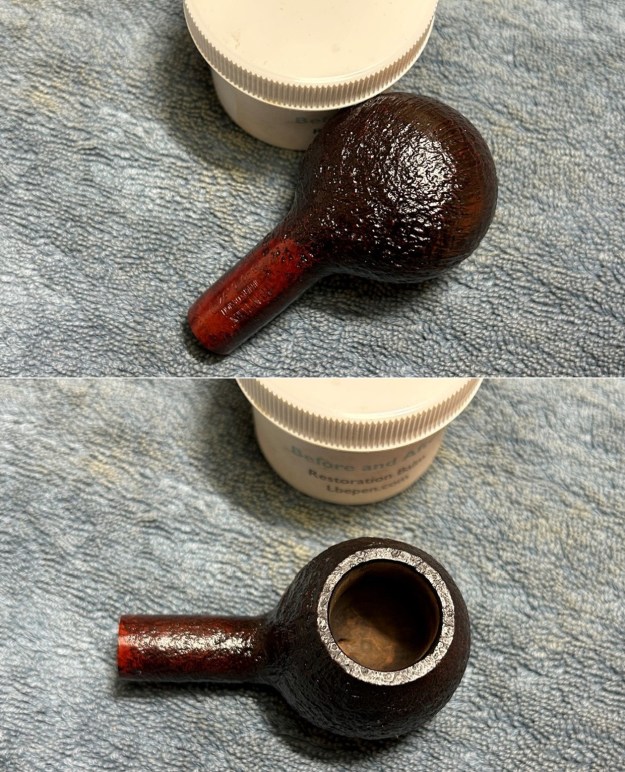
Tag Archives: stummel

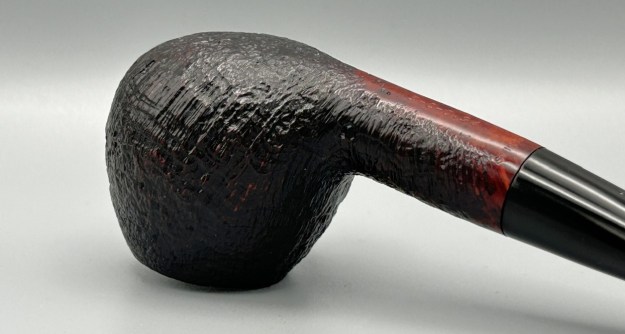
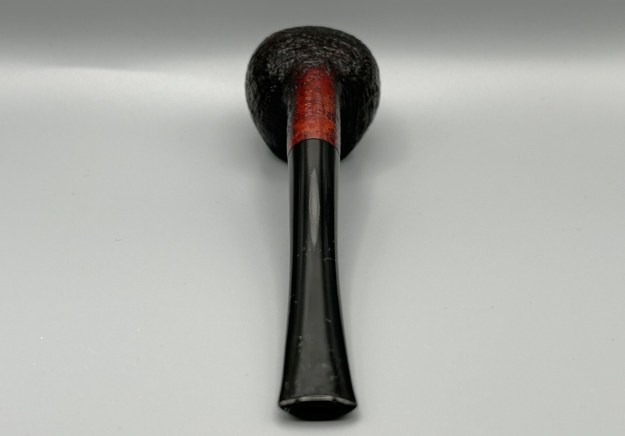
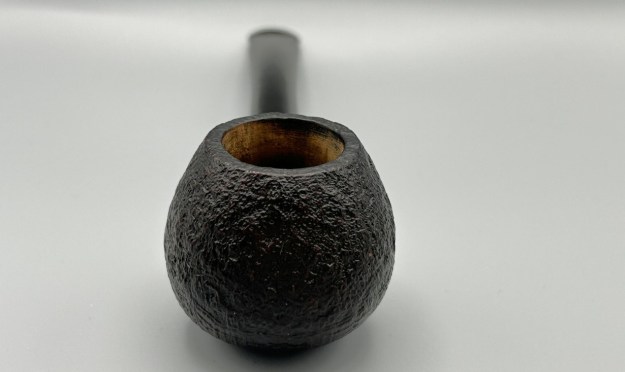
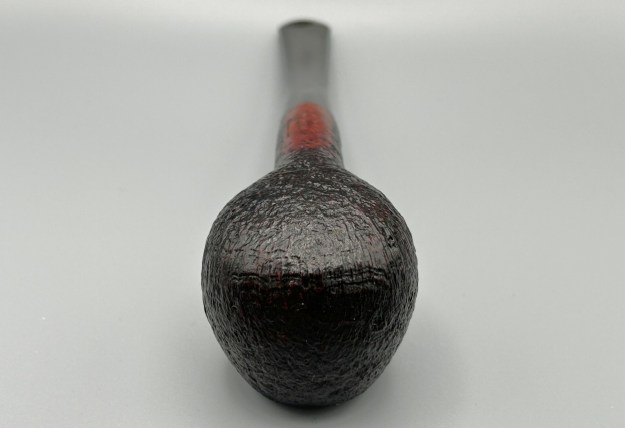
Restoring a Beautiful Bentley Sandblast Prince by Hans Jonny Nielsen (aka Former)


by Kenneth Lieblich

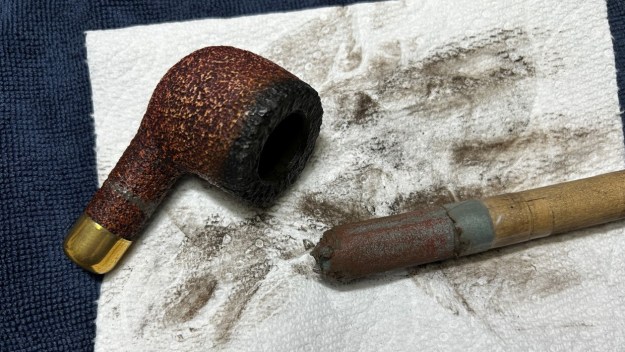
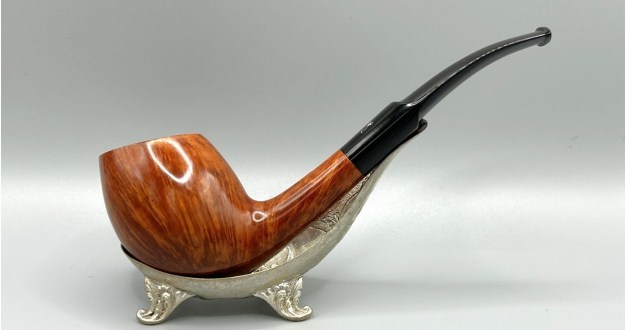
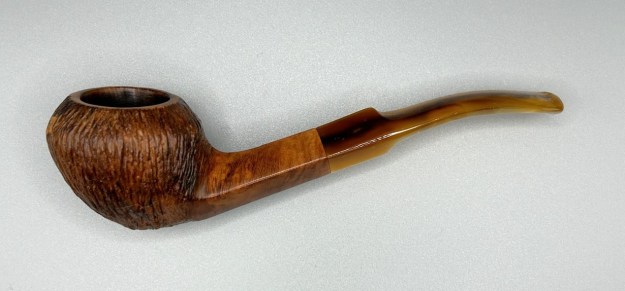
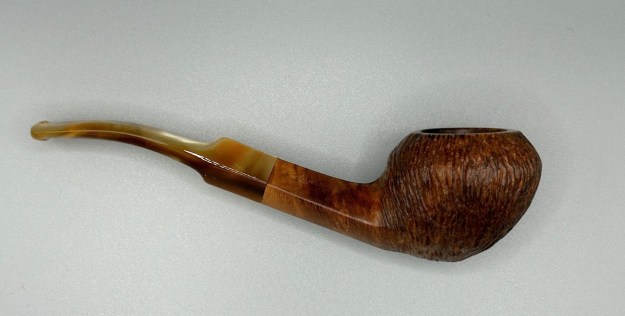
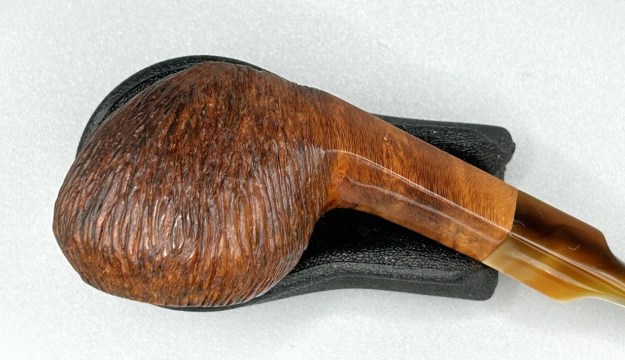
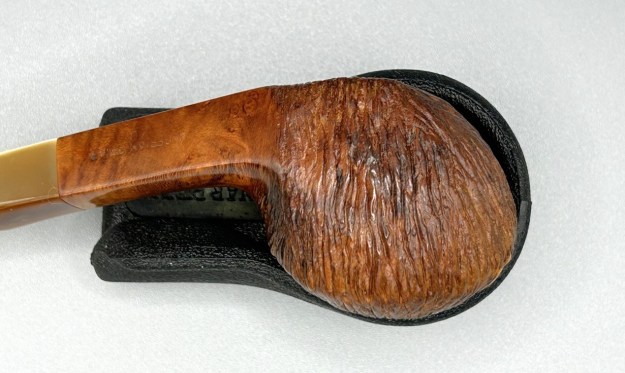
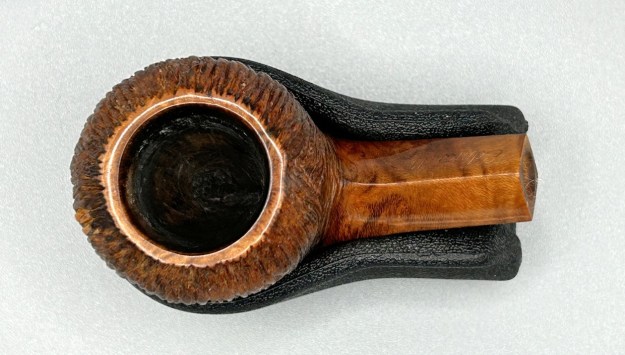
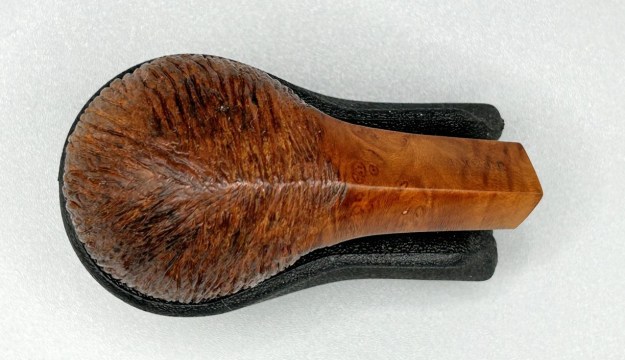
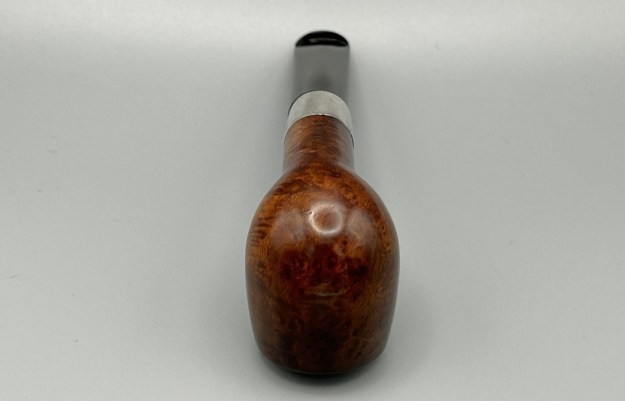
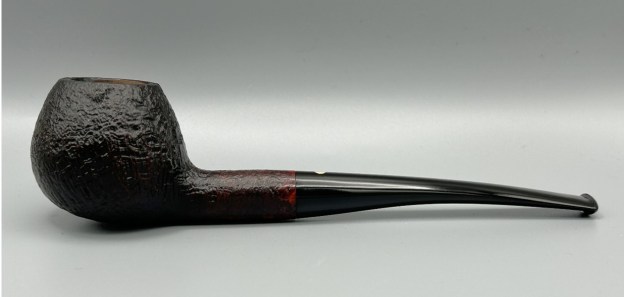
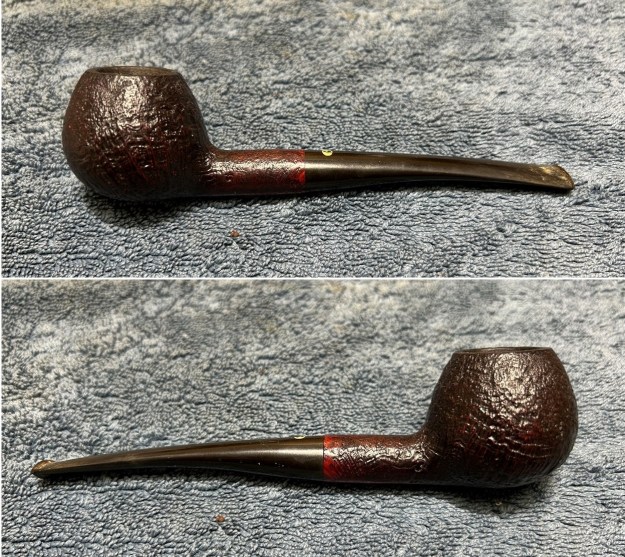
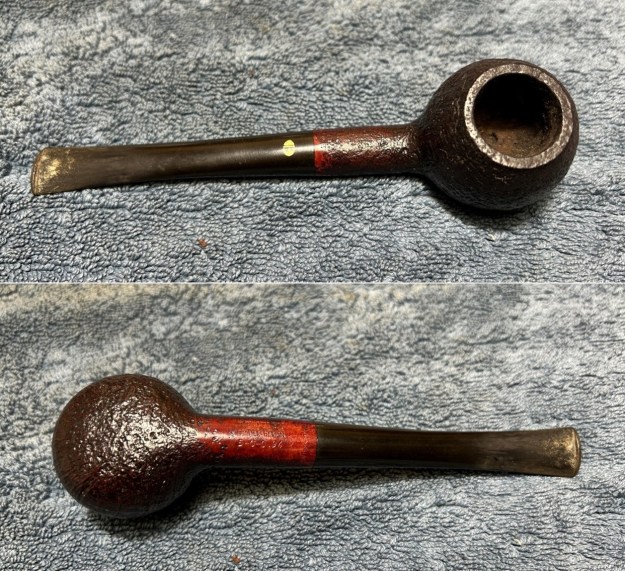
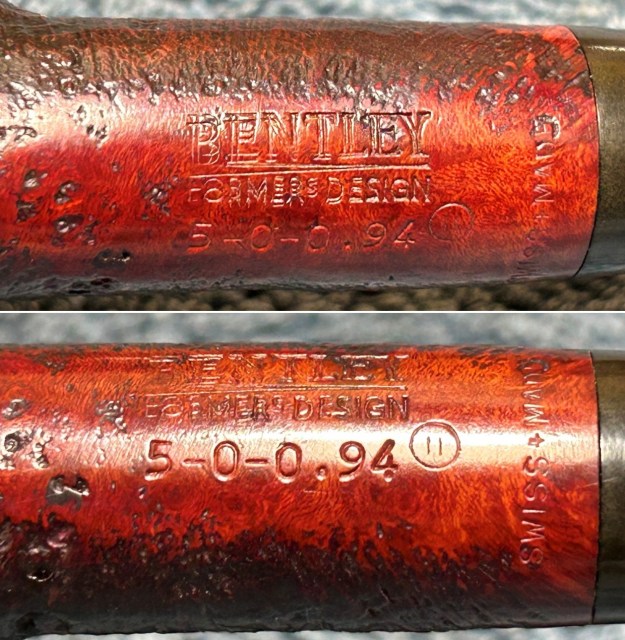
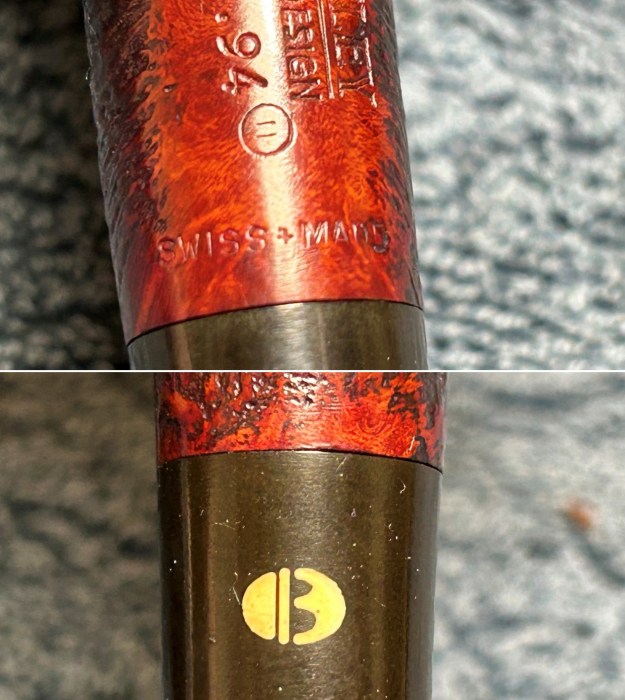
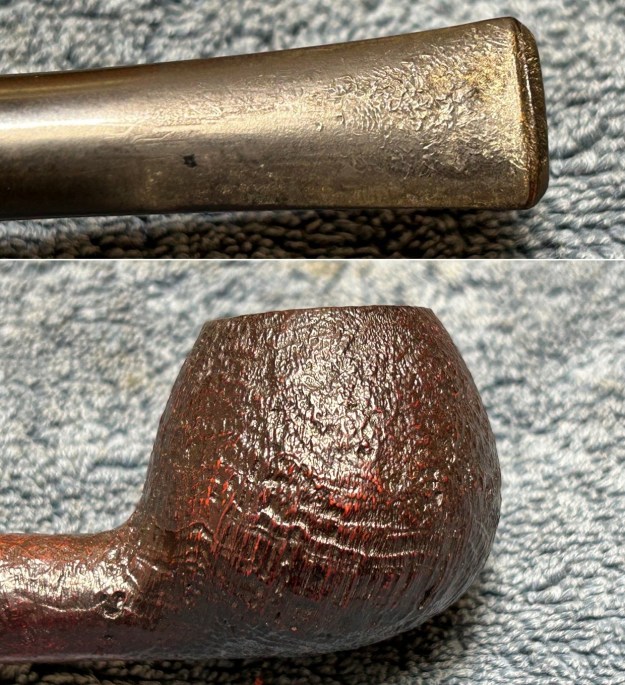
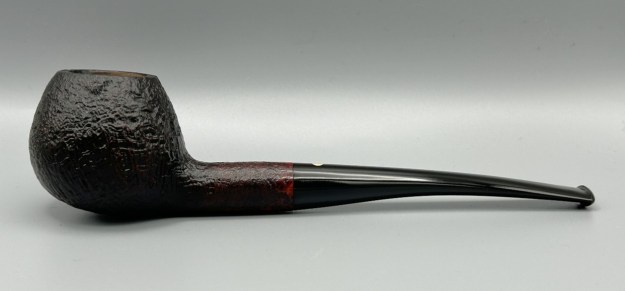
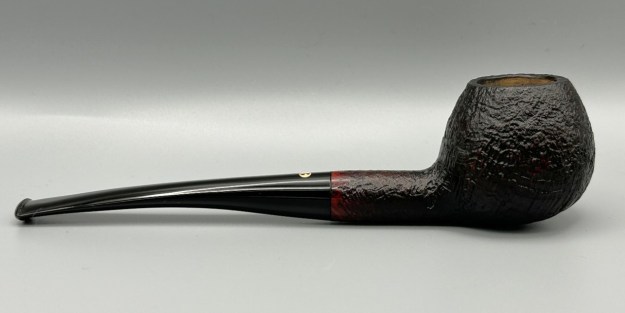
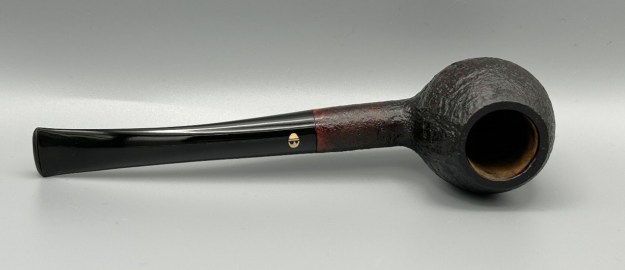
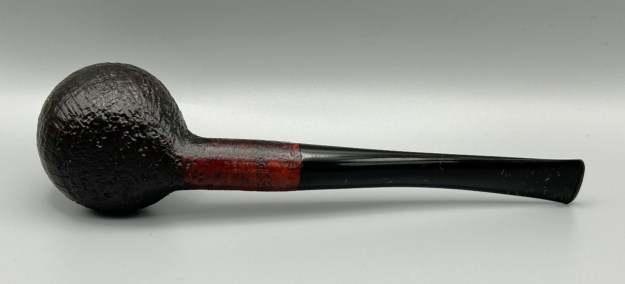
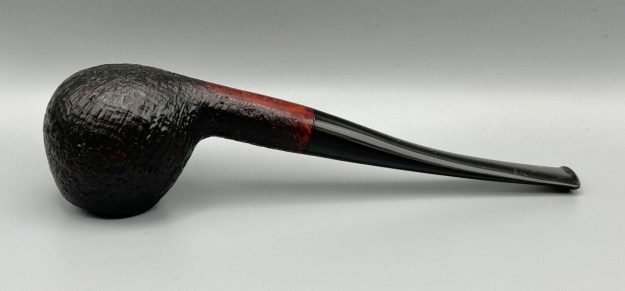
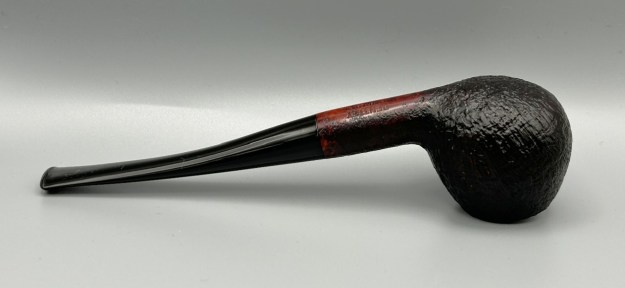
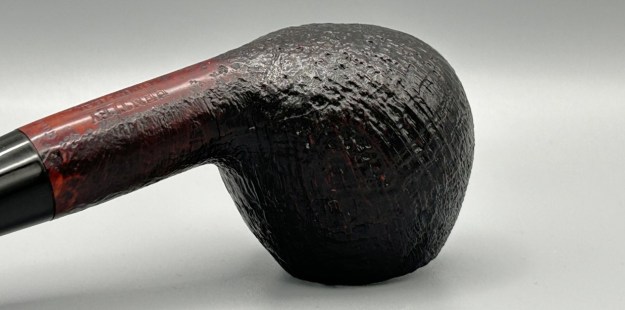
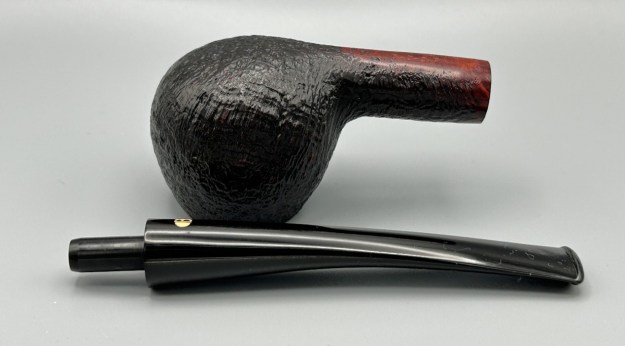
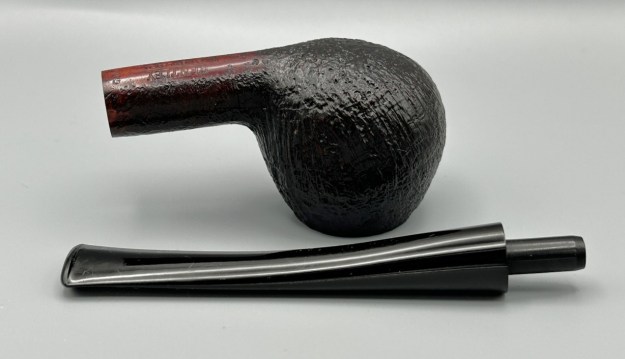
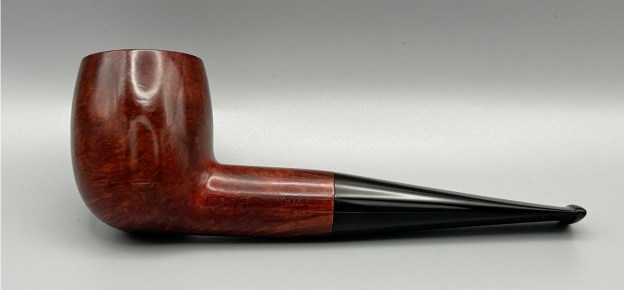
Now here’s a pipe you don’t see everyday: a very attractive prince by the Danish pipe maker known as ‘Former’ – though his real name is Hans Jonny Nielsen – working for the Danish/German/Swiss outfit, Bentley. This pipe came to me in an exchange with a gentleman in Toronto. It is an elegant pipe, with a beautiful blast, and a luxurious tapered stem. I was quite taken with this pipe when I first saw it, and I’m sure you will be too. What do the marks on the pipe say? The underside of the shank tells us. First, we see the word Bentley [over] Former Design [over] 5 – 0 – 0. 94. Next to that is a circle inside of which is either the Roman numeral II or the number 11. Further to the right, and a right angle, are the words, Swiss+Made. Finally, there is a stylized B on the stem, signifying the Bentley name. I didn’t know much about Bentley or Nielsen, so I sought out the usual sources for information. At Pipedia, the Bentley article included this information:

This is the production Brand of Hans Jonny “Former” Nielsen. When the U. S. pipe demand for quality handmade “freehand” pipes diminished, W.Ø. Larsen in Copenhagen sent their several workshop pipemakers home to work out of their house. Former who was the Larsen foreman at the time, eventually went to Germany and started the Bentley line of production pipes made on frasing machines, several at a time. Some years ago he returned to Denmark with this type of equipment and continues to make these production pipes in his current workshop in between making his famous handmade pipes. Former went to Kleinlutzel, Switzerland (just over the border from Germany) and took over a pipe fabrication in the employ of Herman Lane, making the Bentley pipes (circa 1986).

This last line made sense as far as this pipe was concerned. Pipedia also has a good-length article on Nielsen himself and I encourage you to read it here. However, one paragraph of that article concerns us here:

In 1986 Former met an interesting opportunity when he was asked to go to Switzerland and modernize the old Bru-Bu factory and to develop a new, high-grade pipe given the English name “Bentley”. He successfully took the opportunity, and spent the next 10 years in Switzerland. Former met his wife, Daniela, while working in Switzerland. In 1997, they decided to purchase the factory machinery and moved to Lauenburg / Elbe, where the Bentley production was continued at Dan Pipe. But Daniela got homesick and so they returned to Denmark. Dan Tobacco (a subsidiary of DanPipe) still manufactures Former’s tobacco blends and the building still has the Bentley logo prominently featured on its front.

A quick perusal of the material at Pipephil confirmed all of this. Look at this screenshot:I think we can surmise that this pipe was probably made in the 1980s, presumably in Switzerland – although I still think of it as a Danish pipe.

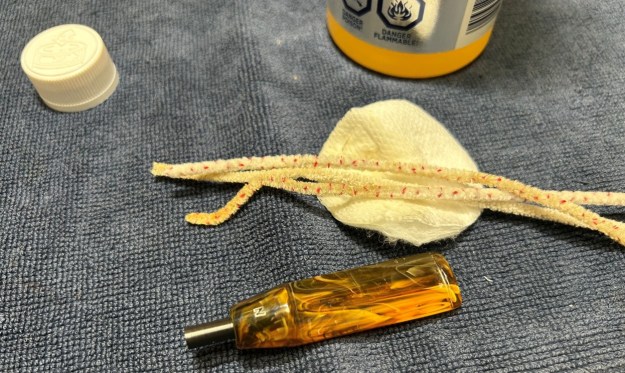
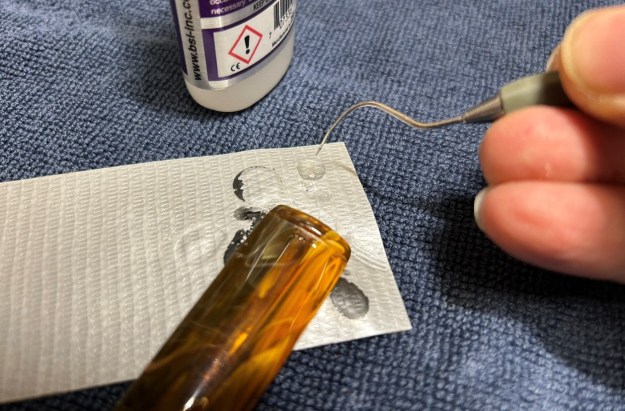
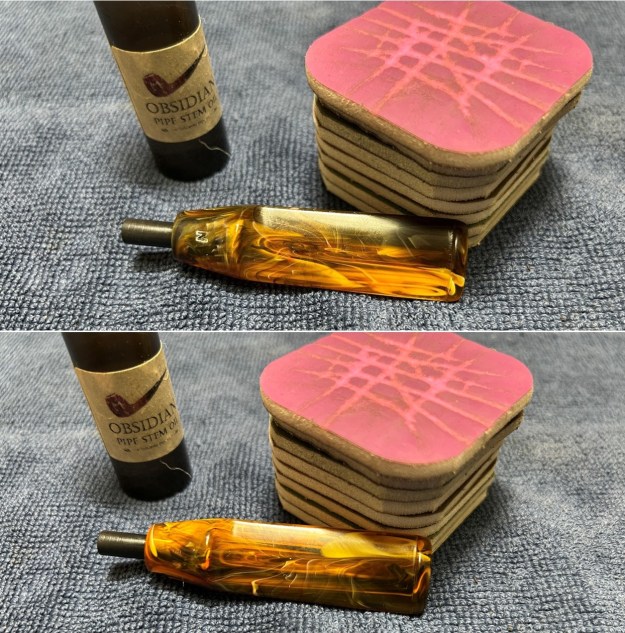
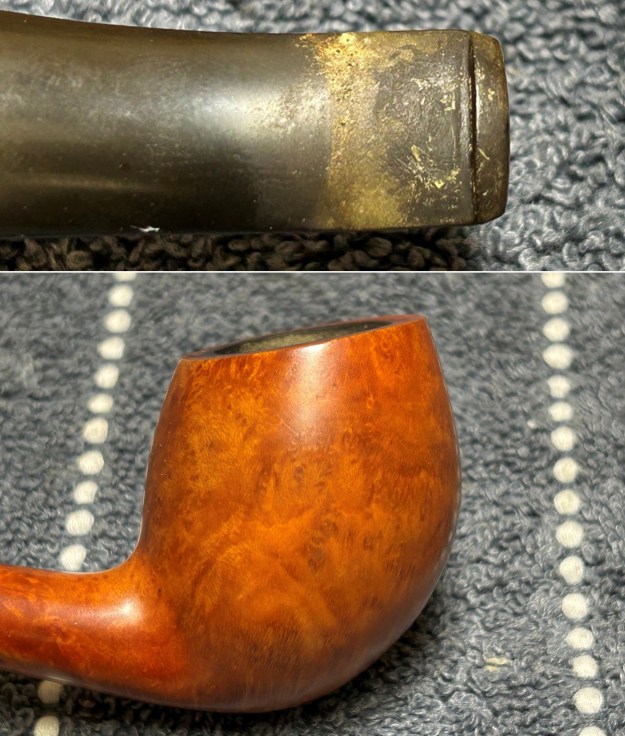
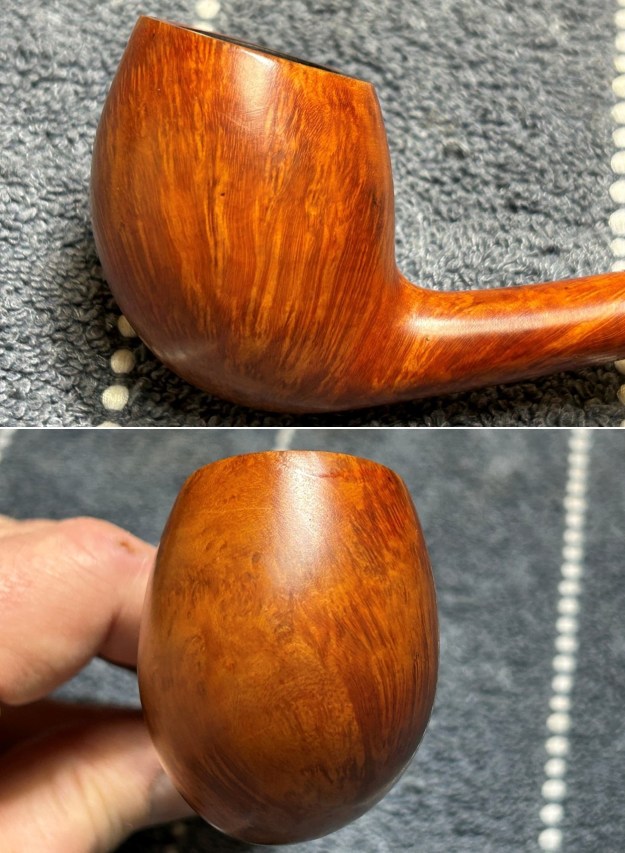
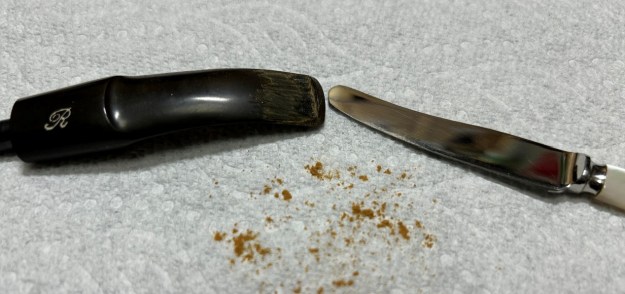
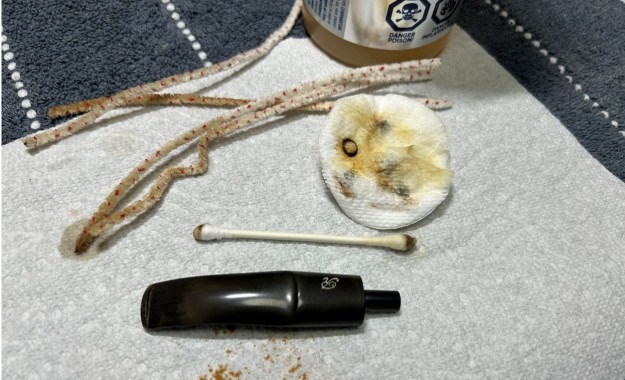
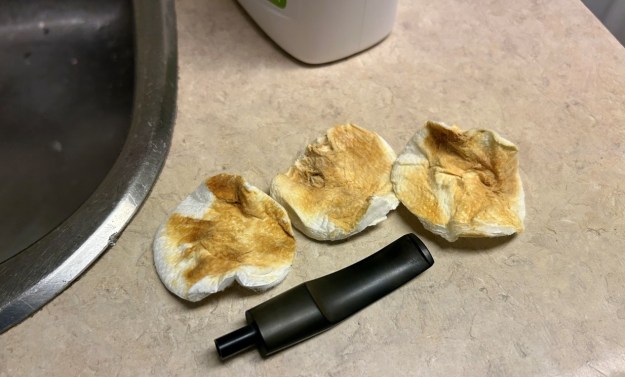
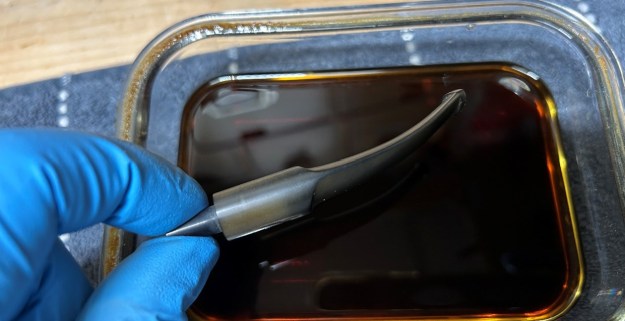
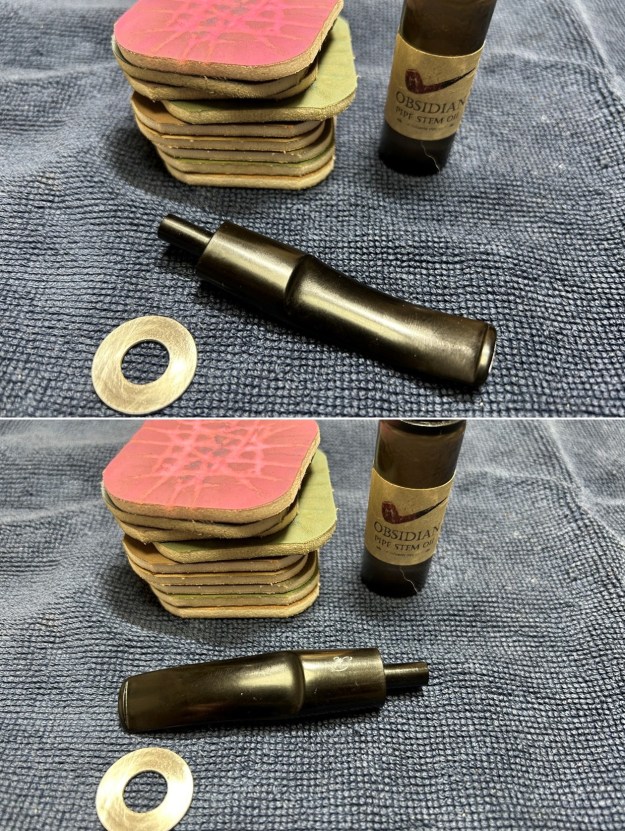
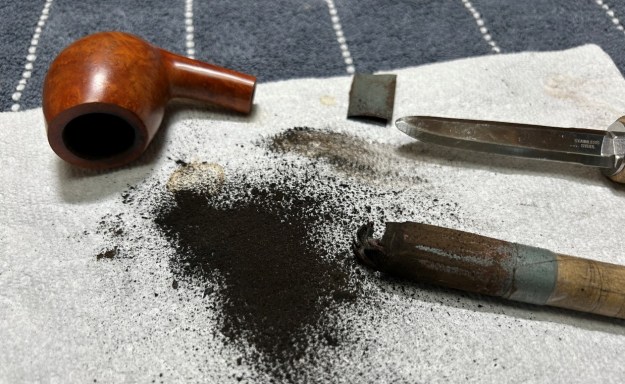
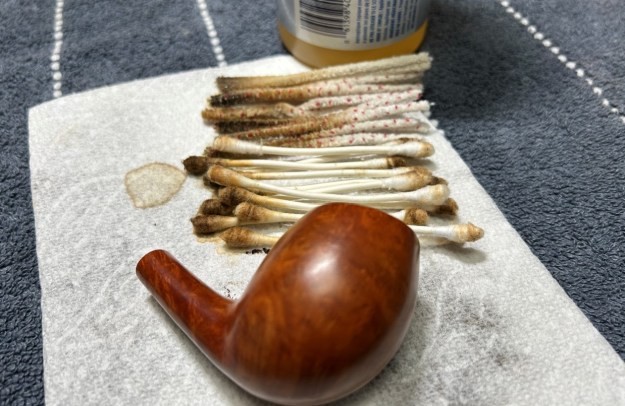
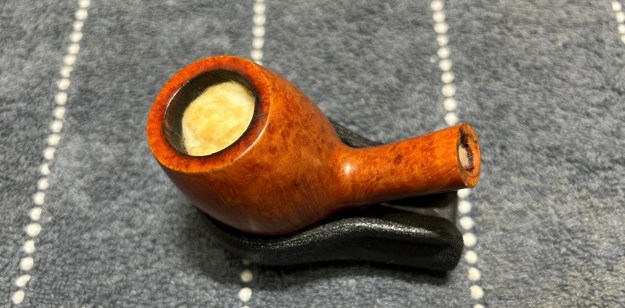
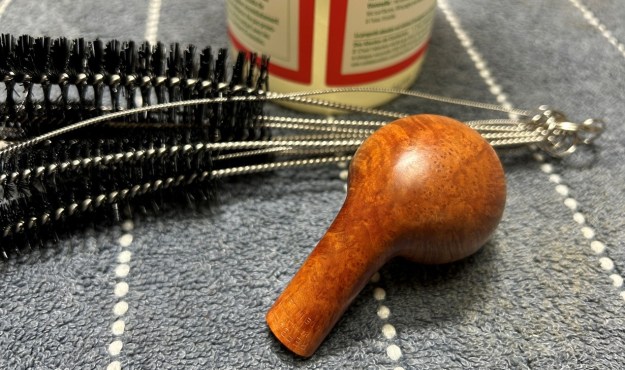
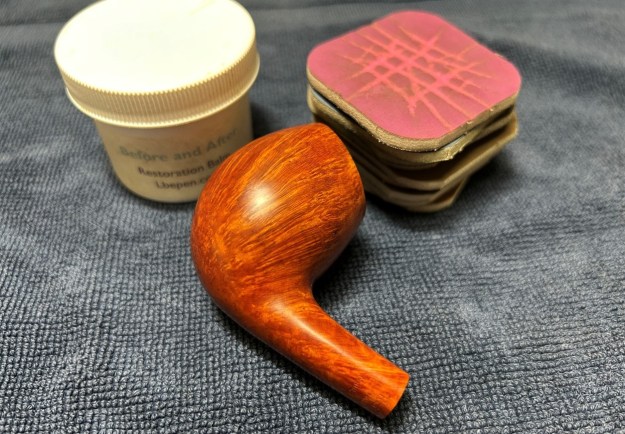
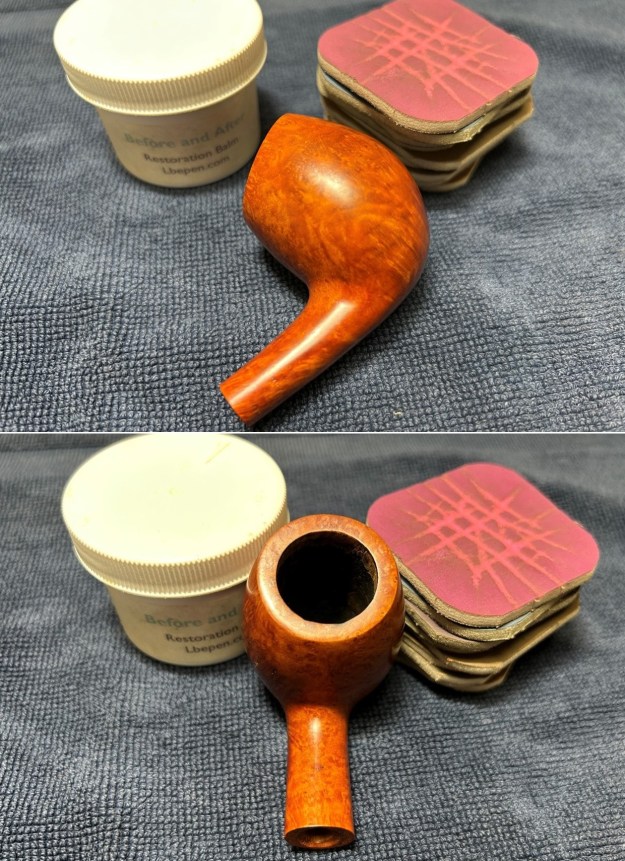
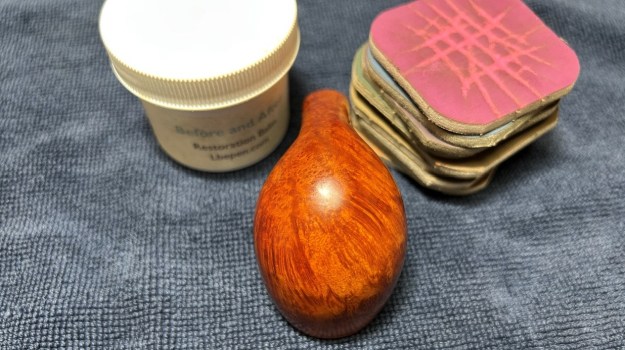
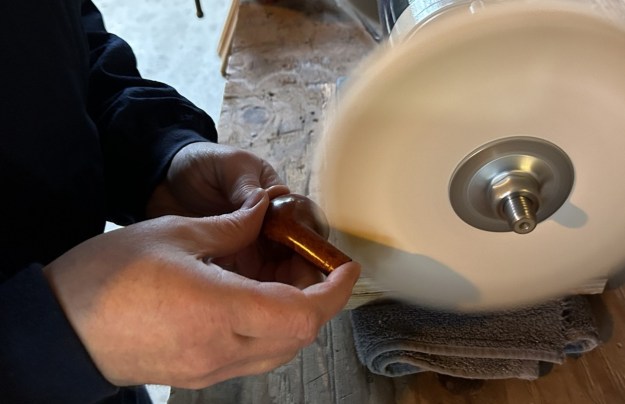
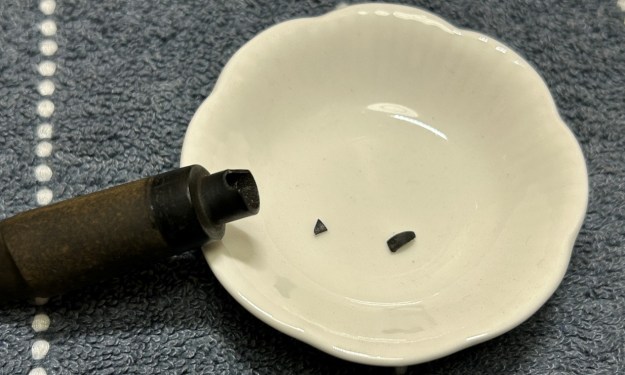
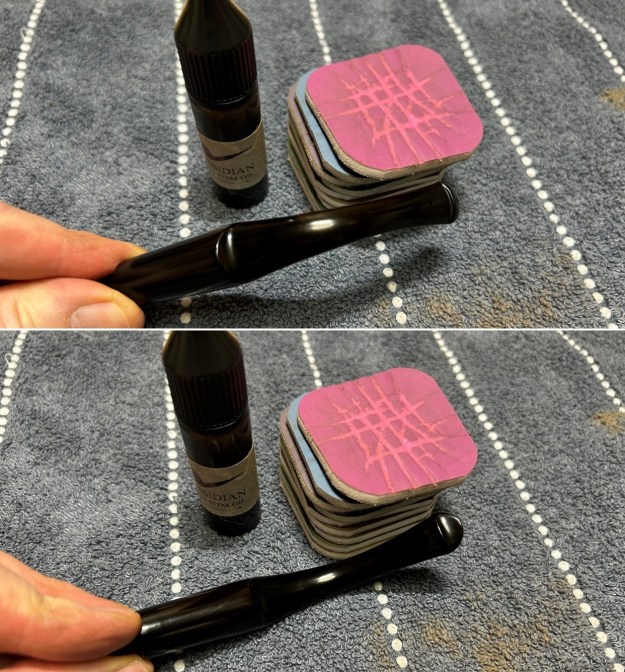
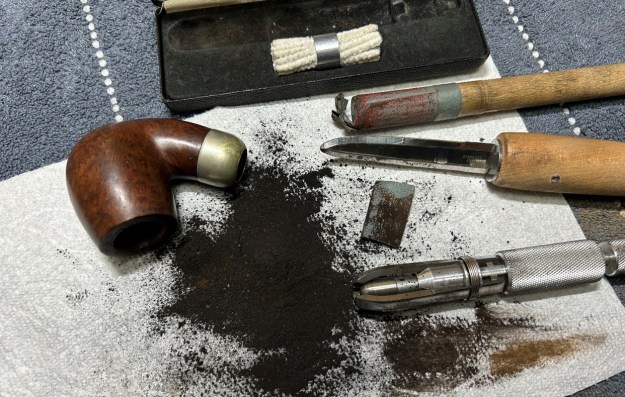
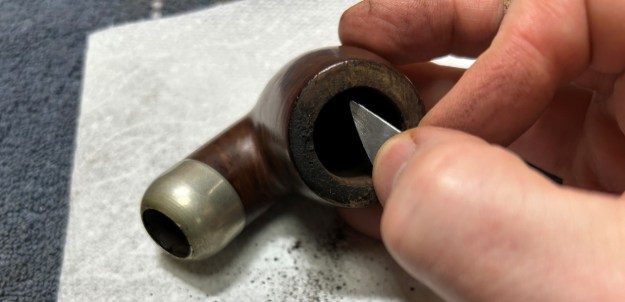
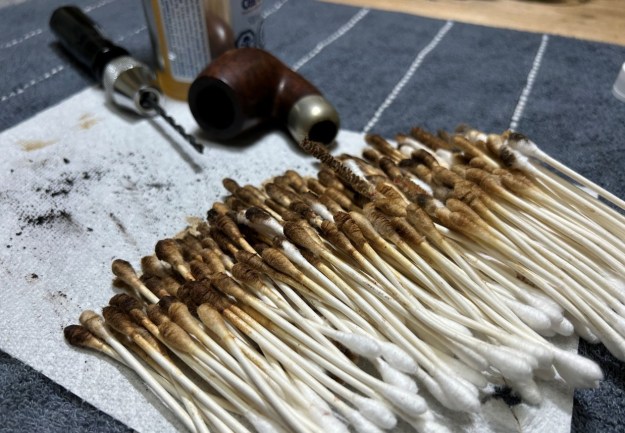
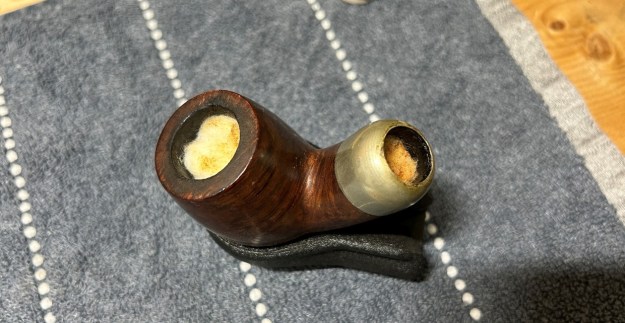
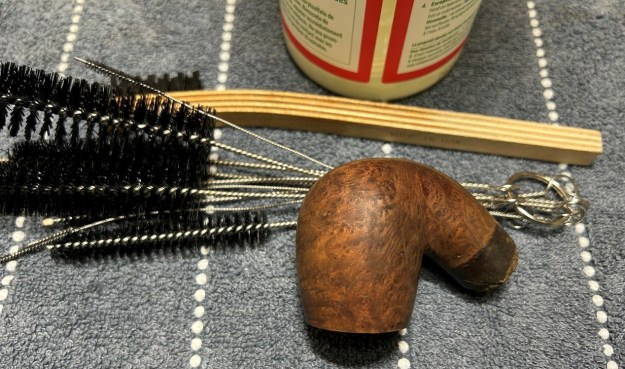
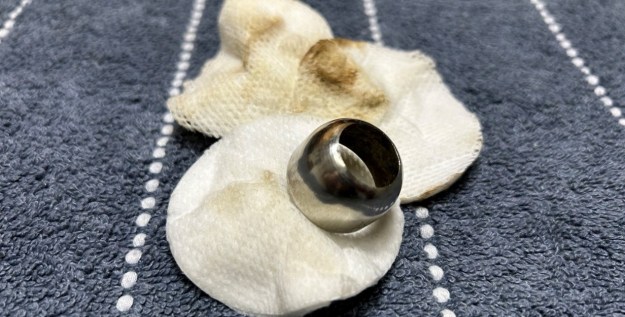
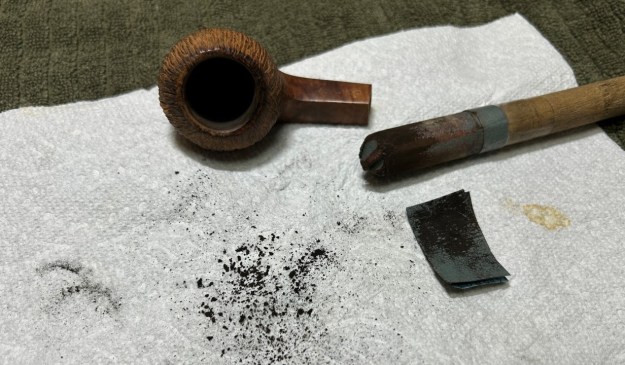
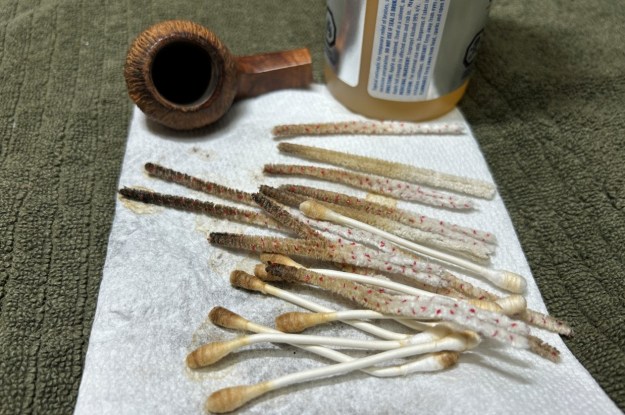
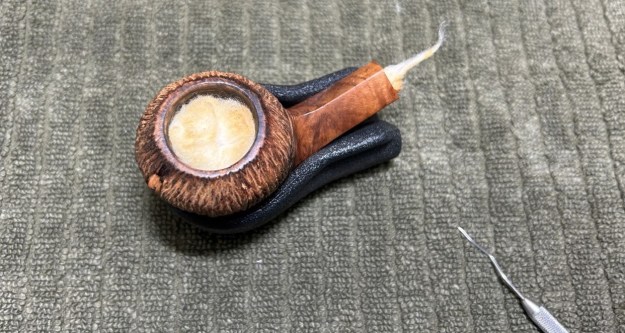
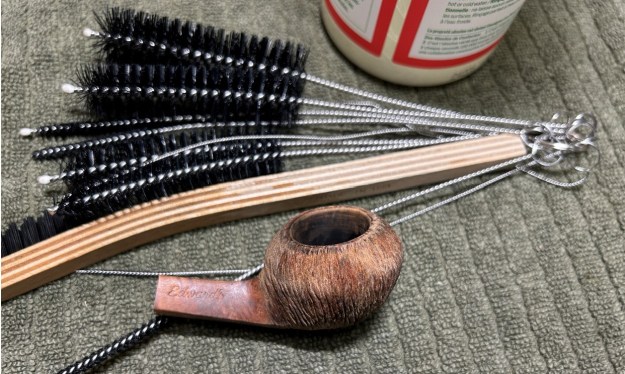
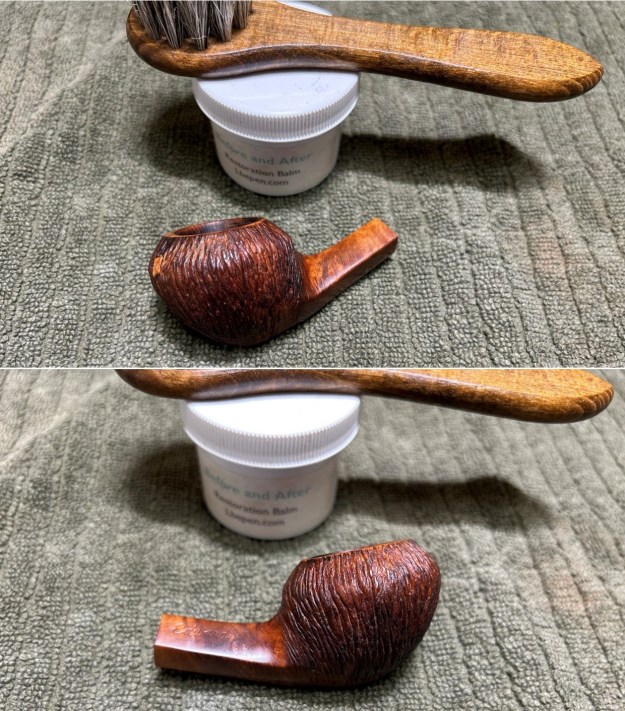
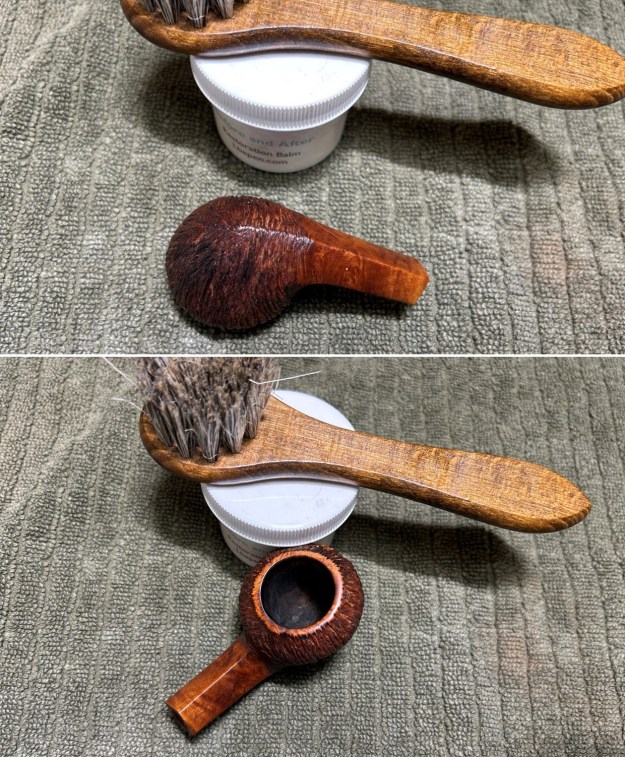
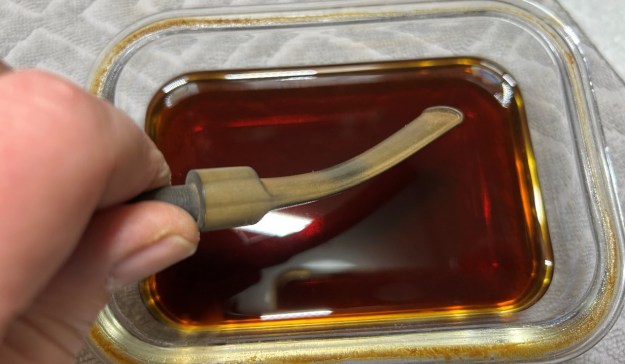
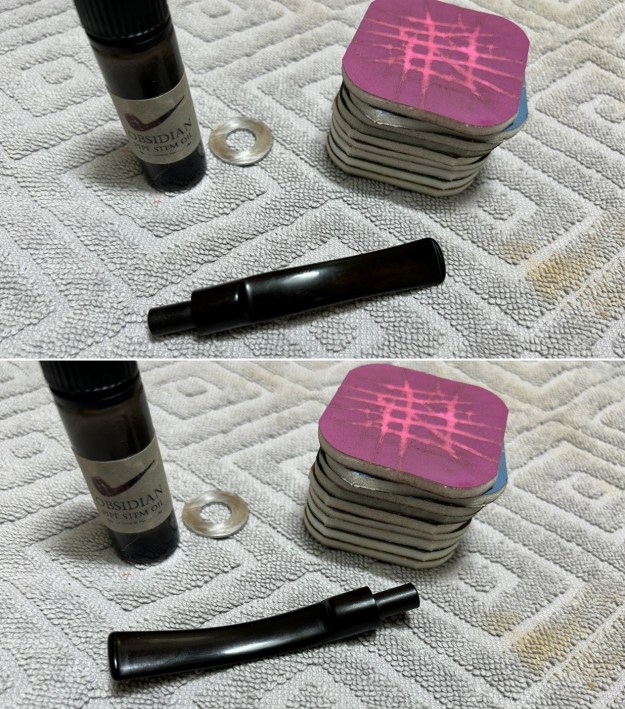
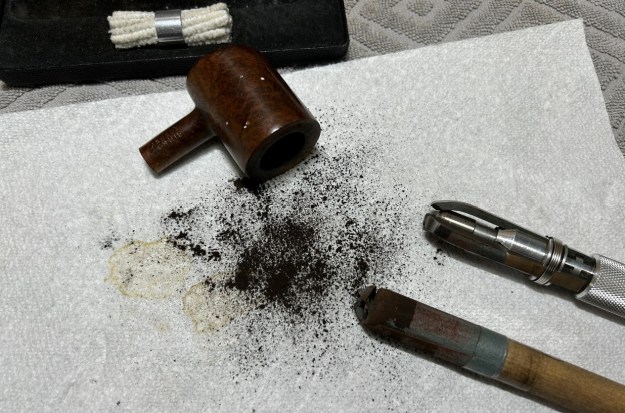
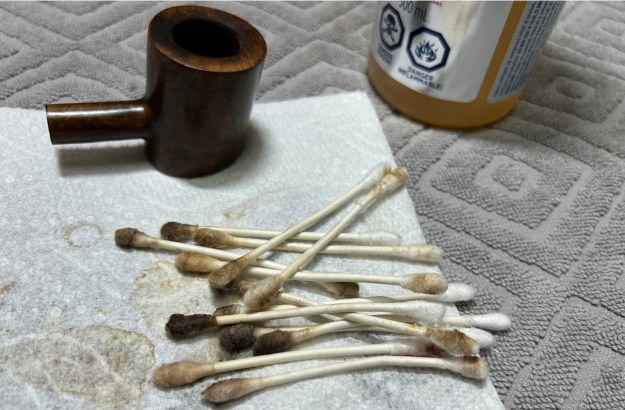
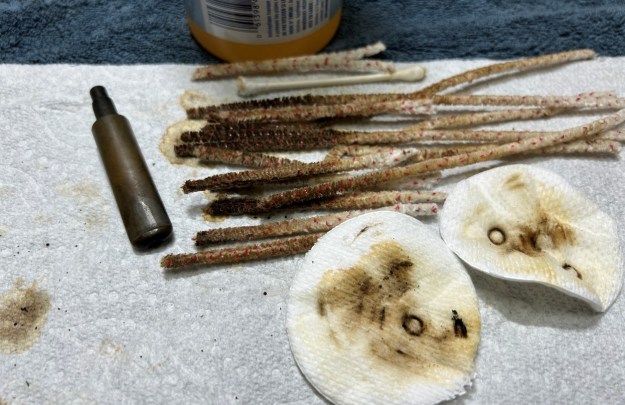
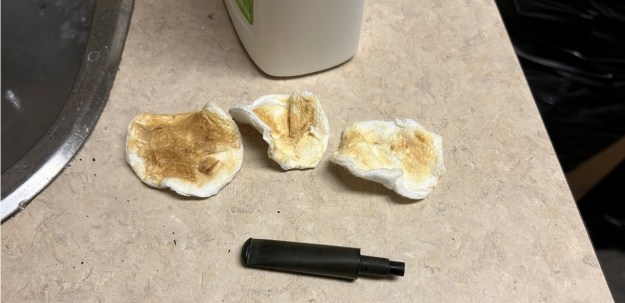
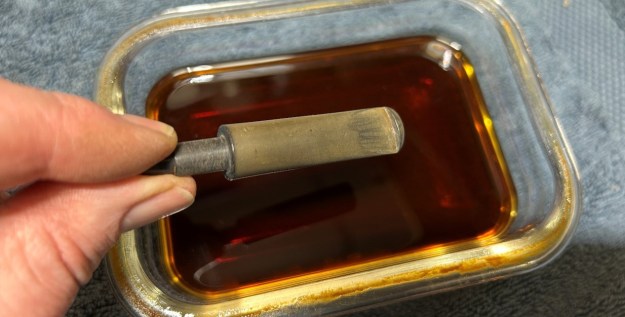
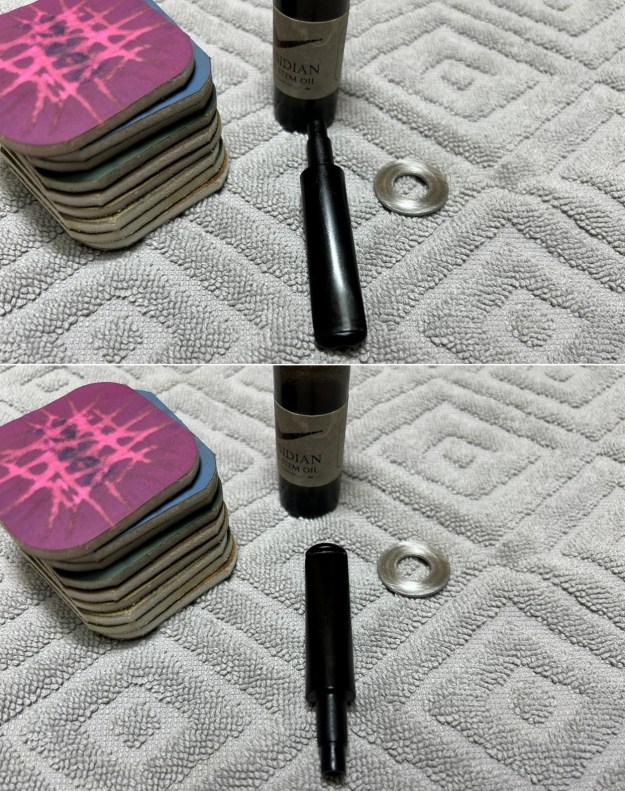
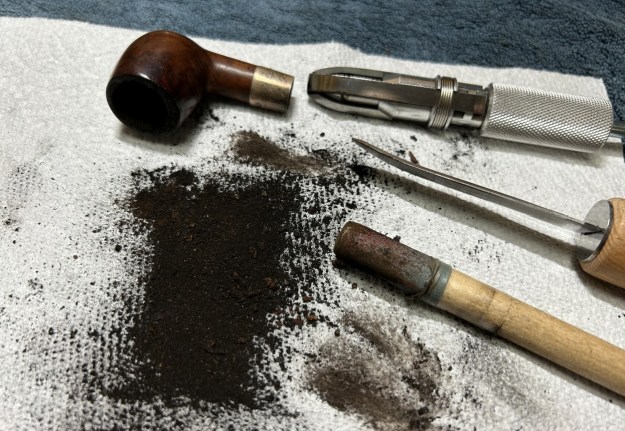
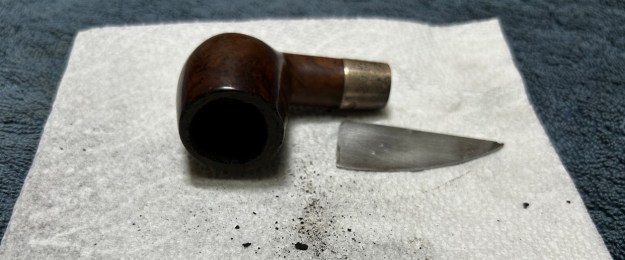
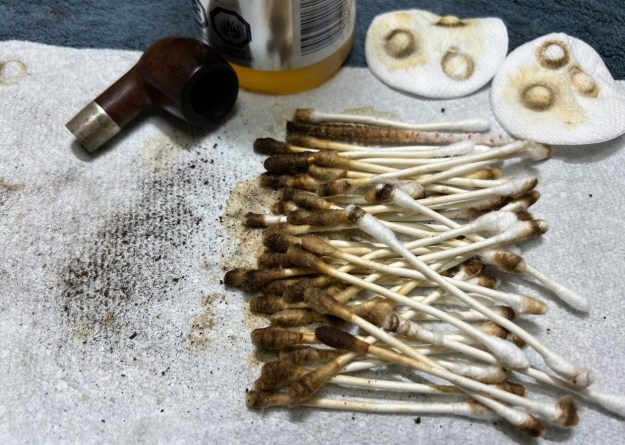
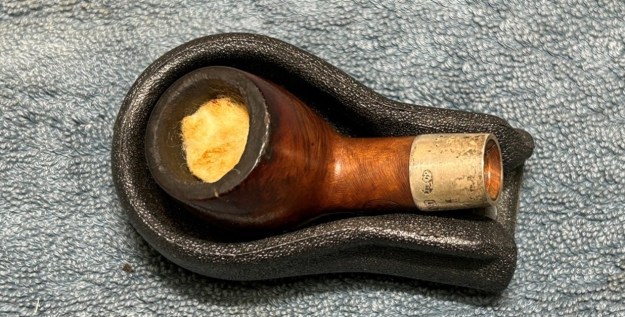
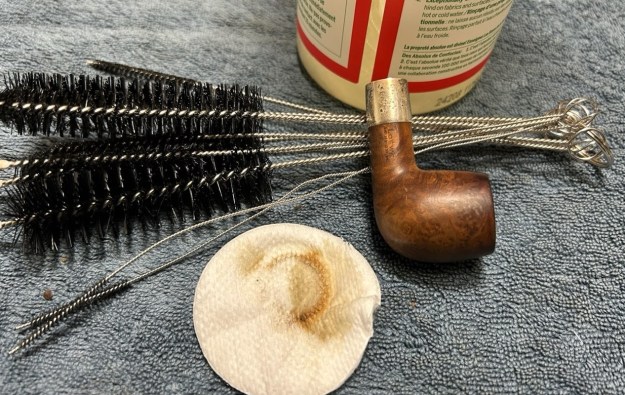
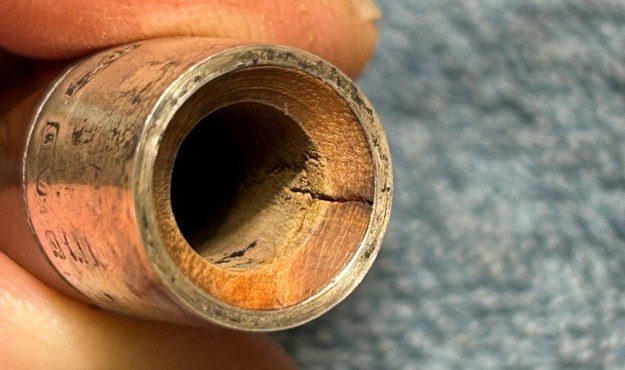
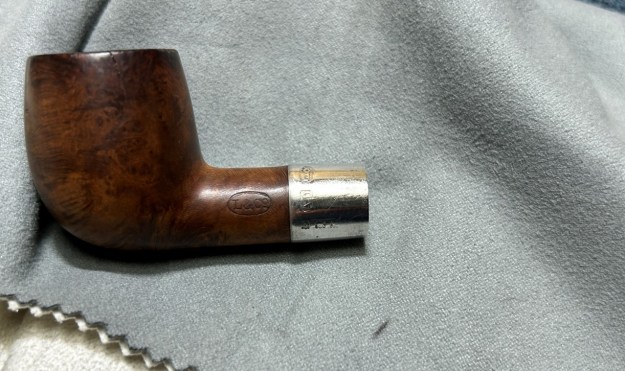
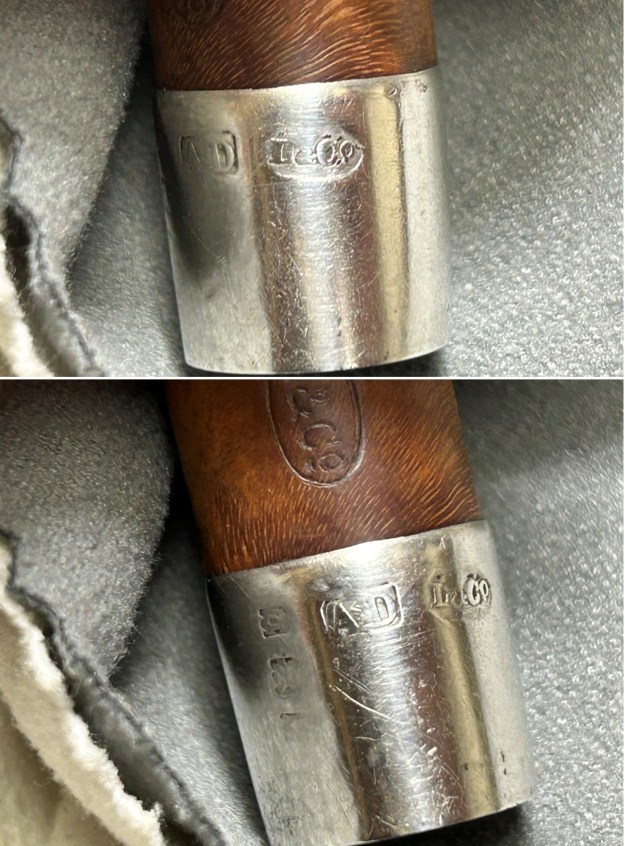
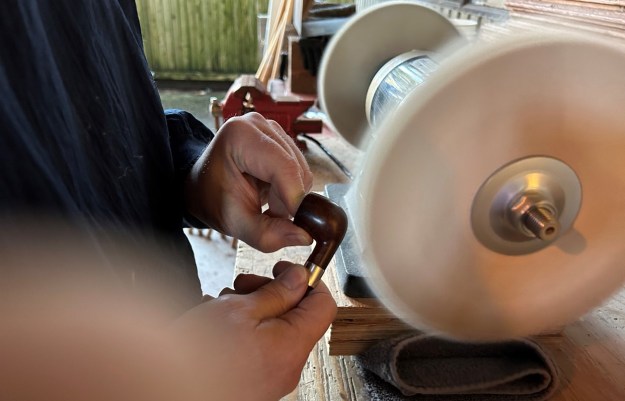
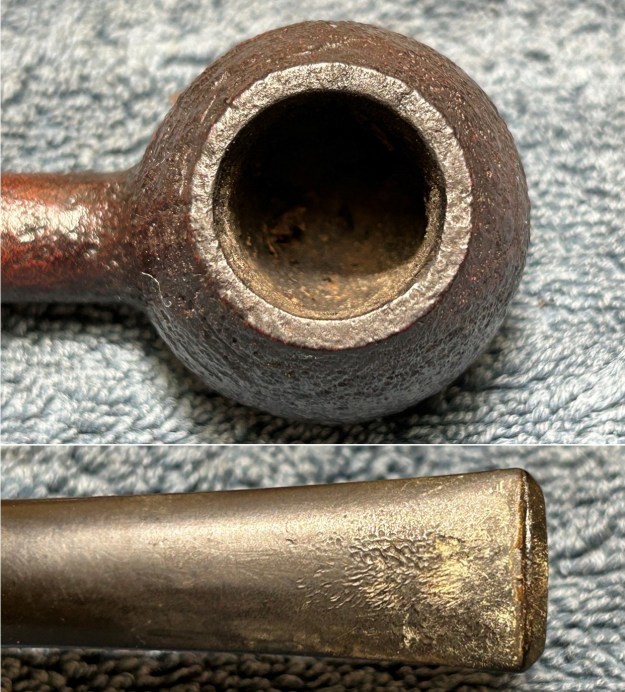
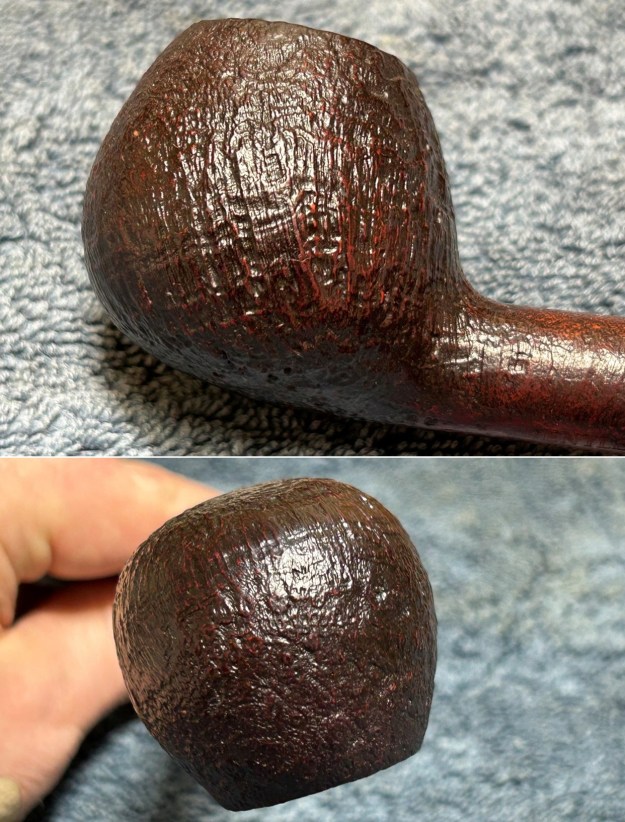
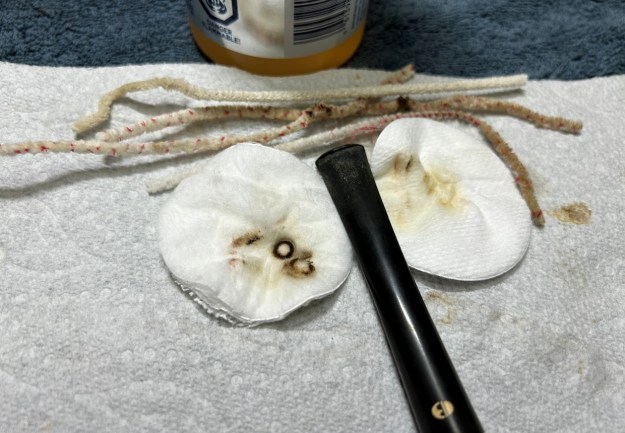
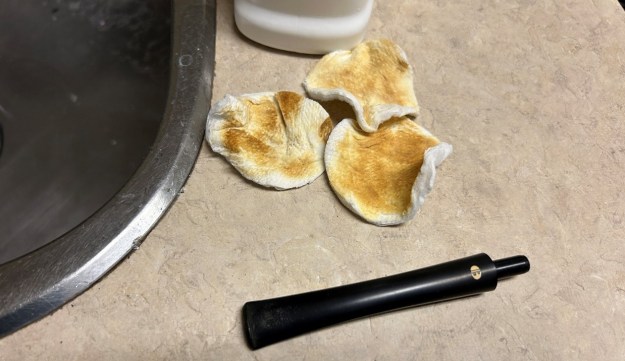
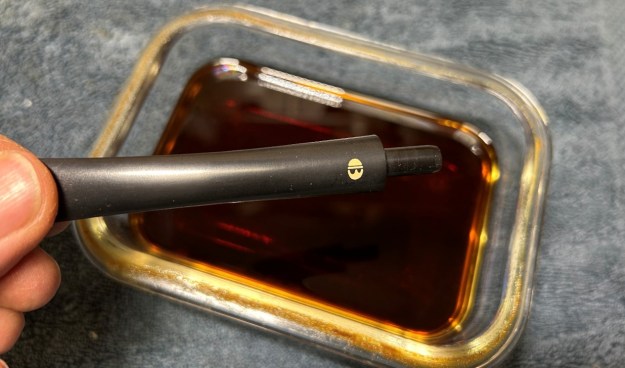
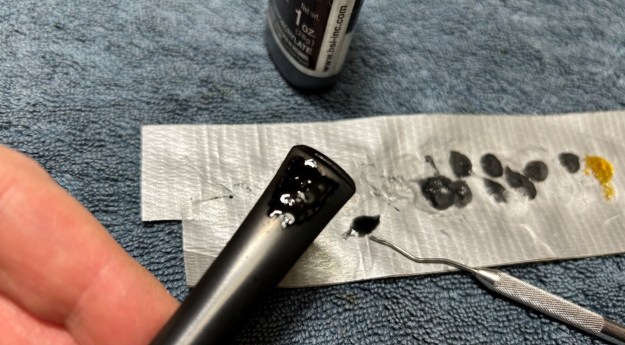
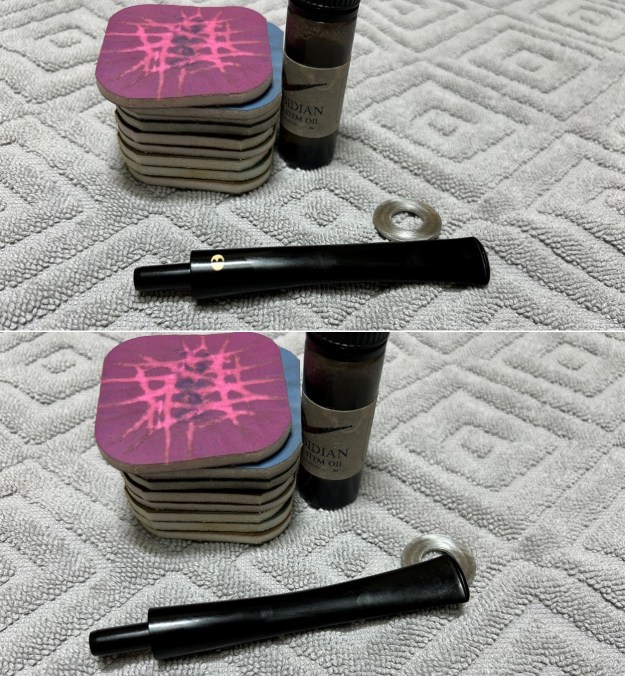
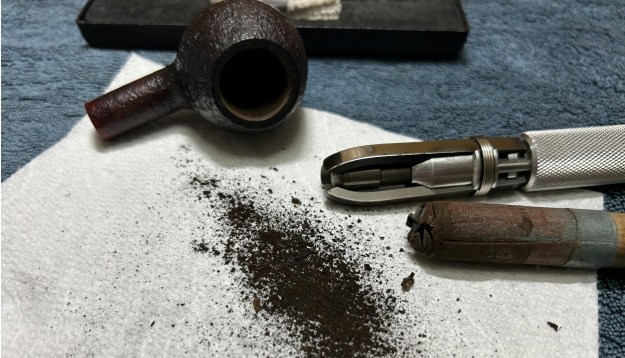
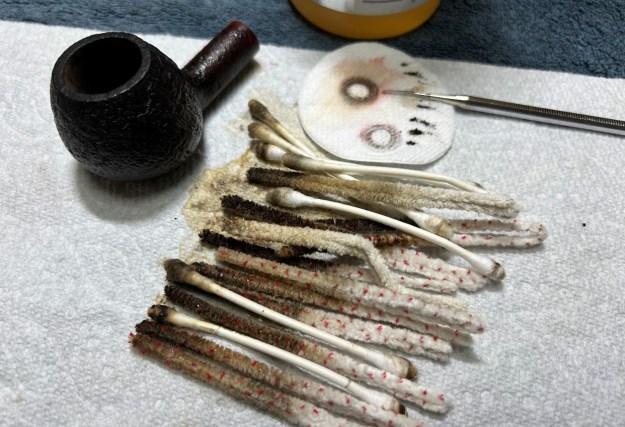
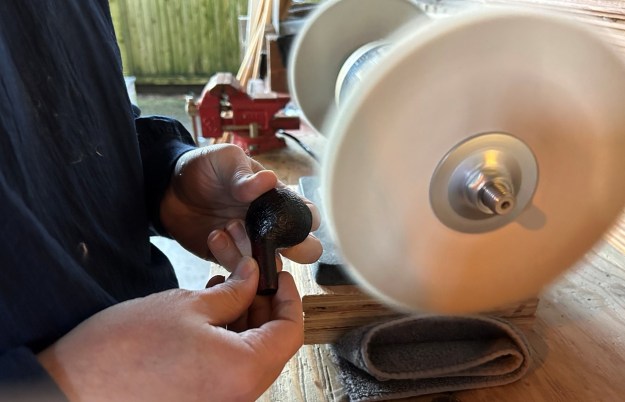
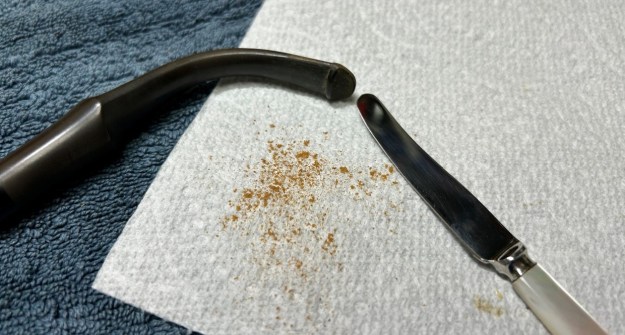
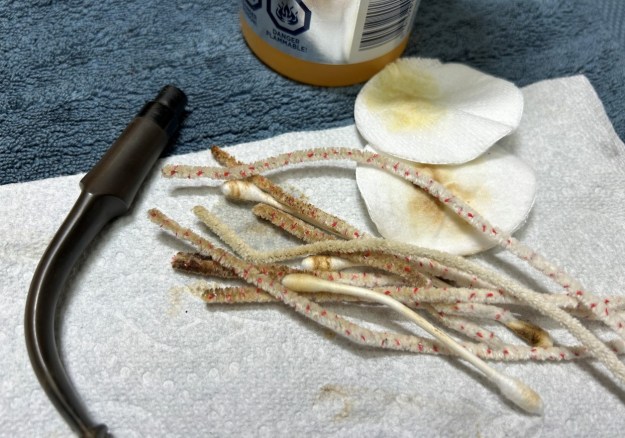
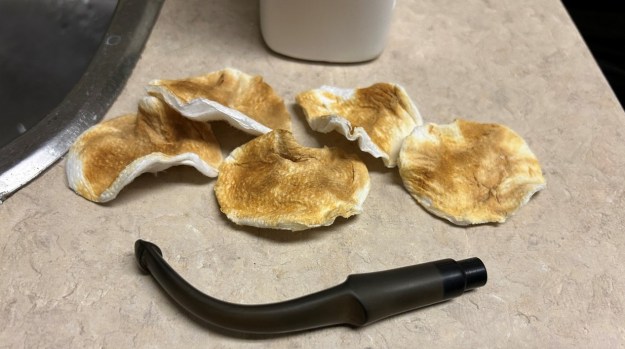
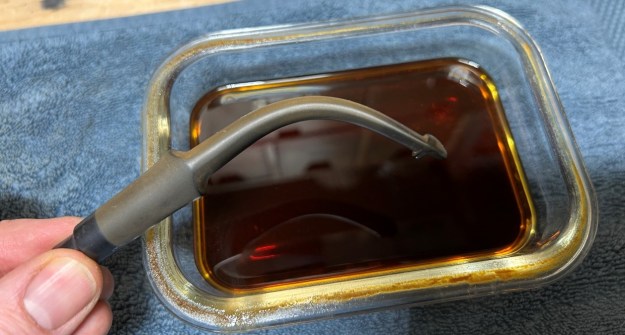
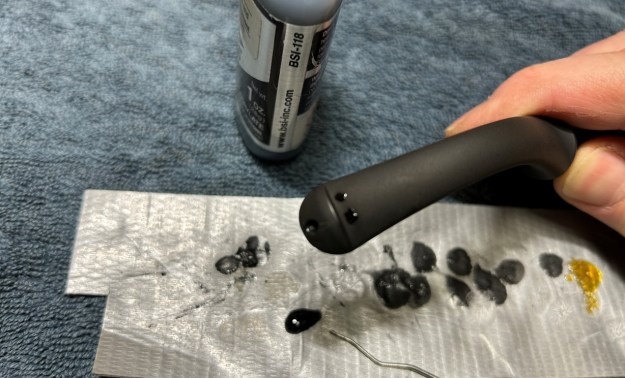
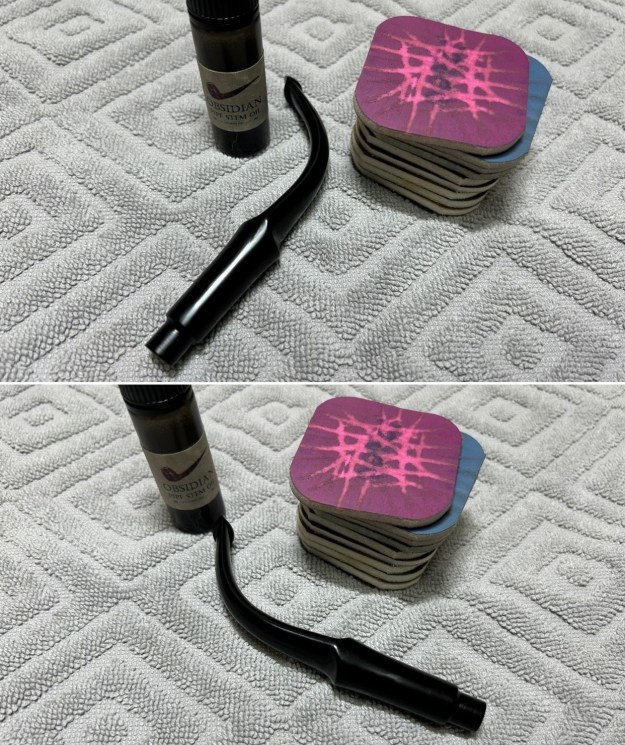
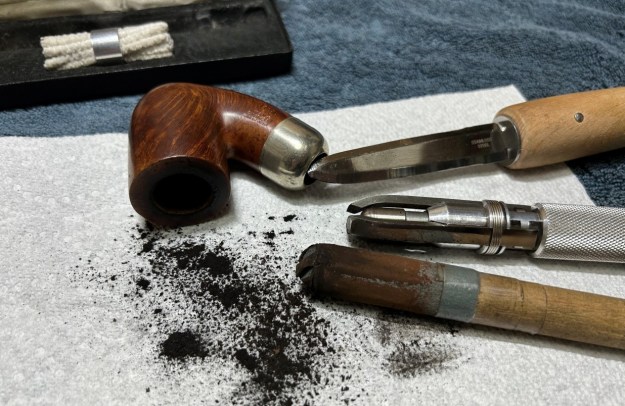
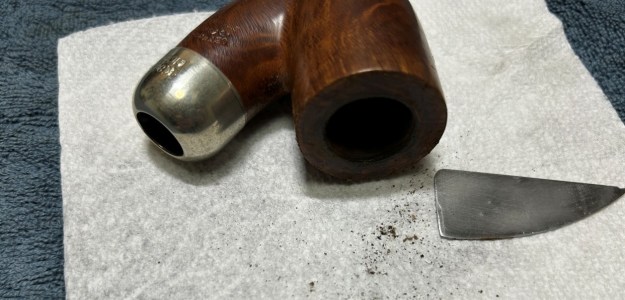
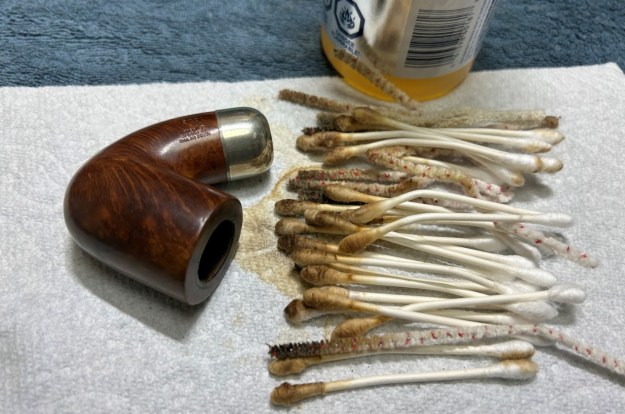
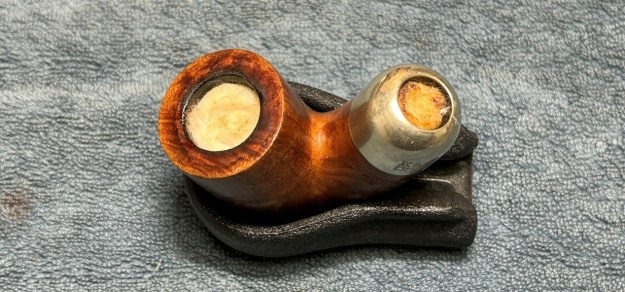
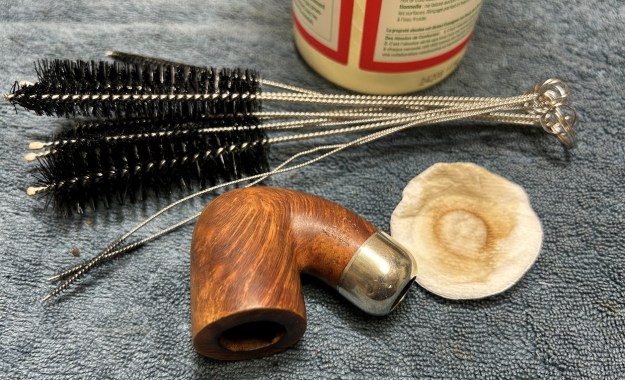
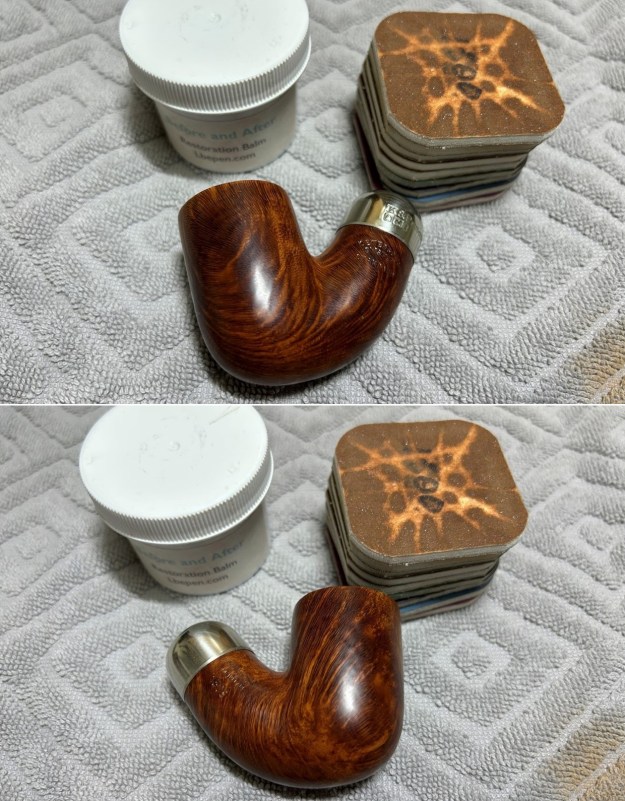
The stummel is in lovely condition. Not too much cake or lava, and the blast is in wonderful shape. The stem is a bit different. For the most part, it looks good, but there are some serious tooth marks. Clearly, the vulcanite is excellent quality, but the tooth chatter is quite heavy. Let’s see what we can do about it. I used isopropyl alcohol on a few cotton rounds and wiped down the stem to provide an initial cleaning of filth before moving on to the next steps. The primary cleaning came next. I disinfected the inside of the stem with both pipe cleaners and cotton swabs dipped in lemon-infused 99% isopropyl alcohol. I scrubbed thoroughly to make sure the interior was very clean.The goal of the next step is the removal (or minimization) of oxidation. Going to my sink, I used cream cleanser, cotton rounds, and a toothbrush, and scoured the stem to remove as much surface oxidation as possible. As the photos show, the result was a hideous, ochre-coloured mess – but better off the stem than on it.Once the stem was reasonably clean, I soaked it overnight in some Briarville Stem Oxidation Remover. This solution works to draw oxidation in the stem to the surface of the vulcanite. This is a major aid and an important step in ensuring a clean stem. The following day, I drew out the stem from its bath and scrubbed the lingering fluid with a toothbrush.As the stem was now clean and dry, I set about fixing the dents in the vulcanite. This was done by filling those marks with black cyanoacrylate adhesive, impregnated with carbon and rubber. I left this to cure and moved on.The penultimate step for the stem is sanding. First, with my set of needle files, I reduced the bulk of the cyanoacrylate repairs. I removed the excess adhesive as near to the surface as possible, without cutting into the vulcanite. Following that, I used all nine of the micromesh sanding pads (1,500 through 12,000 grit) to sand out flaws, even out the vulcanite, and provide gentle polishing of the finished surface. I also applied pipe-stem oil while using the last five micromesh pads. Not all of the marks could be removed – but it is so much better than before! There was a wonderful, deep black shine to the stem when I was done.As the stem was (nearly) complete, I moved on to the stummel. The first step was to ream out the bowl – that is to say, remove all the cake inside the bowl. This accomplished a couple of things. First (and most obviously), it cleaned the bowl and provided a refurbished chamber for future smoking. Second, when the old cake was removed, I could inspect the interior walls of the bowl and determine if there was damage or not. I used a reamer, a pipe knife, and a piece of sandpaper taped to a wooden dowel. Collectively, these ensured that all the debris was removed. Fortunately, the bowl was pretty clean.Similar to the stem, I then cleaned the stummel with both pipe cleaners and cotton swabs dipped in lemon-infused 99% isopropyl alcohol. With a pipe this dirty, it took quite a while and much cotton to clean.I then decided to ‘de-ghost’ the pipe – that is to say, exorcize the remaining filth from the briar. I filled the bowl and the shank with cotton balls, then saturated them with 99% isopropyl alcohol. I let the stummel sit overnight. This caused the remaining oils, tars and smells to leach out into the cotton.To tidy up the briar, I wiped down the outside, using a solution of a pH-neutral detergent and some distilled water, with cotton rounds. I also used a toothbrush in the crevices. This did a good job of cleaning any latent dirt on the surface of the briar. The last step of the cleaning process was to scour the inside of the stummel with the same mild detergent and tube brushes. This was the culmination of a lot of work in getting the pipe clean.I rubbed some LBE Before & After Restoration Balm into the briar and let it sit for 30 minutes or so. The balm moisturizes the wood and gives a beautiful depth to the briar. I then buffed the stummel with a microfibre cloth. For the final step, I took the pipe to my bench polisher and carefully buffed it – first the stem with a blue diamond compound, then the stummel with three coats of conservator’s wax. This procedure makes the pipe look its best – the stummel sings and the stem glows.All done! This Bentley prince by ‘Former’ looks fantastic again and is ready to be enjoyed by its next owner. I am pleased to announce that this pipe is for sale! If you are interested in acquiring it for your collection, please have a look in the ‘Danish’ section of the store here on Steve’s website. You can also email me directly at kenneth@knightsofthepipe.com. The approximate dimensions of the pipe are as follows: length 6⅓ in. (162 mm); height 1⅝ in. (40 mm); bowl diameter 1⅔ in. (43 mm); chamber diameter ⅞ in. (21 mm). The weight of the pipe is 1½ oz. (44 g). I hope you enjoyed reading the story of this pipe’s restoration as much as I enjoyed restoring it. If you are interested in more of my work, please follow me here on Steve’s website or send me an email. Thank you very much for reading and, as always, I welcome and encourage your comments.

Restoring a Handsome Peterson System Standard 1309


by Kenneth Lieblich

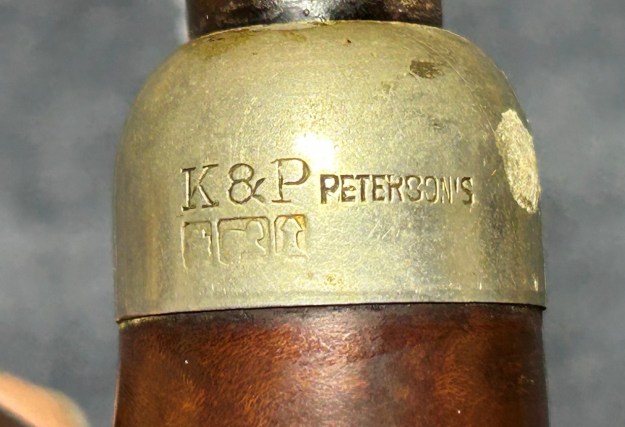
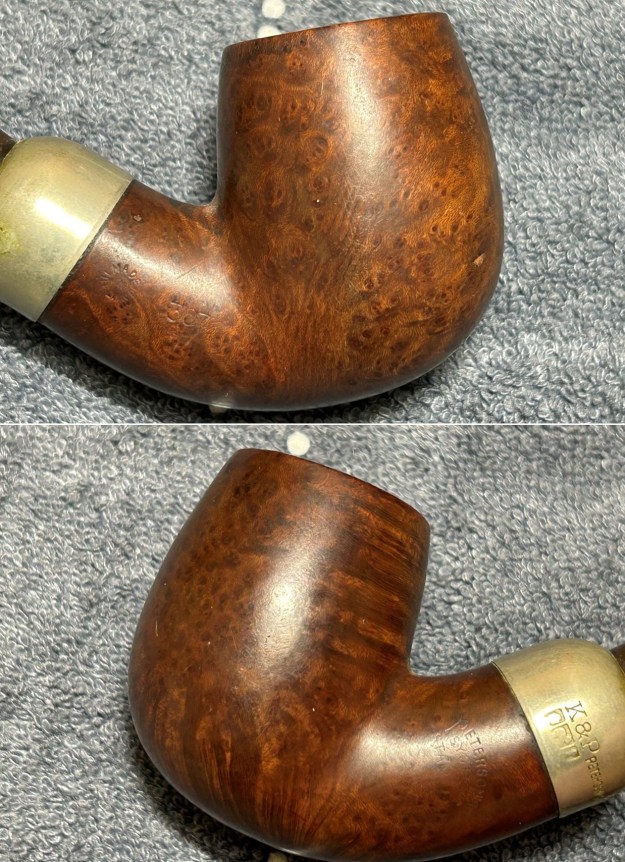
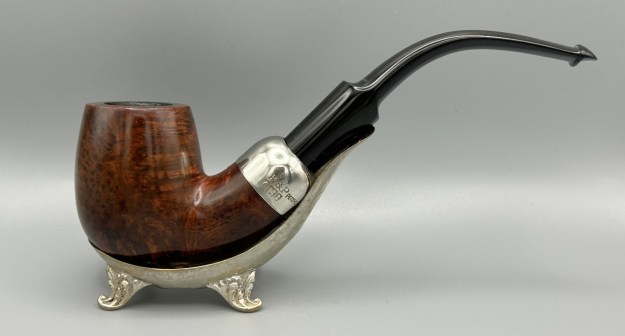
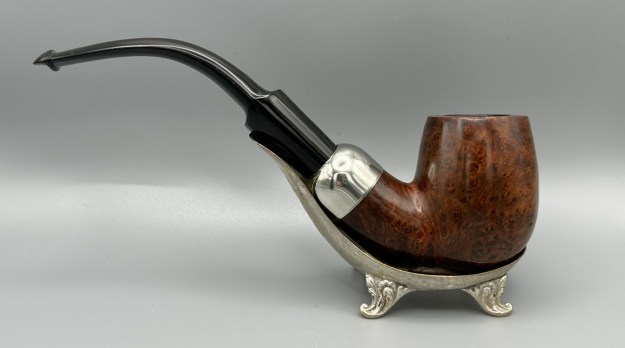
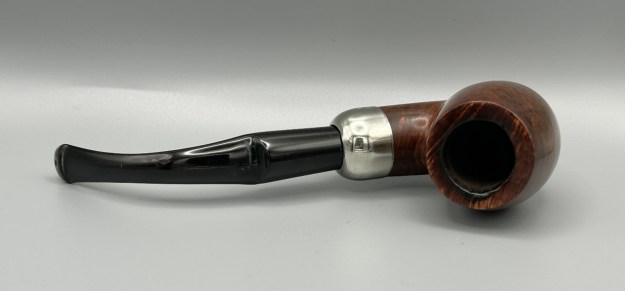
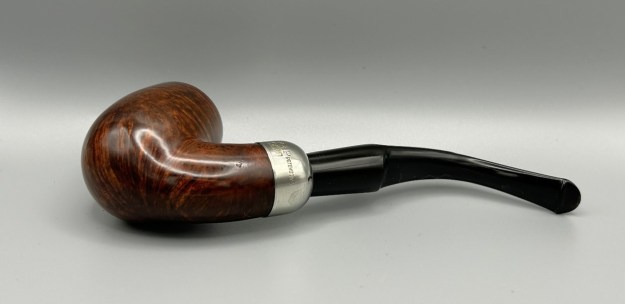
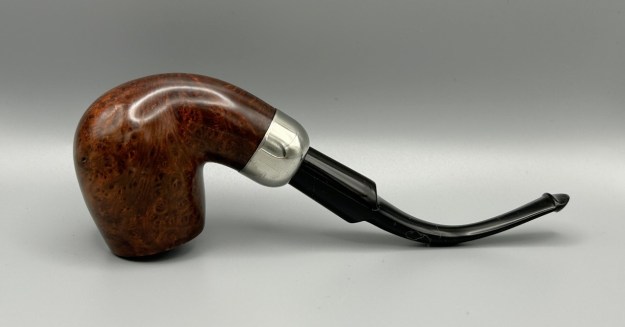
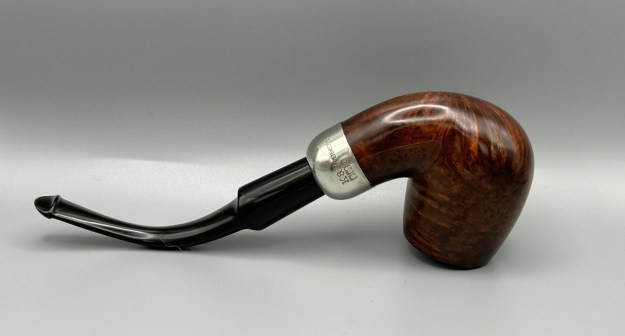
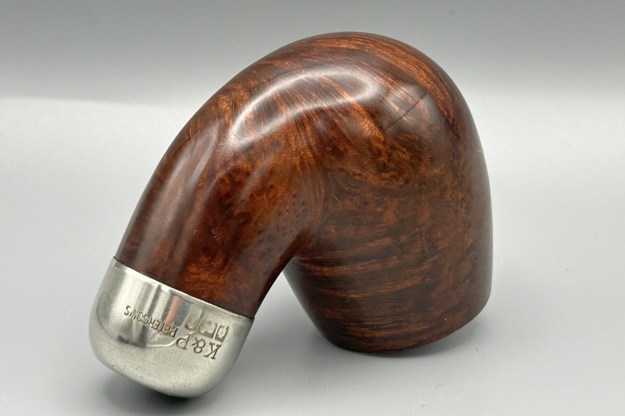
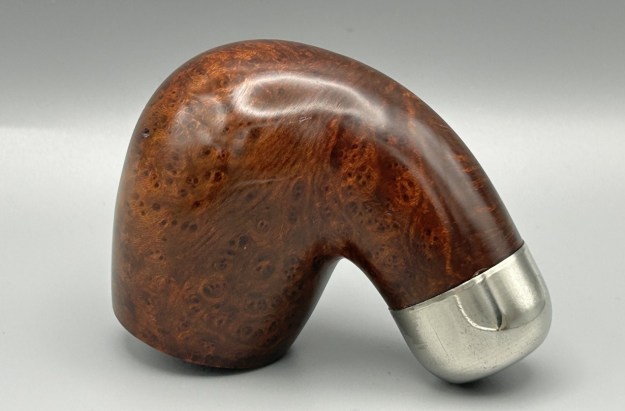
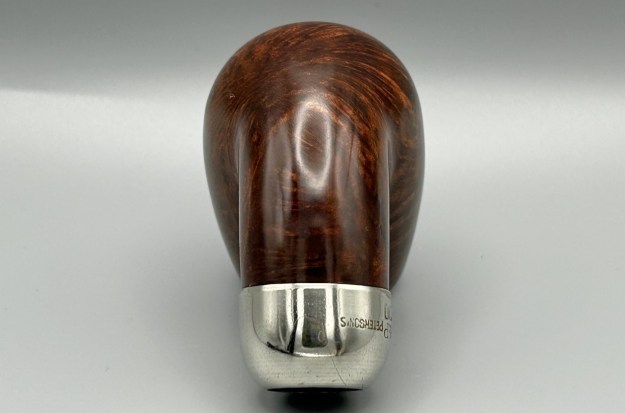
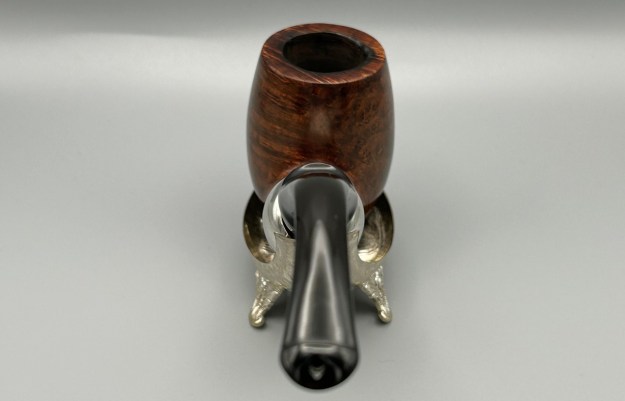
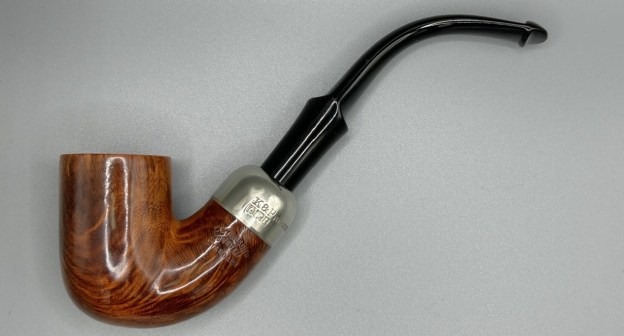
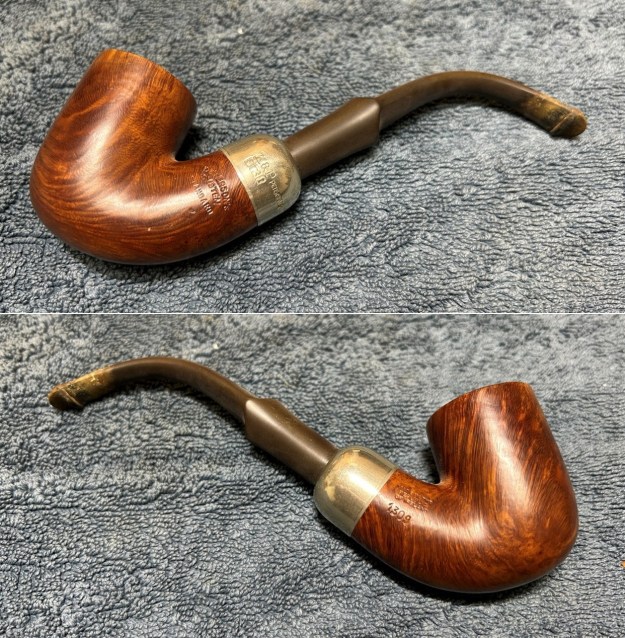
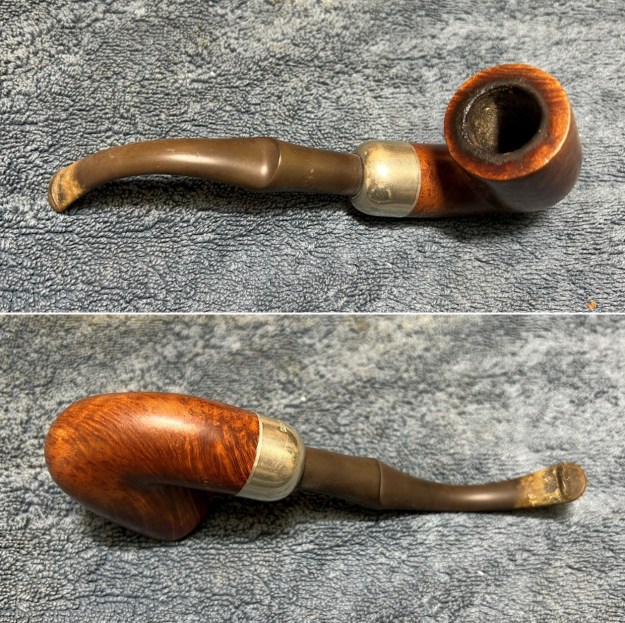
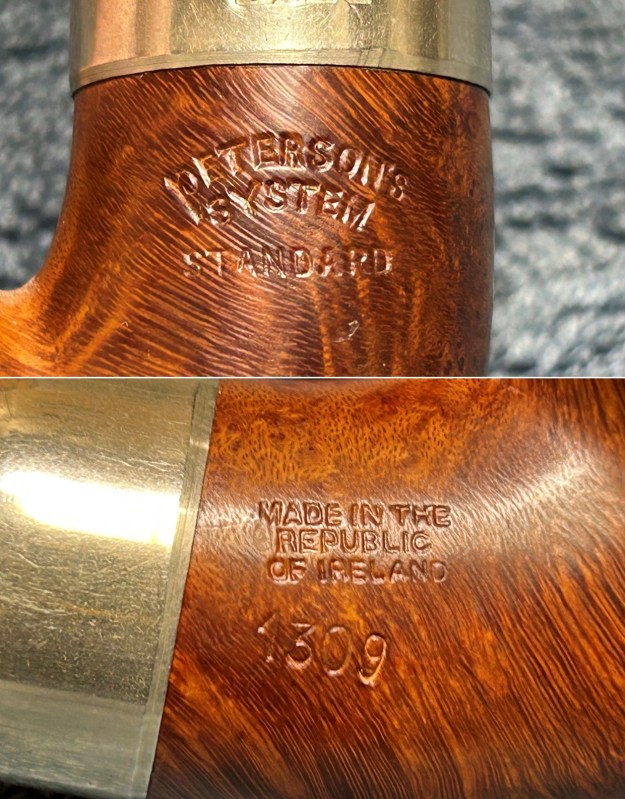
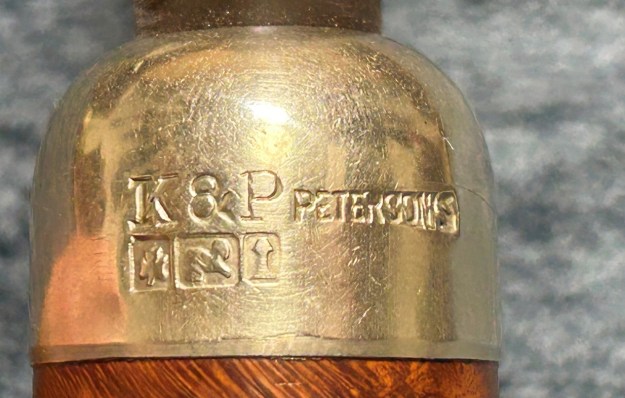
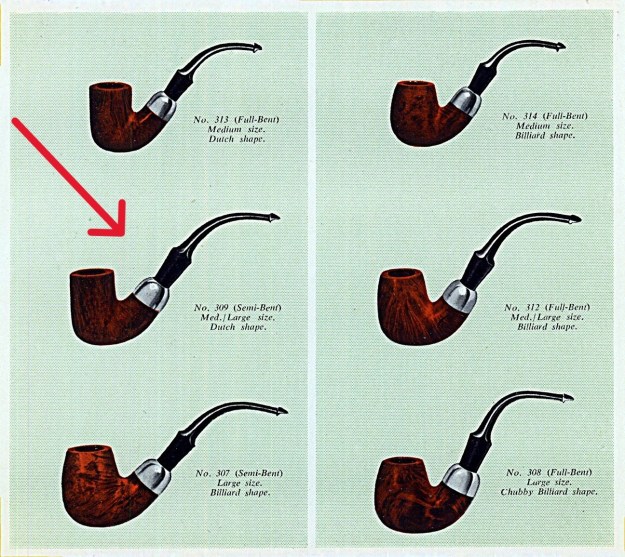
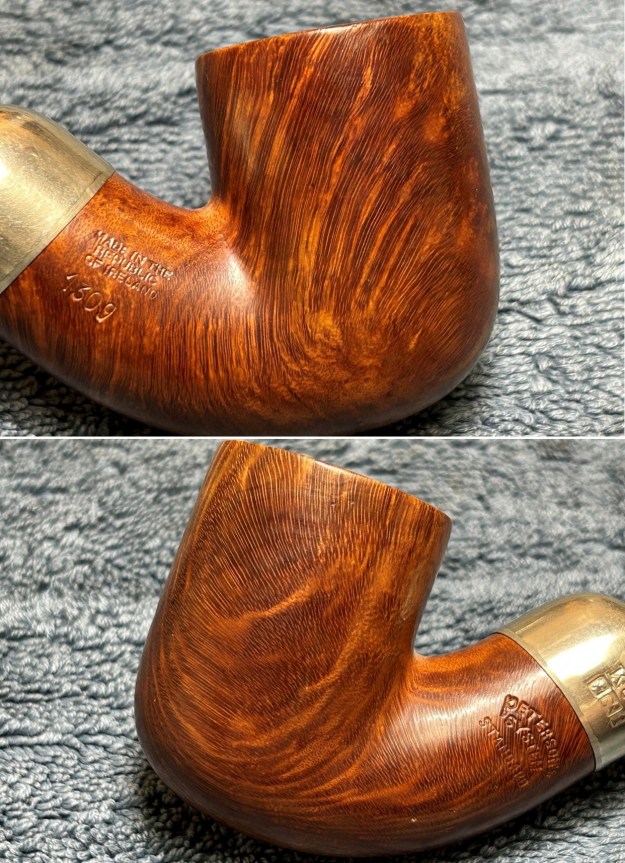
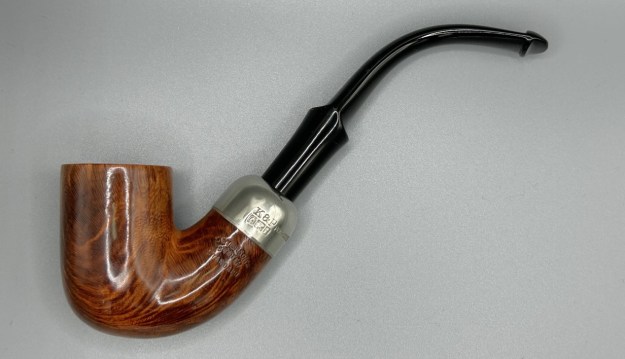
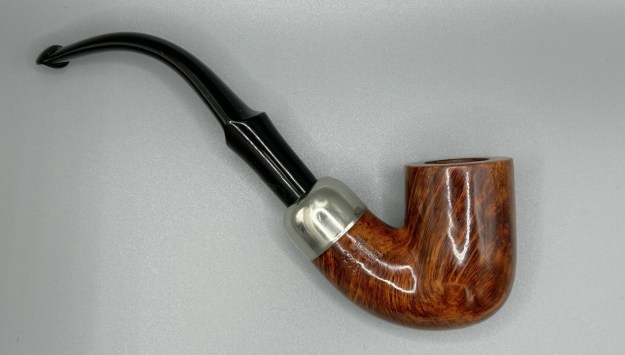
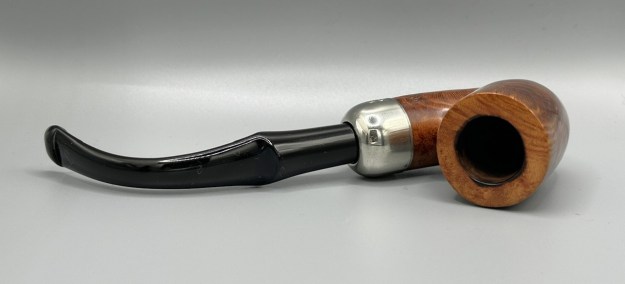
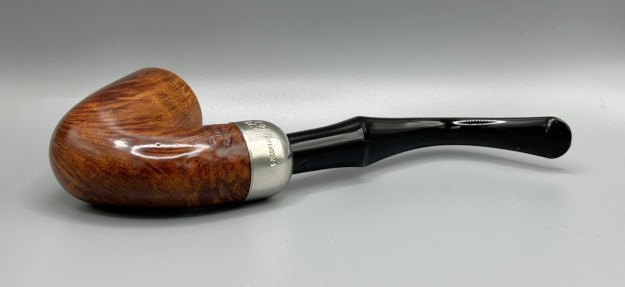
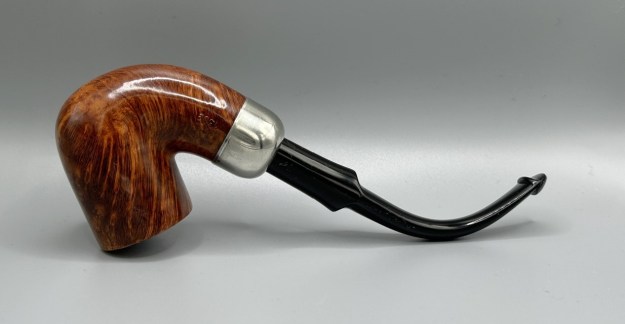
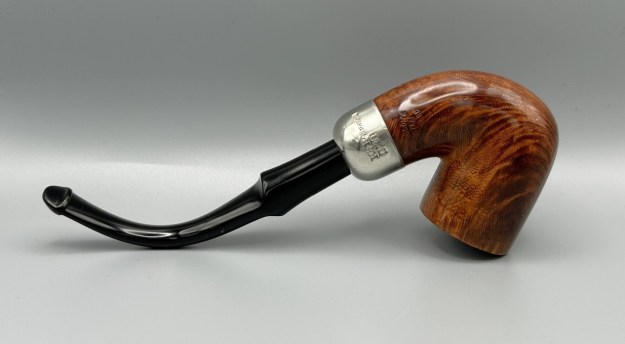
Next up is a pipe that came in a recent lot I acquired – and it is the classic Pete. This is a republic-era Peterson System Standard 1309 bent billiard. The smooth finish on it is really attractive and satisfying. Naturally, the stem has the time-honoured Peterson P-lip. The 1309 is exactly the same pipe as the 309 – the initial ‘1’ simply indicates that it was made for the Canadian market. Looking on the left side of the stummel, we can see the marks. First, we have Peterson’s [over] System [over] Standard. On the right of the stummel we see Made in the [over] Republic [over] of Ireland. Then the shape number 1309. On the nickel ferrule, there are more marks. K&P [over] the symbols (not hallmarks) of a shamrock, a lion and a standing figure. Next to that is the name Peterson’s. The Peterson website provides some great information, specifically about the 309 shape, and I quote it here:

Introduced in 1896, this large straight-sided Billiard (also known as the large Dutch Billiard) was among our first System pipes and remains among our most recognizable shapes. It’s the pipe smoked by Basil Rathbone in 12 of his Sherlock Holmes films and beautifully represents Peterson history from the first days of the patents. It is iconically, quintessentially Peterson.

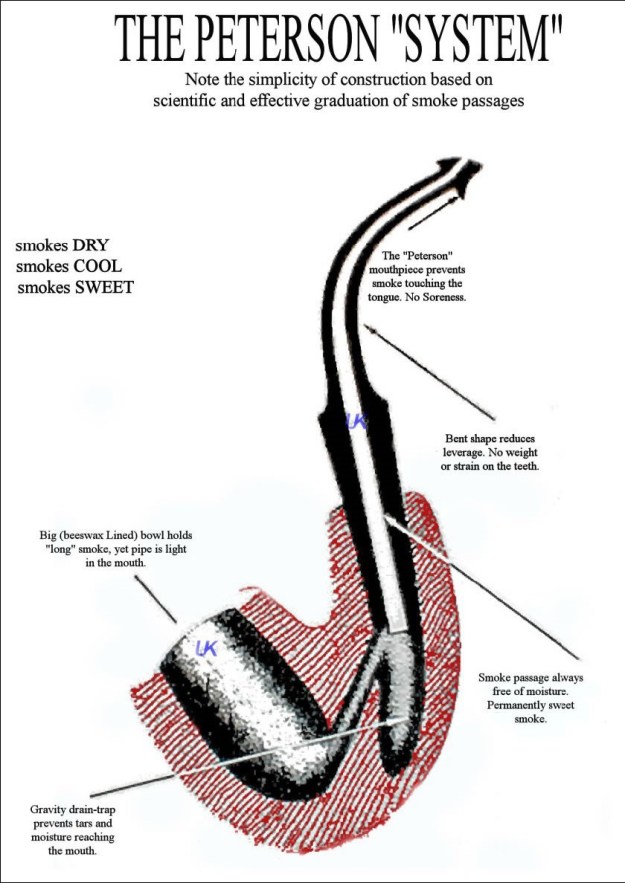
They also included a good paragraph on the Peterson system itself:

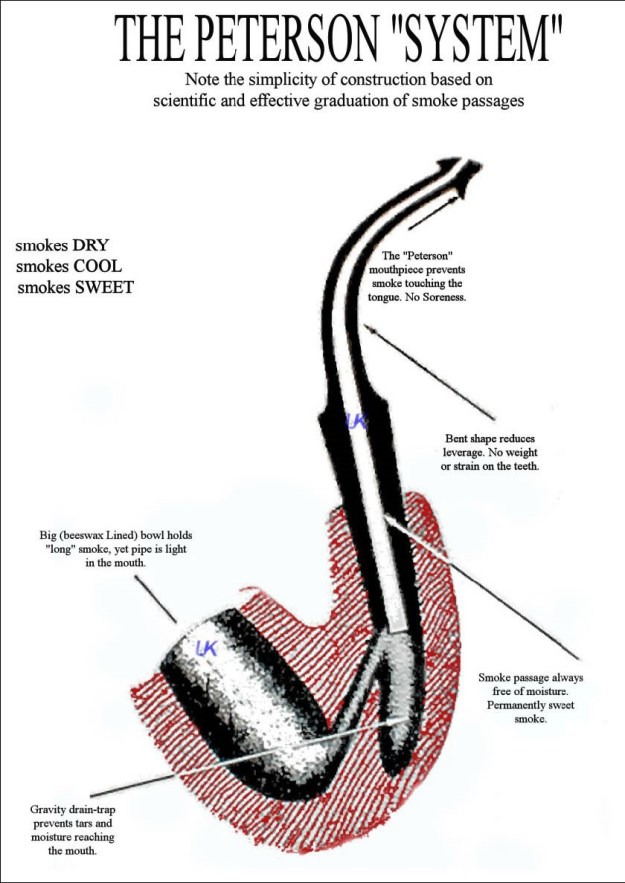
In 1890, after 15 years of handling and repairing pipes while working for the Kapps, Charles Peterson secured a patent in his own name, titled “A certain new and useful improvement in Tobacco-Pipes,” which introduced a unique system comprised of a higher draft hole and a moisture reservoir bored into the shank and transition of a briar pipe. Over the next eight years, Charles continued to refine his System, applying for and securing patents for a graduated bore mouthpiece (1891), and a unique button design known today as the P-Lip (1894-1898). Designed to wick moisture away from the smoke, reduce tongue bite, and increase the longevity of the pipe, Peterson’s complete System patent sparked a tradition of innovation, one we continue to uphold to this day. The System Pipe is the invisible source behind our unique House Style: our pipes’ muscular shanks and transitions, tubular profile, and generous bends. Our overall shaping style has a distinctly antique form because it has remained largely unchanged for over 120 years.

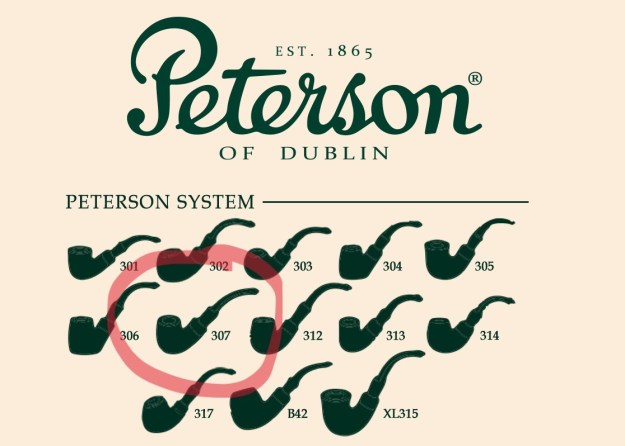
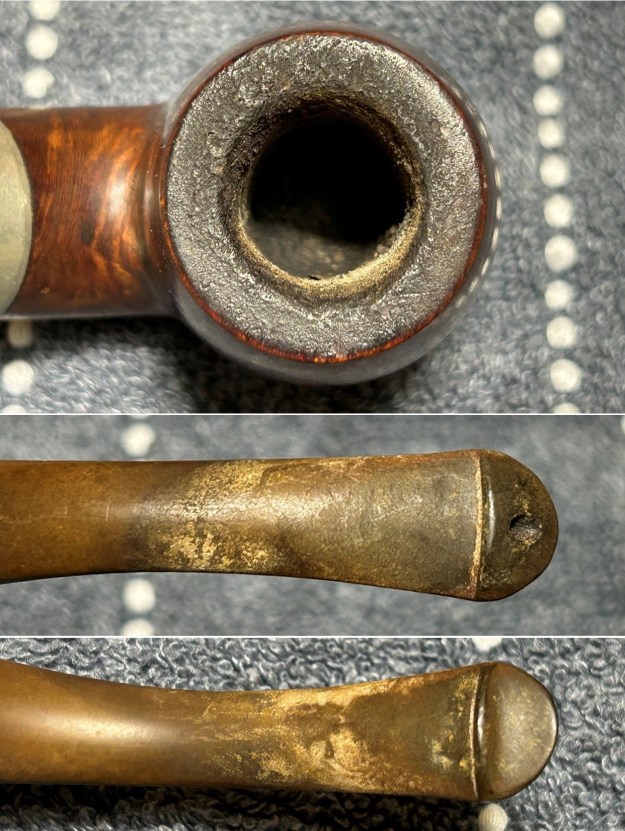
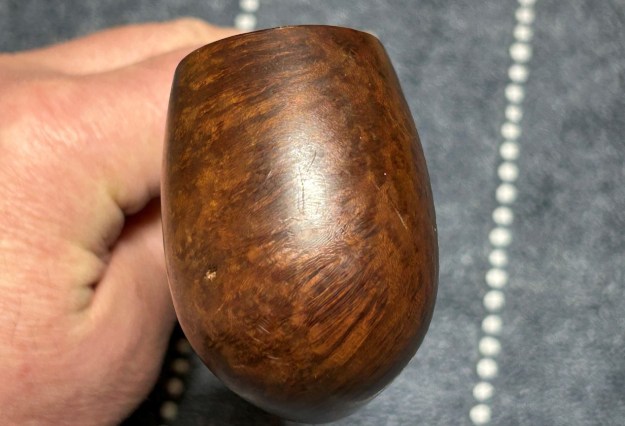
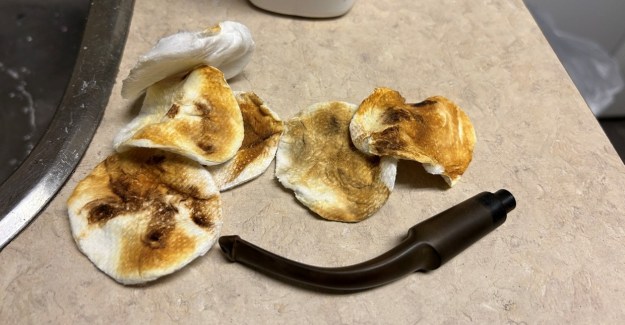
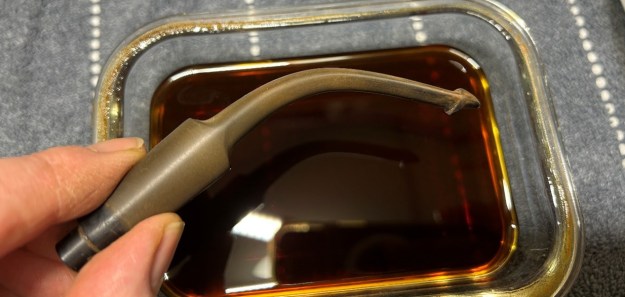
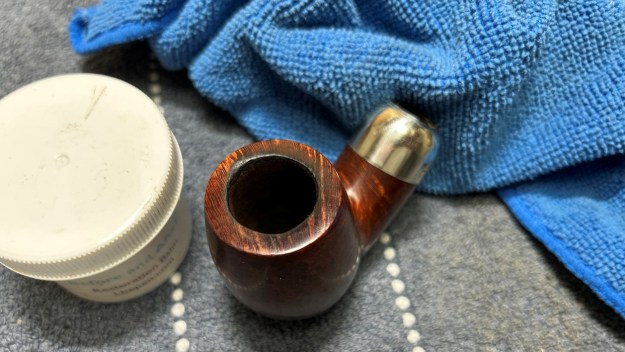
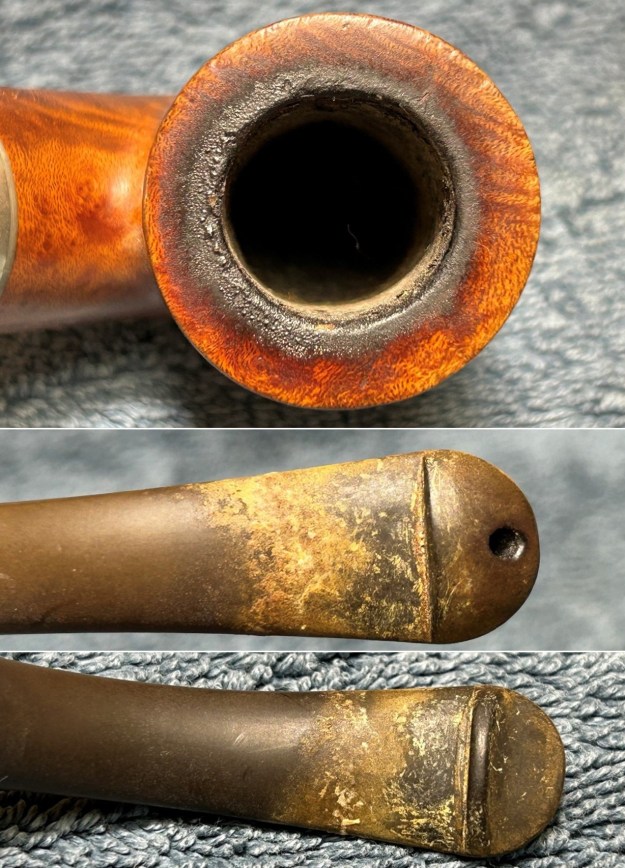
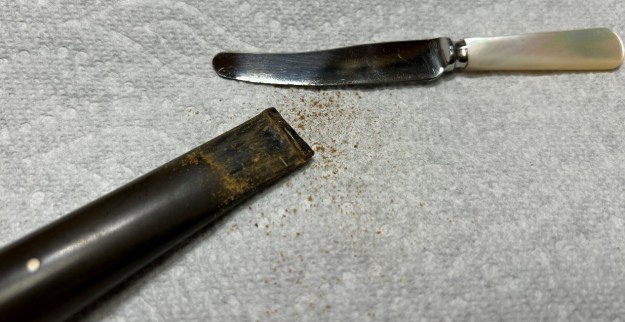
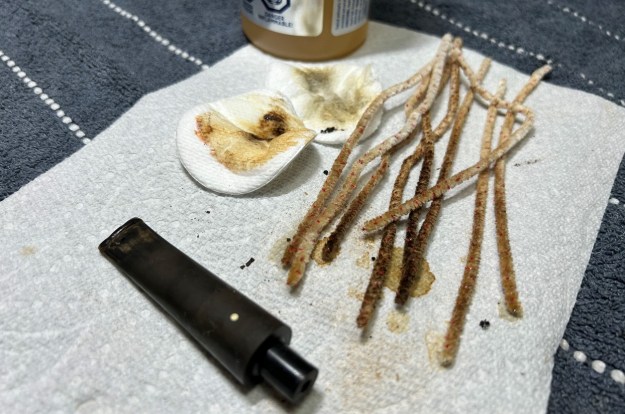
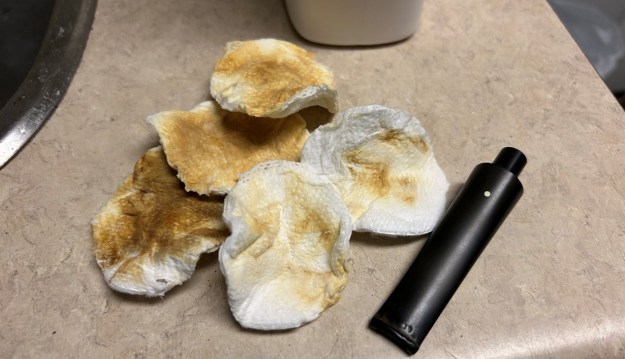
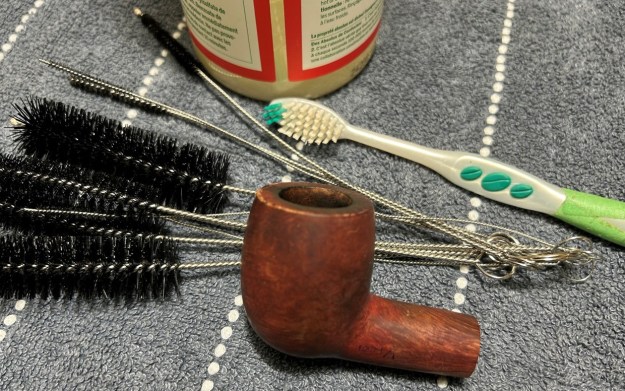
Steve and I have written about the Peterson System many times in many blogs. The Peterson System pipes are well-storied among Peterson collectors/admirers. I took the opportunity to read the article on Pipedia, specifically about the System pipes, by Jim Lilley. There is a lot of good information there and I encourage you to read it here.As usual, I owe a debt of gratitude to Mark Irwin of Peterson Pipe Notes. He has a very interesting article on the various System shapes and I highly recommend having a look here. In fact, regarding the 309, he says this: ‘As I’ve said many times, for me this is the Peterson shape.’ Here is a photo from his page:On to the pipe itself. It appears to be in very good shape, albeit a bit drab from use. There’s cake inside the bowl, and some charring to the rim, but the outside looks perfectly sound. The stem has a bit of tooth chatter, and quite a bit of oxidation and calcification. The stem’s calcification was quite substantial. I used an old butter knife and gently scraped some of the thicker accretion off. Doing this now helps later in removing the oxidation.I used isopropyl alcohol on a few cotton rounds and wiped down the stem to provide an initial cleaning of filth before moving on to the next step. The primary cleaning came next. I disinfected the inside of the stem with both pipe cleaners and cotton swabs dipped in lemon-infused 99% isopropyl alcohol. I scrubbed thoroughly to make sure the interior was very clean.The goal of the next step is the removal (or minimization) of oxidation. Going to my sink, I used cream cleanser, cotton rounds, and a toothbrush, and scoured the stem to remove as much surface oxidation as possible. As the photos show, the result was a hideous, ochre-coloured mess – but better off the stem than on it.Once the stem was reasonably clean, I soaked it overnight in some Briarville Stem Oxidation Remover. This solution works to draw oxidation in the stem to the surface of the vulcanite. This is a major aid and an important step in ensuring a clean stem. The following day, I drew out the stem from its bath and scrubbed the lingering fluid with a toothbrush. Due to the severity of the oxidation, I then repeated the scrubbing with the cream cleanser for maximum effect.As the stem was now clean and dry, I set about fixing a couple of very small dents in the vulcanite. This was done by filling those divots with black cyanoacrylate adhesive, impregnated with carbon and rubber. I left this to cure and moved on.The penultimate step for the stem is sanding. First, with my set of needle files, I reduced the bulk of the cyanoacrylate repairs. I removed the excess adhesive as near to the surface as possible, without cutting into the vulcanite. Following that, I used all nine of the micromesh sanding pads (1,500 through 12,000 grit) to sand out flaws, even out the vulcanite, and provide gentle polishing of the finished surface. I also applied pipe-stem oil while using the last five micromesh pads. There was a wonderful, deep black shine to the stem when I was done. As the stem was (nearly) complete, I moved on to the stummel. The first step was to ream out the bowl – that is to say, remove all the cake inside the bowl. This accomplished a couple of things. First (and most obviously), it cleaned the bowl and provided a refurbished chamber for future smoking. Second, when the old cake was removed, I could inspect the interior walls of the bowl and determine if there was damage or not. I used a reamer, a pipe knife, and a piece of sandpaper taped to a wooden dowel. Collectively, these ensured that all the debris was removed.My next step was to remove the lava on the rim. For this, I took a piece of machine steel and gently scraped the lava away. The metal’s edge is sharp enough to remove what I need, but not so sharp that it damages the rim. This cleaned up quite well.Similar to the stem, I then cleaned the stummel with both pipe cleaners and cotton swabs dipped in lemon-infused 99% isopropyl alcohol. With a pipe this dirty, it took quite a while and much cotton to clean.I then decided to ‘de-ghost’ the pipe – that is to say, exorcize the remaining filth from the briar. I filled the bowl and the shank with cotton balls, then saturated them with 99% isopropyl alcohol. I let the stummel sit overnight. This caused the remaining oils, tars and smells to leach out into the cotton.To tidy up the briar, I wiped down the outside, using a solution of a pH-neutral detergent and some distilled water, with cotton rounds. This did a good job of cleaning any latent dirt on the surface of the briar. The last step of the cleaning process was to scour the inside of the stummel with the same mild detergent and tube brushes. This was the culmination of a lot of hard work in getting the pipe clean.I then buffed the nickel ferrule with a couple of very gentle Micromesh pads, then then buffed it with a jewellery cloth.
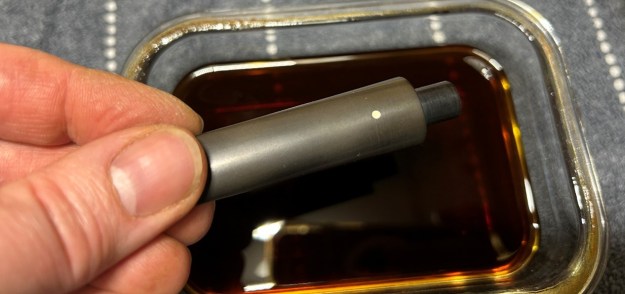
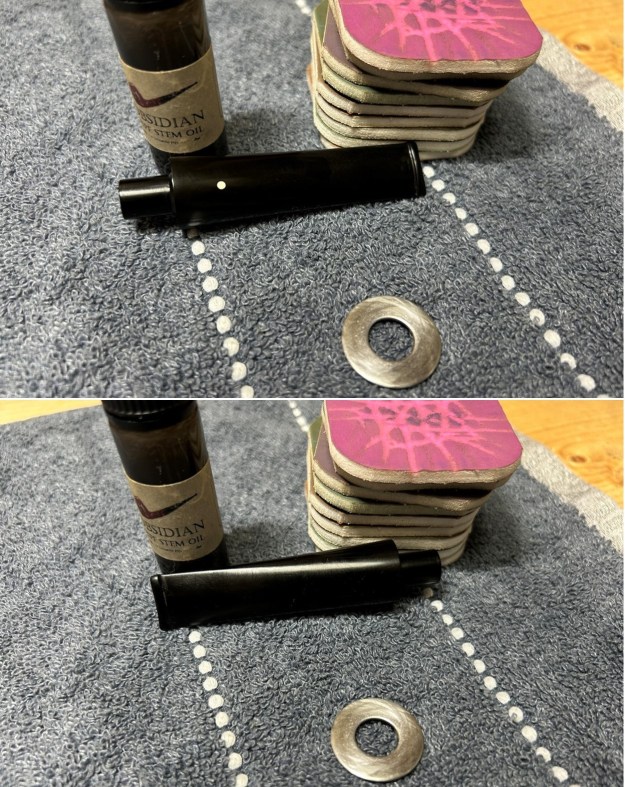
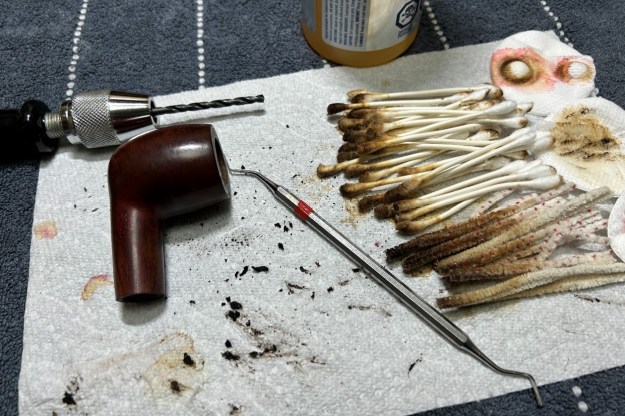
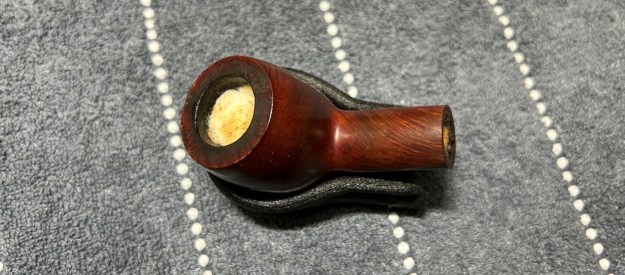
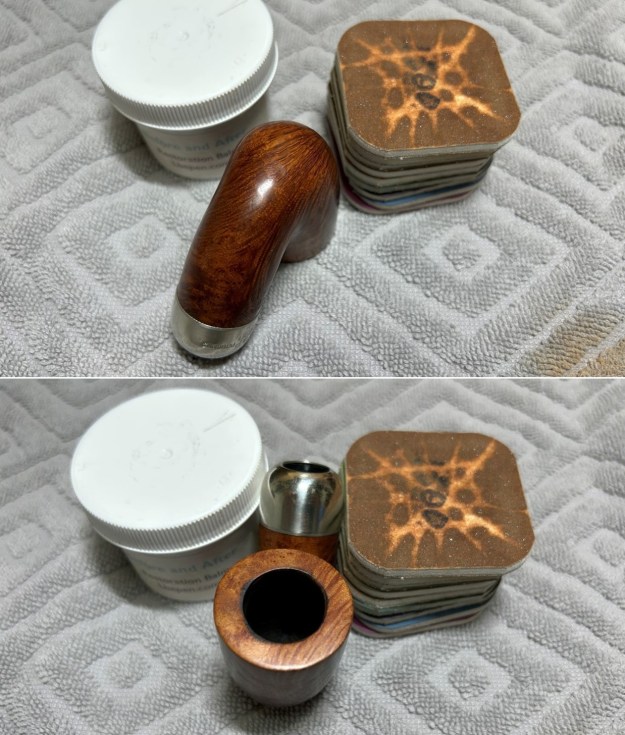
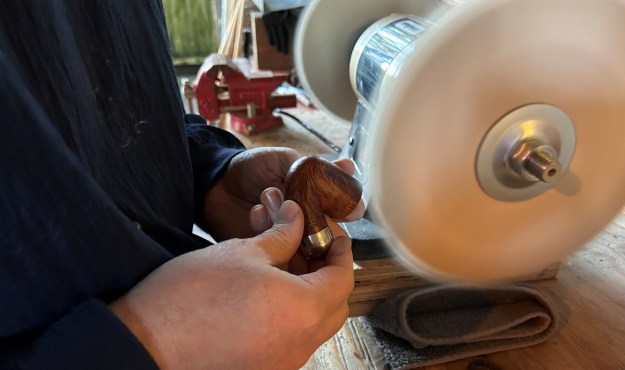
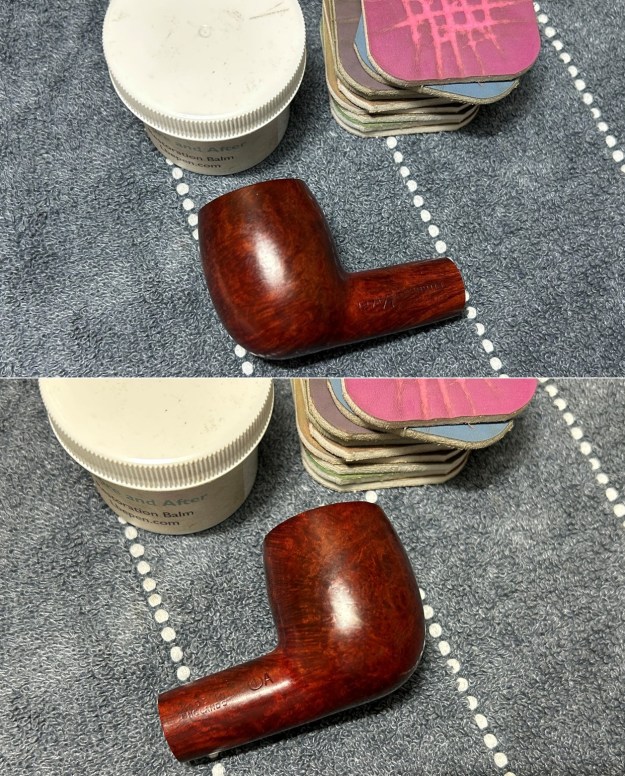
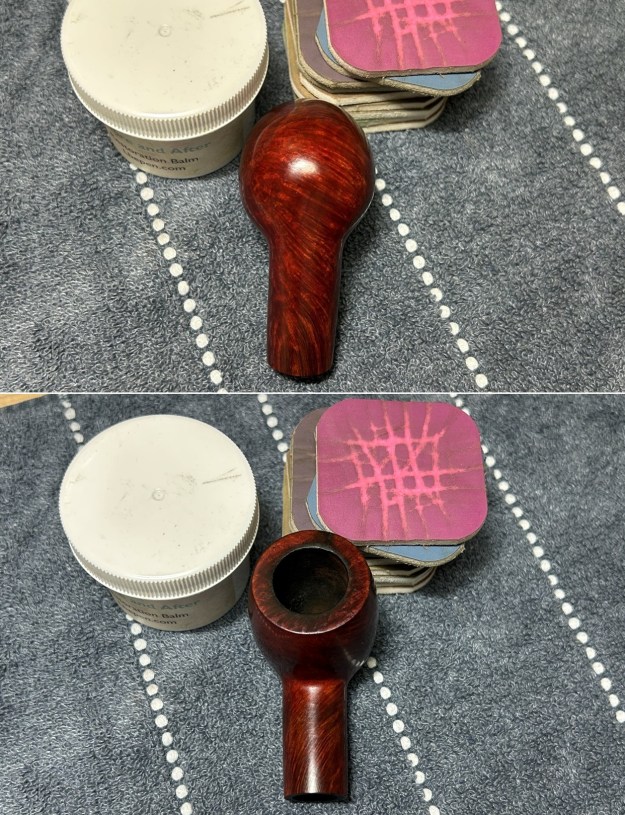
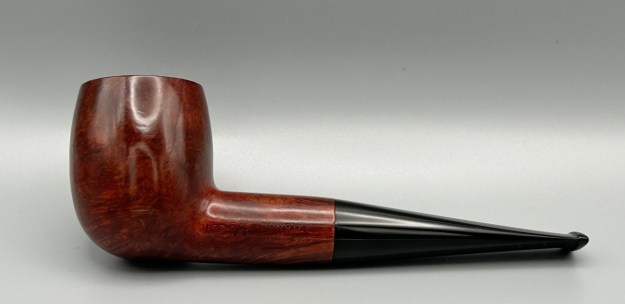
I rubbed some LBE Before & After Restoration Balm into the briar and let it sit for 30 minutes or so. The balm moisturizes the wood and gives a beautiful depth to the briar. I then buffed the stummel with a microfibre cloth. For the final step, I took the pipe to my bench polisher and carefully buffed it – first with a blue diamond compound, then with three coats of carnauba wax. This procedure makes the pipe look its best – the stummel sings and the stem glows.All done! This Peterson System Standard 1309 bent billiard looks fantastic again and is ready to be enjoyed by its next owner. I am pleased to announce that this pipe is for sale! If you are interested in acquiring it for your collection, please have a look in the ‘Irish’ section of the store here on Steve’s website. You can also email me directly at kenneth@knightsofthepipe.com. The approximate dimensions of the pipe are as follows: length 5⅞ in. (148 mm); height 3⅔ in. (93 mm); bowl diameter 1⅓ in. (33 mm); chamber diameter ¾ in. (19 mm). The weight of the pipe is 1⅝ oz. (48 g). I hope you enjoyed reading the story of this pipe’s restoration as much as I enjoyed restoring it. If you are interested in more of my work, please follow me here on Steve’s website or send me an email. Thank you very much for reading and, as always, I welcome and encourage your comments.
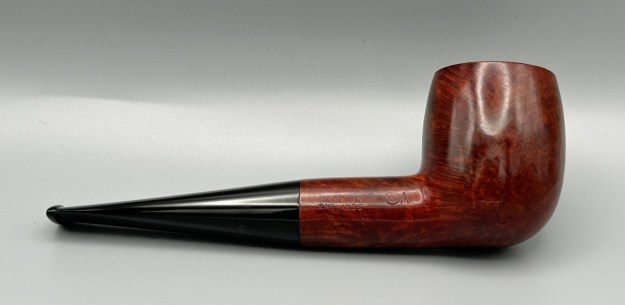
Smooth Moves on a Peterson 303 Sterling Silver Meerschaum


by Kenneth Lieblich

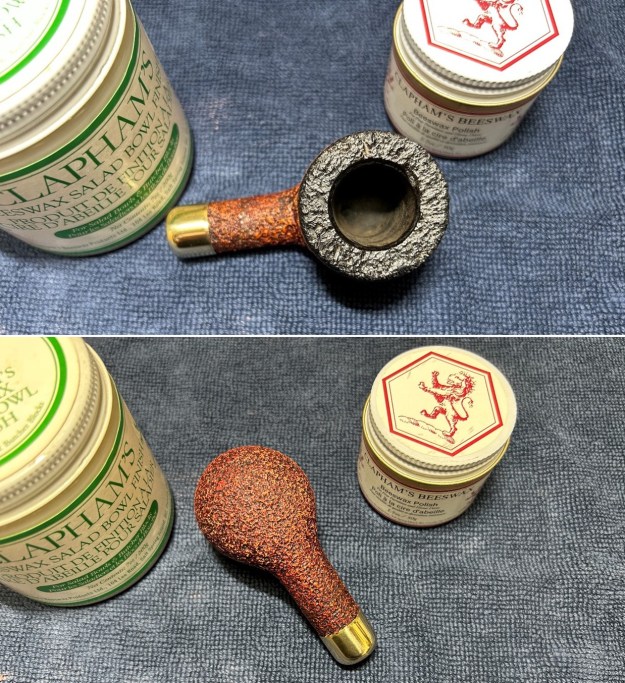
Following on from the rusticated Peterson meer the other day, I have now completed a really good-looking, smooth block meerschaum pipe from Peterson. It is a shape 303, medium bent apple. It doesn’t have the number marked on it, but it’s obviously a 303. Like the other Pete, this one was acquired by auction. It was a pleasure to work on it and I hope you will enjoy reading about it. There are many similarities in the two pipes. The band or cap around the shank is made in sterling silver, and that certainly adds a touch of class. The stem, as expected, has the traditional P-lip of the Peterson brand. The pipe was very well cared for by its previous owner, and it even comes with its own Peterson-branded pipe sock. The meerschaum itself doesn’t hold any markings – nor does the stem. All the markings are on the sterling silver band. To start, the band says Peterson’s [over] Dublin. To the right of that, it reads Sterling [over] Silver. To the right of that, it has a set of proper silver hallmarks: Hibernia, which indicates that it was made in Dublin. Next is the Harp Crowned, which indicates sterling silver. Third is the date letter. In this case, it’s a stylized letter O. Checking the Irish hallmarks chart tells me that this pipe dates from 1980. Moving on. The stummel was in nice shape. The outside had only seen some minor wear-and-tear, but there were no major issues. It was a bit dirty inside, but nothing more than what would be expected. Meanwhile, the stem was also in good condition. It was oxidized and calcified, but the tooth marks were very minor. The sterling silver band was fine – just heavily tarnished. The stem’s calcification was notable. I used an old butter knife and gently scraped some of the thicker accretion off. Doing this now helps later in removing the oxidation.I used isopropyl alcohol on a few cotton rounds and wiped down the stem to provide an initial cleaning of filth before moving on to the next steps. The primary cleaning came next. I disinfected the inside of the stem with both pipe cleaners and cotton swabs dipped in lemon-infused 99% isopropyl alcohol. I scrubbed thoroughly to make sure the interior was very clean.The goal of the next step is the removal (or minimization) of oxidation. Going to my sink, I used cream cleanser, cotton rounds, and a toothbrush, and scoured the stem to remove as much surface oxidation as possible. As the photos show, the result was a hideous, ochre-coloured mess – but better off the stem than on it.Once the stem was reasonably clean, I soaked it overnight in some Briarville Stem Oxidation Remover. This solution works to draw oxidation in the stem to the surface of the vulcanite. This is a major aid and an important step in ensuring a clean stem. The following day, I drew out the stem from its bath and scrubbed the lingering fluid with a toothbrush.As the stem was now clean and dry, I set about fixing the marks and dents in the vulcanite. This was done by filling those divots with black cyanoacrylate adhesive, impregnated with carbon and rubber. I left this to cure and moved on.The penultimate step for the stem is sanding. First, with my set of needle files, I reduced the bulk of the cyanoacrylate repairs. I removed the excess adhesive as near to the surface as possible, without cutting into the vulcanite. Following that, I used all nine of the micromesh sanding pads (1,500 through 12,000 grit) to sand out flaws, even out the vulcanite, and provide gentle polishing of the finished surface. I also applied pipe-stem oil while using the last five micromesh pads. There was a wonderful, deep black shine to the stem when I was done.As the stem was (nearly) complete, I moved on to the stummel. The first step was to ream out the bowl – that is to say, remove all the cake inside the bowl. This accomplished a couple of things. First (and most obviously), it cleaned the bowl and provided a refurbished chamber for future smoking. Second, when the old cake was removed, I could inspect the interior walls of the bowl and determine if there was damage or not. Normally, at this point, I would use a reamer to remove the built-up cake inside the bowl, but meerschaum has the potential to crack in those circumstances. Instead, I used a pipe knife, and a piece of sandpaper taped to a wooden dowel. Collectively, these ensured that all the debris was removed.Similar to the stem, I then cleaned the stummel with both pipe cleaners and cotton swabs dipped in lemon-infused 99% isopropyl alcohol. I did it carefully because too much soaking can cause meerschaum to soften. In this case, I moved quickly, nothing softened, and everything turned out well.To tidy up the bowl, I wiped down the outside, using a solution of a pH-neutral detergent and some distilled water, with cotton rounds. I used my micromesh pads to sand the outside of the stummel and finish it off. This sanding minimizes flaws in the meerschaum and provides a beautiful smoothness to the surface. I then applied some Clapham’s Beeswax Finish to the meerschaum and let it sit for about 30 minutes. As meerschaum pipes don’t do well on a bench-polisher, I then buffed it with a microfibre cloth. I repeated this process and left it – it sure was pretty! I also polished the silver with my jeweller’s cloth and made it shine. For the final step, I took the stem to my bench polisher and carefully buffed it with a blue diamond compound.

All done! This Peterson 303 Sterling Silver Meerschaum bent apple looks fantastic again and is ready to be enjoyed by its next owner. I am pleased to announce that this pipe is for sale! If you are interested in acquiring it for your collection, please have a look in the ‘Irish’ section of the store here on Steve’s website. You can also email me directly at kenneth@knightsofthepipe.com. The approximate dimensions of the pipe are as follows: length 5 in. (127 mm); height 3⅜ in. (87 mm); bowl diameter 1⅔ in. (42 mm); chamber diameter ¾ in. (18 mm). The weight of the pipe is 1⅝ oz. (49 g). I hope you enjoyed reading the story of this pipe’s restoration as much as I enjoyed restoring it. If you are interested in more of my work, please follow me here on Steve’s website or send me an email. Thank you very much for reading and, as always, I welcome and encourage your comments.
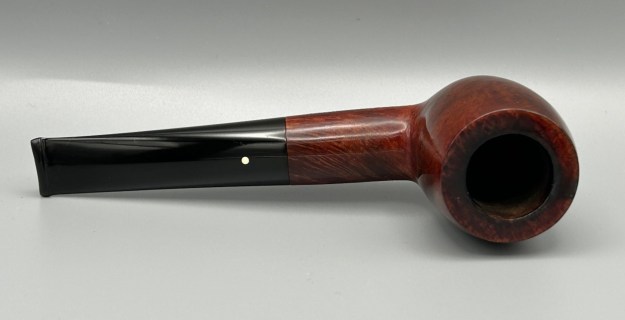
Cleaning Up a Beautiful Peterson 314 Sterling Silver Meerschaum


by Kenneth Lieblich

Next on my workbench is a very attractive pipe, which I recently acquired by auction. It was a pleasure to work on it and I hope you will enjoy it. This is a ruggedly-rusticated block meerschaum pipe from Peterson. It is a shape 314, medium bent billiard, although it doesn’t include that number on the pipe. The band or cap around the shank is made in sterling silver, and that certainly adds a touch of class. The stem, as expected, has the traditional P-lip of the Peterson brand. The pipe was very well cared for by its previous owner, and it even comes with its own Peterson-branded pipe sock. The meerschaum itself doesn’t hold any markings – nor does the stem. All the markings are on the sterling silver band. To start, the band says Peterson’s [over] Dublin. To the right of that, it reads Sterling [over] Silver. To the right of that, it has a set of proper silver hallmarks: Hibernia, which indicates that it was made in Dublin. Next is the Harp Crowned, which indicates sterling silver. Third is the date letter. In this case, it’s a stylized letter I. Checking the Irish hallmarks chart tells me that this pipe dates from 1976. This pipe is celebrating its 50th anniversary this year! Moving on. The stummel was in nice shape. The outside had only seen some minor wear-and-tear, but there were no major issues. Sure, it was a bit dirty inside, but nothing more than what would be expected. Meanwhile, the stem was also in good condition. It was oxidized and calcified, but the tooth marks were very minor. The sterling silver band was fine – just heavily tarnished. The stem’s calcification was notable. I used an old butter knife and gently scraped some of the thicker accretion off. Doing this now helps later in removing the oxidation.I used isopropyl alcohol on a few cotton rounds and wiped down the stem to provide an initial cleaning of filth before moving on to the next steps. The primary cleaning came next. I disinfected the inside of the stem with both pipe cleaners and cotton swabs dipped in lemon-infused 99% isopropyl alcohol. I scrubbed thoroughly to make sure the interior was very clean.The goal of the next step is the removal (or minimization) of oxidation. Going to my sink, I used cream cleanser, cotton rounds, and a toothbrush, and scoured the stem to remove as much surface oxidation as possible. As the photos show, the result was a hideous, ochre-coloured mess – but better off the stem than on it.Once the stem was reasonably clean, I soaked it overnight in some Briarville Stem Oxidation Remover. This solution works to draw oxidation in the stem to the surface of the vulcanite. This is a major aid and an important step in ensuring a clean stem. The following day, I drew out the stem from its bath and scrubbed the lingering fluid with a toothbrush.As the stem was now clean and dry, I set about fixing the marks and dents in the vulcanite. This was done by filling those divots with black cyanoacrylate adhesive, impregnated with carbon and rubber. I left this to cure and moved on.The penultimate step for the stem is sanding. First, with my set of needle files, I reduced the bulk of the cyanoacrylate repairs. I removed the excess adhesive as near to the surface as possible, without cutting into the vulcanite. Following that, I used all nine of the micromesh sanding pads (1,500 through 12,000 grit) to sand out flaws, even out the vulcanite, and provide gentle polishing of the finished surface. I also applied pipe-stem oil while using the last five micromesh pads. There was a wonderful, deep black shine to the stem when I was done. As the stem was (nearly) complete, I moved on to the stummel. The first step was to ream out the bowl – that is to say, remove all the cake inside the bowl. This accomplished a couple of things. First (and most obviously), it cleaned the bowl and provided a refurbished chamber for future smoking. Second, when the old cake was removed, I could inspect the interior walls of the bowl and determine if there was damage or not. Normally, at this point, I would use a reamer to remove the built-up cake inside the bowl, but meerschaum has the potential to crack in those circumstances. Instead, I used a pipe knife, and a piece of sandpaper taped to a wooden dowel. Collectively, these ensured that all the debris was removed.Similar to the stem, I then cleaned the stummel with both pipe cleaners and cotton swabs dipped in lemon-infused 99% isopropyl alcohol. I did it carefully because too much soaking can cause meerschaum to soften. In this case, I moved quickly, nothing softened, and everything turned out well.I also took a brush to the rusticated surface of the bowl. There were a few bits and pieces of debris and my brushing removed them. It looked much better. I then applied some Clapham’s Beeswax Finish to the meerschaum and let it sit for about 30 minutes. As meerschaum pipes don’t do well on a bench-polisher, I then buffed it with a microfibre cloth. I repeated this process and left it – it sure was pretty! I also polished the silver with my jeweller’s cloth and made it shine. For the final step, I took the stem to my bench polisher and carefully buffed it with a blue diamond compound.

All done! This Peterson 314 Sterling Silver Meerschaum bent billiard looks fantastic again and is ready to be enjoyed by its next owner. I am pleased to announce that this pipe is for sale! If you are interested in acquiring it for your collection, please have a look in the ‘Irish’ section of the store here on Steve’s website. You can also email me directly at kenneth@knightsofthepipe.com. The approximate dimensions of the pipe are as follows: length 5¾ in. (147 mm); height 3⅞ in. (97 mm); bowl diameter 1½ in. (38 mm); chamber diameter ¾ in. (18 mm). The weight of the pipe is 1⅞ oz. (54 g). I hope you enjoyed reading the story of this pipe’s restoration as much as I enjoyed restoring it. If you are interested in more of my work, please follow me here on Steve’s website or send me an email. Thank you very much for reading and, as always, I welcome and encourage your comments.
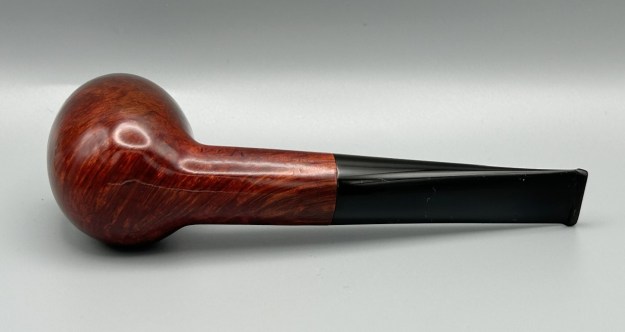
A Pair of Stunning Savinelli Hand-Made Pipes


by Kenneth Lieblich

When these beauties came into my possession, I was gobsmacked. What an amazing set of pipes this is! These are two Savinelli Hand-Made, Mixed-Finish pipes. One is a Dublin shape, the other is a Horn shape. These were clearly the prized possessions of a distinguished pipe man who has left them behind for the next person to take them on. I am offering them as a pair (and I hope they go as a pair), but I will also sell them separately, if desired. Are you familiar with the meme below? That was my reaction when I saw these pipes. As you can see, both pipes have an incredible sandblast over most of the stummel, with a gorgeous straight-grain accent. You can see why I think these are a pair. The horn has an oval, handmade, vulcanite saddle stem. The Dublin has a round, handmade, vulcanite, combination saddle-and-taper stem (with a subtle 6 mm filter, but it also includes a Savinelli adaptor so you can ignore the filter if you wish). Beautiful! The markings on these pipes are quite interesting. On the underside of both stummels are the words Hand [over] Made – and to the right of that, Italy. On the stem, is a crowned snake logo used by Savinelli – reminiscent of the city crest of Milan. There was some suggestion, in certain circles, that the Hand Made line was below the Autograph line, but Steve is not convinced of that – and neither am I. These two pipes are near-flawless. Pipedia had some very illuminating things to say on the Hand Made line:

These handmade pieces are shaped much like traditional Danish Freehands: they are shaped first and drilled second. Using this method, Savinelli’s team of artisans is able to showcase their own creativity, as it maximizes flexibility and facilitates a more grain-centric approach to shaping. The resulting Freehand designs are at once both a departure from the marque’s classical standard shapes, yet very much still “Savinelli” in their nature—i.e. proportioned so that the bowl is the visual focus when viewed from the profile, juxtaposed by the comparatively trim lines of the shank and stem. To provide a little more insight into the differences between Savinelli’s standard production and freehand lines, Luisa Bozzetti comments:

“When we choose to make Freehand pipes we must stop production on the standard shapes. The process for Freehands is much more involved and takes much more time. Finding the best people from the production line and pulling them to make Freehands is challenging since it’s not an assembly line, but rather a one or two man operation. After the rough shaping of the stummel, we must get together and brainstorm which style of stem will be paired before the pipe can be finished since we do not use pre-shaped stems. All accents and stems for the Freehands are cut from rod here in the factory. A lot of care goes into the few pieces lucky enough to make the cut; to end up with a certain number of Autographs, for instance, means that many, many more will be made, and only the few will be selected.”

The quality control process for Savinelli handmades is even more rigorous than that employed in the standard lineup. Many blocks are started and later discarded because of pits or defects. While Savinelli’s briar sourcing is a constant process, working with some of Italy’s top cutters to ensure only the finest and most suitable blocks make their way to the factory, it’s impossible to source plateau briar that’s completely free from flaws. That’s just nature. Savinelli creates the standard for quality by working through the rough (a very high-quality rough, mind you) to find that shining diamond with the potential to become a Savinelli handmade.

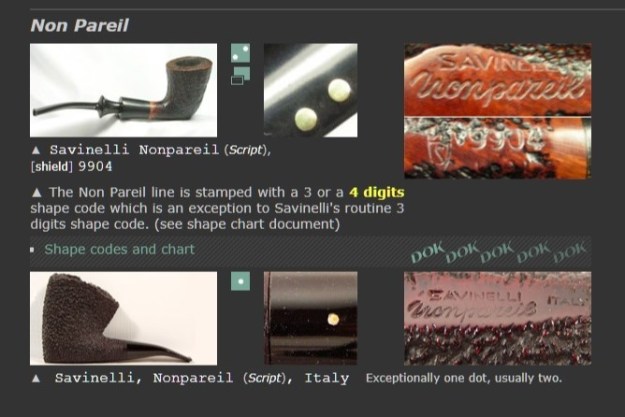
In addition, Pipephil had a brief write-up on the Hand Made line:We’ll move on. The pipes are in generally great condition. Both stummels are relatively clean inside and have no notable blemishes. The stems have a lot of oxidation and calcification, but very little in the way of tooth marks, etc. Let’s get into it. Both stems’ calcification was quite substantial. I used an old butter knife and gently scraped some of the thicker accretion off. Doing this now helps later in removing the oxidation. I used isopropyl alcohol on a few cotton rounds and wiped down the stems to provide an initial cleaning of filth before moving on to the next steps. The primary cleaning came next. I disinfected the inside of the stems with both pipe cleaners and cotton swabs dipped in lemon-infused 99% isopropyl alcohol. I scrubbed thoroughly to make sure both interiors were very clean.The goal of the next step is the removal (or minimization) of oxidation. Going to my sink, I used cream cleanser, cotton rounds, and a toothbrush, and scoured the stems to remove as much surface oxidation as possible. As the photos show, the result was a hideous, ochre-coloured mess – but better off the stems than on them.Once the stems were reasonably clean, I soaked them overnight in some Briarville Stem Oxidation Remover. This solution works to draw oxidation in the stems to the surface of the vulcanite. This is a major aid and an important step in ensuring a clean stem. The following day, I drew out both stems from their bath and scrubbed the lingering fluid with a toothbrush.Despite masking the logos when cleaning and soaking the stems, the colour of the logos was surprisingly fugitive and came off despite my efforts. So, I touched up the logos on the stems with some enamel nail polish. I let this fully set before proceeding. This didn’t turn out perfectly, but it was still pretty good. As the stems were now clean and dry, I set about fixing the small marks in the vulcanite. This was done by filling those divots with black cyanoacrylate adhesive, impregnated with carbon and rubber. I left this to cure and moved on.The penultimate step for the stems is sanding. First, with my set of needle files, I reduced the bulk of the cyanoacrylate repairs. I removed the excess adhesive as near to the surface as possible, without cutting into the vulcanite. Following that, I used all nine of the micromesh sanding pads (1,500 through 12,000 grit) to sand out flaws, even out the vulcanite, and provide gentle polishing of the finished surfaces. I also applied pipe-stem oil while using the last five micromesh pads. There was a wonderful, deep black shine to both stems when I was done.As the stems were (nearly) complete, I moved on to the stummels. The first step was to ream out both bowls – that is to say, remove all the cake inside the bowls. This accomplished a couple of things. First (and most obviously), it cleaned the bowls and provided a refurbished chamber for future smoking. Second, when the old cake was removed, I could inspect the interior walls of the bowls and determine if there was damage or not. I used a pipe knife and a piece of sandpaper taped to a wooden dowel. Collectively, these ensured that all the debris was removed.Similar to the stems, I then cleaned the stummels with both pipe cleaners and cotton swabs dipped in lemon-infused 99% isopropyl alcohol. They were dirty, but not too bad.I then decided to ‘de-ghost’ the pipes – that is to say, exorcize the remaining filth from the briar. I filled the bowls and the shanks with cotton balls, then saturated them with 99% isopropyl alcohol. I let the stummels sit overnight. This caused the remaining oils, tars and smells to leach out into the cotton.To tidy up the briar, I wiped down the outside, using a solution of a pH-neutral detergent and some distilled water, with cotton rounds. I also used a toothbrush in the sandblast crevices. This did a good job of cleaning any latent dirt on the surface of the briar. The last step of the cleaning process was to scour the inside of the stummels with the same mild detergent and tube brushes. This was the culmination of a lot of hard work in getting both pipes clean.I used several of the micromesh pads to sand the smooth sections of the stummels and finish them off. This sanding minimizes flaws in the briar and provides a beautiful smoothness to the wood. I rubbed some LBE Before & After Restoration Balm into the briar and let them sit for 30 minutes or so. The balm moisturizes the wood and gives a beautiful depth to the briar. I then buffed the stummels with a microfibre cloth. For the final step, I took the pipes to my bench polisher and carefully buffed them – first the stems with a blue diamond compound, then the stummels with three coats of carnauba wax. This procedure makes the pipes look their best – the stummels sing and the stems glow.All done! This pair of Savinelli Hand Made pipes (horn and Dublin) are ready to be enjoyed by their next owner. I am pleased to announce that these pipes are for sale! If you are interested in acquiring them for your collection, please have a look in the ‘Italian’ section of the store here on Steve’s website. You can also email me directly at kenneth@knightsofthepipe.com. The approximate dimensions of the horn are as follows: length 6⅛ in. (157 mm); height 2¼ in. (58 mm); bowl diameter 1½ in. (38 mm); chamber diameter ⅞ in. (22 mm). The weight of the pipe is 1⅝ oz. (47 g). The approximate dimensions of the Dublin are as follows: length 5¾ in. (145 mm); height 2½ in. (63 mm); bowl diameter 1⅔ in. (42 mm); chamber diameter ⅞ in. (22 mm). The weight of the pipe is 1⅞ oz. (56 g). I hope you enjoyed reading the story of these pipes’ restoration as much as I enjoyed restoring them. If you are interested in more of my work, please follow me here on Steve’s website or send me an email. Thank you very much for reading and, as always, I welcome and encourage your comments.
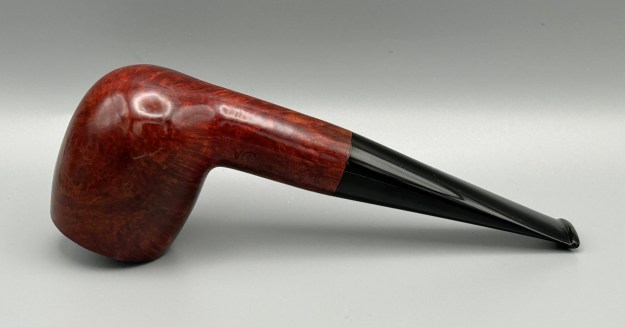
Restoring an Elegant Savinelli Punto Oro 104


by Kenneth Lieblich

What a handsome pipe this is! When I first saw it, I thought, ‘Oh, someone’s going to love this pipe’. As you can see, this is a Savinelli Punto Oro 104. It is a beautifully sandblasted billiard, with a sterling silver band, and a vulcanite military mount stem. I acquired it in a recent auction and was pleased to get it. It’s a wonderful pipe and it deserves to be part of someone’s collection again. This pipe promises to be a great smoker. Let’s look at the markings. The underside of the shank reads Savinelli [over] Punto Oro. Savinelli, of course, is an Italian pipe company, and the words Punto Oro mean, literally, ‘gold point’. To the right is the Savinelli coat of arms, showing a stylized ‘S’ on a shield, topped by two pipes. Next to this are the marks 104 [over] Italy. Naturally, the number refers to the shape – a billiard – and the three digits tell us that the pipe dates from the 1970s or later. The sterling silver mount on the shank also has markings. On one side it reads 925 [over] Savinelli, and on the other side it reads Sterling [over] Mounted. The photos show an almost gold look to this mount, but that’s just the coating on top of the silver. The coating is peeling off. Finally, there is a gold-coloured dot on the stem (made of brass) – a very nice touch. Savinelli is one of the most recognized names in pipe smoking and they have a long and storied history. You can read about them from their own website or from Pipedia’s article about them. I was particularly interested in learning more about the Punto Oro line. Sadly, Pipedia had nothing on this subject. I checked with Pipephil and they did have a bit of information, which I display below.I also found a bit of information on the Punto Oro line from Savinelli’s own website. They write:

PUNTO ORO pipe was the first pipe created by Achille Savinelli after the opening of the factory in 1958; a pipe that has always distinguished the Savinelli brand, its elegance, reliability and tradition. It is a top quality pipe with a wonderful grain. It is important to know it is very difficult to find a briar piece suitable to become a PUNTO ORO: just 1,2% of the whole choice is selected for this series, therefore not all our shapes are always available for these pipes.What’s the condition of the pipe? Very good, I’m pleased to say. The stummel is in beautiful shape – no damage or significant lava. There’s some cake in the bowl, but nothing of note. The silver mount looks like it has scratches – but it doesn’t. This is where the old coating on the silver was coming off. The stem is a bit oxidized and heavily calcified, but we can sort that out. The stem’s calcification was quite substantial. I used an old butter knife and gently scraped some of the thicker accretion off. Doing this now helps later in removing the oxidation.I used isopropyl alcohol on a few cotton rounds and wiped down the stem to provide an initial cleaning of filth before moving on to the next steps. The primary cleaning came next. I disinfected the inside of the stem with both pipe cleaners and cotton swabs dipped in lemon-infused 99% isopropyl alcohol. I scrubbed thoroughly to make sure the interior was very clean.The goal of the next step is the removal (or minimization) of oxidation. Going to my sink, I used cream cleanser, cotton rounds, and a toothbrush, and scoured the stem to remove as much surface oxidation as possible. As the photos show, the result was a hideous, ochre-coloured mess – but better off the stem than on it.Once the stem was reasonably clean, I soaked it overnight in some Briarville Stem Oxidation Remover. This solution works to draw oxidation in the stem to the surface of the vulcanite. This is a major aid and an important step in ensuring a clean stem. The following day, I drew out the stem from its bath and scrubbed the lingering fluid with a toothbrush.The penultimate step for the stem is sanding. I used all nine of the micromesh sanding pads (1,500 through 12,000 grit) to sand out flaws, even out the vulcanite, and provide gentle polishing of the finished surface. I also applied pipe-stem oil while using the last five micromesh pads. There was a wonderful, deep black shine to the stem when I was done.As the stem was (nearly) complete, I moved on to the stummel. The first step was to ream out the bowl – that is to say, remove all the cake inside the bowl. This accomplished a couple of things. First (and most obviously), it cleaned the bowl and provided a refurbished chamber for future smoking. Second, when the old cake was removed, I could inspect the interior walls of the bowl and determine if there was damage or not. I used a reamer, a pipe knife, and a piece of sandpaper taped to a wooden dowel. Collectively, these ensured that all the debris was removed.Similar to the stem, I then cleaned the stummel with both pipe cleaners and cotton swabs dipped in lemon-infused 99% isopropyl alcohol. It took quite a while and much cotton to clean.I then decided to ‘de-ghost’ the pipe – that is to say, exorcize the remaining filth from the briar. I filled the bowl and the shank with cotton balls, then saturated them with 99% isopropyl alcohol. I let the stummel sit overnight. This caused the remaining oils, tars and smells to leach out into the cotton.To tidy up the briar, I wiped down the outside, using a solution of a pH-neutral detergent and some distilled water, with cotton rounds. I also used a toothbrush in the crevices. This did a good job of cleaning any latent dirt on the surface of the briar. The last step of the cleaning process was to scour the inside of the stummel with the same mild detergent and tube brushes. This was the culmination of a lot of hard work in getting the pipe clean.I rubbed some LBE Before & After Restoration Balm into the briar and let it sit for 30 minutes or so. The balm moisturizes the wood and gives a beautiful depth to the briar. I then buffed the stummel with a microfibre cloth. For the final step, I took the pipe to my bench polisher and carefully buffed it – first the stem with a blue diamond compound, then the stummel with three coats of conservator’s wax. This procedure makes the pipe look its best – the stummel sings and the stem glows. When I was done, I use my jeweller’s cloth and buffed the silver mount – wow!

All done! This Savinelli Punto Oro 104 billiard looks fantastic again and is ready to be enjoyed by its next owner. I am pleased to announce that this pipe is for sale! If you are interested in acquiring it for your collection, please have a look in the ‘Italian’ section of the store here on Steve’s website. You can also email me directly at kenneth@knightsofthepipe.com. The approximate dimensions of the pipe are as follows: length 5⅔ in. (144 mm); height 1¾ in. (45 mm); bowl diameter 1⅓ in. (34 mm); chamber diameter ¾ in. (18 mm). The weight of the pipe is 1⅛ oz. (33 g). I hope you enjoyed reading the story of this pipe’s restoration as much as I enjoyed restoring it. If you are interested in more of my work, please follow me here on Steve’s website or send me an email. Thank you very much for reading and, as always, I welcome and encourage your comments.
Putting the Shine on a Bari Excellent 7054 Freehand Egg


by Kenneth Lieblich

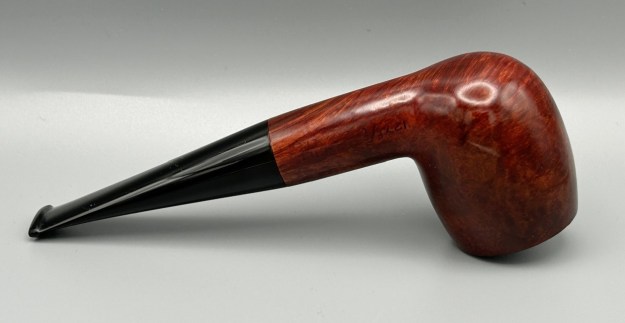
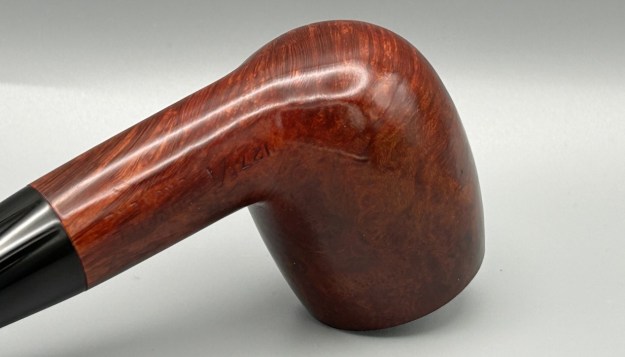
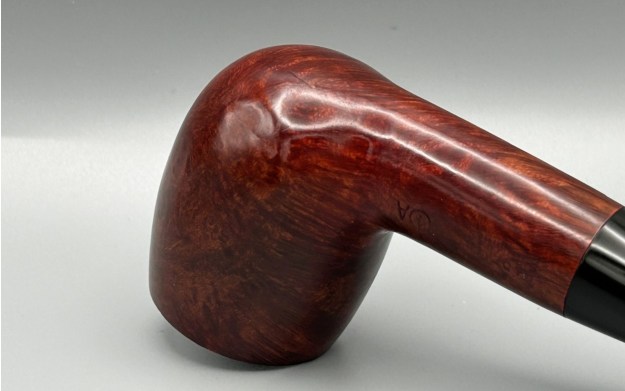
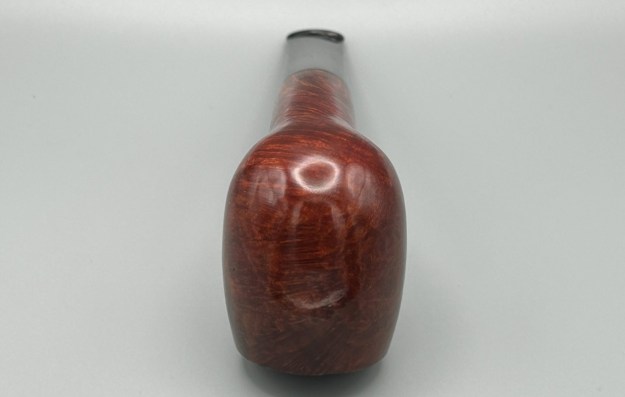
I recently got my hands on a few pipes, and this one caught my eye right away: it’s a Bari Excellent 7054 freehand egg. It’s a Danish beauty and it’s in lovely condition to start. It has a very attractive shank extension and sumptuous curves. I couldn’t help but think that this pipe deserves a new home and someone to light it up. Many of the pipes I just received came with their own pipe socks – and this is one of them. So if you want this pipe, you also get your very own Bari-branded pipe sock! On the underside of the shank, we see the following markings: Bari [over] Excellent [over] Made in [over] Denmark [over] 7054. Along the top of the stem, we also see the Bari logo, prominently placed.I have worked on Bari pipes before, but it is worth it to review the background of the maker. From Pipedia, here is a very brief history of the Bari company:

Bari Piber was founded by Viggo Nielsen in Kolding around the turn of 1950-51. Viggo’s sons Kai Nielsen and Jørgen Nielsen both grew into their father’s business from a very young age and worked there till 1975. Bari had very successfully adapted the new Danish Design that had been started mainly by Stanwell for its own models. When Viggo Nielsen sold Bari in 1978 to Joh. Wilh. von Eicken GmbH in Hamburg, Bari counted 33 employees. From 1978 to 1993 Åge Bogelund and Helmer Thomsen headed Bari’s pipe production. Thomsen bought the company in 1993 re-naming it to Bari Piber Helmer Thomsen. The workshop moved to more convenient buildings in Vejen. Bari’s basic conception fundamentally stayed the same for decades: series pipes pre-worked by machines and carefully finished by hand. Thus no spectacular highgrades but solid, reliable every day’s companions.Let’s take a look at the state of the pipe. The stummel is in great condition. Minimal wear to the rim and the sides of the bowl. There are a couple of small fills, but nothing to worry about. The inside looks quite good, with only a small amount of cake. The stem is also in good shape – just some oxidation and calcification. But that just goes with the territory. First things first. The stem’s calcification needed to be removed. I used an old butter knife and gently scraped some of the thicker accretion off. Doing this now helps later in removing the oxidation.I used isopropyl alcohol on a few cotton rounds and wiped down the stem to provide an initial cleaning of filth before moving on to the next steps. The primary cleaning came next. I disinfected the inside of the stem with both pipe cleaners and cotton swabs dipped in lemon-infused 99% isopropyl alcohol. I scrubbed thoroughly to make sure the interior was very clean.The goal of the next step is the removal (or minimization) of oxidation. Going to my sink, I used cream cleanser, cotton rounds, and a toothbrush, and scoured the stem to remove as much surface oxidation as possible. As the photos show, the result was a hideous, ochre-coloured mess – but better off the stem than on it.Once the stem was reasonably clean, I soaked it overnight in some Briarville Stem Oxidation Remover. This solution works to draw oxidation in the stem to the surface of the vulcanite. This is a major aid and an important step in ensuring a clean stem. The following day, I drew out the stem from its bath and scrubbed the lingering fluid with a toothbrush.I then used all nine of the micromesh sanding pads (1,500 through 12,000 grit) to sand out flaws, even out the vulcanite, and provide gentle polishing of the finished surface. I also applied pipe-stem oil while using the last five micromesh pads. There was a wonderful, deep black shine to the stem when I was done.As the stem was (nearly) complete, I moved on to the stummel. The first step was to ream out the bowl – that is to say, remove all the cake inside the bowl. This accomplished a couple of things. First (and most obviously), it cleaned the bowl and provided a refurbished chamber for future smoking. Second, when the old cake was removed, I could inspect the interior walls of the bowl and determine if there was damage or not. I used a reamer, a pipe knife, and a piece of sandpaper taped to a wooden dowel. Collectively, these ensured that all the debris was removed.Similar to the stem, I then cleaned the stummel with both pipe cleaners and cotton swabs dipped in lemon-infused 99% isopropyl alcohol. It was fairly dirty, but nothing extraordinary.I then decided to ‘de-ghost’ the pipe – that is to say, exorcize the remaining filth from the briar. I filled the bowl and the shank with cotton balls, then saturated them with 99% isopropyl alcohol. I let the stummel sit overnight. This caused the remaining oils, tars and smells to leach out into the cotton.To tidy up the briar, I wiped down the outside, using a solution of a pH-neutral detergent and some distilled water, with cotton rounds. I also used a toothbrush in the crevices. This did a good job of cleaning any latent dirt on the surface of the briar. The last step of the cleaning process was to scour the inside of the stummel with the same mild detergent and tube brushes. This was the culmination of a lot of hard work in getting the pipe clean.I used some of my micromesh pads to sand the outside of the stummel (and the acrylic shank extension) and finish it off. This sanding minimizes flaws in the briar and provides a beautiful smoothness to the wood. I rubbed some LBE Before & After Restoration Balm into the briar and let it sit for 30 minutes or so. The balm moisturizes the wood and gives a beautiful depth to the briar. I then buffed the stummel with a microfibre cloth. For the final step, I took the pipe to my bench polisher and carefully buffed it – first with a blue diamond compound, then with three coats of carnauba wax. This procedure makes the pipe look its best – the stummel sings and the stem glows.

All done! This lovely Bari Excellent 7054 Freehand Egg looks fantastic again and is ready to be enjoyed by its next owner. I am pleased to announce that this pipe is for sale! If you are interested in acquiring it for your collection, please have a look in the ‘Danish’ section of the store here on Steve’s website. You can also email me directly at kenneth@knightsofthepipe.com. The approximate dimensions of the pipe are as follows: length 6⅛ in. (155 mm); height 1⅞ in. (48 mm); bowl diameter 1½ in. (38 mm); chamber diameter ¾ in. (19 mm). The weight of the pipe is 1½ oz. (46 g). I hope you enjoyed reading the story of this pipe’s restoration as much as I enjoyed restoring it. If you are interested in more of my work, please follow me here on Steve’s website or send me an email. Thank you very much for reading and, as always, I welcome and encourage your comments.
Restoring a Quirky Kaywoodie 179R Bent Billiard


by Kenneth Lieblich

It’s been a while since I worked on a Kaywoodie and the time has come again. This is an interesting pipe and a type that I haven’t seen before. It is a craggy Kaywoodie 179R sandblast and it is a fully-bent billiard, with a crown as a rim. It’s almost an Oom Paul – almost, but not quite. I could only find one other example of this same pipe online, so I suppose it’s a little unusual. This pipe’s logo is a black cloverleaf in a white circle. On the underside of the stummel, we can see this pipe’s markings. First, we see Kaywoodie [over] Relief Grain. Then, to the right, is the shape number: 179R. The R, of course, refers to relief grain. Three-digit shape numbers seem to date from the 1970s and 80s, so it’s safe to assume that this pipe is from that time period. It’s also worth noting that the ‘Drinkless Filter’ (i.e. the stinger) on this pipe is fully intact and has three holes (not four).Kaywoodie is a venerable institution in the United States, and has a long and interesting history. I encourage you to read the Pipedia article here and the Pipephil article here.Let’s look at this particular pipe’s condition. The stem is dirty and quite heavily chewed. It is made from acrylic, so there is no issue with oxidation. The tenon screws into the mortise in the stummel and is also quite dirty. The stummel looks to be in decent shape. It’s been well loved, so it’s quite dirty – inside and outside. The craggy blast on the briar has a few flecks of white paint, but that should be easily removed. On with the work! I started by using isopropyl alcohol on a few cotton rounds and wiped down the stem to provide an initial cleaning of filth before moving on to the next steps. The primary cleaning came next. I disinfected the inside of the stem with both pipe cleaners and cotton swabs dipped in lemon-infused 99% isopropyl alcohol. I scrubbed thoroughly to make sure the interior was very clean.Even thought the stinger was now clean, it still looked a bit drab. So I sanded it with some 0000-grit steel wool – not to make it shine, but to make it look decent again.As the stem was now clean and dry, I set about fixing the marks and dents in the acrylic. This was done by filling those divots with black cyanoacrylate adhesive, impregnated with carbon and rubber. I left this to cure and then sanded. I used all nine of the micromesh sanding pads (1,500 through 12,000 grit) to sand out flaws, even out the acrylic, and provide gentle polishing of the finished surface. I also applied pipe-stem oil while using the last five micromesh pads. There was a wonderful, deep black shine to the stem when I was done.As the stem was (nearly) complete, I moved on to the stummel. The first step was to ream out the bowl – that is to say, remove all the cake inside the bowl. This accomplished a couple of things. First (and most obviously), it cleaned the bowl and provided a refurbished chamber for future smoking. Second, when the old cake was removed, I could inspect the interior walls of the bowl and determine if there was damage or not. I used a reamer, a pipe knife, and a piece of sandpaper taped to a wooden dowel. Collectively, these ensured that all the debris was removed.Similar to the stem, I then cleaned the stummel with both pipe cleaners and cotton swabs dipped in lemon-infused 99% isopropyl alcohol. With a pipe this dirty, it took quite a while and much cotton to clean.I then decided to ‘de-ghost’ the pipe – that is to say, exorcize the remaining filth from the briar. I filled the bowl and the shank with cotton balls, then saturated them with 99% isopropyl alcohol. I let the stummel sit overnight. This caused the remaining oils, tars and smells to leach out into the cotton.To tidy up the briar, I wiped down the outside, using a solution of a pH-neutral detergent and some distilled water, with cotton rounds. I also used a toothbrush in the crevices. This did a good job of cleaning any latent dirt on the surface of the briar. The last step of the cleaning process was to scour the inside of the stummel with the same mild detergent and tube brushes. This was the culmination of a lot of hard work in getting the pipe clean.I rubbed some LBE Before & After Restoration Balm into the briar and let it sit for 30 minutes or so. The balm moisturizes the wood and gives a beautiful depth to the briar. I then buffed the stummel with a microfibre cloth. For the final step, I took the pipe to my bench polisher and carefully buffed it – first with a blue diamond compound, then with three coats of carnauba wax. This procedure makes the pipe look its best – the stummel sings and the stem glows.

All done! This handsome Kaywoodie 179R Relief Grain looks fantastic again and is ready to be enjoyed by its next owner. I am pleased to announce that this pipe is for sale! If you are interested in acquiring it for your collection, please have a look in the ‘American’ section of the store here on Steve’s website. You can also email me directly at kenneth@knightsofthepipe.com. The approximate dimensions of the pipe are as follows: length 4¼ in. (108 mm); height 5½ in. (141 mm); bowl diameter 1⅓ in. (34 mm); chamber diameter ⅞ in. (21 mm). The weight of the pipe is 1½ oz. (44 g). I hope you enjoyed reading the story of this pipe’s restoration as much as I enjoyed restoring it. If you are interested in more of my work, please follow me here on Steve’s website or send me an email. Thank you very much for reading and, as always, I welcome and encourage your comments.
Restoring an Old and Rare C.P.F. Egg and Claw Beauty


by Kenneth Lieblich

It isn’t often that I get to work on pipes that are more than a century old. It does happen from time-to-time, but – regardless – it is a delight when it does happen. This pipe came to me from an auction and it immediately caught my eye. First, I saw the initials, C.P.F., and I knew that meant the pipe was very old. Second, the shape of the pipe was unusual: an egg and claw. This is something that one sees in meerschaum pipes occasionally, but less so in briar pipes. Third, I could tell that the rim cap was lost to time and that the stem seemed … odd – but I couldn’t (yet) put my finger on why. A special thanks is due to Steve for his help on this restoration. The pipe is absolutely charming and a wonderful example of the pipe-making of a different era. As mentioned, the markings of the pipe included the initials C.P.F. on the left side of the shank. No other markings were in the briar. However, the brass (or nickel) band also had some markings. First, there were a set of faux hallmarks (anchor, star, bird?) above another engraving of C.P.F.C.P.F. stands for Colossus Pipe Factory and is one of those 19th century pipe firms that is shrouded in mystery. Perhaps the mystery is simply a paucity of documentary records. There are entries for Colossus at both Pipedia and Pipephil, but the information is scant. Here’s a quotation from the Pipedia article:

There is not much known about the Colossus Pipe Factory. By the mid 1890’s it was owned by Kaufmann Bros. & Bondy. Bill Feuerbach has an old invoice from KB&B dated 1898 that has “C.P.F.” in the upper corner, with Trademark underneath. So they owned the brand by then. It could have been a company that was acquired by KB&B or possibly even founded by them. Bill Feuerbach is a VP at S. M. Frank & Co. (Kaywoodie) and has also provided the evidence to the name Colossus below. I have always been under the impression that the initials C.P.F. stood for Consolidated Pipe Factory. Many pipe collectors that I know believe the same thing. However only this week I had that cleared up. A pipe collector friend in Seattle emailed a scan of a page from a trade magazine called “The Jeweler’s Circular”, dated August 23, 1899. A reader wrote in the following question, “Please inform us who manufactures briar pipes with trademark, C.P.F.?” The answer was, “These letters stand for Colossus Pipe Factory, the business being conducted by Kaufmann Bros. & Bondy, 129 Grand Street, New York.” I have seen pipes with both the C.P.F. logo and KB&B logo on them that date to pre-1900. This may have been a way to let the public now that the companies were affiliated. As far as I can tell, the C.P.F. brand was discontinued sometime in the 1910-1920 range.

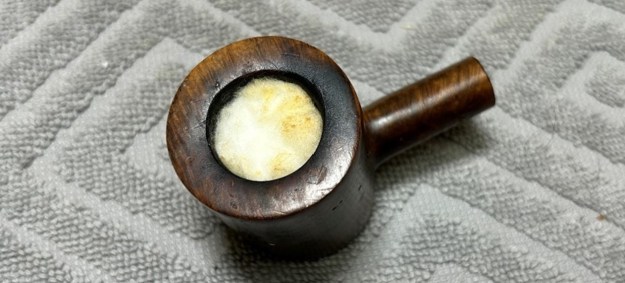
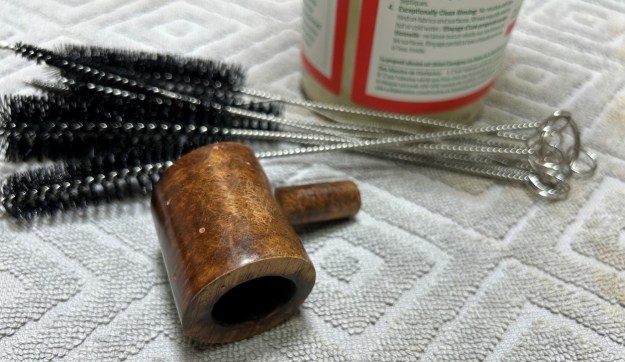
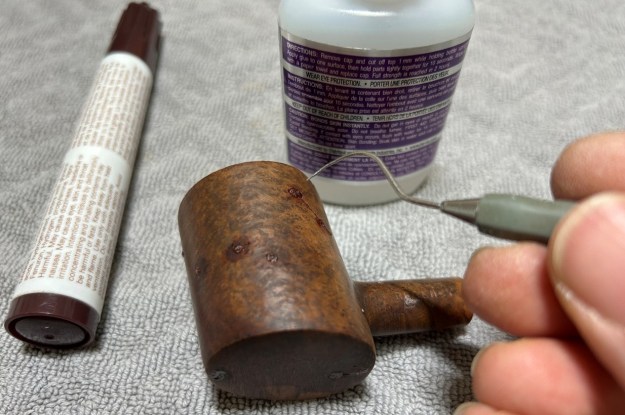
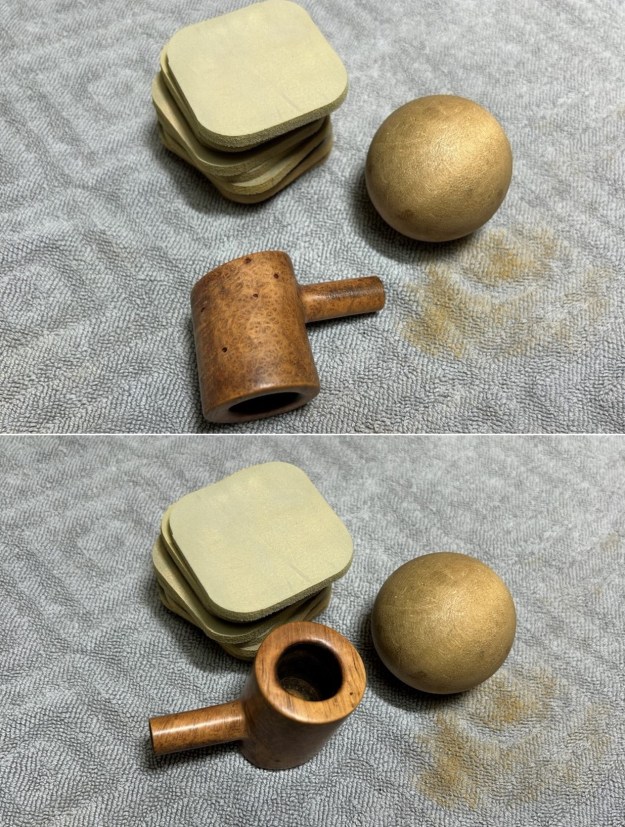
Steve has restored a few C.P.F. pipes and, quite frankly, this article he wrote about their history is probably the best place to look. You can also see some of his restorations of C.P.F. pipes here and here and here. From everything I can gather, this pipe is well in excess of 100 years old and might be much older than that. How about the condition of this pipe? Let’s talk about the stummel first. It was dirty – very dirty. The briar was in good shape, but more than a century’s worth of dust and debris have been ground into the pipe’s crevasses. I was pleased to see how few scratches were in the wood and that made me hopeful. The inside of the bowl, however, was full of cake and seemed heavily smoked. As I mentioned earlier, the rim cap was missing. Meanwhile, the stem was the thing that made me pause. I asked Steve about it and, after a thorough chat with him about this pipe, he was of the view that this stem was not the original. It didn’t fit quite right and looked a bit too long. That made a lot of sense because this stem seemed cheap and unusually brittle. There was a bone tenon connecting stem and stummel and, although it seemed sound, I wasn’t sure it was original either. The first item on my agenda was to extricate the tenon from the stummel – it was stuck. I opted to warm the area with my heat gun and this provided just enough softening of the internal goo to allow me to extract it.Since the stem was both not-the-original and badly damaged, I elected to set it aside for now and figure out what to do with it later. For now, I decided to remove all the cake inside the bowl. This accomplished a couple of things. First (and most obviously), it cleaned the bowl and provided a refurbished chamber for future smoking. Second, when the old cake was removed, I could inspect the interior walls of the bowl and determine if there was damage or not. I used a reamer, a pipe knife, and a piece of sandpaper taped to a wooden dowel. Collectively, these ensured that all the debris was removed. However, it was clear that the walls of the bowl had been heavily smoked, excessively reamed, and showed signs of char and craze lines. I would have to address that later.My next step was to remove the lava on the rim. For this, I took a piece of machine steel and gently scraped the lava away. The metal’s edge is sharp enough to remove what I need, but not so sharp that it damages the rim.I then cleaned the stummel with both pipe cleaners and cotton swabs dipped in lemon-infused 99% isopropyl alcohol. With a pipe this dirty, it took quite a while and much cotton to clean.I then decided to ‘de-ghost’ the pipe – that is to say, exorcize the remaining filth from the briar. I filled the bowl and the shank with cotton balls, then saturated them with 99% isopropyl alcohol. I let the stummel sit overnight. This caused the remaining oils, tars and smells to leach out into the cotton.To tidy up the briar, I wiped down the outside, using a solution of a pH-neutral detergent and some distilled water, with cotton rounds. I also used a toothbrush in the crevices. This did a good job of cleaning any latent dirt on the surface of the briar. The last step of the cleaning process was to scour the inside of the stummel with the same mild detergent and tube brushes. This was the culmination of a lot of hard work in getting the pipe clean.Back to the damaged interior of the bowl. To repair the craze lines, etc., I used an epoxy adhesive that is extremely hard, resistant to high temperatures, and completely inert when cured. It worked superbly. I lined the affected area with the epoxy and let it cure for a full 24 hours. I forgot to take photos of this step, so you’ll just have to take my word for it. The next day, I roughened up the epoxy’s surface with 220-grit sandpaper for the next step. I thinly coated the inside of the bowl with a mixture of my wife’s homemade yogurt and activated charcoal. Once hardened, this provided a good, faintly rough surface for a new cake to build. I used all nine micromesh pads (1,500 through 12,000 grit) to sand the outside of the stummel and finish it off. This sanding minimizes flaws in the briar and provides a beautiful smoothness to the wood.Steve and I both have a few very old rim caps, specifically for C.P.F. pipes. We scoured both of our piles and found a perfect one in his collection. It fits correctly and is just the sort of piece that a C.P.F. pipe of that era would have had. I gave it a quick buffing with some old MicroMesh pads.Now to address the stem issue. Similar to the rim cap, I went to my collection of stems and found an ideal replacement, based on Steve’s recommendation. I have several, very old, Bakelite stems that would be just right. The one I selected dates from the same time period as the pipe and, best of all, was unused – never smoked. The stem was marked Germany, the place of manufacture. I married the stem and stummel, and both Steve and I agreed that it looked perfect. I also had to hunt in my stores for an old bone tenon. This took a long time, but I finally found one that fit both the new stem’s mortise and the existing shank’s mortise. I quickly cleaned and polished up the stem (didn’t take long, as it was new) and put it aside.Next, I polished the brass (or nickel) band with a few grey sanding pads. This made it shine beautifully. I took the band and the rim top and glued them in place with pH-neutral adhesive. I was very pleased with the results.I rubbed some LBE Before & After Restoration Balm into the briar and let it sit for 30 minutes or so. The balm moisturizes the wood and gives a beautiful depth to the briar. I then buffed the stummel with a microfibre cloth. For the final step, I took the stem (only) to my bench polisher and carefully buffed it – first with a blue diamond compound, then with carnauba wax. I chose not to buff the stummel on the bench polisher, as there were too many points for the wheel to catch on the stummel. Instead, I polished it by hand with conservator’s wax.All done! This C.P.F. Egg and Claw looks fantastic again and is ready to be enjoyed by its next owner. It was a tough restoration, but this pipe is a trophy and worth having in your collection. I am pleased to announce that this pipe is for sale! If you are interested in acquiring it for your collection, please have a look in the ‘American’ section of the store here on Steve’s website. You can also email me directly at kenneth@knightsofthepipe.com. The approximate dimensions of the pipe are as follows: length 5⅓ in. (135 mm); height 2 in. (52 mm); bowl diameter 1⅝ in. (41 mm); chamber diameter ¾ in. (18 mm). The weight of the pipe is 1⅜ oz. (42 g). I hope you enjoyed reading the story of this pipe’s restoration as much as I enjoyed restoring it. If you are interested in more of my work, please follow me here on Steve’s website or send me an email. Thank you very much for reading and, as always, I welcome and encourage your comments.
Restoring a Terrific GBD-made Dr Plumb 753 Author


by Kenneth Lieblich

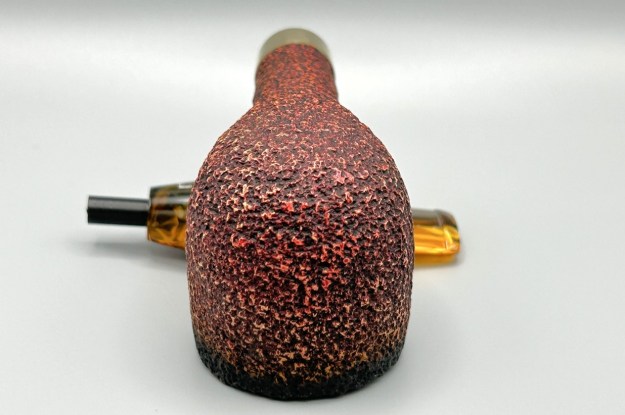
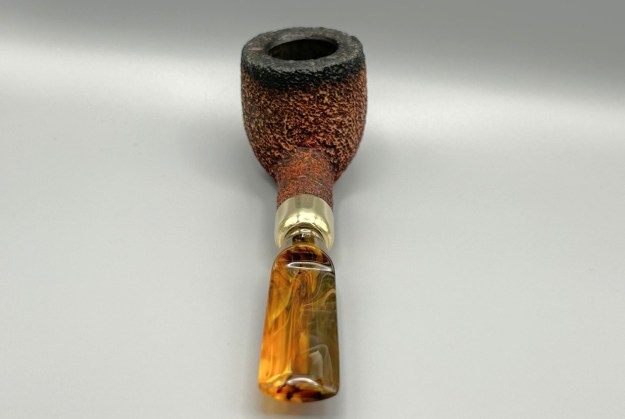
Here is a handsome and unusually-shaped pipe, which caught my eye as soon as I saw it. It is solid and chunky and thick – and feels so satisfying in the hand. It is a Dr Plumb 753 author, made by GBD. Although Dr Plumb was a sub-brand of GBD, it is a fantastic pipe and is looking for a new home. When I took possession of it, it looked rather worse-for-wear, but I managed to recapture its beauty. Read on and learn more about this nifty pipe. The markings are clear and (mostly) understandable. On the stem, we read the word Plumb above the traditional red dot logo seen on their pipes. On top of the shank, we read Dr Plumb [over] Saint-Claude. On the underside of the shank, we see France [over] 753 – and, to the right, an image of an airplane. I have no idea what the airplane represents, as it is not associated with either Dr Plumb or GBD. It reminds me of the airplane seen on tins of Hi-Plane Tobacco – similar but not the same. It might be connected to whichever pipe shop sold it (in an airport, perchance?). Anyway, the last of the following photos shows the airplane after I’d cleaned off the dirt. If you have any idea of what this airplane represents, please let me know in the comments below. Let’s learn a bit about the brand. The man, Dr Plumb, wasn’t a doctor at all! Leslie Watts Plumb was a chartered accountant and a director of Maréchal-Ruchon, one of the most venerable pipe companies of France. The history of Dr Plumb is quite interesting. I encourage you to read the article at Pipedia here and at Pipephil on this page. Here is an extract from the Pipedia article:
The Dr. Plumb’s brand name is owned by A. Oppenheimer & Co., Limited, owners of Cadogan Investments, Ltd. J.B. Rubinovich, GBD’s Parisian sales manager, created this brand in 1925. The pipes was produced by the Ruchon & Verguet and also Ropp factories (Saint-Claude, France). These pipes have long been advertised as Dr. Plumb’s Perfect Pipe, that name coming from an aluminum tube system designed to keep the smoke cool and dry while at the same time permitting the “cooling chamber” to be cleaned by simply twisting the stem. While Dr. Plumb’s pipes were long made in France and stamped accordingly, they are now British made.

Here are some photos of old Leslie Watts Plumb:In that article, they quote from a letter by John Edward Plumb, son of the eponymous Dr Plumb:

I am the son of the late Leslie Watts Plumb, FCA. Before World War II, he managed the business affairs of a smoking pipe factory Verguet Freres/ Marechal Ruchon at St Claude in the French Jura Mountains… where his Plumb Family lived in a flat adjacent to the factory premises. He lent his name to the Dr Plumb Smoking Pipe & I had always understood that he played a part in its promotion & design of the pipe’s unique aluminum cooling filter system.
This pipe is an earlier, French-made, Dr Plumb, coming before Cadogan took over the works. Based on the information I gleaned from an article that Steve wrote on a GBD Coronet 753, I date this pipe to between 1951 and 1976. You can read Steve’s article here. His was exactly the same shape of pipe, albeit with a slightly different stem from mine. Steve’s article has lots of good information, and I quote just a brief passage:

From all of that information I had learned that the pipe was a French Made GBD Coronet made in St. Claude France between 1951-1976. It was made with a matte finish and a recessed platform style stem. I also learned that it was an AUTHOR shape with a 1/8th bend to the stem. Now it was time to work on the pipe.

I did look up the shape number 753 on a GBD pipe shape chart and found (as Steve did) that the 753 is described as

753   author   one-eighth bend   round stem shape

Well, ‘author’ I can understand, ‘one-eighth’ is certainly accurate, but I can’t help wondering if ‘round’ is a typo – as neither Steve’s nor my pipe have round stems. They are decidedly oval.

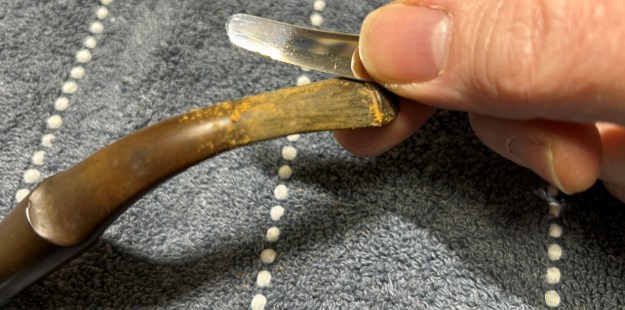
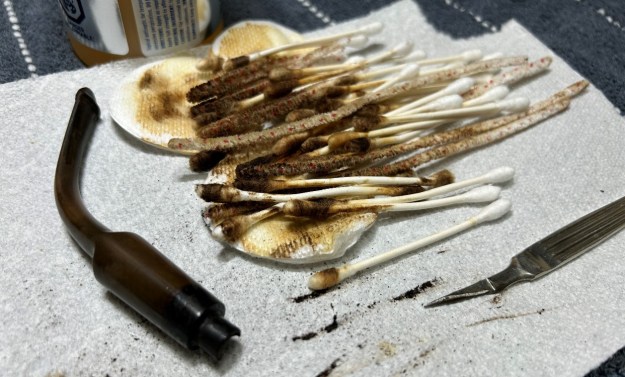
Let’s have a look at the condition of the pipe. Overall, the condition was good – just remarkably dirty! The stem was well-chewed and had lots of tooth scratches. It was oxidized and calcified, and had a haze of dust on it. Meanwhile, the stummel was sound – it had only a few minor nicks and lots of dirt and grime. There was also a large, hideous stain on the bottom. Only time would tell if I could get rid of that stain. This stem had a stinger in it – and it was being quite stubborn about coming out of the tenon! I opted to warm the stem and stinger with my heat gun and this provided just enough softening of the internal goo to allow me to extract it. It then went for a soak in some lemon-infused 99% isopropyl alcohol. I let it sit for several hours and then cleaned it off and it looked much improved. I then finished it with some 0000-grit steel wool and moved on.I used isopropyl alcohol on a few cotton rounds and wiped down the stem to provide an initial cleaning of filth before moving on to the next steps. The primary cleaning came next. I disinfected the inside of the stem with both pipe cleaners and cotton swabs dipped in lemon-infused 99% isopropyl alcohol. I scrubbed thoroughly to make sure the interior was very clean.The goal of the next step is the removal (or minimization) of oxidation. Going to my sink, I used cream cleanser, cotton rounds, and a toothbrush, and scoured the stem to remove as much surface oxidation as possible. As the photos show, the result was a hideous, ochre-coloured mess – but better off the stem than on it.While I was cleaning the stem, the red dot logo popped out! Thank goodness that it landed on my work cloth and didn’t disappear into nothingness. Later, once the stem was fully clean, I glued it carefully back in place.Once the stem was reasonably clean, I soaked it overnight in some Briarville Stem Oxidation Remover. This solution works to draw oxidation in the stem to the surface of the vulcanite. This is a major aid and an important step in ensuring a clean stem. The following day, I drew out the stem from its bath and scrubbed the lingering fluid with a toothbrush. After this, I painted the logo on the stem with some enamel nail polish. I restored the logo carefully and let it fully set before proceeding.The penultimate step for the stem is sanding. First, with my set of needle files, I reduced the bulk of the cyanoacrylate repairs. I removed the excess adhesive as near to the surface as possible, without cutting into the vulcanite. Following that, I used all nine of the micromesh sanding pads (1,500 through 12,000 grit) to sand out flaws, even out the vulcanite, and provide gentle polishing of the finished surface. I also applied pipe-stem oil while using the last five micromesh pads. There was a wonderful, deep black shine to the stem when I was done.As the stem was (nearly) complete, I moved on to the stummel. The first step was to ream out the bowl – that is to say, remove all the cake inside the bowl. This accomplished a couple of things. First (and most obviously), it cleaned the bowl and provided a refurbished chamber for future smoking. Second, when the old cake was removed, I could inspect the interior walls of the bowl and determine if there was damage or not. Since this bowl was not too dirty inside, I only used a pipe knife and a piece of sandpaper taped to a wooden dowel. Collectively, these ensured that all the debris was removed.My next step was to remove the lava on the rim. For this, I took a piece of machine steel and gently scraped the lava away. The metal’s edge is sharp enough to remove what I need, but not so sharp that it damages the rim.Similar to the stem, I then cleaned the stummel with both pipe cleaners and cotton swabs dipped in lemon-infused 99% isopropyl alcohol. It took quite a while and much cotton to clean.I then decided to ‘de-ghost’ the pipe – that is to say, exorcize the remaining filth from the briar. I filled the bowl and the shank with cotton balls, then saturated them with 99% isopropyl alcohol. I let the stummel sit overnight. This caused the remaining oils, tars and smells to leach out into the cotton.To tidy up the briar, I wiped down the outside, using a solution of a pH-neutral detergent and some distilled water, with cotton rounds. I also used a toothbrush in the crevices. This did a good job of cleaning any latent dirt on the surface of the briar. The last step of the cleaning process was to scour the inside of the stummel with the same mild detergent and tube brushes. This was the culmination of a lot of hard work in getting the pipe clean. However, it would take sanding for all of the large stain to be removed.Having completed that, I was able to address the nicks on the underside of the bowl. I dug out my iron and a damp cotton flannel cloth. By laying the cloth over the affected areas and applying the iron to it, the hot and moist steam can cause the wood to swell slightly and return to shape. I was pleasantly surprised at how well it worked in this case. I used all nine micromesh pads (1,500 through 12,000 grit) to sand the outside of the stummel and finish it off. This sanding minimizes flaws in the briar and provides a beautiful smoothness to the wood. It also removed the stain once and for all. I rubbed some LBE Before & After Restoration Balm into the briar and let it sit for 30 minutes or so. The balm moisturizes the wood and gives a beautiful depth to the briar. I then buffed the stummel with a microfibre cloth. For the final step, I took the pipe to my bench polisher and carefully buffed it – first with a blue diamond compound, then with three coats of carnauba wax. This procedure makes the pipe look its best – the stummel sings and the stem glows.All done! This handsome Dr Plumb 753 author looks fantastic again and is ready to be enjoyed by its next owner. I am pleased to announce that this pipe is for sale! If you are interested in acquiring it for your collection, please have a look in the ‘French’ section of the store here on Steve’s website. You can also email me directly at kenneth@knightsofthepipe.com. The approximate dimensions of the pipe are as follows: length 5¾ in. (146 mm); height 1⅜ in. (35 mm); bowl diameter 2 in. (51 mm); chamber diameter ⅞ in. (22 mm). The weight of the pipe is 1⅞ oz. (54 g). I hope you enjoyed reading the story of this pipe’s restoration as much as I enjoyed restoring it. If you are interested in more of my work, please follow me here on Steve’s website or send me an email. Thank you very much for reading and, as always, I welcome and encourage your comments.