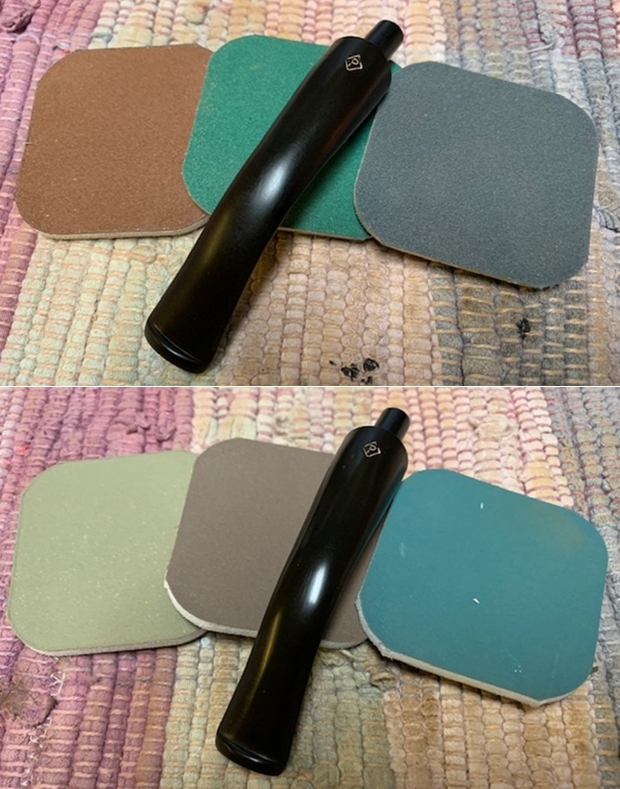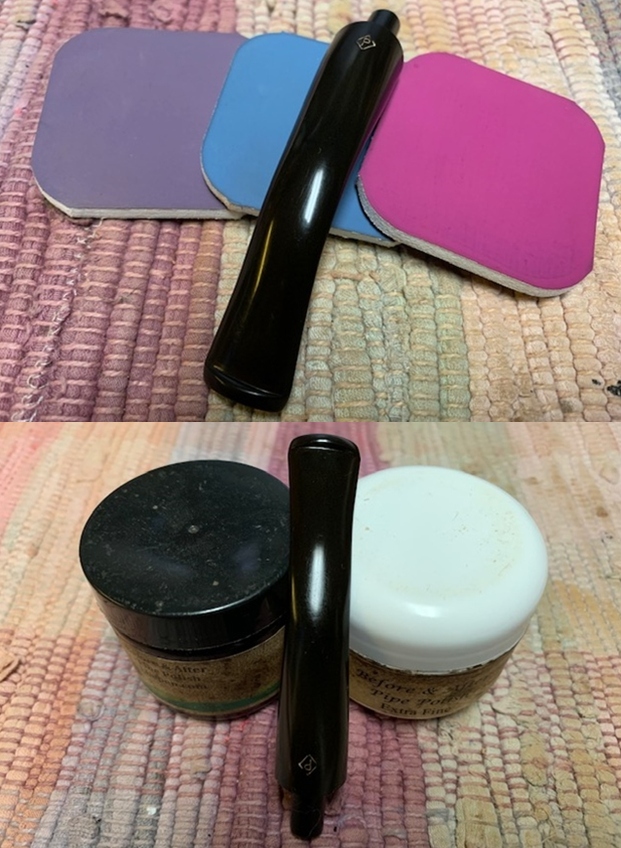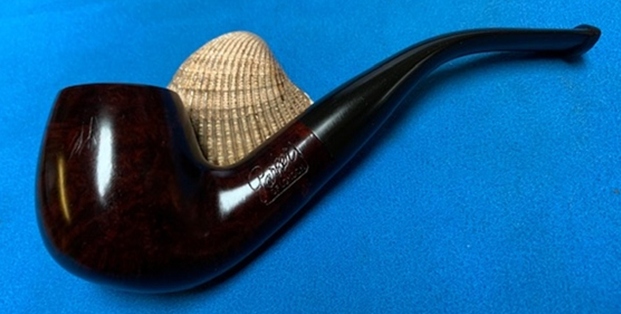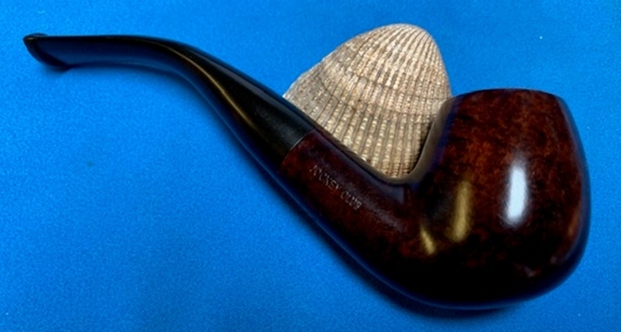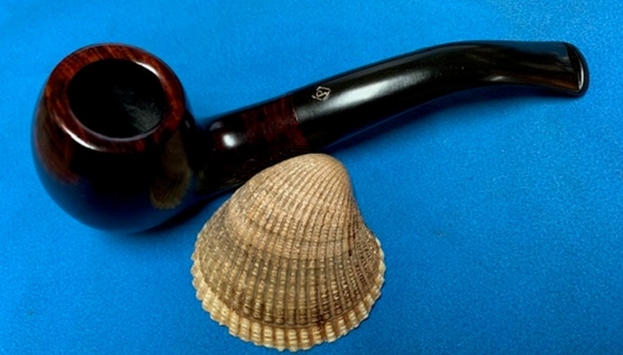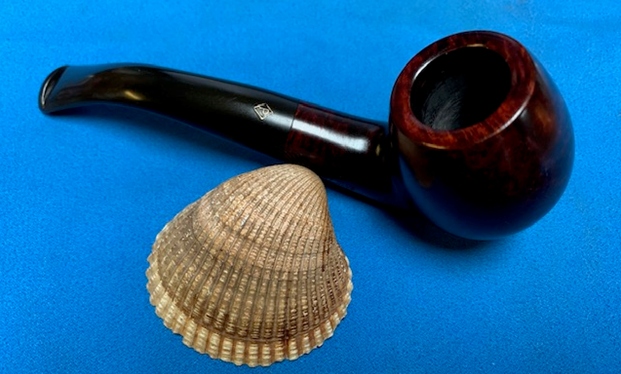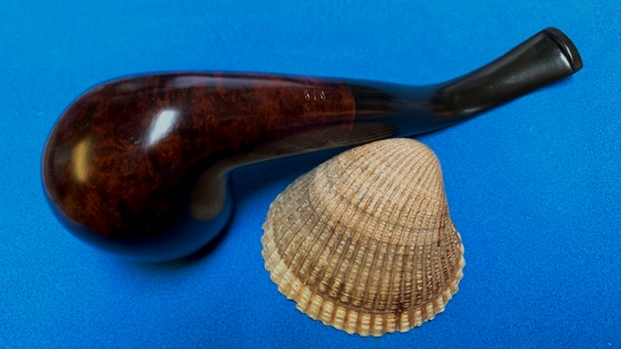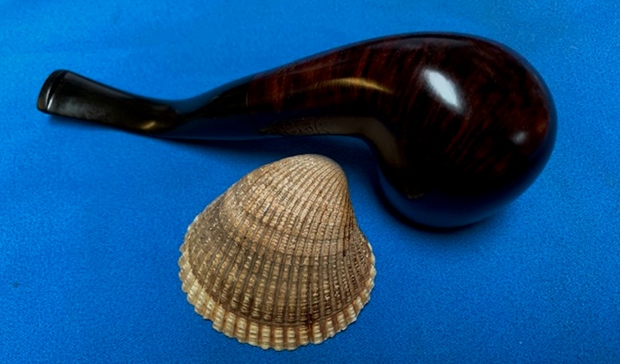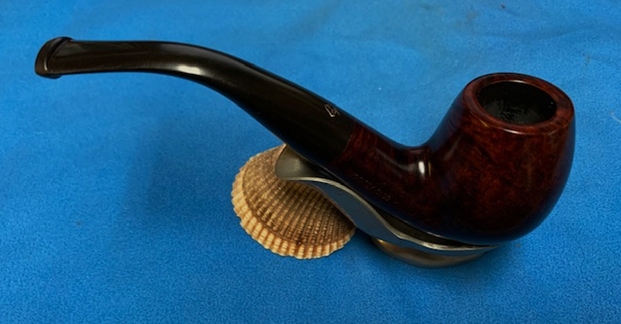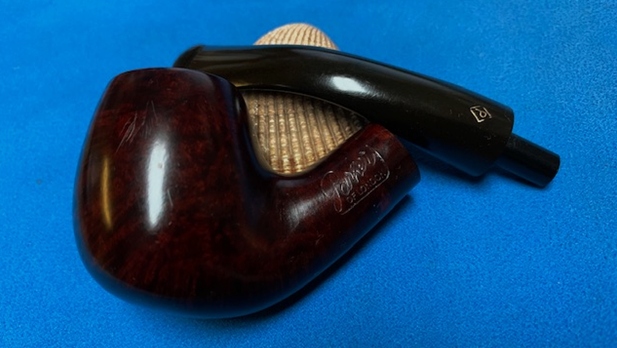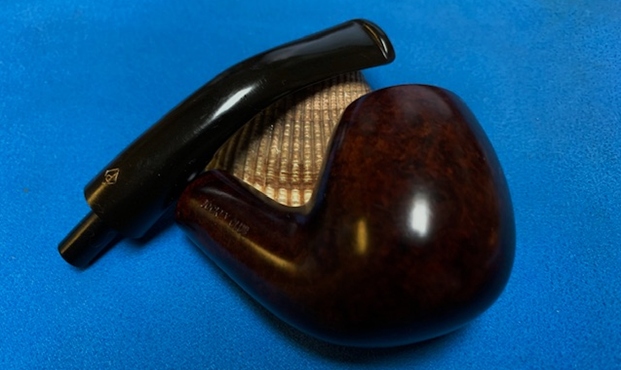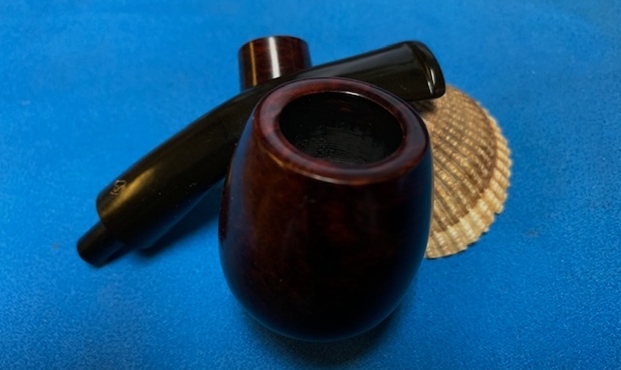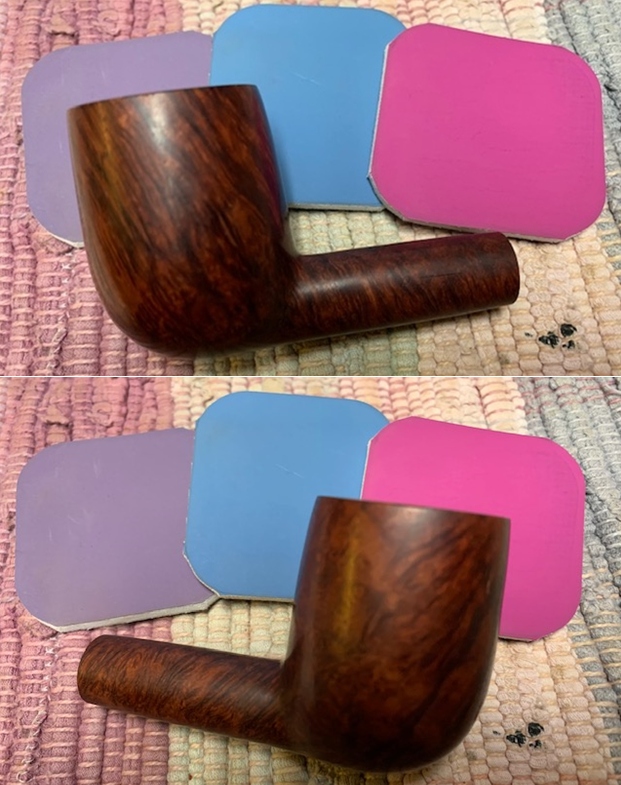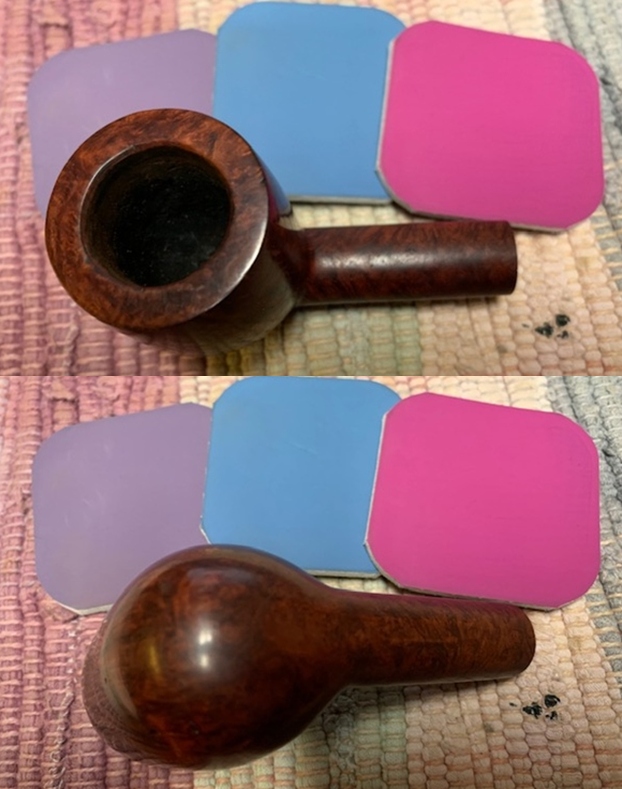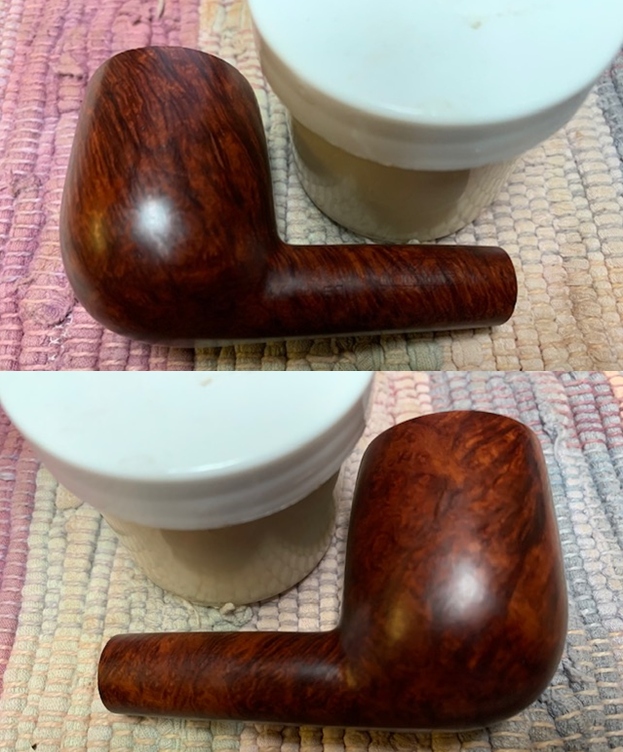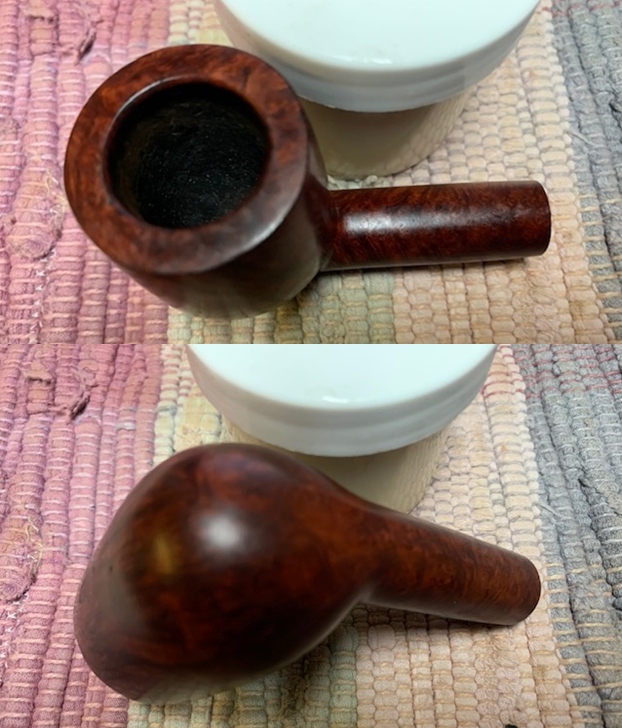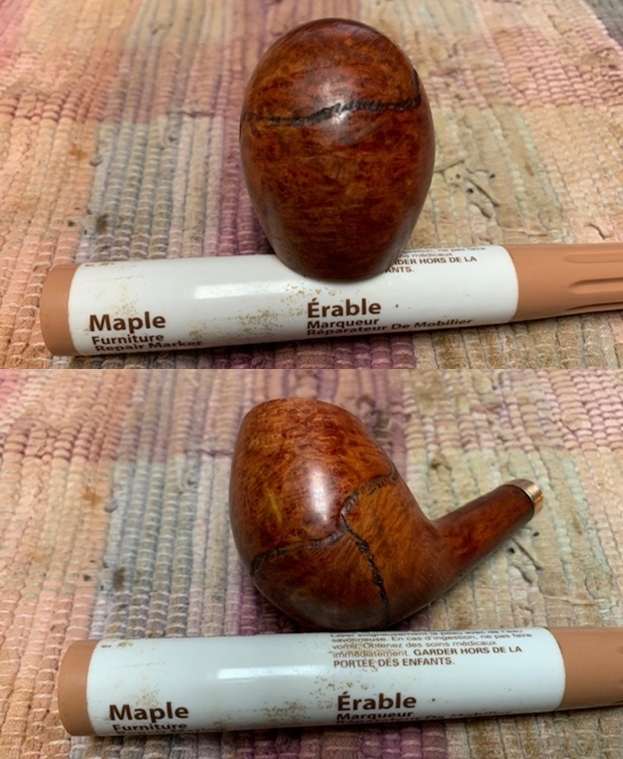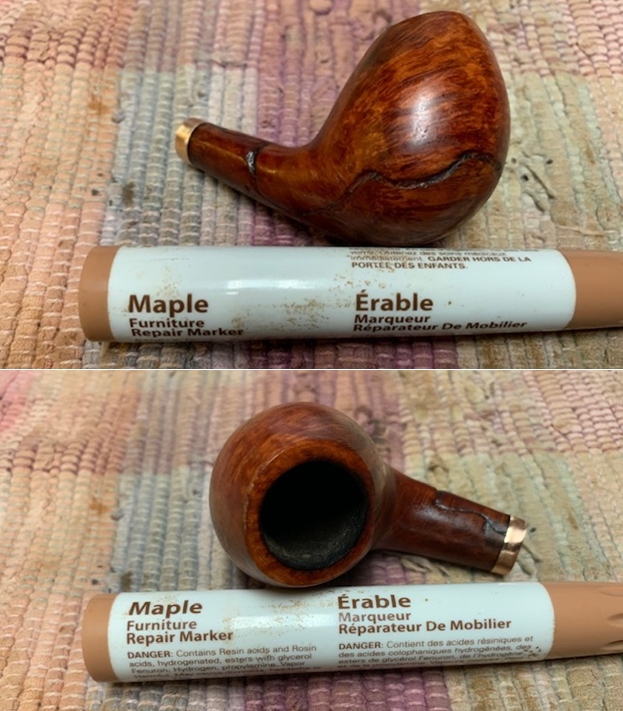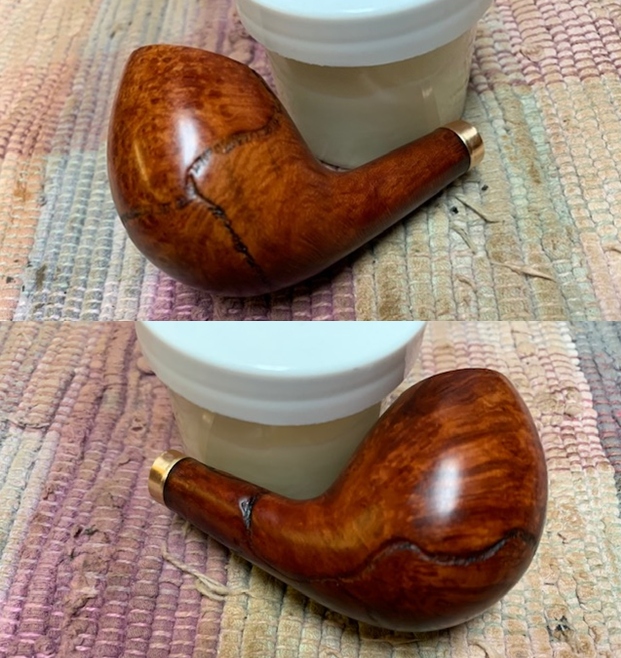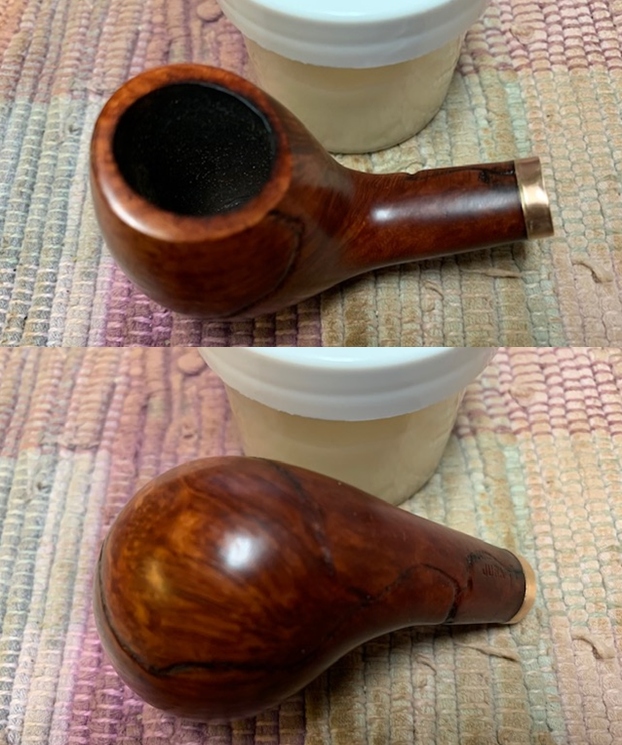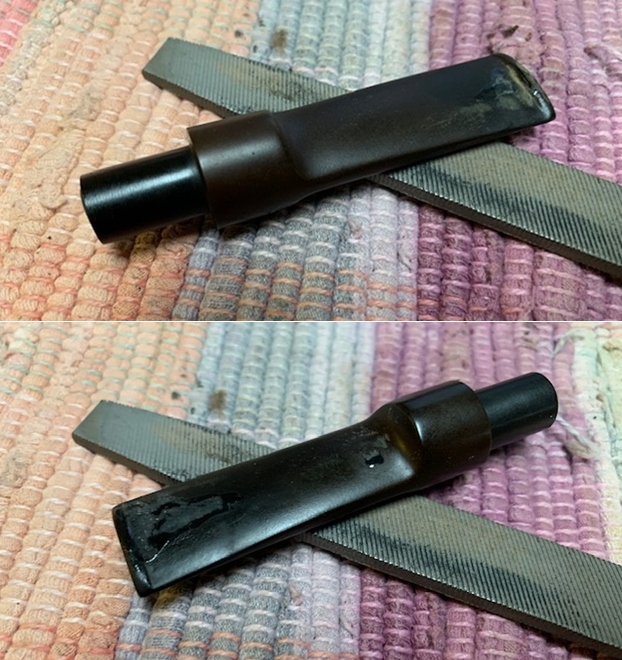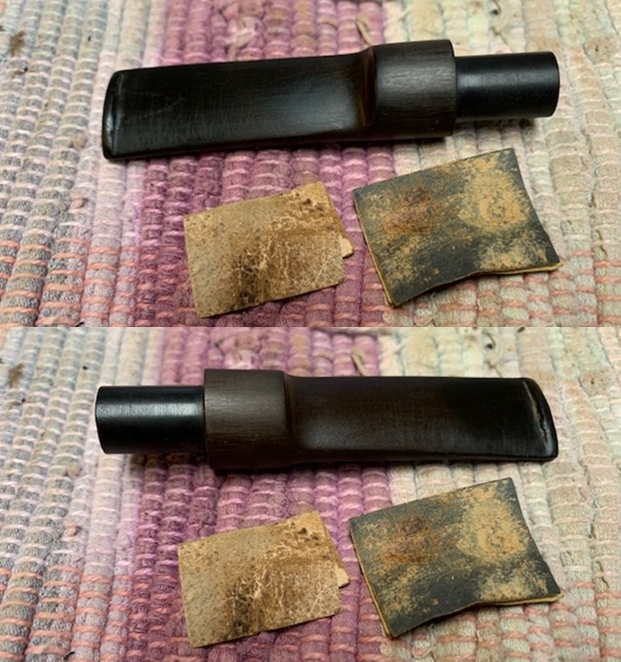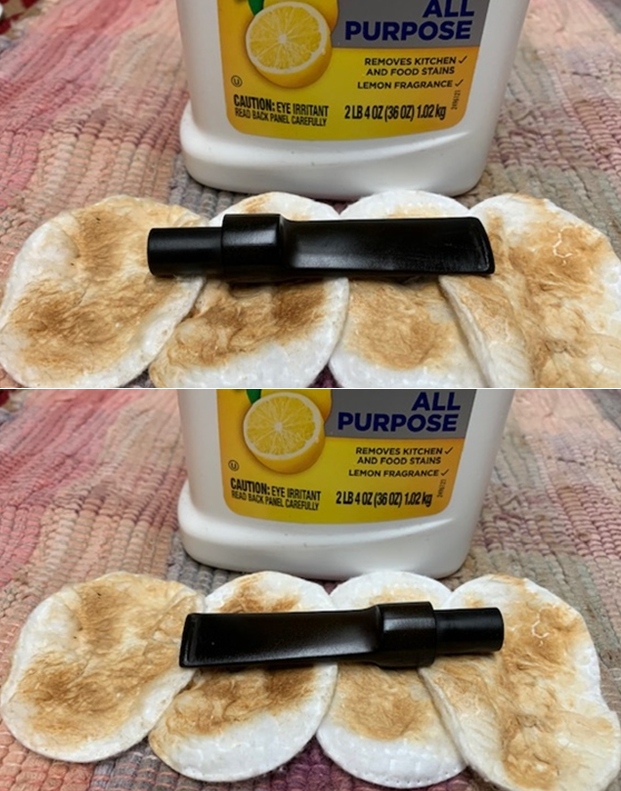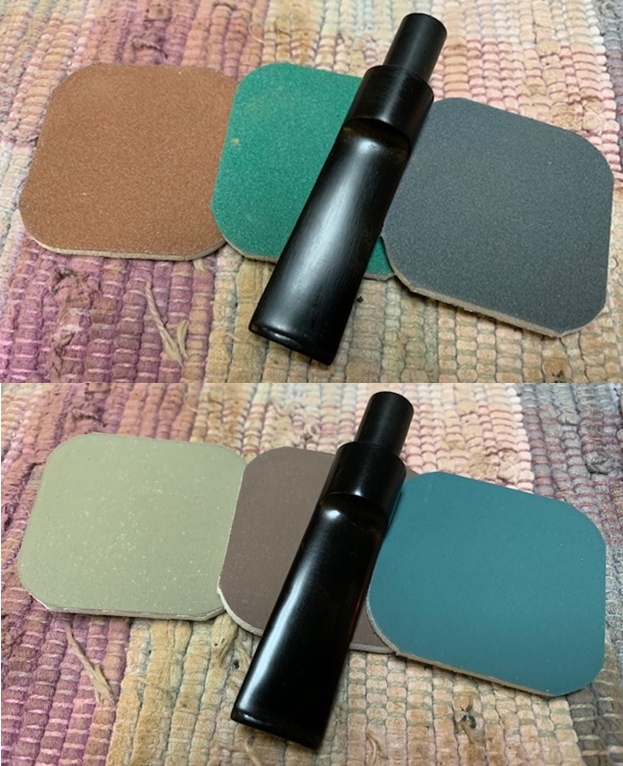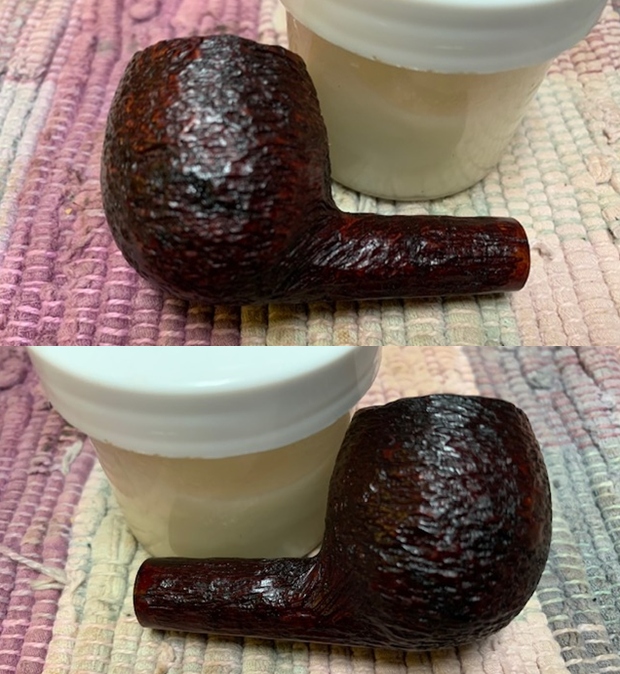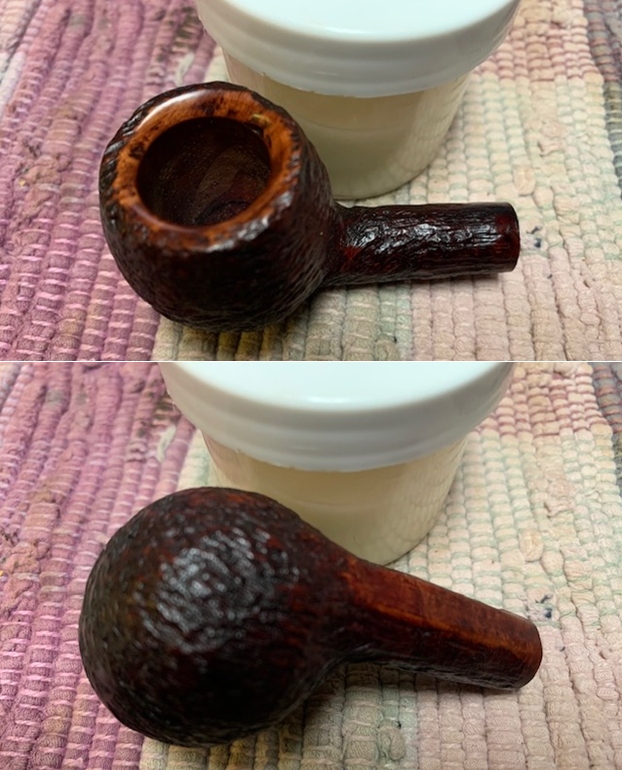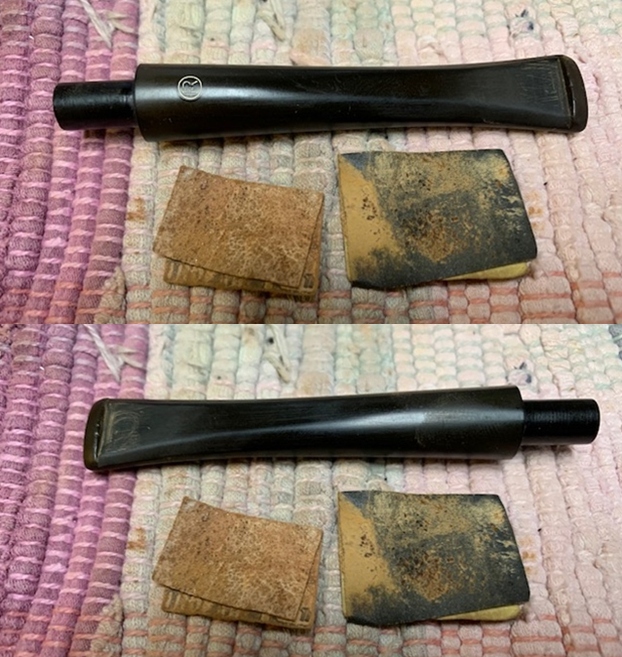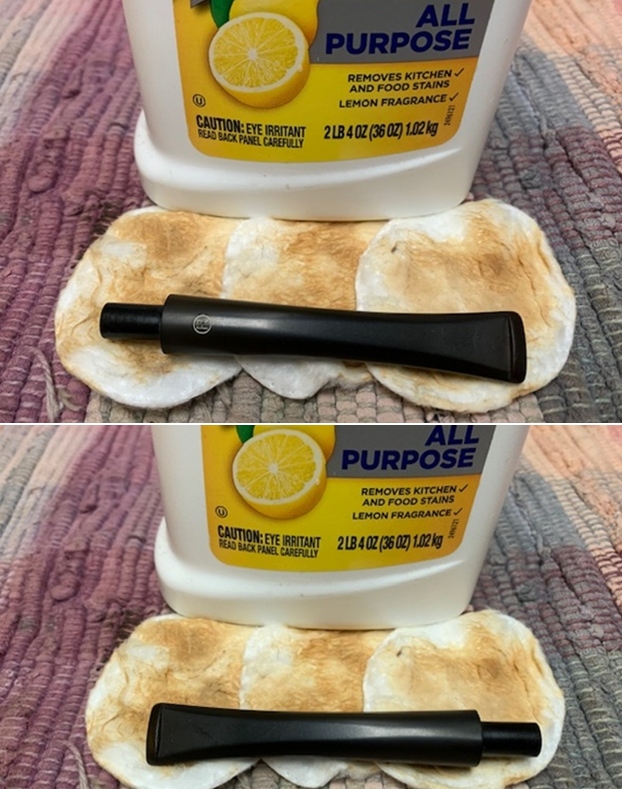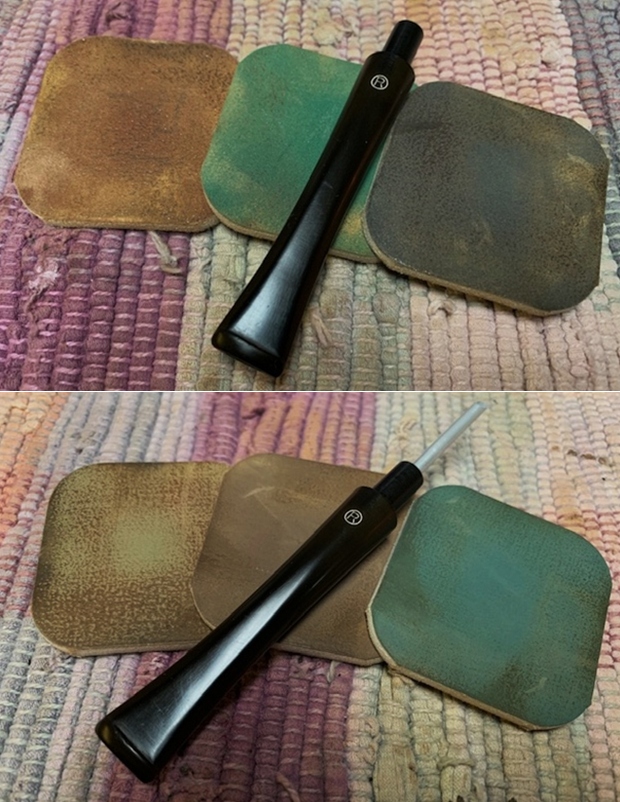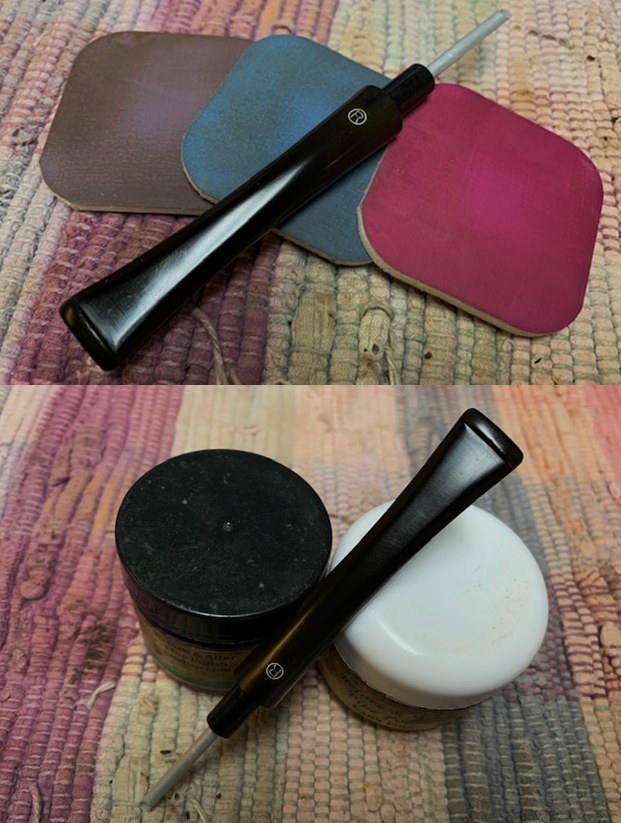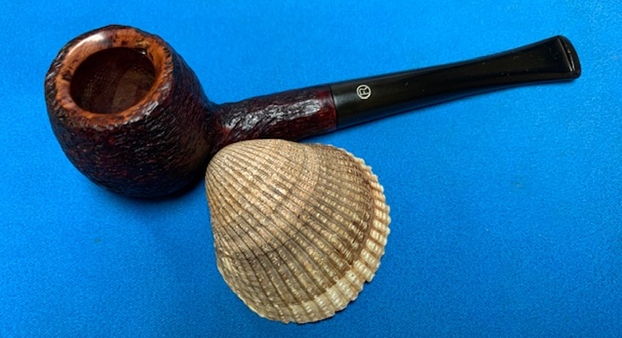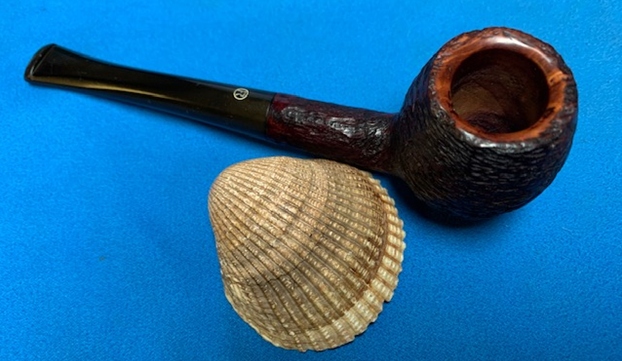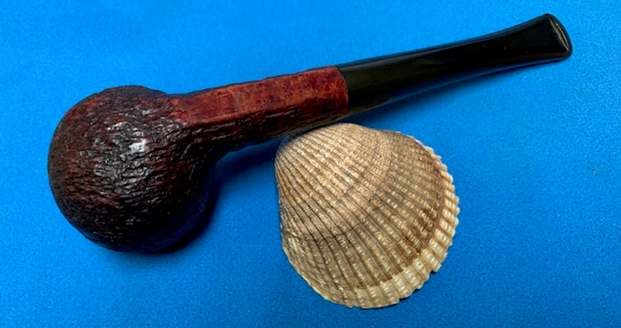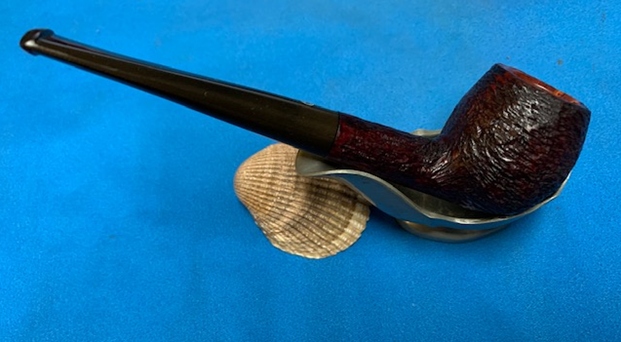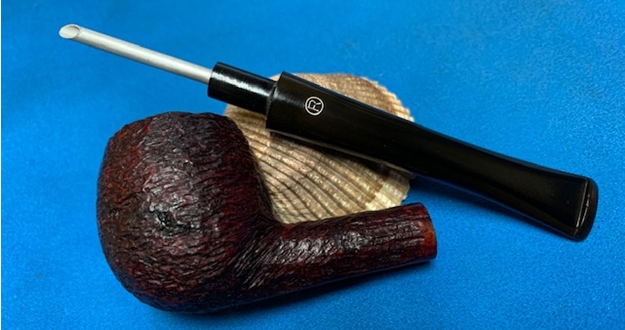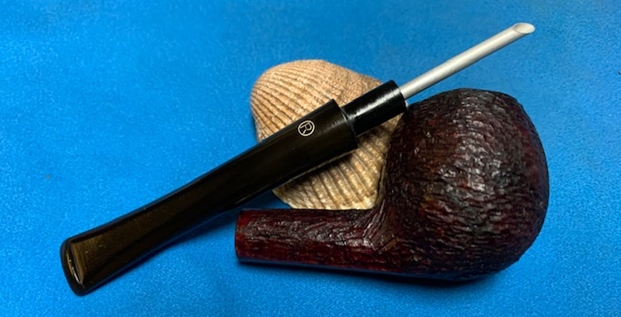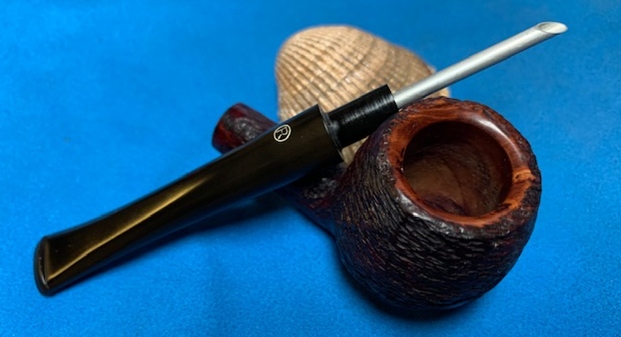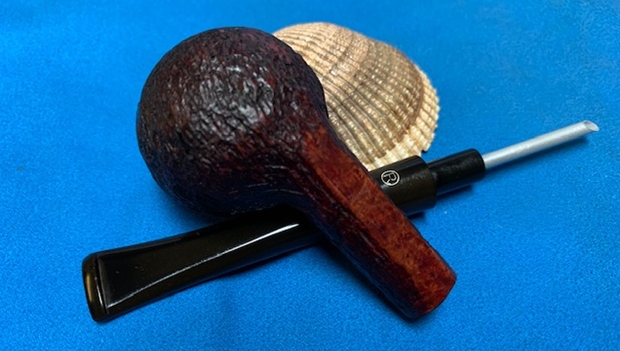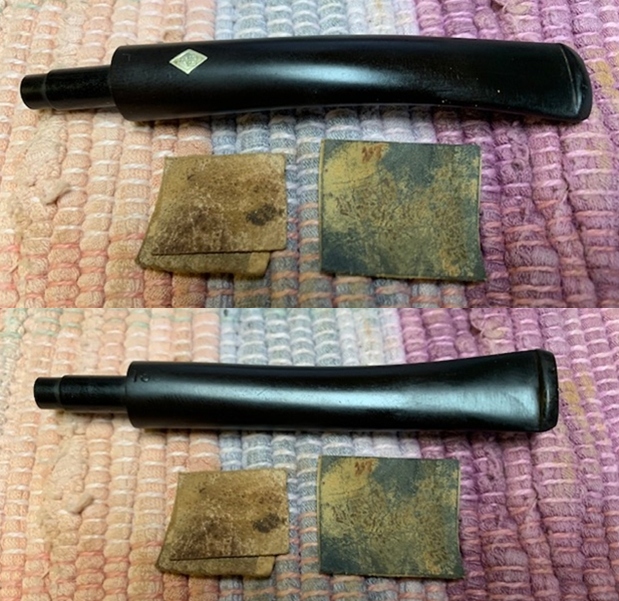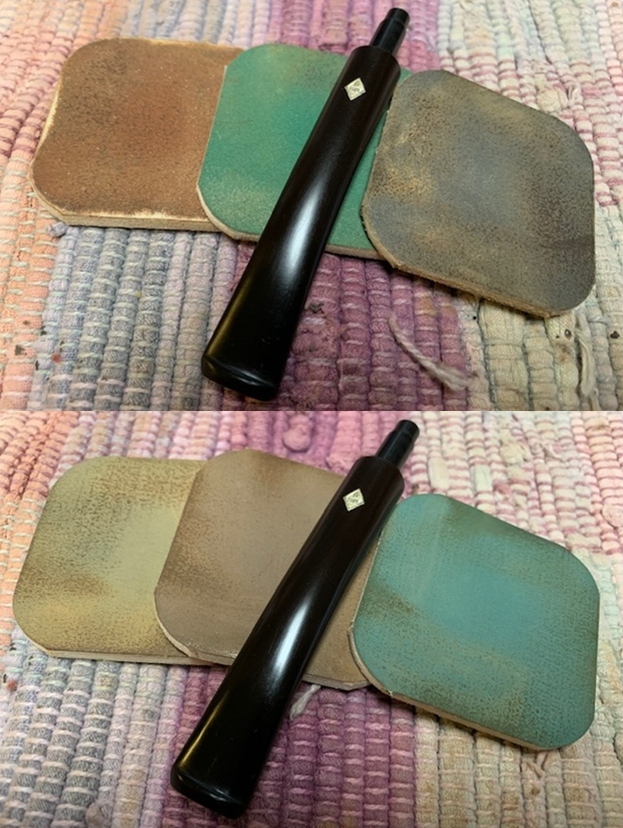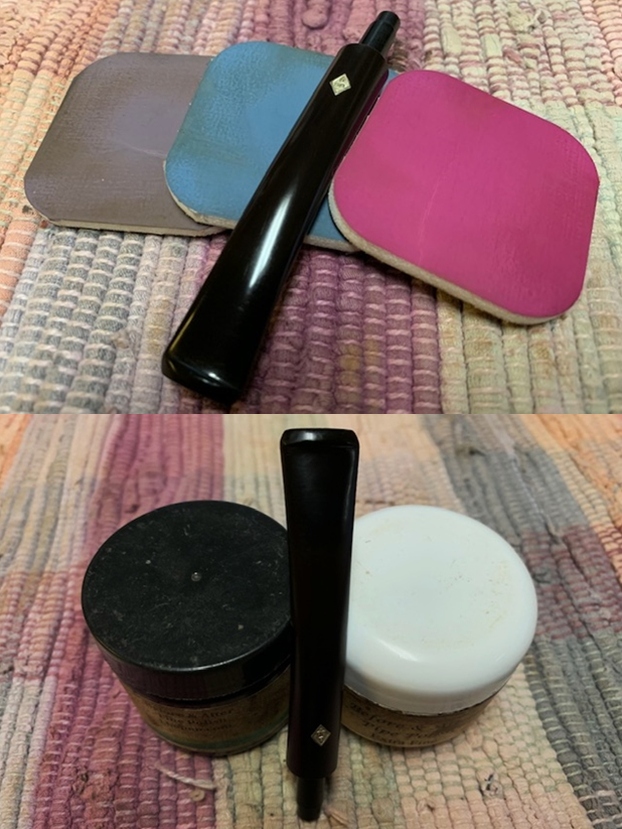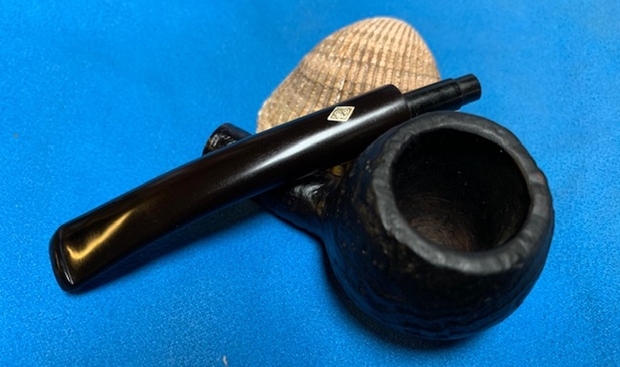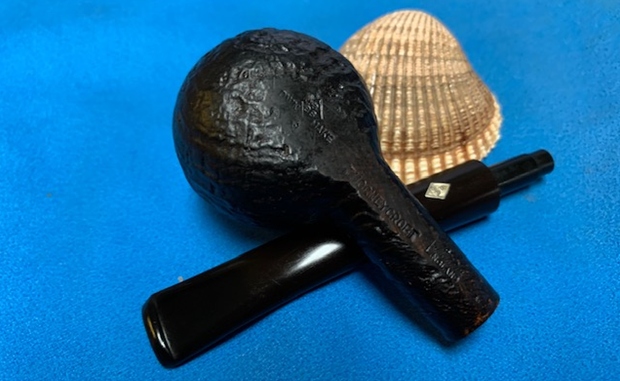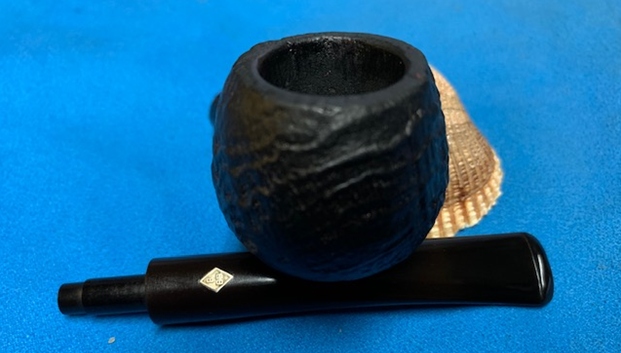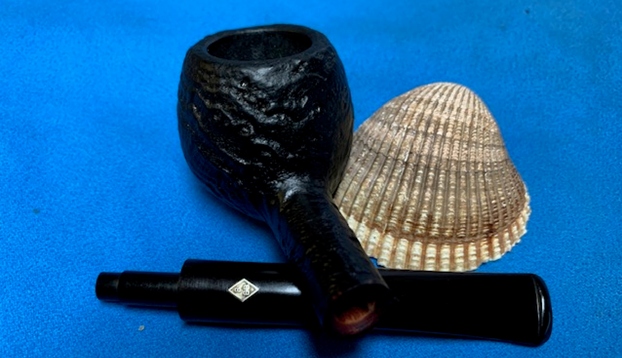
Tag Archives: stem work

Breathing Life into a Leonard Payne Classic Bulldog


Blog by Steve Laug

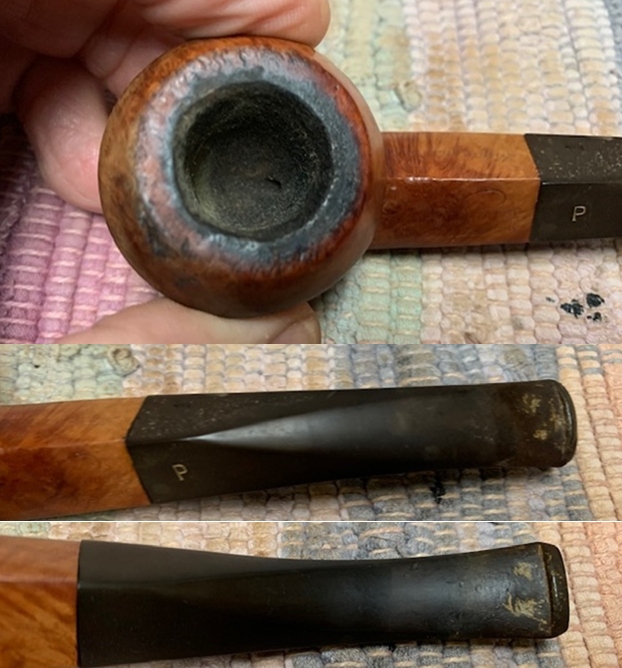
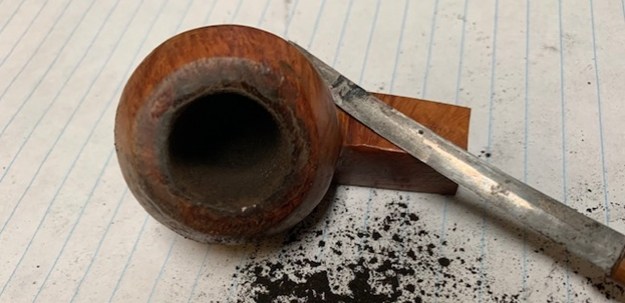
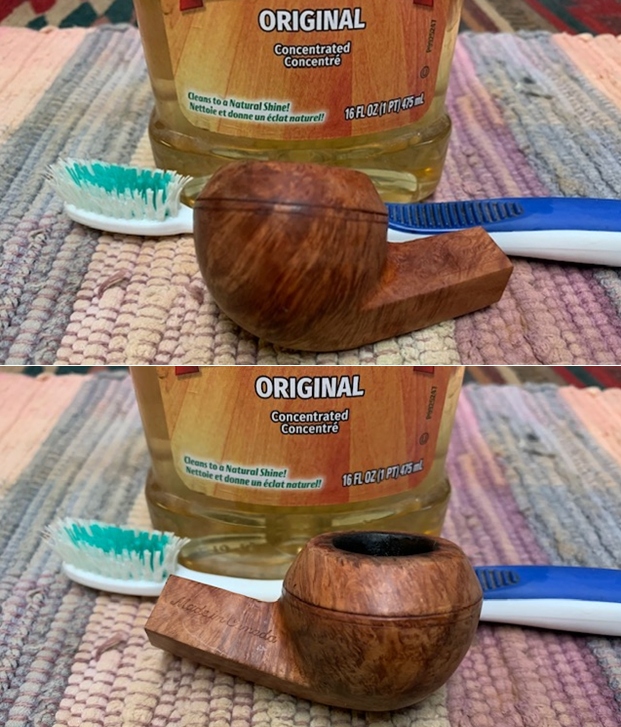
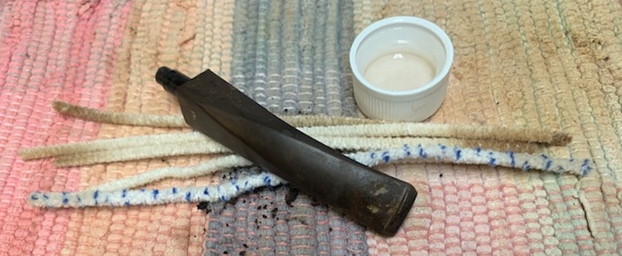
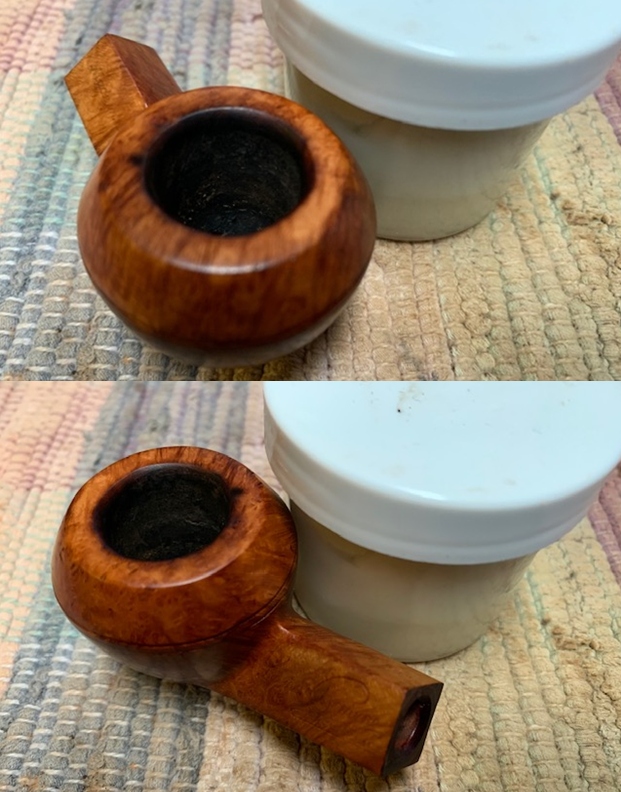
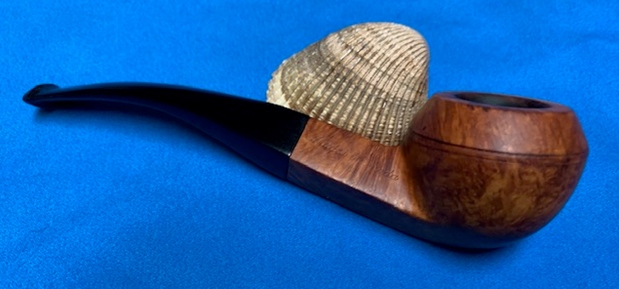
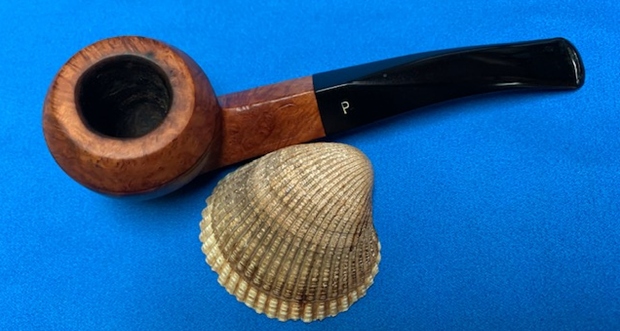
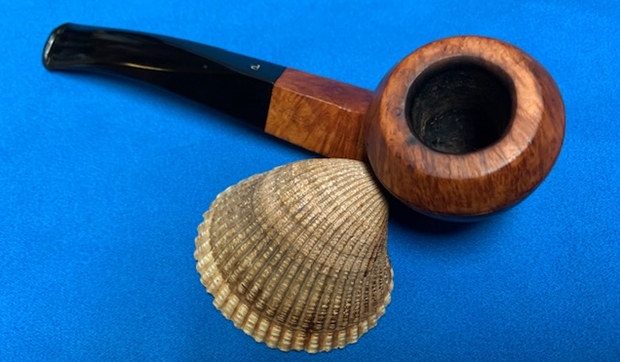
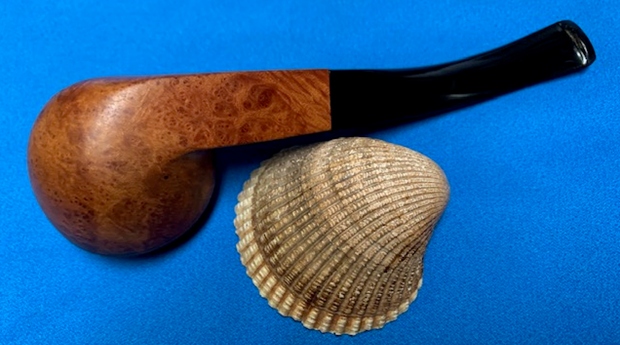
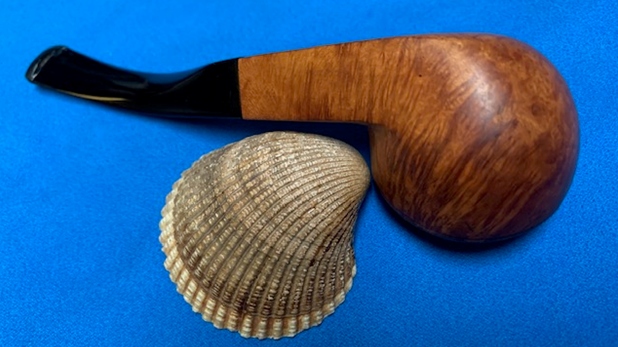
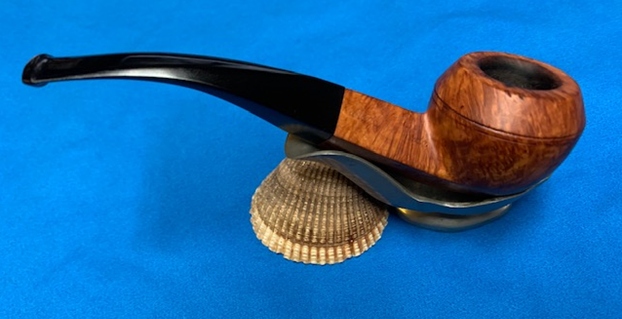
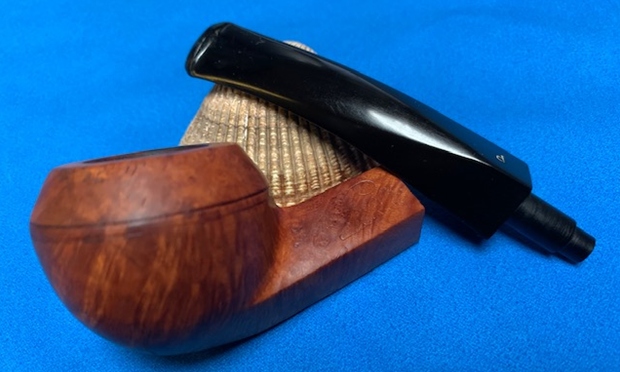
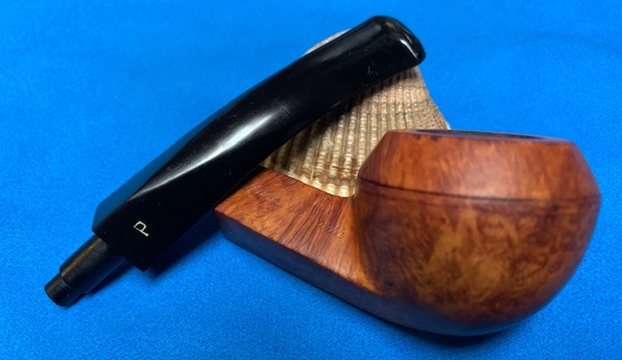
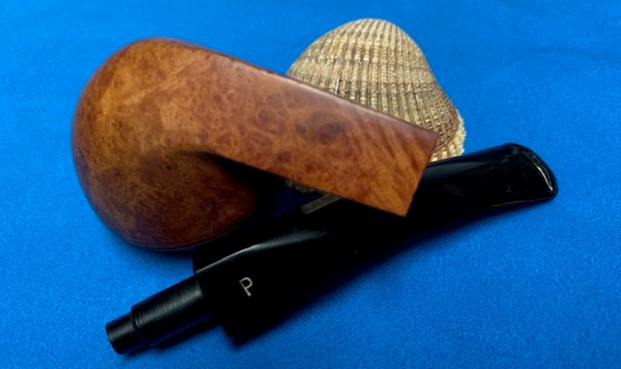
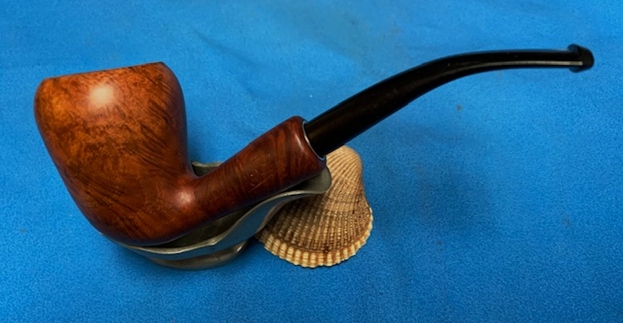
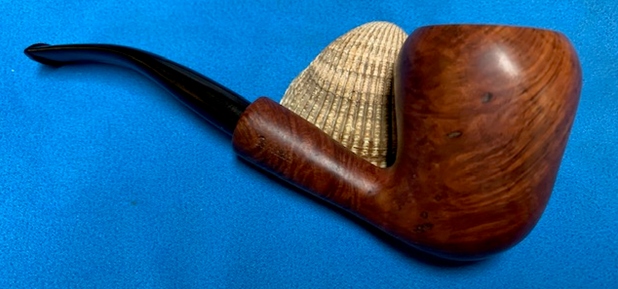
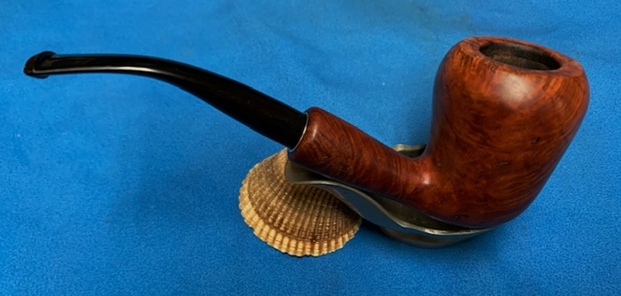
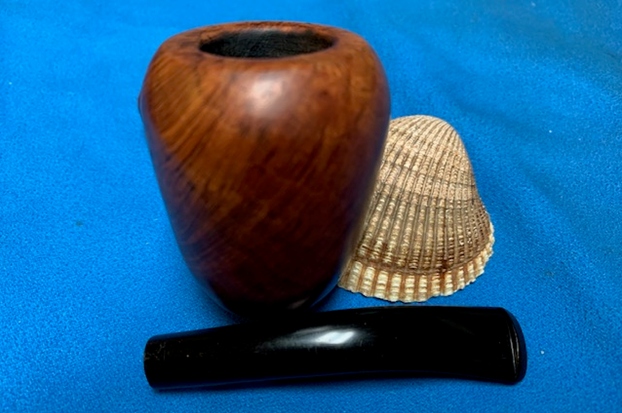
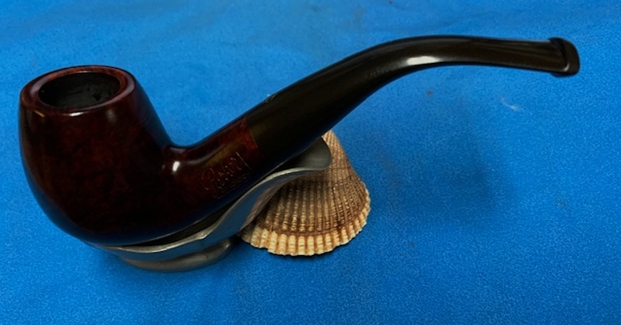
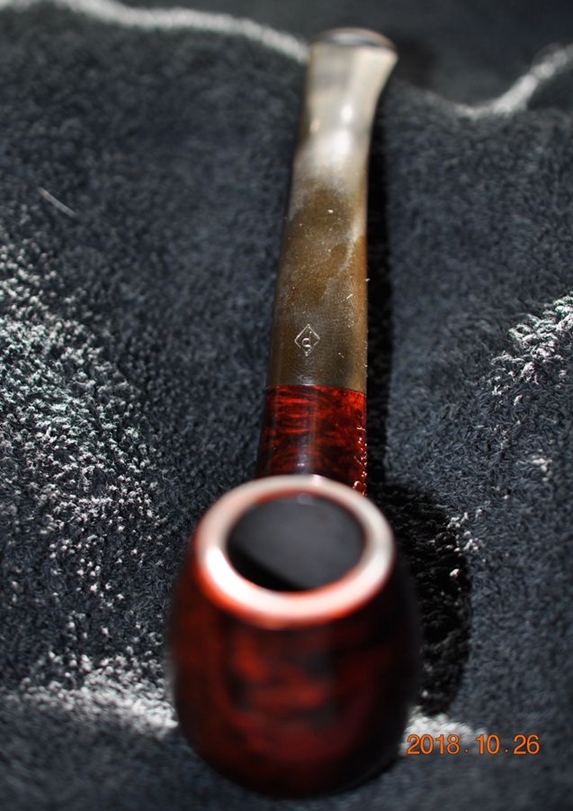
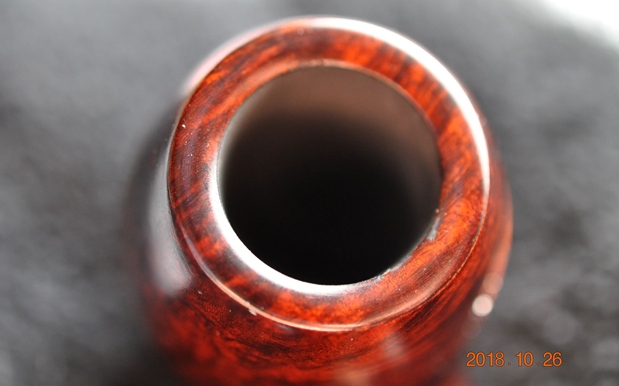
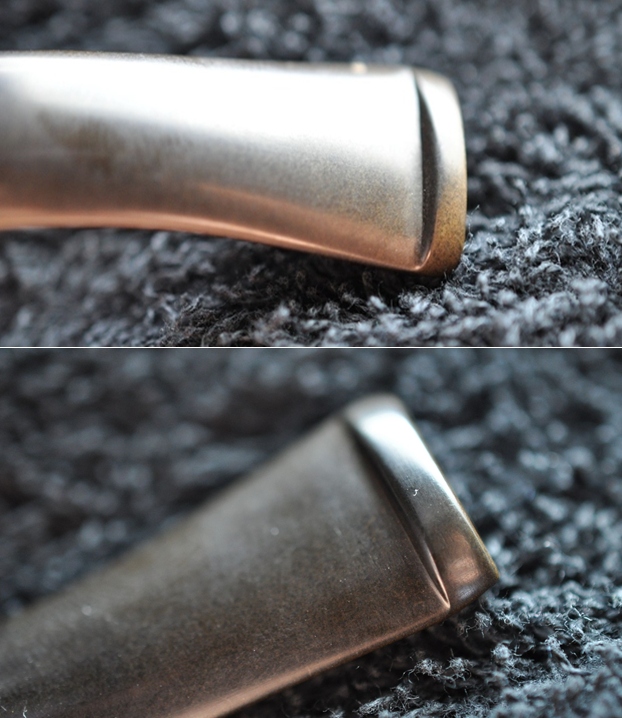
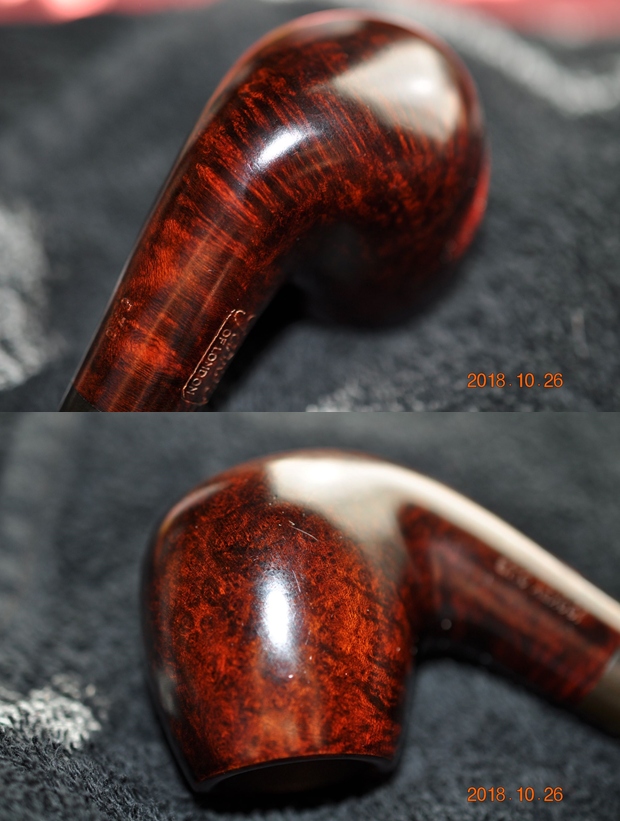
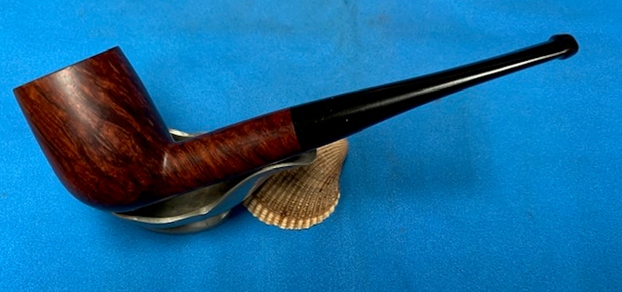
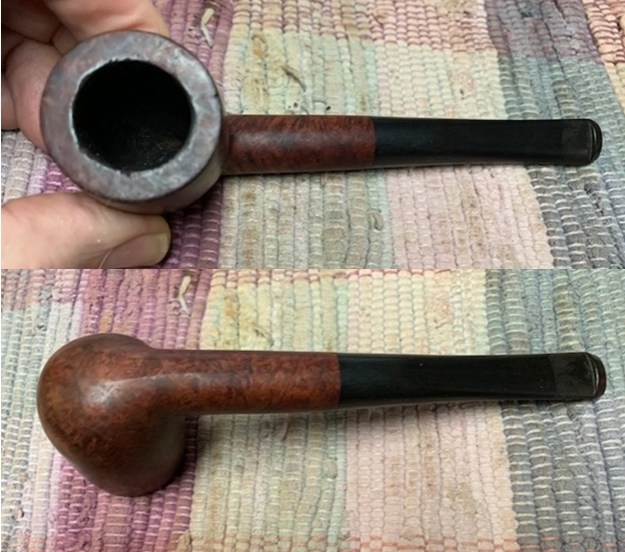
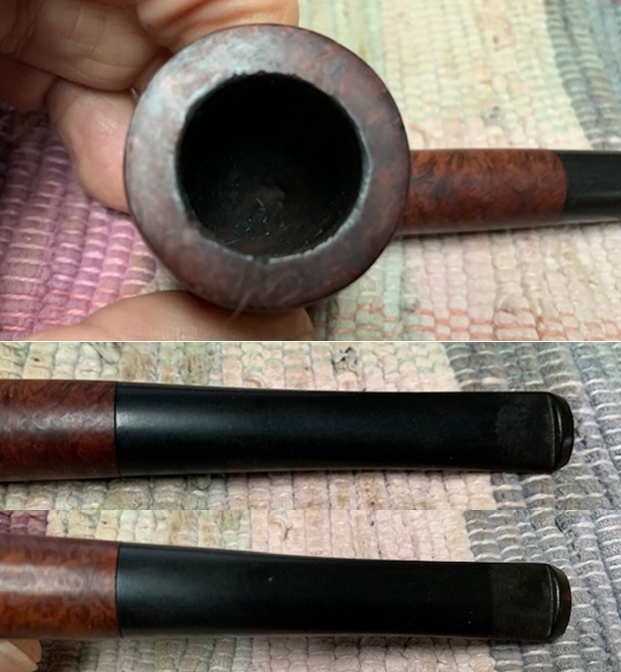
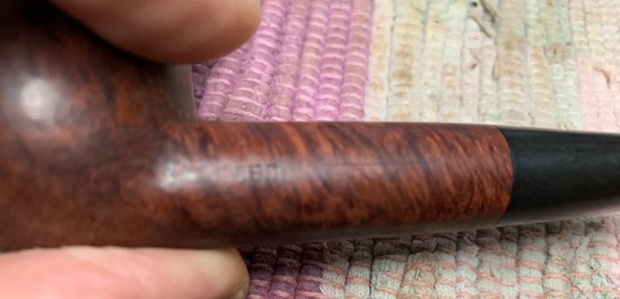
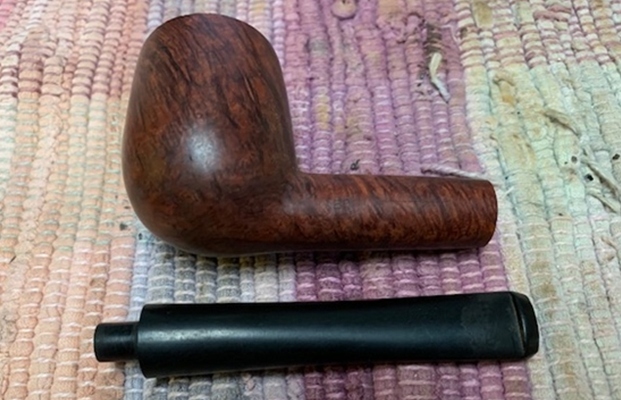
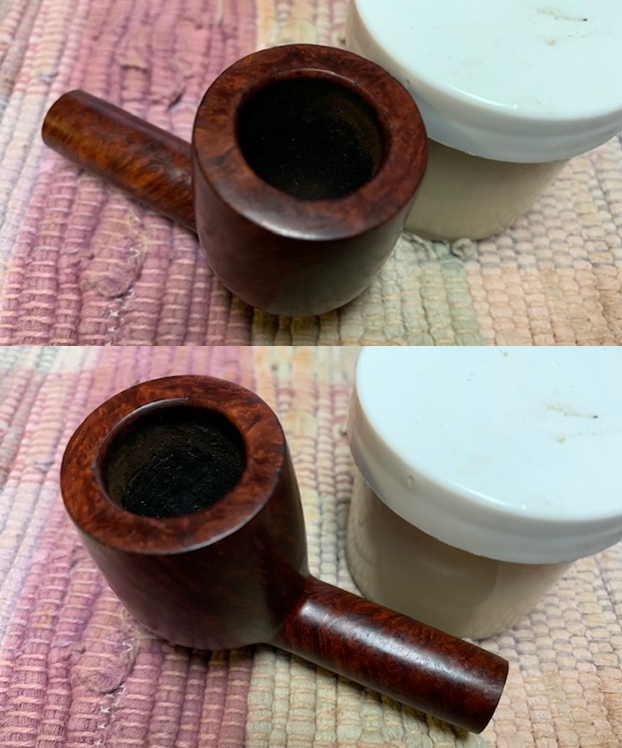
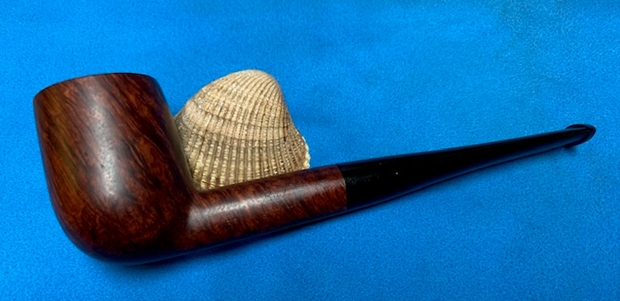
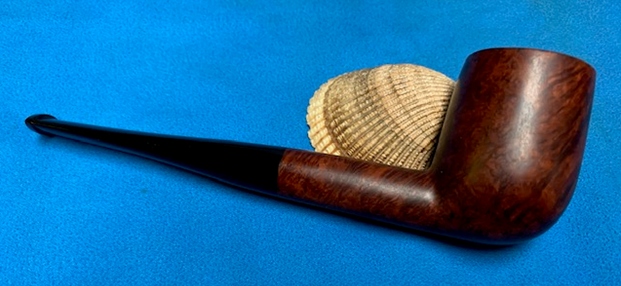
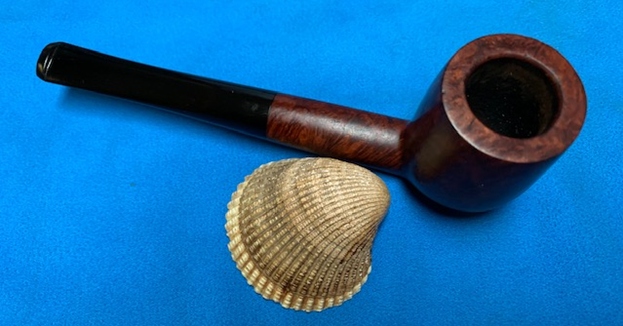
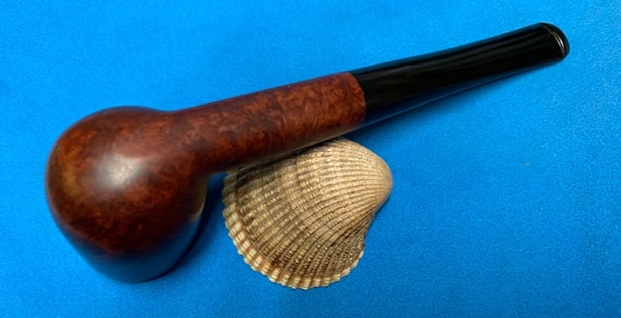
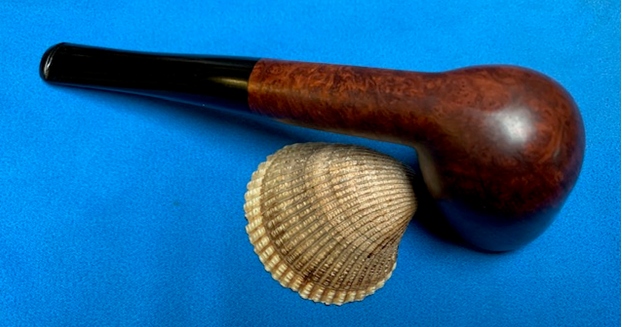
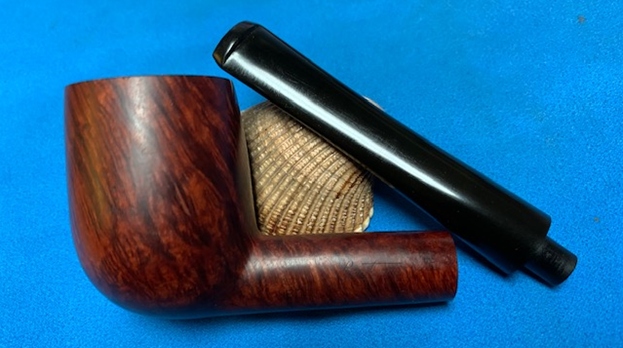
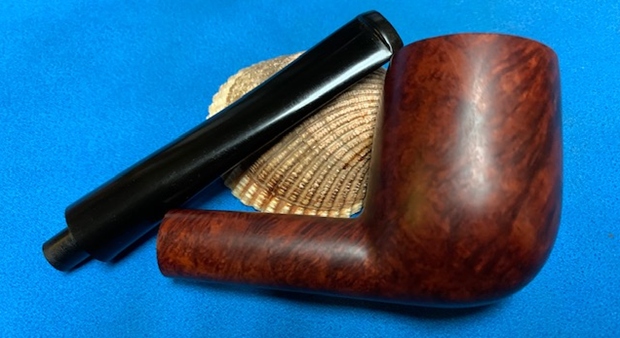
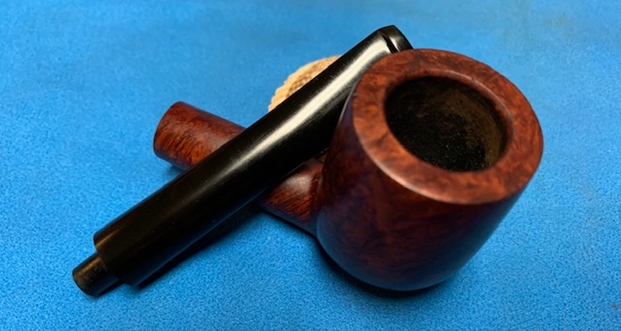
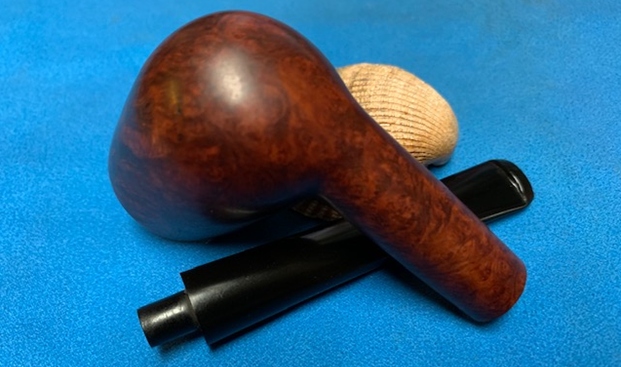
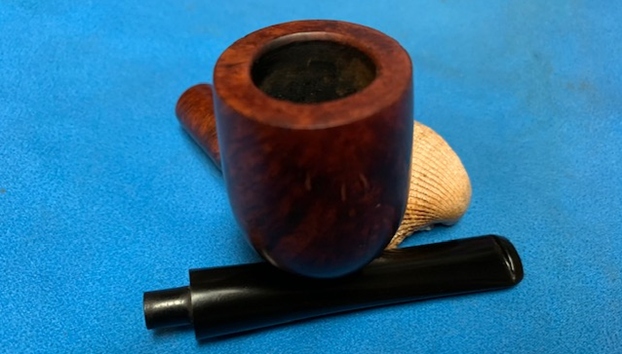
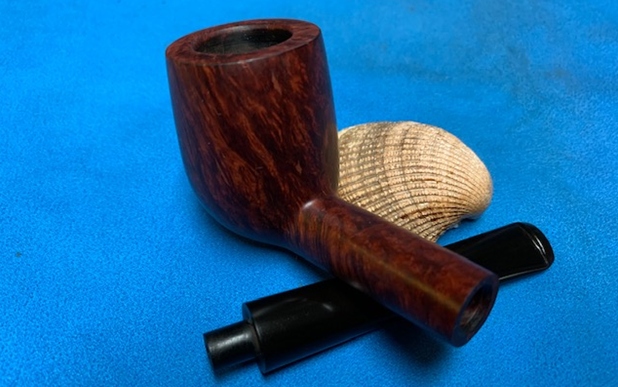
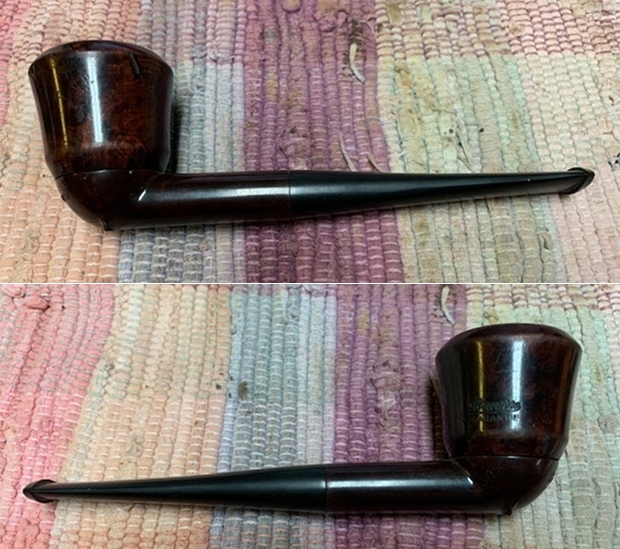
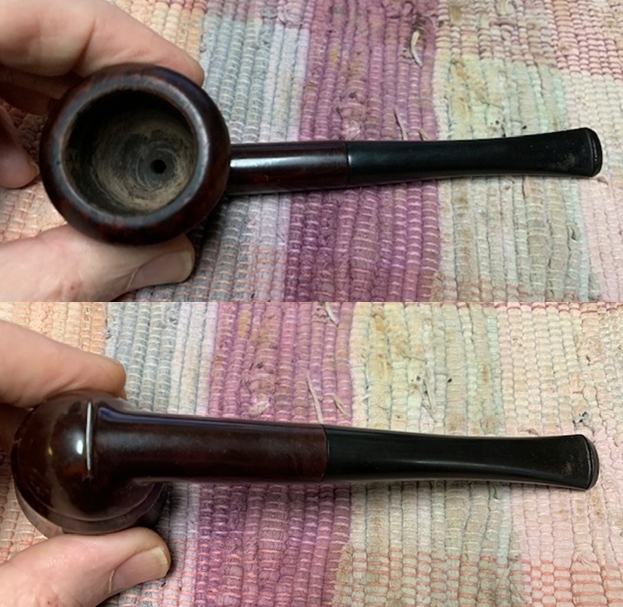
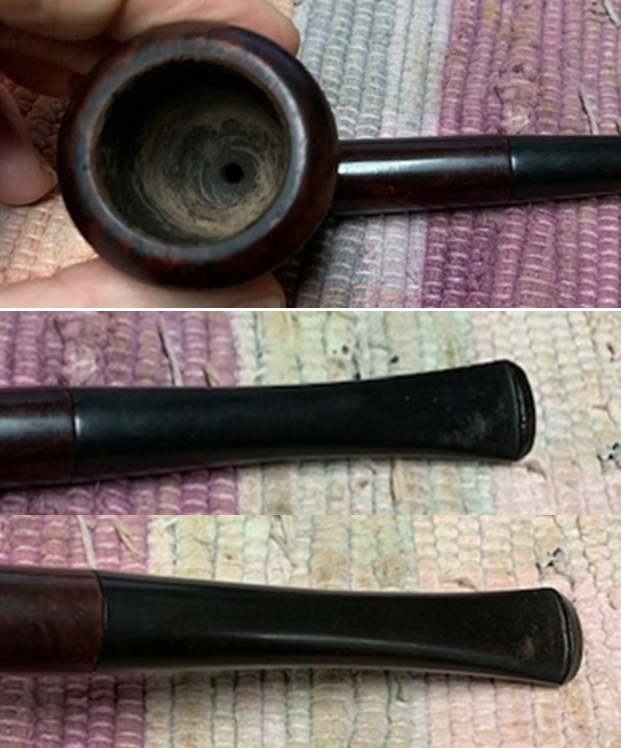
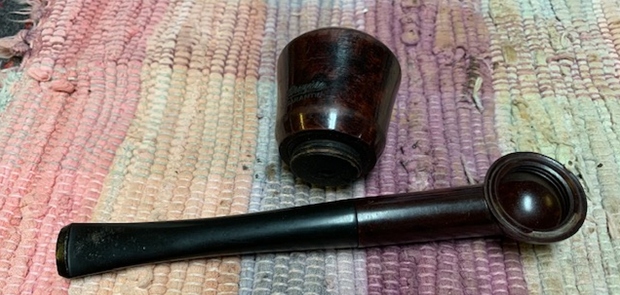
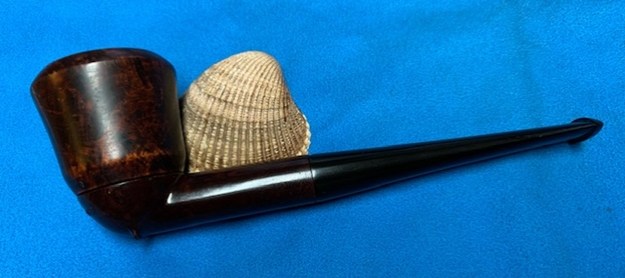
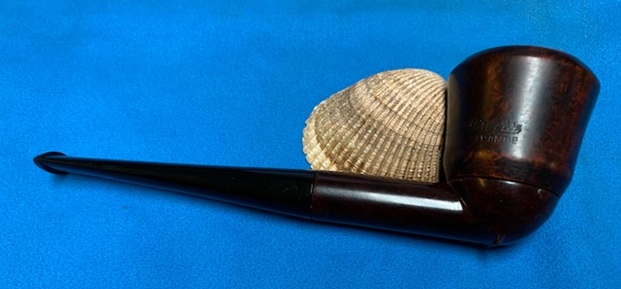
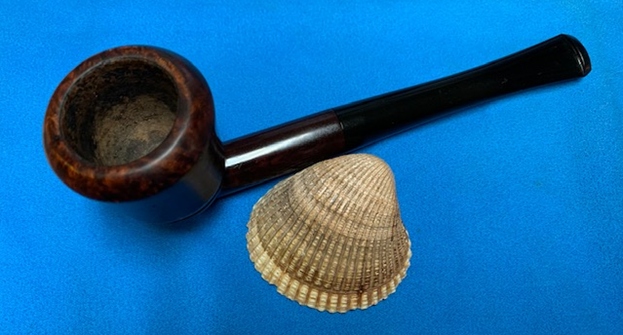
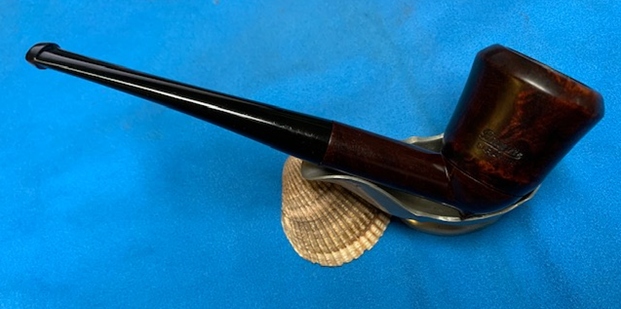
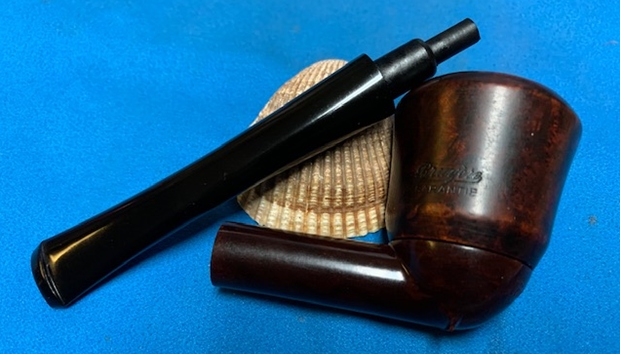
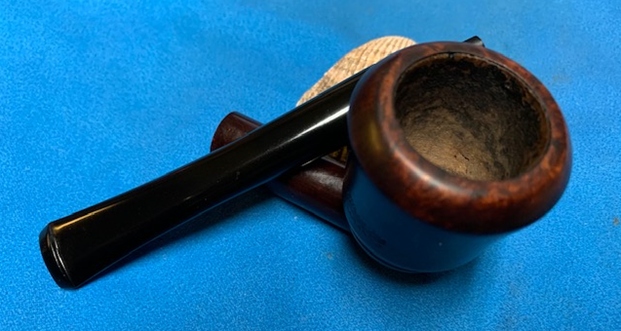
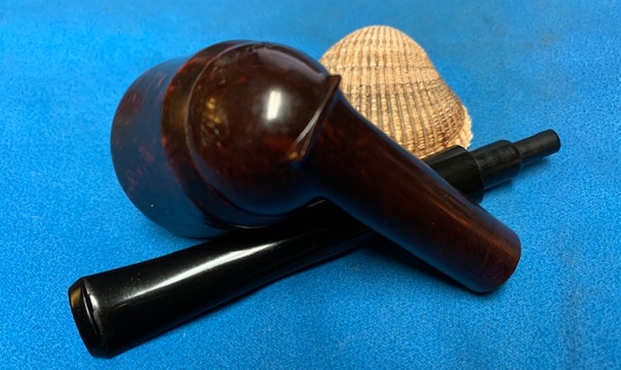
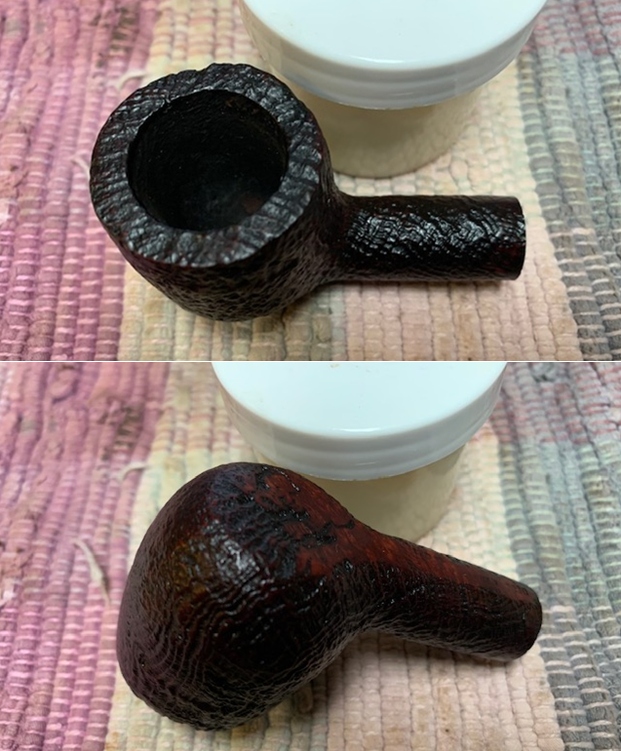
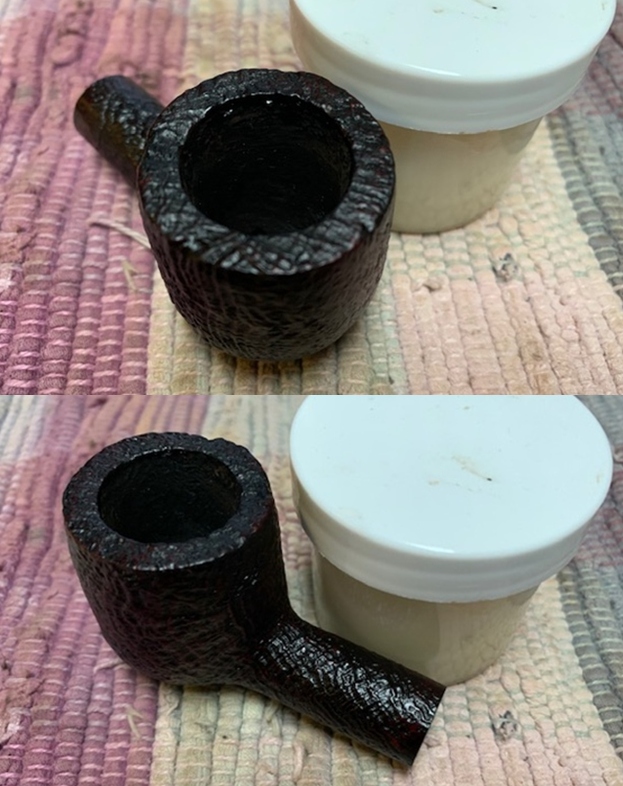
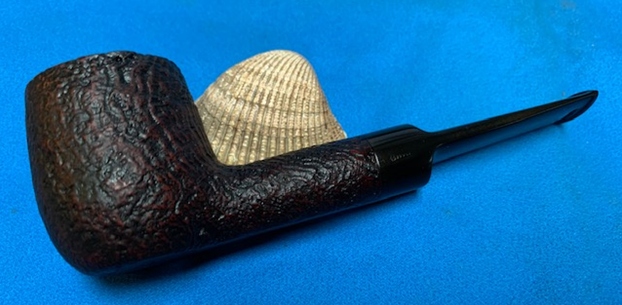
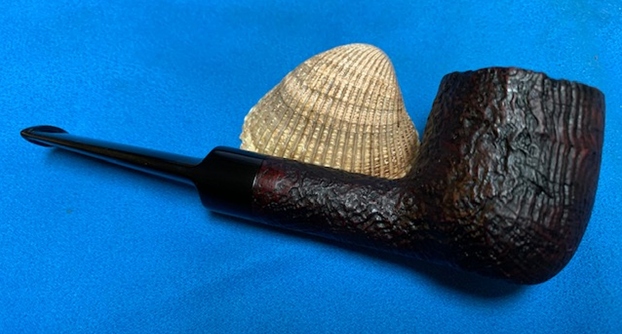
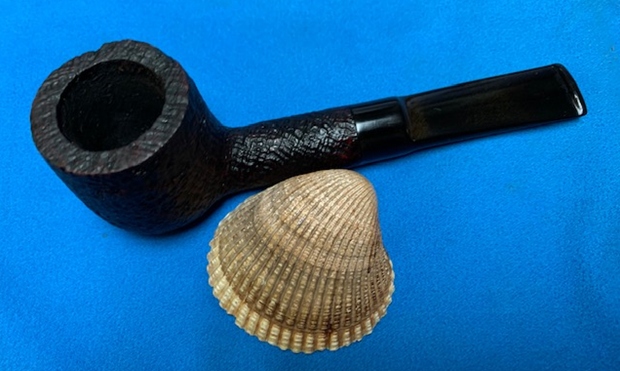
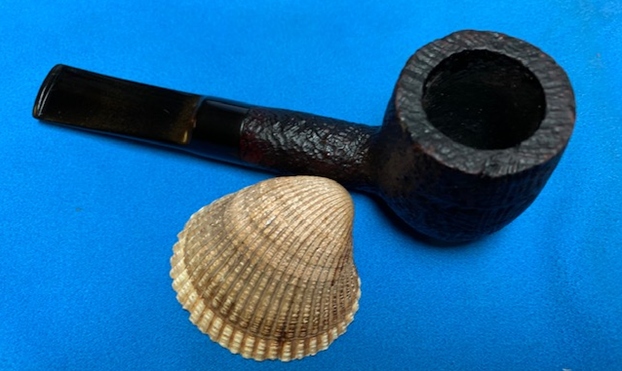
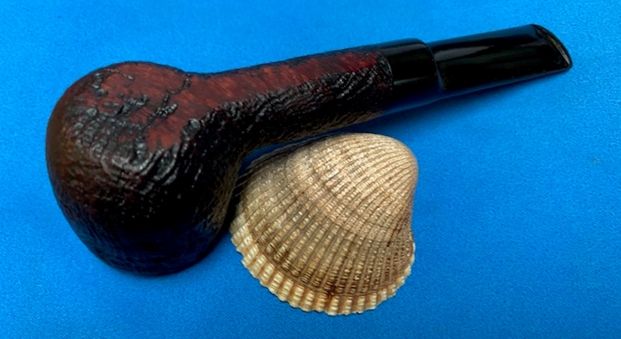
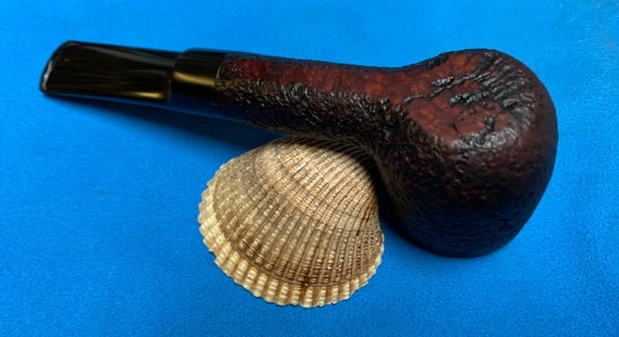
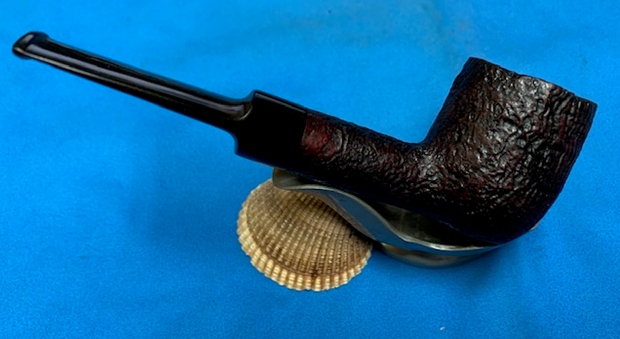
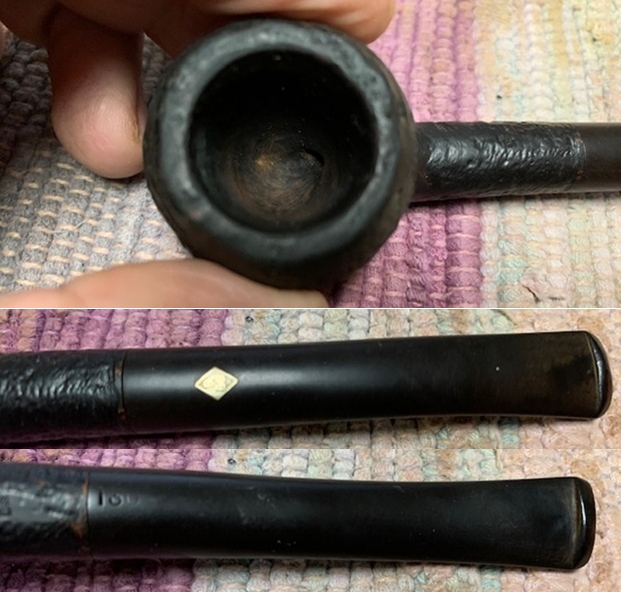
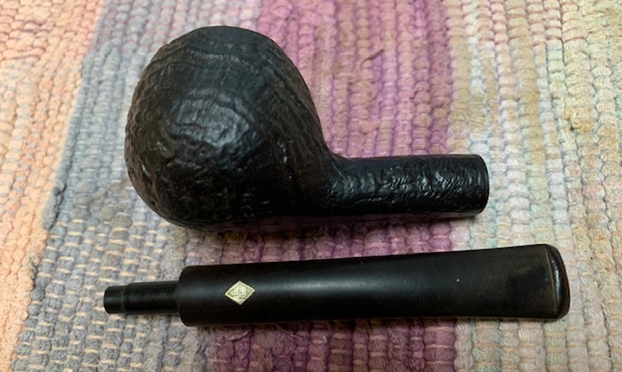
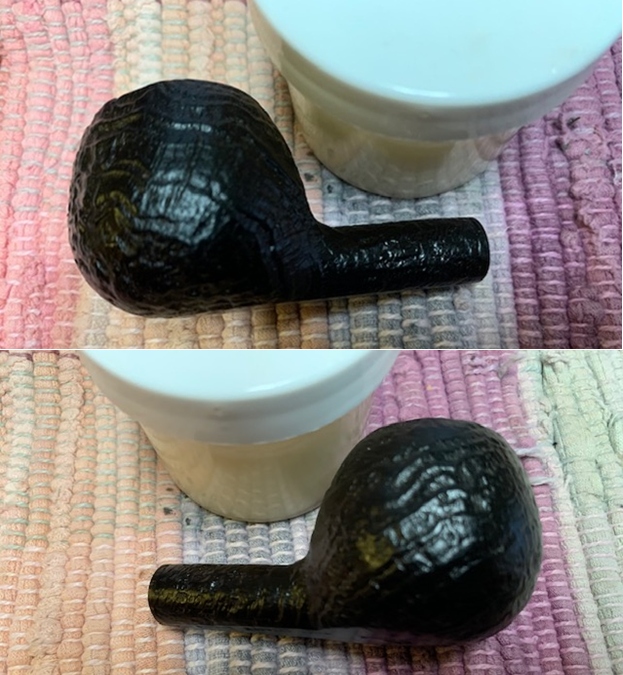
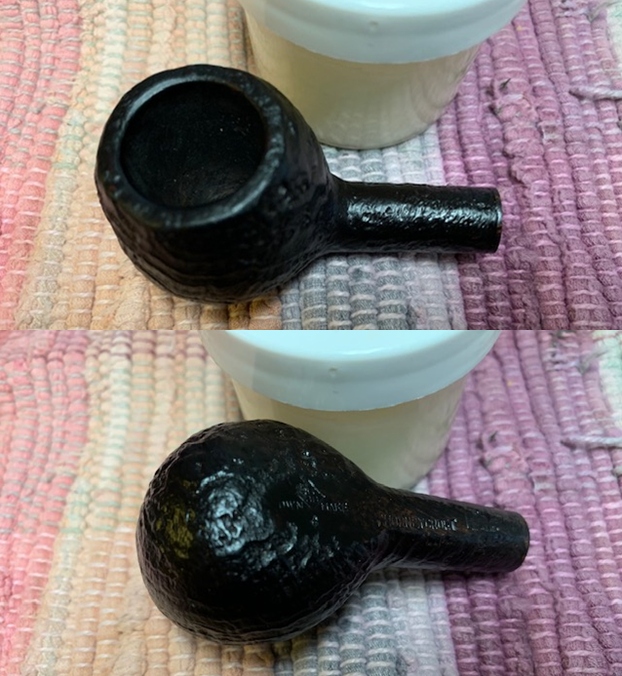
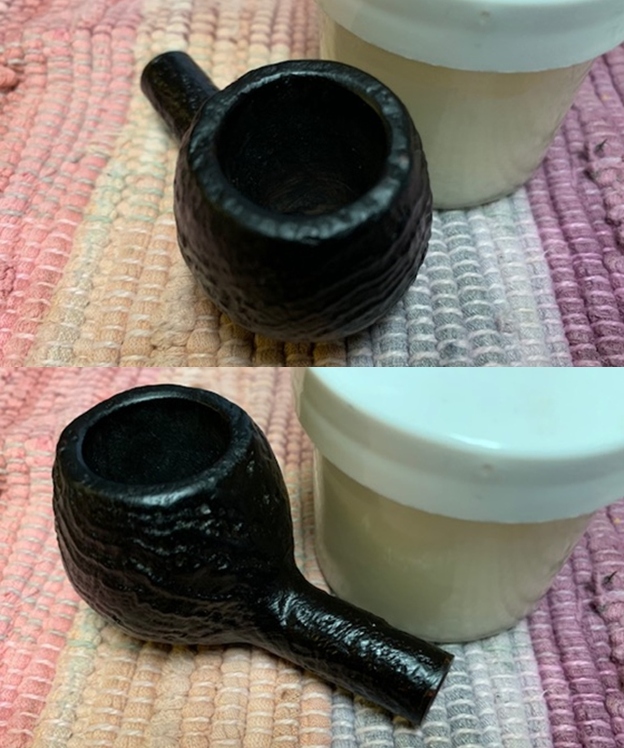
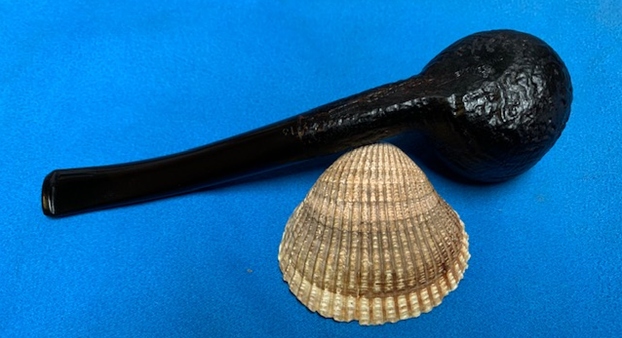
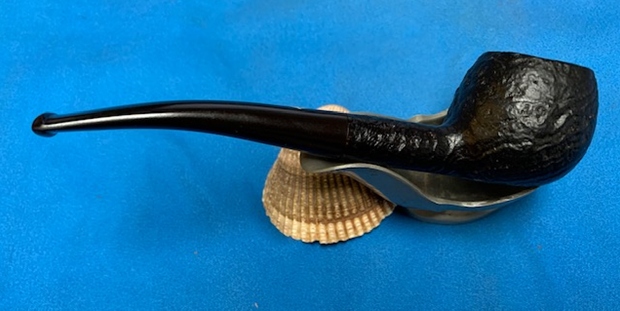
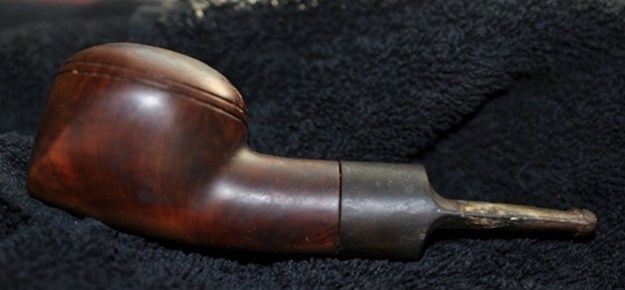
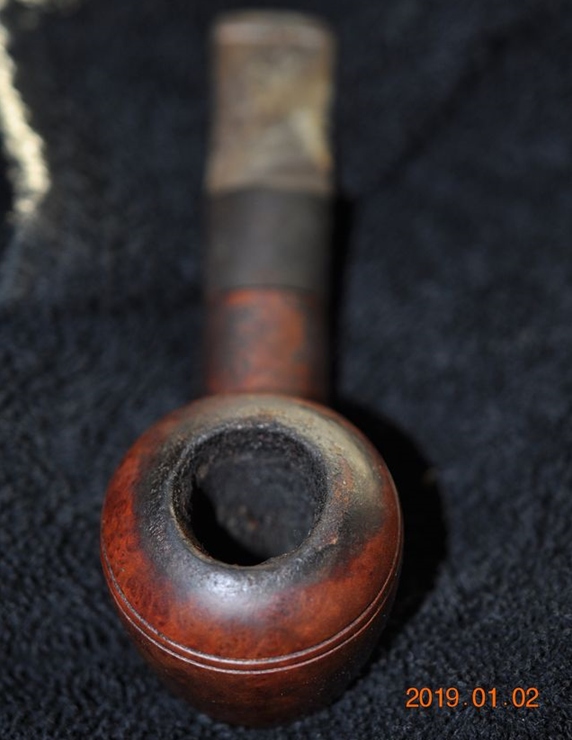
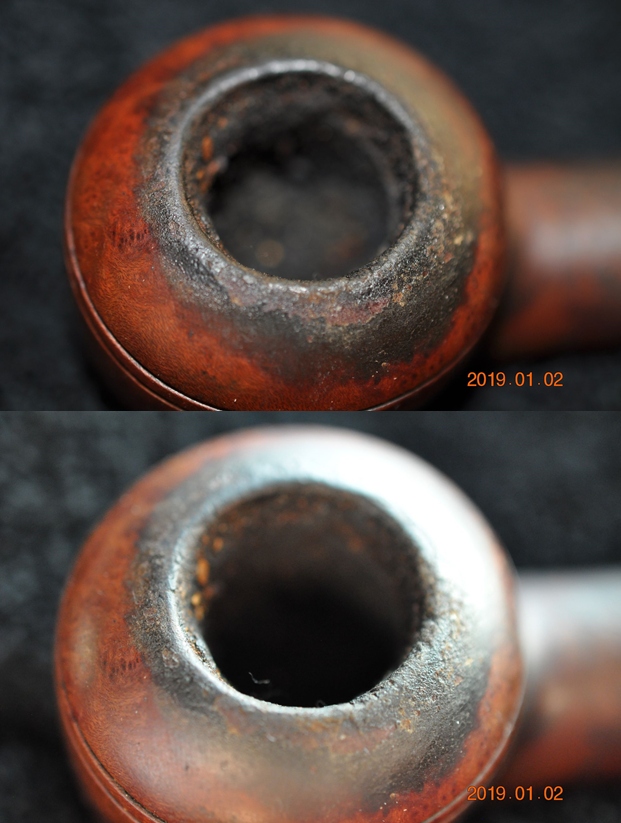
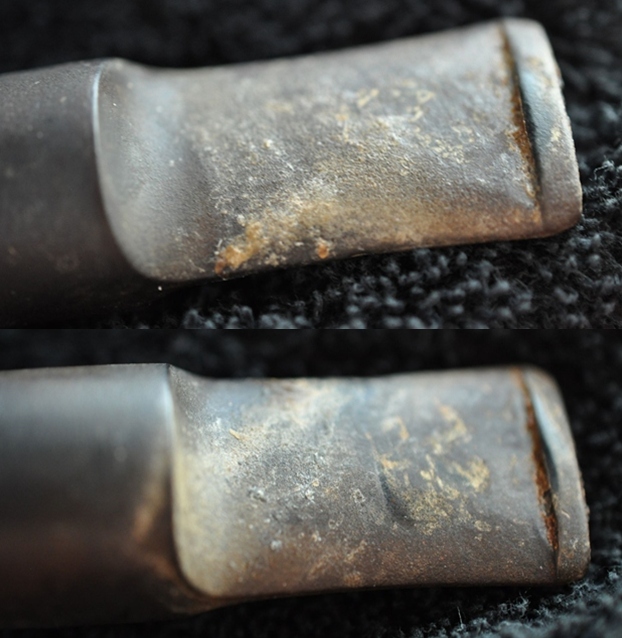
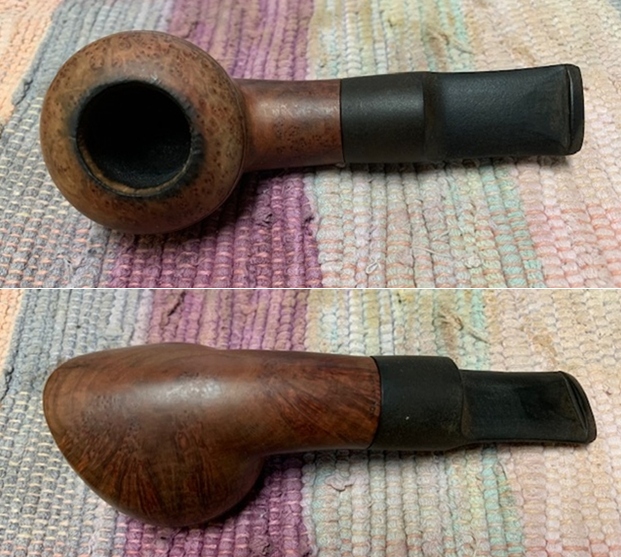
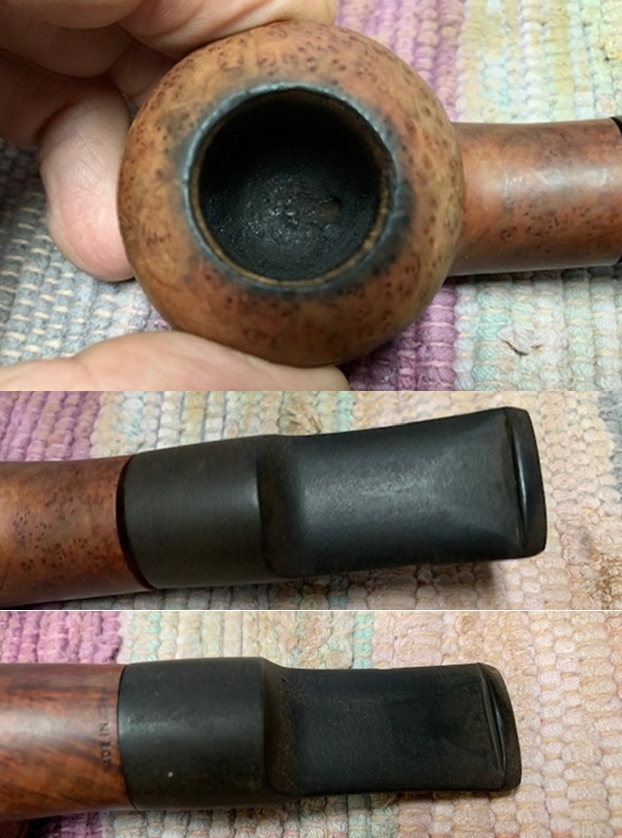
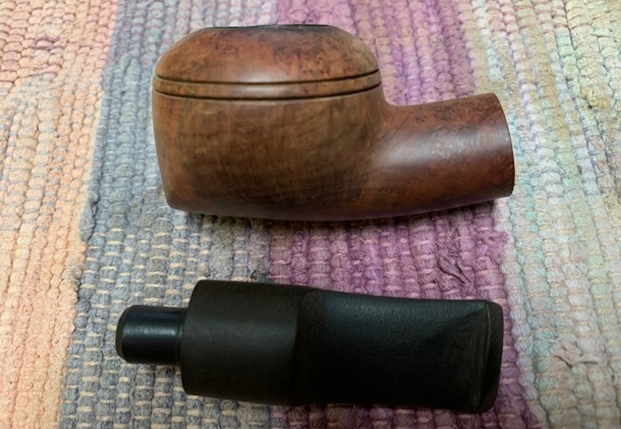
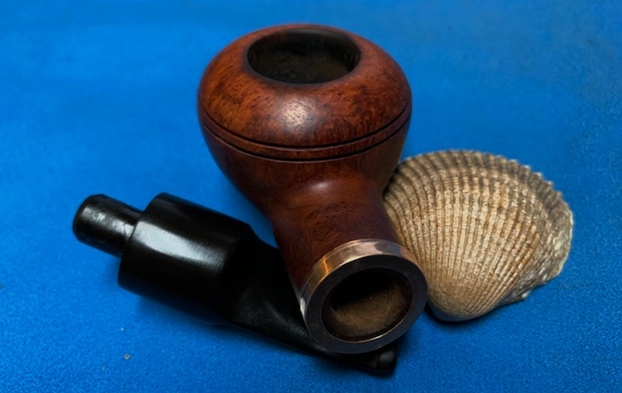
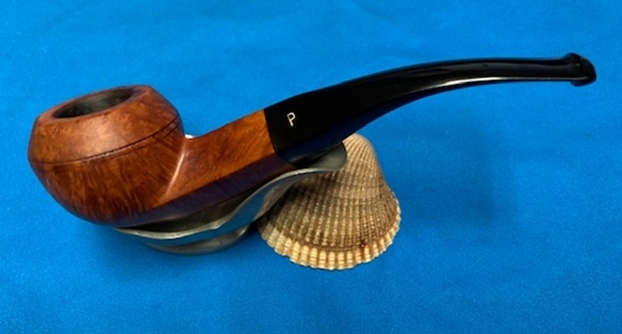
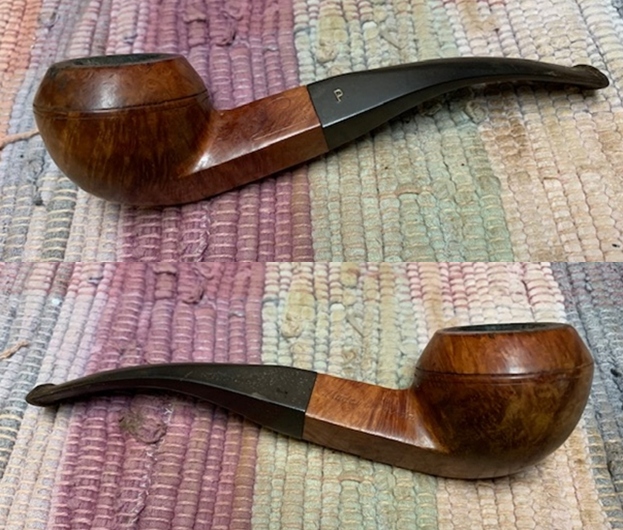
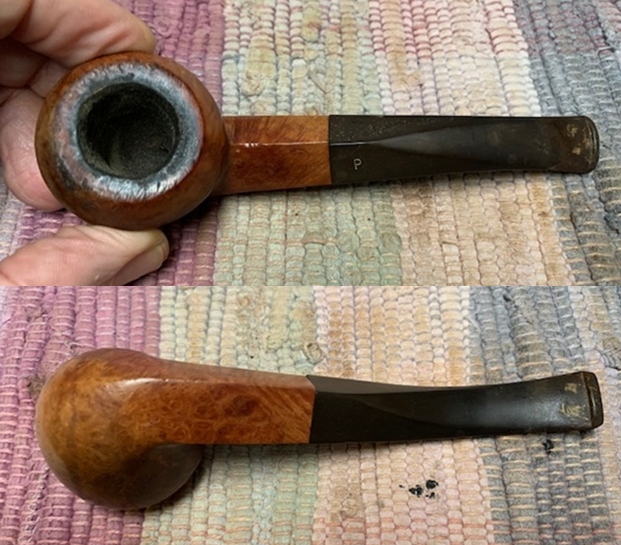
The next pipe on the work table is one that came to us from one of our pipe hunts – maybe one of them in Alberta. It is another Leonard Payne pipe that is very interesting. The pipe is a classic ¼ bent Bulldog. The pipe is stamped on the left side of the shank and reads Leonard Payne in an underscored signature style [over] Classic. On the right side it is stamped Made in Canada. There was a stamped P on the left side of the taper stem. This is a unique Leonard Payne pipe in that the shank has not been snapped and reconnected as was the usual practice that he claimed strengthened the pipe at its weakest point. The bowl has a thick cake that overflows onto the rim top as lava. There are some nicks and scratches on the top and edges. The bowl is slightly out of round from damage on the inner edge.  The outer edges have a few nicks around the right side. The exterior was very dirty with grime and debris ground into the finish on the bowl. The taper vulcanite stem is oxidized, calcified, scratched and has tooth marks and chatter on both sides ahead of the button. I took some photos of the pipe before I did any clean up.  I took photos of the rim top and the stem. The photo of the rim top shows the damage and the cake in the bowl and lava on the top. The stem photos show the oxidation, calcification and tooth chatter and deep marks. I took photos of the stamping on the right and left side of the shank. The stamping on the left side is the Leonard Payne signature over Classic. The stamping on the left side reads Made in Canada.   I removed the stem from the shank and took a photo of the parts to give an idea of the flow and form of the pipe. It is a nice looking Bulldog.I reread several of the blog I have written on the brand in the past restorations of Payne pipes and decided to include the material on the brand before I write about the cleanup of the pipe. I am including advertisement for Leonard Payne’s pipes. Here is the link to the blog (https://rebornpipes.com/2013/11/16/a-pipe-maker-i-had-never-heard-of-leonard-payne-pipes/).
Further digging with Google came up with this short note from alt.smokers.pipes forum. It was written by Mike Glukler of Briar Blues. I quote it below in full. (https://groups.google.com/forum/#!topic/alt.smokers.pipes/RrICLiVgE2o)   “Leonard Payne was based in B.C. for many years. He came to Canada from England. He had shops in Surrey, B.C. and Kelowna, B.C. Interesting fellow. Gruff as the day is long. When you bought a pipe it was handed to you in a paper bag. No sock, no box. Most of his pipes carried a “carburetor” system at the shank / stem junction. Another Payne idea was his shanks. Almost all his pipes were two pieces. He’d turn the bowl and shank, then cut off the shank and reattach with glue (not always with the same piece of briar, so many did not match grains). His thinking was that the shank being the weakest link, if cut and glued would never break and thus “correcting” the weakest link. You may find his pipes on E-Bay on occasion listed as a Len Cayne. The P in his stamping looks more like a fancy upper case C.”

The pipe I am working on now is more of a classic looking bent Bulldog and does not have the characteristic quirks of other Payne pipes that I have worked on.

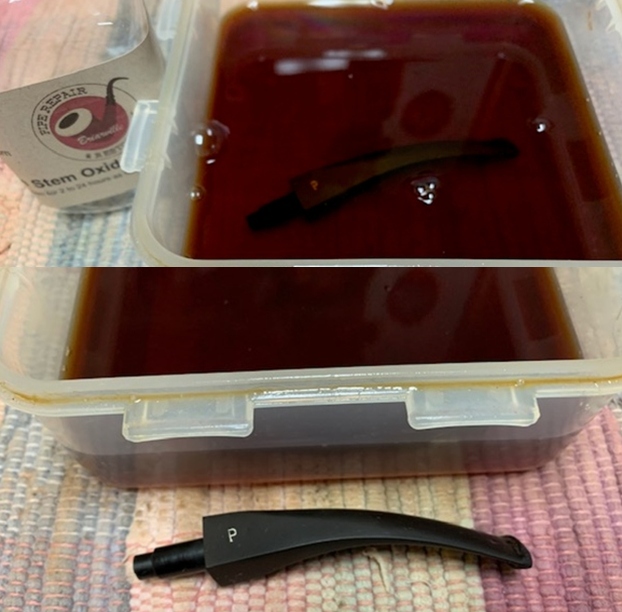
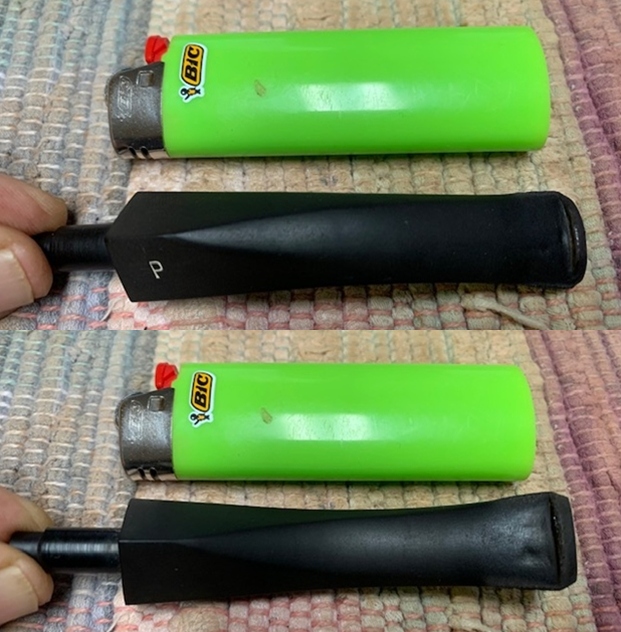
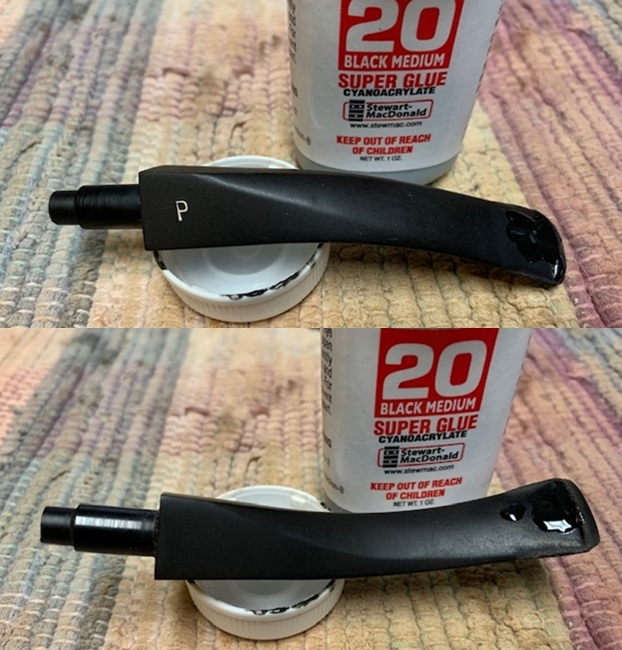
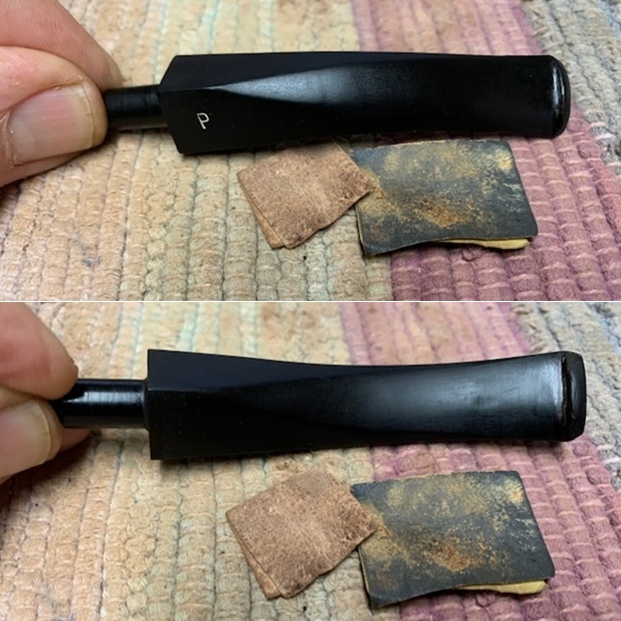
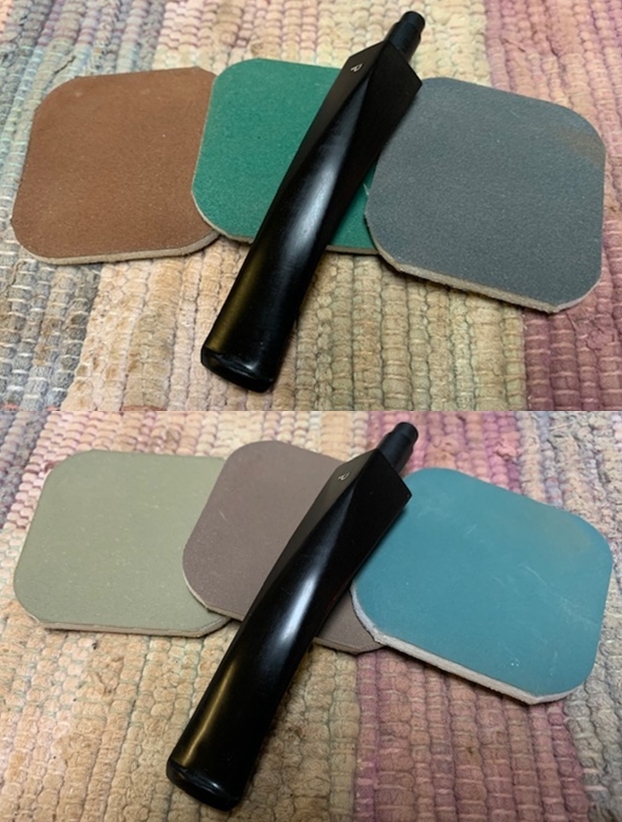
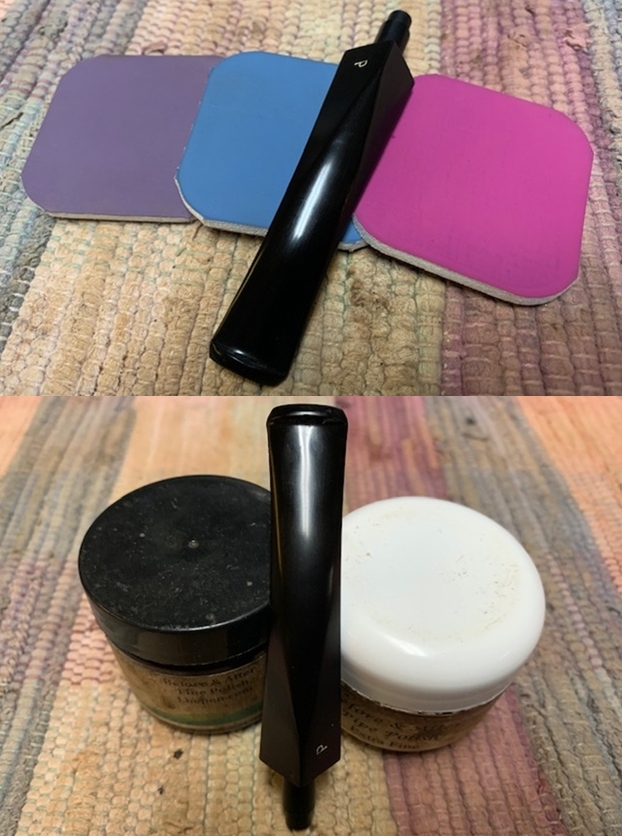
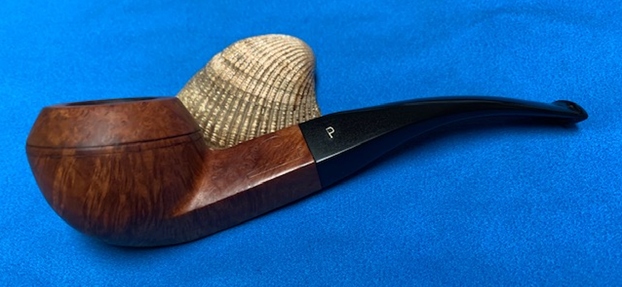
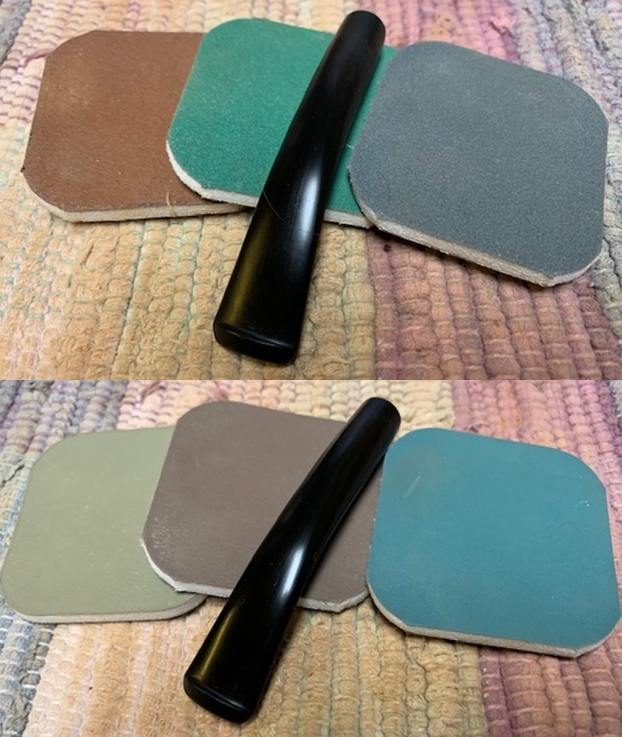
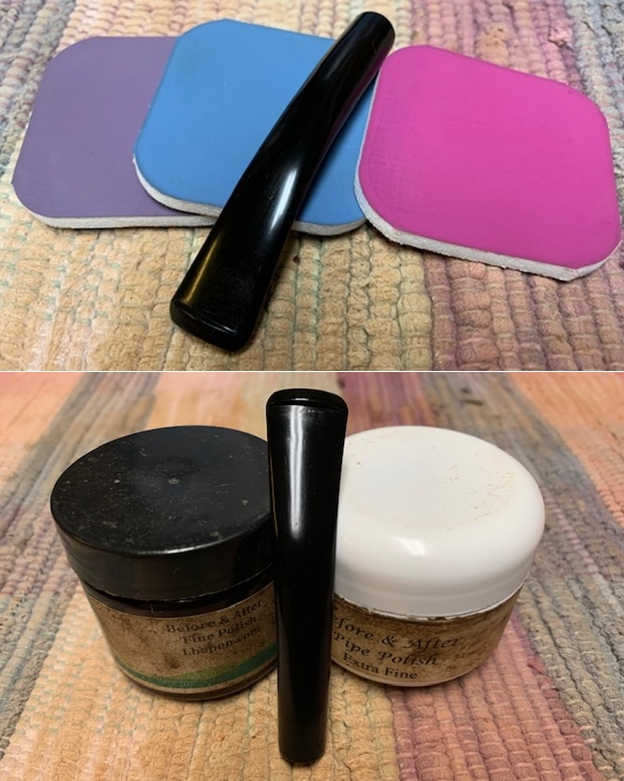
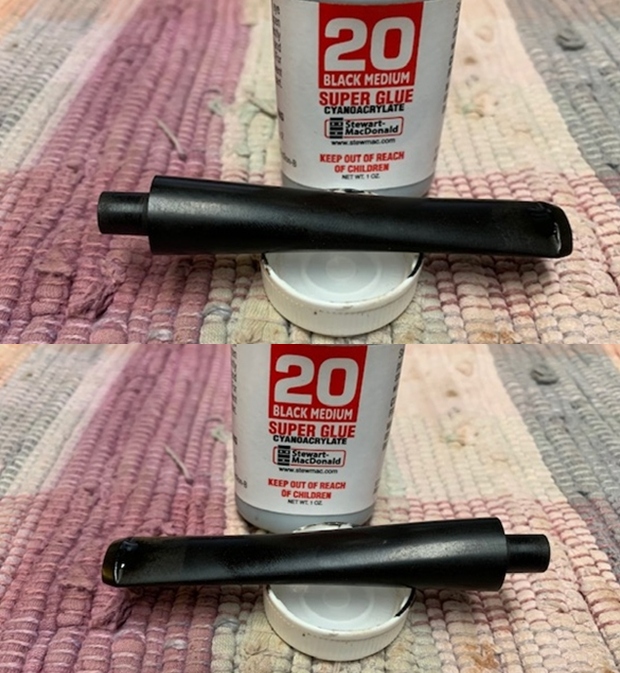
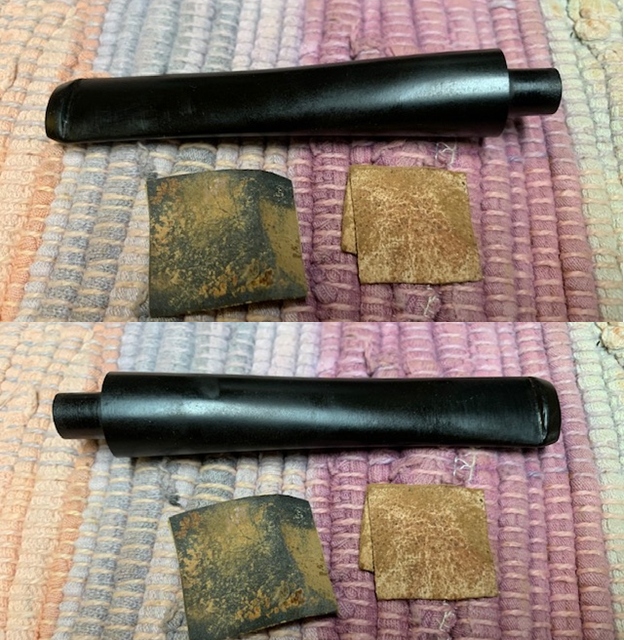
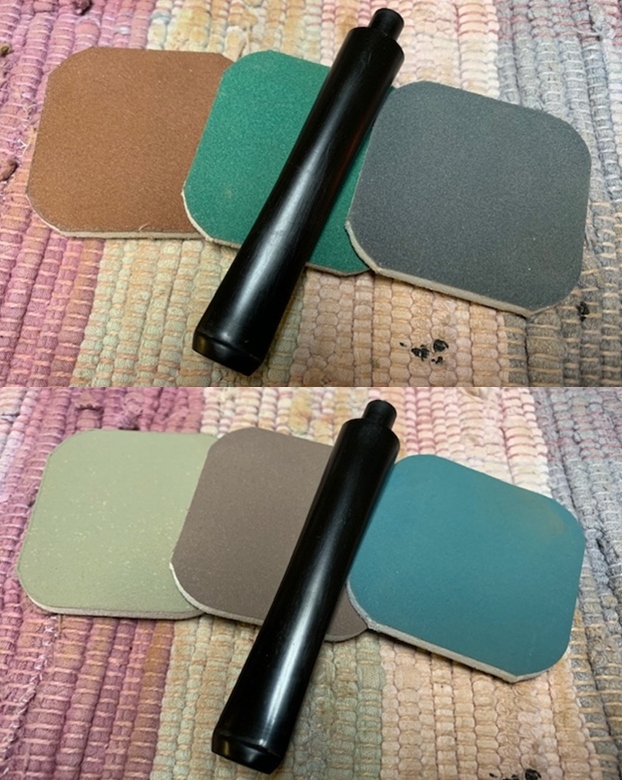
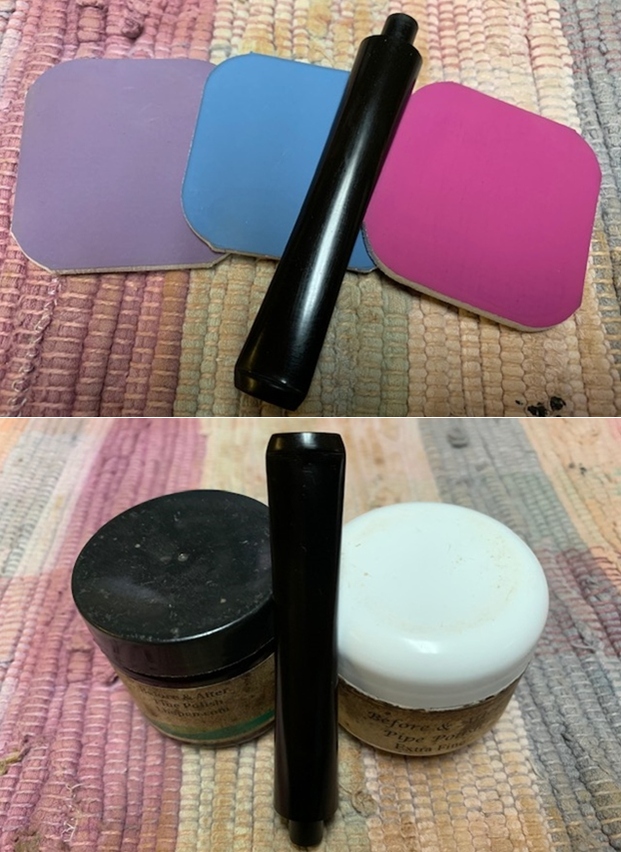
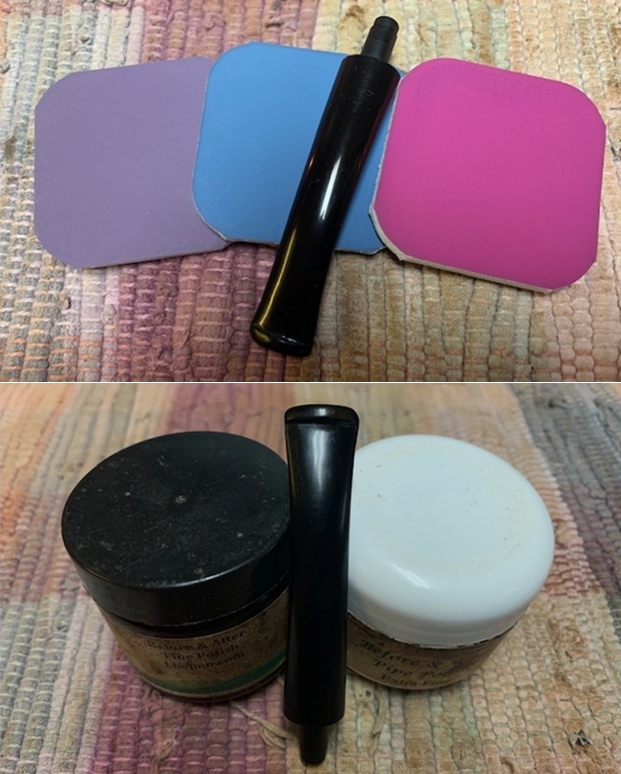
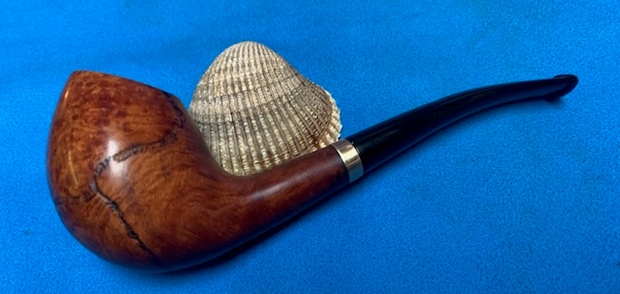
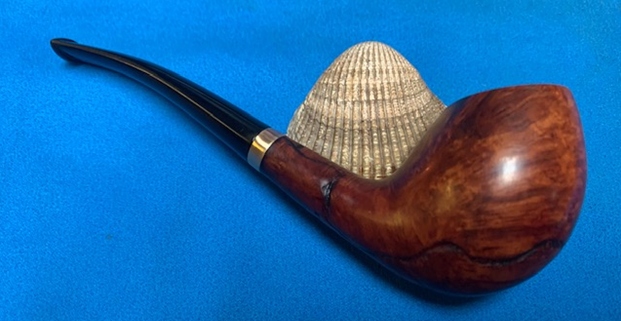
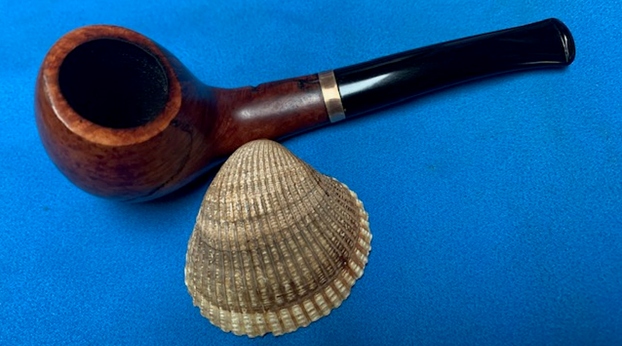
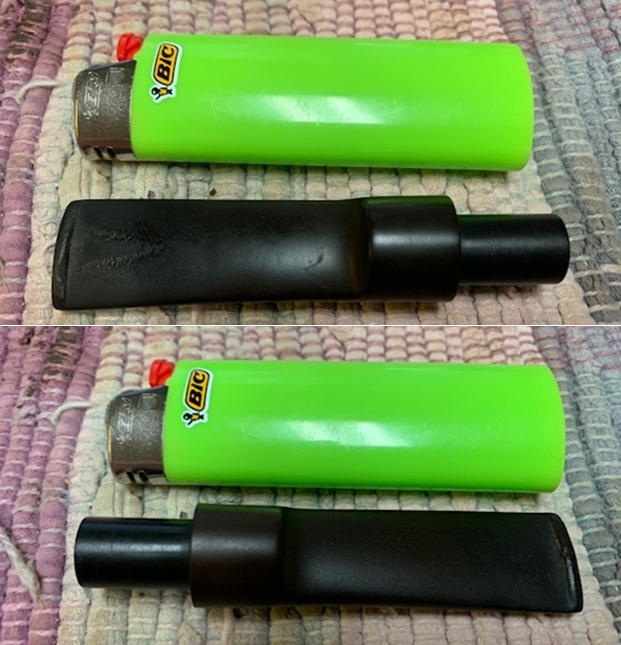
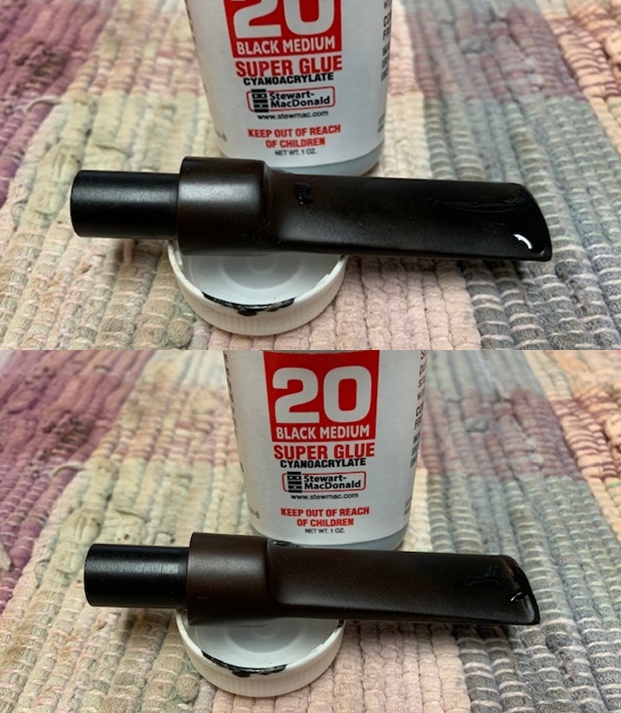
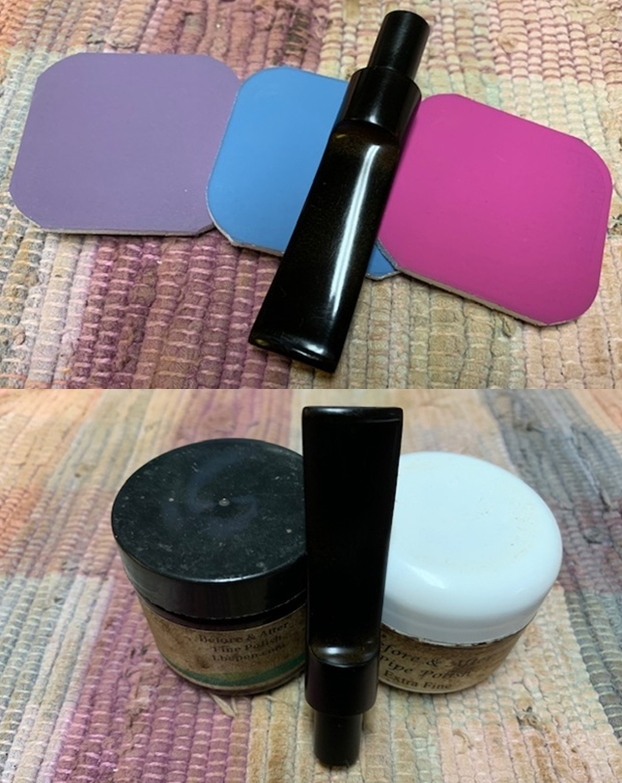
Now it was time to work on the pipe. I reamed the pipe with a PipNet Pipe Reamer and took the cake back to bare briar. I cleaned up the remnants of the cake in the bowl with a Savinelli Fitsall Pipe Knife. I sanded the bowl with a piece of 220 grit sandpaper wrapped around a dowel. I scraped off the rim top with a pen knife to remove the lava top coat on the rim. The rim looked better with the lava removed. I scrubbed the exterior of the bowl with a tooth brush and undiluted Murphy’s Oil Soap. I rinsed it off with running water to remove the soap and the grime. The pipe looked better and the grain stood out nicely.  With the externals cleaned I moved onto the shank. I scraped it with a dental spatula and removed the buildup of tars and oils on the internal walls. I scrubbed the internals of the shank and mortise, the vulcanite stem and the shank with pipe cleaners, cotton swabs and alcohol. I worked on them until they were clean.    I worked on the damaged rim top and damage to the edges. I topped the bowl on a topping board with 220 grit sandpaper. I reworked the inner edge of the bowl with a folded piece of 220 grit sandpaper. I started polishing it with 400 grit wet dry sandpaper.  I polished the bowl and rim top with micromesh sanding pads – wet sanding with 1500-12000 grit pads and wiping the briar down with a damp cloth after each sanding pad.     I rubbed the bowl down with Before & After Restoration Balm. I worked it into the surface of the bark on the bowl sides and shank with my fingertips to clean, enliven and protect it. I let the balm sit for a little while and then buffed with a cotton cloth to raise the shine.  I set the bowl aside and turned my attention to the stem. Before I went to lunch I dropped the stem in a bath of Briarville’s Pipe Stem Oxidation Remover. It would soak for the afternoon and in later I would see what it did.  I took it out of the bath and scrubbed it off with a paper towel and was able to remove the oxidation and calcification. The stem looked amazingly better at this point in the process. There were deep tooth marks in the stem surface on both sides. I “painted” the tooth marks and chatter with the flame of a lighter to lift them. I was able to lift most of them. Even the deeper marks came up significantly. I filled in the remaining marks with black superglue and set it aside to cure.   Once the repairs cured I smoothed them out with a file. I sanded it with 220 grit sandpaper to further blend them into the surface of the vulcanite. I started polishing the stem with 400 grit wet dry sandpaper. I polished the vulcanite with micromesh sanding pads – 1500-12000 grit pads. I wiped it down with a damp cloth after each sanding pad. I used Before & After Pipe Polish – both Fine and Extra Fine to further polish the stem.   This Leonard Payne Classic Bent Bulldog is a great looking pipe that is void of the Payne innovations. The smooth finish on the pipe looks good and works well with the polished vulcanite taper stem. I put the stem back on the bowl and carefully buffed the pipe with Blue Diamond on the buffing wheel. I gave the bowl and stem multiple coats of carnauba wax on the buffing wheel and followed that by buffing the entire pipe with a clean buffing pad. I hand buffed the pipe with a microfiber cloth to deepen the shine. The finished Canadian Made Leonard Payne Classic is a great looking pipe that looks almost new. The flow of the grain around the bowl and the shape contribute to the beauty of this pipe. It fits nicely in the hand and feels great. Give the finished pipe a look in the photos below. The dimensions of the pipe are Length: 5 ½ inches, Height: 1 ½ inches, Outside diameter of the bowl: 1 ½ inches, Chamber diameter: ¾ of an inch. The weight of the pipe is 38grams/1.38oz. This one will soon be on the rebornpipes online store. If you are interested in carrying on the legacy of this Canadian Made pipe let me know. Thanks for reading this blog and my reflections on the pipe while I worked on it. This was an interesting pipe to bring back to life.

Breathing Life into a Leonard Payne Select Freehand System Pipe


Blog by Steve Laug

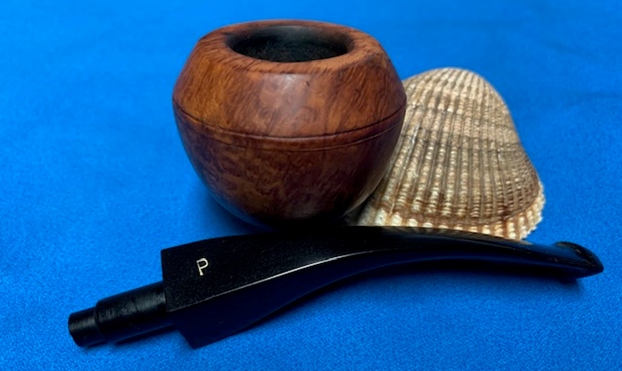
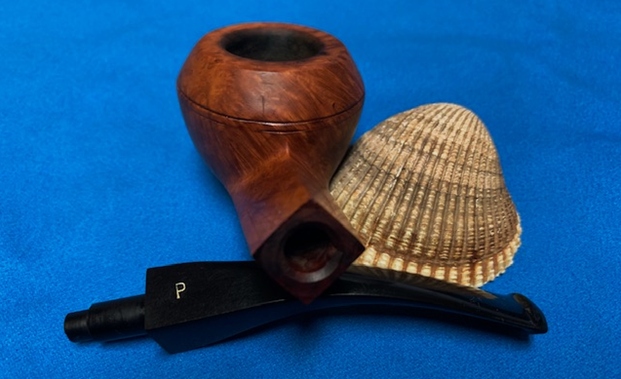
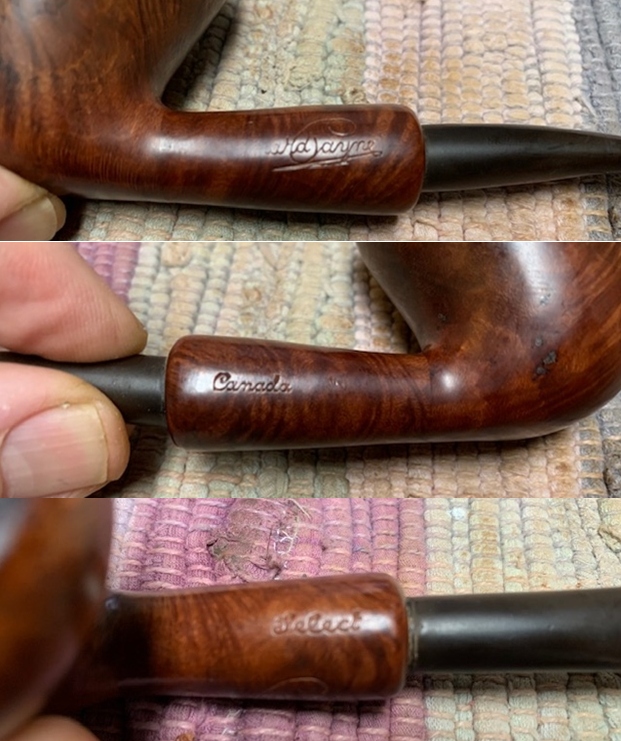
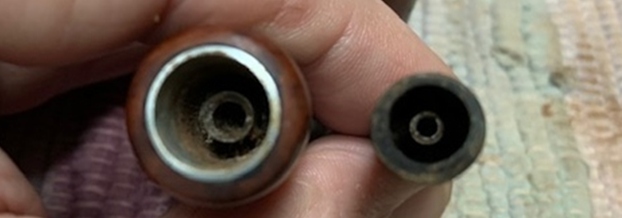
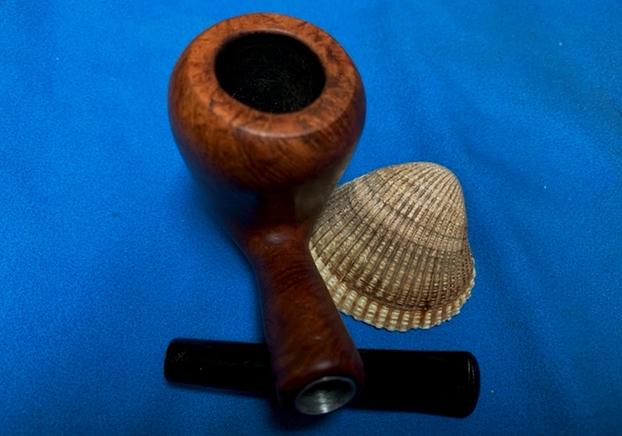
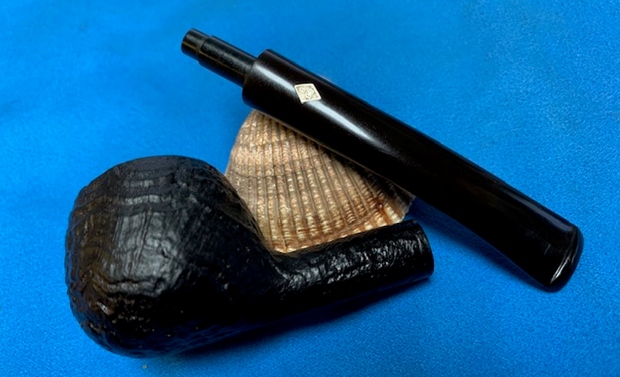
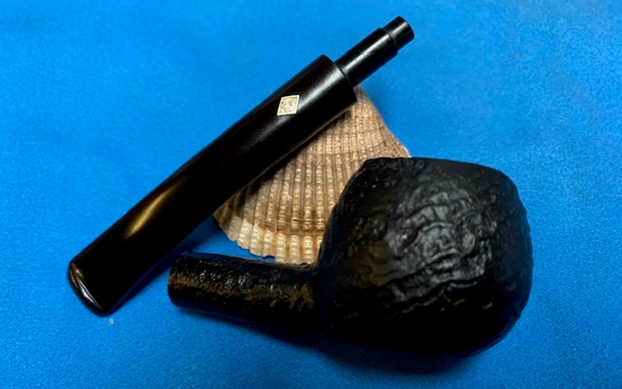
The next pipe on the work table is an interesting piece that came to us from one of our pipe hunts – maybe one of them in Alberta. It is another Leonard Payne pipe that is very interesting. The bowl has a Dublinesque shape and the shank is also flared. The pipe is stamped on the left side of the shank and reads Leonard Payne in an underscored signature style. On the top of the shank it is stamped Select in script. On the right side it is stamped Canada. There is some darkening around the shank bowl junction that when examined appears to be a rejoined shank and bowl. This is a classic Leonard Payne practice that he claimed strengthened the pipe at its weakest point. The aluminum system piece is inserted in the shank and has a tube inside it. The vulcanite stem also has a tube in it. To me it is a lot like Keyser Hygienic pipe in terms of the system structure. The bowl has a thick cake that overflows onto the rim top as lava. There are some nicks and scratches on the top and edges. The exterior was very dirty with grime and debris ground into the finish on the bowl. The inside of the aluminum shank insert is filled with tar and oils the same as the stem is. The vulcanite stem is oxidized, calcified, scratched and has tooth marks and chatter on both sides ahead of the button. I took some photos of the pipe before I did any clean up.    I took photos of the rim top and the stem. The photo of the rim top shows the damage and the cake in the bowl and lava on the top. The stem photos show the oxidation, calcification and tooth chatter and light marks. I took photos of the stamping on the top, right and left side of the shank. The stamping on the left side is the Leonard Payne signature. The stamping on the left side reads CANADA. The stamping on the top of the shank reads Select.   I reread several of the blog I have written on the brand in the past restorations of Payne pipes and decided to include the material on the brand before I write about the cleanup of the pipe. I am including advertisement for Leonard Payne’s pipes. Here is the link to the blog (https://rebornpipes.com/2013/11/16/a-pipe-maker-i-had-never-heard-of-leonard-payne-pipes/).
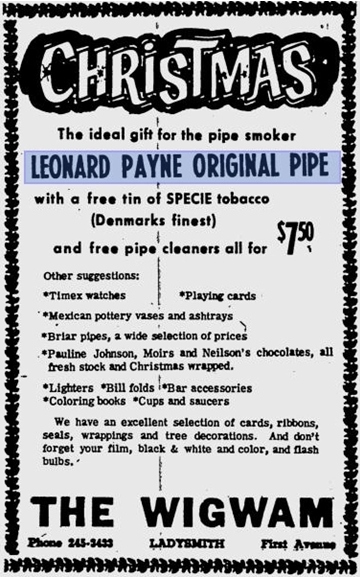
Further digging with Google came up with this short note from alt.smokers.pipes forum. It was written by Mike Glukler of Briar Blues. I quote it below in full. (https://groups.google.com/forum/#!topic/alt.smokers.pipes/RrICLiVgE2o)  “Leonard Payne was based in B.C. for many years. He came to Canada from England. He had shops in Surrey, B.C. and Kelowna, B.C. Interesting fellow. Gruff as the day is long. When you bought a pipe it was handed to you in a paper bag. No sock, no box. Most of his pipes carried a “carburetor” system at the shank / stem junction. Another Payne idea was his shanks. Almost all his pipes were two pieces. He’d turn the bowl and shank, then cut off the shank and reattach with glue (not always with the same piece of briar, so many did not match grains). His thinking was that the shank being the weakest link, if cut and glued would never break and thus “correcting” the weakest link. You may find his pipes on E-Bay on occasion listed as a Len Cayne. The P in his stamping looks more like a fancy upper case C.”

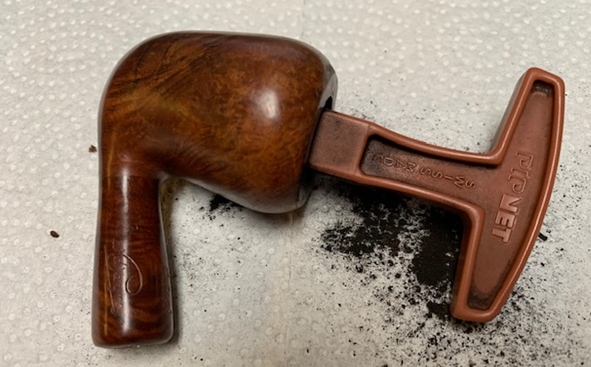
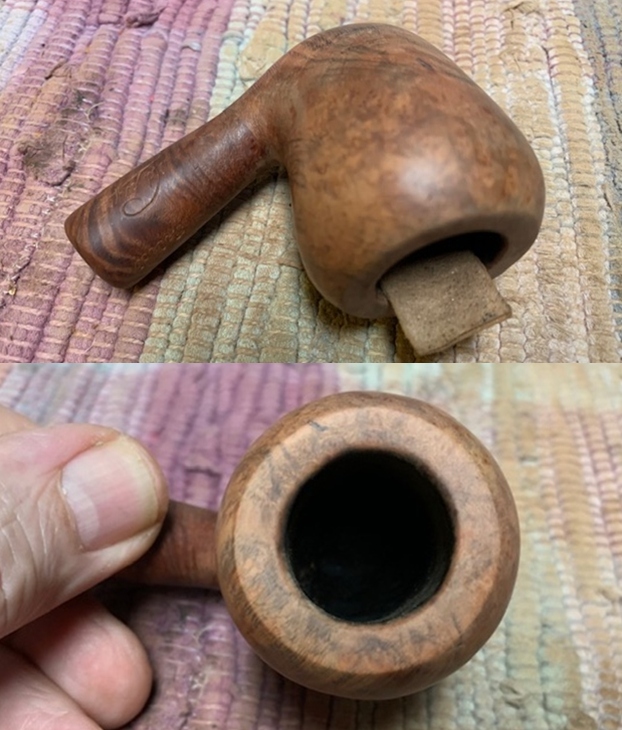
The pipe I am working on fits Mike’s information perfectly. First, there was a carburetor system on this pipe. The aluminum shank extension has a tube in it that matches a tube in the inside of the military bit stem.The second part of the information from Mike regards the shank and bowl connection. It was obvious that the shank had been cut off the shank and reattached with glue. It was Payne’s belief that since the shank was the weakest link cutting it off and gluing on would remove the possibility of it breaking in the future.  I have marked the joint in the photos below with red arrows. The line is at the center of the two arrows. Now it was time to work on the pipe. First I took the pipe apart and took the following photo of the pipe. It was very dirty and needed to be thoroughly cleaned. I reamed the pipe with a PipNet Pipe Reamer and took the cake back to bare briar. I cleaned up the remnants of the cake in the bowl with a Savinelli Fitsall Pipe Knife. I sanded the bowl with a piece of 220 grit sandpaper wrapped around a dowel. I scraped off the rim top with a pen knife to remove the lava top coat on the rim. The rim looked quite good with the lava removed. I reworked the inner edge of the bowl and the rim top with a folded piece of 220 grit sandpaper. I started polishing it with 400 grit wet dry sandpaper.   I scrubbed the exterior of the bowl with a tooth brush and undiluted Murphy’s Oil Soap. I rinsed it off with running water to remove the soap and the grime. The pipe looked better and the small fills around the bowl sides were very visible. With the externals cleaned I cleaned the internals on the metal fitment, the vulcanite stem and the shank with pipe cleaners, cotton swabs and alcohol. I worked on them until they were clean.   I repaired the fills on the bowl sides with clear super glue and briar dust. Once the repairs cured I sanded them smooth to blend them into the surface with a folded piece of 220 grit sandpaper.    I polished the bowl and rim top with micromesh sanding pads – wet sanding with 1500-12000 grit pads and wiping the briar down with a damp cloth after each sanding pad.   I rubbed the bowl down with Before & After Restoration Balm. I worked it into the surface of the bark on the bowl sides and shank with my fingertips to clean, enliven and protect it. I let the balm sit for a little while and then buffed with a cotton cloth to raise the shine.  I set the bowl aside and turned my attention to the stem. Before I turned out the shop lights for the evening I dropped the stem in a bath of Briarville’s Pipe Stem Oxidation Remover. It would soak overnight and in the morning I would see what it did.I polished the vulcanite with micromesh sanding pads – 1500-12000 grit pads. I wiped it down with a damp cloth after each sanding pad. I used Before & After Pipe Polish – both Fine and Extra Fine to further polish the stem. This Leonard Payne Select Freehand System Pipe is a great looking pipe that has all of the classic Leonard Payne innovations – the carburetor and the cut off and glued on shank to strengthen the connection. The smooth finish on the pipe looks good (even with the small fills) and works well with the polished vulcanite, military style taper stem. I put the stem back on the bowl and carefully buffed the pipe with Blue Diamond on the buffing wheel. I gave the bowl and stem multiple coats of carnauba wax on the buffing wheel and followed that by buffing the entire pipe with a clean buffing pad. I hand buffed the pipe with a microfiber cloth to deepen the shine. The finished Canadian Made Leonard Payne Select is a great looking pipe that looks almost new. The flow of the grain around the bowl and the shape contribute to the beauty of this pipe. It fits nicely in the hand and feels great. Give the finished pipe a look in the photos below. The dimensions of the pipe are Length: 6 inches, Height: 2 ¼ inches, Outside diameter of the bowl: 1 ½ inches, Chamber diameter: ¾ of an inch. The weight of the pipe is 54grams/1.90oz. This one will soon be on the rebornpipes online store. If you are interested in carrying on the legacy of this Canadian Made pipe let me know. Thanks for reading this blog and my reflections on the pipe while I worked on it. This was an interesting pipe to bring back to life.
Restoring a Parker of London Jockey Club  570 Bent Apple


Blog by Steve Laug

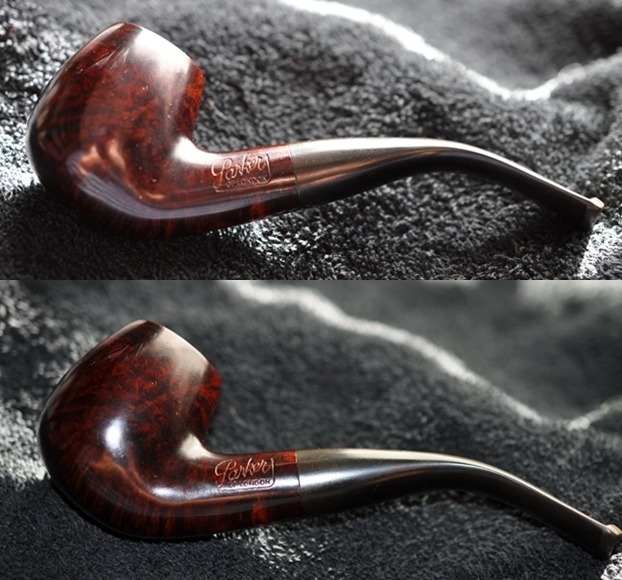
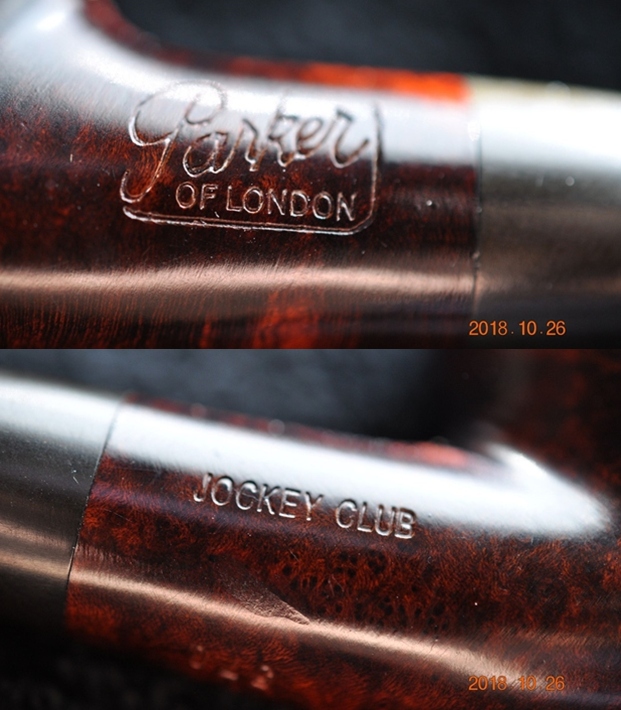
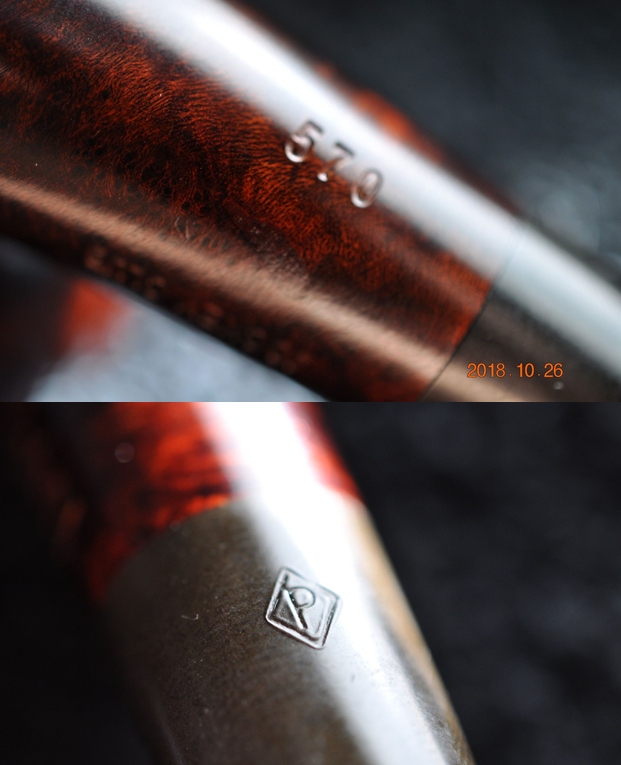
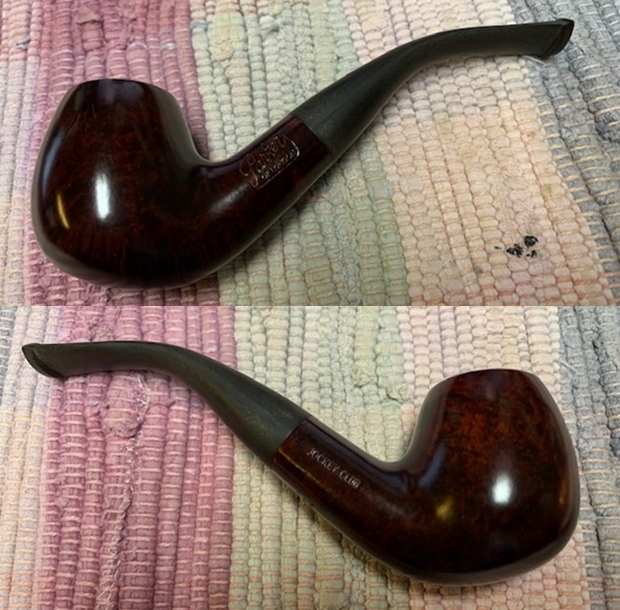
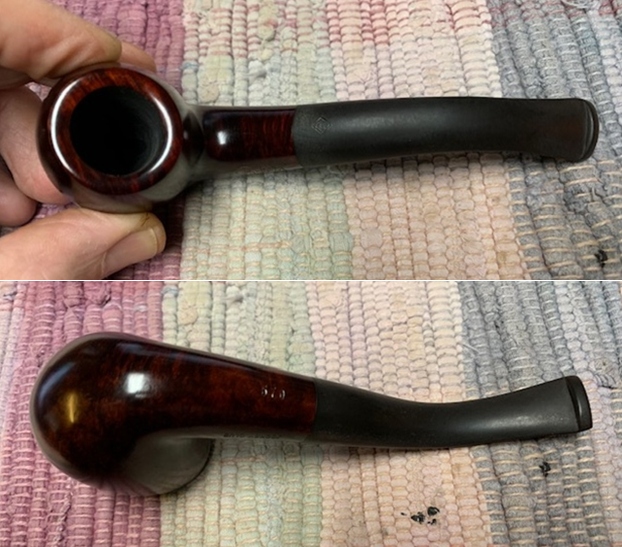
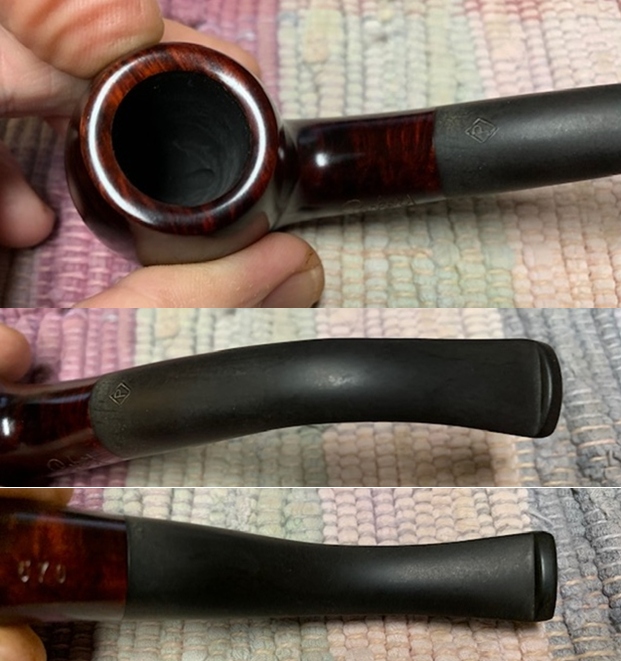
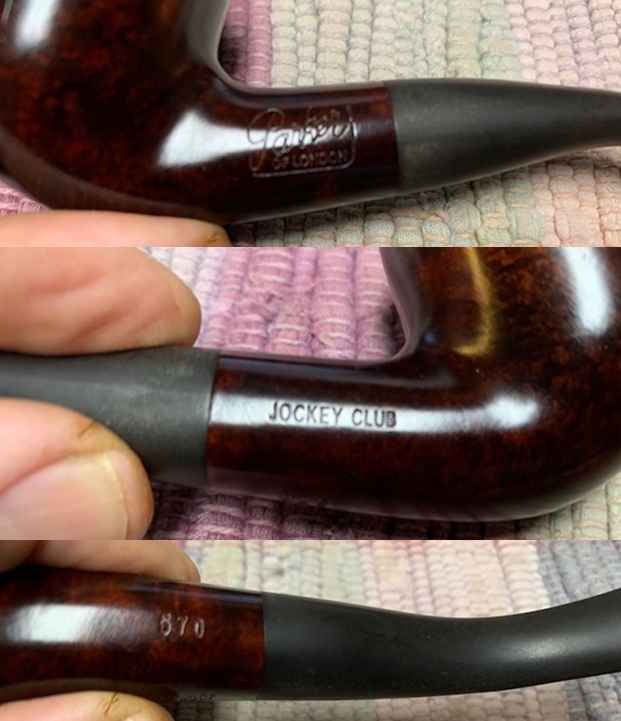
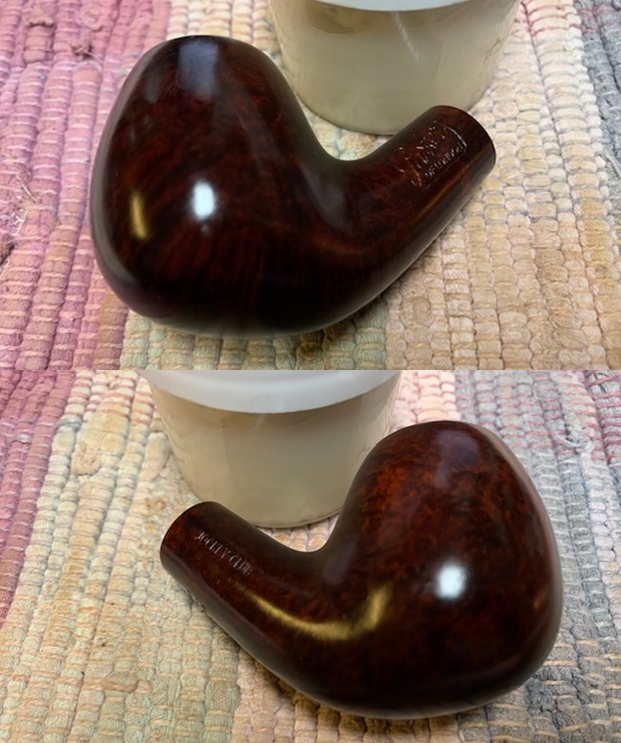
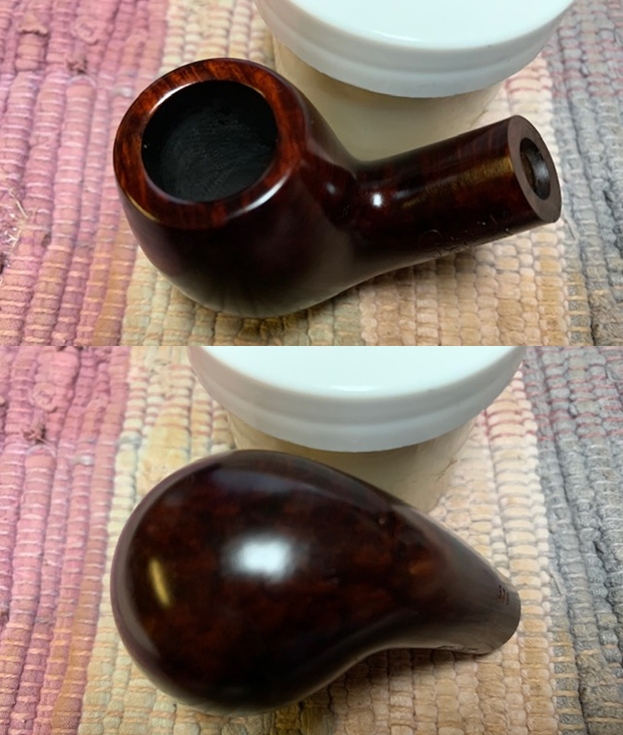
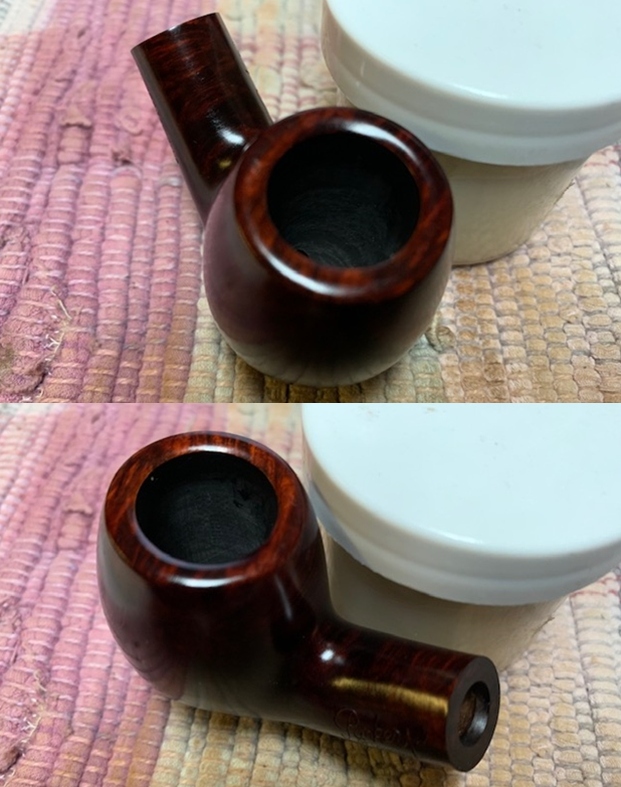
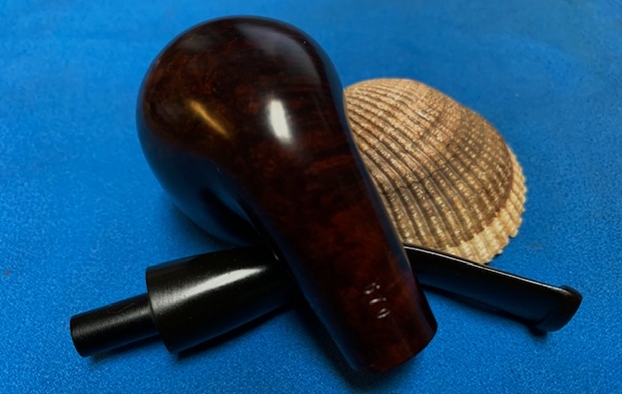
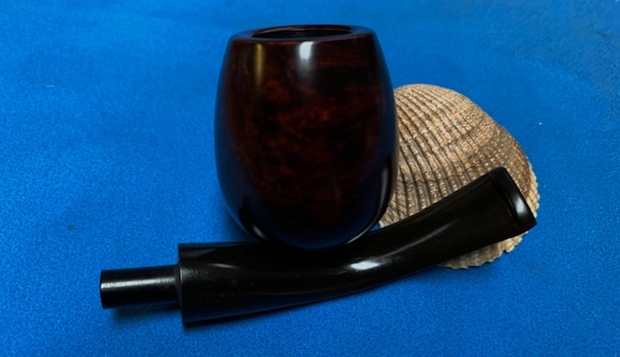
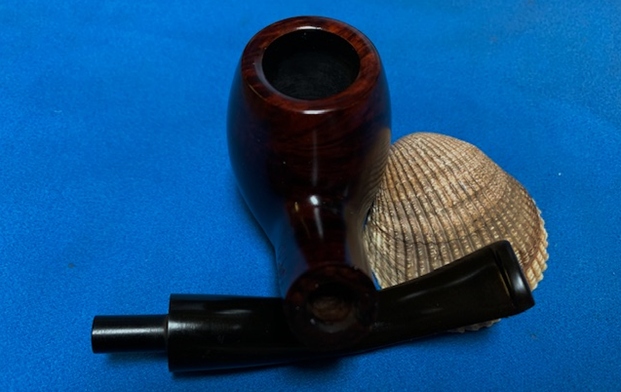
The next pipe on the work table came to us from an auction in Ancram, New York, USA. It is a nice looking mixed grain in a shape Parker identifies as a bent apple with a taper stem. The bowl has a rich reddish brown/ oxblood colour combination that highlights grain. The pipe was in surprisingly good condition. There was some grime ground into the surface of the briar. This pipe is stamped on the sides of the shank. On the left it reads Parker [over] of London. On the right it read Jockey Club and the underside of the shank it is stamped with the shape number 570. The taper stem has a Parker “P” in a Diamond logo on the top side. There is a light cake in the bowl and a few spots of lava on the edges of the rim top. The crowned rim top and edges look very good. The stem was oxidized but there were no tooth marks on the stem surface. The pipe looks to be in good condition other than being dirty. Jeff took photos of the pipe before he started his cleanup. He took a photo of the rim top to show condition of the bowl. The inner edge of the bowl looks good other than a little lava on the right inner edge. The top and outer edge also look okay. It is a very clean pipe. He also captured the condition of the stem. It is oxidized, calcified and has light tooth marks and chatter on the top and underside of the stem near the button.  He took photos of the sides and heel of the bowl to show the beautiful grain around the bowl and the condition of the pipe. He took a photo of the stamping on the sides of the shank. It is clear and readable as noted above.  I turned first to Pipephil’s site to look at the Parker write up there and see if I could learn anything about the line (http://www.pipephil.eu/logos/en/logo-parker.html). There was a Parker of London pipe listed and the stamping matched the one that I am working on but there was no information on the Jockey Club.

I looked up the Parker brand on Pipedia to see if I could find the Parker of London Jockey Club (https://pipedia.org/wiki/Parker). There was nothing that tied directly to the line I am working on. There is a decent history of the brand there that is a good read.

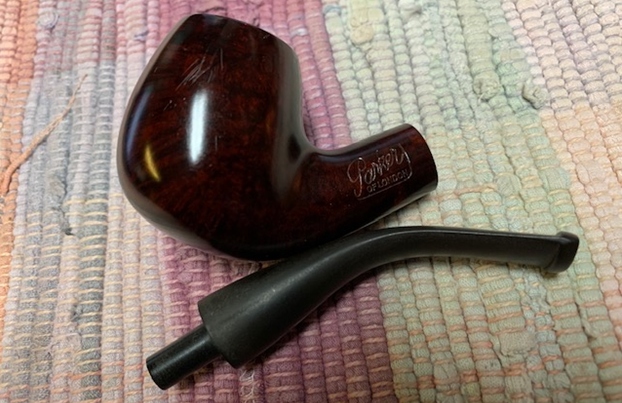
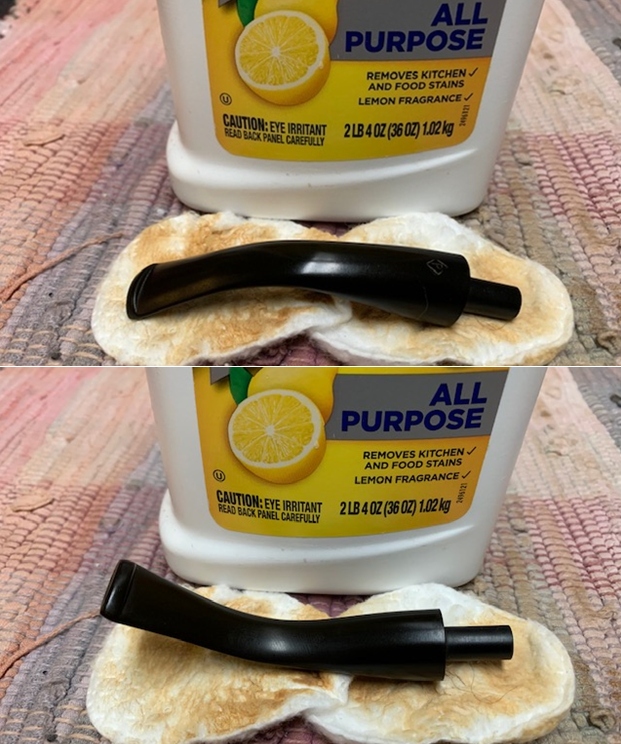
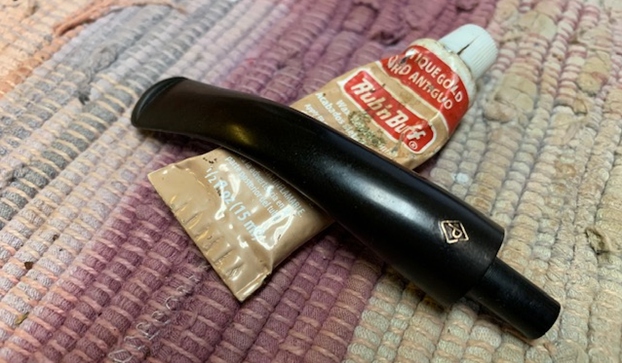
It was time to work on the pipe. As usual Jeff had done a thorough cleanup on the pipe. He reamed the bowl with a PipNet pipe reamer and followed up with a Savinelli Fitsall pipe knife to remove the cake. He scrubbed out the mortise and the airway in the shank and the stem with alcohol, cotton swabs and pipe cleaners. He scrubbed the exterior of the bowl, rim, shank and stem with a tooth brush and Murphy’s Oil Soap to remove the oils and tars on the rim and the grime on the finish of the bowl. He rinsed it under running water. One of the benefits of this scrub is that it also tends to lift some of the scratches and nicks in the surface of the briar. He dried it off with a soft cloth. He cleaned the internals and externals of the stem with alcohol, pipe cleaners and cotton swabs. He soaked the stem in Before & After Deoxidizer and rinsed it off with warm water and cleaned out the airway in the stem with alcohol. Other than the damaged rim top the pipe looked good. I took a photo of the rim top and stem to show the condition. The rim top and edges looked very good. The vulcanite taper stem had light oxidation remaining and light tooth chatter and marks on both sides ahead of the button and on the button edges.   The stamping on the sides of the shank is clear and readable as noted above.     I removed the stem from the shank and took a photo of the pipe to give a sense of the whole. It is a nicely shaped pipe that Parker called a Bent Apple that should clean up very well.   There were some small scratches on the left side of the bowl toward the top. I decided to leave them so as not to damage the sheen of the finish that was otherwise in excellent condition. I rubbed the bowl and shank down with Before & After Restoration Balm. I worked it into the surface of the bowl sides and shank with my fingertips to clean, enliven and protect the briar. I let the balm sit for a little while and then buffed with a cotton cloth to raise the shine. The Balm did its magic and the grain stood out.    I scrubbed the remaining oxidation on the stem with Soft Scrub All Purpose cleanser to remove it. I have found that the product does really well in removing oxidation that remains after soaking in a Before & After  Oxidation bath.   Under a lens it appeared that the Parker “P” Diamond had some gold remaining in the stamping. I used some Rub’n Buff Antique Gold to fill in the Diamond P stamp on the top side of the taper stem. I let it dry the buffed off the excess with a cotton pad.   I polished the vulcanite stem with micromesh sanding pads – 1500-12000 grit pads. I wiped it down with Obsidian Oil after each sanding pad. I used Before & After Pipe Polish – both Fine and Extra Fine to further the stem. The photo below shows the polished stem. This nicely grained Parker of London Jockey Club 570 Bent Apple with a vulcanite taper stem is a great looking pipe now that it has been restored. The briar around the bowl is clean and really came alive. The rich oxblood stains gave the grain a sense of depth with the polishing and waxing. The grain really popped. I put the vulcanite stem back on the bowl and carefully buffed the pipe with Blue Diamond on the buffing wheel using a light touch on the briar. I gave the bowl and the stem multiple coats of carnauba wax on the buffing wheel. I buffed the pipe with a clean buffing pad to raise the shine. I hand buffed the pipe with a microfiber cloth to deepen the shine. The finished Parker Jockey Club Bent Apple is a beauty and feels great in the hand and looks very good. Give the finished pipe a look in the photos below. The dimensions of the pipe are Length: 5 ½ inches, Height: 1 ¾ inches, Outside diameter of the bowl: 1 inch, Chamber diameter: ¾ of an inch. The weight of the pipe is 47grams/1.62oz. This will be going on the rebornpipes store under the British Pipemakers section soon. Thanks for reading this blog and my reflections on the pipe while I worked on it. There are many more to come!

Beautification for another American Made Bertram Washington DC Grade 60 Dark Billiard


Blog by Steve Laug

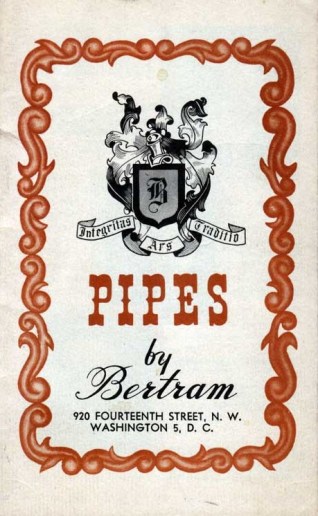
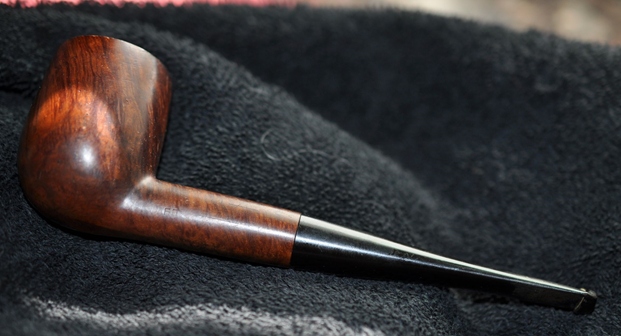
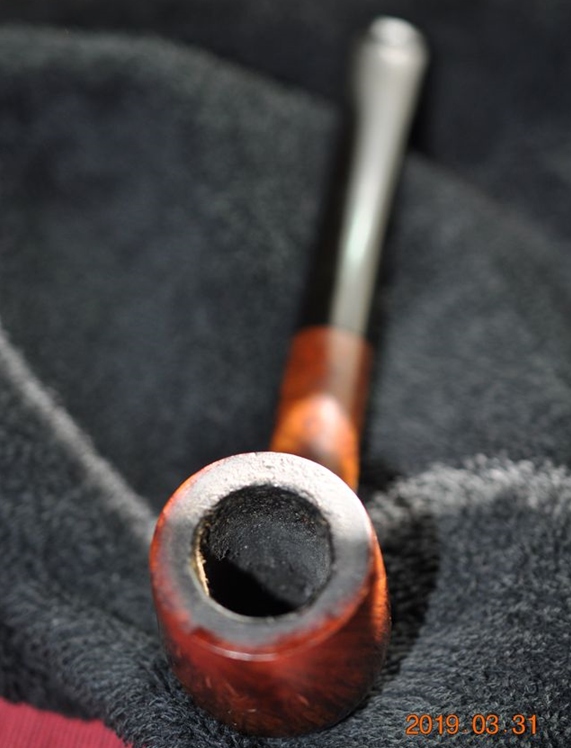
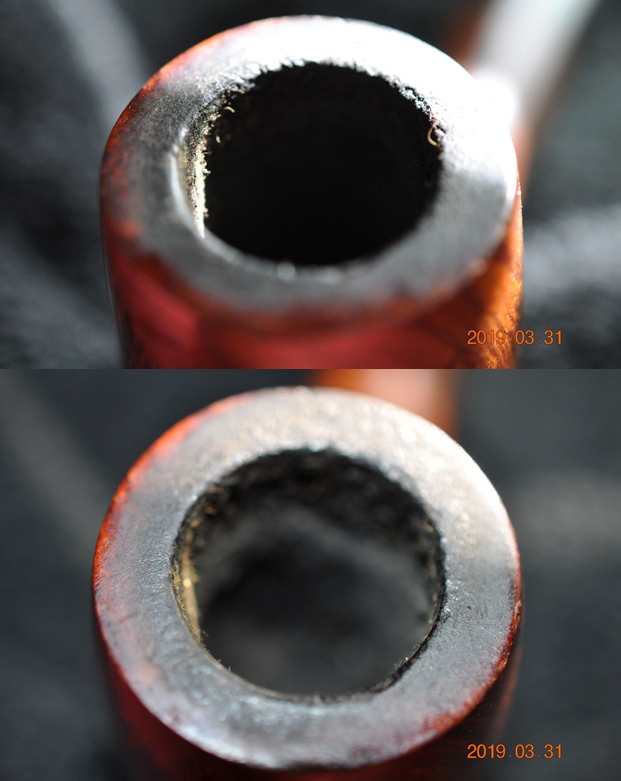
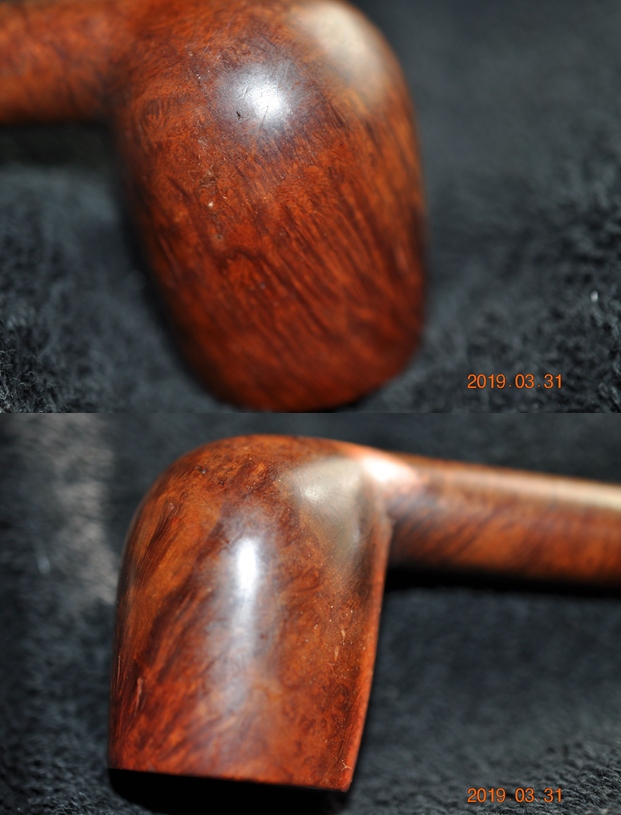
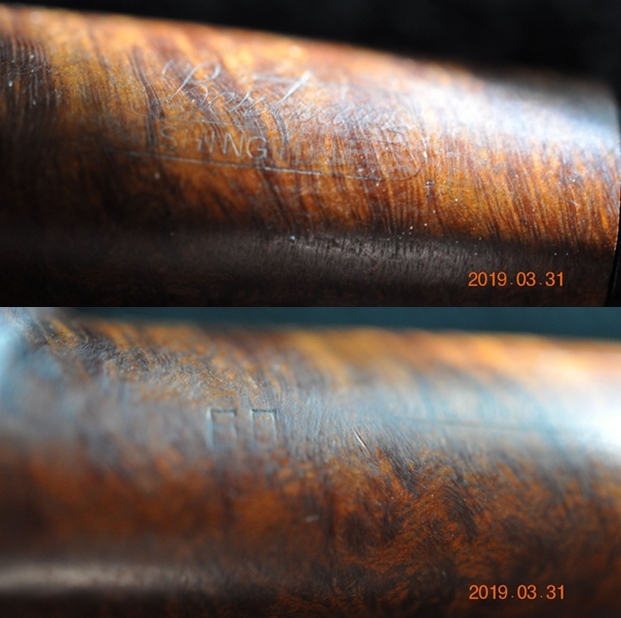
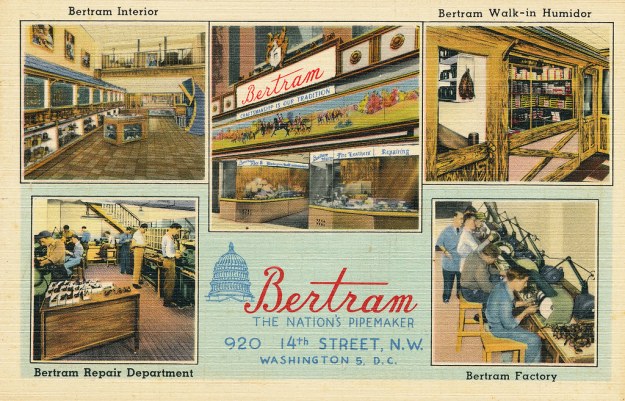
The next pipe on the work table came to me from one of our estate purchases. Between us we pick up quite a few pipes for restoration. I try to work them into the restoration queue so that I can keep them moving. We picked up over 120+ Bertram pipes from an estate that a fellow on the east coast of the US was selling. This next one is from that estate – a beautifully grained Bertram Dark BIlliard Grade 60 with a vulcanite taper stem. The pipe is stamped on the left side of the shank and reads 60. Next to that it is stamped on the top of the left side of the diamond shank it is stamped Bertrams [over] a faintly stamped Washington D.C. centered on the shank. The finish had a lot of grime ground into the smooth finish on the bowl and some darkening around the sides of the bowl. There are also some nicks on the backside of the bowl toward the back top. The bowl was caked with an overflowing lava coat on the top of the rim, heavier toward the back of the bowl. The edges looked okay other than some potential burn damage on the back inner edge. The stem was lightly oxidized, dirty and had light tooth chatter and marks on the top and underside near the button. There were not markings or a logo on the taper stem. Like the rest of the Bertrams in this lot the pipe had promise but it was very dirty. Jeff took photos of the pipe before he started his cleanup work.       He took photos of the rim top and bowl to give a clear picture of the thickness of the cake and the lava on the rim top. The lava was thicker toward the right front of the rim and there were remnants of tobacco on the walls of the thickly caked bowl. He also took photos of the top and underside of the stem to show the chatter and tooth marks. Otherwise the stem is quite clean. Jeff took photos of the sides and heel of the bowl to give a picture of what the briar around the pipe looked like. There is some stunning grain under the grime.     He took a photo of the stamping on the shank. It reads as noted above and is clear and readable. The grade number is on the left side near the bowl and reads 60. As I have worked on Bertrams I have written on the brand and have included the following information. If you have read it in past blogs, you can skip over it. If you have not, I have included the link to Bertram history and information. I would recommend that if you don’t know much about them take some time to read the background. I include a link to the write up on Pipedia (http://pipedia.org/wiki/Bertram). Bertram pipes were based out of Washington DC. They were popular among famous politicians and celebrities of the time. They made many products for them from FDR’s cigarette holders to Joseph Stalin’s favorite pipe. They were considered some of the best America had to offer till they finally closed their doors in the 70s. Bertram graded their pipes by 10s and sometimes with a 5 added (15, 25, 55 etc.), the higher the grade the better. Above 60s are uncommon and 80-90s are quite rare. I have worked on one 120 Grade billiard. I have several blogs that I have written on rebornpipes that give some history and background to Bertram pipes. (https://rebornpipes.com/2015/06/16/an-easy-restoration-of-a-bertram-grade-60-217-poker/). I have included the following link to give a bit of historical information on the pipe company. It is a well written article that gives a glimpse of the heart of the company. http://www.streetsofwashington.com/2012/01/bertrams-pipe-shop-on-14th-street.html#

From this information I learned that all of these Bertrams were made before the closure of the shop in the 1970s. This Bertram Billiard has a nice mix of grain around the bowl. This pipe has a 60 Grade stamp on it which I am sure explains the quality of the briar. But like many of these Bertrams the Grading system is a mystery to me.

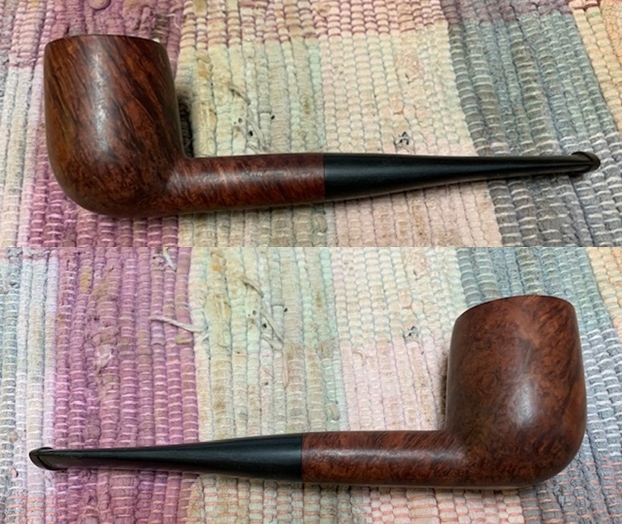
Jeff had cleaned up the pipe with his usual penchant for thoroughness. He reamed the pipe with a PipNet Pipe Reamer and cleaned up the remnants with a Savinelli Fitsall Pipe Knife.  He scrubbed the bowl with undiluted Murphy’s Oil Soap with a tooth brush. He rinsed it under running warm water to remove the soap and grime. He cleaned out the inside of the shank and the airway in the stem with alcohol, cotton swabs and pipe cleaners. He soaked the stem in Before & After Deoxidizer and rinsed it off with warm water. I took photos of the pipe once I received it.    The rim top had some slight darkening on the back of the bowl and some damage to the inner edge. The inner edge of the rim is out of round from the damage. The stem surface had deep tooth marks and chatter on both sides near the button.   I took a photo of the stamping on the shank. The shape number 60 is followed by the brand stamp Bertram [over] Washington DC (faint but readable) is on the top of the left side mid shank. I removed the stem and took a photo of the pipe to give a sense of the whole. The stem is tapered. I started my work on the pipe by cleaning up the inner edge and the rim top with 220 grit sandpaper. I was able to minimize the damage.  I polished the bowl and the rim top, sides and shank with micromesh sanding pads – wet sanding with 1500-12000 grit pads and wiping it down after each pad with a cloth.  I rubbed the bowl and shank down with Before & After Restoration Balm. I worked it into the surface of the bowl sides and shank with my fingertips to clean, enliven and protect the briar. I let the balm sit for a little while and then buffed with a cotton cloth to raise the shine.   I set the bowl aside and turned to work on the stem. Of all the Bertram stems I have worked on from this lot this is yet another pipe that had deep tooth marks. They were tight against the button so they could not be lifted. I filled them in with black super glue and set the stem aside to let the repairs cure. Once the repair cured I used a file to reshape the button edges on both sides. I sanded them smooth with a folded piece of 220 grit sandpaper to blend them into the surrounding vulcanite. I started polishing with 400 grit wet dry sand paper. It was in very good condition so I polished the vulcanite stem with micromesh sanding pads – 1500-12000 grit pads. I wiped it down with a damp cloth after each sanding pad. I used Before & After Pipe Polish – both Fine and Extra Fine to further polish the stem.   This darker stained Bertram Washington DC Grade 60 Billiard with a vulcanite taper stem is a great looking pipe now that it has been restored. I put the stem back on the bowl and carefully buffed the pipe with Blue Diamond on the buffing wheel using a light touch on the briar. I gave the bowl and the stem multiple coats of carnauba wax on the buffing wheel and followed that by buffing the entire pipe with a clean buffing pad. I hand buffed the pipe with a microfiber cloth to deepen the shine. The finished Bertram 60 Billiard fits nicely in the hand and feels great. Give the finished pipe a look in the photos below. The dimensions of the pipe are Length: 6 inches, Height: 2 inches, Outside diameter of the bowl: 1 ¼ inches, Chamber diameter: ¾ of an inch. The weight of this pipe is 47g/1.66oz. If you are interested in adding this pipe to your collection send me a message or an email. Thanks for reading this blog and my reflections on the pipe while I worked on it. There are many more to come!

Reworking and Restoring a Kuhl Record Briar/Bakelite Dublin System


Blog by Steve Laug

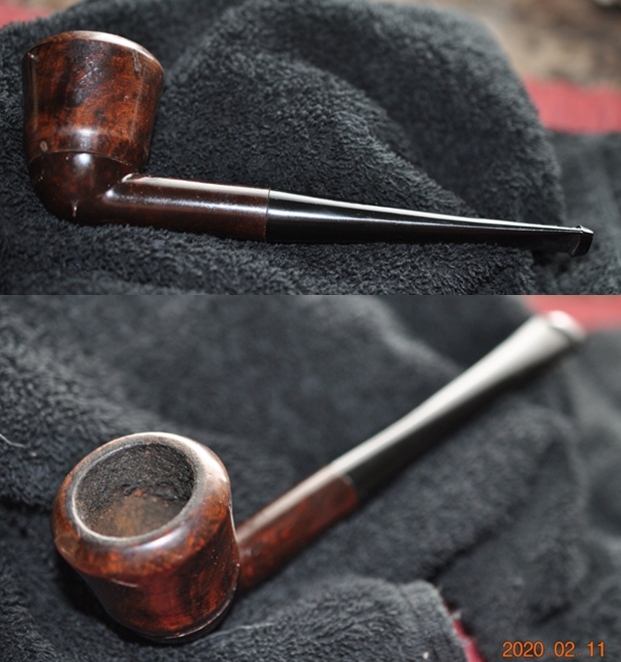
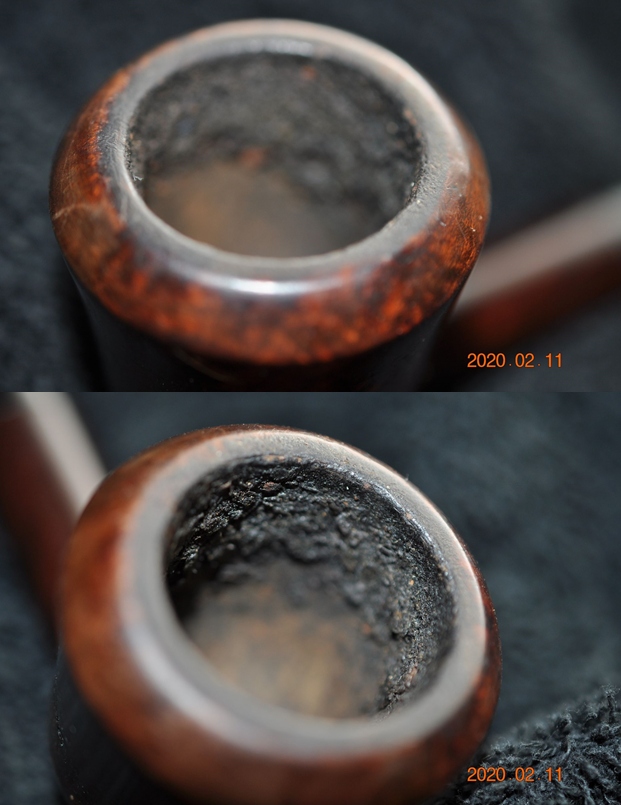
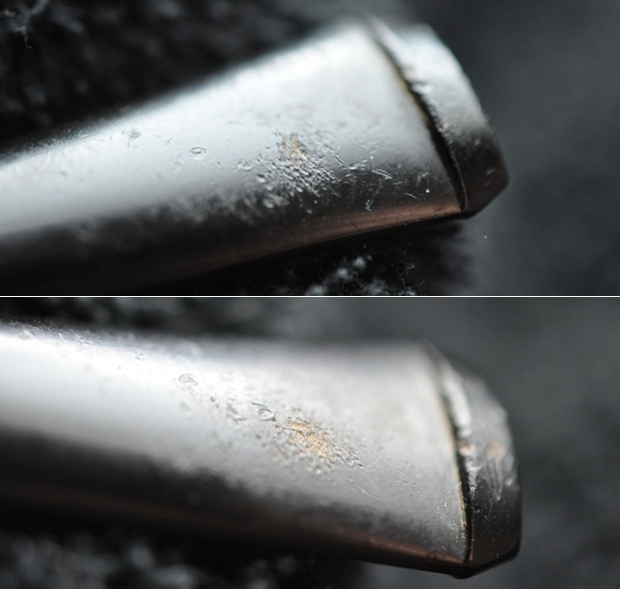
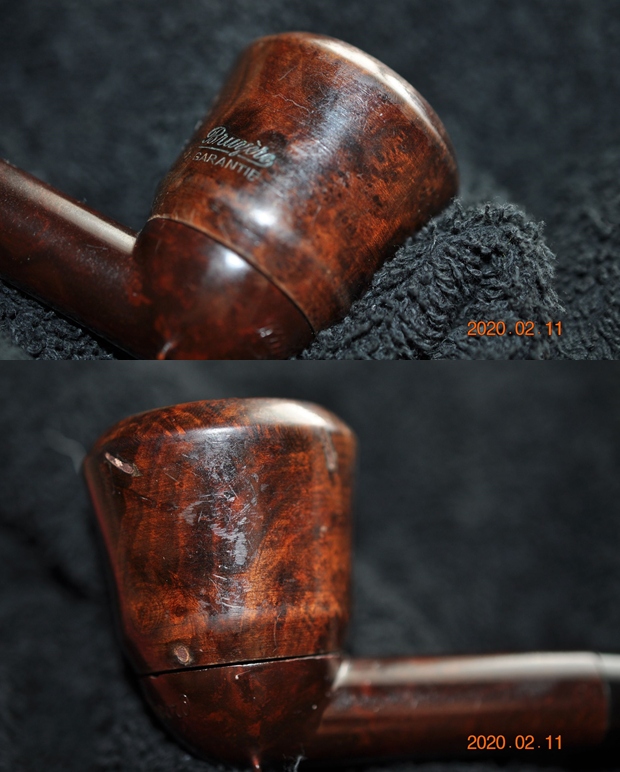
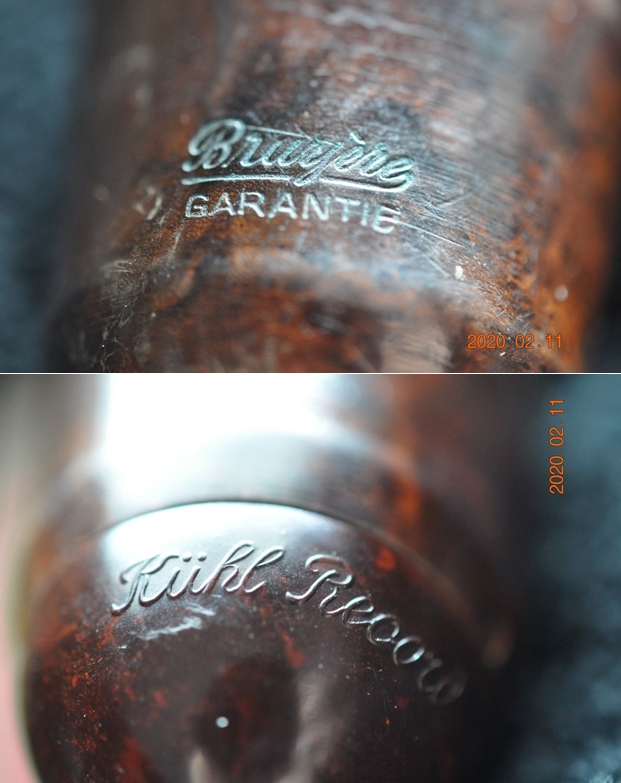
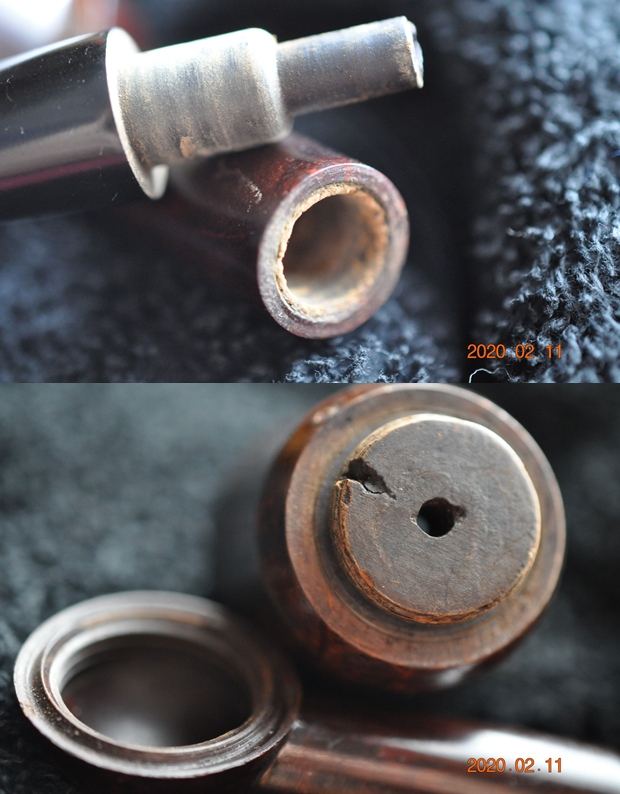
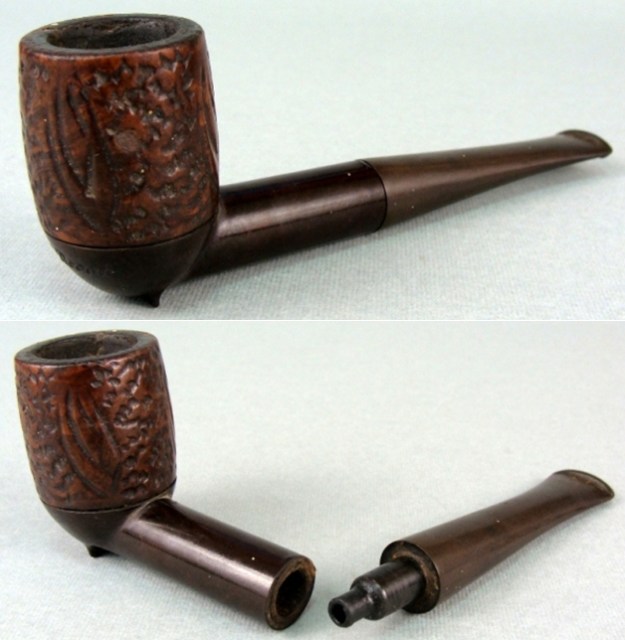
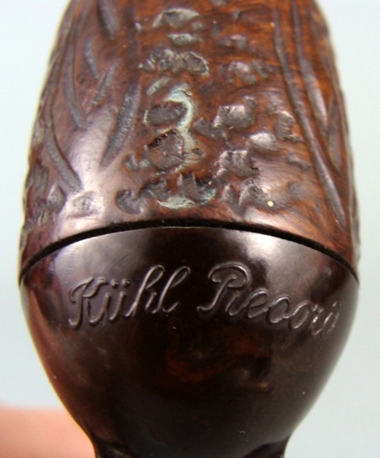
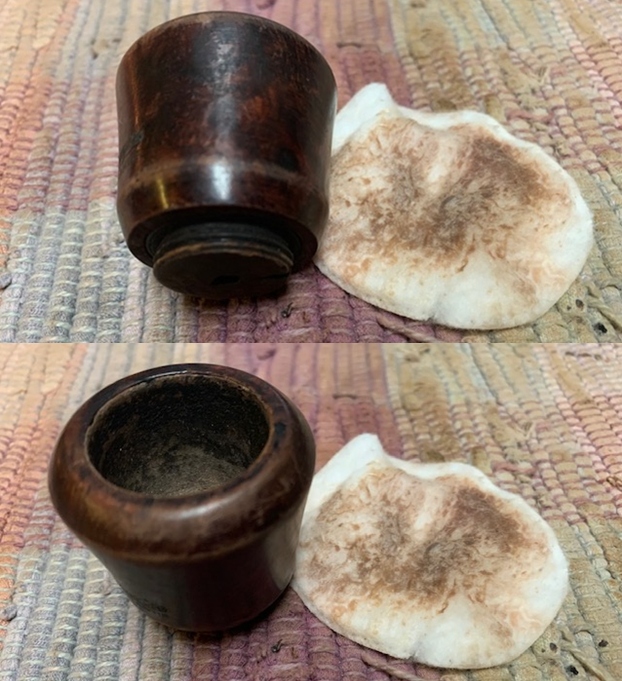
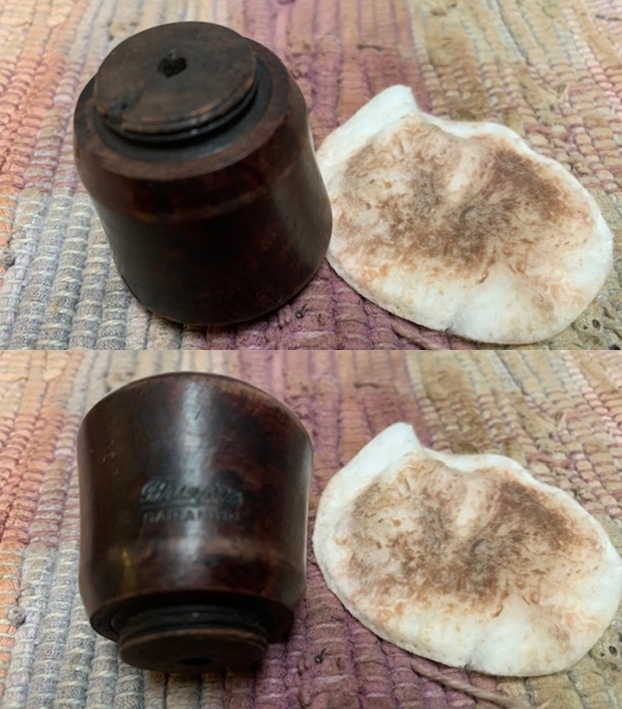
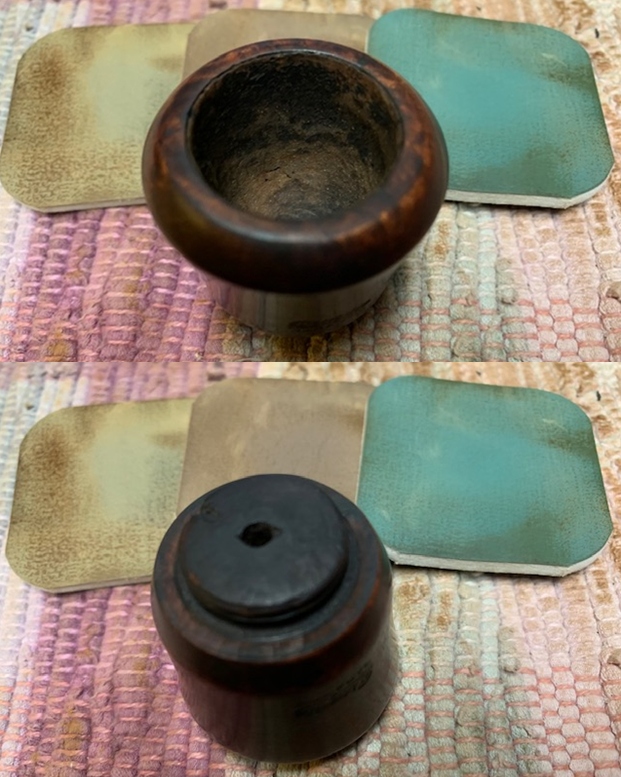
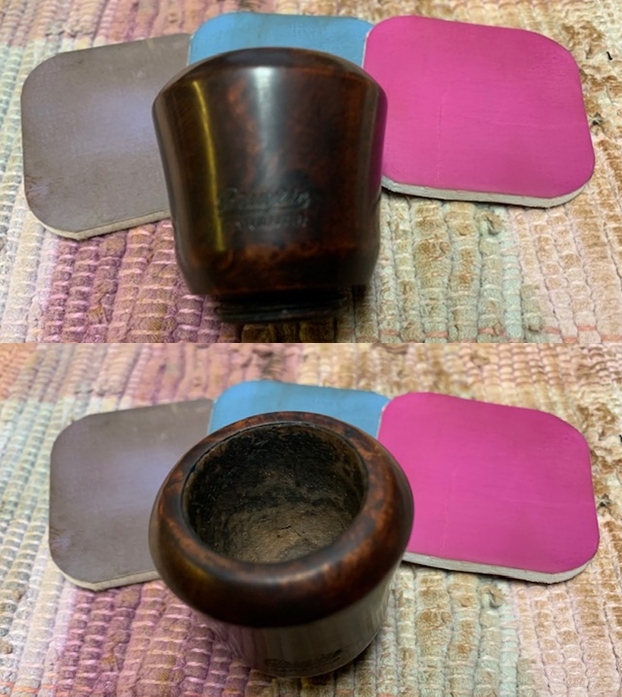
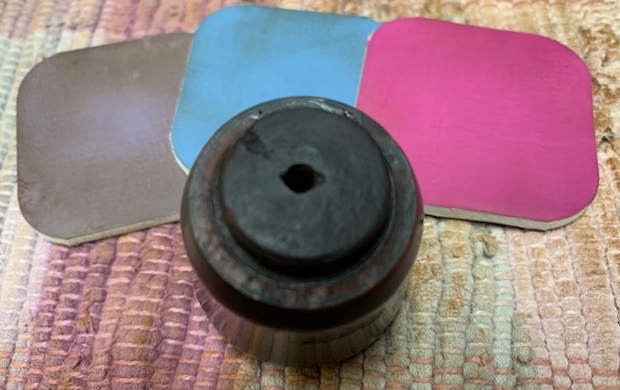
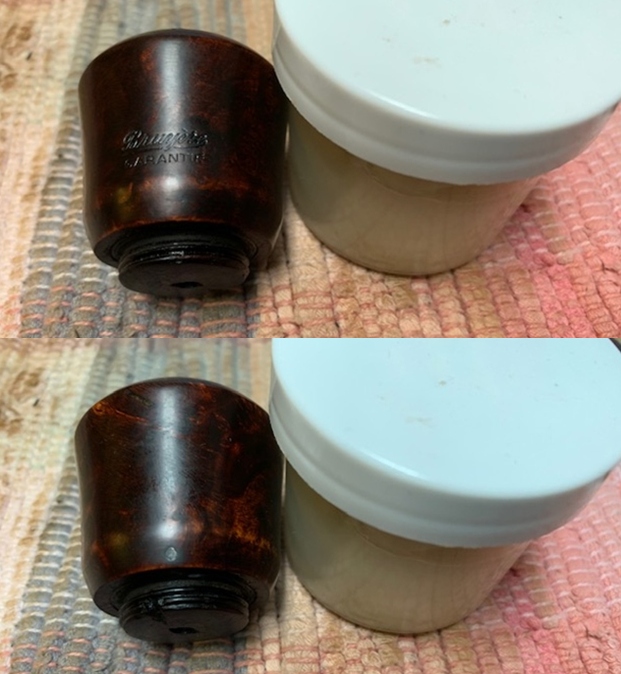
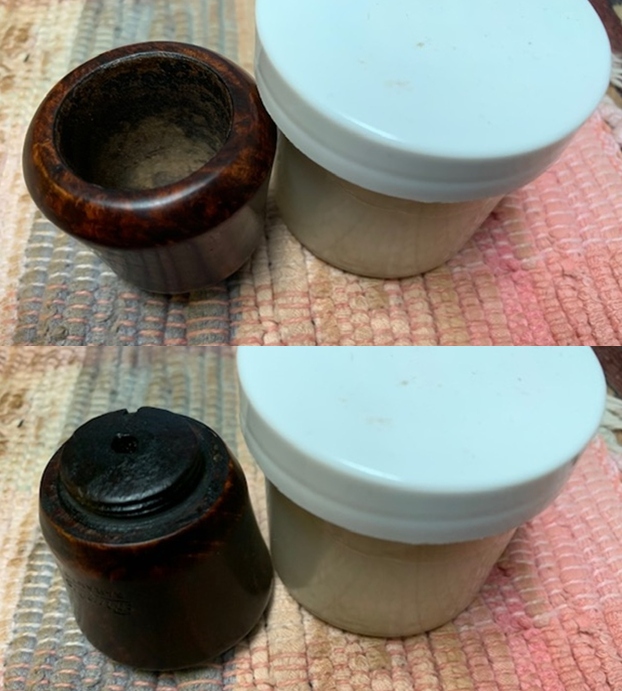
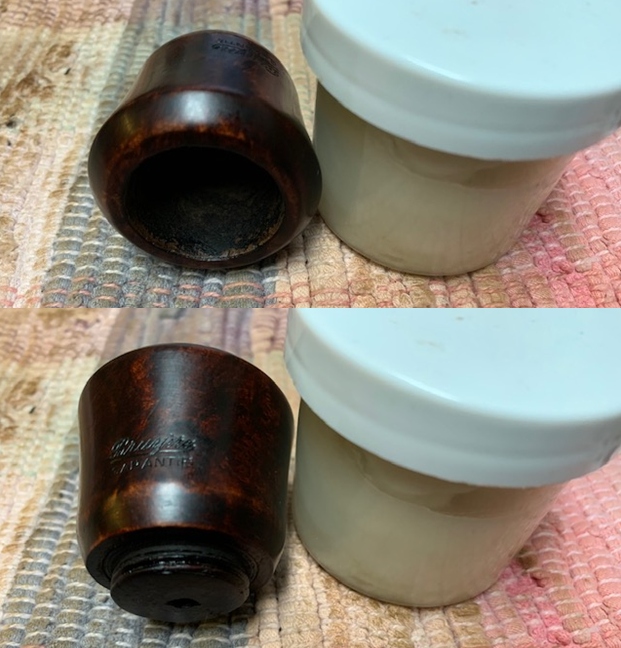
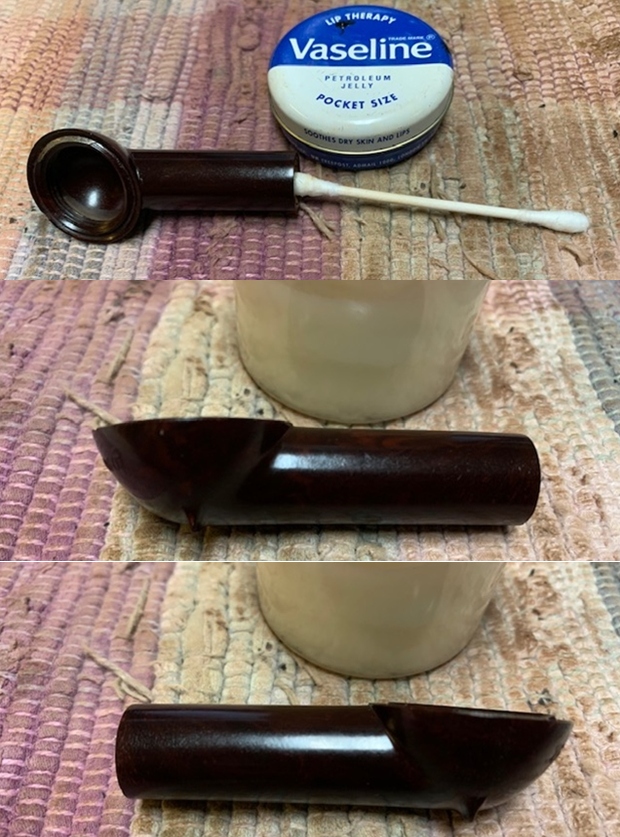
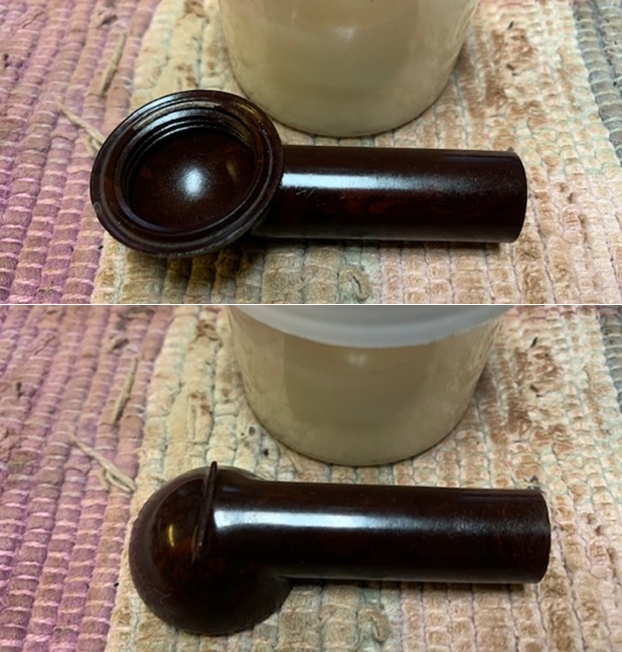
The next pipe on the work table came to us from an antique dealer on the Oregon Coast, USA back in 2019. It has been sitting here for a year. Jeff took photos in in February of this year. Now I am finally getting a chance to work on it. The pipe is a system pipe with a Briar Bowl, a Bakelite base and a vulcanite stem. The pipe was an absolute mess. On the backside of the briar bowl it is stamped with Bruyere [over] Garantie. The Bakelite base is embossed and reads Kuhl Record across the front of the base. The mix of stains were worn and spotty around the bowl but still showed the original orange and brown look even with the grime ground into the finish. It was very dirty with dust and debris ground into the finish. There was a thick cake in the bowl and an overflow of lava on the rim top. The inner edge looks good but we will know for certain once the bowl is reamed and cleaned. The stem was oxidized, calcified and there were light tooth marks and chatter on both sides near the button. Jeff took photos of the pipe before he started working on it. I include those below. Jeff took photos of the bowl and rim top to show the cake in the bowl and the condition of both. It was heavily caked with a lava overflow on the rim top. He took photos of the top and underside of the stem showing the calcification, oxidation and tooth marks on the stem surface and button. He took photos of the sides and heel to show the fit of the bowl to the Bakelite Base as well as the condition of the pipe under the grime.  There were some large fills around the bowl sides that are visible in the photos below. Jeff took two photos to capture the stamping on the backside of the bowl and the front of the Bakelite base. It is clear and readable as noted above.    He removed the stem from the shank and the bowl from the base and took photos of the parts of the pipe. The shank is lined with cork that needs to be rejuvenated but is in good condition. The brand was not listed on either Pipephil’s site or Pipedia. So I googled the name on the web and also found no links.

I turned to the Smoking Metal.co website as I have found it to be very helpful on these mixed material pipes (http://www.smokingmetal.co.uk/pipe.php?page=509). I checked the index page and found the Kuhl Record listed. It gave the following description as well as some photos of the pipe. I have included that below.

KUHL Record Bakelite shank, vulcanite stem, briar bowl. Length: 5 5/8″ height 1 3/4″ diameter of bowl 1 5/8″

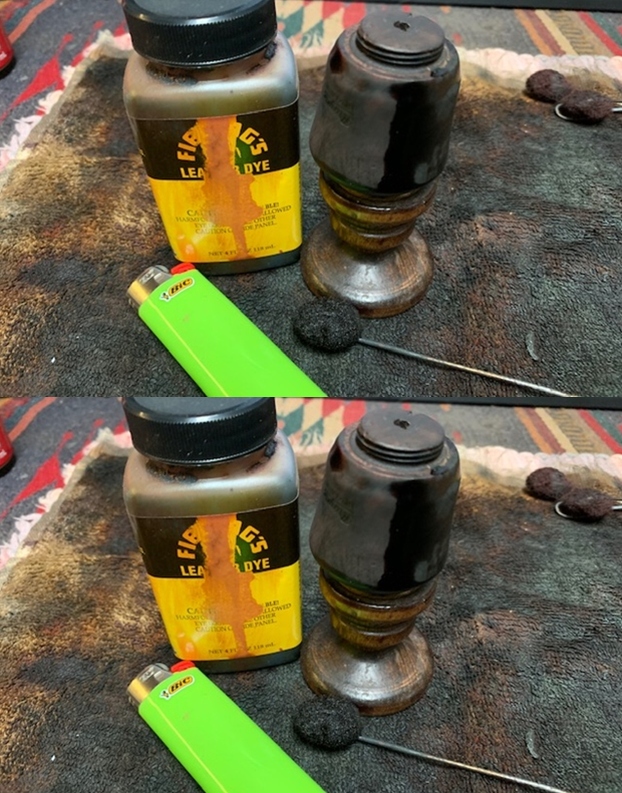
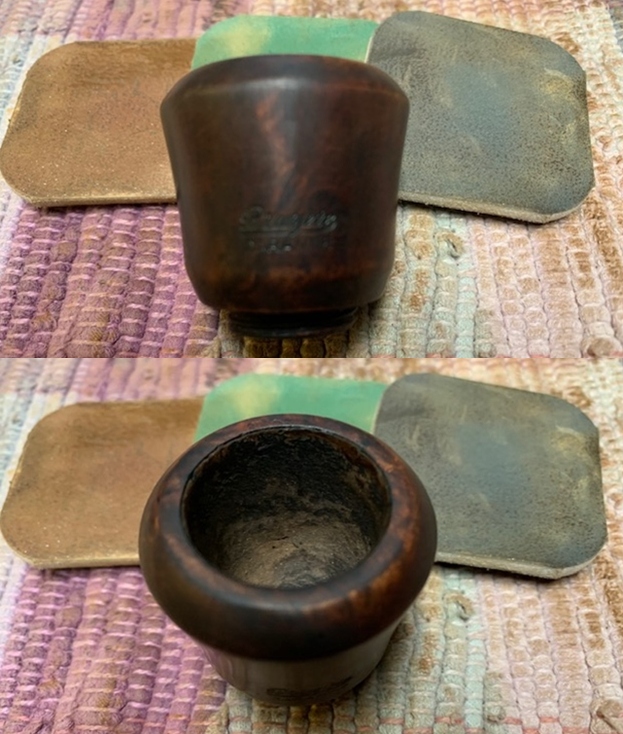
This pipe was a bit of a mess like many of the pipes we work on. I was curious to see what it would look like when I unpacked it. I was surprised at how good it looked. Jeff reamed it with a PipNet pipe reamer and cleaned up the reaming with a Savinelli Fitsall Pipe Knife. He scrubbed out the internals of the shank and stem with alcohol, pipe cleaners and cotton swabs until the pipe was clean. He scrubbed the exterior of the bowl with Murphy’s Oil Soap and a tooth brush to remove the grime and grit on the briar and the lava on the rim top. The finish on the bowl looked really good when I got it. The rim top looked better. The inner edge showed damage at the back side of the bowl. He soaked the stem in Before & After Deoxidizer bath to remove the oxidation. The stem looked better other than the light oxidation that remained and some light tooth marks and chatter on the surface. When the pipe arrived here in Vancouver for the second stop of its restoration tour it looked much better than when he found it. I took photos of the pipe before I started my work on it.  I took photos of the condition of the rim top and stem before I started working. The rim top looks better but the burn damage is very evident at the back of the bowl. The stem has light oxidation remaining and some tooth chatter and marks on both sides near the button.   I took a photo of the stamping on the front underside of the Bakelite base and on the back of the briar bowl. They read as noted above.   I took the bowl and stem apart and took a photo of the pipe to show the look of the pipe. The threads on the right side of the Bakelite base are chipped but they do not affect the fit of the bowl to the base.I started my work on the pipe but addressing the cracking varnish finish on the briar bowl. I wiped it down with acetone and was able break down much of it.   I filled in the damaged fills with super glue and sanded the surface smooth with 220 grit sandpaper to smooth out the repair. I sanded the rest of the bowl at the same time and evened out the finish. I forgot to take photos of the bowl before I stained it but that is the process. Once it was smoothed out I stained it with a dark brown aniline stain and flamed it to set it in the briar.  Once the stain had set in the briar I polished the bowl with micromesh sanding pads – dry sanding with 1500-12000 grit pads to make the stain more transparent an to raise a shine on the briar. I wiped it down with a damp cloth  after each pad.  I worked some Before & After Restoration Balm into the finish of the bowl, rim top and shank with my fingertips to clean, enliven and protect it. I find that the balm really makes the briar come alive again. The contrasts in the layers of stain and the separate finishes really made the grain stand out. I let the balm sit for 15 minutes and then buffed with a cotton cloth to raise the shine. The bowl really looks good at this point. I set aside the bowl and turned my attention to the Bakelite Base. I greased the cork in the shank with Vaseline Petroleum Jelly to enliven and give it back its flexibility.  I rubbed the Bakelite down with Before and After Restoration Balm to rejuvenate it as well as clean and protect it. I put the base aside with the bowl and turned my attention to the stem. I built up the damage to the stem surface with clear super glue. Once the repairs cured I smoothed them out with 220 sandpaper to blend them in and started polishing with 400 grit wet dry sandpaper.    I polished the stem with micromesh sanding pads – wet sanding it with 1500-12000 grit pads. I polished it further with Before & After Pipe Stem Polish – both fine and extra fine.   Once again I am the part of the restoration that I always look forward to – the moment when all the pieces are put back together. I put the pipe back together and carefully buffed it with Blue Diamond. I gave the bowl and the stem multiple coats of carnauba wax. I buffed the pipe with a clean buffing pad to raise the shine. I hand buffed it with a microfiber cloth to deepen the shine. It is fun to see what the polished bowl, Bakelite base and vulcanite stem look like with the wax and buff. This richly stained Kuhl Record Bruyere Garantie is light weight and ready for you to load up a tobacco of preference and enjoy it. Have a look at it in the photos below. The dimensions are Length: 6 ¼ inches, Height: 2 inches, Outside diameter of the bowl: 1 ½ inches, Chamber diameter: 1 inch. The weight of the pipe is 46 grams/1.62 oz. This is one that will go on the rebornpipes online store shortly. Thanks to each of you who are reading this blog. Remember we are not pipe owners; we are pipemen and women who hold our pipes in trust until they pass on into the trust of the next generation.

Reworking and Restoring a Jura Scoop Made for The Tinder Box


Blog by Steve Laug

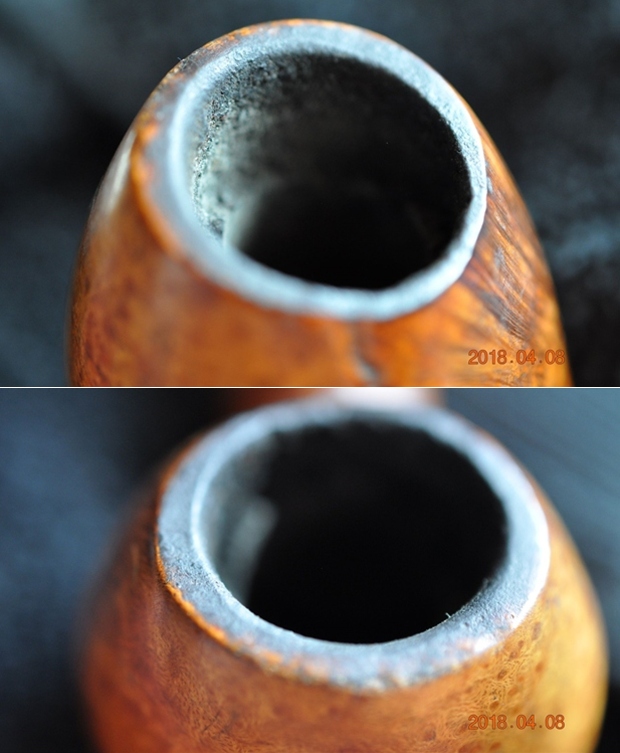
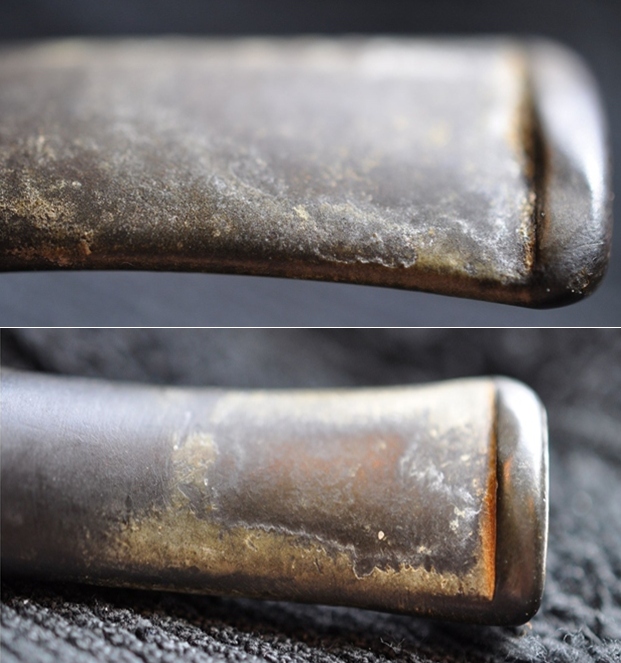
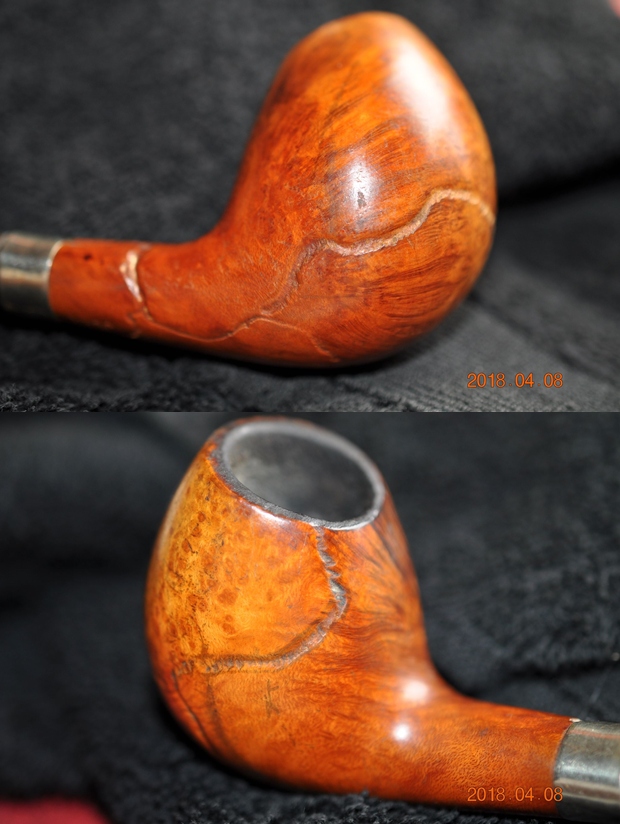
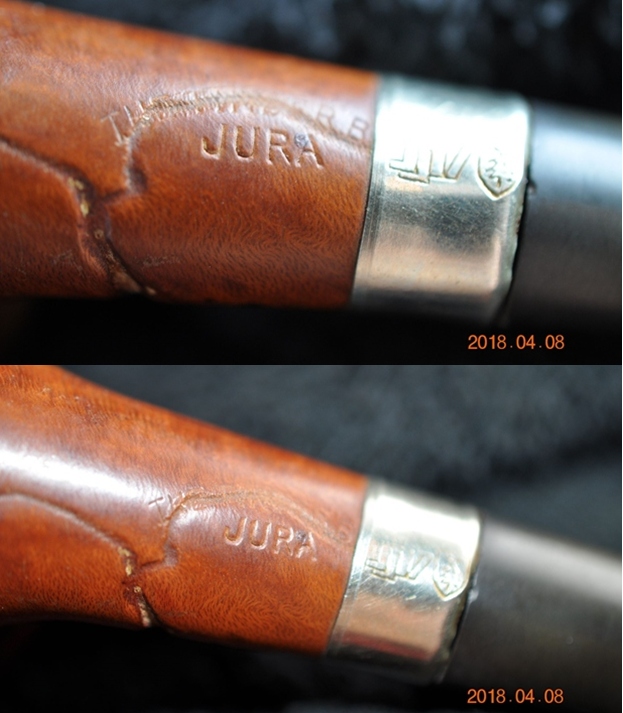
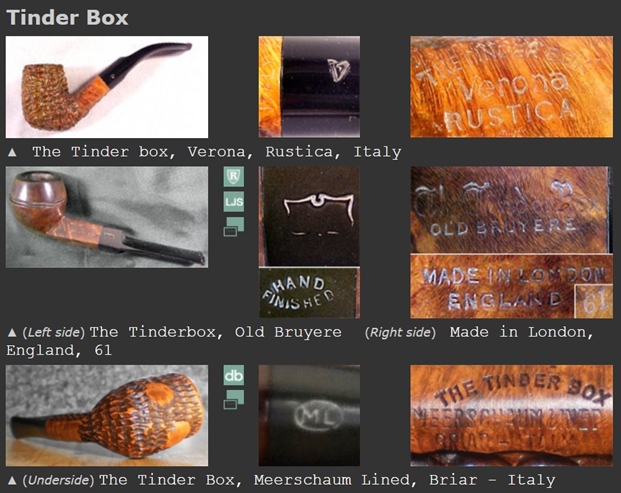
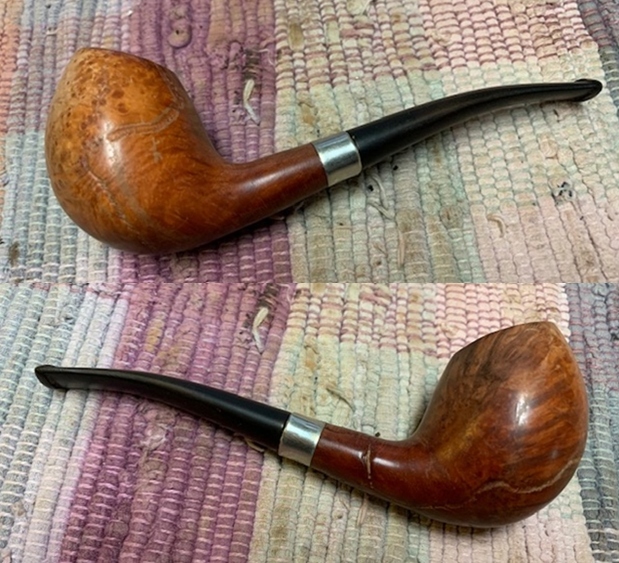
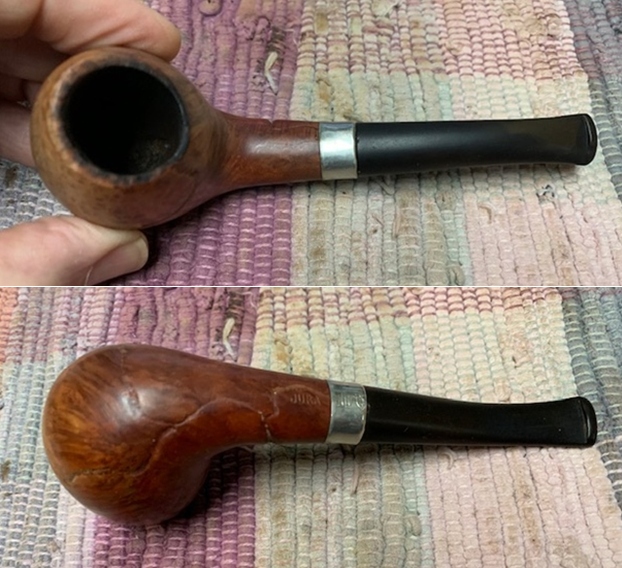
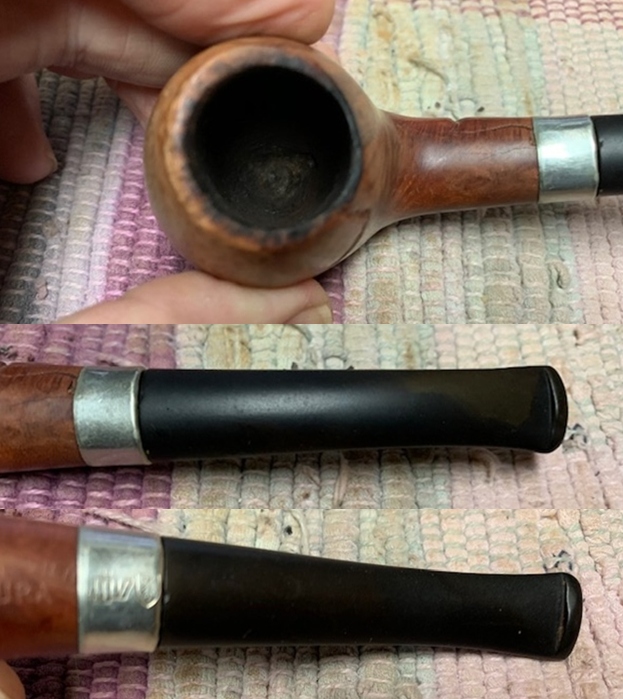
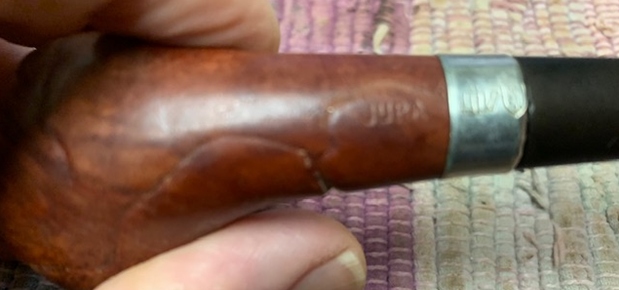
The next pipe on the work table came to us from an antique dealer in Pocatello, Idaho, USA back in 2018. It has been sitting here for 2 years. Jeff took photos in December of that year. Now I am finally getting a chance to work on it. The pipe is an interesting scoop shaped pipe with worm trail rustication lightly carved around the bowl. The shank had a repair band that was damaged and poorly fit on the shank and had been hammer on the shank end. Because of the damage to the band the stem did not seat correctly against the shank. The pipe was an absolute mess. On the underside of the shank it is stamped with the The Tinder Box [arched over] Jura. The mix of stains had faded around the bowl but still showed the original orange brown look even with the grime ground into the finish. It was very dirty with dust and debris in the valleys of the rustication. There was a thick cake in the bowl and an overflow of lava on the rim top that is heavier on the back of the bowl. The inner edge appears to have some burn damage on the back side but we will know for certain once the bowl is reamed and cleaned. The stem was oxidized, calcified and there were light tooth marks and chatter on both sides near the button. Jeff took photos of the pipe before he started working on it. I include those below. Jeff took photos of the bowl and rim top to show the cake in the bowl and the condition of both. It was heavily caked with a lava overflow on the rim top. You can see that there appears to be some burn damage on the back inner edge of the bowl. He took photos of the top and underside of the stem showing the calcification, oxidation and tooth marks on the stem surface and button.  In person the tooth marks are far deeper than they look in the photos.  He took photos of the sides and heel to show the worm trail style rustication around bowl. There appears to be some nice grain under the grime.  Jeff took two photos to capture the stamping on the underside of the shank. It is clear and readable as noted above.   The repair band covered a portion of the stamping and you can see the damage on the outer edge of the band.I turned to Pipephil’s site (http://www.pipephil.eu/logos/en/logo-t6.html) to see if I could find a listing for a Jura pipe made for The Tinder Box. There was nothing specifically listed for Jura on the site so I turned to the section on Tinder Box pipes. It appears that The Tinder Box had many different pipe makers craft pipes for them. The section did not include the Jura. I have included the screen capture of that section below. Pipedia gives a short history of the brand (https://pipedia.org/wiki/Jura) that is well worth reading.

Jura, was the name of the region of France where St. Claude is located, is a name that has graced many pipes by many makers, including Alpha, who made a Jura line for The Tinder Box, and Chacom, who still makes a Jura line of pipes. The brand Jura, however, was made by André Lançon, who built a factory in 1926 later acquired by Ropp.

That got me a little closer on the nomenclature of this pipe and lists several other makers that turned out pipes for The Tinderbox. I wonder if this shape was made for Tinder Box by Alpha.

This pipe was a bit of a mess like many of the pipes we work on. I was curious to see what it would look like when I unpacked it. I was surprised at how good it looked. Jeff reamed it with a PipNet pipe reamer and cleaned up the reaming with a Savinelli Fitsall Pipe Knife. He scrubbed out the internals of the shank and stem with alcohol, pipe cleaners and cotton swabs until the pipe was clean. He scrubbed the exterior of the bowl with Murphy’s Oil Soap and a tooth brush to remove the grime and grit on the briar and the lava on the rim top. The finish on the bowl looked really good when I got it. The rim top looked better. The inner edge showed damage at the back side of the bowl. He soaked the stem in Before & After Deoxidizer bath to remove the oxidation. The stem looked better other than the light oxidation that remained and some light tooth marks and chatter on the surface. When the pipe arrived here in Vancouver for the second stop of its restoration tour it looked much better than when he found it. I took photos of the pipe before I started my work on it.  I took photos of the condition of the rim top and stem before I started working. The rim top looks better but the burn damage is very evident at the back of the bowl. The stem has light oxidation remaining and some tooth chatter and marks on both sides near the button.     I took a photo of the stamping on the underside of the shank. The Jura stamp is readable and the arched The Tinderbox is faint but readable.I took the bowl and stem apart and took a photo of the pipe to show the look of the pipe. The band was damaged and with some effort I was able to remove it from the shank. There was a hairline crack on the right side of the shank that did not go to far up the shank. I cleaned up the shank end with acetone and fit a new thin brass band on the shank end. Another feature of the thin band is that it did not cover The Tinder Box stamping as the other one had.  I sanded around the shank end to clean up the darkening using a folded piece of 220 grit sandpaper. Once I finished that I used a black Sharpie pen to colour in the worm trails around the bowl. They are dark in the following photos but will blend in better when I have completed the pipe. I wiped the bowl down with alcohol on a cotton pad and then topped the bowl to remove the damage to the rim top. I used a piece of 220 grit sandpaper on a board to give me a smooth hard surface to work on. I polished the briar with micromesh sanding pads – dry sanding with 1500-12000 grit pads to raise a shine on the briar. I wiped it down with a damp cloth  after each pad. I used a Maple Stain pen to touch up the faded areas around the sides and rim top of the bowl. The colour was a perfect match to the rest of the briar and the pipe was beginning to look very good.   I worked some Before & After Restoration Balm into the finish of the bowl, rim top and shank with my fingertips to clean, enliven and protect it. I find that the balm really makes the briar come alive again. The contrasts in the layers of stain and the separate finishes really made the grain stand out. I let the balm sit for 15 minutes and then buffed with a cotton cloth to raise the shine. The bowl really looks good at this point. I set it aside and worked on the stem. I set aside the bowl and turned my attention to the stem. I built up the damage to the button surface with clear super glue. Once the repairs cured I smoothed them out with 220 sandpaper to blend them in and started polishing with 400 grit wet dry sandpaper.   I polished the stem with micromesh sanding pads – wet sanding it with 1500-12000 grit pads. I polished it further with Before & After Pipe Stem Polish – both fine and extra fine.   Once again I am the part of the restoration that I always look forward to – the moment when all the pieces are put back together. I put the pipe back together and lightly buffed the bowl with Blue Diamond. I buffed the stem with a heavier touch with Blue Diamond on the buffing wheel. I gave the bowl and the stem multiple coats of carnauba wax. I buffed the pipe with a clean buffing pad to raise the shine. I hand buffed it with a microfiber cloth to deepen the shine. It is fun to see what the polished bowl looks like with the smooth finish and the black vulcanite stem. This richly stained The Tinder Box Jura Scoop is light weight and ready for you to load up a tobacco of preference and enjoy it. Have a look at it in the photos below. The dimensions are Length: 5 ½ inches, Height: 2 inches, Outside diameter of the bowl: 1 ¼ inches, Chamber diameter: ¾ of an inch. The weight of the pipe is 39 grams/1.38 oz. This is one that will go on the rebornpipes online store shortly. Thanks to each of you who are reading this blog. Remember we are not pipe owners; we are pipemen and women who hold our pipes in trust until they pass on into the trust of the next generation.

Restoring a Beautiful Sandblasted Bari Squash 7930 Pot


Blog by Steve Laug

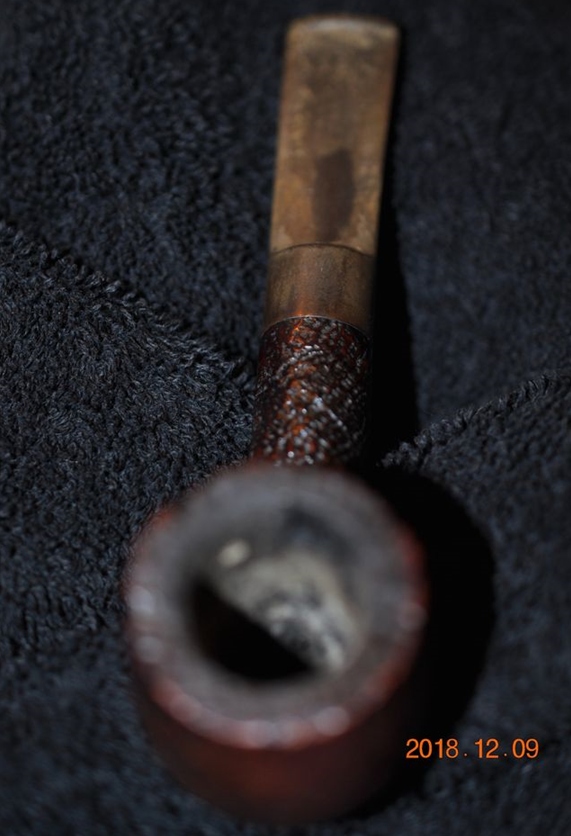
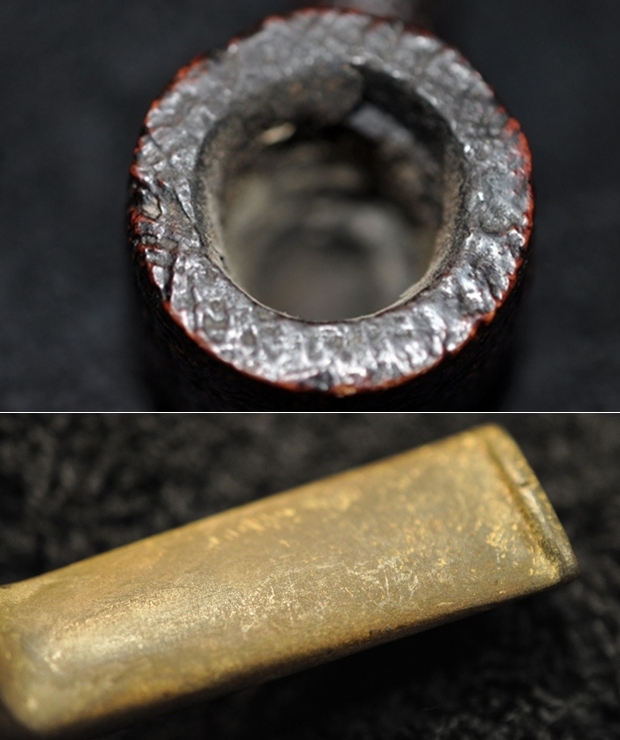
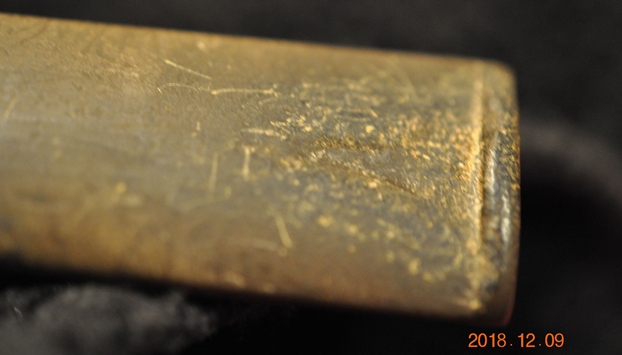
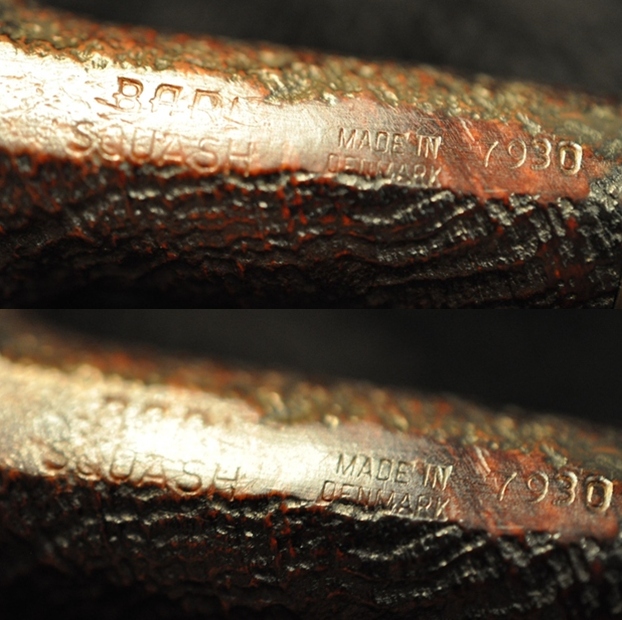
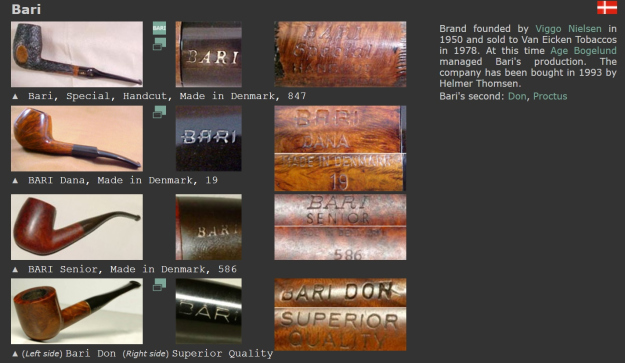
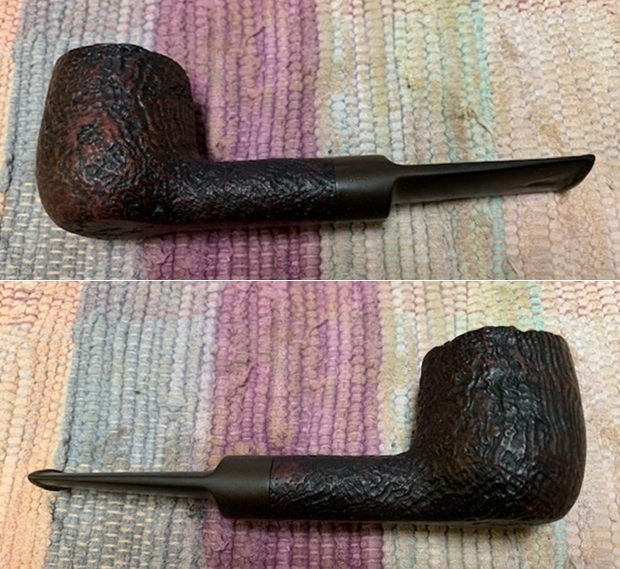
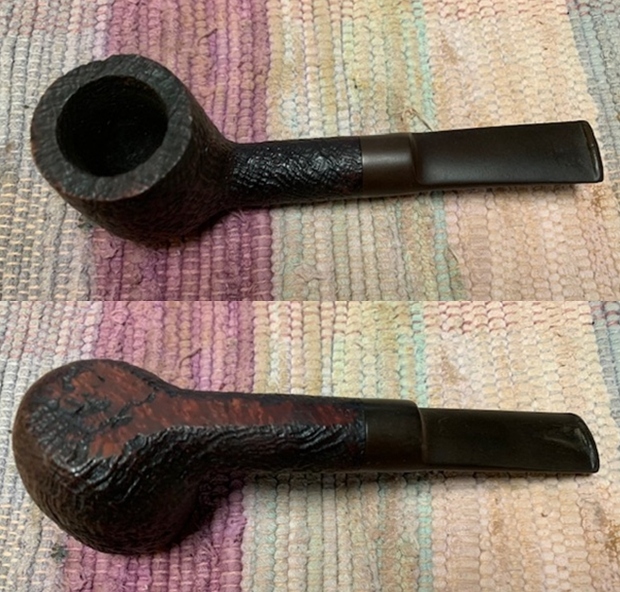
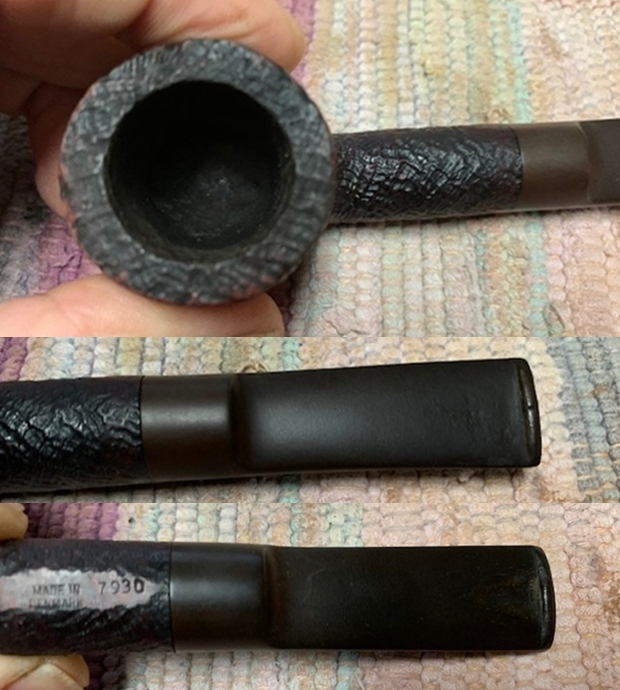
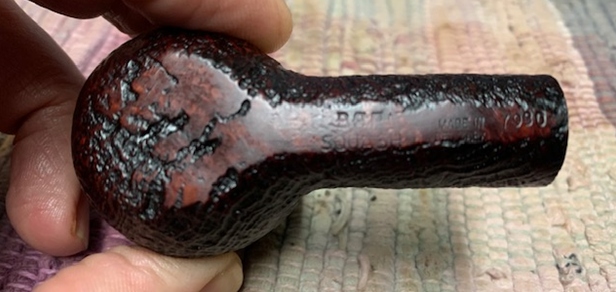
The next pipe on the work table came to us from an antique mall in Bozeman, MT, USA back in 2018. It has been sitting here for 2 years. Jeff took photos in December of that year. Now I am finally getting a chance to work on it. The pipe is a classic pot shaped sandblast pipe with almost a Dunhill Shell Briar Brown and Black finish with highlights of red. The pipe was an absolute mess which probably accounted for how we ended up purchasing it for a fair price. On the underside of the heel and shank it is stamped with the Bari [over] Squash followed by Made In Denmark followed by 7930. The mix of stains makes the sandblast look multidimensional even with the grime ground into the finish. It was very dirty with dust and debris in the valleys of the sandblast. There was a thick cake in the bowl and an overflow of lava on the rim top that is heavier on the back of the bowl. The edges look to be in good condition as far as we can tell until we clean up the pipe. The stem was oxidized, calcified and there were deep tooth marks and chatter on both sides near the button. The stem had a damage white Bari stamp on the left side of the saddle. Jeff took photos of the pipe before he started working on it. I include those below. Jeff took photos of the bowl and rim top to show the cake in the bowl and the condition of both. It was heavily caked with a lava overflow on the rim top. You can see that it is heavier on the back inner edge that the rest of the bowl. The inner and outer edges look very good. He took photos of the top and underside of the stem showing the oxidation and tooth marks on the stem surface and button.  In person the tooth marks are far deeper than they look in the photos.  Jeff took two photos to capture the stamping on the underside of the shank. It is clear and readable as noted above.  I turned to Pipephil’s site (http://www.pipephil.eu/logos/en/logo-b1.html) to see if I could find a listing for the Bari Squash with this four digit number. There was nothing specifically listed for this line of Bari pipes. There was also good info on the brand as a whole and that it was founded by Viggo Nielsen in 1950 and he ran it until 1978 when Age Bogelund managed the production for them. In 1993 it was sold to Helmer Thomsen. Pipedia gives a great history of the brand (https://pipedia.org/wiki/Bari) that is well worth reading. There were also examples of the Bari pipes showing their stamping.

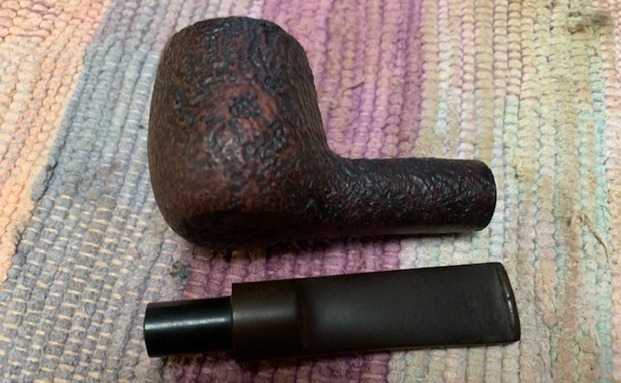
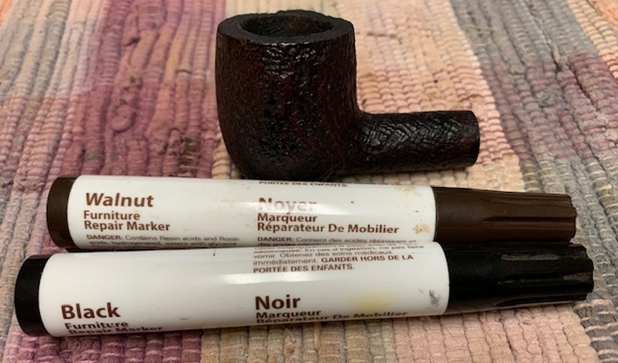
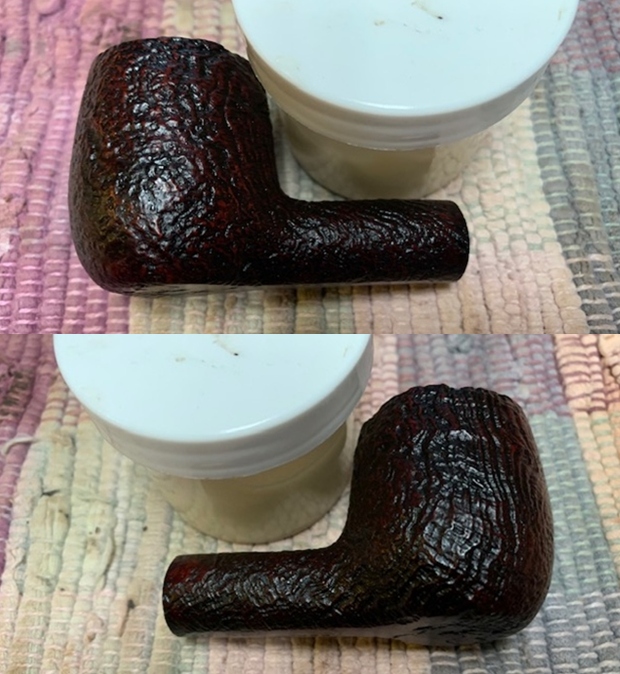
This pipe was a bit of a mess like many of the pipes we work on. I was curious to see what it would look like when I unpacked it. I was surprised at how good it looked. Jeff reamed it with a PipNet pipe reamer and cleaned up the reaming with a Savinelli Fitsall Pipe Knife. He scrubbed out the internals of the shank and stem with alcohol, pipe cleaners and cotton swabs until the pipe was clean. He scrubbed the exterior of the bowl with Murphy’s Oil Soap and a tooth brush to remove the grime and grit on the briar and the lava on the rim top. The finish on the bowl looked really good when I got it. The rim top looked very good. He soaked the stem in Before & After Deoxidizer bath to remove the oxidation. The stem looked better other than the light oxidation that remained and the deep tooth marks and chatter on the surface. When the pipe arrived here in Vancouver for the second stop of its restoration tour it looked much better than when he found it. I took photos of the pipe before I started my work on it.  I took photos of the condition of the rim top and stem before I started working. The rim top looks very good and the bowl is spotless. The stem has light oxidation remaining and some tooth chatter and marks on both sides near the button.   I took a photo of the stamping on the underside of the shank. The BARI SQUASH stamp is faint but readable but the rest of the stamp is very clear. I took the bowl and stem apart and took a photo of the pipe to show the look of the pipe. The cleaning had left behind some light spots that needed to be blended into the rest of the bowl. I used a combination of Black and Walnut Stain Pens to touch up the finish on the bowl and rim top.I worked some Before & After Restoration Balm into the finish of the bowl, rim top and shank with my fingertips and a horsehair shoe brush to clean, enliven and protect it. I find that the balm really makes the briar come alive again. The contrasts in the layers of stain and the separate finishes really made the grain stand out. I let the balm sit for 15 minutes and then buffed with a cotton cloth to raise the shine. The bowl really looks good at this point. I set it aside and worked on the stem.  I set aside the bowl and turned my attention to the stem. I “painted” the tooth marks on the surface of the stem and was able to lift them significantly. I filled in the remaining spots with black super glue. Once the repairs cured I flattened them out with a file/rasp to bend them into the surface. I further smoothed them out with 220 sandpaper to blend and started polishing with 400 grit wet dry sandpaper. I scrubbed the remaining oxidation with Soft Scrub cleanser an was able to remove most of it. I polished the stem with micromesh sanding pads – wet sanding it with 1500-12000 grit pads. I polished it further with Before & After Pipe Stem Polish – both fine and extra fine.    Once again I am the part of the restoration that I always look forward to – the moment when all the pieces are put back together. I put the pipe back together and lightly buffed the bowl with Blue Diamond. I buffed the stem with a heavier touch with Blue Diamond on the buffing wheel. I gave the bowl multiple coats of Conservator’s Wax and the stem multiple coats of carnauba wax. I buffed the pipe with a clean buffing pad to raise the shine. I hand buffed it with a microfiber cloth to deepen the shine. It is fun to see what the polished bowl looks like with the smooth finish and the black vulcanite stem. This richly stained Bari Squash Sandblast 7930 Pot is light weight and ready for you to load up a tobacco of preference and enjoy breaking it in for yourself. Have a look at it in the photos below. The dimensions are Length: 5 ¼ inches, Height: 1 ¾ inches, Outside diameter of the bowl: 1 ½ inches, Chamber diameter: ¾ of an inch. The weight of the pipe is 45grams/1.59oz. This is one that will go on the Danish Pipemakers section of the rebornpipes online store shortly. Thanks to each of you who are reading this blog. Remember we are not pipe owners; we are pipemen and women who hold our pipes in trust until they pass on into the trust of the next generation.

New Life for a John Redman Root Grain Apple


Blog by Steve Laug

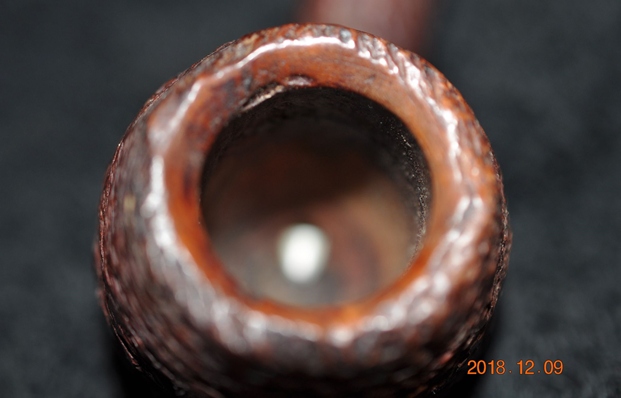
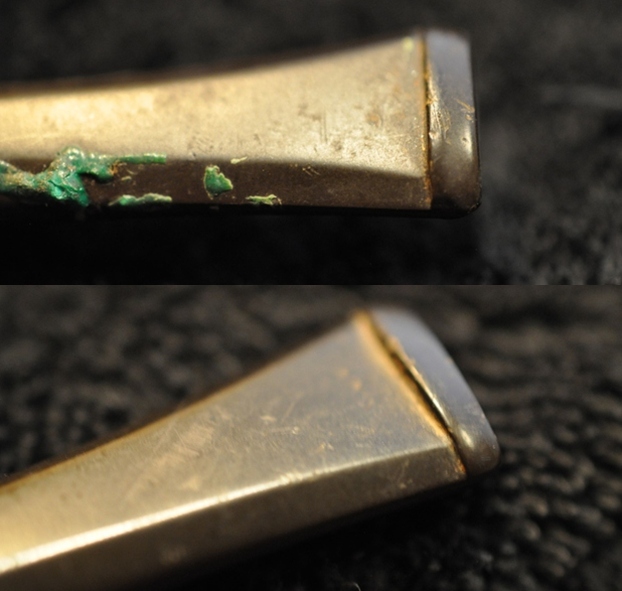
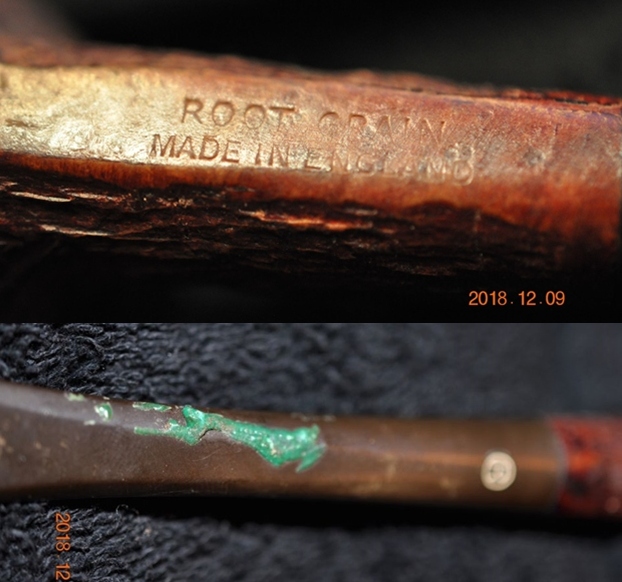
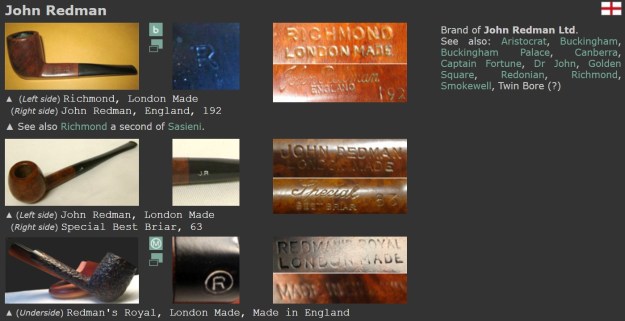
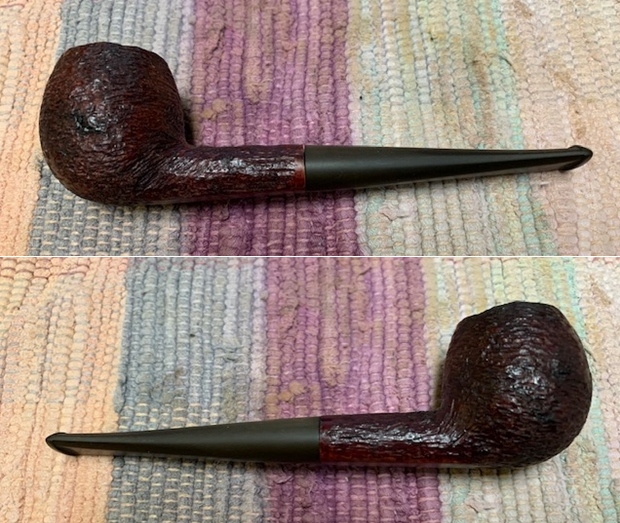
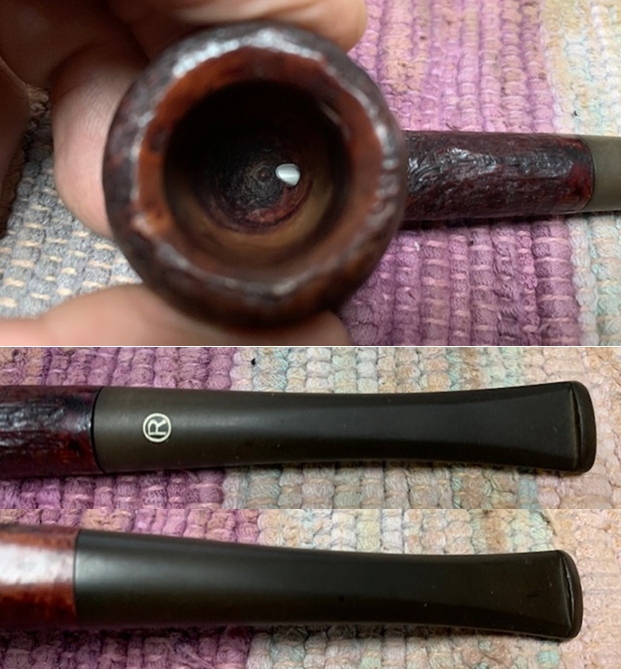
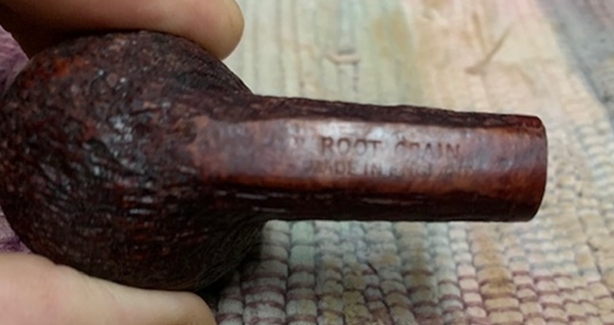
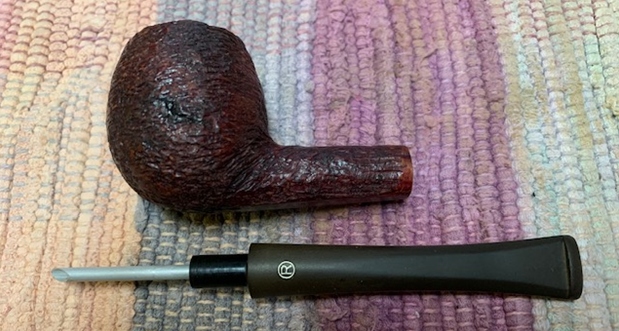
The next pipe on the work table came to us from one of our pipe hunts back in 2018. It has been sitting here for 2 years. Jeff took photos in December of that year. Now I am finally getting a chance to work on it. The pipe is a classic apple-shaped rusticated pipe. The pipe was an absolute mess which probably accounted for how we ended up purchasing it for a fair price. On the underside of the heel and shank it is stamped with the Root Grain [over] Made in England. The stain is a mix of browns that makes the rustication look multidimensional even with the grime ground into the finish. It was very dirty with dust and debris in the grooves of the rustication. There was a light cake in the bowl and the rim top and edges look to be in good condition. The stem was oxidized, calcified and there were wax on the top and left side of the stem. There were light tooth marks and chatter on both sides near the button. The stem had an R in a circle in white on the topside of the taper. Jeff took photos of the pipe before he started working on it. I include those below. Jeff took photos of the bowl and rim top to show the cake in the bowl and the condition of both. It was lightly caked and the rim top and edges look very good. The bowl was not smoked all the way to the bottom and showed raw briar. There was also a flaw or damage on the back right of the inner edge of the bowl. He took photos of the top and underside of the stem showing the green wax, oxidation and tooth marks on the stem surface and button. Jeff took a photo of the side and heel of the bowl to show the condition of the finish – the grime and grit all over the sides and bottom of the bowl. The finish so dirty it is hard to see the variety of colours in the rustication but they are present nonetheless.  Jeff took photos of the stamping on the underside of the shank. It is faint but readable as noted above.  The stem had the R in a circle logo on the top side.  It was obscured in the photo below. The thick waxy substance on the stem is also visible.I did a search on Pipephil’s site (http://www.pipephil.eu/logos/en/logo-j3.html#johnredman) and looked for the specific stem logo – circle R. The pipe I am working on is stamped Root Grain over Made in England. The circle R logo on the stem top took me to the listing for John Redman Ltd. I have included a screen capture of the section below.This pipe was a bit of a mess like many of the pipes we work on. I was curious to see what it would look like when I unpacked it. I was surprised at how good it looked. Jeff reamed it with a PipNet pipe reamer and cleaned up the reaming with a Savinelli Fitsall Pipe Knife. He scrubbed out the internals of the shank and stem with alcohol, pipe cleaners and cotton swabs until the pipe was clean. He scrubbed the exterior of the bowl with Murphy’s Oil Soap and a tooth brush to remove the grime and grit on the briar and the lava on the rim top. The finish on the bowl looked really good when I got it. The rim top looked very good. The inner edge showed just the one flaw on the right read of the bowl. He scraped the wax off the stem surface and then soaked the stem in Before & After Deoxidizer bath to remove the oxidation. The stem looked better other than the light oxidation that remained and the light tooth marks and chatter on the surface. When the pipe arrived here in Vancouver for the second stop of its restoration tour it looked much better than when he found it. I took photos of the pipe before I started my work on it.    I took photos of the condition of the rim top and stem before I started working. The rim top looks very good. The bowl is spotless and you can see the end of the inner tube in the bottom of the bowl. The stem has light oxidation remaining and some tooth chatter and marks on both sides near the button.    I took a photo of the stamping on the underside of the shank. The first line is quite readable and the second is faint but still readable.I took the bowl and stem apart and took a photo of the pipe to show the look of the pipe. The pipe has an inner tube that is inserted in the shank. It is clean and removable.I decided to work on the flaw/damage on the right rear of the beveled inner edge of the rim. I filled in the two flaws with clear super glue (CA). Once it cured I sanded it smooth with 220 grit sandpaper and wiped it down with a damp cotton pad to remove the sanding debris.   I polished the smooth rim top with micromesh sanding pads – wet sanding with 1500-12000 grit pads. I wiped the rim down after each pad to remove debris. I worked some Before & After Restoration Balm into the finish of the bowl, rim top and shank with my fingertips and a horsehair shoe brush to clean, enliven and protect it. I find that the balm really makes the briar come alive again. The contrasts in the layers of stain and the separate finishes really made the grain stand out. I let the balm sit for 15 minutes and then buffed with a cotton cloth to raise the shine. The bowl really looks good at this point. I set it aside and worked on the stem. I set aside the bowl and turned my attention to the stem. I cleaned up the tooth chatter and marks with 220 sandpaper to blend them into the surface of the stem. I started polishing it with 400 grit wet dry sandpaper. I scrubbed the stem down with Soft Scrub All-purpose Cleaner to remove the remaining oxidation.    I polished the stem with micromesh sanding pads – wet sanding it with 1500-12000 grit pads. I polished it further with Before & After Pipe Stem Polish – both fine and extra fine. Once again I am the part of the restoration that I always look forward to – the moment when all the pieces are put back together. I put the pipe back together and lightly buffed the bowl with Blue Diamond. I buffed the stem with a heavier touch with Blue Diamond on the buffing wheel. I gave the bowl multiple coats of Conservator’s Wax and the stem multiple coats of carnauba wax. I buffed the pipe with a clean buffing pad to raise the shine. I hand buffed it with a microfiber cloth to deepen the shine. It is fun to see what the polished bowl looks like with the smooth finish and the black vulcanite stem. This richly stained John Redman Root Grain Apple is light weight and ready for you to load up a tobacco of preference and enjoy breaking it in for yourself. Have a look at it in the photos below. The dimensions are Length: 5 ½ inches, Height: 1 ½ inches, Outside diameter of the bowl: 1 ¼ inches, Chamber diameter: ¾ of an inch. The weight of the pipe is 36grams/1.27oz. This is one that will go on the British Pipemakers section of the rebornpipes online store shortly. Thanks to each of you who are reading this blog. Remember we are not pipe owners; we are pipemen and women who hold our pipes in trust until they pass on into the trust of the next generation.

New Life for a BBB Own Make Thorneycroft 130 Prince


Blog by Steve Laug

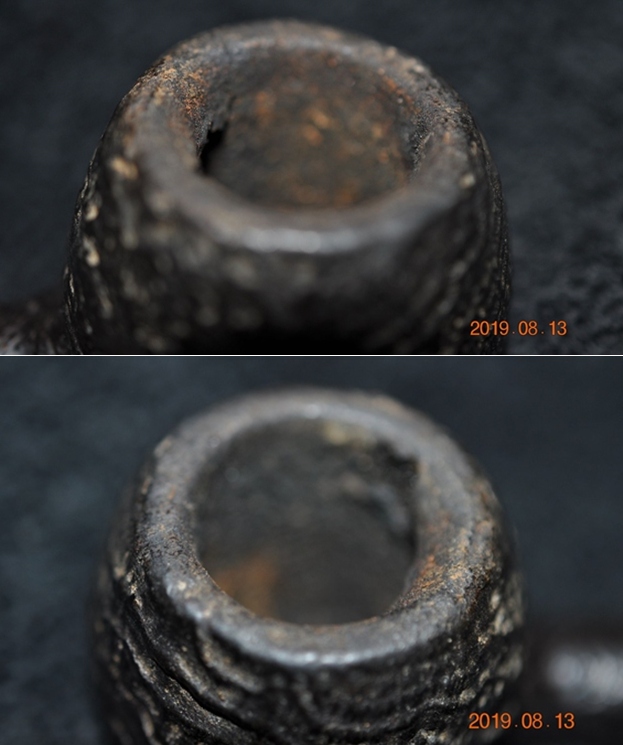
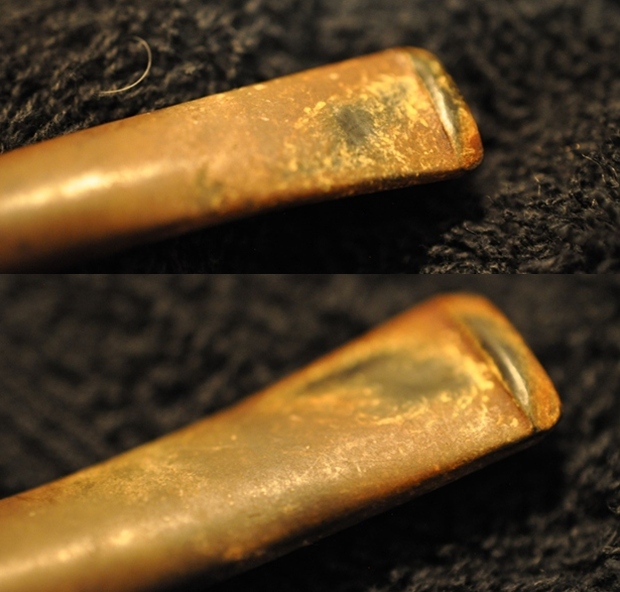
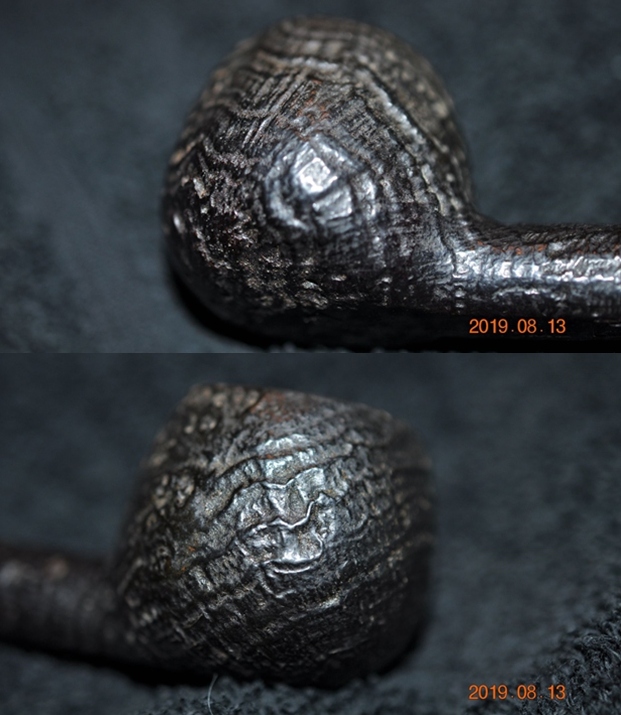
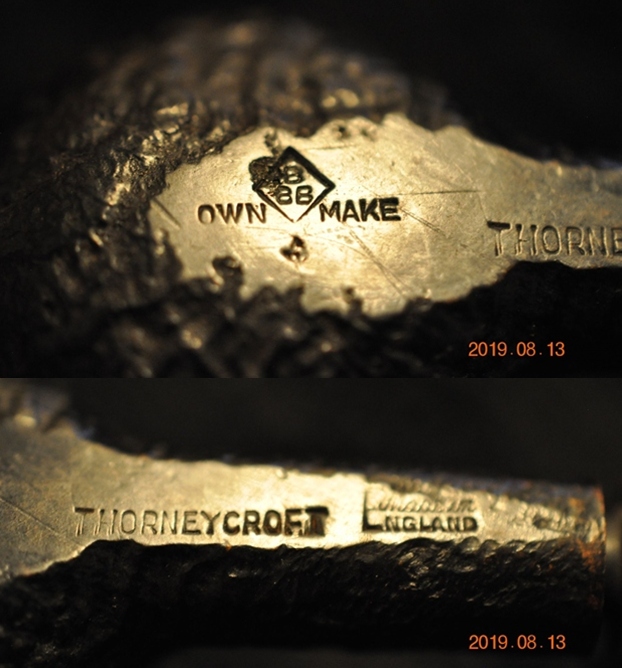
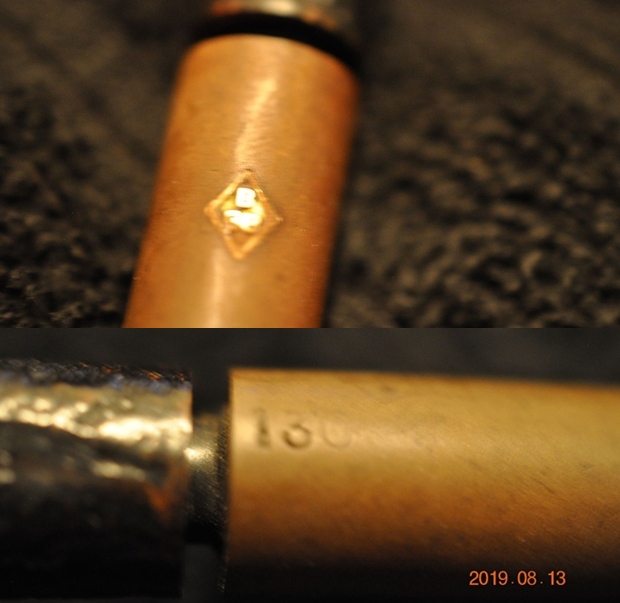
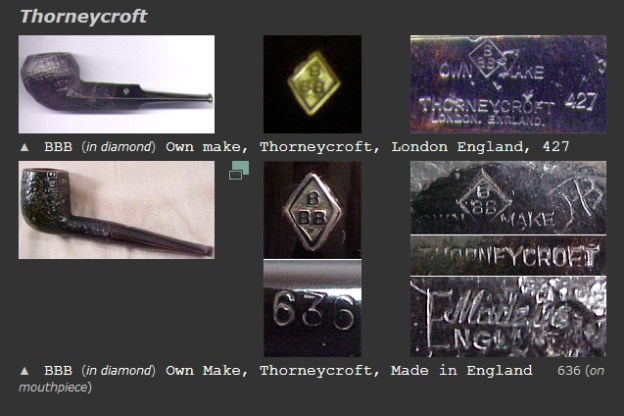
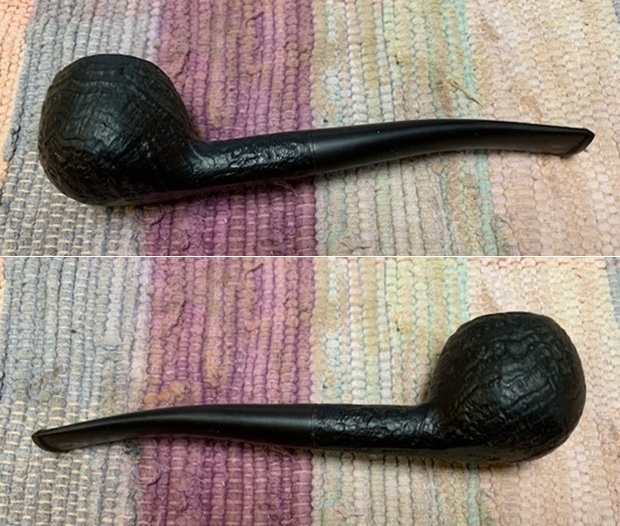
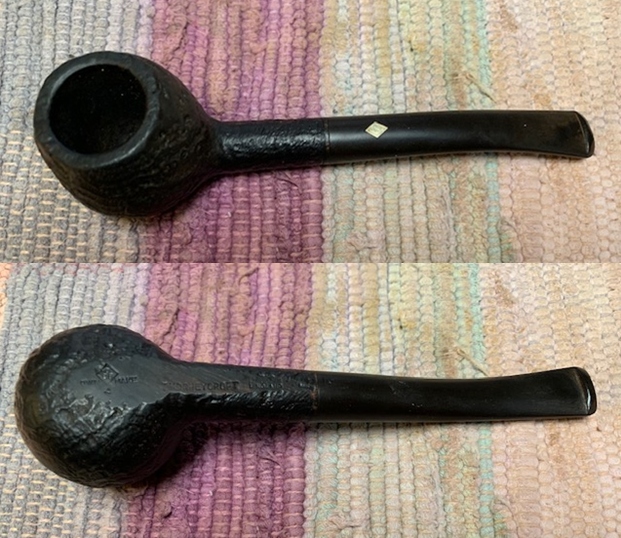
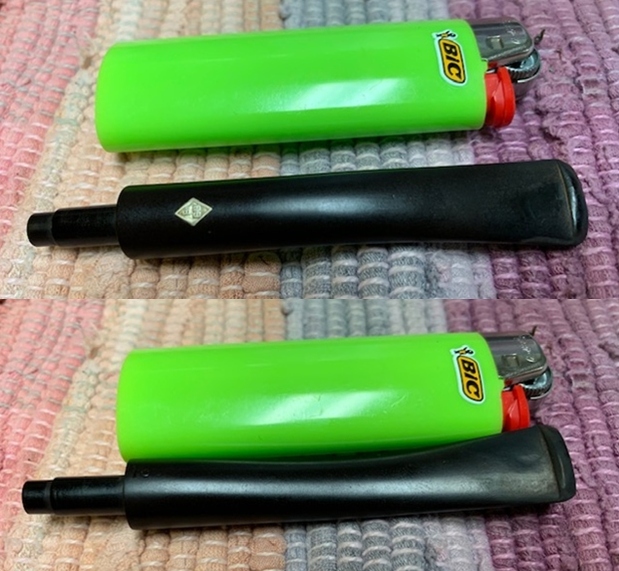
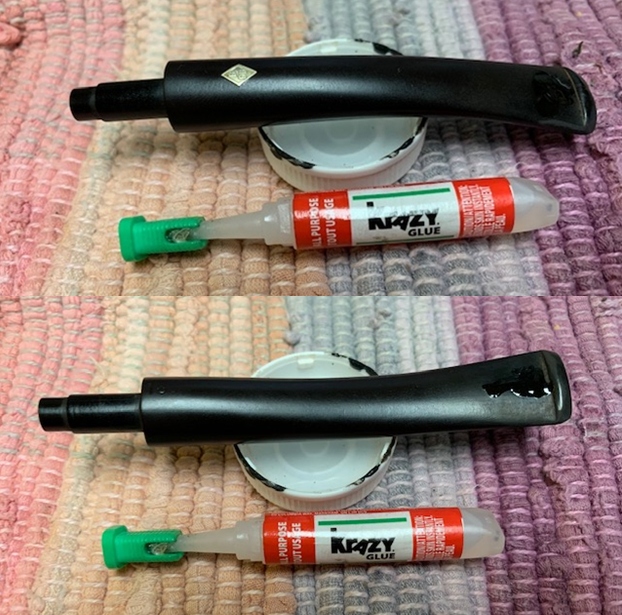
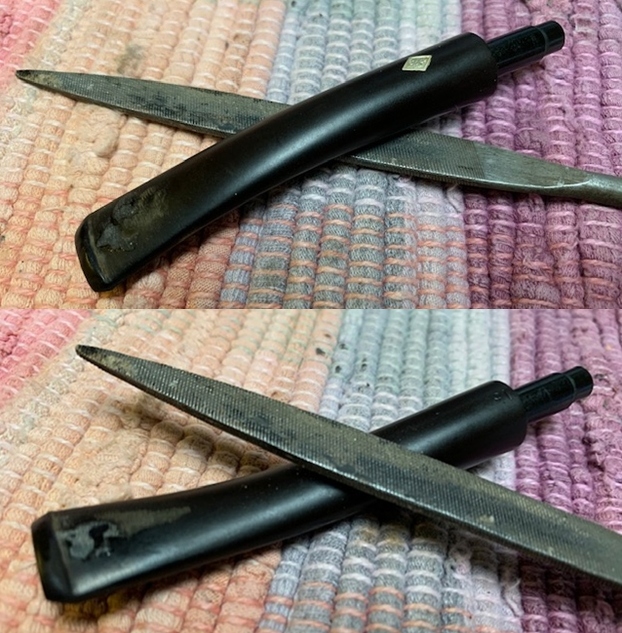
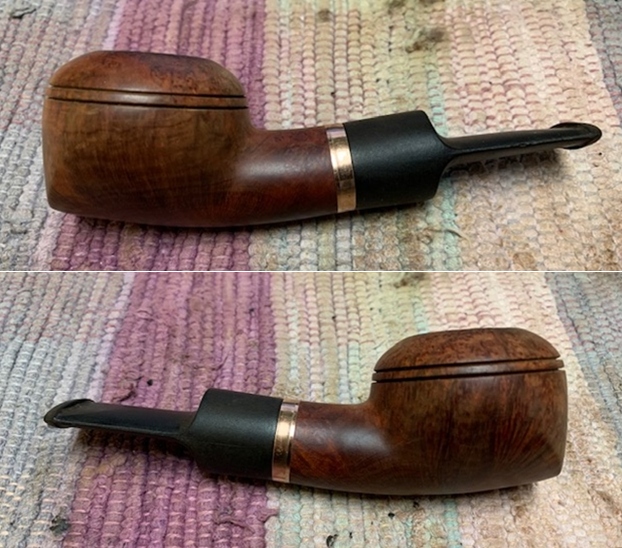
The next pipe on the work table came to us from a fellow from Scottsdale, Arizona, USA. It has been sitting here for just over 2 years. Jeff took photos more than a year ago. Now I am finally getting a chance to work on it. The pipe is a classic Prince-shaped sandblasted pipe. The pipe was an absolute mess which probably accounted for how we ended up purchasing it for a fair price. On the underside of the heel and shank it is stamped with the BBB Diamond Logo [over] Own Make. To the right side of that it is stamped Thorneycroft followed by Made in England with a large E framing that part of the stamp. The stain is a mix of blacks and browns that makes the sandblast stand out even with the grime. The finish was very dirty with dust and debris in the grooves of the blast. There was a thick cake in the bowl and a thick overflow of lava onto the rim top and edges. It was hard to know at this point the condition of the rim edges. The shank was so dirty that the stem did not seat properly against the shank end. The stem was oxidized, calcified and there were deep tooth marks and chatter on both sides just ahead of the button and on the button surface itself. The stem had the brass BBB Diamond inlaid into the topside of the taper. Jeff took photos of the pipe before he started working on it. I include those below. Jeff took photos of the bowl and rim top to show the cake in the bowl and the condition of both. It was thick and hard cake with an unbelievably thick lava overflow on the rim top and edges. Hopefully it had protected the rim and edges from damage. He took photos of the top and underside of the stem showing the scratching, oxidation and tooth marks on the stem surface and button. The tooth marks are quite deep on both sides of the stem.     Jeff took a photo of the sides and heel of the bowl to show the condition of the finish – the grime and grit all over the sides and bottom of the bowl. The finish so dirty it is hard to see the grain but it is present nonetheless.  Jeff took photos of the stamping on the top and right side of the shank. It is very clear and readable as noted above.   The stem had the BBB Brass logo on the top side. One the underside it is stamped with the number 130 which is the shape number.I did a search on Pipephil’s site (http://www.pipephil.eu/logos/en/logo-bbb.html) and looked for the specific Thorneycroft line. The second pipe in the list is stamped the same way as the one that I am working on and the stamping on the stem is the same. The Made in England stamp is identical to the second one.This pipe was a bit of a mess like many of the pipes we work on. I was curious to see what it would look like when I unpacked it. I was surprised at how good it looked. Jeff reamed it with a PipNet pipe reamer and cleaned up the reaming with a Savinelli Fitsall Pipe Knife. He scrubbed out the internals of the shank and stem with alcohol, pipe cleaners and cotton swabs until the pipe was clean. He scrubbed the exterior of the bowl with Murphy’s Oil Soap and a tooth brush to remove the grime and grit on the briar and the lava on the rim top. The finish on the bowl looked really good when I got it. The rim top looked very good. The inner edge showed no damage and outer edges looked good. He soaked the stem in Before & After Deoxidizer bath to remove the oxidation. The stem looked better other than the tooth marks and chatter in the surface. When the pipe arrived here in Vancouver for the second stop of its restoration tour it looked much better than when he found it. I took photos of the pipe before I started my work on it.  I took photos of the condition of the rim top and stem before I started working. The rim top looks better than before and the damage is very obvious to the rim top and the inner edge. The bowl is spotless. The stem has some deep tooth marks on both sides and the button itself.   I took a photo of the stamping on the underside of the shank. It is clear and readable as noted above.  I took the bowl and stem apart and took a photo of the pipe to show the look of the pipe. I worked some Before & After Restoration Balm into the finish of the bowl, rim top and shank with my fingertips and a horsehair shoe brush to clean, enliven and protect it. I find that the balm really makes the briar come alive again. The contrasts in the layers of stain and the separate finishes really made the grain stand out. I let the balm sit for 15 minutes and then buffed with a cotton cloth to raise the shine. The bowl really looks good at this point. I set it aside and worked on the stem.    I set aside the bowl and turned my attention to the stem. I “painted” the surface of the stem with the flame of a Bic lighter to lift them as much as possible. I filled in the remaining tooth dents and marks with Black Super Glue and set it aside for the repairs to cure. Once they cured I flattened them with a file. I cleaned up the repaired areas with 220 sandpaper to blend the repairs into the surface of the stem. I started polishing it with 400 grit wet dry sandpaper. I polished the stem with micromesh sanding pads – wet sanding it with 1500-12000 grit pads. I polished it further with Before & After Pipe Stem Polish – both fine and extra fine.    Once again I am the part of the restoration that I always look forward to – the moment when all the pieces are put back together. I put the pipe back together and lightly buffed the bowl with Blue Diamond. I buffed the stem with a heavier touch with Blue Diamond on the buffing wheel. I gave the bowl and the stem multiple coats of carnauba wax. I buffed the pipe with a clean buffing pad to raise the shine. I hand buffed it with a microfiber cloth to deepen the shine. It is fun to see what the polished bowl looks like with the smooth finish and the black vulcanite stem. This richly stained BBB Own Make Thorneycroft 130 Prince must have been a fine smoking pipe judging from the condition it was when we received it. Have a look at it in the photos below. The dimensions are Length: 5 ½ inches, Height: 1 ½ inches, Outside diameter of the bowl: 1 ¼ inches, Chamber diameter: ¾ of an inch. The weight of the pipe is 31grams/1.09oz. This is one that will go on the British Pipemakers section of the rebornpipes online store shortly. Thanks to each of you who are reading this blog. Remember we are not pipe owners; we are pipemen and women who hold our pipes in trust until they pass on into the trust of the next generation.
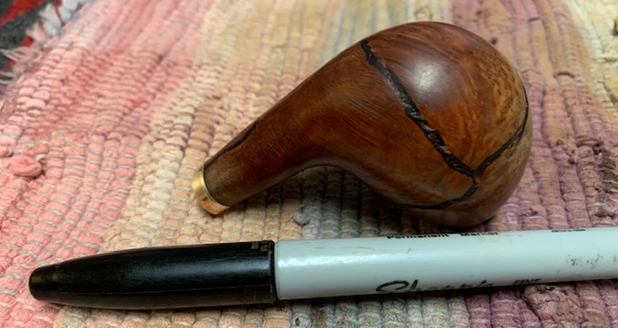
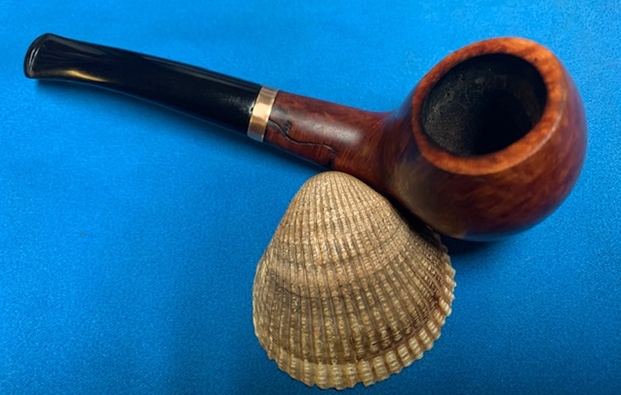
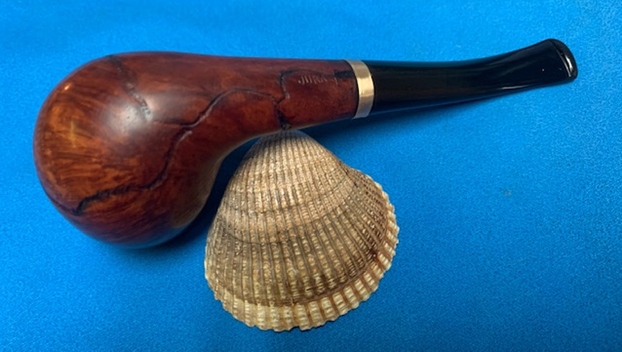
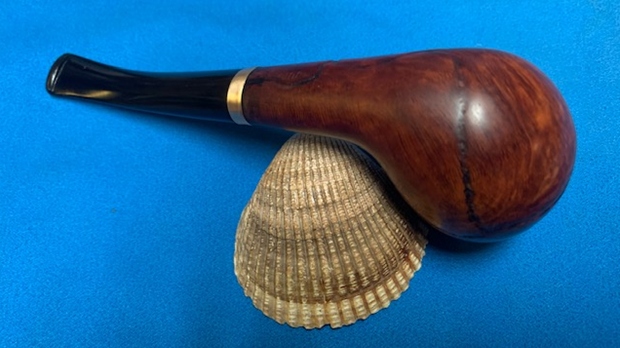
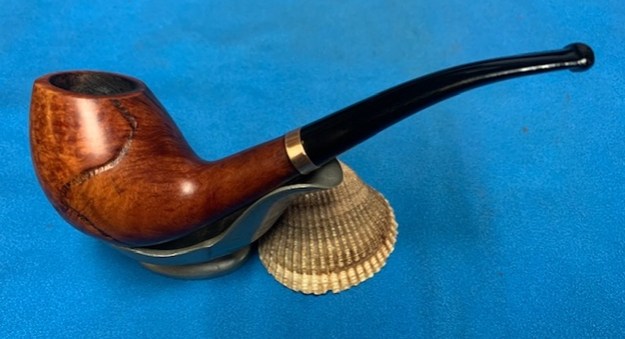
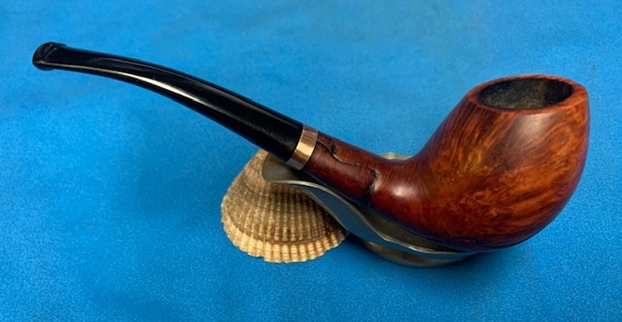
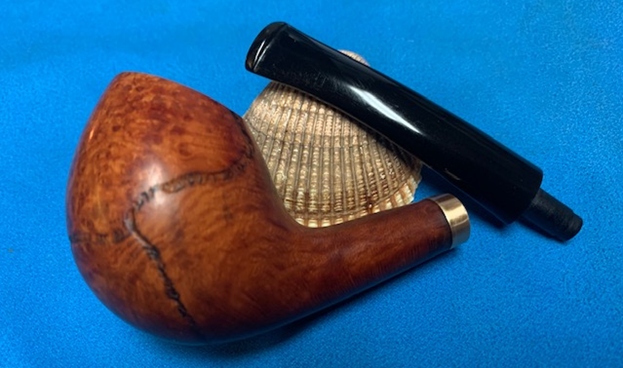
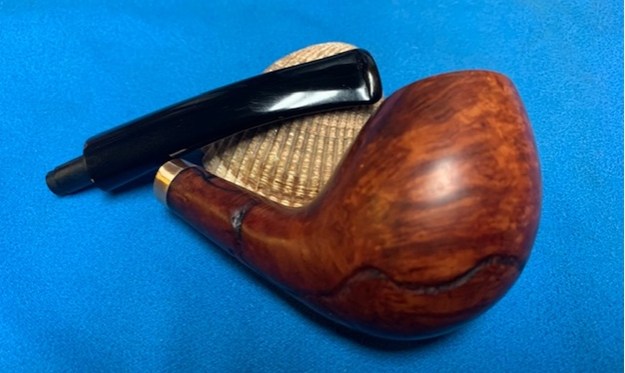
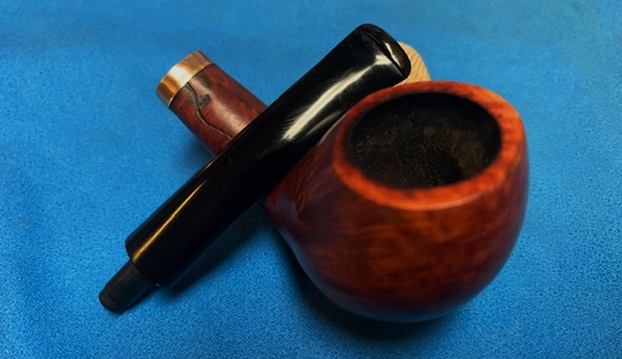
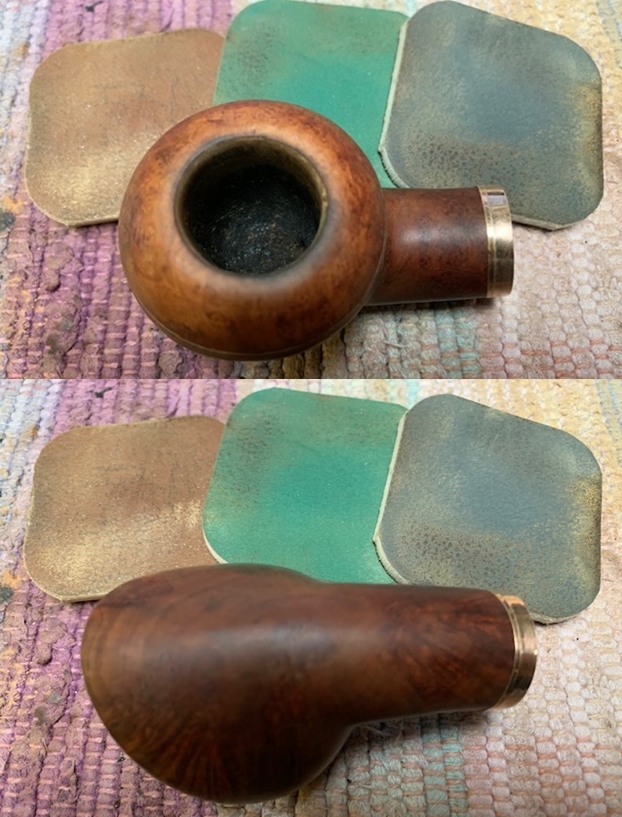
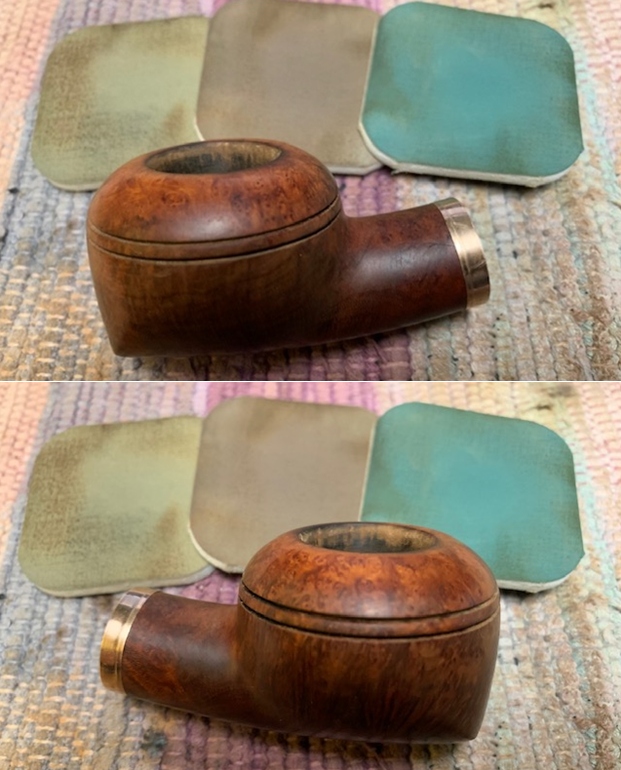
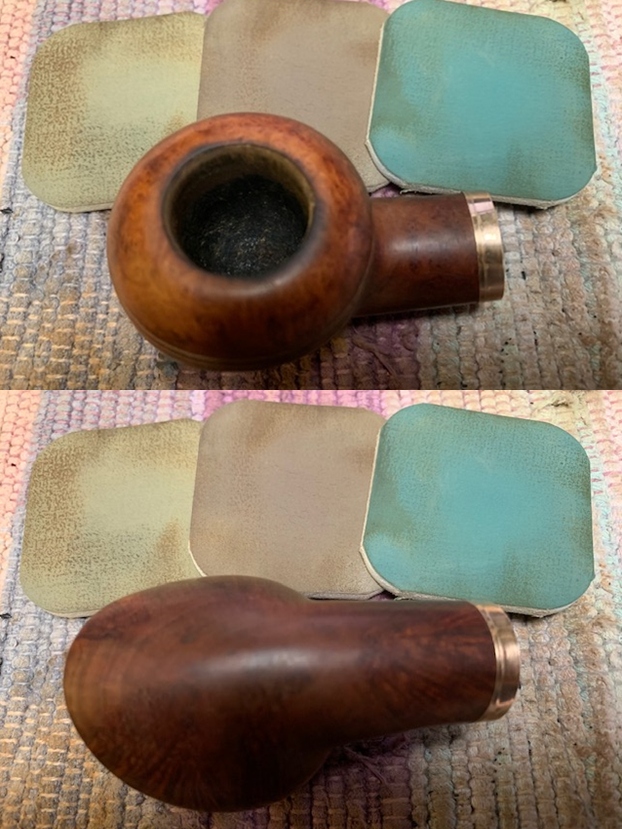
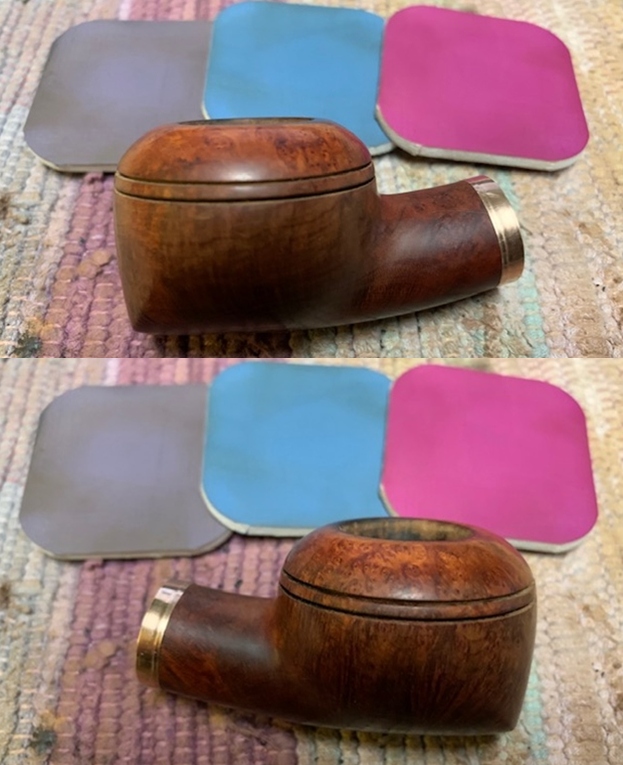
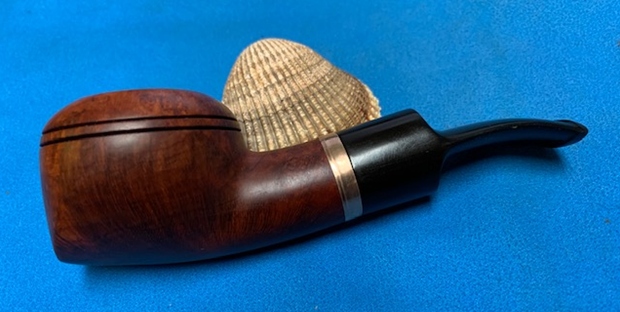
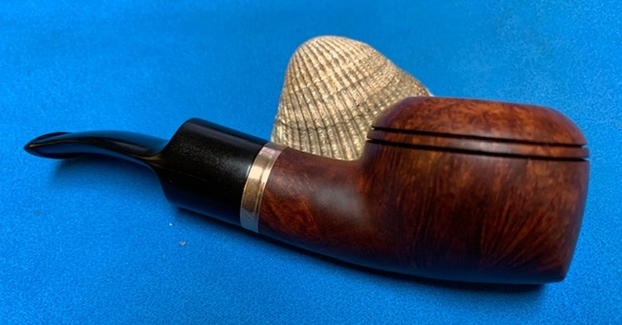
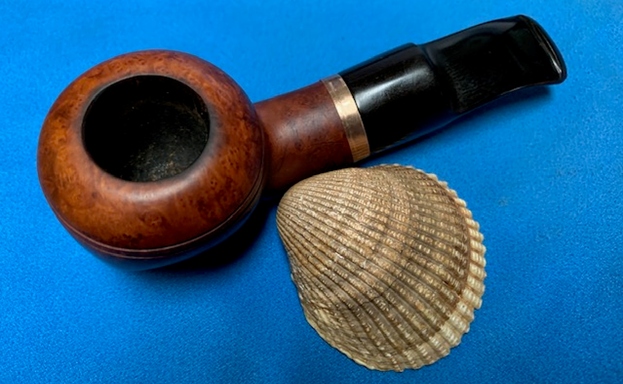
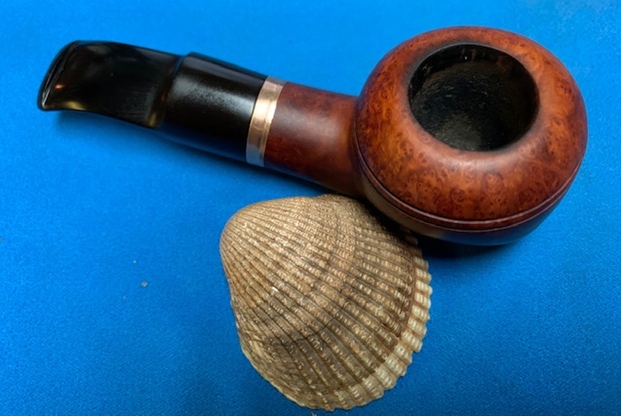
Breathing Life into an Italian Made Smooth Finish Bullmoose


Blog by Steve Laug

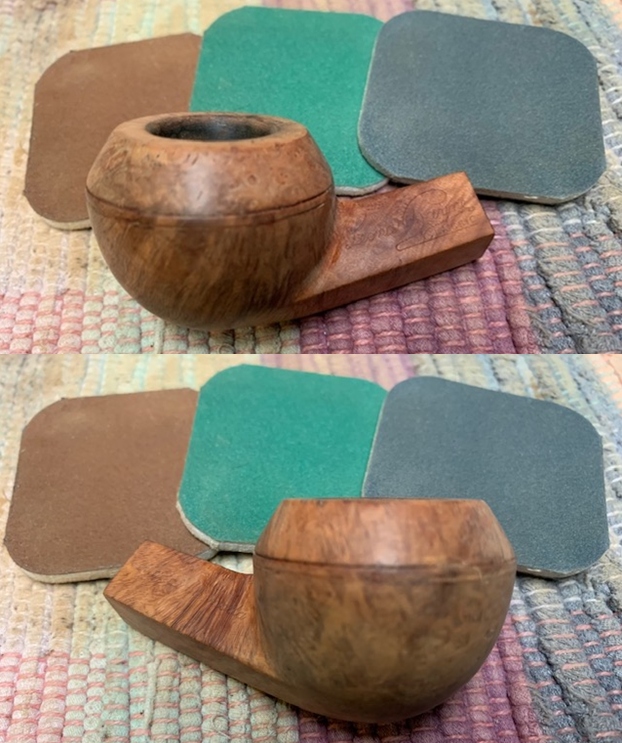
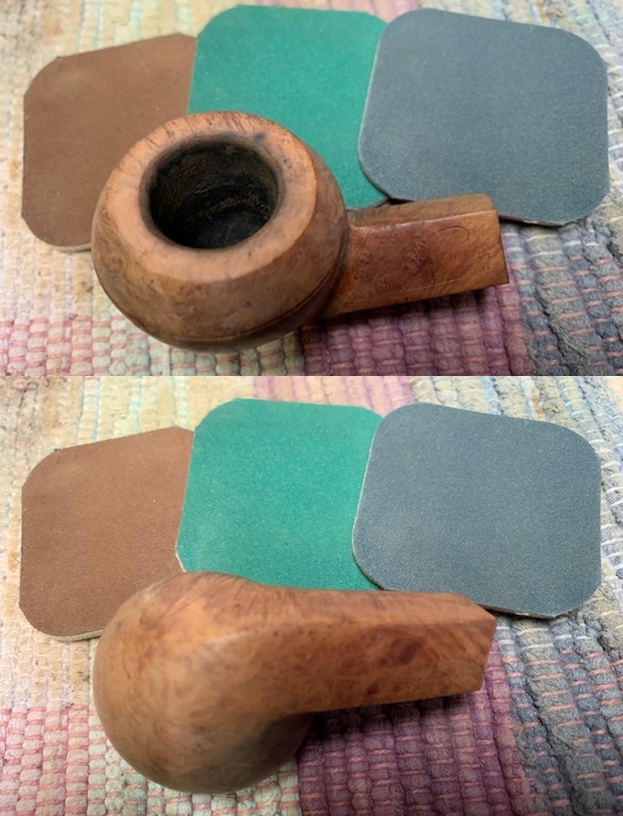
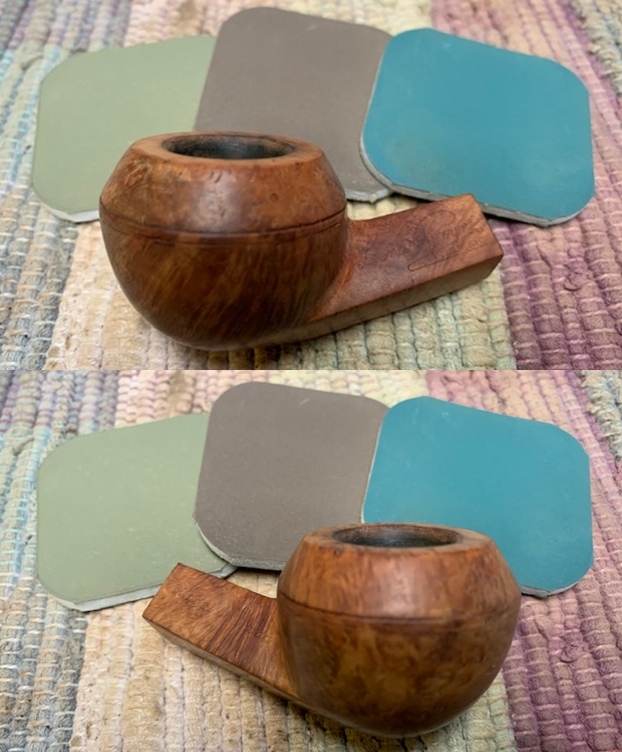
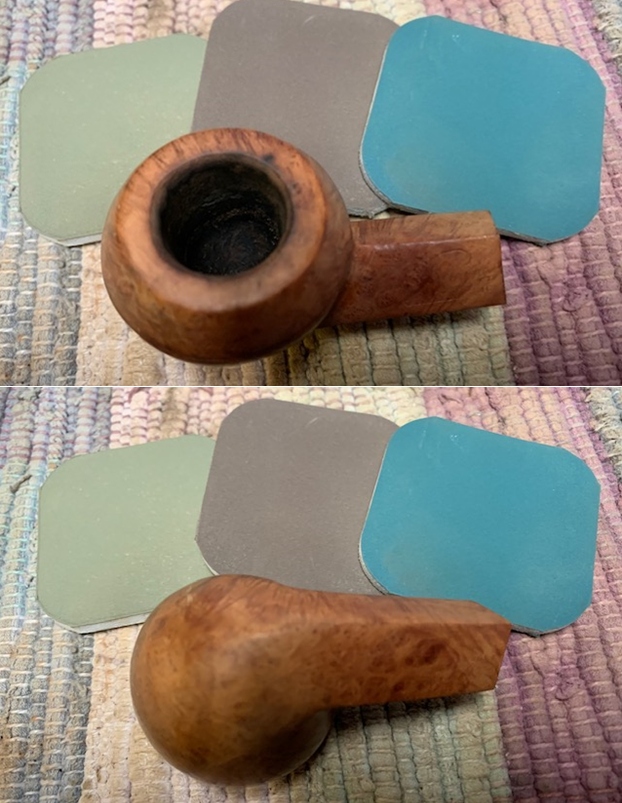
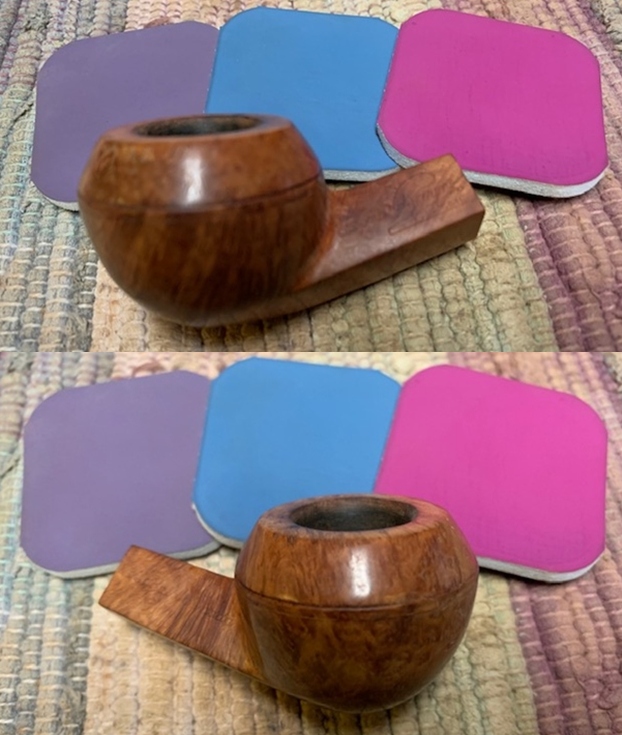
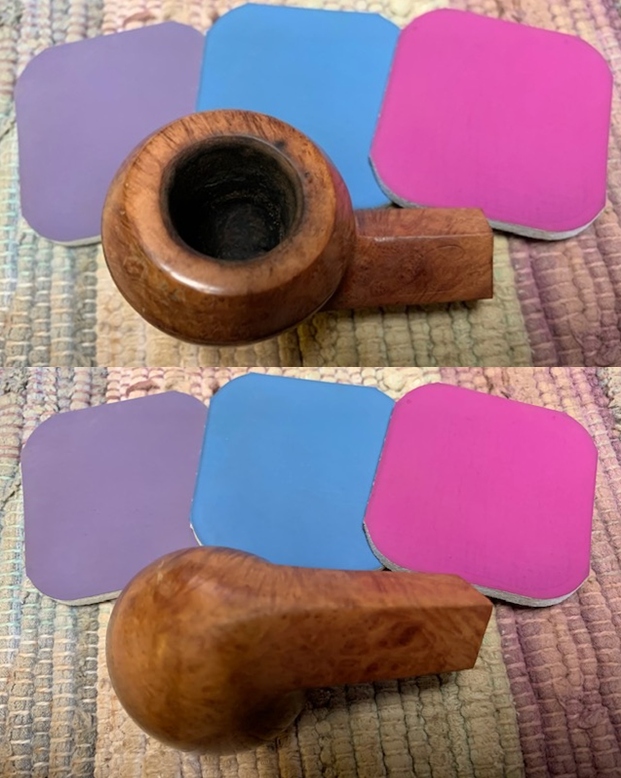
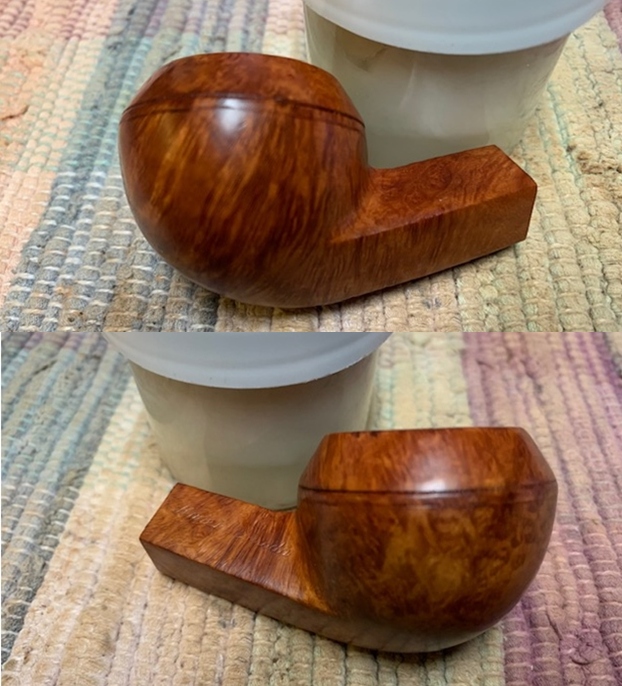
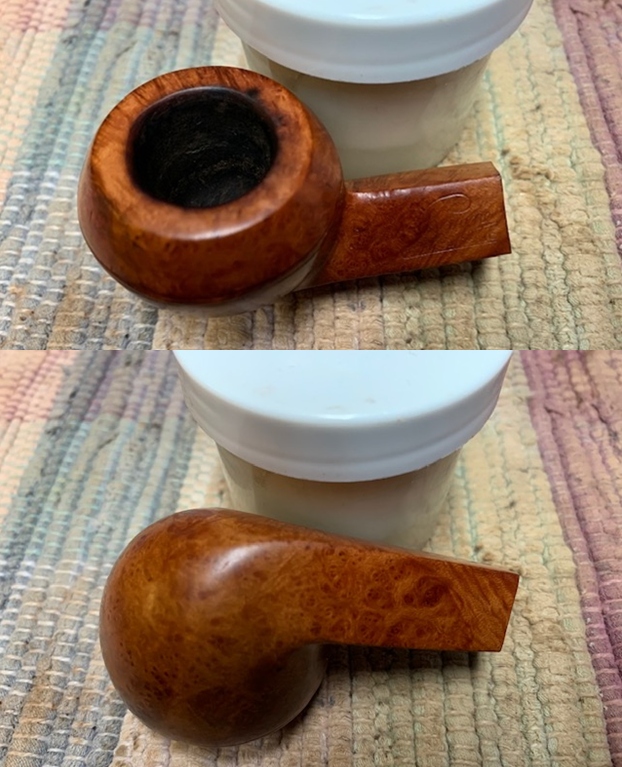
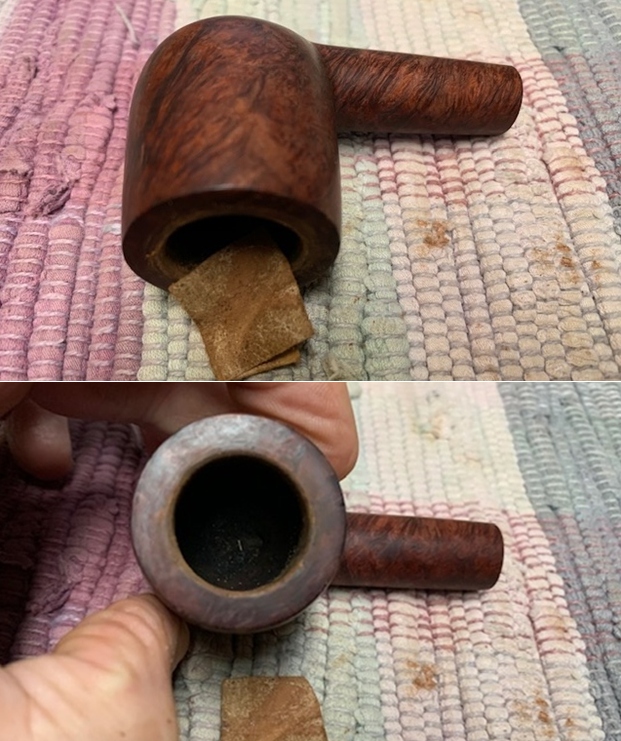
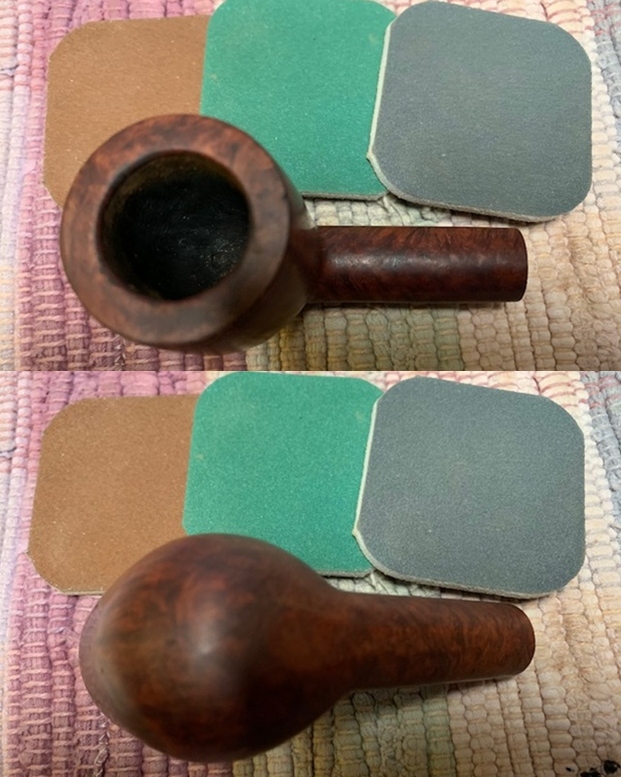
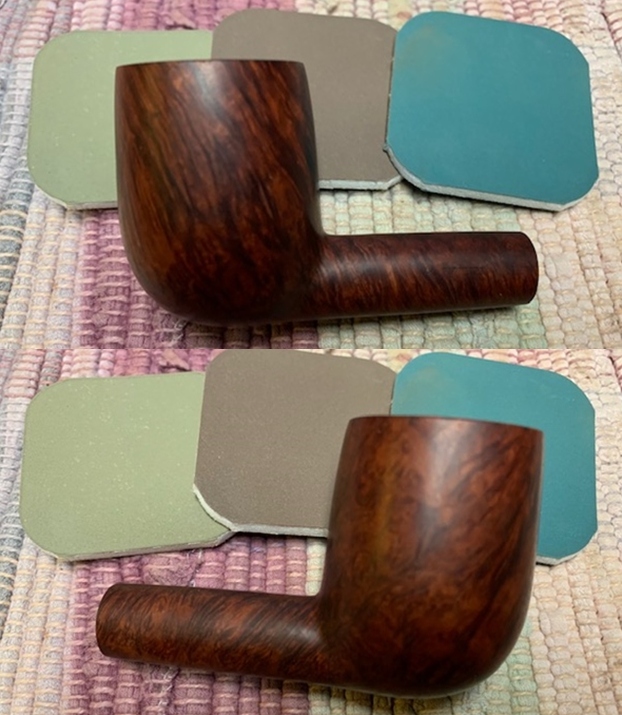
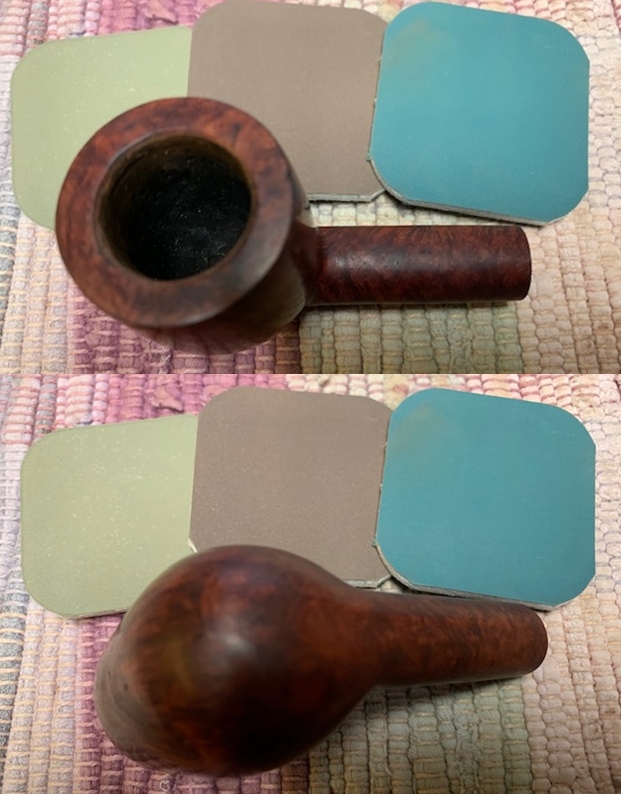
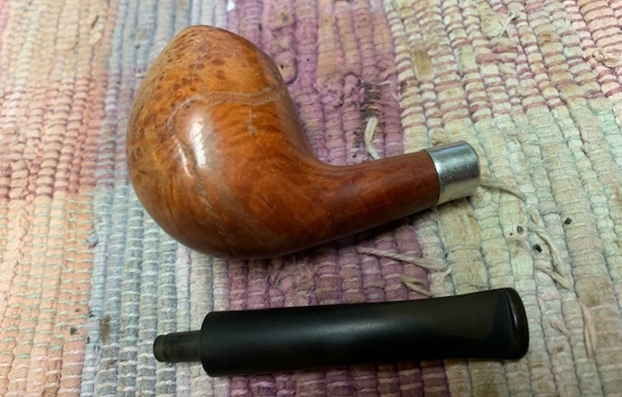
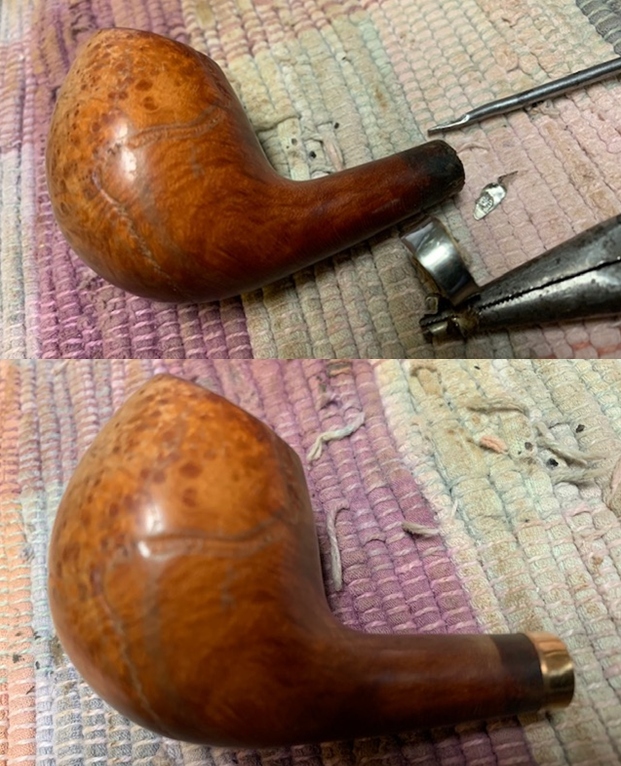
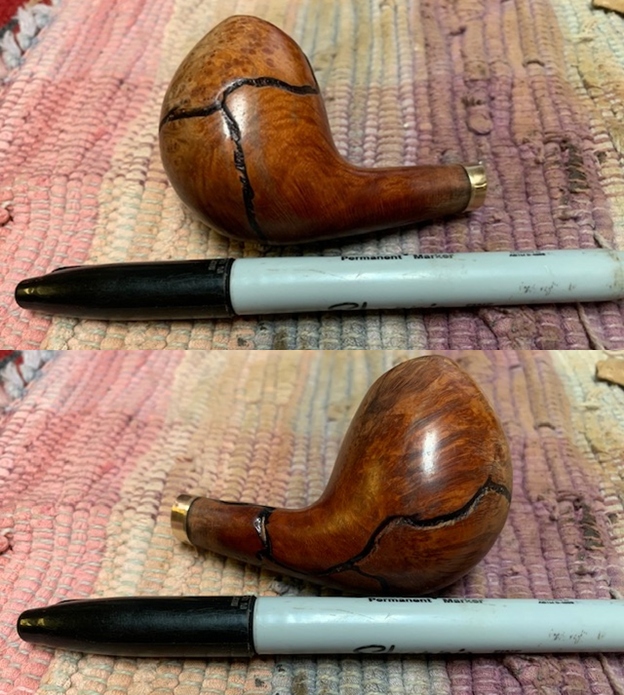
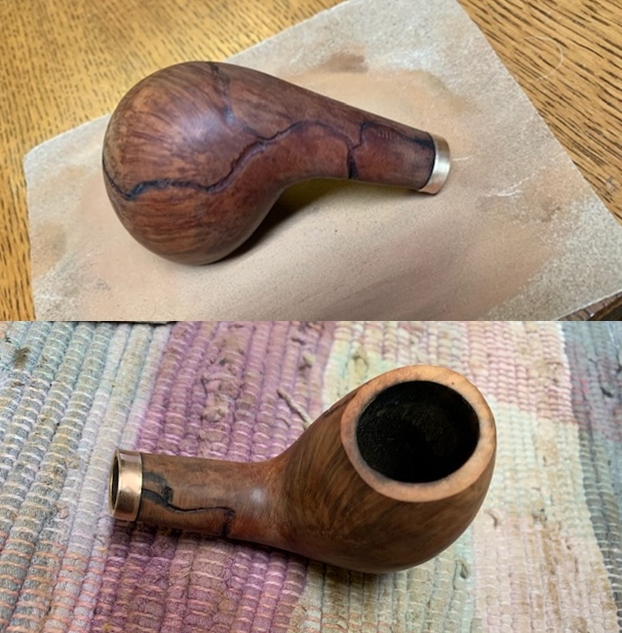
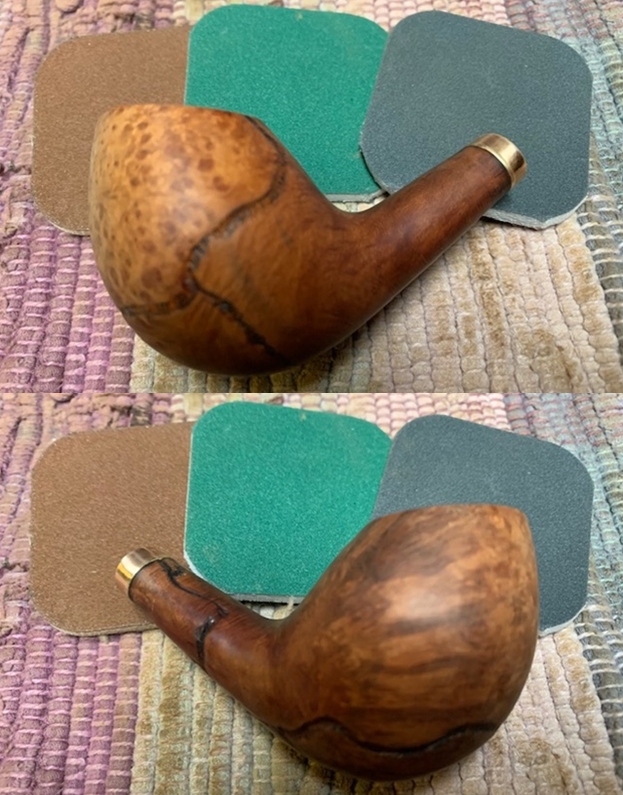
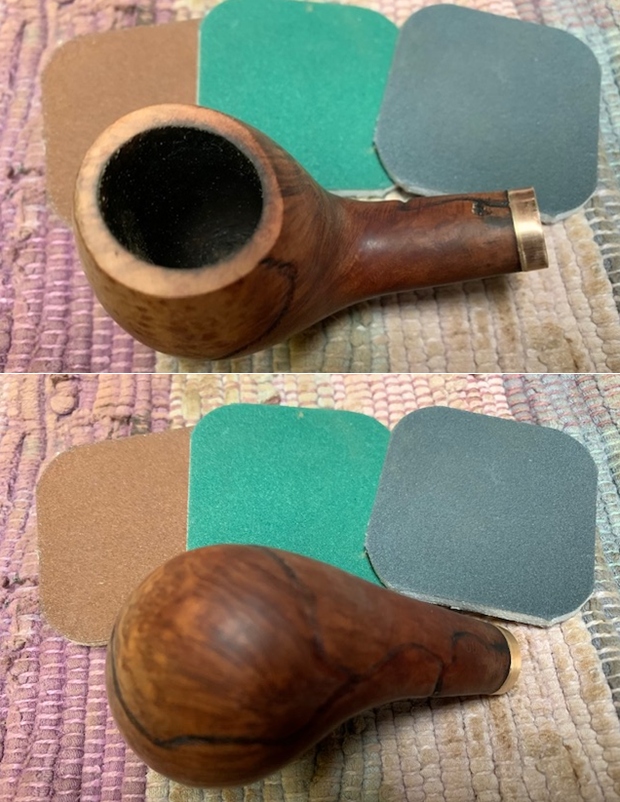
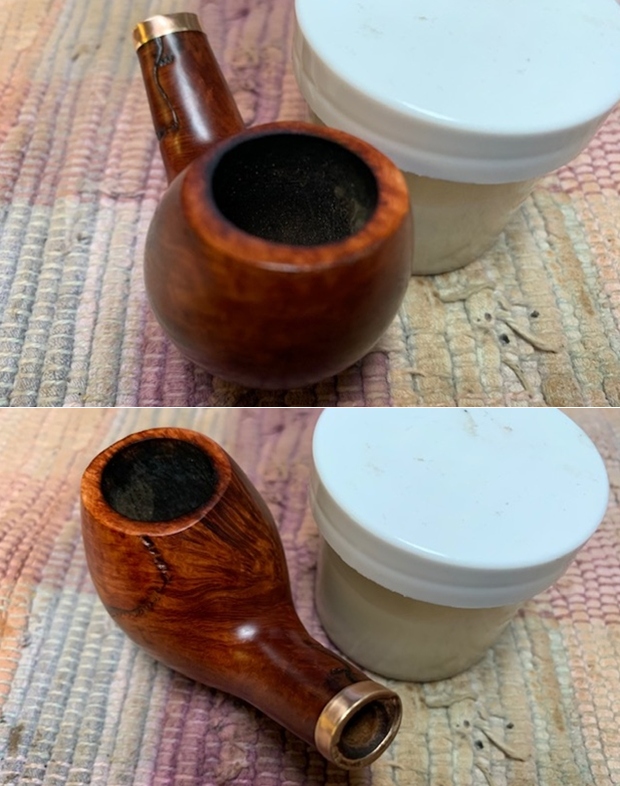
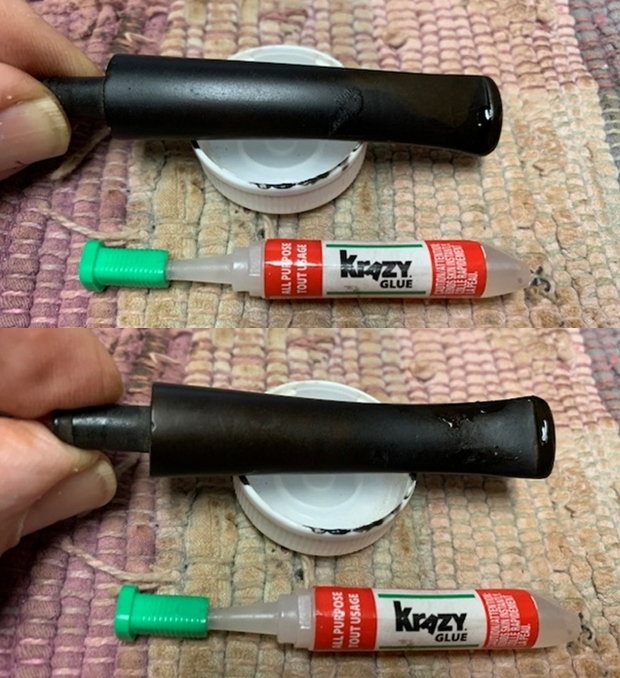
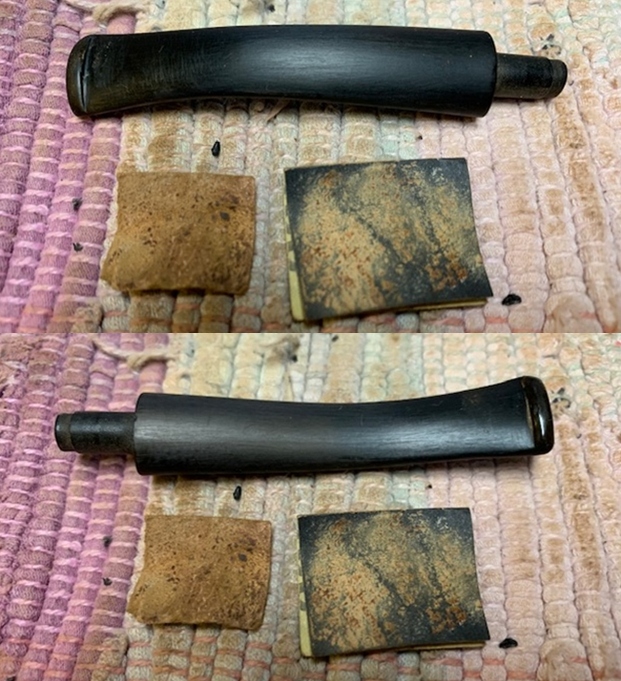
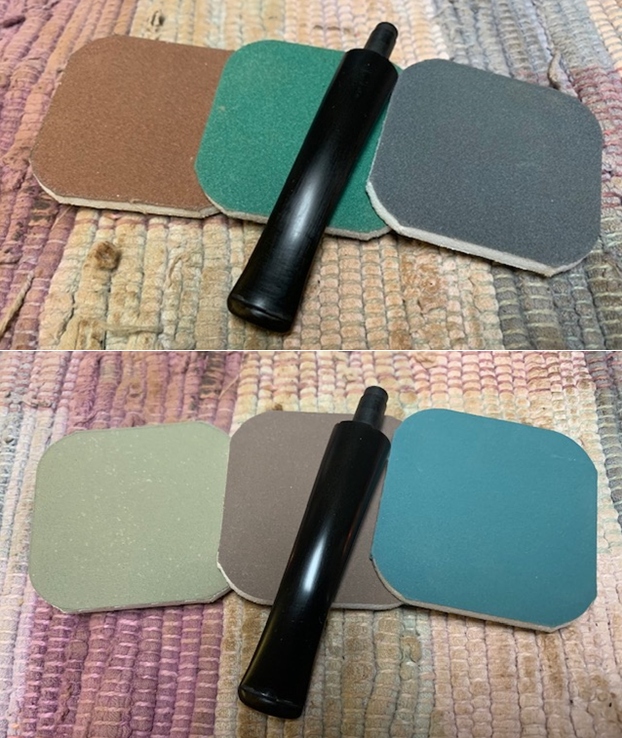
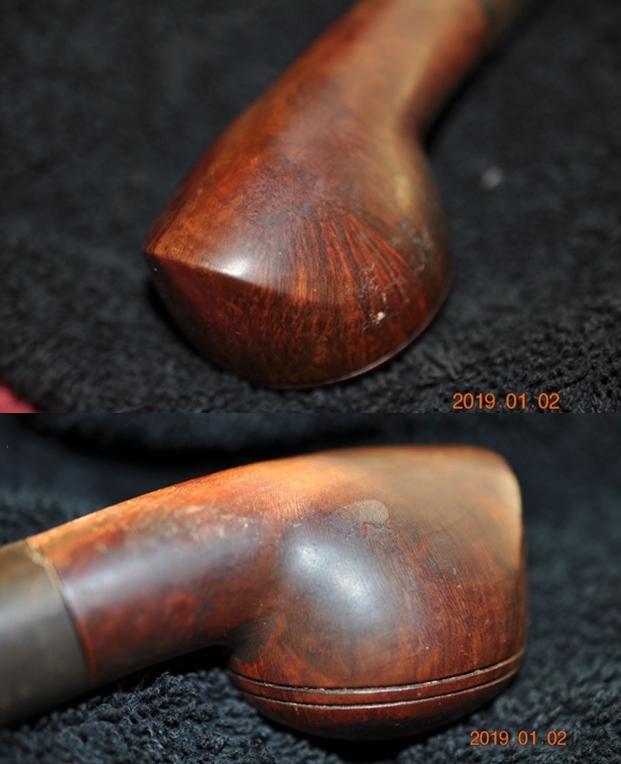
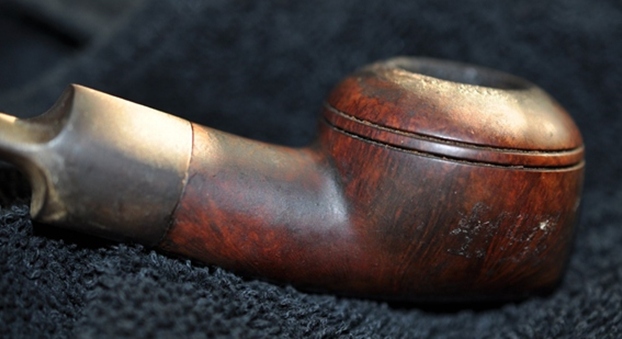
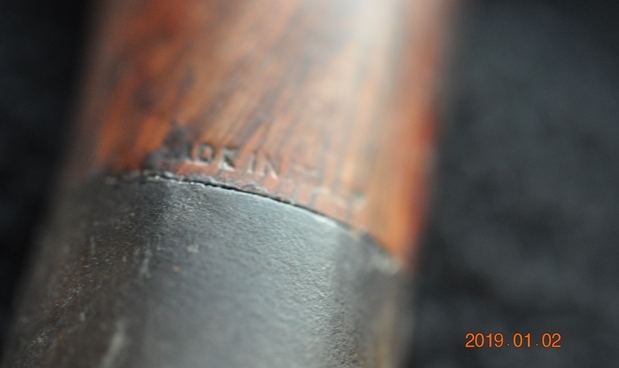
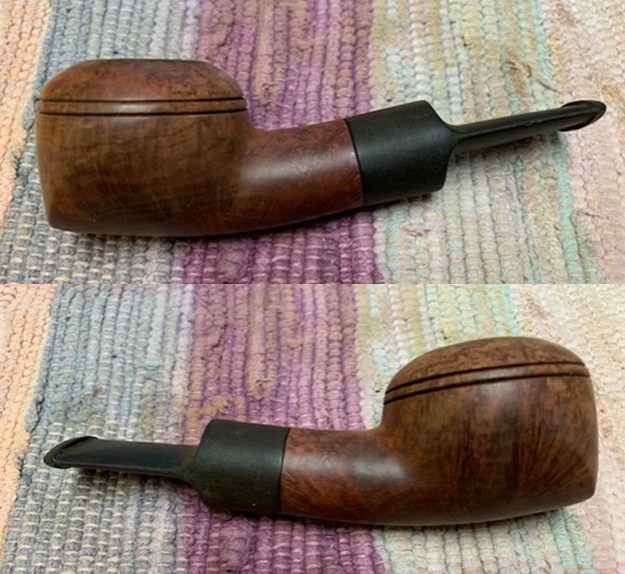
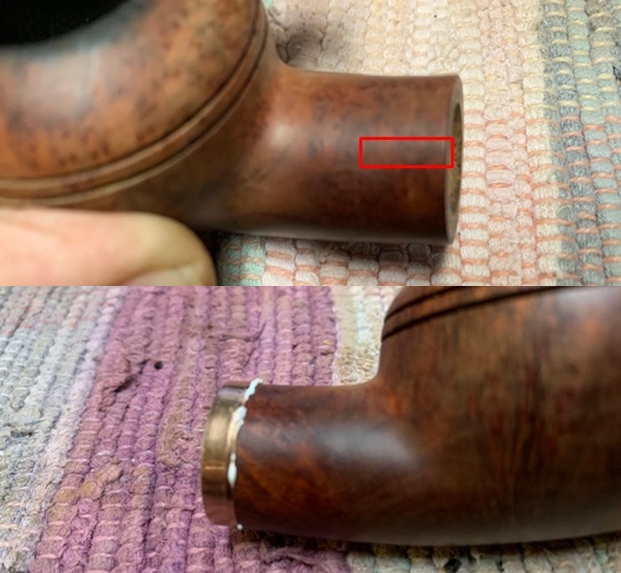
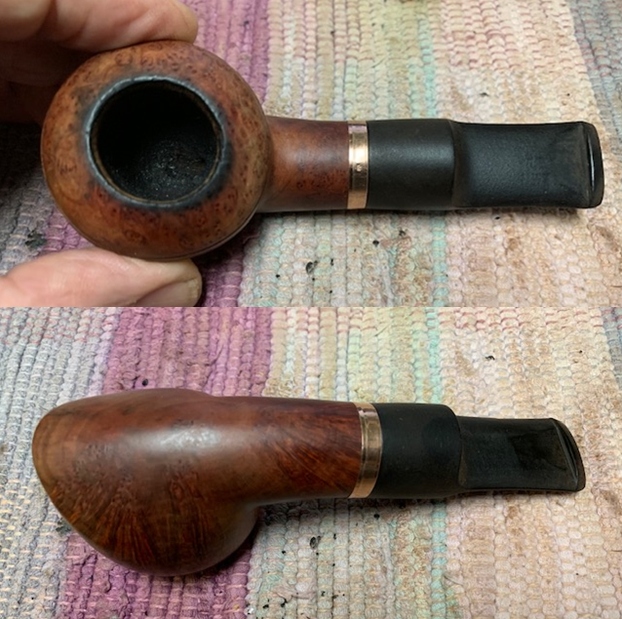
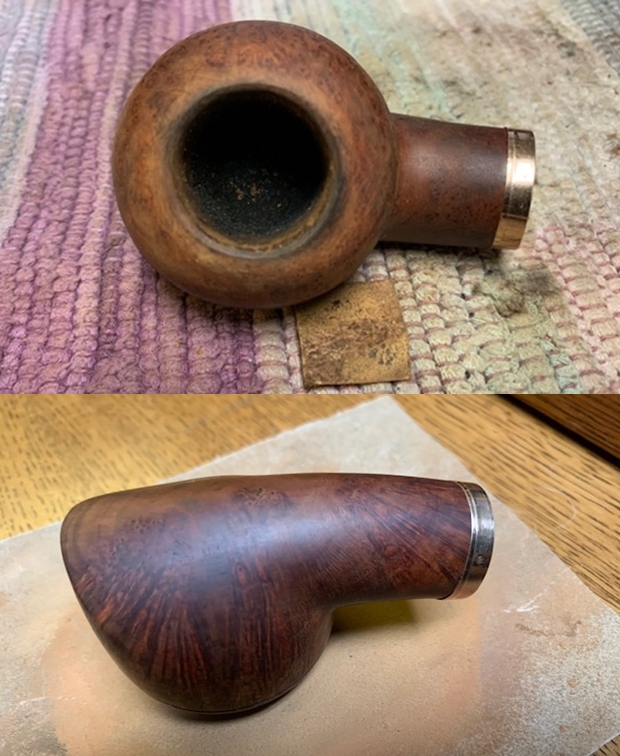
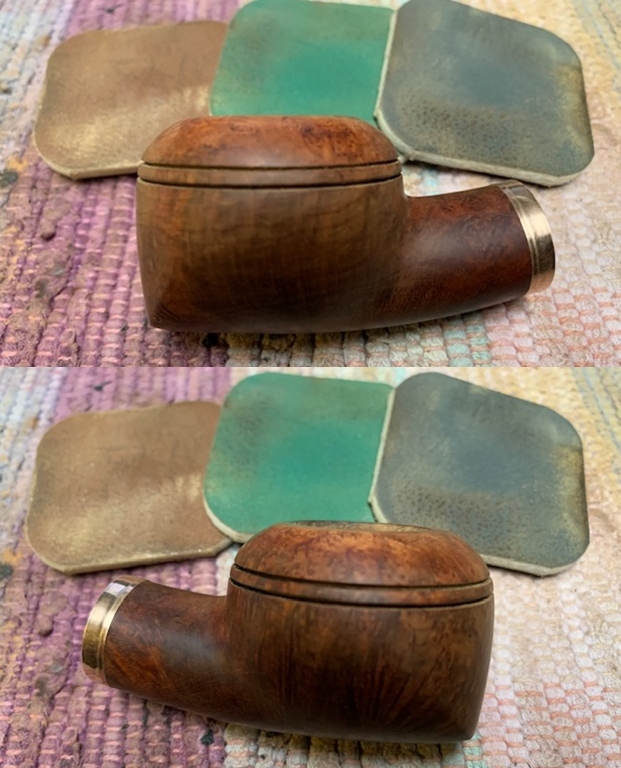
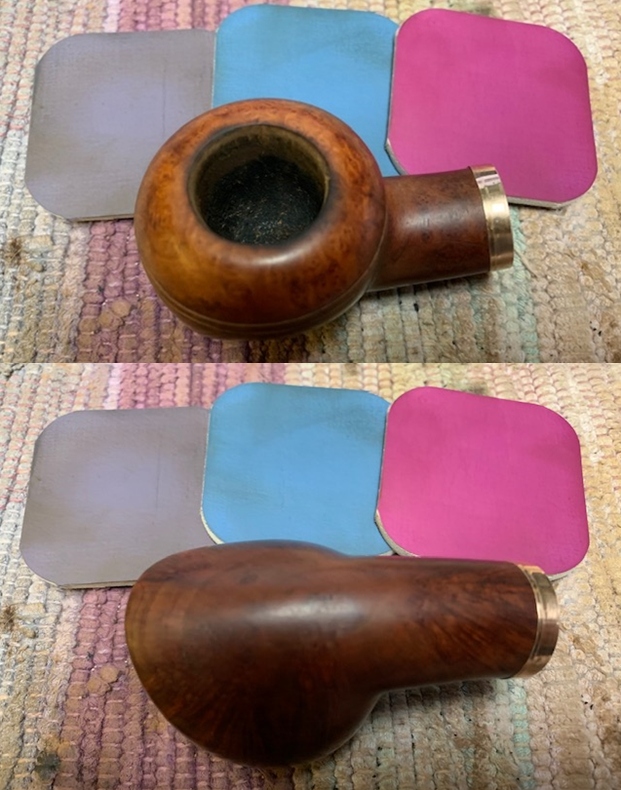
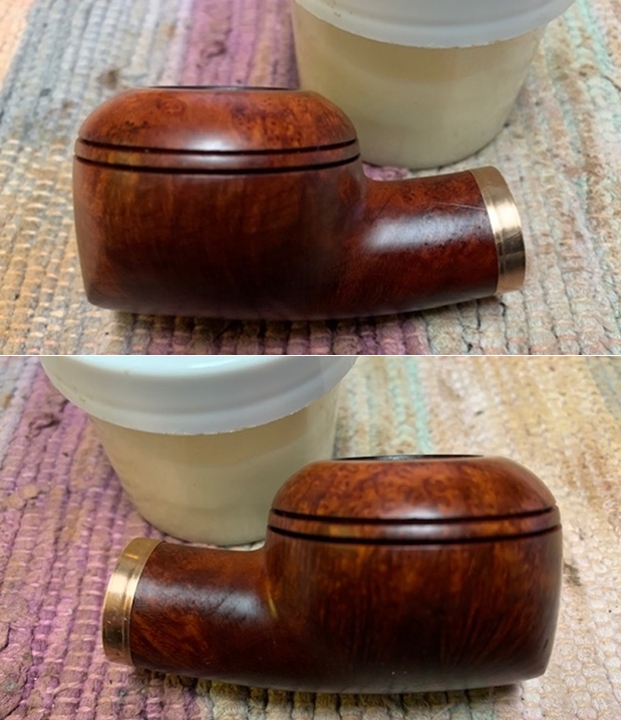
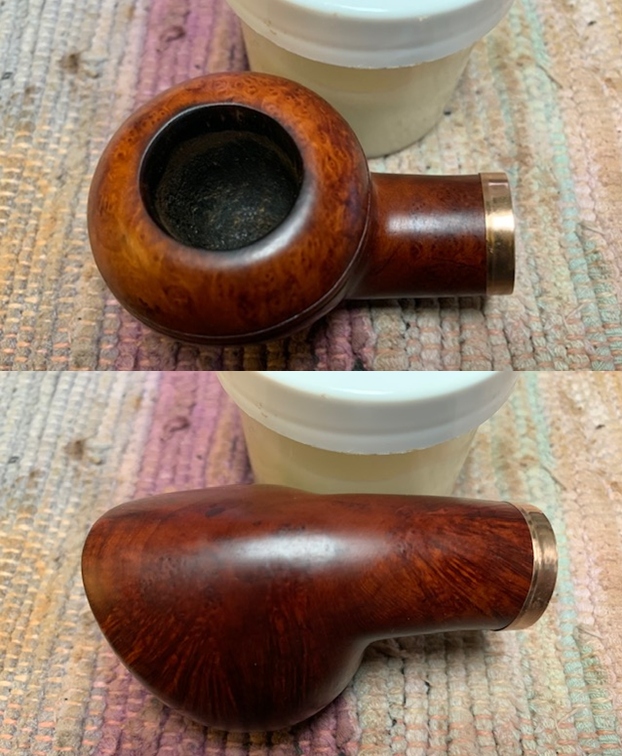
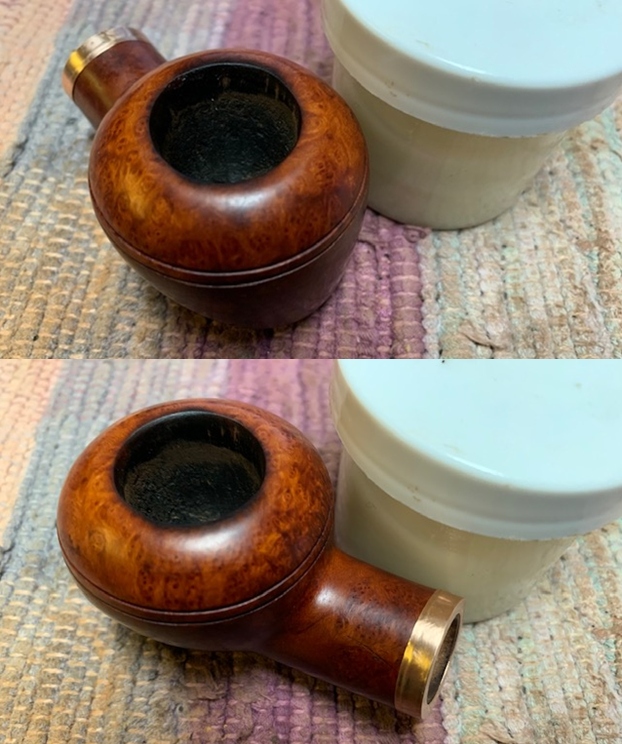
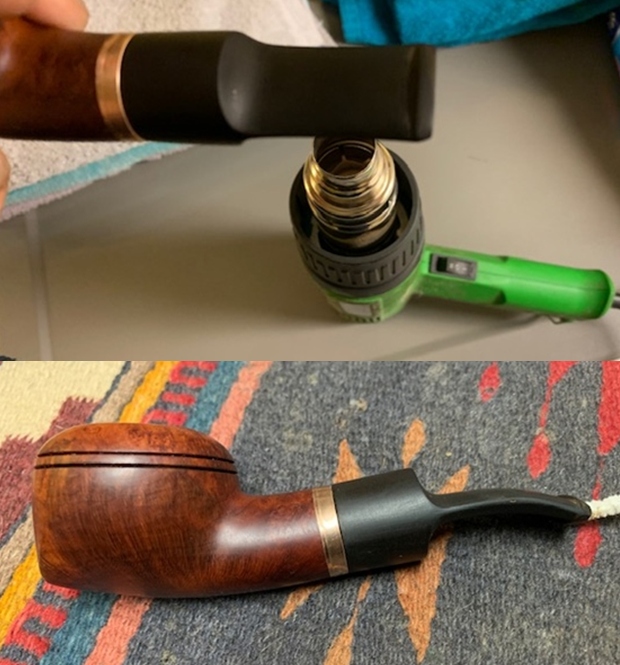
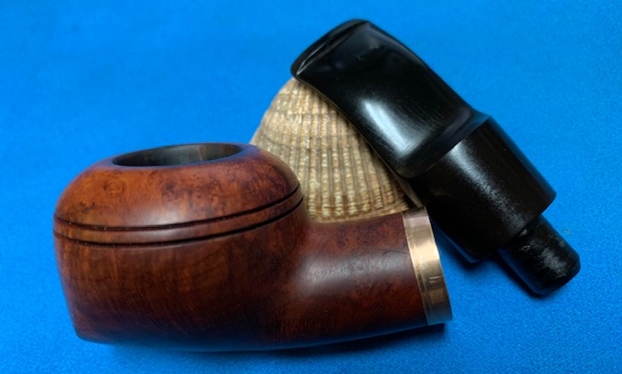
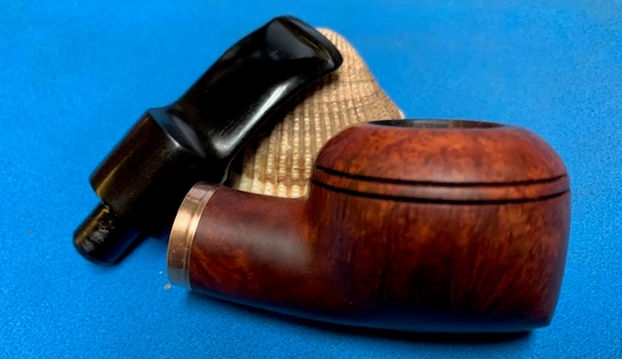
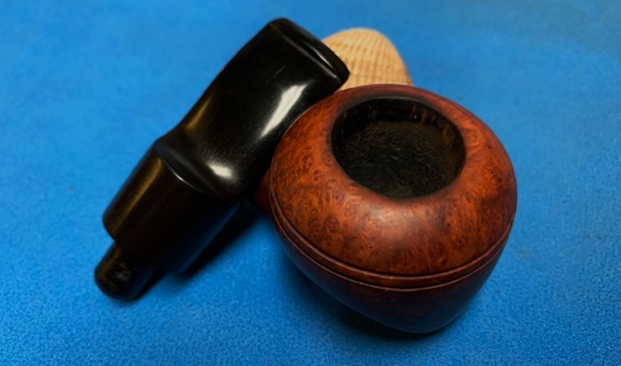
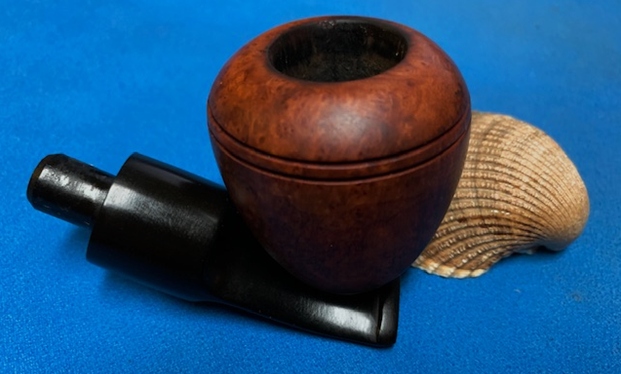
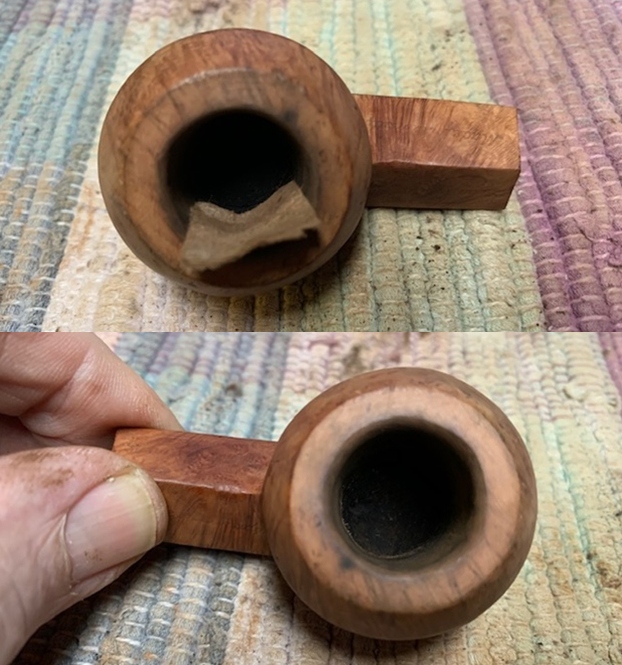
The next pipe on the table came to us from a group of pipes that Jeff picked up in an online auction in Brookfield, Wisconsin, USA. It is a chunky Bullmoose with a saddle stem. The stamping is clear and readable on the shank/stem junction and reads Made in Italy. The filthy oils and grimes are ground into the finish of the bowl. The thick grime makes the grain almost invisible but from what I can see there is some amazing grain that the Bullmoose shape follows well. There was a thick cake in the bowl and a heavy overflow of lava on the rim top. The vulcanite saddle stem was oxidized, calcified and had light tooth marks and chatter ahead of the button.  Jeff took photos of the pipe to show what it looked like before he started working on it. He took photos of the bowl and rim top to show the thickness of the cake and the lava overflow. The photos of the stem show the light oxidation and tooth marks and chatter on the surface on both sides.    The photos of the sides and heel of the bowl show the grain around the pipe. It is a beauty under the grime and dust.     The stamping on the underside of the shank is shown in the photo below. It is very readable. It reads as noted and explained above.   I turned to work on the pipe itself. Jeff had carried out his usual thorough cleanup of the pipe. He had reamed it with a PipNet reamer to remove the cake and cleaned the reaming up with a Savinelli Fitsall Pipe Knife. He scrubbed the internals of the bowl and stem with alcohol, cotton swabs and pipe cleaners. He scrubbed the externals with undiluted Murphy’s Oil Soap and rinsed the bowl off with running water. He soaked the stem in Before & After Deoxidizer and once it had soaked rinsed it off with warm water to remove the residual solution. He dried it off and rubbed it down to remove any oxidation that was still on the stem. The pipe looked very clean when I received it.  I took a photo of the rim top to show the condition. You can see the damage on the inner edge on the left front. It is roughened and chipped and out of round. The saddle stem came out looking quite good. There are light tooth marks and chatter on both sides near the button. You can also see the only stamping on the pipe in the third photo below at the shank/stem junction it reads Made in Italy. I removed the stem from the shank and took a photo of the pipe parts to show what I was working with. It is a nice looking pipe.I decided to start the restoration on this one by dealing with a crack in the shank. I have drawn a box around it in the photo below. It goes from the shank end into the shank about ½ of an inch. It is a hairline crack. I painted the shank end with some all-purpose glue and pressed a thin brass band on the shank end. I wiped the shank end down afterward with a damp cloth to remove the glue that squeezed out.I wiped down the shank with a damp cloth and dried it off. I put the stem on the shank and took photos of the pipe as it looked with the new bling.    I removed the stem from the shank and worked on the damage to the rim top. I worked the inner edge over with a folded piece of 220 grit sandpaper to give the rim edge a slight bevel. I then topped the bowl on a 220 grit sandpaper topping board. I smoothed out the top with some more 220 grit sandpaper.    I polished the briar with micromesh sanding pads. I dry sanded the bowl with 1500-12000 grit pads and wiped the bowl down with a damp cloth after each pad. The briar really took on a shine by the final pads.  With the repair completed I rubbed the briar down with Before & After Restoration Balm. I worked it into the briar with my fingertips and a horsehair shoe brush to work it into the twin lines around the bullcap. The product works to clean, enliven and preserve the briar. I let it sit for 15 minutes while I worked on the stem. After the time passed I buffed it with a cotton cloth to deepen the shine. The briar really comes alive with the balm.      I set the bowl aside and turned my attention to the stem. The stem was rough and pitted so I sanded it smooth with a folded piece of 220 grit sandpaper. I started polishing the stem with 400 grit wet dry sandpaper.    Before polishing the stem further I decided to give a slight bend to match the flow of the curve in the pipe. I heated it with a heat gun until it was pliable (I put a pipe cleaner in the airway to make sure it did not collapse).  I bent the stem the angle I wanted and set it by cooling it with running water while holding the shape. I took a photo of the new look of the stem.   I polished the vulcanite by wet sanding with micromesh sanding pads – 1500-12000 grit pads. I wiped it down with Obsidian Oil after each sanding pad. I used Before & After Pipe Polish – both Fine and Extra Fine to further polish the stem.     This Italian Made Smooth Finish Bullmoose is a beautiful pipe with a smooth finish. It is a bit of a mystery in that there is no other stamping on the pipe. It is a great looking pipe that came out looking very good. The finish on the pipe is in excellent condition. The rich medium brown stain on the bowl works well to highlight the grain. The brass band is a nice touch of bling that separates the briar from the stem. The polished black vulcanite saddle stem adds to the mix. With the dust gone from the finish and the bowl it was a beauty and is eye-catching. I put the stem back on the bowl and buffed the pipe with Blue Diamond on the buffing wheel being careful to not buff the stamping. I gave the bowl and the stem multiple coats of carnauba wax on the buffing wheel and followed that by buffing it with a clean buffing pad. I hand buffed the pipe with a microfiber cloth to deepen the shine. The finished Italian Made Bullmoose is quite nice and feels great in the hand. Give the finished pipe a look in the photos below. I can only tell you that like the other pipes I am working that it is much prettier in person than the photos capture. The dimensions of the pipe are Length: 5 inches, Height: 1 ½ inches, Outside diameter of the bowl: 1 ¾ inches, Chamber diameter: ¾ of an inch. The weight of the pipe is 58 grams/2.05oz. Thanks for walking through the restoration with me as I worked over another beautiful pipe. Remember we are not pipe owners; we are pipemen and women who hold our pipes in trust until they pass on into the trust of the next generation.