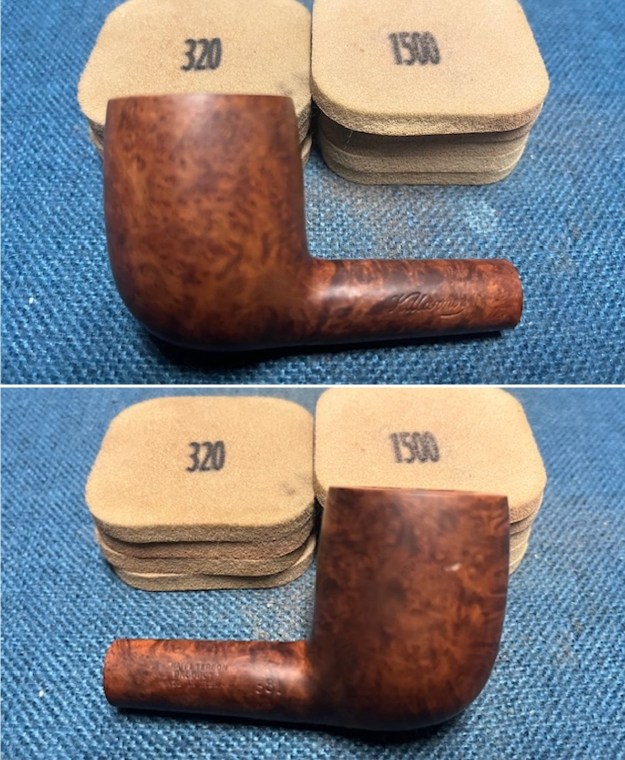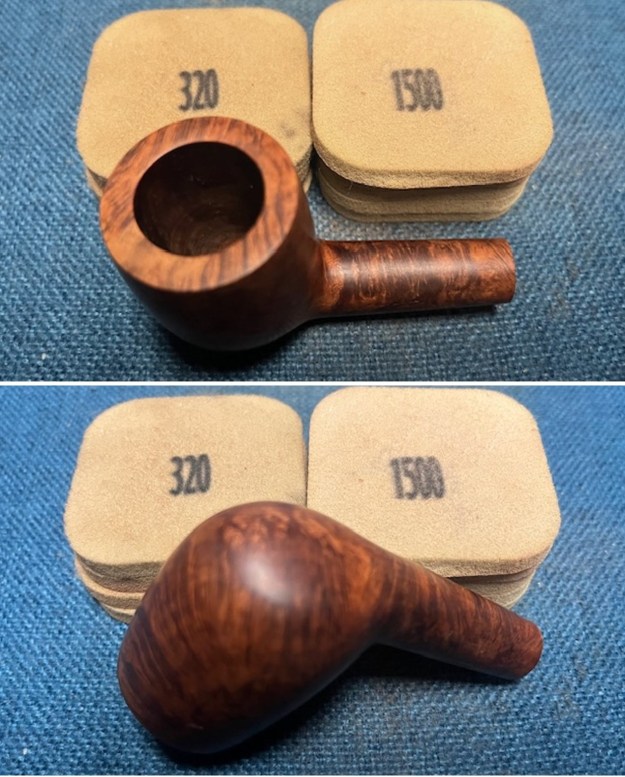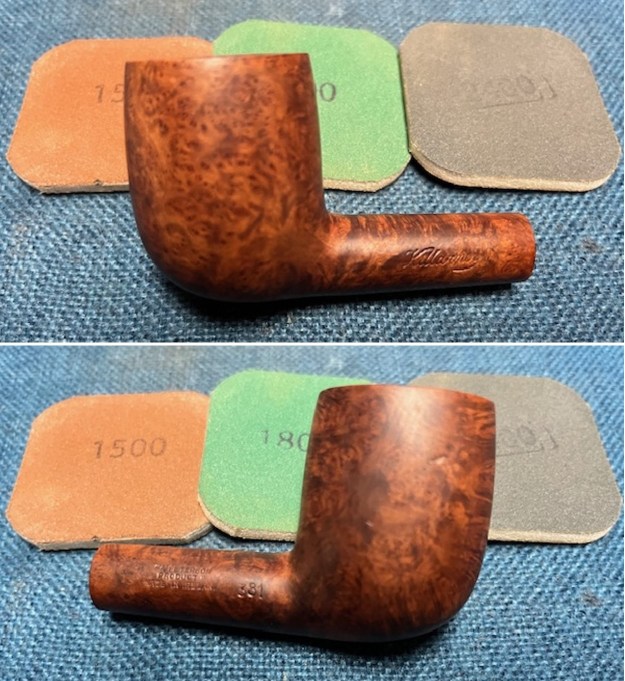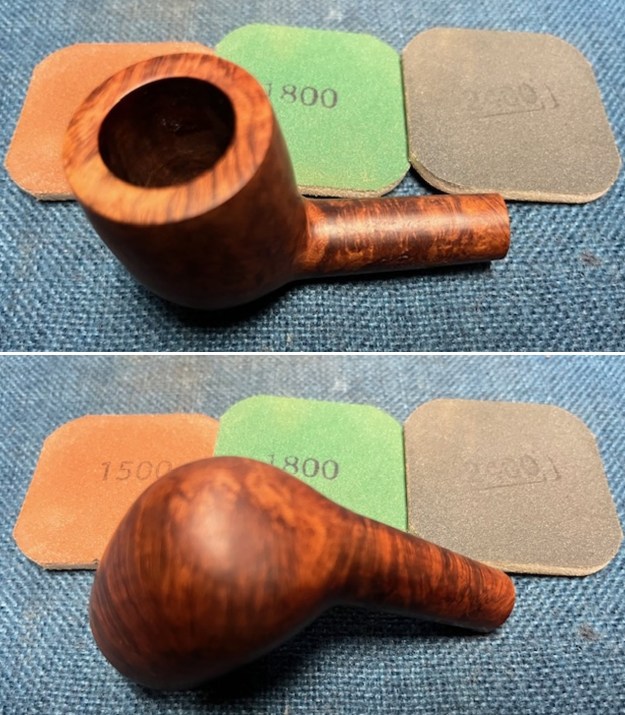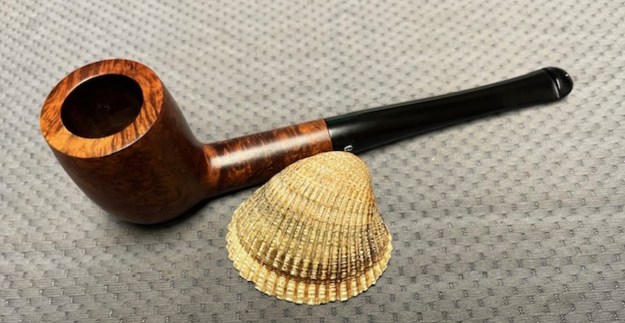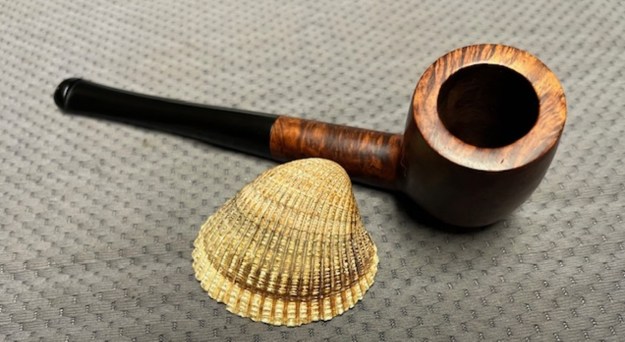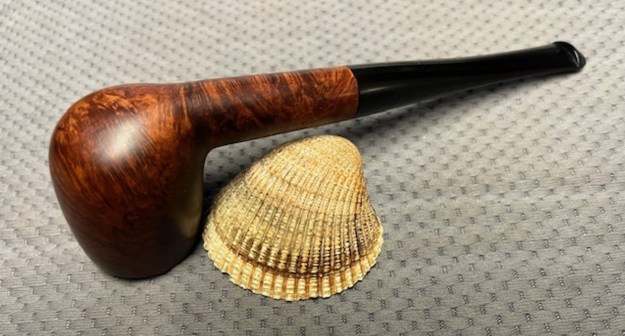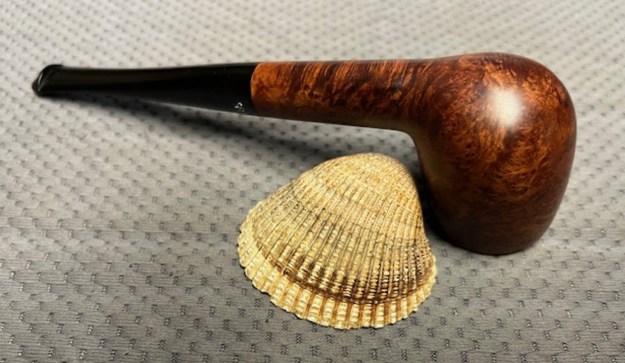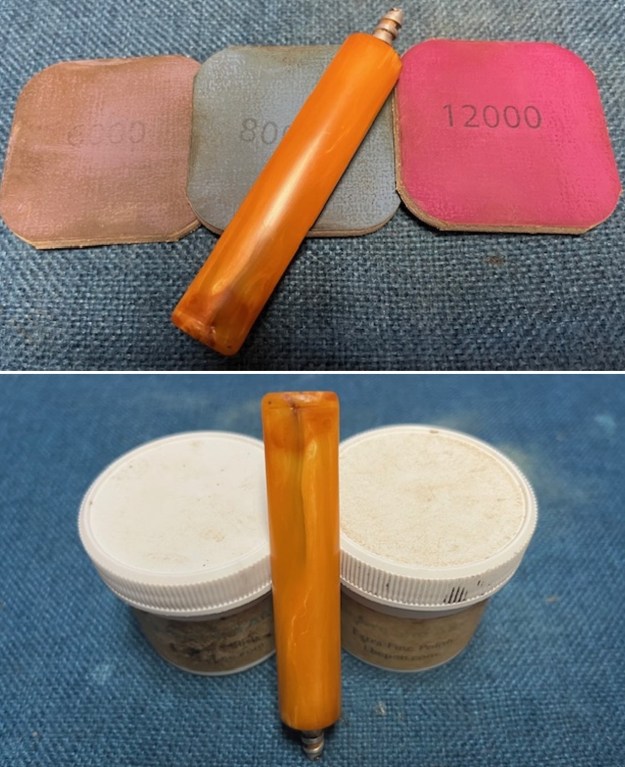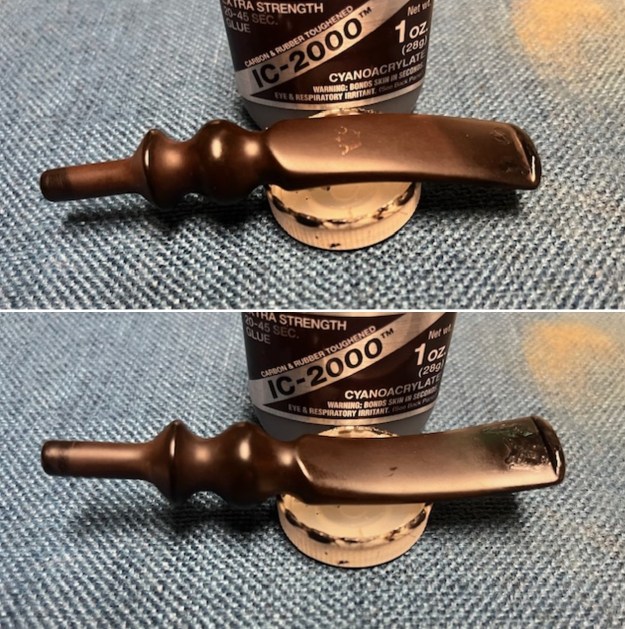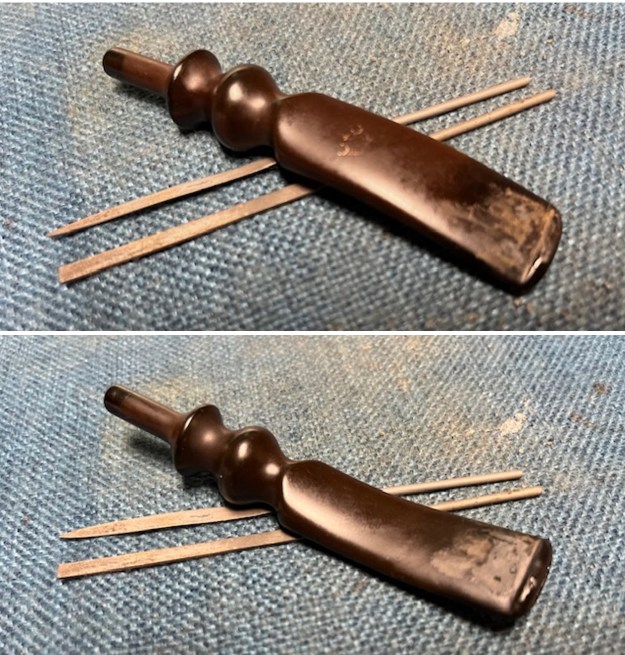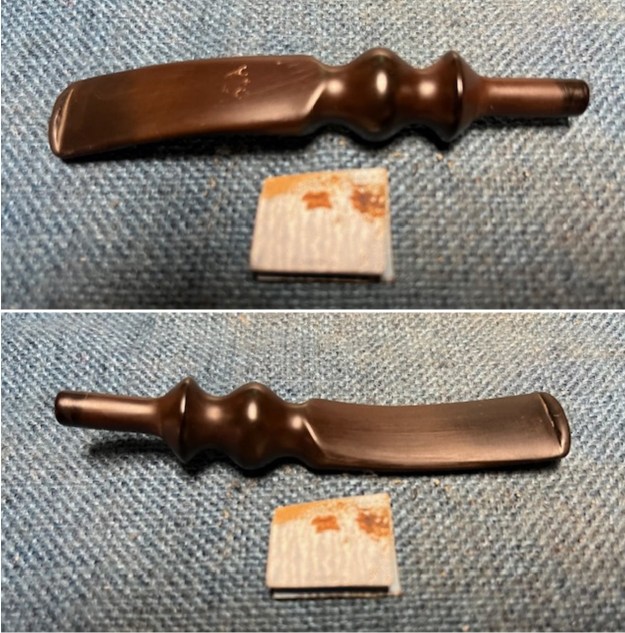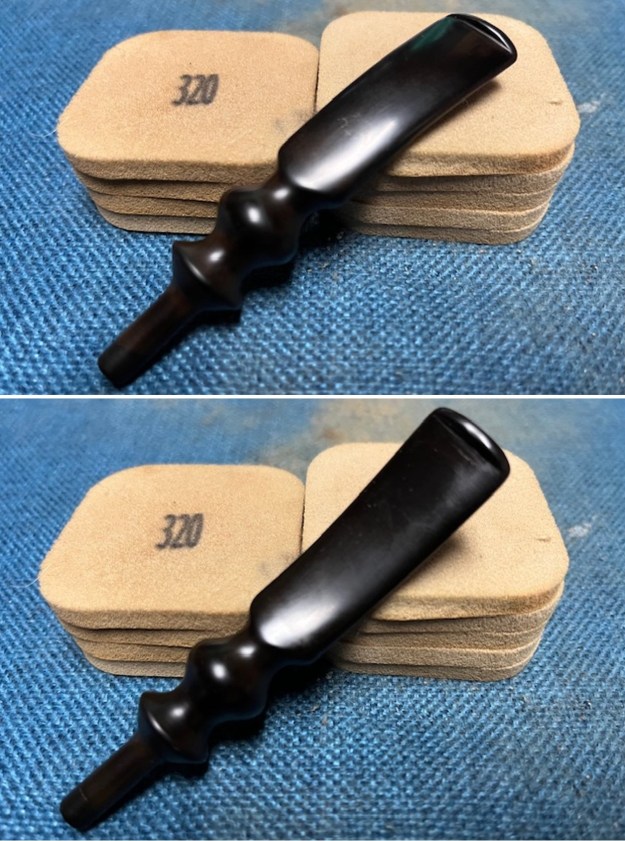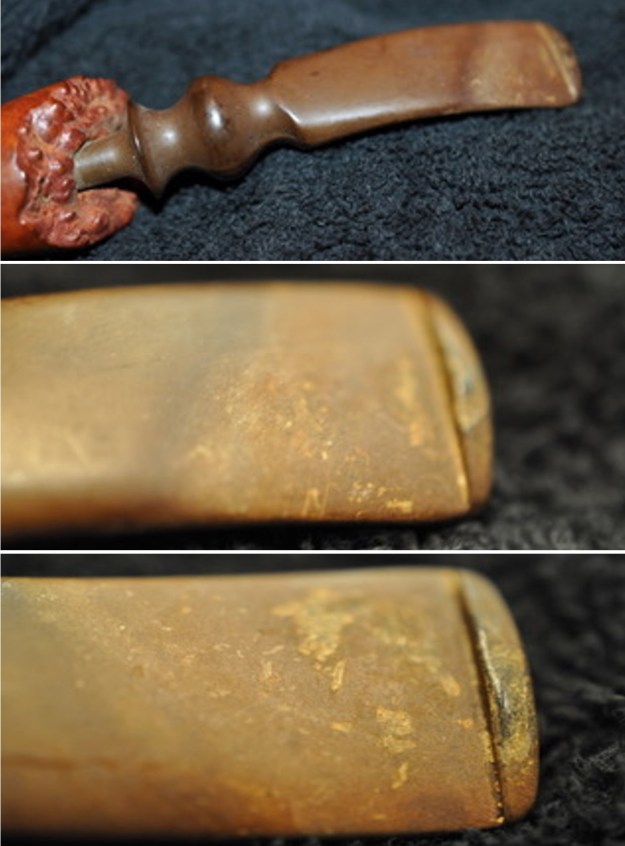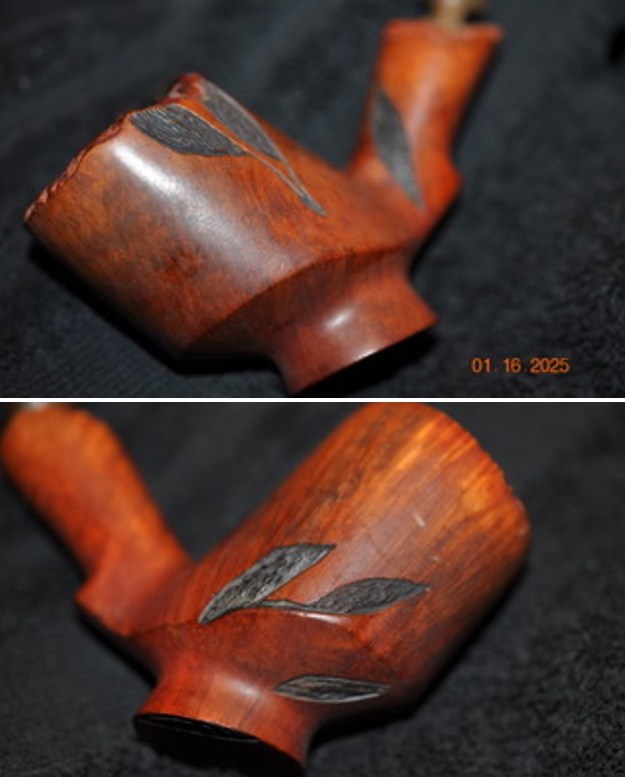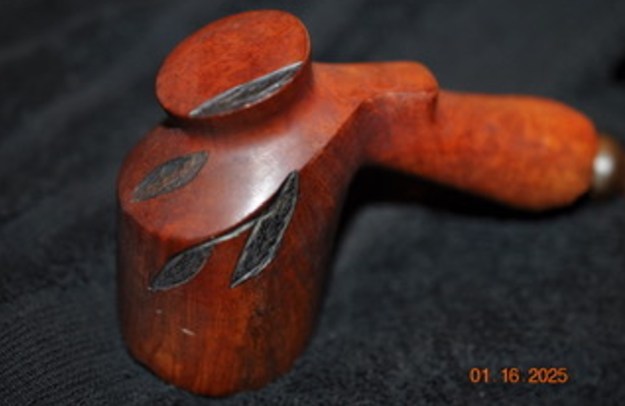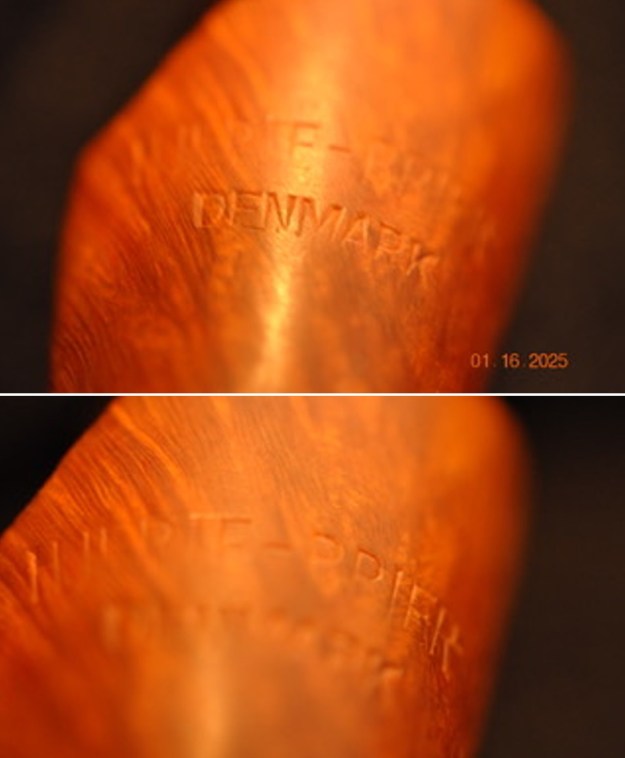
Tag Archives: Stem repairs

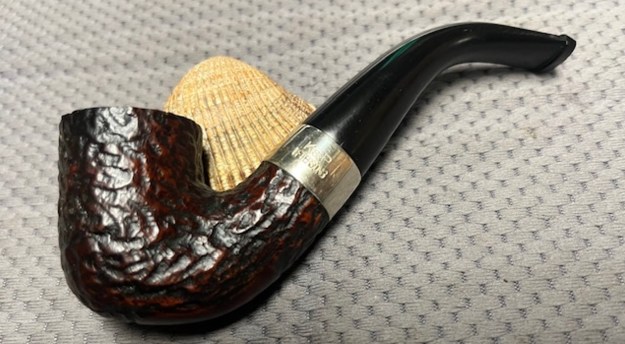
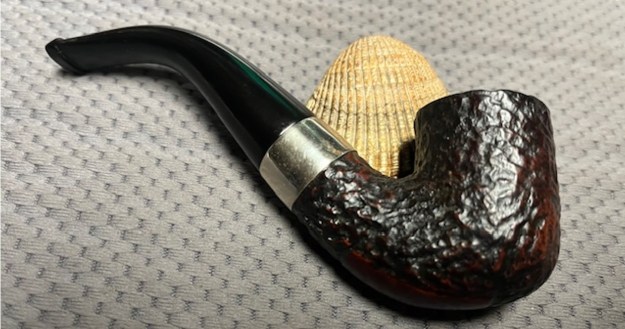
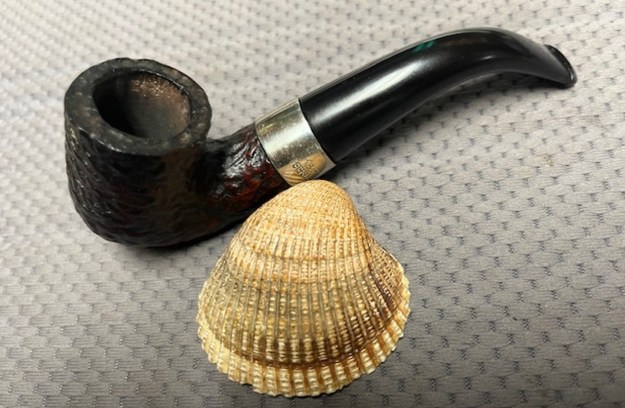
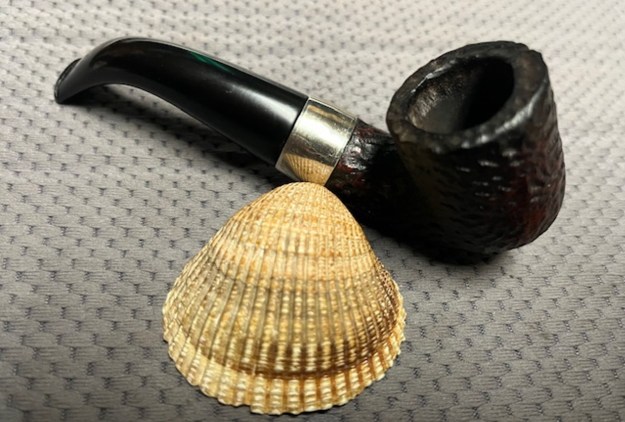
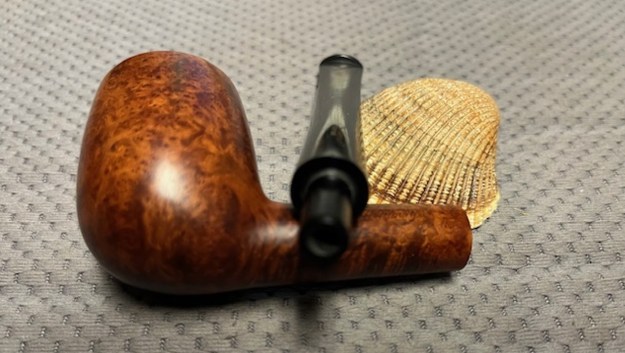
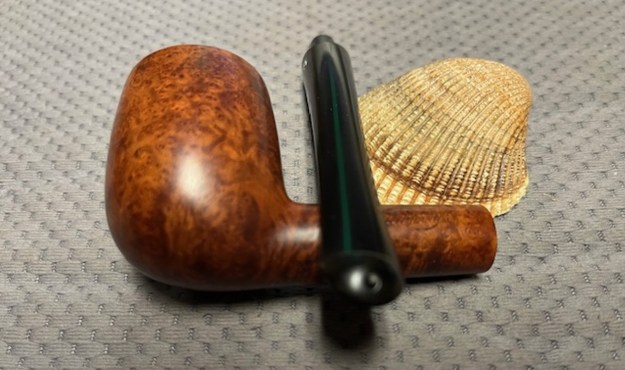
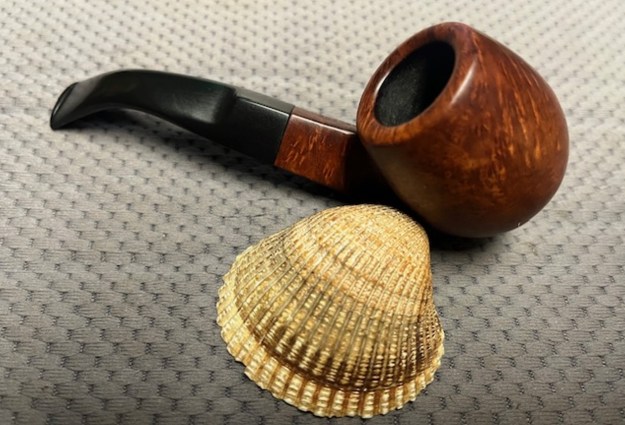
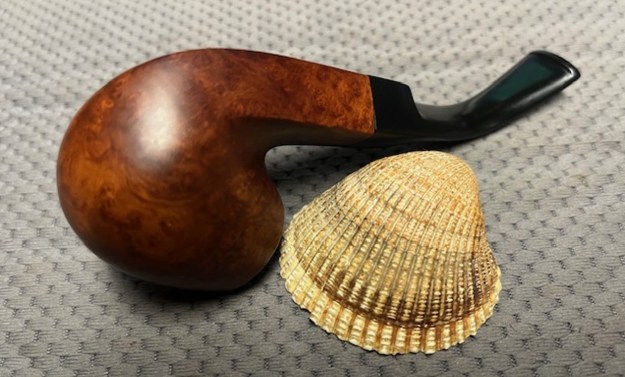
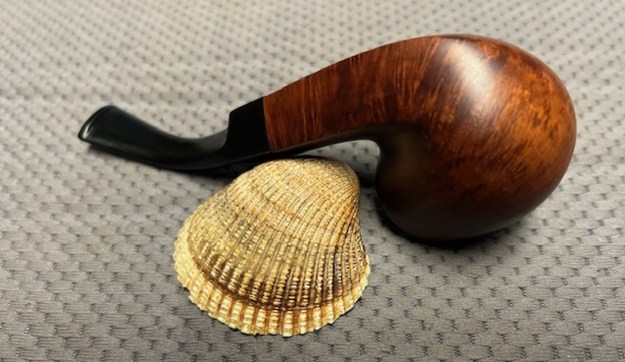
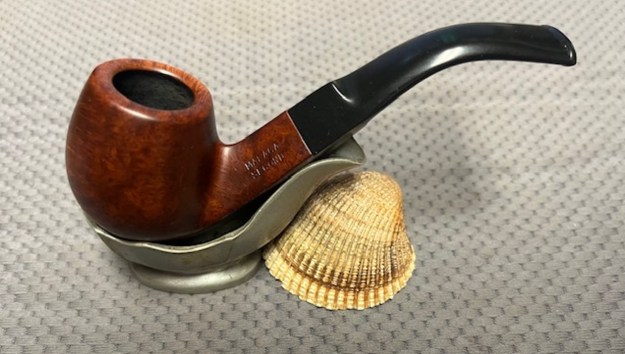
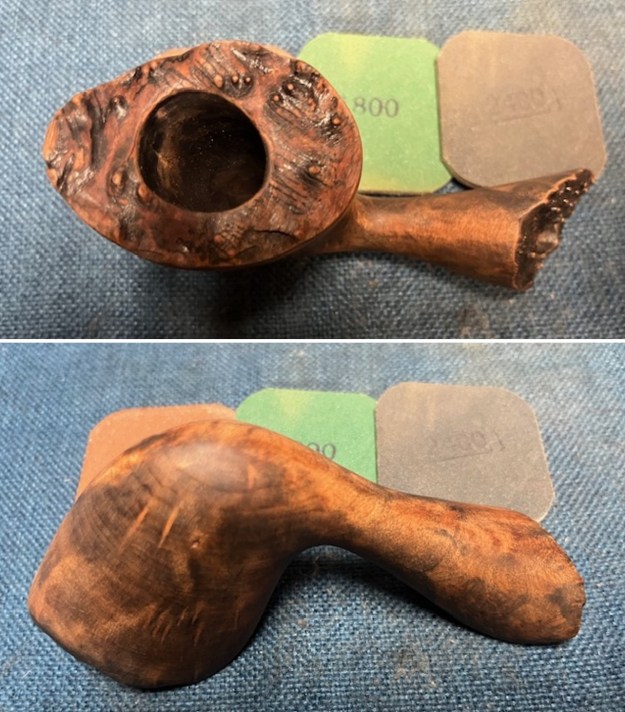
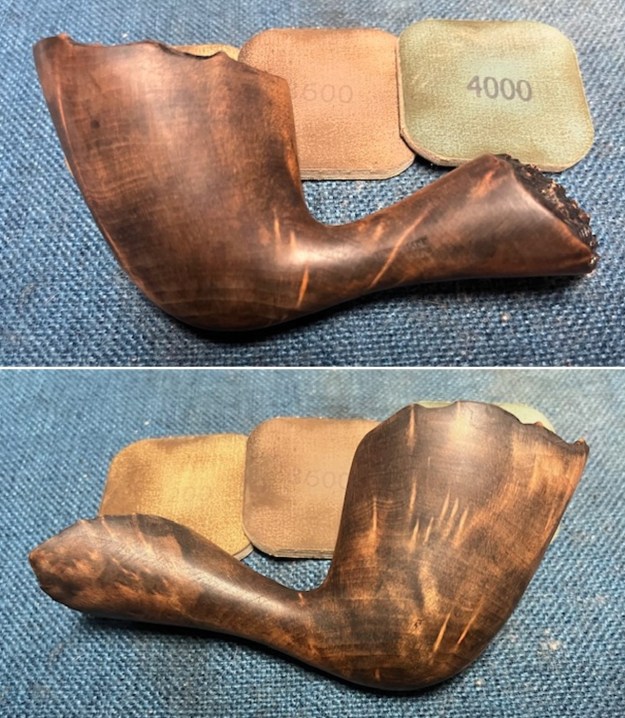
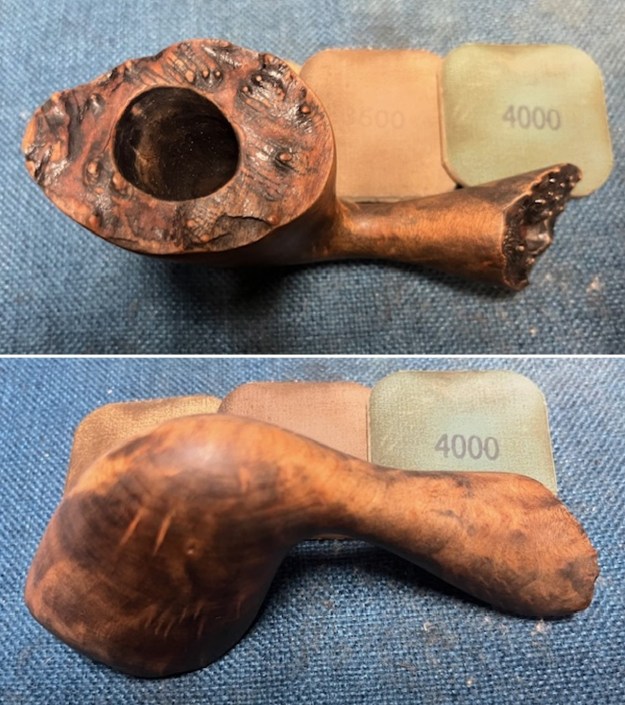
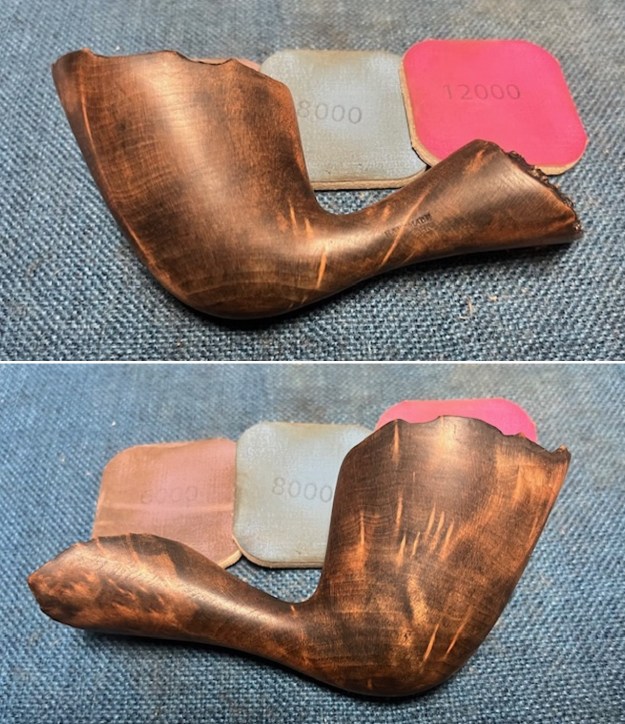
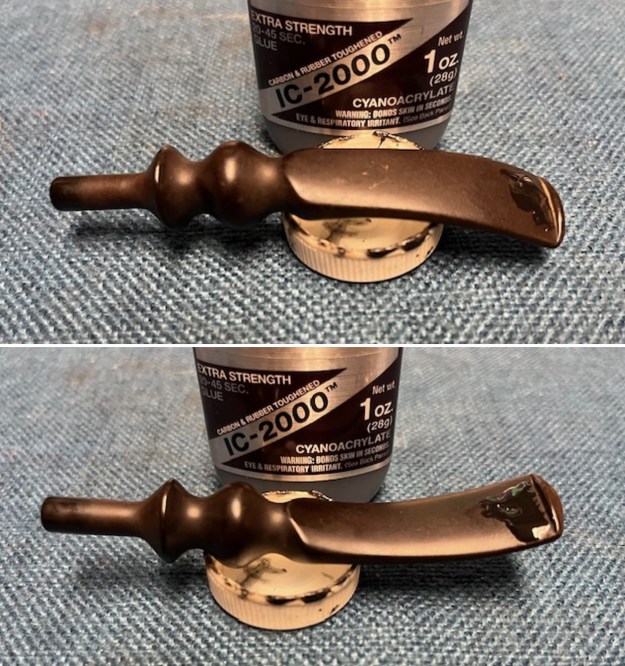
Restoring a Beautiful Nording F Danmark Freehand


by Steve Laug

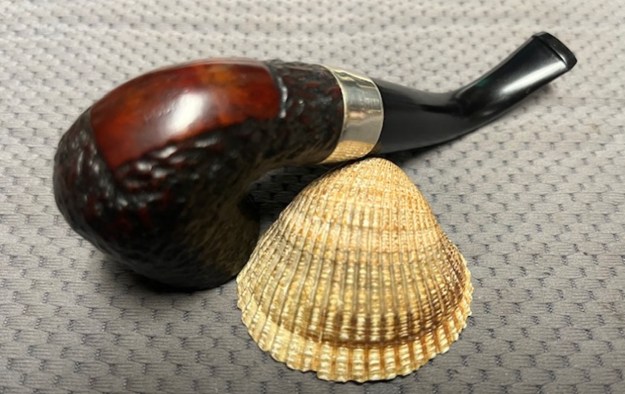
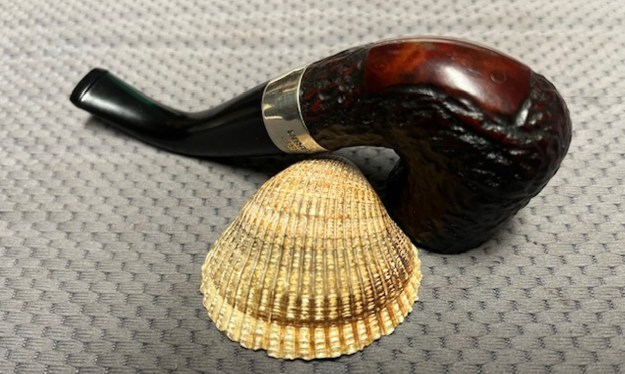
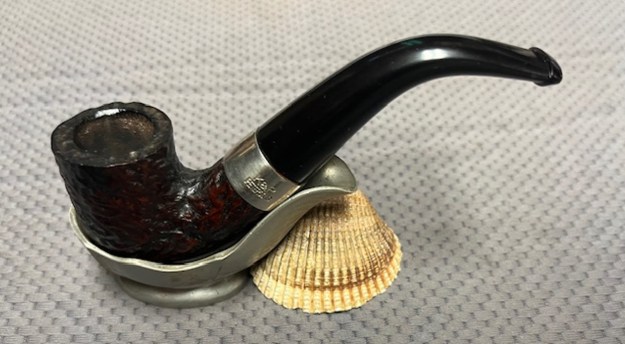
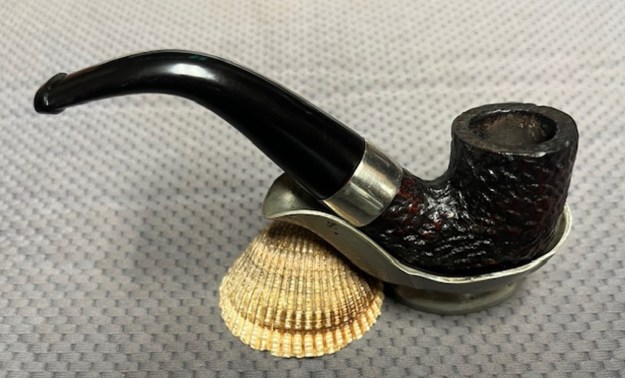
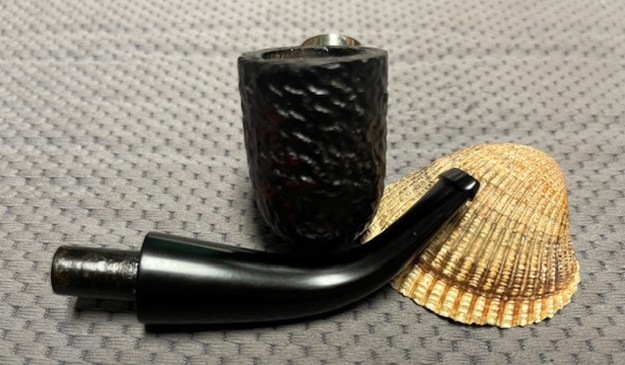
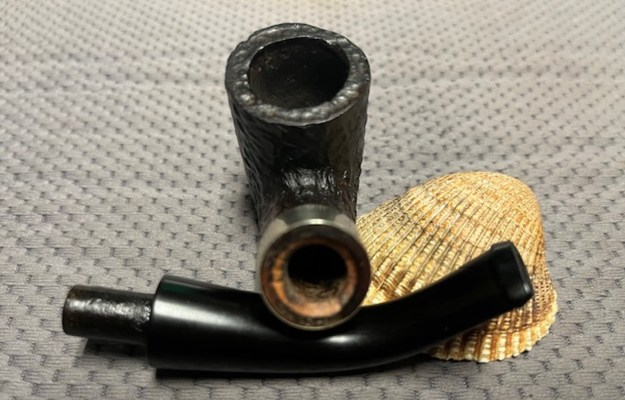
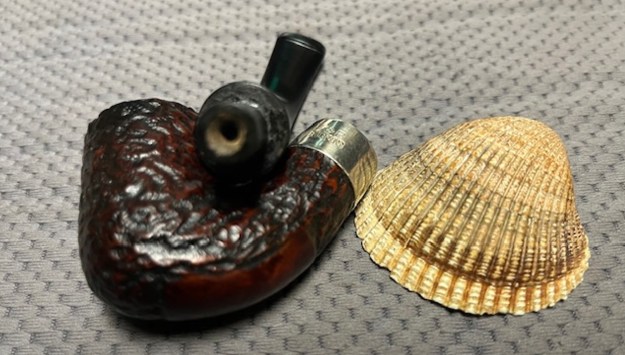
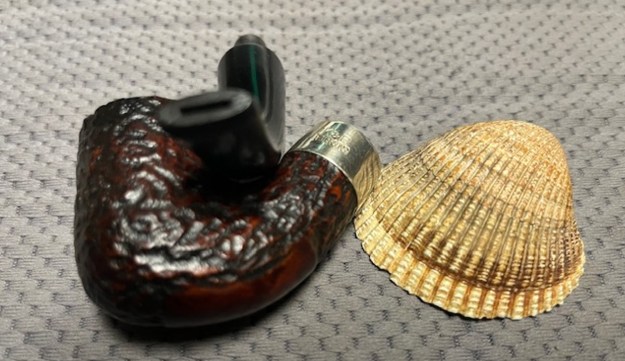
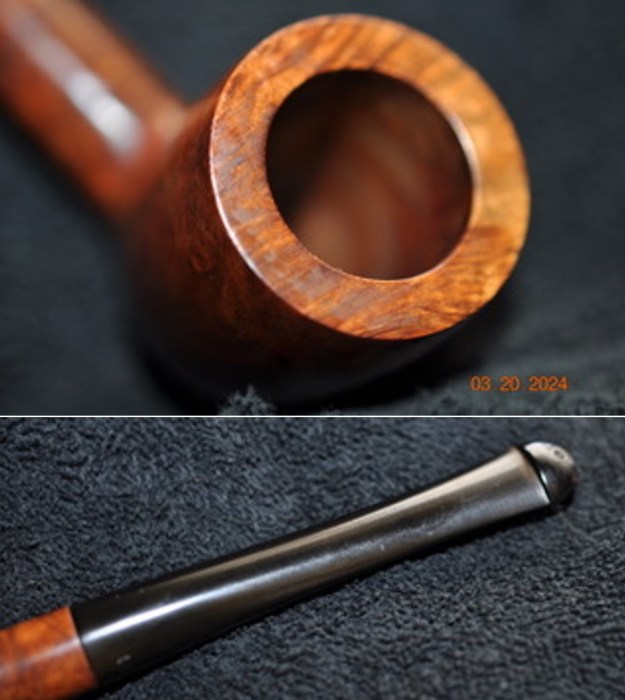
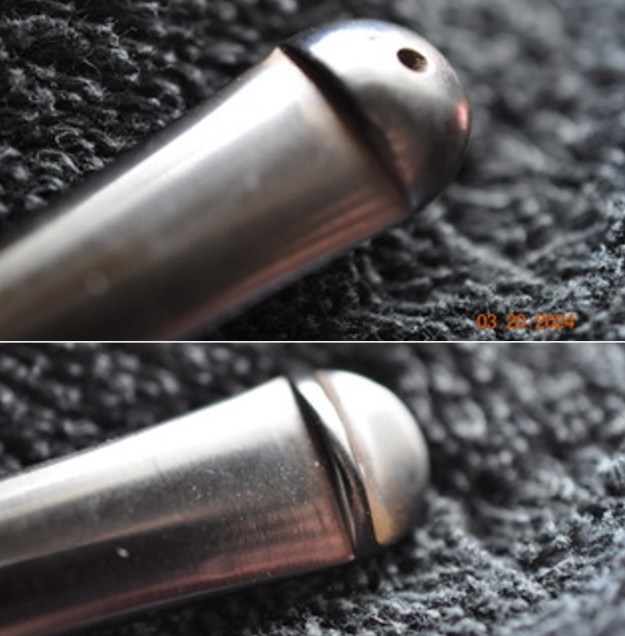
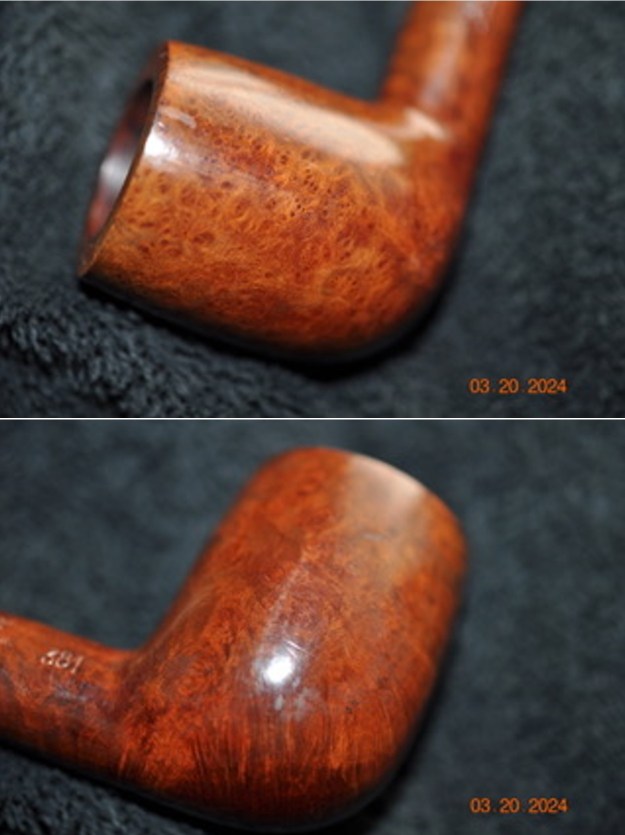
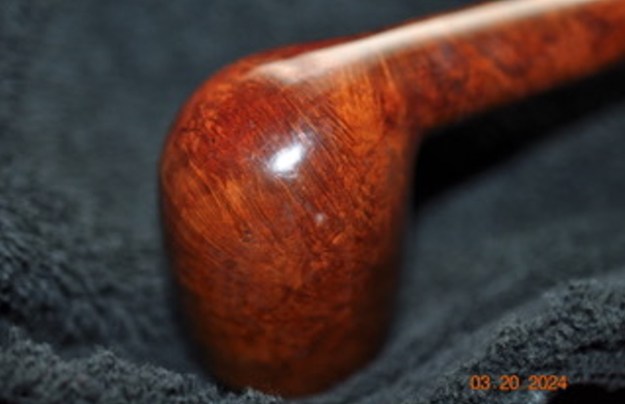
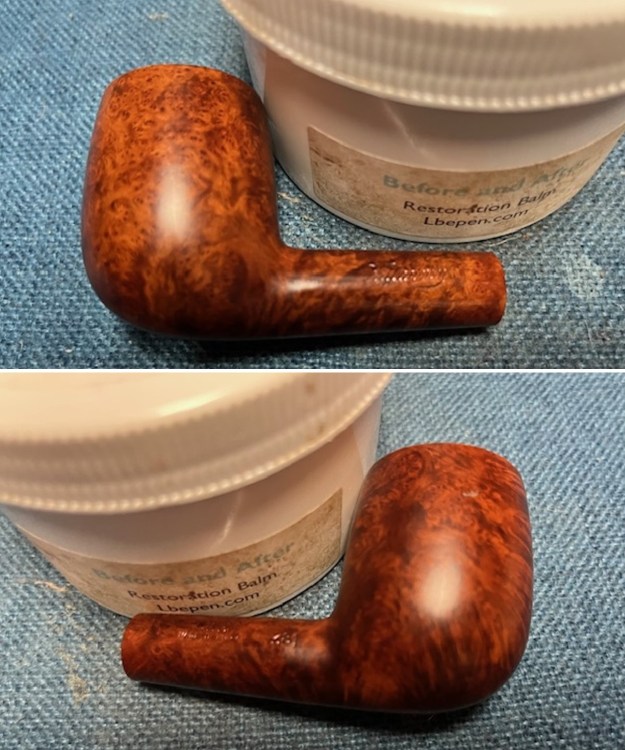
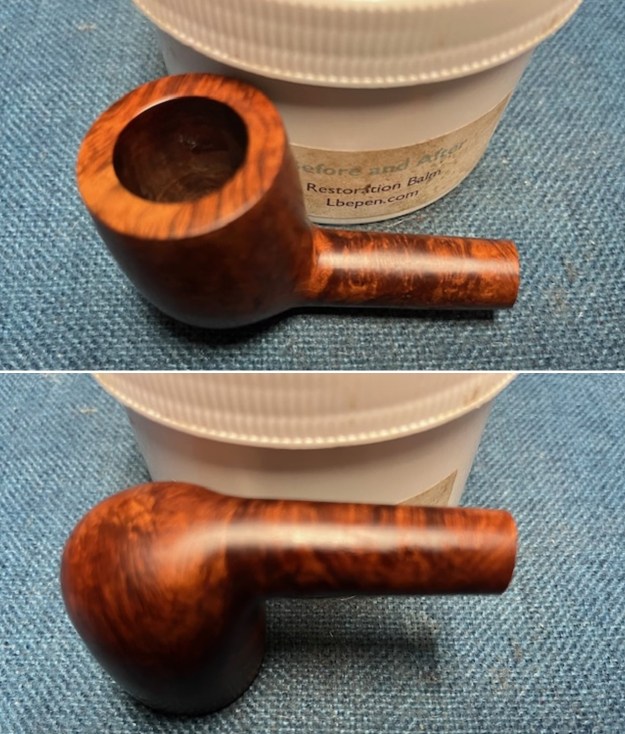
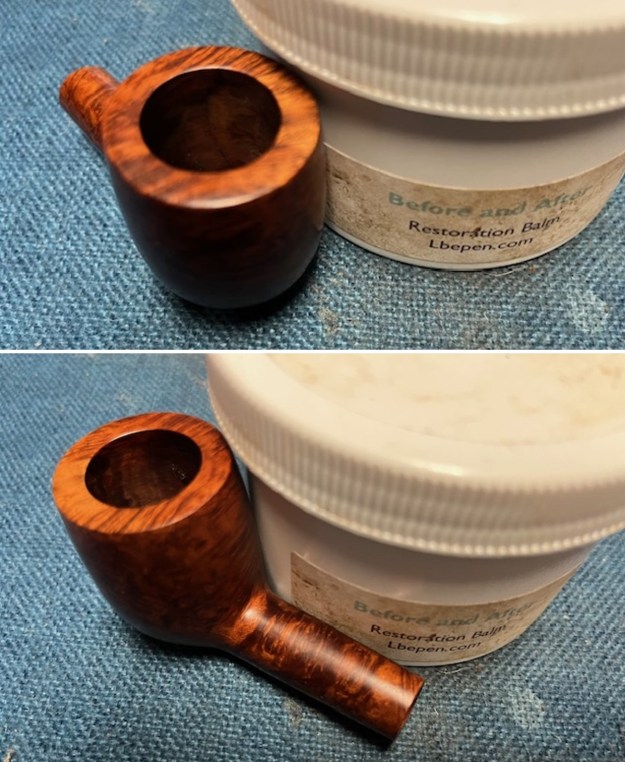
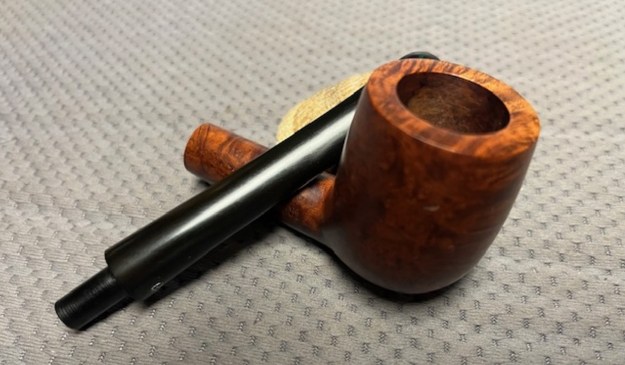
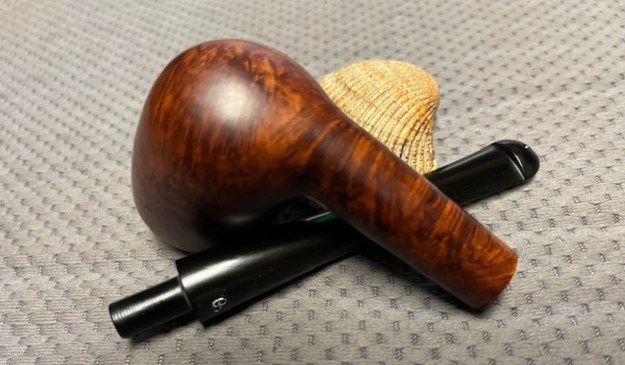
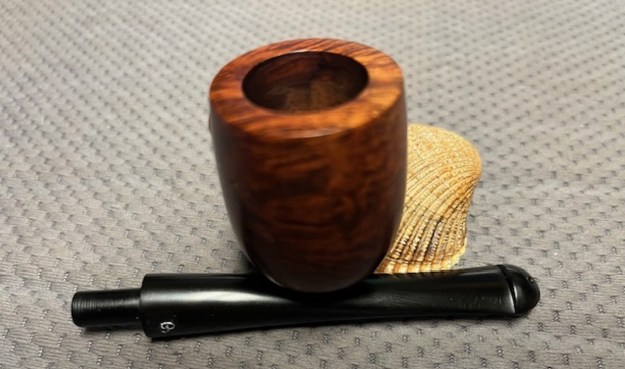
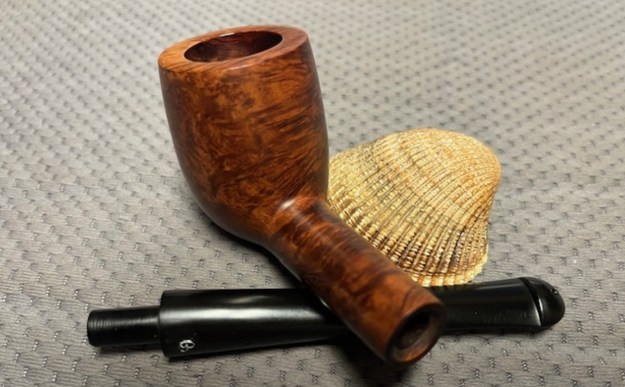
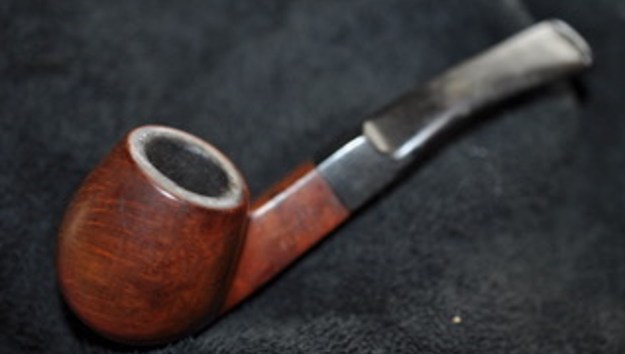
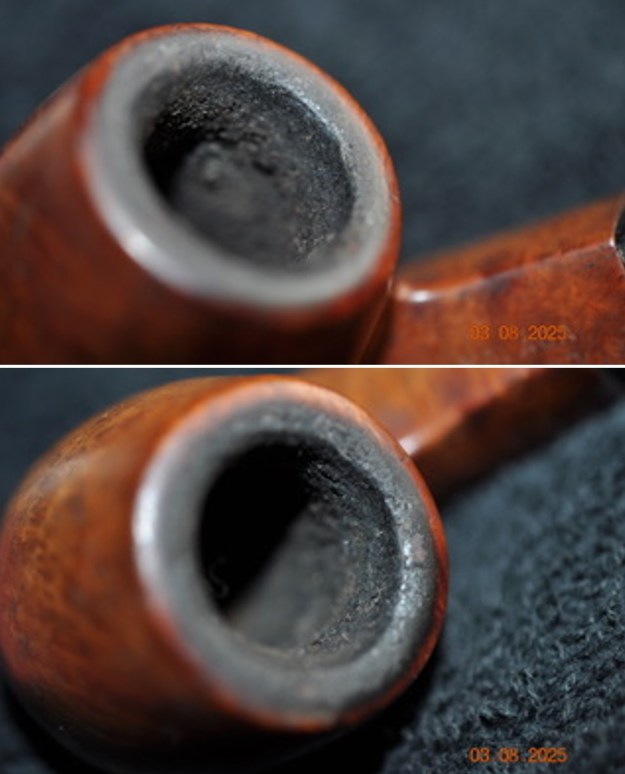
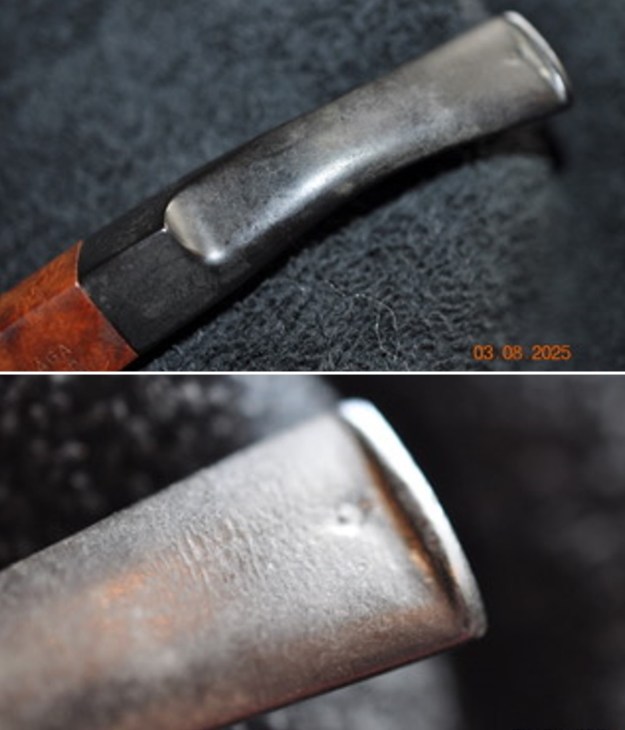
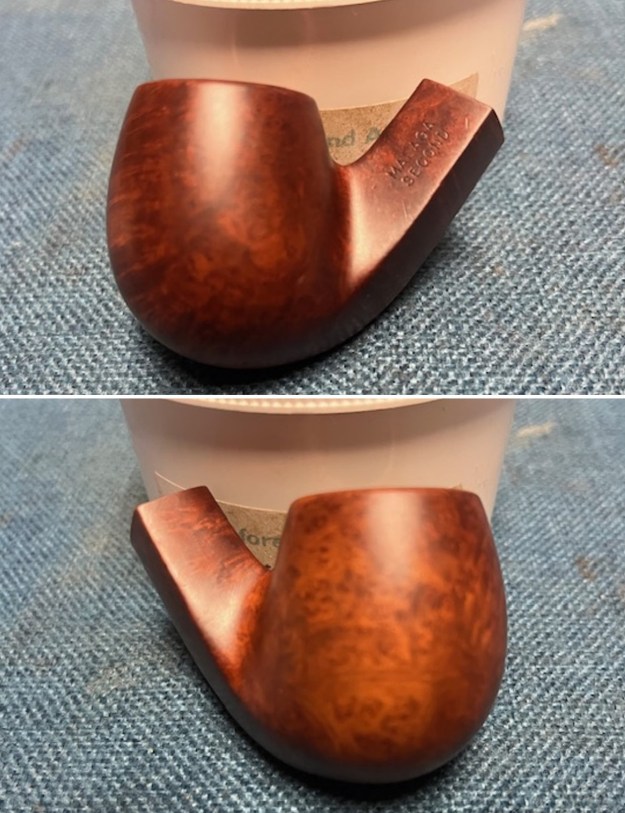
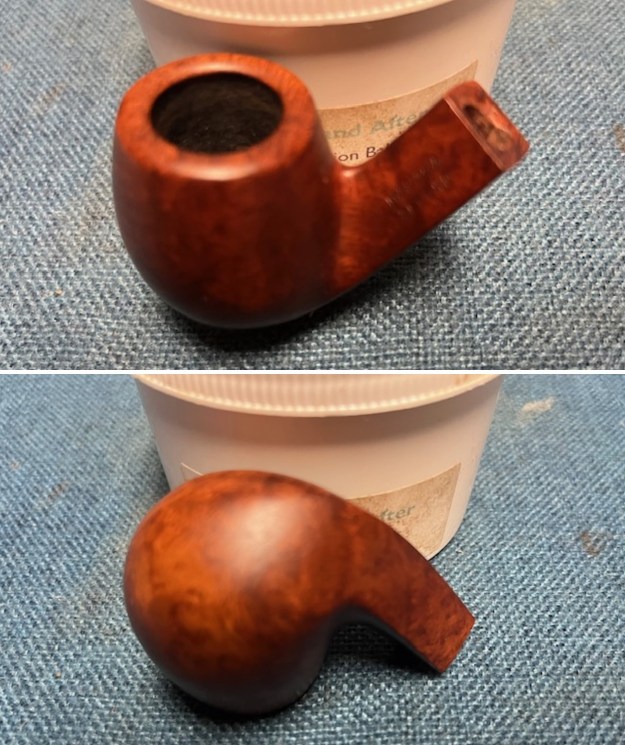
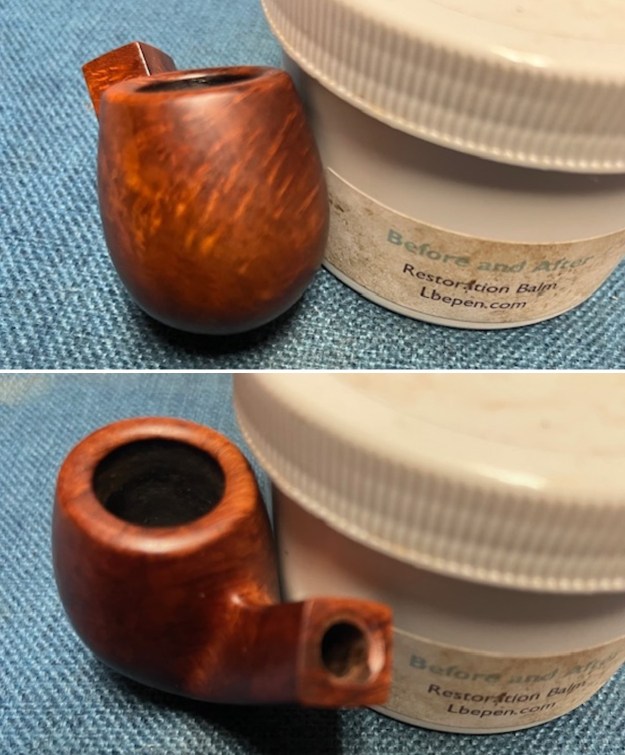
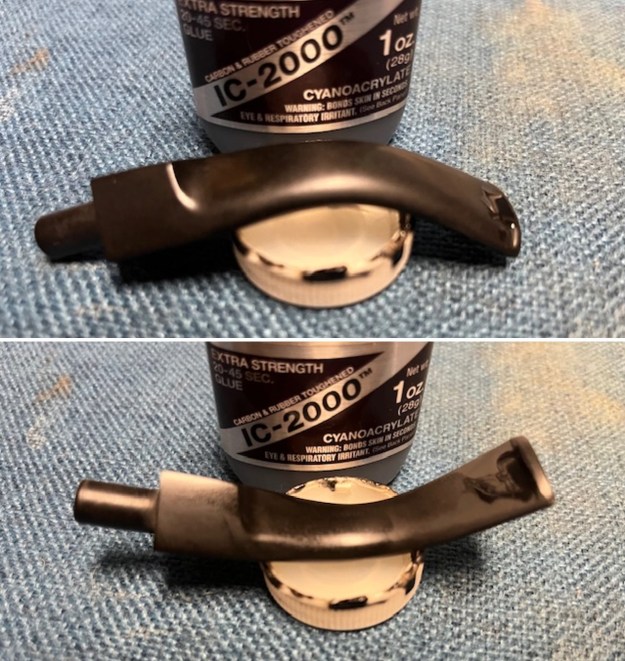
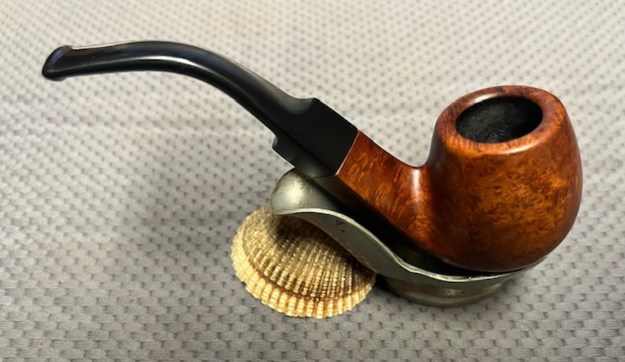
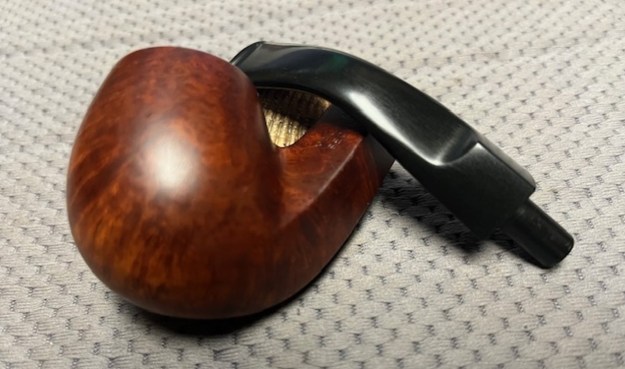
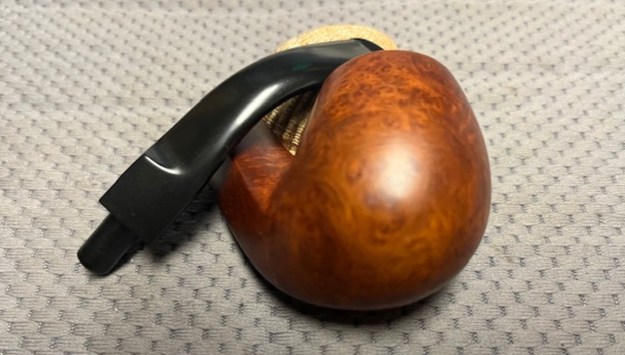
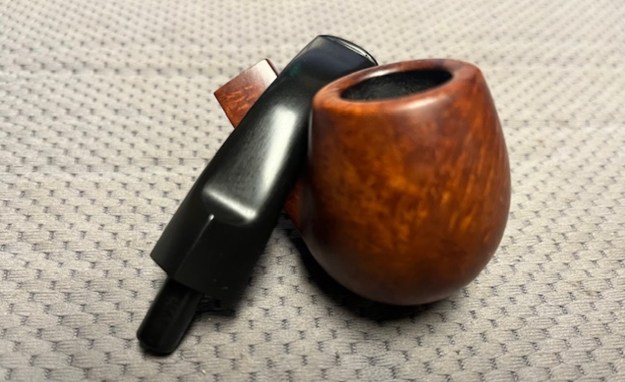
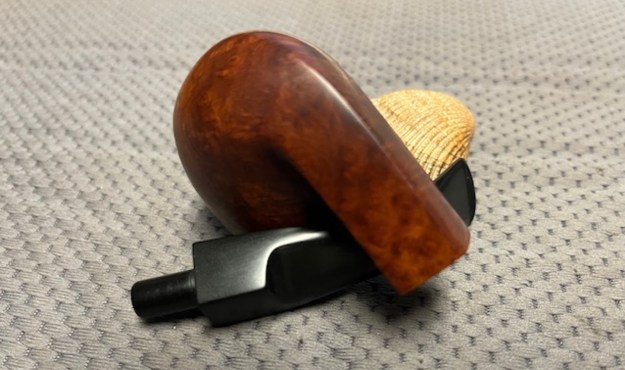
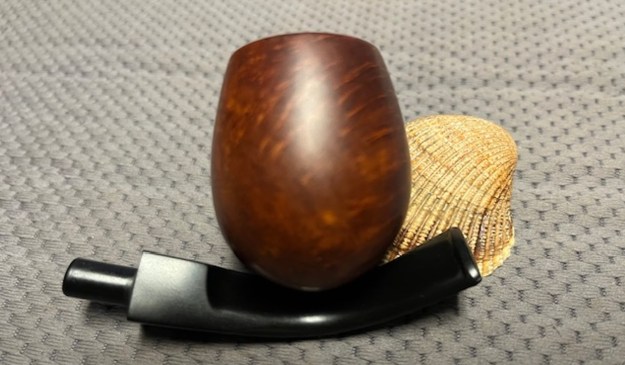
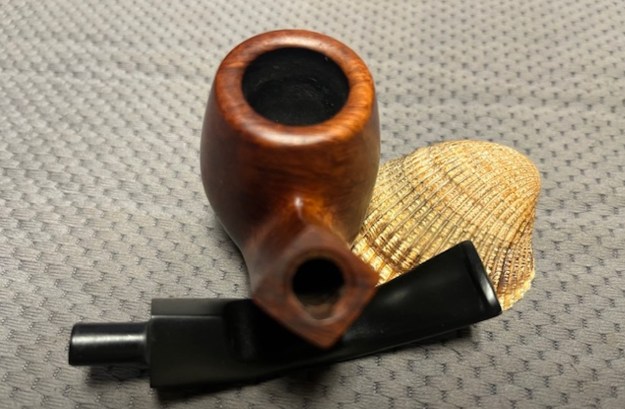
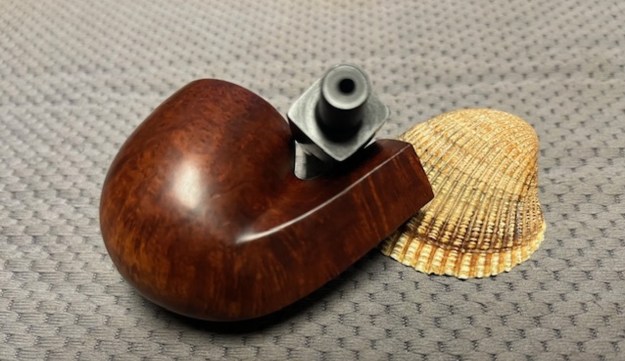
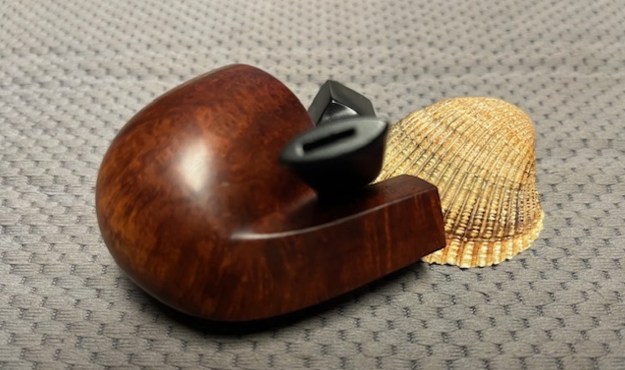
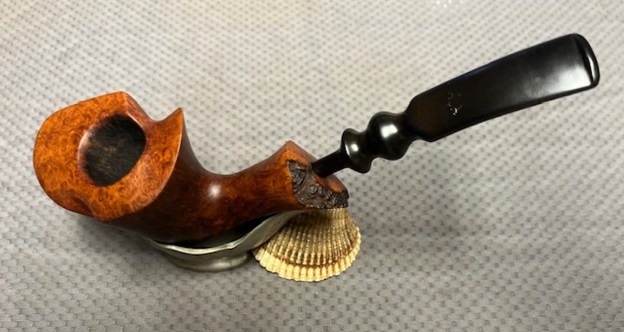
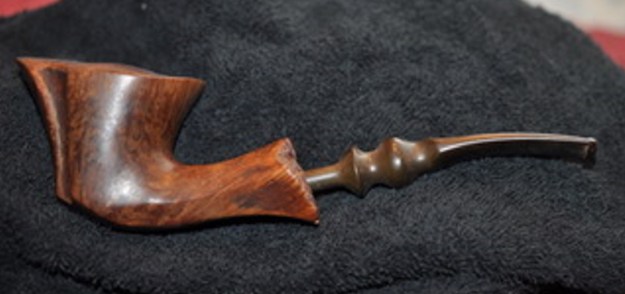
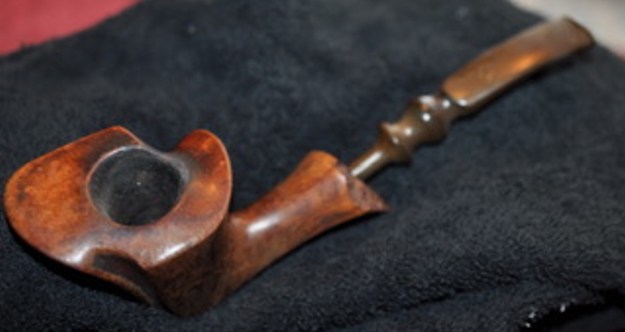
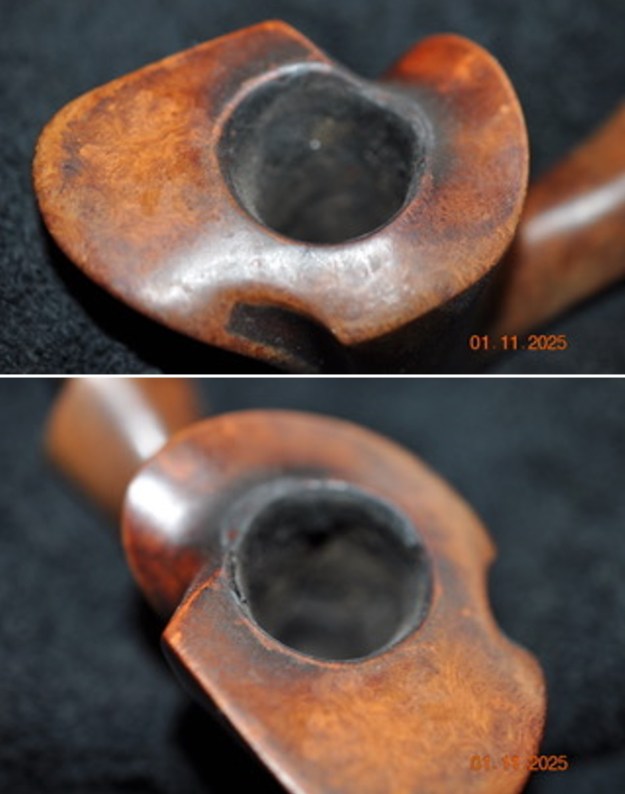
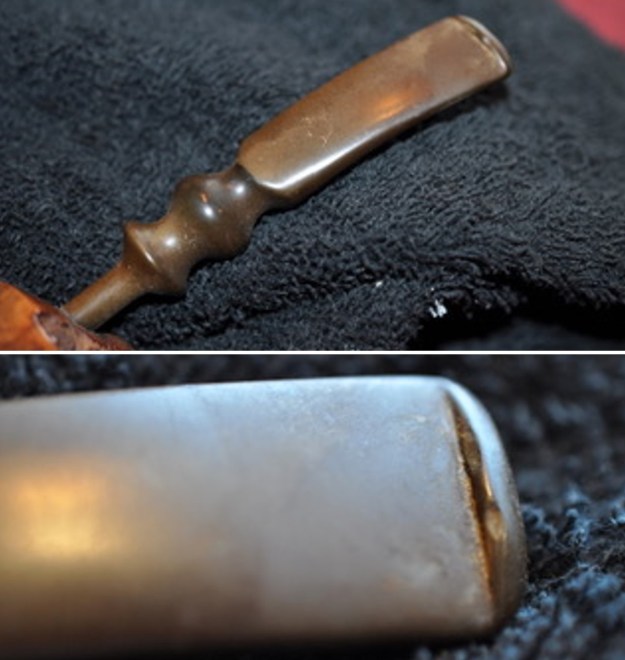
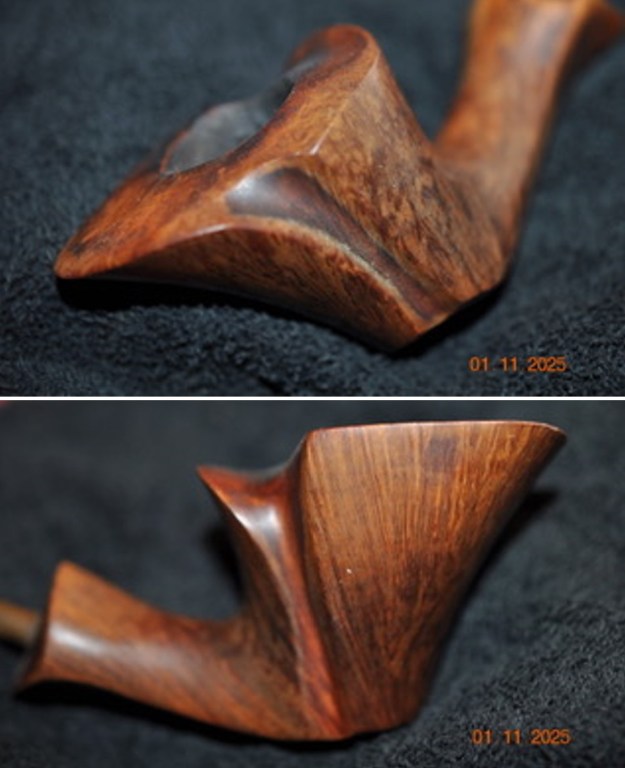
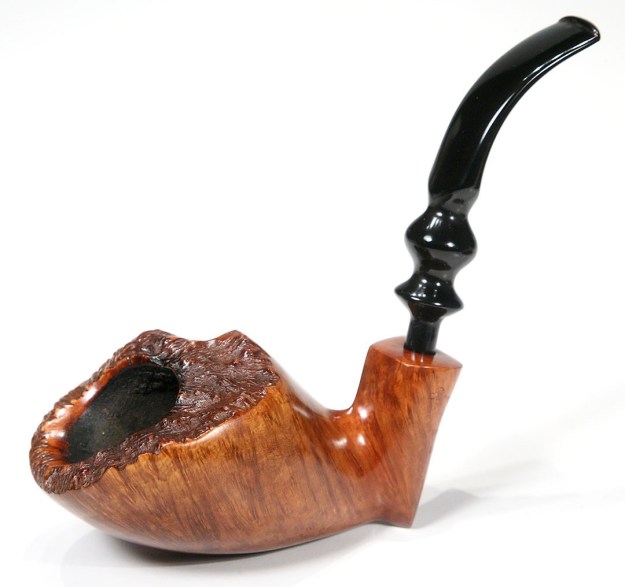
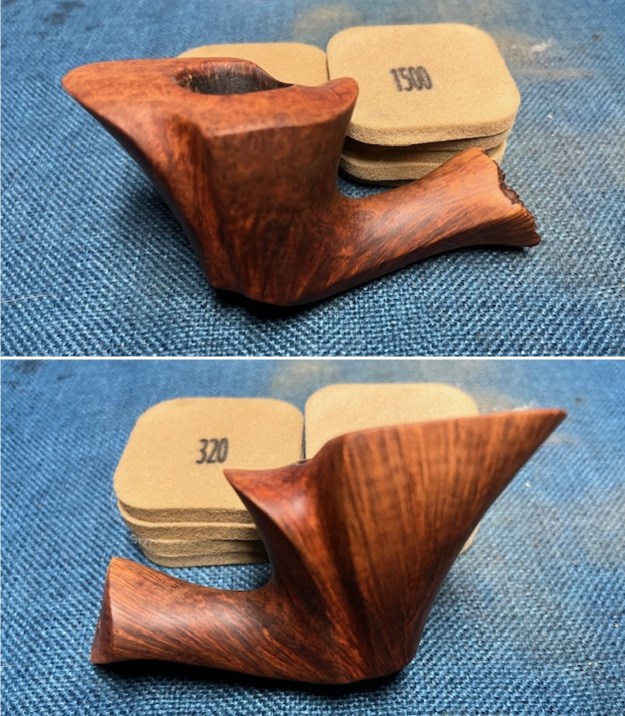
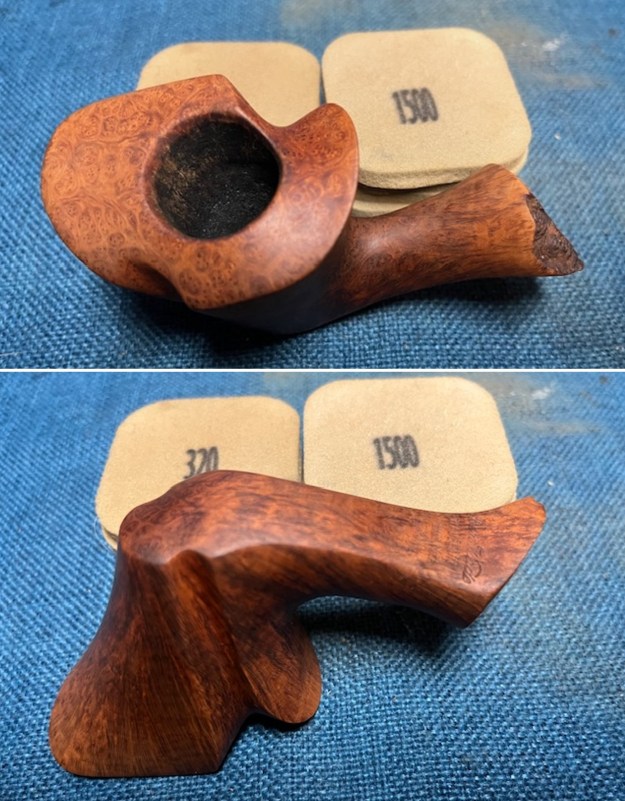
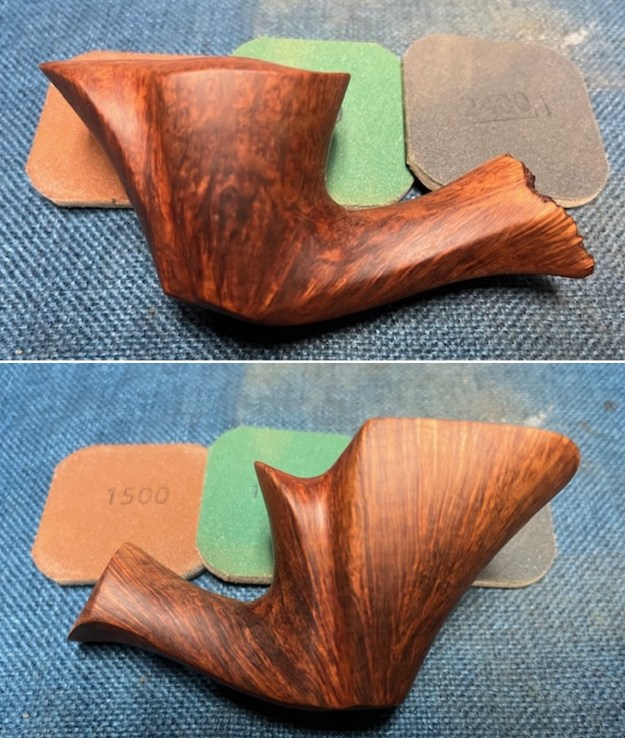
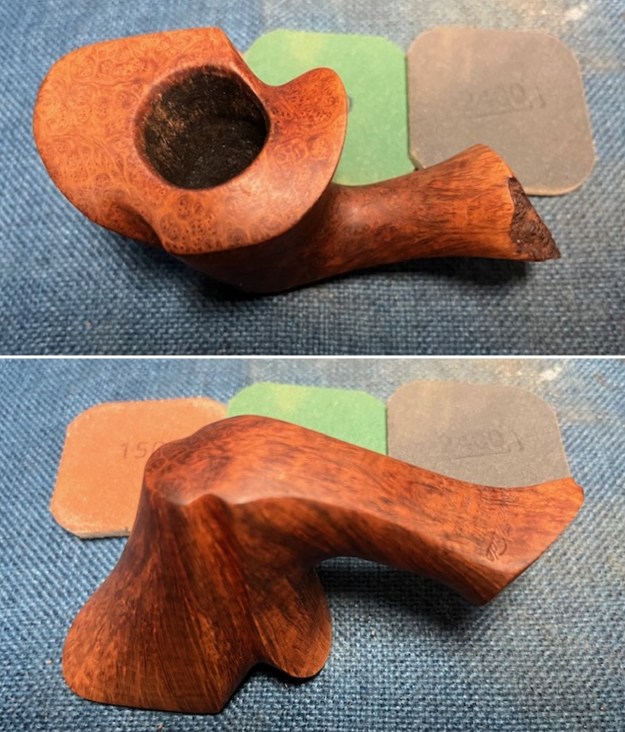
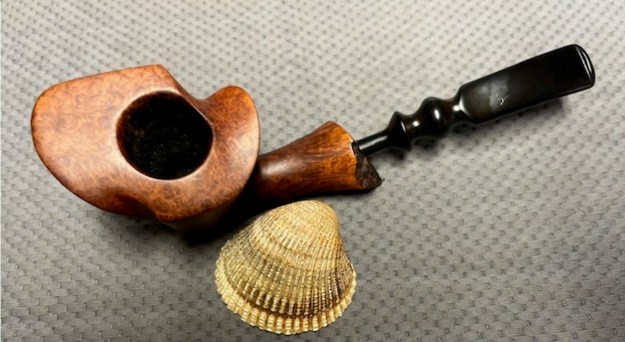
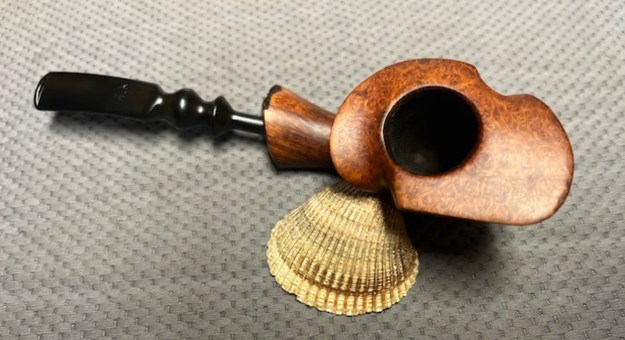
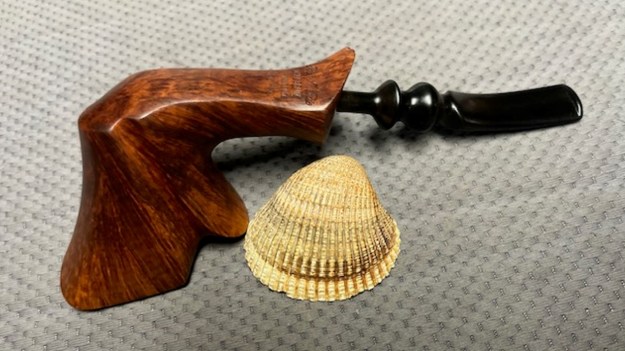
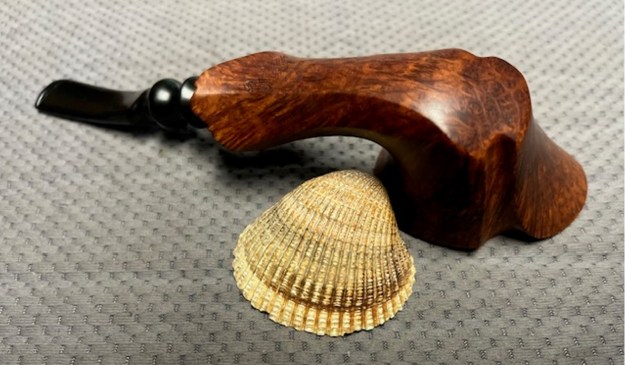
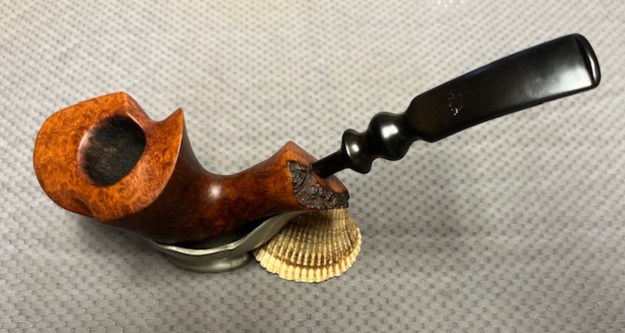
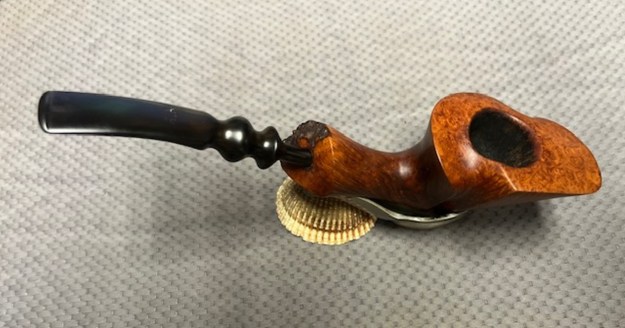
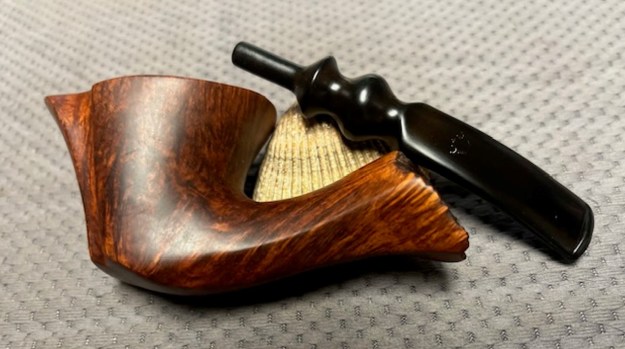
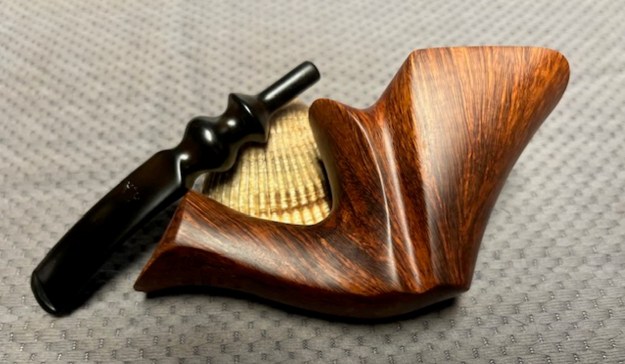
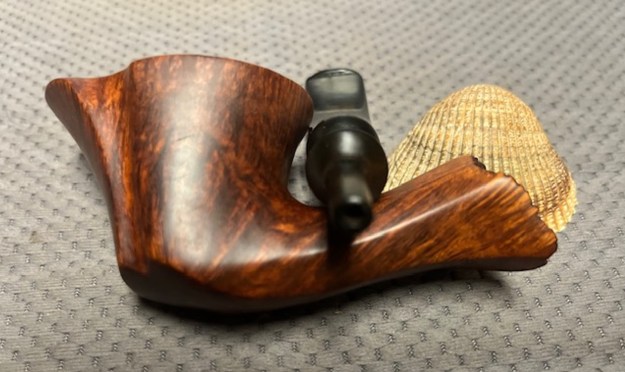
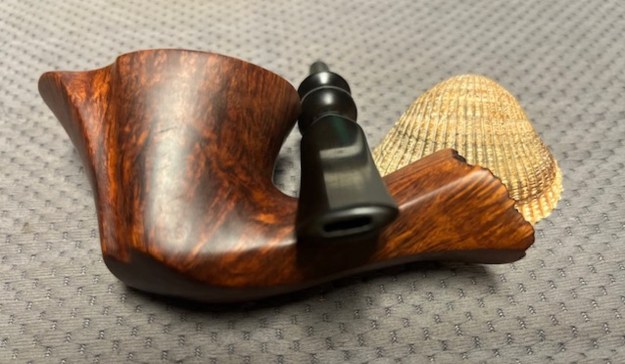
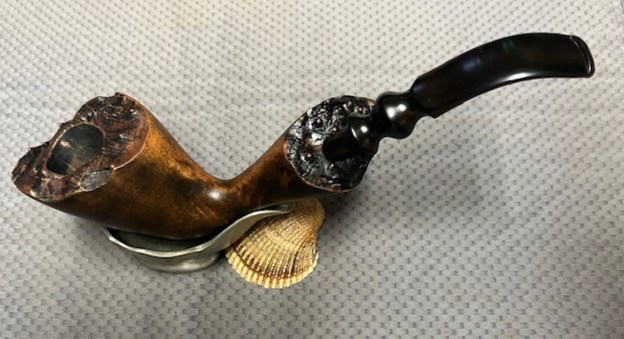
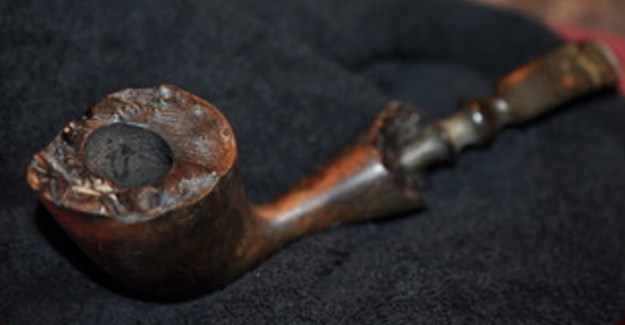
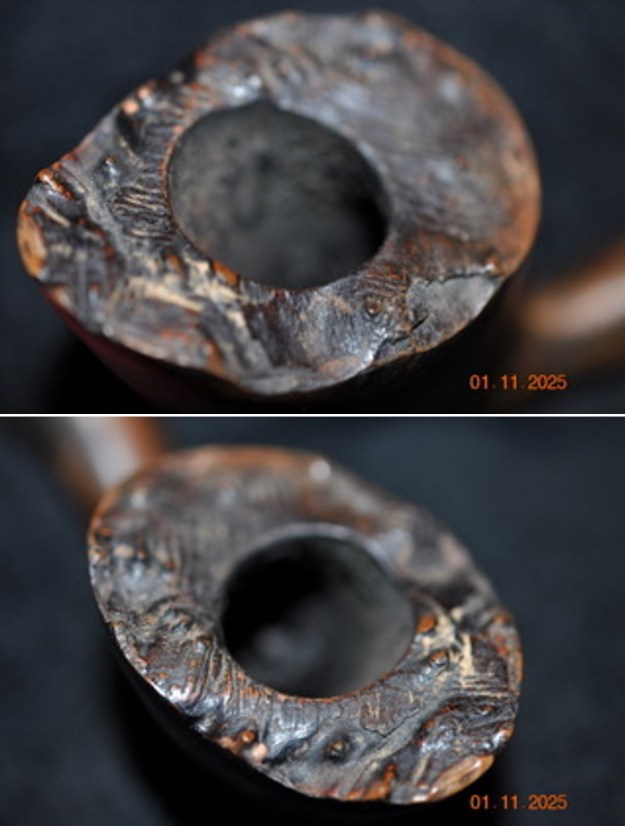
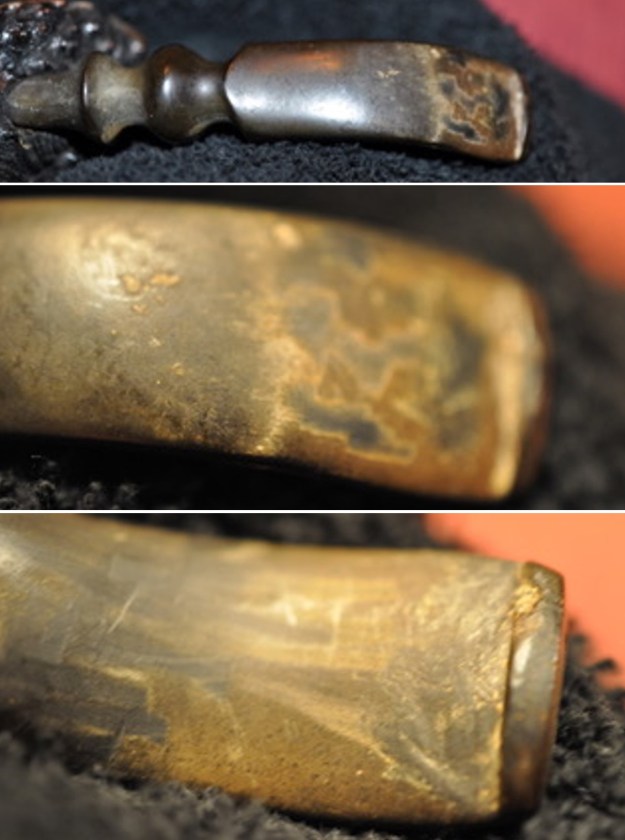
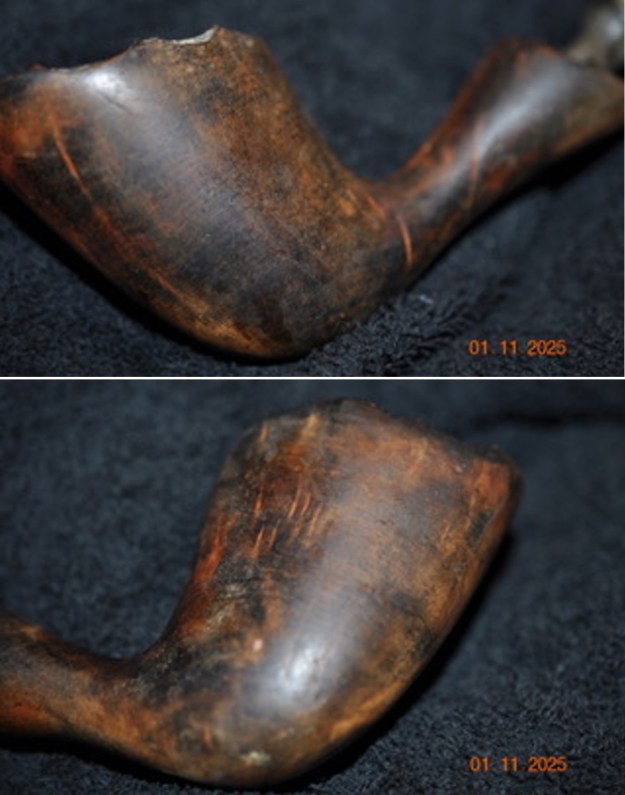
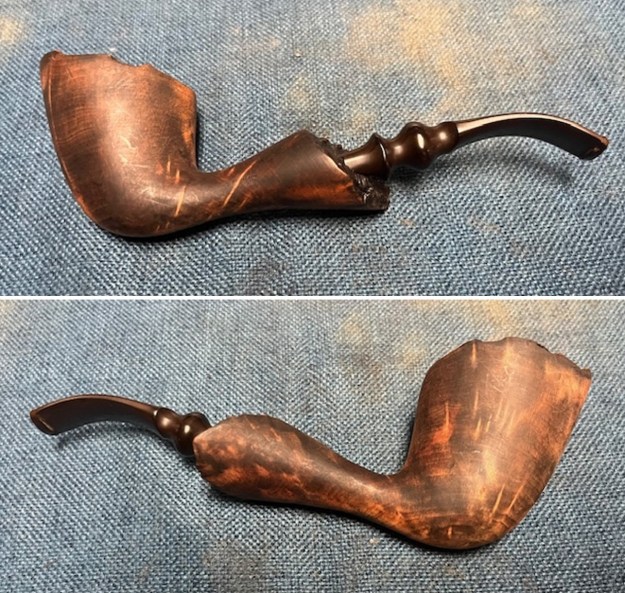
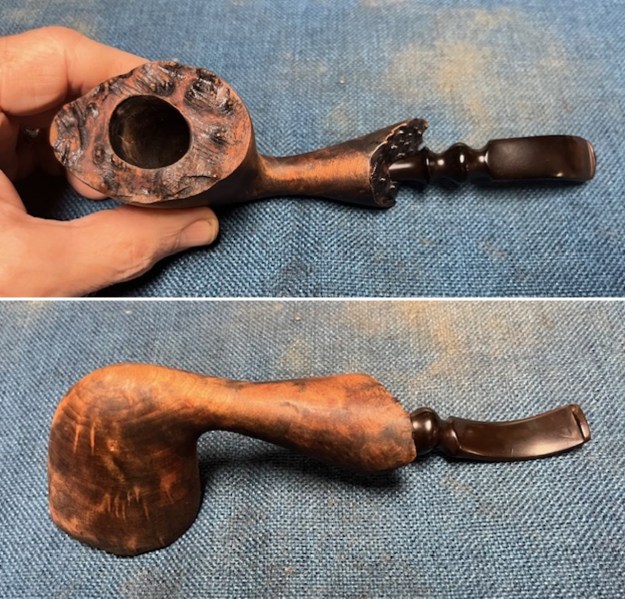
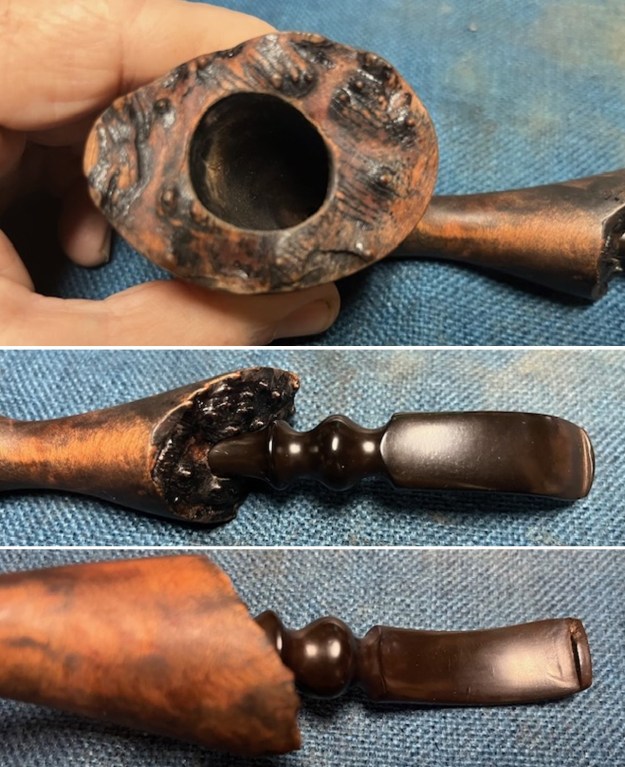
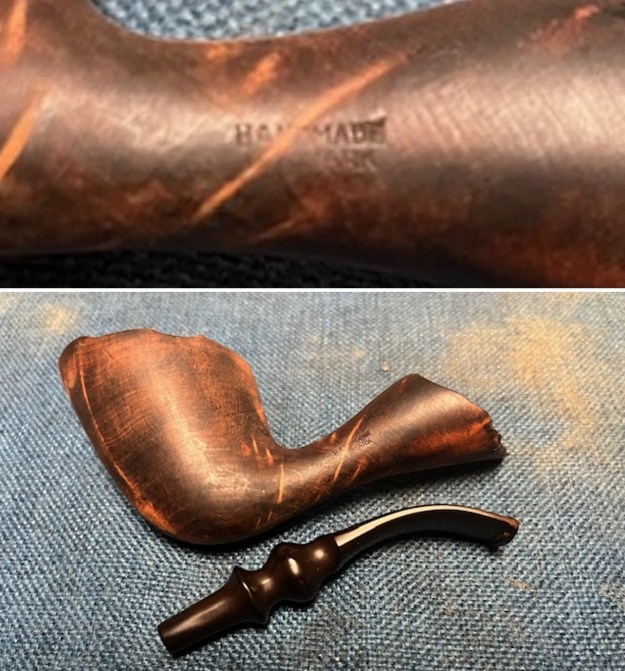
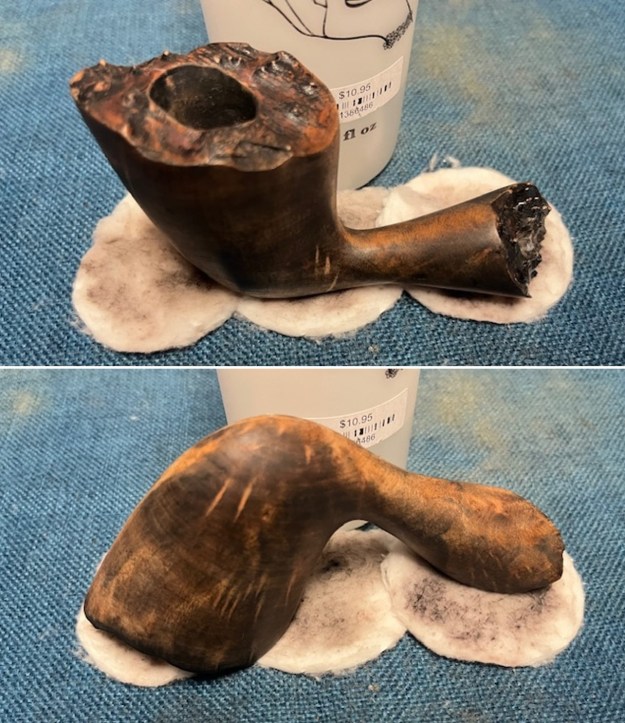
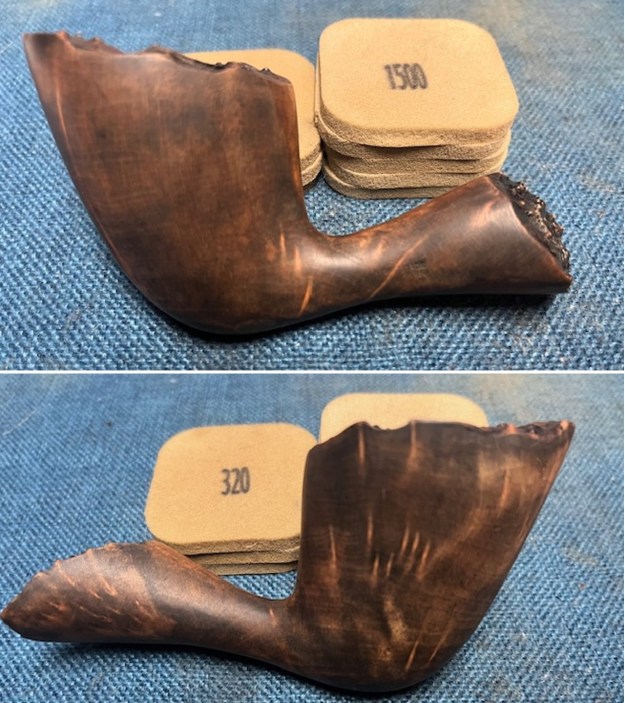
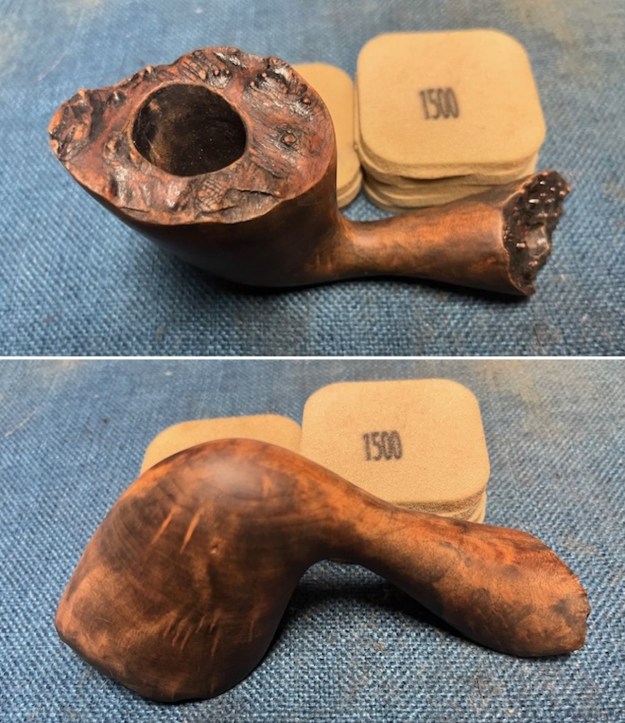
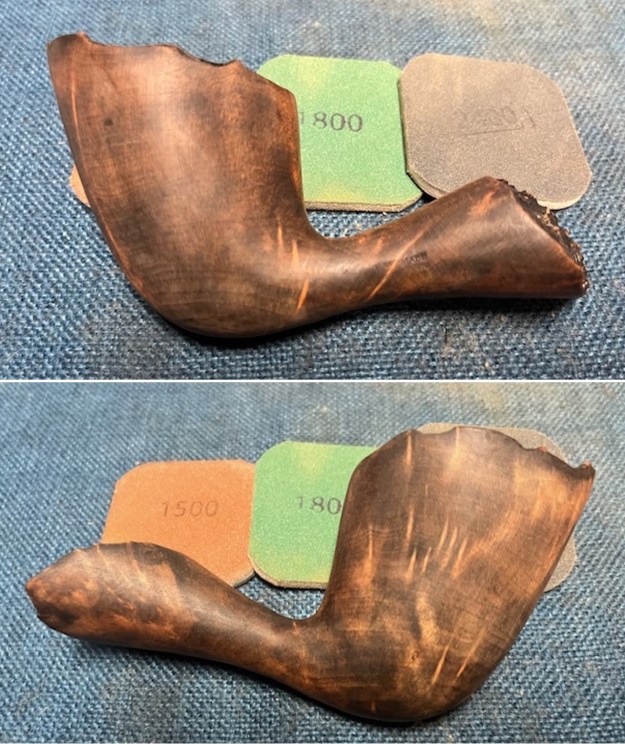
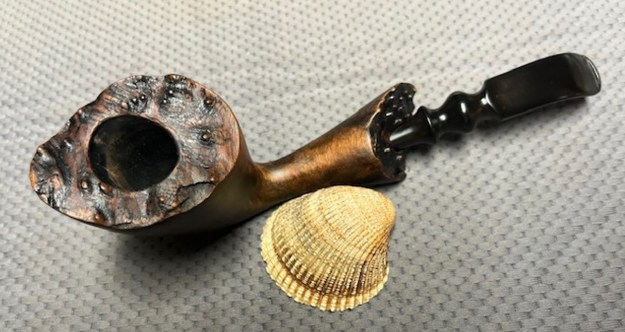
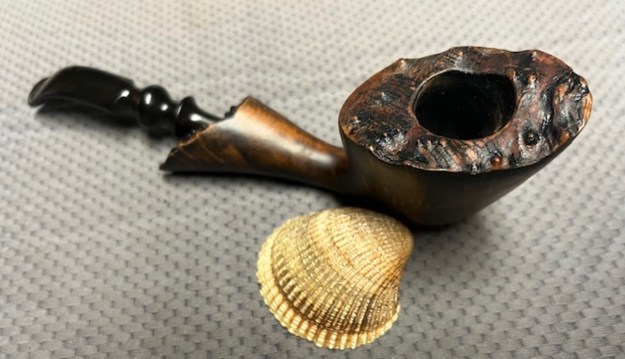
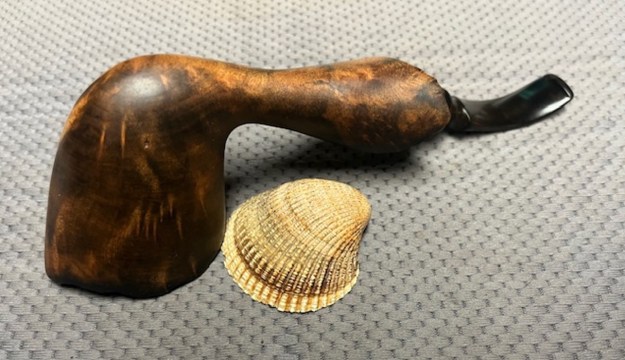
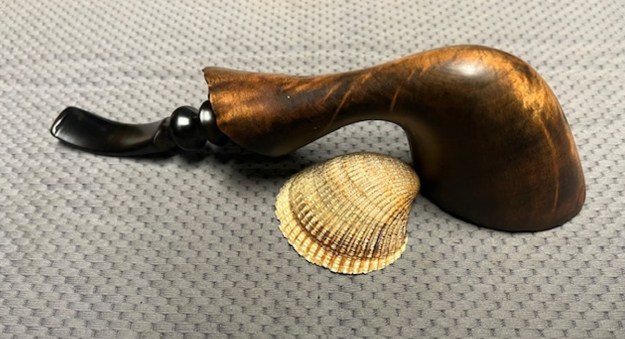
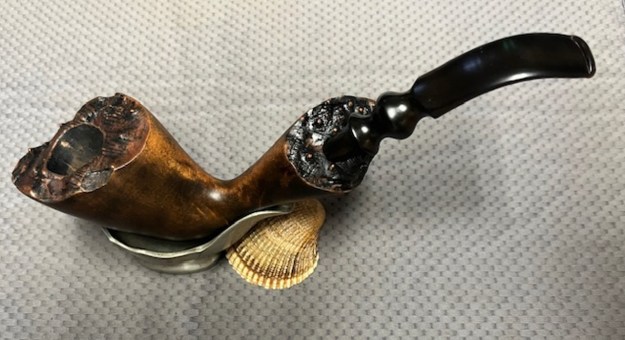
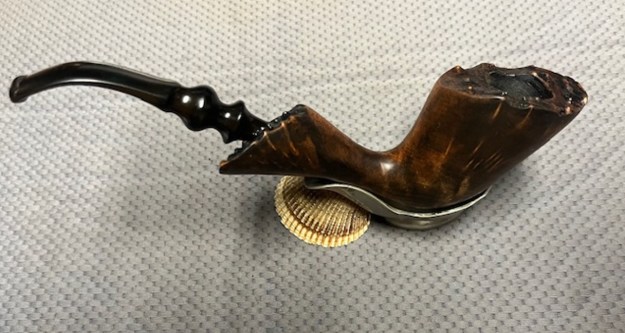
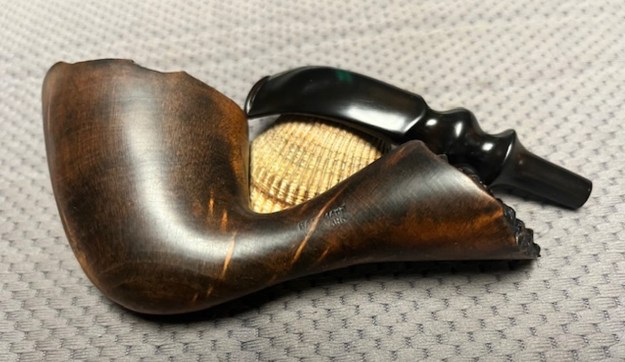
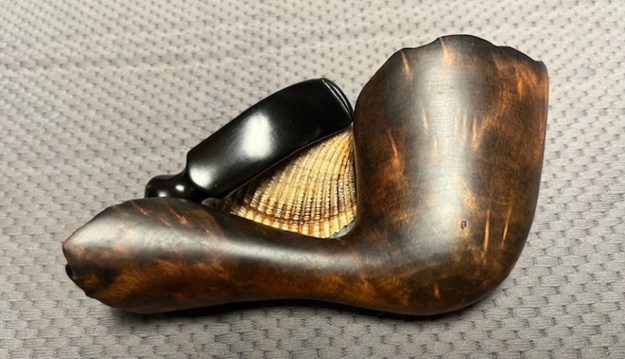
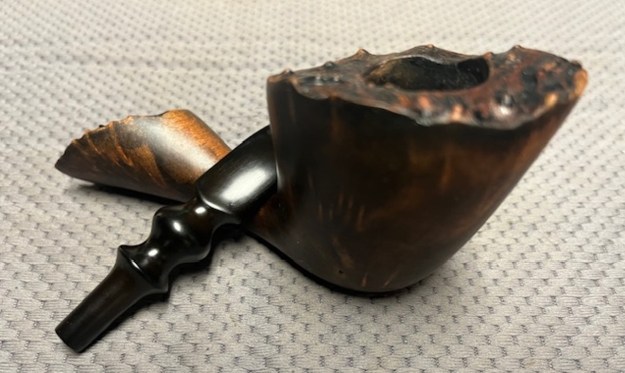
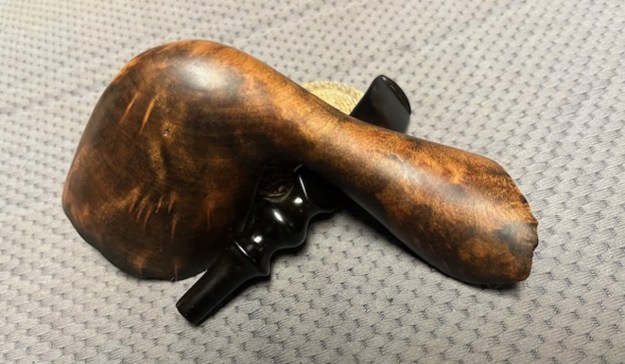
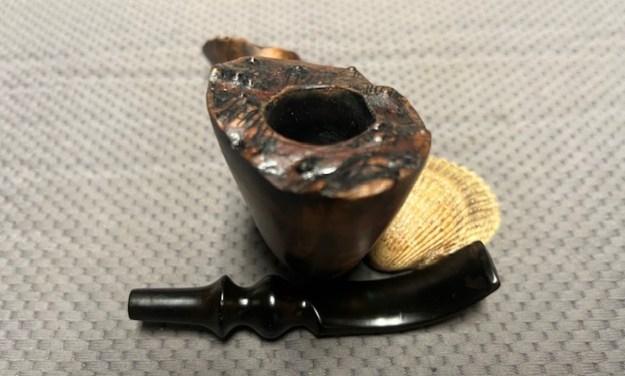
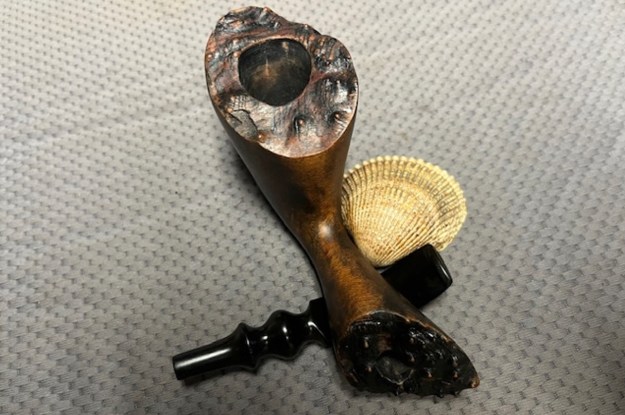
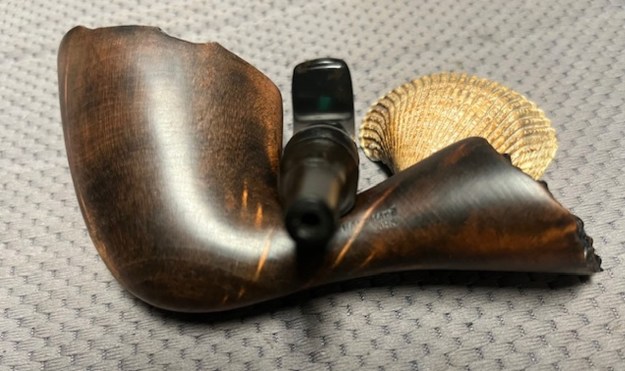
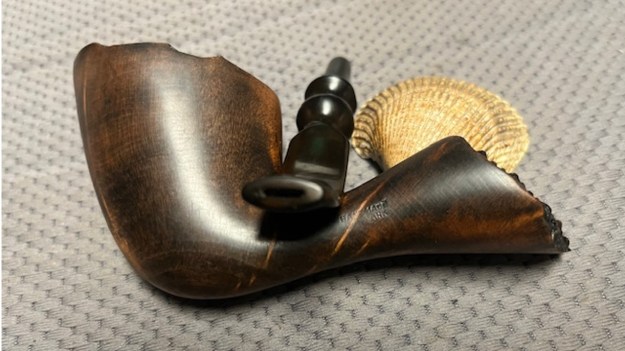
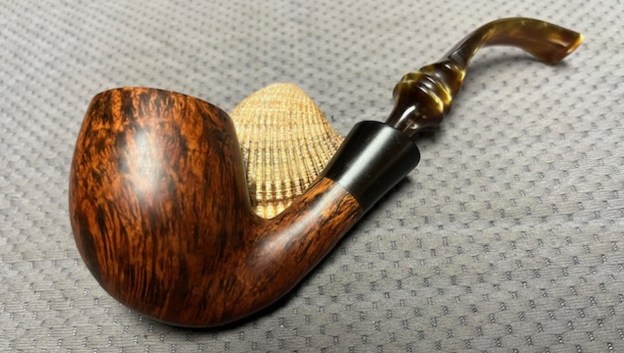
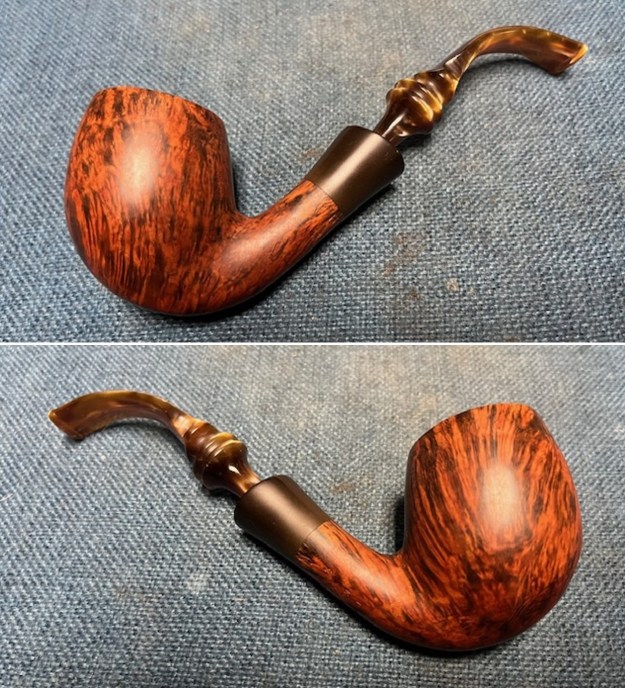
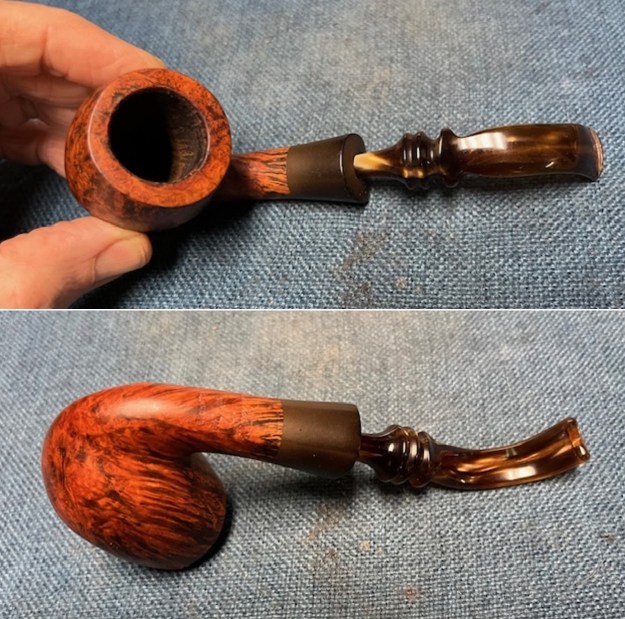
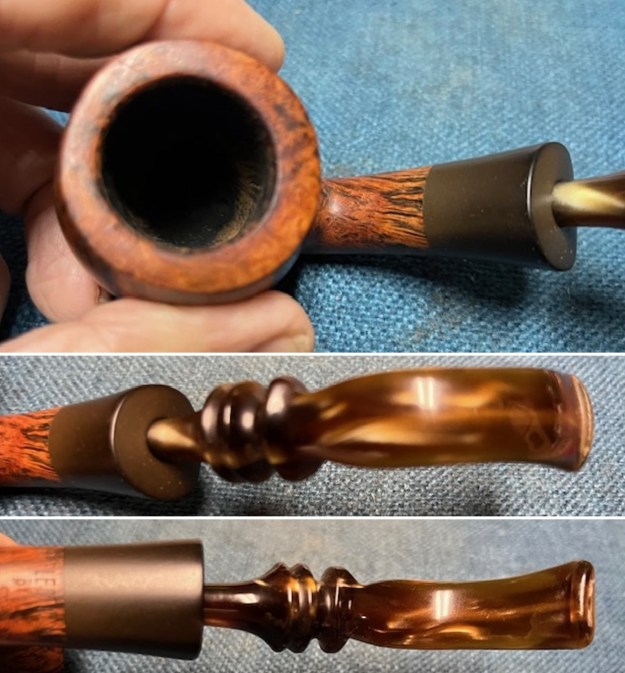
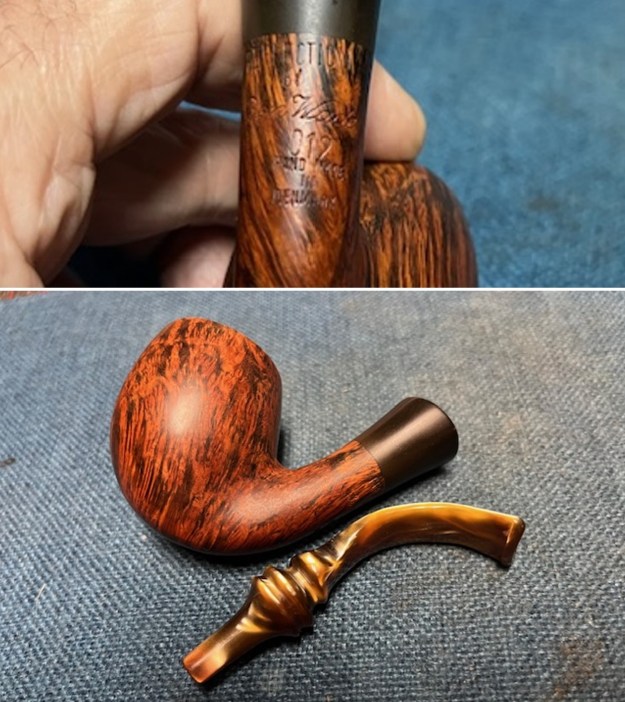
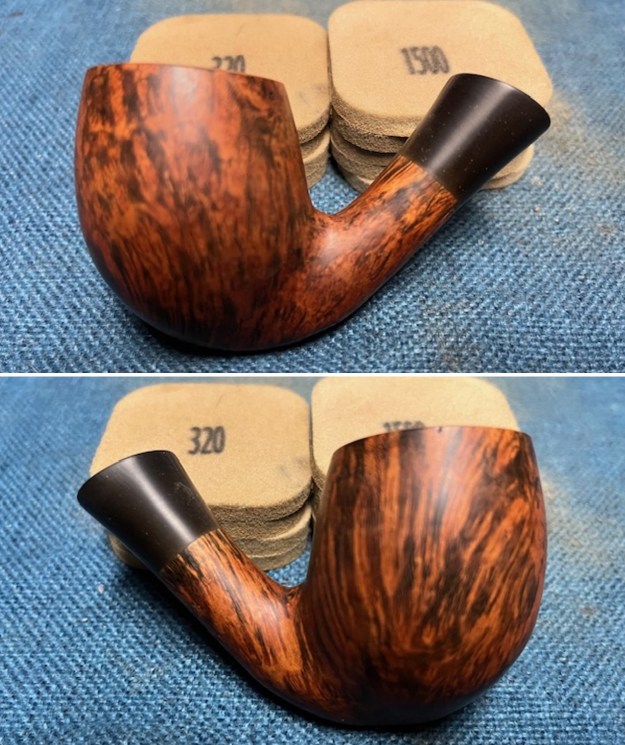
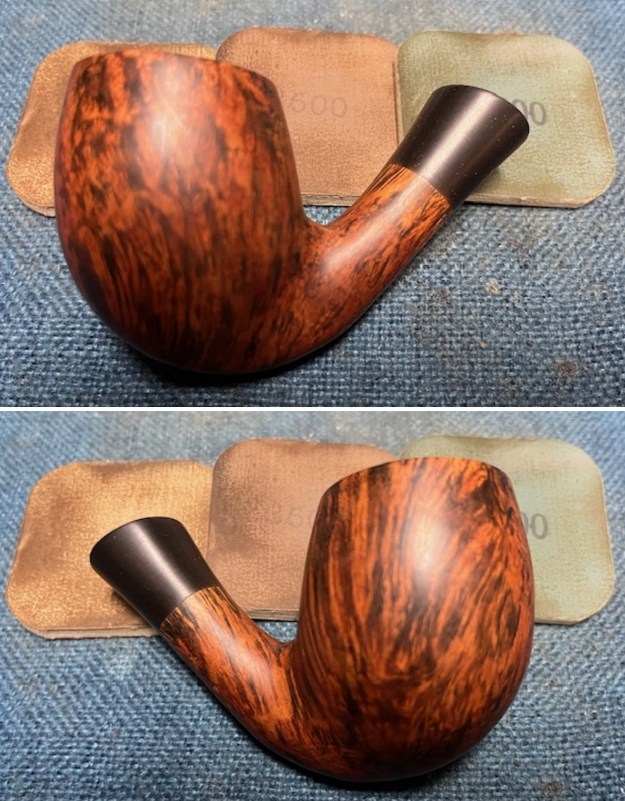
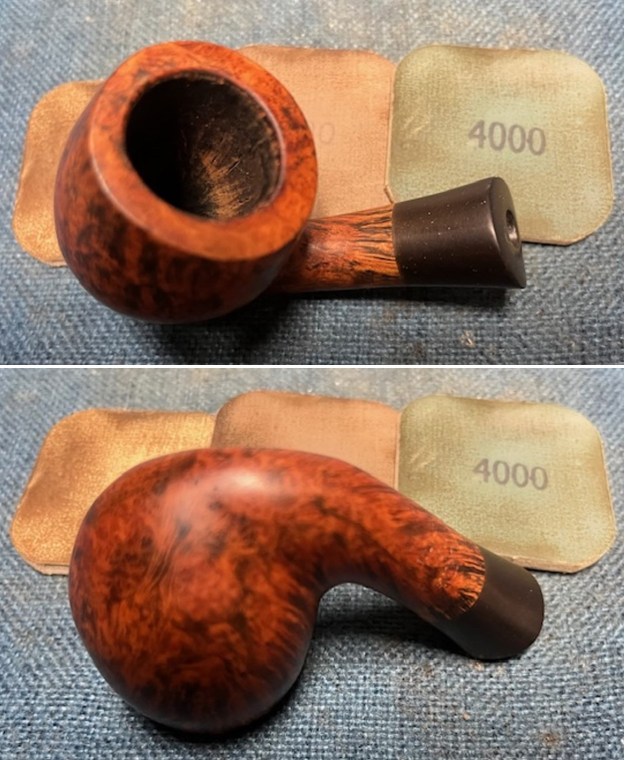
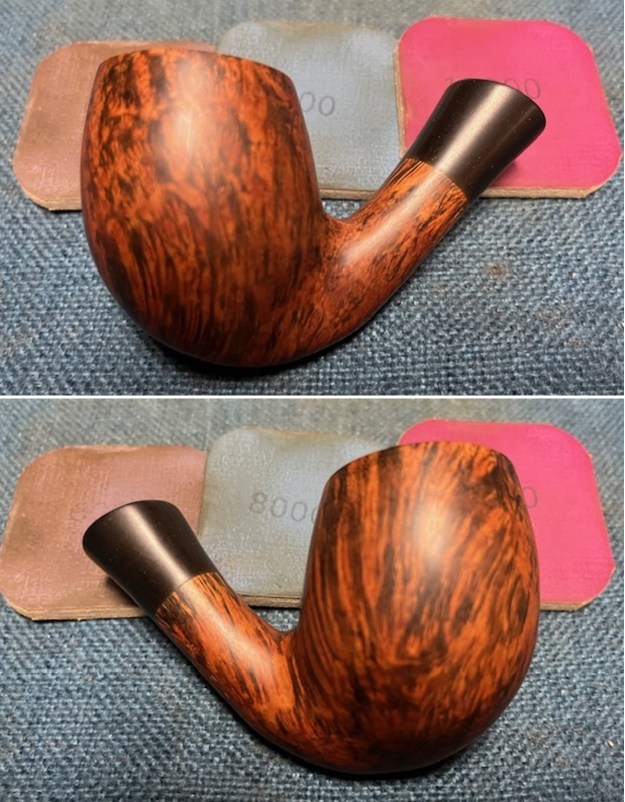
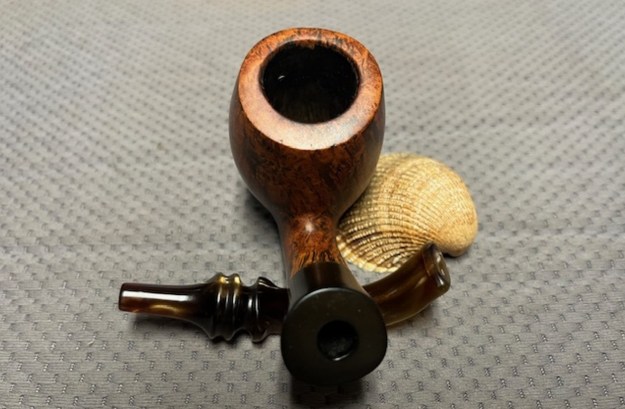
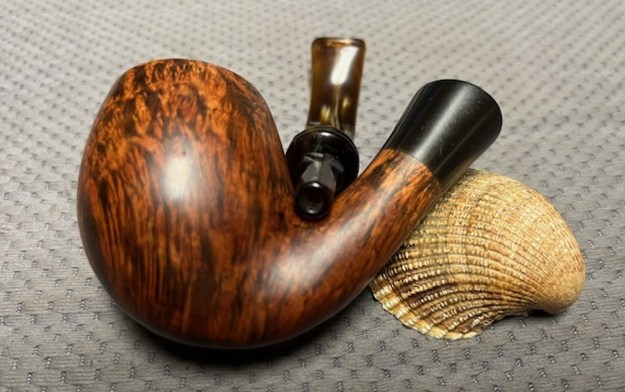
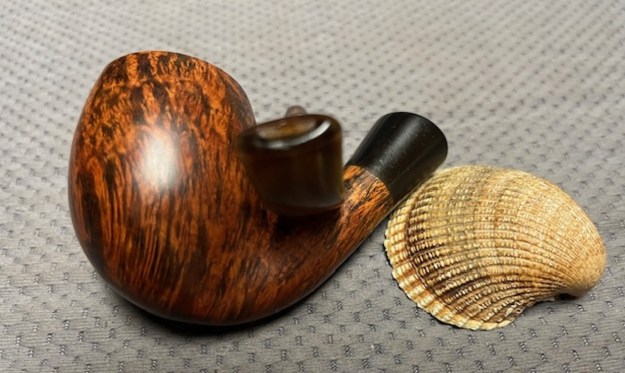
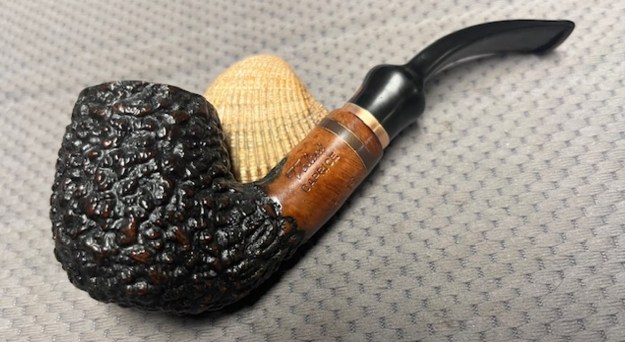
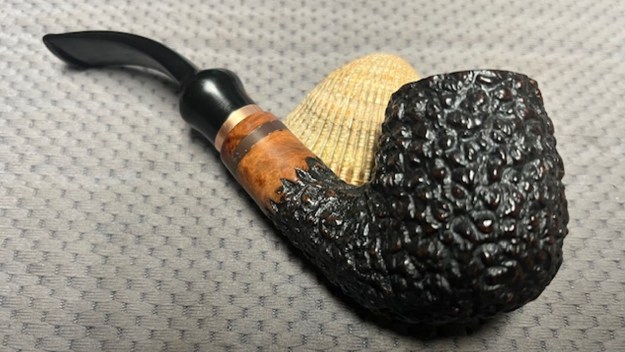
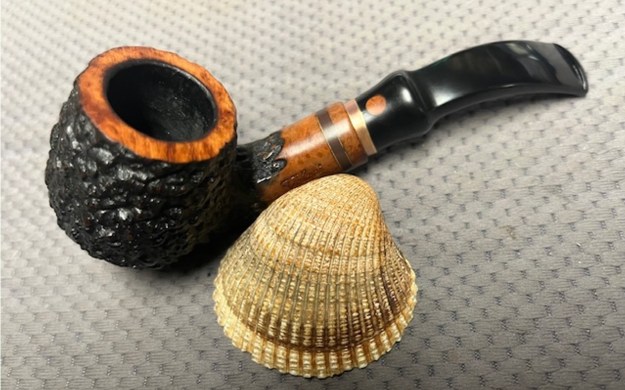
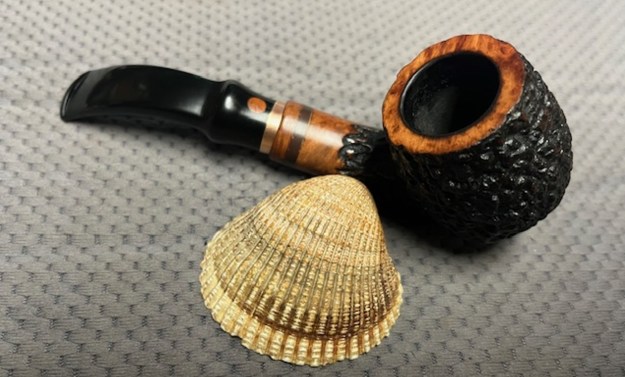
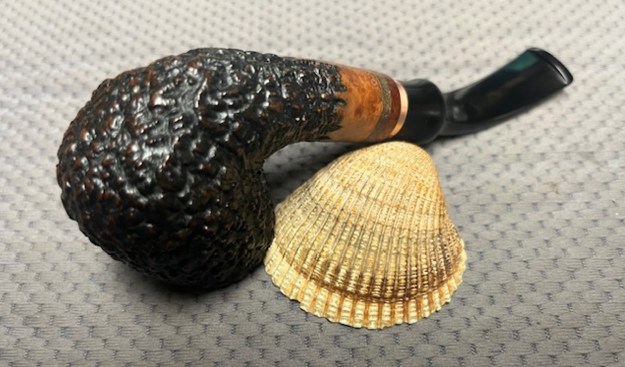
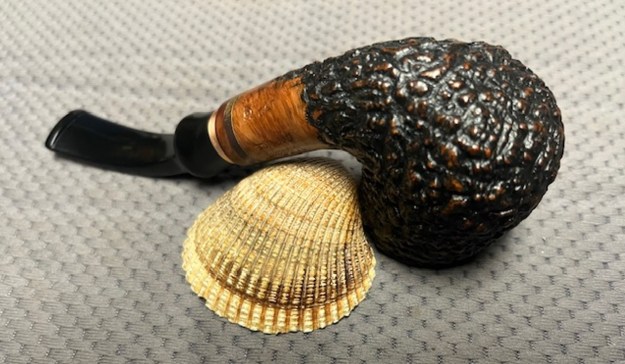
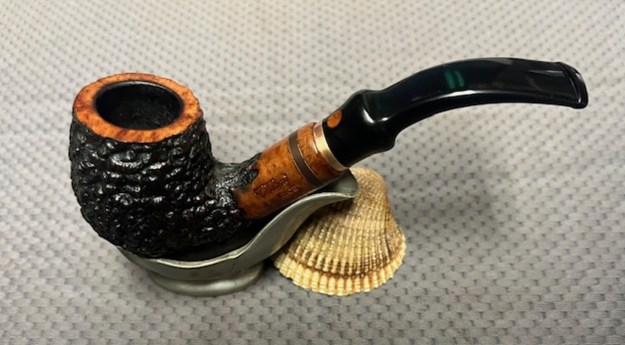
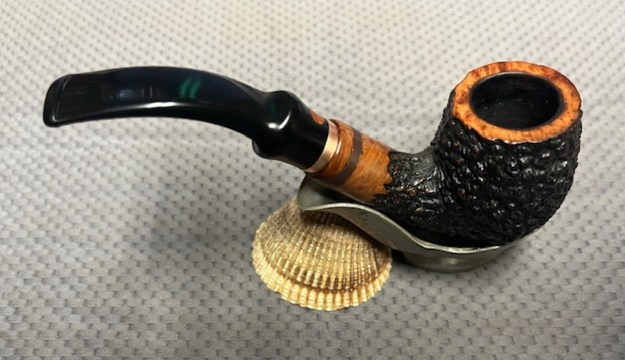
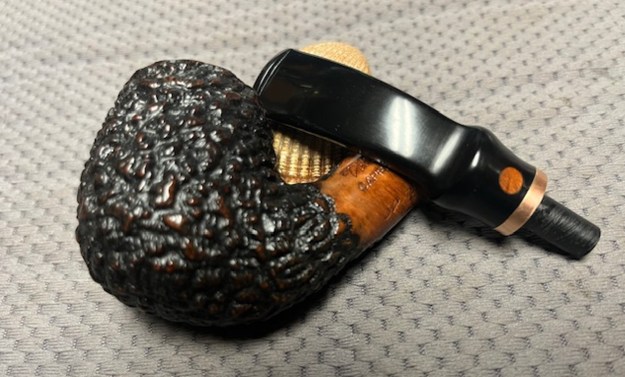
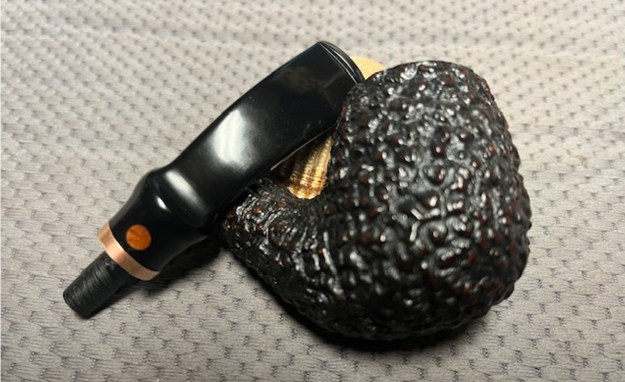
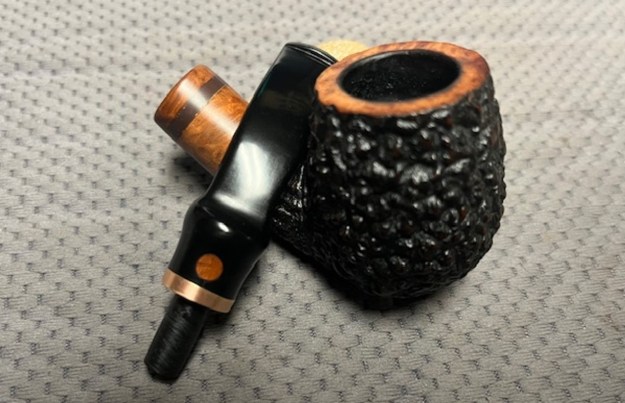
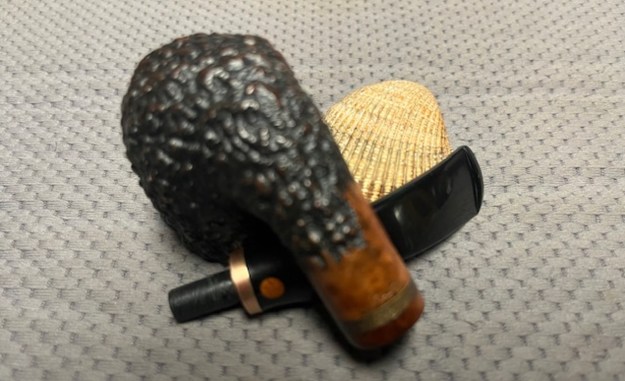
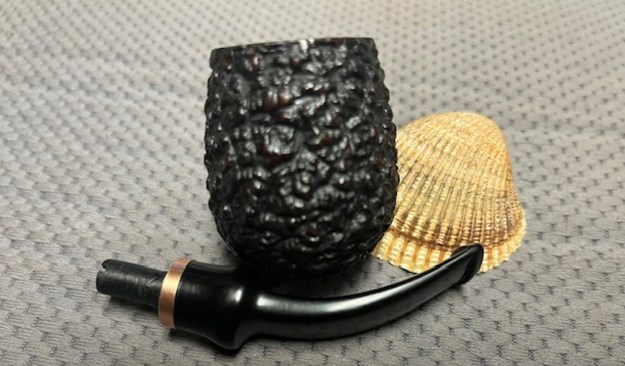
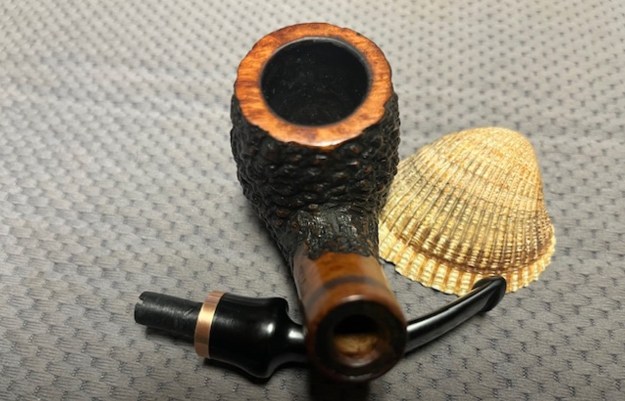
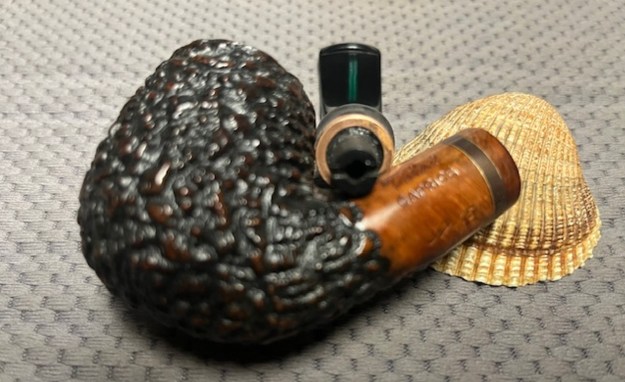
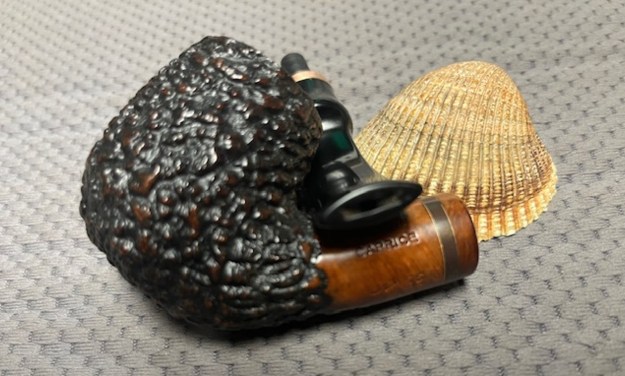
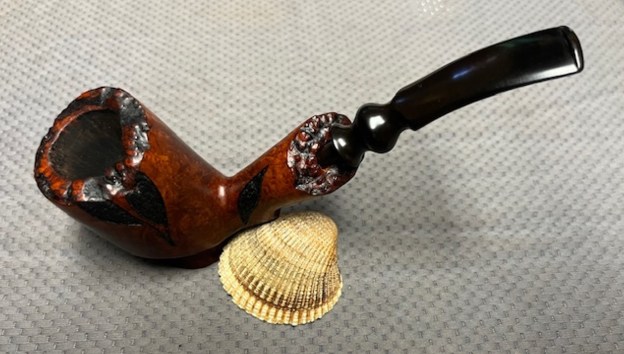
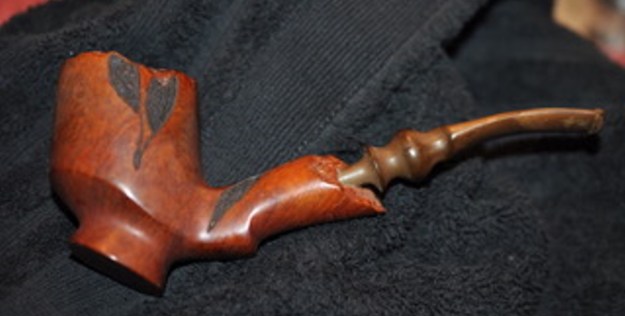
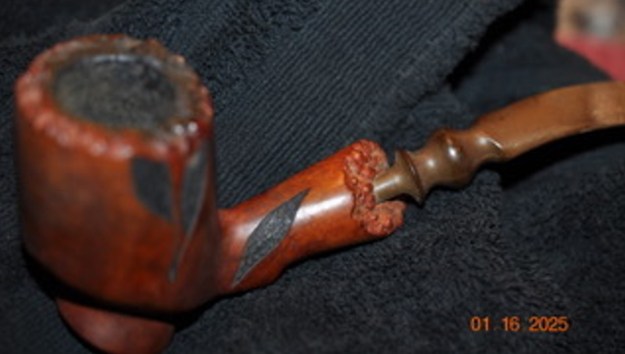
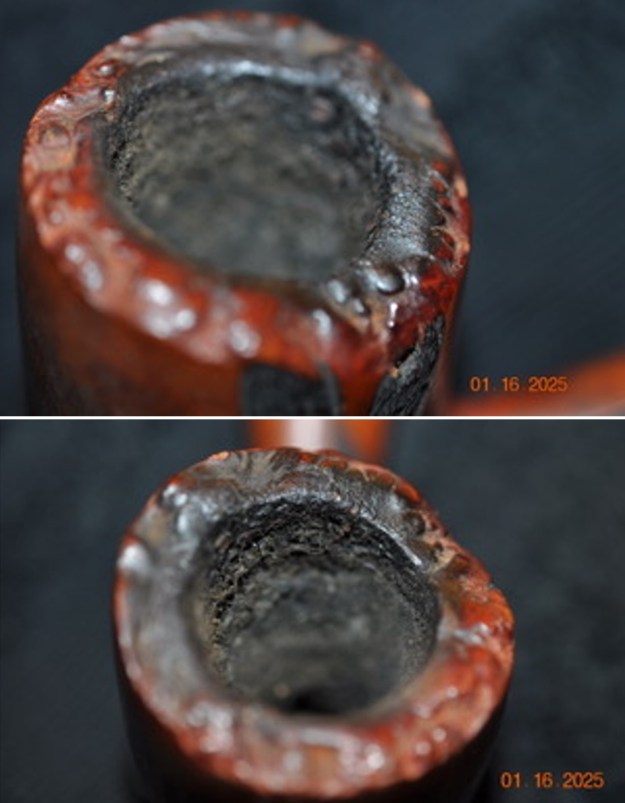
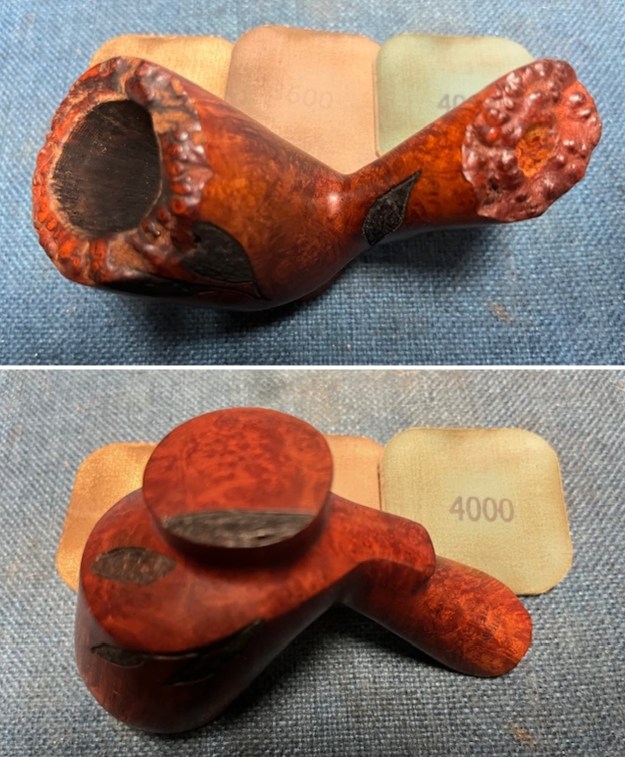
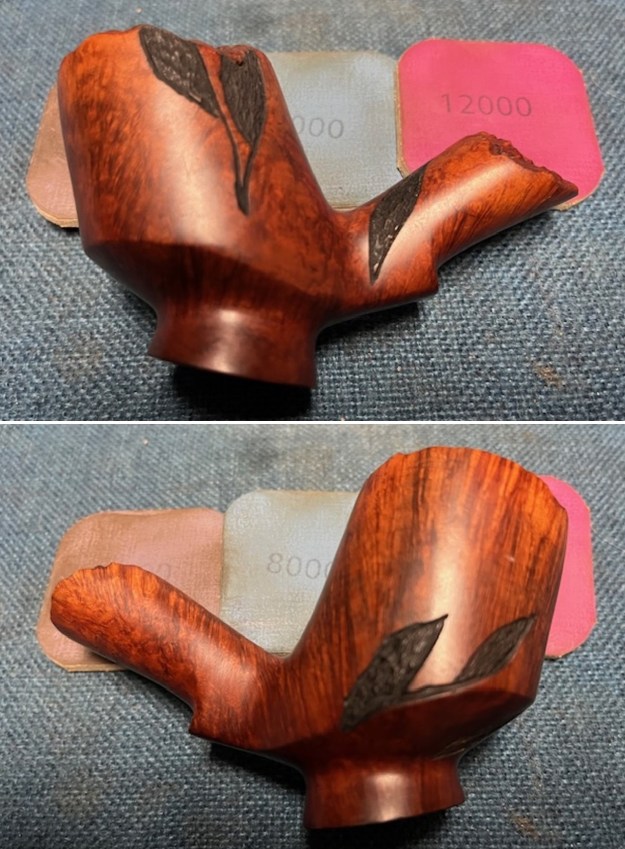
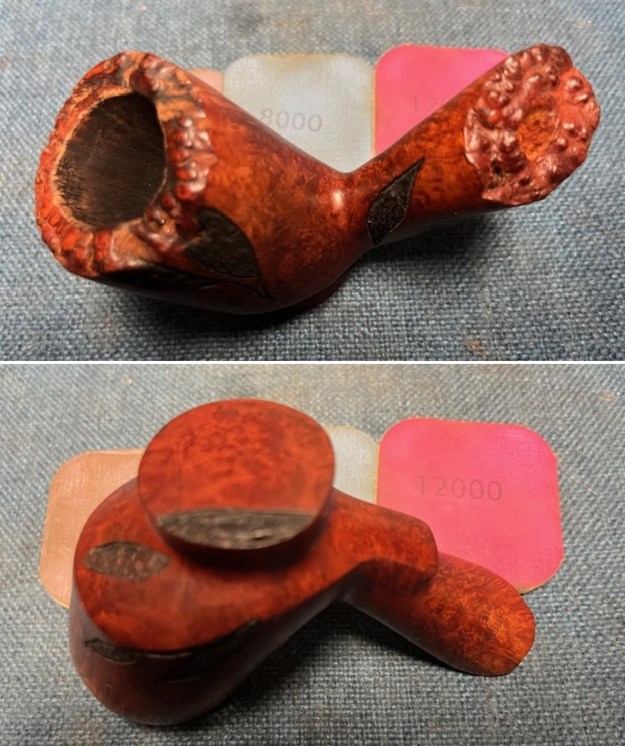
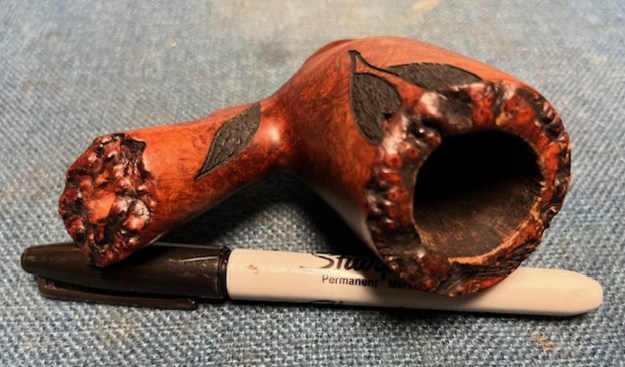
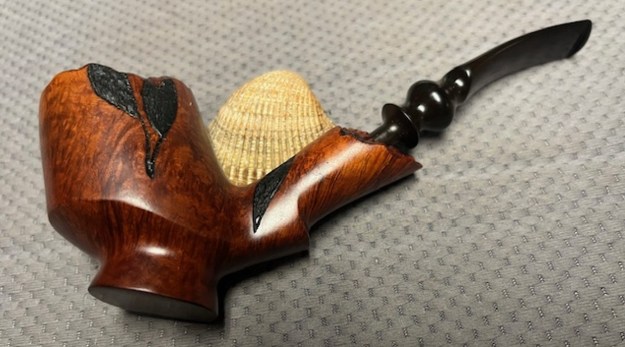
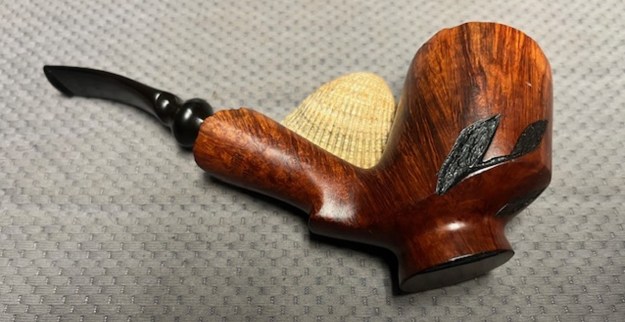
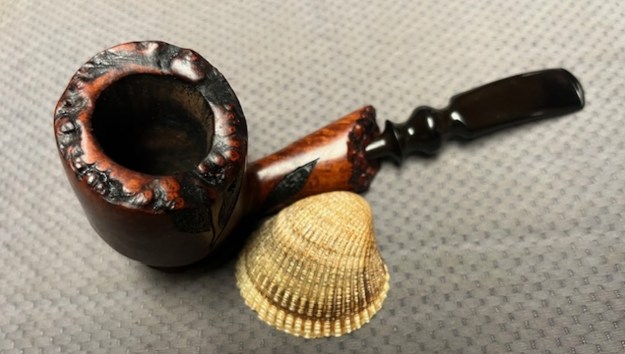
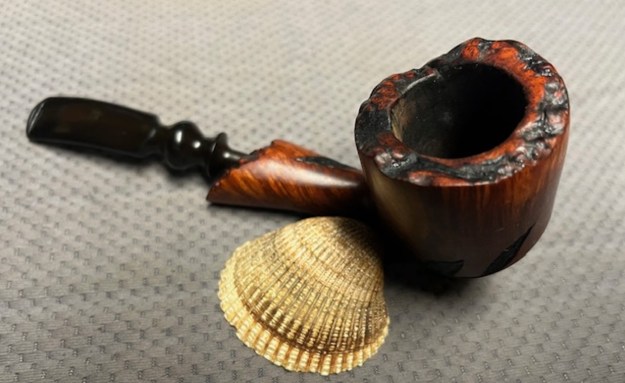
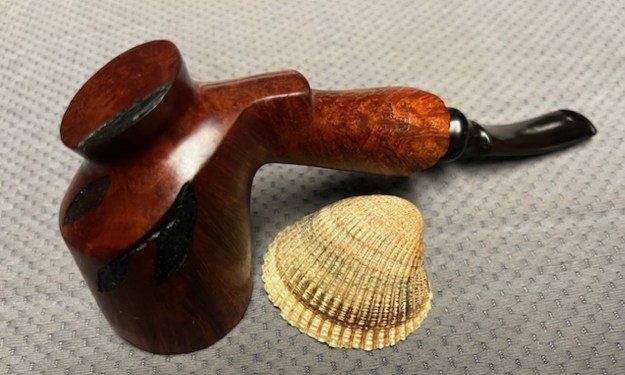
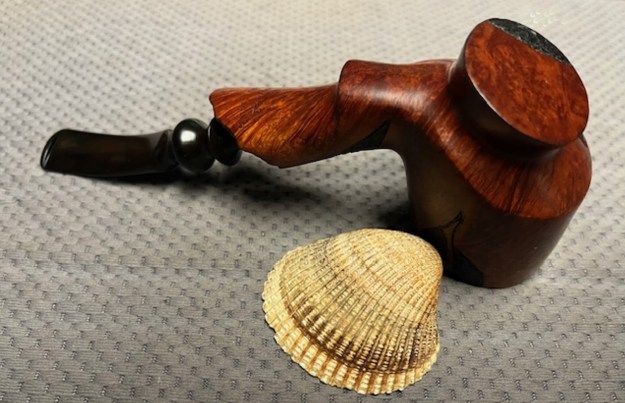
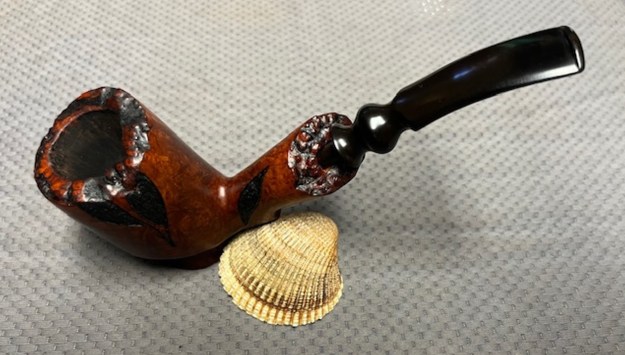
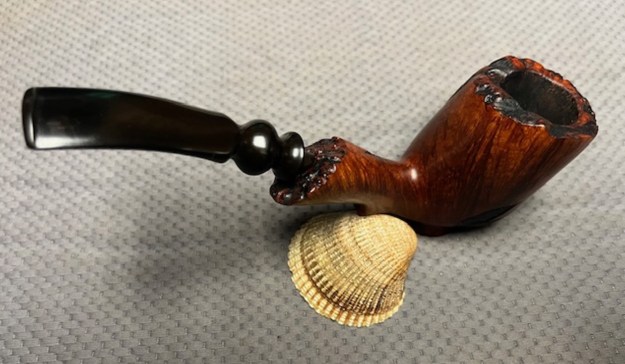
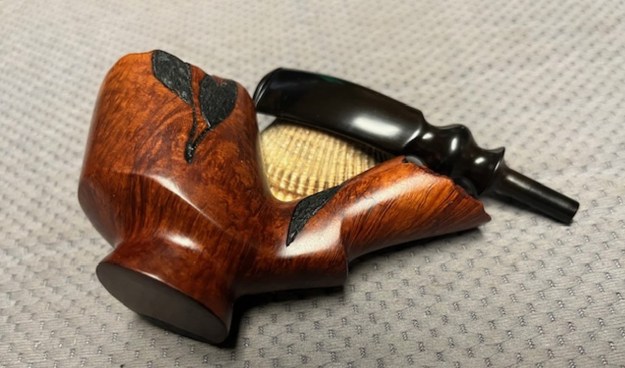
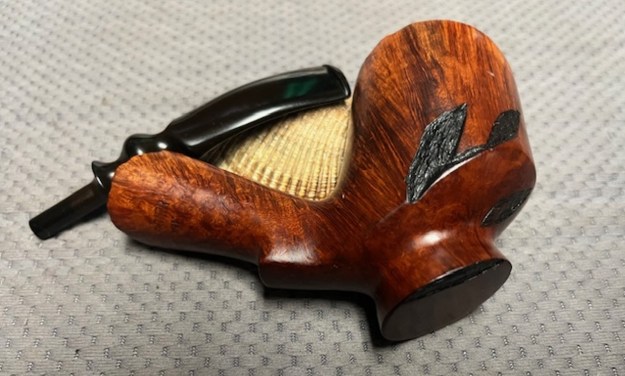
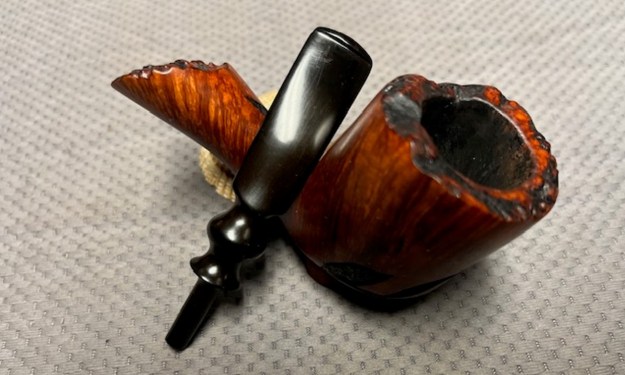
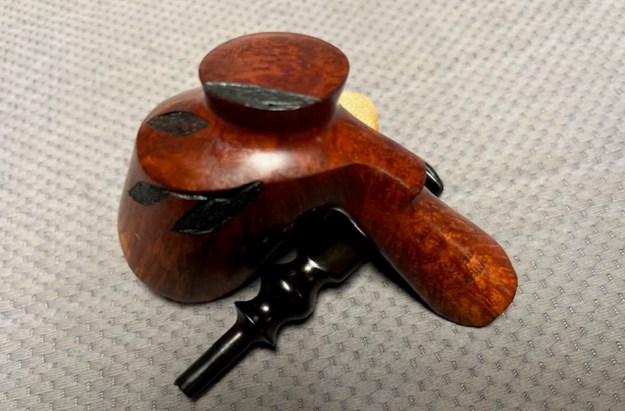
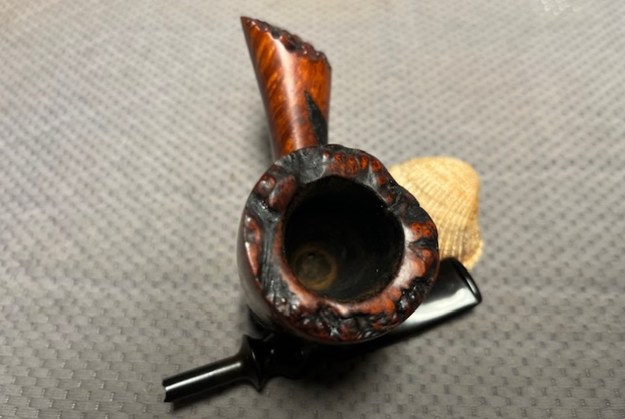
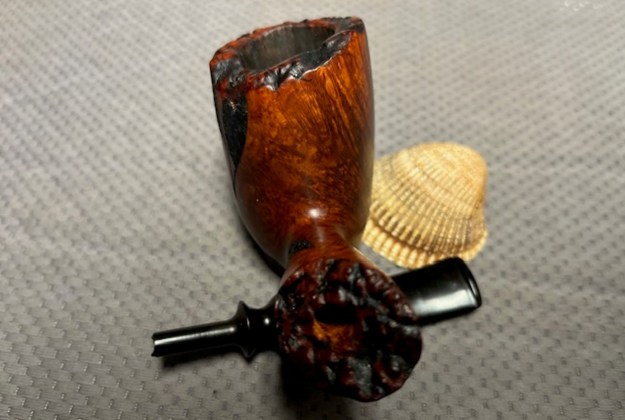
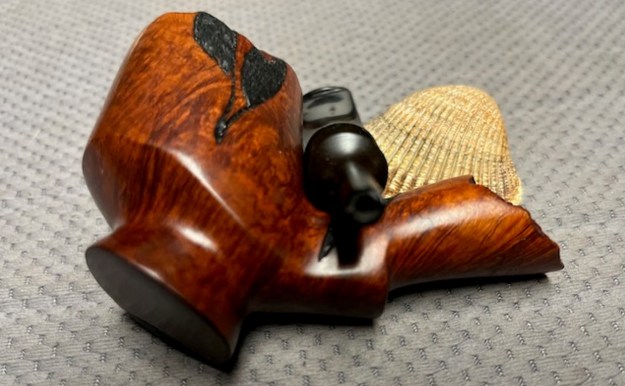
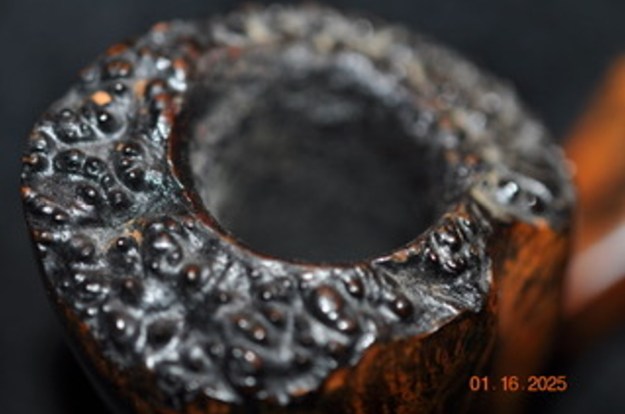
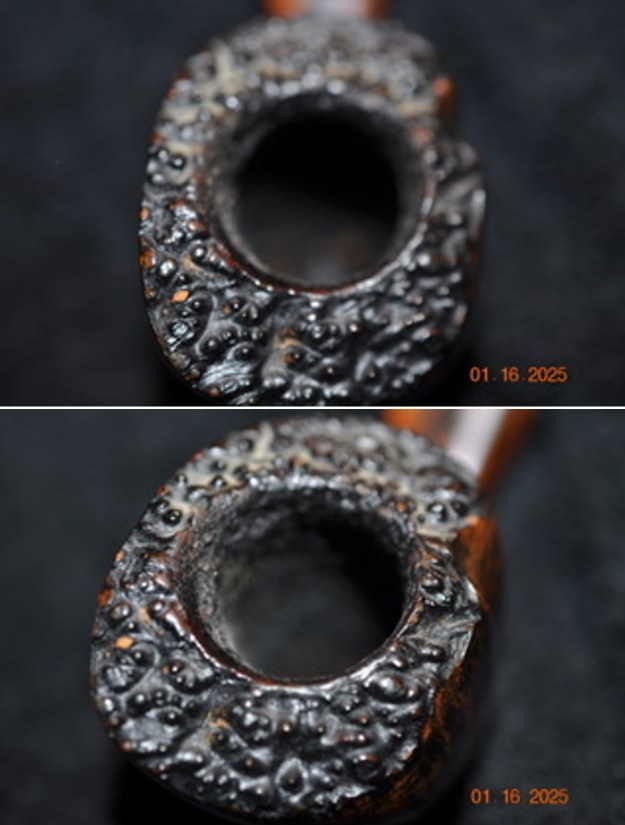
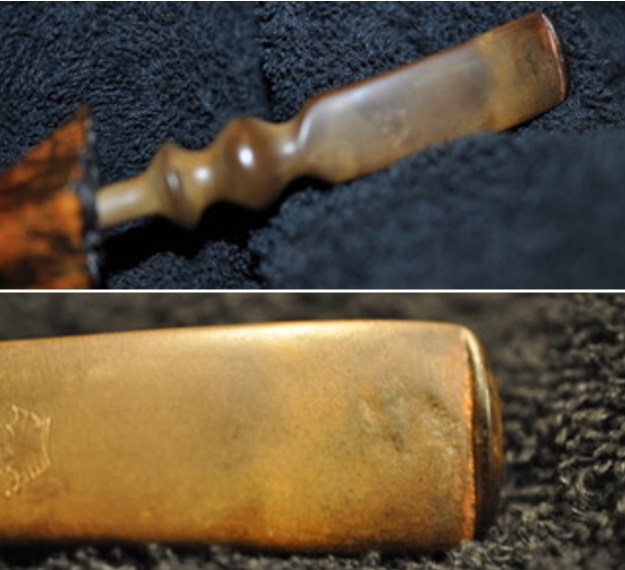
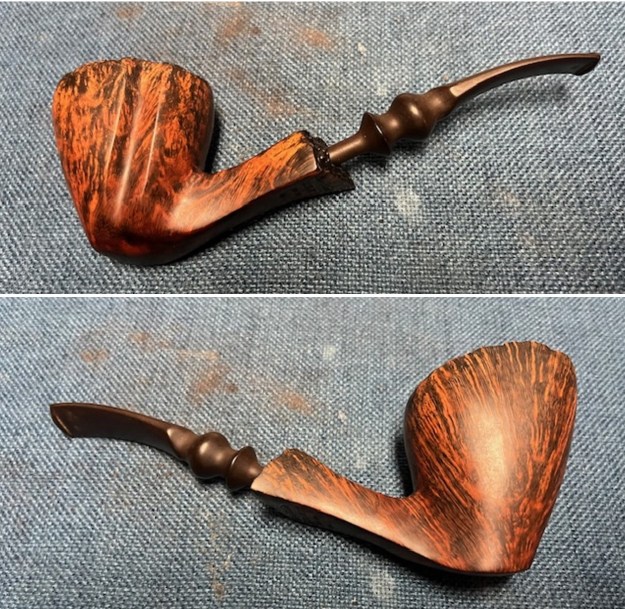
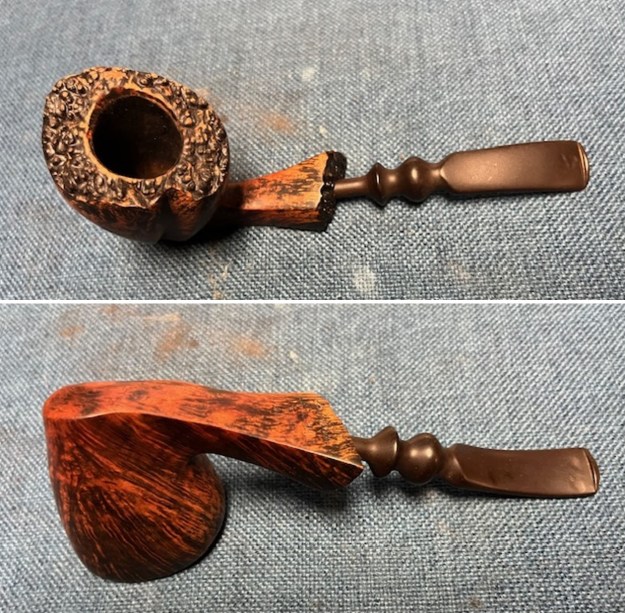
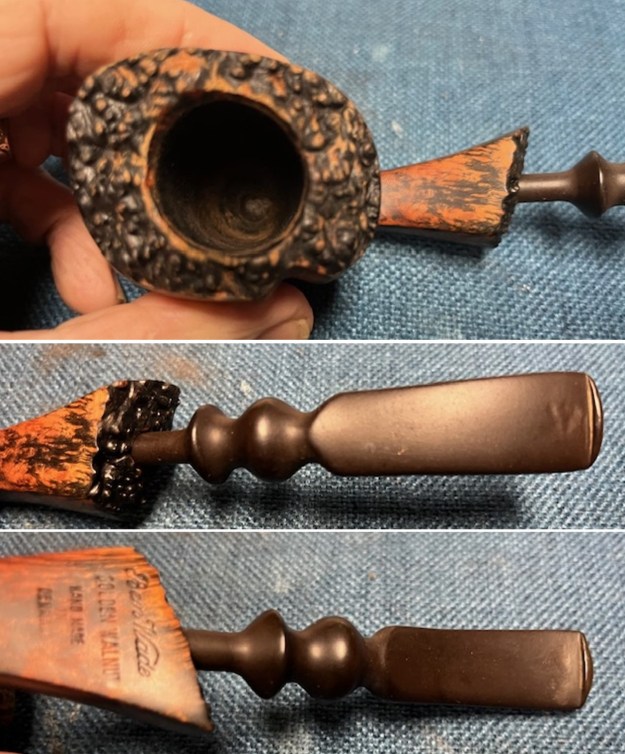
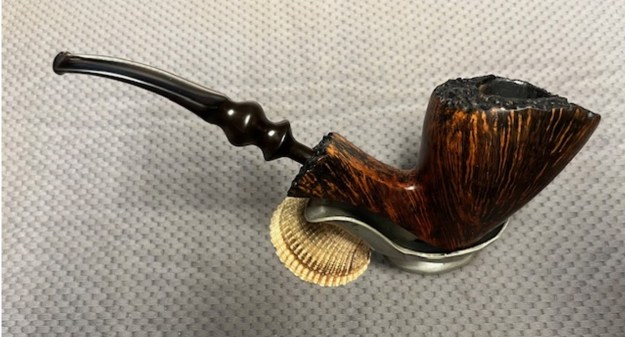
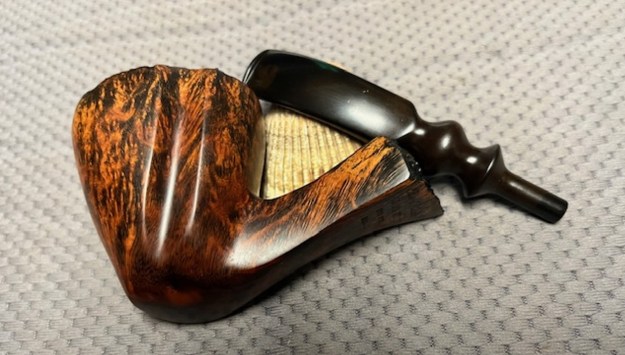
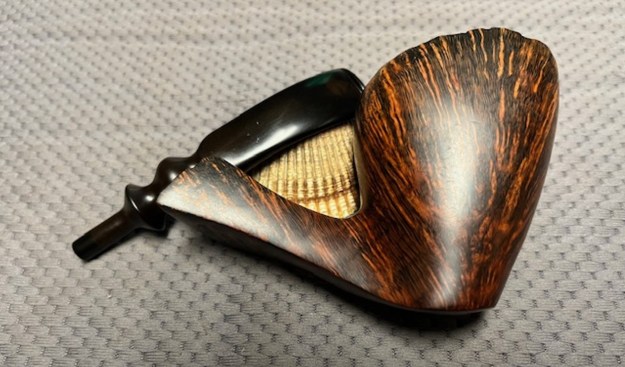
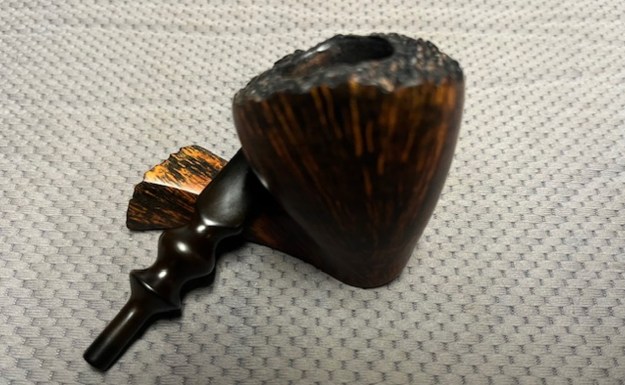
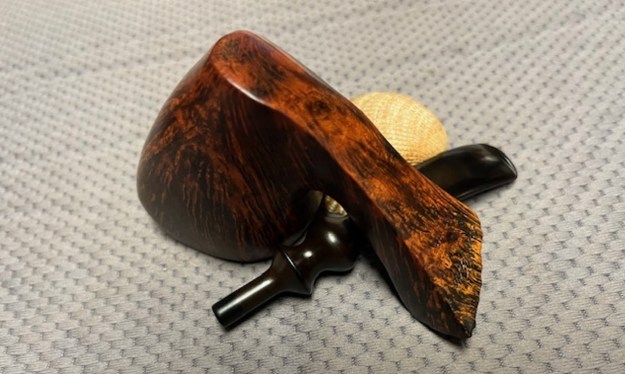
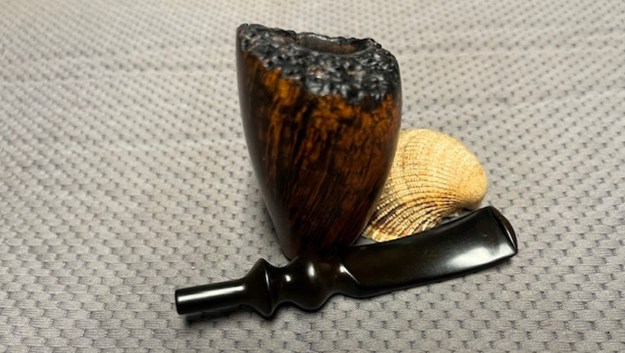
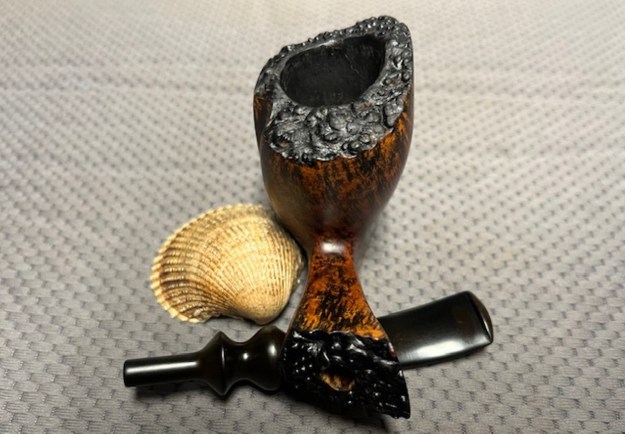
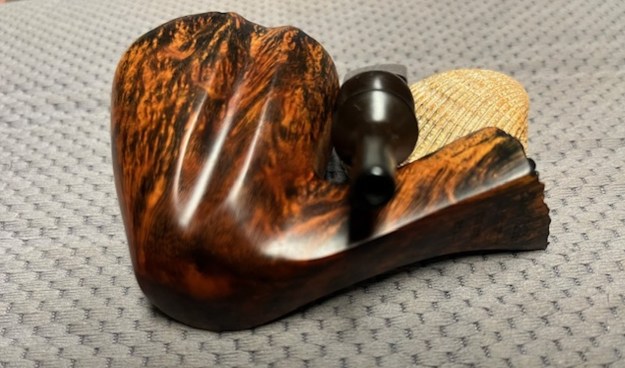
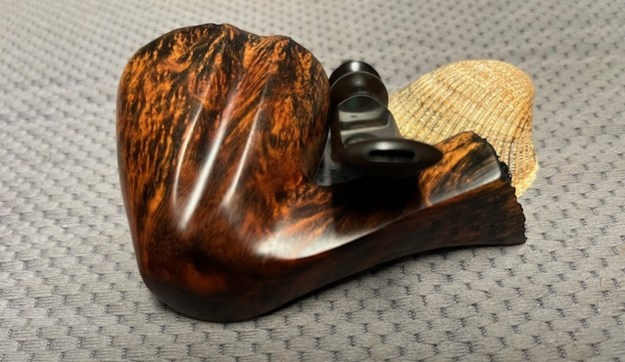
The next pipe I have chosen is a medium sized Freehand. The pipe has a fancy, turned vulcanite saddle stem. We purchased it from the seller on 04/1/2020 in Columbus, Missouri, USA. The contrast of the brown stains on this pipe makes the grain stand out. The plateau briar on the rim top is natural and worked well with the stain on the sides. The pipe is stamped underside of the shank and reads F [over] Nording [over] Danmark. The bowl was heavily caked and there was lava on the plateau rim top and inner edge. The condition of the rim and top looks good. The black vulcanite saddle stem was in good condition other than being dirty and having light tooth marks and chatter on both sides of the stem ahead of the button. There were no stampings or logo on the stem itself though it is certainly the original. It was well fit but never bore any identifying marks on the surface. Jeff took photos of the pipe before his cleanup work. They tell the story and give a glimpse of the pipe. Jeff took close up photos of the bowl and rim to capture the condition of the pipe before he started his cleanup work. The moderate/heavy cake in the bowl and the lava on the edges and plateau rim top are visible. The next photos show the stem surface. There is oxidation, calcification and light tooth marks and chatter on both sides near the button and wear on the button surface and edges. He also took a photo of the bottom of the bowl and shank to show the beautiful grain around the bowl and the ruggedness of the plateau edges. It is very dirty but this is another beautiful pipe. He took a photo of the stamping on the underside of the shank. It is clear and readable as noted above. It appears there is a flaw on the shank end ending between the N and M of Danmark. I will need to check it out further.Before I started my work on the pipe I wanted to learn more about where this pipe fit into the Nording lines so I turned to the first of two sites that I always check to gather information on a brand. I turned first to Pipedia (https://pipedia.org/wiki/N%C3%B8rding). Nording’s were exclusively freehand shapes, graded from A, B, C, D, up to its highest grade, extra. Later an “F” grade was added—less expensive than the “A.”

I did find a great collage of photos of Erik Nording.I turned to the second information site – Pipephil’s (http://www.pipephil.eu/logos/en/logo-n2.html) did not find any more helpful information on the Nording Danmark stamp.

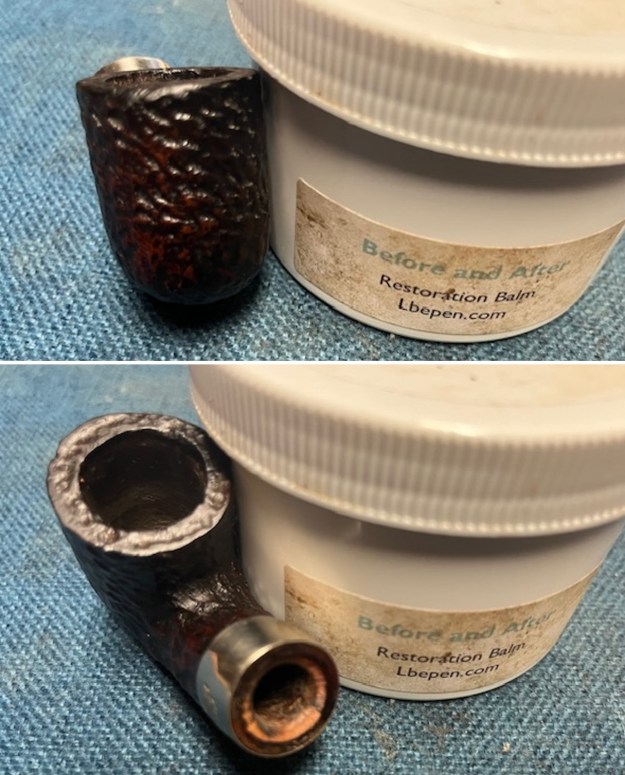
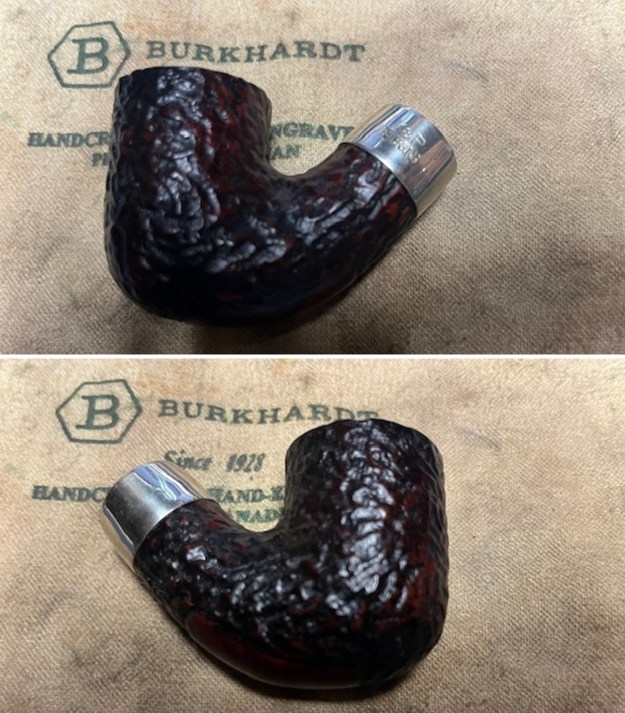
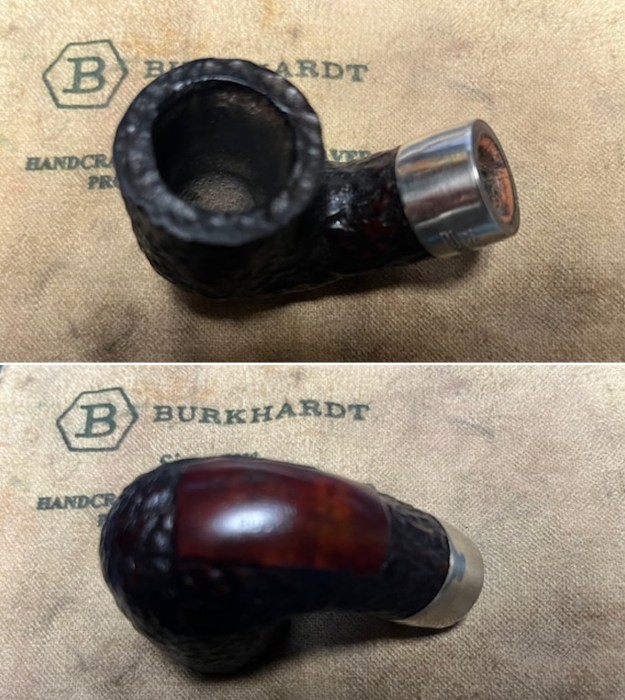
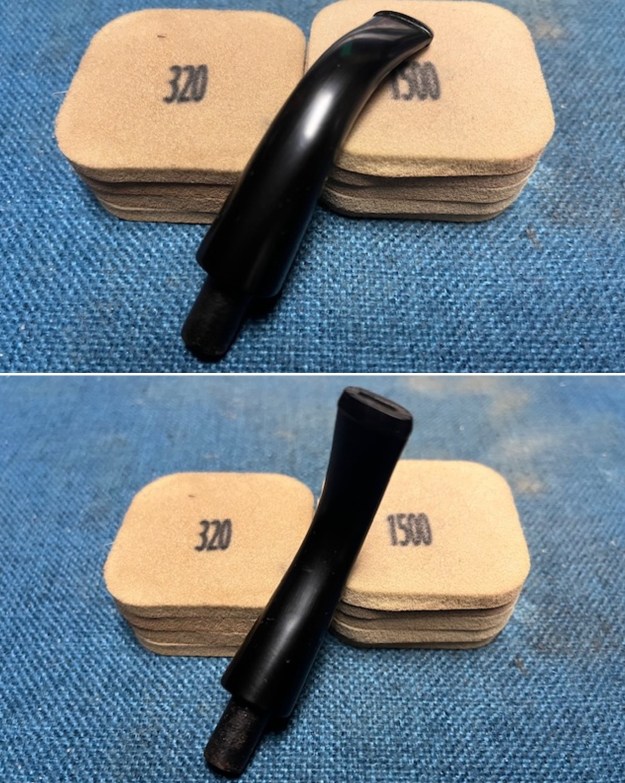
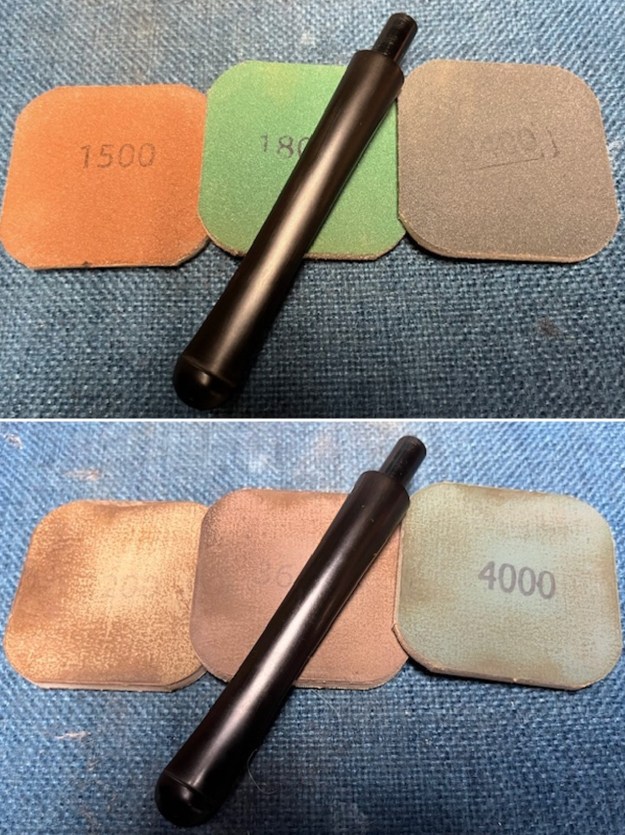
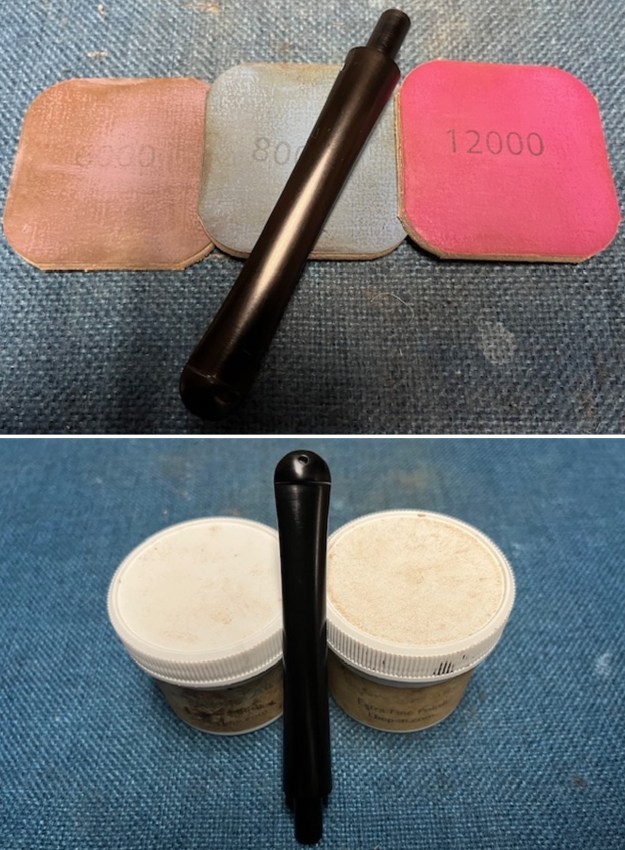
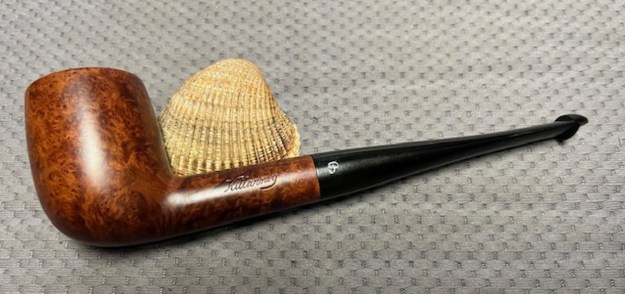
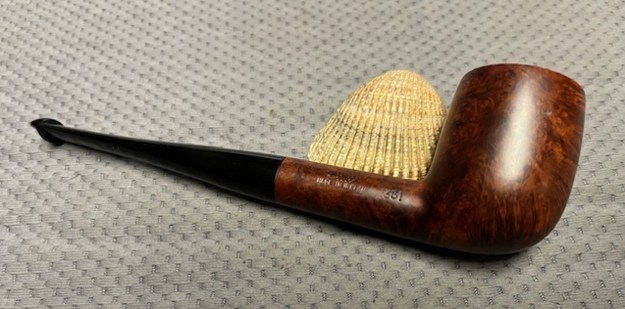
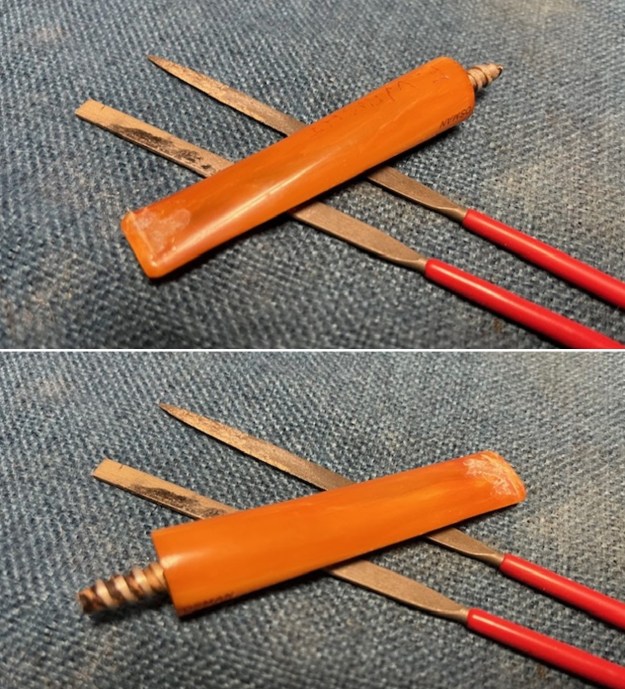
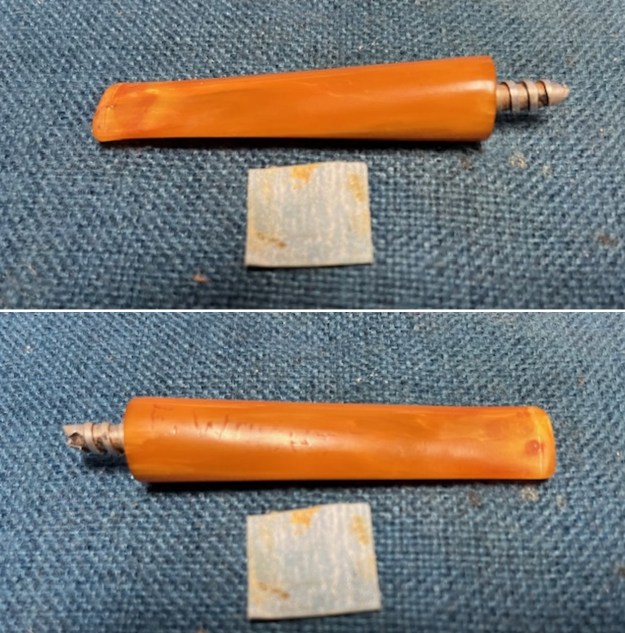
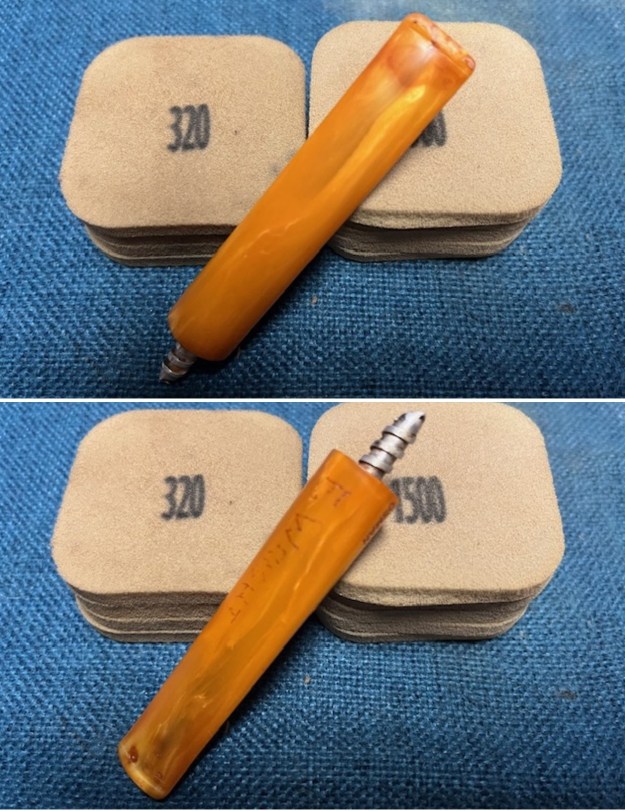
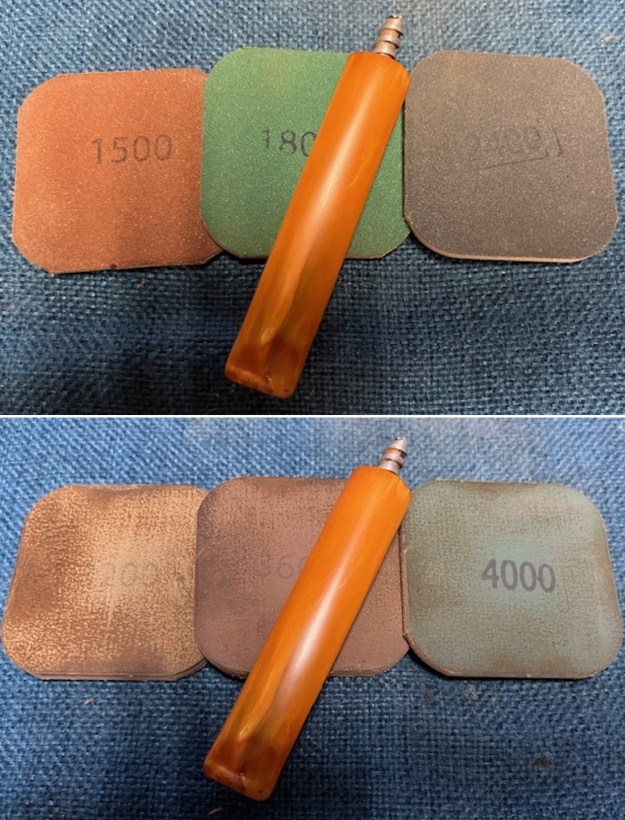
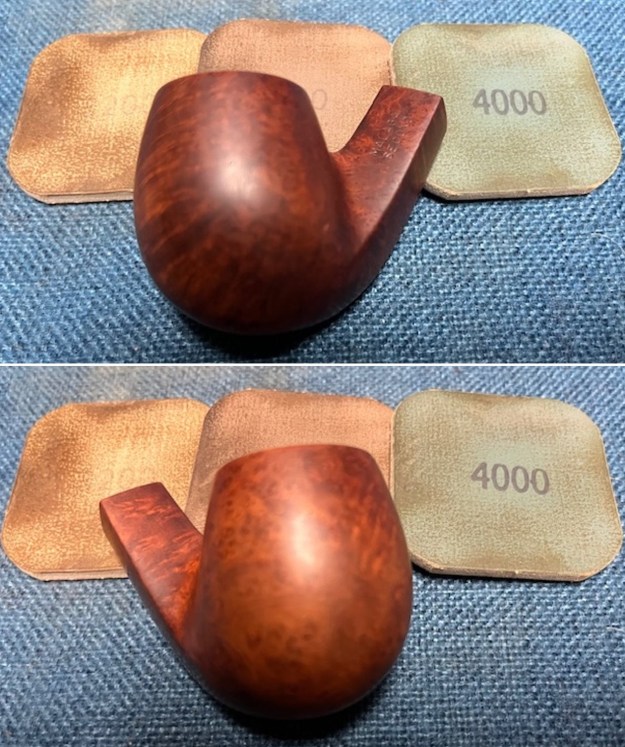
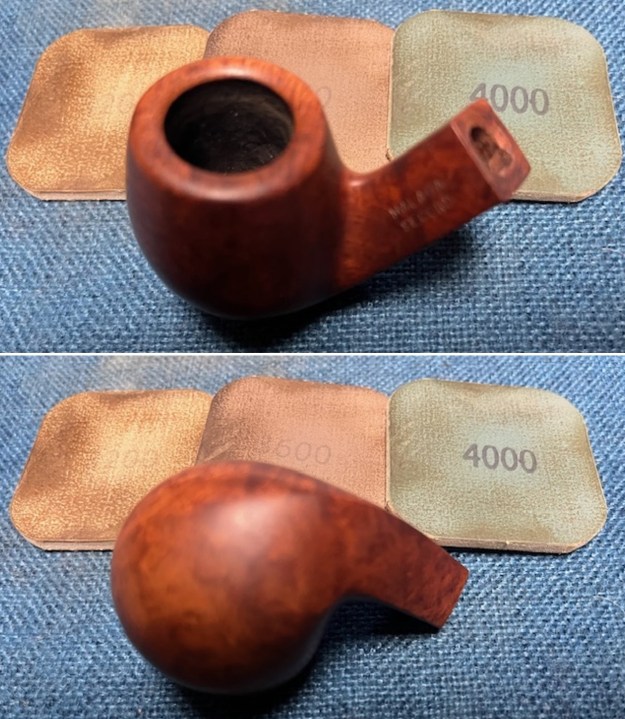
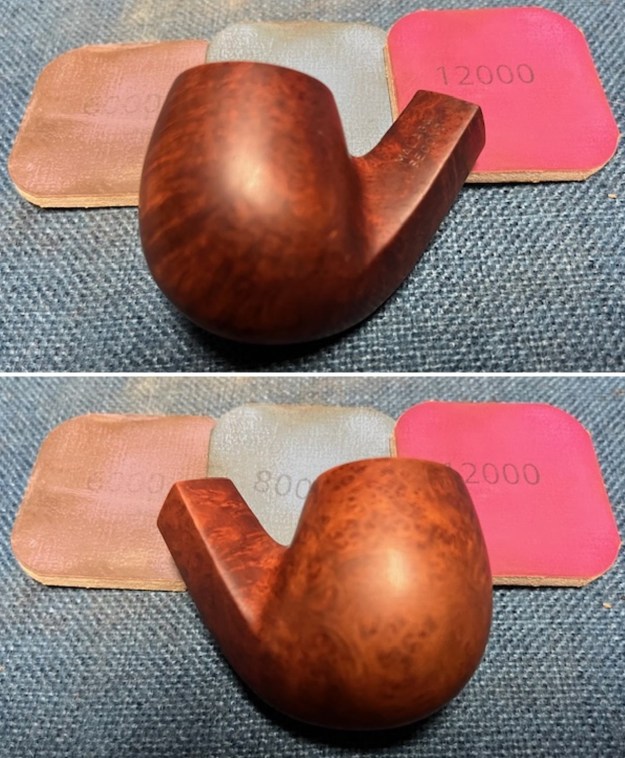
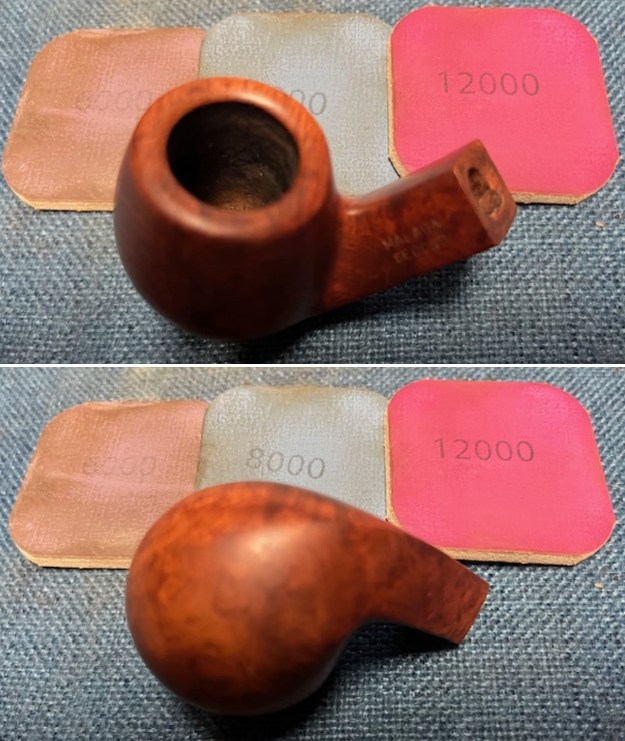
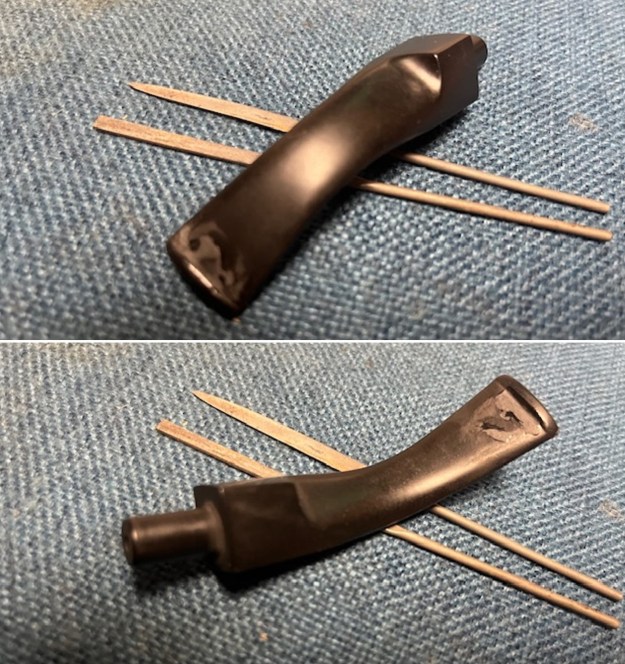
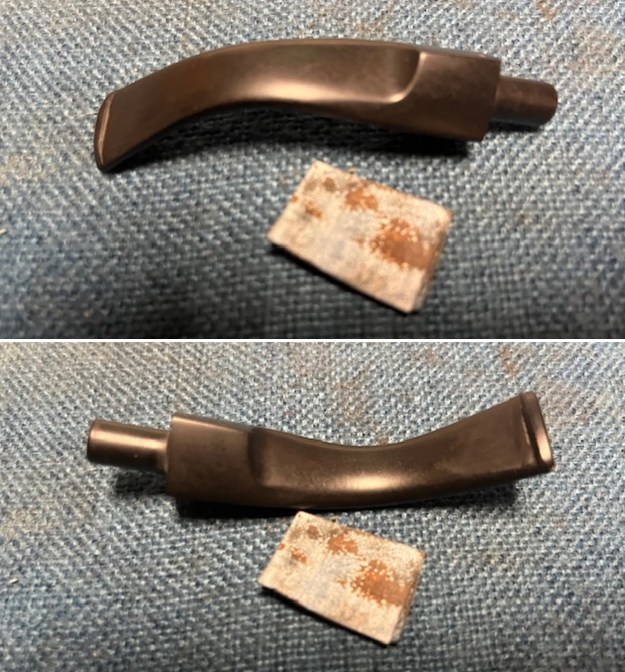
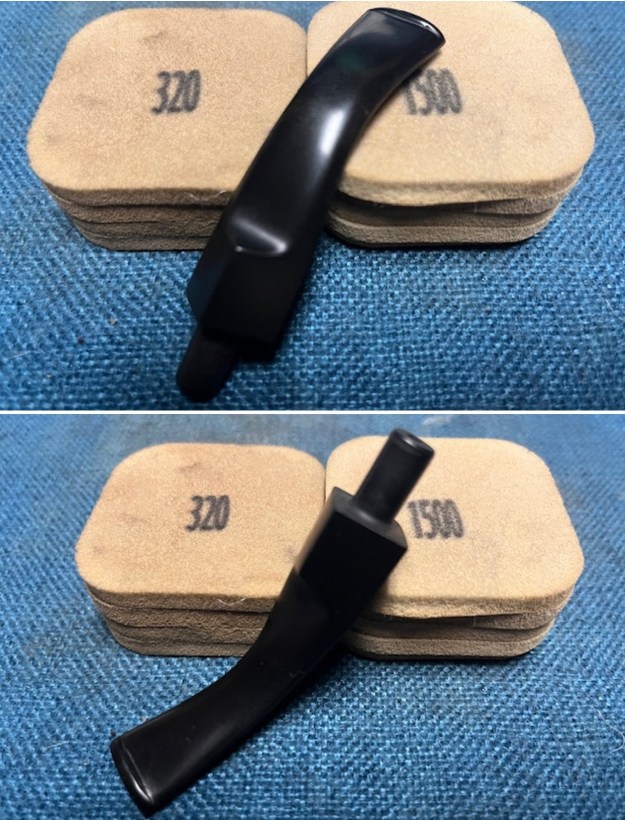
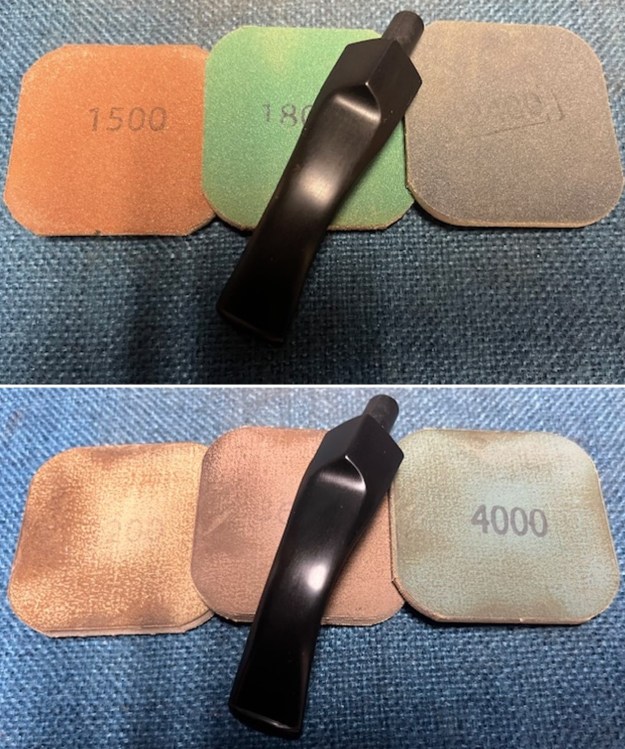
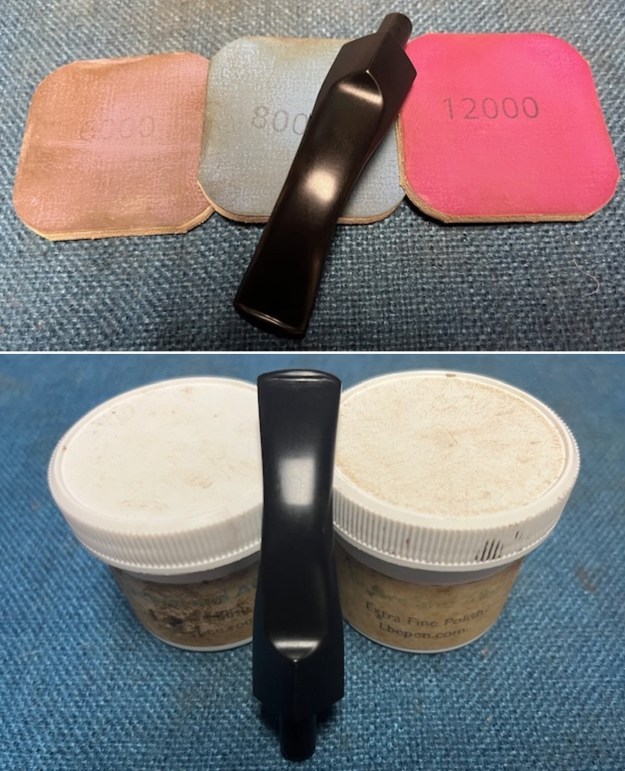
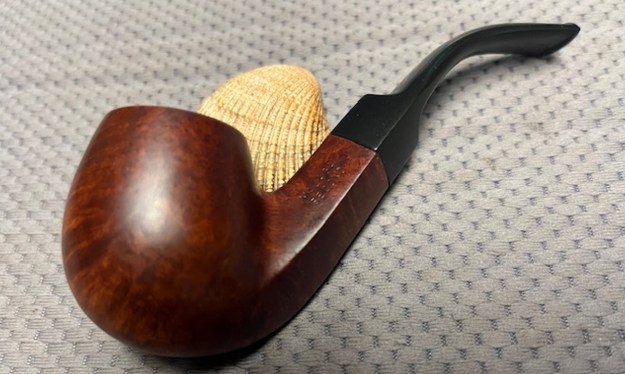
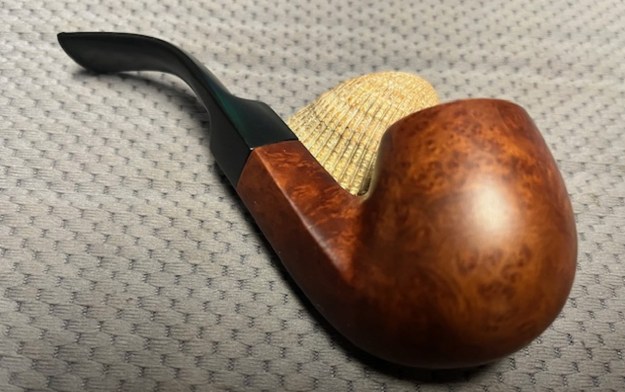
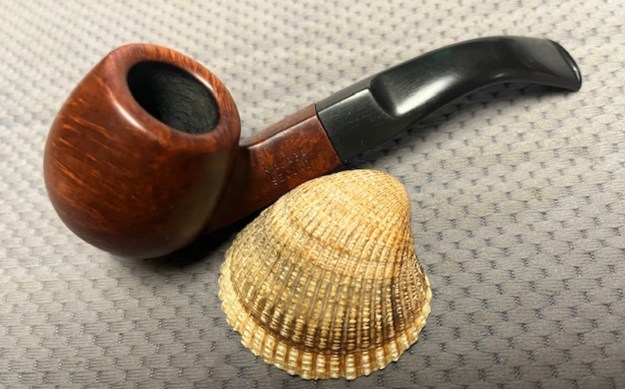
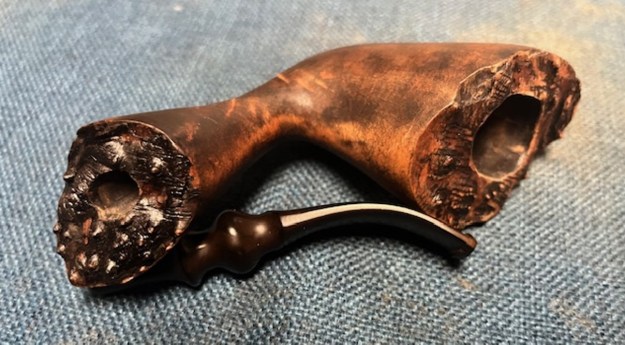
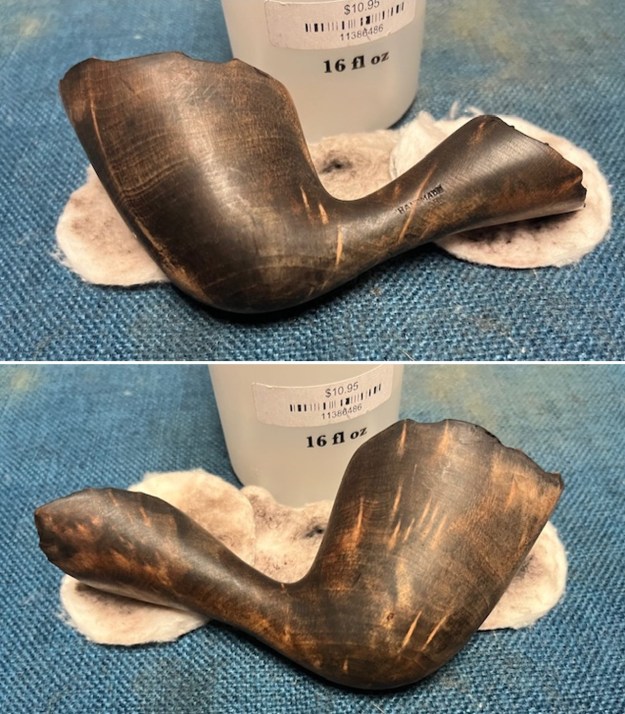
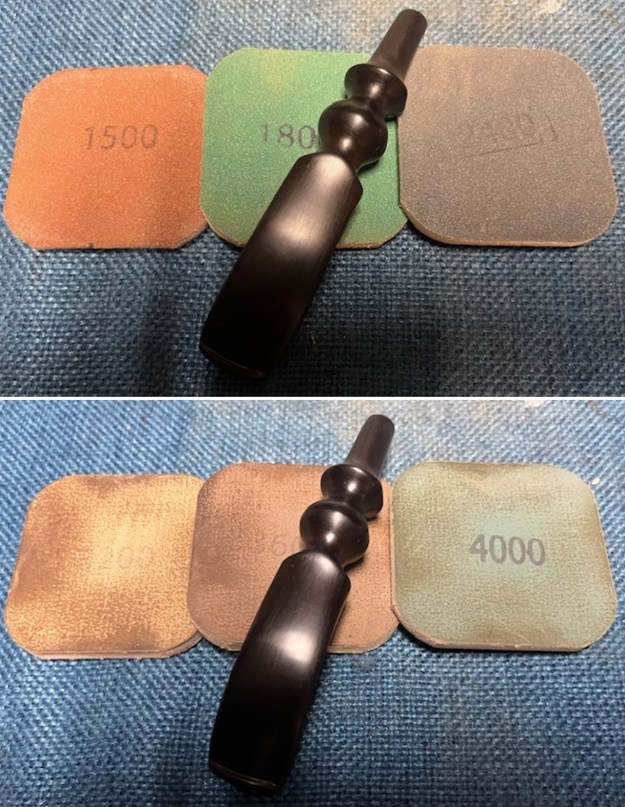
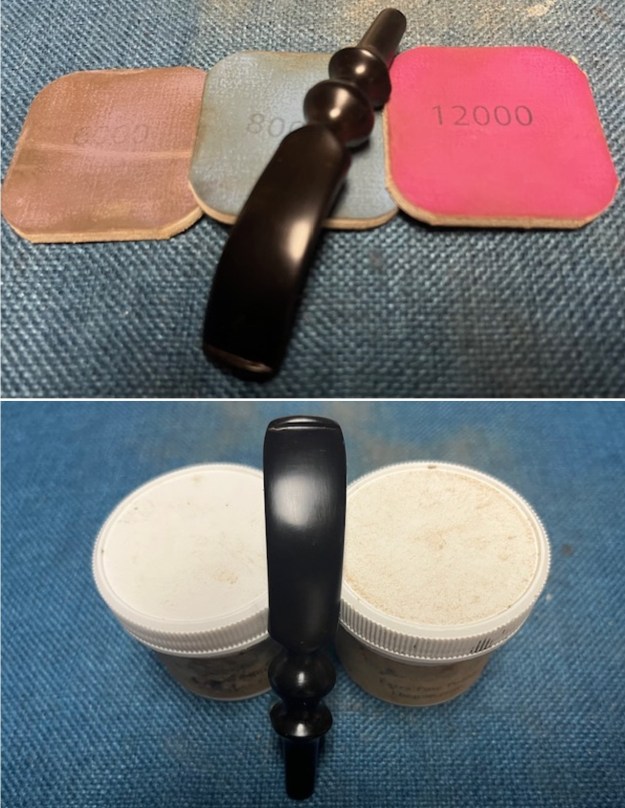
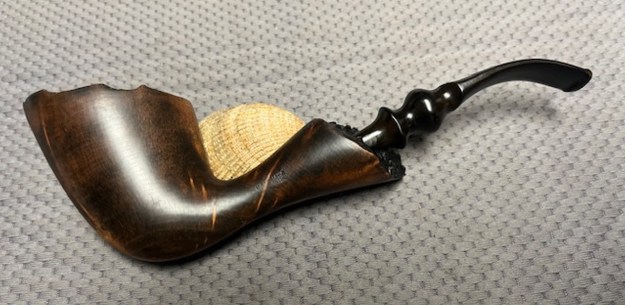
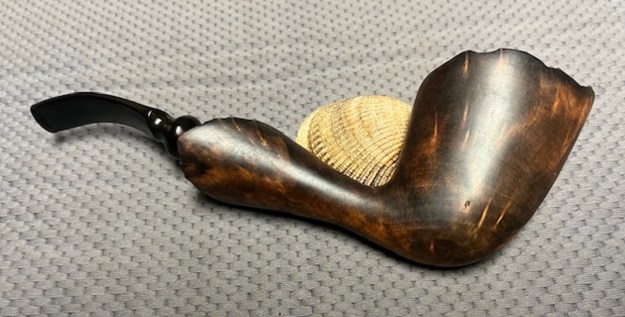
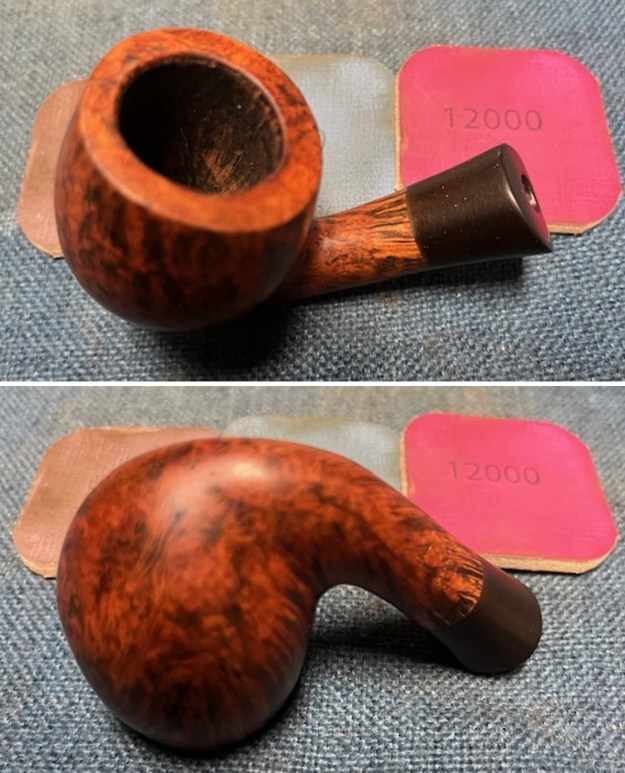
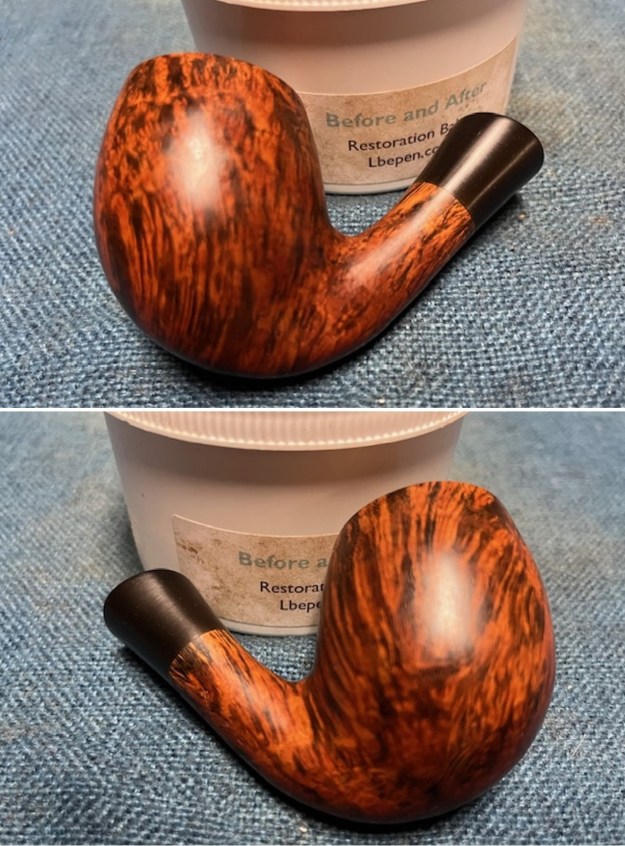
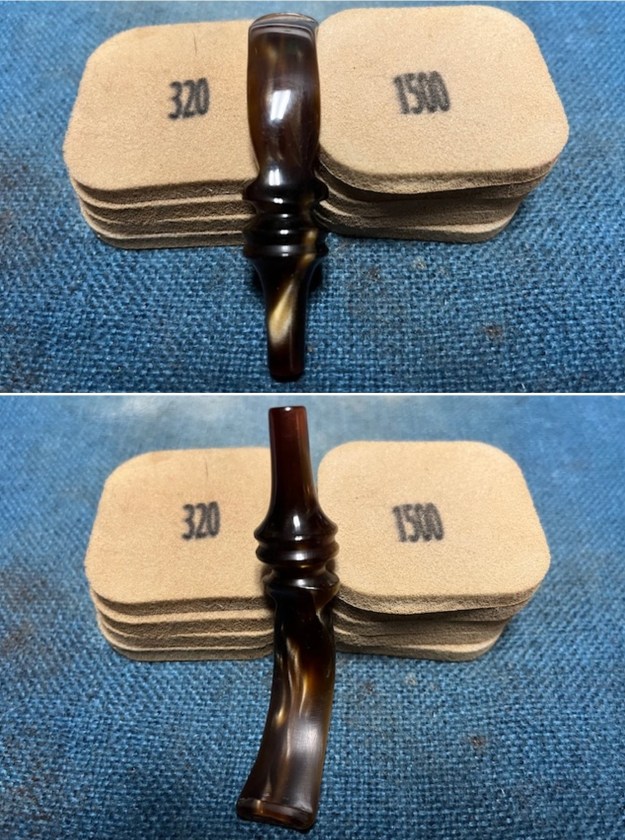
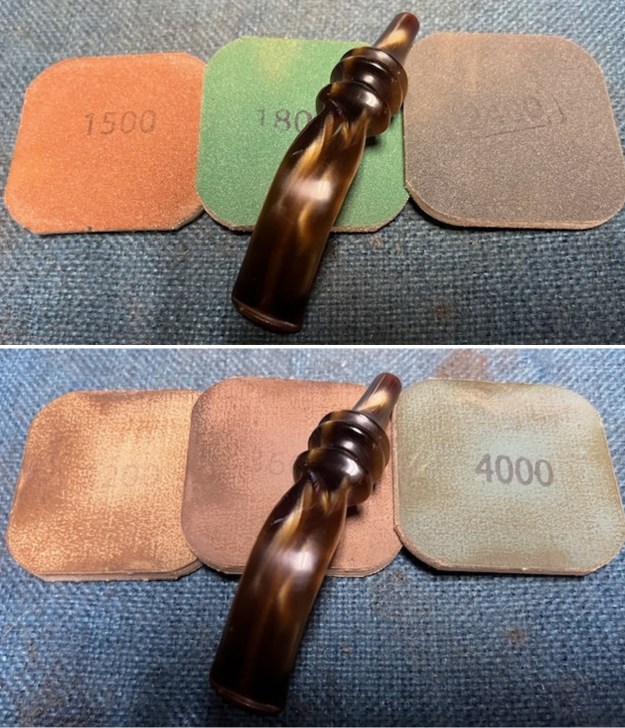
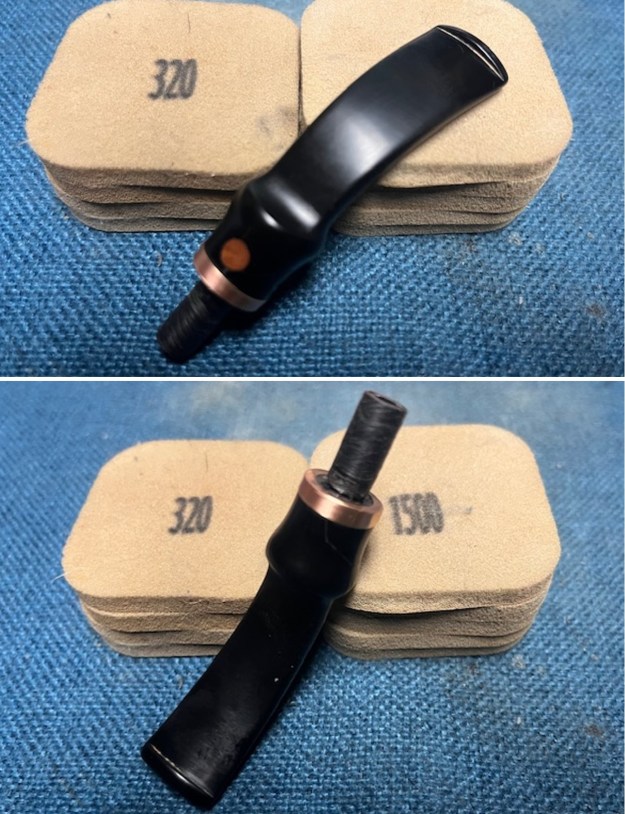
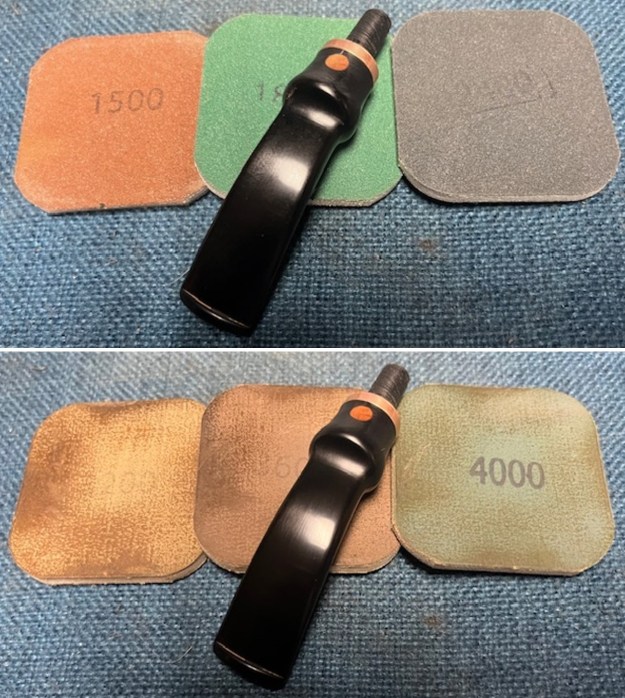
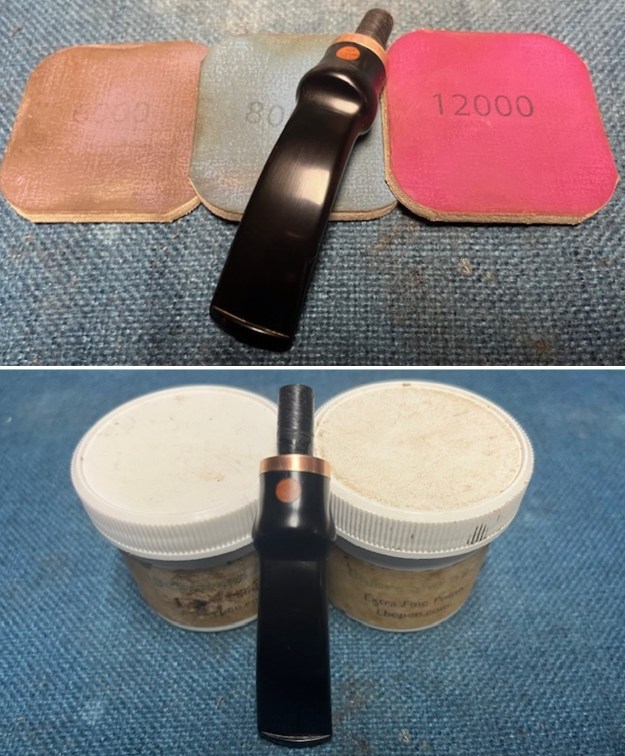
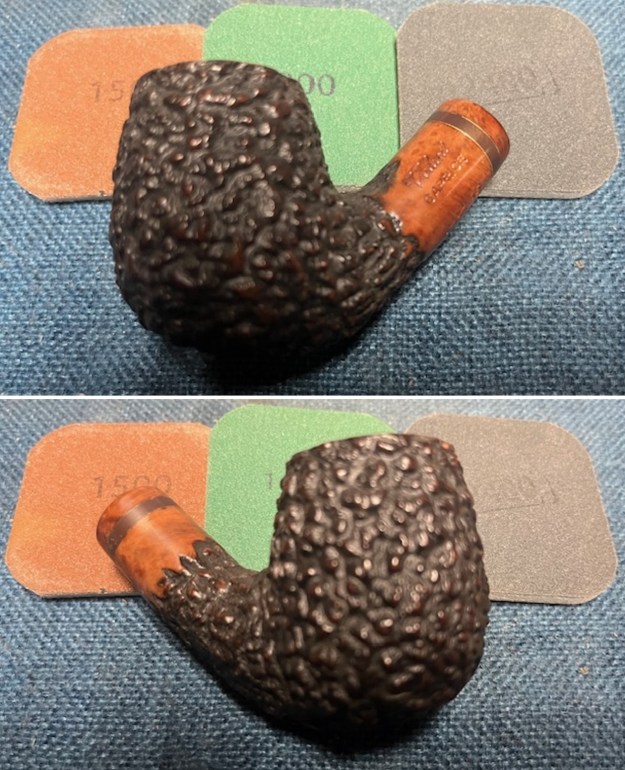
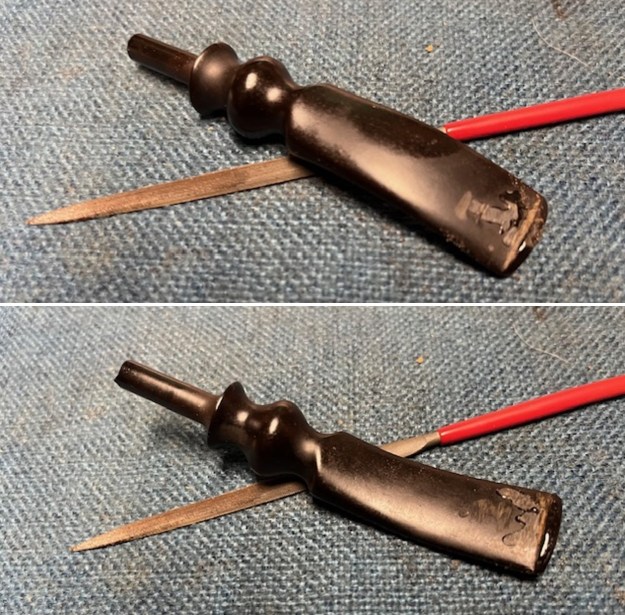
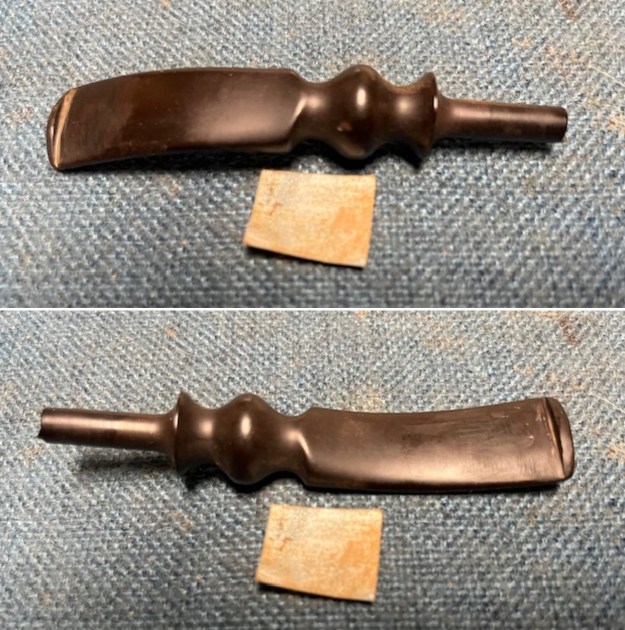
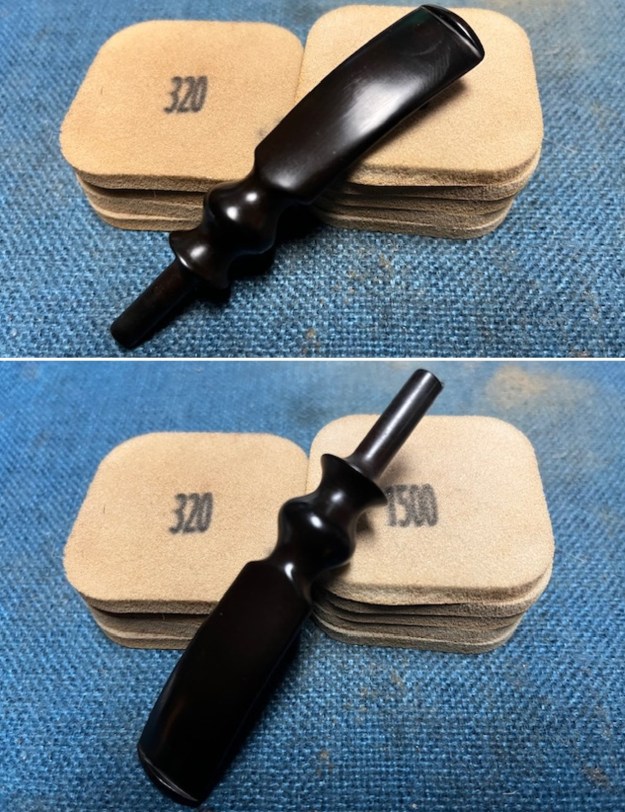
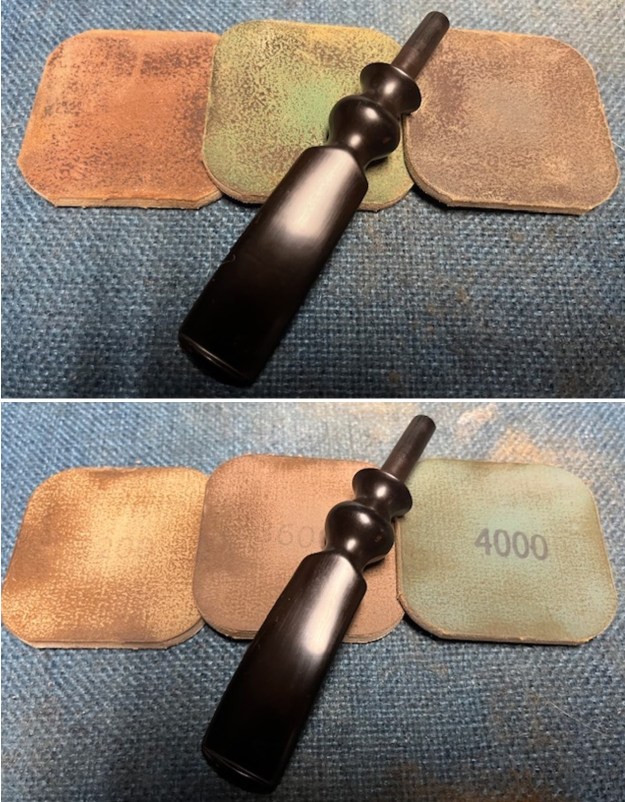
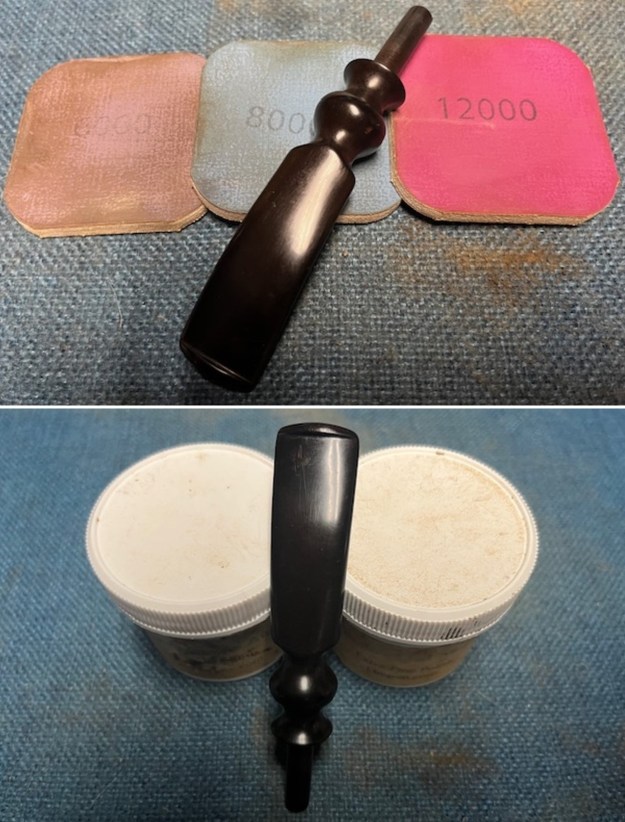
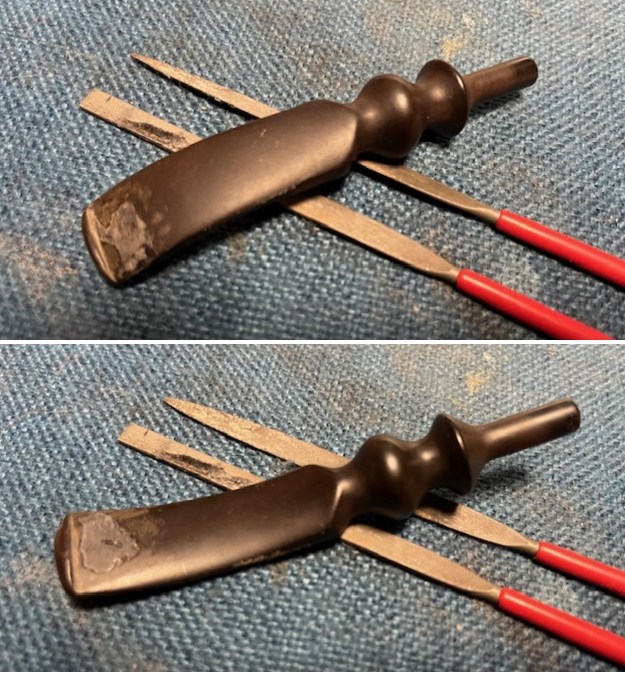
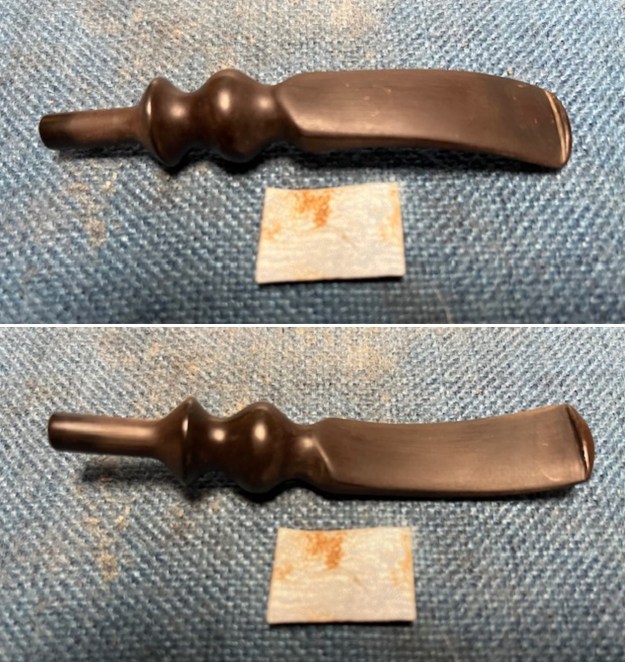
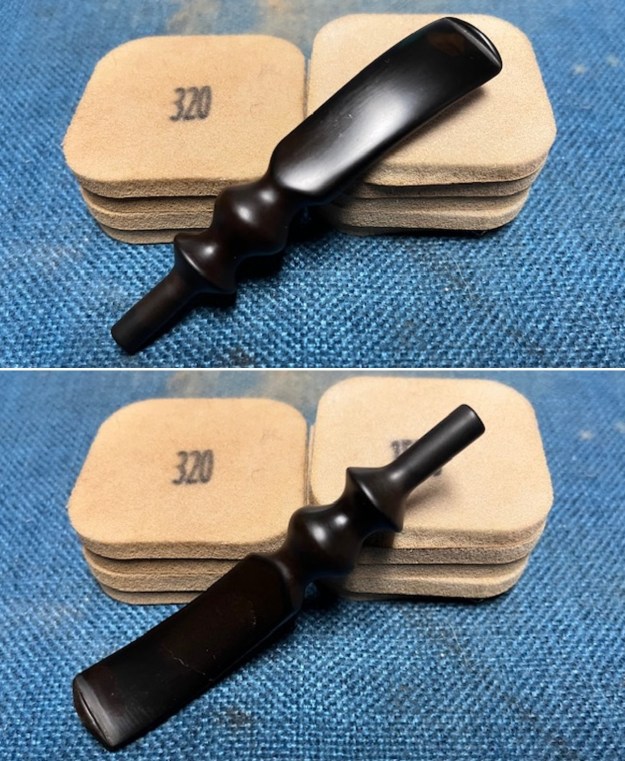
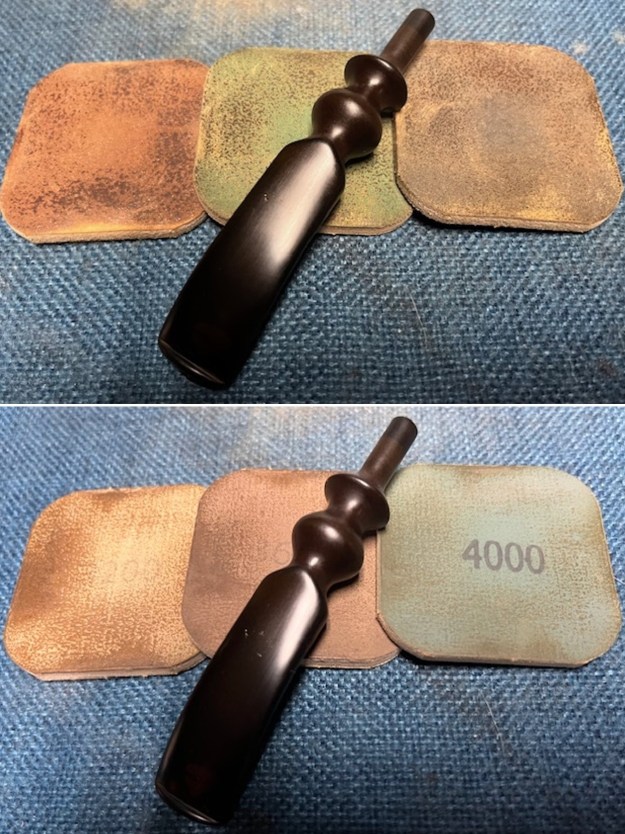
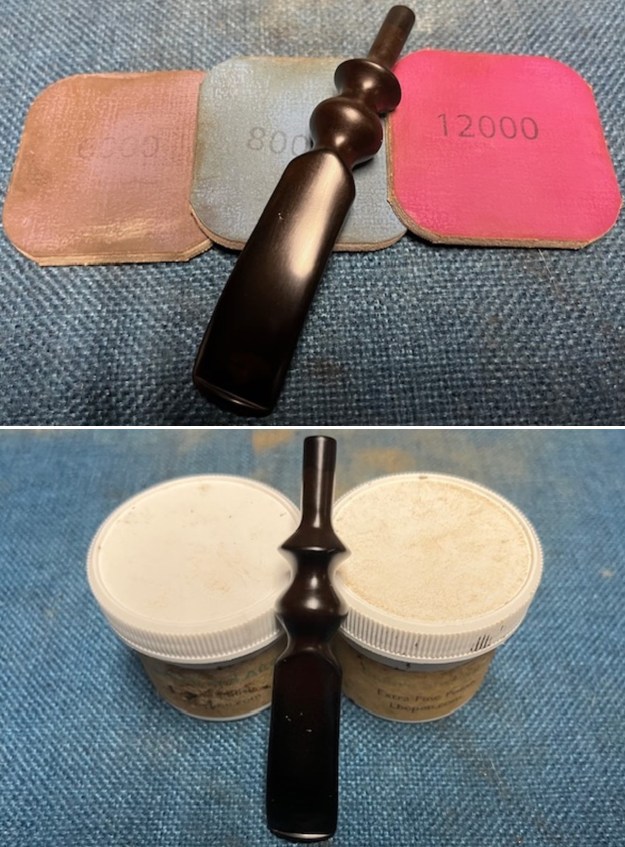
Armed with the information on the F stamp being added at a later time I knew a bit about the pipe at hand though there were no solid dates. I turned to address the pipe itself. Jeff cleaned up the pipe for me. He reamed the bowl with a PipNet pipe reamer and cleaned it up with a Savinelli Fitsall Pipe Knife. He scrubbed the exterior with Murphy’s Oil Soap and a tooth brush to clean off the grime off the finish and the heavy overflow of lava on the rim top. He cleaned up the internals of the shank, mortise and stem with pipe cleaners, cotton swabs and alcohol to remove all of the oils and tars in the pipe. He soaked the stem in Briarville’s Pipe Stem Deoxidizer and was able to remove much of the oxidation. When it arrived here in Vancouver it was a clean pipe and I knew what I had to work with. I took photos of it before I started my part of the restoration. I took photos of the rim top and the stem to show their condition once it arrived in Canada. Jeff was able to clean up the incredibly thick cake and lava overflow that was shown in the rim and bowl photos above. He was also able to get rid of the grime and grit in the surface of the briar. The inner edge of the bowl was in very good condition and was smooth to the touch. The rim top and edges looked very good. The stem looked very good and was much cleaner. There were light tooth marks and chatter on both sides near the button.I took a photo to try and capture the stamping on the shank side. It was faint but readable. I also removed the stem and took a photo of the pipe sans stem to show the proportions of this unique beauty. There also appears to be a small flaw/crack just below the NM of Danmark. I will need to check that out.I decided to start with examining the pipe for any issues in the briar. I found a small flaw in the shank come from the plateau end up to the N and M in Danmark. I filled it in with CA glue carefully applied with a tooth pick I sanded it smooth with 220 grit sandpaper and then with 1500-2400 grit micromesh. I restained the area with a Cherry stain pen to match the surrounding area. It looked much better.I polished the briar with micromesh sanding pads. I dry sanded it with 1500-12000 grit pads. I wiped the bowl down after each pad with a damp cloth. The bowl began to take on a rich shine and grain was beginning to stand out. I rubbed the bowl and shank down with Before & After Restoration Balm to deep clean the finish on the bowl and shank. The product works to clean, enliven and protect the briar. I worked it in with my fingers to get it into the briar. I used a horsehair shoe brush to work it into the plateau top. After it sat for a little while I wiped it off and buffed it with a soft cloth. The briar really began to have a rich shine. I took some photos of the bowl at this point to mark the progress in the restoration. I set the bowl aside and worked on the stem at this point in the process. The tooth chatter had a couple of deeper marks on the underside that would not lift with heat. I cleaned the areas and filled in the spots with some clear CA glue. Once it cured I used the file to flatten the repair and sanded it with a piece of 220 grit sandpaper. I sanded the stem further with 320-3500 grit 2 x 2 inch sanding pads. I wiped the stem down after each pad with some Obsidian Oil. It began to take on a rich look. I polished the stem with micromesh sanding pads – dry sanding with 1500-12000 grit pads. I wiped the stem down after each pad with a damp cloth to remove the sanding dust. I used the Before & After Pipe Polish to remove the small minute scratches left in the vulcanite even after the micromesh regimen. I finished by wiping the stem down with a final coat of Obsidian Oil and set it aside to dry. I put the stem back on the Nording F Danmark Freehand and took the pipe to the buffer. I carefully buffed the bowl and stem with Blue Diamond to polish the briar and the vulcanite. Blue Diamond does a great job on the smaller scratches that remain in both. I gave the bowl and the stem several coats of carnauba wax and buffed the pipe with a clean buffing pad to raise the shine. I hand buffed it with a microfiber cloth to deepen the shine. The pipe polished up really nicely with a great contrasting stain look to the briar. The finished pipe is shown in the photos below. This is a unique Nording F Freehand – the turned saddle stem gives the pipe a great look. The polished black vulcanite stem looks really good with the reds and blacks standing out in the grain. The dimensions of the pipe are Length: 5 ½ inches, Height: 2 inches, Outside diameter of the bowl: 1 5/8 inches, Chamber diameter: ¾ of an inch. The weight of the pipe is 1.90 ounces/55 grams. This is another pipe that I will be putting it on the rebornpipes online store in the Danish Pipe Makers Section shortly, if you are interested in adding it to your collection. Thanks for walking through the restoration with me on this beauty!

Fresh Life for a Republic Era Peterson’s System Standard 302 Bent Apple with a 9mm Filter Stem


by Steve Laug

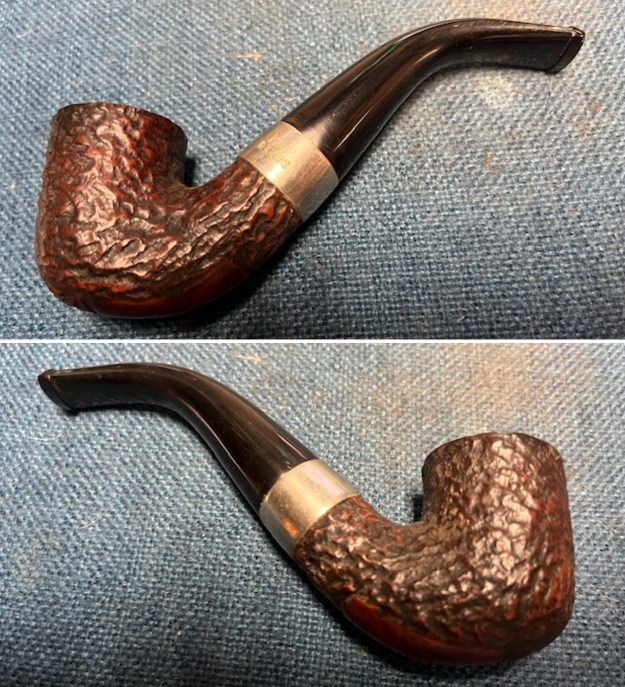
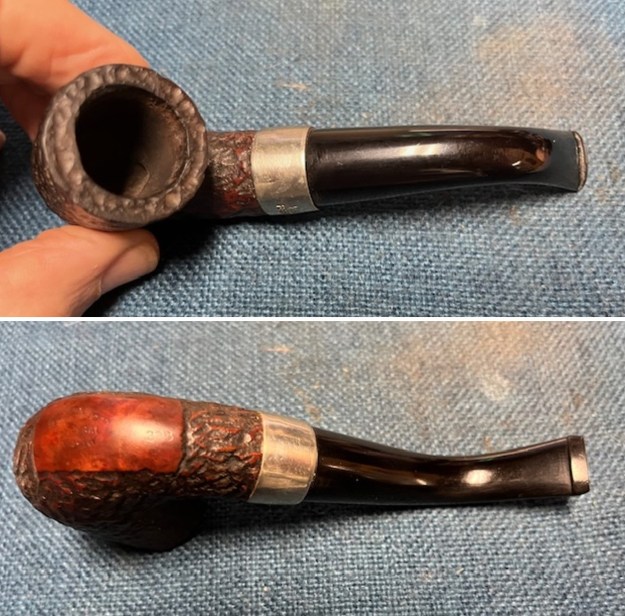
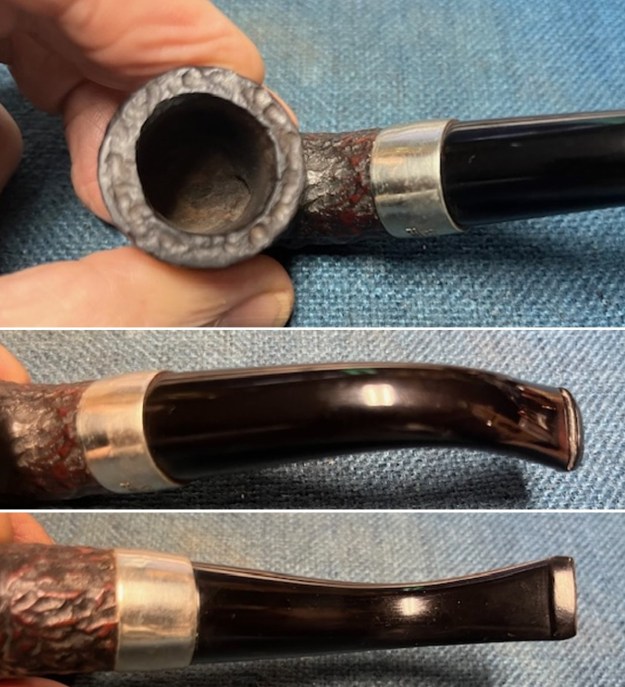
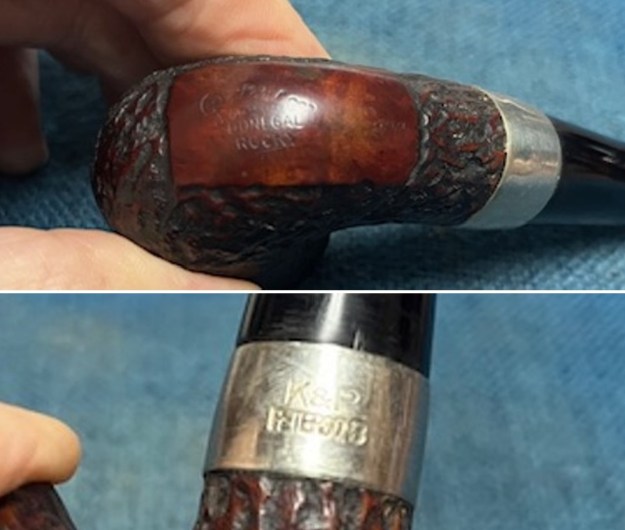
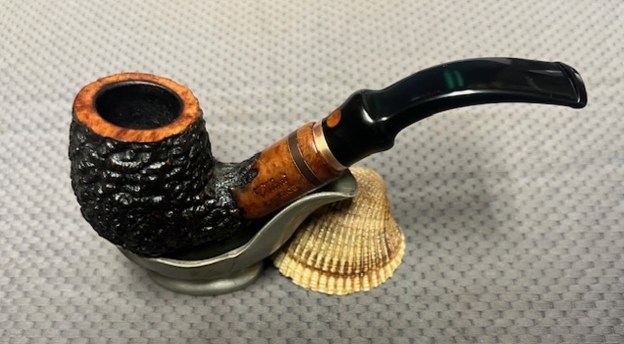
The next pipe I have chosen is a sandblast dark finished Peterson’s System – this time a System Standard shape 302. It came to us from our source in Copenhagen, Denmark on 04/11/2023. It had a P-lip System style stem. The finish was sandblast with some nice grain showing through the blast around the sides and shank. It was stamped on the underside of the shank and reads Peterson’s [arched over] System [over] Standard. Following that it was stamped Made in the Republic of Ireland (three lines) over the shape number 302. It was dirty with grime ground into the finish around the bowl and shank. There was a thick cake in the bowl and lava spots in the sandblast the rim top. The nickel ferrule was in good shape but stained with oils and tars leaving it yellow. It would need to be polished to bring it back to its silver colouring. It is stamped as well and reads K & P [over] Peterson on the left side. The vulcanite P-lip stem was unstamped and there was some oxidation, calcification and light chatter near the button that would polish out. It was also a stem with a tenon drilled to receive a 9mm filter. Jeff took photos of the pipe before he started his work. He took photos of the rim top and stem to show the general condition of the pipe. The bowl is moderately caked and the rim top and edges have a spotty lava overflow. The stem looks good but it has light tooth marks on the top and underside near the button. He took photos of the sides and heel of the bowl to show the sandblast grain that was very visible around the bowl and shank. He took photos of the stamping on the shank sides and the ferrule. It read as noted above and was clear and readable. I am including the information from Pipedia’s article on Peterson pipes. It is a great read in terms of the history of the brand (https://pipedia.org/wiki/Peterson). I have included a bit of the pertinent history here.

1950 – 1989 The Republic Era – From 1950 to the present time, the stamp for this era is “Made in the Republic of Ireland” in a block format generally in three lines but two lines have been used with or without Republic being abbreviated.

During the 1950’s and 60’s the Kapp & Peterson company was still in the ownership of the Kapp family. However 1964 saw the retiral of the company Managing Director Frederick Henry(Harry) Kapp.

Pipedia also included a section of information on the System pipes including a diagram of the sytems look (https://pipedia.org/wiki/Peterson#Republic_Era_Pipes). I quote a section of the article in part and include a link to another article on Pipedia on the System pipe.

The Peterson System pipes are the standard bearers of the Peterson pipe family, famous for the excellent smoking pleasure they provide. Often imitated but never equalled, the Peterson System smokes dry, cool and sweet, thanks to the scientific effectiveness of the original design. The heart of the System is the unique graduated bore in the mouthpiece. This makes the suction applied by the smoker 15 times weaker by the time it reaches the tobacco chamber. The result is that all the moisture flows into the reservoir and, thus cannot reach the smoker’s mouth. The Peterson Lip further enhances the effectiveness of the graduated bore by directing the flow of smoke upwards and away from the tongue. This achieves a uniquely even distribution of smoke and virtually eliminates any chance of tonguebite or bitterness. Furthermore, the shape is contoured so that the tongue rests comfortably in the depression under the opening. Each “PLip” mouthpiece is made from Vulcanite. For the Peterson System pipes to work properly, the stem/tenon has to have an extension, the tip of which will pass by the draft hole from the bowl and into the sump. Upon the smoker drawing in smoke, this extension then directs the smoke down and around the sump to dispense a lot of the moisture before the smoke enters the extension and stem. On the System Standards and other less expensive systems, this extension with be made of Vulcanite turned integrally with the stem. On the more expensive System pipes this extension will be made of metal which screws into the Vulcanite stem. This extension on the earlier pipes will be of brass and the newer pipes will be of aluminium. Most smokers not knowing this function of the metal extension, assumes that it is a condenser/stinger and will remove it as they do with the metal condensers of Kaywoodie, etc. Should you have a System pipe with this metal extension, do not remove it for it will make the System function properly and give you a dryer smoke (https://pipedia.org/wiki/A_closer_look_at_the_famous_Peterson_Standard_System_Pipe).

With that information in hand I knew what I was dealing with in terms of the stamping and the age of this pipe. I knew from the information that the pipe was made during the Late Republic Era between 1950 and the present day. Personally, I think this is probably a 60s-70s pipe. Now it was time to work on the pipe.

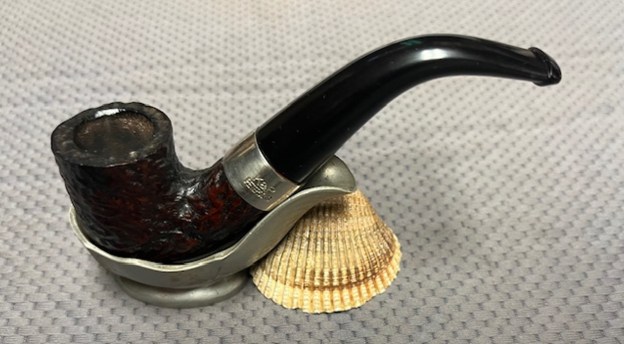
Jeff had cleaned up the pipe with his usual thoroughness. He reamed the pipe with a PipNet Pipe Reamer and cleaned up the remnants with a Savinelli Fitsall Pipe Knife.  He scrubbed the bowl with undiluted Murphy’s Oil Soap with a tooth brush. He rinsed it under running warm water to remove the soap and grime. He cleaned out the inside of the shank and the airway in the stem with alcohol, cotton swabs and pipe cleaners. He soaked the stem in Before & After Deoxidizer and rinsed it off with warm water. Somewhere along the way as it sat here it picked up some stickiness on the top of the stem that looks a lot like what is left behind by a gummed label. I took photos of the pipe 3 years later when I finally got around to working on it. As you can see it is another beautiful looking pipe. I took photos of the rim top and bowl as well as the stem to give a sense of the condition of both. The rim top and the inner edge had some darkening and burn damage on the inner edge on the back of the bowl. The stem was clean but had light tooth marks and chatter on the top and underside ahead of the button.I took photos of the stamping on the underside of the shank. It is clear and readable as noted above. I took the stem out of the shank and took a photo of the overall look of the pipe. It is another beauty. The bowl was very clean so I started my work by rubbing the bowl down with Before & After Restoration Balm. I worked it into the surface of the bowl sides and shank with my fingertips and a shoe brush. The product works to clean, enliven and protect the briar. I let the balm sit for a little while and then buffed with a cotton cloth to raise the shine. I polished the nickel ferrule with a jeweller’s cloth to protect and polish the metal. It really adds a sparkle to the metal ferrule. I set the bowl aside and turned to work on the stem. I “painted” the surface with the flame of a lighter to lift the tooth marks. I was able to lift them significantly. Those that remained I filled in with black rubberized CA glue. When it cured I flattened the repairs with a flat file to start blending it into the surface of the surrounding vulcanite. I further flattened it by sanding it with 220 grit sandpaper. I was looking significantly better. I sanded it further with 320-3500 grit 2×2 inch sanding pads, I wiped it down with a damp cloth to remove the grit and debris on the stem surface. I gave it a coat of Obsidian Oil to protect the surface at this point.I polished the stem with micromesh sanding pads – 1500-12000 grit pads. I wiped it down with Obsidian Oil after each sanding pad. I used Before & After Pipe Polish – both Fine and Extra Fine to further polish the stem. I gave it a final coat of Obsidian Oil and set it aside to dry. I fitted the stem with a new 9mm filter. The fit in the stem was perfect. With it in place it fit the shank of the pipe very well.This Republic Era Peterson’s System Standard 302 Sandblast Bent Apple with a vulcanite, P-lip saddle stem is a great looking pipe now that it has been restored. The beautiful grain that shines through the polished sandblast finish is stunning. I put the stem back on the bowl and carefully buffed the pipe with Blue Diamond on the buffing wheel. I gave the bowl and the stem multiple coats of carnauba wax on the buffing wheel and followed that by buffing the entire pipe with a clean buffing pad. I hand buffed the pipe with a microfiber cloth to deepen the shine. The finished Peterson’s Sandblast System Standard 302 fits nicely in the hand and feels great. Give the finished pipe a look in the photos below. The dimensions of the pipe are Length: 6 inches, Height: 1 ¾ inches, Outside diameter of the bowl: 1 ¼ inches, Chamber diameter: ¾ of an inch. The weight of the pipe is 64 grams/2.26 ounces. This pipe will soon be available on the rebornpipes store in the Irish Pipe Makers Section. Thanks for reading this blog and my reflections on the pipe while I worked on it. There are many more to come!
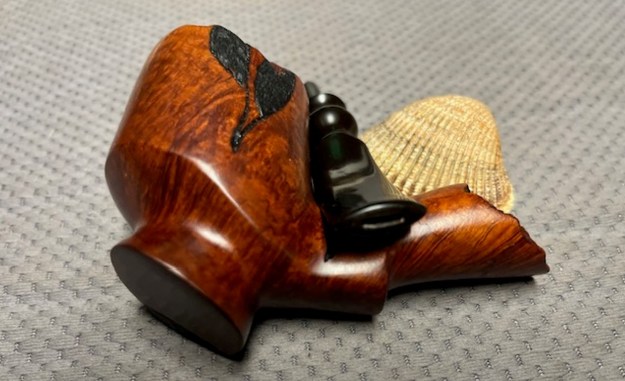
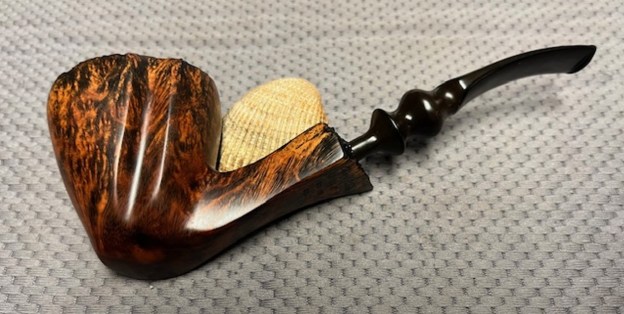
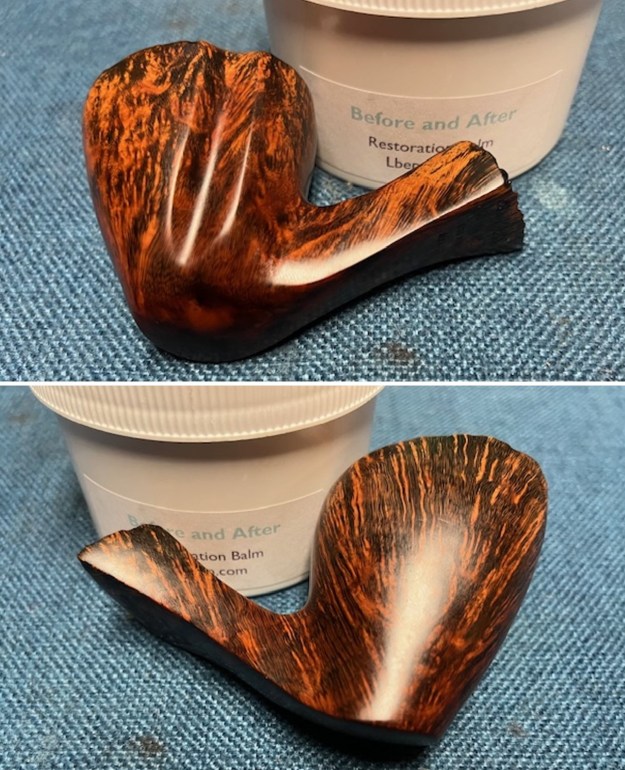
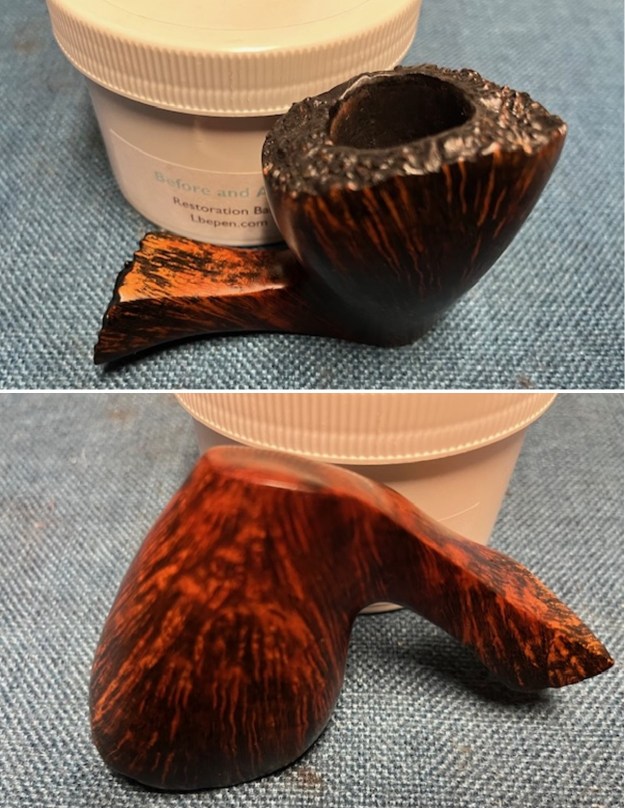
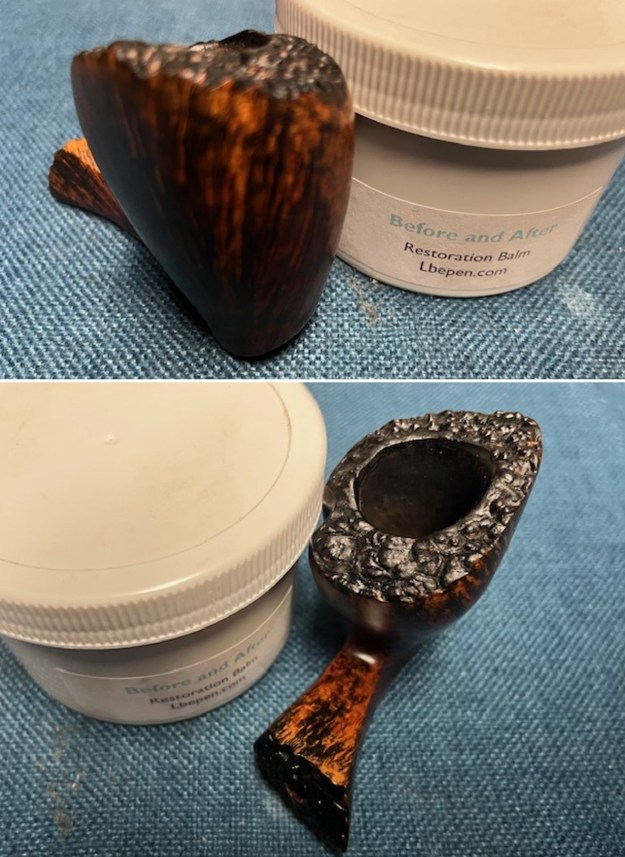
New Life for beautiful JHW Oval Bowl Plateau Freehand with Saddle Stem


by Steve Laug

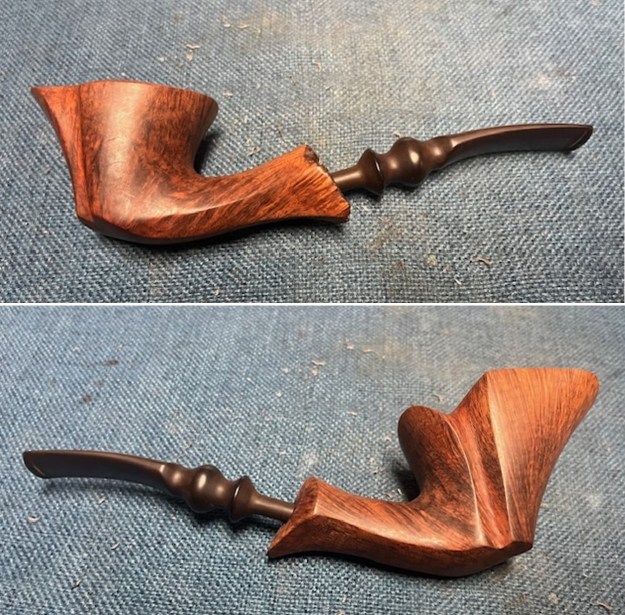
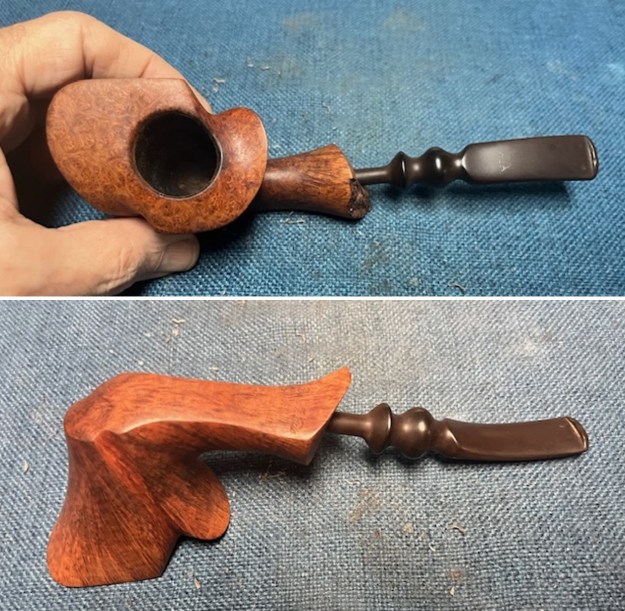
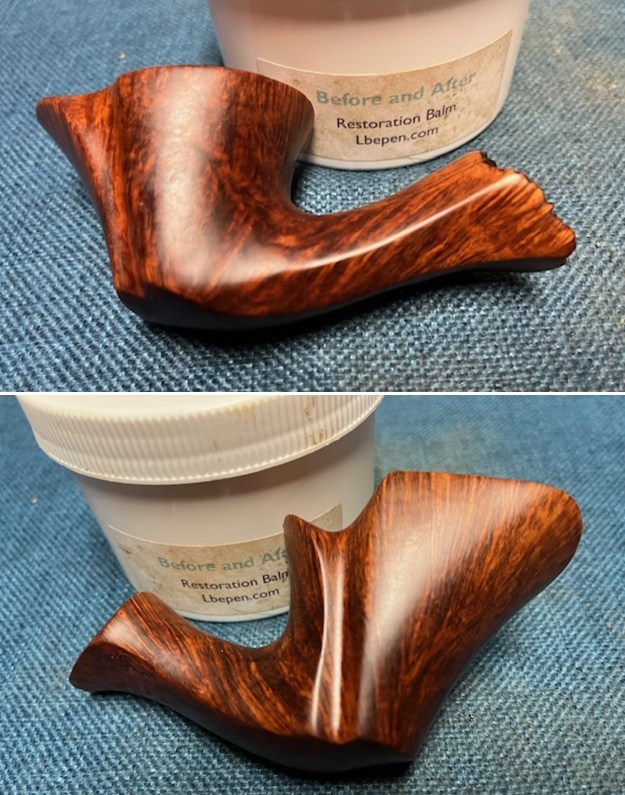
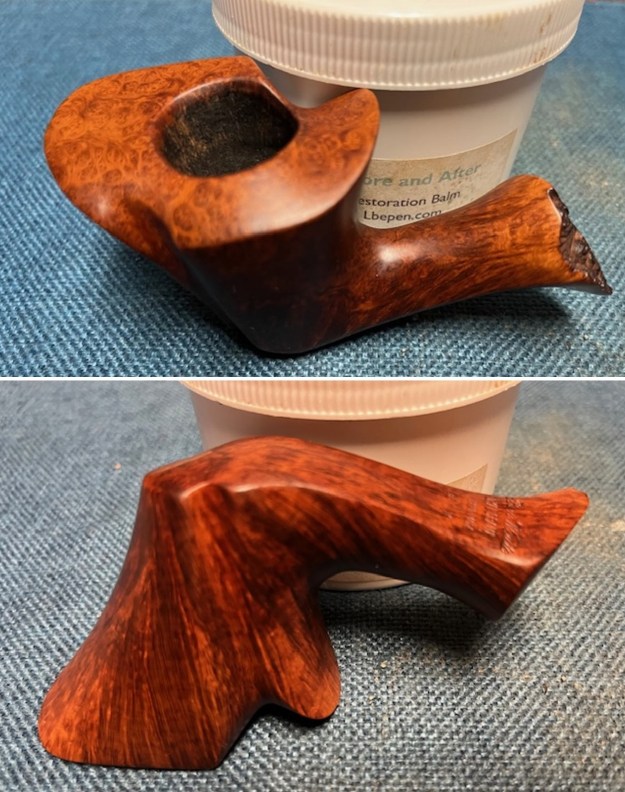
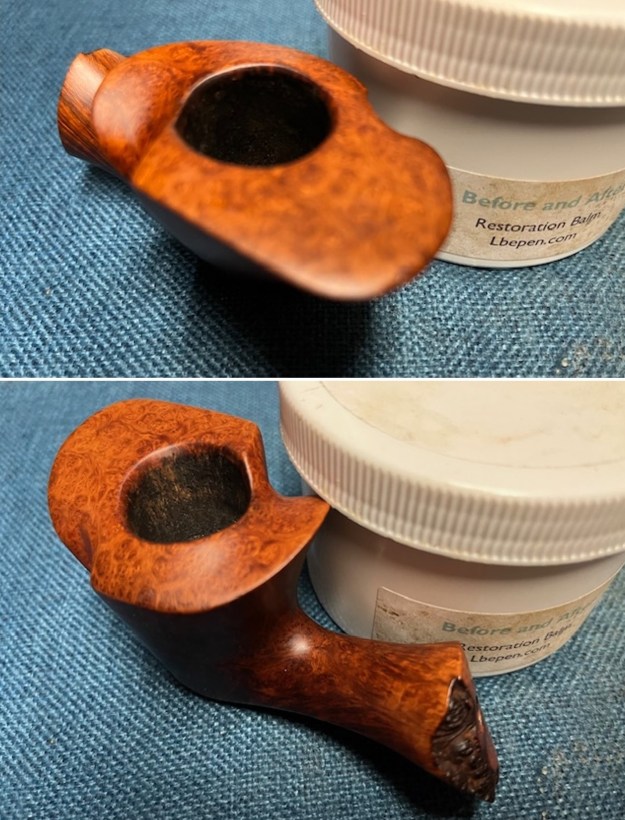
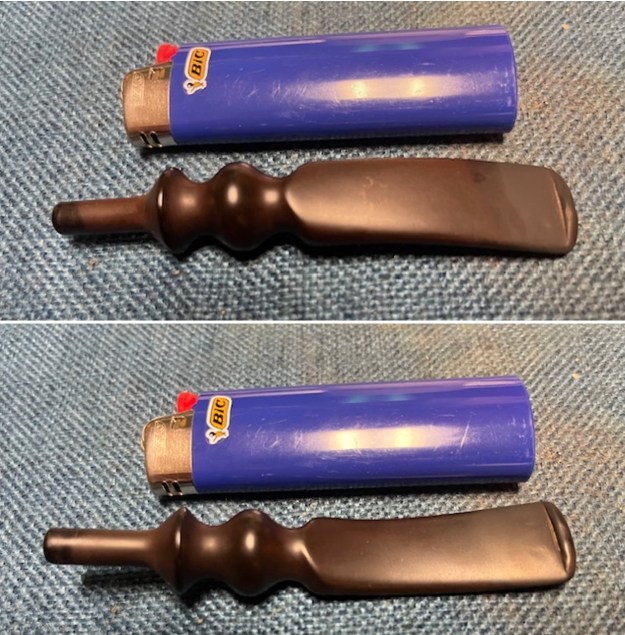
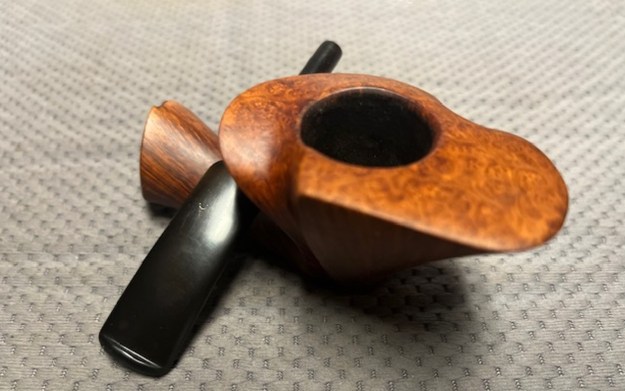
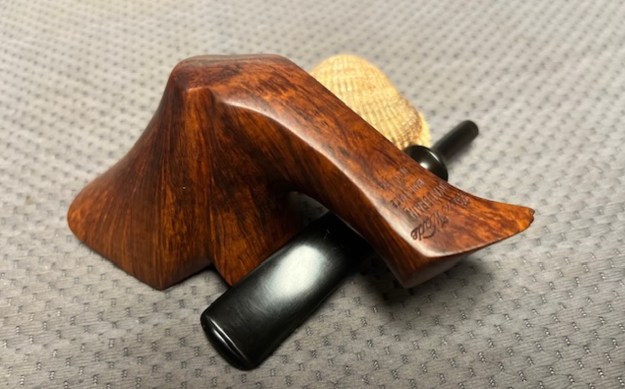
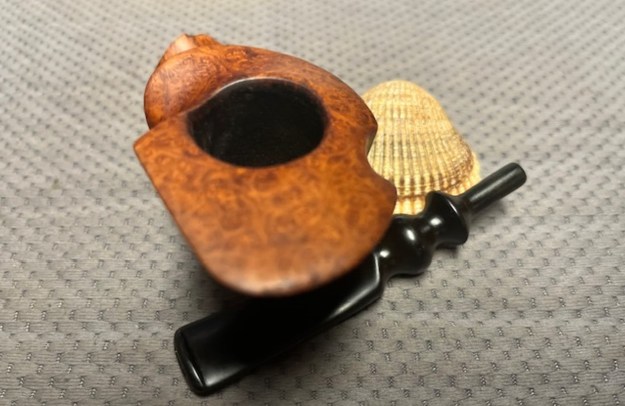
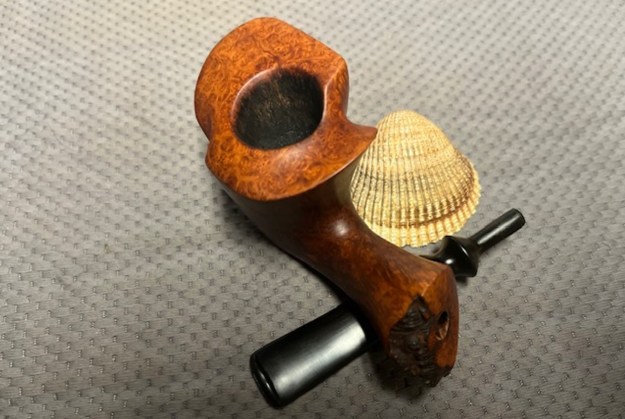
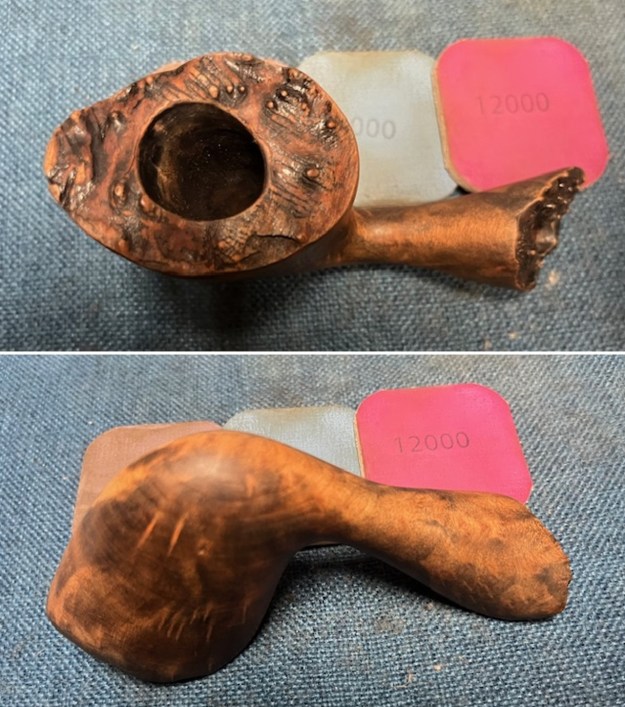
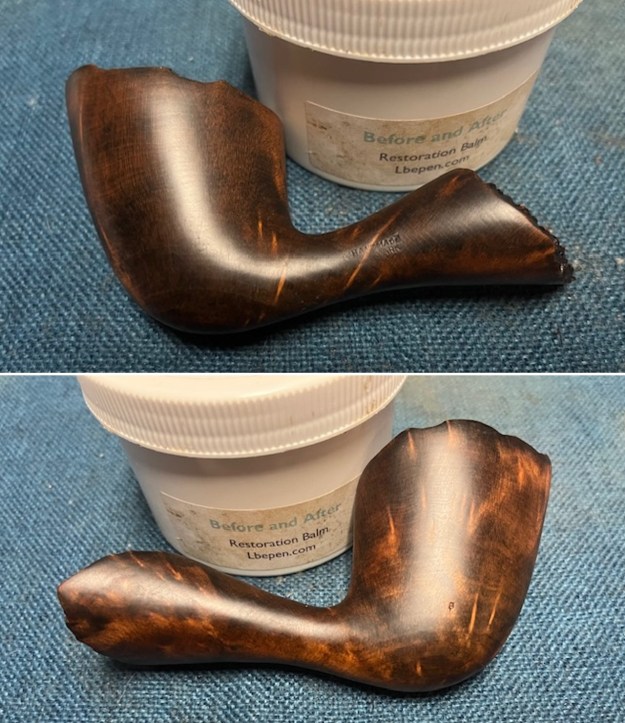
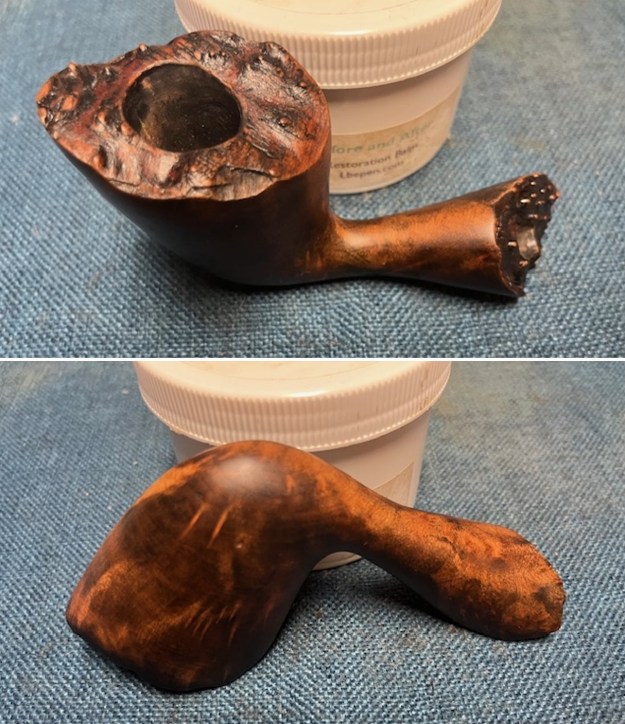
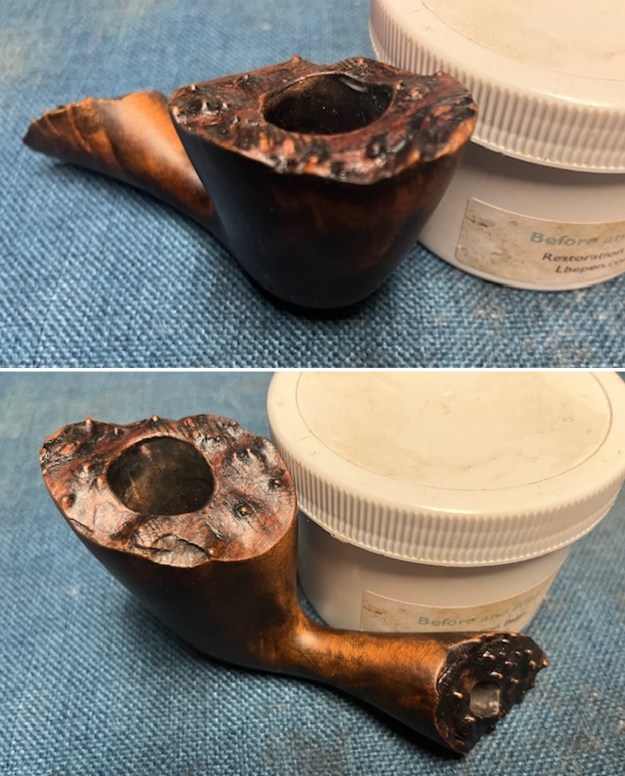
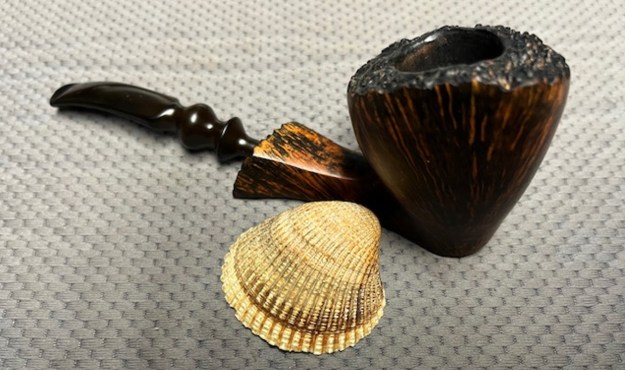
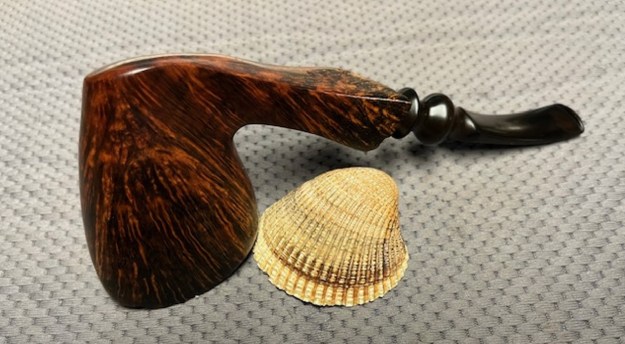
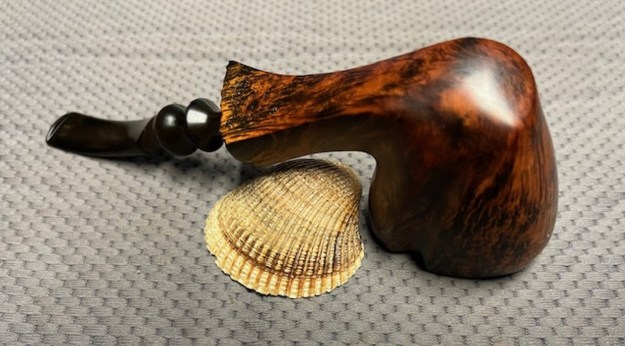
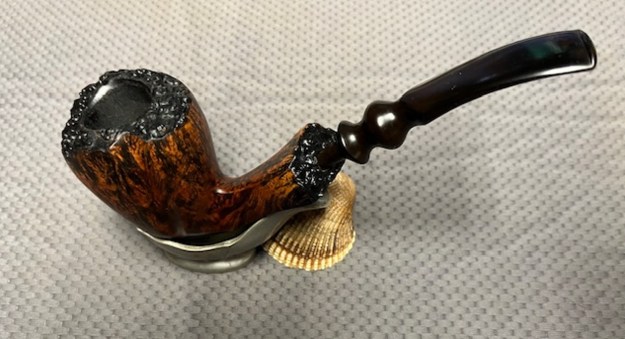
I am excited to be working on another uniquely beautiful pipe stamped JHW. But maybe you don’t know why I am excited about a pipe stamped with these three initials, Well I have to tell you right up front that JHW is Jack H. Weinberger. Who is that? That does not help either? Jack H. Weinberger was a pipe maker in West Caldwell, New Jersey. Still not helping? He hired young lads from the local high school to help him out as he carved 10-12 hours a day. Two of these were none other than Curt Rollar and Mark Tinsky who went on to become the American Pipe Company. There was a long list of pipe carving luminaries who came through Jack’s shop and JHW pipes but these two you probably have heard of. So JHW or Jack H. Weinberger was an important part of the American Pipemaking scene and gave many carvers a start and they have continued to this day. Now maybe you understand my excitement – being able to work on another of Jack’s pipes and bring it back to its former glory.

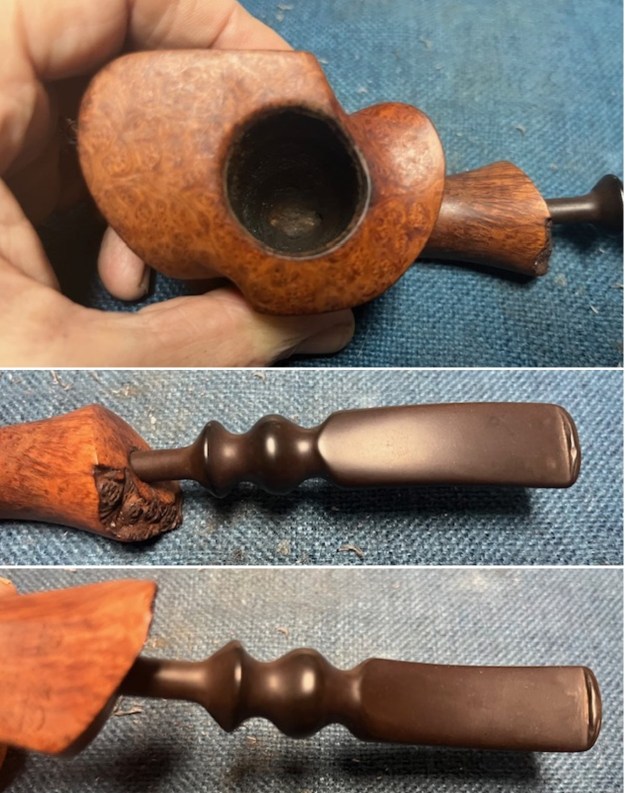
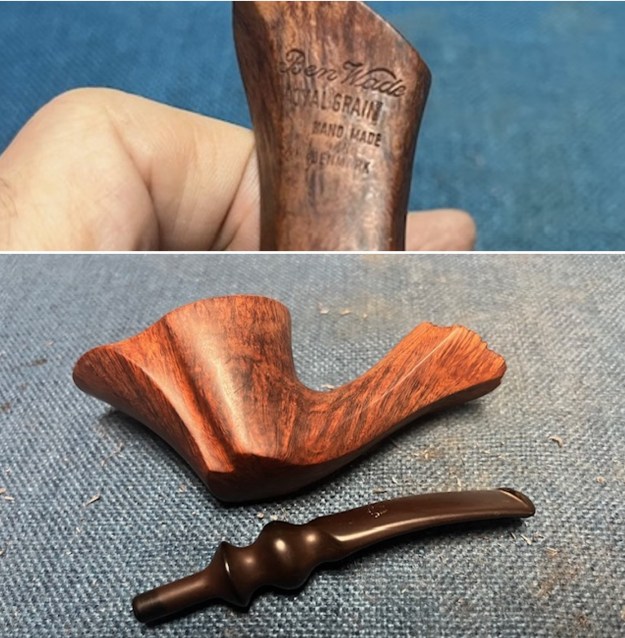
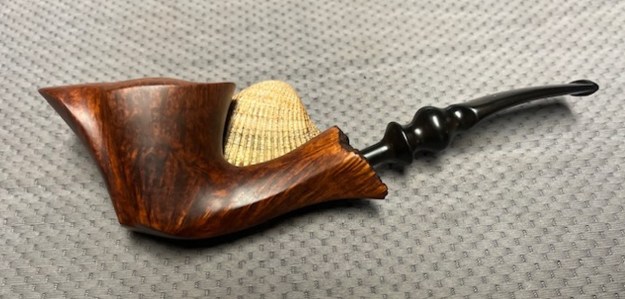
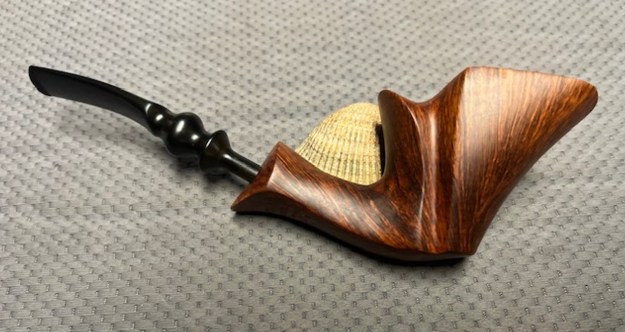
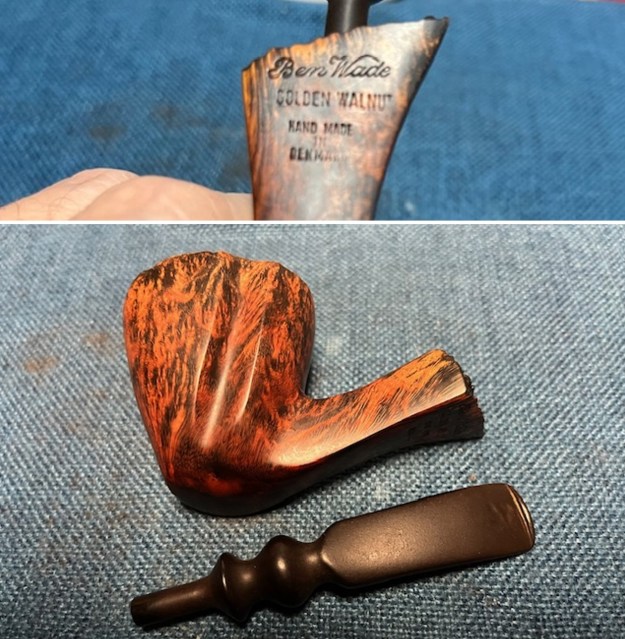
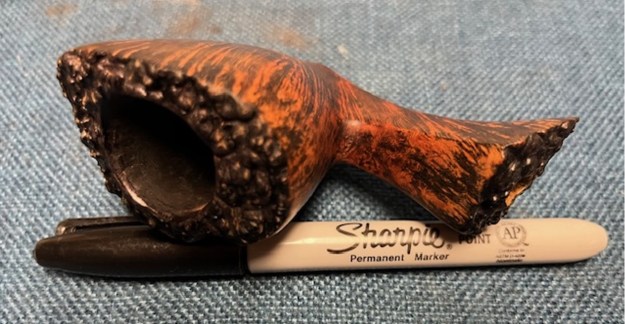
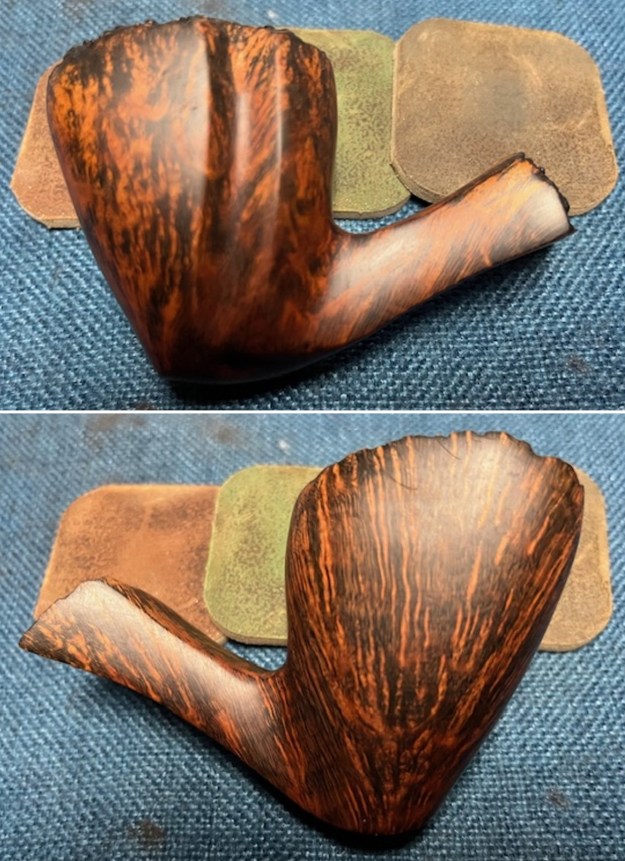
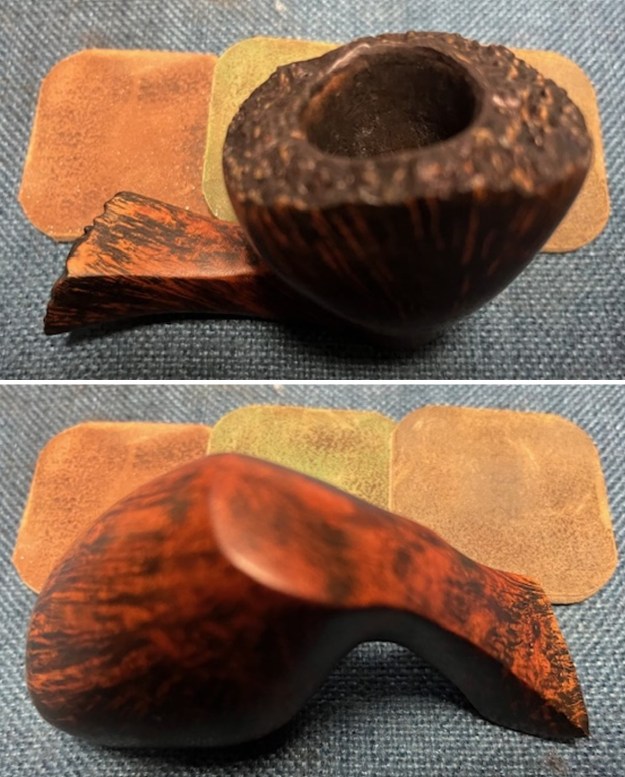
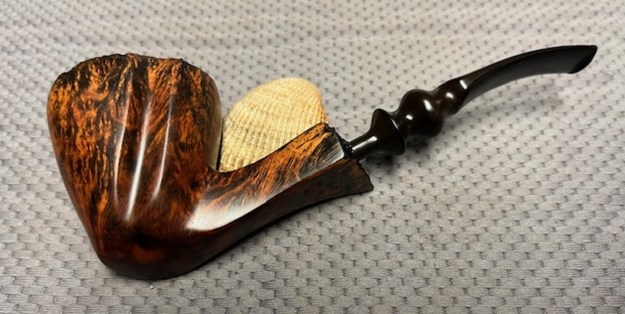
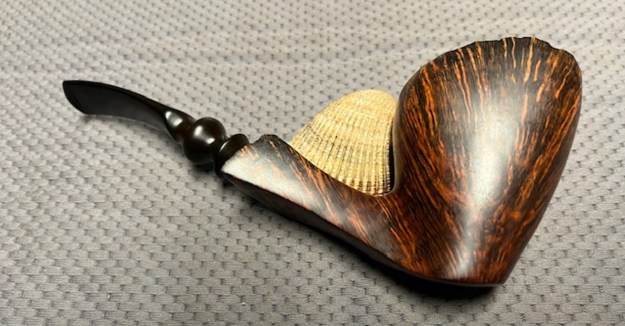
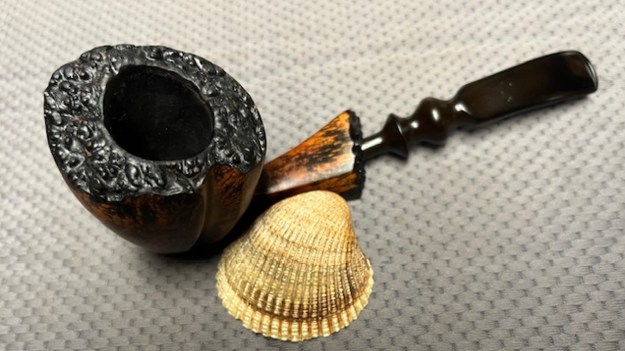
This pipe I chose to work on was another unusual one. It came to us from a seller in Santa Cruz, California, USA on 05/28/2024. It is a great piece of briar with great straight grain all the way around the bowl and shank and a plateau rim top on the bowl. It is a beautiful piece of briar! He made a carved, fan shaped Freehand pipe. The front, back and sides of the bowl have some nice straight grain. Very unique but something just calls out to you. When the pipe came to us it was dirty with grime ground into the finish. There was a thick cake in the bowl and heavy lava in the valleys of the plateau rim top and inner edge. There was grime and oils darkening the sides of the bowl. It was dirty but that did not hide the beauty of the grain on this briar. The stem is a saddle made out of vulcanite. There were tooth marks and light chatter on both sides just ahead of the button. Jeff took photos of the pipe as a whole before he started his cleanup work. I include them below. Jeff took some close up shots of the rim top to show the bowl and cake. You can see the cake in the bowl and the thick lava on the rim top and the inner edge. The stem photos also show the condition it was in when we received it. Lots of promise with the pipe but some work too! Jeff took some photos of the sides – left and right sides and the heel of the bowl to give a sense of the lay of the pipe on the block of briar. It is certainly beautiful. Here are some photos of the stamping on the left side of the shank. I think this must be an older stamp of JHW as the J is a part of the uppercase HW. It is the only one I have that has this stamping. Otherwise the J is a stylized pipe followed by the HW.Take some time to read the great writeup on Pipedia and JHW pipes and influence the carver had on the American pipe making scene. It is a well written and enjoyable read. Here is the link: (https://pipedia.org/wiki/JHW_Pipes).

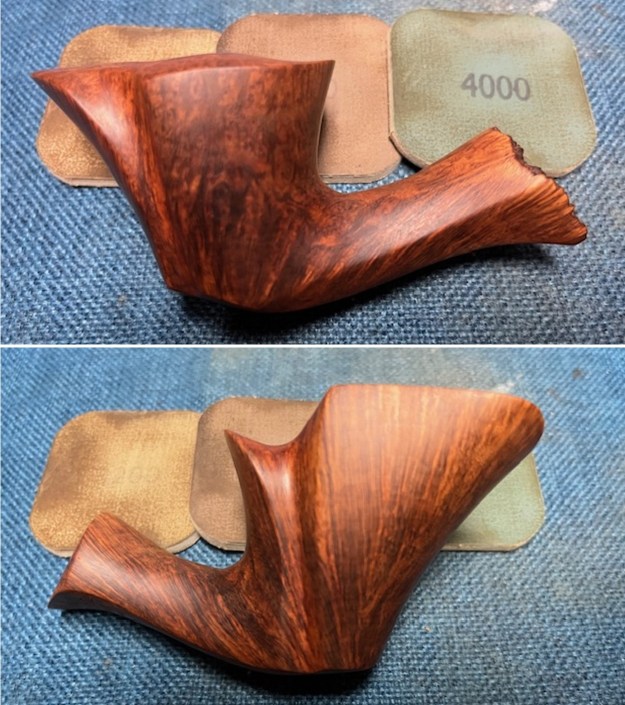
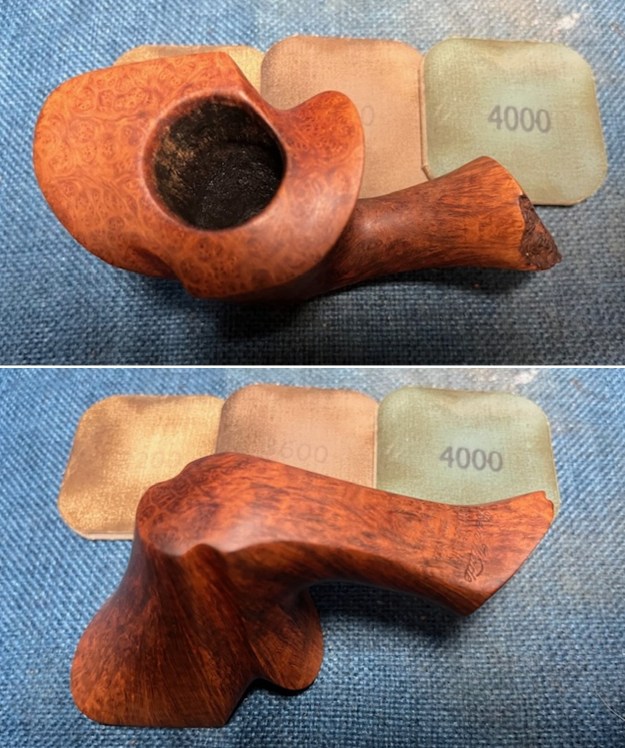
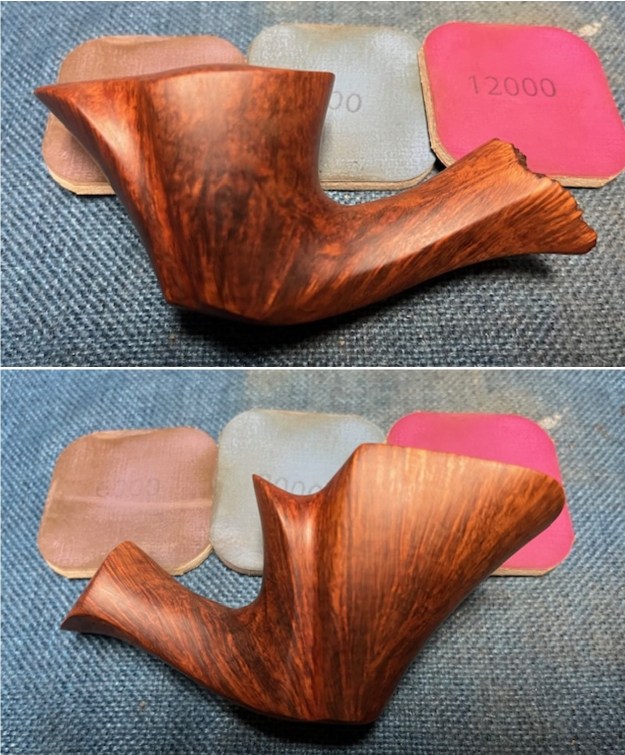
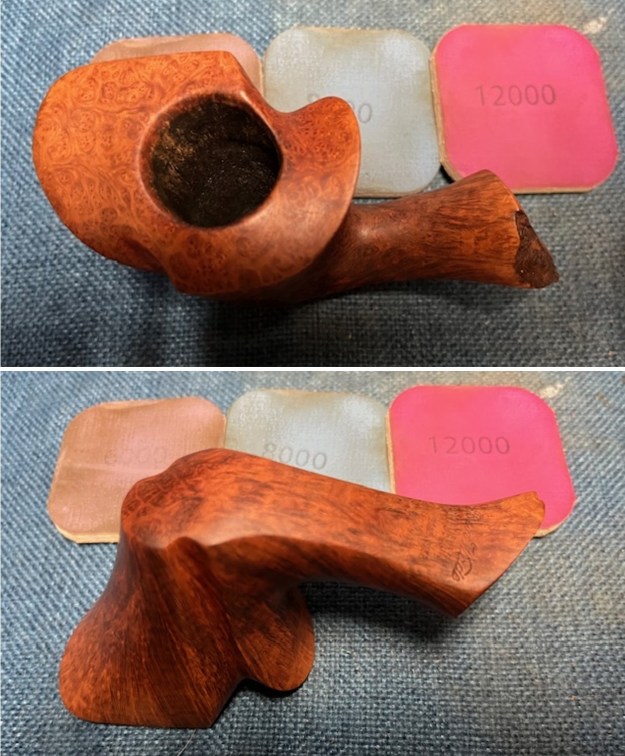
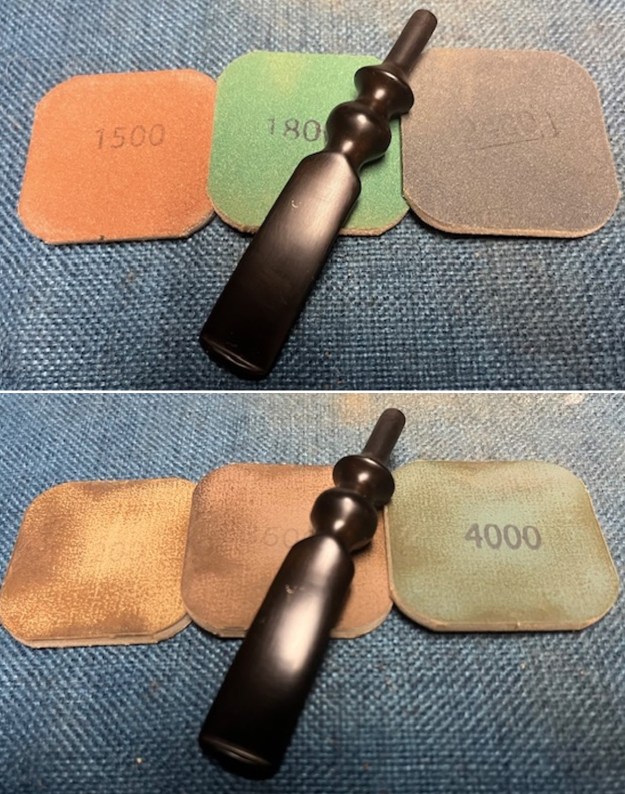
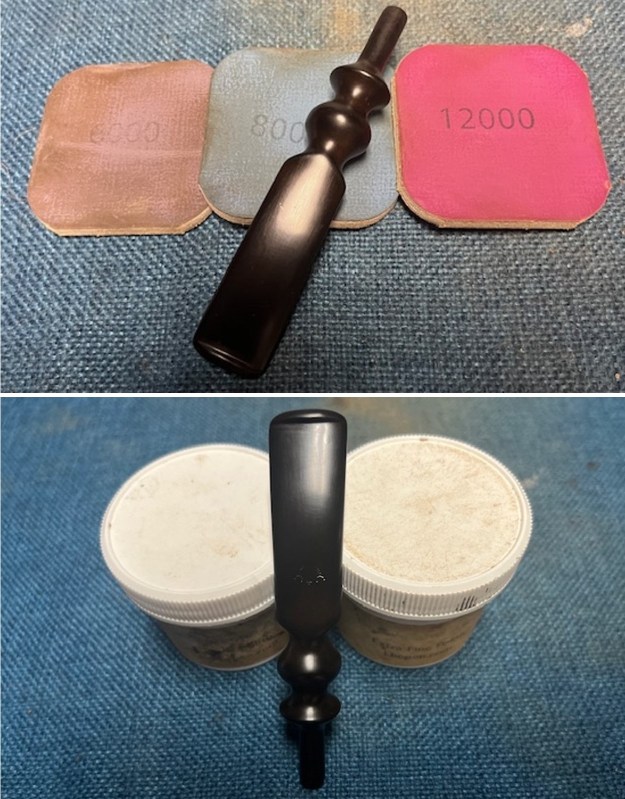
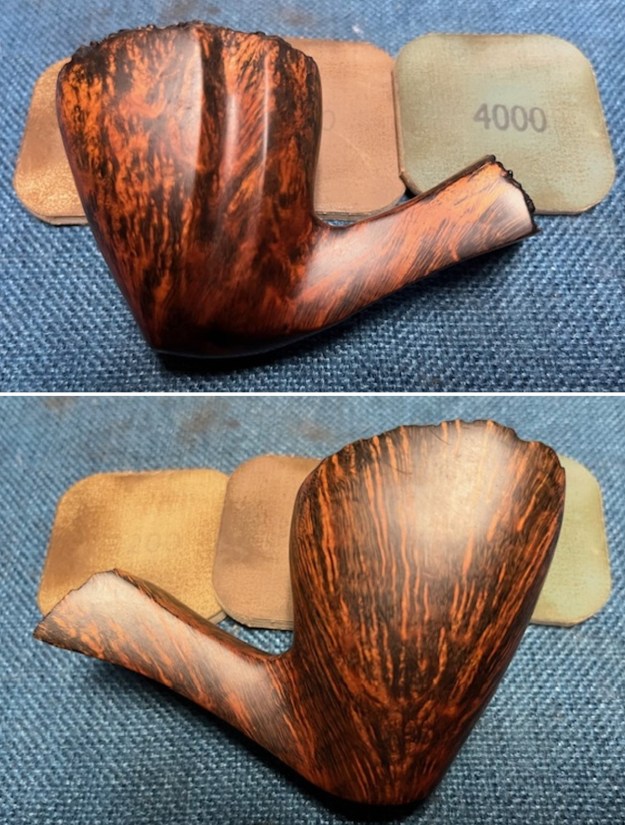
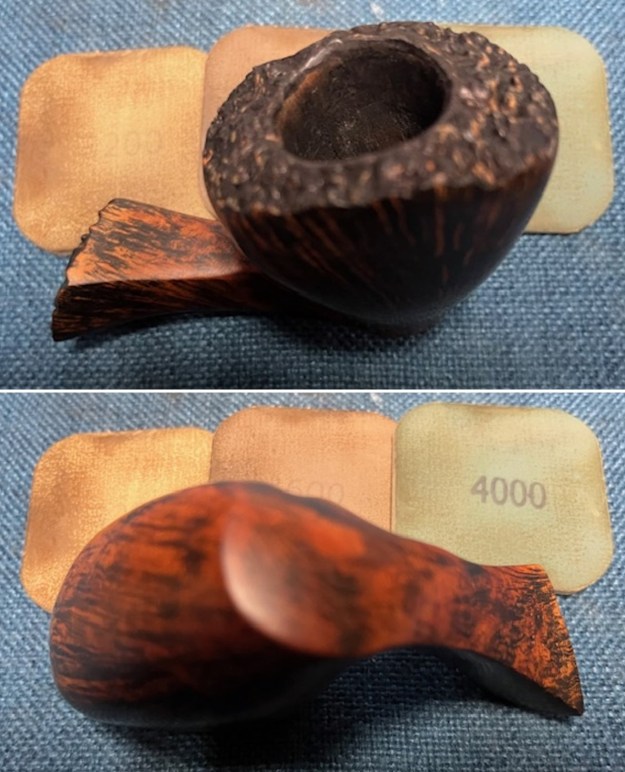
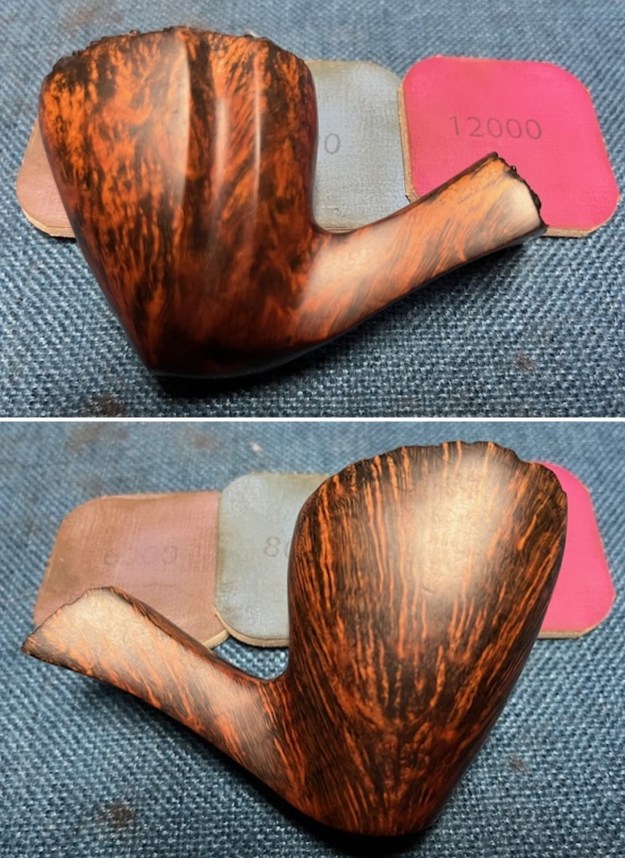
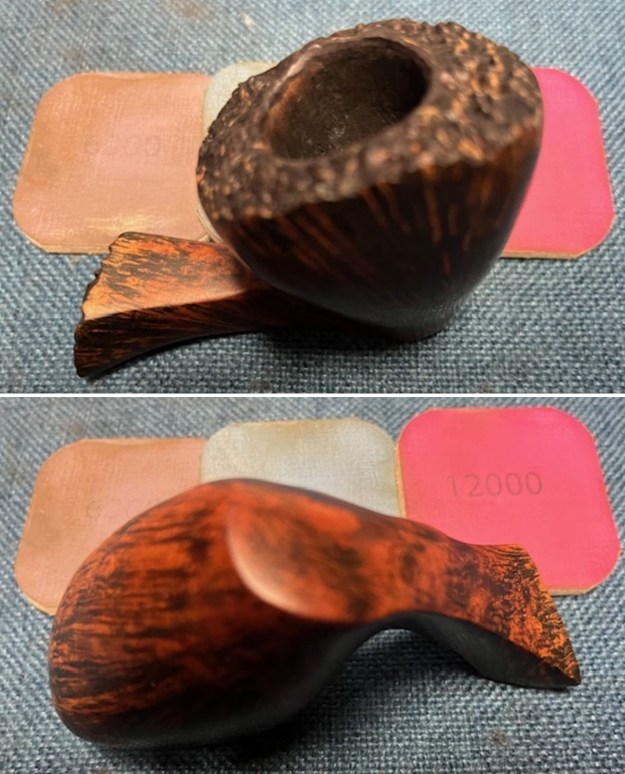
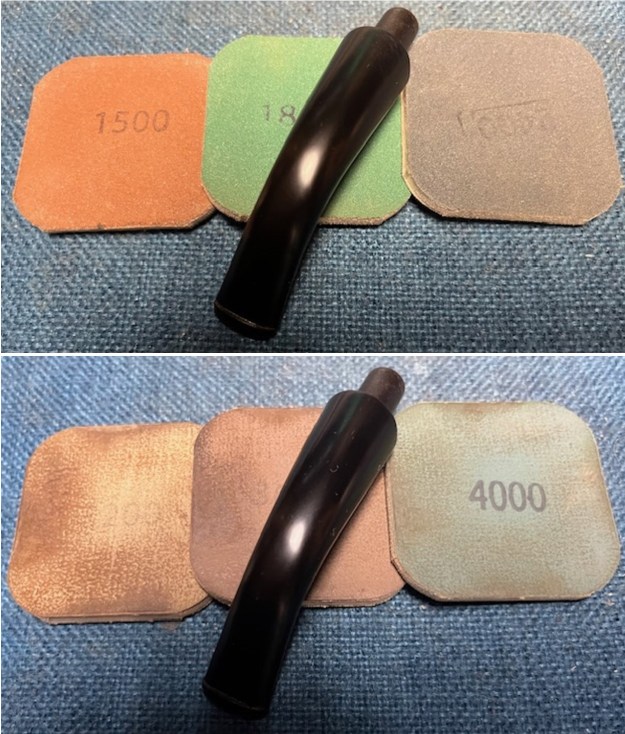
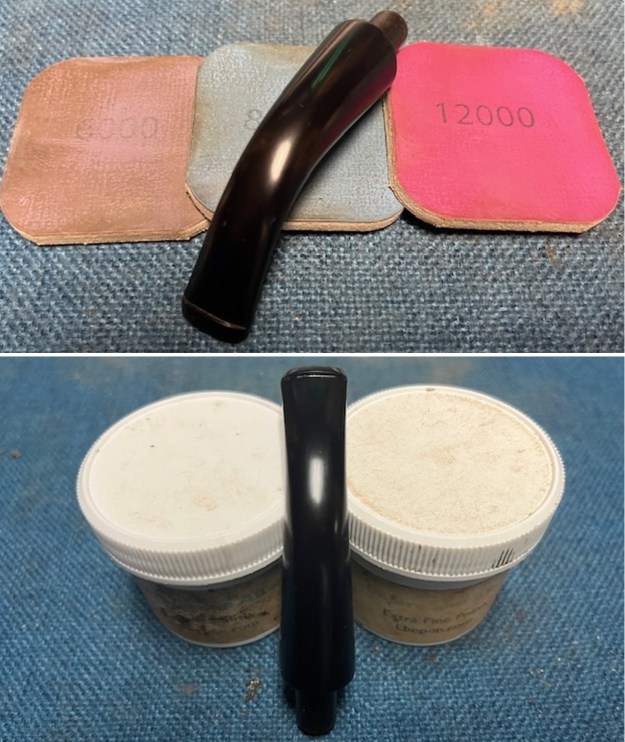
Armed with that information I turned to work on the pipe itself. Jeff had cleaned up the pipe with his usual thoroughness. He reamed the pipe with a PipNet pipe reamer and removed the rest of it with a Savinelli Fitsall Pipe Knife. He scrubbed the bowl with undiluted Murphy’s Oil Soap with a tooth brush. He rinsed it under running warm water to remove the soap and grime. He cleaned out the inside of the shank and the airway in the stem with alcohol, cotton swabs and pipe cleaners and shank brushes. He soaked the stem in Briarville’s Pipe Stem Deoxidizer and rinsed it off with warm water. I took photos of the pipe before I started my part of the restoration work. The rim top cleaned up really well. The rim top and inner edge of the bowl look good. The plateau rim top looks very good. There is a slight darkening on the inner edge of the bowl. The bowl itself was very clean and the pipe smelled fresh. The stem surface had light tooth chatter on both sides near the button.The stamping on the left side of the shank is faint but still readable. It is stamped as noted above. I removed the stem and took a photo of the pipe to give a sense of the whole.I wiped the bowl down with some acetone to see if I could lighten the darkening around the bowl sides. It worked quite well. I sanded the sides of the bowl and shank with 320-3500 grit sanding pads. There were also some scratches in the briar on the sides, but nothing too deep so this process would take care of the issues. I polished the briar with micromesh sanding pads – dry sanding with 1500-12000 grit sanding pads. I wiped the bowl down with a damp cloth after each pad. I take photos of the three groups of pads for my own viewing primarily as I am looking for progress in polishing. Once again, by the end of the process it looked quite good. I rubbed the bowl and shank down with Before & After Restoration Balm. I worked it into the surface of the bowl sides and shank with my fingertips. i worked it into the plateau on the rim top with a shoe brush. The product works to clean, enliven and protect the briar. I let the balm sit for 15 minutes and buffed with a cotton cloth to raise the shine. The grain came alive. I set the bowl aside and turned my attention to the stem. I “painted” the surface of the stem to raise the tooth marks on the vulcanite. I filled in what remained in the surface with black CA glue and set it aside to cure. Once the repair cured I used a flat needle file to smooth out the repairs on the stem surface. I followed that up with a folded piece of 220 grit sandpaper to blend them into the surface of the stem. I sanded the stem with 320-3500 grit sanding pads. I wiped the stem down after each pad with an Obsidian Oil soaked cloth. The process helped remove the lingering oxidation.I polished the stem with micromesh sanding pads – 1500-12000 grit pads to remove them. I wiped the stem down with Obsidian Oil after each sanding pad. I used Before & After Pipe Polish – both Fine and Extra Fine to further polish the stem. I rubbed it down with a final coat of Obsidian Oil and let it dry. This Jack H. Weinberger (JHW) Fan Shape Oval Freehand with a vulcanite saddle stem is a great looking pipe with some beautiful grain around the front and sides of the bowl. The grain around the bowl is quite stunning and works well with both the shape and the polished vulcanite saddle stem. I put the stem back on the bowl and carefully buffed the pipe with Blue Diamond on the buffing wheel using a light touch on the briar. I gave the bowl and the stem multiple coats of carnauba wax on the wheel and followed by buffing the pipe with a clean buffing pad. I hand buffed the pipe with a microfiber cloth to deepen the shine. The finished Jack H. Weinberger (JHW) Fan Freehand fits nicely in the hand and feels great. Give the finished pipe a look in the photos below. The dimensions of the pipe are Length: 6 ½ inches, Height: 3 inches, Outside diameter of the bowl: 2 ½ inches long x 1 ½ inches wide, Chamber diameter: ¾ of an inch. The weight of the pipe is 2.26 ounces/64 grams. I will be putting it on the rebornpipes store in the American Pipemakers Section shortly. If you are interested in adding this pipe to your collection send me a message or an email. Thanks for reading this blog and my reflections on the pipe while I worked on it. I appreciate your support and time!
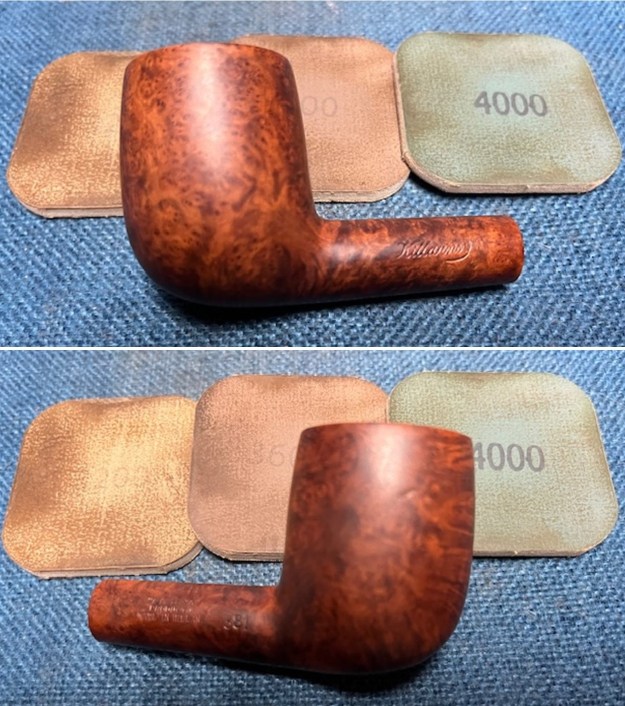
Restoring a Block Meerschaum Cherrywood/Poker with A Butterscotch Acrylic Stem


by Steve Laug

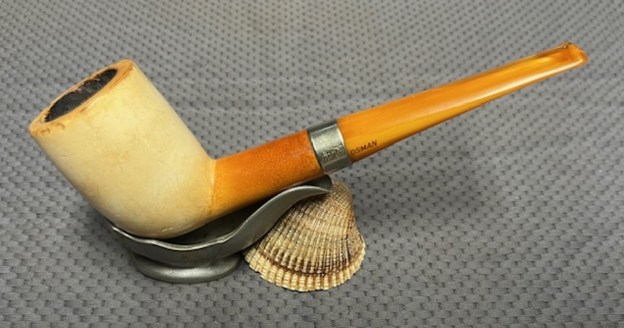
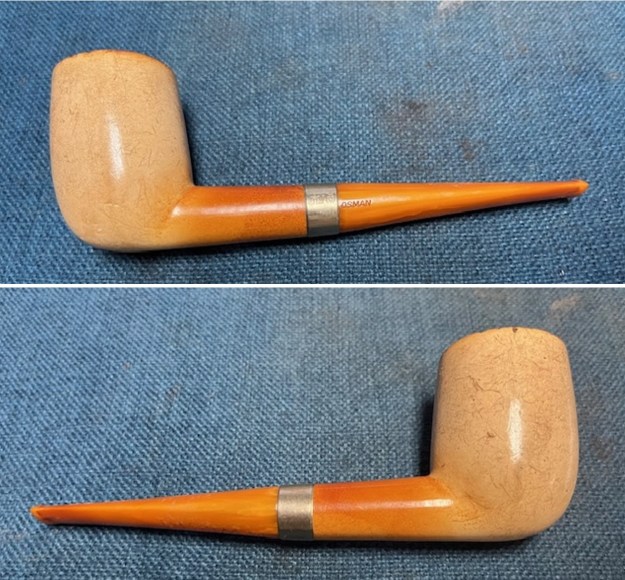
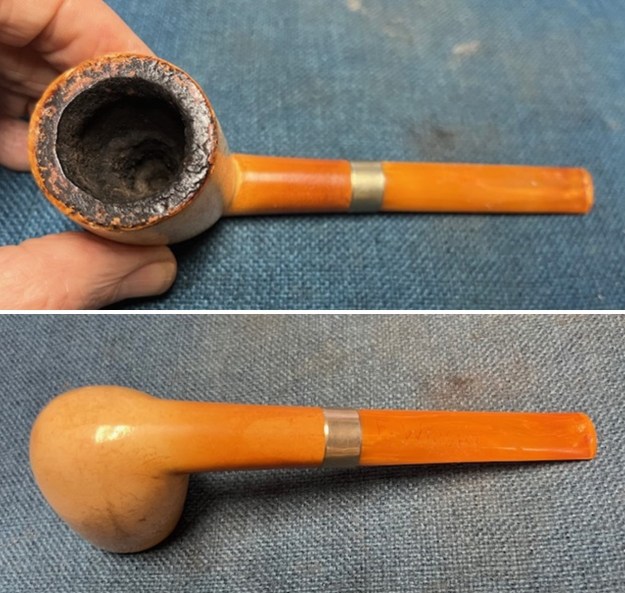
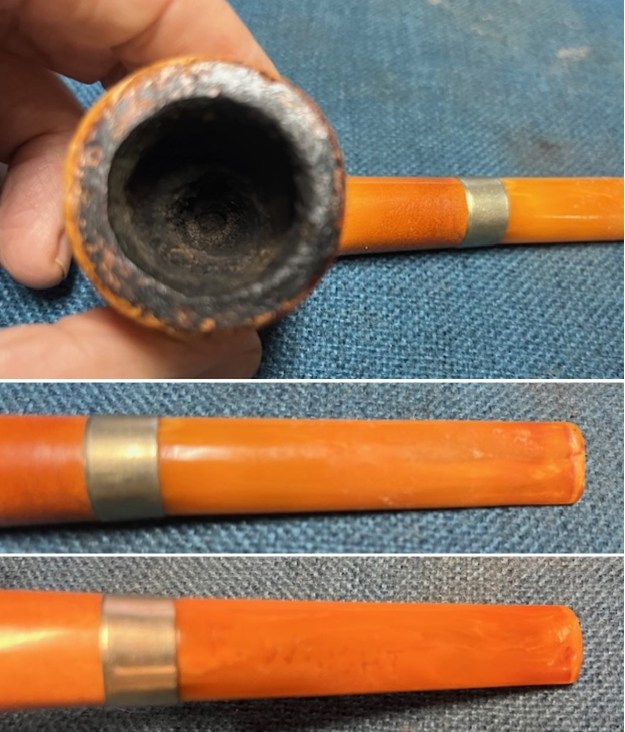
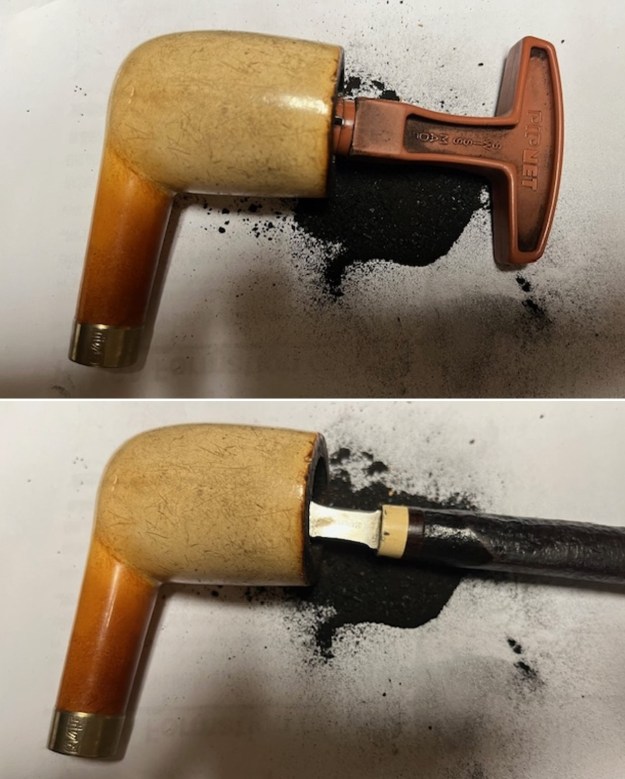
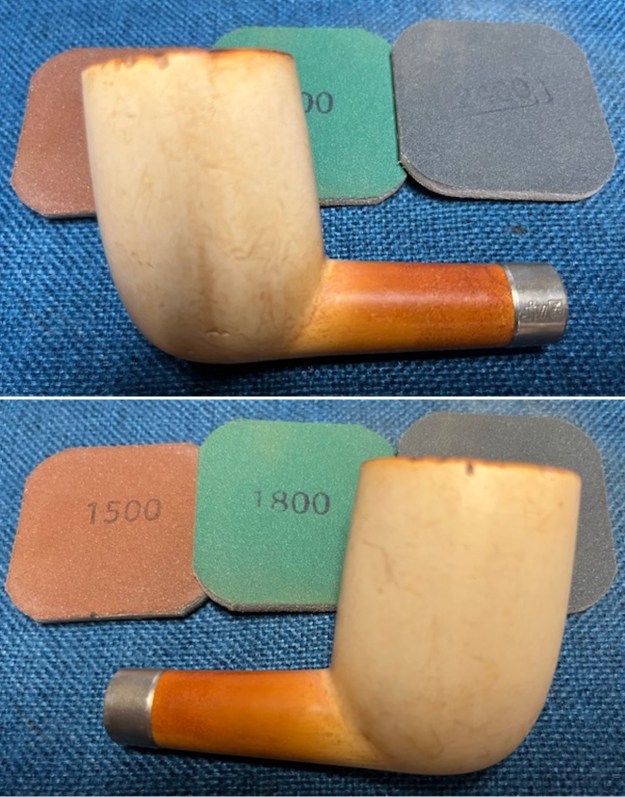
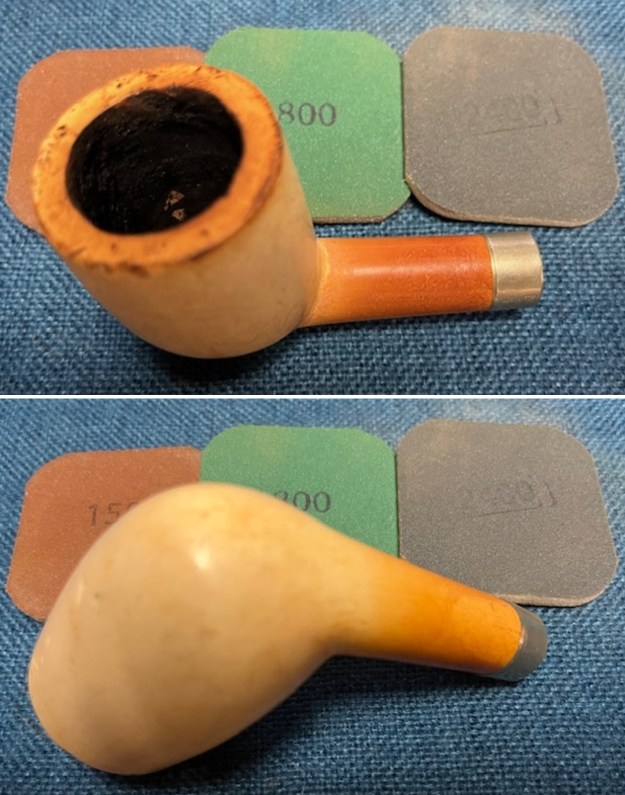
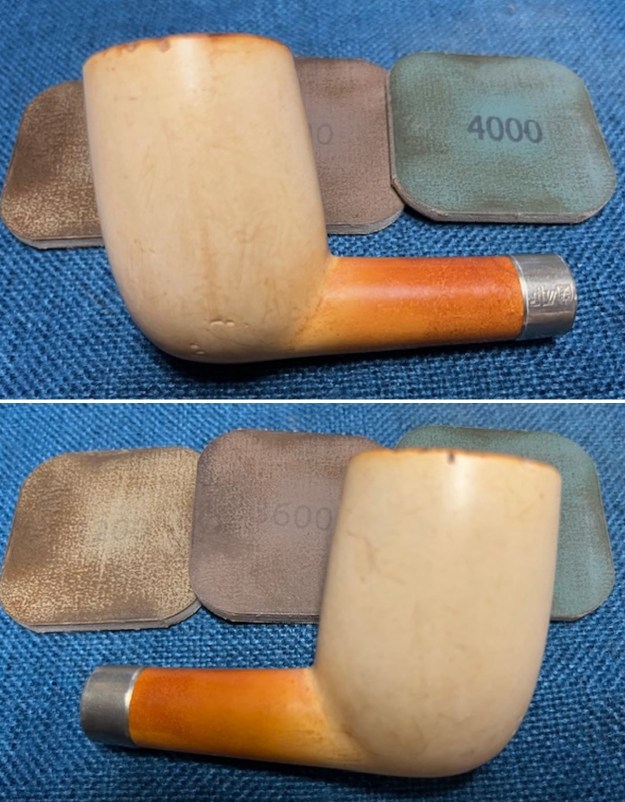
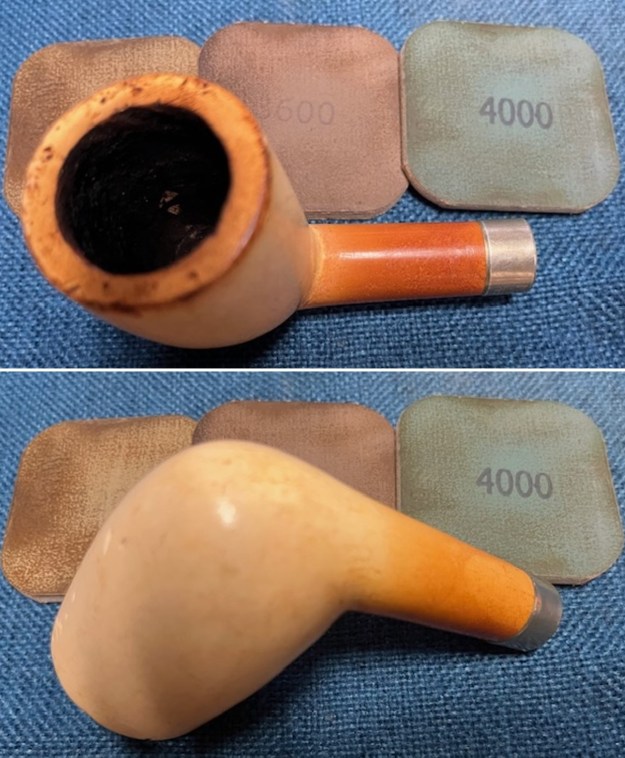
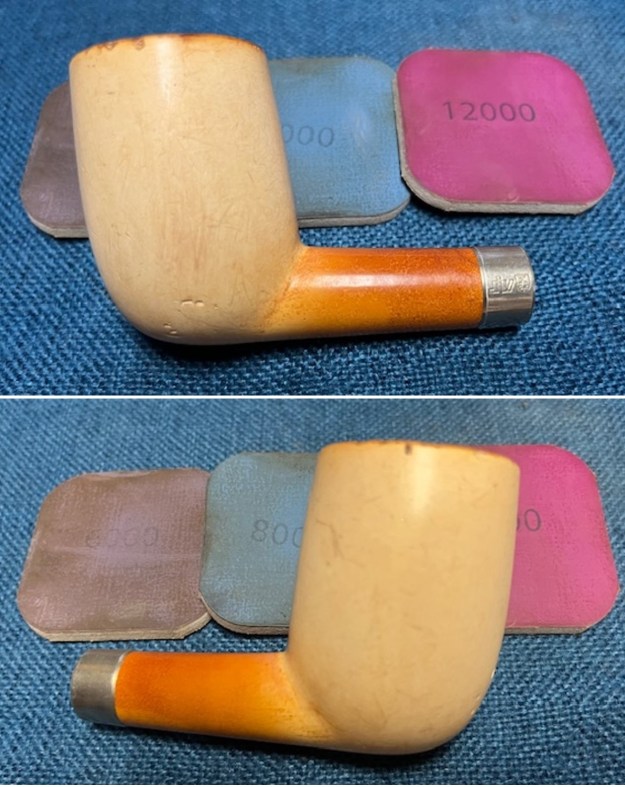
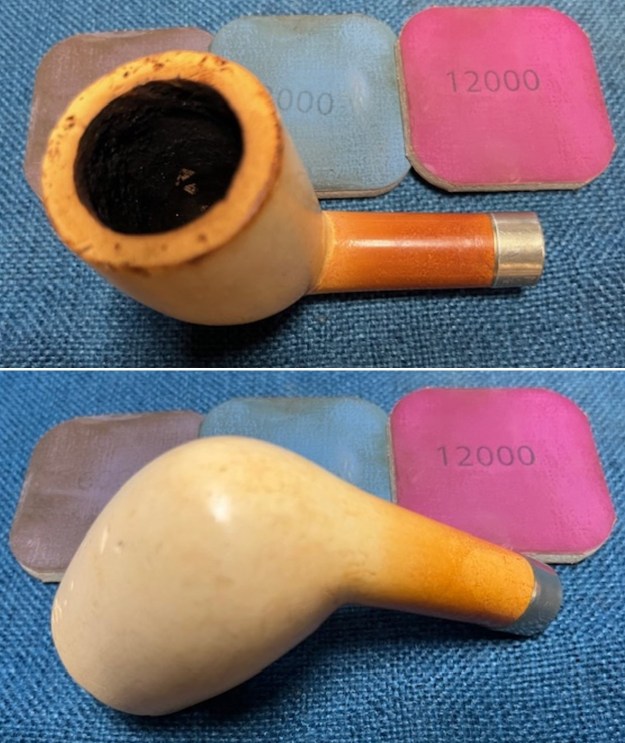
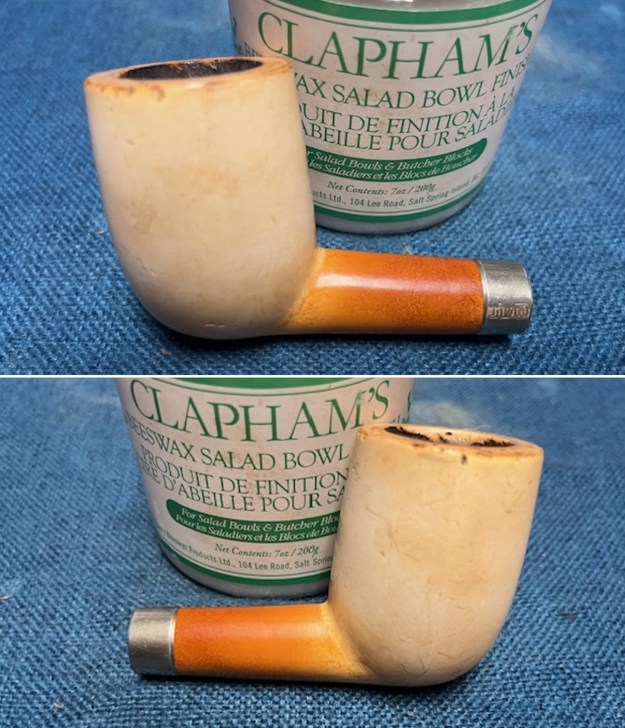
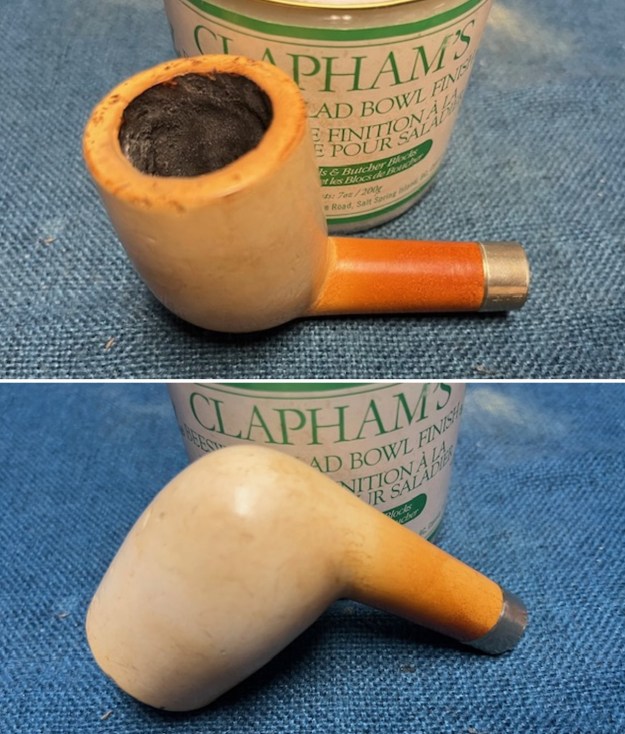
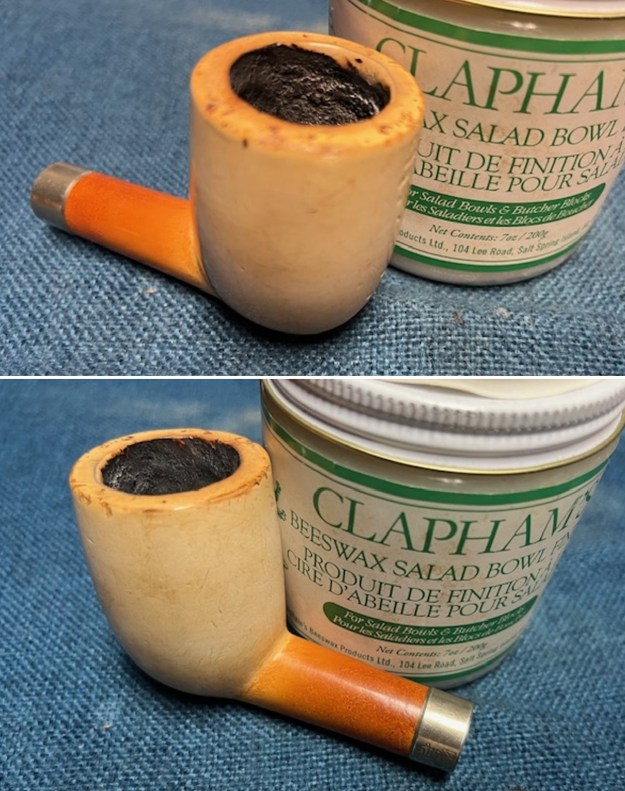
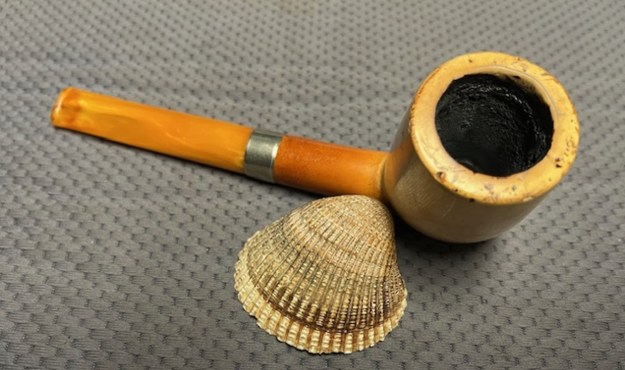
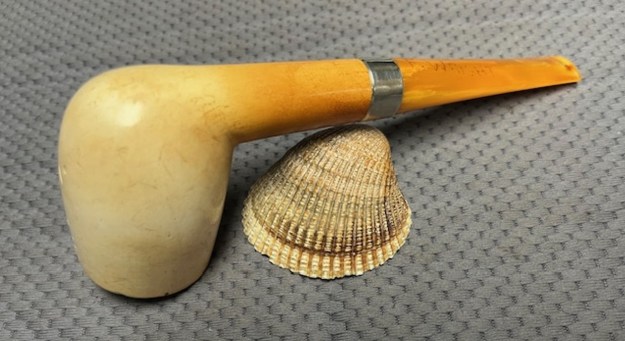
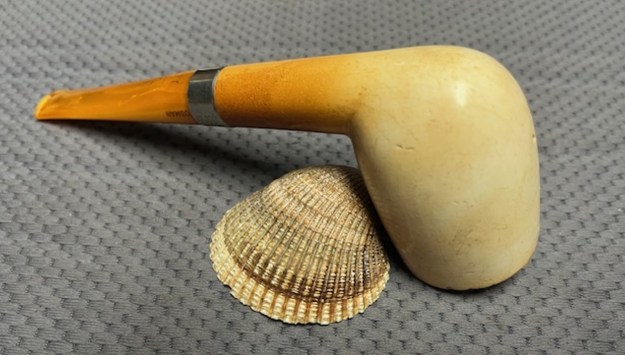
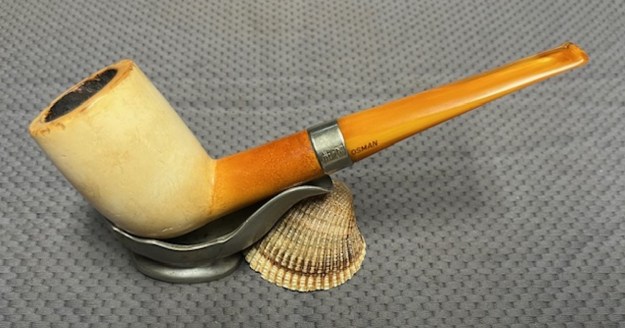
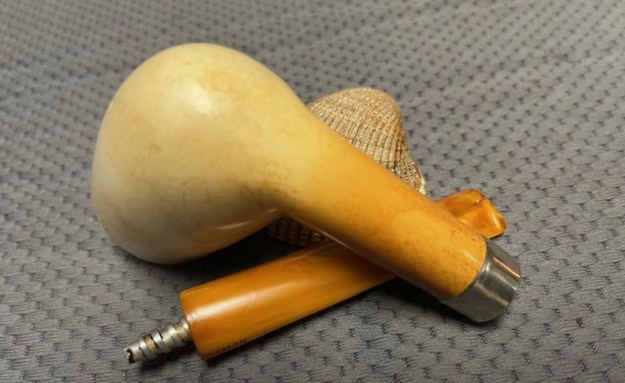
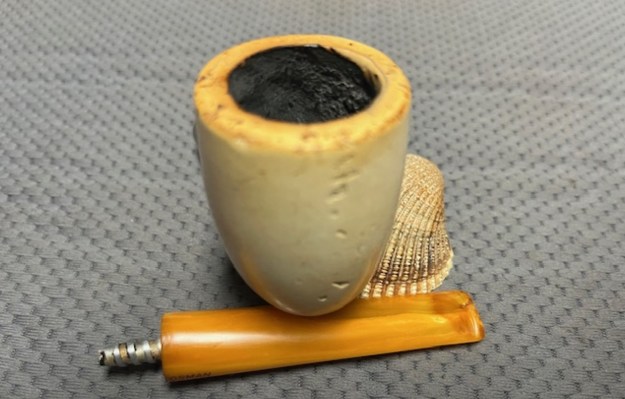
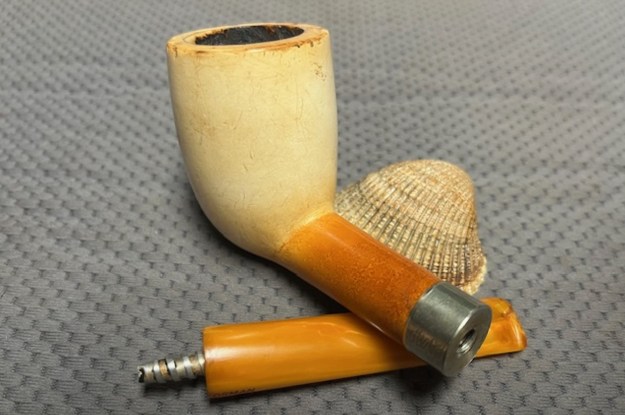
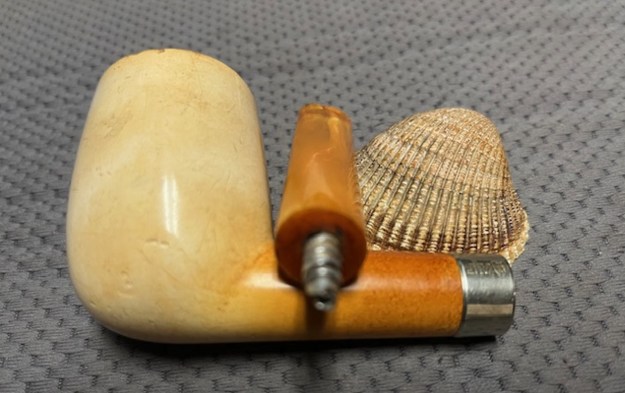
Last evening, I decided to work on another pipe that I no longer know where or when we purchased it. I have a large box of Meerschaum pipes that is sitting in my storage that I need to clean up and restore. I have honestly avoided them for years but now was the time to start my work on some of them. The one I chose was a Cherrywood or Poker shaped smooth meerschaum with a yellow/butterscotch amber acrylic stem. It is a beautifully shaped meer with some deep and minor scratches from its journey and some nice patina developing around the shank and sides. The meer is dirty from use with a thick cake in the bowl and an overflow of lava on the inner edge and rim top. The saddle stem fit well against the shank end and had a threaded tenon in the shank. There were no identifying logos on the bowl or shank. I took photos of the pipe in and out of the case before I started my clean up work on it. I took photos of the rim top and the stem to show the condition of the pipe when I brought it to the worktable. You can see the cake in the bowl and the build up of lava and debris on the edge and top of the rim top. It is another dirty pipe but still a charmer. The yellow/butterscotch acrylic saddle stem has light chatter and tooth marks on both sides near the button. I removed the stem from the shank and took a photo of the parts. It is a beautiful pipe and the developing patina is very nice. I started my work on the bowl by reaming the thick cake out of the bowl. I started with a PipNet reamer and the 2nd and 3rd cutting heads to take back the cake to the walls of the bowl. I cleaned up the reaming with a Savinelli Fitsall Pipe Knife. I sanded the bowl walls with a piece of dowel wrapped with 220 grit sandpaper. Once finished it looked very good. I cleaned out the airway in the shank and mortise as well as in the new stem with pipe cleaners (both bristle and regular). It was not as dirty as I expected considering the cake in the bowl. IT came out very clean.I scrubbed the exterior of the bowl with undiluted Murphy’s Oil Soap and a tooth brush to remove the grime. I rinsed it with warm water and repeated the process until the surface was clean. I dried it off with a soft cloth. It is greatly improved. Now it was time to work on the scratches on the bowl and rim top. I sat on the front porch in the sun and started my work by sanding the bowl with 320-3500 grit 2×2 inch sanding pads. It smoothed out the scratches and revealed more and more of the patina around the bowl and shank. It is a beautiful looking pipe. I polished the meerschaum with micromesh sanding pads – dry sanding with 1500-12000 grit pads. I wiped the bowl down after each pad with a damp cotton cloth. The bowl took on a shine by the last pads. I gave the bowl multiple coats of Clapham’s Wax that blends both carnauba and beeswax in a soft wax. I rubbed the wax on the bowl sides and the shank end with my fingers and set it aside to dry. Once the wax cured I buffed the bowl with a clean buffing pad and then with a soft microfibre cloth. The bowl has a rich glow. I set the bowl aside and turned my attention to the stem. I sanded the stem surface with 320-3500 grit 2×2 inch sanding pads to blend the light marks and chatter into the stem surface. I wiped the stem down after each pad with a damp pad to remove the debris. By the end it was quite shiny and ready for polishing.I polished the stem with micromesh sanding pads – wet sanding it 1500-12000 pads. I wiped it down with a damp cloth after each pad to protect it and preserve it. I polished it with Before After Pipe Polish – both Fine and Extra Fine. I am really happy with the way that this Block Meerschaum Cherrywood Pipe with the butterscotch amber like acrylic stem turned out. It really is a beautiful looking pipe with a unique shape and smooth meerschaum bowl. The amberlike acrylic taper stem is really nice. The rich patina on the meerschaum came alive with waxing and buffing. I put the stem back on the bowl and carefully buffed the pipe with Blue Diamond on the buffing wheel. I gave the bowl and the stem multiple coats of beeswax/carnauba wax and buffed the pipe with a clean buffing pad to raise the shine. I hand buffed the pipe with a microfiber cloth to deepen the shine. The finished Meerschaum Cherrywood really is a beauty and feels great in the hand and looks very good. Give the finished pipe a look in the photos below. The dimensions of the pipe are Length: 5 ½ inches, Height: 2 inches, Outside diameter of the bowl: 1 ¼ inches, Chamber diameter: ¾ of an inch. The weight of the pipe is 43 grams/ 1.52 ounces. The pipe will be going on the rebornpipes store soon. It will be in the Ceramic and Meerschaum Pipes Section if you would like to add it to your collection. Thanks for reading this blog and my reflections on the pipe while I worked on it. It was a fun one to work on!
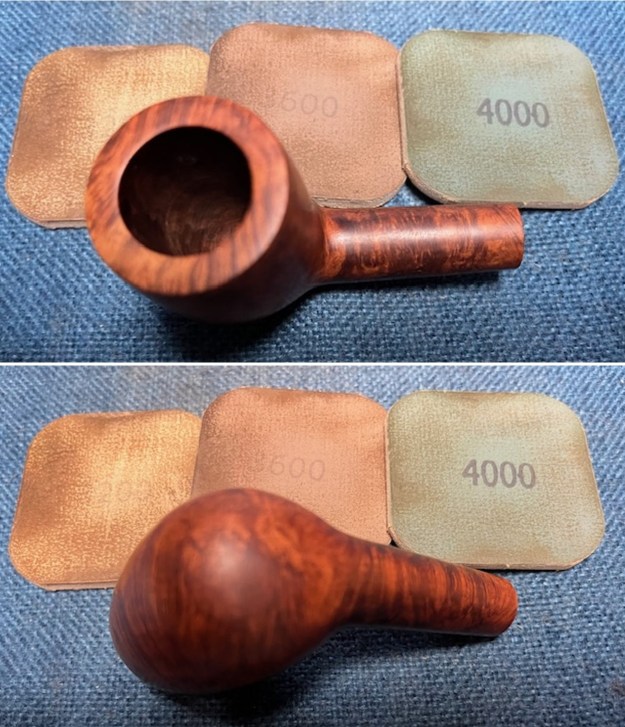
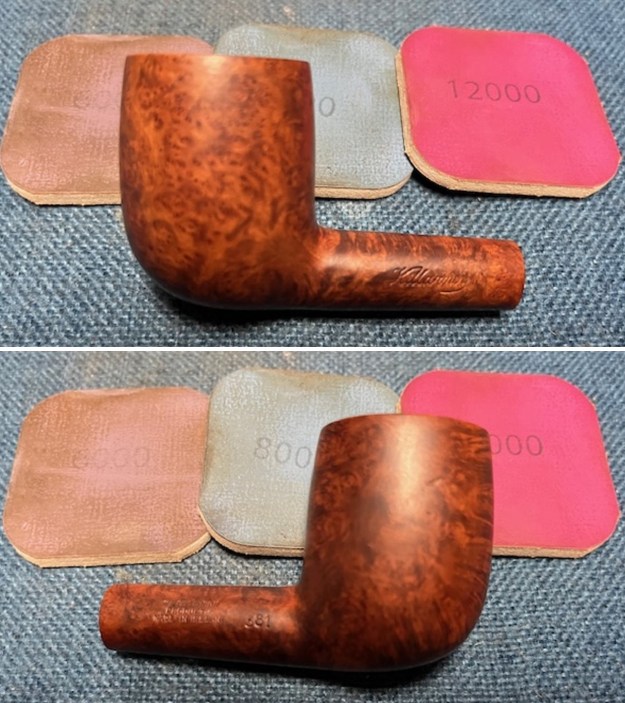
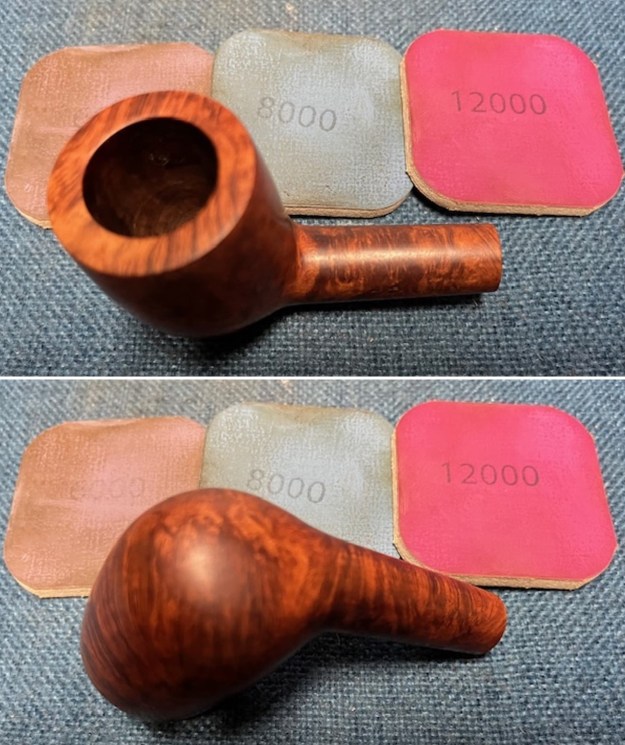
Restoring an older Block Meerschaum Apple with A Yellow Acrylic Stem


by Steve Laug

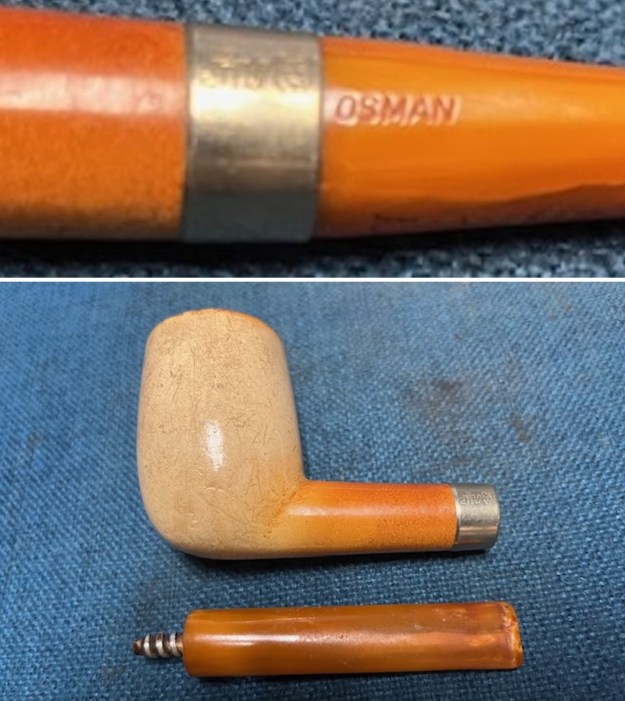
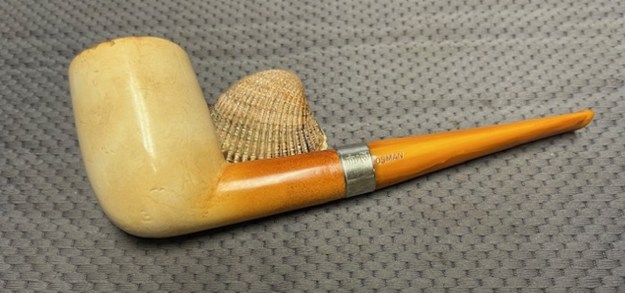
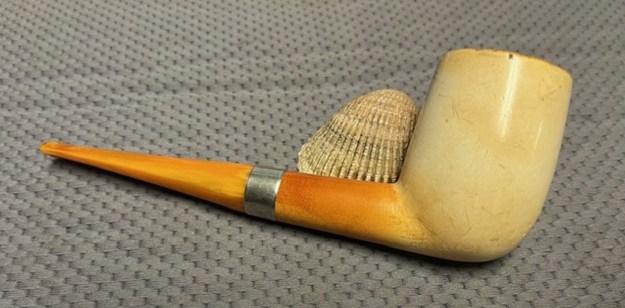
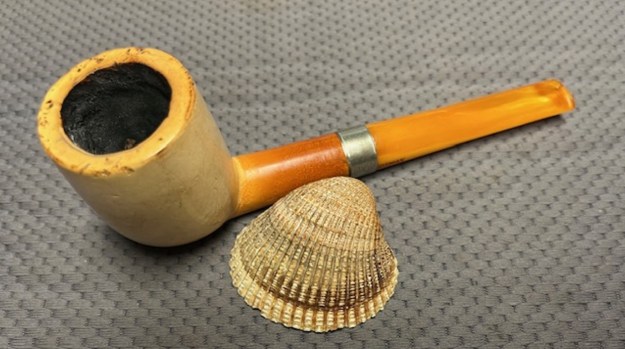
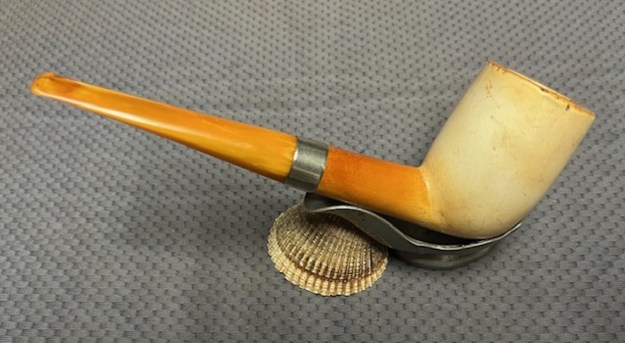
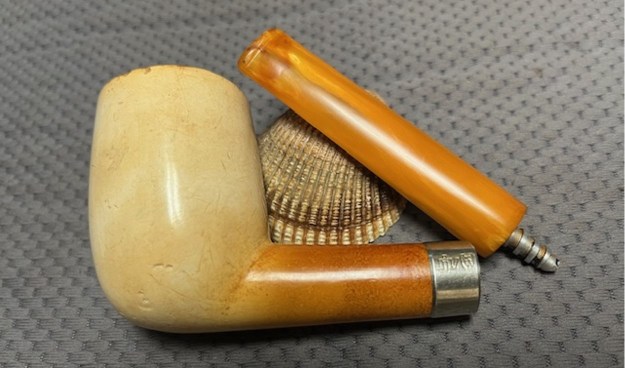
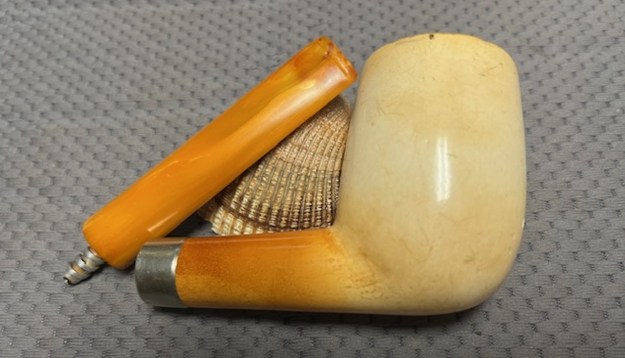
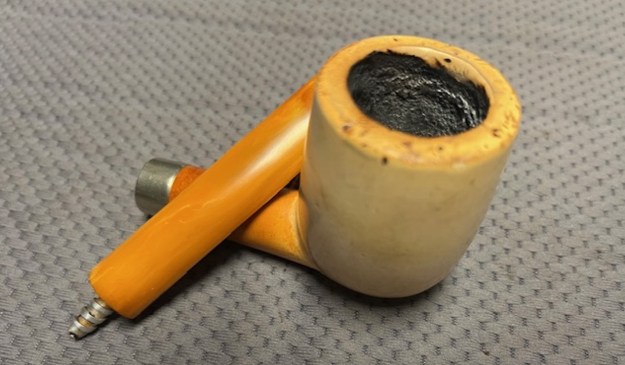
Last evening, I decided to work on another pipe that I no longer know where or when we purchased it. I have a large box of Meerschaum pipes that is sitting in my storage that I need to clean up and restore. I have honestly avoided them for years but now was the time to start my work on some of them. The one I chose was definitely an older ball or apple shaped smooth meerschaum with an yellow amber acrylic stem. It is a beautifully shaped meer with scratches from its journey and some nice patina developing around the shank and sides. The meer is dirty from use with a thick cake in the bowl and an overflow of lava on the inner edge and rim top. The stem fit well against the shank end and had a threaded tenon that aligned with the bowl and shank properly. There were no identifying logos on the bowl or shank, however, the inside of the brown case it came with was stamped Genuine [over] Block Meerschaum. I took photos of the pipe in and out of the case before I started my clean up work on it. I took photos of the rim top and the stem to show the condition of the pipe when I brought it to the worktable. You can see the cake in the bowl and the build up of lava and debris on the edge and top of the rim top. It is another dirty pipe but still a charmer. The yellow acrylic taper stem has light chatter and deep tooth marks on both sides near the button. I took a photo of the stamping on the inside of the case. It is clear and readable as noted above. I removed the stem from the shank and took a photo of the parts. I removed the stem from the shank and took a photo of the parts. I started my work on the bowl by reaming the thick cake out of the bowl. I started with a PipNet reamer and the 2nd and 3rd cutting heads to take back the cake to the walls of the bowl. I cleaned up the reaming with a Savinelli Fitsall Pipe Knife. I sanded the bowl walls with a piece of dowel wrapped with 220 grit sandpaper. Once finished it looked very good. I cleaned out the airway in the shank and mortise as well as in the new stem with pipe cleaners (both bristle and regular). It was much better.I scrubbed the exterior of the bowl with undiluted Murphy’s Oil Soap and a tooth brush to remove the grime. I rinsed it with warm water and repeated the process until the surface was clean. I dried it off with a soft cloth. It is greatly improved. Now it was time to work on the scratches on the bowl and rim top. I started my work by sanding with 320-3500 grit 2×2 inch sanding pads. It smoothed out the scratches and revealed more and more of the patina around the bowl and shank. It is a beautiful looking pipe. I polished the meerschaum with micromesh sanding pads – dry sanding with 1500-12000 grit pads. I wiped the bowl down after each pad with a damp cotton cloth. The bowl took on a shine by the last pads. I gave the bowl multiple coats of Clapham’s Wax that blends both carnauba and beeswax in a soft wax. I rubbed the wax on the bowl sides and the shank with my fingers and set it aside to dry. Once the wax cured I buffed the bowl with a clean buffing pad and then with a soft microfibre cloth. The bowl has a rich glow. I set the bowl aside and turned my attention to the stem. I filled in the tooth marks with some clear CA glue. When it cured I sanded it with 220 grit sandpaper to smooth it out. I continued sanding the stem surface with 320-3500 grit 2×2 inch sanding pads. I wiped the stem down after each pad with a damp pad to remove the debris. By the end it was quite shiny and ready for polishing.I polished the stem with micromesh sanding pads – wet sanding it 1500-12000 pads. I wiped it down with a damp cloth after each pad to protect it and preserve it. I polished it with Before After Pipe Polish – both Fine and Extra Fine. I am really happy with the way that this Older Meerschaum Apple turned out. It really is a beautiful looking pipe with a unique shape and smooth meerschaum bowl. The yellow amberlike acrylic taper stem are really nice. The rich patina on the meerschaum came alive with waxing and buffing. I put the stem back on the bowl and carefully buffed the pipe with Blue Diamond on the buffing wheel. I gave the bowl and the stem multiple coats of beeswax/carnauba wax and buffed the pipe with a clean buffing pad to raise the shine. I hand buffed the pipe with a microfiber cloth to deepen the shine. The finished Meerschaum Apple really is a beauty and feels great in the hand and looks very good. Give the finished pipe a look in the photos below. The dimensions of the pipe are Length: 5 ½ inches, Height: 1 ¾ inches, Outside diameter of the bowl: 1 ¼ inches, Chamber diameter: ¾ of an inch. The weight of the pipe is 40 grams/ 1.41 ounces. The pipe will be going on the rebornpipes store soon. It will be in the Ceramic and Meerschaum Pipes Section if you would like to add it to your collection. Thanks for reading this blog and my reflections on the pipe while I worked on it. It was a fun one to work on!
A. Curtz Hand Carved Apple – is it a sandblast or rustication made to look like a blast?


by Steve Laug

The next pipe on the work table is an Apple shaped pipe with a vulcanite taper stem. We picked the pipe up from a seller in Ogden, Utah, USA on 12/12/2024. It is stamped on the underside of the shank and reads A. Curtz. I knew the name in connection with Jeanie’s Smoke Shop in Salt Lake City when I worked on the brand in the past. The finish looks sand blasted but the more I look at it the more I think it is a rustication made to look like a blast. It has some great grain showing through the finish. It was quite dirty but still had a charm about it. The bowl was caked and there was a light lava coat and spots on the top and the inner edge of the rim. The stem was vulcanite and was a tapered. There were light tooth marks and chatter on both sides of the stem. There was a mother of pearl inlaid on the topside of the taper that showed the reflective nature of the material. Jeff took some photos of the pipe to show the general condition of the pipe before he started his clean up.He took some photos of the rim top and bowl from various angles to give me a clear picture of the condition of the rim top and bowl. You can see the cake in the bowl and the darkening and lava coat in the rustication on the rim top. It is hard to tell if there was any damage to the inner edge at this point. The next photos show the top and underside of the stem. It is dirty and has oxidation and calcification on both sides at the button. There is also some tooth chatter and some light tooth marks. Jeff took some photos of the sides of the bowl to show the condition of the finish on the pipe. The photos showed what to me looked like a unique rustication mimicking a sandblast around the bowl sides. Under the oils and grime, it was a nice looking bowl. He took a photo of the stamping on the underside of the shank. The stamping was on a smooth panel and it was clear and readable.To learn a bit more about the brand I turned to Pipephil to see what I could find out (http://www.pipephil.eu/logos/en/logo-c8.html). It turns out the pipe was made by an artisan named Arley Curtz who was from Utah. I did a screen capture of the photo and have included that below. I also included the side bar information below the photo.Artisan: “Arley” Curtz, Utah (USA). The stems of the A. Curtz pipes are also marked with 2 dots (a red and a white).

I then turned to Pipedia to find out some more details (https://pipedia.org/wiki/Curtz). The information was brief but helpful. I have included that article below.

Arley G. Curtz retired the director of the Bountiful Davis Art Center (Bountiful, Utah) and is now a pipe repairman and pipe maker. He was formerly the pipe repairman at Jeanie’s Smoke Shop, and has been making pipes ever since.

He makes about 70 pipes a year using Greek and Italian briar. His pipes are available at Edward’s Pipe & Tobacco Shop in Denver, CO, at the Tinderbox in Salt Lake City, on the web at The Pipe and Pint, and at Curtz Handmade Pipes and Pipe Repair in Salt Lake City, Utah.

I did a bit more searching to learn more about the repairman/pipe maker. I came across a 2018 article on a site called Utahstories (https://utahstories.com/2018/05/arley-curtz-pipe-making-and-memory-collecting/). The article included a photo of Arley Curtz that I have inserted below. I am also including a short section of the article that makes me want to meet this gentleman.

For Arley Curtz, a pipe is more than just a way to smoke tobacco. It summons up a time when pipe smoking was both acceptable and part of a gentler civility in our culture.

Curtz is a pipe maker and collector of smoking pipes. He has over 300, ranging from simple corn cobs to handmade antiques. Each one has a story. As the smoke from a pipe curls upwards, it allows Curtz a time to pause and reflect. “A pipe,” he says, “is a keeper of memories.”

Just as a pipe cannot be smoked in haste, a handmade pipe requires patience to craft. Curtz forms his pipes from briarwood, which grows in countries bordering the Mediterranean Sea.

I only wish I had found this earlier before I met my brother in Salt Lake City and visited Jeanie’s Smoke Shop. I would have certainly made a point to visit Arley at his own shop and gotten to meet him. Until my next trip to Idaho to visit my Dad and brother I will leave this on my wish list. Now to get on with working on his pipe.

Jeff did his usual thorough job cleaning the pipe which I really appreciate because of the freedom it gives me in dealing with pipes. He reamed it with a PipNet pipe reamer and got rid of the cake. He cleaned up the reaming with a Savinelli Fitsall Pipe Knife so that we could see the walls of the bowl and assess for damage. He cleaned the internals of the shank and stem with alcohol, pipe cleaners and alcohol. He scrubbed the exterior with undiluted Murphy’s Oil Soap and a tooth brush. He rinsed the pipe under warm water. He dried it off with a cloth and then let it air dry. The stem was scrubbed with Soft Scrub and had a soak in Briarville Pipe Stem Deoxidizer to remove the oxidation. Once it was rinsed off, it came out looking very good. The finish on the bowl and the rim top cleaned up nicely. I took pictures of the pipe to show how it looked when I unpacked it. I took a close up photo of the rim top to show how clean it was. The bevelled inner edge looked very good. The stem looked good just some light tooth chatter and marks near the button. Overall the pipe is a beautiful looking piece.I took a photo of the stamping on the underside of the shank. It read as noted above. It is very clear and readable. I took a photo of the bowl with the stem removed to give a sense of the sized of the pipe.The finish on the bowl was very clean and looked good. I worked some Before & After Restoration Balm into the briar with my finger tips and a horsehair shoe brush. I let it sit on the bowl for 10 minutes and then buffed it off with a paper towel and soft cloth. The product is a great addition to the restoration work. It enlivens, enriches and protects the briar while giving it a deep glow. It is a product I use on every pipe I restore. I set the bowl aside and worked on the stem. The shank end of the stem had rounded shoulders that interrupted the flow of the straight line of the stem and shank junction. I sanded the stem surface with 220 grit sandpaper to flatten the edge. Once finished it looked flatter and the rounded shoulders were gone on all but the top side and it was lessened. I sanded out the sanding on the shank end and the light tooth marks and chatter toward the button with 320-3500 grit sanding pads. I wiped the stem down with an Obsidian Oil cloth after each sanding pad. The stem looked better at this point. I polished the stem with micromesh sanding pads – wet sanding with 1500-12000 grit sanding pads. I wiped it down after each sanding pad with Obsidian Oil. I polished it with Before & After Pipe Stem Polish – both Fine and Extra Fine. I buffed the stem with a soft cloth to raise the shine. I gave it a final wipe down with Obsidian Oil to protect the stem from UV and slow down future oxidation. I don’t know what it is about finishing a restoration but I have to tell you that it is a favourite part of the process. It is the moment when everything that I have worked on comes together. I can compare the pipe to where I started and there is always satisfaction that it does indeed look better than when we picked it up. I put the A. Curtz Rusticated Apple back together and buffed it with Blue Diamond on the buffing wheel. I gave the bowl multiple coats of Conservator’s Wax and the stem multiple coats of carnauba wax. I buffed the pipe with a clean buffing pad and hand buffed it to raise the shine. It is fun to see what the polished bowl looks like along with the polished vulcanite taper stem. This Arley Curtz Rusticated Apple is a great looking pipe and I am sure that it will be comfortable in hand when smoking as it is light and well balanced. Have a look at it with the photos below. The dimensions are Length: 5 ½ inches, Height: 1 ¾ inches, Outside diameter of the bowl: 1 ½ inches, Chamber diameter: 7/8 of an inch. The weight of the pipe is 1.76 ounces/51 grams. It will be on the rebornpipes store in the American Pipe Makers Section. If you are interested in adding it to your collection let me know. Thanks for walking through the restoration with me as I worked over this pipe.

As always, I encourage your questions and comments as you read the blog. Thanks to each of you who are reading this blog. Remember we are not pipe owners; we are pipe men and women who hold our pipes in trust until they pass on into the trust of those who follow us.

Restemming a Wonderful Peterson Specialty Barrel


by Kenneth Lieblich

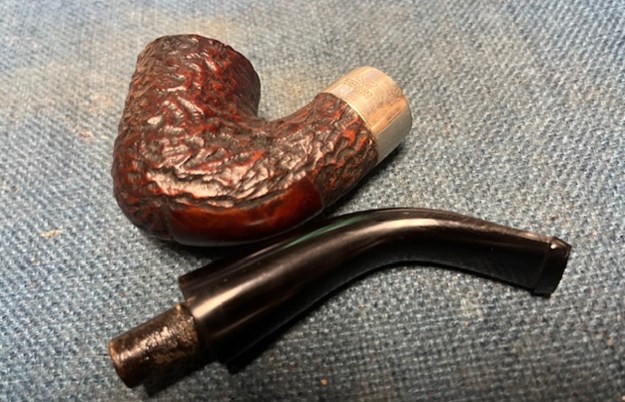
Now we’re talking! This terrific republic-era Peterson Barrel came to me in a box of pipes and pipe parts. It looked so engaging, but it was missing its stem. No problem – I can solve that! The Peterson barrel is not common, but it isn’t a rarity either. Regardless, it is a consistently popular and attractive shape – and it’s not hard to see why. No doubt, someone will be pleased to add this to their collection. Let’s look at the markings. On the underside of the stummel, it reads Peterson’s [over] Barrel [over] Made in the [over] Republic [over] of Ireland. On the nickel band, we see K&P engraved over images of the Shamrock, Wolf Hound and Round Tower. To be clear, these are not silver marks, they are nickel-mount markings of Peterson.Naturally, the Peterson brand is well-storied among collectors and I encourage you to read the Pipedia article about them: https://pipedia.org/wiki/Peterson. Obviously, I was particularly interested in learning more about the barrel, so I referred to The Peterson Pipe book, written by Mark Irwin and Gary Malmberg. It had a couple of very helpful tidbits. On page 136, we read

One collection … making its first appearance in the 1945 catalog is the line of Specialty shapes that have been Peterson favorites for nearly 70 years: the tankard and barrel, calabash and Belgique, and churchwarden.

Also, over on page 313, the following information can be found:

Barrel (1945-). P-lip or fishtail mouthpiece; smooth or rustic finish, sandblast offered in 1970.

So, beyond saying that it is newer than 1945, I can’t quite tell how old this pipe is. Good to know, however, that the fishtail was an option.Let’s work on the pipe. The first thing I did was to hunt down a suitable replacement stem. It needed to be a military mount and it could be either a P-lip or fishtail. In this case, I didn’t have a P-lip that worked with this pipe – but I found a terrific fishtail, which you can see below. The stem is brand new – it even still has its casting marks!I took some sandpaper and gently sanded away those casting marks. Following that, I used all nine of the micromesh sanding pads (1,500 through 12,000 grit) to sand out flaws, even out the vulcanite, and provide gentle polishing of the finished surface. I also applied pipe-stem oil while using the last five micromesh pads. There was a wonderful, deep black shine to the stem when I was done. Over to the stummel – and they were some issues. It was very dirty and had a significant burn on the rim. The first step was to ream out the bowl – that is to say, remove all the cake inside the bowl. This accomplished a couple of things. First (and most obviously), it cleaned the bowl and provided a refurbished chamber for future smoking. Second, when the old cake was removed, I could inspect the interior walls of the bowl and determine if there was damage or not. I used a reamer, a pipe knife, and a piece of sandpaper taped to a wooden dowel. Collectively, these ensured that all the debris was removed. I then cleaned the stummel with both pipe cleaners and cotton swabs dipped in lemon-infused 99% isopropyl alcohol. With a pipe this dirty, it took quite a while and much cotton to get clean. It’s a small pipe, but so, so dirty.I then decided to ‘de-ghost’ the pipe – that is to say, exorcize the remaining filth from the briar. I filled the bowl and the shank with cotton balls, then saturated them with 99% isopropyl alcohol. I let the stummel sit overnight. This caused the remaining oils, tars and smells to leach out into the cotton.To tidy up the briar, I wiped down the outside, using a solution of a pH-neutral detergent and distilled water, with cotton rounds. This did a good job of cleaning any latent dirt on the surface of the briar. The last step of the cleaning process was to scour the inside of the stummel with some mild detergent and tube brushes. This was the culmination of a lot of hard work in getting the pipe clean.

Some burn remained on the rim, so I took some crystalized oxalic acid and dissolved it in warm water. I took some cotton swaps, dipped in the solution, and rubbed the burned spot vigorously. The weak acid works very nicely to alleviate superficial burns (burns where the integrity of the wood is still sound). I took a solid wooden sphere, wrapped a piece of 400-grit sandpaper around it, and sanded the inner edge of the rim. This achieved two things: first, it removed some of the burn marks; and second (and more importantly), the circular shape and motion of the sphere gradually returned the edge to a perfect circle.I used all nine micromesh pads (1,500 through 12,000 grit) to sand the outside of the stummel and finish it off. This sanding minimizes flaws in the briar and provides a beautiful smoothness to the wood. I rubbed some LBE Before & After Restoration Balm into the briar and let it sit for 30 minutes or so. The balm moisturizes the wood and gives a beautiful depth to the briar. I then buffed the stummel with a microfibre cloth. For the final step, I took the pipe to my bench polisher and carefully buffed it – first with a blue diamond compound, then with three coats of carnauba wax. This procedure makes the pipe look its best – the stummel sings and the stem glows.This Peterson Specialty Barrel looks fantastic again and is ready to be enjoyed by its next owner. I am pleased to announce that this pipe is for sale! If you are interested in acquiring it for your collection, please have a look in the ‘Irish’ pipe section of the store here on Steve’s website. You can also email me directly at kenneth@knightsofthepipe.com. The approximate dimensions of the pipe are as follows: length 5¾ in. (147 mm); height 1⅔ in. (42 mm); bowl diameter 1¼ in. (32 mm); chamber diameter ⅔ in. (18 mm). The weight of the pipe is ⅞ oz. (25 g). I hope you enjoyed reading the story of this pipe’s restoration as much as I did restoring it. If you are interested in more of my work, please follow me here on Steve’s website or send me an email. Thank you very much for reading and, as always, I welcome and encourage your comments.

You Got to Love these Peterson’s Republic Era K&P Irish Made 101 Billiards


by Steve Laug

This great looking Billiard pipe was purchased on 04/11/2024 from our contact in Copenhagen, Denmark. It is stamped on the left side of the shank and clearly reads K&P [over] Irish Made. On the right side it is stamped Made in the Republic of Ireland [three lines]. The shape number 101 is stamped to the right of that next to the bowl/shank junction. The nickel ferrule is stamped K&P [over] Petersons. The bowl had a cake on the walls and fortunately little overflow of lava onto the rim top and edges. The inner edge had some damage and darkening. The smooth finish is dirty with debris and oils. The vulcanite taper, fishtail stem has no stamp or logo on it. It was lightly oxidized and had tooth marks and chatter on both sides near the button. It was a beautiful looking pipe even through the grime in the finish. Jeff took photos of the pipe before he started cleaning it up. Have a look.Jeff took close up photos of the bowl and rim top to show the condition of the bowl and the rim top. In the close up you can see the light lava on the rim top, inner edge and the cake in the bowl. The damage on the rim top and the inner edge is also visible. He also took close up photos of the stem to show its condition as mentioned above. He also took photos of the tooth marks and chatter on both sides of the stem. He took photos of the bowl sides and heel to show the grain around the bowl. The grain is quite nice even through the grime. He took photos of the stamping on the sides of the shank. The stamping is clear and readable as noted above. The stamping on the nickel ferrule is also clear.I did not have a lot of back story on the Irish Made pipes so I turned to Peterson’s website to see what I could find out about the line specifically(https://www.peterson.ie/pipes/classic/irish-made-army/moreinfo.cfm?pd_product_id=991). Turns out the Irish Made Army pipes were a series of pipes. The information was quite helpful and I have included it below.
About The Series

Since the 19th century, we’ve made army mounted pipes, defined by their inclusion of a sturdy mount reinforcing the shank and a push-style tenon that can be removed easily from the shank, without risking damage to the pipe. Our entry-level, Irish Made Army line is one of our oldest and most popular within that style, featuring nickel army mounts and reserved walnut finishes. Merging utilitarian design with practical grace, it’s available in a variety of classic, non-System shapes, including straight designs.

From there I turned to Mark Irwin’s Petersonpipenotes blog to see if he had specifically worked on or noted this line (https://petersonpipenotes.org/tag/peterson-kp-irish-army/). He had and I quote a short section below from the site.

The “K&P” in “K&P over IRISH MADE” is actually part of the line’s name, which most people don’t know, and understandably so. The non-System army-mount Peterson dates from the 1906 catalog and has been issued in several line names. It is currently enjoying a huge vogue, with Peterson releasing two or three new army-mount lines every season.

Armed with the information above, I turned my attention to the pipe itself. Jeff had cleaned the pipe with his usual penchant for thoroughness that I really appreciate. He reamed it with a PipNet pipe reamer and cleaned up the reaming with a Savinelli Fitsall Pipe Knife. He scrubbed out the internals with alcohol, pipe cleaners, shank brushes and cotton swabs until the pipe was clean. He scrubbed the exterior of the bowl with Murphy’s Oil Soap and a tooth brush to remove the grime and grit on the briar and the lava on the rim top. The finish looks very good with good looking grain around the bowl and shank. Jeff soaked the stem in Before & After Deoxidizer to remove the oxidation on the rubber. When the pipe arrived here in Vancouver for the second stop of its restoration tour it looked very good. I took photos before I started my part of the work. I took close up photos of the bowl, rim top and stem to show how clean the pipe was. The bowl was clean and the rim top and the inner edge clearly show the damage. The stem was clean and showed the light tooth marks and chatter.I took photos of the stamping on the sides of the shank. It is very clear and readable and read as noted above. I also removed the stem from the shank and took photos of the pipe to show the look of the parts. I started working on the damaged rim top and burn damaged areas on the inner edge of the rim first. I used 220 grit sandpaper and a wooden sphere to clean up the edge. It looked significantly better. I will sand it with sanding pads when I work on the bowl and shank.I sanded the bowl and shank with 320-3550 grit 2×2 inch sanding pads to smooth out the scratches on the rim top and sides of the bowl. I wiped the bowl down after each sanding pad with a damp cloth to remove the sanding debris. I sanded the exterior of the bowl with 1500-12000 grit micromesh sanding pads. I dry sanded it with each pad and wiped the briar down with a damp cloth to remove the sanding debris. I worked some Before & After Restoration Balm into the briar with my finger tips. I let it sit on the bowl and shank for 10 minutes and then buffed it off with a paper towel and soft cloth. The product is a great addition to the restoration work. It enlivens, enriches and protects the briar while giving it a deep glow. It is a product I use on every pipe I restore. I sanded out the tooth marks and chatter with 220 grit sandpaper and was able to remove all of them.I continued sanding the stem 320-3500 grit sanding pads – dry sanding with 2×2 inch sanding pads. I wiped the stem down with Obsidian Oil after each sanding pad. It began to take on a rich shine by the final pad. I polished the stem with micromesh sanding pads – dry sanding with 1500-12000 grit pads. Once again, I wiped it down between each pad with Obsidian Oil. I further polished it with Before and After Stem Polish – both Fine and Extra Fine. It looked very good. I am excited to finish this beautifully grained, Peterson’s Irish Made army 101 Billiard. I put the pipe back together and buffed it with Blue Diamond on the buffing wheel. I gave the bowl and the stem multiple coats of carnauba wax. I hand buffed the pipe with a clean buffing pad to raise the shine. It is fun to see what the polished bowl looks like with beautiful mixed grain all around it. The straight Pot looks great with the black vulcanite saddle stem. This smooth Classic Peterson’s Irish Made Army Billiard is great looking and the pipe feels great in my hand. It is light and well balanced. Have a look at it with the photos below. The dimensions are Length: 5 ¾ inches, Height: 1 ¾ inches, Outside diameter of the bowl: 1 ¼ inches, Chamber diameter: ¾ of an inch. The weight of the pipe is 39 grams/1.41 ounces. It turned out to be a beautiful pipe. I will be putting on the rebornpipes store in the Irish Pipe Makers Section. If you would like to add it to your collection let me know. It is a real beauty. Thanks for walking through the restoration as I brought the pipe back to life.

New Life for a Republic Era Peterson’s Kapet 606S Pot with a Saddle Stem


by Steve Laug

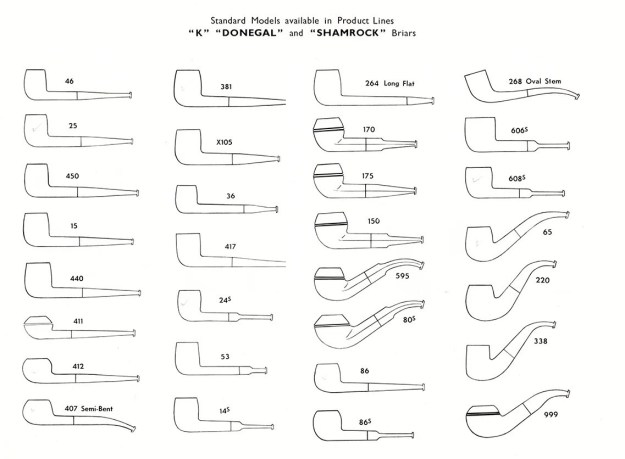
This beautifully grained briar pipe was purchased on 08/27/2024 from an auction on eBay from a seller in Memphis, Tennessee, USA. It is stamped on the left side of the shank and clearly reads Peterson’s [over] Kapet. On the right side it is stamped Made in the Republic of Ireland [three lines]. The shape number 606S is stamped to the right of that next to the bowl/shank junction. I believe the 606 is the shape number for a Pot and the S is for the saddle stem. The bowl had a thick cake on the walls and fortunately little overflow of lava onto the rim top and edges. The smooth finish is dirty with debris and oils. The vulcanite saddle stem has a “P” stamped on the left side of the saddle. It was oxidized, calcified and has tooth marks and chatter on both sides near the button. It was a beautiful looking pipe even through the grime in the finish. Jeff took photos of the pipe before he started cleaning it up. Have a look. Jeff took close up photos of the bowl and rim top to show the condition of the bowl and the rim top. You can also see the light lava on the rim top, inner edge and the cake in the bowl. He also took close up photos of the stem to show its condition as mentioned above. He also took photos of the tooth marks and chatter on both sides of the stem. He took photos of the bowl sides and heel to show the grain around the bowl. The grain is birdseye and mixed. Jeff also took photos of the stamping on the sides of the shank. It is faint in spots but readable as noted above. He also captured the condition of the P stamp on the stem side. I am including the link to the Pipedia’s article on Peterson pipes. It is a great read in terms of the history of the brand (https://pipedia.org/wiki/Peterson). There was a short note toward the bottom of the page about the series. It is definitely referring to the newer line that came out later. I quote:

I turned to Pipedia (https://pipedia.org/wiki/Peterson) to first pin down a date that the pipe was made. I knew that the Made in Ireland stamp would give me that. I quote:

As usual when trying to get accurate facts in regard to Peterson history, something will jump up and get in the way. They are missing many of their records. The following is the best that we can do for a guide to the myriad markings during the period 1922 – 1949. Prior to 1920 it was rare for a country of origin to be stamped on the pipe, just Peterson’s Dublin on the band. After 1921/22, if it is stamped “MADE IN IRELAND” and the “Made in” is stacked over “Ireland” or “MADE IN EIRE” or several other forms, it was made between 1922 and 1938. A considerable number of Peterson pipes were stamped “Irish Free State”. From about 1930 to 1949, most of the pipes (those which were stamped) were stamped “Made in Ireland”.” If the stamp reads “MADE IN IRELAND” in a circle, the pipe was made between 1939 and 1948. These are all “Pre-Republic” pipes. I can tell you that the mark “Irish Free State” was adopted in 1922; and replaced by “Eire” in 1937 and then by “Republic of Ireland” in 1949.

That gave me a date for the pipe – it was made after 1949 as can be proved by the Made in the Republic of Ireland stamp on the right side of the shank.

I turned to “The Peterson Pipe” by Mark Irwin and Gary Malmberg to get some background on the Peterson’s Kapet Line. On page 305 it had the following information.

Kapet (1925-87) Line first described in 1925 brochure and featured in occasional catalogs through 1987. Early specimens will be stamped IRISH over FREE STATE. Described in 1937 catalog as available in dark plum or natural finish. Featured an aluminum “inner tube” or stinger until 1945.  Mid-century specimens may be stamped Made In over Ireland. Specimens from 1970 on may have mounts with hallmarks.

Judging from the Made in the Republic of Ireland stamp, the pipe I am working on is probably made after 1945 when the stinger or inner tube was removed. Those dates work also for the Kapet information above. The stem has the original P stamp on the saddle side and no stinger.

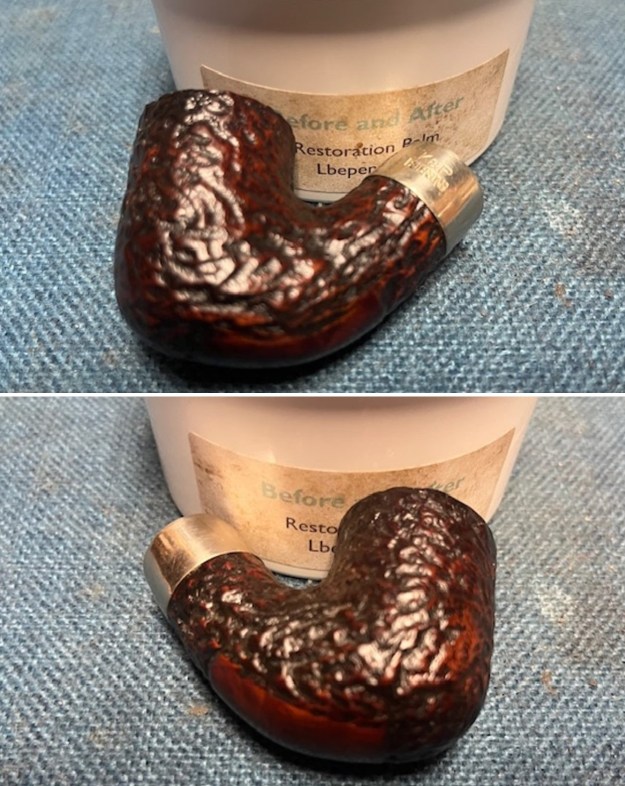
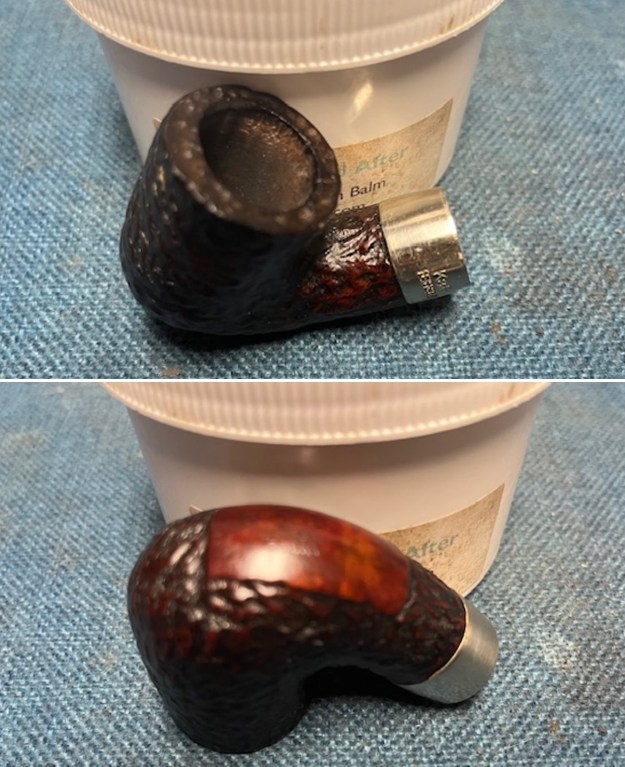
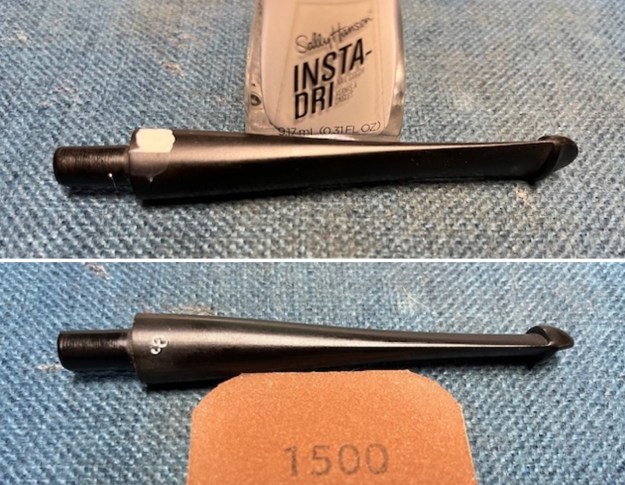
Armed with the information above, I turned my attention to the pipe itself. Jeff had cleaned the pipe with his usual penchant for thoroughness that I really appreciate. He reamed it with a PipNet pipe reamer and cleaned up the reaming with a Savinelli Fitsall Pipe Knife. He scrubbed out the internals with alcohol, pipe cleaners, shank brushes and cotton swabs until the pipe was clean. He scrubbed the exterior of the bowl with Murphy’s Oil Soap and a tooth brush to remove the grime and grit on the briar and the lava on the rim top. The finish looks very good with good looking grain around the bowl and shank. Jeff soaked the stem in Before & After Deoxidizer to remove the oxidation on the rubber. When the pipe arrived here in Vancouver for the second stop of its restoration tour it looked very good. I took photos before I started my part of the work. I took close up photos of the bowl, rim top and stem to show how clean the pipe was. The bowl was clean and the rim top and the inner edge look beautiful. The stem was clean and did not show either tooth marks or chatter.I took photos of the stamping on the sides of the shank. It is very clear and readable and read as noted above. I also removed the stem from the shank and took photos of the pipe to show the look of the parts. I started working on the damaged rim top and burn damaged areas on the inner edge of the rim first. I used 220 grit sandpaper and a wooden sphere to clean up the edge. It looked significantly better. I will sand it with sanding pads when I work on the bowl and shank.I sanded the bowl and shank with 320-3550 grit 2×2 inch sanding pads to smooth out the scratches on the rim top and sides of the bowl. I wiped the bowl down after each sanding pad with a damp cloth to remove the sanding debris. I sanded the exterior of the bowl with 1500-12000 grit micromesh sanding pads. I dry sanded it with each pad and wiped the briar down with a damp cloth to remove the sanding- debris. I worked some Before & After Restoration Balm into the briar with my finger tips. I let it sit on the bowl and shank for 10 minutes and then buffed it off with a paper towel and soft cloth. The product is a great addition to the restoration work. It enlivens, enriches and protects the briar while giving it a deep glow. It is a product I use on every pipe I restore. I set the bowl aside and turned my attention to the stem. I “painted” the surface with the flame of a lighter to try and lift the tooth marks. I was able to lift some of them but those that remained I filled in with black, rubberized CA glue. Once the repairs cured I used a small file to flatten them and start blending them into the surface. I finished the cleanup with 220 grit sandpaper. It looked smooth. I touched up the “P” stamp on the left side of the saddle with some white acrylic nail polish. I let it cure then scraped off the excess and sanded the remnant off with a 1500 grit sanding pad.I polished the stem with micromesh sanding pads – dry sanding with 1500-12000 grit pads. Once again, I wiped it down between each pad with Obsidian Oil. I further polished it with Before and After Stem Polish – both Fine and Extra Fine. It looked very good. I am excited to finish this beautifully grained, Peterson’s Kapet 606S Saddle Stem Pot. I put the pipe back together and buffed it with Blue Diamond on the buffing wheel. I gave the bowl and the stem multiple coats of carnauba wax. I hand buffed the pipe with a clean buffing pad to raise the shine. It is fun to see what the polished bowl looks like with beautiful mixed grain all around it. The straight Pot looks great with the black vulcanite saddle stem. This smooth Classic Peterson’s Kapet 606S Pot is great looking and the pipe feels great in my hand. It is light and well balanced. Have a look at it with the photos below. The dimensions are Length: 5 ½ inches, Height: 1 ½ inches, Outside diameter of the bowl: 1 ½ inches, Chamber diameter: ¾ of an inch. The weight of the pipe is 39 grams/1.34 ounces. It turned out to be a beautiful pipe. I will be putting on the rebornpipes store in the Irish Pipe Makers Section. If you would like to add it to your collection let me know. It is a real beauty. Thanks for walking through the restoration as I brought the pipe back to life.`

Restoring an SMS Meerschaum Flumed Bowl Billiard with a variegated Rose Acrylic Stem


by Steve Laug

This afternoon I decided to work on another pipe that I no longer know where or when we purchase it. I have a large box of Meerschaum pipes that is sitting in my storage that I need to clean up and restore. I have honestly avoided them for years but now was the time to start my work on some of them. Today I chose another cased one. It is a black cased pipe and when opened it held a Billiard shaped meerschaum. The case is lined with golden soft fabric that protected the bowl. The case bears an SMS logo and there is no logo on the taper stem. It is a beautifully shaped Billiard shaped meer with a dark flumed top on the bowl and some scratches from its journey and some nice patina around the shank and sides. The meer is dirty from use with a thick cake in the bowl and a light overflow of lava on the inner edge and rim top, heavier on the back side. There is some chips or nicks on the back outer edge of the bowl. The variegated rose acrylic threaded tenon stem fit well against the shank end and was slightly dirty and had tooth marks and chatter on both sides ahead of the button. I took photos of the case and the pipe before I started my clean up work on it. I took photos of the rim top and the stem to show the condition of the pipe when I brought it to the worktable. You can see the cake in the bowl and the build up of lava and debris on the edge and top of the rim. It is another dirty pipe but still a charmer. The variegated rose acrylic stem has chatter and deep tooth marks on both sides near the button.I took a photo of the logo stamp on the inside of the case. It is clear and readable. The label in the case reads SMS in the centre and around the outside of the circle it read Handcarved Block Meerschaum Turkey. I removed the stem from the shank and took a photo of the parts. I had some faint recall of the make but could not remember his name so I turned to pipephil’s site (http://www.pipephil.eu/logos/en/logo-s9.html) for some help. I found a quick note on the founding of the SMS brand which was the USA import brand for pipes made by Samil Sermet and his wife Beth. There was also a link there to the company website.I clicked on the site link (http://www.smspipes.com/) to get a bigger picture of the brand and the makers. I quote the section of the site marked “About Us” and quote the following:

Welcome to SMS Pipes!!

We are proud to present a wide selection of premium smoking pipes. SMS Pipes features Turkish Block Meerschaum, supplied exclusively by SMS Meerschaums, and Italian Briar, supplied by Lorenzo of Italy. All the pipes offered by SMS Pipes meet or surpass our exacting “Standard of Excellence.”

Samil & Beth Sermet – SMS Pipes is family owned and operated extension of SMS Meerschaums, founded in 1980 by Samil Sermet and his wife, Beth. SMS Meerschaums is recognized nationwide as a trusted supplier by nearly 500 retail tobacconists. SMS Pipes promises to continue the philosophy embraced by SMS Meerschaums and provide premium smoking pipes that are:

Distinctive… each pipe is carefully selected for its uniqueness, quality and reliability.

Affordable… a wide range of prices makes owning a fine pipe possible for everyone.

Collectible… the timeless beauty of each pipe will be treasured for generations.

Key to the success of SMS Pipes is our dedicated staff. Based in the USA and Turkey, they maintain contact with our exceptionally talented pipe carvers and case makers and perform all the daily business activities described below:

 Samil Sermet, a native of Turkey, is the buyer for SMS Meerschaums. His hometown is Eskisehir, Turkey, where a majority of the meerschaum pipe carvers live and have their shops. Samil makes a buying trip to Turkey each year and has a close working relationship with all the carvers. He is responsible for sales analysis and placing the orders necessary to maintain adequate stock in the warehouse. (samil@smspipes.com)

Beth Sermet, office manager of SMS Meerschaums, processes all orders. Even though Beth was born in Iowa, she is fluent in Turkish after living in Turkey for several years and knows all the carvers. The owners of Lorenzo Briars work closely with Beth to assure ample supply of their premium pipes. Beth also personally selects and photographs all the pipes shown on SMS Pipes. (beth@smspipes.com)

Mert Sermet, son of Samil and Beth, manages the daily operations of SMS Pipes. He is in charge of processing and shipping all orders. Mert has in-depth knowledge of every aspect of pipe manufacturing both in Turkey and Italy. He will personally respond to any comments, questions or concerns you may have about SMS Pipes by e-mail. (mert@smspipes.com)

Emel Sagtekin, Samil’s sister, is responsible for quality control and shipments of pipes to SMS Meerschaums from Turkey. Since 1988, Emel has personally checked thousands of pipes. She evaluates each pipe based on strict criteria set by SMS Meerschaums and selects only the pipes that meet or surpass our high standards.

SMS Pipes provides a wide variety of services for our customers. Although the inventory on SMS Pipes is reserved for Internet sale only, it is possible to have a selection of similar pipes sent “On Approval” to any tobacconist listed on the site. Membership in the SMS Collectors Society provides additional amenities for those interested in collecting our pipes. Our Master Carvers can be commissioned to carve custom pipe designs by special arrangement. We also offer repair and re-waxing services for all SMS Pipes.”

We are happy to have the opportunity to serve you. We hope your time spent with SMS Pipes is enjoyable and worthwhile.

Now I had a clearer picture of the brand and the makers. I knew that pipe was made after 1980 when the company began. Now it was time to work on the pipe itself.

I started my work on the bowl by reaming the thick cake out of the bowl. I started with a PipNet reamer and the 2nd and 3rd cutting heads to take back the cake to the walls of the bowl. I cleaned up the reaming with a Savinelli Fitsall Pipe Knife. I sanded the bowl walls with a piece of dowel wrapped with 220 grit sandpaper. Once finished it looked very good. I scraped off some of the lava coat on the rim top. I used a 320 grit sanding pad to remove the build up on the rim top. It looked much better once I finished. I cleaned out the airway in the shank and mortise as well as in the new stem with pipe cleaners (both bristle and regular). It was much better.I scrubbed the bowl surface with a tooth brush and undiluted Murphy’s Oil Soap. I rinsed the bowl with warm running water to wash off the dirt and the soap. It looked much better at this point. The surface of the bowl was clean and the meerschaum was very shiny with the exception of the rough edge on the back of the bowl which was chipped and lost its colour. I used a black stain pen to touch up the chip on the rim top and the inner and outer edges of the bowl.I gave the bowl multiple coats of Clapham’s Beeswax/Carnuba Wax Polish which is a soft wax. I rubbed the wax on the bowl sides and the shank end with my finger tips and set it aside to dry. Once the wax cured I buffed the bowl with a microfibre cloth. The bowl has a rich glow. I set the bowl aside and turned my attention to the stem. There was a deep tooth mark on the underside of the stem ahead of the button. I filled it in with some clear CA glue and when it cured I flattened the repair with a small file. I sanded it with 220 grit sandpaper to smooth the chatter on topside and the repair on the underside of the stem surface. It looked much better when I finished sanding. I continued sanding the stem surface with 320-3500 grit 2×2 inch sanding pads. I wiped the stem down after each pad with a damp pad to remove the debris. By the end it was quite shiny and ready for polishing. I polished the stem with micromesh sanding pads – wet sanding it 1500-12000 pads. I wiped it down with a damp cloth after each pad to protect it and preserve it. it with Before After Pipe Polish – both Fine and Extra Fine. I polished the stem on the buffer with Blue Diamond. I put the pipe back together and gave it a buff on the wheel with Blue Diamond polish. I use a light touch on the acrylic as too heavy a touch can cause the heat to damage to acrylic. I gave the stem multiple coats of carnauba wax and buffed the pipe with a clean buffing pad to raise the shine. I hand buffed it with a soft cloth to deepen the shine. I put it back in the case and took a photo of the pipe in case.I took photos of the finished SMS Billiard with a variegated rose acrylic stem to show the shine and the patina around the bowl. The acrylic stem looks very good with the warm glow on the shank and the bowl. With time the contrast will grow richer and deeper to a thing of beauty. The finished SMS Billiard fits nicely in the hand and I think it will feel great as it heats up with a good tobacco. Give the finished pipe a look in the photos below. The dimensions of the pipe are Length: 6 inches, Height: 1 ¾ inches, Outside diameter of the bowl: 1 ¼ inches, Chamber diameter: ¾ of an inch. The weight of the pipe is 1.45 ounces/41 grams. If you are interested in carrying on the legacy of this pipe it will be going on the rebornpipes store shortly. It is listed in the Ceramic and Meerschaum Section. You can send me a message or an email to let know you are interested. Thanks for reading this blog and my reflections on the pipe while I worked on it. This is an interesting estate to bring back to life.