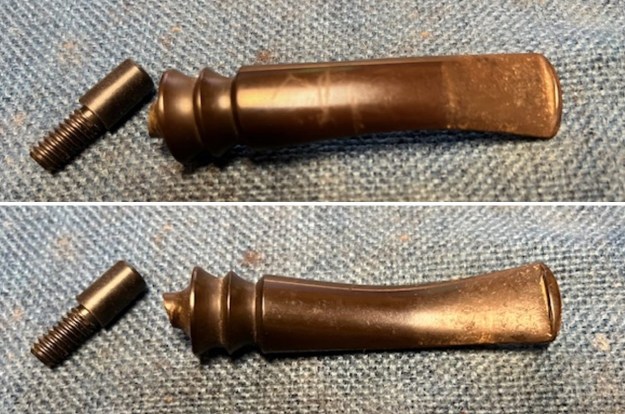
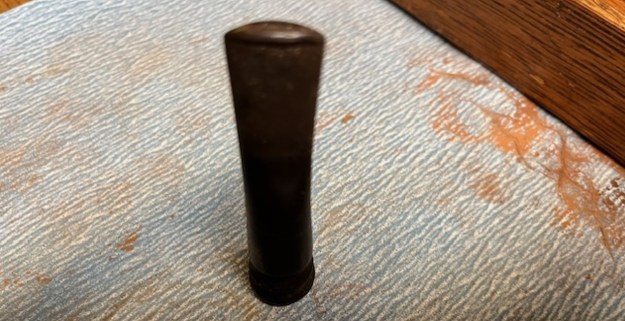
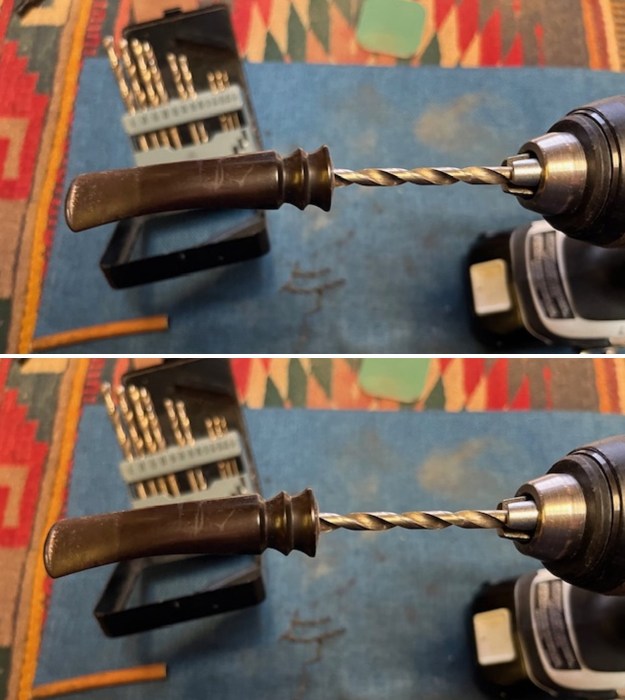
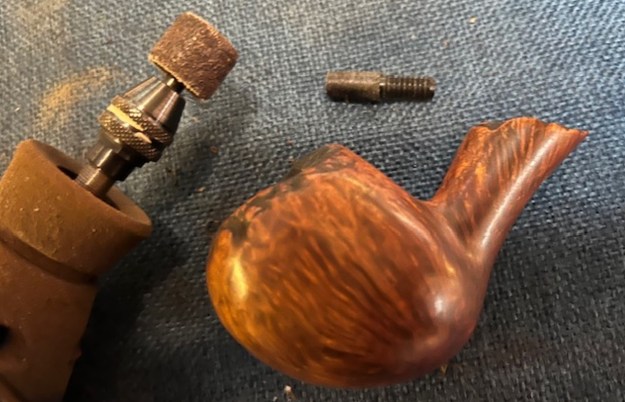
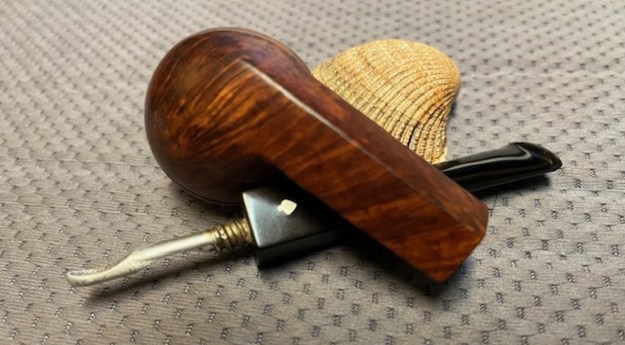
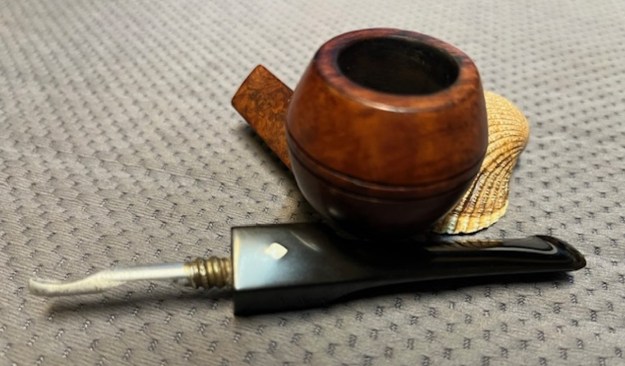
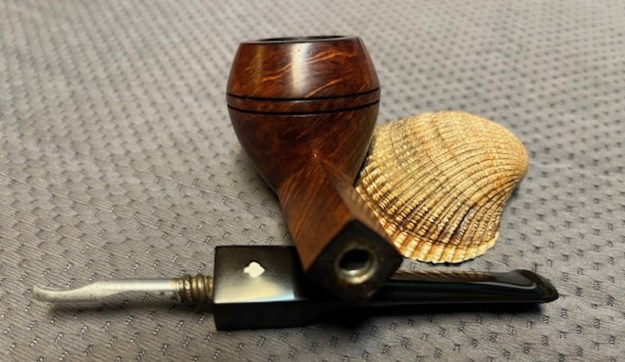
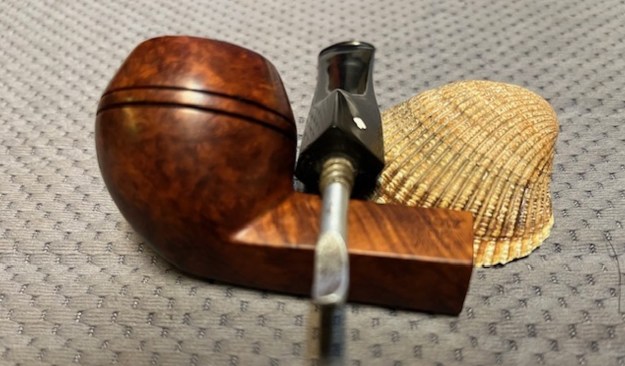
Tag Archives: Stem repairs

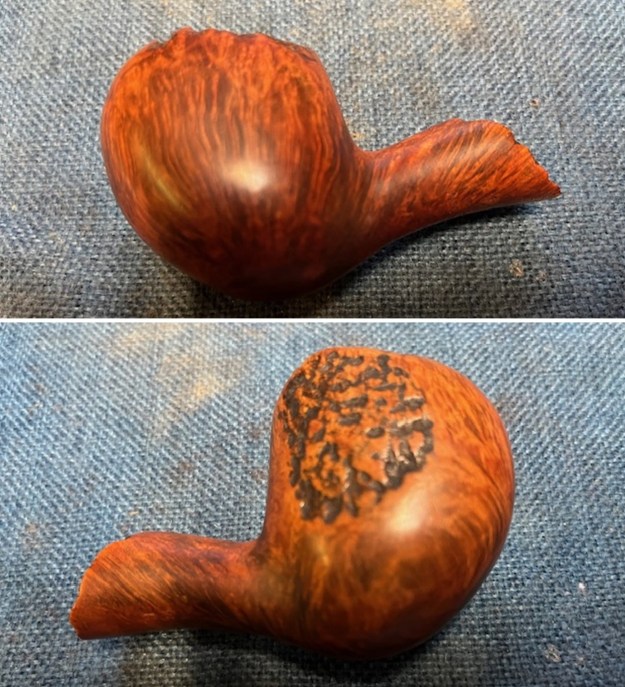
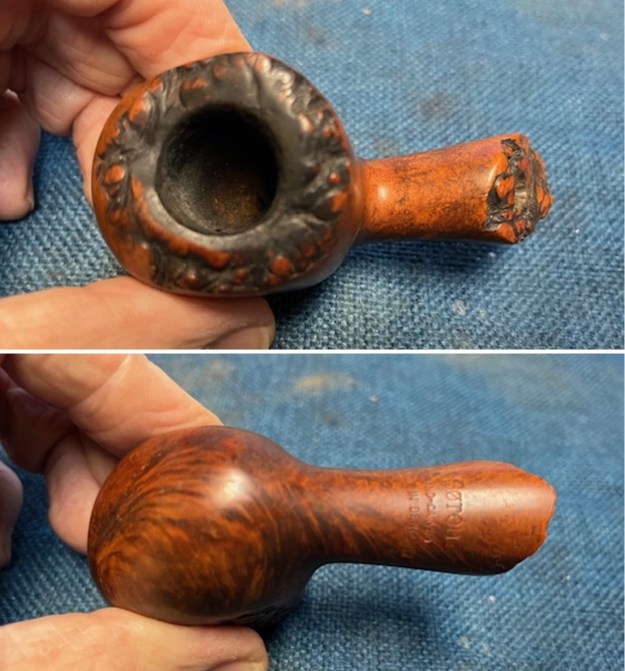
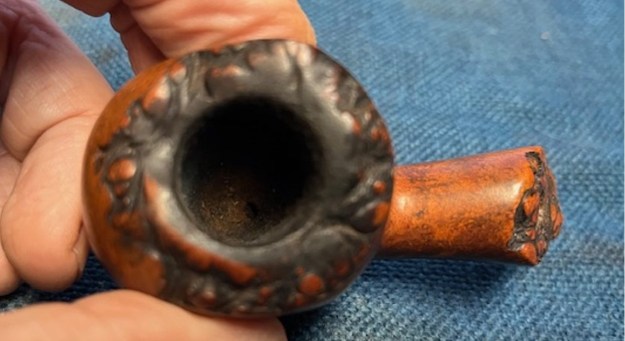
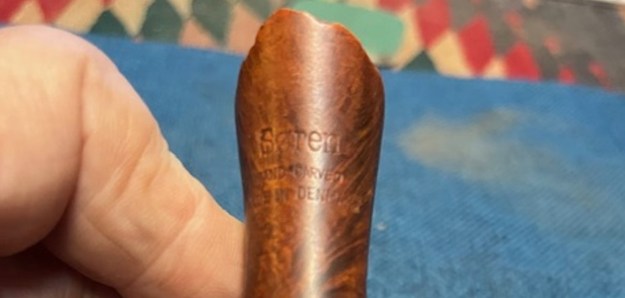
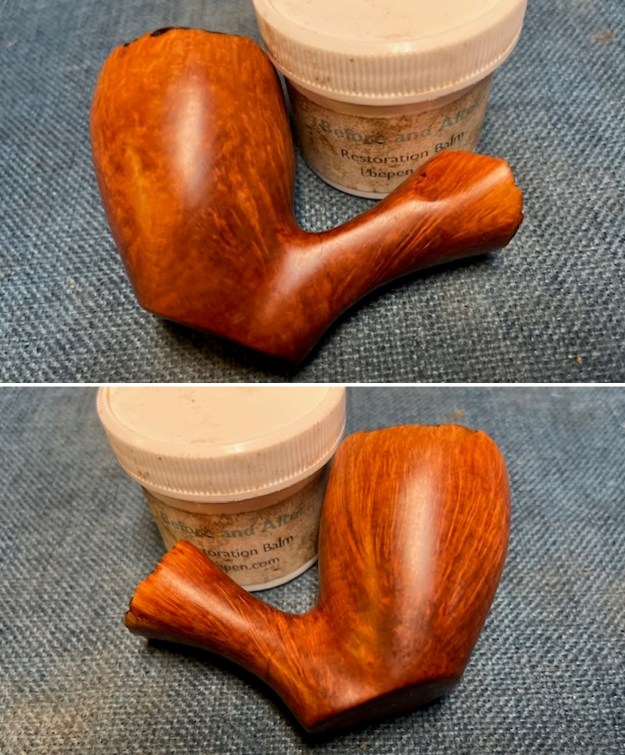
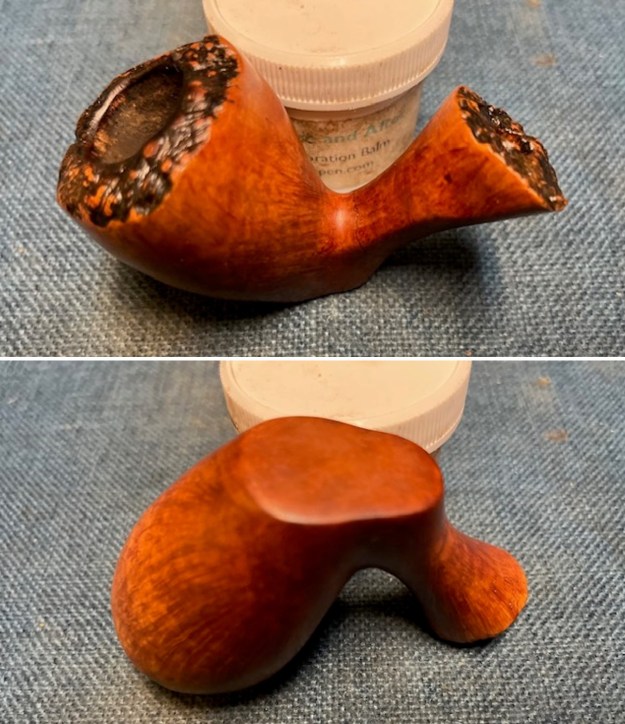
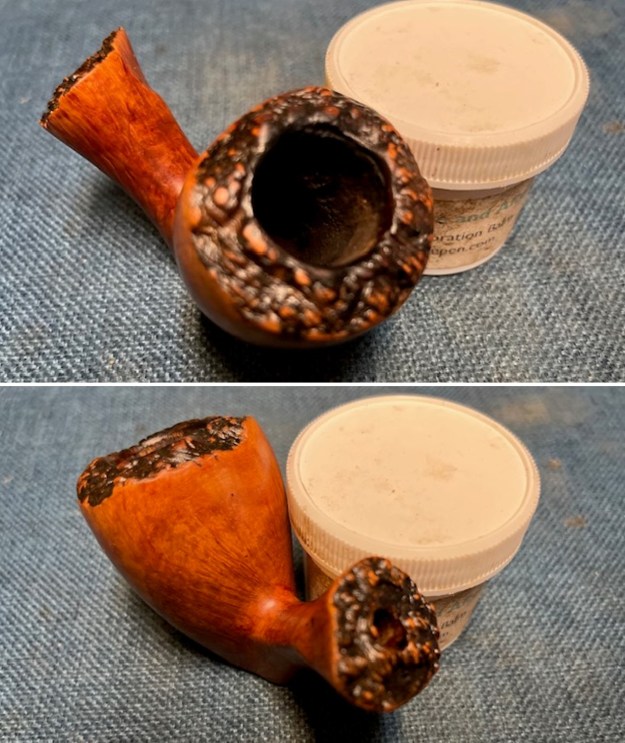
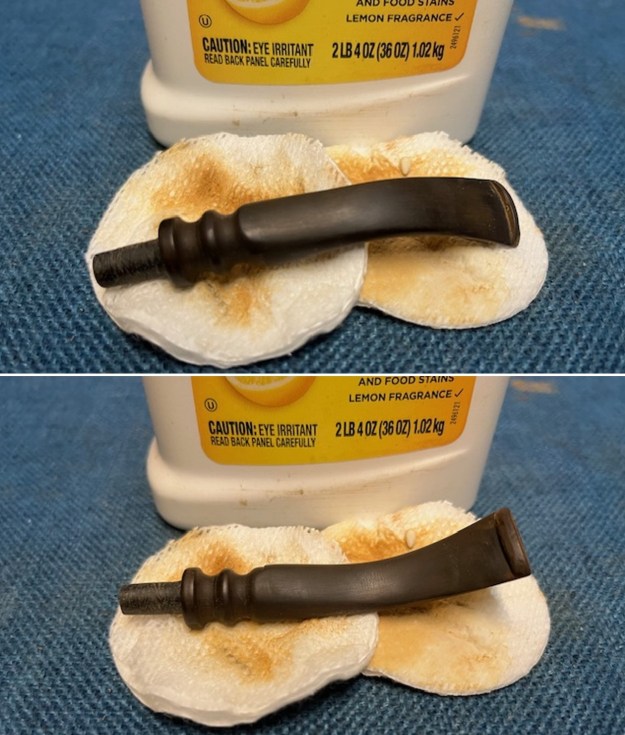
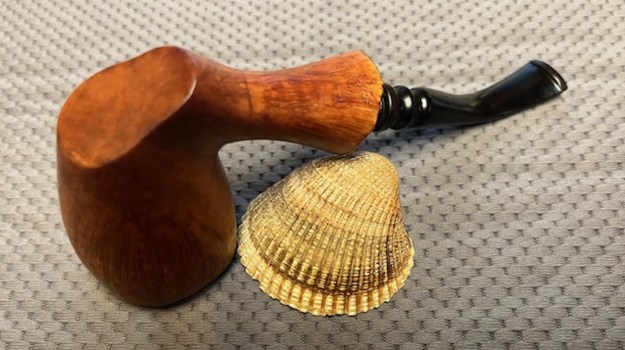
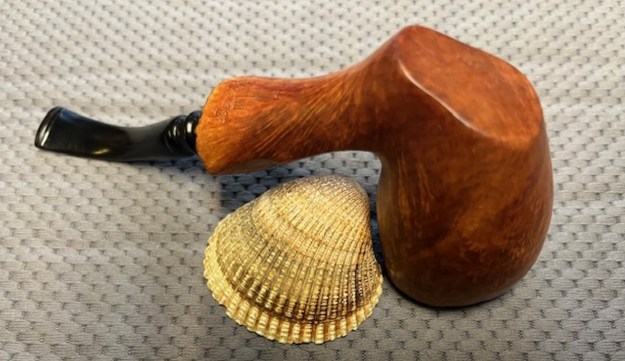
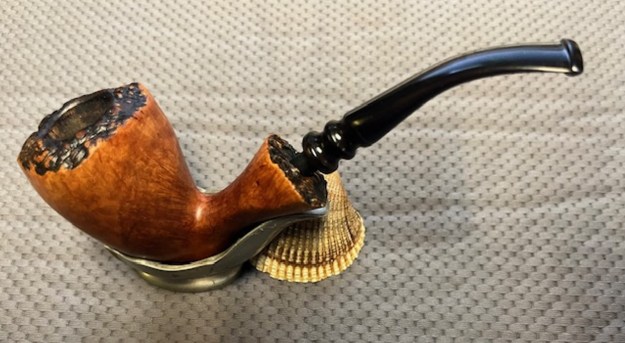
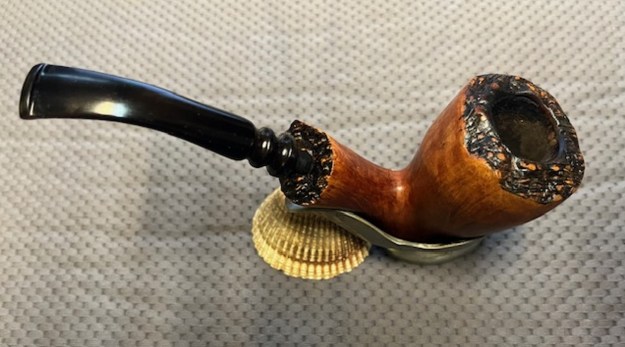
New Life for a Sixten Ivarsson Designed Stanwell Regd. No. 969-48 Hand Made Ukulele 91


By Steve Laug

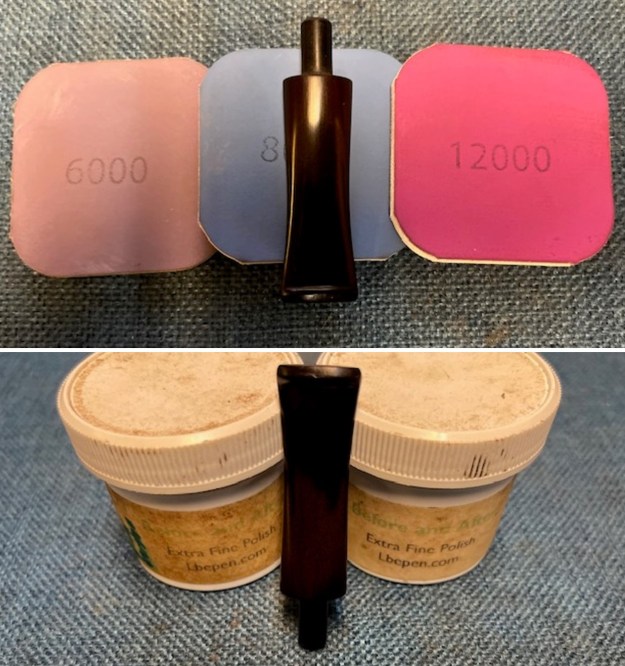
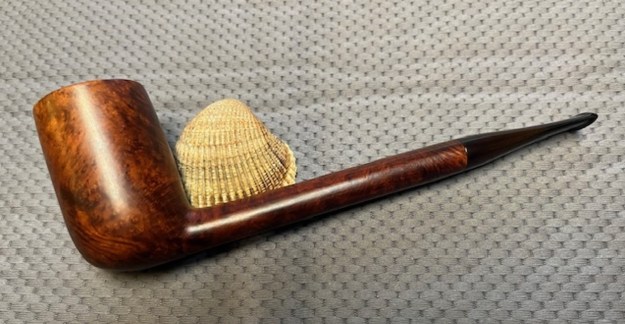
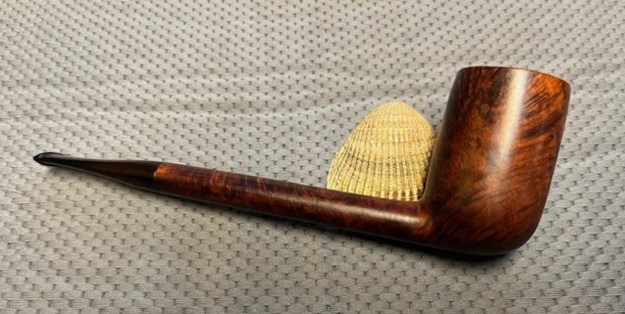
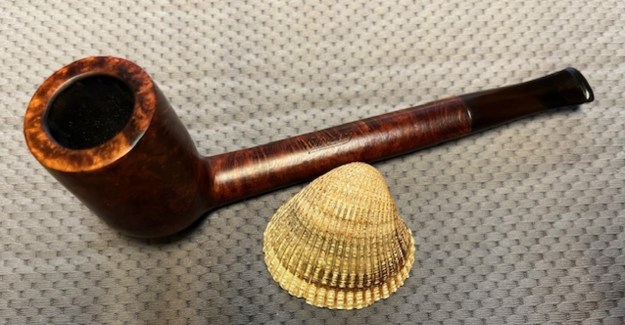
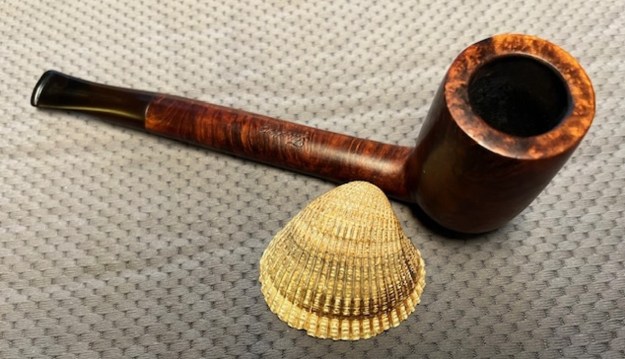
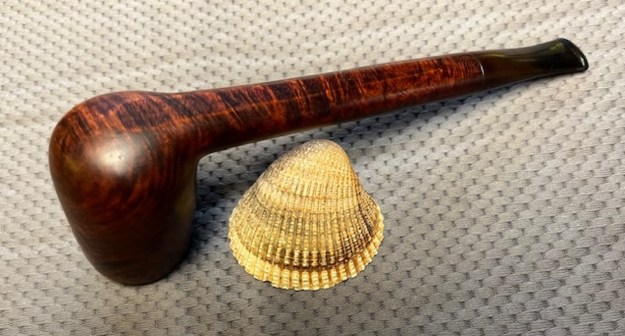
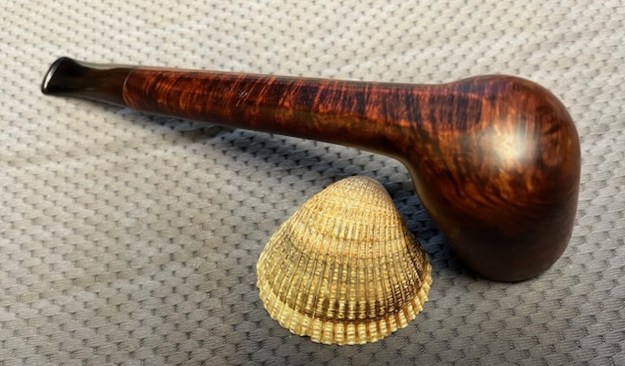
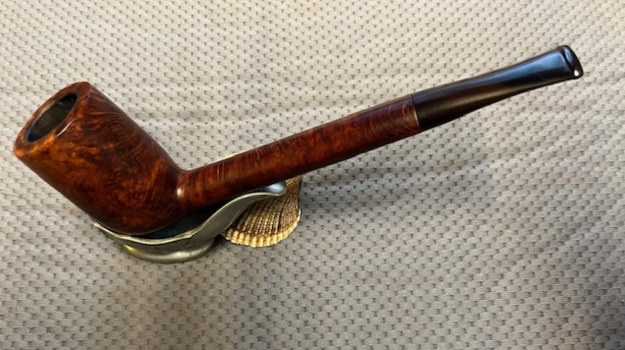
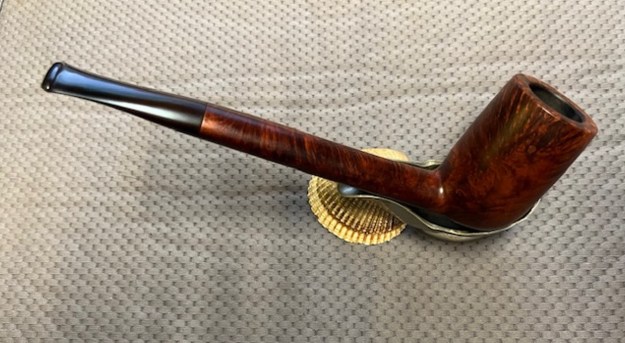
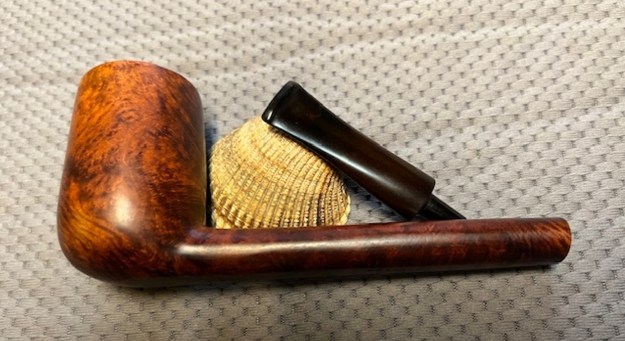
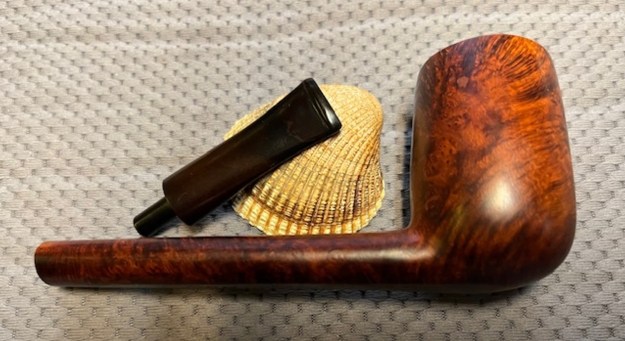
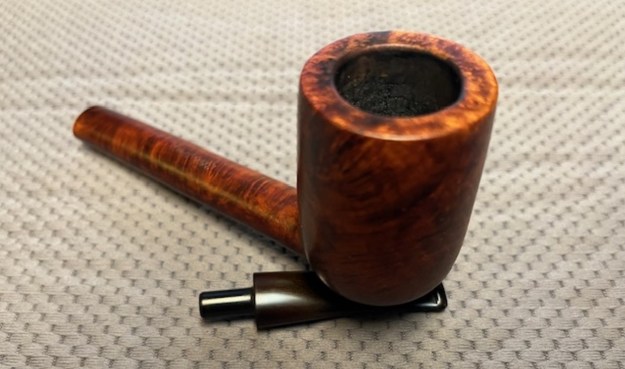
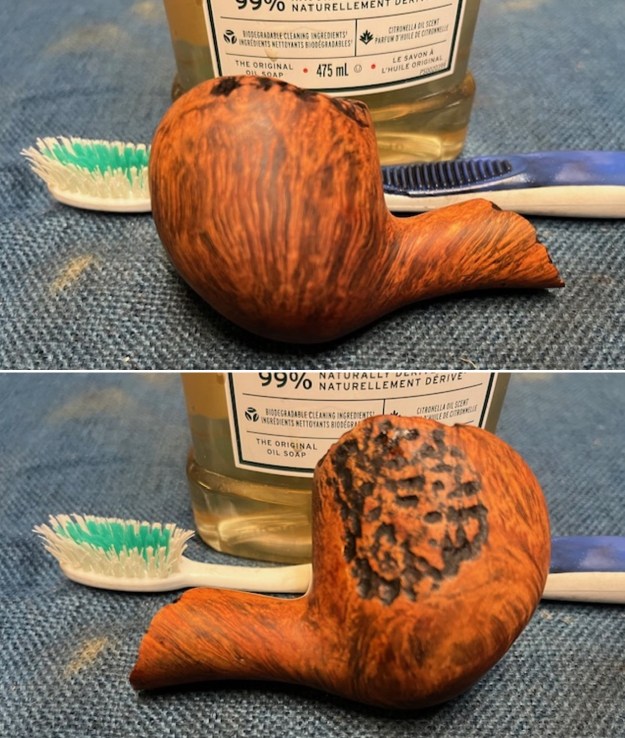
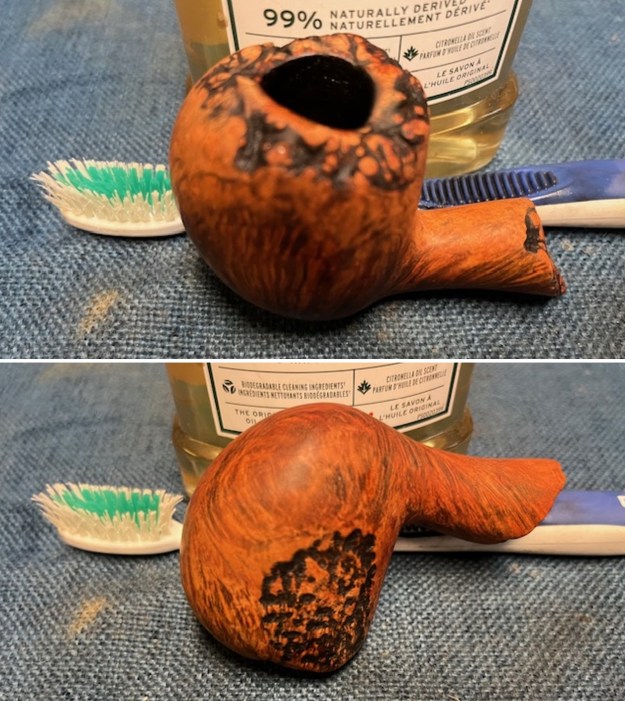
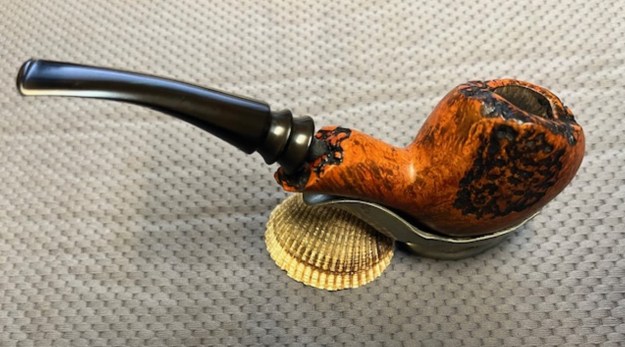
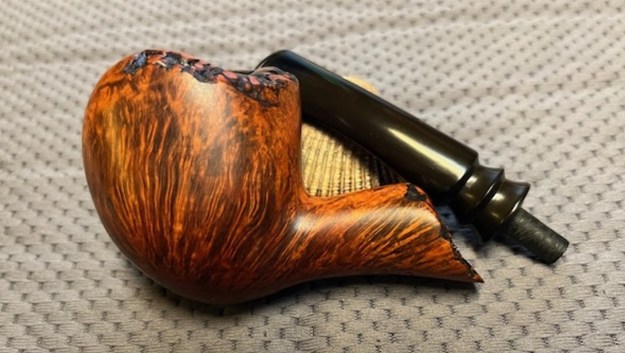
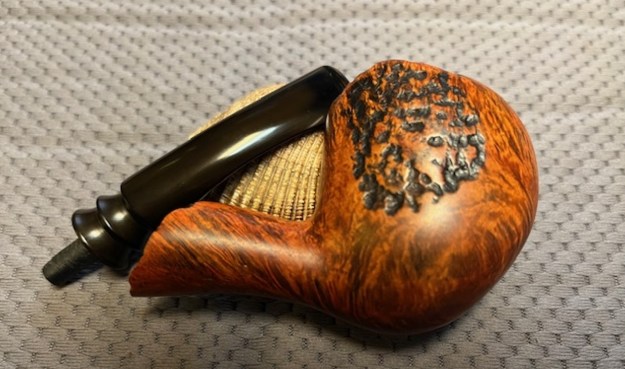
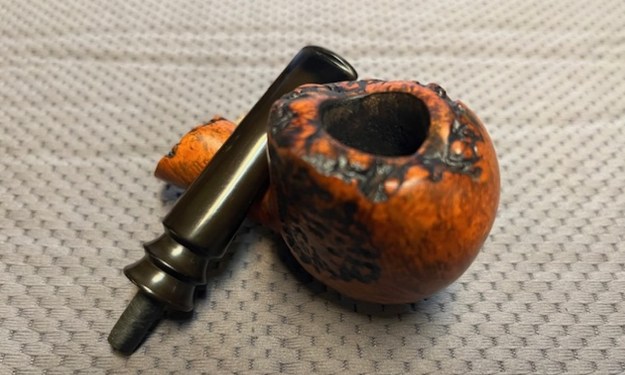
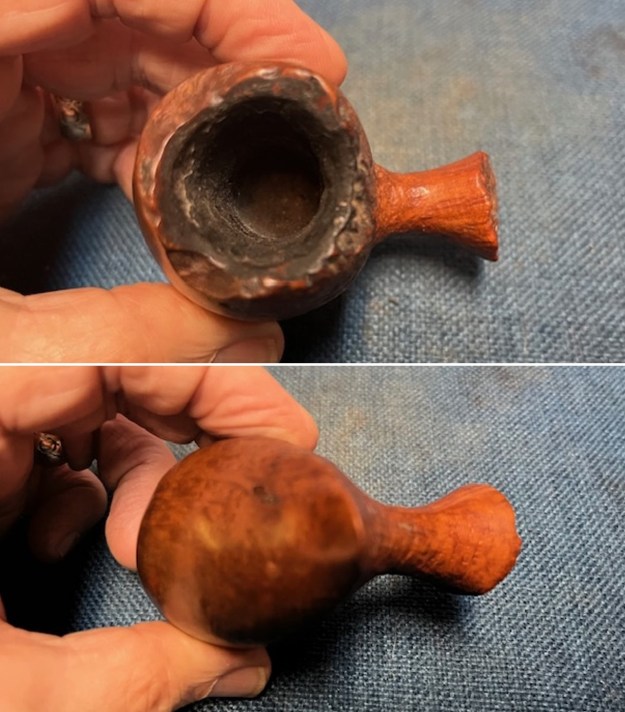
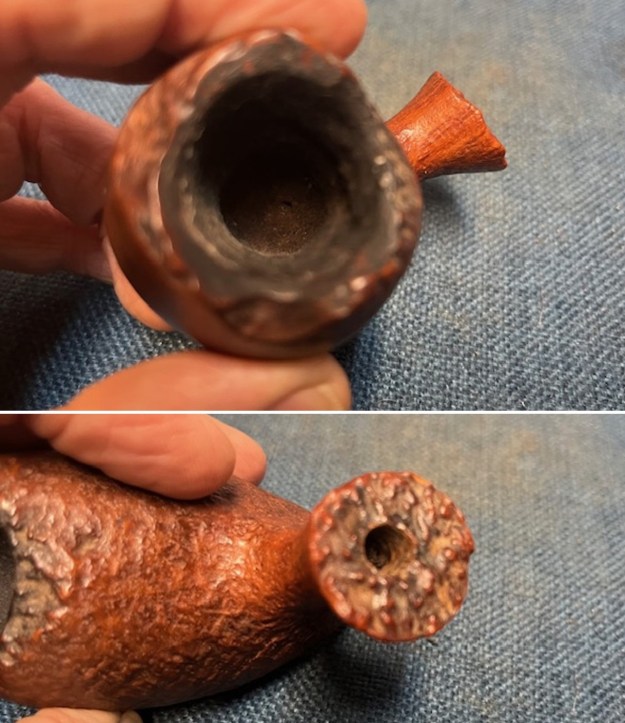
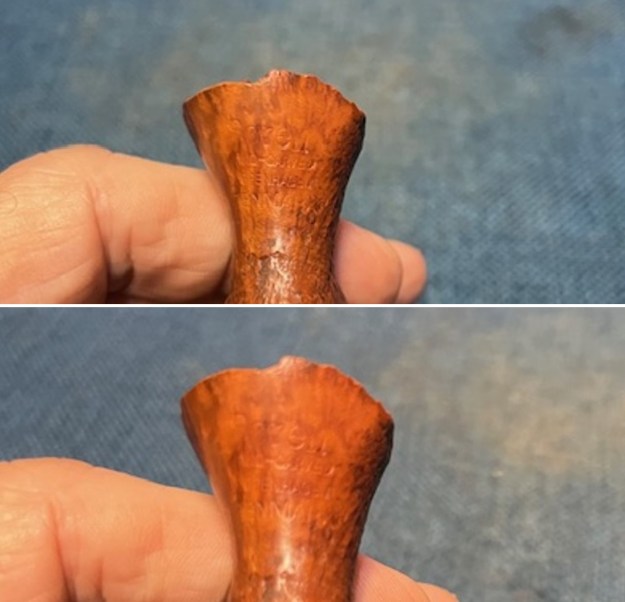
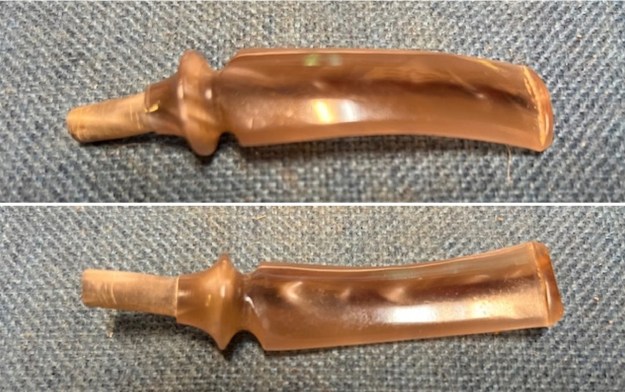
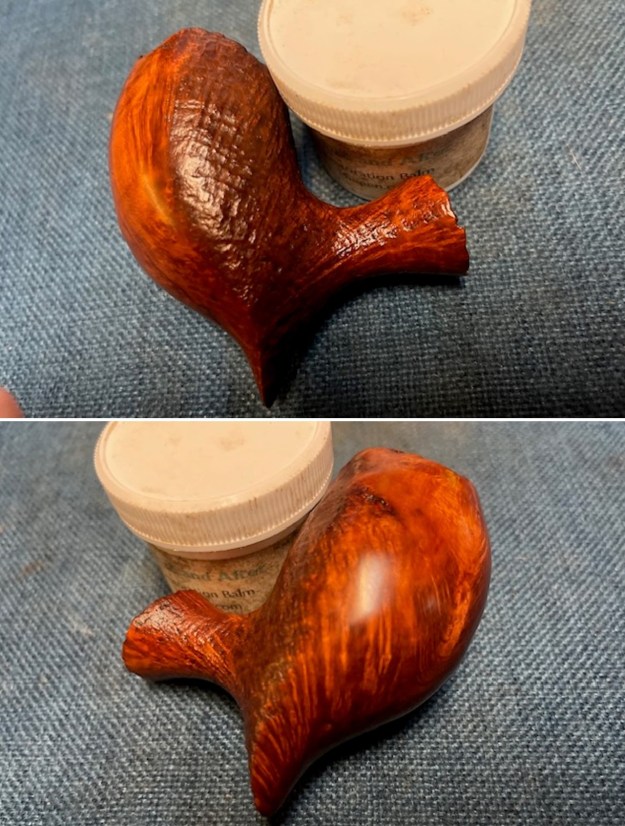
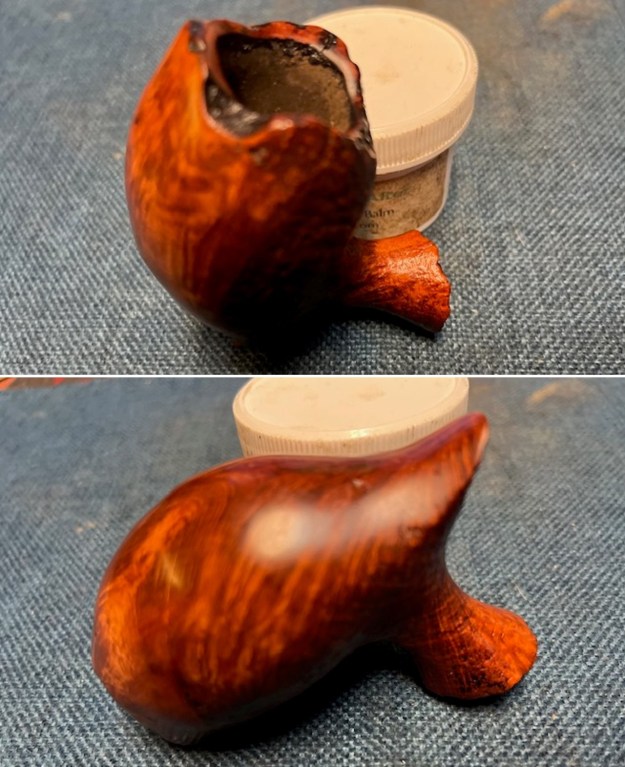
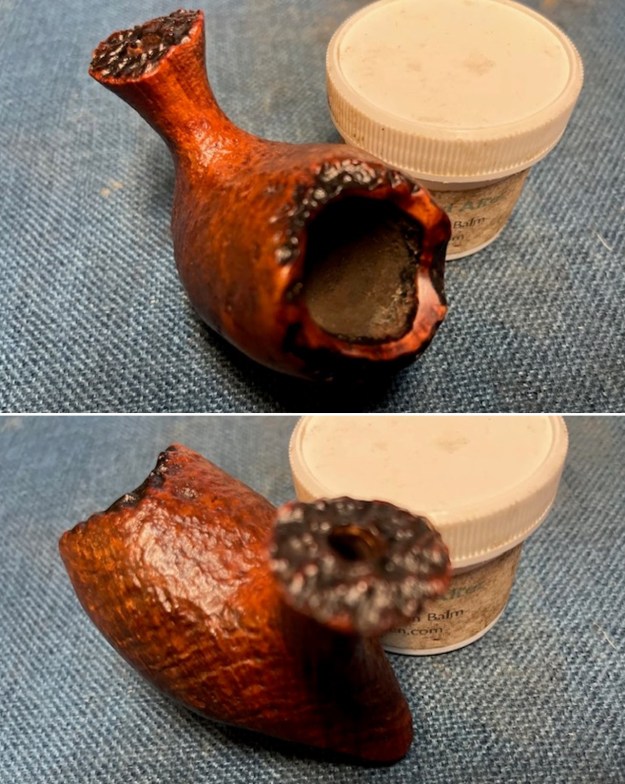
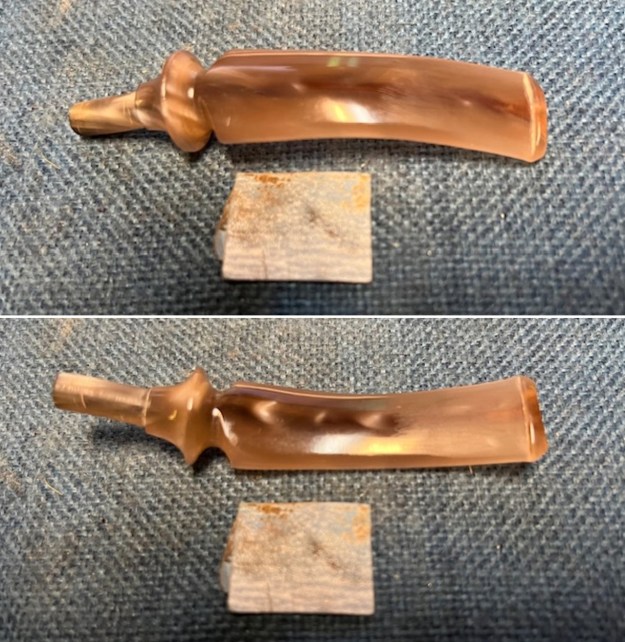
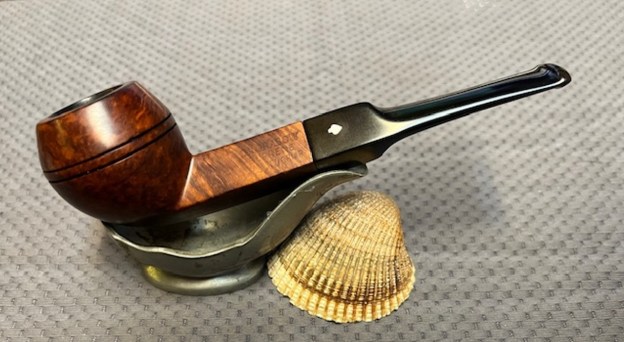
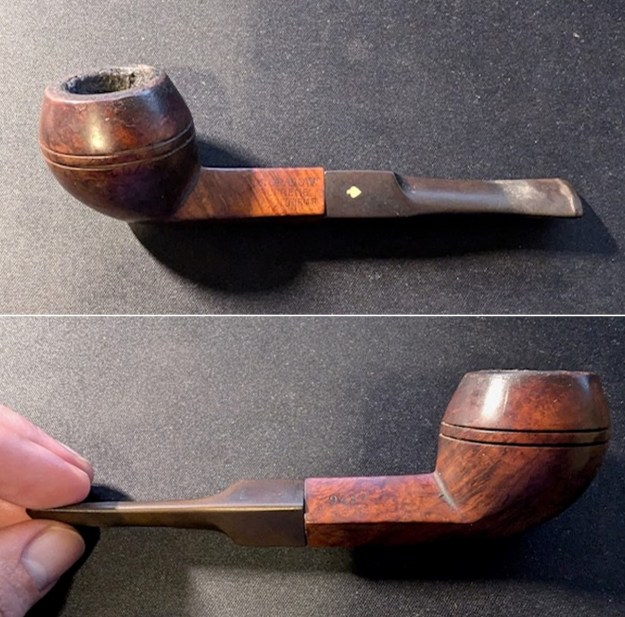
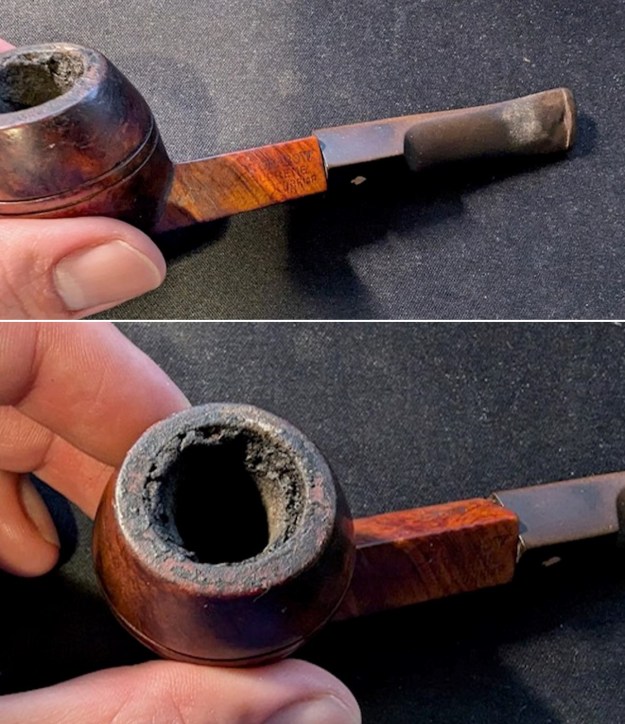
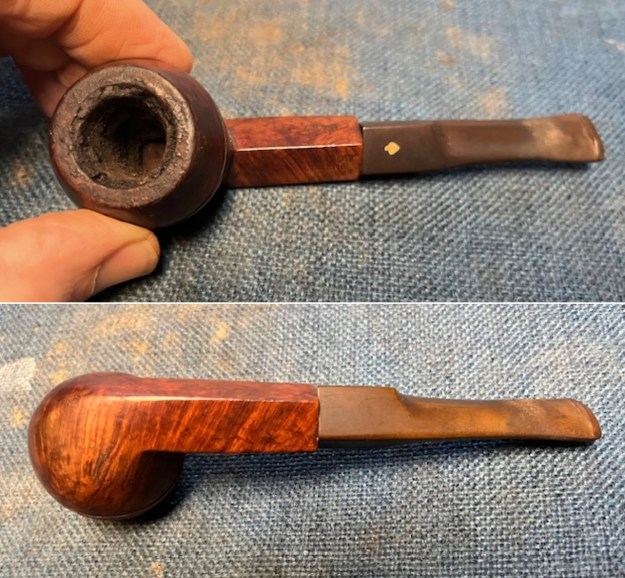
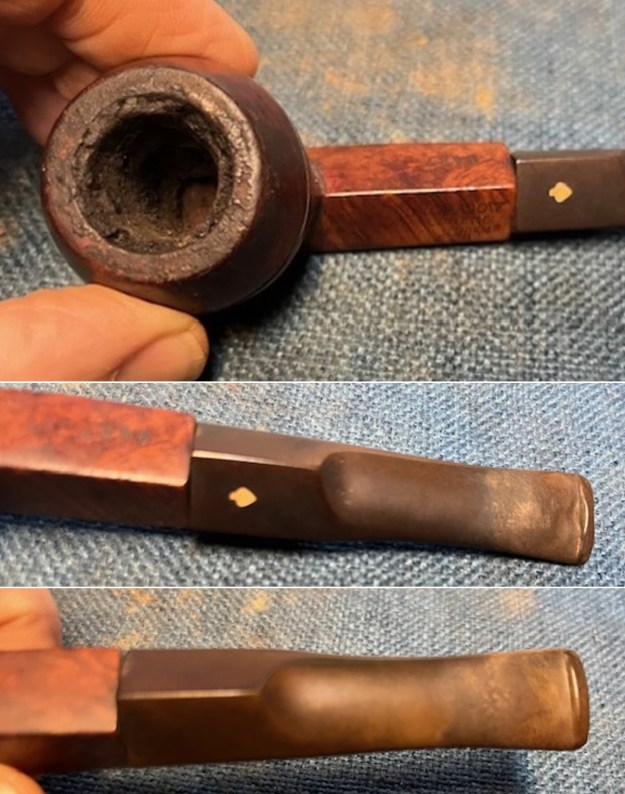
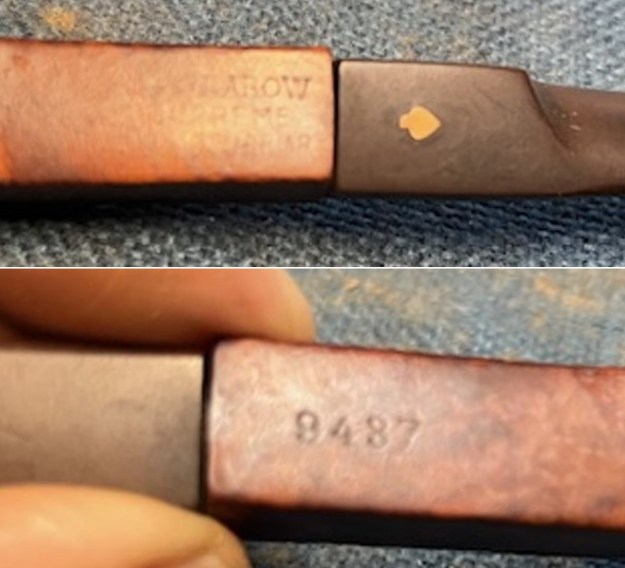
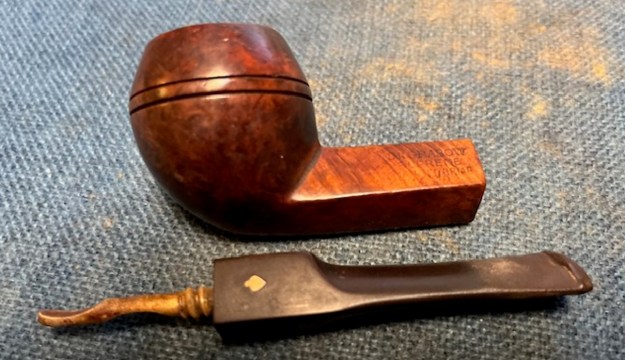
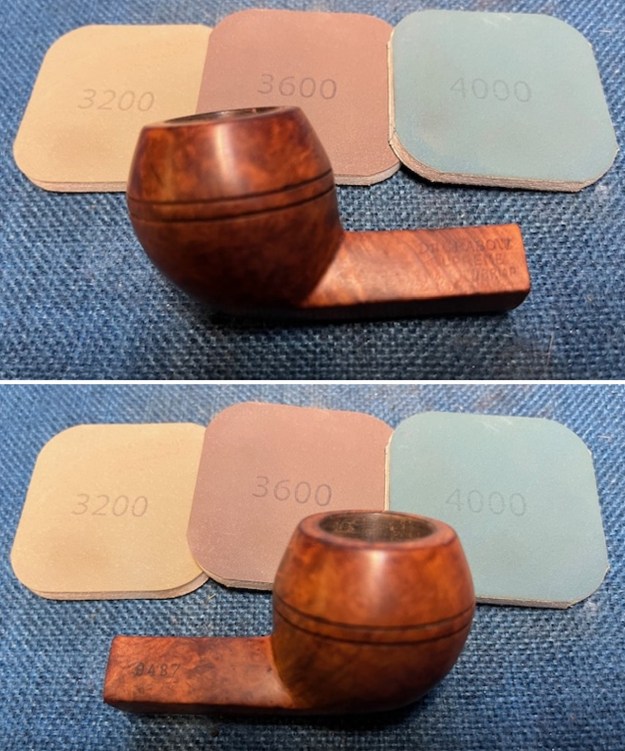
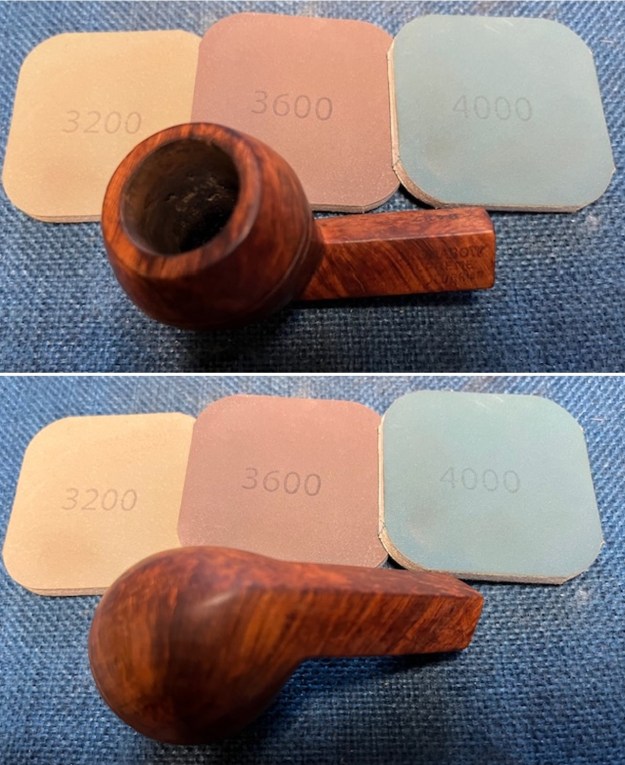
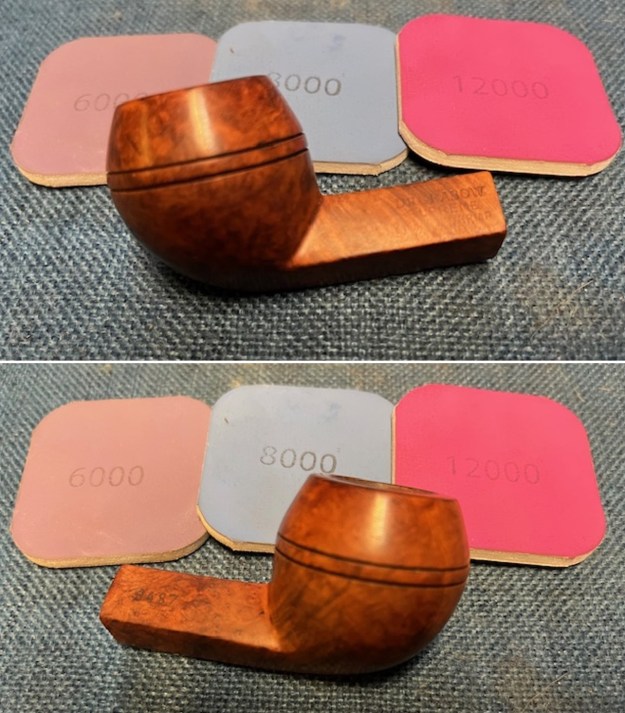
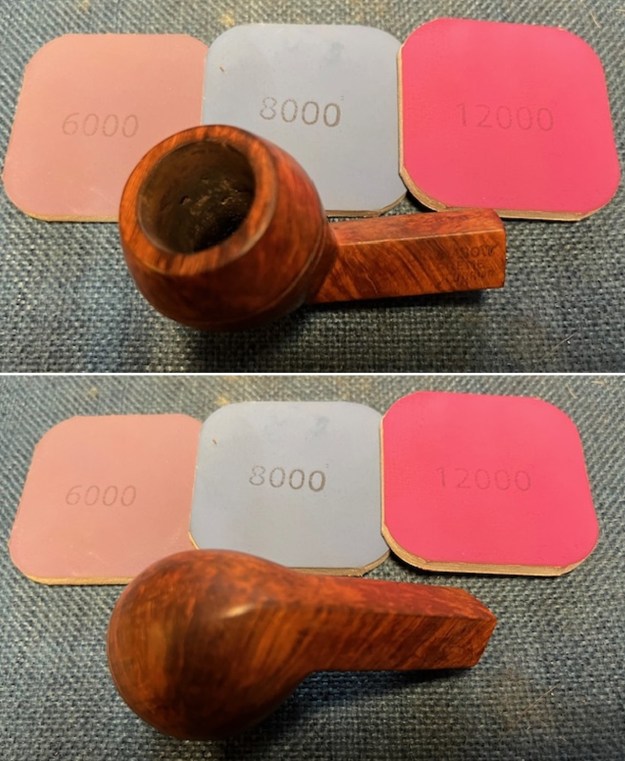
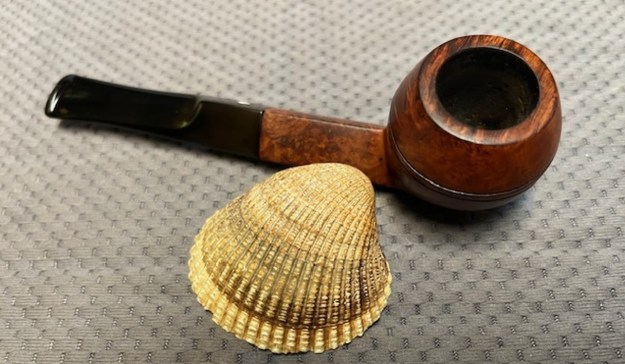
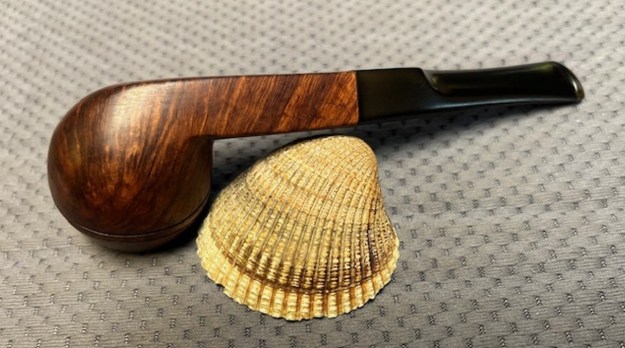
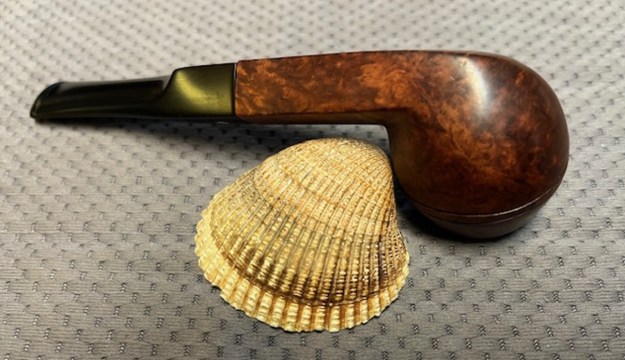
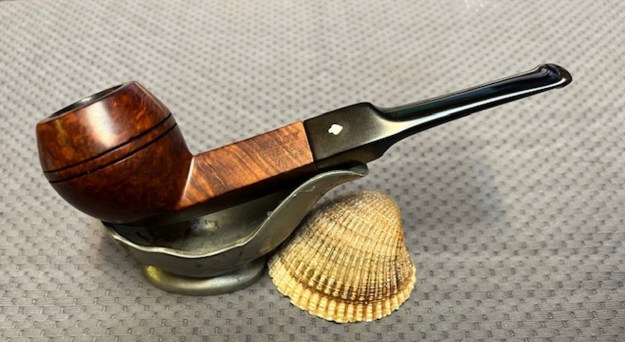
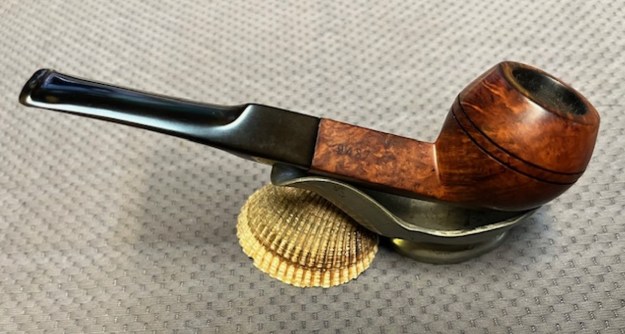
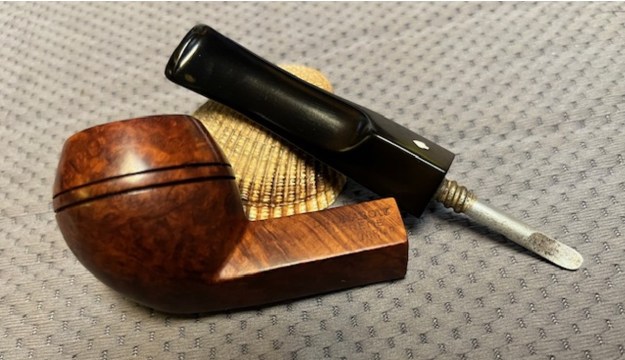
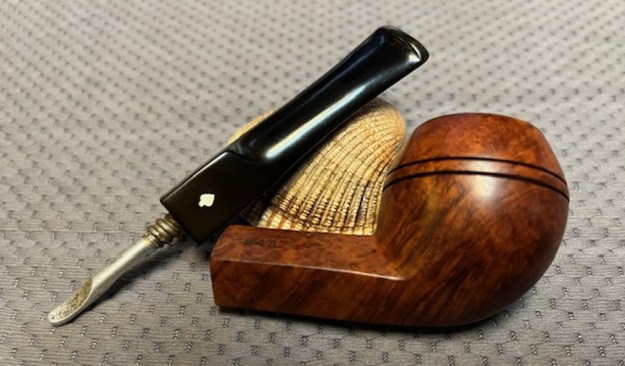
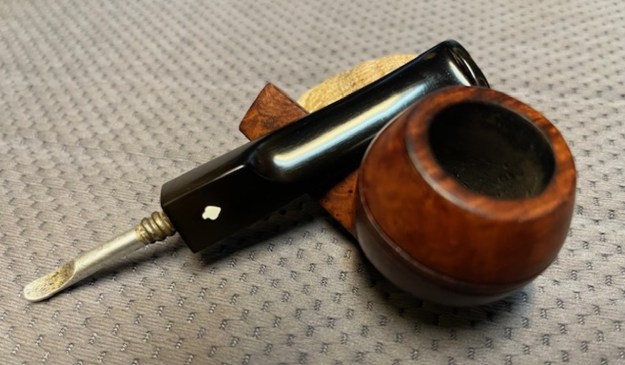
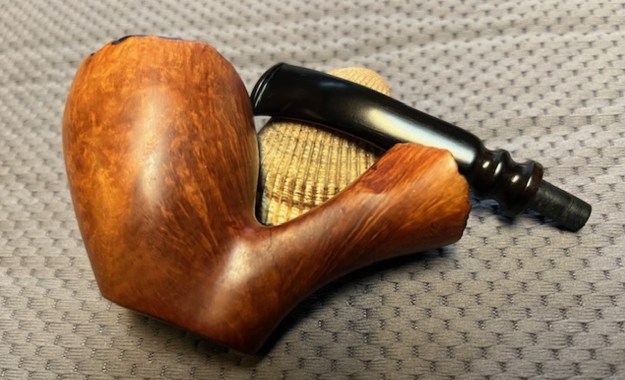
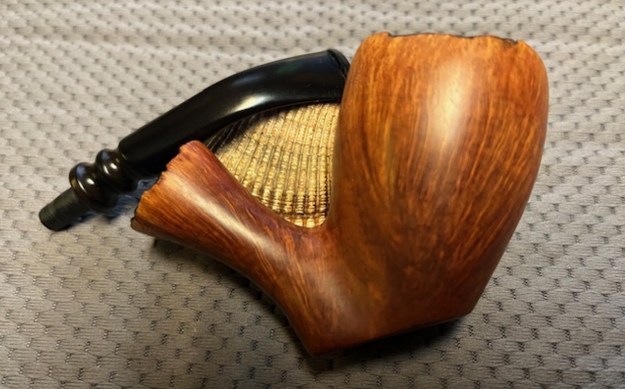
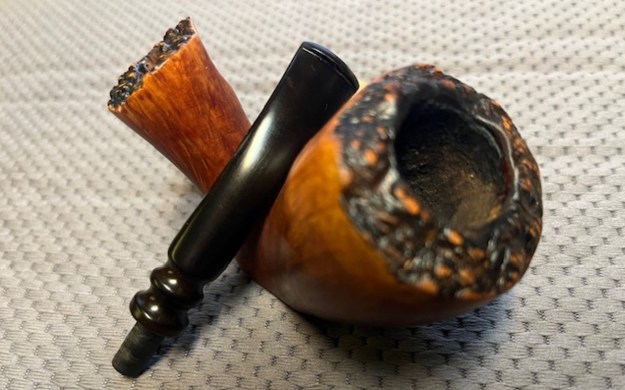
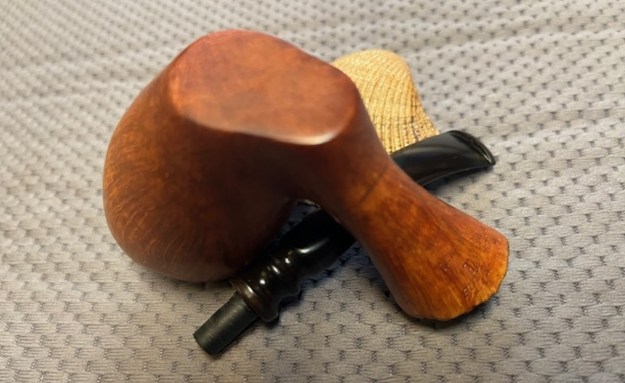
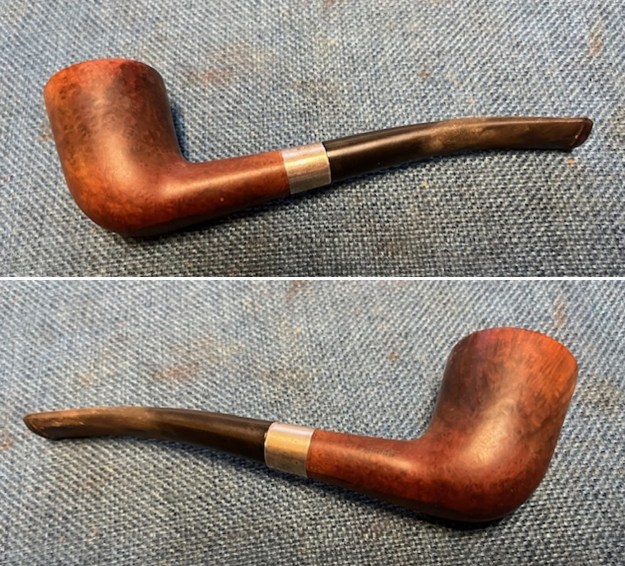
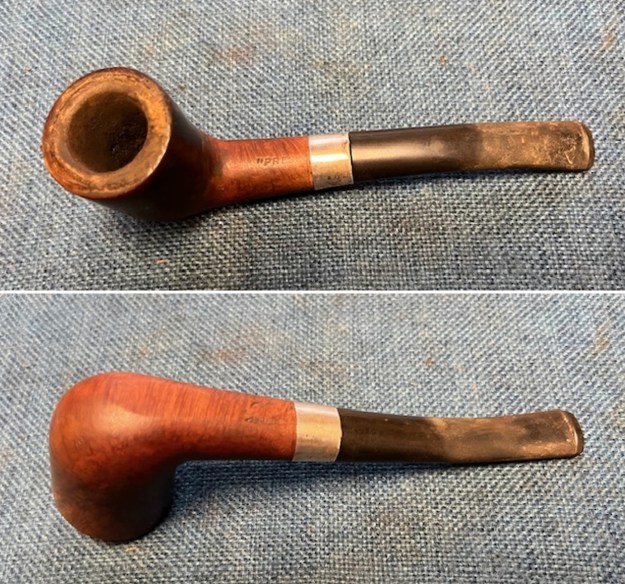
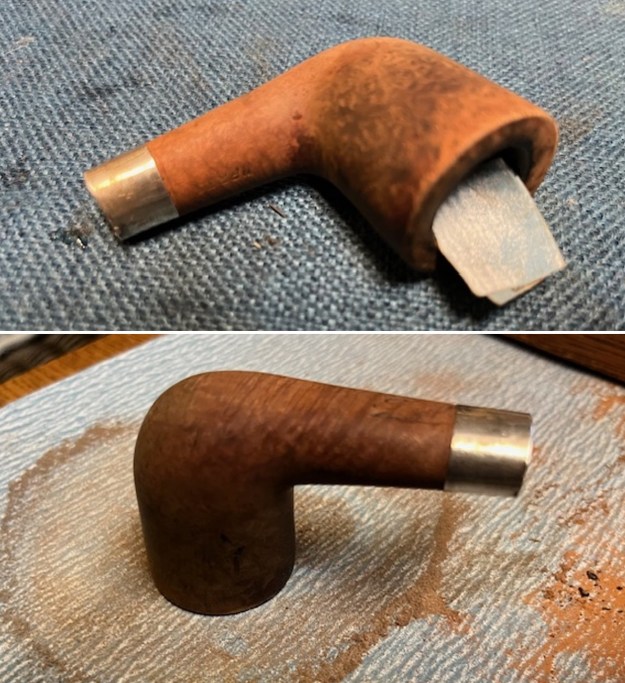
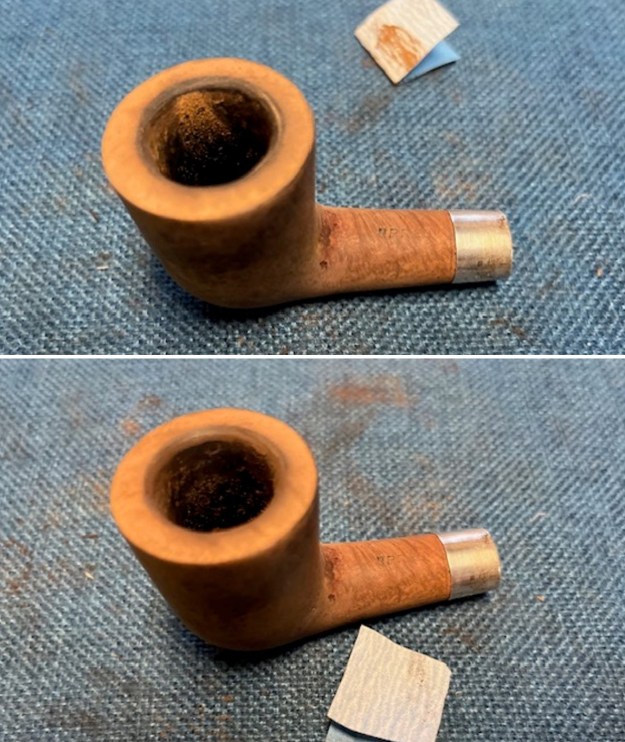
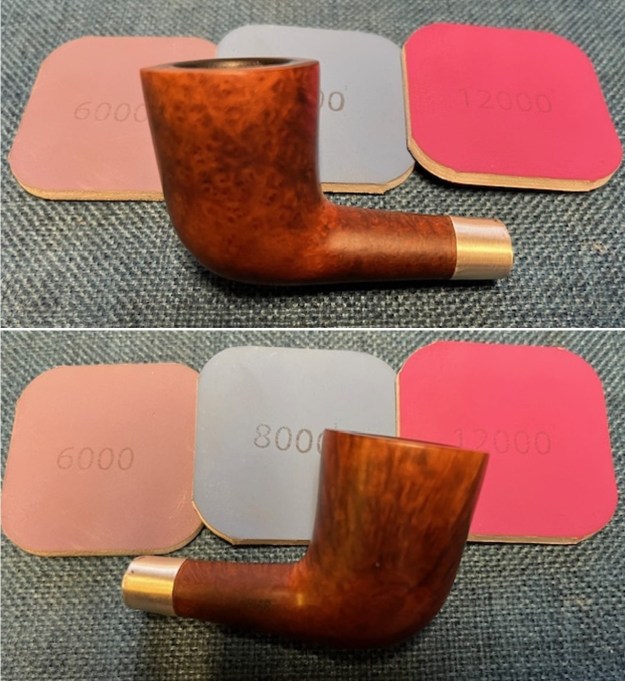
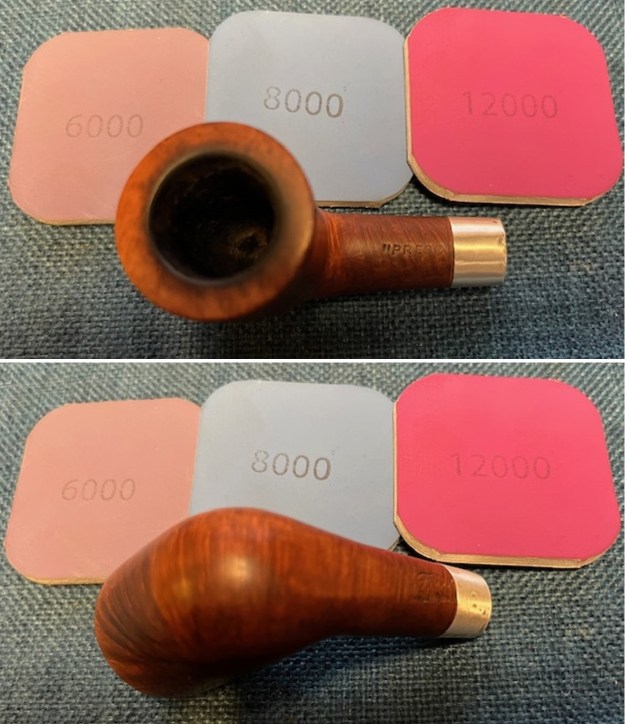
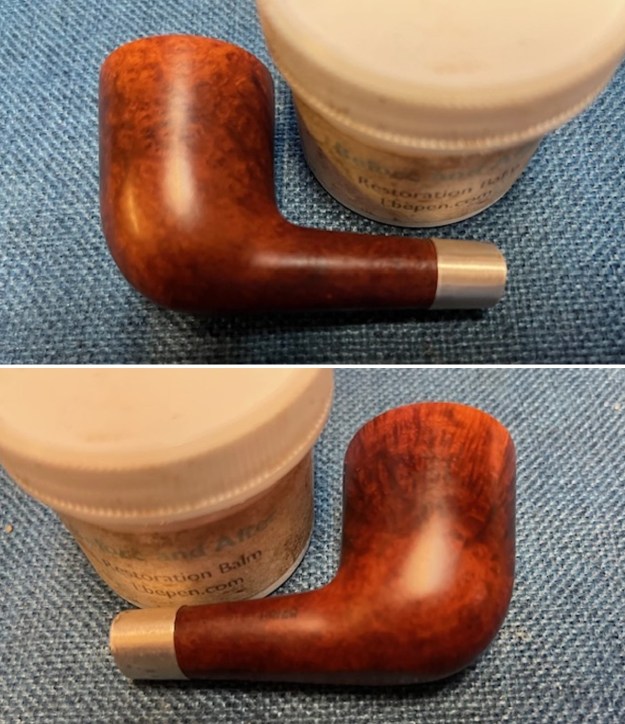
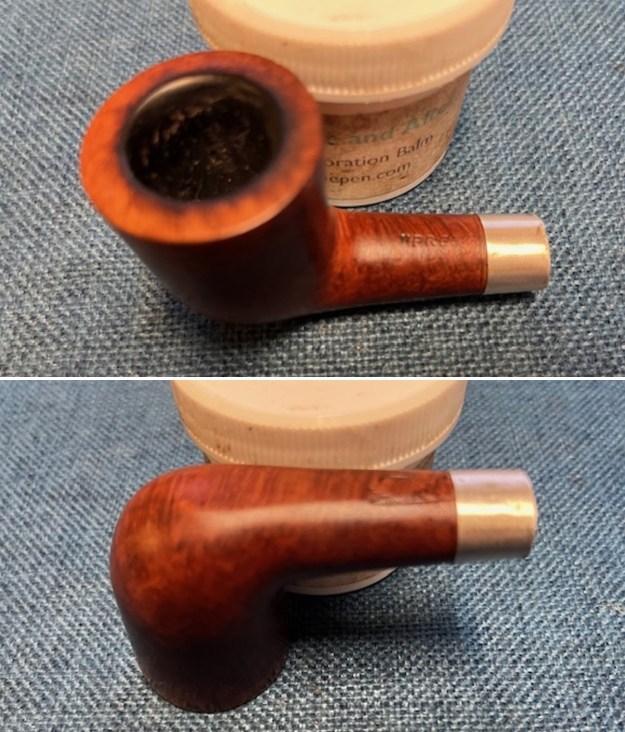
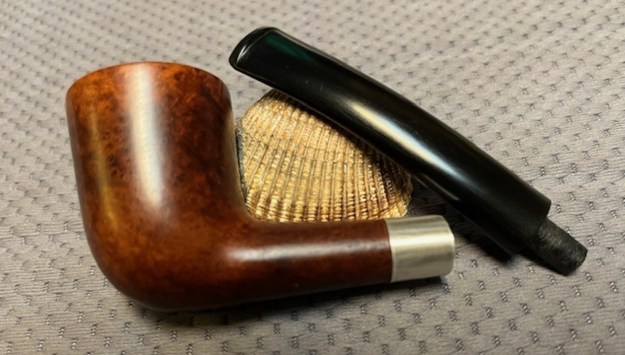
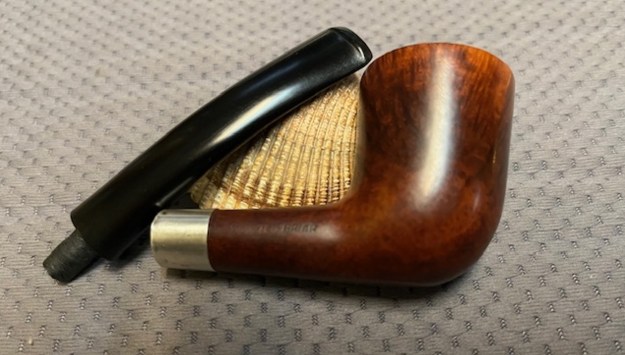
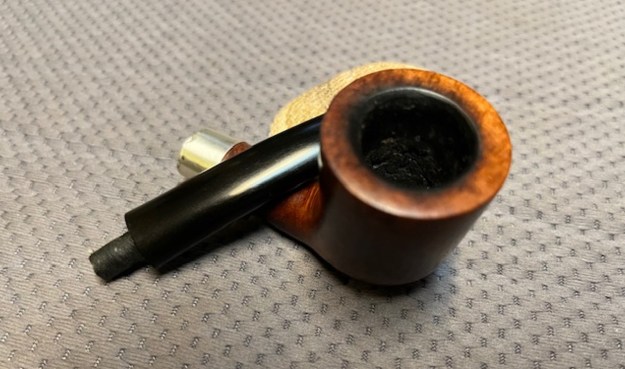
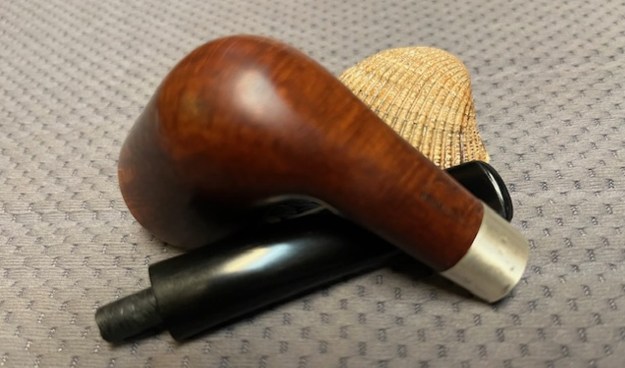
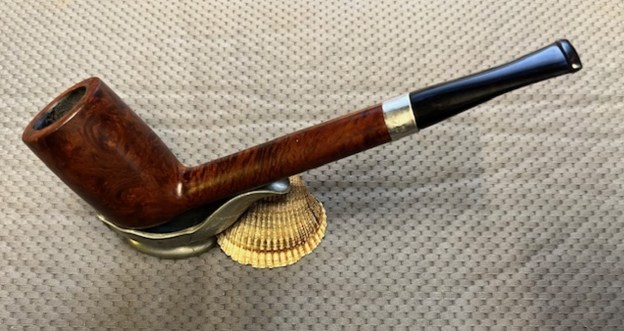
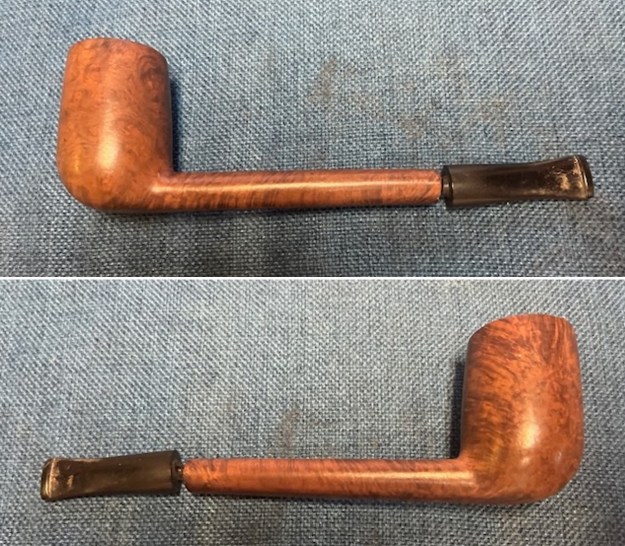
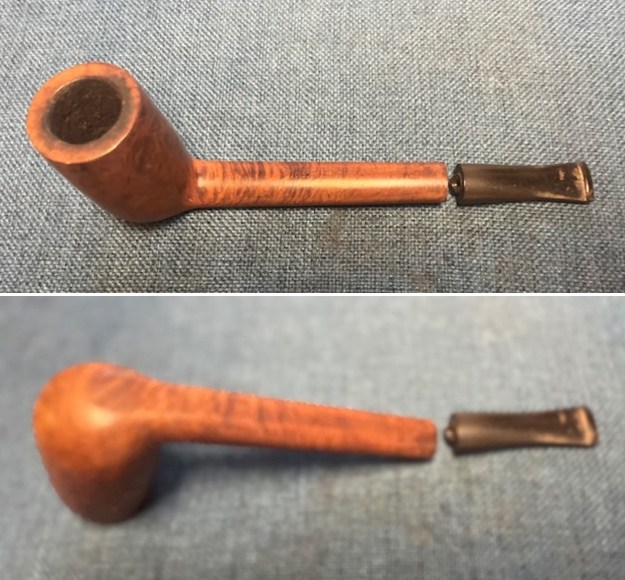
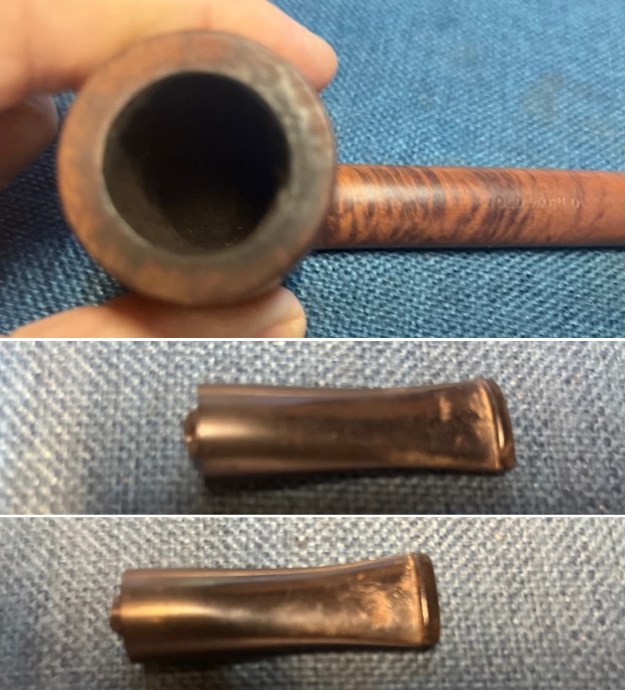
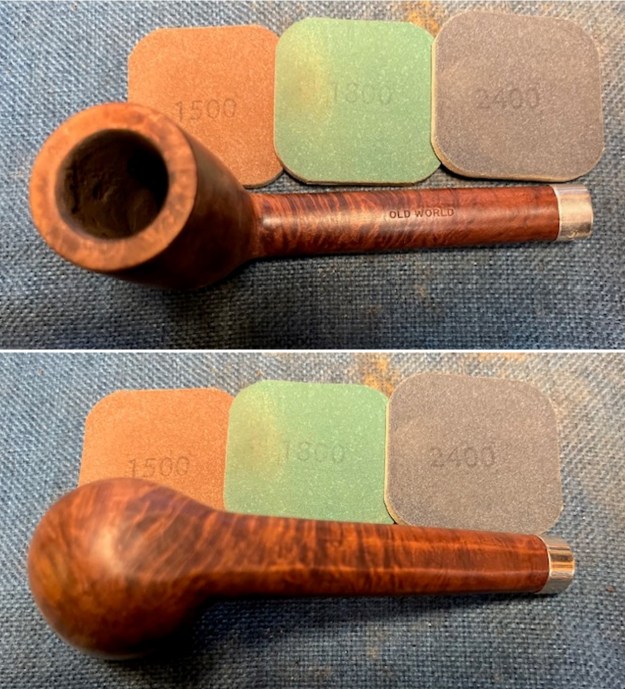
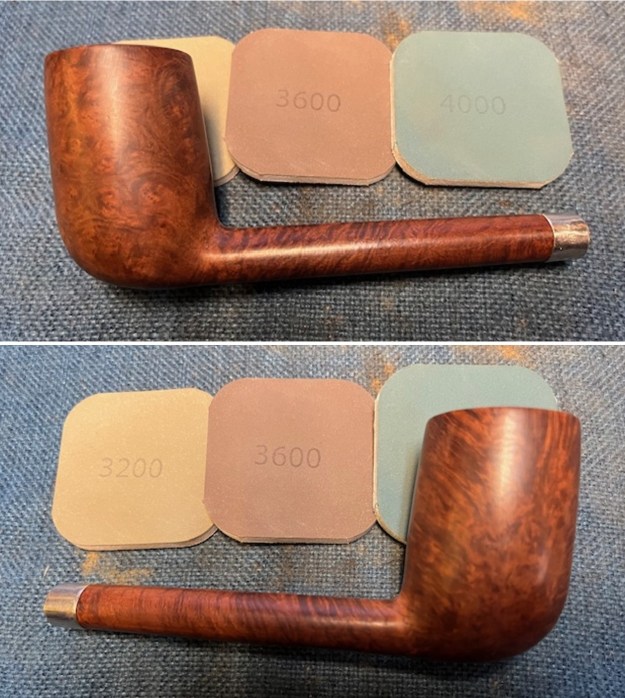
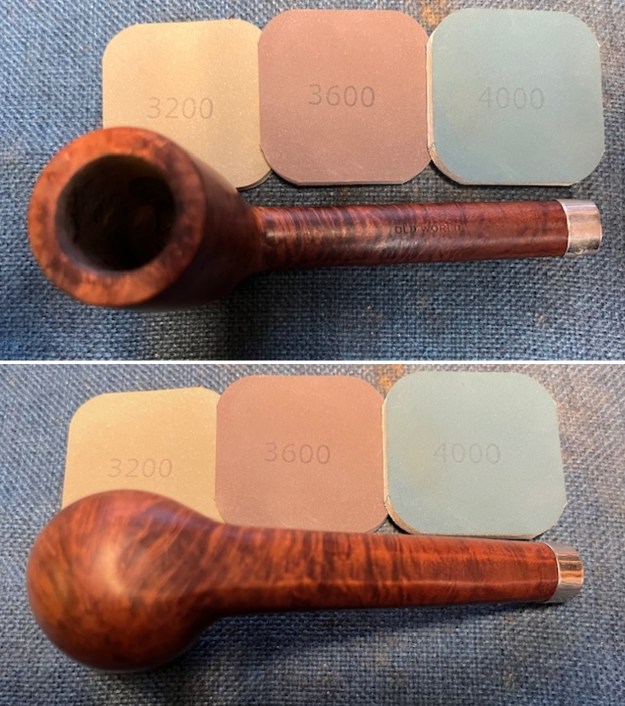
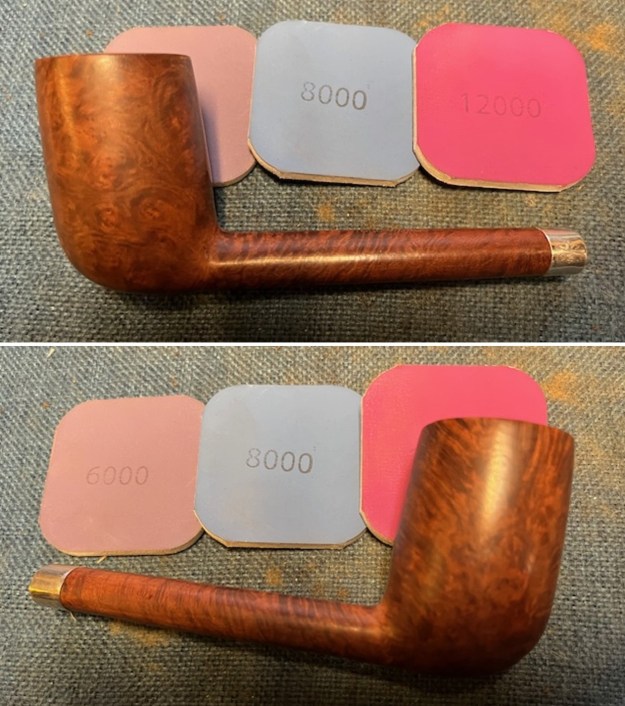
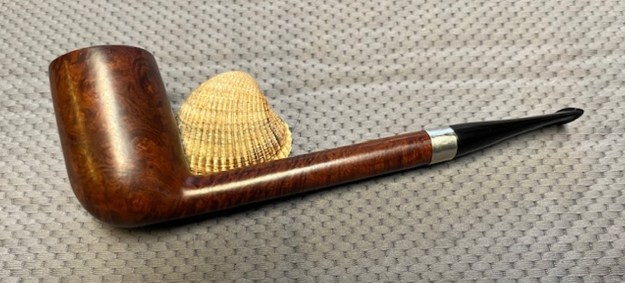
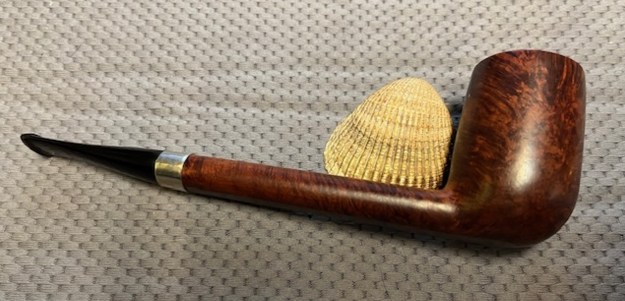
The next pipe on the table to work on is one that was purchased on 09/18/2020 from a seller in Los Angeles, California, USA. This is a oval shank ukulele with a smooth finish and an oval shank, vulcanite saddle stem. It is another Made in Denmark Stanwell. The smooth finish on this pipe, around the bowl and shank has a mix of grain highlighted by the brown stain. The pipe is stamped on the topside of the shank and reads STANWELL [over] Regd. No. 969-48 [over] Hand Made. On the underside of the shank the shape number 91 is stamped [over] Made In Denmark. The pipe was a well used pipe when Jeff received it. There was dust and grime ground into the finish on the sides of the bowl. The brown stain highlights some mixed grain under the dirt. The bowl was thickly caked and there was an overflow of lava on the smooth rim top. The condition of the inner edge was hard to know due to the lava coat but there appeared to be some nicks in the edge. The saddle stem is vulcanite and was dirty, oxidized and had light tooth marks, chatter and scratches on both sides ahead of the button and on the button itself. There is a stamped Crown S logo on the topside of the saddle stem. Jeff took photos of the pipe before he started his clean up work on it. He took photos of the bowl and rim top to show what they looked like before his clean up. You can see the cake in the bowl and the spattering of lava on the rim top and inner edges. You can see the nicks in the inner edge of the rim. He also took some of the stem to show the condition of both sides. It is heavily oxidized and calcified and very dirty. There appear to be tooth marks and chatter on both sides of the stem ahead of the button and on the button surface itself. The photos of the sides and heel of the bowl show the grain around the bowl and shank. The grime hides the grain in many ways. The finish on the pipe is worn but the grain stands out. The stamping was on the top and underside of the shank as noted above. It is clear and readable as noted above. The Crown S stamp on the top of the saddle stem can partially be seen in the first photo below. Before I started my work on the pipe I wanted to see if I could find any information that would help me get a sense of the background on the pipe. I turned to Pipephil to see if there was any listing on the

I then turned to Pipedia (https://pipedia.org/wiki/Stanwell) for more information. The article is great and gives a lot of history on the brand. There was a category of pipe call Pre-regd. 1945-1948 where all the photos of pipes had the same stamping as the one I am working on. That gave me a clue as to the dating on this particular pipe – it was made between 1945-1948.

There were also links to a shape article by Bas Stevens that I originally published on rebornpipes. I looked up the 91 shape number to see who had designed that shape (https://pipedia.org/wiki/Stanwell_Shape_Numbers_and_Designers). I quote the information below.

  1. Slightly bent wide, flattened volcano with an oval shank and a short, standard saddle, trapezoidal saddle, or tapered stem, by Sixten Ivarsson. Nicknamed the ‘Ukelele’ (pictured, right, in its reissued design).

Now it was time to work on the pipe.

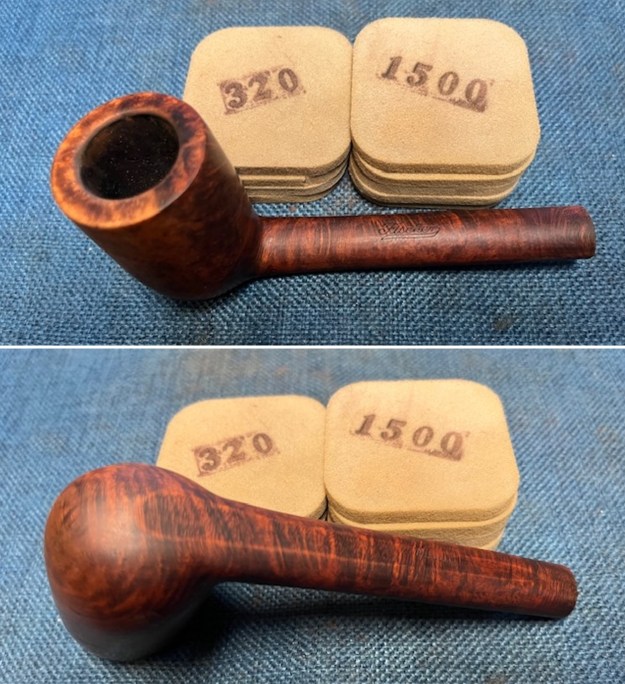
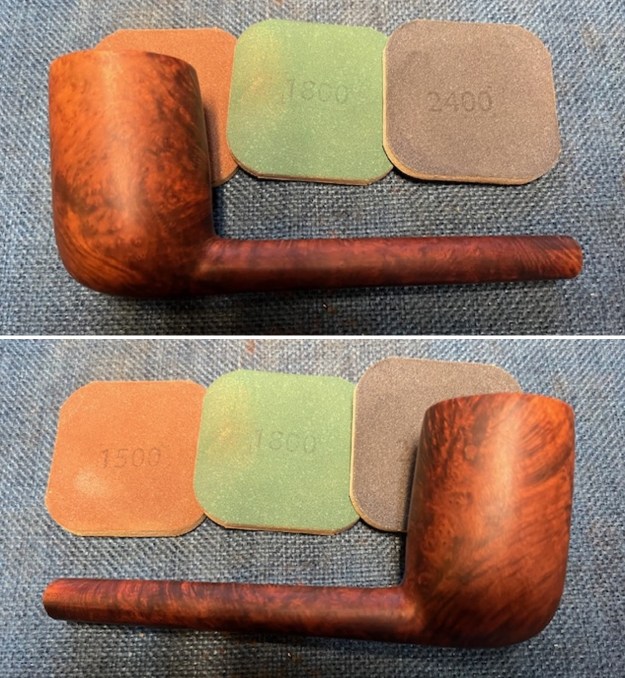
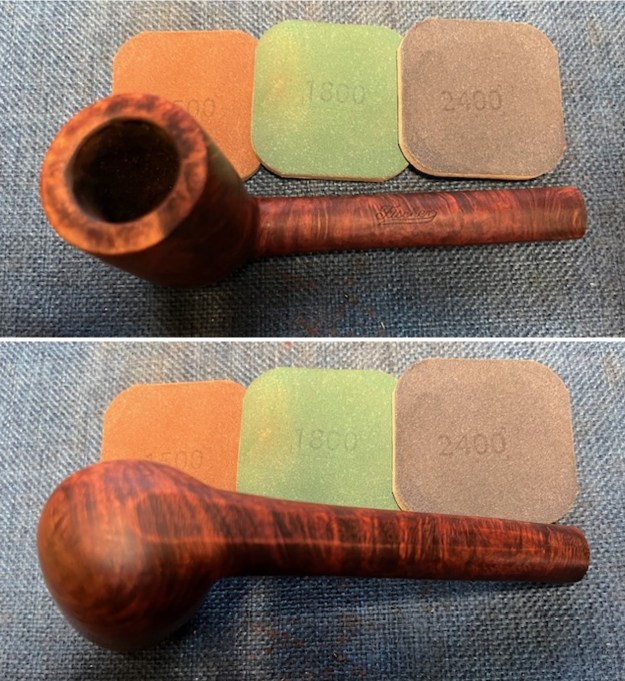
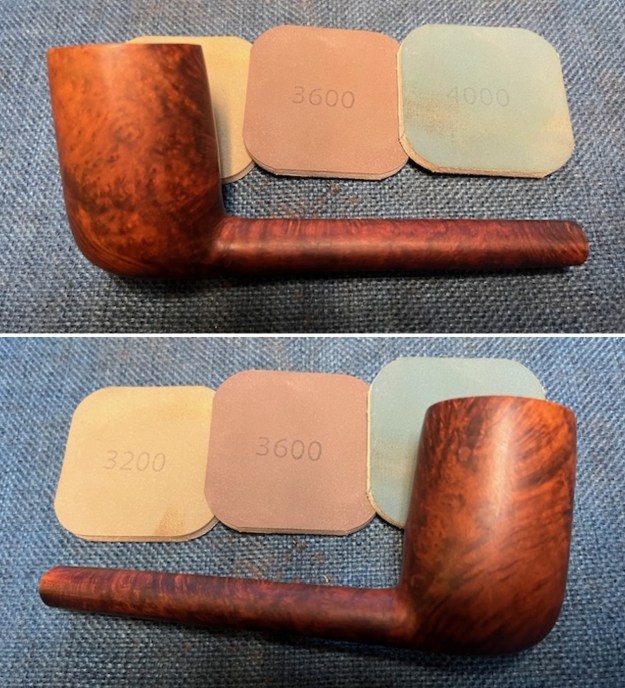
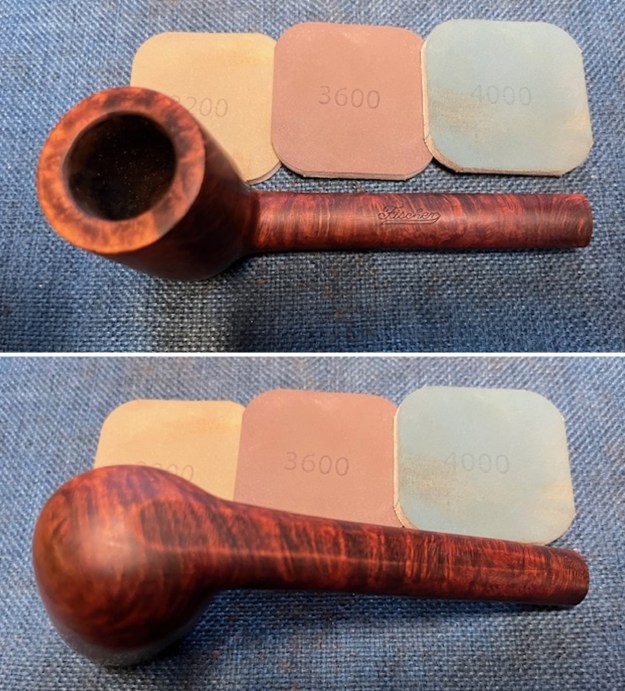
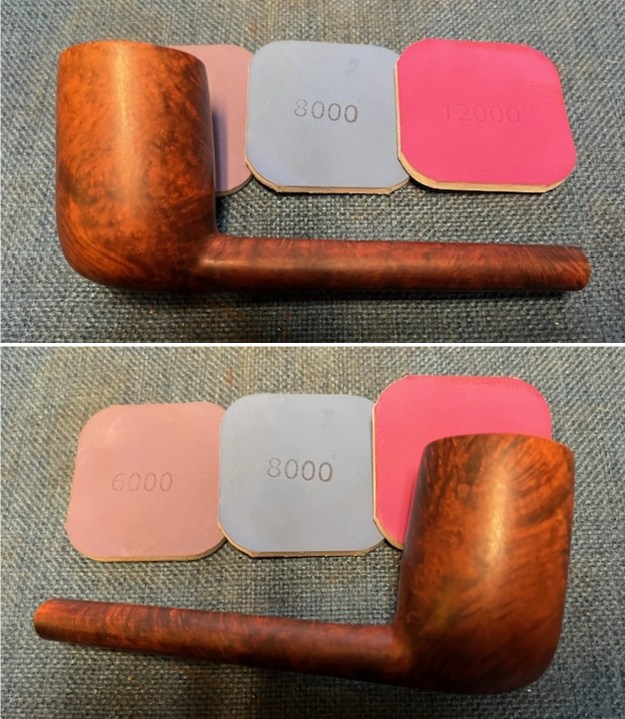
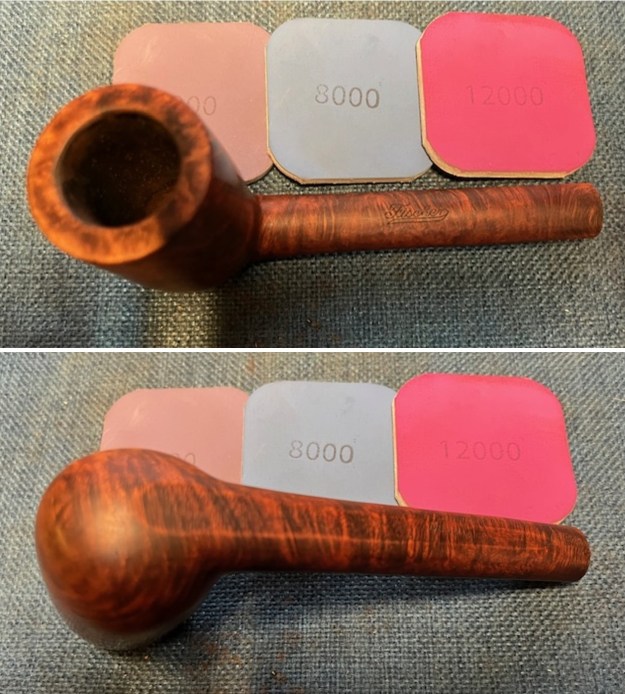
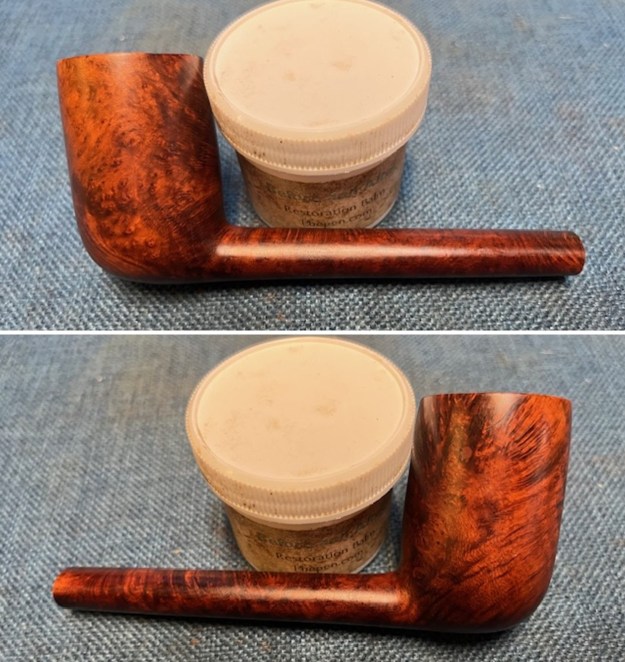
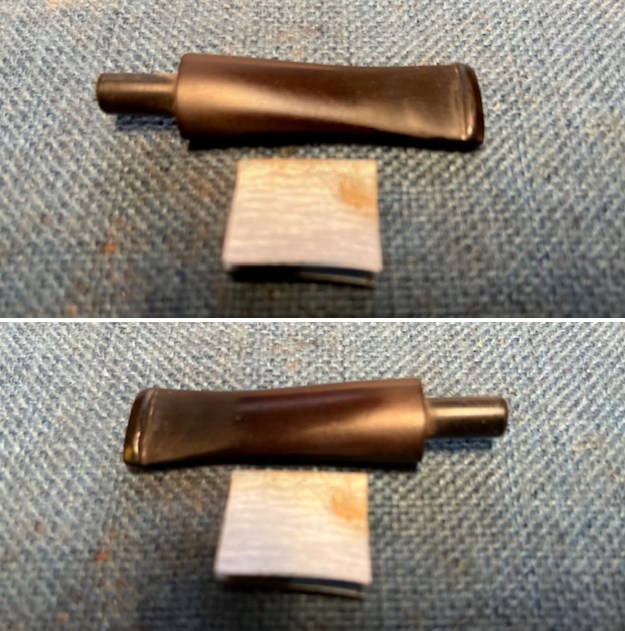
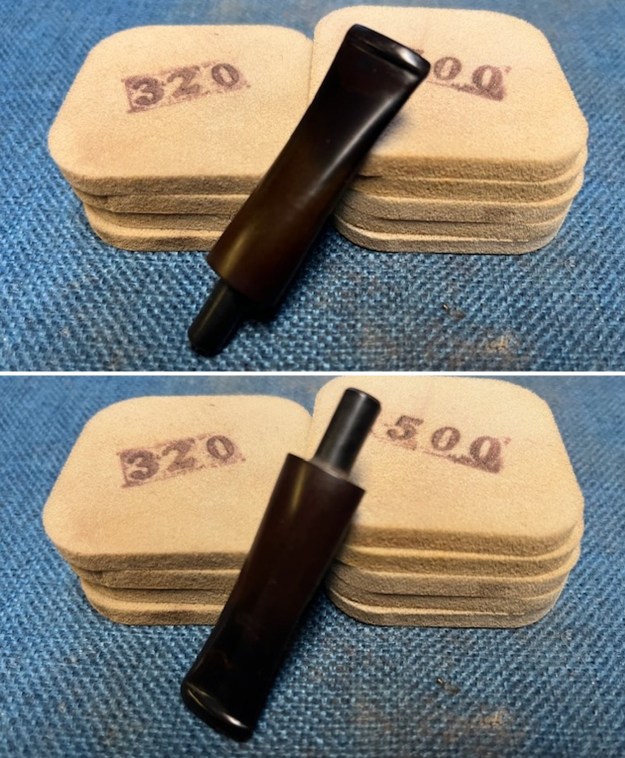
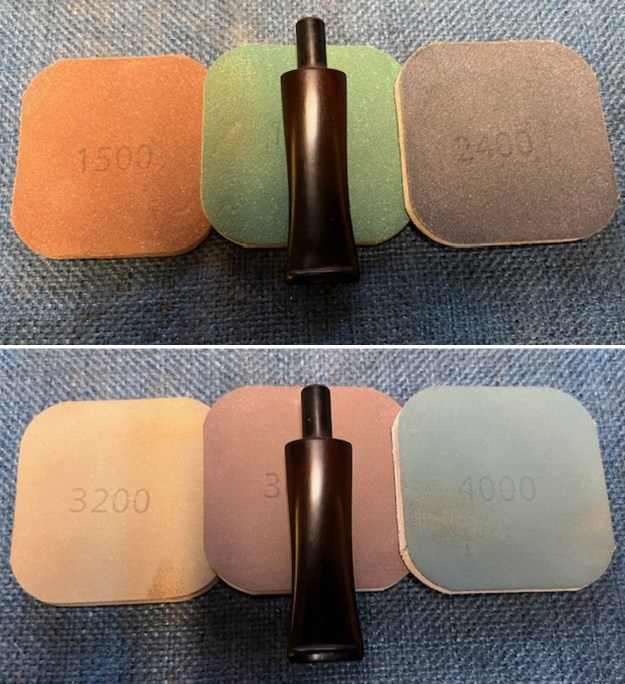
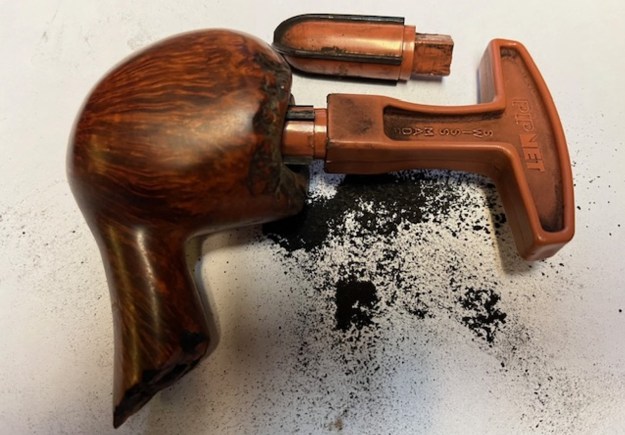
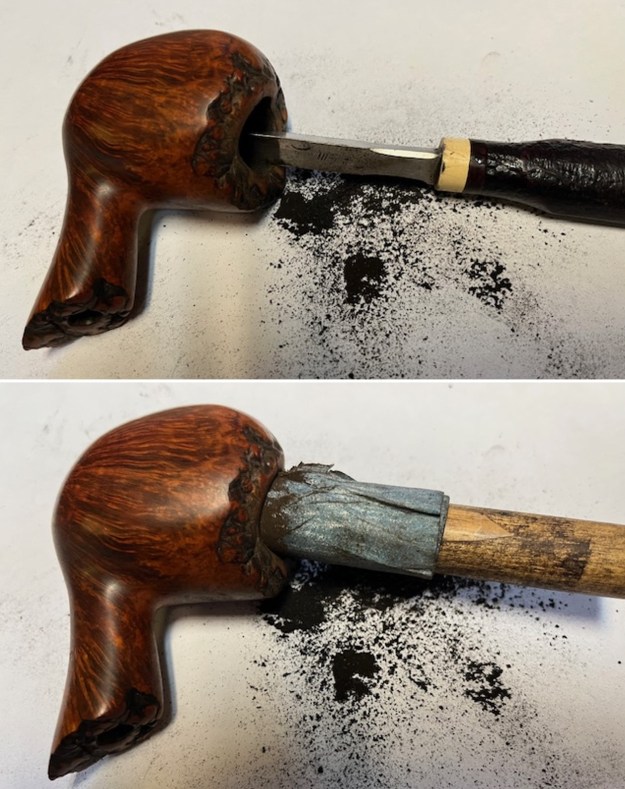
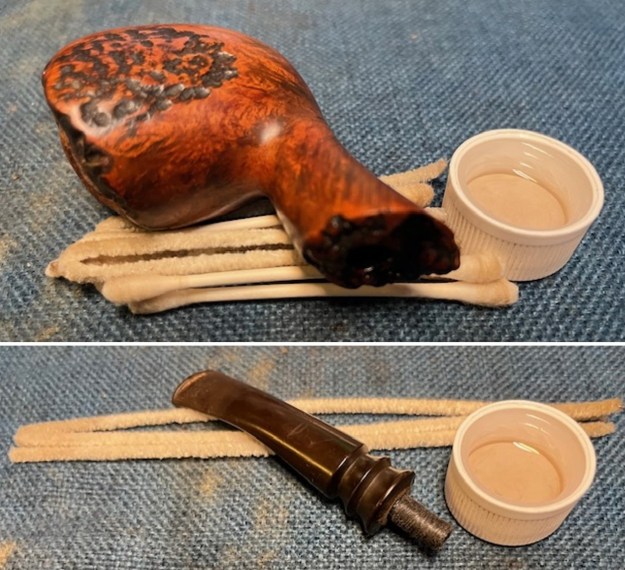
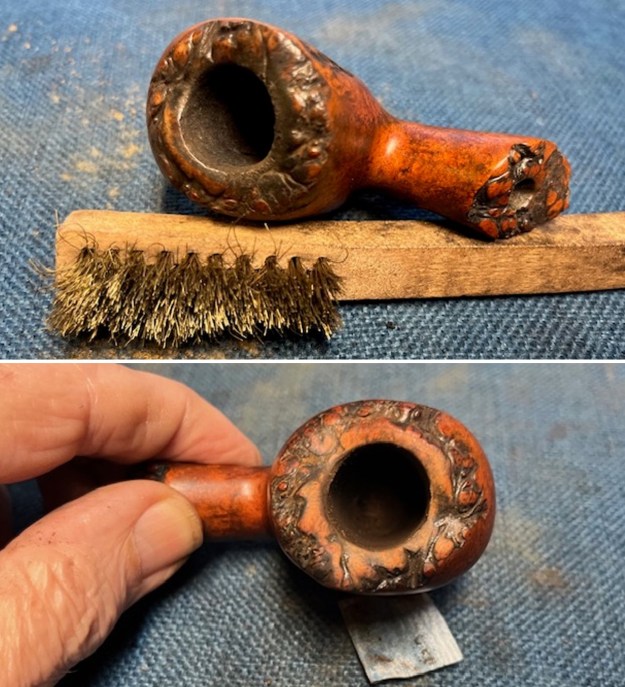
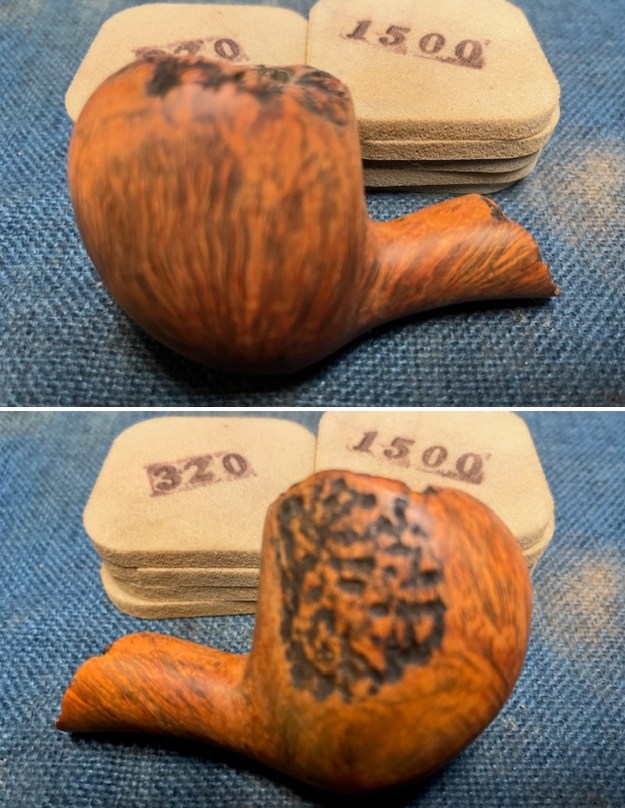
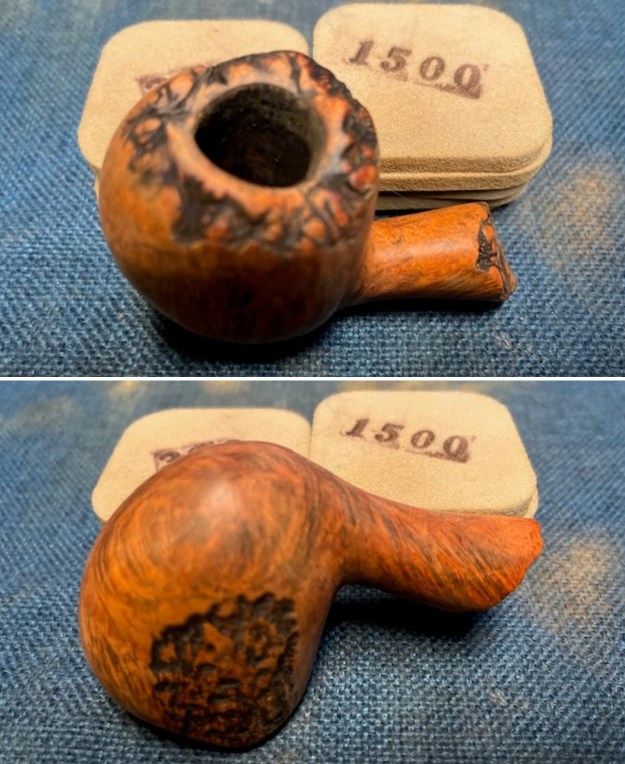
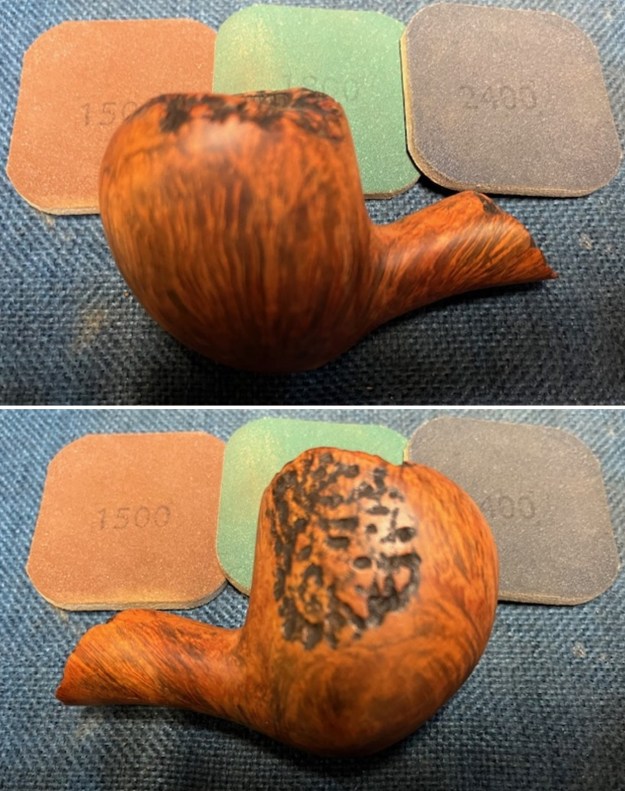
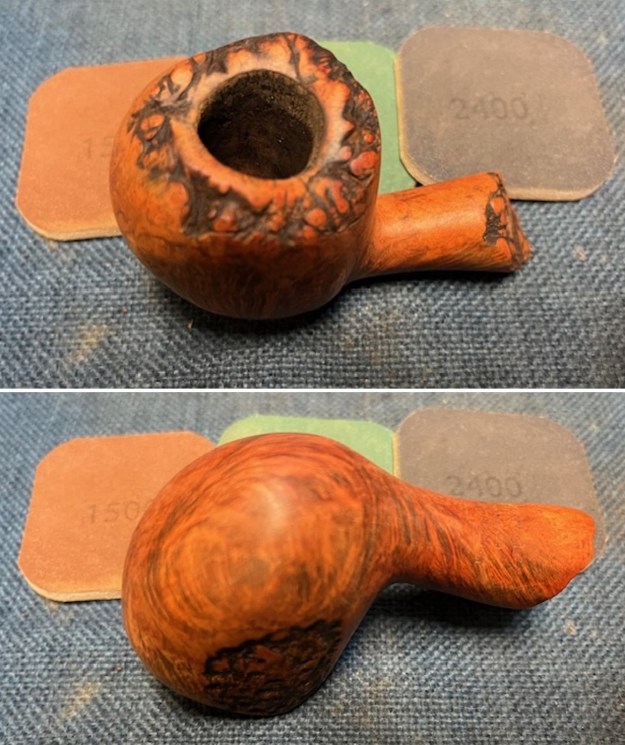
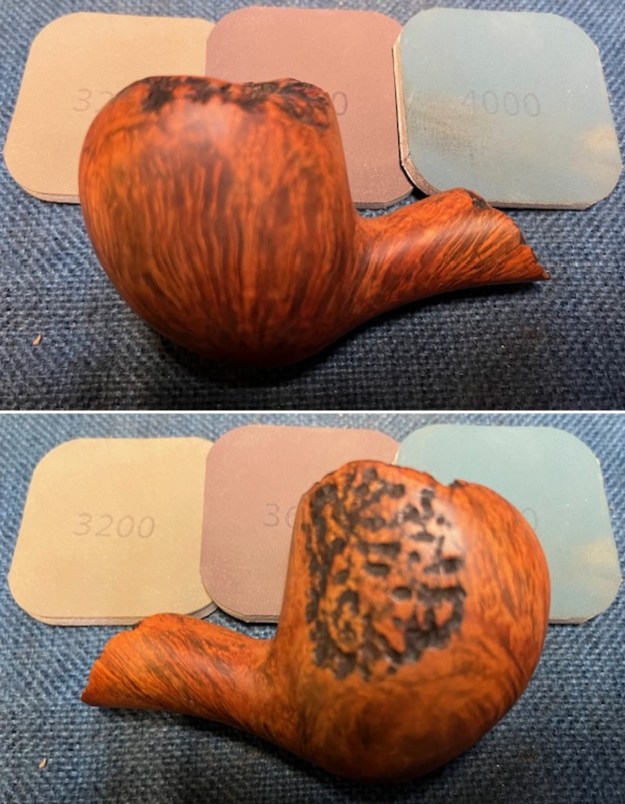
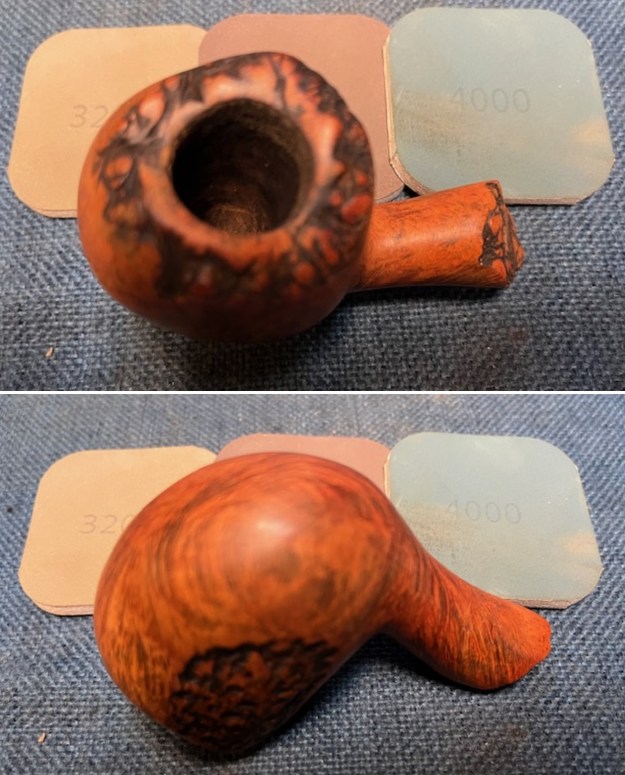
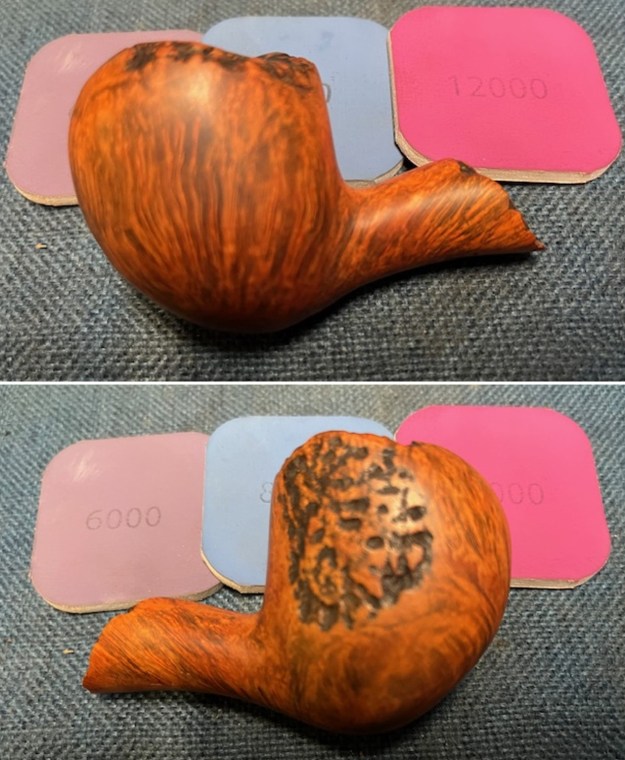
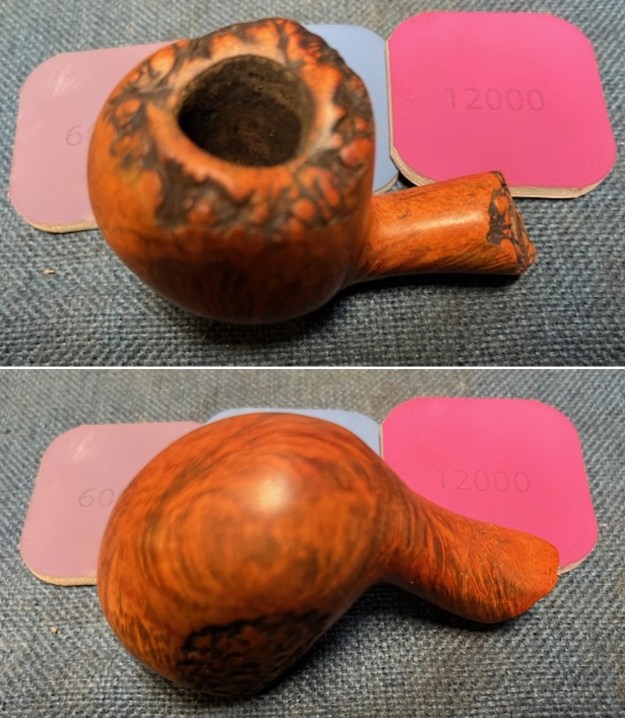
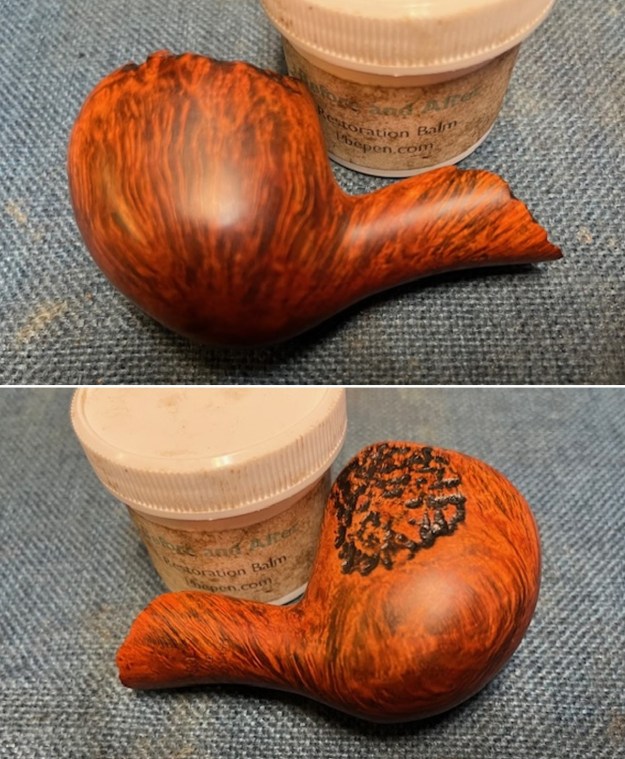
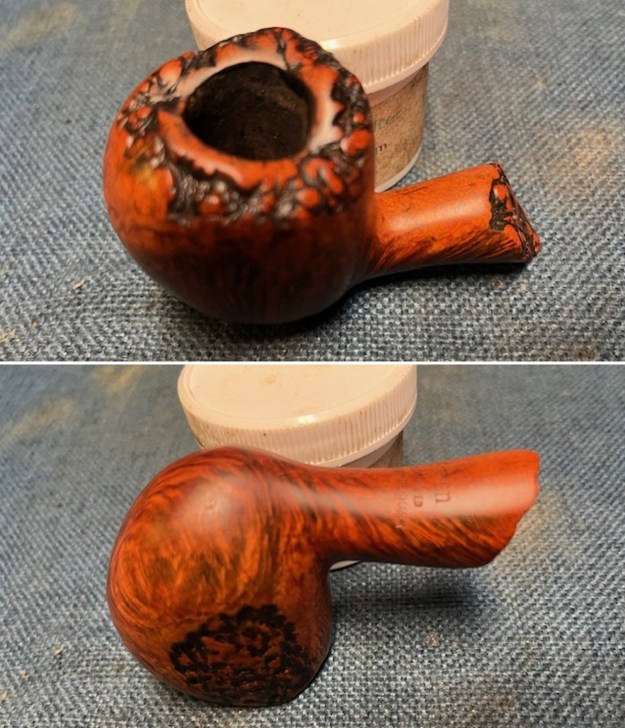
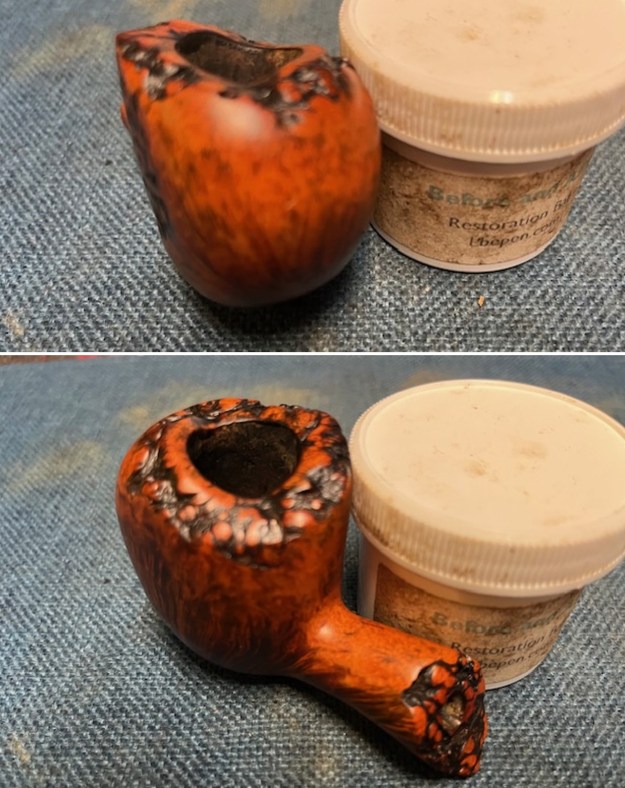
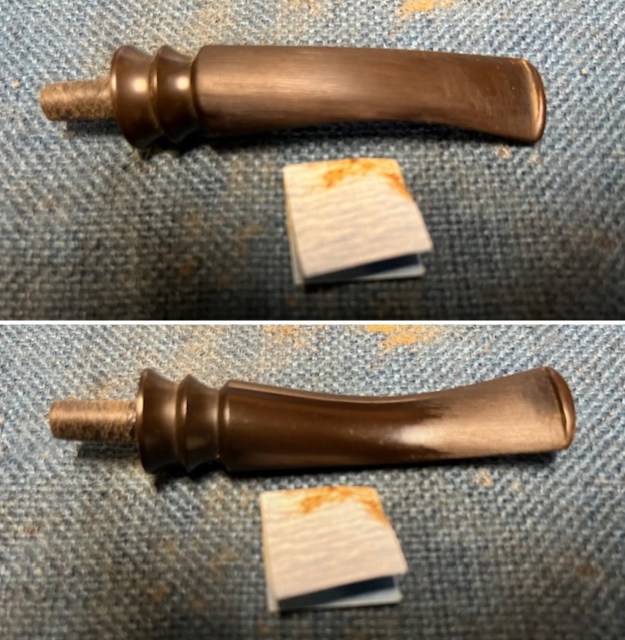
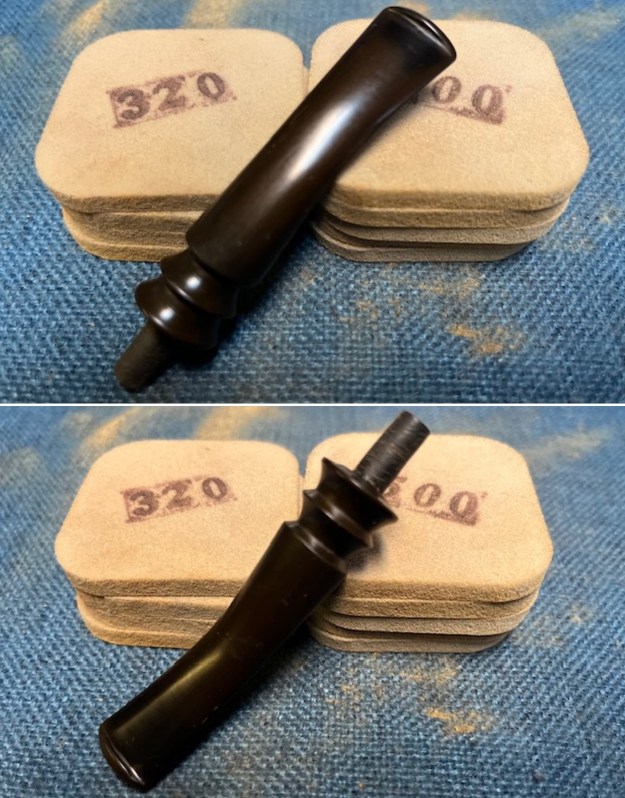
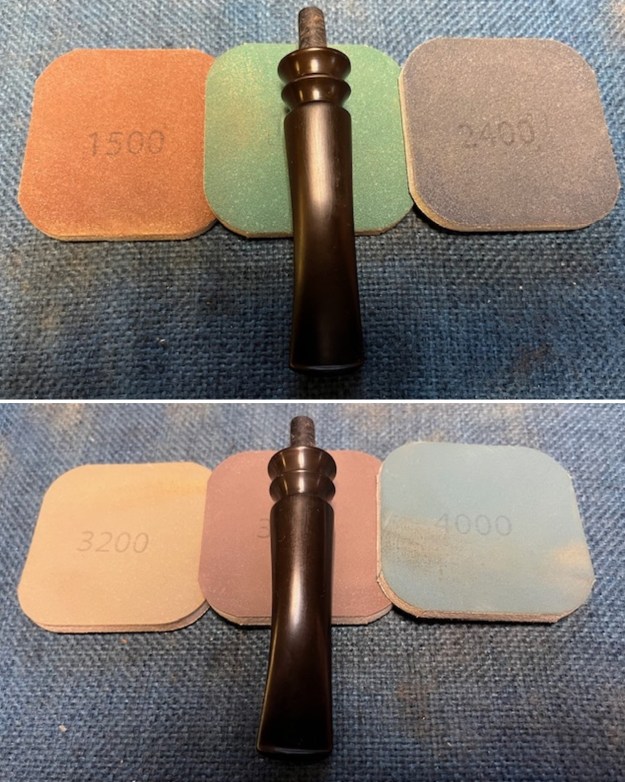
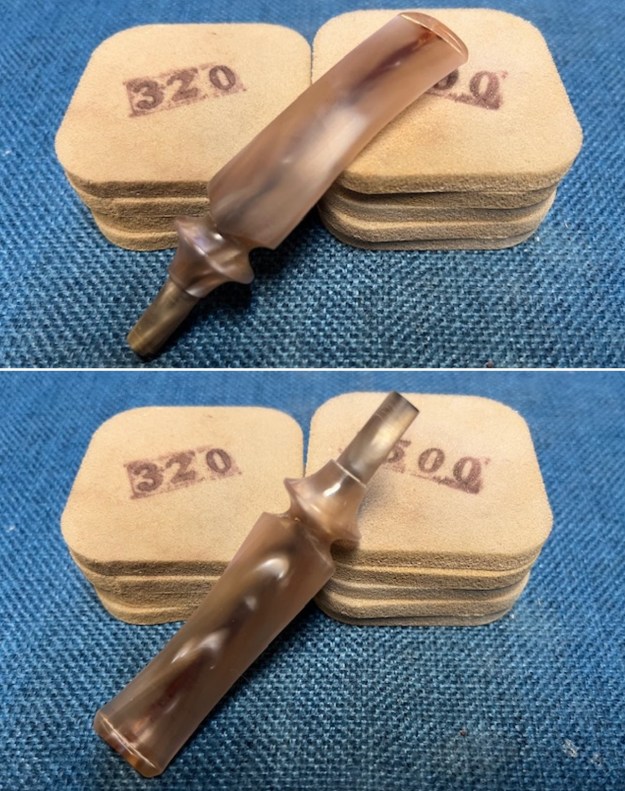
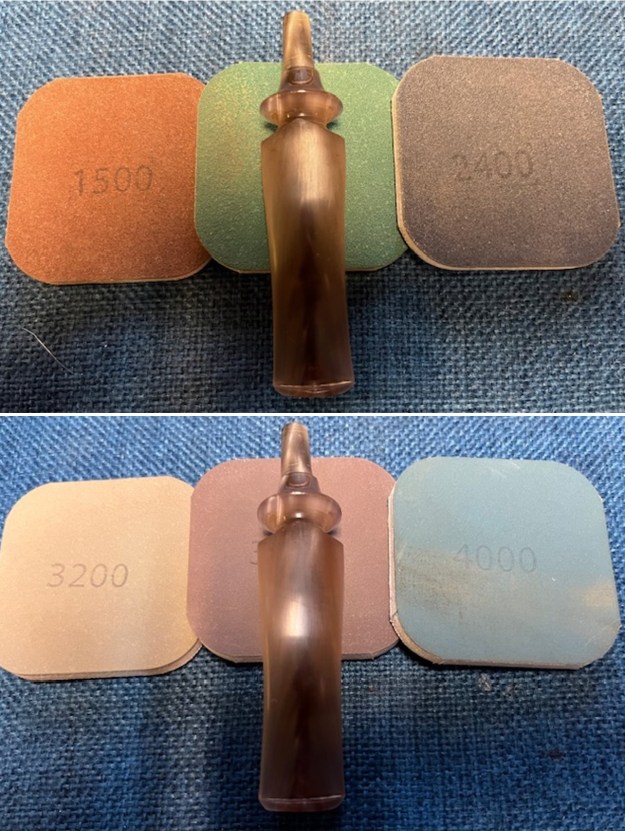
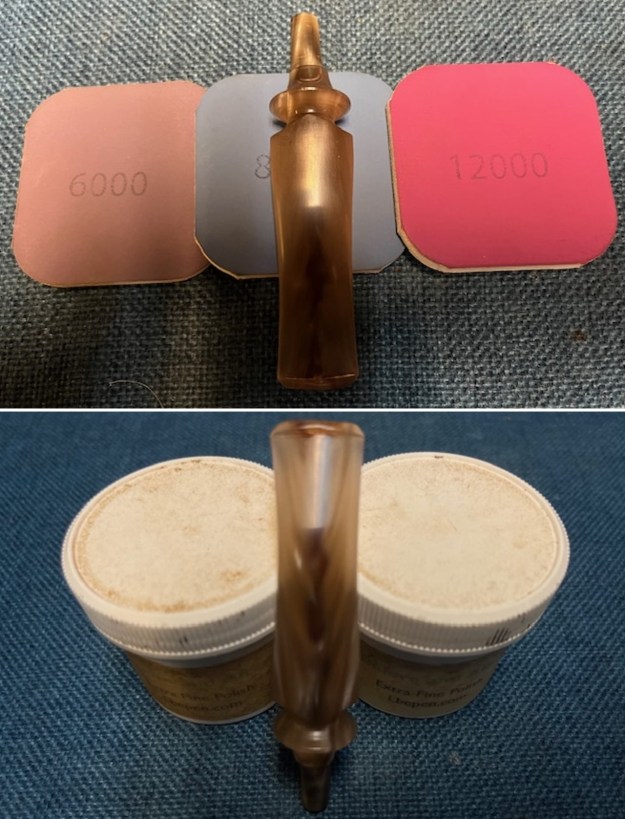
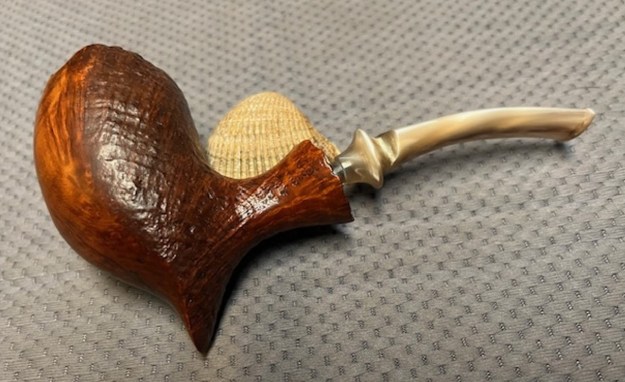
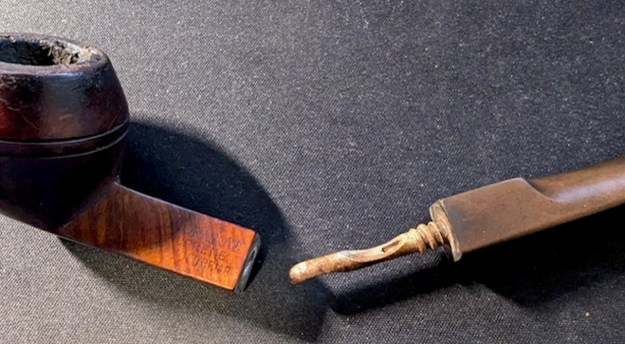
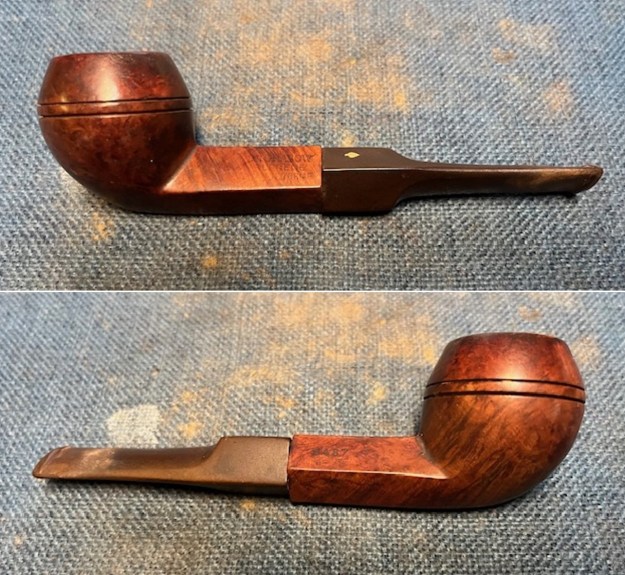
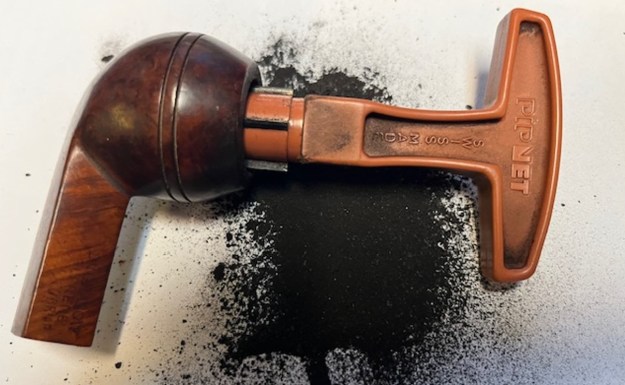
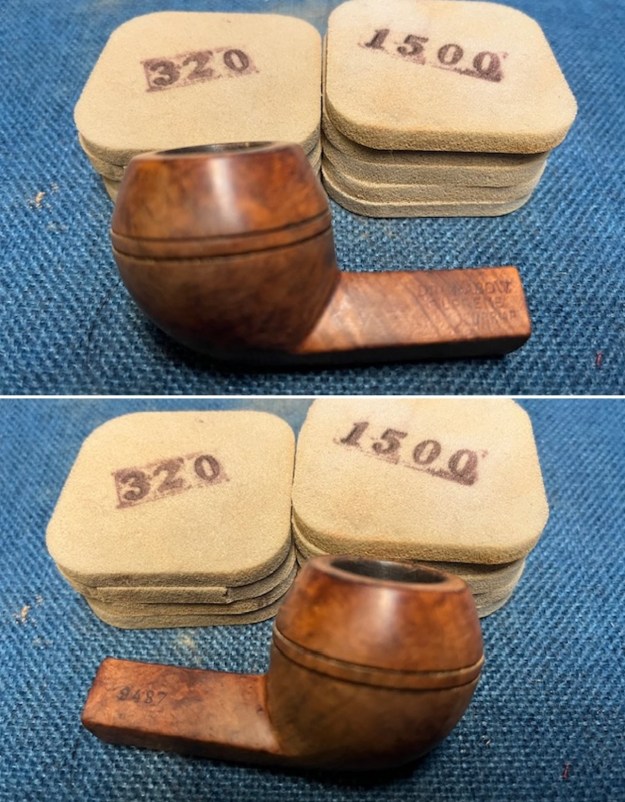
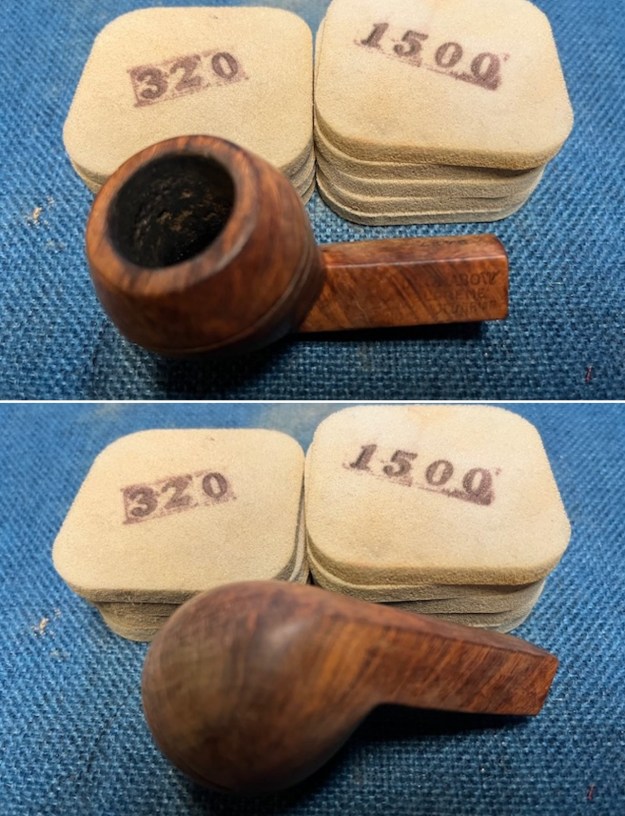
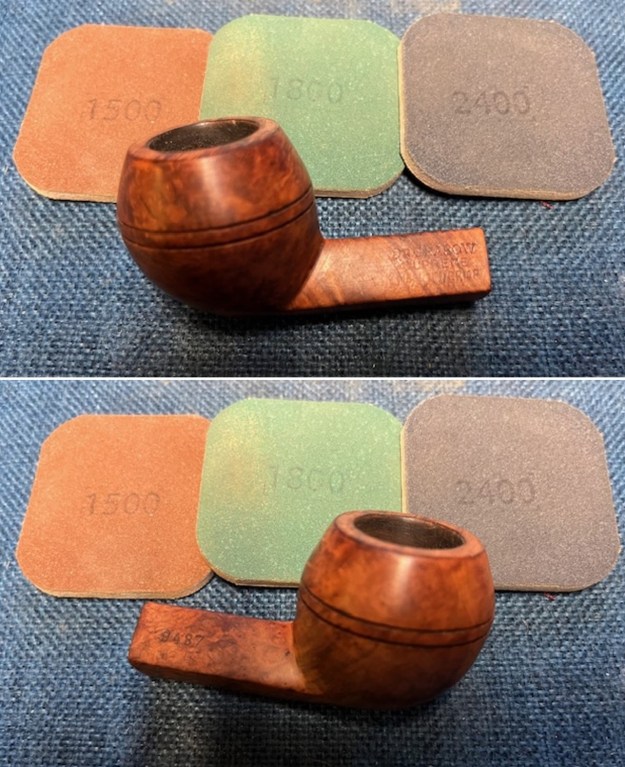
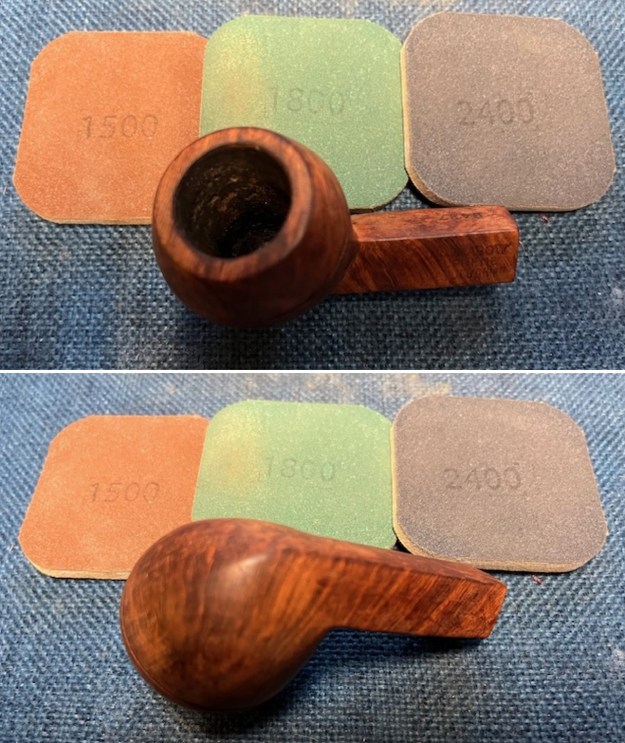
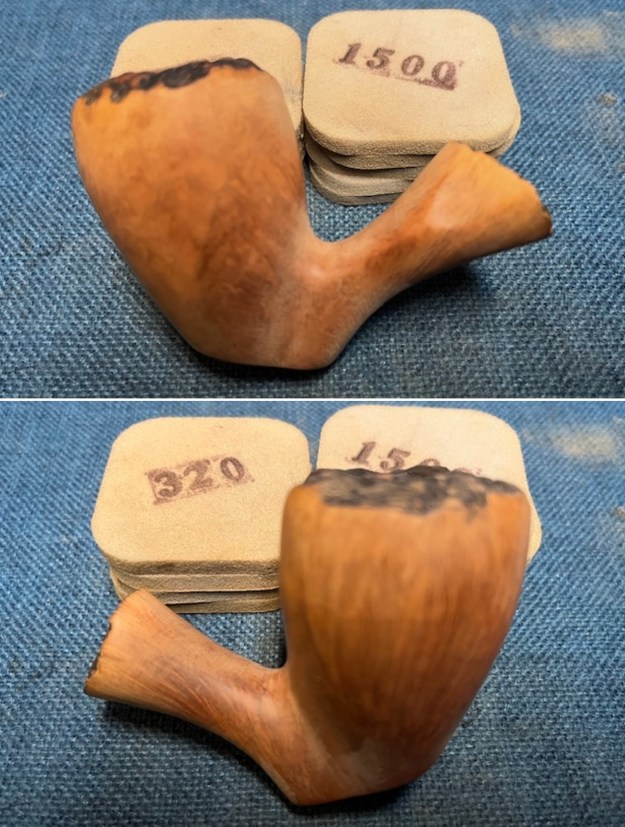
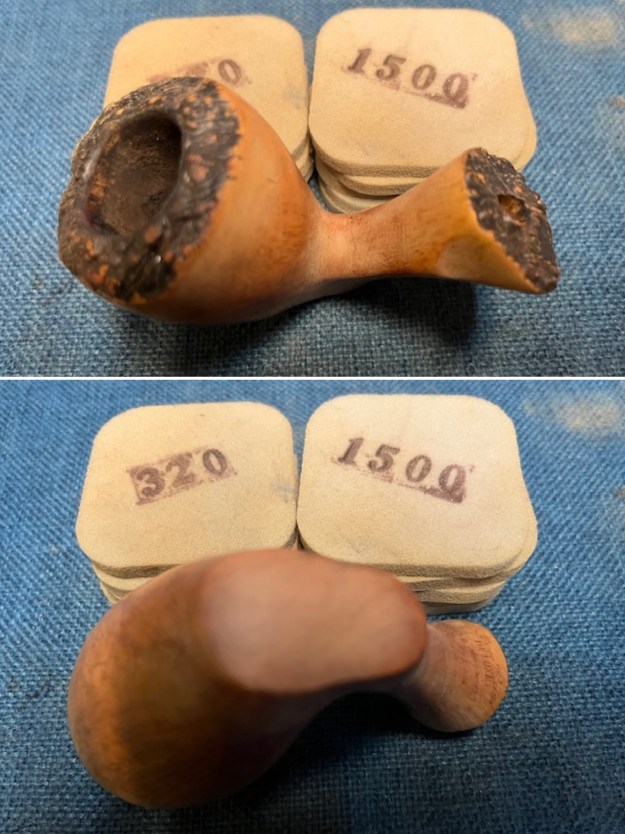
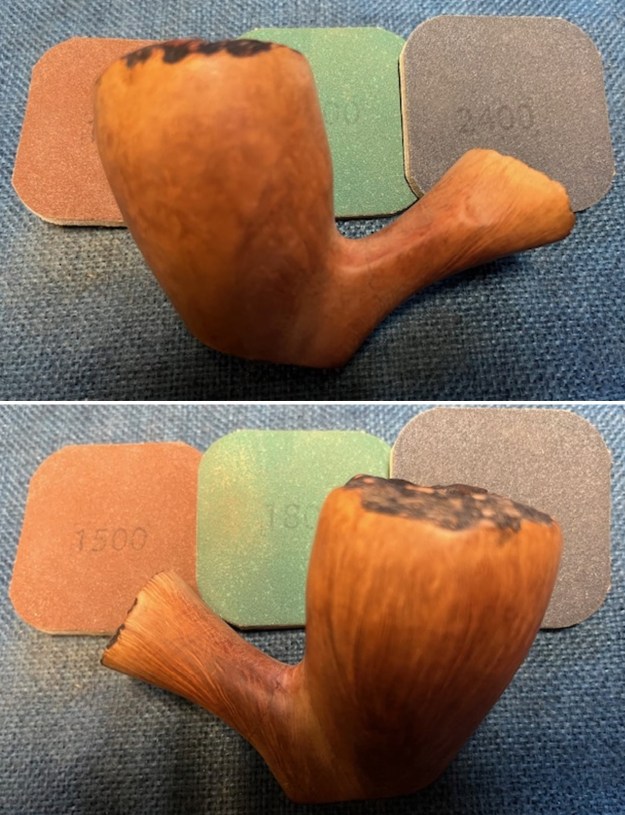
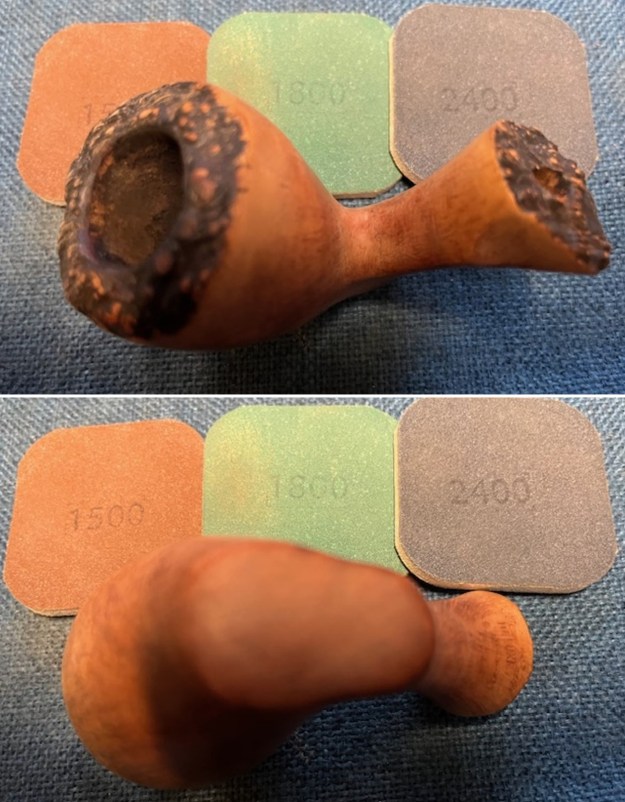
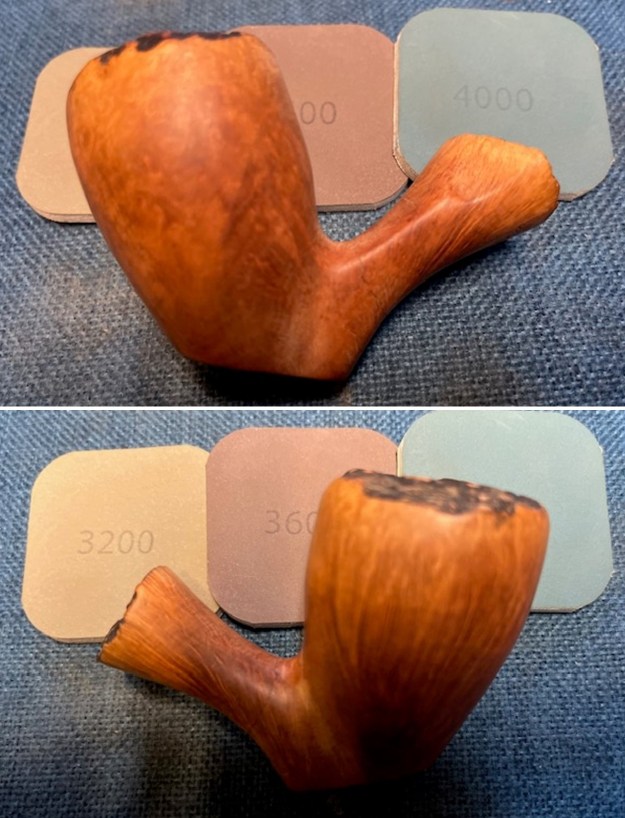
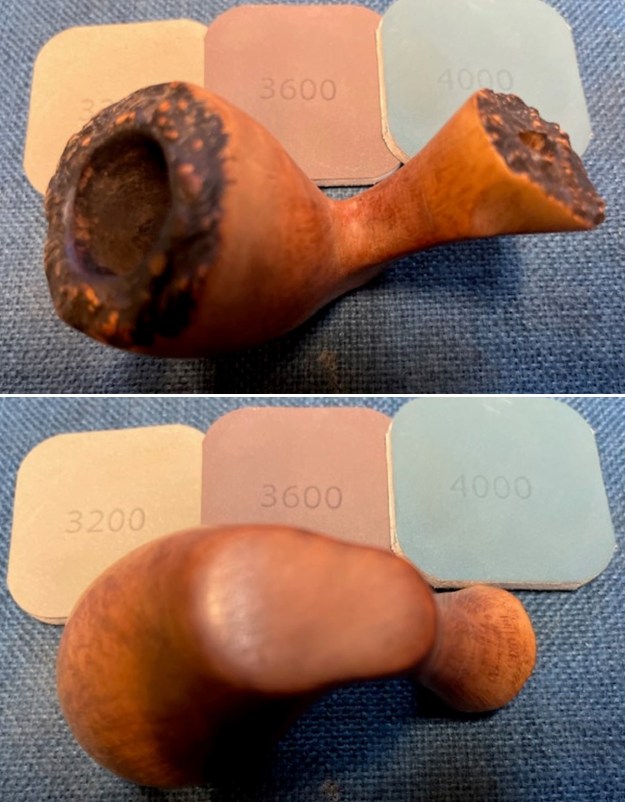
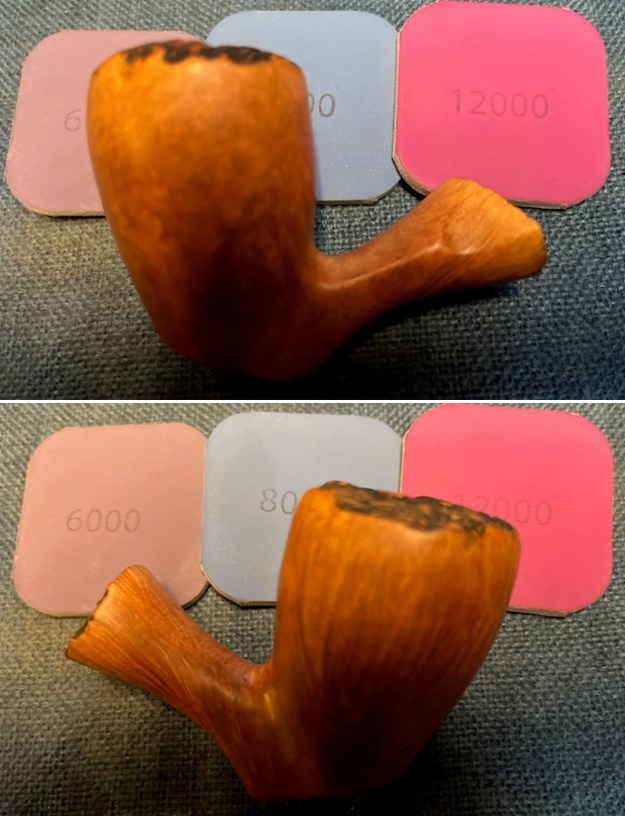
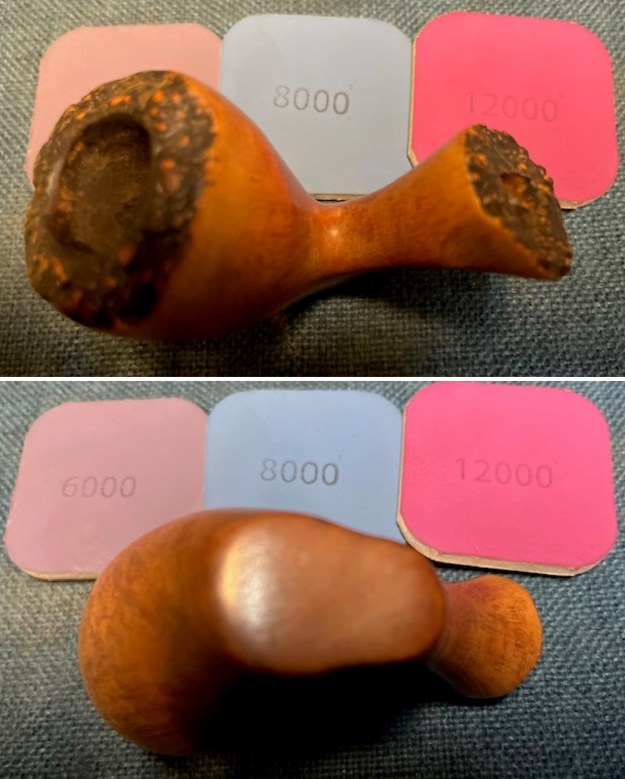
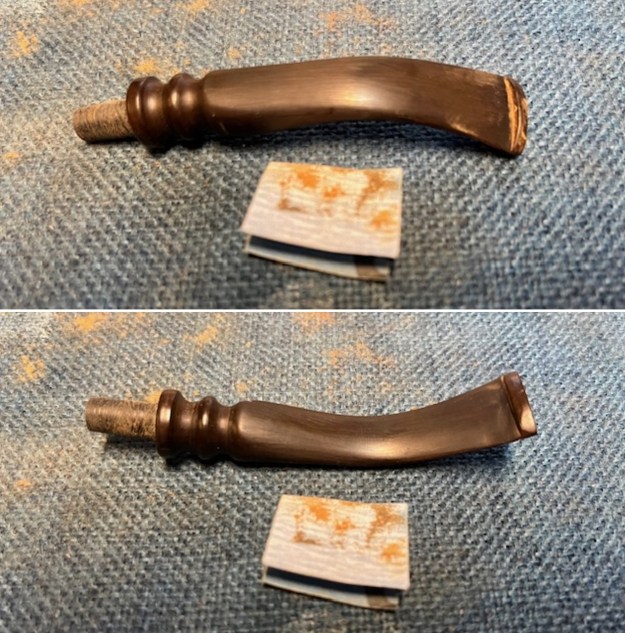
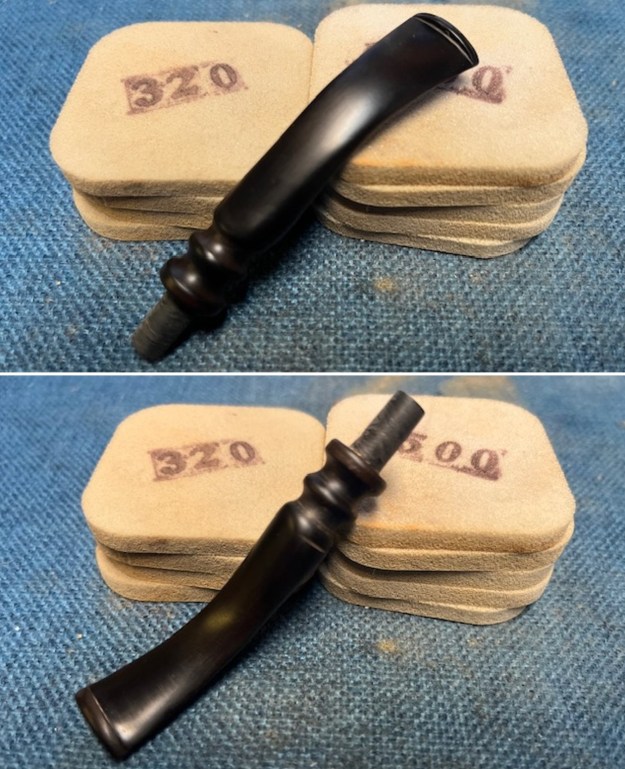
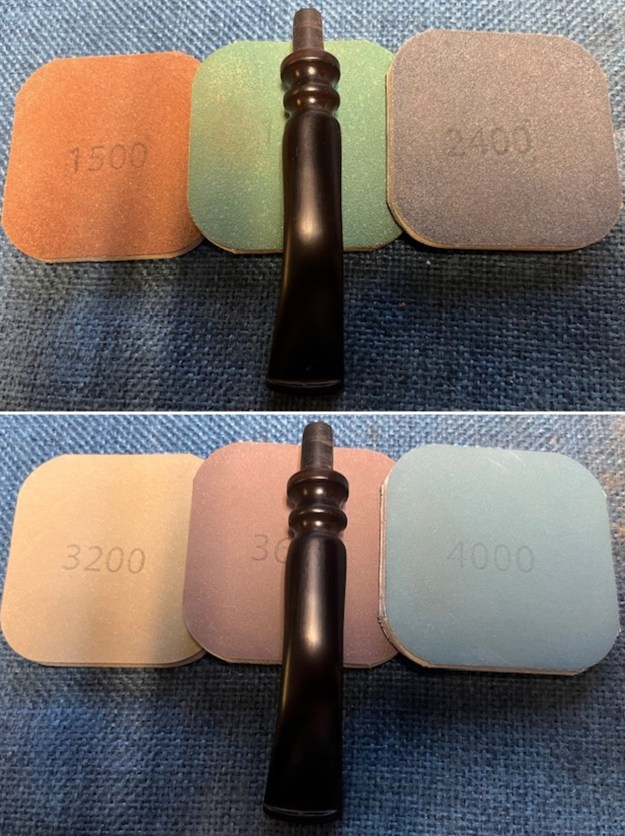
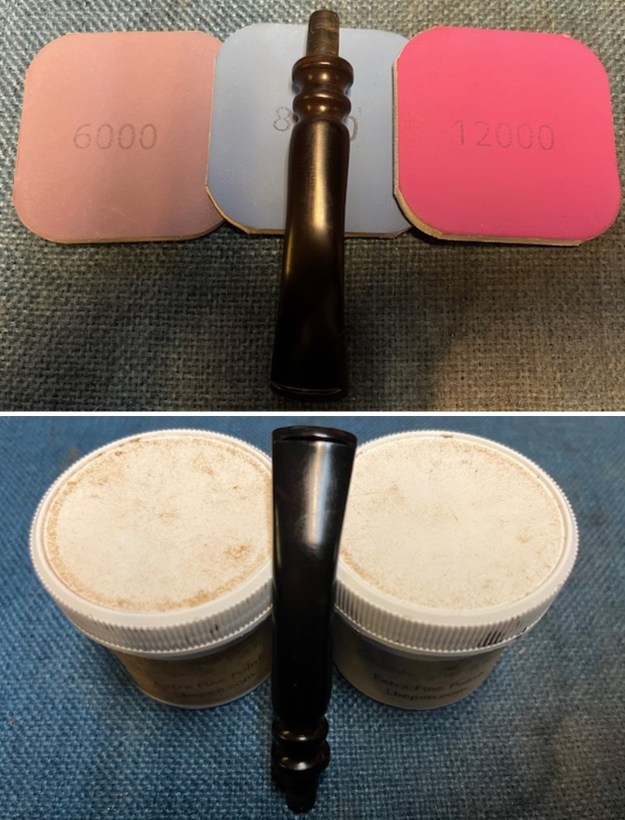
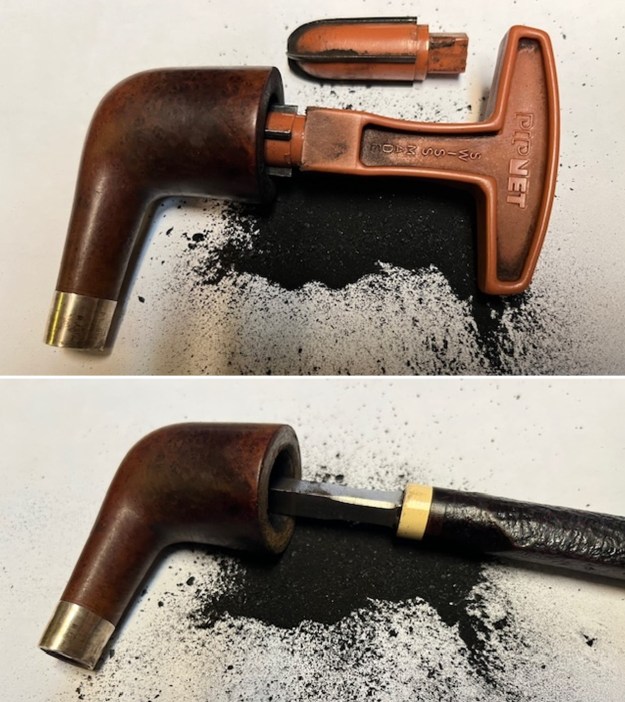
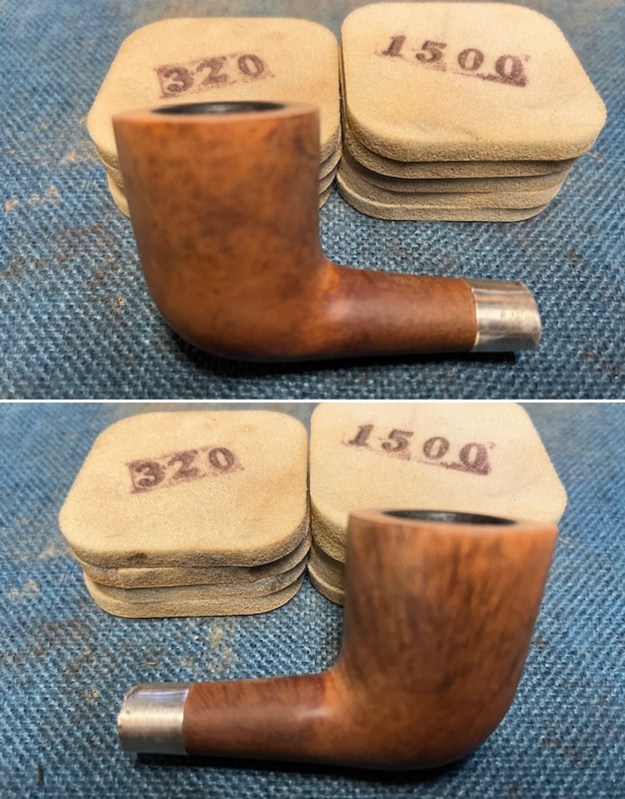
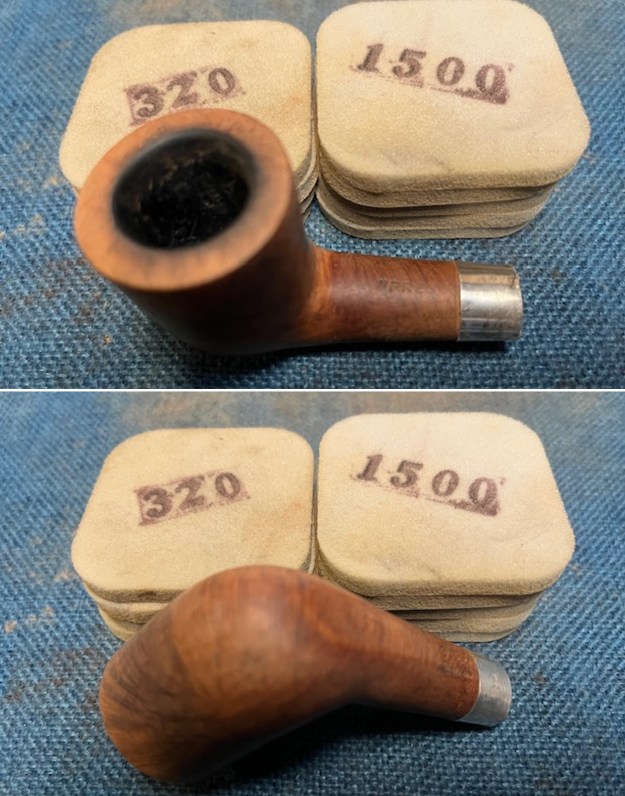
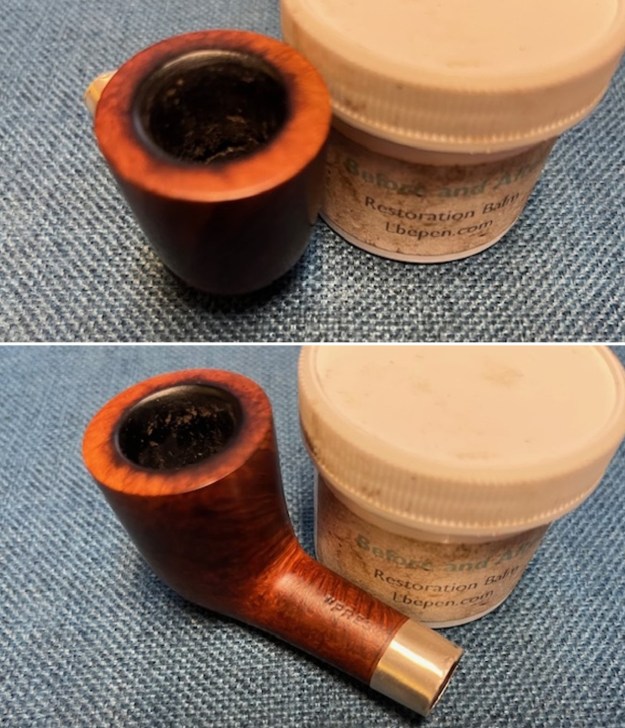
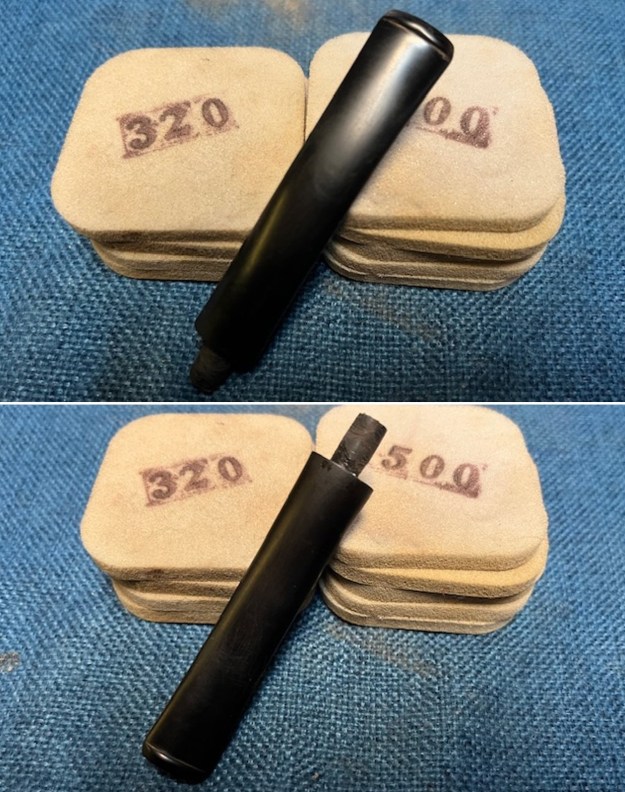
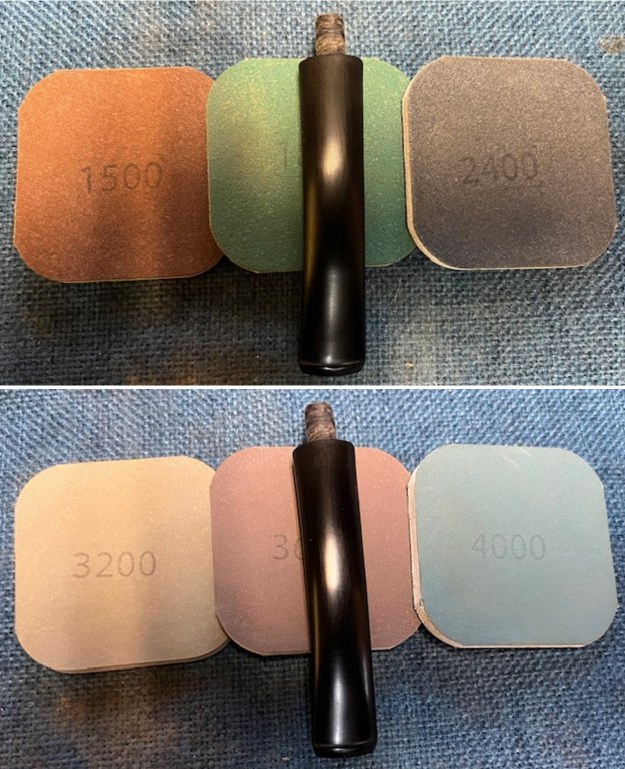
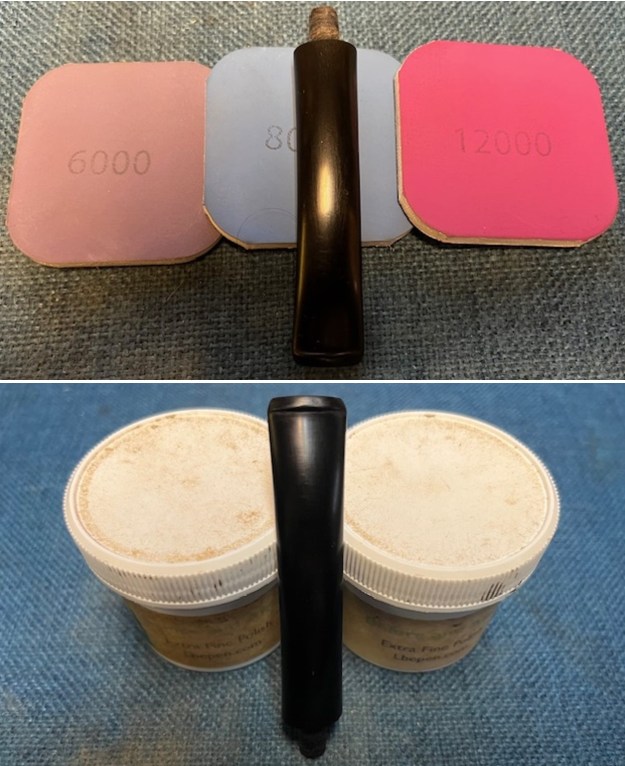
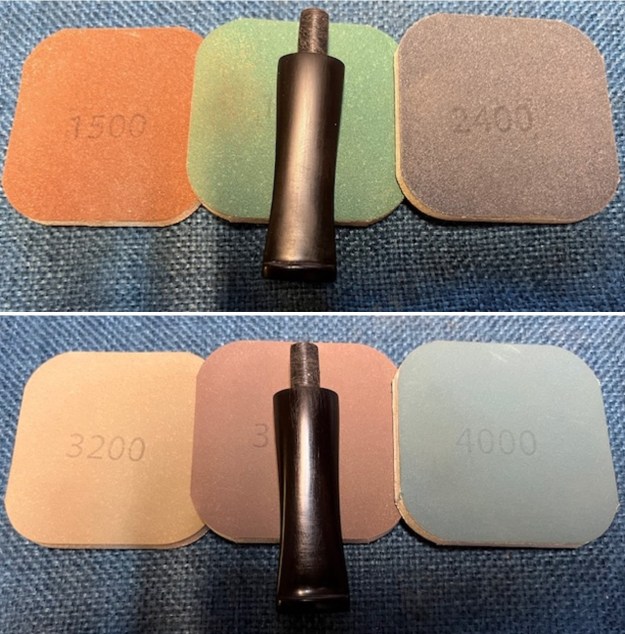
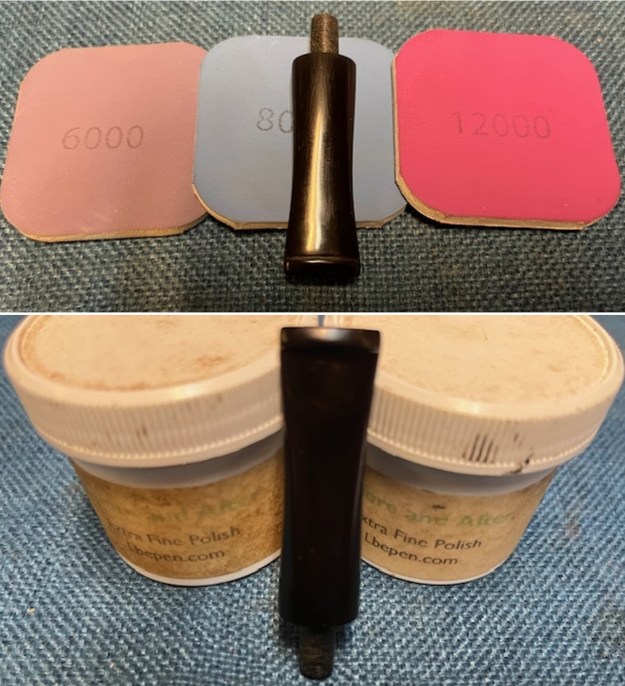
Jeff had thoroughly cleaned up the pipe. He reamed the pipe with a PipNet Pipe Reamer and cleaned up the remnants with a Savinelli Fitsall Pipe Knife. He scrubbed the bowl with undiluted Murphy’s Oil Soap with a tooth brush. He rinsed it under running warm water to remove the soap and grime. He cleaned out the inside of the shank and the airway in the stem with alcohol, cotton swabs, pipe cleaners and shank brushes. He scrubbed the exterior of the stem with Soft Scrub to remove the grime and calcification. He soaked the stem in Before & After Deoxidizer and rinsed it off with warm water. The pipe looked very good when it arrived here. I took close up photos of the bowl, rim and the stem. You can see the nicks on the thin inner edge of the bowl. The vulcanite saddle stem is in good condition with light tooth marks and some chatter as noted above.I took photos of the stamping on the top and underside of the shank. It is readable as noted above. I removed the stem from the shank and took a photo to give a sense of the proportions of the pipe. The briar is quite beautiful and I think that polishing it will make the grain stand out. I worked on the damage to the inner edge of the rim top with a folded piece of 220 grit sandpaper to smooth out the chips in the finish. By the end it looked much better.I sanded the bowl with 320-3500 grit sanding pads to smooth out the finish and bring some life back to the briar. I wiped the briar down after each sanding pad to wipe off the debris left behind by sanding. I polished the bowl and shank with micromesh sanding pads – dry sanding with 1500-12000 grit pads. I wiped the bowl down after each pad to remove the grit. The bowl began to take on a rich shine. It is a beauty. I rubbed the bowl down with Before & After Restoration Balm. I worked it into the briar with my finger tips. I let it sit for 10 minutes and the Balm did its magic. It enlivens, cleans and preserves the briar. It certainly brought this bowl back to life. I buffed it off with a clean cloth and took the following photos. I set the bowl aside and turned my attention to the stem. I touched up the “Crown S” stamp on the topside of the saddle stem with some white acrylic fingernail polish. I worked it into the stamp with a tooth pick. I scraped off the excess with piece of 320 grit sanding pad and buffed it off with a soft cloth and some Obsidian Oil. It looked very good. I polished the stem with micromesh sanding pads – 1500-12000 grit pads. I wiped it down with a damp cloth after each sanding pad. I used Before & After Pipe Polish – both Fine and Extra Fine to further polish the stem. This Sixten Ivarsson Designed Stanwell Regd. No. 969-48 Ukulele 91 with a vulcanite saddle stem is a great looking pipe now that it has been restored. The stain really highlights the grain and the polished finish is stunning. I put the stem back on the bowl and carefully buffed the pipe with Blue Diamond on the buffing wheel. I gave the bowl and the stem multiple coats of carnauba wax on the buffing wheel and followed that by buffing the entire pipe with a clean buffing pad. I hand buffed the pipe with a microfiber cloth to deepen the shine. The finished Stanwell Regd. No. 969-48 Ukulele 91 fits nicely in the hand and feels great. Give the finished pipe a look in the photos below. The dimensions of the pipe are Length: 5 ½ inches, Height: 1 ¼ inches, Outside diameter of the bowl: 1 ¼ inches, Chamber diameter: 7/8 of an inch. The weight of the pipe is 65 grams /2.33 ounces. I will be adding the pipe to the Danish Pipe Makers Section of the rebornpipes store. If you are interested in purchasing this pipe send me a message or an email.

As always, I encourage your questions and comments as you read the blog. Thanks to each of you who are reading this blog. Remember we are not pipe owners; we are pipe men and women who hold our pipes in trust until they pass on into the trust of those who follow us.

Restoring a Terrific Handmade Oversize Kaywoodie


by Kenneth Lieblich

Next up is this interesting, rugged pipe from Kaywoodie. It is from the handmade Oversize Kaywoodie line and has wonderfully thick walls. When I first saw it, this nifty pipe reminded me, in style, of a Custombilt pipe. It is not that, but it is reminiscent of that. This was a bizarre and challenging restoration, but the results are terrific. Let’s examine the markings on the pipe. The left side of the shank shows HandMade [over] Kaywoodie. The right side of the shank shows, merely, Imported Briar. Finally, the stem has the famous cloverleaf logo on the top. As you can see, it is a white circle with a black leaf inside. Unfortunately, there was no shape number, no shape name, nor any other markings. Hmm… Dating this Kaywoodie is a bit of a head-scratcher. I think I’ve figured it out, but the historical details of many a pipe have been lost in the mists of time. This is an Oversize Handmade Kaywoodie and it doesn’t help that, as I mentioned, there isn’t any shape number on the pipe. Perhaps the cloverleaf logo on the stem can help. Pipephil says:

The cloverleaf logo: the round logo (black cloverleaf in white circle or white cloverleaf in black circle) was first used in 1937. Up until the late 40’s this logo was used on all of the upper-grade pipes. The concomitant use of the plain white cloverleaf and the disk inlaid logo continued until the early 80’s. Up until the late 1940’s/early 50’s, the logo was on top of the stem. After that the logo was moved to the side of the stem (exceptions exist).So, perhaps this is a better-quality pipe! From what little I understand, this was, indeed, considered to be a better pipe. Pipedia laid this information out:

Throughout much of the 1940’s, 50’s and 60’s, the Kaywoodie family of pipes consisted of 11 basic grades of briar pipes; though new grades were frequently added to the line and some older grades were discontinued or downgraded. These 11 basic grades of pipes, listed in ascending order of quality, were:
Drinkless
Hand-made Super Grain
Super Grain
Relief Grain
Flame Grain
Silhouette
Oversize Kaywoodies
Meerschaum Inlaid Kaywoodies
Connoisseur
Ninety-fiver
Centennial

Given how singularly rare the last two were (Ninety-fiver and Centennial), this would indicate a very good quality pipe. Pipedia gave me reason to think this particular pipe was from 1947. Part of the article entitled “Collector’s Guide to Kaywoodie Pipes”, states:

The 1947 Kaywoodie catalog shows 12 grades of briar pipes and introduces the Kaywoodie Block Meerschaum. The briar pipes were available in 69 shapes. In addition to these individual pipes, the 1947 catalog shows two- and seven-pipe matched grain sets. The Oversize Kaywoodies were, as the name implies, “Giants”. Lowndes notes that these pipes were stamped simply, “Hand-Made”. The pipes were all roughly “bulldog-ish” in appearance and were available in the following styles and grades:

Hand-carved “Colossus” ($10)
Walnut finish, banded “Hercules” ($20)
Hand-carved “John Henry” ($10)
Virgin finish, specimen grain “Paul Bunyan”
($25) Virgin finish, banded specimen grain “Goliath”
($25) Walnut finish “Atlas”
($20) Hand-carved, Meerschaum-Inlaid “Samson” ($15)Now, there is no model number or name on my pipe, so it’s not clear to me if this pipe one of the model names mentioned above or some other.

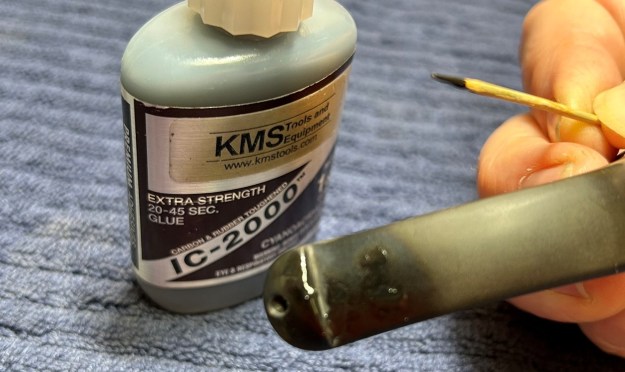
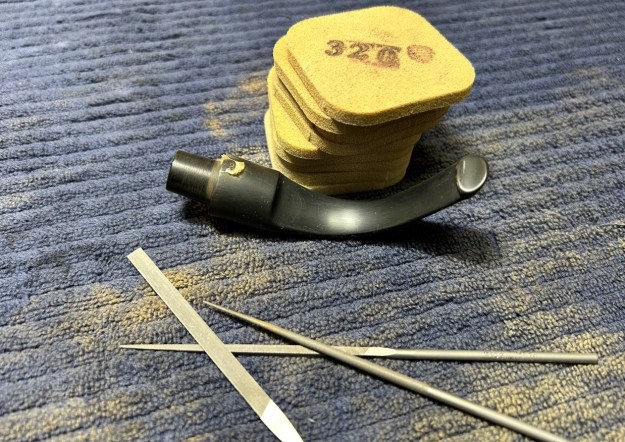
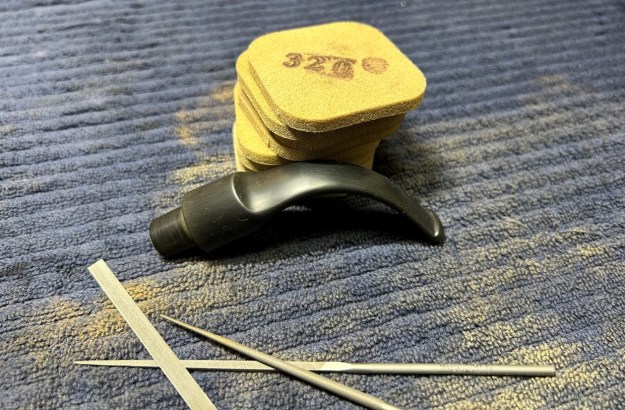
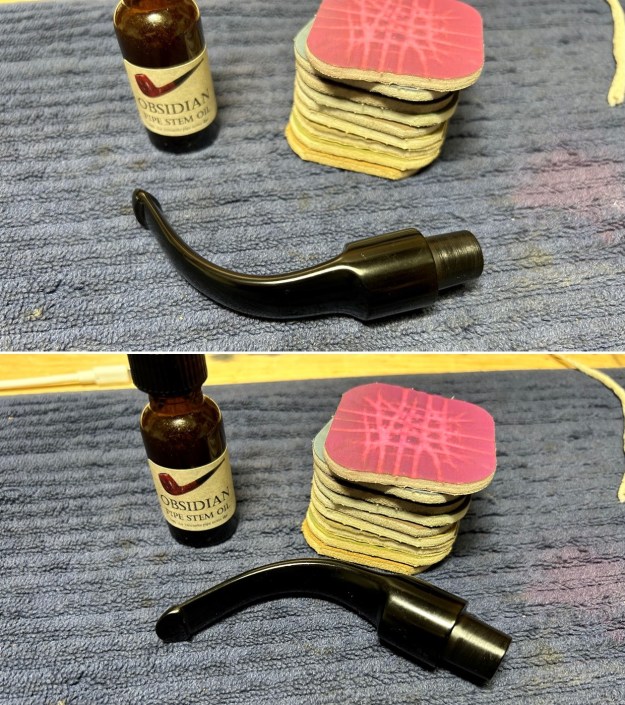
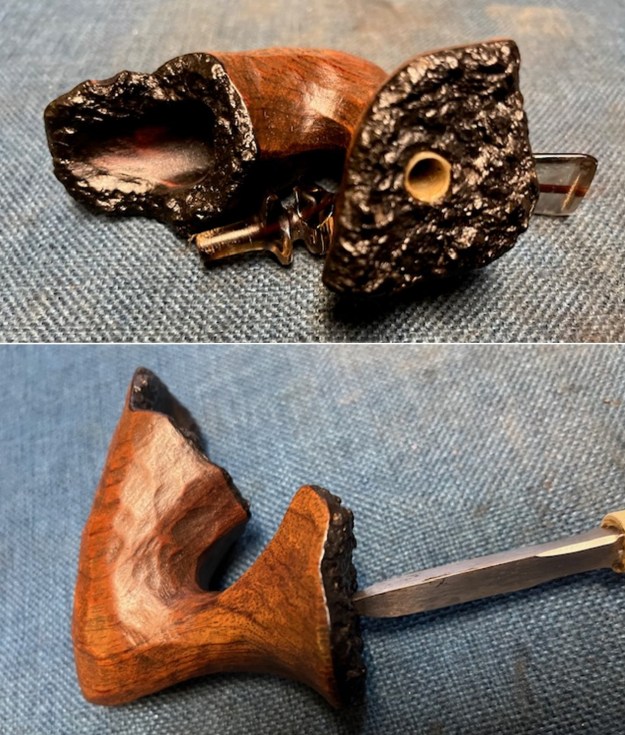
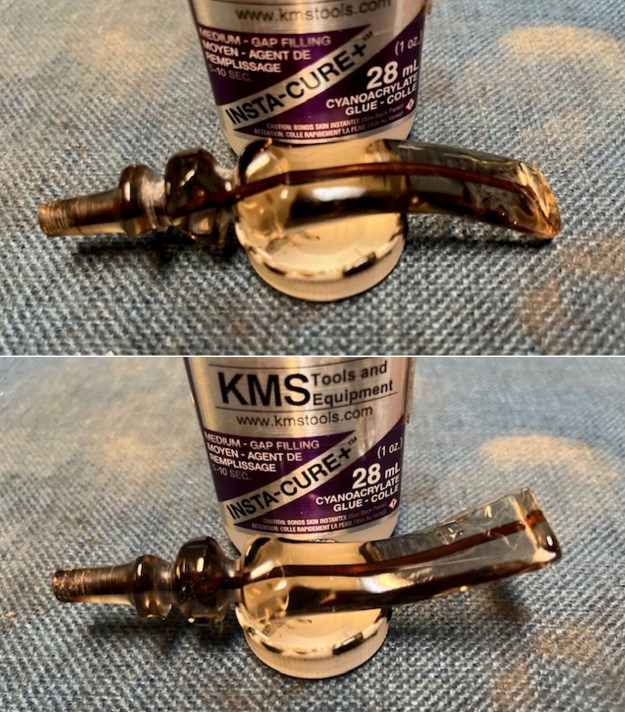
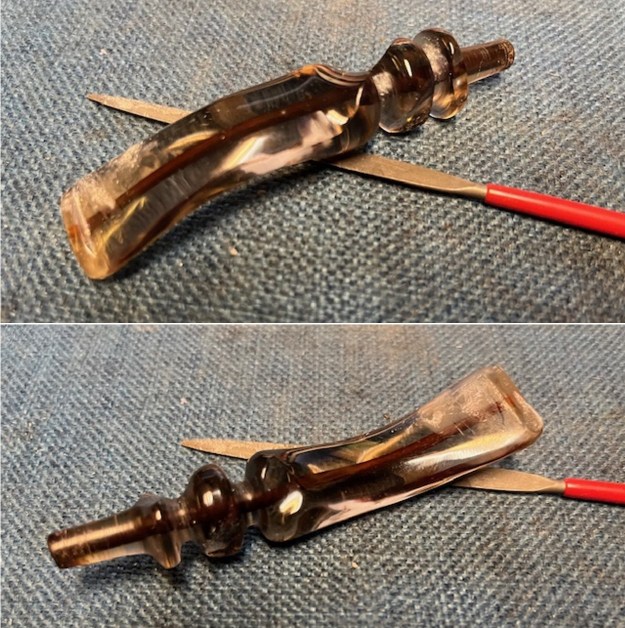
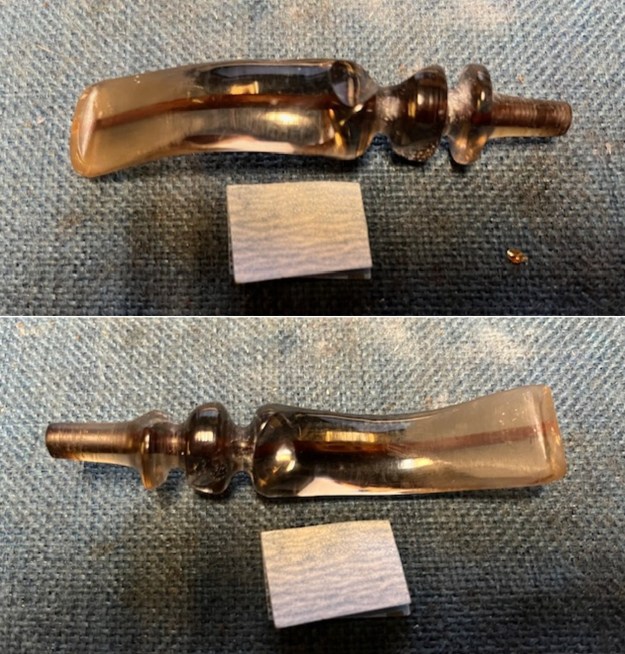
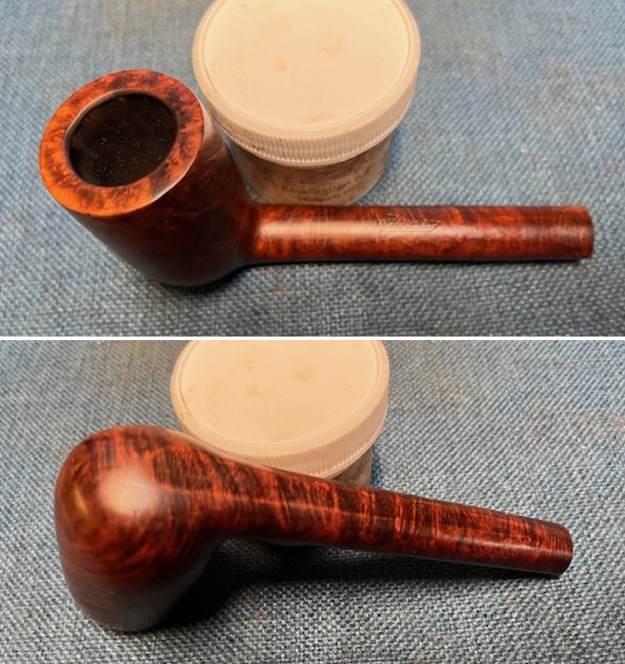
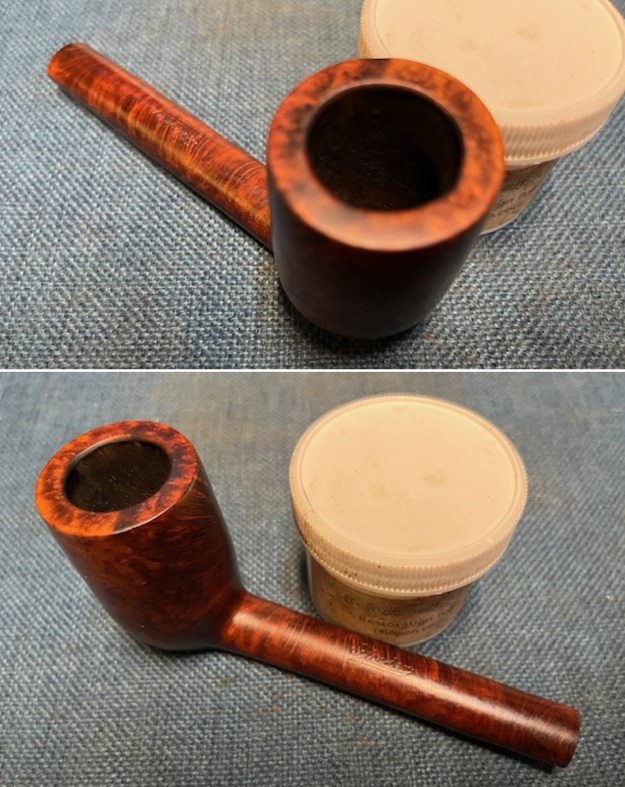
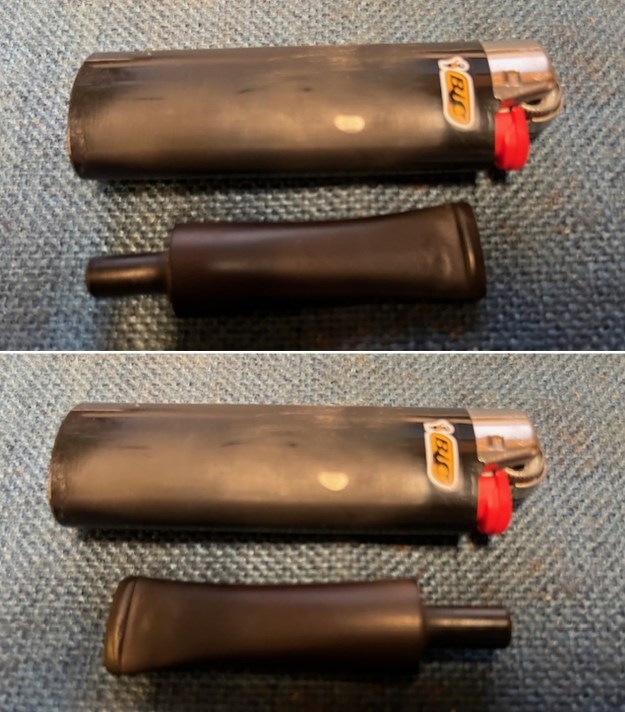
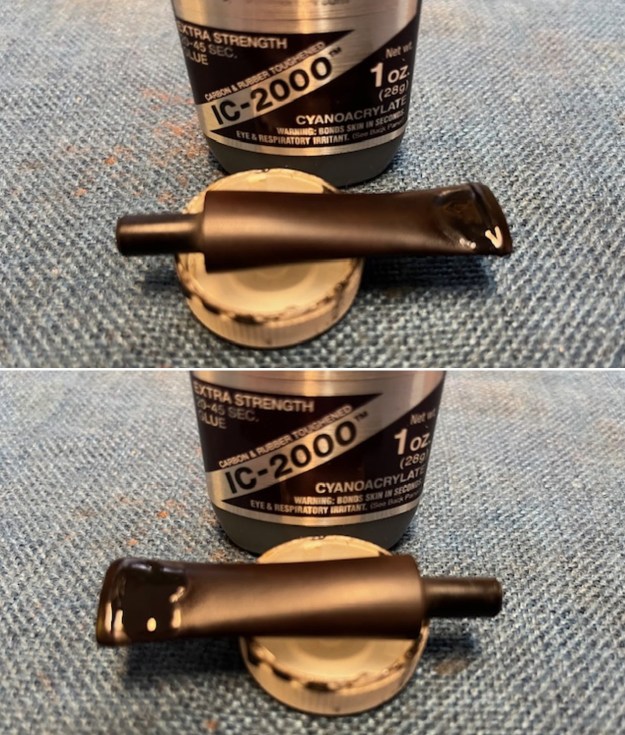
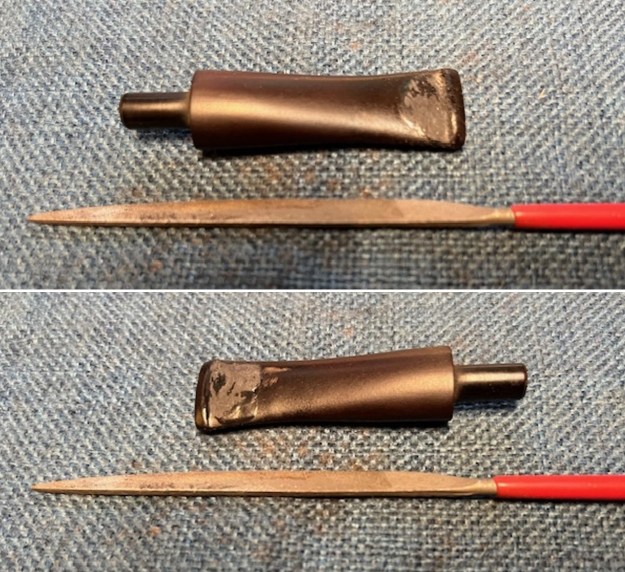
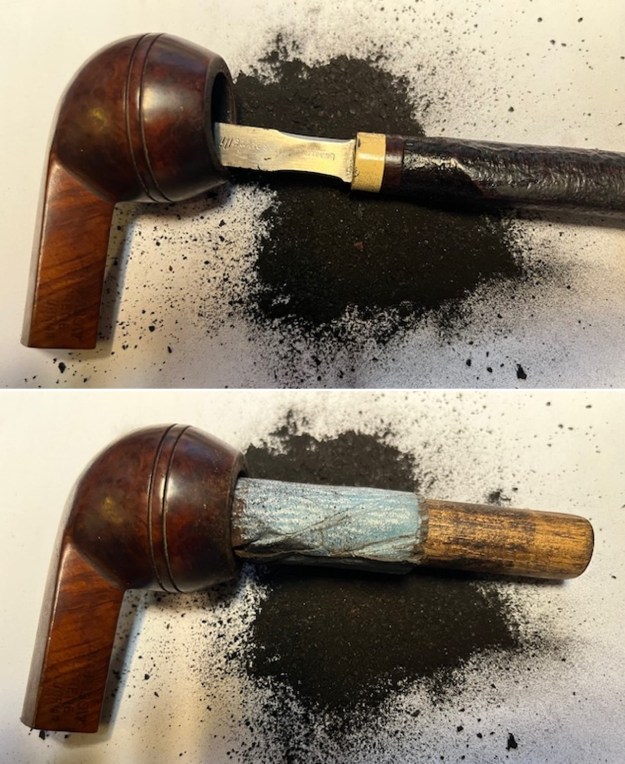
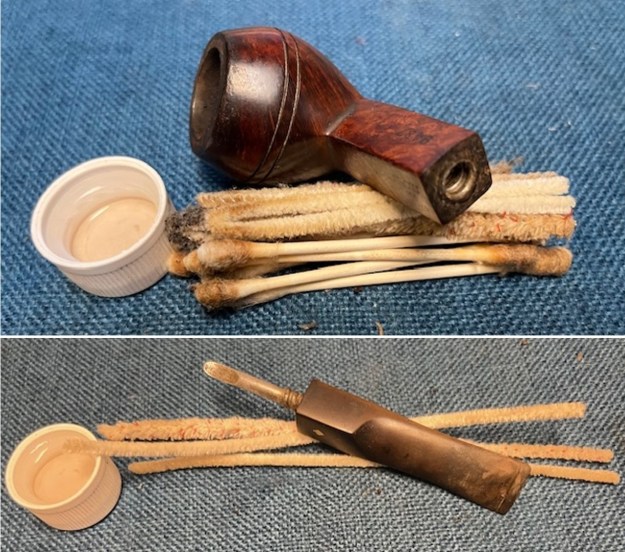
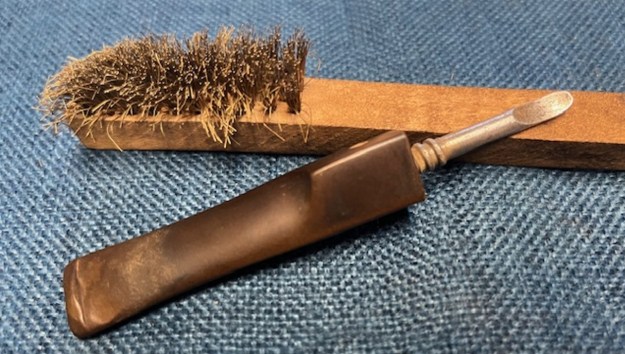
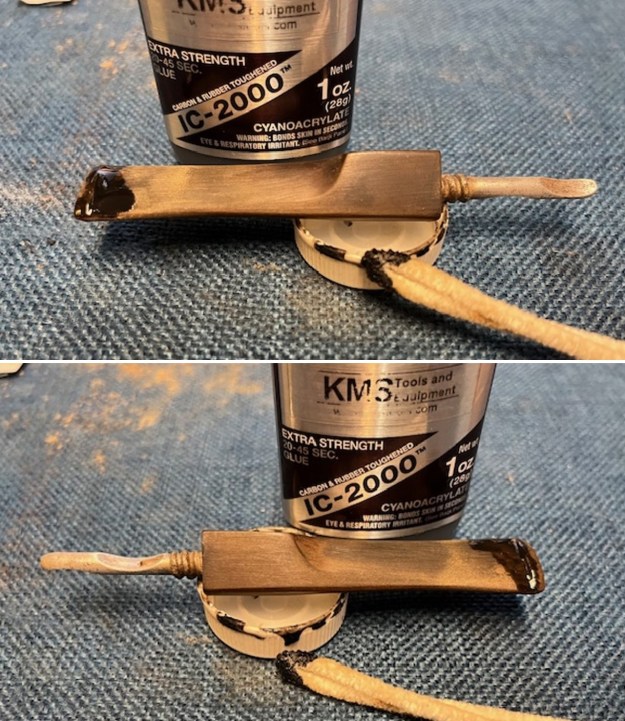
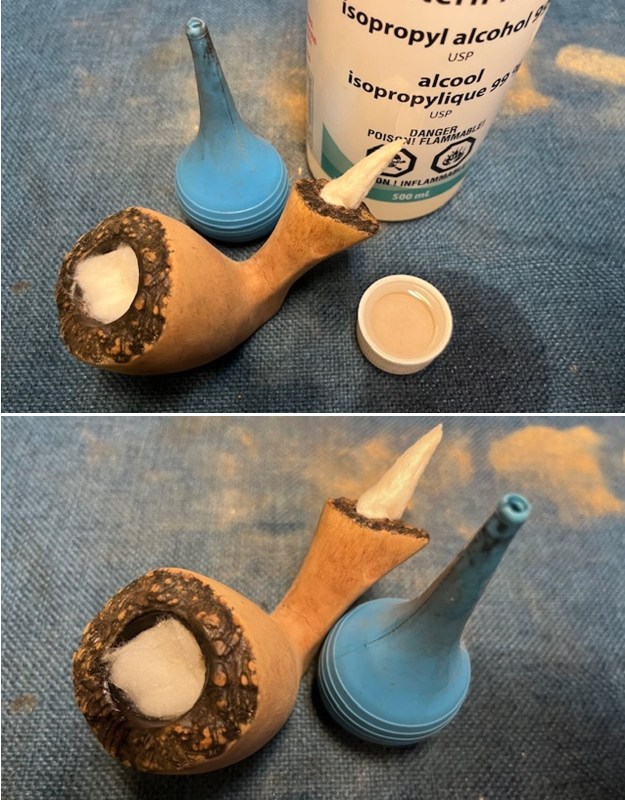
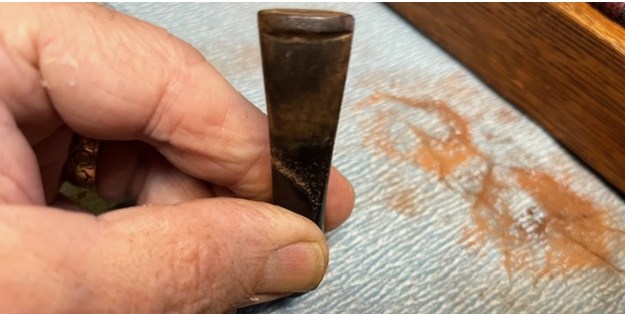
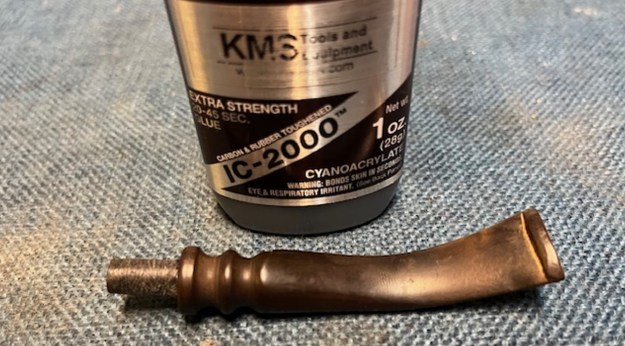
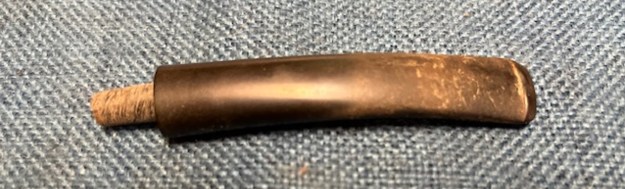
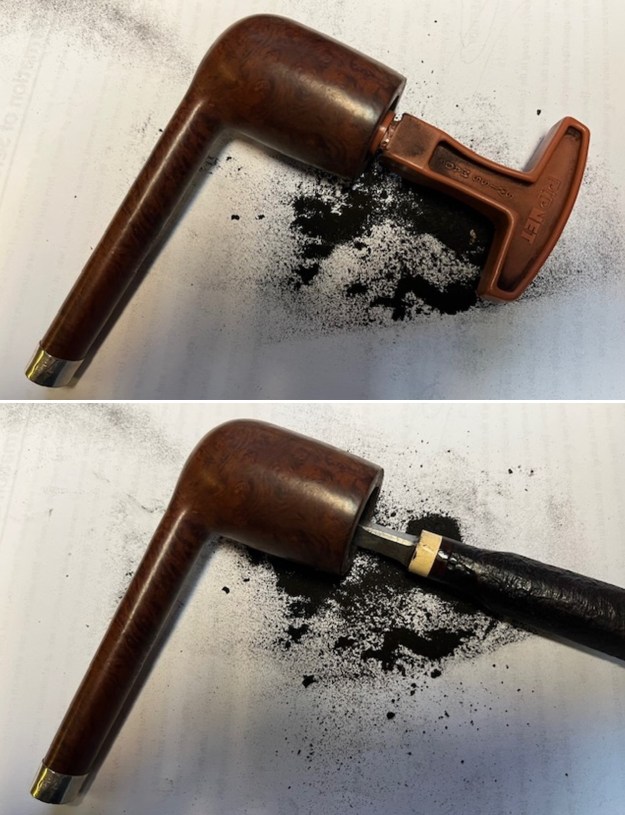
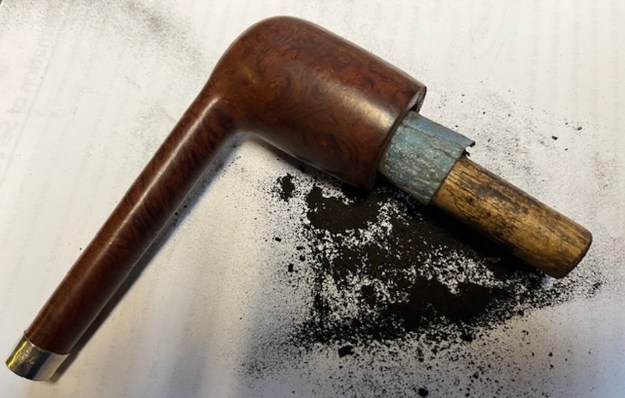
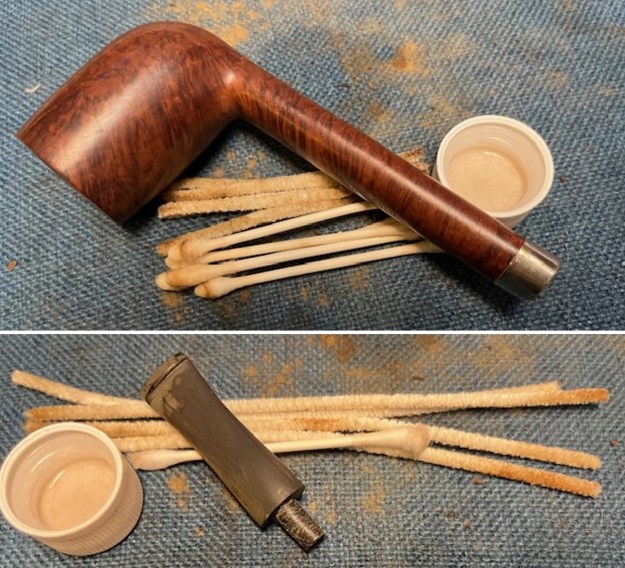
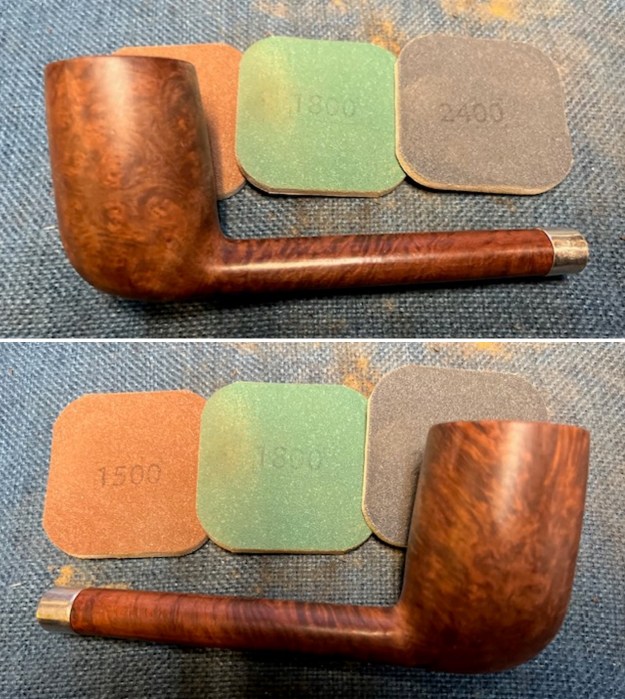
Let’s get on with restoring the pipe. The stummel was in good shape. The main issue with this pipe was the stem. The photos demonstrate that the bit had a small bite through. No big deal, I thought. I’ve repaired those before. Alas, this ended up being much more challenging than I had expected.I worked on the stummel first. In order to clean out the cake in the bowl, I used the Pipnet reamer and followed that up with a piece of sandpaper taped to a wooden dowel. I sanded down the cake until I hit the briar walls, so that I could inspect them for potential damage. Everything looked good on the inside, which is great.I proceeded to clean out the inside of the shank with 99% isopropyl alcohol and pipe cleaners and cotton swabs. It was a bit dirty in there, but I got it clean in the end.When that was done, I set up to clean the pipe’s insides with soap and some tube brushes. The pipe was beautifully clean after that.As I was cleaning, I noticed that there were a few minor dents on the rim. I wet a piece of cotton cloth with water, heated up my iron, and set about trying to raise the dents. Often, the hot, moist air created by the cloth and iron can lift the wood back into shape. This technique worked really well on this occasion.After this, I used all nine Micromesh pads (1,500 through 12,000 grit) to remove the scratches in the wood (especially on the rim) and make everything smooth. Then a light application of Before & After Restoration Balm brought out the best in the stummel’s grain. The grain on this pipe is pretty great! Moving on to the stem – I started out by cleaning the inside of the stem with lemon-infused 99% isopropyl alcohol and some pipe cleaners and cotton swabs. It was dirty, but not too bad. I also cleaned the stem with some Murphy’s on some cotton rounds. As you can see, the stem wasn’t too dirty and won’t need a soaking.Now it was time to fix the bite-through. Obviously, one option here would be to get another stem from my stock and replace the broken one, but I always try to use original materials wherever possible. I noticed that a repair had already been attempted on this stem at some point in the past. Someone had used some soft rubber (from one of those stem bits) to bridge the gap in the stem.I figured that adding my black carbon and rubber infused cyanoacrylate adhesive to this existing repair would be a good idea. I first plugged up the stem’s draught hole with a pipe cleaner coated in petroleum jelly. This ensured that any of the cyanoacrylate would not accidentally plug up the air passage in the stem.I then used a miniature file to shape the button and make it suitable for sanding. Uh oh – big problem. The soft rubber repair was not nearly good enough and broke off completely while I was sanding. Sigh. I repeated the process of building up the bit with black cyanoacrylate glue. This time I used a piece of cardboard coated in petroleum jelly (rather than a pipe cleaner). I then sanded the stem down with 220- and 400-grit sandpapers to meld seamlessly into the stem. I also used a sanding sponge to ensure that it keeps its shape and looks like it should. I won’t bore you by repeating myself, but I had to add black cyanoacrylate adhesive two more times until it was satisfactory. I then used all nine Micromesh pads (1,500 through 12,000 grit) on the stem to make it look as good as possible. I also used Obsidian Pipe Stem Oil in between each pad scrubbing. It is worth noting that a repair this big on a stem will never be invisible or perfect, but I was pleased with how the stem finished up. Off to the bench polisher to put the final touches on this pipe. I first gave it a thorough (but light-handed) going-over with White Diamond compound. One doesn’t want to use too much for fear of gumming up the rustication. Following that, several coats of conservator’s wax created a beautiful seal on the pipe.All done! This Handmade Oversize Kaywoodie looks fantastic and is ready to be enjoyed again by the next owner. I am pleased to announce that this pipe is for sale! If you are interested in acquiring it for your collection, please have a look in the “American” section of the store here on Steve’s website. You can also email me directly at kenneth@knightsofthepipe.com. The approximate dimensions of the pipe are as follows: length 6 in. (152 mm); height 2 in. (51 mm); bowl diameter 1½ in. (39 mm); chamber diameter ¾ in. (20 mm). The weight of the pipe is 2¼ oz. (64 g). I hope you enjoyed reading the story of this pipe’s restoration as much as I did restoring it. If you are interested in more of my work, please follow me here on Steve’s website or send me an email. Thank you very much for reading and, as always, I welcome and encourage your comments.

Would this Stanwell Hexagonal Pipe with a 9mm Filter Stem be a disappointment?


by Steve Laug

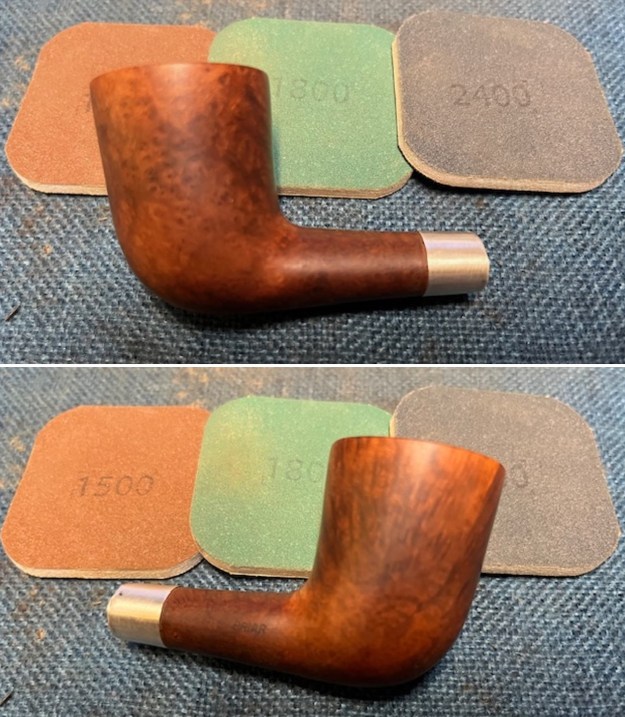
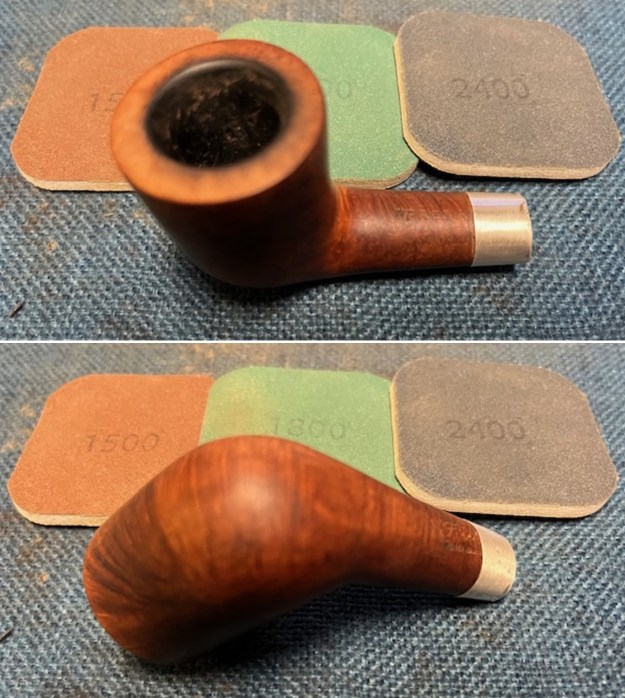
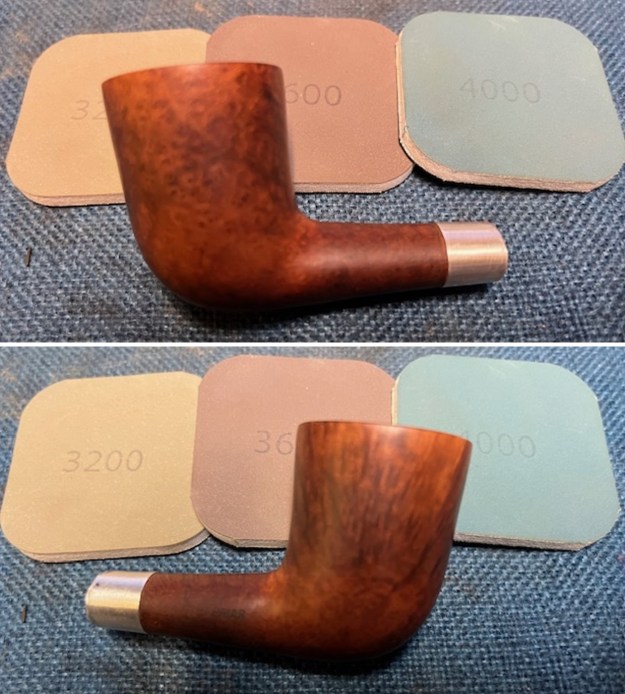
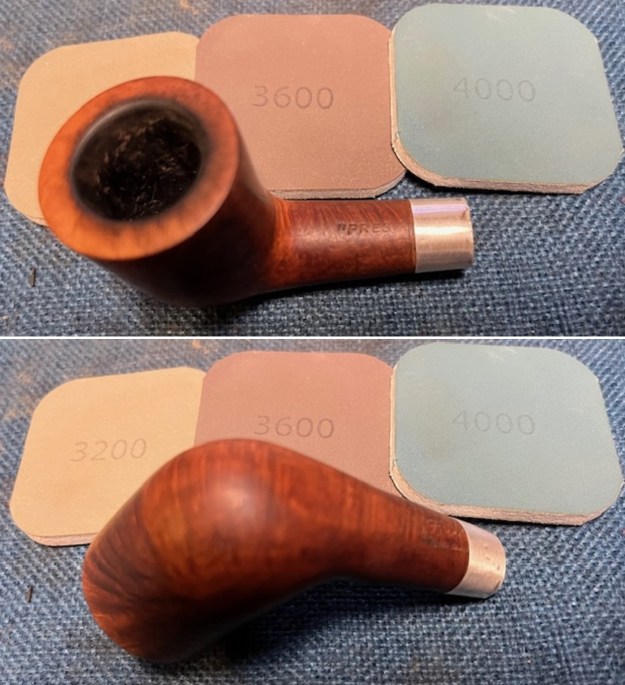
When this beautiful hexagonal Dublin by Stanwell came to us from our source in Denmark last year on 02/16/2023 I was pretty excited to work on it. The grain around the bowl and shank were amazing looking and the silver rim edge and shank band were great additions that gave the pipe a sense of polish. The pipe is stamped on the underside of the shank and on the left reads Stanwell. On the right it reads Made in Denmark. The silver band on the shank is stamped .925 identifying it as Sterling Silver. The bowl had a moderate cake and there was darkening and lava on the inner edge of the rim and the rim top. The filter stem was oxidized and had tooth marks and chatter ahead of the button on both sides. It looked like it should clean up very well. I was looking forward to getting it here in Canada and working on it. Jeff took photos of it before he started his clean up process. Do you see any issues in the photos below? I don’t see any other than what I have noted above. Nothing alarming! That would prove to be very wrong! Jeff took photos of the rim top that clearly show the thickness of the cake in the bowl and the darkening on the rim edge and top on the left front. There are scratches and tar on the silver rim cap that will need to be polished out but there is some beauty in the pipe. So far, no issues that can see. There does appear to be a bit of a shadow in the darkening on the right front of the top. The stem has some heavy oxidation that that will take work to remove but the tooth marks are light and there does not appear to be a lot of chatter ahead of the button. Jeff took photos of the grain around the sides and heel of the bowl. It is a pretty pipe. It is dirty but the grain is quite stunning. The silver band and the rim edge are tarnish and look like there are scratches. I am not seeing any alarming damage…. YET. The pipe is stamped on the underside of the shank. On the left side it is stamped Stanwell and on the right side it reads Made in Denmark. There is not a shape number or a line name on the pipe. It is clean of other stamping so that remains a mystery. The left side of the saddle stem has an inlaid silver Crown S logo. Before I started working on the pipe I wanted to nail down the shape and the designer. I turned to an article on rebornpipes by Bas Stevens that was a compilation of Stanwell shapes and also noted the designers (https://rebornpipes.com/2013/09/03/stanwell-shapes-compiled-by-bas-stevens/). There I found the shape number I was looking for. The pipe was a 163 and was described as a Freehand, “Facet”, hexagonal, with brass ring. It was a shape designed by Jess Chonowitsch. The pipe I had included a Silver Band instead of a brass one and also added a Silver Rim Edge. Now I knew I was working on a 163 designed by Chonowitsch. Now it is time to do my part on the restoration. This is where the disappointment starts to build for me.

Jeff had carefully cleaned up the pipe following his normal cleaning process. In short, he reamed it with a PipNet pipe reamer to strip out the cake in the bowl and then cleaned up the reaming with a Savinelli Fitsall Pipe Knife. He scrubbed the bowl with undiluted Murphy’s Oil Soap with a tooth brush. He worked over the lava and debris on the rim top and shank end and was able to remove it. He rinsed it under running warm water to remove the soap and grime. He cleaned out the inside of the shank and the airway in the stem with alcohol, cotton swabs and pipe cleaners. He scrubbed the stem with Soft Scrub and cotton pads to remove the debris and oils on the stem. He also scrubbed the silver and removed the tarnish. He soaked the stem in Briarville’s Pipe Stem Deoxidizer and then rinsed it with warm water and dried it off. The oxidation was less but still present. I took photos of the pipe once I received it. Looking at it as a whole it really looked good. I took close up photos of the stem and the rim top to show both how clean they were and what needed to be addresses with both. The first disappointment showed up on the rim top as I examined it. There was a crack on the left side of the top radiating from the inner edge toward the side almost at the corner of the hexagonal cap. It did not go all the way to the edge so that was a plus but it still was a disappointment. The inner edge bevel looked clean but there was some darkening on the surface of the bevel. The stem looked better and there were light tooth marks and chatter on both sides ahead of the button. There were no disappointments at this point on the stem.I took photos of the stamping on the underside of the shank. You can see from the photos that it is clear and readable. I removed the stem from the bowl and took a photo of the parts to give a sense of the beauty of the pipe. Before I started working on the rim top I decided to examined the sides of the bowl and see if the crack ran down the side below the rim cap. This is where I found the second disappointment. There appeared to be a crack on the side panel flowing from the rim cap at an angle toward the front of the bowl for about an inch. I have drawn a circle around it in the photo below. I also took another photo of the crack in the rim top and circled it as well. Once I saw those two glaring disappointments I set the pipe aside and worked on some other things as it is just too frustrating to look at such a beautiful pipe that had these signs of abuse.Last evening after work I finally decided to address the two glaring issues noted with the pipe. I put on my magnifying head lamps and examined both cracks. The crack on the rim top came from the inner edge but did not seem to drop too far into the bowl. Maybe an eighth of an inch. The “Crack” on the side of the bowl may well not be a real issue. There is a deep scratch in the silver band just above the line with the same arc. It may just be a deep scratch rather than a crack. I poked at it and probed it with a dental pick with the headlamp and magnifier in place and I am 99% sure it is just a scratch!!! I was leaping for joy at this point! I decided to treat it as a small hairline crack and also the crack on the rim at the same time. I used a micro drill bit and put a small pin hole at the end of the line on the side of the bowl and the end of the crack on the top of the rim. I used a tooth pick to put a spot of clear CA glue in the drill hole on both the top and side and on the crack on the rim top. I used a dental spatula to press fine briar dust into the glue on both and set it aside to dry. Once the repairs cured I sanded the areas smooth with a folded piece of 220 grit sandpaper. I polished the bowl and rim top with micromesh sanding pads – dry sanding with 1500-12000 grit sanding pads. I wiped down the briar after each pad with a damp cloth to remove the dust and debris from the surface. The briar began to take on a shine. I also polished the silver rim edge and band at the same time remove some of the scratches. For those I used 3200-12000 grit pads. My disappointment was fading with way the repairs blended into the briar. It was a beauty. I worked some Before & After Restoration Balm into the surface of the briar with my finger tips. The product is incredible and the way it brings the grain to the fore is unique. It works to clean, protect and invigorate the wood. The disappointments mentioned above were taken care of! I set the bowl aside and turned to work on the stem. I used Soft Scrub and cotton pads to work on the oxidation remaining on the pipe. It was deep and it took a bit of scrubbing to bring it to the surface.I “painted” the surface of the stem with the flame of a Bic lighter to lift the tooth marks ahead of the button on both sides. It worked very well and I was able to lift them all to the point that sanding the stem would remove the remnants. I sanded it with a folded piece of 220 grit sandpaper to remove the tooth marks and also remove the oxidation. It looked much better. I sanded the stem with 320-3500 grit sanding pads. Between the pads I wiped the stem down with Obsidian Oil. It is starting to look very good.I polished the stem with micromesh sanding pads – wet sanding it 1500-12000 pads. I wiped it down with Obsidian Oil after each pad to enliven and protect the vulcanite. I polished it with Before After Pipe Polish – both Fine and Extra Fine. I gave the stem another rub down with Obsidian Oil and set it aside to dry. I fit the stem with a 9mm Dr. Perl Junior filter. The fit of the filter to the stem was perfect. The 9mm was made for it. This Jess Chonowitsch Designed Stanwell Faceted Hexagon Freehand 163 with a hexagon vulcanite saddle stem fit for 9mm filters is a great looking pipe now that it has been restored. The beautiful grain on the briar and the silver rim edges and band shines through the polished finish and is stunning. I put the stem back on the bowl and carefully buffed the pipe with Blue Diamond on the buffing wheel. I gave the bowl and the stem multiple coats of carnauba wax on the buffing wheel and followed that by buffing the entire pipe with a clean buffing pad. I hand buffed the pipe with a microfiber cloth to deepen the shine. The finished Stanwell Faceted Silver Rim and Shank Band 163 fits nicely in the hand and feels great. Give the finished pipe a look in the photos below. The dimensions of the pipe are Length: 5 ½ inches, Height: 1 ¾ inches, Outside diameter of the bowl: 1 ¾ inches, Chamber diameter: ¾ of an inch. The weight of the pipe is 52 grams/1.83 ounces. I will soon be adding it to the rebornpipe store in the Danish Pipe Making Companies Section. If you are interested in this pipe send me a message or an email. Thanks for reading this blog and my reflections on the pipe while I worked on it. There are many more to come!

Restoring and Replacing a Tenon on a Hand Cut B Olive Stack


by Steve Laug

The next pipe on the table was one that we purchased from our contact in Denmark who has provided us with some great pipes. We bought it on 02/16/2023. It caught my eye because of the brass “O” on the stem which I have come to associate with Julius Vesz Hand Made pipes. The stamping on the shank is a bit odd, but uses some of the words that I have come to associate with Vesz pipes.  On the underside of the shank it reads hand cut (lower case script) with B on top of the “cut” portion of the stamp making it unclear. Below that the stamp reads Olive and I don’t think it refers to the wood but perhaps the finish on the pipe. I have never seen a Vesz stamped with that nomenclature. The wood is definitely briar and not Olive wood. I really like the fact that the pipe is the top of the line of Vesz Hand Cut pipes. The bowl had a thick cake with an overflow of lava on the top and the inner edge of the bowl. There were also some burn marks and darkening on the inner edge of the rim. These would need to be dealt with in the clean up and restoration. The finish was dirty with grime and grit ground into the briar. The Ebionite stem was oxidized and had some tooth marks on both sides ahead of the button. Jeff took some photos of the pipe before he started his clean up work. Jeff took some great photos of the rim top that show the thick cake in the bowl and the lava on the rim top. There was also some burn damage on the front inner edge of the bowl and some darkening around the edges. He also captured the condition of the stem showing the oxidation and the tooth damage on both sides. Jeff took a photo of the damage to the filter tenon. It had a major crack on the top half. I expected it to break free during the cleanup process.He captured the grain around the sides and heel of the bowl well in these photos. It was amazing grain and the stain was a rich walnut that made the grain really pop around the bowl and shank. Jeff took a photo of the stamping on the underside of the shank. It was clear and readable as noted above. You can see the “B” stamped on top of the Hand Cut stamp. The second photo shows the brass “O” on the left side of the taper stem and the oxidation around it on the side of the taper stem.Before I started working my part of the restoration I spent some time trying to place the hand cut line in the Vesz hierarchy. I turned to rebornpipes to have a look at some of the pieces I had written previously on the brand. The first was a catalogue I had picked up on Vesz pipes from a friend. It was an older catalogue from the time period that the brand was called Craft Pipes (https://rebornpipes.com/2016/09/13/an-older-julius-vesz-catalogue/). In going through the catalogue there was nothing that referred to the newer lines of the Vesz pipes that showed up in other places.

A piece I wrote on a Vesz Zulu gave a lot of historical backgroundon the brand so I reread that (https://rebornpipes.com/2014/10/04/a-review-a-julius-vesz-shape-76-zulu/). I quoted from Pipedia in the piece and have included that and the link below.

Pipedia gives good background information on Vesz. The picture and the material is taken from this link http://pipedia.org/wiki/Vesz_Pipes

“Born and raised in Hungary, Julius Vesz was first exposed to pipe making through his grandfather. Although his grandfather died when Julius was only 9 years old, he can still picture his grandfather making pipes. It made a lasting impression that matured years later.

After immigrating to Canada at age 23, Vesz worked as a mechanical draftsman, but ever since a child had wanted to do something on his own. Remembering his grandfather’s pipe making and repairing, he thought perhaps he should try his hand at that also. He sought out Charlie Dollack, who had a repair shop in downtown Toronto, but while Charlie encouraged the young Vesz, he did not offer any help or instruction.

Julius continued on his own, setting up a modest shop in his own home, and was soon fixing and making pipes for several department stores, as well as United Cigar, which later turned into his main source of work. He discovered he had a unique skill, which he practiced and nurtured on his own. Like his grandfather, Vesz is motivated by a desire to create pipes that approach perfection.”

Over the years I have followed Julius Vesz’ pipes and kept an eye out for one that caught my eye. Julius Vesz is a Canadian pipe maker who has been controversial in his claim to use dead root briar. Many have argued about his choice of terms regarding the briar that he uses. But regardless of your take on that issue he makes beautiful pipes that smoke exceptionally well. His unique raindrop shaped pipes may be how many people know him. He has a shop in the Royal York Hotel, 100 Front Street West in Toronto.

His Hand Cut pipes are crafted from his oldest and finest blocks of aged briar. They come in a variety of shapes and styles and no two are the same. The grading of the Hand Cut is ascending from 3 – 9, then switches to A – D. The pipe I am working on is a B grade so it is getting close to the top of the grading scale which I would expect from the grain on the briar. The Hand Cut pipes were often personalized with bone, silver and gold ornamentation.

His early pipes bore the Craft Briar stamp, and though his company still is registered as Craft Briar his pipes are now stamped Julius Vesz. He carved every pipe that bears his name and though they may bear similarities to others that he has carved each one is one of a kind. His site says that “Every pipe is meticulously crafted from his personal supply of aged briar that he has been accumulating since the 1960s. The extremely old briar gives each pipe the exceptional smoking characteristics found only in a world famous Julius Vesz pipe.”

Now I knew that the Hand Cut pipe I had was the top line of Vesz Pipes and that it was Graded a B which is close to the top of the line which tops out at Grade D. It is a beauty and it is now time to work on it!

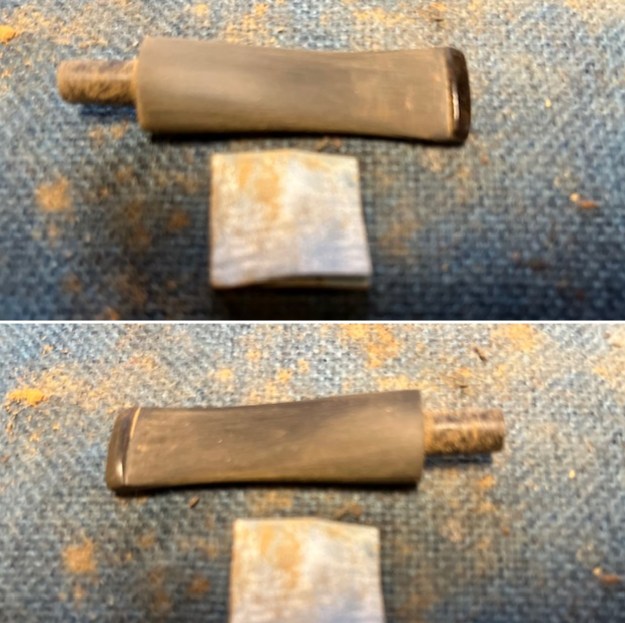
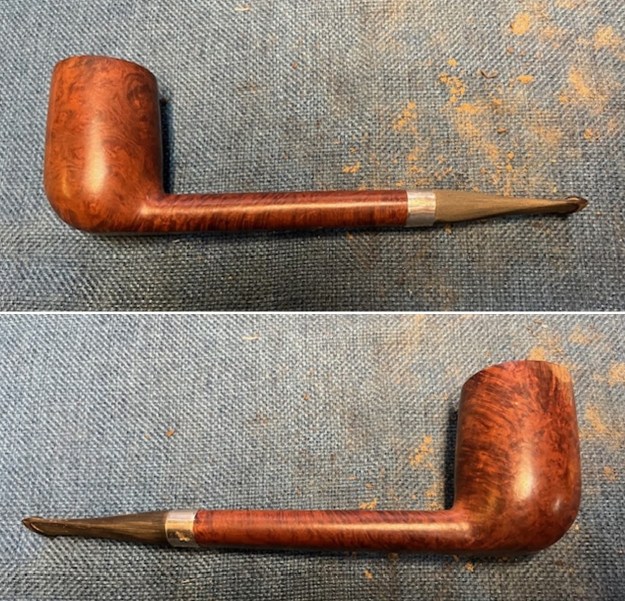
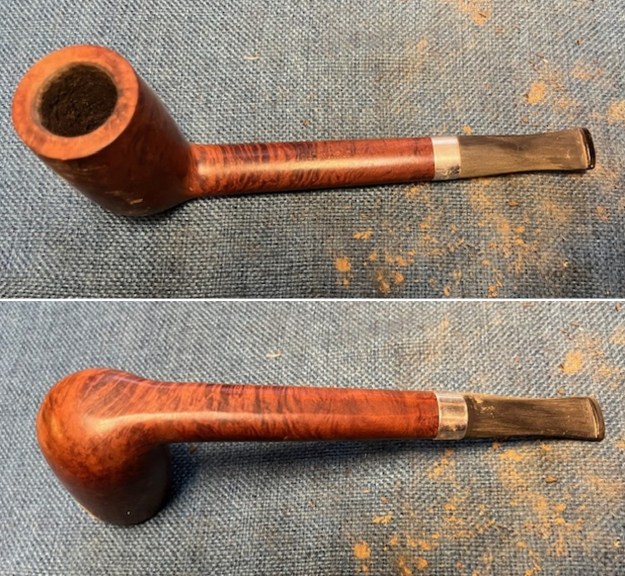
Jeff had thoroughly cleaned up the pipe. He had reamed the pipe with a PipNet pipe reamer back to bare briar and removed the remnants of the cake with a Savinelli Fitsall Pipe Knife. He scrubbed the bowl with undiluted Murphy’s Oil Soap and a tooth brush. He rinsed it under running warm water to remove the soap and grime. He cleaned out the inside of the shank and the airway in the stem with alcohol, cotton swabs, pipe cleaners and shank brushes. He soaked the stem in Briarville’s Pipe Stem Deoxidizer and rinsed it off with warm water. The filter tenon, shown cracked above, fell apart in the clean up. You can see pieces of the broken tenon below. I took photos of the pipe before I started my part of the restoration work.

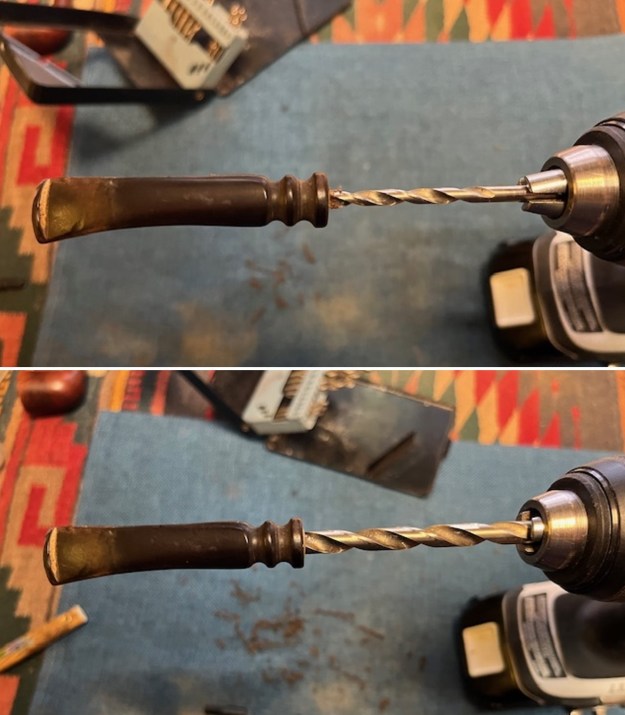
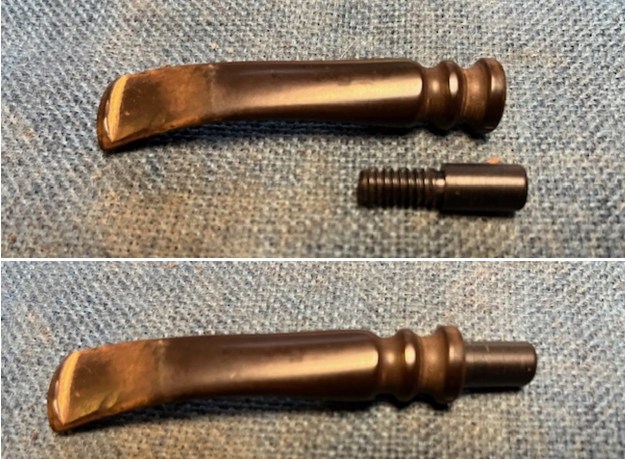
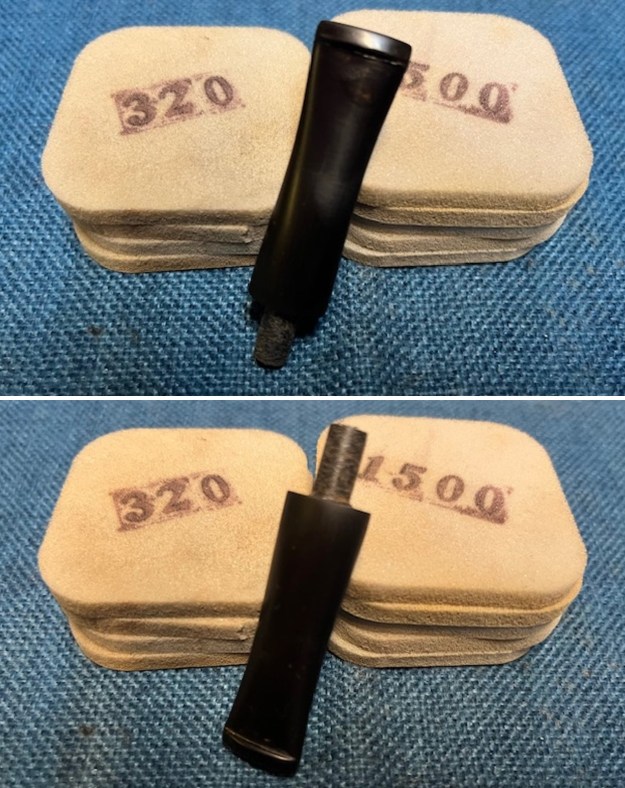
I took photos of the bowl and rim top to show the clean condition. The burn damage on the inner edge of the bowl is clear on the front of the bowl. The rim top has some scratches and marks as well. The bowl walls look very good. The thick vulcanite stem looks very clean and the tooth marks are evident next to the button on both sides.I took the stem off the bowl and took photos of the broken tenon and parts. It will definitely need to be replaced. The beauty of this is that I can replace it with a regular tenon instead of the filter tenon. To me that is good news.I decided to replace the tenon first. I knew that fitting it would require adjustments to the stem and shank so I wanted to do that before I put a lot of work into polishing the bowl. I used a Dremel to flatten out the broken tenon end. The photo below shows it in process to the flattening out. Once it is flat and the face of the stem is smooth then it will be time to put a new tenon in place. With flattened I used a Delrin tenon – the largest that I had to fit into the airway in the stem. I coated the threaded end of the tenon with clear CA glue and inserted it in the end of the stem.I set the stem aside to let the glue cure on the new tenon. Once it had hardened it was time to reduce the diameter of the new tenon to properly fit in shank. I used a file and a Dremel with a sanding drum to bring it to the right diameter.When I had the tenon shaped correctly, diameter and fit correct I put the stem in the shank and took the following photos. You can see that the fit is very good. It is snug and looks good against the shank end. The alignment to the shank end is quite good but I will need to sand the right side of the stem a little to make the transition smooth. I will need to do the same on the right, top and bottom sides – adjusting either the stem or the shank for smooth transition between the stem and shank. I have to say it is a really beautiful pipe! I sanded the transition smooth all the way around the shank and stem joint. I was careful on the underside to not damage the stamping. Once it was smooth I polished the sanded areas with 1200-3200 grit micromesh pads. I used a Walnut stain pen to blend in the adjusted areas to the rest of the briar. That transition looked and felt very good.I set the stem aside for now and turned to the bowl. I used a folded piece of 220 grit sandpaper to smooth out the damage on the front inner edge and to give it a slight bevel to bring it back to round and deal with the darkening in that area of the rim edge. It definitely looks better. I smoothed it out with micromesh sanding pads. There were some gouges in the rim top on the front and I did not want to top the bowl. I used a tooth pick and clear CA glue to fill in the gouges. Once it cured I smoothed them out with 220 grit sandpaper and smoothed it with some 1500 grit micromesh. I restained the top and the inner edge with a Walnut stain pen. I polished the briar with micromesh sanding pads – dry sanding with 1500-12000 grit sanding pads. I wiped the bowl down with a damp cloth after each pad. I take photos of the three groups of pads for my own viewing primarily as I am looking for progress in polishing. Once again, by the end of the process it looked quite good. I rubbed the bowl and shank down with Before & After Restoration Balm. I worked it into the surface of the bowl sides and shank with my fingertips. It works to clean, enliven and protect the briar. I let the balm sit for 15 minutes and buffed with a cotton cloth to raise the shine. The grain came alive. I set the bowl aside and turned my attention to the stem. The scratches, tooth chatter and marks easily were addressed by dry sanding the stem with 320-3500 grit sanding pads. I wiped it down after each pad with Obsidian Oil. It looked very good at this point in the process.I polished the vulcanite stem with micromesh sanding pads – 1500-12000 grit pads to further remove the remaining scratches. I wiped the stem down with Obsidian Oil after each sanding pad. I used Before & After Pipe Polish – both Fine and Extra Fine to further polish the stem. I rubbed it down with a final coat of Obsidian Oil and let it dry. This Julius Vesz Hand Cut Grade B Olive Stack is a great looking pipe with great grain around the sides of the bowl. The replaced broken filter tenon with a Delrin one worked very well and now it is a nonfilter pipe. I put the stem back on the bowl and carefully buffed the pipe with Blue Diamond on the buffing wheel using a light touch on the briar. I gave the bowl and the stem multiple coats of carnauba wax on the wheel and followed by buffing the pipe with a clean buffing pad. I hand buffed the pipe with a microfiber cloth to deepen the shine. The finished Vesz Hand Cut B Grade Olive fits nicely in the hand and feels great. Give the finished pipe a look in the photos below. The dimensions of the pipe are Length: 5 ½ inches, Height: 2 ½ inches, Outside diameter of the bowl: 1 ¼ inches, Chamber diameter: 7/8 of an inch. The weight of the pipe is 52 grams/1.80 ounces. This one will be with me for awhile so I can enjoy the beauty of this high grade Julius Vesz Hand Cut Stack. I think I will enjoy it for a while before I make up my mind once and for all… at least for now. Thanks for reading this blog and my reflections on the pipe while I worked on it. As always, I appreciate your comments and questions. Thanks for your support and time!

Restoring a Carey Magic Inch Pat. No. 3267941 Mediterranean Briar Israel Calabash


by Steve Laug

The next pipe on the table is an interesting looking Carey Magic Inch Calabash pipe. It is unique for several reasons. The first is that it comes with a flat piece of briar that is shaped to the base of the pipe. It has some great grain on the base and plateau on the edges. The second is that the left side and back of the bowl and shank are smooth and the right side and part of the front of the bowl is sandblast. The pipe is stamped on the left side and reads Carey [over] Magic Inch [over] Pat. No. 3267941. The stamping on the right side reads Mediterranean [over] Briar Israel. The stem has the Carey Logo “C” in a box on the topside. We purchased the Carey from an estate sale in Idaho Falls, Idaho, USA on 08/05/2018. The finish on the pipe was dirty with grime and oils ground into the briar. There was a thick cake in the bowl that overflowed on to the rim top and inner beveled edge. They both have a coat of lava on them. There is a vulcanite shank extension on the shank end that is quite polished. The stem is a Carey Magic Inch stem that tells me that the pipe has the Carey filtration system in the shank. A slim tube or Papyrite slips over the tube and filters out the oils. The stem has three slots in the top to aid airflow. The stem is the typical Carey special mix of vulcanite and plastic of some sort and in this case, I am thankful that it is not chewed. Jeff took photos of the pipe before he started his work on it. He took photos of the rim top to show the moderate cake in the bowl and the thick lava coat and debris on the rim top and inner edge. He took photos of the stem to show the tooth chatter and marks on the surface. None are too deep and I am thankful for that. He captured the finish and grain on the sides of the bowl. The left side shows the sandblast and the others show the smooth nicely grained finish. It is a beauty. He captured the stamping on the sides of the shank and it is clear and readable. The stamping reads as noted above. The Patent Number is interesting.The stamping gives me pause. I know that Carey Magic Inch pipes were typically made in the USA and for a short time in Great Britain. This one is stamped Mediterranean Briar Israel which I had not seen before. I am also pretty sure it is made by the Shalom Pipe Factory for Carey. But now to do a bit of study on the brand.

I first did a quick Google search of the brand and Israel to see what I could learn of the connection. There I found a discussion on Pipesmagazine forum. In the last line of the section I am quoting from the poster, Briar Lee I found what I was looking for. I have highlighted it in red in the text below for ease. I quote the entire section and have attached the link as well (https://pipesmagazine.com/forums/threads/e-a-carey-pipes-for-new-pipe-smokers.102325/).

A Carey Magic Inch pipe uses a paper sleeve on a ventilated tube in the stem. When smoking a tiny bit of air is metered into the smoke stream.

This air doesn’t materially change the flavor but it significantly cuts back on mouth burn and tongue bite and somehow prevents prevent gurgling and soggy pipes, how I’ve not ever been able to quite figure out. But the system works.

After you become an old leather tongued pipe addict and want the full blast of the smoke stream, use a piece of plastic drinking straw to replace the paper tube.

Carey pipes have been made all over the world through the years, and I have them from the USA, London, Italy, Greece, and Israel.

From there I turned to Pipephil’s site (http://pipephil.eu/logos/en/logo-c2.html). And found a listing for Carey. It gave me a pipe with the same patent information but it was made in England so that did not help much. I have included a screen capture below.I turned next to Pipedia (https://pipedia.org/wiki/Carey_Magic_Inch). The site had a short article that gave a basic description of the Magic Inch system. It also provided a link to the EA Carey Website which I would look at next. I quote from the Pipedia article below as it is a simple description of the system and the pipe.

The “Magic Inch” System has been a Carey’s tradition for over 50 years, with over 1,000,000 sold. The “Magic Inch” is an air chamber inserted between the imported briar bowl and the vented mouthpiece which allows cool outside air to enter and mix with the warm tobacco smoke inside the “Magic Inch” chamber. Tobacco tars, oils and moisture, are squeezed out of the smoke. The residue drops to the bottom of the chamber and is absorbed by the Papyrate sleeve. From its rich tradition and thousands of satisfied customers, this pipe is sure to be your smoking favorite for life. Carey Magic Inch pipes can be readily identified by a boxed letter C on the stem, along with a distinctive series of three vent slits and the Carey Magic Inch name stamped into the side of the bowl.

That lead me to the Carey Site as noted above (https://www.eacarey.com/magicinchinfo.html). I did a screen capture of the page defining the Magic Inch system. The diagram is helpful to capture the mechanics of the pipe.The site also had testimonials from satisfied customers about the system and hidden in the bottom of one of the sidebars was the Patent info. I have included that screen capture below as it is very interesting (https://www.eacarey.com/careyclassics.html).Now I knew that the pipes were made in many countries and that Israel was on the list. There was no direct link to the Shalom Pipe Company but I am still confident they made this pipe and Carey added the plumbing.

I was ready to start working on this pipe. As usual, Jeff had thoroughly cleaned up the pipe. I probably don’t say enough about how much I appreciate him doing the hard clean up work before I even get the pipes. He does an amazing job. He had reamed the pipe with a PipNet pipe reamer back to bare briar and removed the remnants of the cake with a Savinelli Fitsall Pipe Knife. He used a small blade to pick out the thick lava on the rim top. He scrubbed the bowl with undiluted Murphy’s Oil Soap and a tooth brush. He rinsed it under running warm water to remove the soap and grime. He cleaned out the inside of the shank and the airway in the stem with alcohol, cotton swabs, pipe cleaners and shank brushes. He soaked the stem in Briarville’s Pipe Stem Deoxidizer and rinsed it off with warm water. I took photos of the pipe and the stem that came with it before I started my part of the restoration work. I took photos of the bowl and rim top to show the clean condition. The bowl walls look very good. The rim top had some remnants of what looked like varnish – almost rings or swirls on the top. The stem looks very clean and when I run my fingers along the edges it still has the casting marks on it.
I tried to capture the stamping on the shank underside. It is readable and clear as noted above. I took a photo of the pipe with the stem removed. I started by working on the rim top. I wiped the bow and rim top down with acetone to remove the varnish run marks on the rim top. Once it was wiped down the marks still remained on the top and turned out to be marks from when the bowl was finished (poorly finished on the top). I sanded the rim top with 320-3500 grit sanding pads and wiped it down between pads with a damp cloth to check the progress. It looked much better and was smooth. The scratches were sanded out and feel the way it should feel. I restained the sanded rim top and edges with an Oak stain pen to blend it into the surround colour of the briar. The match was perfect and once the pipe was polished more it would be a great match.I polished the smooth portions of the briar and the vulcanite shank extension with micromesh sanding pads – dry sanding with 1500-12000 grit sanding pads. I wiped the bowl down with a damp cloth after each pad. I wiped the shank extension down with Obsidian Oil. I take photos of the three groups of pads for my own viewing primarily as I am looking for progress in polishing. Once again, by the end of the process it looked quite good. I rubbed the bowl and shank down with Before & After Restoration Balm. I worked it into the surface of the bowl sides and shank with my fingertips. I worked it into the sandblast portions of the finish with a shoe brush. It works to clean, enliven and protect the briar. I let the balm sit for 15 minutes and buffed with a cotton cloth to raise the shine. The grain came alive.  With the bowl finished I decided to put a Papyrate filter on the apparatus at the end of the shank. I took one from the box and carefully slid it in place. The fit is snug and the look is perfect. Now I turned to the stem. I love watching the shine develop on the mixed Carey vulcanite as I polish it with micromesh sanding pads – dry sanding with 1500-12000 grit pads. I wiped it down after each pad with Obsidian Oil. I finished this part of the polishing by using Marks Hoover’s Before & After Pipe Stem Polish – both Fine and Extra Fine. I wiped it off with a soft cloth and gave the stem another coat of Obsidian Oil. This Carey Magic Inch Pat. No. 3267941 Bent Calabash is a great looking pipe with some interesting sand blast on the front and right side of the bowl and vulcanite shank extension. The fact that it is stamped Israel fits as I have worked on Alpha Pipes of similar shape and style. The beautiful grain around the smooth portions and sandblast on the other portions of the bowl is quite stunning and works well with both the shape and the polished vulcanite shank extension and the polished Carey Magic Inch style stem. I put the stem back on the bowl and carefully buffed the pipe with Blue Diamond on the buffing wheel using a light touch on the briar. I gave the bowl and the stem multiple coats of carnauba wax on the wheel and followed by buffing the pipe with a clean buffing pad. I hand buffed the pipe with a microfiber cloth to deepen the shine. The finished Carey Magic Inch Calabash fits nicely in the hand and feels great. Give the finished pipe a look in the photos below. The dimensions of the pipe are Length: 6 ½ inches, Height: 2 ½ inches, Outside diameter of the bowl: 1 ¾ inches, Chamber diameter: 1 inch. The weight of the pipe is 63 grams/2.22 ounces. I will be putting the pipe and the briar pipe rest on the rebornpipes store in the Pipes From Various Makers Section shortly. If you wish to add this interesting pipe to your rack it is a great addition. Send me a message or an email. Thanks for reading this blog and my reflections on the pipe while I worked on it. I appreciate your support and time!

Restemming and Restoring a Frasorteret Freehand


by Steve Laug

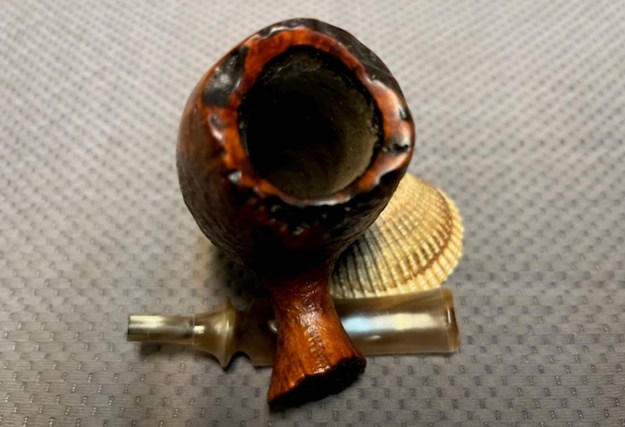
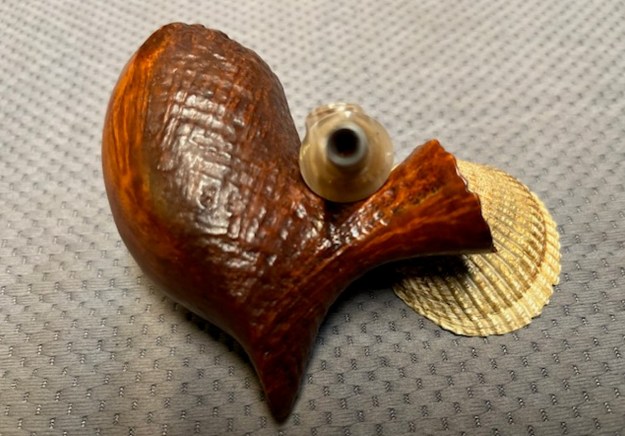
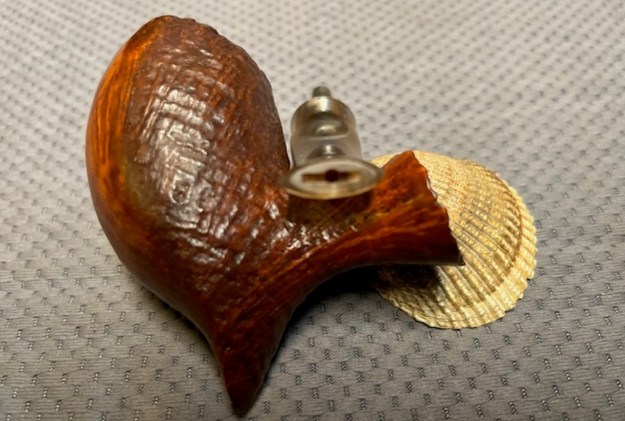
This interesting Freehand with both smooth and sandblast finishes came to us from an estate we purchase from Santa Cruz, California USA on 05/28/2024. It is a unique looking pipe that took some work to figure out the stamping. With some digging and comparing we knew that the stamping on the underside of the shank just ahead of the vulcanite shank extension read Frasorteret [over] Hand Made [over] In [over] Denmark. You might well ask why we had to figure it out. That is simple in the half of the name line was cut off by the shank extension. The pipe has a flat bottom so it is a bit of a sitter. The finish is dirty with dust and oils in the sand blast portions on the bowl sides. The smooth portions are also dirty with oils and dirty ground into the finish. The plateau rim top has some darkening toward the back of the bowl as well as thick lava filling it the grooves in the finish. The bowl has a moderate cake. The vulcanite shank extension is oxidized and also dirty. The stem is actually a poor replacement that is a saddle stem for a straight shank. The pipe would have originally had a fancy freehand style military style stick stem that sat in the extension. It will need to be replaced. Jeff took some photos of the pipe before he started his work on it. He took photos of the rim top to show the moderate cake in the bowl and the thick lava coat and debris in the plateau finish on the backside of the rim top. You can see that it basically fills in the grooves of the finish. He took photos of the stem to show the oxidation and calcification on it but at some level it does not matter as it will be replaced. Jeff took one photo of the right side of the bowl to give a sense of the finish on the bowl sides. There are no other photos at this point.He captured the stamping as best as possible on the underside of the shank next to the vulcanite shank extension. It reads as noted above.It seemed to me that Frasorteret pipes came from the creative carving of Preben Holm so I wanted to confirm that memory. When you get a certain age memory can fool you! I turned first to Pipephil’s site (http://www.pipephil.eu/logos/en/logo-f4.html). It tied the line to Preben Holm but there was not too much more information at this point.I turned to Pipedia (https://pipedia.org/wiki/Frasorteret) to gather further information. There the information was scant but none the less made the connection to Preben Holm very clear. Here is the information.

The Frasorteret line of pipes were made by Preben Holm and were nearly identical to his normal line of pipes but for fills and pits and the like. The pipes were stamped Frasorteret Made in Denmark.

Now I had the background I needed. I was ready to start working on this pipe. As usual, Jeff had thoroughly cleaned up the pipe. I probably don’t say enough about how much I appreciate him doing the hard clean up work before I even get the pipes. He does an amazing job. He had reamed the pipe with a PipNet pipe reamer back to bare briar and removed the remnants of the cake with a Savinelli Fitsall Pipe Knife. He used a small blade to pick out the thick lava on the rim top. He scrubbed the bowl with undiluted Murphy’s Oil Soap and a tooth brush. He rinsed it under running warm water to remove the soap and grime. He cleaned out the inside of the shank and the airway in the stem with alcohol, cotton swabs, pipe cleaners and shank brushes. He soaked the stem in Briarville’s Pipe Stem Deoxidizer and rinsed it off with warm water. I took photos of the pipe and the stem that came with it before I started my part of the restoration work. Preben’s Holm’s magic is very visible in the shaping of the pipe. I took photos of the bowl and rim top to show the clean condition. The bowl walls look very good. The replacement stem looks very clean and will be a good addition to my can of stem options. I tried to capture the stamping on the shank underside. It is a bit blurry but it is still very readable and clear as noted above. I took a photo of the pipe with the replacement stem removed. It really makes it clear to me that it is a replacement.The pipe was ready for me to work on but I decided first to go through my stems. I went through both vulcanite and acrylic stems which may sound easy but I have several hundred stems to sort through. I was looking for something that flowed with the delicate shape of the bowl and shank and was simply weightless looking. I found what I was looking for and took a photo of it with the stem I found. I like the looks of the new choice. What to do next? I figured I might as well continue working on the stem since I had already started. I sanded out the tooth chatter on the stem end and worked on the oxidation with a folded piece of 220 grit sandpaper.I sanded the stem with 2×2 sanding pads – 320-3500 to start the polishing process and further remove the oxidation and marks. I wiped the stem down after each sanding pad with Obsidian Oil. It was beginning to look very good.I love watching the shine develop on the vulcanite as I polish it with micromesh sanding pads – dry sanding with 1500-12000 grit pads. I wiped it down after each pad with Obsidian Oil. I finished this part of the polishing by using Marks Hoover’s Before & After Pipe Stem Polish – both Fine and Extra Fine. I wiped it off with a soft cloth and gave the stem another coat of Obsidian Oil. I set the stem aside and turned my attention to the bowl. I used some Soft Scrub to work on the oxidation on the vulcanite shank extension. I did a lot of scrubbing on it and the oxidation came off the vulcanite and it looked much better. I polished the smooth portions of the briar and the vulcanite shank extension with micromesh sanding pads – dry sanding with 1500-12000 grit sanding pads. I wiped the bowl down with a damp cloth after each pad. I wiped the shank extension down with Obsidian Oil. I take photos of the three groups of pads for my own viewing primarily as I am looking for progress in polishing. Once again, by the end of the process it looked quite good. I rubbed the bowl and shank down with Before & After Restoration Balm. I worked it into the surface of the bowl sides and shank with my fingertips. I worked it into the plateau finish with a shoe brush. It works to clean, enliven and protect the briar. I let the balm sit for 15 minutes and buffed with a cotton cloth to raise the shine. The grain came alive. This newly restemmed Frasorteret Hand Made in Denmark Freehand is a great looking pipe with some interesting shaping around the sides of the bowl and vulcanite shank extension. You can easily see the handiwork of Preben Holm in the shaping of the pipe. The beautiful grain around the smooth portions and sandblast on the other portions of the bowl is quite stunning and works well with both the shape and the polished vulcanite shank extension and the military stick mount stem. I put the new stem back on the bowl and carefully buffed the pipe with Blue Diamond on the buffing wheel using a light touch on the briar. I gave the bowl and the stem multiple coats of carnauba wax on the wheel and followed by buffing the pipe with a clean buffing pad. I hand buffed the pipe with a microfiber cloth to deepen the shine. The finished Preben Holm Hand Made Frasortert Freehand fits nicely in the hand and feels great. Give the finished pipe a look in the photos below. The dimensions of the pipe are Length: 6 inches, Height: 2 ¼ inches, Outside diameter of the bowl: 1 ¼ inches, Chamber diameter: 7/8 of an inch. The weight of the pipe is 42 grams/1.52 ounces. I will be putting it on the rebornpipes store in the Danish Pipemakers Section shortly. If you wish to add this interesting pipe to your rack it is a great addition. Send me a message or an email. Thanks for reading this blog and my reflections on the pipe while I worked on it. I appreciate your support and time!

Spiffing Up a Rare Caminetto Masterpiece


by Kenneth Lieblich

Roll up! Roll up! Come and see the amazing Ascorti Radice Caminetto New Dear Chimney! What a stunning pipe! I picked up this pipe while I was visiting the historic town of Bellingham, Washington. I wish I knew some of this pipe’s individual history, but – alas! – the shop purveyor had no information. It is a remarkable pipe – with the recognizable rustication of the New Dear line and an astonishing chimney elevation. This is your chance to get your hands on an extraordinary pipe – one of the original Caminettos. The markings on this pipe were just what one would hope for. They read Ascorti [over] Radice [over] Cucciago [over] Cantu-Italy. Next to that is a little shield symbol. Further to the right are the words “Caminetto” [over] New Dear. Finally, at the end, is a letter G. There is also, of course, the moustache logo on the stem. This information is worth its weight in gold, as it will help us to get a reasonably accurate date on this beauty.First, let’s talk about Caminetto. There is quite a bit of information to be had on Pipedia about the company and I won’t attempt to reproduce it all here. However, I enthusiastically recommend reading the general Caminetto article here, the Caminetto history article here, the Ascorti article here, and the Radice article here. If you’re really keen, you could even read the Castello article here.

Phew! After all that reading, I would like to quote a bit of the history from Pipedia:

Caminetto’s history started in 1959 when Guiseppe Ascorti, from Cucciago, and known to his friends as “Peppino”, was hired by Carlo Scotti to work at Castello, located in nearby Cantu. Since it’s foundation in 1947 Castello had contributed substantially to regained glory for Italian pipemaking.

Talent and assiduity soon made Ascorti one of Scotti’s most notable pipemakers – a man he counted on for the future. But, Ascorti had his own far reaching plan: He wanted to work as a self-employed pipemaker! After his wife, Paola, had taken over her parent’s small greengrocery in the early 1960’s this plan became more concrete. The additional income from the shop enabled him to buy tools and machines little by little to furnish his own workshop. By the end of 1968 he was ready and left Castello. Ascorti also persuaded his co-worker, the young and highly-talented pipemaker Luigi Radice (born 1939), to join him – the two were neighbors in Cucciago. Carlo Scotti, whom is known as a perfect gentleman, is reported to have spoken unreservedly about this development.

 Ascorti & Radice started to manufacture pipes on their own. One of the first who agreed to market their pipes was Gianni Davoli, proprietor of a tobacco shop in Milan. The situation was perfect–two pipemakers in search of a distributor, and a pipe merchant in search of a mainstay brand to market. Davoli – via friends and relations in the States – had made flourishing contacts with US pipe wholesalers and traders. He shipped some pipes across the pond for inspection and received excellent feedback for the very high quality of the pipes. He, shortly after, offered to be the sole distributor worldwide, and Ascorti & Radice happily accepted.

Then came the legendary evening when Ascorti, Radice and Davoli gathered around the fireplace after a hard day’s work enjoying their pipes, a glass of wine, and humorous conversation. Davoli is said to be the one who associated the pipes with the fireplace or chimney, which is “camino” in Italian. Hence “Caminetto”, the diminutive (smaller) singular version of camino, was coined as the brand’s name.

It is, of course, so fitting, so appropriate that this pipe is, itself, in a chimney shape. Fantastic! Reading on, I learned more about the time period in which this was made. This history was originally provided by a fellow named joshoowah on brothersofbriar.com. It is now on Pipedia. I’ve actually taken a screenshot of the relevant information so that it is easiest for you to see and understand.So, based on the above information, I can safely state that this pipe is from the earlier time period of 1968/9-1974/5.

Let’s take a closer look at the condition of the pipe. It’s actually in great shape, all things considered, and must have been greatly loved by its owner, as it was well smoked. The beautiful acrylic stem had some very minor tooth marks, but nothing of concern. The stummel was heavily caked inside the bowl and there was some definite darkening on the rim. I’d have to inspect that more closely after cleaning. Stem first. To be precise, it was stem and shank extension first. They are both acrylic, and the shank extension came off with ease, so they could be cleaned up together. I cleaned the insides with pipe cleaners, cotton swabs, and isopropyl alcohol. It was pretty dirty, and I went through a good number of pipe cleaners and swabs. A lot of debris was trapped in there and I needed to do some significant scrubbing. I also tried using some cleanser with tube brushes on the inside and that did help. I gave it a thorough rinse and moved on.I filled the few tooth marks in the stem with some black cyanoacrylate adhesive (the shank extension didn’t need any). After allowing that to cure, I sanded the glue down with some sandpaper, then the whole stem with my Micromesh pads. For the last few pads, I also added some pipe stem oil. I forgot to take pictures, but I restored the moustache in gold too. On to the stummel, and there was some work to be done here! I needed to get the darn thing clean. I reamed out the stummel and removed all the cake. Fortunately, there was no damage to the interior walls.I used a dental tool to mine some chunks of gunk out of the mortise – yuck! Just like the stem, I also used pipe cleaners, cotton swabs and alcohol to scrub the insides. It was quite dirty – much cotton was expended.I decided to de-ghost the pipe in order to remove any lingering smells of the past. I thrust cotton balls into the bowl and the shank and saturated them with 99% isopropyl alcohol. I let the stummel sit overnight. This caused any remaining oils, tars and smells to leach out into the cotton. The bowl was nice and clean after this. But, just to make sure, I followed that up by cleaning the insides with some dish soap and tube brushes. Then it was really clean. I used cotton rounds and some Murphy’s Oil Soap to scrub the outside of the stummel and a toothbrush with Murphy’s for the lava on the rim of the pipe. Once complete, I took a closer look at the darkness on the rim. It wasn’t too bad, but I thought it could use a little help. I mixed up a little oxalic acid and rubbed the dark spots with cotton swabs. This worked really well in removing a lot of the dark. I was pleased. I then rubbed some Before & After Restoration Balm into the wood. I gently brushed it into the rustication grooves and let the balm sit for twenty minutes or so. The BARB works so well at bringing out the best in the wood. I brushed it with a horsehair brush and buffed it with a microfibre cloth. Beauty! Later, I went to the bench buffer and applied some White Diamond to the stummel and stem. Then the final polish! The rusticated surface meant that I didn’t use carnauba wax – it gets gummed up in the grooves. Instead, I used Conservator’s Wax which worked like a charm.This Ascorti Radice Caminetto New Dear Chimney was a nifty restoration and I had fun with it. I think the result is terrific and it’s a stunning pipe once again. I am pleased to announce that this pipe is for sale! If you are interested in acquiring it for your collection, please have a look in the “Italy” pipe section of the store here on Steve’s website. You can also email me directly at kenneth@knightsofthepipe.com. The approximate dimensions of the pipe are as follows: length 6 in. (152 mm); height 2½ in. (65 mm); bowl diameter 1⅓ in. (33 mm); chamber diameter ¾ in. (18 mm). The weight of the pipe is 1⅝ oz. (49 g). I hope you enjoyed reading the story of this restoration as much as I enjoyed restoring it. If you are interested in more of my work, please follow me here on Steve’s website or send me an email. Thank you very much for reading and, as always, I welcome and encourage your comments.
Is this what you would call an English Walnut Shape on this House of Robertson Pipe?


By Steve Laug

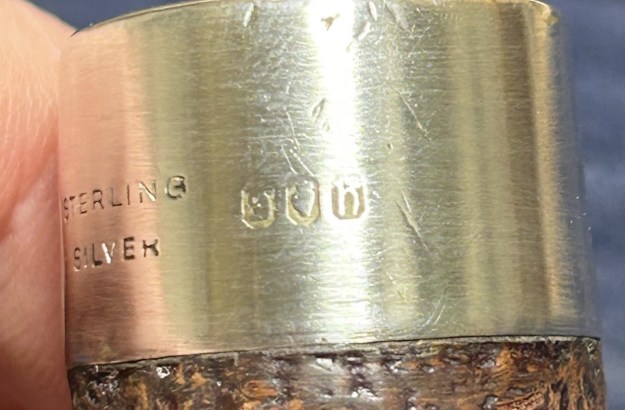
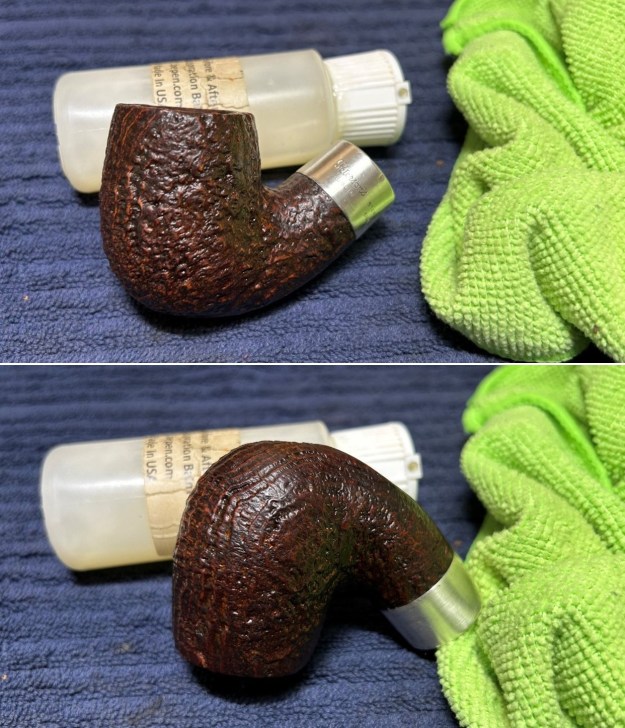
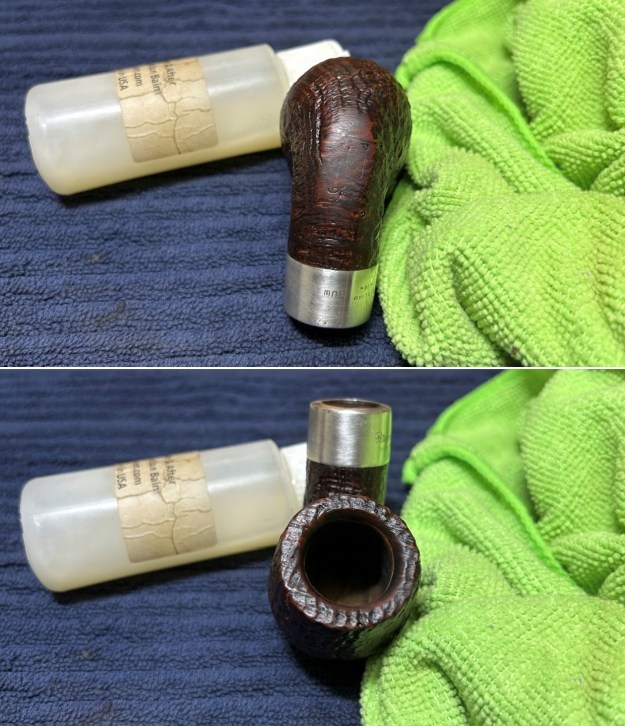
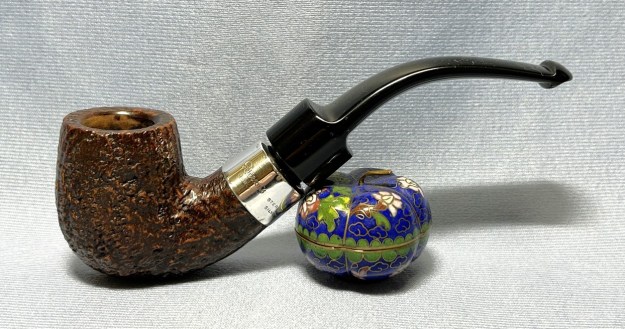
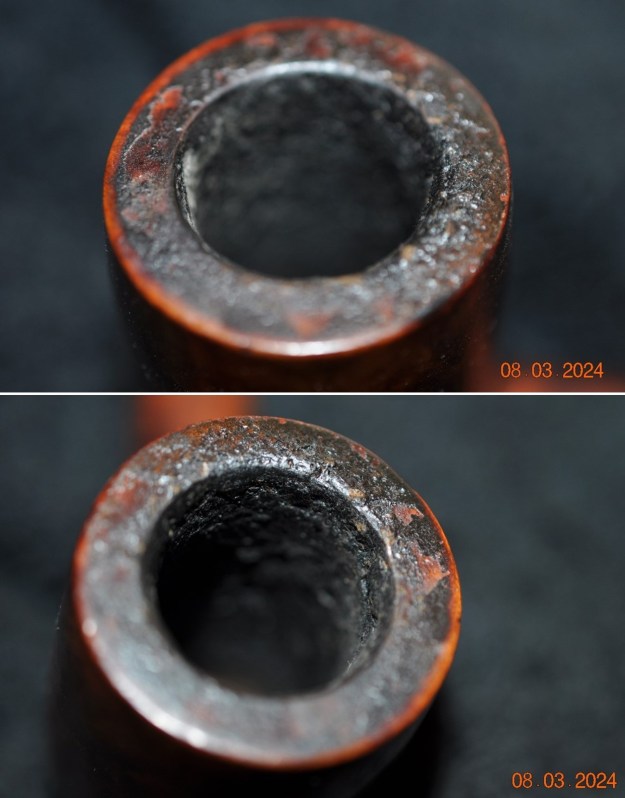
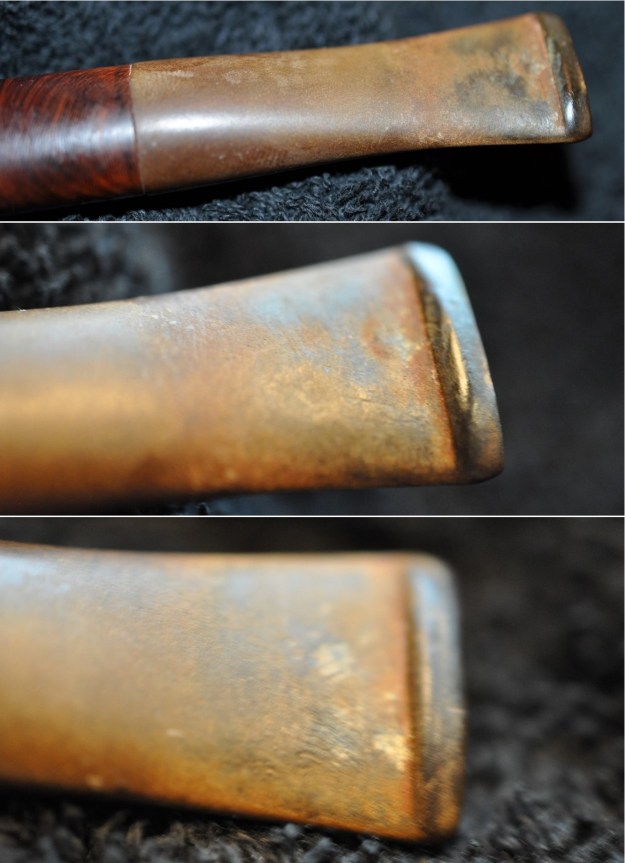
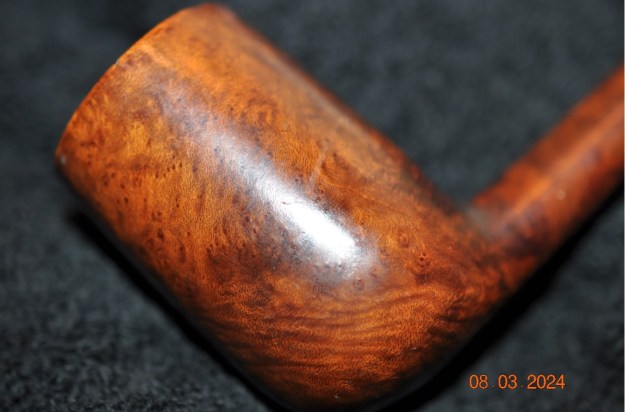
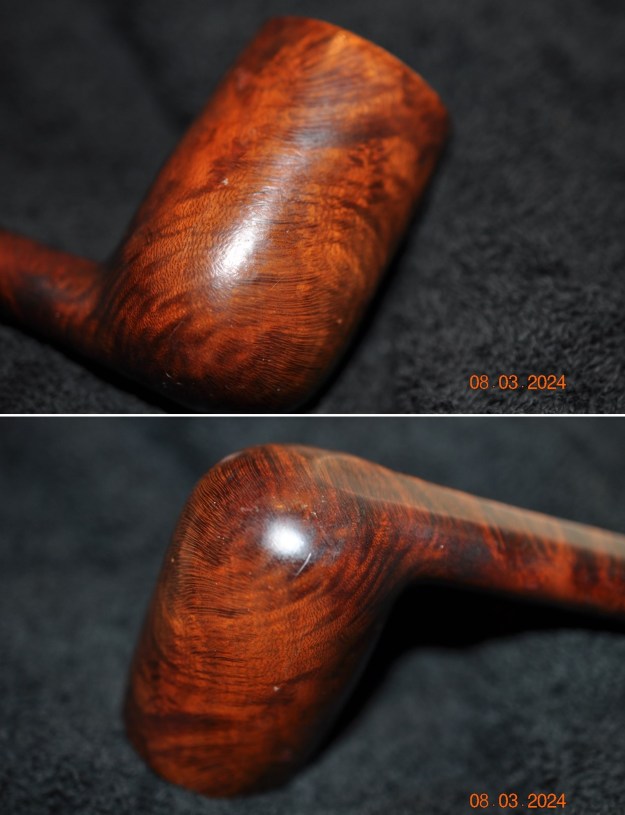
The next pipe on the work table is a unique House of Robertson pipe we picked up. It was purchased from a seller on eBay from Long Beach, California, USA on 07/13/2024. It is a Billiard or maybe an Egg with a rusticated finish that makes it look like the shell on an English Walnut. The name House of Robertson is roughly hand-etched with an engraving tool on the underside of the shank on a smooth panel. This pipe is shaped somewhere between and Egg and a Billiard but really does capture the shape of a Walnut. As you look at the following photos you will see why I am not sure what to call it. The pipe has a unique rustication on the sides of the bowl and shank. The bowl is thickly caked with some lava overflow on the rim top. The outer and inner edges of the rim look to be in good condition. There is some darkening and nicks on the inner edge but nothing horrible. The pipe was dirty but underneath all of the grime it appears to be in excellent condition. It had an oxidized silver band on the shank that is stamped Sterling but I am certain it is cosmetic as there are no cracks showing on the shank end. It is definitely an interesting pipe and should clean up very well. The fit of the stem to the shank was good. The vulcanite taper stem was oxidized and calcified. There are light tooth marks and chatter on both sides near the button. Jeff took photos of the pipe before he started the cleanup. Jeff took photos show the condition of the bowl and the stem. The photos of the bowl and rim show the cake in the bowl and the lava overflowing onto the rim top. The rustication on the top of the bowl and the inner and outer edge of the rim are pretty well covered in lava. It was hard to know what the inner edge and top really looked like until we cleaned it. The silver cosmetic band was heavily oxidized and almost black. The taper stem was oxidized, calcified and had tooth chatter and marks on both sides of the stem near the button. The photos of the sides and heel of the bowl show some stunning and unique rustication all around the pipe. The finish makes the bowl and shank have an almost walnut texture. The next photo shows the etched or engraved with a name on the underside of shank. It reads House of Robertson. The silver band has a faint Sterling Silver stamping on it.I am including the information that I found when I received my first of the House of Robertson Pipes. I found a link on Pipedia that gave me the only information I could find on the brand. I include that in total as it is interesting to read.

“House of Robertson” was in business for many years, but alas, closed their doors in 1999. They were located in Boise, Idaho. They are noted for making rather large and interesting pipes. Thayne Robertson was a Master Mason, AF & AM, and started the shop about 1947 and his son Jon started working there in 1970 when he finished college, along with Thayne’s daughter. Thayne and his son started making the big pipes at that time, and made them together until 1987 when Thayne passed away. Jon kept the store and his sister moved on to other things. The House of Robertson appears to have closed around 1999 (https://pipedia.org/wiki/Robertson).

Since then I have worked on a lot of House of Robertson pipes and have been able to track down more information. I am including a link to a Catalogue that I picked up on eBay. Click on the link and have a look at this interesting book of information on the brand and the pipe maker himself (https://rebornpipes.com/2022/12/11/a-house-of-robertson-catalogue-filled-with-great-examples-of-thayne-robertsons-work/).

I am also including a biography of Thayne Robertson that I found on Facebook from a fellow in Boise, Idaho. It is an interesting read into the mind of the pipe maker. Make sure to take time to read it (https://rebornpipes.com/2021/10/31/house-of-robertson-pipes-boise-pipe-carver-thayne-robertson/).

Now it was time to work on the pipe itself. When it gets to Vancouver it my turn to contribute to its restoration. Jeff did a great job cleaning the pipe on the inside and outside. He reamed the bowl with a PipNet pipe reamer and cleaned up the remnants with the Savinelli Fitsall Pipe Knife. He scrubbed out the mortise and the airway in the shank and stem with alcohol, cotton swabs and pipe cleaners. He scrubbed the exterior of the bowl with a tooth brush and Murphy’s Oil Soap to remove the dust in the rustication on the bowl and shank as well as the smooth portions. He rinsed it under running water. He dried it off with a soft cloth. Once the dust and debris were removed the finish was dull but appeared to be in excellent condition. He soaked the stem in Briarville’s Pipe Stem Deoxidizer and rinsed it under warm water to remove the deoxidizer gel solution. I took photos of the pipe to show its condition before I started my work on it. I took a photo of the bowl and rim top to show how well it had cleaned up. There is some rim darkening but you can see the rustication on the top of the bowl. The stem tooth marks and chatter are very light.I took a photo of the engraving on the underside of the shank. It is clear and reads as noted above. I also took the stem off the pipe and took a photo of the parts to give a sense of the proportions of the pipe. It is a beauty.I started my work on the pipe by dealing with the darkening on the inner edge of the rim and the darkening on the rim top with a folded piece of 220 grit sandpaper. It looked much better when finished. However, there was still some darkening in the rustication on the back of the rim top. I scrubbed it with Mark Hoover’s Before & After Briar Cleaner and was able to remove a lot more of the darkening. I put it on the area with my finger tips and worked it into the surface with a tooth brush. I worked over the area with a brass bristle wire brush and then rinsed it off with warm water. The end result is far better than when I started though there is still a bit of darkening. I used an Oak stain pen to touch up the rim top and the cleaned area and the finish look good. I worked Before & After Restoration Balm deep into the smooth finish to clean, enliven and protect the briar. I hand rubbed it with my fingers and a shoe brush to work it into the finish then set it aside to dry for 10-15 minutes. I wiped it off with a soft cloth. I buffed the bowl with a cotton cloth to polish it. It really began to have a deep shine in the briar. The rim top is looking much better. I took some photos of the bowl at this point to mark the progress in the restoration. The rustication on the bowl stands out with interesting lines moving across the sides of the bowl and the shank. I set the bowl aside and turned my attention to the stem. I “painted” the vulcanite surface with the flame of a lighter – constantly moving the flame over the tooth marks and was able to lift many of them. I filled in those that remained with black rubberized CA glue. Once it cured I flattened the repairs with needle files. I sanded the stem with 220 grit sandpaper to blend the repairs into the surface. I sanded the stem with the 2 inch square 320-3500 grit sanding pads. I wiped down the stem after each sanding pad with Obsidian Oil. I polished out the scratch marks left behind by the sandpaper. The stem looked very good.I polished the vulcanite stem with micromesh sanding pads – dry sanding it with 1500-12000 grit pads. I wiped the stem down after each sanding pad with Obsidian Oil and set it aside to dry. I polished it further with Before & After Pipe Polish – using both the Fine and Extra Fine Polishes. I gave it a rubdown with Obsidian Oil one last time and set it aside. I put the House of Robertson Rusticated Walnut with a taper stem back together and worked the pipe over on the buffing wheel using Blue Diamond to lightly polish the stem. I buffed the bowl and stem to raise the gloss on the briar and the vulcanite. I gave the pipe multiple coats of carnauba wax. I buffed the entire pipe with a clean buffing pad to raise the shine. I hand buffed it with a microfiber cloth to deepen the shine. The finished the House of Robertson Walnut is shown in the photos below. The medium brown stains on the rusticated walnut shaped bowl works well with the rich black of the vulcanite stem. The dimensions of the pipe are: Length: 6 inches, Height: 2 inches, Outside Diameter: 1 ½ inches, Diameter of the chamber: ¾ inches. The weight of the pipe is 42 grams/1.45 ounces. This is an interesting piece of briar with a rustication that looks like a walnut shell on the bowl and shank. I really like how the briar and the vulcanite work well together. This one will soon be on the rebornpipes store. If you are interested in adding a House of Robertson to your collection this may well be the one for you. Thanks for walking with me through the restoration process.

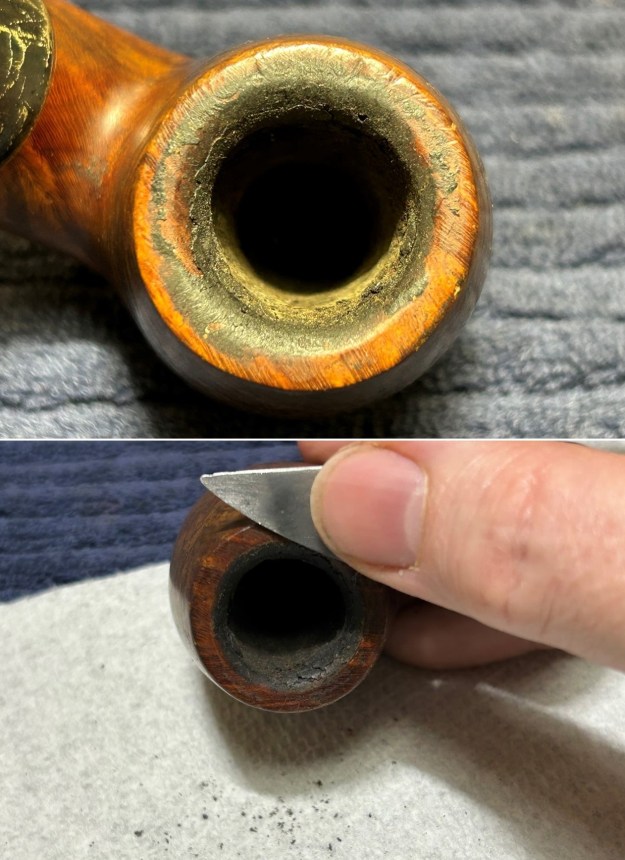
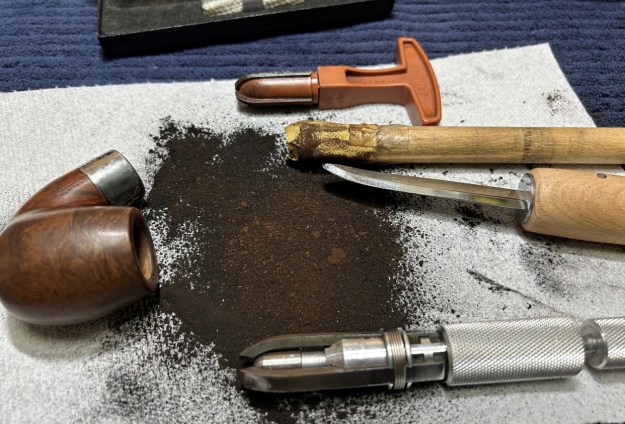
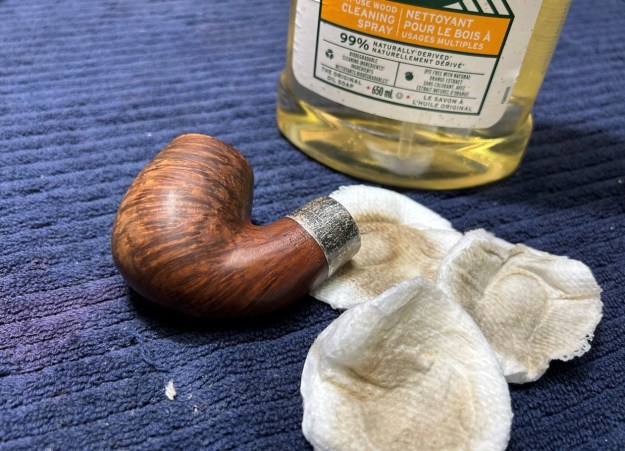
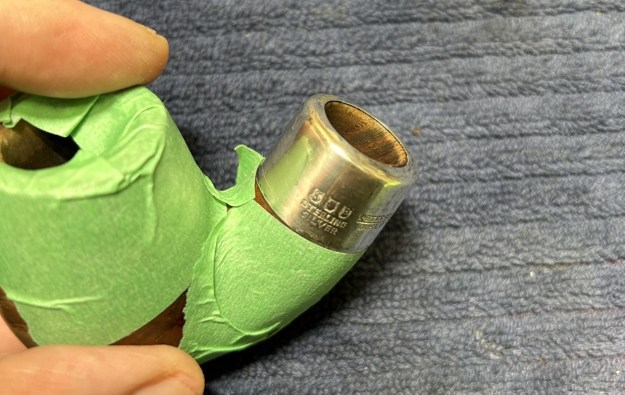
The worst of Five Peterson’s in for restoration that are in rough condition – a burned out bowl and damaged stem


by Steve Laug

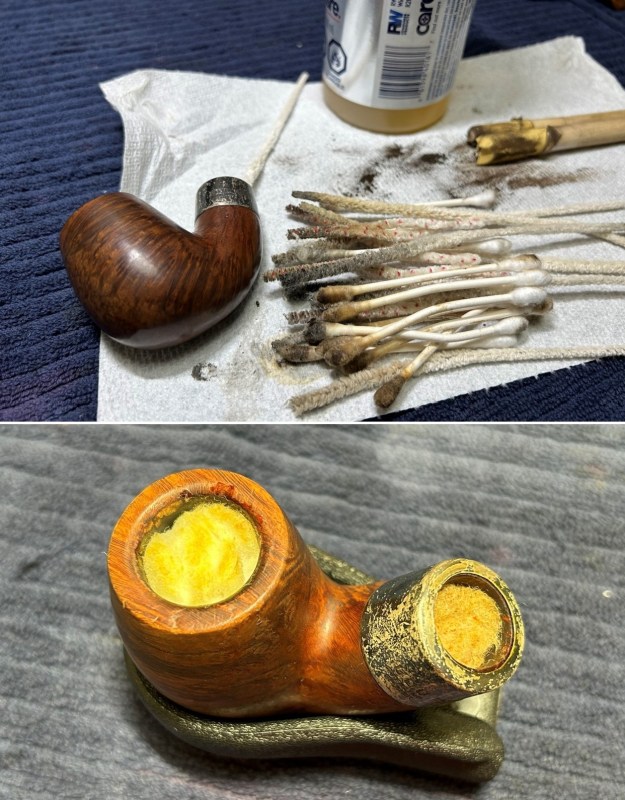
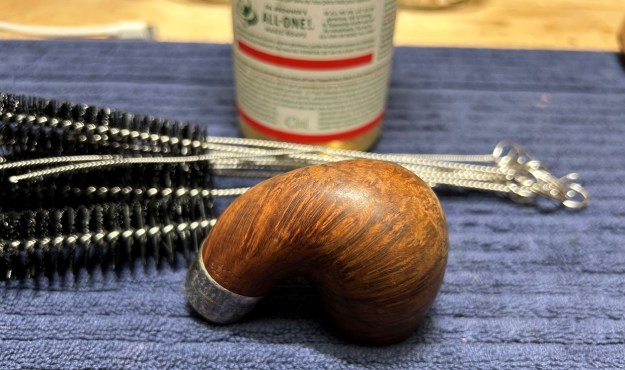
Yesterday afternoon I was visited by a pipe man here in Vancouver named Sergey who had five Peterson’s pipes that he wanted me to work on. They are shown in the photo below. In the left column from top to bottom: Peterson’s of Dublin Kinsale XL17, Peterson’s of Dublin Filter 68, Peterson’s of Dublin Kinsale XL16 Rusticated Pipe. In the right column from top to bottom Peterson’s of Dublin Kinsale XL16 and the bottom pipe is a Peterson’s of Dublin Kinsale XL14. All five pipes were all thickly caked and had thick lava on the rim top. The cake is so thick that I could not put my little finger in the bowl it was so heavily caked. My guess was that the bottom of the bowl was lower than the entrance of the airway into the bowl. The Rusticated Kinsale XL17 also had a burn out in the front bottom of the bowl that would take a lot more time than just a simple clean up. I would know more about the condition of each of the bowls once I had reamed and cleaned them. Sergey was travelling soon and he chose at least two of them that he wanted to take with him on his trip so those would be first. I have finished four of the five pipes and he picked them up and was pleased with them. The fifth of these was in the worst condition. I left it until last and now it was time to work on it – a Peterson’s of Dublin Kinsale XL16. I was not sure I would finish but he would love to take it on his travels.
I took photos of the Peterson’s of Dublin XL16 before I started working on it. This was Sergey’s favourite pipe and his concern was that it had a hole in the bottom toward the front. The finish is very dirty with oils and dirt ground into the briar. The rim top is thickly covered with tarry lava overflowing from the heavy cake in the bowl. The cake was thick and heavy all the way to the bottom of the bowl. In the heal of the bowl there was a hole about the size of pencil lead and the bowl was quite a bit deeper than the entrance of the airway from the shank. The vulcanite stem is also very dirty. There was oxidation, calcification and the P-lip had been cut off on the end. There was no button edge and he would like to have that added on the bottom of the stem surface. There oxidation, calcification and also some light tooth damage on both sides ahead of the remaining button. The P stamp on the left side of the stem is a gold P that is damaged. I took closeup photos of the rim top and bowl to give a sense of the dirty condition of the pipe and the thickness of the cake and lava on the bowl top. The rim top and edges look to be damaged under the lava coat but the cleanup will reveal the facts. I also took photos of the stem to show the top and underside ahead of the button.I took photos of the stamping on the shank sides. It was faint but readable through the grime and debris. It read as noted in the above paragraphs. I also took the stem off the shank and took a photo of the look and proportion of the pipe. I took a photo of the burnout in the heel of the bowl. It was about the size of pencil lead on the outside but the inside of the bowl was more extensively damaged. This one would take some extra work to bring it back to life.I started my work on the pipe by reaming the thick cake in the bowl. I could not even assess fully the burnout damage until it was reamed and cleaned. I used a PipNet pipe reamer with the first cutting head to take back the cake. I followed that with the second and the third cutting head. I was able to remove all of the cake. The cake in the bottom third of the bowl was incredibly hard and took a repeated reaming of that portion. I used a Savinelli Fitsall Pipe Knife to scrape the remainder of the cake out of the bowl and clean up the bottom of the bowl. I sanded the bowl walls with 220 grit sandpaper wrapped around a piece of dowel. With the bowl cleaned out I was able to determine that the bowl bottom was significantly below the entrance of the airway. It was quite thin and the hole on outside was only the beginning of the issues. I would need to repair the burn through and then build up the bottom of the bowl to the entrance of the airway. It would be further protection for the repaired bottom of the bowl and help it from further burning out. The issues with the rim top and inner edge would also need to be addressed. I decided to open up the burned-out area and see how extensive it was and how deep it was into the briar surrounding pin hole. I started with a sharp blade and cleaned up the opening and took out the brittle pieces of briar around the hole. I opened the hole further with a large drill bit and smoothed out the edges of the hole to the point it was solid briar.I scrubbed the externals of the bowl and shank with undiluted Murphy’s Oil Soap and a tooth brush. I rinsed it with warm running water and repeated the scrubbing and rinsing process until the pipe was clean and looked better. I cut a piece of briar and shaped it with my Dremel and sanding drum to fit the hole. I gave the inner edge a bevel to fit the edges of the hole. I rounded the inside of the plug with the Dremel to follow the flow of the bowl bottom. It would help build up the bottom significantly. I fit the plug in place on the bowl bottom and took some photos to give a sense of the look. Once it is glued in place and cured I will rusticate the patch to match the rest of the bowl.I mixed up a batch of two part JB Weld and coated the inner edge of the drilled out hole in the bowl bottom. I inserted the plug in the hole and used a tooth pick to fill in the gaps around the plug on the exterior of the bowl. I used a dental spatula to fill in the edges around the inside of the bowl and pressed it in place with a folded pipe cleaner. I built up the bowl bottom to the bottom of the airway entrance. I set it aside for the night to harden and cure. In the morning when I got up I shaped the plug with my Dremel and sanding drum to follow the flow of the bowl bottom. I clean up the edges of the  plug and the surrounding briar with a folded piece of 220 grit sandpaper. It was looking pretty good at this point. I used a piece of dowel with 220 grit sandpaper wrapped around it to smooth out the bowl walls. I used some clear CA glue and some briar dust to fill in low spots around the front of the plug. I cleaned it up once it dried with a brass bristle wire brush to clean up the repair area. I sanded the edges of area with a folded piece of 220 grit sandpaper. It was a solid, smooth finish. All that remained was for me to rusticated it to match the surrounding briar.
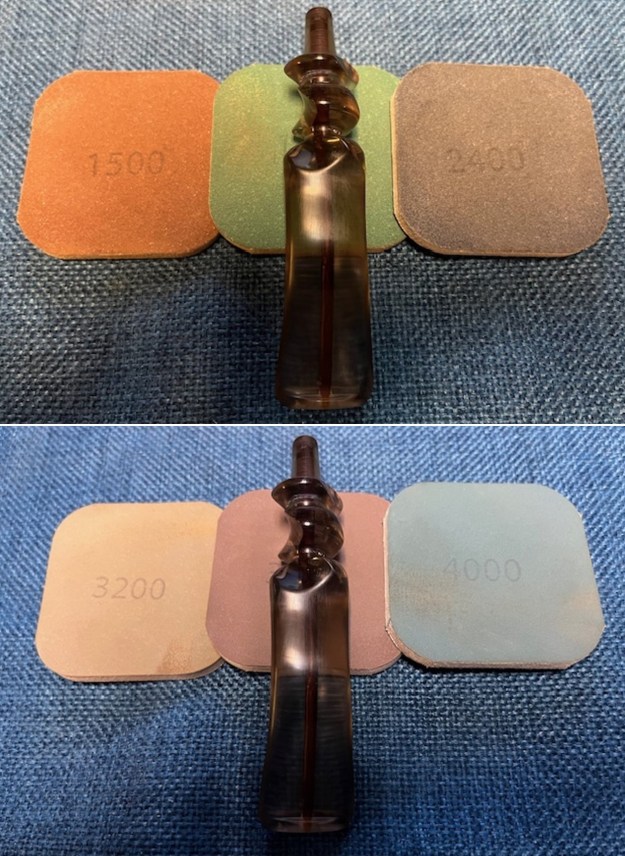
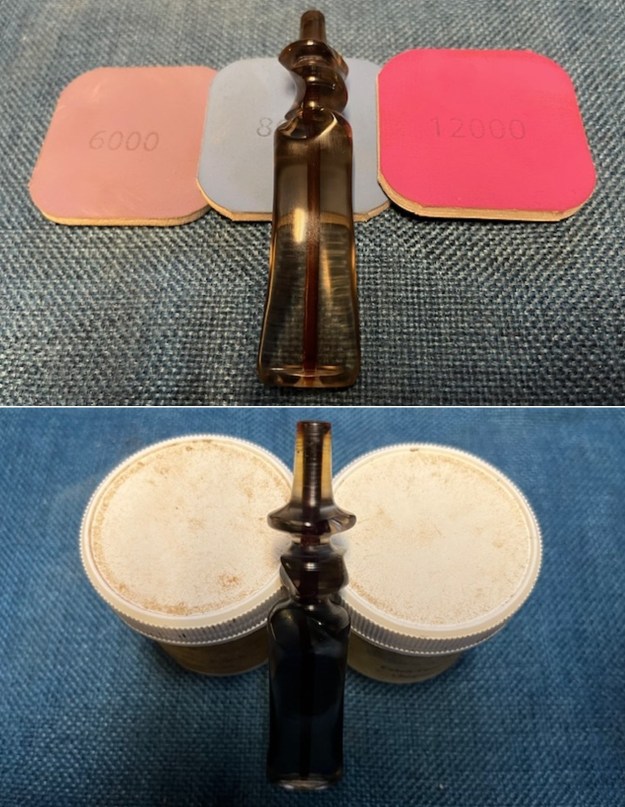
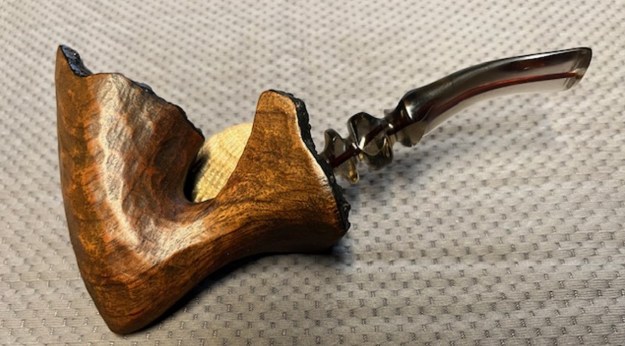
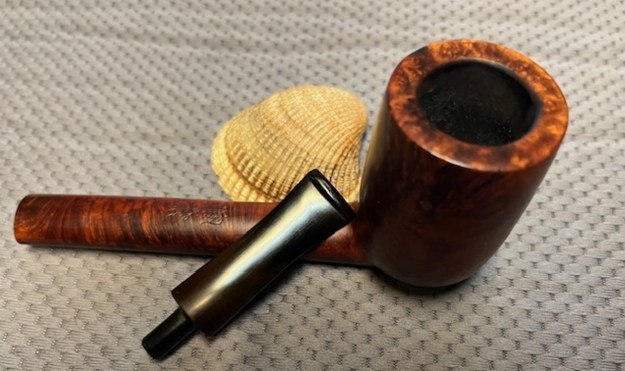
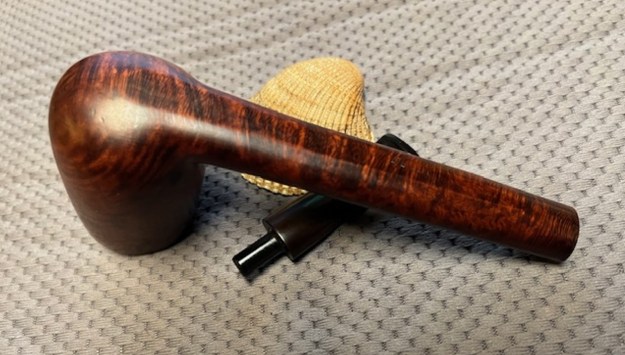
I rusticated the repaired area with a Dremel and a series of burrs to match the rustication to the surrounding briar. I failed to take a photo of the bowl before I stained it. However, I used an Oak and a Mahogany stain pen to approximate the colour of the briar surrounding the repair. I took a photo of the various burrs I used with the Dremel to achieve the rustication patter that matches the rest of the bowl. I used a 3500 grit sanding pad to knock off the colour on the high points and give it a sense of depth. I rubbed the briar down with Before & After Restoration Balm. I worked it into the briar with my fingertips to work it into the finish. The product works to clean, enliven and preserve the briar. I let it sit for 10 minutes then I buffed it with a cotton cloth to deepen the shine. The briar really comes alive with the balm. I mixed a bowl coating of sour cream and charcoal powder and painted the walls and bottom of the bowl to protect it during the break in period. I applied it to the walls and heel of the bowl with a folded pipe cleaner. I set it aside to let it cure. It would take about 24 hours for it to cure. I set the bowl aside and turned my attention to the stem. The stem was in as much of a mess as the bowl. The P-lip had been cut off and the underside of the stem was flat at an angle toward the opening of the airway in the end. The top of the P was missing other a thin ridge to approximate a button. It was roughly done and did not leave much to work with. I looked through my Peterson stems for a replacement but the tenon was odd sized and it was made for a 5MM filter so I had nothing. That left me with a decision. I decided to shape the stem end and build a fishtail button on the end. I would have to build up the button edges on both sides and I would need to try to cut a slot instead of just an odd shaped hole. With that in mind I had my hands full on this stem.

I rebuilt the button end on the top and bottom with rubberized black CA glue. I layered it in place after each layer cured. It took time to build up the layers and reshape it with files and sandpaper, but I like the new look much better. Once the button was solidly in place and the shaping was finished on it I still needed to clean up the shape and smooth it out and give it more of a sense of flow. I sharpened the edge on the top and underside of the button. I used several needle files to smooth out the edge and top. I smoothed out the top surface of the button on each side and on the end with a piece of 220 grit sandpaper. I used a series of round and oval needle files to shape the slot in the stem end. I took it for an out of round airway exit to an oval. I also used a slot cutting tool to continue to reshape the slot. I used a folded piece of 220 grit sandpaper to smooth out the inside of the slot. Once finished the slot looked much better. I polished the stem and the button with 320-3500 grit sanding pads. I wiped it down with a cloth impregnated with Obsidian Oil after each sanding pad to protect and polish the stem surface.I polished the stem with micromesh sanding pads – dry sanding with 1500-12000 grit pads. Once again I wiped it down between each pad with Obsidian Oil. I further polished it with Before and After Stem Polish – both Fine and Extra Fine. It looked very good. This Rusticated Peterson’s of Dublin Kinsale XL16 Bent Billiard with a Taper Stem has a beautiful rusticated finish that has a new lease on life. I repaired the burnout in the heel of the bowl by fitting it with a briar plug and then rusticating it to match the rest of the bowl. The medium brown/black/mahogany finish gives depth to the rustication around the bowl and shank. It has a classic look of a Peterson’s pipe. The rebuilt and polished black vulcanite taper stem adds to the mix. I put the stem back on the bowl and buffed the pipe with Blue Diamond on the buffing wheel being careful to not buff the stamping. I gave the bowl multiple coats of Conservator’s Wax and the stem multiple coats of carnauba wax on the buffing wheel and followed that by buffing it with a clean buffing pad. I hand buffed the pipe with a microfiber cloth to deepen the shine. The finished Peterson’s of Dublin Kinsale XL16 Rusticated Bent Billiard is quite nice and feels great in the hand. Give the finished pipe a look in the photos below. The dimensions of the pipe are Length: 6 inches, Height: 2 inches, Outside diameter of the bowl: 1 ½ inch, Chamber diameter: 7/8 of an inch. The weight of the pipe is 2.68 ounces/78 grams. Thanks for walking through the restoration with me as I worked over another beautiful pipe. Sergey picked up the other four pipes on Monday. He pressed to pick this one up on Friday evening. I did not promise but I know it is his favourite pipe so it is ready for him.

Third of Five Peterson’s in for restoration that are in rough condition


by Steve Laug

Yesterday afternoon I was visited by a pipe man here in Vancouver named Sergey who had five Peterson’s pipes that he wanted me to work on. They are shown in the photo below. In the left column from top to bottom: Peterson’s of Dublin Kinsale XL17, Peterson’s of Dublin Filter 68, Peterson’s of Dublin Kinsale XL16 Rusticated Pipe. In the right column from top to bottom Peterson’s of Dublin Kinsale XL16 and the bottom pipe is a Peterson’s of Dublin Kinsale XL14. All five pipes were all thickly caked and had thick lava on the rim top. The cake is so thick that I could not put my little finger in the bowl it was so heavily caked. My guess was that the bottom of the bowl was lower than the entrance of the airway into the bowl. The Rusticated Kinsale XL17 also had a burn out in the front bottom of the bowl that would take a lot more time than just a simple clean up. I would know more about the condition of each of the bowls once I had reamed and cleaned them. Sergey was travelling in two weeks and he chose at least two of them that he wanted to take with him on his trip so those would be first. My hope is to try to finish four of the five. The third of these that he wanted is the next one I chose to work on. It was the Peterson’s of Dublin Kinsale XL14.I took photos of the Peterson’s of Dublin Kinsale XL14 before I started working on it. The finish is very dirty with oils and dirt ground into the briar. There are some nicks and flaws around the bowl sides and at least one fill. The rim top is thickly covered with tarry lava overflowing from the heavy cake in the bowl. It had some burn damage on the front outer edge of the bowl and the bowl was very out of round on the inner edge. The cake was thick and heavy all the way to the bottom of the bowl. The vulcanite stem is also very dirty. There was oxidation, calcification and tooth marks and chatter on both sides of the stem ahead of the button and lip edge. The P stamp on the left side of the stem is a gold P that is faint and faded. It also has some damage on the surface around the P. I took closeup photos of the rim top and bowl to give a sense of the dirty condition of the pipe and the thickness of the cake and lava on the bowl top. The damage to the rim top and edges is very clear in the photos as well. I also took photos of the stem to show the top and underside ahead of the button.I took photos of the stamping on the shank sides. It was faint but readable through the grime and debris. It read as noted in the above paragraphs. I also took the stem off the shank and took a photo of the look and proportion of the pipe. I started my work on the pipe by reaming the thick cake in the bowl. I used a PipNet pipe reamer with the first cutting head to take back the cake. I followed that with the second and the third cutting head. I was able to remove all of the cake. The cake in the bottom third of the bowl was incredibly hard and took a repeated reaming of that portion. I used a Savinelli Fitsall Pipe Knife to scrape the remainder of the cake out of the bowl and clean up the bottom of the bowl. I sanded the bowl walls with 220 grit sandpaper wrapped around a piece of dowel. With the bowl cleaned out I was able to determine that the bowl bottom was in better condition than the first or second pipe. I would need to build up the bottom of the bowl slightly to the entrance of the airway. It would be further protection for the bottom of the bowl and help it from burning out. The issues with the rim top and inner edge would also need to be addressed. At this point I decided to address the rim top and edge damage. There was serious damage to the inner edge. The front of the rim top had been burned and had a slight dip in it. The outer edge in front of the burned rim top was also damaged. I wanted the top to be smooth once again and also wanted to bring the bowl back to round. I started by topping the bowl with 220 grit sandpaper on a topping board to smooth out the damage on the rim surface and clean up the outer edge damage. I was able to significantly clean up the damage. The Kinsales that I have worked on for Sergey have all had a slightly bevelled inner edge so I would need to do that with this pipe as well. It would also clean up the out of round bowl a bit more.I used a wooden sphere and a piece of 220 grit sandpaper to work on the edge and give it a slight bevel. Once finished it looked much better.I scrubbed out the internals with 99% isopropyl alcohol, cotton swabs and pipe cleaners. I worked them through the airway in the shank and stem, the mortise. It took a few cleaners and swabs to really clean it but it is looking and smelling much better.I scrubbed the externals of the bowl and shank with undiluted Murphy’s Oil Soap and a tooth brush. I rinsed it with warm running water and repeated the scrubbing and rinsing process until the pipe was clean and looked better. I used a Cherry stain pen to touch up the rim top to match the rest of the bowl. I did this before sanding the bowl as I would also sand the top at the same time. I think the match was going to be perfect. We would see.I sanded the bowl with 320-3500 grit sanding pads to remove some of the darkening around the bowl. I wiped it down after each sanding pad with a damp cloth to remove the sanding debris. It really began to look very good. I polished the bowl with micromesh sanding pads – dry sanding with 1500-12000 grit pads. Each pad gave it more of a shine. I wiped the bowl down after each pad with a damp cloth. By the end the bowl looked very good. Once I had I polished the bowl I addressed overly deep bowl bottom. I filled in the bottom with a mix of cigar ash and water to make a pipe mud. I pressed it into place with a tamper to flatten it. I put a pipe cleaner in the airway so that I would only fill it to the bottom of the pipe cleaner. I set it aside to dry and harden. It looks much better. It will take awhile to harden but it should deal with the damage. If it shrinks when it cures I will need to fill it in a bit more. At this point I rubbed the briar down with Before & After Restoration Balm. I worked it into the briar with my fingertips to work it into the finish. The product works to clean, enliven and preserve the briar. I let it sit for 10 minutes then I buffed it with a cotton cloth to deepen the shine. The briar really comes alive with the balm. I set the bowl aside and turned my attention to the stem. I “painted” the tooth marks on both sides with the flame of a Bic lighter. I filled in the two deeper marks on the underside of the stem that remained with black rubberized CA glue and set it aside to cure. Once it had hardened I sanded the with 220 grit sandpaper and smoothed them out. The P logo on the left side of the stem was so faint and damaged but I tried to touch it up with some Rub’n Buff Antique Gold. I worked it into the remaining stamp with a tooth pick. It worked better than I expected but it was not flawless. I sanded the stem with 320-3500 grit sanding pads to take out the scratching and remaining oxidation. I wiped it down after each pad with some Obsidian Oil. It is looking much better now.I polished the stem with micromesh sanding pads – dry sanding with 1500-12000 grit pads. Once again I wiped it down between each pad with Obsidian Oil. I further polished it with Before and After Stem Polish – both Fine and Extra Fine. It looked very good. This Peterson’s of Dublin Kinsale X14 Rhodesian with a Taper Stem has a beautiful smooth finish that was slightly worn. The reddish brown finish highlights some great grain around the bowl and shank. It has a classic look of a Peterson’s pipe. The polished black vulcanite taper stem adds to the mix. I put the stem back on the bowl and buffed the pipe with Blue Diamond on the buffing wheel being careful to not buff the stamping. I gave the bowl and the stem multiple coats of carnauba wax on the buffing wheel and followed that by buffing it with a clean buffing pad. I hand buffed the pipe with a microfiber cloth to deepen the shine. The finished Peterson’s of Dublin Kinsale XL14 is quite nice and feels great in the hand. Give the finished pipe a look in the photos below. The dimensions of the pipe are Length: 6 inches, Height: 2 inches, Outside diameter of the bowl: 1 ¼ inch, Chamber diameter: 7/8 of an inch. The weight of the pipe is 2.36 ounces/67 grams. Thanks for walking through the restoration with me as I worked over another beautiful pipe. I have two more pipes to finish but these three are ready to pick up and Sergey can take them on his travels. The last two I will give back when he returns. Thanks for your time.