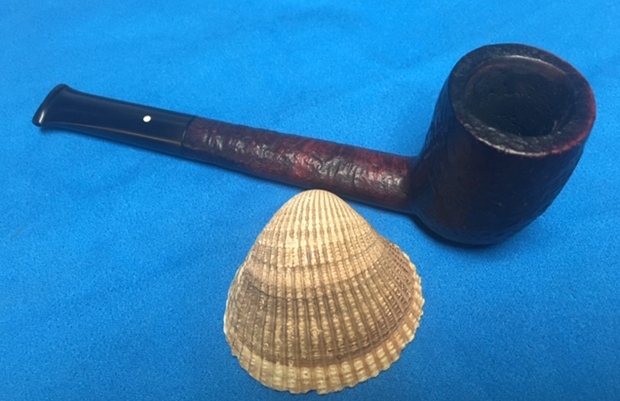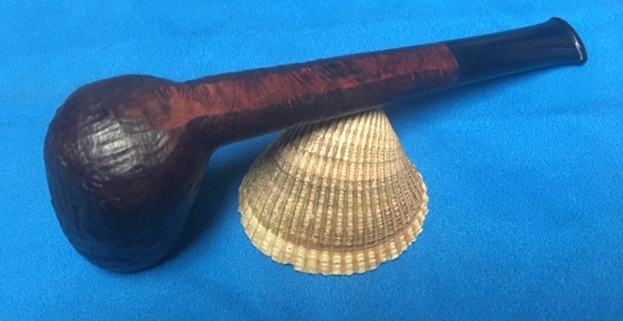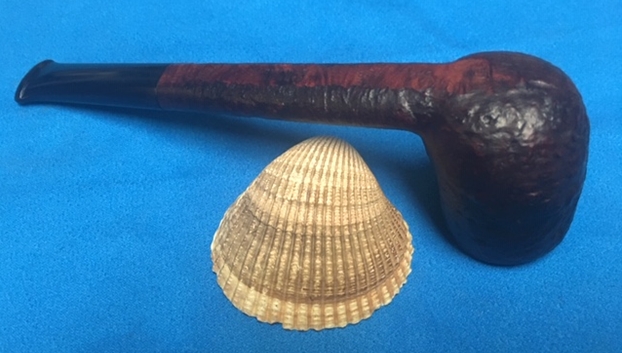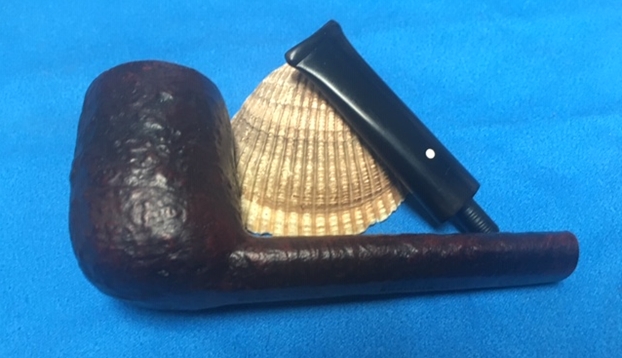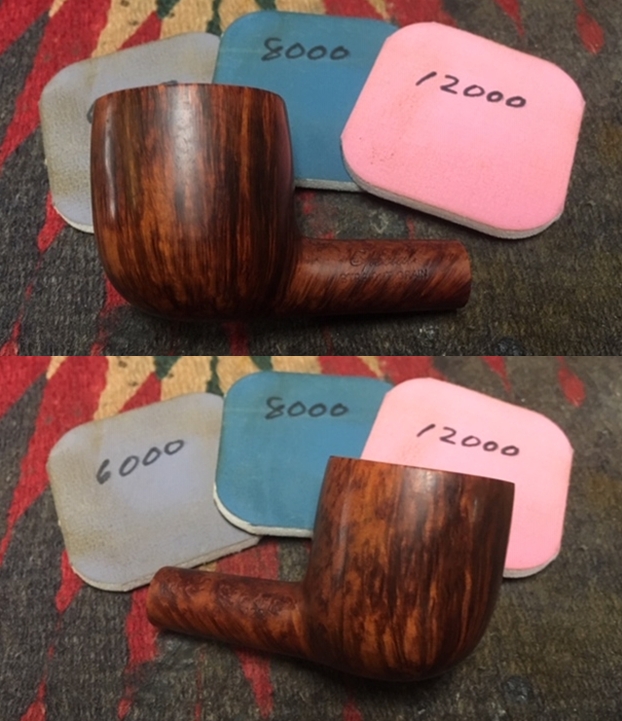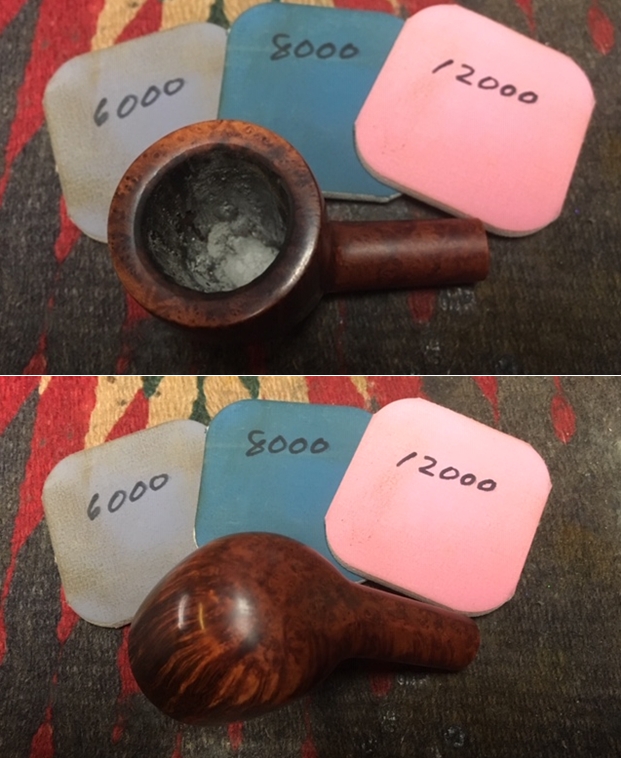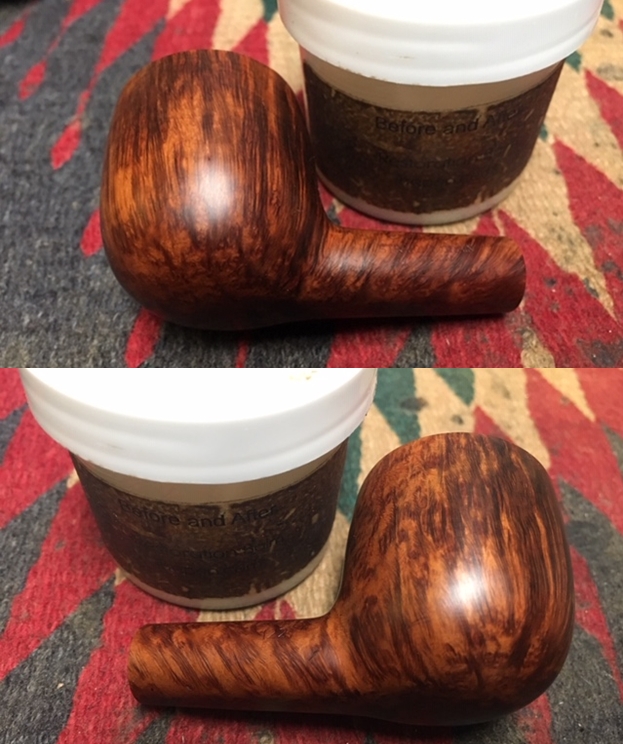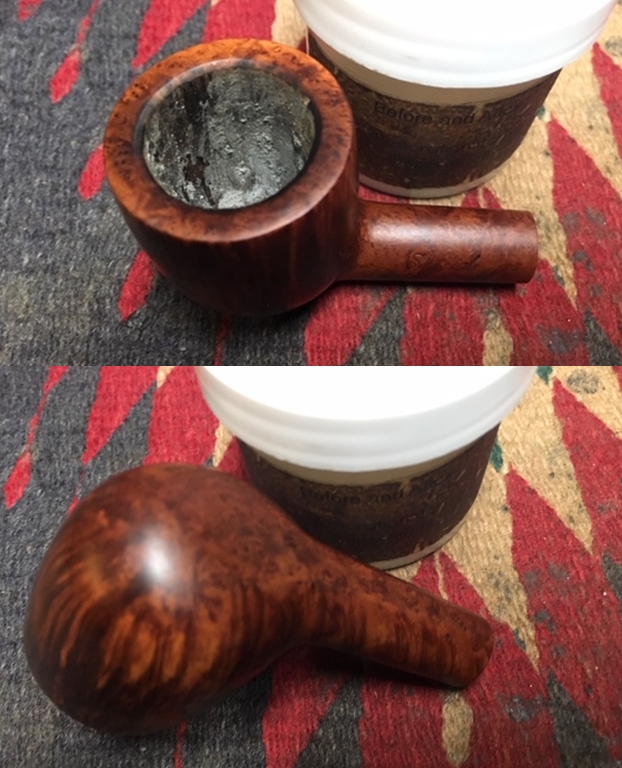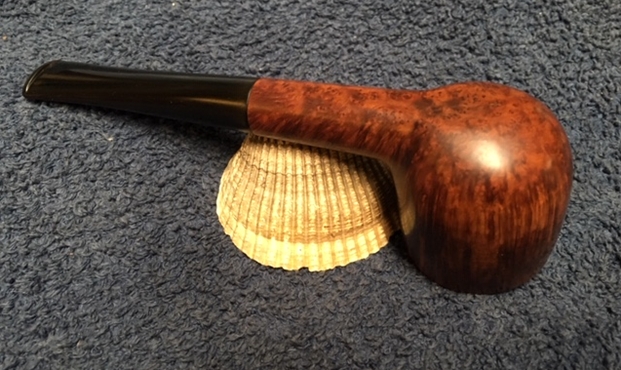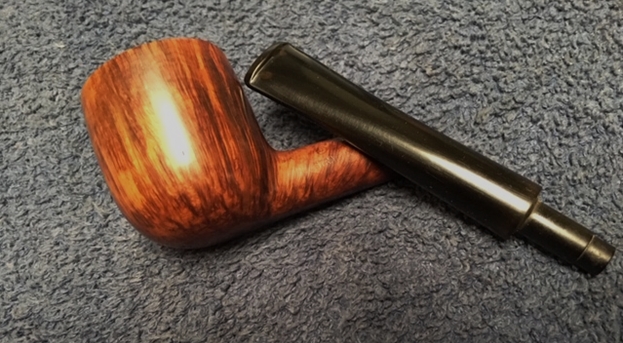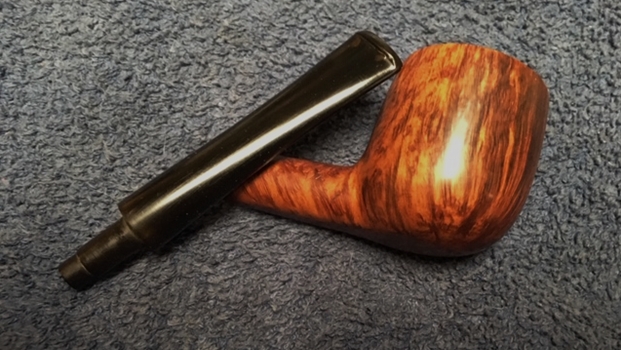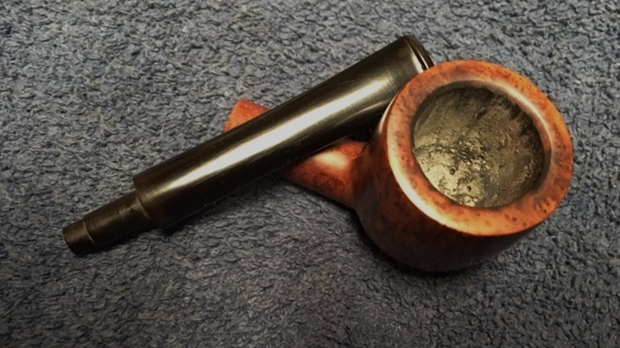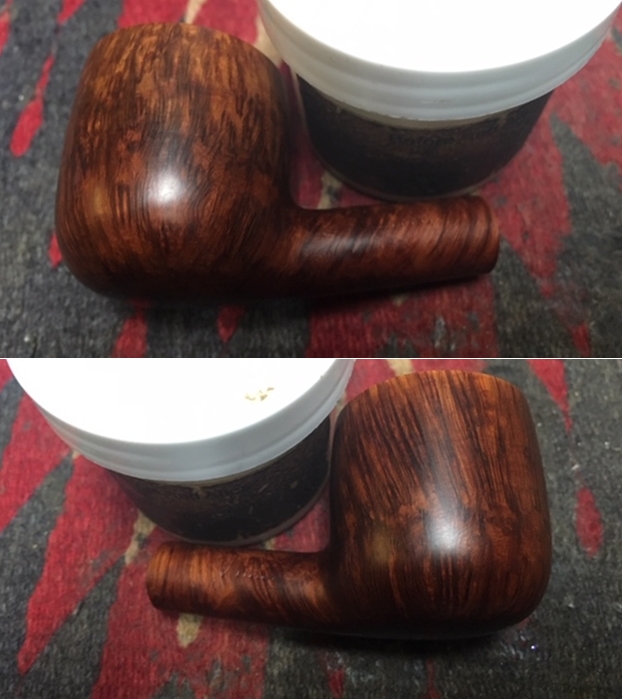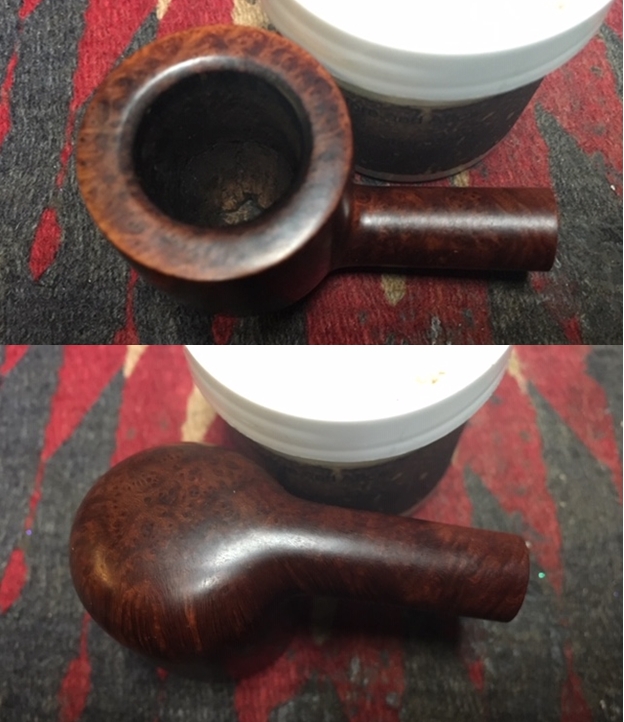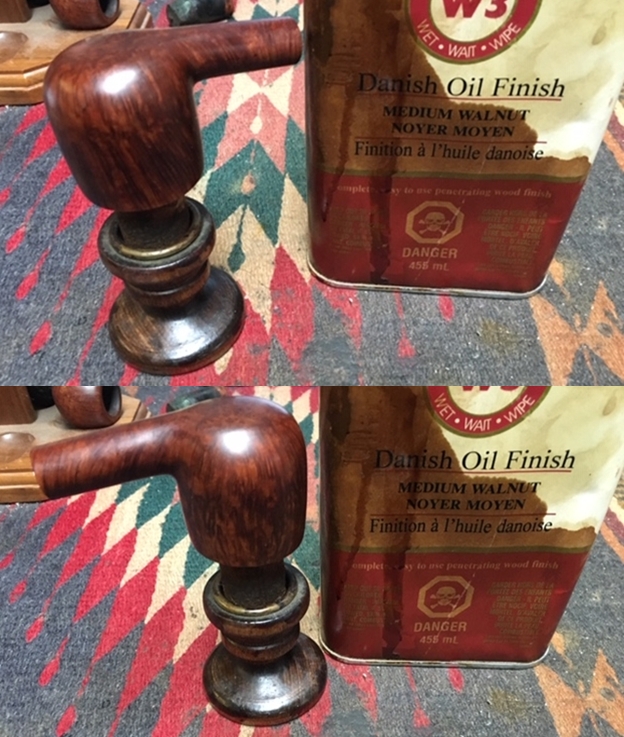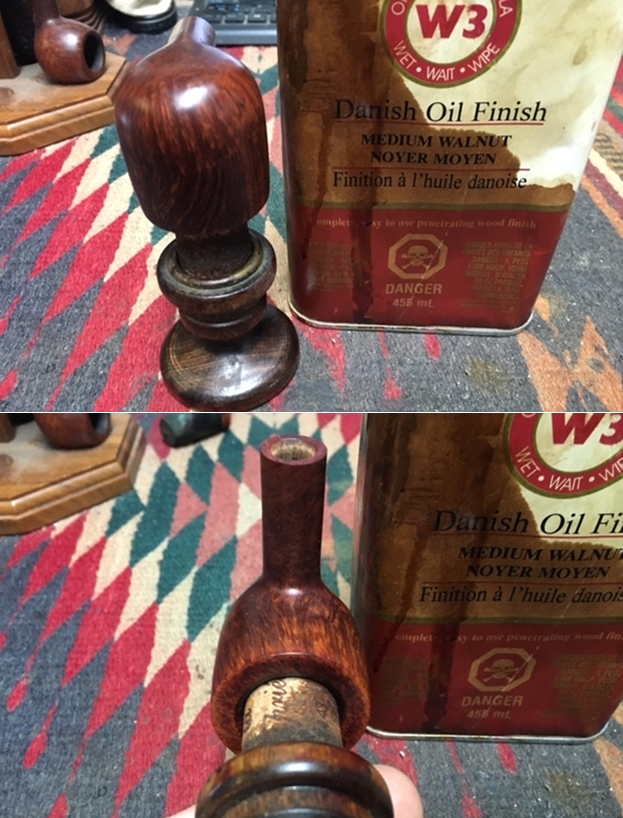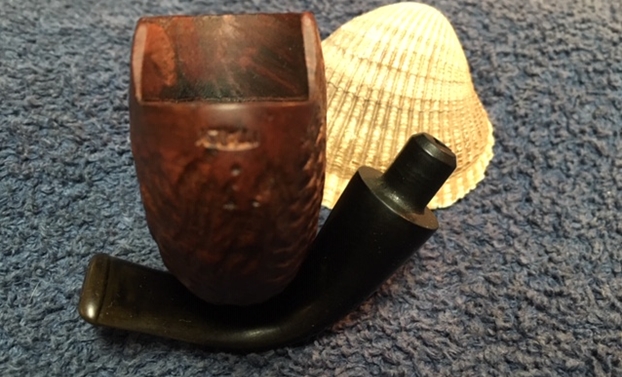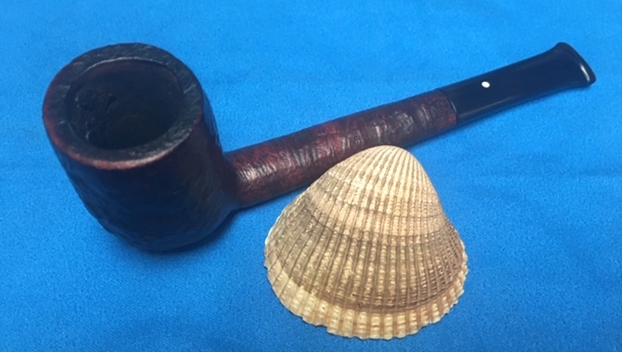
Tag Archives: Stem repairs

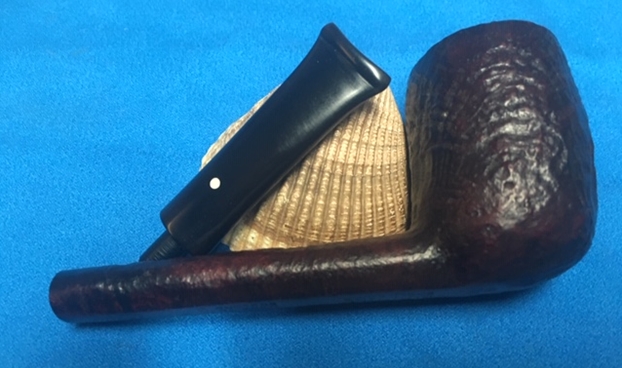
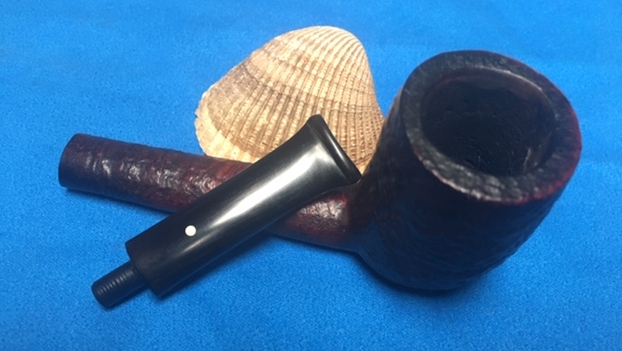
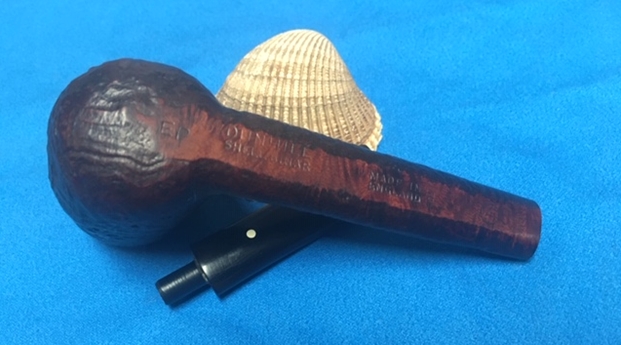
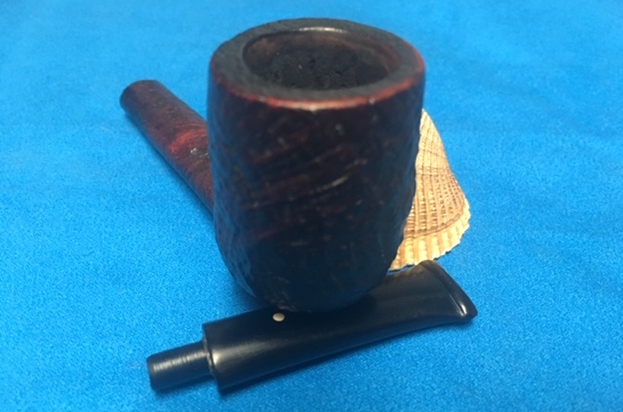
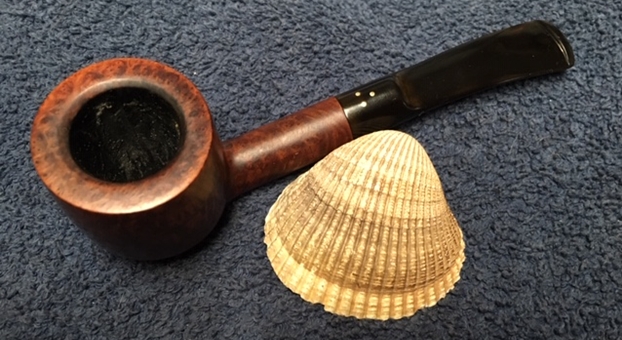
Restoring the 7th Pipe from Bob Kerr’s Estate – A Dunhill Shell Briar EP Canadian


Blog by Steve Laug

I am finally getting around to working on Bob Kerr’s Estate. His son-in-law, Brian contacted me a few months ago saying that the family needed to clean out the estate as they were getting the family home ready to move. He asked if I would be interested in restoring and selling the pipes for them. He brought what originally he said was a few pipes over to show me. When I opened the door Brian was there with a few flats of pipes. There were Dunhills, Petersons, Comoy’s Barlings and a lot of other pipes – a total of 125 pipes and a box of parts. That is the largest estate I had the opportunity to work on. I put together a spread sheet of the pipes and stampings to create an invoice. I was taking on what would take me a fair amount of time to clean up. I could not pass up the opportunity to work on these pipes though. They were just too tempting.

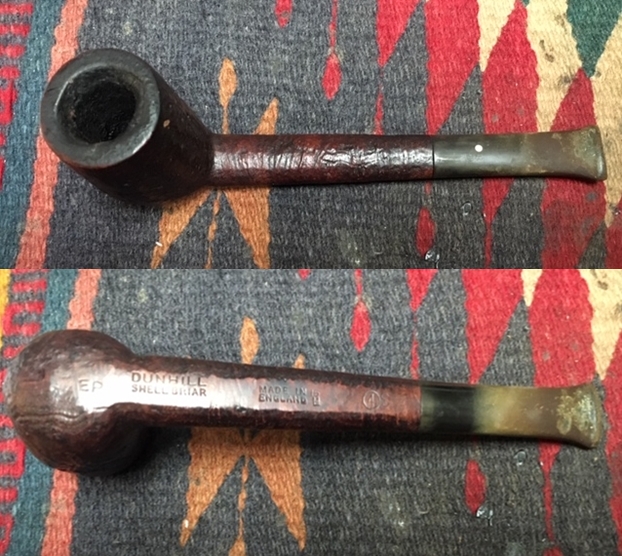
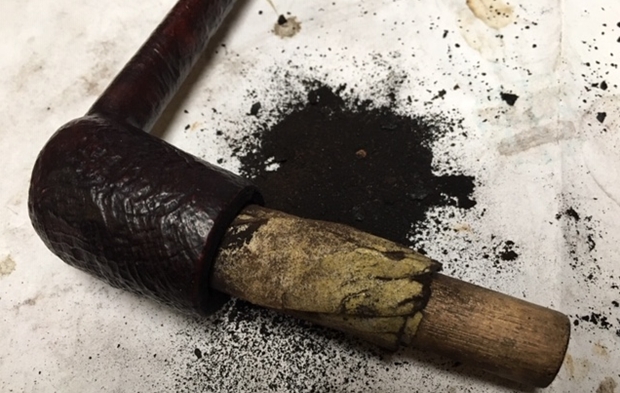
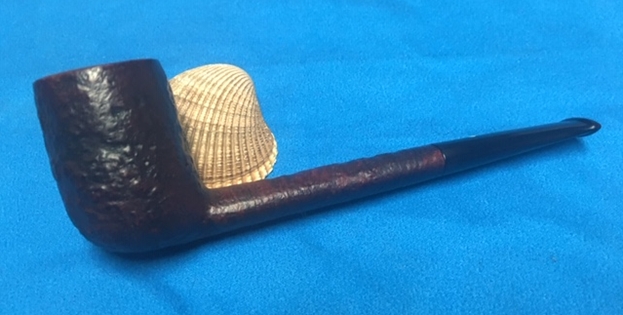
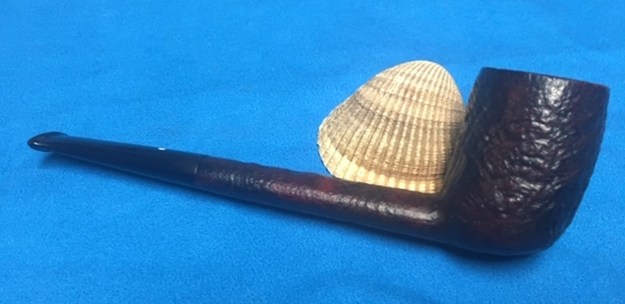
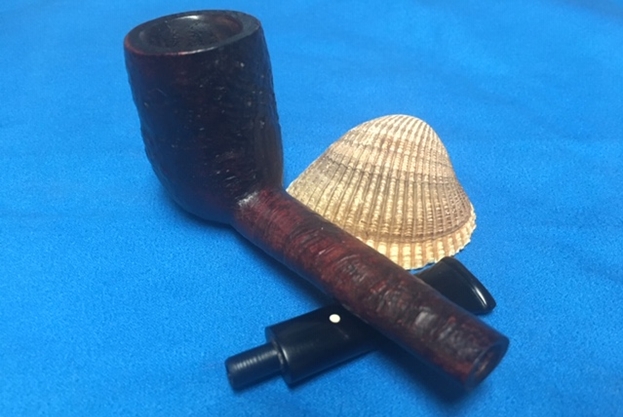
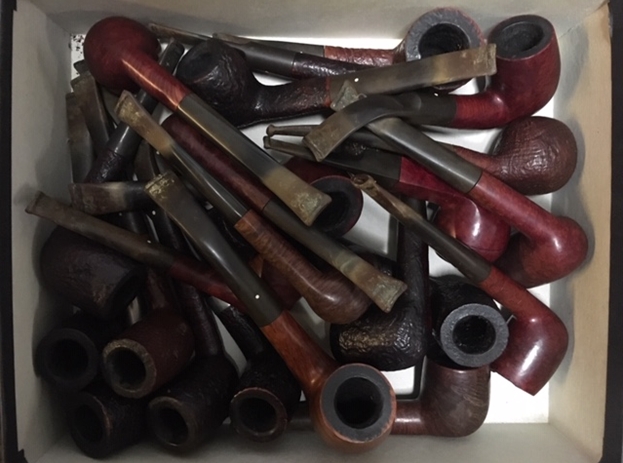
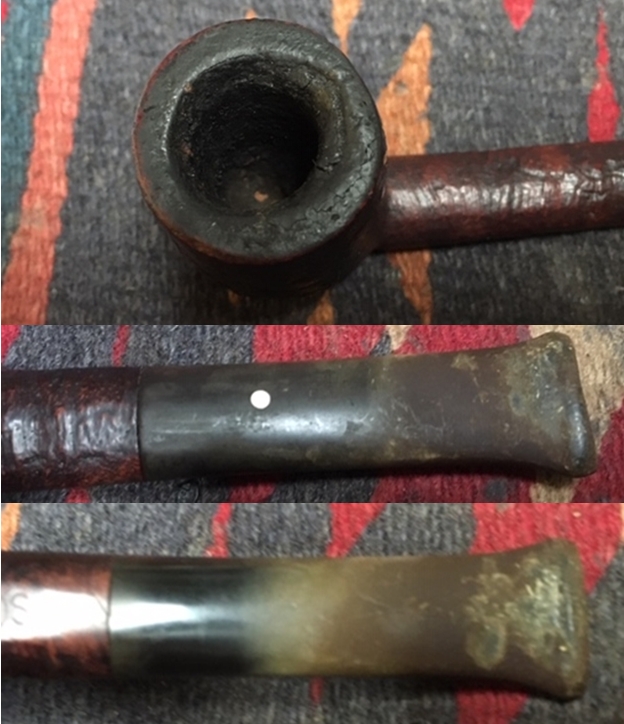
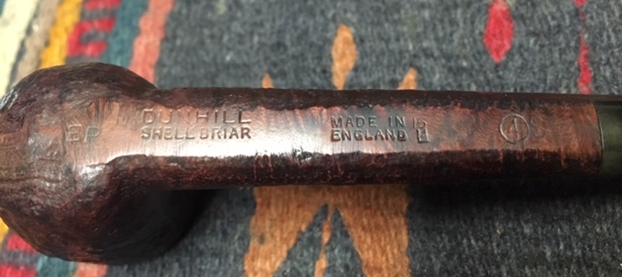
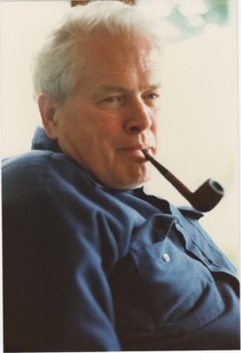
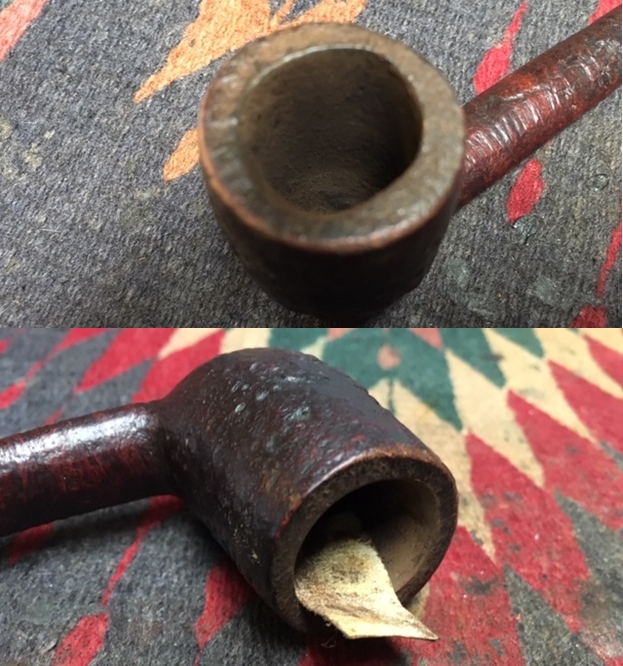
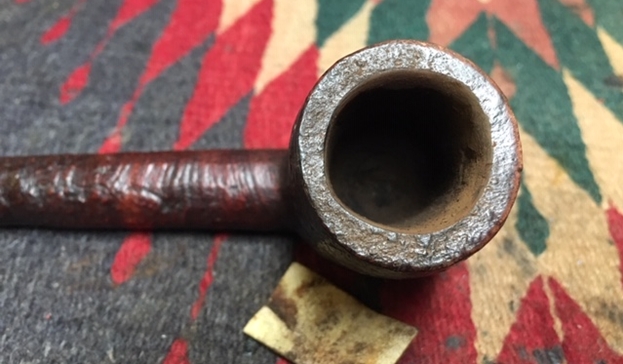
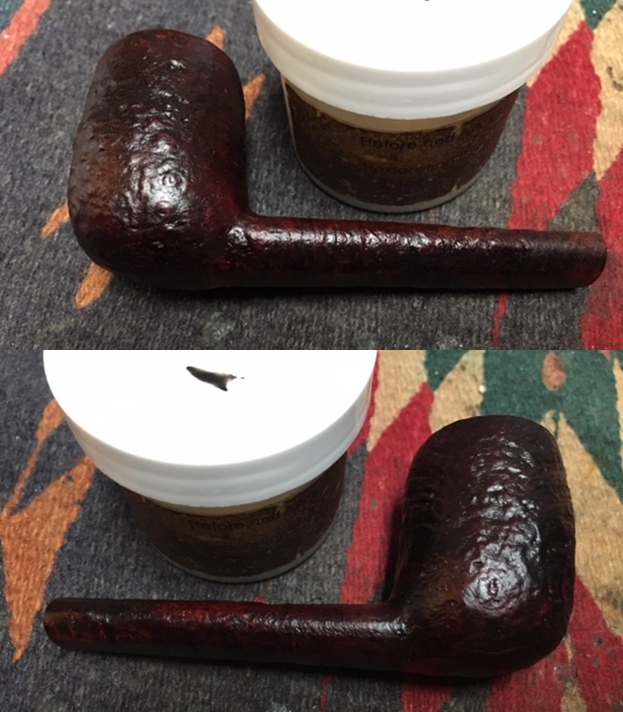
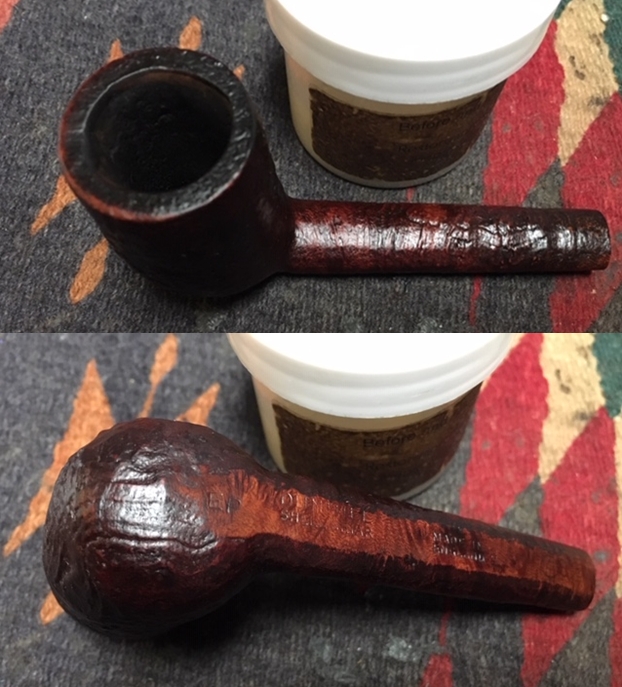
I sorted the pipes into groups of the various brands and had a box of 25 different Dunhill pipes in different shapes, styles and sizes. I decided to work on the Dunhills first. It was a great chance to see the shape variety up close and personal. The photo below shows the box of Dunhill pipes.I went through the box of Dunhills shown above and chose the 7th pipe to work on – a Group 4 sandblast Canadian. It is stamped on the heel and the shank EP and next to that it reads Dunhill over Shell Briar. That is followed by Made in England 14/15 and near the stem shank junction is  Circle 4S – Group 4 size. The stamping tells me that this Canadian Shell Briar was made in 1965 and sold in 1966. The oval shank of the Canadian flows into a nice tapered stem that is oxidized and has tooth marks and chatter near the button. There is some calcification on the first inch of the stem ahead of the button and there is some light damage to the button. The finish is dirty with grime and tars filling in much of the craggy finish. The bowl had a thick cake and lava overflowed on the rim top. The inner edge of the rim was in bad condition and out of round. It looked like it had been reamed with a knife at some time in its life. The bowl had tobacco stuck in the lava on the walls of the bowl like the other pipes from this estate. With a little work this pipe would look good once again. I took pictures of the pipe before I started working on it. I took some close up photos of the rim top and stem to show what I was dealing with. Judging from the condition this Canadian was in I think I can safely say that it was one of Bob’s favourite pipes. The cake in the bowl is the thickest of the lot so far and the lava on the rim top is also very thick. You can see the cake and tobacco in the bowl. You can also see that the inner edge of the bowl is out of round on the back right and the front left. It appears to have been reamed with a knife somewhere in the mix. I am assuming from the way Bob cared for his other pipes that this one came to him in that condition and it was one he used when working in his shop. The fishtail stem was dirty, oxidized, calcified and had a lot of tooth chatter on the top and underside for about an inch ahead of the button. The button surface was also marked with tooth chatter. The sharp edge defining the button was worn down and almost smoothed out. This pipe is by far in the roughest condition of the pipes I have worked on from the estate. It will be an interesting challenge to bring back to life.I took a photo of the stamping on the underside of the bowl and shank. It should be easier to read once I get it cleaned up a bit.I am sure if you have read the restoration work on the previous four pipes you have already read what I included about Bob Kerr, the pipeman who held these pipes in trust before I came to work on them. Also, if you have followed the blog for long you will already know that I like to include background information on the pipeman whose pipes I am restoring. For me, when I am working on an estate I really like to have a sense of the person who held the pipes in trust before I worked on them. It gives me another dimension of the restoration work. I asked Brian if he or his wife would like to write a brief biographical tribute to her father, Bob. His daughter worked on it and I received the following short write up on him and some pictures to go along with the words. Thank you Brian and tell your wife thank you as well.
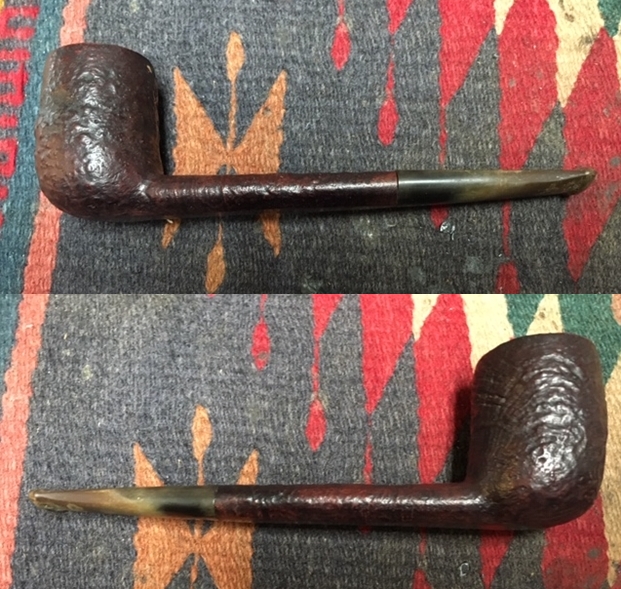
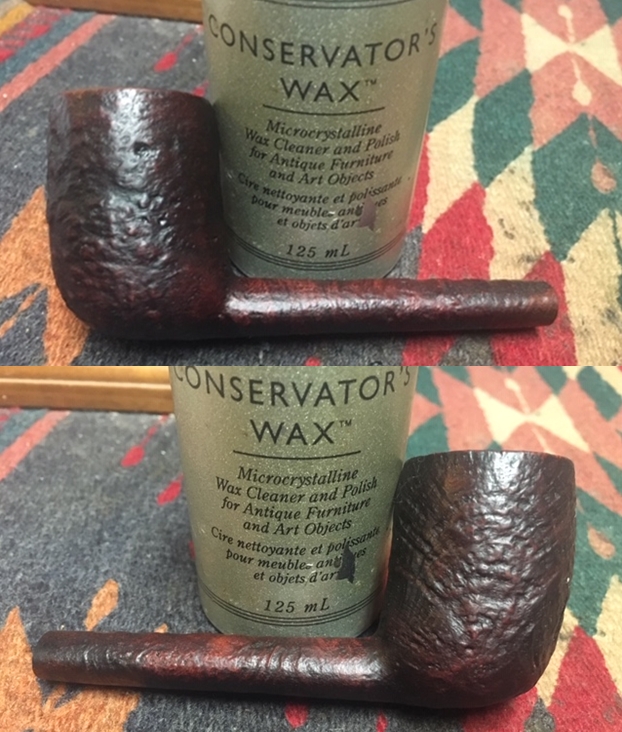
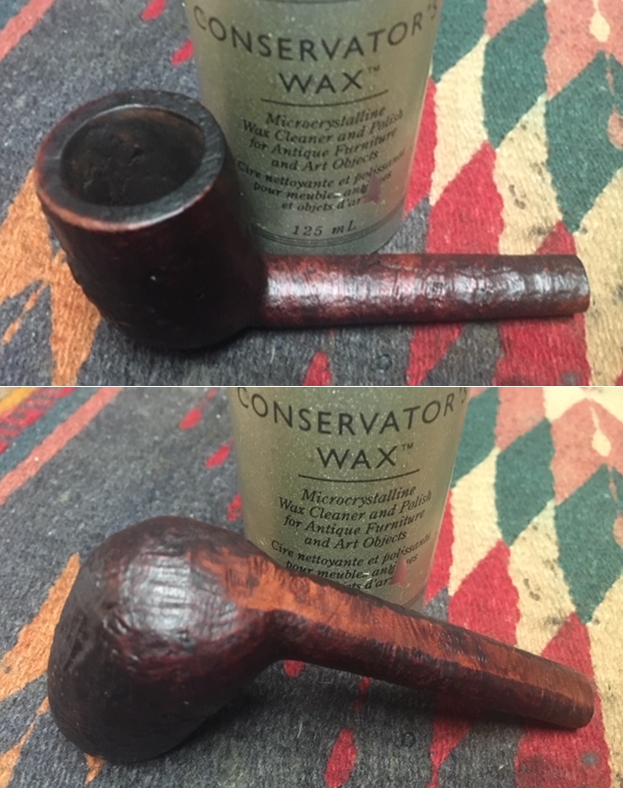
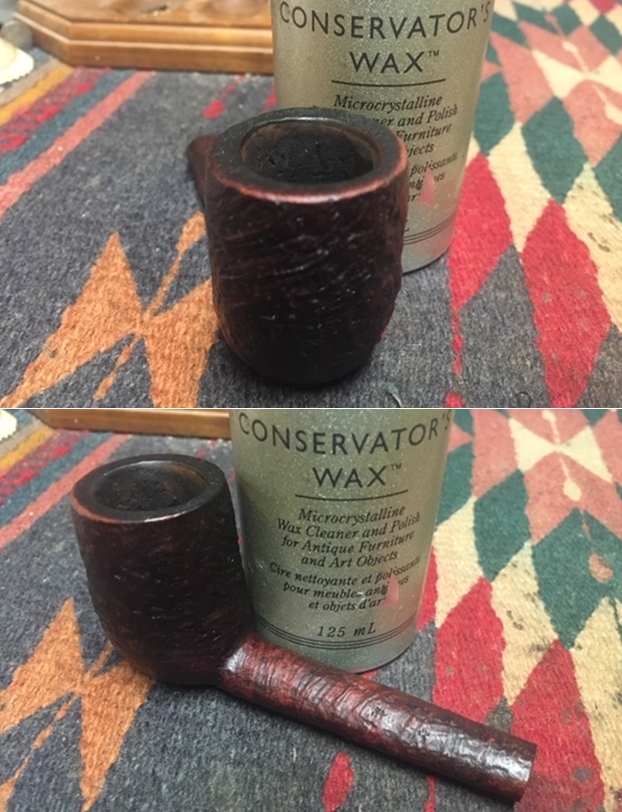
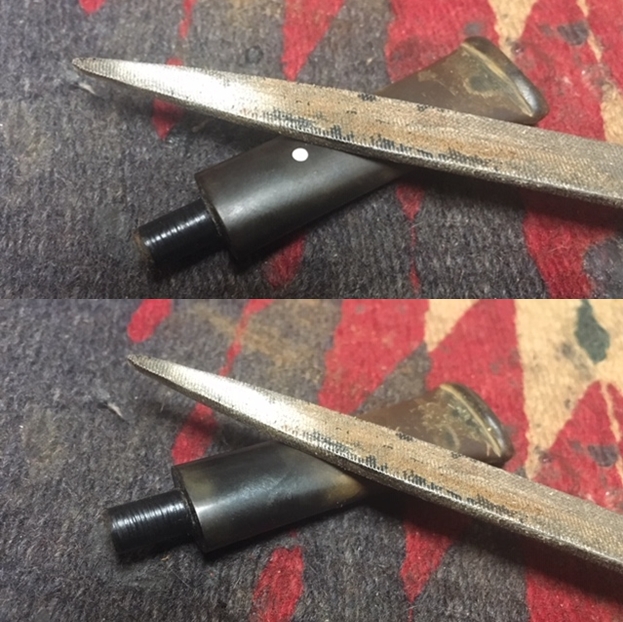
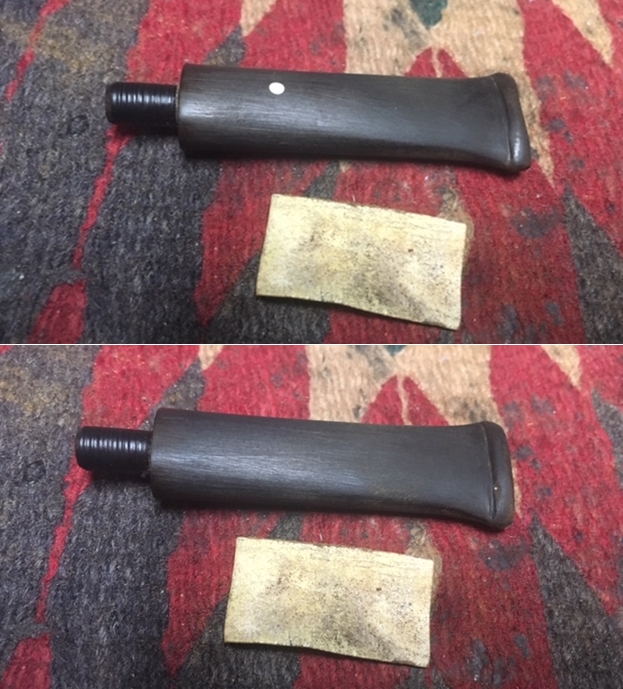
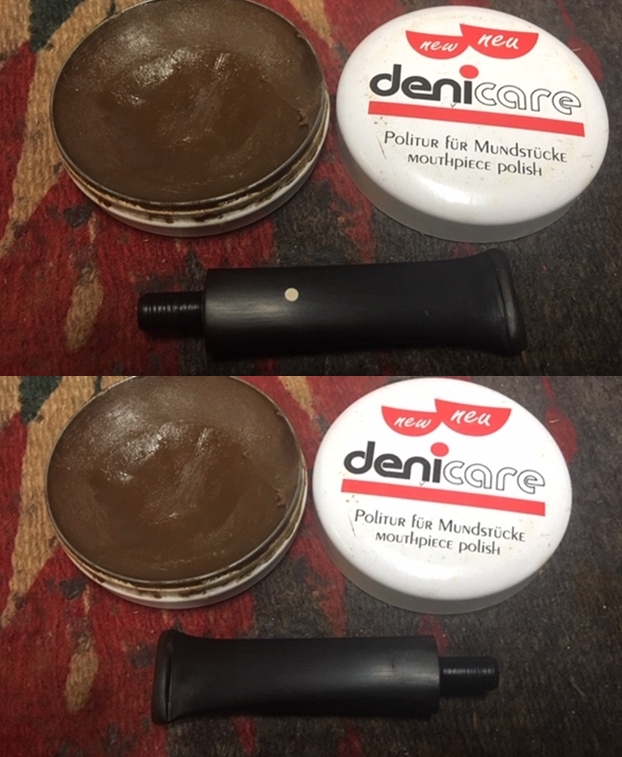
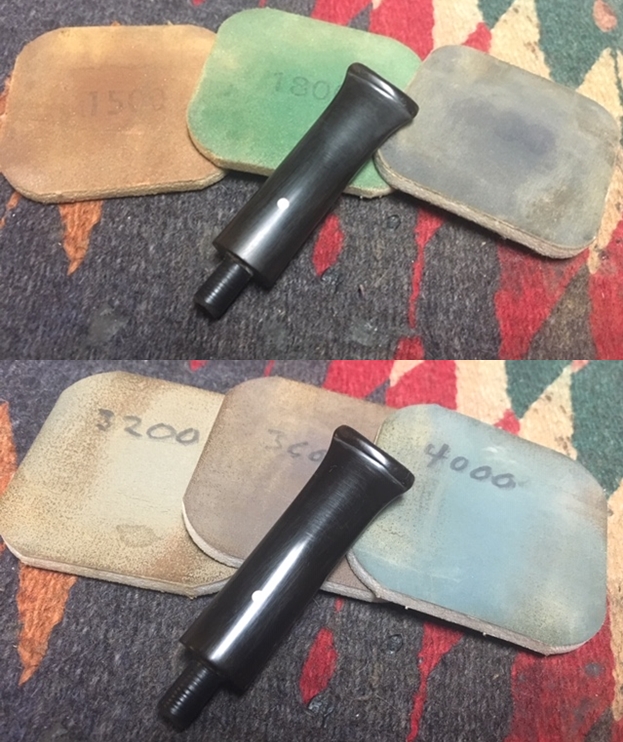
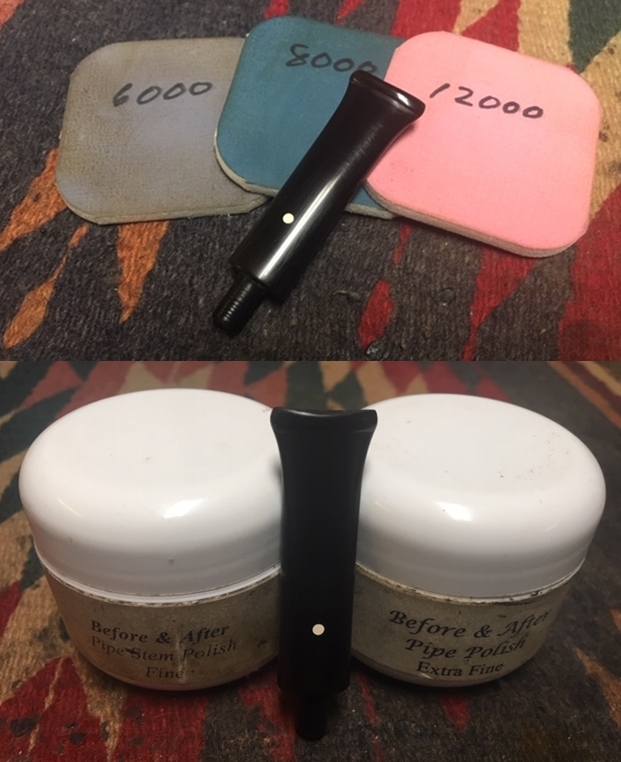
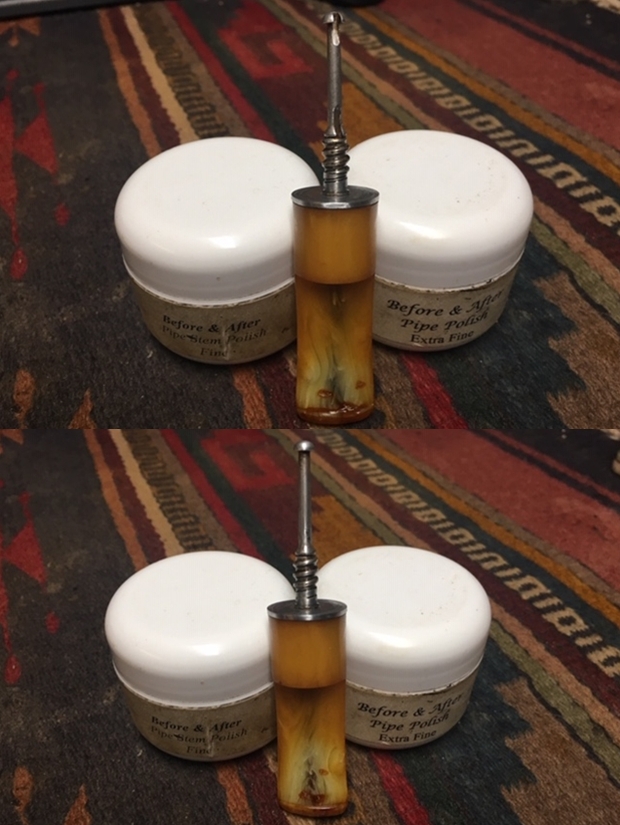
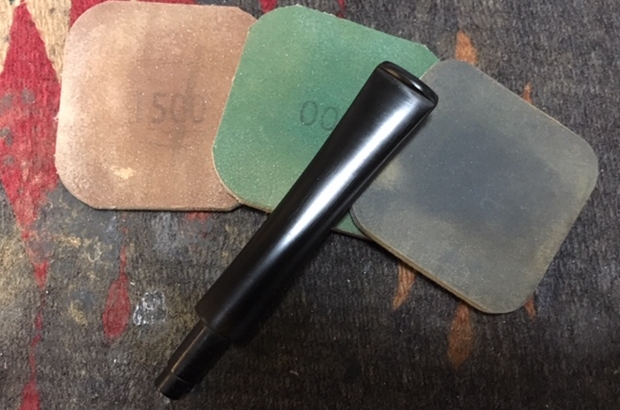
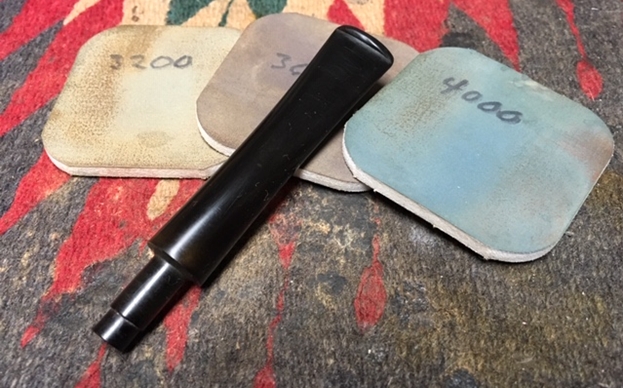
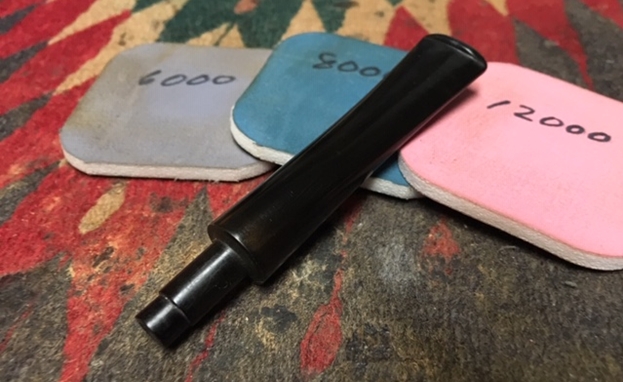
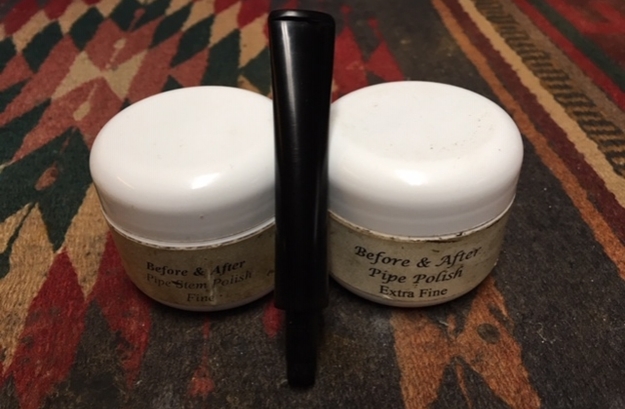
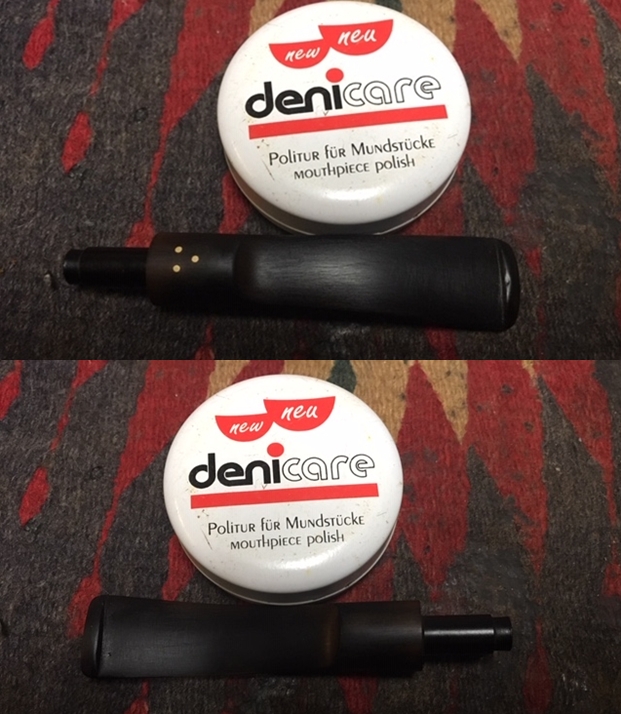
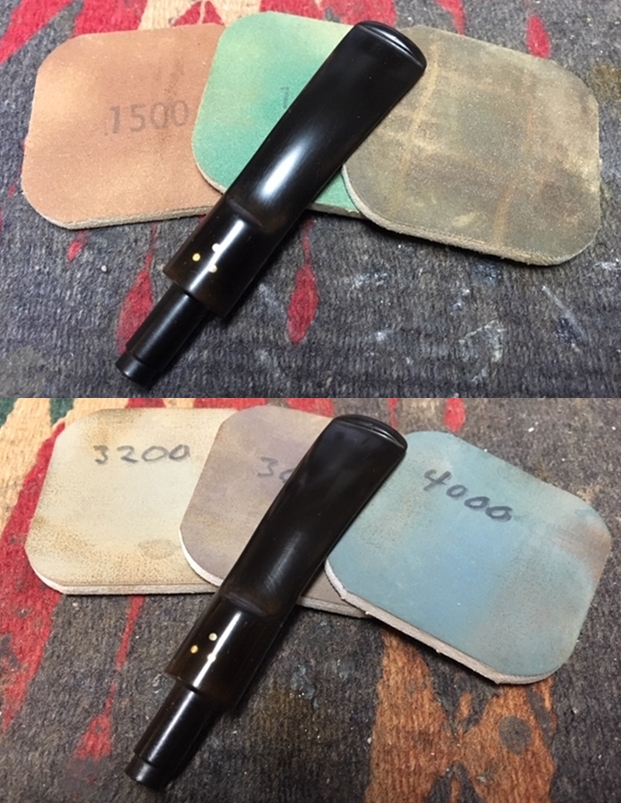
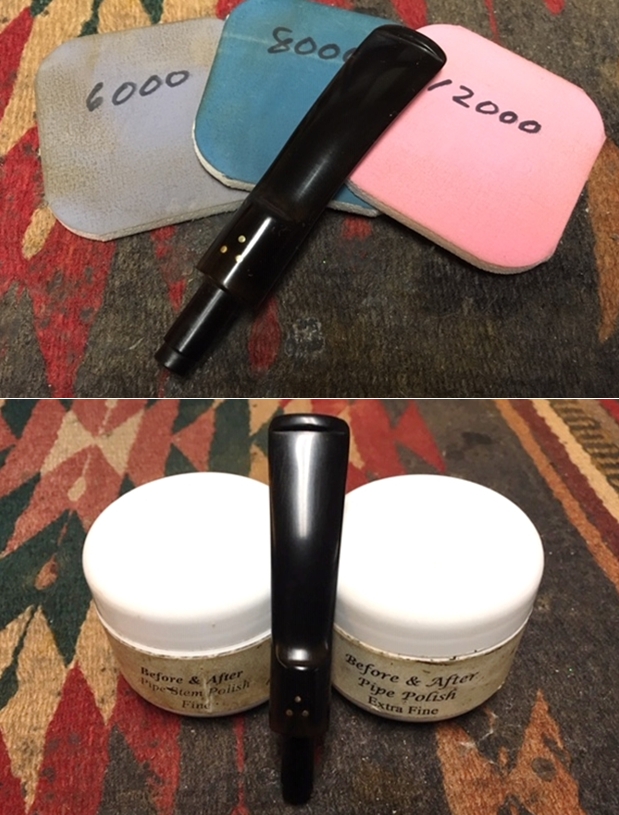
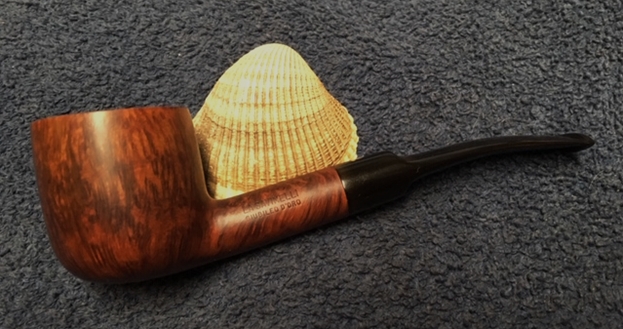
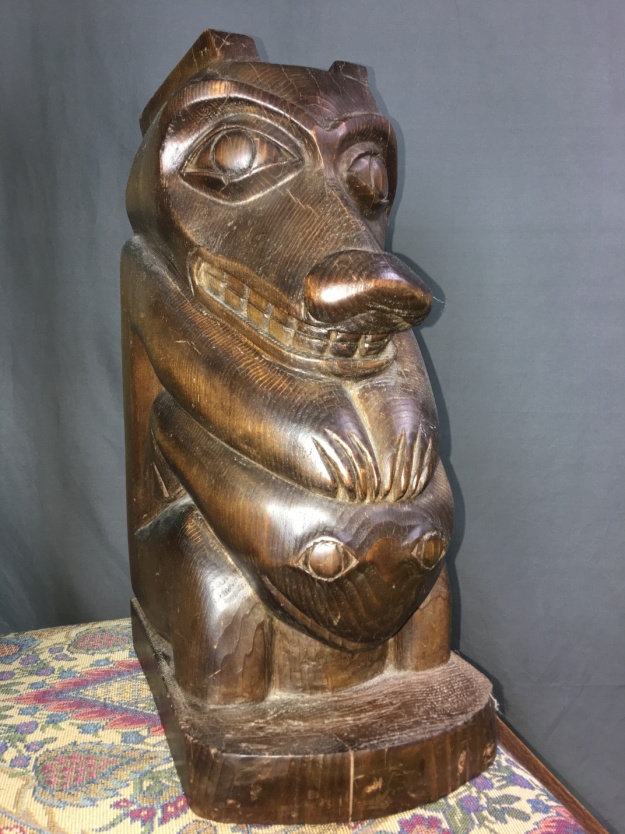
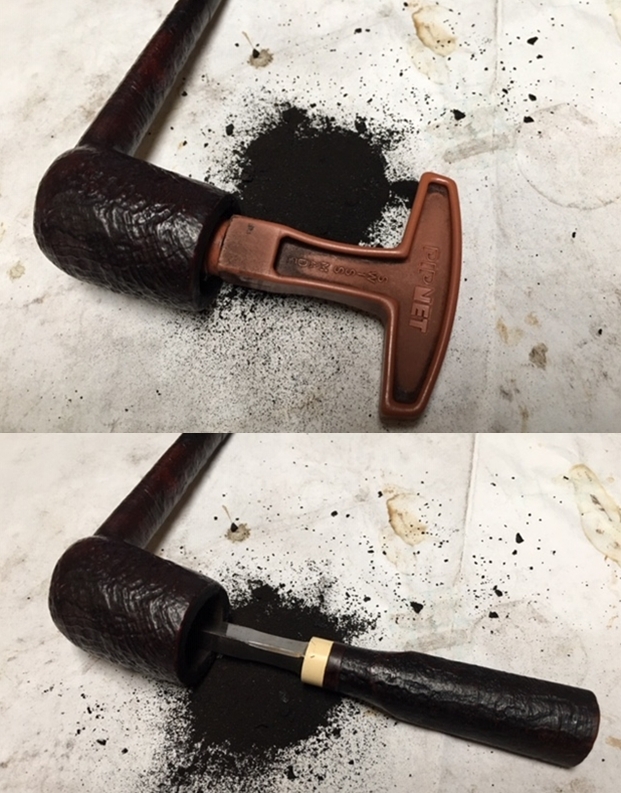
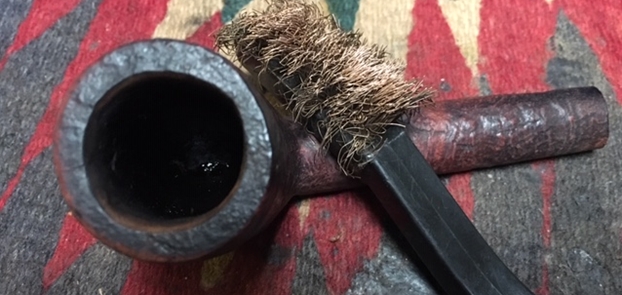
I am delighted to pass on these beloved pipes of my father’s. I hope each user gets many hours of contemplative pleasure as he did. I remember the aroma of tobacco in the rec room, as he put up his feet on his lazy boy. He’d be first at the paper then, no one could touch it before him. Maybe there would be a movie on with an actor smoking a pipe. He would have very definite opinions on whether the performer was a ‘real’ smoker or not, a distinction which I could never see but it would be very clear to him. He worked by day as a sales manager of a paper products company, a job he hated. What he longed for was the life of an artist, so on the weekends and sometimes mid-week evenings he would journey to his workshop and come out with wood sculptures, all of which he declared as crap but every one of them treasured by my sister and myself. Enjoy the pipes, and maybe a little of his creative spirit will enter you!Now that I had a sense of Bob’s spirit in my mind, I could work on his estate with a sense of his presence with me. I turned to work on the seventh of his pipes. I reamed the bowl to remove the cake on the walls and the debris of tobacco shards that still remained. I used a PipNet pipe reamer to start the process. I followed that with a Savinelli Fitsall Pipe Knife to clean up the remaining cake in the conical bottom of the bowl. I sanded the bowl with 220 grit sandpaper wrapped around a piece of dowel. It smooths out the walls and also helps bring the inner edges back to round. With the bowl reamed it was time to work on the rim top and remove the thick lava coat in the blast of the rim. I used the Savinelli Fitsall knife to scrape away the high spots of lava and a brass bristle tire brush to work on the rim top and remove the buildup there.With the rim top cleaned of the lava coat I decided to work on the out of round bowl. It would take some work to get the edge smoothed out and lessen the sharp edges of the knife damage. I sanded the edge with a folded piece of sandpaper. The first photo shows the edge before I started cleaning up the damage. The following photos show the result of the sanding. With the bowl reamed and rim top cleaned I scrubbed the sandblast finish. This is pretty much my process in cleaning either sandblast or rusticated finishes. I scrubbed it with undiluted Murphy’s Oil Soap and a tooth brush to remove the grime from the grooves and canyons of the blast. I worked over the tarry lava overflow on the rim with the tooth brush and a brass brush. I rinsed the pipe under running water to remove the grime. I dried it off with a soft towel. The pictures below show the finish after scrubbing and rinsing. I scraped out the inside of the mortise with a small pen knife to break away the tarry buildup on the walls of the shank. I cleaned out the internals of the bowl, shank and the airway in the shank and the stem with alcohol, pipe cleaners and cotton swabs until they came out clean. It was very dirty in the shank and stem but now it not only looks clean but smells clean. I worked some Before & After Restoration Balm into the briar on the bowl and the rim top. I worked it into the nooks and crannies of the sandblast surface with my fingertips to clean, enliven and protect the wood. I let the balm sit for about 20 minutes and buffed it off with a soft cotton cloth and then polished it with a horsehair shoe brush. I took photos of the pipe at this point in the process to show what the bowl looked like at this point. I gave the bowl several coats of Conservator’s Wax and buffed it with a shoe brush to raise the shine. The bowl looks really good at this point. The sandblast grain just shines and is showing all of the layers of colour that make up a Shell finish. I set the bowl aside and turned my attention to the stem. I used a needle file to recut the sharp edge of the button and give it back its definition on the stem. I sanded out the marks and tooth chatter on the surface of the vulcanite with a folded piece of 220 grit sandpaper. I wanted to reshape the edge in front of the button and also remove the oxidation on the surface of the stem.I polished the stem with Denicare Mouthpiece Polish to take out the oxidation at the button edge and on the end of the mouthpiece. I also worked hard to scrub it from the surface of the stem at the tenon end. I polished out the scratches with micromesh sanding pads – wet sanding with 1500-2400 grit pads and dry sanding with 3200-12000 grit pads. I wiped the stem down after each sanding pad with Obsidian Oil. I polished it with Before & After Pipe Stem Polish – both Fine and Extra Fine. Once I had finished the polishing I gave it a final coat of oil and set it aside to dry. I put the bowl and stem back together. I polished the bowl and stem with Blue Diamond to polish out the scratches in the briar and the vulcanite. I gave the bowl multiple coats of Conservator’s Wax and the stem multiple coats of carnauba wax. I buffed the pipe with a clean buffing pad to raise the shine. I hand buffed it with a microfiber cloth to deepen the shine. The pipe polished up pretty nicely. The contrast of colours that show up in the sandblast of the Shell briar bowl looked good with the polished black vulcanite. The Dunhill Shell EP Canadian turned out really well even with the slightly out of round bowl. It really has that classic Dunhill Canadian look that catches the eye. The finished pipe is shown in the photos below. The dimensions of the pipe are Length: 6 inches, Height: 1 7/8 inches, Outside diameter of the bowl: 1 1/4 inches, Chamber diameter: 3/4 of an inch. This is the seventh Dunhill Shell from the many pipes that will be coming onto the work table and eventually be posted on the rebornpipes store if you are interested in adding it to your collection. Thanks for reading this blog and my reflections on the pipe while I worked on it. I am having fun working on this estate.
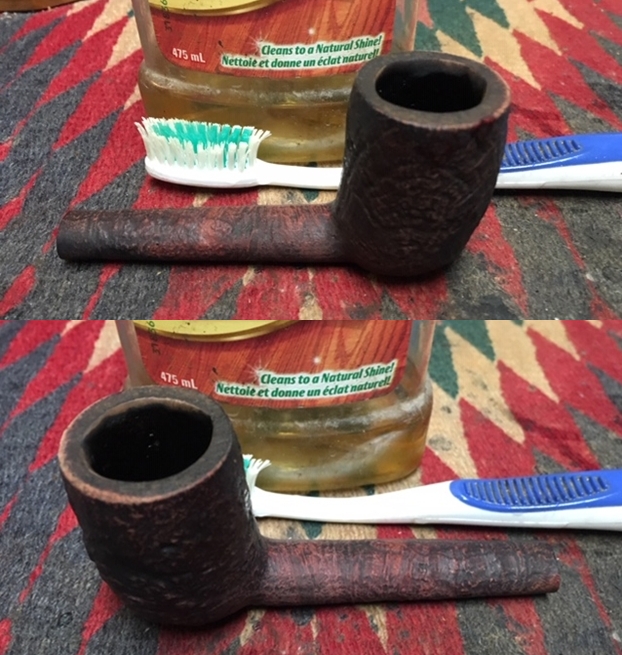
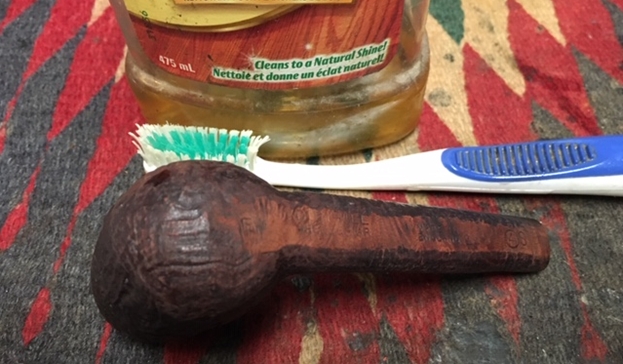
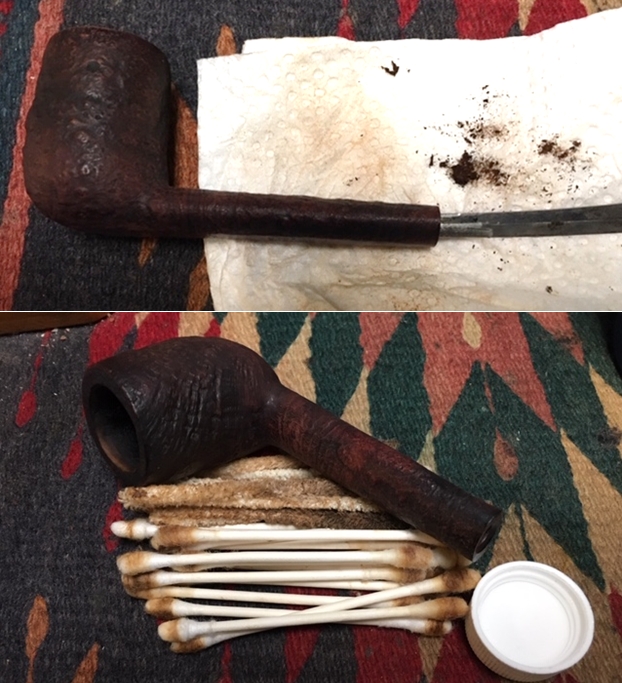
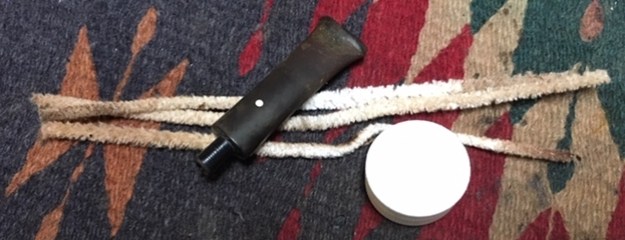
Restoring a Pipe Carved by an American Living Legend – “J.M. Boswell”


Blog by Paresh Deshpande

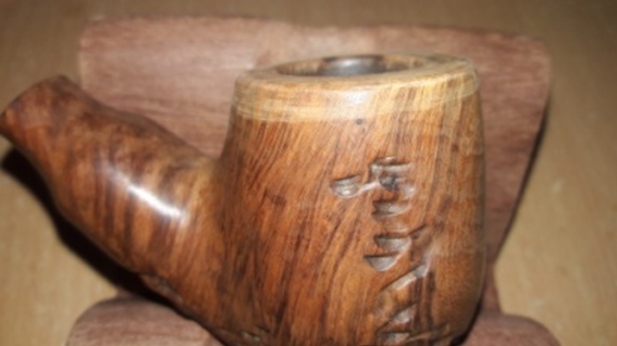
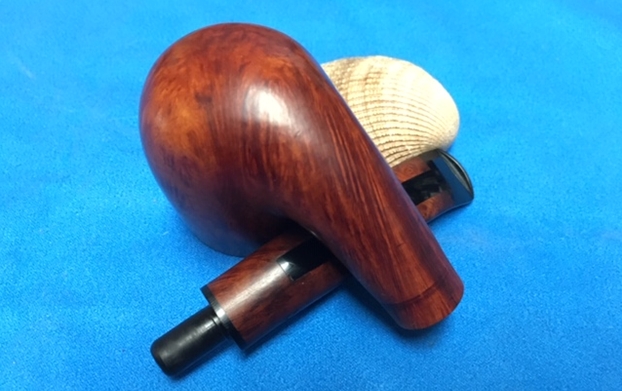
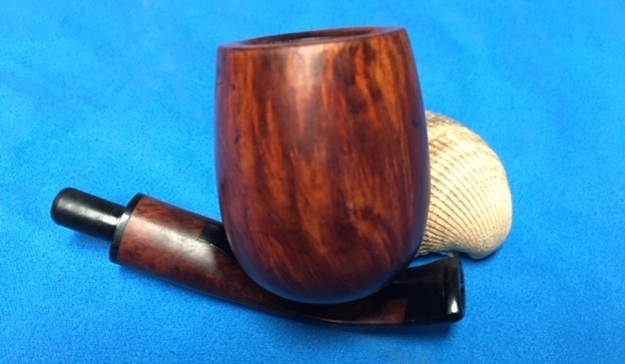
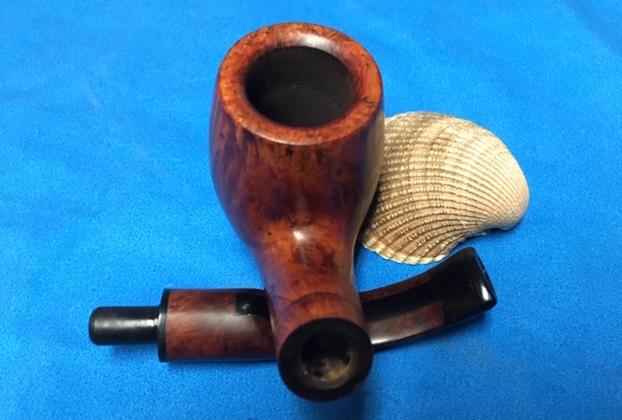
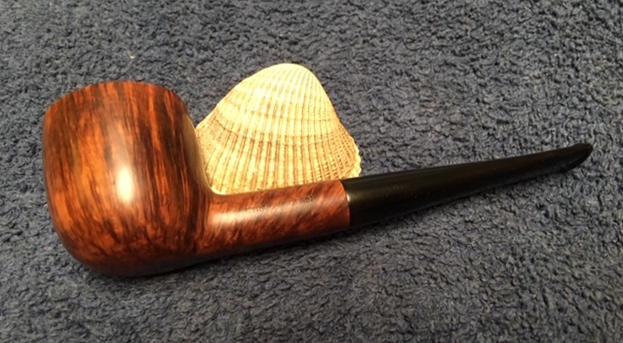
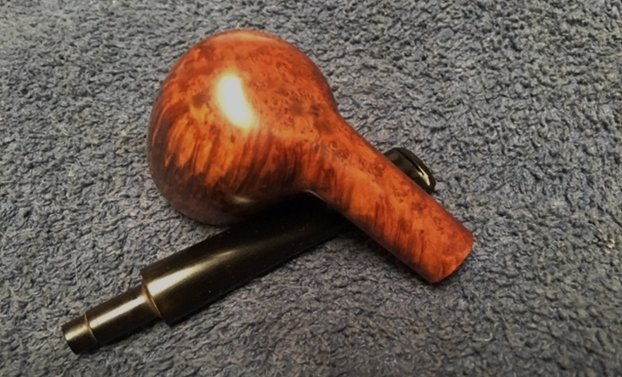
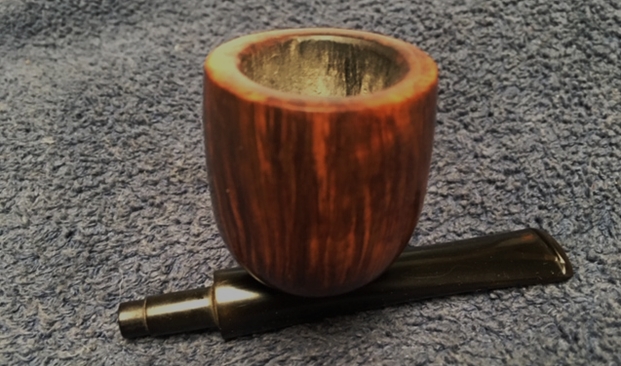
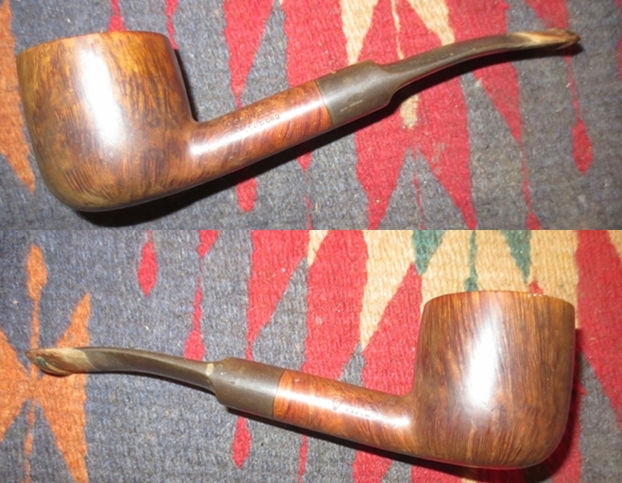
I shall be honest with you; I love vintage English made pipes! I love vintage British bikes and own a couple; I love vintage British fountain pens and have a decent collection of the same. It is something about the simplicity yet unique British craftsmanship, robustness and reliability factor of British made products that I find most appealing. However, after having worked on a number of pipes made by various pipe carvers from USA like Tracy Mincer, Custom-Bilts, Kaywoodies, John Bessai etc, I realize that American pipe carvers are artistic, technologically inventive and the pipes they made are robust, life lasting with a nice feel and heft and of very high quality. Am I gravitating towards American pipes? May be……. The next pipe on my work table is a 22 years old and completely handmade freehand full bent billiard made by an iconic pipe maker from Pennsylvania, USA. Yes, I am working on a pipe made by J M Boswell from the year 1996.

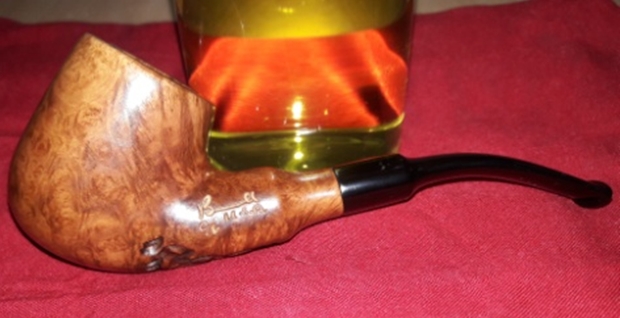
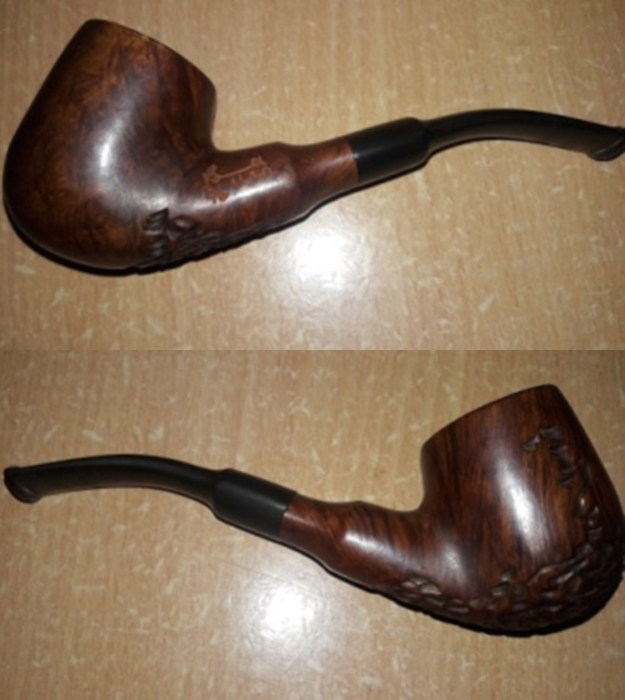
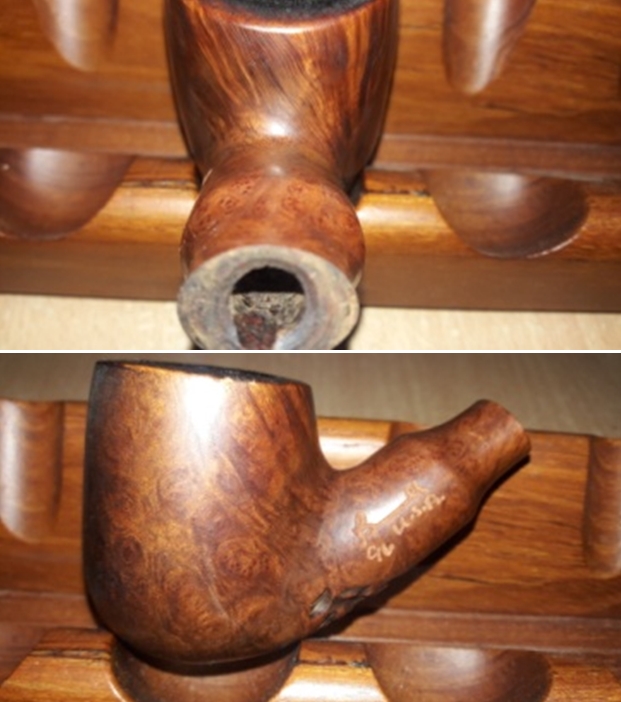
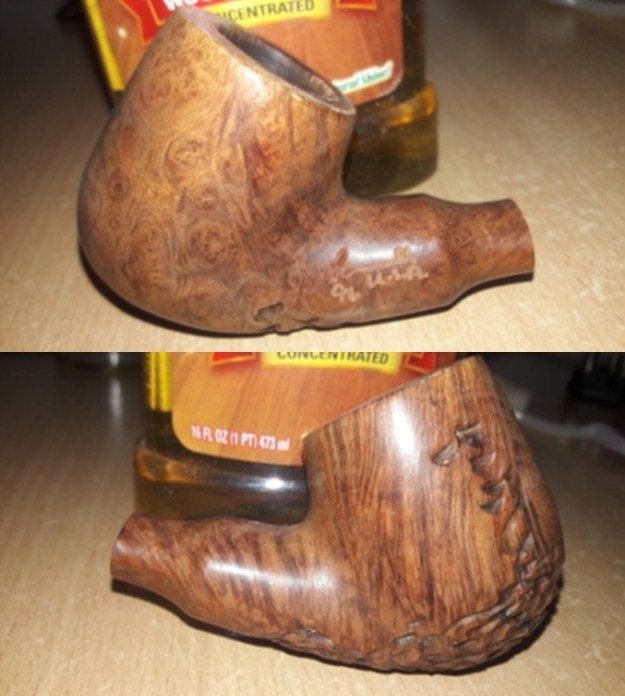
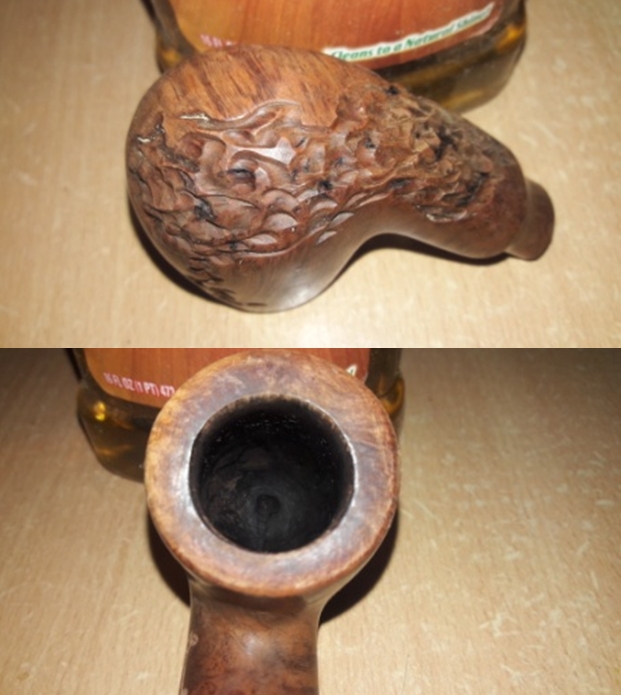
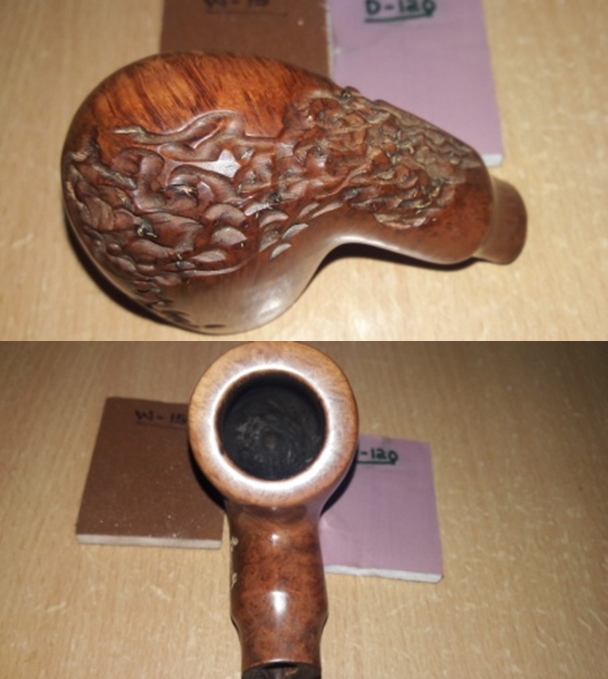
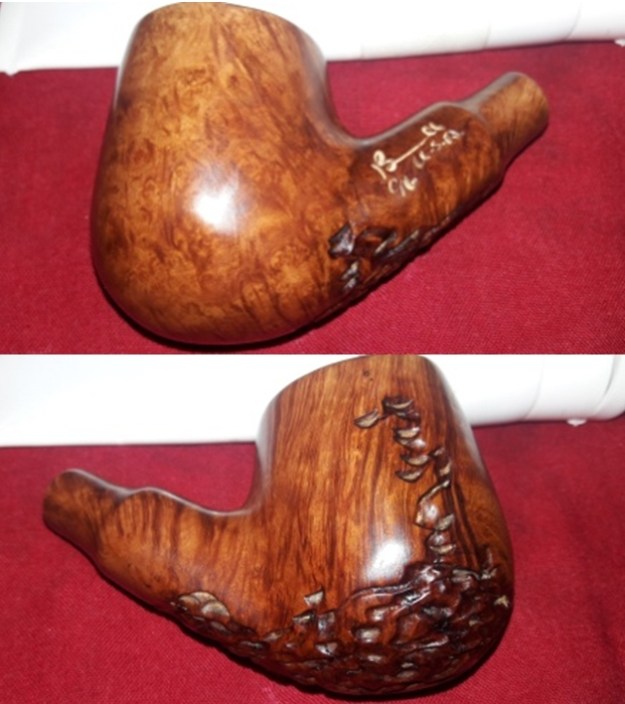
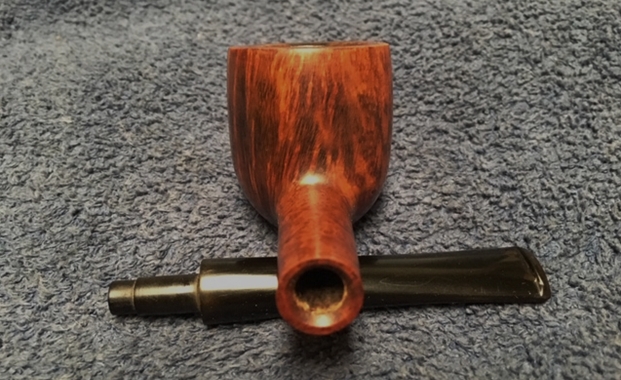
This is a large sized full bent billiard freehand pipe with a nice heft and hand feel. The shape of the pipe is unique in that the proportionate shank has a sudden taper towards the shank end and this size is carried forward on to the saddle of the stem, tapering a bit along the stem before flaring out at the stem end. Wow!!!! That was one hell of a description which has left me exhausted and brain drained!!!! The stamping on the left side of the shank was clear and readable. It read “Boswell” in script signature over “96 USA”. The pipe was made in 1996.The saddle stem bears no stampings.I was keen to know more about J M Boswell the carver, his pipe making techniques and philosophy. I searched rebornpipes.com and sure enough, Mr. Steve has worked on a Boswell before!!! As is his habit, he has thoroughly researched this carver and has included valuable information in his write up. Therefore, instead of reinventing the wheel, here is the link to this write up for detailed information; (https://rebornpipes.com/2017/07/19/refurbishing-a-boswell-2003-spiral-twist-bent-billiard/). Do give it a read.

Is there not a single brand that this gentleman has not worked on before??? Is there never going to be an opportunity for me to research and contribute one pipe make on rebornpipes??? Well, I have just started on my journey as against his decades of dedicated hard work and as Robert Frost wrote in his poem “……..and miles to go before I sleep”. The quest for excellence and contribution continues!

INITIAL VISUAL INSPECTION
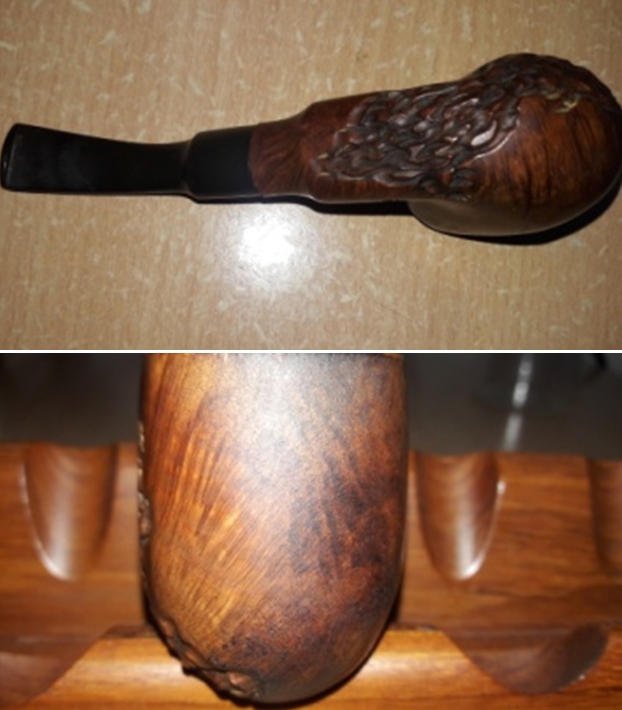
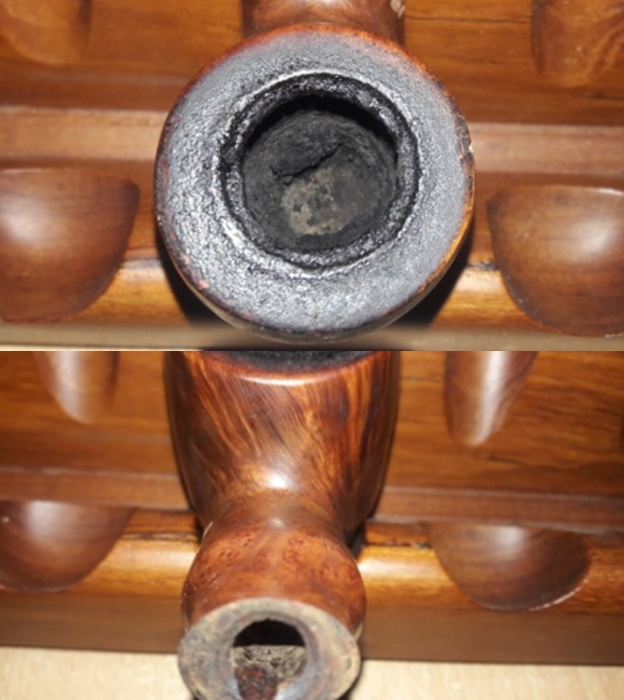
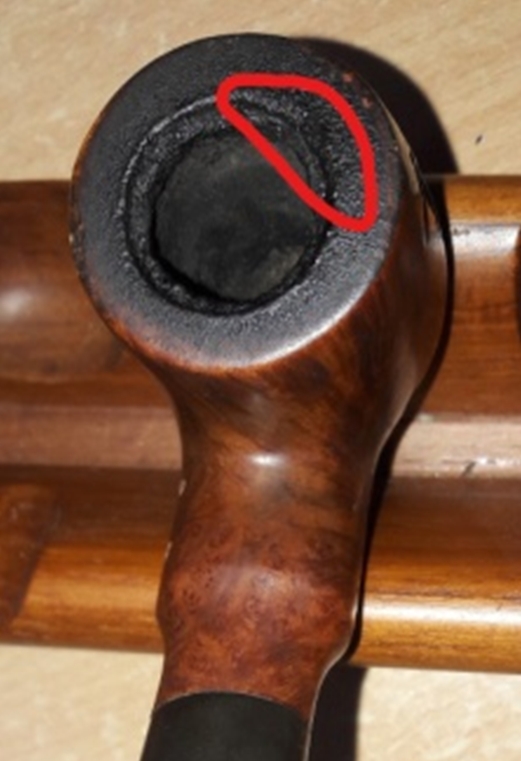
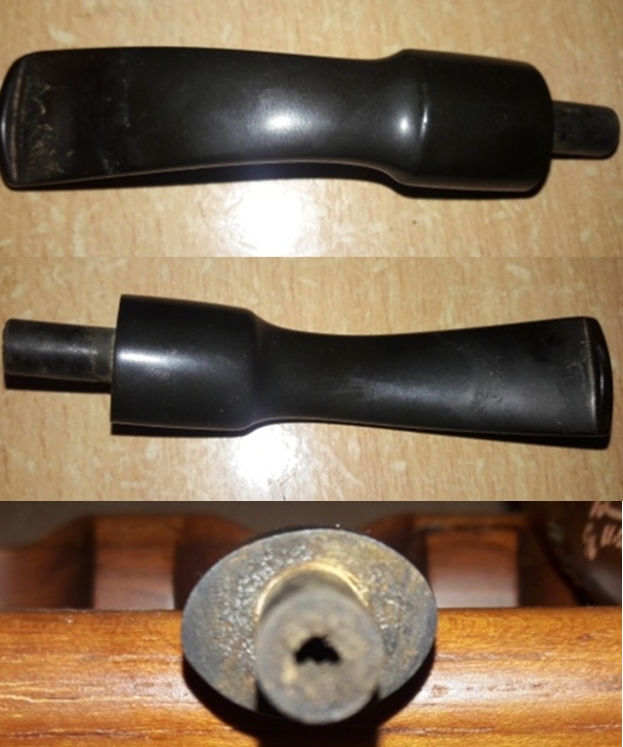
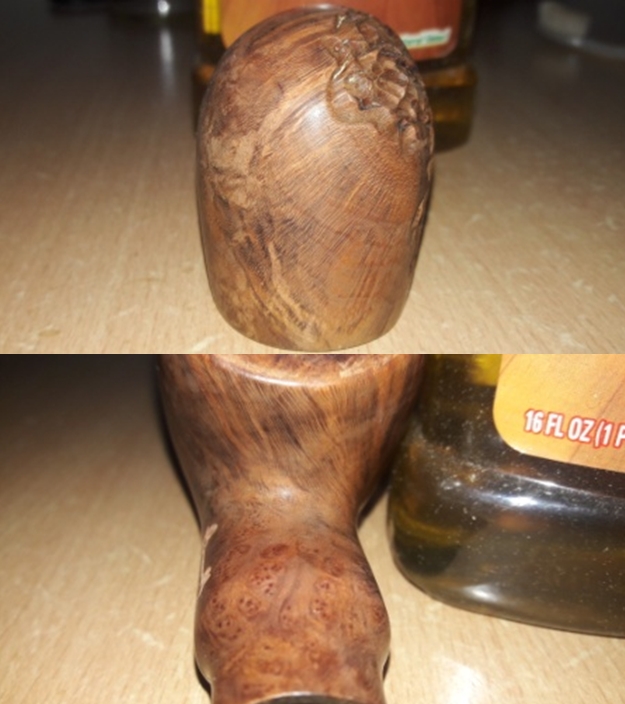
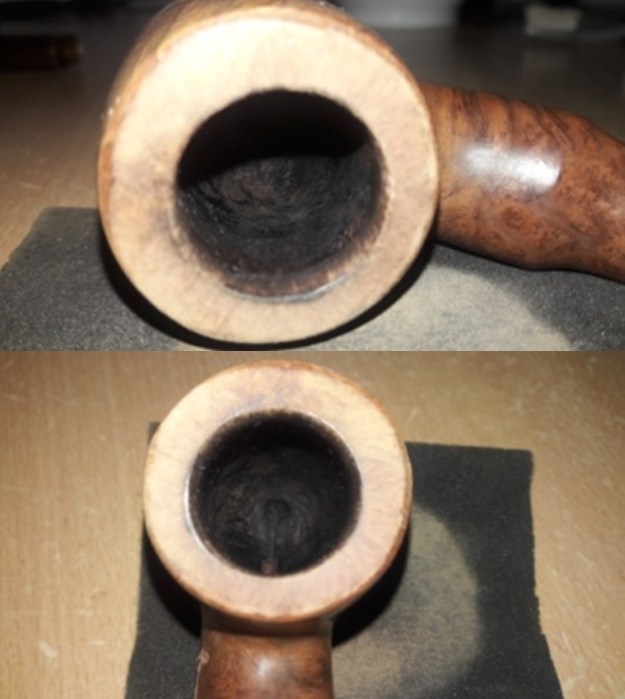
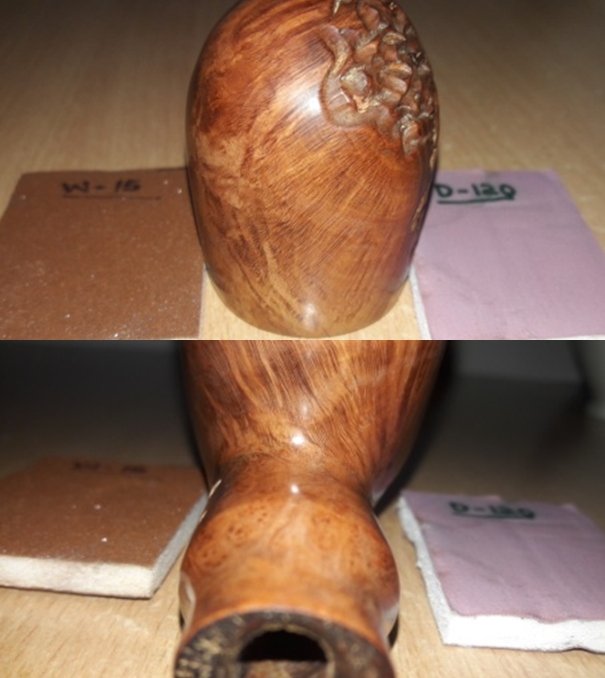
The stummel surface boasts of beautiful straight grains on the right side and most of the front while the left side has lovely swirls of grain interspersed with bird’s eye. The bottom of the shank has unique hand carved rustication which taper towards the right side and extends in a thin and straight line towards the rim on the right side. Lovely bird’s eye can be seen on the top of the shank surface with straight grains on either side of the shank.  The stummel is covered in oils, tars and grime from the overflowing lava. The crevices in the rustication are filled with dirt, dust and grime. The briar is dull and lifeless and has taken on a layer of aged patina, through which one can make out the beautiful grains all round. This one should clean up nicely. This pipe has seen heavy use and the chamber has a nice thick consistent layer of cake, about the size of dime, as is recommended. The cake has been regularly reamed to maintain correct thickness. This seems to be a well cared for pipe. The condition of the inner walls of the chamber can be ascertained only after the cake has been removed completely and taken down to bare briar. The bowl feels robust and solid to the touch from the outside. However, the mortise does show signs of accumulated dried oils, tars and remnants of ash, greatly restricting the air flow. This issue should be a breeze to address.The rim top is covered in a thick overflow of lava from the chamber. This is the only part of the stummel which appears to be neglected. The condition of the inner edge and rim top can be commented upon only once the rim has been cleaned. However, I have a feeling from looking at the appearance, that the right side of the inner edge in 3 o’clock direction may be charred from frequent lighting. Well, we’ll see about it later. Thankfully, the outer edge is pristine and shows no signs of damage!!The vulcanite stem is without any bite marks or tooth chatter. The upper and lower lip does show one bite mark each. The stem was apparently used with a rubber bit as can be seen from the calcification marks on the stem (Come on!! One does not have to be a Sherlock Holmes for this deduction!!). The saddle stem is heavily oxidized. The tenon is covered in dried oils and tars and so is the airway. The air flow through the stem is laborious to say the least. The fit of the stem in to the mortise is very loose, which will loosen further after the mortise and tenon have been cleaned. These issues will need to be addressed.THE PROCESS
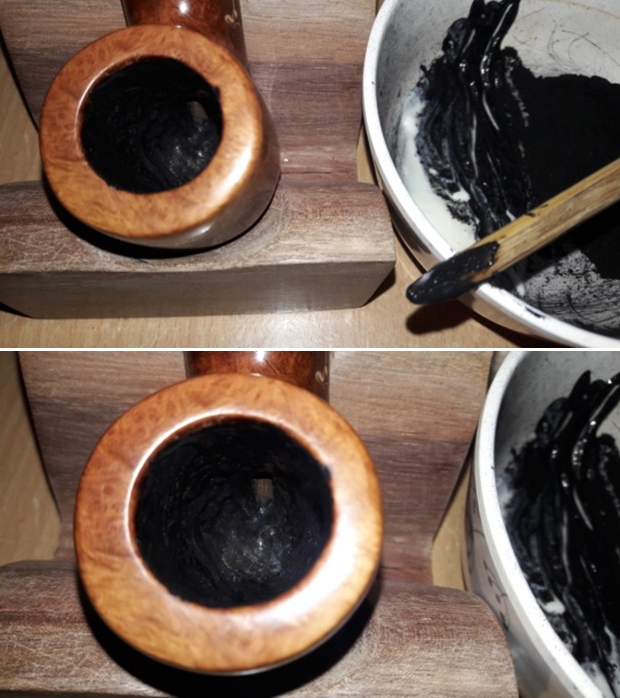
I started this project by reaming the chamber, starting with size 2 head of PipNet reamer and moving on to size 3 head. I used a 220 grit sand paper, pinched between my thumb and forefinger, to sand the inner walls of the chamber. Once I had reached the bare briar, I wiped the chamber with a cotton pad dipped in isopropyl alcohol. This removed all the residual carbon dust and also rid the chamber of all ghost smells. Using a sharp knife, I gently scraped the rim top to remove the lava overflow. I followed up the reaming by cleaning the mortise and air way using hard bristled and regular pipe cleaners, q-tips dipped in alcohol. The mortise and the draught hole was chock-a- block with all the dried tars, oils and gunk that I had to use my fabricated spatula and the drill bit from the Kleen Reem pipe reamer!!!! I gave a final clean with shank brushes dipped in alcohol and dried the mortise with a rolled paper napkin. The shank internals and the draught hole is now nice and clean with an open and full draw.I cleaned out the internals of the stem using hard bristled and regular pipe cleaners dipped in alcohol. I scraped the dried oils and tars from the tenon with the sharp edge of my fabricated dental spatula.Now, it was the turn of the stummel to get cleaned up. Using a hard bristled tooth brush dipped in undiluted Murphy’s oil soap, I very deliberately scrubbed the stummel, cleaning the surface thoroughly. Special attention was paid to scrub out all the dirt and dust from the crevices in the rustication on the bottom of the shank and right side of the bowl. I cleaned the rim too. The stummel and rim top was dried using paper napkins and soft cotton cloth. I was not happy with the way the rim top had cleaned up. There were darkened areas on the rim top, which kept drawing my attention, as well as very light, almost negligible damage to the outer edge in the form of dents. For the sake of my own satisfaction, I decided to address these blemishes. I topped the rim top on a 220 grit sand paper. I was careful to avoid excessive topping and frequently checked the progress. It was at this stage that I realized that the left inner edge has a slight char in 8 o’clock direction. And all this while I had anticipated this damage to be on the right!! So much for playing Sherlock Holmes!! I address the issues to the inner and outer edge by creating a slight bevel using a 220 grit sand paper pinched between my thumb and forefinger. It’s looking good now, I say, save for a black spot on the left side!!! I wanted to highlight the grains seen and further blend all the repairs carried out to the stummel. To achieve this aim, I sand down the stummel and rim top using micromesh pads, wet sanding with 1500 to 2400 grit pads and dry sanding with 3200 to 12000 grit pads. The stummel now has a deep shine with grains popping out with magnificent contrast. Though this part of restoration is the second most time consuming and laborious, the end results are also the most satisfying. The play of grains, the contrast and the smooth surface are well worth the efforts. I rub a small quantity of “Before and After Restoration Balm” in to briar and let it rest for a few minutes. I took some extra efforts to work the balm in to the hand carved rustications on the bottom of the bowl. The balm almost immediately works its magic and the briar now has a nice vibrant appearance. I further buff it with a horse hair shoe brush. With the stummel nice and clean and attractive, I worked the stem. I sharpened the lip edges using a needle file and sand the entire stem with 220 followed by 400 and 800 grit sand paper. This helps to reduce the sanding marks left behind by the more abrasive 220 grit paper. By mere sanding itself, the minor tooth marks seen on both stem surfaces were addressed completely. To bring a deep shine to the vulcanite stem, I went through the complete set of micromesh pads, wet sanding with 1500 to 2400 grit pads and dry sanding with 3200 to 12000 grit pads. I wiped the stem with alcohol after each pad and rubbed it down with Extra Virgin Olive oil. The internals of the stem was cleaned out using alcohol and pipe cleaners. The pictures of the process and final results are shown below. To finish, I re-attach the stem with the stummel. I mount a cotton cloth buffing wheel on to my local machine which is similar to a Dremel.  I set the speed at about half of the full power and applied White Diamond compound to the entire pipe. I wiped/ buffed the pipe with a soft cotton cloth to clear it of any leftover compound dust. I then mounted another cotton cloth wheel on to the polishing machine and applied several coats of carnauba wax. I finished the restoration by giving the entire pipe a rigorous hand buffing using a microfiber cloth to raise the shine further. The completed pipe, with the dark brown hues of the stummel contrasting with the shiny black stem, looks lovely, fresh and vibrant; the photographs speak for themselves. The beauty, size and shape of this pipe make it one of my favorites and will find a place of pride in my modest collection. If only the pipe could tell the story of its journey till date…………… Cheers!! PS: The last functional aspect which I addressed at this stage was the protection of the walls of the chamber against the possibility of a developing serious heat fissures. I mix activated charcoal and yogurt to a consistency which allows for an easy and even spread and evenly apply it on the inner walls and set it aside to dry out naturally. This coating helps in protecting the wall surface and assists in quicker formation of a cake.

Restoring a Rare “Zeus” U.S. Pat # 2.158.897


Blog by Paresh Deshpande

I am really privileged to have inherited a large collection of pipes that once were actively smoked by my grandfather for nearly 40 years, from 1930s to mid of 1970s!! This eclectic collection has a large variety of pipes of various origins; British, Denmark and US makers being in larger numbers. As I am researching and restoring each pipe, I have come to realize that there are actually quite a few that are a part of pipe history!! The one that is now on my work table is one such. It’s a “ZEUS”!!

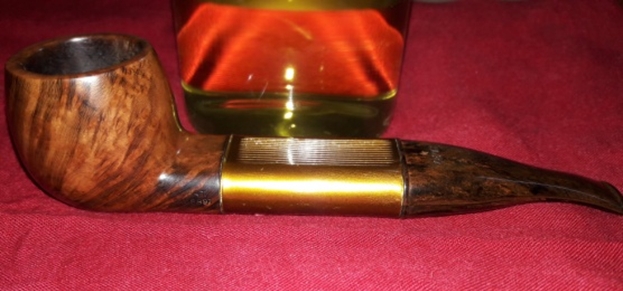
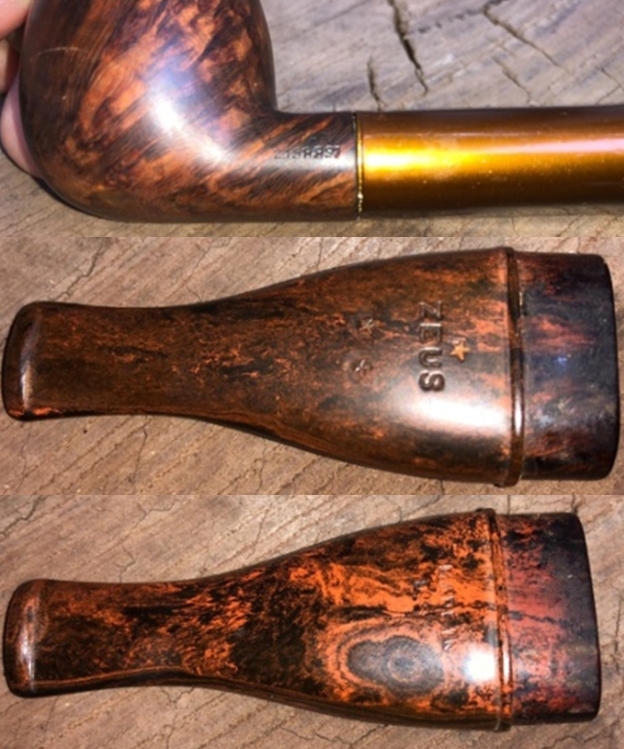
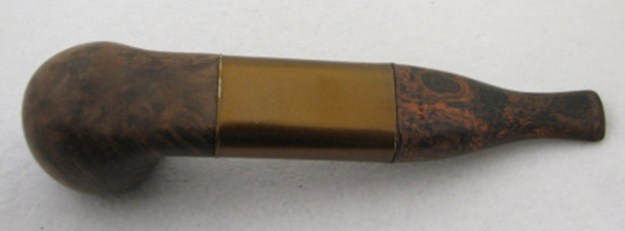
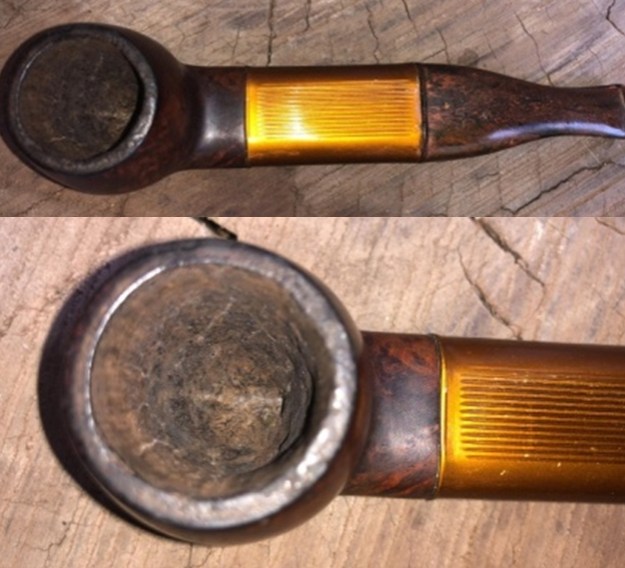
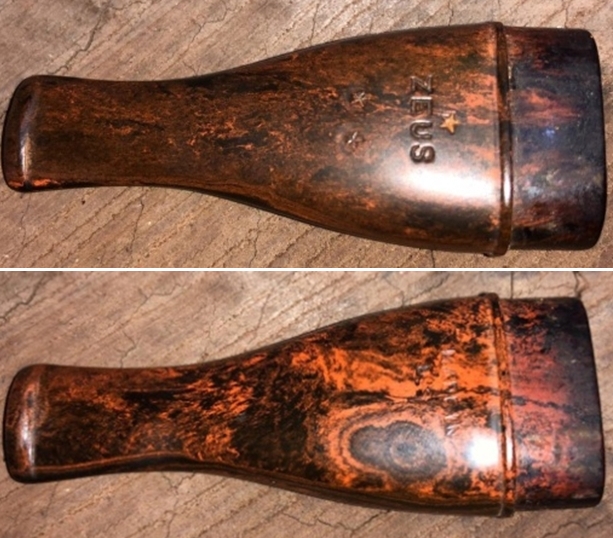
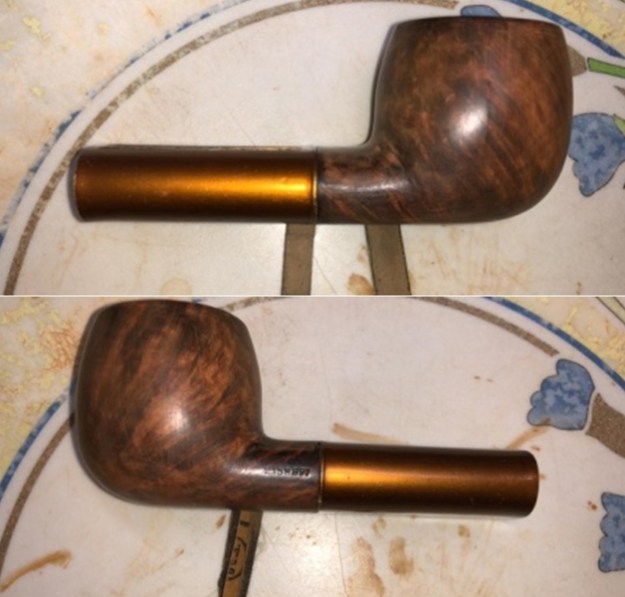
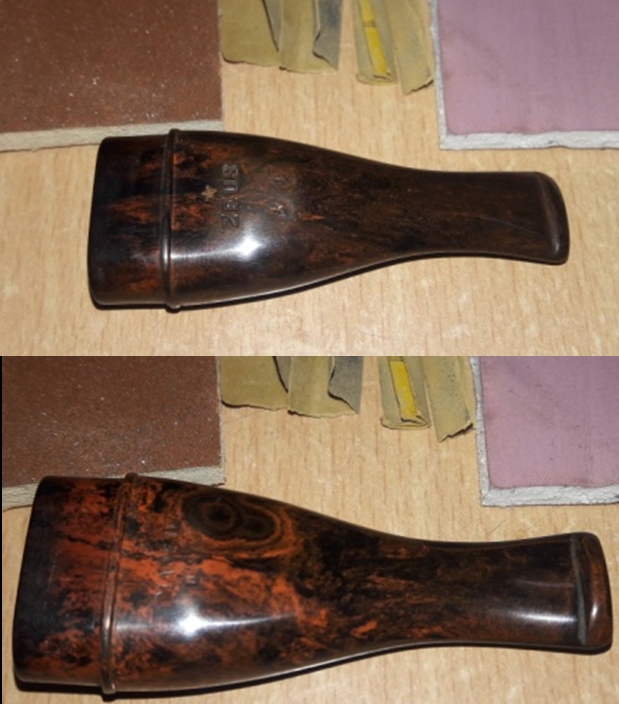
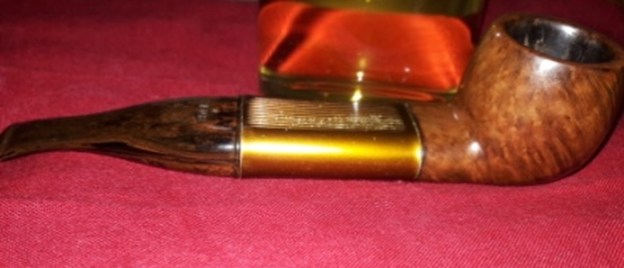
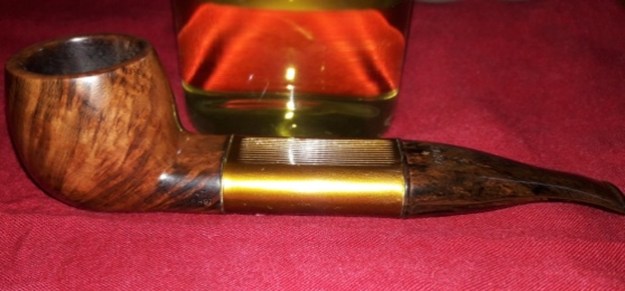
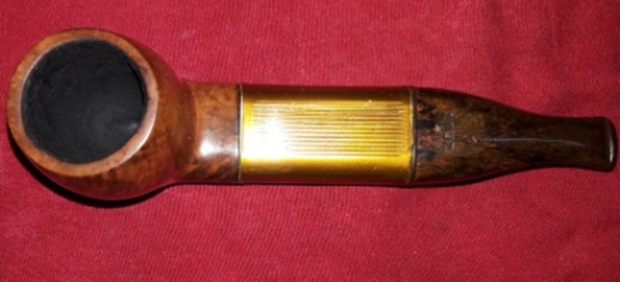
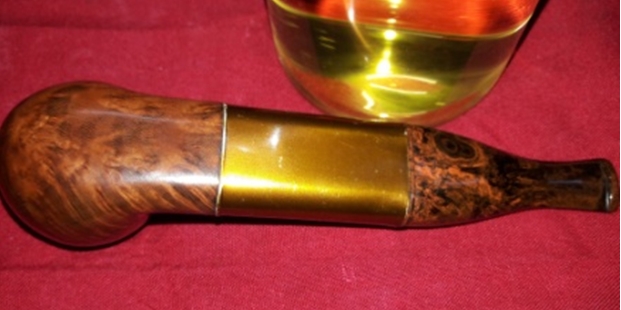
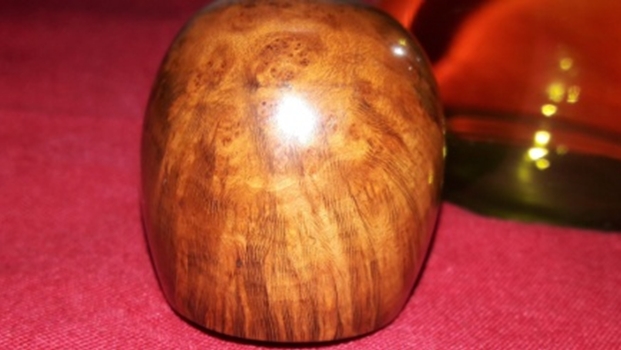
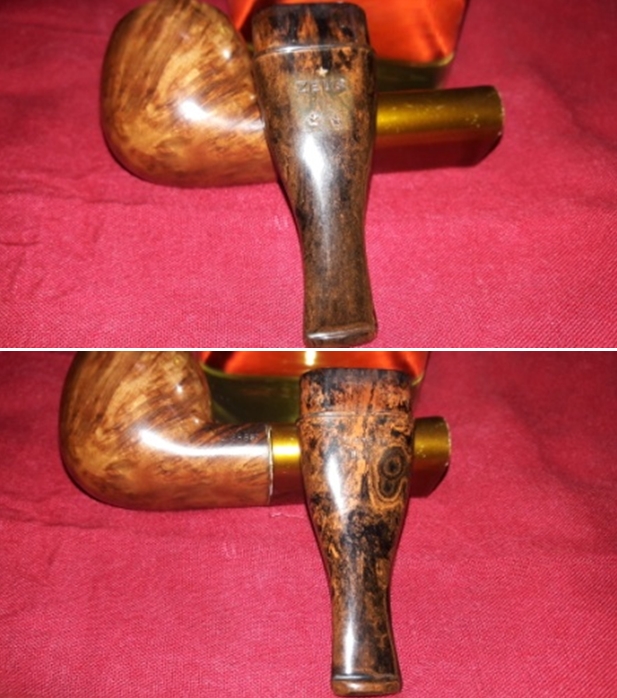
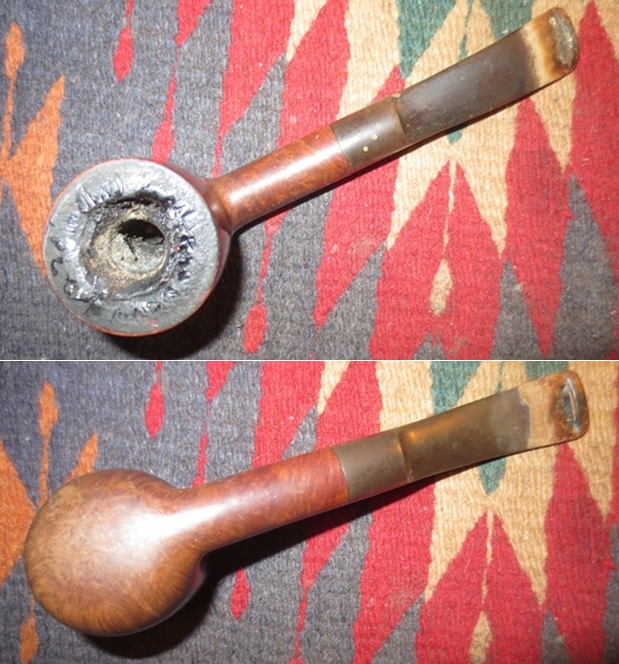
This an oddly shaped Apple with a very wide shank which extends for about an inch before it is joined by an aluminum oval tube. An oddly shaped stem, something similar to a mermaid’s tail, fits into the end of the metal tube. The stummel surface boasts of beautiful flame grains along the sides of the stummel, while cross grains adorn the top and bottom of the shank. The left hand of the shank is stamped with “U.S. PAT.” in block capital, over the patent number “2.158.897”. The uniquely shaped twin bore Cumberland stem bears three stars on top surface of the stem, one at the top over “ZEUS” and two stars below. The lower surface of the stem bears the stamp “MADE IN” over “U.S.A.”In order to research any pipe that I am working on, the first place I visit is rebornpipes.com!! There is a wealth of information that Mr. Steve has collated in one place. There is a write up on a “ZEUS” which has been restored by Mr. Steve and he has painstakingly collated all the relevant information on this model of pipe which was made by LH Stern Inc. Instead of reinventing the wheel, here is the link to the write up which all pipe enthusiasts and collector may like to read to know more on this ultra rare pipe (https://rebornpipes.com/2015/05/10/a-unique-piece-of-pipe-history-a-zeus-system-filter-pipe/).

INITIAL VISUAL INSPECTION
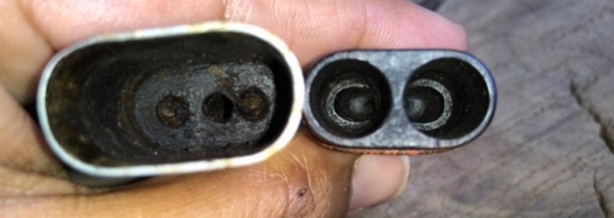
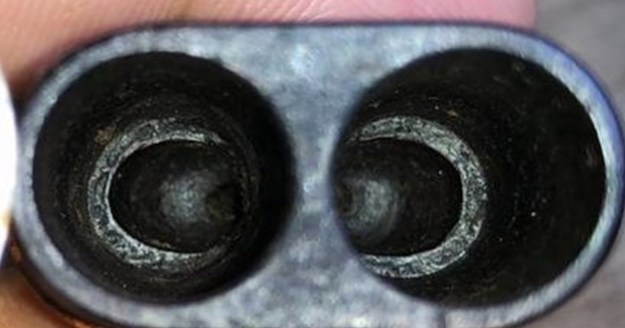
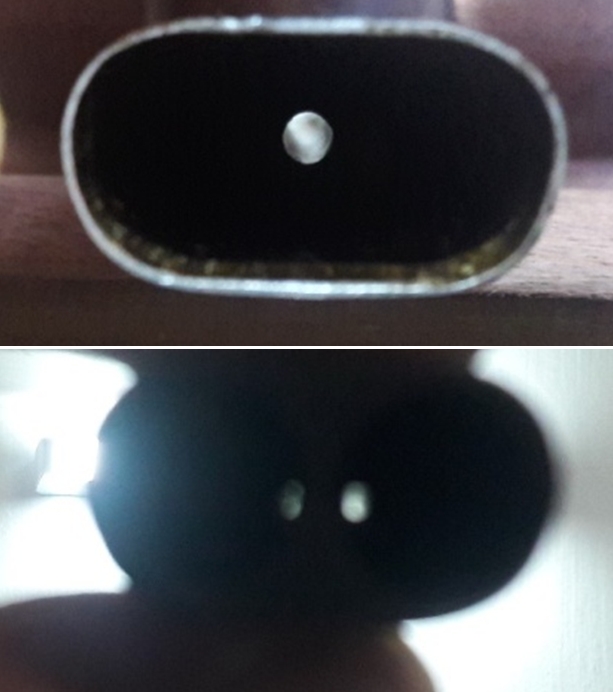
Overflow of lava is seen on the rim top and also on the stummel surface, more so at the joint where the shank and the stummel meet. Through all this dust, dirt and grime, beautiful flame grains can be seen all around on the stummel. There is not a single fill that can be seen through the grime on the stummel. Maybe after a clean, a few gremlins will show up. The aluminum shank extension is without any dents and dings, which is a surprise of course, and is securely fixed over the shank. I do not intend to disturb the geometry of the pipe by attempting to separate it from the shank. The briar is dull and lifeless and has taken on a layer of aged patina, through which one can make out the beautiful grains all round. This one should clean up nicely. There is a thick and uneven layer of cake in the chamber which makes it difficult to ascertain the condition of the walls of the chamber. From the thin rim surface, it appears that the walls on upper portion of the bowl are thin and thickens down towards the heel as the bowl flares outwards, giving it the classic Apple shape. I really pray that I do not encounter the chamber condition akin to what I had encountered while working on the “SON”!!! The thin rim top is covered with overflow of lava. The inner edge appears uneven and so does the rim top. The outer edge is covered in overflow of lava and its condition will be ascertained after the rim has been cleaned.There are two spikes on the shank end which extend in to the aluminum shank extension. These spikes and the insides of the shank extension are filled with oils, tars and grime. The mortise is clogged and restricts the flow of air. These issues will need to be addressed.The twin bore Cumberland stem is the first that I shall be working on. The twin bore stem moved toward a single airway in the thinner portion towards the end of the stem. It formed a Y. The twin bores were quite large as can be seen in the photo. The airway appeared clean and would require a routine cleaning with pipe cleaners and alcohol. There a few very light bite marks near the end of the stem. There are small bite marks on the lower and upper lip edges. It is nice, dark, and smooth. These issues should not be a major headache to address. The tenon is clean and flow of air through the airway is full and smooth. THE PROCESS
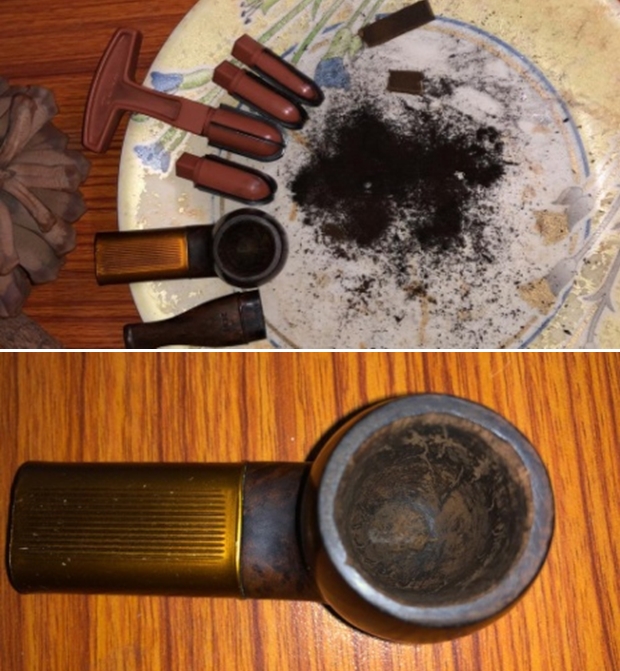
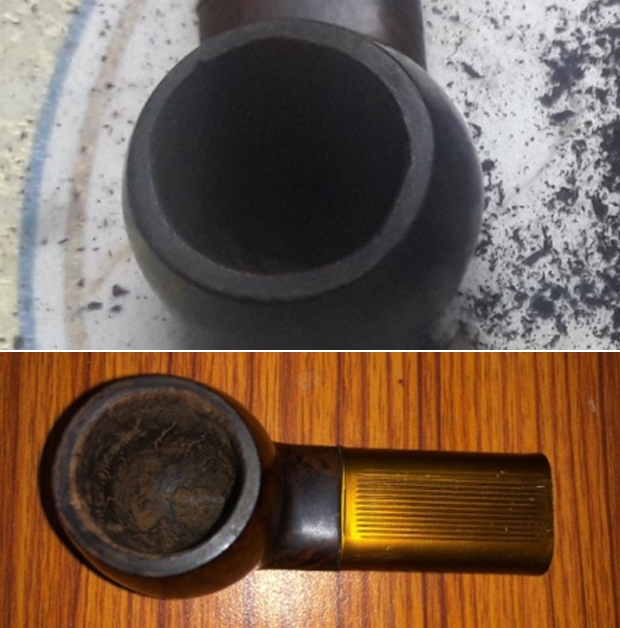
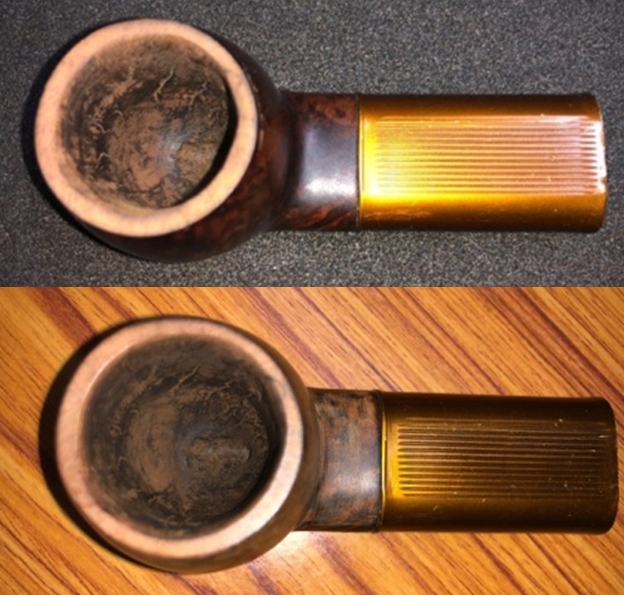
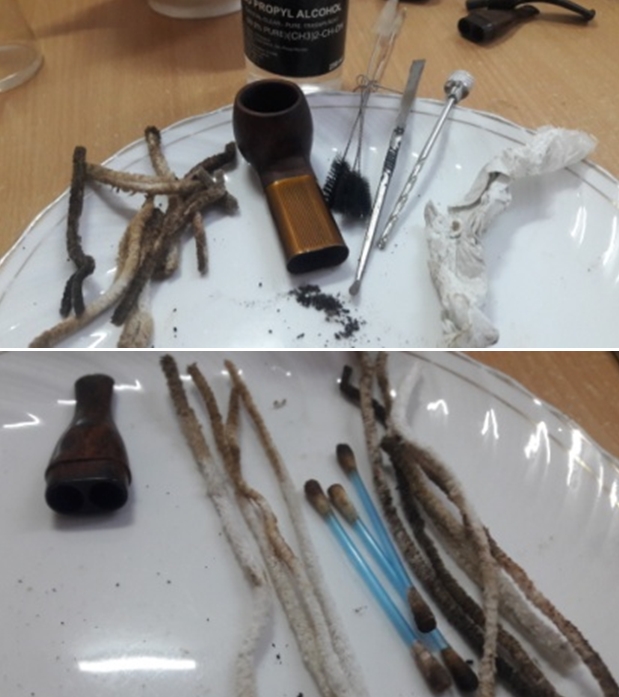
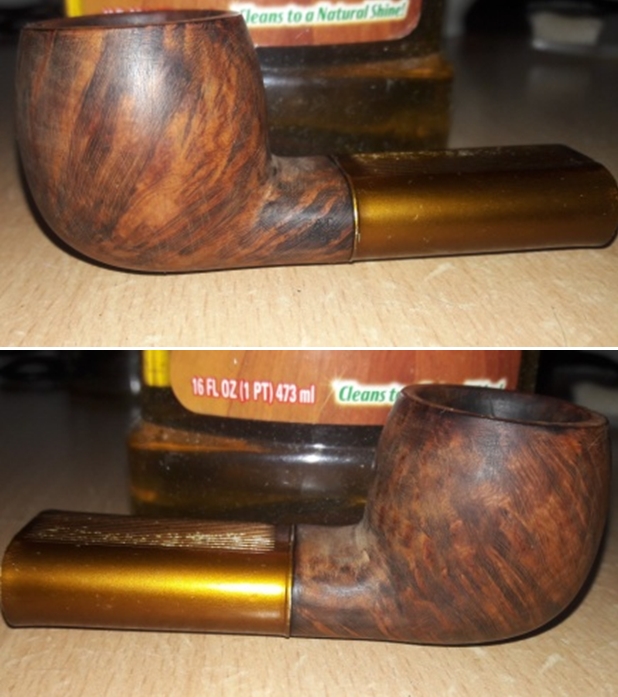
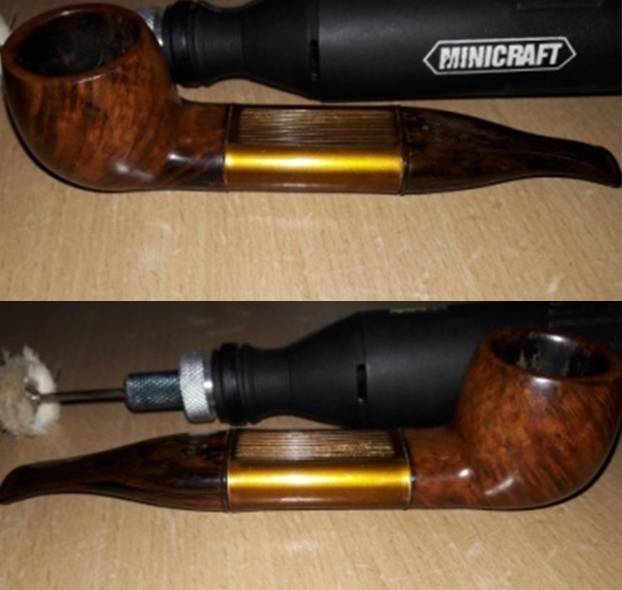
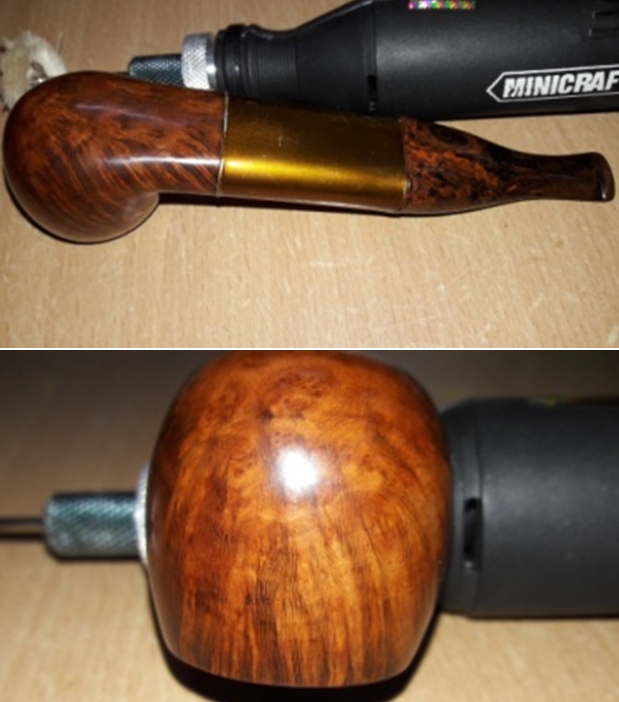
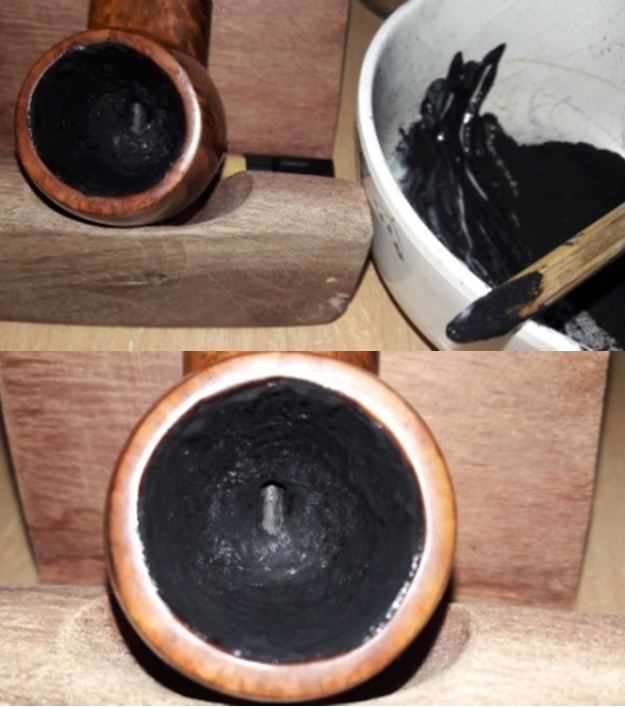
I started this project by cleaning the chamber using size 4 head of the PipNet pipe reamer as the chamber is very wide. I used a 220 grit sand paper, pinched between my thumb and forefinger, to sand the inner walls of the chamber. Once I had reached the bare briar, I wiped the chamber with a cotton pad dipped in isopropyl alcohol. This removed all the residual carbon dust and also rid the chamber of all ghost smells. I gently scrapped the rim top with a sharp knife to remove the entire lava overflow. The process had revealed a web of very thin superficial lines which looked like the beginning of heat fissures. To make sure, I ran a toothpick along the lines. If these were the beginning of heat fissures, there would be some give in the lines as the charred briar would fall out. Luckily, this was not the case here. However, to be on the safer side I shall give the inner walls of the chamber a coating of activated charcoal and yogurt.Once the chamber and the rim top were cleaned, I realized that the inner edge of the rim was uneven and the bowl was badly out of round. However, the outer edge of the rim was in pristine condition. I worked on the inner edge of the rim with a 220 grit sand paper. I realized that nicks to the inner edge were larger than anticipated and also the thin rim surface had some blackened surfaces. The uneven thickness of the rim was also an eye sore!! I addressed these issues by topping the rim on a 220 grit sand paper. This completely addressed the issues of nicks and blackened surface on the rim. Though the issue of uneven rim thickness was addressed to a great extent, the rim is slightly thinner on the right side in 4 o’clock direction. To maintain the profile of the stummel and not lose too much briar, I let it be. Now, it was the turn of the stummel to get cleaned up. I sand the stummel surface with a used piece of 220 grit sand paper and got rid of all the overflow of lava. I was careful around the stamping on the shank, lest I sand it off completely!I cleaned the internals of the mortise, shank extension, tenon chamber and the stem air way using hard bristled/ normal pipe cleaners and q-tips dipped in alcohol. I followed up the cleaning of the internals of the pipe by external cleaning of the stummel with a hard bristled toothbrush and undiluted Murphy’s oil soap. I wanted to highlight the grains seen on the stummel. To achieve this aim, I sand down the stummel and rim top using micromesh pads, wet sanding with 1500 to 2400 grit pads and dry sanding with 3200 to 12000 grit pads. The stummel now has a deep shine with grains popping out with magnificent contrast. I also sand the caramel colored aluminum extension with the micromesh pads to bring out the luster of the dark golden brown. I rub a small quantity of “Before and After Restoration Balm” in to briar and let it rest for a few minutes. The balm almost immediately works its magic and the briar now has a nice vibrant appearance. I further buff it with a horse hair shoe brush. Next, I worked on the stem. I sharpened the lip edges using a needle file. I sand the entire stem with 220 followed by 400 and 800 grit sand paper. This helps to reduce the sanding marks left behind by the more abrasive 220 grit paper. To bring a deep shine to the vulcanite stem, I went through the complete set of micromesh pads, wet sanding with 1500 to 2400 grit pads and dry sanding with 3200 to 12000 grit pads. I wiped the stem with alcohol after each pad and rubbed it down with Extra Virgin Olive oil. The pictures of the process and final results are shown below.To finish, I re-attach the stem with the stummel. I mount a cotton cloth buffing wheel on to my locally procured machine which is similar to a Dremel.  I set the speed at about half of the full power and applied White Diamond compound to the entire pipe. I wiped/ buffed the pipe with a soft cotton cloth to clear it of any leftover compound dust. I then mounted another cotton cloth wheel on to the polishing machine and applied several coats of carnauba wax. I finished the restoration by giving the entire pipe a rigorous hand buffing using a microfiber cloth to raise the shine further. The last functional aspect which I addressed at this stage was the protection of the walls of the chamber against the possibility of a developing serious heat fissures. I mix activated charcoal and yogurt to a consistency which allows for an easy and even spread and evenly apply it on the inner walls and set it aside to dry out naturally. This coating helps in protecting the wall surface and assists in quicker formation of a cake.The completed pipe, with the dark brown hues of the stummel complemented by golden caramel colored aluminum extension and the Cumberland stem, looks lovely, fresh and vibrant. In fact, the finished pipe looks more beautiful and unique in person than in photographs!! The rarity, beauty and shape of this pipe make me feel fortunate to have inherited such unique pieces of pipe history…………… Cheers!! PS: While discussing this pipe with my guru and mentor, Mr. Steve, he remarked that this is only the second “ZEUS” that he has come across to this day, the first being in his personal collection!! And this comes from a gentleman who is working and collecting pipes for decades!!

This pipe was worked on at different place, both by Abha and self at different points in time and pictures were clicked on different backgrounds as available to us using different phone cameras! Hence there is a variation in the background and difference in picture quality. And I am still struggling and experimenting with best background and angles for taking photographs which will accentuate the beauty of the completed pipe!

A Reborn Coventry Rusticated Bullmoose


Blog by Steve Laug

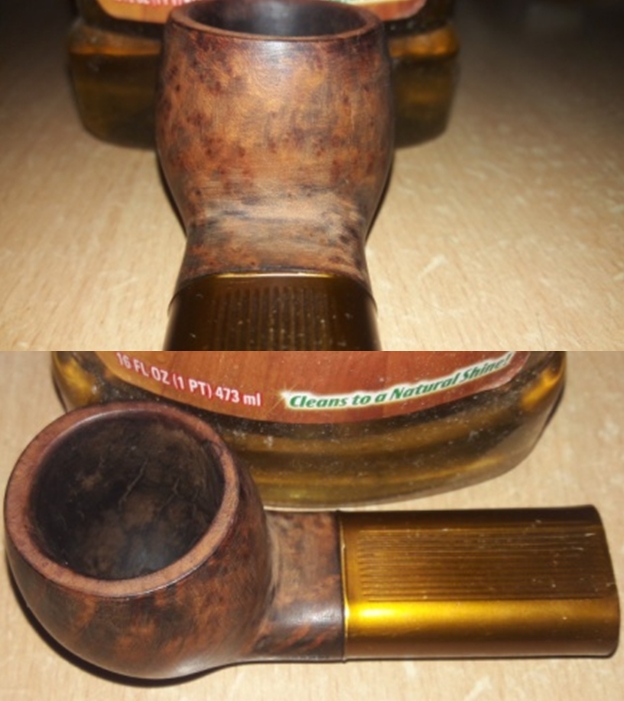
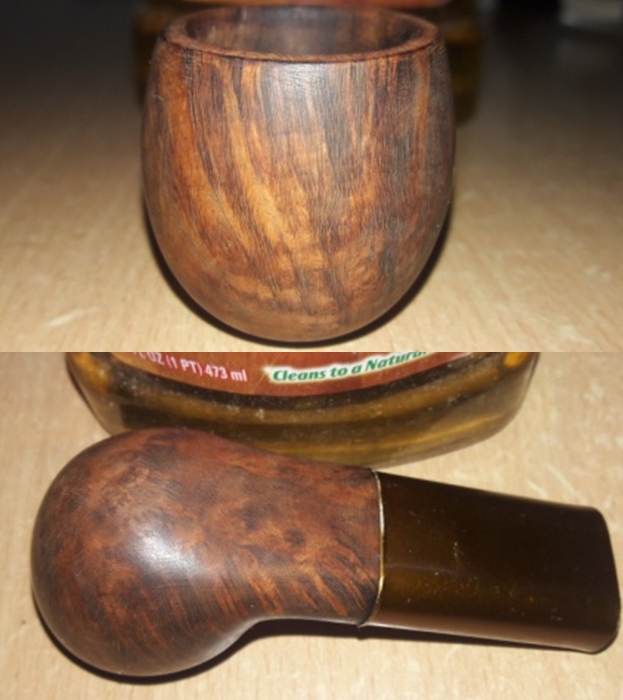
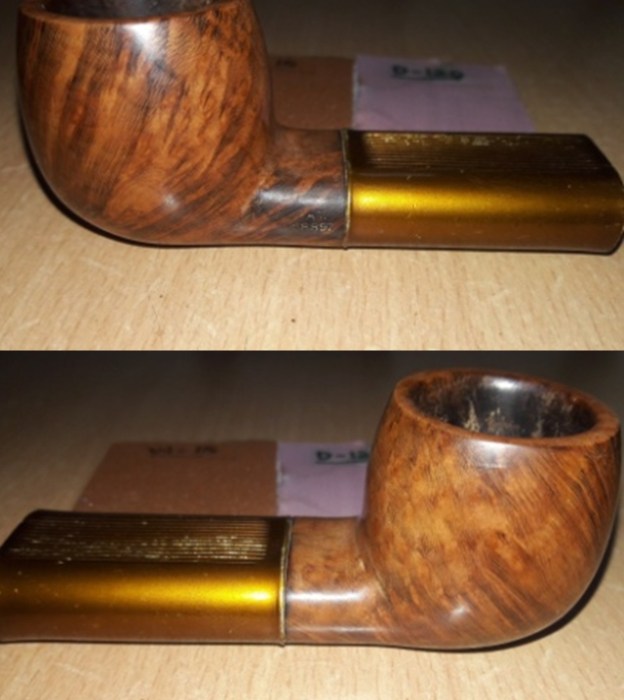
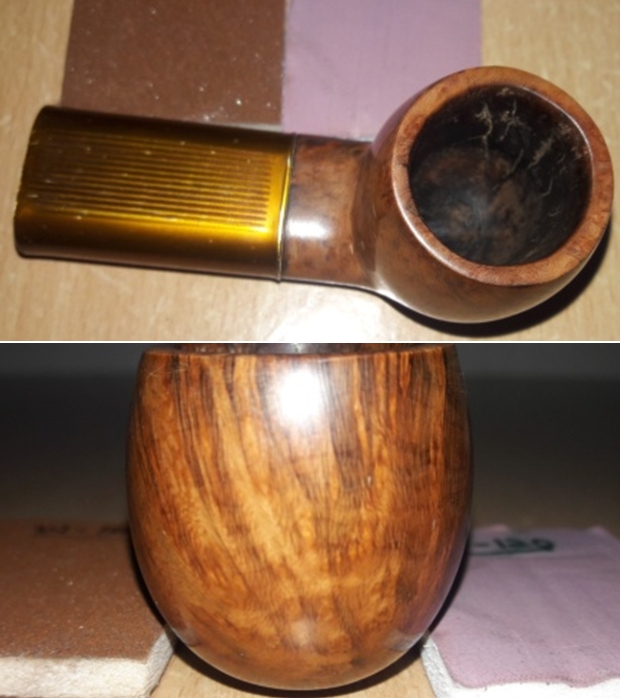
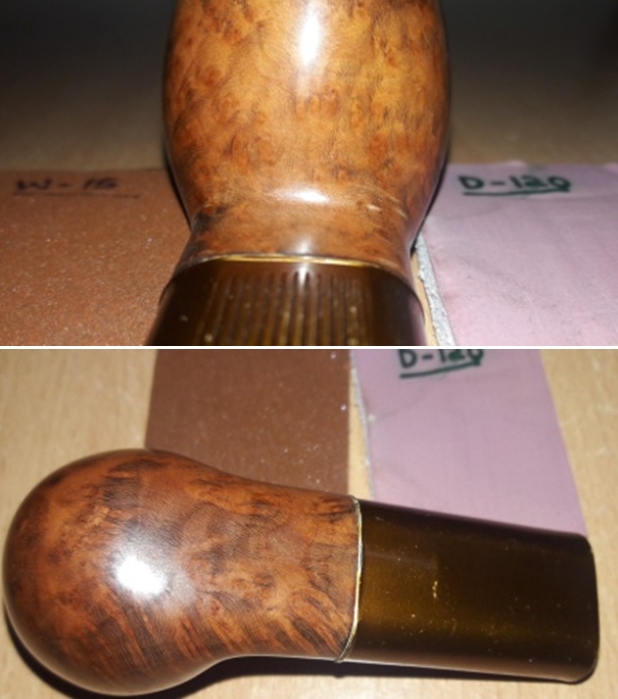
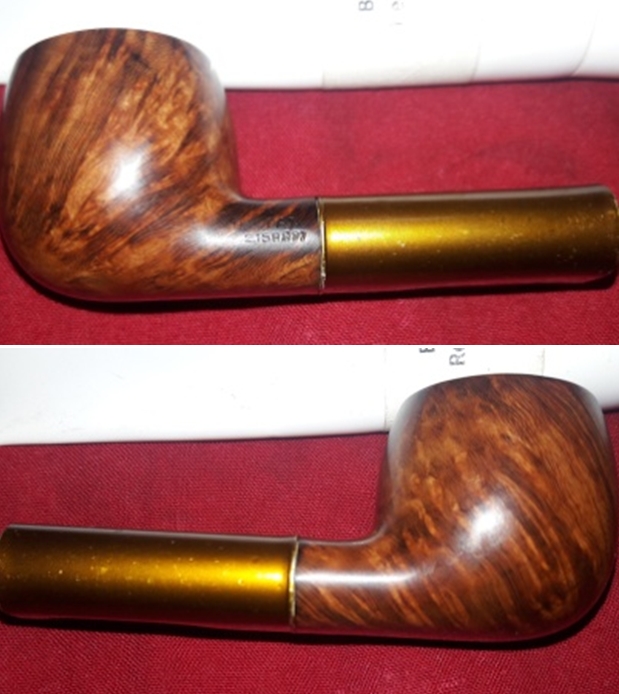
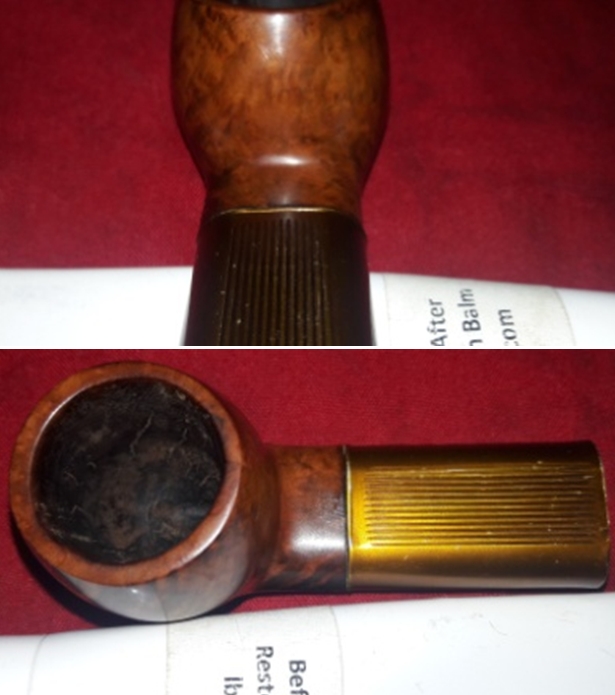
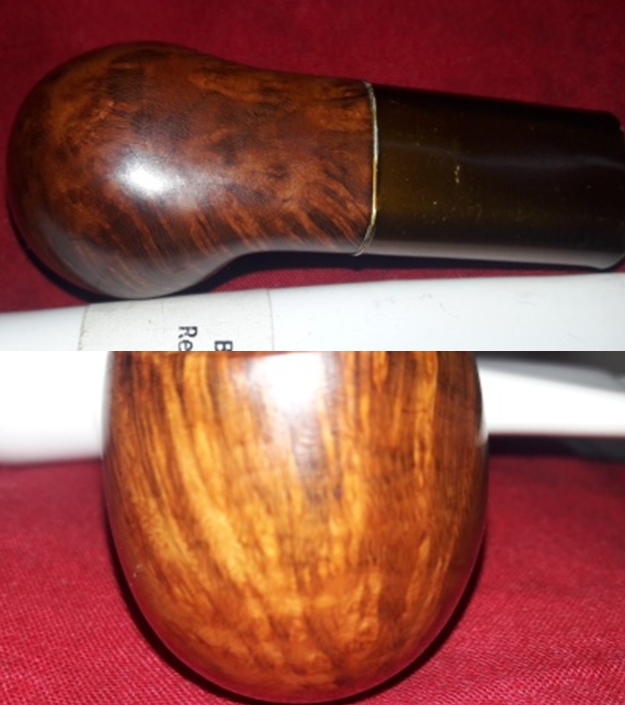
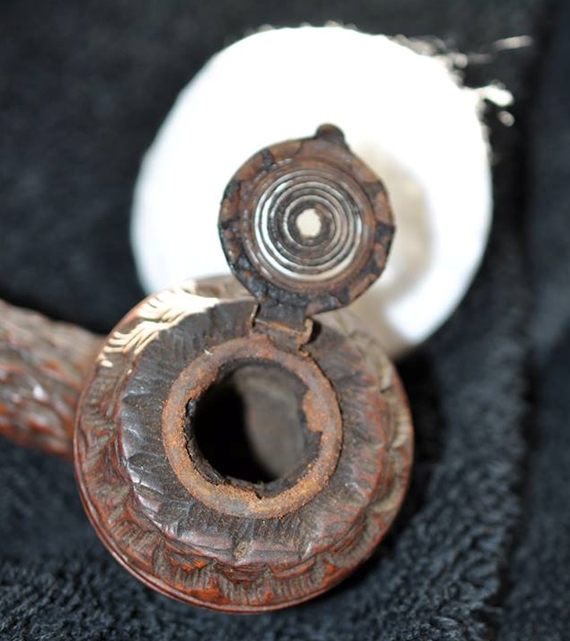
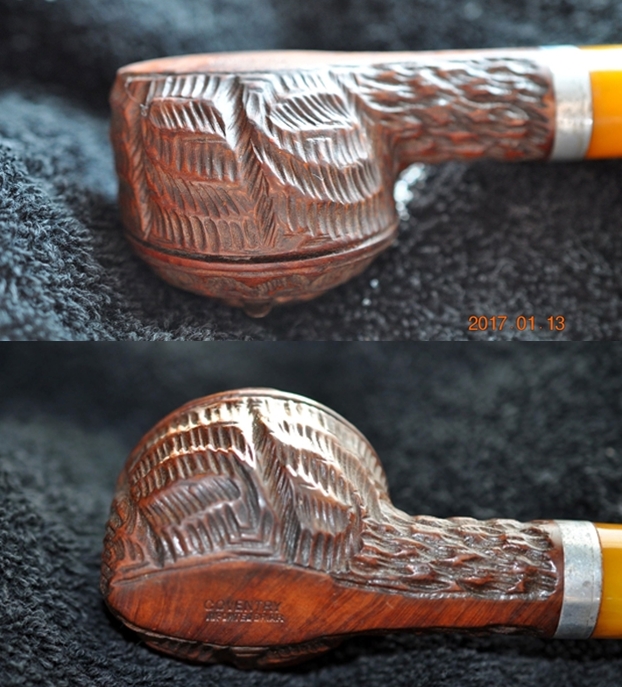
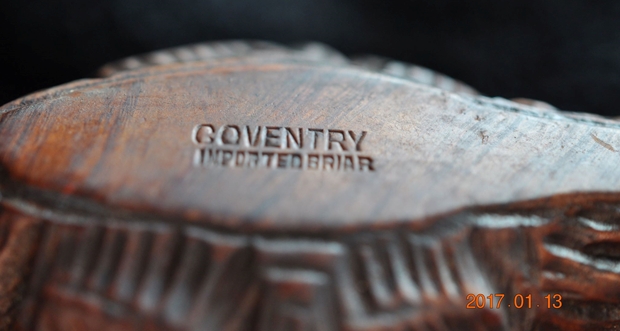
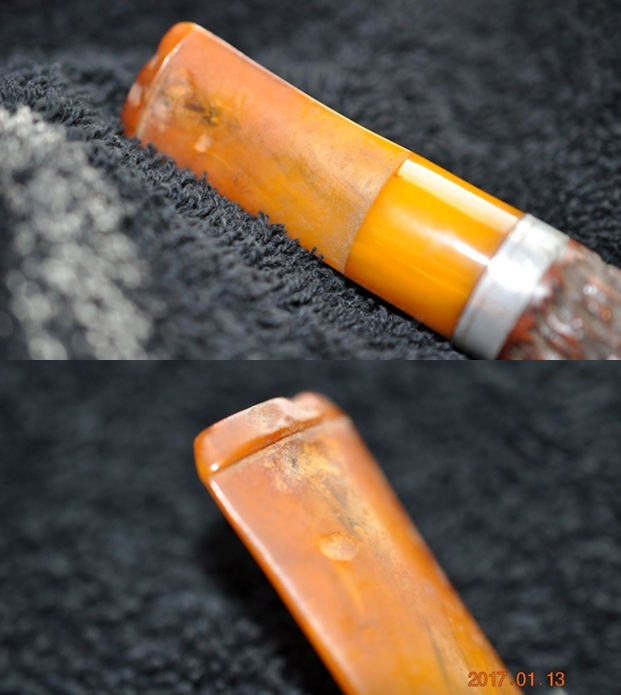
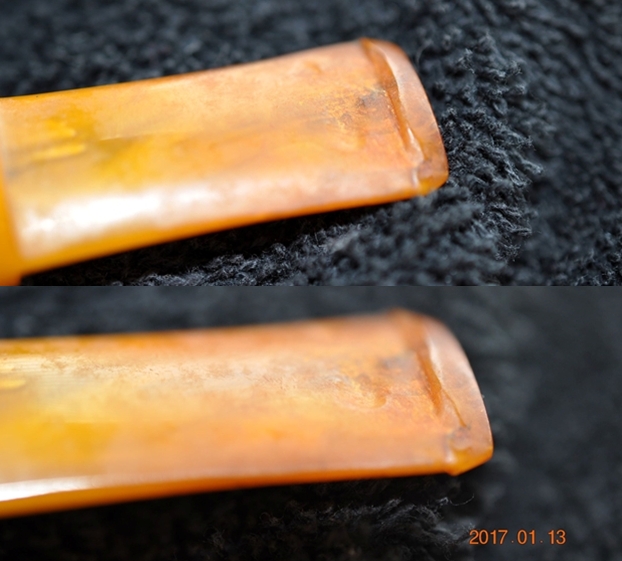
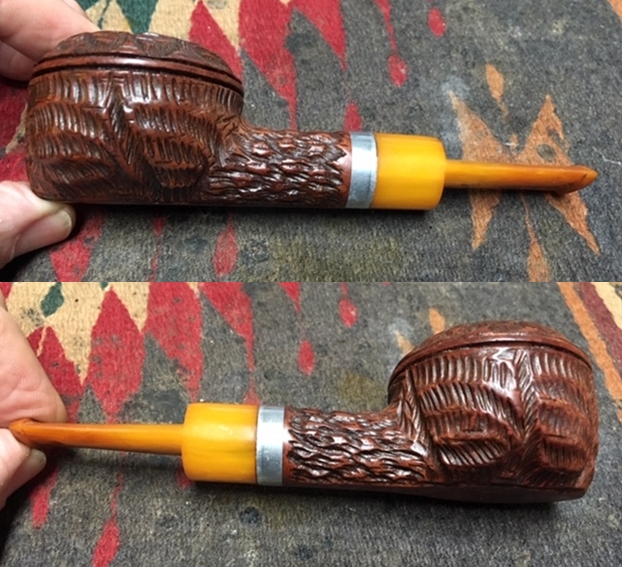
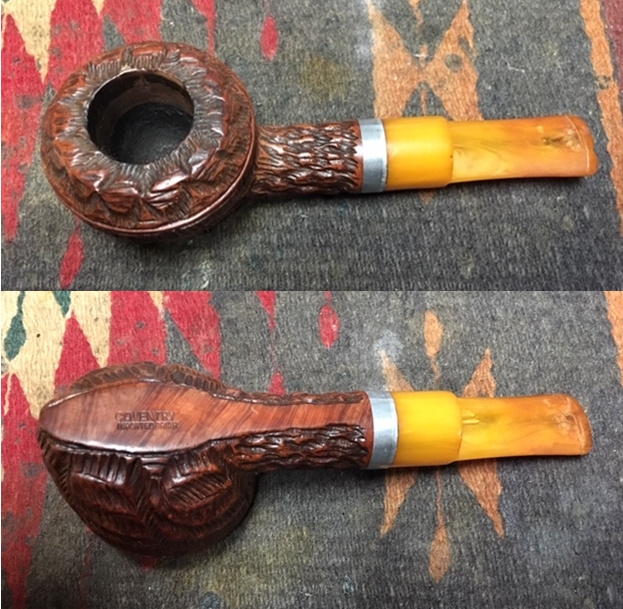
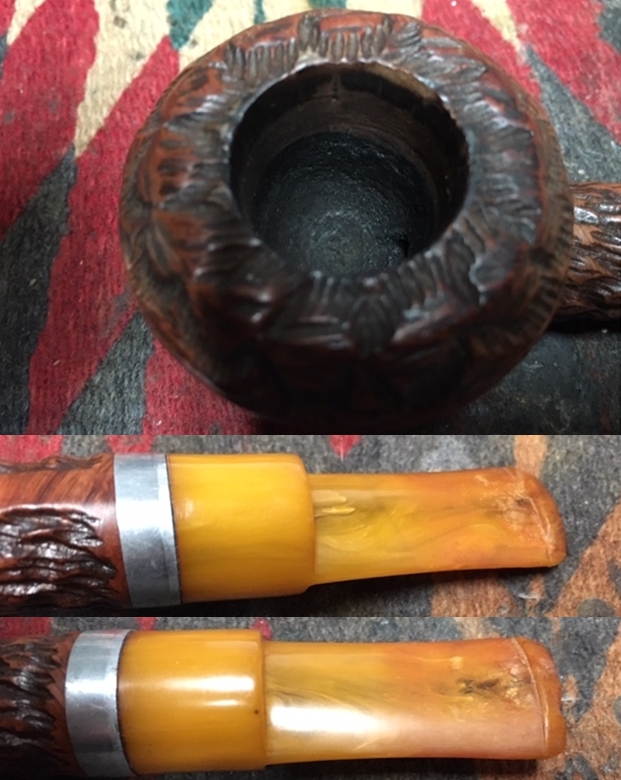
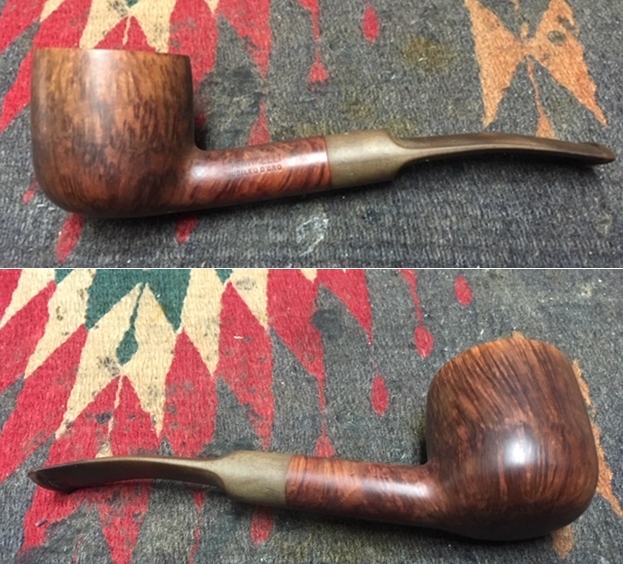
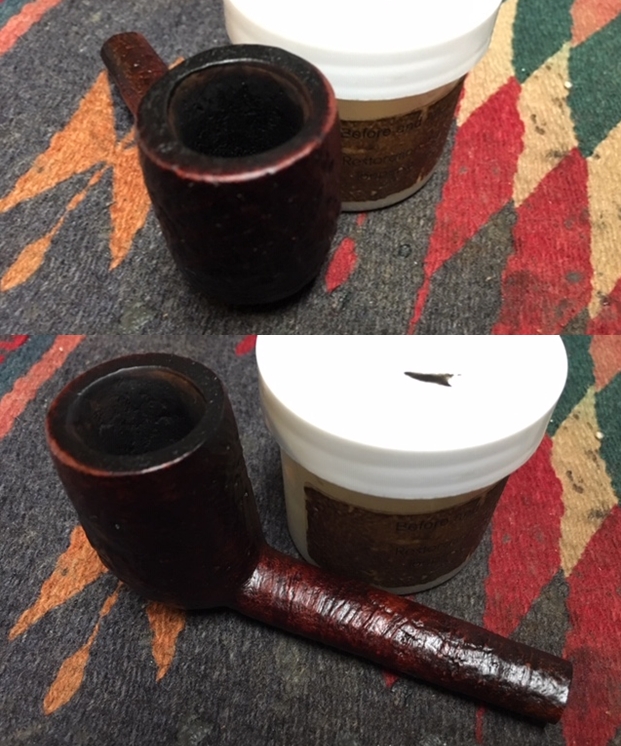
My brother Jeff picked up this Coventry pipe off eBay from Bradenton, FL. in January 2017. It is an interestingly shaped pipe and the rustication is quite unique. The rustication is dirty but in good condition. There is dust and debris in the grooves and valleys of the briar. The aluminum band is split with 1/3 remaining on the stem and 2/3 on the shank end. It is the exterior of the threaded mortise insert. The pipe had an aftermarket windcap that was absolutely filthy with debris, rust and tobacco tars and oils. There was a thick cake in the bowl that overflowed onto the windcap. The edges of the rim were in surprisingly good condition. The acrylic saddle stem was dirty and had deep tooth marks around the button on both sides and on the surface of the button as well. Jeff took photos of the pipe before he started his clean up. He took some photos of the rim top and the exterior of the bowl to show how dirty it was. You can see the lava on the rim and the rust and tars on the windcap. There is also a thick cake visible in the bowl. You can also see the sticky buildup on the exterior of the bowl. He took a photo of the stamping on the smooth, flat heel of the bowl – it read Coventry over Imported Briar.The stem showed a lot of wear and tear. There were deep tooth marks on the button surface itself and deep gouges and tooth marks on the stem for about an inch in front of the button. The material is an old style acrylic and I have learned from experience that it does not have memory like vulcanite. The tooth marks are there permanently. I have also learned that the colour darkens with time and sanding repairs always lightens the yellow. Knowing that means that some decisions will need to be made regarding the repairs. Jeff cleaned the pipe with his usual thoroughness. He removed the windcap and cleaned it as well as the pipe. He reamed the bowl with a PipNet reamer and cleaned it up with a Savinelli Fitsall Pipe Knife. He scrubbed the exterior with Murphy’s Oil Soap and a tooth brush to clean the dust and grime out of the valleys and grooves of the rustication. He scrubbed the rim top and it looked very good with no damage to the edges. The inside of the bowl was also in great condition. He scrubbed the internals of the shank and the stem with alcohol, cotton swabs and pipe cleaners. There was a long stinger in the shank that needed to be cleaned and he did that as well. The damage on the stem was quite visible once the stem was cleaned. I took photos of the pipe when it arrived here. I took some close up photos of the rim top and the stem to show the condition. The bowl and rim were perfect. The stem needed a lot of attention.I unscrewed the stem to get a photo of the long stinger that extends almost into the bottom of the bowl.I worked some Before & After Restoration Balm into the briar on the bowl and the rim top. I worked it into the surface with my fingertips to clean, enliven and protect the wood. I let the balm sit for about 20 minutes and buffed it off with a soft cotton cloth. I took photos of the pipe at this point in the process to show what the bowl looked like at this point. I set the bowl aside at this point and turned my attention to the stem. These early Bakelite/acrylic/plastic stems are really a pain and I do not relish repairing them. I have found that when they have been repaired and polished the stem loses the rich colour around the repairs. This one had been gnawed and there were deep tooth marks on the stem and button as well as several gouges in the surface of the stem. I cleaned the surface of the stem and filled in the marks with clear super glue. I rebuilt the top of the button and the edge. Once the repair cured I recut the edge of the button and flattened out the repairs with a flat needle file. It was still a mess but the bite marks and damage were no longer present.It is at this point that the issues always arise on these stems – sanding the repair smooth. When I blended the repair into the surface of the stem the area around the repair lightens significantly. It is ugly to my eye but I am willing to let it be because it improves the integrity of the stem.I cleaned out the dust in the airway in the stem and also some of the residual tars that are hard to get out of a pipe with the metal stinger apparatus like this one. I used pipe cleaners and alcohol and worked until the cleaners came out white.Now it was time to polish out the repairs and make the most of what looked rough. I polished the stem with micromesh sanding pads to remove the scratching left behind by the 220 grit sandpaper and give the briar and the acrylic a shine. I wet sanded with 1500-2400 grit pads and dry sanded with 3200-12000 grit pads. I wiped the stem down with a damp cloth after each pad. I gave it a final polish with Before & After Pipe Polish – both Fine and Extra Fine. Then gave it a final coat of Obsidian Oil. When I was finished the stem looked better than it did when I started. I still need to figure out how to keep the yellow from changing but oh well it is clean and sound. The photos tell the story. I put the bowl and stem back together. I polished the bowl and stem with Blue Diamond to polish out the scratches in the briar and acrylic. I gave the bowl several coats of Conservator’s Wax and the stem multiple coats of carnauba wax. I buffed the pipe with a clean buffing pad to raise the shine. I hand buffed it with a microfiber cloth to deepen the shine. The pipe polished up pretty nicely. The contrast of colours between the briar bowl and the yellow/gold acrylic stem really looked good in spite of the repairs. The Coventry Bullmoose looked really good and has a unique shape and finish that catches the eye. The finished pipe is shown in the photos below. The dimensions of the pipe are Length: 5 1/2 inches, Height: 1 ½ inches, Outside diameter of the bowl: 2 inches, Chamber diameter: 7/8 of an inch. This one will soon be on the rebornpipes store if you are interested in adding it to your collection. Thanks for reading this while I worked on it. It was interesting and unusual piece to restore and I really enjoyed the work.
Cleaning a Second Aldo Velani Ultima 1 Straight Billiard


Blog by Steve Laug

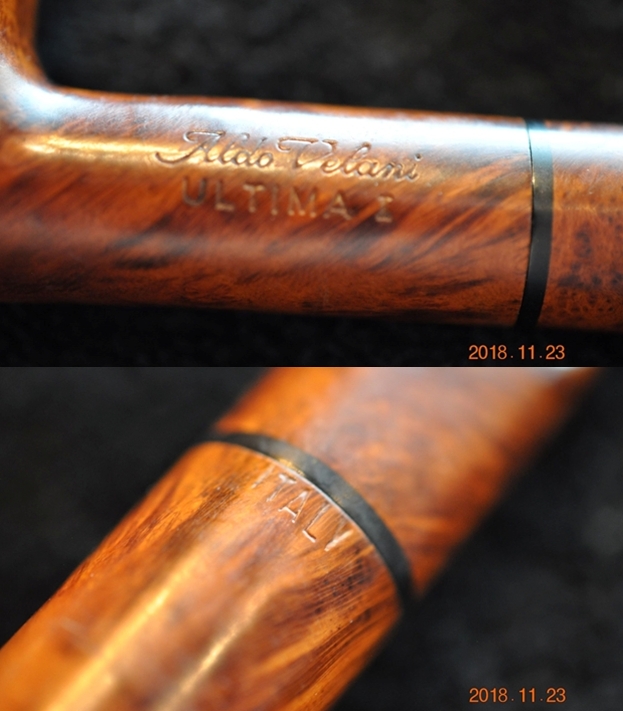
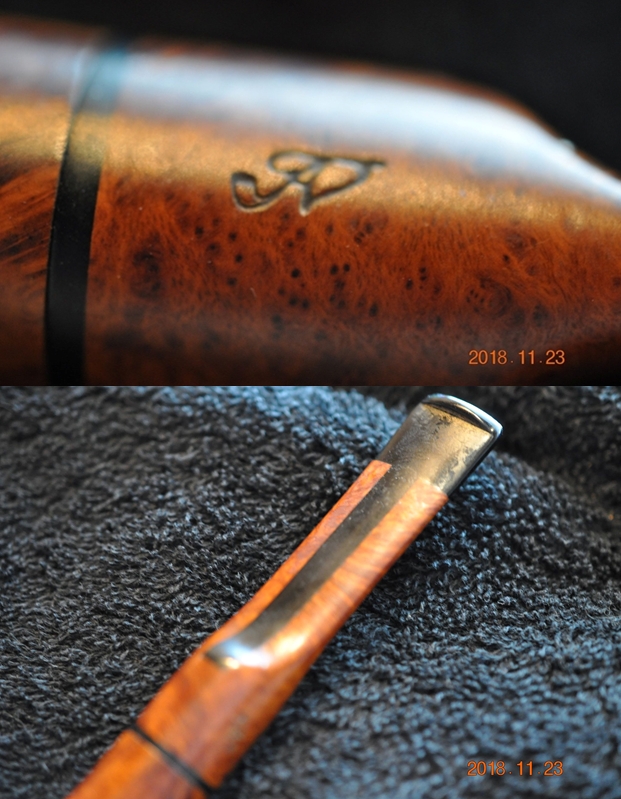
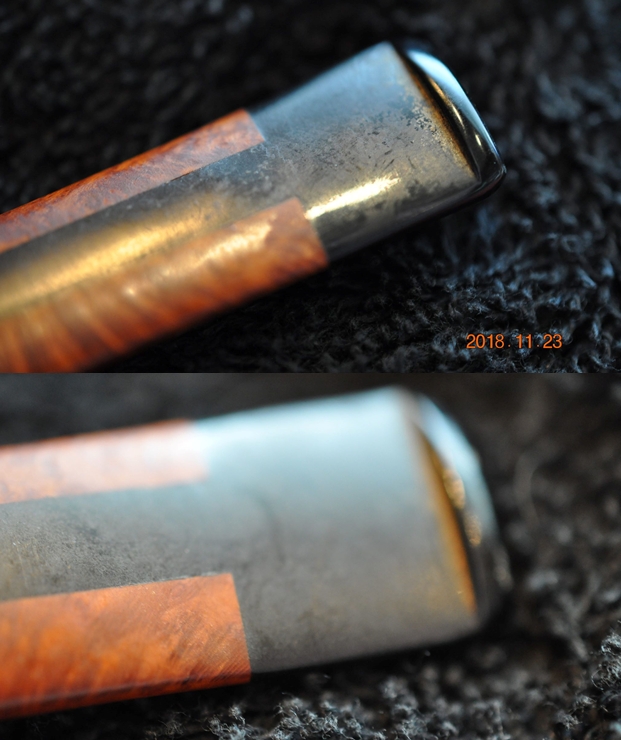
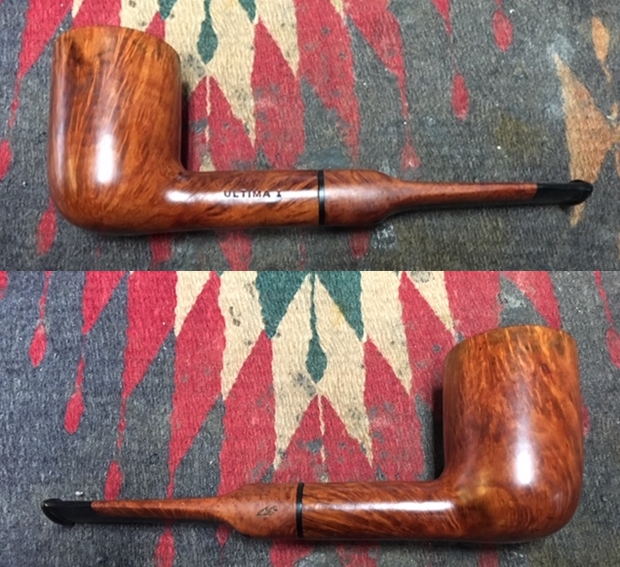
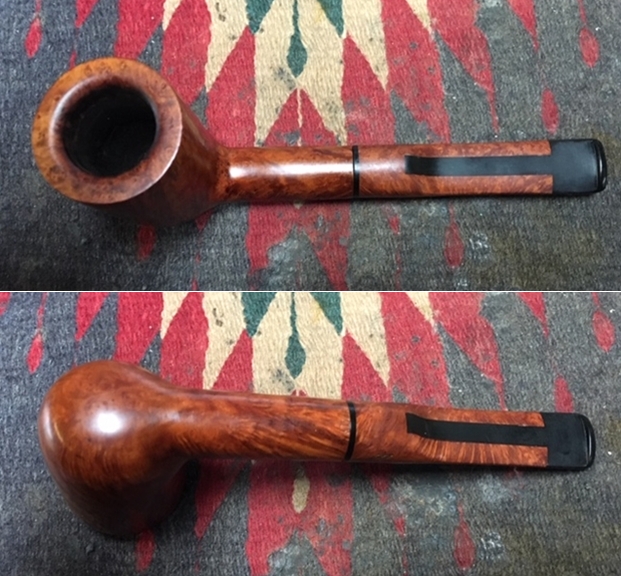
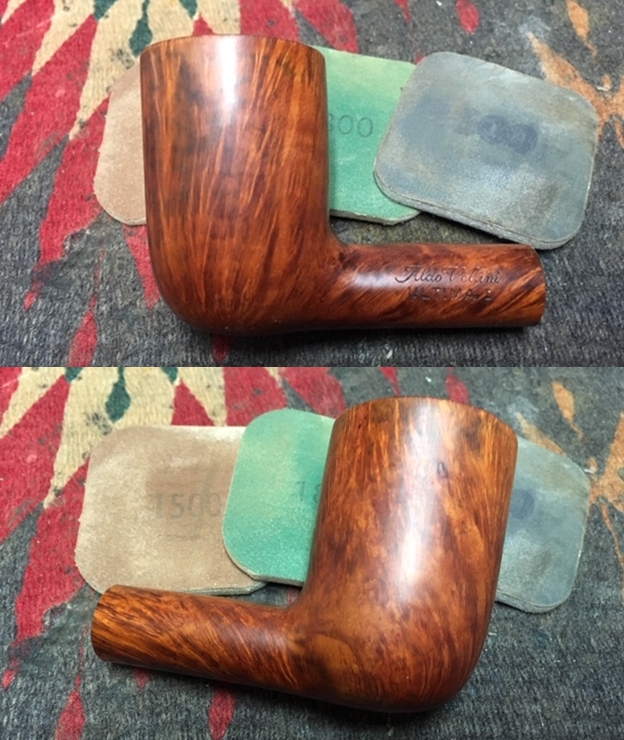
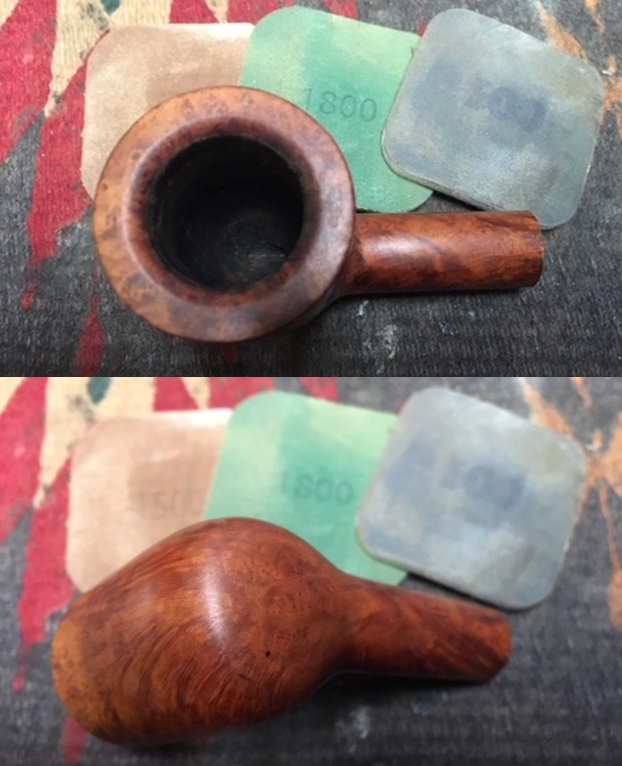
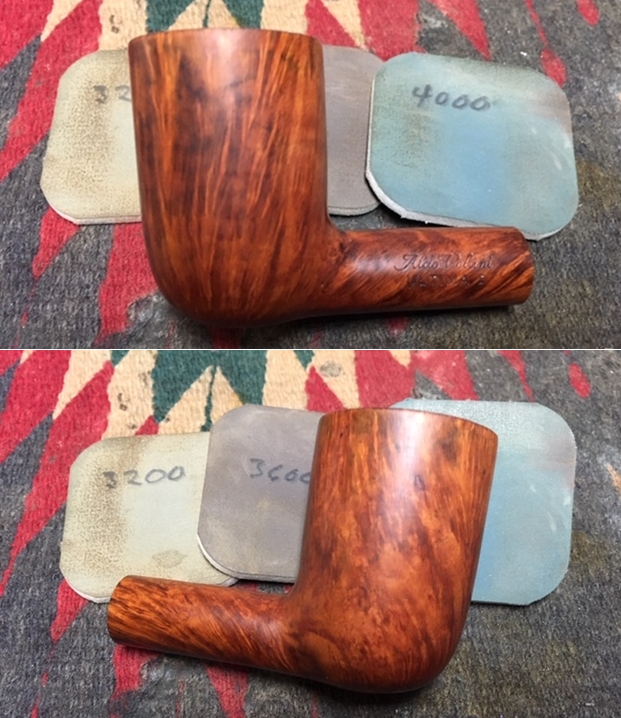
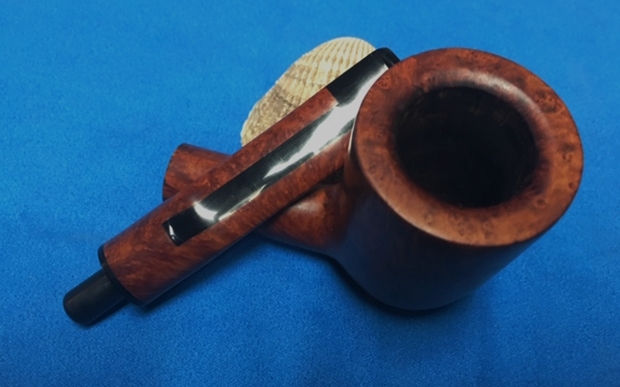
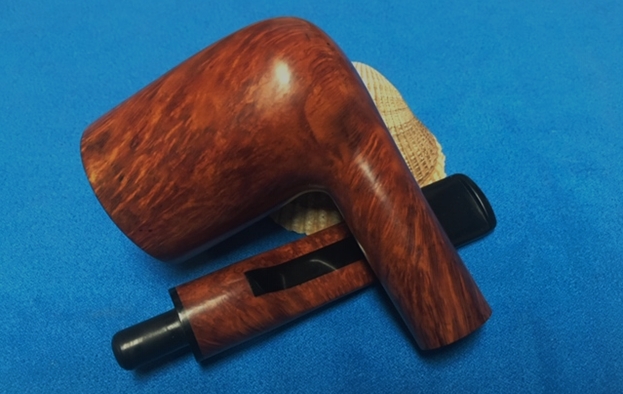
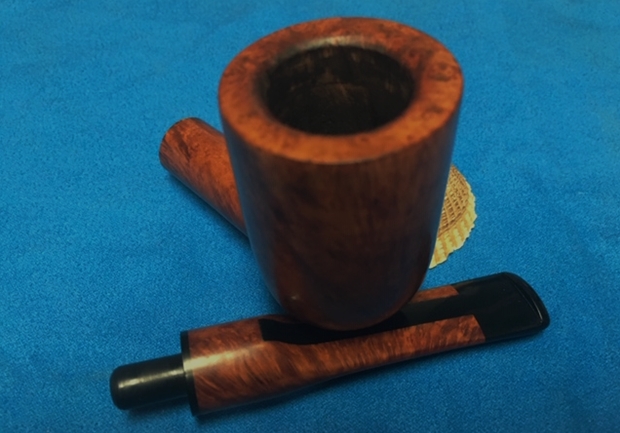
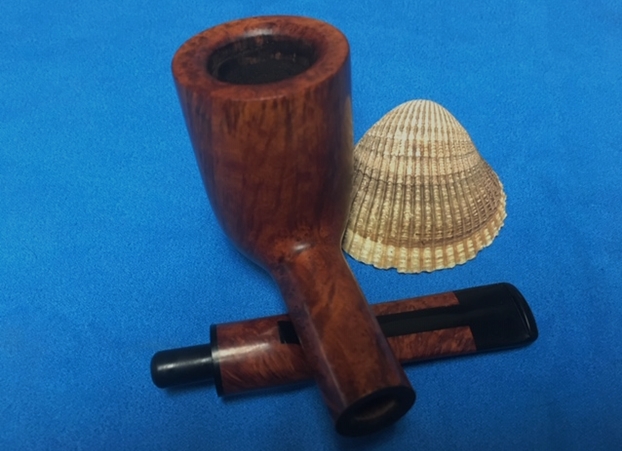
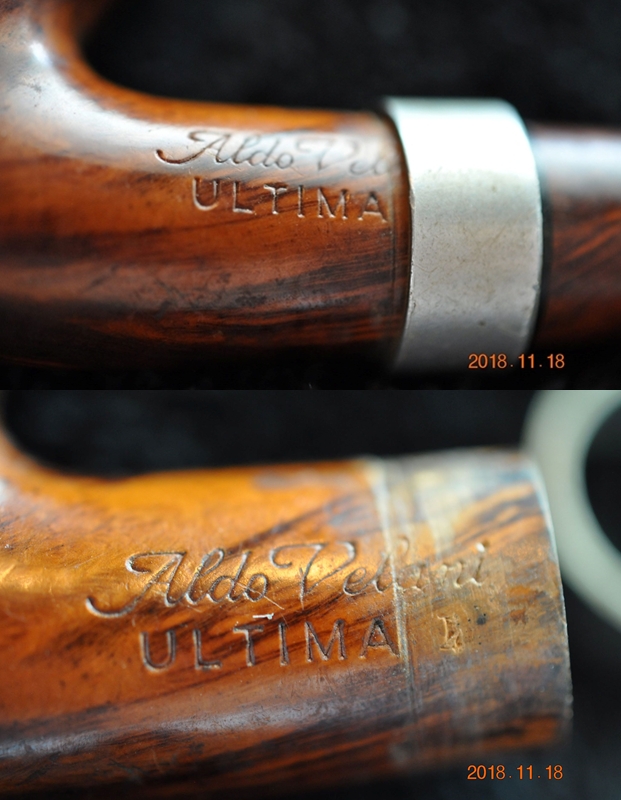
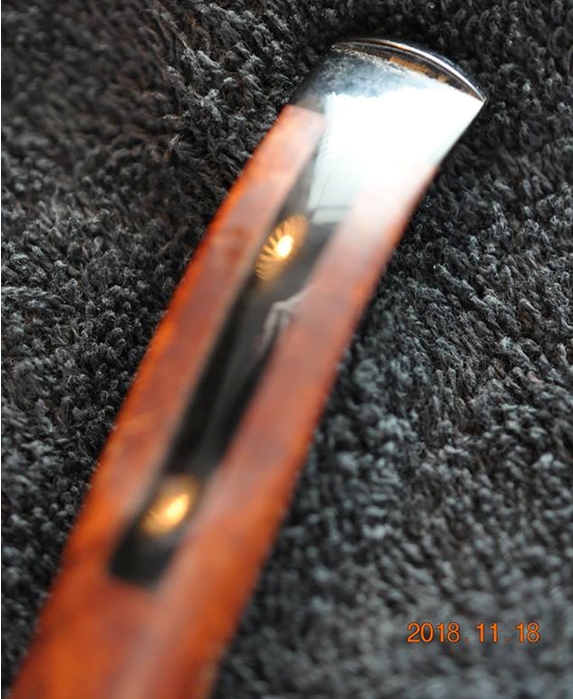
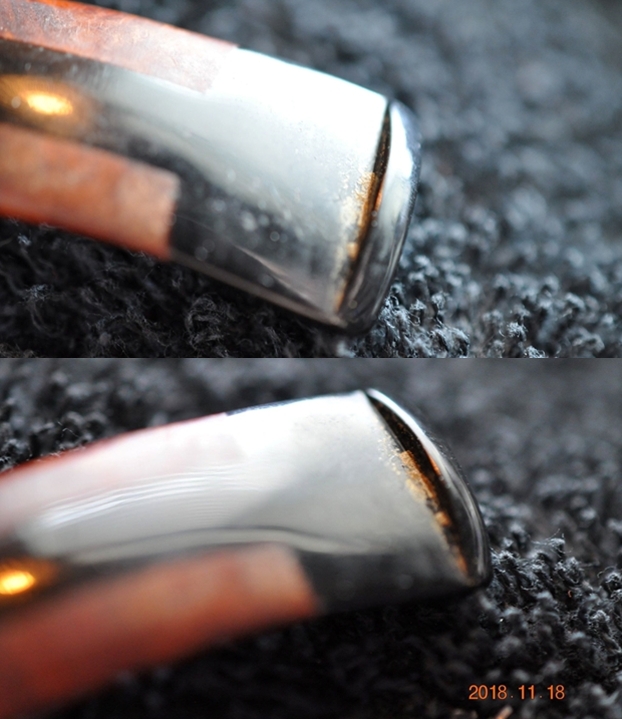
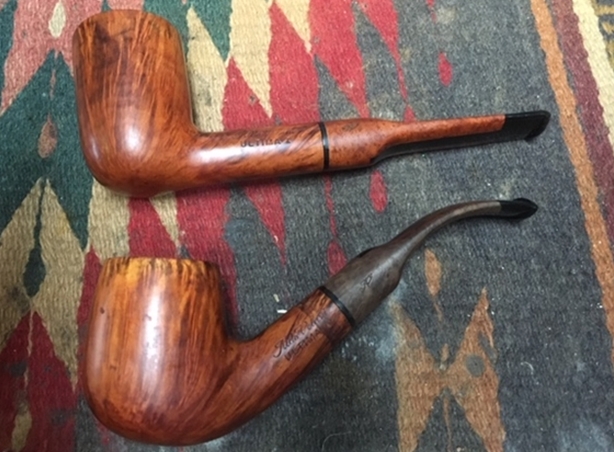
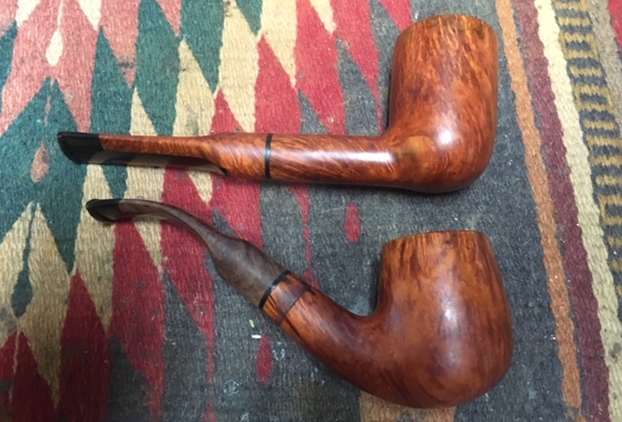
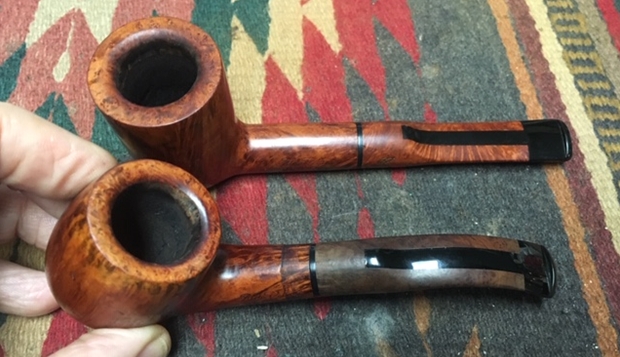
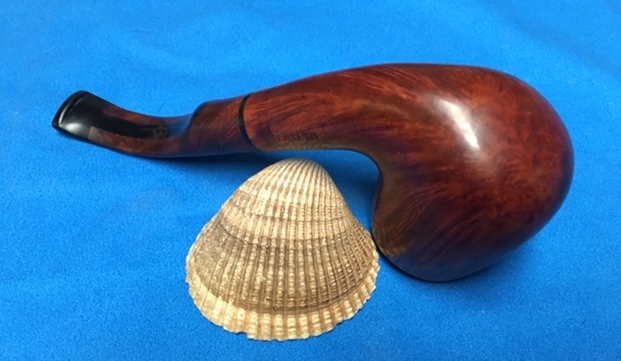
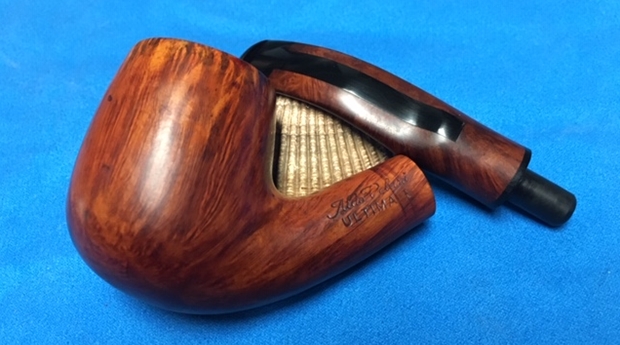
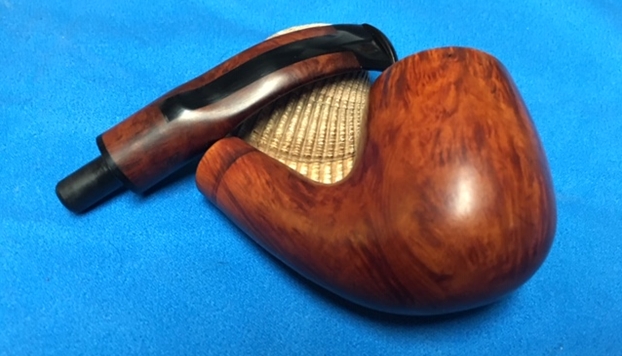
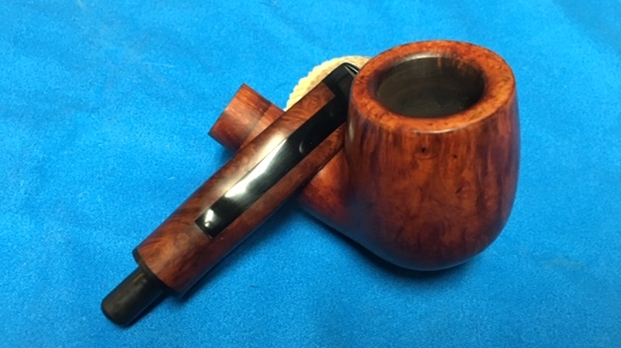
My brother Jeff picked up a pair of Aldo Velani Ultima 1 pipes in a lot he purchased on an auction. The Ultima 1 has a composite stem with briar inserts on the saddle and along the sides of the stem with Lucite forming the base of the stem. There are strips of Lucite on the top and underside and in the bite area around the button. It really is a beautiful looking pipe with a lot of class and distinction. Most Aldo Velani pipes are made in Livorno, Italy, for the USA market by Cesare Barontini. They were previously imported by Lane Limited. The name “Aldo Velani” is actually fictional and the brand was made for export (https://pipedia.org/wiki/Aldo_Velani  http://www.pipephil.eu/logos/en/logo-a3.html).  The second pipe of the pair was in significantly better condition than the first one. The pipes were probably made in the 1990s. This one was dirty but the exterior was in better shape. There was a thick cake in the bowl and there was a lava overflow on the rim top. This one was as it was made – no band added and no changes to the pipe. The stem was dirty and had light tooth marks on the Lucite around the button. Jeff took photos of the pipe before he started his clean up. He took some photos of the rim top and the side of the bowl to show how dirty it was. You can see the lava on the rim and the cake in the bowl. You can also see the sticky buildup on the exterior of the bowl.He took photos of the stamping on the shank – it read Aldo Velani over Ultima 1. On the underside of the shank it is stamped ITALY next to the shank/stem union. There was a nice acrylic band on the stem between the briar of the shank and the briar on the stem. The stem showed some wear and tear but it was in much better condition than its brother. The left side of the saddle stem also had the AV stamp in the briar. It always amazes me how dirty some folks let their pipes get. This one has a sticky substance all over the stem surfaces and a build up of gunk on the button and along its edges. Jeff cleaned the pipe with his usual thoroughness – reaming the bowl and scrubbing the internals with alcohol, cotton swabs and pipe cleaners. He scrubbed the exterior with Murphy’s Oil Soap to clean off the dust and grime on the finish. The rim top looked very good and the bowl itself looked great. The stem was in great shape other than a bit of tooth chatter. He cleaned the inside of the airways with alcohol and pipe cleaners. He did not put this one in the Before & After Deoxidizer Bath having seen the effects on the other one. I took photos of the pipe when it arrived here. I polished the bowl and shank with 1500-12000 grit micromesh sanding pads. I wet sanded it with 1500-2400 and dry sanded it with 3200-12000 grit pads. I wiped it down after each pad with a damp cloth to remove the sanding dust. The photos below show the progress in the polishing. The pipe was beginning to look really good and the grain was beginning to really pop. It was time to work some Before & After Restoration Balm into the briar on the bowl and the rim top. I worked it into the surface with my fingertips to clean, enliven and protect the wood. I let the balm sit for about 20 minutes and buffed it off with a soft cotton cloth. I took photos of the pipe at this point in the process to show what the bowl looked like at this point. I set the bowl aside at this point and turned my attention to the stem. I was really glad to see that this composite briar and Lucite stem was in decent condition. There was some light tooth chatter and scratching but nothing serious. It would only need to be polished. I polished it with micromesh sanding pads to remove the scratching left behind by the 220 grit sandpaper and give the briar and the Lucite a shine. I wet sanded with 1500-2400 grit pads and dry sanded with 3200-12000 grit pads. I wiped the stem down with a damp cloth after each pad. When I was finished the stem looked great. The photos tell the story. I put the bowl and stem back together. I polished the bowl and stem with Blue Diamond to polish out the scratches in the briar and acrylic. I gave the bowl and the stem multiple coats of carnauba wax. I buffed the pipe with a clean buffing pad to raise the shine. I hand buffed it with a microfiber cloth to deepen the shine. The pipe polished up pretty nicely. The contrast of colours between the briar bowl and the briar inserts on the stem really looked good with the polished black Lucite. The Aldo Velani Ultima 1 looked really good and was a great match to its bent brother. The pipe has a unique look that catches the eye. The finished pipe is shown in the photos below. The dimensions of the pipe are Length: 6 inches, Height: 2 ¼ inches, Outside diameter of the bowl: 1 1/2 inches, Chamber diameter: 7/8 of an inch. This one will soon be on the rebornpipes store if you are interested in adding it to your collection. Thanks for reading this while I worked on it. It was interesting and unusual piece to restore and I really enjoyed the work.

Life for a Really Filthy Aldo Velani Ultima 1 Bent Billiard


Blog by Steve Laug

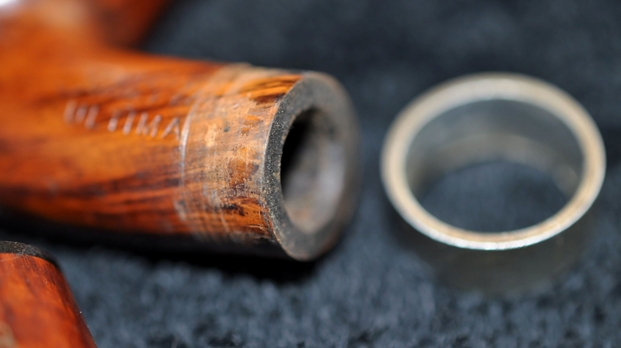
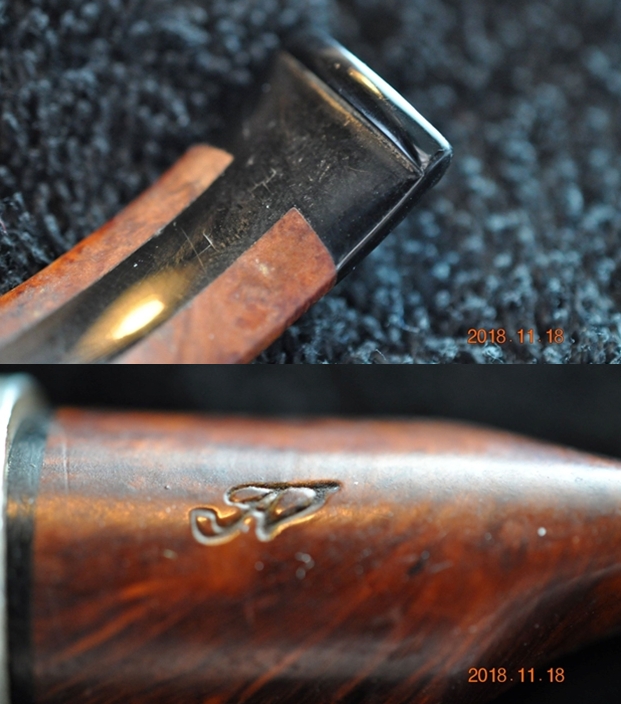
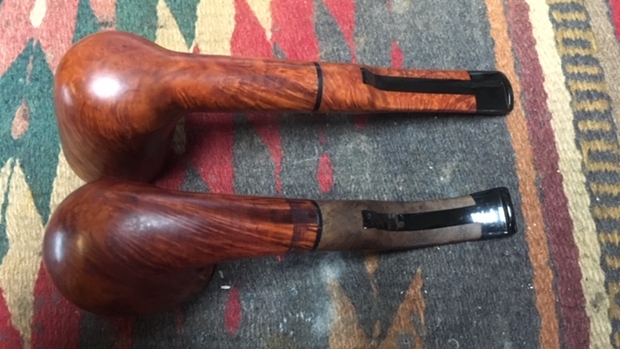
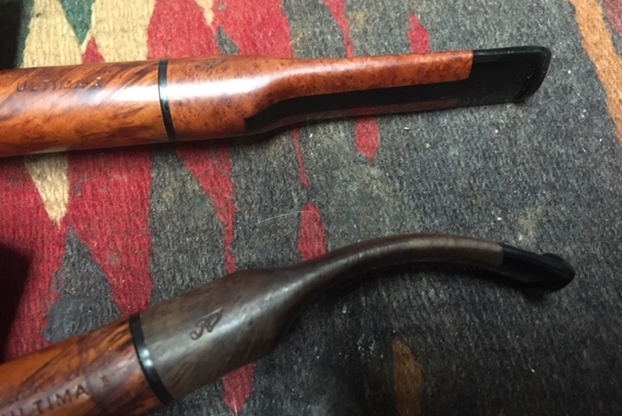
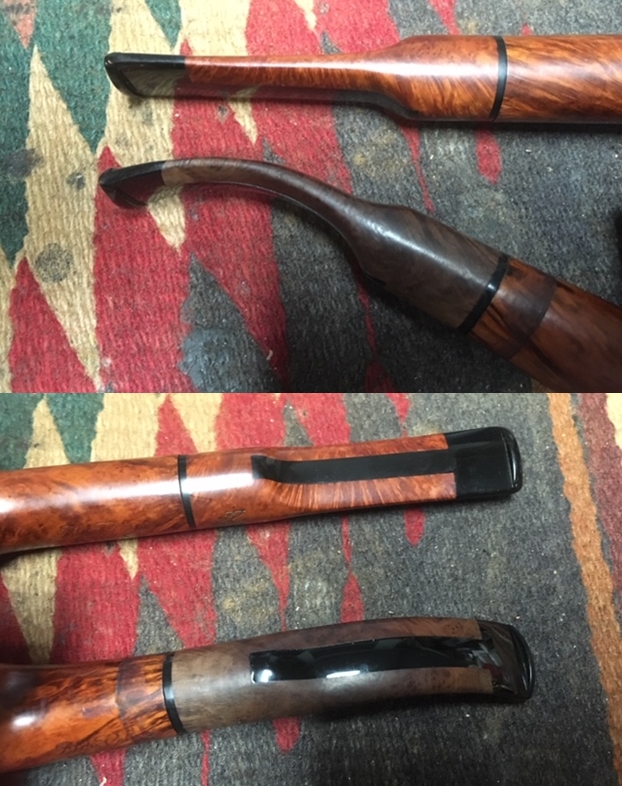
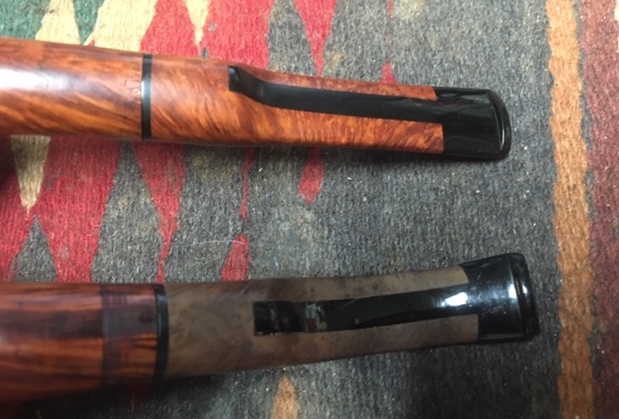
My brother Jeff picked up a pair of Aldo Velani Ultima 1 pipes in a lot he purchased on an auction. The Ultima 1 has a composite stem with briar inserts on the saddle and along the sides of the stem with Lucite forming the base of the stem. There are strips of Lucite on the top and underside and in the bite area around the button. It really is a beautiful looking pipe with a lot of class and distinction. Most Aldo Velani pipes are made in Livorno, Italy, for the USA market by Cesare Barontini. They were previously imported by Lane Limited. The name “Aldo Velani” is actually fictional and the brand was made for export (https://pipedia.org/wiki/Aldo_Velani  http://www.pipephil.eu/logos/en/logo-a3.html).  The first of the pair had definitely seen better days in its ‘not so long life’. The pipes were probably made in the 1990s. This one was filthy and there was a thick coat of scum on the outside of the briar bowl and the stem. It was sticky to touch and really a mess. The bowl had a thick cake and there was a lava overflow on the rim top. The previous owner must have thought the pipe would look better with a band so he cut a piece of aluminum conduit and made a band. It is quite thick and really scratched and edges were rough from cutting – it was a real cob job! The stem was dirty and had tooth marks on the Lucite around the button. Jeff took photos of the pipe before he started his clean up. It really was a mess and needed new life breathed into it! He took some photos of the rim top and the side of the bowl to show how dirty it was. You can see the lava on the rim and the cake in the bowl. You can also see the sticky buildup on the exterior of the bowl.He took photos of the stamping on the shank and the fit of the aluminum band. You can see how thick it is in the photos. You can see it with and without the band. The shank was discoloured and scratched by the poorly made band. It would take some work to deal with that. The sad thing is that the band was purely “cosmetic” because the shank was not cracked or damaged. The band definitely had to go for cosmetic reasons! The stem definitely showed some wear and tear as well but the structure was sound. It always amazes me how dirty folks let their pipes get. This one has food particles or something jammed against the sharp edge of the button. The AV logo was stamped on the left side of the briar portion of the saddle stem. Jeff cleaned the pipe with his usual thoroughness – reaming the bowl and scrubbing the internals with alcohol, cotton swabs and pipe cleaners. He scrubbed the exterior with Murphy’s Oil Soap to clean off the dust and grime on the finish. The rim top looked very good and the bowl itself looked great. There were a few nicks or sandpits on the right side and heel of the bowl. The area where the band had been was quite a bit better but still was not right but it still looked better without the band than with it.

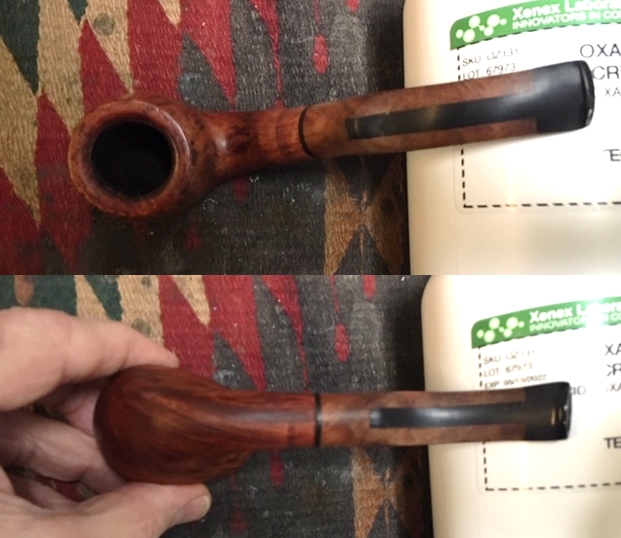
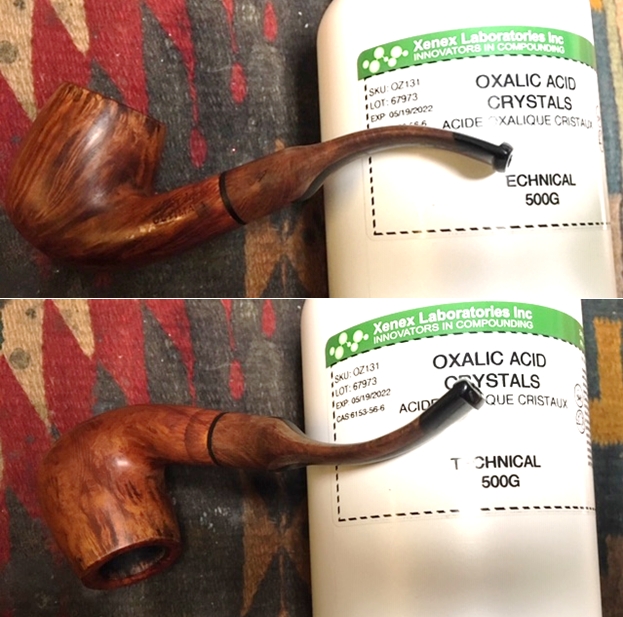
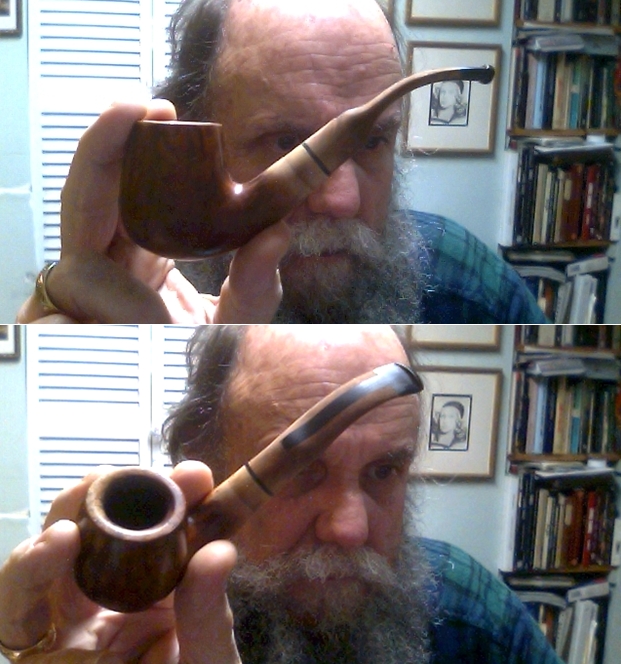
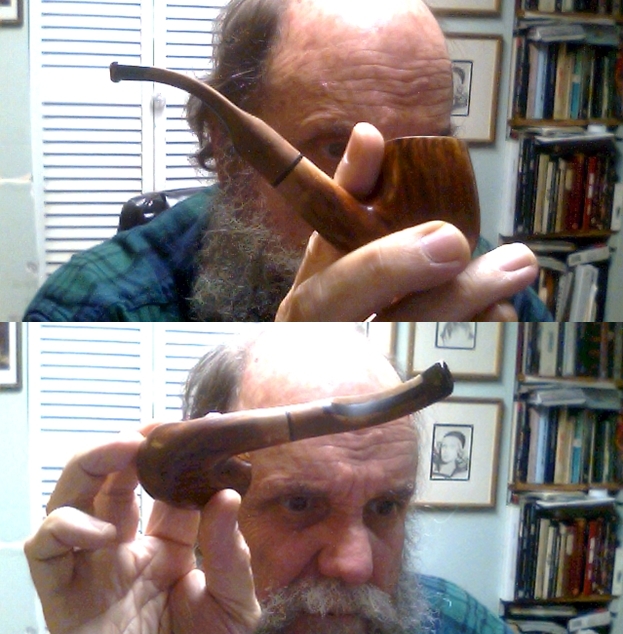
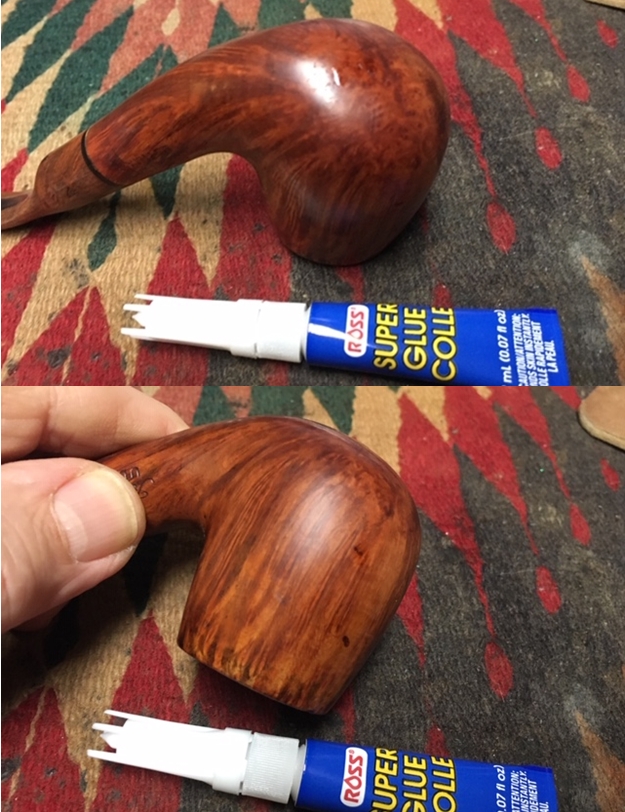
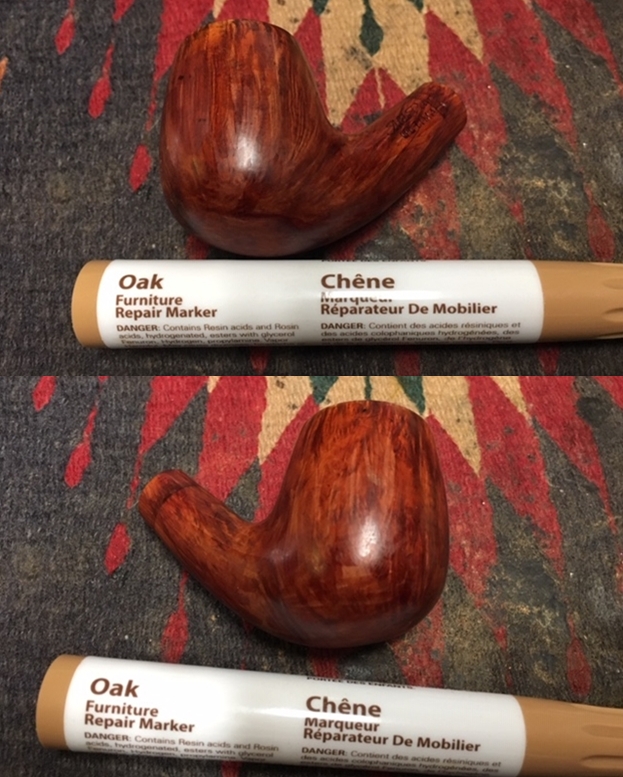
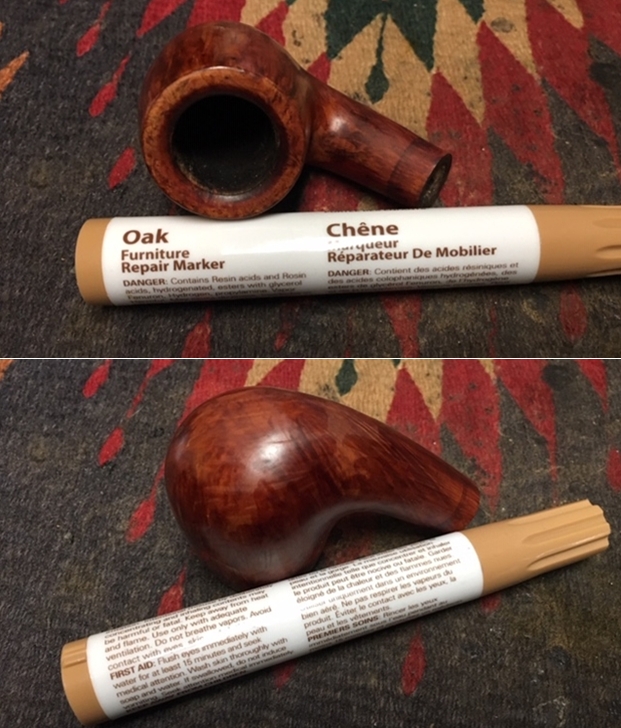
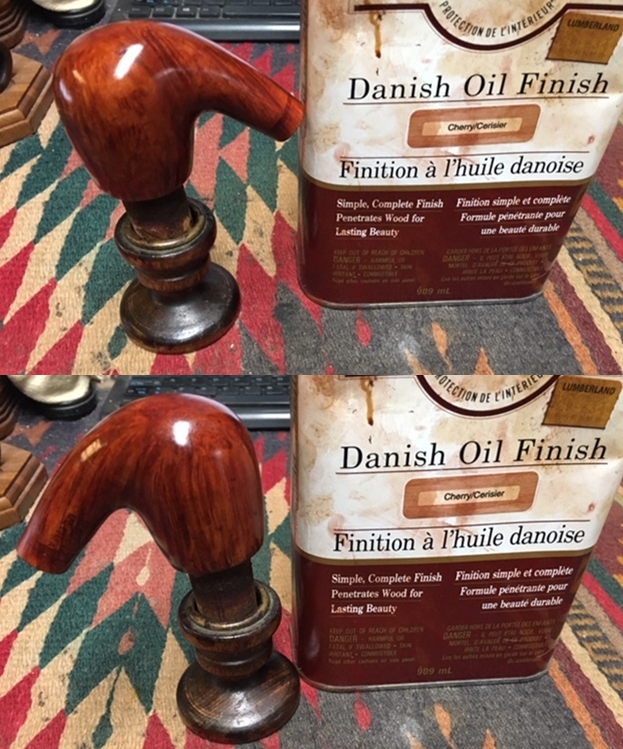
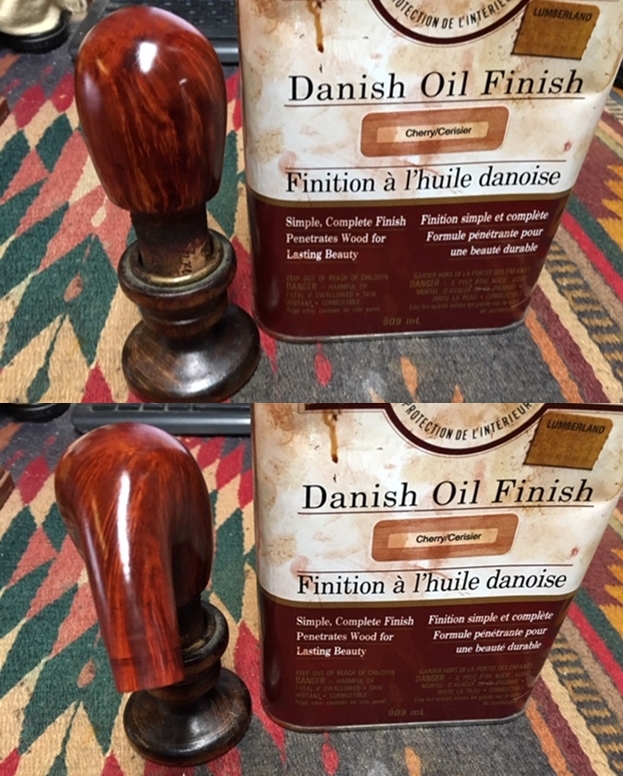
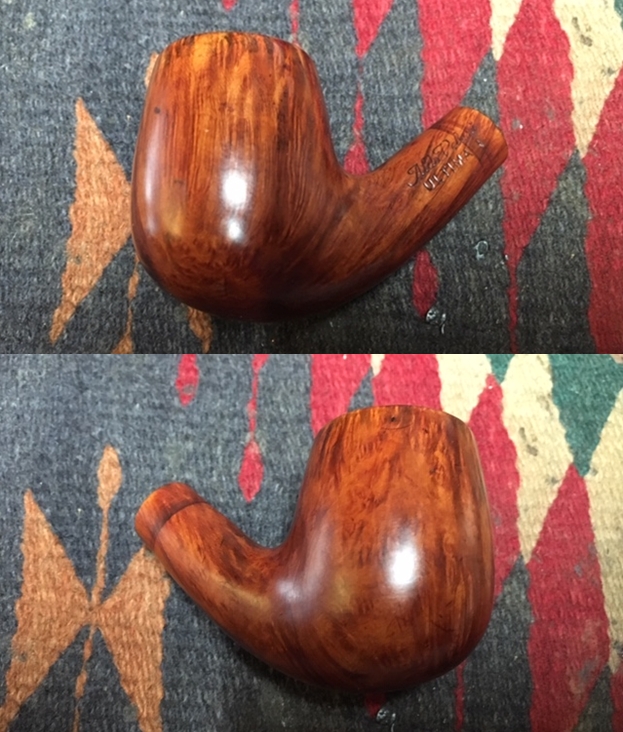
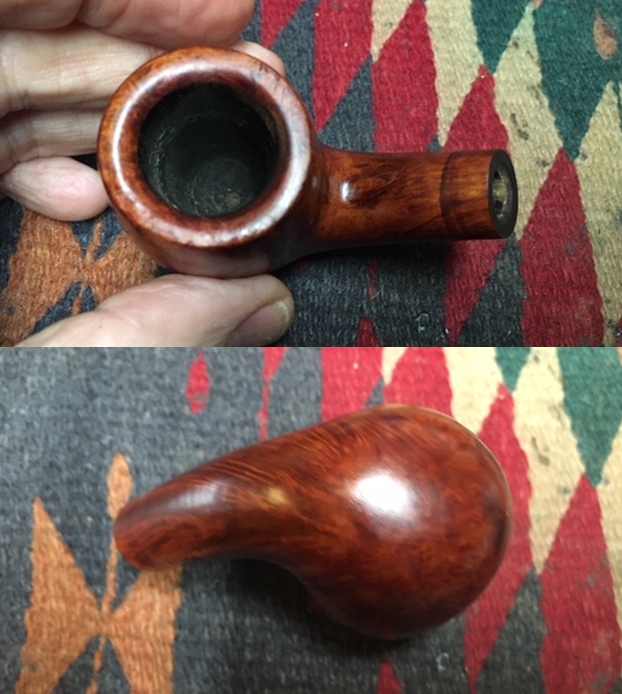
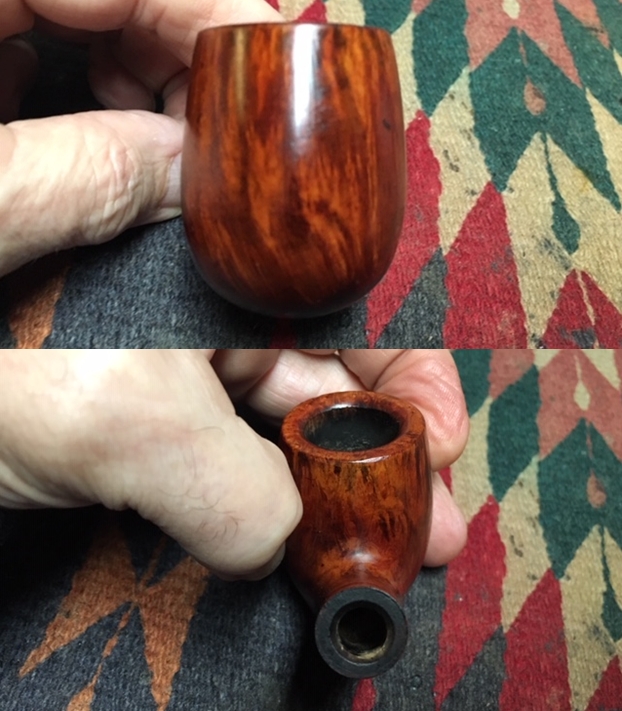
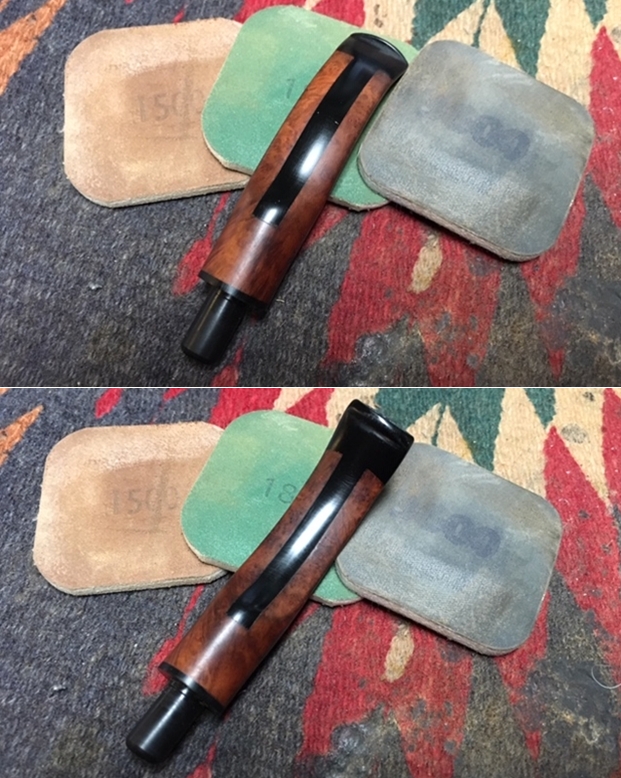
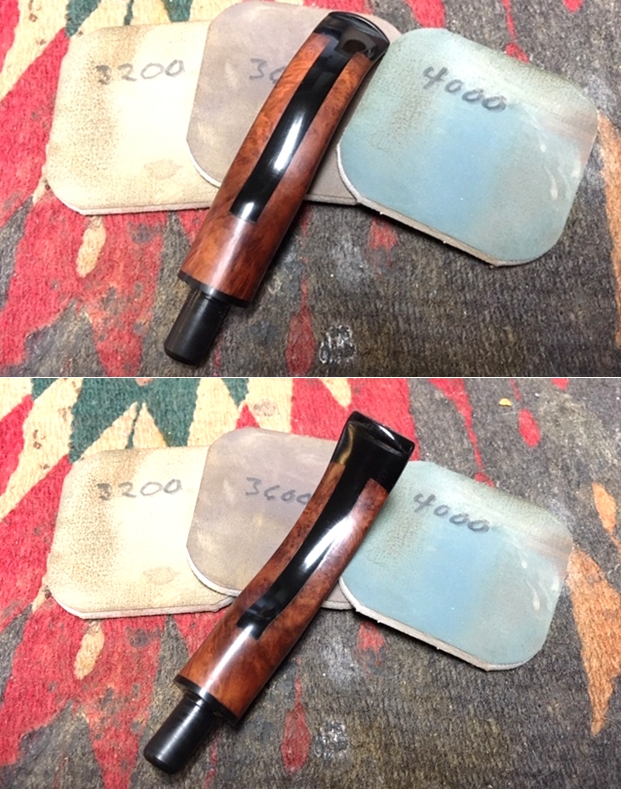
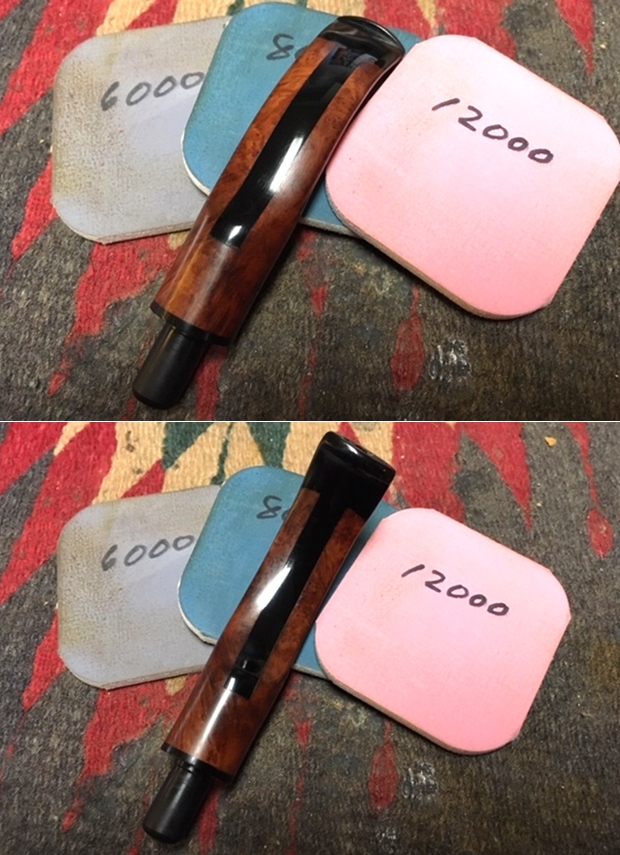
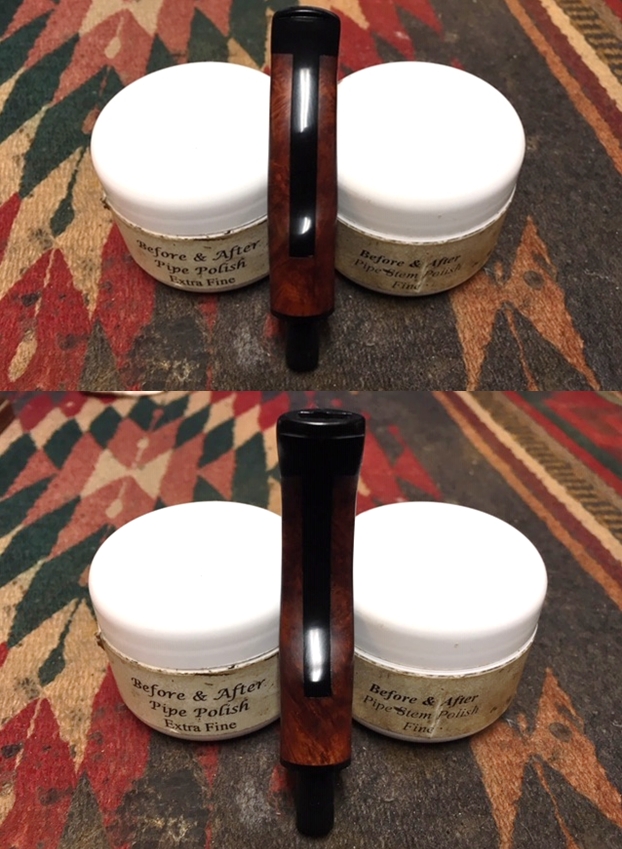
Sometimes the cleaning and restoration work has some unexpected results that end up making more work for the restorer! In this case the issue arose when Jeff soaked the stem in Before & After Deoxidizer. He did not leave it in too long but the time it sat in the mix made the briar inserts almost black and it swelled above the Lucite. When he took it out and rinsed it off the stem looked awful and Jeff was just sick! I took photos of the stem and bowls on both pipes to show the contrast in the stem. Originally the stem on the bent looked like the stem on the straight. The photos below show the comparison and the damage to the stem on the bent. Now the trick would be to try to restore the stem to a semblance of its original colour. I was not sure I would be able to get it back but time would tell. I decided to start my restoration on this pipe by addressing the most irritating issue facing me with this pipe! I wanted to see what I could do with the stem and the staining where the band had been. I mixed up a batch of oxalic acid – crystals and water. I made it fairly concentrated –1 teaspoon of oxalic crystals to ½ cup of water. When my Dad was here we used it to remove water stain damage to a pipe stand that I was refinishing. I figured it was worth a try. I wiped the stem down with a cotton pad dipped in the oxalic mixture. I also wiped the darkened ring around the shank where the band had been. I wiped it on repeatedly and dried it off. The first set of four photos show the immediate results of the action. I sanded the shank area (carefully avoiding damaging the stamping) and the briar portions of the stem with a worn piece of 220 grit sandpaper to further remove the darkening. I was able to remove much of the issue on the stem. I sent the following photos via Facebook Messenger to my brother to ease his mind about the stem. You can see that things are looking quite hopeful with the stem and the shank at this point. Please ignore the curmudgeonly model that is posing with the pipe!I wiped the stem and bowl down with an alcohol wetted cotton pad to remove the sanding dust. I polished the briar with 1500-2400 micromesh sanding pads. I used some clear super glue to repair the deep sand pits and nicks in the briar. Once the repairs had cured I sanded them smooth with a small piece of 220 grit sandpaper to blend them into the briar and then sanded the repaired areas with 1500-2400 grit micromesh pads. When I had finished the repairs were smooth (I failed to take photos of this part of the process).I stained the repaired areas, the rim top and the shank end where I had stripped the finish with the oxalic acid wash with an Oak stain pen. The colour most accurately matched the rest of the bowl. I was happy with the overall look of the bowl but the ring damage on the shank end still stood out too much to my liking. The colour on the bowl was even but still was significantly browner than the reds of the stem. I decided to rub the bowl down with several coats of Danish Oil Cherry stain. I rubbed it down and wiped it off several times until I had the colour I wanted. I set it aside to let the stain sink into the briar. The pictures below show the bowl at this point in the process. I am making progress. I was happy with the finished bowl colour and the darkening left by the poorly done band looked better than it had before. There were still remnants that were left behind and these are the war wounds from the journey this pipe took before it came to me. Here are some photos of the bowl at this point. The colour is very good and works with the stem and the grain really sings. I set the bowl aside at this point and turned my attention to the stem. I polished it with micromesh sanding pads to remove the scratching left behind by the 220 grit sandpaper and give the briar and the Lucite a shine. The stem was looking far better than I expected or had hoped. Now came the test – would the bowl and stem look good together? I polished the bowl and stem with Blue Diamond to polish out the scratches in the briar and rubber. I gave the bowl and the stem multiple coats of carnauba wax. I buffed the pipe with a clean buffing pad to raise the shine. I hand buffed it with a microfiber cloth to deepen the shine. The pipe polished up pretty nicely. The Cherry Danish Oil had really breathed life into the briar on the bowl and stem and the pipe came alive with the buffing. The contrast of colours between the briar bowl and the briar inserts on the stem really looked good with the polished black Lucite. The Aldo Velani Ultima 1 looked far better than when it enter the queue and I was able to redeem the darkened stem. The finished pipe has a unique look that catches the eye. The finished pipe is shown in the photos below. The dimensions of the pipe are Length: 6 inches, Height: 2 inches, Outside diameter of the bowl: 1 3/8 inches, Chamber diameter: 7/8 of an inch. This one will soon be on the rebornpipes store if you are interested in adding it to your collection. Thanks for reading this while I worked on it. It was interesting and unusual piece to restore and I really enjoyed the work.

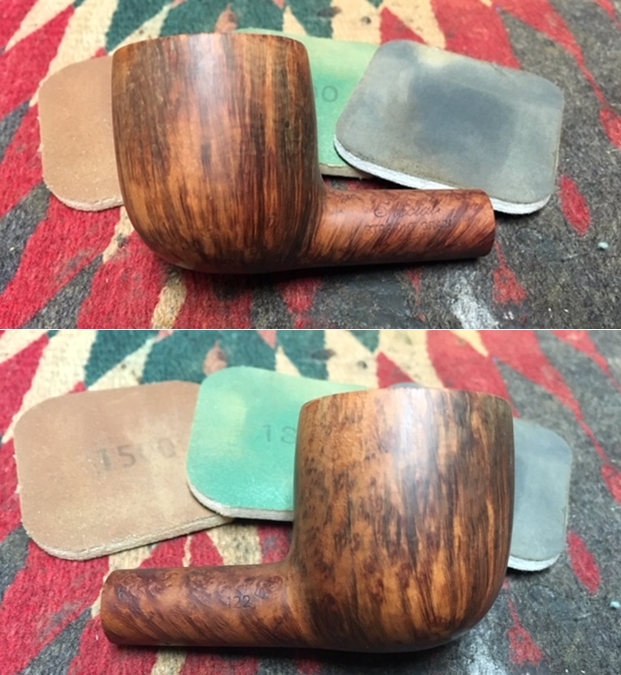
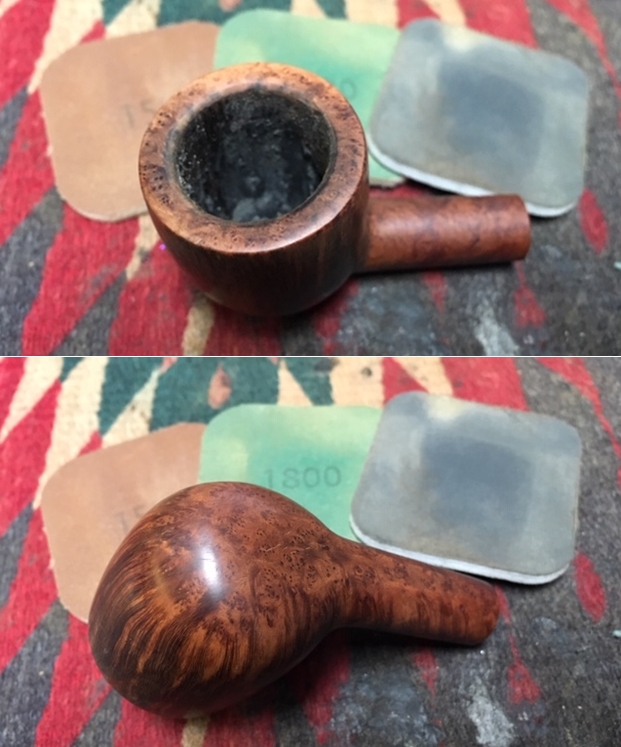
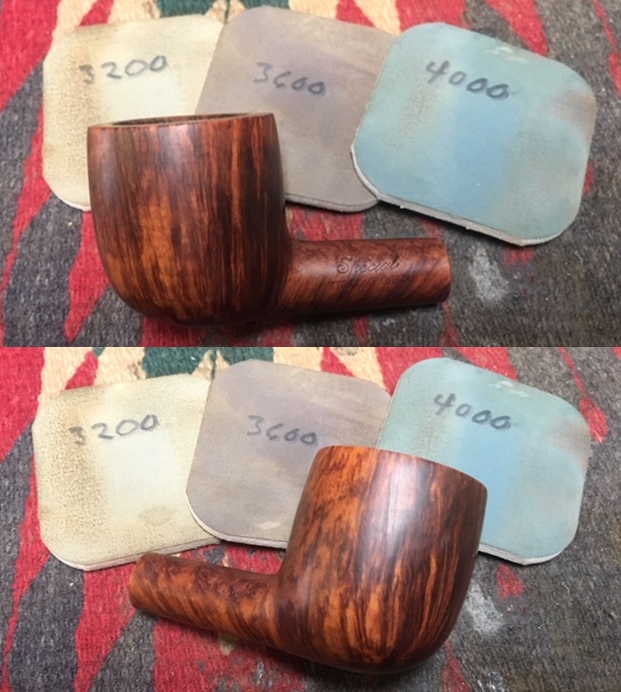
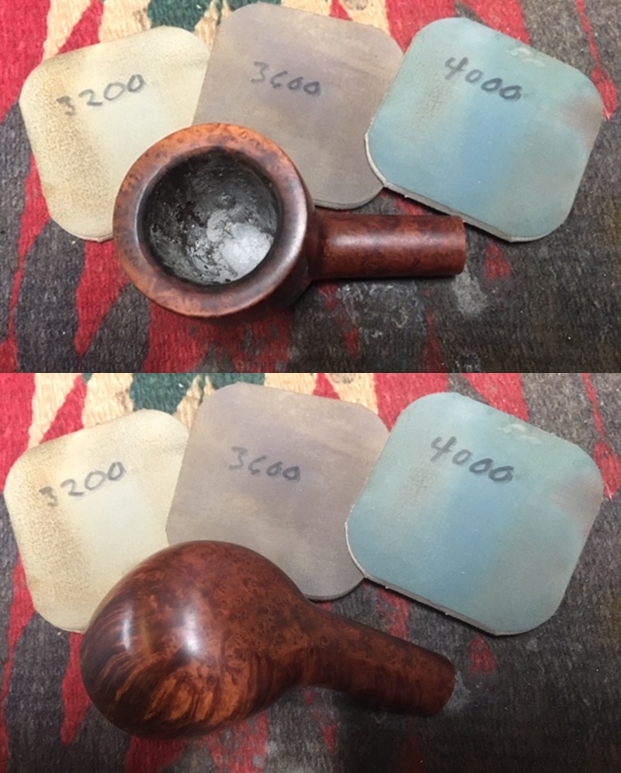
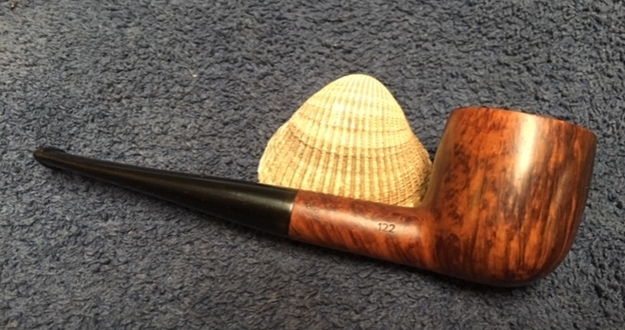
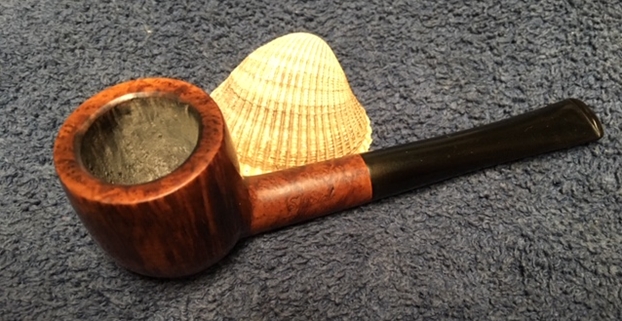
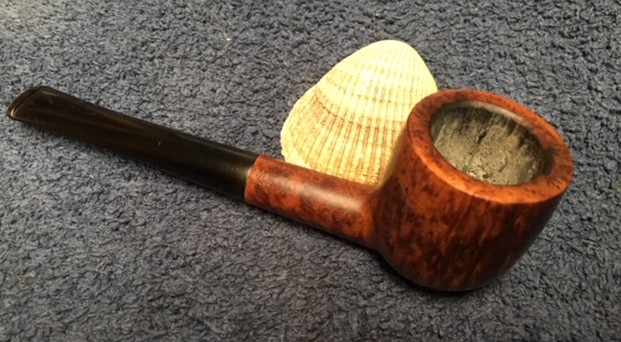
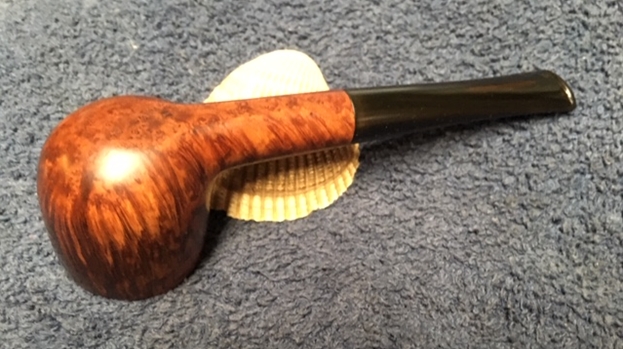
Resurrecting a Tired & Worn Special Straight Grain 122


Blog by Steve Laug

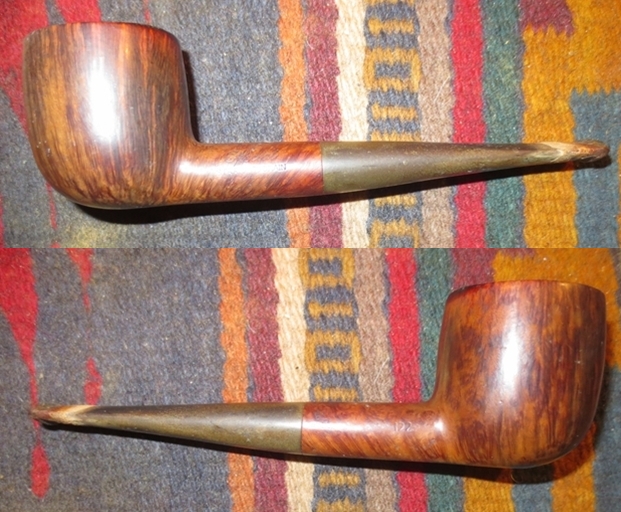
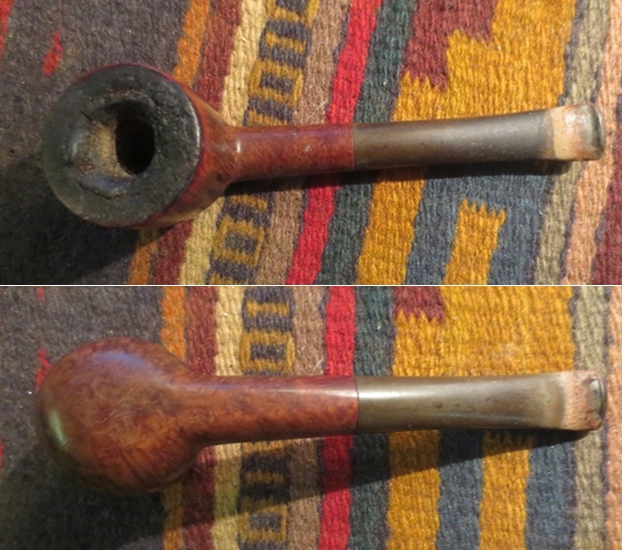
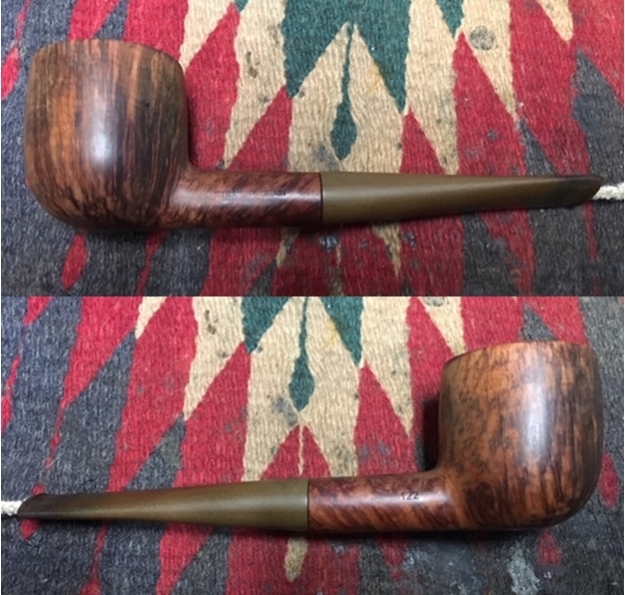
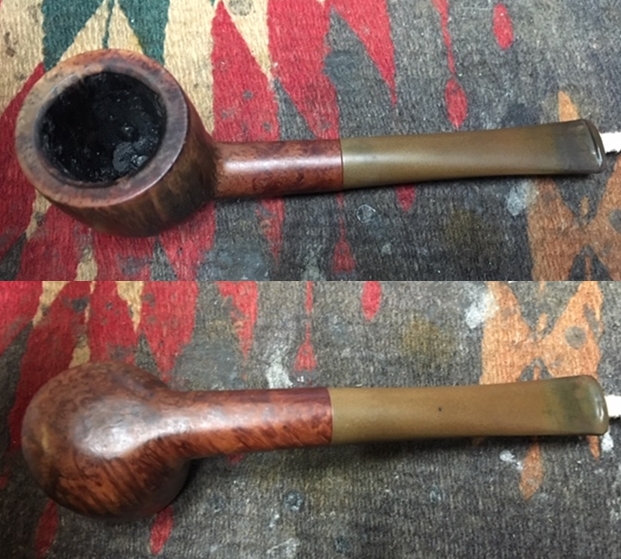
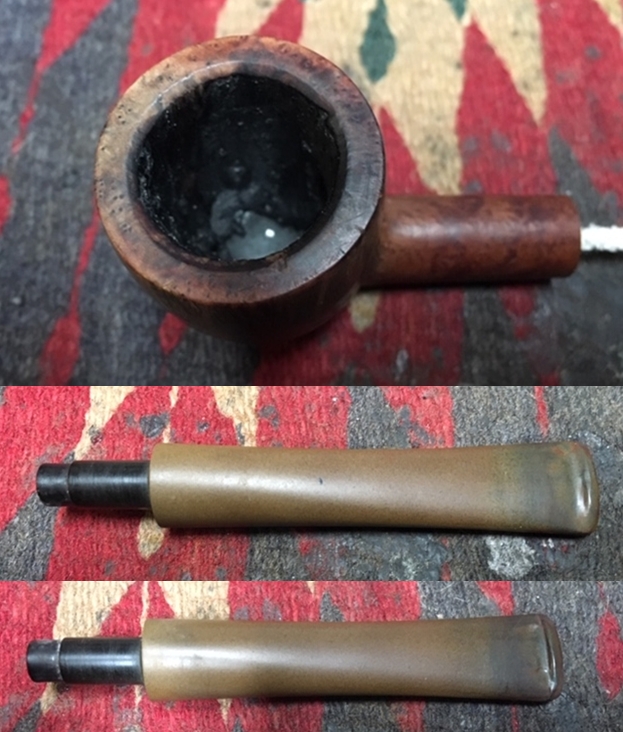
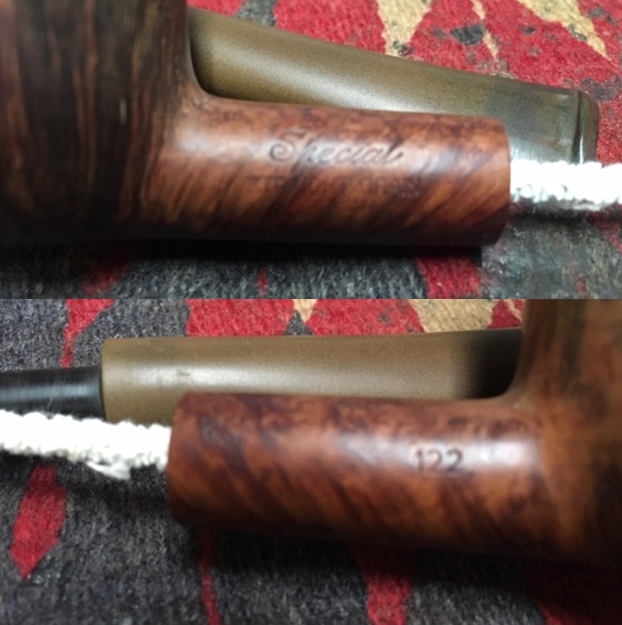
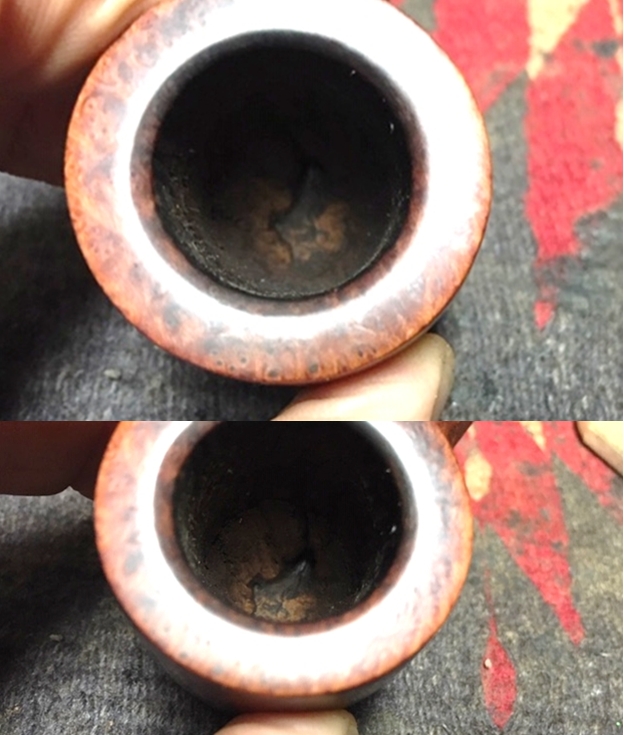
In my ongoing work on the estate pipes from the pipe shop that had closed here in Vancouver I am turning to a fourth pipe from the lot. The entire lot came to me from the estate of an older pipeman whose wife dropped them off at a pipe shop to be cleaned and sold. When the shop closed they came to me. The pipe on the table now is stamped Special over Straight Grain on the left side of the shank. On the right side it is stamped with a Comoy’s style COM stamp reading Made in London in a circle over England followed by the shape number 122. The briar has some nice straight and flame grain around the bowl with birdseye on the top of the bow, shank and the underside of both. The bowl had a thick cake in it with an over flow of lava on the rim top. The rim top looked very bad but it hard to know if there was real damage or if the marks were in the lava overflow. It was hard to know what the rim edges looked like with the thick coat covering it all. The briar was dull and dirty looking. The stem is vulcanite and is oxidized with no visible stamping or logo. There was calcification and tooth chatter and damage next to the button on both sides. There are heavier tooth marks on the underside of the stem. I took photos of the pipe when I received it.   I sent this pipe along with about twenty others from this lot to my brother Jeff in Idaho to work over and clean up. He cleaned up the pipes with his usual thoroughness – reaming the bowl and scrubbing the internals with alcohol, cotton swabs and pipe cleaners. He scrubbed the exterior with Murphy’s Oil Soap to clean off the dust and grime on the finish. When he sent it the pipe was ready to restore. Like the Savinelli I just worked on, I could not believe how good the rim top looked in comparison to what it was when he started. I was working on the Savinelli Giubileo D’ Oro and it had the same issues as this one with the trough in the bowl so I used the remaining pipe mud that I made for it to repair the bowl bottom on this pipe. In doing so I forgot to take photos before I began. I slid the stem over the pipe cleaner and put it in place to get photos. I took the following photos of the pipe to show what it looked like before I started working on the exterior. The briar was clean and the grain quite stunning. The finish looked dull and lifeless. I took a close up photo of the rim top after Jeff had cleaned it up. The look of the rim top and edges is very good. (Ignore the pipe mud in the bowl bottom.) He had been able to remove the cake and the lava very well. The bowl was clean but there seemed to be a trough in the bottom of the bowl made by a pipe cleaner repeatedly passing over the same spot. The stem is also shown and was very clean but oxidized. He had not started using Mark’s Before & After Deoxidizer at this point. The tooth marks on both sides near the button are visible in the photos.  The marks on the underside of the stem were worse than the ones on the topside.I took some photos of the stamping on the shank sides. The first photo shows the Special over Straight Grain stamp on the left side. The second shows the shape number and the COM Stamp that reads Made in London in a circle over England and the shape number 122 on the right side.There were several things about the stamping that I was unfamiliar with so I did some searching online. I had a memory of the Special being a Comoy’s product. The COM stamp on the shank and the stamping on the left side of the shank pointed to that. The shape number 122 also seemed to point in that direction. I turned to all of my usual sources – Pipedia and Pipephil and found nothing connecting the stamping to Comoy’s. There is not a note regarding the Special Straight Grain stamp on either site when it is missing the Comoy’s designation. However there was a connection with the shape number on the Comoy’s Shape Chart on Pipedia (https://pipedia.org/wiki/Comoy%27s_Shape_Number_Chart).

I have captured a portion of the chart to show the number and designation match what I have in hand.  I circled the shape number in red that is on the right side of this pipe. It fits the description of a 122 Pot with a straight stem and a medium sized bowl. I think I could safely assume I was working on a Comoy’s made pipe with an interesting and unique stamping – Special Straight Grain on the right side of the shank!

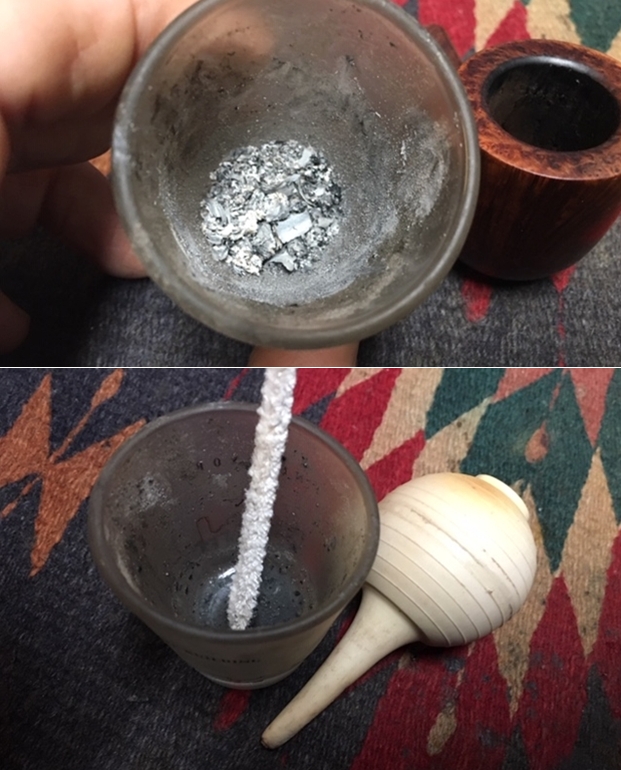
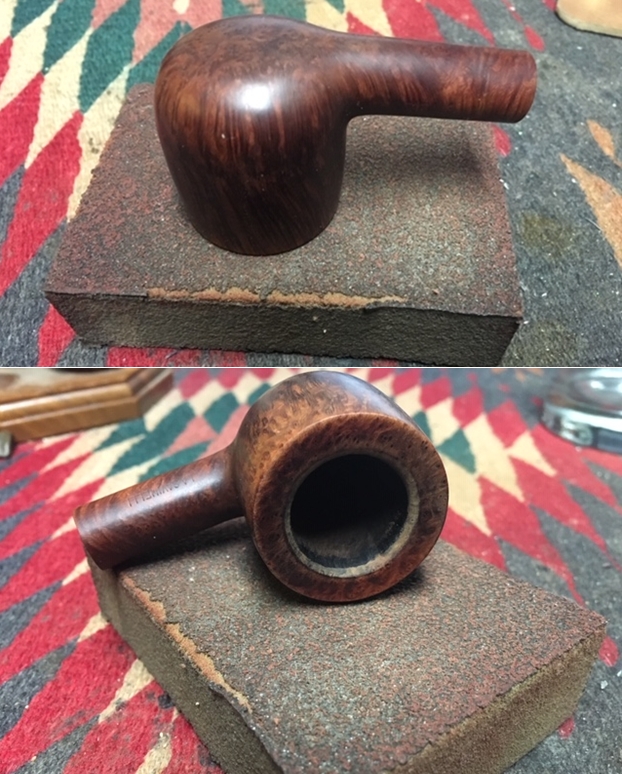
I started working on the bowl. Since I was working on the La Savinelli Giubileo D’Oro at the same time and both had parallel issues with the bowl I decided to address the trough in the bottom of the bowl first. It was quite visible and though the bottom of the bowl was still quite thick, it bothered me. I decided to mix a batch of pipe mud to fill in the trough and protect the bottom while a new cake was formed in the bowl. I mixed some cigar ash and water to form a paste. I put a pipe cleaner in the airway to protect it from being filled in. I used a folded pipe cleaner to paint the mud around the airway to clean up some of the edges and tamped some into the bottom of the bowl to fill in the trough. I packed it in place with a Czech pipe tool tamper as it fit in the bottom of the bowl. The pictures that follow tell the story. It will take a while to dry out but once it has dried it will be quite hard. I set the bowl aside while I worked on the other pipe.

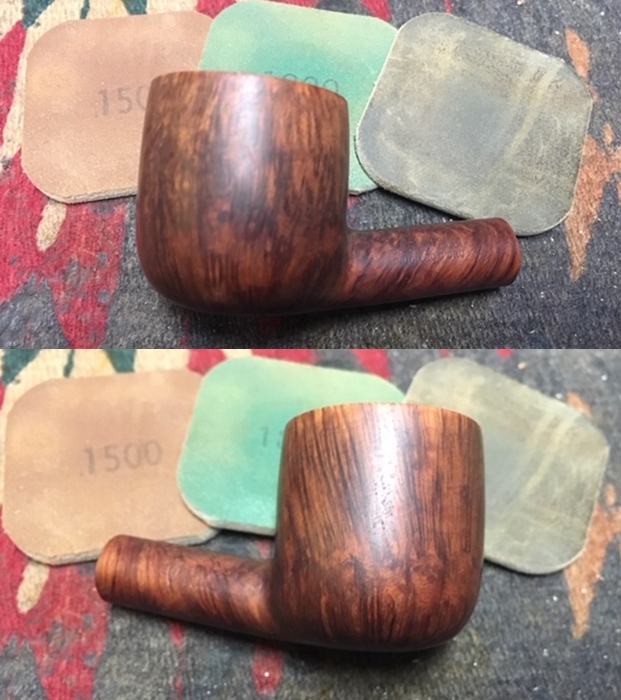
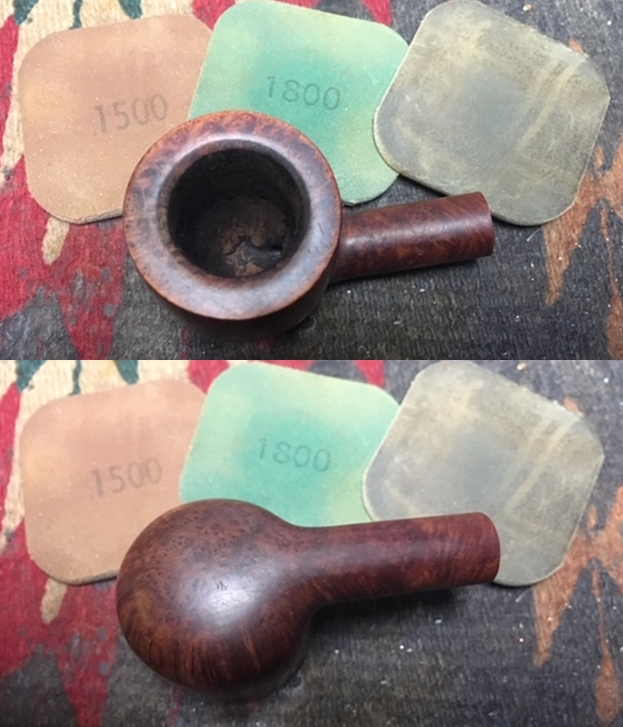
(The first two photos show the bowl of the Giubileo. The bowl on the Special had a twin looking bottom and I forgot to include photos of the bowl bottom on this repair. You can imagine it from the photos below.) I wanted clean up the rim top in the least intrusive method possible and still be able to deal with the scratches and wear on the flat surface. I wanted to see if I could minimize the darkening on the back side and the bevel of the inner edge of the rim top. I sanded it on a small medium and fine grit sanding block to see what I could do to begin with (forgot to take photos). I was happy with the way it was beginning to look. I finished with the blocks and wiped the bowl down with isopropyl alcohol to get a feel for what it looked like under the sanding dust. I polished the briar by wet sanding with 1500-2400 grit sanding pads to raise the shine. I also wanted to remove as much of the scratching as I could. I dry sanded the briar with 3200-12000 grit pads. I wiped the bowl down with a damp cloth after each pad. The briar began to really shine and the grain stood out. This was a beautiful pipe and worthy of the designation SPECIAL STRAIGHT GRAIN. The pipe was beginning to look really good and the grain was beginning to really pop. It was time to work some Before & After Restoration Balm into the briar on the bowl and the rim top. I worked it into the surface with my fingertips to clean, enliven and protect the wood. I let the balm sit for about 20 minutes and buffed it off with a soft cotton cloth. I took photos of the pipe at this point in the process to show what the bowl looked like at this point. I decided to rub down the surface of the bowl and shank with a Medium Walnut Danish Oil Finish and a cotton pad to give some depth to the finish. I really like how the Danish Oil Walnut Stain can make the grain pop on the briar without really darkening the finish. I hand buffed the bowl with a soft cloth to polish the briar. I buffed it lightly on the buffing wheel using Blue Diamond on the wheel. I took photos of the bowl after buffing. I really like the way that the grain stands out now. It is truly a beautiful piece of briar. The bowl looked good so I set it aside and turned my attention to the stem. I used a flat blade needle file to sharpen the edge of the button and smooth out the tooth damage to the edges of the button. I also worked on the tooth chatter with the filed. I followed that by using a Bic lighter to paint the surface of the vulcanite with the flame. Between the file work and the heat of the flame I was able to remove some of the marks and minimize the others. The photos tell the story.   I filled in the two deep tooth marks on the underside of the stem with superglue. The tooth marks on the topside were no longer an issue so I would only need to sand out the file marks. I set the stem aside to dry. Once the glue had dried I sanded the stem surface with 220 grit sandpaper to smooth out the repairs and remove the oxidation that was on the stem surface.I polished the stem with micromesh sanding pads – wet sanding with 1500-2400 and dry sanding them with 3200-12000 grit pads. I wiped the stem down with Obsidian Oil after each pad. I gave it a further polish with Before & After Pipe Stem Polish – both Fine and Extra Fine. When I finished I gave it a final coat of Obsidian Oil and let it dry. The following photos show the stem at this point. I polished the bowl and stem with Blue Diamond to polish out the scratches in the briar and rubber. I gave the bowl and the stem multiple coats of carnauba wax. I buffed the pipe with a clean buffing pad to raise the shine. I hand buffed it with a microfiber cloth to deepen the shine. The pipe polished up pretty nicely. The Walnut Danish Oil had really breathed life into the briar and the pipe came alive with the buffing. The contrast of colours between the briar and the stem worked really well. The Special Straight Grain pipe has a rich and classic look. The finished pipe is shown in the photos below. The dimensions of the pipe are Length: 5 1/2 inches, Height: 1 5/8 inches, Outside diameter of the bowl: 1 3/8 inches, Chamber diameter: 7/8 of an inch. This one will soon be on the rebornpipes store if you are interested in adding it to your collection. Thanks for reading this while I worked on it. It was interesting and unusual piece to restore and I really enjoyed the work.

Restoring a Beautiful “Edwards #712- L”


Blog by Paresh Deshpande

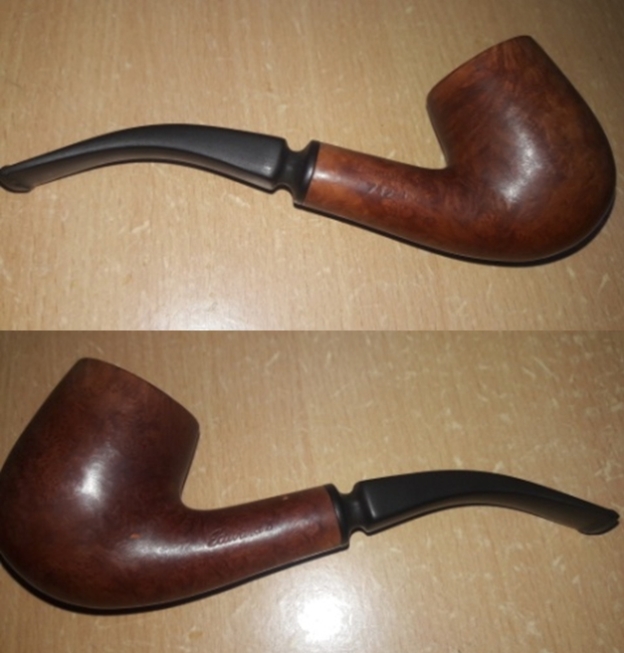
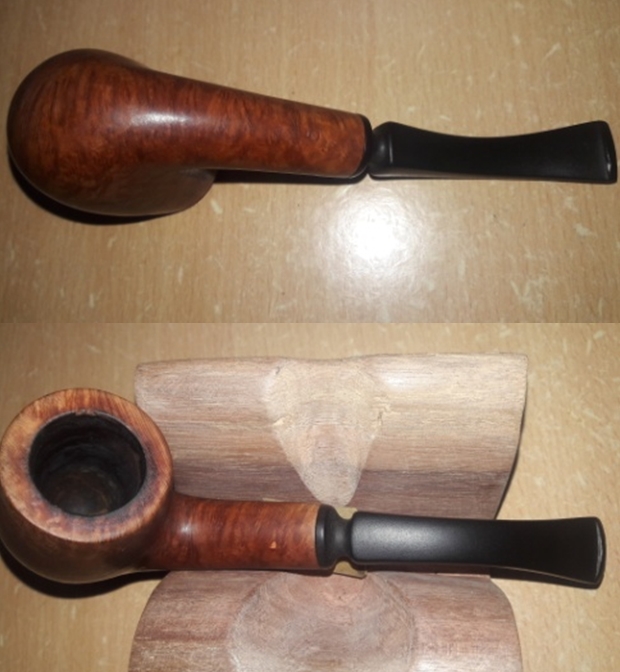
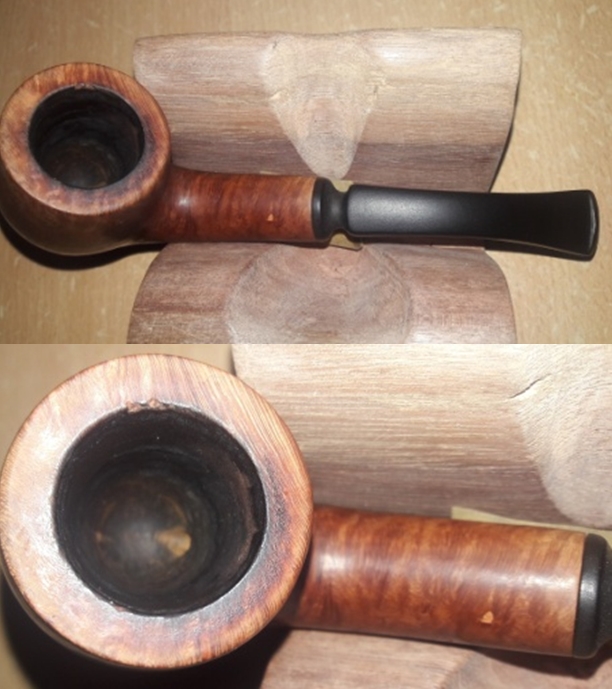
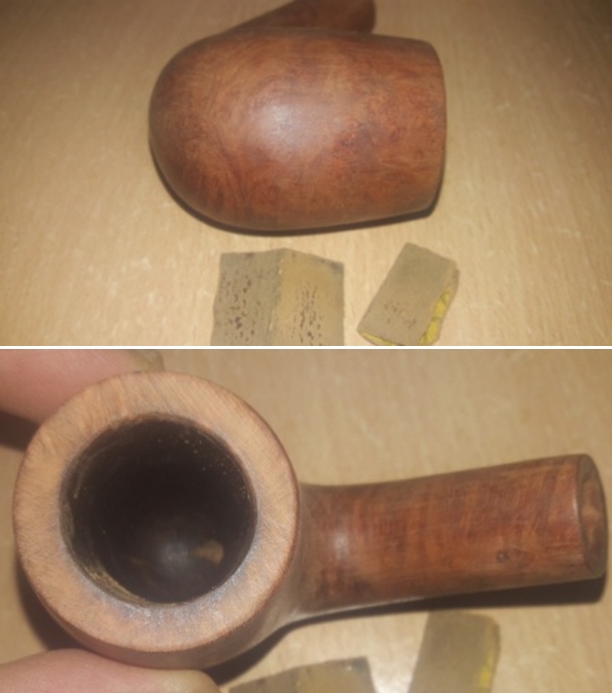
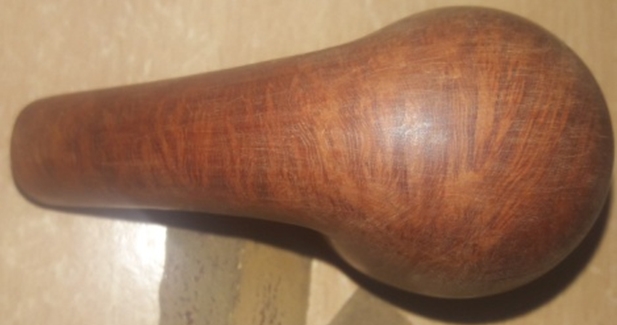
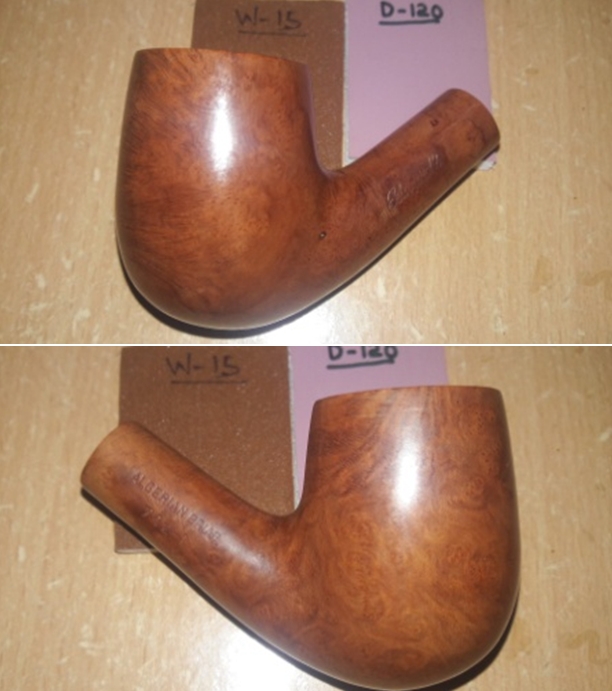
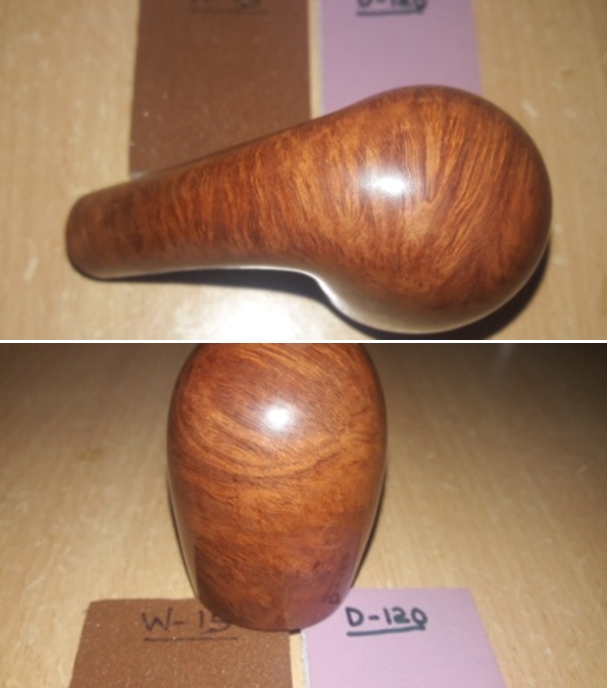
One of the first restorations that I had undertaken was an Edward’s # 784 quarter bent Zulu. It was a very clean pipe to begin with and only required cleaning and shining of the stem and the stummel. There was not a single fill on that pipe and the feel of the stummel in the hand, briar, the grains and the stem oozed superior quality. I really liked that Zulu. The next pipe on my work table is an Edward’s # 712-L. This large sized bent billiard has a fantastic heft to it and fills the palm nicely, and I do have fairly large hands!! There are two minute fills on this huge stummel but, nevertheless, it is one handsome and robust looking pipe!!

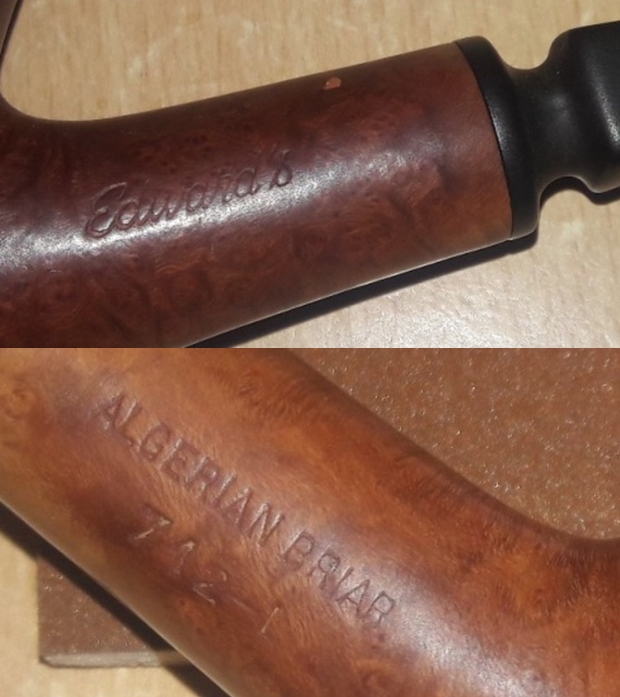
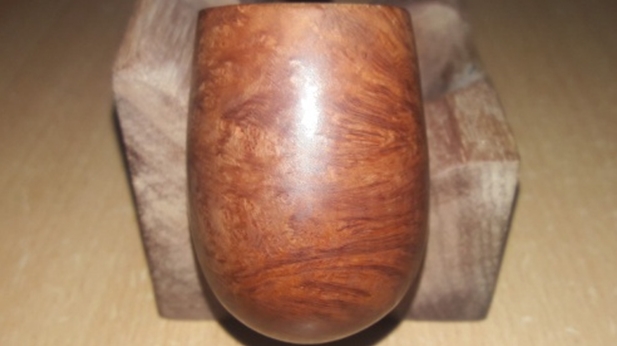
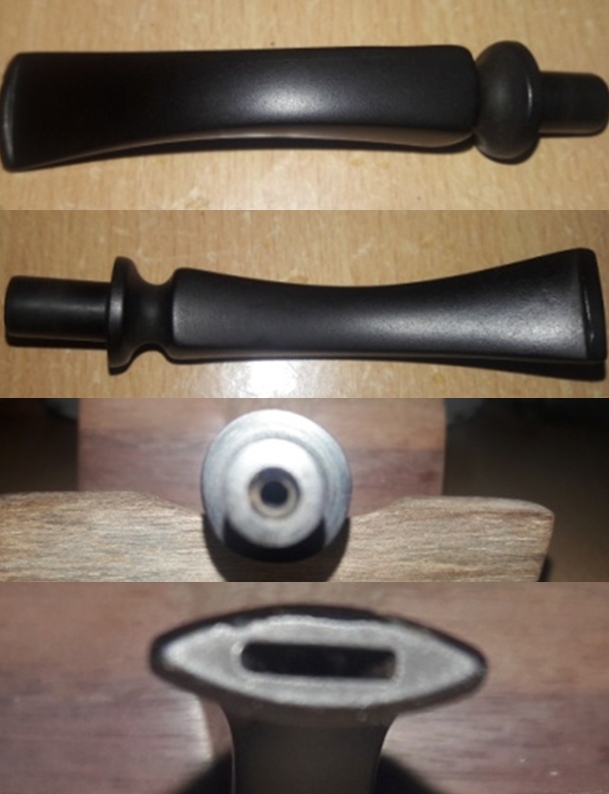
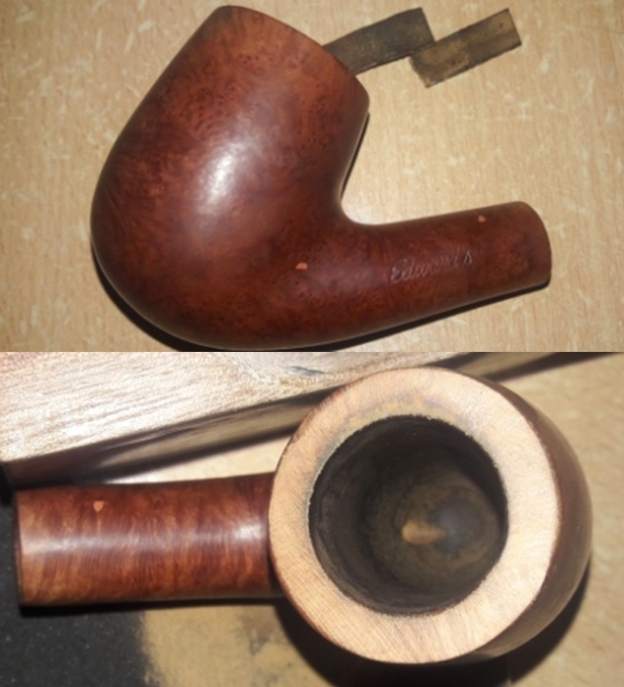
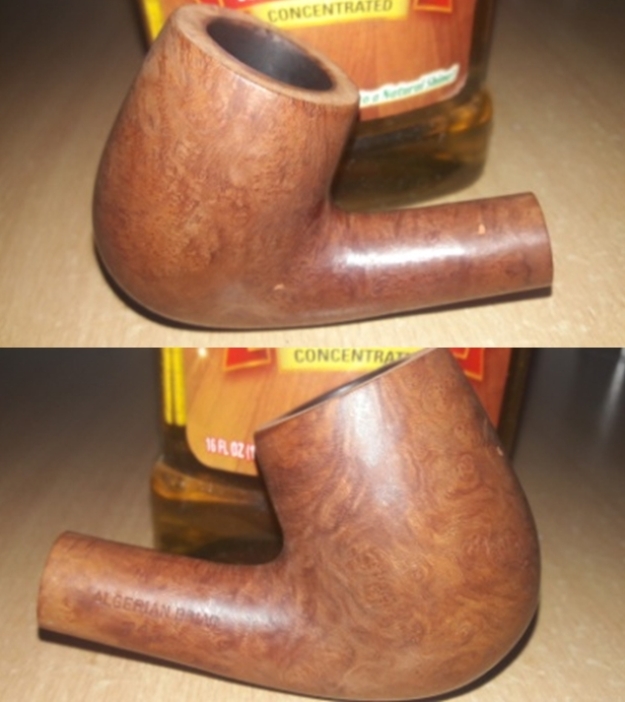
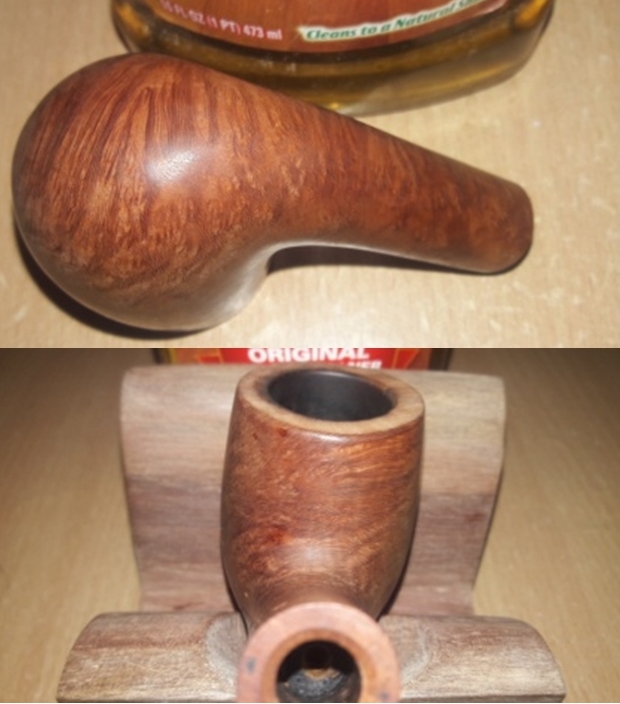
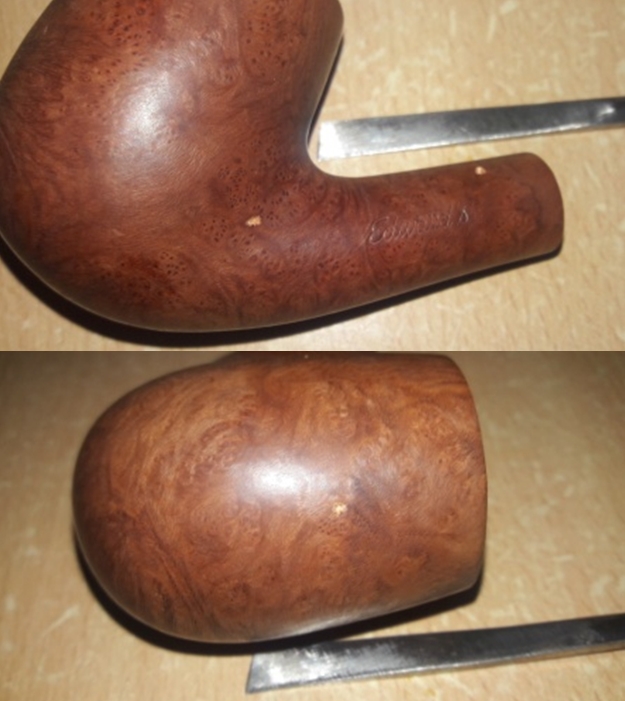
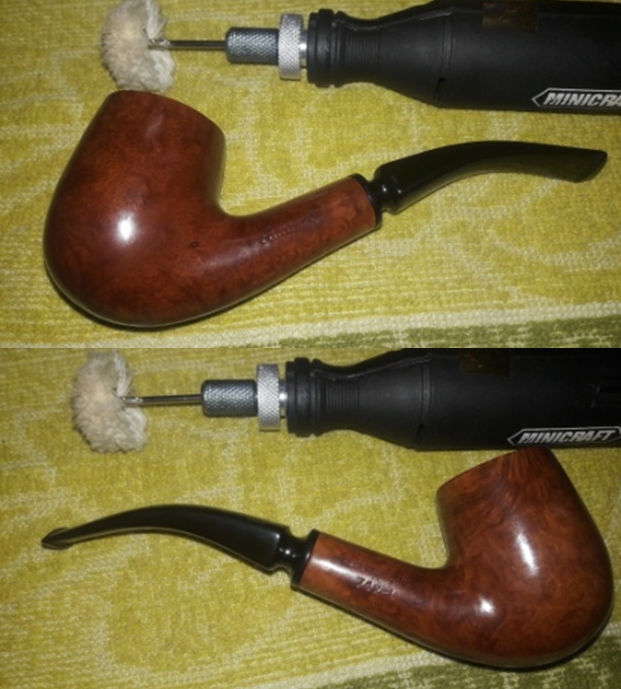
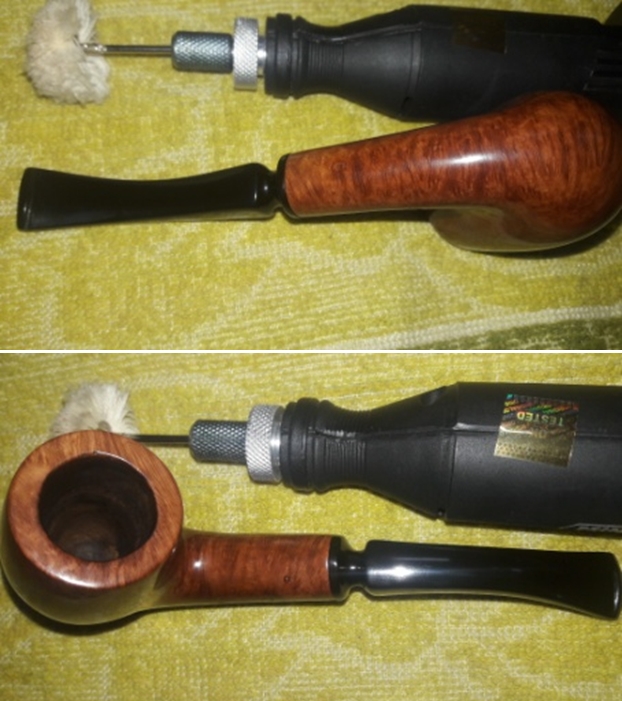
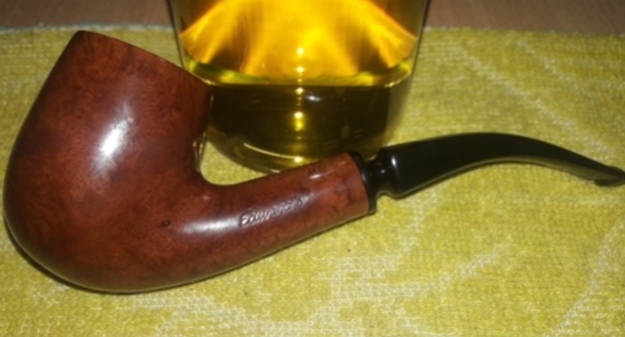
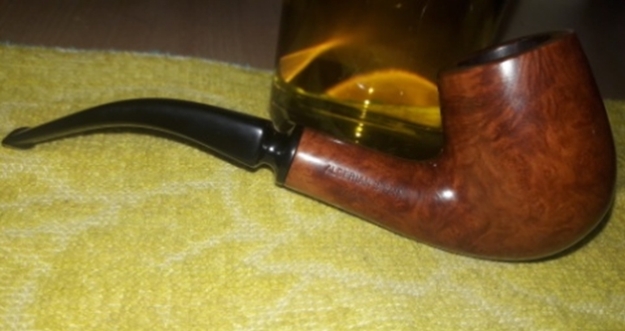
The stummel surface boasts of beautiful swirls of grains interspersed with bird’s eye along the sides of the stummel, while cross grains adorn the top and bottom of the shank extending to the back of the stummel. The left hand of the shank is stamped as “Edward’s” in cursive hand. The right side of the shank is stamped as “ALGERIAN BRIAR” in block letters over “712- L” which probably is the shape and the letter denoting the large size. The bottom of the shank bears “# 7” near the shank end which in all probability is the model number. The fancy stem bears no stampings.I searched pipedia.org for information and background of this brand and also attempt to date. I did not get the complete details that I was looking for, however the interesting information that I collected from this site was enough to convince me that the pipe I am currently working on is a no-push-over and can hold itself against some of the more known brands commanding a premium!! Here is the link to the information on pipedia.org (https://pipedia.org/wiki/Edward%27s).  For those who prefer immediate results without wasting time, here is an important piece of information from the website:-
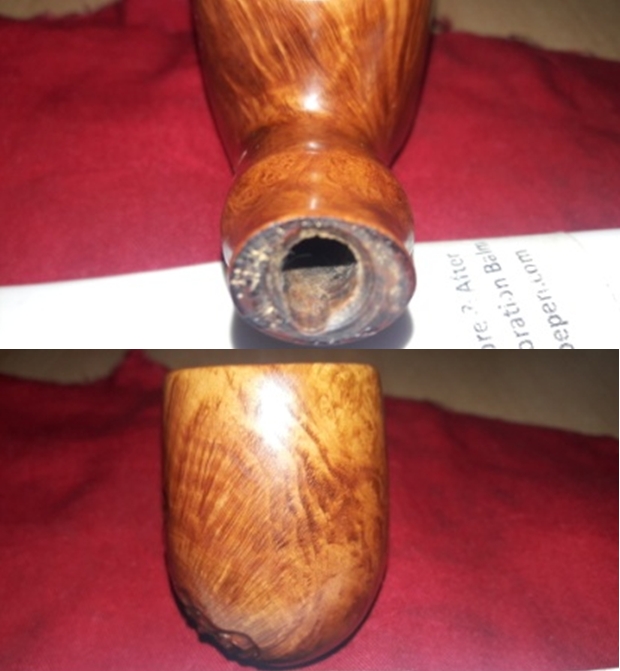
“All of Edward’s pipes are Algerian Briar – a fact very few pipe companies can claim, and all are oil-cured utilizing natural finishes – no strange concoctions are used to interfere in your tastebud’s dance with the briar. Algerian, Calabrian, Sardinian, Corsican – take your pick, but Algerian Briar is generally considered the finest smoking briar ever used. When combined with oil-curing, Algerian takes on a magical quality that even Alfred Dunhill recognized as far back as 1918 as the choice for both his Bruyere and Shell.”  

I searched pipephil.eu in my attempt at dating this large handsome dude. Though I did not succeed in my endeavor, but I did get some interesting information like that Randy Wiley got his start at Edward’s!!!!!! Here is the link for those interested (http://www.pipephil.eu/logos/en/logo-e1.html). Even though this may not be a vintage pipe, but it definitely is of high quality and capable of holding itself up against some of the best in business!!!

INITIAL VISUAL INSPECTION
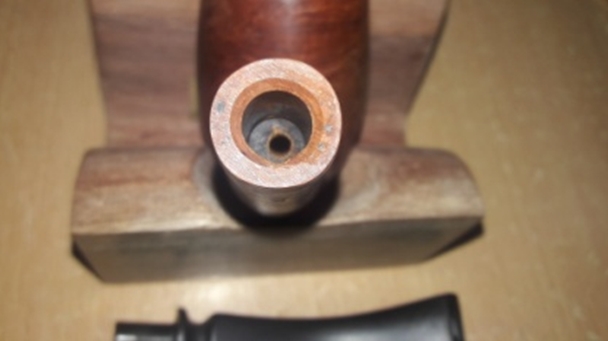
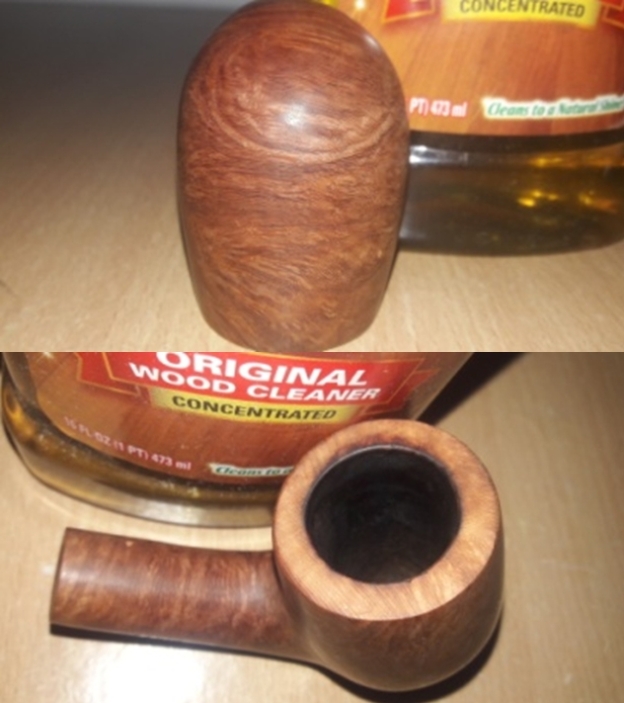
As I had noted earlier, this large bent billiard pipe was in great condition when I started restoring it. There were only two small fills on the shank, one on the left side near the bowl and shank joint and the other on the top surface of the shank, about an inch from the shank end. There is a small superficial chip in front of the bowl on the right side. The stummel is free of any spilled oils, tars or grime from the chamber. However, the briar is dull and lifeless and has taken on a layer of aged patina, through which one can make out the beautiful grains all round. This one should clean up nicely. The pipe appears to have been smoked a few times and there is a very thin layer of cake in the chamber. The chamber walls are nice and thick with no apparent damage. There is a minuscule amount of lava overflow on the rim surface. There are two small dents on the inner rim edge in 3 o’clock direction. The outer rim edge is slightly damaged in 12 o’clock direction, the result of likely being banged against a hard surface. The mortise is as clean as can be and the airflow through it is free and smooth. These issues should be a breeze to address. The vulcanite stem is without any bite marks or tooth chatter. There are small bite marks on the lower and upper lip edges. It is nice and dark, but not smooth. The roughness is due to oxidation of the top surface. These issues should not be a major headache to address. The tenon is clean and flow of air through the airway is full and smooth.THE PROCESS
I started this project by cleaning the chamber. Since there was a very thin layer of carbon, I used a 220 grit sand paper, pinched between my thumb and forefinger, to sand the inner walls of the chamber. Once I had reached the bare briar, I wiped the chamber with a cotton pad dipped in isopropyl alcohol. This removed all the residual carbon dust and also rid the chamber of all ghost smells. I worked on the inner edge of the rim and on the rim surface with a 220 grit sand paper. I realized that the nicks to the inner edge were larger than anticipated and also the rim surface had some blackened surfaces. I addressed these issues by topping the rim on a 220 grit sand paper. This addressed all the issues on the rim, including the damage to the outer edge of the rim.Now, it was the turn of the stummel to get cleaned up. Using a hard bristled tooth brush dipped in undiluted Murphy’s oil soap, I very deliberately scrubbed the stummel, cleaning the surface thoroughly. I cleaned the rim too. The stummel and rim top was dried using paper napkins and soft cotton cloth. I gouged out the old fills on the shank and the chipped portion on the front of the bowl with a pointed knife and wiped the area clean with a cotton swab dipped in isopropyl alcohol. I spot filled these with clear CA superglue and set it aside to cure. While the stummel was drying, I worked the stem. I sharpened the lip edges using a needle file. I sand the entire stem with 220 followed by 400 and 800 grit sand paper. This helps to reduce the sanding marks left behind by the more abrasive 220 grit paper. To bring a deep shine to the vulcanite stem, I went through the complete set of micromesh pads, wet sanding with 1500 to 2400 grit pads and dry sanding with 3200 to 12000 grit pads. I wiped the stem with alcohol after each pad and rubbed it down with Extra Virgin Olive oil. The internals of the stem was cleaned out using alcohol and pipe cleaners. The pictures of the process and final results are shown below. The fills on the stummel had cured. Using a 220 grit sand paper, pinched between my thumb and forefinger, I sand the fills and the entire stummel to match each other. I wanted to highlight the grains seen and further blend all the repairs carried out to the stummel. To achieve this aim, I sand down the stummel and rim top using micromesh pads, wet sanding with 1500 to 2400 grit pads and dry sanding with 3200 to 12000 grit pads. The stummel now has a deep shine with grains popping out with magnificent contrast. I rub a small quantity of “Before and After Restoration Balm” in to briar and let it rest for a few minutes. The balm almost immediately works its magic and the briar now has a nice vibrant appearance. I further buff it with a horse hair shoe brush. To finish, I re-attach the stem with the stummel. I mount a cotton cloth buffing wheel on to the Dremel (actually it is not the brand machine, but a local machine which is similar).  I set the speed at about half of the full power and applied White Diamond compound to the entire pipe. I wiped/ buffed the pipe with a soft cotton cloth to clear it of any leftover compound dust. I then mounted another cotton cloth wheel on to the polishing machine and applied several coats of carnauba wax. I finished the restoration by giving the entire pipe a rigorous hand buffing using a microfiber cloth to raise the shine further. The completed pipe, with the dark brown hues of the stummel contrasting with the shiny black stem, looks lovely, fresh and vibrant; the photographs speak for themselves. The beauty, size and shape of this pipe compel me to wonder how anyone could let go of such a robust and beautiful looking pipe! If only the pipe could tell the story of its journey till date…………… Cheers!

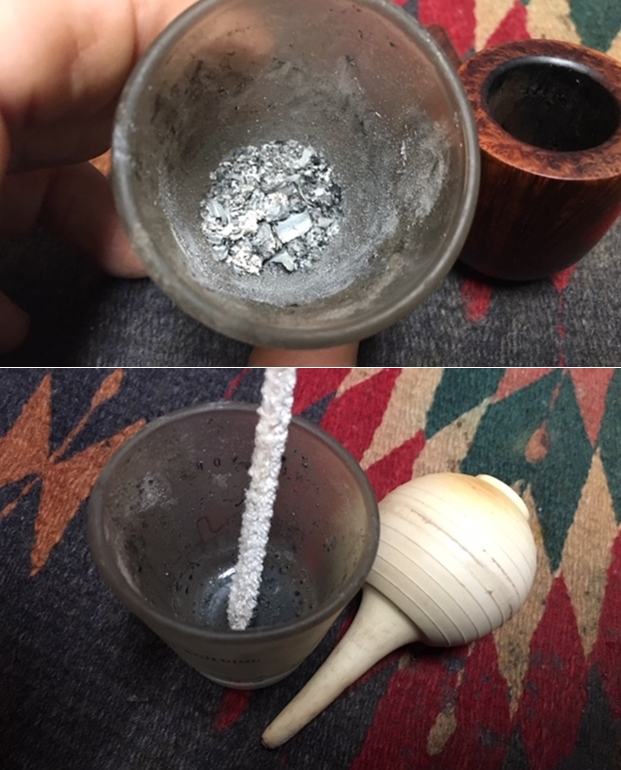
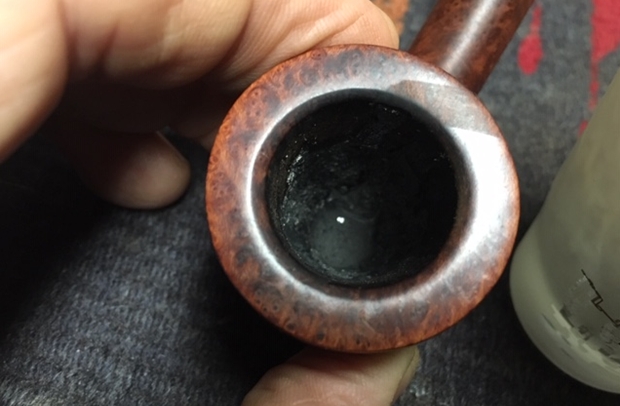
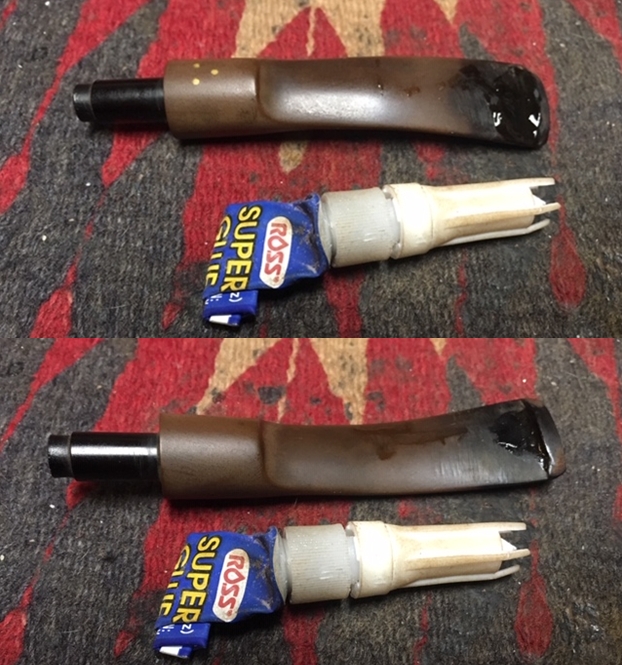
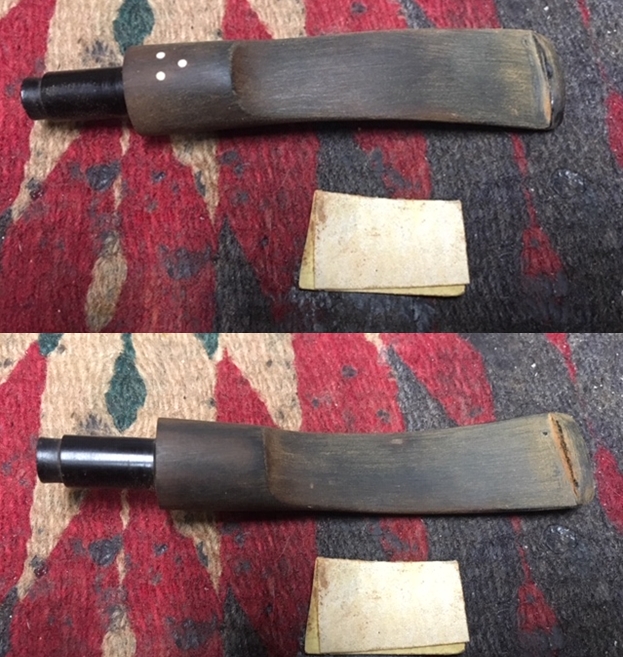
Resurrecting a Sad, Old La Savinelli Giubileo D’ Oro 1221


Blog by Steve Laug

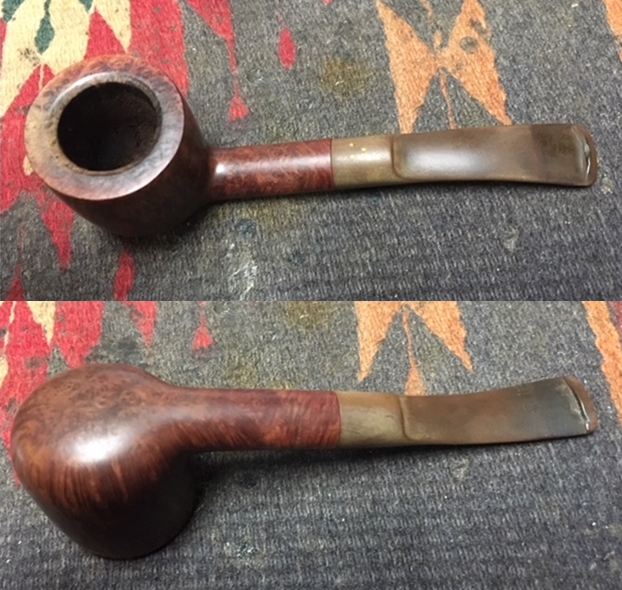
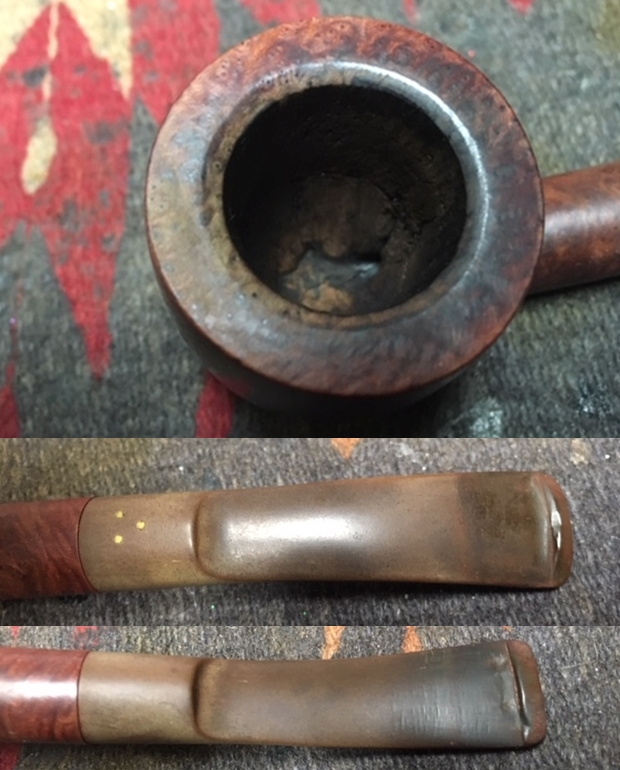
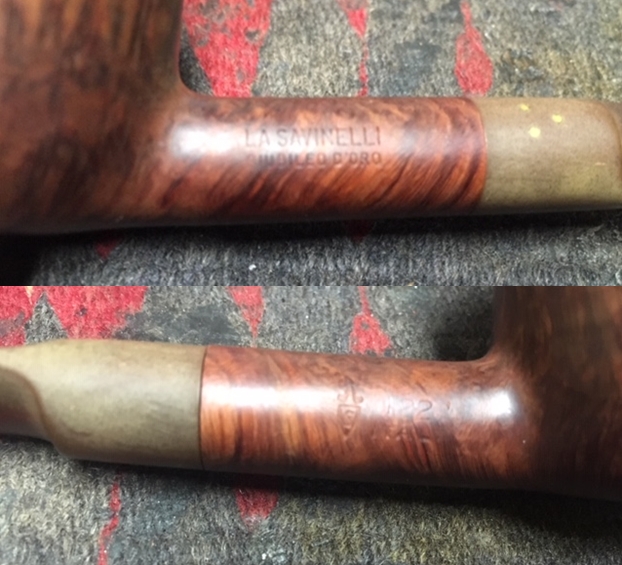
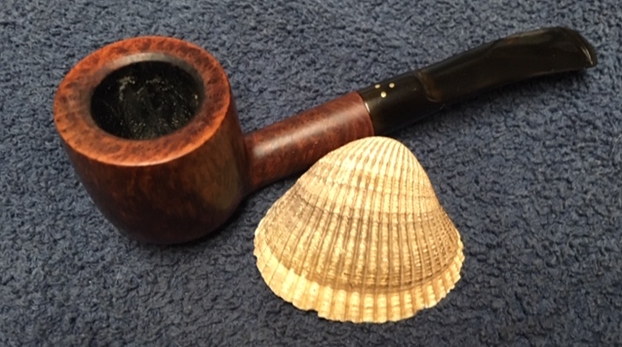
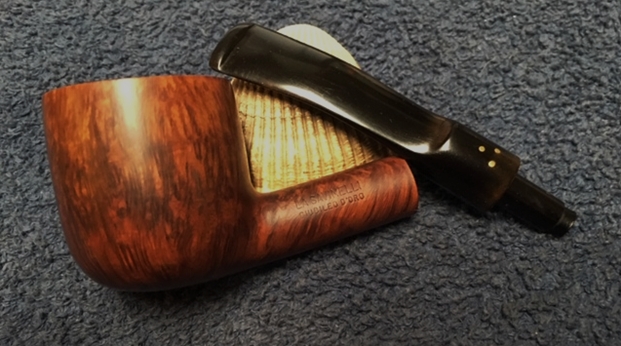
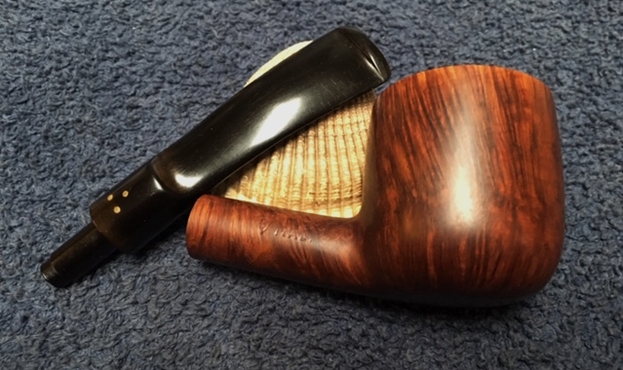
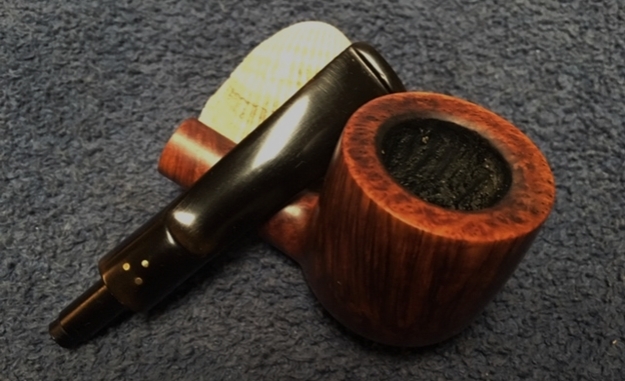
In my ongoing work on the estate pipes from the pipe shop that had closed here in Vancouver I am turning a third pipe from the lot. The entire lot came to me from the estate of an older pipeman whose wife dropped them off at a pipe shop to be cleaned and sold. When the shop closed they came to me. The pipe on the table now was a Savinelli Pot with a ¼ bent stem. It is stamped La Savinelli over Giubileo D’ Oro on the left side of the shank. On the right side it is stamped with the Savinelli Shield logo with two pipes over the shield. Next to that the shape number 1221 is stamped over Italy. The briar has some nice straight and flame grain around the bowl with birdseye on the top of the bow, shank and the underside of both. The bowl had a thick cake in it with an over flow of lava on the rim top. The rim top looked very bad but it hard to know if there was real damage or if the marks were in the lava overflow. It was hard to know what the rim edges looked like with the thick coat covering it all. The briar was dull and dirty looking. The stem is vulcanite and is oxidized. It has three gold (brass) dots on the top of the saddle. There was calcification and tooth chatter and marks damage next to the button on both sides. I took photos of the pipe when I received it. I sent this pipe along with about twenty others from this lot to my brother Jeff in Idaho to work over and clean up. He cleaned up the pipes with his usual thoroughness – reaming the bowl and scrubbing the internals with alcohol, cotton swabs and pipe cleaners. He scrubbed the exterior with Murphy’s Oil Soap to clean off the dust and grime on the finish. When he sent it the pipe was ready to restore. I could not believe how good the rim top looked in comparison to what it was when he started. I took photos of the pipe when I unpacked it. The briar was clean and the grain quite stunning. The finish looked dull and lifeless. I took a close up photo of the rim top after Jeff had cleaned it up. The look of the rim top and edges is very good. He had been able to remove the cake and the lava very well. The bowl was clean but there seemed to be a trough in the bottom of the bowl made by a pipe cleaner repeatedly passing over the same spot. The stem is also shown and was very clean but oxidized. He had not started using Mark’s Before & After Deoxidizer at this point. The tooth marks on both sides near the button are visible in the photos.  The underside of the stem shows some marks from the bending of the stem. None were cracks and for that I am glad.I took some photos of the stamping on the shank sides. The first photo shows the La Savinelli Giubileo D’ Oro stamp on the left side. The second shows the shape number and the Savinelli Logo and the made in Italy stamp on the right side.There were several things about the stamping that I was unfamiliar with so I did some searching online. I wanted to know when Savinelli stamped their pipe “La Savinelli”. I wanted to know why the pipe had a 4 digit shape number. I wanted to know about the “Giubileo D’ Oro” and where it fit in the hierarchy of pipes from the company. I also wanted to understand the three gold dots on the stem.

I turned first to Pipephil – http://www.pipephil.eu/logos/en/logo-savinelli2.html and there I found the first helpful information. My first and second questions were answered in the notes on the page.

  • The “LA” article precedes the “SAVINELLI” stamping on all pipes from the Giubileo d’Oro line.
  • 4 digit shape number (1221). The pipe predates the 1970’s.

I then turned to the Pipedia article to see if I could learn more about the pipe

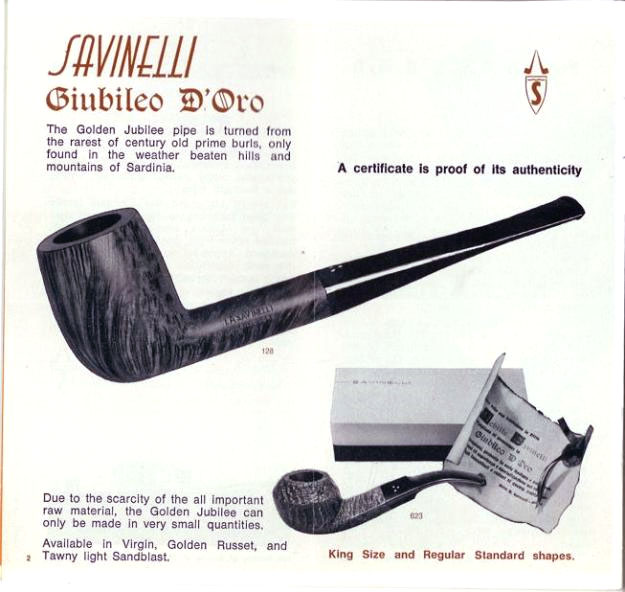
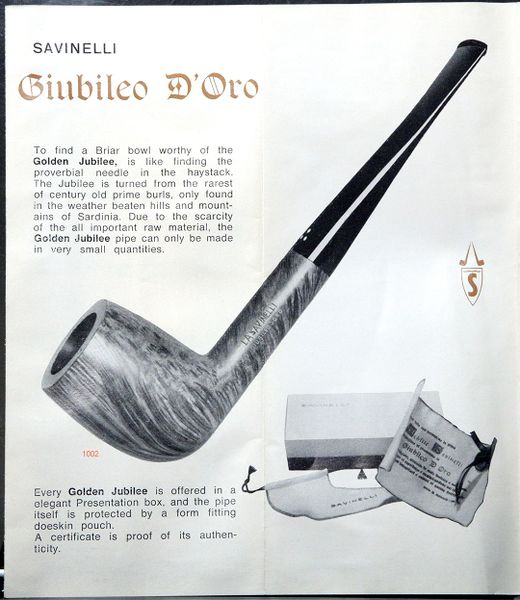
( https://pipedia.org/wiki/Savinelli). I have included to pages from Brochures that give some interesting information about the brand. It seems that Golden Jubilee pipe is made from very rare briar burls from Sardinia. Due to the limited raw materials available the pipe can only be produced in small quantities. Each pipe originally came with a certificate of authenticity. Sadly this was missing with the pipe I am working on.

Guibileo D’Oro Brochure Page, courtesy Doug Vliatchka

Guibileo D’Oro Brochure Page, courtesy Doug Vliatchka

I also did a websearch of Savinelli’s 50th Anniversary and was immediately given a link to their site (https://www.savinelli.it/rw2_en/catalog/product/view/id/15909/s/giubileo-oro-prime-0005?__from_store=rw2_en). They describe the line as follows:

The significance of ‘Golden Jubilee’ is to commemorate the “50th anniversary”; it defines the rarity of these pipes. Only 0.1% of our total production has the quality to be worthy of this unique series. Nature gives us this rare jewel of a pipe as an unparalleled and exceptional combination of perfect raw material and outstanding grain. The selection process is passed on only by word of mouth and is determined by the experience and high quality standards of Savinelli, a guarantee of reliability and elegant style.

Putting all of that together I learned that the pipe was a 50th Anniversary Commemorative and part of a limited production “Golden Jubilee” series. That would make it a mid 70s pipe rather than what Pipephil noted above. It is selected for its special and unique grain and handpicked for a shape to highlight the grain. The four digit shape number helps to date it as being made pre 1970. The entire line was stamped with the La Savinelli marking. It is a unique piece of history. Now to get to work on it!

I started working on the bowl. I wanted clean up the rim top in the least intrusive method possible and still be able to deal with the scratches and wear on the flat surface. I wanted to see if I could minimize the darkening on the back side and the bevel of the inner edge of the rim top. I sanded it on a small medium and fine grit sanding block to see what I could do to begin with. I was happy with the way it was beginning to look. I finished with the blocks and progressed to micromesh sanding pads. I wet sanded it with 1500-2400 grit pads and dry sanded it with 3200-12000 grit pads. I wiped it down with a damp cloth after each pad. The pipe was beginning to look really good and the grain was beginning to really pop. It was time to work some Before & After Restoration Balm into the briar on the bowl and the rim top. I worked it into the surface with my fingertips to clean, enliven and protect the wood. I let the balm sit for about 20 minutes and buffed it off with a soft cotton cloth. I took photos of the pipe at this point in the process to show what the bowl looked like at this point. I decided to rub down the surface of the bowl and shank with a Medium Walnut Danish Oil Finish to give some depth to the finish. I really like how the walnut stain can make the grain pop on the briar. I hand buffed the bowl with a soft cloth to polish the briar. I buffed it lightly on the buffing wheel using Blue Diamond on the wheel. I took photos of the bowl after buffing. I really like the way that the grain stands out now. It is truly a beautiful piece of briar. It was time to address the trough in the bottom of the bowl. It was quite visible and though the bottom of the bowl was still quite thick, it bothered me. I decided to mix a batch of pipe mud to fill in the trough and protect the bottom while a new cake was formed in the bowl. I mixed some cigar ash and water to form a paste. I put a pipe cleaner in the airway to protect it from being filled in. I used a folded pipe cleaner to paint the mud around the airway to clean up some of the edges and tamped some into the bottom of the bowl to fill in the trough. I packed it in place with a Czech pipe tool tamper as it fit in the bottom of the bowl. The pictures that follow tell the story. It will take a while to dry out but once it has dried it will be quite hard. The bowl looked good so I set it aside and turned my attention to the stem. I used a Bic lighter to paint the surface of the vulcanite with the flame. The heat of the flame raised the tooth marks around the button edges significantly but a repair would still need to be done (forgot to take photos of this). I filled in the tooth marks with superglue spreading it with a toothpick. I set it aside to dry.
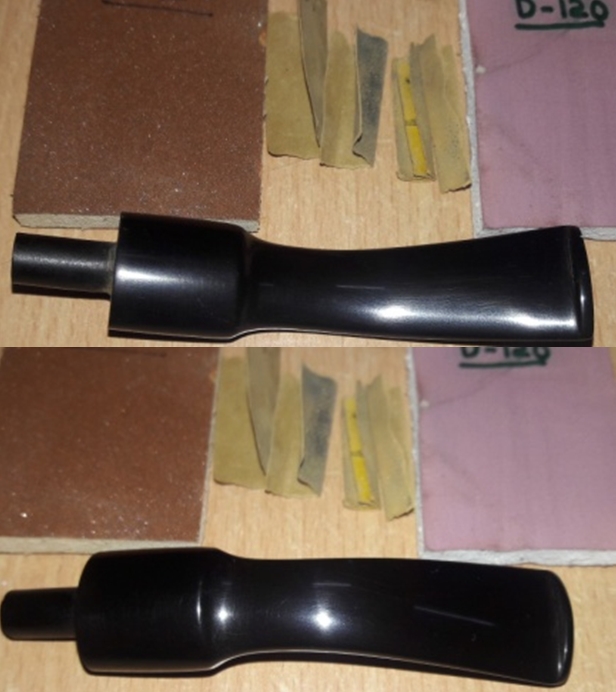
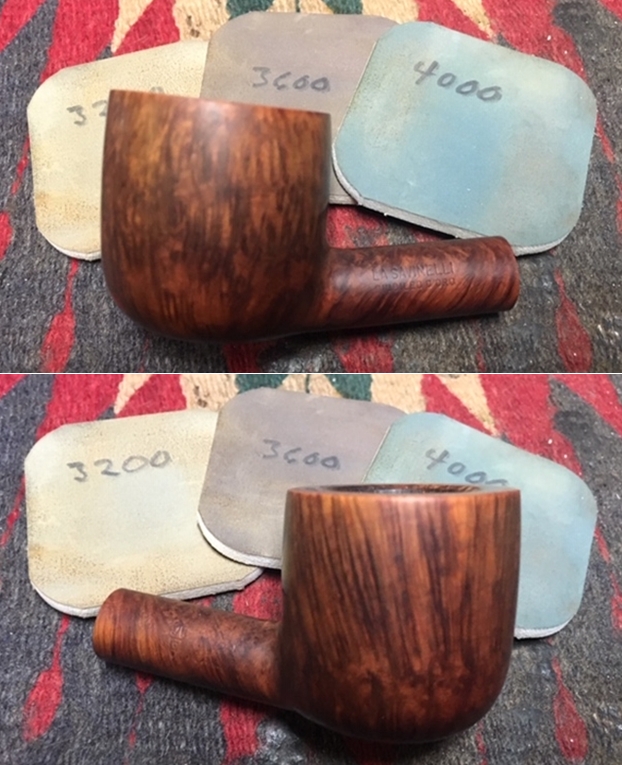
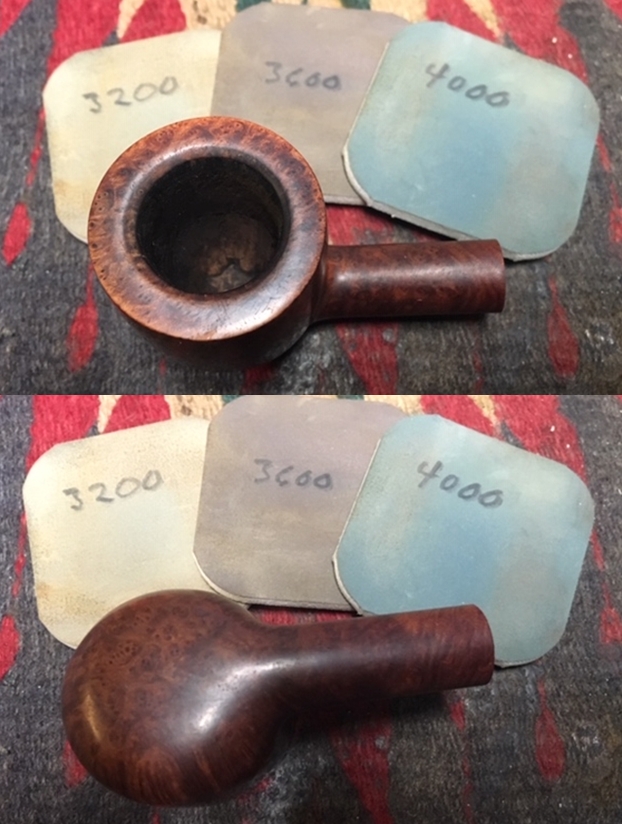
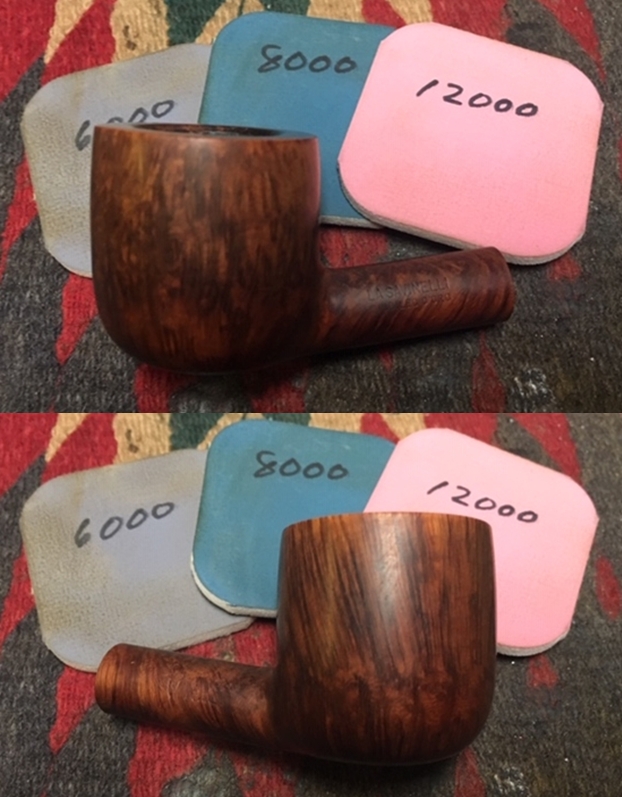
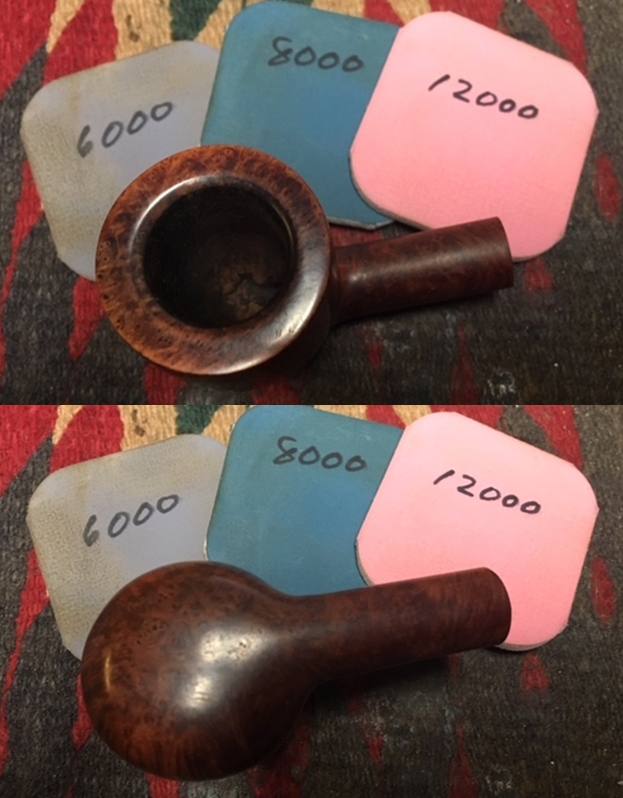
Once the glue repairs cured I sanded them with 220 grit sandpaper to blend them into the surface of the rubber. I began the polishing of the stem with Denicare Mouthpiece Polish to work on the oxidation. The photos show the progress. I polished the stem with micromesh sanding pads – wet sanding with 1500-2400 and dry sanding them with 3200-12000 grit pads. I wiped the stem down with Obsidian Oil after each pad. I gave it a further polish with Before & After Pipe Stem Polish – both Fine and Extra Fine. When I finished I gave it a final coat of Obsidian Oil and let it dry. The following photos show the stem at this point. I polished the bowl and stem with Blue Diamond to polish out the scratches in the briar and rubber. I gave the bowl and the stem multiple coats of carnauba wax. I buffed the pipe with a clean buffing pad to raise the shine. I hand buffed it with a microfiber cloth to deepen the shine. The pipe polished up pretty nicely. The Walnut Danish Oil had really breathed life into the briar and the pipe came alive with the buffing. The contrast of colours between the briar and the stem worked really well. The Giubileo D’ Oro pipe has a rich and classic look. The finished pipe is shown in the photos below. The dimensions of the pipe are Length: 5 1/2 inches, Height: 1 5/8 inches, Outside diameter of the bowl: 1 1/2 inches, Chamber diameter: 7/8 of an inch. This one will soon be on the rebornpipes store if you are interested in adding it to your collection. Thanks for reading this while I worked on it. It was interesting and unusual piece to restore and I really enjoyed the work.
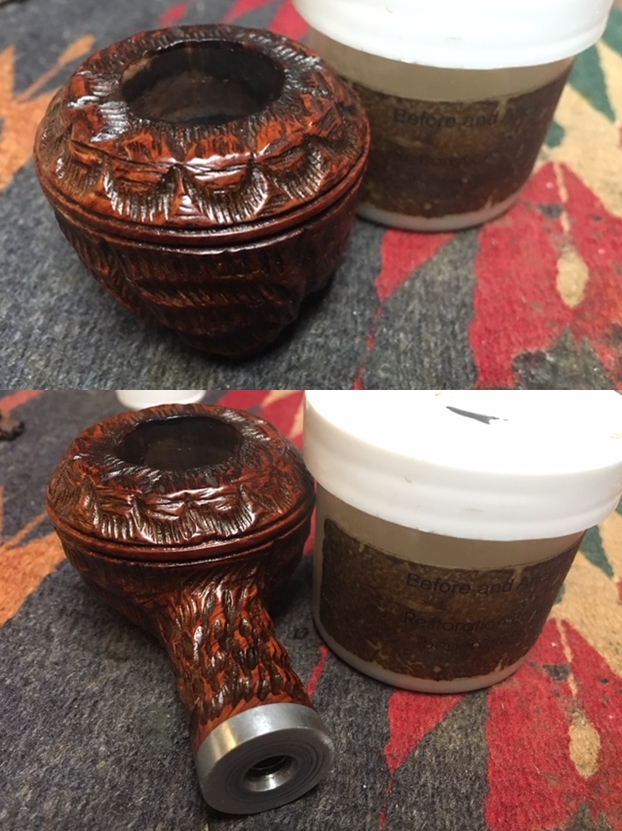
New Life for an Italian Made Folding Pocket Pipe


Blog by Steve Laug

This is the second pipe from on the estate pipes from the pipe shop that had closed here in Vancouver. The entire lot came to me from the estate of an older pipeman whose wife dropped them off at a pipe shop to be cleaned and sold. When the shop closed they came to me. The pipe on the table now was another Italian made rusticated folding pocket pipe. It is stamped ITALY on the end just below the spot where the stem is inserted. There is no other stamping on the bowl. The briar has an interesting rustication pattern to it that flows vertically around the bowl. The bowl had hardly been smoked but the briar was dull and dirty looking. The folding stem is vulcanite and is oxidized. Other than the oxidation it was a clean stem. I took photos of the pipe when I received it. I sent about twenty of the pipes to my brother Jeff in Idaho to work over and clean up. He cleaned up the pipes with his usual thoroughness – reaming the bowl and scrubbing the internals with alcohol, cotton swabs and pipe cleaners. He scrubbed the exterior with Murphy’s Oil Soap to clean off the dust and grime on the finish. When he sent it the pipe was ready to restore. I took photos of the pipe when I unpacked it. The briar was clean and the finish dull. The oxidation on the stem had come to the surface. The first four pictures show the pipe with the stem open and ready to smoke. The next set of photos show the pipe with the stem folded over the top of the bowl for easy stowage in a pocket or a vest pocket. I took a close up photo of the rim top after Jeff had cleaned it up. The look of the rim top and edges is very good. The carved finish on the plateau top is clean and undamaged. He had been able to remove the cake and the lava very well. The bowl looked very good. The plateau on the shank end is also very clean. The stem is also shown and was very clean. The tooth marks on both sides near the button are visible in the photos.The pipe is similar to the Brebbia Version of the Rolex pocket pipe that Paresh posted recently on the blog (https://rebornpipes.com/2018/12/12/sprucing-up-a-sparingly-used-rolex-vest-pipe/). This one is stamped solely Italy so it is not clear who made it.

I worked Before & After Restoration Balm into the briar and the plateau on the rim top and the shank end. I worked it into the surface with my fingertips to clean, enliven and protect the wood. I let the balm sit for about 20 minutes and buffed it off with a soft cotton cloth. I took photos of the pipe at this point in the process to show what the bowl looked like at this point. I sanded the tooth marks and the surface of the stem with 220 grit sandpaper to minimize the tooth damage and to remove the oxidation. I was able to remove the majority of the tooth damage other than a few small spots along the button on the top side and the underside. I began the polishing of the stem with with micromesh sanding pads – wet sanding with 1500-2400 and dry sanding them with 3200-12000 grit pads. I wiped the stem down with Obsidian Oil after each pad. When I finished I gave it a final coat of Obsidian Oil and let it dry. The following photos show the stem at this point. I polished the bowl and stem with Blue Diamond to polish out the scratches in the briar and rubber. I gave the bowl and the stem multiple coats of carnauba wax. I buffed the pipe with a clean buffing pad to raise the shine. I hand buffed it with a microfiber cloth to deepen the shine. The pipe polished up pretty nicely. The original patina on the bowl came alive with the buffing and worked well with the polished vulcanite stem. The pipe has a rich look. The finished pipe is shown in the photos below. The shape, finish and flow of the pipe and stem work give the pipe a very classic pocketpipe look. The dimensions of the pipe when folded are Length: 2 ½ inches, Height: 2 ¾ inches, oval bowl that is 1 inch wide x 2 ½ long, Chamber width: 1/2 of an inch, Chamber Length: 1 inch. With the stem unfolded the pipe is Length: 3 ½ inches, Height: 2 inches. The bowl dimensions are the same. Thanks for reading this while I worked on it. It was interesting and unusual piece to restore and I really enjoyed the work.