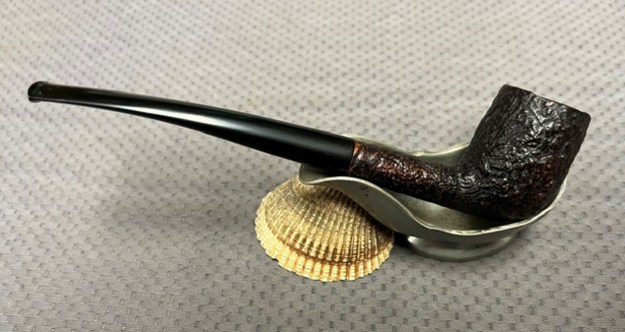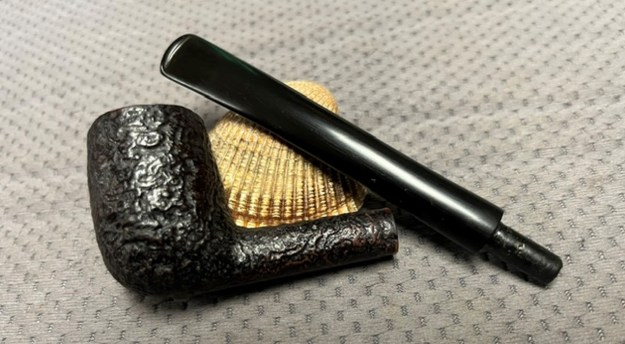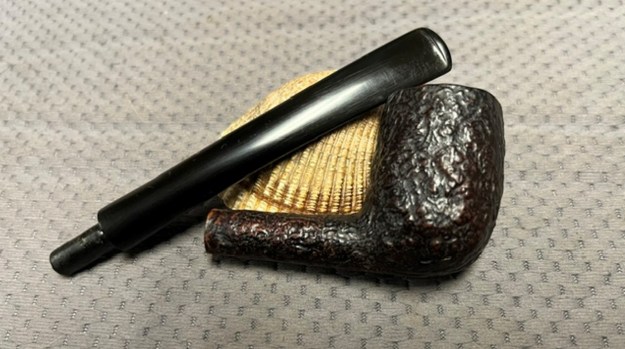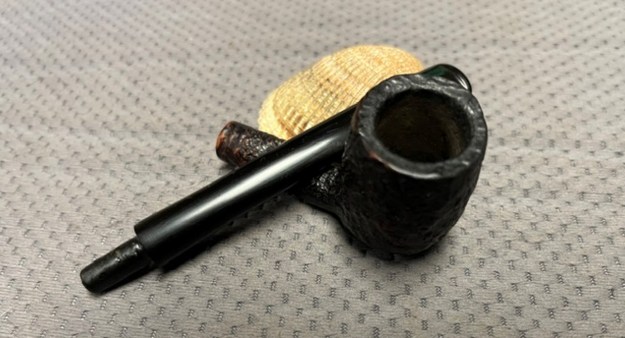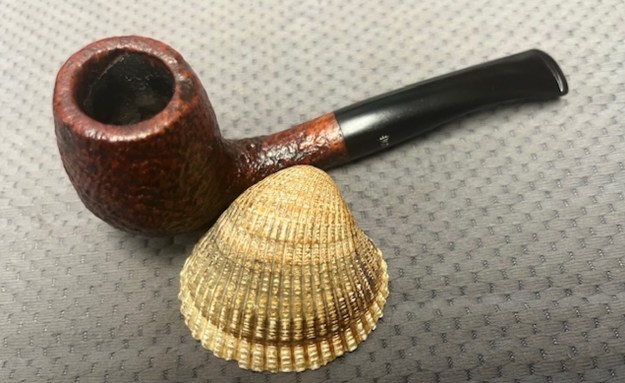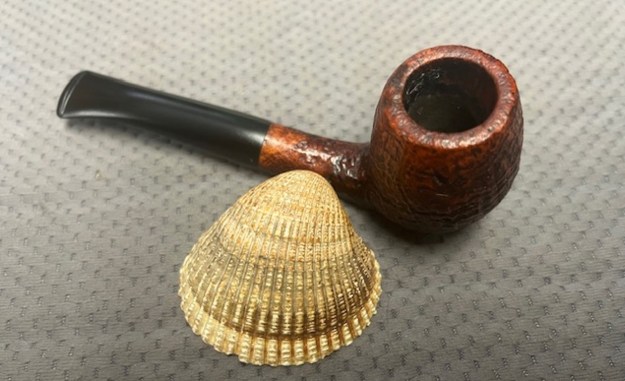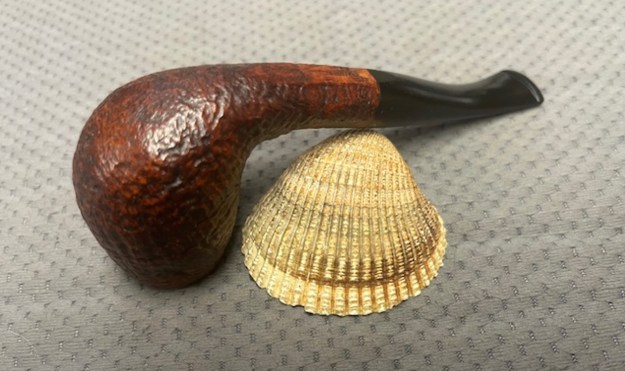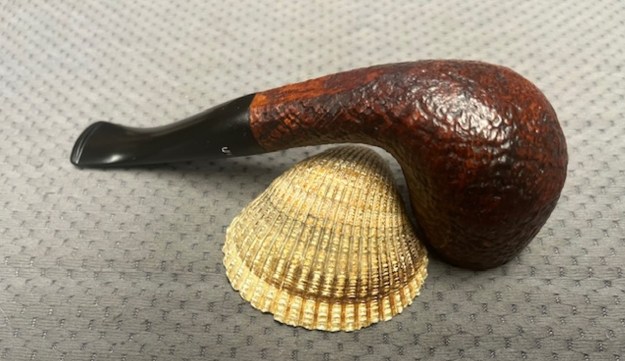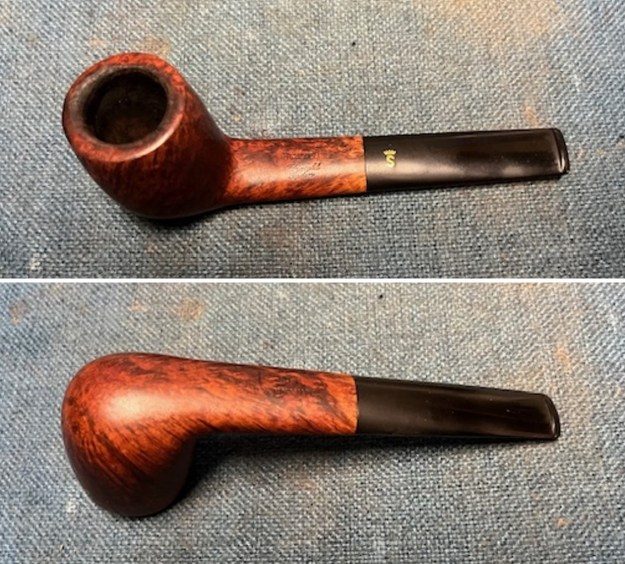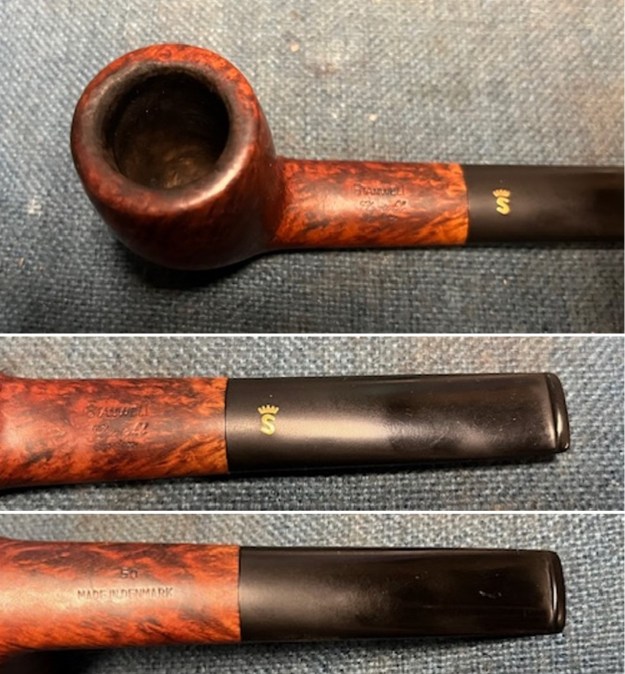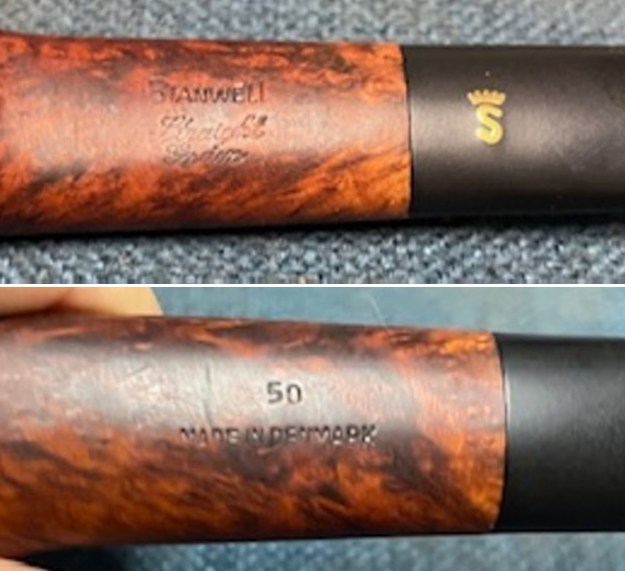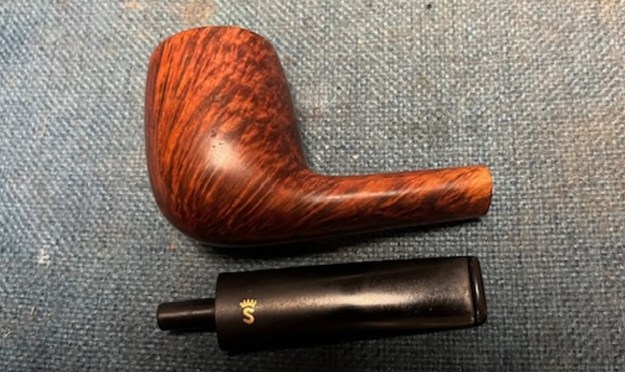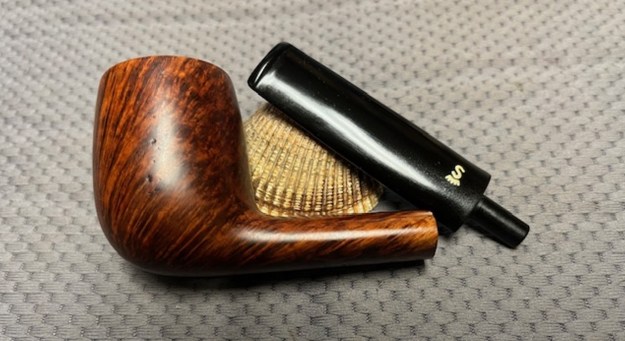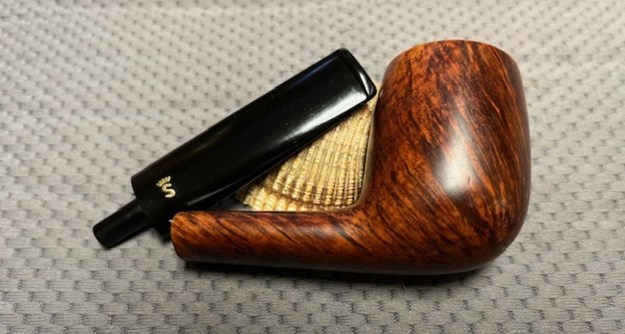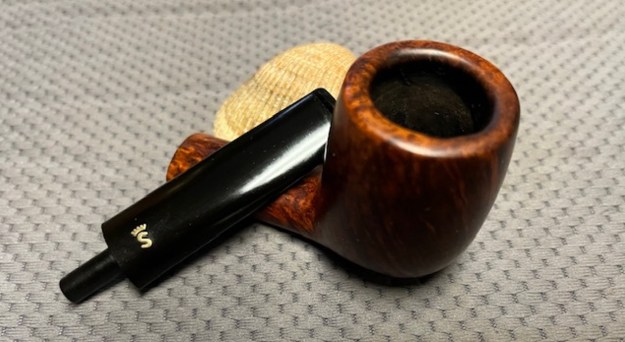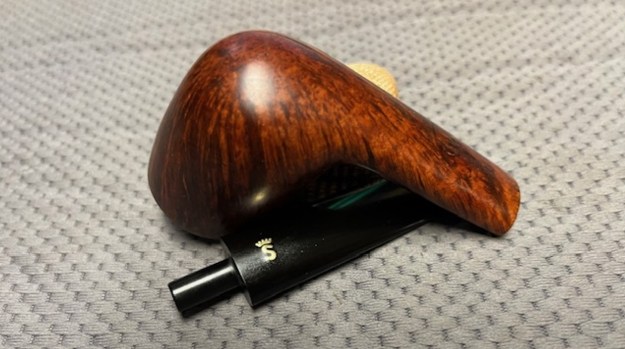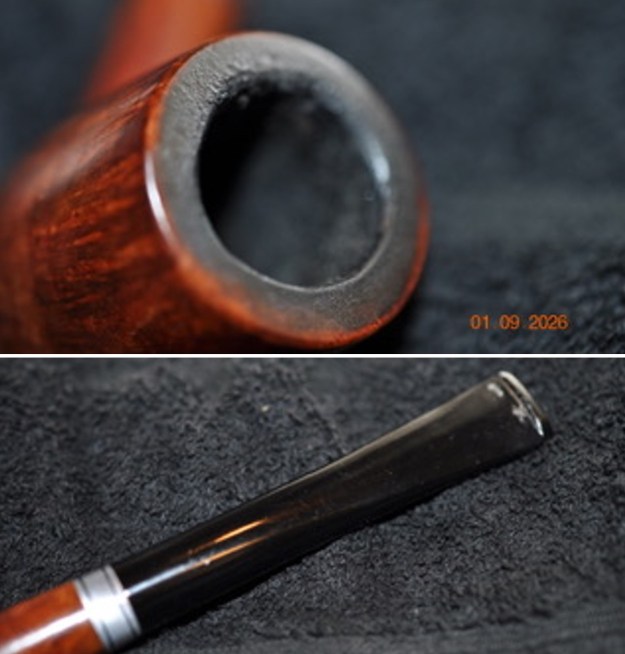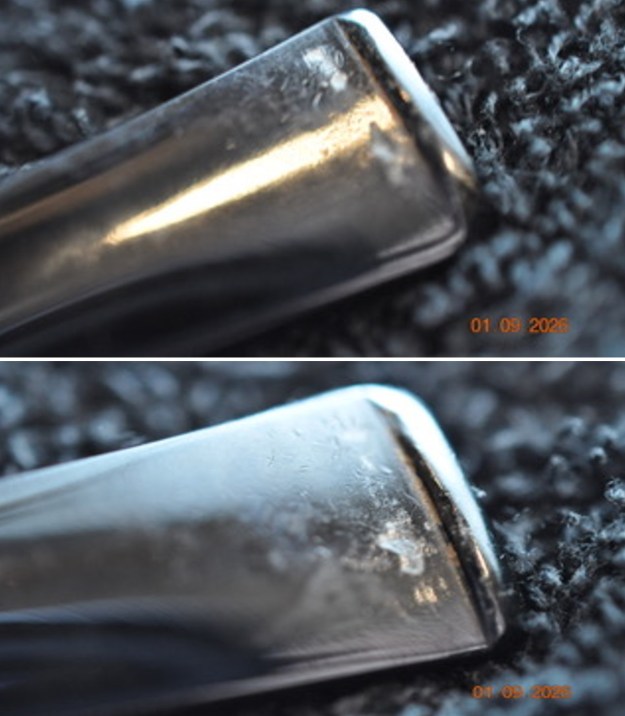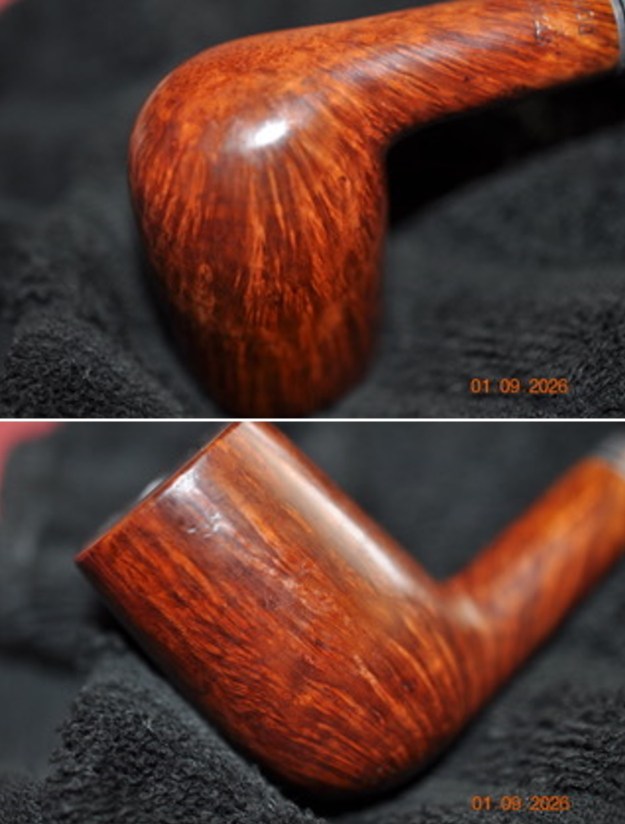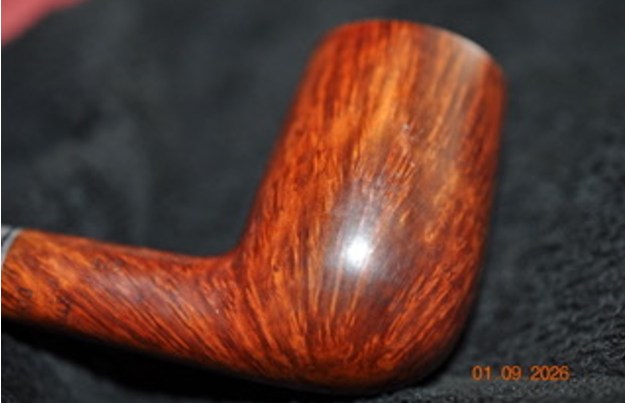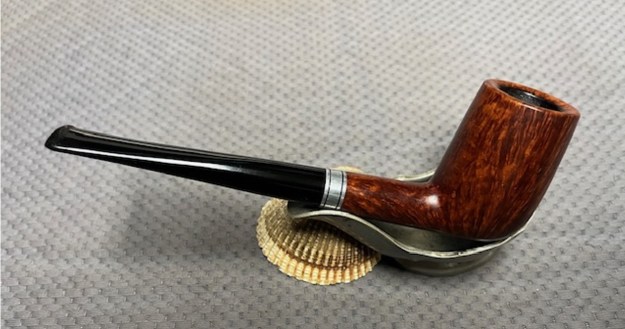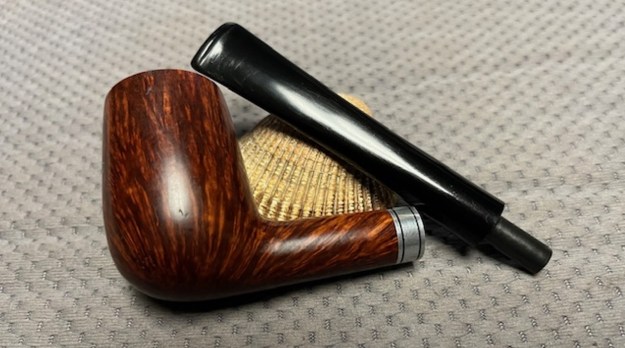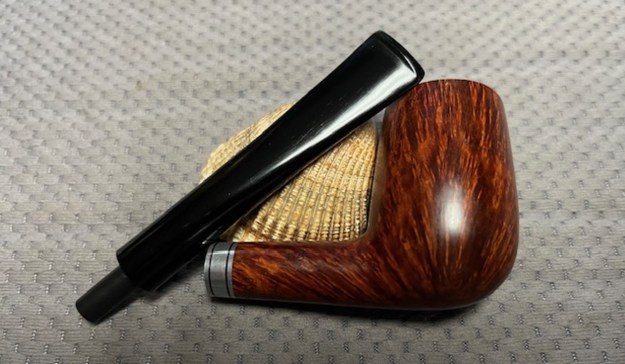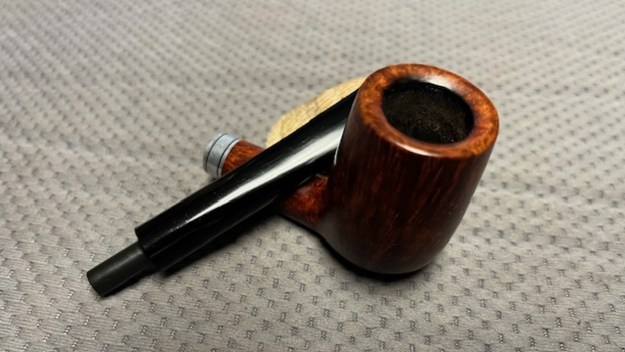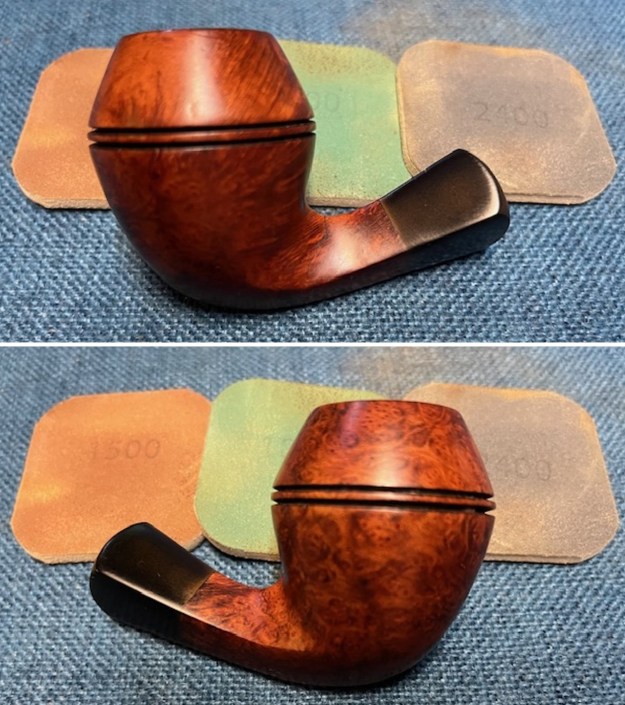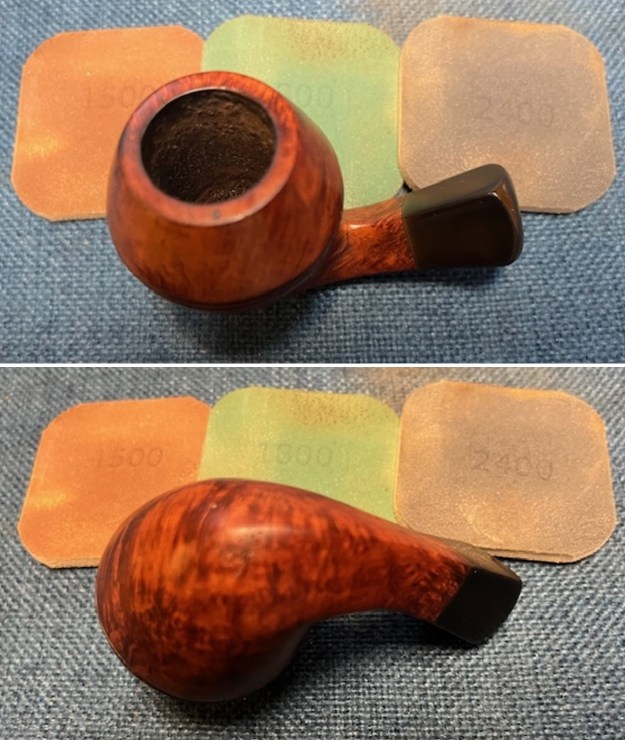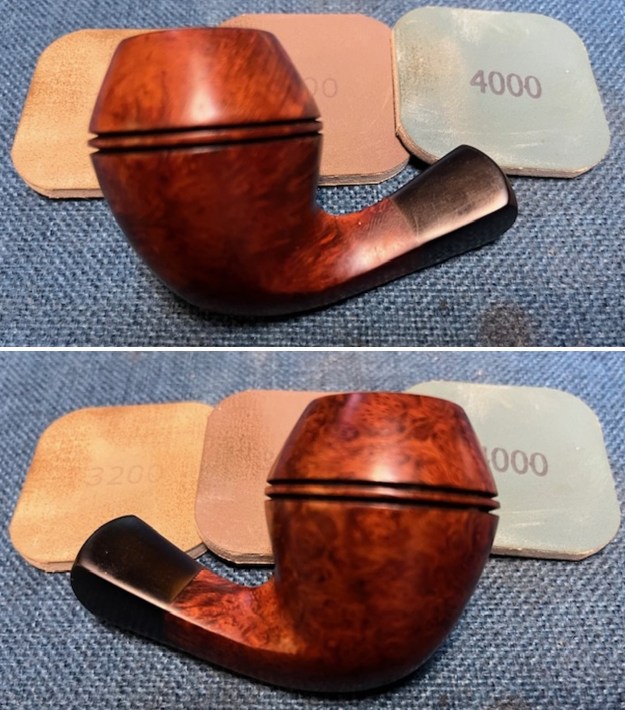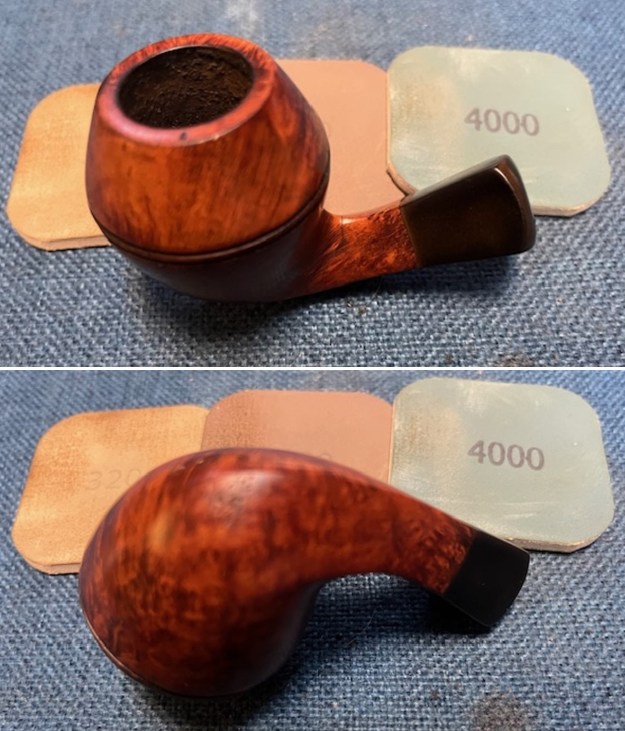
Tag Archives: Stanwell Pipes

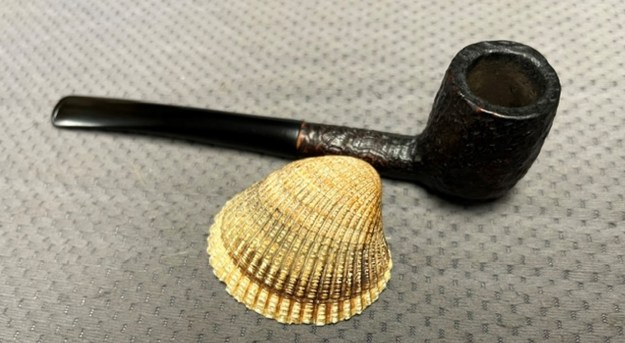
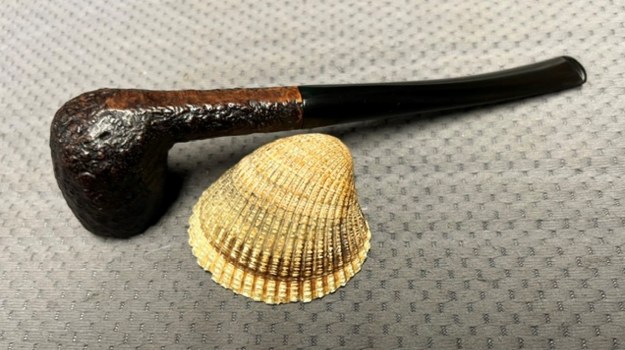
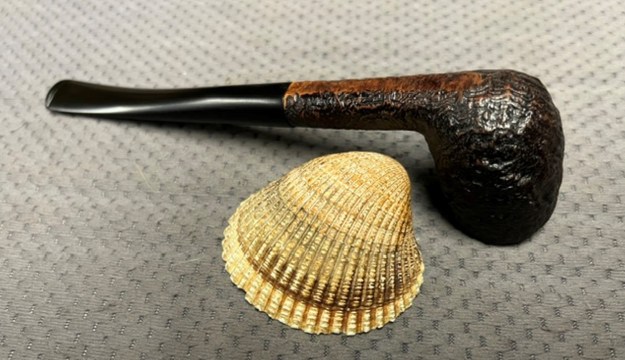
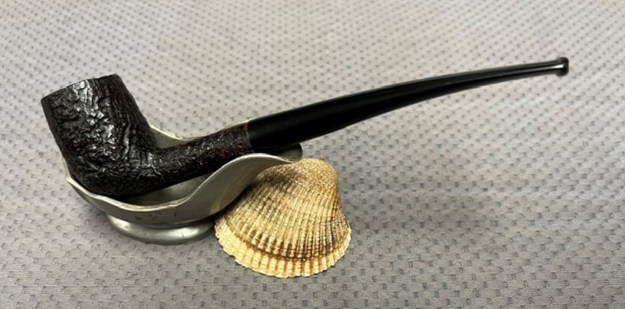
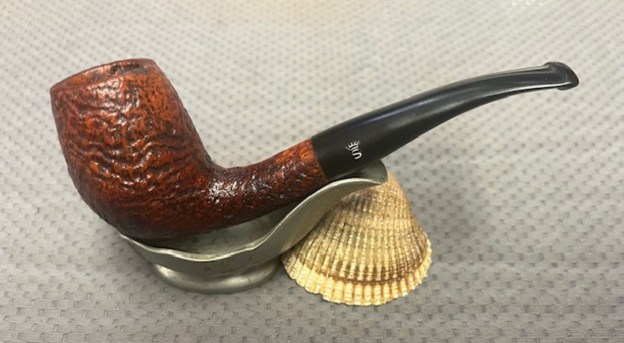
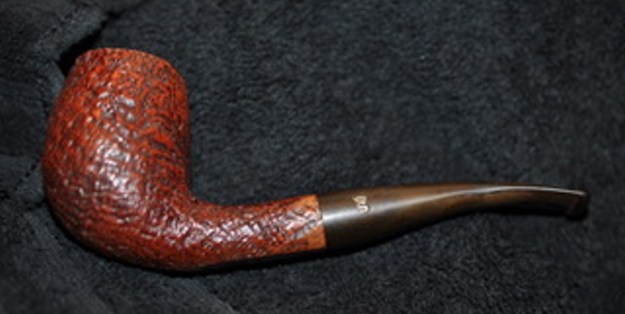
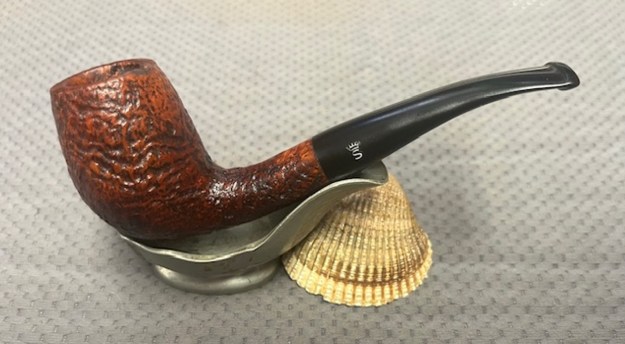
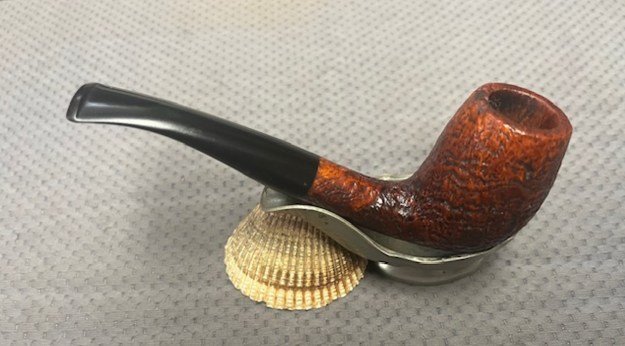
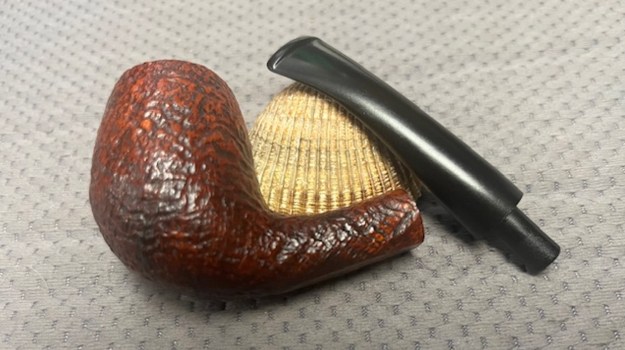
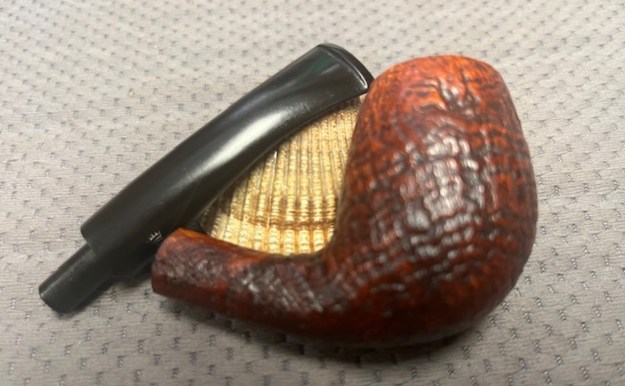
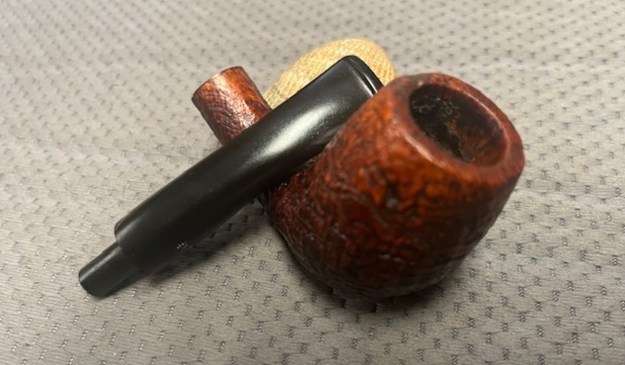
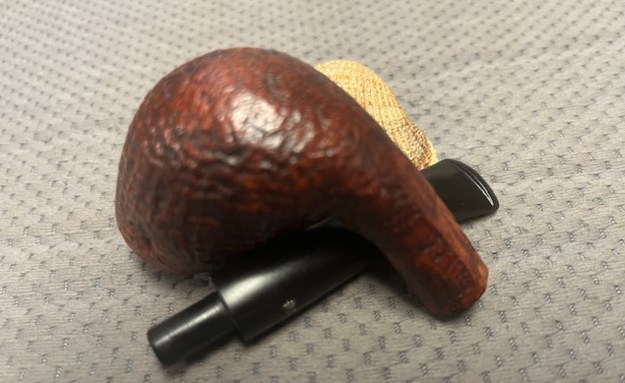
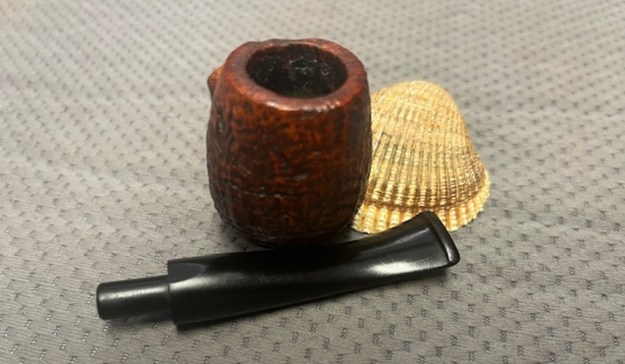
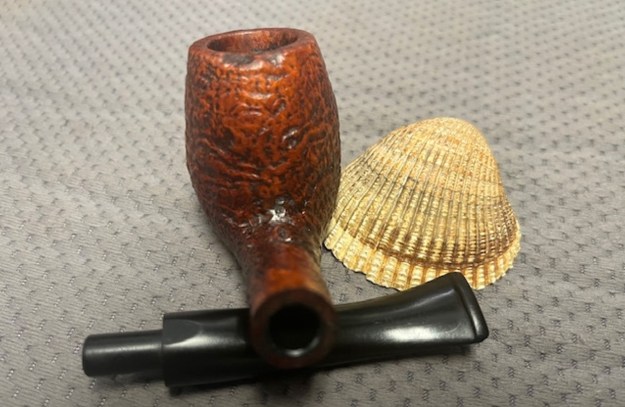
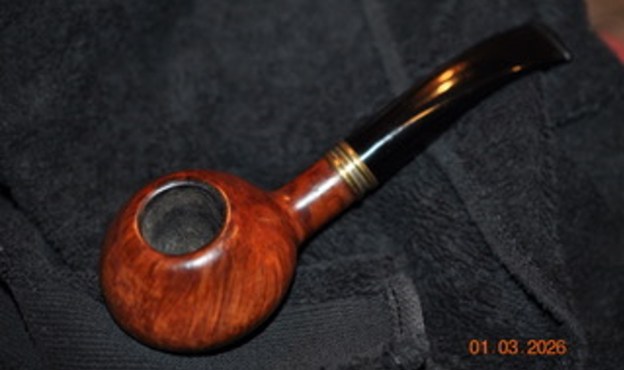
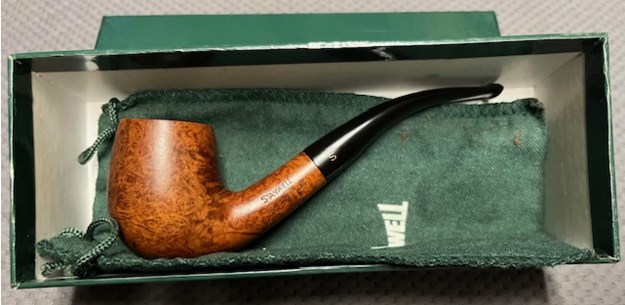
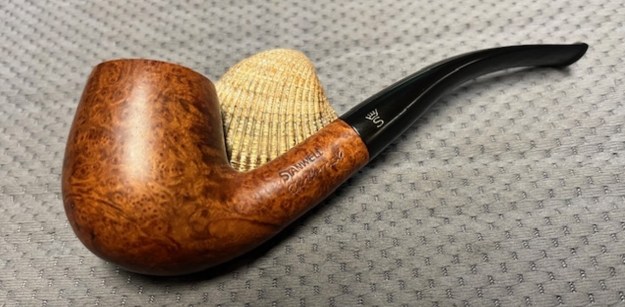
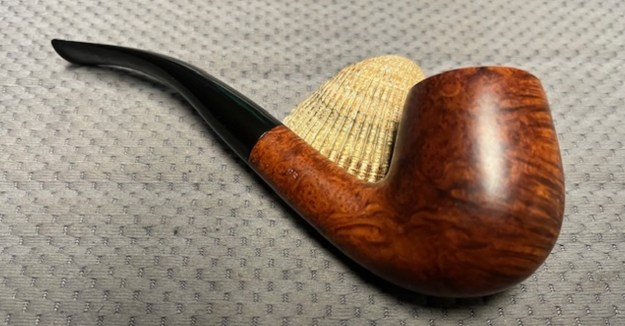
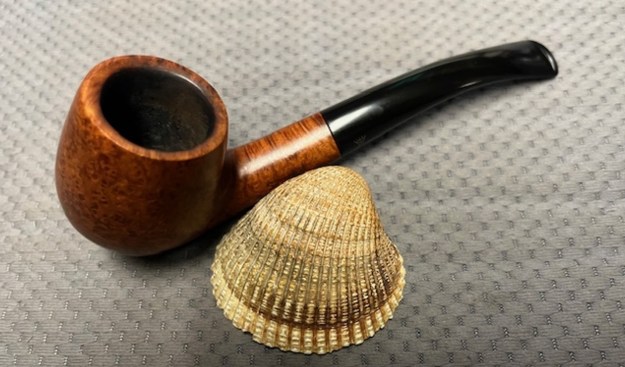
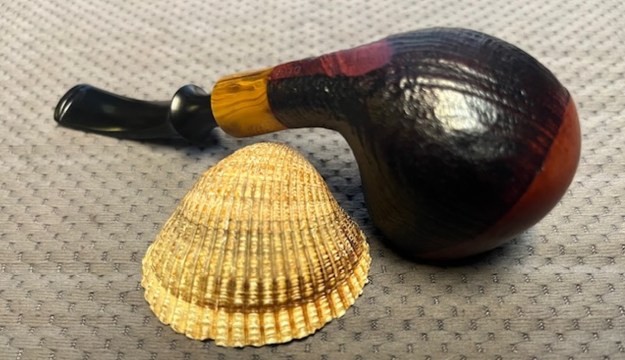
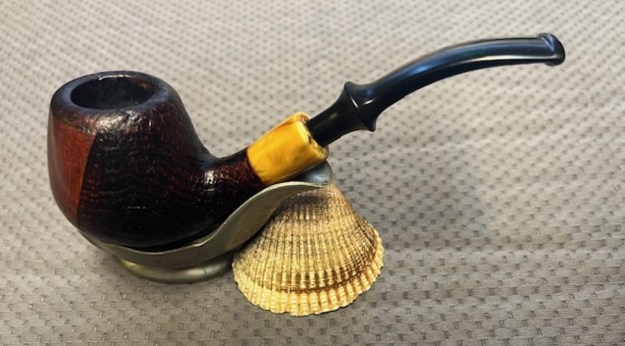
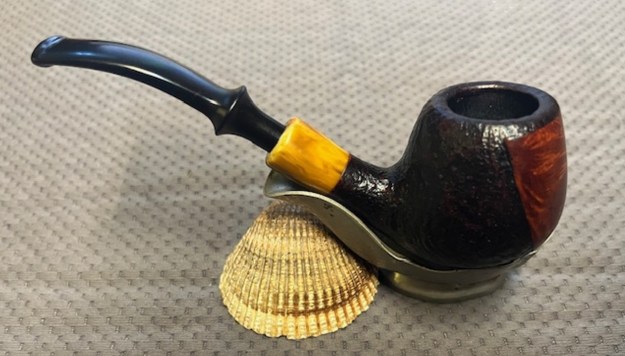
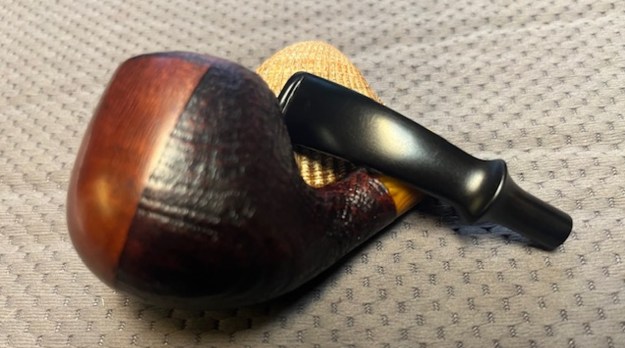
Restoring a Badly Damaged Stem on a Danish Made Stanwell 608 Bent Apple


by Steve Laug

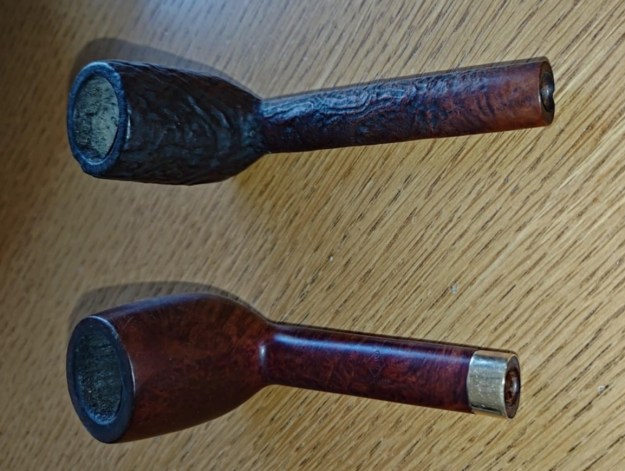
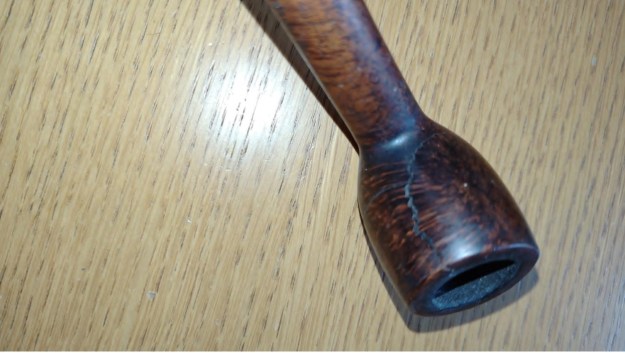
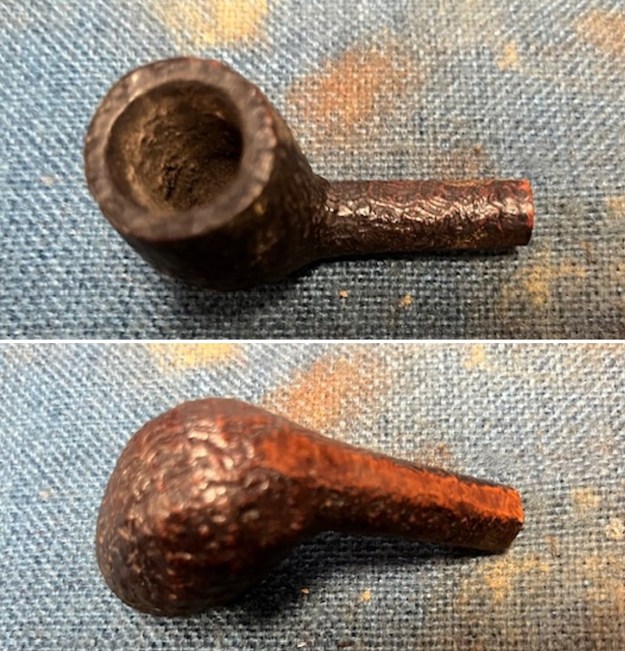
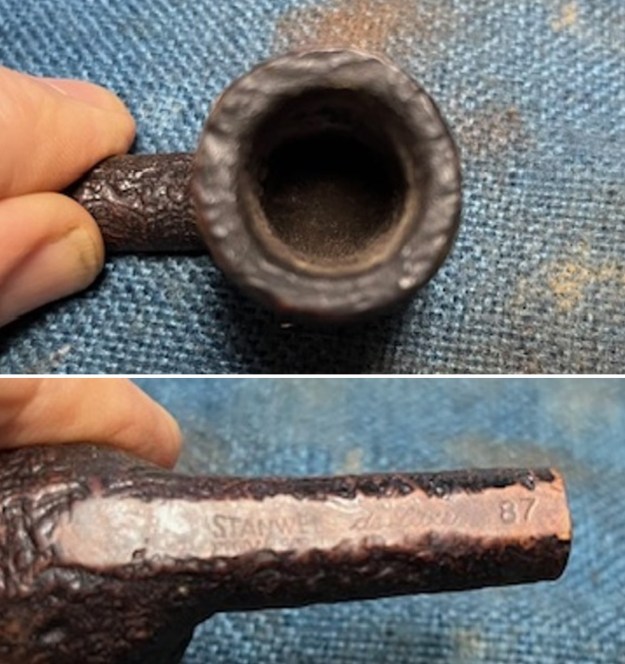
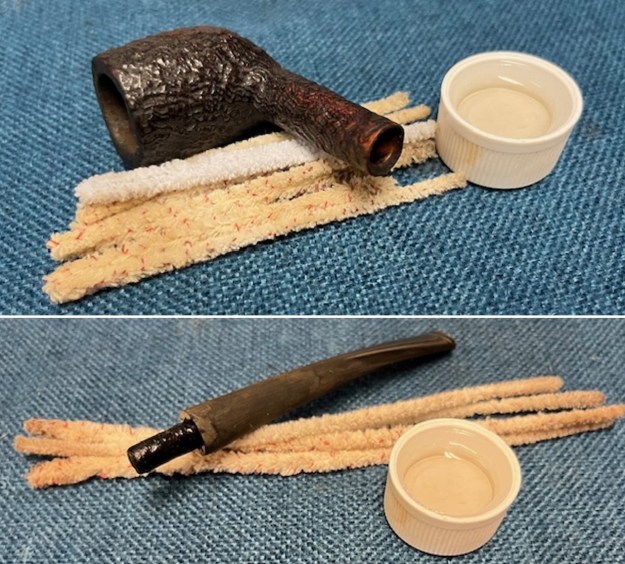
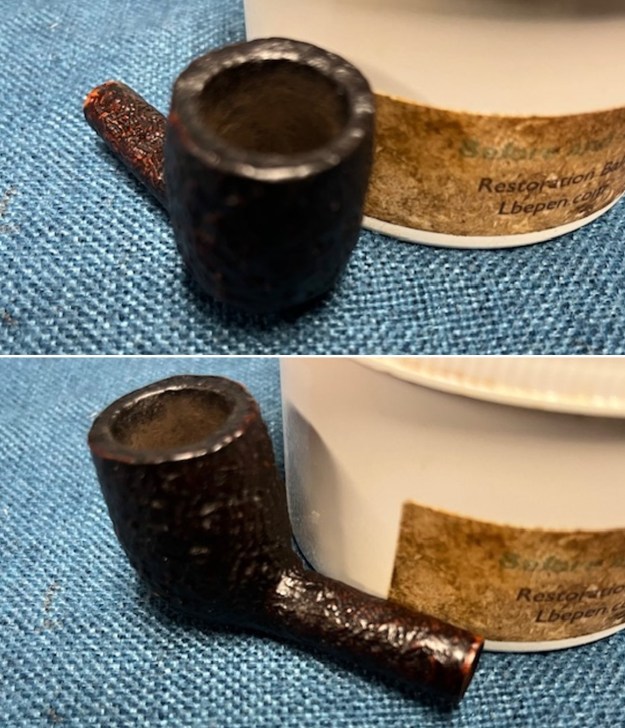
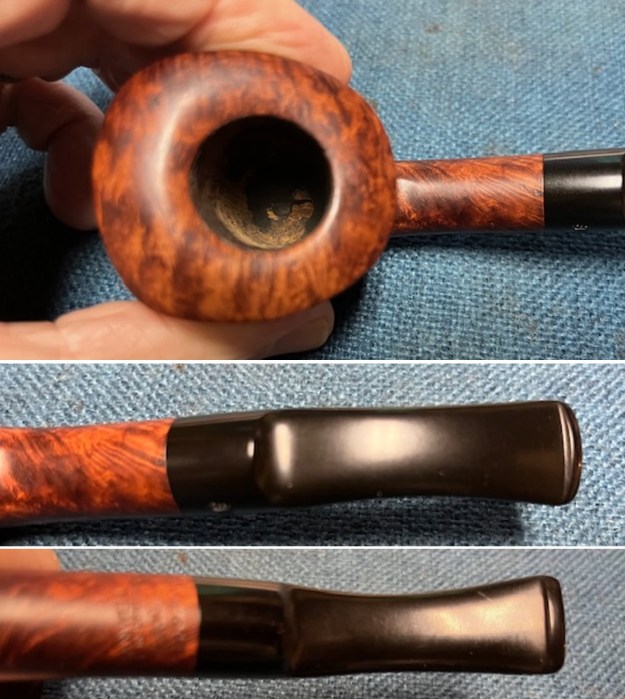
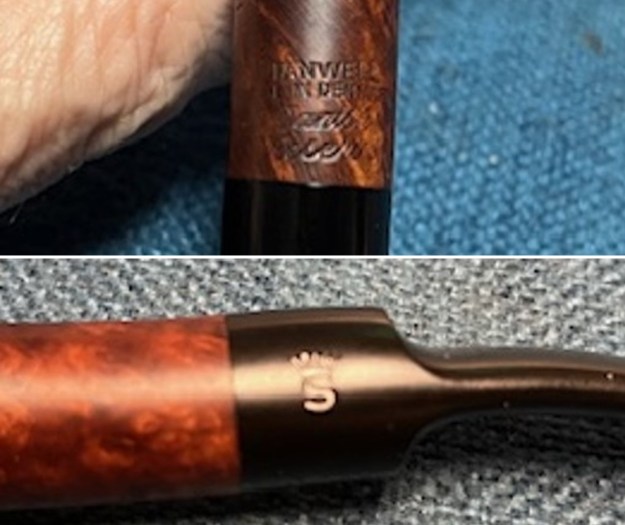
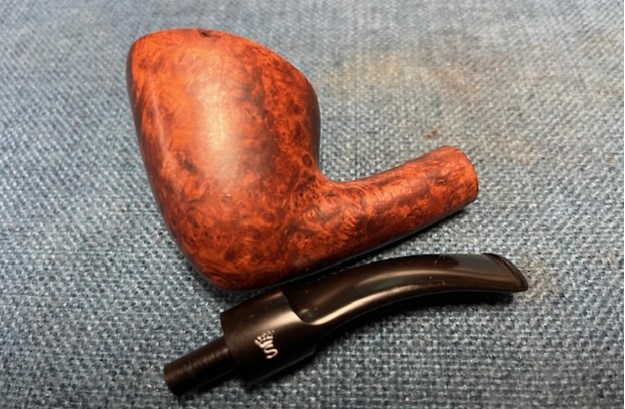
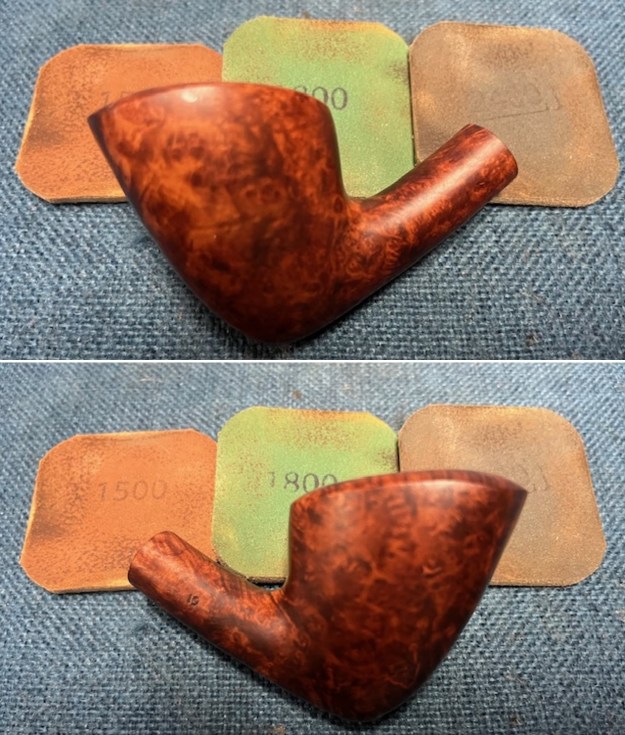
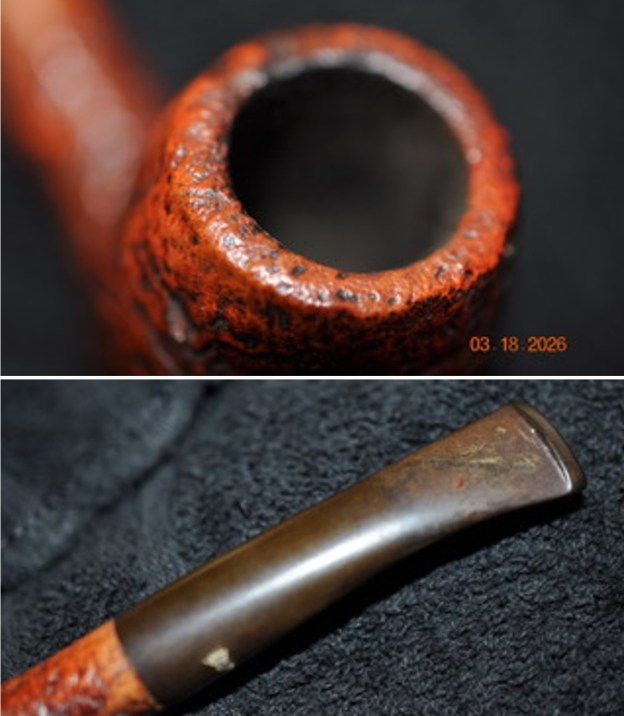
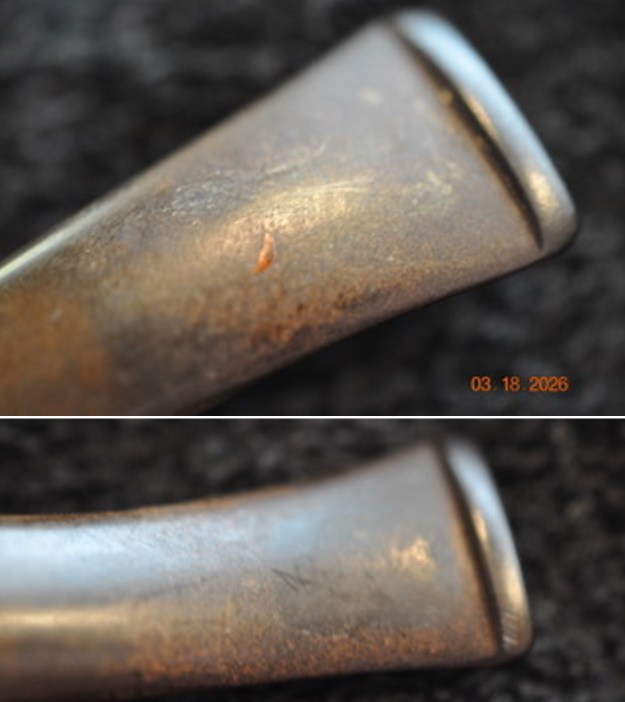
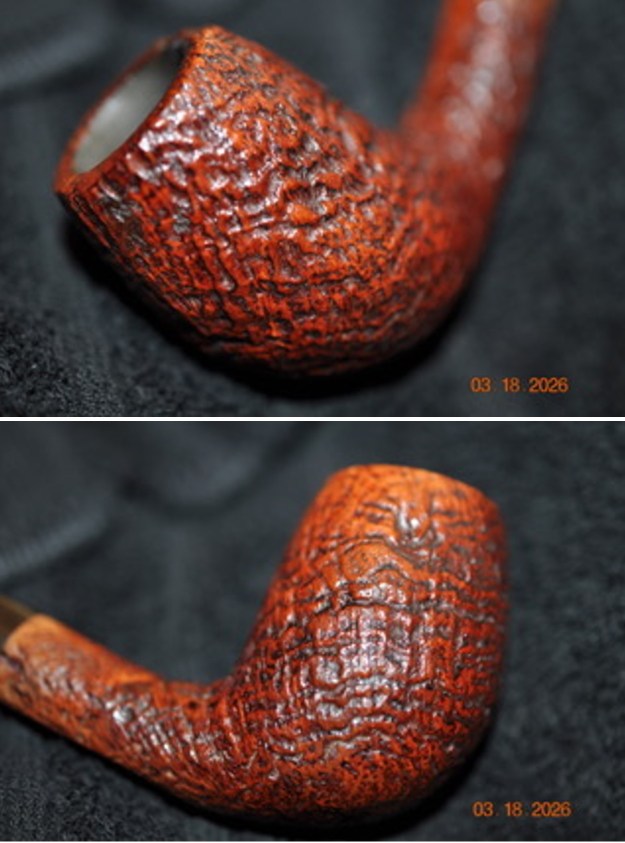
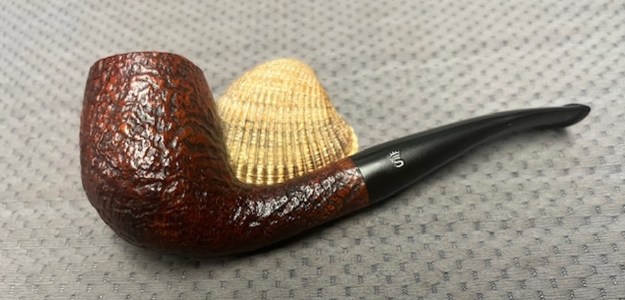
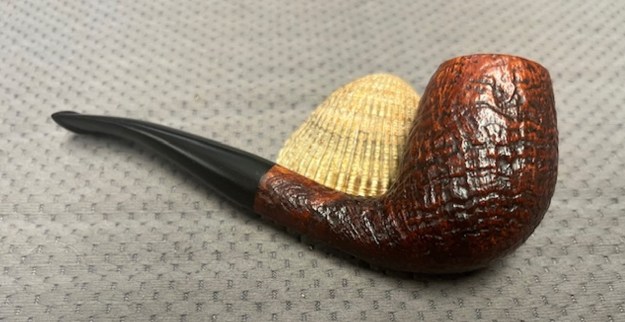
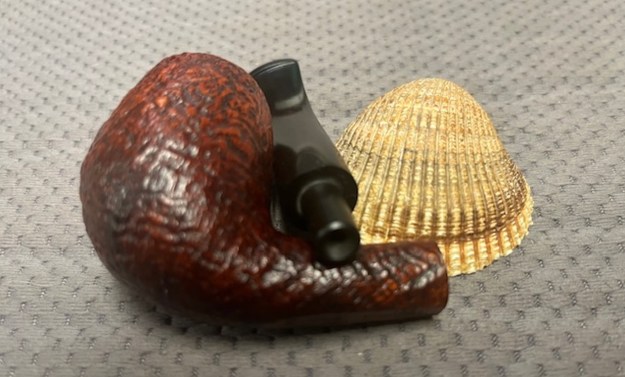
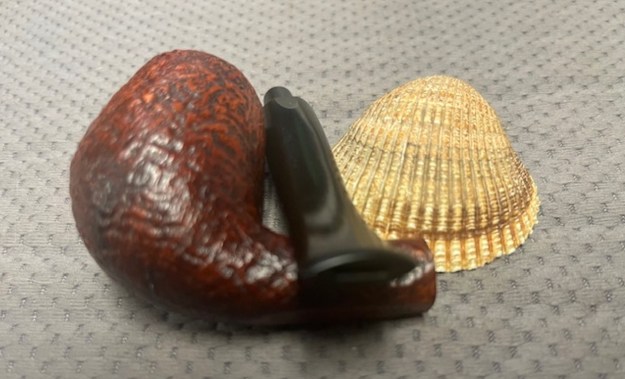
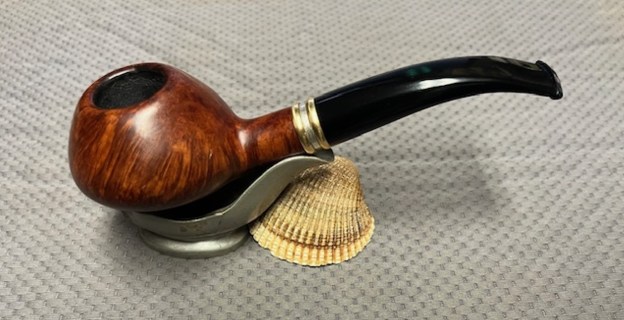
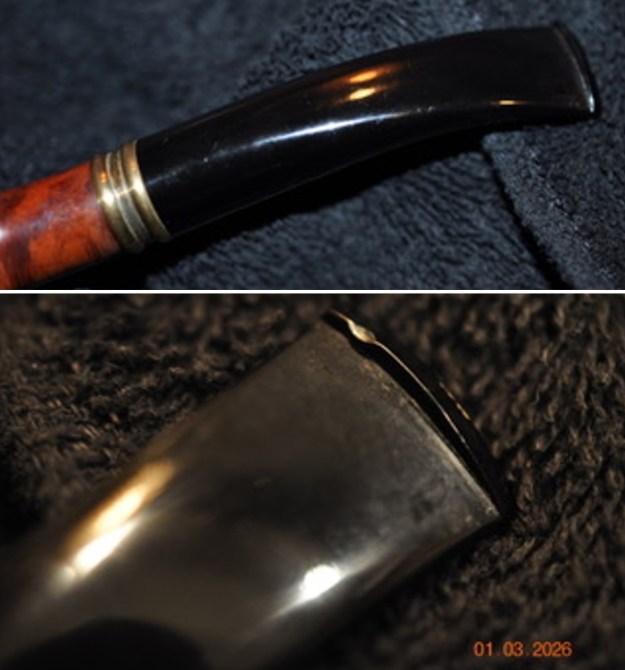
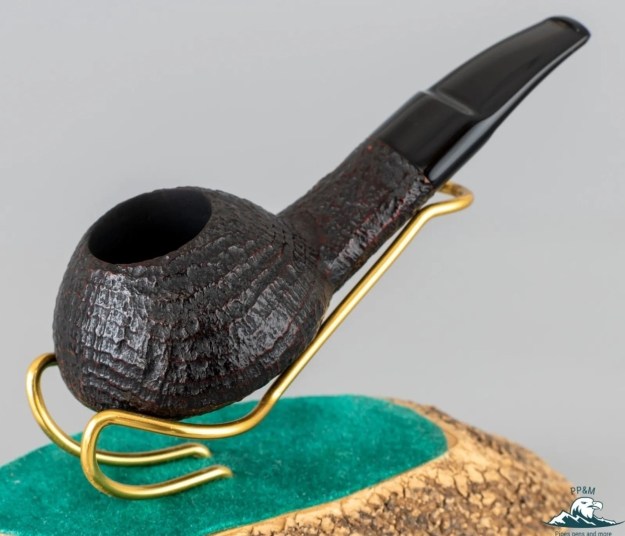
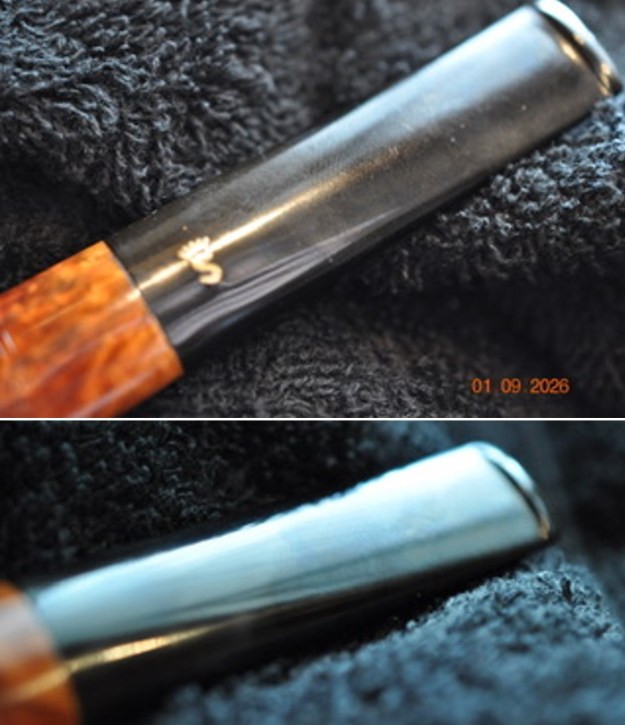
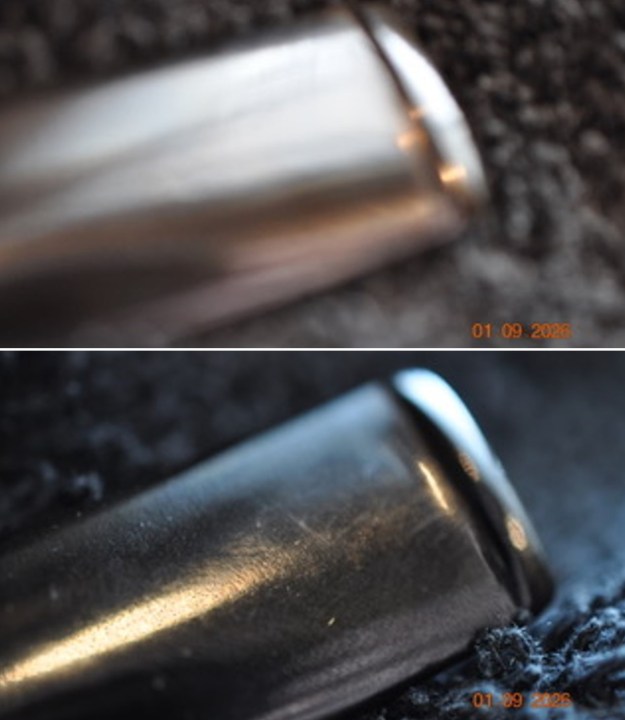
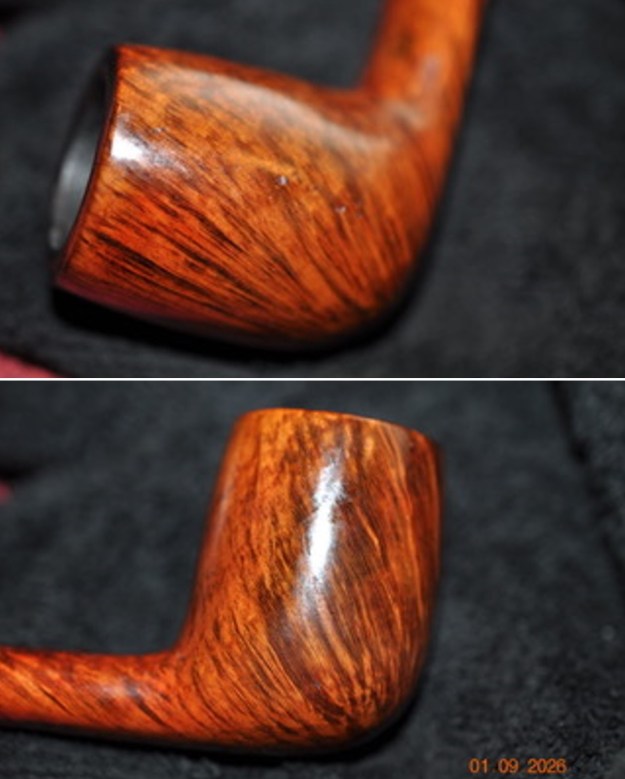
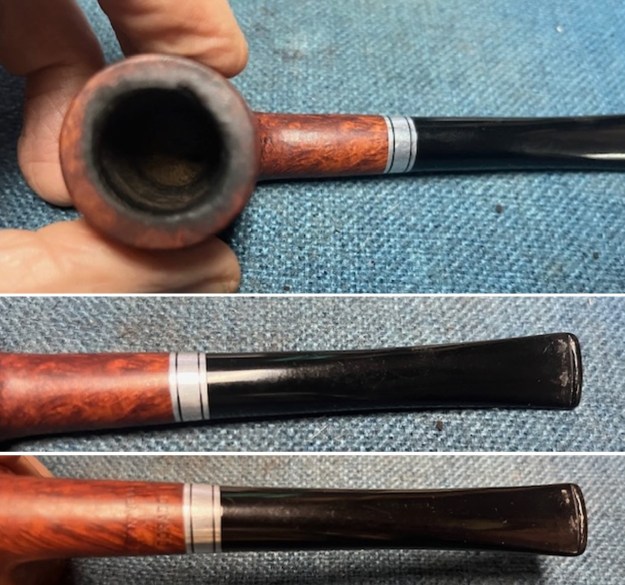
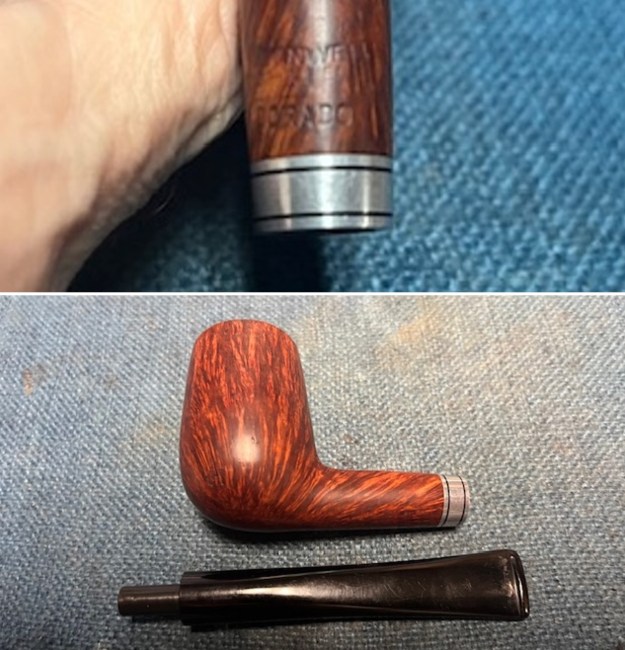
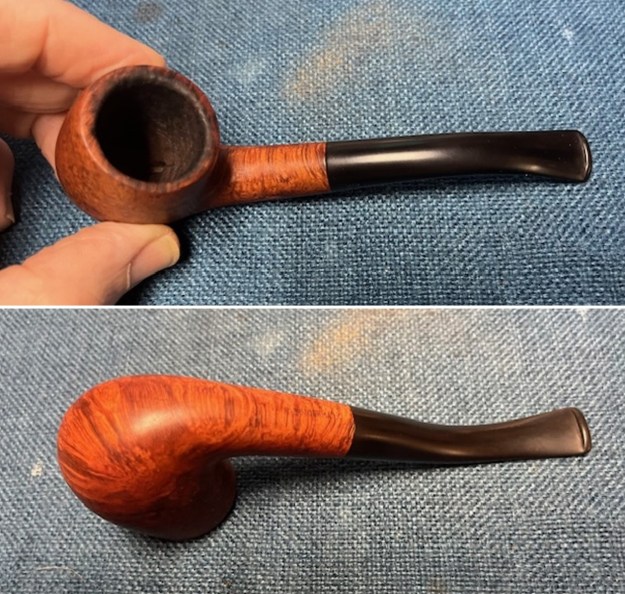
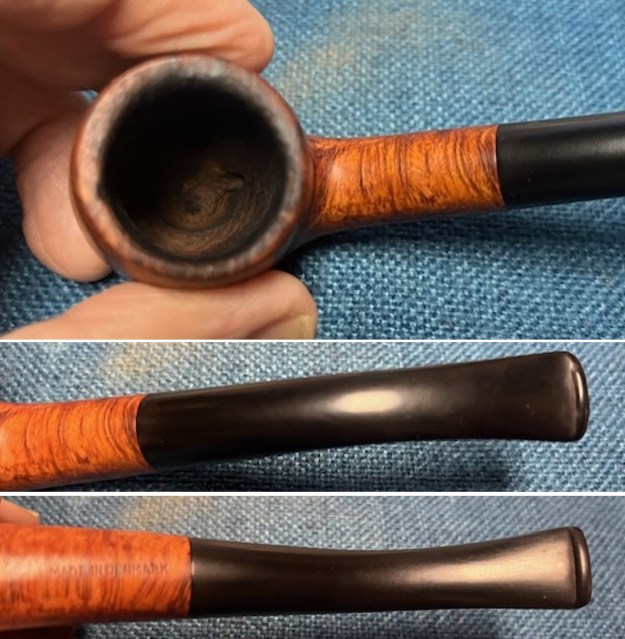
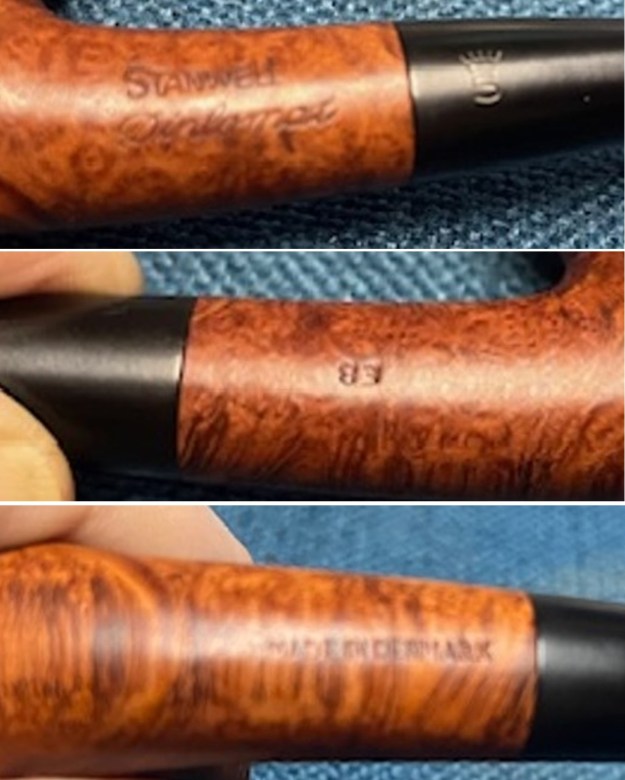
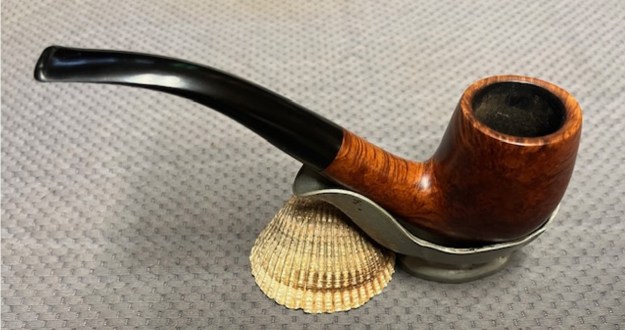
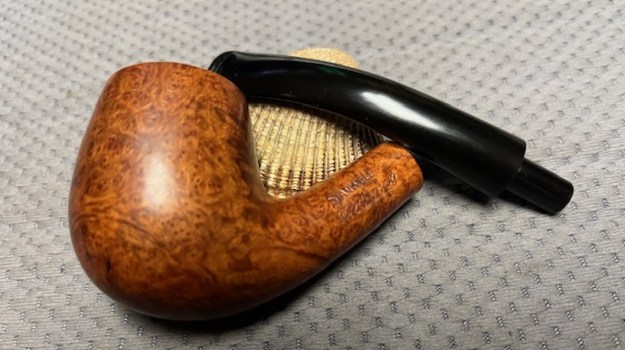
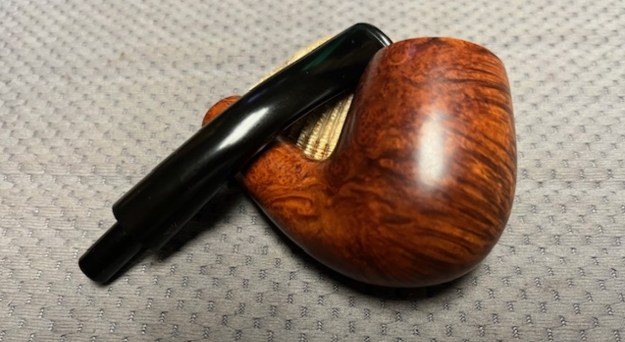
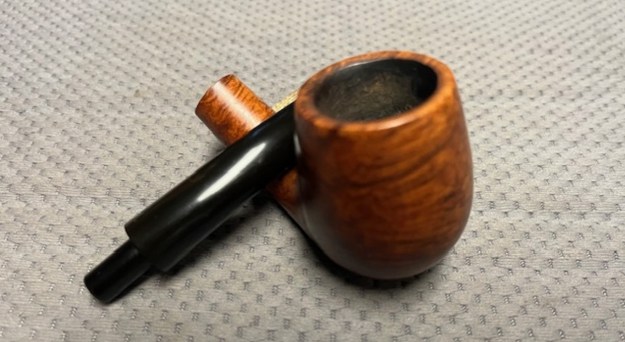
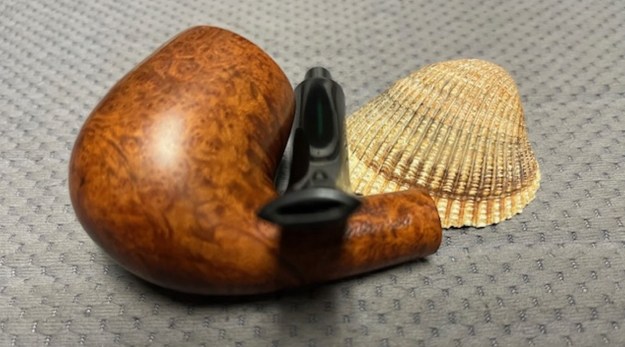
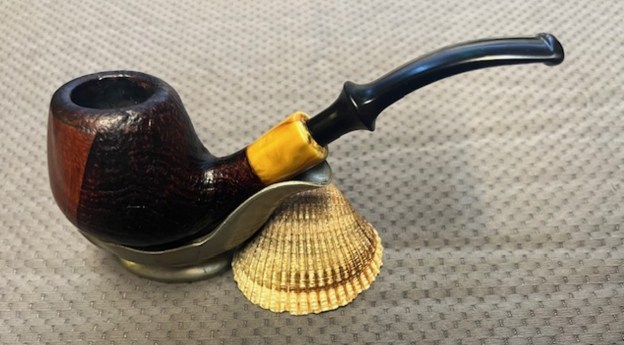
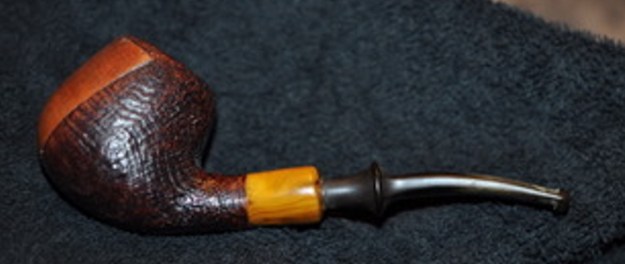
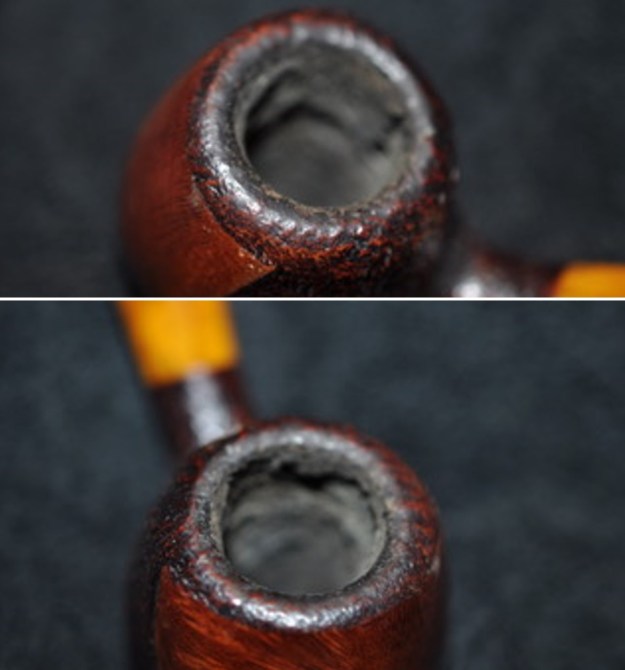
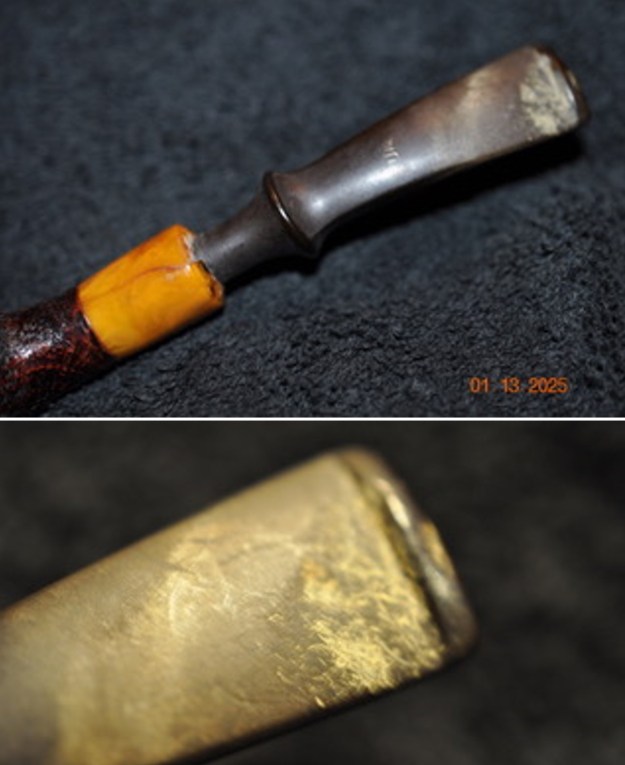
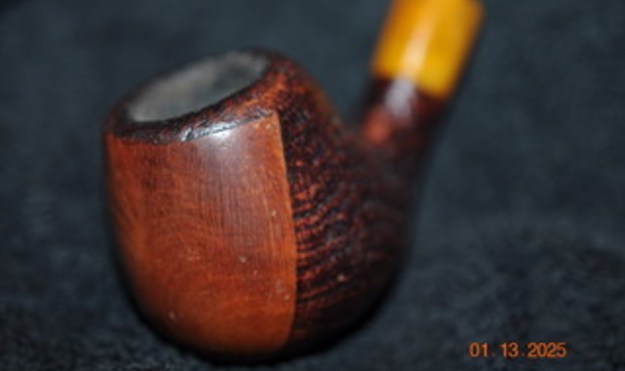
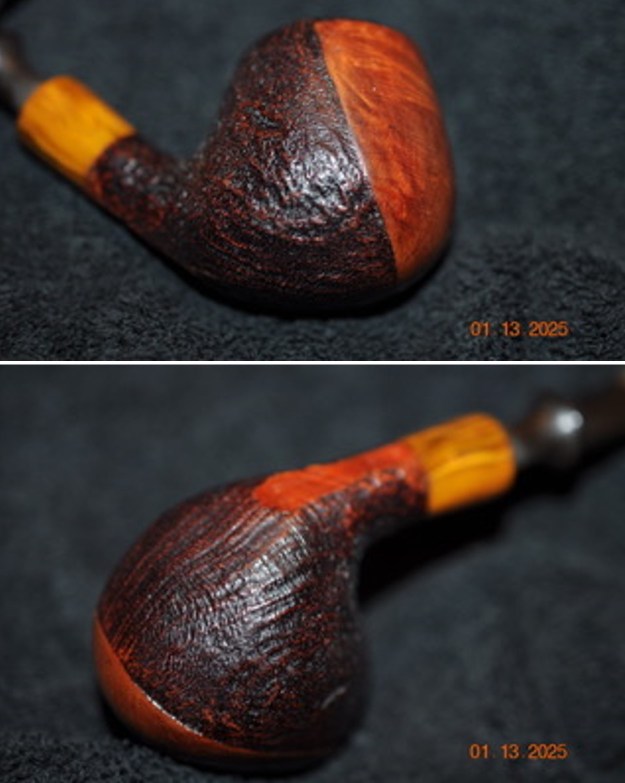
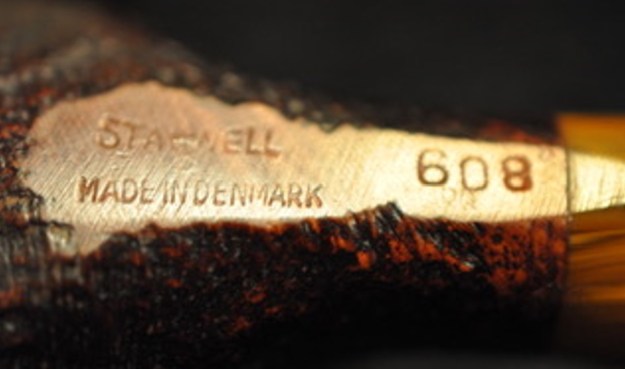
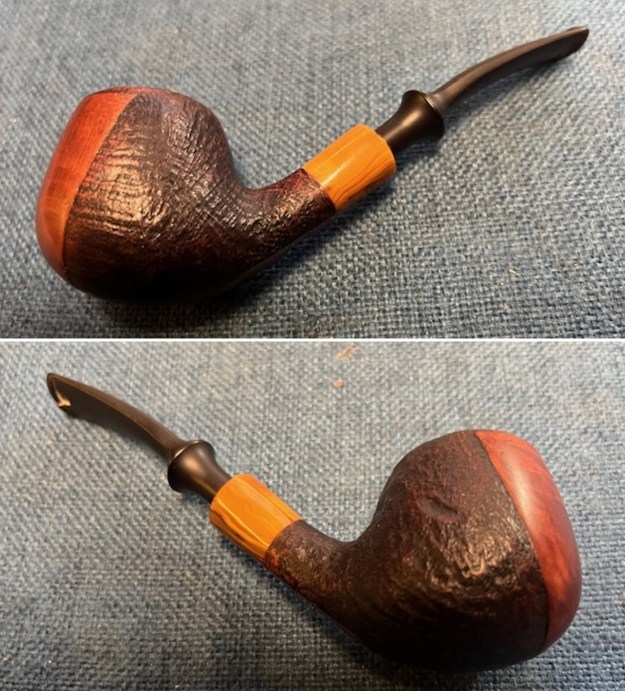
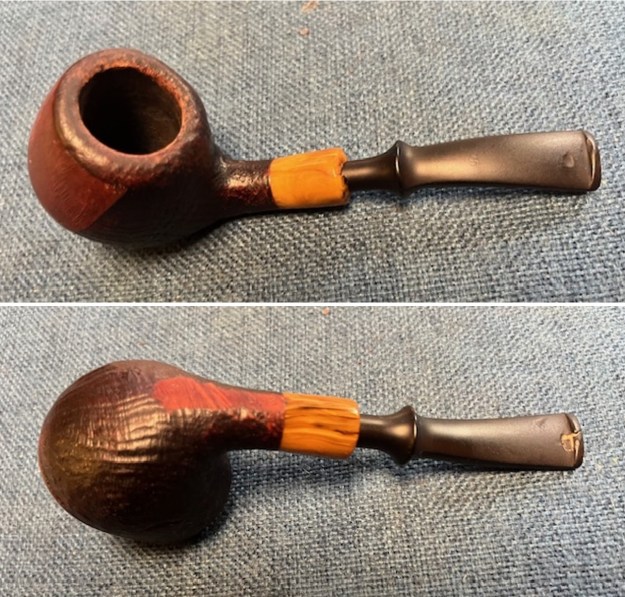
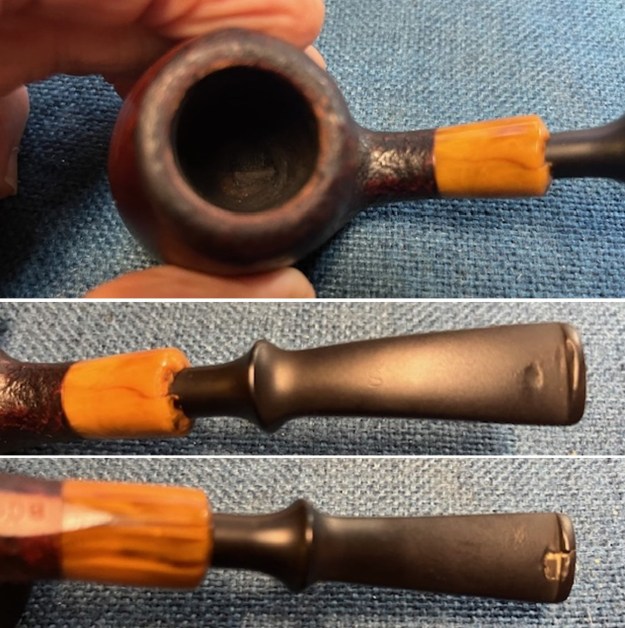
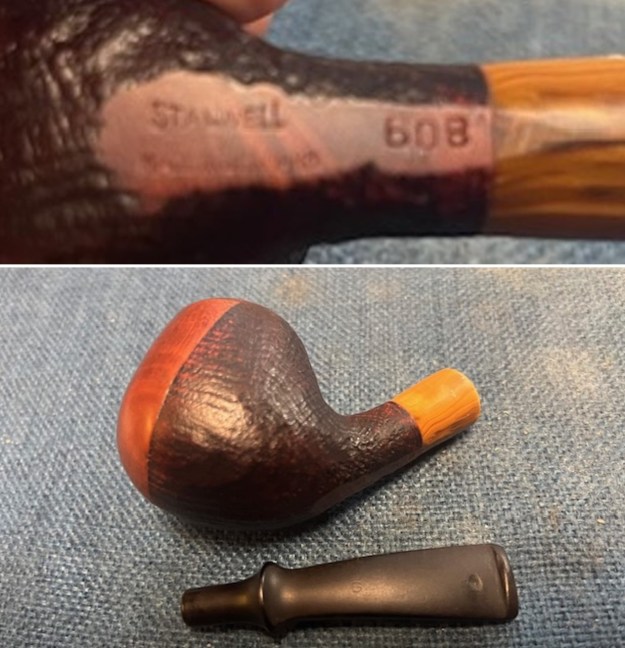
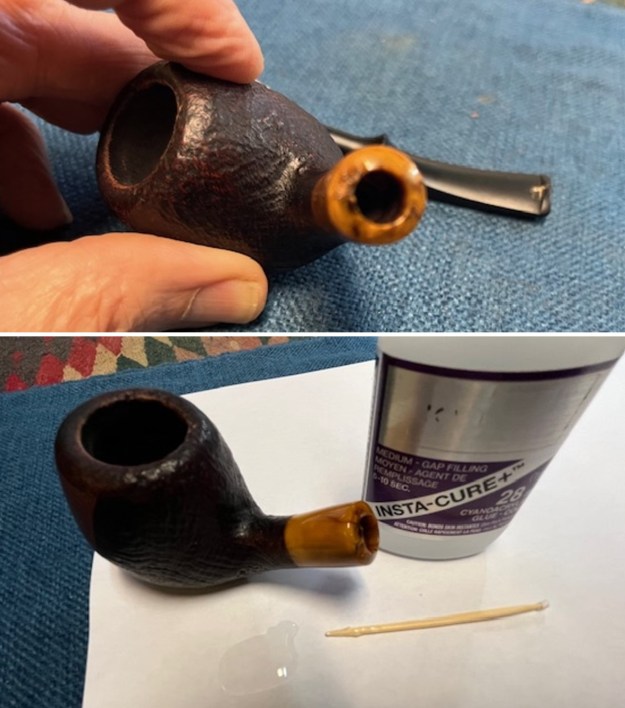
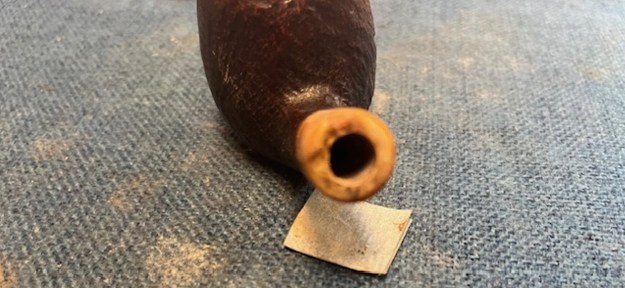
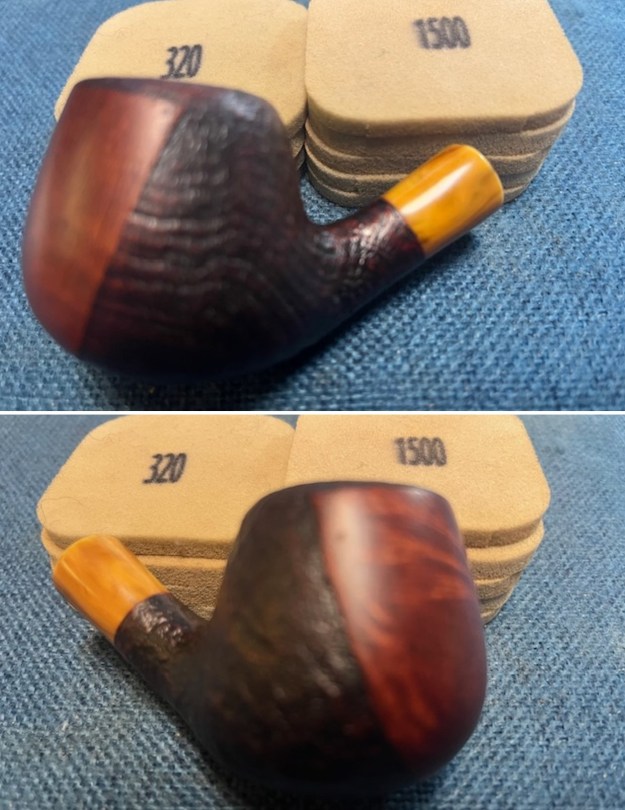
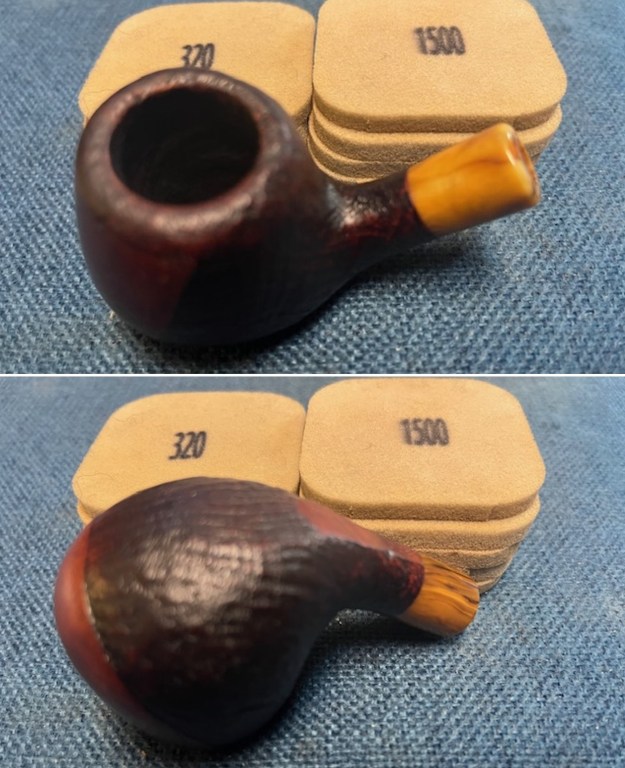
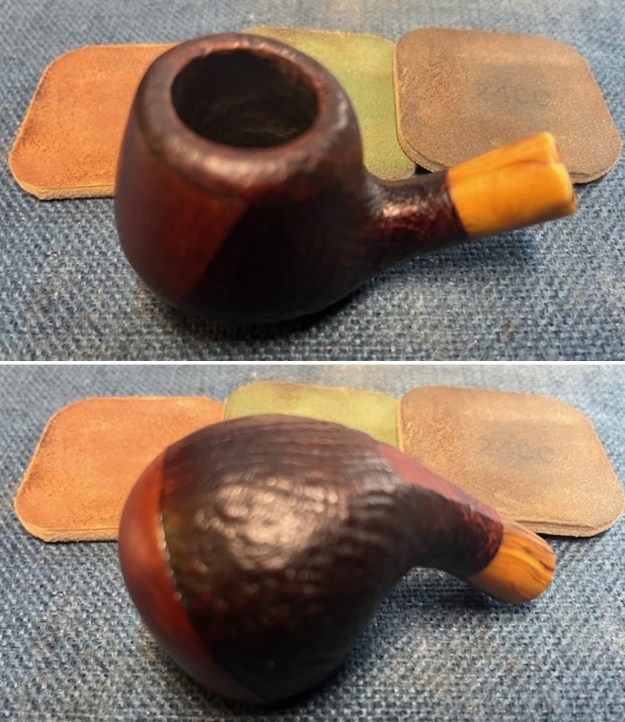
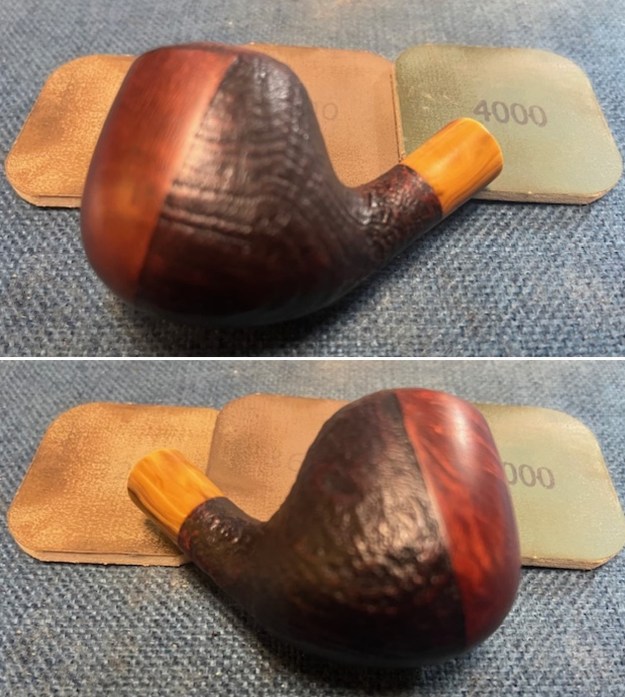
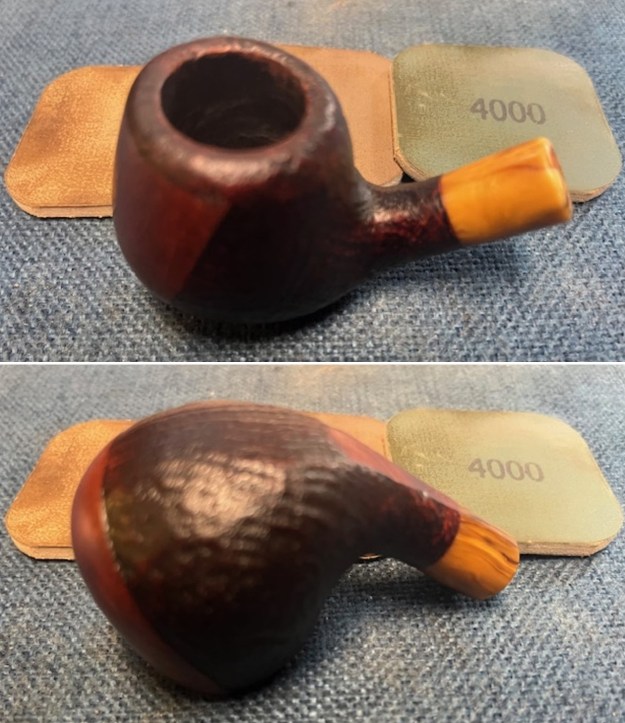
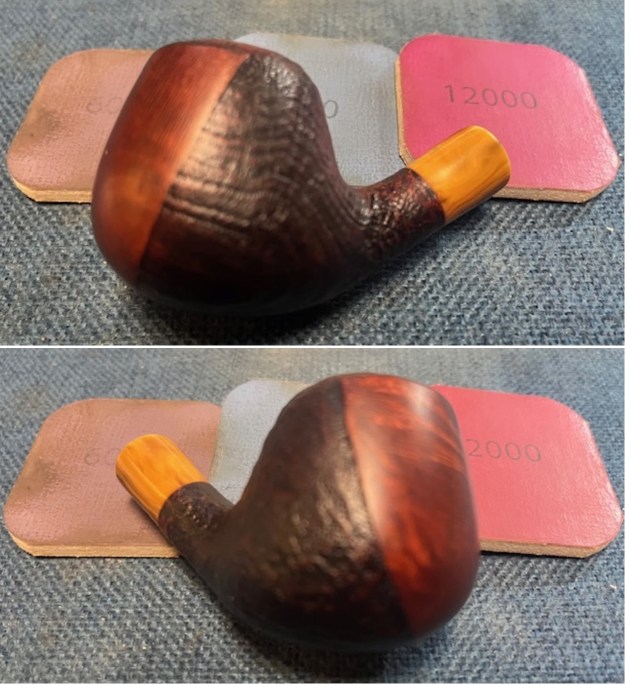
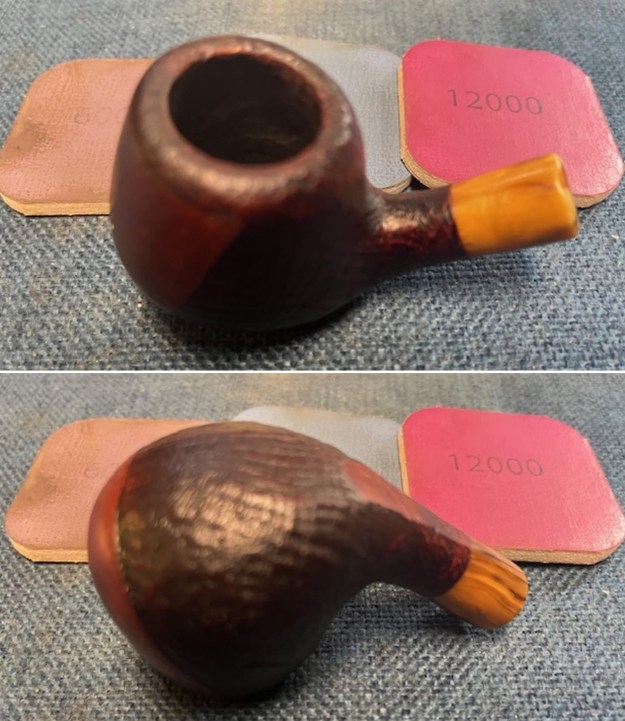
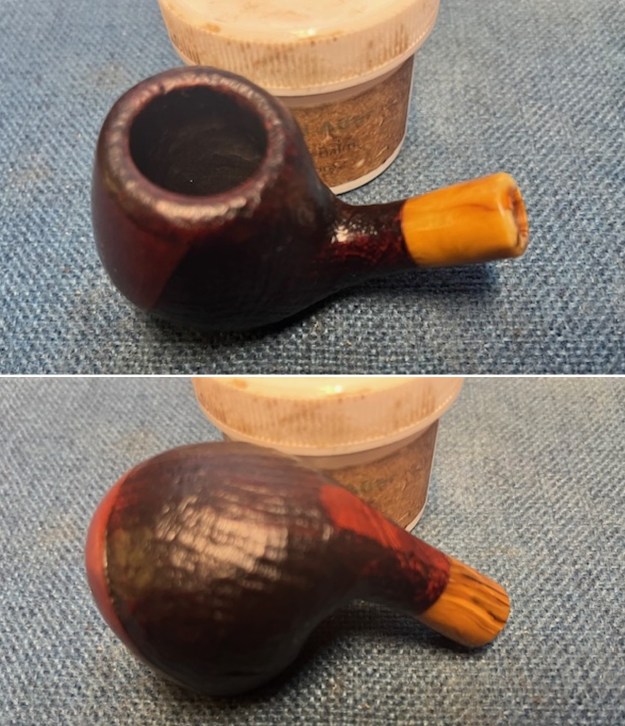
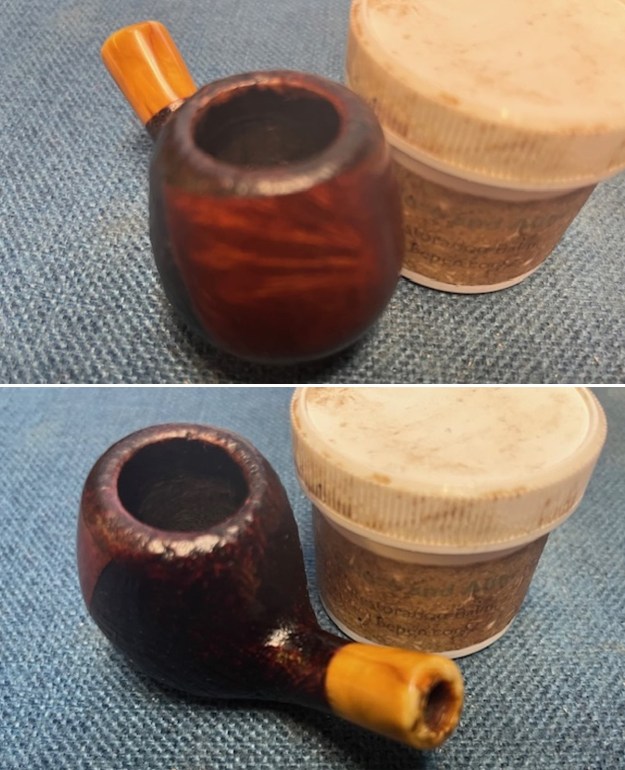
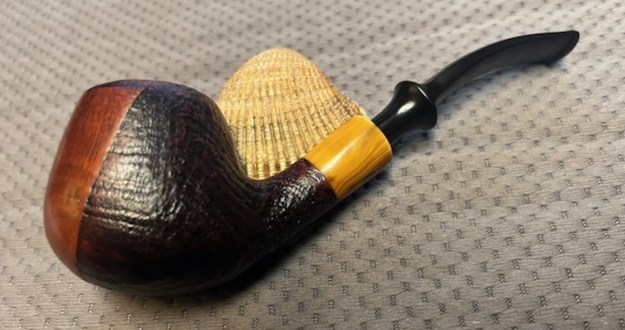
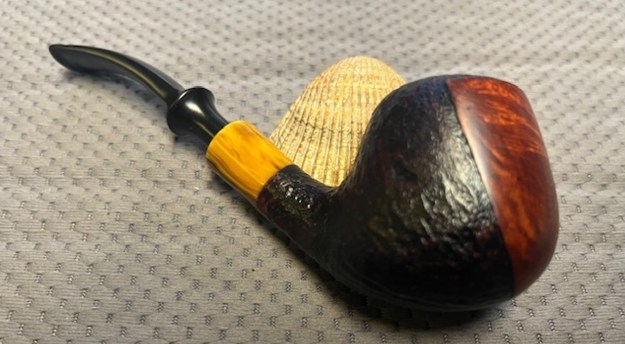
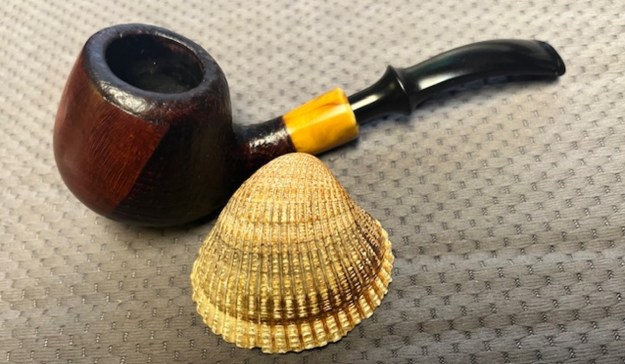
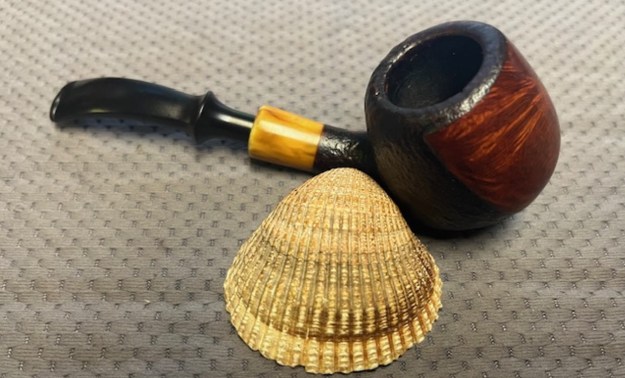
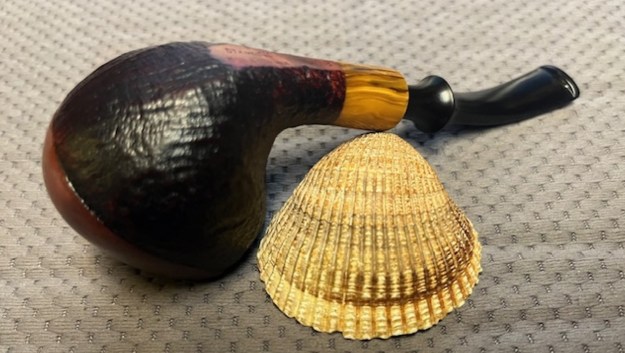
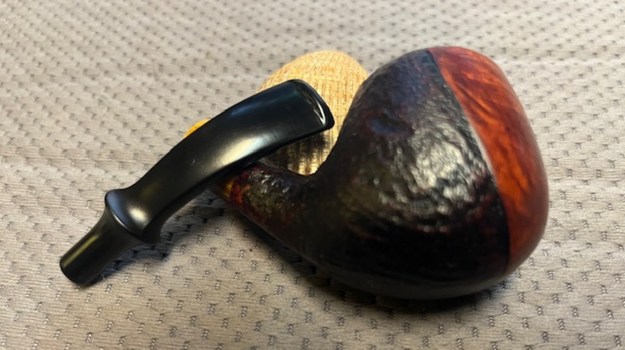
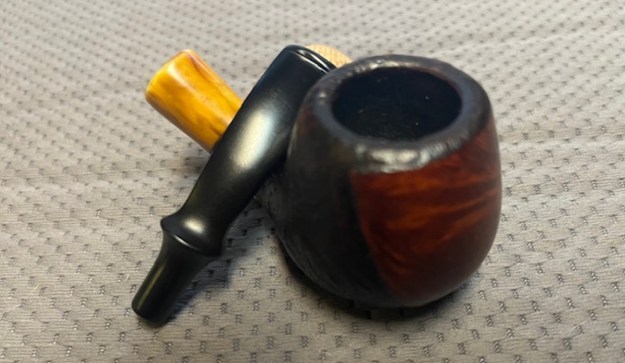
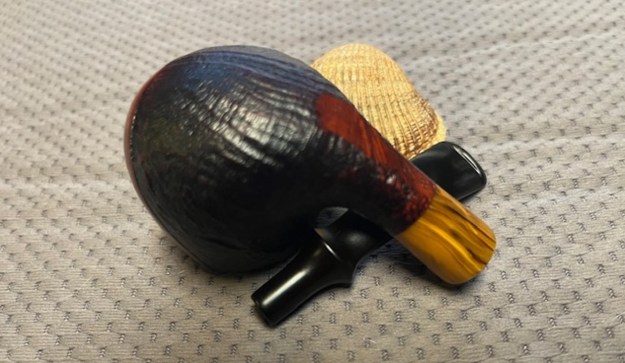
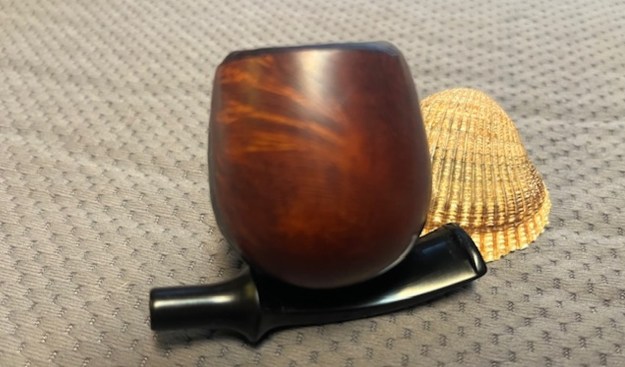
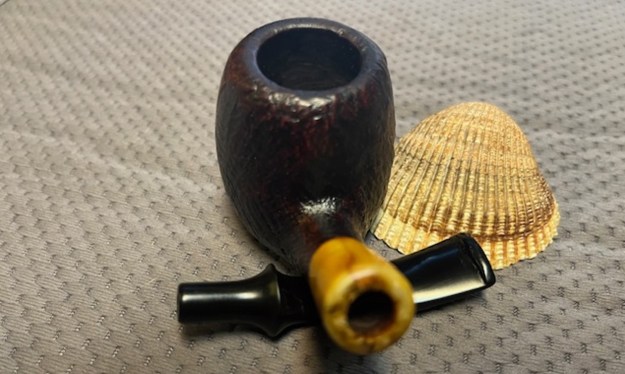
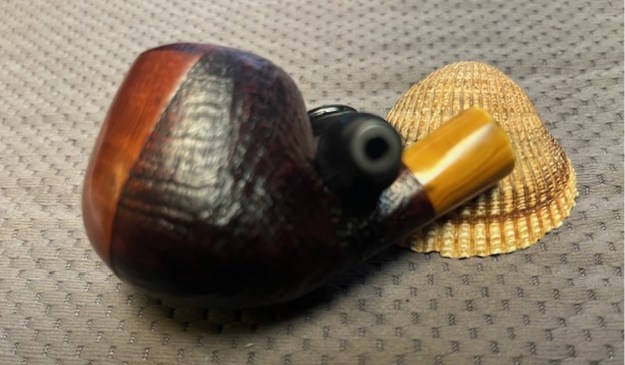
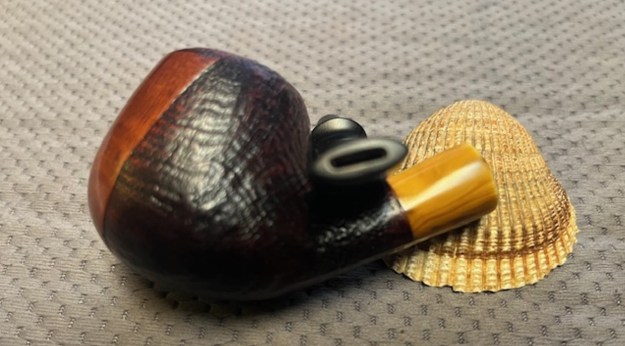
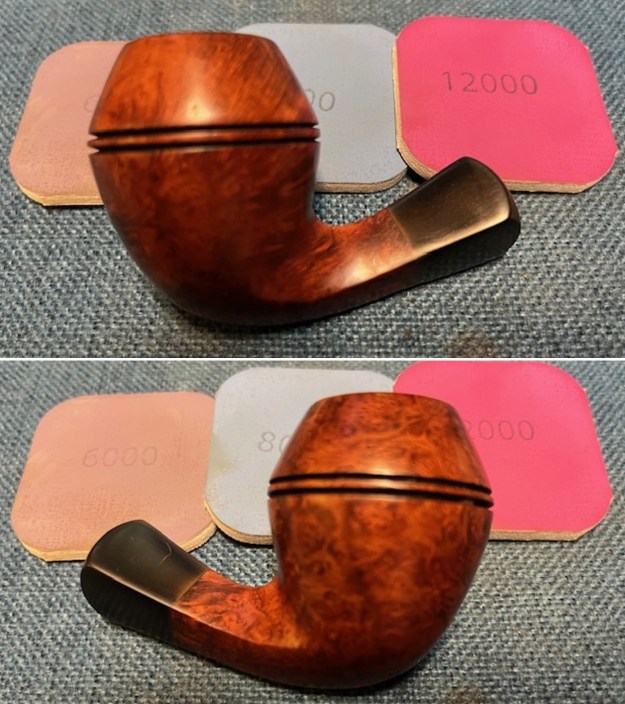
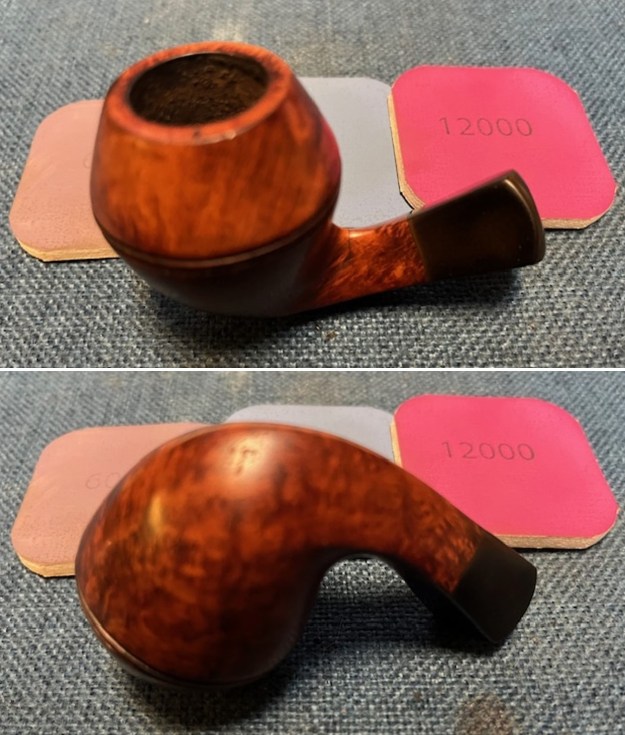
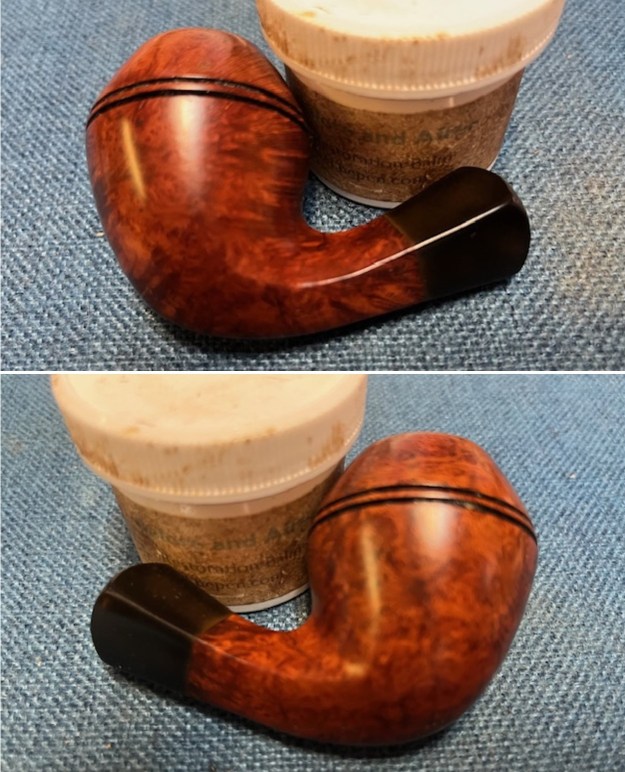
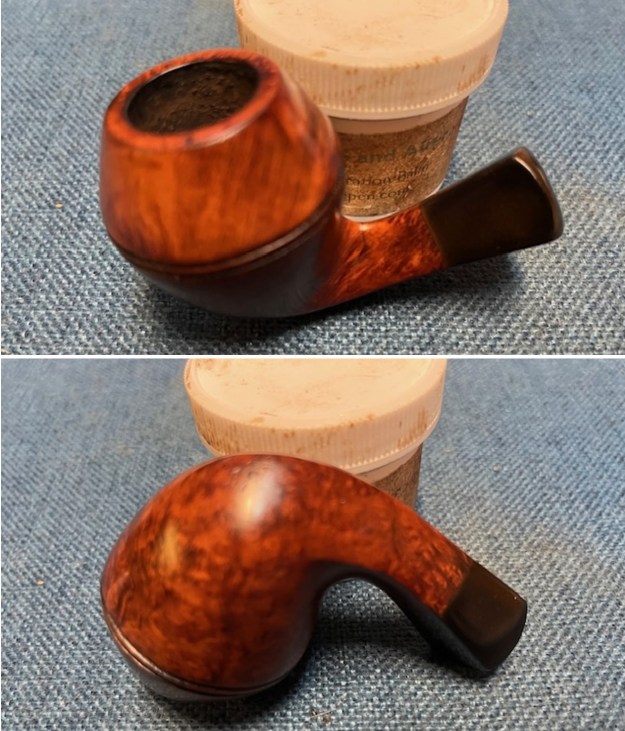
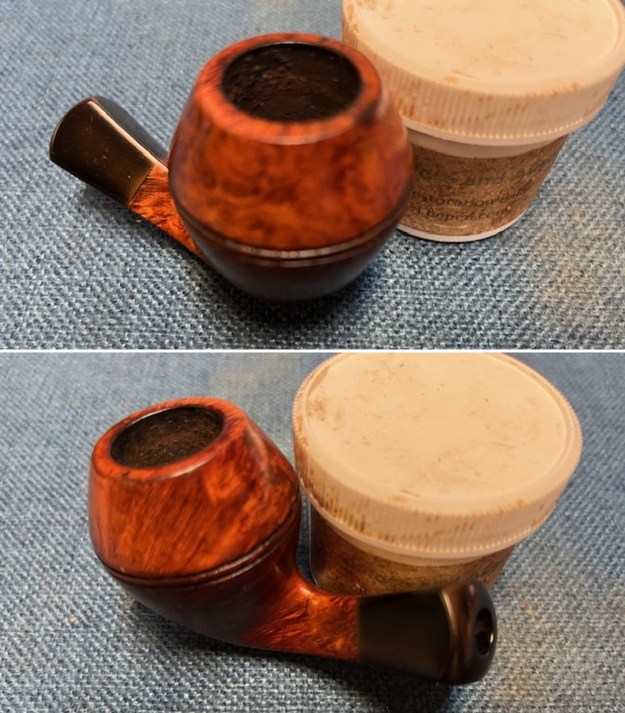
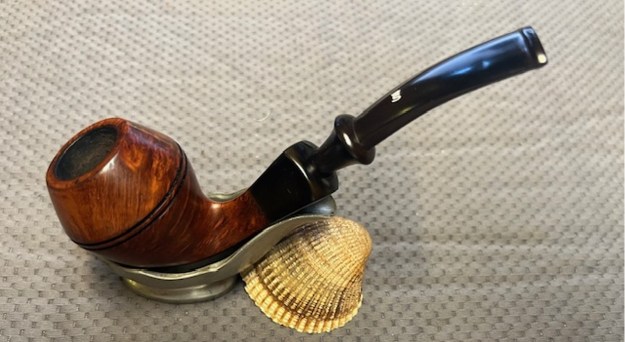
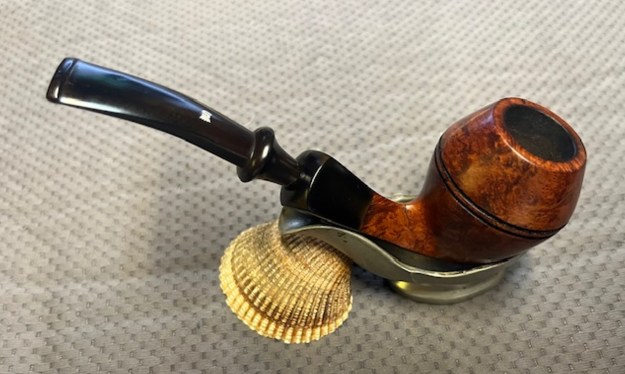
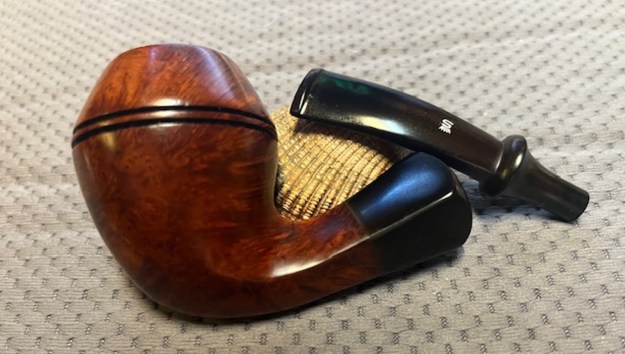
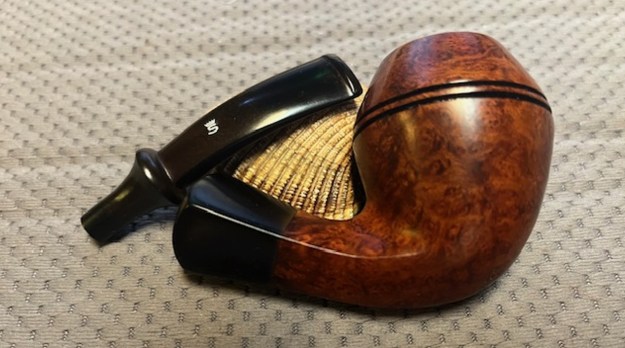
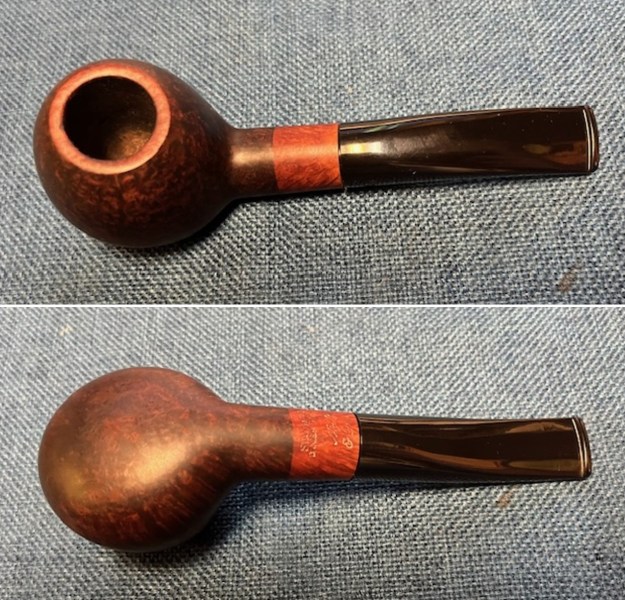
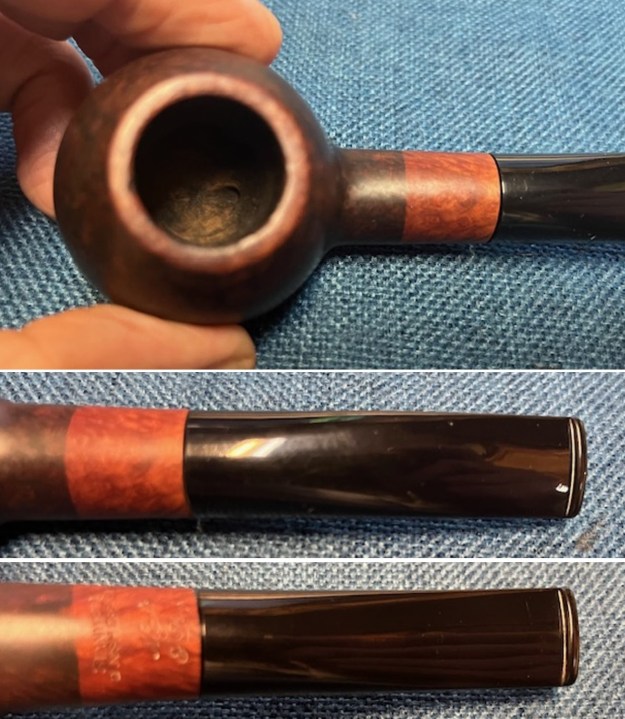
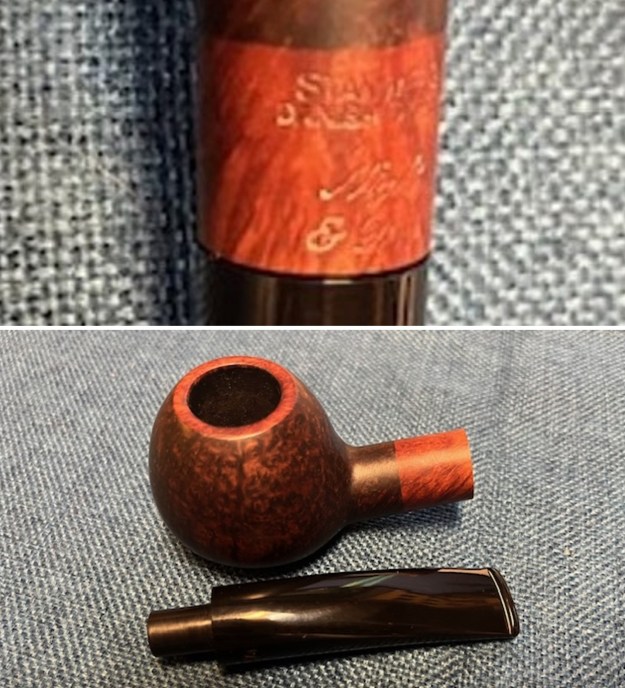
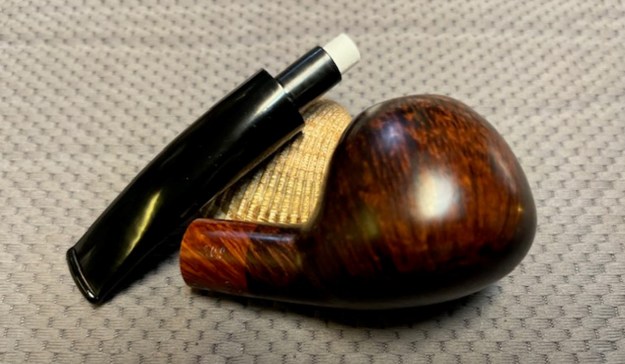
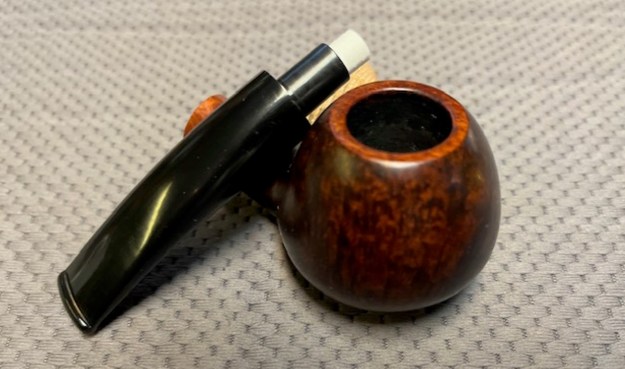
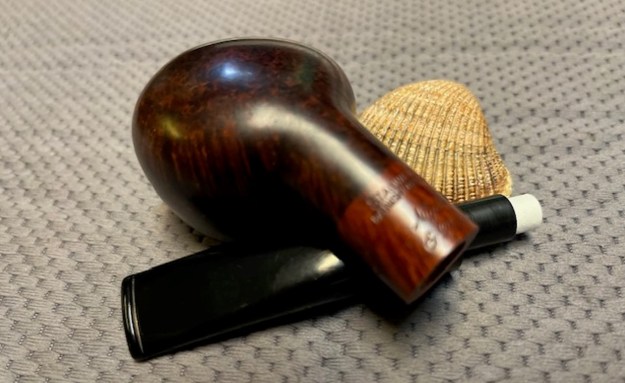
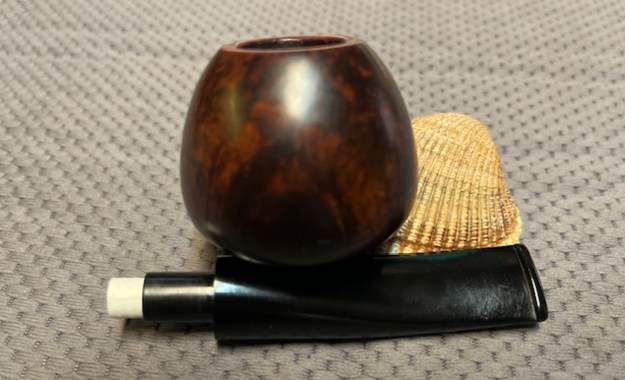
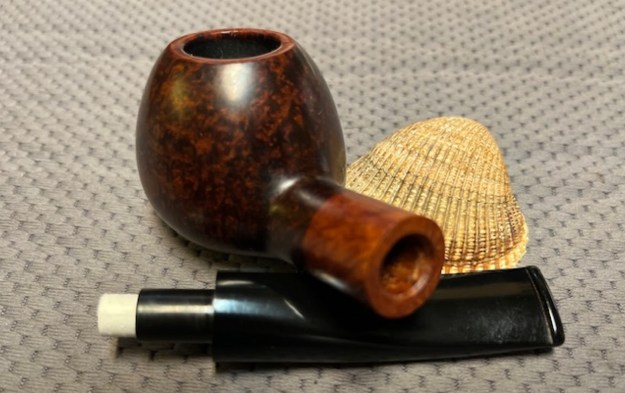
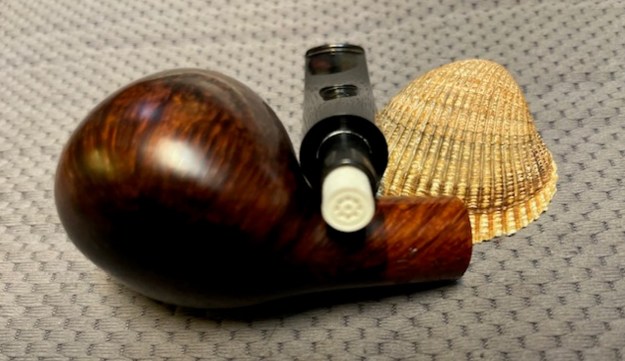
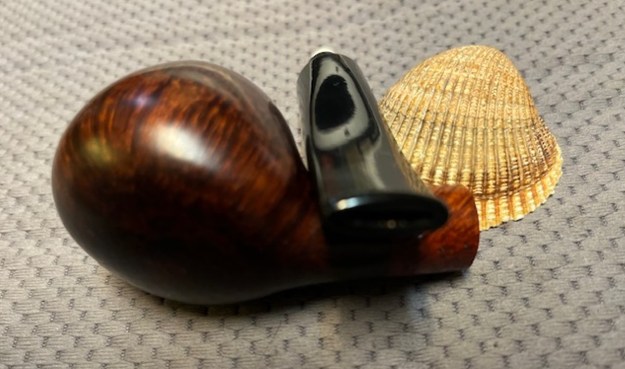
The next pipe I have chosen is a Classic Stanwell Vario style pipe. The pipe has a mixed finish of sandblast and smooth finishes. There is a shank extension that is faux horn and golden. We purchased it from the seller on 09/04/2020 in Gonzales, Louisiana, USA. The contrast of the brown stains on this pipe makes the smooth grain and depths of the sandblast stand out. The sandblast rim top matches the sandblast on the sides of the bowl and worked well with the stain on the sides. The pipe is stamped underside of the shank and reads Stanwell [over] Made in Denmark followed by the shape number 608. The bowl was heavily caked and there was lava on the sandblast rim top and inner edge. The condition of the rim and top looks good. The acrylic shank extension is chipped and has a small hairline crack on the end and topside. The black vulcanite saddle stem was in poor condition and had straightened out. It had deep tooth marks on the top and underside ahead of the button. There is a slight bite through in the underside of the button and a crack in the button edge. There was a faint Stanwell Crown S logo on the topside of the stem. Jeff took photos of the pipe before his cleanup work. They tell the story and give a glimpse of the pipe. Jeff took close up photos of the bowl and rim to capture the condition of the pipe before he started his cleanup work. The heavy cake in the bowl and the lava on the edges and the sandblast rim top are visible. The next photos show the stem surface. There is oxidation, calcification and light tooth marks and chatter on both sides near the button and wear on the button surface and edges. There is also some damage to the button on the underside (it was cracked and chipped) and there were deep tooth marks on both sides. The mark on the underside had a pin hole all the way through the surface. You can also see the crack in the acrylic faux horn shank extension. Upon closer examination it would also have chips on the shank end. He also took a photo of the bottom of the bowl and shank to show the beautiful grain on the front and the nice sandblast around the rest of the bowl and shank. It is very dirty but this is another beautiful pipe. He took a photo of the stamping on the underside of the shank. It is clear and readable as noted above.I can find no information on the shape number or the configuration of the pipe and shank extension. It is similar to a Buffalo but not quite the same. This one shall remain a mystery.

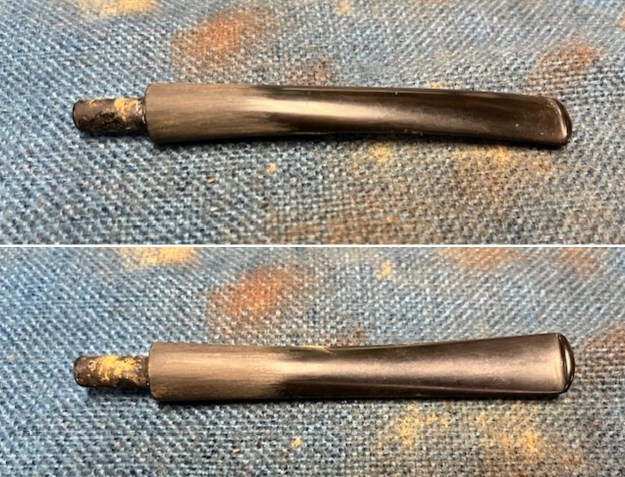
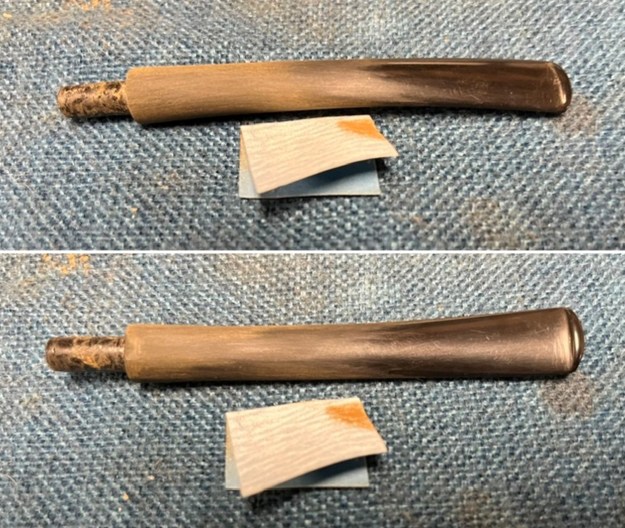
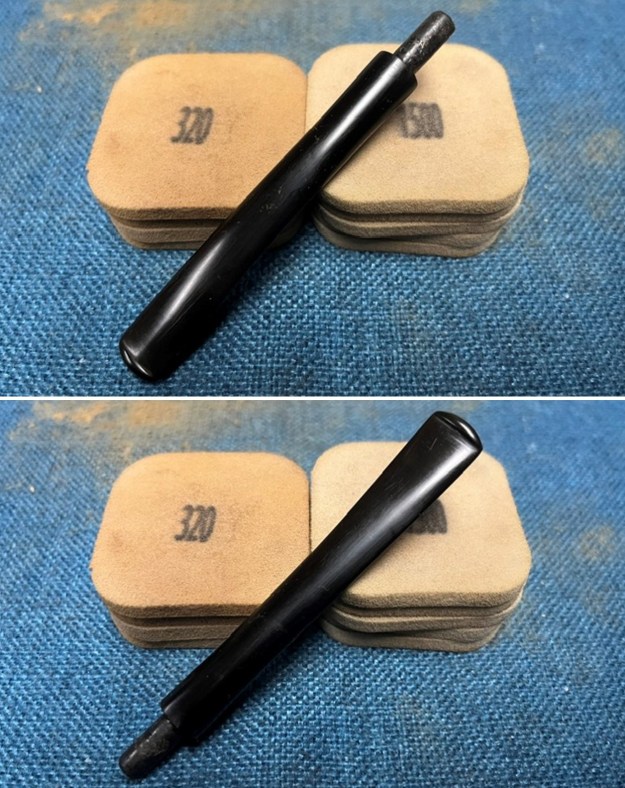
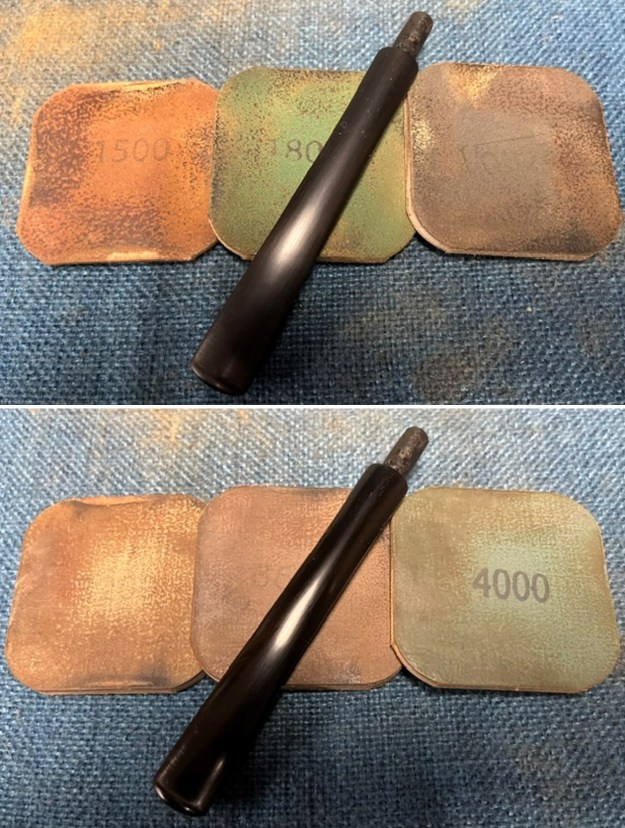
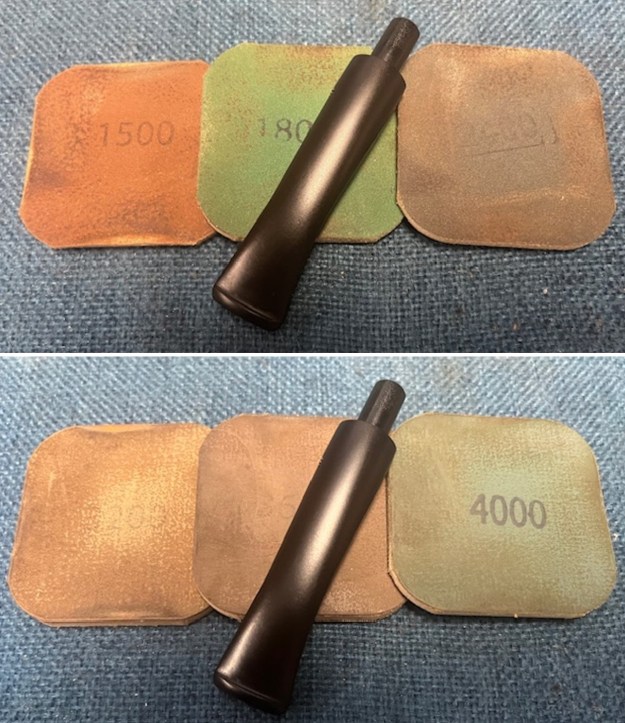
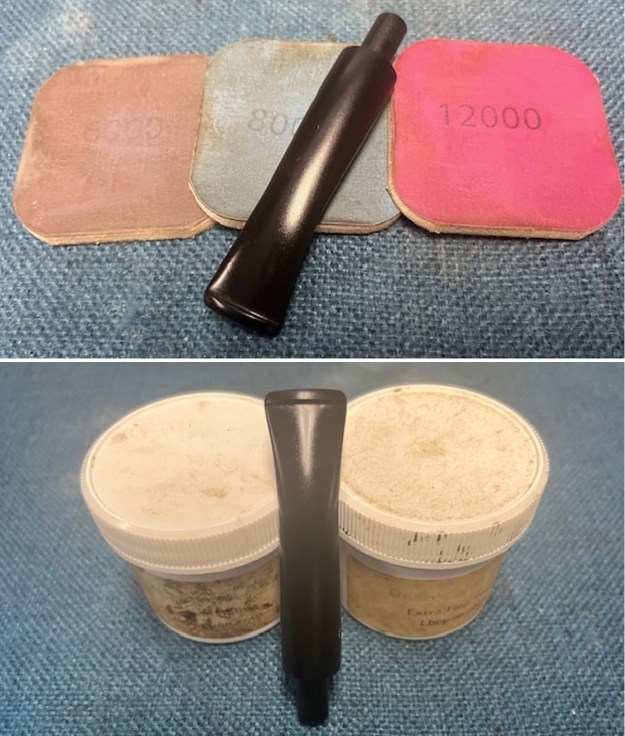
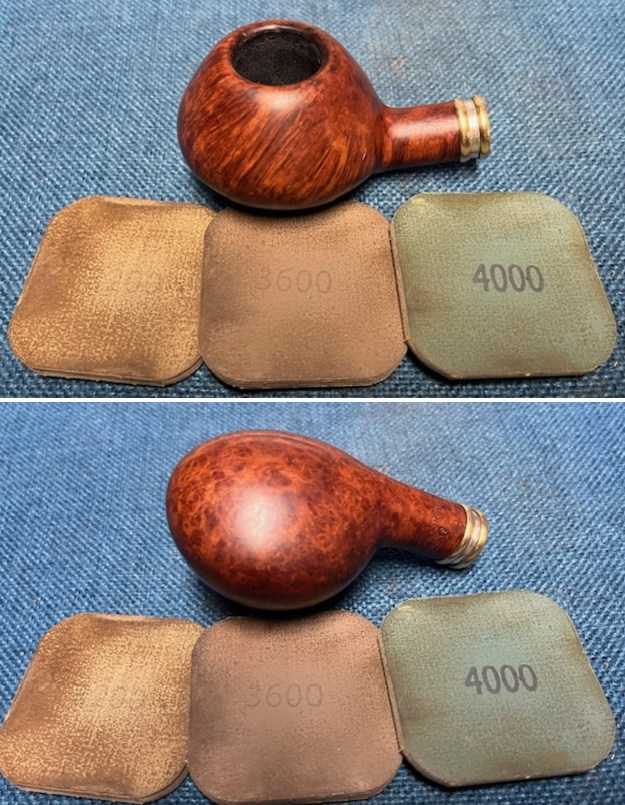
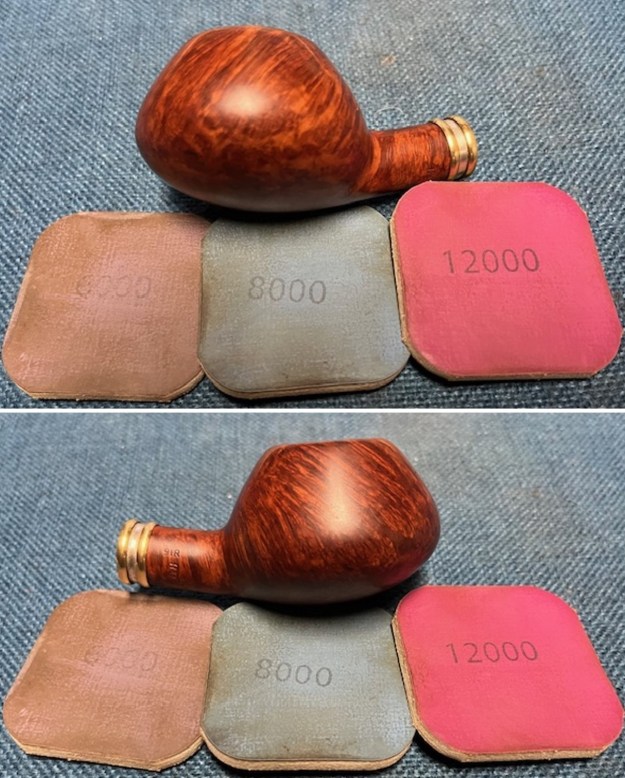
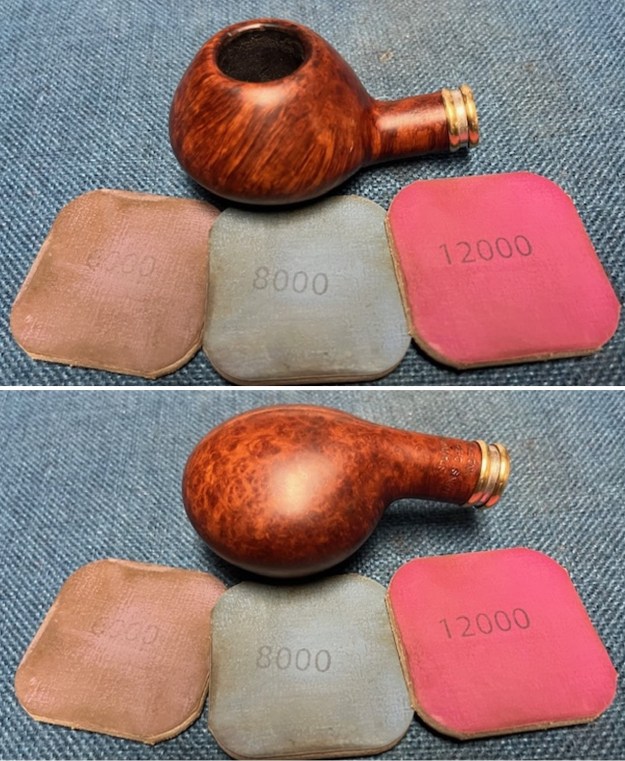
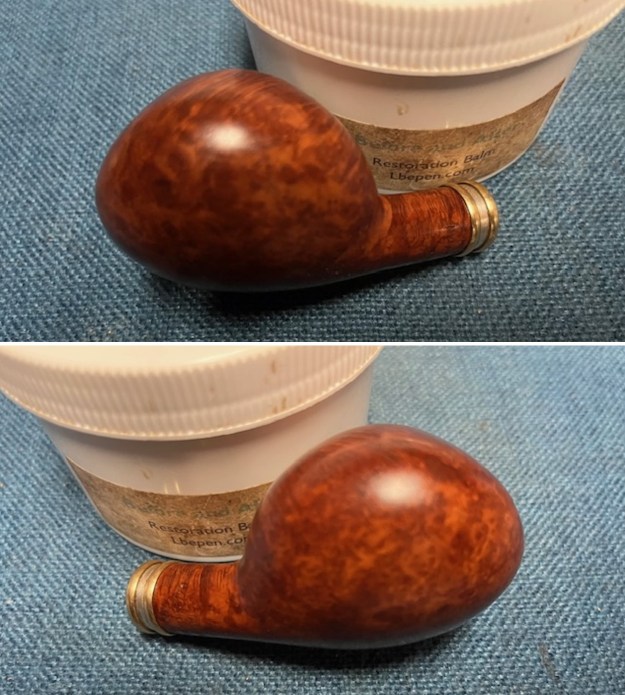
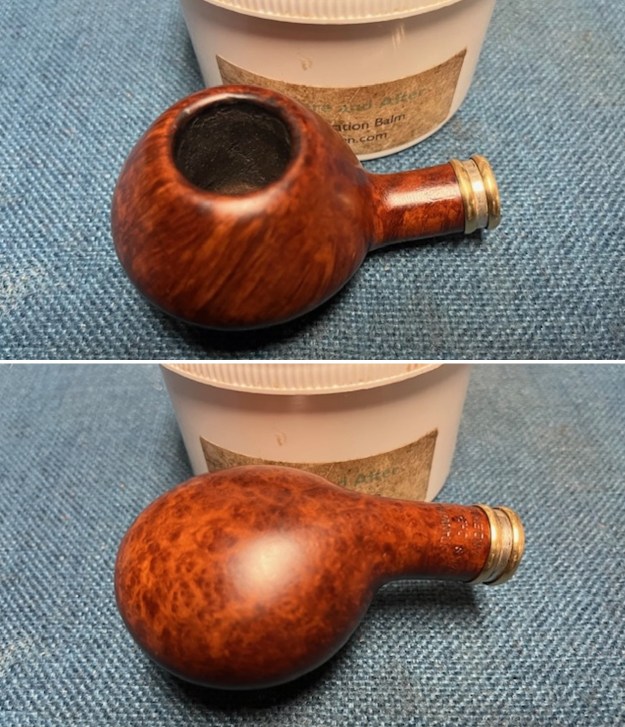
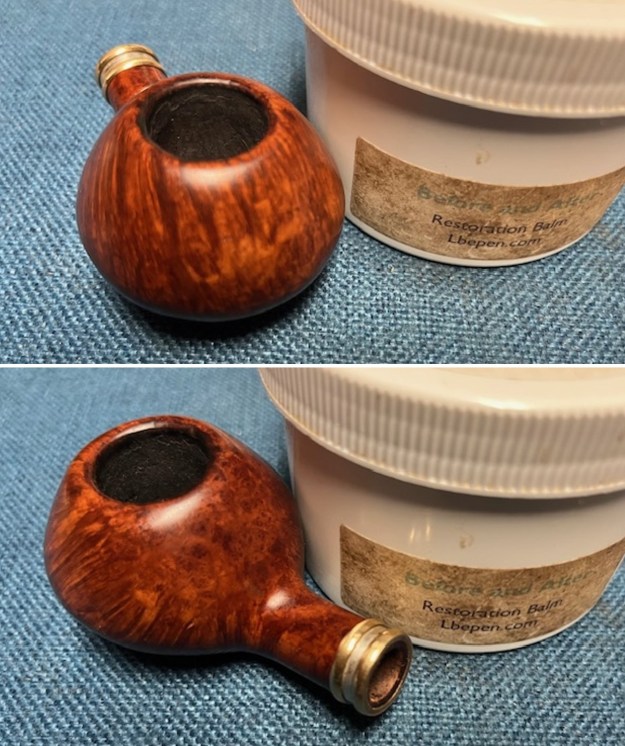
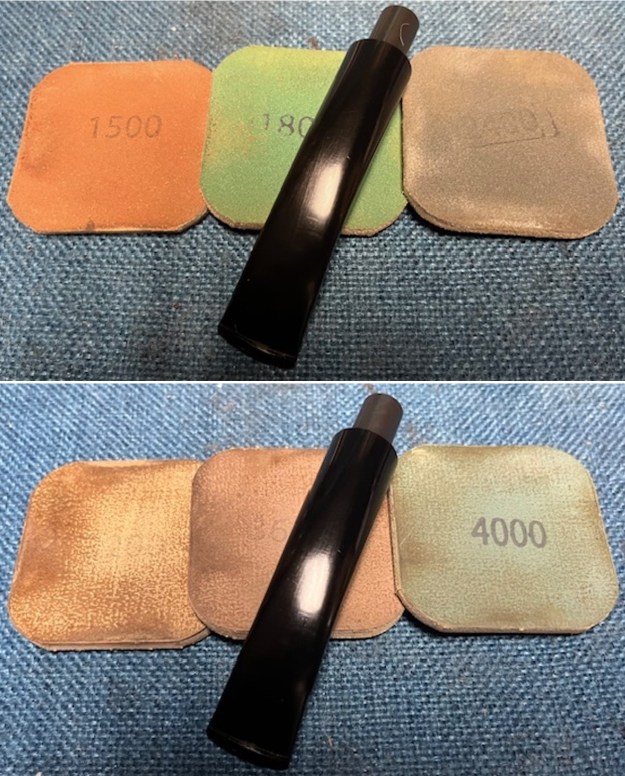
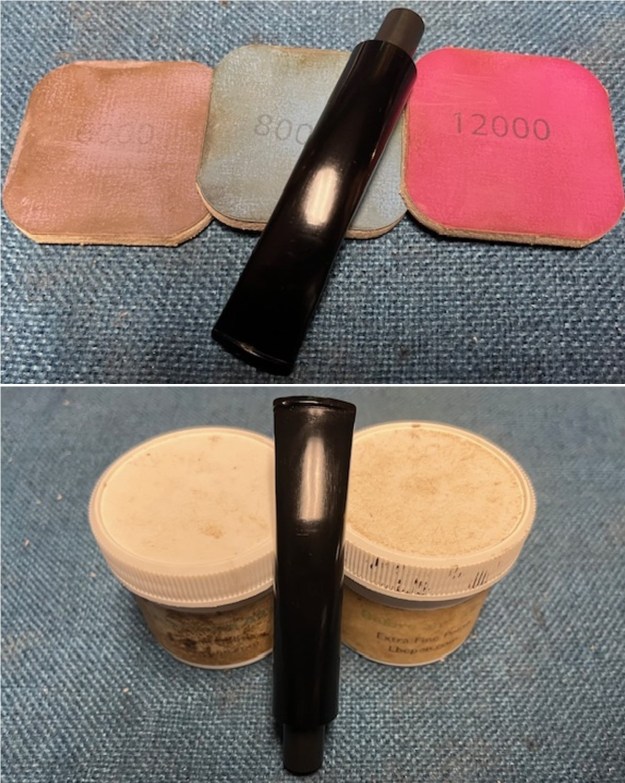
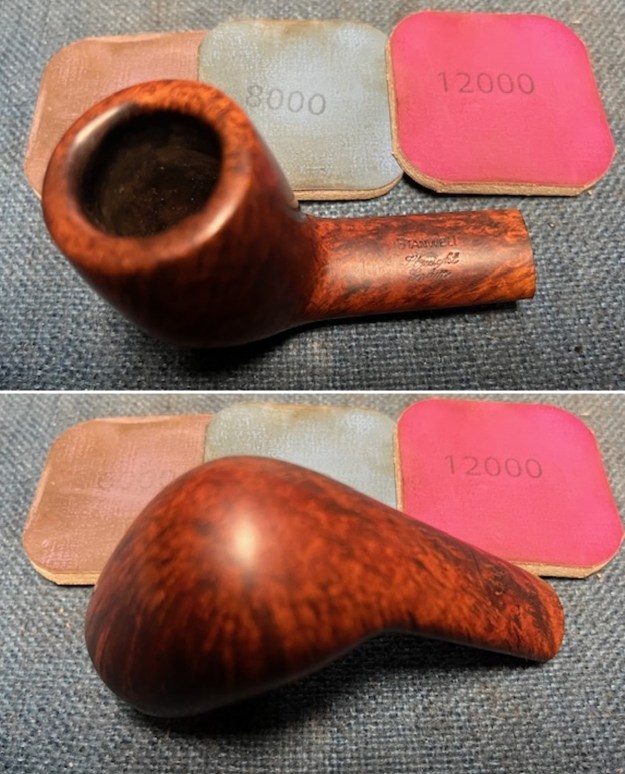
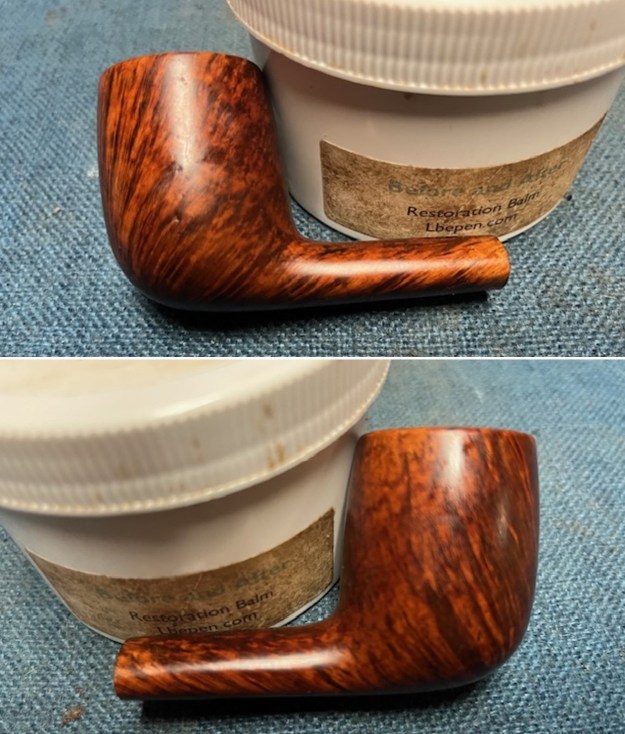
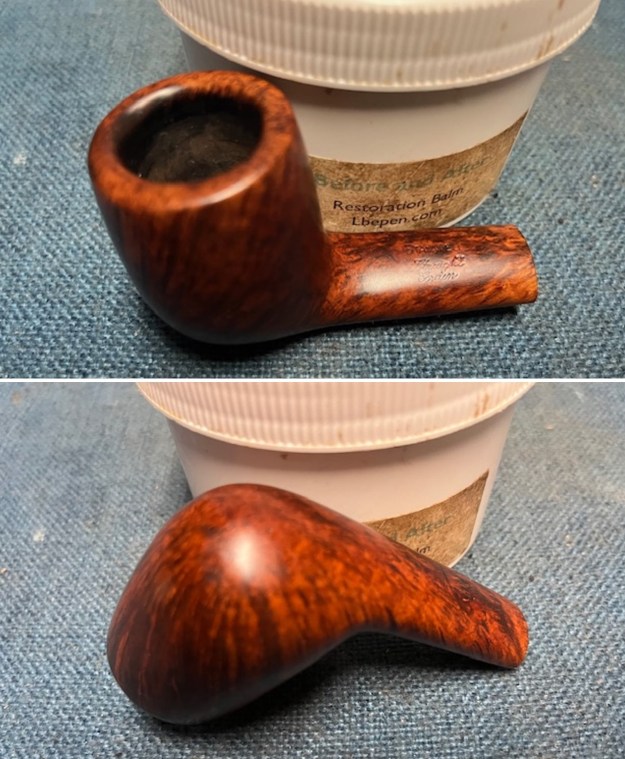
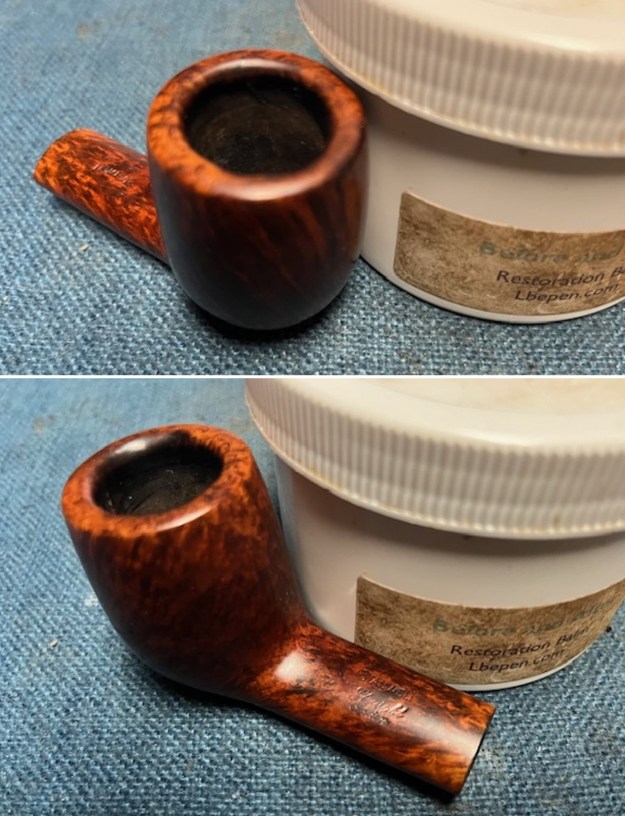
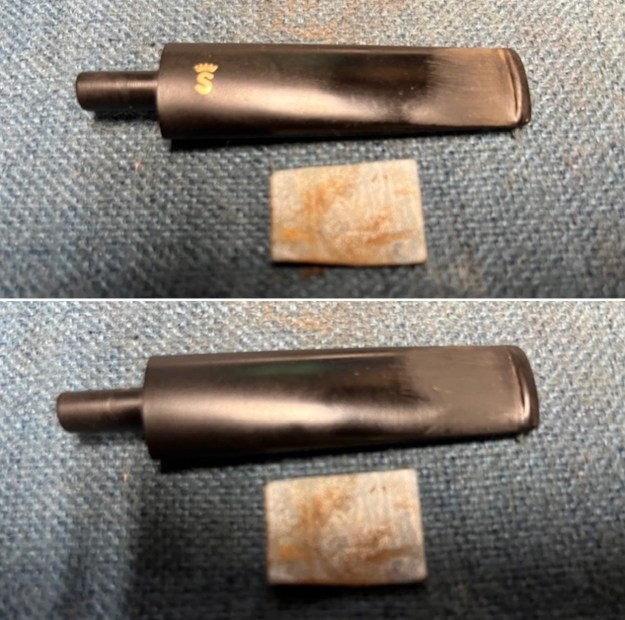
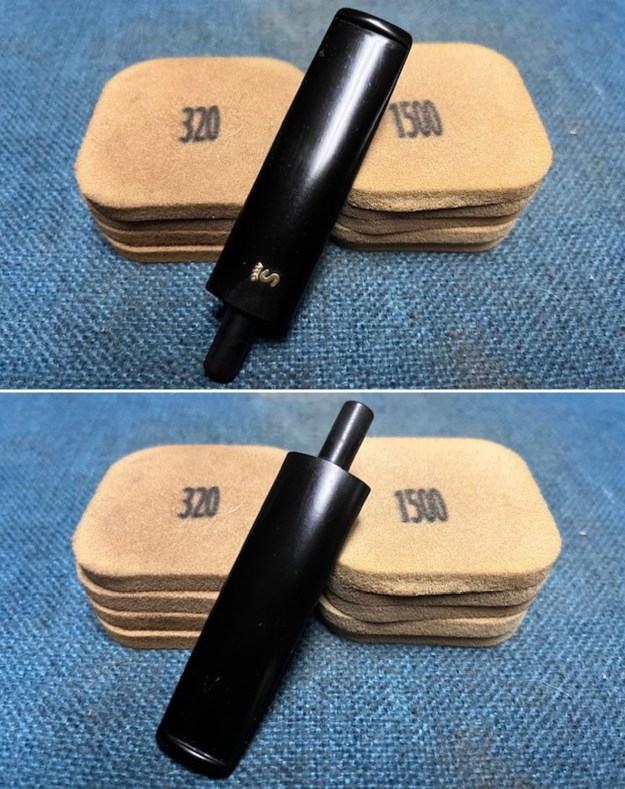
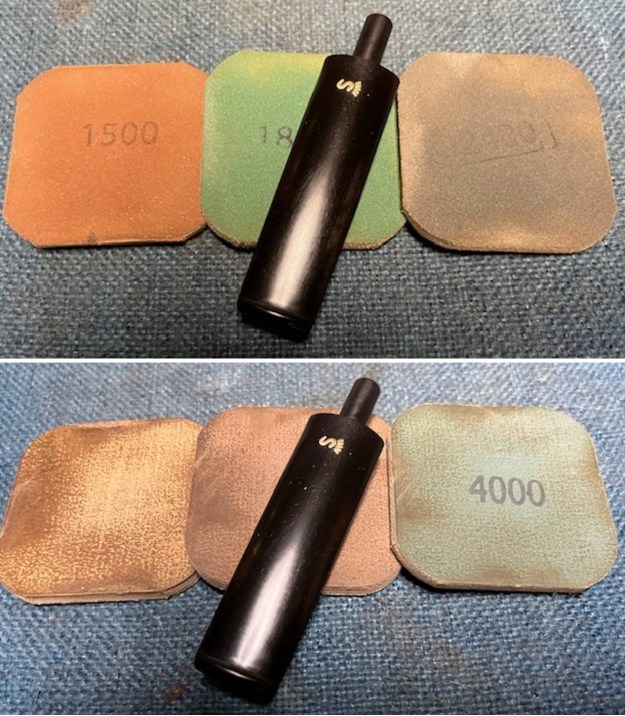
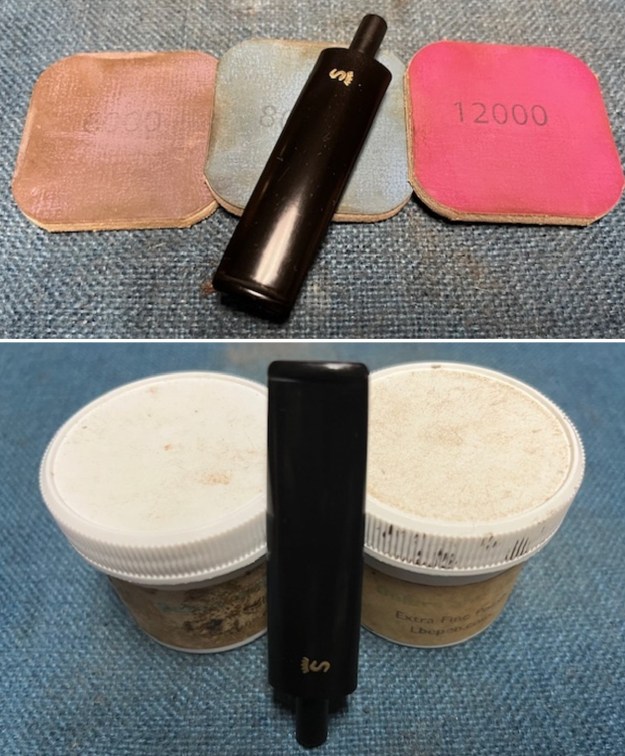
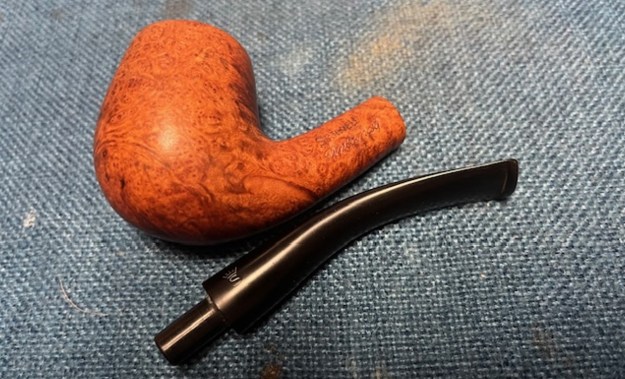
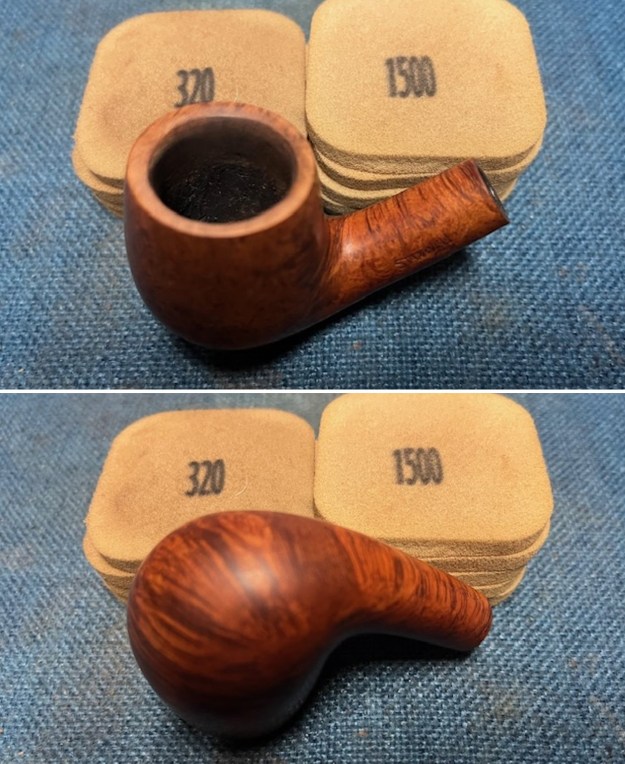
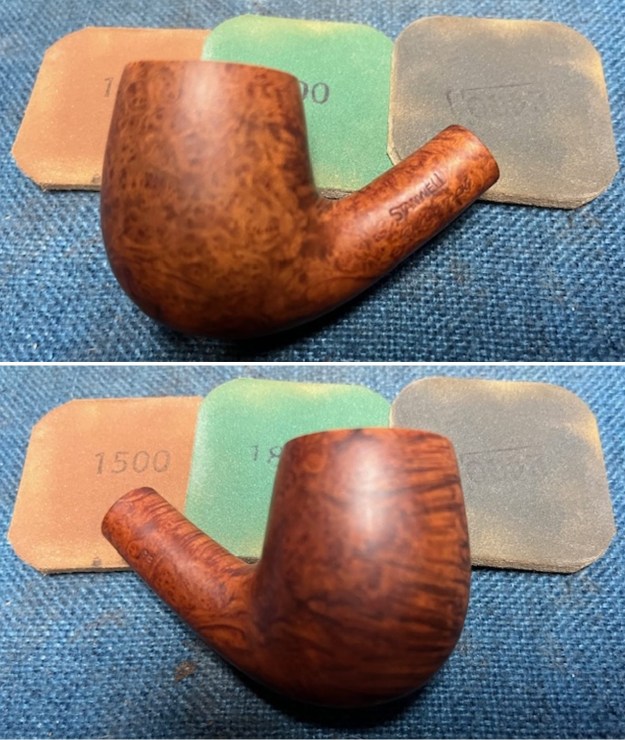
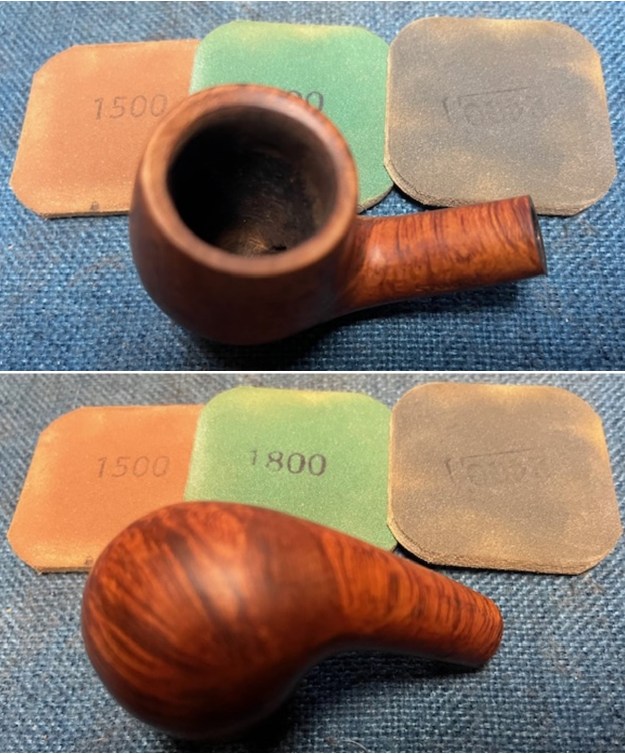
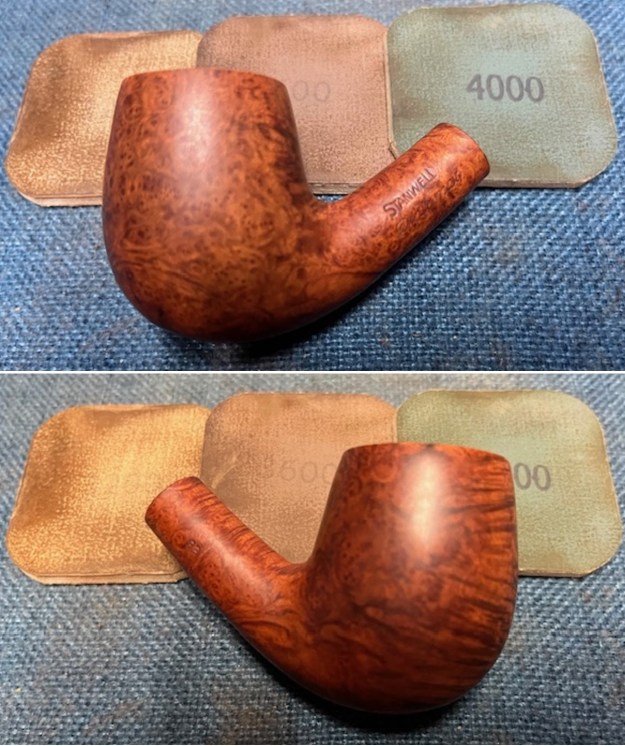
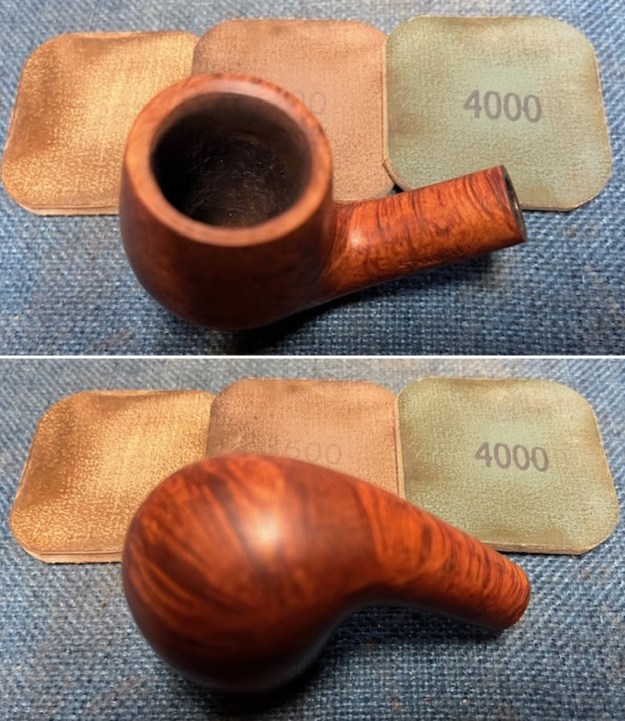
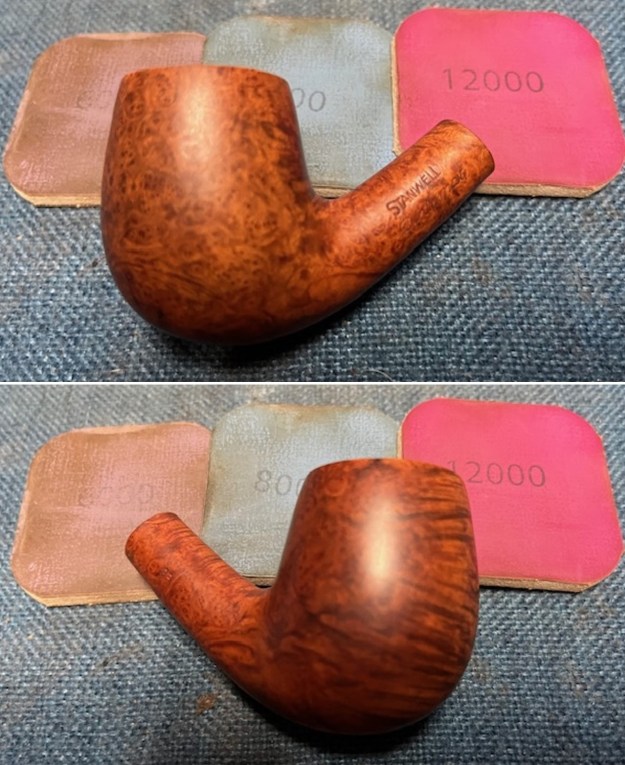
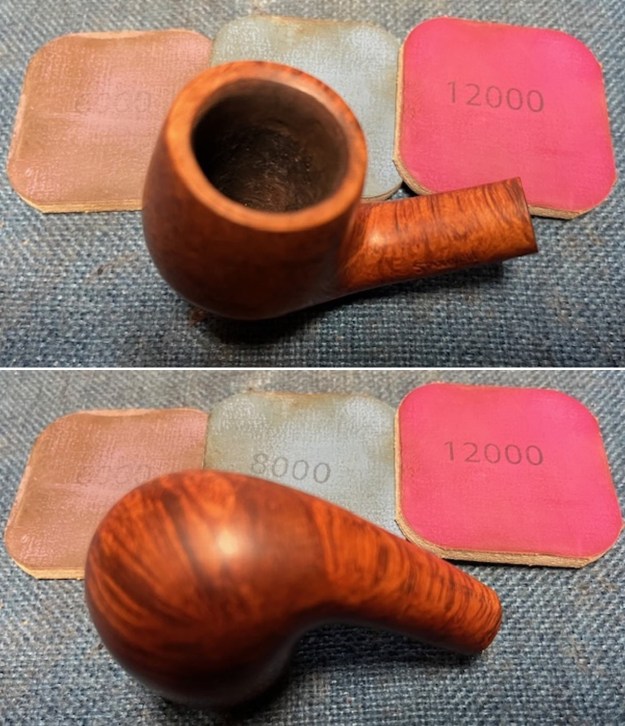
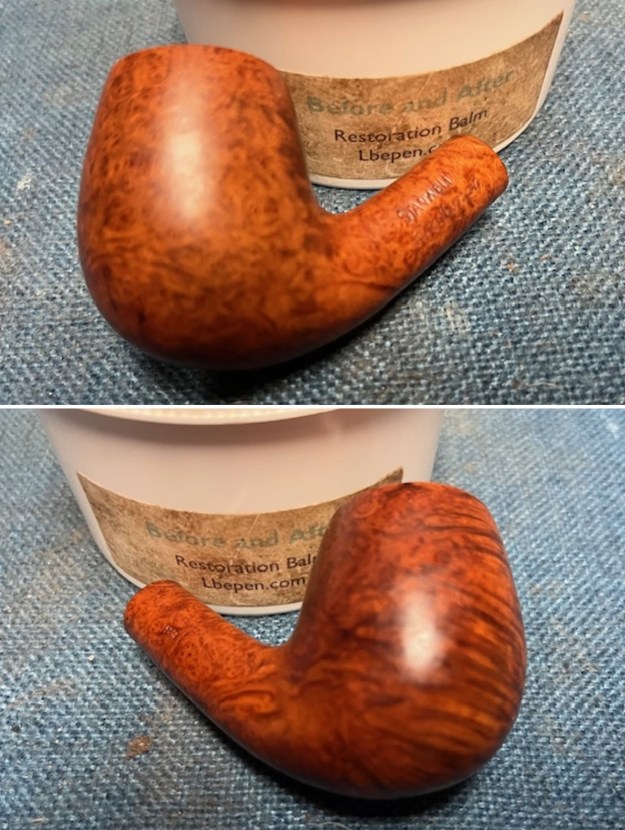
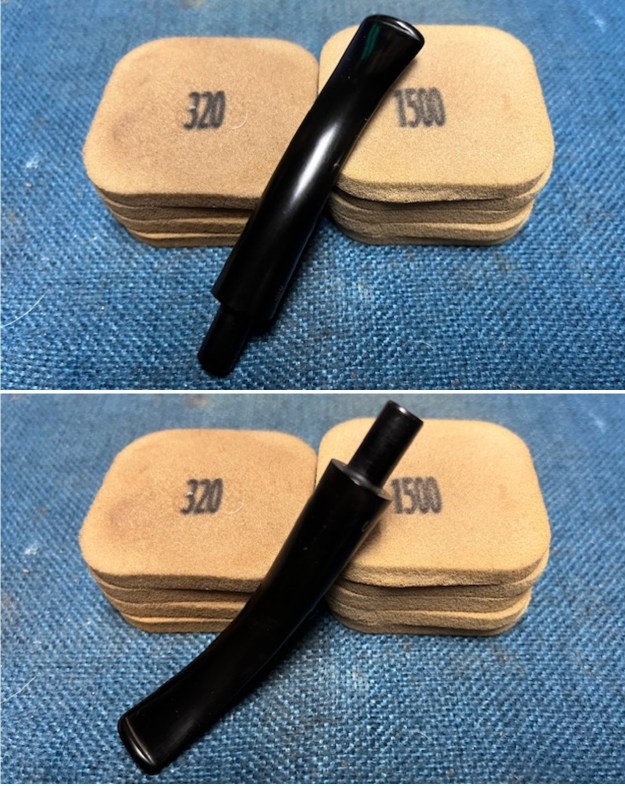
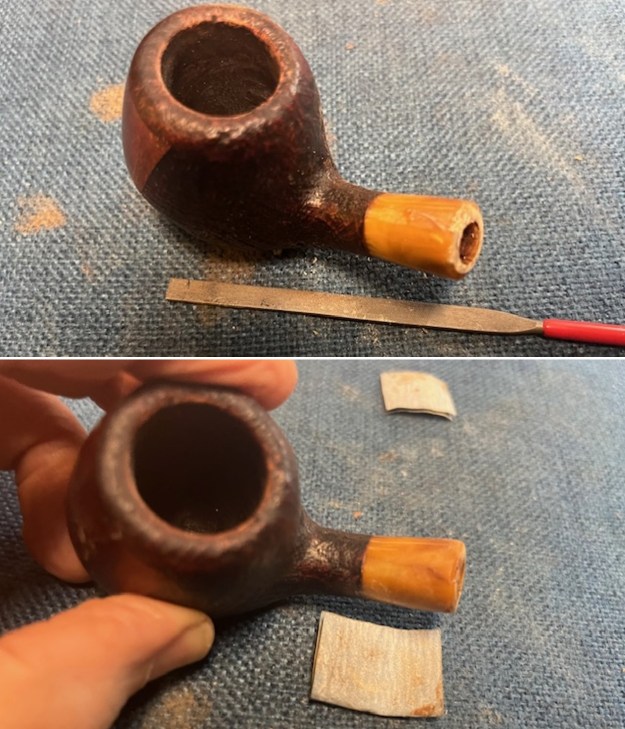
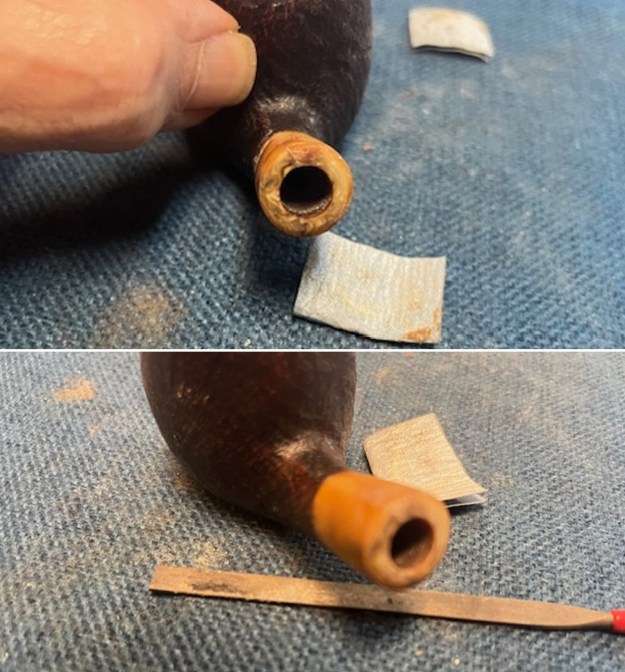
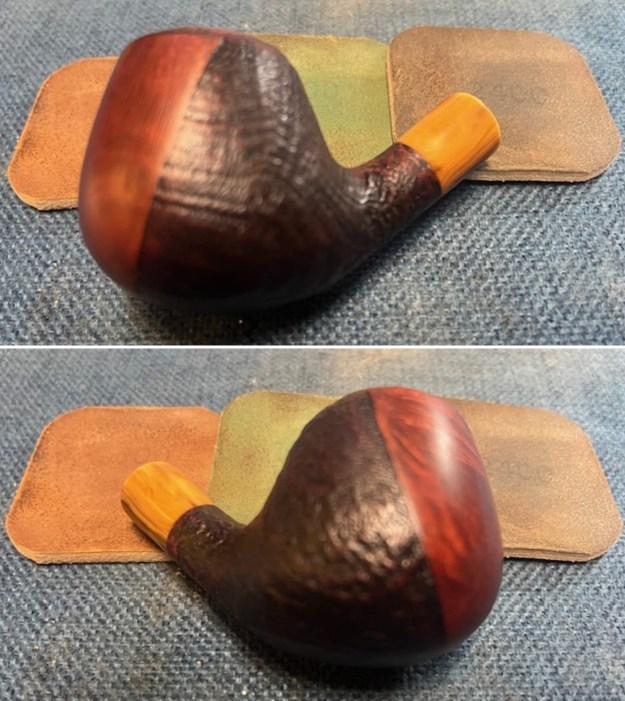
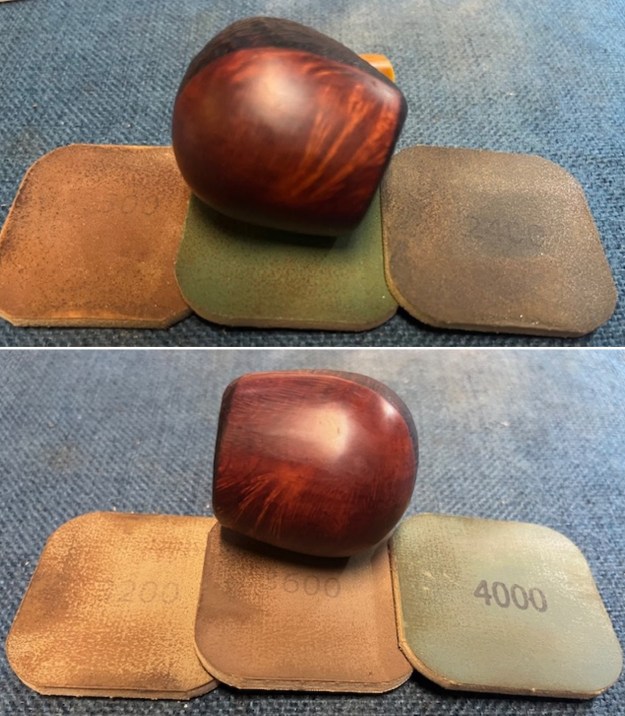
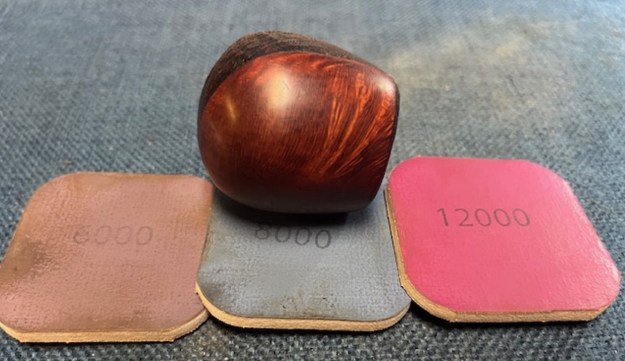
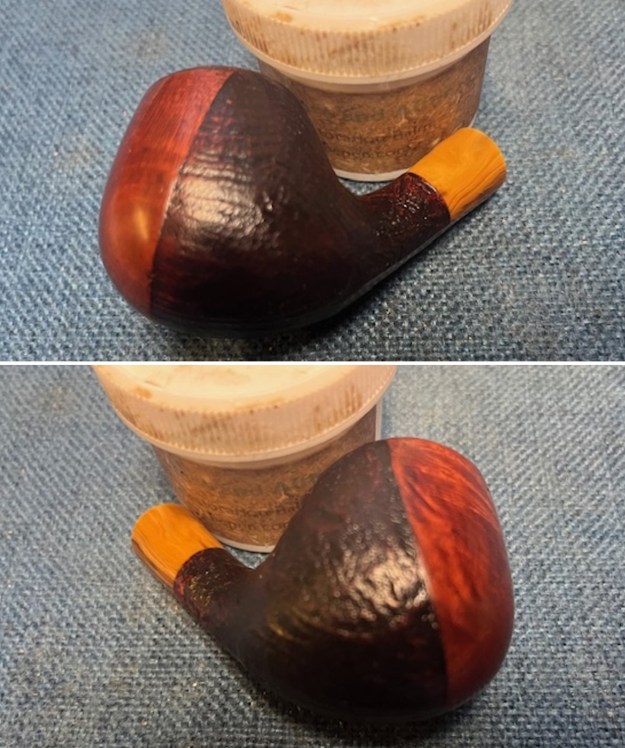
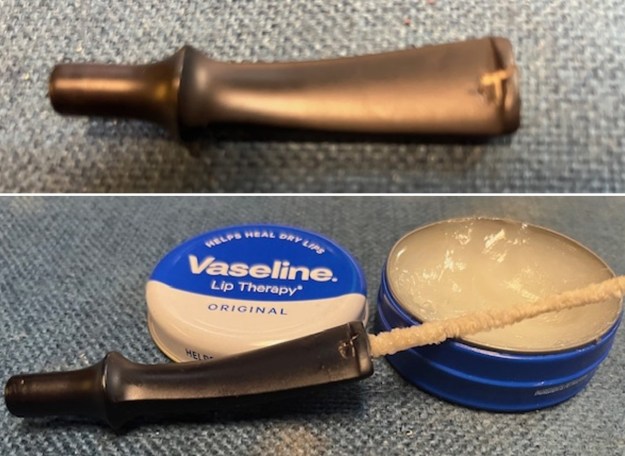
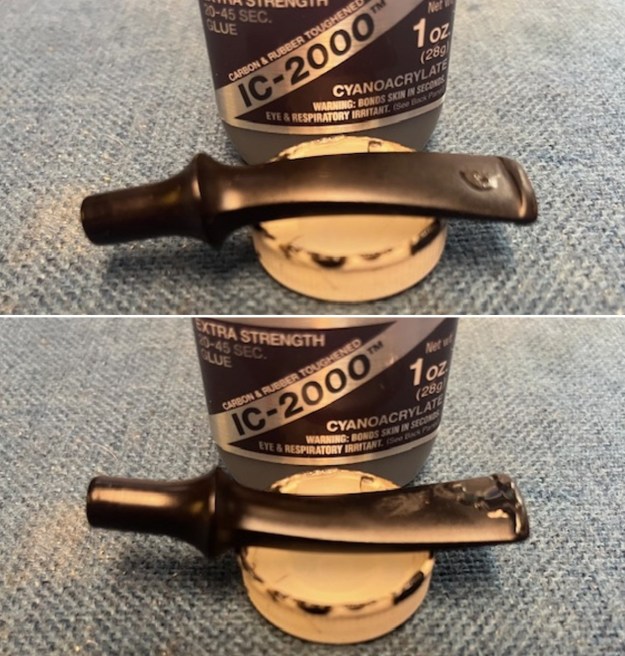
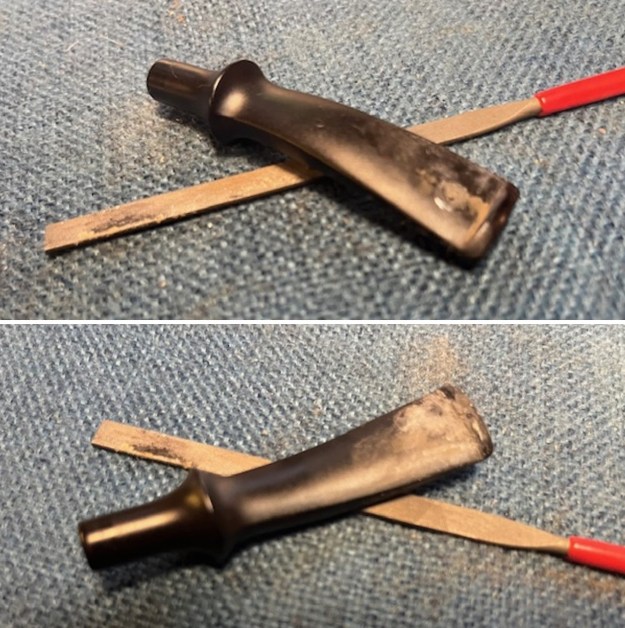
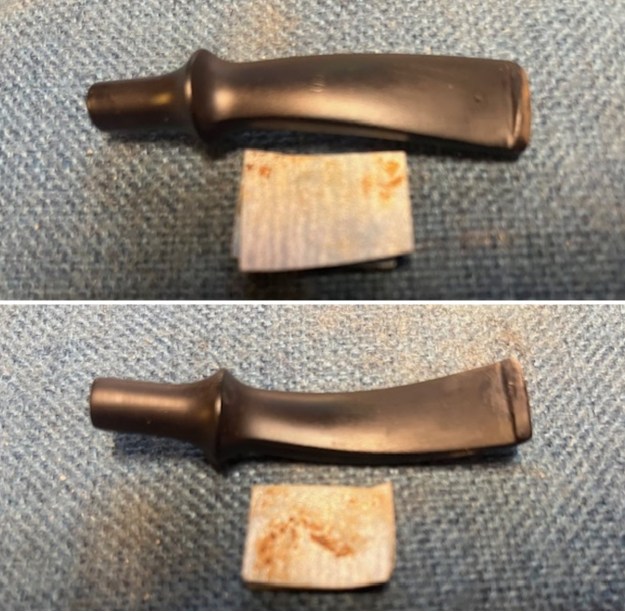
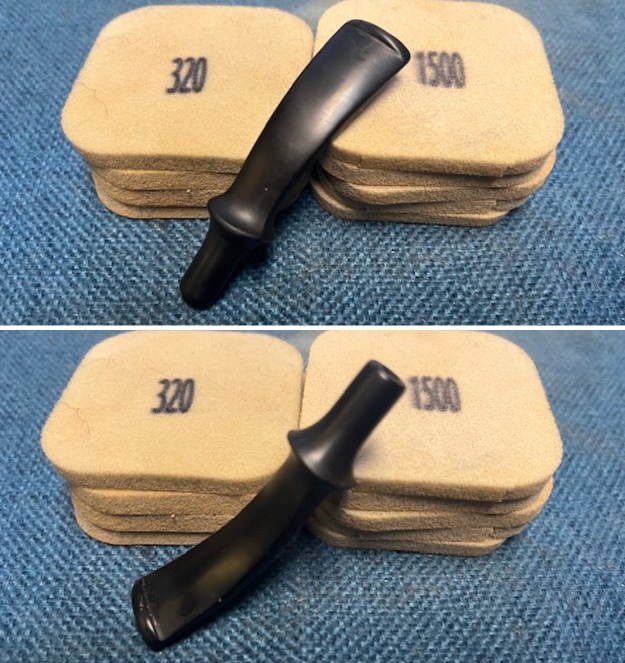
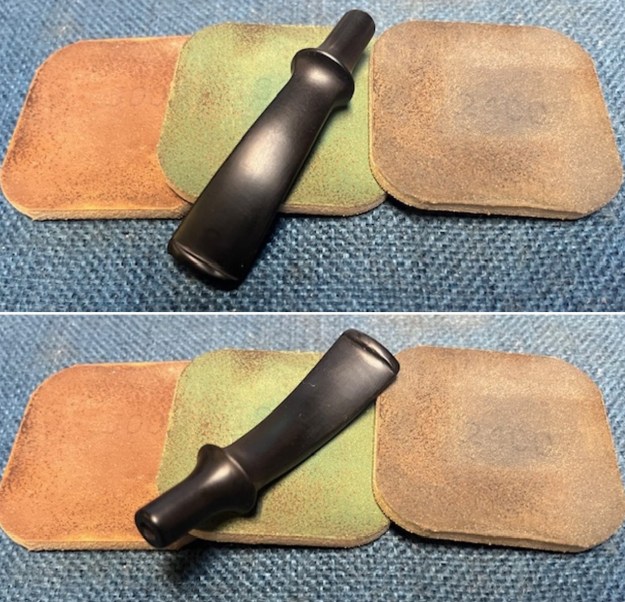
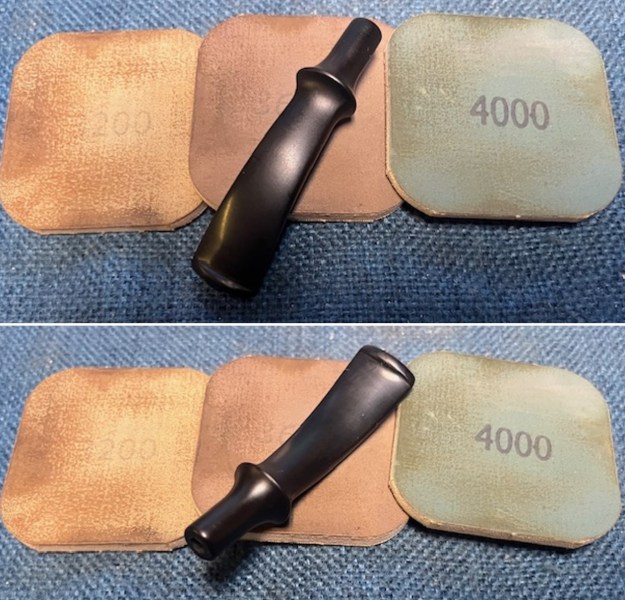
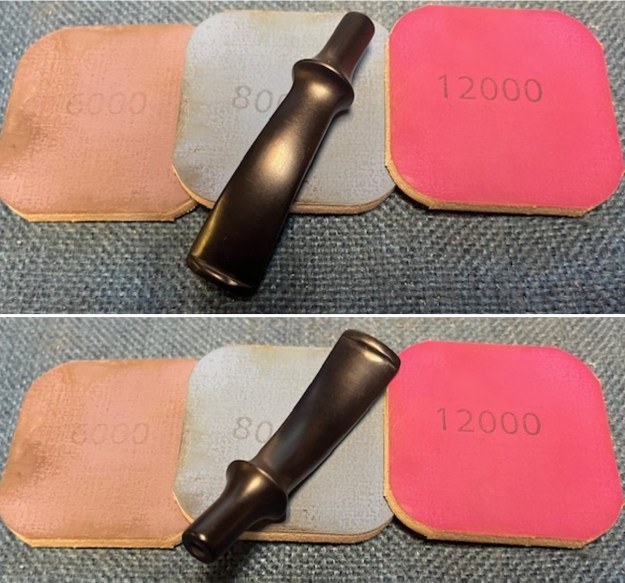
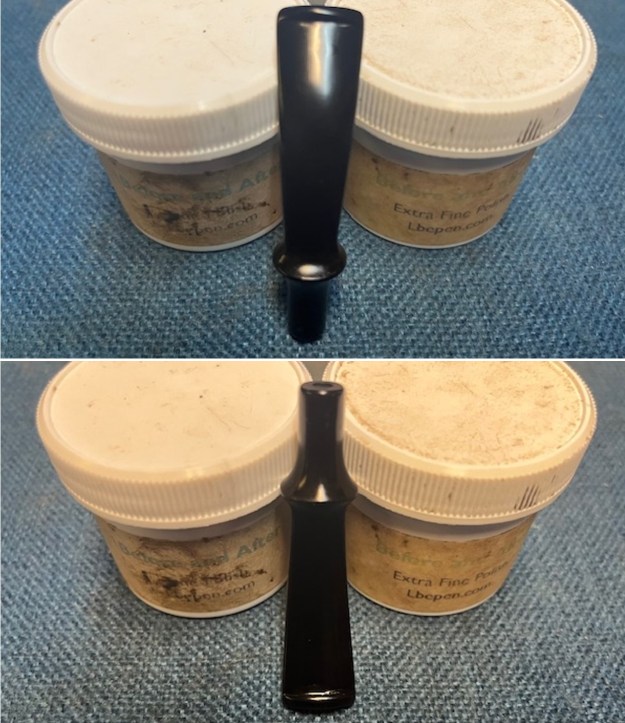
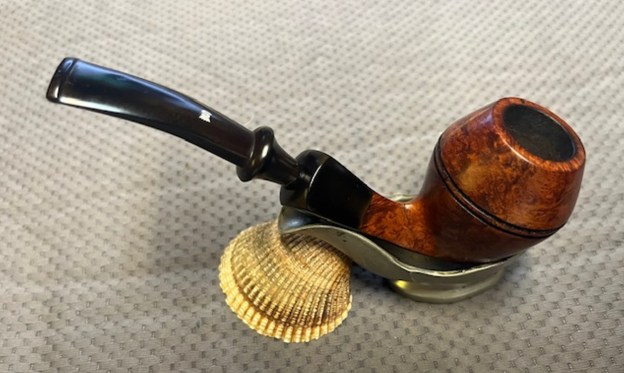
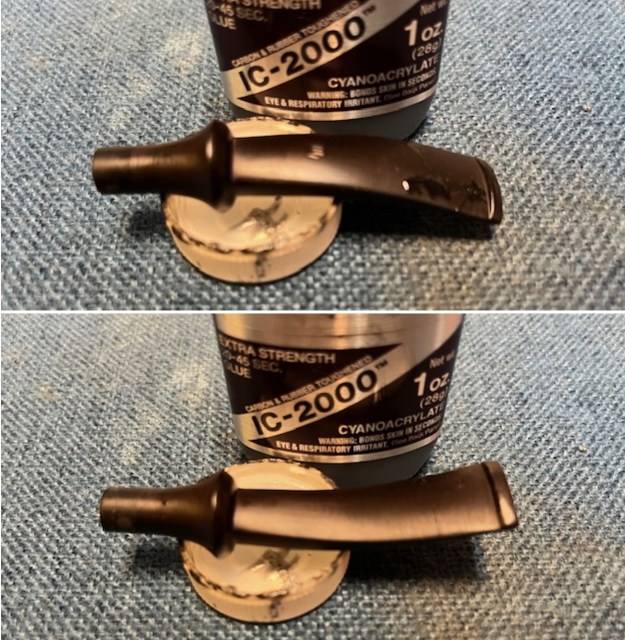
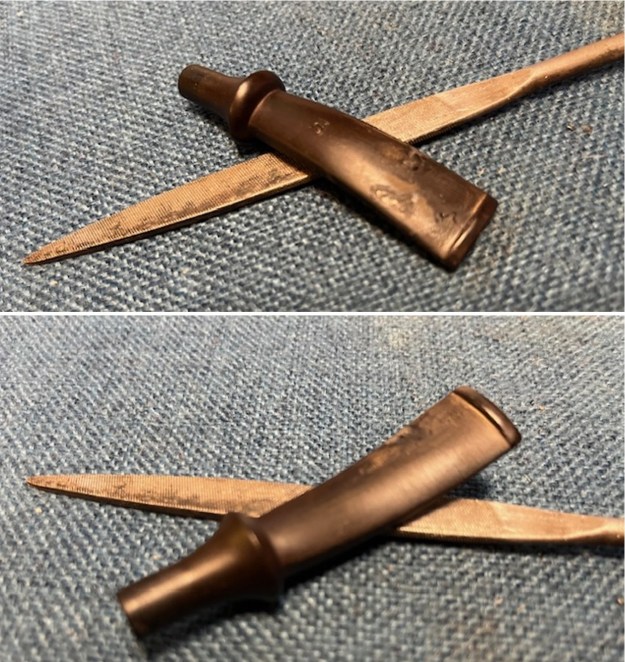
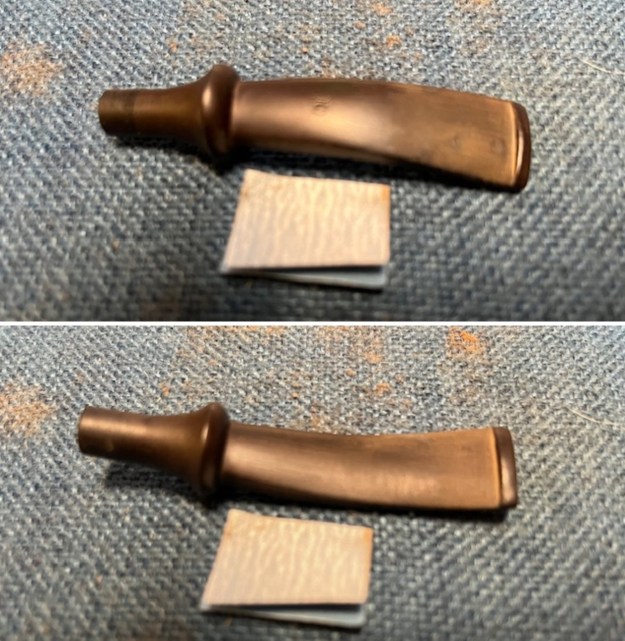
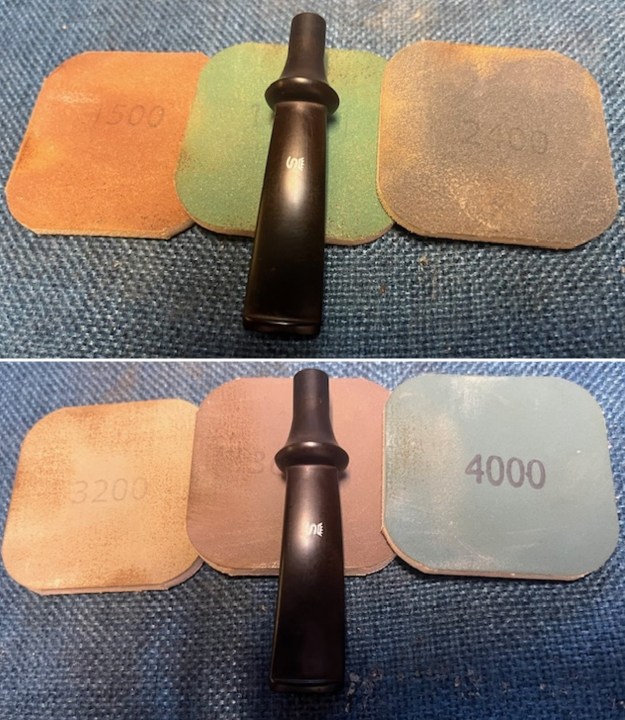
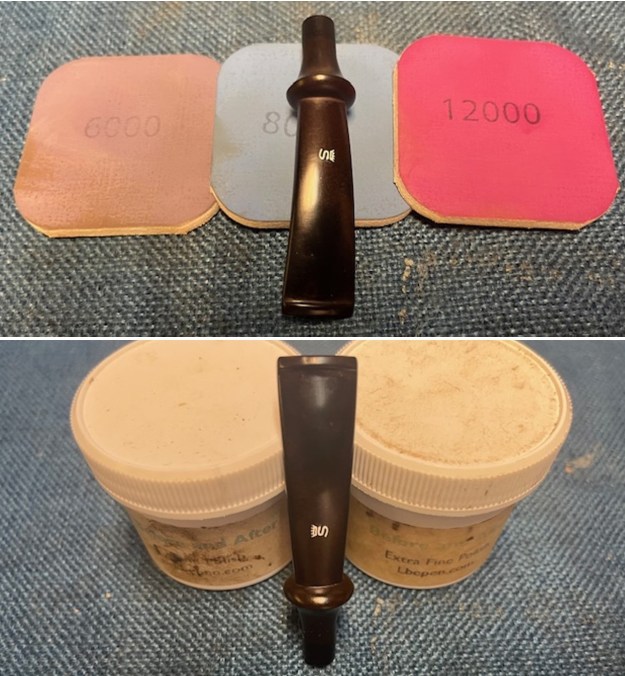
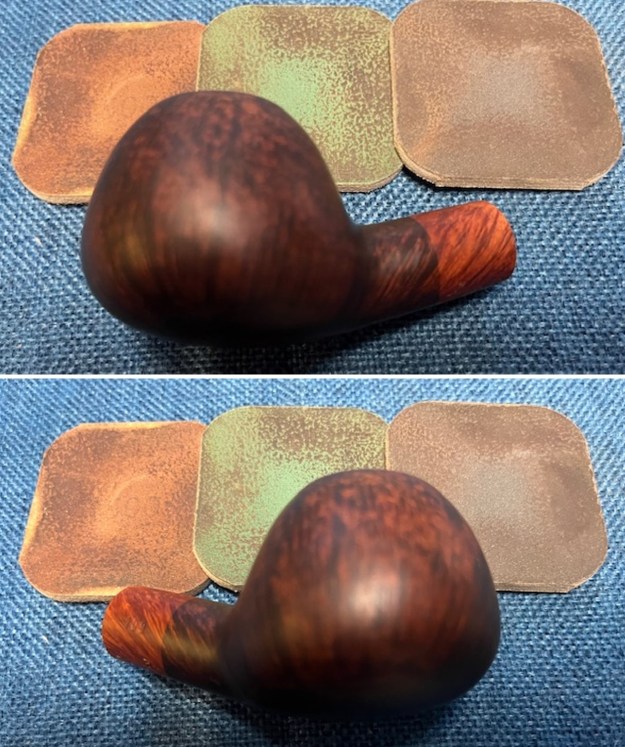
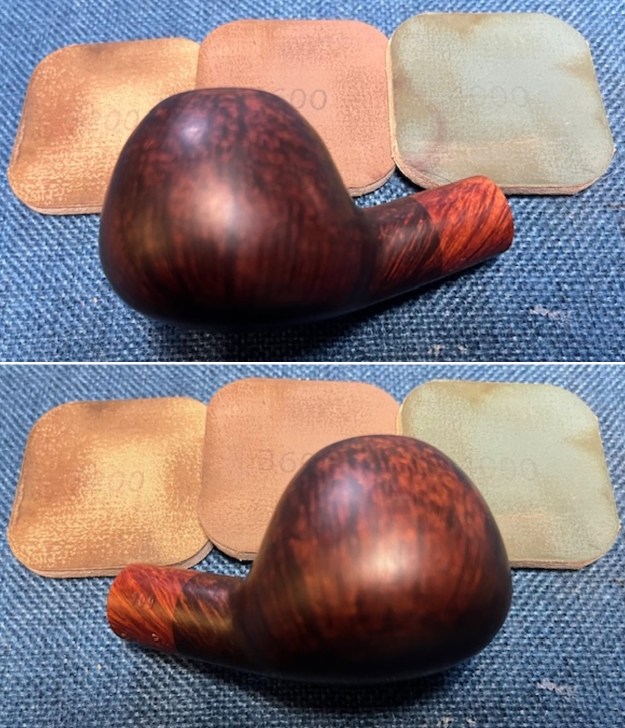
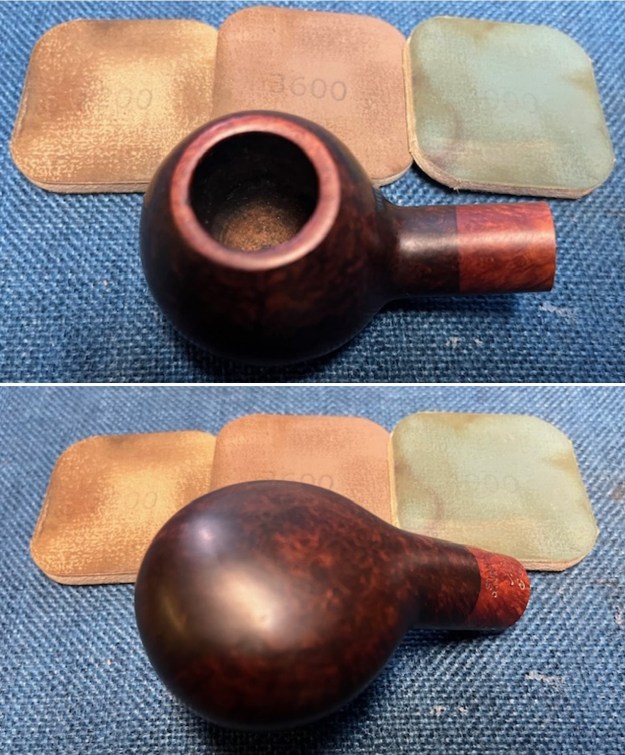
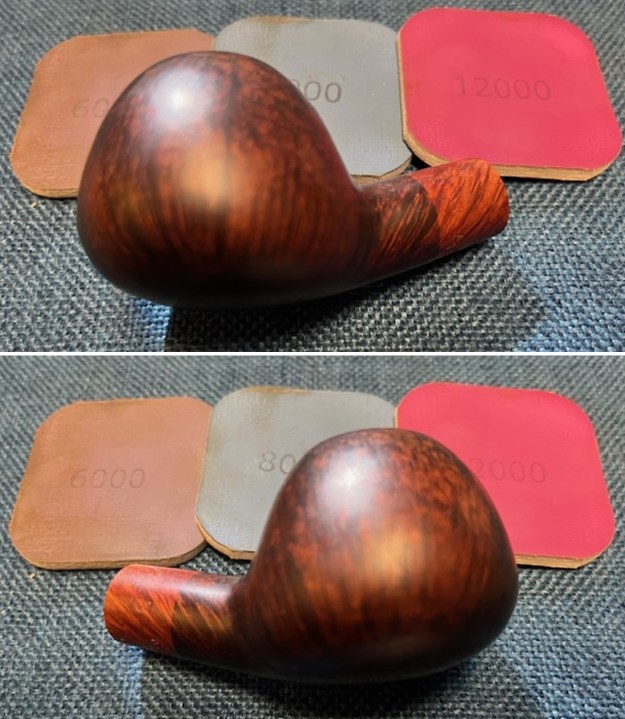
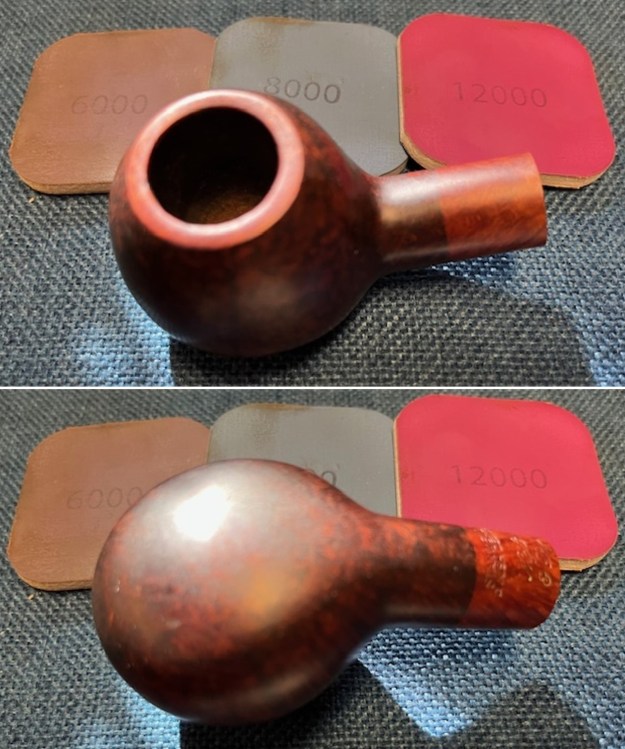
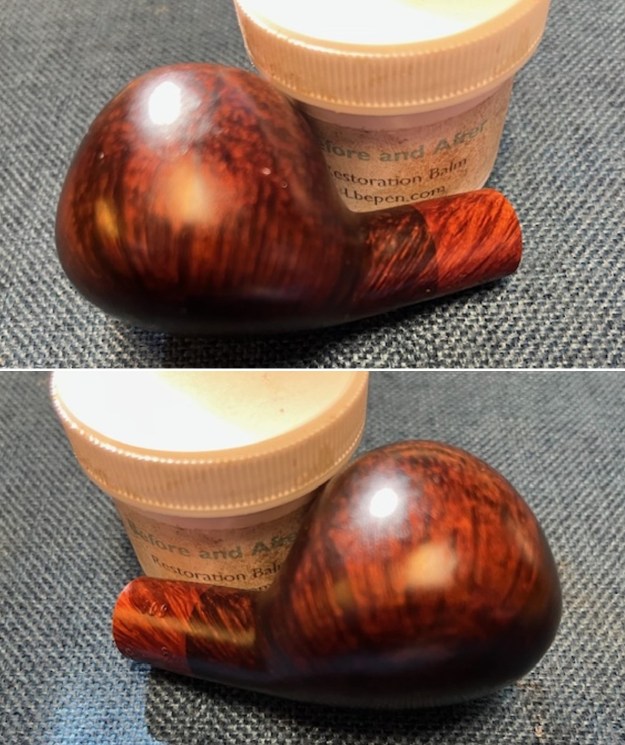
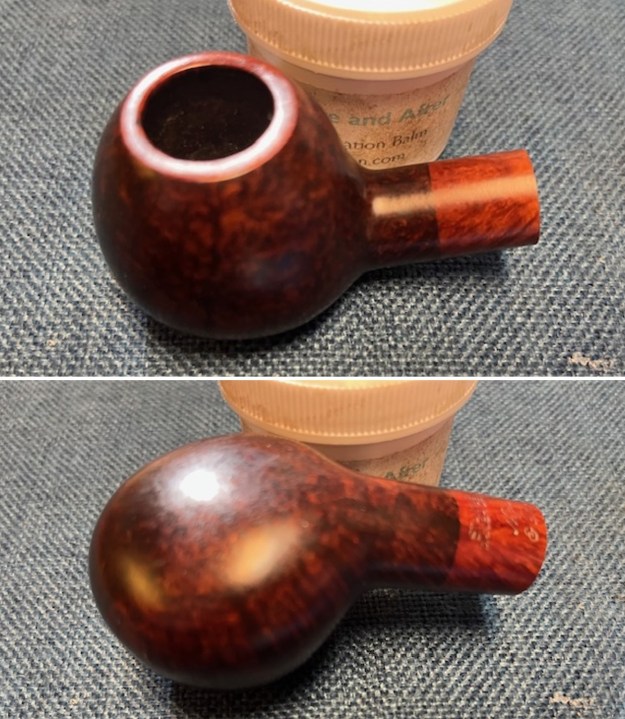
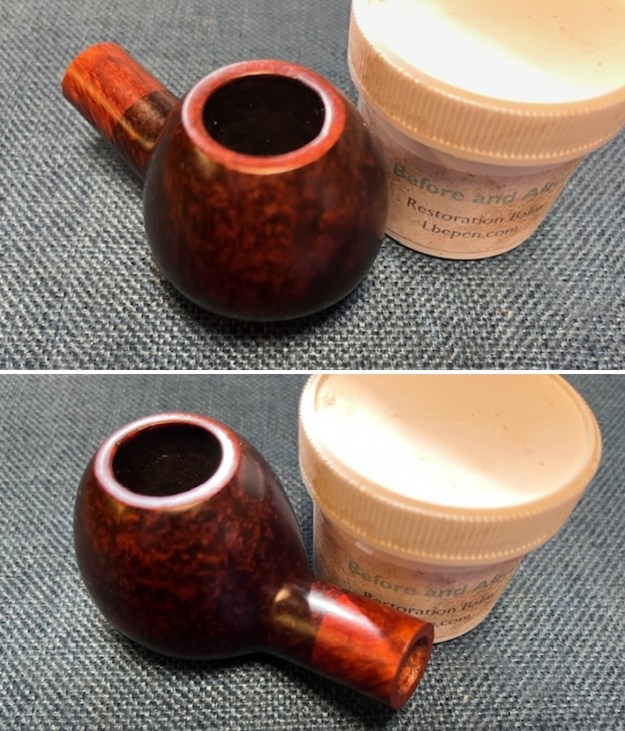
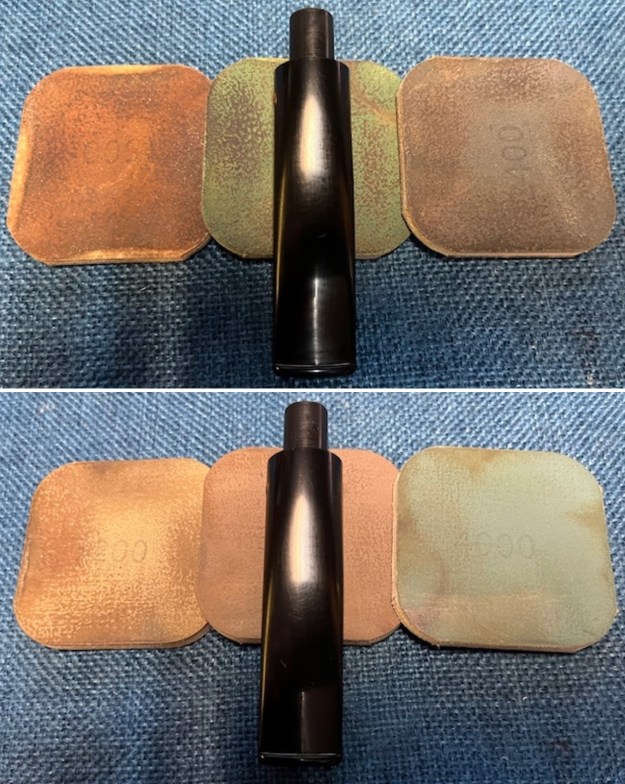
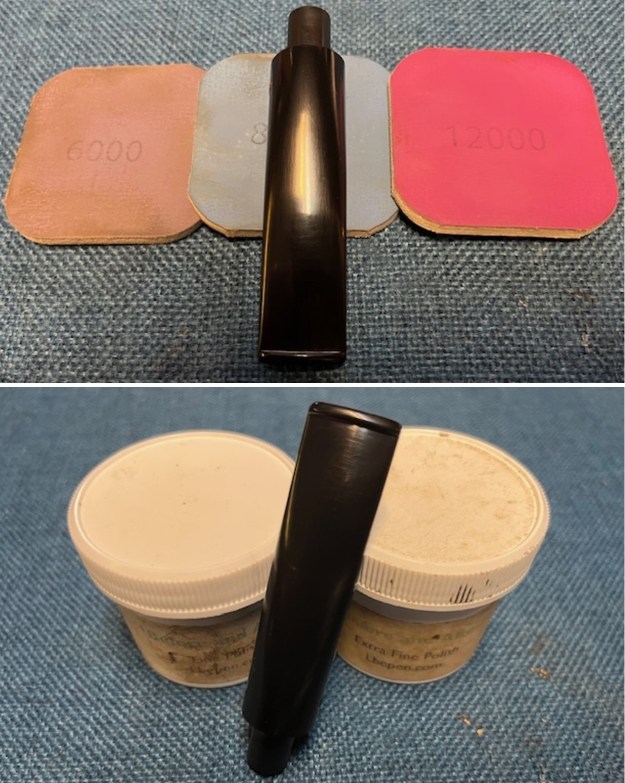
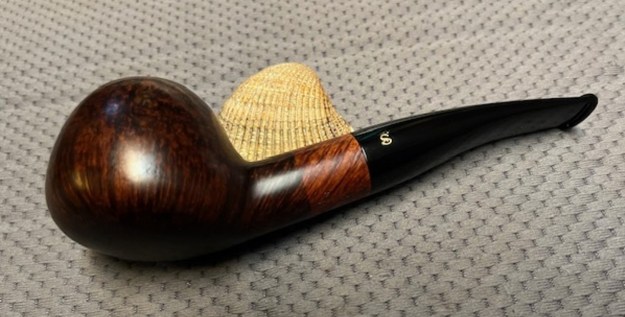
I turned to address the pipe itself. Jeff cleaned up the pipe for me. He reamed the bowl with a PipNet pipe reamer and cleaned it up with a Savinelli Fitsall Pipe Knife. He scrubbed the exterior with Murphy’s Oil Soap and a tooth brush to clean off the grime off the finish and the heavy overflow of lava on the rim top. He cleaned up the internals of the shank, mortise and stem with pipe cleaners, cotton swabs and alcohol to remove all of the oils and tars in the pipe. He soaked the stem in Briarville’s Pipe Stem Deoxidizer and was able to remove much of the oxidation. When it arrived here in Vancouver it was a clean pipe and I knew what I had to work with. I took photos of it before I started my part of the restoration.I took photos of the rim top and the stem to show their condition once it arrived in Canada. Jeff was able to clean up the incredibly thick cake and lava overflow that was shown in the rim and bowl photos above. He was also able to get rid of the grime and grit in the surface of the briar. The rim top and edges looked very good. The acrylic shank extension was chipped and had a small hairline crack. The stem was a real problem/ There were several deep tooth marks on the topside. The underside had a small bite through and there was a crack in the top of the button into the slot. There were also a few deep tooth marks as well cleaning cleanser in the crack.I took a photo to try and capture the stamping on the underside of the shank side. It was faint in spots but very readable. I removed the stem and took a photo of the pipe sans stem to show the proportions of this unique beauty. I decided to start with examining the shank extension and seeing the nature of the chips and hairline crack. It was not as bad as I was expecting. There were chips on the top right side of the end of the extension and a very thin crack from the chips on the top that did not extend far into the extension. I rebuilt the chipped end of the extension and the thin cracks with CA glue carefully applied with a tooth pick. When it cured I flattened it with a small flat file to smooth it out. I followed that by sanding with 220 grit sandpaper. I sanded the repaired extension with 320-3500 grit 2 x 2 inch sanding pads. I wiped it down with a damp cloth after each sanding pad. It began to look very good. I polished the shank extension with micromesh sanding pads. I dry sanded it with 1500-12000 grit pads. I wiped the bowl down after each pad with a damp cloth. The bowl began to take on a rich shine and grain was beginning to stand out. I used 1500-12000 grit micromesh sanding pads to dry sand the smooth front of the bowl. Each progressive sanding pad brought a richer shine. I wiped the bowl down after each sanding pad with a damp cloth to remove the sanding grime. It began to look very good. I rubbed the bowl and shank down with Before & After Restoration Balm to deep clean the finish on the bowl and shank. The product works to clean, enliven and protect the briar. I worked it into the smooth part of the finish with my fingers to get it into the briar. I used a horsehair shoe brush to work it into the sandblast part of the finish. After it sat for a little while I wiped it off and buffed it with a soft cloth. The briar really began to have a rich shine. I took some photos of the bowl at this point to mark the progress in the restoration. I set the bowl aside and worked on the stem at this point in the process. The deep tooth marks on both sides were too deep for heat to work on. The underside of the stem had a small bite through and the button had a crack that went through to the slot. I cleaned the areas around both damaged areas and slipped a Vaseline greased pipe cleaner in the airway to keep the glue from going in to the airway. I filled them in with some clear Black rubberized CA glue. Once it cured I used the file to flatten the repair and sanded it with a piece of 220 grit sandpaper. I sanded the stem further with 320-3500 grit 2 x 2 inch sanding pads. I wiped the stem down after each pad with some Obsidian Oil. It began to take on a rich look. I polished the stem with micromesh sanding pads – dry sanding with 1500-12000 grit pads. I wiped the stem down after each pad with a damp cloth to remove the sanding dust. I used the Before & After Pipe Polish to remove the small minute scratches left in the vulcanite even after the micromesh regimen. I finished by wiping the stem down with a final coat of Obsidian Oil and set it aside to dry. I put the stem back on the Stanwell 608 Bent Apple and took the pipe to the buffer. I carefully buffed the bowl and stem with Blue Diamond to polish the briar and the vulcanite. Blue Diamond does a great job on the smaller scratches that remain in both. I gave the bowl and the stem several coats of carnauba wax and buffed the pipe with a clean buffing pad to raise the shine. I hand buffed it with a microfiber cloth to deepen the shine. The pipe polished up really nicely with a great contrasting stain look to the briar. The finished pipe is shown in the photos below. This is a unique Stanwell 608 Bent Apple – the turned saddle stem gives the pipe a great look. The polished and repaired black vulcanite stem looks really good with the reds and browns of the finish. The dimensions of the pipe are Length: 5 inches, Height: 1 ½ inches, Outside diameter of the bowl: 2 ¼ inches, Chamber diameter: ¾ of an inch. The weight of the pipe is 1.48 ounces/42 grams. This is another pipe that I will be putting it on the rebornpipes online store in the Danish Pipe Makers Section shortly, if you are interested in adding it to your collection. Thanks for walking through the restoration with me on this beauty!

Reclaiming a tired old Stanwell Bench Made 33 Bulldog with an oxidized Vulcanite shank extension


by Steve Laug

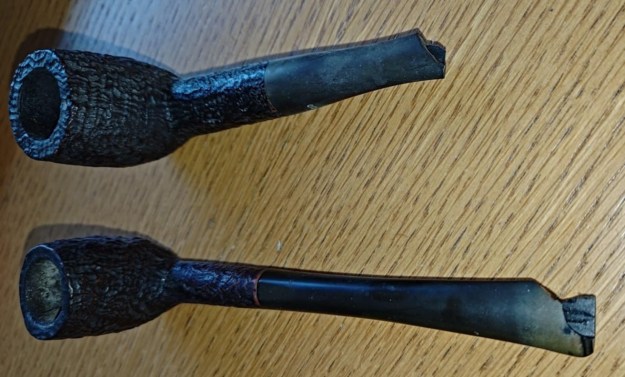
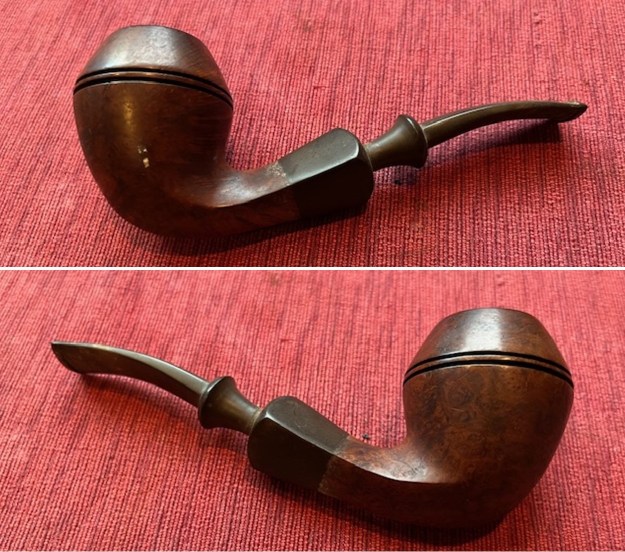
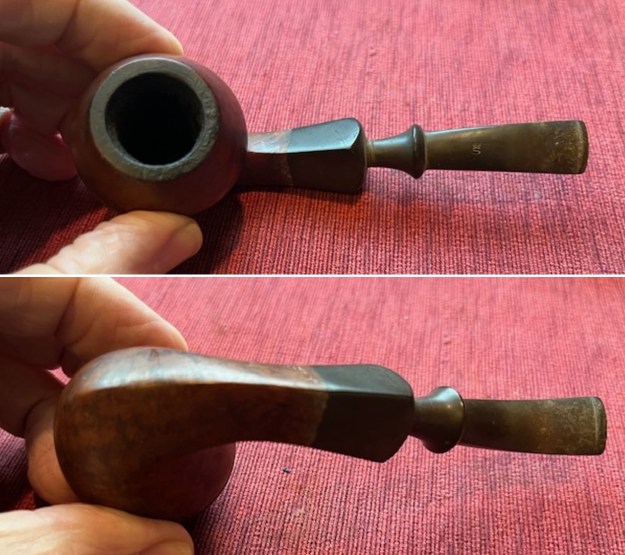
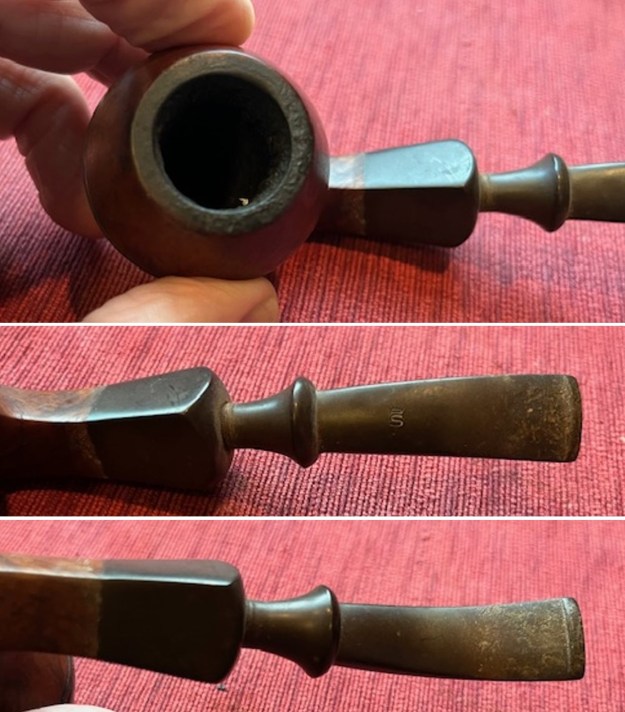
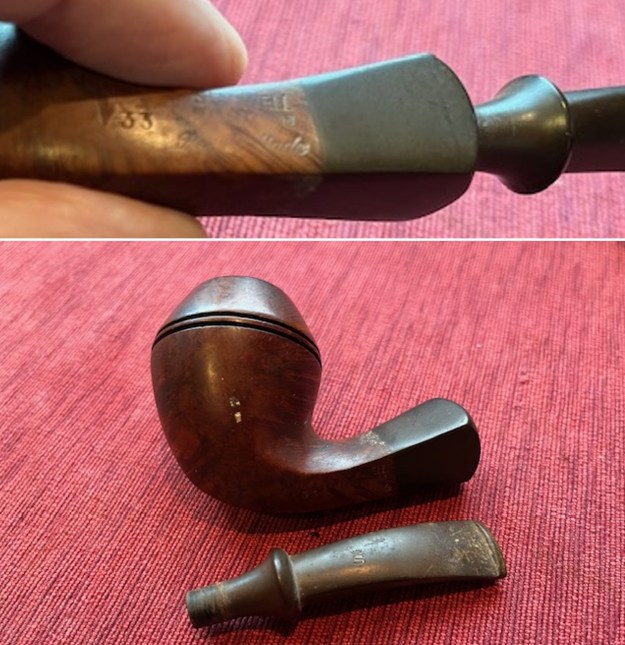
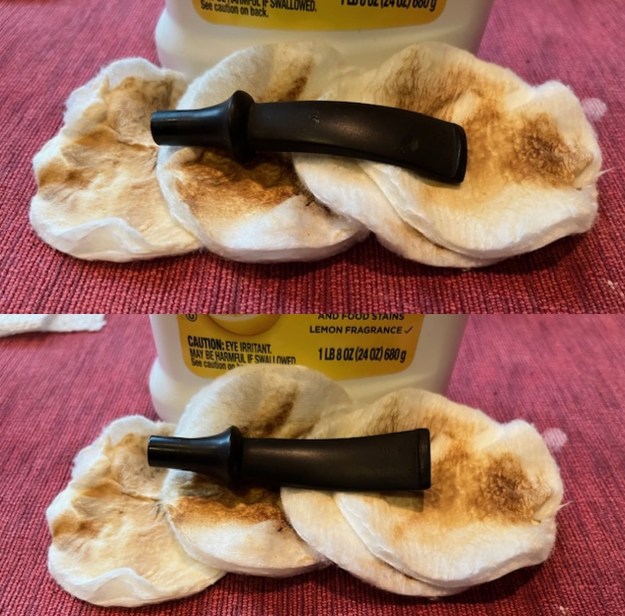
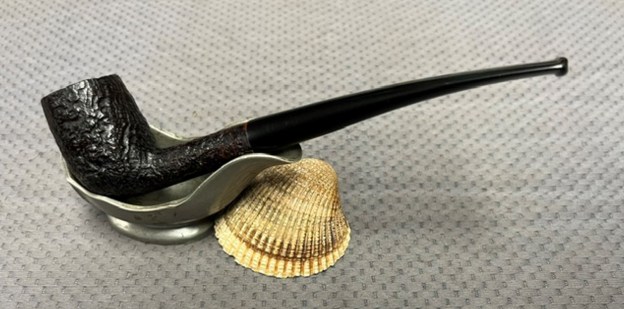
The next pipe is one I also worked on while I was at Jeff’s place in Idaho. I brought it home to finish it. We picked the pipe up from a seller in Macon, Georgia, USA on 03/08/2025. I would call the pipe a Bulldog shaped pipe with a vulcanite shank extension and a military style, vulcanite saddle stem. It is stamped on the left underside of the diamond shank and reads 33 (shape number) followed by Stanwell [over] Regd No. 969-48 [over] Bench Made. There is no other stamping on the shank. The bowl had a heavy cake and a thick coat of lava on the rim top. The finish was dirty and dusty with grime ground into the finish and in the twin rings around the cap. There were a few nicks in the finish from the journey the pipe had travelled since it was made. The vulcanite shank extension was oxidized and dirty. The military style vulcanite saddle stem sat well against the shank. It was dirty with oil and tar in the airway from the tenon to the button. There were deep tooth marks and chatter on both sides ahead of the button. There was a Crown S Stanwell logo on the topside of the stem. I took some photos of the pipe before I started my work on it. I took a photo of the bowl and rim top to show the cake in the bowl. The rim top had a thick coat of lava overflowing on top with some possible damage around the top and inner edge. I took photos of the top and underside of the stem showing the tooth marks and chatter on the vulcanite saddle stem surface as well as the heavy oxidation.The stamping is faint in spots but is readable in the photo below. It reads as noted above. I removed the stem from the shank and took a photo of the parts to show the parts of the pipe. The finish on the pipe is very worn and tired looking.I turned to do a bit of research on the Stanwell Bench Made line first to Pipephil’s site but unfortunately though there as some great information there, the Bench Made line is not shown on the site (http://www.pipephil.eu/logos/en/logo-stanwell.html).
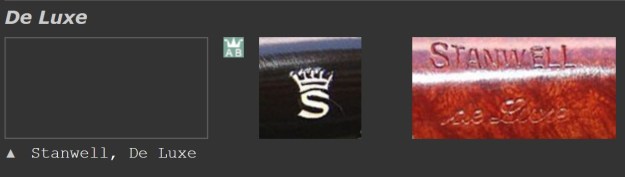
I know that Pipedia has some great history (https://pipedia.org/wiki/Stanwell) on the brand so I turned there hoping to see the Bench Made. There was nothing on the line itself and no mention of the Bench Made pipes.

I turned to the article on designers and shape numbers to see if I could find data on the 33 Shape (https://pipedia.org/wiki/Stanwell_Shape_Numbers_and_Designers). I found that the shape had two versions with this shape number: a) Bent bulldog with a tapered stem and b) Quarter-bent tall bulldog with a diamond shank and push flared stem. The one I have in hand is closest to the b shape.

I knew that with the Regd. No. on the shank, the pipe was made in the period between 1948 and 1960. But I wanted to know more. I can find many examples of the Bench Made line online but no one   explains the meaning of the term. I can only surmise from going through the photos that the Bench Made was a higher end line of Stanwell made factory pipes. Perhaps the finishing is what distinguishes it from the rest of the brand offering. Do any of you readers have any information on this quandary? Post a response and let us in on the information.

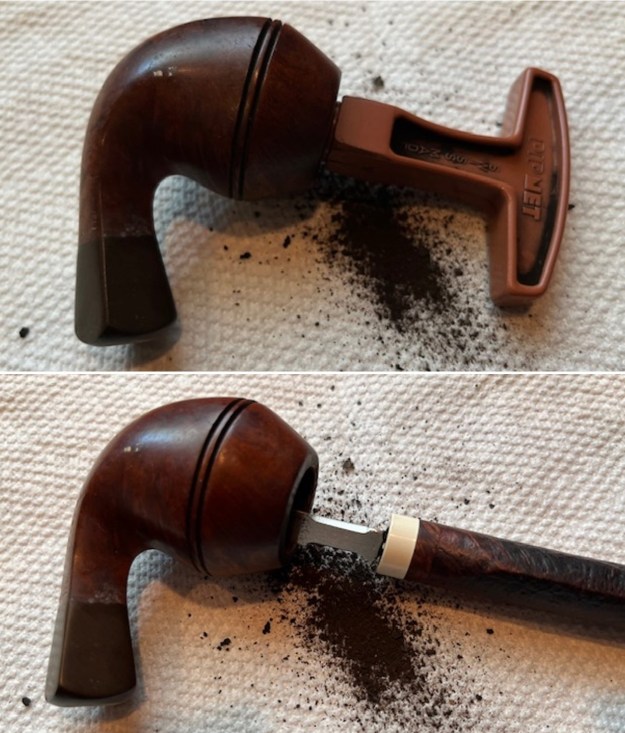
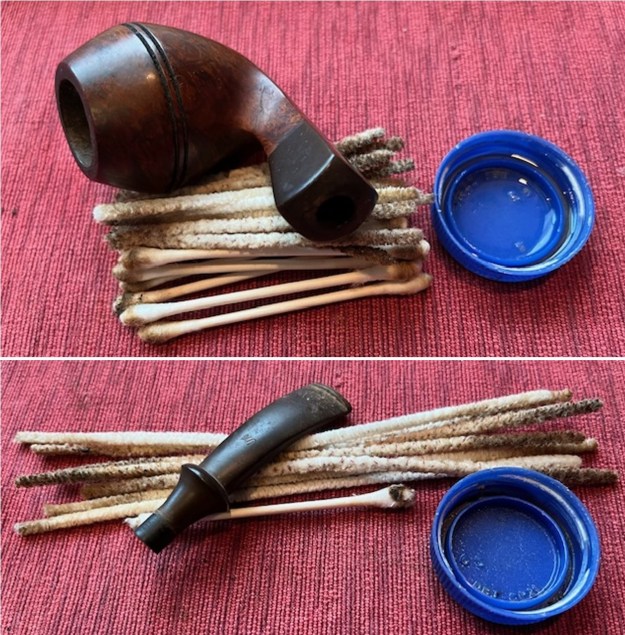
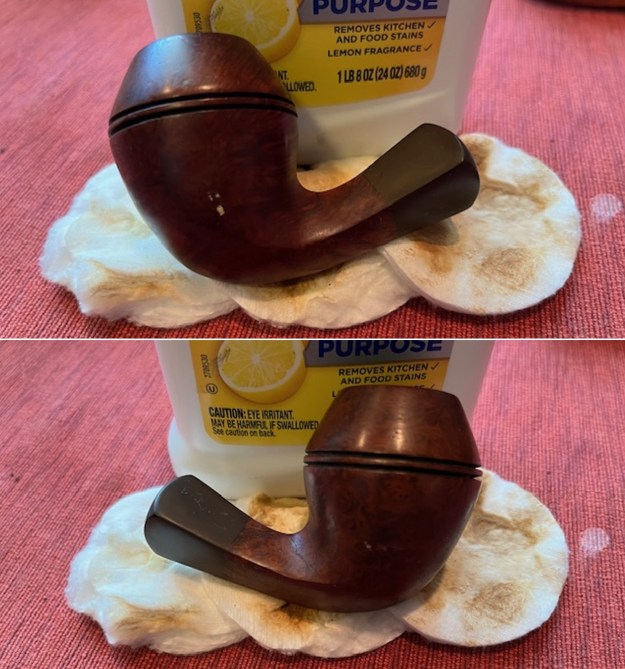
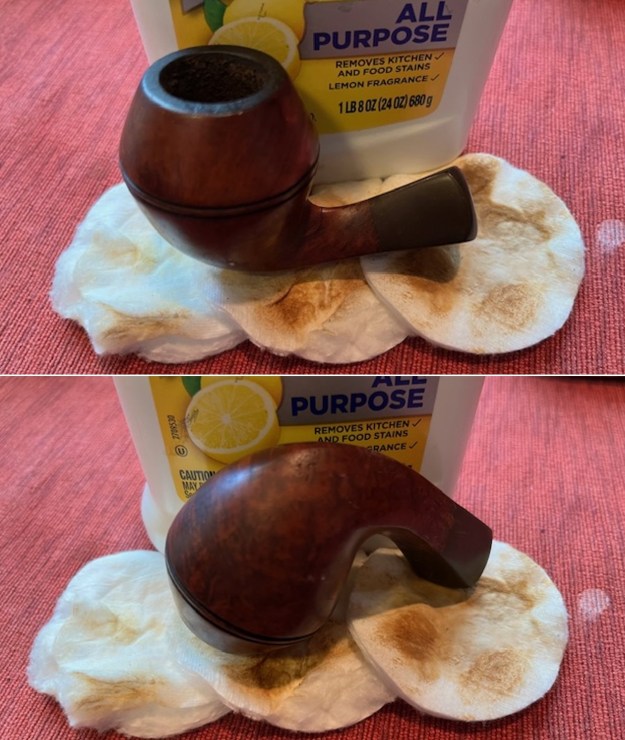
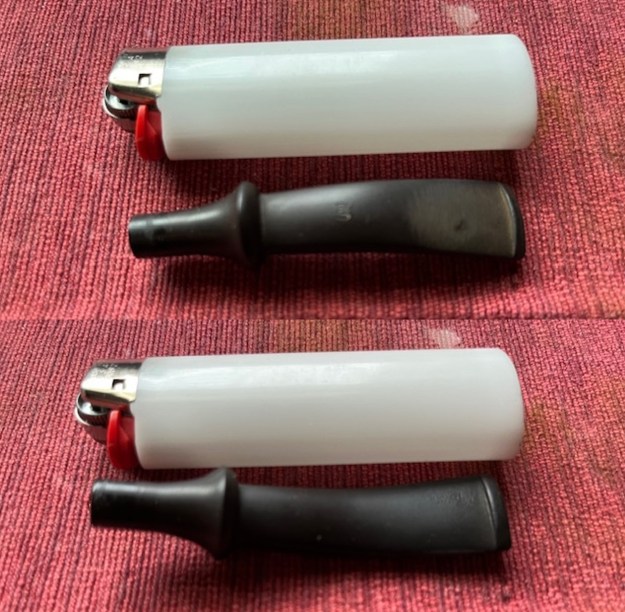
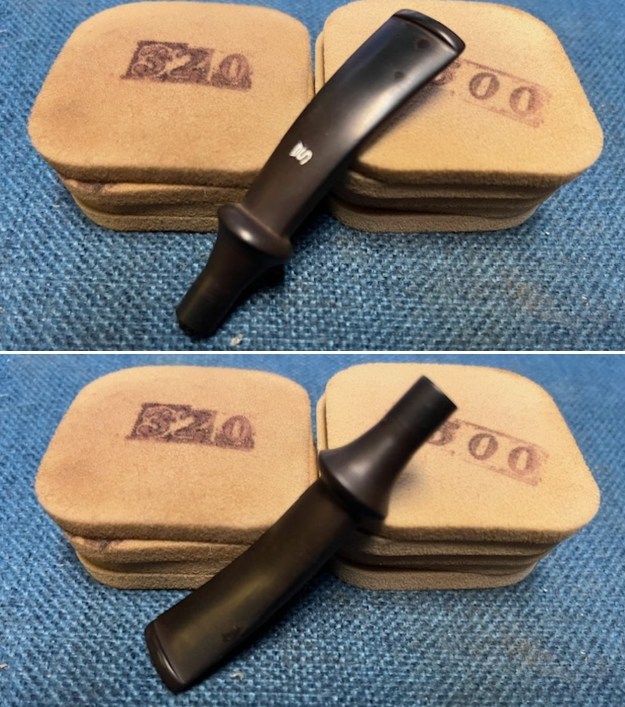
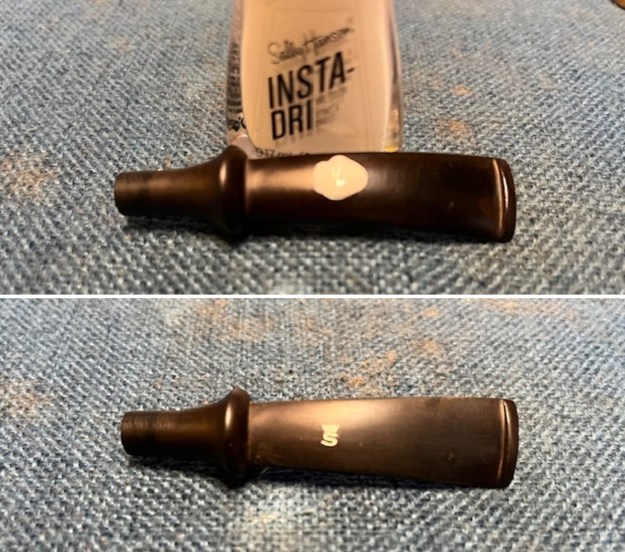
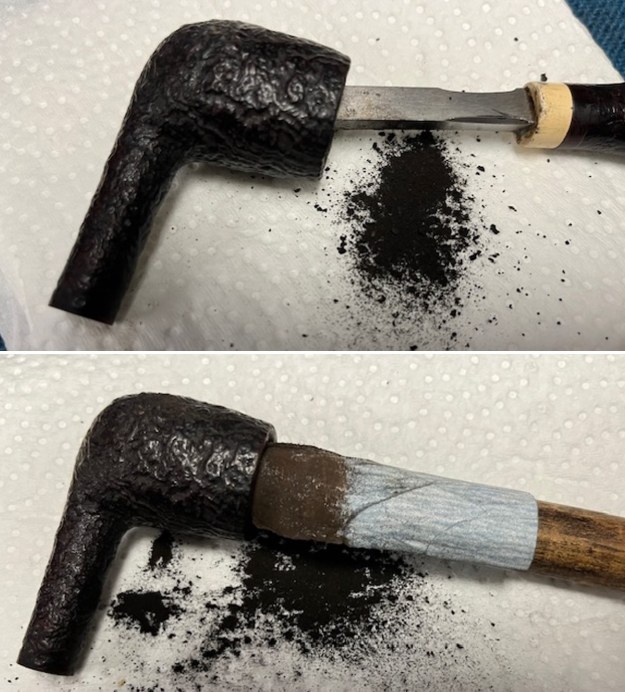
Now it was time to work on the pipe. I started my work on the pipe by reaming it with a PipNet pipe reamer and cleaning up the reaming with a Savinelli Fitsall Pipe Knife. I scraped the lava built up on the rim top with a small blade. It looked much better after the clean up. I cleaned out the inside of the shank and the airway in the stem with alcohol, pipe cleaners and cotton swabs. I removed the tars and oils with the cleaners and the alcohol. It was a dirty pipe!I scrubbed oxidation on the vulcanite shank extension with Soft Scrub All Purpose Cleanser. I have found that it does a remarkable job in softening and often removing the oxidation. Lot of elbow grease but it is effective. The photos show this step in the process. I scrubbed the surface of the bowl and shank with a tooth brush and undiluted Murphy’s Oil Soap to remove the debris and dust in the depths of the rustication. I cleaned out the shank again with a shank brush and the soap. I rinsed it with warm water. I dried off the briar with a soft cloth. It looked very good at this point in the process. After doing this I wondered if I should not have done this before the Soft Scrub. But oh well – hindsight is 20/20. I sanded the bowl, rim and shank extension with 320-3500 grit 2 x 2 inch sanding pads to minimise the scratches and marks in the surface of the briar and to further work on the oxidation on the vulcanite extension. I polished the bowl and the vulcanite shank end with 1500-12000 grit micromesh sanding pads to give it a deep shine. I wiped down the bowl and shank with an Obsidian Oil impregnated cloth after each pad. The briar and rubber began to shine! I worked some Before & After Restoration Balm into the surface of the briar with my fingertips and a horsehair shoe brush to get in the twin rings around the cap. The product works to clean, enliven and protect the briar. I let the balm sit for a little while and then buffed with a cotton cloth to raise the shine. The photos show the bowl at this point in the restoration process. I set the bowl aside and turned my attention to the stem. I scrubbed the surface with Soft Scrub Cleanser and cotton pads. I was able to remove much of the oxidation. The rest would come off using other tricks.I “painted” the stem surface with the flame of lighter to lift the tooth marks on the top and underside ahead of the button. It worked fairly well but some of the larger ones though they had come up a bit were still an issue.I filled in the deep tooth marks in the vulcanite with a rubberized black CA glue. Once the repairs cured I used a small file to flatten the against the surface and clean up the sharp edge of the button. I sanded the repaired areas with a folded piece of 220 grit sandpaper to further flatten and blend them into the surface. I sanded the stem further with 2×2 inch sanding pads to smooth out the stem surface. I wiped it down with a damp cloth after each sanding pad. I took photos of the stem after the sanding.I touched up the stamping on the top of the stem with white acrylic fingernail polish. Once it dried I scraped off the excess and cleaned up the area around the stamp with a 1500 grit sanding pad. It looked very clean. I polished the stem with micromesh sanding pads – wet sanding with 1500-12000 grit sanding pads. I wiped it down after each sanding pad with some Obsidian Oil. I finished polishing it with Before & After Pipe Stem Polish – both Fine and Extra Fine and buffed it off with a cotton cloth. I am excited to be finishing work this lovely Stanwell Bench Made 33 Bulldog pipe. This is the part of the restoration part I look forward to when it all comes back together, polished and waxed. I put the bowl and stem back together. I polished the bowl and stem with Blue Diamond to polish out the scratches in the briar and the vulcanite. I gave the bowl and the stem multiple coats of carnauba wax. I buffed the pipe with a clean buffing pad to raise the shine. I hand buffed it with a microfiber cloth to deepen the shine. The pipe polished up pretty nicely. The medium brown stained bowl looks really good with the polished black vulcanite. This Stanwell Regd. No Bench Made 33 Bulldog was another fun pipe to work on. It really has that classic Danish look that catches the eye. The brown stain really makes the pipe look attractive. It is another comfortable pipe to hold in the hand. The finished pipe is shown in the photos below. The dimensions of the pipe are Length: 5 ½   inches, Height: 2 inches, Outside diameter of the bowl: 1 ¼ inches, Chamber diameter: ¾ of an inch. The weight of the pipe is 1.55 ounces/46 grams. If you are interested in carrying on the previous pipeman’s legacy with this pipe send me a message or an email. Thanks for reading this blog and my reflections on the pipe while I worked on it. As always questions and comments are appreciated.
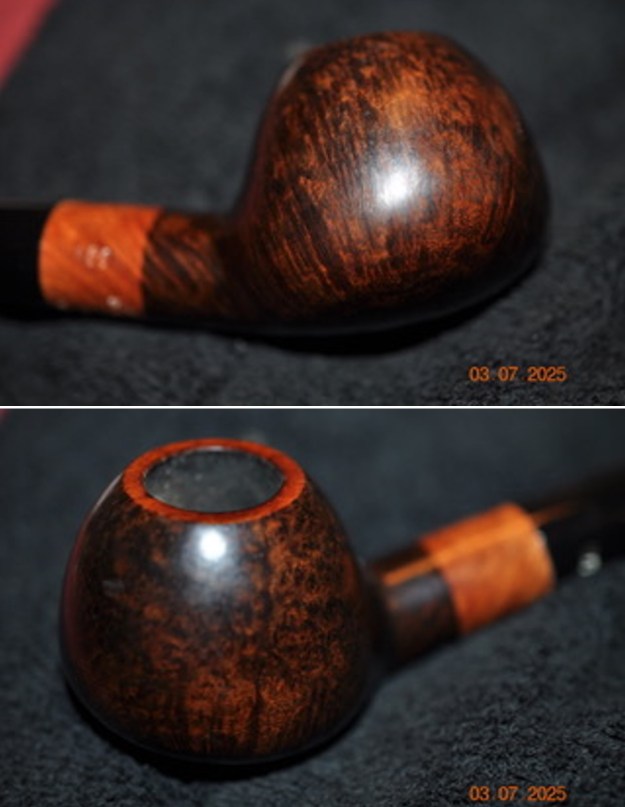
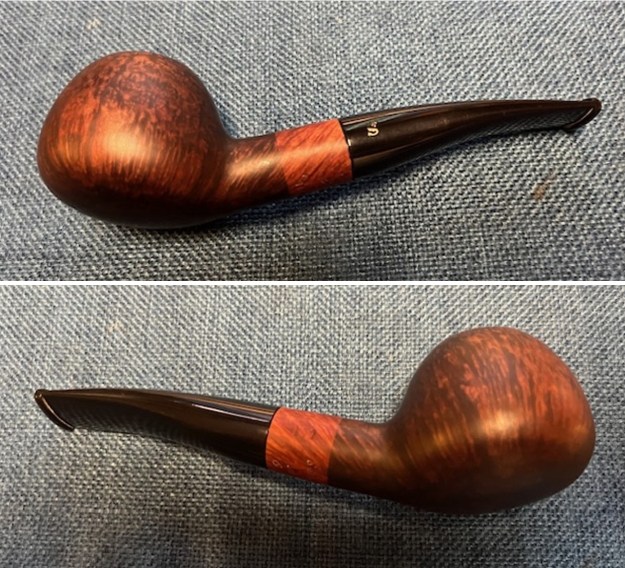
Restoring a Stanwell Danish Design Night and Day 109 Apple


by Steve Laug

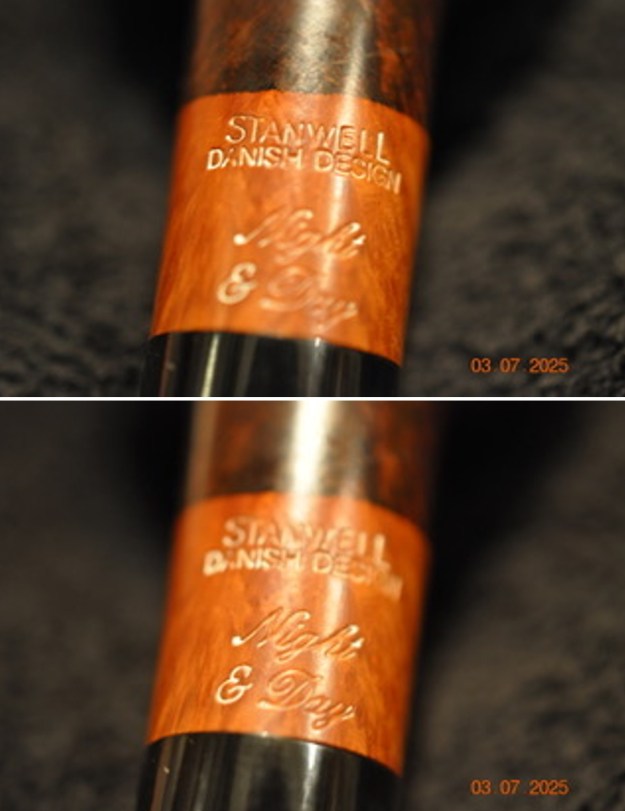
The next pipe on the worktable is a nice looking Stanwell pipe that we purchased from a fellow in Ogden, Utah, USA on 12/21/2024. The stamping on the pipe was very clear and readable. On the underside of the shank it reads Stanwell [over] Danish Design [over] Night and Day. On the right side of the shank it is stamped with the shape number 109 mid shank. The finish was in good condition though it was dirty. The grain shone through the grime and was beautiful. There was a light cake in the bowl and some light lava on the inner edge and rim top. The stem had a Crown S gold logo on the left side of the taper. It was dirty and had some light tooth marks and chatter on both sides ahead of the button. It is a 9mm filter stem. It had a lot of potential. Jeff took photos of the pipe as he saw it at this stage of his examination. Jeff took close up photos of the rim top from various angles to show the general condition of the bowl and rim. The photos show the thickness of the cake in the bowl and the darkening and spotty lava build up on the inner edge – heavier toward the back of the bowl. The edge looks like it might have some damage on the front left of the bowl but will probably be fine once the bowl is reamed and cleaned. The acrylic stem was dirty and had tooth marks and chatter on both sides ahead of the button. Jeff took a photo of the sides and heel of the bowl to give an idea of the beauty of the grain on the heel and sides of the bowl. The stamping on the underside of the shank is clear and readable as noted above. The shape number on the right side is also clear.
I did some reading to see if I could find out anything about the Danish Design Night & Day Line of Stanwell pipes. The pipe I have does not say Made in Denmark and from what I can find it seems that the line is a newer one and was made in Italy. I can’t find anything listed on the line itself on either PipePhil or Pipedia.

I did find several listed on the web for sale so they are available. I found the line offered online on cigarsunlimited.co.uk site (https://www.worthpoint.com/worthopedia/stanwell-night-day-9mm-filter-pipe-480014213). The description was helpful so I have included that below.

Stanwell Night & Day 9mm Filter Pipe Shape No.109. The Stanwell Night/Day pipe series is a stunning line of pipes. Each pipe features contrasting woods in the shank, providing an appearance that resembles night and day.

I also did some looking through the catalogues on Pipedia and the information there and did not find the line listed. I did have a look at the article on Shape Numbers and Designers there (https://pipedia.org/wiki/Stanwell_Shape_Numbers_and_Designers). From there I found that 109 was a Quarter-bent apple with a tapered stem, sometimes with an army mount. Reminiscent of the English ‘banker’ shape, or Savinelli’s shape 320.

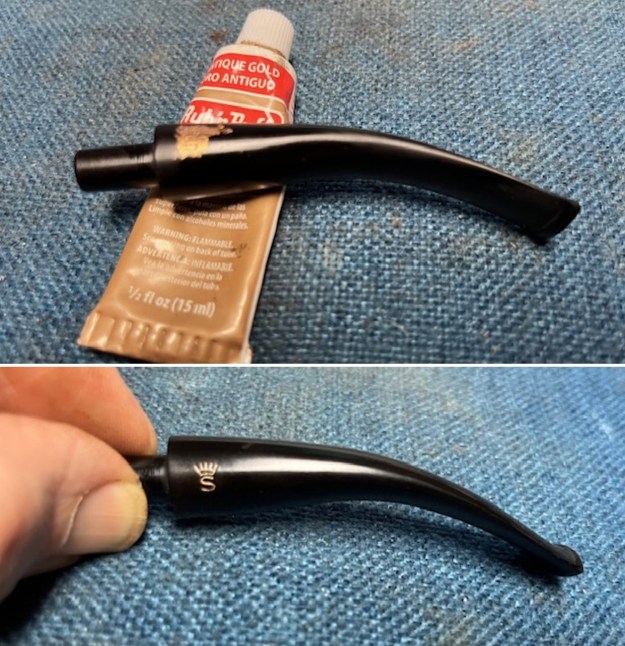
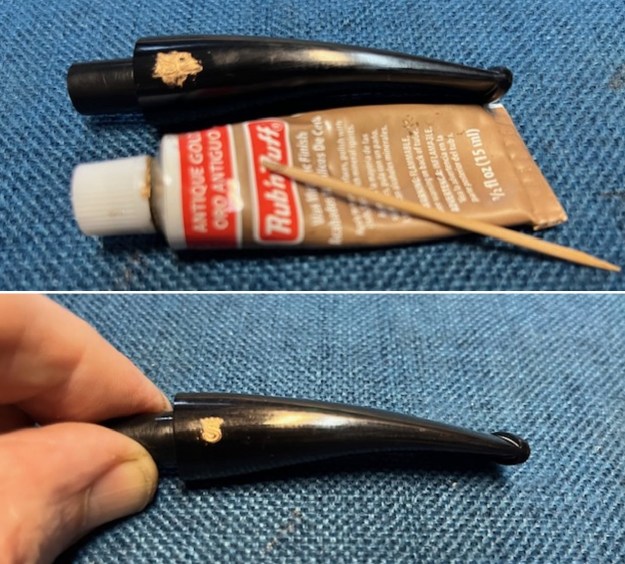
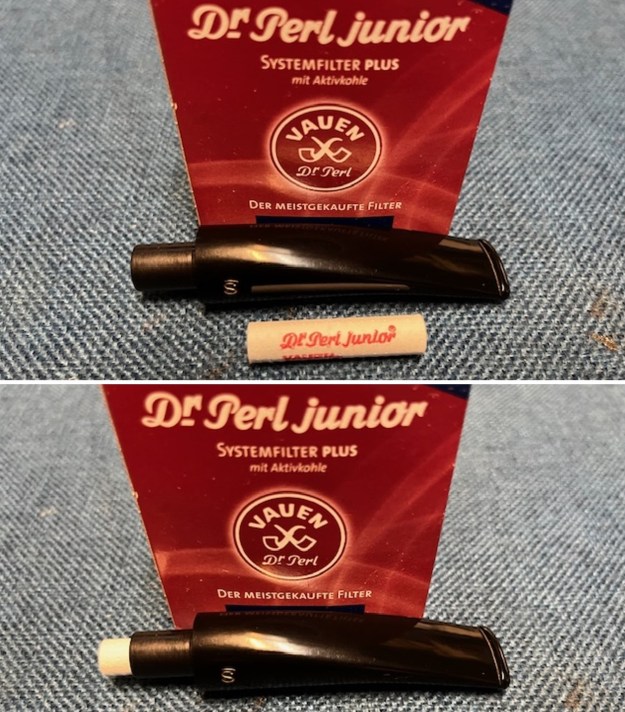
Jeff had done his usual thorough clean up of the pipe. He had reamed it with a PipNet reamer and finished with a Savinelli Fitsall Pipe Knife. He scrubbed the exterior with Murphy’s Oil Soap and the interior with isopropyl alcohol, shank brushes, cotton swabs and pipe cleaners. He worked on the acrylic stem with Soft Scrub then let it soak in Before & After Pipe Stem Deoxidizer. It has a few tooth marks and chatter on both sides. I took photos of the pipe before I started my work. I took some close up photos of the bowl/rim top and the stem to show the condition they were in at this point. The rim top and edges looked good and the bowl was clean. The stem had light tooth marks and chatter on both sides near the button.I took a photo of the stamping on the underside of the shank. It is clear and readable as noted above. I also captured the shape number on the right side of the shank. I removed the stem from the shank to give a sense of the pipe.I polished the briar with micromesh sanding pads – dry sanding it with 1500-12000 grit pads. I wiped the bowl down after each pad with a damp cloth. The finished bowl and shank look very good. I worked some Before & After Restoration Balm into the surface of the briar with my finger tips. The product is amazing and works to clean, enliven and protect the briar. I let it sit on the briar for 10 or more minutes and then buff it off with a soft cloth. It really makes the briar come alive and look quite rich. I set the bowl aside and turned my attention to the stem. I touched up the gold Crown S stamp on the left side o the taper stem with some Rub’n Buff Antique Gold. I worked it into the stamp with a tooth pick and buffed it off with a soft cloth.The chatter and marks were light enough that I polished the stem with micromesh sanding pads – dry sanding with 1500-12000 grit pads. I wiped the stem down after each pad with a cloth and Obsidian Oil. I finished the polishing with Before & After Pipe Stem Polish – both Fine and Extra Fine. I gave it a final coat of Obsidian Oil. I fitted the 9mm filter stem with a Dr. Perl Junior 9mm Filter. It sat well in the tenon and would slip into the shank perfectly.I am excited to put the finishing touches on this Stanwell Danish Design Night & Day 109 Apple. I put the pipe back together and buffed it with Blue Diamond on the buffing wheel. I gave the bowl and the stem multiple coats of carnauba wax. I buffed the pipe with a clean buffing pad to raise the shine and hand buffed it with microfiber cloth to deepen the shine. It is fun to see what the polished bowl looks like with the polished black, fancy turned vulcanite stem was beautiful. This Stanwell Danish Design Night & Day 109 is nice looking and the pipe feels great in my hand. It is light and well balanced. Have a look at it with the photos below. The dimensions are Length: 5 ¾ inches, Height: 1 ½ inches, Outside diameter of the bowl: 1 inch, Chamber diameter: ¾ of an inch. The weight of the pipe is 2.15 ounces/61 grams. It is a beautiful pipe and one that I will be putting in the Danish Pipemaker Section on the rebornpipes store. Thanks for walking through the cleanup with me as I worked over this pipe.

Restoring a Stanwell Facet Hexagon Dublin with a Brass Band and vulcanite stem


by Steve Laug

It may seem I have endless choices of pipes to work on. While we do have a lot of pipes that are in the queue to be restored it is far from endless. This next pipe I chose to work on was one that we purchased a few years ago on 10/17/2022 from our connection in Copenhagen, Denmark. The pipe is stamped on the left side of the shank and reads Stanwell [over] Facet. There is no country of origin stamp on the pipe. This one is a unique beauty with a Hexagonal shape combining a smooth rim top and smooth facets on the right and left side of the bowl. The front and back of the bowl and the top and underside of the shank were sandblasted on the two facets on the front and the back of the bowl. The exterior of the pipe was dirty and worn with dust in the sandblast. There was a thick cake in the bowl and some lava and darkening on the rim top flowing around the top of the rim. The shank had a gold band/ferrule on the shank end. The stem is a fancy hexagonal saddle stem with a gold “Crown S” logo on the left side of the saddle stem. It was lightly oxidized and had light tooth marks and chatter on both sides ahead of the button. Jeff took photos of the pipe before he started his clean up work. Jeff took photos of the rim top and stem to show the general condition of the pipe. The bowl is heavily caked and there was lava on the rim top and the inner edge. The stem was lightly oxidized and had some tooth marks and chatter. It should cleanup very well. Jeff took photos of the bowl sides and heel to show the smooth rim top, left and right bowl sides along with the beautiful blast that was around this bowl even though the grime on the finish hides it some. The pipe had obviously been well loved by the previous pipeman. He took photos of the sides of the shank to show the stamping. The stamping is clear and readable in the photos below as noted above. Before I started working on the pipe I decided to do a bit of digging on the shape and the design. I turned first to a blog on rebornpipes by Bas Stevens the was a compilation of Stanwell shapes (https://rebornpipes.com/2013/09/03/stanwell-shapes-compiled-by-bas-stevens/). There I found the shape number for this faceted pipe was 163. The information given there said that the shape was a Freehand, “Facet”, hexagonal, with brass ring by Jess Chonowitsch. It was a shape designed by Jess Chonowitsch and that was interesting to me.

So now I knew that the pipe was a Stanwell Facet and the shape was the classic Chonowitsch design hexagonal pipe with a brass ring on the shank end. Now it was time to work on the pipe.

Jeff had thoroughly cleaned up the pipe. He reamed the pipe with a PipNet Pipe Reamer and cleaned up the remnants with a Savinelli Fitsall Pipe Knife. He scrubbed the bowl with undiluted Murphy’s Oil Soap with a tooth brush. He rinsed it under running warm water to remove the soap and grime. There was some darkening on the inner edge of the rim and top that would need to be dealt with. He cleaned out the inside of the shank and the airway in the mortise and the stem with alcohol, cotton swabs, shank brushes and pipe cleaners. He scrubbed the exterior of the stem with Soft Scrub to remove as much of the oxidation as possible. The vulcanite stem was clean but had light tooth marks and chatter on both sides ahead of the button. There was an inlaid brass “Crown S” on the left side of the saddle stem. I took photos of the pipe before I started my work on it. I took photos of the rim top and bowl as well as the stem to give a sense of the condition of both. The rim top had some darkening to the inner edge and rim top on the back side. The stem cleaned up well and there were some small tooth marks on the top and underside ahead of the button.I took photos of the stamping on the left side of the hex shank. The are readable as noted above. I took the stem out of the shank and took a photo of the overall look of the pipe.I decided to start my work on the pipe by addressing the darkening and damage on the inside edge of the bowl and the rim top. I used a folded piece of 220 grit sandpaper to clean up the bevel on the inner edge of the bowl. I wiped the top and edges down with a damp cloth and the rim top and edges looked much better.I polished the briar with micromesh sanding pads – dry sanding with 1500-12000 grit pads. I wiped the bowl down after each pad with a damp cloth. I rubbed the bowl down with Before & After Restoration Balm. I worked it into the surface of the bowl sides and shank with my fingertips. The product works to clean, enliven and protect the briar. I let the balm sit for a little while and then buffed with a cotton cloth to raise the shine. I set the bowl aside and turned my attention to the stem. I filled in some small tooth marks with clear CA glue. Once cured I sanded them smooth to blend into the surface of the vulcanite with the 220 grit sandpaper. I started the polishing of the stem with 320-3500 grit sanding pads to polish the stem surface and smooth out the marks. The stem was looking better with the polishing.I polished the stem with micromesh sanding pads – 1500-12000 grit pads. I wiped it down with Obsidian Oil after each sanding pad. I used Before & After Pipe Polish – both Fine and Extra Fine to further polish the stem. This Jess Chonowitsch Designed Stanwell Faceted Hexagon Freehand 163 with a hexagon vulcanite saddle stem is a great looking pipe now that it has been restored. The beautiful grain on the polished smooth portions of the briar and the sandblast front and back of the bowl are stunning. I put the stem back on the bowl and carefully buffed the pipe with Blue Diamond on the buffing wheel. I gave the bowl and the stem multiple coats of carnauba wax on the buffing wheel and followed that by buffing the entire pipe with a clean buffing pad. I hand buffed the pipe with a microfiber cloth to deepen the shine. The finished Stanwell Facet 163 Dublin fits nicely in the hand and feels great. Give the finished pipe a look in the photos below. The dimensions of the pipe are Length: 5 ½ inches, Height: 1 ¾ inches, Outside diameter of the bowl: 1 ¾ inches, Chamber diameter: ¾ of an inch. The weight of the pipe is 48 grams/1.69 ounces. I will soon be adding it to the rebornpipes store in the Danish Pipe Making Companies Section. If you are interested in this pipe send me a message or an email. Thanks for reading this blog and my reflections on the pipe while I worked on it. There are many more to come!

Cleaning up a Stanwell Regd. No. 969-48 Bamboo Acorn


by Steve Laug

I was recently contacted by a fellow here in Vancouver about some pipes he had. He was referred to me by a local pipe shop. I was unclear if he wanted them cleaned or exactly what. When he came on the weekend he brought six pipes in two pipe boxes for me to have a look at. I spoke with him about the cost of restoring them. It finally became clear to me (I guess I am slow) that he wanted to sell the pipes. He was tasked with the job by his sister in law as the pipes were from her late husband’s collection. As I unpacked them it was clear that they were some nice pipes and some were higher grade. All but one was smoked and had the heavy smell of fruity aromatics to them. Some had cake in the bowl and lava on the rim. Of the six, four of them had significant rim damage – bowls out of round, burn marks, cut marks. The saddest part is that the damage was most significant on the higher end pipes. Most of them had tooth marks in the stems. Obviously, they had been his late brother in laws favourites and he had enjoyed them. He left them with me and I went over them, researched the brands and wrote up an offer for him to present to his sister in law. By the end of the day we had a deal. The six pipes now have a new home and the fruity smell needs to be exorcised!I set aside the long queue of pipes I am working on here to work on the second of these pipes. I bumped it ahead of the queue. It is a beautiful looking older Stanwell Regd. No. Bent Acorn Bamboo. It is stamped on the left side of the bamboo shank and reads Stanwell [over] Regd. No. 969-48 [over] Made in Denmark. There was an acrylic spacer on both ends of the bamboo. The one is between the shank and the bowl and the other is between the stem and the bamboo. The bowl had beautiful straight grain around sides. The Bamboo shank had a great patina. The finish is spotty and there were a lot of dents, scratches. The bowl and rim top were clean or cake and lava but a very prevalent smell of aromatic, fruity tobacco surround the bowl. The stem was clean but and had light tooth chatter on both sides of the stem. I took photos of the bowl and rim top to give you and idea of what I see. It is too bad that Word does now allow for the inclusion of smells because this is filling my work area. I have a candle going to mask the smell a bit. You can see the damage to the rim top and inner edge of the bowl. There is no cake in the bowl. The bamboo looks very good with some nice Patina. The stem is dirty and has light tooth chatter on both sides ahead of the button.I took a photo of the stamping on the left side of the Bamboo shank. It is clear and readable as noted above. I took photos of the bowl with the stem removed to give a sense of the proportion and appearance of the pipe.Before I started my work on the pipe I wanted to see if I could find any information that would help me get a sense of the line. I turned to Pipephil to get a quick review of the Bamboo line (http://pipephil.eu/logos/en/logo-stanwell.html). The pipe I was working on did not have Brass Crowned S inlaid on the stem. I have included a screen capture of the brand info there.I then turned to Pipedia (https://pipedia.org/wiki/Stanwell) for more information. The article is great and gives a lot of history on the brand. There were also links to catalogues at the bottom of the page. I am including a page from a catalogue on the site below that gives a bit of a glimpse into the brand. Here is the link (http://www.axeljeske.de/Pfeifen/Stanwell_Amager.pdf). The catalogue page gives a great description of the Bamboo line. It reads as follows: Top quality bowls perfectly fitted with porous bamboo shanks for casual elegance.

Now it was time to work on the pipe.

I cleaned out the stinky, fruity smelling tobacco oils and tars in the shank and the airway in the stem. I used 99% isopropyl alcohol, cotton swabs and pipe cleaners and was able to remove the debris and some of the stench. I needed to “deghost” the bowl and try to exorcise the smell. I stuffed bowl with cotton bolls and used an ear syringe to fill it with alcohol. I set it aside to let the alcohol do its work and wick the oils into the cotton. While it sat for the afternoon, I did some other work. That evening I removed the cotton bolls and quite a bit of tars and oils had leeched out. It smelled significantly better.
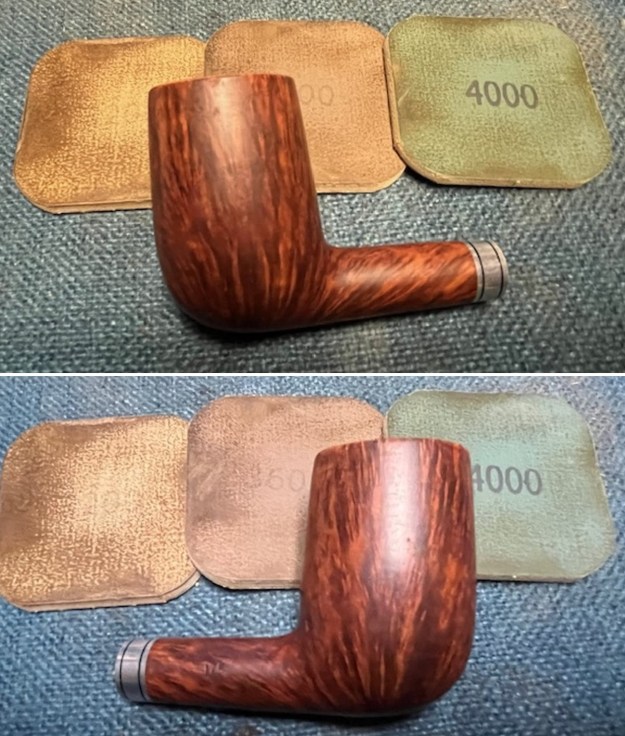
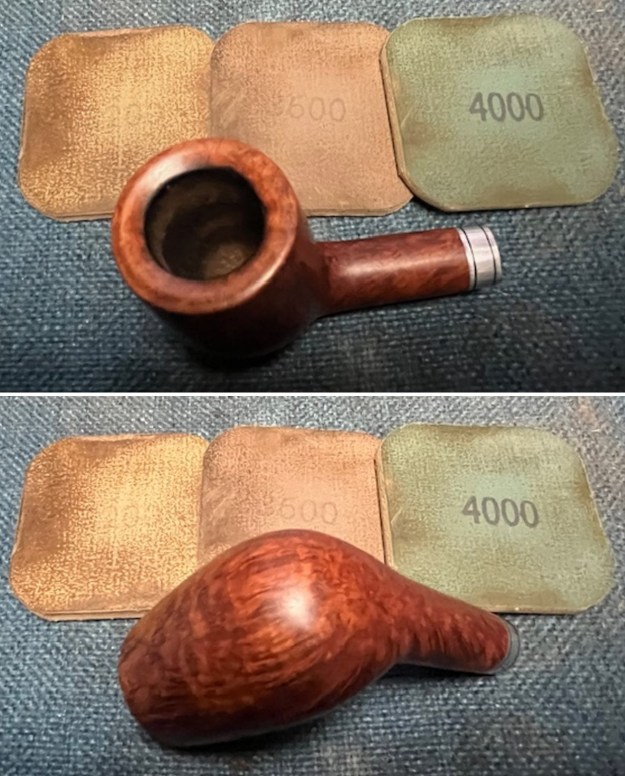
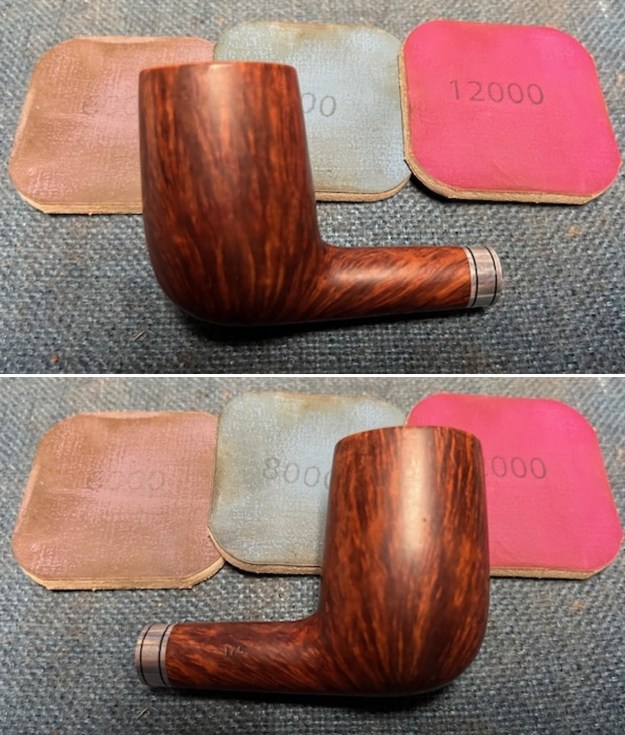
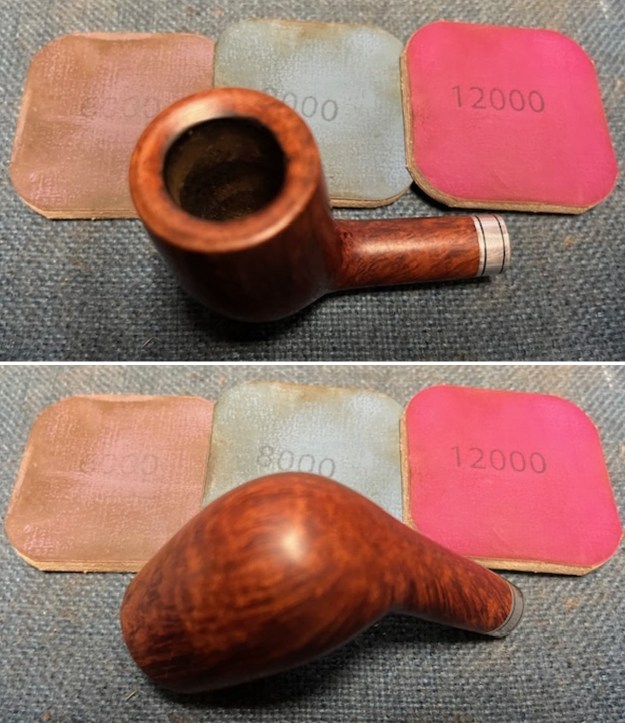
I used a folded piece of 220 grit sandpaper to minimize the damage on the inner edge of the rim and smooth it a bit. I was careful to not change the profile of the rim top and edges. There is some darkening on the rim top that remains and the bowl is slightly out of round.I used 320-3500 grit sanding pads to smooth out the scratches and nicks in the surface of the briar. There we many small scratches most of them in the varnish coat and lightly in the briar. I wiped the bowl down after each sanding pad with a damp cloth to remove the sanding dust and debris. I polished the briar with micromesh sanding pads – dry sanding with 1500-12000 grit pads and wiped it down the bowl after each sanding pad. As I examined the bowl before I gave it a coat of Before & After Balm I rubbed my fingers over the surface. I felt some flaws in the briar. I used my headlamp and build in lens to examine what I felt with my fingers. I saw some well done fills in the briar that followed vertical grains. They were shrunken in spots which made the bumps I was feeling. I used the headlamp and lens to give a clear view. I used a tooth pick and clear CA glue to fill in the spots in the briar. This was going to make a bit more work for me but it was worth doing.Once the fills cured I sanded each strip smooth with the edge of a folded piece of 220 grit sandpaper.I sanded the area with 320-3500 grit sanding pads and wiped the bowl down with a damp cloth to remove the sanding debris. I followed that by polishing the bowl with 1500-12000 grit micromesh sanding pads. Again I wiped the bowl down with damp cloth to remove the sanding debris on the briar. I restained the area on the bowl side with a Walnut Stain pen. I blended the areas into the surrounding briar. The look and feel of the bowl was very good.I rubbed the bowl and shank down with Before & After Restoration Balm. I worked it into the surface of the bowl sides and shank with my fingertips to clean, enliven and protect the briar. I let the balm sit for a little while and then buffed with a cotton cloth to raise the shine. The Balm did its magic and the grain stood out. I set the bowl aside and turned my attention to the stem. I was able to polish out the light tooth marks and chatter with 320-3500 grit sanding pads. I wiped the stem down after each pad with an Obsidian Oil cloth. It was beginning to look very good.I polished the stem with micromesh sanding pads – 1500-12000 grit pads. I wiped it down with a damp cloth after each sanding pad. I used Before & After Pipe Polish – both Fine and Extra Fine to further polish the stem. This Stanwell Bamboo Shank Acorn with a vulcanite saddle stem is a great looking pipe now that it has been restored. The beautiful finish really highlights the grain and the polished finish is stunning. I put the stem back on the bowl and carefully buffed the pipe with Blue Diamond on the buffing wheel. I gave the bowl and the stem multiple coats of carnauba wax on the buffing wheel and followed that by buffing the entire pipe with a clean buffing pad. I hand buffed the pipe with a microfiber cloth to deepen the shine. The finished Stanwell Bamboo Shank Acorn fits nicely in the hand and feels great. Give the finished pipe a look in the photos below. The dimensions of the pipe are Length: 5 ½ inches, Height: 2 inches, Outside diameter of the bowl: 1 ½ inches, Chamber diameter: ¾ of an inch. The weight of the pipe is 37 grams /1.31 ounces. I will be adding the pipe to the Danish Pipe Makers Section of the rebornpipes store. If you are interested in purchasing this pipe send me a message or an email. Thanks for reading this blog and my reflections on the pipe while I worked on it.

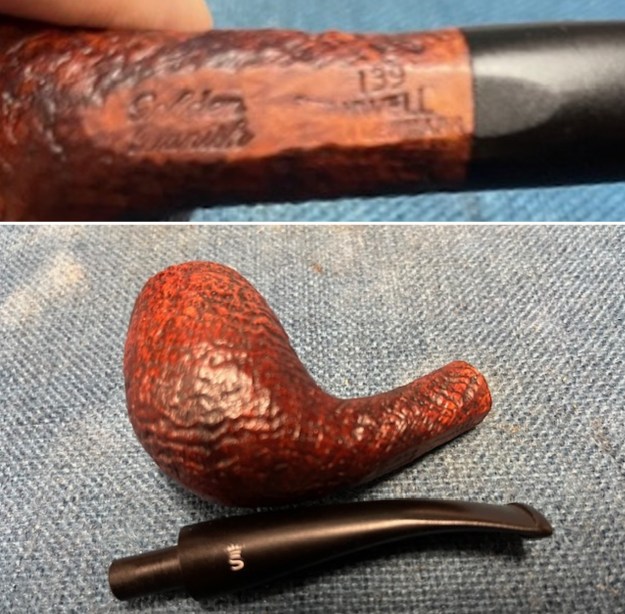
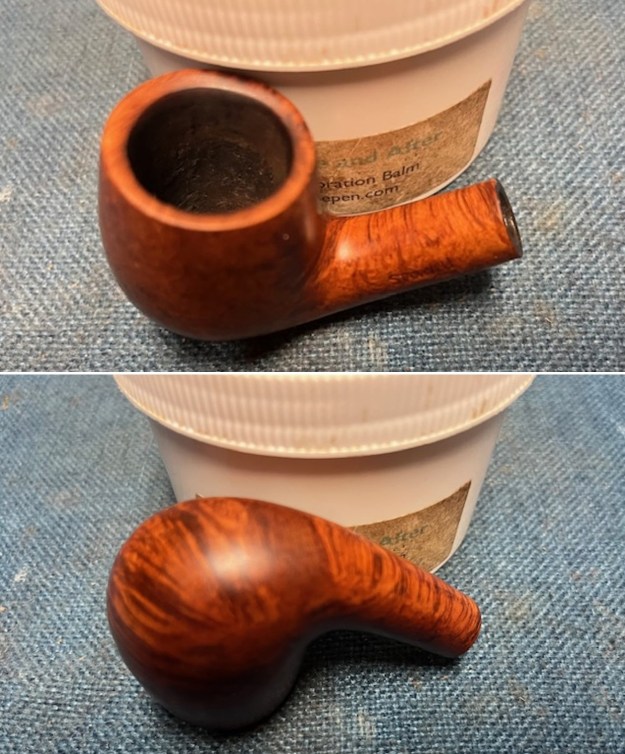
Restemming an Unsmoked Stanwell Made in Denmark 7451 Tiny Stack


by Steve Laug

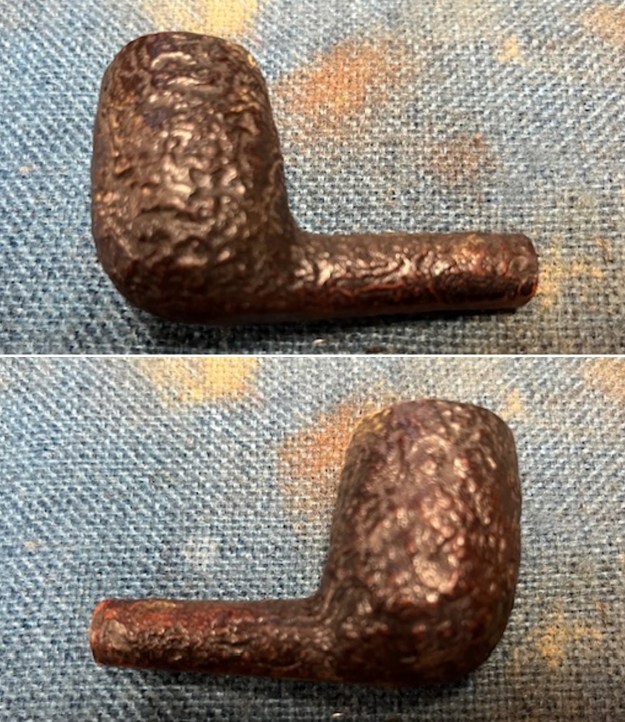
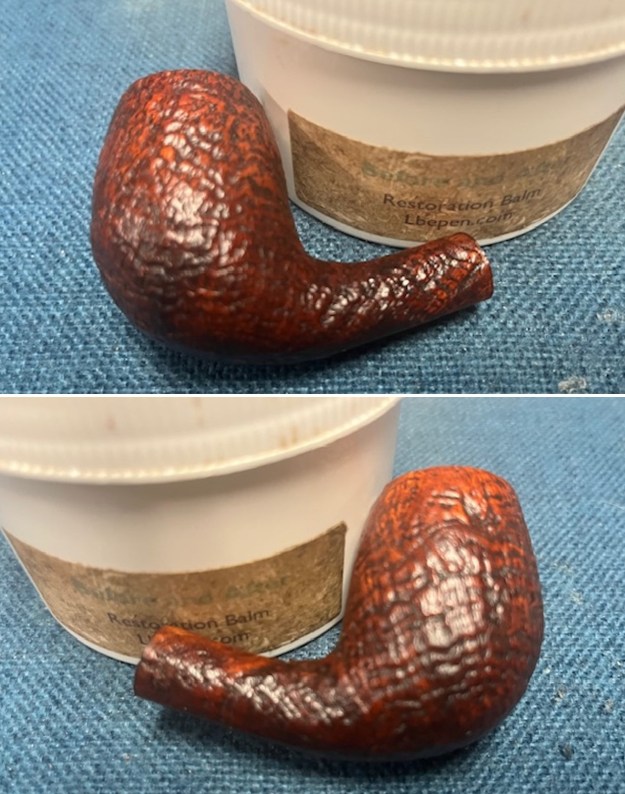
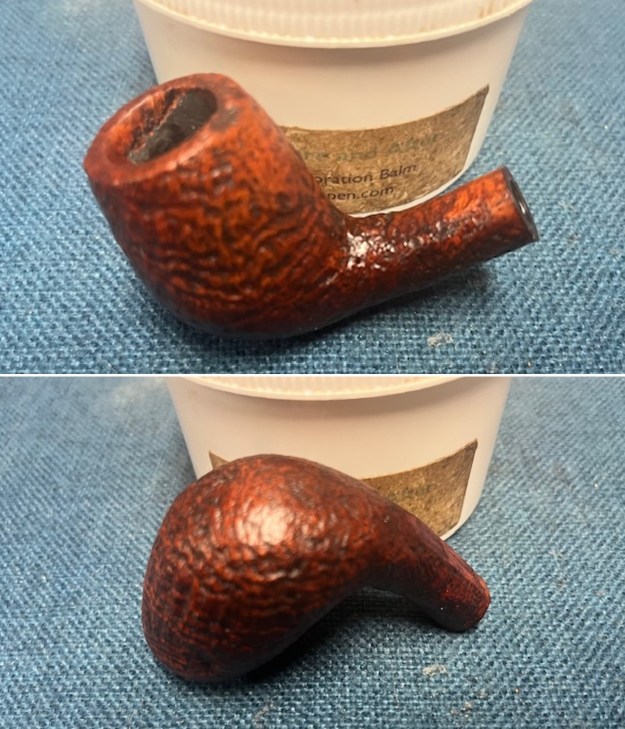
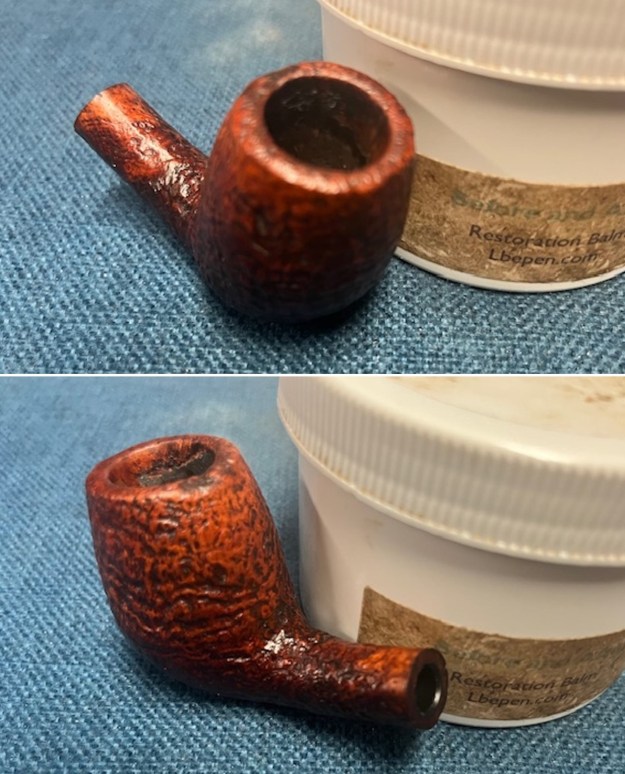
I had this tiny Stanwell sandblast pipe in my box of bowls to be restemmed as the stem on it was snapped off at the end at an angle. It appeared to be unsmoked and if not, it was very clean. I wonder if it was one of the early Ladies Pipes that many companies made to cater to what they assumed the female market wanted. The pipe was a beautiful sandblast with a smooth panel on the underside of the stem that was stamped and read Stanwell by the shape number 7541 [over] Made in Denmark. The stamping was clear and readable. The stem had an S stamp (without the crown) on the side and it looked like the button and stem had been snapped when someone grabbed the end of it and tried to turn it to remove the stem. It also had a small brass band that was held on the tenon of the pipe. It was inlaid with cut glass beads. The stem would need to be replaced and the band with beads installed on the new one. I took photos of the pipe before I started working on it. I took a photo of the rim top and bowl to show the condition of the bowl when I started working on it. It was clean and appeared to be unused/unsmoked. I did not bother taking photo of the stem as its condition was obvious in the above photos and I would need to replace it. I also took a photo of the bowl without the stem to give a sense of what the pipe looked like. It is also clear that the band with glass “jewels” was on the tenon not the shank.I went through the can of stems here and found a thin stem that was a saddle stem with a flared blade in a fishtail style. The tenon actually was very close to the original and would take very little adjusting to get a solid fit.I used a Dremel and sanding drum to reduce the diameter of the saddle to fit the diameter of the shank. I also used a flat file to further shape and reduce the fit to the shank size. I fit it to the shank to do the work on the fit. It did not take too much work to get the fit correct. The slot in the stem was small and thin. I sued a flair and an oval needle file to open the slot. I also used a slot saw to give it angle /Y shaped slot opening. When I was finished a pipe cleaner easily slid in and out.I sanded the saddle portion of the stem with 220 grit sandpaper to smooth out the file and Dremel marks on the saddle and also to remove the casting marks on the sides of the stem blade. I slid the brass/jewelled band on the tenon so that it fit against the saddle. I put the stem on the shank and took a photo of the look of the newly restemmed pipe. I took the stem off the shank and turned my attention to the bowl. I rubbed the stem down with Before & After Restoration Balm. I worked it into the sandblast surface of the bowl with my fingertips and a shoebrush. The product works to clean, enliven and preserve the briar. I let it sit for 15 minutes then I buffed it with a cotton cloth to deepen the shine. The briar really comes alive with the balm. The bowl was finished and now I needed to go back to polishing the stem. I sanded it with 320-3500 grit sanding pads. I dry sanded it and wiped it down with Obsidian Oil to protect and clean it. I sanded out the casting marks and the scratches in the surface. It looked much better with each sanding pad.I polished the stem with micromesh sanding pads – wet sanding it 1500-12000 pads. I wiped it down with a damp cloth after each pad to remove the dust and polishing debris. I polished it with Before & After Pipe Polish – both Fine and Extra Fine. I placed the brass ring with the inlaid glass gems on the tenon. It was made to slide on the tenon easily and stopped against the saddle of the stem. I took photos before and after.I am really happy with the way that this Small Sandblast Stanwell 7451 Tiny Stack turned out. It really is a beautiful looking pipe with a great shape sandblast finished bowl and rim. The new vulcanite saddle stem is really nice. The brass band on the tenon is inlaid with cut glass jewels. The briar really came alive with the buffing. The rich dark brown stains of the finish gave the pipe a sense of depth with the polishing and waxing. I put the stem back on the bowl and carefully buffed the pipe with Blue Diamond on the buffing wheel using a light touch on the briar. I gave the bowl and the stem multiple coats of carnauba wax on the buffing wheel. I buffed the pipe with a clean buffing pad to raise the shine. I hand buffed the pipe with a microfiber cloth to deepen the shine. The finished Stanwell 7451 Lady’s Pipe really is a beauty and feels great in the hand and looks very good. Give the finished pipe a look in the photos below. The dimensions of the pipe are Length: 5 ¼ inches, Height: 1 ½ inches, Outside diameter of the bowl: ¾ of an inch, Chamber diameter: ½ of an inch. The weight of the pipe is 17 grams/.56 of an ounce. The pipe will be going on the rebornpipes store soon. It will be in the section on Danish Pipe Makers if you would like to add it to your collection. Thanks for reading this blog and my reflections on the pipe while I worked on it. It was a fun one to work on!

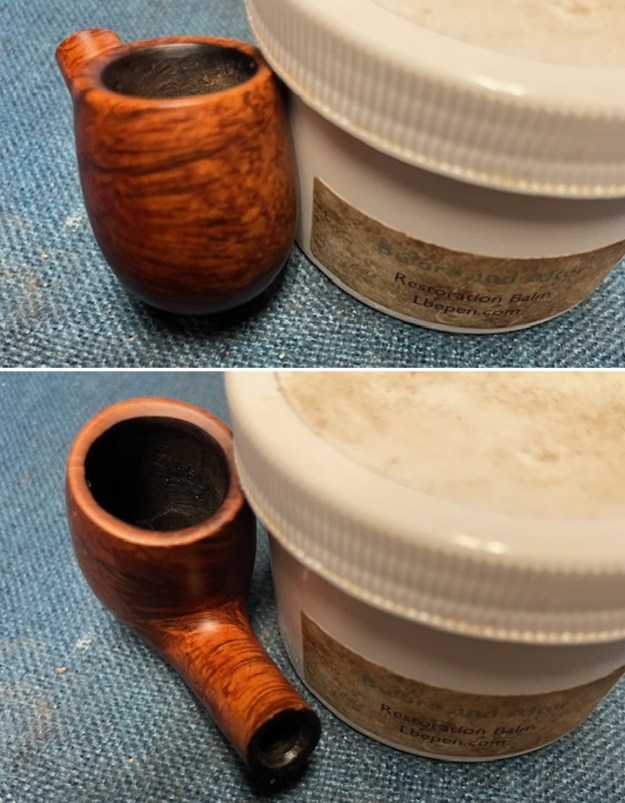
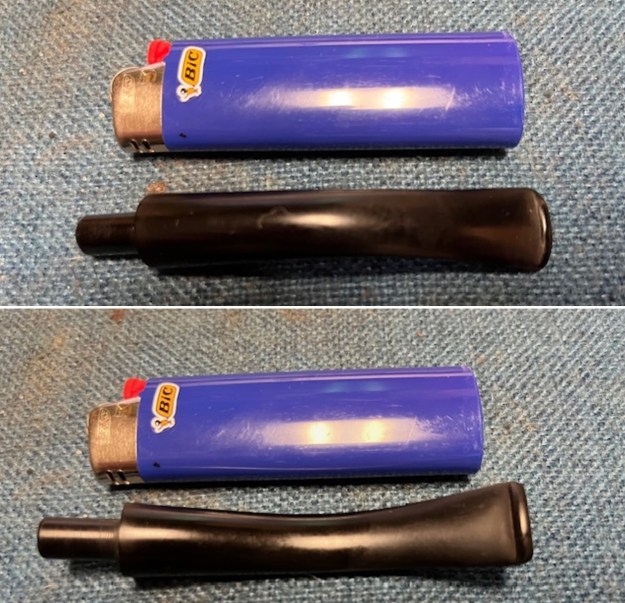
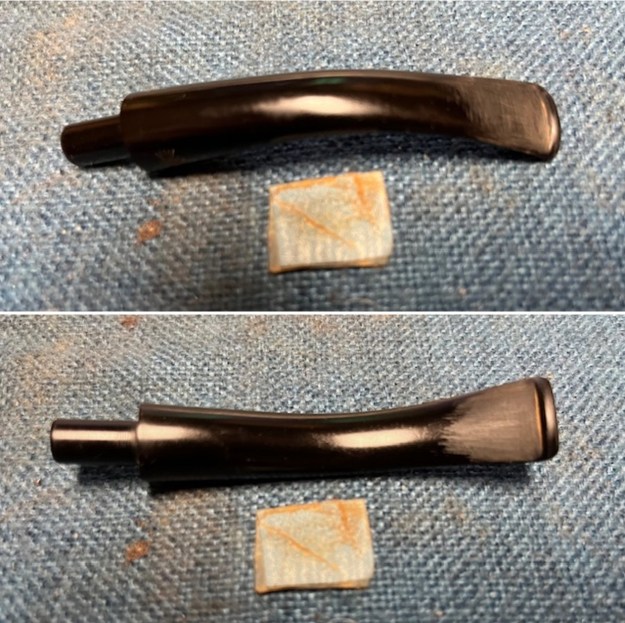
Restemming and Reclaiming a Stanwell Design Choice 886


by Steve Laug

The next pipe on the table is nice looking Stanwell Danish style Pot that I decided to restem. I cleaned up the bowl and matched a stem with briar bowl and vulcanite shank extension. It is a cleanup and restore and gives me a break from the routine of my other work on pipes. This bowl has a classic Stanwell look from the 1960s and 1970s. The finish was a bit dull and lifeless. It showed promise under the grit and grime of the years. It was stamped on the underside of the shank and read 866 [over] Stanwell [over] Design Choice [over] Made in Denmark. The bowl had a thick cake and some lava overflow on the crowned rim top. The bowl also had some dust and oils ground into the finish of the bowl. The vulcanite shank extension is lightly oxidized. It is a pretty pipe with some great grain and I am hoping to match a nice stem to it. I took some photos of the bowl before I started my work on it. I took a close up photo of the rim top and bowl to give more of a sense of what I see and noted above. It is a dirty pipe but seems to have no damage on the rim top or edges.I tried to capture the stamping in a photo. It is clear and readable as noted above. There are some faint spots on them but they are still readable.I found a stem in my cans of stems that would work well with the pipe. I would need to clean up the tenon end a bit and smooth it out for a clean fit but I think it would look good!I did some hunting on both Pipephil’s site and also on Pipedia for both the shape number and also the Design Choice series. While both sites were very helpful neither one gave information specific to the Design Choice.

I then did a general Google search for a Stanwell Design Choice 886 six pipe and came up with several pipes with info. Two were on Worthpoint auction site and gave me little that I did not have by just looking at the pipe. However, Smokingpipes.com had a listing for an 886 that gave a little more data to me. Here is the link and a quote from the description on the site for this shape (https://www.smokingpipes.com/pipes/estate/denmark/moreinfo.cfm?product_id=302469).  I quote:

Spanning a length of time between the 1960s and 1970s, Stanwell’s “Design Choice” series of variations on the marque’s shapes all predominantly featured the presence of a typically flared ferrule (which this “886” has). Likely based on a shape designed by Sixten Ivarsson himself, this Danish bent Pot also sports a pretty sweet cross-cut grain pattern. There are some dings on the bowl, and a touch of rim darkening, but otherwise condition is good. – Daniel Bumgardner

From the information I learned that the line featured a lot of Stanwell’s classic shape with the addition of a flared ferrule made of vulcanite. The pipe came out between the 1960 and 1970s and was probably based on a design by Sixten Ivarrson. Now it was time to work on the pipe itself.

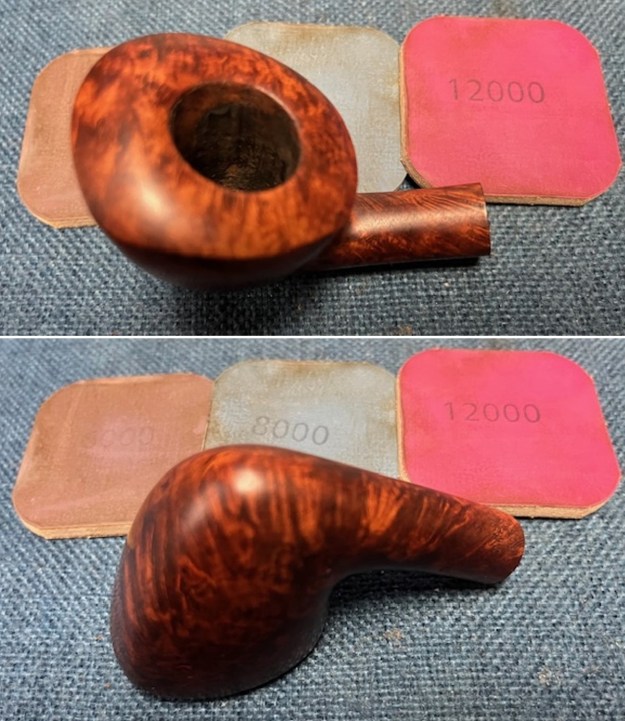
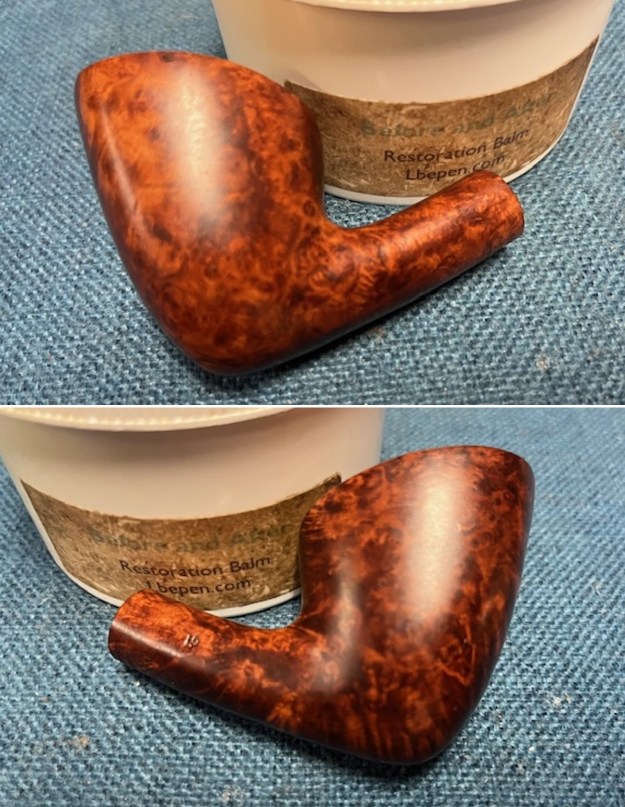
I began by reaming the pipe. I used a PipNet Reamer with the first and second cutting heads to take back the heavy cake to bare briar. I cleaned up the reaming with a Savinelli Fitsall Pipe Knife and finally sanded the bowl walls with 220 grit sandpaper wrapped around a dowel. I like to remove all the cake to examine the walls for damage and checking. Great news is that this one is free of any damage! I scraped off the rim top and edge of the bowl with the Savinelli Fitsall knife aand started the clean up of the debris with a folded piece of 220 grit sandpaper. The inner edge and the top looked to be undamaged.I moved on to using the folded sandpaper to clean up the rim darkening on the pipe as well as further addressing the build up on the rim top. I was definitely looking better when I finished.I polished the briar bowl and vulcanite shank extension with micromesh sanding pads – dry sanding with 1500-12000 grit sanding pads. I wiped it down with a damp cloth after each pad to remove the debris. The bowl took on a rich glow. I was enjoying the beauty of the bowl when it suddenly dawned on me that I had not cleaned the shank or the airway in the bowl or stem. I went back and did so now. I had to be careful with the alcohol so as not to drip on the shank extension of the briar. I used alcohol, cotton swabs and pipe cleaners to clean out the internals and it is now clean on both the inside and outside.Now I could go back to my normal process. I rubbed down the briar and the vulcanite shank extension with Before & After Restoration Balm. I worked it into the surface with my fingertips. The product works to clean, enliven and preserve the briar. I let it sit for 15 minutes then I buffed it with a cotton cloth to deepen the shine. The briar really comes alive with the balm. I paused the process to put the stem in the shank and take a photo of the new look of the pipe with a stem in place. I still need to polish the stem but the look is very nice! I like it. I removed the stem and started my polishing process. I sanded out the scratches in the vulcanite with 320-3500 grit sanding pads. I wiped the stem down after each sanding pad with a cloth impregnated with Obsidian Oil. It started to take on a deep shine.I polished the stem with micromesh sanding pads – 1500-12000 grit pads to remove them. I wiped the stem down with Obsidian Oil after each sanding pad. I used Before & After Pipe Polish – both Fine and Extra Fine to further polish the stem. I rubbed it down with a final coat of Obsidian Oil and let it dry. This is another pipe that I am really happy about the finished restoration. This reborn Stanwell Design Choice 886 Danish Pot turned out really well. I used a vulcanite stem I had here to fit the pipe with a new stem. After restemming I think that it really is a great looking pipe with a great shape and grain. The bowl is Danish Style Pot shape and the vulcanite shank extension goes well with it. The new vulcanite stem is close to the original stem, though missing the saddle portion. The polished black of the stem works well with the briar. The briar really came alive with the buffing. The rich brown stains of the finish make the grain really pop with the polishing and waxing. I put the stem back on the bowl and buffed the pipe with Blue Diamond on the buffing wheel. I gave the bowl and the stem multiple coats of carnauba wax on the buffing wheel. I buffed the pipe with a clean buffing pad to raise the shine. I hand buffed the pipe with a microfiber cloth to deepen the shine. The finished Stanwell Design Choice 886 Pot really has a unique beauty and feels great in the hand. It looks very good. Give the finished pipe a look in the photos below. The dimensions of the pipe are Length: 5 ½ inches, Height: 1 ½ inches, Outside diameter of the bowl: 1 ¾ inches, Chamber diameter: ¾ of an inch. The weight of the pipe is 43 grams/1.45 ounces. The pipe will be going on the rebornpipes store soon. It will be in the section on Danish Pipe Makers if you would like to add it to your collection. Thanks for reading this blog and my reflections on the pipe while I worked on it. It was a fun one to work on!

New Life for a Sixten Ivarsson Designed Stanwell Regd. No. 969-48 Hand Made Ukulele 91


By Steve Laug

The next pipe on the table to work on is one that was purchased on 09/18/2020 from a seller in Los Angeles, California, USA. This is a oval shank ukulele with a smooth finish and an oval shank, vulcanite saddle stem. It is another Made in Denmark Stanwell. The smooth finish on this pipe, around the bowl and shank has a mix of grain highlighted by the brown stain. The pipe is stamped on the topside of the shank and reads STANWELL [over] Regd. No. 969-48 [over] Hand Made. On the underside of the shank the shape number 91 is stamped [over] Made In Denmark. The pipe was a well used pipe when Jeff received it. There was dust and grime ground into the finish on the sides of the bowl. The brown stain highlights some mixed grain under the dirt. The bowl was thickly caked and there was an overflow of lava on the smooth rim top. The condition of the inner edge was hard to know due to the lava coat but there appeared to be some nicks in the edge. The saddle stem is vulcanite and was dirty, oxidized and had light tooth marks, chatter and scratches on both sides ahead of the button and on the button itself. There is a stamped Crown S logo on the topside of the saddle stem. Jeff took photos of the pipe before he started his clean up work on it. He took photos of the bowl and rim top to show what they looked like before his clean up. You can see the cake in the bowl and the spattering of lava on the rim top and inner edges. You can see the nicks in the inner edge of the rim. He also took some of the stem to show the condition of both sides. It is heavily oxidized and calcified and very dirty. There appear to be tooth marks and chatter on both sides of the stem ahead of the button and on the button surface itself. The photos of the sides and heel of the bowl show the grain around the bowl and shank. The grime hides the grain in many ways. The finish on the pipe is worn but the grain stands out. The stamping was on the top and underside of the shank as noted above. It is clear and readable as noted above. The Crown S stamp on the top of the saddle stem can partially be seen in the first photo below. Before I started my work on the pipe I wanted to see if I could find any information that would help me get a sense of the background on the pipe. I turned to Pipephil to see if there was any listing on the

I then turned to Pipedia (https://pipedia.org/wiki/Stanwell) for more information. The article is great and gives a lot of history on the brand. There was a category of pipe call Pre-regd. 1945-1948 where all the photos of pipes had the same stamping as the one I am working on. That gave me a clue as to the dating on this particular pipe – it was made between 1945-1948.

There were also links to a shape article by Bas Stevens that I originally published on rebornpipes. I looked up the 91 shape number to see who had designed that shape (https://pipedia.org/wiki/Stanwell_Shape_Numbers_and_Designers). I quote the information below.

  1. Slightly bent wide, flattened volcano with an oval shank and a short, standard saddle, trapezoidal saddle, or tapered stem, by Sixten Ivarsson. Nicknamed the ‘Ukelele’ (pictured, right, in its reissued design).

Now it was time to work on the pipe.

Jeff had thoroughly cleaned up the pipe. He reamed the pipe with a PipNet Pipe Reamer and cleaned up the remnants with a Savinelli Fitsall Pipe Knife. He scrubbed the bowl with undiluted Murphy’s Oil Soap with a tooth brush. He rinsed it under running warm water to remove the soap and grime. He cleaned out the inside of the shank and the airway in the stem with alcohol, cotton swabs, pipe cleaners and shank brushes. He scrubbed the exterior of the stem with Soft Scrub to remove the grime and calcification. He soaked the stem in Before & After Deoxidizer and rinsed it off with warm water. The pipe looked very good when it arrived here. I took close up photos of the bowl, rim and the stem. You can see the nicks on the thin inner edge of the bowl. The vulcanite saddle stem is in good condition with light tooth marks and some chatter as noted above.I took photos of the stamping on the top and underside of the shank. It is readable as noted above. I removed the stem from the shank and took a photo to give a sense of the proportions of the pipe. The briar is quite beautiful and I think that polishing it will make the grain stand out. I worked on the damage to the inner edge of the rim top with a folded piece of 220 grit sandpaper to smooth out the chips in the finish. By the end it looked much better.I sanded the bowl with 320-3500 grit sanding pads to smooth out the finish and bring some life back to the briar. I wiped the briar down after each sanding pad to wipe off the debris left behind by sanding. I polished the bowl and shank with micromesh sanding pads – dry sanding with 1500-12000 grit pads. I wiped the bowl down after each pad to remove the grit. The bowl began to take on a rich shine. It is a beauty. I rubbed the bowl down with Before & After Restoration Balm. I worked it into the briar with my finger tips. I let it sit for 10 minutes and the Balm did its magic. It enlivens, cleans and preserves the briar. It certainly brought this bowl back to life. I buffed it off with a clean cloth and took the following photos. I set the bowl aside and turned my attention to the stem. I touched up the “Crown S” stamp on the topside of the saddle stem with some white acrylic fingernail polish. I worked it into the stamp with a tooth pick. I scraped off the excess with piece of 320 grit sanding pad and buffed it off with a soft cloth and some Obsidian Oil. It looked very good. I polished the stem with micromesh sanding pads – 1500-12000 grit pads. I wiped it down with a damp cloth after each sanding pad. I used Before & After Pipe Polish – both Fine and Extra Fine to further polish the stem. This Sixten Ivarsson Designed Stanwell Regd. No. 969-48 Ukulele 91 with a vulcanite saddle stem is a great looking pipe now that it has been restored. The stain really highlights the grain and the polished finish is stunning. I put the stem back on the bowl and carefully buffed the pipe with Blue Diamond on the buffing wheel. I gave the bowl and the stem multiple coats of carnauba wax on the buffing wheel and followed that by buffing the entire pipe with a clean buffing pad. I hand buffed the pipe with a microfiber cloth to deepen the shine. The finished Stanwell Regd. No. 969-48 Ukulele 91 fits nicely in the hand and feels great. Give the finished pipe a look in the photos below. The dimensions of the pipe are Length: 5 ½ inches, Height: 1 ¼ inches, Outside diameter of the bowl: 1 ¼ inches, Chamber diameter: 7/8 of an inch. The weight of the pipe is 65 grams /2.33 ounces. I will be adding the pipe to the Danish Pipe Makers Section of the rebornpipes store. If you are interested in purchasing this pipe send me a message or an email.

As always, I encourage your questions and comments as you read the blog. Thanks to each of you who are reading this blog. Remember we are not pipe owners; we are pipe men and women who hold our pipes in trust until they pass on into the trust of those who follow us.

Would this Stanwell Hexagonal Pipe with a 9mm Filter Stem be a disappointment?


by Steve Laug

When this beautiful hexagonal Dublin by Stanwell came to us from our source in Denmark last year on 02/16/2023 I was pretty excited to work on it. The grain around the bowl and shank were amazing looking and the silver rim edge and shank band were great additions that gave the pipe a sense of polish. The pipe is stamped on the underside of the shank and on the left reads Stanwell. On the right it reads Made in Denmark. The silver band on the shank is stamped .925 identifying it as Sterling Silver. The bowl had a moderate cake and there was darkening and lava on the inner edge of the rim and the rim top. The filter stem was oxidized and had tooth marks and chatter ahead of the button on both sides. It looked like it should clean up very well. I was looking forward to getting it here in Canada and working on it. Jeff took photos of it before he started his clean up process. Do you see any issues in the photos below? I don’t see any other than what I have noted above. Nothing alarming! That would prove to be very wrong! Jeff took photos of the rim top that clearly show the thickness of the cake in the bowl and the darkening on the rim edge and top on the left front. There are scratches and tar on the silver rim cap that will need to be polished out but there is some beauty in the pipe. So far, no issues that can see. There does appear to be a bit of a shadow in the darkening on the right front of the top. The stem has some heavy oxidation that that will take work to remove but the tooth marks are light and there does not appear to be a lot of chatter ahead of the button. Jeff took photos of the grain around the sides and heel of the bowl. It is a pretty pipe. It is dirty but the grain is quite stunning. The silver band and the rim edge are tarnish and look like there are scratches. I am not seeing any alarming damage…. YET. The pipe is stamped on the underside of the shank. On the left side it is stamped Stanwell and on the right side it reads Made in Denmark. There is not a shape number or a line name on the pipe. It is clean of other stamping so that remains a mystery. The left side of the saddle stem has an inlaid silver Crown S logo. Before I started working on the pipe I wanted to nail down the shape and the designer. I turned to an article on rebornpipes by Bas Stevens that was a compilation of Stanwell shapes and also noted the designers (https://rebornpipes.com/2013/09/03/stanwell-shapes-compiled-by-bas-stevens/). There I found the shape number I was looking for. The pipe was a 163 and was described as a Freehand, “Facet”, hexagonal, with brass ring. It was a shape designed by Jess Chonowitsch. The pipe I had included a Silver Band instead of a brass one and also added a Silver Rim Edge. Now I knew I was working on a 163 designed by Chonowitsch. Now it is time to do my part on the restoration. This is where the disappointment starts to build for me.

Jeff had carefully cleaned up the pipe following his normal cleaning process. In short, he reamed it with a PipNet pipe reamer to strip out the cake in the bowl and then cleaned up the reaming with a Savinelli Fitsall Pipe Knife. He scrubbed the bowl with undiluted Murphy’s Oil Soap with a tooth brush. He worked over the lava and debris on the rim top and shank end and was able to remove it. He rinsed it under running warm water to remove the soap and grime. He cleaned out the inside of the shank and the airway in the stem with alcohol, cotton swabs and pipe cleaners. He scrubbed the stem with Soft Scrub and cotton pads to remove the debris and oils on the stem. He also scrubbed the silver and removed the tarnish. He soaked the stem in Briarville’s Pipe Stem Deoxidizer and then rinsed it with warm water and dried it off. The oxidation was less but still present. I took photos of the pipe once I received it. Looking at it as a whole it really looked good. I took close up photos of the stem and the rim top to show both how clean they were and what needed to be addresses with both. The first disappointment showed up on the rim top as I examined it. There was a crack on the left side of the top radiating from the inner edge toward the side almost at the corner of the hexagonal cap. It did not go all the way to the edge so that was a plus but it still was a disappointment. The inner edge bevel looked clean but there was some darkening on the surface of the bevel. The stem looked better and there were light tooth marks and chatter on both sides ahead of the button. There were no disappointments at this point on the stem.I took photos of the stamping on the underside of the shank. You can see from the photos that it is clear and readable. I removed the stem from the bowl and took a photo of the parts to give a sense of the beauty of the pipe. Before I started working on the rim top I decided to examined the sides of the bowl and see if the crack ran down the side below the rim cap. This is where I found the second disappointment. There appeared to be a crack on the side panel flowing from the rim cap at an angle toward the front of the bowl for about an inch. I have drawn a circle around it in the photo below. I also took another photo of the crack in the rim top and circled it as well. Once I saw those two glaring disappointments I set the pipe aside and worked on some other things as it is just too frustrating to look at such a beautiful pipe that had these signs of abuse.Last evening after work I finally decided to address the two glaring issues noted with the pipe. I put on my magnifying head lamps and examined both cracks. The crack on the rim top came from the inner edge but did not seem to drop too far into the bowl. Maybe an eighth of an inch. The “Crack” on the side of the bowl may well not be a real issue. There is a deep scratch in the silver band just above the line with the same arc. It may just be a deep scratch rather than a crack. I poked at it and probed it with a dental pick with the headlamp and magnifier in place and I am 99% sure it is just a scratch!!! I was leaping for joy at this point! I decided to treat it as a small hairline crack and also the crack on the rim at the same time. I used a micro drill bit and put a small pin hole at the end of the line on the side of the bowl and the end of the crack on the top of the rim. I used a tooth pick to put a spot of clear CA glue in the drill hole on both the top and side and on the crack on the rim top. I used a dental spatula to press fine briar dust into the glue on both and set it aside to dry. Once the repairs cured I sanded the areas smooth with a folded piece of 220 grit sandpaper. I polished the bowl and rim top with micromesh sanding pads – dry sanding with 1500-12000 grit sanding pads. I wiped down the briar after each pad with a damp cloth to remove the dust and debris from the surface. The briar began to take on a shine. I also polished the silver rim edge and band at the same time remove some of the scratches. For those I used 3200-12000 grit pads. My disappointment was fading with way the repairs blended into the briar. It was a beauty. I worked some Before & After Restoration Balm into the surface of the briar with my finger tips. The product is incredible and the way it brings the grain to the fore is unique. It works to clean, protect and invigorate the wood. The disappointments mentioned above were taken care of! I set the bowl aside and turned to work on the stem. I used Soft Scrub and cotton pads to work on the oxidation remaining on the pipe. It was deep and it took a bit of scrubbing to bring it to the surface.I “painted” the surface of the stem with the flame of a Bic lighter to lift the tooth marks ahead of the button on both sides. It worked very well and I was able to lift them all to the point that sanding the stem would remove the remnants. I sanded it with a folded piece of 220 grit sandpaper to remove the tooth marks and also remove the oxidation. It looked much better. I sanded the stem with 320-3500 grit sanding pads. Between the pads I wiped the stem down with Obsidian Oil. It is starting to look very good.I polished the stem with micromesh sanding pads – wet sanding it 1500-12000 pads. I wiped it down with Obsidian Oil after each pad to enliven and protect the vulcanite. I polished it with Before After Pipe Polish – both Fine and Extra Fine. I gave the stem another rub down with Obsidian Oil and set it aside to dry. I fit the stem with a 9mm Dr. Perl Junior filter. The fit of the filter to the stem was perfect. The 9mm was made for it. This Jess Chonowitsch Designed Stanwell Faceted Hexagon Freehand 163 with a hexagon vulcanite saddle stem fit for 9mm filters is a great looking pipe now that it has been restored. The beautiful grain on the briar and the silver rim edges and band shines through the polished finish and is stunning. I put the stem back on the bowl and carefully buffed the pipe with Blue Diamond on the buffing wheel. I gave the bowl and the stem multiple coats of carnauba wax on the buffing wheel and followed that by buffing the entire pipe with a clean buffing pad. I hand buffed the pipe with a microfiber cloth to deepen the shine. The finished Stanwell Faceted Silver Rim and Shank Band 163 fits nicely in the hand and feels great. Give the finished pipe a look in the photos below. The dimensions of the pipe are Length: 5 ½ inches, Height: 1 ¾ inches, Outside diameter of the bowl: 1 ¾ inches, Chamber diameter: ¾ of an inch. The weight of the pipe is 52 grams/1.83 ounces. I will soon be adding it to the rebornpipe store in the Danish Pipe Making Companies Section. If you are interested in this pipe send me a message or an email. Thanks for reading this blog and my reflections on the pipe while I worked on it. There are many more to come!
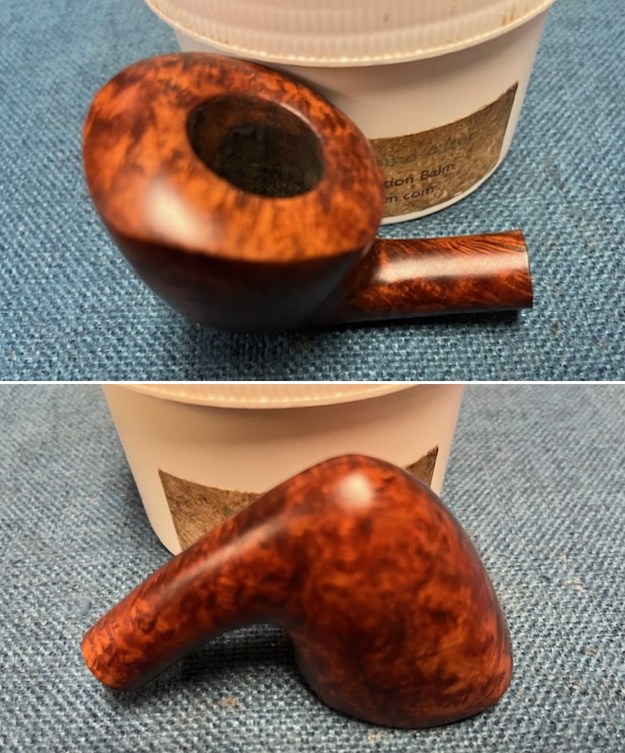
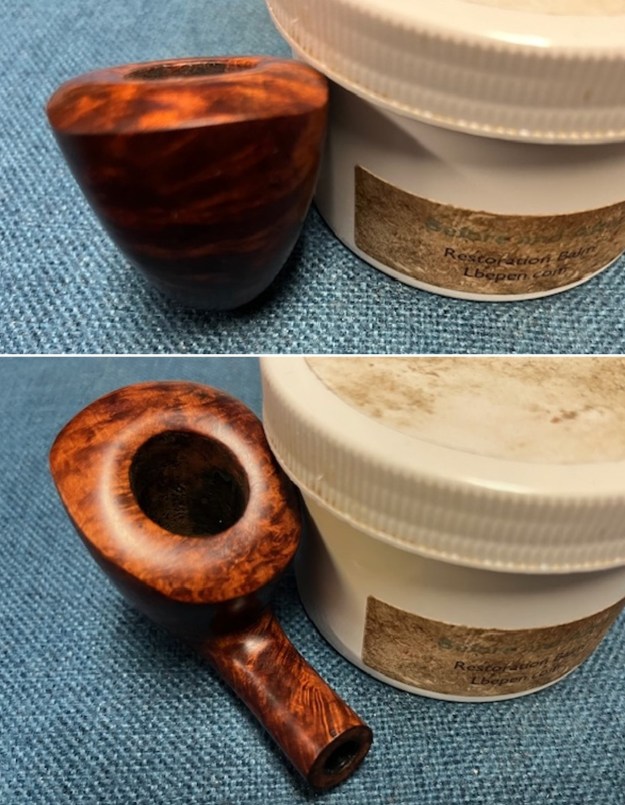
Restoring a Stanwell Sandblast 1993 POY Huber Nobleman Billiard


Blog by Steve Laug

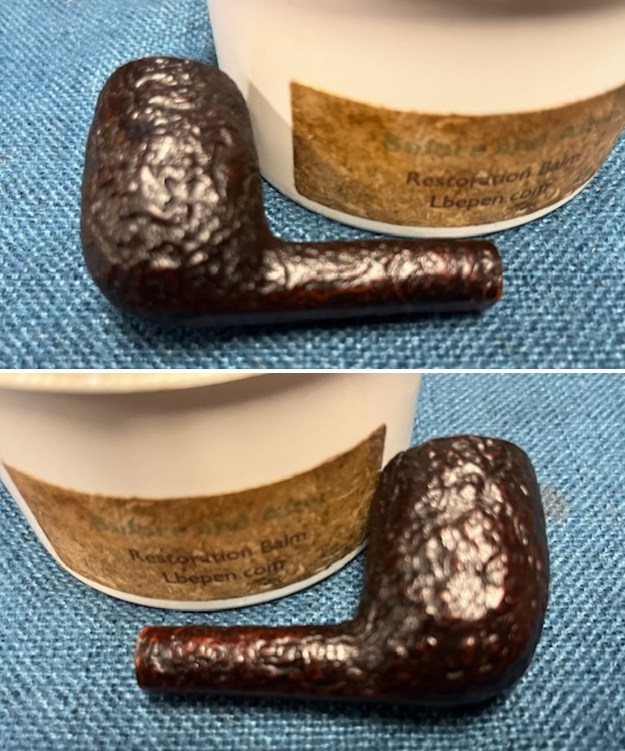
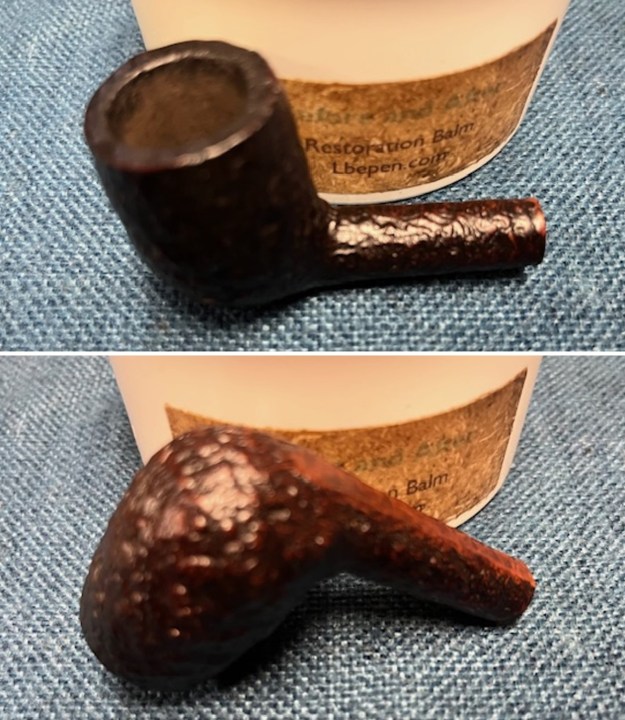
The next pipe on the table is a sandblast finish Billiard with a silver rim cap, band on the shank and a vulcanite stem. We purchased it from a seller on eBay from Jordan, Minnesota, USA on 01/22/2024. The pipe has a silver plaque identifying it as a 1993 pipe. It is stamped below that plaque and reads Huber [over] Nobleman. The shank has a silver, decorative band on it. The rim was in good condition other than a lot of lava overflowing from the thick cake in the bowl onto the smooth rim top It is hard to assess the condition of the inner edge of the rim due to the cake and lava overflow. There may be some darkening or damage at the back of the bowl but I cannot be sure. There were oils and grime ground into the beautiful sandblast on the bowl sides gives the dull, flat look. The vulcanite taper stem is a dirty stem with grime and grit on the surface. There were also tooth marks on both the top and underside of the stem just ahead of the button. It appears that there may be some small pin hole bite through marks on the underside ahead of the button. Jeff took photos of the pipe before he started his clean up work. I have included them below. He took photos of the pipe’s bowl and rim top to show the cake in the bowl and the lava coat overflowing onto the top. The silver rim cap/edge is also oxidized and dirty. This really is another dirty pipe. He also took photos to capture the tooth marks on the top and underside of the stem near the button. The stem is also oxidized and calcified. He took photos of the sides and heel of the bowl to show the interesting sandblast grain around the bowl and the amount of grime ground into the surface of the briar.   He took photos of the stamping on the silver plague and the stamping below that on the left side of the shank. It is clear and quite readable. I knew from other pipes that I have worked on with the HUBER stamp (Peterson’s, Oldenkott and other) that the pipe was made for the Pfeifen Huber 1863 pipe shop in Munich, Germany. I found a great photo of the shop on Yelp. I have included that below. It is definitely a shop that I want to visit soon (https://www.yelp.ca/biz_photos/pfeifen-huber-m%C3%BCnchen-2?select=Fs5BlKOLDYfhjIM-3lhiAw).I turned to the Pfeifen Huber website (https://www.pfeifen-huber.de/pfeifen-ratgeber/chronik-pfeifen-huber-jahrespfeifen-teil-1). On the site was a section, written in German, regarding the annual pipe, made for Huber by various pipe making companies. I translated it with Google and have included it below.

The idea of an annual pipe in limited quantities was not really new in 1988. Dunhill was considered a pioneer, followed by Stanwell and Georg Huber in Munich at the end of the eighties. The idea came to him to produce a small, fine series of pipes in limited quantities, only in “First Quality”. The problem was finding a suitable manufacturer who was prepared to implement the high quality requirements in the desired quantities. This idea began to take shape with the German importer for Peterson and Savinelli, Detlef Seiffert. They hit it off straight away and at the end of 1988 the first annual pipe saw the light of day in Tal 22 in Munich. At that time it was a Hungarian from Peterson, with a silver top and ribbon on the handle. The edition of 300 copies was quickly sold out and the idea became reality. In order to be able to offer something for smaller budgets, Huber also launched a second series, the Nobleman. This series continues to this day. It is priced below the annual pipe and has no consecutive numbering, but is also limited. While the first models were still available with a normal bore, the 9mm filter bore became popular over the years. Today’s Nobleman are consistently designed for 9mm filters; an adapter for filterless smoking can be used if desired.

The portion in red above is very pertinent to the pipe I am working on. It is part of the second series by Huber designed for smaller budgets and was priced at less than the annual one. It is also a limited edition pipe issued in 1993. It has a stem made for a 9mm filter and is also fitted with an adapter making it a normal bore. It can be smoked either way.

Smokingpipes   has several Stanwell pipes made for the Georg Huber Pipe Shop in Munich, Germany on their webstore. Here is a link if you would like to have a look at a similar pipe (https://www.smokingpipes.com/pipes/estate/denmark/moreinfo.cfm?product_id=602399).

There was also an interesting post on Facebook made by a fellow using the handle Pipe & Lighter in Hanoi, Vietnam. He posted this in 2019 and it is in Vietnamese. I translated it on Facebook and quote that below.

Huber München : Is an old pharmaceutical company in Munchen, Germany founded by Georg Huber in 1863 and is a major supplier of Pharmaceuticals & Cigars in Germany. Every year to celebrate, Huber München has hired some of the famous brands on TG exclusively for limited and finest products. In companies that were hired like Paul Winslow. Peterson…. Stanwell

The pipe featured today is a Huber München model that made by Stanwell’s finest workers as a commemorative edition in 1996. The shank with 9mm airway diameter is typical of the German market…. Armed with that information I turned to work on the pipe itself. Jeff had done a great job cleaning up the pipe as usual. He cleaned up the inside of the bowl with a PipNet reamer and a Savinelli Fitsall Pipe Knife. The bowl walls looked very good. He scrubbed the interior of the bowl and shank with pipe cleaners, cotton swabs and alcohol to remove the tars and oils. He scrubbed the exterior of the pipe with Murphy’s Oil Soap and a tooth brush to remove the grime from the finish. He worked on the rim top lava and darkening with the soap and tooth brush. He scrubbed the inside of the stem with alcohol and pipe cleaners. He scrubbed the exterior with Soft Scrub and then soaked it in Briarville’s Pipe Stem Deoxidizer. He washed it off with warm water to remove the deoxidizer. The pipe looked far better. I took photos of the pipe when I received it before I started working on it. I took photos of the bowl and rim top to show how clean it was. The top and the inner edge of the rim show some darkening, nicks and scratches. The inner edge of the bowl is thinner toward the front. There was some debris in the gap between the silver rim edge and the briar. The stem looks clean of debris and grime. There are tooth marks and chatter on both sides. There are also tooth marks on the underside of the stem.I took photos of the stamping on the left side of shank. The stamping is clear and readable (much clearer in person than the photos show). I took two photos of the pipe with the stem removed to show the overall look of stem, tenon and profile of the pipe. The first photo shows the stem with the adapter removed and the second photo with it in place in the tenon. I started my work on the pipe by addressing the damage on the inner edge of the rim. I used a folded piece of 220 grit sandpaper to smooth out the roughness. I then used 220 grit sandpaper smooth out the damage to the rim top of the bowl.I polished the smooth rim top and the smooth parts of the briar bowl and shank with micromesh sanding pads – dry sanding with 1500-12000 grit sanding pads. I wiped it down with a damp cloth after each pad to remove the debris. The smooth portions of the bowl took on a rich glow. I rubbed the bowl down with Before & After Restoration Balm. I worked it into the surface of the briar with my fingertips and a horsehair shoe brush to clean, enliven and protect it. I let the balm sit for 10 minutes and then buffed with a cotton cloth and shoe brush to raise the shine. Mark Hoover’s Balm is a product that I have come to appreciate and one I use on every pipe I have been working on. I set aside the bowl and turned my attention to the stem issues. I painted the surface of the stem with the flame of a Bic lighter to lift the tooth marks. I was able to lift them significantly. I filled in the remaining one with clear CA glue. Once the repairs cured I smooth them out with a small to start blending them into the surface. I sanded the file marks and smoothed out the surface with 220 grit sand paper. I sanded the stem with 320-3500 grit sanding pads to further blend them in and smooth out the surface of the stem.I polished the vulcanite with micromesh sanding pads – 1500-12000 grit pads. I wiped it down with a damp cloth after each sanding pad. I used Before & After Pipe Polish – both Fine and Extra Fine to further polish the stem. I put the stem back on the Stanwell 1993 Huber Nobleman Billiard and took it to the buffer. I worked over the smooth portions with Blue Diamond to polish out the remaining small scratches. I gave the bowl several coats of Conservator’s Wax and the stem several coats of carnauba wax on the wheeland buffed the pipe with a clean buffing pad to raise the shine. I hand buffed it with a microfiber cloth to deepen the shine. The pipe polished up really well and the rim top and silver rim edge looked good. I was happy with the look of the finished pipe. The photos below show what the pipe looks like after the restoration. The long shank tall Canadian is a beautiful and unique take on a classic shape. The polished vulcanite taper stem looks really good with the browns of the briar. The dimensions of the pipe are Length: 5 ½ inches, Height: 1 ¾ inches, Outside diameter of the bowl: 1 ¼ inches, Chamber diameter: 7/8 of an inch. The weight of the pipe is 1.83 ounces/52 grams. This is another pipe that I will be putting it on the rebornpipes store in the Danish Pipe Making Companies Section shortly, if you are interested in adding it to your collection. This sandblast billiard looks and feels great in the hand. This one should be a great smoker. Thanks for walking through the restoration with me on this beauty!