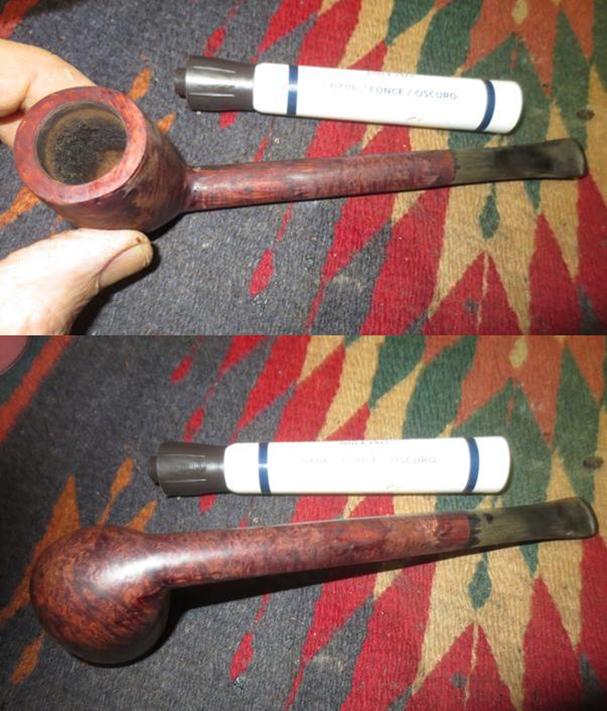
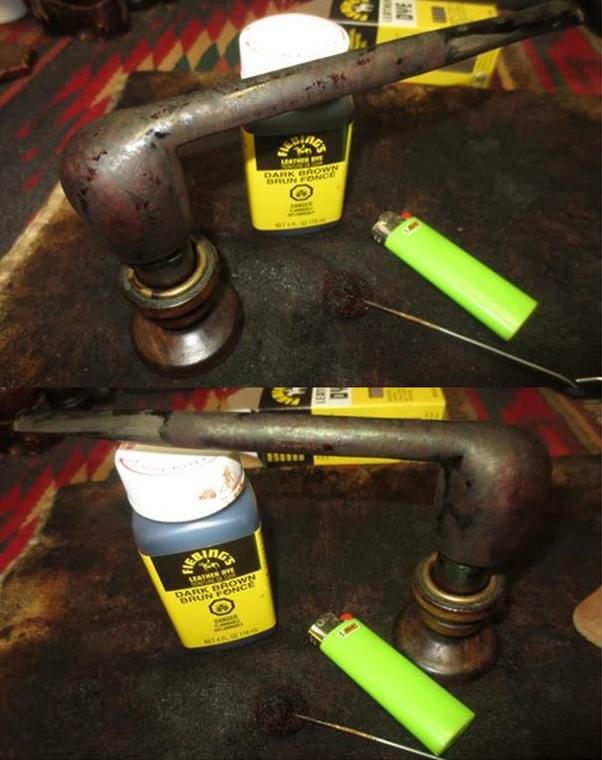
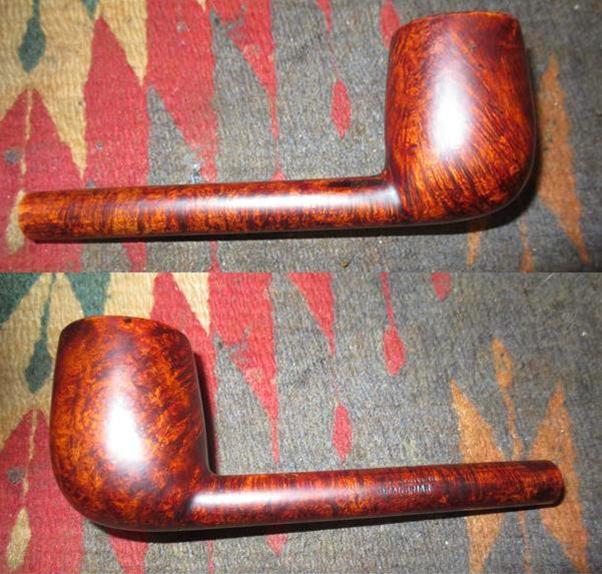
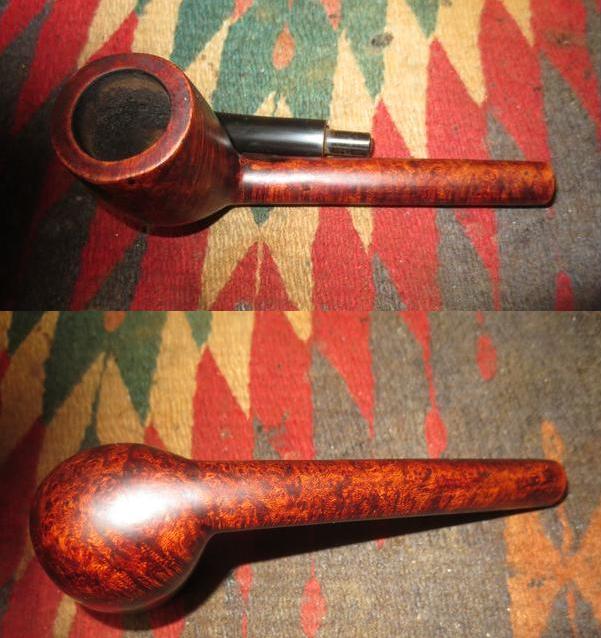
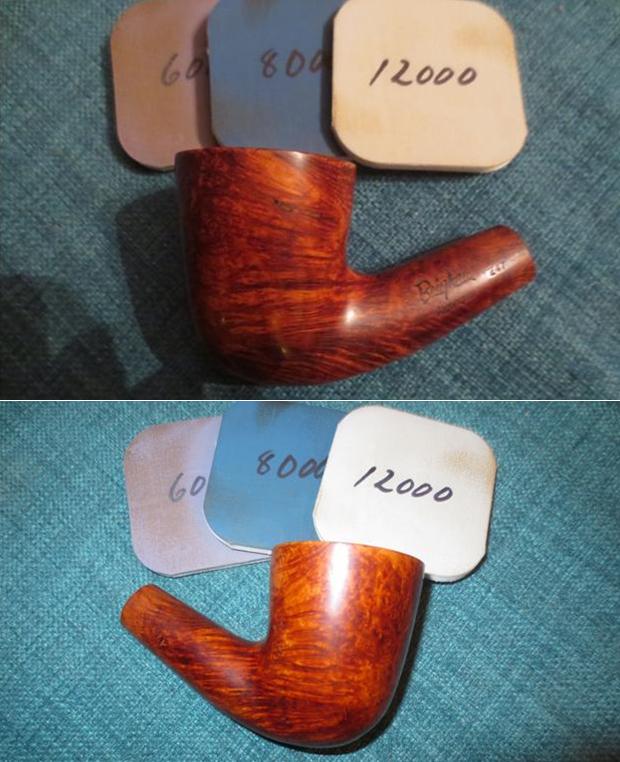
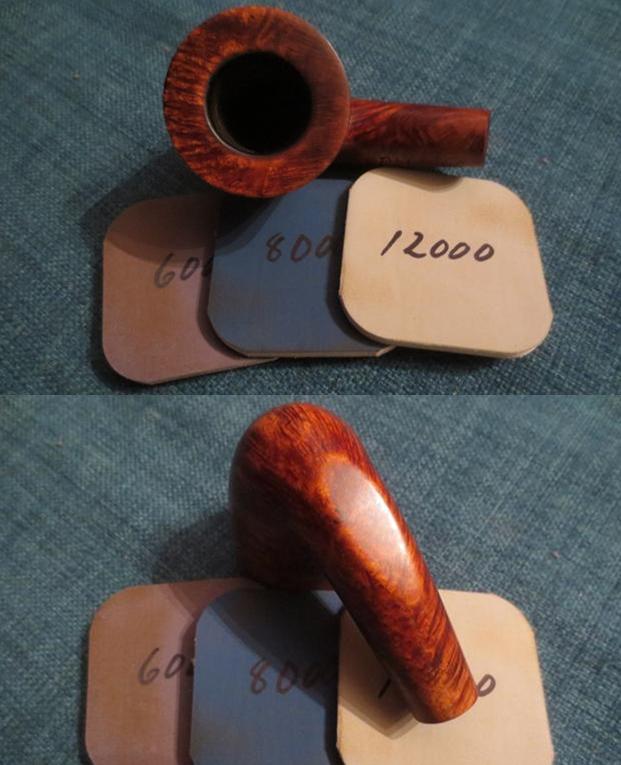
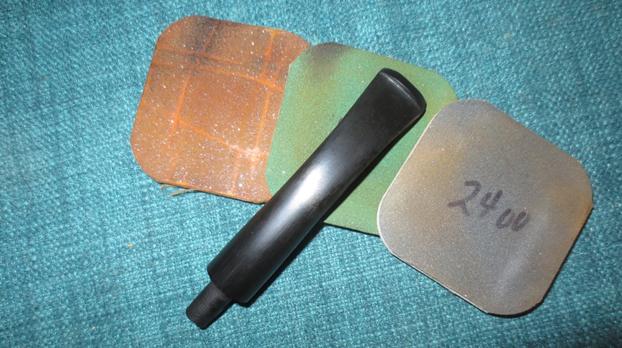
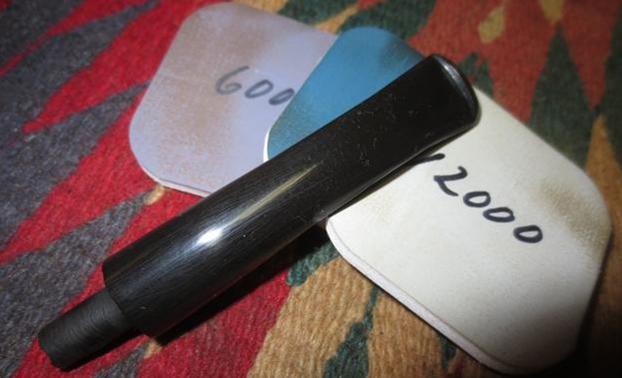
Tag Archives: staining

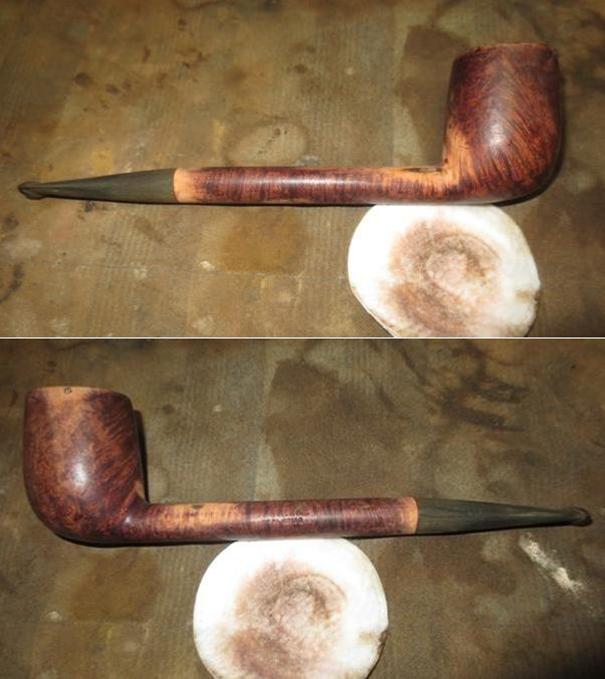
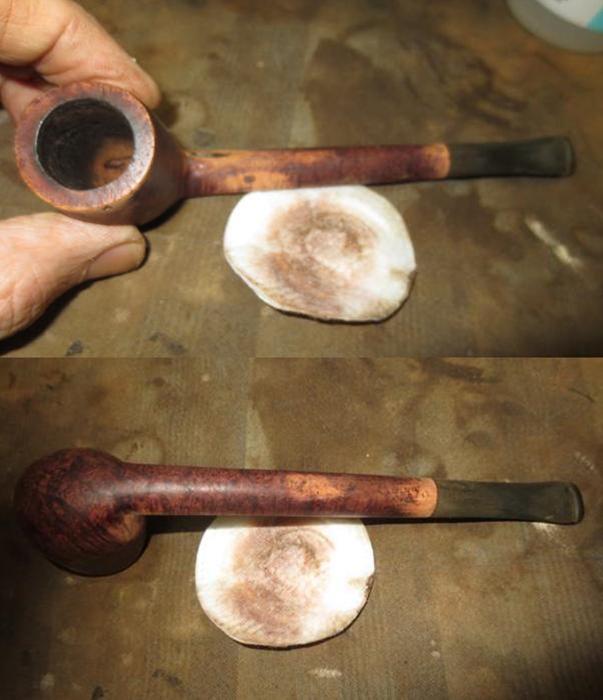
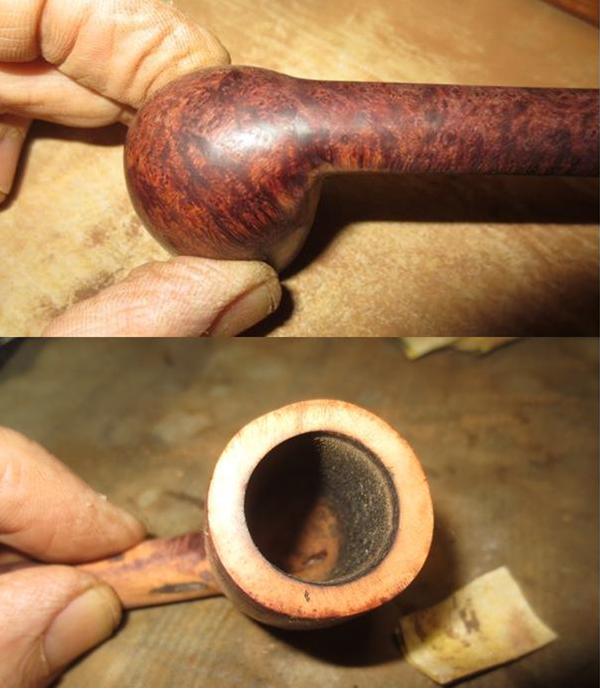
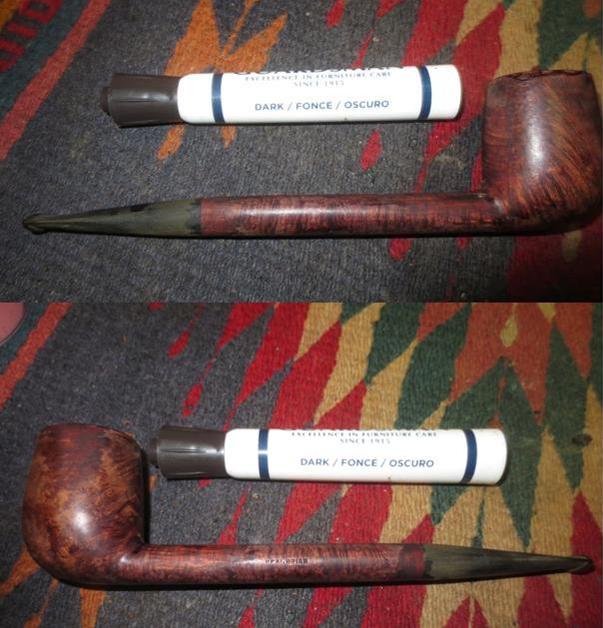
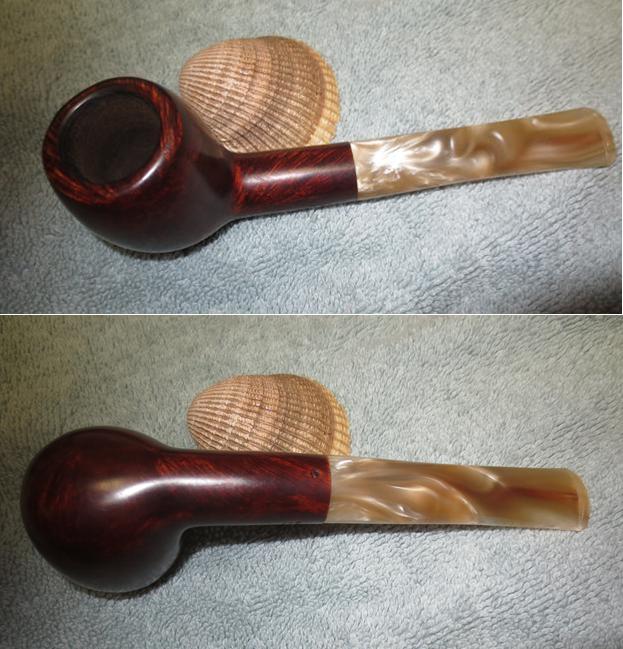
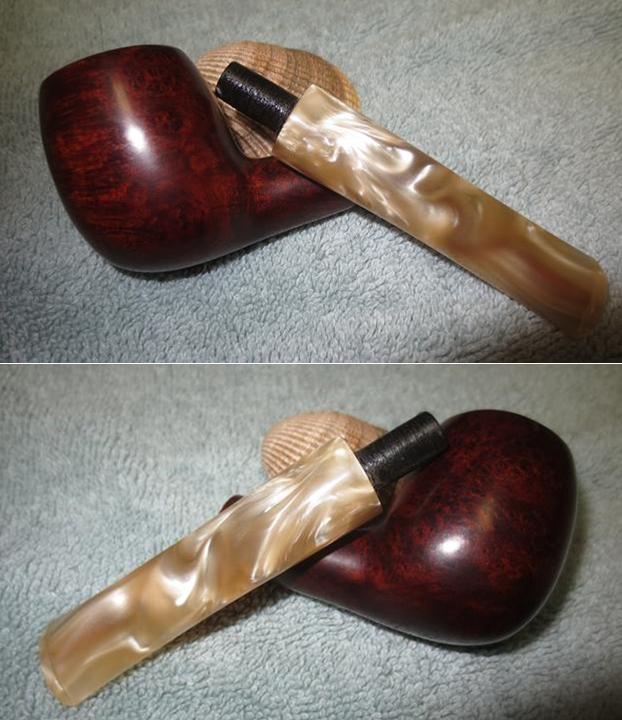
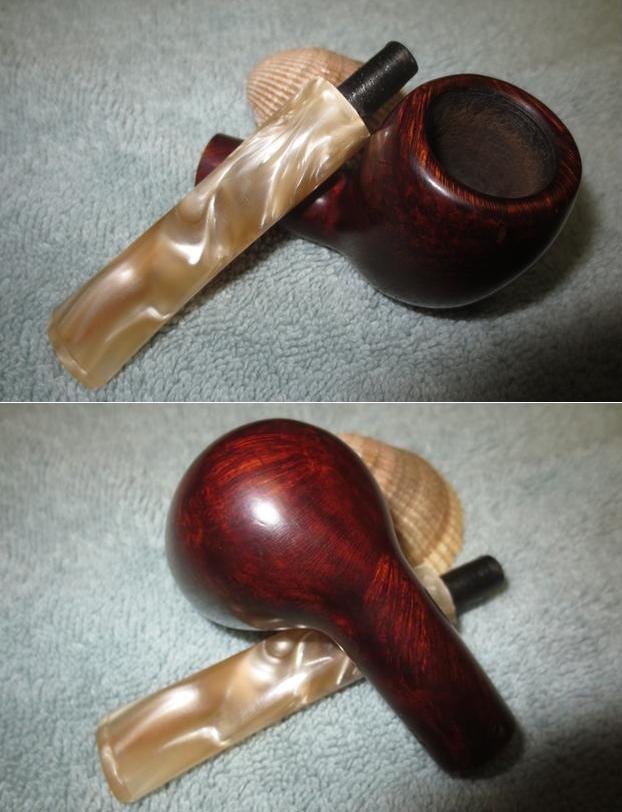
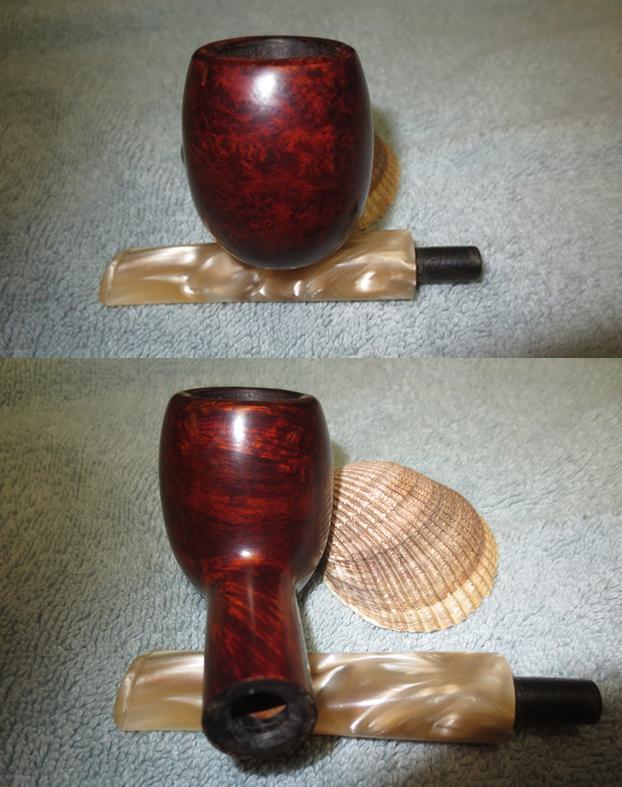
Refreshing a Beautiful Aldo Velani Bent Dublin


Blog by Steve Laug

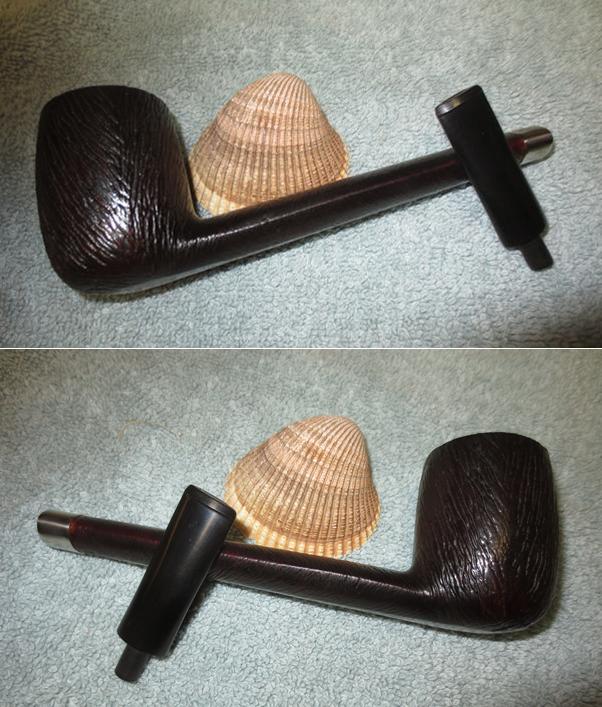
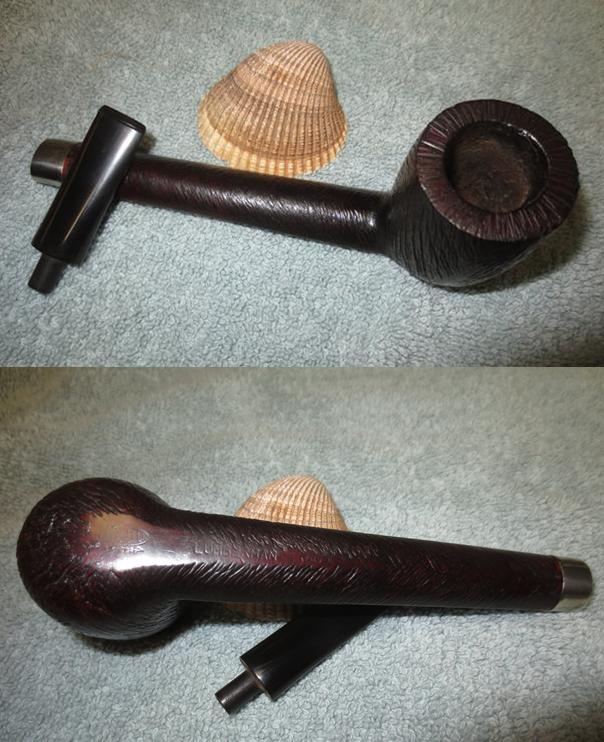
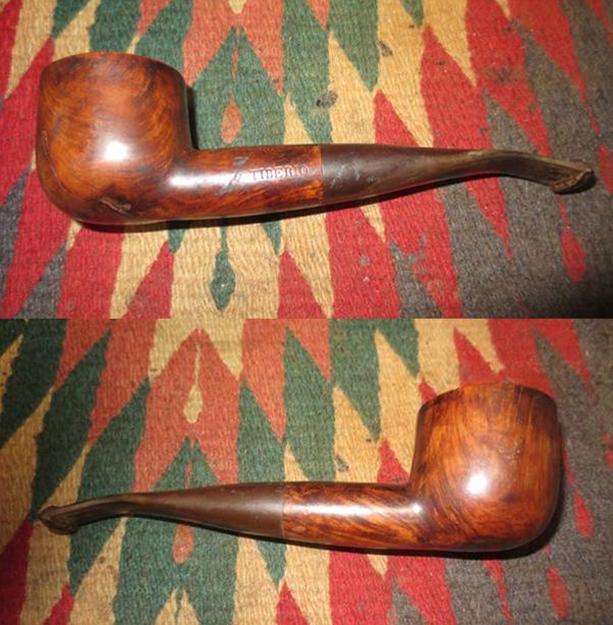
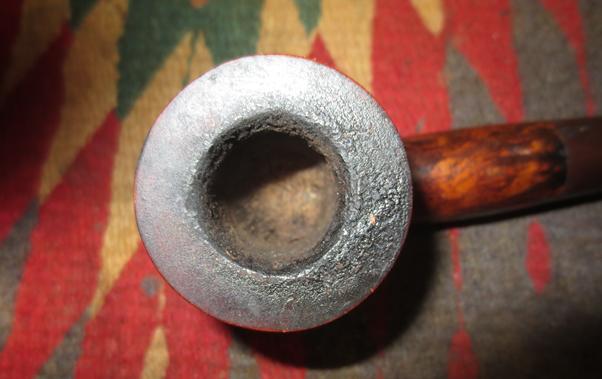
This is the second pipe from the lot my brother Jeff picked up an estate sale a few weekends ago. He had received a call from the auction house that was running the sale to let him know that there were going to be some pipes in the sale. They said that many of the pipes were what they called higher end pipes. They talked a bit and he asked if they would mind sending him a list of the pipes that were coming up. They went one step better and sent him the two photos to the left of the pipes as a preview of what was going on sale. Using FaceBook Messenger we went through the pipes and picked the ones that we wanted to purchase. He would go to the sale the next day and see what he could find. It is times like this that I wish I lived close so I could go with him to these sales.

Friday morning he went into the sale and they handed him a bucket and the box of pipes that they had set back behind the counter for him. There were indeed some nice pipes in the batch and certainly pricier than the average lot we usually find at estate or antique sales and malls. There were quite a few Savinelli pipes as well as Stanwell, GBD, Aldo Velani, Nording, Il Ceppo, Barlings, DiMonte and a Chacom Sahara. They made him a proposition for the entire lot of pipes and he went for it. He came home with all of the pipes in the photos to the left.

When he got home he called me on FaceTime and went through the pipes he had picked up. We were both pretty excited by the lot. As we went through them we noted the names, brands and the stamping on the shank of each pipe. I got more excited as we noted each pipe and its condition. We realized that these pipes were in pretty decent shape other than the usual dirtiness and grime from smoking. There was not any significant damage to rims or bowls. Almost all the stems had tooth marks near the button on both sides that would need to be cleaned up. But other than that, it was a very nice lot of pipes. We had done well with the purchase.

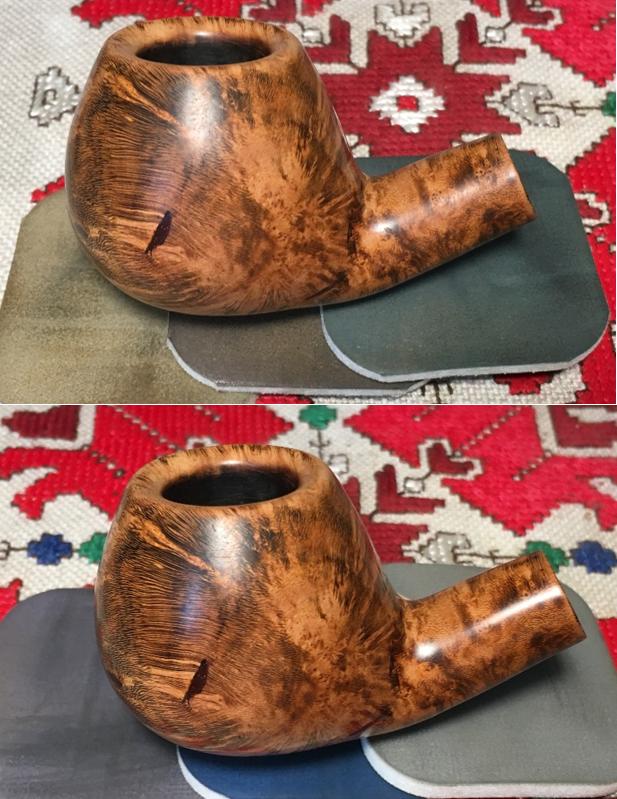
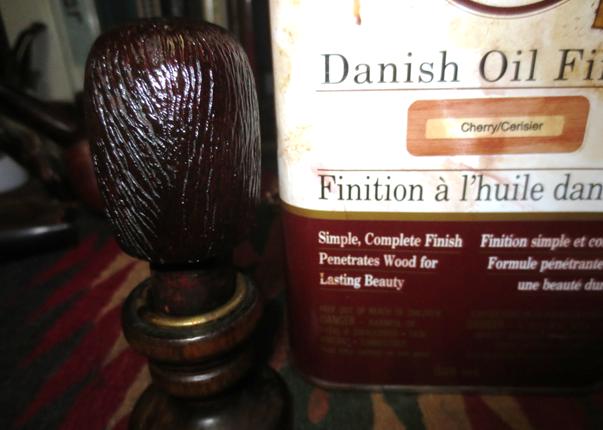
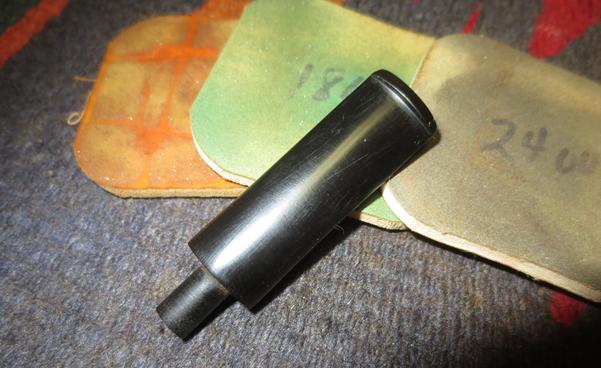
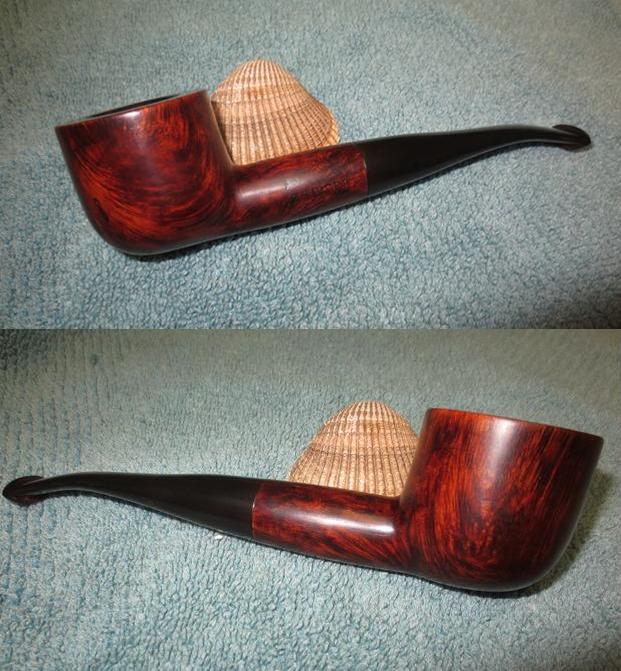
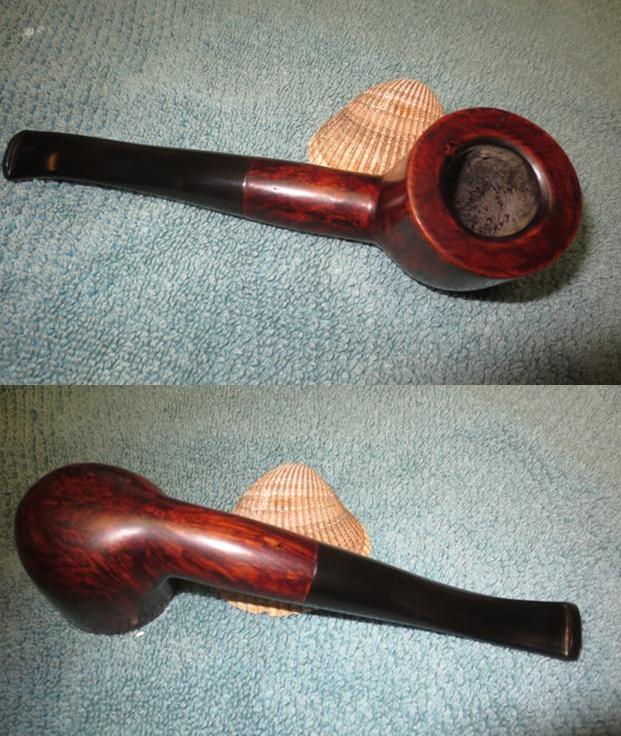
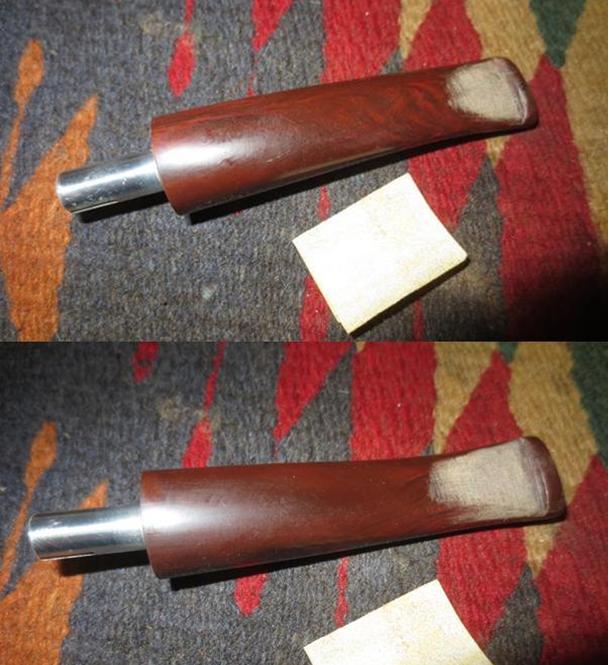
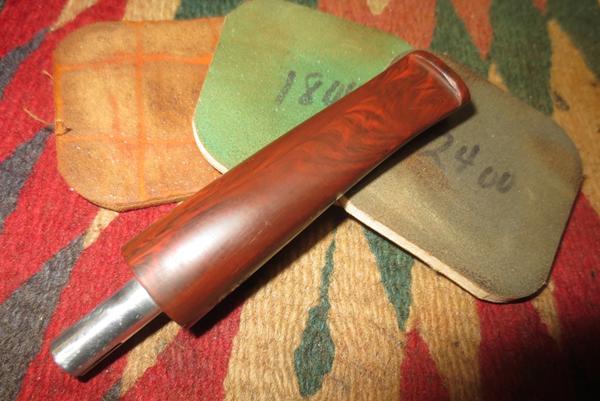
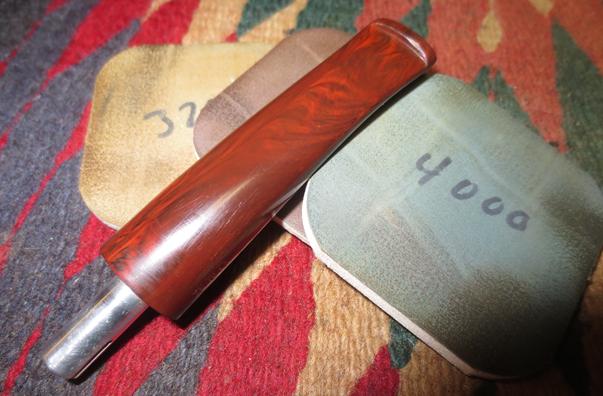
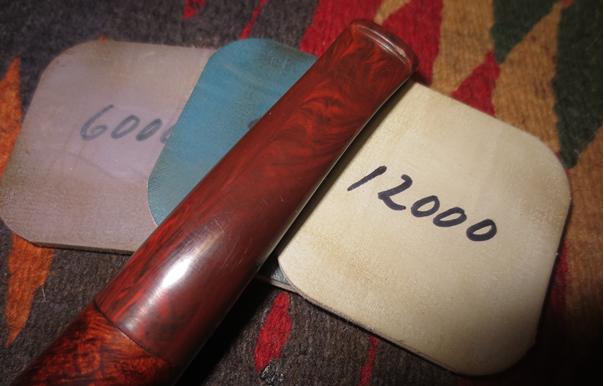
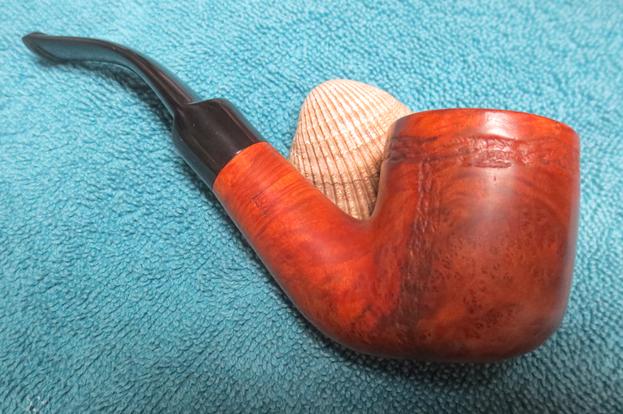
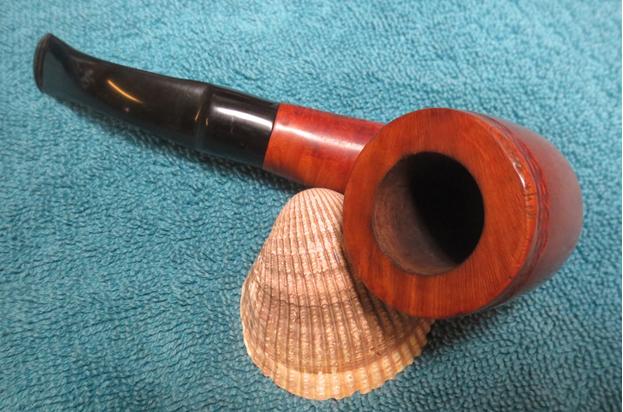
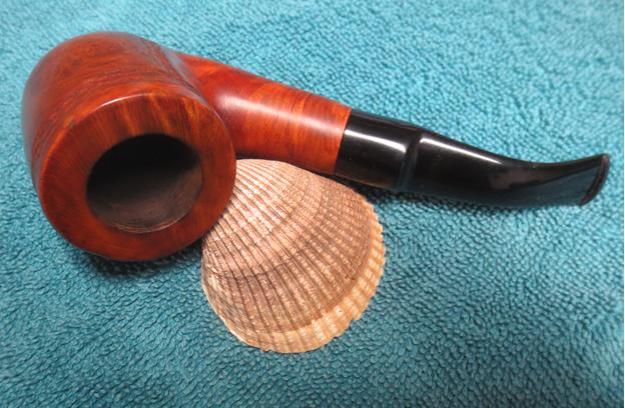
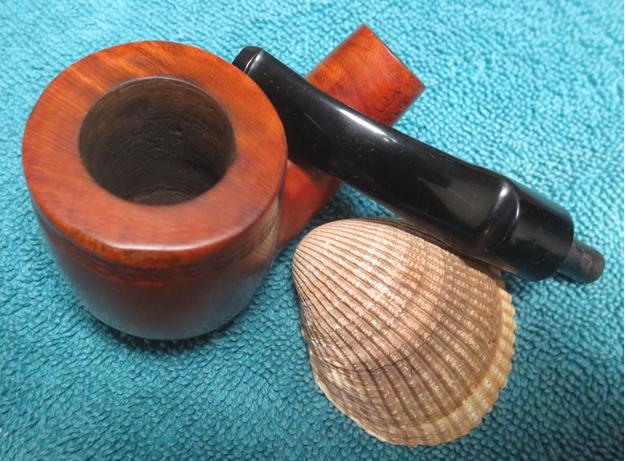
I chose to work on the Aldo Velani Italian Dublin next. It is a beautiful Dublin shaped pipe that was in pretty good shape. It was stamped on the left side of the shank with the brand ALDO VELANI. On the underside of the shank next to the stem shank junction it bore the stamp ITALY. The saddle stem was Lucite and had not stamping or logo on it. My brother took the following photos before he worked on the pipes.The finish on the bowl was in pretty decent shape. The rim surface was dirty and had some tars and oil build up. Around the inner edge of the bowl some of varnish coat was peeling off and the briar was showing through. There were some dents and nicks in the surface. On the front right of the bowl there was a spot where the varnish was damaged like the bowl had been rubbed against a rough surface (it is visible in the second photo below). I would need to smooth out those areas and stain and give them a top coat to replace the shine. The finish on the sides and the  bottom of the bowl was in excellent shape. The next two photos show the stamping on the pipe – the brand on the left side and the country of origin on the underside next to the silver band.The stem had tooth chatter on the top side next to the button and on top of it. On the underside there were tooth marks and chatter that would need to be sanded out. Fortunately none of them were too deep.Once again Jeff did his usual thorough cleanup of the pipe. He scrubbed the interior and exterior and sent me a very clean pipe that I only needed to put the finishing touches on. The next four photos show the pipe when I brought it to my work table. The pipe looked really good. The finish on the bowl sides, bottom and shank were in excellent condition. The scrape on the front of the bowl and the rim scrapes where the varnish coat was missing were clean and ready to repair. The stem was clean as well other than the light oxidation and the tooth chatter. I took a photo of the rim top to show the damage on the inner edge. You can see the area on the right side of the inner edge and the back side. There was also some damage on the front inner edge of the bowl. These would need to be sanded and repaired.The stem was very clean other than the tooth chatter and tooth marks.When I removed the stem the silver band fell off in my hands. The glue that had held it in place had dried and cracked. I used a tooth pick to spread all purpose glue around the end of the shank and pressed the band in place.I sanded the inner edge of the rim to remove the damaged finish. I used 1500-6000 grit micromesh sanding pads to smooth out the damaged areas. I wet sanded the areas to minimize the damage. I touched up the sanded areas with a dark brown stain pen. It matched the stain on the surrounding bowl. I ran a pipe cleaner and alcohol through the mortise and airway in the shank and stem. The pipe cleaner came out very clean and showed that the pipe was spotless.I sanded out the tooth chatter and tooth marks with 220 grit sandpaper until the surface of the stem was smooth. Once I had it sanded smooth I polished it with micromesh sanding pad – wet sanding it with 1500-2400 grit pads and dry sanding it with 3200-12000 grit pads. I wiped the stem down with a damp cotton pad to remove the sanding dust after each pad so that I could see how it was polishing. To give the repaired areas on the rim top a shine like the rest of the bowl I buffed it with Blue Diamond and then applied some Cherry Danish Oil to the rim top with a cotton swab. I repeated the process until the top of the rim shone. It looked like the rest of the bowl once again. I buffed the bowl and stem with Blue Diamond polish on the buffing wheel. It polished out all of the minute scratches in the surface of the Lucite and the briar. It does a great job with a soft touch when polishing briar and the shine that the Blue Diamond gives Lucite is glassy. I gave the bowl and stem several coats of carnauba wax and buffed the pipe with a clean buffing pad to raise the shine. I hand buffed it with a microfibre cloth to deepen the shine. The finished pipe is shown in the photos below. It really is a beautiful looking pipe. The Dublin shape is perfectly laid out to maximize the grain. This one will soon be for sale on the rebornpipes store. If you are interested in adding it to your collection let me know either by email to slaug@uniserve.com or a private message on FaceBook. Thanks for looking.

Reworking Rustication on a Savinelli Extra Lumberman


Blog by Steve Laug

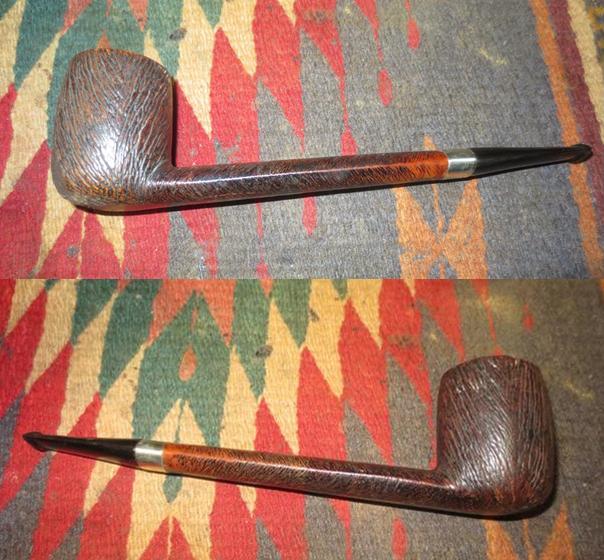
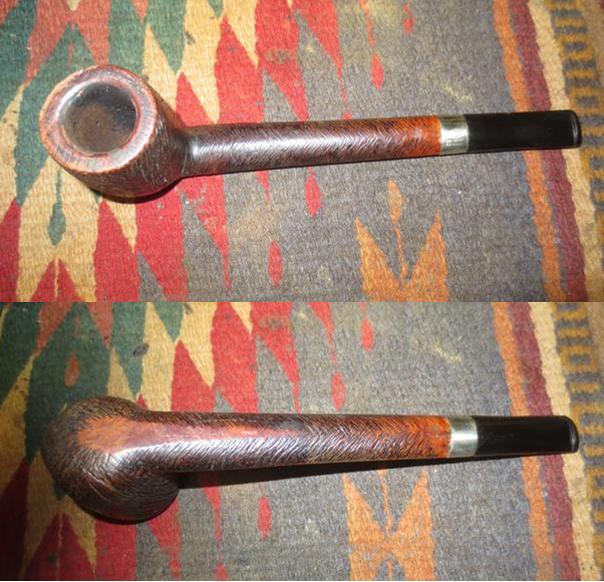
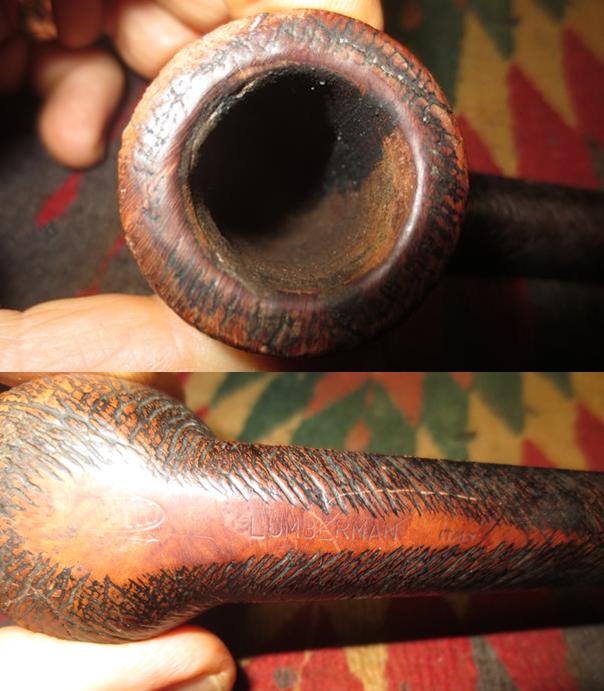
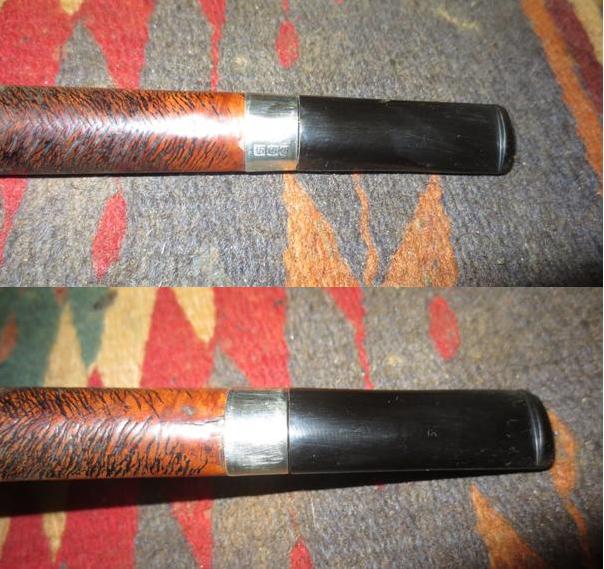
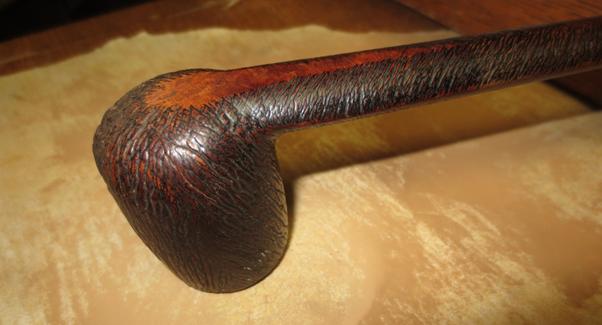
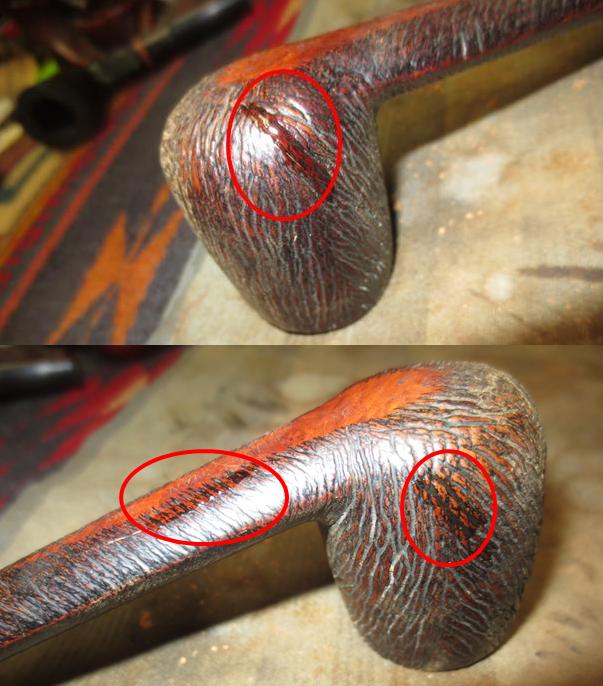
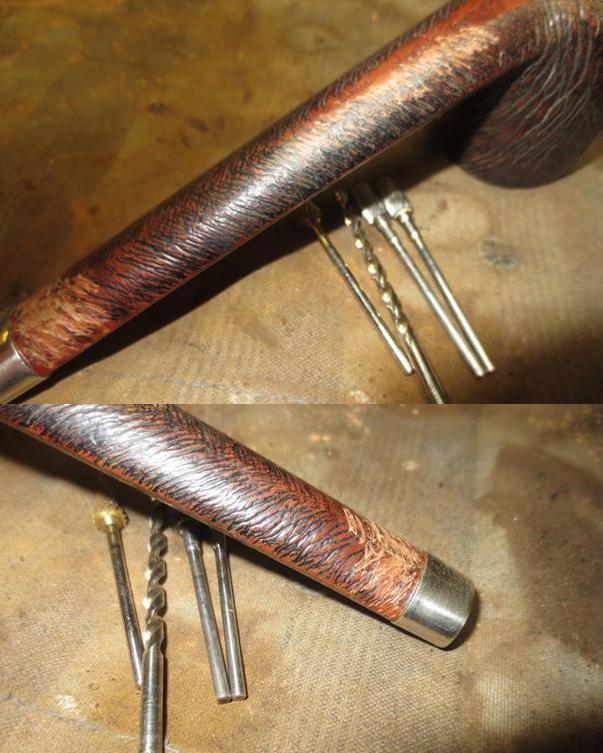
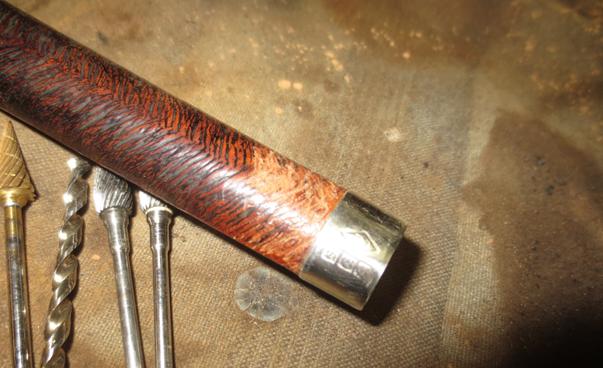
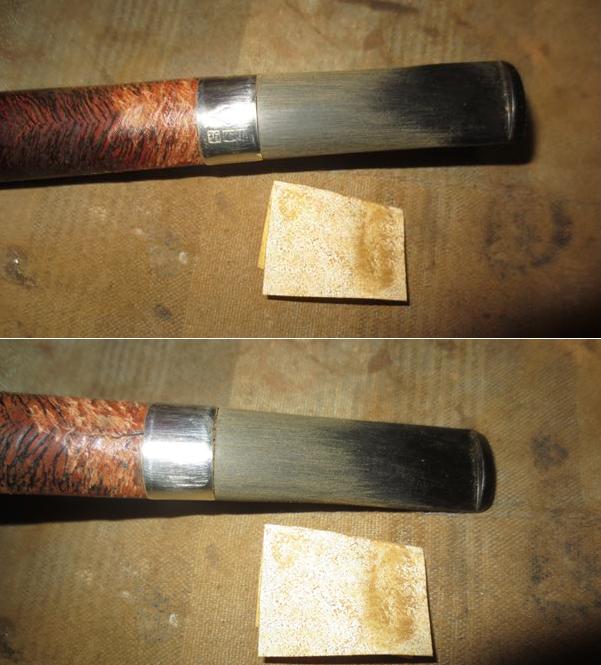
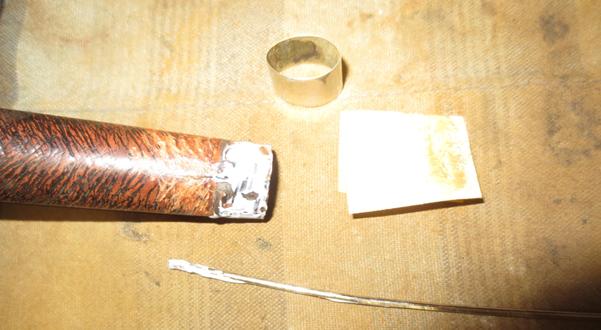
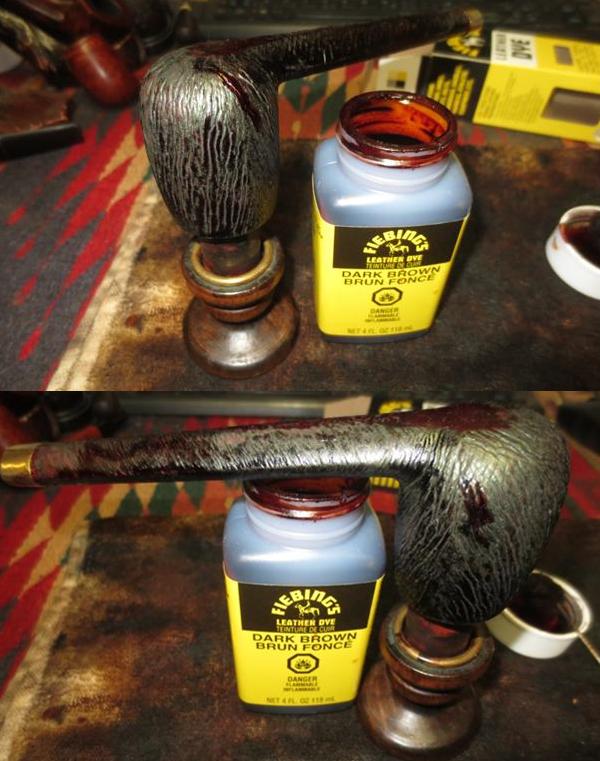
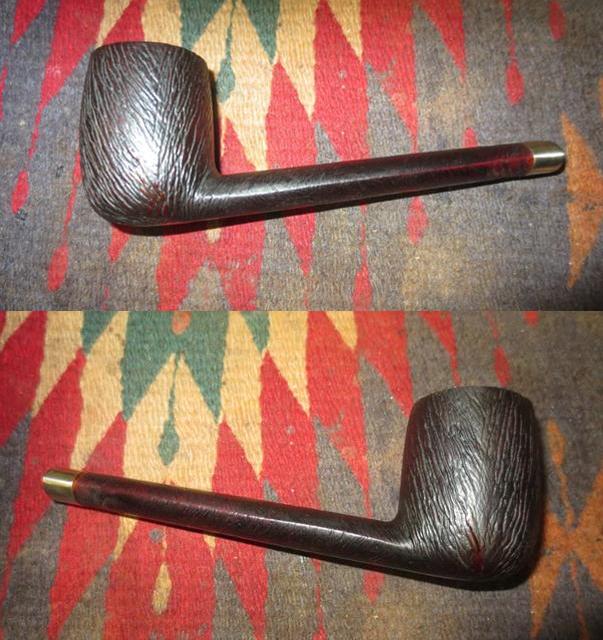
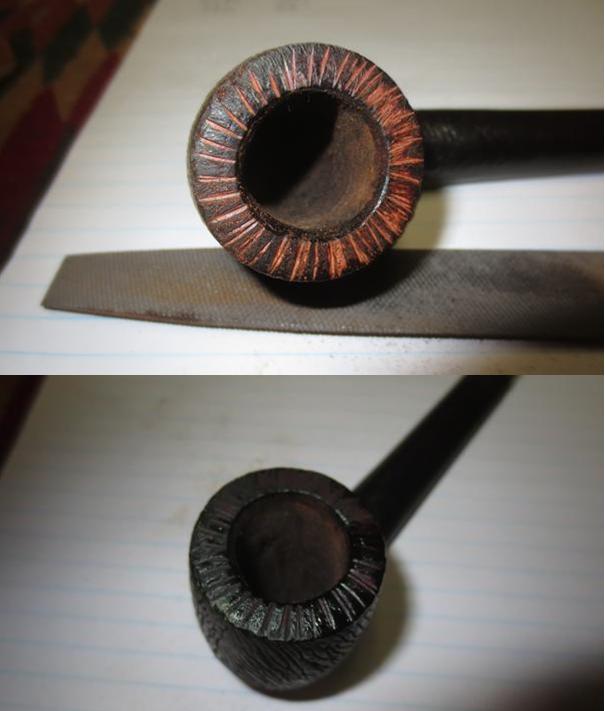
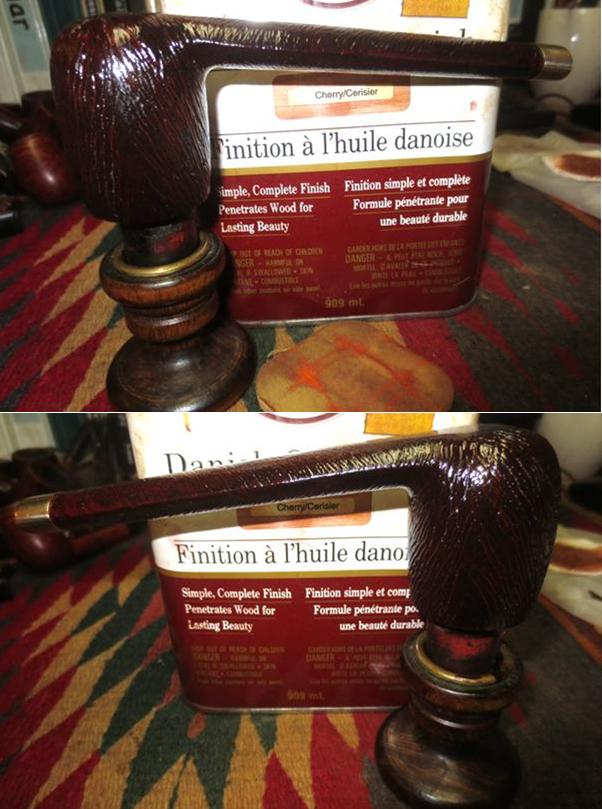
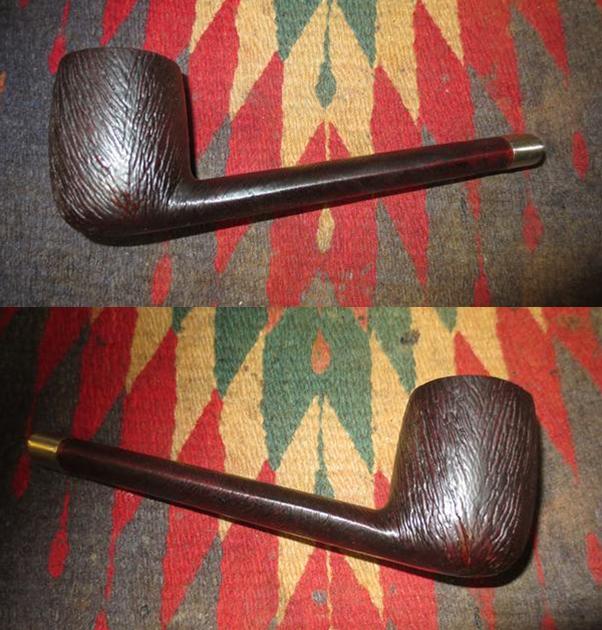
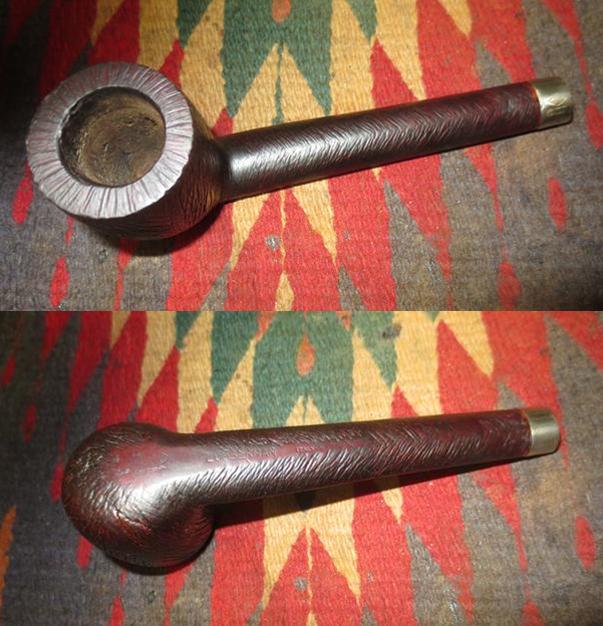
My brother and I picked up this long shanked Canadian when I was in Idaho. We bought it from the same seller that had all of the Calabash pipes. It is a wire wheel rustication that follows the bowl at an angle and runs almost chevron like on the top and bottom of the shank. It is a large pipe. The dimensions are: length – 7 ½ inches, height – 2 inches, external diameter – 1 ½ inches, inner bowl diameter – ¾ inches. There were some obvious issues with the pipe that I will point out through the following photos. First of all the big picture look at the pipe. It is stamped Savinelli Extra Lumberman on the underside of the shank. Next to that it is stamped Italy. In the second photo below you can see the line where the two sections of shank are joined. The next two photos of the rim top and the underside of the bowl and shank show some of the other issues. The rim top was worn smooth in places and the front right outer edge was rough from knocking the pipe out on hard objects. There was also some cake on the wall that needed to come out on the front right of the inner edge. The underside of the shank shows a hairline crack above the Lumberman and Italy stamping and another at the edge of the bowl just above my thumb. There was also a hard patch of something stuck to the bottom front of the bowl that was hard and rough. I am not sure if it is a repair or what but it will need to be addressed.The band on the shank is part of a shank repair that had been done on the pipe. The shank had been smoothed out and most of the rustication removed under and in front of the band. There was a repaired crack on the underside of the shank. The band was loose on the shank as the glue had dried. The band is an aftermarket repair band and not original. The replacement stem has been poorly fitted to the shank end. The diameter of the oval stem does not match that of the shank and band.There were definitely a lot of little issues that needed to be addressed on this long shanked Canadian but there was something about it that attracted me to its potential. I topped the bowl on a topping board with 220 grit sandpaper and removed the damage to the outer and inner edges of the rim.I pressed some briar dust into the small crack on the right side of the bowl toward the bottom and added some clear superglue. I repaired the hairline crack on the shank and on the lower left side of the bowl – drilling the ends carefully with a microdrill and then filling in the crack with briar dust and super glue. I circled the small cracks in red in the photos below.I used a series of dental burrs and drill bits on the Dremel to replicate the striated pattern of the wire rustication on the bowl and shank. It took some slow and careful handwork. I ran the Dremel at a speed of 5 so that I could easily maneuver it around the bowl and shank to match the pattern of the rustication. I used it to remove most of the thick, hard spot on the front of the bowl and match the rustication pattern surrounding it. I reworked the rustication on the rim of the pipe. I repaired the rustication under and against the band on the end of the shank and the repair on the underside of the shank. The first go at it I used the dental burrs but would later have to use files and rasps to cut the proper pattern in the briar. The next photos show the progress of the rustication. I slid the band off the shank, put the stem in place and shaped the stem to fit the curvature of the shank. I worked on it with 220 grit sandpaper until the flow of the shank and the stem matched. I personally like a smooth junction between the stem and the shank and the only way to do that correctly is to remove the band and rework that area before gluing the band back in place. The next two photos show the fit of the stem to the band and also the striated rustication pattern. Progress is being made.I slid the band off and put white all-purpose glue around the shank where the band would go. I pressed the band in place and wiped away the excess glue. I let the glue under the band set until the band was tight against the shank.I gave the bowl and shank an under stain of dark brown aniline based stain. I applied it and flamed it to set it in the briar. I repeated the process until the coverage was what I wanted.I hand buffed the pipe with a cotton cloth to give it a basic polish. I wanted to see what the coverage looked like once the stain had dried. I took photos to show how the pipe looked once I had gotten to this point in the restoration. The rim did not look right to me so I used a file to cut lines into the rim top. I used a large rasp and also a set of needle files to hand cut the lines. The photo below shows the lines after I used the wood rasp. I stained the rim top again with dark brown stain to have a look.I used some smaller needle files to cut lines between the lines that were already on the rim from the rasp. I wanted the pattern to look more like the patterns on the bowl sides and shank. I restained it with a dark brown stain. Once the stain was flamed and dried I gave the bowl a coat of cherry Danish Oil as a top coat that would add some contrast to the look of the briar and blend the all the repairs and the joint of the two parts of the shank into one cohesive looking piece. I hand buffed the bowl and shank with a soft cloth and then gave it a light buff with Blue Diamond on the buffing wheel. The contrast looks really good and the coverage makes the repairs blend in really well with the rest of the bowl and shank. I polished the stem with micromesh sanding pads – wetsanding with 1500-2400 grit pads and dry sanding with 3200-12000 grit pads. I buffed the stem between the 2400-3200 grit pads and then finished with the pads. I rubbed the stem down with Obsidian Oil after each grit of pad and then a final time after the 12000 grit pad. I set the stem aside to dry. There were still some faint sanding marks on the stem showing so I buffed the stem with Red Tripoli and then carefully buffed out the scratches with Blue Diamond on the wheel. I was able to polish the stem and it shone nicely. I buffed the nickel band and then lightly buffed the bowl with Blue Diamond. I gave the stem multiple coats of carnauba wax and gave the bowl and shank several coats of Conservator’s wax. I buffed the pipe with a clean buffing pad to raise a shine and hand buffed it with a microfibre cloth to deepen the shine. The finished pipe is shown in the photos below. It is a beauty and should provide a cool smoke to whoever wants to add it to their collection. I will be posting it in the rebornpipes store soon. Thanks for looking.

Restoring a Pipeman’s First Pipe


Sometimes I get requests to restore pipes that touch a sentimental chord for me. When that happens it brings back all kinds of memories and thoughts for me. A while ago I received an email from Phil regarding a pipe he had that he wanted some help with. He explained that it was not an expensive pipe but that was his very first when he started as a pipeman. We emailed back and forth for a bit and then he sent it up to me in Vancouver to assess and see if it was worth restoring. It came in the mail last week and I opened the package to have a good look at it. I went over it slowly and carefully and found some issues that needed to be addressed. To me the pipe was very restorable and I was willing to take it on.

Here is what I saw as I looked at the pipe. I put together a list for Phil and emailed it back to him. I would say it is well worth a cleanup, repairs, refinishing and polishing. I think that it has a pretty long life ahead of it.

  1. He was concerned with the overall condition of the pipe. It was a basic basket pipe and had a lot of fills in the bowl and shank. The bowl had never been smoked to the bottom so the briar is raw. It is a little smoky looking but is basically sound. The pipe can be smoked for a long time.
  1. The little lines in the bottom of the bowl are called checking. They happen to the inside of almost all pipes and are caused by heating and cooling. In this case it appears that the pipe had never been smoked to the bottom. I recommended a complete reaming and then some pipe mud (cigar ash and water) to fill in the little fissures and then a simple bowl coating to protect the bowl while he built a cake.
  1. He had mentioned a crack on the left side of the bowl. The noted crack was definitely there. It was on the left side toward the front. It is a hairline crack that starts at a putty fill toward the top of the bowl and ran down to another putty fill on the bottom of the bowl. This is one time where fills actually worked in my favour. I repair cracks all the time by drilling a small pin hole at each end to stop the crack from spreading. In this case the fills did just that for me. Go figure. I would need to simply pick out the old putty and repair the fills or top them up with super glue and briar dust.
  1. The rim looked like it had several fills on the top and the inner edge. It was hard to be certain as there was a thick coat tarry lava. It would need to be cleaned off and the fills check for stability and repaired if not.
  1. The stem was in good shape but was oxidized and had tooth chatter. It would need to be cleaned and polished to remove the oxidation and make the vulcanite shine.
  1. Looking in the shank the mortise and airway are also sound.

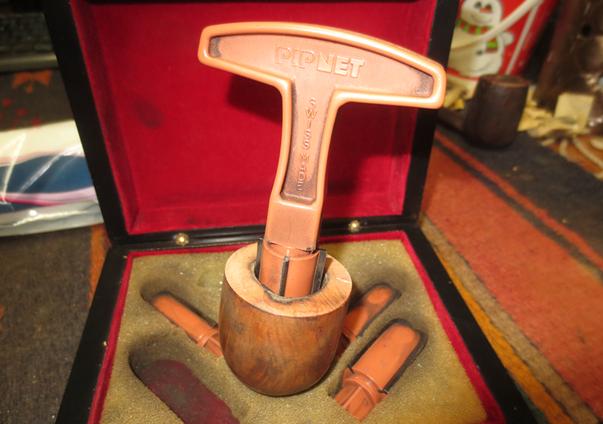
Here is what the pipe looked like when it arrived in Vancouver. I took photos to set the base for what it looked like before I started. Note the fills on the shank sides, bottom and bowl sides and bottom. I took a close up photo of the rim top to show the condition of the bowl and the rim. The front inner edge of the rim appears to be burned and it is out of round. It is hard to know if there was any other damage on the rim top.I took some close up photos of the fills and crack on the left side of the bowl running between the two large fills. It is circled in red in the photos below. The crack is hairline and is fairly tight. The fills show some shrinkage in the putty and will need to be removed and replaced.I took a close up photo of both sides of the stem to show the tooth marks and chatter on both sides near the button.I reamed the bowl with a Savinelli Fitsall Pipe Knife to scrape out the cake to the bare briar. I used the sharp edge to scrape off some of the heavy cake on the rim top.I scrubbed the top of the rim with alcohol and cotton pads. I was able to remove most of it. The inner edge of the bowl showed a lot of damage. The front edge had a fairly deep burn mark that covered the surface of the rim at that point but did not go too deep.I cleaned up the inner edge of the rim and the sides of the bowl with the PipNet reamer. I used it to remove some of the damaged edge.I topped the bowl to deal with the burn mark that is visible in the above photo. After I topped it  I repaired the damaged fills on the rim and bowl sides that way I could top the repaired portions at the same times. I picked out the fills with a dental pick and removed the putty. The two that joined the crack were quite large and deep. I repaired them by tamping briar dust into the pits and then pushing clear super glue into the dust. I repeated the process leave a thick bubble of glue and dust on the surface of the repair. I did the same on the rim top, inner edge and the shank sides and bottom to repair the fills there.I sanded the fills smooth with 220 grit sandpaper to blend them into the surrounding briar. I added a little more super glue to some pits in the repairs and sanded them once the glue had dried. I sanded the oxidation and tooth chatter off the stem with 220 grit sandpaper. I was able to remove all of the chatter and even the tooth marks as they were not too deep in the vulcanite.I sanded the bowl and stem with a medium and a fine grit sanding sponge to begin to smooth out the scratches and sanding marks. I sanded the bowl with 1500-4000 grit micromesh sanding pads in preparation for staining the bowl. I planned on giving the pipe a contrast stain so I started with a dark brown aniline based stain. I applied the stain, flamed it and repeated the process until I was satisfied with the coverage.I wiped the bowl down with alcohol on a cotton pad to remove the heavy dark finish and make it more transparent. I wanted the dark brown deep in the grain once I had removed it from the lighter portions of the briar. I sanded the bowl with 1500 grit micromesh pads. I continued to sand the bowl with 1500-2400 grit micromesh pads to get the transparency that I wanted on the bowl. The next photos show what it looked like once I had finished sanding it. I gave the bowl a top coat of Danish Oil with a Cherry Stain. I rub the oil onto the bowl and rub it off and buff it. The next two photos are a little blurred but you can clearly see the cherry colour that is coming to the surface of the bowl. It works really well to blend in the fills.I set the bowl aside to dry and turned to the internals. I cleaned out the mortise and the airway in the shank and stem with alcohol, pipe cleaners and cotton swabs.I polished the stem with micromesh sanding pads – wet sanding with 1500-2400 and dry sanding with 3200-120000 grit pads. I buffed the stem with red Tripoli on the buffing wheel after the 4000 grit pad and then finish sanding it with the 6000-12000 grit pads. I gave the stem multiple rub downs with Obsidian Oil after each few pads to see if the oxidation at the shank end was getting better. By the time I was finished with the final pads the stem looked much better. I would give entire pipe a buff before I finished the restoration. I mixed a batch of pipe mud – cigar ash and water – to form a paste and applied it to the bowl bottom and sides with a folded pipe cleaner. I pressed the mud into the small checking that was around the bowl bottom with a dental spatula. The pipe mud will protect the bowl while a cake is formed.I buffed the bowl and stem with Blue Diamond on the buffing wheel to raise the shine and highlight the grain on the bowl. The fills are still visible but they blend into the surface of the briar better than they did before. I gave the pipe multiple coats of carnauba wax and buffed it with a clean buffing pad to raise the shine. I hand buffed it with a microfibre cloth to deepen the shine. The finished pipe is shown in the photos below. I will be packing it up and mailing it back to Phil once I give it a bowl coating. I am hoping he enjoys this piece of his personal pipe history. It should provide many more years of enjoyment for him.

A Medico VFQ Rhodesian with a Cumberland Stem


Blog by Steve Laug

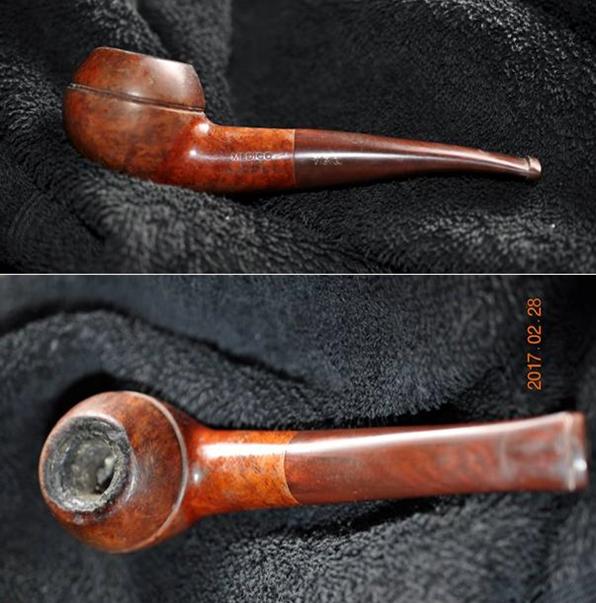
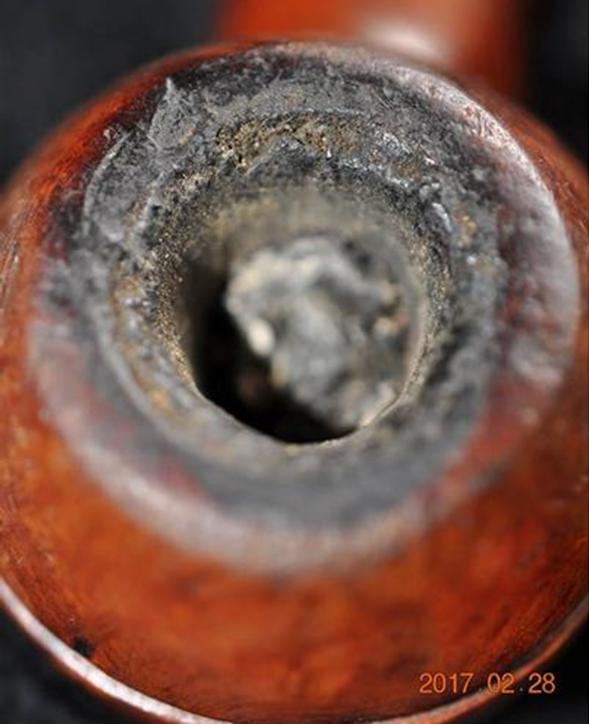
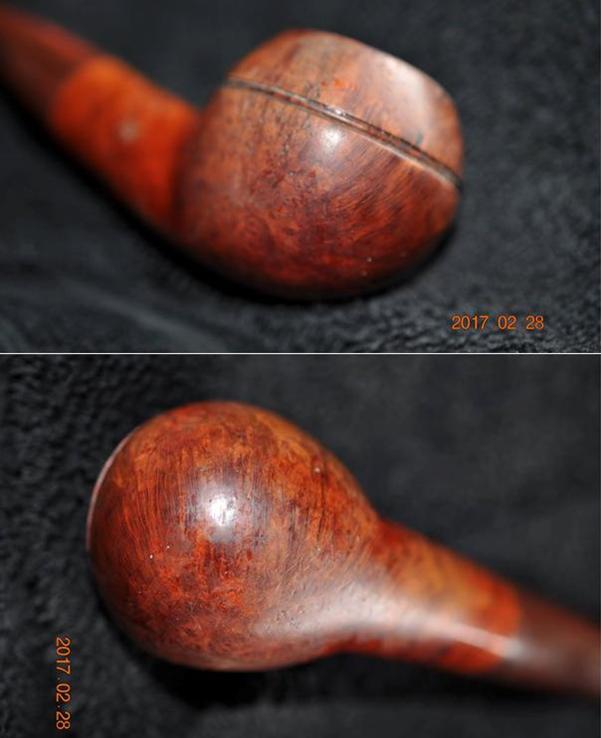
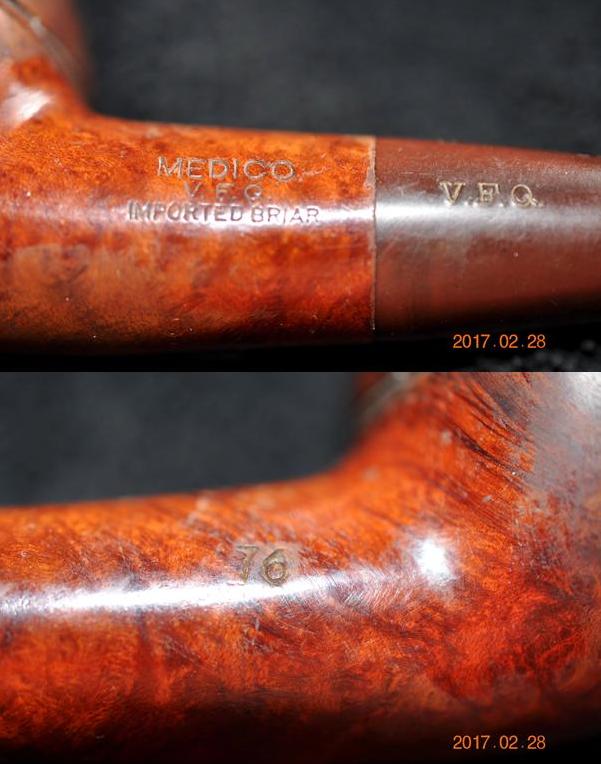
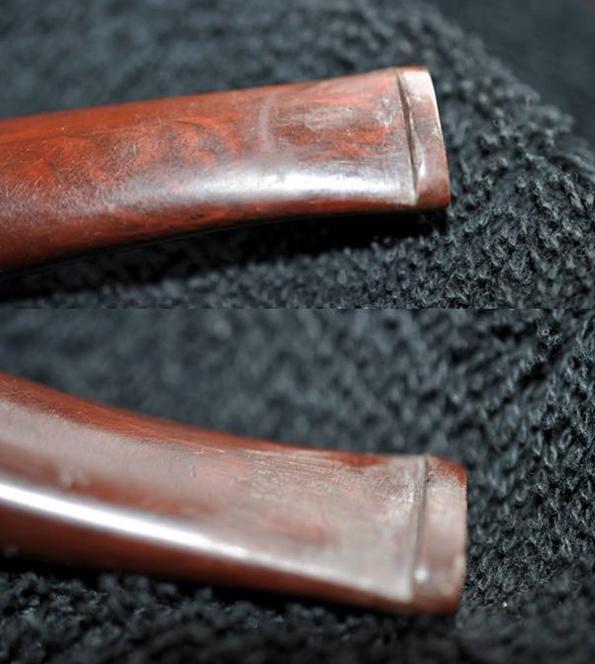
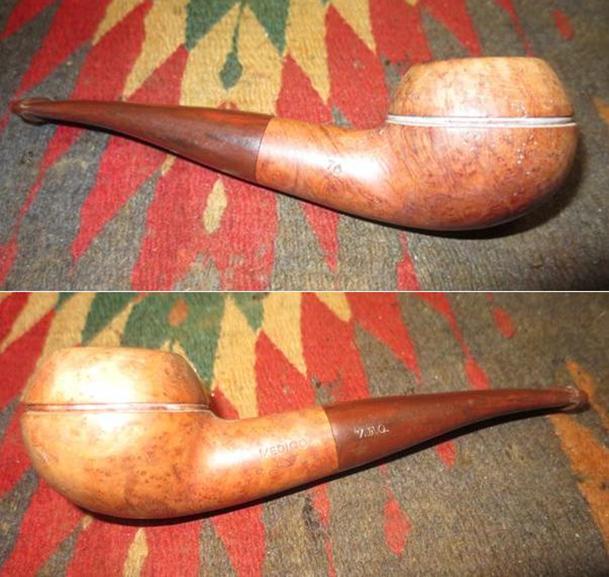
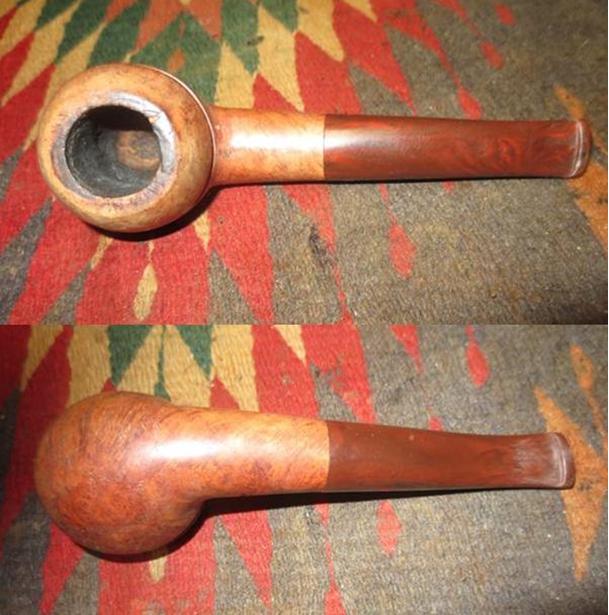
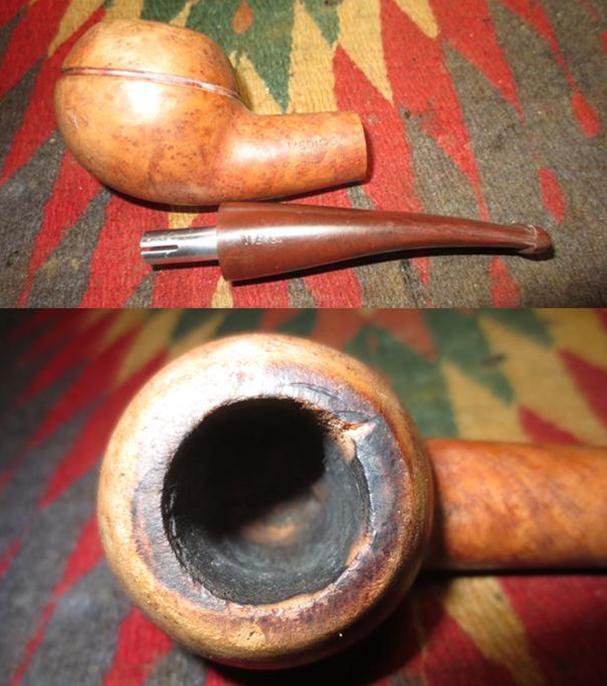
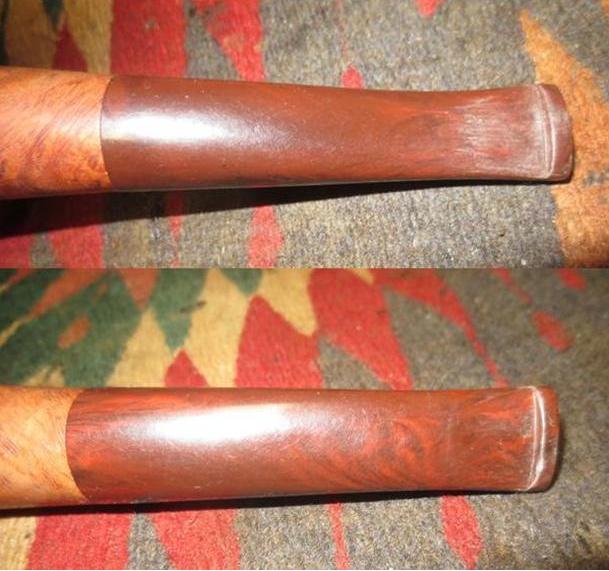
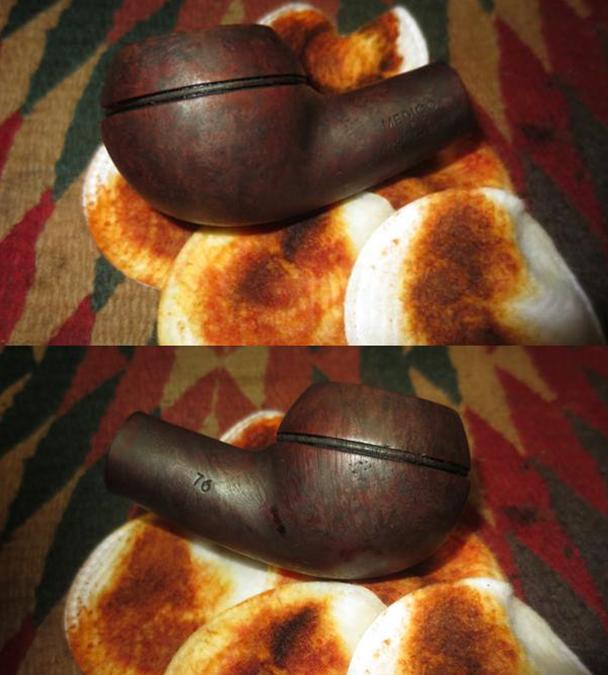
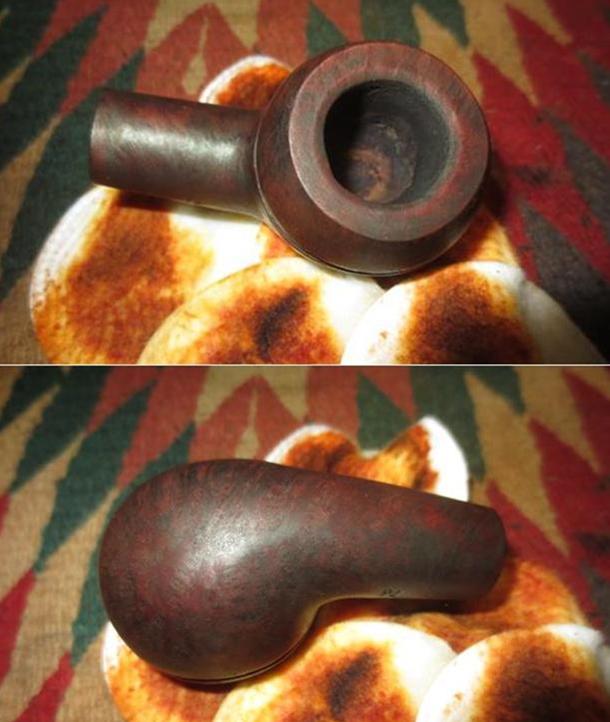
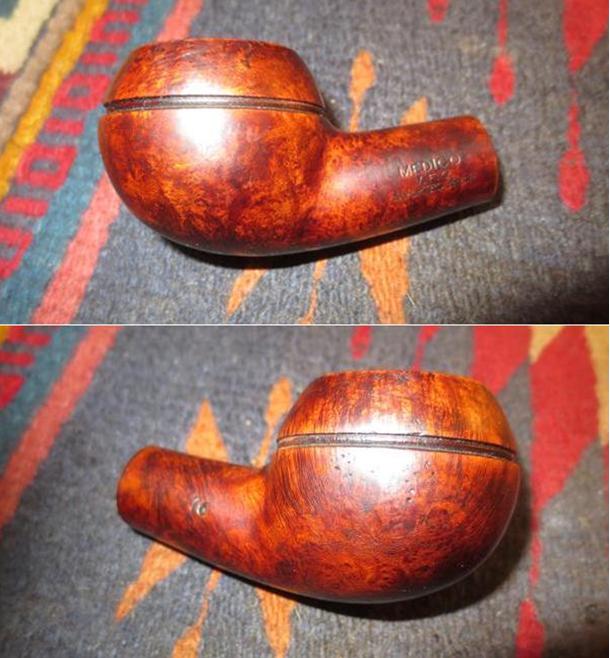
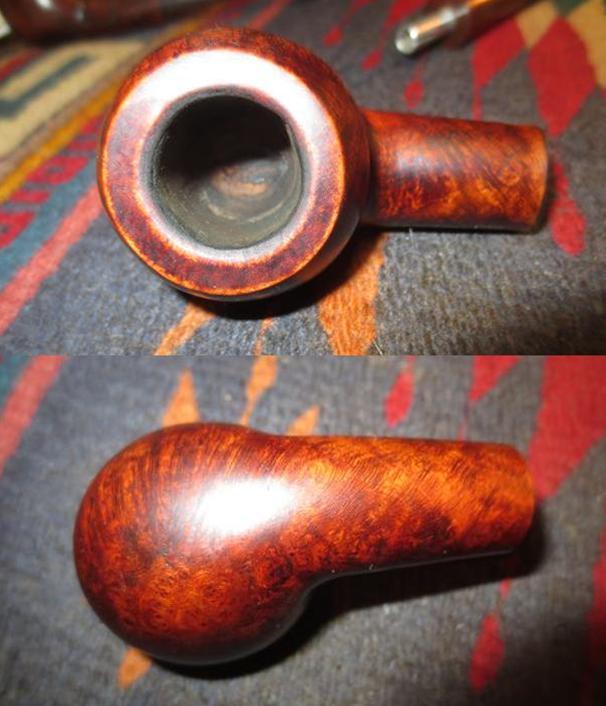
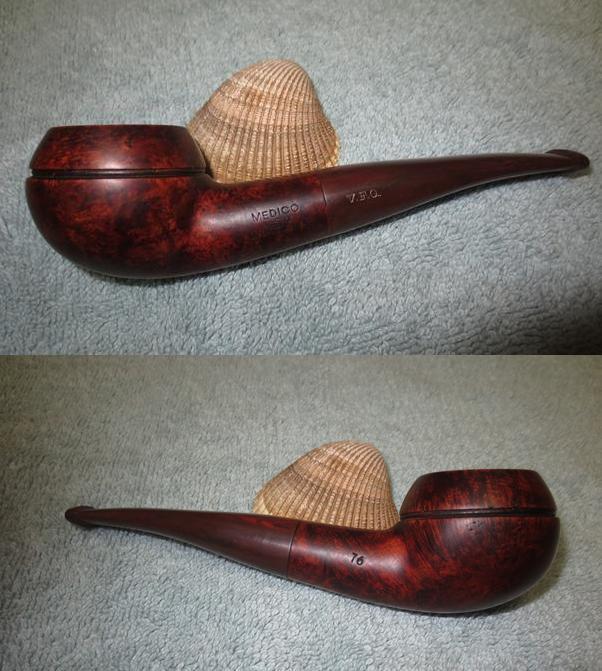
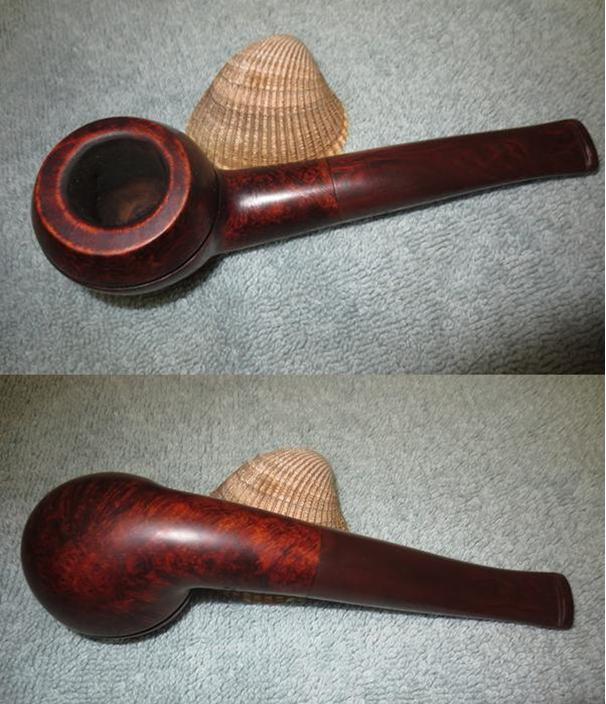
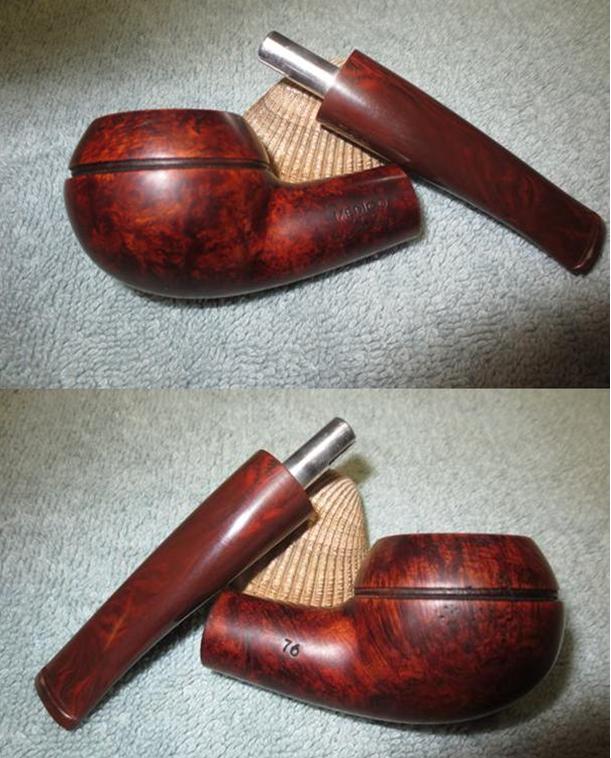
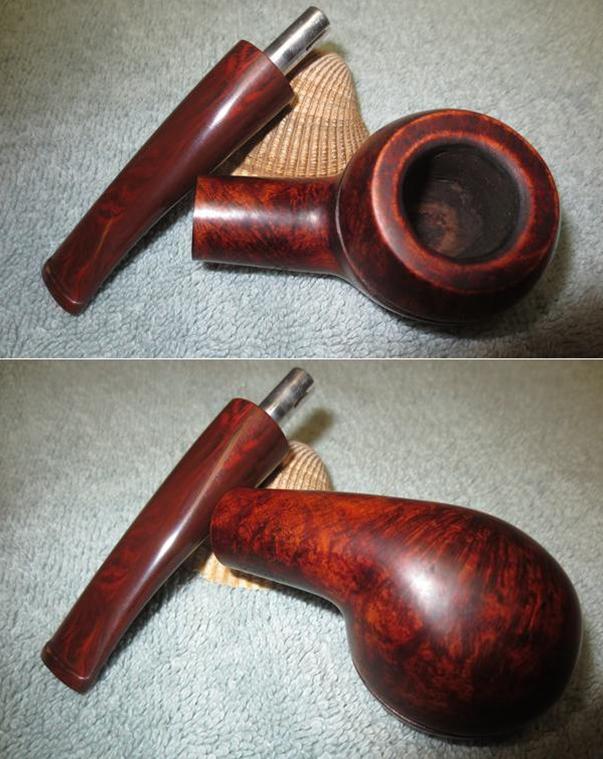
My brother Jeff and I visited an antique mall that was in an old grainery along a railroad track not too long ago. We went through the display cases and booths on two floors and found a few pipes. This was one of them – an old Medico VFQ Rhodesian. I have been told that VFQ means Very Fine Quality and underneath the grime it appeared that this one may have lived up to the stamping. The stem is a Cumberland like material with swirls and striations in a mahogany coloured stem. In classic Medico style the pipe was made for their paper filter and had a hollow, adjustable tenon. The tenon has a split on both sides that can be expanded should the stem become loose in the shank.The pipe was in rough shape. The bowl was thickly caked and had remnants of tobacco in it. The rim top was covered with overflow from the bowl and there were some large chips on the top and inner edge of the bowl on the right side. The finish was shot with the top varnish coat peeling all over the bowl. The ring around the bowl was dirty but was undamaged.The pipe was stamped Medico over V.F.Q. over Imported Briar on the left side of the shank. It also was stamped with the shape number 76 on the right side. The stem bore the V.F.Q. stamp on the left side as well.The stem was oxidized, dirty and had tooth chatter on both sides at the button. There was an old paper filter still in the tenon and the inside of the shank and stem were filthy.When we got back to my brother’s place we reamed the pipe and scrubbed it down with acetone on a cotton pad to remove the damage finish. We scrubbed the mortise, airway into the bowl and the stem with pipe cleaners, cotton swabs and alcohol. I took photos of the cleaned pipe when I finally brought it to my work table in Vancouver. (Notice the angle of the rim top on the bowl. It was not flat and the damage had left the front higher than the back.) The next two photos show the condition of the tenon and bowl when taken apart and the damaged rim once all the cake had been removed. The rim had damage all the way around but the biggest damage was on the rear right side where there was a large chip missing.The stem shows some wear in the next photos and the striations of colour are almost not visible due to oxidation.I decided to even out the height of the rim cap by carefully topping the bowl. Since the back side was higher than the front I was pretty sure I could remove most if not all of the chipped area on the rear right. I topped it on a board with 220 grit sandpaper and carefully leveled the bowl by applying more pressure to the rear of the bowl than the front and lifting the front edge off the paper as I remove the damaged and excess on the read of the bowl. It took some work to level the bowl properly and end up with an even top both from a vertical and horizontal view.I used a folded piece of 220 grit sandpaper to bevel out the inner edge of the rim to remove the remaining rim damage and clean up the appearance of the rim.I sanded the rim with a medium and fine grit sanding sponge and with 1500-4000 grit micromesh sanding pads to remove the scratches. I wiped the bowl down with acetone on a cotton pad to remove the remaining finish and stain on the bowl in preparation for matching the newly topped rim with the colour of the rest of the bowl. I did a more thorough cleanup of the mortise and airway into the bowl to remove all of the sanding dust and remaining debris that was there. I scrubbed it out with cotton swabs, pipe cleaners and alcohol. I also ran pipe cleaners through the airway in the stem and cleaned the mortise with cotton swabs.The bowl had many nicks and scratches. I sanded it with micromesh pads to remove the majority of them but decided to leave some of the deeper ones as beauty marks of the old pipe. In the photos the bowl looks pretty richly coloured but in reality it was faded and apart from the flash the grain did not stand out. I stained the bowl with a dark brown aniline stain, flamed it and repeated the process until I was happy with the coverage on the bowl. The look of the bowl in the next two photos is really odd. I think that it is a phenomenon of the flash because it did not look like this in person.I wiped the bowl down with alcohol on cotton pads to remove some of the opacity of the stain and make it more transparent. In the photos below you can see that it is lighter but still to heavy to show the grain to my liking. I buffed the bowl with red Tripoli, sanded it with a medium and a fine grit sanding sponge, then polished it with 1500-2400 grit micromesh pads to remove some more of the dark stain and leave behind some nice contrasts in the grain of the bowl. The next photos show it after I had buffed it with Blue Diamond to polish it. I set the bowl aside for now and turned my attention to the stem. I have found that these Medico stems are not fully vulcanite and are a bit of a bear to polish. I have often been left to do the polishing by hand as the buffer can generate too much heat if I am not careful. The heat damages the material of the stem and forces you to start over. I sanded out the tooth chatter and marks on both sides of the stem and reshaped the button edges with 220 grit sandpaper.  The flow of the top of the shank to the top of the stem was interrupted in that the height of the stem at that point was higher than that of the shank so I sanded the top half of the stem to make that transition smoother.I polished the stem with micromesh sanding pads – wet sanding it with 1500-2400 until I removed the scratches left behind by the sandpaper. I dry sanded with 3200-12000 grit pads. I rubbed the stem down with Obsidian Oil between each sanding pad to give the pads more bite and allow them to really polish the stem. Between the 4000 and 6000 grit pads I buffed the stem very carefully (you have to have a light touch against the wheel). I gave it a final rub down of oil after the 12000 grit pad. I put the stem back on the bowl and buffed bowl and stem with Blue Diamond a final time. It really polishes the briar and with a careful/light touch can polish these older Medico stems. I gave the bowl and stem multiple coats of carnauba wax and buffed it with a clean buffing pad to raise the shine. I hand buffed it with a microfibre cloth to deepen the shine.The finished pipe is shown in the photos below. To me the stain goes really well with the polished Cumberland like stem. They play off each other very well. The contrast on the bowl raises the highlights in the stem and vice versa. This pipe will soon be on the rebornpipes store if you wold like to add it to your rack. It is very lightweight and comfortable in the hand. I think, judging from the condition of the pipe when I got it, that it will be a great smoking pipe, with or without the Medico filter.

Rebirth: a Liverpool Stummel with Beautiful Grain and Miserable Drilling


Blog by Steve Laug

I found this long shank Liverpool pipe sans stem at an antique mall in Idaho when I was visiting my brother. I did not look at it too closely but noticed it was lightly smoked and had some really nice looking grain. I bought it as I figured it would not be too big a deal to make a stem for it. Besides the price was only $4. Looking at the next four photos you can see why the grain got my attention. It is a mix of birdseye, flame and cross grain. The stain that was used really highlights the grain. In the first photo you can see the chip out of the top of the bowl on the left side as well as the chip out of the shank top between the bowl junction and the stamping on the shank side. When I got back to my brother’s place he looked it over and just shook his head. He pointed out the issues with the bowl. The airway entered the bowl at the far right side. The bowl was hardly smoked and this may well have been a reason. Externally the bowl was not round it was entirely lopsided. It was wrong both inside and out in more ways than I had noticed in my quick decision to purchase it. This one was going to be a challenge in more ways than one to restem and make usable once more. I was looking forward to seeing what I could do. The next two photos show the misdrilling and the misshapen out of round external bowl.There were some deep gouges on the left side of the pipe – one had the top of the bowl and one on the shank just ahead of the stamping. There were also some pits and gouges on the underside of the shank and on the end on both top and bottom. I have circled the large one in the first photo below. It is a bright spot circled in red. Then I looked closer at the overall bowl and shank. What a mess. It had been drilled at quite an angle. It appeared that the drill had gone through the right side of the shank just before the bowl. It had been repaired with a fill that was pitted. It is circled in red in the second photo below. The third photo shows the shank from the mortise end. It is obvious that the shank was not round and the mortise was off to the right. This was going to be an interesting pipe to restem. As I looked at the left side of the shank with a magnifying lens I could see that first line of stamping (faint on the top and better at the bottom side of the words read CONTINENTAL. The second line of stamping was clearer and read REAL BRIAR. In examining the rest of the shank, I could see that it was all that was stamped on the pipe. I did some searching for the brand name and found one on Pipedia. The Continental Briar Pipe Co. Inc. manufactured briar pipes in Brooklyn, New York. The address on York and Adams Streets was taken from a letter sent to a Henry T. Rice dated July 28, 1941.

I went through my stem can and found two prospects for stems. Because the shank was misdrilled and out of round and the mortise was also off to the side I needed to have a stem slightly larger in diameter than the shank.  One of the stems was a saddle stem and the other a taper stem. The saddle stem was not quite large enough so I opted for the taper. I used a pen knife to open the mortise and make it more round. I worked to remove briar from the left side of the mortise and make the shank end round. In the third photo below you can see the finished mortise.When I finished the work on the mortise I sanded it with a rolled piece of sandpaper to smooth things out.I pushed the taper stem into the mortise and the fit against the shank was a good fit. The right side where the shank was out of round needed to have some vulcanite removed to make the flow of the stem and shank correct but it would work. The taper stem makes the pipe a Liverpool. If I had used the saddle stem it would have been a lumberman. I like the promising look of the new pipe. There were many on the top and the bottom of the shank and along the right side of the top of the bowl. There was also a place on the right side of the shank at the bowl shank junction that had been filled to repair a drill through. It had been patched with putty but was pitted and rough. I wiped the shank and bowl edge down with alcohol. I filled all of the pits and the repaired area with briar dust and then put drops of super glue on top of the dust fills. The photos below show the patched and repaired areas.When the repairs dried I sanded the repairs smooth to match the briar around them. The photos below show the freshly sanded areas on the pipe. The repairs are dark spots in the middle of the sanded areas. They will be blended in once I stain the bowl and shank. I used a needle file to reshape the button edges on both sides of the stem. They were worn down and the sharp edge was indistinct. I redefined the edges and smoothed out the surface in front of the button.I wiped the bowl and shank down with alcohol to remove the remaining finish on the bowl and to clean off the dust in preparation for restaining the pipe. I sanded the surface of the stem with 220 grit sandpaper to remove the oxidation and smooth out the file marks and tooth marks that remained. I lightly topped the bowl on the topping board to remove the damaged areas on the rim and created a smooth well defined edge on both the inner and outer parts of the bowl. I used a folded piece of 220 grit sandpaper to clean the inner edge and remove the darkening there.I wiped it down another time to clean off the rim and the edges of dust. I used a dark brown stain touch up pen to stain the sanded areas on the rim, bowl side, shank top and bottom and shank end. I was not too worried about coverage at this point rather providing a base coat before I stained the bowl in its entirety. My thinking was that the base coat would blend in with the existing stain and then the top coat would tie it all together. I stained the pipe with a dark brown aniline stain and flamed it with a lighter. I repeated the process of staining and flaming until the coverage was even around the bowl. I set the pipe aside to dry for a few hours and worked on the stem.I wiped the bowl down with alcohol on cotton pads to remove the dark crusty finish. I wanted the stain to be more transparent to let the grain show through. I sanded it with micromesh sanding pads to polish the bowl and shank. The grain really shown through now and the flame grain, birdseye and cross grain were beautiful. The fills have blended in on most of the bowl while the repair on the right side of the shank at the bowl is dark but smooth. I scraped out the remnants of cake that remained inside of the bowl with the Savinelli Fitsall Pipe Knife and sanded the walls with 180 grit sandpaper to smooth them out.I polished the stem with micromesh sanding pads – wet sanding with 1500-2400 grit pads and dry sanding with 3200-12000 grit pads. I rubbed the stem down with Obsidian Oil between each set of three pads. I took it and buffed it with Tripoli after the 2400 grit pad and followed that with Blue Diamond. Then I went on to continue polishing it with the higher grits of micromesh pads. I buffed the pipe and stem with Blue Diamond on the buffing wheel and carefully buffed around the stamping. I did not want to damage it any further than before. I gave the pipe and stem multiple coats of carnauba wax and buffed the pipe with a clean buffing pad. I hand buffed it with a microfibre cloth to deepen the shine on the briar and the vulcanite. The finished pipe is shown in the photos below. It is a long pipe that is just under 7 inches long and the bowl is 1 ¾ inches tall. The bowl exterior is 1 1/8 inches in diameter and the bowl chamber is ¾ inch in diameter. What started out as a major mess came out looking like a fine pipe. Even though the airway enters the bowl on the far right the draw is still very good. I think it should smoke fairly well and provide a decent looking long pipe for someone who wants to add it to his collection. Thanks for walking through the challenge with me.

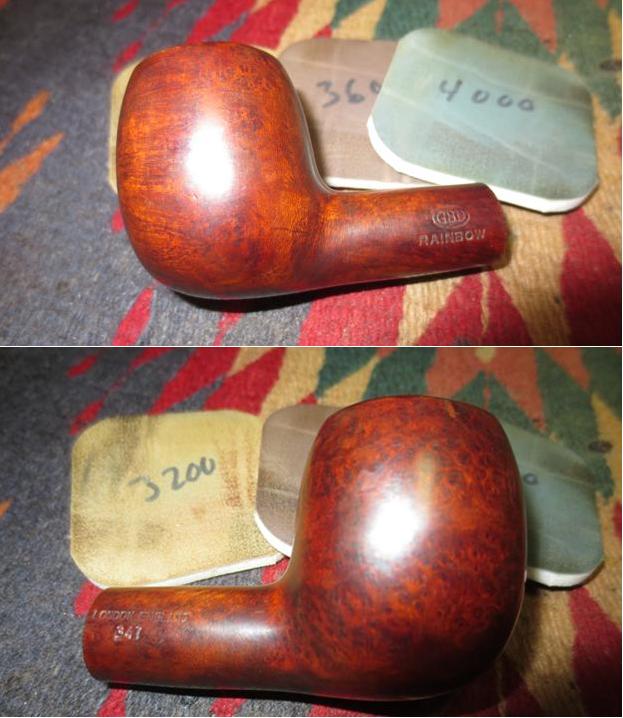
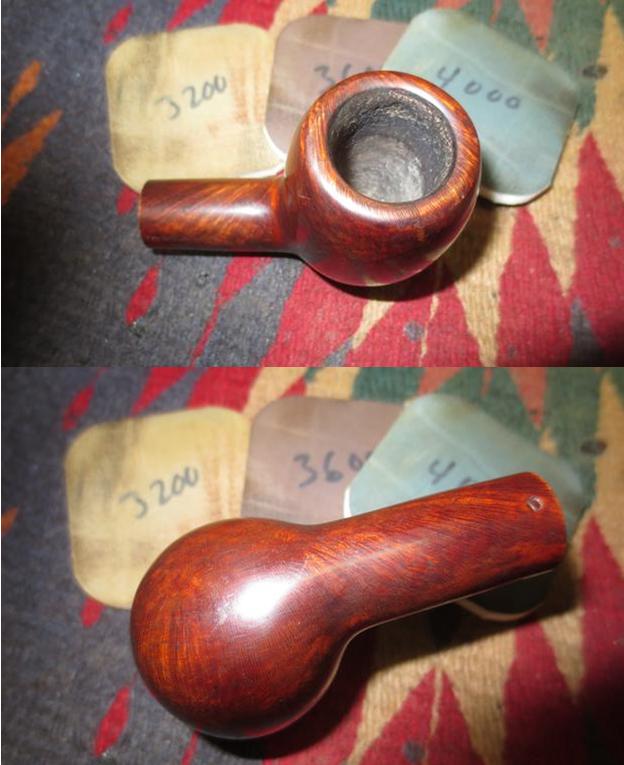
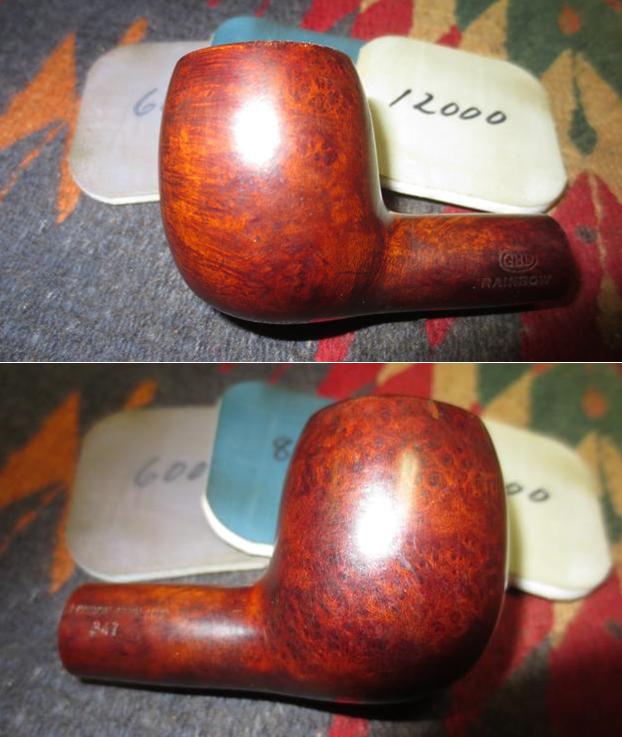
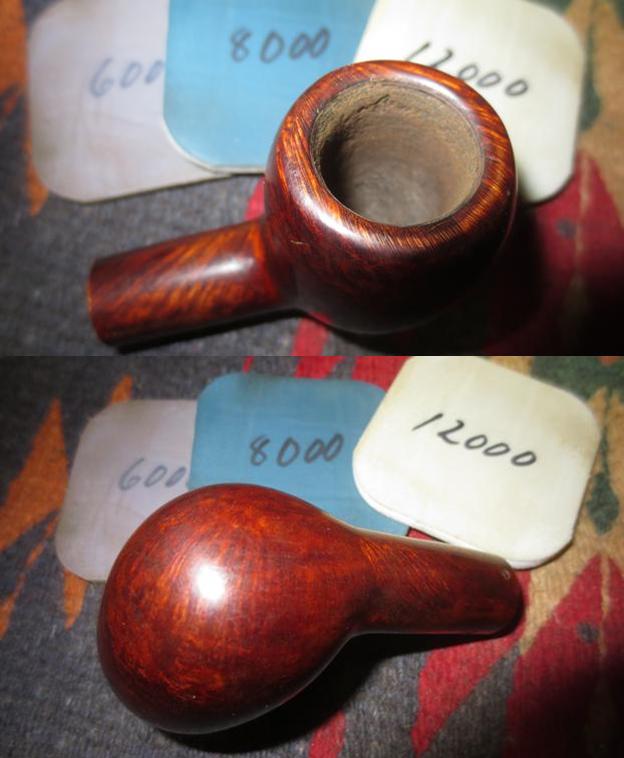
Making Work for myself – Restoring a GDB Rainbow 347


Blog by Steve Laug

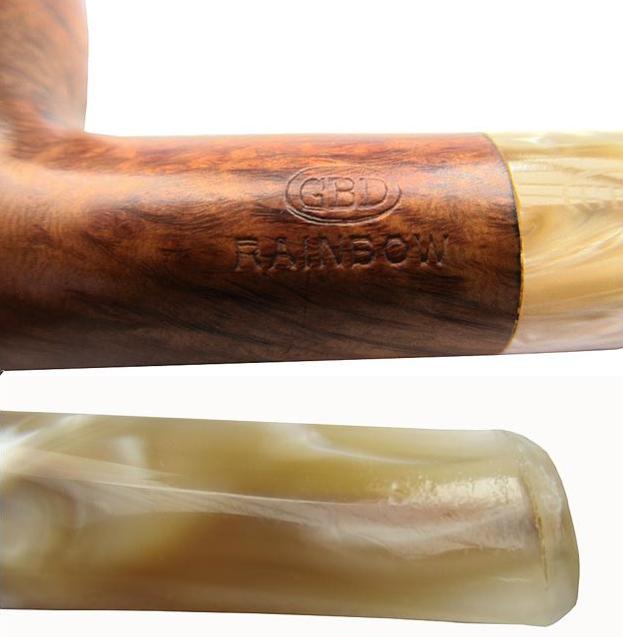
I have worked on and collected many GBD pipes over the past 20 years. I have some great resources that I use to identify the nomenclature, shape and date of the various lines that GBD issued. However, all of my sources and resources regarding GBD are from the time prior to the merger (Cadogan) or shortly thereafter. The Rainbow Line is not mentioned in any of them. I also looked on the pipephil Logos and Stampings site and Pipedia and again there is no mention of the line. In my online research, I found several people who think that it is probable that the pipe was made during the 70’s through 90’s. Several things point to this – the chunky Lucite stem, the name of the line itself and the brightly coloured stems used. One fellow on Pipes Magazine’s online forum had a great quote that caught my attention. He said, “If you’re old enough you might remember that Rainbow was a popular theme in the late 70’s to early 90’s due to Sesame Street, “The Rainbow Connection,” The Rainbow Reading Room, etc.” http://pipesmagazine.com/forums/topic/help-with-info-on-a-gbd-pipe I think this is as close as I am going to get to a time period when the pipe was made.

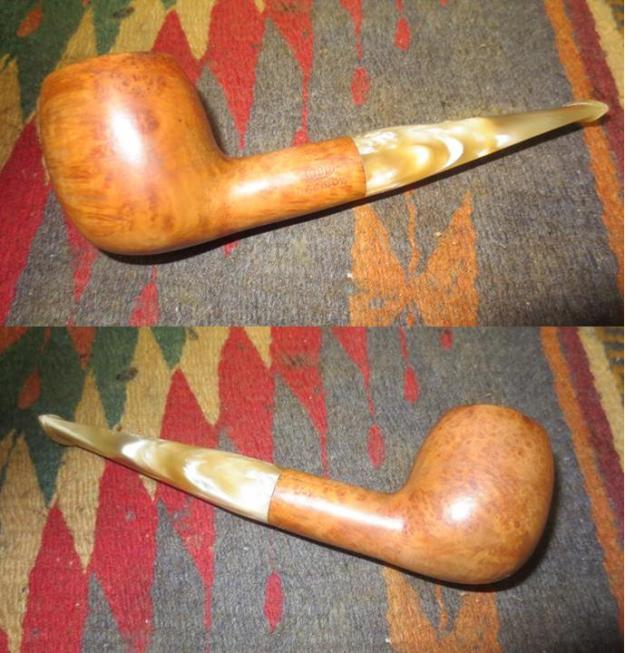
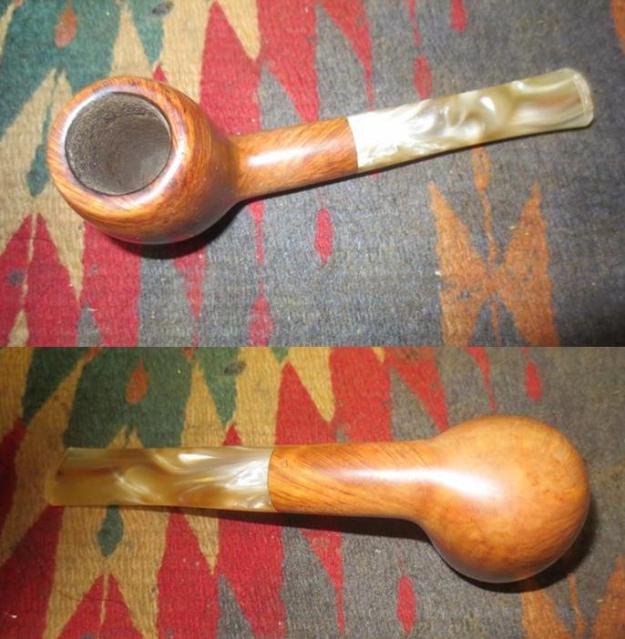
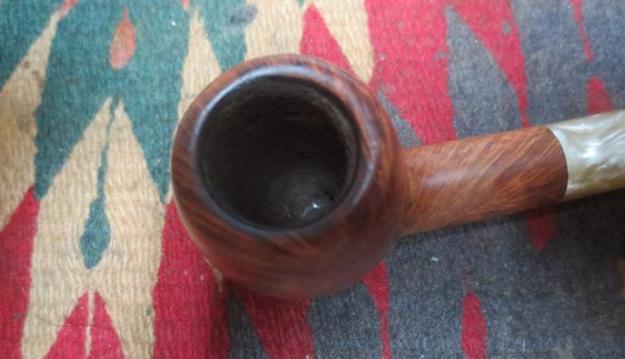
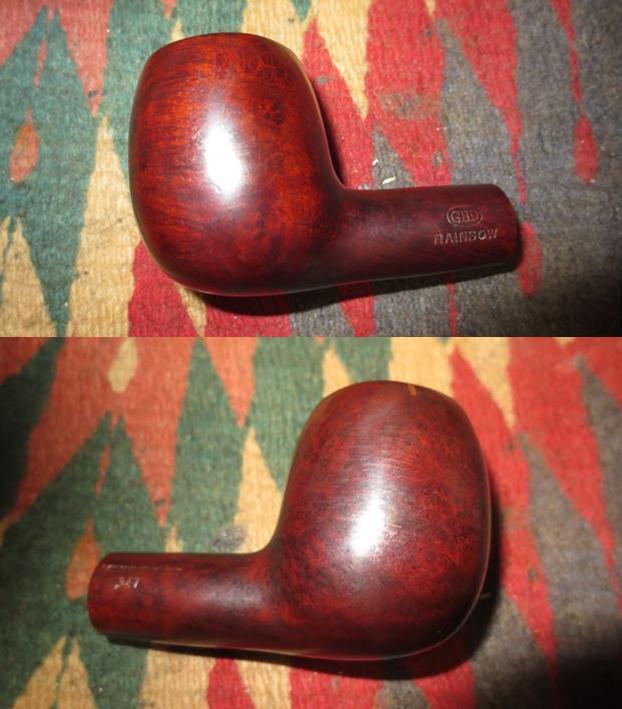
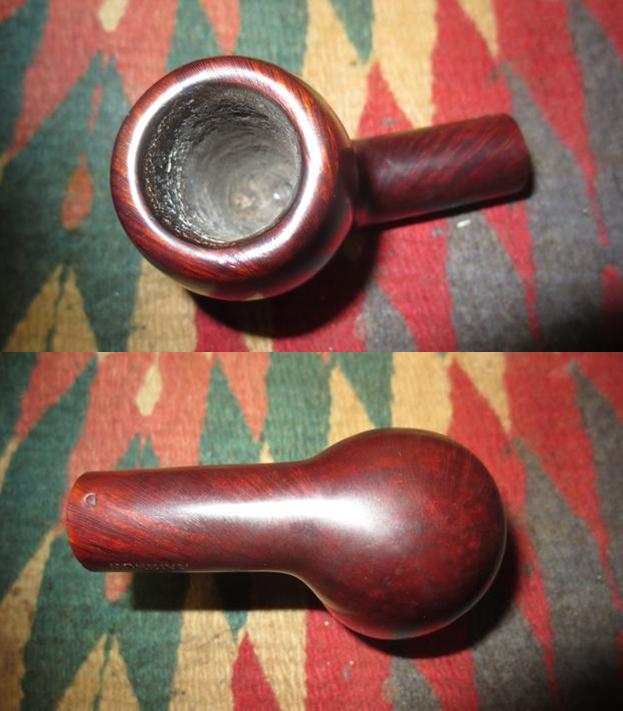
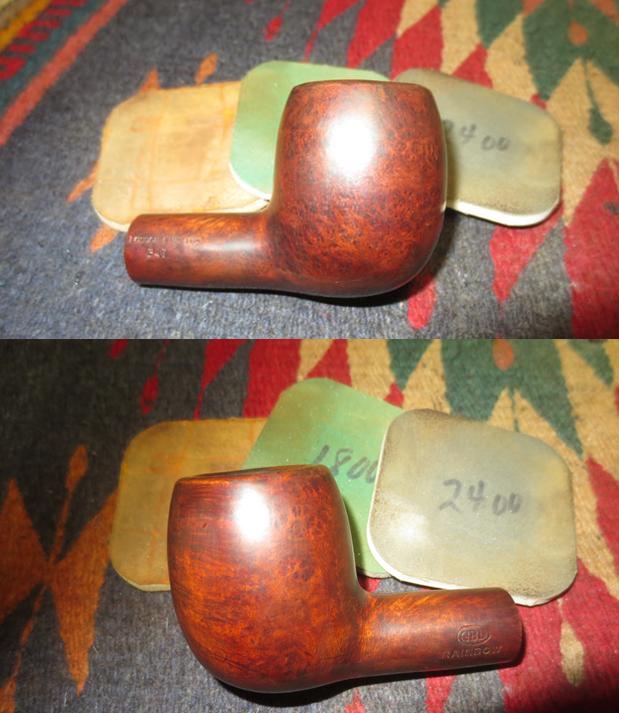
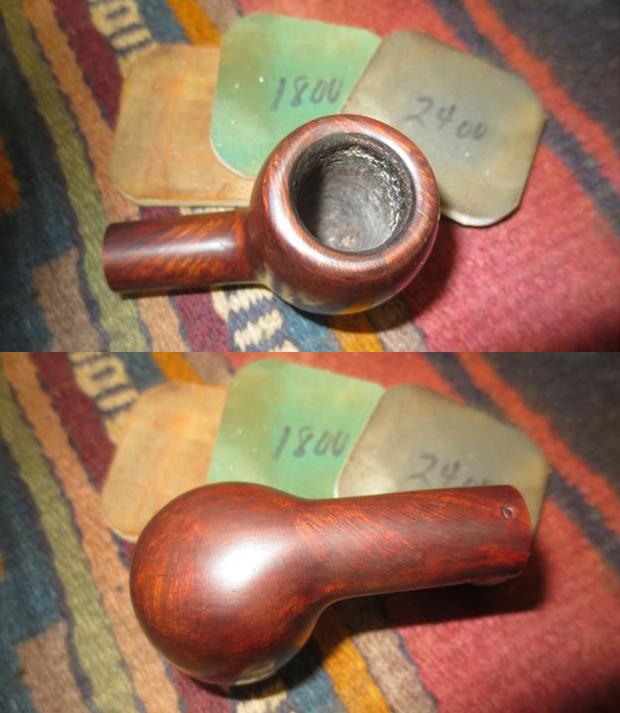
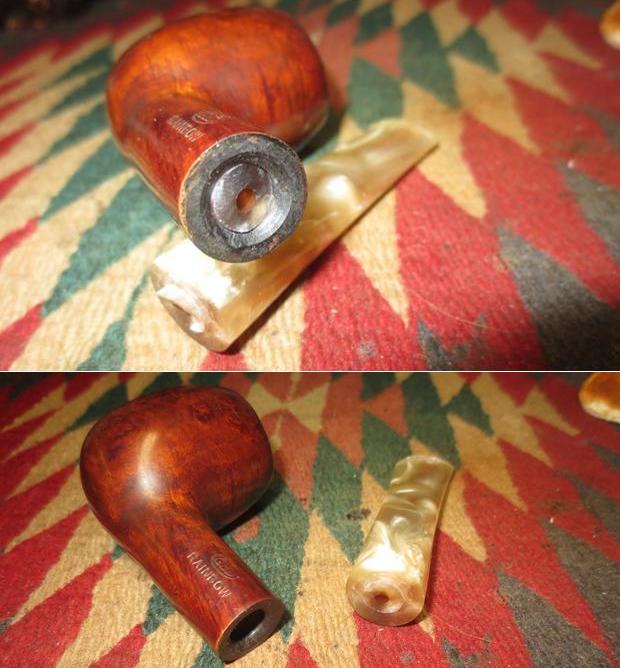
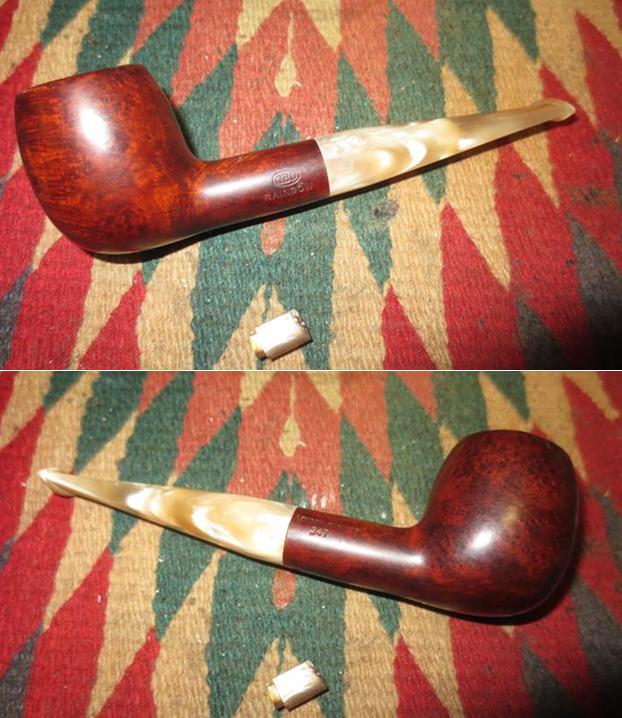
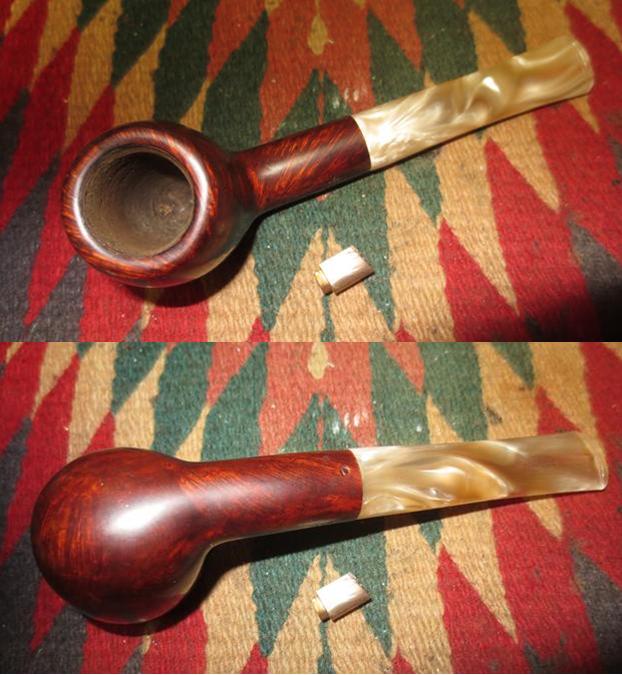
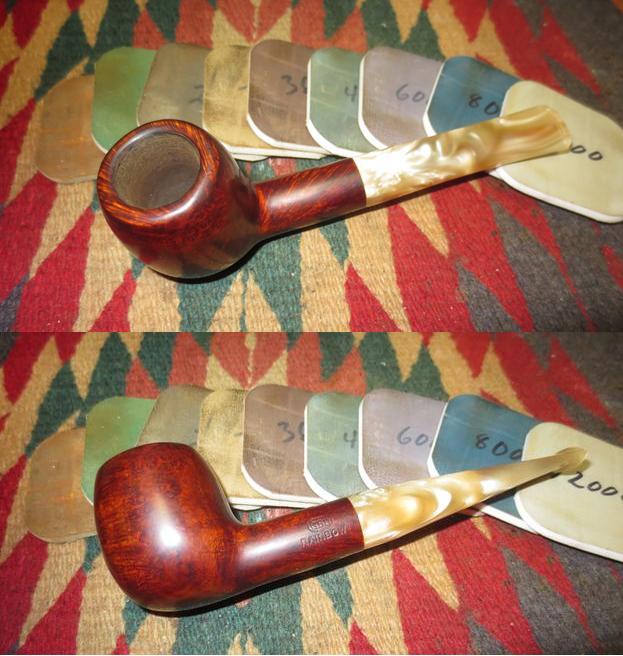
The pipe I picked up on a recent trip to Idaho is a nicely shape apple that was in pretty decent shape. I figured it would be an easy clean up. But things happened along the way and I made more work for myself. It is stamped GBD in an oval over Rainbow on the left side of the shank. On the right side stamped London, England in a straight line over 347 (shape number). On the underside of the shank near the stem/shank junction it is stamped D. The faint painted GBD in an Oval on the left side of the stem also suggests a later GBD. The nomenclature is consistent with usual smooth GBD markings (GBD over Grade (left side) and London England over style number on the right side.) The photos below came from the person I purchased the pipe from and show the general condition.He provided some close up photos of the bowl and rim. He said that the pipe had been reamed and clean. However, it was not reamed and clean to my liking. The bowl had a thick cake that I will need to remove, some rim darkening and some dents in the rim. My guess was that like the bowl, the shank and mortise would need some attention. The stamping on the shank was very clear. The first photo below shows that. Next to the shank/stem junction in the first photo, there is also the remnant of the GBD oval logo that had been originally painted on the stem. The stem had a lot of tooth chatter and some shallow tooth marks in the Lucite.While I was staying with my brother, I cleaned and reamed the pipe. I used the PipeNet reamer and took it back to the walls. I would need to clean it up more once I got home but it was better than when I started. Last evening I took the pipe out of the box to finish the clean up and restoration. I took some photos of it before I started to have a benchmark. I took a close up of the bowl and rim. It was better than when I started but still needed to be cleaned up some more. The rim had some darkening that I could reduce some more as well.I used the Savinelli Fitsall Reamer to scrape the remaining thin cake from the walls of the bowl. I personally like to remove all of the cake when cleaning up a bowl. I will sand a bowl interior a bit later to smooth things out. Little did I know at this point that the decision to sand the bowl would send me on a repair detour.I scrubbed out the mortise, airway in the bowl and in the stem with alcohol, cotton swabs and pipe cleaners. I used the dental spatula to scrape the walls of the shank and remove the hard tars that had built up there. The airway in the stem was also dirty and had some darkening at the button and in the first few inches of the stem. I cleaned it with bristle pipe cleaners and picked the debris out of the button and from around the stem down tenon with a dental pick.The stem not only had tooth chatter but also some stickiness from a price tag on the top surface. The edge of the button also had some chatter. I sanded the tooth marks out with 220 grit sandpaper and reshaped the button at the same time. The stem was smooth when I finished. It was dull and needed a good polishing.I polished it with micromesh sanding pads – wet sanding with 1500-2400 grit pads and dry sanded with 3200-12000 grit pads. I wiped the stem down with a damp cotton pad to remove the dust after each pad. I was finished with the stem at this point so I set it aside to work on the bowl. I had decided to use a dark brown aniline stain thinned by 50% with alcohol to darken the grain on the pipe and hide a couple of small fills. I applied the stain, flamed it and repeated the process until the  bowl was covered evenly. I wiped the bowl down with cotton pads and alcohol to make it more transparent. I hand buffed it and took the following photos. It was still too dark to my liking. I sanded the bowl with micromesh sanding pads to make it more transparent and to see if I could make the grain pop. I sanded it with 1500-2400 and took these photos. It was getting there. I continued to sand it with 3200-12000 grit pads to polish it and give it a shine. The next photos tell the story. The bowl was looking better and better. It is at this point that I made a decision that would inevitably cost me. That results of that decision turned out to be a mistake that made a lot more work for me! I put the stem on and decided to work on sanding out the inside of the bowl to remove the polishing compound and remnants of cake. Stupidly, I put the stem on the pipe to enjoy the look of the combination while I worked. Wrong thing to do! Understand, I was sitting at my work table, the top of which is a meter above the floor. I was carefully sanding the bowl interior so as not to damage the nice stain on the rim. Somehow, the pipe wiggled free from my hands and fell to the floor. If you could have watched it and my face at the same time you would have seen the look of horror on my face as it dropped to the floor. That horror changed to a moment of dread as I watched it bounce and heard a snap and watched as the bowl and stem went in opposite directions. I quietly picked up the bowl and stem. The tenon had snapped off in the mortise. It was a clean break. I don’t know about you but I find Lucite is much less forgiving than vulcanite. I have had pipes with vulcanite stem hit the floor with not breakage but not so with Lucite. It seems that the tenon inevitably snaps. Well this one certainly did.I sat and looked at it for a long time just sick at the thought that a pipe I was basically finished with was in pieces on my table. I know how to replace a tenon; that is not a problem. I just did not want to have to do that on this pipe. However, my own stupidity and carelessness had successfully sent me back to work on this pipe. Ahh well… just as well call it a night. Perhaps a good night’s sleep would give me better perspective on this new problem!

I woke up early this morning and dragged my feet about going back to work on the pipe. I think I was hoping at some level that it had not actually happened. I sipped my coffee as long as possible postponing the inevitable. I talked with my eldest daughter who is in Kathmandu for work. I took the dog for a walk around the yard… but finally I made to the basement and the work table. It was not a dream the tenonless stem and the bowl was sitting waiting for me.

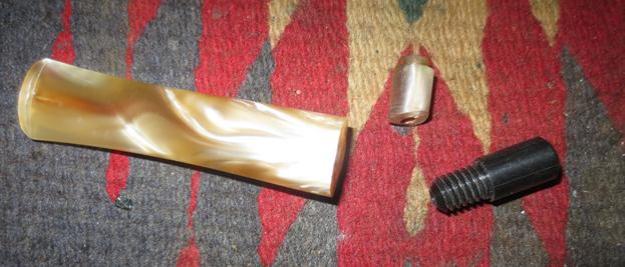
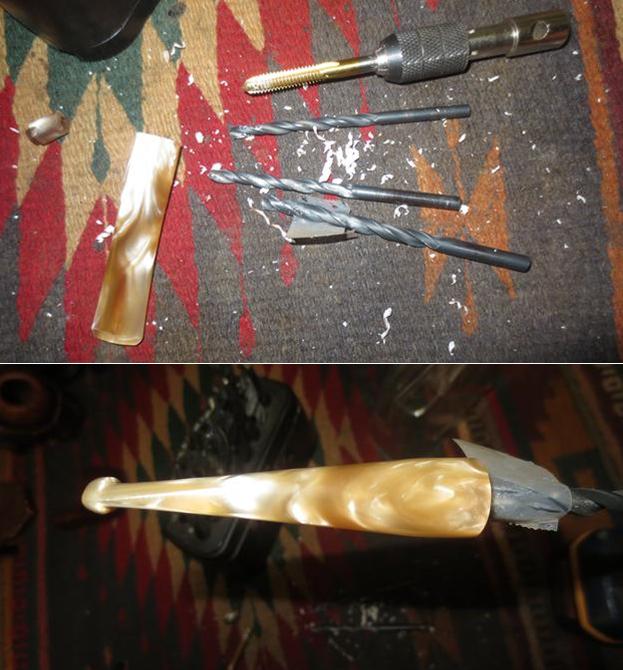
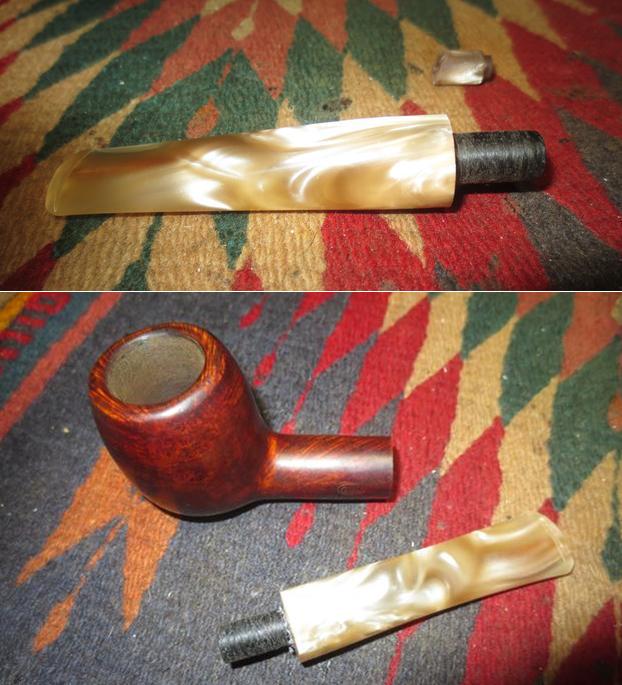
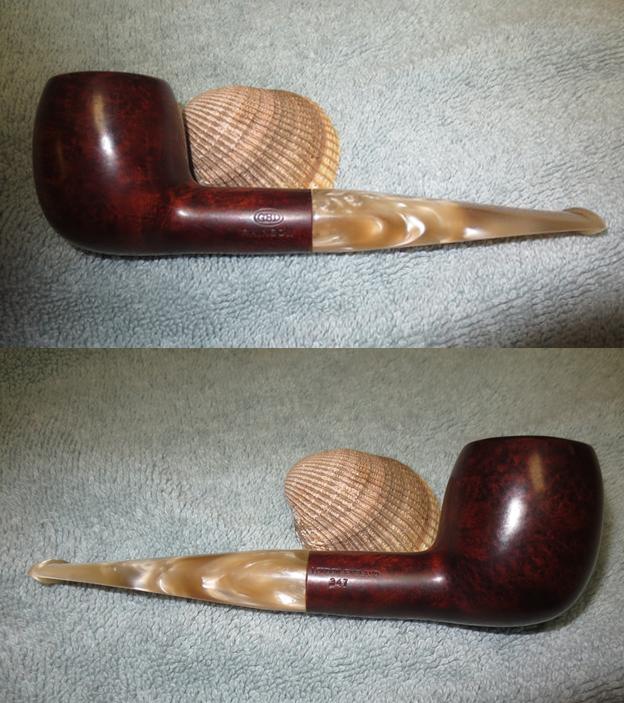
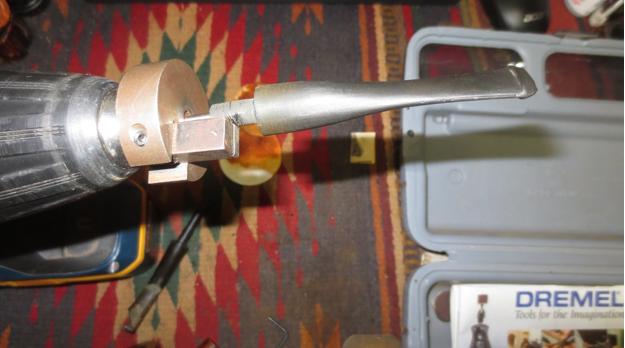
I used the Dremel to remove the remnants of the old tenon that were on the face of the stem. I flattened it against the topping board. I went through my assortment of threaded Delrin tenons until I found one that was slightly larger than the broken one. I needed to reduce the diameter slightly to make it work but it would do!I set up my cordless drill and put in a bit slightly larger than the airway and turned the stem onto it by hand. The first photo below shows the bits I used as I repeated the process until the hole was large enough for me to use a tap to thread it to match the tenon. The second photo below shows the last drill bit I used the piece of tape on the bit is to show me how deep I needed to go with the bit to accommodate the new tenon threads.I roughened the tenon surface so I could grip it enough to turn it into the newly drilled stem end. It was a good fit. I painted the end with some epoxy and turned it back in place and set it aside to cure and harden.Once the tenon was set firmly in place I used the Dremel and sanding drum to reduce the diameter to a close fit. I finished the fitting with 180 and 220 grit sandpaper. I polished the new tenon with micromesh sanding pads. Now came the telling moment. Would the stem match up with the shank? Would the fit be tight against the shank end? Even though I have done this many times I always have the same questions. I placed the new tenon in the mortise and carefully pushed the stem against the shank end. It was a very close fit and all I would need to do was sand the left side and top a little bit to make the fit even better. I was relieved and happy. I sanded the stem with 220 grit sandpaper and cleaned up the fit. I was almost back to where I was last night before the pipe dropped and the tenon broke. I have to polish the stem once again but the stem fits well. I took photos of the pipe at this point to check it out. The newly fit stem and the stain on the pipe worked well together. Now to polish it all and get it finished. I polished the bowl and stem with micromesh sanding pads – dry sanding with 1500-12000 grit pads to raise the shine.I buffed the pipe and stem with Blue Diamond on the buffing wheel. I gave it multiple coats of carnauba wax and buffed it with a clean buffing pad to raise the shine. I hand buffed it with a microfibre cloth to deepen that shine. The finished pipe is shown in the photos below. I am pretty happy with the way it turned out – even with the detour. The stain accomplished what I hope it would in making the grain pop. The grain stands out like it never did in the pipe when I received it. Now it is visible. It is a nice looking pipe that feels good in the hand. Thanks for looking.


Restemming and Restoring a Brigham Algonquin Dublin 247


Blog by Steve Laug

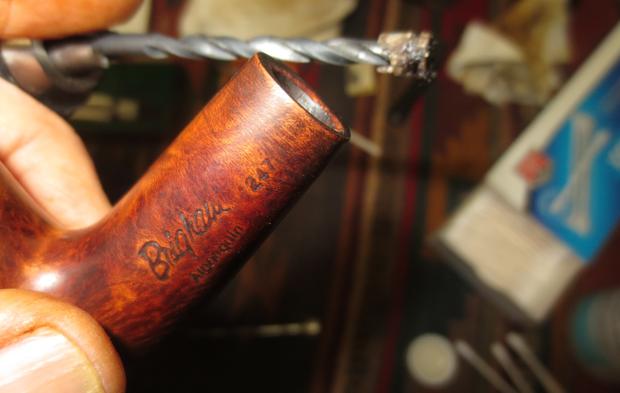
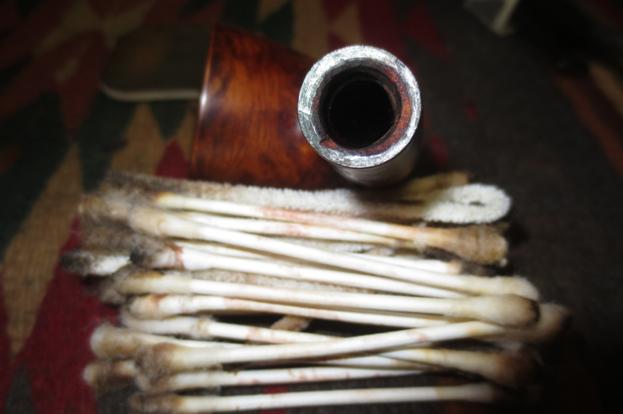
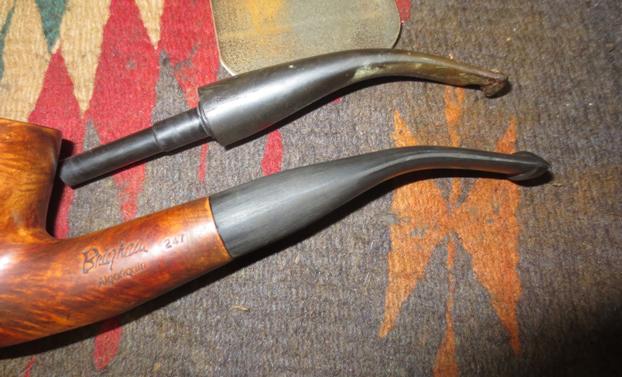
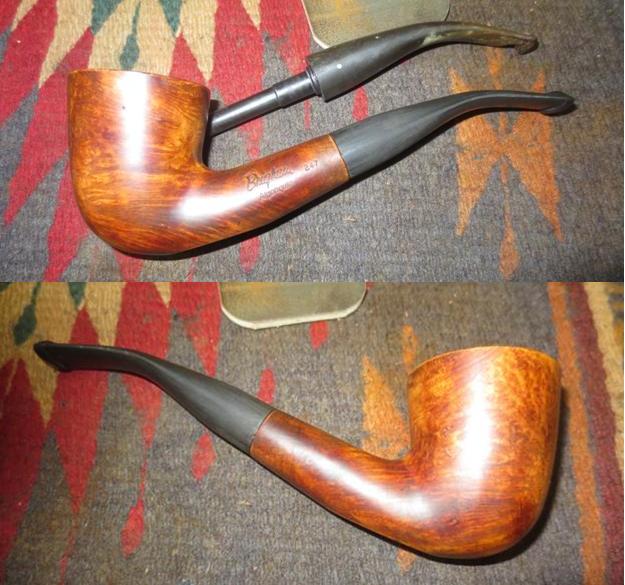
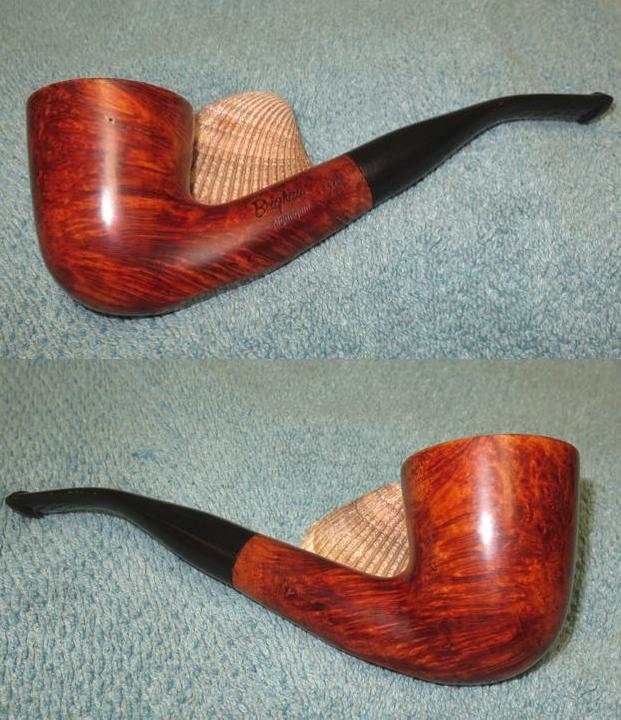
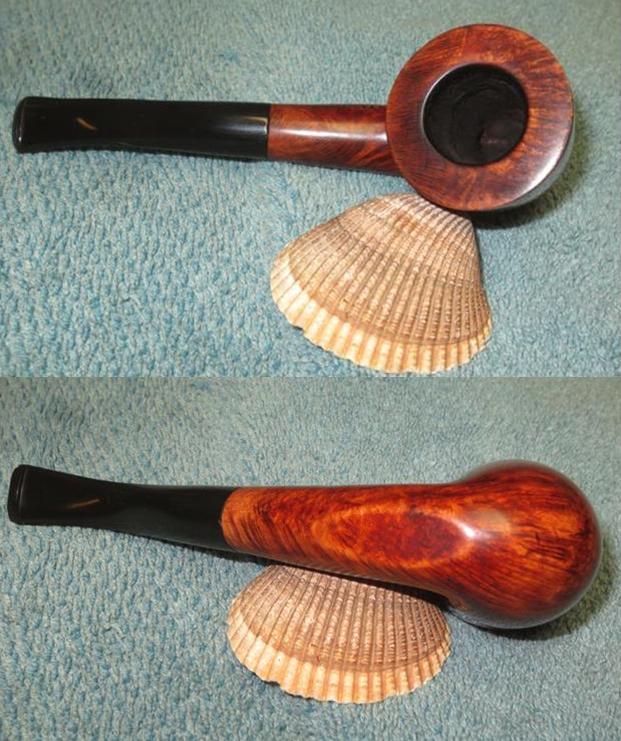
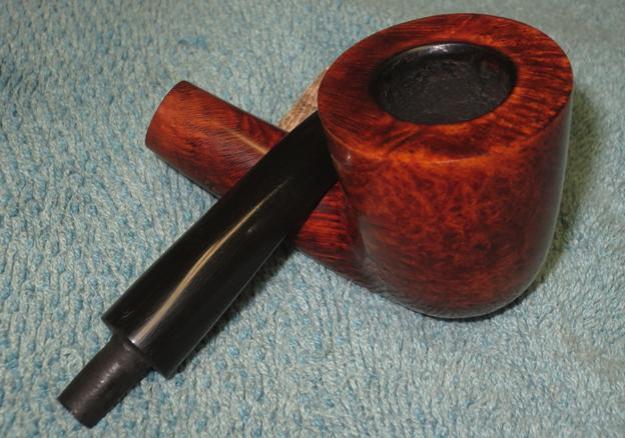
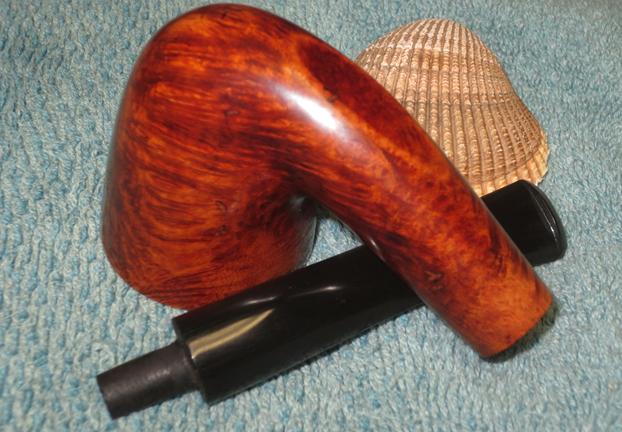
This pipe is the last of the nine that was dropped by my house for repairs. I was in rough shape for multiple reasons. The finish was dirty and spotty and the rim top was covered with overflow from the bowl. There was a thick cake in the bowl and there were some dark spots on the bowl sides toward the bottom of both sides at the bend. There were also some nicks in the heel of the bowl as well. The stem was missing a large chunk at the button on the right side. The Brigham hard rock maple filters come with an aluminum end and it had broken off deep in the shank near the entrance of the airway to the bowl. The mortise was very tarry and dirty. It would take some work to clean out enough to free the broken aluminum end piece. I took a close up photo of the rim and bowl to show the condition of the pipe when I started the cleanup. Underneath the grime on the bowl there was some nice cross grain and some birdseye on the front and back sides of the bowl.The stem was not salvageable as it stood. The missing chunk was large and the airway into the bowl was collapsed. I would need to fit a new stem on the shank. Fortunately for me the owner did not want a Brigham stem so I could use a regular push stem for the replacement.I went through my stem can, found a stem that was the same diameter, and close to the same length. I filed the diameter of the tenon with a file until it was close to fitting and finished with 220 grit sandpaper. I trimmed the edge of the tenon with my tenon turning tool by hand.When I finished smoothing out the tenon I inserted it in the mortise on the pipe bowl. The fit was snug. It looked good. I would need to do a few adjustments on the shank and stem as the shank was not perfectly round. I sanded the stem and the shank with 220 grit sandpaper to get a smooth transition between the two. I scrubbed the bowl with acetone on a cotton pad to remove the finish and the grime. I took photos of the cleaned exterior. I reamed the bowl with a PipNet reamer and the Savinelli Fitsall Knife. I removed the cake completely. I sanded the interior walls with sandpaper wrapped around my finger to smooth out the walls.I lightly topped the bowl with 220 grit sandpaper on the topping board to remove the rim damage and smooth out the nicks and scratches. I sanded it with 1500-2400 grit micromesh sanding pads to polish the surface.I stained the bowl with a dark brown aniline stain. I had found that once the finish was removed there were quite a few fills in the bowl sides and shank. I wanted to blend them into the surface of the briar and try to make them less visible. I flamed the stain and repeated the process until the coverage was even. I set the bowl aside for the day and went to work.When I returned from work that evening I wiped the bowl down with alcohol on cotton pads to make it more transparent. It was still too dark but I had plans to take care of that in a different way. In the photos below the fills are very visible against the dark brown stain. I cleaned up the face of the stem with the PIMO tenon turning tool at the tenon/stem angle so that the fit against the shank would be smooth. Sadly, my drill died so I had to turn the stem onto the tool by hand. It still worked well, just more slowly, and I was able to smooth out the surface.While the drill was out, I removed the tenon turning tool and put a drill bit in the chuck that was just slightly larger than the airway into the bowl. I wanted to be able to grab a hold of the broken aluminum filter tip with the drill bit and pull it out. Once again, I did it without the benefit of power. I just twisted the bowl onto the bit until the bit locked onto the aluminum end. I careful turned the bowl off the bit and the broken aluminum end came out stuck to the bit. Whew!I cleaned out the mortise and airway with alcohol, cotton swabs and pipe cleaners. I finally was able to get all of the tars and oils out of the extended mortise.I heated the new stem with a heat gun and bent it to match the broken stem. I took a photo of the two of them together. I took photos of the pipe with the new stem in place. Still a lot of work to do to polish both the bowl and stem but it is looking good. I set the stem aside and worked on polishing the bowl. I started by wet sanding it with 1500-2400 grit micromesh pads and dry sanding it with 3200-12000 grit pads. The photos below tell the story. I set the bowl aside and polished the stem. I wet sanded it with 1500-2400 grit sanding pads and rubbed it down with Obsidian Oil. I dry sanded it with 3200-12000 grit pads and rubbed it down after each set of three pads. After the last 12000 grit pad I gave it a final coat of oil and let it dry.I buffed the stem and bowl with Blue Diamond polish on the buffing wheel to polish out the last of the scratches on the stem. I gave the bowl and stem multiple coats of carnauba wax to protect the surface of both. I buffed it with a clean buffing pad to raise the shine and by hand with a microfiber cloth to deepen the shine. The finished pipe is shown in the photos below. I think the owner will be pleased with the finished stem and bowl. It looks like it was made to order. The contrasting stain on the bowl highlights the grain and hides the fills at the same time. Thanks for looking.

(function(i,s,o,g,r,a,m){i[‘GoogleAnalyticsObject’]=r;i[r]=i[r]||function(){
(i[r].q=i[r].q||[]).push(arguments)},i[r].l=1*new Date();a=s.createElement(o),
m=s.getElementsByTagName(o)[0];a.async=1;a.src=g;m.parentNode.insertBefore(a,m)
})(window,document,’script’,’https://www.google-analytics.com/analytics.js’,’ga’);

ga(‘create’, ‘UA-97027387-1’, ‘auto’);
ga(‘send’, ‘pageview’);

Brandy Bent Unmarked – another ‘Hole in the Wall’ Find


Blog by Dal Stanton

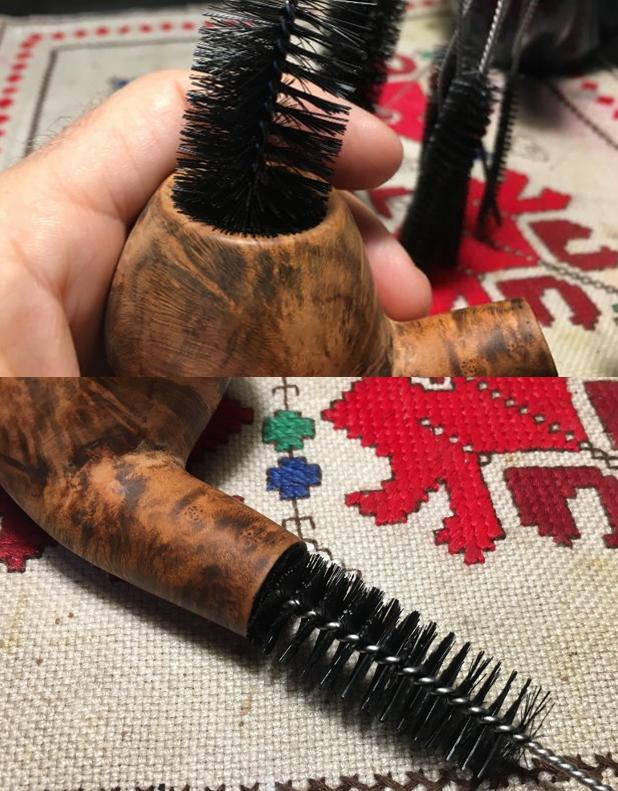
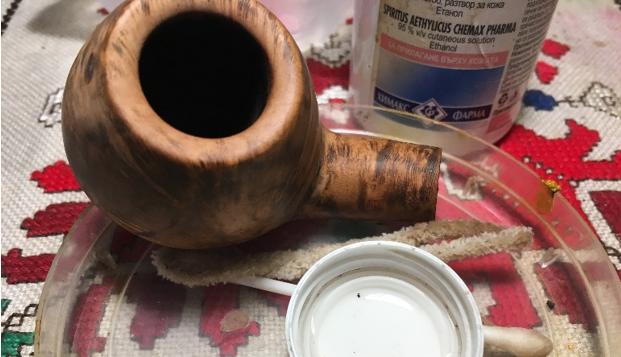
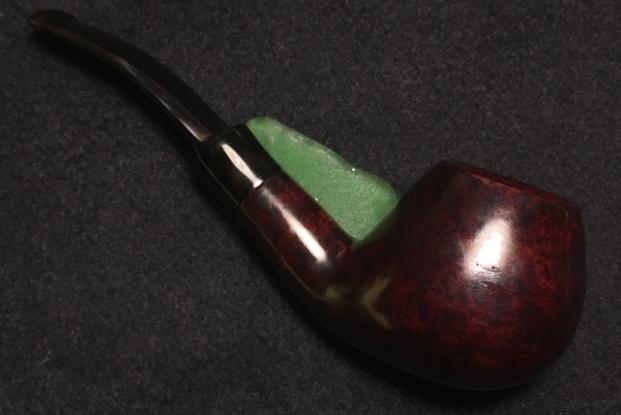
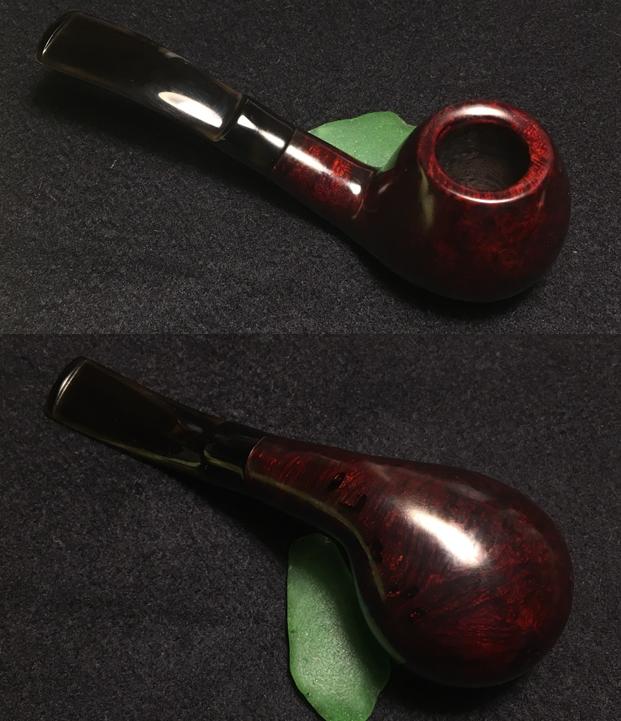
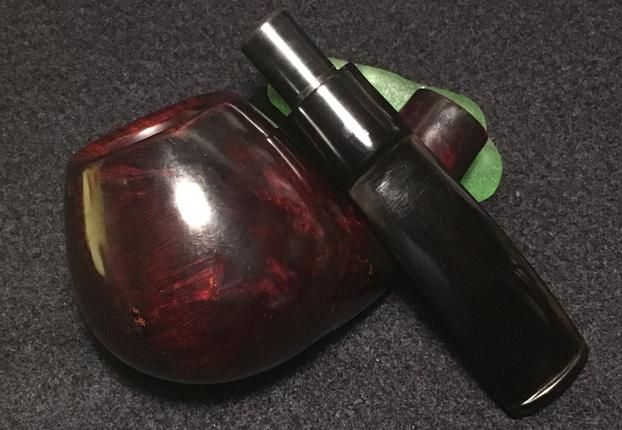
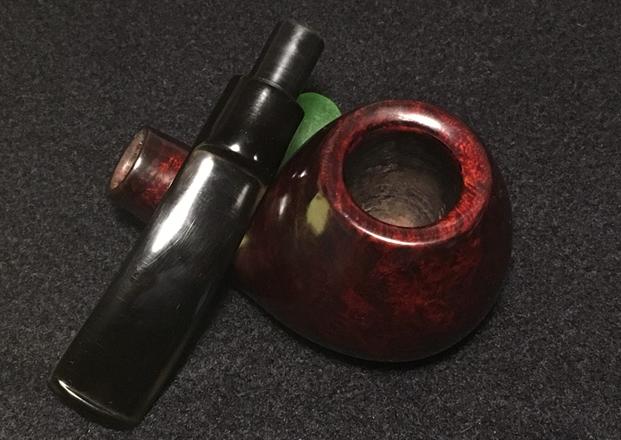
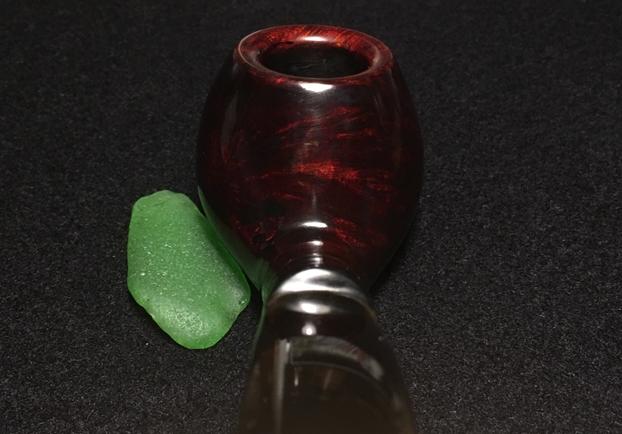
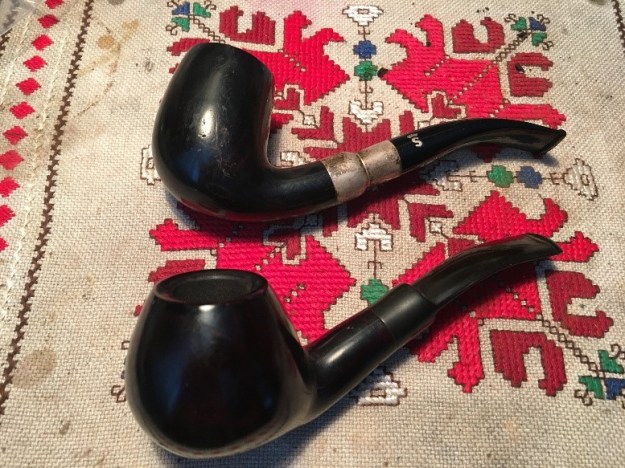
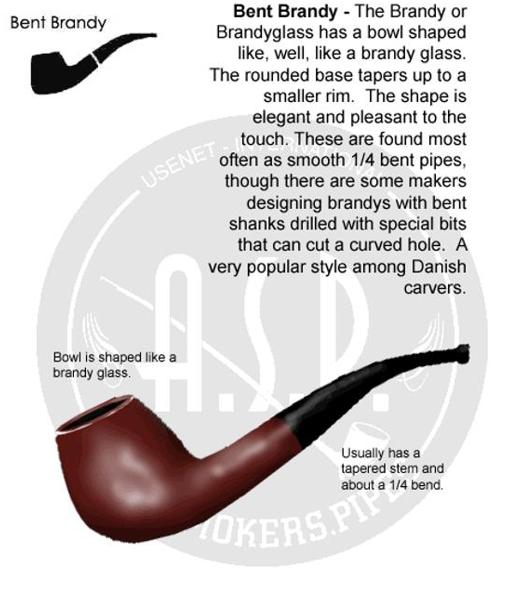
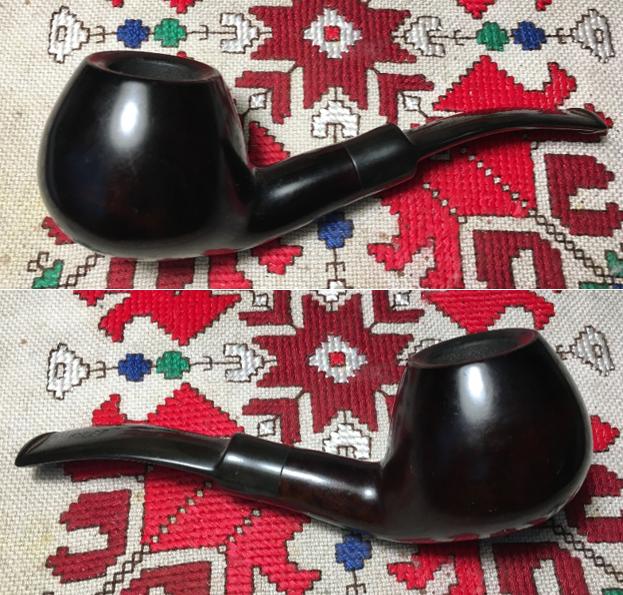
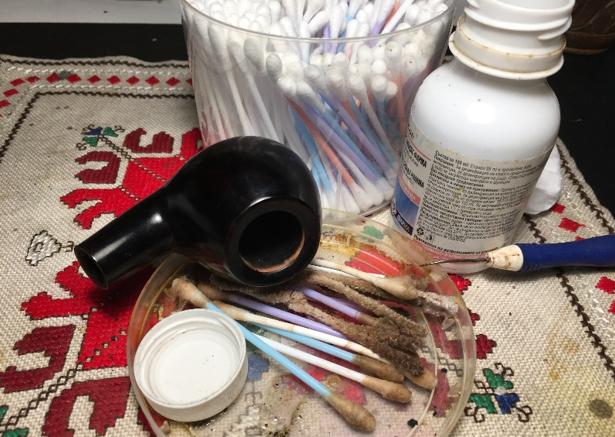
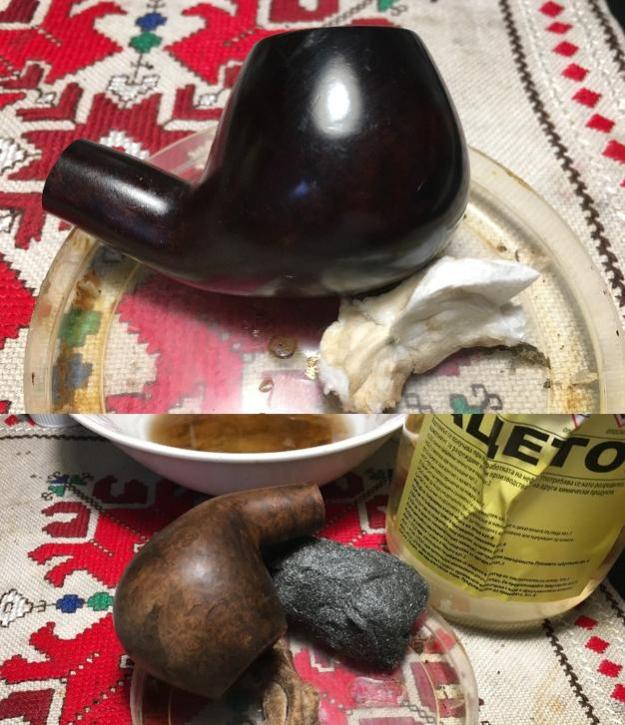
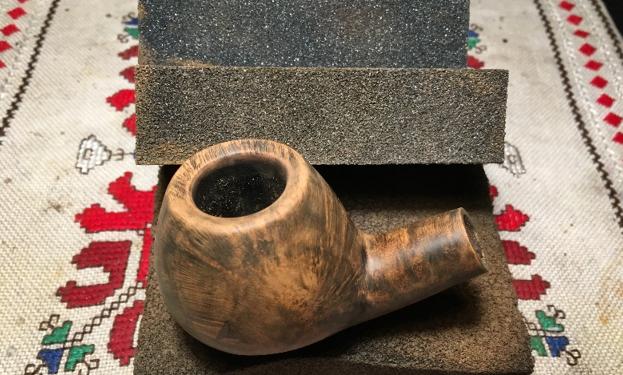
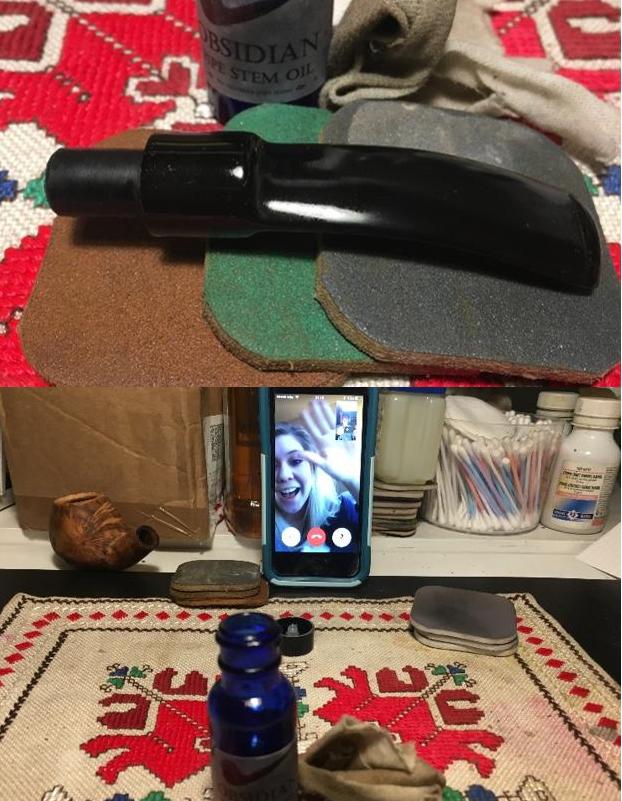
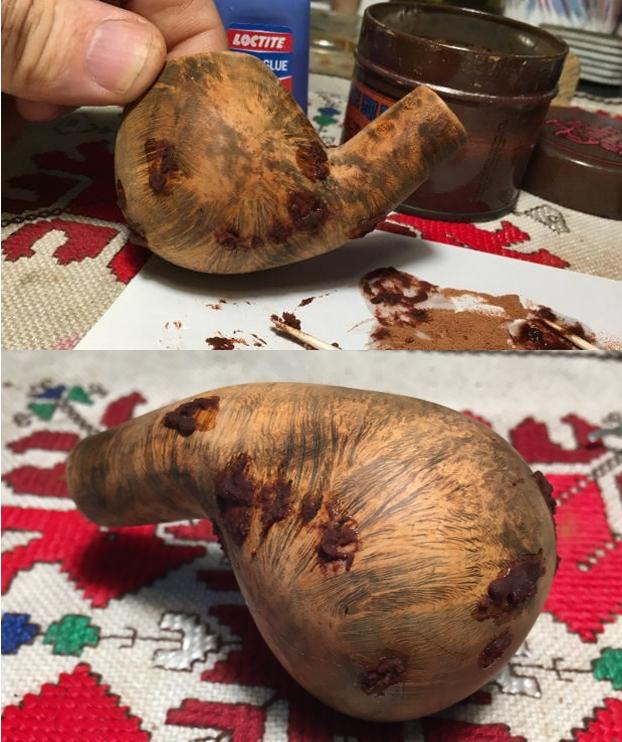
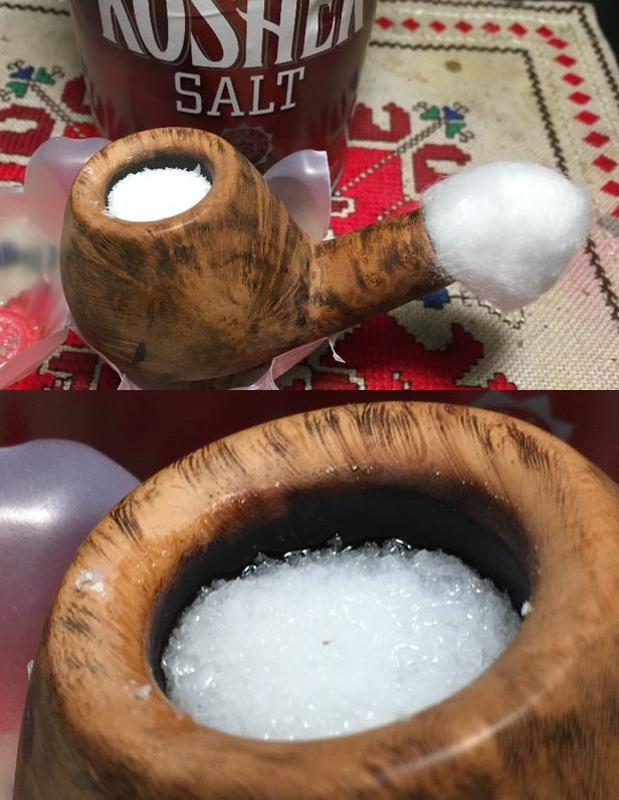
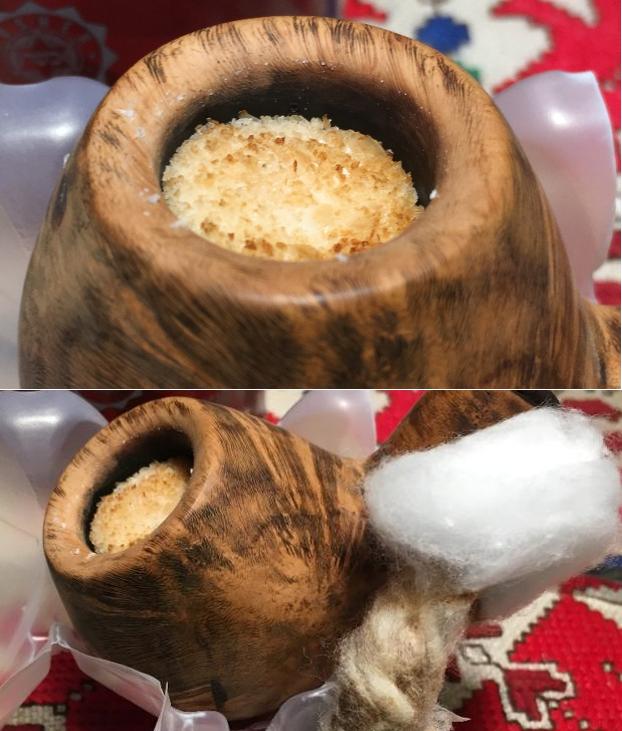
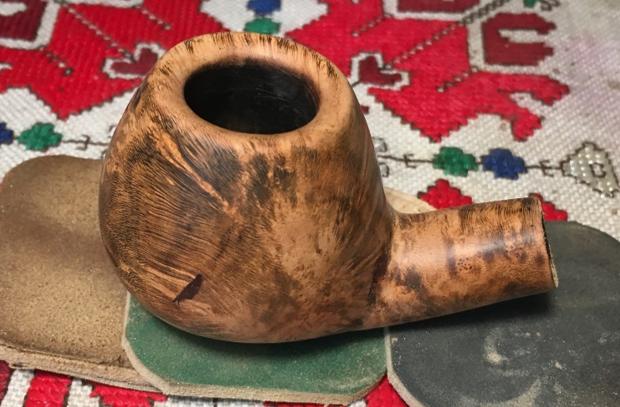
The Brandy before me now was a very nicely bundled pipe when I recently purchased the Stanwell Silver Mount which I’ve already restored (See HERE).  I landed these pipes at the treasure trove I call the ‘Hole in the Wall,’ an antique shop in the center-city of Sofia, Bulgaria.  My sites were on the Stanwell which was the prize, with its silver and class, but when I saw the Brandy, I plucked it out of the basket to bundle with the Stanwell – hopefully to land a more favorable purchase price for the pair.  The Stanwell and Brandy came home with me that day, and the picture I took below commemorated that day’s finds.  The next picture shows the results of the Stanwell Silver Mount’s restoration – a beautiful, dressy pipe.brandy1 brandy2The Brandy drew my attention as well because the bowl is a significant presence in the palm as I cradled the expansive bowl.  When I first saw it, I thought it might be a Volcano shape because of the hefty, expansive base of the stummel and the tightly restrained cone moving upwardly culminating in the rim. Yet, looking at Pipedia’s Pipe’s Chart by Bill Burney (see below), my later thoughts were confirmed that this indeed is a Brandy – actually, the first in my collection.  The stummel measures 1 3/4 inches in diameter at the broadest point of the ‘brandy glass’ bulge and the stummel tightens to the rim which measures 1 1/4 inches.  The height of the stummel is 1 7/8 inches.  This bowl is nicely shaped and proportioned – I like it!brandy3I take more pictures when I take the Brandy out of the ‘Help Me!’ basket and place him on my work table.brandy4 brandy5 brandy6 brandy7 brandy8With the stem in the Oxi-Clean, I continue with the clean-up of the stummel internals using cotton swabs and pipe cleaners dipped in isopropyl 95%.  After moderate resistance, pipe cleaners and cotton swabs started coming out cleaner.  Later, I will give the bowl a kosher salt/alcohol soak to further clean and freshen the internals and readying it for a new steward.brandy12With the internals cleaned with the frontal approach, I now look at the external surface.  I first scrub the rim and entire stummel with undiluted Murphy’s Oil to see if it makes much of a dent on the cloudy finish.  I have my doubts.  Well, after scrubbing the surface with Murphy’s Soap and I can see my reflection on the surface, I know that I’m dealing with an acrylic finish – the candy wrapper finish.  For manufacturers of pipes that put this kind of finish on a pipe, I can only think of two reasons to do so – it is a more cost-effective mass application of shininess – a chemically produced sheen that takes minimal time and man-hours, and to hide imperfections in the briar.  Switching to acetone to remove the finish, first, I use cotton pads, then the more persuasive help of 0000 steel wool.  The finish comes off with little effort and I begin to see why the finish is dark – there are several fills that the dark stain was masking.   I have no problems with darker hues to mask fills and imperfections, but I do not like the acrylic shine finish.  Pictures show the progress and the surface revealed.brandy13 brandy14 brandy15Before dealing with the fills, I sand the outer surface of the stummel and rim with a course grade sanding sponge to remove the superficial nicks and damage.  This works well.  I follow with a medium grade then a light grade sanding sponge to smooth and clean the surface of imperfections.brandy16I take a close look at the fills on the surface of the stummel and scrape them with a sharp dental probe to find out whether they are solid or if they are in danger of pitting.  Generally, they seem to be in good condition.  I do detect one pit and I drop-spot some super glue and apply an accelerator to cure the glue rapidly.  When the superglue is fully cured, I use a flat needle file to file it down near to the briar surface, then I use a rolled piece of 240 grit paper to sand it down to the surface, removing all the excess glue.  Then I use 600 grit paper just to smooth the surface of the patch.brandy17 brandy18Sanding with the sanding sponges removed most of the dents I detected earlier on the rim.  I want to freshen the inwardly sloped bevel to improve the lines of the rim.  I first cut an inner bevel with a rolled piece of coarser 120 grit paper.  Then I follow this by using 240 and 600 grit paper over the entire surface of the rim from the lower inner lip to the higher rim edge.  The result is a more tapered and sloped bevel and a crisper rim edge as the lower bevel blends into the upper slope.  The pictures show the progress.brandy19Next, I wet sand the stummel with micromesh pads 1500 to 2400 and when I complete this cycle, what I see I am not expecting.  Every fill on the stummel had softened and some had come out.  Apparently, the fill was not glue based, but simply a colored wood putty that would sit underneath the acrylic finish.  I haven’t seen anything like this up to this point.  Oh well….  I take the sharp dental probe and continue to dig out all the old filler putty and clean the holes left behind.  This restoration is taking an unexpected turn and it will take a bit of time to fill and sand down each of these 16 fill spots.  With briar dust and superglue, I mix a batch of putty and apply putty to each hole.  I leave excess over each fill area to be able later to sand each fill down flush to the briar surface.  I put the stummel aside for the patches to cure for about 12 hours.  The pictures show the digression.brandy20 brandy21With the putty patches curing, I take the stem out of the Oxi-Clean bath and take a picture of the oxidation raised on the stem.  I then wet sand the stem with 600 grit paper followed by 0000 steel wool to remove the raised oxidation from the stem.  The stem is looking good.brandy22Before I proceed with the micromesh pad sanding, I clean the internals of the stem using pipe cleaners and cotton swabs dipped in isopropyl 95%.  Using a sharp dental probe, I also dig out gunk from the slot.  The stem internals were dirty but pipe cleaners eventually prevailed.brandy23I then begin the micromesh cycle by first wet sanding with pads 1500 to 2400, followed by dry sanding with pads 3200 to 4000, then 6000 to 12000.  After each set of 3, I applied Obsidian Oil to the stem to revitalize the vulcanite.  The pictures show the progress, and a slight interruption when my daughter FaceTime’s me from Nashville between cycles – the pictures also show this wonderful interruption!   With the stem looking good, I put it aside and return to the stummel.brandy24 brandy25After the briar dust patches cure on the stummel surface, I begin the long process of filing and sanding the excess putty off the patches to bring the putty flush with the briar surface.  I first use a flat needle file to bring the excess almost to the surface and then I use 240 grit paper to smooth further, blending the patch with the surface.  With as many fills that I had, it provided ample practice to perfect my approach!  After smoothing all the briar dust putty patches, I find that some patches have small air-pockets revealed as I sand.  With these, I spot-drop some superglue, apply an accelerator to rapidly cure the glue, then re-sand those areas until the patches blend with the surface.  The pictures slow the slow progress.brandy27 brandy28 brandy29 brandy30With my day ending, I decide to clean the stummel internals further with a kosher salt and alcohol soak.  This cleans further as well as freshen the stummel for a new steward.  I stretch and twist a cotton ball to create a ‘wick’ to insert down the mortise.  This helps draw out the oils and grime.  Then I place the stummel in an egg carton for stability and fill the chamber with kosher salt.  The kosher salt is without iodine which can leave a taste.  I shake the stummel a bit with my palm over the chamber to displace the salt in the mortise a bit.  I then fill the fire chamber with isopropyl 95% until it rises a bit over the salt.  I then put the stummel aside for the night allowing the salt and alcohol to do the work.brandy31The next morning, the salt and cotton ‘wick’ had darkened signifying the job of drawing out tars and oils was achieved.  I dump out the expended salt by thumping the stummel on the palm and tossing the wick. I wipe the chamber with paper towel, and then use multi-sized round bristled brushes in the chamber and mortise to rid the stummel of residue salt.  I complete the cleaning job by plunging a few more cotton swabs and pipe cleaners into the mortise and draft hole and find that all the tars and oils have been removed.  I determine the Brandy’s cleaning, ‘Completed’!  The pictures show the progress.brandy32 brandy33 brandy34I turn again to the briar surface of the stummel.  With all the patch work done, I make a quick inspection of the surface looking for little shiny spots which would indicate that some residue excess of superglue was remaining on the briar surface.  I quickly address these with a rapid sanding with 240 grit paper.  From there, I return to a light grade sanding sponge and re-sand the entire surface aiming to help the blending with the plethora of patches and the briar surface.  brandy35I then proceed through the cycles of micromesh pads, 1500 to 12000.  The volatile nature of the grain in this block of briar becomes evident – it is evident that the block was taken from the upper or outer regions of the briar bush’s ‘burl’.  Its grain is more turbulent than you would find deeper inside the burl, where grains are a spectrum of non-existent to orderly currents of grain.  This excerpt from an article from Pipes & Tobaccos (1999) about briar grains from R. D. Field, I found very helpful in understanding briar grains:
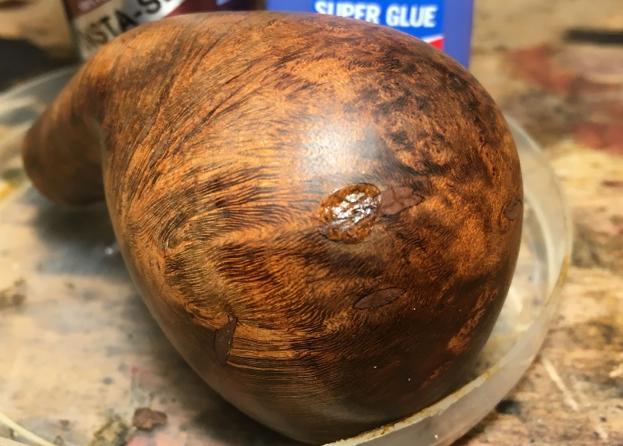
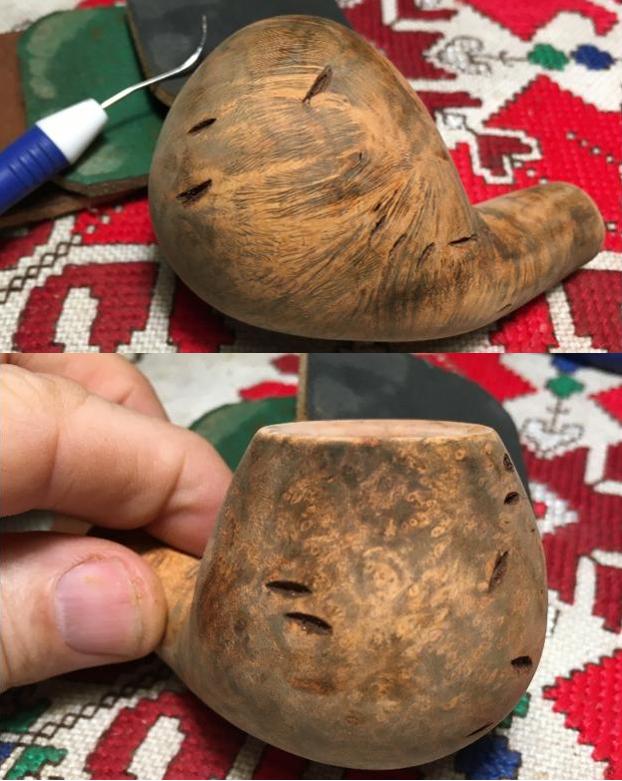
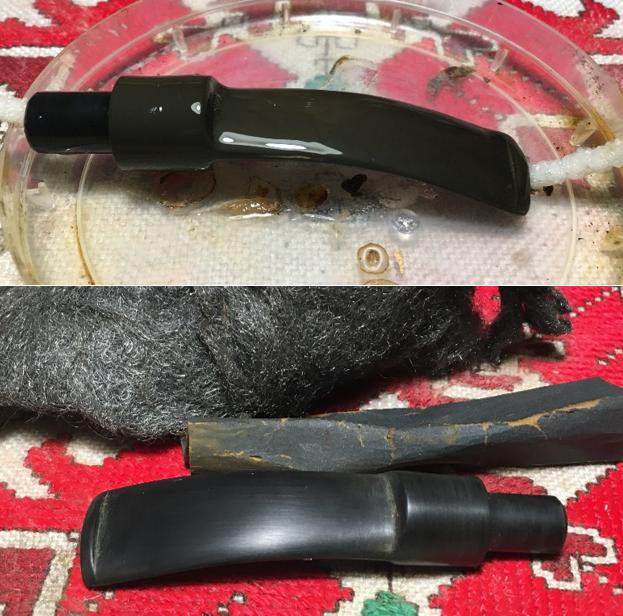
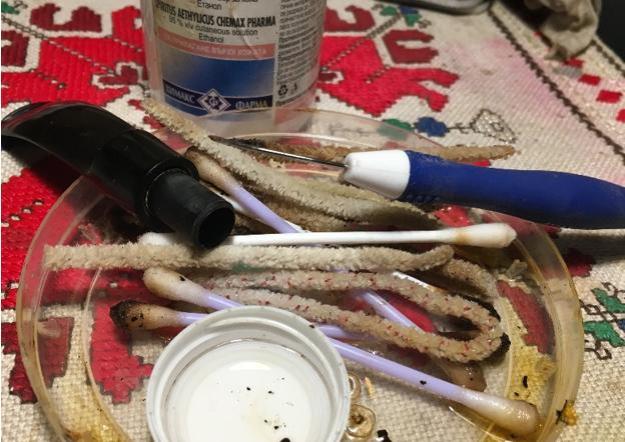
Any burl, whether it be 30 years old or 130, does not possess what we call grain in its totality. When a burl is split in half a variety of patterns are able to be discerned in that: The center of the burl has no grain. The center, or heart, contains all the liquid held in the burl which is red in color and is known as blood. The wood surrounding this blood is also of a reddish tint and is devoid of capillaries as the water has got to where it was meant to be for storage.  Capillaries surround the center and, depending on the growing pattern of the burl and how it was split, can take the shape of straight grain, cross grain, flame grain, mixed grain, etc.

As we approach the upper part of the burl from where the branches emerge a pattern known as “branch wood” can be seen. Because the branches of the shrub actually start their growth within the burl the wood in these portions takes on some of the characteristics of the emerging branch. To look upon a swirling piece of briar devoid of other grain character (whether in a finished pipe or as part of the burl) is to look upon branch wood.

The many fills in this piece of briar I believe is due to it being an example of a block taken at a ‘branch wood’ formation seen in the pictures below.  The pictures show the progression through the micromesh pad cycles.brandy36 brandy37
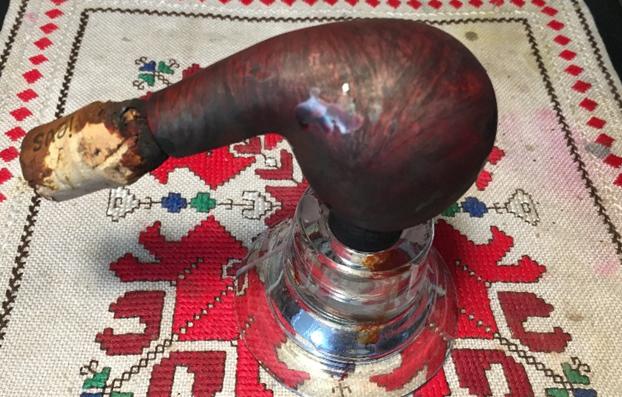
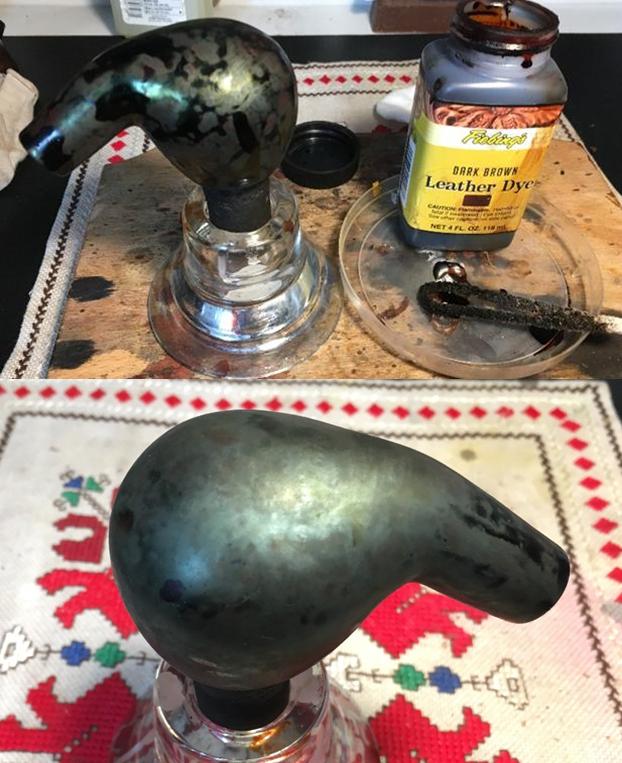
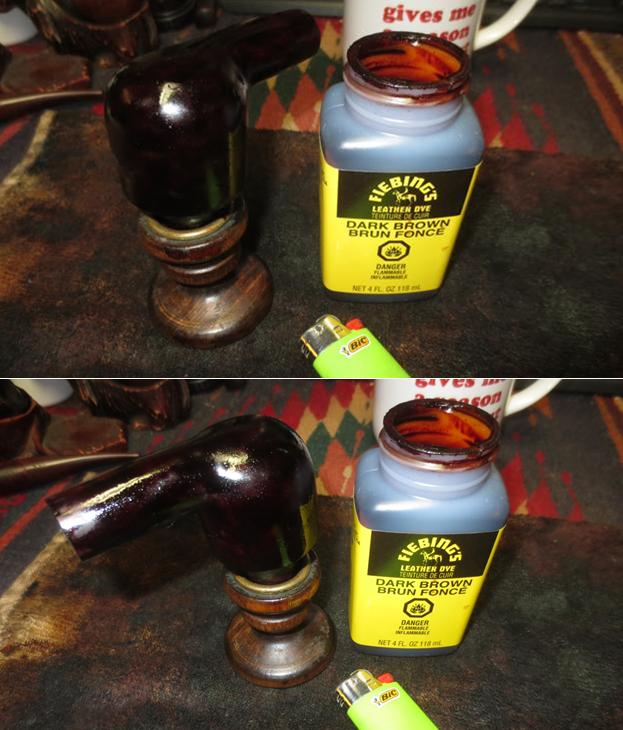
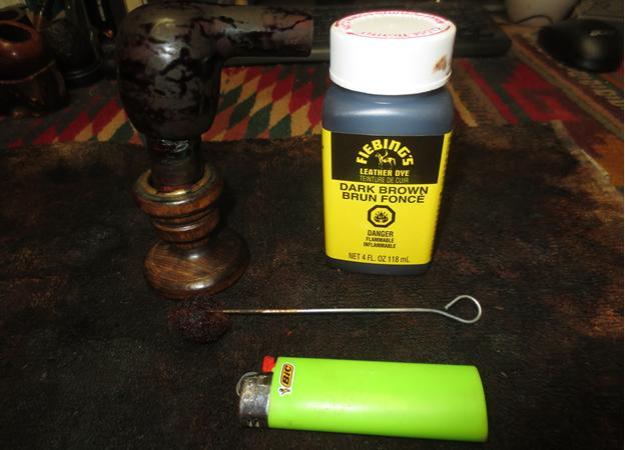
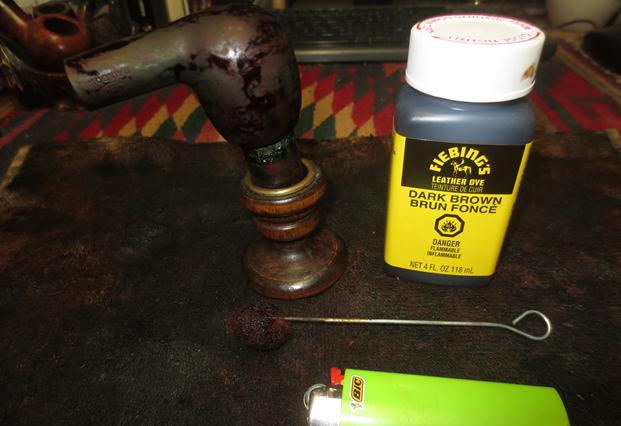
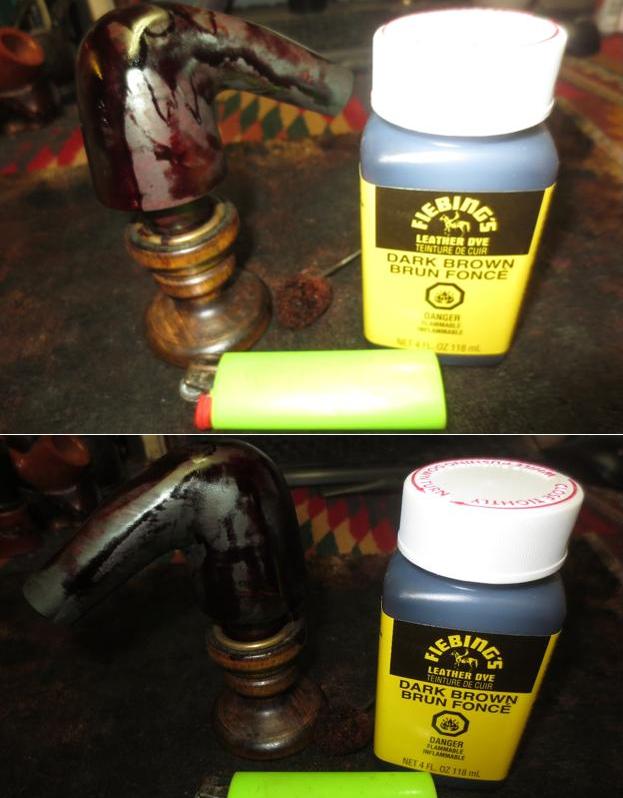
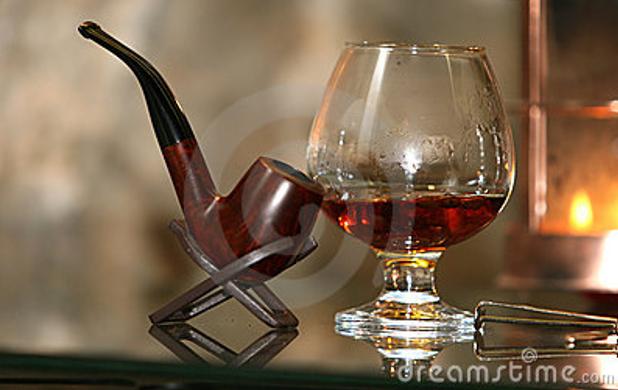
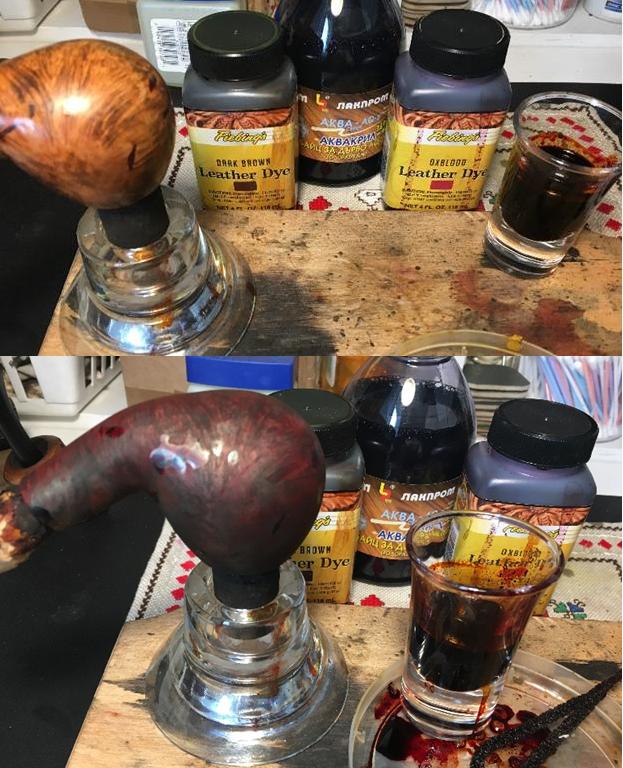
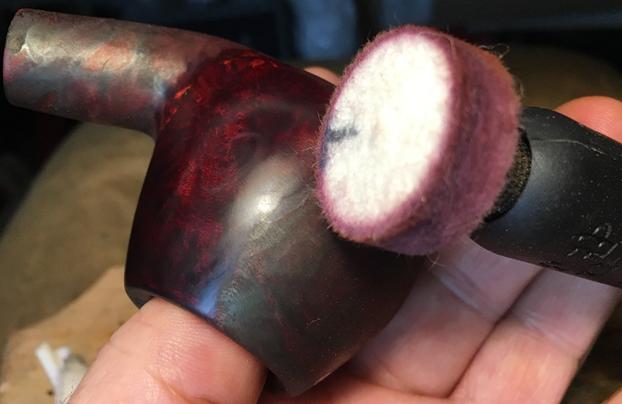
The next step in the project is to stain the stummel.  I will aim for a darker hue but I want to contextualize this Brandy by bending the hue toward the reds using Fiebing’s Oxblood Leather Dye mixed with Fiebing’s Dark Brown Leather Dye including a hint of black, non-aniline dye.  I found a picture on the internet (below) that envisions the perfect ambiance for this Brandy after he’s restored and recommissioned! I’m aiming for the darker hue of the brandy that is displayed.  Dreamstime is doing a good job promoting the brandy glass, but truth be known, the Brandy shaped pipe I have would have been a better choice for display!  Acknowledging a totally unscientific approach to the mixture, if I find the results too red, I will probably follow by a straight application of Fiebing’s Dark Brown Leather Dye as an overcoat.brandy38After the dyes are mixed in a shot glass, I heat the stummel with an air gun to expand the grains to absorb the dye more efficiently.  Then, using a bent-over pipe cleaner, I apply the dye mixture liberally over the surface, utilizing a cork inserted into the mortise as a handle.  When applied, I fire the stummel with a lit candle, and the alcohol in the dye immediately burns off and sets the dye in the grain.  To make sure I’ve achieved total coverage, I repeat the process again, finishing by firing the dye, and putting the stummel aside to rest for several hours.  The pictures show the staining process.brandy39 brandy40A little anxious to unwrap the flamed dye crust, my impatience wins out and I mount the felt wheel on the Dremel high speed rotary tool.  I set the speed to the slowest available and using Tripoli compound I begin removing the crust to reveal the briar underneath.  Then, using a cotton cloth wheel, I apply Blue Diamond compound to the stummel, also using the slowest speed available.  After the Blue Diamond, I’m seeing two things – the hue is a bit redder than I wanted and I am seeing light spots that need darkening.  I use a mahogany dye stick and darken the light areas to blend.  Then, I take out the Fiebing’s Dark Brown Leather Dye, and set up for another application of dye to the stummel. With a folded pipe cleaner I apply Fiebing’s Dark Brown Leather Dye two times, as before, flaming after each application, then setting the stummel aside to rest.  Pictures tell the story.brandy41 brandy42After a few hours, I repeat the process of applying both Tripoli and Blue Diamond compounds to the stummel surface.  Following the compound application I hand buff the stummel with a flannel towel to remove the residue compound dust on the stummel.  I do this before applying the carnauba wax.  Changing to the cotton cloth wheel on the Dremel, I increase the speed to 2, the second slowest speed of 5 – being the fastest.  I reattach the stem and stummel and apply to both several coats of carnauba wax and then give the pipe a rigorous hand buff with a micromesh cloth to bring out the shine.brandy43This Brandy Bent Unmarked had a lot going against it after I discovered the multitude of fills necessary to restore and recommission this pipe.  Considering the odds against it, I think it looks very good.  The grain is very expressive.  I like the dark brown finish as the overcoat of the oxblood – it fits well the Brandy shape.  I sell my restorations with the profits helping the work we do with the Daughters of Bulgaria – those sexually exploited and trafficked.  This Brandy is ready to serve a new steward.  If you’re interested in adopting him and helping the Daughters, check out The Pipe Steward Store.  Thanks for joining me!brandy44 brandy45 brandy46 brandy47 brandy48 brandy49 brandy50
Renewing and restemming a La Strada Staccato Bent Pot


Blog by Steve Laug

This tired old La Strada came to me for repairs. It was in rough shape. The stem had been gnawed, broken and gnawed again. The finish was shot and covered in oils and grease to the point that it was hard to see the rope rustication around the bowl. The bowl had a thick crumbling cake and smelled heavily or aromatics. The lava from the bowl had flowed over the top of the rim and darkened the finish there. The outer edge of the rim was heavily damaged on the front left side and looked as if the bowl had been dropped. There were dents on the underside of the bowl as well from a similar event. The shank was so dirty that the stem would not fit into the mortise. I was able to get it in but the fit was not tight against the shank. The shank is slightly off round so the stem was slightly different.la1 la2The next photo is out of focus but the road rash on the bowl bottom is visible.la3I took a series of close up photos of the bowl and rim and the stem to show the condition of the pipe when I started. In the first photo you can see the thick crumbly cake and the damage to the rim surface and edges. It was hard to tell if the inner edge of the bowl was damaged and only after reaming would I be able to know for certain. The stem was a write off as the damage was too extensive to repair. The fit against the shank also warranted a new stem.la4 la5I reamed the bowl with a PipNet reamer and went through the various cutting heads. I cleaned up the remaining cake in the bowl bottom with the Savinelli Pipe Knife. I took the cake completely out of the bowl and reamed it back to bare briar.la6I wiped down the surface of the bowl with acetone on cotton pads to remove the finish. It came off with a bit of scrubbing but there were places where it did not come off with the acetone. It would take some sanding to remove the totality of the finish.la7 la8The damage to the bowl top and outer edges required that I top the bowl. I gently topped it on the topping board so as not to remove too much and remove the smooth portion above the rope rustication on the top edge.la9I sanded the bowl and rim top with a medium and a fine grit sanding sponge and took the following photos.la10 la11I cleaned out the internals of the shank and the replacement stem that I fit to the shank with alcohol, pipe cleaners and cotton swabs. It took a lot of scrubbing to get the mortise and the airway clean in the shank. The stem was in decent shape so it did not take too much work on it.la12I took some photos of the pipe at this point to get a feel for the look with the new stem in place.la13 la14I wrapped some sandpaper around a dowel and sanded the walls and bottom of the bowl. There was a ring at the bowl bottom that was grooved and needed to be smoothed out. It did not take a lot of sanding before the inside walls were smooth.la15I restained the bowl with a dark brown aniline stain mixed 50/50 with isopropyl alcohol to approximate the original colour of the pipe and to highlight the grain on the pipe. I flamed the stain and repeated the process until the coverage was even around the bowl and rim.la16I buffed the bowl with White Diamond on the buffing wheel to even out the new finish and give it a bit of a shine. I took photos of the bowl at this point to give a clear picture of the new look.la17 la18Now all that remained was to finish the fit and polishing of the stem. I sanded it with 220 grit sandpaper until it fit the shank well. It took some adjusting of the diameter of the stem to match the slightly out of round shank. In the end it fit well. I polished the stem with micromesh sanding pads – wet sanding it with 1500-2400 grit pads and dry sanding with 3200-12000 grit pads to give it a deep shine.la19 la20 la21I buffed the bowl and stem with Blue Diamond on the buffing wheel to polish the minute scratches on the vulcanite and on the briar. I buffed them both until the stem and briar glowed. I gave the bowl and stem multiple coats of carnauba wax. I buffed the bowl and stem with a clean buffing pad to raise the shine. I hand buffed it with a microfibre cloth to deepen the shine. The finished pipe is shown in the photos below. It is ready to go back to the pipe man who sent it to me for restemming and refurbishing. I think he will enjoy it and it will deliver a life time of good smokes to him. la22 la23 la24 la25 la26 la27 la28 la29 la30
Savinelli Capitol Bruyere 6001


Blog by Johan Viviers

I received an email not too long ago while I was traveling in India for work from Johan. He wrote of his love or pipe restoration and how he had come across rebornpipes. After replying to his email about his work I asked him to send me a few photos of what he had done. He promptly did so. I asked him to submit a blog for the site and what follows after his brief introduction is his first blog for rebornpipes. Welcome Johan. It is great to have you here.
Introduction

I am Johan Viviers. I was born and raised in Cape Town, South Africa. As a child I was surrounded by pipe smokers. All of them had a Kaiser, because a man was not a man without a Kaiser!. My one grandfather though had a rotation.

I bought my first pipe at 28 from a Belgium man who had shop in Pretoria. He sold me a Peterson and sample tobaccos at first until we discovered my preference… and then after a further twenty or so years of wandering (a bit like Parsival did), I made a home in Portugal; and a home is not a home without a pipe being smoked in it.

So, the Why and the How of getting into pipe sanitation, recovery and refurbishment… I suppose I evolved into it. Maybe there are a “few roots” to be found in my dream of opening a pipe smokers’ lounge. Then too, the rest of the “roots” may also probably be found in the creativity that is born from the curiosity and wonder that surfaces when smokes a new tobacco blend or from a new pipe.

Last summer whilst sipping a beer on the local esplanade with a fellow piper, I told him that it is time for me to plant tobacco, figure out the bit between harvesting and blending and then to explore and create a blend. All for personal consumption of course. A 78 year old friend who’s a pipe smoker too, offered some land in exchange for a share of smoking tobacco.

I then spent most of my free time reading everything I could find on tobacco.  And on a day my favourite pipe broke. It happened on the same day that I discovered Dad aka Charles Lemon, which led me to rebornpipes. Well, all your stories filled me with such curiosity and excitement that I somewhat altered my priorities. As I am in the habit of recovering vintage furniture, floors in old buildings etc., it seemed that pipe refurbishing may deliver an even greater level of happiness and satisfaction.

So I set out by first buying three pipes at the local flea market and experimenting to find a “studio practise”. I had to discover for myself the materials and mechanisms of a pipe and also determine whether the natural products I work with every day is suited to briar. Well three experimental pipes later and I made my first refurbishment, the Capitol 6001. I worked on it for five days and on day six I sold it and reinvested the profit in other estates. I now own seventeen estates that are either refurbished or at various stages of recovery. And I have to confess that I do not wish to sell any of them because I am still marveling at their transformation, whether it being the sweet smell of the briar when I rendered it, or the smoothness of its surface before I finish it or its final transformation/outcome that I want to hold onto a little longer.

Even so, I will continue and grow the seventeen estates I have acquired and if I sell none of them now, I will put them to good use when I find the capital to open the Pipe Smoker’s Lounge that I am thinking of naming Maria do Purificacão: Where Ladies Without Beards Smoke Pipe.

The Restoration

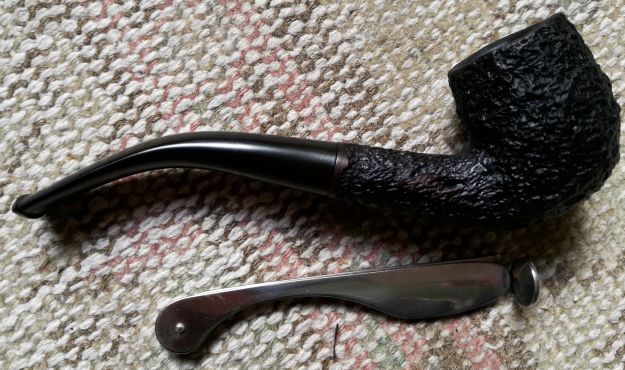
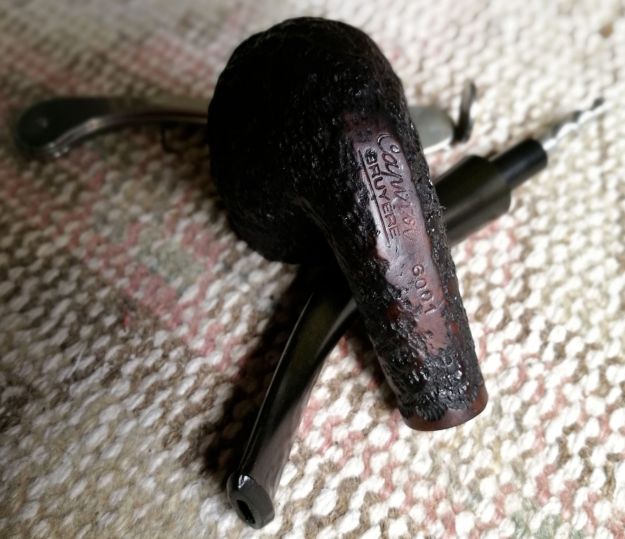
Sand blasted and stamped Capitol over Bruyere with 6001 to the right on the underside of the bowl with no stem markings.

This Capitol according to both Savinelli and the young lady who sold me this pipe, is a 50’s production. The pipe belonged to her grandfather Fernando a property developer and it was his “thinking aid” she told me, hence the tooth chatter on the stem. He passed away ten years ago and since then this pipe remained in his desk drawer. Fernando’s home remained unoccupied for ten years, where this pipe remained until now.

Lisbon being a very humid city left it’s mark on both the bowl and stem. The stem was greenish yellow due to oxidation and the outside of the bowl was soft in places due to what I belief to be exposure to moisture in the air. There was no cake in the chamber, but the unevenness to the rim of the bowl made wonder whether Fernando may have been a “pipe knocker” like my friend Adam or whether it was the actual design by Savinelli. The tenon, however, was a snug fit regardless.

Given that this was my second attempt at an actual recovery of a smoking pipe I though long and hard as to how i will approach its recovery and given my fascination with “the story” an estate pipe arrives with, I decided to keep the uneven organic shape to the rim and even the tooth chatter on the stem.

To start I hung the bowl out in a an area that receives no direct sunlight and a natural flow of air until felt the bowl has expelled all the surface moisture it had collected. At the same time the stem was soaking in a solution of cider vinegar and coarse salt to loosen up oxidation.

I then filled the bowl with salt and alcohol and let it stand overnight as I have seen you guys do and the next morning I reamed the chamber a little and gave it a light sanding with 400 grit paper until I could detect the sweet smell of the briar. Once this was done I cleaned out the airway of the stummel with a dental tool to remove the oils and tars after which I passed 400 grit  paper rolled into a tube through the airway to be certain it is clean. Once this was done I washed the bowl and chamber down with a lukewarm solution of natural Marseille soap (a method to raising the grain and open the pores of the wood when I restore furniture) and rinsed it down with clean lukewarm water. I then filled the chamber and airway with tissue paper to absorb the excess water and wiped the outside of the bowl dry before I hung it out to dry for a couple of days (again in an area that receives no direct sunlight with the temperature constant at between 15 to 20 degrees Celsius).edfedfedf

I then took to the stummel and sanded it wet with 500 grit paper. I finished the stem with 00000 steel wool and then cleaned the airway by passing pipe cleaners dipped in a clean solution of the Cider vinegar and coarse salt after which I also washed the stem down with a solution of lukewarm water and Marseilles soap flakes, finishing it with clean water.

To complete I prepared a prepared Carnauba Wax emulsion with 15% natural Green Umber pigment and entered the solution with a lint free cloth into the bowl, stummel and chamber and hung it out to dry. An hour after application, I passed a clean lint free cloth to remove any excess. Then I rubbed the Carnauba wax emulsion into the stem and hung it out to dry alongside the bowl.

Twenty-four hours later I hand rubbed both the bowl, chamber and stem to bring out its lustre and then I got so excited that I had to fill the pipe with Hal O’ The Wynd and smoke it. What a sweet smoke, so much so that I named this here pipe Fernanda

Later that day, Fernanda and I sat in a coffee shop savouring another bowl of Hal O’ The Wynd and I sold her to a fellow piper there and then. This sale financed a purchase of nine other estate pipes.