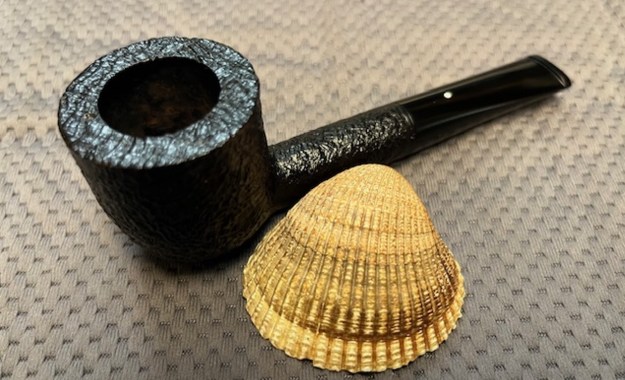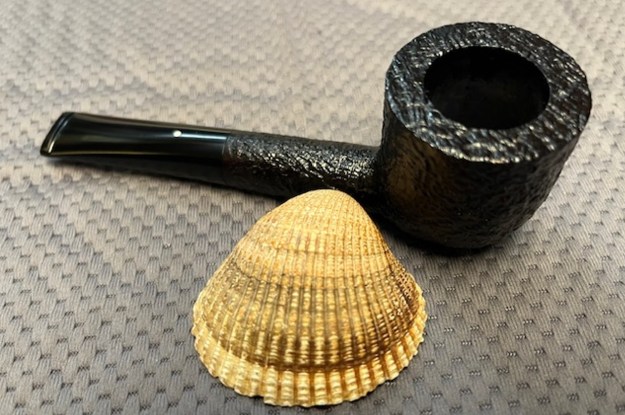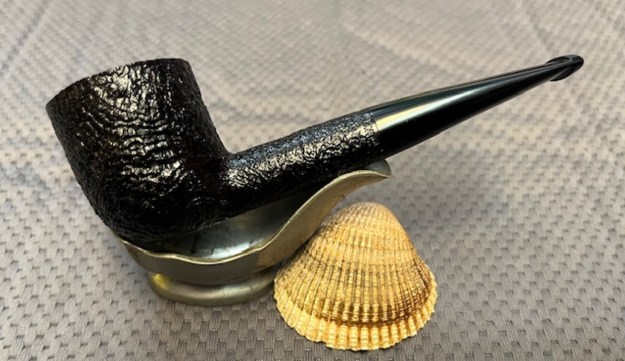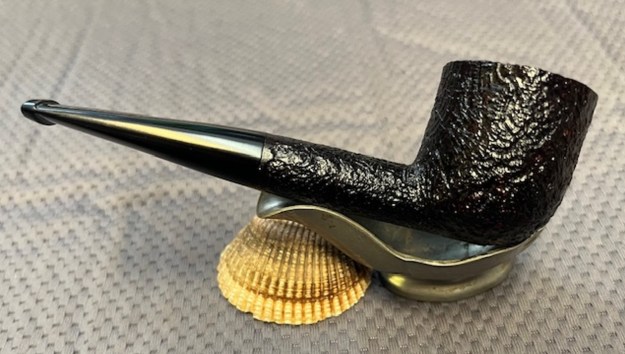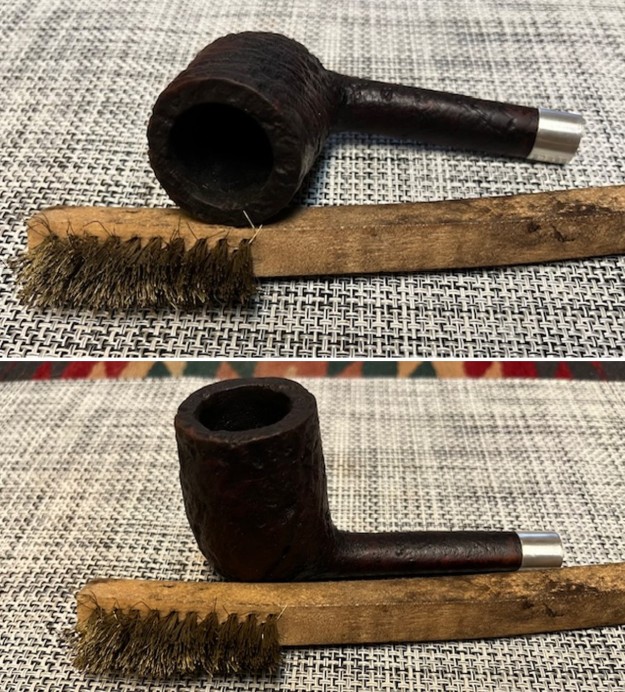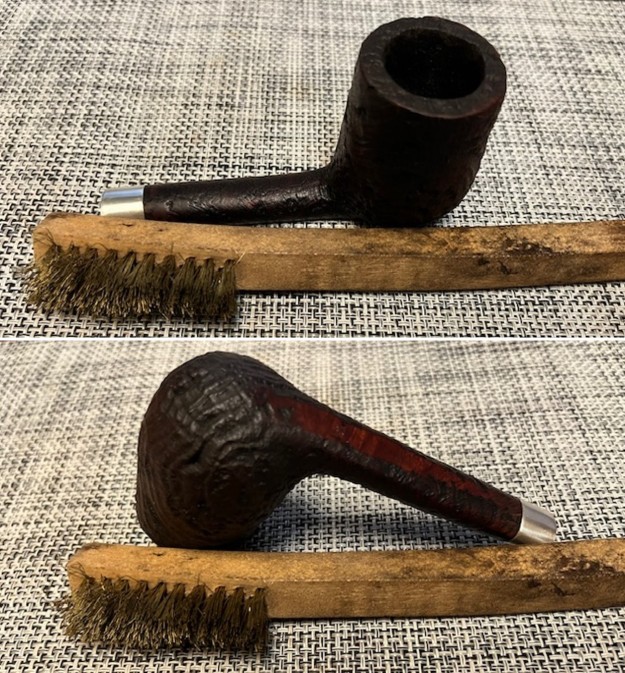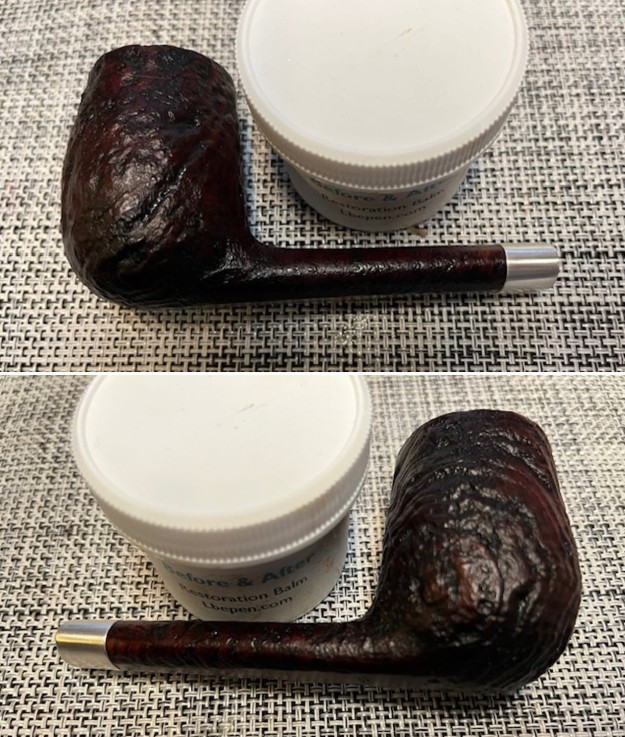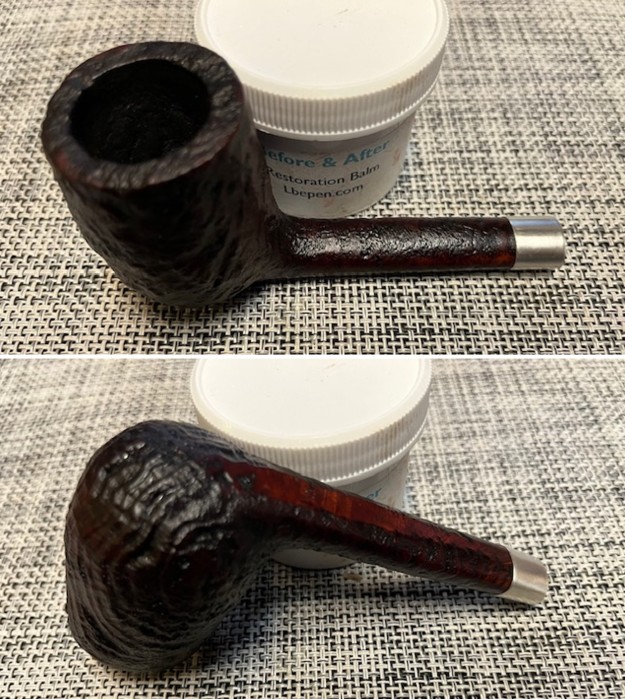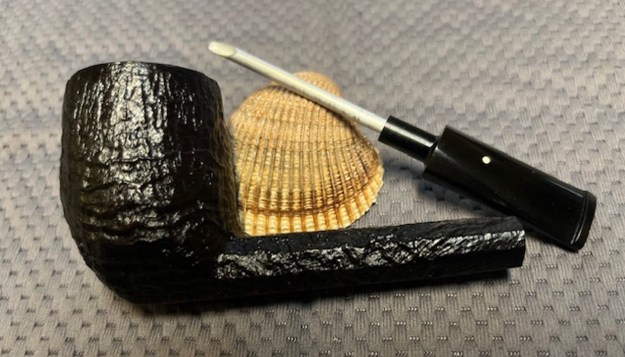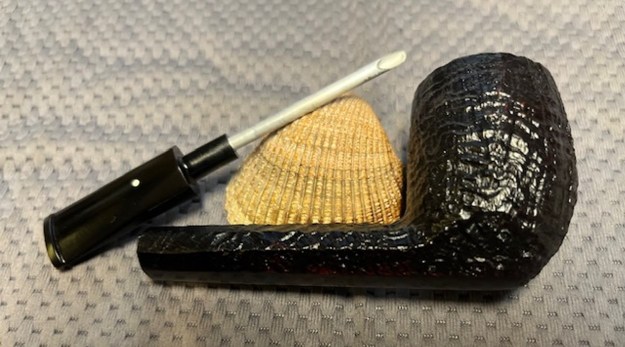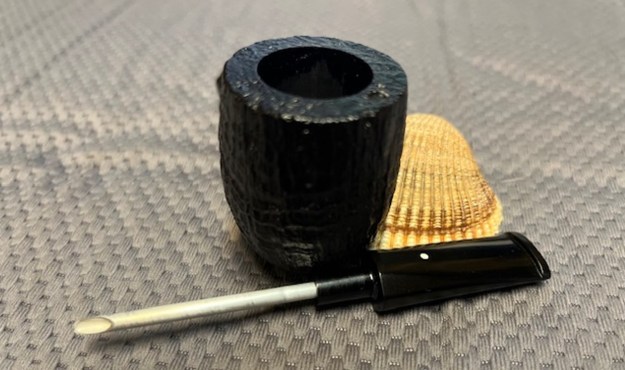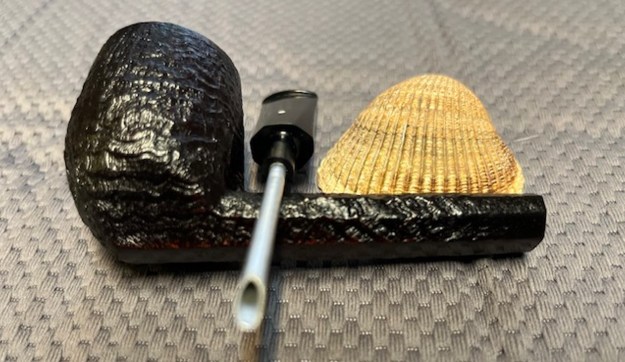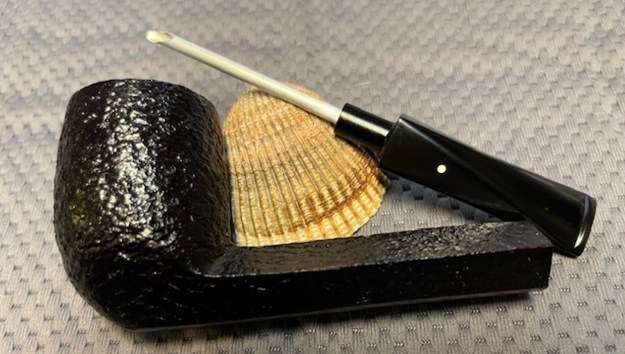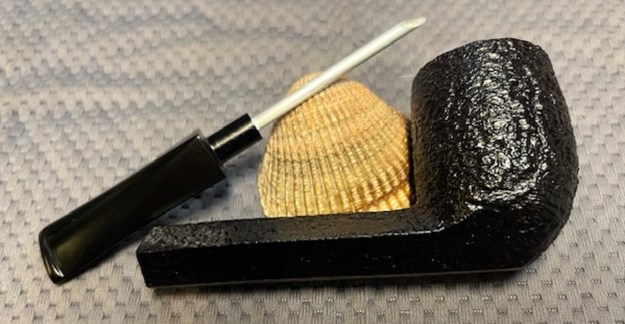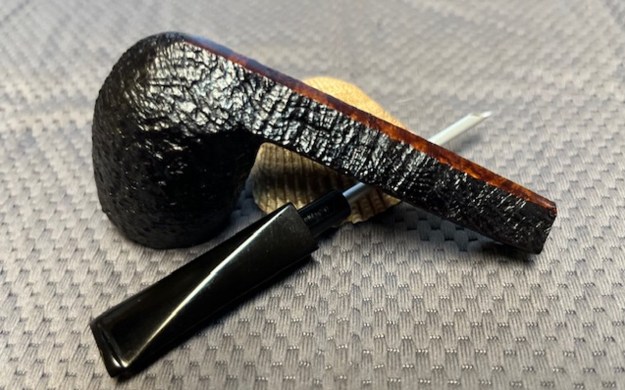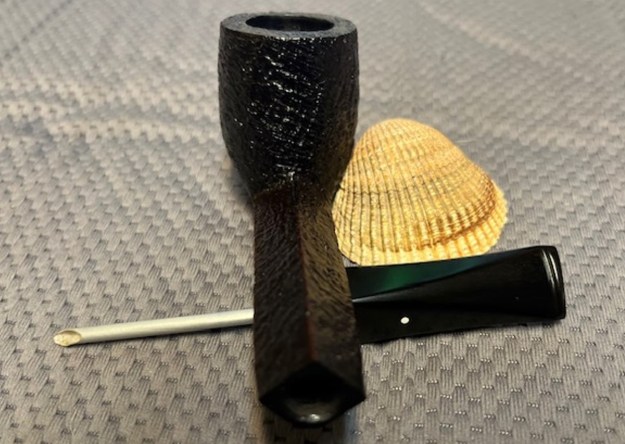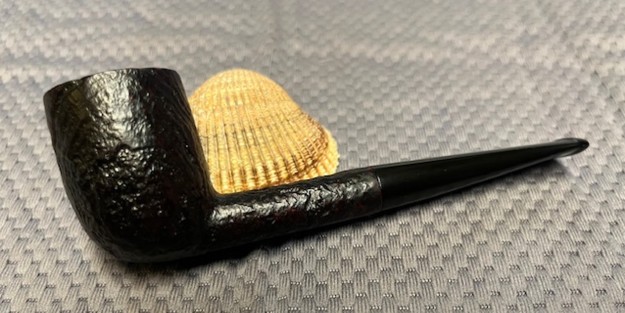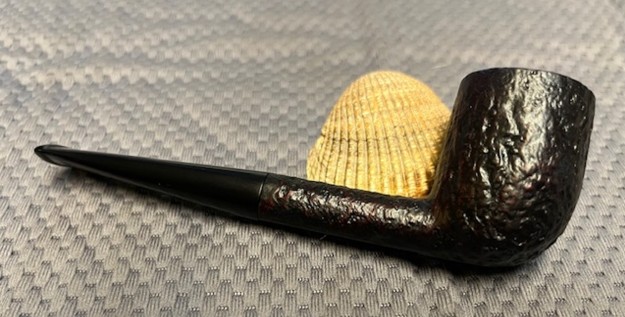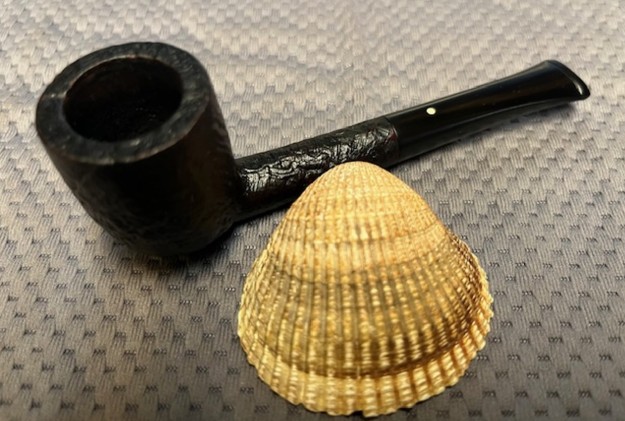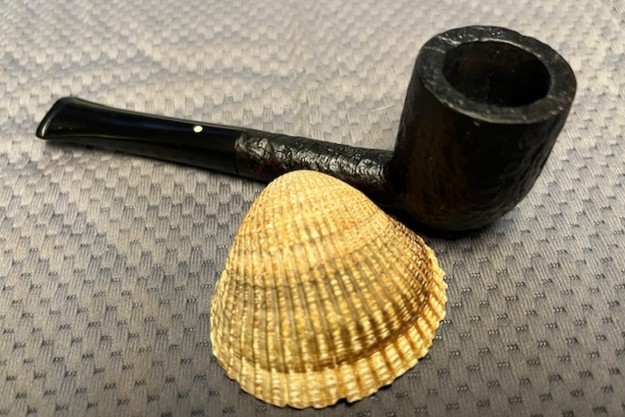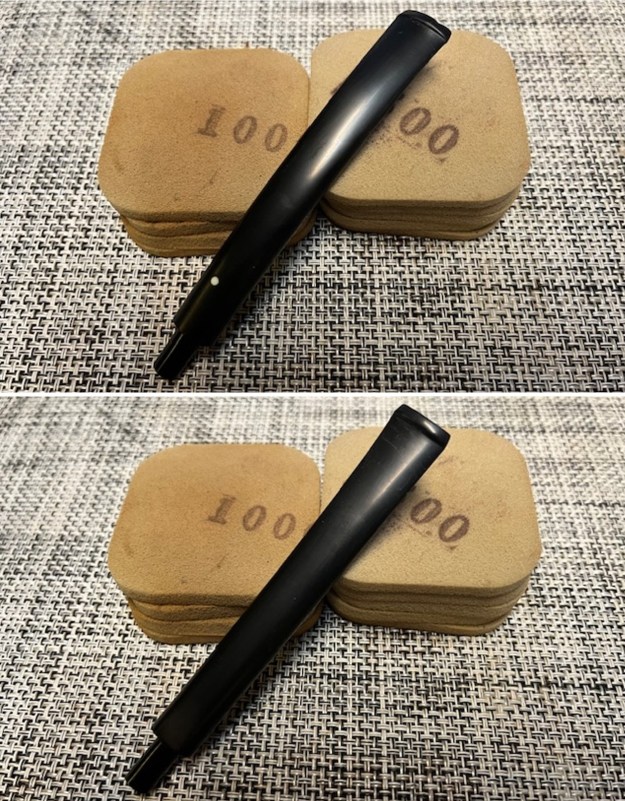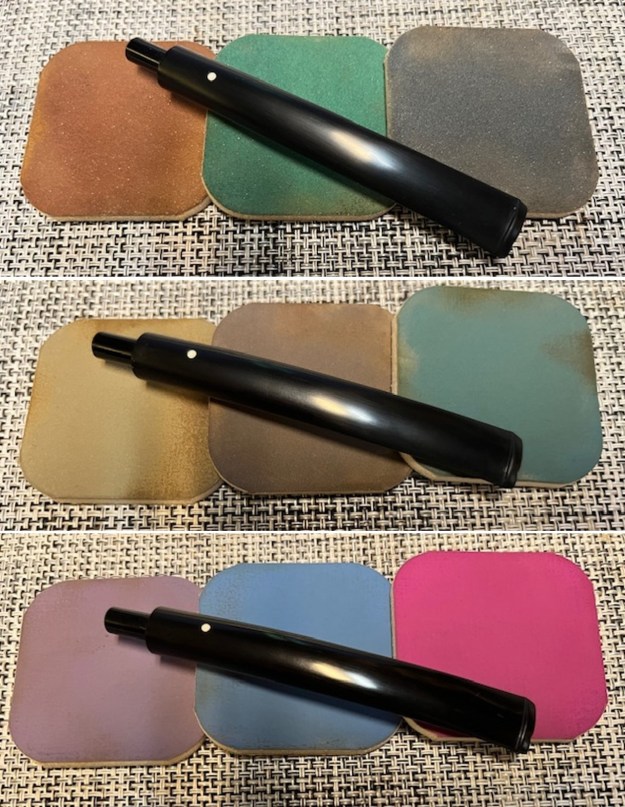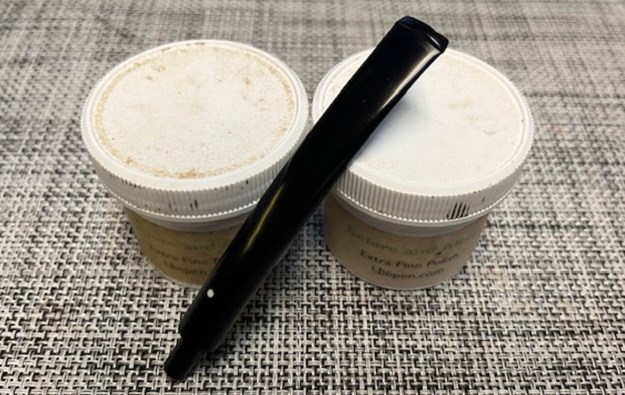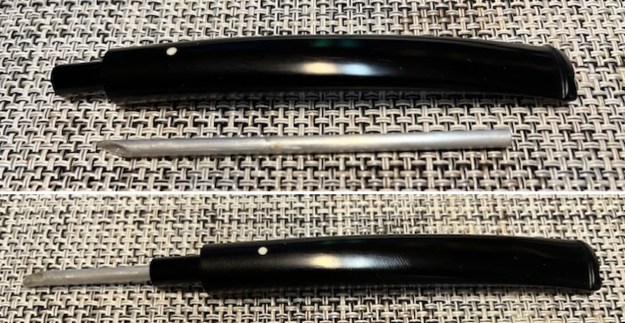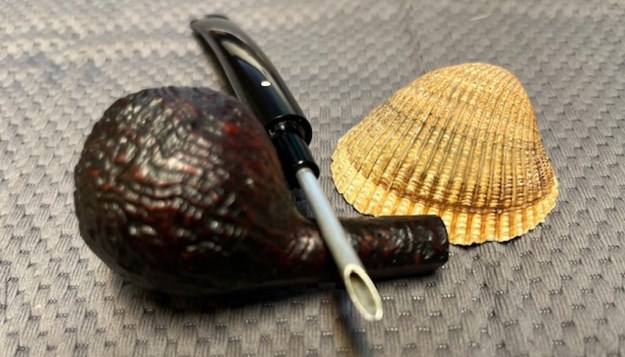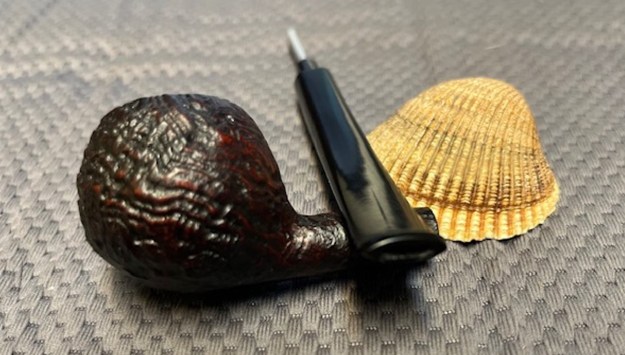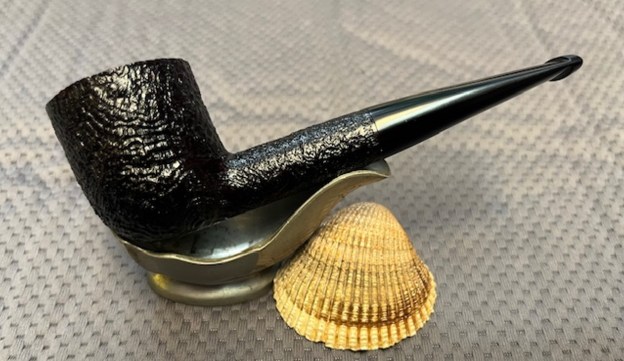
Tag Archives: shaping a stem

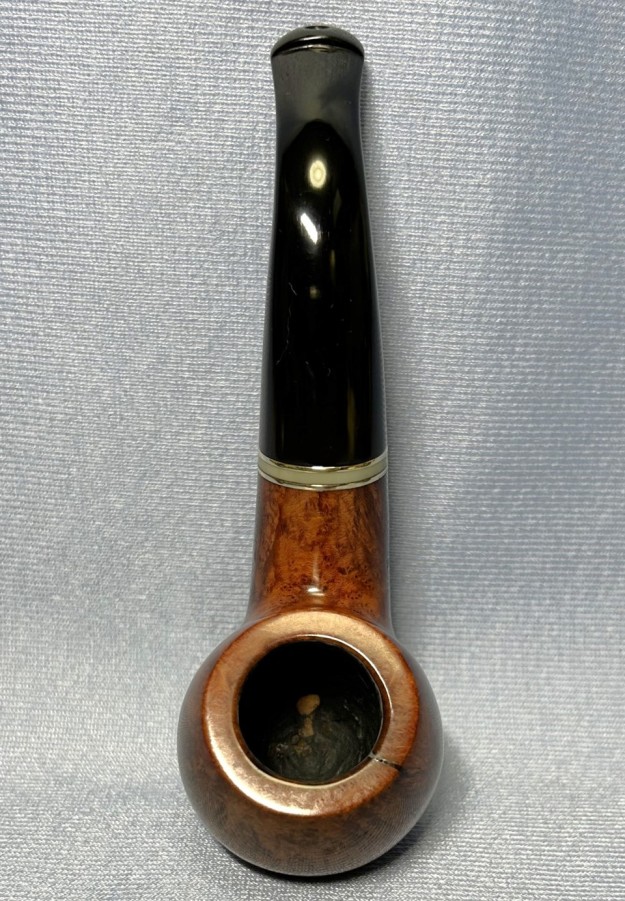
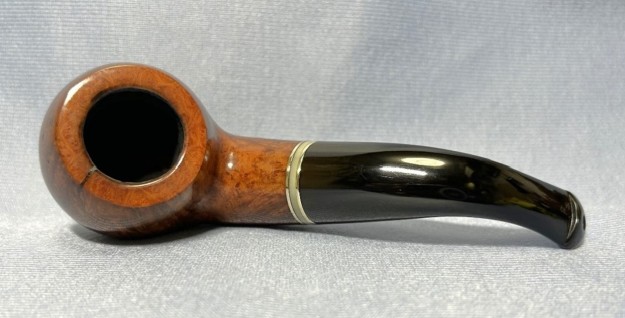
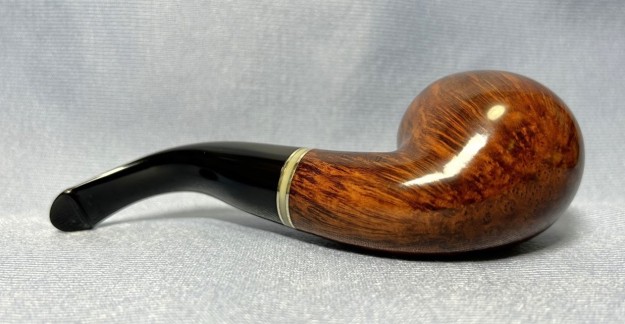
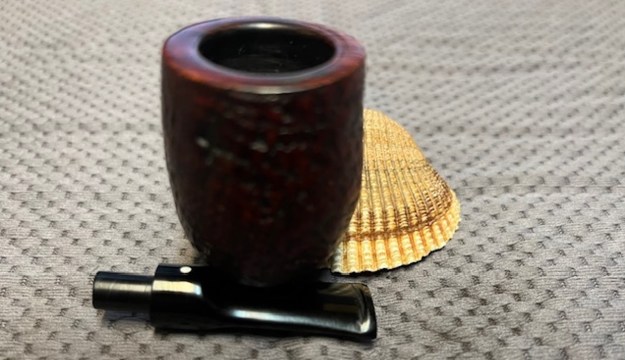
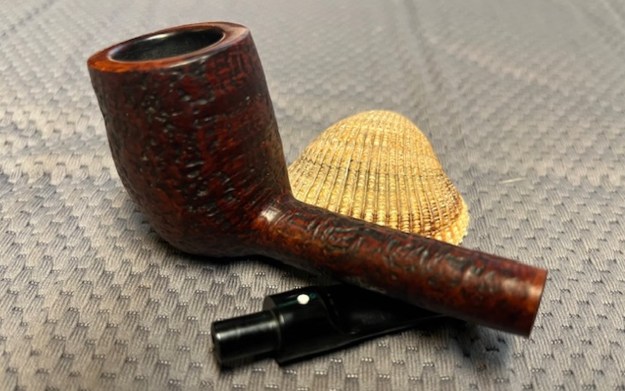
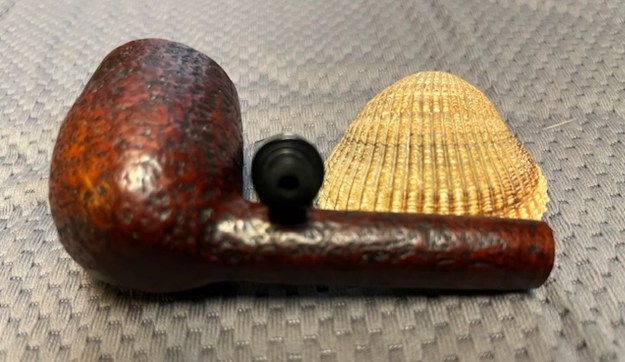
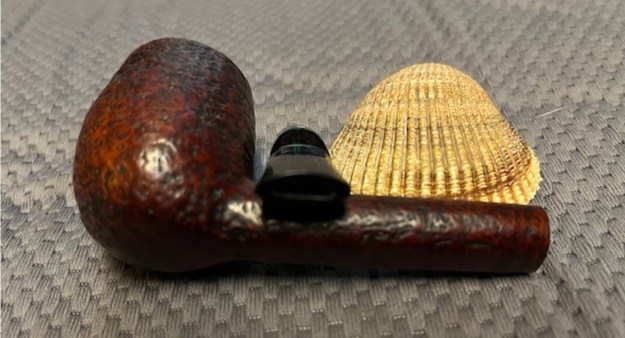
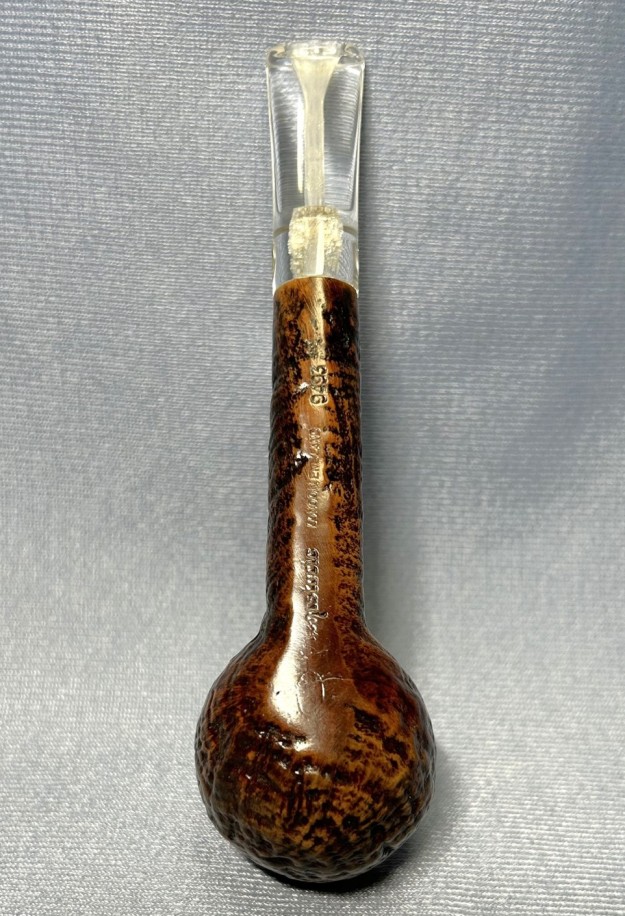
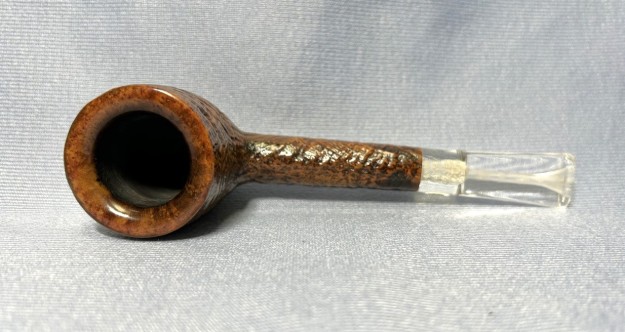
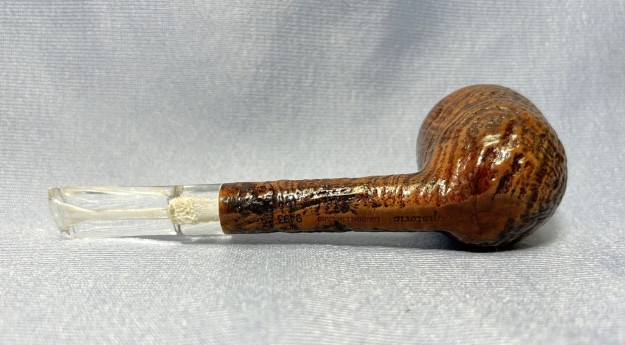
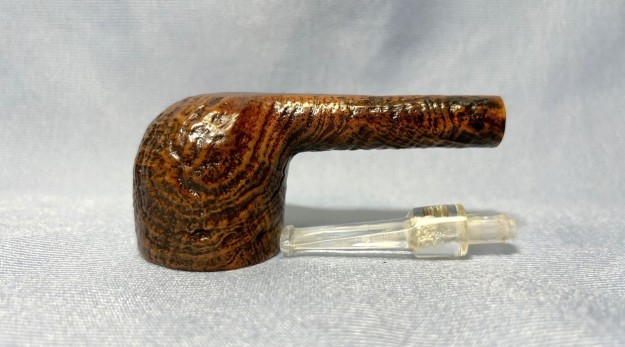
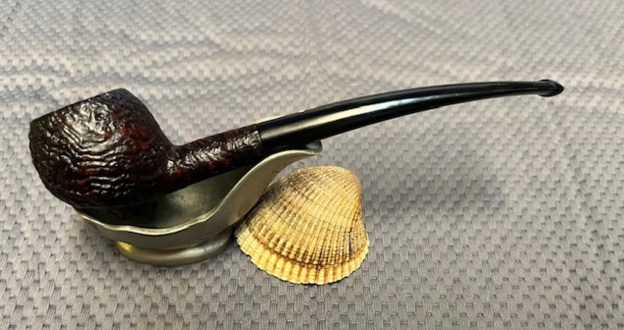
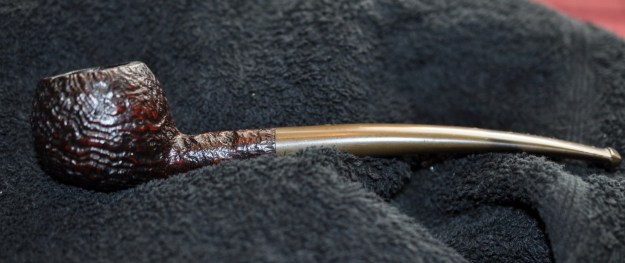
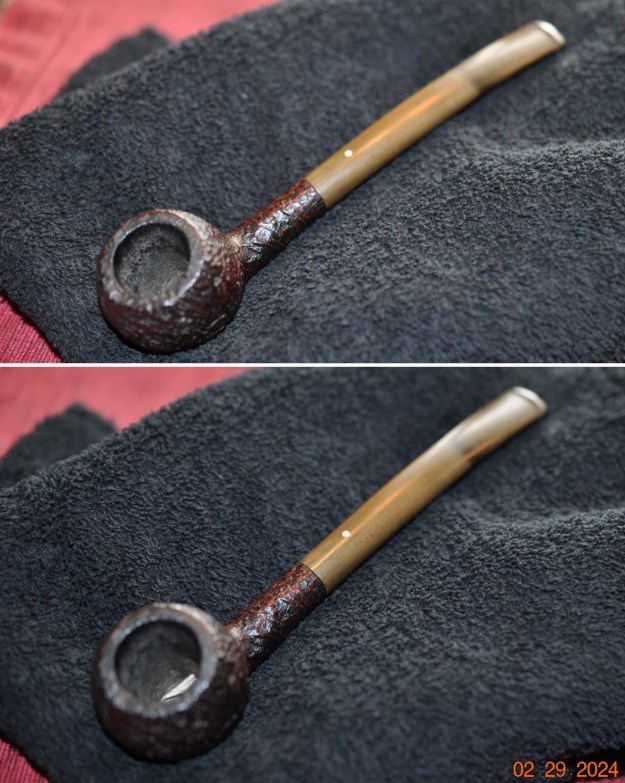
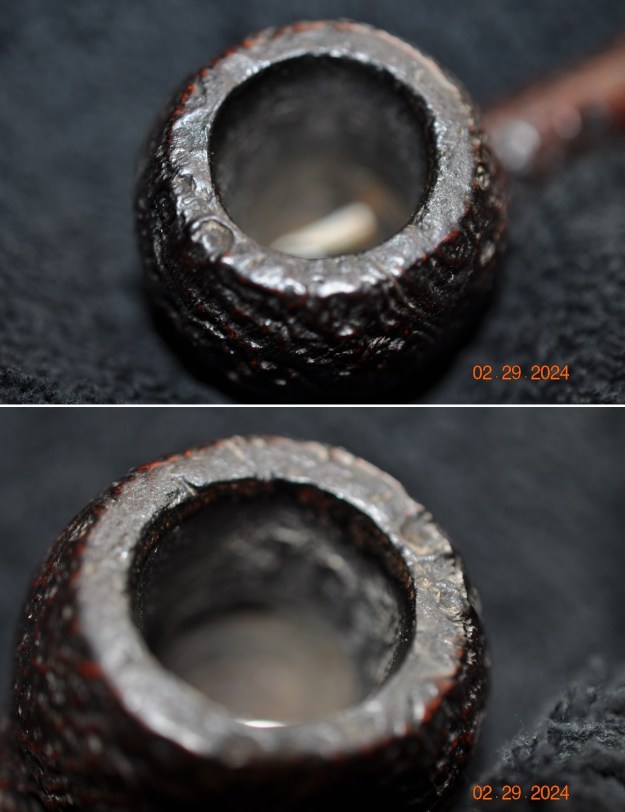
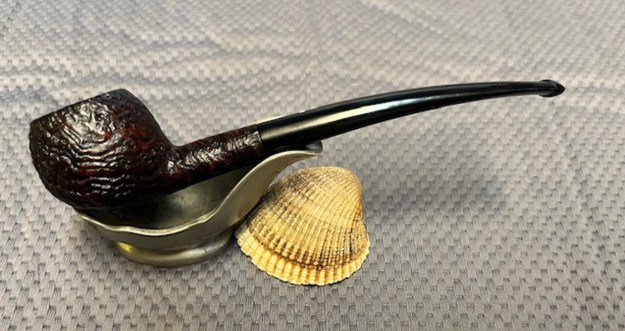
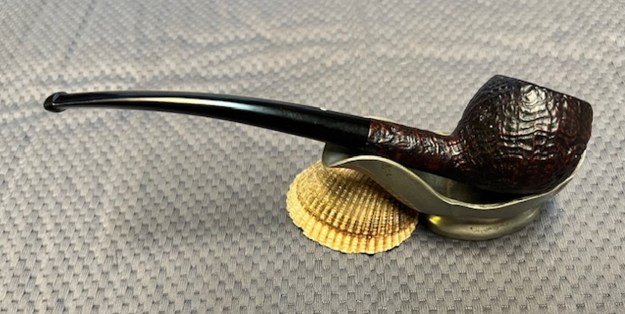
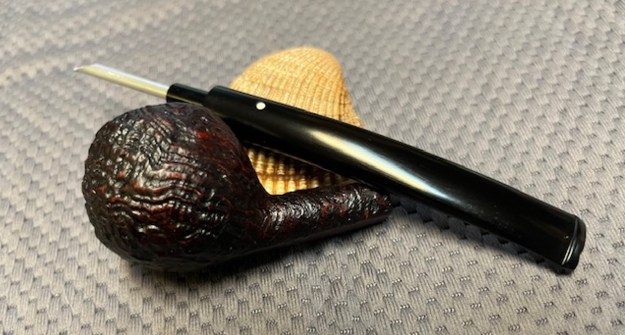
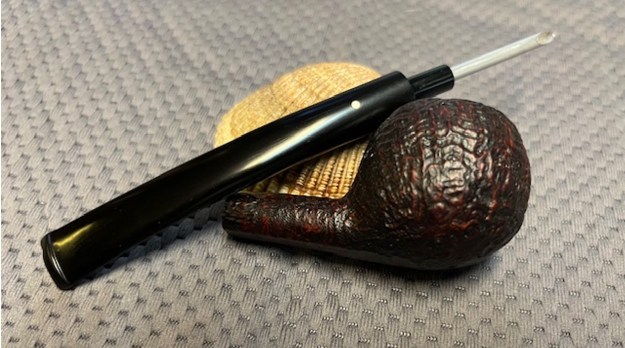
Cleaning up a Television Imported Briar Italian Made Churchwarden


Blog by Steve Laug

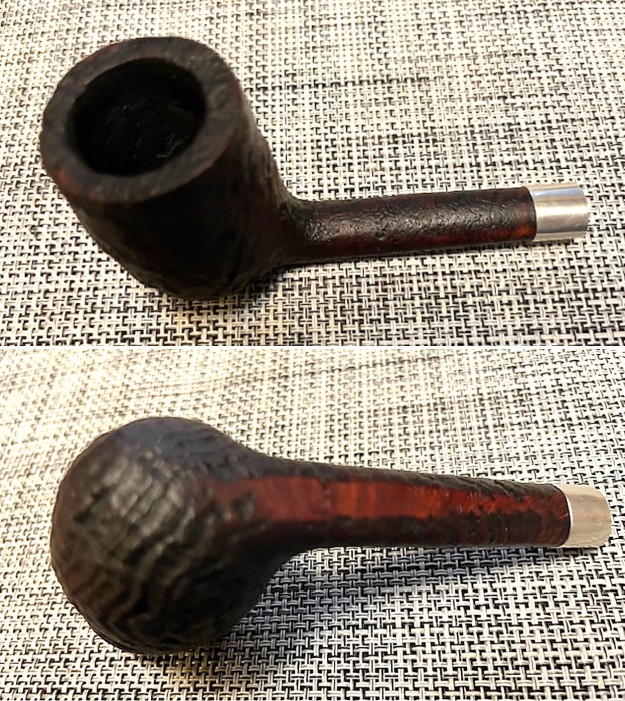
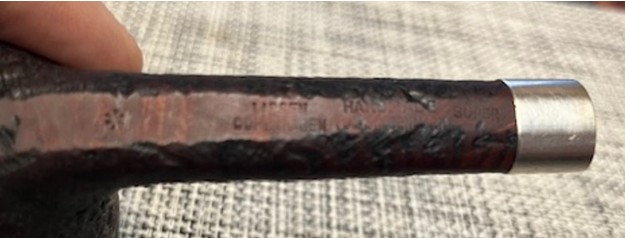
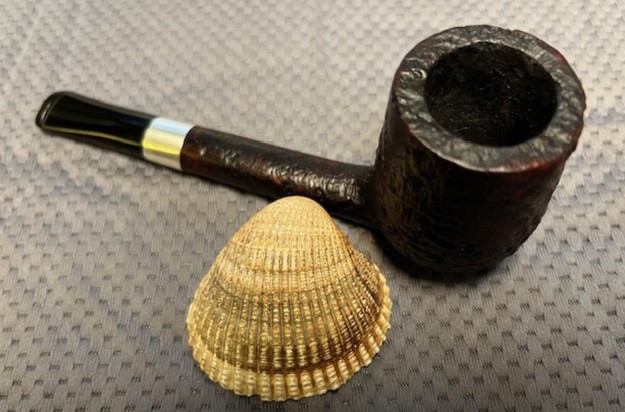
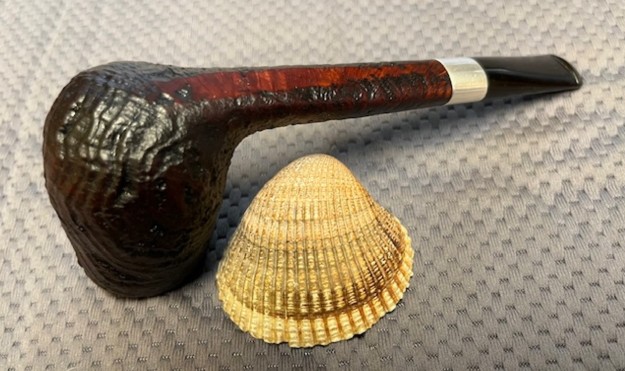
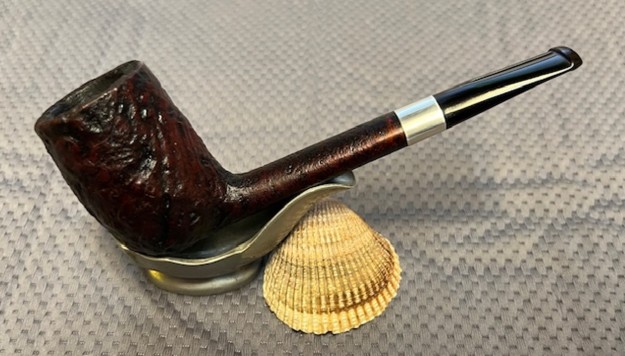
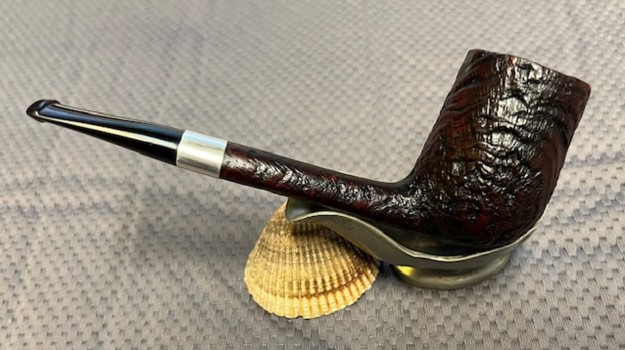
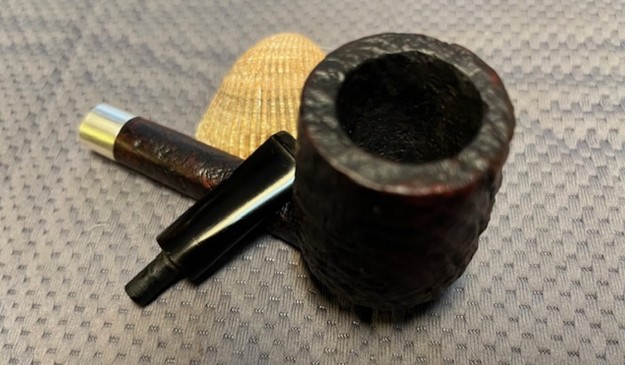
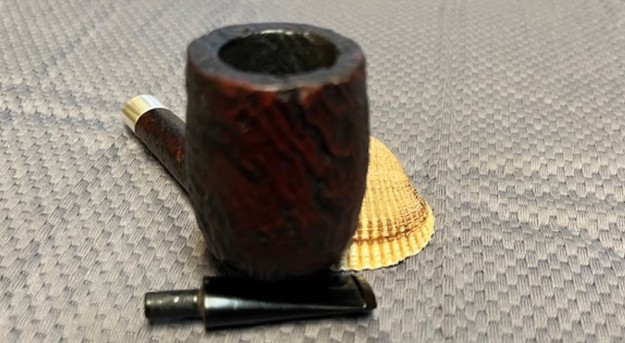
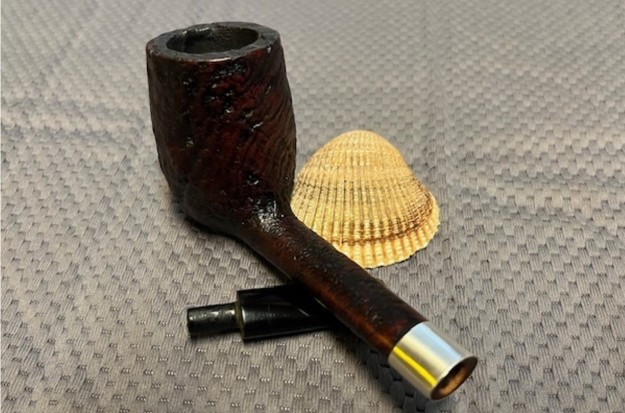
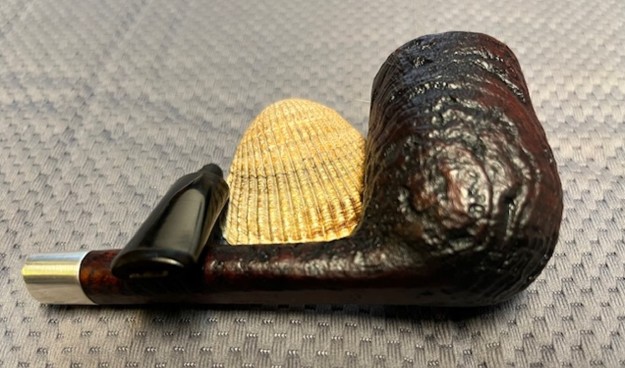
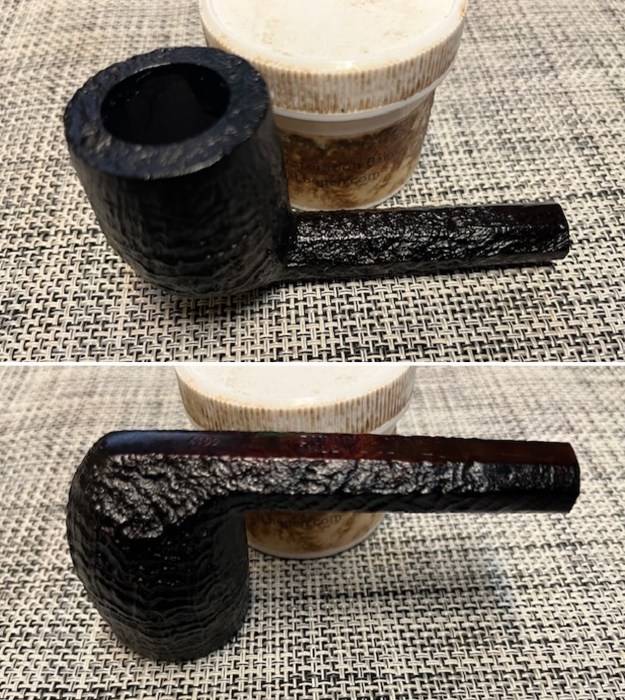
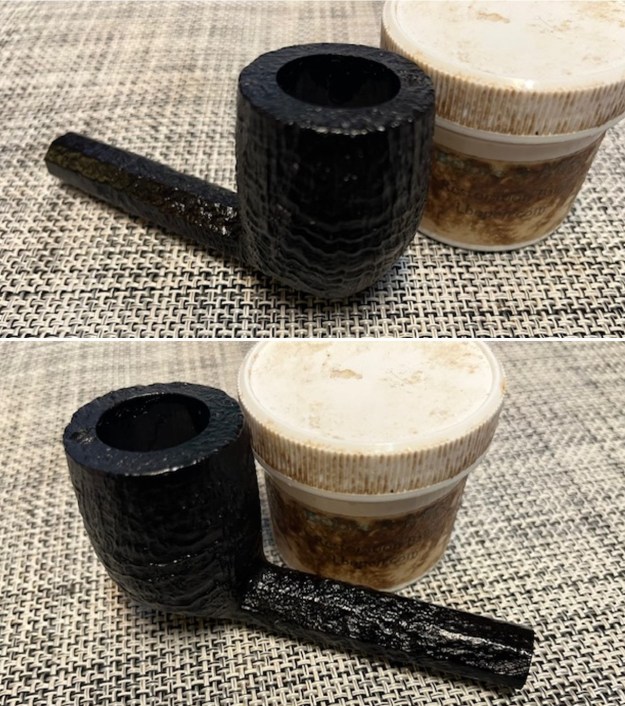
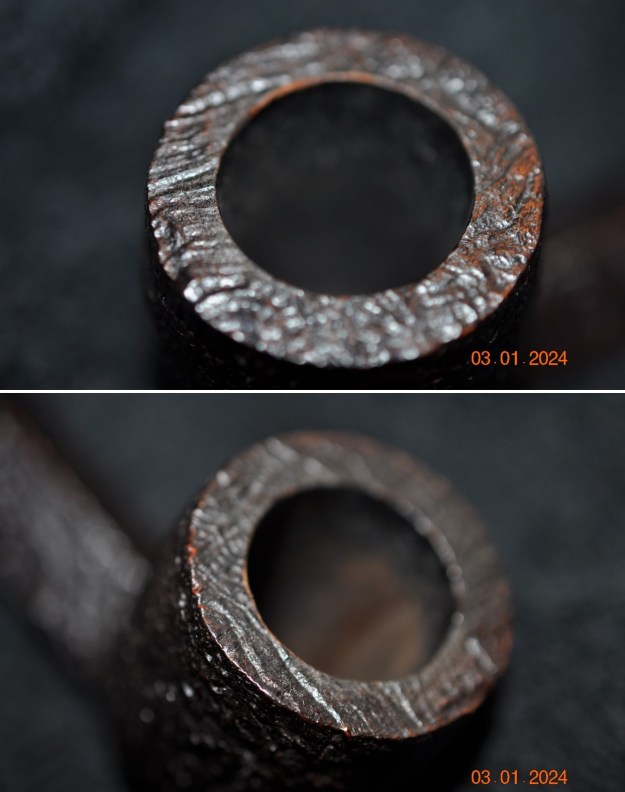
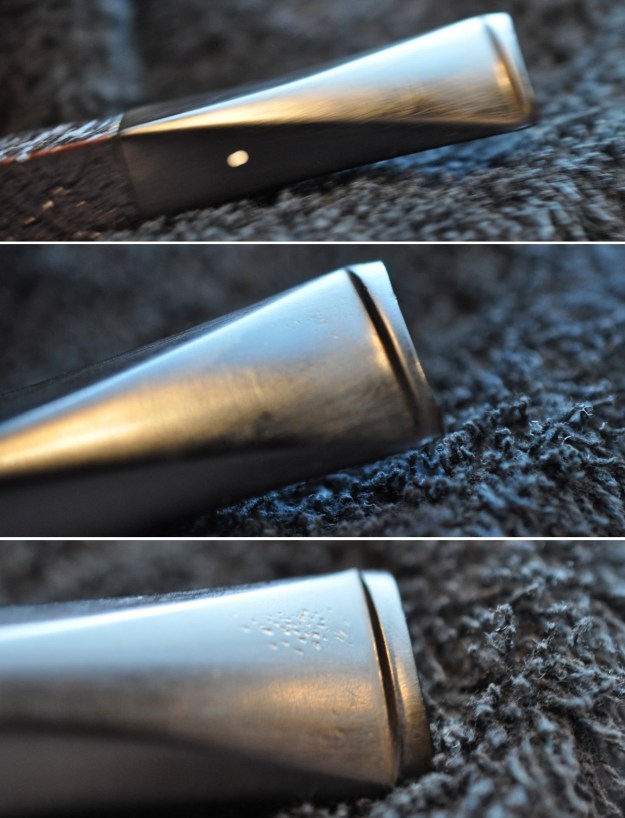
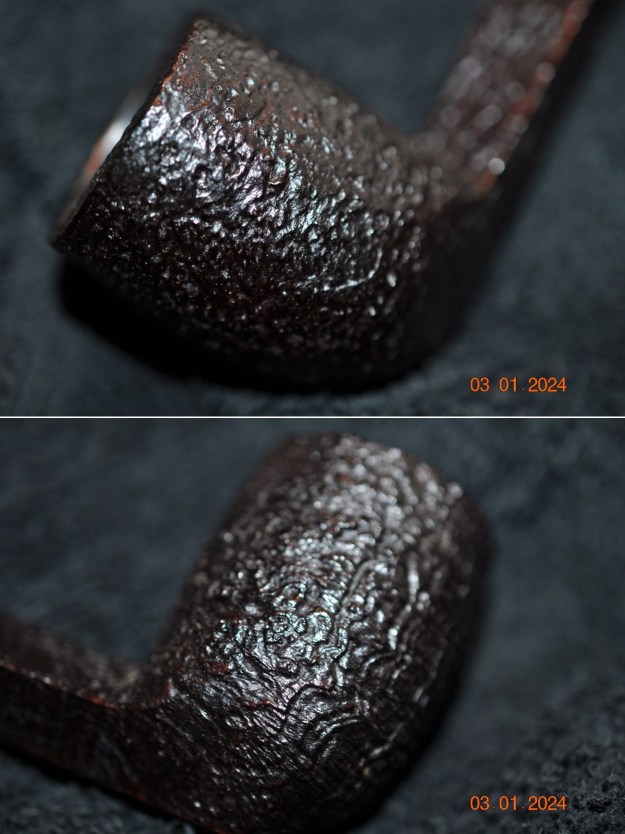
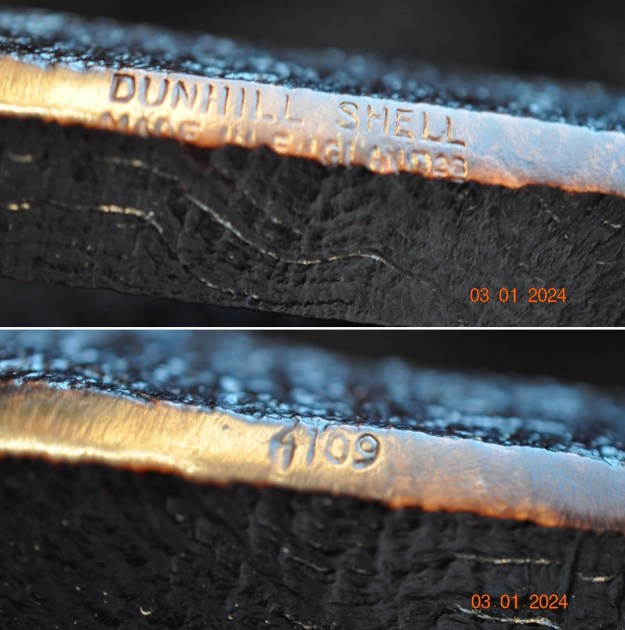
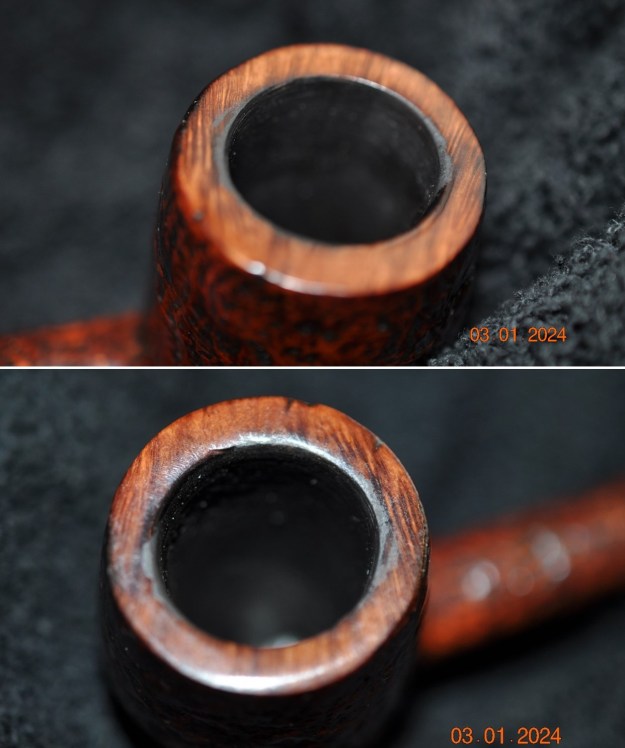
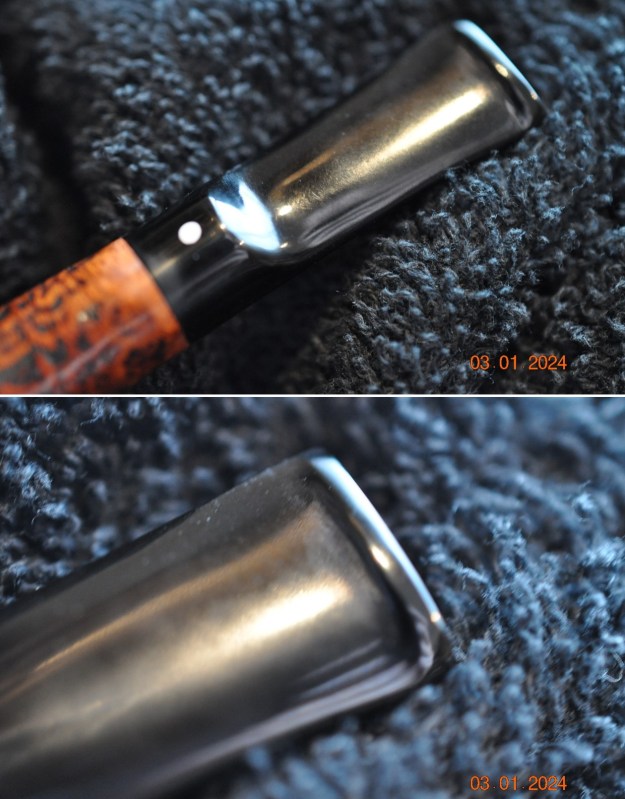
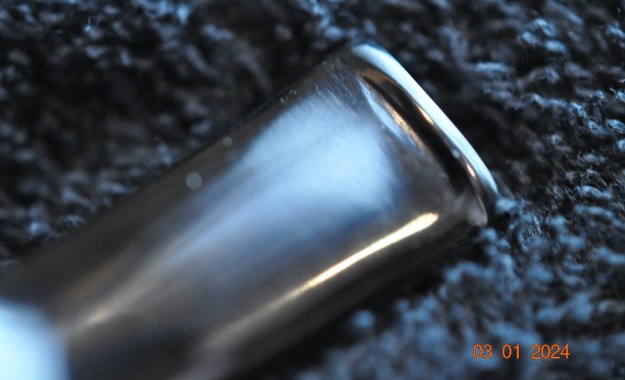
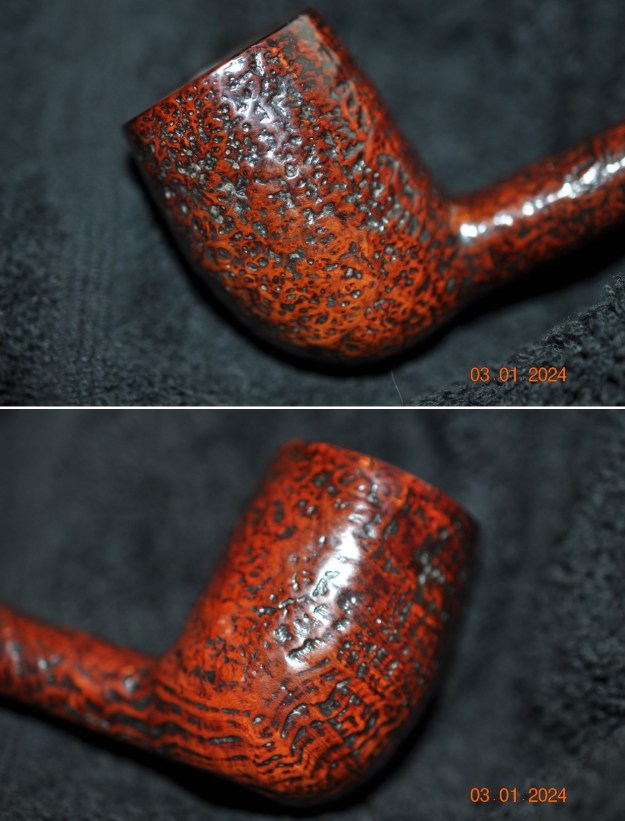
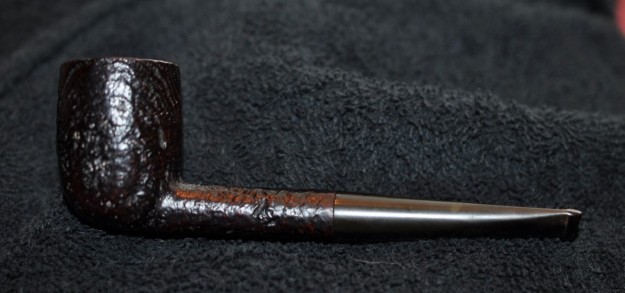
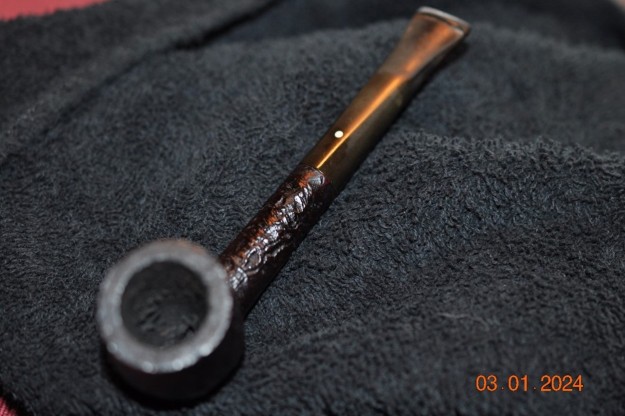
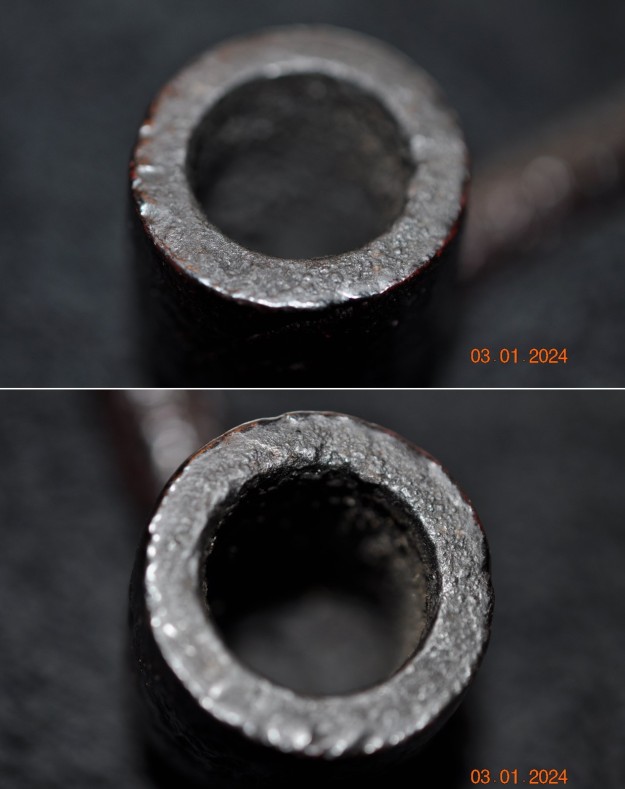
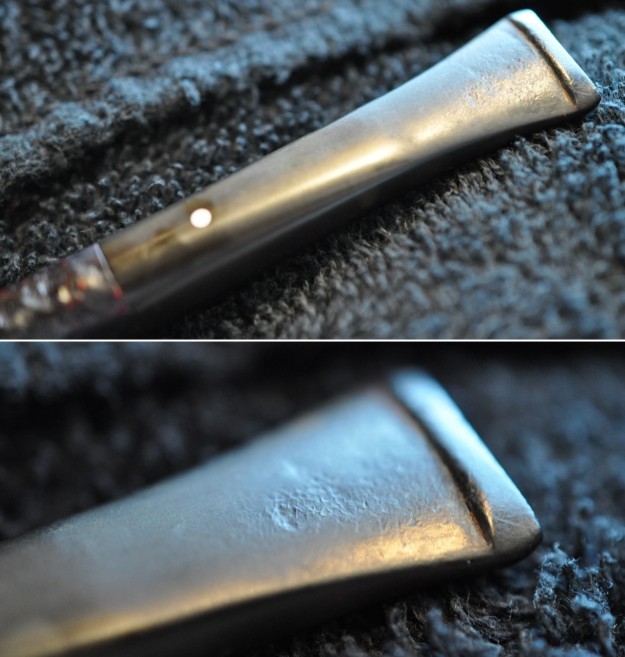
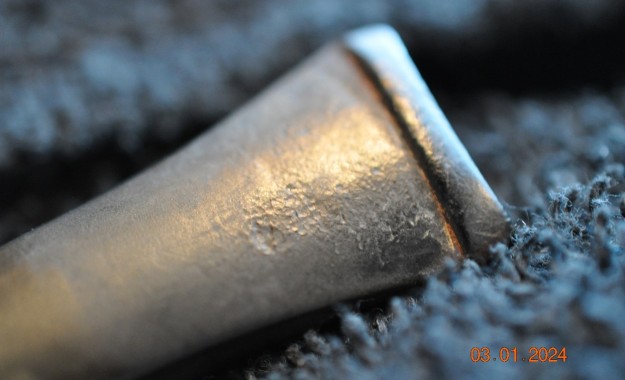
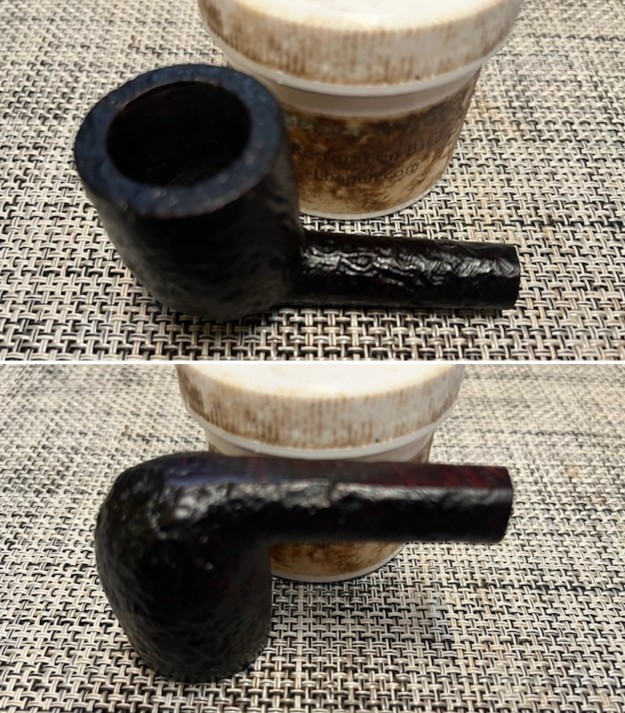
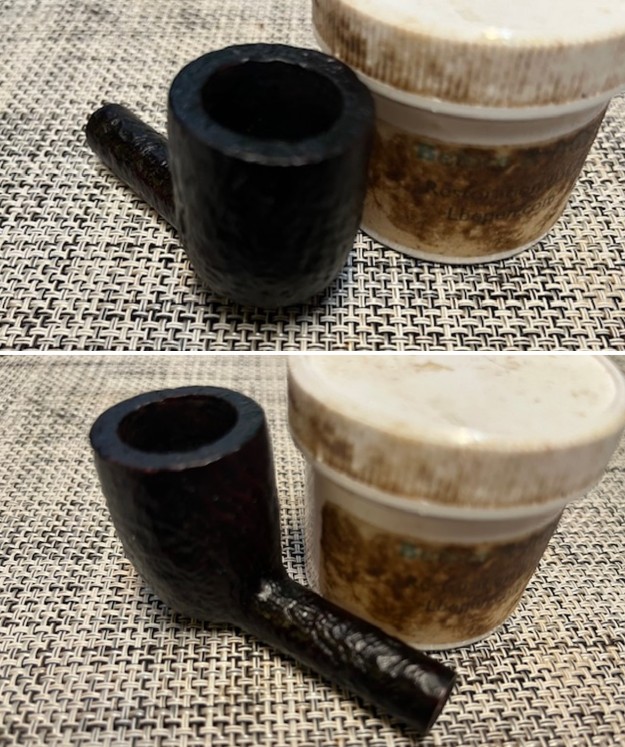
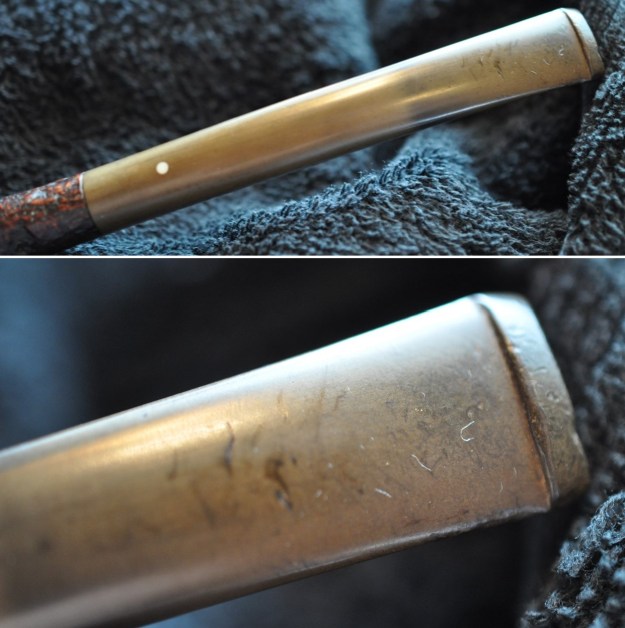
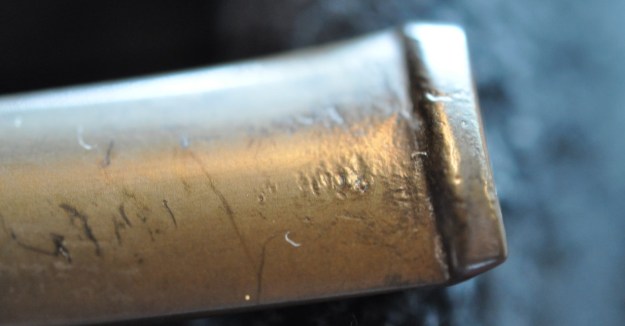
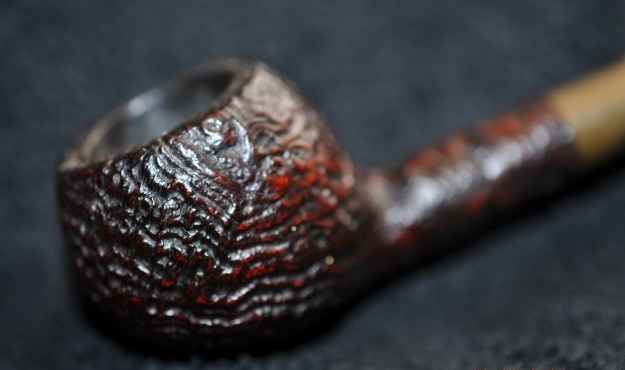
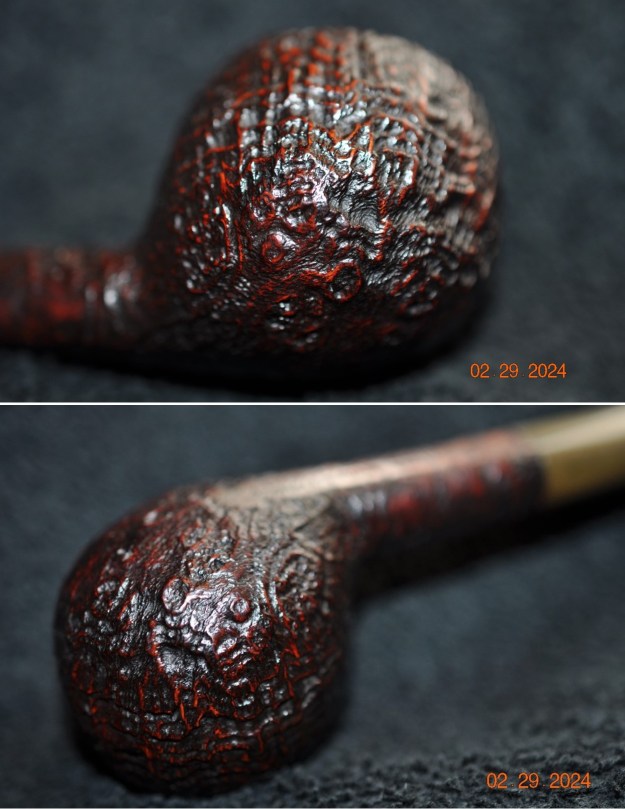
The next pipe on the table was purchased from a fellow in St. Leonard, Maryland, USA on 03/24/2018. It is a nice looking Smooth Rhodesian Churchwarden with twin rings around the cap on the bowl and a long straight stem. It is stamped on the left side of the shank and reads TELEVISION. On the right side it is stamped Imported Briar [over] Italy. The stamping is very clear and readable. The finish had a spotty coat of varnish around the rim, sides and shank and several small fills on the left side of the shank and underside. The bowl had a thin cake and dust and debris. The rim top had spots of lava on it and was dirty. The rest of the bowl and shank. The stem was acrylic and in decent condition with some ripples in the underside from when it had been heated to bend it. It had some tooth chatter and marks on both sides near the button was also dirty and covered with bubbly varnish and debris. Jeff took photos of the pipe when he unpacked it and before he started his clean up work. It is a great looking piece of briar.Jeff took photos of the bowl and rim top to show the cake in the light cake bowl and the debris in the finish. He also took photos of the stem to show the nicks and dents stem surface s well as the light tooth marks and chatter on the vulcanite stem. He took photos of the bowl and heel to show the condition of the finish. Though the photos show the spotty varnish coat the grain underneath actually looks very good underneath. Jeff took photos of the stamping on the sides of the shank. It read as noted above and was readable. You can also see the spots and crackle in the varnish coat on the shank. There is also a gold disc on the left side of the taper shank with an R stamped in the disc. I have worked on quite a few Television Pipes over the years – old timers, billiards and several Churchwarden pipes. I checked all the usual sites for information and I could find nothing about the brand. I decided to leave the hunt behind and just work on the pipe.

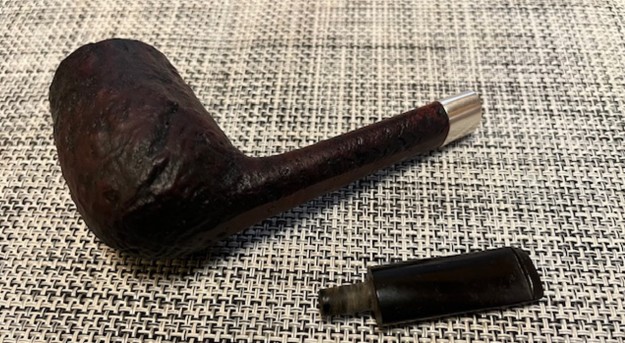
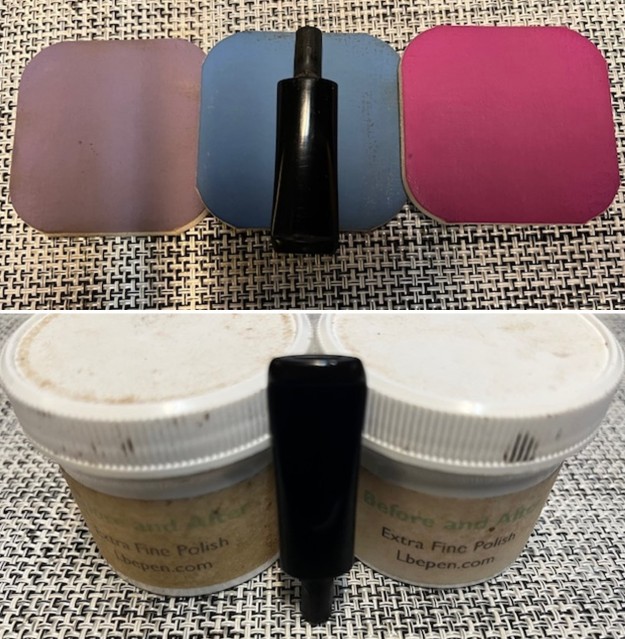
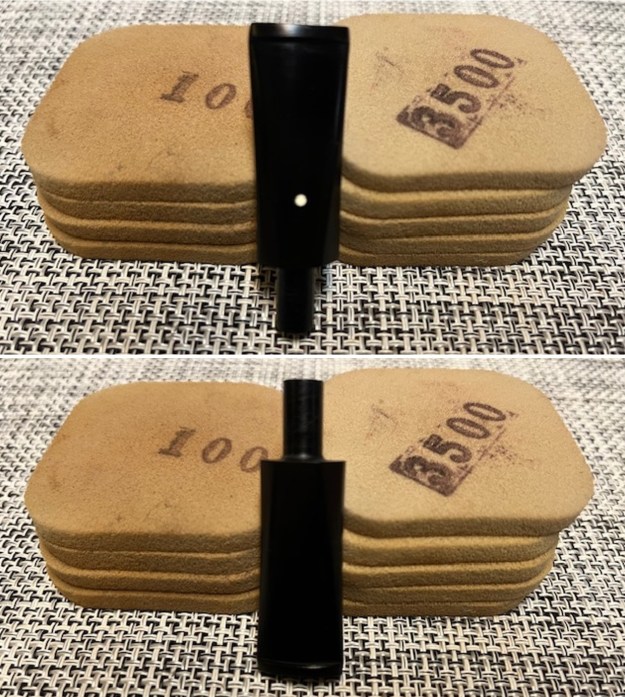
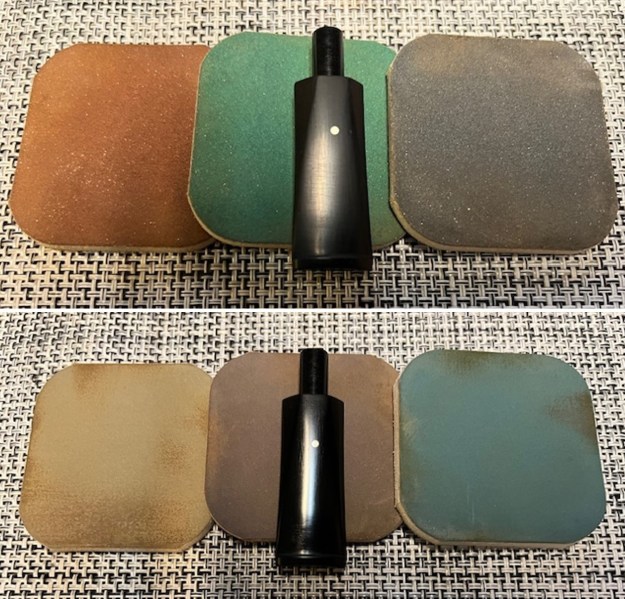
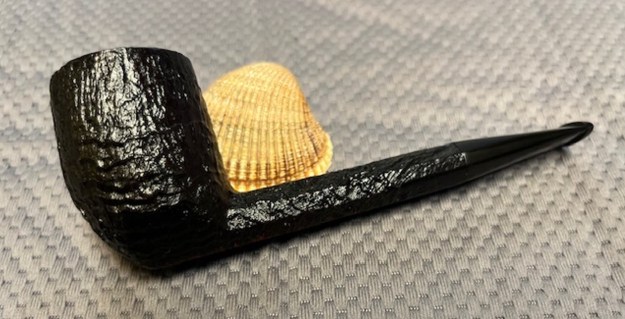
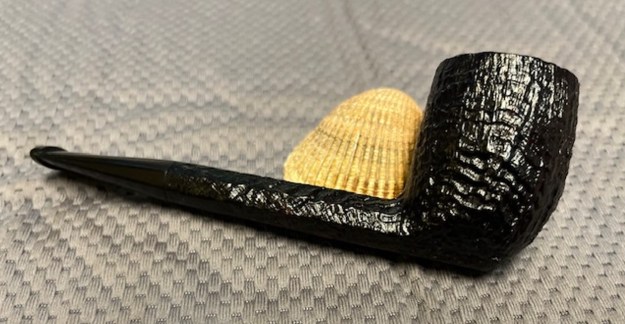
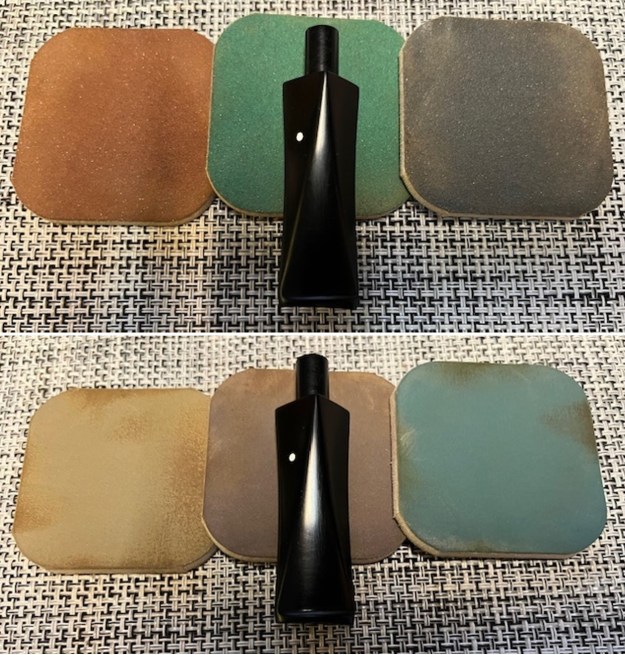
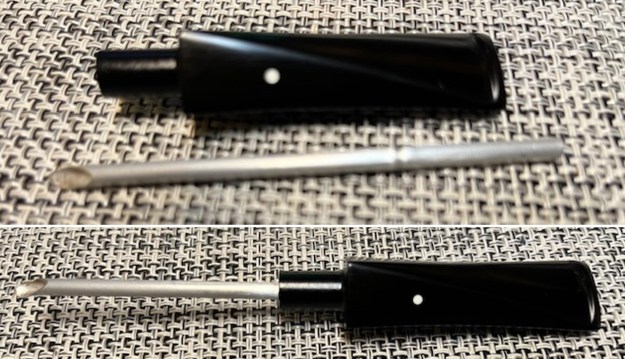
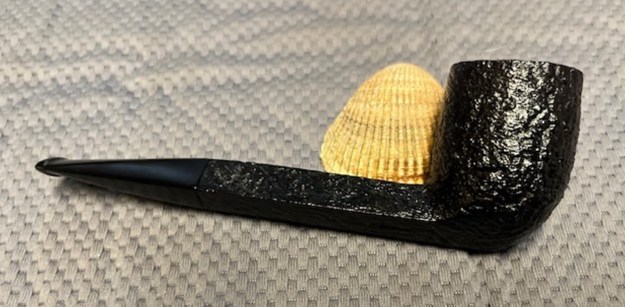
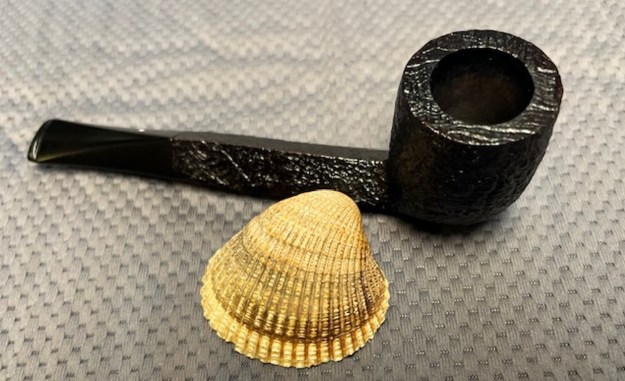
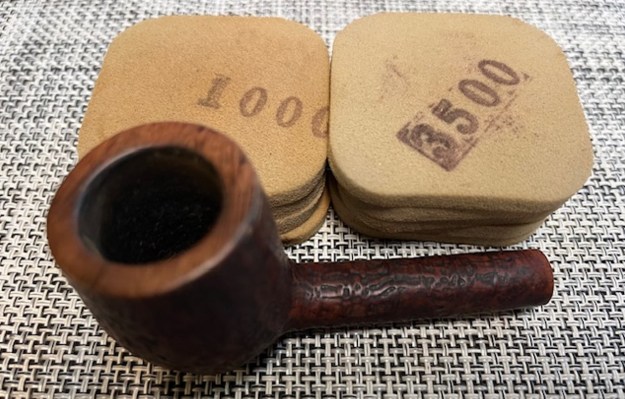
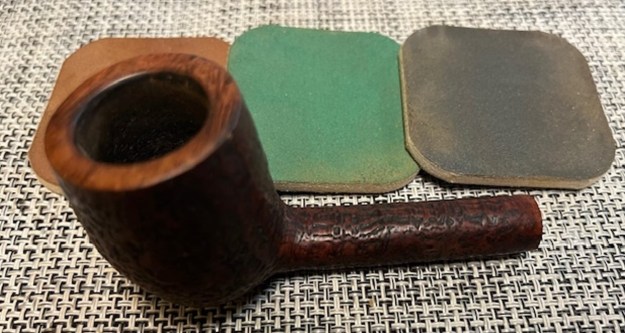
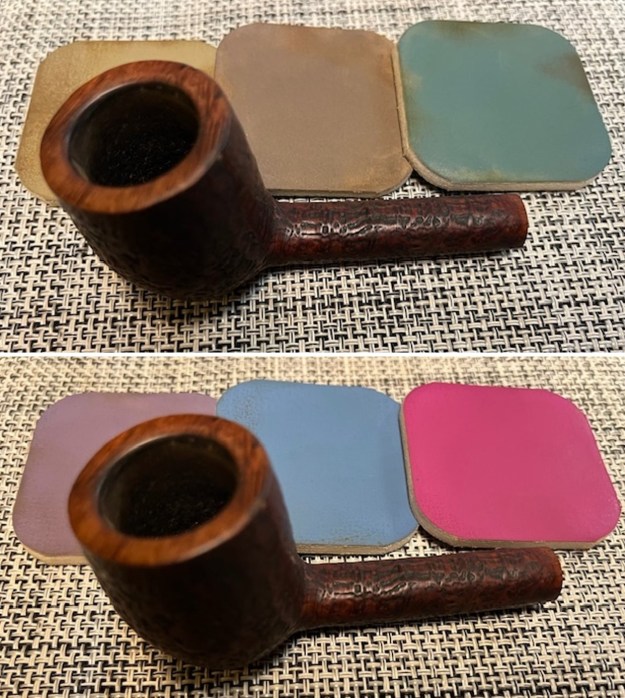
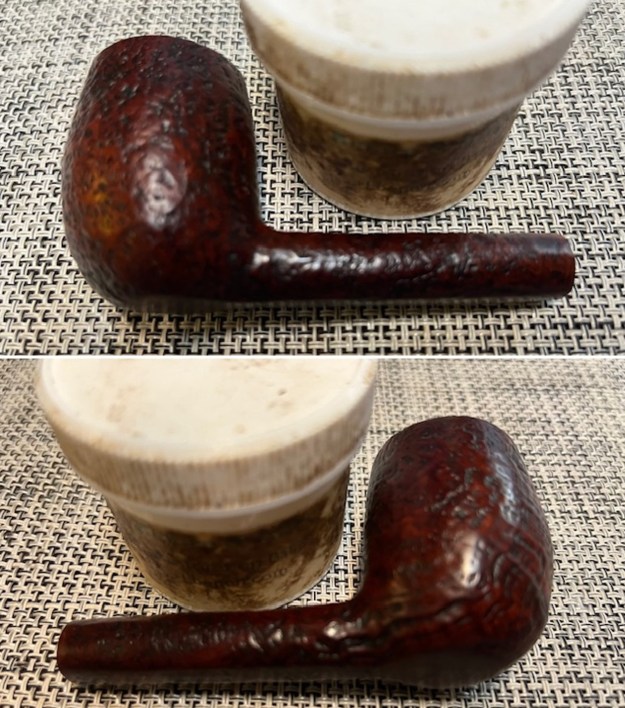
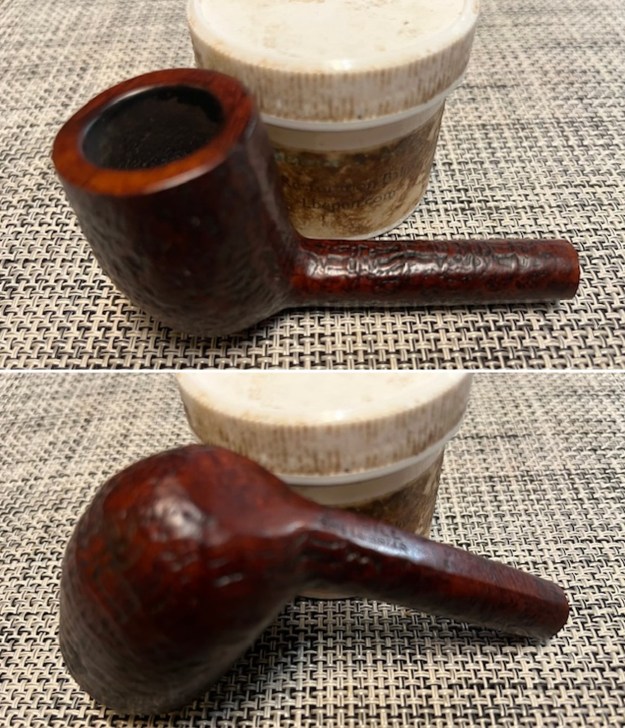
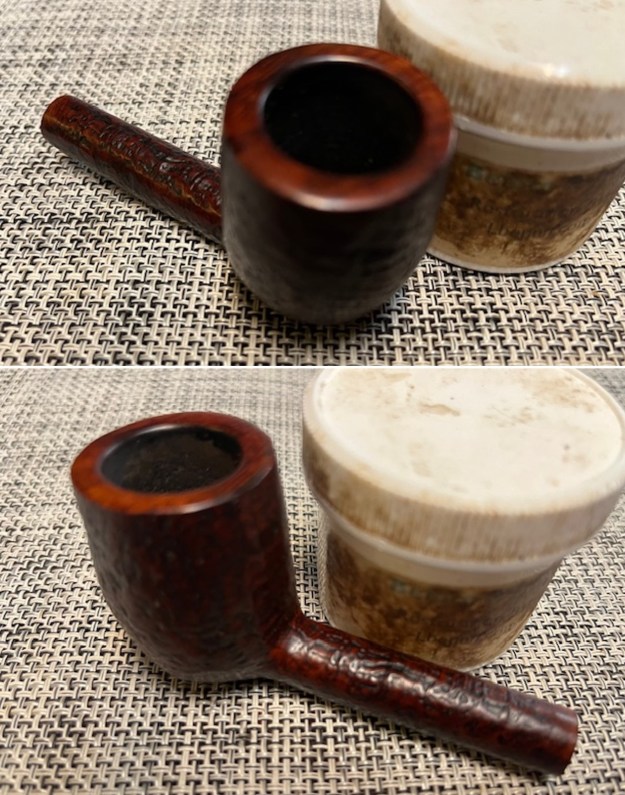
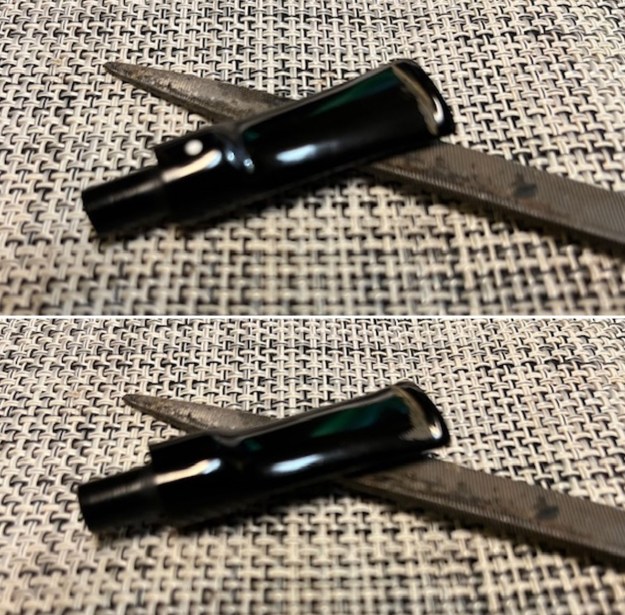
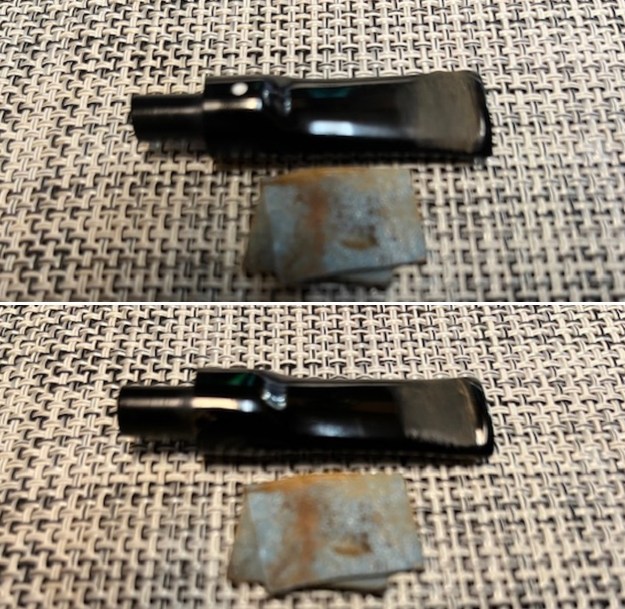
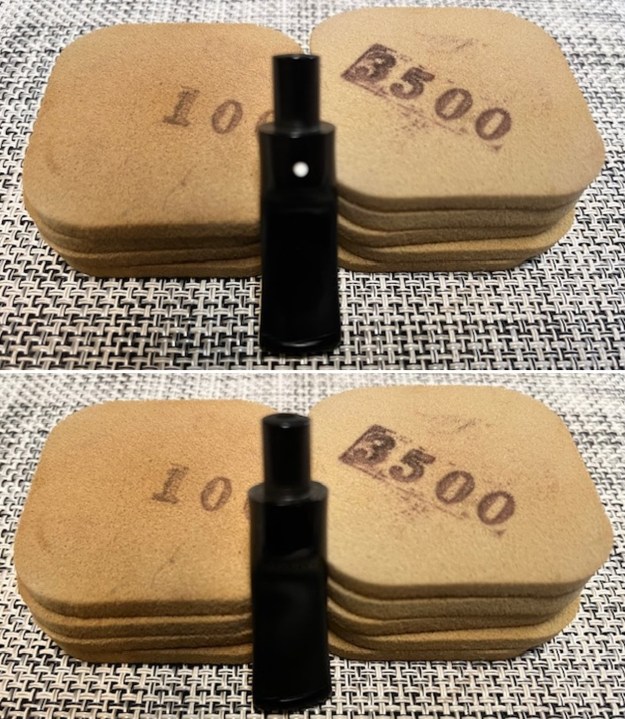
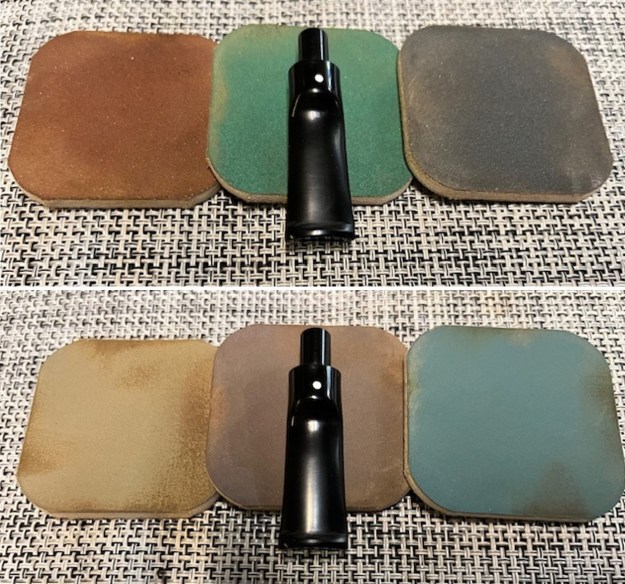
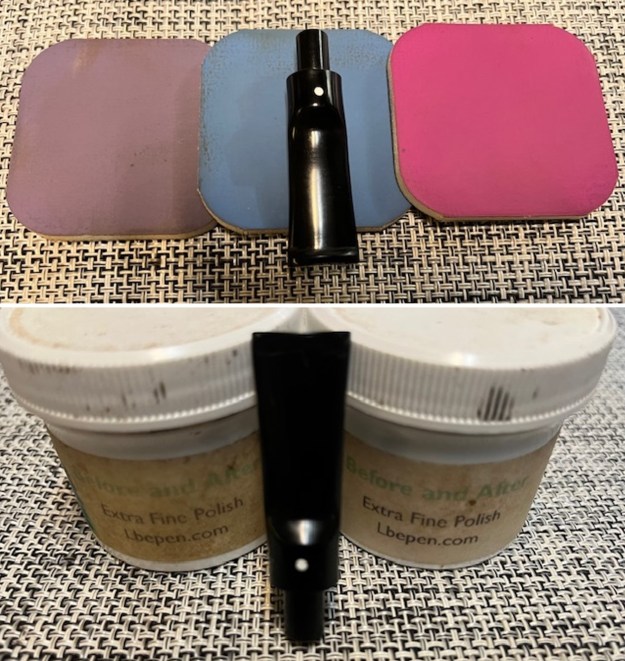
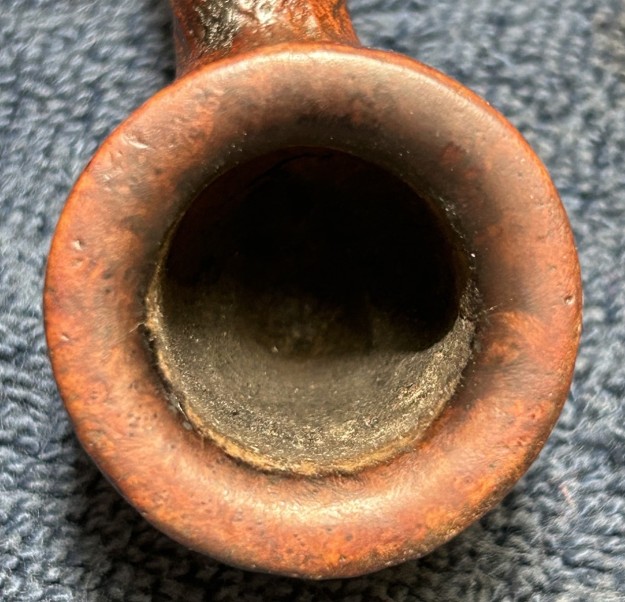
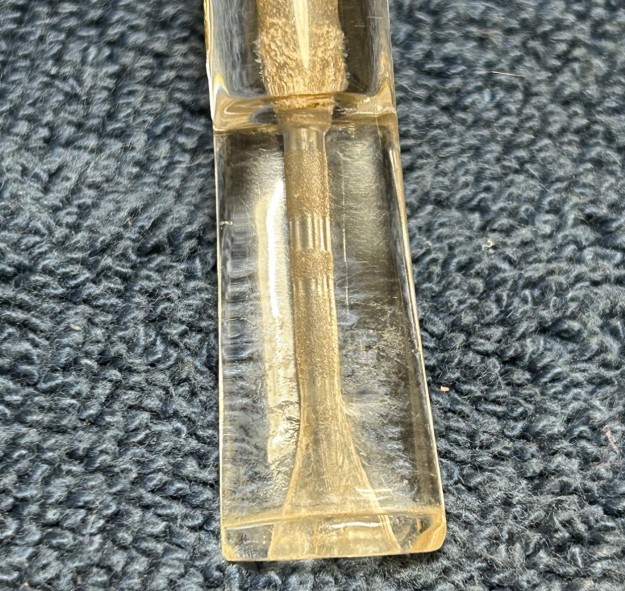
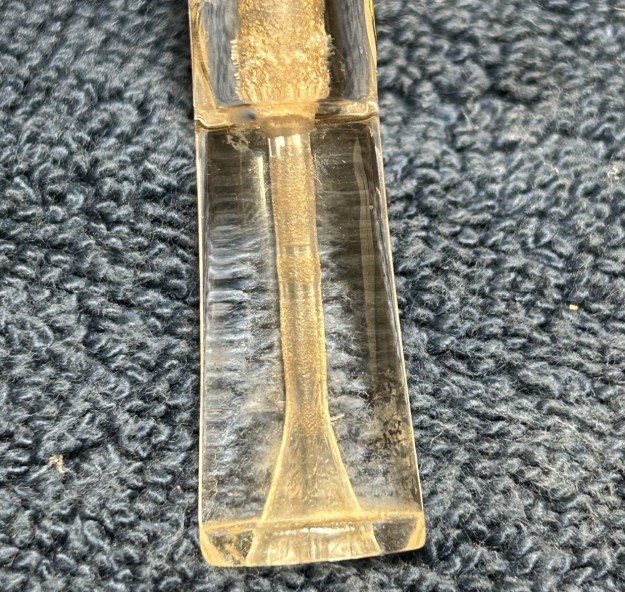
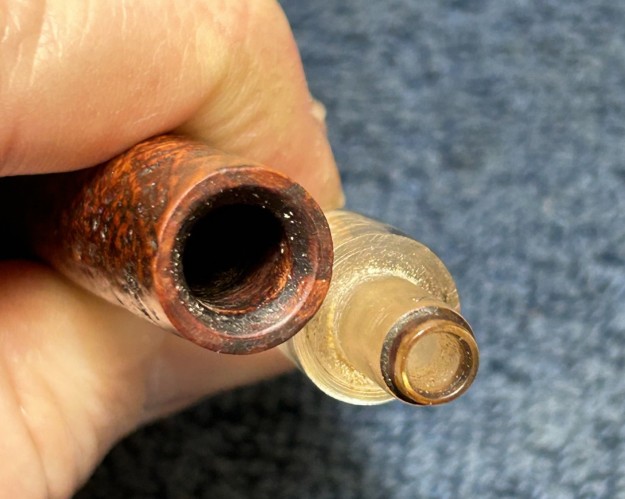
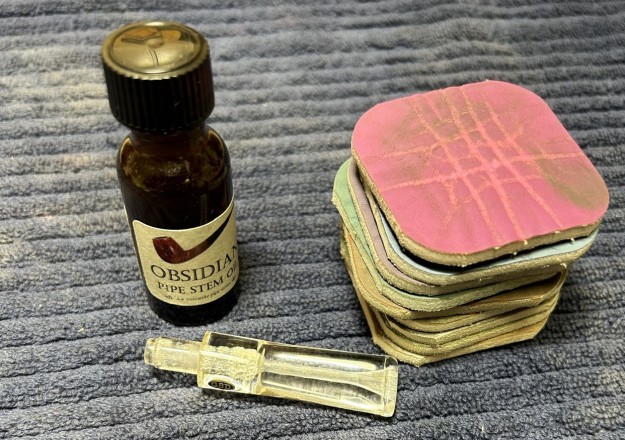
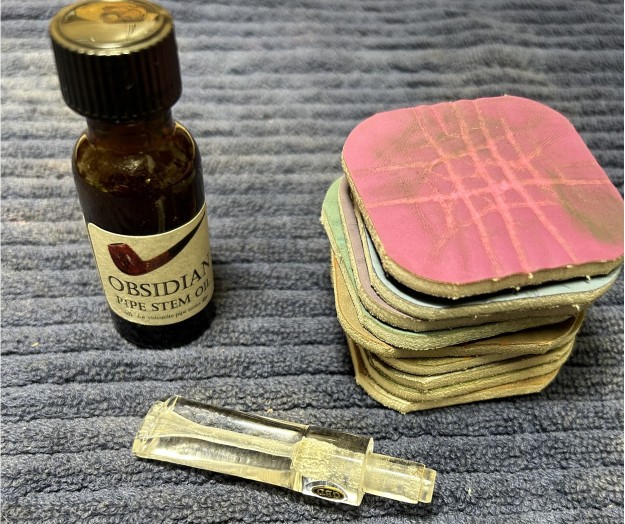
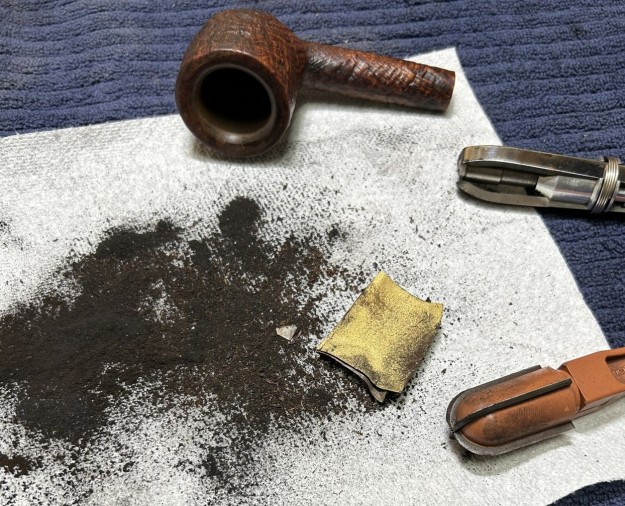
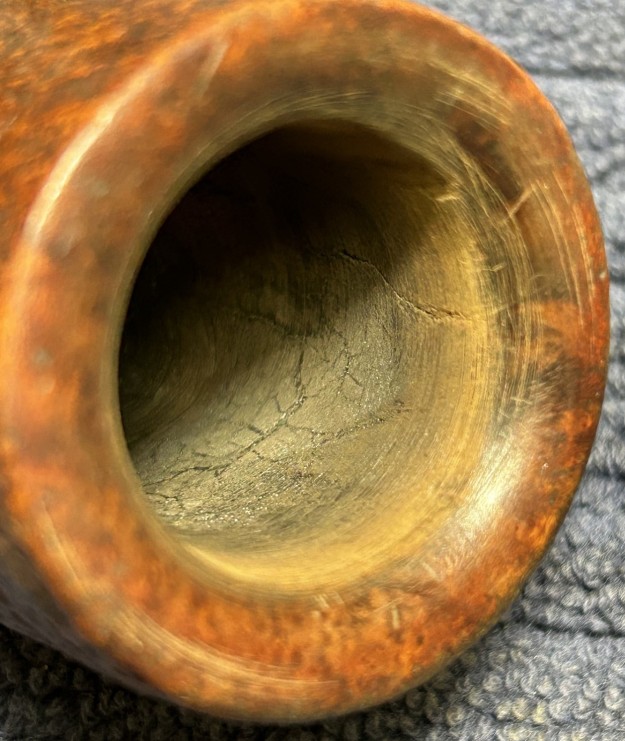
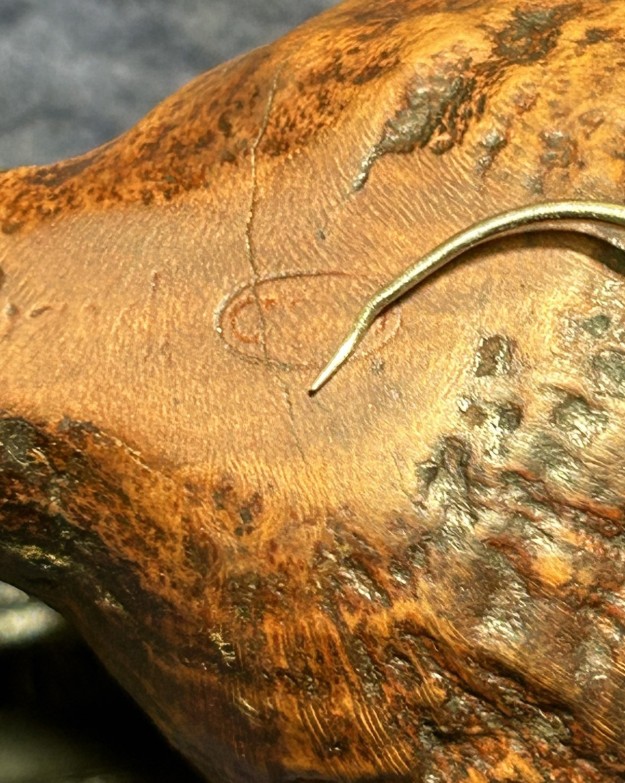
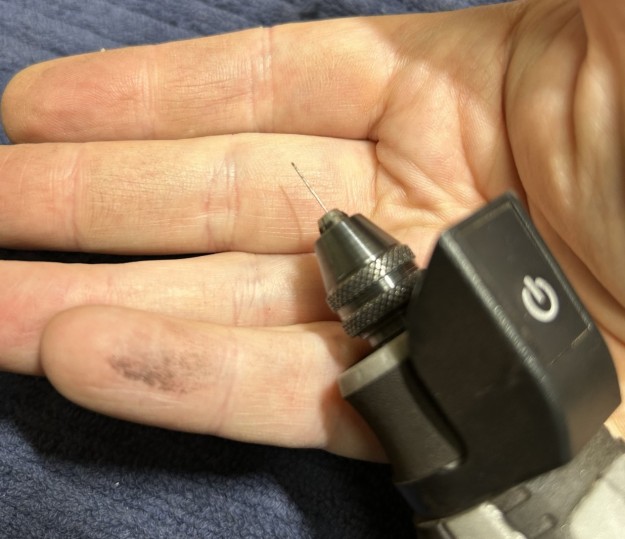
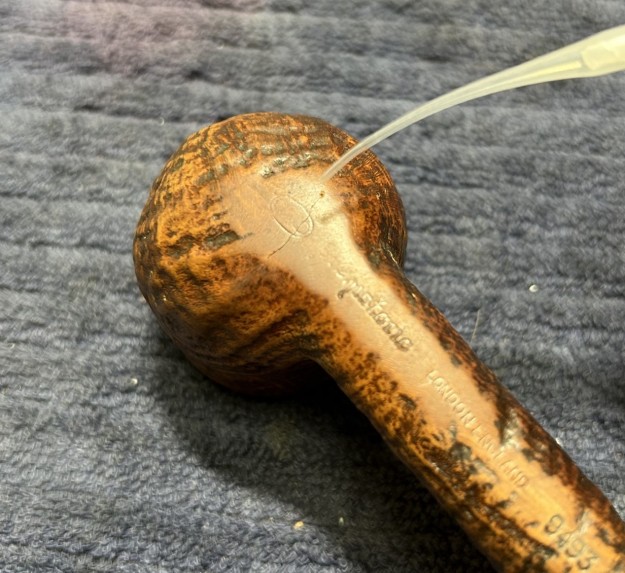
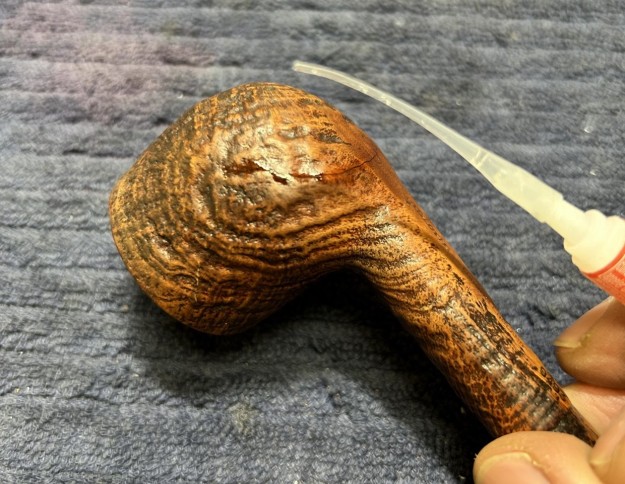
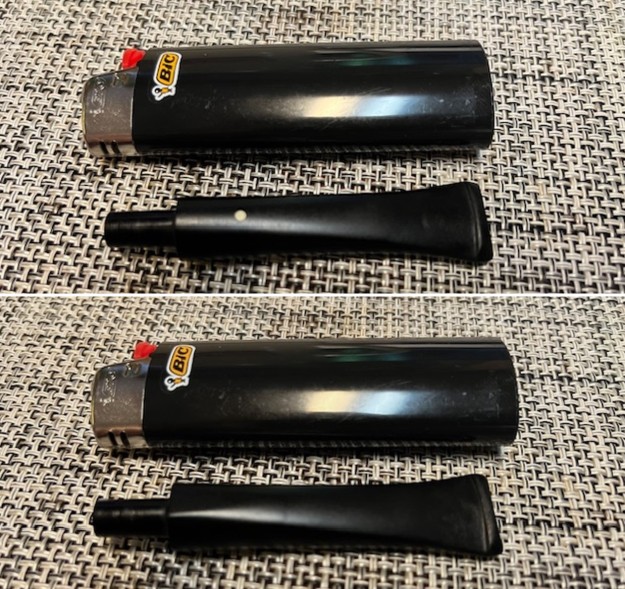
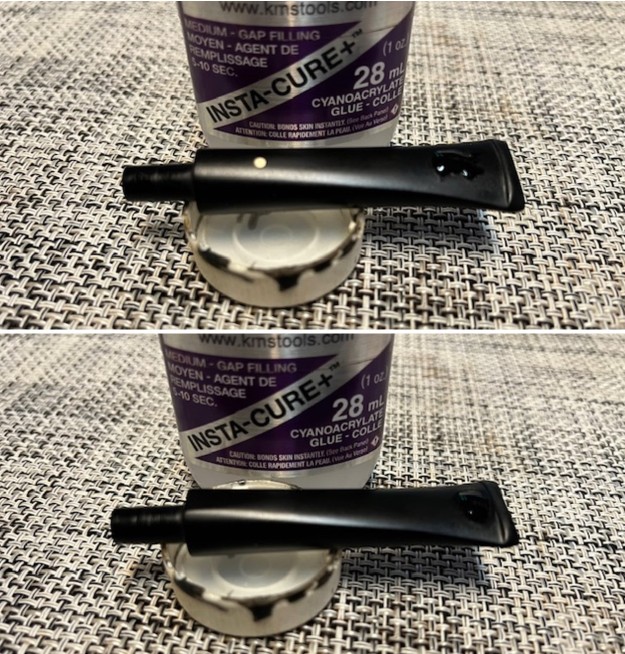
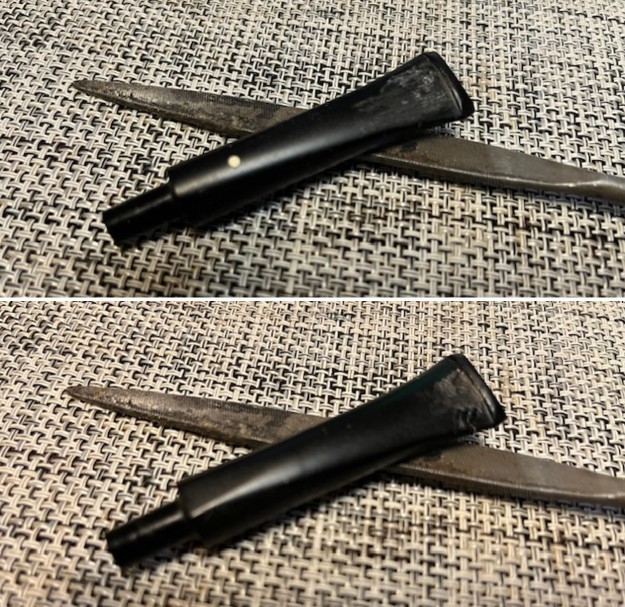
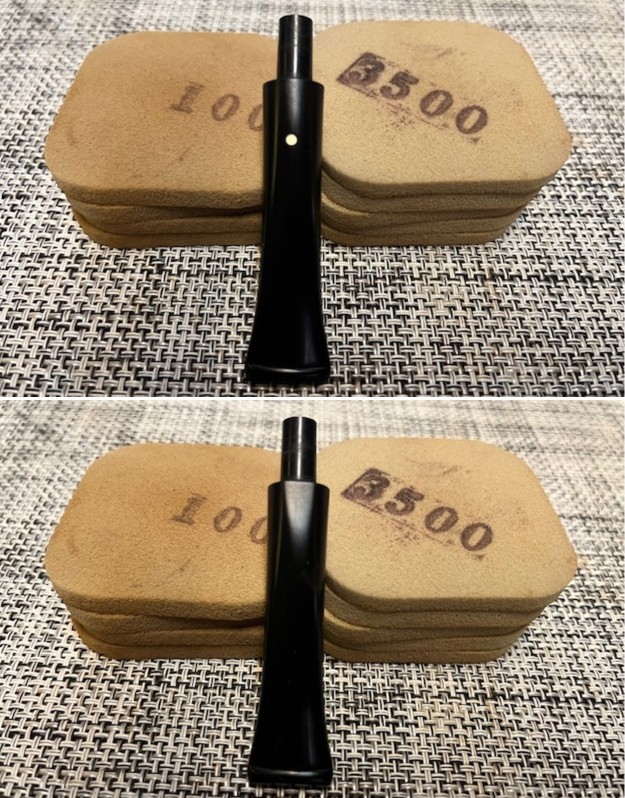
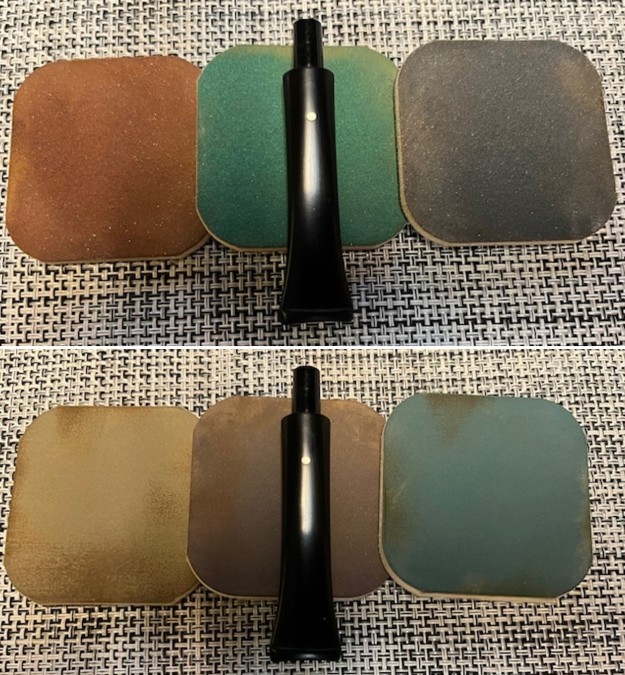
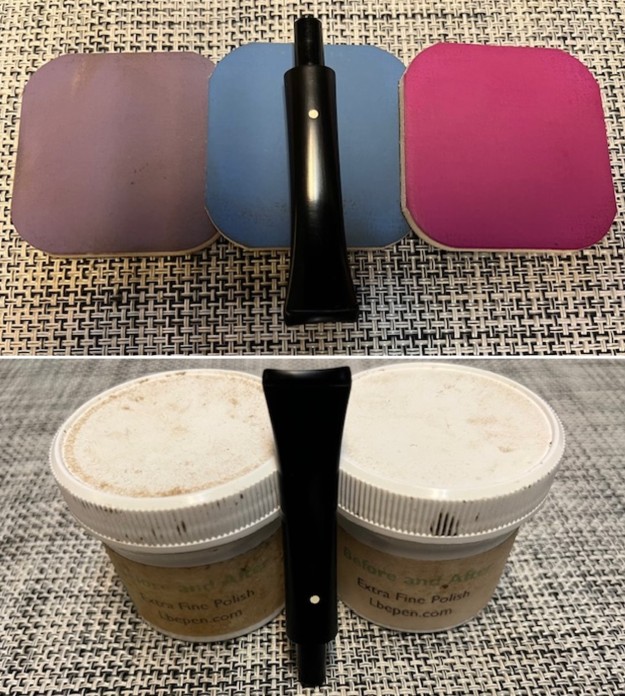
I took some photos of the pipe as I took it out of the box. Here is what I saw. I slid it out of the wrapper around it. I could see that Jeff had cleaned it well. The bowl had been reamed with a PipNet reamer and Savinelli Fitsall Pipe Knife. He had scrubbed the exterior with undiluted Murphy’s Oil Soap. He rinsed it with warm water. He cleaned out the internals with alcohol, cotton swabs and pipe cleaners. He cleaned out the airway in the stem with pipe cleaners and alcohol. The grain on the bowl is quite nice with just a few small fills that are solid and well blended in with the surrounding briar. I took photos of the pipe before I started my work on it. The rim top had cleaned up very well and the rim top and edges looked very good. There were still shiny spots on the rim and in the rings. The stem was in decent condition other than light tooth chatter on both sides at the button. The stem also has some nicks on the sides midstem. The stem was vulcanite and has some light oxidation remaining. I took a photo of the stamping on the smooth panel on the left side of the shank. It is clear and readable as noted above. I removed the stem and took a photo of the pipe to show the proportion of the stem to the bowl. It is a nice looking pipe.I took some photos of the fills in the underside and up the side of the shank next to the bowl junction. They both were damaged and shrunken.I repaired the two fills with clear CA glue and some briar dust. Once the repairs hardened I sanded them with 220 grit sandpaper to smooth them out and start blending them into the surface.I wiped down the bowl with acetone to remove the s potty varnish on the briar. I avoided wiping down the two repaired areas so the acetone would not dissolve the repairs. I sanded the bowl with a Medium and a Fine sanding sponge to remove the varnish coat that remained. I also worked over the repaired areas and they began to look very good against the rest of the briar. I polished the bowl with micromesh sanding pads – dry sanding with 1500-12000 grit sanding pads. I wiped the bowl down with a damp cloth after each sanding pad. It began to look much better. I worked some Before & After Restoration Balm into the surface of the briar and into the twin rings around the bowl cap. I rubbed it on with my fingertips and let it sit doing it is job for 10 minutes. The product works to clean, rejuvenate and preserve the briar. I buffed it off with a soft cloth after the ten minutes. It looked much better at this point. I set the bowl aside and turned my attention to the stem. I removed the stinger and then filled in the deep gouge marks on the stem surface with black CA glue. Once the repairs cured I sanded the stem with the new 320-3500 grit sanding pads to blend the repairs into the stem surface and also to remove the slight oxidation. I polished the stem with micromesh sanding pads – 1500-12000 grit pads. I wiped it down with Obsidian Oil after each sanding pad. I used Before & After Pipe Polish – both Fine and Extra Fine to further polish the stem. I gave it a final coat of Obsidian Oil and set it aside to dry. Once I finished working on the stem and put it back together you can see that this Television Imported Briar Italy Churchwarden is another beautiful pipe. The rusticated briar around the bowl is clean and really tactile. The rim top and edges are in great condition. The rich brown stains gave the grain a sense of depth with the polishing and waxing. The depth of the rustication really stood out. I put the acrylic stem back on the bowl and carefully buffed the pipe with a clean buffing pad to raise the shine. I hand buffed the pipe with a microfiber cloth to deepen the shine. The finished Television Italian Churchwarden is a beauty and feels great in the hand and looks very good. Give the finished pipe a look in the photos below. The dimensions of the pipe are Length: 11 inches, Height: 1 ½ inches, Outside diameter of the bowl: 1 ¼ inches, Chamber diameter: ¾ of an inch. The weight of pipe is 1.66 ounces /47 grams. It is another one that is much more beautiful in person than these photos can capture. I will be putting it on the rebornpipes store soon. Look for it in the Italian Pipe Makers section. If you would like to add it to your collection let me know. Thanks for walking through the restoration with me.

Restoring a Republic Era Peterson’s Canted Dublin “Churchwarden”


Blog by Steve Laug

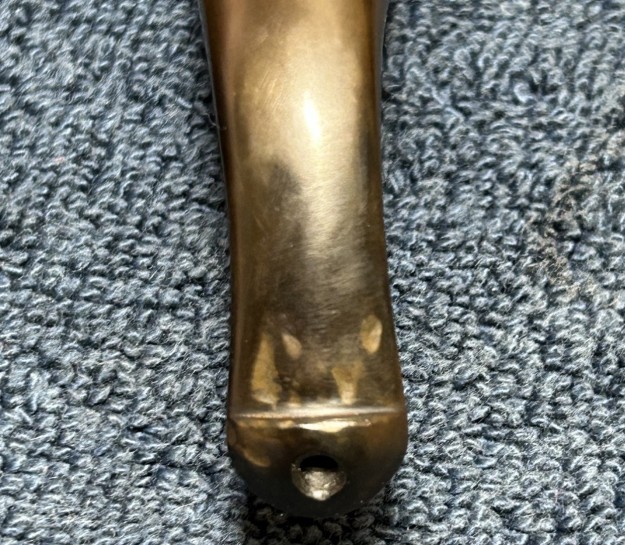
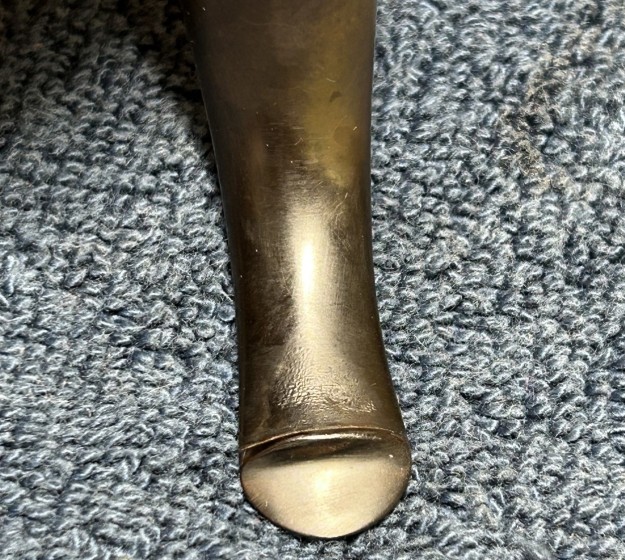
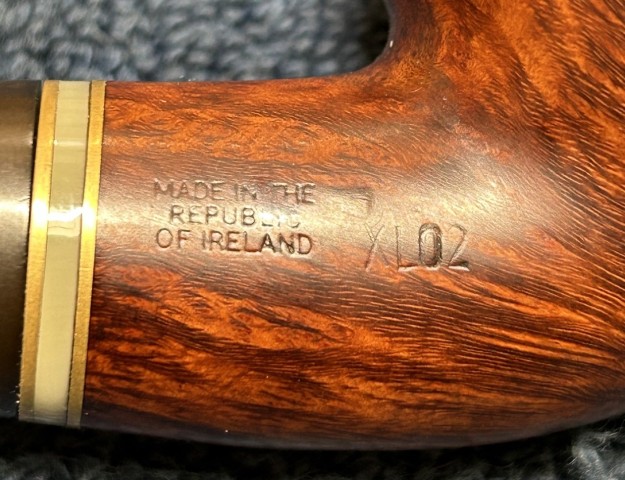
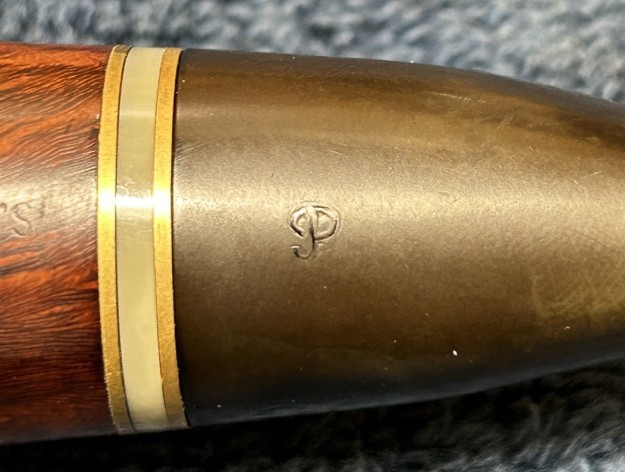
It is a cold and overcast day here in Vancouver and I decided to work on a pipe that has been sitting here for many years. It was purchased on 12/17/2016 off an eBay auction from Somerset, United Kingdom. This is a canted bowl Dublin. The smooth finish on this pipe, around the bowl and shank has a mix of flame and straight grain highlighted by a brown and a green wash over the briar. The stamping is faint but readable. It is stamped on the left side of the shank and reads Peterson’s [over] “Churchwarden”. On the right side of the shank it is stamped Made in the Republic of Ireland (three lines). The pipe was a well used pipe when Jeff received it. There was dust and grime ground into the finish. The mixture of brown stains and green highlights some beautiful grain under the dirt. The bowl was moderately caked and there was an overflow of lava on the smooth rim top. The inner edge had some damage. The stem is vulcanite and was heavily oxidized and had light tooth marks, chatter on both sides ahead of the button. There is a stamped “P” logo on the left side of the taper stem. Jeff took photos of the pipe before he started his clean up work. He took photos of the bowl and rim top to show what they looked like before his clean up. You can see the light lava coat on the rim top and the cake in the bowl. The inner edge shows some damage around the edge. Some spots it is nicked from what appears to be a reamer and others seem to be burn damage. He also took some of the stem to show the condition of both sides. The photos of the sides and heel of the bowl show the uniquely stained grain around the bowl and shank. The mixture of brown stains and green wash adds depth to the finish on the pipe. Even under the grime it is a real beauty. The stamping on this one was on the sides of the shank and are shown in the photos below. It is clear and readable as noted above. You can also see the stamped P on the left side of the stem. I turned to The Peterson Pipe by Mark Irwin and Gary Malmberg, p. 313 to the listing under Specialty Briars. It says this is a term used to describe several lines. Here is the information on the Churchwarden.

Churchwarden (1945-) Long pipe with various smaller bowl shapes and a fishtail mouthpiece; smooth finish, rustic starting in1969, spigot in 2018.

Now it was time to work on the pipe. Jeff had thoroughly cleaned up the pipe. He reamed the pipe with a PipNet Pipe Reamer and cleaned up the remnants with a Savinelli Fitsall Pipe Knife. He scrubbed the bowl with undiluted Murphy’s Oil Soap with a tooth brush. He rinsed it under running warm water to remove the soap and grime. He cleaned out the inside of the shank and the airway in the stem with alcohol, cotton swabs and pipe cleaners. He scrubbed the exterior of the stem with Soft Scrub to remove the grime and calcification. He soaked the stem in Before & After Deoxidizer and rinsed it off with warm water. The pipe looked very good when it arrived here in Vancouver. I took close up photos of the bowl, rim and the stem. The rim top and inner edge cleaned up very well. There was some darkening and some roughness to the inner edge of the rim. The stem looks cleaner, but still has some oxidation (from sitting here since 2016). There are light tooth marks and some chatter as noted above.I took photos of the stamping on the shank. The stamping is faint but readable as noted above. I took the stem off the shank and took a photo to give a sense of the flow and proportion of the pipe. It is a beautiful looking Churchwarden.I started my work on the pipe by dealing with the damage to the fill on the right side of the shank near the bowl. It is not deep but it looks like the fill has fallen out. It was quite clean and I used clear CA glue to fill in the area. Once the repair cured I will sand it when I am working on the bowl and shank polishing.I then turned to work on the damaged inner edge of the rim. I used a folded piece of 220 grit sandpaper to smooth out the damage and round the edges. Once I finished it the rim top and edges looked much better. I also used it to smooth out the repaired fill on the right side of the shank at the bowl.I polished the bowl and shank with micromesh sanding pads – dry sanding with 1500-12000 grit pads. I wiped the bowl down after each pad to remove the grit. The bowl began to take on a rich shine. It is a beauty. I rubbed the bowl down with Before & After Restoration Balm. I worked it into the briar with my finger tips. I let it sit for 10 minutes and the Balm did its magic. It enlivens, cleans and preserves the briar. It certainly brought this bowl back to life. I buffed it off with a clean cloth and took the following photos. I set the bowl aside and turned my attention to the oxidized stem. I worked on it with Soft Scrub and cotton pads. I was able to remove the majority of the oxidation with the pads and polish. The stem is looking much better.I touched up the “P” stamp on the left side of the stem with white enamel fingernail polish. I applied it with a dauber and worked it into the stamp with a tooth pick. Once it had dried I scraped and sanded off the excess with a 1200 grit micromesh sanding pad. It looked very good.I worked on the remaining oxidation on the vulcanite stem surface and chatter near the button with a new product I am using. I ordered a set of 2 inch sanding pads for 320-3500 grit sanding pads from Amazon. They work amazingly well and are easy to manage and sand close to the sharp edge of the button.I polished the stem with micromesh sanding pads – 1500-12000 grit pads. I wiped it down with a damp cloth after each sanding pad.I polished it with Before & After Pipe Stem Polish – both Fine and Extra Fine. I gave it a coat of Obsidian Pipe Stem Oil. I set it aside to dry. This delicate Republic Era Peterson’s Dublinesque “Churchwarden” with a vulcanite taper stem is a classic looking Churchwarden Specialty Pipe. The mix of stains once cleaned up really highlights the grain and the polished finish is stunning. I put the stem back on the bowl and carefully buffed the pipe with Blue Diamond on the buffing wheel. I gave the bowl and the stem multiple coats of carnauba wax on the buffing wheel and followed that by buffing the entire pipe with a clean buffing pad. I hand buffed the pipe with a microfiber cloth to deepen the shine. The finished Peterson’s “Churchwarden” fits nicely in the hand and feels great. Give the finished pipe a look in the photos below. The dimensions of the pipe are Length: 10 inches, Height: 1 ¾  inches, Outside diameter of the bowl: 1 1/8 inches, Chamber diameter: ¾ of an inch. The weight of the pipe is 29 grams /1.02 ounces. I will be adding the pipe to the Irish Pipe Makers Section of the rebornpipes store. If you are interested in purchasing this pipe send me a message or an email. Thanks for reading this blog and my reflections on the pipe while I worked on it.

As always, I encourage your questions and comments as you read the blog. Thanks to each of you who are reading this blog. Remember we are not pipe owners; we are pipe men and women who hold our pipes in trust until they pass on into the trust of those who follow us.

What an incredible beautifully grained Ivarsson Design Danish Made Stanwell 75


Blog by Steve Laug

It is a cold day, but still sunny here in Vancouver and I decided to work on another pipe that was purchased on 01/26/2023 in a lot of pipes that came to us from Copenhagen, Denmark. This is a Danish oval shank Freehand with a smooth finish and great grain. It is another Made in Denmark Stanwell. The smooth finish on this pipe, around the bowl and shank has a mix of flame and straight grain highlighted by the rich brown stain. The pipe is stamped on the underside of the shank next to the silver band and reads STANWELL [over] Made in Denmark. On the underside mid shank, it is stamped with the shape number 75. The end of the shank sports a silver band that is decorative. The pipe was a well used pipe when Jeff received it. There was dust and grime ground into the finish. The mixture of brown stains highlights some beautiful grain under the dirt. The bowl was moderately caked and there was an overflow of lava on the smooth rim top. The inner edge looked quite good. The stem is vulcanite and was dirty, oxidized and had light tooth marks, chatter on both sides ahead of the button. There is an inlaid silver crown S logo on the top side of the taper stem. Jeff took photos of the pipe before he started his clean up work. He took photos of the bowl and rim top to show what they looked like before his clean up. You can see the lava coat on the rim top and the cake in the bowl. The inner edge looks to be okay. He also took some of the stem to show the condition of both sides. The photos of the sides and heel of the bowl show the uniquely stained grain around the bowl and shank. The mixture of brown stains adds depth to the finish on the pipe. Even under the grime it is a real beauty. The stamping on this one was on the underside of the shank and is shown in the photo below. It is clear and readable as noted above. You can also see the silver inlaid crown S on the top of the saddle stem. Before I started my work on the pipe I wanted to see if I could find any information that would help me get a sense of the line. I turned to Pipephil to see if there was any listing on the Stanwell pipes with a simple silver band (http://pipephil.eu/logos/en/logo-stanwell.html). There was nothing listed.

I then turned to Pipedia (https://pipedia.org/wiki/Stanwell) for more information. The article is great and gives a lot of history on the brand.

There was also a link to a shape article by Bas Stevens that I originally published on rebornpipes. I looked up the 75 shape number to see who had designed that shape and there was nothing there (https://pipedia.org/wiki/Stanwell_Shape_Numbers_and_Designers). The shape 75 is described as a Freehand, slightly bent, oval stem and mouthpiece, by Sixten Ivarsson.

Now it was time to work on the pipe. Jeff had thoroughly cleaned up the pipe. He reamed the pipe with a PipNet Pipe Reamer and cleaned up the remnants with a Savinelli Fitsall Pipe Knife. He scrubbed the bowl with undiluted Murphy’s Oil Soap with a tooth brush. He rinsed it under running warm water to remove the soap and grime. He cleaned out the inside of the shank and the airway in the stem with alcohol, cotton swabs and pipe cleaners. He scrubbed the exterior of the stem with Soft Scrub to remove the grime and calcification. He soaked the stem in Before & After Deoxidizer and rinsed it off with warm water. The pipe looked very good when it arrived here in Vancouver. I took close up photos of the bowl, rim and the stem. The rim top and inner edge cleaned up very well. There was some darkening on the left side and backside of the rim top. The stem looks clean but still has light tooth marks and some chatter as noted above.I took photos of the stamping on the shank. The stamping is readable as noted above. I took the stem off the shank and took a photo to give a sense of the flow and proportion of the pipe. It is a beautiful looking Freehand. I started my work on the pipe by polishing the bowl and shank with micromesh sanding pads – dry sanding with 1500-12000 grit pads. I wiped the bowl down after each pad to remove the grit. The bowl began to take on a rich shine. It is a beauty. I rubbed the bowl down with Before & After Restoration Balm. I worked it into the briar with my finger tips. I let it sit for 10 minutes and the Balm did its magic. It enlivens, cleans and preserves the briar. It certainly brought this bowl back to life. I buffed it off with a clean cloth and took the following photos. I polished the silver band on the shank end with a jewellers cloth. It works to remove the tarnish and oxidation and also protects the surface from further tarnishing.I set the bowl aside and turned my attention to the stem. I polished the vulcanite stem surface and repairs near the button with a new product I am using. I ordered a set of 2 inch sanding pads for 320-3500 grit sanding pads from Amazon. They work amazingly well and are easy to manage and sand close to the sharp edge of the button.I polished the stem with micromesh sanding pads – 1500-12000 grit pads. I wiped it down with a damp cloth after each sanding pad. I polished it with Before & After Pipe Stem Polish – both Fine and Extra Fine. I gave it a coat of Obsidian Pipe Stem Oil. I set it aside to dry.This Ivarsson Design Stanwell Made in Denmark 75 Freehand with a vulcanite taper stem is a great looking pipe and really looks like an S. Bang shape. The mix of stains once cleaned up really highlights the grain and the polished finish is stunning. I put the stem back on the bowl and carefully buffed the pipe with Blue Diamond on the buffing wheel. I gave the bowl and the stem multiple coats of carnauba wax on the buffing wheel and followed that by buffing the entire pipe with a clean buffing pad. I hand buffed the pipe with a microfiber cloth to deepen the shine. The finished Stanwell Made in Denmark 75 Freehand fits nicely in the hand and feels great. Give the finished pipe a look in the photos below. The dimensions of the pipe are Length: 5 ½ inches, Height: 1 ½ inches, Outside diameter of the bowl: 1 ¼ inches, Chamber diameter: ¾ of an inch. The weight of the pipe is 40 grams /1.41 ounces. I will be adding the pipe to the Danish Pipe Makers Section of the rebornpipes store. If you are interested in purchasing this pipe send me a message or an email. Thanks for reading this blog and my reflections on the pipe while I worked on it.

As always, I encourage your questions and comments as you read the blog. Thanks to each of you who are reading this blog. Remember we are not pipe owners; we are pipe men and women who hold our pipes in trust until they pass on into the trust of those who follow us. 

Restoring another Truly Elegant Danish made Stanwell Brass Band 56 Canadian


Blog by Steve Laug

It is a cold but sunny day here in Vancouver and I decided to work on another pipe that was purchased on 01/26/2023 in a lot of pipes that came to us from Copenhagen, Denmark. This is a classic Danish Canadian with a smooth finish and an oval shank. It is another Made in Denmark Stanwell. The smooth finish on this pipe, around the bowl and shank has a mix of grain highlighted by the rich brown stain. The pipe is stamped on the topside of the shank and reads STANWELL [over] Brass [over] Band. On the underside it is stamped with the shape number 56 [over] Made in Denmark. The end of the shank sports twin brass bands sandwiching a Cumberland acrylic spacer. The pipe was a well used pipe when Jeff received it. There was dust and grime ground into the finish. The mixture of brown stains highlights some beautiful grain under the dirt. The bowl was moderately caked and there was a moderate overflow of lava on the smooth rim top. The inner edge looked quite good. The stem is vulcanite and was dirty, oxidized and had light tooth marks, chatter and scratches on both sides ahead of the button. There is an inlaid brass crown S logo on the top side of the taper stem. Jeff took photos of the pipe before he started his clean up work on it. He took photos of the bowl and rim top to show what they looked like before his clean up. You can see the lava coat on the rim top and the cake in the bowl. The inner edge looks to be okay. He also took some of the stem to show the condition of both sides. The photos of the sides and heel of the bowl show the uniquely stained grain around the bowl and shank. The mixture of brown stains adds depth to the finish on the pipe. Even under the grime it is a real beauty. The stamping on this one was on the underside of the shank and is shown in the photo below. It is clear and readable as noted above. You can also see the brass inlaid crown S on the top of the saddle stem.Before I started my work on the pipe I wanted to see if I could find any information that would help me get a sense of the line. I turned to Pipephil to see if there was any listing on the Brass Band Line (http://pipephil.eu/logos/en/logo-stanwell.html). There was nothing listed.

I then turned to Pipedia (https://pipedia.org/wiki/Stanwell) for more information. The article is great and gives a lot of history on the brand. There was also a catalogue page courtesy of Doug Valitchka that showed the line. I have included that below.There was also a link to a shape article by Bas Stevens that I originally published on rebornpipes. I looked up the 56 shape number to see who had designed that shape and there was nothing there (https://pipedia.org/wiki/Stanwell_Shape_Numbers_and_Designers). The shape 56 is described as a Canadian with a tapered stem.

Now it was time to work on the pipe. Jeff had thoroughly cleaned up the pipe. He reamed the pipe with a PipNet Pipe Reamer and cleaned up the remnants with a Savinelli Fitsall Pipe Knife. He scrubbed the bowl with undiluted Murphy’s Oil Soap with a tooth brush. He rinsed it under running warm water to remove the soap and grime. He cleaned out the inside of the shank and the airway in the stem with alcohol, cotton swabs and pipe cleaners. He scrubbed the exterior of the stem with Soft Scrub to remove the grime and calcification. He soaked the stem in Before & After Deoxidizer and rinsed it off with warm water. The pipe looked very good when it arrived here in Vancouver. I took close up photos of the bowl, rim and the stem. The rim top and inner edge cleaned up very well. The stem looks clean but still has light tooth marks and some chatter as noted above.I took photos of the stamping on the shank. The stamping is readable as noted above. I took the stem off the shank and took a photo to give a sense of the flow and proportion of the pipe. It is a beautiful looking Danish Canadian.I started my work on the pipe by polishing the bowl and shank with micromesh sanding pads – dry sanding with 1500-12000 grit pads. I wiped the bowl down after each pad to remove the grit. The bowl began to take on a rich shine. It is a beauty. I rubbed the bowl down with Before & After Restoration Balm. I worked it into the briar with my finger tips. I let it sit for 10 minutes and the Balm did its magic. It enlivens, cleans and preserves the briar. It certainly brought this bowl back to life. I buffed it off with a clean cloth and took the following photos. I set the bowl aside and turned my attention to the stem. I polished the vulcanite stem surface and repairs near the button with a new product I am using. I ordered a set of 2 inch sanding pads for 320-3500 grit sanding pads from Amazon. They work amazingly well and are easy to manage and sand close to the sharp edge of the button.I polished the stem with micromesh sanding pads – 1500-12000 grit pads. I wiped it down with a damp cloth after each sanding pad.I polished it with Before & After Pipe Stem Polish – both Fine and Extra Fine. I gave it a coat of Obsidian Pipe Stem Oil. I set it aside to dry. This Stanwell Brass Band 56 Canadian with a vulcanite taper stem is a great looking pipe and really looks like an S. Bang shape. The mix of stains once cleaned up really highlights the grain and the polished finish is stunning. I put the stem back on the bowl and carefully buffed the pipe with Blue Diamond on the buffing wheel. I gave the bowl and the stem multiple coats of carnauba wax on the buffing wheel and followed that by buffing the entire pipe with a clean buffing pad. I hand buffed the pipe with a microfiber cloth to deepen the shine. The finished Stanwell Brass Band Canadian 56 fits nicely in the hand and feels great. Give the finished pipe a look in the photos below. The dimensions of the pipe are Length: 5 ½ inches, Height: 1 ¾ inches, Outside diameter of the bowl: 1 ¼ inches, Chamber diameter: ¾ of an inch. The weight of the pipe is 35 grams /1.23 ounces. I will be adding the pipe to the Danish Pipe Makers Section of the rebornpipes store. If you are interested in purchasing this pipe send me a message or an email. Thanks for reading this blog and my reflections on the pipe while I worked on it.

As always, I encourage your questions and comments as you read the blog. Thanks to each of you who are reading this blog. Remember we are not pipe owners; we are pipe men and women who hold our pipes in trust until they pass on into the trust of those who follow us. 

A Restored Stanwell Made in Denmark Black n’ Silver Lovat 98.


Blog by Steve Laug

I moved on to work on another pipe. The next one I chose was another Stanwell in a Pipe Sock that came to us from our connection in Copenhagen, Denmark 01/26/2023. The stamping on the pipe was very clear and readable. On the underside of the shank it is stamped ahead of the black and silver band and reads Stanwell [over] Made in Denmark [over] Black ‘n [over] Silver. the right side of the shank it is stamped with a shape number 98 mid-shank. The end of the shank had a combination silver and black fancy band on it. The stem had a brass Crowned “S” Stanwell logo inlaid on left side of the saddle stem. The bowl had a moderate cake and there was some lava, dust and debris on the rim top and inner edges. The finish was in okay condition with oils and grime ground into the briar around the bowl sides. The acrylic stem has light tooth marks on the top and a bite through on the underside next to the button. It showed a lot of promise through the grime. Jeff took photos of the pipe as he saw it at this stage of his clean up. Jeff took photos of the bowl and the rim top to show their condition. You can see the moderate cake in the bowl and the heavy overflow of lava on the top and the inner edge of the bowl. It is hard to know the condition of the inner edge because of the lava coat. The stem is also shown in the photos and you can see the bite through in the underside of the stem in the third stem photo below. He took photos of the sides and the heel of the bowl to show the amazing grain that stands out through the grime on the finish. It is a beauty!      He took photos of the stamping on the underside of the shank. It is clear and readable as noted above. He also took a photo of the band and Crown “S” logo on the stem side. There was not much information available on the Black’n Silver Line but I did find a listing on Google when I searched. Smokingpipes.com had on listed that was an Ivarsson design billiard (https://www.smokingpipes.com/pipes/estate/denmark/moreinfo.cfm?product_id=284389). I have included the description below:

We see it here in the ‘Black N Silver’ series, with a smooth, walnut finish, along with a neat, metal-accented jet-black stem. There are some dings and scratches around the bowl, but otherwise condition is good.

The best I can determine is that the Black ‘n Silver stamp refers to the colour of the band on the shank end. It has a combination of a black and silver pattern on the surface. Now it was time to work on the pipe.

Jeff had done a great job cleaning up the pipe as usual. He reamed the pipe with a PipNet reamer and cut back the cake back to the bare briar. He cleaned up the walls with a Savinelli Fitsall Pipe Knife. He scrubbed the interior of the bowl and shank with pipe cleaners, cotton swabs and alcohol to remove the tars and oils. He scrubbed the exterior of the pipe with Murphy’s Oil Soap and a tooth brush to remove the grime from the finish. He worked on the rim top lava and darkening with the soap and tooth brush. He scrubbed the inside of the stem with alcohol and pipe cleaners. He scrubbed the exterior with Soft Scrub and then soaked it in Briarville’s Pipe Stem Deoxidizer. He washed it off with warm water to remove the Deoxidizer. The pipe looked far better when it arrived. I took photos of the bowl and rim top as well as the stem to show how clean they were. You can see that rim top and edges look very good. There are some darker spots on the rim top that should come off with polishing. The stem is clean and there are tooth and chatter on both sides ahead of the button. On the underside of the stem there is a small bite through and wear that is visible in the photo.I took photos of the stamping on the sides of the shank and on the brass plaquette. The stamping is clear and readable. I removed the stem from the shank and took a photo to give a sense of what the pipe looked like and also what the band was like on the shank end. I decided to switch things up a bit on this pipe. I started with the repair to the bite through on the underside of the stem first. I greased a pipe cleaner with Vaseline and inserted it into the slot under the bite through. This prevents the repair from seeping into the airway. I filled in the hole and wear around it with black CA rubberized glue. I filled in the tooth marks next to the button on the top side at the same time. I set the stem aside to let the glue cure. I sprayed it with an accelerator and removed the pipe cleaner from the airway. The airway was clear and the airflow was perfect.Several hours later I came back to the stem. The repair had cured and I used a small file to flatten out the repaired areas on both sides. I further smoothed out the repairs with a folded piece of 220 grit sandpaper to blend them into the surrounding surface area. It was looking much better at this point. I polished the vulcanite stem surface and repairs near the button with a new product I am using. I ordered a set of 2 inch sanding pads for 320-3500 grit sanding pads from Amazon. They work amazingly well and are easy to manage and sand close to the sharp edge of the button.I polished the stem with micromesh sanding pads – dry sanding with 1500-12000 grit pads. I wiped the stem down after each sanding pad with Obsidian Oil.I polished it with Before & After Pipe Stem Polish – both Fine and Extra Fine. I gave it a coat of Obsidian Pipe Stem Oil. I set the stem aside and turned my attention to the bowl. I started my work on the pipe by polishing the briar with 1500-12000 grit micromesh sanding pads. I wiped the bowl down after each sanding pad with a damp cloth. I polished the black and Sterling Silver band with a jewellers cloth to restore the shine and remove the tarnish. It really glows now. I rubbed the briar down with Before & After Restoration Balm. I worked it into the briar with my fingertips. The product works to clean, enliven and preserve the briar. I let it sit for 10 minutes while I worked on the stem. After the time passed I buffed it with a cotton cloth to deepen the shine. The briar really comes alive with the balm. I am excited to put the finishing touches on this unique Stanwell Made in Denmark Black’n Silver 98 Lovat. I put the pipe back together and buffed it with Blue Diamond on the buffing wheel. I gave the bowl and the stem multiple coats of carnauba wax. I buffed the pipe with a clean buffing pad to raise the shine and hand buffed it with microfiber cloth to deepen the shine. It is fun to see what the polished bowl looks like with the brass plaquette and the polished vulcanite stem. This Stanwell Black’n Silver 98 Lovat is nice looking and the pipe feels great in my hand. It is light and well balanced. Have a look at it with the photos below. The dimensions are Length: 5 inches, Height: 1 ½ inches, Outside diameter of the bowl: 1 1/8 inches, Chamber diameter: ¾ of an inch. The weight of the pipe is 1.20 ounces/34 grams. It is a beautiful pipe and one that I will be putting in the Danish Pipemaker Section on the rebornpipes store. Thanks for walking through the cleanup with me as I worked over this pipe.

As always, I encourage your questions and comments as you read the blog. Thanks to each of you who are reading this blog. Remember we are not pipe owners; we are pipe men and women who hold our pipes in trust until they pass on into the trust of those who follow us. 

Spiffing Up a Handsome Churchwarden


Blog by Kenneth Lieblich

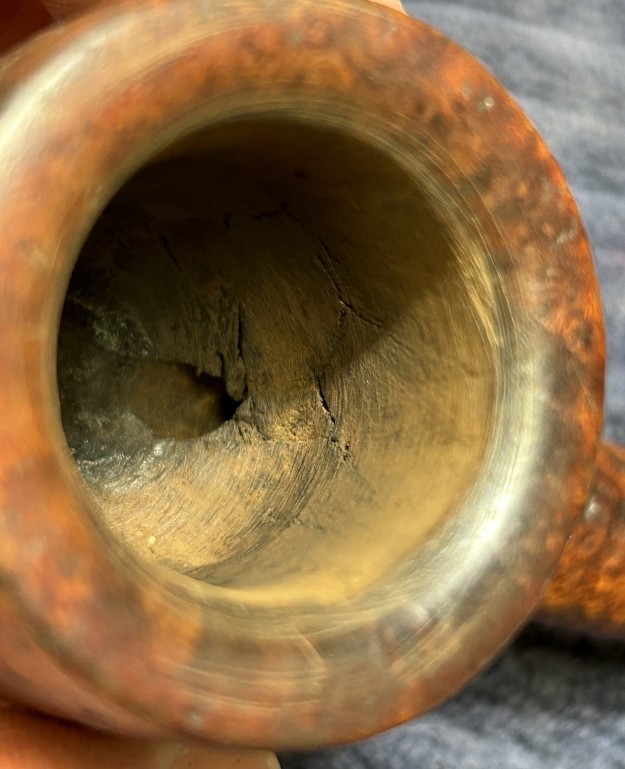
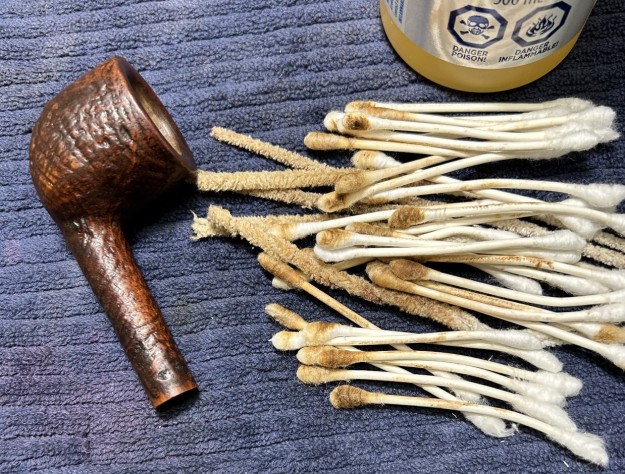
Next on the chopping block is a charming bent Dublin churchwarden (ten inches long), commissioned for a priest friend of mine. He expressly asked for a churchwarden (of course, he did). Fortunately, I had one on hand and I did a nifty restoration job on it. This is just a quick-and-dirty report for two reasons. First, I lost most of the photos I took of the restoration. Grrr. Second, this pipe has literally no markings on it, so I have no information to provide on its origins.The pipe was in decent condition. It had been well-smoked, but the bowl and shank were fairly clean. The bowl had notable cake on the inside and some lava on the rim. I felt that some burning was possibly there too. On the bottom of the stummel, there was a strange, hard, brown substance – possibly wood glue or putty. Not sure what it was, but it wasn’t supposed to be there! Similarly, the stem was relatively clean – not much oxidation to speak of, and what I would describe as “typical” tooth marks on the bit. The stem was slightly bent out of shape (in the yaw and roll axes) and would need to be corrected. The stem was first on my list. I wiped the outside down with Murphy’s Oil Soap on some cotton pads. I cleaned out the insides with lemon-infused isopropyl alcohol and some churchwarden pipe cleaners.

I then heated the stem with my heat gun and gently worked the twisted stem back into place. I have bent many stems before, but churchwardens always seem trickiest – perhaps because they’re so long. In the end, I got it looking just as it should.

I scrubbed the stem with SoftScrub on some cotton pads. I built up the remaining marks on the stem with black cyanoacrylate adhesive and then cured it with the aid of some CA glue accelerator. I then carefully sanded the adhesive down with 220- and 400-grit sandpapers to meld seamlessly into the stem. I then used all nine Micromesh pads (1,500 through 12,000 grit) to bring out the lovely black lustre on the stem. I also used Obsidian Pipe Stem Oil in between each pad scrubbing (from 3,600 onward).

Now for the stummel. I reamed out the bowl to remove the built-up cake and followed that with 220-grit sandpaper taped to a dowel to eliminate as much as I could. I took the chamber down to bare briar, as I wanted to ensure there were no hidden flaws in the wall. Fortunately, there were none.

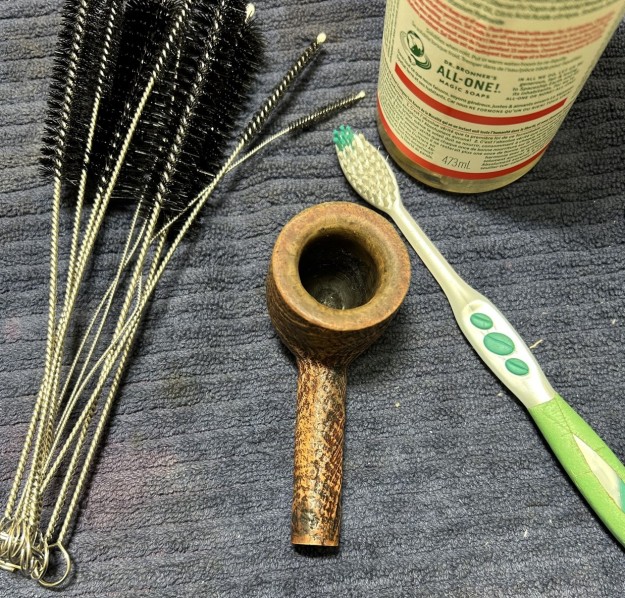
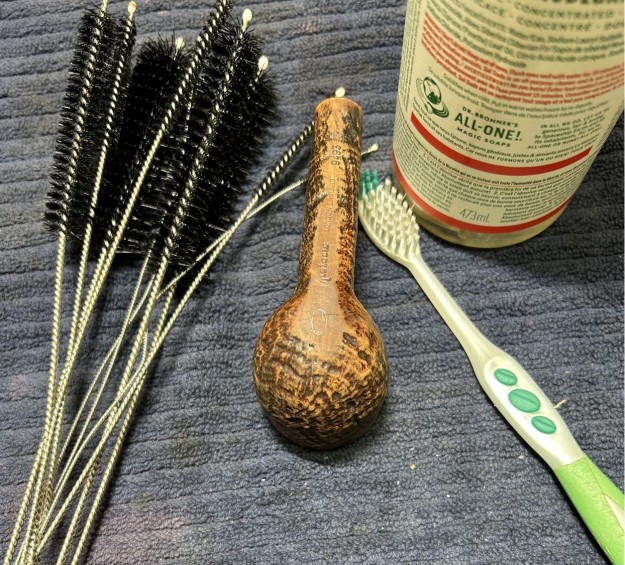
I then proceeded to clean out the insides of the shank with Q-tips, pipe cleaners, and lemon-infused isopropyl alcohol. There was quite a bit of filth inside this stummel and it took a fair amount of cotton to get it clean. I used cotton rounds and some Murphy’s Oil Soap to scrub the outside of the stummel. I followed that up by cleaning the insides of the stummel with some Castile soap and tube brushes.

Next, I decided to de-ghost the pipe in order to remove any lingering smells of the past. I thrust cotton balls into the bowl and the shank and saturated them with 99% isopropyl alcohol. I let the stummel sit overnight. This caused any remaining oils, tars and smells to leach out into the cotton. The bowl was nice and clean after this.

In order to safely remove the damage on the rim, I “topped” the pipe – that is to say, I gently and evenly sanded down the rim on a piece of 220-grit sandpaper. This effectively removed the damage, without altering the look of the pipe. I used some 220-grit sandpaper to remove the brown stuff on the bottom. No harm done. Then I sanded the stummel down with all nine Micromesh pads (1,500 through 12,000 grit).

Finally, I applied some Before & After Restoration Balm and buffed it with a microfiber cloth. During the restoration, I noticed some previously repaired damage to the end of the shank. The repair was sound but ugly, so I decided to add a charming band to the shank. I think it suits the pipe quite well and brings a bit of “bling”.

I then took the pipe to my bench polisher and buffed it with White Diamond and a few coats of carnauba wax. Wow – the pipe really looks lovely.

This churchwarden will suit my priest friend very well and I know that he will enjoy smoking it for many years to come. I hope you enjoyed reading the story of this pipe as much I as I did restoring it. If you are interested in more of my work, please follow me here on Steve’s website or email me directly at kenneth@knightsofthepipe.com. Thank you very much for reading and, as always, I welcome and encourage your comments.

Breathing New Life into a Danish Design Stanwell Royal Guard 32 Bulldog


Blog by Steve Laug

The rain has stopped for the moment here in Vancouver and I am up early so I decided to work on another pipe that was purchased on 01/26/2023 in a lot of pipes that came to us from Copenhagen, Denmark. This is a classic Danish Straight Bulldog with a mixed finish and a diamond shank. It is another Danish Design Stanwell. The finish on this pipe is smooth and almost a matte finish. The brown stains highlight grain. The pipe is stamped on the left underside of the diamond shank and reads STANWELL [over] Danish Design [over] Royal Guard in script. On the right underside of the shank it has the shape number 32 stamped. The pipe was a well used pipe when Jeff received it. There was dust and grime ground into the finish. The mixture of brown stains highlights some beautiful grain under the dirt. The bowl was moderately caked and there was an overflow of lava on the smooth rim top. The inner edge looked quite good. The stem is acrylic and was dirty and had light tooth marks, chatter on both sides ahead of the button. There is a stamped white crown S logo stamped on the top side of the diamond saddle stem. Jeff took photos of the pipe before he started his clean up work on it. He took photos of the bowl and rim top to show what they looked like before his clean up. You can see the lava coat on the rim top and the cake in the bowl. It is interesting that the bowl bottom is clean. The inner edge looks to be okay. He took photos of the stem to show the condition of both sides. The photos of the sides and heel of the bowl show the uniquely stained grain around the bowl and shank. The mixture of brown stains adds depth to the finish on the pipe. Even under the grime it is a real beauty. The stamping on this one was on the underside of the shank and is shown in the photos below. It is clear and readable as noted above. You can also see the white stamped crown S on the top of the diamond saddle stem. Before I started my work on the pipe I wanted to see if I could find any information that would help me get a sense of the line. I turned to Pipephil to see if there was any listing on the Danish Design Royal Guard Line (http://pipephil.eu/logos/en/logo-stanwell.html). There was nothing listed.

I then turned to Pipedia (https://pipedia.org/wiki/Stanwell) for more information. The article is great and gives a lot of history on the brand. But there is nothing specific on the Danish Design Royal Guard.

I did a Google search for the Danish Design Royal Guard 32 Bulldog. I wanted to find out why the additional stamp “Danish Design” was present. I found a listing on smokingpipes.com that I am including below.

Stanwell’s “32” Bulldog is an old shape, given a bit of a revamp back in the 1990s by Tom Eltang. The plumper style of bowl works wonderfully with the hard lines of the diamond shank, and its overall compact size makes it an easy choice when searching for that smoker to take with you wherever you go.

That pretty well captured the description of the pipe I have in my hands.

There was also a link to a shape article on Pipedia written by Bas Stevens that I originally published on rebornpipes. I looked up the 32 shape number to see who had designed that shape (https://pipedia.org/wiki/Stanwell_Shape_Numbers_and_Designers). I quote that below

  1. Two versions of this shape number:
    a) Straight bulldog with a saddle stem; Stanwell’s first pipe shape (originally designed in 1942).   
  1. b) Bent Dublin-strawberry hybrid with a rounded rim and saddle stem, by Sixten Ivarsson. Redesigned by Tom Eltang in the early 1990s.

Further down the article there was this note on the shape 32a. I quote it below:

32: Poul Stanwell’s 32(a), the first shape designed for Stanwell, a classical straight bulldog, released in 1942. It was reworked by Tom Eltang and given a facelift in the 1990s.

Somewhere along the way in my reading I came across discussions on when the stamping changed from Made in Denmark to Danish Design. It is linked to the move from Denmark to Italy. I did a bit of searching for where I may have come across the information and found this discussion on Pipesmagazine Forum (https://pipesmagazine.com/forums/threads/italian-stanwell.20233/). There was discussion on the change in locale and the change in stamp. I quote some sections of the discussion below.

Brief summary of Stanwell:
1942-1982 the family era
1982-2003 Rothmans International (absorbed by British American Tobacco in 1999)
2003-now Scandinavian Tobacco Group
Italian produced pipes began 01/01/10.

Essentially the whole issue boils down to perspective, either that of a pipe-collector or a pipe-smoker.

The pipe-collector is very interested in nomenclature, as well as timeframes of production periods. Such is the case with Pre-Transition Barling’s or Pre-Lane Charatans. There’s also a romantic side on the emotive level which invests heavily in tradition and mystique. These are important considerations of course, but has not much to do with the actual smoking qualities of the pipe itself.

The pipe-smoker simply wants a well-performing pipe and in this case I’d say the Danish Design pipes are pretty close to equal with the final years of Stanwell production, what I call the “decal era”.

Now I knew that the pipe was made after the move to Italy. It was an Italian Made Stanwell that came out after 2010. Now it was time to work on the pipe.

Jeff had thoroughly cleaned up the pipe. He reamed the pipe with a PipNet Pipe Reamer and cleaned up the remnants with a Savinelli Fitsall Pipe Knife. He scrubbed the bowl with undiluted Murphy’s Oil Soap with a tooth brush. He rinsed it under running warm water to remove the soap and grime. He cleaned out the inside of the shank and the airway in the stem with alcohol, cotton swabs and pipe cleaners. He scrubbed the exterior of the stem with Soft Scrub to remove the grime and calcification. He soaked the stem in Before & After Deoxidizer and rinsed it off with warm water. The pipe looked very good when it arrived here in Vancouver. I took close up photos of the bowl, rim and the stem. The rim top cleaned up very well. There is some slight darkening and some nicks on the smooth rim top. The stem looks clean but still has light tooth marks and some chatter as noted above.I took photo of the stamping on the undersides of the diamond shank. It is clear and readable as noted above. I removed the stem from the shank and took a photo to give a sense of the proportions of the pipe. The briar is quite beautiful and the brown stains really make the grain stand out.I started my work on the pipe by addressing the darkening on the rim top and the inner edges. I used a folded piece of 220 grit sandpaper to clean up the top and the edges.I polished the smooth portions bowl and shank with micromesh sanding pads – dry sanding with 1500-12000 grit pads. I wiped the bowl down after each pad to remove the grit. The bowl began to take on a rich shine. It is a beauty. I rubbed the bowl down with Before & After Restoration Balm. I worked it into the briar with my finger tips and a horsehair shoe brush to get into the two rings around the bowl cap. I let it sit for 10 minutes and the Balm did its magic. It enlivens, cleans and preserves the briar. It certainly brought this bowl back to life. I buffed it off with a clean cloth and took the following photos. I set the bowl aside and turned my attention to the stem. I sanded out the tooth marks on the vulcanite stem surface near the button with a piece of 220 grit sandpaper. I was able to remove them all. I started polishing the stem with 600 grit wet dry sandpaper.I polished the stem with micromesh sanding pads – 1500-12000 grit pads. I wiped it down with a damp cloth after each sanding pad. I polished it with Before & After Pipe Stem Polish – both Fine and Extra Fine. I gave it a coat of Obsidian Pipe Stem Oil. I set it aside to dry. This Stanwell Danish Design Royal Guard 32 Straight Bulldog and an acrylic saddle stem is a great looking pipe with a beautiful grain. The stain once cleaned up really highlights the grain around the bowl. The polished finish is stunning. I put the stem back on the bowl and carefully buffed the pipe with Blue Diamond on the buffing wheel. I gave the bowl and the stem multiple coats of carnauba wax on the buffing wheel and followed that by buffing the entire pipe with a clean buffing pad. I hand buffed the pipe with a microfiber cloth to deepen the shine. The finished Stanwell Danish Design Royal Guard 32 Bulldog fits nicely in the hand and feels great. Give the finished pipe a look in the photos below. The dimensions of the pipe are Length: 5 inches, Height: 1 ¾ inches, Outside diameter of the bowl: 1 1/8 inches, Chamber diameter: ¾ of an inch. The weight of the pipe is 40 grams /1.41 ounces. I will be adding the pipe to the Danish Pipe Makers Section of the rebornpipes store. If you are interested in purchasing this pipe send me a message or an email. Thanks for reading this blog and my reflections on the pipe while I worked on it.

As always, I encourage your questions and comments as you read the blog. Thanks to each of you who are reading this blog. Remember we are not pipe owners; we are pipe men and women who hold our pipes in trust until they pass on into the trust of those who follow us.

Resuscitating Prince Charming


by Kenneth Lieblich

Next on the chopping block is this charming Ropp Grand Luxe 49. It is another pipe in my ongoing “French Collection” and it comes from a group of pipes I purchased recently. I have a particular interest in French pipes and pipeworks, and I grabbed this one to restore since I thought it was quite handsome. This is an old timer with a few wounds and needs just a little help to come back to life. This pipe was made by the venerable French pipe company, Ropp. Ropp has been around for a long time and their early pipes are really quite wonderful. The markings on the left-hand side of the shank read Ropp [over] Grand Luxe. The right-hand side of the shank reads 49, the shape number. There are no other markings. This pipe shape is a prince – a shape I love. This is a really pretty pipe and feels very comfortable in the hand. The stummel is a very nice piece of briar and the stem is made of buffalo horn – which tends to suggest an older piece. The stem has a tenon made of metal – not bone – and a cork-lined mortise. I remember Steve telling me that the fact the tenon is in metal (instead of bone) suggests a date around World War II. The stem has a normal, wide button – not an orific button. This all fits the date quite well.From Pipedia, here is a very brief history of the Ropp company:

Eugène-Léon Ropp (1830–1907) acquired a patent for the cherrywood pipe in 1869. In 1870, he established a workshop to manufacture such pipes in Bussang, in the Vosges mountains. Around 1893, his business moved into the former mill of Sicard (part of the community of Baume-les-Dames in Upper Burgundy. The pipes were a big success in export as well. Shortly before 1914, Ropp designated A. Frankau & Co. (BBB) to be the exclusive distributor in the UK and its colonies. Probably in 1917, a workshop in Saint-Claude in the rue du Plan du Moulin was acquired to start the fabrication of briar pipes. In 1923, another small building in Saint-Claude, serving as a workshop for polishing, was added. Cherrywood pipes were the mainstay of Ropp until the company finally closed down in September 1991. The company was taken over by Cuty-Fort Entreprises in 1994.I have been working on figuring out the dates of Ropp pipes, based on their logos. This is an ongoing project and I am far from done. However, the logo on this pipe suggests a date that in the interwar period.

On to the pipe: it was in decent shape, but it had a few issues. The stem had a few bite marks, top and bottom. It also has a natural hole in the horn. The stummel also had a few issues. The rim and the outside of the bowl had some serious scratches. There was lava on the rim and some minor scorching. The inside was pretty dirty too – it would need a thorough cleaning. The stem was first on my list. This stem has a stinger in it – and it was being quite stubborn about coming out of the tenon! I opted to warm the stem and stinger with my heat gun and this didn’t work, surprisingly. I stuck it in the freezer for 20 minutes or so and that didn’t work either. I went back to the heat gun and tried again. Ugh. I successfully managed to break the stinger. Obviously, this wasn’t great, but it’s hardly the end of the world. I took a miniature file, shaped like a cylinder and sanded the hole in the tenon. I wanted to open the aperture a bit and remove the rough metal. Came out perfectly. I wiped down the outside of the stem with Murphy’s Oil Soap on some cotton pads. Then, I cleaned out the insides with pipe cleaners and isopropyl alcohol. It took an awful lot of work to get this clean! In fact, I also used some Castille soap and tube brushes on the inside of the stem. Not something I usually do. I built up the worm hole and tooth marks on the stem with some clear cyanoacrylate adhesive and let them fully cure. I then sanded the adhesive down with 220- and 400-grit sandpapers to meld seamlessly into the stem. I then used all nine Micromesh pads (1,500 through 12,000 grit) to bring out the lovely grain of the buffalo horn on the stem. I also used Obsidian Pipe Stem Oil in between each pad scrubbing. On to the stummel, and the usual cleaning procedures were in order for this pipe. This stummel was a bit of a mess inside, so I first decided to ream out the bowl. I used the KleenReem to remove the built-up cake and followed that with 220-grit sandpaper to eliminate as much as I could. I took the bowl down to bare briar, as I wanted to ensure there were no hidden flaws in the walls of the bowl. Fortunately, there none.I then proceeded to clean out the insides of the shank with Q-tips, pipe cleaners, and isopropyl alcohol. There was considerable filth inside this stummel and it took a lot of cotton to get it clean. I followed that up by cleaning the insides with some Castile soap and tube brushes. One of difficulties I encountered here was that this pipe had a cork-lined mortise and it was in very rough shape. Despite my best efforts, the cork was disintegrating and could not be saved. I took a wire drill bit and, but hand, scraped out the remaining bit of cork with it. I used some Murphy’s Oil Soap and some cotton pads on the outside of the stummel. That removed any latent dirt that blighted the wood. I moved on to de-ghost the bowl. I thrust some cotton balls into the bowl and the shank and saturated them with 99% isopropyl alcohol. I let the stummel sit overnight. This caused any remaining oils, tars and smells to leach out into the cotton. As the photos show, there were some rough scratches on the rim of this pipe. In order to remove them, I “topped” the pipe – that is to say, I gently and evenly sanded down the rim on a piece of 220-grit sandpaper. This effectively removed the damage, without altering the look of the pipe.There were a couple of very tiny pinholes in the wood. I dabbed a bit of cyanoacrylate adhesive and let them cure. I sanded the repairs down with 400-grit sandpaper. I also sanded out the scratches with the same. I felt that this pipe’s wood needed some revivification. In order to accentuate the external beauty of this pipe, I opted for aniline dye. I applied some of Fiebing’s Black Leather Dye. I applied flame from a BIC lighter in order to set the colour. I didn’t want to make the pipe black – I wanted the dye to accentuate the grain of the wood. So I used all nine Micromesh pads (1,500 through 12,000 grit) on the stummel to sand off the majority of the dye and then smooth the wood.I then added a coat Fiebing’s Light Brown Leather Dye to act as a beautiful contrast. I wiped it down with isopropyl alcohol to lighten it a bit. What a difference that made! It looked so much better with a fresh coat of stain. After that, I applied some Before & After Restoration Balm and let it sit for 15 minutes before polishing with a microfibre cloth. There is some beautiful wood after all. It is a lovely pipe! Before finishing up, I needed to address the mortise. Having removed the disintegrated cork, the tenon no longer fit in the mortise. Thanks to Steve’s advice, I fashioned a new cork lining from an old wine-bottle cork. I drilled out a hole through the middle of the cork and then used my Dremel to whittle down the cork until it fit – very tightly – in the mortise. I tested the tenon and it fit perfectly. I was delighted! Then it was off for a trip to the buffer. A dose of White Diamond and a few coats of carnauba wax were just what this pipe needed. The lovely shine made the wood very attractive. This is a very handsome pipe and will provide many years of smoking pleasure. This is a wonderfully crafted pipe and has a very elegant feel to it. It took some work, but I am proud of it. I am pleased to announce that this pipe is for sale! If you are interested in acquiring it for your collection, please have a look in the “France” pipe section of the store here on Steve’s website. You can also email me directly at kenneth@knightsofthepipe.com. The approximate dimensions of the Ropp Grand Luxe 49 Prince are as follows: length 6 in. (153 mm); height 1½ in. (36 mm); bowl diameter 1⅝ in. (40 mm); chamber diameter ¾ in. (20 mm). The weight of the pipe is 1⅛ oz. (36 g). I hope you enjoyed reading the story of this restoration as much as I enjoyed restoring it. If you are interested in more of my work, please follow me here on Steve’s website or send me an email. Thank you very much for reading and, as always, I welcome and encourage your comments.

This Stanwell POY 1992 was another fun pipe to work on


Blog by Steve Laug

The next pipe I am working on was purchased on 12/13/2022 as part of a group of pipes from a fellow in Copenhagen, Denmark. This was a dirty pipe with a lot of wear and tear and obviously it had been someone’s favourite smoker. The pipe has an identifying plate on the left side of the shank that reads Stanwell [over] 1992. There was no other stamping on the shank and the silver plate confirmed for me that it was a Stanwell Pipe of the Year. The dirty sandblast finish was not able to hide the beauty in the grime. There were tars and oils ground into the surface of the briar. The bowl had a thick cake and tobacco debris in it. There was lava that flowed over the top of the rim top and it was hard to assess the condition of the inner edge. The stem was a black vulcanite taper stem with a silver Crown S on the left side of the taper. It had some light tooth marks and chatter on both sides ahead of the button. There was also some oxidation and calcification on both sides of the stem. It had a lot of potential. Jeff took photos of the pipes before he started his clean up work. Jeff took photos of the rim and bowl to show the moderate cake and spotty lava coat covering the rim top. It really was a dirty pipe but still a beauty. He also took photos of the stem surfaces to show its overall condition when it arrived. The photos of the sides and heel of the bowls show beautiful grain around the bowl and shank sides. The sandblast is nicely done and highlights the grain. The brown stain on the briar adds depth to the finish on the pipe and makes the grain really stand out on the smooth parts. It shows some promise. He also took a photo of the stamped silver plate on the left side of the shanks. It reads as noted above. I turned to the internet to find out information about the Stanwell Pipe of the Year. I came across this interesting article and shape chart on the Blue Room Briars site where they listed a collection of the POYs (https://www.blueroombriars.com/blogs/news/the-stanwell-pipe-of-the-year-collection). I have included the shape chart and part of the article below for the information that it contains.…Recently, Blue Room Briars acquired a complete Stanwell Pipe of the Year (POY) collection spanning from 1980 – 2017. Looking at these pipes in detail reveals some interesting insights into Stanwell’s production, although it should be noted that these findings are not the final say on when a particular pipe was made, but we hope you can use it as a guide when trying to determine the era of manufacture for Stanwell pipes made after 1980. 

The first pipe of note is the 1980 POY. This pipe does not come with the engraved silver plaquette. The pipe also sports a traditional vulcanite mouthpiece.

Between 1981 and 1998, the Stanwell pipes from the POY collection have the addition of silver plaquettes denoting the year, a traditional vulcanite mouthpiece, and also have a Teflon lined mortise. This is an interesting feature that creates a very stable connection between the mortise and tenon, as well as allowing the mortise to be swabbed out easily for maintenance. It wouldn’t be unwarranted to believe that other Stanwell pipes with a Teflon sleeved mortise were probably made between the 1980s to late 1990s. This additional, and costly, feature demonstrates Stanwell’s commitment to quality manufacturing even into the last portion of the 20th century.

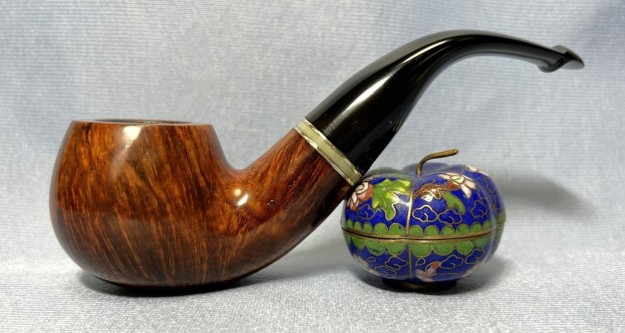
Jeff cleaned up the pipe for me. He reamed the bowl with a PipNet pipe reamer and cleaned it up with a Savinelli Fitsall Pipe Knife. He scrubbed the exterior with Murphy’s Oil Soap and a tooth brush to clean off the grime off the finish and the overflow of lava on the rim top. The cleaning had removed the grime on the rim top. He cleaned up the internals of the shank, mortise and stem with pipe cleaners, cotton swabs and alcohol to remove all of the oils and tars in the pipe. He soaked the stem in Briarvilles Pipe Stem Deoxidizer and was able to remove much of the oxidation, calcification. When it arrived here in Vancouver it was a clean pipe and I knew what I had to work with. I took photos of it before I started my part of the restoration. I took a photo of the rim top and the stem to show their condition once it arrived in Canada. Jeff was able to clean up the cake and the lava overflow that was shown in the rim and bowl photos above. The rim top looked very good but there seemed to be light damage and darkening to the inner edge of the bowl. The stem looked better, though there were light tooth marks and chatter on both sides near the button. The bend in the stem would need to be corrected as well as it had straightened slightly.I took a photo of the stamping on the silver plate on the left side of the shank to show that it was readable and undamaged by the cleanup work. I removed the stem from the shank and took a photo of the parts to give a sense of what the pipe looks like.I started my work on the inner edge and rim top with a folded piece of 220 grit sandpaper. I was able to remove the damage and the darkening. It looked much better. I started polishing the smooth rim top with micromesh sanding pads. I dry sanded it with 1500-12000 grit pads. I wiped the bowl down after each pad with a damp cloth. The crowned rim top began to take on a rich shine and grain was beginning to stand out. I sanded with all of the pads and wiped the bowl down after each pad with a soft cloth. I rubbed the bowl and shank down with Before & After Restoration Balm to deep clean the finish on the bowl and shank. I used a horsehair shoe brush to work it into the sand blast. I worked it in with my fingers to get it into the briar. The product works to clean, enliven and protect the briar. I let it sit for 10 minutes then I wiped it off and buffed it with a soft cloth. The briar really began to have a rich shine. I took some photos of the bowl at this point to mark the progress in the restoration. It is a beautiful bowl. I polished the silver plaque on the side of the shank with a jewellers cloth to remove the slight remaining oxidation and to protect and preserve it.I sanded the stem with some new products that I picked up on Amazon. They are 2×2 sanding pads with 320 -3500 grit regular sandpaper. I started with the 320 grade and worked my way through all of them and I like what see with them. I polished light tooth marks and chatter out of the stem with micromesh sanding pads – dry sanding with 1500-12000 grit pads. I wiped the stem down after each sanding pad with Obsidian Oil. I further polished it with Before & After Pipe Stem Polish – both Fine and Extra Fine. I gave it another coat of Obsidian Oil and set it aside to dry. I put the stem back on the Stanwell Pipe of the Year 1992 Cutty pipe and took the pipe to the buffer. I buffed the bowl and stem with Blue Diamond to polish the briar and the vulcanite. Blue Diamond does a great job on the smaller scratches that remain in both. I gave the bowl and the stem several coats of carnauba wax and buffed the pipe with a clean buffing pad to raise the shine. I hand buffed it with a microfiber cloth to deepen the shine. I am amazed at how well it turned out. The finished pipe is shown in the photos below. This is a beautiful Stanwell POY 1992 Cutty– the vulcanite taper stem and smooth rim top and sandblast finish combine to give the pipe a great look. The polished black, vulcanite stem looks really good with the rich browns standing out in the sandblast. The dimensions of the pipe are Length: 6 inches, Height: 2 inches, Outside diameter of the bowl: 1 1/8 inches, Chamber diameter: ¾ of an inch. The weight of the pipe is 1.27 ounces/36 grams. This is another pipe that I will be putting on the rebornpipes online store in the Danish Pipe Pipemaking Companies Section shortly, if you are interested in adding it to your collection. Thanks for walking through the restoration with me on this beauty!
As always, I encourage your questions and comments as you read the blog. Thanks to each of you who are reading this blog. Remember we are not pipe owners; we are pipe men and women who hold our pipes in trust until they pass on into the trust of those who follow us. 

A Fun Restoration of a Stanwell POY 1986 Dublin


Blog by Steve Laug

The next pipe I am working on was purchased on 12/13/2022 as part of a group of pipes from a fellow in Copenhagen, Denmark. This was a dirty pipe with a lot of wear and tear and obviously it had been someone’s favourite smoker. The pipe has an identifying plate on the left side of the shank that reads Stanwell [over] 1986. There was no other stamping on the shank and the silver plate confirmed for me that it was a Stanwell Pipe of the Year. The dirty sandblast finish was not able to hide the beauty in the grime. There were tars and oils ground into the surface of the briar. The bowl had a moderate cake that flowed over the top of the lightly crowned rim in a spotty coat of a lava and it was hard to assess the condition of the inner edge. The stem was a black vulcanite saddle stem with a silver Crown S on the left side of the saddle. It had some tooth marks and chatter on both sides ahead of the button. There was also some oxidation and calcification on both sides of the stem. It had a lot of potential. Jeff took photos of the pipes before he started his clean up work. Jeff took photos of the rim and bowl to show the moderate cake and spotty lava coat covering the rim top. It really was a dirty pipe but still a beauty. He also took photos of the stem surfaces to show its overall condition when it arrived. The photos of the sides and heel of the bowls show beautiful grain around the bowl and shank sides. The sandblast is nicely done and highlights the grain. The brown stain on the briar adds depth finish on the pipe and makes the grain really stand out on the smooth parts. It shows some promise. He also took a photo of the stamped silver plate on the left underside of the shanks. It reads as noted above. I turned to the internet to find out information about the Stanwell Pipe of the Year. I came across this interesting article and shape chart on the Blue Room Briars site where they listed a collection of the POYs (https://www.blueroombriars.com/blogs/news/the-stanwell-pipe-of-the-year-collection). I have included the shape chart and part of the article below for the information that it contains.…Recently, Blue Room Briars acquired a complete Stanwell Pipe of the Year (POY) collection spanning from 1980 – 2017. Looking at these pipes in detail reveals some interesting insights into Stanwell’s production, although it should be noted that these findings are not the final say on when a particular pipe was made, but we hope you can use it as a guide when trying to determine the era of manufacture for Stanwell pipes made after 1980. 

The first pipe of note is the 1980 POY. This pipe does not come with the engraved silver plaquette. The pipe also sports a traditional vulcanite mouthpiece.

Between 1981 and 1998, the Stanwell pipes from the POY collection have the addition of silver plaquettes denoting the year, a traditional vulcanite mouthpiece, and also have a Teflon lined mortise. This is an interesting feature that creates a very stable connection between the mortise and tenon, as well as allowing the mortise to be swabbed out easily for maintenance. It wouldn’t be unwarranted to believe that other Stanwell pipes with a Teflon sleeved mortise were probably made between the 1980s to late 1990s. This additional, and costly, feature demonstrates Stanwell’s commitment to quality manufacturing even into the last portion of the 20th century.

Jeff cleaned up the pipe for me. He reamed the bowl with a PipNet pipe reamer and cleaned it up with a Savinelli Fitsall Pipe Knife. He scrubbed the exterior with Murphy’s Oil Soap and a tooth brush to clean off the grime off the finish and the overflow of lava on the rim top. The cleaning had removed the grime on the rim top. He cleaned up the internals of the shank, mortise and stem with pipe cleaners, cotton swabs and alcohol to remove all of the oils and tars in the pipe. He soaked the stem in Briarvilles Pipe Stem Deoxidizer and was able to remove much of the oxidation, calcification. When it arrived here in Vancouver it was a clean pipe and I knew what I had to work with. I took photos of it before I started my part of the restoration. I took a photo of the rim top and the stem to show their condition once it arrived in Canada. Jeff was able to clean up the cake and the lava overflow that was shown in the rim and bowl photos above. The rim top looked very good but there seemed to be light damage and darkening to the inner edge of the bowl. The stem looked better, though there were light tooth marks and chatter on both sides near the button. The bend in the stem would need to be corrected as well as it had straightened slightly.I took a photo of the stamping on the silver plate on the left side of the shank to show that it was readable and undamaged by the cleanup work. I removed the stem from the shank and took a photo of the parts to give a sense of what the pipe looks like.I started my work on the inner edge and rim top with a folded piece of 220 grit sandpaper. I was able to remove the damage and the darkening. It looked much better. I started polishing the smooth rim top with micromesh sanding pads. I dry sanded it with 1500-12000 grit pads. I wiped the bowl down after each pad with a damp cloth. The crowned rim top began to take on a rich shine and grain was beginning to stand out. I sanded with all of the pads and wiped the bowl down after each pad with a soft cloth. I rubbed the bowl and shank down with Before & After Restoration Balm to deep clean the finish on the bowl and shank. The product works to clean, enliven and protect the briar. I worked it in with my fingers to get it into the briar. I used a horsehair shoe brush to work it into the sand blast. I let it sit for 10 minutes then I wiped it off and buffed it with a soft cloth. The briar really began to have a rich shine. I took some photos of the bowl at this point to mark the progress in the restoration. It is a beautiful bowl. I polished the silver band and plaque on the side of the shank with a jewellers cloth to remove the slight remaining oxidation and to protect and preserve it.I set the bowl aside and worked on the stem at this point in the process. The bend in the stem needed to be adjusted to follow the flow of the bowl and shank curve. I heated the stem until the vulcanite was pliable and bent it to match the curve. It looked much better. I polished light tooth marks and chatter out of the stem with micromesh sanding pads – dry sanding with 1500-12000 grit pads. I wiped the stem down after each sanding pad with Obsidian Oil. I polished it with Before & After Pipe Stem Polish – both Fine and Extra Fine. I gave it a coat of Obsidian Pipe Stem Oil. It works to protect the stem from oxidizing. I set it aside to dry. I put the stem back on the Stanwell Pipe of the Year 1986 Dublin Calabash pipe and took the pipe to the buffer. I buffed the bowl and stem with Blue Diamond to polish the briar and the vulcanite. Blue Diamond does a great job on the smaller scratches that remain in both. I gave the bowl and the stem several coats of carnauba wax and buffed the pipe with a clean buffing pad to raise the shine. I hand buffed it with a microfiber cloth to deepen the shine. I am amazed at how well it turned out. The finished pipe is shown in the photos below. This is a beautiful Stanwell POY 1986 – the vulcanite saddle stem and crowned rim top and sandblast finish combine to give the pipe a great look. The polished black, vulcanite stem looks really good with the rich browns standing out in the sandblast. The dimensions of the pipe are Length: 5 inches, Height: 2 inches, Outside diameter of the bowl: 1 ½ inches, Chamber diameter: ¾ of an inch. The weight of the pipe is 1.45 ounces/41 grams. This is another pipe that I will be putting on the rebornpipes online store in the Danish Pipe Pipemaking Companies Section shortly, if you are interested in adding it to your collection. Thanks for walking through the restoration with me on this beauty!

As always, I encourage your questions and comments as you read the blog. Thanks to each of you who are reading this blog. Remember we are not pipe owners; we are pipe men and women who hold our pipes in trust until they pass on into the trust of those who follow us.