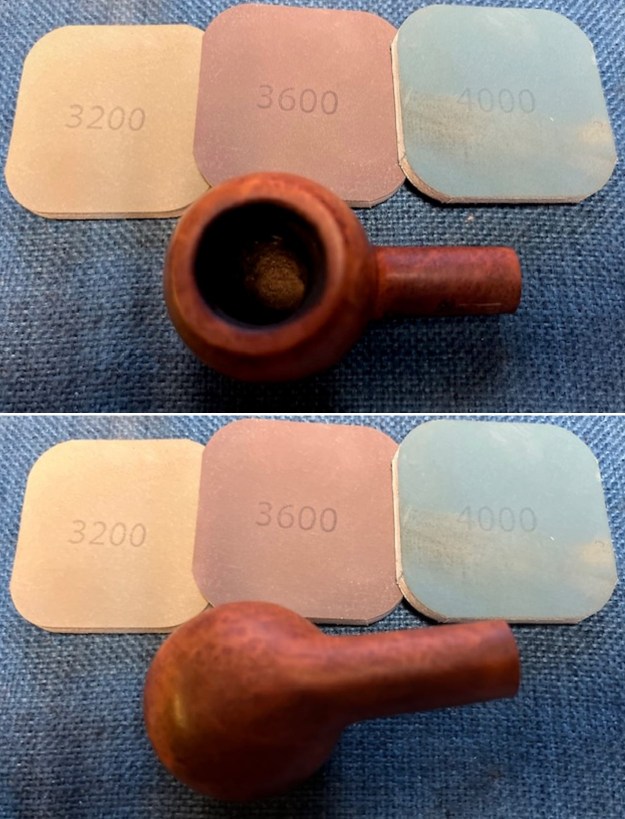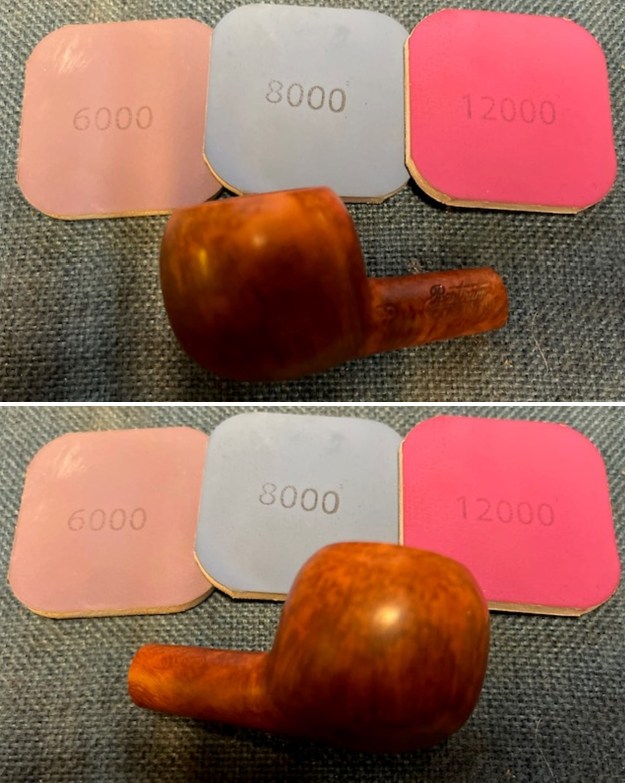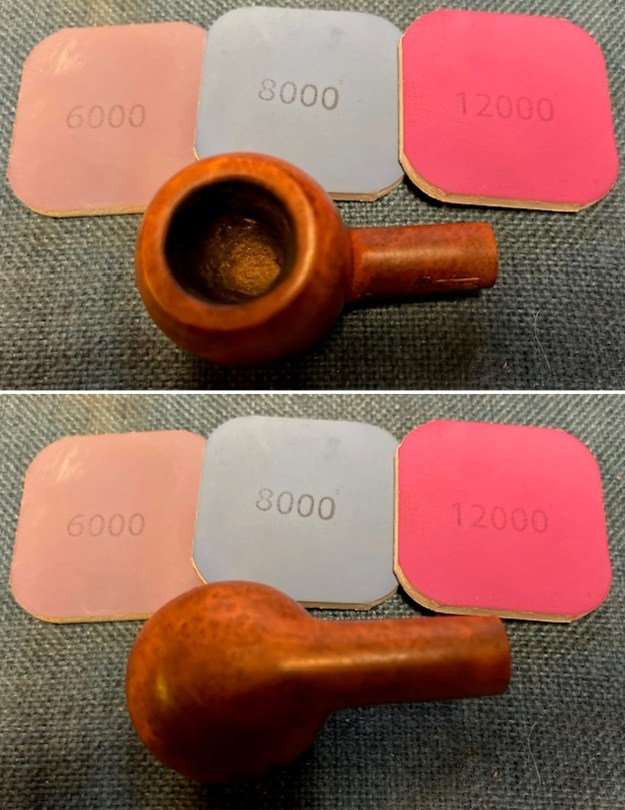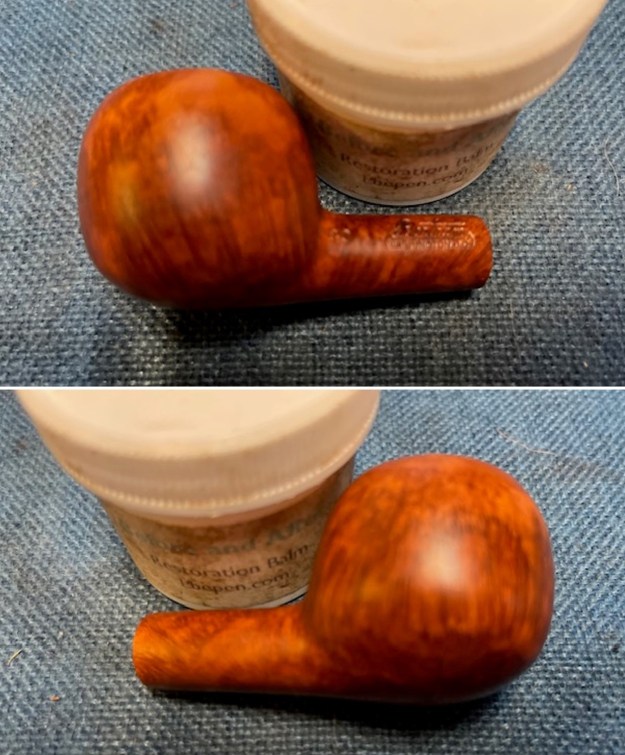
Tag Archives: shaping a stem

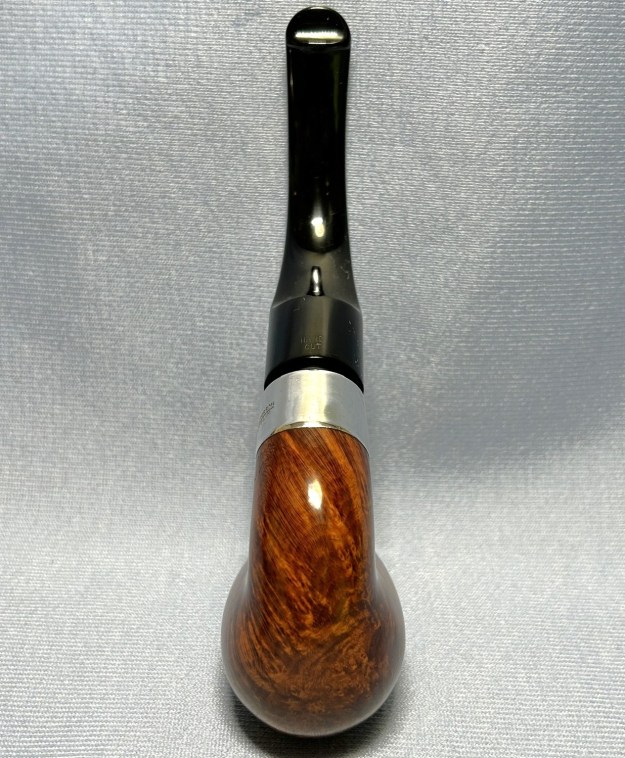
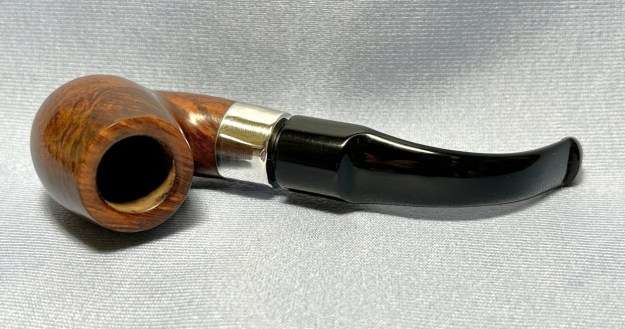
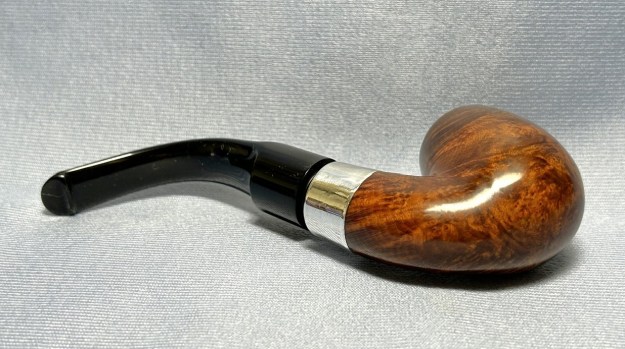
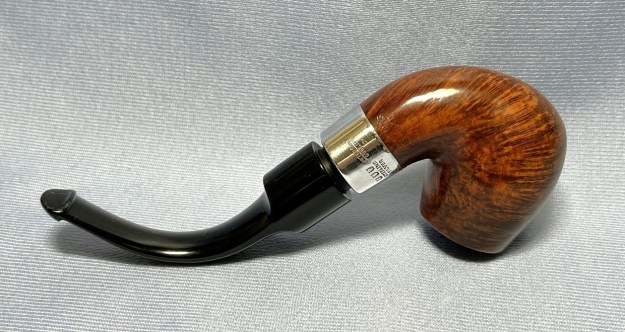
New Life for a Royal Demuth Mixed Finish Silver Rim Cap Patriotic 44 Billiard


by Steve Laug

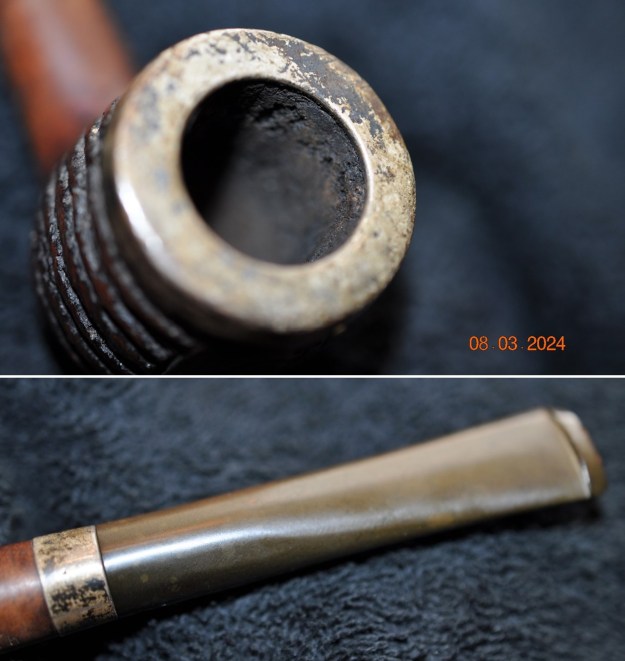
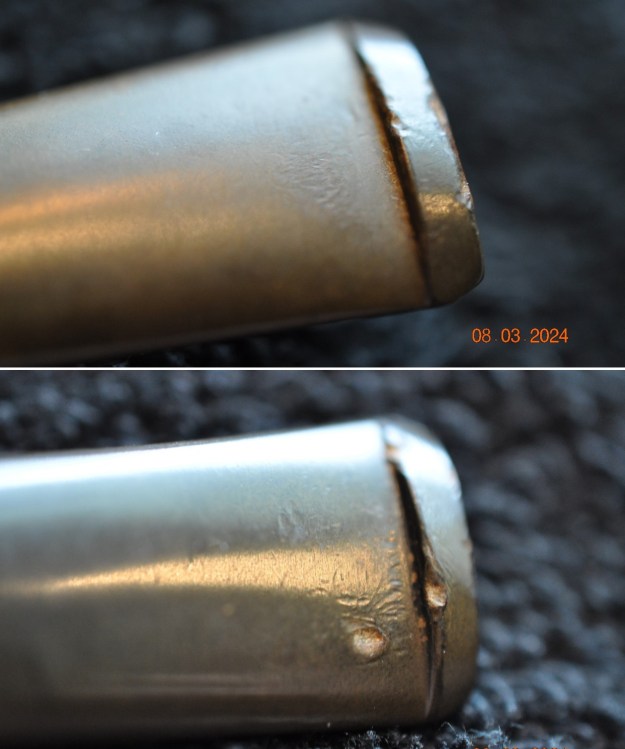
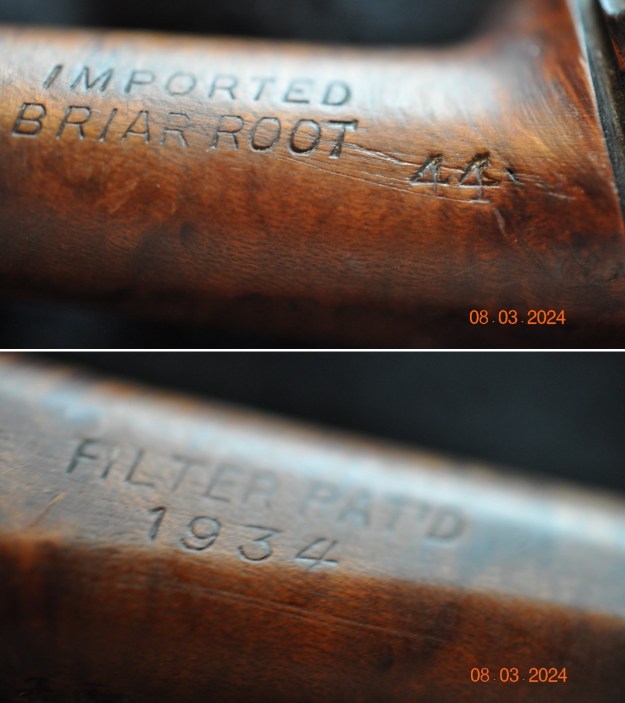
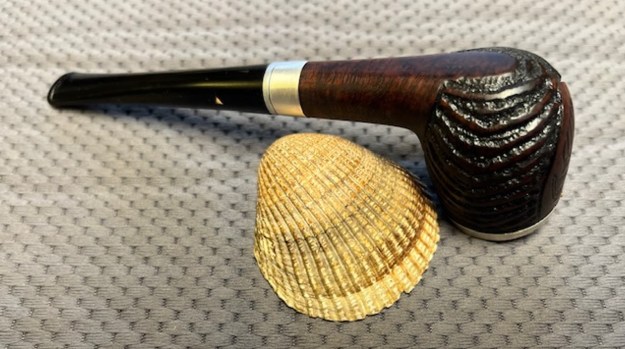
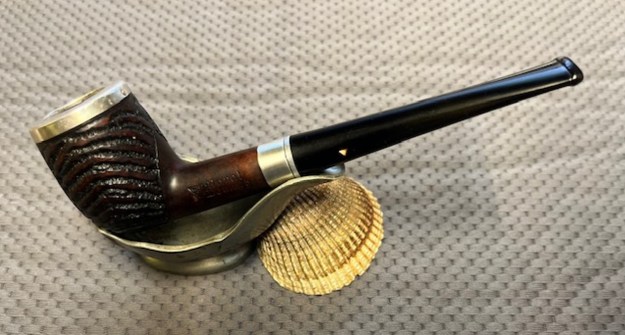
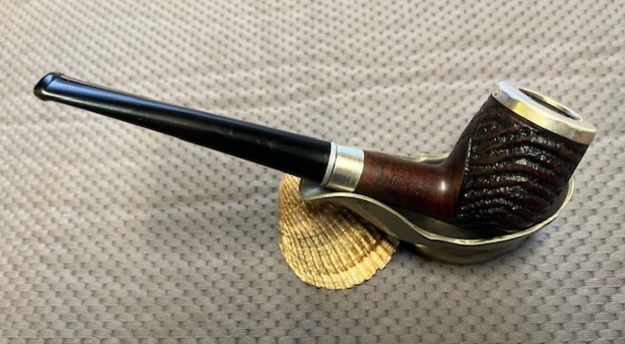
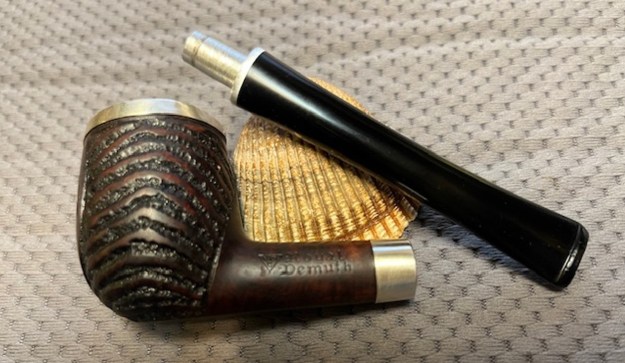
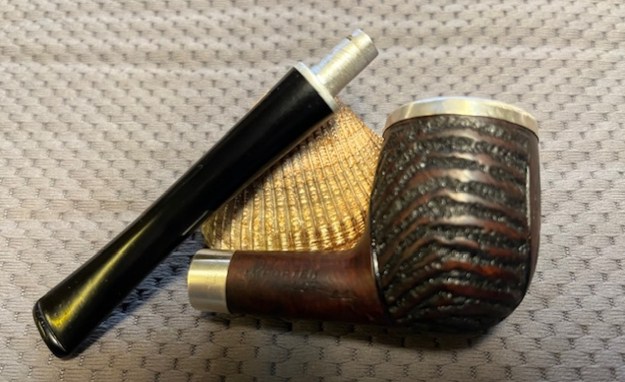
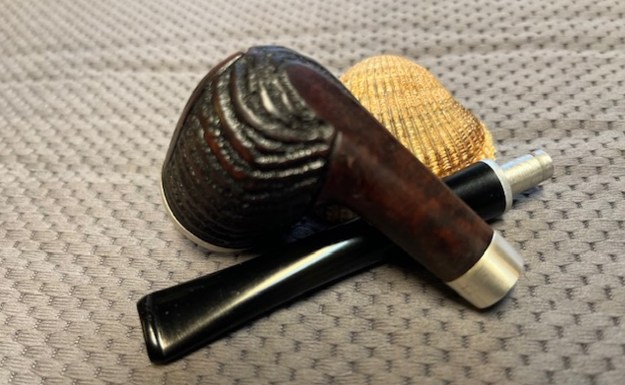
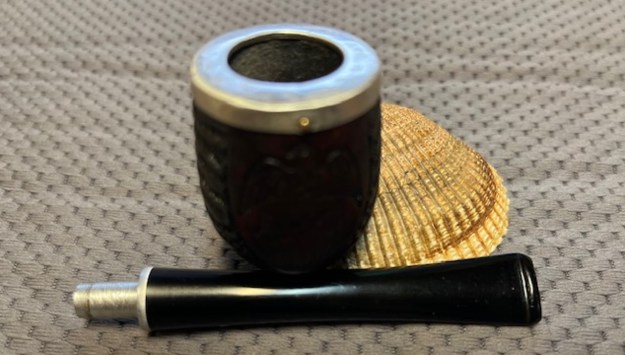
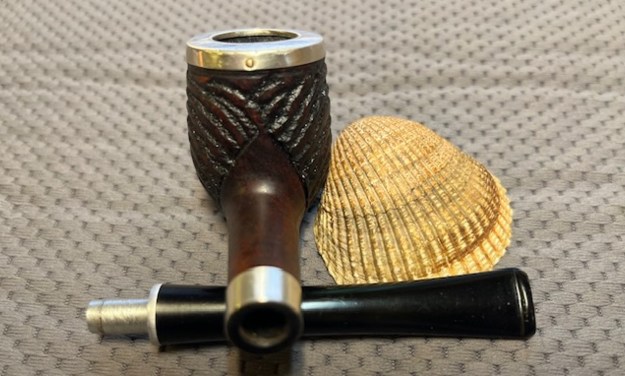
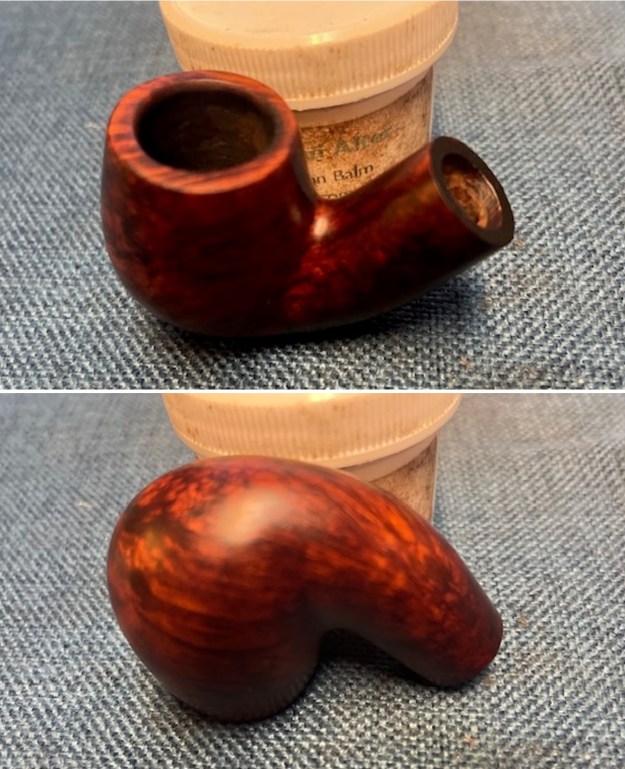
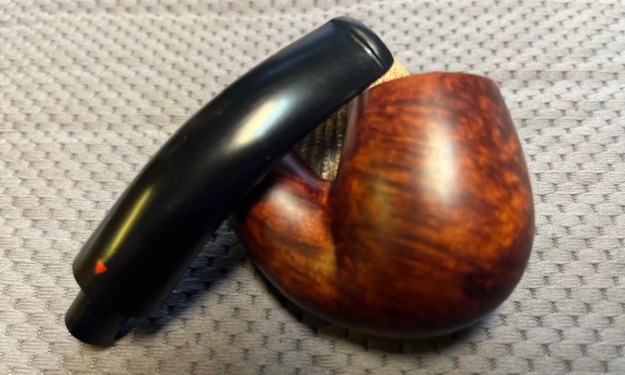
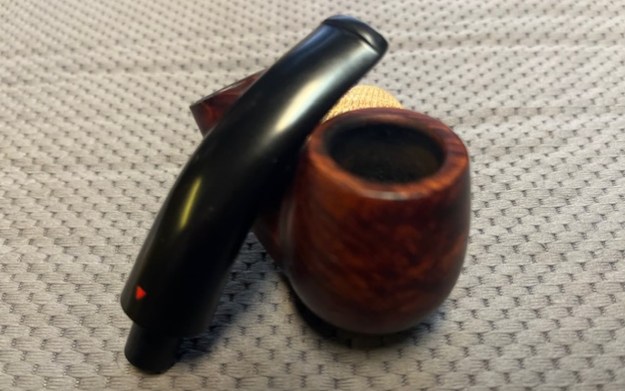
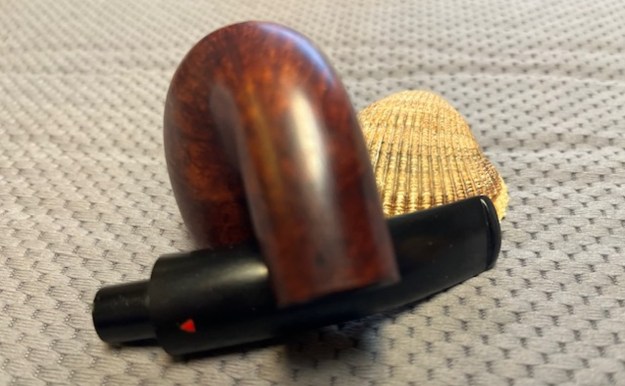
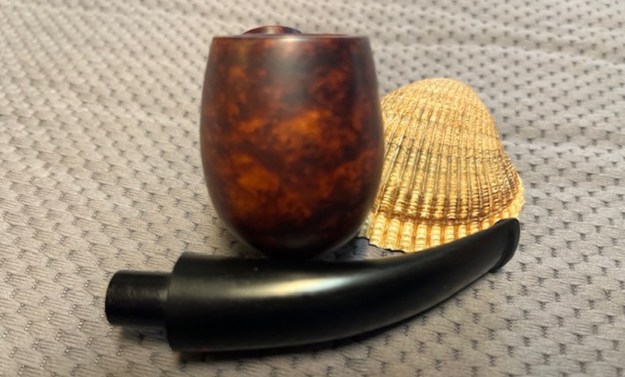
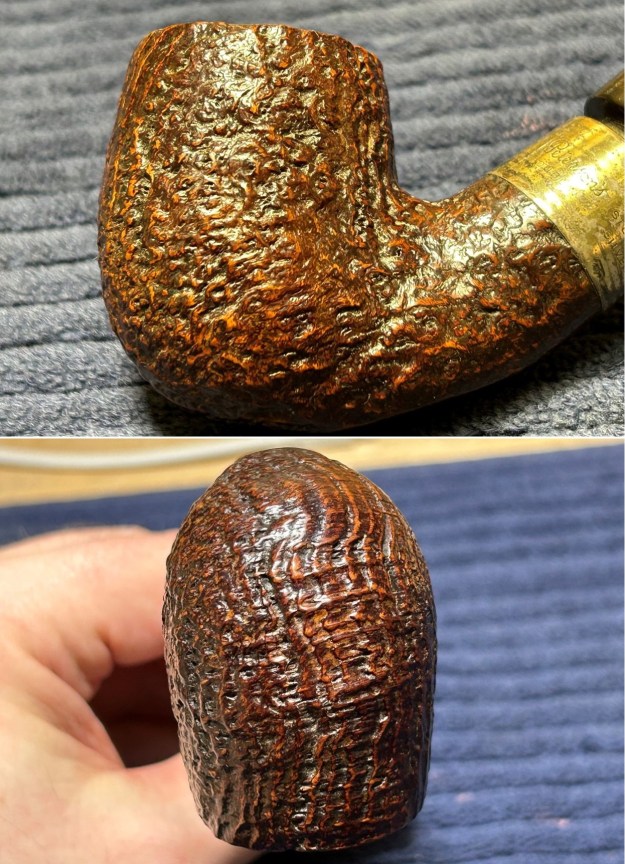
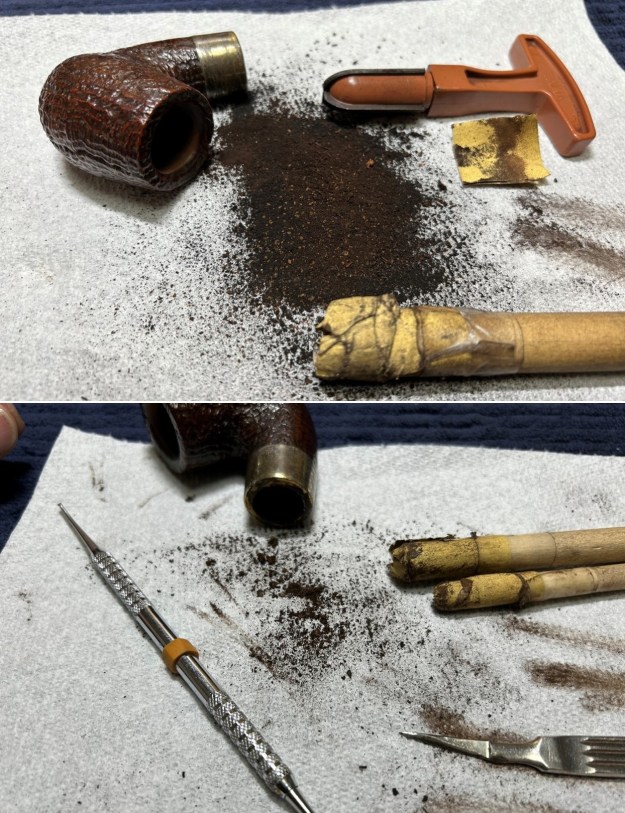
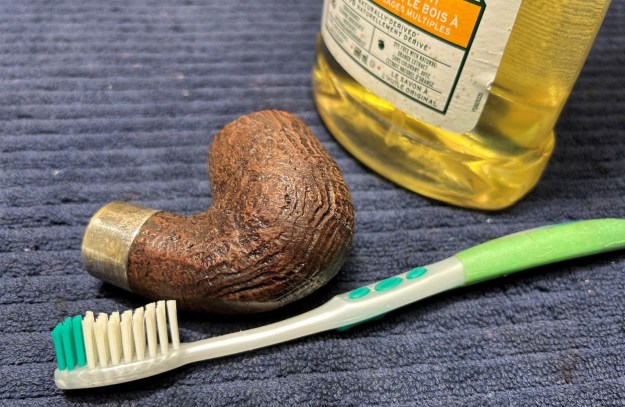
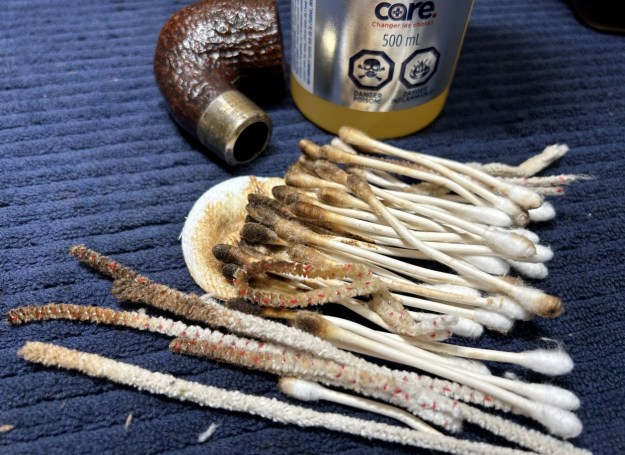
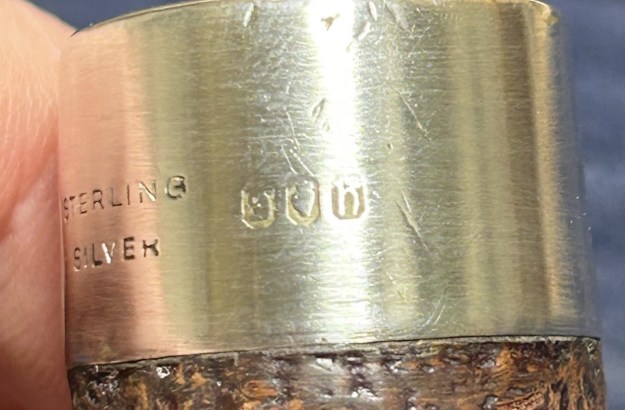
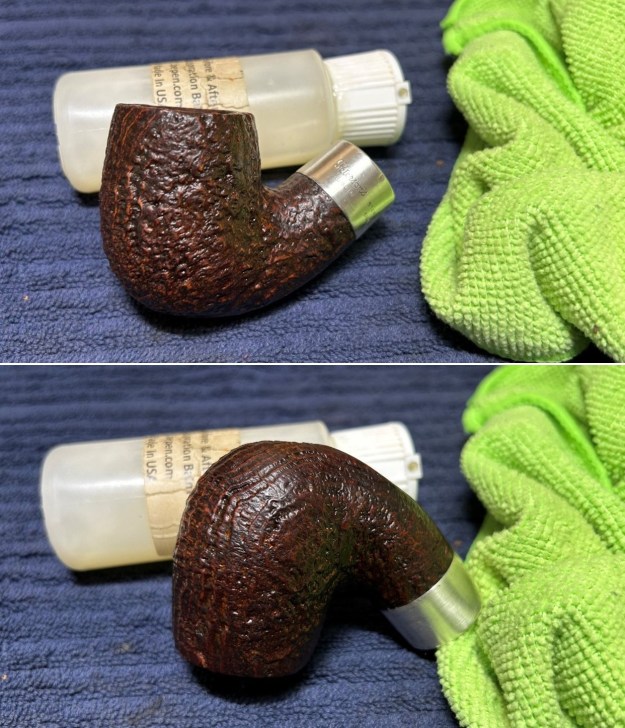
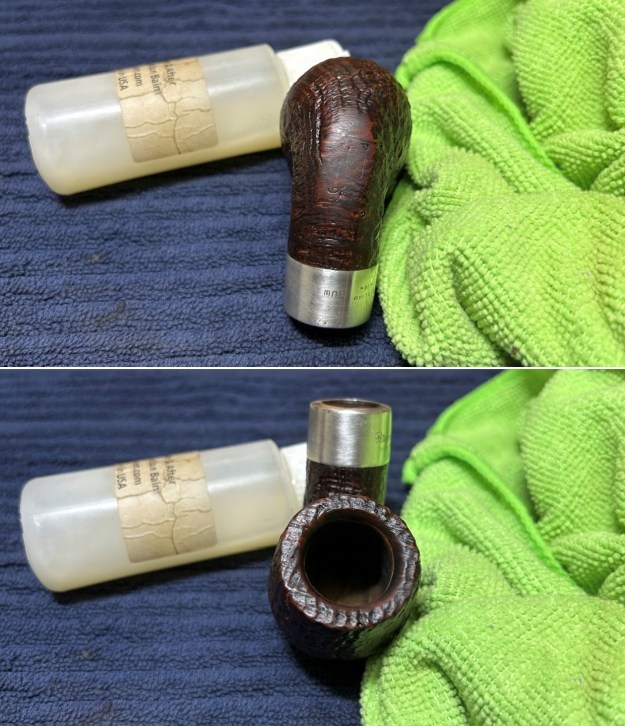
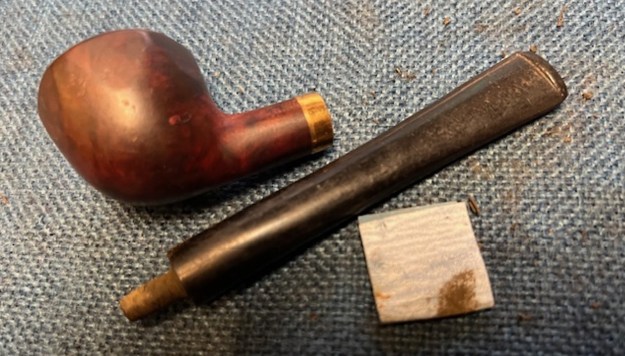
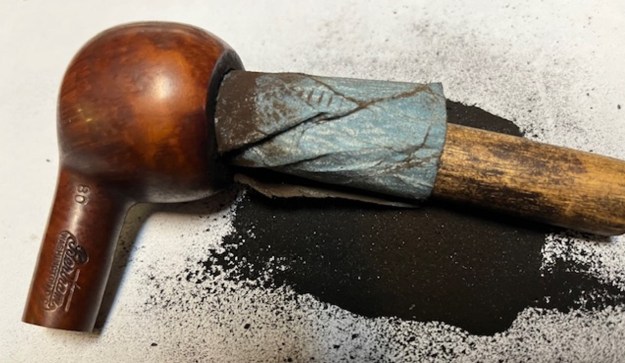
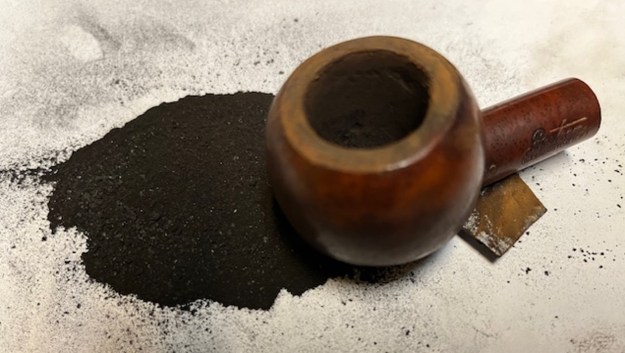
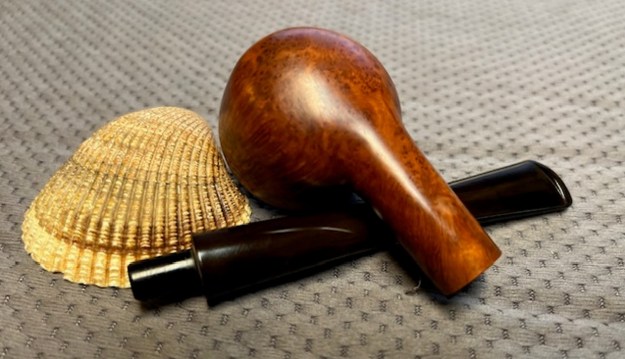
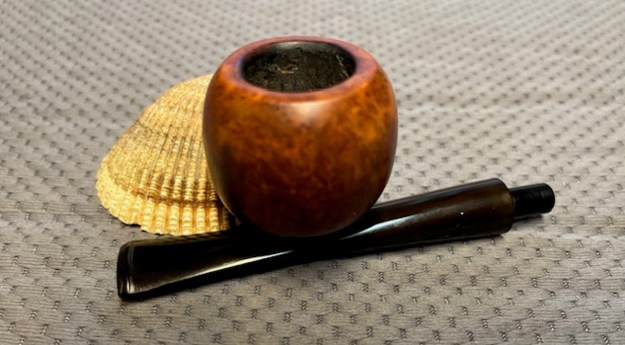
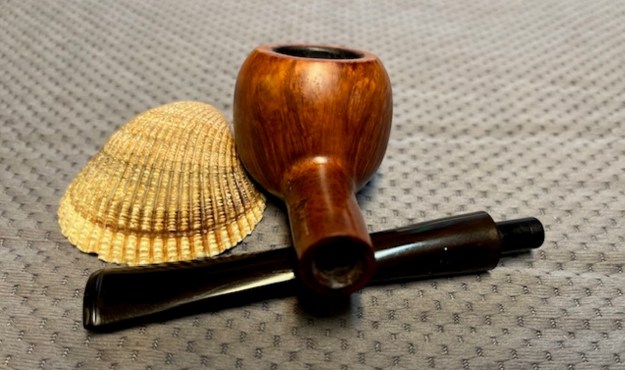
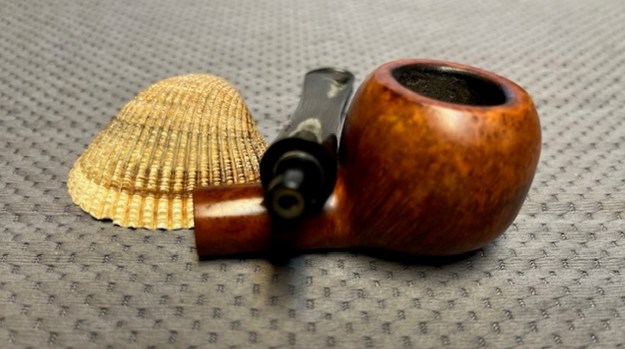
I decided work on this interesting Royal Demuth mixed finish billiard next. Jeff pick up from an auction in Blue Springs, Missouri, USA on 05/07/20. So, it has been here for a while. It had a silver rim cap and band on the shank. The bowl has some unique rustication on the sides of the bowl and a carving of an eagle standing on a shield with the stars and stripes inside. The eagle has its wings extended. The carving is well done and very tactile. The pipe is stamped on the left side of the shank and reads WDC in a triangle [followed by] Royal [over] Demuth. On the right side it is stamped Imported Briar [over] Briar Root [followed by] the shape number 44. On the underside of the shank it is stamped FILTER PAT’D [over] 1934. The stem has no markings or stampings. The stem is a replacement I believe as it does not have the filter tenon as noted on the shank. It is vulcanite with a fishtail taper stem. It is lightly oxidized and has some tooth marks on the top and underside of the stem near the button. The bowl had a thick cake in it and some bits and bobs of tobacco stuck to the walls. There was a thick lava coat on the rim top and edges. The silver rim cap is tarnished as is the silver band on the shank end. The finish was dirty but still winsome in some strange way. Jeff took some photos of the pipe before he started working on it. He took photos of the rim top and stem to show the general condition of the pipe. The bowl is heavily caked and the rim top and edges have a heavy coat of lava overflowing on to them. The silver rim cap is also tarnished as is the band on the shank. The stem is oxidized and has tooth chatter and marks on both sides ahead of the button end. He took photos of the finish and carving around the sides and heel of the bowl. It is a combination of rustication carved between smooth bands on the bowl sides and the shank. It is unique and very interesting. He took photos of the carving on the bowl front and the stamping on the sides of the shank. You can see that it is clear and readable. It reads as noted above. I removed the stem from the shank and took a photo of the parts to show how the pipe looks.   I looked on Pipephil’s site and though there were many WDC pipes there was nothing stamped Royal Demuth and nothing with any of the other stamping on the shank sides of this pipe. I turned then to Pipedia (https://pipedia.org/wiki/William_Demuth_Company). As always there is a great history of this American brand. If you are interested be sure to turn there and take time to read about it.
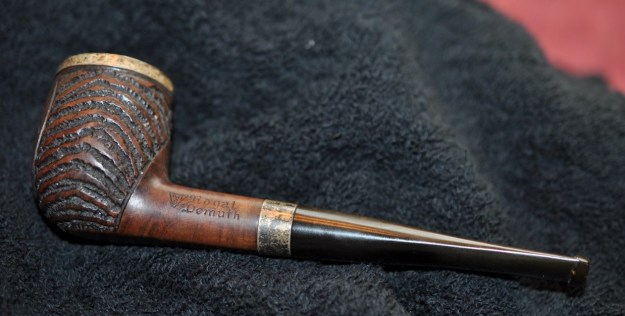
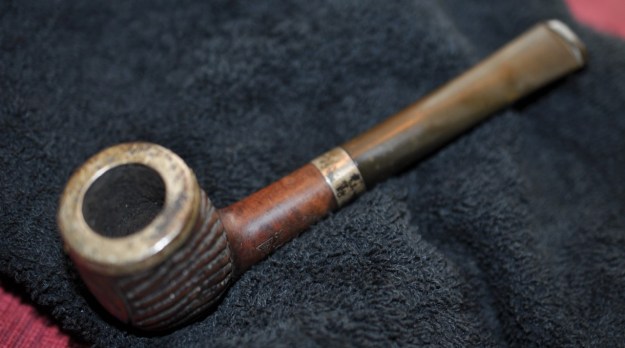
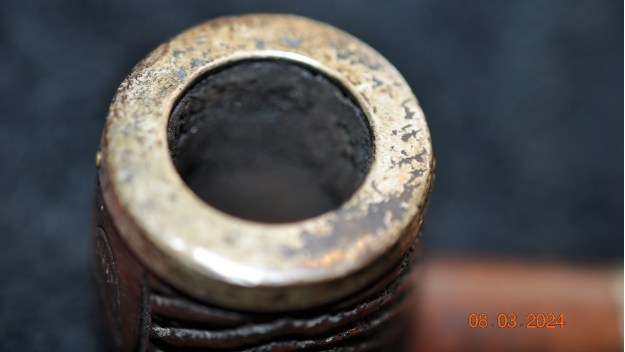
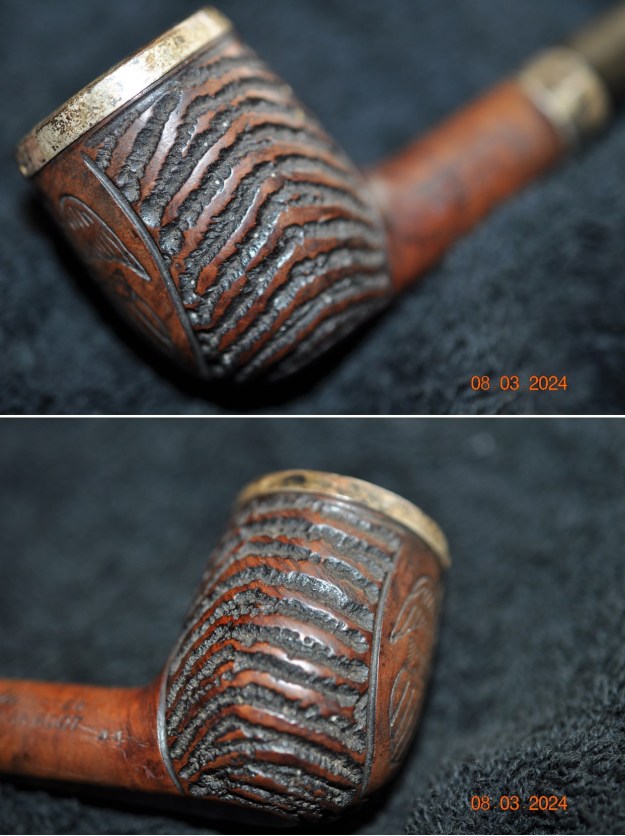
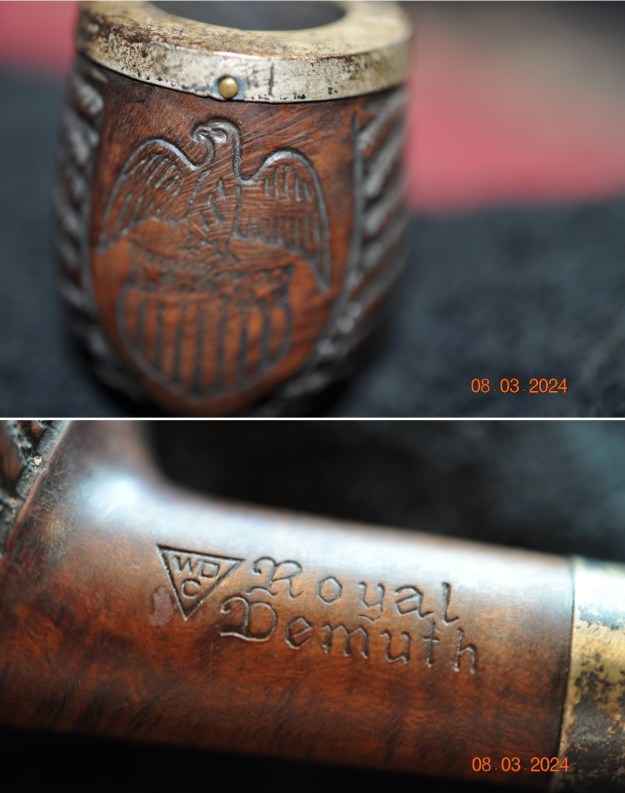
Royal Demuth example with box and filters, courtesy of Doug Valitchka

There was an interesting example of the Royal Demuth provided by Doug Valitchka that has identical stamping to the one that I am working on. It is a different shape but it identical in terms of the stamping. It also looks like it takes a filter that is similar to the Medico filter but I will double check that once it is thoroughly cleaned. This series of photos confirm that the stem on the pipe I am working on is a replacement as it is a push stem. There was also an advertisement for the WDC Changeable Filter Pipes that included the Royal Demuth. I have included that below. There is also a great article by Ben Rapaport on the Demuth – Dunhill Connection that is an enjoyable read (https://pipedia.org/wiki/A_Demuth%E2%80%94Dunhill_Connection%3F).
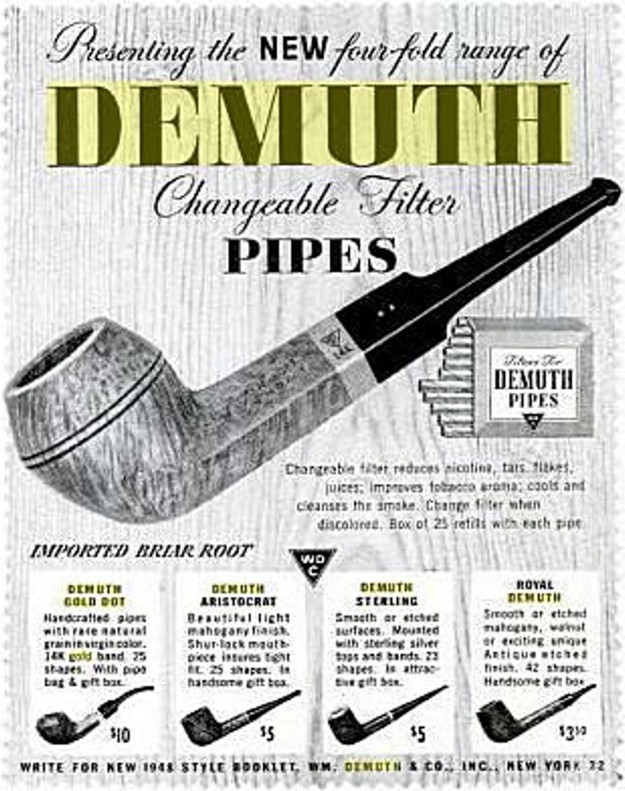
I now knew that the pipe was part of a line of Filter Pipes that WDC put out and that the filter system was patented in 1934. The stamping that the Filter was Pat’d 1934 tells that it came out after the patent was granted. However, I could not fine tune the date more than that. I also knew that the pipe I was working on was an older one but that it had been restemmed sometime in its life.

I did a bit more digging to see if I could find anything on the Royal Demuth pipe I was working on with the same stamping but also with a carved Eagle and Shield on the front of the bowl. I googled that and found two examples of the same type of carving on Worthpoint. I have included both descriptions given by the seller as well as photos.

Here is the first of the sale pipes listed: https://www.worthpoint.com/worthopedia/world-war-ii-wdc-royal-demuth-filter-1797860035

World War II era WDC Royal Demuth, says “Filter Patent’d 1934 on the bottom, “Imported Briar Root’ and the number 28 on the left side, has an Eagle and Shield motif carved into the bowl, this was on of the patriotic pipes they came out with during the war. In pretty good shape, some minor chatter on the stem, a little bit of wear on the rim. The Royal Demuths are generally considered some of the best WDC pipes.Here is the second of the sale pipes listed: https://www.worthpoint.com/worthopedia/estate-royal-demuth-pipe-carved-american-eagle
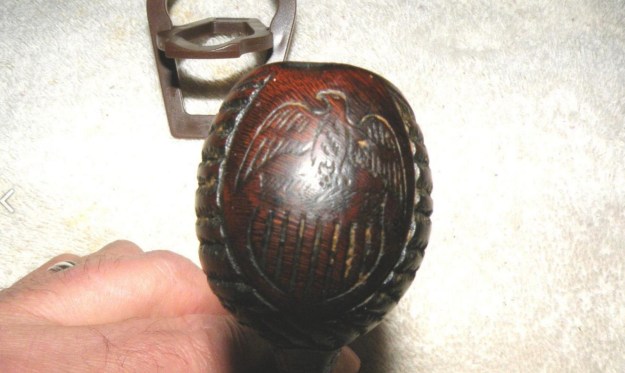
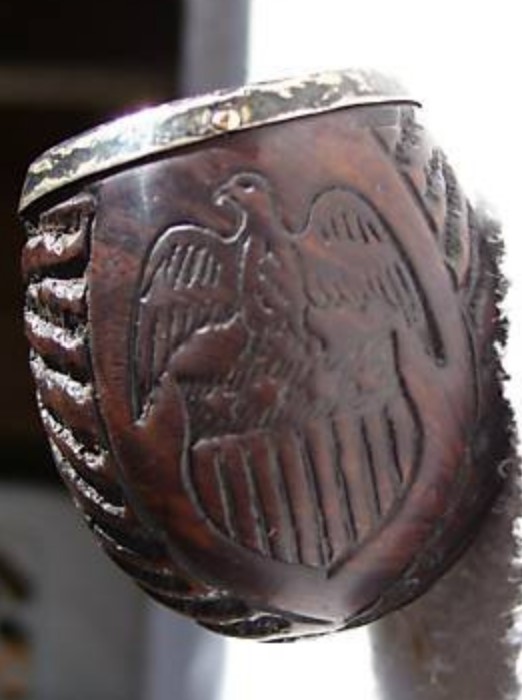
I have up for auction estate Royal Demuth pipe. It is marked on both sides and the bottom. The side that has the name also has a triangle with the letters, W, C, D inside. The other side has, Imported Briar Root, # 11. The bottom has, Filter Pat’d 1931. I am unsure of the actual date mark is does have some wear. The bowl has a beautiful American Eagle standing on a shield with 4 stars and stripes. The bowl has a strip of sterling on the rim and a band on the stem. The band is marked Sterling and has a square with a sideways anchor in it, a T in a square, and a lion in rectangle. I do not know the name of this company. The pipe is a well loved pipe and has been used. Some of the pictures were taken before I cleaned the silver.

From these sale sites I learned that the pipe I was working on was a World War II era WDC Royal Demuth. The patent date gave a start date and thus I knew it was made after that. It also has an Eagle and Shield motif carved into the bowl and the first seller surmised that it was one of the patriotic pipes that came out with during the war. I also knew that the stem was replaced sometime later and did not have the filter system expected on this pipe.

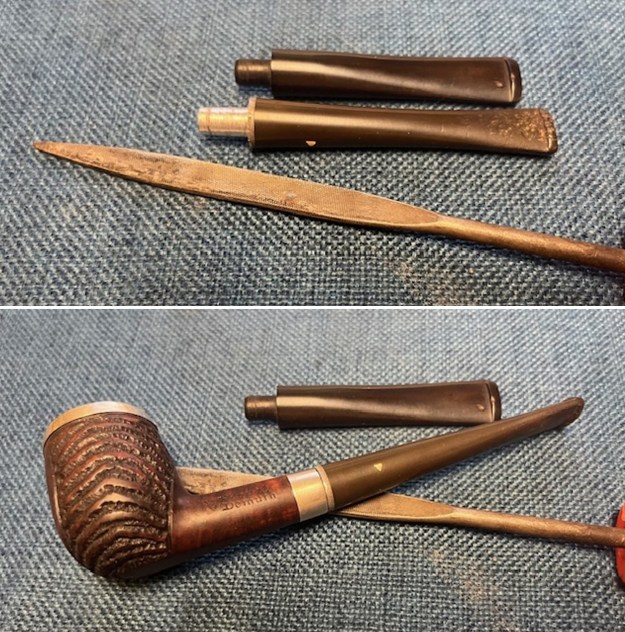
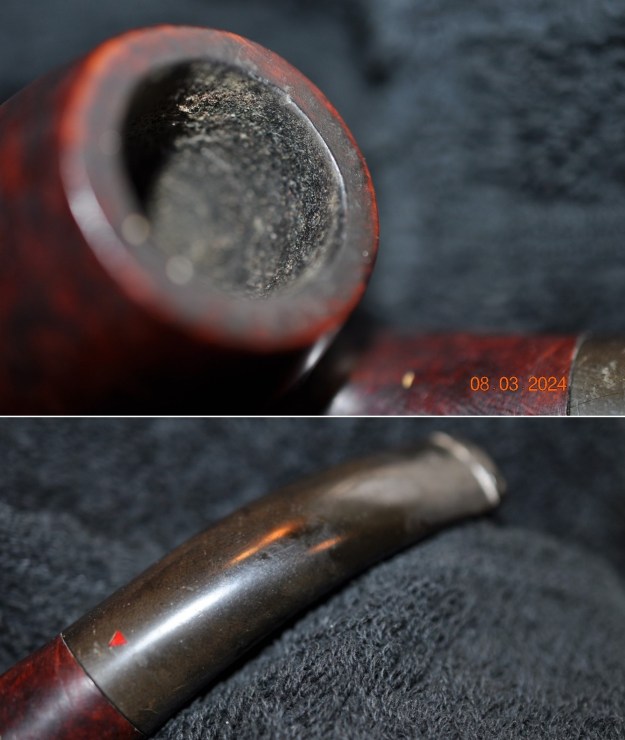
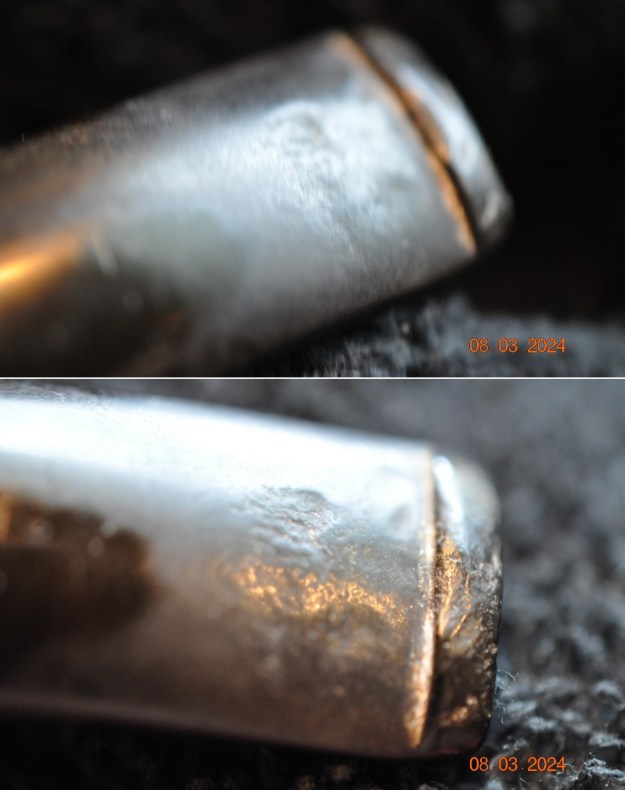
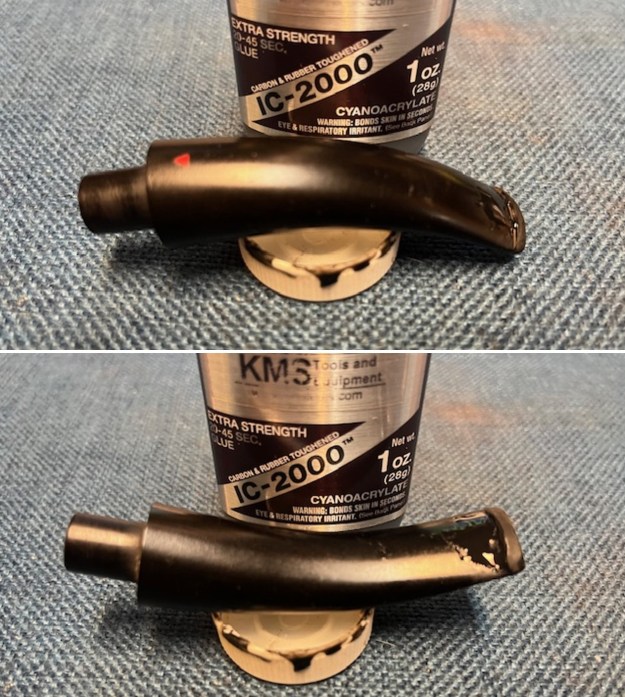
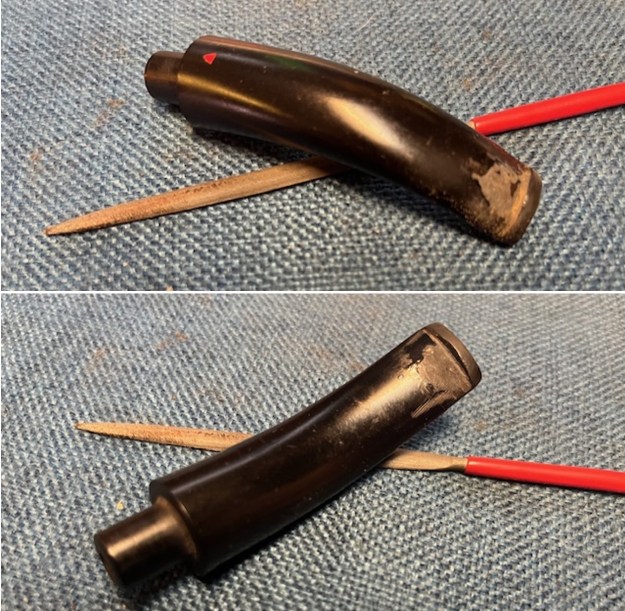
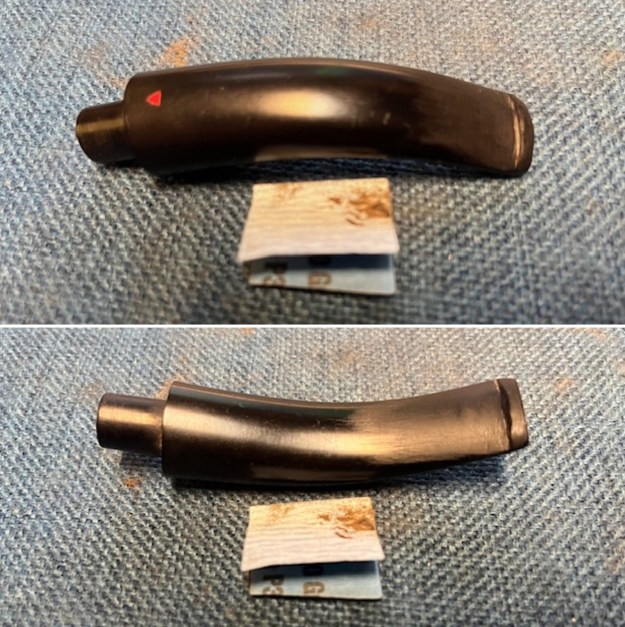
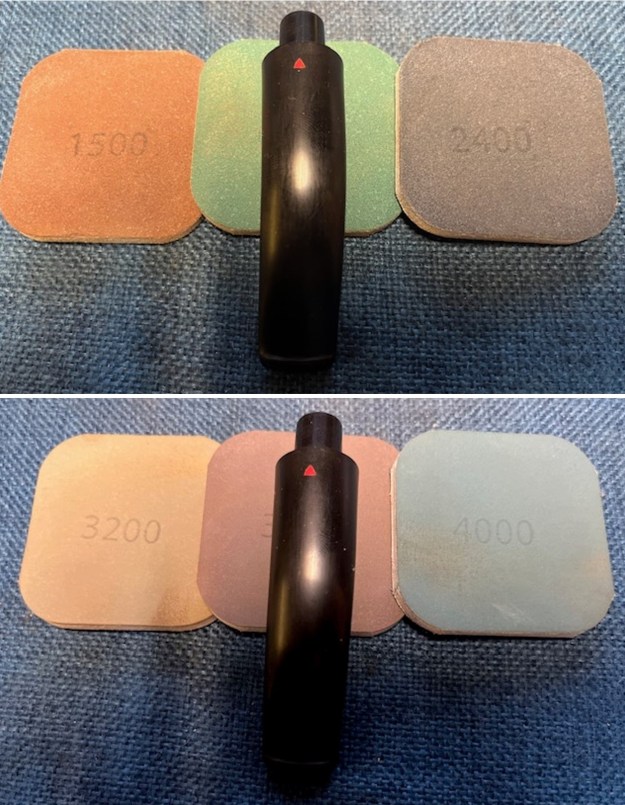
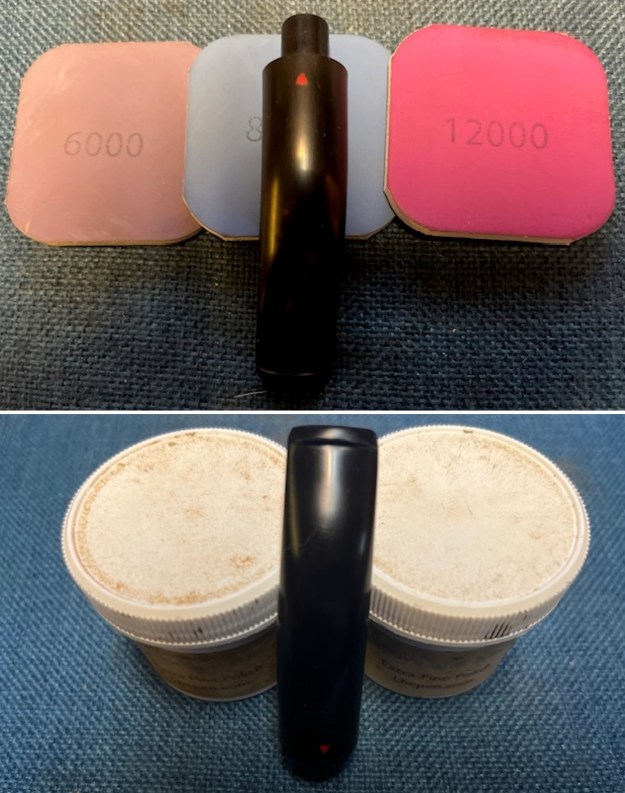
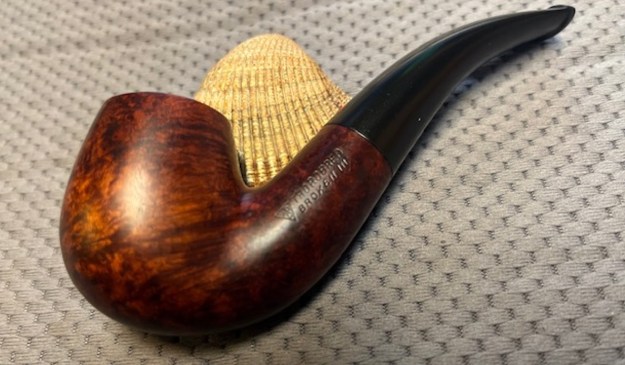
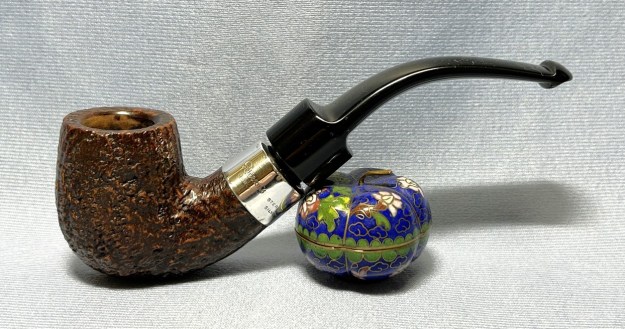
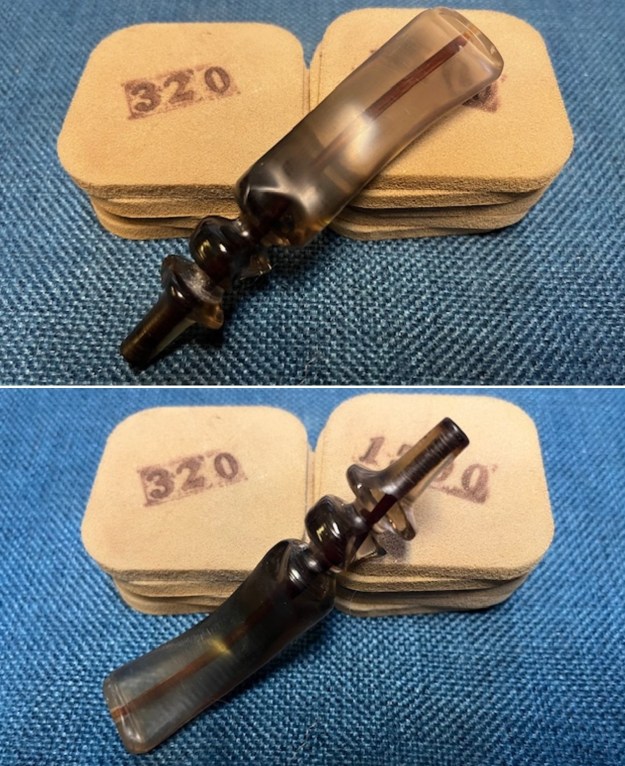
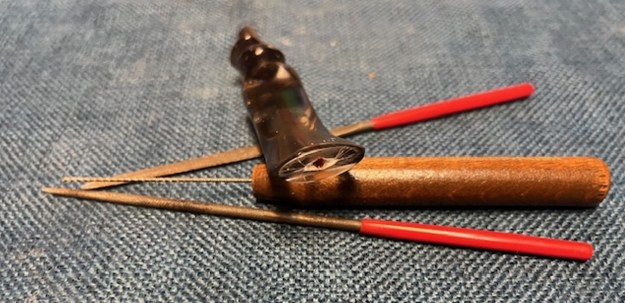
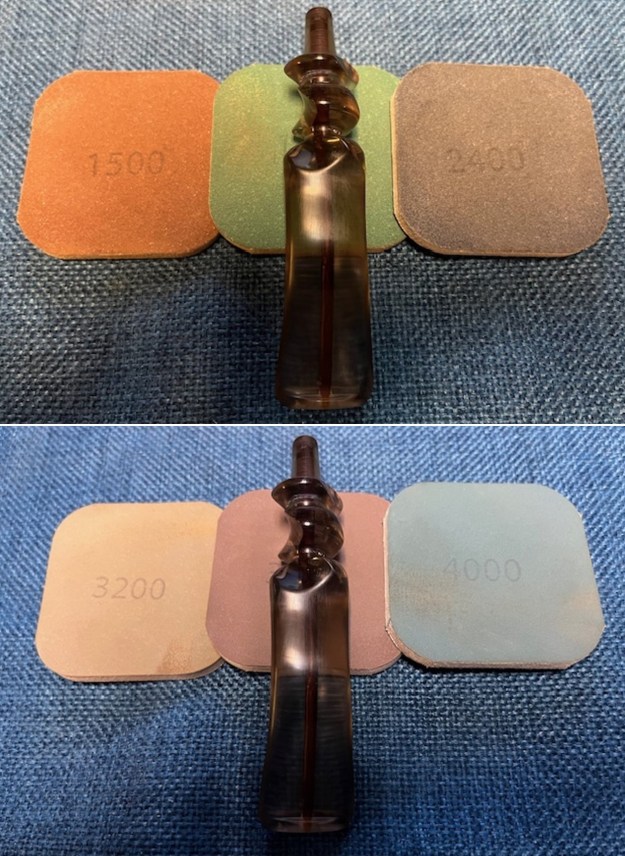
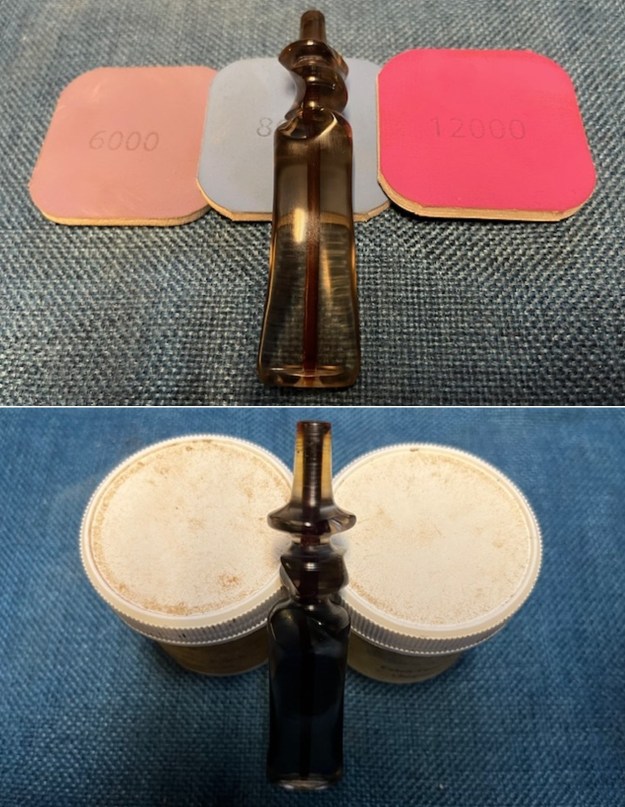
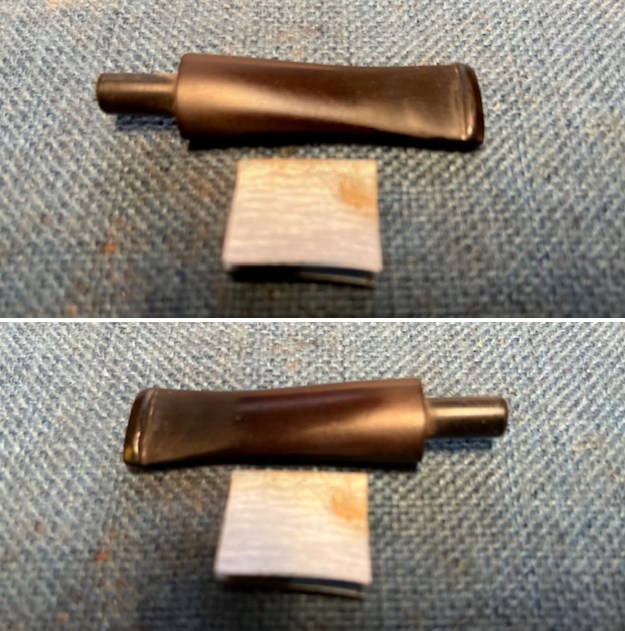
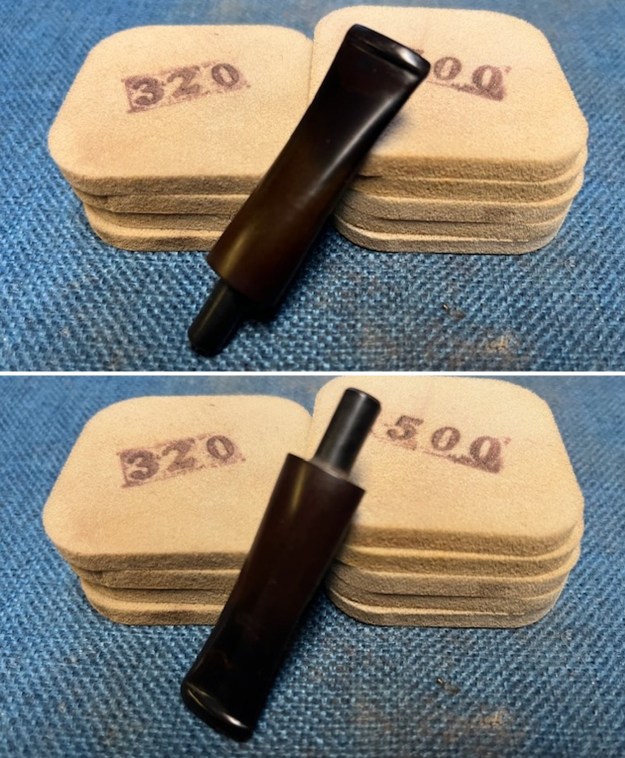
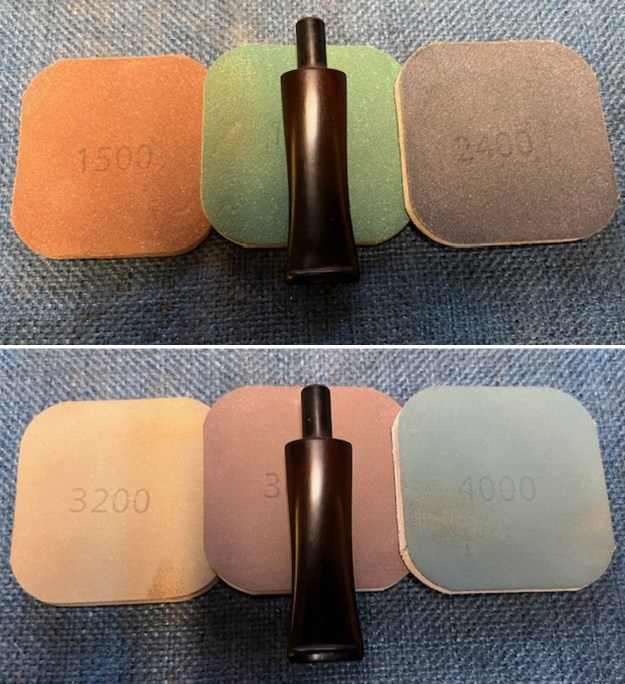
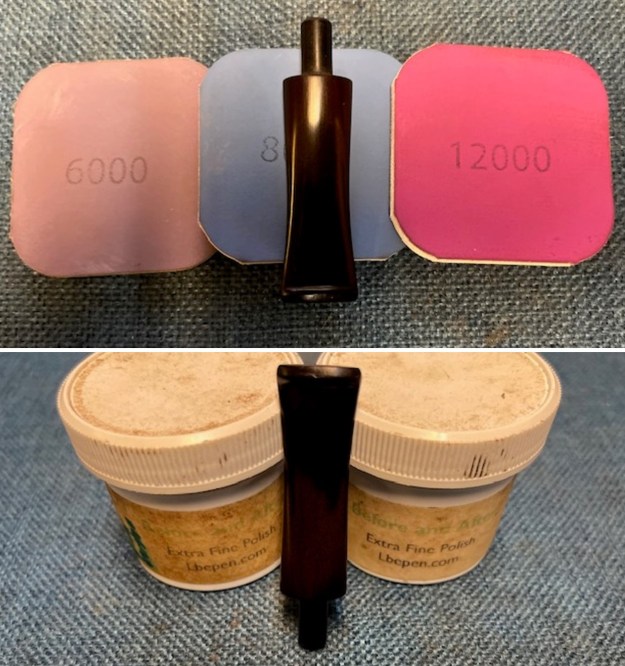
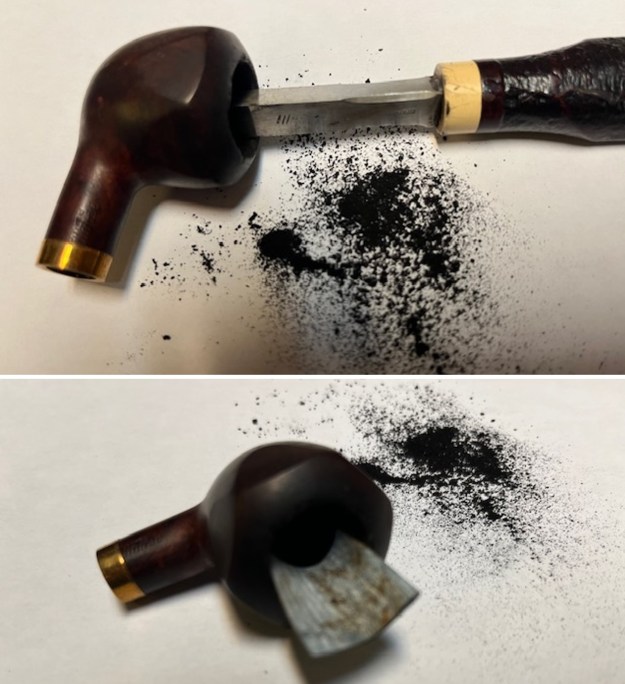
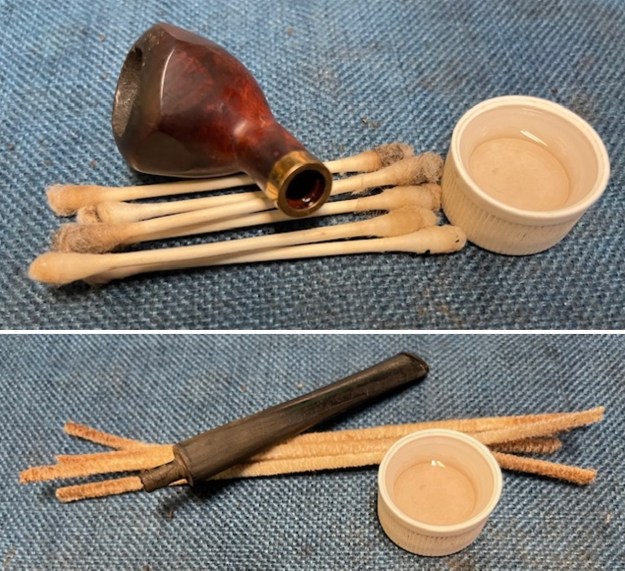
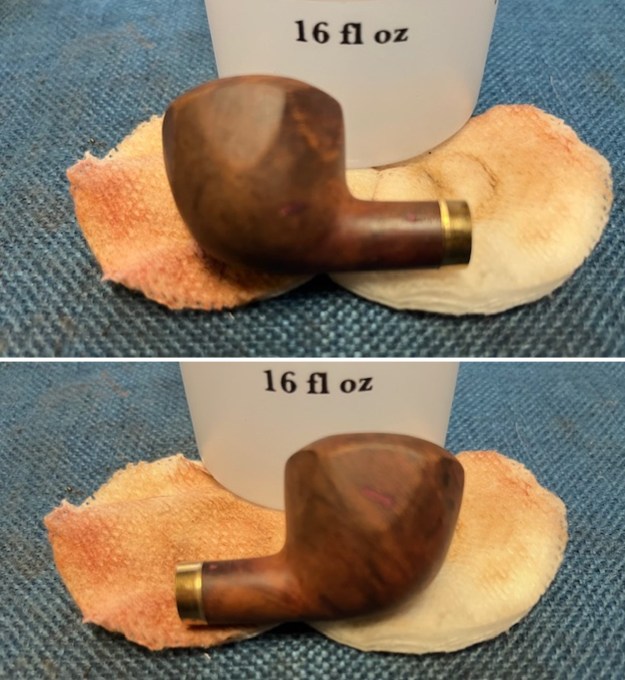
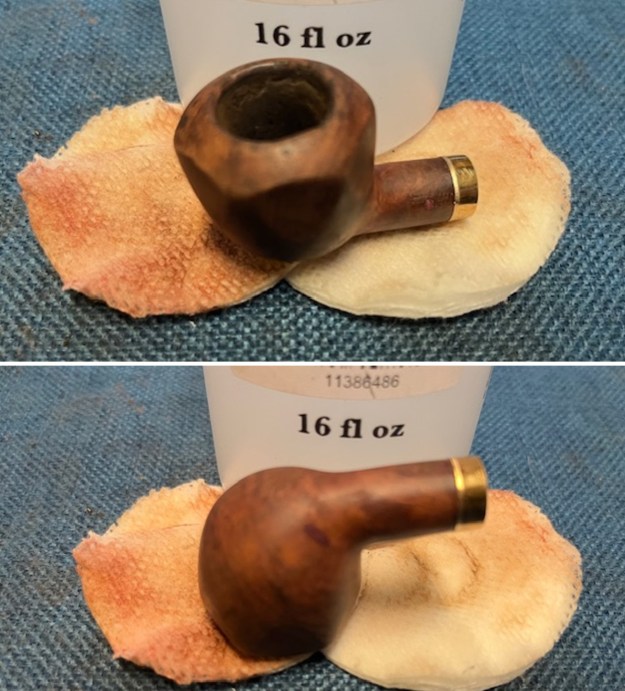
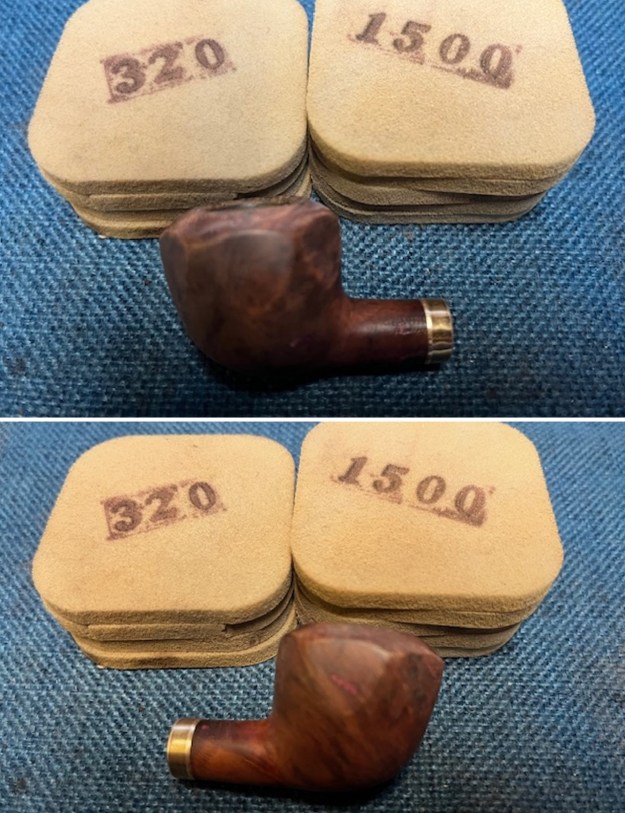
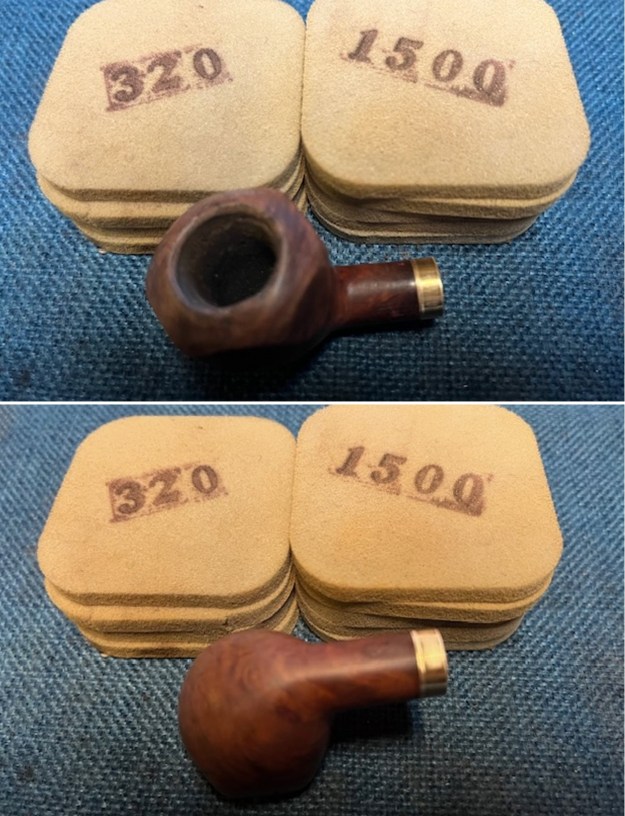
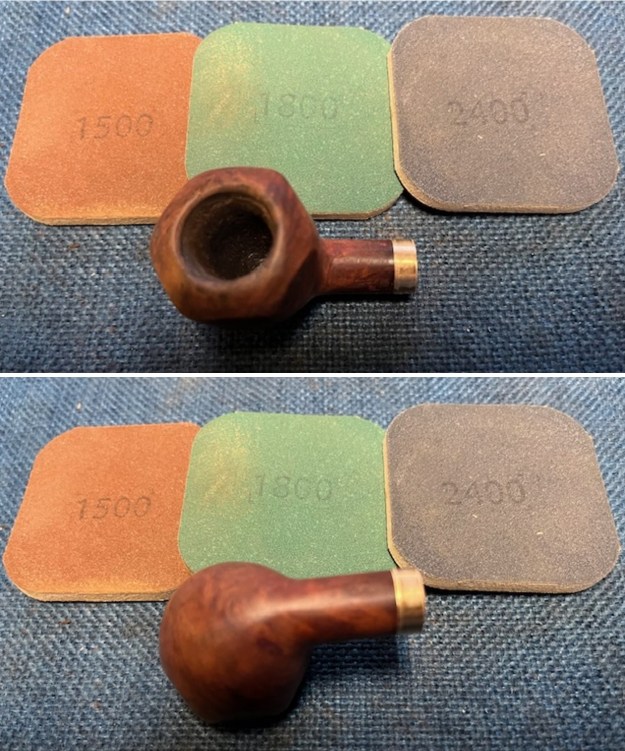
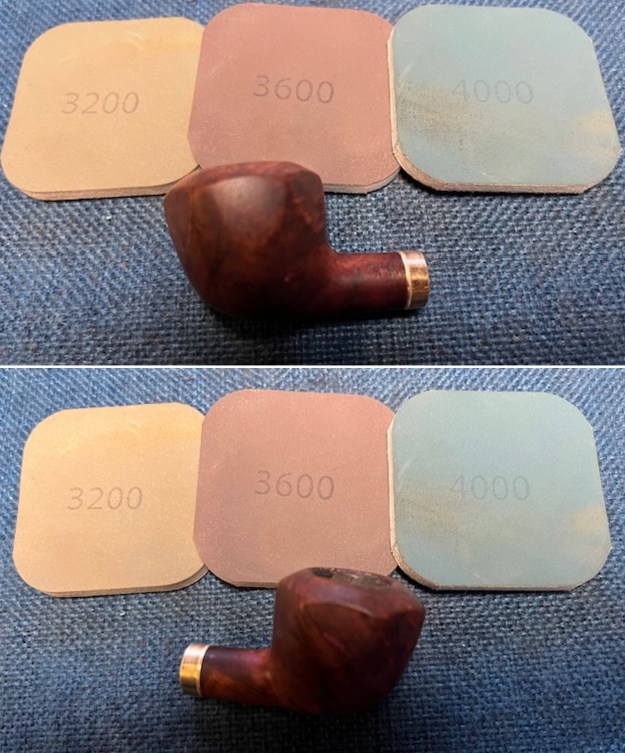
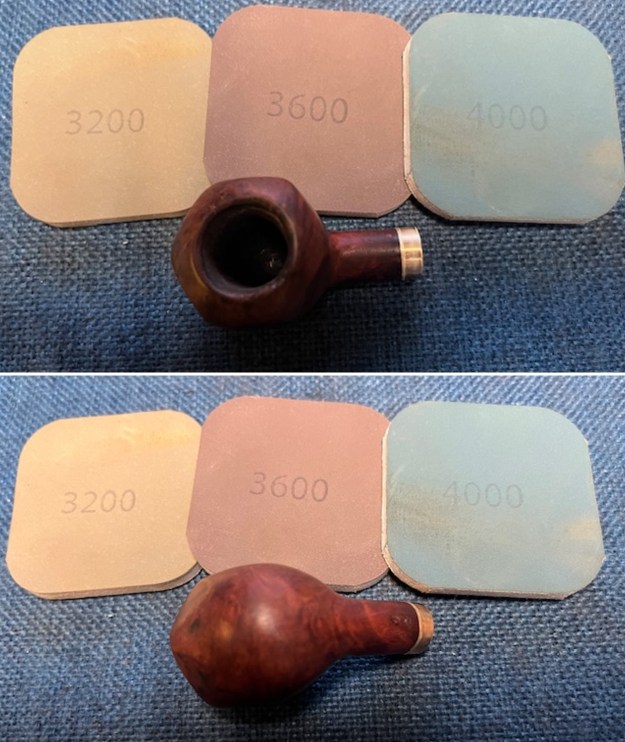
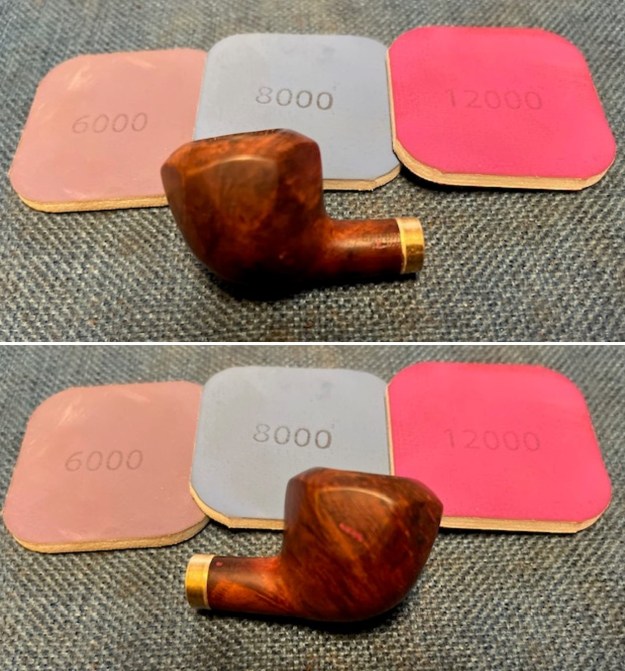
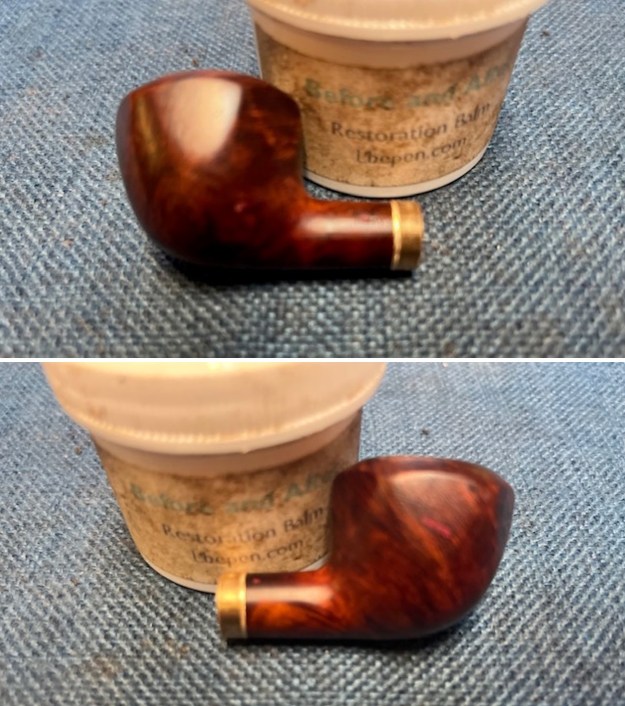
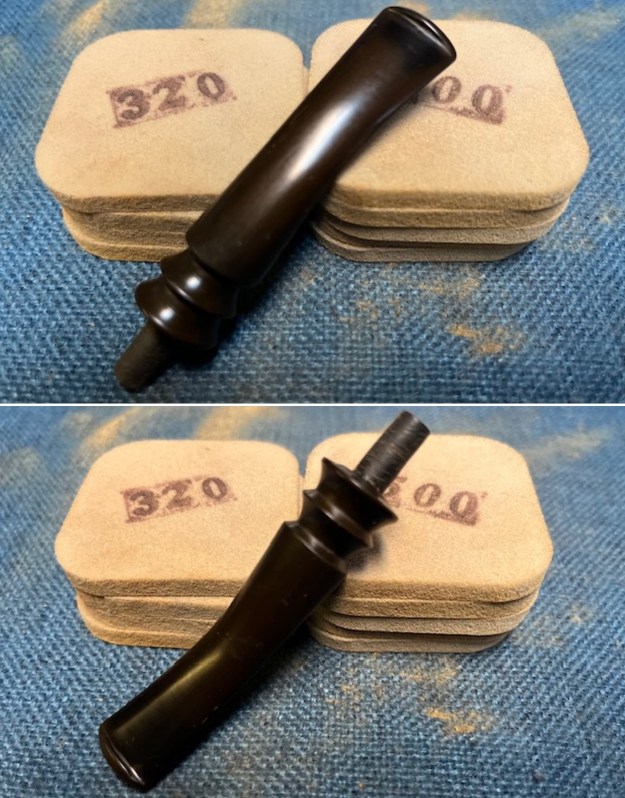
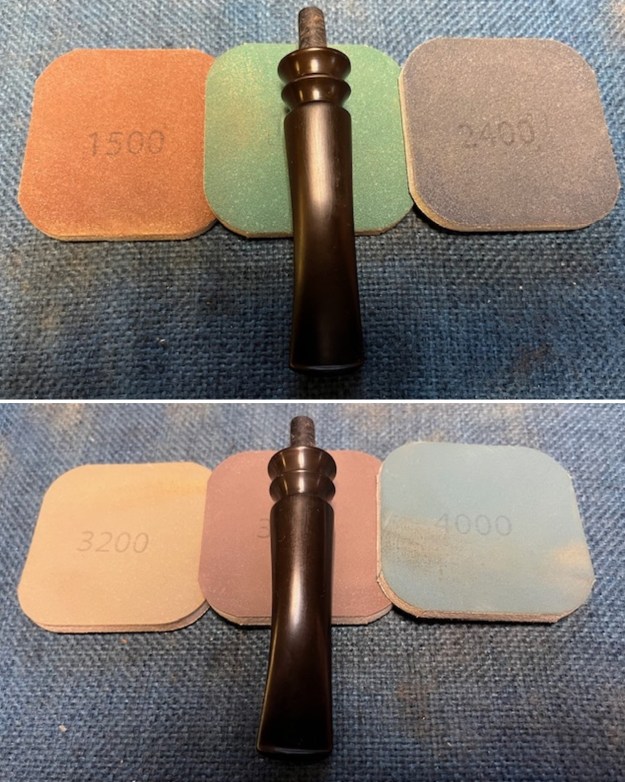
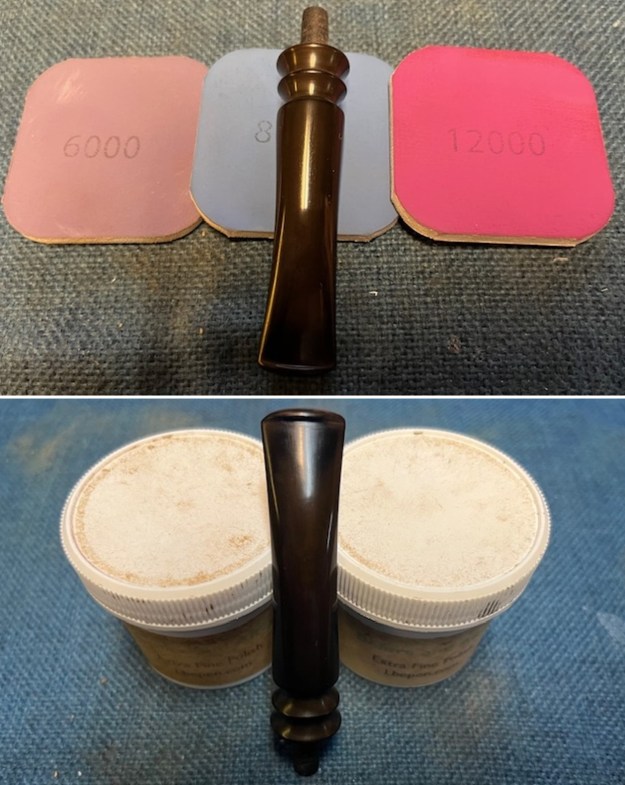
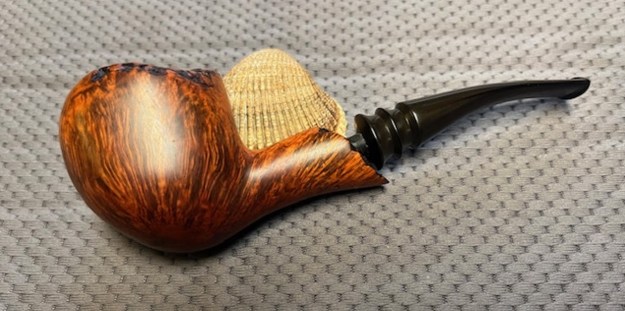
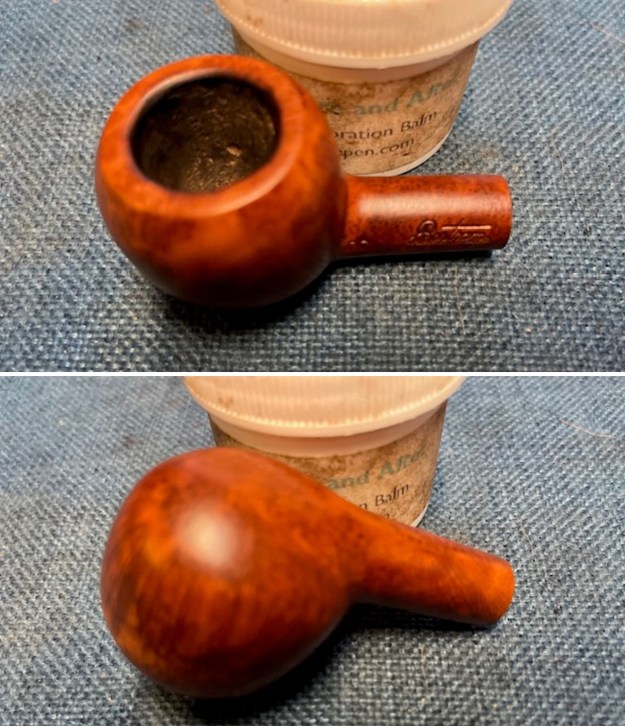
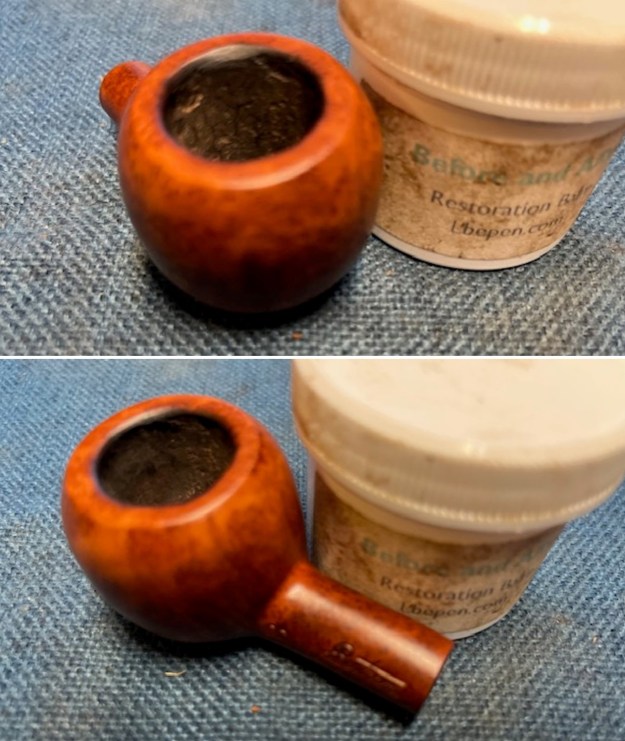
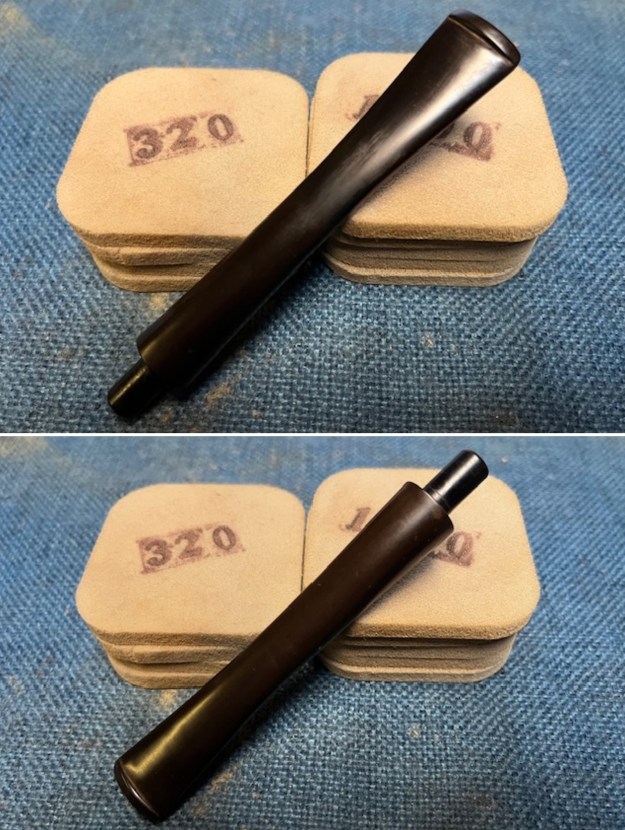
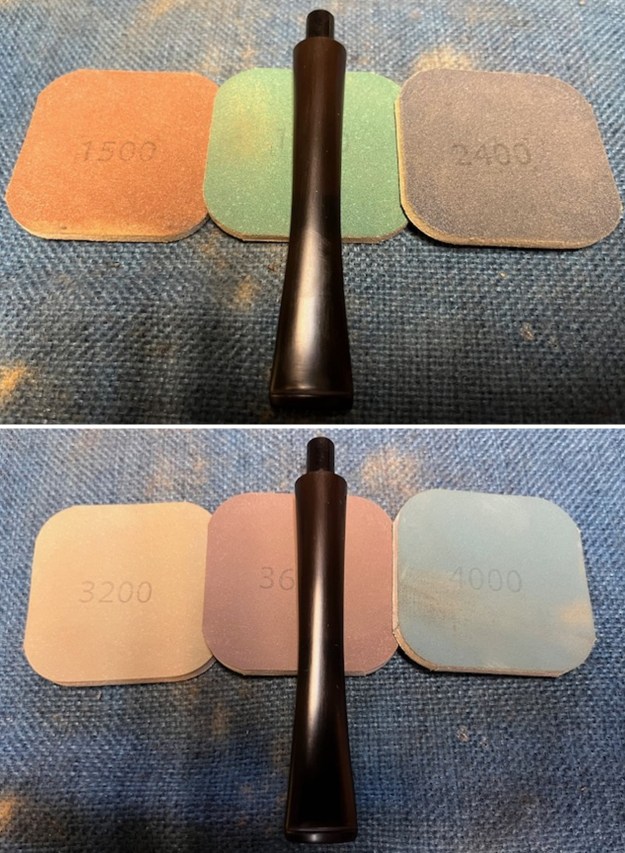
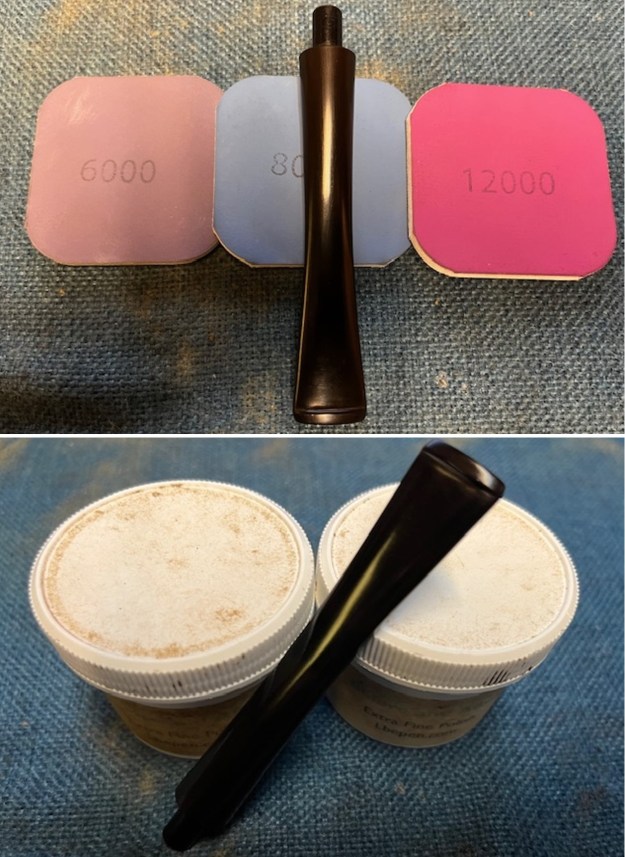
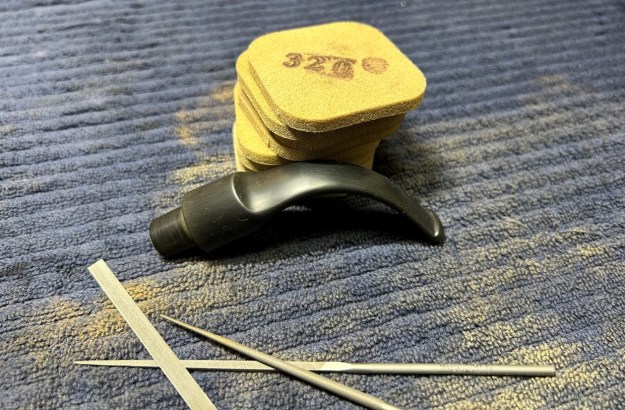
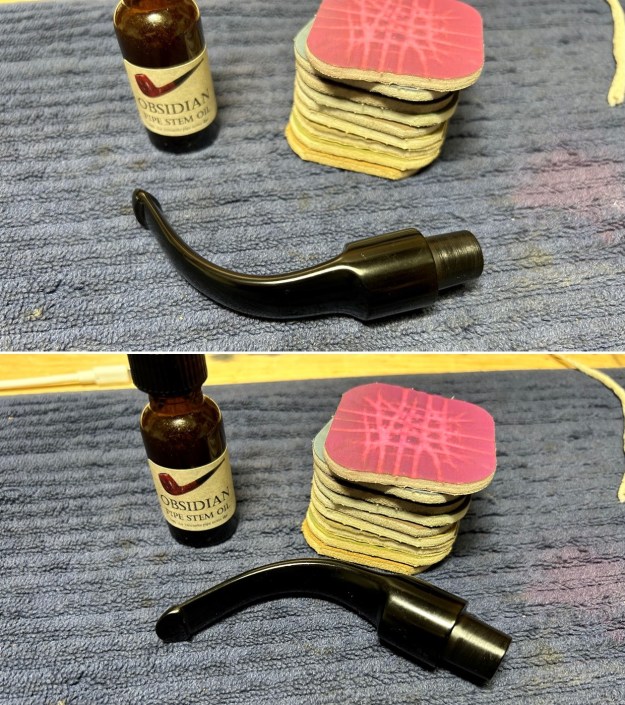
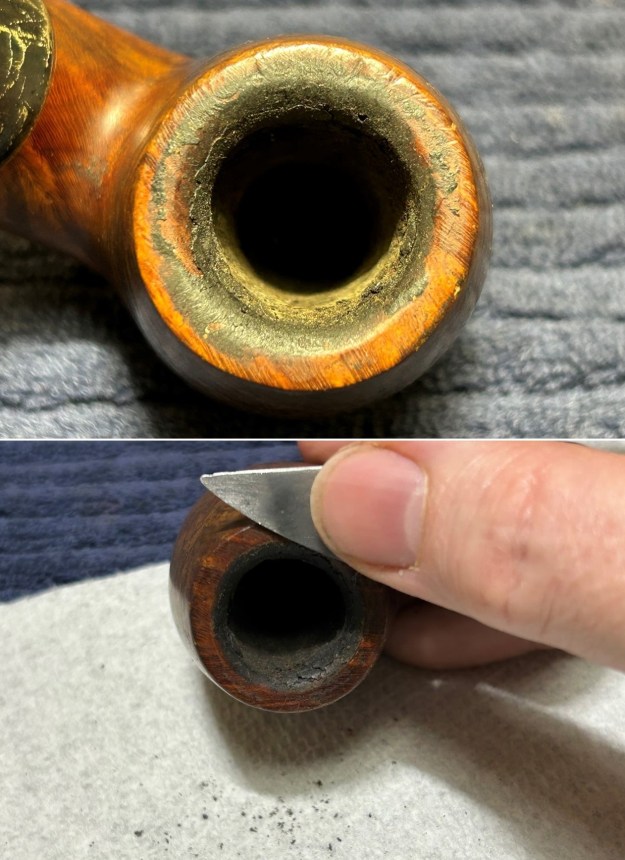
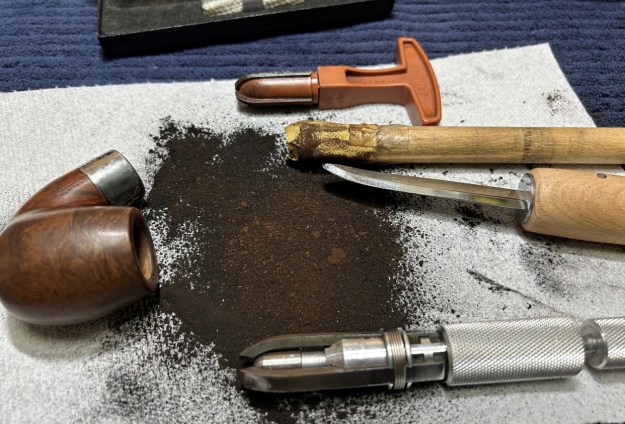
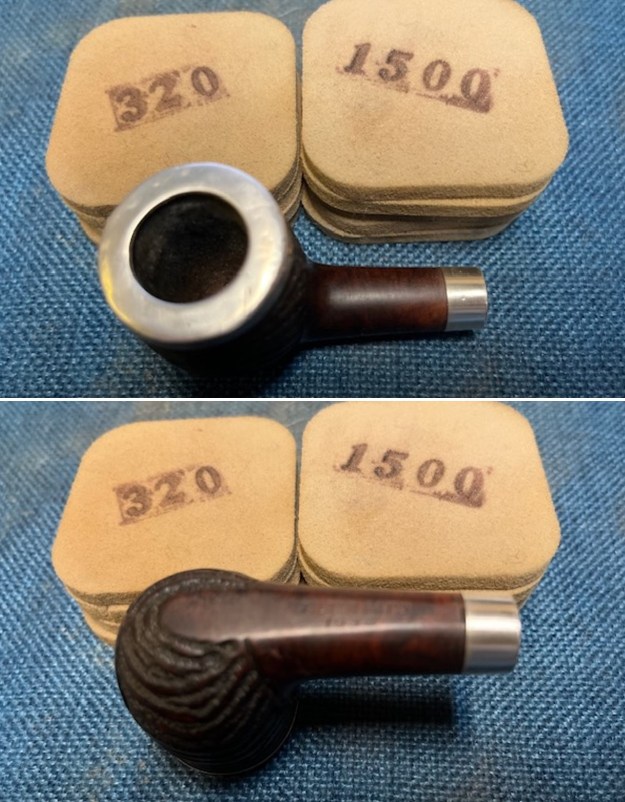
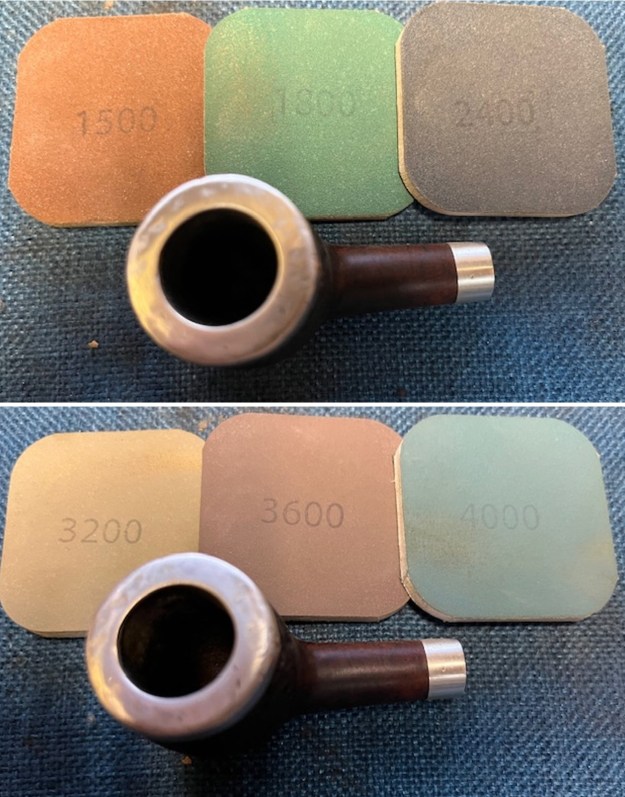
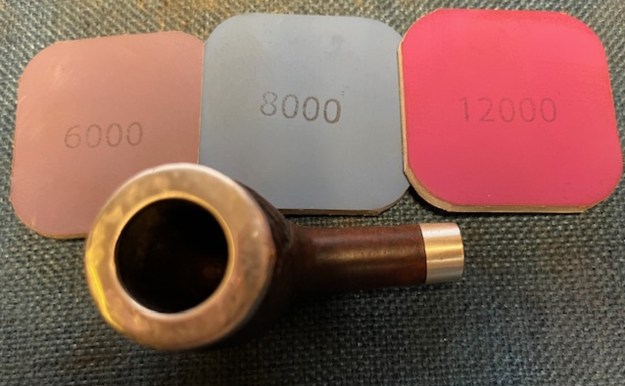
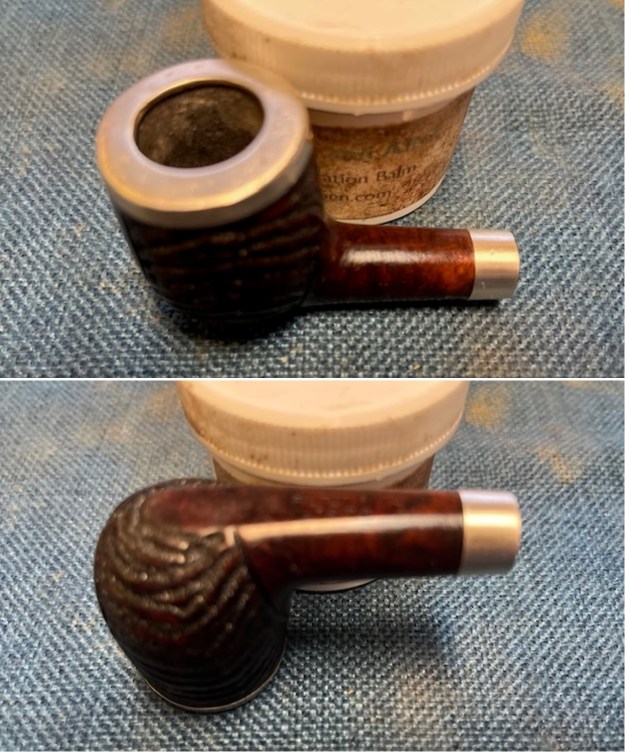
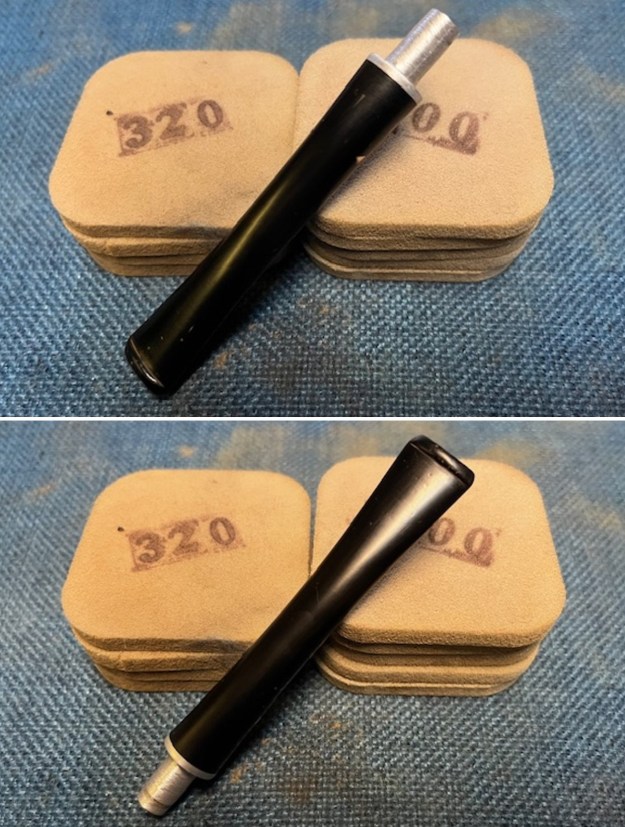
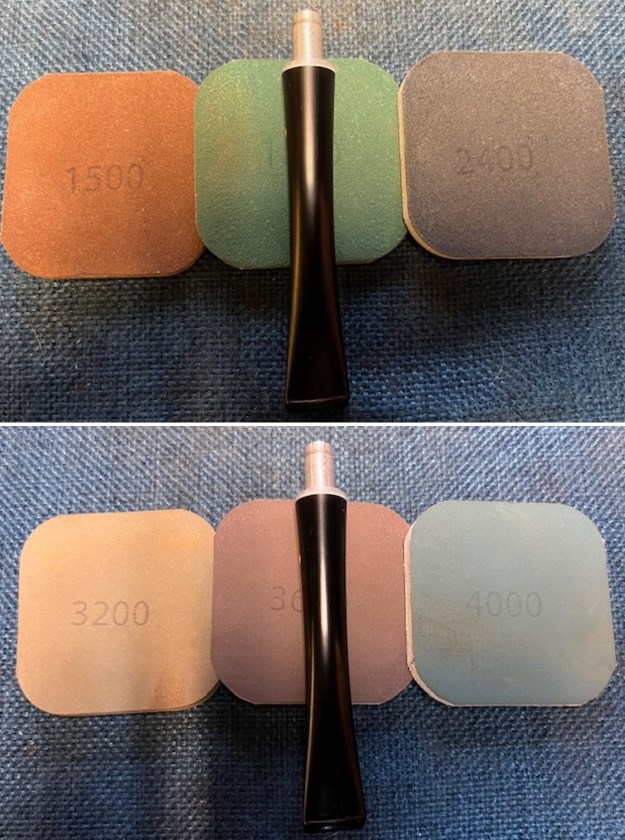
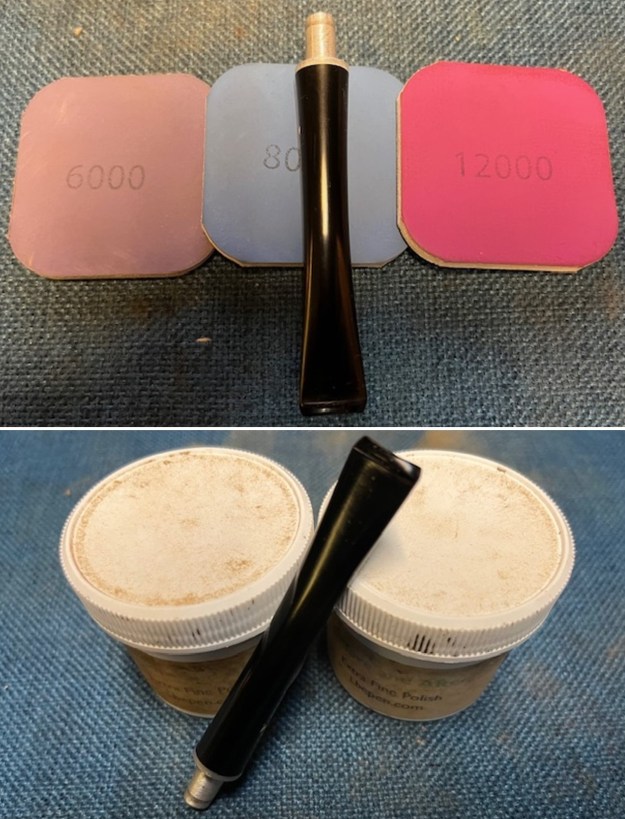
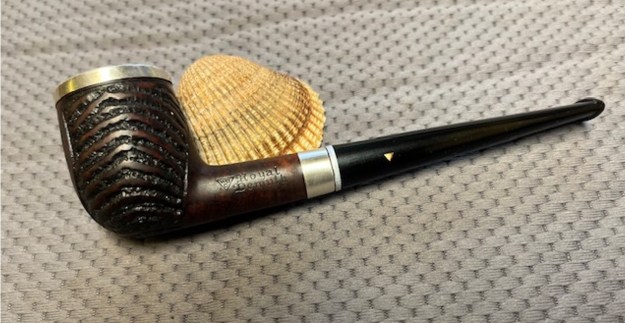
When I received it from Jeff it did not look like the same pipe. It was clean and the finish had life. He reamed it with a PipNet pipe reamer and got rid of the cake. He cleaned up the reaming with a Savinelli Fitsall Pipe Knife so that we could see the walls of the bowl and assess for damage. It was in good condition. He cleaned the internals of the shank and stem with cotton swabs, pipe cleaners and alcohol. He scrubbed the exterior with undiluted Murphy’s Oil Soap and a tooth brush. He rinsed the pipe under warm water. He dried it off with a cloth and then let it air dry. He scrubbed the stem with Soft Scrub and soaked it in Briarville’s Stem Deoxidizer. He rinsed it with warm water and dried it off with a soft cloth. It came out looking very good. The finish on the bowl and the rim top cleaned up nicely. I took pictures of the pipe to show how it looked when I brought it to the table. I took some photos of the rim top and stem to show the condition of them both when the pipe arrived. The rim top had some damage to the inner edge of the bowl and some marks on the top surface. Overall it looked very good. The oxidation on the stem had come off very well and the tooth marks chatter in the surface of the stem were visible. I took photos of the stamping on the sides of the shank. It was clear and readable as noted above. I removed the stem from the shank and took a photo of the appearance of the parts. It is a beauty. I started my work on the pipe by polishing the metal rim cap, edges and shank band. I polished it with 320-3500 grit sanding pads to polish out the scratches in the metal. It looked much better at this point in the process. I polished the metal cap and band with micromesh sanding pads – dry sanding with 1500-12000 grit sanding pads. I wiped it down with a damp cloth after each pad to remove the debris. The metal took on a rich glow. I rubbed the bowl down with Before & After Restoration Balm. I worked it into the surface of the briar with my fingertips and a horse hair shoe brush to clean, enliven and protect it. I let the balm sit for 10 minutes and then buffed with a cotton cloth to raise the shine. Mark Hoover’s Balm is a product that I have come to appreciate and one I use on every pipe I have been working on. I set the bowl aside and turned my attention to the stem. I had been thinking about the replacement stem and went through my cans of stem to see if I could find a WDC stem with the triangle logo on the left side. The amazing thing was I found one!!. The metal tenon (made for the WDC filters) was misshaped and was larger next to the stem than the mortise end. I used a small file and a Dremel and sanding drum to even us the diameter of the tenon all the way from the end to the stem end. It took some work but it worked well and the end result was the stem fit in the shank well. The diameter of the metal spacer was taller at the top than at the bottom. The measurements showed that from the tenon to the stem top was larger than the distance from the bottom edge. I would need to shape and work out that shape.  I took off some of the metal and vulcanite on the top half of the stem with the Dremel and sanding drum. I used a folded piece of 220 grit sandpaper to smooth out the sanding marks from the Dremel. Once I had smooth them out I sanded the stem with 320-3500 grit sanding pads to further blend them in and smooth out the surface of the stem.I polished the stem with micromesh sanding pads – dry sanding with 1500-12000 grit pads. I wiped the stem down after each pad with some Obsidian Oil. I finished hand polishing it with Before & After Pipe Stem Polish – Fine and Extra Fine. I rubbed it down with another coat of Obsidian Oil and let it dry. The stem really was beginning to look very good. This is a beautiful WDC Royal Demuth Silver Capped and Banded Billiard with a fitted filter vulcanite stem. The flat bottom makes it a sitter that is well balanced. The shape fits well in the hand with the curve of the bowl makes it a great pipe to hold. I polished stem with Blue Diamond polish on the buffing wheel. I gave the rusticated bowl and carvings on the bowl front multiple coats of Conservator’s Wax. I gave the stem multiple coats of carnauba wax. I buffed the pipe with a clean buffing pad to raise the shine. I hand buffed it with a microfiber cloth to deepen the shine. The pipe polished up pretty nicely. The rich combination of black and dark brown stains gave the sandblast a sense of depth. The pipe took on life with the buffing. The rich colour of the briar and the polished silver rim cap and shank band works well with the polished stem. Have a look at it with the photos below. The shape, finish and flow of the pipe and stem are very well done. The dimensions are Length: 5 ½ inches, Height: 1 ½ inches, Outside diameter of the bowl: 1 1/8 inches, Chamber diameter: 5/8 of an inch. The weight of the pipe is 33 grams/1.16 ounces. This American Made Silver Capped and Banded Filter Billiard is a real beauty. Thanks for walking through the restoration with me as I worked over another beautiful pipe. This one will be going on the rebornpipes store in the American Pipe Makers Section shortly if you would like to add it to your collection. Thanks for your time.
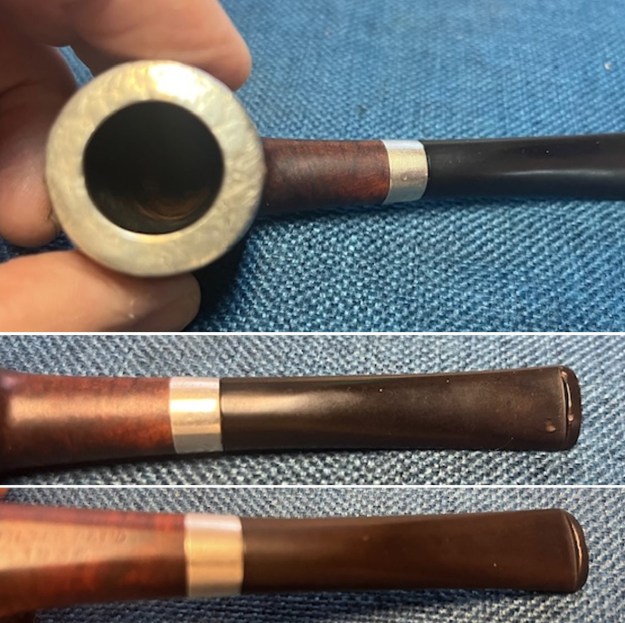
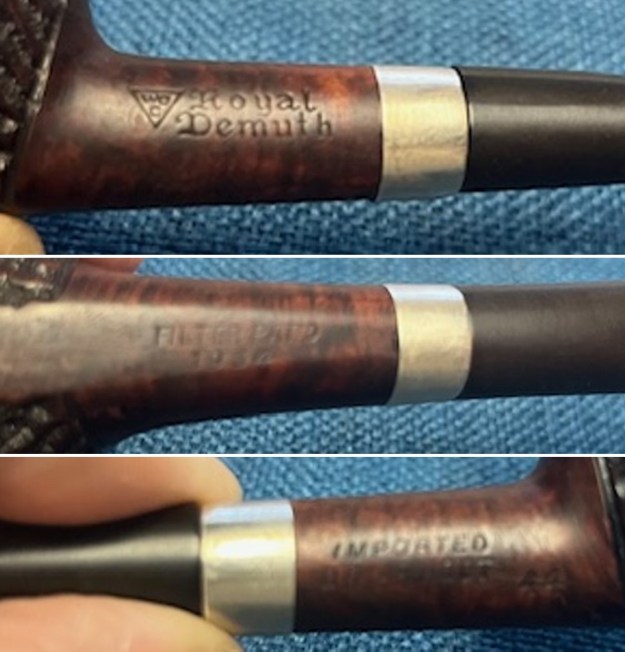
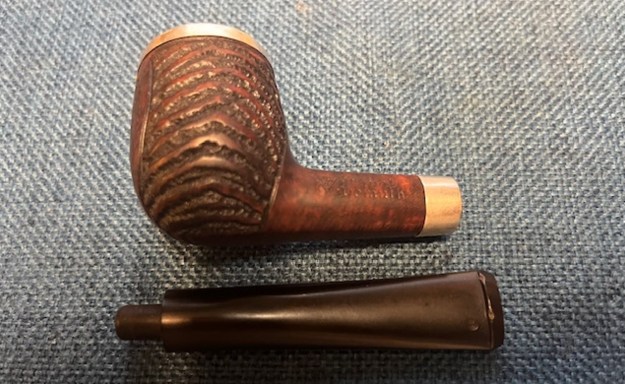
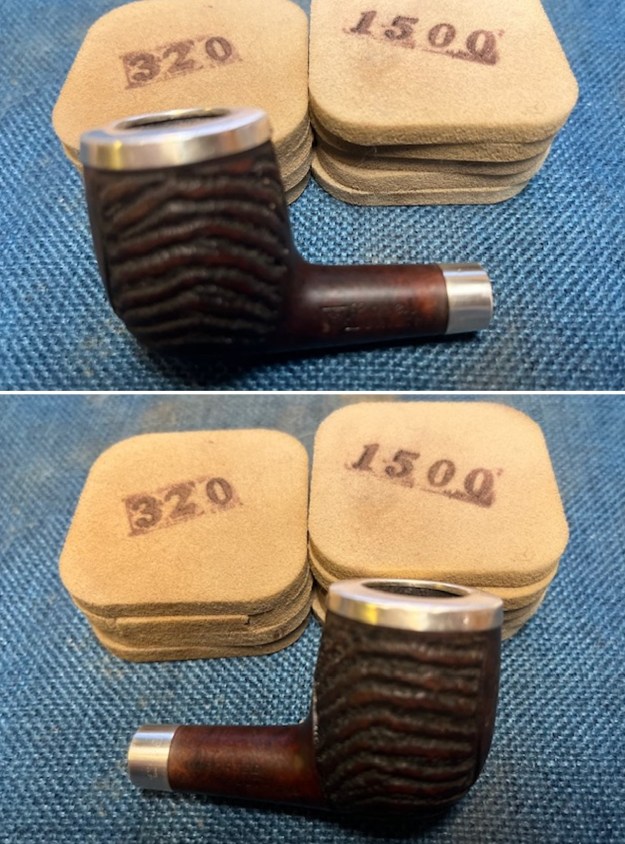
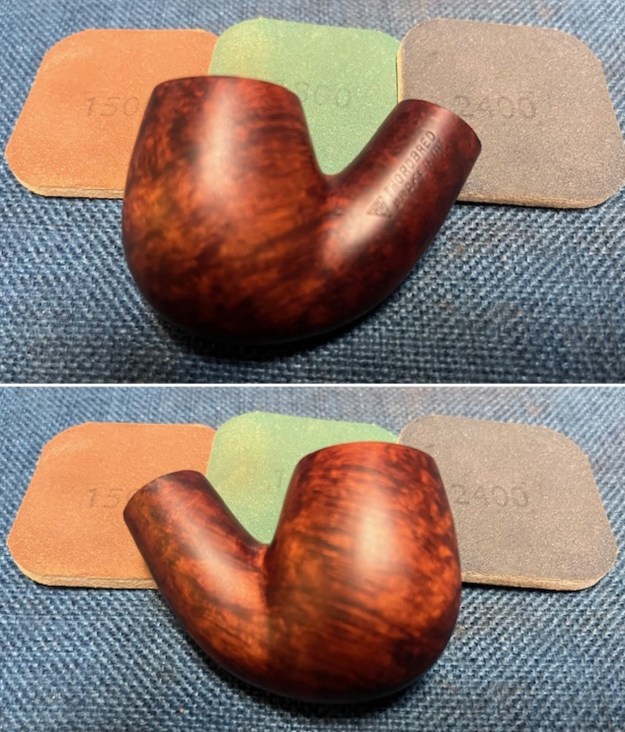
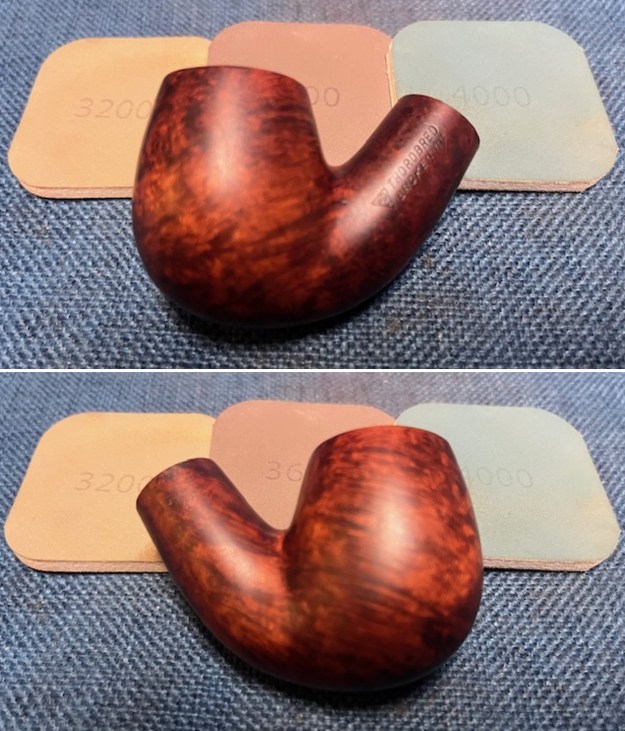
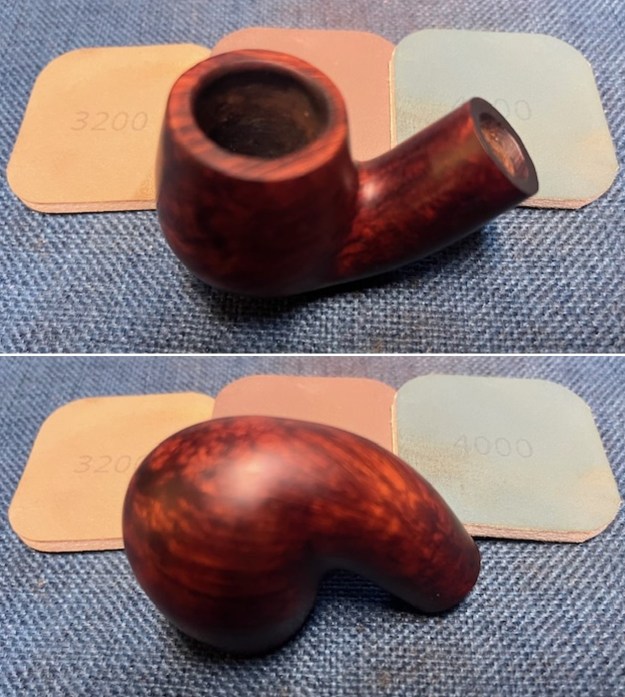
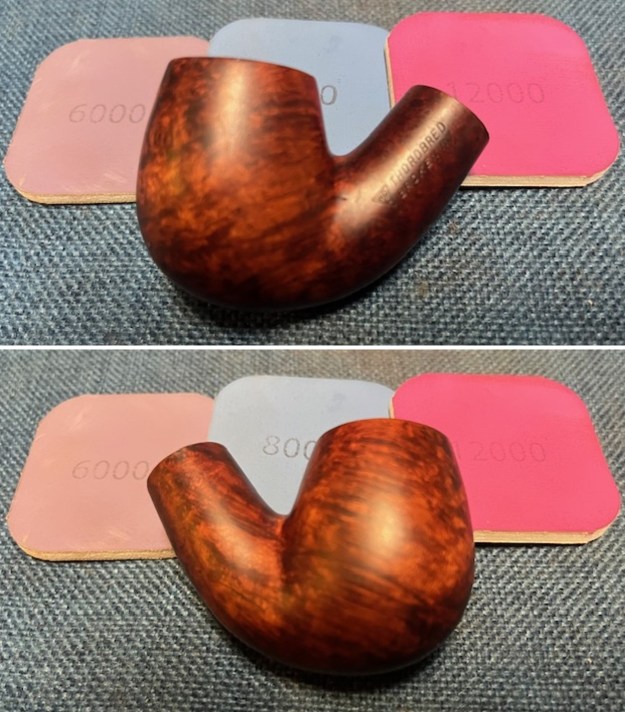
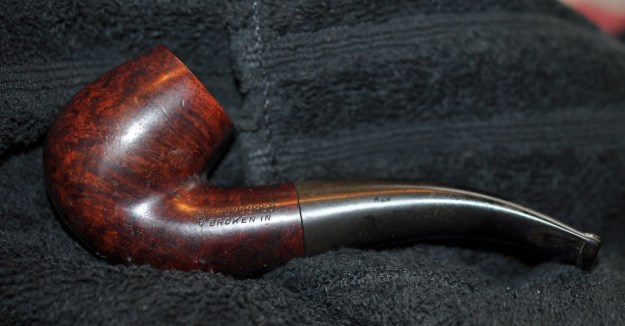
Great to work on an older WDC Thorobred Broken In Bent Billiard


by Steve Laug

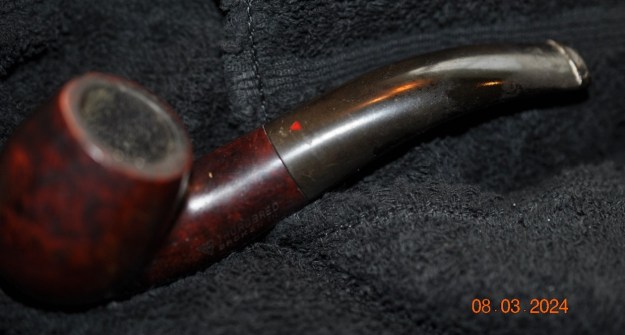
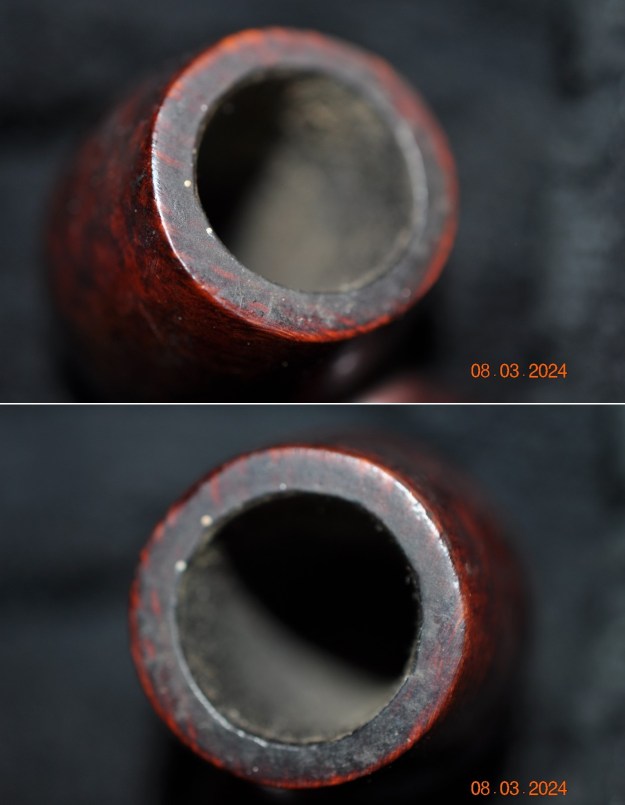
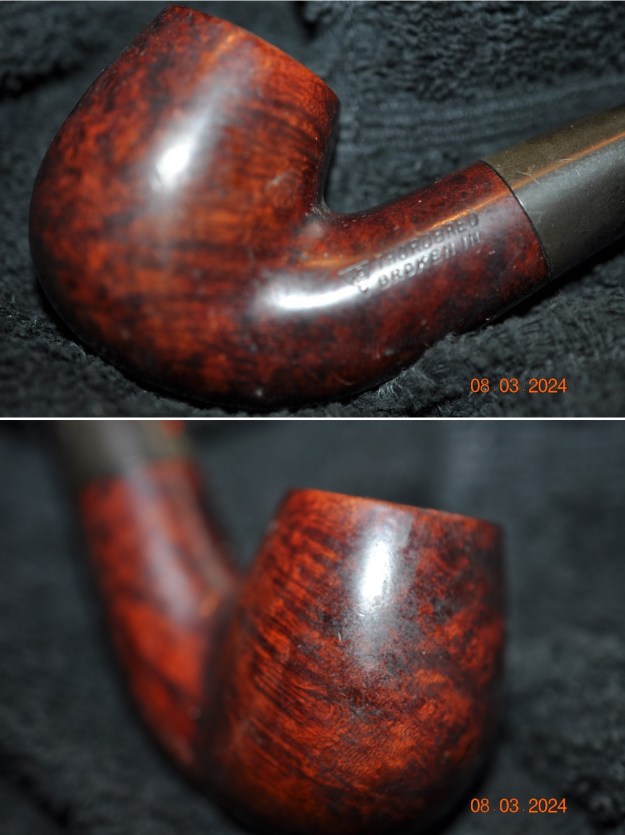
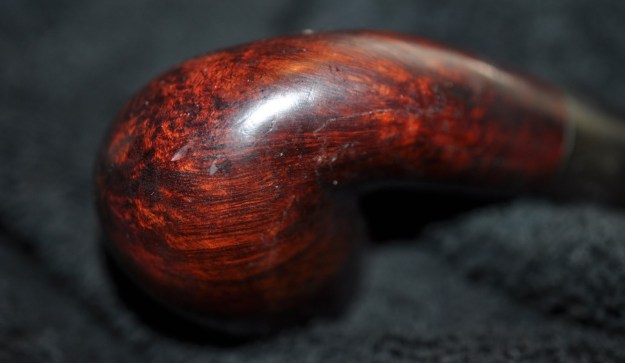
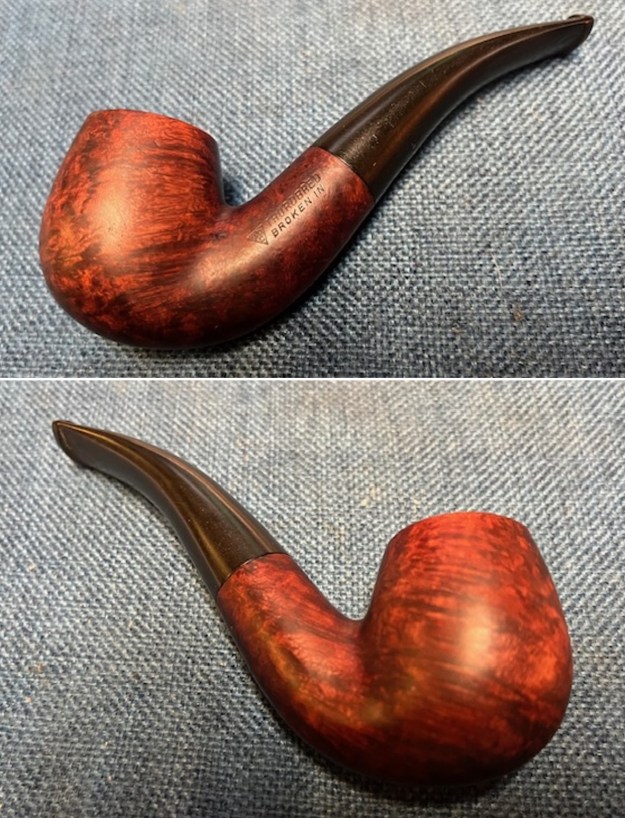
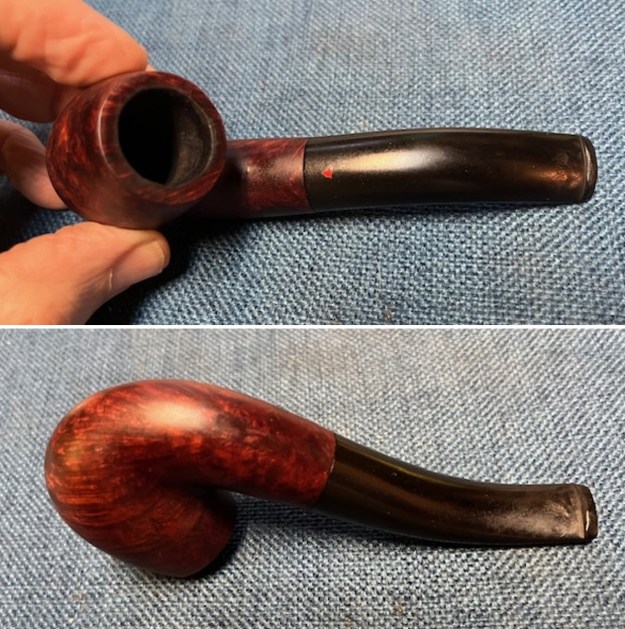
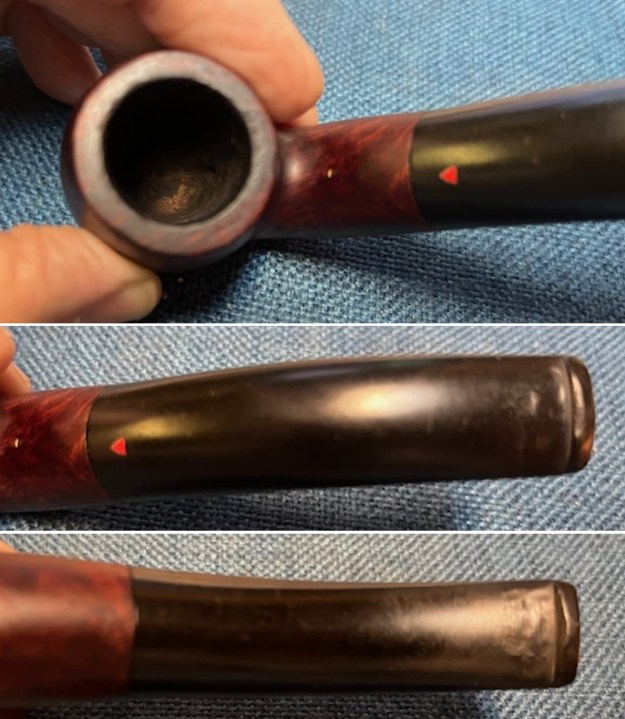
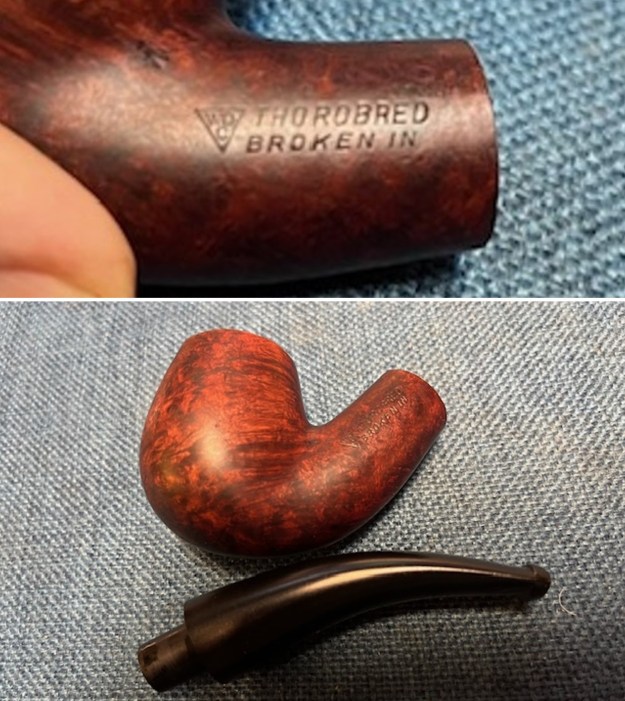
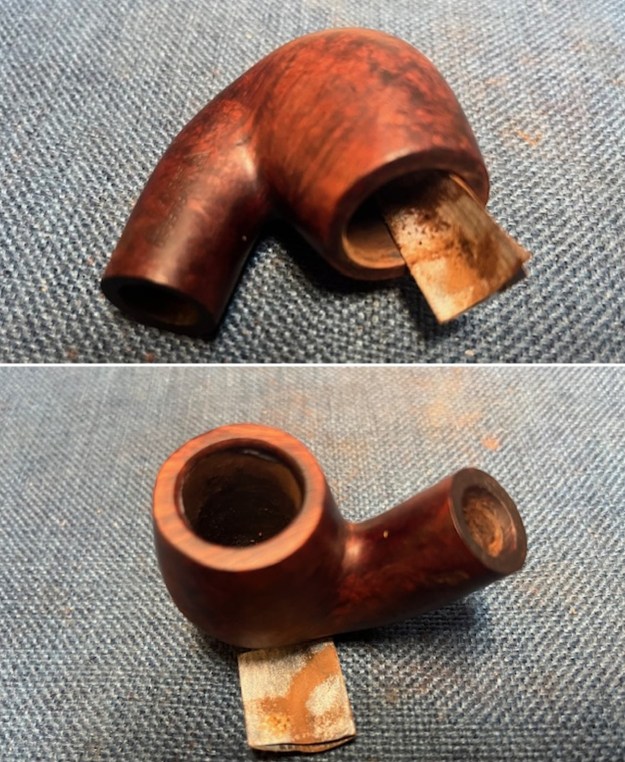
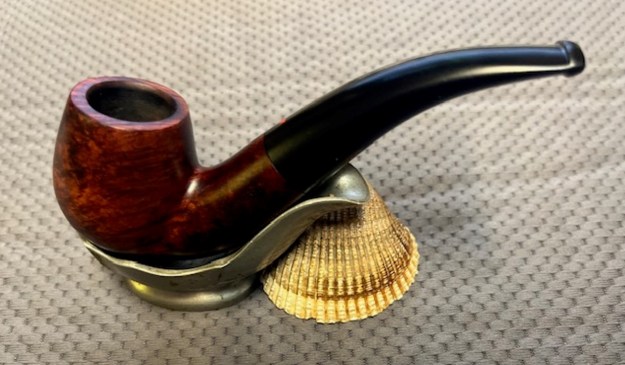
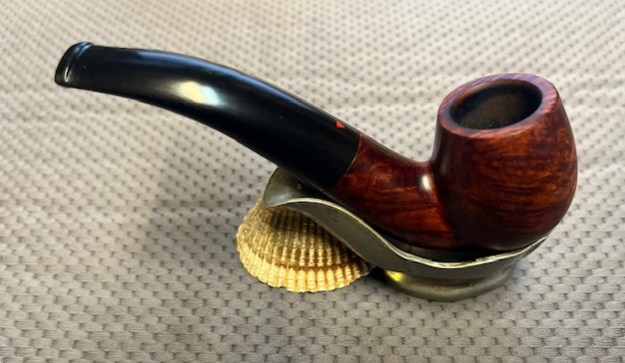
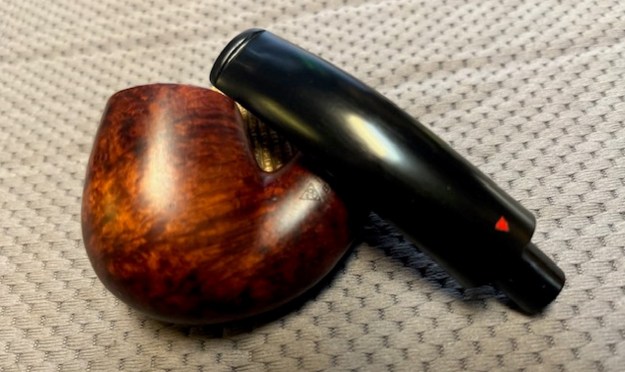
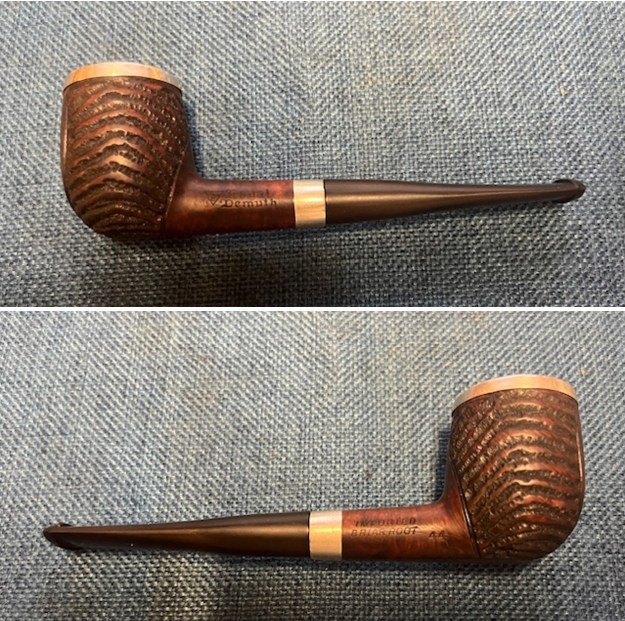
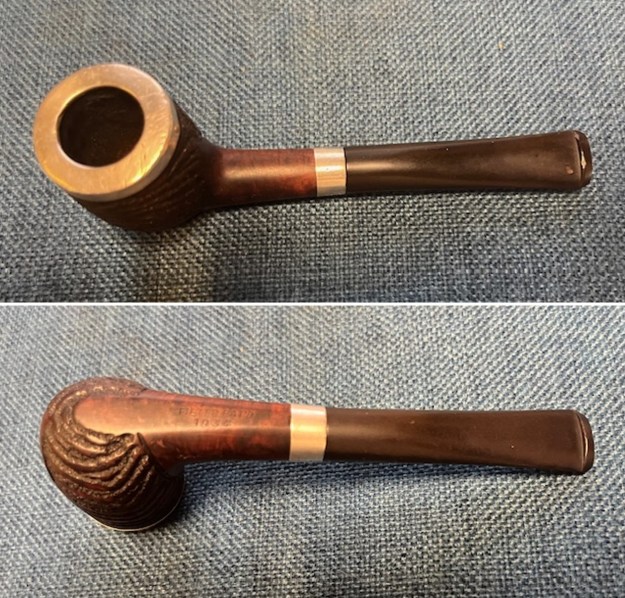
This richly stained Bent Billiard is a beautiful pipe. The grain around the bowl is highlighted by the stain and really stands out. Jeff picked the pipe up on 08/06/22 from an online auction in Manorville, New York, USA. He purchased it along with its brother, another Thorobred that was sandblast. I have restored it already and there are many similarities. Here is the link to the blog on the restoration (https://rebornpipes.com/2022/08/14/restoring-an-old-wdc-sandblast-thorobred-kerly-briar-broken-in/). It is stamped on the left side of the shank and reads WDC in a triangle followed by Thorobred [over] Broken In. The grain follows the flow of the carved briar. The finish is stained with rich colours – a mix of browns that give depth to its finish. It was filthy with dust and debris ground into the sides of the bowl. The rim top has a heavy lava overflow on the top and edges coming from a thick cake in the bowl. The tapered hard rubber stem has a red triangle WDC logo inset on the topside. It was lightly oxidized and calcified with tooth marks and chatter on both sides ahead of the button. Jeff took photos of the pipe before he started working on it. It really is a beauty. He took photos of the rim top and the stem to show the condition. You can see the thick cake in the bowl and overflow of lava on the rim top. The photos of the stem show the tooth marks and damage in the hard rubber on the top and underside ahead of the button. Jeff took photos of the finish around the bowl sides to show flow of the grain around the bowl. You can also see the dust and debris in the finish. Jeff took photos of the stamping on the left side of the shank to capture it. It was clear and readable as noted above. He also captured the red triangle WDC logo on the top of the stem.I turned to the blog, mentioned above on the restoration of the sandblast partner of this pipe and reread the history of the brand that I had gathered when working on it. I have included that information below for ease of reference.

I have included a quick history of the brand from Pipedia that is interesting and is helpful (https://pipedia.org/wiki/William_Demuth_Company).

William Demuth. (Wilhelm C. Demuth, 1835-1911), a native of Germany, entered the United States at the age of 16 as a penniless immigrant. After a series of odd jobs he found work as a clerk in the import business of a tobacco tradesman in New York City. In 1862 William established his own company. The William Demuth Company specialized in pipes, smoker’s requisites, cigar-store figures, canes and other carved objects.

The Demuth Company is probably well known for the famous trademark, WDC in an inverted equilateral triangle. William commissioned the figurative meerschaum Presidential series, 29 precision-carved likenesses of John Adams, the second president of the United States (1797-1801) to Herbert Hoover, the 30th president (1929-1933), and “Columbus Landing in America,” a 32-inch-long centennial meerschaum masterpiece that took two years to complete and was exhibited at the World’s Columbian Exposition in Chicago in 1893…

…In 1897 Ferdinand Feuerbach joined the Demuth company and by 1903 had become the production manager. Feuerbach is credited with developing Demuth’s popular Royal Demuth and Hesson Guard Milano pipelines. He left in 1919, when Sam Frank Sr. needed an experienced pipe man to run his pipe factory, located at 168 Southern Blvd., in the Bronx. Feuerbach and Frank had been close friends since Frank started his own business in 1900 and was closely associated with the sales staff of WDC, selling their line of pipes…

In early 1937, the City of New York notified S.M. Frank & Co. of their intent to take by eminent domain, part of the land on which the companies pipe factory was located. This was being done to widen two of the adjacent streets. As a result of this, Frank entered into negotiations to purchase the Wm. Demuth Co.’s pipe factory in the Richmond Hill section of Queens. It was agreed upon that Demuth would become a subsidiary of S.M. Frank and all pipe production of the two companies would be moved to DeMuth factory. New Corporate offices were located at 133 Fifth Avenue, NYC.

Demuth pipes continued to be made at the Richmond Hill plant till December 31. 1972. Then the Wm. Demuth Company met its official end as a subsidiary company by liquidation. Demuth’s mainstay pipe, the Wellington continued to be offered in the S.M. Frank catalog until 1976. In the mid-80’s, the Wellington even made a brief return as a direct to the consumer offer.

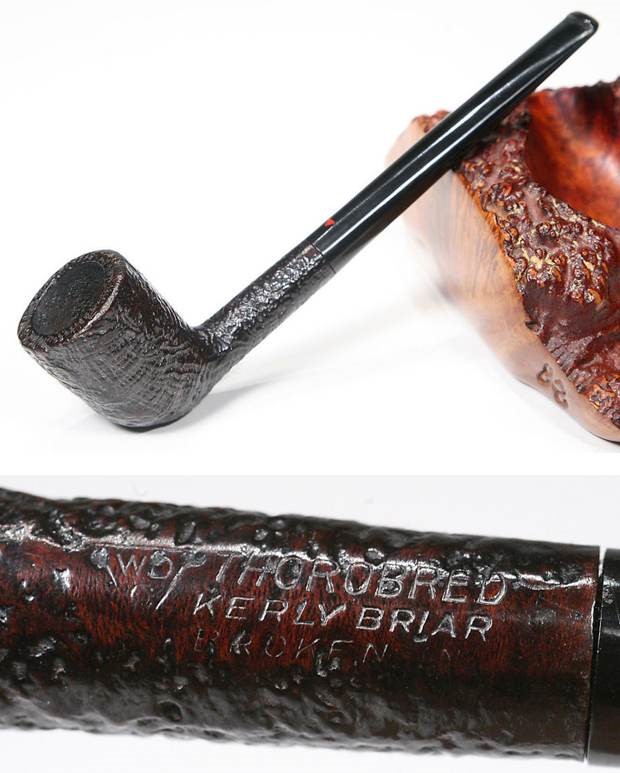
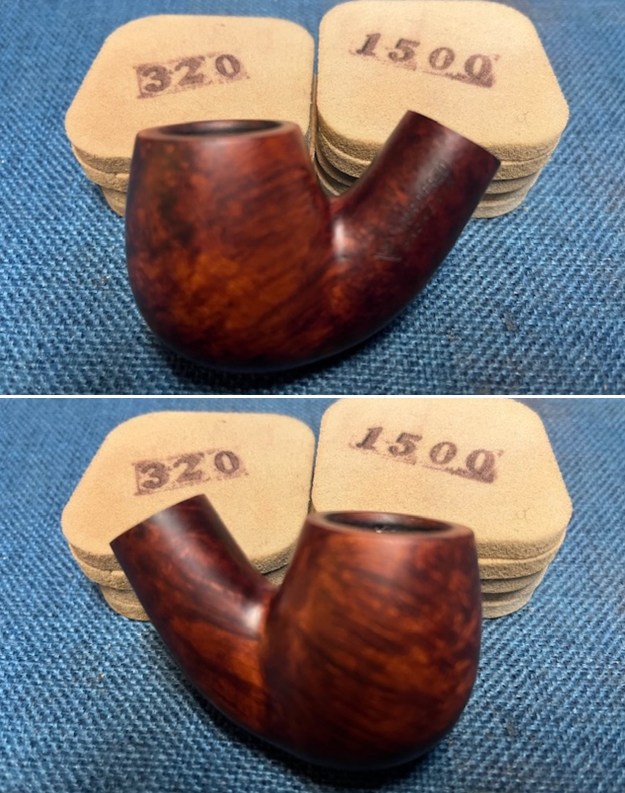
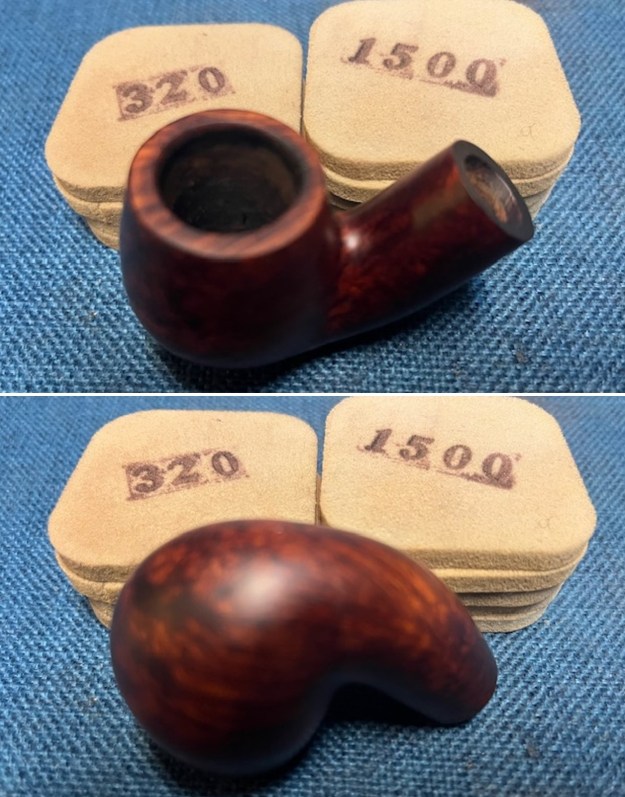
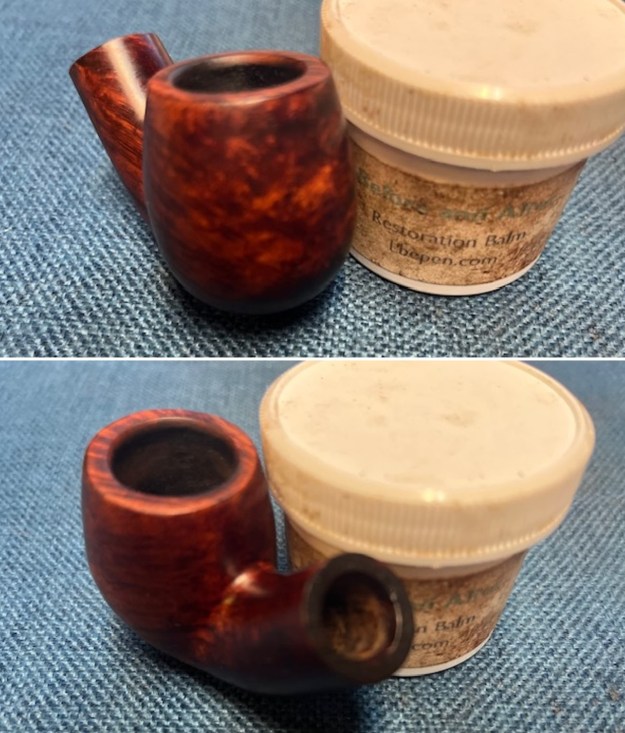
I also have included a photo of a Billiard with the same stamping as the pipe I working on though on a sandblast or Kerly Briar. The rest of the stamping on the pipe is the same as what is on mine.When I received it from Jeff it did not look like the same pipe. It was clean and the finish had life. He reamed it with a PipNet pipe reamer and got rid of the cake. He cleaned up the reaming with a Savinelli Fitsall Pipe Knife so that we could see the walls of the bowl and assess for damage. It was in good condition. He cleaned the internals of the shank and stem with cotton swabs, pipe cleaners and alcohol. He scrubbed the exterior with undiluted Murphy’s Oil Soap and a tooth brush. He rinsed the pipe under warm water. He dried it off with a cloth and then let it air dry. He scrubbed the stem with Soft Scrub and soaked it in Briarville’s Stem Deoxidizer. He rinsed it with warm water and dried it off with a soft cloth. It came out looking very good. The finish on the bowl and the rim top cleaned up nicely. I took pictures of the pipe to show how it looked when I brought it to the table. I took some photos of the rim top and stem to show the condition of them both when the pipe arrived. The rim top had some damage to the inner edge of the bowl and some marks on the top surface. Overall it looked very good. The oxidation on the stem had come off very well and the tooth marks chatter in the surface of the stem were visible.  I took a photo of the stamping on the underside of the shank. It was clear and readable as noted above. I removed the stem from the shank and took a photo of the appearance of the parts. It is a beauty.I started my work on the pipe by addressing the issues on the top and the inner edge of the rim. I used a folded piece of 220 grit sandpaper to smooth out the roughness. It looked much better at this point in the process.I sanded the briar rim top and the sides of the bowl with 320-3500 grit sanding pads. I wiped the bowl down with a damp cloth after each pad. By the time I finished with the 3500 grit pad the briar had taken on a rich glow. I polished the briar bowl and shank with micromesh sanding pads – dry sanding with 1500-12000 grit sanding pads. I wiped it down with a damp cloth after each pad to remove the debris. The bowl took on a rich glow. I rubbed the bowl down with Before & After Restoration Balm. I worked it into the surface of the briar with my fingertips to clean, enliven and protect it. I let the balm sit for 10 minutes and then buffed with a cotton cloth to raise the shine. Mark Hoover’s Balm is a product that I have come to appreciate and one I use on every pipe I have been working on. I set the bowl aside and turned my attention to the stem. I “painted” the surface of the stem with the flame of a Bic lighter to lift the tooth marks and scratches. The heat did little to raise the marks at all. I wonder if hard rubber is unlike vulcanite in terms of memory. I used black super glue to fill in the deep tooth marks in the surface. I flattened out the repairs with small files. I sanded the stem with 220 grit sandpaper to smooth out the repairs and begin to blend them into the surface. I sanded the stem with 320-3500 grit sanding pads to further blend them in and smooth out the surface of the stem.I polished the stem with micromesh sanding pads – dry sanding with 1500-12000 grit pads. I wiped the stem down after each pad with some Obsidian Oil. I finished hand polishing it with Before & After Pipe Stem Polish – Fine and Extra Fine. I rubbed it down with another coat of Obsidian Oil and let it dry. The stem really was beginning to look very good. This is a beautiful WDC Thorobred Broken In Bent Billiard with a thick hard rubber, black stem. It has a great look and feel. The flat bottom makes it a sitter that is well balanced. The shape fits well in the hand with the curve of the bowl and bend of the shank making a great pipe to hold. I polished stem with Blue Diamond polish on the buffing wheel. I gave the sandblast bowl and plateau on the rim top and shank end multiple coats of Conservator’s Wax. I gave the stem multiple coats of carnauba wax. I buffed the pipe with a clean buffing pad to raise the shine. I hand buffed it with a microfiber cloth to deepen the shine. The pipe polished up pretty nicely. The rich combination of black and dark brown stains gave the sandblast a sense of depth. The pipe took on life with the buffing. The rich colour of the briar works well with the polished stem. Have a look at it with the photos below. The shape, finish and flow of the pipe and stem are very well done. The dimensions are Length: 5 inches, Height: 1 ½ inches, Outside diameter of the bowl: 1 1/8 inch, Chamber diameter: ¾ of an inch. The weight of the pipe is 42 grams/ 1.55 ounces. This American Made Bent Billiard is a real beauty. Thanks for walking through the restoration with me as I worked over another beautiful pipe. This one will be going on the rebornpipes store in the American Pipe Makers Section shortly if you would like to add it to your collection. Thanks for your time.
Restoring a rather odd Barrel Like Manhattan Oval Shank Billiard


by Steve Laug

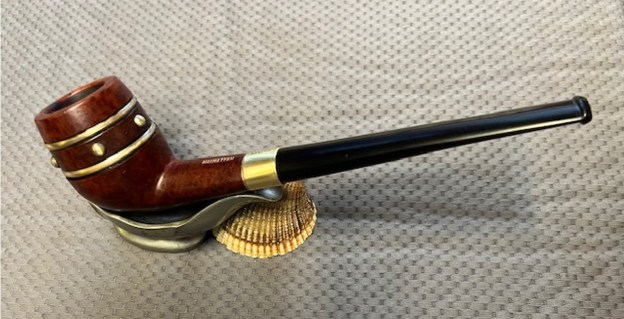
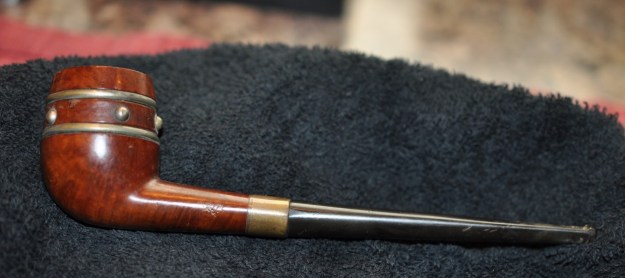
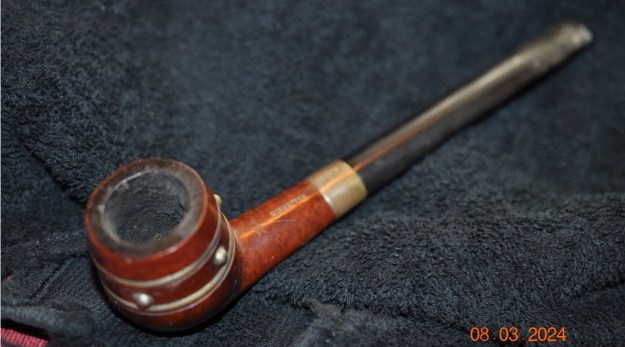
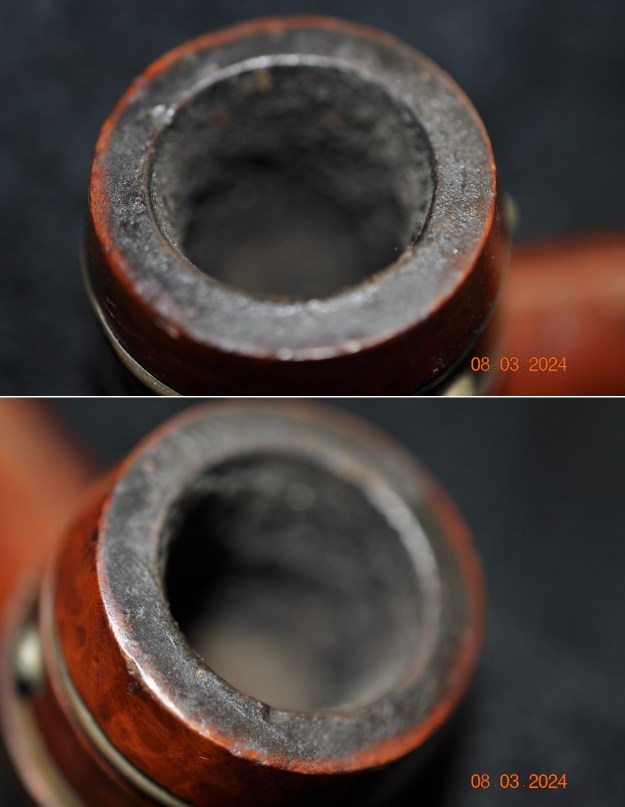
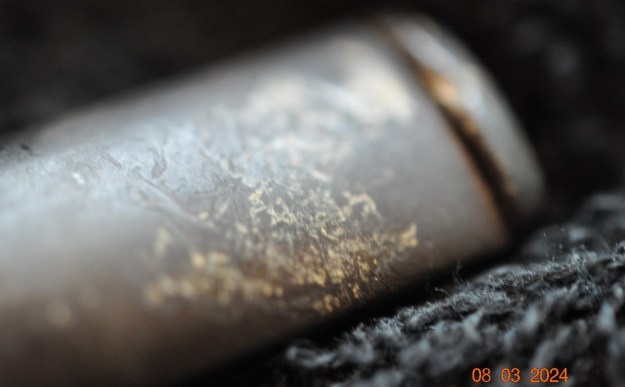
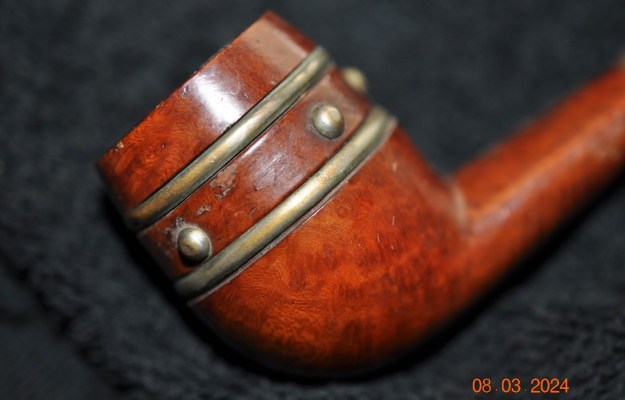
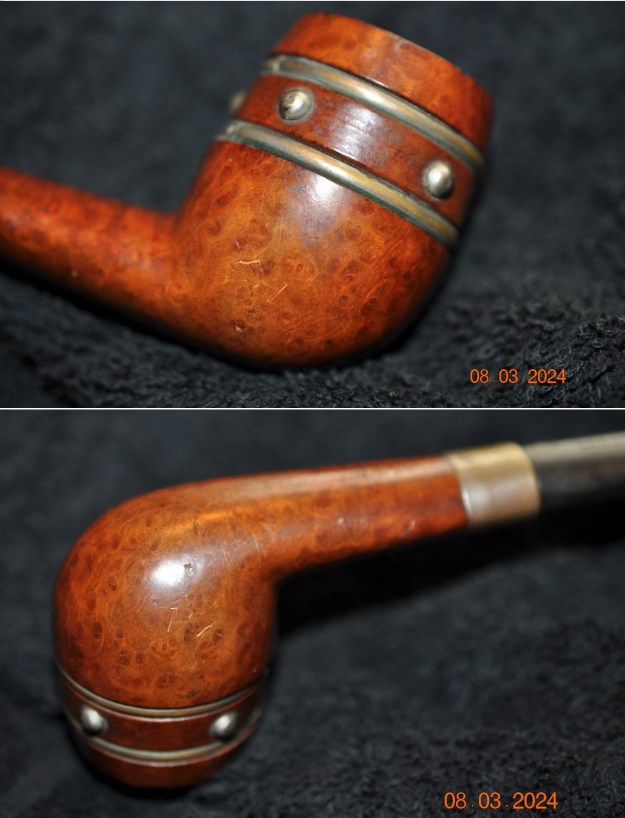
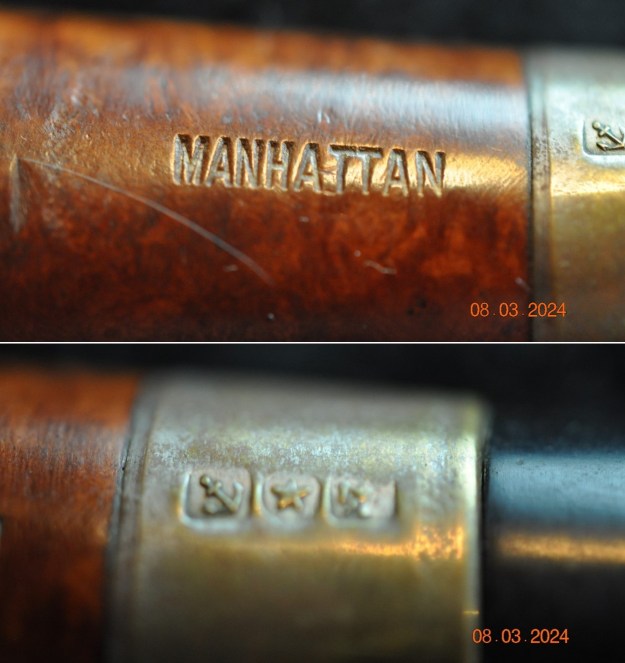
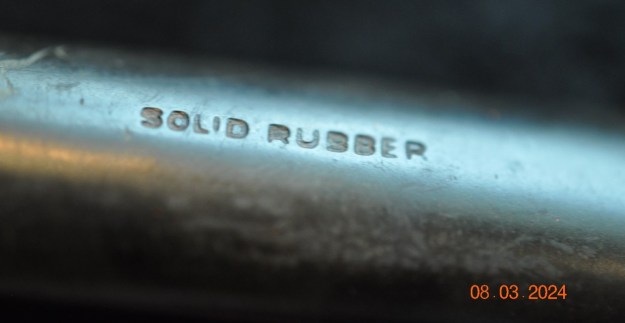
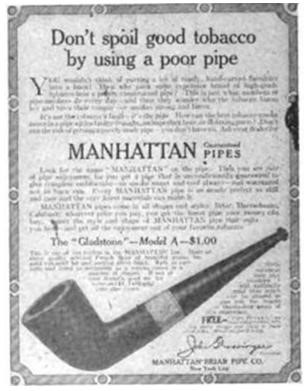
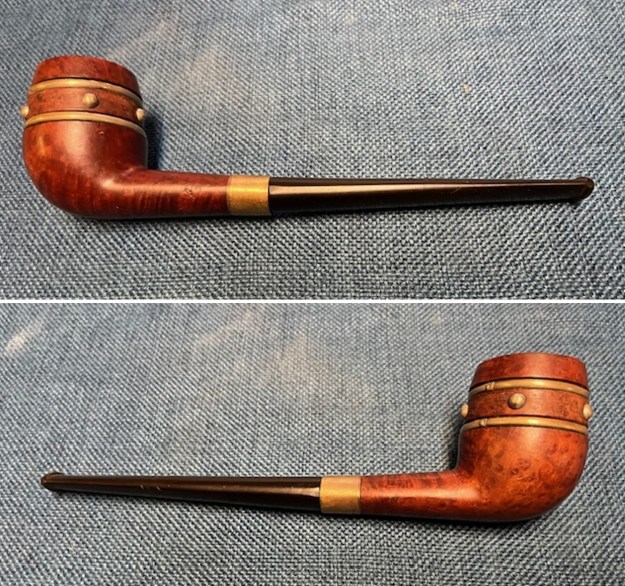
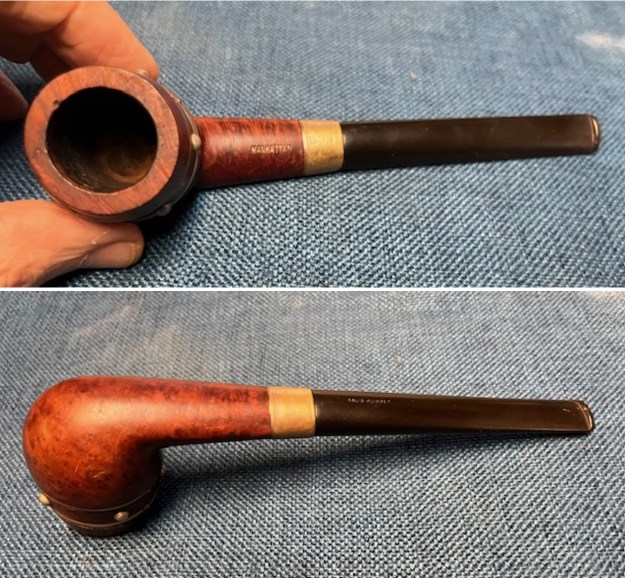
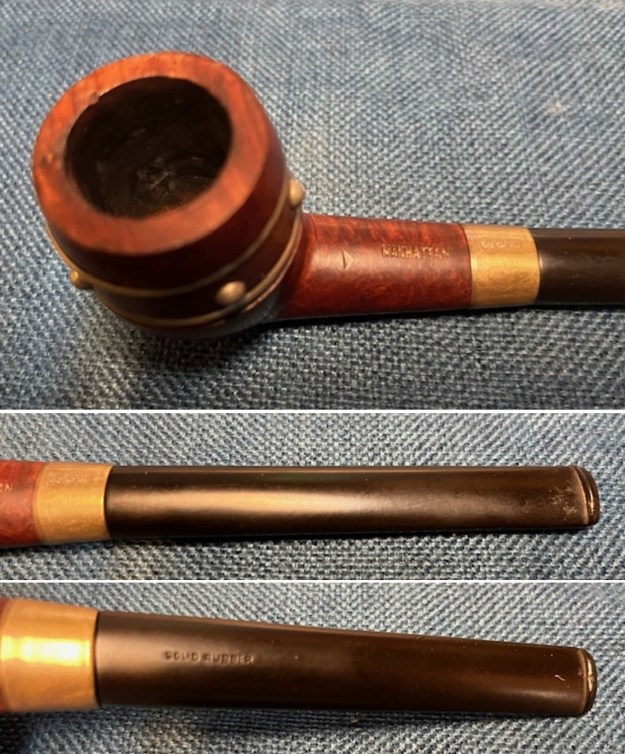
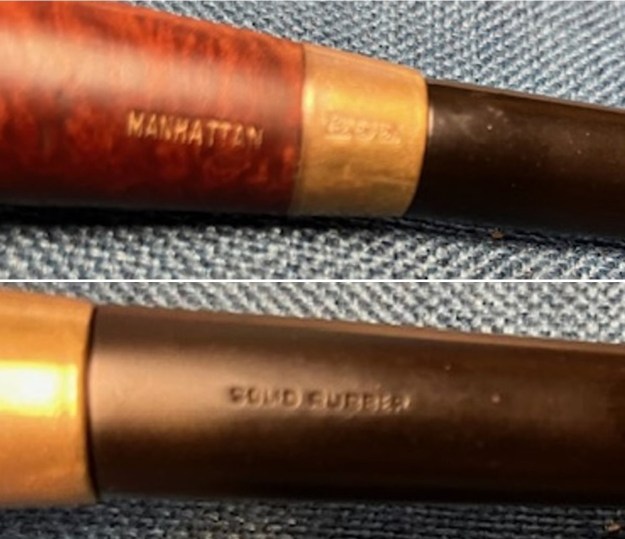
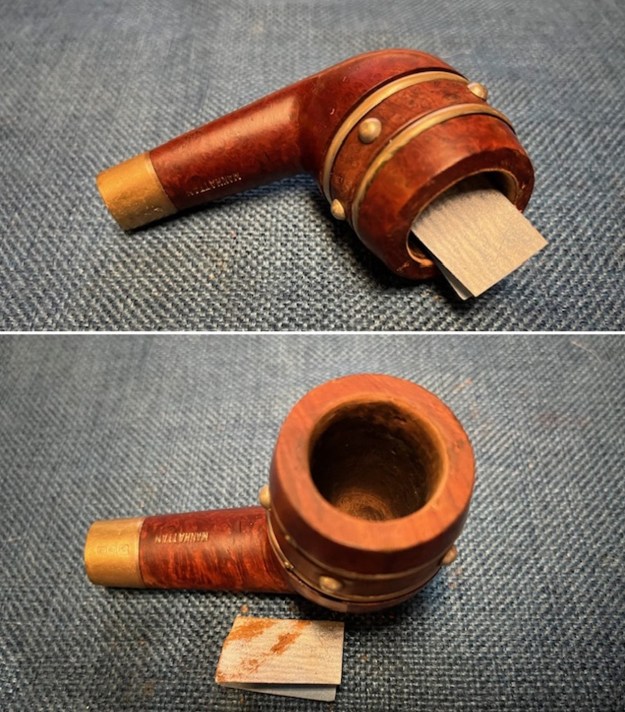
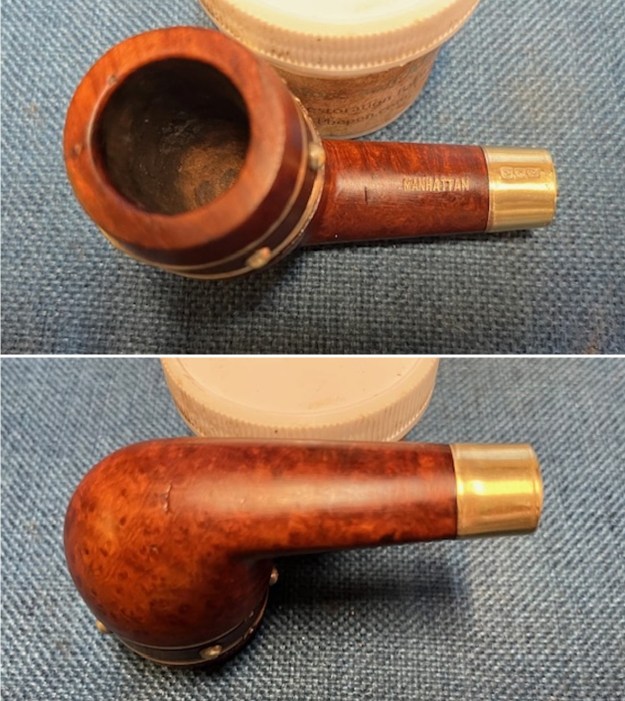
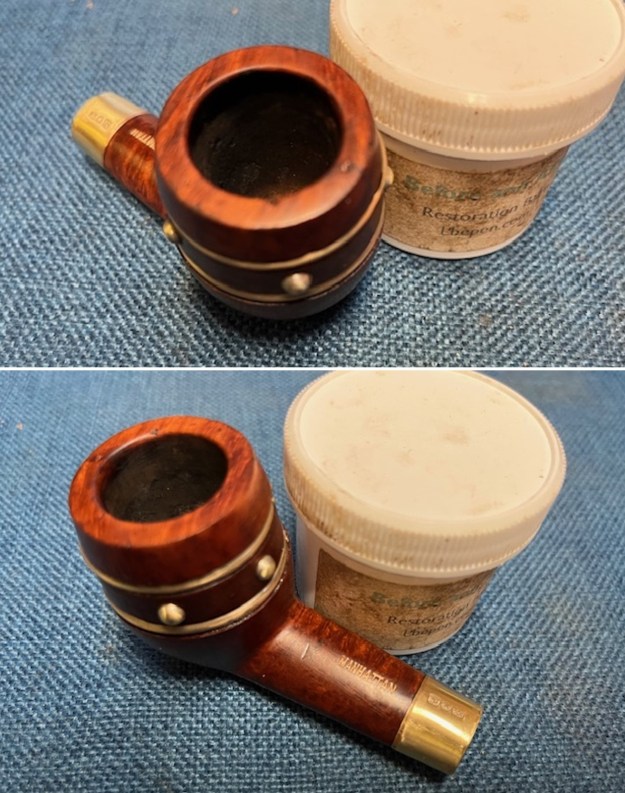
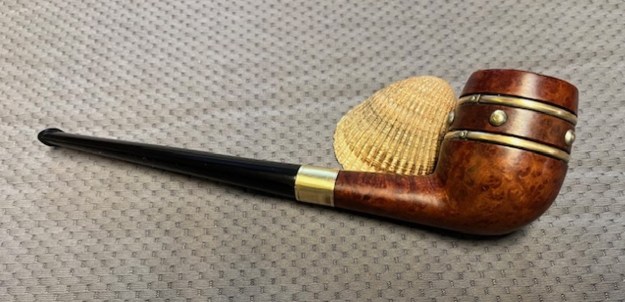
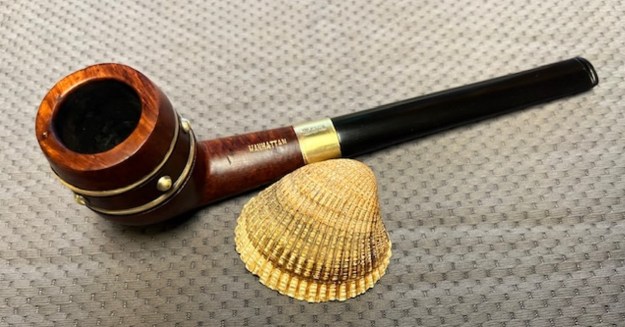
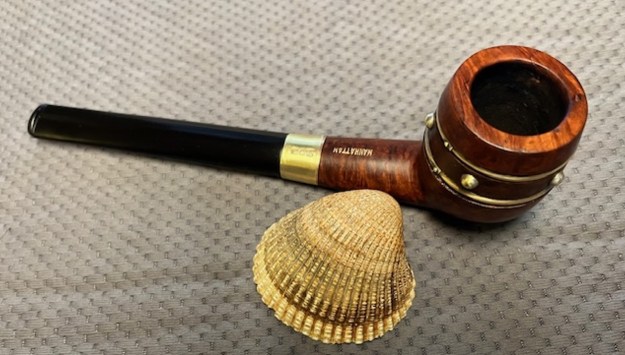
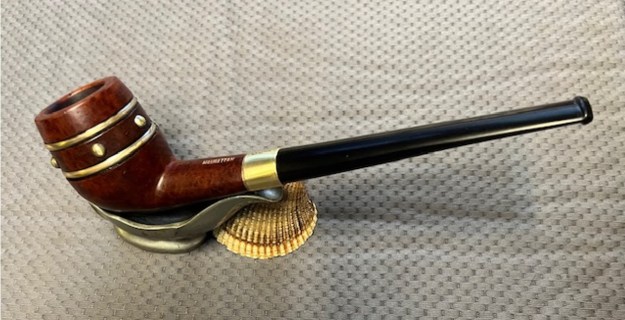
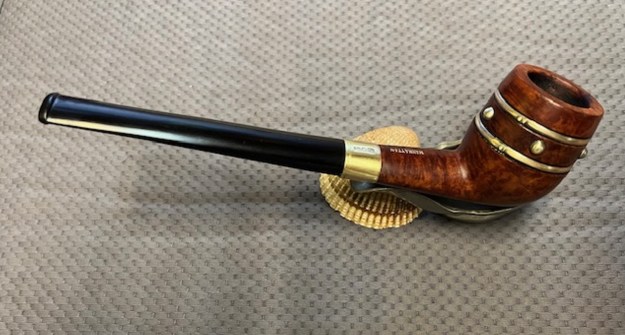
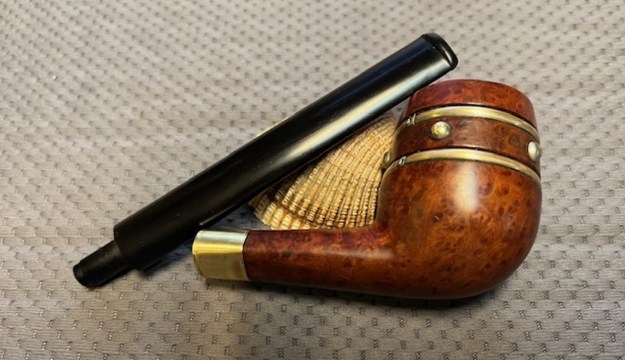
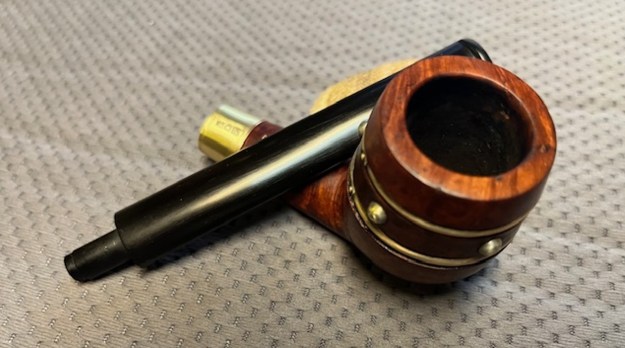
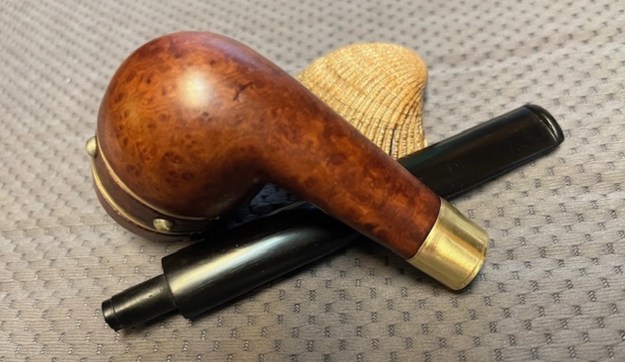
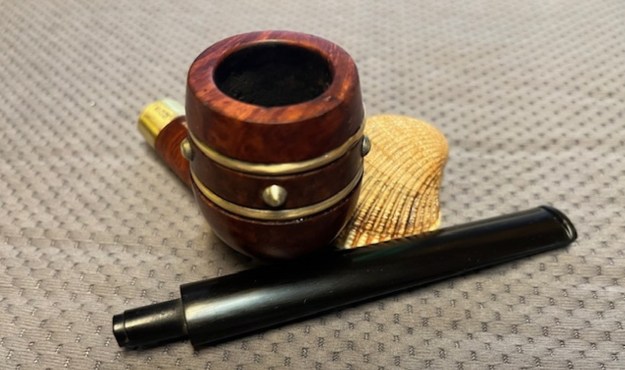
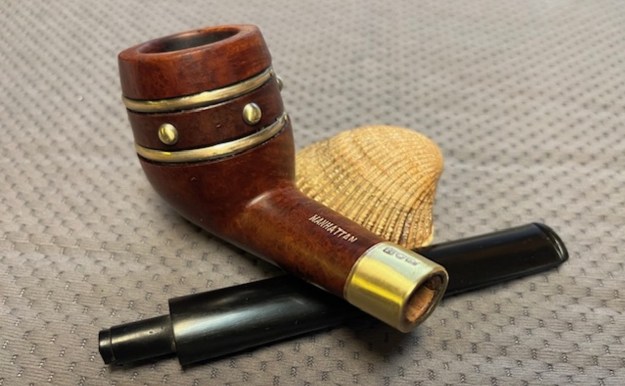
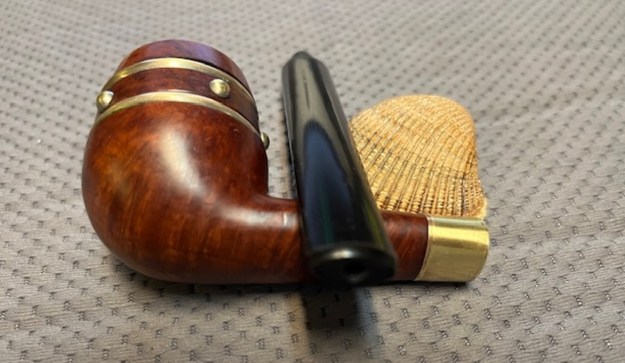
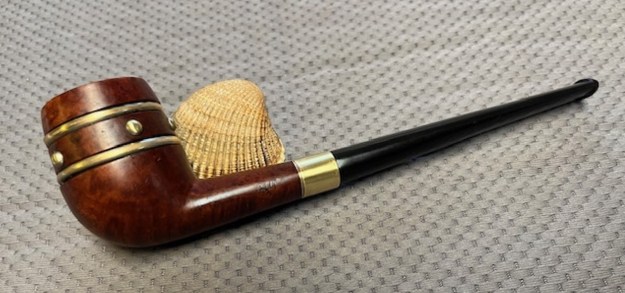
The next pipe on the work table is a unique shape that looks a lot like a billiard banded with barrel iron and buttons. It is very unique looking. It is stamped on the top side of the shank and reads MANHATTAN in gold letter. The shank has a brass (nickel) decorative band with faux hallmarks on top. On the underside of the stem it reads SOLID RUBBER. There were no other identifying marks or stamps on the shank or the stem. It came to us form a seller in Austin, Texas, USA on 11/07/2020. It has a mix of grain around the sides and shank. The bowl had a heavy cake in the bowl and thick lava on the rim top. It was thick so it was hard to be certain what the inner edge looked like. The finish was very dirty so it was hard to know with certainty what lay underneath. The bowl is a classic Billiard shape. The solid rubber oval taper stem had an orific button and showed some age. It has oxidation, calcification, tooth chatter and tooth marks on both sides ahead of the button. Jeff took photos of the pipe before he started working on it. Jeff took photos of the bowl, rim top and stem sides to show the condition of the both. It was a dirty bowl with debris and a heavy cake on the walls. The rim top had a thick lava covering the bowl and the edges. It was hard to know what the condition of the inner edge was underneath. I took photos of the top and underside of the stem showing condition and the tooth marks on both sides ahead of the button. Jeff took photos of the grain around the sides and the heel of the bowl to show the briar that was used to craft this unique pipe. He took photos to capture the stamping on the top and underside of the shank, band and stem. It is clear and readable as noted above. I turned to Pipedia and found a helpful article on the background. It was called The Manhattan Briar Pipe Company. It is an interesting read so I have included the article in its entirety as well as the advertisement from 1913 that showed a Manhattan pipe. The interesting thing for me is that the pipe is the same shape and style as the one I have in hand. The difference of course is that mine does not have a silver band and there is a horn stem rather than a vulcanite stem.

The Manhattan Briar Pipe Co. was organized in October, 1902 by the American Tobacco Company, under an agreement with the owners of the Brunswick Briar Pipe Company, as a New York corporation. Its initial address was 111 5th Avenue, New York City, and the value of its stock in 1902 was $350,000.00. American Tobacco Company had itself been founded in 1890 by J. B. Duke through a merger between a number of U.S. tobacco companies, and was one of the original twelve members of the Dow Jones Industrial Average in 1896. It was commonly called the “Tobacco Trust”.

The majority of the stock in Manhattan Briar Pipe Company was immediately acquired by the American Tobacco Company after the company was organized, but the prior owners retained a controlling minority interest for some years. In October, 1906, however, the American Tobacco Company acquired the remaining shares of stock, and from that point on Manhattan Briar was the pipe making branch of American Tobacco. By 1911, however, American Tobacco had been dissolved in anti-trust litigation, and Manhattan Briar Pipe Co. became a separate concern.

Manhattan Briar Pipe Co. had started operations in 1905 in Jersey City, New Jersey, having taken on a lease for a ten year period in 1905, and maintained a factory at Marion, New Jersey, where the pipes were made. By 1913, former American Tobacco pipe department chair John Glossinger was the president of Manhattan Briar Pipe Company, and began a significant advertising push for high grade pipes, using the slogan “Don’t spoil good tobacco by using a poor pipe”. It appears from cases having appeared on the estate market that Manhattan also sold meerschaum pipes, most likely rebranded articles originally made by European craftsmen.

After the expiration of the Jersey City lease the Manhattan Briar Pipe Company maintained offices and a factory at 415-425 Greenpoint Avenue, Brooklyn, New York beginning in 1915, evidently under the direction of W. C. Bastian, who had been granted a patent for a chambered pipe stem otherwise seemingly identical to a Peterson P-Lip in 1910. An employee of the company, one J. Gianninoto, was granted a patent for a device meant to permit the emptying of a cuspidor without the mess in early 1918, and the company continues to be listed in local directories through 1921. In 1922 Manhattan Briar was purchased by S.M. Frank and merged into that company. https://pipedia.org/wiki/Manhattan_Briar_Pipe_Co.

Further digging led me to a link on the S.M. Frank Co. & Inc. history page. Reading through the history of the company I found that S.M. Frank not only purchased the Manhattan Briar Pipe Company but also purchased WDC or William DeMuth & Company – two of the older brands that I enjoy working on. Here is the relevant section from the link: In the year 1900 Sam Frank Sr. started his own business, selling pipes and other tobacco items. His original office was located at 20 W. 17th Street, NYC. He was also closely associated with the sales staff of Wm. DeMuth & Co., selling their line of pipes. It was at this time that Mr. Frank first met Ferdinand Feuerbach and formed what would be a lifelong friendship. Mr. Feuerbach started working for the DeMuth Company in 1897 and by 1903 had become the production manager. In 1919, when Mr. Frank needed an experienced pipe man to run his pipe factory, located at 168 Southern Blvd., in the Bronx, he persuaded his old friend Ferdinand to join him. Mr. Feuerbach is credited with developing DeMuth’s popular Royal DeMuth and Hesson Guard Milano pipelines. In 1922, when S. M. Frank purchased the Manhattan Briar Pipe Co. the company incorporated.  http://www.smfrankcoinc.com/home/?page_id=2

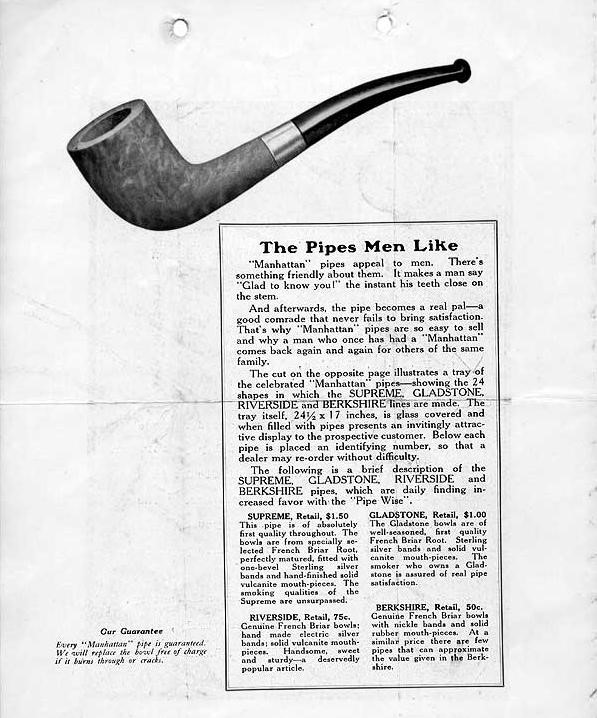
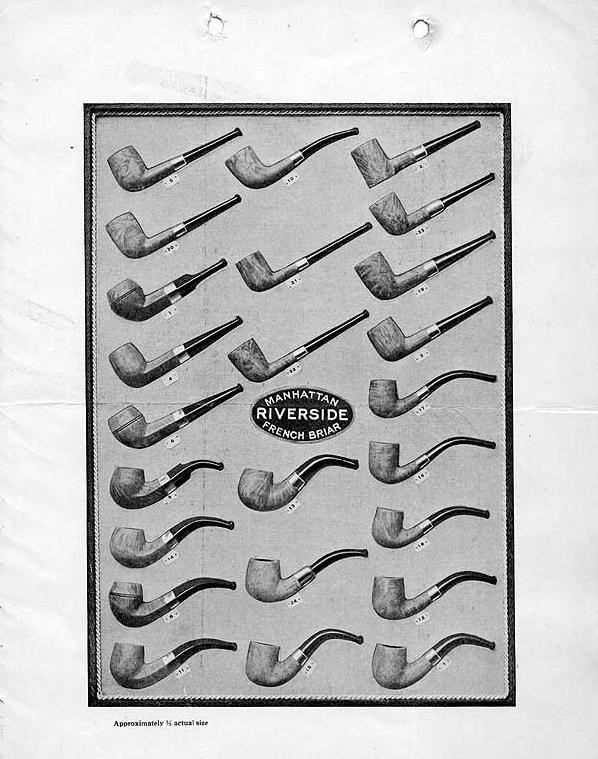
That link led me to me to some further information including an advertisement and a shape chart on Chris Keene’s Pipe Pages http://pipepages.com/mbpc2.htm. I have included them here with acknowledgement to Chris Keene. I always enjoy reading the old copy of these advertisements as they take me back to place where the pipe was an acceptable part of the life. The pipe I have in hand is one that was made between the opening of the Manhattan Briar Pipe Company in 1905 in New Jersey and 1922 when SM Frank bought the company and it ceased to exist as a separate entity. That fit my experience of working on pipes with stems stamped Solid Rubber.

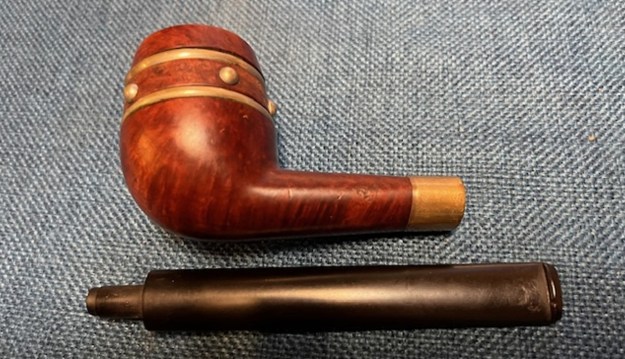
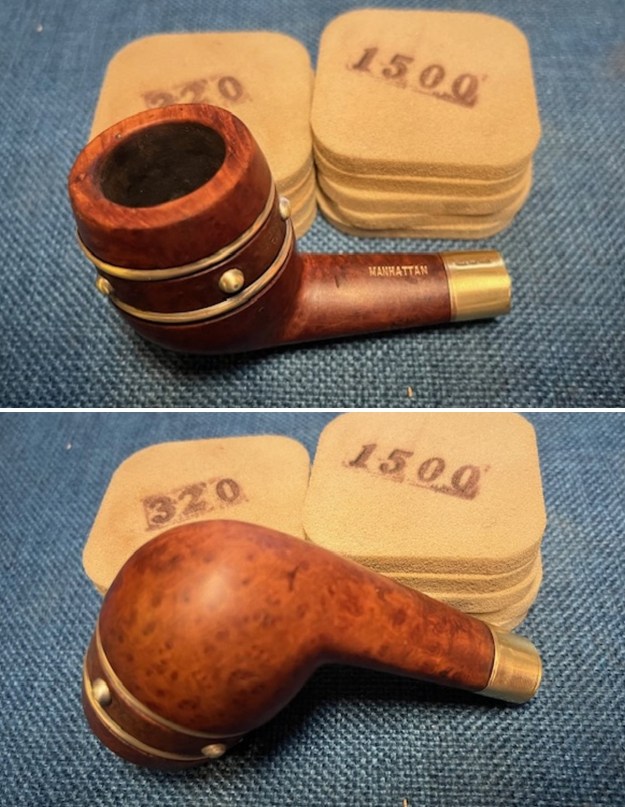
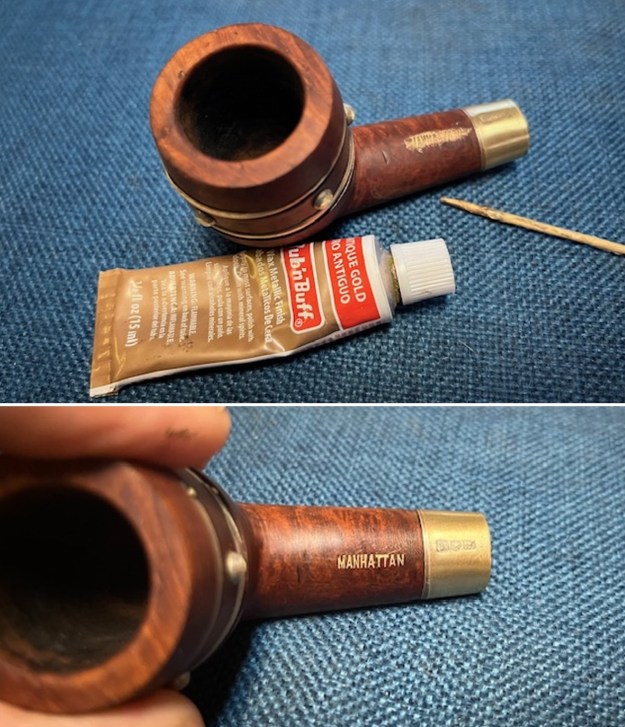
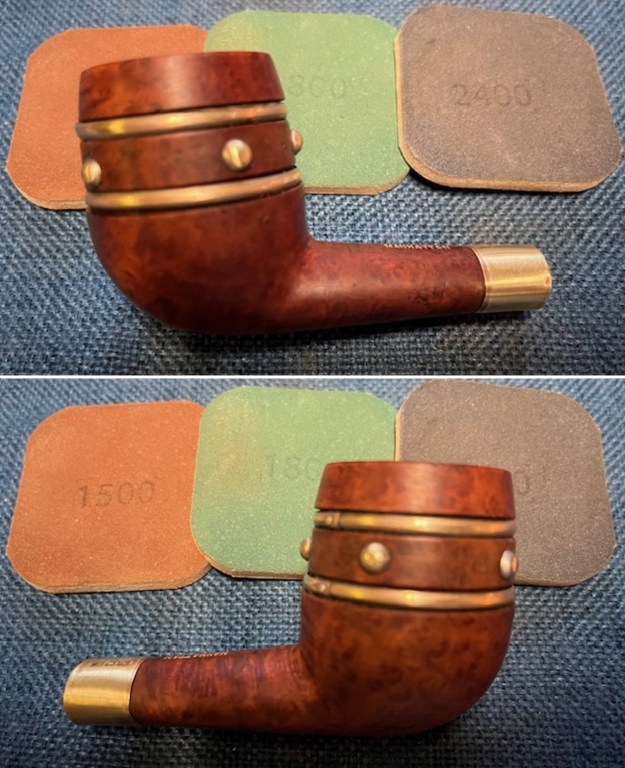
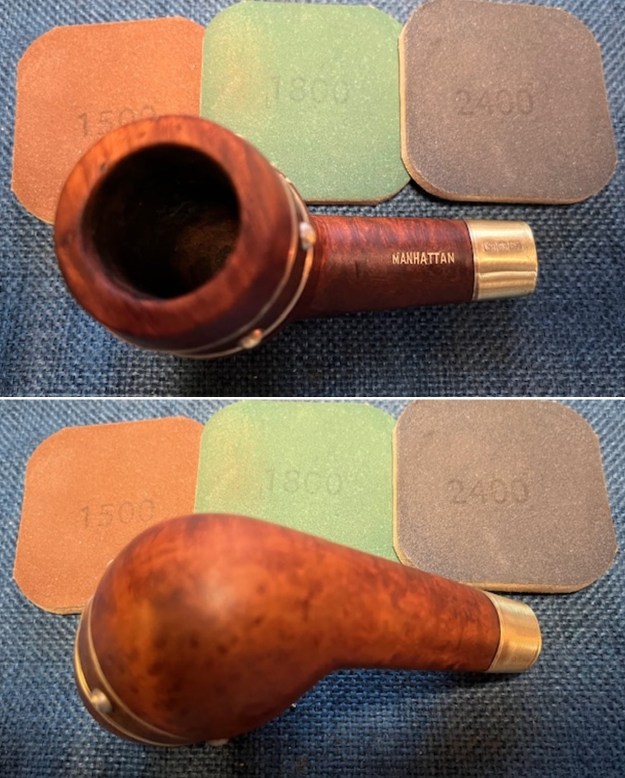
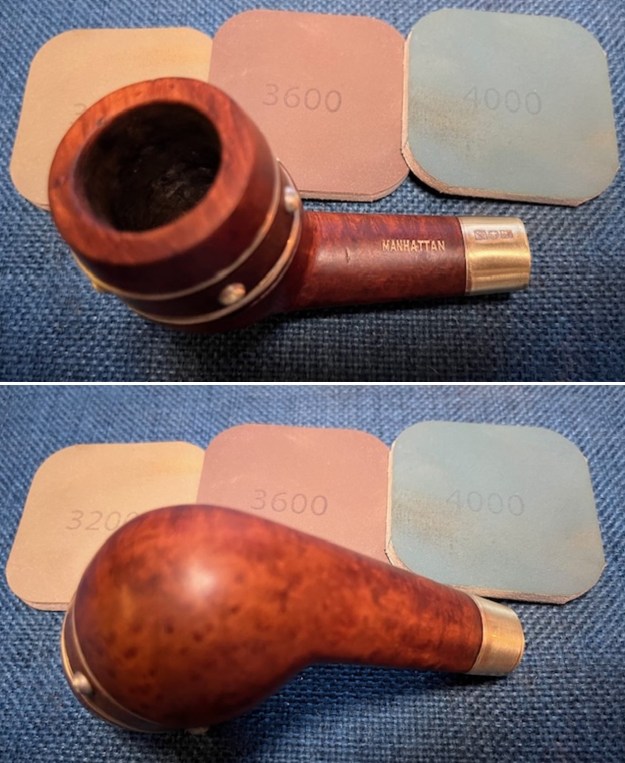
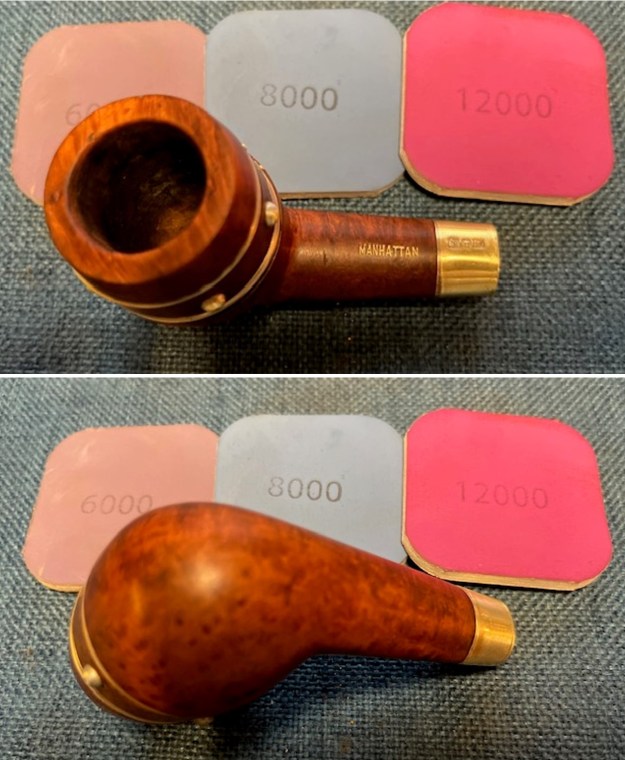
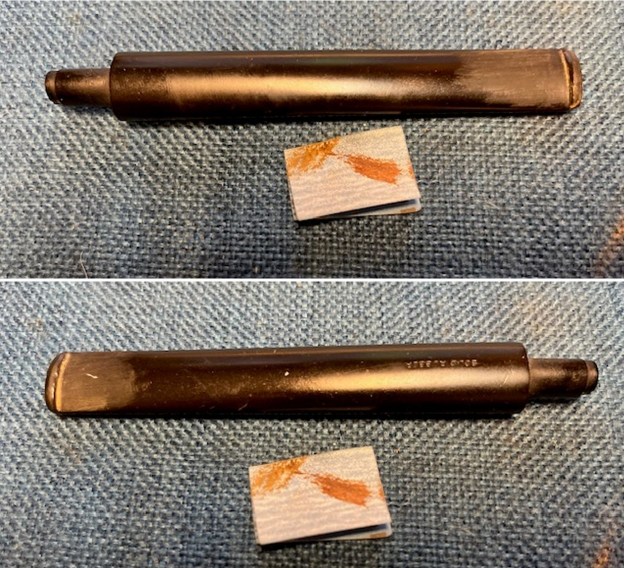
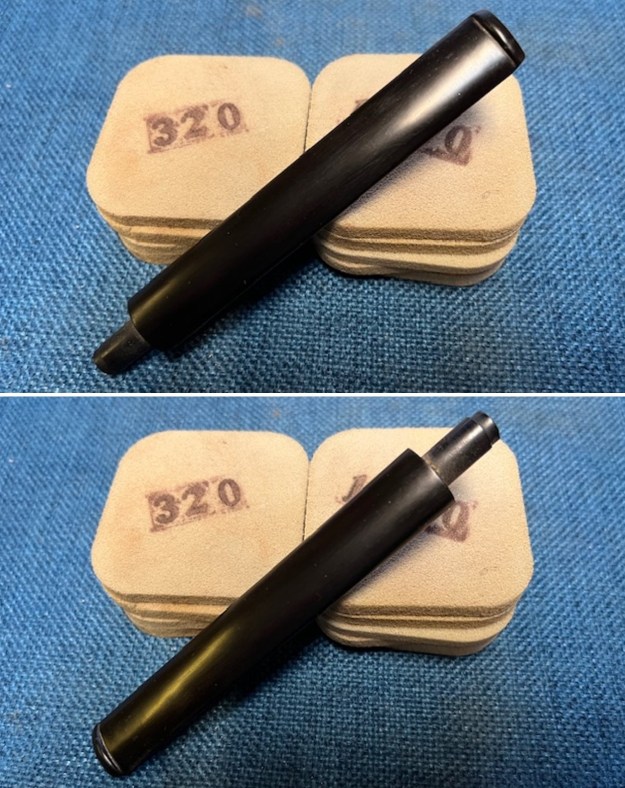
Armed with that information I turned to work on the pipe itself. Jeff had done a great job cleaning up the pipe as usual. He cleaned up the inside of the bowl with a PipNet reamer and a Savinelli Fitsall Pipe Knife. The bowl walls looked very good. He scrubbed the interior of the bowl and shank with pipe cleaners, cotton swabs and alcohol to remove the tars and oils. He scrubbed the exterior of the pipe with Murphy’s Oil Soap and a tooth brush to remove the grime from the finish. He worked on the rim top lava and darkening with the soap and tooth brush. He scrubbed the inside of the stem with alcohol and pipe cleaners. He scrubbed the exterior with Soft Scrub and then soaked it in Briarville’s Pipe Stem Deoxidizer. He washed it off with warm water to remove the deoxidizer. The pipe looked far better. I took photos of the pipe when I received it before I started working on it. I took photos of the bowl and rim top to show how clean it was. The top and the inner edge of the rim show some darkening, nicks and scratches. The stem looks clean of debris and grime. There are light tooth marks and chatter on both sides. I took a photo of the stamping on the top of the shank. The stamping is clear and readable and appears to have had gold stamp in the letters. The stem shows a Solid Rubber stamp clearly on the underside. I took a photo of the pipe with the stem removed to show the overall look of stem, tenon and profile of the pipe. I started my work on the pipe by addressing the issues on the top and the inner edge of the rim. I used a folded piece of 220 grit sandpaper to smooth out the roughness. It looked much better at this point in the process.I sanded the briar rim top and the sides of the bowl with 320-3500 grit sanding pads. I wiped the bowl down with a damp cloth after each pad. By the time I finished with the 3500 grit pad the briar had taken on a rich glow. I touched up the gold stamp on the top of the shank with Rub’n Buff Antique Gold. I worked it into the stamping with a tooth pick and buffed it off with a soft cloth. It was very readable and looked good with the brass band and brass rings and studs on the bowl. I polished the briar bowl and shank with micromesh sanding pads – dry sanding with 1500-12000 grit sanding pads. I wiped it down with a damp cloth after each pad to remove the debris. The bowl took on a rich glow. I rubbed the bowl down with Before & After Restoration Balm. I worked it into the surface of the briar with my fingertips to clean, enliven and protect it. I let the balm sit for 10 minutes and then buffed with a cotton cloth to raise the shine. Mark Hoover’s Balm is a product that I have come to appreciate and one I use on every pipe I have been working on. I set aside the bowl and turned my attention to the stem issues. I sanded it with a folded piece of 220 grit sandpaper to begin the process of blending the chatter and marks into the stem surface. On the underside I found a piece of metal embedded in the rubber confirming an early date as mentioned above.I sanded it with 320-3500 grit sanding pads to further blend them in and smooth out the surface.I polished the vulcanite with micromesh sanding pads – 1500-12000 grit pads. I wiped it down with a damp cloth after each sanding pad. I used Before & After Pipe Polish – both Fine and Extra Fine to further polish the stem.

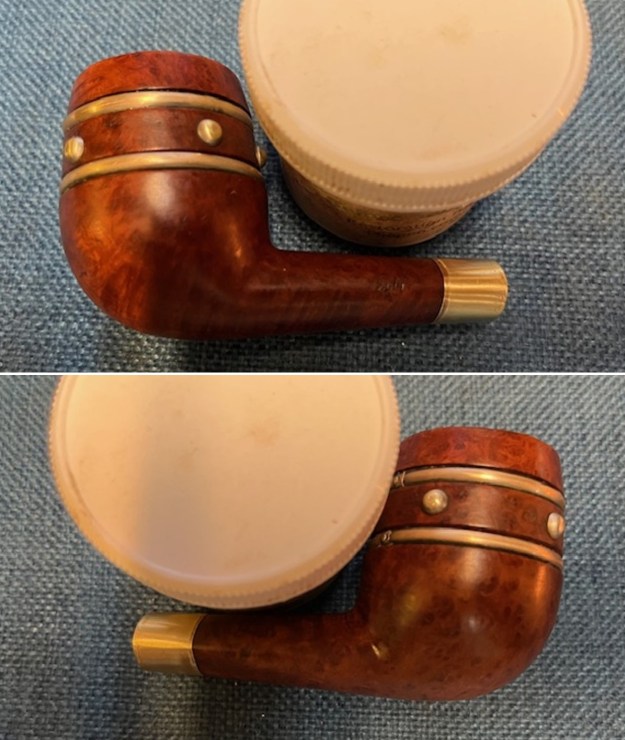
I put the stem back on the Manhattan Barrel Like Oval Shank Billiard and took it to the buffer. I worked it over with Blue Diamond to polish out the remaining small scratches. I gave the bowl and the stem several coats of carnauba wax and buffed the pipe with a clean buffing pad to raise the shine. I hand buffed it with a microfiber cloth to deepen the shine. The pipe polished up really well and the bevelled rim top looked good. I was happy with the look of the finished pipe. The photos below show what the pipe looks like after the restoration. This Oval Shank Manhattan Billiard is a beautiful and unique take on a classic shape. The polished solid rubber taper stem looks really good with the browns of the briar and the brass of the bands around the bowl and shank. The dimensions of the pipe are Length: 7 inches, Height: 2 inches, Outside diameter of the bowl: 1 ¼ inches, Chamber diameter: 7/8 of an inch. The weight of the pipe is 1.83 ounces/52 grams. This is another pipe that I will be putting it on the rebornpipes store in the American Pipe Makers Section shortly, if you are interested in adding it to your collection. The unique brass on the bowl gives it a great look and feel. This one should be a great smoker. Thanks for walking through the restoration with me on this beauty!

Restoring a Handsome Peterson Deluxe System 9S


by Kenneth Lieblich

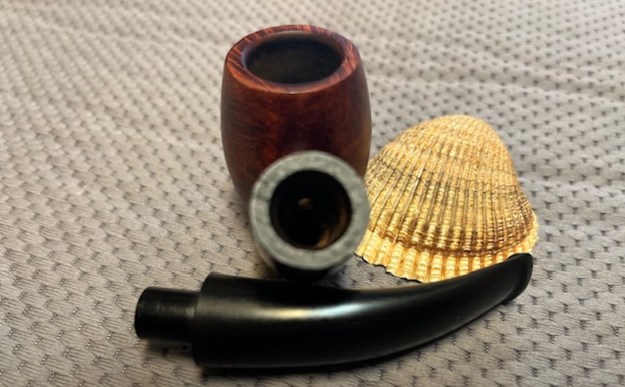
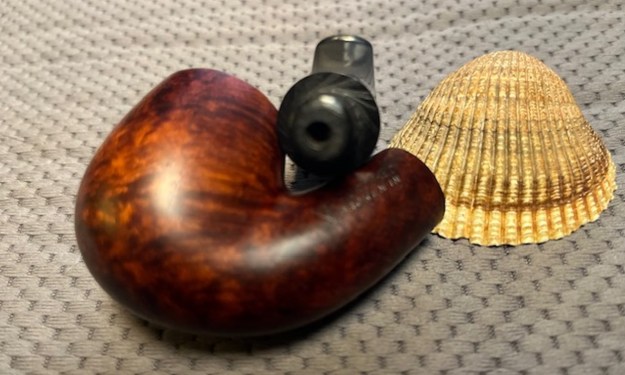
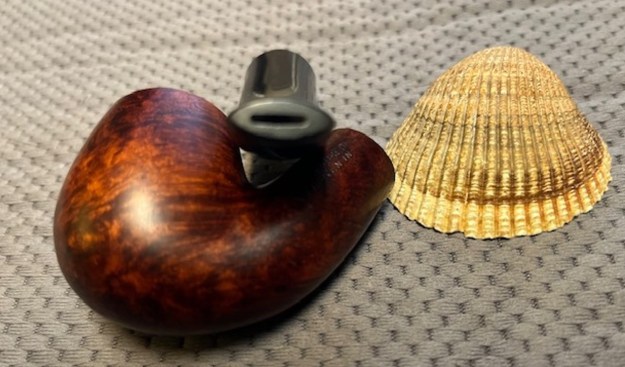
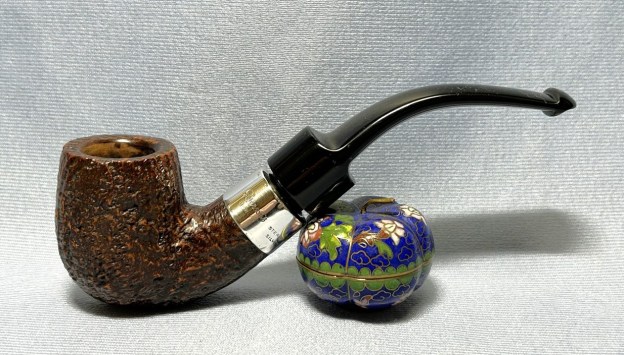
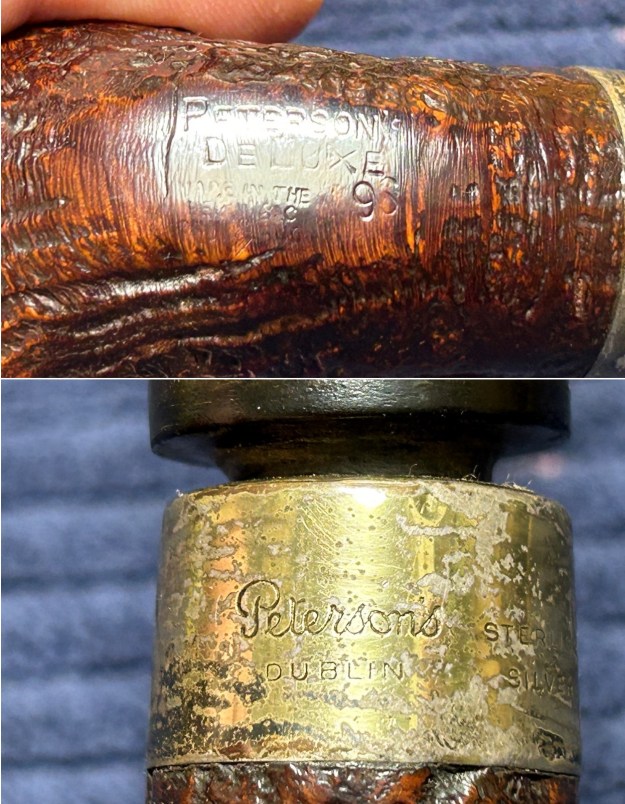
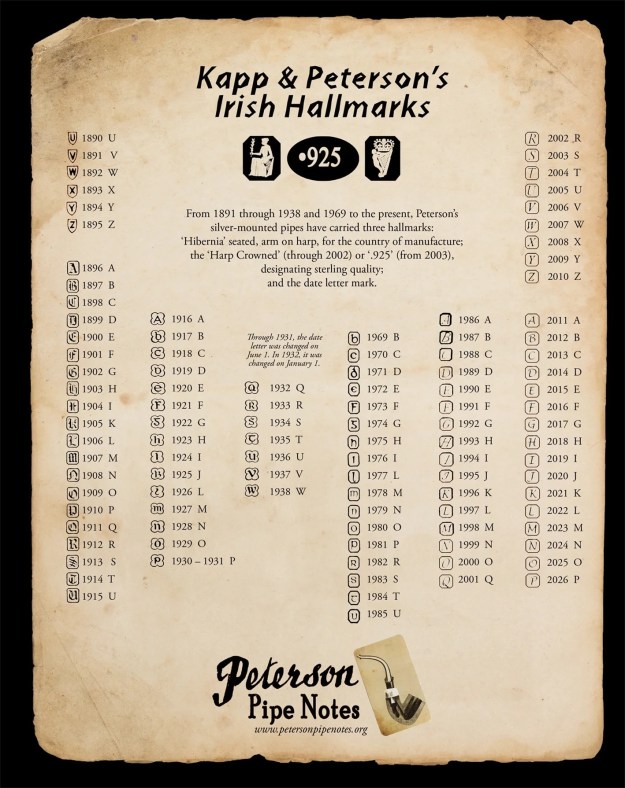
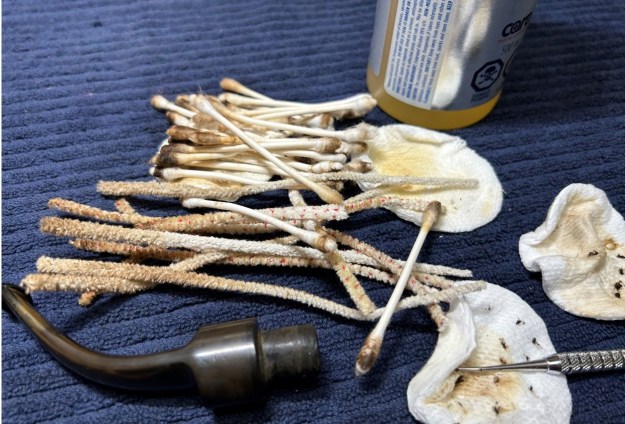
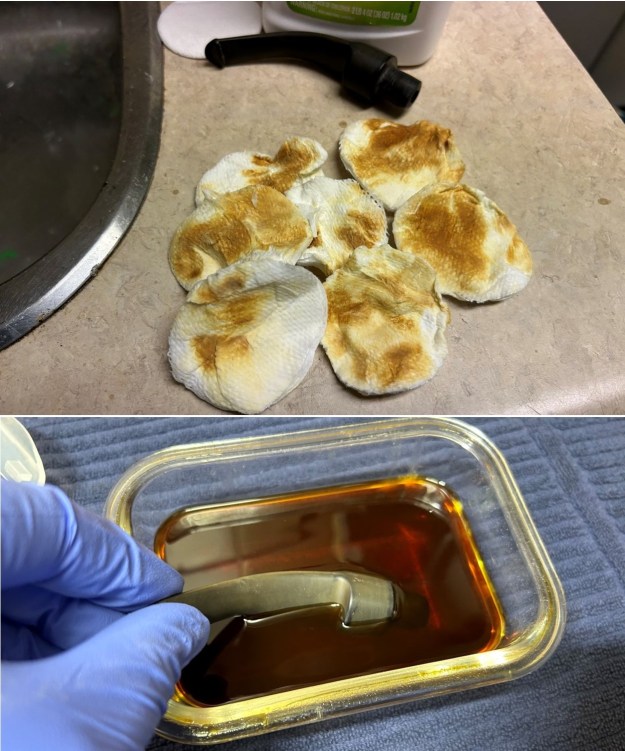
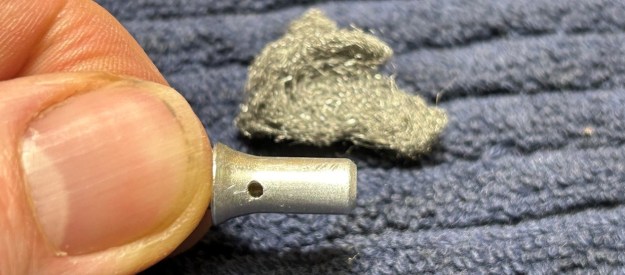
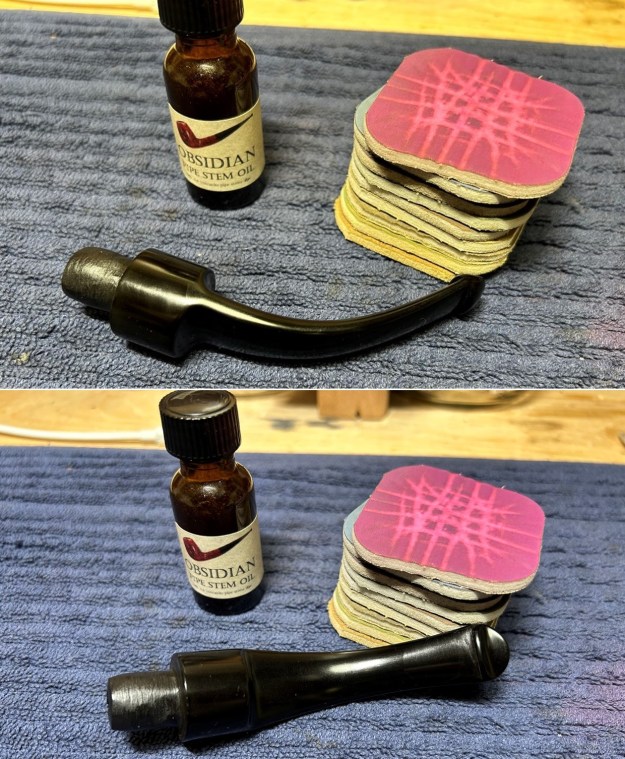
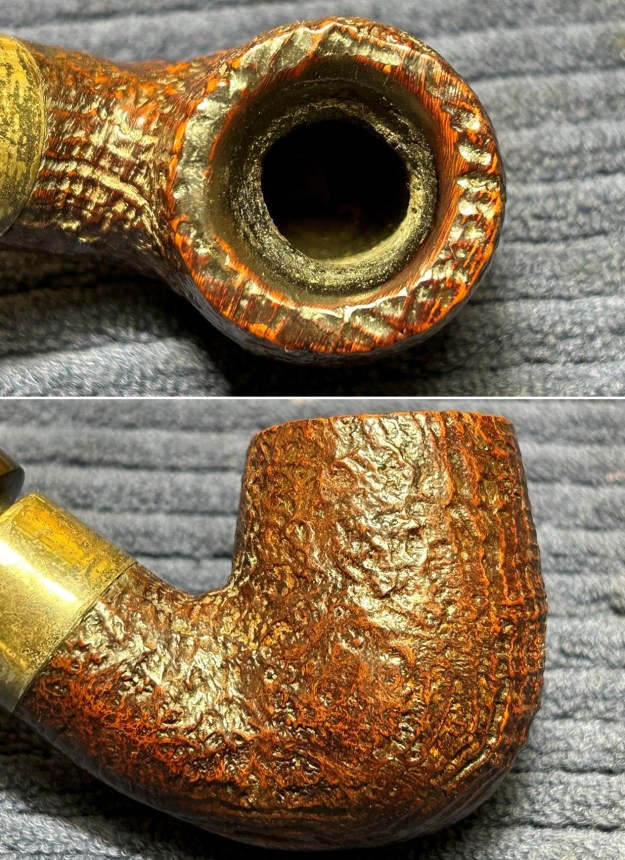
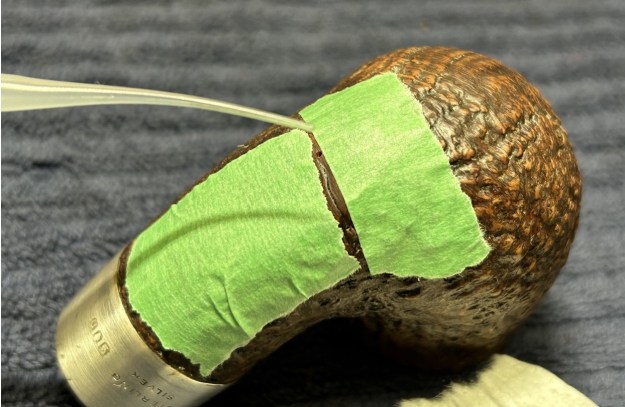
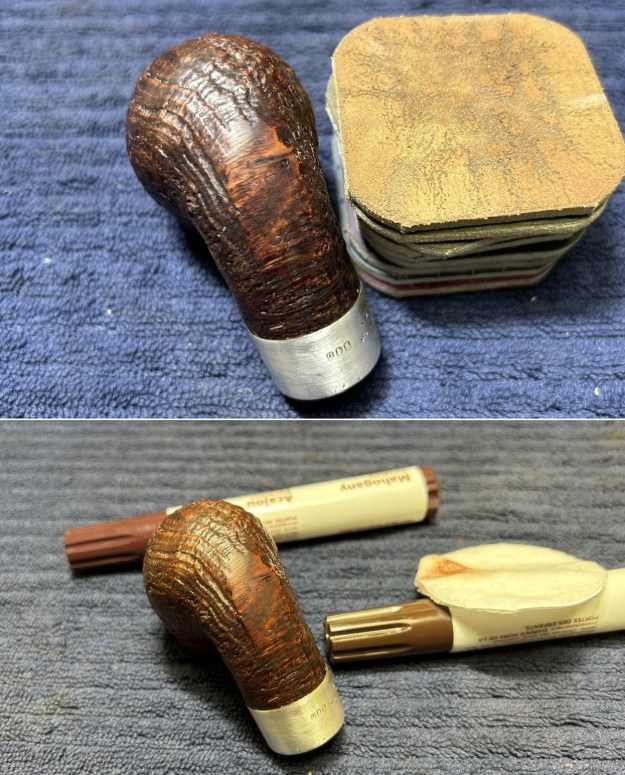
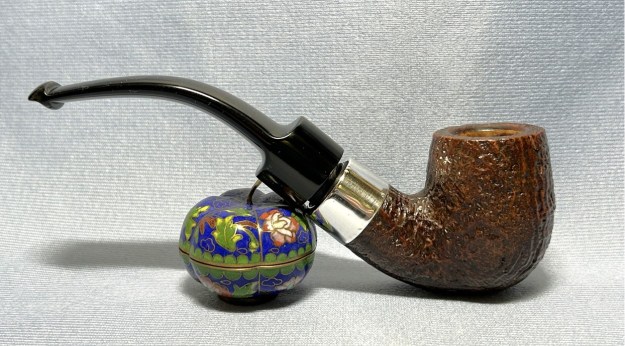
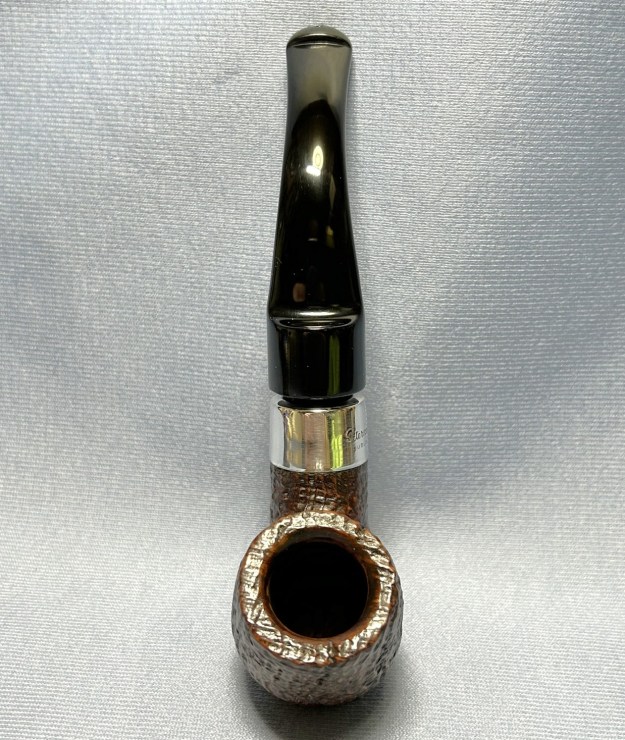
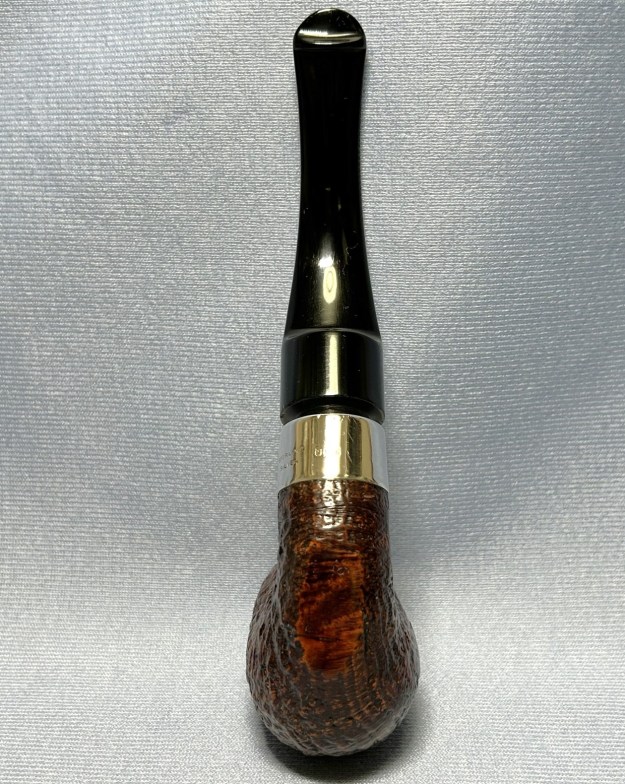
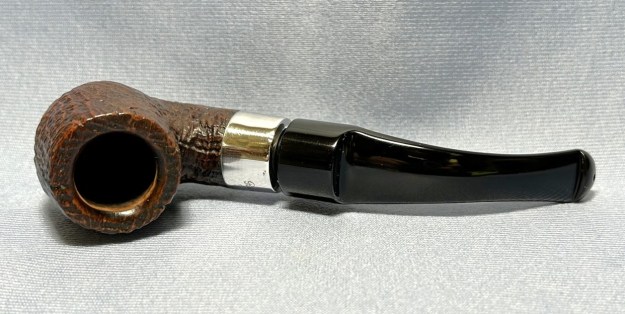
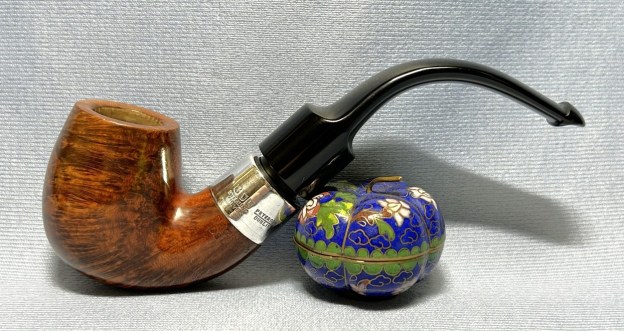
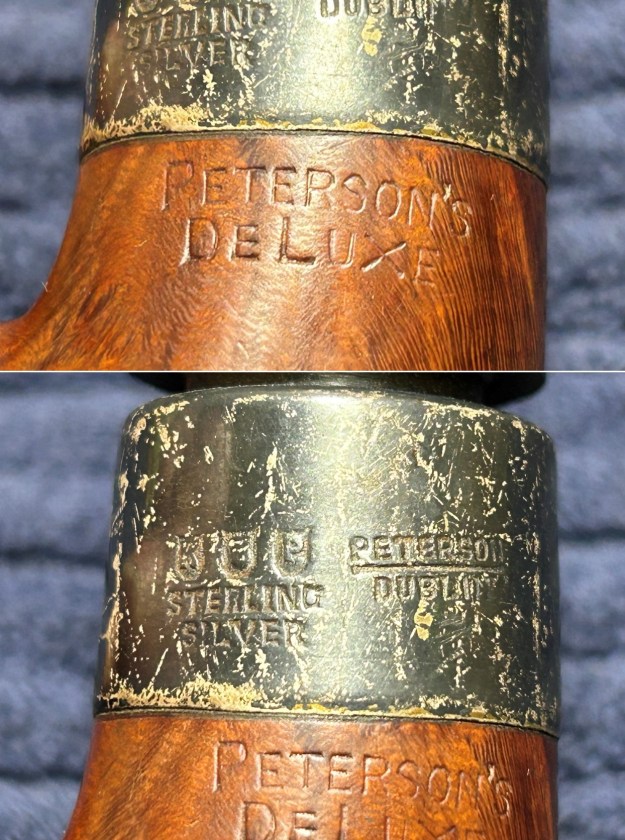
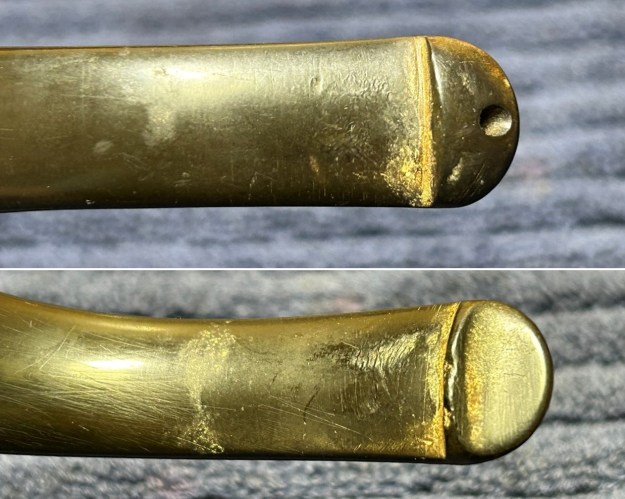
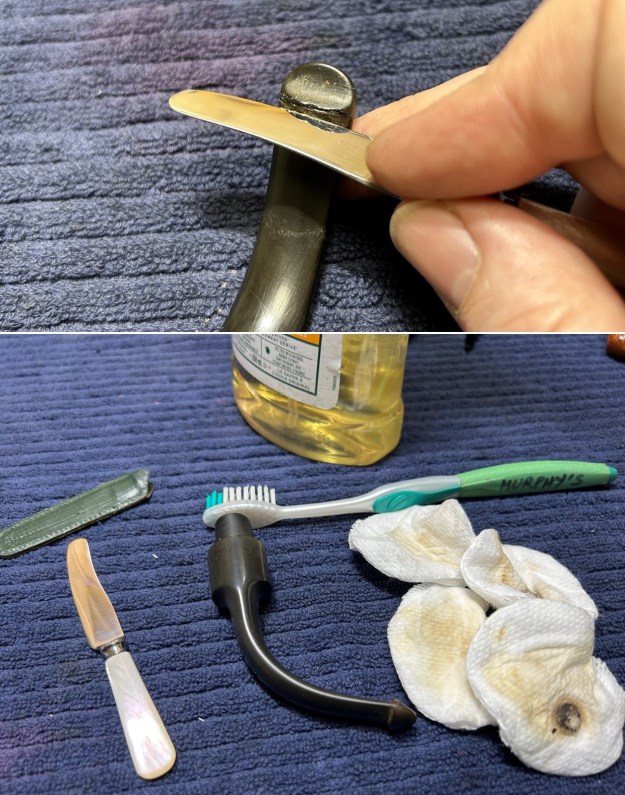
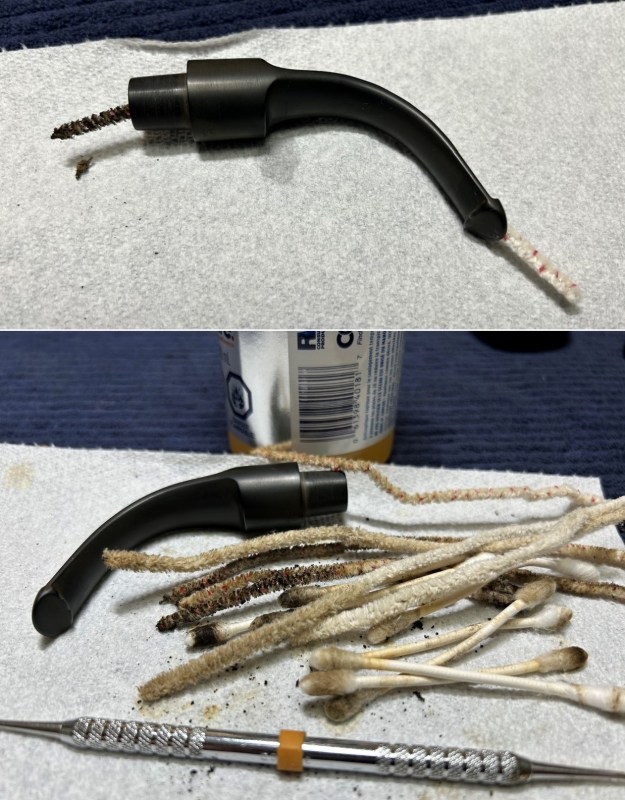
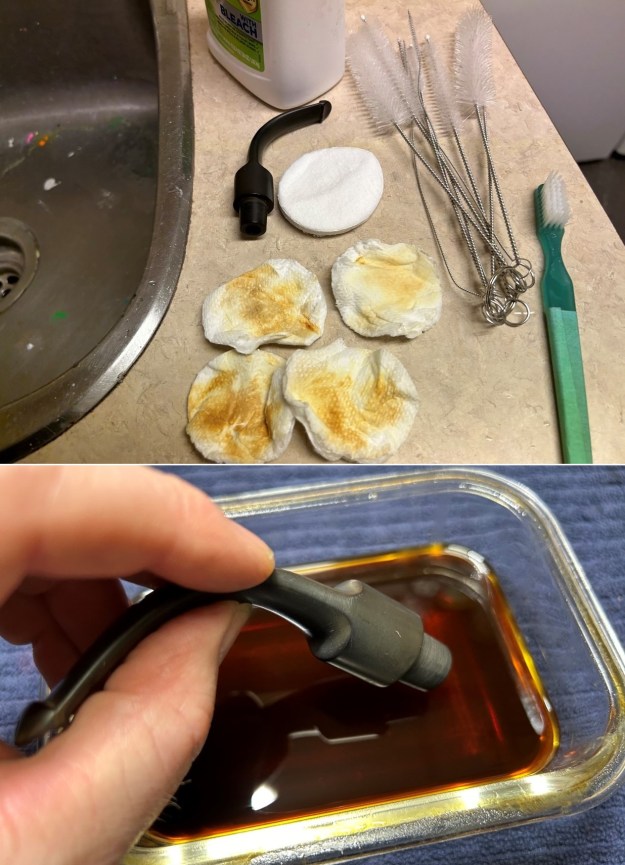
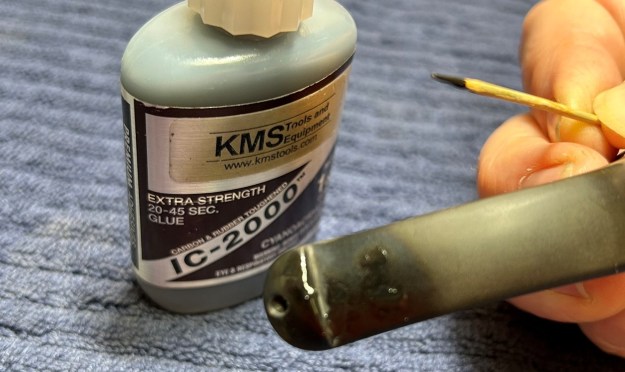
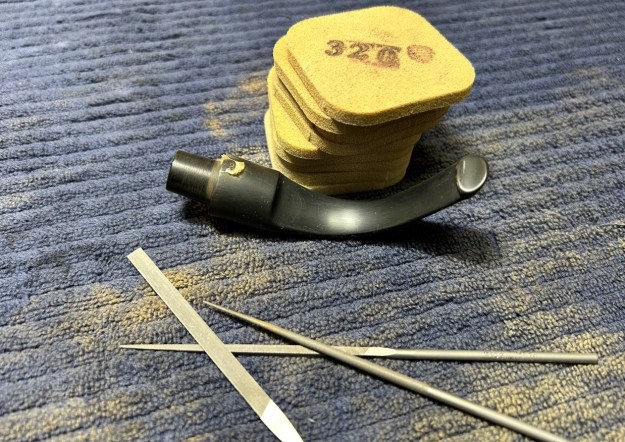
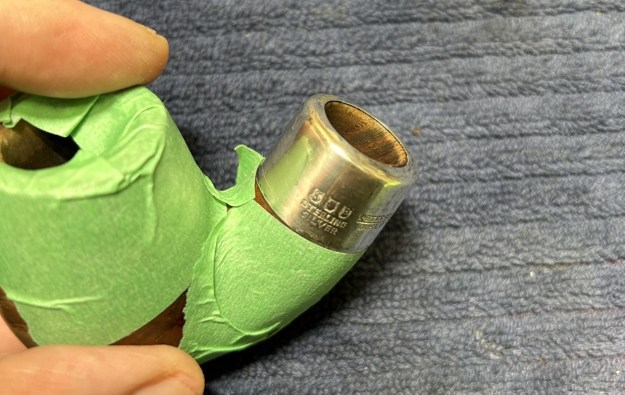
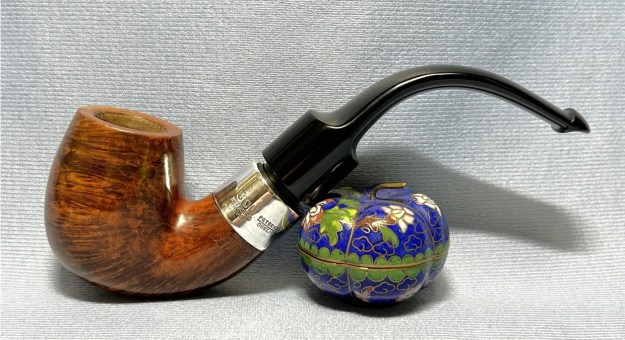
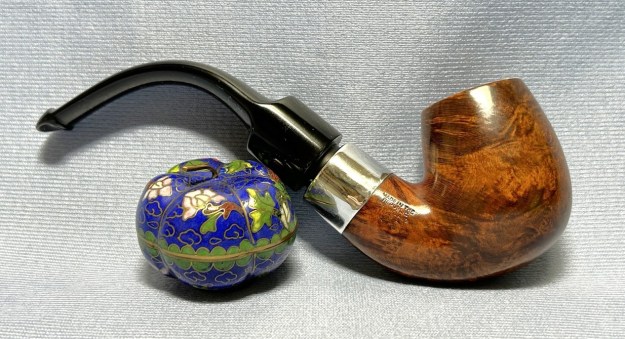
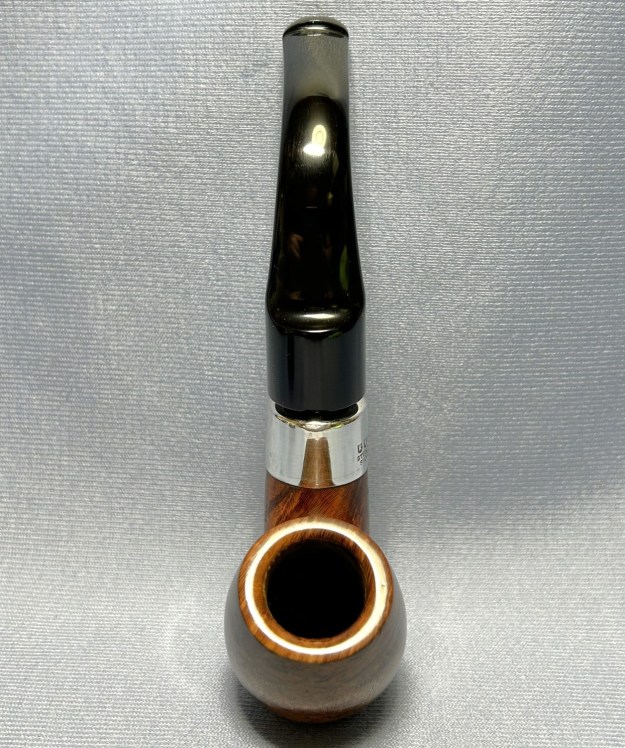
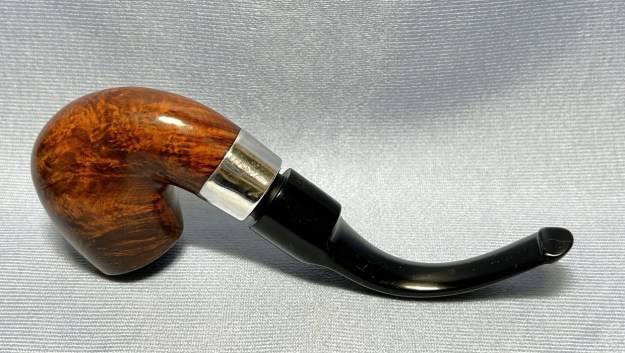
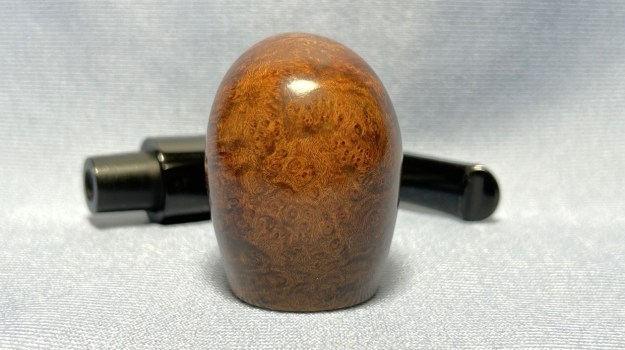
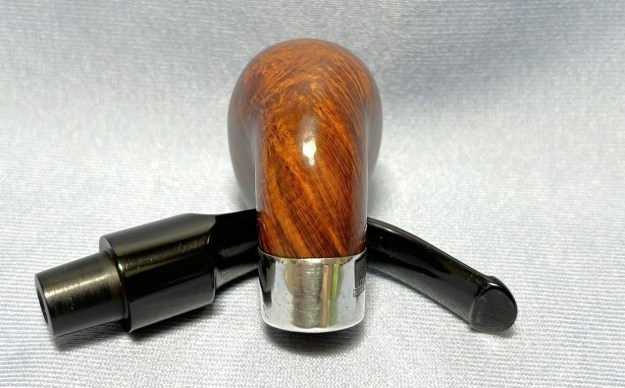
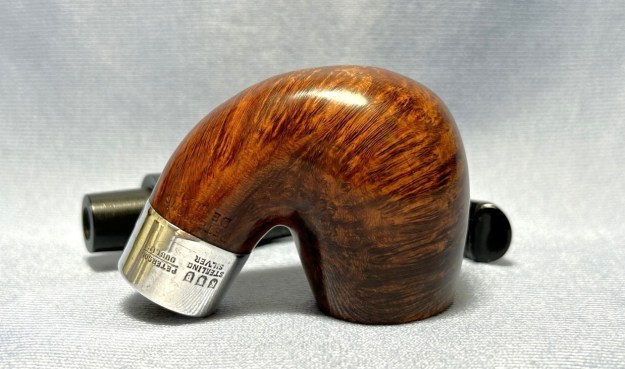
This is the second of the Deluxe Petes I restored recently. You can read about the other one here. This one is a good-looking bent billiard, with a sandblast finish. It comes from the Republic era, has a sterling silver band, and has the classic Peterson P-lip. This one has already been sold, but I thought I’d show it to you anyway. Let’s have a look at the markings on this pipe. The underside of the stummel reads, Peterson’s [over] DeLuxe [over] Made in the [over] Republic [over] of Ireland. Next to that is the shape number, 9S. The band has markings too. First are the words Peterson [over] Dublin. Next to that are the words Sterling [over] Silver. Finally, it has a set of proper hallmarks: Hibernia, which indicated that it was made in Dublin. Next is the Harp Crowned, which indicates sterling silver. Third is the date letter. In this case, it’s a stylized H. Checking the Irish hallmarks chart tells me that this pipe dates from 1975 – almost fifty years ago. For more information on Peterson Deluxe System pipes, click on the link to my previous article and it will provide some useful information.Time to get on with it! The stem was pretty dirty. It had some calcification on it and I used a sharp edge to carefully scrape that off. Once done, I scrubbed the stem with oil soap on some cotton pads. I also took a BIC lighter and ‘painted’ the stem with its flame in order to lift the few bite marks and dents. Then I cleaned out the inside with pipe cleaners, cotton swabs, and lemon-infused isopropyl alcohol. You can see just how filthy it was inside. I wiped down the stem with cleanser to remove surface oxidation. Then the stem went for an overnight soak in the Pipe Stem Oxidation Remover. The next day, I used the cleanser again with some cotton rounds.I also took the opportunity to clean up the aluminum chimney with some isopropyl alcohol, then sanded with some 0000-grit steel wool.I built up the small tooth marks on the stem with black cyanoacrylate adhesive and let them fully cure. I then used my needle files, Micromesh pads and Obsidian Pipe Stem Oil to make it look great. Onto the stummel – it was both beautiful and a mess! The first thing I did was to ream out the mountain of cake inside the bowl. I used the PipNet, and some sandpaper taped to a dowel. Fortunately, there was no damage to the interior walls. I used cotton rounds and a toothbrush with some oil soap to scrub the outside of the stummel. I then proceeded to clean out the insides of the shank with Q-tips, pipe cleaners, and lemon-infused isopropyl alcohol. I followed that up by de-ghosting the pipe and the bowl was nice and clean after this. I then cleaned the insides with some dish soap and tube brushes. In the process of cleaning, however, I noticed something unfortunate. The underside of the stummel has a small crack. After inspecting it closely, I saw that it wasn’t too serious at all and would be an easy fix.Repairing the crack first involves drilling a tiny hole at each end of the crack to stop it from elongating any further. I took my micro drill bit and delicately drilled a hole into the briar. I then administered a dose of CA glue (mixed with briar dust) along the crack and let it cure. It came out really well and, after sanding it smooth, I touched up the colour with my furniture pens. I then worked on cleaning up the sterling silver band. I taped it off, as I didn’t want to damage the wood. This worked well and I was pleased. I followed that up with some Before & After Restoration Balm. I let it sit on the wood for 20 minutes or so, then buffed it off with a microfibre cloth. I took the pipe to the buffer. I gave it a good application of conservator’s wax, since carnauba wax will gum up in the grooves. This made all the difference. It really sparkled after that. I also polished the silver with my jewellery cloth. This Peterson Deluxe System 9S Bent Billiard is such a good-looking pipe. I’m sure my customer will enjoy this one for many years. I hope you enjoyed reading the story of this pipe as much I as I did in restoring it. If you are interested in more of my work, please follow me here on Steve’s website or email me directly at kenneth@knightsofthepipe.com. Thank you very much for reading and, as always, I welcome and encourage your comments.

Restemming and Reclaiming a Hand Carved Odd Freehand


by Steve Laug

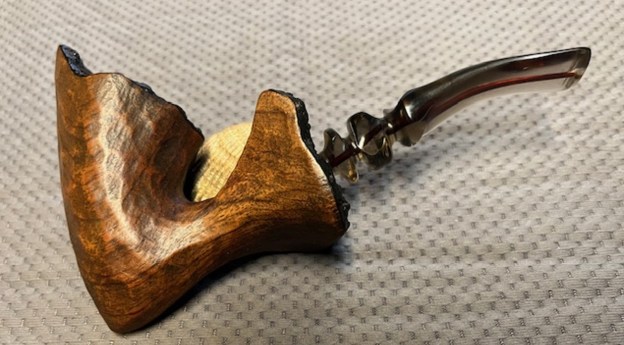
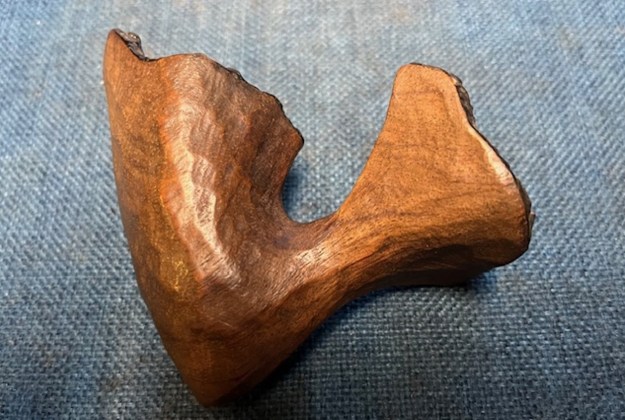
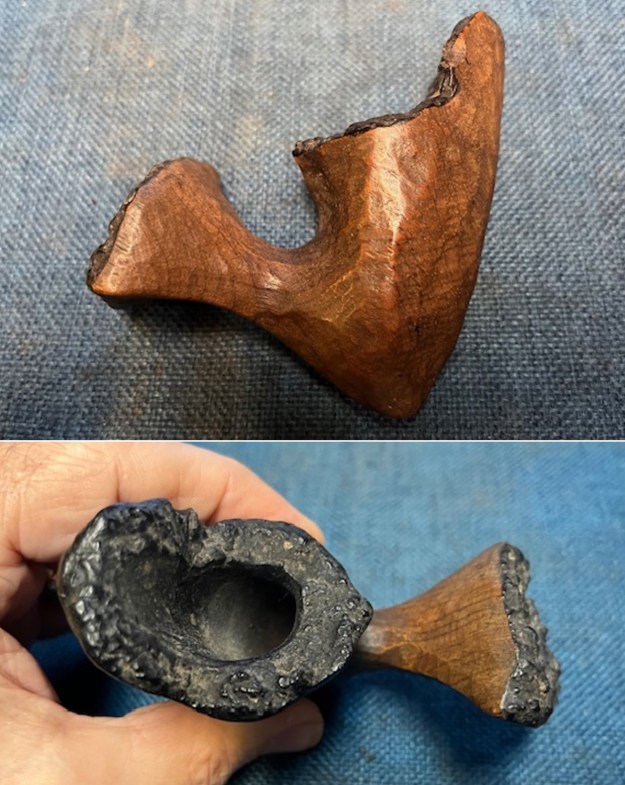
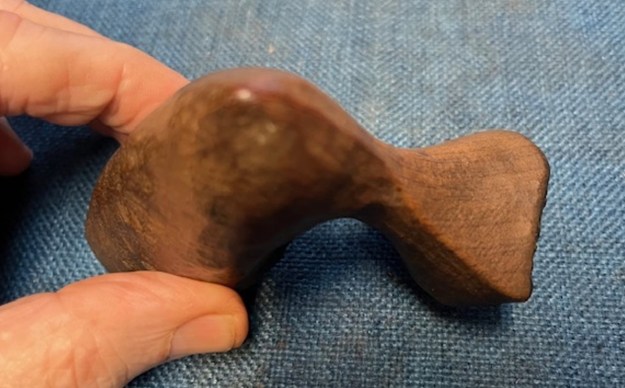
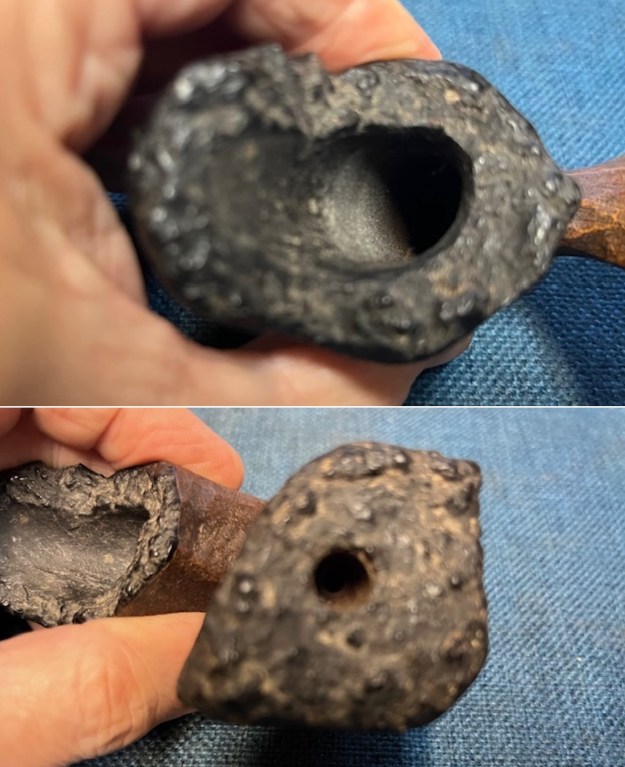
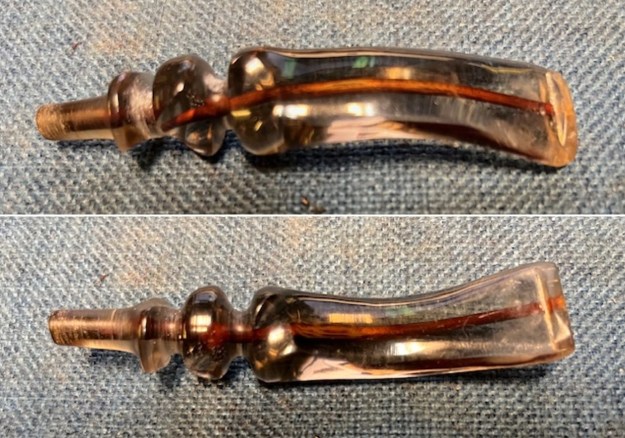
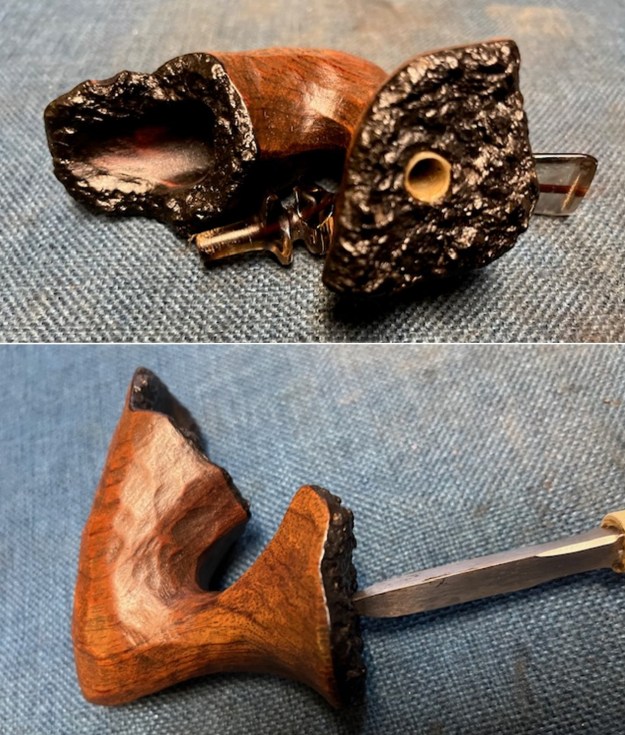
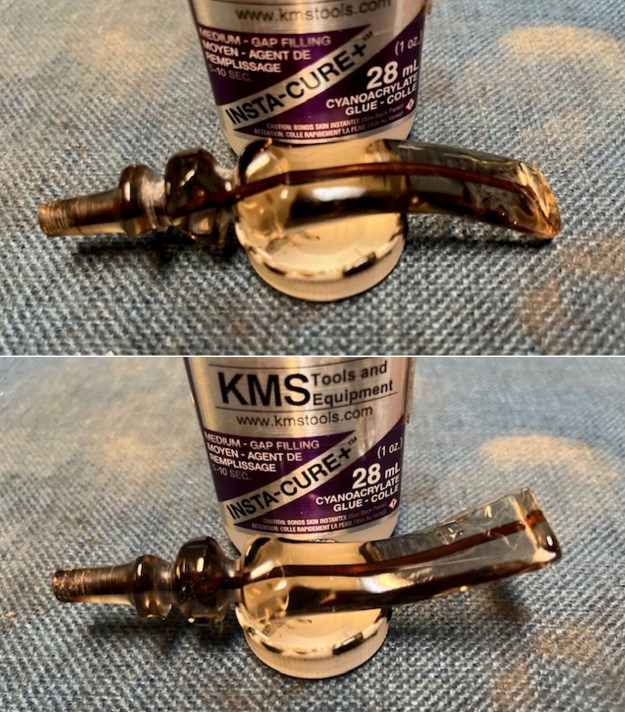
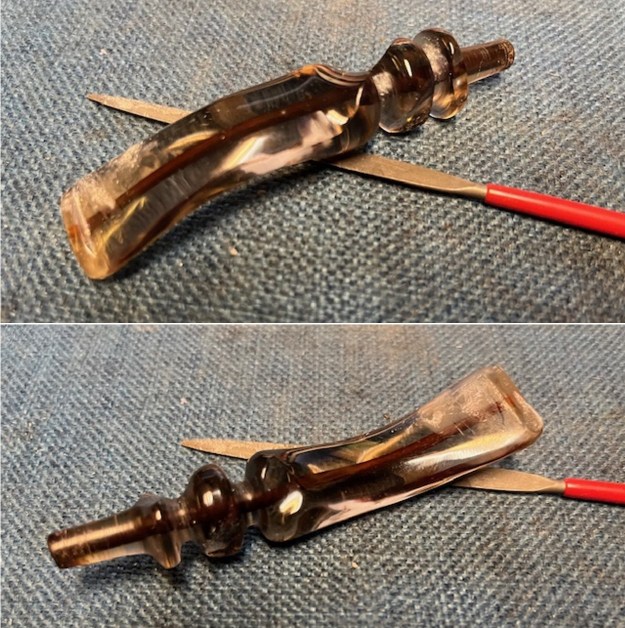
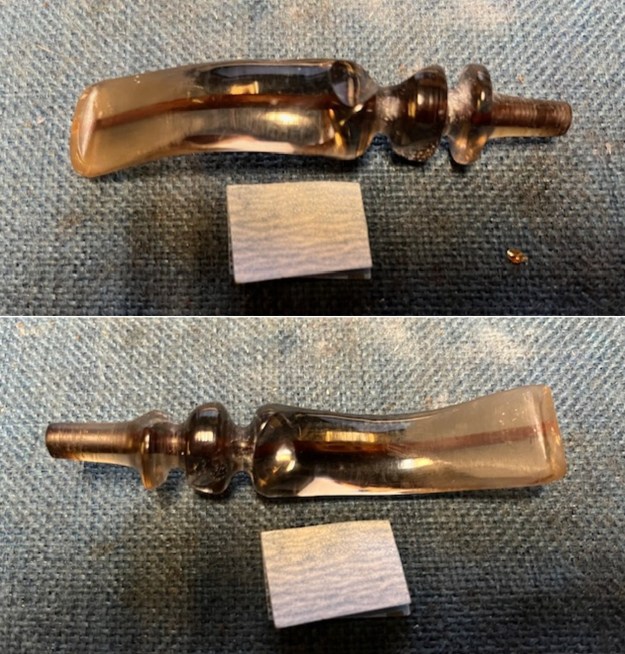
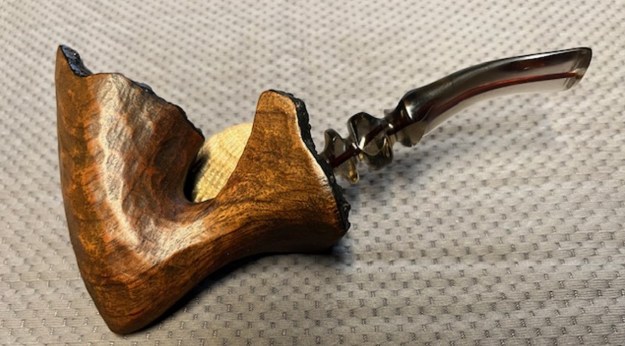
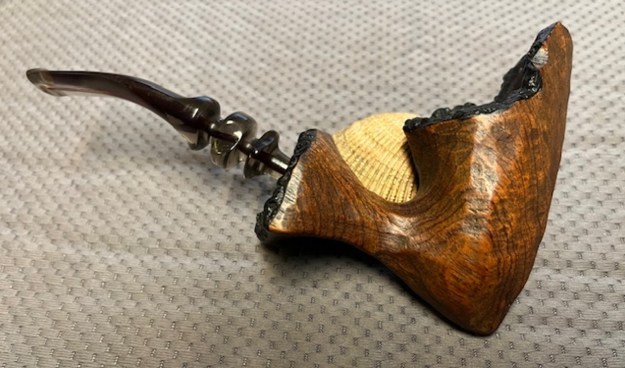
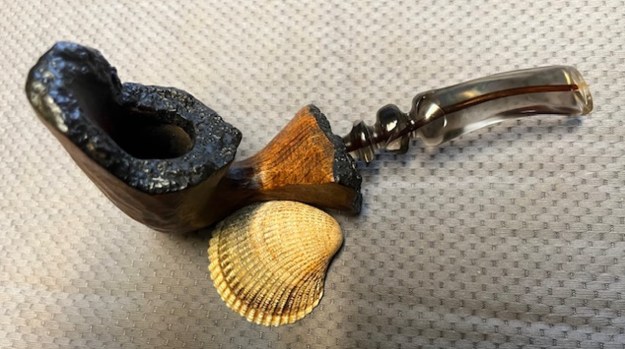
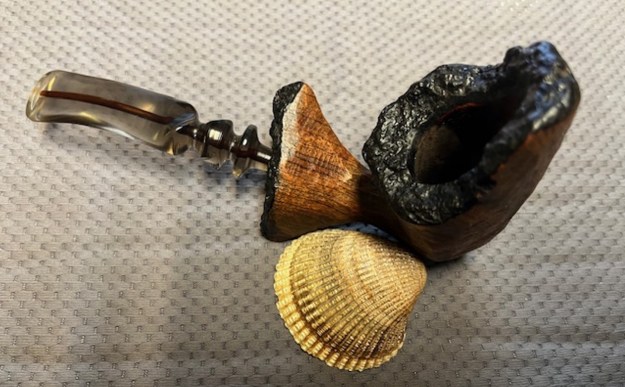
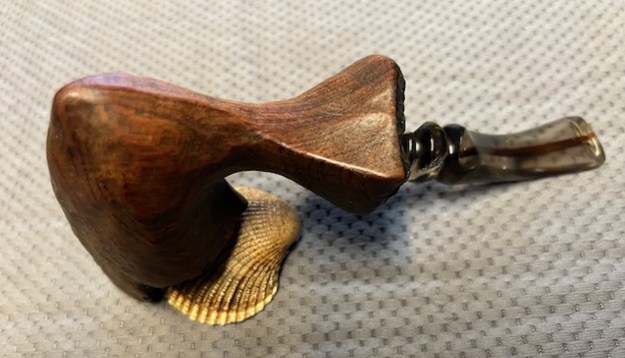
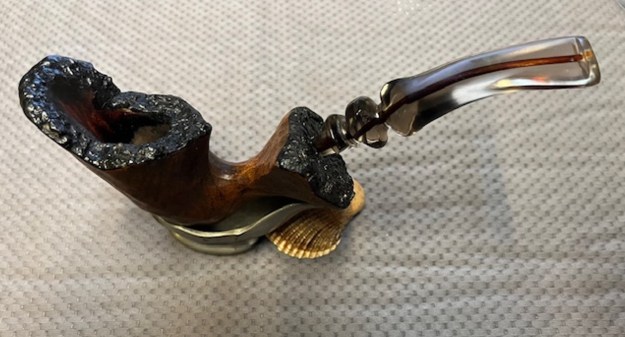
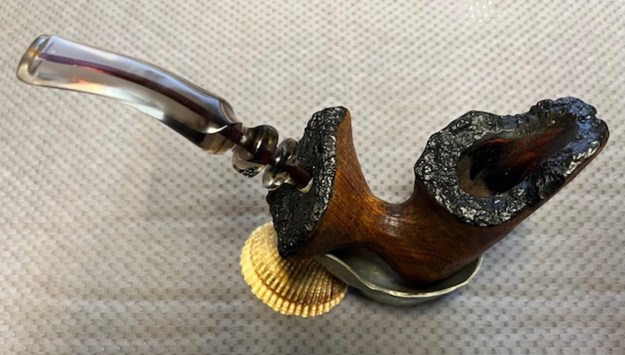
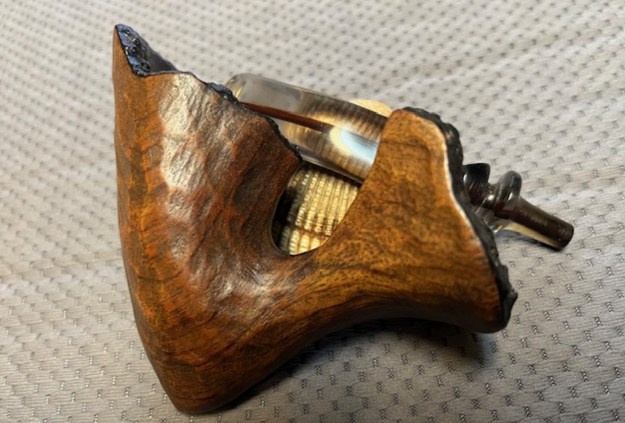
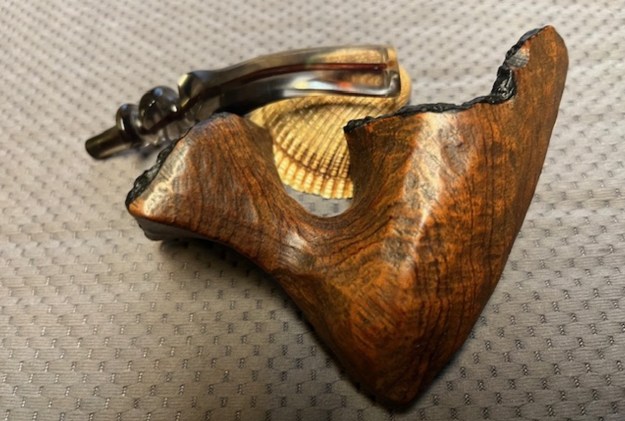
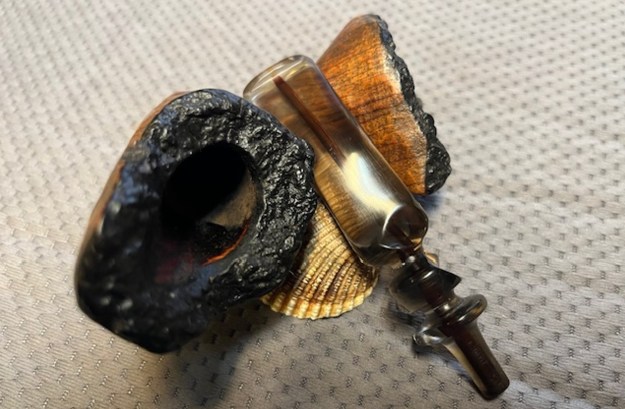
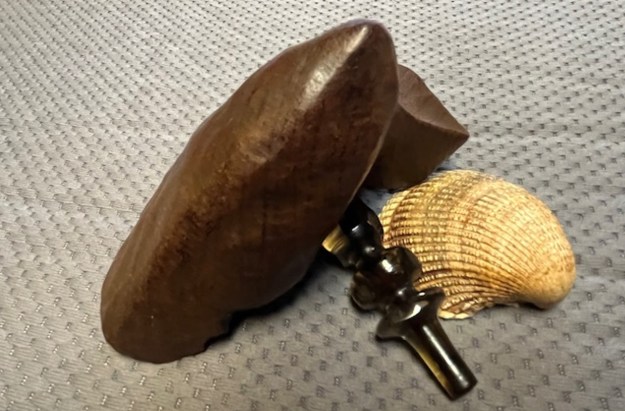
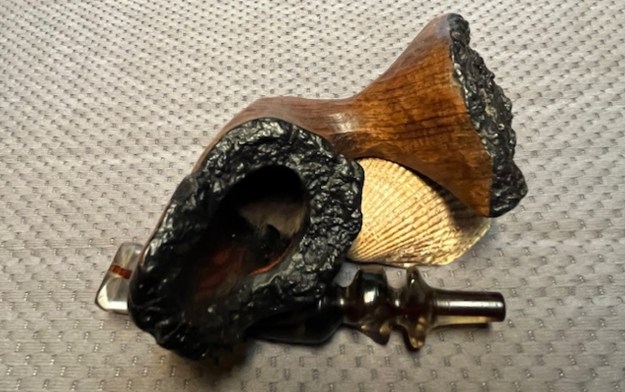
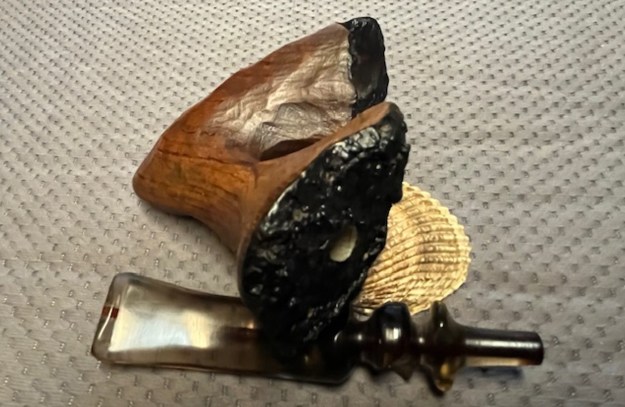
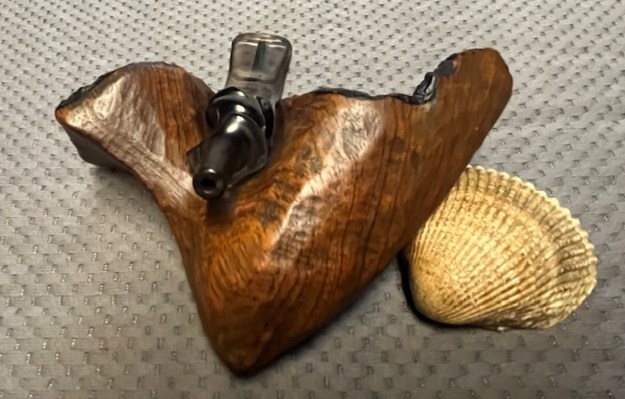
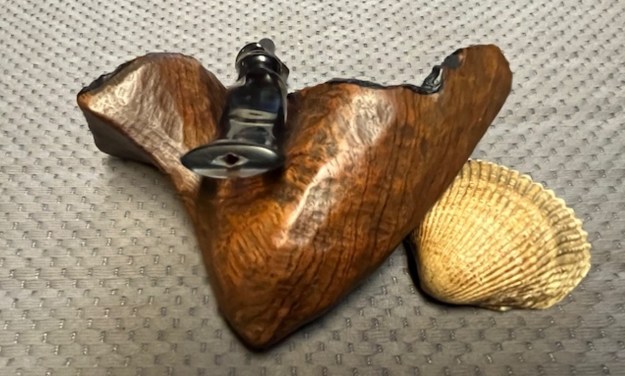
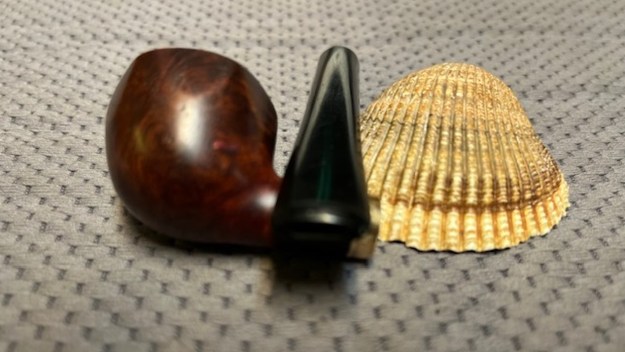
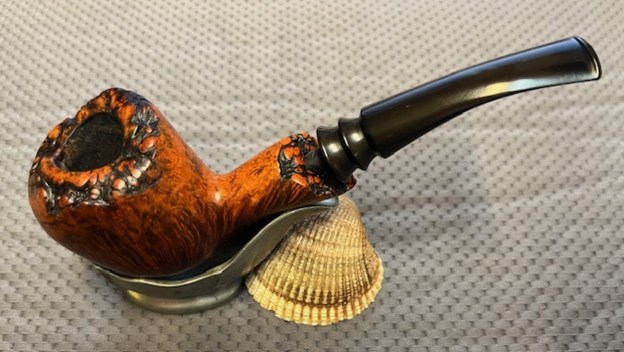
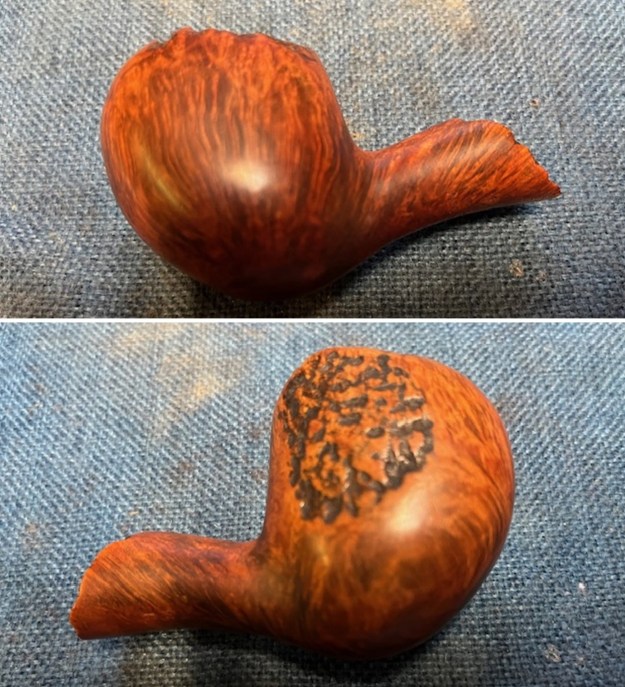
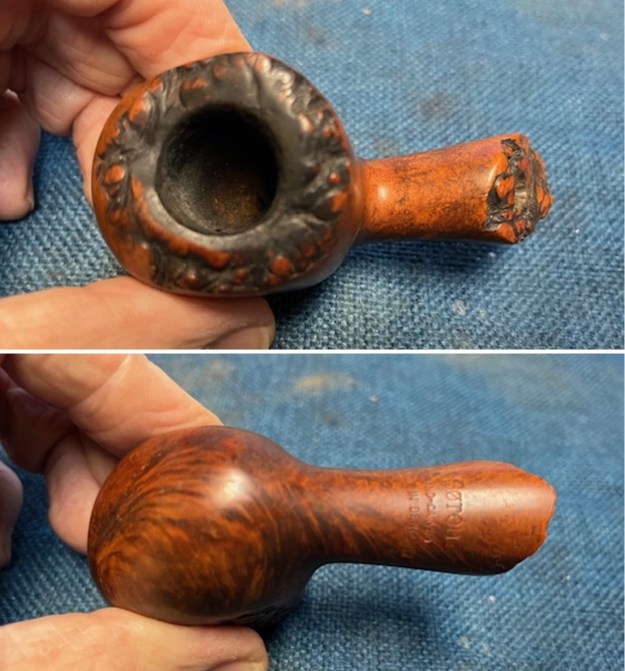
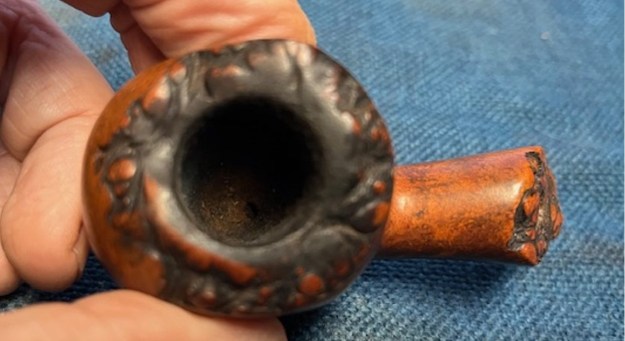
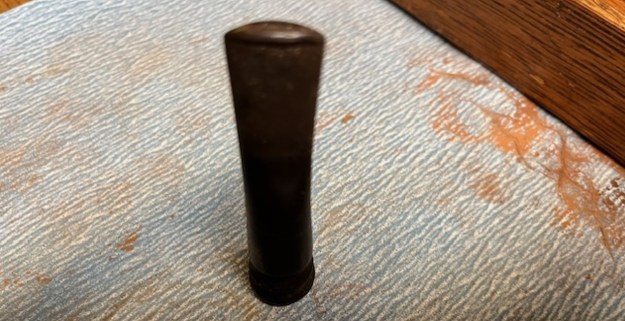
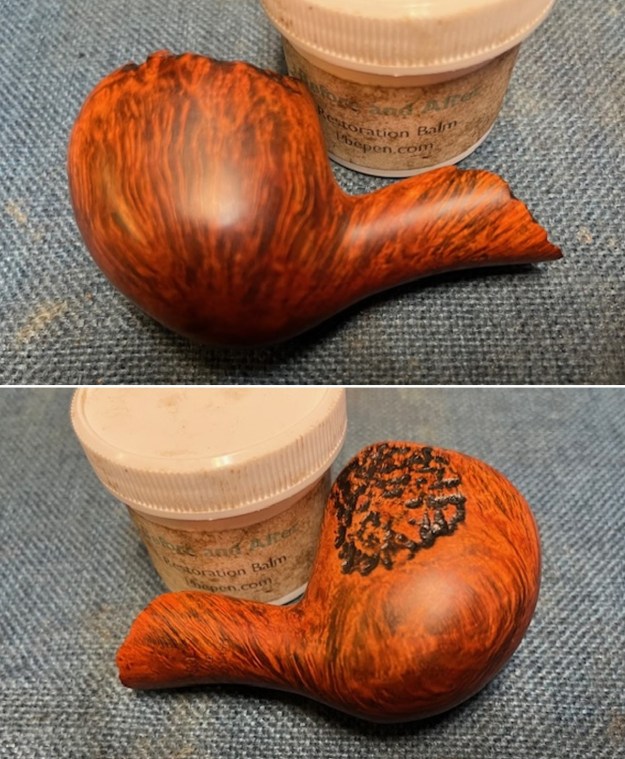
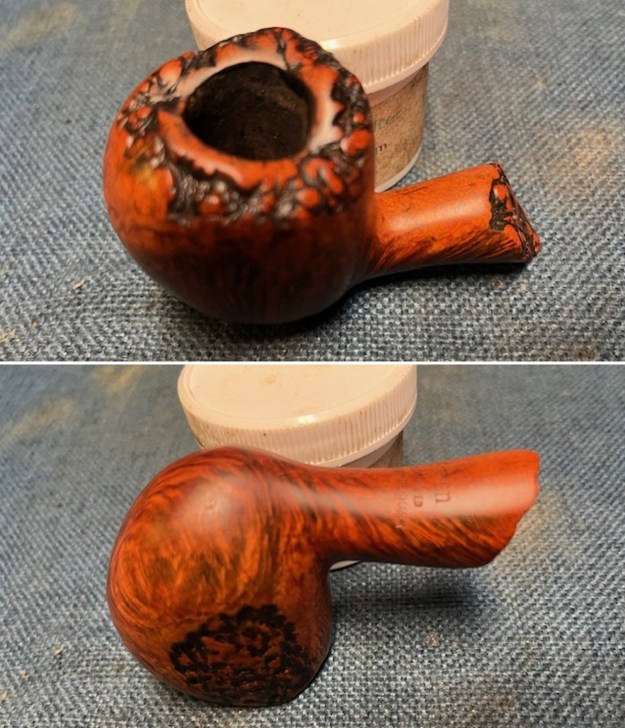
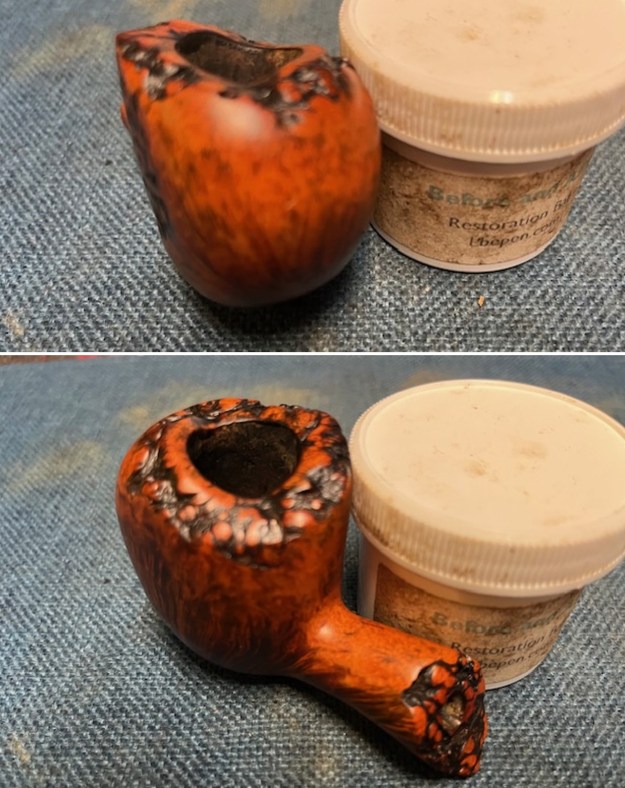
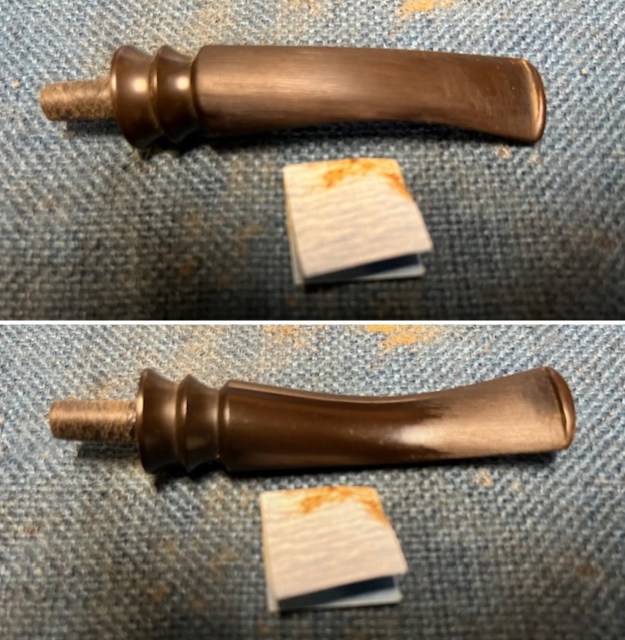
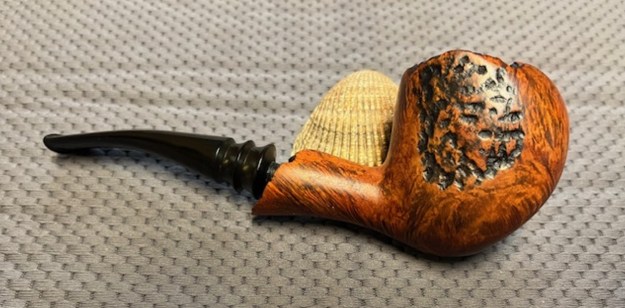
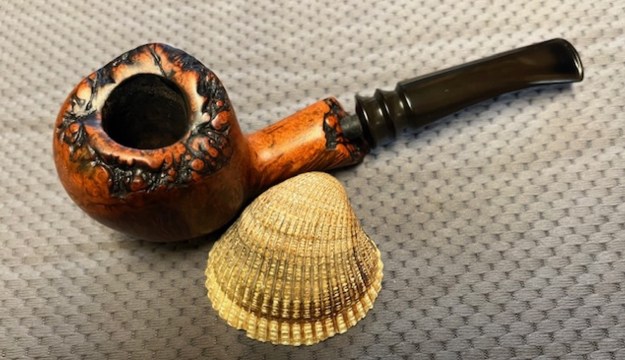
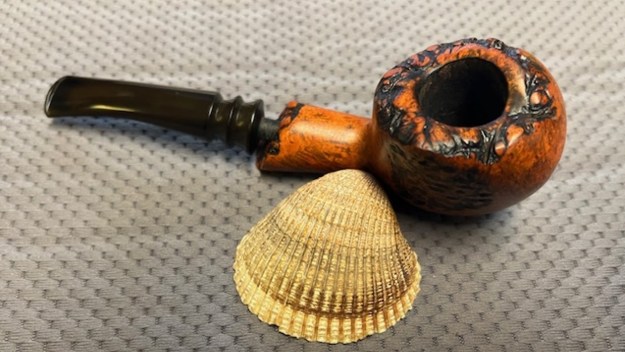
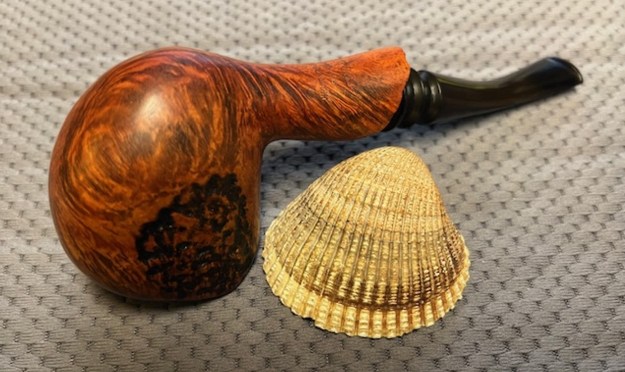
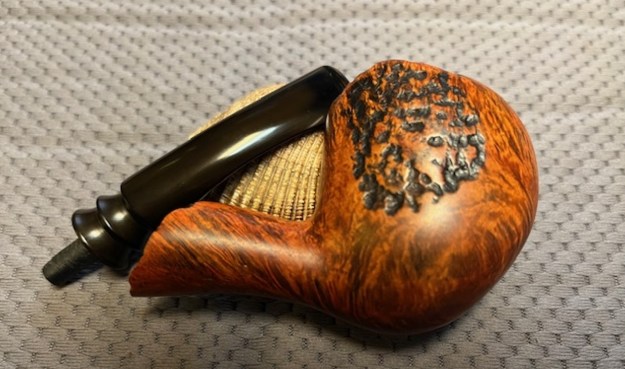
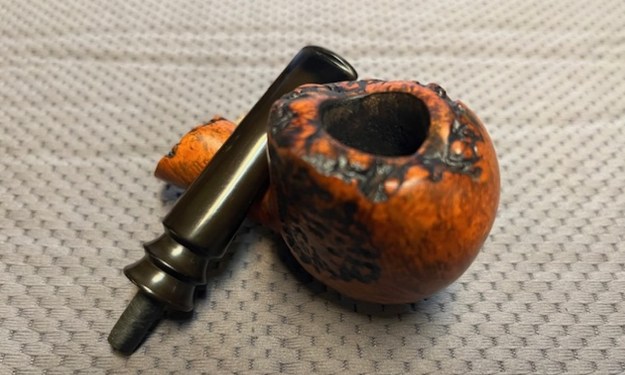
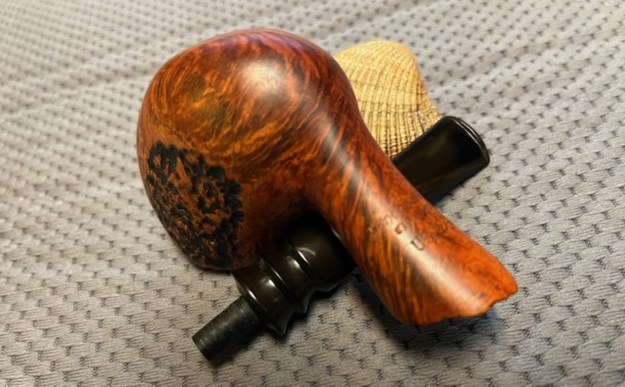
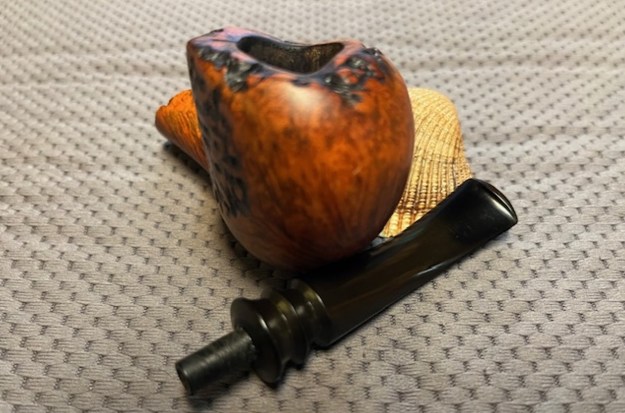
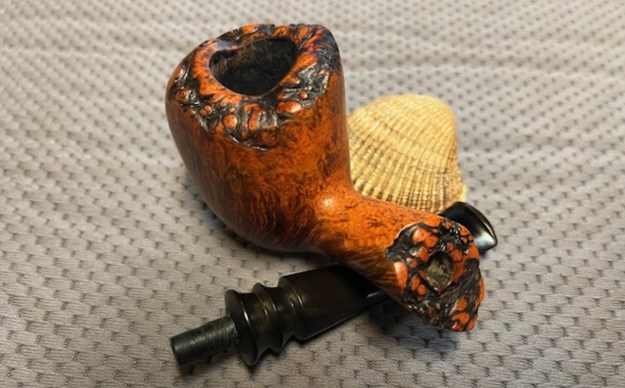
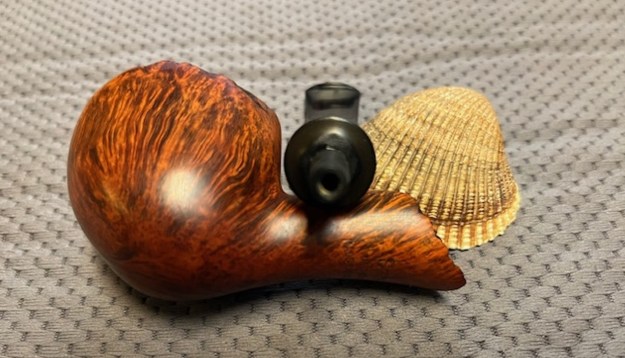
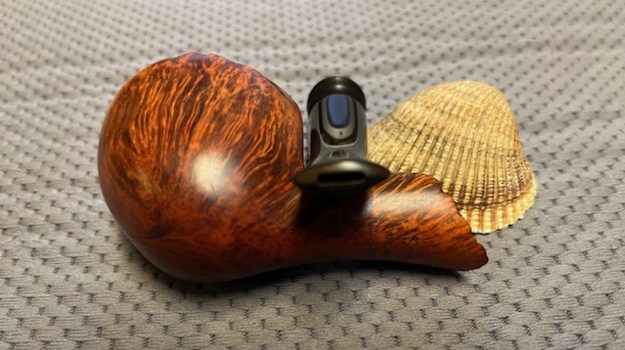
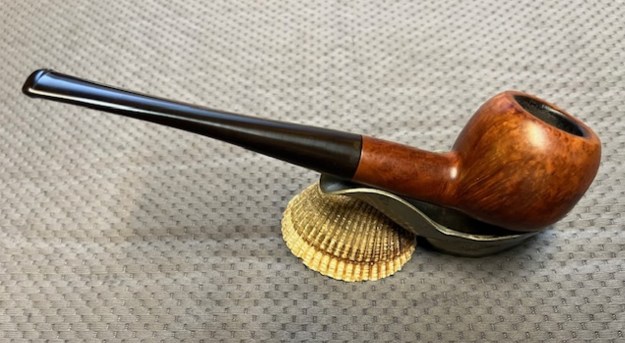
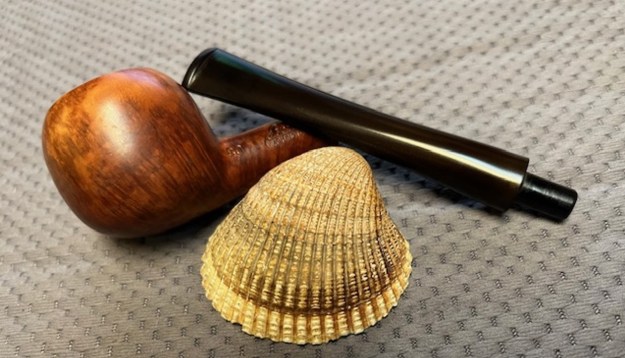
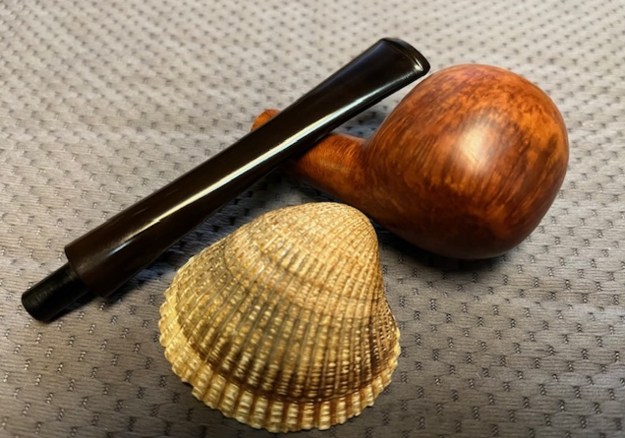
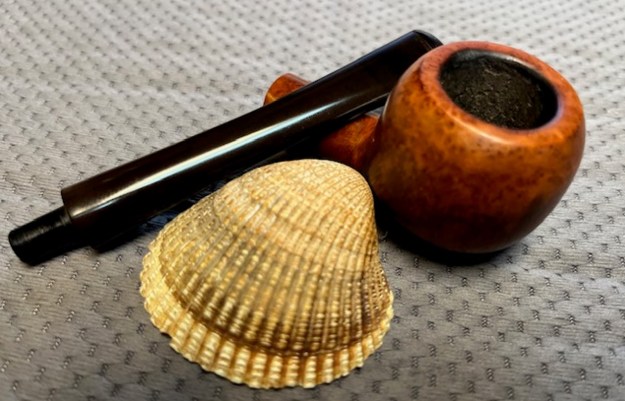
I am taking another break after the last three pipes I worked on the last few days. I decided to restem another one I had here. I cleaned up the bowl and matched a stem with a unique rustic freehand bowl that I have here in my box. It is a cleanup and restore and gives me a break from the routine of my other work on pipes. This bowl has an odd rustic/rough finish with a plateau rim top and shank end. The finish was a bit dull and lifeless. It showed promise under the grit and grime of the years. It has no stamping anywhere on the side or underside of the shank. The bowl had a moderate cake and some lava overflow on the smooth front space and plateau areas of the rim top. I don’t believe the bowl is briar but I am unsure of the wood. The bowl also had some dust and debris in rusticated finish of the bowl as well as in the crevices of the plateau on the shank end. I took some photos of the bowl before I started my work on it. I took a close up photo of the bowl to give an idea of what I had to work with. The bowl was very dirty and had a moderately thick cake. The plateau rim top has a lava coat that almost filled in crevices. I also took a photo of the plateau on the shank end to show its condition – dirty but in good shape.I went through my cans of stems here and found a nice clear smoky acrylic saddle stem that would fit quite well once I used a clear acrylic tube to line the shank. I have a nice piece of the tube from another stemless freehand that is perfect. Once I cleaned the shank and the stem I would press it in place in the shank like a Delrin or rubber sleeve and the it would be perfect and it will look good. While the glue cured I turned my attention to the bowl. I reamed it with a PipNet Pipe Reamer using the 2nd and 3rd cutting heads to remove the cake. I cleaned up the remnants with a Savinelli Fitsall Pipe Knife. I finished the bowl by sanding the walls with a piece of 220 grit sandpaper wrapped around a piece of dowel. The bowl walls looked very good. I cleaned up the plateau areas on the rim top and shank end with a brass bristle wire brush. I worked on it until the groves were clean. I wiped it down with a damp cloth to remove all the debris. It was looking better each step!I scrubbed the exterior of the bowl and shank with a tooth brush and undiluted Murphy’s Oil Soap. I worked it into the grain on the sides, the plateau on the rim top and shank end and the rusticated patch on the right side of the bowl with the tooth brush. I rinsed the soap and grime off with warm water and dried it off with a soft towel. I looked much better at this point. The grain really stands out. I scrubbed out the internals with pipe cleaners (normal & bristle), cotton swabs and alcohol to remove the tars and oils in the shank between the mortise and the entrance of the airway into the bowl. It was quite dirty.I sanded the sides the bowl and shank with 320-3500 grit sanding pads to start the polishing process. I wiped down the bowl with a damp cloth after each sanding pad. With the bowl polished I rubbed the bowl and shank down with Before & After Restoration Balm. I worked it into the surface of the bowl sides and shank with my fingertips and into the plateau rim top, shank end and rustication with a horsehair shoe brush. The product works to clean, enliven and protect the wood. I let the Balm sit for 15 minutes and then buffed with a cotton cloth to raise the shine. With the bowl cleaned and ready for use I fit the mortise with the clear rubber tube insert. I started the fit with the tenon. I pressed it in as far as possible with the tenon. There was still a small edge that needed to be pressed in. I used a Savinelli Fitsall Pipe Knife to press it the rest of the way into the shank. It looked very good. I set the bowl aside and turned my attention to the stem. I filled in the deep tooth marks with clear CA glue and set it aside to cure.Once the glue cured I used a small file to flatten the repairs and reshape the stem surface. I sanded the repairs on the stem surface with a folded piece of 220 grit sandpaper. It was starting to look better. I sanded the stem surface with 320-3500 grit sanding pads to further polish the stem. I wiped it down between sanding pads with a damp cloth.I used several needle files – round and oval as well as a button slot saw to shape the opening in the end of the button. It is much better than just the original drilled hole.I polished the acrylic stem with micromesh sanding pads – 1500-12000 grit pads. I wiped it down with a damp cloth after each sanding pad. I used Before & After Pipe Polish – both Fine and Extra Fine to further polish the stem. This oddly beautiful Hand Carved Danish Style Freehand with a fancy, turned smoky acrylic saddle replacement stem is a great looking pipe now that it has been restored. I put the stem back on the bowl and carefully buffed the pipe with Blue Diamond on the buffing wheel using a light touch on the bowl and shank. I gave the bowl and the stem multiple coats of carnauba wax on the buffing wheel and followed that by buffing the entire pipe with a clean buffing pad. I hand buffed the pipe with a microfiber cloth to deepen the shine. The finished Hand Carved Freehand fits nicely in the hand and feels great. Give the finished pipe a look in the photos below. The dimensions of the pipe are Length: 6 ½ inches, Height: 3 ½ inches, Outside diameter of the bowl: 1 ½ wide x 2 inches long, Chamber diameter: ¾ of an inch. The weight of the pipe is 79 grams/2.75 ounces. If you are interested in adding this pipe to your collection send me a message or an email to slaug@uniserve.com. Thanks for walking through the restoration with me as I worked over another very interesting pipe. I will be putting it on the rebornpipes store in the American Pipe Makers Section shortly if you would like to add it to your collection. Thanks for your time. UPDATE: I received a message on Facebook Tobacco Pipe Restorers Group about a possible maker for this pipe. Thanks Mason Evans! I am including that and a link to the article on Pipedia below:
Mason: That looks like a Bubinga pipe by Tom “Pipecarver” Arcoleo.

https://pipedia.org/wiki/Tom_Pipecarver_%26_Son

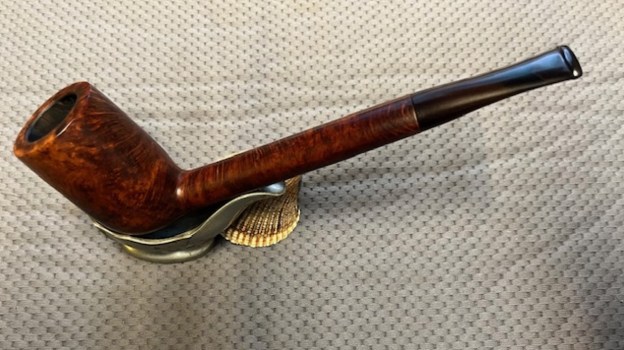
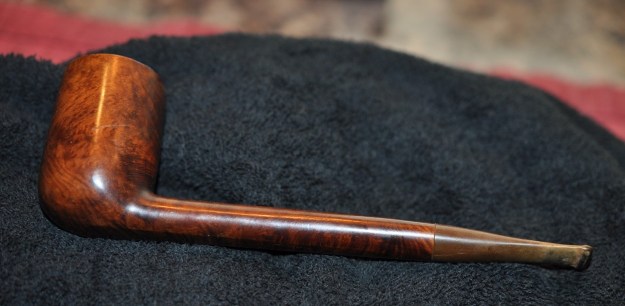
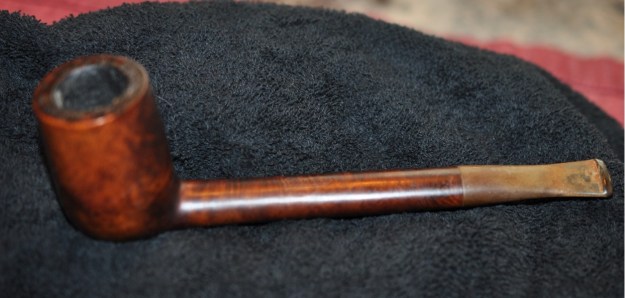
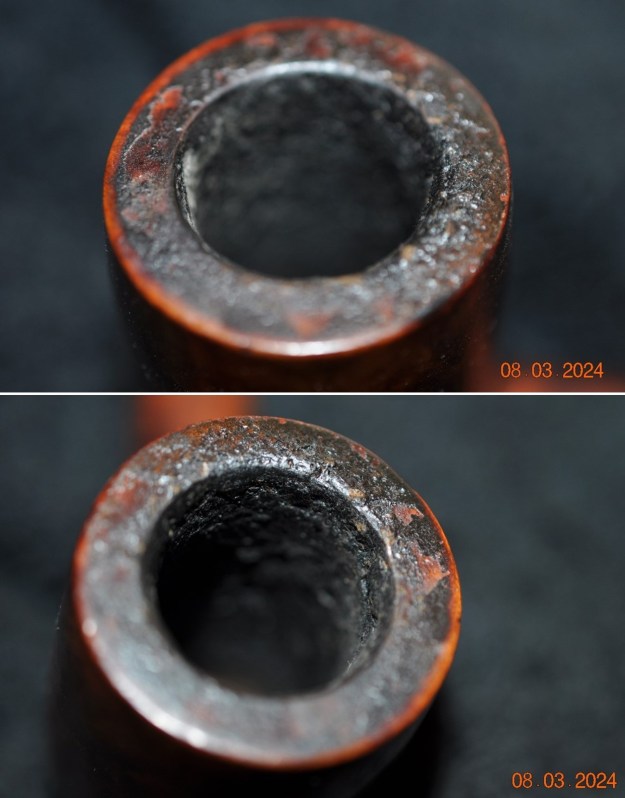
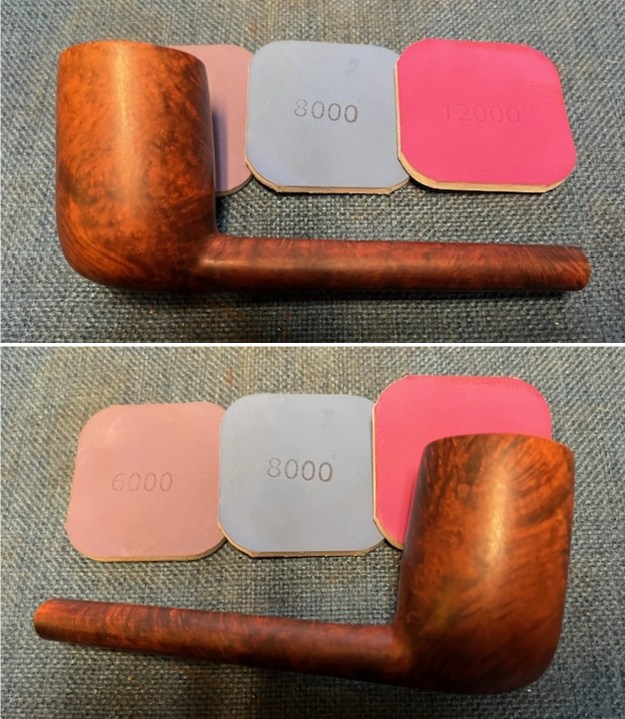
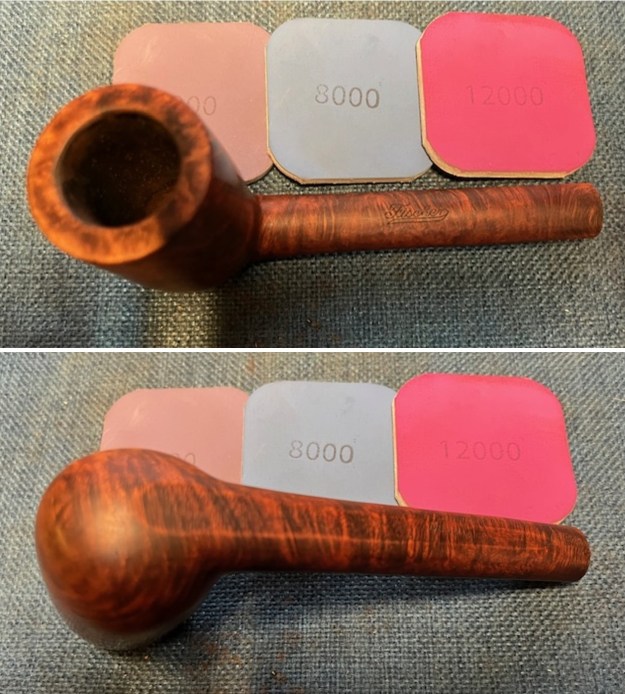
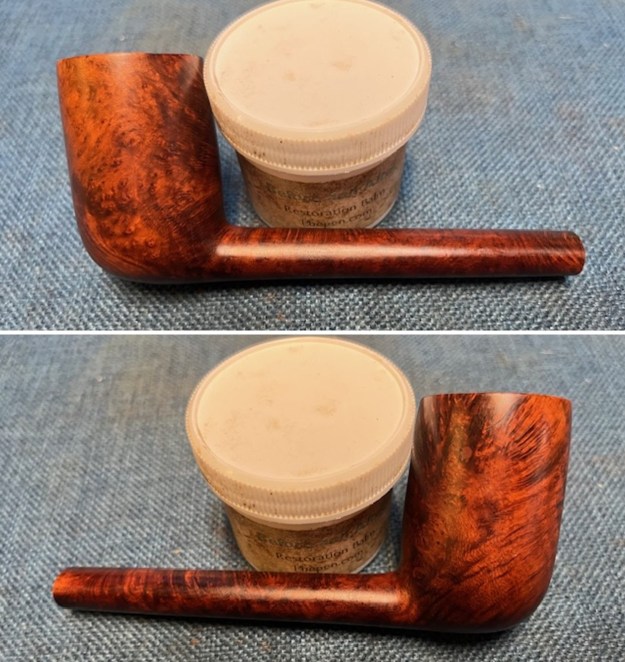
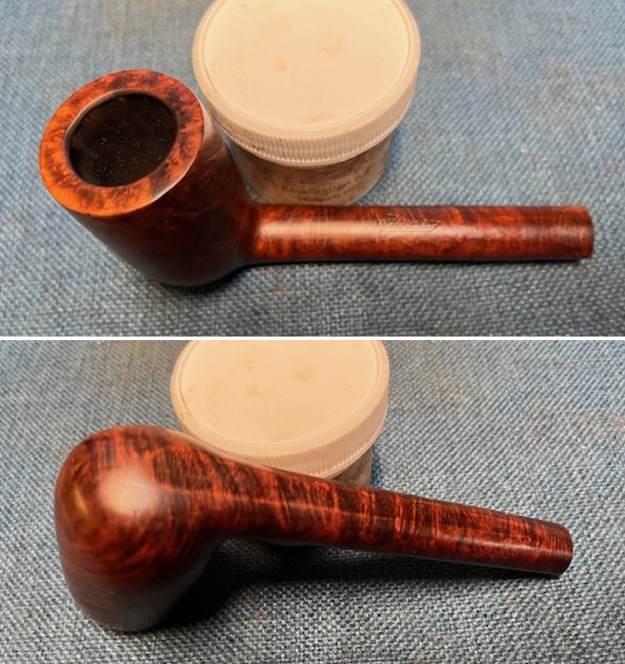
Restoring a Fischer Long Shank Deluxe Canadian


by Steve Laug

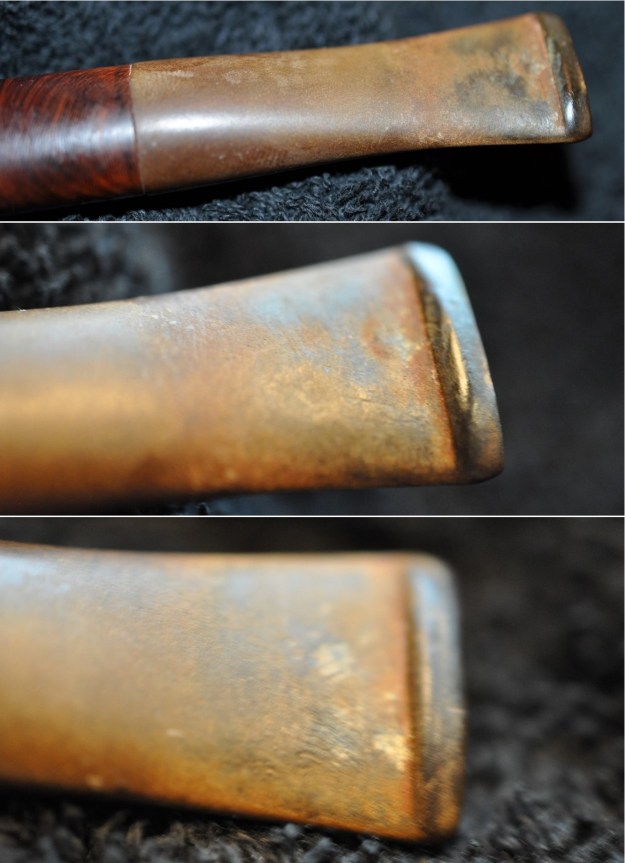
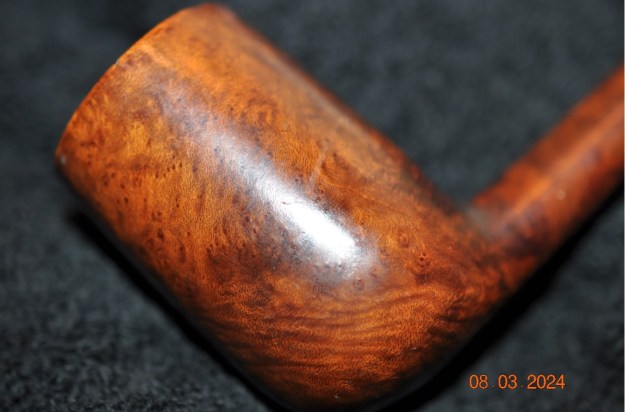
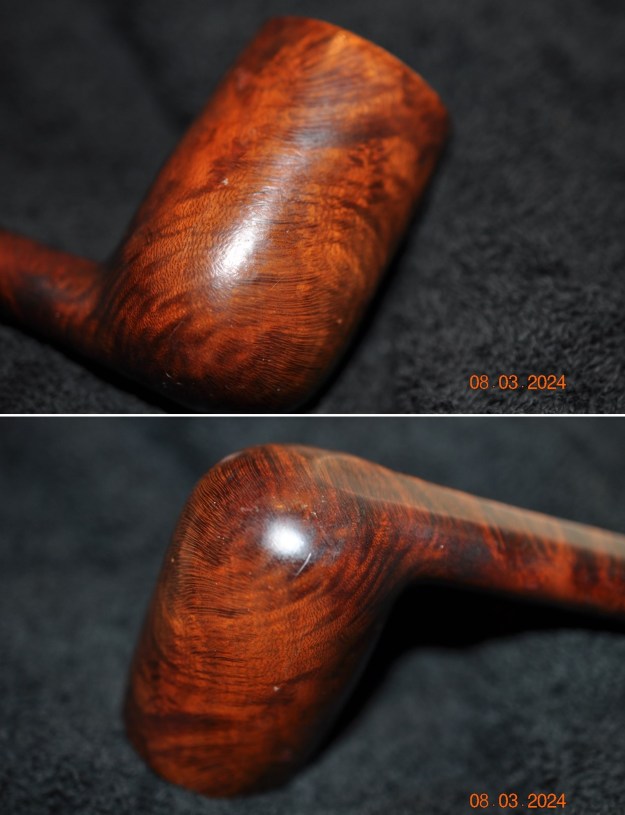
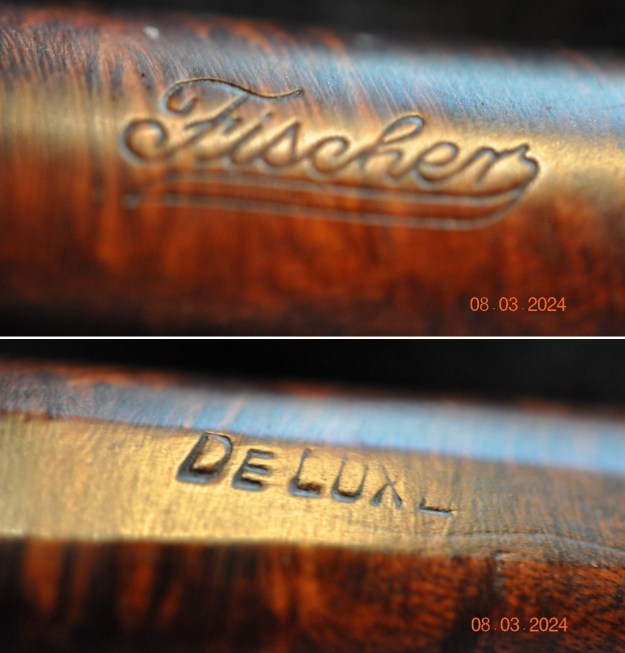
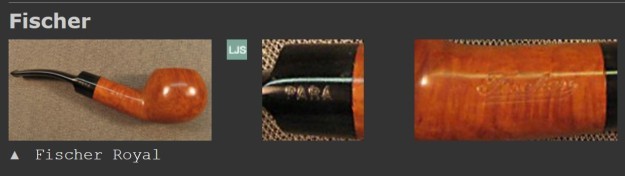
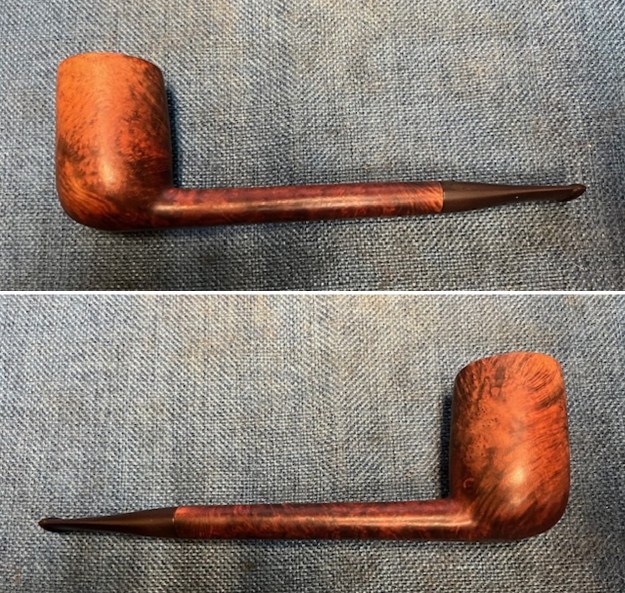
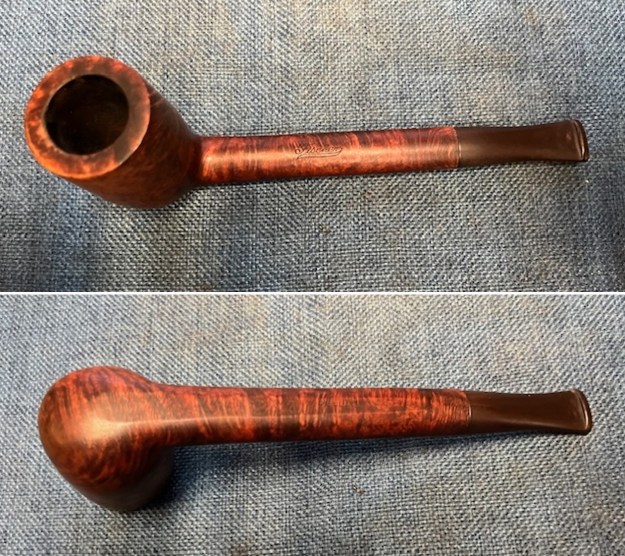
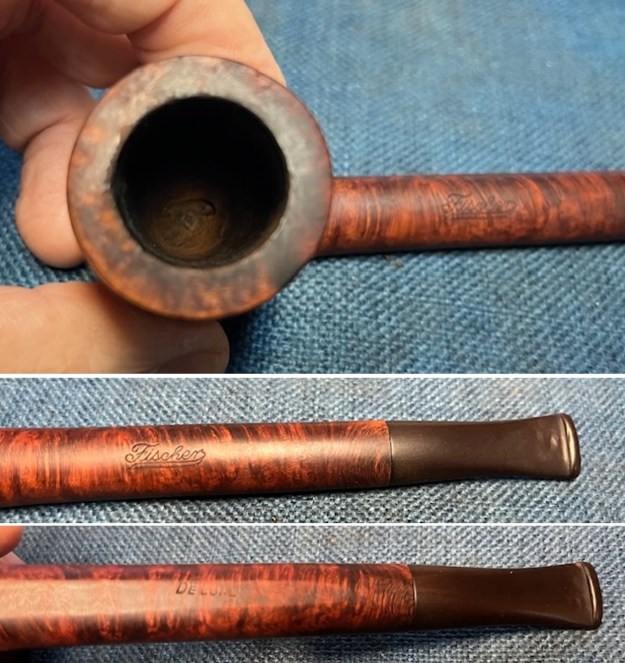
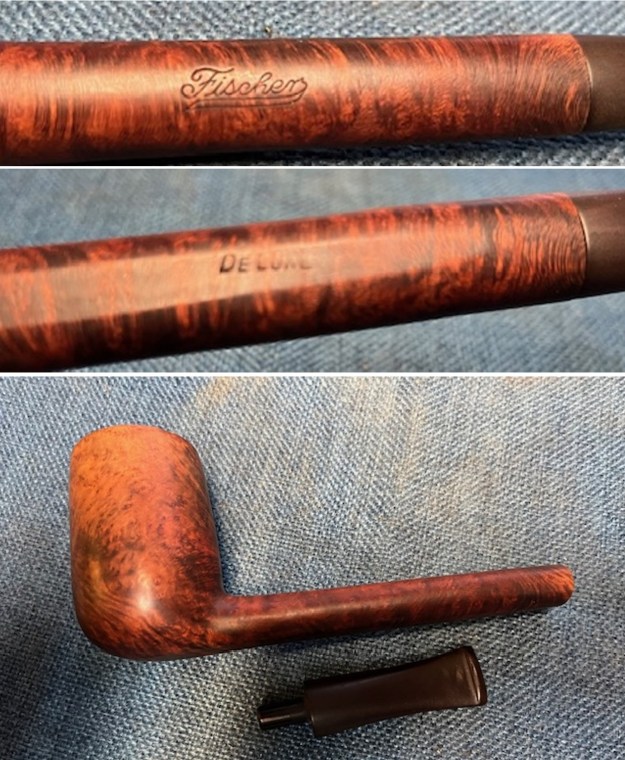
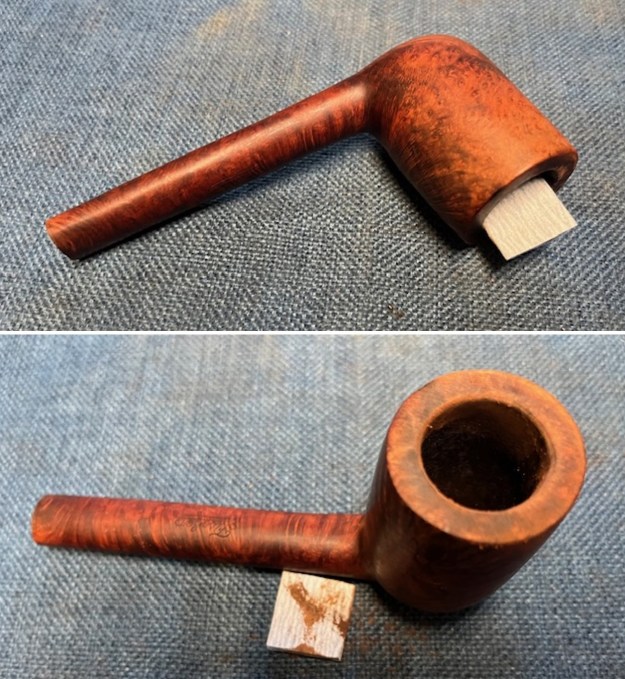
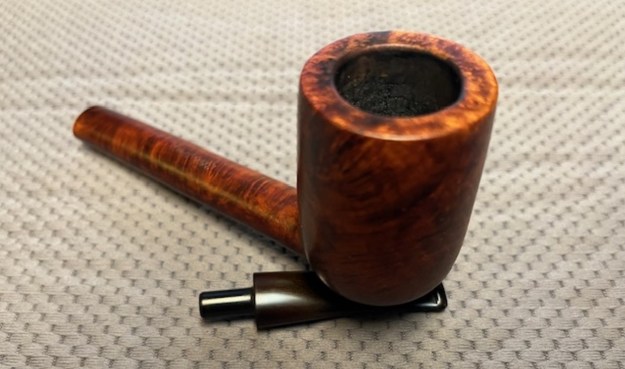
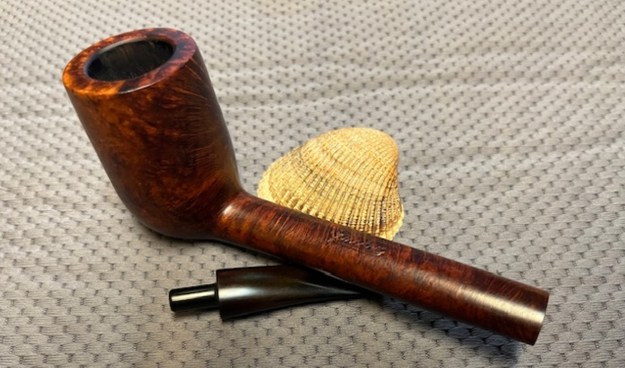
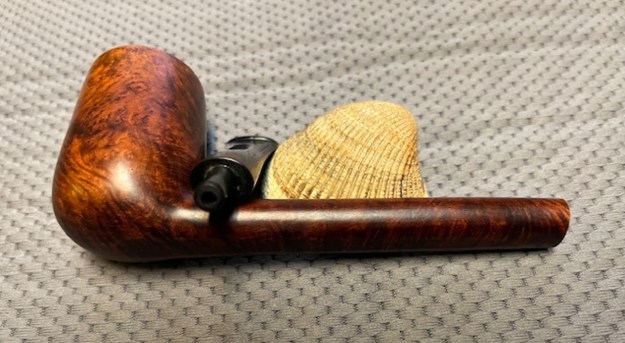
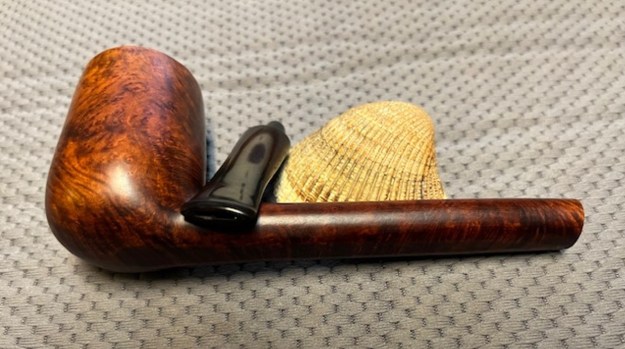
The next pipe on the work table is a smooth, classic tall Canadian shape that looks very European. It is stamped on the top side of the shank and reads Fischer in script. On the underside of the shank it reads Deluxe. There were no other identifying marks or stamps on the shank or the stem. It came to us form a seller in Princeton, New Jersey, USA on 08/20/2021. It has a mix of grain around the sides and shank. The bowl had a heavy cake in the bowl and thick lava on the rim top. It was thick so it was hard to be certain what the inner edge looked like. The finish was very dirty so it was hard to know with certainty what lay underneath. The bowl is a tall, stack like bowl on a Canadian shape. The vulcanite taper stem had no logo stamped on the topside. It has oxidation, calcification, tooth chatter and tooth marks on both sides ahead of the button. I took photos of the pipe before I started working on it. I took photos of the bowl, rim top and stem sides to show the condition of the both. It was a dirty bowl with debris and a heavy cake on the walls. The rim top had a thick lava covering the bowl and the edges. It was hard to know what the condition of the inner edge was underneath. I took photos of the top and underside of the stem showing condition and the tooth marks on both sides ahead of the button. Jeff took photos of the grain around the sides and the heel of the bowl to show the briar that was used to craft this extraordinary long pipe. I took photos to capture the stamping on the top and underside of the shank. It is clear and readable as noted above.I turned to Pipephil’s site (http://www.pipephil.eu/logos/en/logo-f2.html) and looked up the Fischer brand. I found the listing below and have included both a screen capture and the side bar notes. The stamping is the same as the one on the pipe I am working on.Store closed in 1978. Former address: House of Fischer, 1722 Boston Ridge Road, Orchard Park, NY.

I then turned to the listed for US pipe makers/manufacturers (https://pipedia.org/wiki/Fischer) to see if I could find out more information. I have included the article below.

Gustav Fischer was pipe maker for “The House of Fischer’, which was located in Orchard Park, NY, near Buffalo. The Fischer family apparently made pipes for six generations, starting in Germany and continuing in the United States until the 1970s. Their literature from 1956 said that all their briars were bench made. They also made meerschaums, but some confusion is caused by the fact that there was also Gustav Fischer, who made meerschaum pipes in Boston during roughly the same period.

The article went on to give information on the Fischer from Orchard Park, NY. I quote from that below.

The following information is gleaned from a thread on PipesMagazine.com

PIPES BY THE HOUSE OF FISCHER, ORCHARD PARK NY
Fischer pipes were made in USA through the 1950’s up to late 1978 when the owner, Paul Fischer retired, sold the store and moved to Florida in 1978. Unfortunately, The House of Fischer did not use a date stamp on their pipes, and therefore it is not possible to determine the exact date of manufacture.

Lee Pattison writes the following:

The Fischer shop in Buffalo closed in the late 1950’s last run by Arthur Fischer who moved shop to his home in Orchard Park. Arthur was the last of the family and retired 1978. Early pipes made in shop in Buffalo were stamped Buffalo in loop below name. Art deleted this from the stamp in early on 1960’s which helps in partial dating. Art did only pipe repair and sales. An unconfirmed report from a pipe maker Milton Kalnitz from the same era stated that the later pipe may have been made by Weber. Paul Fisher was part of the unrelated family in Boston Mass. The Buffalo shop started about 1890’s. Source of info was personal contact with family.

FISCHER PIPE QUALITY GRADE STAMPS
This is a list of various Fischer pipe stampings from my personal collection of over sixty Fischer pipes accumulated over the past forty plus years. It is by no means meant to be all-inclusive, however, if you find more Fischer pipe stampings please email me so I can update my list.

  1. Fischer Supreme
  2. Fischer Royal
  3. Fischer Imperial
  4. Fischer Golden 15
  5. Fischer 15 Grand
  6. Fischer 25 Grand
  7. Fischer Ramsgate
  8. Fischer Deluxe
  9. Fischer Special
  10. Fischer Texan (for which they applied for a patent)
  11. Fischer Seconds

The list of Quality Grade Stamps shows one with the Deluxe stamp at number 8. The Long Canadian has some great grain on the bowl and shank. I do know that is was made after the removal of the Buffalo stamp on the shank in the early 1960s.

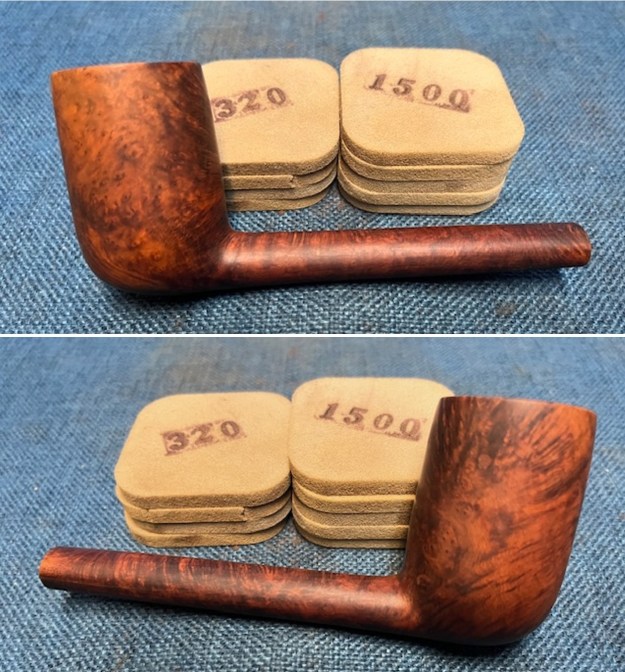
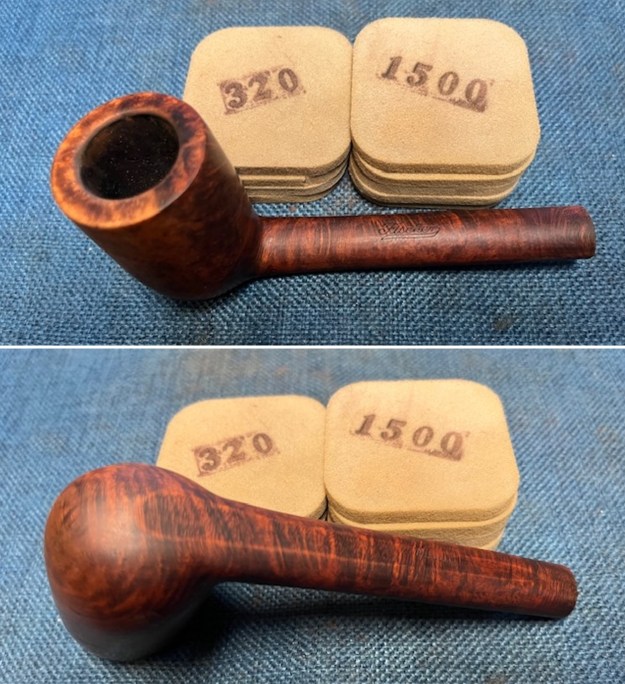
Armed with that information I turned to work on the pipe itself. Jeff had done a great job cleaning up the pipe as usual. He cleaned up the inside of the bowl with a PipNet reamer and a Savinelli Fitsall Pipe Knife. The bowl walls looked very good. He scrubbed the interior of the bowl and shank with pipe cleaners, cotton swabs and alcohol to remove the tars and oils. He scrubbed the exterior of the pipe with Murphy’s Oil Soap and a tooth brush to remove the grime from the finish. He worked on the rim top lava and darkening with the soap and tooth brush. He scrubbed the inside of the stem with alcohol and pipe cleaners. He scrubbed the exterior with Soft Scrub and then soaked it in Briarville’s Pipe Stem Deoxidizer. He washed it off with warm water to remove the deoxidizer. The pipe looked far better. I took photos of the pipe when I received it before I started working on it. I took photos of the bowl and rim top to show how clean it was. The top and the inner edge of the rim show some darkening, nicks and scratches. The stem looks clean of debris and grime. There are tooth marks and chatter on both sides. There are also tooth marks on the underside of the stem.I took photos of the stamping on the top and undersides of the shank. The stamping is clear and readable (though fainter on the underside). I took a photo of the pipe with the stem removed to show the overall look of stem, tenon and profile of the pipe.I started my work on the pipe by addressing the damage on the inner edge of the rim. I used a folded piece of 220 grit sandpaper to smooth out the roughness. I then used 220 grit sandpaper and a wooden ball to give the inner edge of the bowl a slight bevel. It looked much better at this point in the process.I sanded the briar rim top and the sides of the bowl with 320-3500 grit sanding pads. I wiped the bowl down with a damp cloth after each pad. By the time I finished with the 3500 grit pad the briar had taken on a rich glow. I polished the briar bowl and shank with micromesh sanding pads – dry sanding with 1500-12000 grit sanding pads. I wiped it down with a damp cloth after each pad to remove the debris. The bowl took on a rich glow. I rubbed the bowl down with Before & After Restoration Balm. I worked it into the surface of the briar with my fingertips and a horsehair shoe brush to clean, enliven and protect it. I let the balm sit for 10 minutes and then buffed with a cotton cloth and shoe brush to raise the shine. Mark Hoover’s Balm is a product that I have come to appreciate and one I use on every pipe I have been working on. I set aside the bowl and turned my attention to the stem issues. I “painted” the surface of the stem to try and lift the tooth marks on the top and underside of the stem just ahead of the button. I was able to lift them to some degree but a few remained. I filled them in with black CA glue and set it aside to let the repairs cure. Once the repairs cured I used a file to flatten out the repairs and start blending them into the stem. surface. I sanded it with a folded piece of 220 grit sandpaper to begin the process of blending them into the stem surface. I sanded it with 320-3500 grit sanding pads to further blend them in and smooth out the surface of the stem.I polished the vulcanite with micromesh sanding pads – 1500-12000 grit pads. I wiped it down with a damp cloth after each sanding pad. I used Before & After Pipe Polish – both Fine and Extra Fine to further polish the stem. I put the stem back on the Fischer Deluxe Long Canadian and took it to the buffer. I worked it over with Blue Diamond to polish out the remaining small scratches. I gave the bowl and the stem several coats of carnauba wax and buffed the pipe with a clean buffing pad to raise the shine. I hand buffed it with a microfiber cloth to deepen the shine. The pipe polished up really well and the bevelled rim top looked good. I was happy with the look of the finished pipe. The photos below show what the pipe looks like after the restoration. This Long Shank Tall Canadian is a beautiful and unique take on a classic shape. The polished vulcanite taper stem looks really good with the browns of the briar. The dimensions of the pipe are Length: 7 inches, Height: 2 ¼ inches, Outside diameter of the bowl: 1 ¼ inches, Chamber diameter: 7/8 of an inch. The weight of the pipe is 1.80 ounces/51 grams. This is another pipe that I will be putting it on the rebornpipes store in the American Pipe Makers Section shortly, if you are interested in adding it to your collection. The long shank and tall bowl look and feel great in the hand. This one should be a great smoker. Thanks for walking through the restoration with me on this beauty!

Pulling a Broken Tenon and Restemming a Tiny Hexagonal Dublin


by Steve Laug

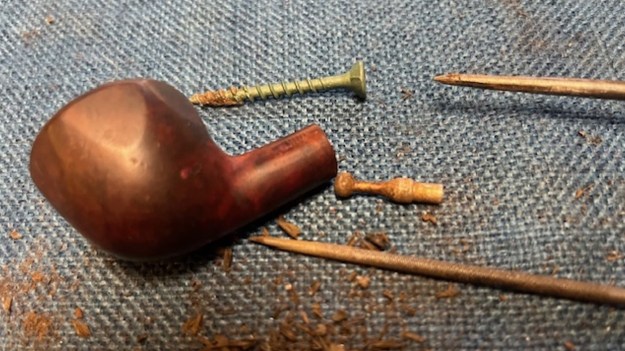
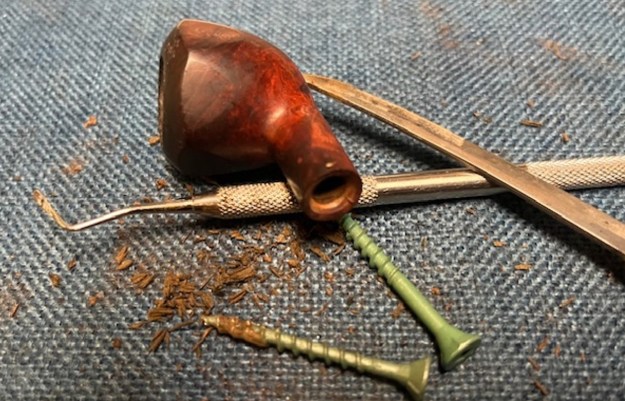
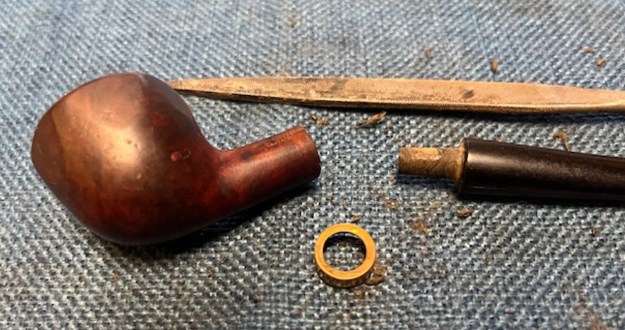
I received two pipes for repair from Brady, who works at a Pipe and Tobacco Shop in Texas yesterday. The first is a tiny Hexagonal Dublin stamped Genuine Briar. The second one is a leather coated bowl stamped Longchamp France Billiard. Both were quite dirty and needed some special attention. I decided to work on the harder of the two pipes – the tiny Genuine Briar Hex Dublin. It had a broken tenon in the shank and a small stem. In looking it over I felt it was too thin to set a new tenon in. I would need to restem it. I was in a rush to work on it so I started without taking the customary photos. I put the bowl in the freezer to see if the cold and change would loosen the tenon from the shank. I took it out and used a screw to try and pull it. It did not work as it was solidly stuck. I repeated the freezer trick with no luck at all. I examined it and found that the tenon in the shank was quite cracked. I used a dental tool to pull out the pieces as much as possible. I cleaned up the shank with a pen knife to scrape out the remnants of vulcanite. A second issue became clear. There was a snapped aluminum stinger in the shank with a large ball on the end. It took some work and the ball stinger dropped out of the shank.With the stinger removed I worked on fitting a new stem to the shank. I toyed with a thin brass band to stabilize the thin shank. I tried it on for the fit and look and liked it. I glued it in place. I used sand paper and the Dremel and sanding drum to reduce the diameter of the tiny tenon. I finished it and the fit was right. All that was left was to polish it. I reamed the tiny bowl with a Savinelli Fitsall pipe knife and took cake back to briar. I sanded the walls of the bowl with a folded piece of 220 sandpaper.I cleaned out the internals of the bowl, shank and stem with pipe cleaners, cotton swabs and isopropyl alcohol. It came out smelling much better.The bowl had a lot of tars, lava and even varnish underneath the grime. I wiped it down with acetone on cotton pads until the surface of the bowl was much cleaner. I sanded the bowl with 320-3500 grit sanding pads. I wiped the briar down after each sanding pad to remove the dust and debris. The bowl began to look much better. I polished the bowl with micromesh sanding pads – dry sanding with 1500-12000 grit sanding pads. I wiped it down with a damp cloth after each sanding pad to remove the dust and debris. The grain stood out more with each set of pads. I worked some Before & After Restoration Balm into the finish of the bowl, rim top and shank with my fingertips to clean, enliven and protect it. I find that the balm really makes the briar come alive again. I let the balm sit for 15 minutes and then buffed with a cotton cloth to raise the shine. The bowl really looks good at this point. I set the bowl aside and turned my attention to the stem. I sanded the stem with 320-3500 grit sanding pads and wiped the stem down after each pad with an Obsidian Oil saturated cloth to remove the sanding dust and protect the stem. I polished the stem with micromesh sanding pads – dry sanding it with 1500-12000 grit pads. I polished it further with Before & After Pipe Stem Polish – both fine and extra fine. This Petite Genuine Briar Hexagonal Dublin with a new vulcanite stem is a great looking pipe now that it has been restored. I put the stem back on the bowl and carefully buffed the pipe with Blue Diamond on the buffing wheel using a light touch on the briar. I gave the bowl and the stem multiple coats of carnauba wax on the buffing wheel and followed that by buffing the entire pipe with a clean buffing pad. I hand buffed the pipe with a microfiber cloth to deepen the shine. The finished Genuine Briar Dublin fits nicely in the hand and feels great. Give the finished pipe a look in the photos below. The dimensions of the pipe are Length: 5 inches, Height: 1 ¼ inches, Outside diameter of the bowl: 1 inch, Chamber diameter: 5/8 of an inch. The weight of the pipe is .71 ounces/21 grams. This tiny, older American Made Hexagonal Dublin is a real beauty. Thanks for walking through the restoration with me as I worked over another beautiful pipe. I will set it aside and once I finish the other pipe that Brady sent to me, I will send them back to him. Thanks for your time.

Replacing a tenon, restemming and restoring another Mixed Finish Soren Hand Carved Freehand


by Steve Laug

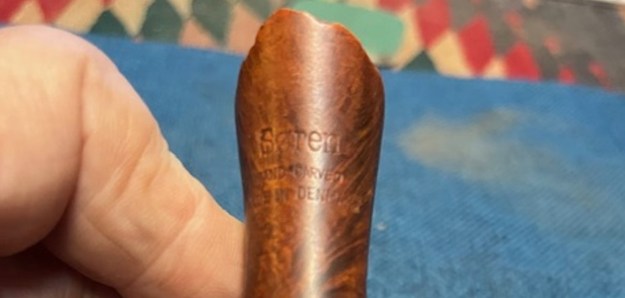
I am taking a break from the last two of the four pipes I am working on for Jack to clean up and match a stem with a nice freehand pipe that I have here in my box. It is another quick cleanup and restore and gives me a break from the heavier restoration work on Jack’s next pipe. This bowl has a mixed smooth and rusticated finish with a plateau rim top and shank end. The finish was a bit dull and lifeless. It showed promise under the grit and grime of the years. On the underside of the shank it was clearly stamped Soren [over] Hand-Carved [over] Made in Denmark. The bowl had a thin cake and some lava overflow on the smooth and plateau areas of the rim top. The bowl also had some dust and debris in rusticated patch on the right side of the bowl as well as in the crevices of the plateau on the shank end. I took some photos of the bowl before I started my work on it. I took a close up photo of the bowl to give an idea of what I had to work with. The bowl was very dirty and had a moderately thick cake. The smooth portions of the rim top have a lava coat the plateau portions are also almost filled in with lava. I also took a photo of the plateau on the shank end to show its condition – dirty but in good shape.I took a photo to try and capture the stamping on the underside of the shank. It is present and is readable in person far more than the photos show. It is stamped as noted above.I went through my cans of stems here and found a nice vulcanite fancy saddle stem that would fit quite well ONCE I REPLACED THE SNAPPED TENON. It was dirty and needed a thorough cleaning but I think it will look good.I have worked on quite a few Soren pipes over the years and turned to one of the blogs that I wrote  on another interesting Soren Freehand Sitter (https://rebornpipes.com/2020/02/26/this-interesting-soren-hand-carved-freehand-turned-out-to-be-more-work-than-expected/). I quote from that blog below.

I looked up the brand on Pipephil (http://www.pipephil.eu/logos/en/logo-s10.html) and found that the brand was carved by Søren Refbjerg Rasmussen. Pipes that he made for the European market were mostly stamped “Refbjerg” while those made for the US market were stamped “Soren”. Thus, I knew that one I was working on was imported into the US market.

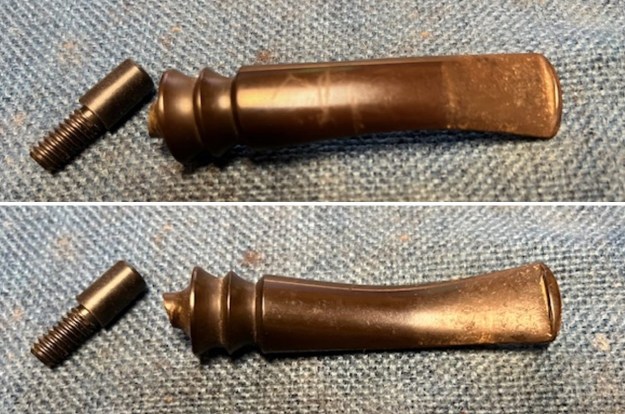
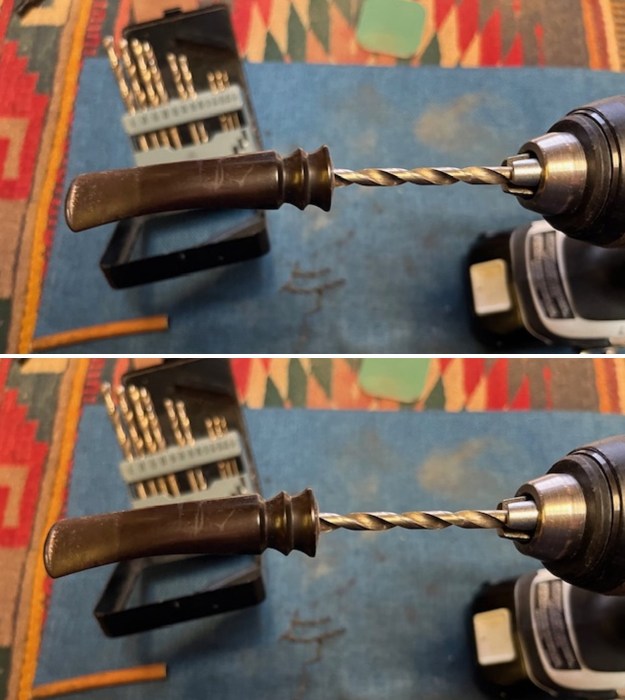
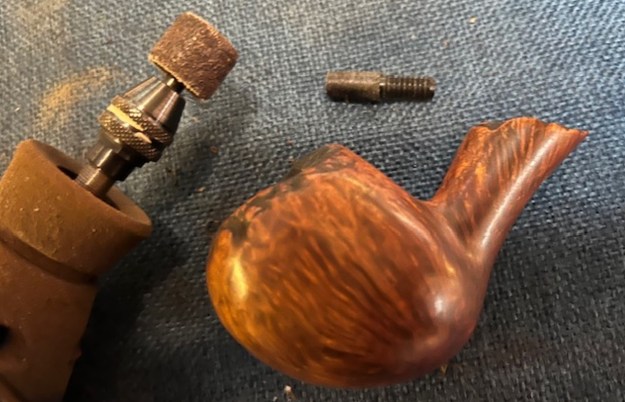
It was time to work on the pipe! I decided to start with refitting the new tenon to the stem I had chosen. Hmmm…I thought I was done with that for a while but this stem just worked with the bowl. I flattened the broken tenon remnants on the stem end with a Dremel and sanding drum and then further smoothed it out with a topping board and 220 grit sandpaper. I wanted a smooth surface for my drilling.I learned a helpful trick on the last batch of six tenon replacements. I use a small pen knife to give the airway in the stem end a slight chamfer to guide the drill bit into it and keep it straight. Once I did that I used a series of drill bits to open the airway to receive the threaded portion of the tenon. I choose to use threaded replacement tenons as they provide a rough serrated surface for the glue to bind to the drilled hole in the stem. It has worked well for me a for a long time.Once it fit well in the stem I needed to reduce the diameter of the portion that went in the shank mortise. I use a Dremel and sanding drum to work it until it fits well in the shank of the pipe. I took photos of the look of the tenon when it was finished and put it in the shank and put the stem on it and took photos. I think it will work very well! I checked the fit of the stem to the tenon, the tenon to the shank repeatedly and once it was proper I glued it in place with black CA glue.I set the stem aside to allow the glue to cure. While it dried I took a photo of the stem and the bowl together to give a sense of the look of the pipe and stem. Proportions and look just work together in my opinion. While the glue cured I turned my attention to the bowl. I reamed it with a PipNet Pipe Reamer using the 2nd and 3rd cutting heads to remove the cake. I cleaned up the remnants with a Savinelli Fitsall Pipe Knife. I finished the bowl by sanding the walls with a piece of 220 grit sandpaper wrapped around a piece of dowel. The bowl walls looked very good. I scrubbed out the internals with pipe cleaners (normal & bristle), cotton swabs and alcohol to remove the tars and oils in the shank between the mortise and the entrance of the airway into the bowl. It was quite dirty.I cleaned up the plateau areas on the rim top and shank end with a brass bristle wire brush. I worked on it until the groves were clean. I wiped it down with a damp cloth to remove all the debris. I sanded the smooth portions on the rim top with a folded piece of 200 grit sandpaper. It was looking better each step!I scrubbed the exterior of the bowl and shank with a tooth brush and undiluted Murphy’s Oil Soap. I worked it into the grain on the sides, the plateau on the rim top and shank end and the rusticated patch on the right side of the bowl with the tooth brush. I rinsed the soap and grime off with warm water and dried it off with a soft towel. I looked much better at this point. The grain really stands out. I sanded the smooth part of the bowl with 320-3500 grit sanding pads to start the polishing process. I wiped down the bowl with a damp cloth after each sanding pad. I followed that by polishing the smooth portions of the bowl sides with micromesh sanding pads – dry sanding with 1500-12000 grit sanding pads. I wiped the bowl down with a damp cloth after each pad. With the briar polished I rubbed the bowl and shank down with Before & After Restoration Balm. I worked it into the surface of the bowl sides and shank with my fingertips and into the plateau rim top, shank end and rustication with a horsehair shoe brush. The product works to clean, enliven and protect the briar. I let the Balm sit for 15 minutes and then buffed with a cotton cloth to raise the shine. While the Balm did its work, I worked on the “new stem”. I sanded the tooth chatter and marks on the stem surface with a folded piece of 220 grit sandpaper. It was starting to look better.I sanded the stem surface with 320-3500 grit sanding pads to further polish the stem. I wiped it down between sanding pads with a damp cloth. I polished the acrylic stem with micromesh sanding pads – 1500-12000 grit pads. I wiped it down with a damp cloth after each sanding pad. I used Before & After Pipe Polish – both Fine and Extra Fine to further polish the stem. This beautiful Soren Hand Carved Made In Denmark Freehand with a fancy, turned vulcanite saddle replacement stem is a great looking pipe now that it has been restored. I put the stem back on the bowl and carefully buffed the pipe with Blue Diamond on the buffing wheel using a light touch on the briar. I gave the bowl and the stem multiple coats of carnauba wax on the buffing wheel and followed that by buffing the entire pipe with a clean buffing pad. I hand buffed the pipe with a microfiber cloth to deepen the shine. The finished Soren Hand Carved Freehand fits nicely in the hand and feels great. Give the finished pipe a look in the photos below. The dimensions of the pipe are Length: 6 inches, Height: 2 inches, Outside diameter of the bowl: 1 ½ x 1 ¾ inches, Chamber diameter: ¾ of an inch. The weight of the pipe is 58 grams/2.12 ounces. If you are interested in adding this pipe to your collection send me a message or an email to slaug@uniserve.com. Thanks for walking through the restoration with me as I worked over another beautiful pipe. I will be putting it on the rebornpipes store in the Danish Pipe Makers Section shortly if you would like to add it to your collection. Thanks for your time.
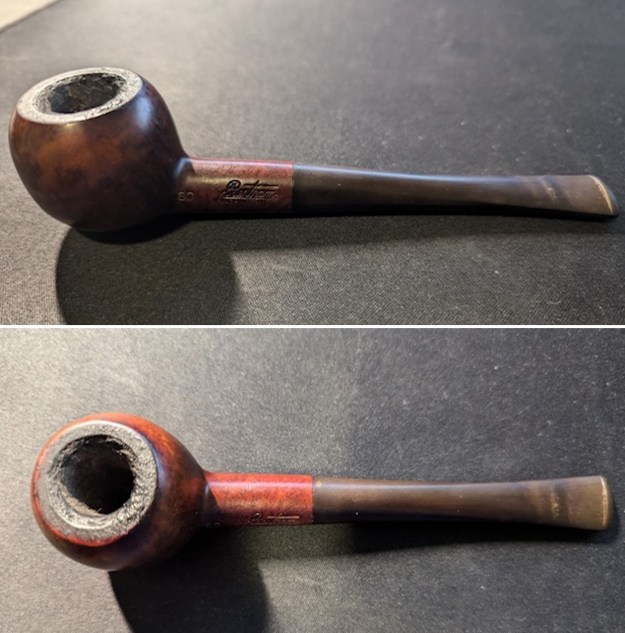
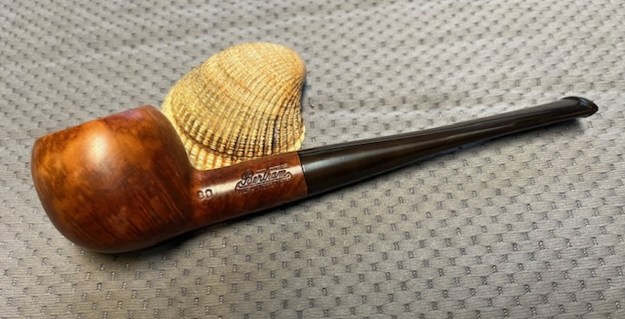
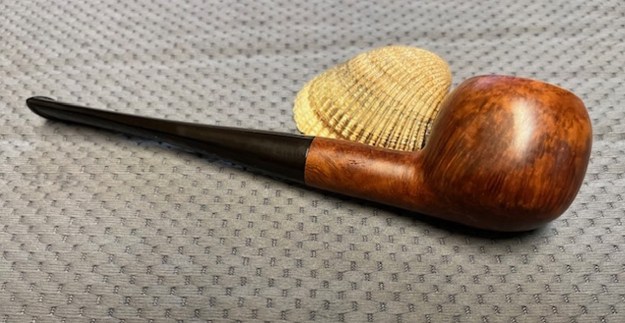
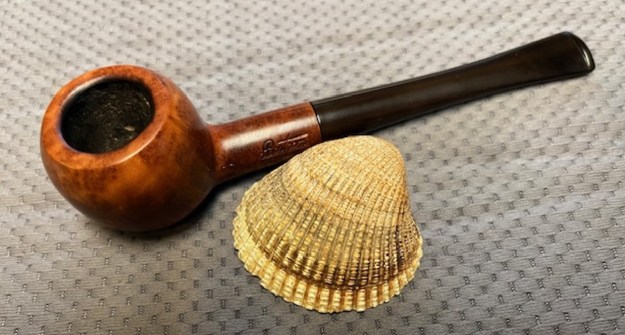
Cleaning up a Dull and Dirty Bertram 80 Straight Apple


by Steve Laug

I have been working lately replacing tenons on bowls in my own work box. After 6 of them I am ready for something different. While I was in Florence, Italy I had received and email from Jack regarding some pipes that he had that needed some work. Here is his email.

I have a Dunhill from unknown era, a Hardcastle, and possibly a third pipe that could use your workmanship. If you’d like, I can send you pictures of the pipes so you know what condition they’re in. Please let me know the necessary details! — Jack

We chatted about that and I suggested he email me when I returned to Canada. He wrote back and asked me to work on not three but four pipes. He listed what he had and I thought these would be an interesting diversion from tenon replacement work.

Are you still willing to entertain restoring/refurbishing a few pipes? I have four in various stages of need, and I’ve attached pictures of each for your evaluation. I would be very grateful for anything that you could and would be willing to do.

  • 1992 (?) Dunhill
  • Bertram 80
  • Hardcastle – This pipe looks very clean except for some pitting? fissures? in the chamber.
  • Dr. Grabow Supreme – This poor pipe… well, it’s a doozy.

Thank you very much! – Jack

I agreed and asked that he send them to me. Interestingly they arrived the day I finished the last of the tenon replacements. I unpacked them and they were indeed as interesting as his email had led me to believe. I decided to work on the second pipe listed in the foursome next – the Bertram 80. Here are the photos he sent to me of that pipe. I will give my evaluation of the work that will need to be done on the pipe as I walk through the photos with you.

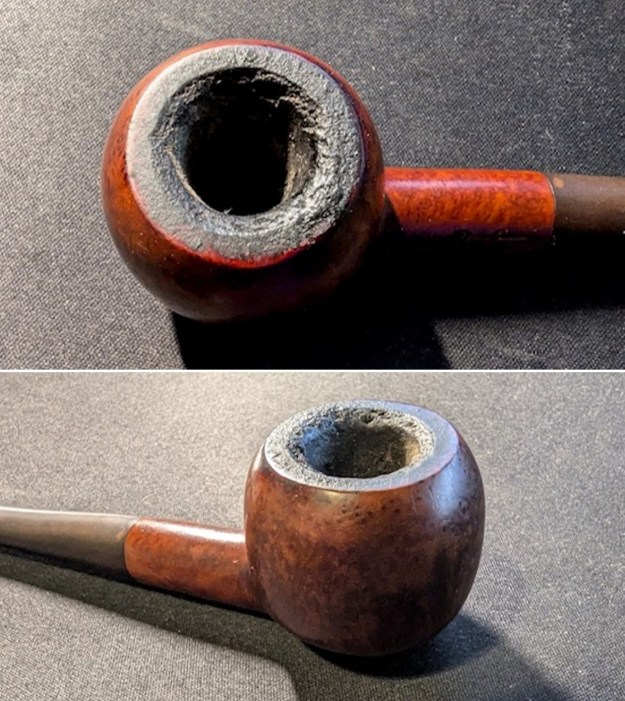
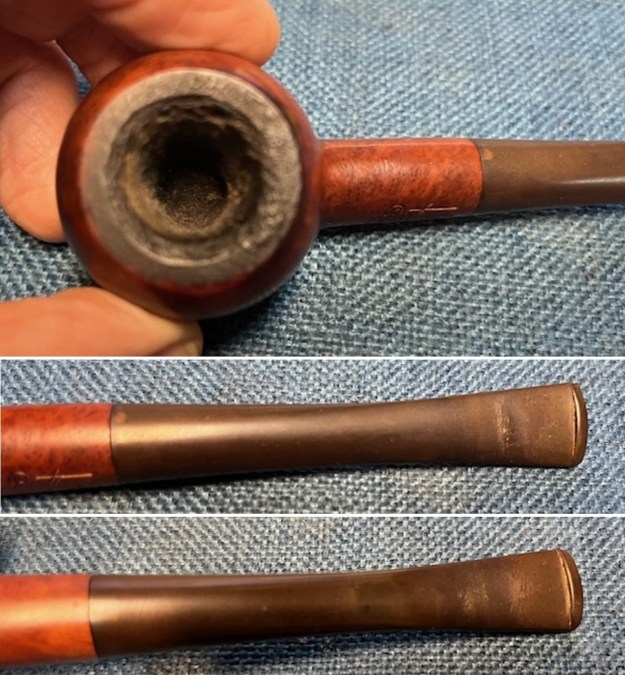
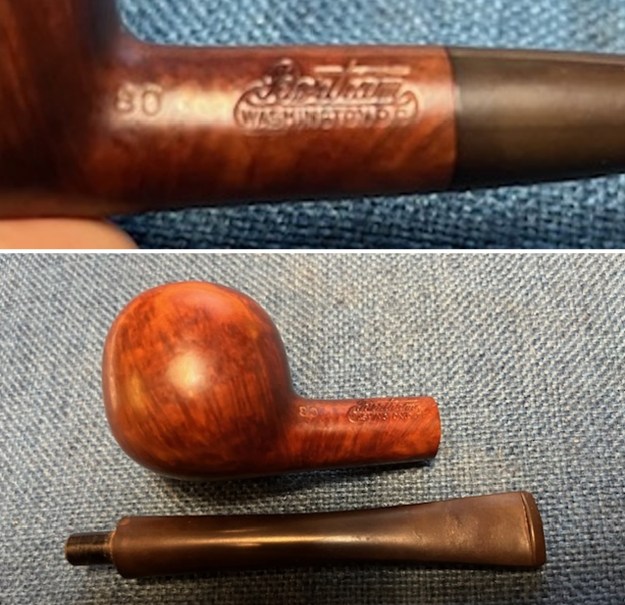
The first two photos that Jack sent show the overall condition of the pipe. You can see from these photos that the rim top had a thick coat of lava on the rim and inner edge of the bowl. There is a thick cake that is rock hard and fills the bowl. The finish is very dirty but does not look to damaged with scratches or nicks in the photos. It is thoroughly dull under the grime.The stem is oxidized, calcified and had tooth marks on the top and the underside. The stamping on the left side of the shank is clear and readable. It reads Bertram over Washington, D.C. in a banner. Next to the bowl/shank junction is the grade number 80 stamp.The next two photos affirm my evaluation of the thick cake in the bowl and overflow of lava on the rim top. Fortunately there do not appear to be any cracks on the rim top or sides of the bowl. I unpacked the pipes when they arrived on Thursday and went over each one. As I examined this one my observations based on the photos were confirmed. The one thing that was better was that the finish actually looked better in person than in the photos. There was some nice grain around the bowl that was a bit obscured by the oils and grime. The cake and the lava were as expected. They were both thick and hard as I had guessed from the photos. The stamping on the shank was clear and readable. The stamp read Bertram [over] Washington, D.C. in an unfurled banner. To the left of the stamping next to the bowl was the number 80 which was the grade stamp of the pipe. Just a note, I have yet to quite understand the grade stamps as I have worked on grade 20 pipes with absolutely stunning grain and higher grades with fills. It really is inexplicable. The stem looked as noted above. It was oxidized, calcified and had tooth chatter and marks on both sides ahead of the button. There was no stamp or logo on the stem as is normal for Bertram pipes. Have a look at the photos below. I took close up photos of the bowl and rim top to show the condition of both the bowl and the rim top. The bowl has a thick cake that lining the walls and overflowing into lava. You can see the lava and build up on the rim top and the lava flowing over the inner edge of the bowl. It is hard to know if there is damage or if the lava protected it. The stem is oxidized, calcified and has tooth marks and chatter on both sides ahead of the button.I tried to capture the stamping on the shank to show their condition before my work. They are clear and readable as noted above. I removed the stem from the bowl and took a photo of the parts to give a sense of the symmetry of the pipe. It is a beauty beneath all grime.As always, I like to go back and read about the brand. In this case the Bertram name is one that I am very familiar with. Instead of going to Pipephil or to Pipedia I went to my own blog. I am including the information that I read below along with the links to further blog articles for you to have a look at.

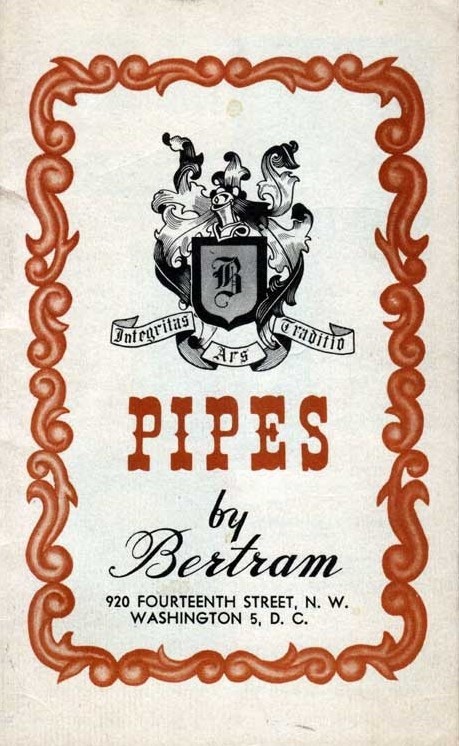
As I have worked on Bertrams I have written on the brand and have included the following information. If you have read it in past blogs, you can skip over it. If you have not, I have included the link to Bertram history and information. I would recommend that if you don’t know much about them take some time to read the background. I include a link to the write up on Pipedia (http://pipedia.org/wiki/Bertram). Bertram pipes were based out of Washington DC. They were popular among famous politicians and celebrities of the time. They made many products for them from FDR’s cigarette holders to Joseph Stalin’s favorite pipe. They were considered some of the best America had to offer till they finally closed their doors in the 70s. Bertram graded their pipes by 10s and sometimes with a 5 added (15, 25, 55 etc.), the higher the grade the better. Above 60s are uncommon and 80-90s are quite rare. I have worked on one 120 Grade billiard. I have several blogs that I have written on rebornpipes that give some history and background to Bertram pipes. (https://rebornpipes.com/2015/06/16/an-easy-restoration-of-a-bertram-grade-60-217-poker/).

I have included the following link to give a bit of historical information on the pipe company. It is a well written article that gives a glimpse of the heart of the company. http://www.streetsofwashington.com/2012/01/bertrams-pipe-shop-on-14th-street.html#

From this information I learned that all of these Bertrams were made before the closure of the shop in the 1970s. This Bertram Straight Apple with stunning grain has one fill on the shank. This pipe has a 80 Grade stamp on it which I am sure explains the quality of the briar.

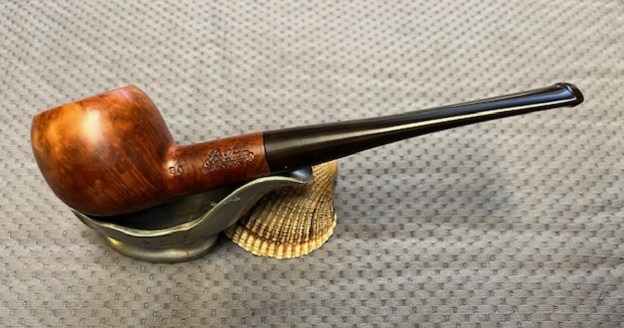
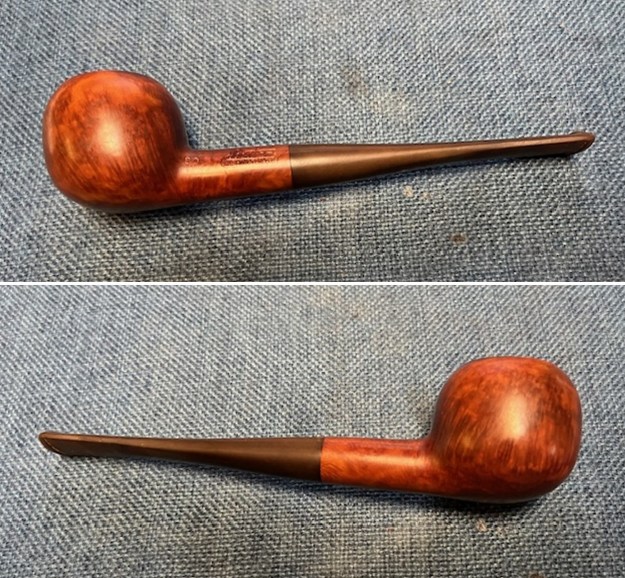
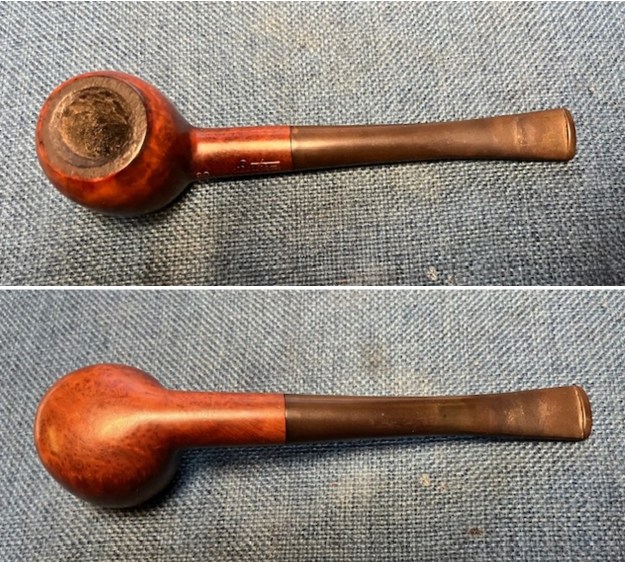
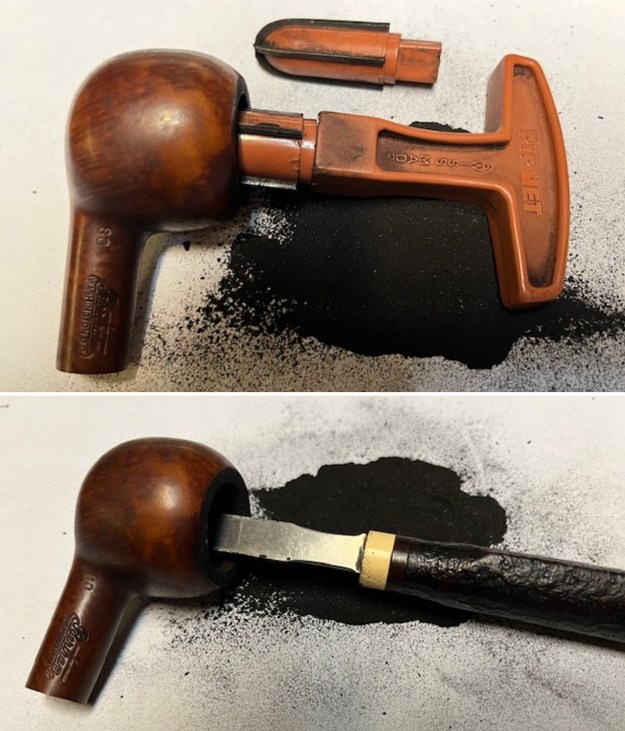
I decided to ream the bowl and do some internal clean up work before further polishing the briar. The cake was very hard so I proceeded with care so as not to either break my reamer or damage the rim edges. I reamed the bowl with a PipNet pipe reamer using the 1st and 2nd cutting heads to remove the cake in the bowl. I cleaned up the reaming with a Savinelli Fitsall Pipe Knife and finally sanded the bowl with 220 grit sandpaper wrapped around a piece of dowel to clean up the walls of the bowl. The walls appeared to be in good condition. I scraped the lava on the rim top with the Savinelli Fitsall knife and a folded piece of 220 grit sandpaper. I was able to remove the majority of it. There was some light damage to the inner edge that would need to be addressed.I scrubbed out the internals with pipe cleaners (normal & bristle), cotton swabs and alcohol to remove the tars and oils in the shank between the mortise and the entrance of the airway into the bowl. It was quite dirty.I scrubbed the bowl and rim top with undiluted Murphy’s Oil Soap and a tooth brush to remove the grime. I rinsed it with warm water and dried it off with a cotton towel. The grain really began to stand out. Polishing would only make it more prominent. I worked over the damaged inner edge of the bowl with a folded piece of 220 grit sandpaper and smoothed out the nicks in the briar. I gently topped the bowl on a topping board with 220 grit sandpaper. While it was better, there was still some darkening and light damage to the back left side of the inner edge. I used a wooden sphere and a piece of 220 grit sandpaper to work in the top and the inner edge of the rim to minimize the damage on the edge. It looked very good once it was finished. I sanded the bowl, rim top and shank with sanding pads – 320-3500 grit pads. I wiped the bowl down after each sanding pad to remove grime and check the progress. It was looking very good by the time I finished with the final pad. I polished the rim top and bowl with micromesh sanding pads – dry sanding with 1500-12000 grit sanding pads. I wiped it down with a damp cloth after each sanding pad to remove the dust and debris. The grain stood out more with each set of pads. I worked some Before & After Restoration Balm into the finish of the bowl, rim top and shank with my fingertips to clean, enliven and protect it. I find that the balm really makes the briar come alive again. I let the balm sit for 15 minutes and then buffed with a cotton cloth to raise the shine. The bowl really looks good at this point. I set the bowl aside and turned my attention to the stem. I sanded the stem with 320-3500 grit sanding pads and wiped the stem down after each pad with an Obsidian Oil saturated cloth to remove the grime and protect the stem.   I polished the stem with micromesh sanding pads – dry sanding it with 1500-12000 grit pads. I polished it further with Before & After Pipe Stem Polish – both fine and extra fine. This Bertram Washington, DC 80 Apple (some might call it a Prince but the bowl is not shaped right and the stem is not bent correctly for one) with a vulcanite stem is a great looking pipe now that it has been restored. I put the stem back on the bowl and carefully buffed the pipe with Blue Diamond on the buffing wheel using a light touch on the briar. I gave the bowl and the stem multiple coats of carnauba wax on the buffing wheel and followed that by buffing the entire pipe with a clean buffing pad. I hand buffed the pipe with a microfiber cloth to deepen the shine. The finished Bertram 80 Straight Apple fits nicely in the hand and feels great. Give the finished pipe a look in the photos below. The dimensions of the pipe are Length: 6 inches, Height: 1 ½ inches, Outside diameter of the bowl: 1 1/8 inches, Chamber diameter: ¾ of an inch. The weight of the pipe is 1.13 ounces/33 grams. This older American Made Apple is a real beauty. Thanks for walking through the restoration with me as I worked over another beautiful pipe. I will set it aside and once I finish the other two pipes that Jack sent to me, I will send the lot back to him. Thanks for your time.
Restoring a Peterson Sterling Silver Deluxe System 11S Pipe


by Kenneth Lieblich

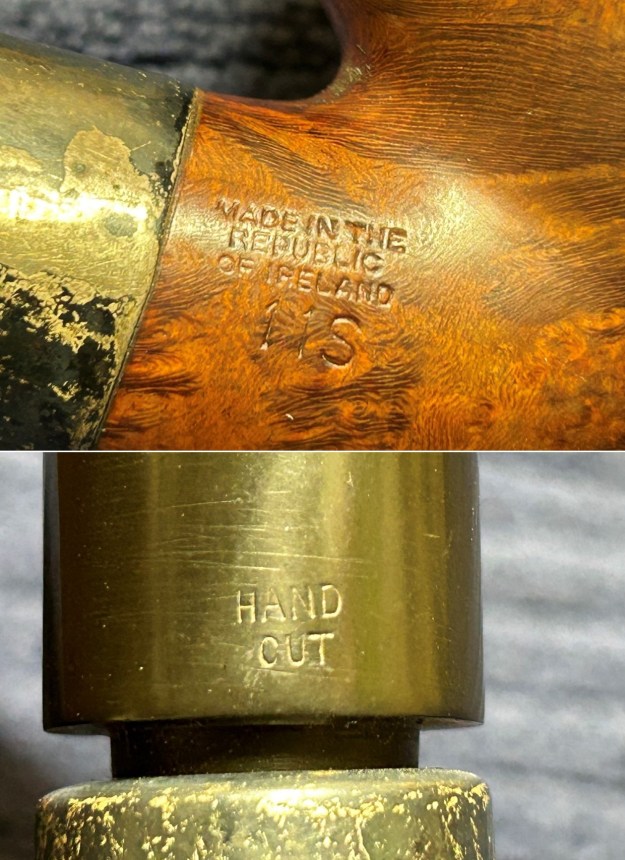
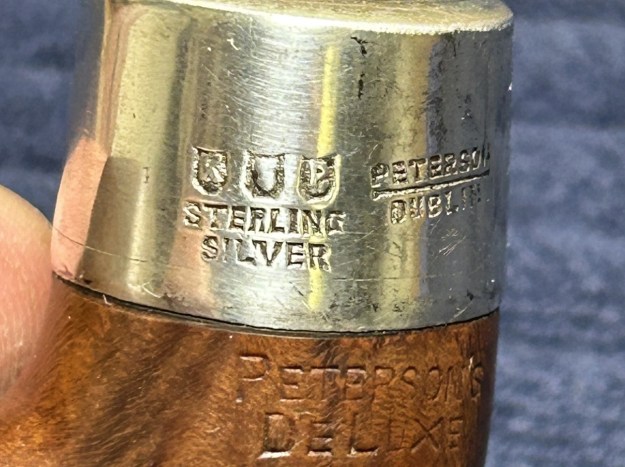
Ah, the Peterson Deluxe System – such a lovely pipe. Good fortune has provided two such pipes for me. First is the one you’re about to see restored and the second in a few days time. The two pipes didn’t come into my possession together, but they are being restored together. Despite both being Deluxe Systems, they have different finishes, come from different eras, and had different challenges in restoration. This 11S is really a fantastic pipe with wonderful grain. I am delighted with the way it cleaned up and I hope you are too! Our first Pete is this handsome fellow. It’s an 11S shape, has a smooth-finish, comes from the Republic era, and has the classic Peterson P-lip. Let’s have a look at the markings on this pipe. The left side of the stummel reads, Peterson’s [over] DeLuxe. The right side of the stummel reads, Made in the [over] Republic [over] of Ireland [over] 11S. The band has markings too. It has a set of faux hallmarks which read K&P. Over that are the words Sterling [over] Silver. To the right, are the words Peterson [over] Dublin. Finally, the stem reads Hand [over] Cut. In order to find out a bit more about the Deluxe System, I looked at Peterson’s own website and they furnished this information:
While the Deluxe stamp first appeared on our System pipes in 1940, the design itself dates to our 1896 and 1906 catalogues and, with the exception of the Supreme, has always marked our highest tier of System pipe. Like the System Standard and System Spigot lines, the Deluxe System pipe incorporates Charles Peterson’s patented System design, including a deep reservoir to collect excess moisture from the smoke; a graduated-bore mouthpiece that funnels the smoke and allows moisture to collect within the reservoir; a sturdy sterling silver military mount, which allows the pipe to be broken down and cleaned without damage or warping; and our patented P-Lip bit, which draws the smoke upward, thus reducing tongue bite. The Deluxe differs from those aforementioned lines, comprised of bowls with only the finest grain patterns and featuring a sterling silver mount and a push-gap stem, which was never designed to be flush-fitting, the space between the mount and stem base gradually decreasing with prolonged use. The Deluxe also elevates the System pipe by fixing each stem with a traditional chimney, an aluminum fitment that extends the tenon past the chamber’s airway for optimal System performance. Created for Peterson enthusiasts interested in acquiring the finest System pipe on the market, the Deluxe System will serve as the crown of any collection.
Then, over at Pipedia, there is the following commentary:

The handsome and very distinctive Deluxe system pipes, include the Darwin, Mark Twain and the Charles Peterson 140 year anniversary Pipe. These pipes are at the top of the ‘system’ series in terms of quality and finish. Each Peterson Deluxe is made from carefully selected, age mellowed root briar. In matt finish with hallmarked sterling silver mounts and a unique space fitting mouthpiece to allow for years of wear. They are available in a wide range of shapes numbered, as follows: 1s, 2s, 3s, 4s, 5s, 8s, 9s, 11s, 12.5s, 20s, XL5s, 20FB and 11FB. The pipes are well carved and construction, engineering and workmanship, is outstanding. The stems are well drilled and aligned. Silver work is excellent, finish very good, and the often maligned briar is of outstanding quality. The design is a very typically Peterson classic shape. Apart from the Darwin, the balance can be stem heavy, the bit is thick and chunky, especially in the larger versions. I also enjoy the sense of presence they give to the pipe, particularly if smoking in company with friends or strangers. They have a sophistication about them. The smoking qualities are excellent, dry and cool. The draw is good, and the flavour is particularly great in new pipes. The Mark Twains are outstanding in this department. As for the aesthetics and ergonomics, I find some shapes much more attractive than others. Favourites for me are the 1s, 2s, 3s, the Mark Twains and the Darwin deluxe. As a clencher most are very good to hang, except the beautiful Darwin which is more of a ‘hand holder.’ The one weakness I find is the modern orange/golden colour, (the so called natural) it is, in my opinion, less attractive than that found in the older Walnut finish of the eighties. As far as value and cost is concerned, for the excellent quality finish, these are competitively priced at around $135 to $250 depending on size and briar grade. For what it is worth, I reckon the Deluxes are probably the best value range of pipes that Peterson produce, both in terms of functionality and value. There is not a thing wrong with these pipes. Those who malign the brand because they’re made by the hundreds using machines, are very wrong, in my opinion. I like them a lot and the bang for the buck is the best I’ve ever seen for new pipes of this quality.The Deluxes are all excellent smokers. The Darwin, of course, is a truly outstanding pipe, its only “flaw” being that it’s not a clencher. One particular aspect of this pipe that appeals to me most is its physical beauty and presence. They are a pipe like no other. For me, they also offer a bowl capacity that I like and a balance in the hand that I appreciate. They are well named Deluxe s for giving that special experience.

These Petes with the faux-marks are a bit tricky to nail down in date. Mark Irwin, who runs the great Peterson Pipe Notes blog, has a whole page here on this topic. He writes:

Pipe smokers new to Peterson sometimes wonder what the “K&P” stamp is all about, not realizing the company was known as “Kapp & Peterson” until the 1970s and is still referred to as “Kapps” by the old hands who work in the shop. Most Peterson pipes with metal mounts (and all nickel-mount Systems) have a “K & P” Maker’s Mark, also called a Sponsor’s Hallmark, which is used by The Company of Goldsmiths of Dublin (est. 1637) to identify the silversmith or goldsmith responsible for making the article. The “K & P” maker’s mark was registered at the assay office shortly after Kapp & Peterson’s incorporation and appears either in capital letters (on early sterling and later nickel mounts) or capital letters in shields (on sterling). The maker’s mark was later placed in shields, which may be flat or pointed at the top. After 1938, the K&P maker’s mark became a stand-in for the Company of Goldsmiths (aka Dublin Assay Office) date letter and was usually accompanied nearby by the STERLING over SILVER stamp. The practice of stamping sterling with the date letter wasn’t resumed at Peterson until 1969, for rather humorous reasons explained in the Peterson book.

Sadly, I don’t have the Peterson book, so I cannot enlighten you on the humorous reasons. It would seem from Mark’s words that this pipe falls into the period between 1938 and 1968. However, we can refine that a bit, as the pipe’s markings clearly indicate that it’s a republic-era pipe. Ireland became a republic in 1949, so a date range of 1950-1968 seems suitable for this pipe.

Time to get on with it! The stem was pretty dirty. It had some calcification on it and I used a sharp edge to carefully scrape that off. Once done, I scrubbed the stem with oil soap on some cotton pads. I also took a BIC lighter and ‘painted’ the stem with its flame in order to lift the few bite marks and dents. Then I cleaned out the inside with pipe cleaners and lemon-infused isopropyl alcohol. You can see just how filthy it was inside. Also, it’s worth noting that the aluminum chimney that often goes with these pipes is missing – but a replacement could be sought from Peterson’s. I wiped down the stem with cleanser to remove surface oxidation. Then the stem went for an overnight soak in the Pipe Stem Oxidation Remover. The next day, I used the cleanser again with some cotton rounds. I built up the small tooth marks on the stem with black cyanoacrylate adhesive and let them fully cure. I put a tiny piece of hockey tape over the “Hand Cut” words, so I wouldn’t accidentally sand them. I then used my needle files, Micromesh pads and Obsidian Pipe Stem Oil to make it look great. Onto the stummel, and the first thing I did was to clean up the rim a bit. I took a piece of machine metal and meticulously scraped away the cake without affecting the finish of the wood.Then I reamed out the stummel and removed all the cake. I used a bit of everything to get it all out: PipNet, KleenReem, knife, sandpaper, etc. Fortunately, there was no damage to the interior walls. I used cotton rounds and some oil soap to scrub the outside of the stummel and a toothbrush with oil soap for the lava on the rim of the pipe. I then proceeded to clean out the insides of the shank with Q-tips, pipe cleaners, and lemon-infused isopropyl alcohol. I followed that up by de-ghosting the pipe and the bowl was nice and clean after this. I then cleaned the insides with some dish soap and tube brushes. I then worked on cleaning up the sterling silver band. I taped it off, as I didn’t want to damage the wood. This worked well and I was pleased. There were a couple of very small knocks in the wood and I opted to use a damp cotton cloth and an iron to help. By laying the wet cloth over the affected area of wood and applying the hot iron, steam is generated in a way that can often swell the wood back into place.Next, I sanded all of the wood down with my Micromesh pads and made it lovely and smooth. I followed that up with some Before & After Restoration Balm. I let it sit on the wood for 20 minutes or so, then buffed it off with a microfibre cloth. I took the pipe to the buffer. I gave it a good application of White Diamond and a few coats of carnauba wax. This made all the difference. It really sparkled after that. I also polished the silver with my jewellery cloth.

This Peterson Deluxe System 11S pipe looks amazing now. It’s really a beautiful pipe and it is ready to be enjoyed by the next owner! I am pleased to announce that this pipe is for sale! If you are interested in acquiring it for your collection, please have a look in the ‘Irish’ Pipemakers Section of the store here on Steve’s website. You can also email me directly at kenneth@knightsofthepipe.com. The approximate dimensions of the pipe are as follows: length 6 in. (152 mm); height 3⅔ in. (93 mm); bowl diameter 1½ in. (37 mm); chamber diameter ⅔ in. (17 mm). The weight of the pipe is 2¼ oz. (67 g). I hope you enjoyed reading the story of this pipe’s restoration as much as I did restoring it. If you are interested in more of my work, please follow me here on Steve’s website or send me an email. Thank you very much for reading and, as always, I welcome and encourage your comments.