Tag Archives: Savinelli Pipes

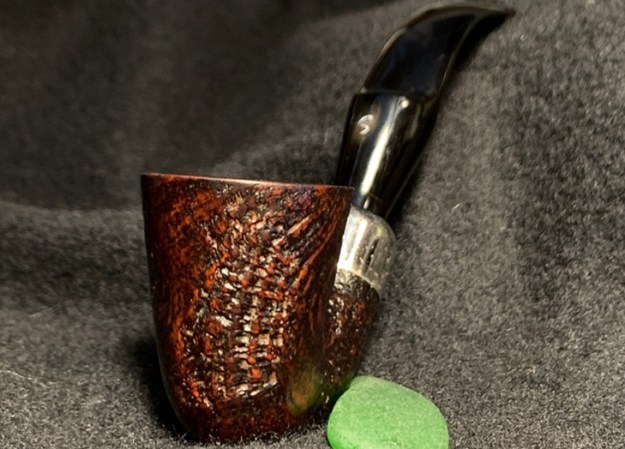
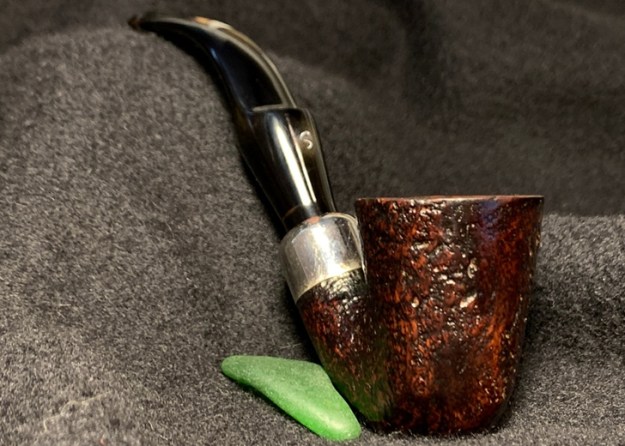
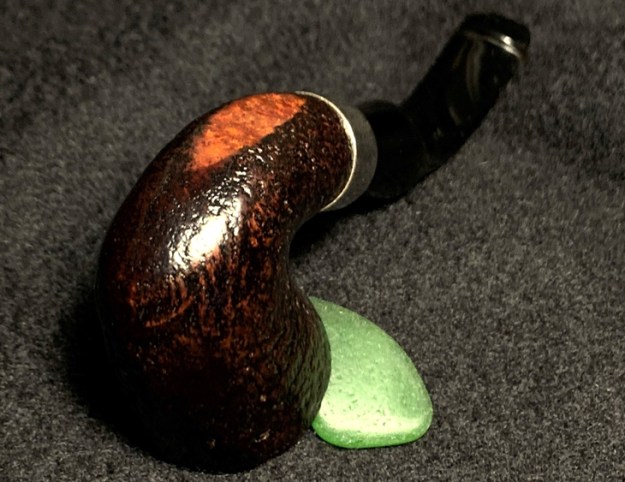
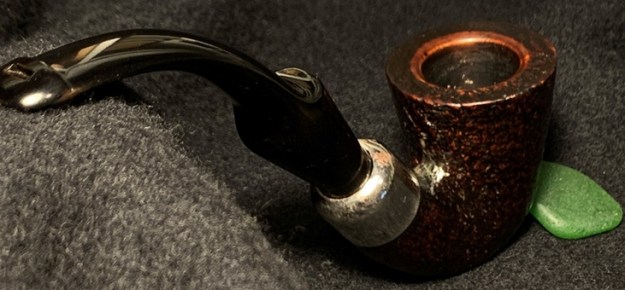
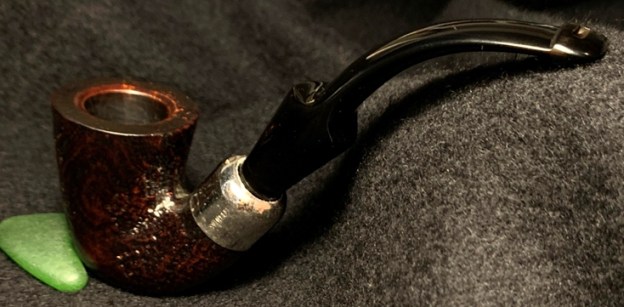
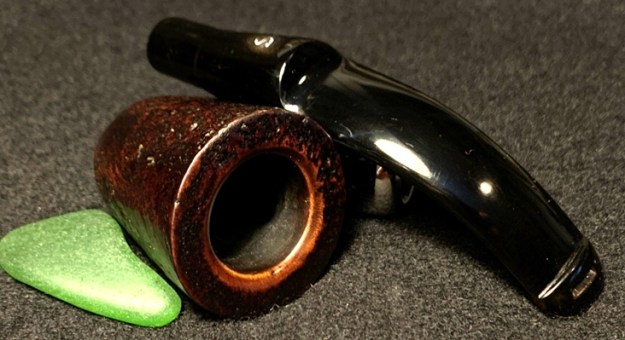
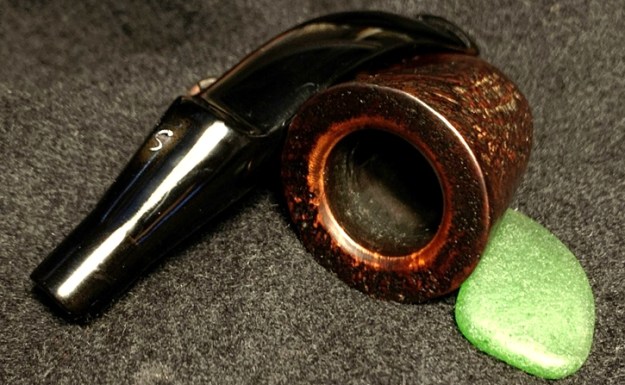
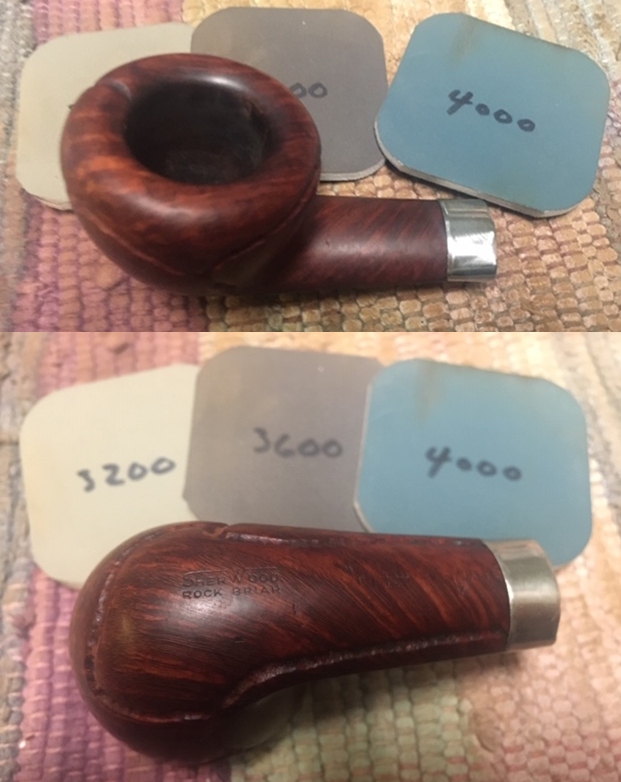
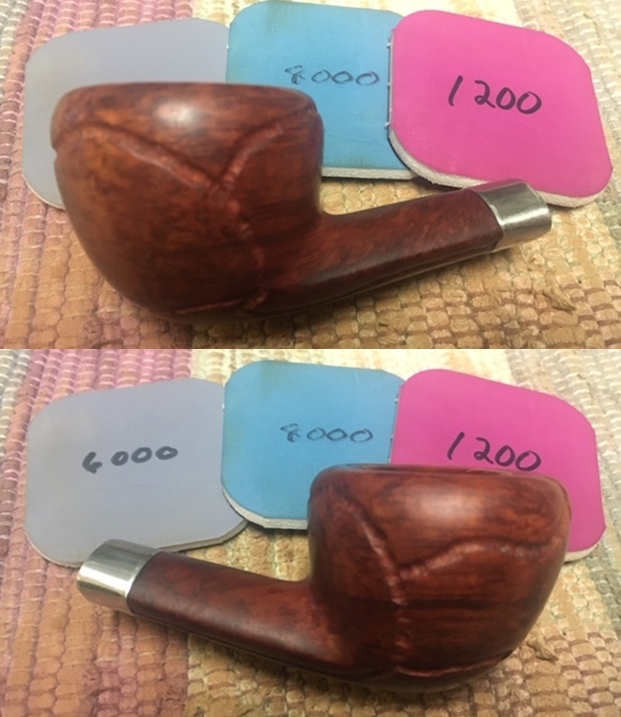
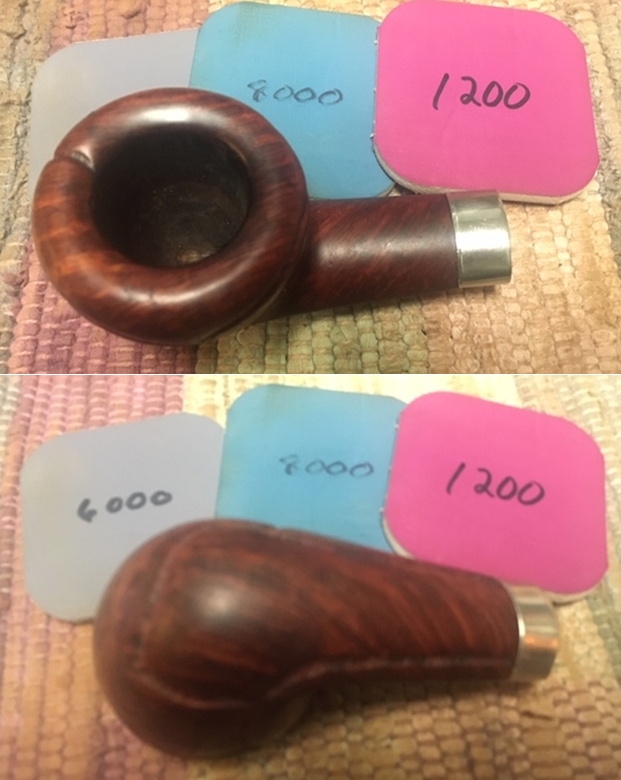
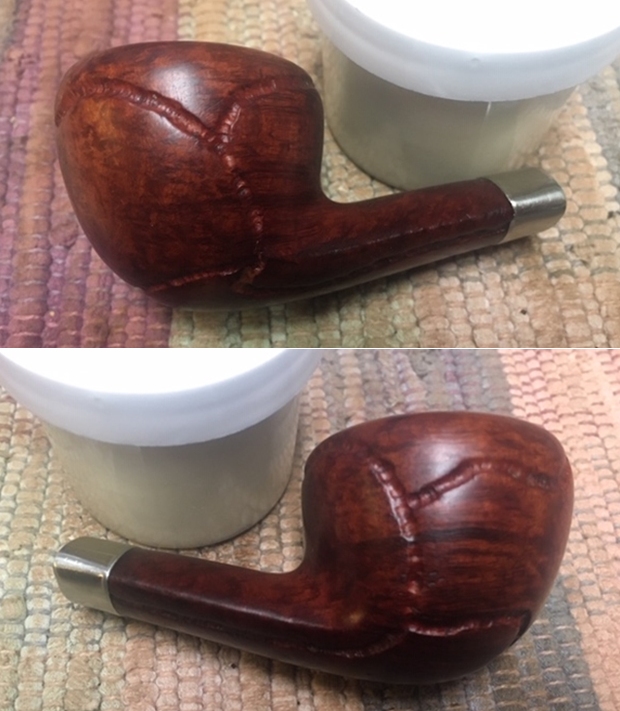
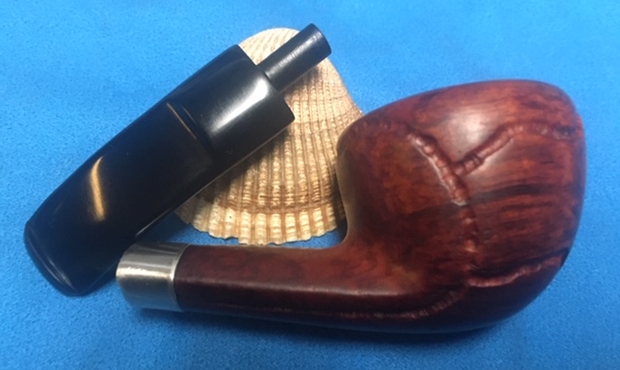
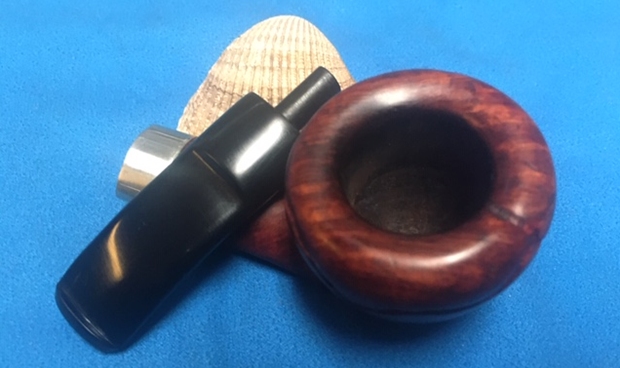
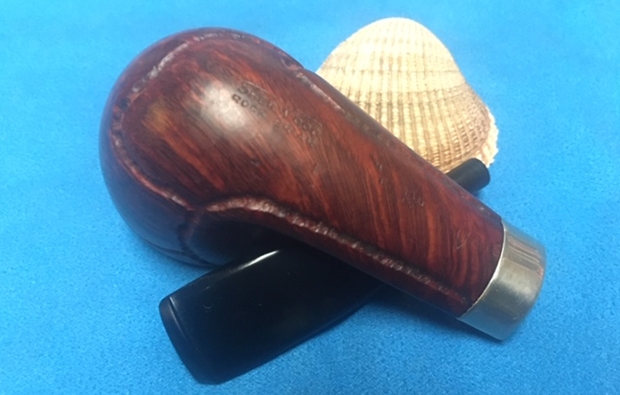
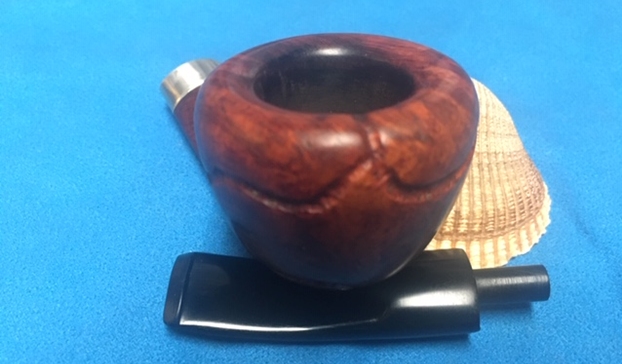
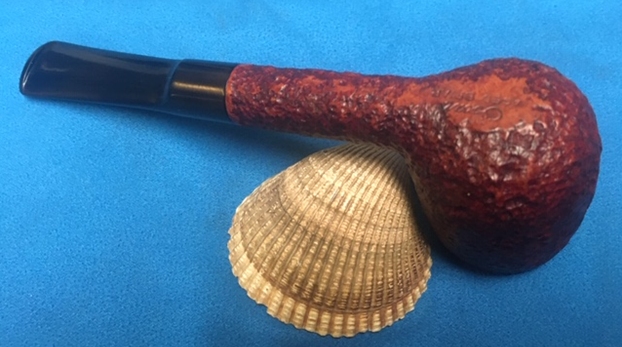
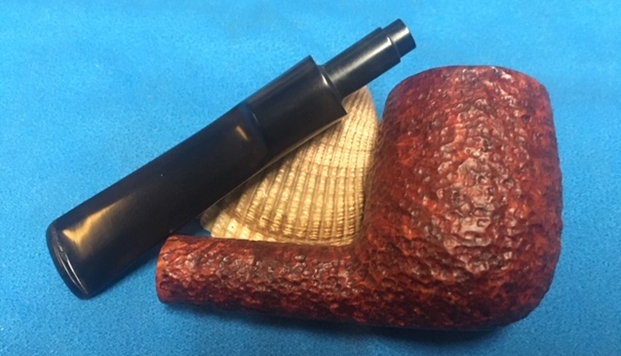
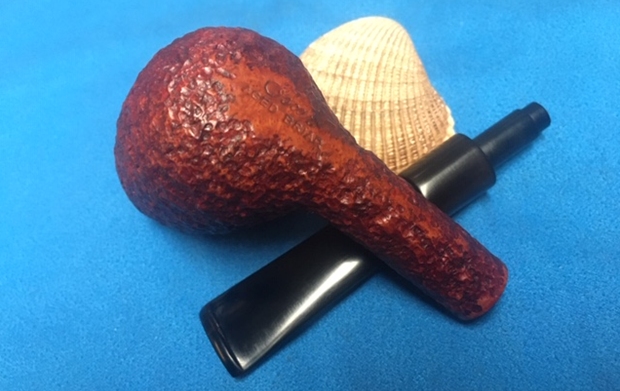
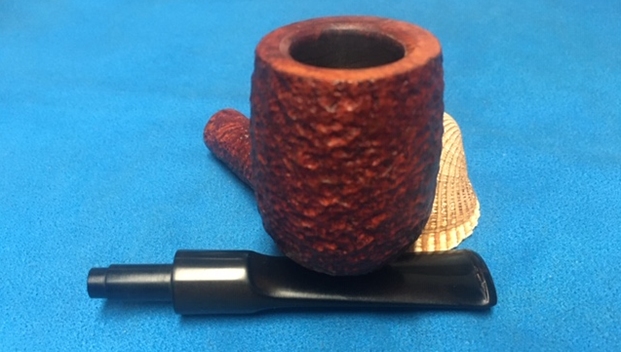
Recommissioning a Smart Savinelli Dry System 3621 Bent Dublin


Blog by Dal Stanton

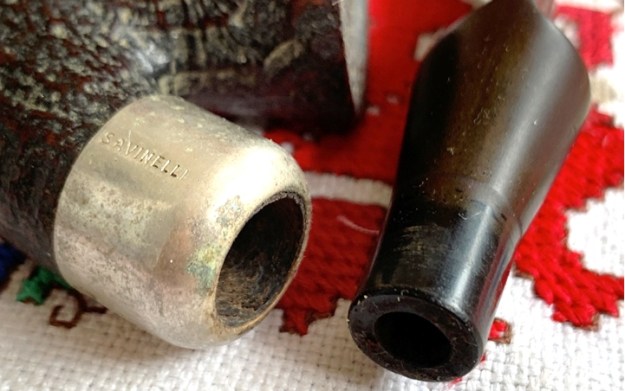
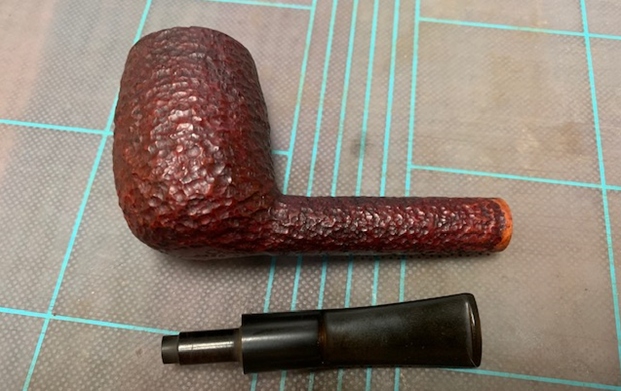
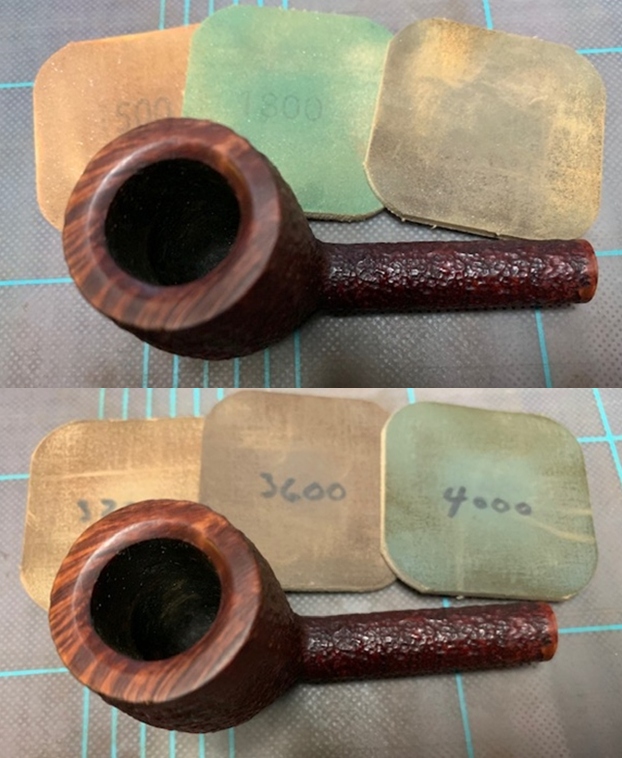
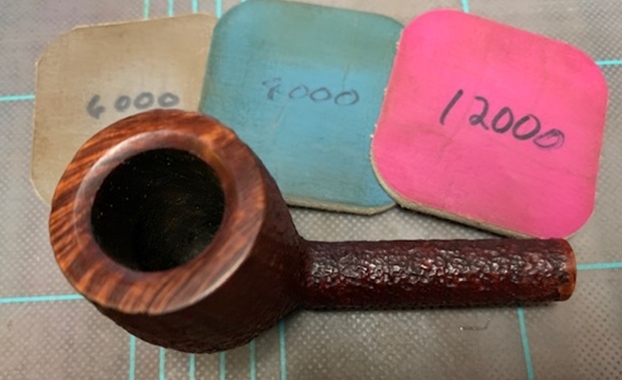
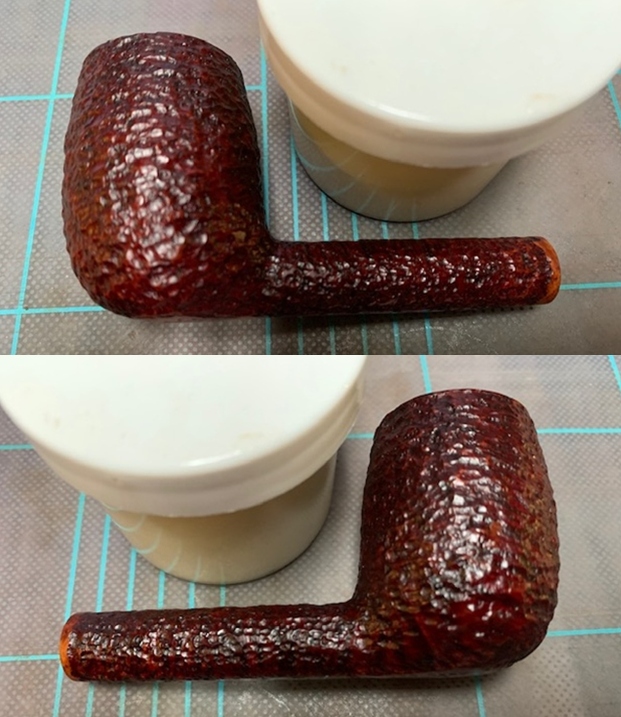
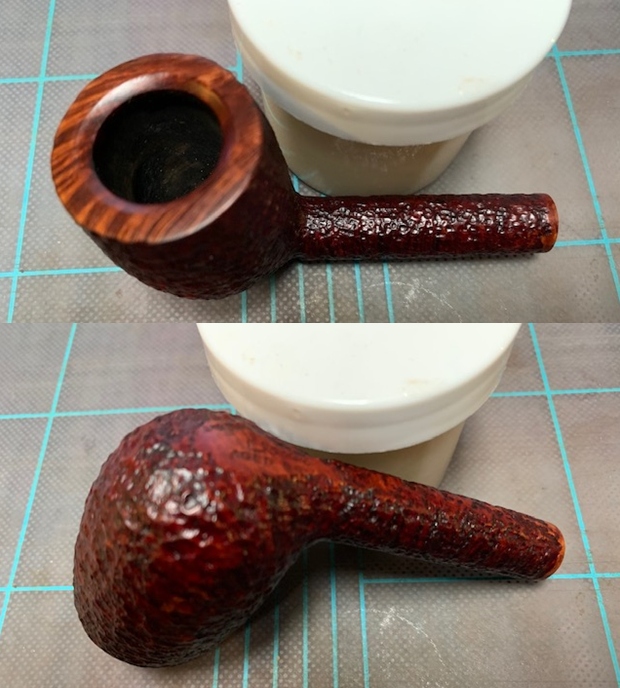
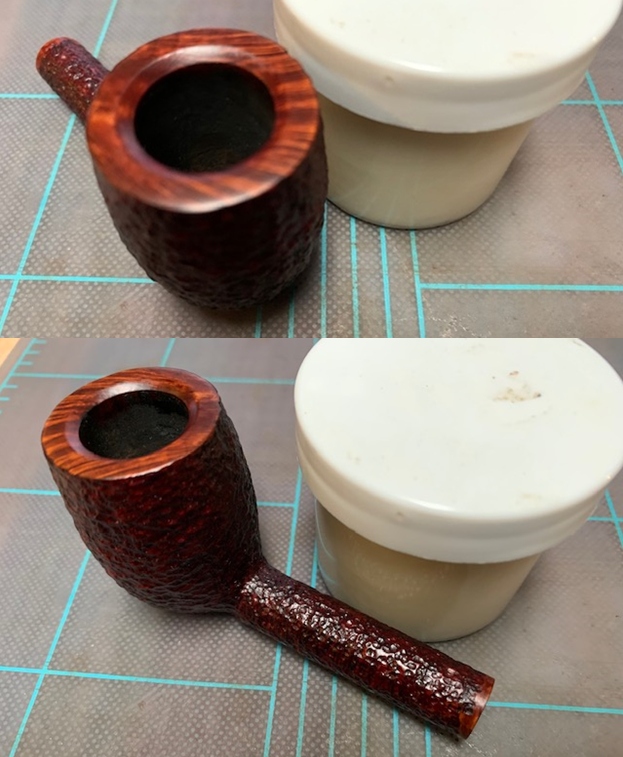
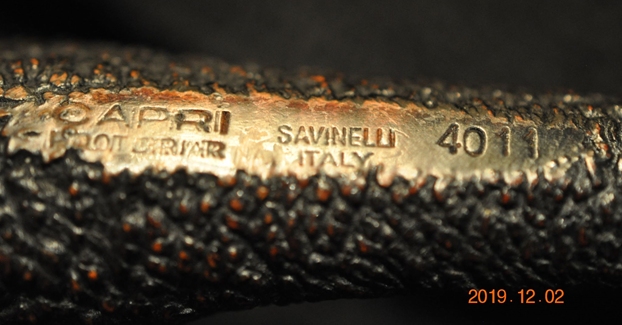
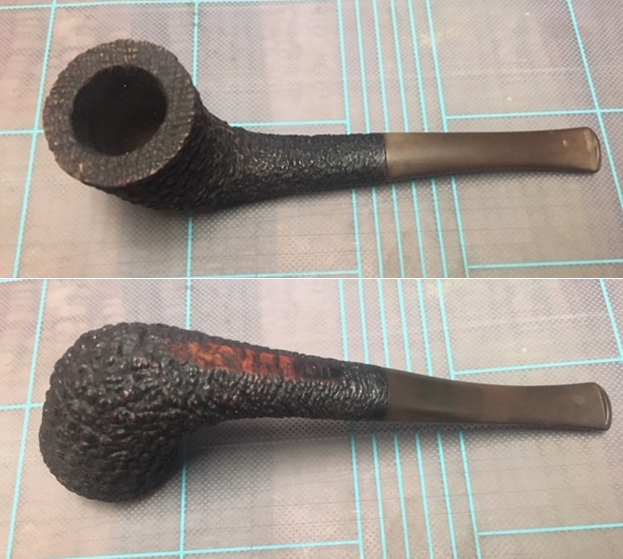
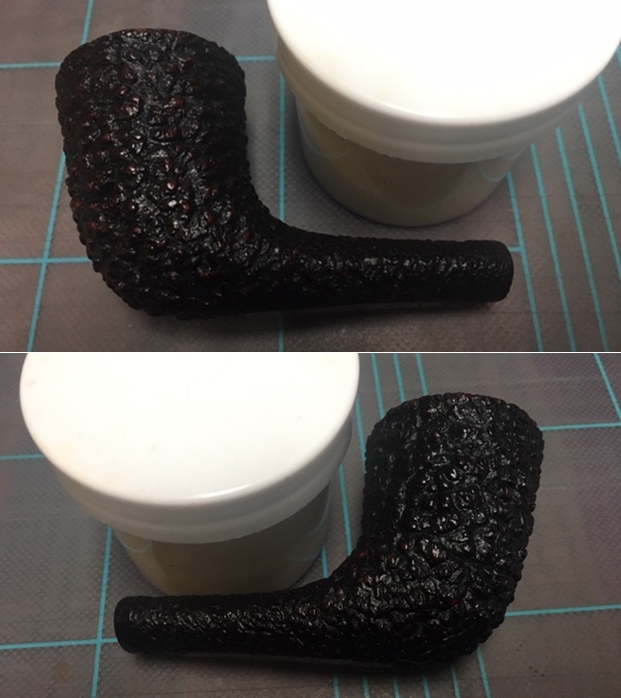
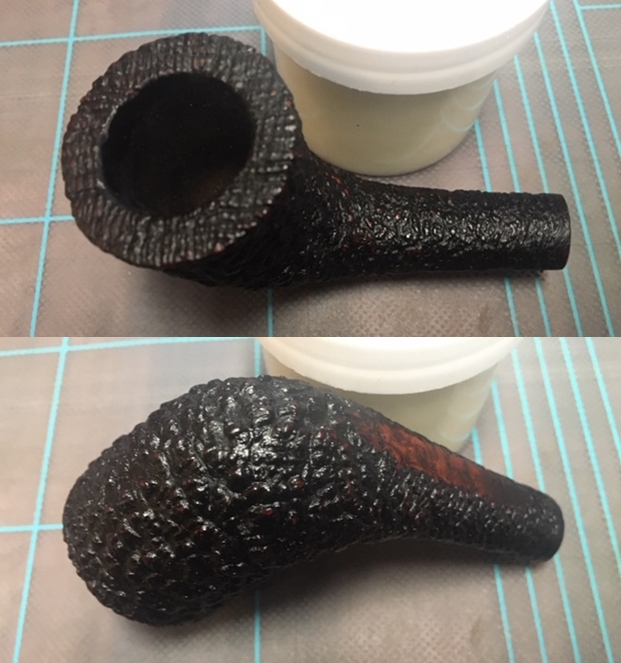
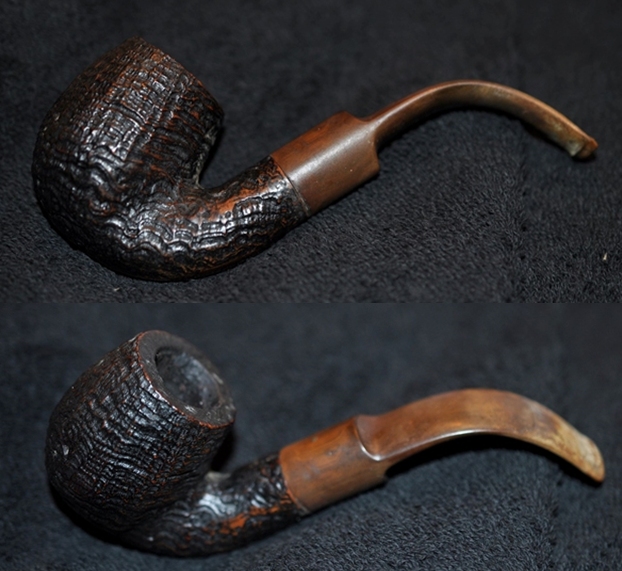
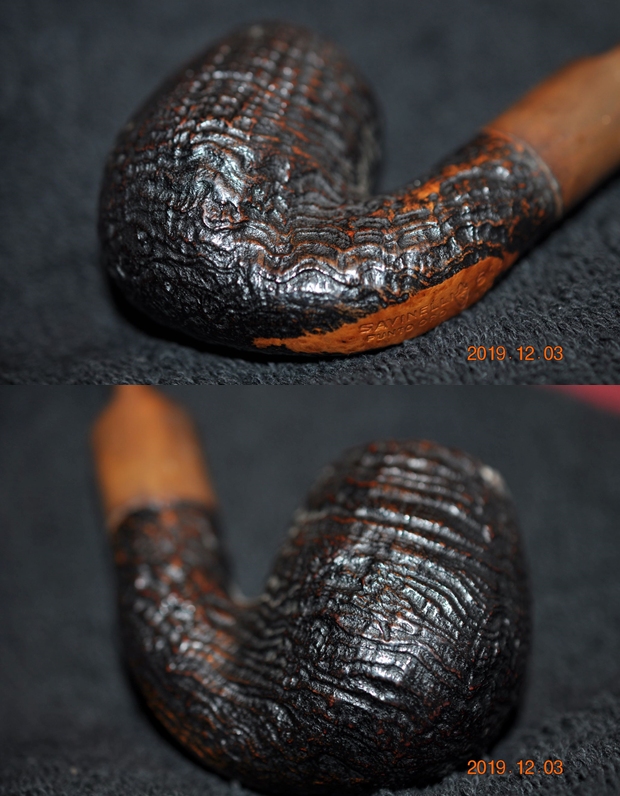
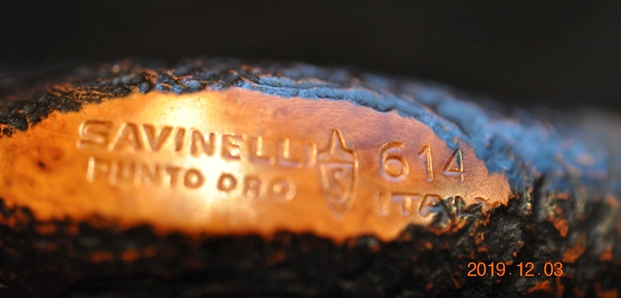
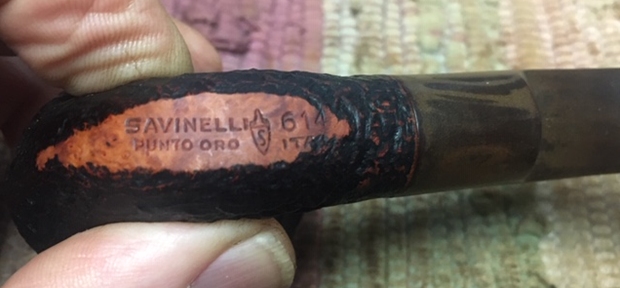
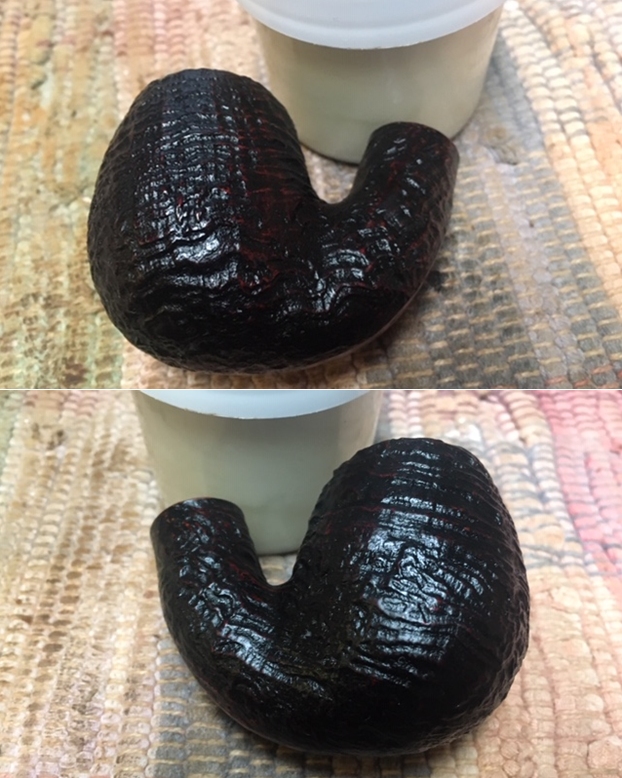
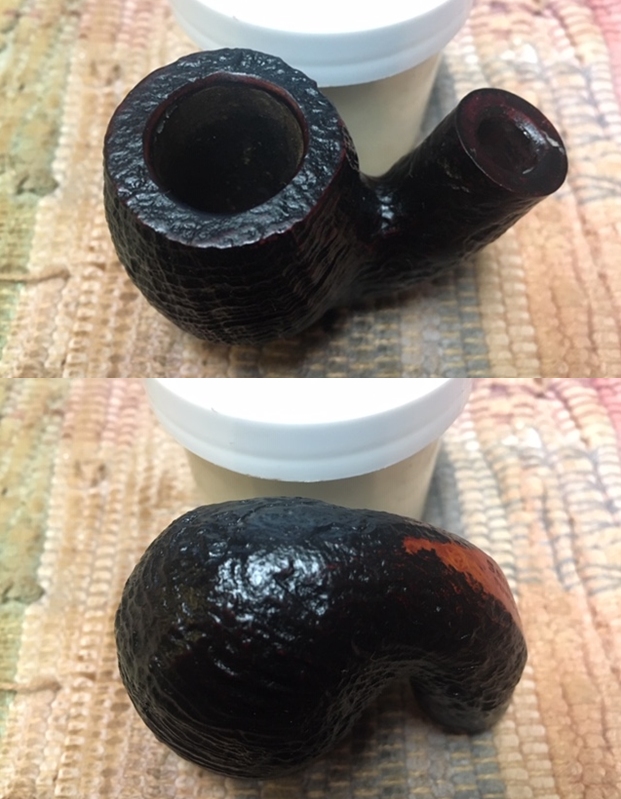
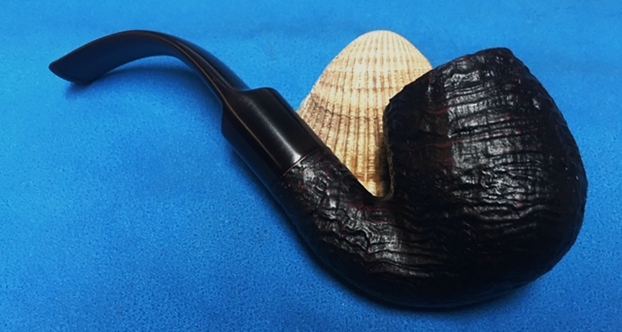
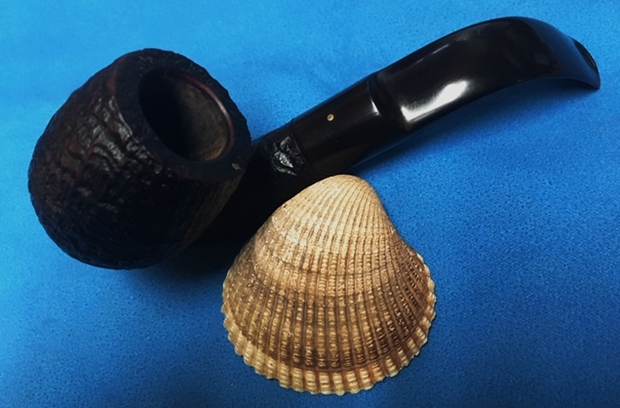
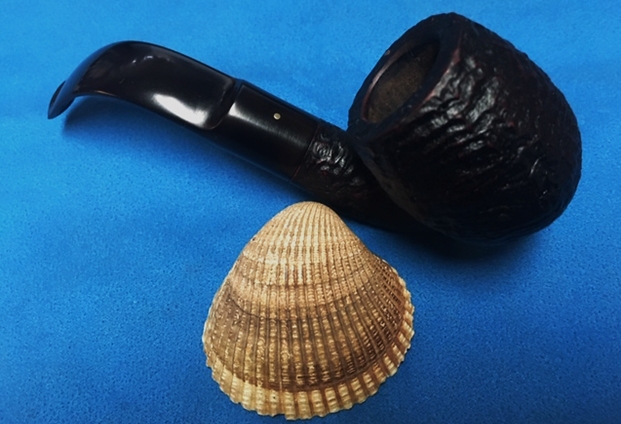
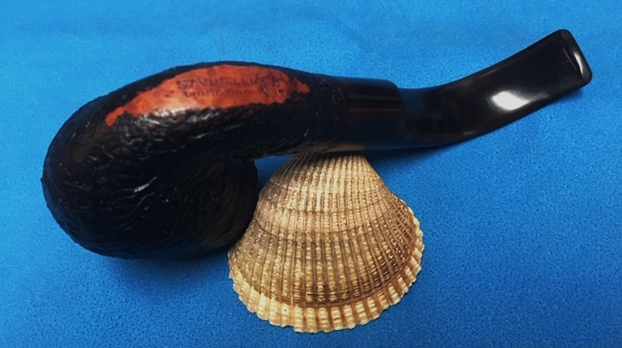
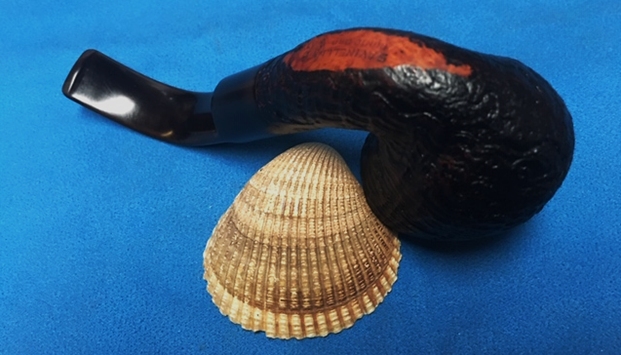
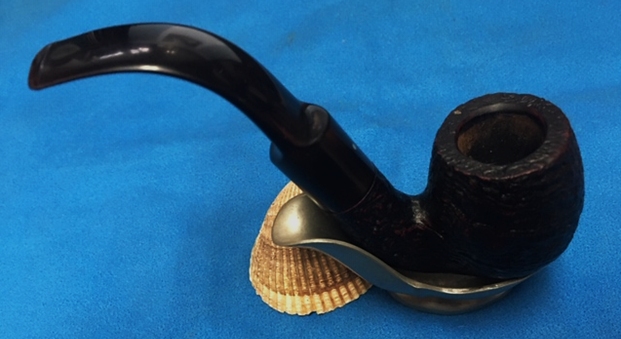
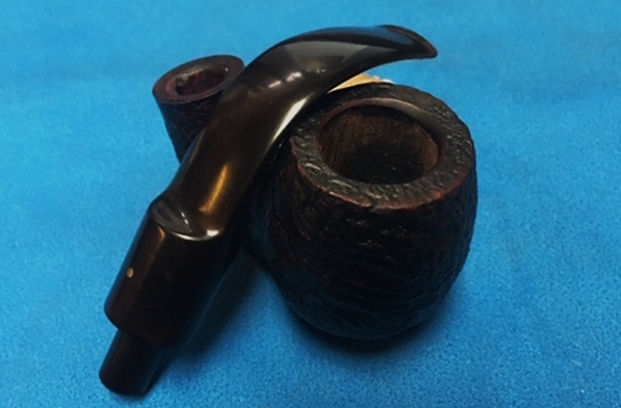
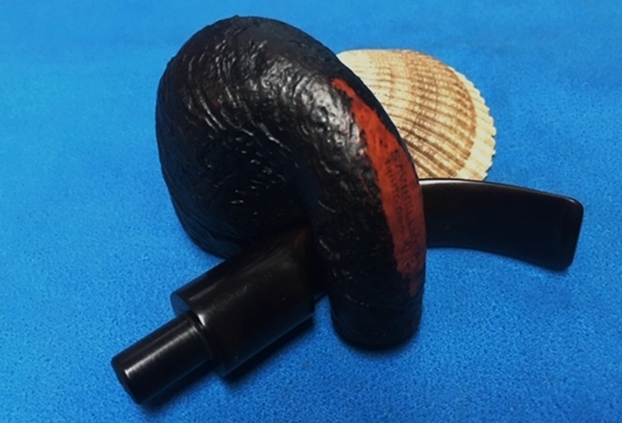
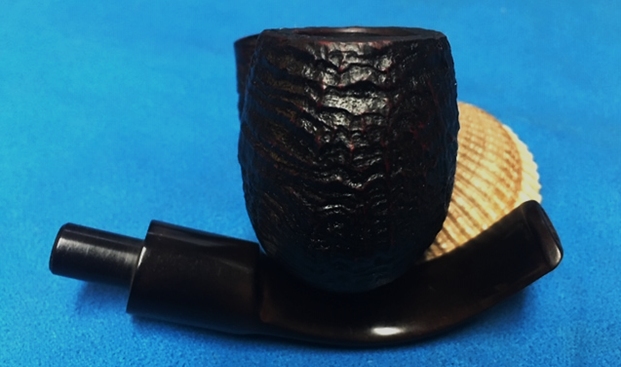
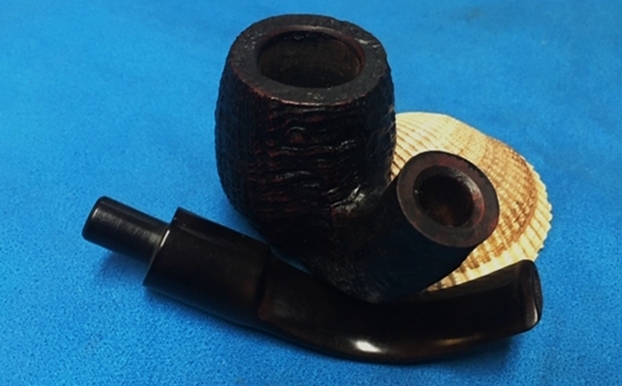
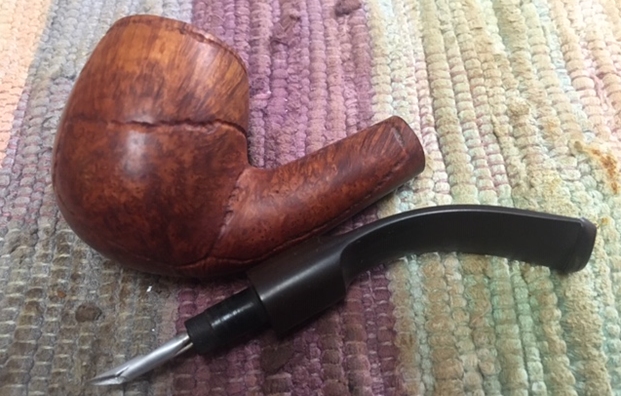
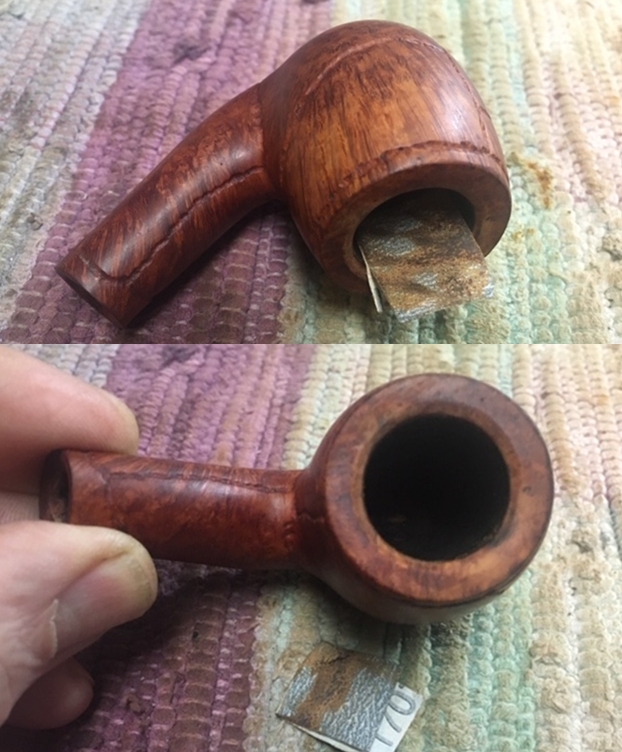
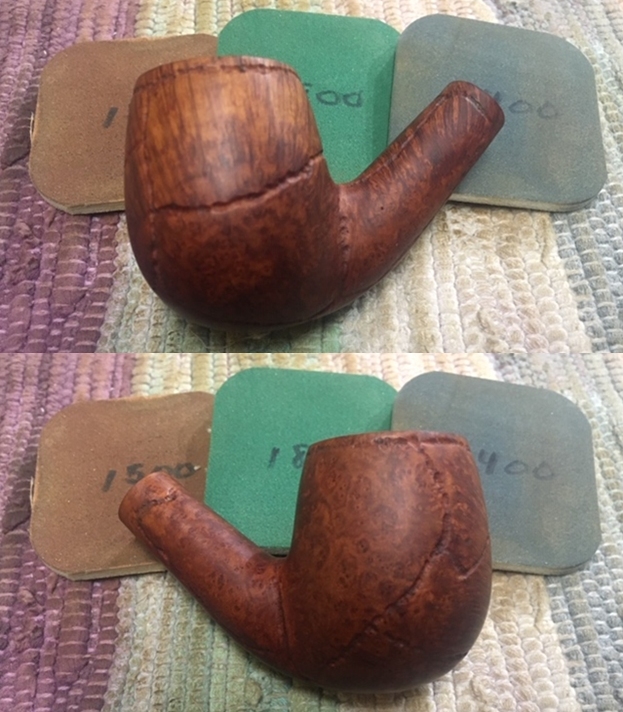
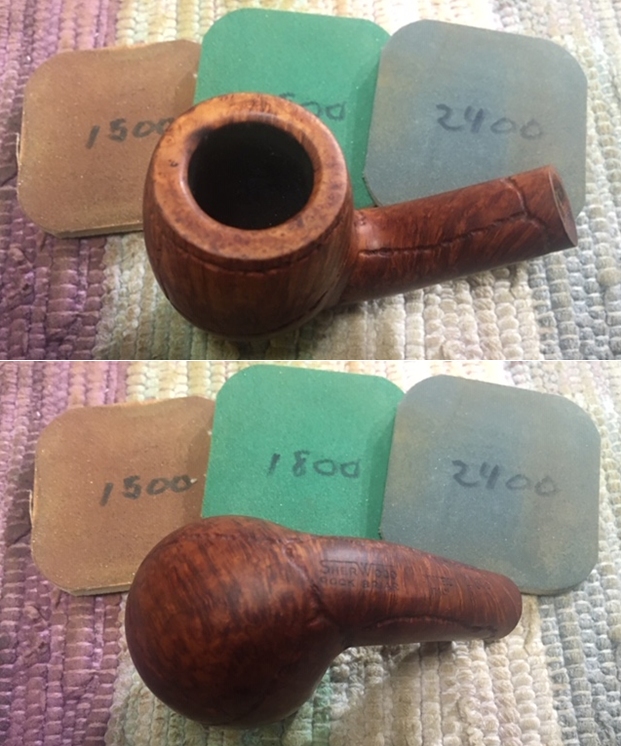
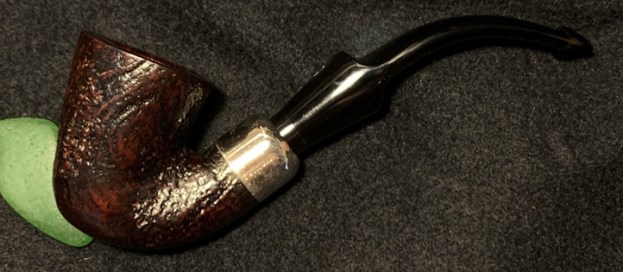
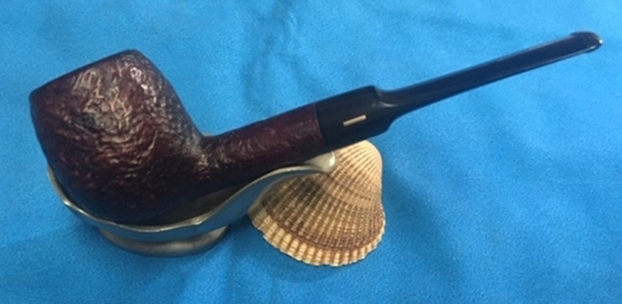
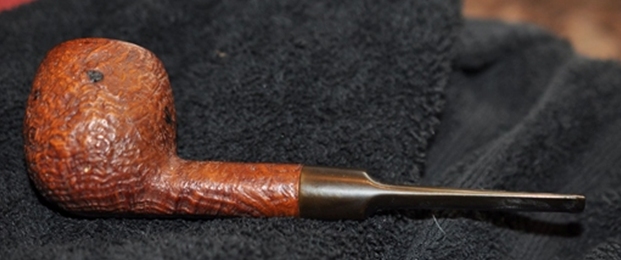
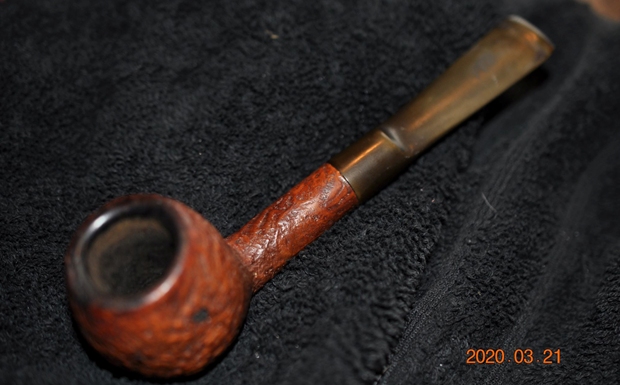
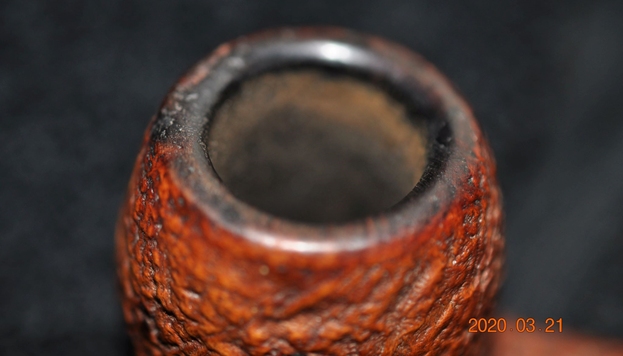
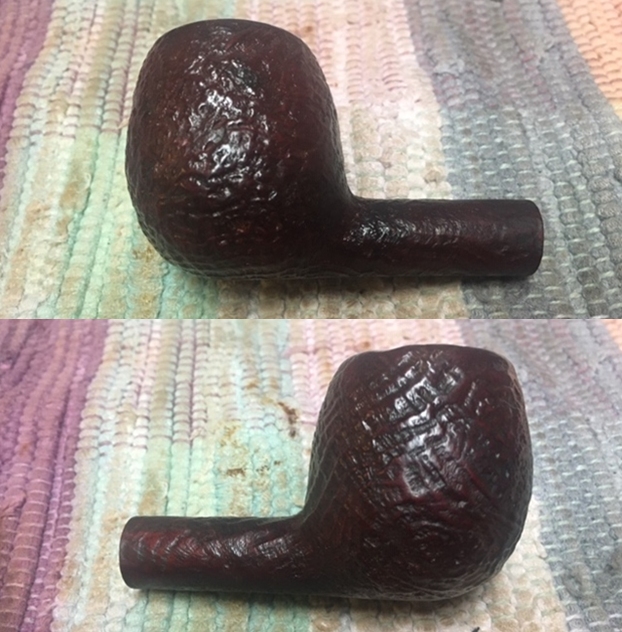
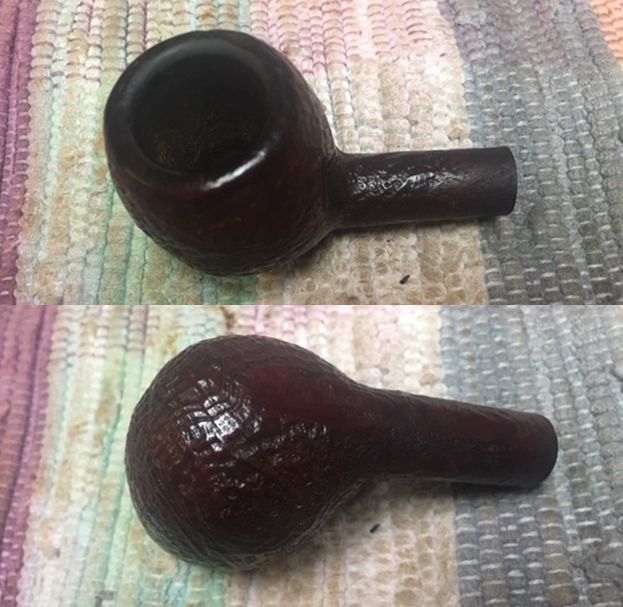
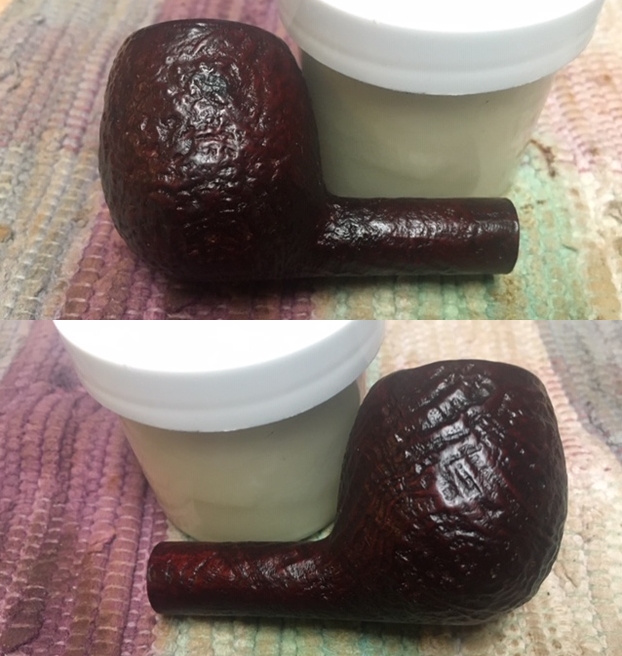
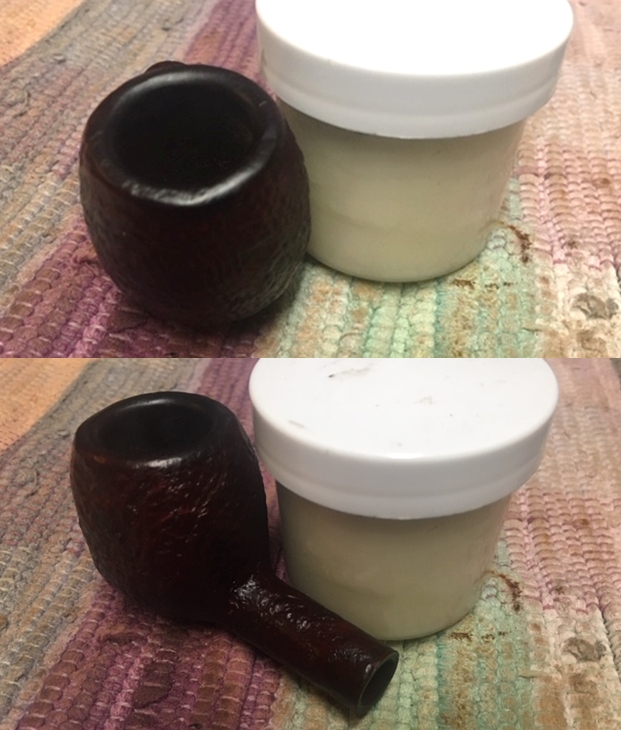
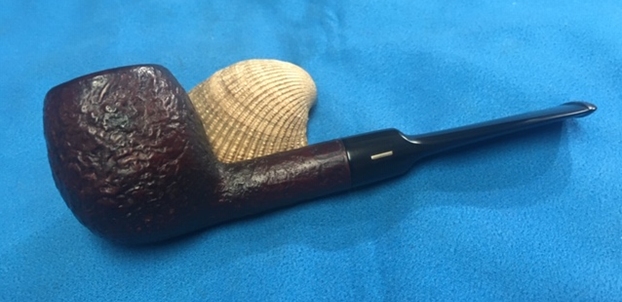
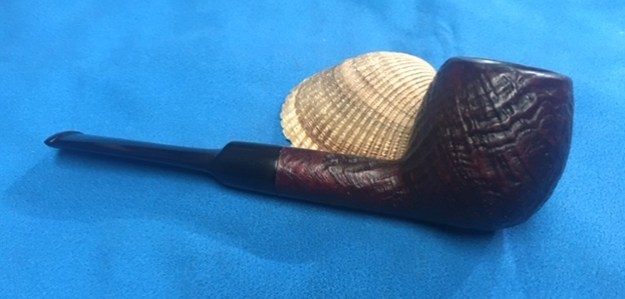
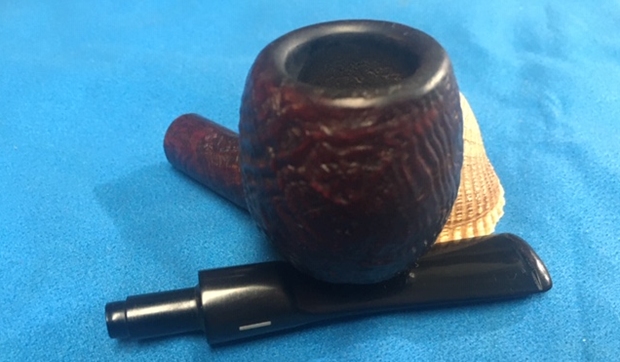
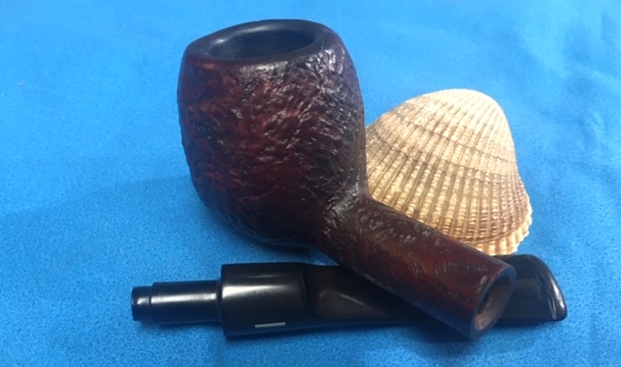
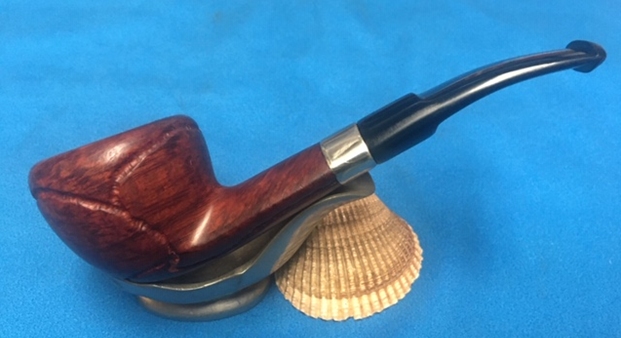
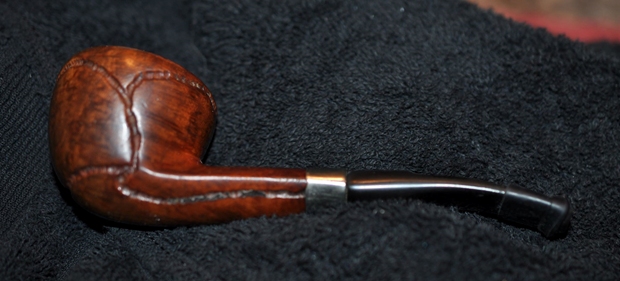
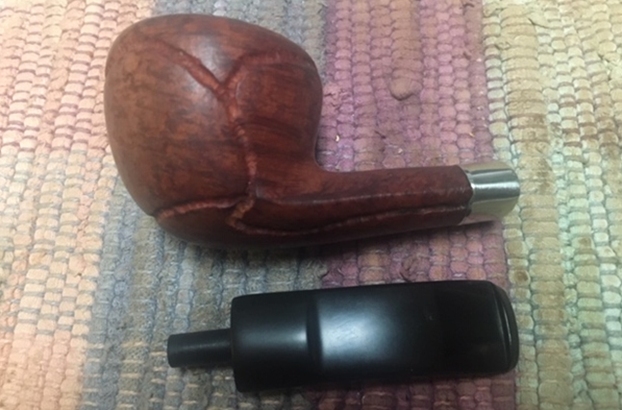
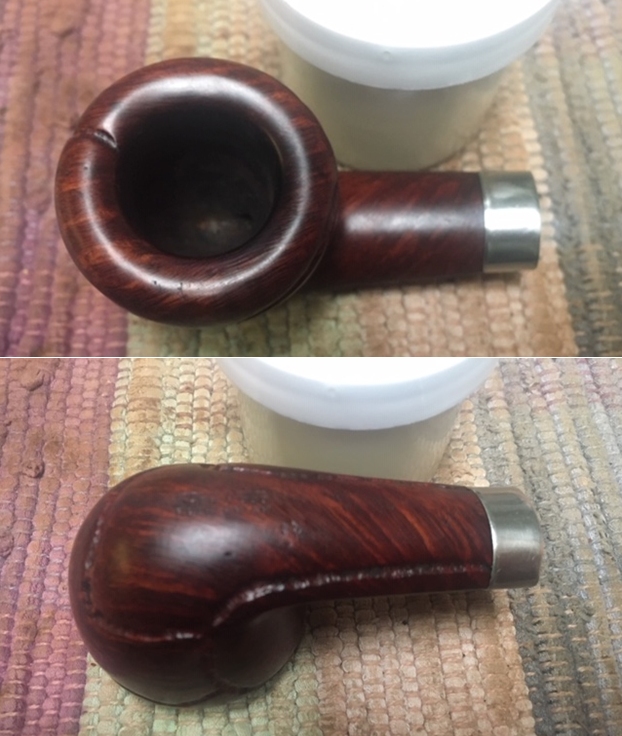
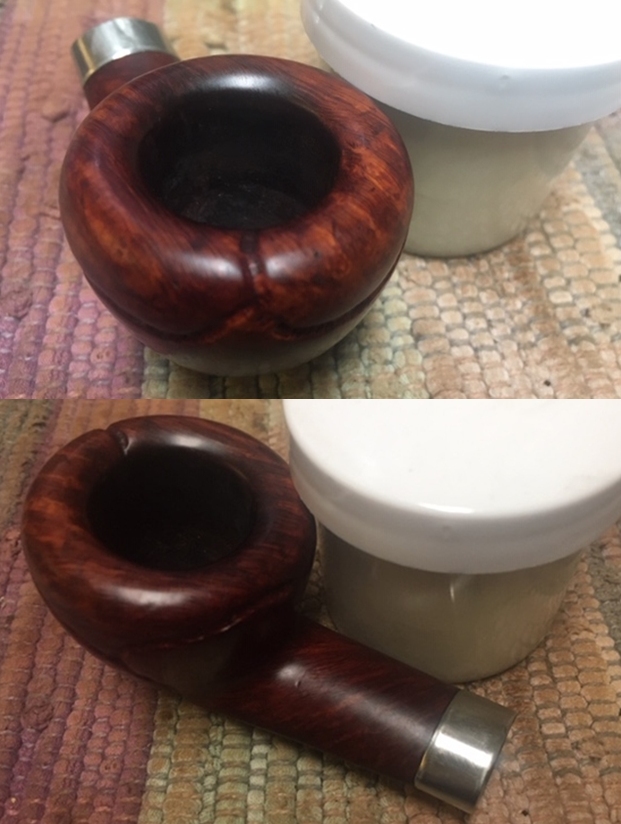
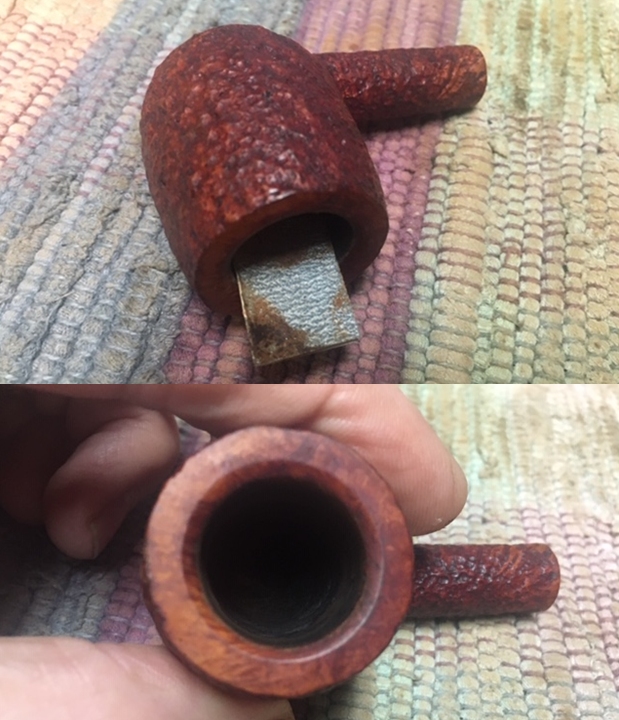
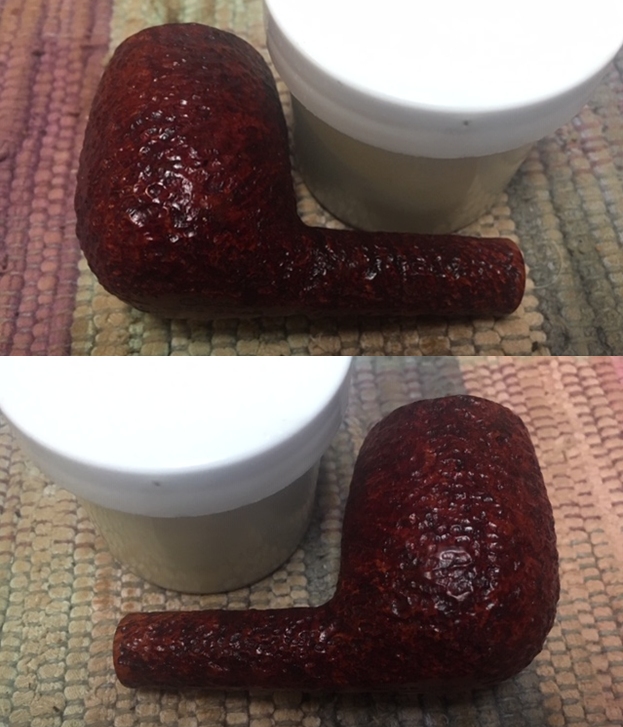
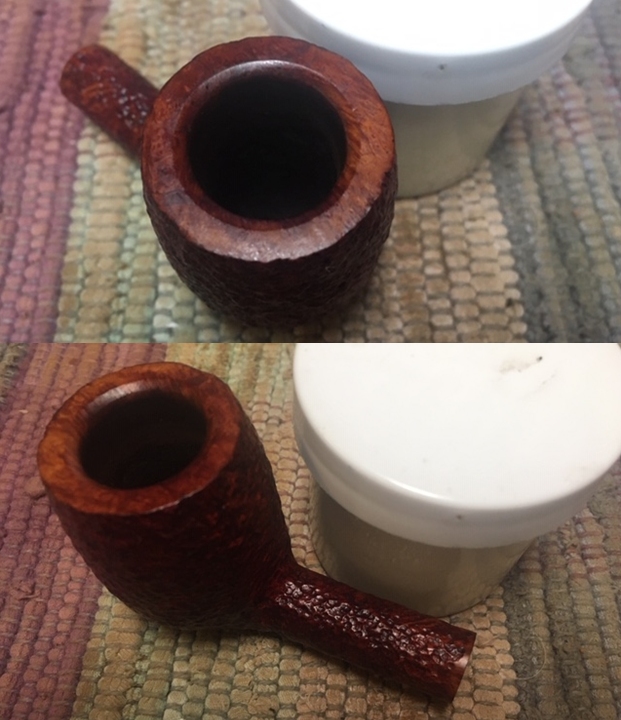
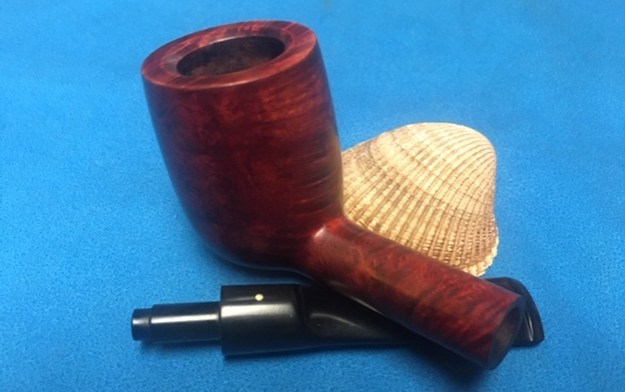
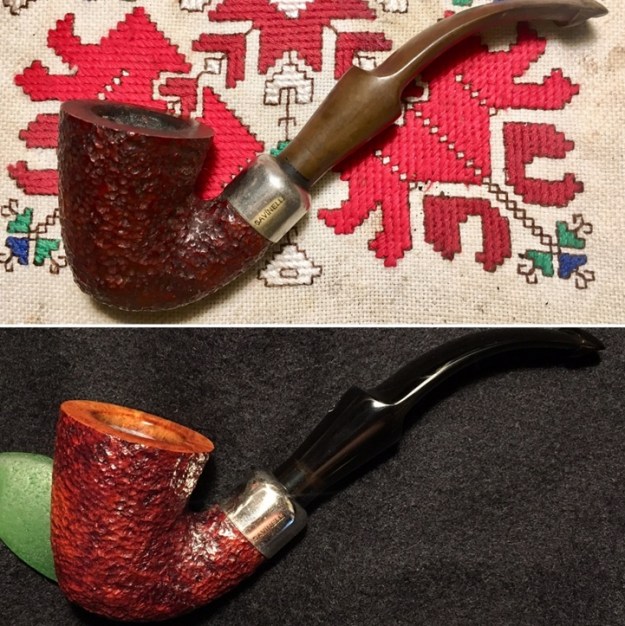
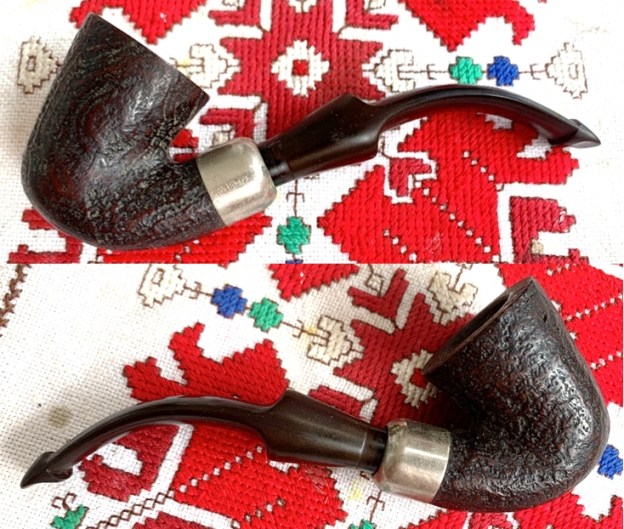
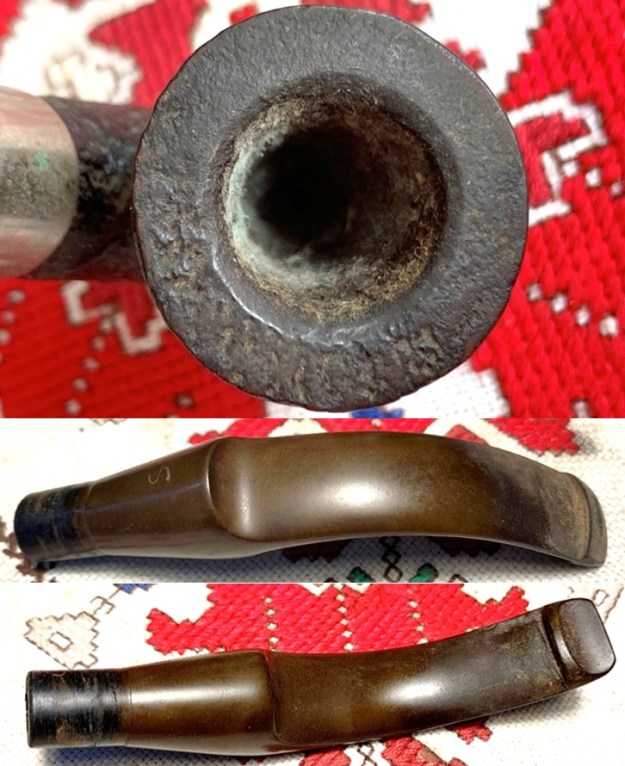
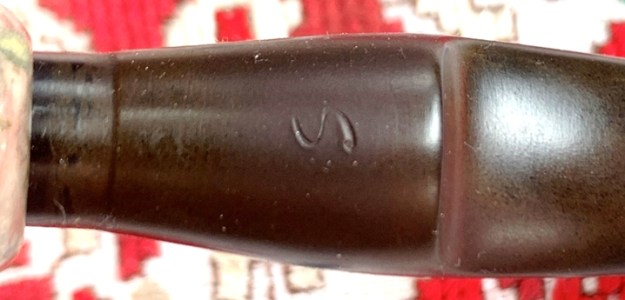
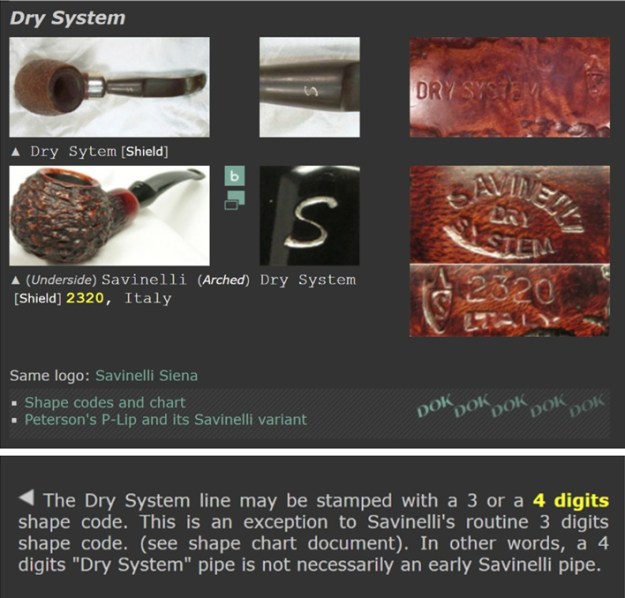
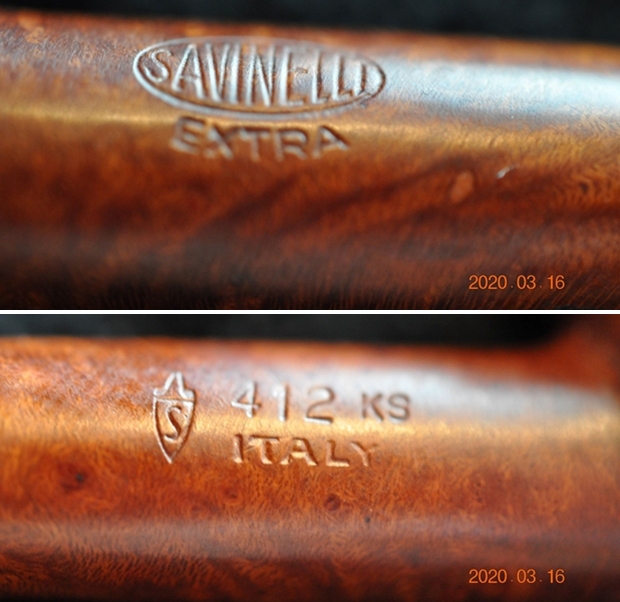
This is the second of 4 pipes that pipe man Nathan, from St. Louis, has commissioned from the online ‘Help Me!’ baskets that I call ‘For “Pipe Dreamers” Only!’ – a collection of pipes waiting to be commissioned by pipe men and women which benefit the Daughters of Bulgaria – women and girls who have been trafficked and sexually exploited.  I acquired this Savinelli Dry System along with almost a twin brother from a seller in Poughkeepsie, New York.  What attracted me initially to the pair was the ‘Peterson-like’ description – ‘Dry System’.  I also liked the tight 3/4 bend and the ‘Dublin-esque’ conical bowls – a tight configuration that got my attention immediately.  They almost seemed identical, but one had the shape number 3621, the one on my worktable now, and the other had 362.  When I unpacked them here in Bulgaria and took a closer look, I could see the differences.  Both have identical shapes but the 362 was a lighter rusticated finish with a smooth rim.  The 3621, Nathan’s choice, is a darker blasted finish with a blasted rim.  These pictures show the before & after comparison of the results of my first restoration, the Savinelli Dry System 362, which is now under the watchful care of a steward in Jackson, Mississippi.  It turned out great!Nathan commissioned 4 pipes after seeing some of my other restorations posted on various pipe Facebook groups.  I appreciate the opportunity to work on this next pipe that got Nathan’s attention, the Savinelli Dry System 3621. The smooth underside panel holds the nomenclature.  To the left is stamped arched, SAVINELLI [over] DRY [over] SYSTEM (reversed arch) forming a unified oval stamping.  The Savinelli crown ‘S’ logo is to the right of this.  Then on the far right of the logo is 3621 [over] ITALY.  The nickel shank cap is stamped on the left side with ‘SAVINELLI’ along with ‘S’ on the topside of the military stem. In my previous research, I found nothing about the Dry System on Pipedia but Pipephil.eu helped with some useful information – especially about the shape number differences.  Looking at the Savinelli shapes chart on Pipedia’s Savinelli article, shapes 362 or 3621 were not among those listed.  Pipephil.eu provided this on the Savinelli Dry System with the information that the Dry System could be stamped with either 3 or 4 digits for the shape number:I find interesting that the panel above also references a link comparing Savinelli’s Dry System P-Lip stem with the Peterson standard. Repeating my previous research: I found the most information about the Savinelli Dry System on another site as I broadened my online search.  A South African based tobacconist, Wesley’s  (See LINK), provided a gold mine of information about the Savinelli Dry System:
Launched in 1981, it had taken several years of research into the negative points of existing system pipes, in order to improve on them. Perseverance paid off – by combining trap and filter, and enlarging the smoke hole, Savinelli achieved the “Dry System”, which in our opinion is the best answer to “Wet Smoking” so far developed.

Especially for new pipe smokers, the Savinelli Dry System pipe incorporates everything needed to provide a cool, dry smoke.

The name “Dry” comes from the introduction of the Balsa “filter” into the traditional system pipe – the “System” being the presence of the built-in moisture trap in the shank, linked with the “smokehole on the top” mouthpiece. The balsa mops up the moisture in the smoke hence the term “Dry” system, and if the pipe is smoked without the balsa all that will happen is that this moisture will condense and collect in the trap. It can then either be mopped up with a folded pipe cleaner or flicked out. Just be careful where you flick it!

Put this all together and you can see why we say these are technically our best designed pipes. But the technical qualities are not all these pipes have to offer. Extra bonuses are the feel, the finishes and the balance.

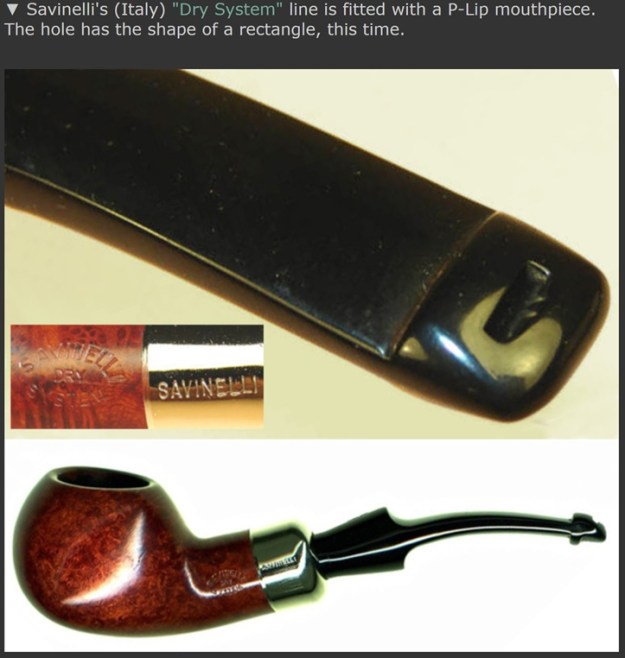
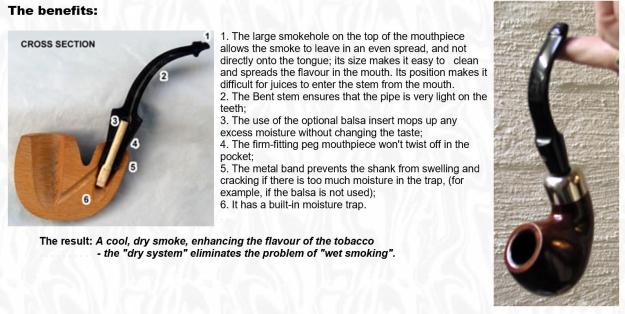
This information marks the genesis of the Savinelli Dry System line in 1981. Added to this information, Wesley’s included the following benefits of the Savinelli system with a helpful cut-away showing the internals:The description of the ‘smokehole’ of the mouthpiece, is interesting in the way it disperses the smoke so that it avoids tongue burn as well as keeping moisture entering the stem from the mouth. The trademark filtering system is also optional – use of the balsa insert which I use with great satisfaction with some of my own Savinelli pipes.  Yet, even if you do not utilize the absorbing qualities of the balsa insert, the built-in moisture trap will hold the moisture for clean-up after smoking.  Sounds good!
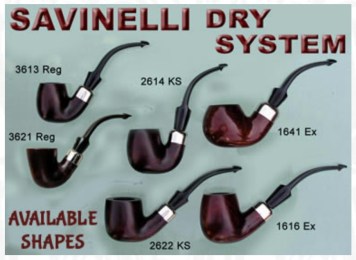
Wesley’s Tobacconist also included this helpful Shapes Chart for the Savinelli Dry System pipes. The description for the 3621 suggests:

Regular shapes 3613 & 3621 are ideal for the new pipe smoker or for a short smoke for anybody.

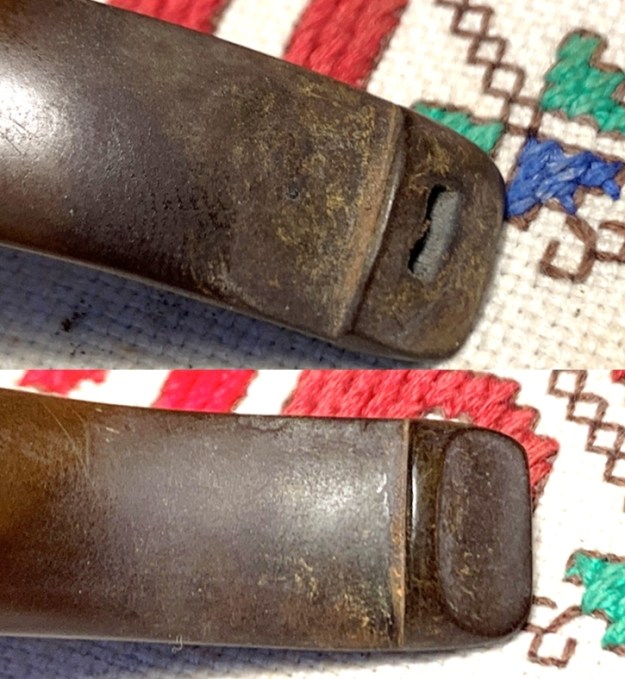
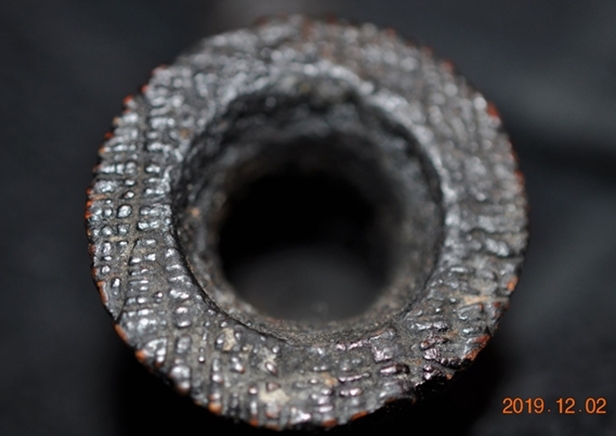
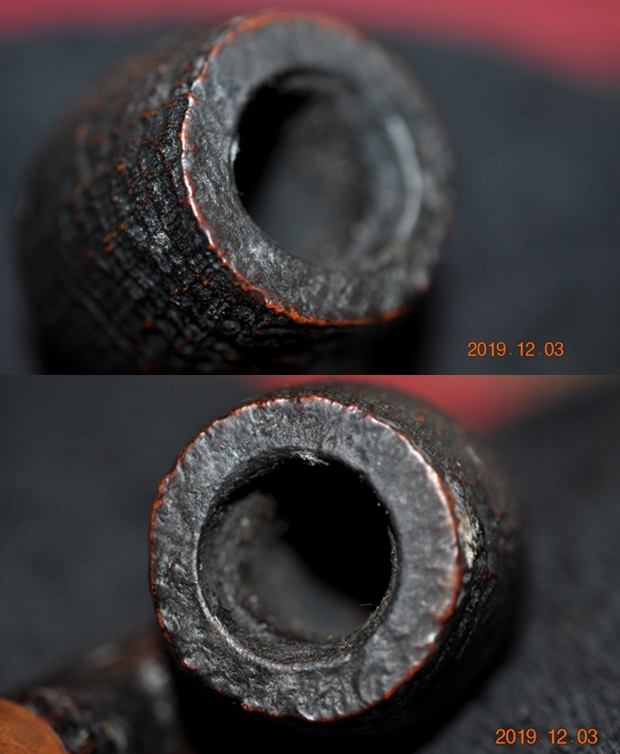
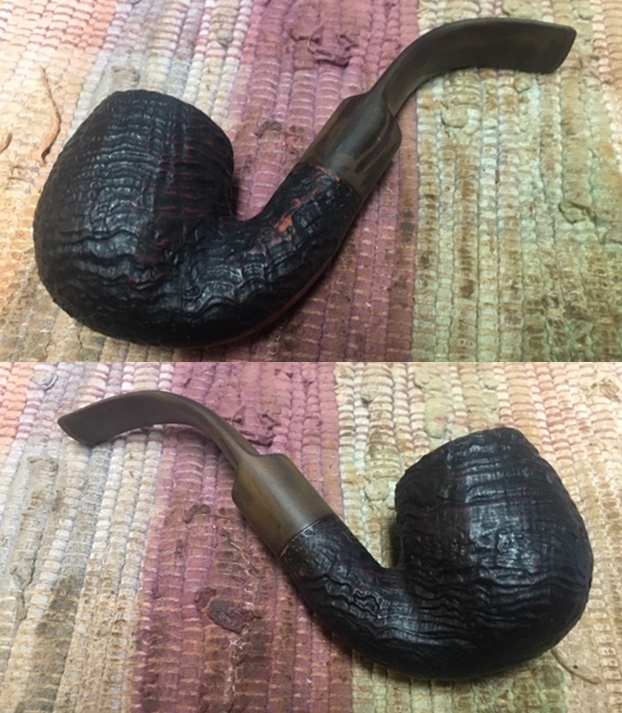
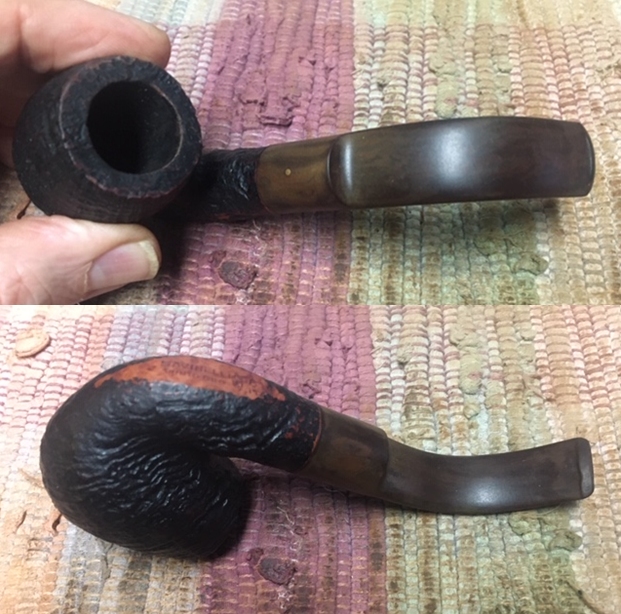
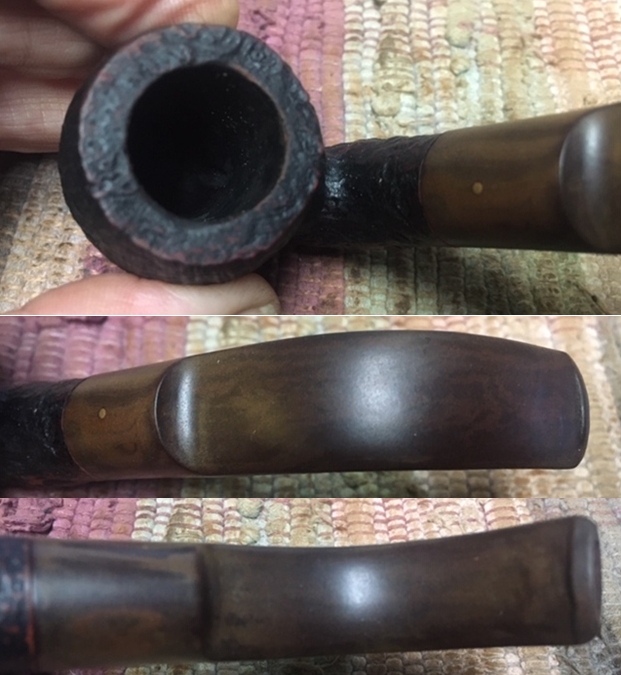
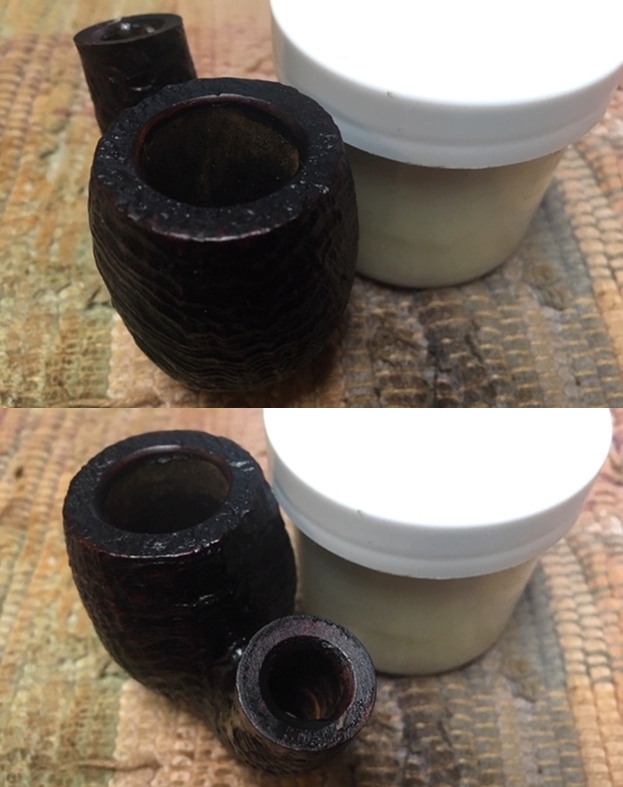
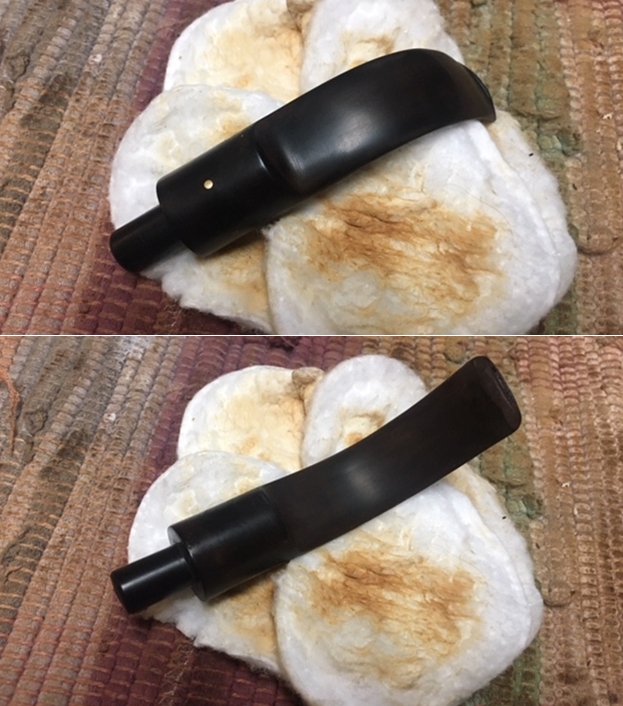
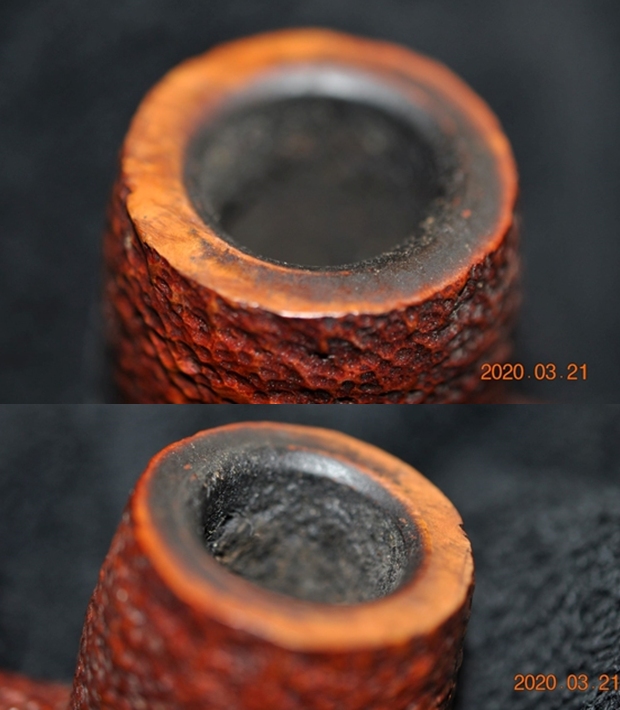
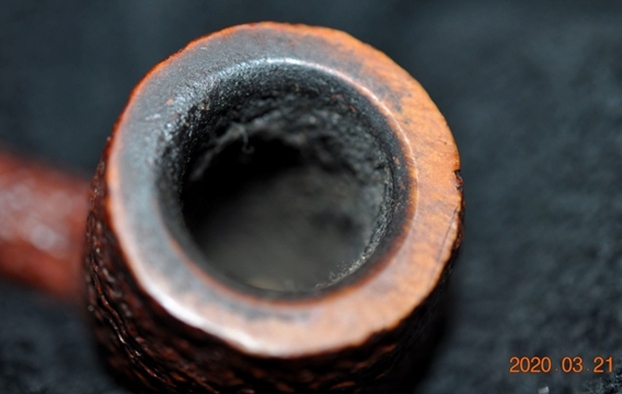
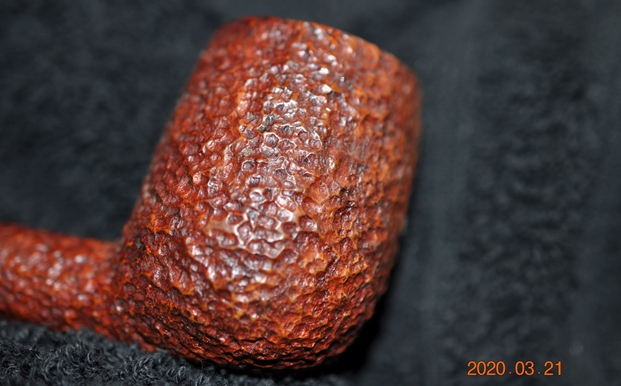
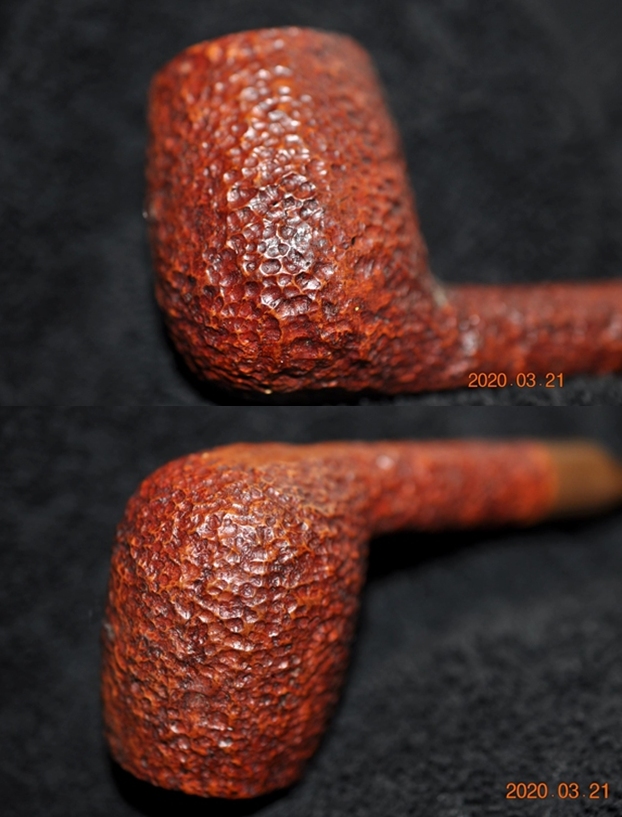
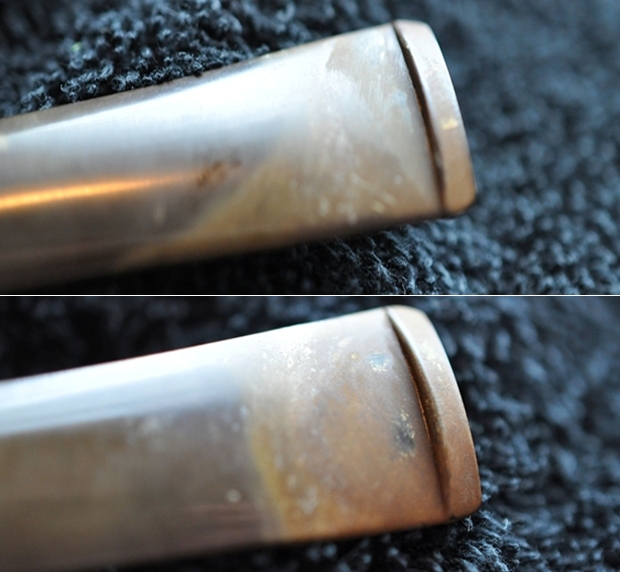
Looking now at the 3621 now on my worktable, the chamber shows thick cake that will be removed to recover fresh briar and to inspect the condition of the chamber walls. The blasted rim and stummel have grime and in need of cleaning.  The blasted briar landscape is attractive, and I look forward to what cleaning will reveal.  The nickel shank cap is in ok shape but needs cleaning and polishing. There are evidences of the nickel plated surface around the facing having come off revealing the base metal beneath.  The stem has deep oxidation and will take some work to clean it out.   The P-Lip, which is much easier to clean than Peterson’s version, has some compressions and chatter and needs sanding out.

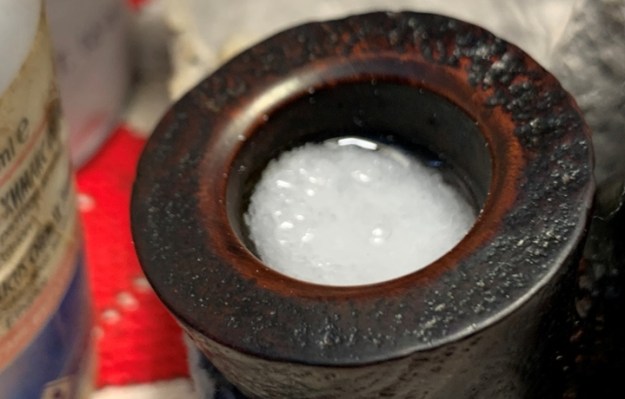
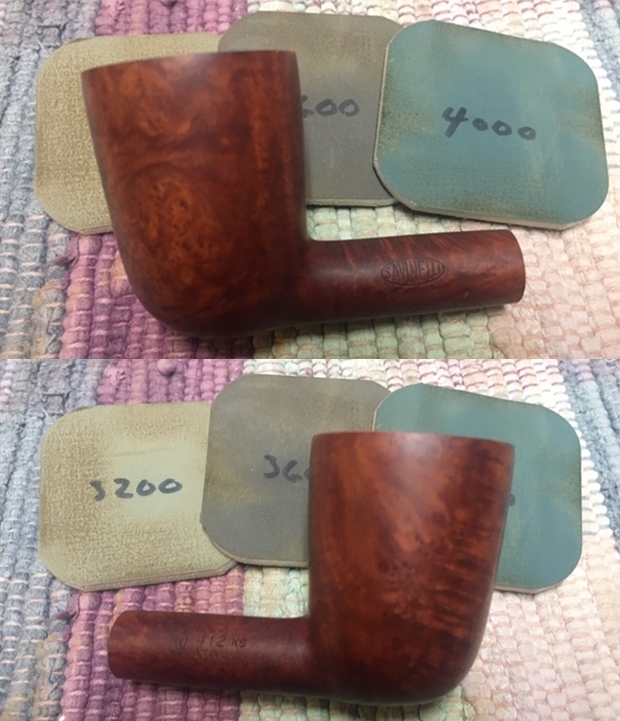
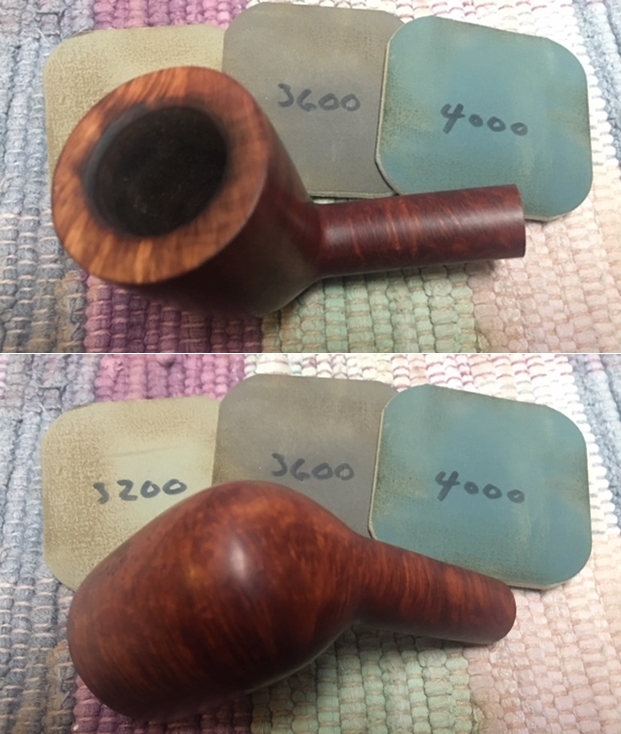
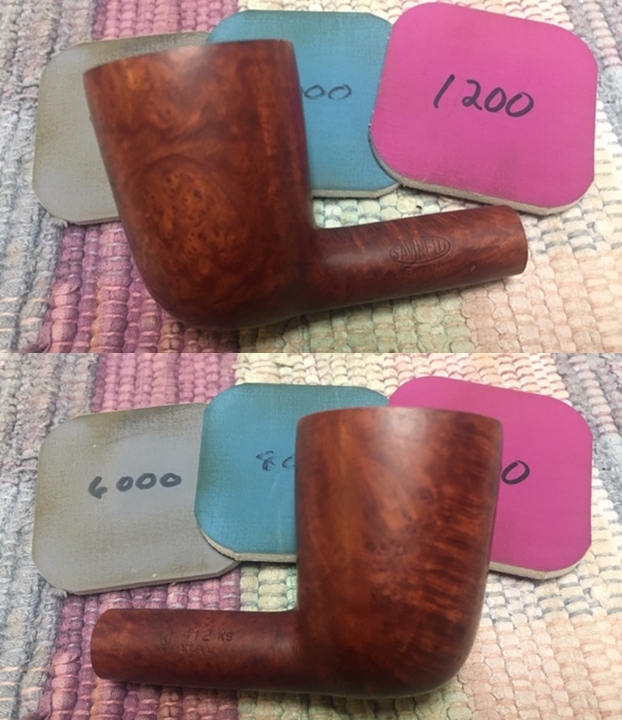
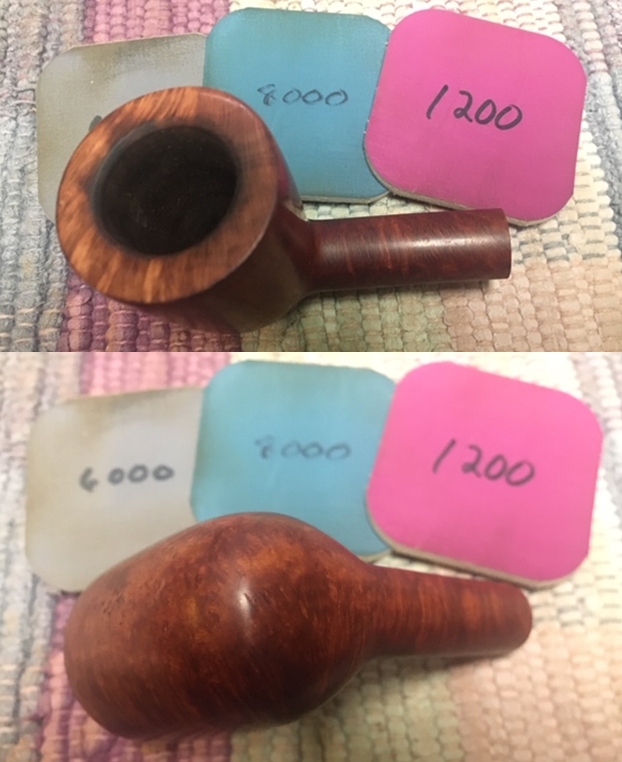
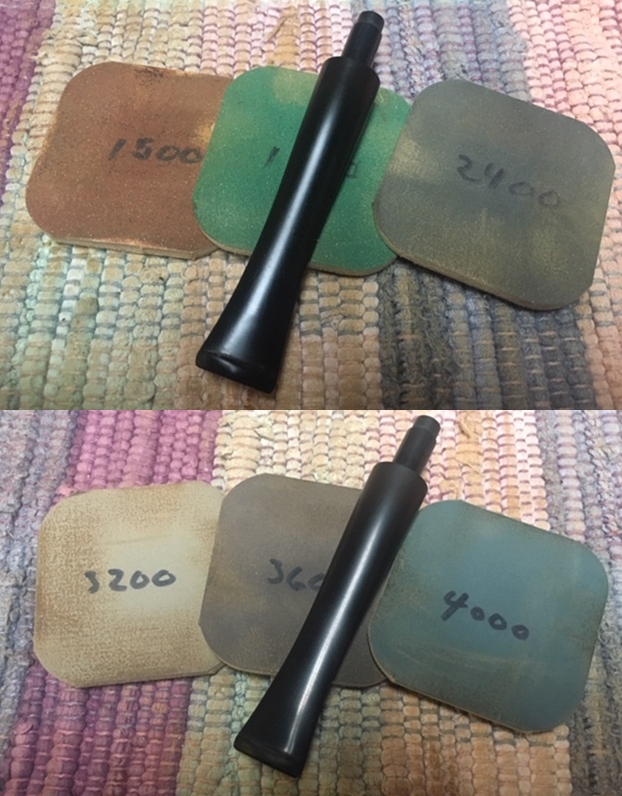
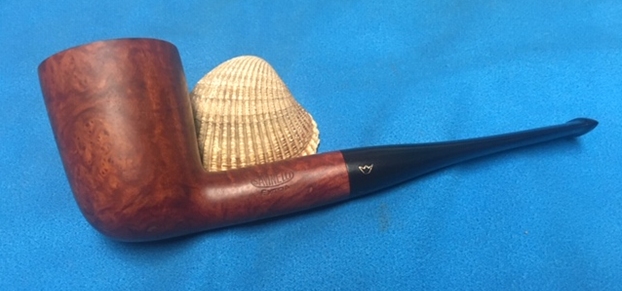
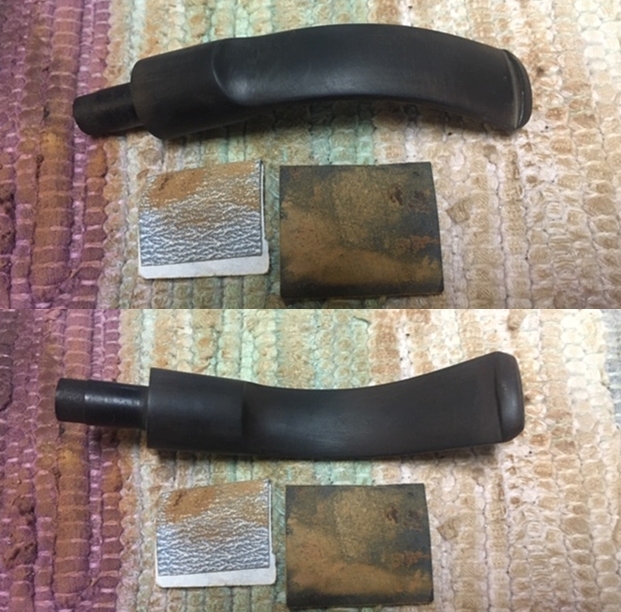
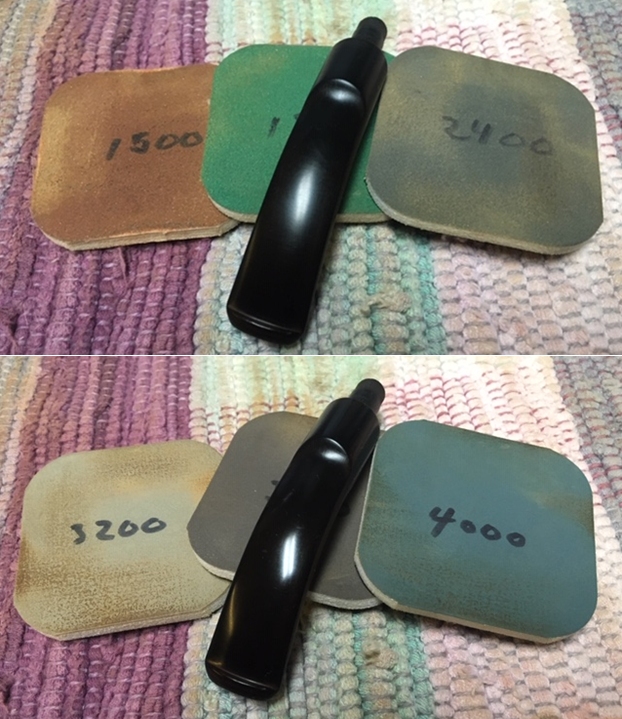
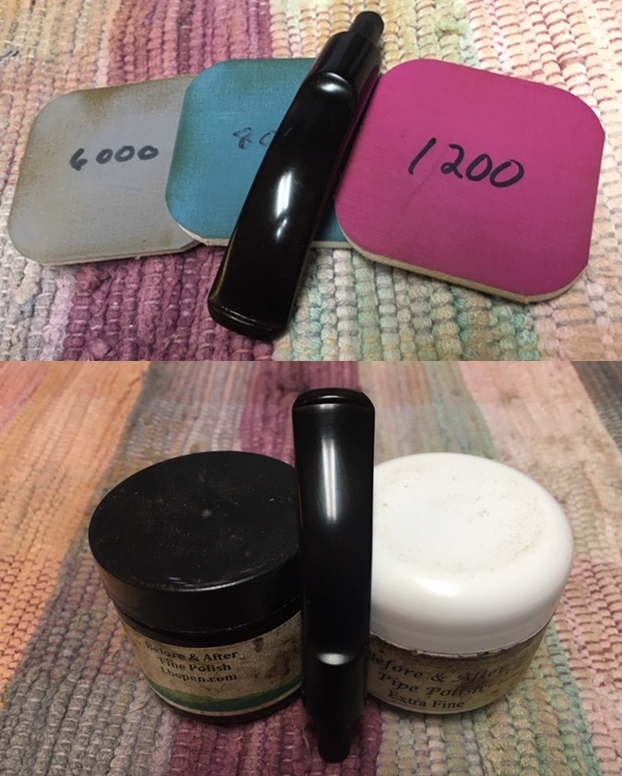
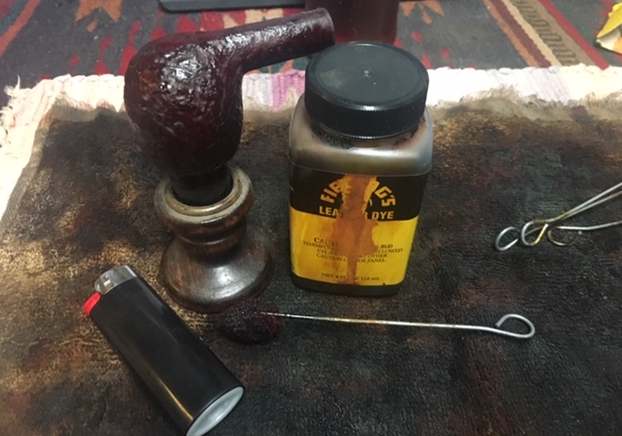
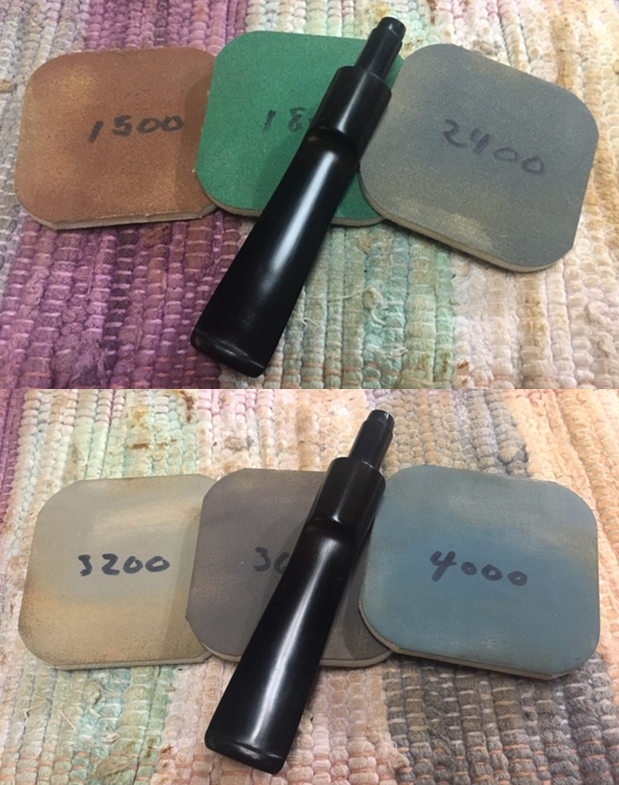
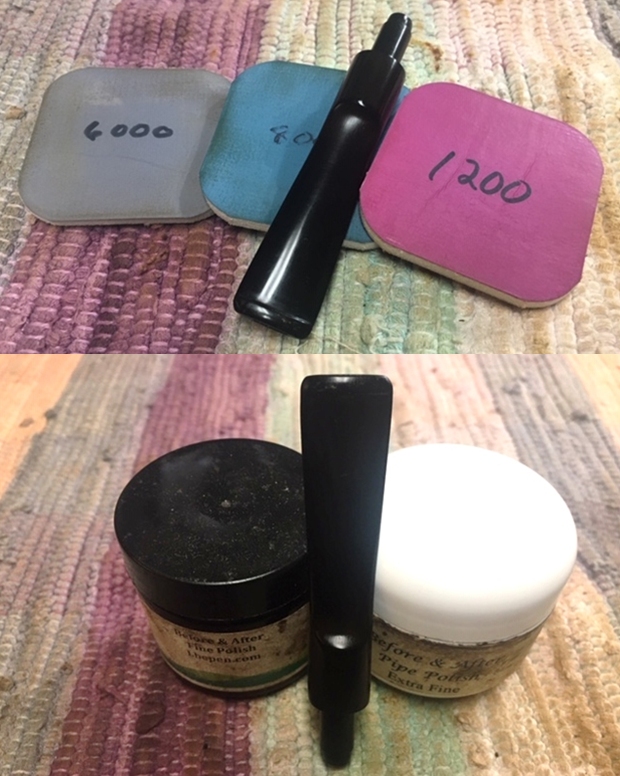
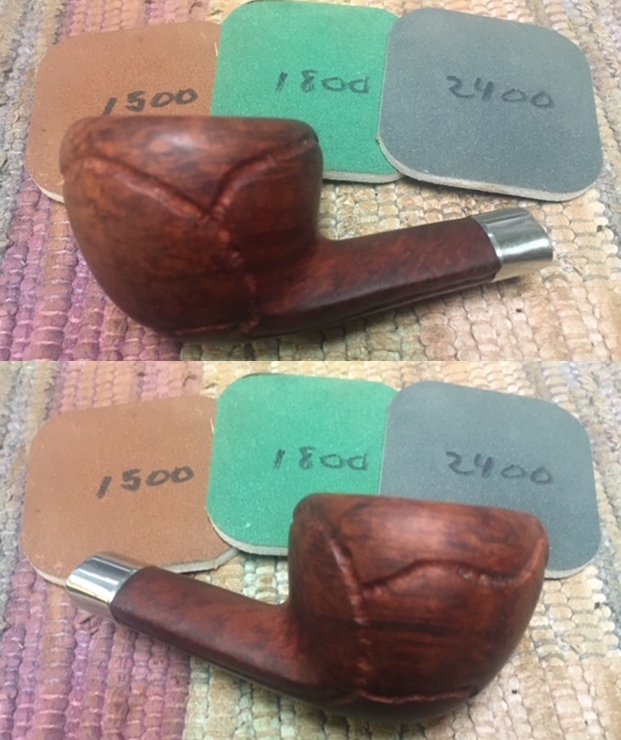
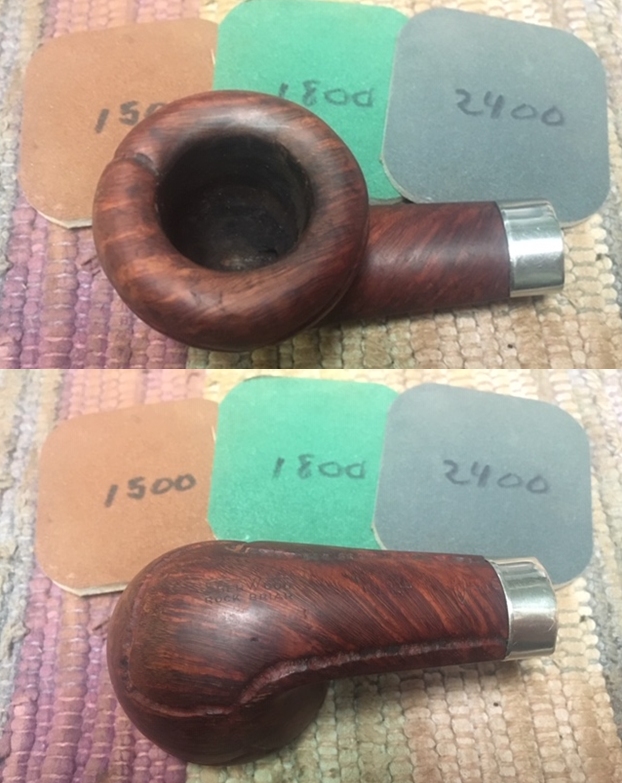
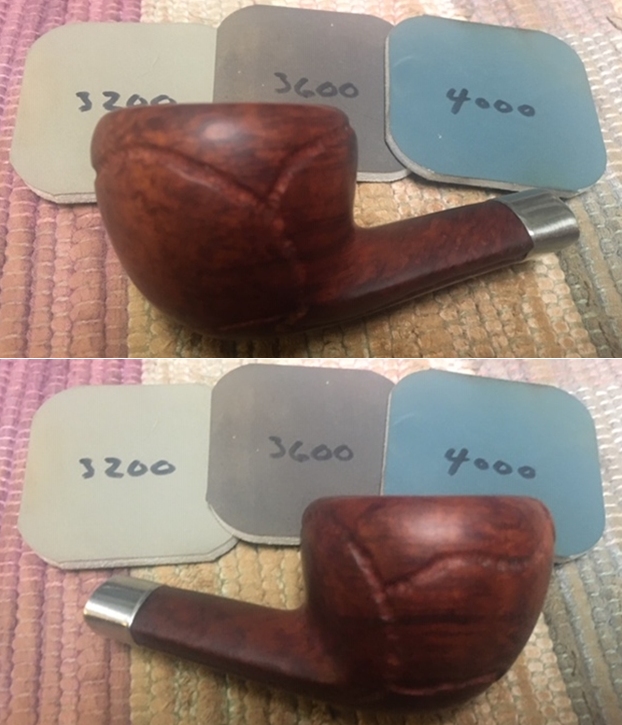
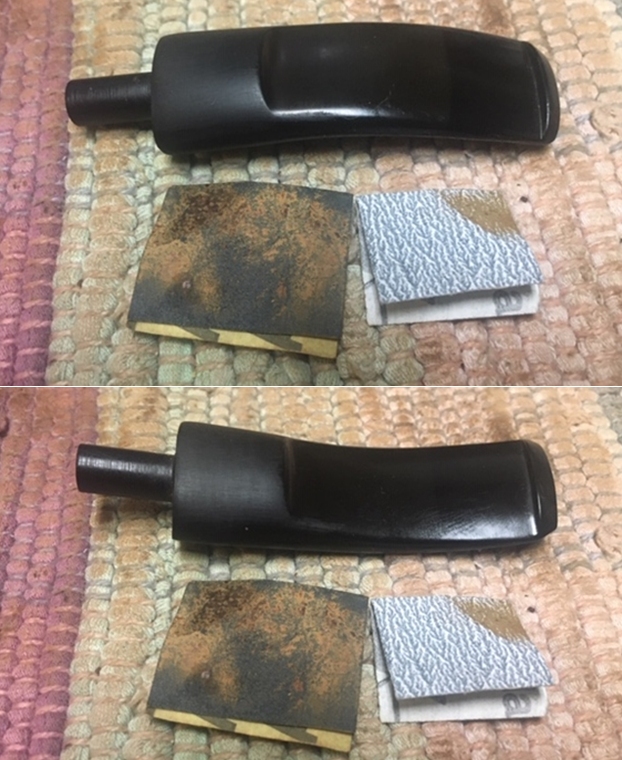
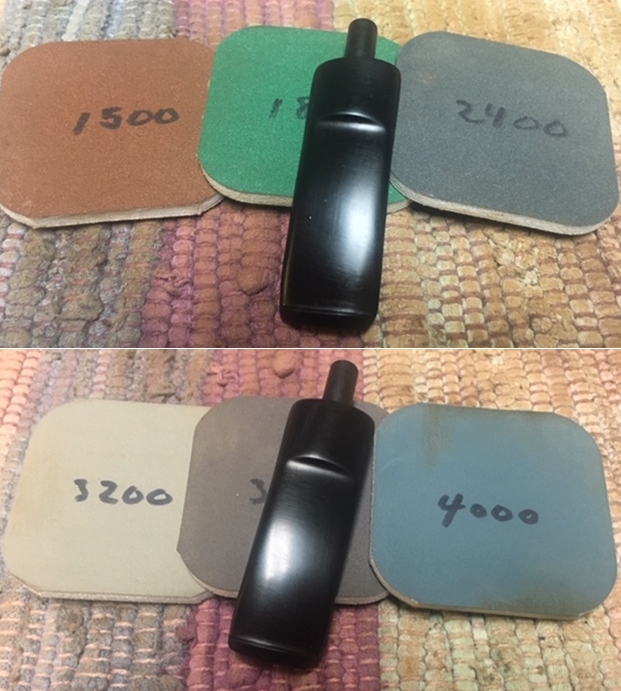
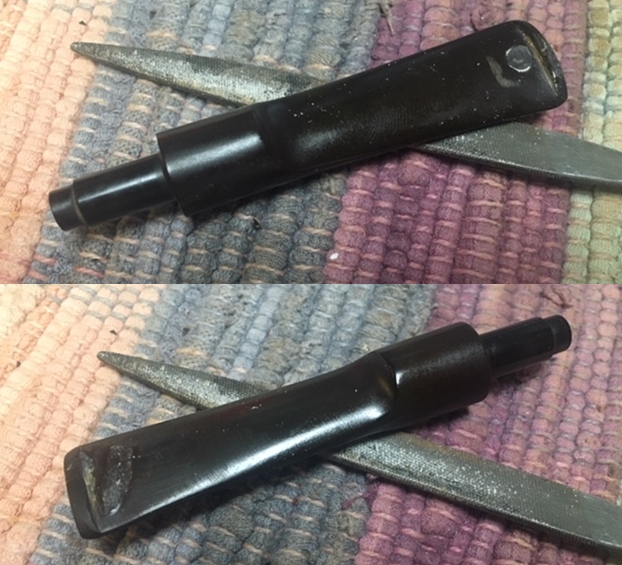
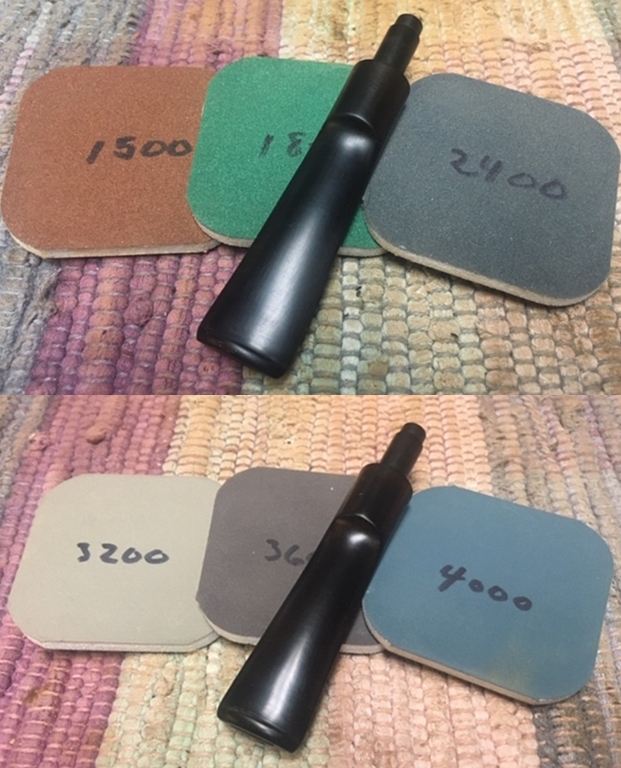
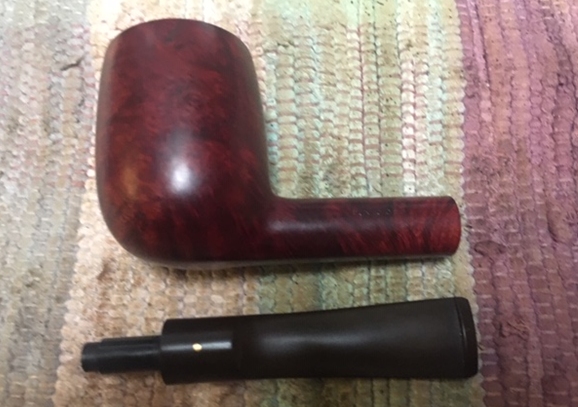
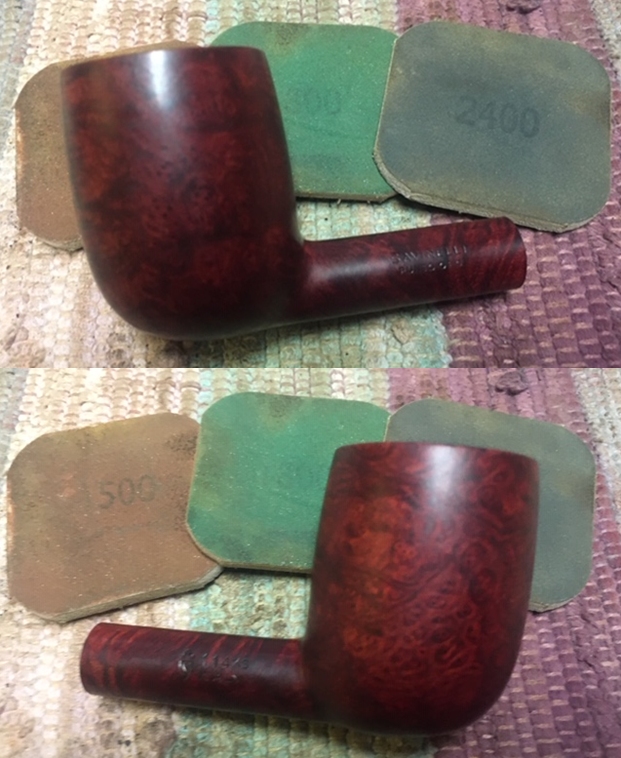
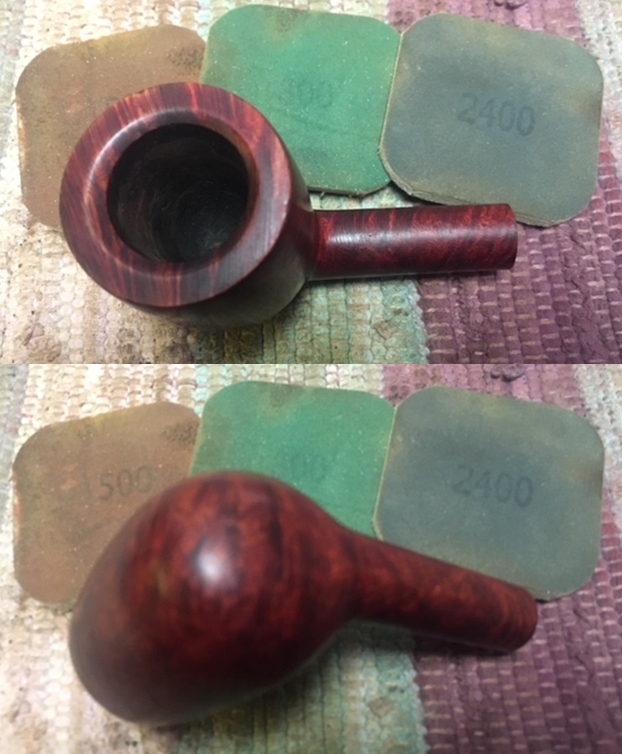
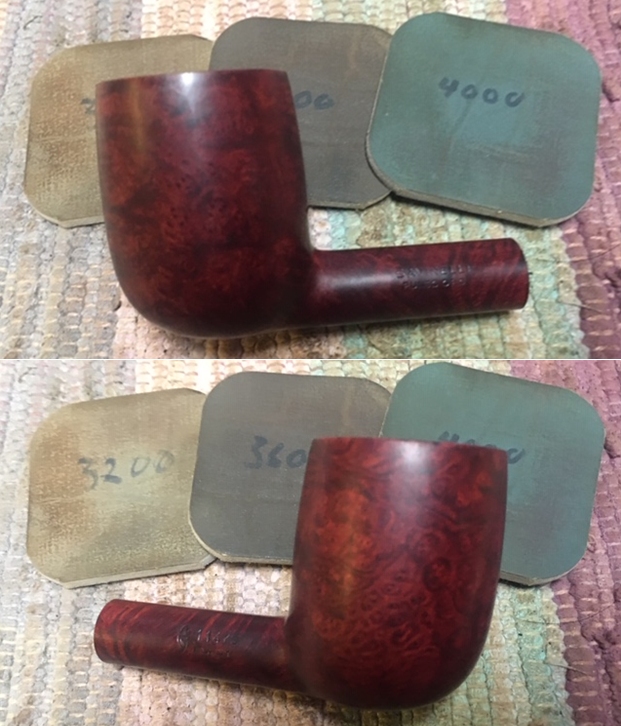
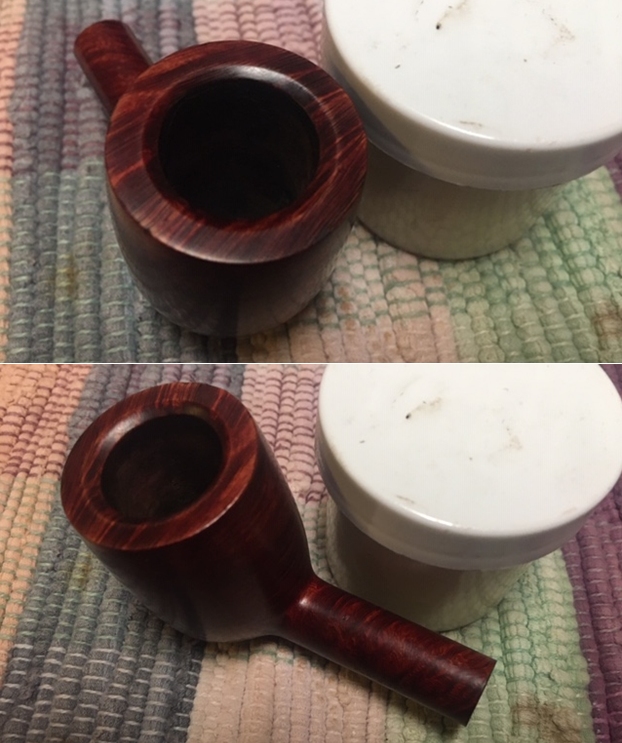
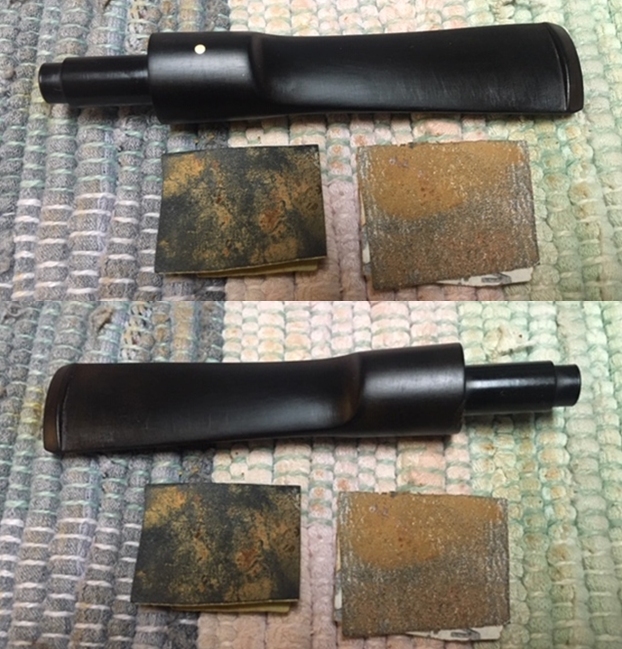
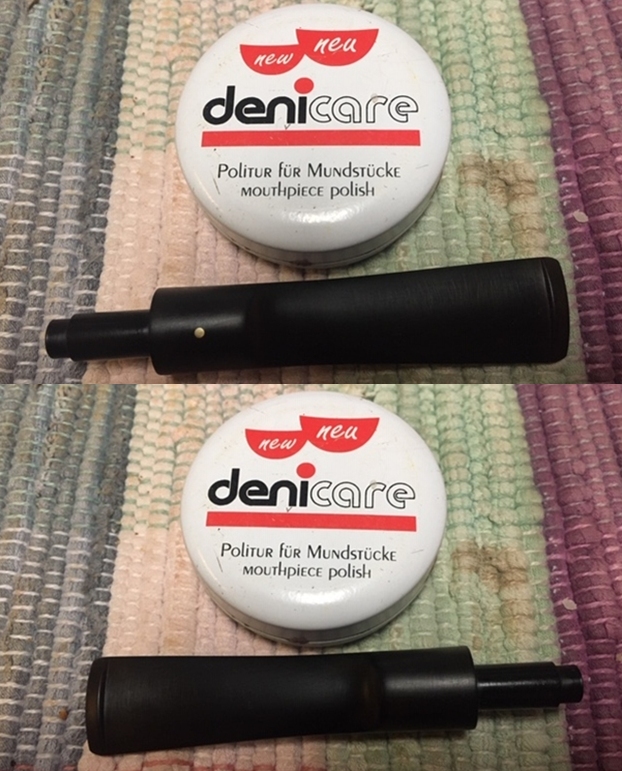
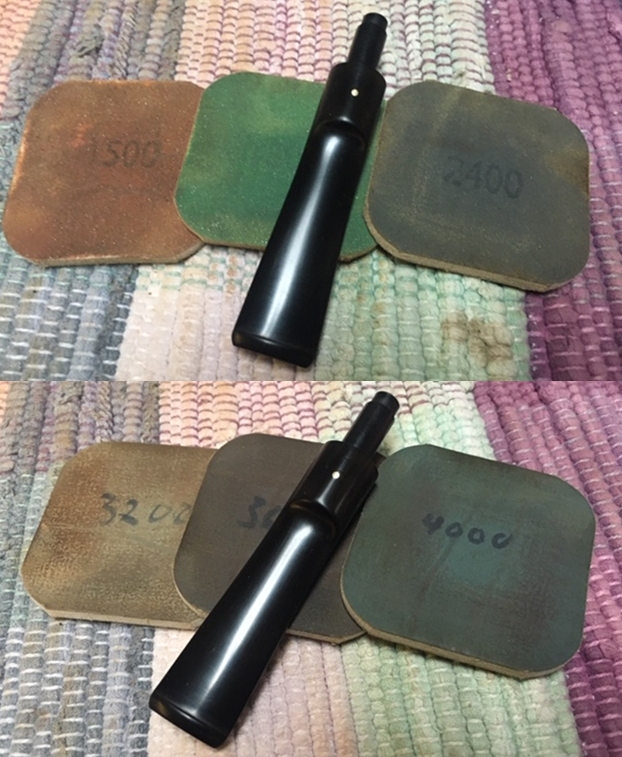
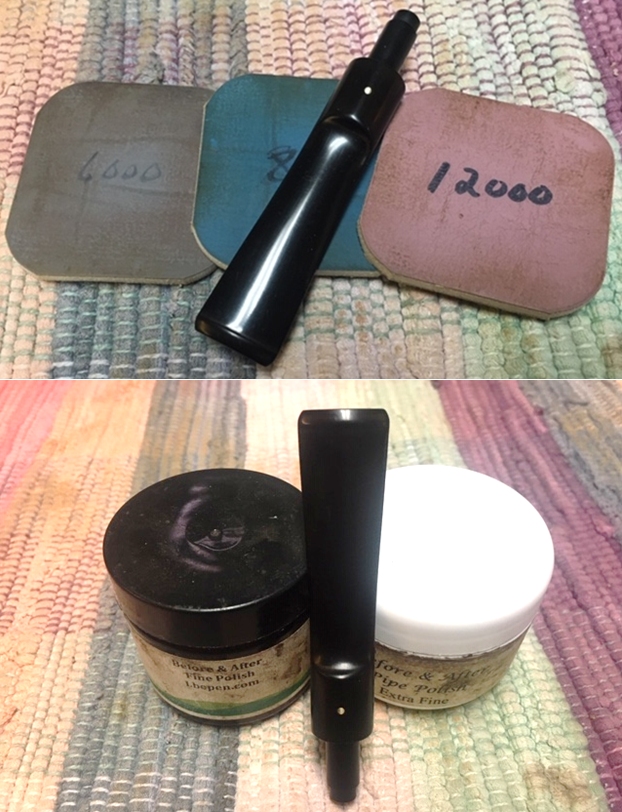
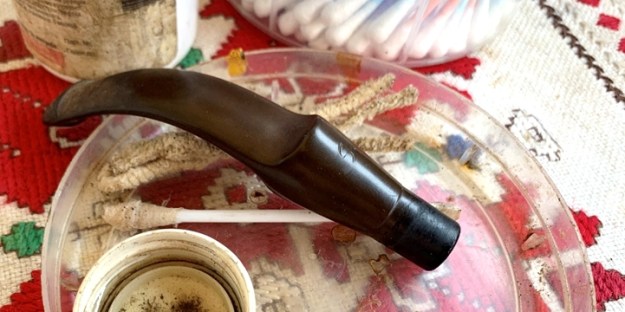
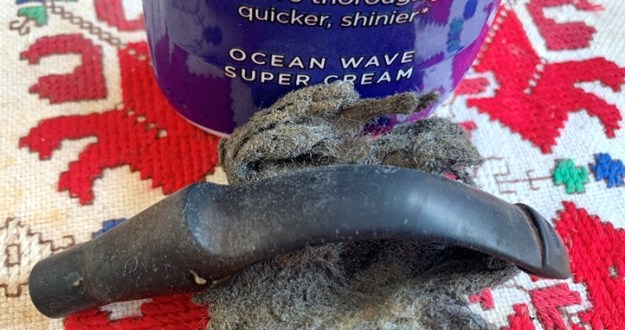
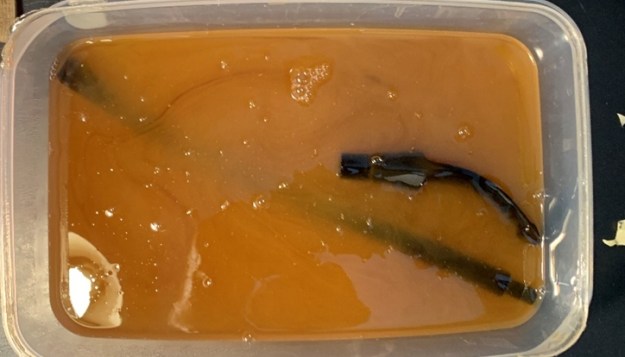
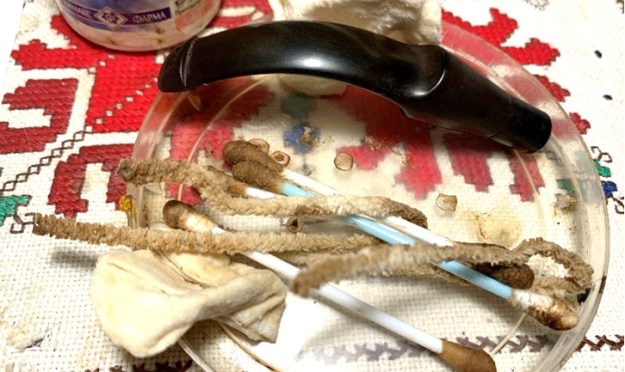
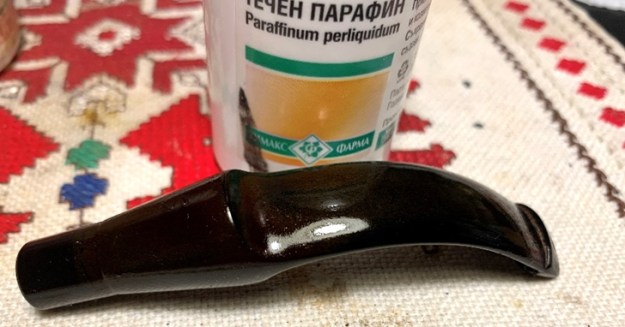
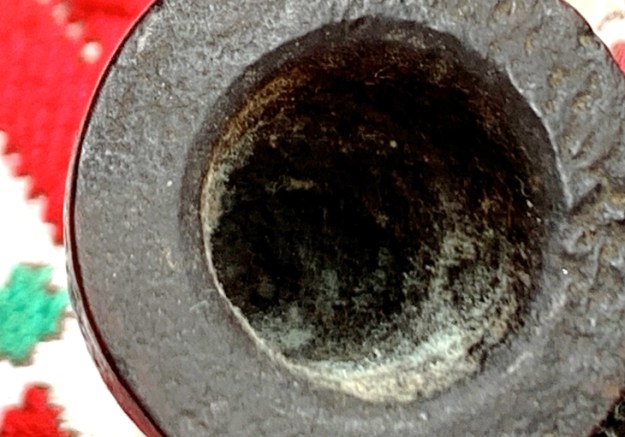
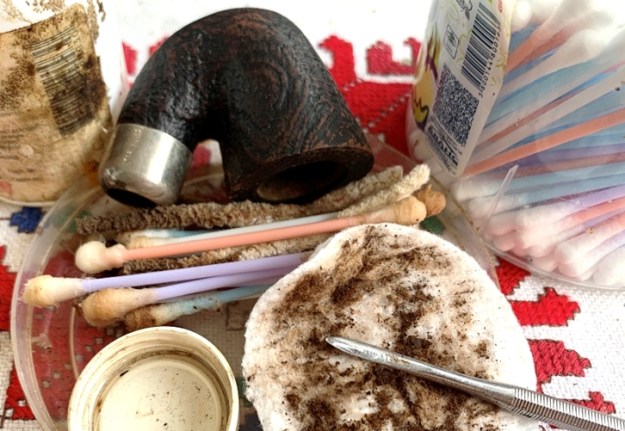
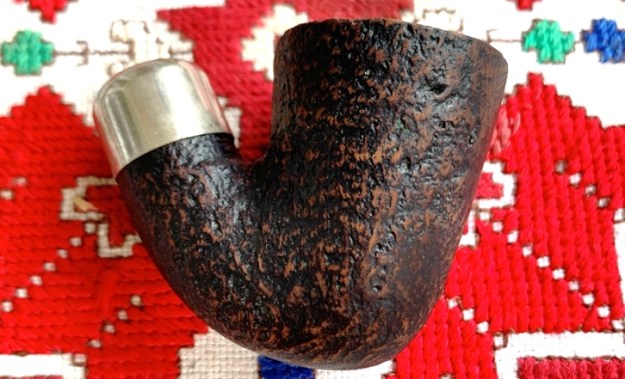
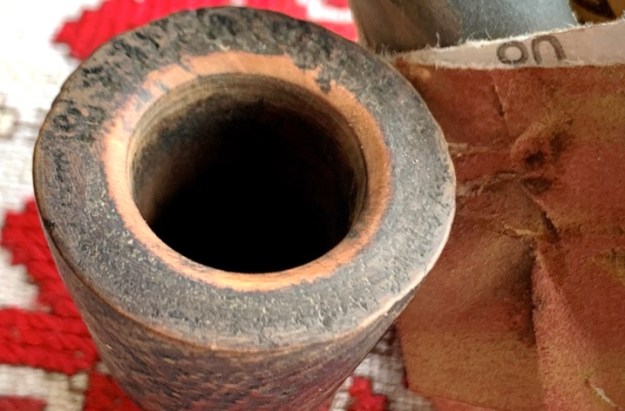
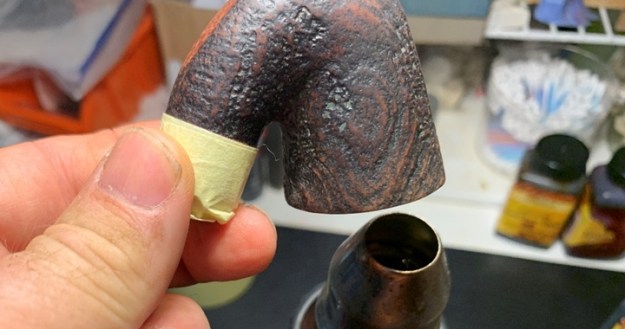
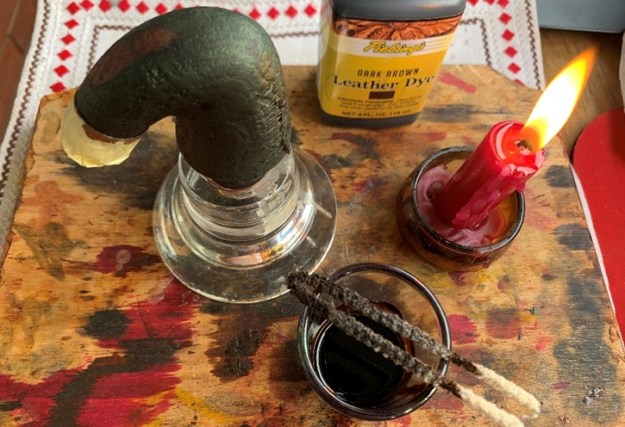
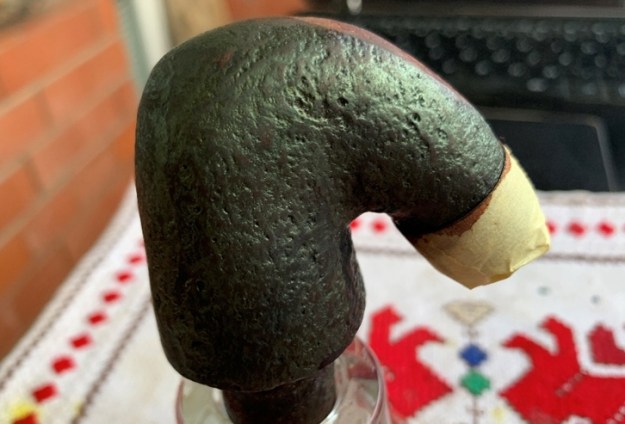
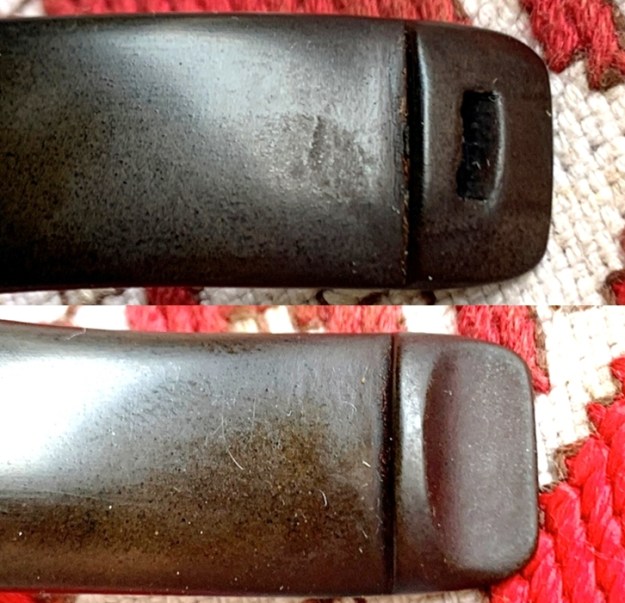
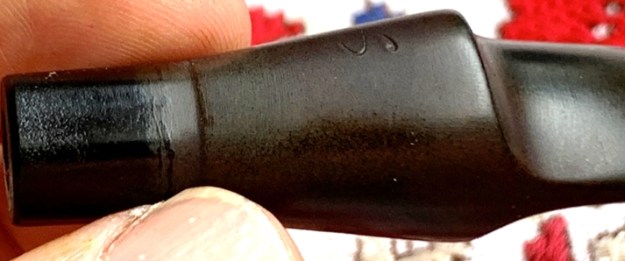
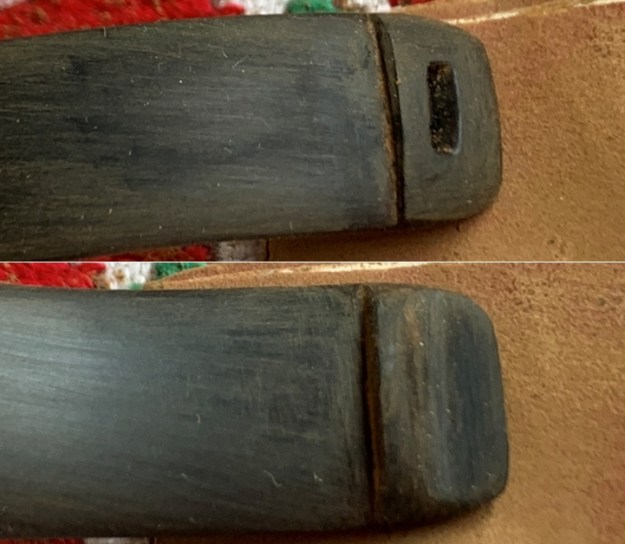
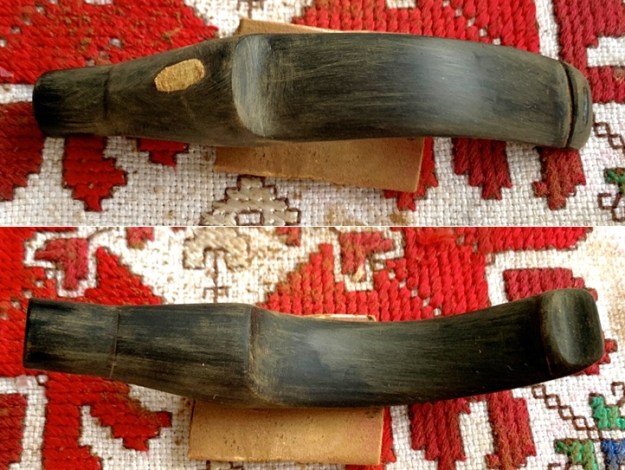
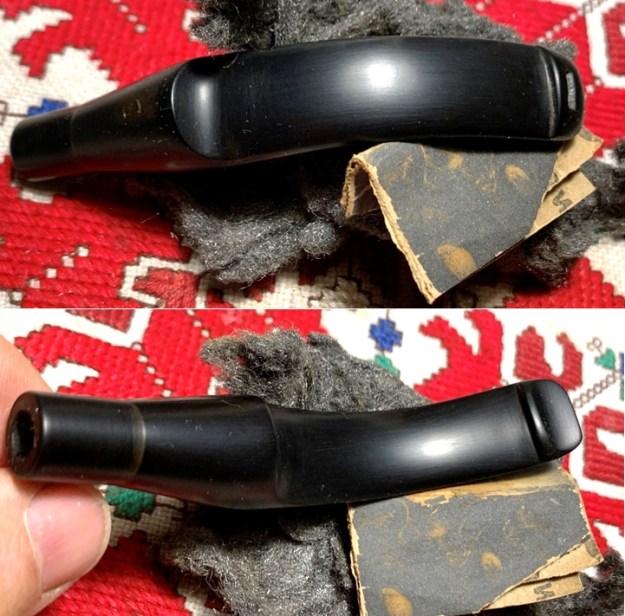
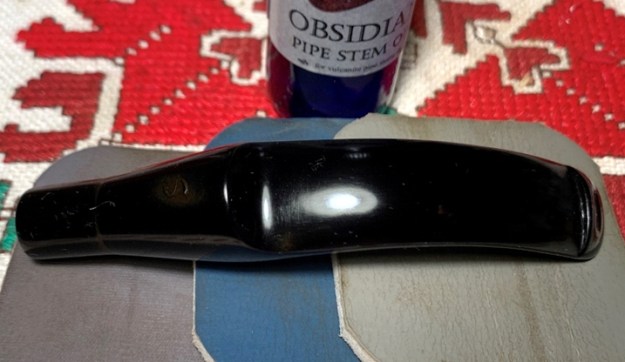
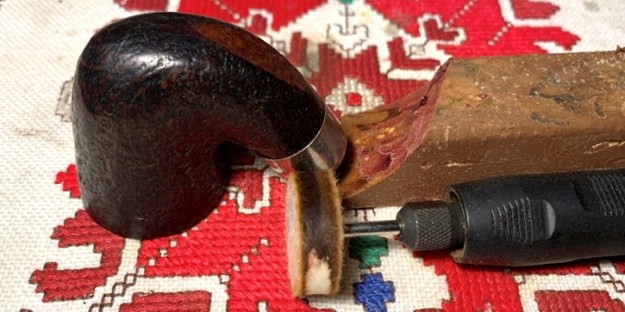
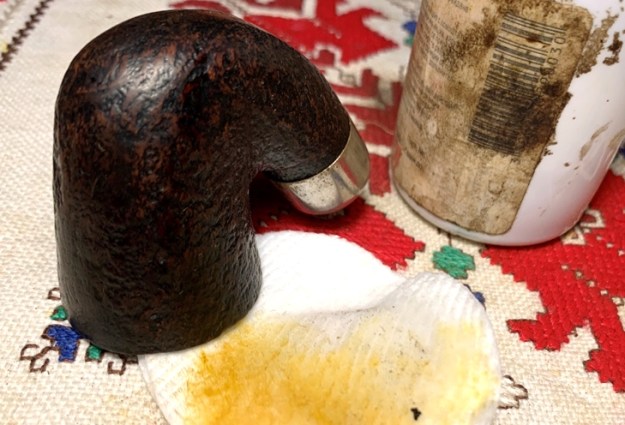
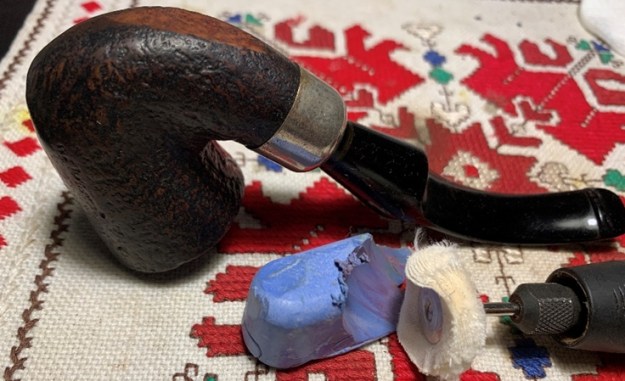
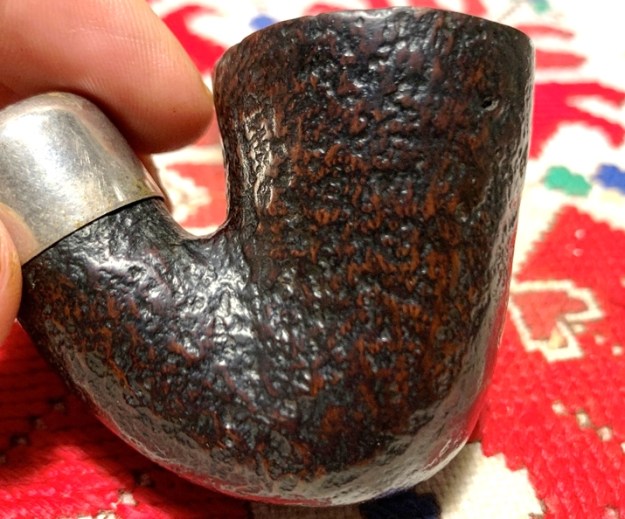
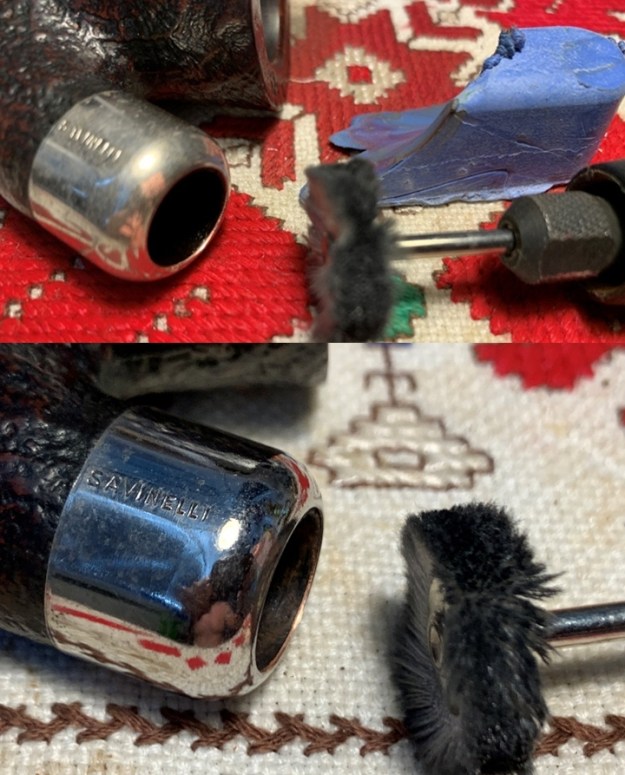
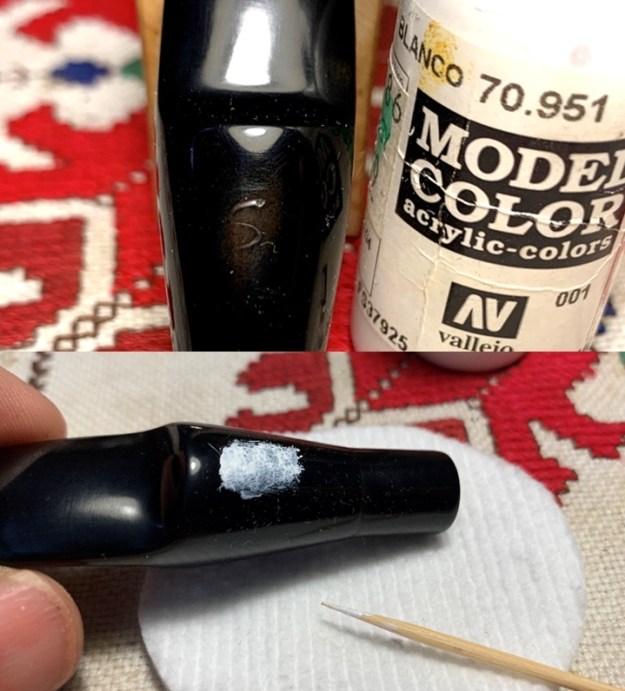
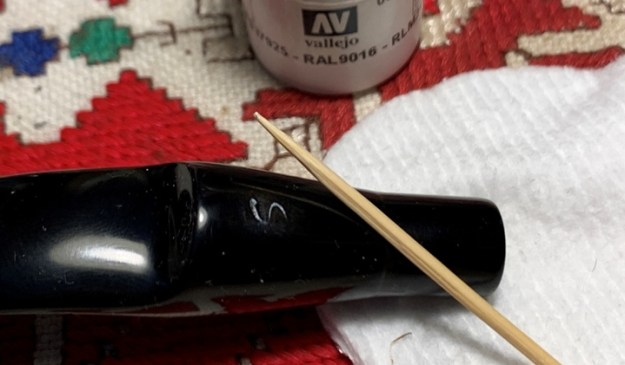
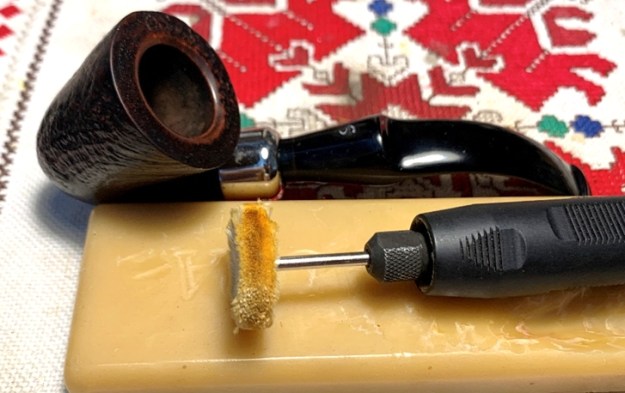
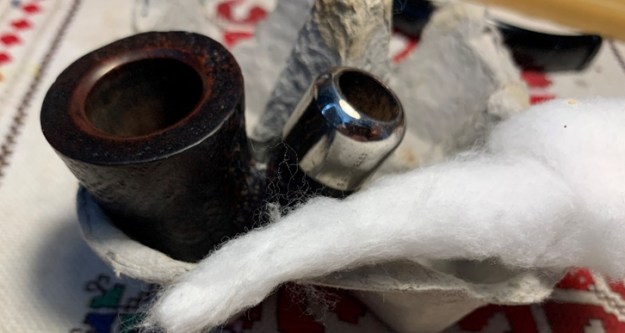
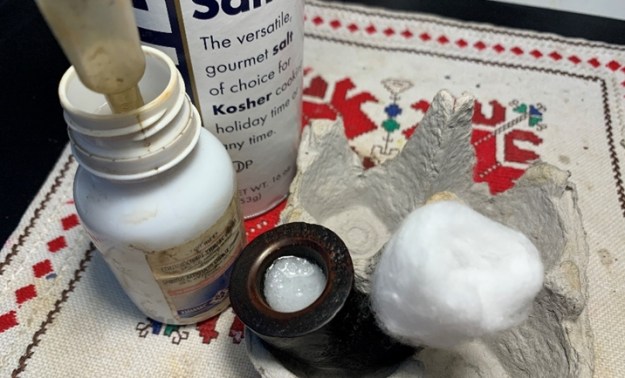
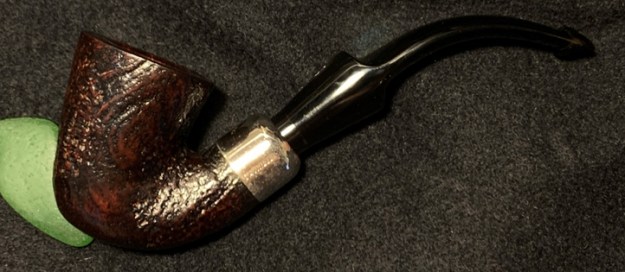
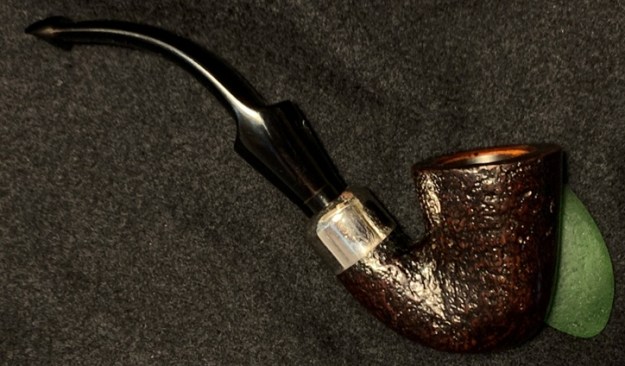
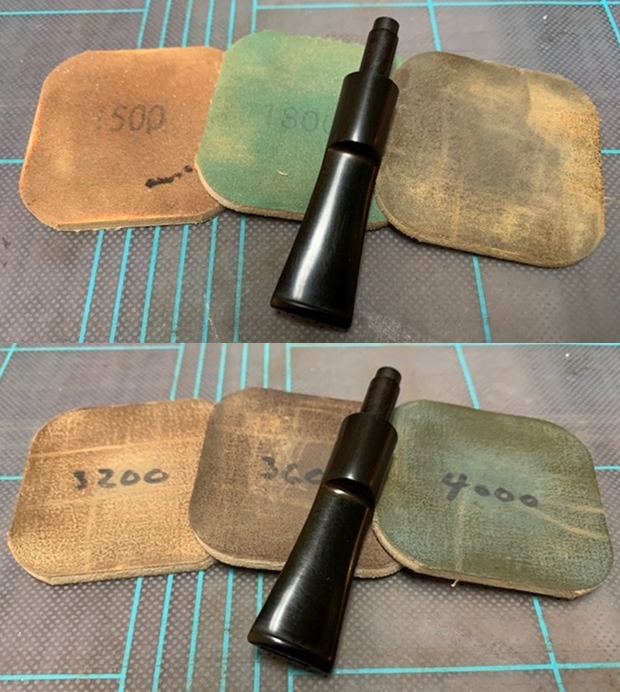
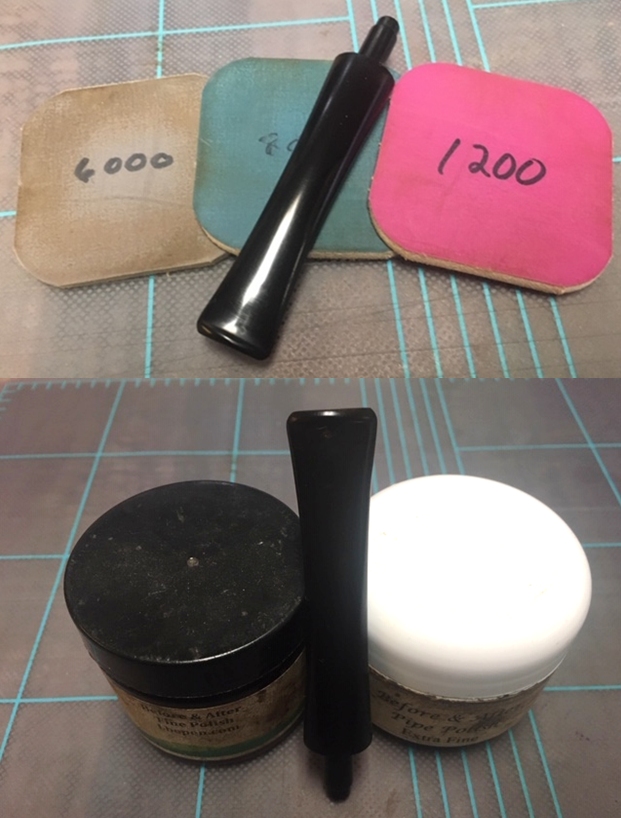
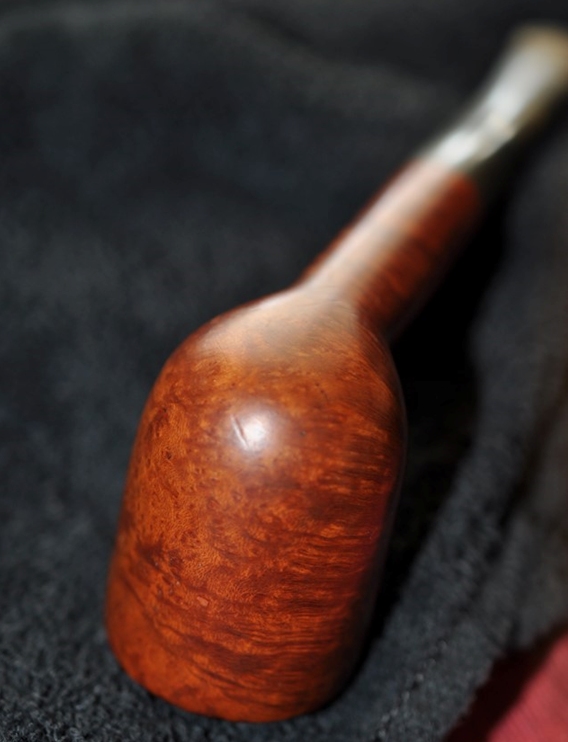
To begin the recommissioning of this Savinelli Dry System 3621, the military stem’s airway is cleaned using pipe cleaners and a cotton bud dipped in isopropyl 95%. As I said above, this P-Lip system is much friendlier than Peterson’s!  The cotton bud reaches up into the balsa wood filter cavity to clean.  The pipe cleaner works through the airway and P-Lip ‘smokehole’.To get a head start on the deep oxidation, a ‘Soft-Scrub’ like product available here in Bulgaria is used with 000 grade steel wool.  I’m hoping to break up the oxidation to enable the Before & After Deoxidizer to be more productive.Next, the Savinelli stem joins other stems in the Before & After Deoxidizer soak.  I leave it in the soak for several hours, but it seems that more hours does not translate into more effectiveness.After removing the stem from the Deoxidizer, the liquid is drained back into the vat and I help by squeegeeing with my fingers.  Pipe cleaners and cotton buds wetted with isopropyl 95% are used to clear the liquid from the airway and filter cavity. Cotton pads wetted with alcohol also wipe the surface to remove raised oxidation.To help with conditioning the vulcanite stem, paraffin oil is applied, and the stem is set aside to absorb the oil.Turning now to Dublin stummel, I first take a picture to show the starting point.  I remember my experience with the 3621’s brother – the conical chamber is angled severely toward the floor of the chamber. To avoid carving a reaming ‘shelf’ from using the regular reaming blade heads, I go directly to using the Savinelli Fitsall Tool which lives up to its billing.  My general rule of thumb in reaming to determine if you’ve removed all the carbon cake build up is, cake crunches as you’re using the tool, but wood surface is smooth.  After cleaning the carbon cake off the walls of the chamber, the chamber is sanded using 240 paper wrapped around a Sharpie Pen.After reaming is completed, an inspection of the chamber reveals healthy briar – no burning or heating problems.Next, using undiluted Murphy’s Oil Soap, a cotton pad goes to work on cleaning the blasted surface of the Savinelli Dublin stummel.  A bristled toothbrush assists in cleaning the blasted surface and the brass wired brush helps with lava flow on the blasted rim.Next, the stummel is transferred to the kitchen sink where internal cleaning is commenced using warm water with anti-oil dish liquid soap and shank brushes.  After scrubbing and rinsing thoroughly, the stummel comes back to the worktable.Next, internal cleaning is continued using pipe cleaners and buds wetted with isopropyl 95%.  The built-in moisture trap has done a good job of trapping the gunk in the trap.  It takes many buds and pipe cleaners wetted with isopropyl 95% to do the job.  Using a small dental spoon also helps by scraping the buildup on the internal walls allowing me to scoop out the old gunk left behind.  When the buds and pipe cleaners start emerging lighter, I call it a cease fire with the plan of continuing the cleaning at the end of my work day using a kosher salt and alcohol soak to further clean and refresh the internals for the new steward.Pausing now to examine the stummel after cleaning, I like the blasted finish.  The finish is thin, but a good foundation is present. On the rim, I’m interested to observe that the right side has more of a rough blasted surface, but the left side is smoother.  Looking at the picture above you can see the grain moving upwardly toward the rim.  What one would expect the rim to be showing as a result, would be the bird’s eye grain formations.  Hence, smoother roughness on the left side of the rim.  Also, on the rim, the Savinelli folks cut a ‘smart bevel’ on the internal rim edge.  My next step before sprucing up the stummel’s color is to refresh the bevel. To do this, I use a hard surface to back 240 sanding paper and recut the bevel. I follow the 240 paper with 600 grade paper.  The results are good!  This slight bevel which reveals some smoother briar will look great later in contrast to the rough, blasted rim surface. To refresh the stummel’s hue, I use Fiebing’s Dark Brown Leather Dye to provide an undercoat foundation.  The great thing about blasted surfaces, they are forgiving but later with some light sanding, the tips of the blasted briar landscape can give an attractive lighter contrasting that gives the surface depth and character.  I assemble the desktop staining module and after covering the nickel shank cap with masking tape, I heat the stummel with the hot air gun to help the briar surface to open and be more receptive to the dye. I then paint sections of the stummel with a folded pipe cleaner and flaming it as I go.  The lit candle ignites the alcohol in the aniline dye and after it combusts it leaves the pigment in the grain.I then put the newly stained stummel to the side for several hours allowing the new dye to set.With the stummel on the side, I turn to the military mount P-Lip Savinelli stem.  I take another closer look at the issues with the stem.  Both upper and lower bit have some tooth chatter, but it is minor.  It should sand out without difficulty. The bigger issue is the oxidation. The picture below tries to show the contrast between the inserted part of the stem that is black, without oxidation, and the rest of the exposed stem.  UV light is not good for vulcanite and the oxidation comes primarily because of this.To address the oxidation and the light tooth chatter, 240 grade paper is used to sand the upper- and lower-bit area.The sanding it expanded to address the oxidation throughout the stem.  To protect the Savinelli ‘S’ stem stamping, I cover it with masking tape.After the 240 grade paper, the entire stem is wet sanded with 600 grade paper and this is followed with 000 grade steel wool.Continuing with the stem, the full regimen of micromesh pads is applied.  Starting with pads 1500 to 2400, the stem is wet sanded.  Following this the stem is dry sanded with pads 3200 to 4000 and 6000 to 12000.  Obsidian Oil is applied between each set of 3 to condition the stem as well as protect it from oxidation. Turning now back to the stummel, the flamed dye has been resting for several hours and ready to be unwrapped.  To do this, a cotton cloth buffing wheel is mounted to the Dremel with the speed set at about 40% full power.  Tripoli compound is used to help clear the fire crusted dye revealing the blasted surface beneath.After using the cotton cloth buffing wheel, I transition to a felt buffing wheel again using Tripoli compound with the Dremel set to the slowest speed.  I lightly go over the rough blasted surface primarily to buff the peaks of the blasting with the coarser wheel to create flecking in the surface.  This gives the surface more contrast and depth.I then wipe the dyed surface with a cotton pad wetted with alcohol not so much to lighten the dye but to blend the hue and to dissolve any dye clumps that didn’t dissolve during the buffing process.I reattach the stem and mount another cotton cloth buffing wheel to the Dremel setting it at 40% full power.  I then apply Blue Diamond compound to the Savinelli blasted surface and to the stem.After completing the application of Blue Diamond compound, I look at the stummel more closely.  I’m getting the desired flecking affect in the blasted surface, but I’m not satisfied with the hue of the flecks.  The flecks appear more of a light brown rather than a darker, richer reddish bend. I decide to apply a dye wash of red aniline dye over the dark brown. After heating the stummel once again, I apply the red dye over the entire stummel surface with a folded pipe cleaner.  After applying the dye thoroughly, the stummel is set aside for a few hours for the overcoat red dye to set.After a few hours, I again use the Dremel and apply Blue Diamond compound with a cotton cloth buffing wheel.  I realize later that I didn’t picture this process.  I like the results of the overcoat red dye wash.  Next, to prevent the new dye coming off on the hands later when the pipe is put into surface, I warm the stummel with the hot air gun.  This emulates the heating up of the stummel when lit and this usually is when newly dyed briar leaches dye onto the hands. After heating the stummel, I give it a rigorous hand buffing using a cotton cloth to remove the raised dye. Before moving on to the waxing of the stem and stummel, I have a few mini projects to do.  The first is to clean and shine the nickel-plated shank cap.  I first use a tarnish remover which is applied to the nickel with a cotton pad. After the liquid is buffed on, I rinse the cap with tap water.  The tarnish remover does some good but leaves a lot to be desired.  The nickel cap is rough, and you can see some small patches of the nickel I referenced earlier have worn off.After the tarnish remover, I transition to using Blue Diamond compound on the nickel.  After mounting another cotton cloth buffing wheel onto the Dremel dedicated to nickel buffing and I methodically apply the compound to the metal working around the cap.  I like these results.  The nickel has cleaned and shined up very nicely.The second mini project is to color the Savinelli ‘S’ stamping on the stem.  Using white acrylic paint, I place a small amount of paint on the ‘S’ and then dob it dry with a cotton pad.Then I use the flat edge of a toothpick rubbing gently over the stamping removing the excess paint from the stem.  The ‘S’ is left with color and with definition.In the home stretch – another cotton cloth buffing wheel is mounted on the Dremel with the speed at 40% of full power.  Carnauba wax is then applied to both stem and stummel.  After a few coats of wax, the pipe is given and rigorous hand buffing to raise the shine and to disperse undissolved carnauba wax.Ugh – I thought I was finished but remembered that I was going to further clean and freshen the internals with a kosher salt and alcohol soak.  After twisting and stretching a cotton ball to form a wick, I use a wire to help guide the cotton wick down the airway into the mortise/trap and airway. The cotton wick serves to draw out the residual tars and oils during the soak process.  After inserting the wick, kosher salt is placed in the bowl.  Kosher salt has no aftertaste unlike iodized salt.  Using a large eye dropper, Isopropyl 95% fills the bowl until it surfaces over the salt.  After a few minutes, the alcohol is absorbed into the internal cavity and I top off the alcohol once again.  After several hours, the wick and salt do not appear to have been soiled at all.  I hope this means that the internals are clean.  After removing the expended salt from the bowl, paper towel is used to wipe the chamber and I blow through the mortise to make sure all the salt crystals have been removed.  I follow this by using one cotton bud and pipe cleaner to confirm that the internals are indeed clean.  I forgot to picture this!After reassembling the pipe and a quick hand buffing with a microfiber cloth, the recommissioning of this Savinelli Dry System 3621 is completed.  The tight Dublin bend presents a smart, compact look, with a genuinely nice flow from the bowl through the nickel shank cap that is carried through the military mount P-Lip stem.  The smooth briar contrasts are nice – the internal rim ring and the nomenclature panel.  Nathan commissioned this Savinelli Dry System 3621 and will have the first opportunity to acquire him in The Pipe Steward Store.  This pipe benefits the Daughters of Bulgaria – women and girls who have been trafficked and sexually exploited.  Thanks for joining me!
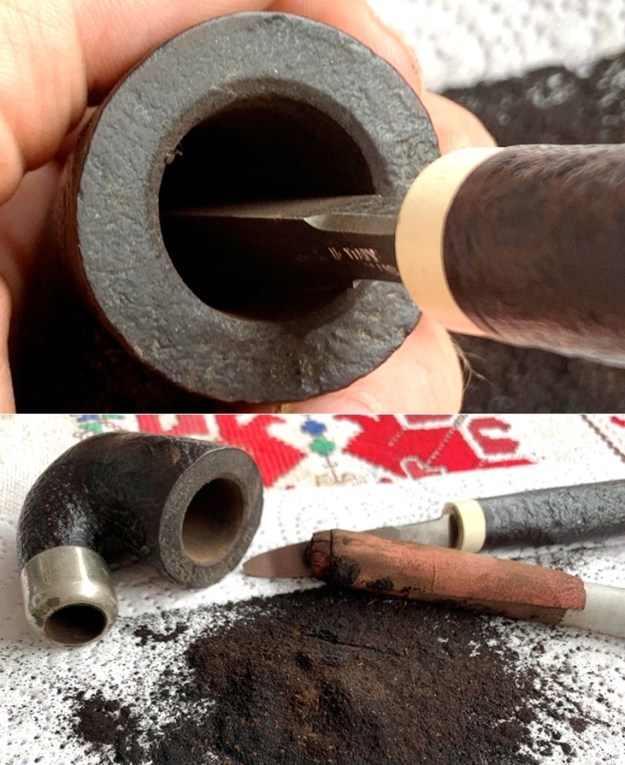
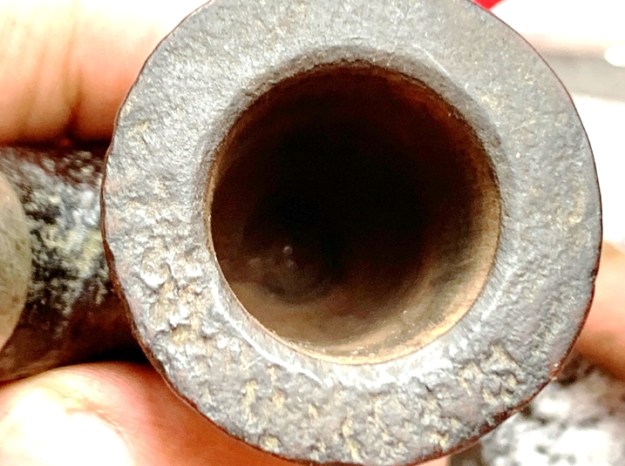
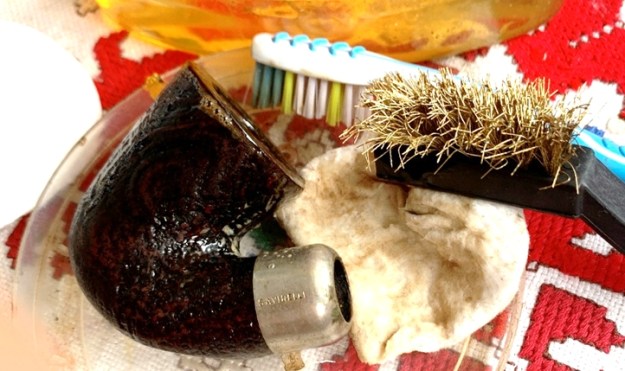
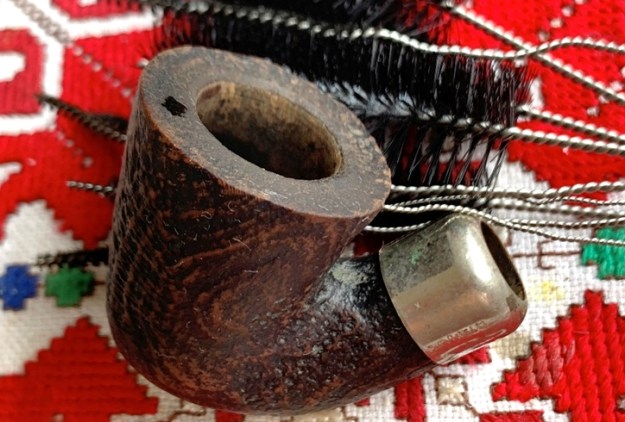
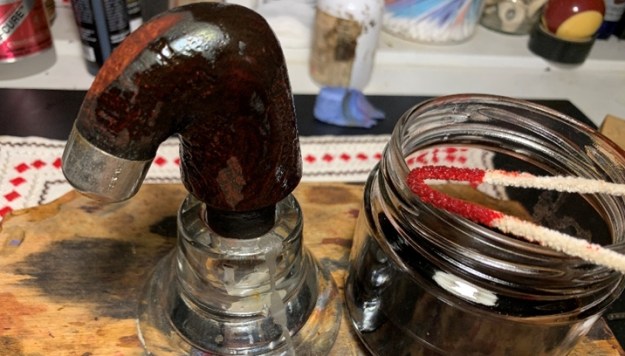
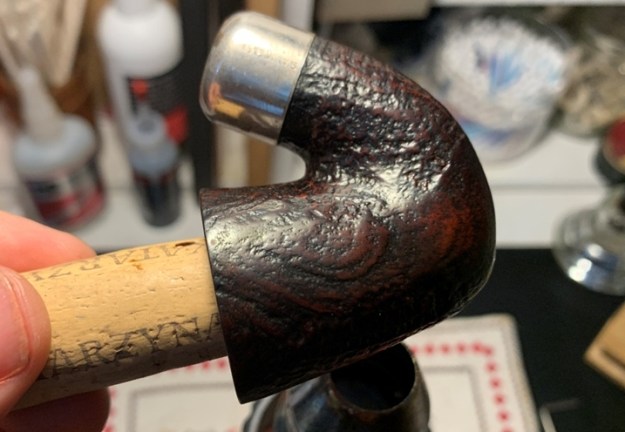
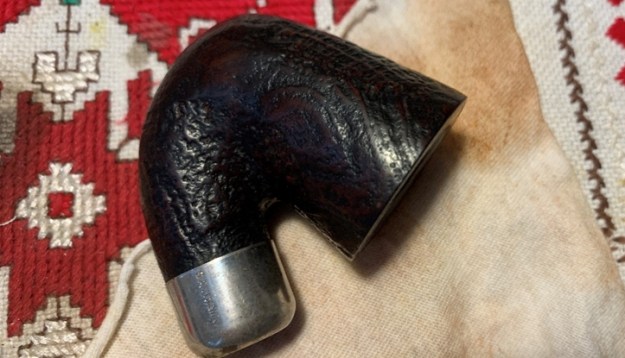
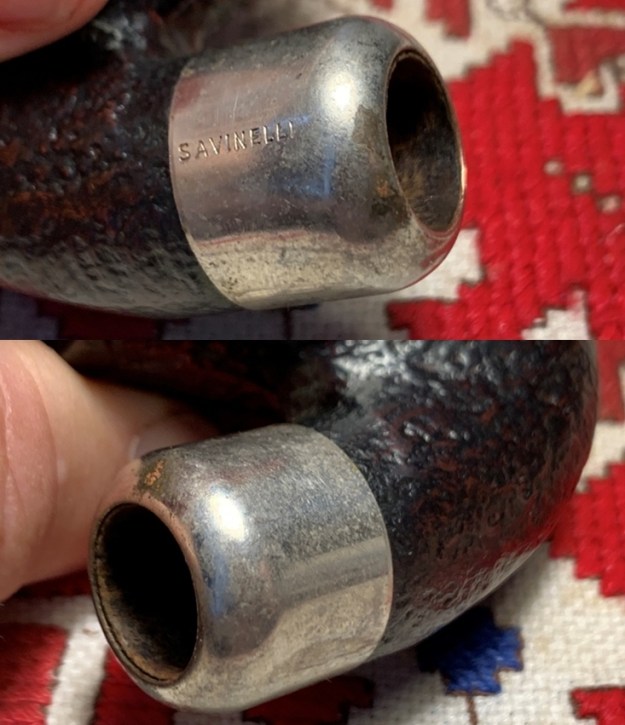
This Savinelli de luxe Milano 206 Apple was worn and tired pipe


Blog by Steve Laug

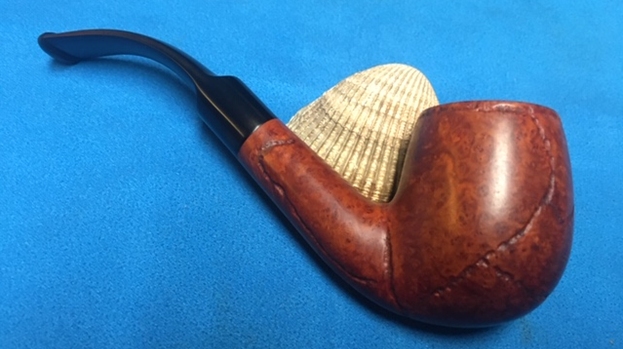
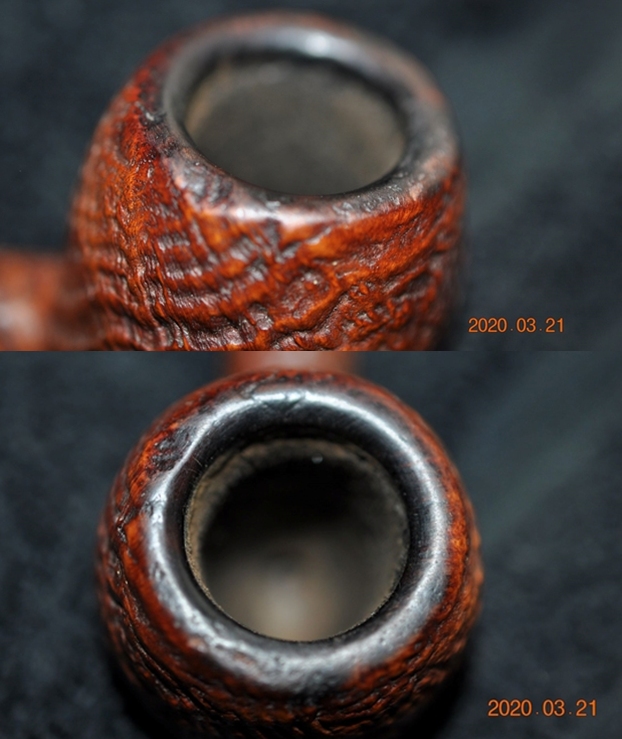
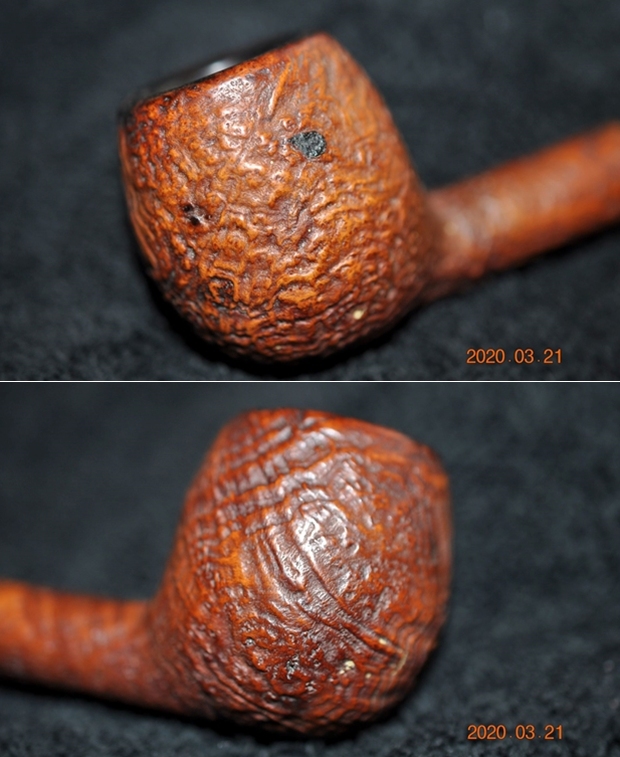
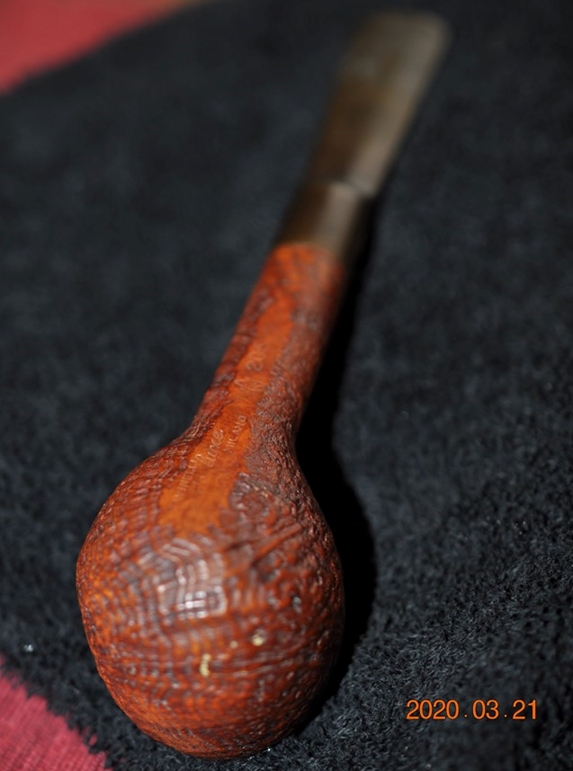
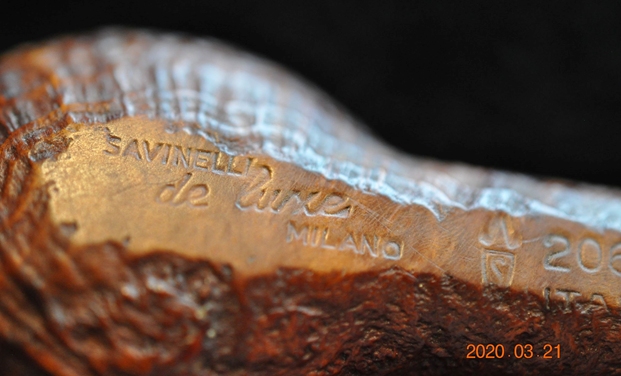
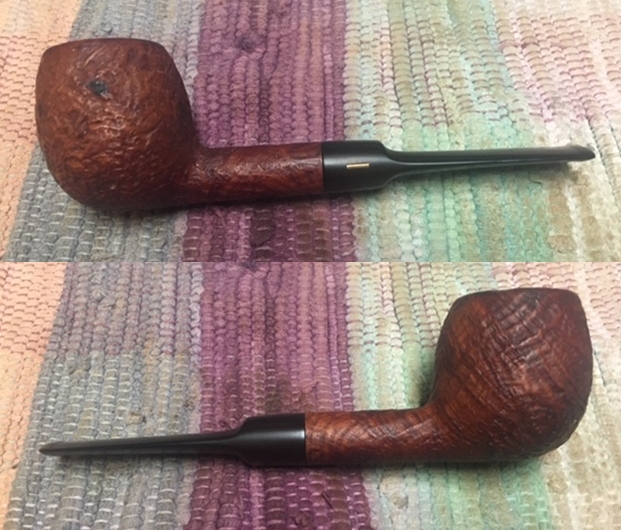
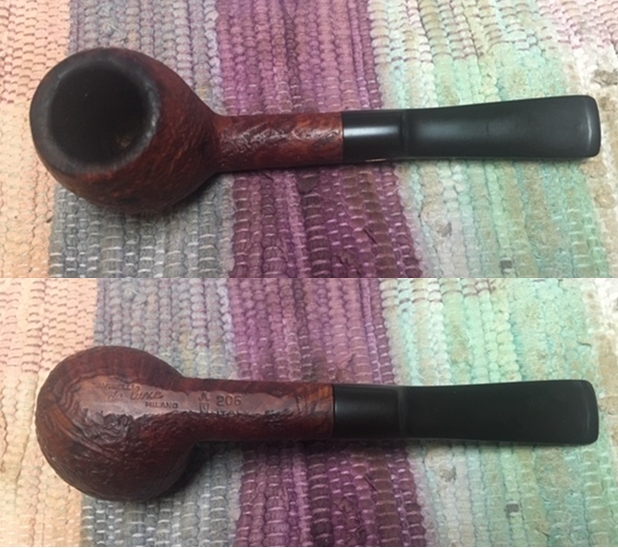
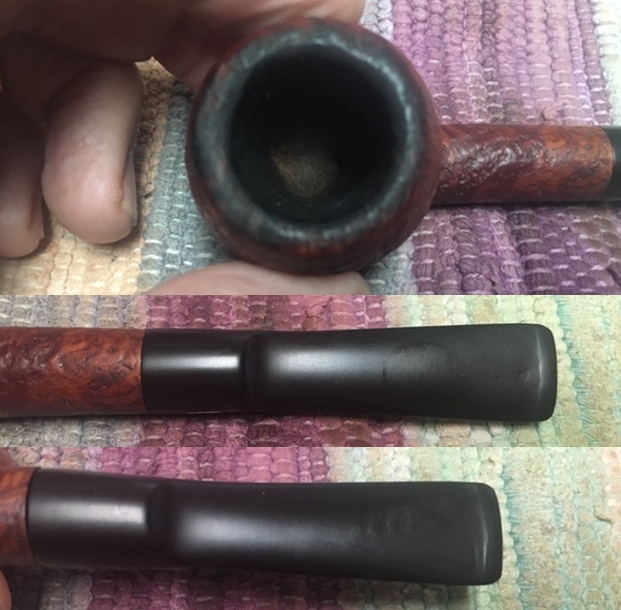
The next pipe on the table is one I have been avoiding working for this whole box of pipes. I just keep putting under others. Today I am getting to the bottom of the box and decided to take this one on. It is a well-shaped sandblast apple made by Savinelli. That is itself is not an issue as it has a great shape and look. The round bowl, slender shank and saddle stem with a thin blade – what’s not to like?  It was stamped on a smooth panel on the underside of the shank and read Savinelli de luxe Milano on the heel and that was followed by the Savinelli S shield and the shape number 206 over Italy. The finish was very dirty with a heavy coat of grime ground into the bowl and rim top as can be seen in the photos. There were dark spots all around the bowl and a deep nick on the right side of the crowned rim top. The bowl had a thick cake with a heavy lava overflow on the rim top. There was too much lava on the rim top and edge to know what they looked like but more would be revealed once it was cleaned. The stem was oxidized and there were deep tooth marks and chatter on both sides and on the top and bottom edges of the button. Jeff took photos of the pipe before he cleaned it up so you could see what we saw. Jeff took photos of the rim top to show lava build up around the rim, the wear on the edges and cake in the bowl. The lava actually was running down the edges of the crown of the bowl and had filled in some of the nooks and crannies in the sandblast. Jeff took some photos of the bowl sides and heel to show the dark spots around the bowl sides mixed in with the nice sandblast. It was a dirty pipe but I think it will be a beautiful one once we are finished.    The stamping on each side of the shank is shown in the photos below. They are clear and read as noted above.  There is a brass bar on the left side of the saddle stem. The stem was a good fit to the shank. It was oxidized, calcified and had debris stuck to the surface of the vulcanite. It also shows the tooth marks on the stem and on the button surface.  It was my turn to work on the pipe now. I was really looking forward to what the pipe would look like once Jeff had worked his magic. What would the rim top look like? What would the dark spots around the bowl look like? I had no idea. When I took it out of the box I was struck great job cleaning up the pipe Jeff had done. It was impressive! He had reamed the pipe with a Pipnet piper reamer and taken the cake back to bare briar. He cleaned up the remaining cake with a Savinelli Fitsall Pipe Knife. He scrubbed the interior of the bowl and shank with pipe cleaners, cotton swabs and alcohol to remove the tars and oils. He scrubbed the exterior of the pipe with Murphy’s Oil Soap and a tooth brush to remove the grime from the finish. He worked on the rim top lava and darkening with the soap and tooth brush. He scrubbed the inside of the stem with alcohol and pipe cleaners. He scrubbed the exterior with Soft Scrub and then soaked it in Before & After Deoxidizer. He washed the stem off with warm water to remove the deoxidizer. The pipe looked far better. While some of the dark marks had faded it became clear that they were dark stains rather than burn marks as I suspected. I took photos of the pipe when I received it before I started working on it. I took photos of the bowl and rim top as well as the stem to show how clean they were. You can see that there is still some darkening to both the briar rim top and inner edge. The stem is clean and the tooth damage on both sides is very clear in the photos. Lots more work to do on this pipe.I took a photo of the stamping on the underside of the shank. The stamping is readable as noted above. There is also the expected inset brass bar on the left side of the saddle.I took a photo of the pipe with the stem removed to show the overall look of stem, tenon and profile of the pipe. It really is a beautifully shaped pipe.I decided to start my work on the pipe by addressing the darkening on the briar rim top. I sanded the crowned rim top and inner edge of the bowl with a folded piece of 220 grit sandpaper. I was able to remove some of the darkening to the top and smooth out the inner edge of the bowl. I wiped the rim top down with alcohol on a cotton pad.I wiped down the entire bowl with alcohol and used a brass bristle wire brush to work over the darkened areas on the bowl sides and top. Once it was dried off I restained the bowl and shank with a Tan Aniline Stain. I applied it to the briar and flamed it with a Bic lighter. I repeated the process. The alcohol burns off with the flame and the stain is set in the briar. I let the bowl sit and the stain cure overnight. In the morning I buffed it on the buffer with Red Tripoli and Blue Diamond. I took photos of the bowl with its new look. I rubbed the briar down with Before & After Restoration Balm. I worked it into the briar with my fingertips and a horsehair shoe brush to get it into the crevices of the sandblast. The product works to clean, enliven and preserve the briar. I let it sit for 10 minutes while I worked on the stem. After the time passed I buffed it with a cotton cloth to deepen the shine. The briar really comes alive with the balm.   I set the bowl aside and turned my attention to the stem. I “painted” the stem with the flame of a Bic lighter to lift the deep dents in the surface.I filled in the remaining indentations and built up the top and bottom of the button with clear super glue. Once the repair cured I used a needle file to reshape the button edges and also flatten the repaired areas. I sanded the stem with 220 grit sandpaper to finish the shaping and to remove the remaining oxidation. I started polishing the stem with 400 grit wet dry sandpaper. I wiped the stem down with Obsidian Oil before further polishing it.   I polished the vulcanite with micromesh sanding pads – 1500-12000 grit pads. I wiped it down with Obsidian Oil after each sanding pad. I used Before & After Pipe Polish – both Fine and Extra Fine to further polish the stem.     This nice looking Savinelli deluxe Milano 206 Apple with a saddle stem turned out very nice. The addition of a tan stain to the mix of brown stains highlights the nooks and crannies of the sandblast around the bowl sides and bottom. The finish on the pipe looks much better and they go well with the polished black vulcanite saddle stem. I put the stem back on the bowl and carefully buffed the pipe with Blue Diamond on the buffing wheel. I gave the bowl and stem multiple coats of carnauba wax on the buffing wheel and followed that by buffing the entire pipe with a clean buffing pad. I hand buffed the pipe with a microfiber cloth to deepen the shine. The finished straight apple is very nice and feels great in the hand. Give the finished pipe a look in the photos below. The dimensions of the pipe are Length: 5 ½ inches, Height: 1 ¾ inches, Outside diameter of the bowl: 1 ¼ inches, Chamber diameter: ¾ of an inch. Thanks for walking through the restoration with me as I worked over another beautiful pipe. This pipe will be going on the rebornpipes store shortly. If you are interesting in adding it to your collection let me know! Thanks for your time.

A Savinelli Sherwood Rock Briar 316KS Bent Dublin


Blog by Steve Laug

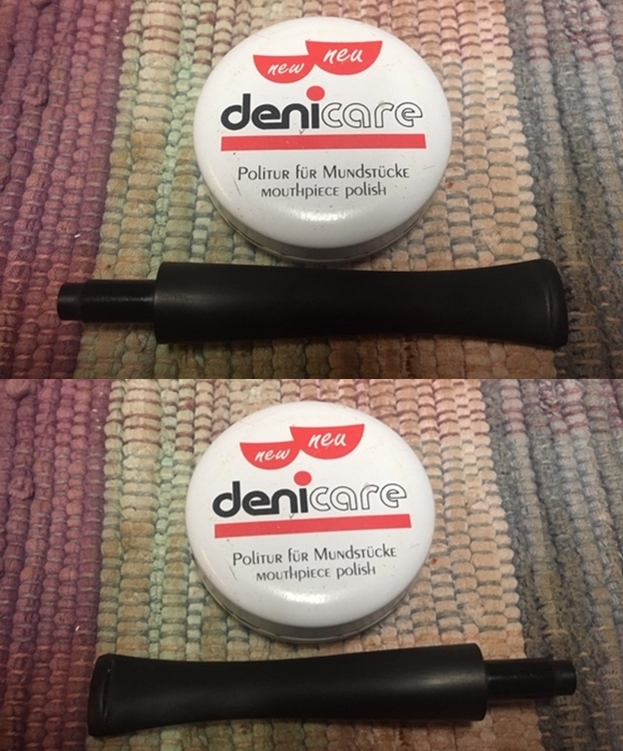
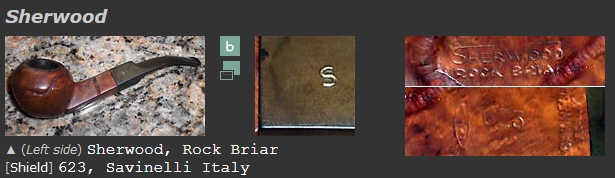
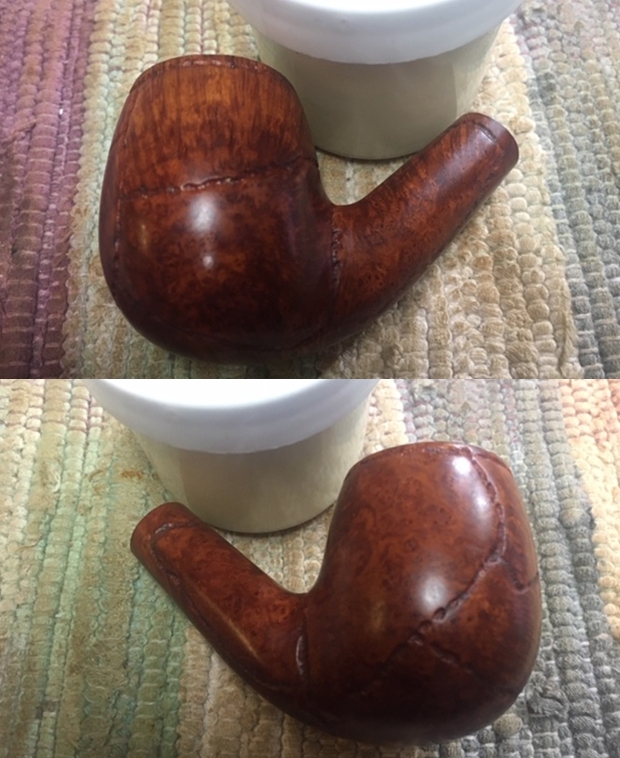
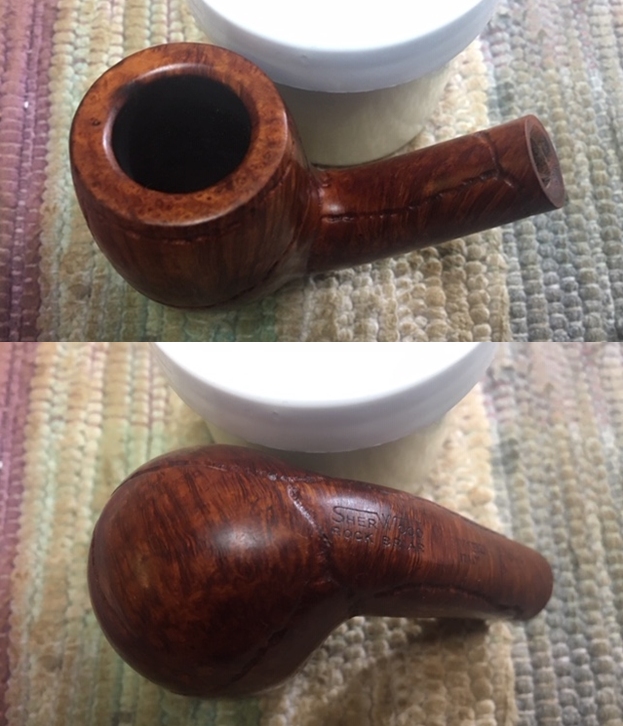
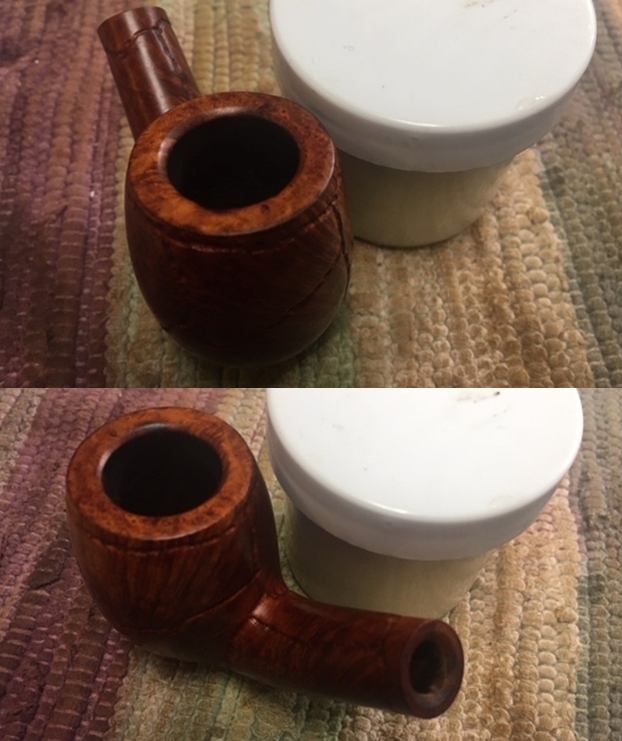
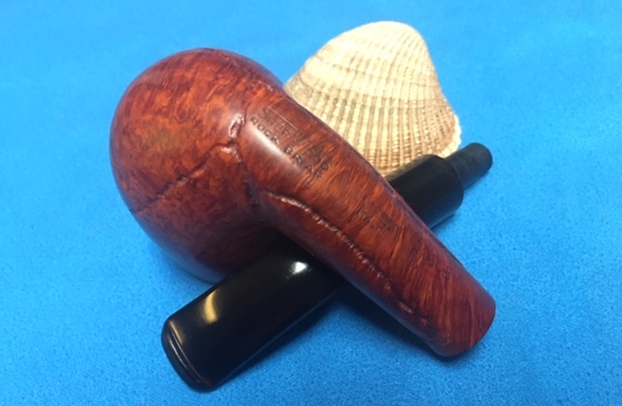
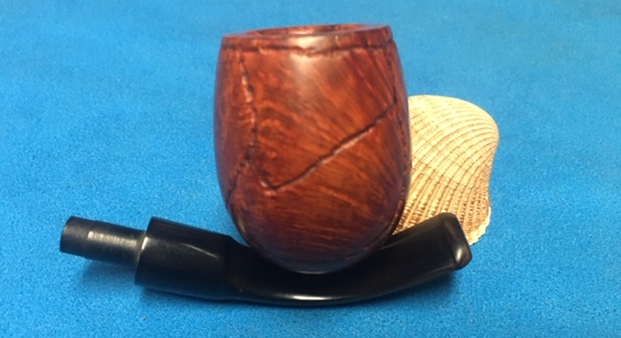
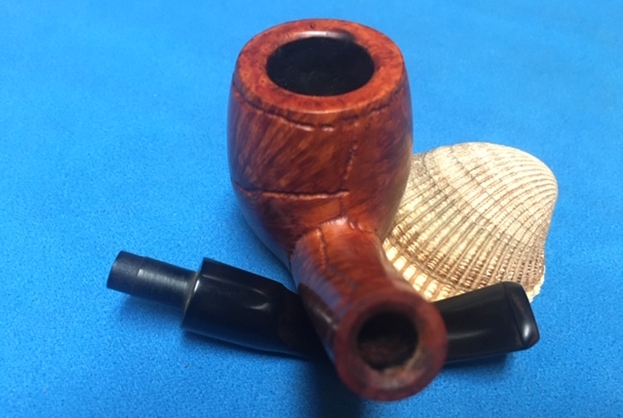
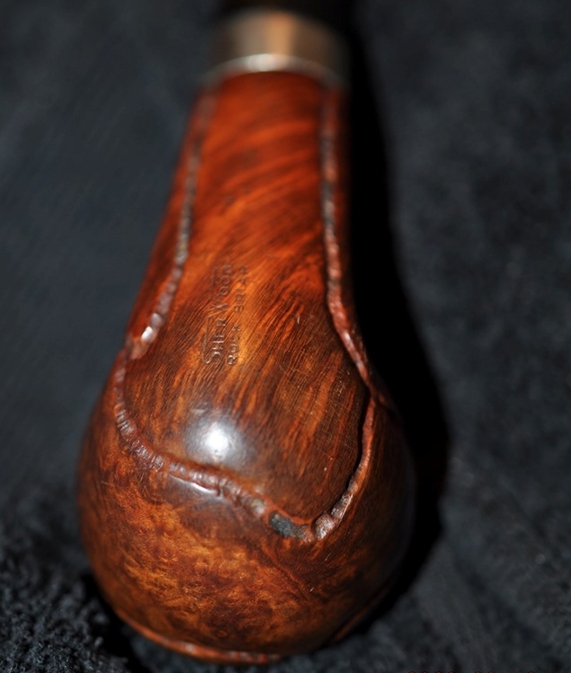
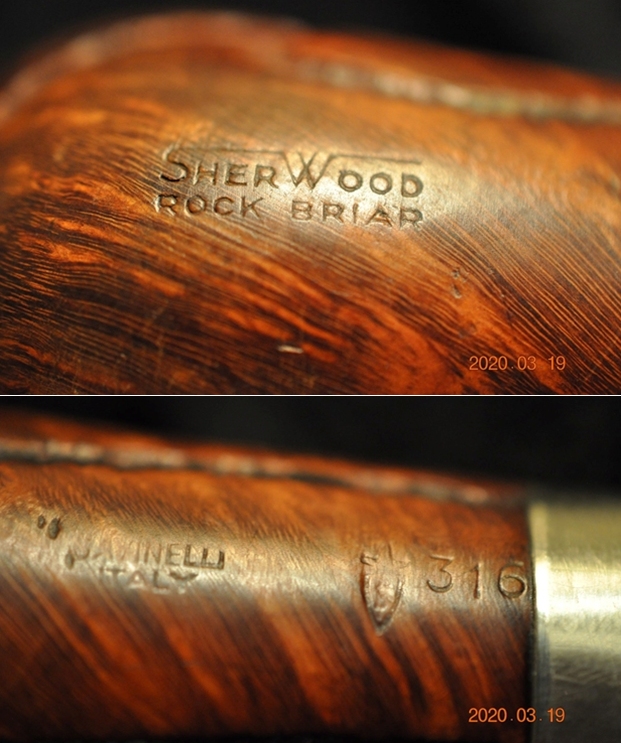
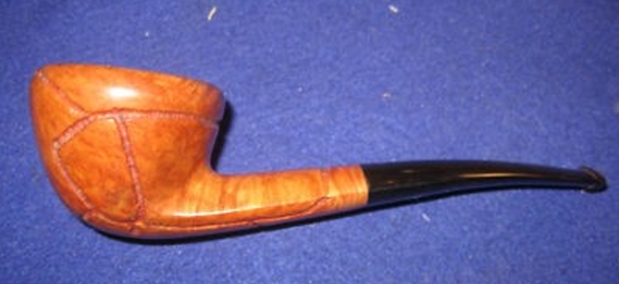
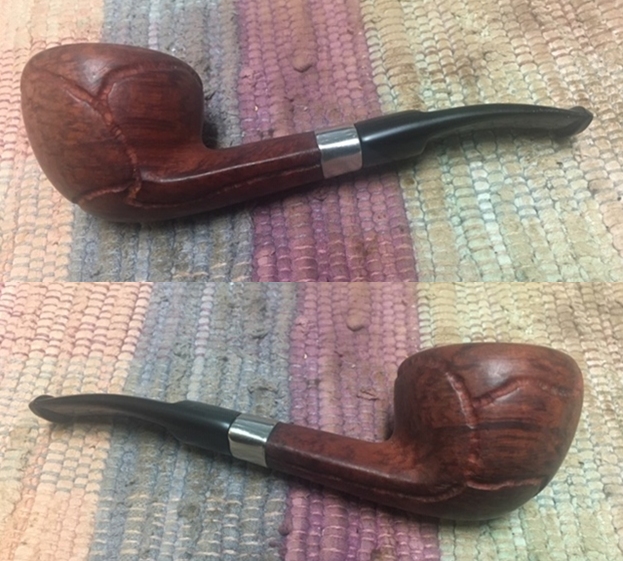
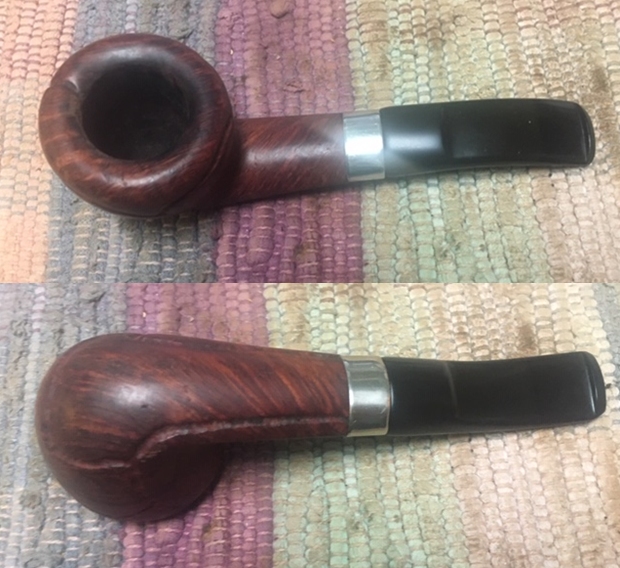
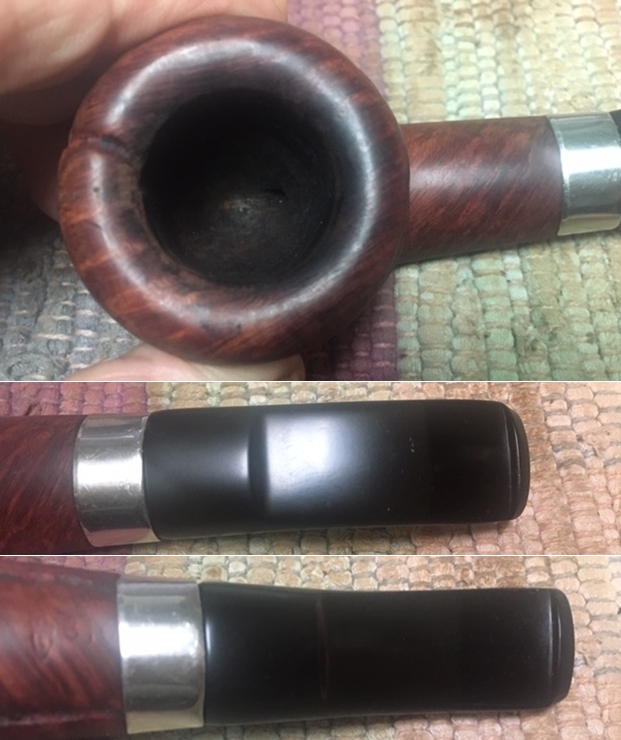
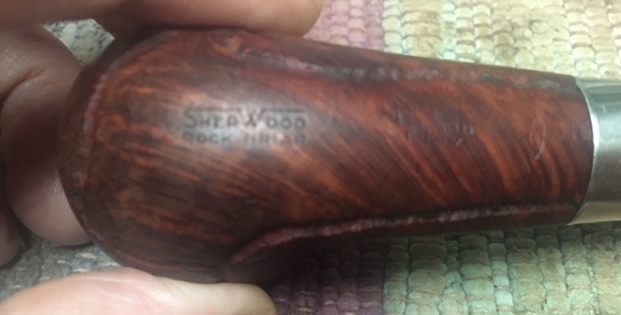
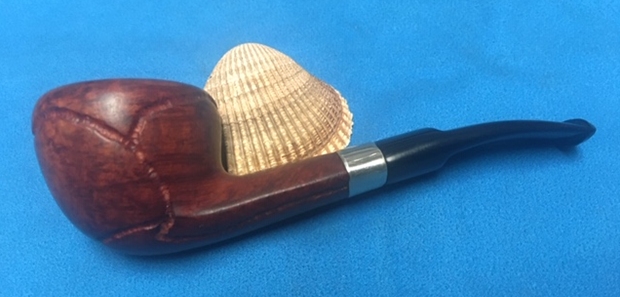
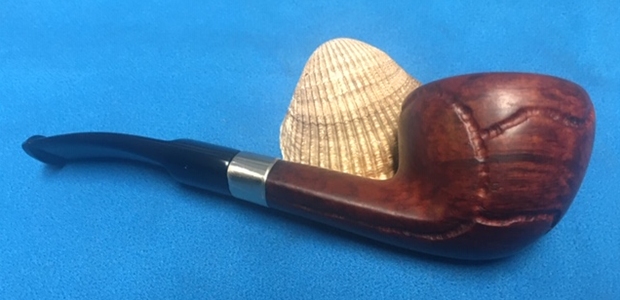
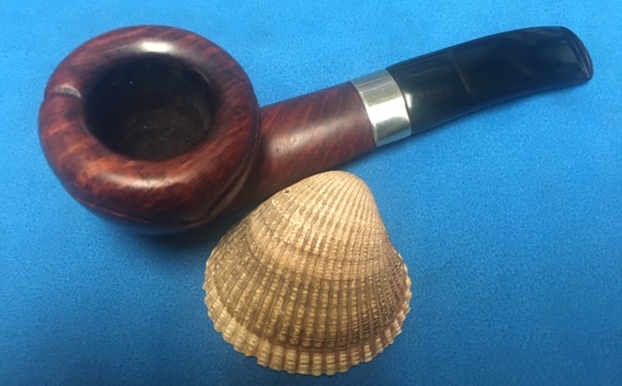
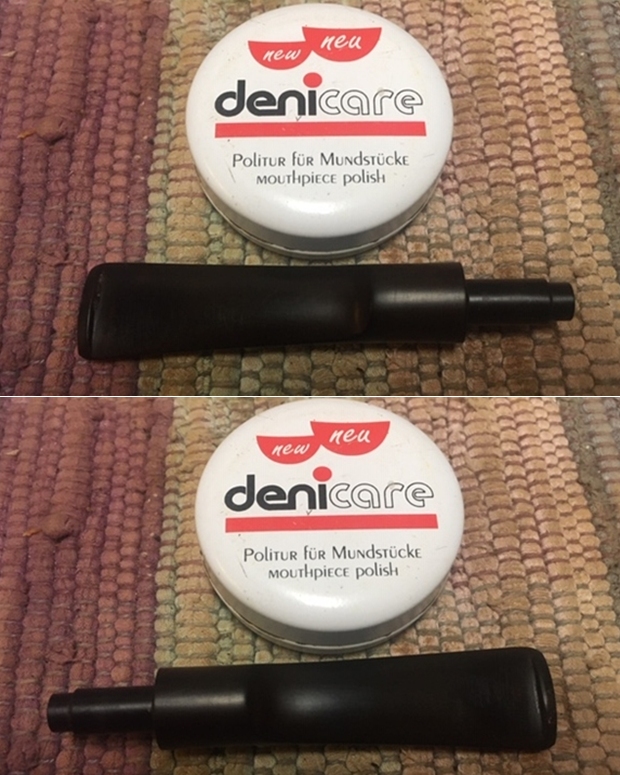
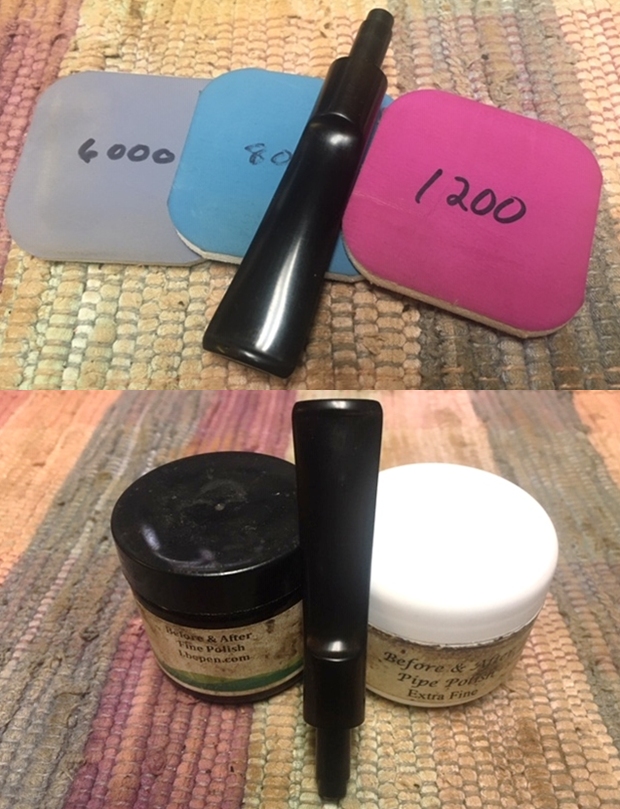
The next pipe on the table came to us from one of Jeff’s pipe hunts. It is a interestingly rusticated saddle stem Bent Dublin with a smooth crowned rim top and darkening around the rim edge. It is stamped with Sherwood over Rock Briar on the heel of the bowl followed by the Savinelli “S” shield and the shape number 316KS over Italy on the shank. The stamping is clear and readable though the shape number is hidden slightly by the nickel repair band. The pipe has a combination of brown stains and the worm trail rustication is not only tactile but also a purposefully pattern to the finish. The finish was very dirty with grime ground into the bowl. The bowl had a thick but even cake in the bowl and a heavy lava overflow on the inner edge of the top toward the back of the bowl. There was darkening on the briar around the inner edge and the top of the rim. The stem was oxidized and there were tooth marks and chatter on both sides and on the top and bottom edges of the button. there were some hash marks on the left side of the stem about an inch from the button. Jeff took photos of the pipe before he cleaned it up. Jeff took photos of the rim top to show the thick cake in the bowl and the lava overflow on the inner edge of the crowned rim.  Jeff took some photos of the bowl sides and heel to show the “worm trail” rustication around the bowl and the great looking grain as well. It is actually a nice looking pipe.  The stamping on each side of the shank is shown in the photos below. They look very good and readable. The shooting star logo on the stem side is clear but faint. I am hoping that it can be repainted once it is clean. It all depends on how deep the stamping on the stem side is.The stem was a very good fit to the shank. It was oxidized, calcified and had debris stuck to the surface of the vulcanite. It also shows the tooth marks on the stem and on the button surface.  I turned to Pipephil (http://www.pipephil.eu/logos/en/logo-savinelli3.html) to read about the Sherwood Rock Briar. It is a smooth pipe with the worm trail carving around the bowl. Sometimes I wonder if it was Savinelli’s answer to the Custombilt Craze or what Lorenzo was selling that was similar. This is definitely tamer! I have included the screen capture from the site below.From what I could find there were several things about the pipe on my table that did not add up to what I was seeing in the various photos. I found a picture of the same pipe on Worthpoint (https://www.worthpoint.com/worthopedia/wow-savinelli-sherwood-rock-briar-143136918). It has a long slender tapered stem on the shank and no band. I was pretty certain before I saw this picture that the pipe I was working on had a replacement stem – it was a saddle stem and was poorly fit to the shank. I was also confident that the band was for a cracked shank repair and was not original. It also covered the stamped KS portion of the shape number. I think both were added at the same time to repair a break that happened which cracked the shank and broke the stem. The photos I was seeing confirmed my suspicions about the pipe in hand.Armed with that information and a clearer picture of the original pipe I turned to work on the pipe on my work table. Jeff had done a great job cleaning up the pipe as usual. He reamed the pipe with a PipNet reamer and cut back the cake back to the bare briar. He cleaned up the walls with a Savinelli Fitsall Pipe Knife. He scrubbed the interior of the bowl and shank with pipe cleaners, cotton swabs and alcohol to remove the tars and oils. He scrubbed the exterior of the pipe with Murphy’s Oil Soap and a tooth brush to remove the grime from the finish. He worked on the rim top lava and darkening with the soap and tooth brush. He scrubbed the inside of the stem with alcohol and pipe cleaners. He scrubbed the exterior with Soft Scrub and then soaked it in Before & After Deoxidizer. He washed it off with warm water to remove the deoxidizer. The pipe looked far better. I took photos of the pipe when I received it before I started working on it. I took photos of the bowl and rim top as well as the stem to show how clean they were. You can see the darkening on the inner edge and the top at the back of the bowl. The stem looks clean of oxidation and the tooth marks and chatter are very clear in the photos. However one of the issues that I saw in looking at the fit of the shank to the stem was that whoever had done the replacement stem had rounded the edges of the saddle so the fit against the band was not smooth but slightly hipped.  You can see that on the fit of the stem to the shank in the photos below. There are bulges on the sides and underside.     I took a photo of the stamping on the underside of the bowl and shank. The stamping is clear and readable as noted above. I took a photo of the pipe with the stem removed to show the overall look of stem, tenon and profile of the pipe.I decided to start my work on the pipe by addressing the darkening on the rim top and the inner edge. I used a folded piece of 220 grit sandpaper to work on the edge to remove the darkening. It took a bit of work but I was able to remove the majority of it and the end product looked much better. I did not sand the rim top as I figured that polishing it with micromesh pads would take care of the rim top for me. I polished the bowl and rim with micromesh sanding pads – wet sanding with 1500-12000 grit pads. I worked over the rim top and edge of the bowl with the pads. I wiped the bowl down with a damp cloth after each pad to remove the sanding debris. Because the bowl and rim top looked so good I decided to move on to rubbing the briar down with Before & After Restoration Balm. I worked it into the briar with my fingertips and a horse hair shoe brush to get it into the crevices. The product works to clean, enliven and preserve the briar. I let it sit for 10 minutes while I worked on the stem. After the time passed I buffed it with a cotton cloth to deepen the shine. The briar really comes alive with the balm. I set the bowl aside and turned my attention to the stem. I decided to address the diameter of the saddle portion of the stem and remove some of the rounding on the edge. I also wanted to get rid of the “hips” on the sides and underside of the stem. I sanded the saddle with a folded piece of 220 grit sandpaper and repeatedly checked the fit to the shank and band. When I finally had removed the majority of the issues it was time to move on. I polished it with a piece of 440 grit wet dry sandpaper. I rubbed the stem down with Denicare Mouthpiece Polish – a red, gritty Tripoli like substance that is a paste. I rubbed it into the surface of the stem and polished it off with a cotton pad. It helped to remove the transition between where the Softee Bit had covered the stem and the rest of the stem surface. I have found that is a great intermediary step before polishing with micromesh pads. I am not sure what I will use once the final tin I have is gone!   I polished the vulcanite with micromesh sanding pads – 1500-12000 grit pads. I wiped it down with Obsidian Oil after each sanding pad. I used Before & After Pipe Polish – both Fine and Extra Fine to further polish the stem.   This Savinelli Sherwood Rock Briar 316KS Dublin is an interesting looking pipe. The mix of brown stains highlights the smooth briar between the rusticated patterns around the bowl sides, top and bottom. The finish on the pipe is in excellent condition and the contrasting stains work well with the polished black vulcanite saddle stem. The replacement stem and nickel band look good with the bowl and stem. I put the stem back on the bowl and carefully buffed the pipe with Blue Diamond on the buffing wheel using a light touch on the briar. I gave the bowl and stem multiple coats of carnauba wax on the buffing wheel and followed that by buffing the entire pipe with a clean buffing pad. I hand buffed the pipe with a microfiber cloth to deepen the shine. The finished Sherwood Rock Briar 316KS Dublin is quite nice and feels great in the hand. Give the finished pipe a look in the photos below. The dimensions of the pipe are Length: 5 ½ inches, Height: 1 ½  inches, Outside diameter of the bowl: 1 ¾ inches, Chamber diameter: 7/8 of an inch. Thanks for walking through the restoration with me as I worked over another beautiful pipe. This pipe will be added to the Italian Pipe Makers section of the rebornpipes store soon. If you want to add it to your collection send me an email or a message! Thanks for your time.

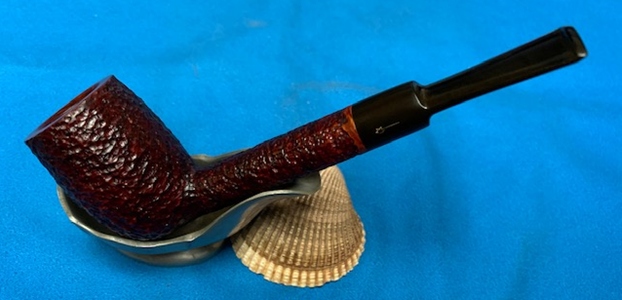
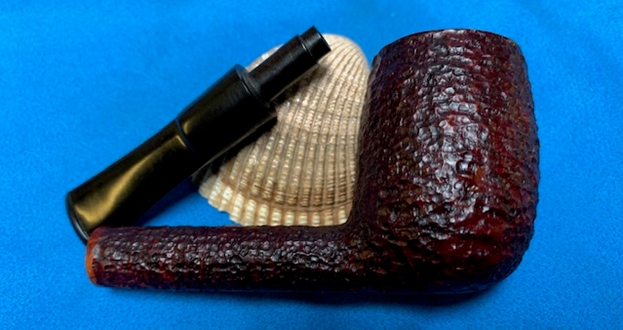
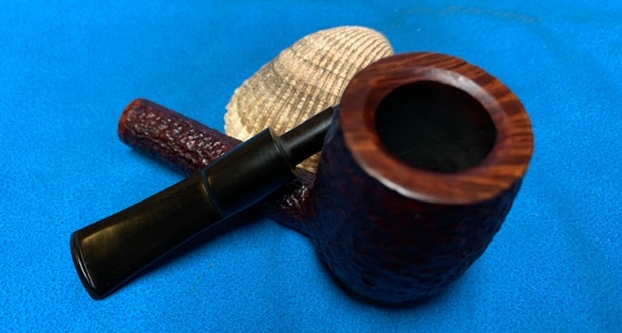
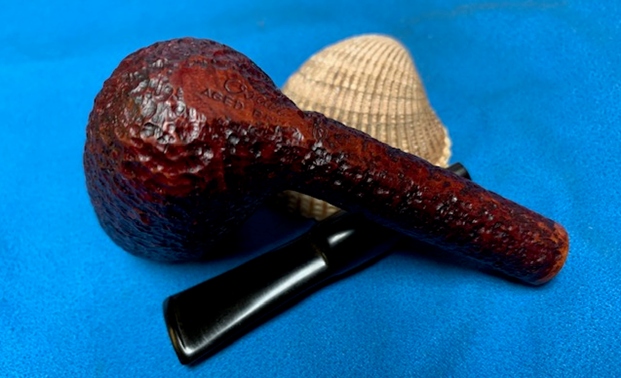
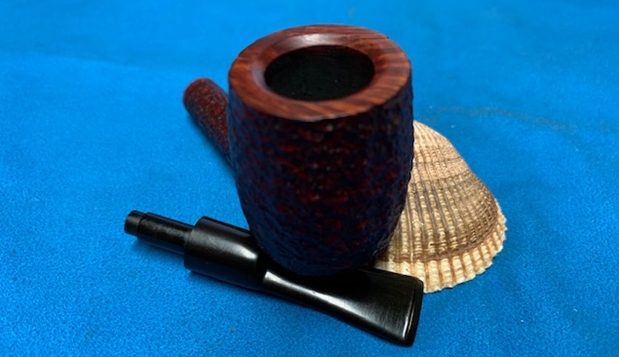
A Rusticated Savinelli Oscar 127 Saddle Stem Billiard


Blog by Steve Laug

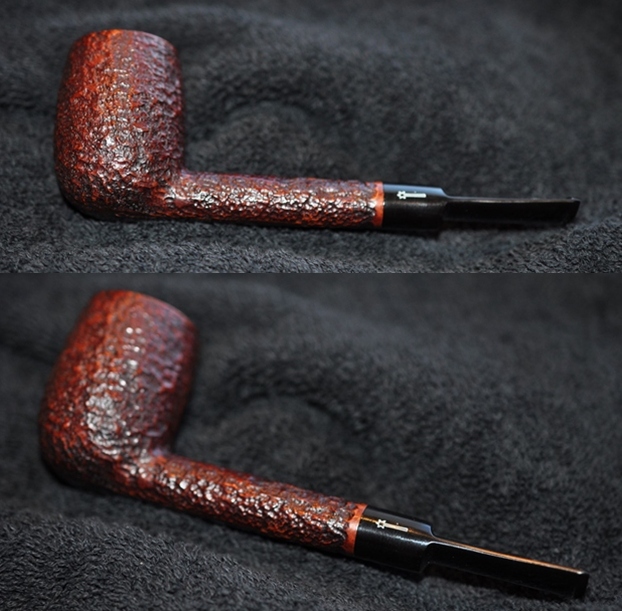
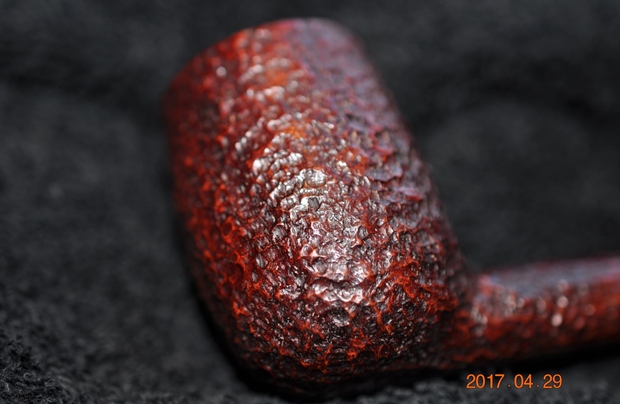
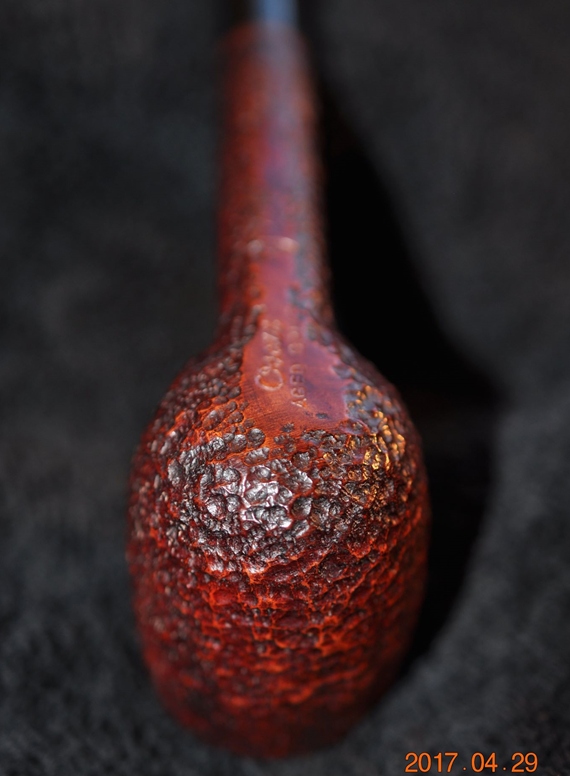
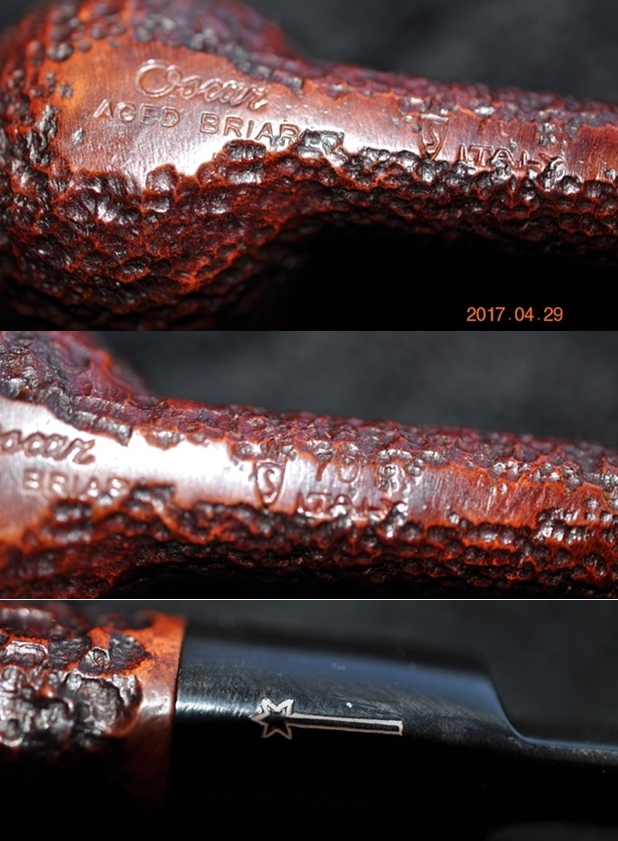
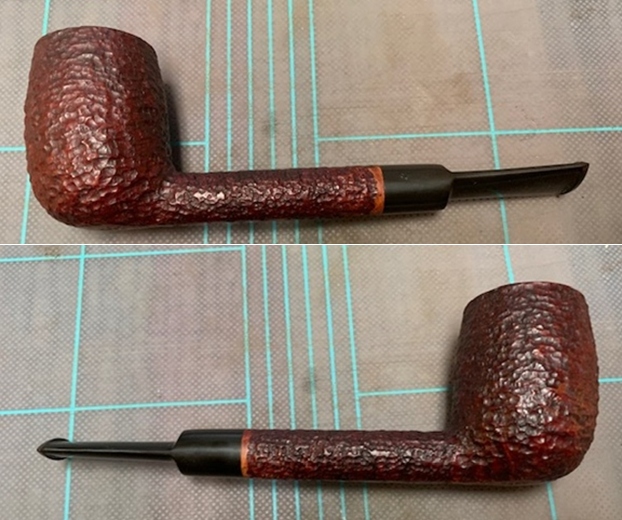
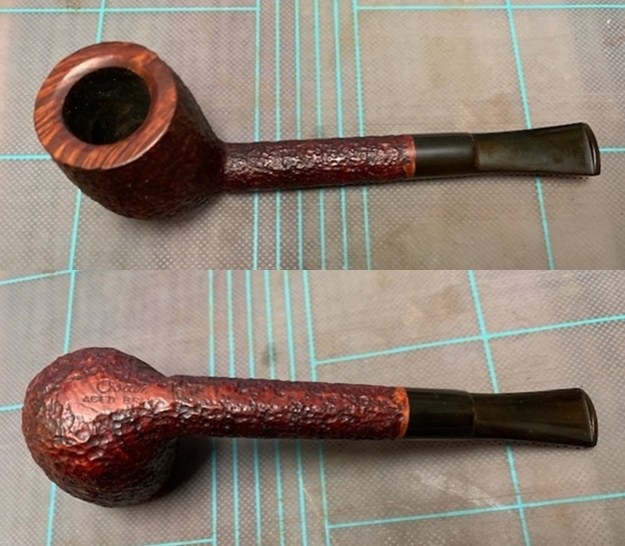
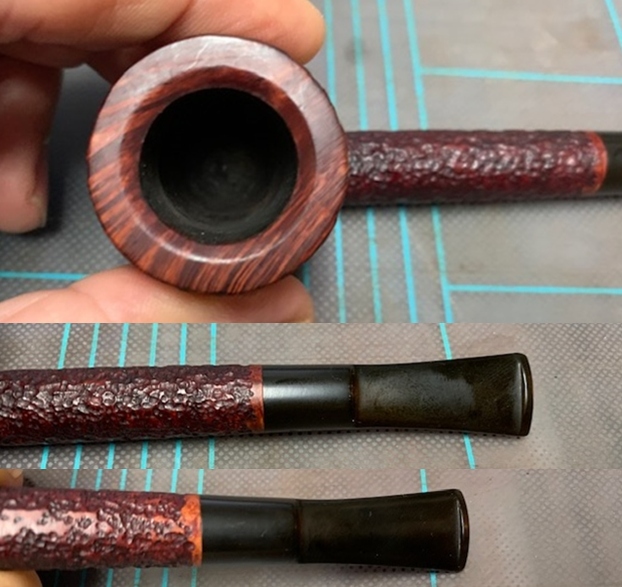
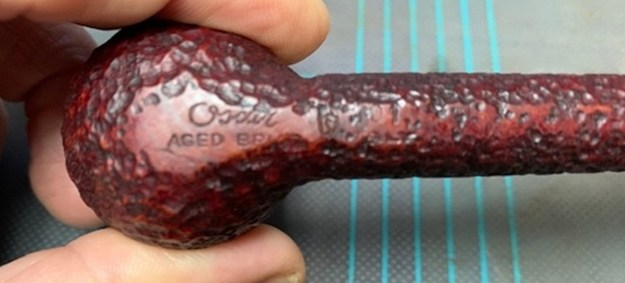
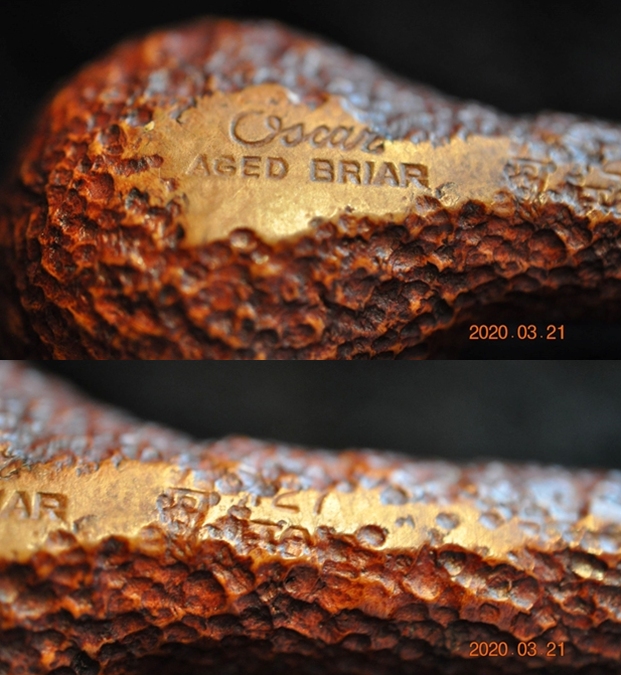
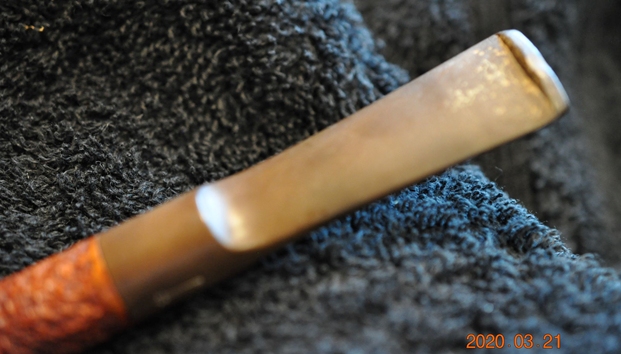
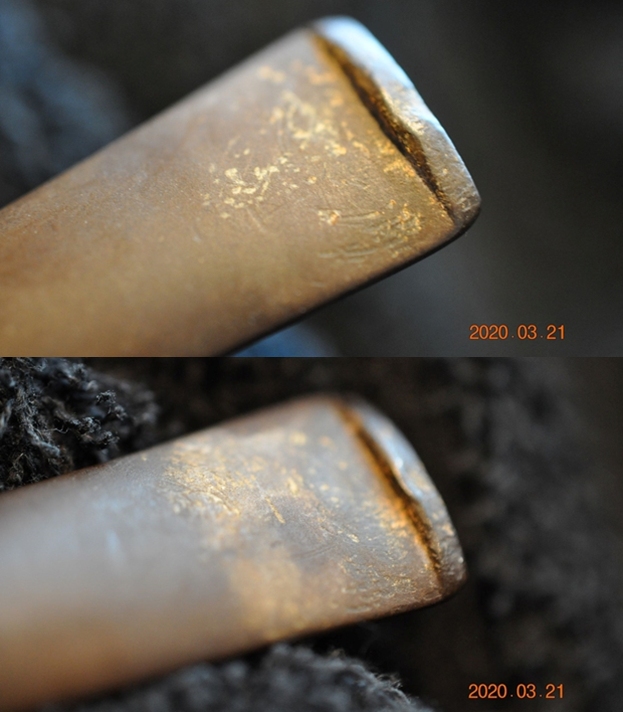
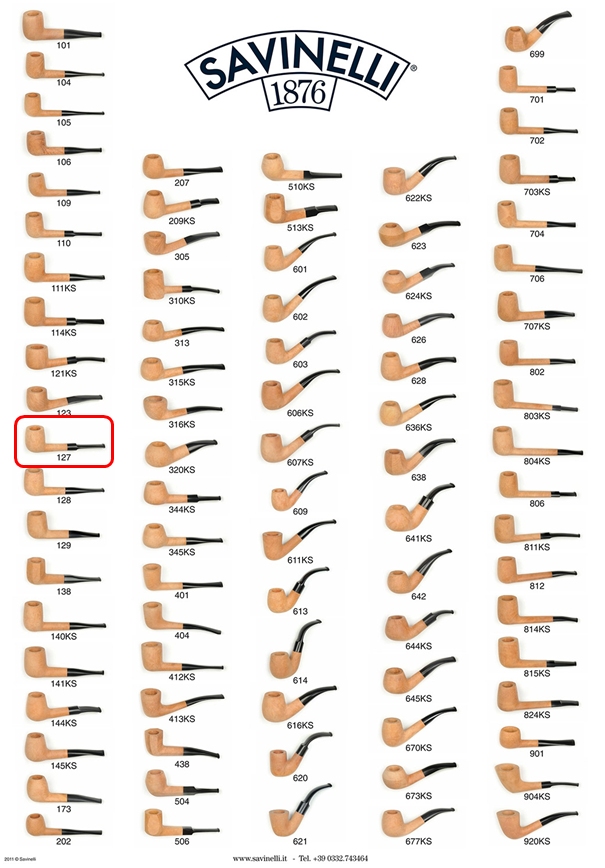
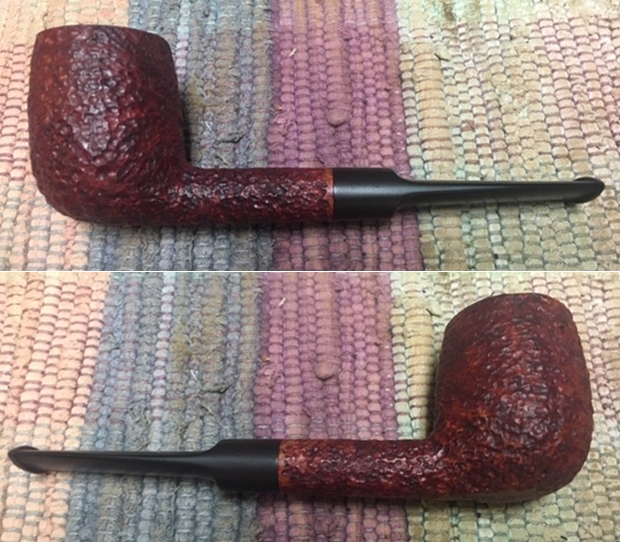
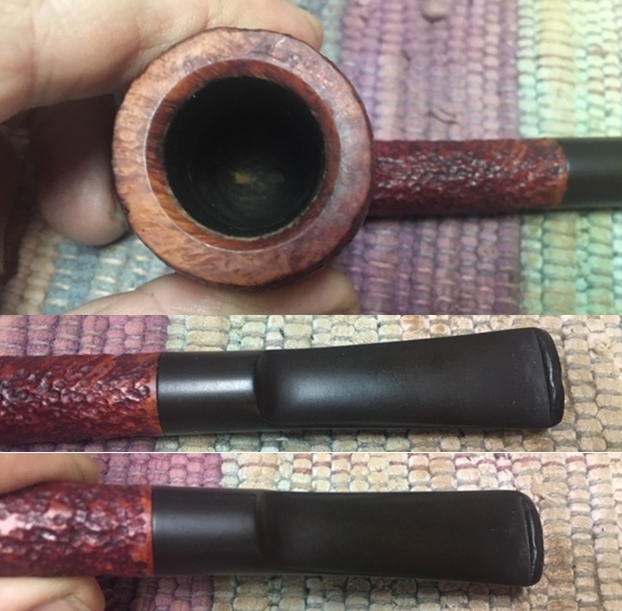
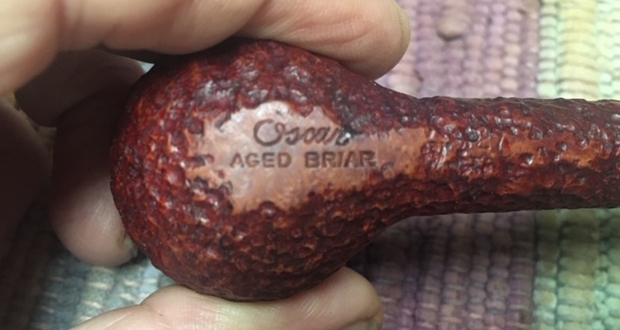
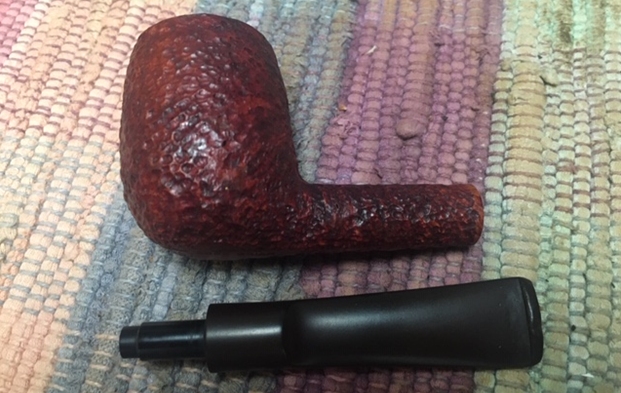
The next pipe on the table came to us from one of Jeff’s pipe hunts. It is a nicely rusticated saddle stem Billiard with a smooth rim top with a bevel on the inside edge of the bowl. It is stamped with Oscar over Aged Briar on the heel of the bowl followed by the Savinelli “S” shield and the shape number 127 over Italy. The stamping is clear and readable though the shape number is hidden slightly by the rustication. The pipe has a combination of brown stains and the tight rustication is not only tactile but also lends a sparkle to the finish. The finish was very dirty with grime ground into the bowl. The bowl had a thick but even cake in the bowl and a heavy lava overflow on the beveled inner edge of the top and top toward the back of the bowl. There was darkening on the briar around the inner beveled edge and the top of the rim. The stem was oxidized and there were tooth marks and chatter on both sides and on the top and bottom edges of the button. Jeff took photos of the pipe before he cleaned it up. Jeff took photos of the rim top to show the thick cake in the bowl and the lava overflow on the beveled inner edge of the rim.  Jeff took some photos of the bowl sides and heel to show the tight rustication pattern that was around this bowl. It is a nice looking pipe. The stamping on each side of the shank is shown in the photos below. They look very good and readable. The shooting star logo on the stem side is clear but faint. I am hoping that it can be repainted once it is clean. It all depends on how deep the stamping on the stem side is. The stem was a very good fit to the shank. It was oxidized, calcified and had debris stuck to the surface of the vulcanite. It also shows the tooth marks on the stem and on the button surface.   I confirmed that the shape number stamping, partially hidden by the rustication is indeed 127 by comparing it to the Savinelli Shape Chart that I have. I have drawn a red box around the shape on the chart below.For some background give the article on Pipedia are as it includes a well written history of the Savinelli brand. (https://pipedia.org/wiki/Savinelli). I turned to work on the pipe itself. Jeff had done a great job cleaning up the pipe as usual. He reamed the pipe with a PipNet reamer and cut back the cake back to the bare briar. He cleaned up the walls with a Savinelli Fitsall Pipe Knife. He scrubbed the interior of the bowl and shank with pipe cleaners, cotton swabs and alcohol to remove the tars and oils. He scrubbed the exterior of the pipe with Murphy’s Oil Soap and a tooth brush to remove the grime from the finish. He worked on the rim top lava and darkening with the soap and tooth brush. He scrubbed the inside of the stem with alcohol and pipe cleaners. He scrubbed the exterior with Soft Scrub and then soaked it in Before & After Deoxidizer. He washed it off with warm water to remove the deoxidizer. The pipe looked far better. The stamping on the side of the stem was very light and the white that had remained was gone. I took photos of the pipe when I received it before I started working on it. I took photos of the bowl and rim top as well as the stem to show how clean they were. You can some spots on the inner edge and the top where some darkening remains.  The stem looks clean of oxidation and the tooth marks and chatter are very clear in the photos.   I took a photo of the stamping on the underside of the bowl and shank. The stamping is clear and readable as noted above.   I took a photo of the pipe with the stem removed to show the overall look of stem, tenon and profile of the pipe.I decided to start my work on the pipe by addressing the darkening on the rim top and beveled inner edge. I used a folded piece of 220 grit sandpaper to work edge to remove the darkening. It took a bit of work but I was able to remove the majority of it and the end product looked much better.   Because the bowl and rim top looked so good I decided to move on to rubbing the briar down with Before & After Restoration Balm. I worked it into the briar with my fingertips and a horse hair shoe brush to get it into the crevices. The product works to clean, enliven and preserve the briar. I let it sit for 10 minutes while I worked on the stem. After the time passed I buffed it with a cotton cloth to deepen the shine. The briar really comes alive with the balm.    I set the bowl aside and turned my attention to the stem. The deep tooth marks and the deep marks on the top and underside of the stem needed to be filled in and reshaped. I filled them in with clear super glue. I purposely overfill the spots so that as they cure and shrink they will still fill in the damage. Once the glue cured I used a needle file to recut the button edge and shape the button surfaces. I flattened the fills on the top and underside of the stem at the same time. I sanded the repaired button and stem surface with 220 grit sandpaper to blend them into the surface of the button and stem. I started polishing the stem with 400 grit wet dry sand paper.   I rubbed the stem down with Denicare Mouthpiece Polish – a red, gritty Tripoli like substance that is a paste. I rubbed it into the surface of the stem and polished it off with a cotton pad. I have found that is a great intermediary step before polishing with micromesh pads. I am not sure what I will use once the final tin I have is gone!   I polished the vulcanite with micromesh sanding pads – 1500-12000 grit pads. I wiped it down with Obsidian Oil after each sanding pad. I used Before & After Pipe Polish – both Fine and Extra Fine to further polish the stem.     This Savinelli Oscar Aged Briar 127 Billiard is a nice looking pipe. The mix of brown stains highlights the rustication around the bowl sides and the heel. The finish on the pipe is in excellent condition and the contrasting stains work well and almost sparkle on the pipe. The polished black vulcanite taper stem adds to the mix. It was impossible to save the shooting star logo it was just too far gone. I put the stem back on the bowl and carefully buffed the pipe with Blue Diamond on the buffing wheel using a light touch on the briar. I gave the bowl multiple coats of Conservator’s Wax by hand and the stem multiple coats of carnauba wax on the buffing wheel and followed that by buffing the entire pipe with a clean buffing pad. I hand buffed the pipe with a microfiber cloth to deepen the shine. The finished Oscar Aged Briar rusticated Billiard is quite nice and feels great in the hand. It is also a sitter with a flat bottom. Give the finished pipe a look in the photos below. The dimensions of the pipe are Length: 5 ½ inches, Height: 1 ¾ inches, Outside diameter of the bowl: 1 ¼ inches, Chamber diameter: ¾ of an inch. Thanks for walking through the restoration with me as I worked over another beautiful pipe. This pipe will be added to the Italian Pipe Makers section of the rebornpipes store soon. If you want to add it to your collection send me an email or a message! Thanks for your time.

Restoring a Beautifully Grained Smooth Savinelli Punto Oro 114KS Saddle Stem Billiard


Blog by Steve Laug

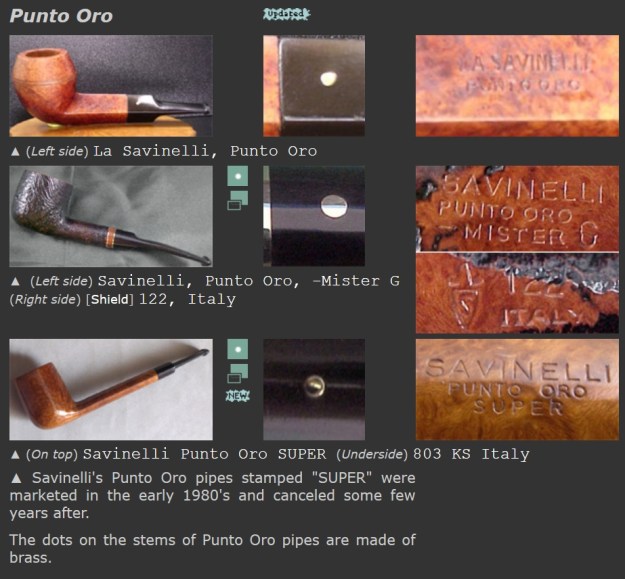
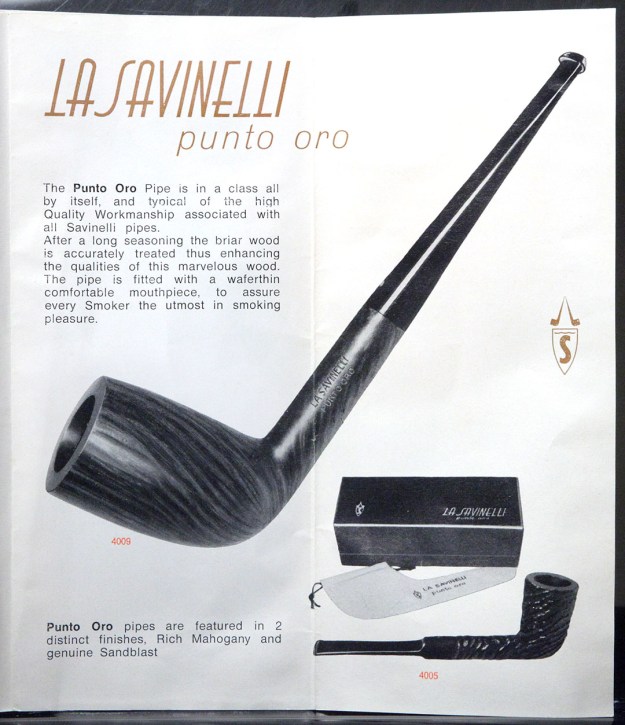
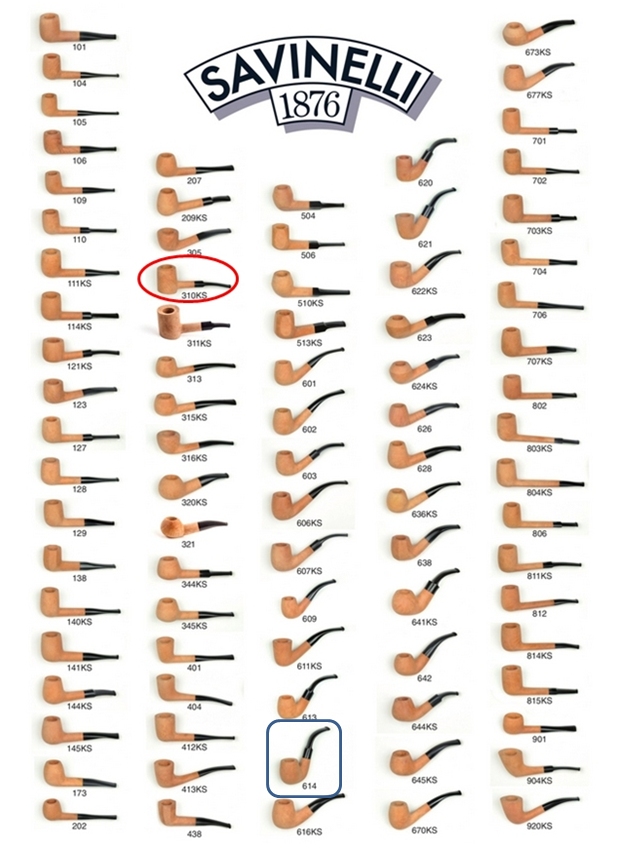
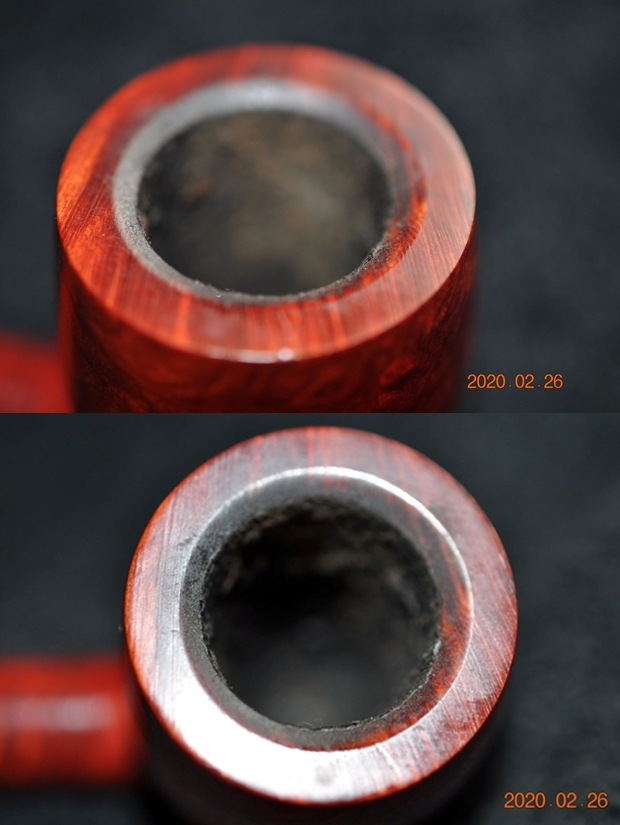
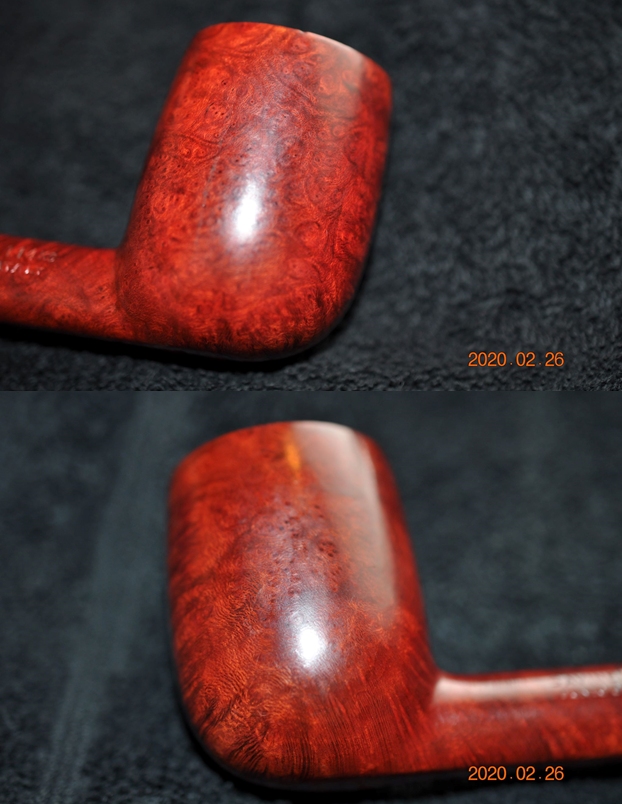
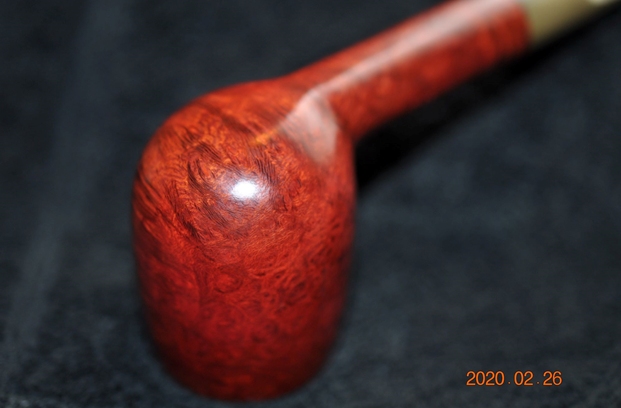
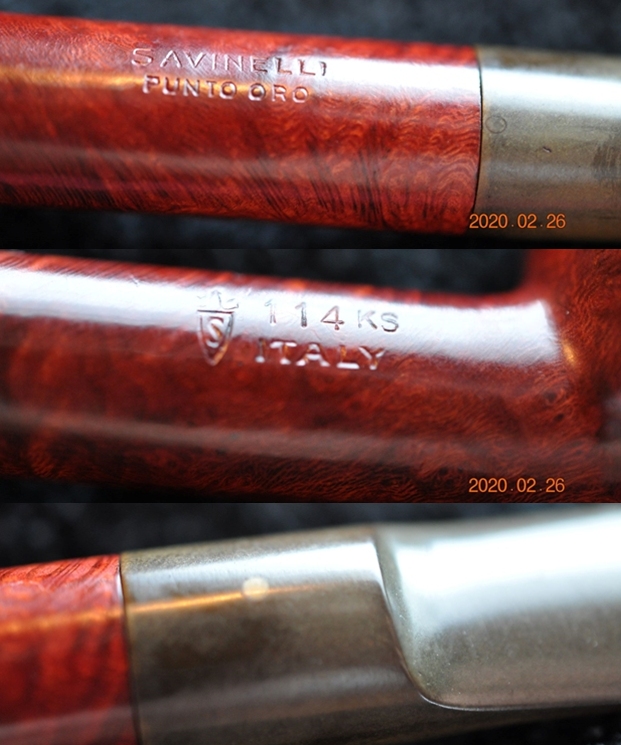
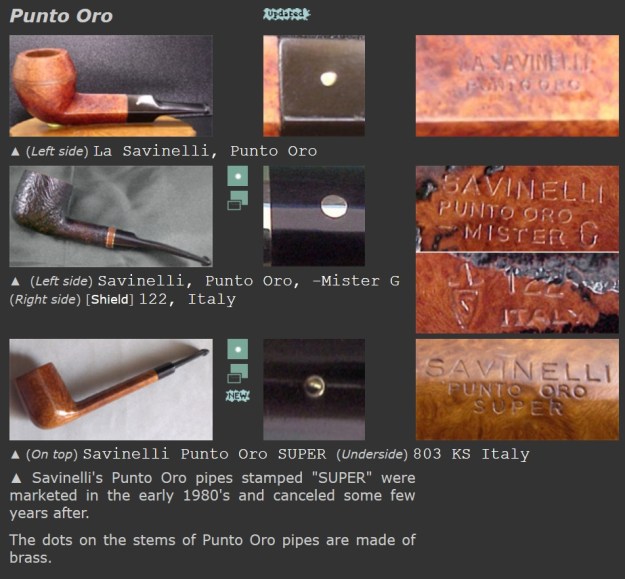
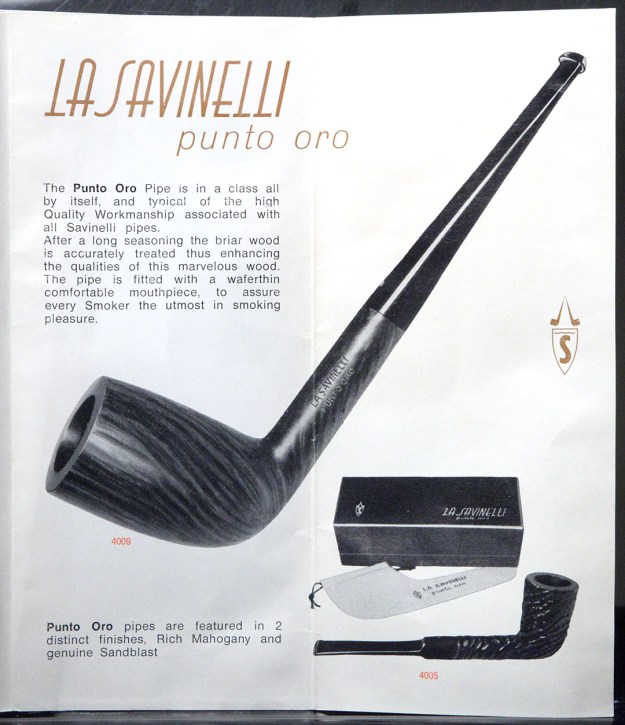
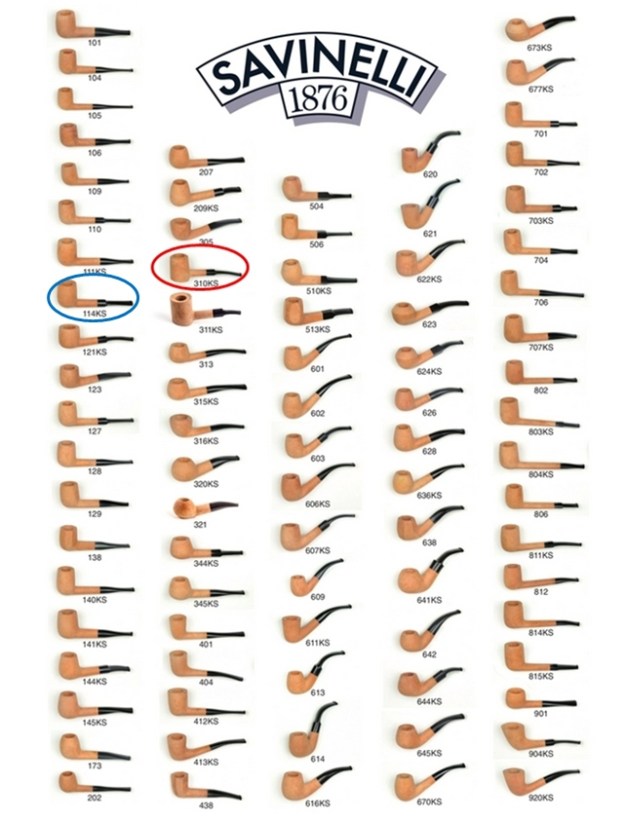
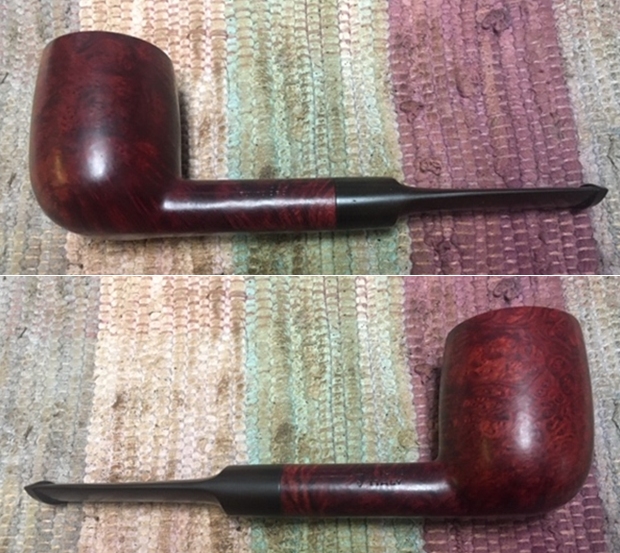
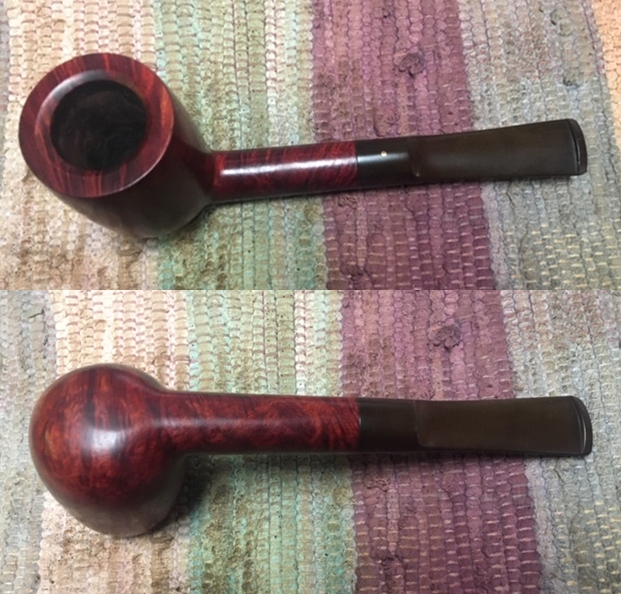
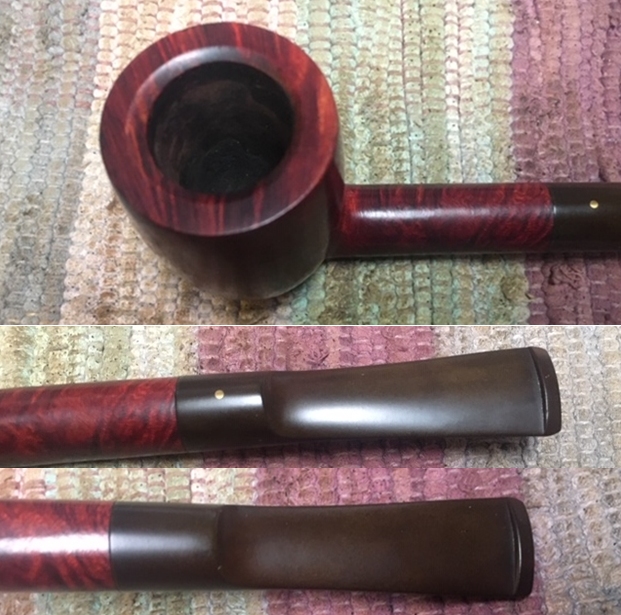
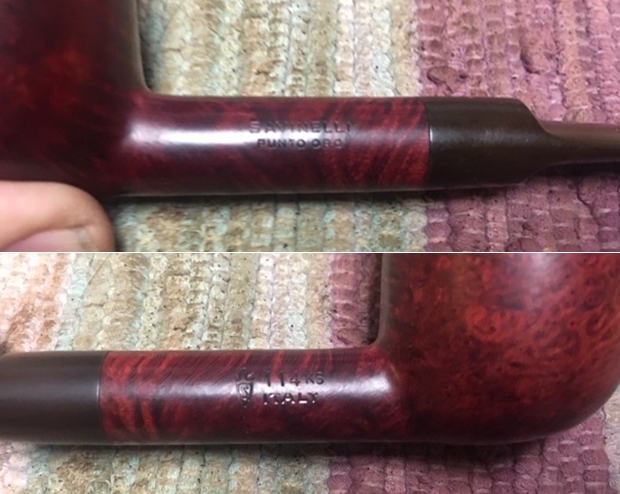
The next pipe on the table came to us from one of Jeff’s pipe hunts not far from where he is located. It is another Savinelli Billiard with a really rich red finish. The pipe has some amazing grain that the shape follows well. The finish was very dirty with grime ground into the grain around bowl sides. The bowl had a thick cake in the bowl and a some lava overflow on the inner edge of the top. There was darkening on the briar around the inner beveled edge of the rim. The pipe is stamped on the left side of the shank and reads Savinelli over Punto Oro. It is stamped on the right side and has a Savinelli S Shield over Italy followed by the 114KS shape number. The stamping is clear and readable. The stem was dirty, oxidized and calcified. There was light tooth chatter and marks on the stem near the button on both sides. The stem has a brass dot of the Punto Oro on the top of the saddle stem. Jeff took photos of the pipe before he cleaned it up. Jeff took photos of the rim top to show the thick cake in the bowl and the lava overflow on the inner edge of the rim top. The photos show the rim top and bowl from various angles. Jeff took some photos of the bowl sides and heel to show the nice grain that was on this bowl. It is a quite beautifully grained pipe. The stamping and logo are on the underside of the shank and are as noted above. They look very good even though some of each line is stamped in the blast portion not just on the smooth panel.The stem was a very good fit to the shank. It was oxidized, calcified and had debris stuck to the surface of the vulcanite. There was tooth chatter and marks on both sides of the stem and on the button surface.I turned to Pipephil’s site to get a feel for the Punto Oro line. All of the previous Punto Oro pipes that I have worked on were smooth finish with great grain. This was a great smooth finished pipe in the rich Mahogany finish. Here is the link (http://www.pipephil.eu/logos/en/logo-savinelli3.html). I have included a screen capture of the pertinent information on the line below.I turned to Pipedia to look at what information they had on the brand. I found a catalogue page on the Punto Oro which confirmed what I had surmised about the line having both smooth and sandblast finished pipe (https://pipedia.org/images/d/db/Sav_Punto_Oro.jpg). I have included a screen capture of the page below. It says that the line was available in 2 distinct finishes – a rich Mahogany smooth finish and a genuine sandblast. The current pipe on the table is a rich Mahogany smooth pie.The Savinelli shape number was 114KS so I turned to the Savinelli Shape Chart on Pipedia and included a screen capture (https://pipedia.org/images/4/41/Sav_Shape_Chart_2017.jpg). I have circled the 114KS shape in blue in the photo below.Armed with that information I turned to work on the pipe itself. Jeff had done a great job cleaning up the pipe as usual. He reamed the pipe with a PipNet reamer and cut back the cake back to the bare briar. He cleaned up the walls with a Savinelli Fitsall Pipe Knife. He scrubbed the interior of the bowl and shank with pipe cleaners, cotton swabs and alcohol to remove the tars and oils. He scrubbed the exterior of the pipe with Murphy’s Oil Soap and a tooth brush to remove the grime from the finish. He worked on the rim top lava and darkening with the soap and tooth brush. He scrubbed the inside of the stem with alcohol and pipe cleaners. He scrubbed the exterior with Soft Scrub and then soaked it in Before & After Deoxidizer. He washed it off with warm water to remove the deoxidizer. The pipe looked far better. I took photos of the pipe when I received it before I started working on it. I took photos of the bowl and rim top to show how clean it was. You can see the darkening on the inner edge of the rim and the top.  The stem looks clean of oxidation and the tooth marks and chatter are very clear in the photos.I took photos of the stamping on the sides of the shank. The stamping is clear and readable. It reads as noted above.I took a photo of the pipe with the stem removed to show the overall look of stem, tenon and profile of the pipe.I polished the briar with micromesh sanding pads – dry sanding with 1500-12000 grit pads and wiping the bowl down with a damp cloth after each pad. I rubbed the briar down with Before & After Restoration Balm. I worked it into the briar with my fingertips. The product works to clean, enliven and preserve the briar. I let it sit for 10 minutes while I worked on the stem. After the time passed I buffed it with a cotton cloth to deepen the shine. The briar really comes alive with the balm. I set the bowl aside and turned my attention to the stem. I sanded out the tooth marks and chatter on both sides of the button surface and stem with 220 grit sandpaper and began the polishing with 400 grit wet dry sandpaper.I rubbed the stem down with Denicare Mouthpiece Polish – a red, gritty Tripoli like substance that is a paste. I rubbed it into the surface of the stem and polished it off with a cotton pad. I have found that is a great intermediary step before polishing with micromesh pads. I am not sure what I will use once the final tin I have is gone!I polished the vulcanite with micromesh sanding pads – 1500-12000 grit pads. I wiped it down with Obsidian Oil after each sanding pad. I used Before & After Pipe Polish – both Fine and Extra Fine to further polish the stem.   This Savinelli Punto Oro Smooth Mahogany Finish Billiard is a real beauty. The Mahogany stain highlights some great grain around the bowl sides and the heel. The finish on the pipe is in excellent condition and the contrasting stains work well to highlight the grain on the pipe. The polished black vulcanite saddle stem adds to the mix. With the grime and debris gone from the finish and the bowl it was a beauty and the blast really is eye-catching. I put the stem back on the bowl and buffed the pipe with Blue Diamond on the buffing wheel. I gave the bowl and the stem multiple coats of carnauba wax on the buffing wheel and followed that by buffing it with a clean buffing pad. I hand buffed the pipe with a microfiber cloth to deepen the shine. The finished Billiard is quite nice and feels great in the hand. Give the finished pipe a look in the photos below. I can only tell you that like the other pipes I am working that it is much prettier in person than the photos capture. The dimensions of the pipe are Length: 5 ¾ inches, Height: 2 inches, Outside diameter of the bowl: 1 ½ inches, Chamber diameter: ¾ of an inch. Thanks for walking through the restoration with me as I worked over another beautiful pipe. This pipe will be added to the Italian Pipe Makers section of the rebornpipes store soon. If you want to add it to your collection send me an email or a message! Thanks for your time.

Restoring a Beautifully Sandblasted Savinelli Punto Oro 310KS Poker


Blog by Steve Laug

The next pipe on the table came to us from one of Jeff’s pipe hunts not far from where he is located. It is an interesting Savinelli Poker with a really nice sandblast finish. The blast is quite rugged and defined and feels as good in the hand as it looks to the eye. The finish was very dirty with flecks of white paint in the crevices of the blast around the bowl. The bowl had a thick cake in the bowl and a lava overflow on the rim top. There was darkening on the briar around the inner beveled edge of the rim. The pipe is stamped on the underside of the shank and reads Savinelli over Punto Oro followed by the Savinelli S shield and the shape number 310KS Italy. The stamping is clear and readable. The stem was dirty and oxidized. There were tooth marks and chatter on the stem near the button on both sides and some on the surface of the button as well. I am not sure the stem is original though the fit is perfect. There are no marks identifying it as a Savinelli or Punto Oro pipe but that is not enough to be conclusive on the status of the stem. Jeff took photos of the pipe before he cleaned it up. Jeff took photos of the rim top to show the damage, the tick cake in the bowl and the lava overflow on the rim top filling in some of the crevices in the blasted rim top.. The photos show the rim top and bowl from various angles. Jeff took some photos of the bowl sides and heel to show the nice grain that was on this bowl. It is a quite beautifully sandblasted pipe. The stamping and logo are on the underside of the shank and are as noted above. They look very good even though some of each line is stamped in the blast portion not just on the smooth panel.The stem was a very good fit to the shank. It was oxidized, calcified and had debris stuck to the surface of the vulcanite. There was tooth chatter and marks on both sides of the stem and on the button surface. I turned to Pipephil’s site to get a feel for the Punto Oro line. All of the previous Punto Oro pipes that I have worked on were smooth finish with great grain. This was a sandblast one and I do not recall working on one before. Here is the link (http://www.pipephil.eu/logos/en/logo-savinelli3.html). I have included a screen capture of the pertinent information on the line below. It appears the line came out in both smooth and sandblast finishes.I turned to Pipedia to look at what information they had on the brand. I found a catalogue page on the Punto Oro which confirmed what I had surmised about the line having both smooth and sandblast finished pipe (https://pipedia.org/images/d/db/Sav_Punto_Oro.jpg). I have included a screen capture of the page below. It says that the line was available in 2 distinct finishes – a rich Mahogany smooth finish and a genuine sandblast.The Savinelli shape number was 310KS so I turned to the Savinelli Shape Chart on Pipedia and included a screen capture (https://pipedia.org/images/4/41/Sav_Shape_Chart_2017.jpg). Ihave circled the 310KS shape in red in the photo below.Armed with that information I turned to work on the pipe itself. Jeff had done a great job cleaning up the pipe as usual. He reamed the pipe with a PipNet reamer and cut back the cake back to the bare briar. He cleaned up the walls with a Savinelli Fitsall Pipe Knife. He scrubbed the interior of the bowl and shank with pipe cleaners, cotton swabs and alcohol to remove the tars and oils. He scrubbed the exterior of the pipe with Murphy’s Oil Soap and a tooth brush to remove the grime from the finish. He worked on the rim top lava and darkening with the soap and tooth brush. He scrubbed the inside of the stem with alcohol and pipe cleaners. He scrubbed the exterior with Soft Scrub and then soaked it in Before & After Deoxidizer. He washed it off with warm water to remove the deoxidizer. The pipe looked far better. I took photos of the pipe when I received it before I started working on it. I took photos of the bowl and rim top to show how clean it was. You can see the darkening on the inner edge of the rim and the top.  The stem looks clean of oxidation and the tooth marks and chatter are very clear in the photos.I took a photo of the stamping on a smooth panel on the underside of the shank. The photo is a little blurry but the stamping is clear and readable.I took a photo of the pipe with the stem removed to show the overall look of stem, tenon and profile of the pipe.I cleaned up the darkening of the edge and rim top with a brass bristle wire brush. I was able to remove some more of the darkening and while not perfect it is certainly better. There were also still some white paint flecks in the sandblast grooves. I cleaned them out at the same time. I rubbed the briar down with Before & After Restoration Balm. I worked it into the briar with my fingertips and a horse hair shoe brush to get it into the deep crevices of the sandblast. The product works to clean, enliven and preserve the briar. I let it sit for 10 minutes while I worked on the stem. After the time passed I buffed it with a cotton cloth to deepen the shine. The sandblast came alive with the balm. I set the bowl aside and turned my attention to the stem. I sanded out the tooth marks and chatter on both sides of the button surface and stem with 220 grit sandpaper and began the polishing with 400 grit wet dry sandpaper.I rubbed the stem down with Denicare Mouthpiece Polish – a red, gritty Tripoli like substance that is a paste. I rubbed it into the surface of the stem and polished it off with a cotton pad. I have found that is a great intermediary step before polishing with micromesh pads. I am not sure what I will use once the final tin I have is gone!I polished the vulcanite with micromesh sanding pads – 1500-12000 grit pads. I wiped it down with Obsidian Oil after each sanding pad. I used Before & After Pipe Polish – both Fine and Extra Fine to further polish the stem. This Savinelli Punto Oro sandblast Poker Sitter is a real beauty. The sandblast reveals some great ring grain around the bowl sides and birdseye on the heel. The finish on the pipe is in excellent condition and the contrasting stains work well to highlight the grain under the blast on the pipe. The polished black vulcanite saddle stem adds to the mix. With the grime and debris gone from the finish and the bowl it was a beauty and the blast really is eye-catching. I put the stem back on the bowl and buffed the pipe with Blue Diamond on the buffing wheel. I buffed the sandblast with a light touch and carefully avoided the stamping on the shank during the process. I gave the bowl multiple coats of Conservator’s Wax and the stem multiple coats of carnauba wax on the buffing wheel and followed that by buffing it with a clean buffing pad. I hand buffed the pipe with a microfiber cloth to deepen the shine. The finished Savinelli Punto Oro Poker is quite nice and feels great in the hand. Give the finished pipe a look in the photos below. I can only tell you that like the other pipes I am working that it is much prettier in person than the photos capture. The dimensions of the pipe are Length: 5 ½ inches, Height: 2 inches, Outside diameter of the bowl: 1 ¼ inches, Chamber diameter: ¾ of an inch. Thanks for walking through the restoration with me as I worked over another interesting pipe. This pipe will be added to the Italian Pipe Makers section of the rebornpipes store soon. If you want to add it to your collection send me an email or a message! Thanks for your time.
Next on the Table – a Savinelli Deco 622KS Bent Pot


Blog by Steve Laug

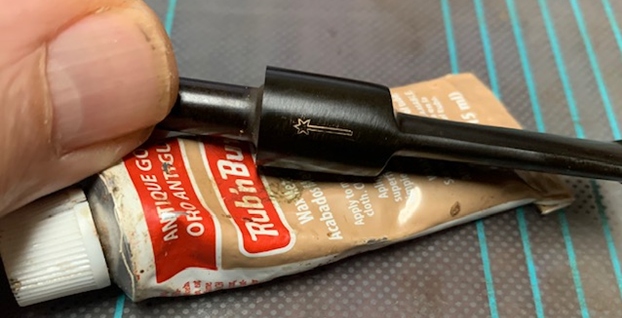
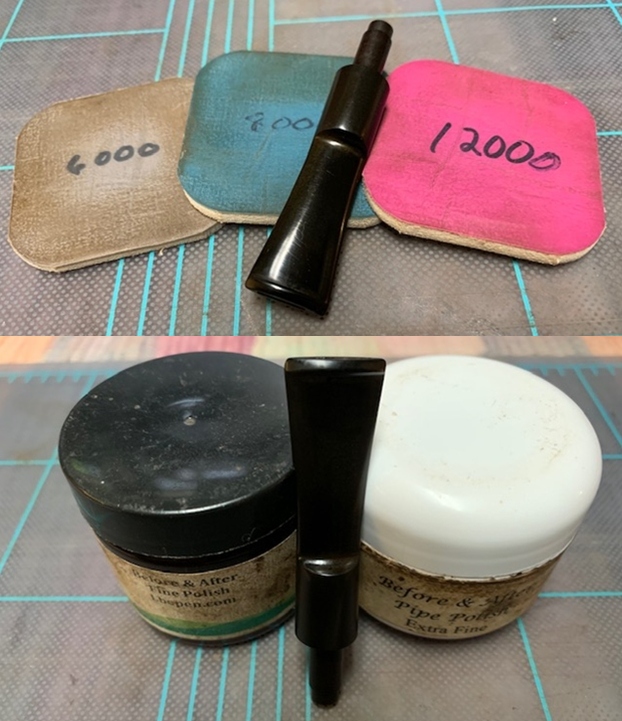
The next pipe on the work table is a Savinelli line pipe that was a new one to me. It is stamped on the left side of the shank Savinelli in an arch over DECO. On the right side it is stamped with the Savinelli “S” Shield and the shape number 622KS over Italy. The stem has the Savinelli Shield on stamped on the topside and 6mm stamped on the underside. The pipe was dirty and there was a thick cake in the bowl. There is some lava on the inward bevel and some darkening as well. There is also some lava on the rim top. The finish is in excellent condition other than being dirty. The stem is acrylic and there are tooth marks and chatter on both sides near the button with light damage on the button surface itself. The stem is free of the 6mm filter and looks like one has not been used in the stem. The internals of the pipe are very dirty. Jeff took photos of the pipe before he started his cleanup work on it.  The photos of the rim top and bowl show the thick cake, tobacco debris and thick lava overflow on the rim top. The pipe was a mess. You can also see some chipped areas on the outer edge of the bowl and nicks in the sides of the bowl. He captured the grain around sides of the bowl in the next photos. You can also see the nicks and chips out of the briar but it is still quite pretty beneath the wear and tear and grime! He took photos of the stamping on the shank sides. They are clear and readable and read as noted above. The acrylic stem was in good condition other than the tooth marks on the surface of both sides ahead of the button and some wear on the button as well.Jeff out did himself on the cleanup of this pipe and when I received it I was not disappointed as it showed what I saw on the briar in the photos above. The grain was quite nice and the colour was very good. Jeff had reamed the bowl with a PipNet pipe reamer and cleaned up the debris left behind with a Savinelli Fitsall Pipe Knife. He scrubbed the internals in the shank and the stem with alcohol, cotton swabs and pipe cleaners. He scrubbed the externals of the bowl with undiluted Murphy’s Oil Soap and a tooth brush and rinsed it off with running water. He scrubbed the stem with Soft Scrub to remove the debris on the stem. The pipe looked quite amazing. I took photos of it before I started my part of the restoration. I took a close up photo of the rim top to show the damaged areas and how clean it was. You can see damage on the right front inner edge and back left edge of the rim. There appeared to be some burn damage and darkening. The stem looked good other than the tooth marks and the light chatter on the surface ahead of the button.I took the stem off the shank and took a photo of the parts. It is a great looking pipe.I decided to start on the inner rim edges and the rim top. I sanded the beveled edge with a piece of folded 220 grit sandpaper to smooth out the damaged edges and removing the darkening. I stained the edge with a Maple Stain Pen. The rim top also looks much better and will improve with polishing.I polished the bowl and rim with micromesh sanding pads – dry sanding it with 1500-12000 grit sanding pads. I wiped it down with a damp cloth to remove the dust left behind from sanding. I buffed bowl on the wheel with Blue Diamond to polish the briar and bring the grain out. I rubbed it down with Before & After Refurbishing Balm. I worked it into the briar with my fingertips and let it sit for 20 minutes. The Balm works to preserve, protect and enliven the briar. The pipe is starting to look very good at this point. I set the bowl aside and turned my attention to the stem. I sanded out the tooth marks and chatter remaining on the stem with 220 grit sandpaper and followed that by starting the polishing with 400 grit wet dry sandpaper.I continued polishing the stem with Denicare Mouthpiece Polish – a red gritty paste that feels a lot like Tripoli. I find that it works well to polish out some of the more surface scratches in the vulcanite left behind by the 400 grit wet dry sandpaper. I rub it into the stem surface with my fingertips and buff it off with a cotton pad.I used Antique Gold Rub’n Buff to touch up the stamping on the stem. I applied a spot of the product on the surface and worked it into the stamping with a tooth pick. I rubbed it off and buffed it with a soft cloth. The finished look was very good.I polished the stem with micromesh sanding pads – dry sanding with 1500-12000 grit sanding pads. I wiped the stem down after each sanding pad with a cloth containing some Obsidian Oil. I finished polishing it with Before & After Pipe Stem Polish – both Fine and Extra Fine and buffed it off with a cotton cloth. This Savinelli Deco 622KS Bent Pot is a nice looking pipe. I put the bowl and stem back together again and buffed the bowl and the stem with Blue Diamond on the buffing wheel. I polished the metal band with a jeweler’s cloth. I gave the bowl and the stem several coats of carnauba wax. I carefully buffed the entire pipe with a clean buffing pad to raise the shine. I finished buffing with a microfiber cloth to deepen the shine. The finished pipe looks very good. The grain is quite beautiful a mix of cross grain and birdseye grain around the bowl sides and the rim top and heel. The pipe feels great in the hand. It has an interesting shape that fits well in either the right or left hand. The finished Bent Pot is shown in the photos below.  The 6mm filter stem is in great condition. What i like about the 6mm filter pipe is that it can be smoked without a filter and still has a great draw. The dimensions of the pipe are Length: 6 inches, Height: 2 inches, Outside diameter of the bowl: 1 5/8 inches, Chamber diameter: 7/8 of an inch. This great looking Savinelli pipe turned out very well. It should be a great pipe. It will be going on the rebornpipes store shortly if you are interested in adding it to your collection. Thanks for reading this blog and my reflections on the pipe while I worked on it.

A Gift for My Good Friend in India – An Italian Savinelli Punto Oro 413KS Woodstock


Blog by Dal Stanton

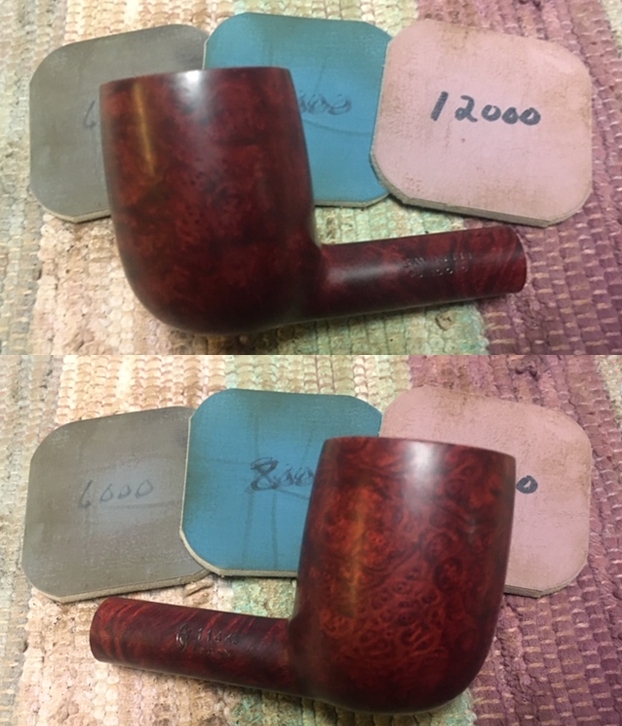
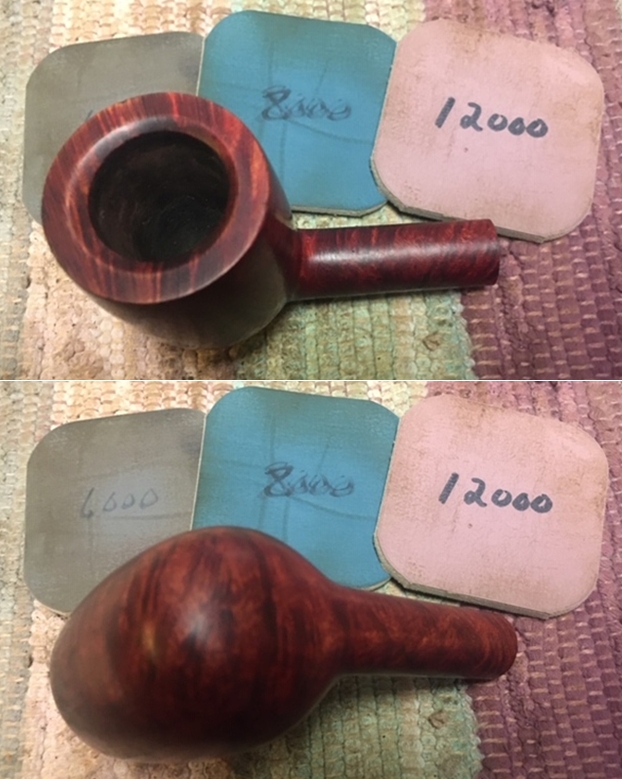
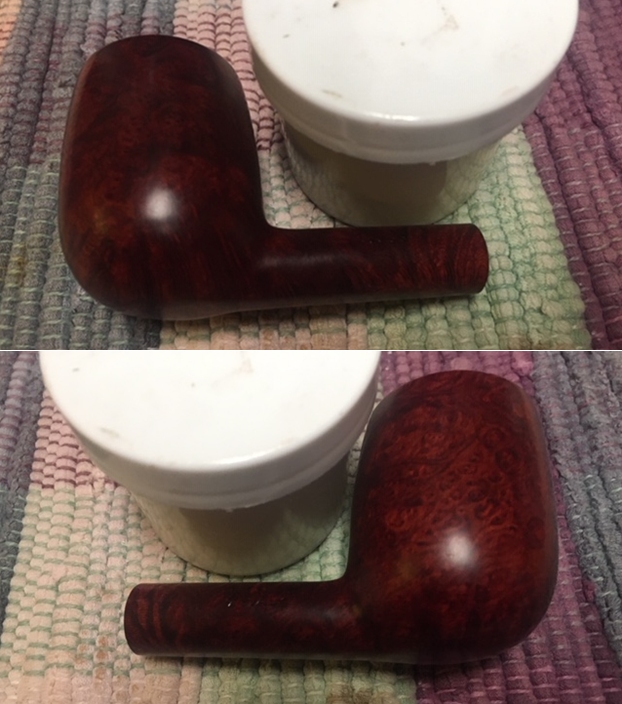
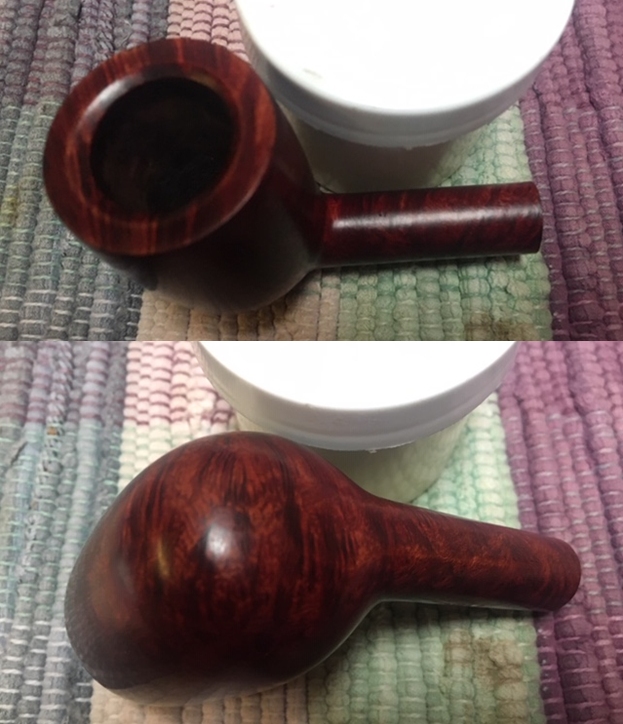
As I begin this restoration, my mind is replaying the plethora of experiences that were shaped and riveted into my memory of my visit last year to India.  Not many ‘good’ experiences in life can be described as ‘life changing’.  These kinds of changes are usually reserved for the difficult times – like now, as the world is navigating a pandemic that creates confusion and uncertainty about life and the future.  Yet, Paresh’s invitation to me, along with the rebornpipes’ trust, Steve and Jeff Laug, to visit his home and family was an experience that was life changing for me.  It wasn’t just the sights and sounds of a different cultural context or the different foods the pallet experienced tasting Indian cuisine.  What was so profoundly and wonderfully life changing was the depth of loving hospitality Paresh and his wife, Abha, provided to us during the visit.  Meeting and enjoying his family, along with their two daughters, Mudra and Pavni, was truly an experience that will walk with me in the life I continue to enjoy by God’s grace.  Of course, I cannot fail to mention the ‘reason’ for our travels where West met East!  Paresh asked that we collaborate in the restoration of one of his heirloom pipes, an unbelievably fun and enriching experience that produced this story, perhaps my favorite:  West Meets East in India to Restore a Grandson’s Treasure – an 1846 BBBHow does an Italian Savinelli Punto Oro heading to India enter this story?  It has to do with an Italian American L. J. Peretti pipe that I noticed in India – basking nonchalantly among the historic pipes of Paresh’s unbelievable heirloom collection he received from his grandfather.  The Peretti that got my attention was not from his grandfather’s collection, but a pipe that Paresh had acquired himself.  Since doing my first restoration of a L. J. Peretti, I have become somewhat of a collector of these blue collar ‘shop pipes’ from the second oldest tobacconist shop located in downtown Boston.  I had never seen a Peretti Cutty shape before and hence, the Savinelli Punto Oro makes his debut on the stage.One of the great things about ‘Pipedom’s’ smaller subset, pipe restorers, is that it is special and an honor to have pipes in your personal collection that have come from other restorers who you’ve learned from and appreciated.  I have pipes in my rotation from Steve, who introduced me to the world of pipe restoration and is a good friend who has visited me here in Sofia and I’ve had the privilege of visiting his home terrain, Vancouver.  When I enjoy fellowship with one of his pipes with my favorite blend stoked in the bowl, the relationship is always the focus of the reflection during those paused moments.  I managed to secure one very special pipe for my collection from Charles Lemon of Dad’sPipes, who I’ve also learned much from in his restorations and appreciated that his health has allowed him to come back from hiatus.

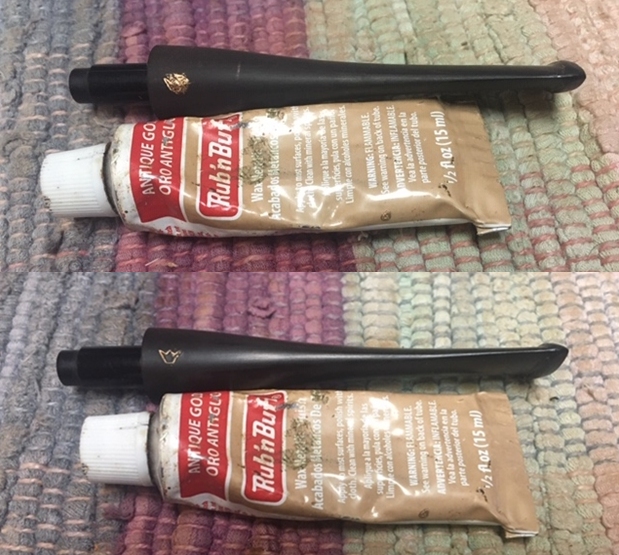
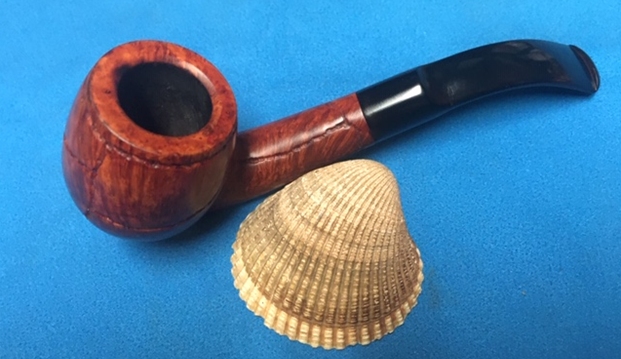
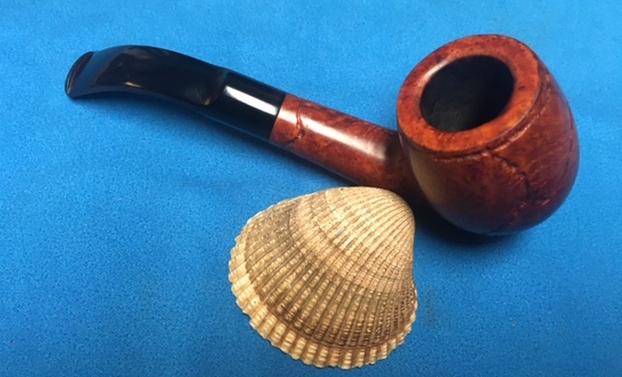
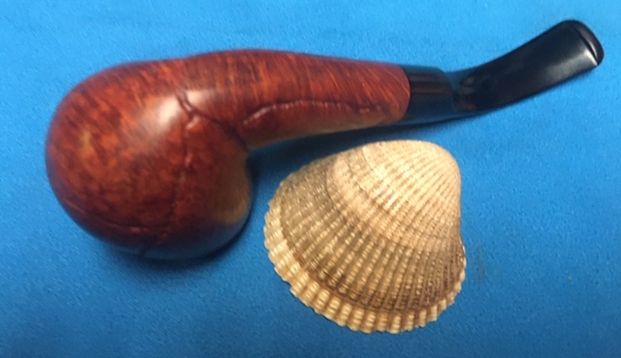
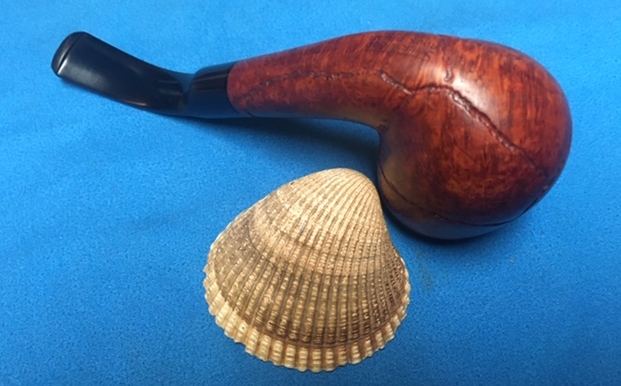
When Paresh became aware of my attraction to his L. J. Peretti Cutty, the accord we ratified between us was to do a reciprocal gifting from our personal collections.  Paresh gifted me his Peretti Cutty which I brought home to Bulgaria from India.  After getting back to Bulgaria, I chose a pipe from my personal collection for him.  The special pipe I chose for Paresh was a Savinelli Punto Oro that was in my personal restoration queue – for a LONG time.  The problem of restoring pipes primarily for others is that sometimes it’s difficult to work on your own trove of treasures!  When I saw the Punto Oro on German eBay located in Bühl, I was drawn by the elegant lines of this Savinelli offering. The shape is unique with the Dublin-esque bowl, but not quite.  In my initially assessment of the pipe, I was calling it an oval shank, slightly Bent Billiard – but not quite. The shank was not actually a true oval but a compressed oval – an American football or rugby ball shape.  The unique shape created a lined definition running down the sides of the shank transitioning into and through the stem – flow and balance!  With so much attention on focused the shape, the fact of the striking fire grain showcased throughout the pipe – was reminiscent for me of a tiger’s fur, flowing even through the shank composition.  This only added frosting on this Savinelli Punto Oro cake!  Very nice! Unfortunately, it has taken me a few years to get to this beautiful pipe, but it was waiting.  It was patiently waiting in the ‘Help Me!’ basket and when it came to mind as a comparable reciprocal gift for Paresh, his debut on the worktable became a reality.  Here are more pictures of a very nice Savinelli Punto Oro yet having some daunting issues. The nomenclature is on the upper shank and it reads, SAVINELLI [over] PUNTO ORO, (Gold Point).  ‘Gold Point’ may also be referencing the single gold point brass dot embedded on the upper stem panel.The lower panel section is stamped with the encased ‘S’ in Savinelli’s well known and recognized symbol.  The Savinelli symbol is to the left of the shape number, 413KS [over] the COM, ITALY.  The shape is found in the Savinelli shapes chart found in the Pipedia article on Savinelli,  but the chart offers no names for the shapes, only numbers.  This 413 is designated as a ‘King Size’ by the KS.   Whatever the shape is, I like it!Not satisfied with my lack of definition on what to call this shape, I sent a note off to Steve asking for his opinion – Calabash, Dublin, fancy Billiard?  Steve’s response settled the question directing me to Savinelli’s website – my first thought, why didn’t I think of that?  In the Savinelli line up of shapes or models, the 413KS is described as a Woodstock (pictured below).  Nice!  Bill Burney’s description of the Woodstock in his Pipedia shapes discussion is helpful and includes all the variations I was contemplating!
Zulu/Woodstock – The Zulu shape combines the canted bowl of the Dublin with an 1/8 bent stem.  The shape is sometimes referred to as a Woodstock, Yacht or Yachtsman.  The gentle bend makes the pipe more comfortable to hold in the teeth than a straight pipe.  This popular style is made by most pipemakers and is widely available on the estate market.My first restoration with the Italian name of Savinelli stamped on the pipe was a Tortuga, which was a very sharp looking pipe.  During that initial exposure to the name Savinelli, I learned that before and after WW II, when Italian pipe production was known more for volume than for quality, and not considered by many in the same league with other European pipe makers, Achille Savinelli Jr.’s ambition took shape to make Savinelli one of the premier names in pipe making today.  This clip from the Pipedia Savinelli article summarizes this well:

Savinelli Pipes began production in 1948 and, although the pipes were of a superior quality and unique in their aesthetic, the brand wasn’t an immediate success. Few new brands are. It takes time for the public to catch on. Retailers were skeptical of placing Italian pipes alongside their best sellers from England or France, and customers, in turn, were hesitant to purchase a Savinelli over pipes by already established, foreign brands. Achille Jr. stood by his product, however; he knew it was only a matter of time before the world realized that these pipes were of a far superior quality, capable of competing with even the most well-established pipe manufacturers in the world. As it turns out, he was right. In less than a year, Savinelli pipes gained prestige in markets all across the world—heralded for their delicate balance of innovation and tradition, of form and function. Savinelli pipes were placed alongside the likes of Dunhill and Comoy’s in tobacconists from the United States to Europe, and, in time, this exposure modified Italy’s reputation; it was not only the premier exporter of briar, but now a premium source of fine briar pipes.

The Punto Oro line is considered a top shelf Savinelli offering.  When I first acquired this pipe, wishing to know more especially about the Punto Oro line, I emailed rebornpipes contributor, Al Jones, for his input.  His response was helpful.

Dal:

I’m sorry to say that I have very little expertise in the Savinelli world, save the Guibileo d’Oro or Autograph lines (and only cursory in those).

Here’s an interesting thread about that line on the Pipesmagazine.com forums (I’m a moderator there) http://pipesmagazine.com/forums/topic/opinions-sought-savinelli-punto-oro.  Older ones, like yours appears to be, were a pretty high grade, from what I can gather. 

If your stem is vulcanite and non-filter, it should have been made before 1981 (looks that way to me).   In ’81, they switched to filter pipes.

I’ll look forward to your restoration!

Al

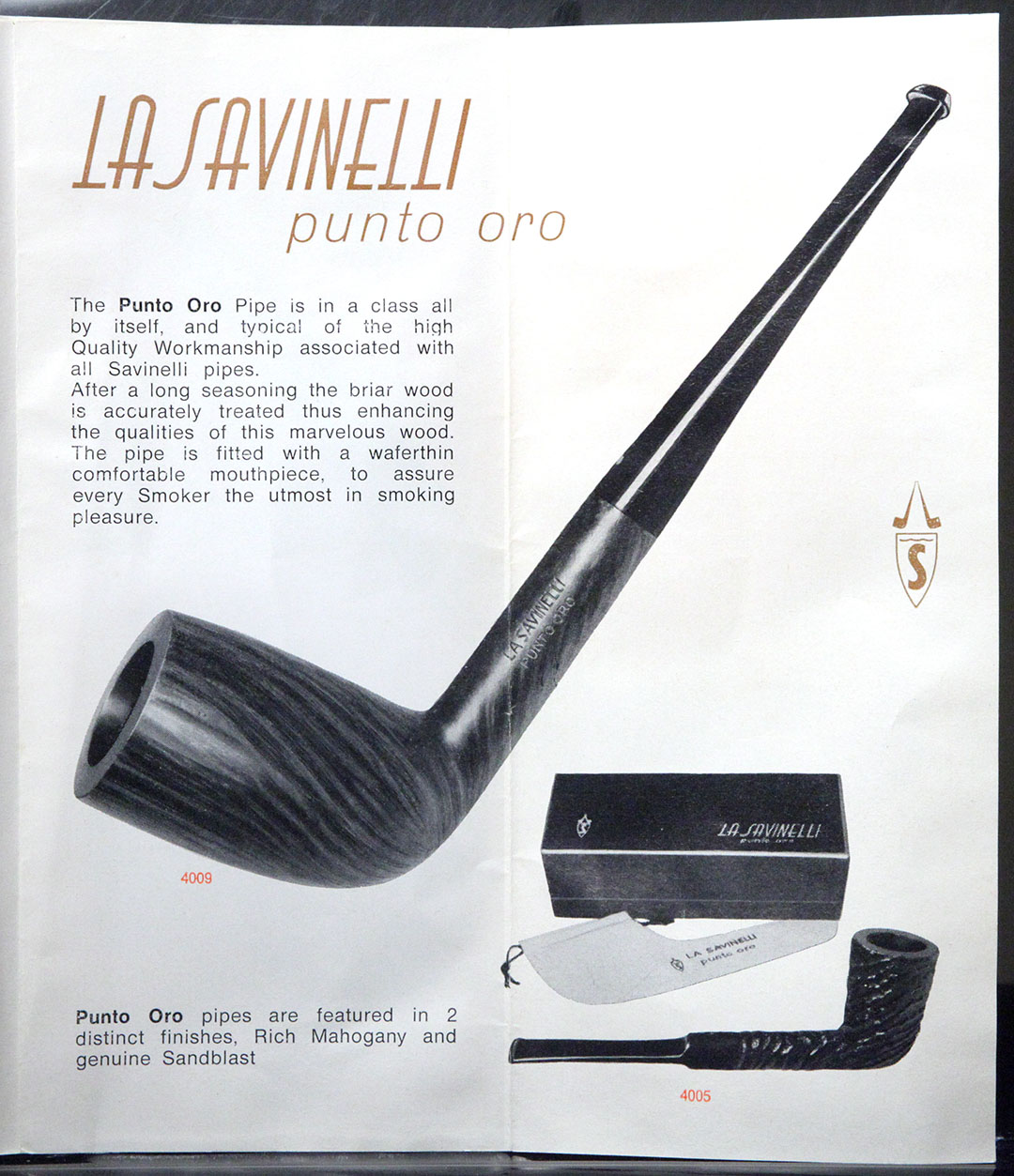
The thread from PipesMagazine.com Forum was helpful.  The general impression from the thread was that the older Punto Oro pipes were on the upper shelves of Savinelli offerings, just under the Guibileo D’Oro and older Autographs.  The Punto Oro catalog ad on Pipedia describes the quality of this Savinelli line and the processes involved in the producing the quality finish.  I found interesting that the ad describes the two finishes available with the Punto Oro line – “Rich Mahogany and genuine Sandblast”.  With the smooth surfaces, the hue is mahogany – the pipe on my table fits this described hue with flare!

I like this pipe – a Woodstock (!) a lot and I think it will be a good addition Paresh’s collection although a lesser, humbler cousin in that collection to be sure!  Looking at the state of the Punto Oro’s condition, the briar landscape is beautiful – no issues that I can see.  The chamber has very light cake – the appropriate dime-width that is recommended.  I’ll remove it for the briar to have a fresh start and to inspect the chamber condition.  The rim reveals the lighting practices of the former steward – over the aft rim surface where it’s darkened and caked with crusted lava flow.  The picture below looks at the chamber and rim.The major issues with the restoration of this Punto Oro are with the stem.  The upper bit has tooth compressions on the bit and button.The lower bit is where all the fun is hiding!  The lower button has broken off and the break migrates down the stem – it will be no small button rebuild to address this moon crater!  There is also tooth chatter evident on the lower bit.  To restore the usefulness of this original Savinelli ‘Gold Point’ stem, which to me is critical, requires a button rebuild.  Rebuilds are never as strong as the original stem, of course, but I’m hopeful of building in some strength as I do this rebuild. I begin the restoration of this gift for Paresh by cleaning the Savinelli stem airway with a pipe cleaner wetted in isopropyl 95%.  It takes one cleaner to do the job.The oxidation on the stem is deep.  I use grade 000 steel wool with CIT, a product like SoftScrub, to work on the oxidation before putting it into the soak of Before & After Deoxidizer.  I like this product but when the oxidation is deep I’ve found that the soak alone is not sufficient to remove the oxidation.  The steel wool gives a head start for the Deoxidizer to break up the oxidation.The stem is then added to the soak of Before & After Deoxidizer along with several other pipes in the queue and their stems.  I let the stem soak for a few hours.When I fish out the stem after a few hours, I let the Deoxidizer fluid drain off the stem and I also squeegee the stem with my fingers.  Using a pipe cleaner wetted with isoproypl 95%, the airway is cleaned of the Deoxidizer.  I also wipe off raised oxidation from the stem with a cotton pad wetted with alcohol.  To help to rejuvenate the vulcanite stem, I also apply paraffin oil and set the stem aside to soak in the oil.Turning now to the stummel, I use the Pipnet Reaming Kit to begin the removal of carbon cake from the chamber.  After taking a picture showing the starting point, I use 3 of the 4 blade heads available in the kit. The chamber narrows at the bottom, consistent with a conical shape of the Woodstock crafted stummel.  I use the Kleen Reem Tool that more easily reaches to the floor of the tapered chamber.  The Savinelli Fitsall tool continues the scraping and finally the chamber is sanded with 240 grade paper wrapped around a Sharpie Pen.  After wiping the chamber with a cotton pad wetted with alcohol to clear the carbon dust, an inspection reveals heat veins in the chamber briar.  These are fissures that form from overheating the stummel.  The veins are not substantial enough to repair, but I will complete the restoration by applying a coating of yogurt and activated charcoal mixture to the chamber that will protect the chamber wall and encourage the formation of a protective cake. Switching now to the external briar surface, undiluted Murphy’s Oil soap is used with a cotton pad to scrub the stummel.  The thick, crusted area on the aft of the rim is stubborn.  With the solvent working, I also carefully scrape with my thumb nail, with the edge of my Winchester pocketknife, and with a brass wired brush.  After working on the scrubbing of the external briar surface, I then transfer the stummel to the kitchen sink and using warm water, I scrub the internal mortise and airway with shank brushes and anti-oil liquid dish soap.  After a thorough rinsing, I take a picture back on the worktable.  The stummel cleaned nicely, but the darkened area remains on the stummel’s rim.  I’ll continue to work on that with minor sanding later.I turn now to focus on the internal cleaning.  With only one cotton bud and one pipe cleaner wetted with isopropyl 95%, the fact of the internal cleaned condition is established.  Nice!With the stummel cleaning completed, I turn now to the stem.  The daunting aspect of the restoration is the button rebuild.  Before starting on this, I first focus on the tooth chatter and compressions on upper and lower bit.  I go in this order because the approach in rebuilding the button introduces the CA glue and activated charcoal patch which has a different composition from the vulcanite stem. Since I’m beginning with the heating method to erase as much as possible the chatter and compressions, this involves the heating and expanding of the vulcanite.  This is better done before the patch is applied in the button rebuild.  Using a Bic lighter, I paint the upper and lower bit to heat the vulcanite and through heating the rubber compound expands to reclaim its original disposition – or closer to it.  After going through the painting procedure and comparing the before and after pictures, the heating method did not help a great deal with the composition of this vulcanite stem. It helped some, but not a great deal it seems to me.With pictures showing the starting point for the upper and lower bit, it’s interesting to me to see where the tooth chatter is on the lower bit.  It extends about a quarter of the way down the stem!  I think what this indicates is that a frustrated steward, after he crunched the button, refused to put one of his favorite pipes aside!  Just like in American baseball, he ‘choked up’ on the stem, to keep using his pipe even though the button had endured catastrophic failure.  Now I turn my attention to the button rebuilding procedure.  First, I fashion a cone that inserts into the airway having a pipe cleaner running through the cone into the airway.  The cone is covered with scotch tape and then petroleum jelly is put on the tape.  This helps the cone not to get stuck after the patch material is applied. The patch material is a mixture of activated charcoal that is in capsule form and CA glue.After placing the charcoal in a small pile from the capsule, the glue is placed in a small puddle next to it.  The toothpick is used to mix the charcoal and glue by gradually pulling charcoal into the CA glue while mixing.  As the charcoal is mixed in, the patch material thickens.  After it reaches the consistency like molasses, I apply the charcoal putty to the button using the toothpick as a trowel. I intentionally use a mixture that is a bit thinner at the beginning so that is will seep down around the cone filling in the open spaces.  This is important to create as much strength as possible in the rebuild.  I apply more than is needed to build a mound that will later be filed and sanded to shape the new button. After enough patch material has been applied, I put the stem aside overnight allowing the button build to cure.  The lights go out!Well, the next morning held some surprises!  When I examine the button rebuild, looking forward to starting the process of filing and shaping, I discover that the new CA glue that I used did not cure to a solid state!  The patch was reminiscent of a bite guard – pliable rubber.  With some tugging and peeling, the repair came off in two pieces….  Interestingly, nowhere that I can find on the labeling that this glue does not harden, unless the “Extra Durable and Versatile” on the front label implies this?The good news is that the cone was removed without trouble and is ready to go again for button rebuild patch attempt number two!  I’ll spare the reader of all the pictures to record this second process but will jump forward.  What I did do differently after examining the large area of the patch, was to better engineer and strengthen the resulting rebuild.  I carefully applied rounded and flat needle files to the edge of the break.  I filed to taper downwardly the edge toward the break. My thinking is that this small innovation perhaps will strengthen the patch by providing more of a shelf or footing upon which the patch material can rest.  It seems that this engineering would inherently provide better buttressing than a straight vertical edge drop.  I’m thinking also that this will help in the sanding and blending of the patch. The sketching below illustrates my thinking.  I also file and clean out the entire button cavity and clean it with a cotton pad wetted with isopropyl 95% in preparation for the new patch.  Before starting on the button patch, I decide to do a quick fill of the upper bit and button lip where there were compressions.  I use medium-thick black CA glue to do the filling.  To quicken the curing and to hold the patch in place I use an accelerator.The next pictures show the second finished button rebuild patch with the engineering changes beginning the curing process.After the second button rebuild patch is cured, using the flat needle file, the patch on the upper bit and button lip are filed down flush with the vulcanite stem surface.Switching to the underside, filing and shaping begin on the button rebuild.  I start with the slot facing to flatten it by removing the excess patch material.  Then, cutting the line shaping the button lip is next.Filing continues with the main bit patch and button shaping.  I’m careful to allow a rounded patch and not filing straight across horizontally.  This would weaken the patch – thinking of the difference between an arched bridge’s symmetry rather than that of a flat bridge’s.  Maintaining the patch thickness is critical to its strength.With the filing phase completed I transition to using 240 grade paper starting first on the upper bit and button lip fills.The 240 grade sanding fine tunes the button rebuild further. I’m careful not to sand too much on the patch and continue to round it to maintain thickness.  A slightly thicker lower button lip purchases some strength as well. I focus on sanding the seams of the patch so that they are flush with the vulcanite surface.  The patch is still rough but making progress!I use the flat needle file to shape and smooth the slot as well.  It’s almost a given that air pockets will emerge as the sanding continues to shape the button.A careful examination of this cross-section view of the slot facing shows the added buttressing effect of the earlier tapered filing.  Arrows help to show this.With the 240 grade sanding paper still in play, I sand the entire stem to remove any residual oxidation.  Deep oxidation always seems to appear during the fine sanding and polishing phases.  Sanding the stem with 240 now will hopefully address this as well as the remnants of tooth chatter remaining on the bit.  I use a plastic disk that I fabricated to be able to sand the stem facing without shouldering the edges.Next, I sand the entire stem by wet sanding with 600 grade paper and following this, 000 grade steel wool is applied.The upper bit and button repairs are looking great – the sanding is erasing the contours of the patch and blending nicely.Work on the lower stem side is a bit more of a challenge with the huge button rebuild patch material.  The stem is looking great, but the challenge is to blend the large patch area.Air pockets are the most common side effects of patching.  Air bubbles are trapped in the CA glue and activated charcoal as it is mixed and these air bubbles become visible as sanding dissects and reveal the pockets.The many microscopic air pockets are not easy to remove.  I use a clear acrylic nail polish to try to fill and erase the pockets.  CA glue can be used to do the same. I use the brush provided by the nail polish and I paint over the pockets almost covering the entire patch.  I let it dry and repeat the process for a second coating.After the acrylic polish cures, I apply 000 steel wool to the patch and the picture below shows the results.  The nail polish does an amazing job but there remain some pockets.  These are very small and I’m doubtful that more coating will erase them.  I’m satisfied now with leaving them and moving on!  They remain as a testament to the catastrophic button failure and this noble attempt to recommission this beautiful Savinelli Punto Oro Woodstock!  Moving on!I move on to applying the full regimen of micromesh pads to the Woodstock stem.  I begin with wet sanding using pads 1500 to 2400 and follow by dry sanding with pads 3200 to 4000 and 6000 to 12000.  Between each set of 3 pads, Obsidian Oil is applied to condition the stem and to protect it from oxidizing.  The stem is looking great. With the stem sanding completed, looking now to the stummel, I focus first in cleaning up the rim.  There remains darkened briar from the lava flow earlier cleaned on the aft quadrant of the rim.  The inner rim edge is also darkened at places with the normal nicks from wear and tear.  The outer edge of the rim is also with some normal nicks and dents – all very small. To clean the rim, I first start by using 240 sanding paper and doing a very light inner and outer rim bevel – just enough to clean the edge of the rim.  After this, I also use the 240 paper to lightly ‘feather sand’ the aft part of the rim to clean the darkened surface.  I run the sandpaper lightly around the full rim plane surface to clean the briar, not to remove it.I follow the same procedure with the rim edges and the rim plane with 600 grade sanding paper.  The rim is shaping up very nicely.Next, I use micromesh pads to do fine sanding on the Savinelli Gold Point stummel.  I begin by wet sanding with pads 1500 to 2400 and then dry sanding with pads 3200 to 4000 and 6000 to 120000.  The fine sanding brings out the grain and restores the mahogany finish for which the Punto Oro line is known.  Very nice indeed! To deepen the natural hues of the briar, Mark Hoover’s Before & After Restoration Balm (www.ibepen.com) does a great job.  I put some of the Balm on my finger and work it into the briar surface.  The Balm begins with a cream consistency and then thickens into a waxy consistency as it is worked into the stummel.  After working the Balm thoroughly into the surface, I put the stummel aside for about 20 to 30 minutes as the Balm is absorbed into the briar.  The picture below was during this period.  Afterwards, I wipe off the Balm with a cloth dedicated to this, and then the stummel is buffed up using a microfiber cloth.  The stem also is a beneficiary of Before & After Fine Polish and Extra Fine Polish.  The polish helps further to condition the vulcanite and to rid the stem of oxidation.  Starting with the B&A Fine Polish, I work the black oily liquid into the stem – the liquid has a gritty texture.  Afterwards, I let the stem absorb the polish for 15 minutes and then wipe the excess off with a paper towel.  I follow by applying the Extra Fine Polish in the same manner.  Again after 15 or so minutes, the excess is wiped off and the stem is buffed with a microfiber cloth.Now, the homestretch.  After reuniting stem and stummel and mounting a cloth buffing wheel to the Dremel setting it at about 40% full power, Blue Diamond compound, a fine abrasive, is applied to the pipe.  After this, the pipe is wiped down with a felt cloth to clean it of compound dust before application of the wax.  Next, after mounting another cotton cloth buffing wheel onto the Dremel at the same speed, carnauba wax is applied to the pipe.  Following the wax application, the pipe is given a vigorous hand buffing to further raise the shine.

After the buffing, one project came to mind that I had almost forgotten.  Earlier, after inspecting the chamber and finding some heating veins, I had decided to apply a coating of natural yogurt and activated charcoal powder mixture to the chamber wall.  This mixture, after applied to the chamber, hardens into a protective layer to help protect the briar as well as encourage the formation of a protective cake.  I mix some charcoal powder with a small amount of natural yogurt.After the yogurt and charcoal are mixed and is somewhat thickened – not running but with the consistency of mud, and after inserting a pipe cleaner to keep the draft hole cleared, I use the pipe nail and spread the ‘mud’ over the chamber wall.  After it is covered, since it is late, I put the pipe aside to allow the mud to dry through the night and the lights go out!The next morning, after applying the pipe mud mixture to the chamber, I give the pipe one more rigorous hand buffing to raise the shine and my gift to Paresh is complete.

The button rebuild was, without doubt, the most technically demanding part of the restoration of this striking Savinelli Punto Oro Woodstock.  The grain is beautiful, and I am especially drawn to the Woodstock shape with the lines guiding the eyes down the sides of the pipe, taking in the movement of grain and shape.  I’m thankful for my L. J. Peretti Cutty that I received from Paresh when I was in India.  I have yet to put the Cutty into service here in Bulgaria – it has been waiting for my gift to Paresh to make it to India.  It still needs to be refreshed and a little polishing work, and my plan and hope is that Paresh and I will share our first bowls together with our gifted pipes to each other, perhaps not in person, but via video conferencing, today’s miracle bringing people together throughout our ever shrinking world.  After the pandemic issues are behind us, I’ll be mailing the Savinelli Punto Oro Woodstock to India.  Thank you for the Peretti Cutty, my friend!

Cleaning up a Unique Savinelli Made Antique Shell 623 Bulldog


Blog by Steve Laug

In the next box of pipes Jeff sent me there was an interesting Bulldog with a blue acrylic stem that I wanted to restore. It is stamped on the left underside of the diamond shank Antique Shell and the shape number 623 over Italy. The shape number is definitely a Savinelli shape number so I am safe to assume that this is a Savinelli Product. I have not seen one with a blue acrylic stem before so I was looking forward to the restoration. It was a dirty pipe when we received it. There was a coat of lava and dust in the rusticated finish of the rim top. The inner edge and outer edges of the rim looked very good. There was a thick cake in the bowl that had remnants of tobacco stuck in it. The finish was dirty and there dust and debris in the rusticated finish around the bowl. There also appeared to be what looked like either a crack or a fissure in the right side of the bowl toward the bottom. The blue acrylic stem looked good but there were tooth marks on the top and underside ahead of the button. There was tooth chatter on both sides of the stem. Jeff took some photos of the pipe before he started his cleanup work. He took photos of the bowl and rim top to show their general condition. You can see the tars and debris in the rustication of the rim top. The cake in the bowl is quite thick and there is tobacco debris on the walls of the bowl. The finish on the bowl is dirty but looks good. Jeff took some photos of the sides and heel of the bowl to give an idea of the finish on this particular piece of briar. It is different and tactile looking. I cannot wait to see what it looks like once it is polished and waxed.Jeff took a photo of the heel of the bowl. On the right side of the photo (also right side of the bowl) there is an area that looks like a crevice or possibly a crack in the bowl. I have circled it in red for easy identification. I will need to check that out once I am working on the pipe.He took a photo of the stamping on left underside of the diamond shank. There was a smooth panel with the stamping on it. It reads as it is stated above.This pipe has a very unique clear blue acrylic stem that goes really well with the contrasting browns of the bowl and shank. It is in very good condition with light tooth marks and chatter near the button.  I have worked on Savinelli Antique Shell pipes in the past but this was the first one with the blue acrylic stem. There are no stampings on the stem so it may be a replacement but it fits the shank very well. I moved forward to work on the pipe itself and see what I had to do with it. It had come back looking amazingly clean. The bowl looked very good and the crevice on the bottom of bowl, though still visible was even more obviously a crevice rather than a crack. I would need to probe it more once I started to clean up the pipe. The stem looked like new, with most of the tooth chatter gone. I was impressed. Jeff had done his normal thorough clean up – reaming, scrubbing, soaking and the result was evident in the pipe when I unpacked it. I took photos of the pipe before I started my work on it. I took some photos of the rim top and stem. The rim top and bowl looked very good. The cake and lava overflow were gone and the rim was very clean. Jeff had been able to get rid of the lava and tars. The close up photos of the stem shows that it is a much cleaner and better looking stem. The light tooth chatter was greatly reduced and the stem looked really good.I took a photo of the stamping on the left underside of the shank to show the condition after the cleanup. Often the stamping takes a hit with the cleaning and is lessened in it clarity. Jeff does a great job in leaving the stamping looking very good.I removed the stem from the shank and took a photo of the pipe at this point. It really is quite a stunning pipe with the clear blue acrylic stem.I started my restoration work on this pipe by addressing the crevice or potential crack on the lover right side of the bowl. I probed it with a dental pick to see how deep it went and if it was a crack or just a natural flaw in the surface of the briar. It did not appear to go very deep into the briar but my examination with the probe using a lens were inconclusive. I used a light and lens to check out the inside of the bowl and it was flawless – whew! I was glad to see that. It added credence to my thinking that it was a crevice. However, I decided to address it as a cosmetic crack and do the repair accordingly.I used a microdrill bit on my Dremel to drill a small pilot hole at what I ascertained were the ends of the crevice/crack. These are tiny holes shown in the next two photos. I have circled them in red below. The first photo has two and the second has one hole.I filled in the holes and the crevice on the heel and side of the bowl with clear super glue. I pressed briar dust into the holes and the crevice with a dental spatula. I cleaned off the debris with a brass bristle wire brush. It removes the loose debris but leaves the repairs in the crevice and holes intact.I was happy with the coverage of the repair but as is often the case a super glue and briar dust repair leaves smooth shiny spots on the finish. I dislike these shiny tells! I used a small round burr on the Dremel to create the same kind of rustication that was on the rest of the bowl. Once it was stained I was pretty sure it would look great.I used a Walnut stain pen to restain the newly rusticated surface of the repair. I like the way it looks and it will look even better as the bowl is polished and waxed.I worked some Before & After Restoration Balm into the surface of the briar with my fingertips to clean, enliven and protect it. I let the balm sit for a little while and then buffed with a cotton cloth to raise the shine. The photos show the bowl at this point in the restoration process. The repair looks really good. I set the bowl aside and turned my attention to the blue acrylic stem. I sanded out the remaining tooth chatter with 220 grit sandpaper and started to polish it with a folded piece of 400 wet dry sandpaper. Once it was finished it was smooth.I used some Denicare Mouthpiece Polish that I have in my kit to start polishing out some of the scratches and remaining oxidation on the stem. I rubbed it in with a cotton pad and my finger tip and buffed it off with a cotton pad.I polished the stem with micromesh sanding pads – dry sanding with 1500-12000 grit sanding pads. I wiped it down after each sanding pad with a cloth containing some Obsidian Oil. I finished polishing it with Before & After Pipe Stem Polish – both Fine and Extra Fine and buffed it off with a cotton cloth. I love the end of a restoration project like this one that needed more than first appeared. It is the moment when all of the parts come together and the pipe looks better than when we started the cleanup process. I put the stem back on the bowl and lightly buffed the pipe with Blue Diamond on the buffing wheel. I carefully avoided the stamping on the shank sides during the process. I gave the bowl multiple coats of Conservator’s Wax and the stem multiple coats of carnauba wax on the buffing wheel and followed that by buffing it with a clean buffing pad on the buffer. I hand buffed the pipe with a microfiber cloth to deepen the shine. The finished pipe is a really beautiful rusticated bowl with a stunning blue acrylic stem. Give the finished pipe a look in the photos below. I can only tell you that it is much prettier in person than the photos capture. The dimensions of the pipe are Length: 5 ½ inches, Height: 1 ¾ inches, Outside diameter of the bowl: 1 ¼ inches, Chamber diameter: ¾ of an inch. This Savinelli Made Antique Shell Bulldog shape 623 is a great looking pipe. Thanks for walking through the restoration with me as I worked over another beautiful pipe. I will be putting this pipe on the rebornpipes store shortly. If you want to add it to your collection let me know. Thanks for your time.

A Striking Savinelli Fiammata 2 Briar Calabash for a Clam Man Pipe Man


Blog by Dal Stanton

The Lot of 66 is a gift that simply put, keeps on giving.  It was the first time I stuck my neck out to buy a lot of pipes on eBay’s auction block.  I’m thankful that I did – it has produced many treasures that are now in the possession of new stewards from a good cause called the “Caring Place” in Georgetown, Texas.  The description of the Lot of 66 was “Huge Lot Of 66 Smoking Pipes Pre-Owned Pre-Smoked and Deeply Loved” followed by information that this was one person’s collection that had been donated to benefit the Caring Place helping the community in Georgetown.  This Lot of 66 benefiting the community there has also continued to benefit the work of the Daughters of Bulgaria – women and girls who have been trafficked and sexually exploited.  Here is the picture I saw and the Savinelli Fiammata Briar Calabash now on my table is circled.Most people commission pipes from my online ‘Help Me!’ baskets in the For “Pipe Dreamers” Only collection where pipes in need of adoption may be commissioned by pipe men and women benefiting the Daughters of Bulgaria.  Jon commissioned two pipes but as a visitor to Bulgaria he was able to peruse the actual boxes and buckets and chose a pipe.  Jon was part of a church team from South Florida exploring the work we do in Bulgaria.  Of course, if guests are in my home, they find out about The Pipe Steward and receive a tour of the work room and the Man Cave on my 10th floor balcony!  Jon brought along his daughter as well, but what was unique to me was that Jon is a farmer – of sorts.  His farm is under water as he grows and commercially sells clams as well as other various sea foods which I absolutely love!  His farm is called Southern Cross Sea Farms.  Next time I’m in South Florida I hope to visit Jon, share a bowl with him and hopefully a few clams!

Not only did Jon commission the Savinelli Fiammata 2, but he also drooled over my collection of Churchwardens and when I would not relent in allowing mine to find a new home in South Florida’s clam country, he commissioned a Churchwarden project along with the Fiammata.  To benefit the Daughters of Bulgaria, I also fashion CWs with re-purposed bowls that most likely, would have never again be put into service – castaways to be used a forgotten.  Again, so many analogies to the work we do here with the Daughters!  Here are pictures of the Briar Calabash that got Jon’s attention. The nomenclature that is stamped on the left flank of the shank is ‘FIAMMATA 2’.  On the right flank is stamped 611KS – the Savinelli shape number [over] ITALY, the COM.  There are no stampings on the stem that I can detect.I’m calling the Fiammata 2 a ‘Briar Calabash’.  The 611KS is a Savinelli shape number and it is depicted in the familiar shapes chart provided on the PipePedia discussion of Savinelli.  In the same article, Fiammata is listed as a second of the well-known Italian name, Savinelli. The interesting factoid related by Pipedia is that this second, ‘Fiammata’ was a special line of pipes that did not make the prized Savinelli line, “Giubileo D’Oro” (“Gold Jubilee”) – a Straight Grain line.  What this means is that a Fiammata marked pipe was of an initial assessed quality that destined it as a ‘Top Shelf’ Savinelli pipe offering, but because it didn’t meet that standard along the way, it was put in the ‘first runner up’ Fiammata line.  So, in no way would this line be considered a sub-quality line, but an upper shelf to be sure.  Fiammata means ‘Flame’ in Italian.  Pictures of the Gold Jubilee offerings in Pipedia’s Savinelli article bare this out. The Fiammata I’m looking at looks strikingly similar.

The Savinelli Pipedia article also included some catalog page examples (courtesy Doug Vliatchka) of this top shelf line, “Giubileo D’Oro” which describe the line of pipes that the Fiammata seems to have fallen short in achieving!.  I find the page clipping below interesting because of the information it provides, but also the similarity of the grains depicted like the Fiammata on my worktable – long straight grain, fire grain.So, the Savinelli Fiammata 2 on my worktable started with great aspirations, and the grain it has is very appealing.  The condition of the Briar Calabash is generally good, but with some issues.  The chamber has a light cake on the walls.  The rim has a dark ring around the inner rim edge which should clean up.  It also has what appears to be a large fill on the rear, left hand side.  The right side of the rim also has some dings. There is a major scratching event on the lower left heel – ugh!  It appears that it was in a bucket of nails or something – the scratching is deep and will need to be sanded out. The stem has minor oxidation but there is tooth chatter on the upper and lower bit in need of sanding out.To begin the restoration of the Savinelli Fiammata 2 Briar Calabash, I first use only a pipe cleaner dipped in isopropyl 95% to clean the airway of the stem.With the airway clean, the Fiammata stem joins several other stems in a soak of Mark Hoover’s product (www.ibepen.com) Before & After Deoxidizer.  This is the only part of the restoration process that I try to mass produce!  The Fiammata is on the far left, next in the queue, and it joins several other pipes that are also in the queue along with their stems in the soak as well.  The stems were just put in the Deoxidizer and are in the process of sinking into the interesting mixture.  I leave the stems in the soak for a few hours.After a few hours, I fish out the Fiammata’s stem and after using my fingers to squeegee the Deoxidizer off, I run some pipe cleaners wetted with isopropyl 95% through the airway to clear out the fluid.  I then use a cotton pad wetted with alcohol to wipe down the stem to remove raised oxidation from the stem.To enhance the rejuvenation of the vulcanite, paraffin oil is applied with a cotton pad and the stem is set aside to soak in the oil.Turning now to the stummel cleanup, I begin by reaming the chamber with the Pipnet Reaming Kit.  With the day a bit warmer during this time of self-quarantine because of the virus concerns, I’m trying to work out on the Man Cave as much as possible.  My ‘Man Cave’, where I’m allowed to smoke my pipes is located on the 10th floor of our apartment blok built during the days when Communism was still up and functioning in Bulgaria.   I take my tools to the Man Cave and go to work.  I’m enjoying a bowl of Black Stoker in a Made in London England Canadian.The cake is not bad, but the long, conical chamber of the Savinelli Fiammata 2 is a challenge.  The shape of the chamber tapers down so that is it narrower at the floor of the chamber. I use all 4 of the blade heads available to me in the Pipnet reaming kit, which speaks to the size of the chamber as it expands upwardly.  I am careful not to bore ridges into the side of the chamber with the different blade heads starting at different points.   I transition after the blades to the Savinelli Fitsall Tool to fine-tune the chamber wall scraping reaching down to the floor and to the more difficult areas of the conical chamber.  To rid the final vestiges of carbon, I then wrap 240 grade paper around a Sharpie Pen and sand the chamber. After wiping the chamber with a wetted cotton pad to clear the carbon dust, I inspect the wall and find a healthy chamber.  I move on! Transitioning to cleaning the external surface, I use cotton pads wetted with undiluted Murphy’s Oil Soap.  I patiently focus on the blackened ring on the internal edge of the rim.  My thumbnail proves to be helpful as well as a gentle scraping with my Buck pocketknife.  A brass wired brush also helps.  Transferring the pipe to the kitchen sink, I also employ shank brushes with anti-oil liquid dish soap to clean the internal mortise and airway.  After a thorough rinsing, the stummel returns to the worktable.  The cleaning did a fantastic job on the rim.  What I thought to be fills on the rim, held very firmly and have all but disappeared.  To make sure the internals are clean, a few pipe cleaners and cotton buds dipped in isopropyl 95% confirm this!  I move on!The disaster area on the front left side of the heel of the Fiammata Calabash stummel is now my focus. The sharp cuts in the briar are most likely from metal.  It’s sad…First using 240 grade sanding paper I sand the impacted area.  I do not go beyond the damaged area because heavy sanding changes the composition of the surface drastically.  It creates a lightened patch that needs again to be darkened in order to re-blend it with the surrounding briar complexion.  While the 240 paper is in play, I also lightly sand the rim’s internal edge to remove fully the darkening that remains after the cleaning.  There’s a lot of forgiveness in a rounded rim presentation!After the 240 grade paper, I sand with a dry 600 grade paper to the lightened area.  You can see how the sanding process gradually coaxes the briar grain to darken moving toward blending the sanded area.  Not pictured is that I do the same with the rim area that I had sanded with 240 paper.The blending continues by sanding the bowl with sanding sponges.  Before doing this, I cover each of the stampings of the Savinelli nomenclature with masking tape on both sides of the shank.  I try not to contribute to the demise of this pipe’s history and story!I start with a coarse sponge and follow with medium and light grade sponges.  The sanding sponges, unlike the 240 grade paper, are a gentler form of sanding that is less invasive.  Sanding sponges address the minor nicks and cuts that come through the normal life of a pipe in service.  They also help with the darkening and re-blending of the damaged sanded area (second picture).  I like the results and the fire grain of this Fiammata Briar Calabash is starting to get my attention – wow!  This is a quality piece of briar block! Loving the briar grain that is emerging through the sanding processes, I transition next to applying the full regimen of 9 micromesh pads from grades 1500 to 12000.  First, wet sanding is with pads 1500 to 2400 followed by dry sanding with pads 3200 to 4000 and 6000 to 12000.  I’m loving the show of the grain on this stummel gradually emerging!  The damaged area has been fully reintegrated into the briar environment. The next step is to apply Mark Hoover’s Restoration Balm (www.ibepen.com) which works well to bring out the rich deeper hues of the natural briar grains.  After placing a small amount of the Balm on my finger, I work it into the briar surface.  It begins with a cream-like consistency and then thickens to a waxiness that covers the entire surface.  After a thorough application of the Balm, I set the stummel aside to absorb the Balm for about 20 minutes (pictured below).  After the 20 minutes, I use a dedicated microfiber cloth to wipe the stummel removing the excess balm and to buff the stummel somewhat.  I also use this ‘balm saturated’ cloth to wipe other pipes in my collection for regular Balm maintenance – they enjoy this very much!  I follow with another microfiber cloth to buff further.  My, oh my….The Calabash’s bent stem is waiting for my attention.  It’s the next day and continuing to work on the Man Cave with another beautiful day, I take another close look at the stem.  The Before & After Deoxidizer has done a good job dealing with the oxidation.  The upper and lower bit has tooth chatter, but not severely.  The button is in pretty good shape.  To help to minimize the chatter and one evident scissor bite mark I see on the upper side, I first use the heating method.  Using a Bic lighter, I ‘paint’ the chatter with the flame.  The flame heats the vulcanite and it expands to reclaim its original disposition – or at least closer to it.  This then allows sanding out the remaining marks easier.  Before and after pictures comparing the effects of the heating approach are below – a definite improvement.  First, the upper bit comparison – note the minimization of the vertical scissor bite compression:Next, the lower bit comparison – the chatter disappears:Next, I use the flat needle file to refresh the button and 240 sanding paper to erase what remains of the tooth chatter.Even though the stem showed no signs of oxidation after use of the deoxidizer soak, I expand the sanding to the entire stem with the 240 paper.  I want to make sure no vestiges of oxidation show up in the latter stages of polishing which is when deeper oxidation usually shows up!Next, I wet sand using grade 600 paper and follow by applying 000 grade steel wool.The sanding preparatory work is completed and now the fine tune sanding with the full regimen of micromesh pads follows.  First, I wet sand with pads 1500 to 2400 and follow by dry sanding with pads from 3200 to 4000 and 6000 to 12000.  Between each set of 3 pads, Obsidian Oil is applied to rejuvenate and to protect against future oxidation.  I love the ‘pop’ of newly micromeshed stems! Now, the home stretch.  After rejoining stem and stummel and after mounting a cotton cloth buffing wheel to the Dremel setting it at 40% of full power, the fine abrasive compound, Blue Diamond, is applied to the entire pipe.  Following the compound, after wiping the pipe with a felt cloth to clear the compound dust, another cotton cloth buffing wheel is mounted and at the same speed carnauba wax is applied.  The restoration is completed after giving the pipe a rigorous hand buffing with a microfiber cloth to raise the shine.

If this pipe is a normative example of the “Giubileo D’Oro” (“Gold Jubilee”) reject line, keep the rejects coming!  What can I say?  This is one of those restorations that discovered gold in hiding. The grain presentation on this ample Briar Calabash bowl is reminiscent to me of Preben Holm’s moniker, ‘Follow the grain.’  The straight, fire grain reaches toward the rim and the rim’s rounded shape provides a view of delicate bird’s eye, a 3-D perspective of the tips of the fire grain’s release into the air.  The heel presentation is equally expressive of larger, more chaotic patterns – for me, characteristic of the origins of the fire.  The Briar Calabash shape also contributes to the ensemble with its sweeping curves and lines moving toward the gently bending stem.  Is it obvious that I’m impressed with this line of Savinelli, Fiammata?  Clam man Jon commissioned this pipe and has the first opportunity to adopt him from The Pipe Steward Store benefitting the Daughters of Bulgaria.  Thanks for joining me!