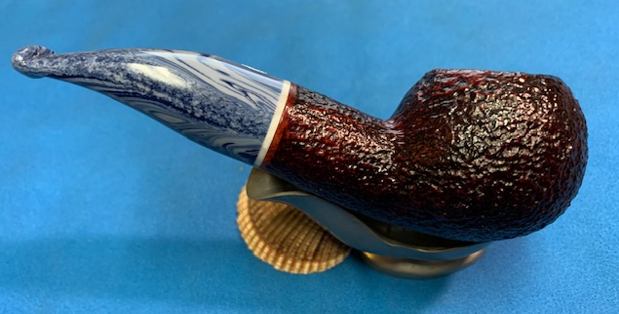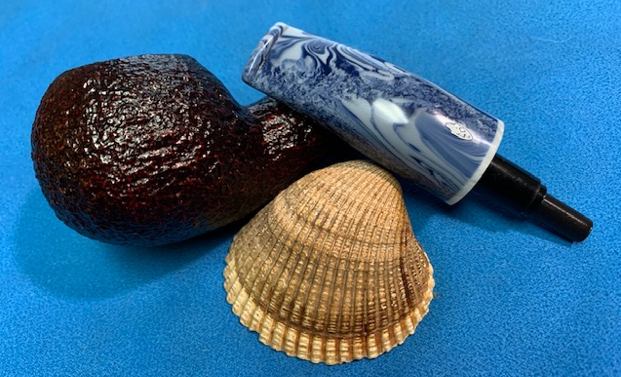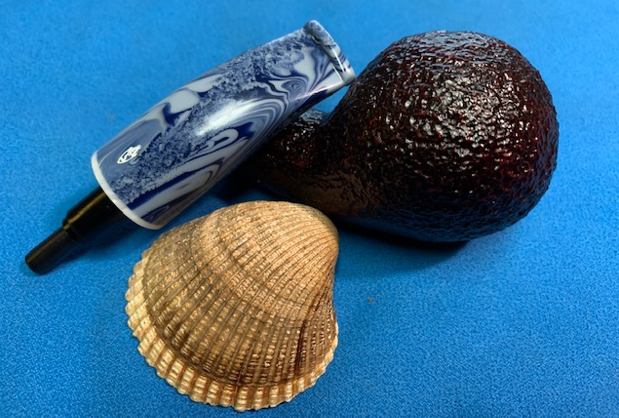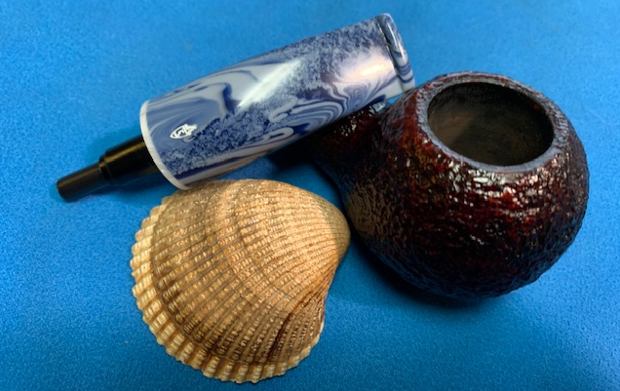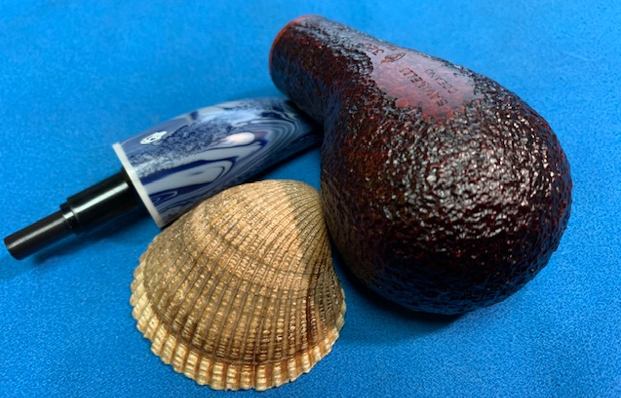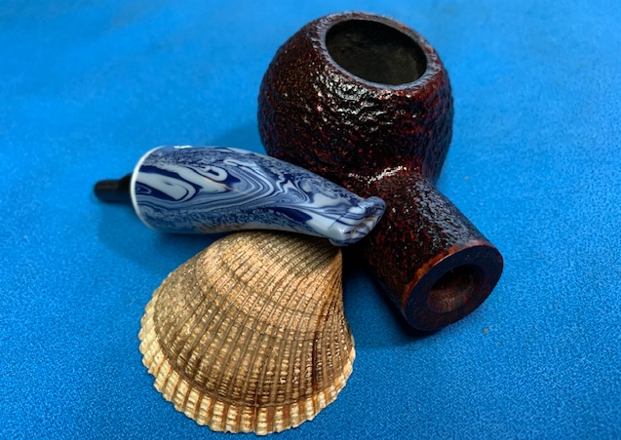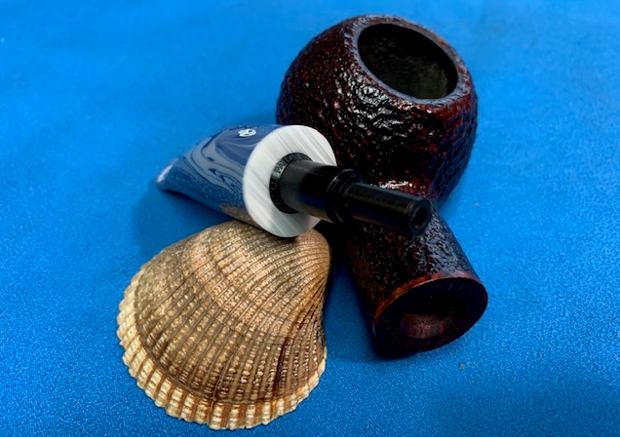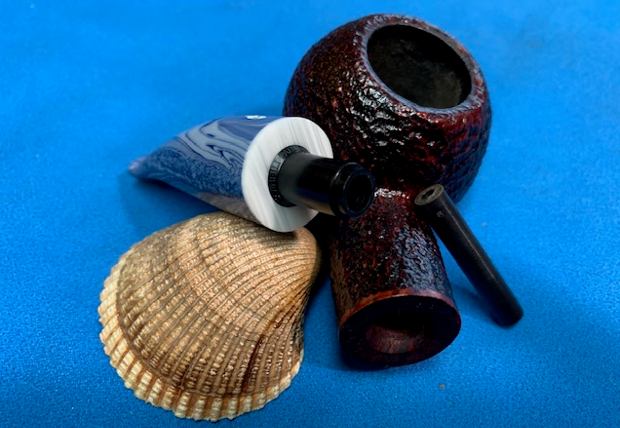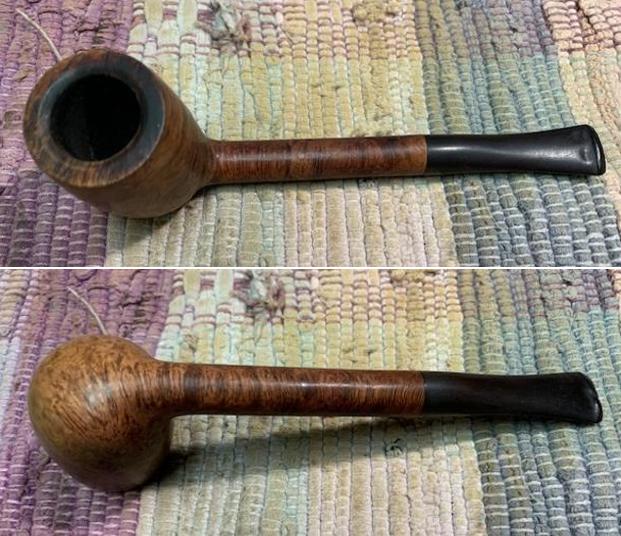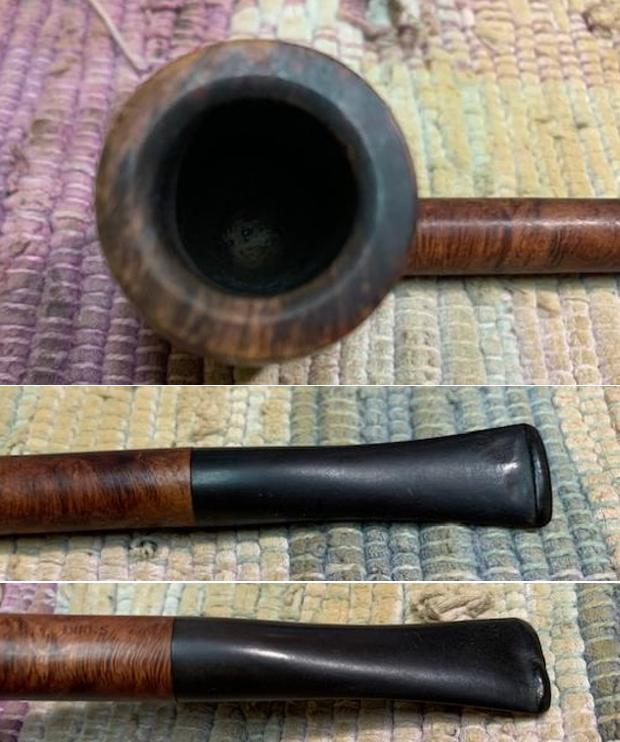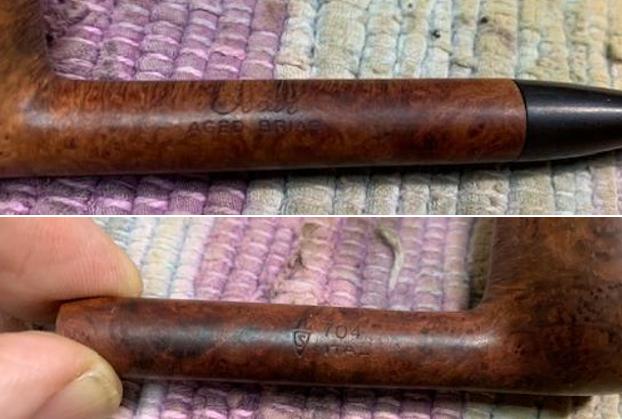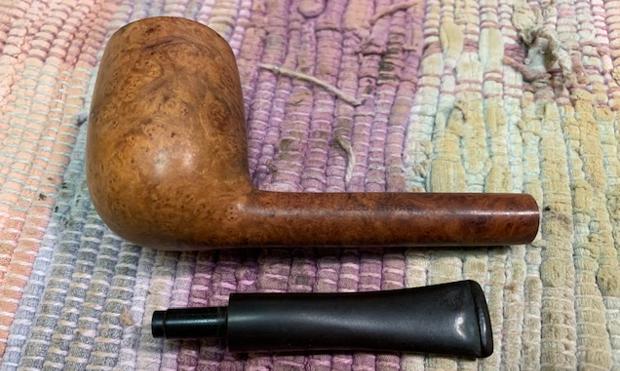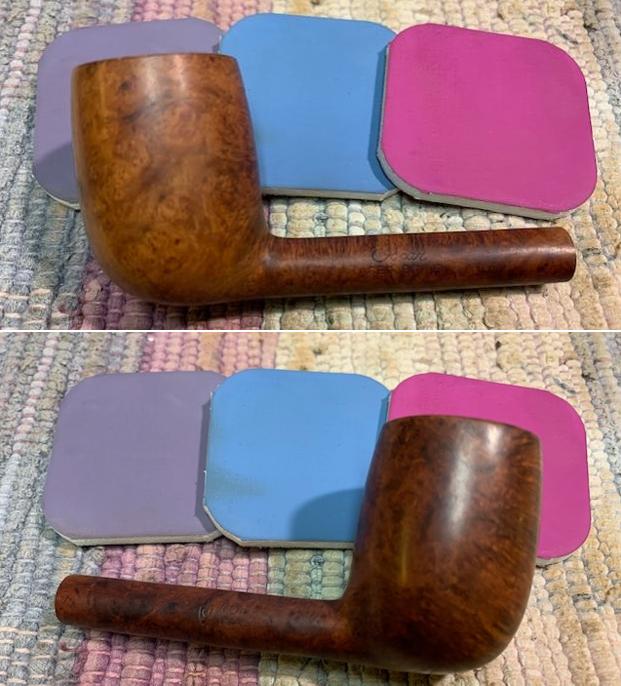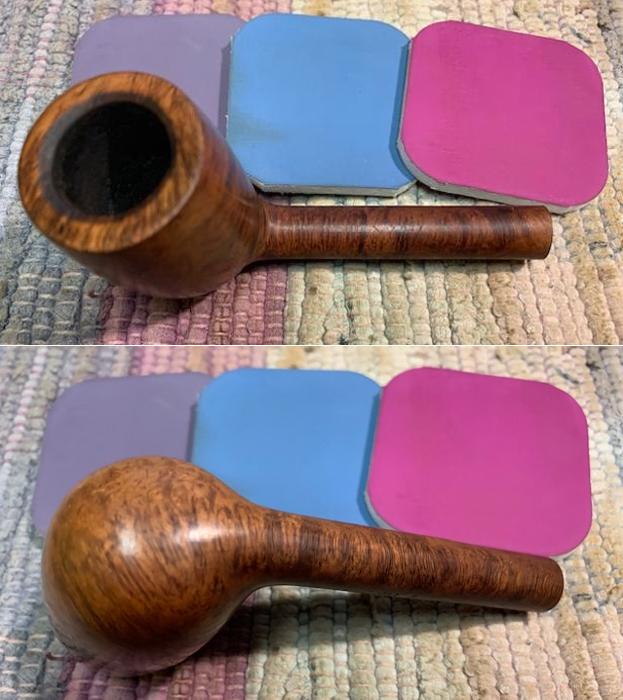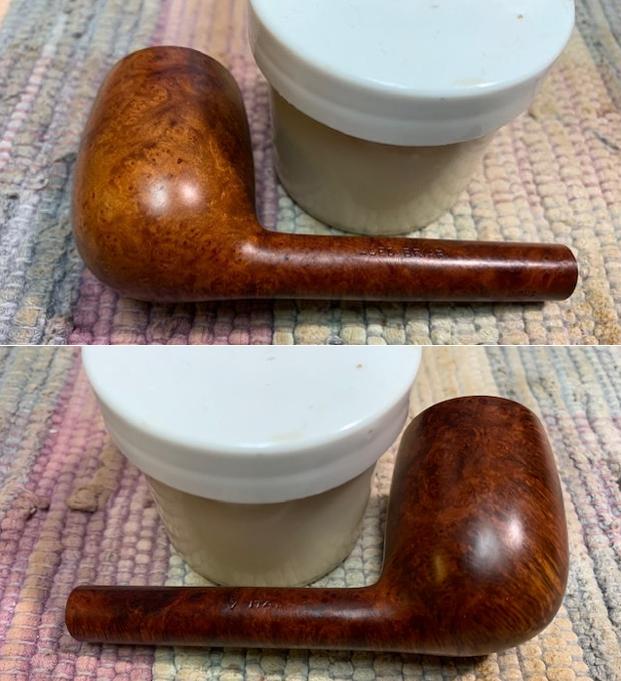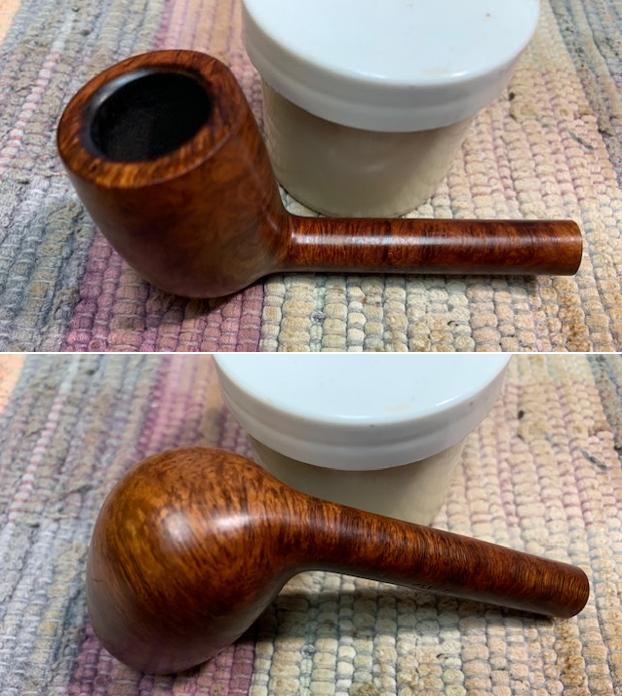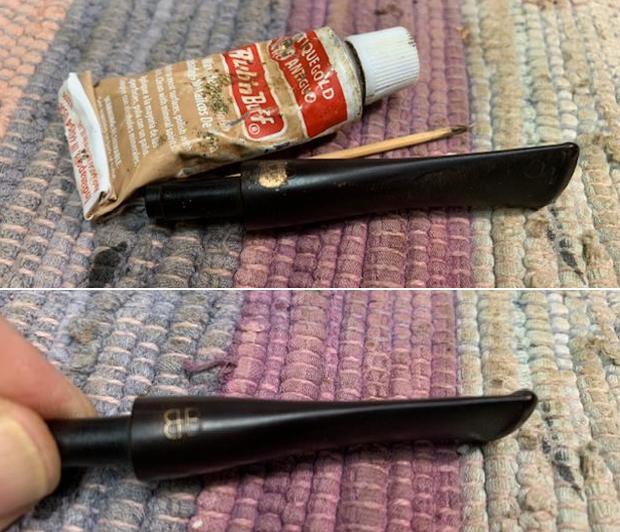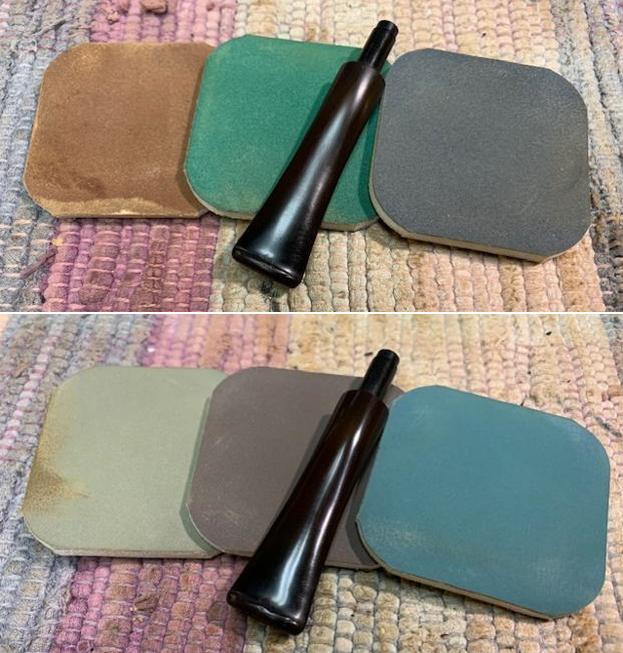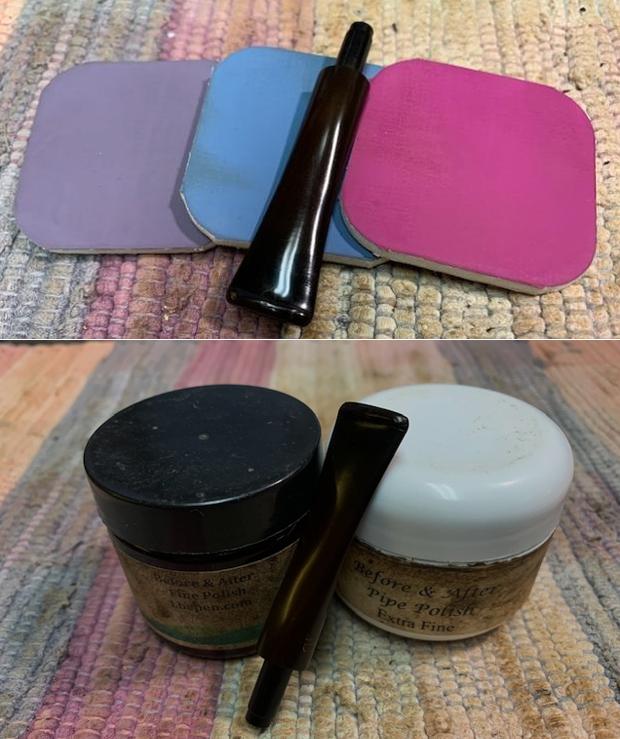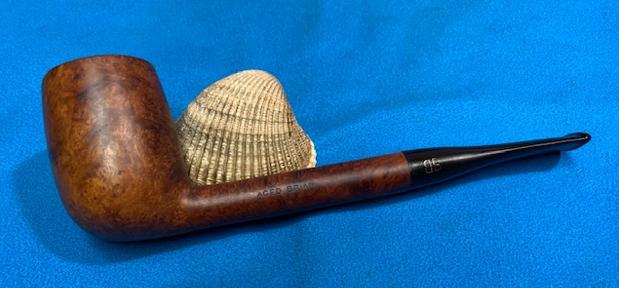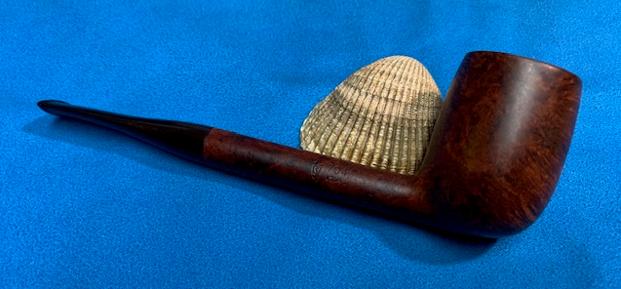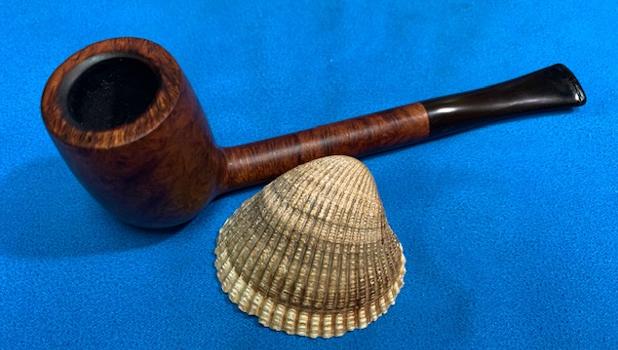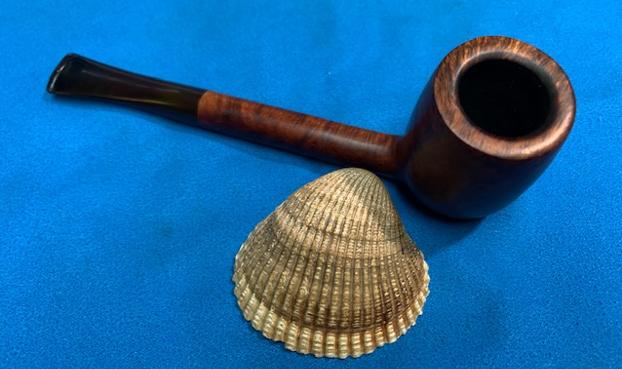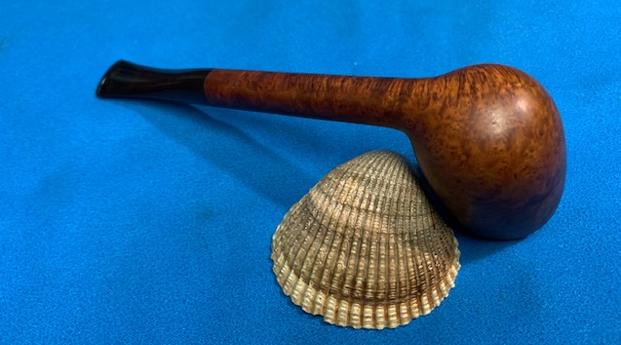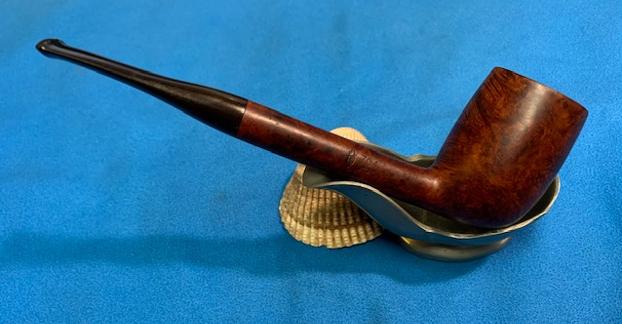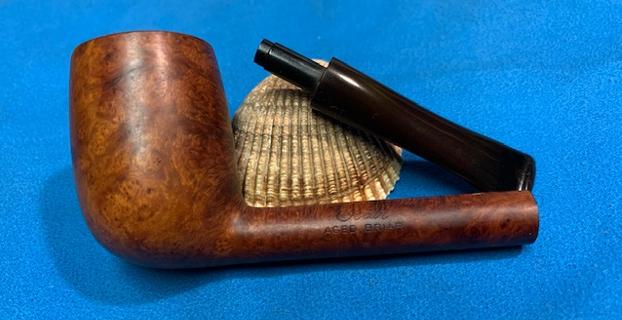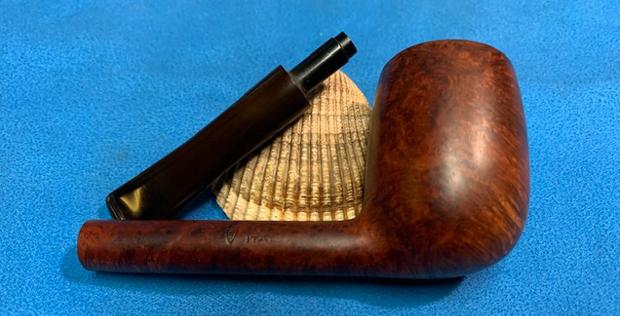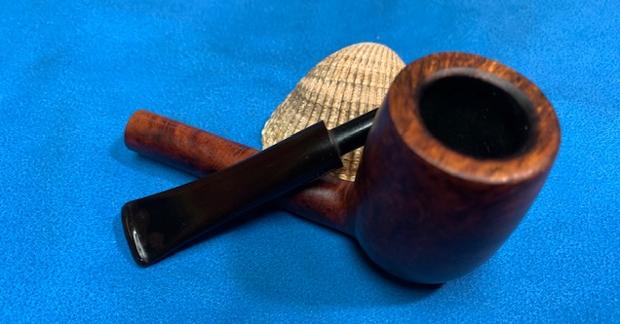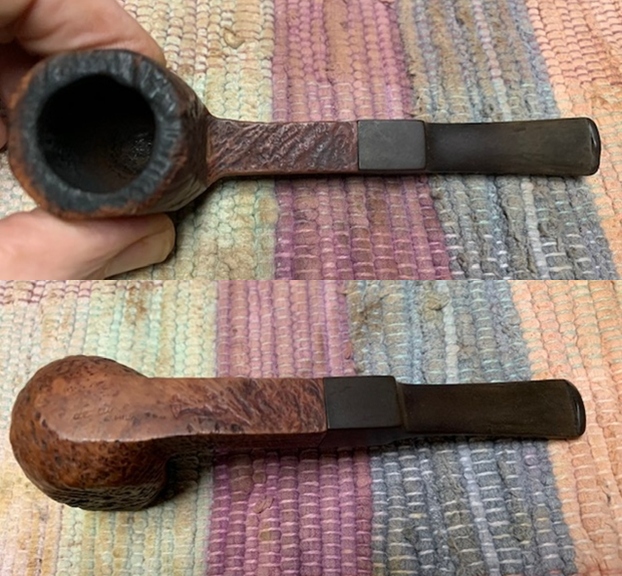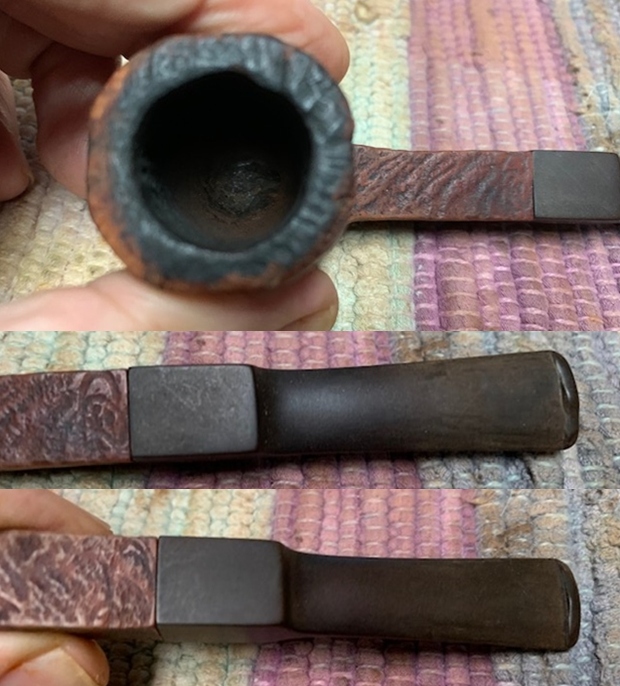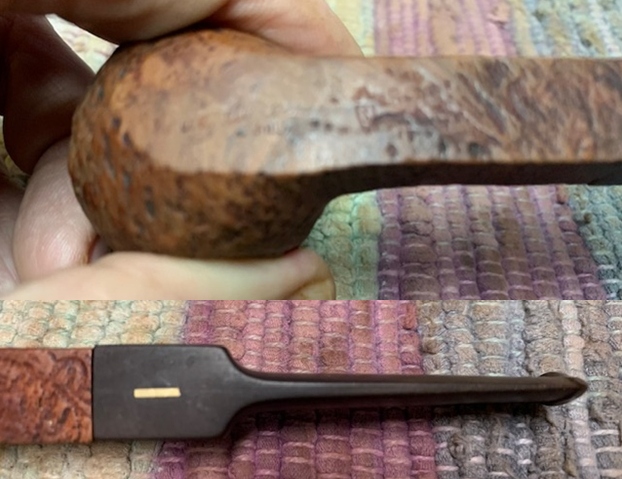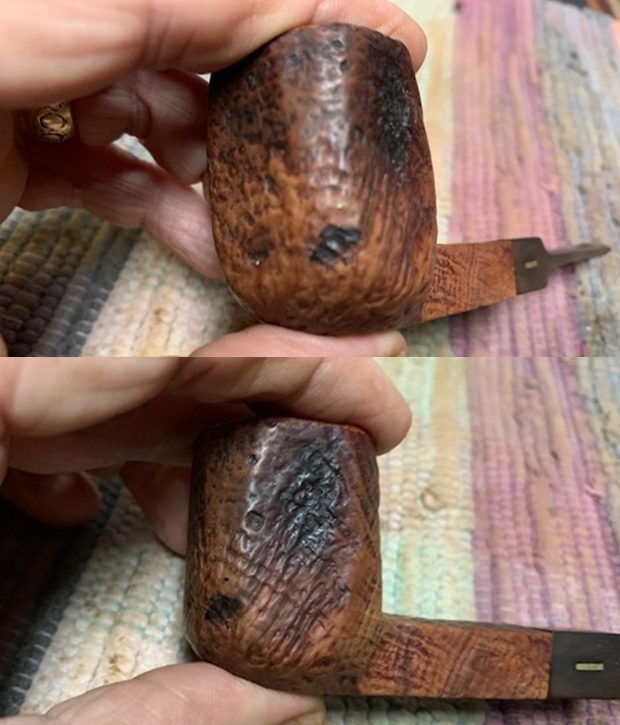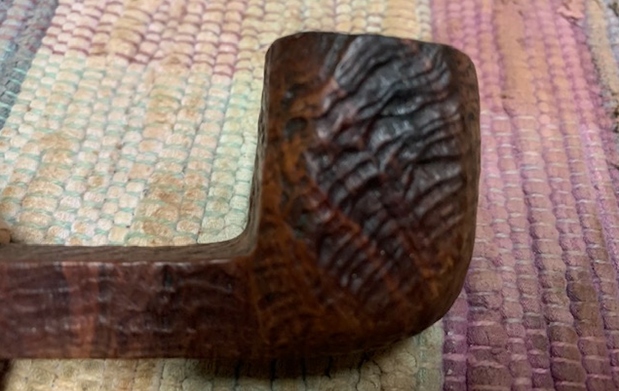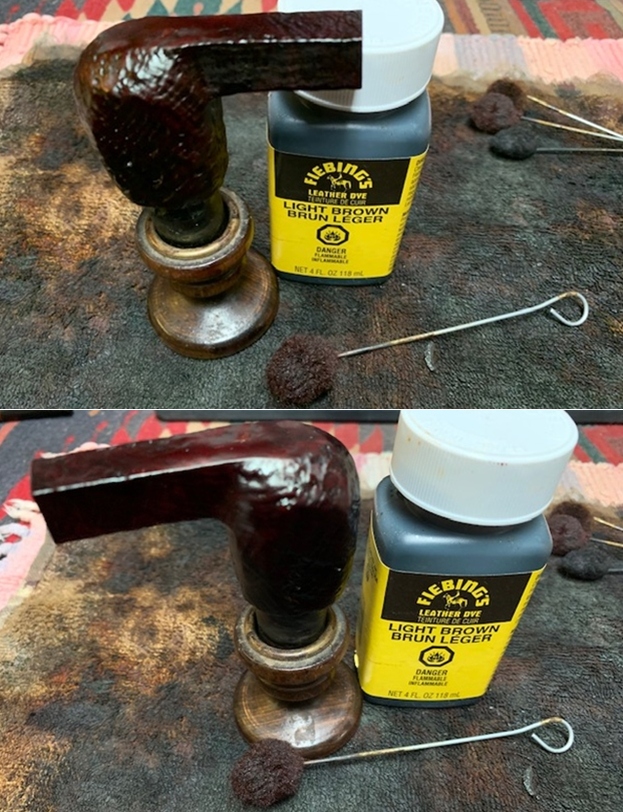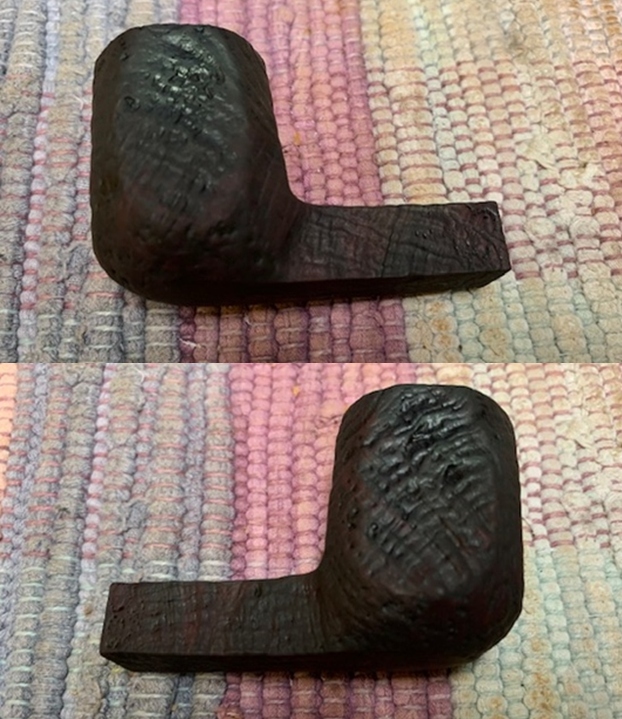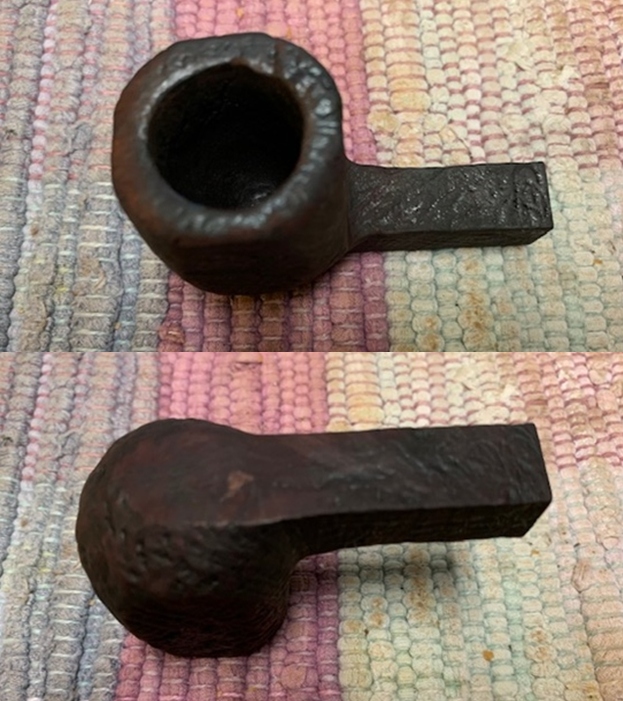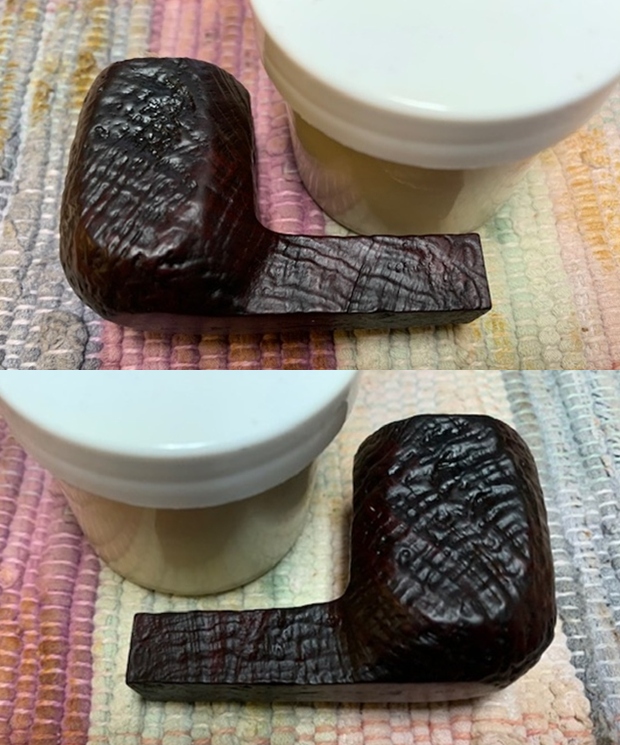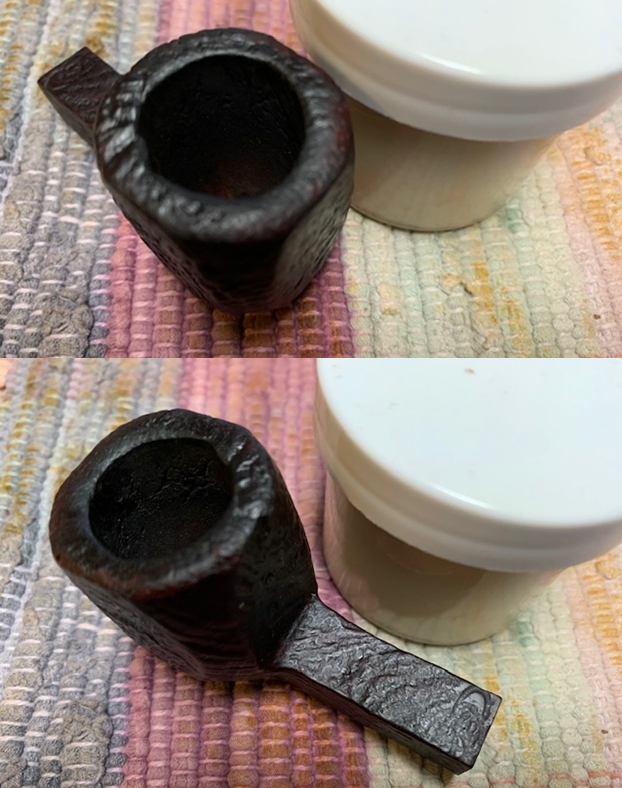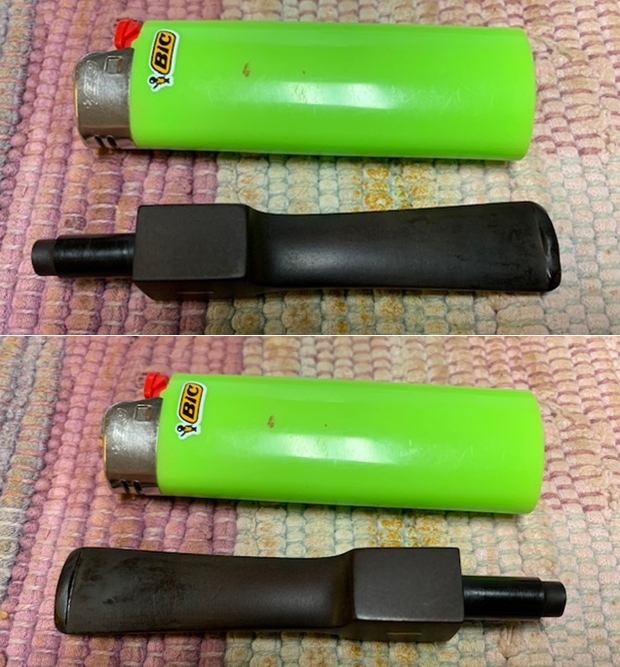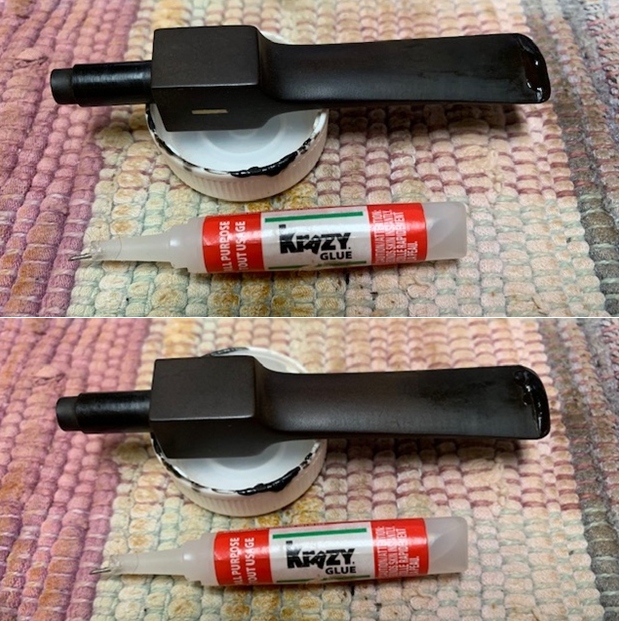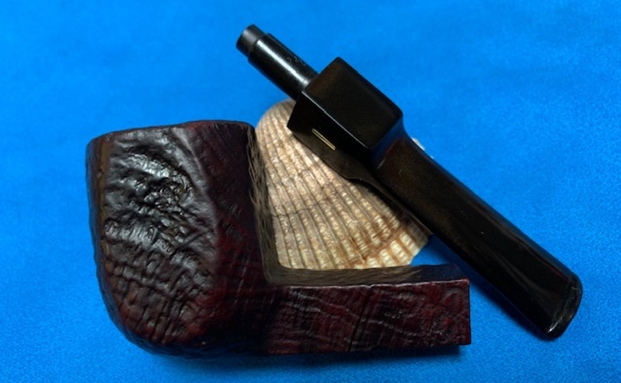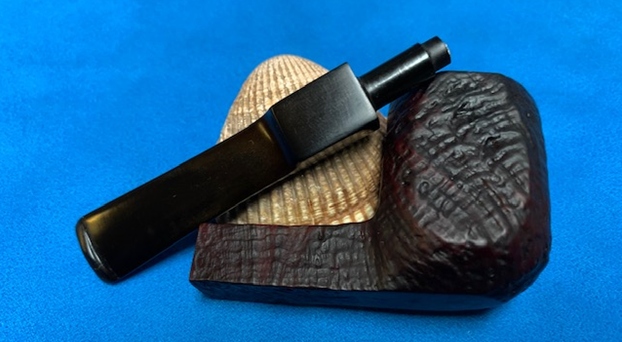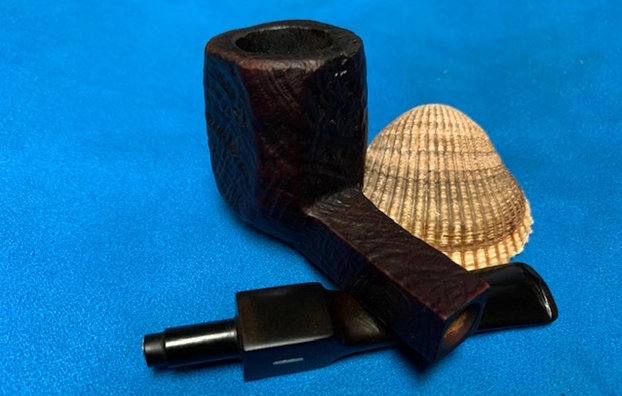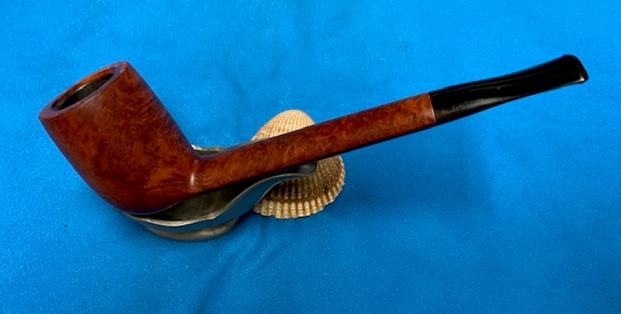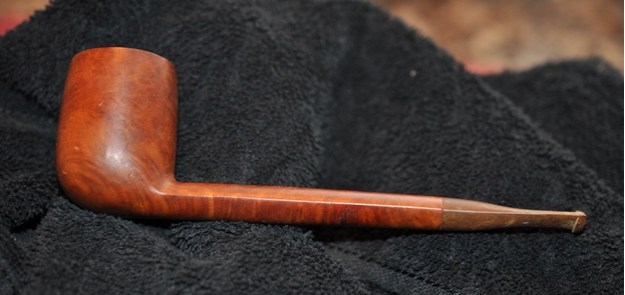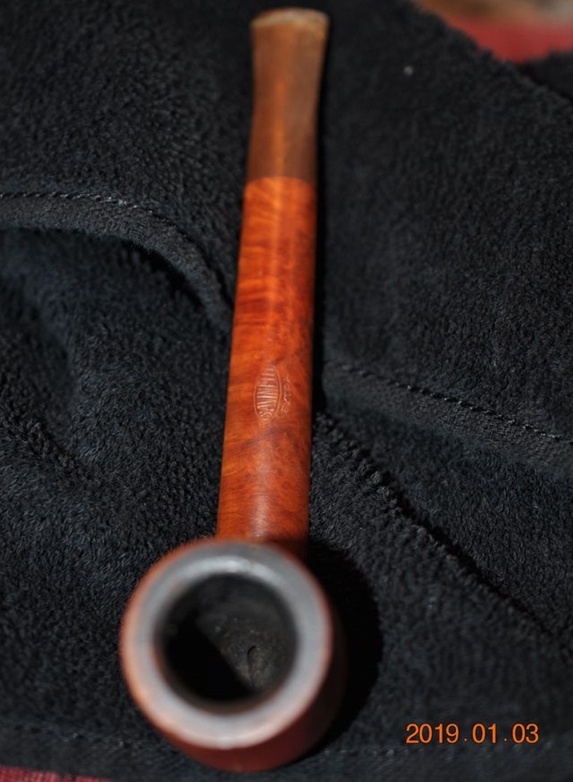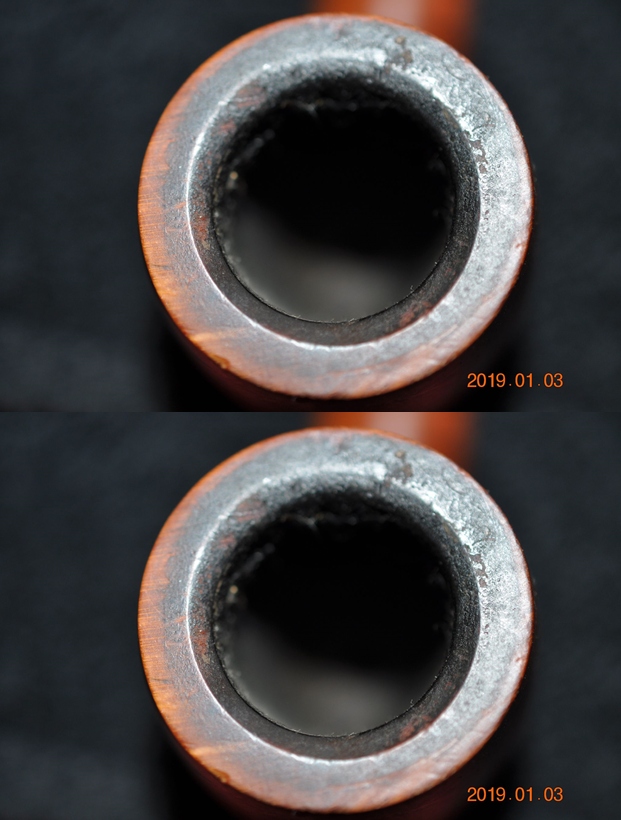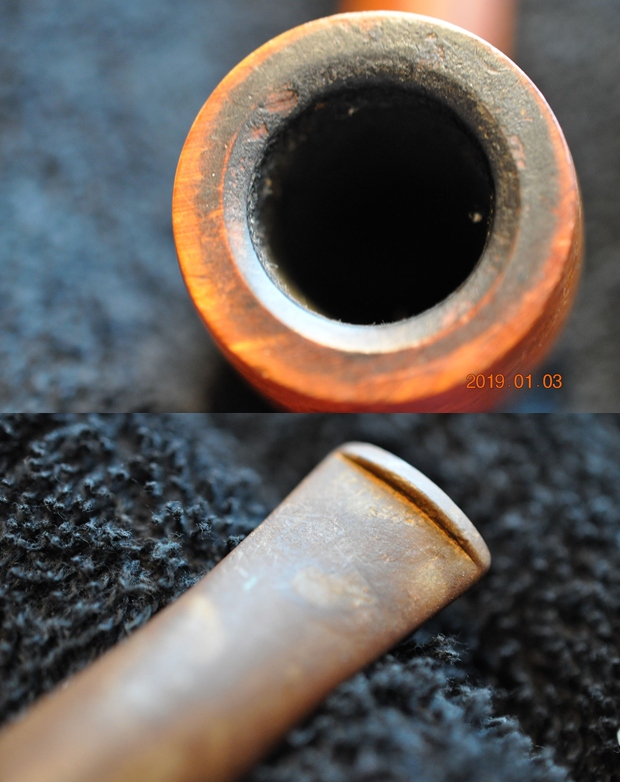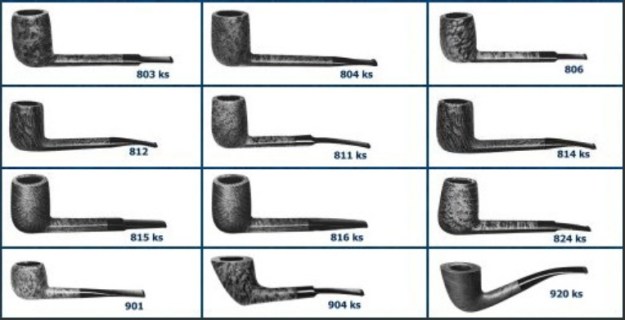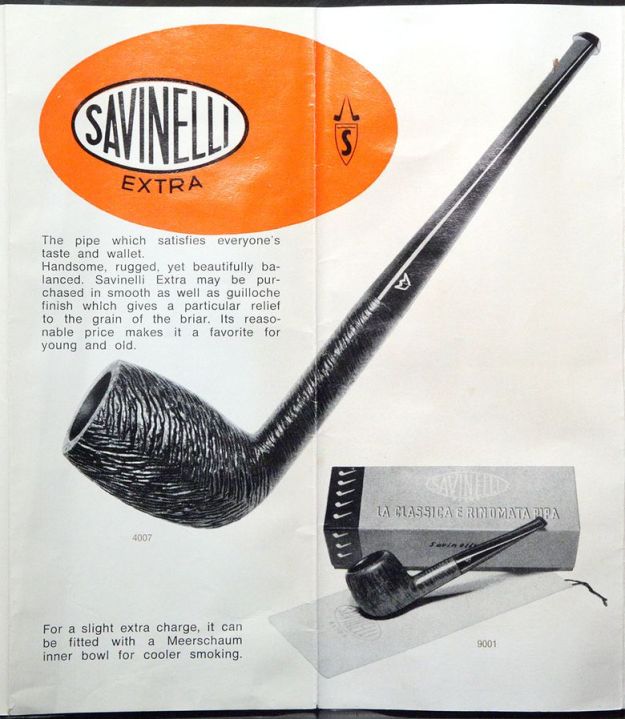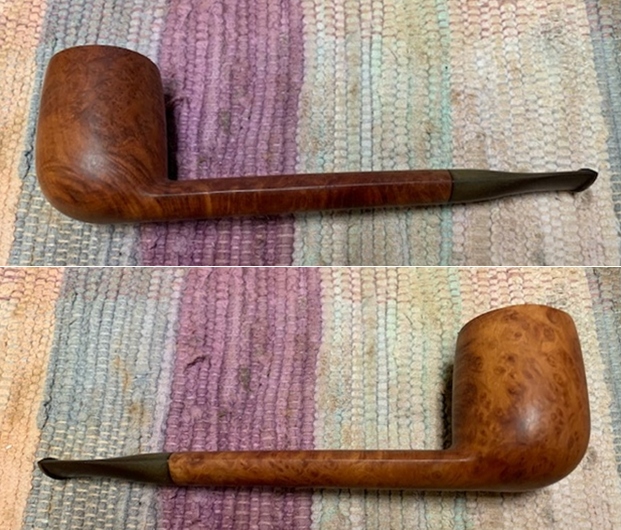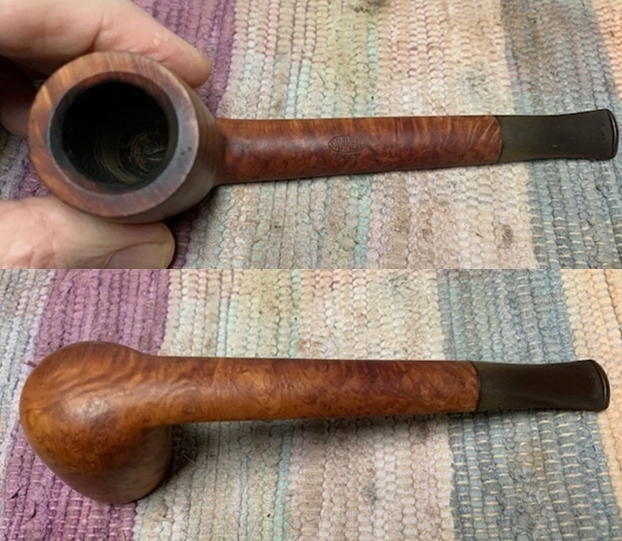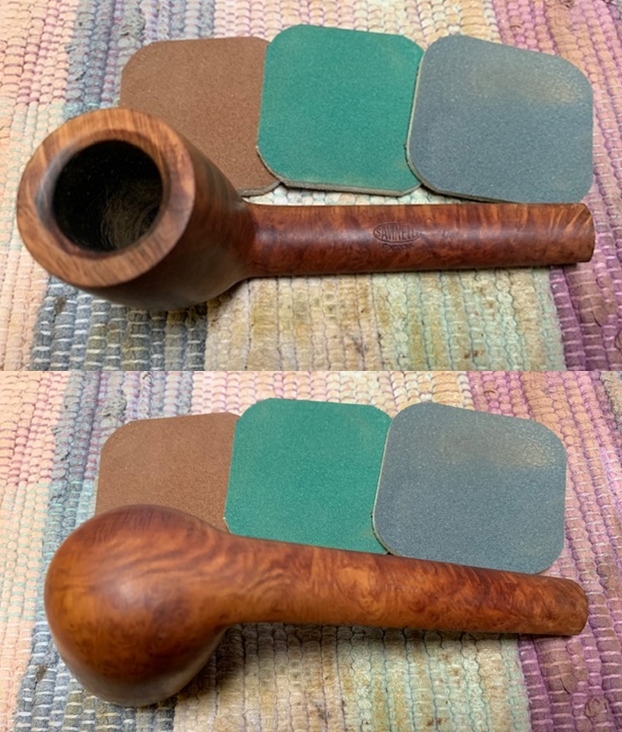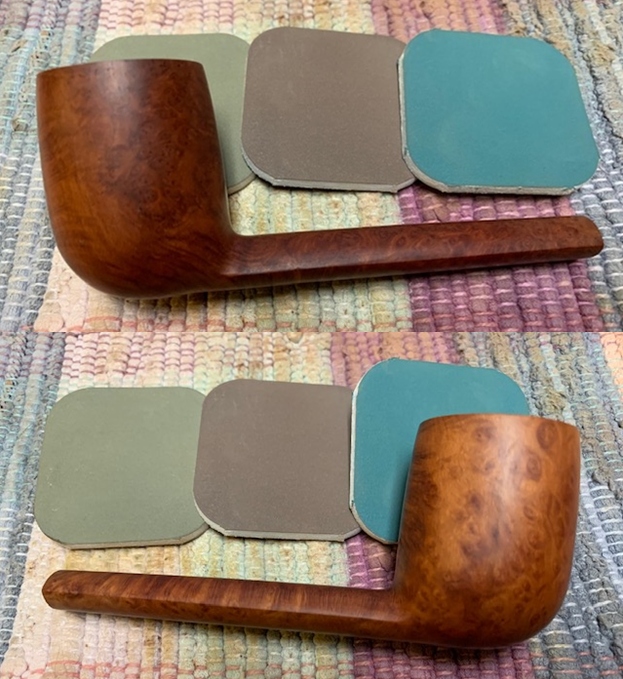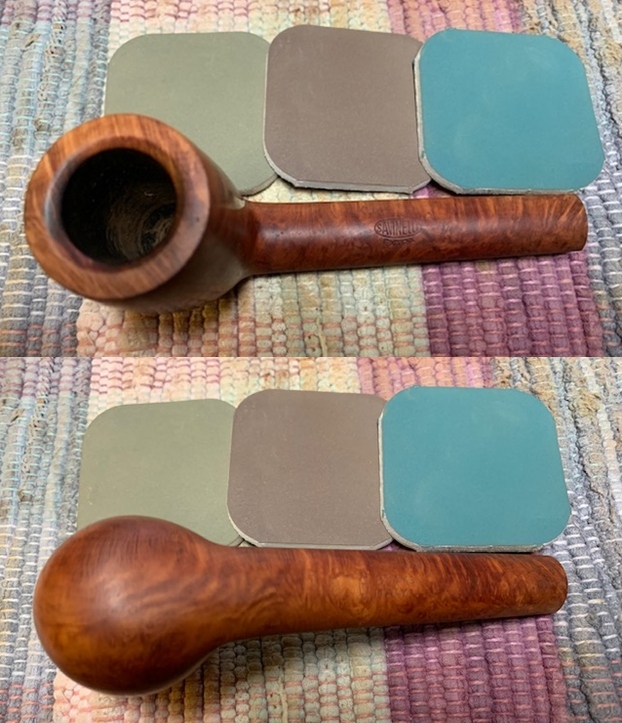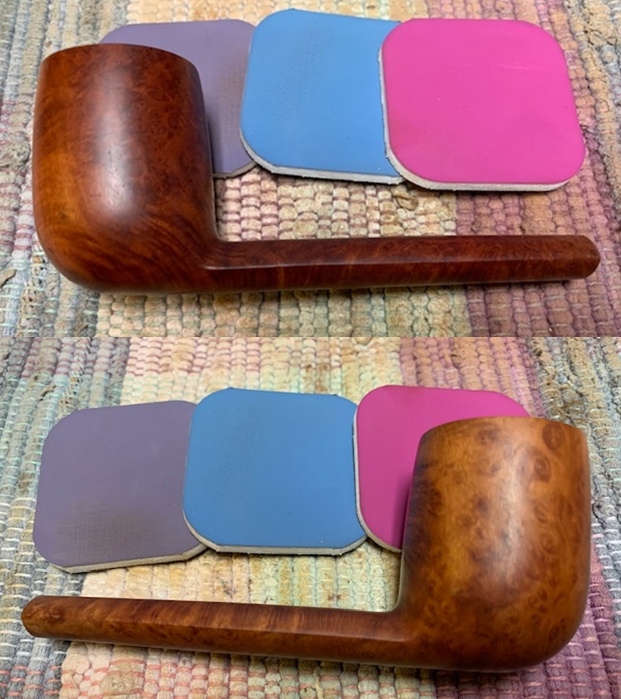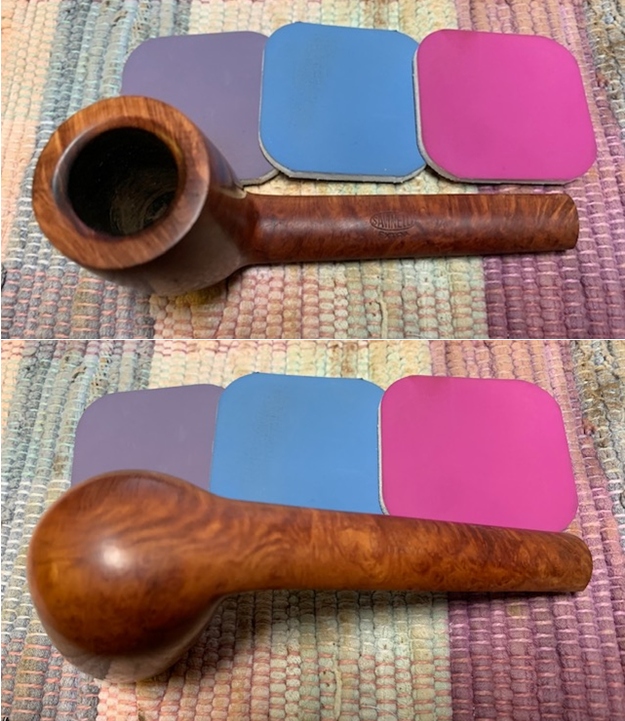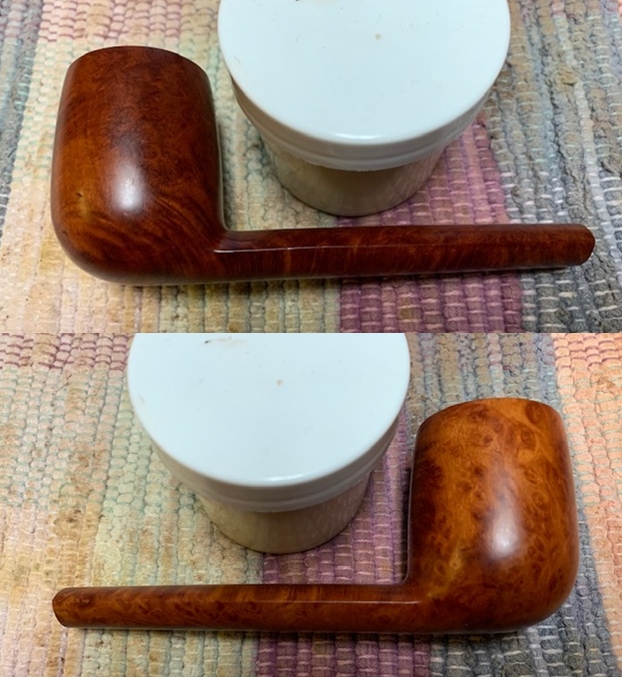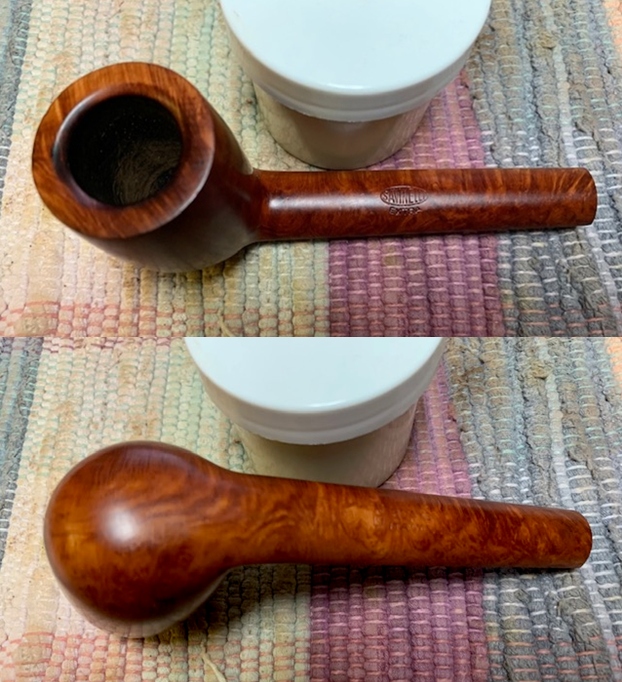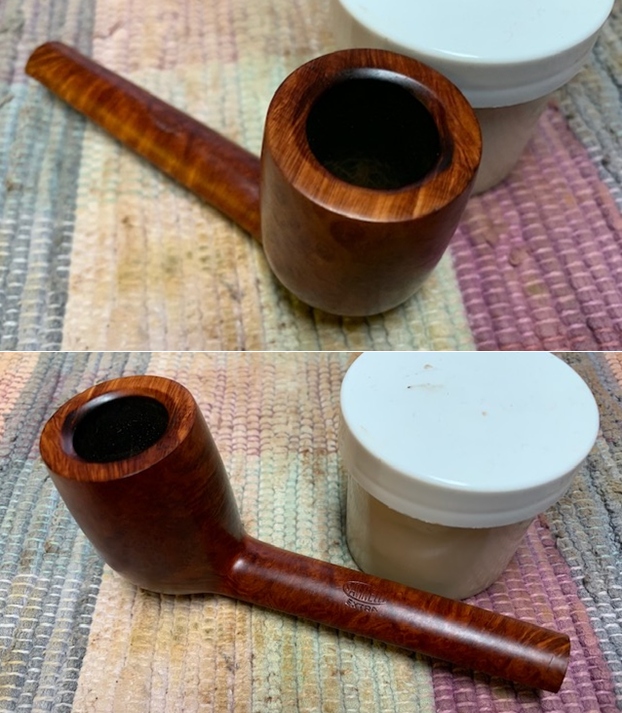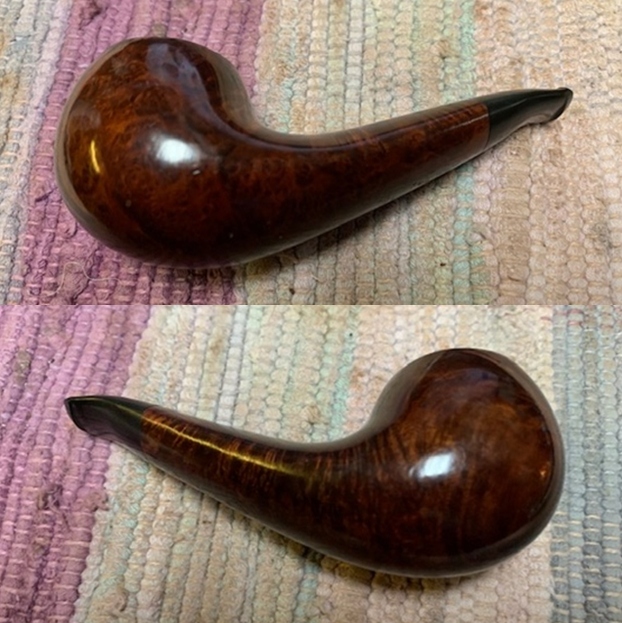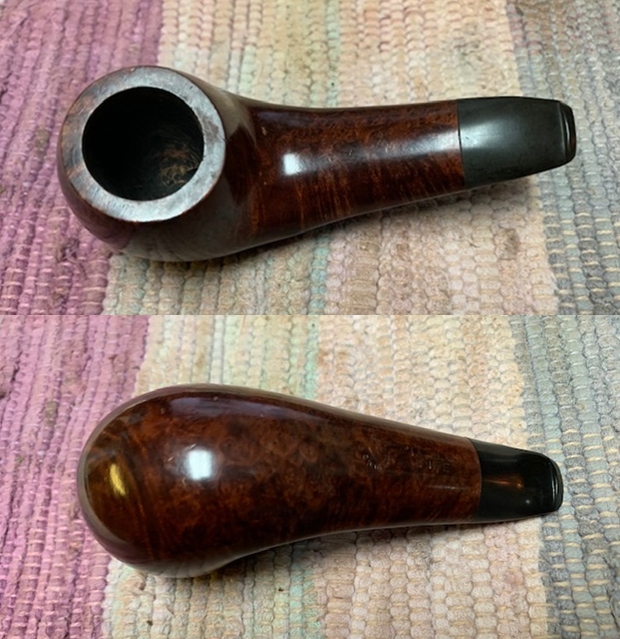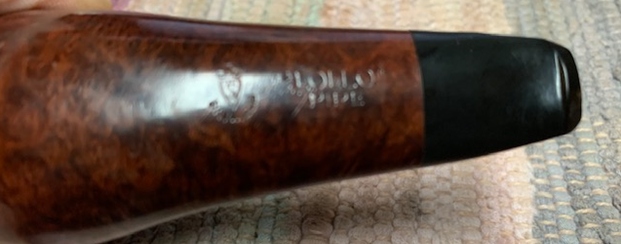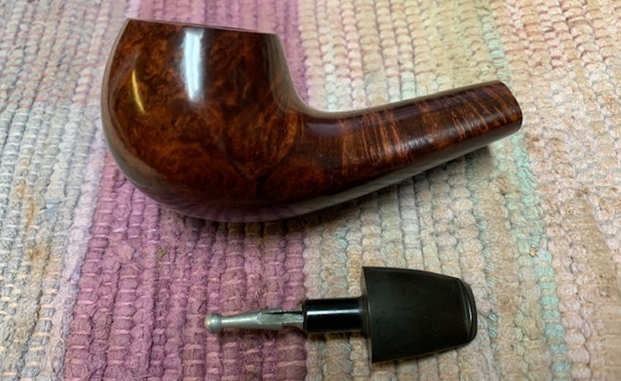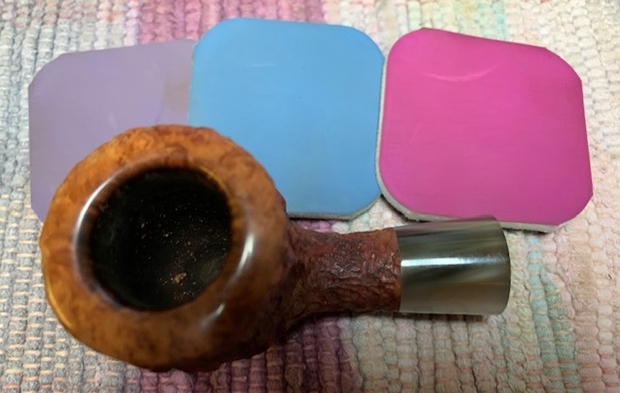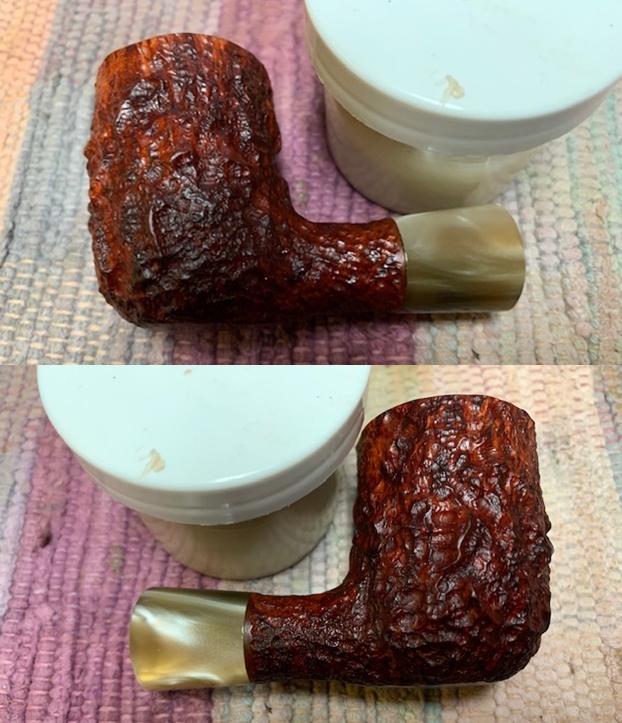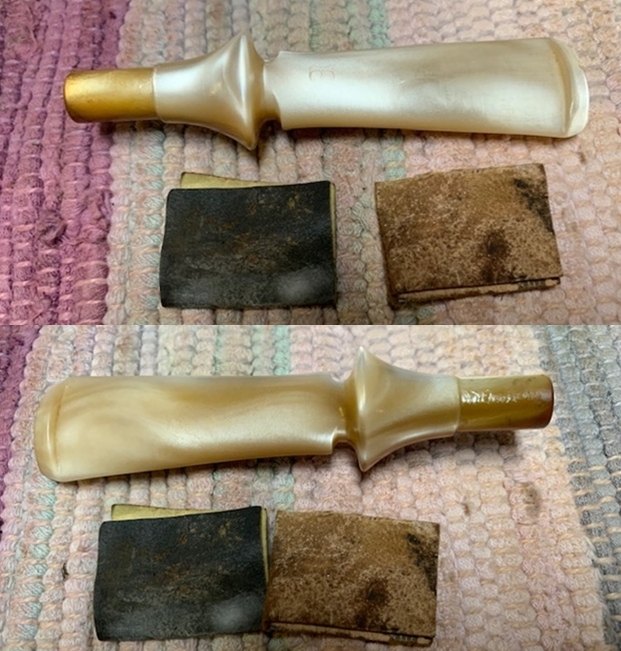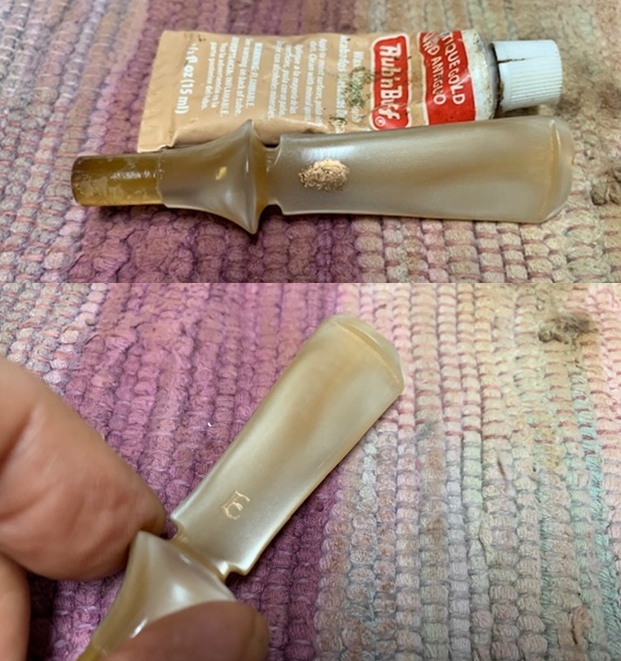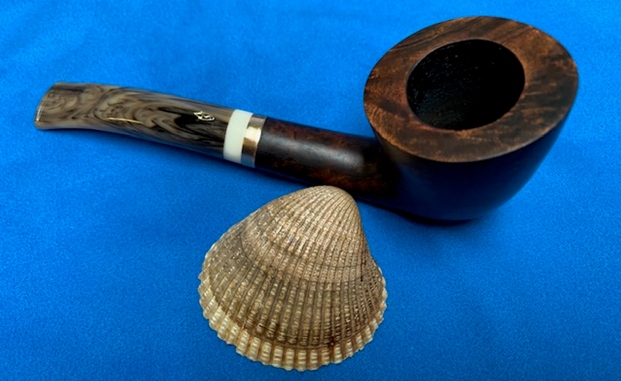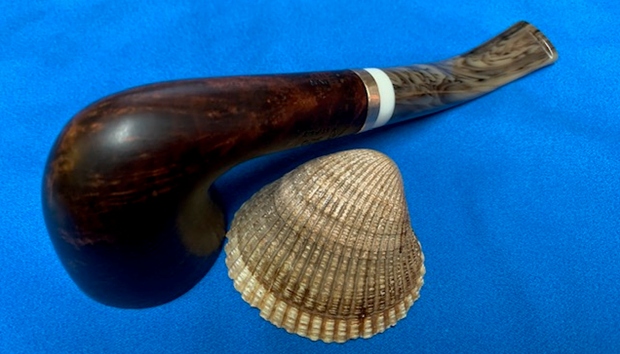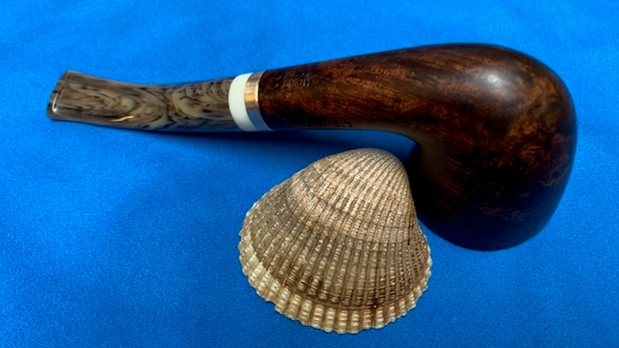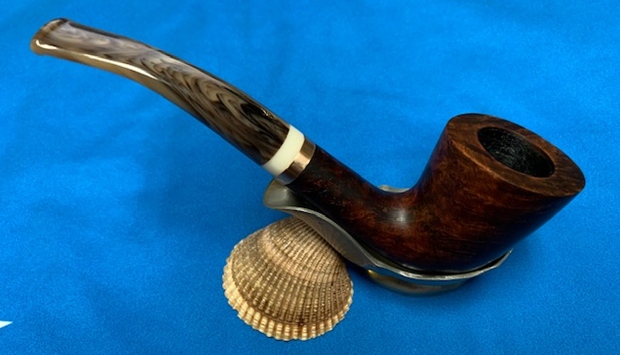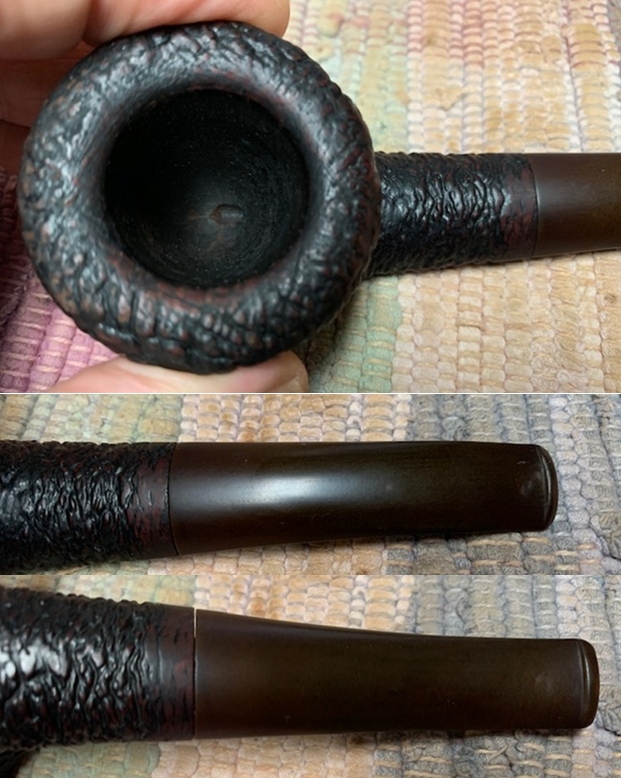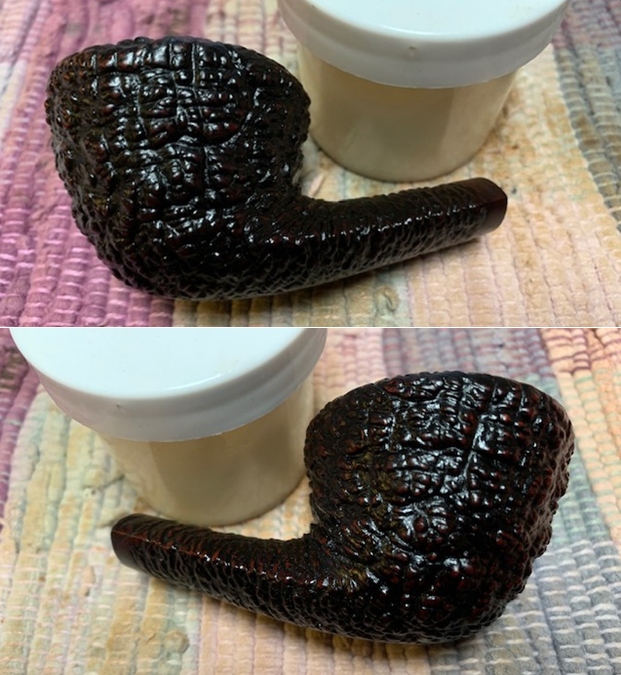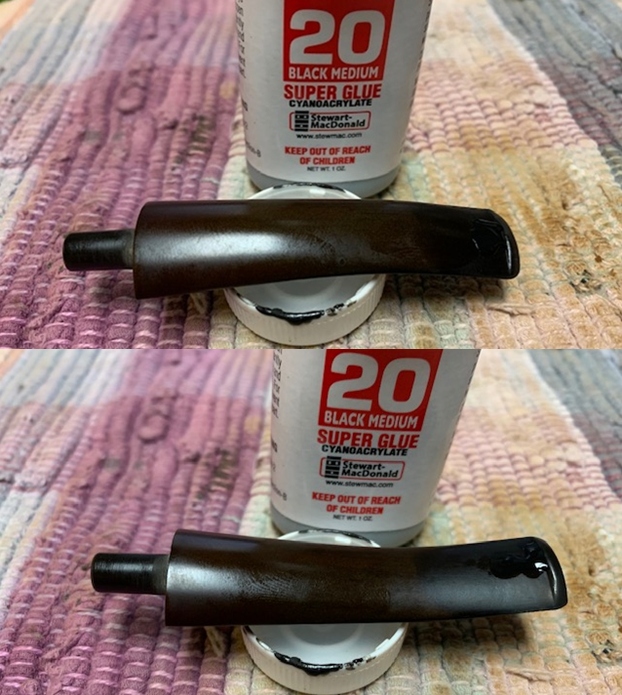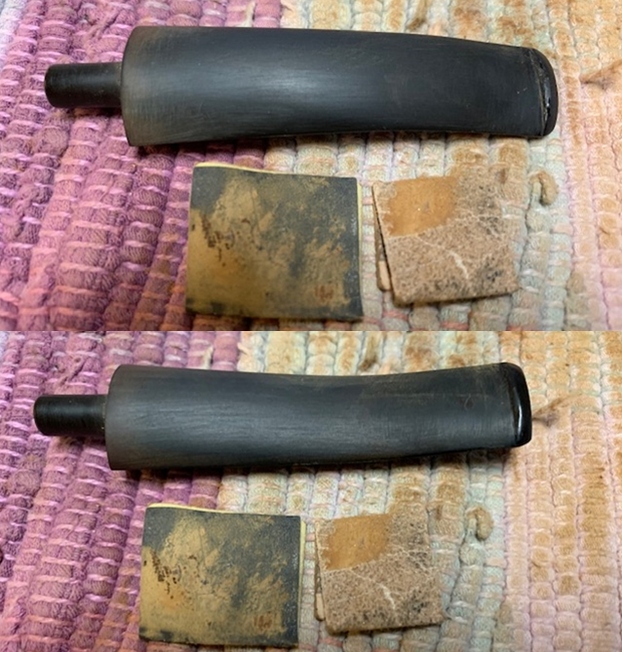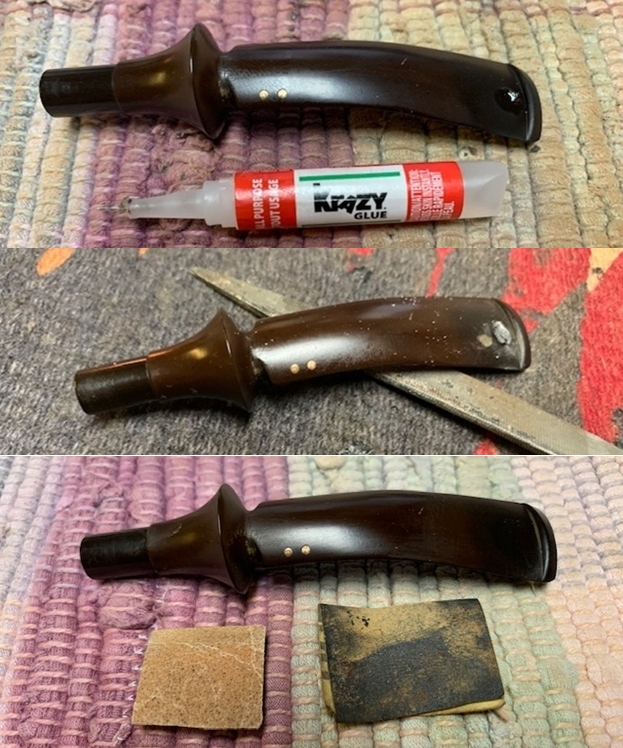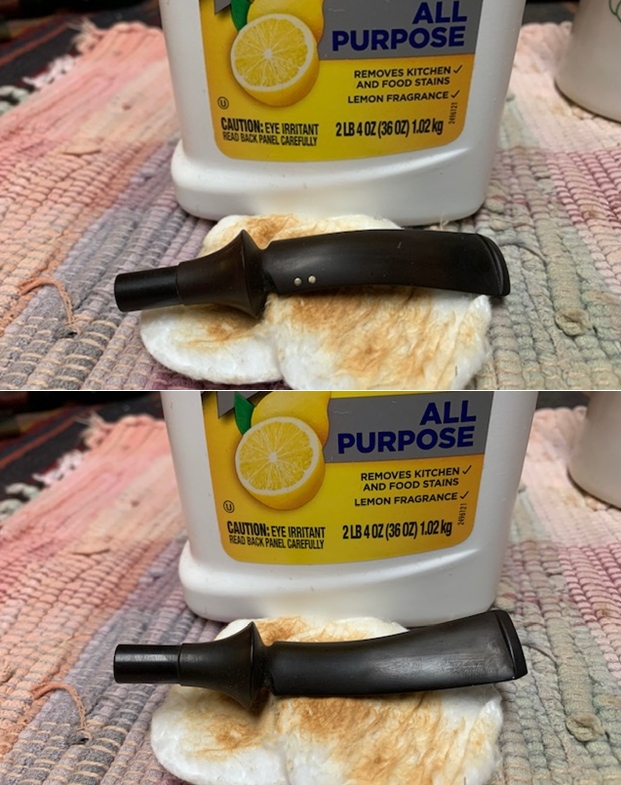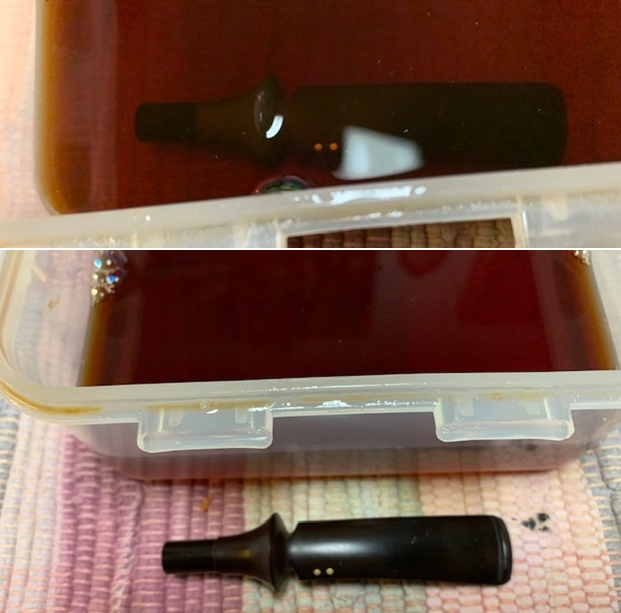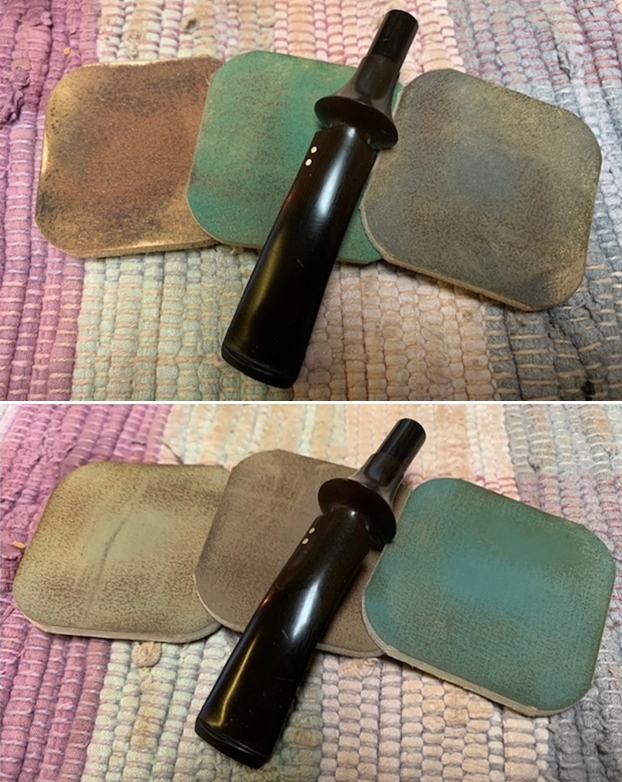
Tag Archives: Savinelli Pipes

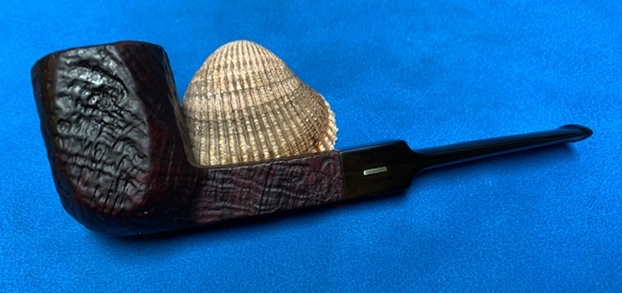
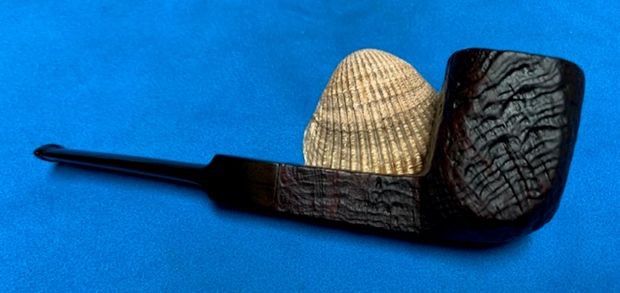
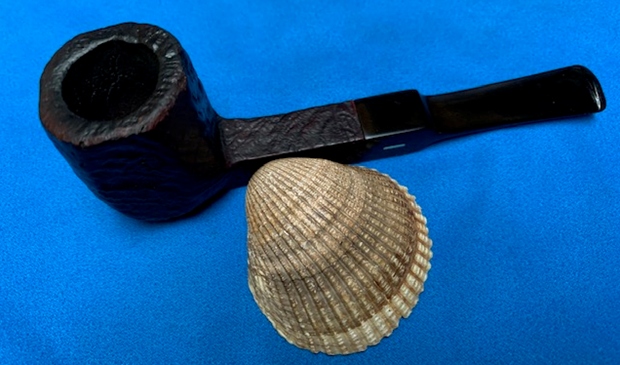
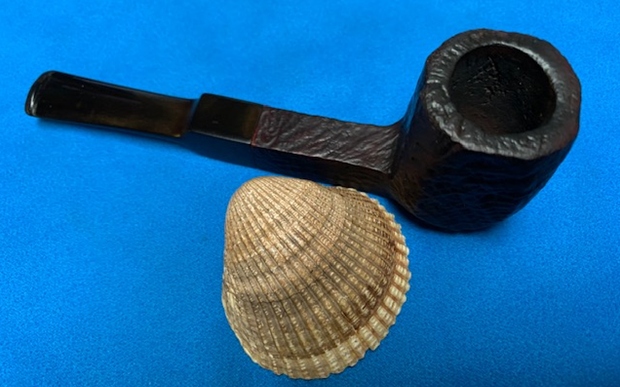
Fresh Life for a Savinelli Oscar Lucite 111KS Billiard


Blog by Steve Laug

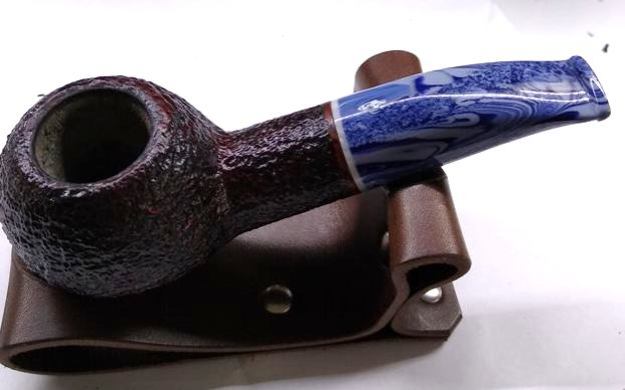
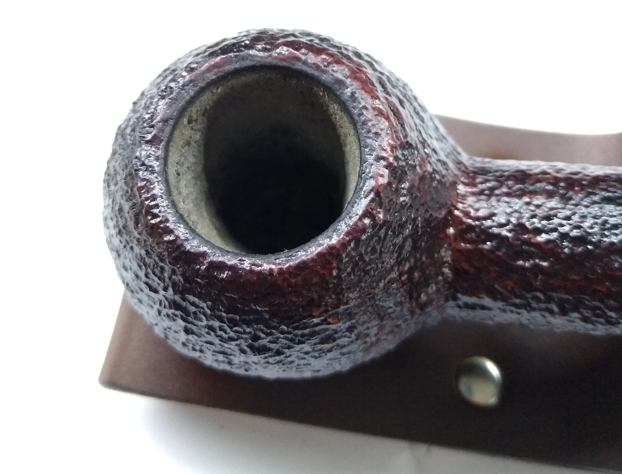
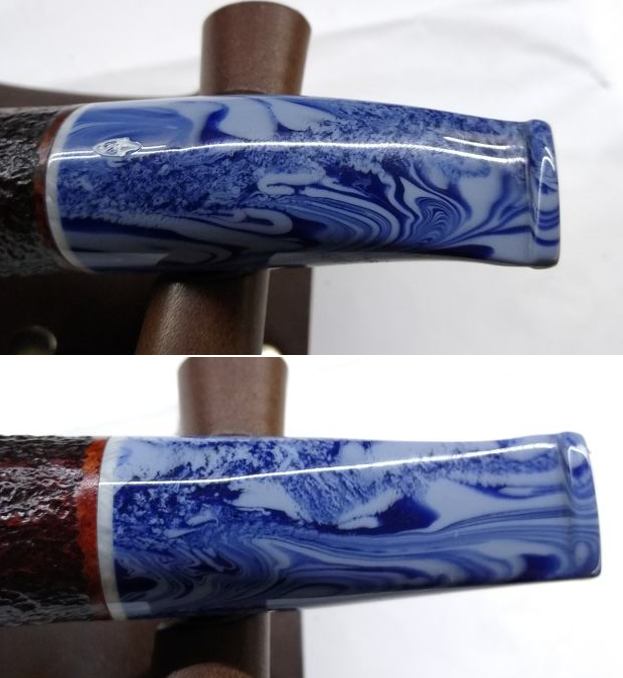
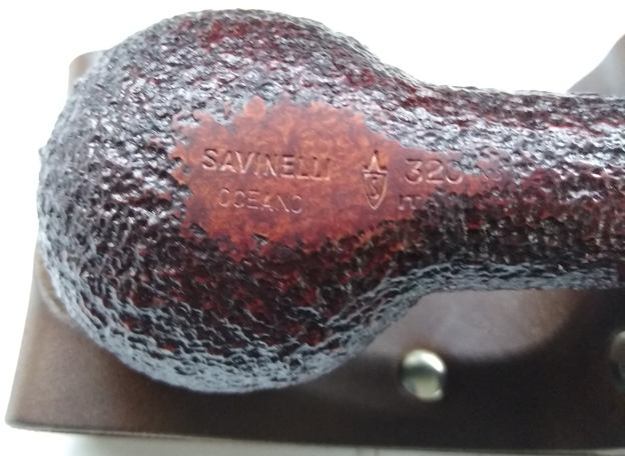
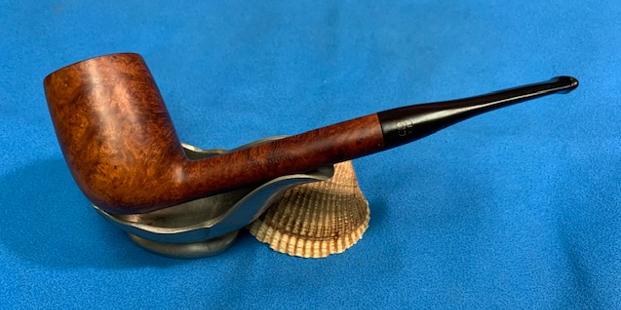
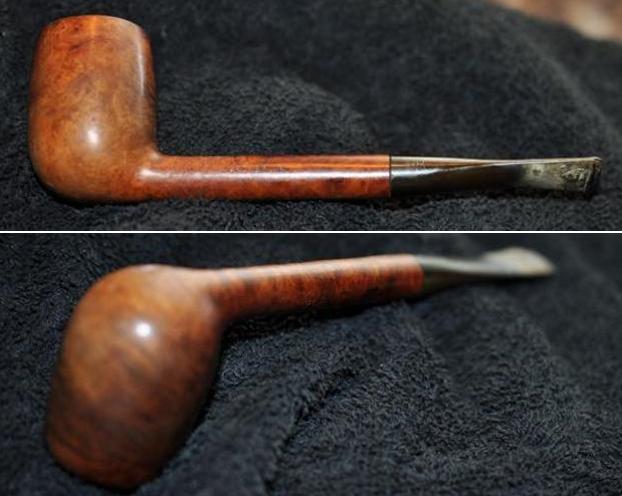
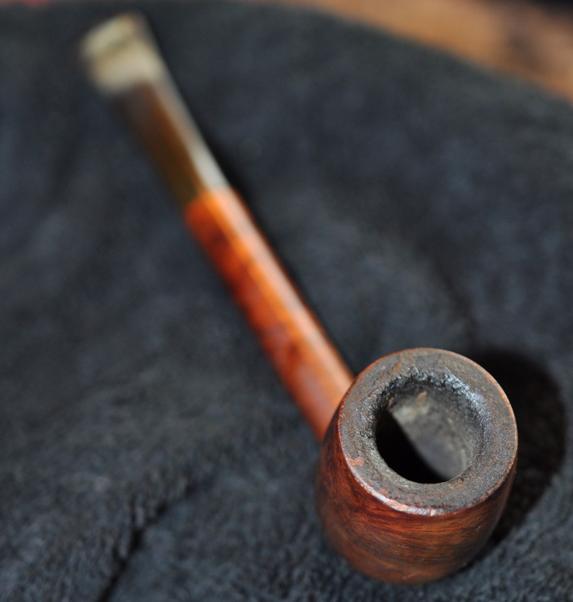
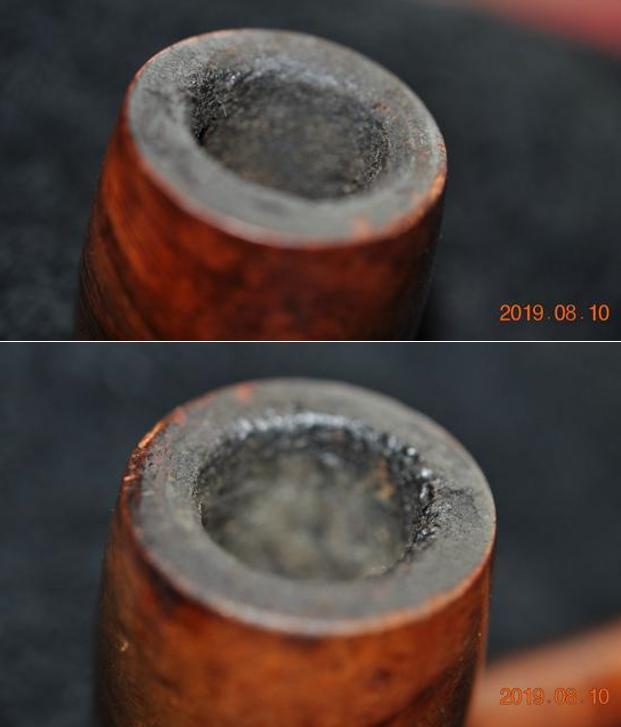
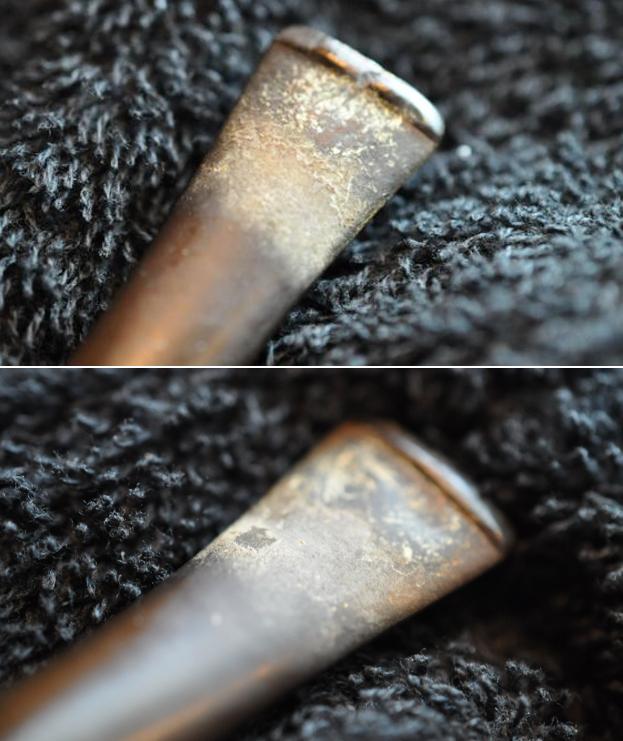
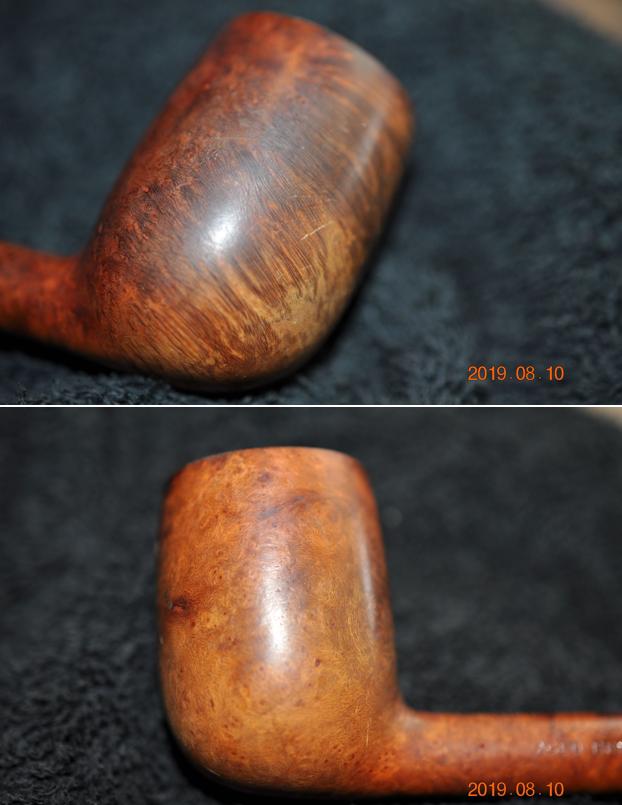
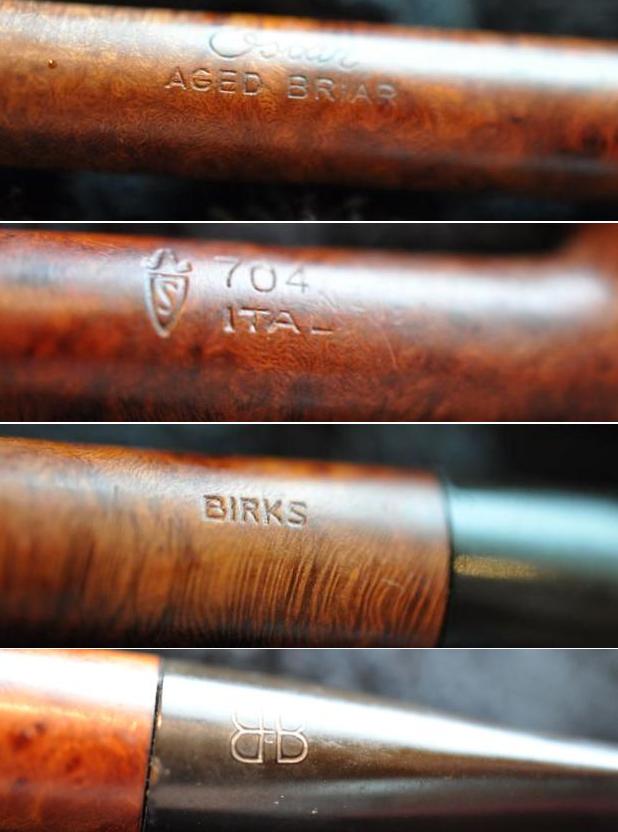
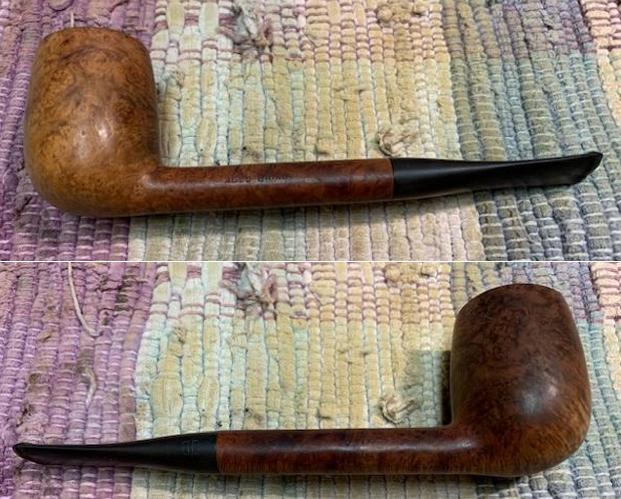
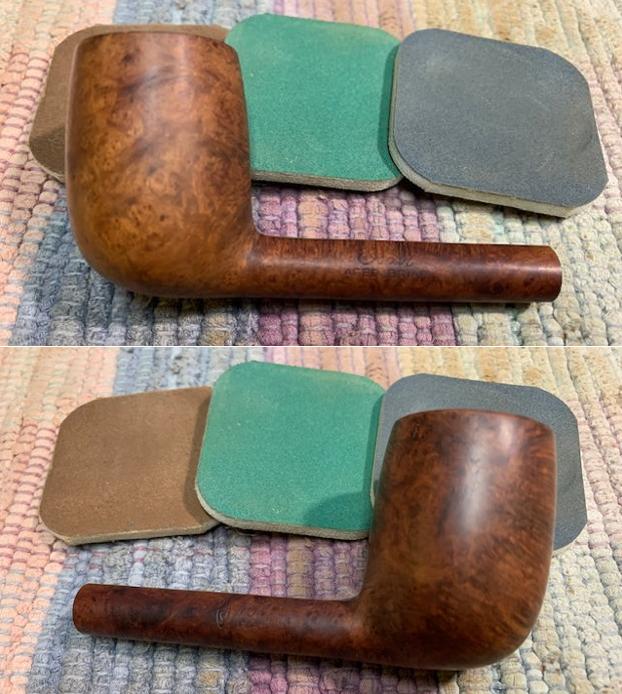
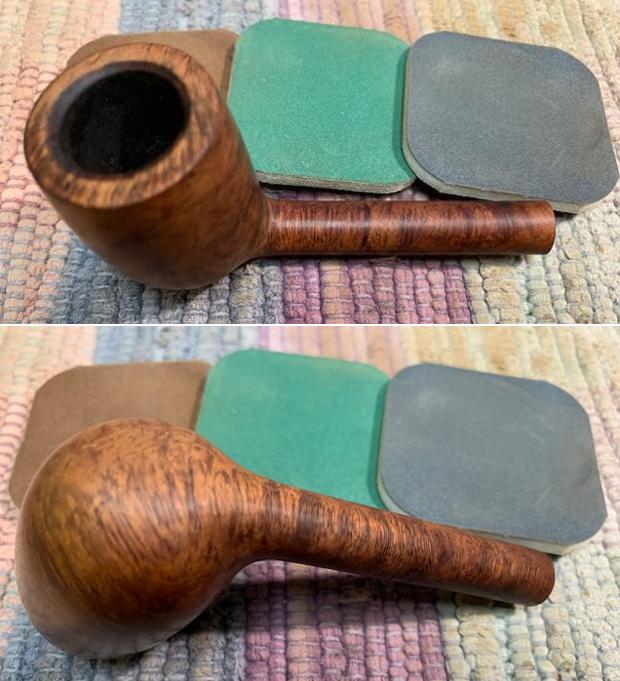
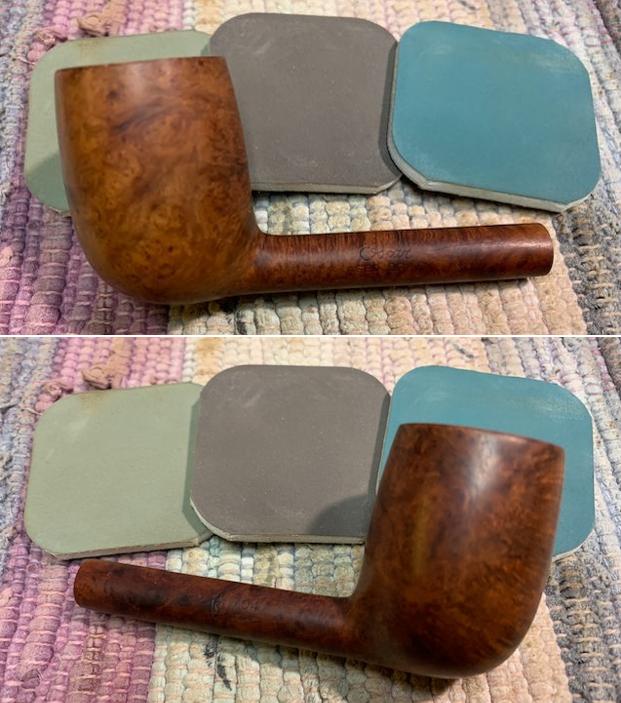
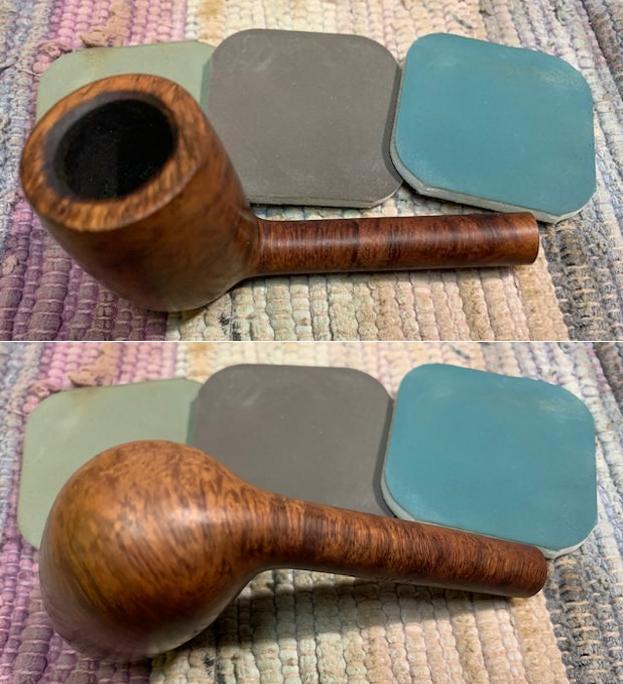
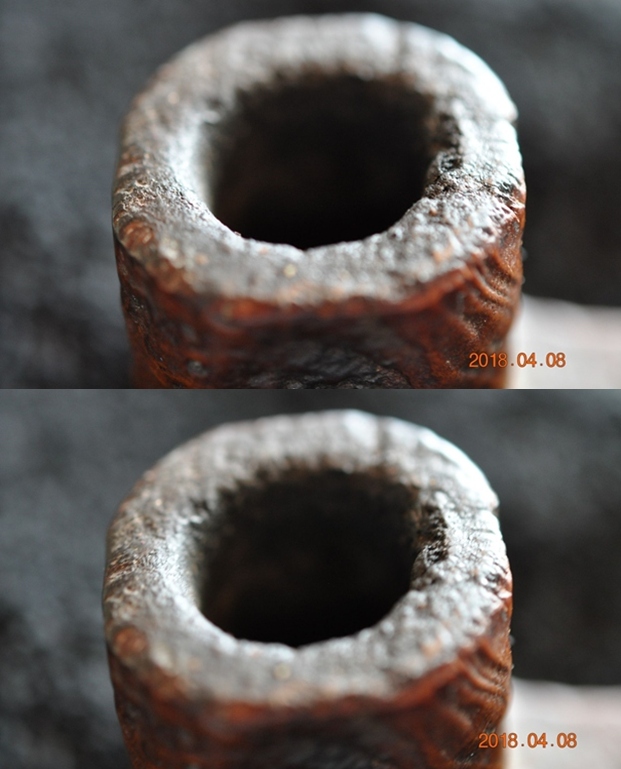
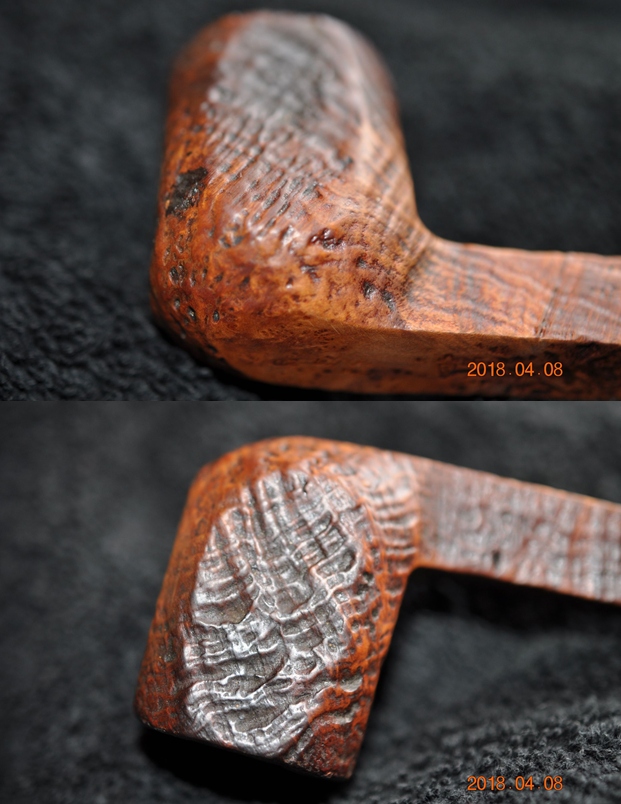
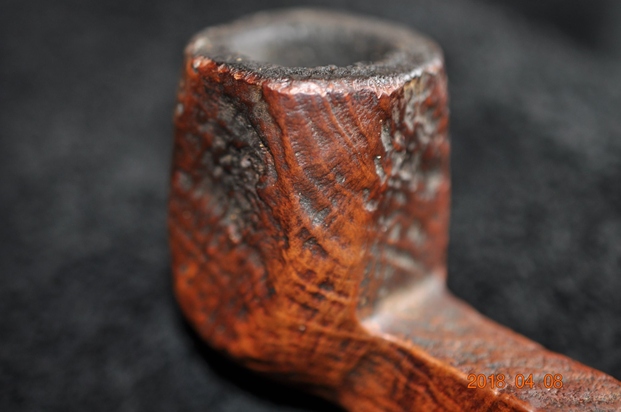
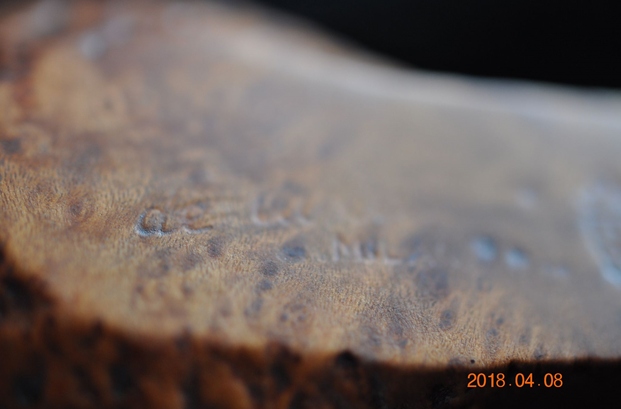
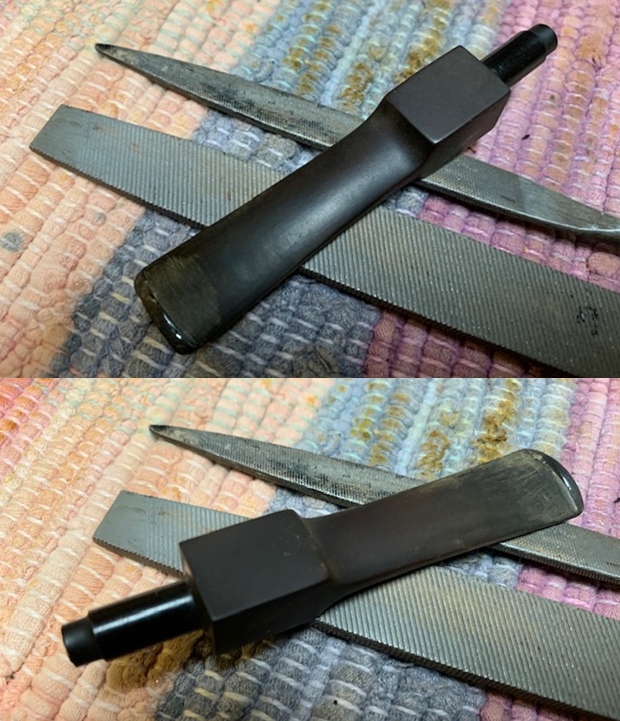
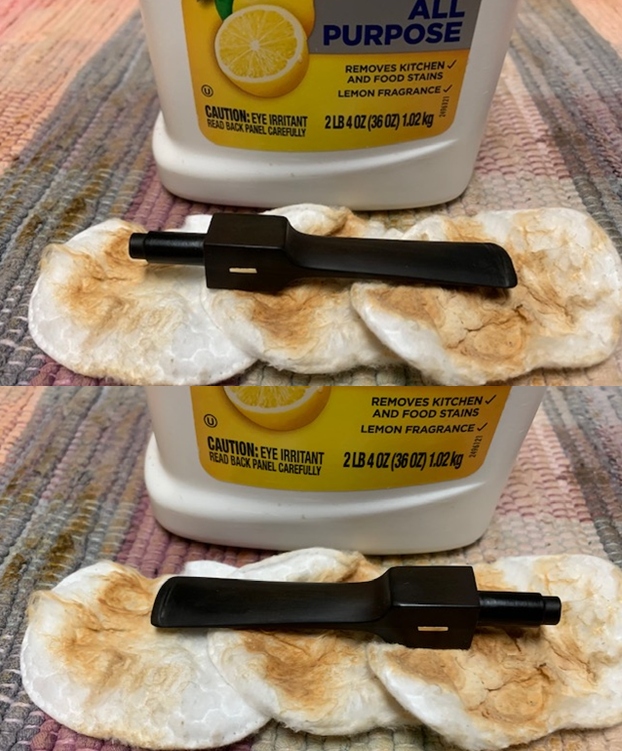
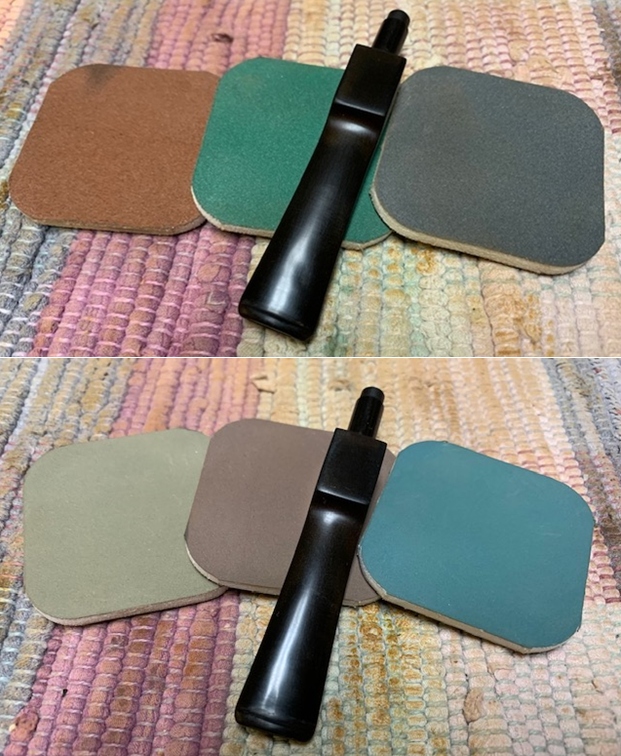
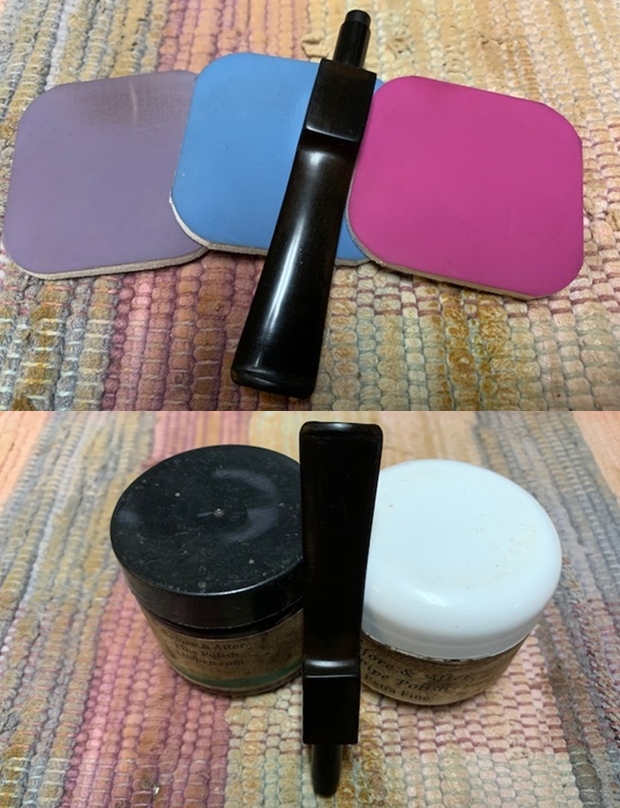
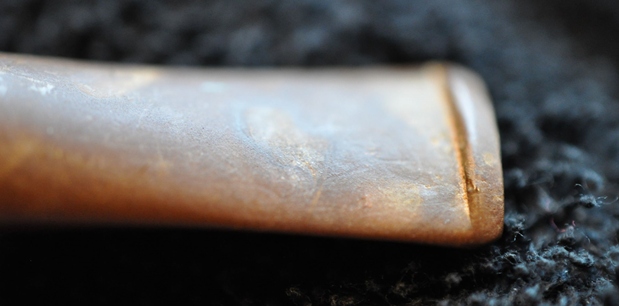
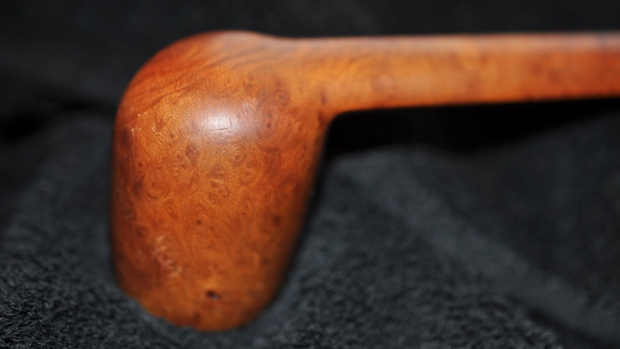
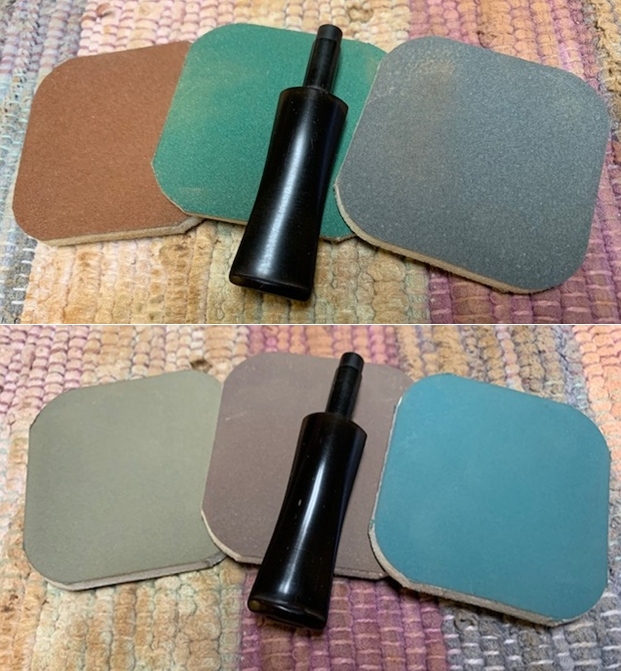
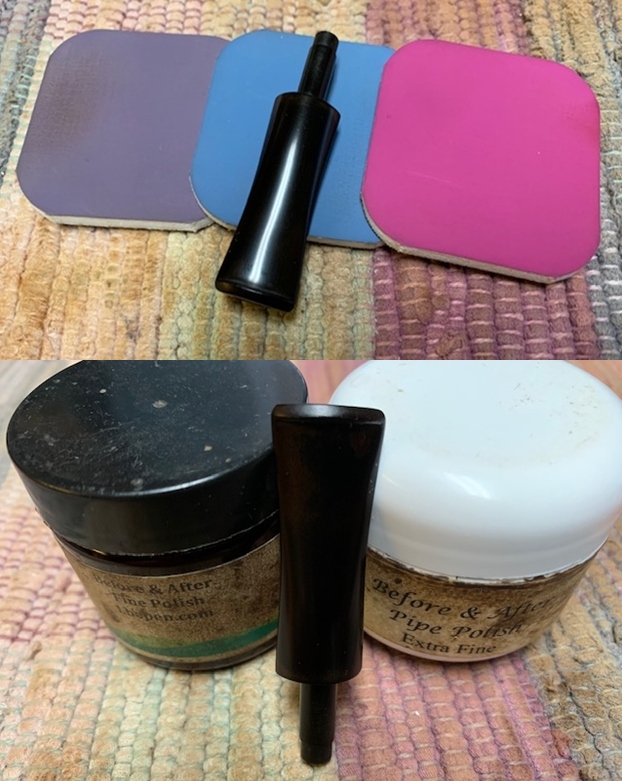
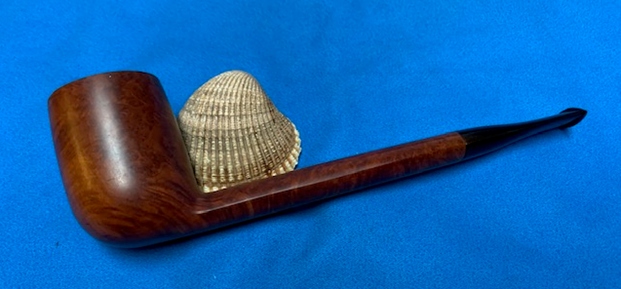
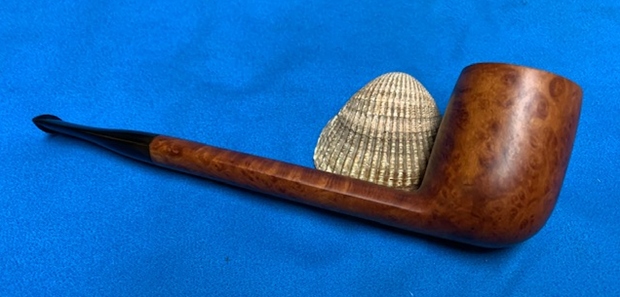
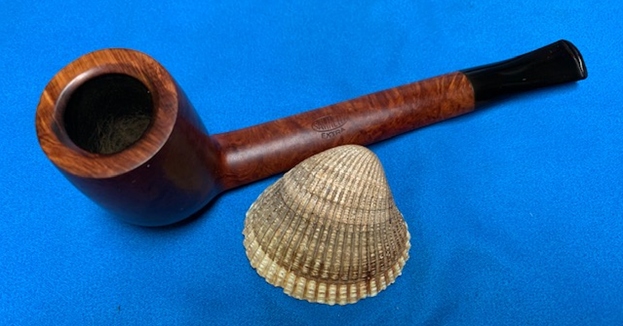
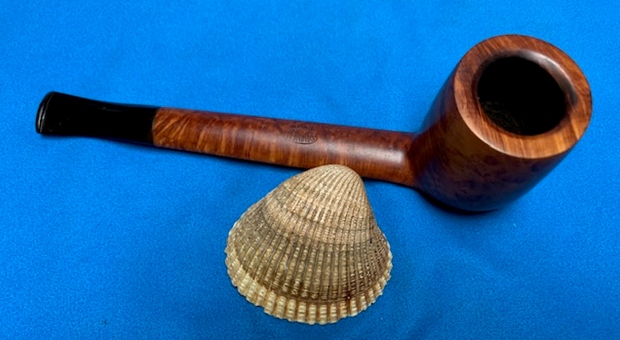
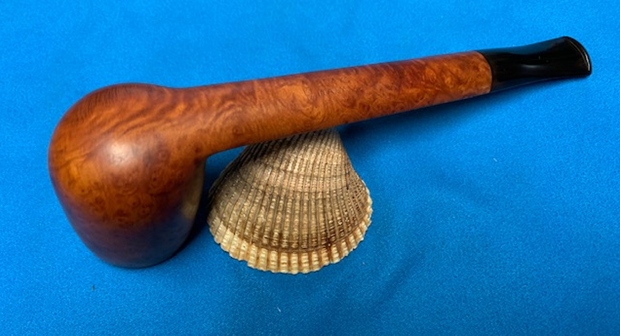
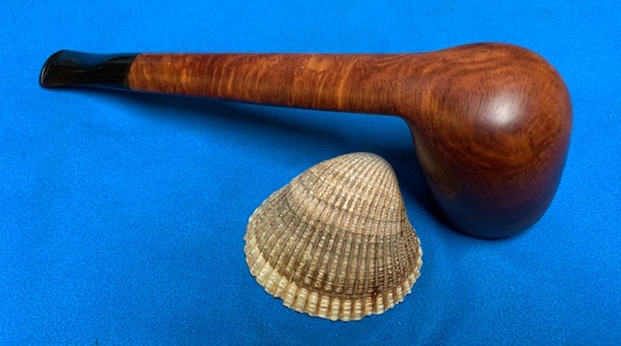
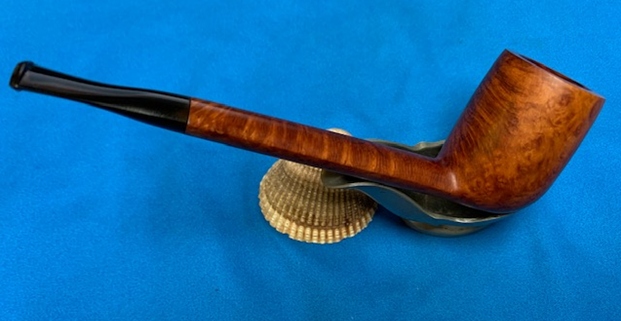
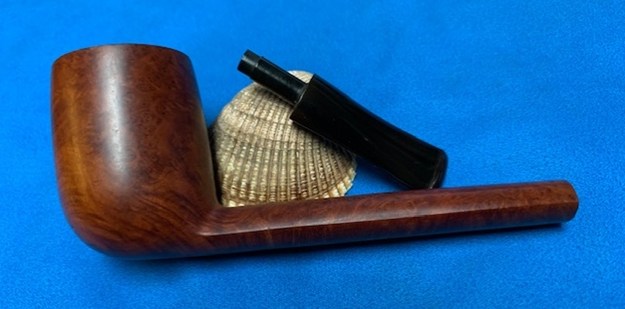
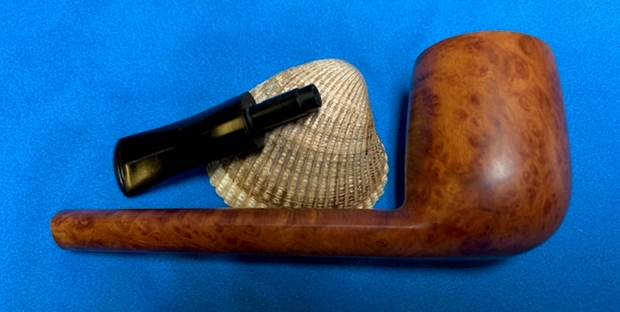
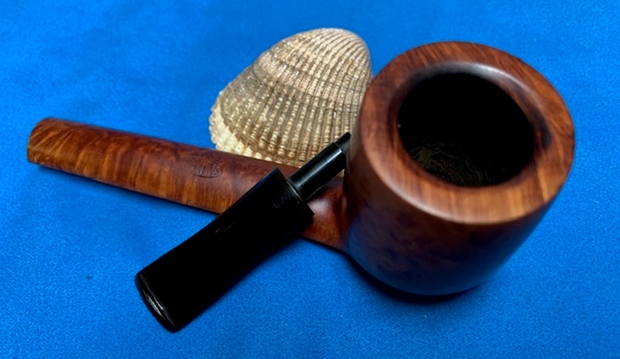
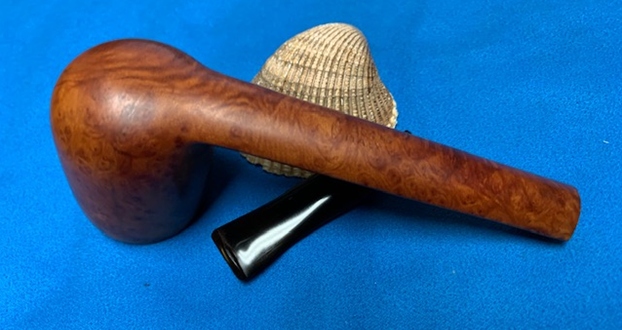
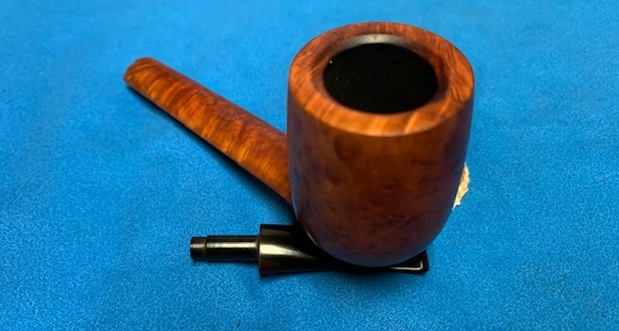
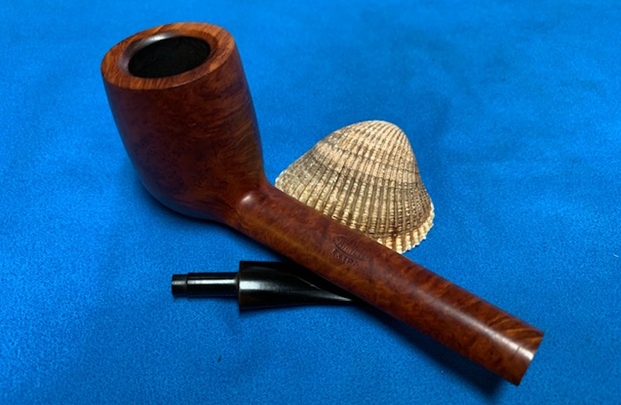
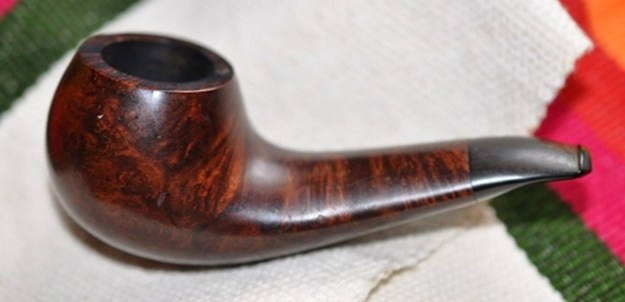
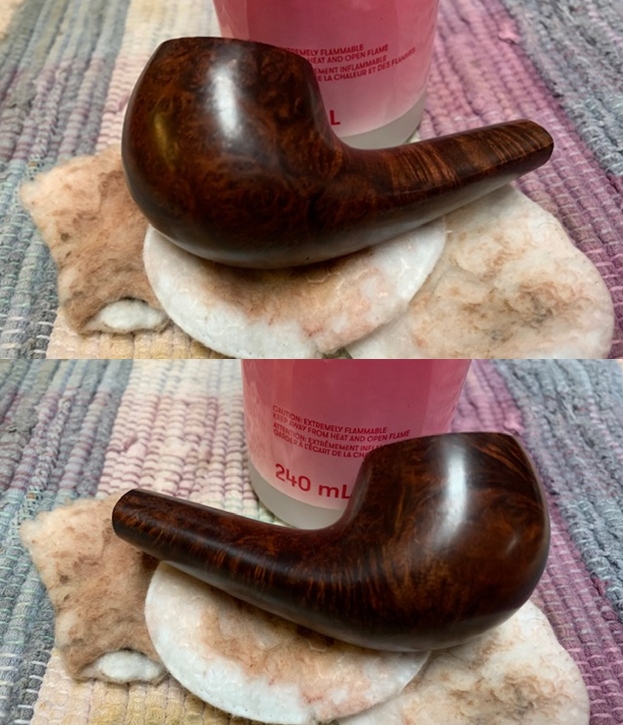
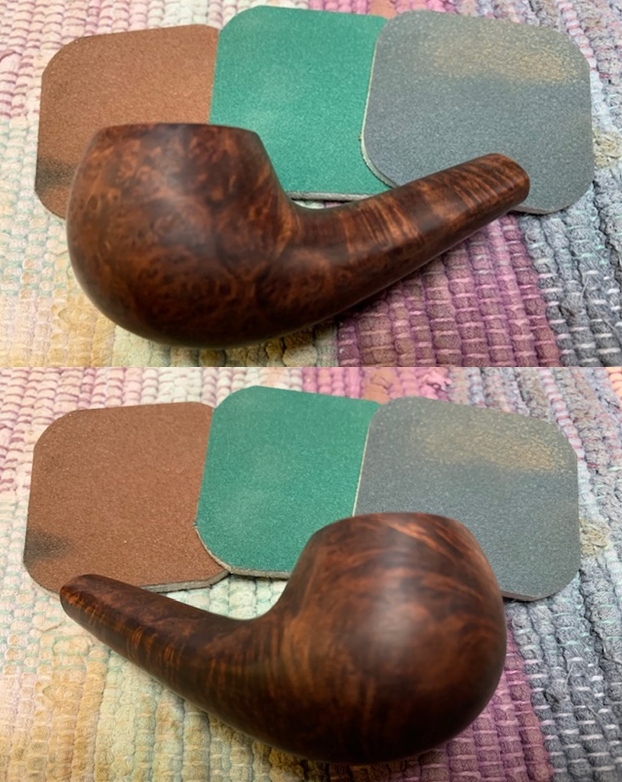
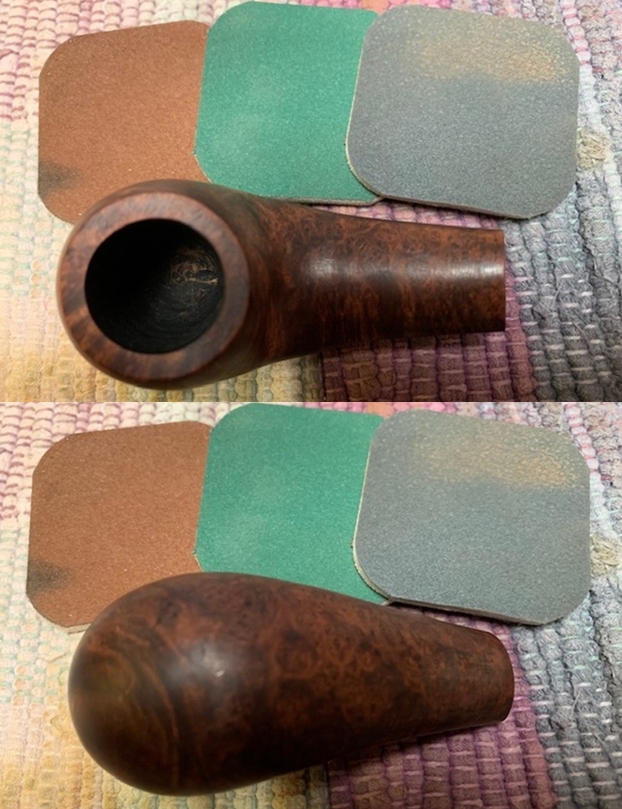
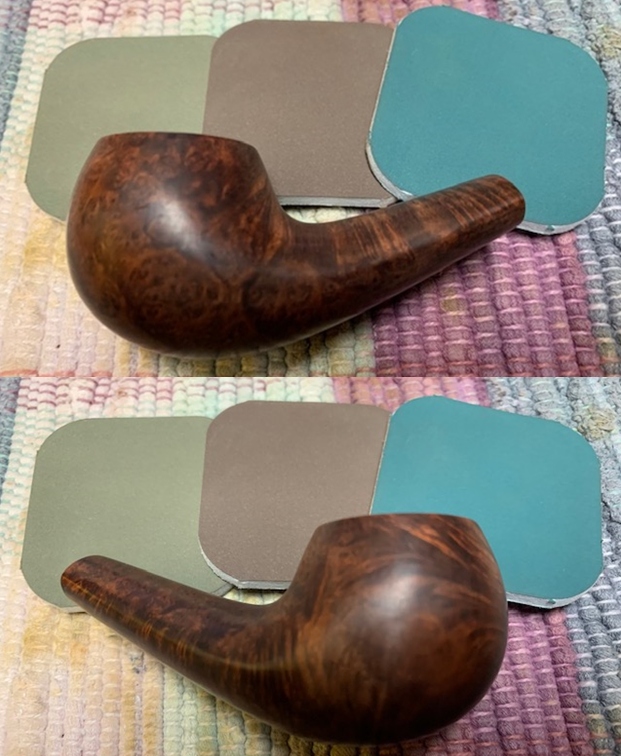
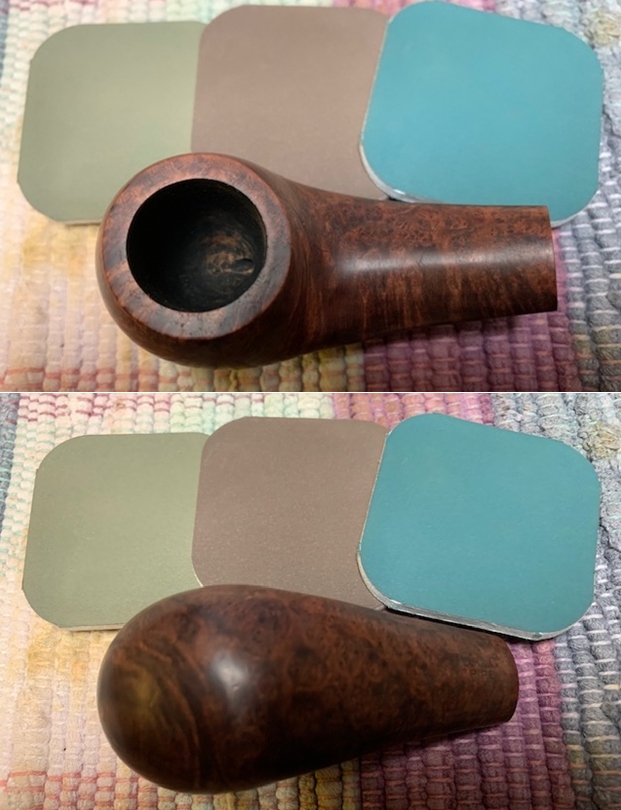
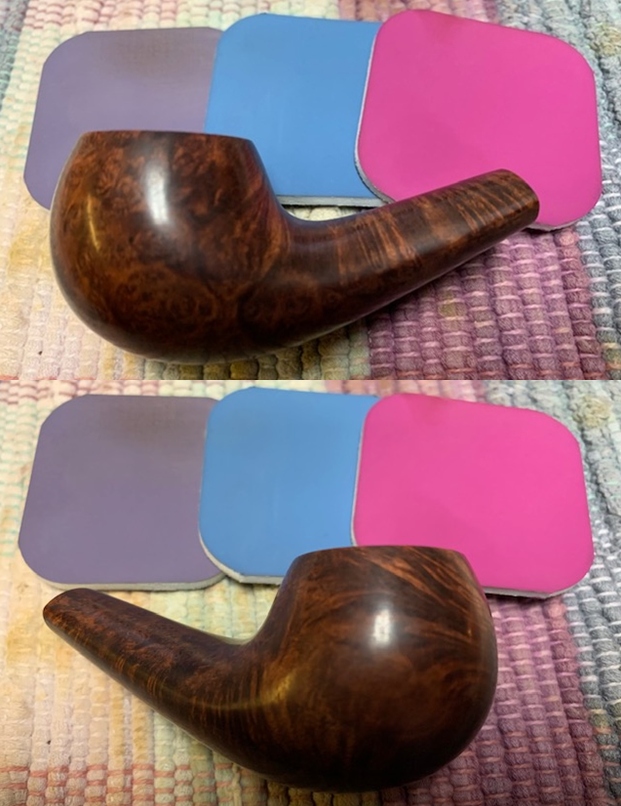
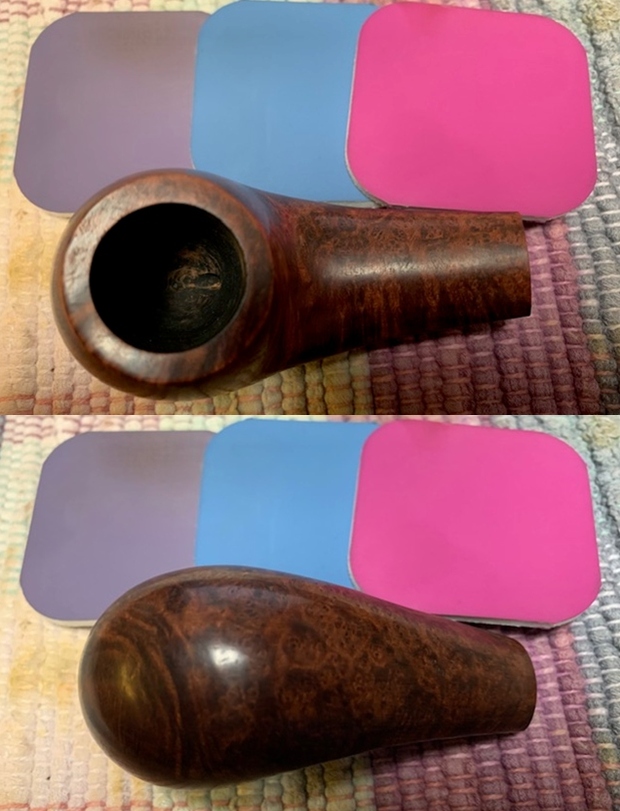
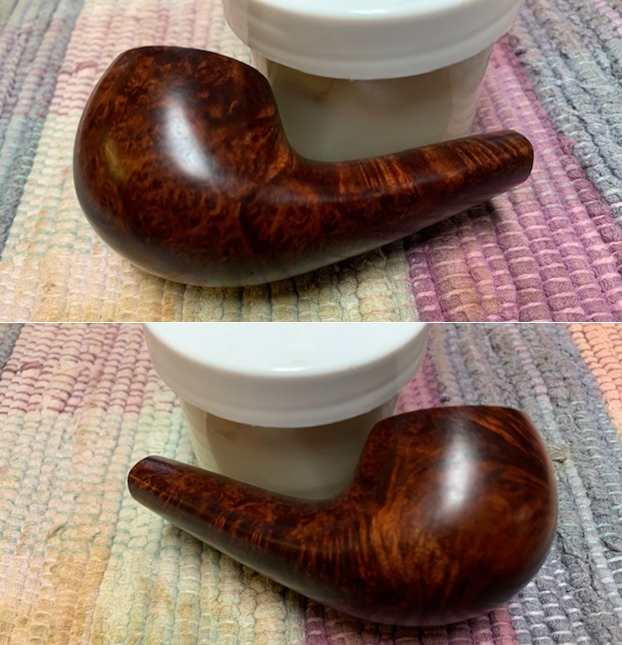
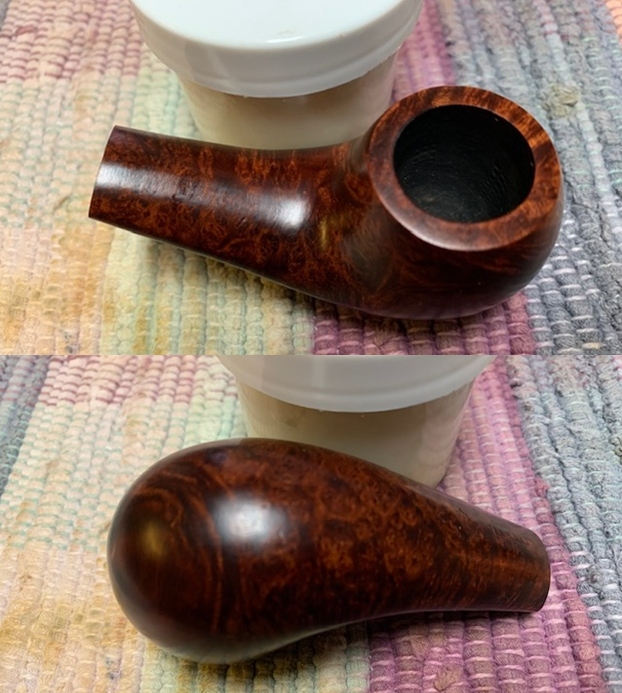
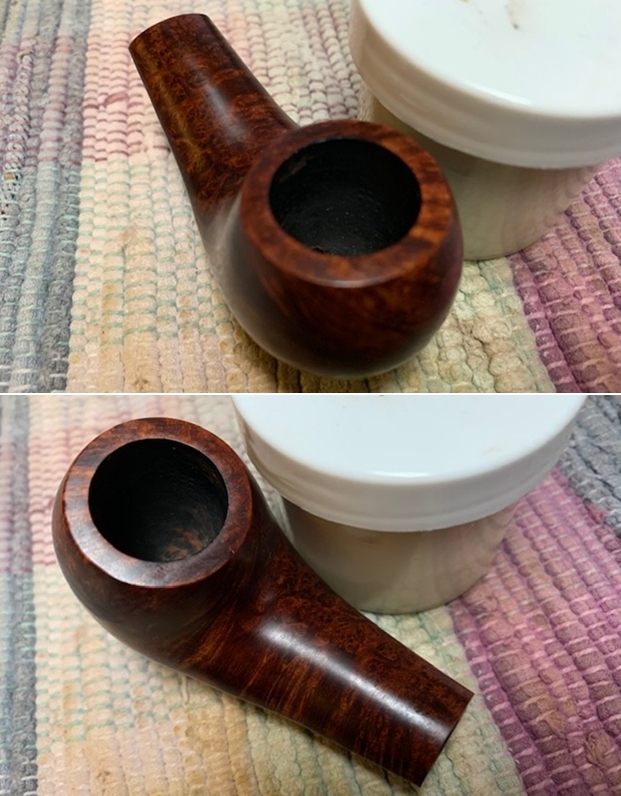
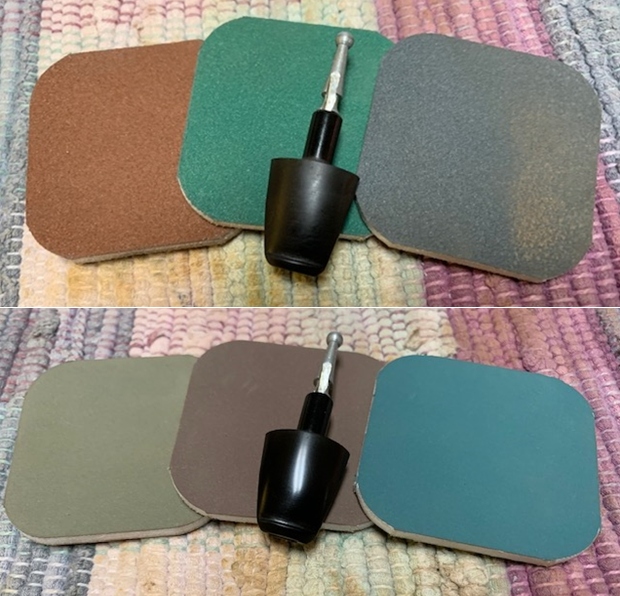
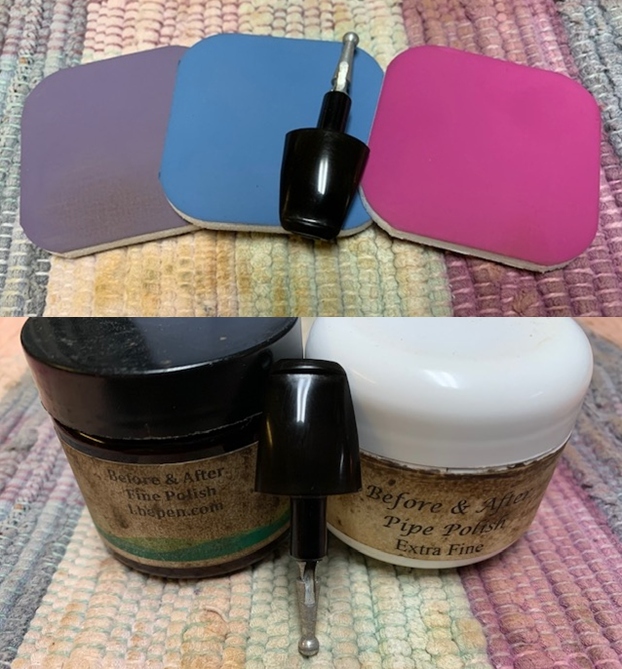
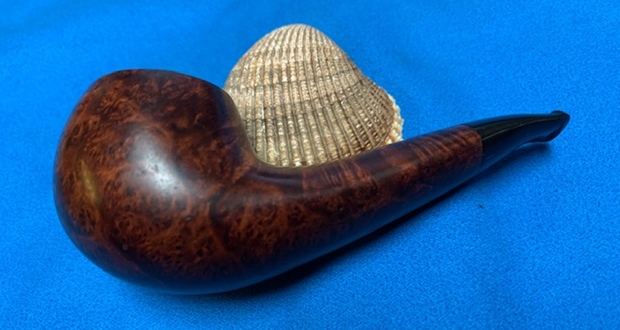
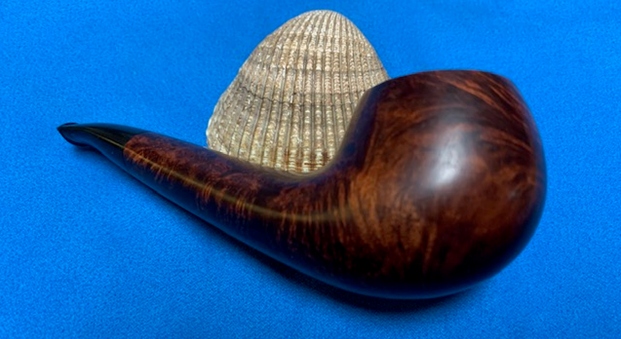
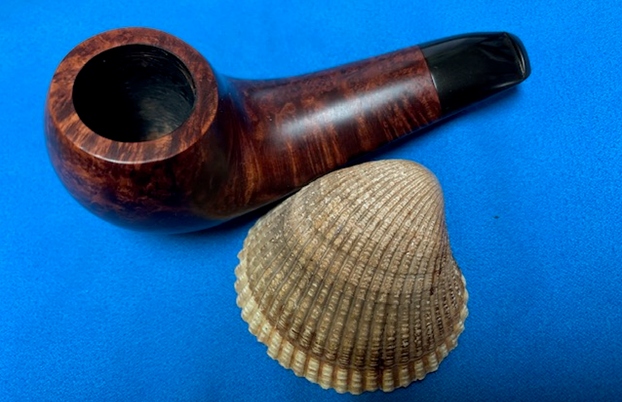
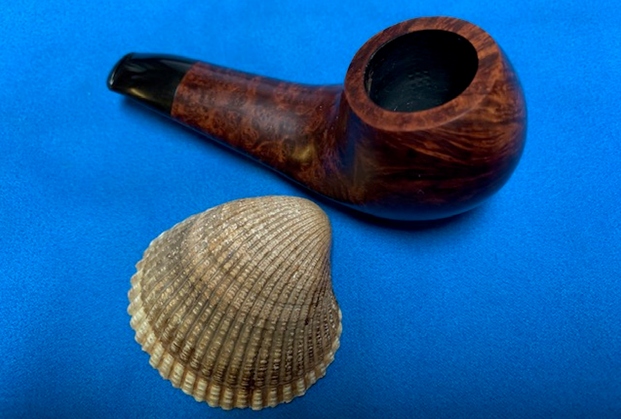
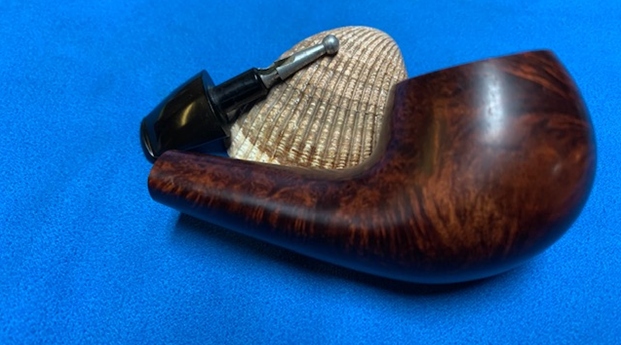
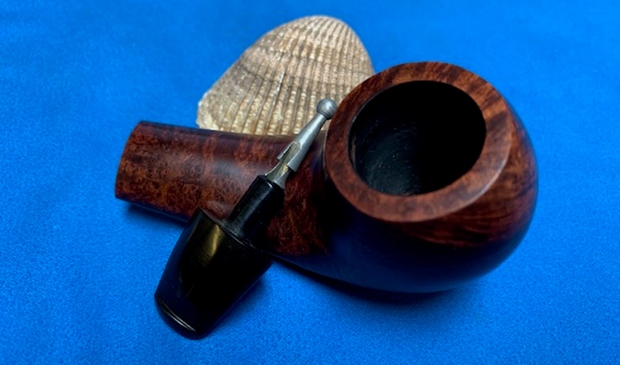
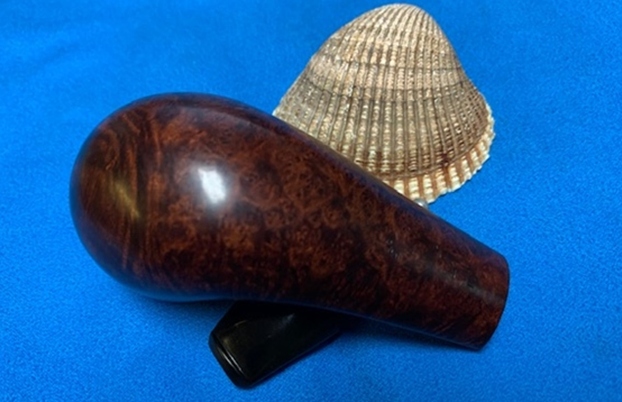
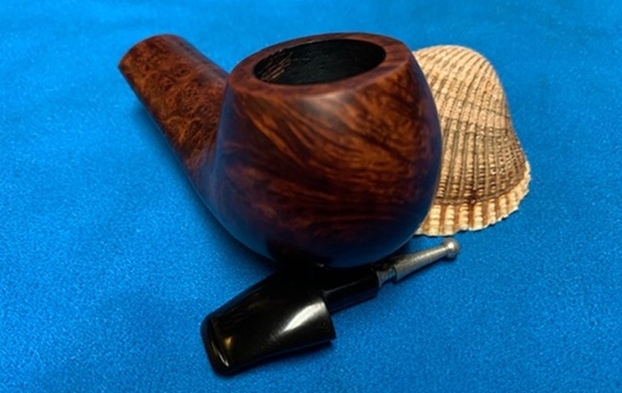
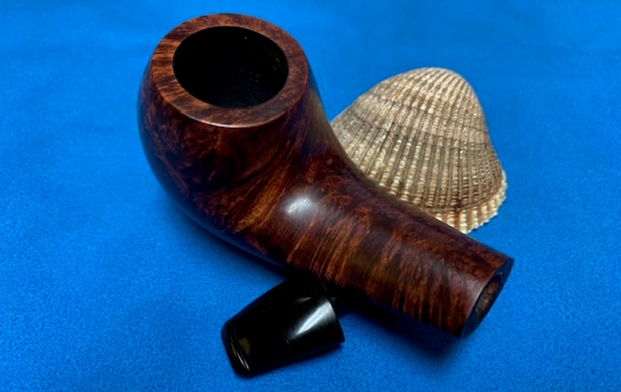
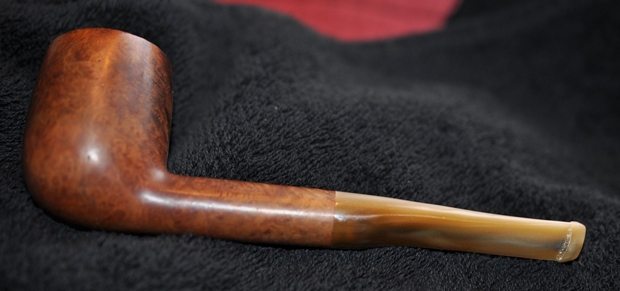
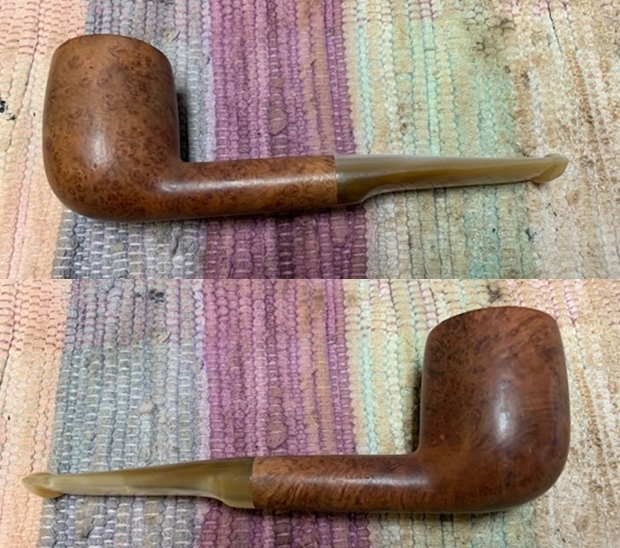
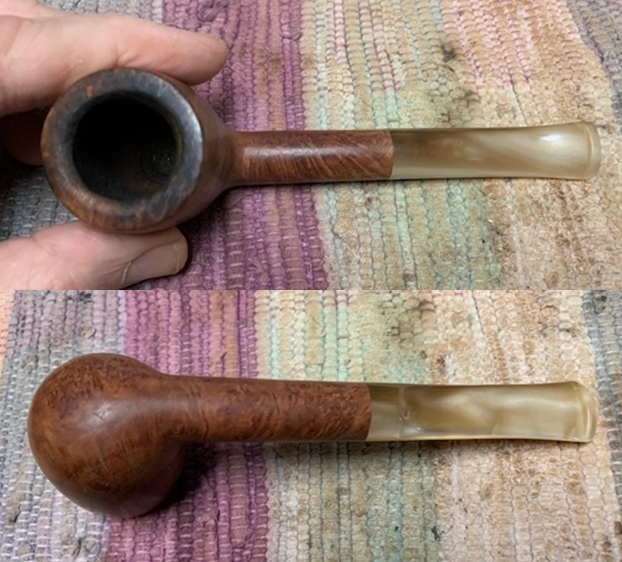
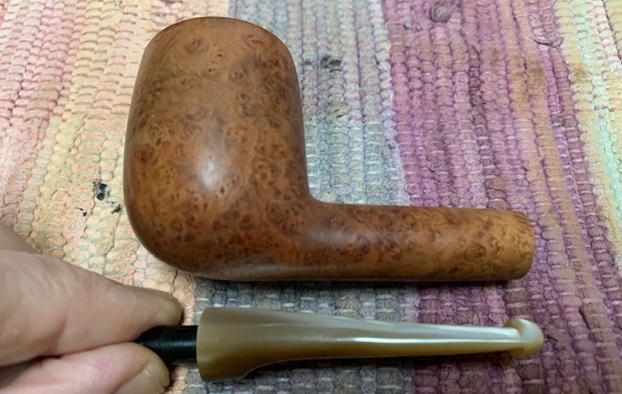
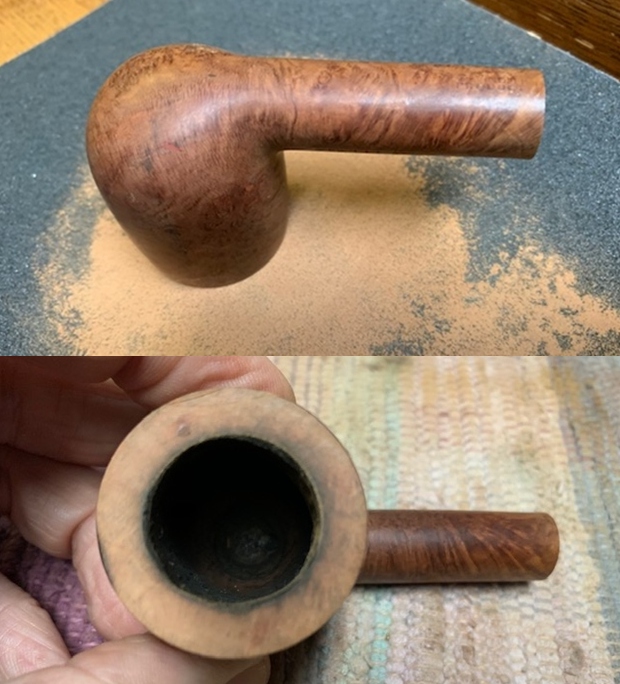
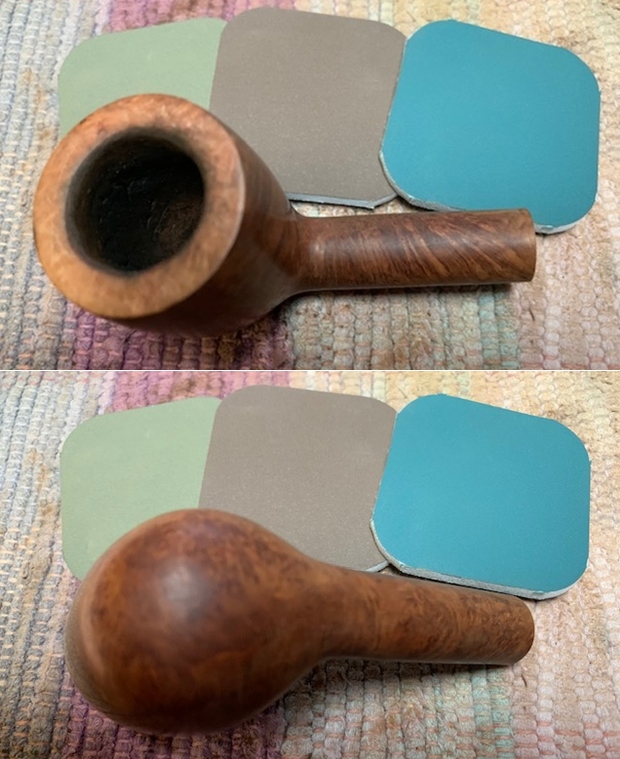
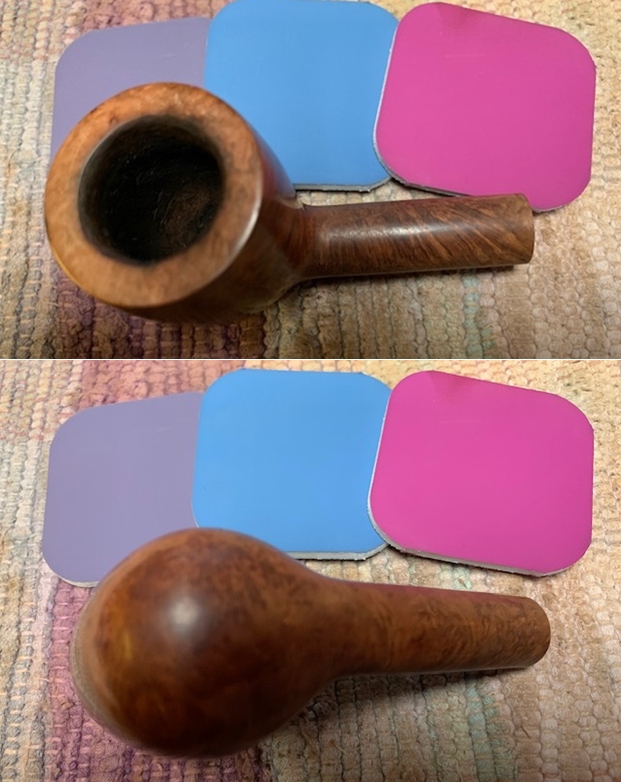
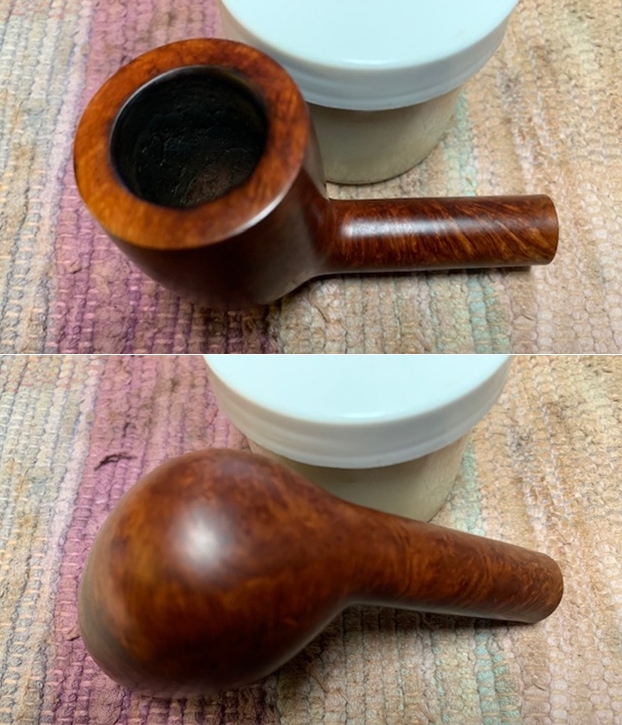
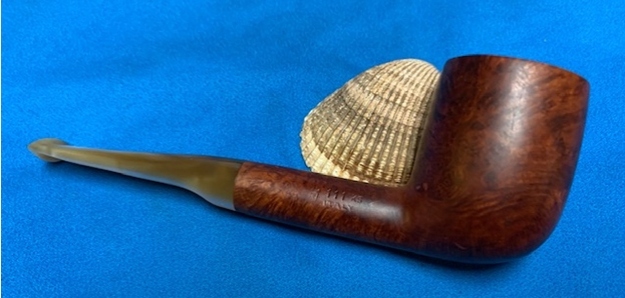
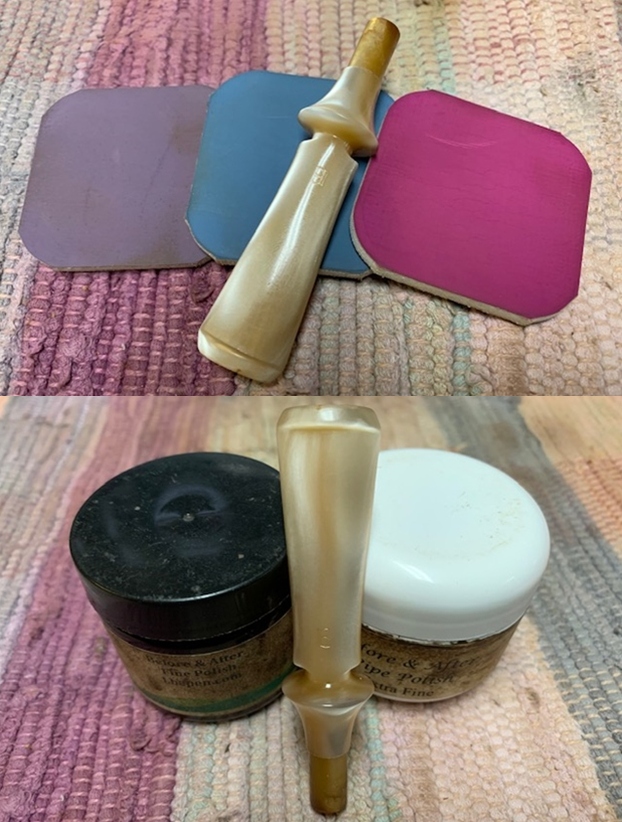
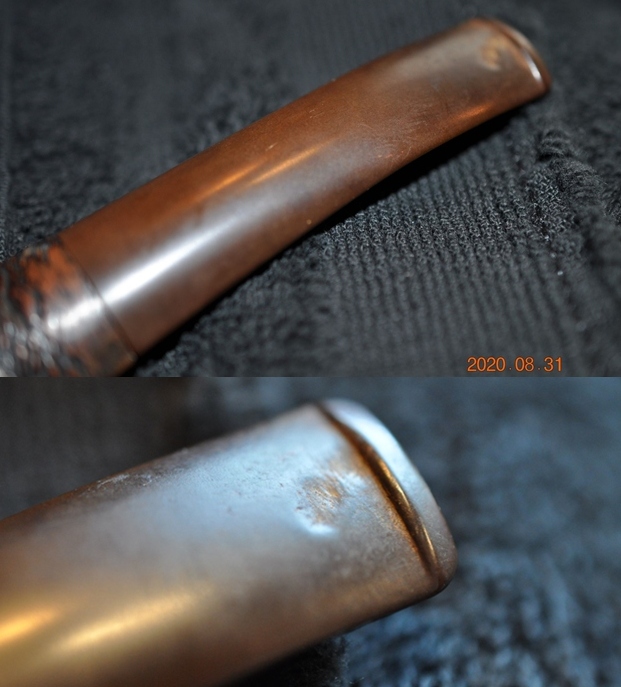
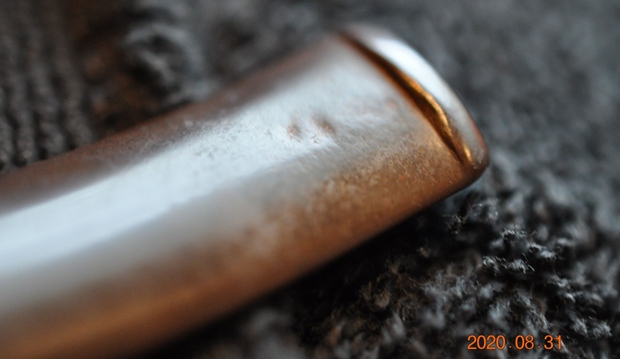
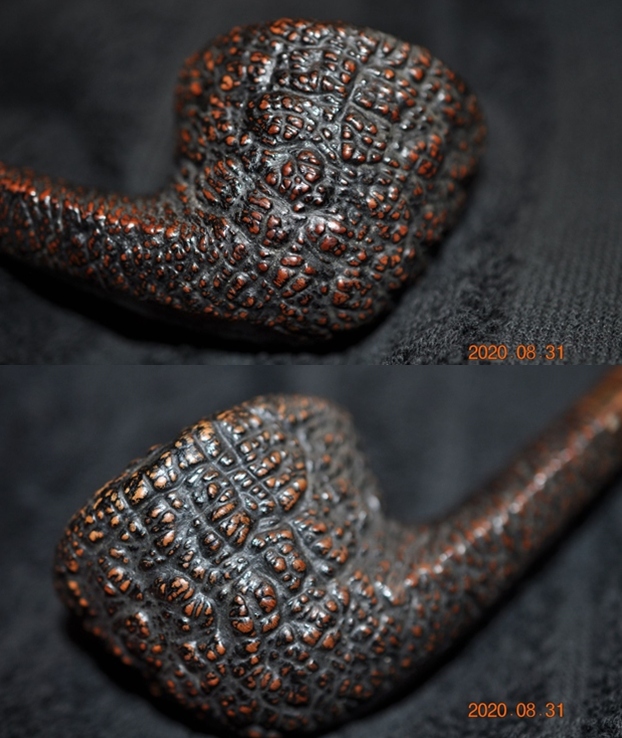
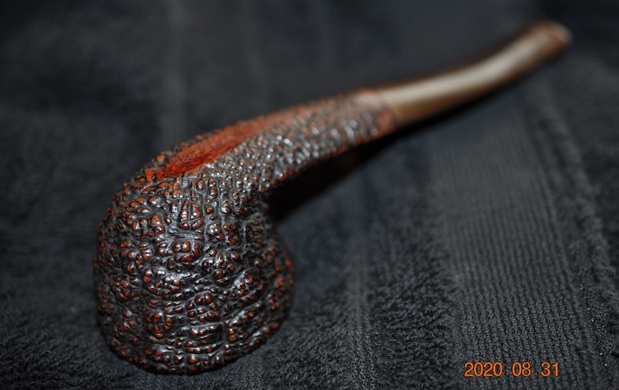
The next pipe on the work table came to us 2018 from a fellow in Pocatello, Idaho, USA. It is a nice looking Billiard with cross grain and birdseye grain and has a Fancy Lucite half saddle stem. The Lucite stem fits the name on the left side Oscar Lucite. The bowl has a rich reddish brown colour combination that highlights grain. The pipe has some grime ground into the surface of the briar. The finish had a few small fills around the sides but they blended in fairly well. This pipe is stamped on the sides of the shank. On the left it reads Oscar [over] Lucite. On the right it has a Savinelli “S” Shield and next to that was the shape number 111KS [over] Italy. There is a thick cake in the bowl and an overflow of lava on the top beveled inner edge of the bowl. The rim top looks good but it is hard to be certain with the lava coat. There were some light tooth marks and chatter on both sides of the Lucite stem near the button. The pipe looks to be in good condition under the grime. Jeff took photos of the pipe before he started his cleanup. He took photos of the rim top to show the thick cake and the thick lava coat. It is hard to know what the condition of the rim top and edges is like under that thick lava. It is an incredibly dirty pipe but obviously one that was a great smoker. The acrylic half saddle stem had light tooth marks and chatter on both sides ahead of the button.   He took a photo of the sides and heel of the bowl to show the beautiful grain around the bowl and the condition of the pipe. You can see the grime ground into the surface of the briar. He took a photo of the stamping on the left side of the shank. It is clear and readable as noted above. On the underside of the shank it is stamped Savinelli Product. I turned first to Pipephil’s site to look at the Savinelli write up there and see if I could learn anything about the Oscar Lucite line (http://www.pipephil.eu/logos/en/logo-savinelli3.html). There was a listing for the Oscar Lucite and I did a screen capture of the pertinent section.I looked up the Savinelli brand on Pipedia to see if I could find the Oscar Lucite line and the 111KS Shape (https://pipedia.org/wiki/Savinelli). There was nothing that tied directly to the line I am working on. There is a detailed history of the brand there that is a good read. I also captured the shape chart and boxed in the 111KS shape in red. The shape is identical to the one that I am working on. The stem on this one is the original shape that was on the Lucite Line but there was no shooting star logo on the left side.It was time to work on the pipe. As usual Jeff had done a thorough cleanup on the pipe. He reamed the bowl with a PipNet pipe reamer and followed up with a Savinelli Fitsall pipe knife to remove the cake. He scrubbed out the mortise and the airway in the shank and the stem with alcohol, cotton swabs and pipe cleaners. He scrubbed the exterior of the bowl, rim, shank and stem with a tooth brush and Murphy’s Oil Soap to remove the oils and tars on the rim and the grime on the finish of the bowl. He rinsed it under running water. One of the benefits of this scrub is that it also tends to lift some of the scratches and nicks in the surface of the briar. He dried it off with a soft cloth. He cleaned the internals and externals of the stem with alcohol, pipe cleaners and cotton swabs. He scrubbed the stem with Soft Scrub all-purpose cleanser and rinsed it off with warm water and cleaned out the airway in the stem with alcohol. Other than the damaged rim top the pipe looked good.   I took a photo of the rim top and stem to show the condition. The rim top was in very rough condition. The rim top and the edges of the bowl had darkening, burn marks and some nicking. The Lucite half saddle stem had light tooth chatter and marks on both sides ahead of the button and on the button edges.  The stamping on the sides of the shank is clear and readable as noted above.     I removed the stem from the shank and took a photo of the pipe to give a sense of the whole. It is a nice looking billiard that should clean up very well. I started working on the pipe by dealing with the damaged rim top and edges. I topped the bowl with 220 grit sandpaper on a topping board. I worked over the rim top and inner bevel of the rim with 220 grit sandpaper. I smooth out the damage and gave the  rim top and edge a clean look that would polish out nicely. I wiped the rim top down with a damp cloth to remove the dust and debris.   I polished the briar with micromesh sanding pads – wet sanding with 1500-12000 grit pads and wiped down the bowl after each sanding pad.     I stained the rim top with an Oak stain pen to match the rest of the bowl. Once I buffed and polished the bowl it would be a perfect match. I rubbed the bowl and shank down with Before & After Restoration Balm. I worked it into the surface of the bowl sides and shank with my fingertips to clean, enliven and protect the briar. I let the balm sit for a little while and then buffed with a cotton cloth to raise the shine. The Balm did its magic and the grain stood out.  I polished the Lucite stem with micromesh sanding pads – 1500-12000 grit pads. I wiped it down with a damp cloth after each sanding pad. I used Before & After Pipe Polish – both Fine and Extra Fine to further polish the stem. The photo below shows the polished stem. This nicely grained Savinelli Made Oscar Lucite 11KS Billiard with Lucite half saddle stem is a great looking pipe now that it has been restored. The briar is clean and really came alive. The rich reddish, brown stains gave the grain a sense of depth with the polishing and waxing. The grain really popped. I put the vulcanite stem back on the bowl and carefully buffed the pipe with Blue Diamond on the buffing wheel using a light touch on the briar. I gave the bowl and the stem multiple coats of carnauba wax on the buffing wheel. I buffed the pipe with a clean buffing pad to raise the shine. I hand buffed the pipe with a microfiber cloth to deepen the shine. The finished Oscar Lucite Billiard is a beauty and feels great in the hand and looks very good. Give the finished pipe a look in the photos below. The dimensions of the pipe are Length: 5 ¾ inches, Height: 2 inches, Outside diameter of the bowl: 1 ½ inches, Chamber diameter: ¾ of an inch. The weight of the pipe is 46grams/1.62oz.Thanks for reading this blog and my reflections on the pipe while I worked on it. There are many more to come!

Bringing a Savinelli Estella Non Pareil  9128 Billiard Back to Life


Blog by Steve Laug

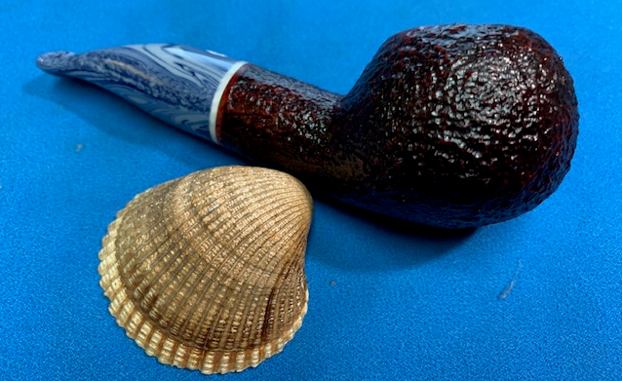
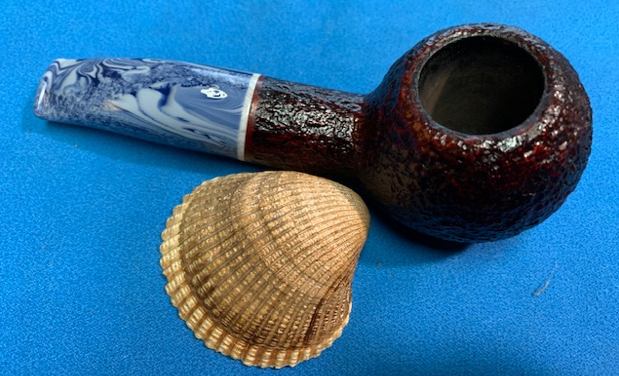
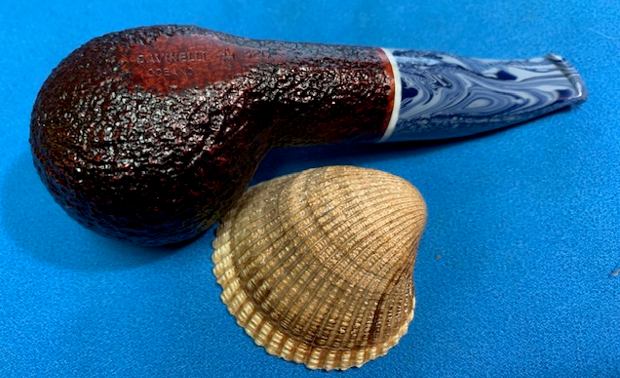
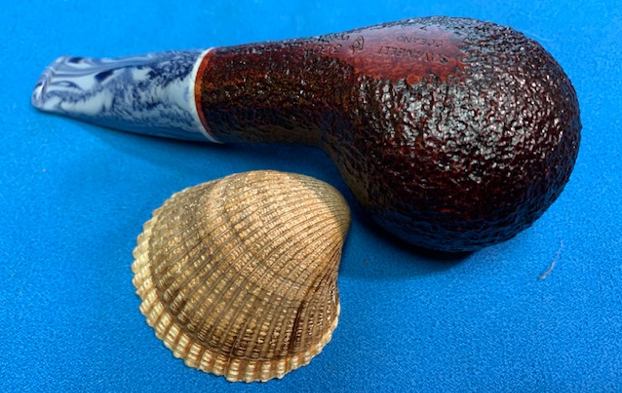
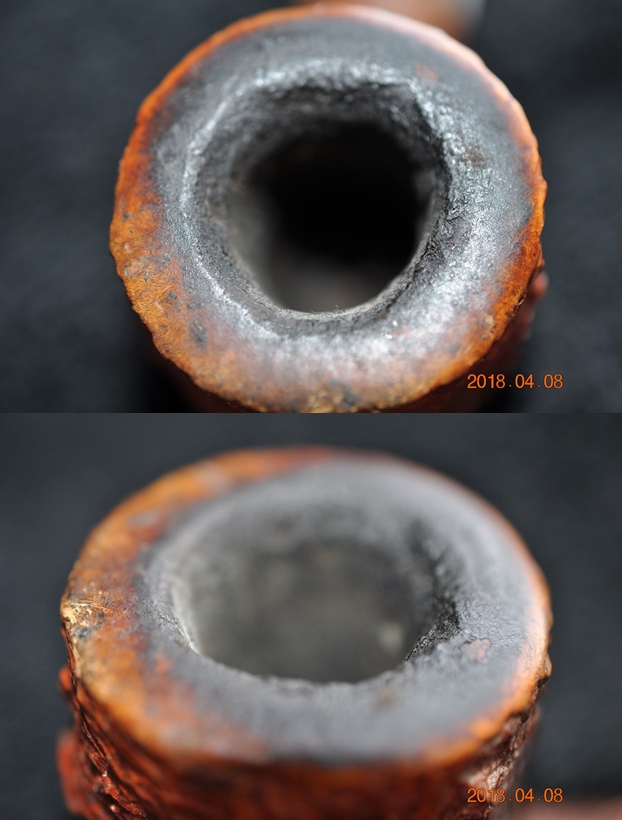
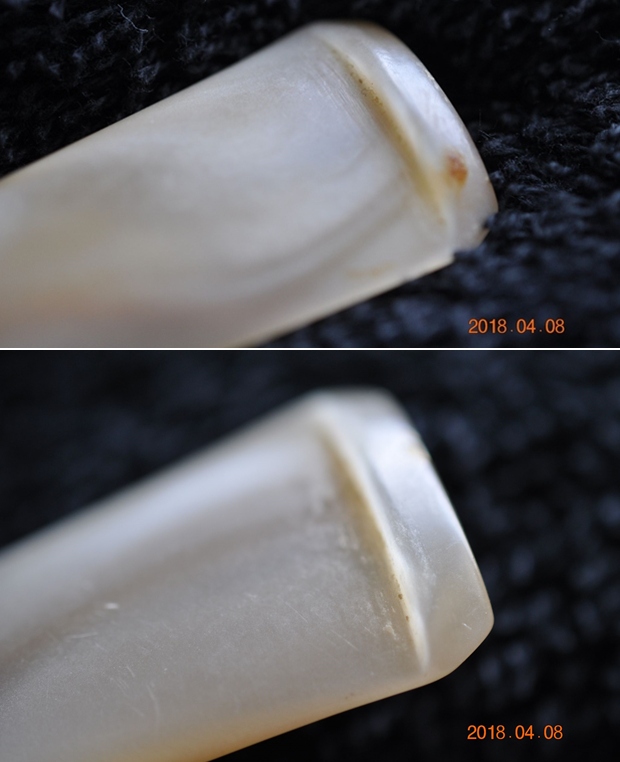
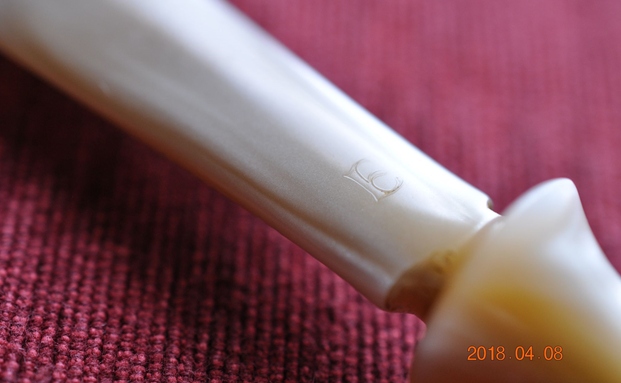
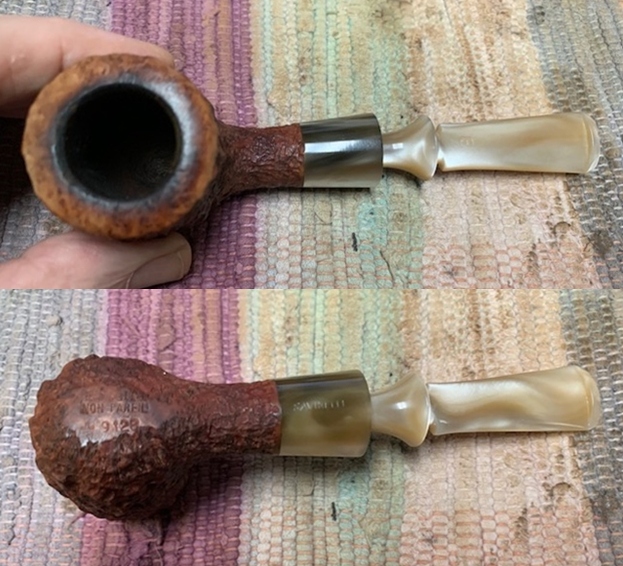
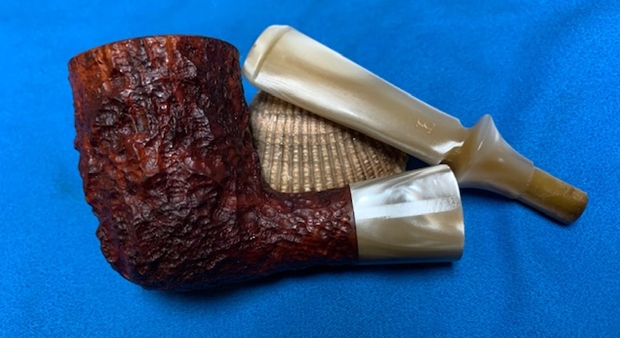
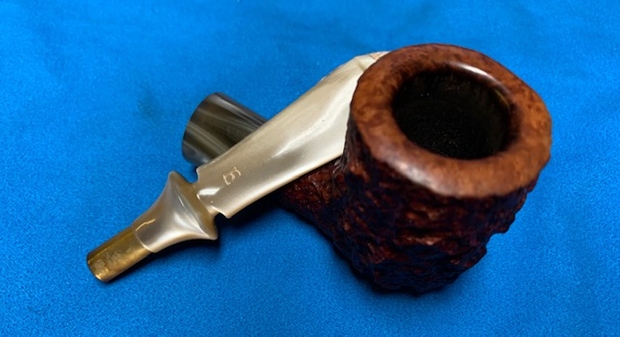
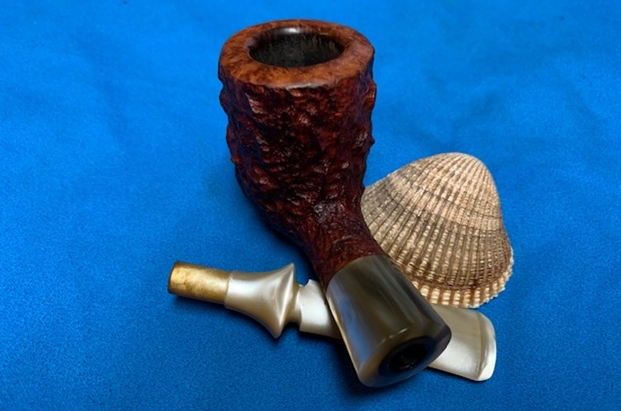
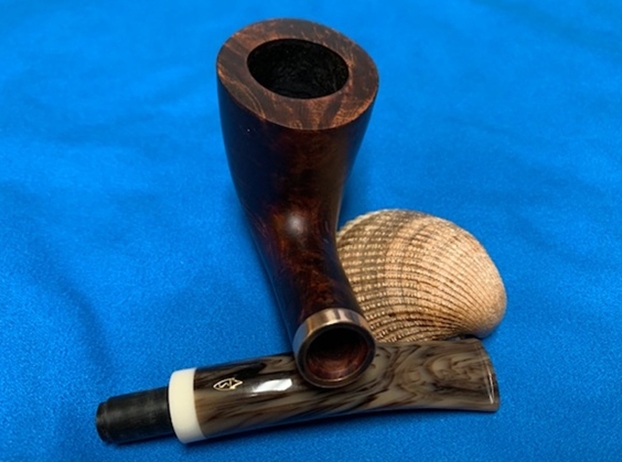
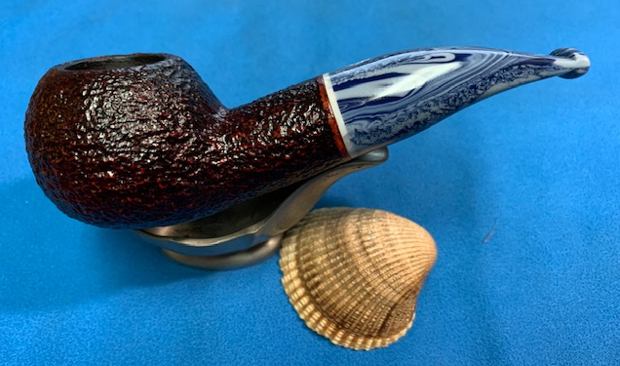
The next pipe on my work table is a Savinelli made Estella that my brother purchased 2 years ago at an antique shop in Pocatello, Idaho, USA. It is stamped on the heel of the bowl on a smooth patch – Estella over Non Pareil over 9128 with the Savinelli S shield next to that and Italy to the left of that very faintly stamped. There was also an upper case E on the top of the stem. The rugged rustication on the bowl and shank looked to be dirty or at least had darkening where the hand of the previous owner had wrapped around the bowl. The thick cake in the bowl had overflowed on to the rim top and left behind a thick black mess. It was hard to know what the inner edge of the bowl looked like because of the thickness of the cake and lava. The outer edge of the bowl looked very good. The Lucite shank extension and the matching Lucite stem in grey, brown and ivory tones looked really good – from the side view. The stem had light tooth chatter on both the top and underside near the button. Jeff took photos of the pipe before he started his cleanup work. The close up photos of the rim top and bowl show the condition of the pipe. You can see the thick cake in the bowl and the thick lava on the rim top. The stem is in decent condition with light tooth marks and chatter on both sides and the button surface. The next photo shows the stamping on the bottom of the bowl and the shank extension. Other than the S shield logo pointing to a link between Estella and Savinelli the stamping on the Lucite shank extension certified the connection.  There was also an uppercase E on the top of the stem. My brother did his usual thorough clean up on the pipe. He reamed the bowl and scrubbed the externals with Murphy’s Oil Soap and a soft tooth brush. He was able to remove all of the buildup on the rim top. It looked better but there was some burn damage on the inner edge of the rim all the way around the bowl as well as some darkening on the top of the rim. He cleaned the internals of the mortise and the airway in the shank and the stem with pipe cleaners and alcohol. He wiped down the stem so that when the pipe came to me it was ready to restore. The next four photos show the pipe when I brought it to my work table. I took a close up photo of the rim top to show the damage on the inner edge of the bowl and the rim top. I took close up photos of the stem. It was in decent condition with light marks on both sides.   I took a photo of the stamping on the heel of the bowl and the underside of the shank extension. They were readable as noted above.I removed the stem from the pipe and took a photo of the parts to show the overall look of the pipe before I started my work on it.I started my work on the bowl by addressing the issues with the rim top and inner edge of the bowl. I reshaped the inner edge and cleaned up the rim top with a folded piece of 220 grit sandpaper. I was able to minimize the damage to the edge by giving it a slight bevel and the top by smoothing it out and removing the burn marks.   Once the top and edge were clean I polished them with micromesh sanding pads – wet sanding with 1500-12000 grit pads. I wiped the rim down after each pad to remove the debris. By the last sanding pad the rim top looked very good.  I rubbed the bowl and shank down with Before & After Restoration Balm. I worked it into the surface of the bowl sides and shank with my fingertips and a horsehair shoe brush to get into the rusticated grooves and channels. The product works well to clean, enliven and protect the briar. I let the balm sit for 15 minutes and then buffed with a cotton cloth to raise the shine.  I set aside the bowl and turned my attention to the stem. I sanded out the tooth marks and chatter on both sides with 220 grit sandpaper and started the polishing with 400 grit wet dry sandpaper. You will note some darkening on the tenon end that would not come off with scrubbing and sanding would reduce the diameter of the tenon and affect the fit in the shank. I touched up the stamp on the top of the stem with Rub’n Buff Antique Gold. I rubbed it on the stem surface and worked it into the stamp with a tooth pick. I buffed it off with a cotton pad. It looked better when it was finished.    I polished the stem with micromesh sanding pads – wet sanding it with 1500-12000 grit pads. After each set of three pads I wiped the stem down with the damp cotton pad to check the progress. I had been able to blend in the tooth marks on both sides.  This Savinelli Estella Non Pareil Rusticated 9128 Billiard with a variegated brown, grey and ivory Lucite stem is a great looking pipe now that it has been restored. There is some great grain on the rim top that really shines and the Caminetto Style rustication is exceptionally well done. I gave the bowl a coat of Conservator’s Wax and buffed it with a shoe brush. I buffed the stem with Blue Diamond on the wheel to see if I could further smooth and blend the repairs. I buffed the entire pipe with a clean buffing pad and then once again by hand with a microfibre cloth. The finished pipe is shown in the photos below. The bowl and rim look really good and the finish is clean and as good as new. The stem and shank extension have a rich glow and they look amazing. The dimensions of the pipe are Length: 5 ¾ inches, Height: 2 inches, Outside diameter of the bowl: 1 ½ inches, Chamber diameter: ¾ of an inch. The weight of the pipe is 51gr/1.80oz. If you are interested in adding this pipe to your collection send me a message or an email. Thanks for reading this blog and my reflections on the pipe while I worked on it. There are many more to come!

Repairing a broken shank on a Savinelli Liquirizia 920KS Dublin


Blog by Steve Laug

On Tuesday this week I received the following email from a fellow here in Vancouver regarding repairing a couple of pipes for him. He wrote as follows:

Hi Steve… You were recommended to me by our good friends at City Cigar (Vancouver).  I have 2 pipes I’d love to have rescued – if possible!  Please let me know if you could be of service.  I’ve attached a few photos.

One is a Peterson 2018 Pipe of the Year, Smooth Fishtail.  Pipe is great – except there is an unsolvable (for myself) blockage in the stem.  I think the filter is damaged.

The other is an unfortunate Savinelli; the actual wood is broken, right at the connection between pipe body and stem.

Let me know your thoughts!  I’d love to regain these to a workable state if possible; they are lovely pipes.

Thanks kindly and best regards, Zak

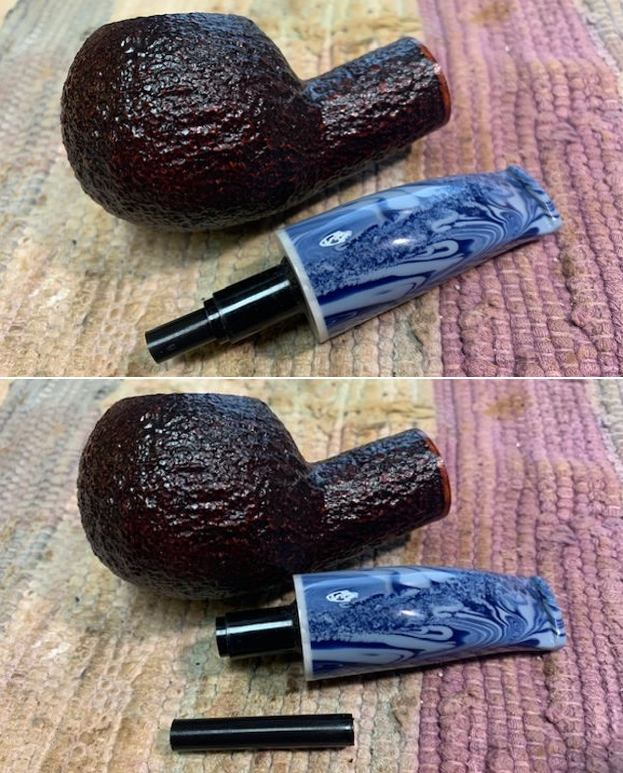
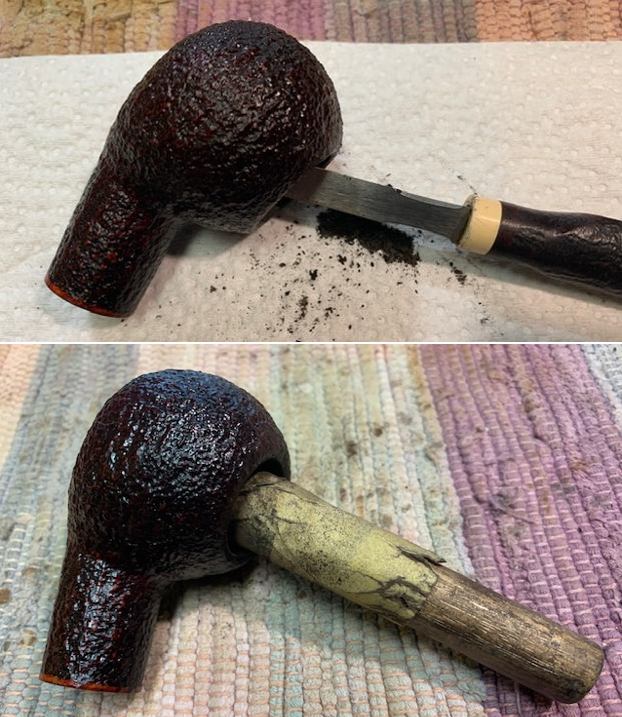
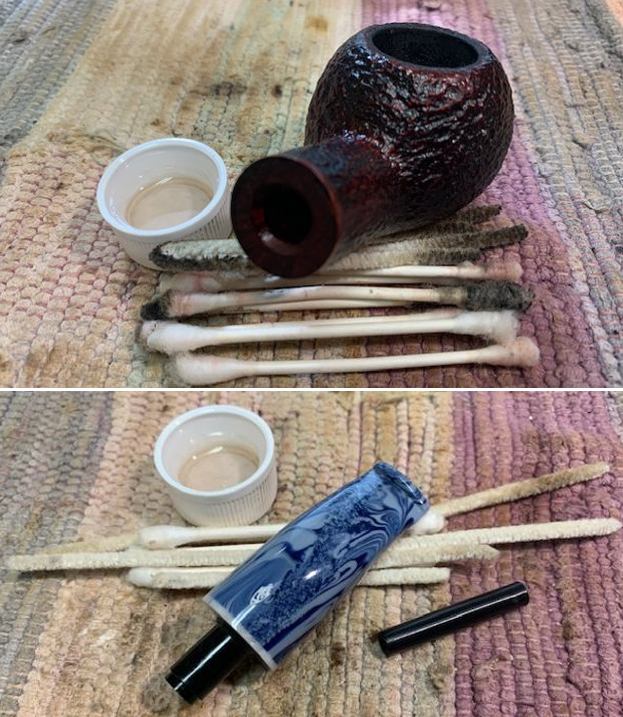
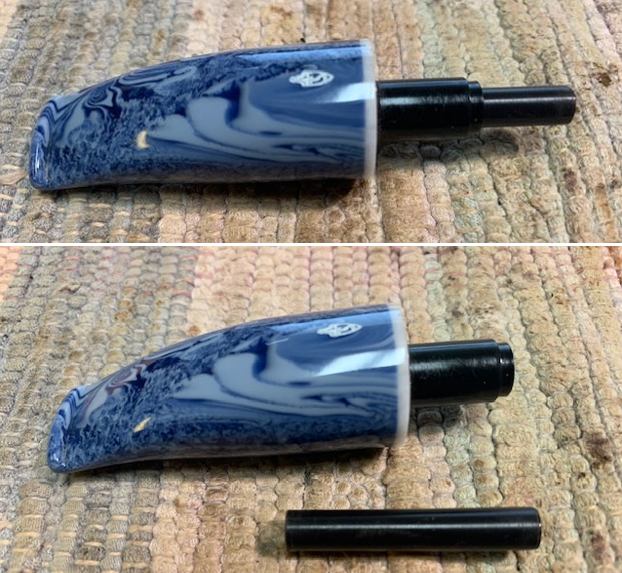
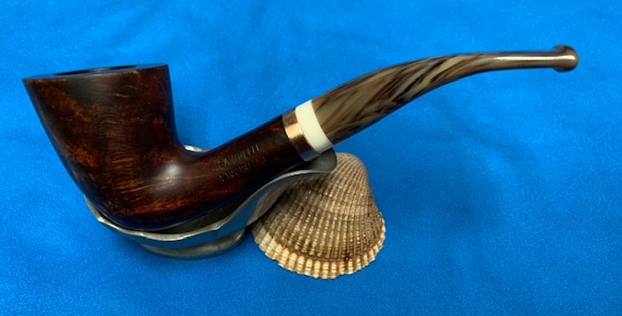
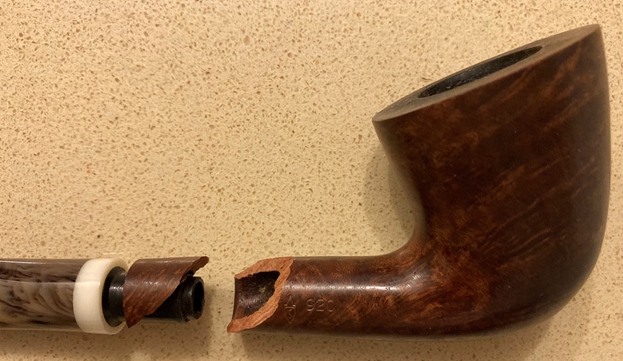
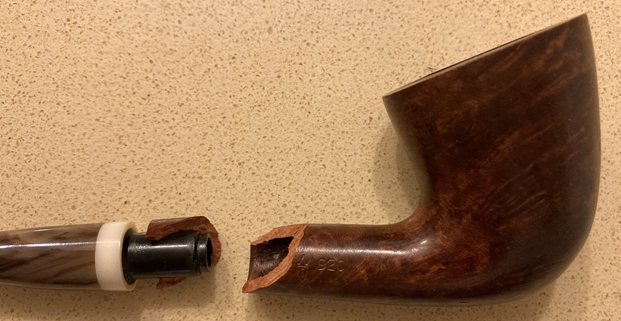
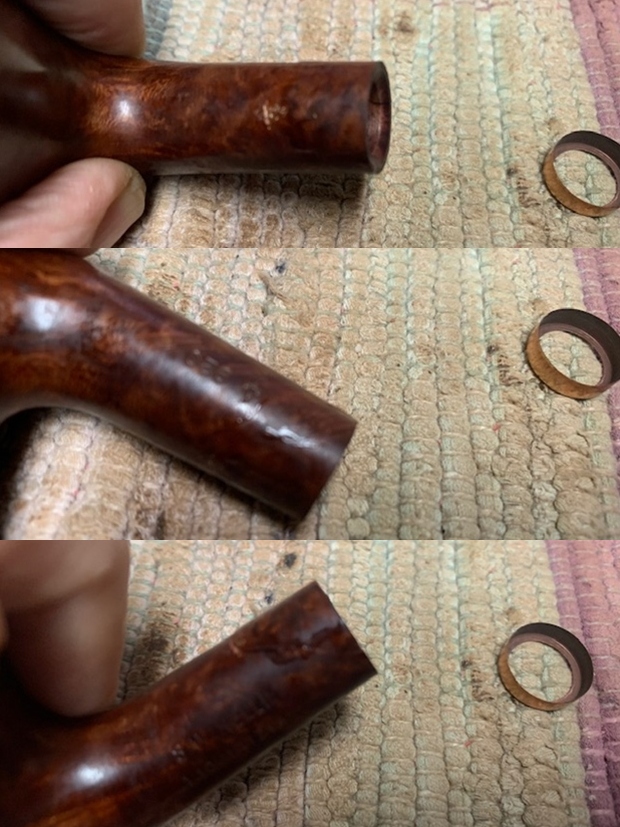
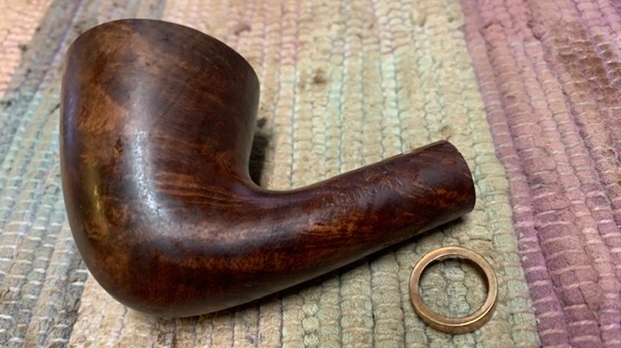
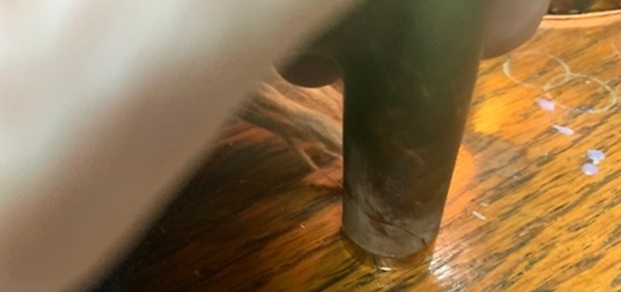
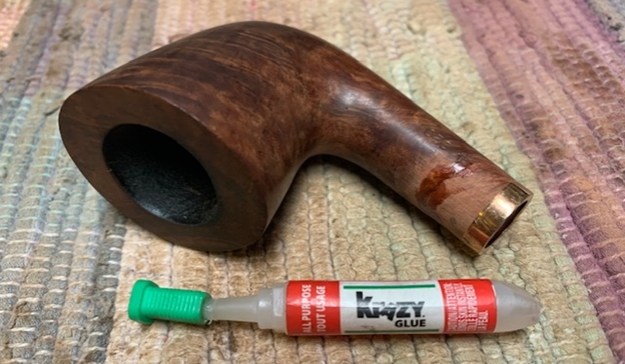
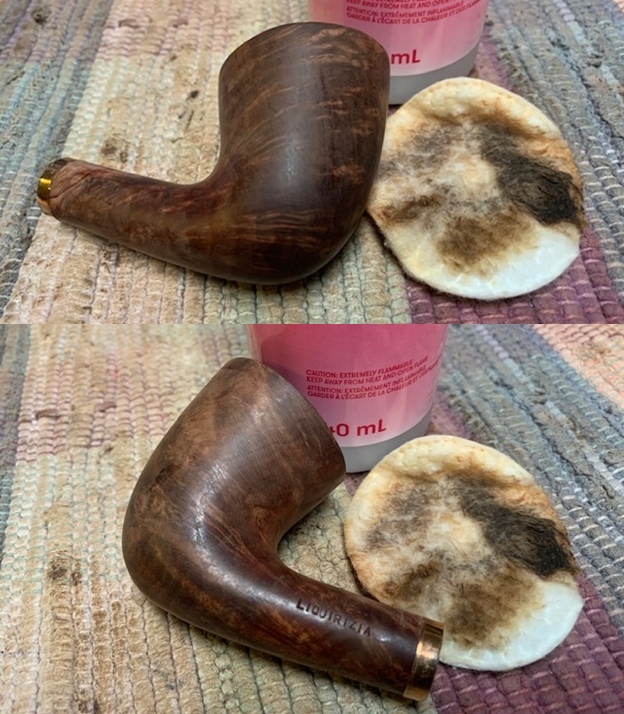
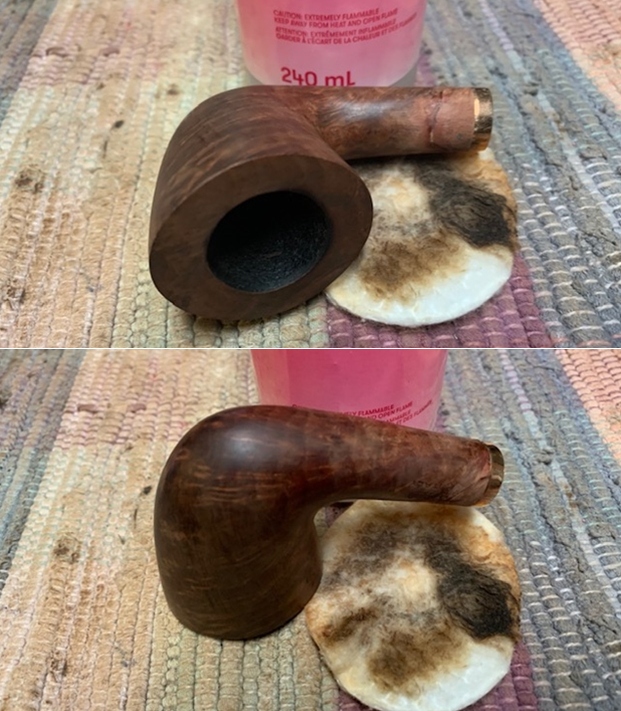
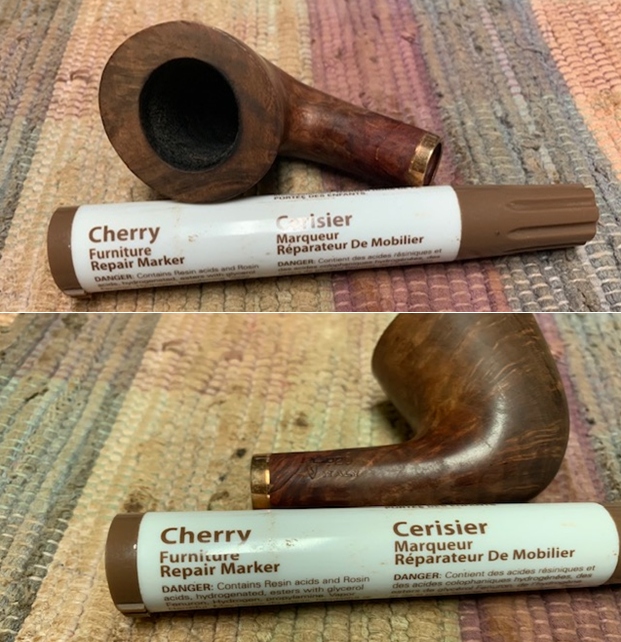
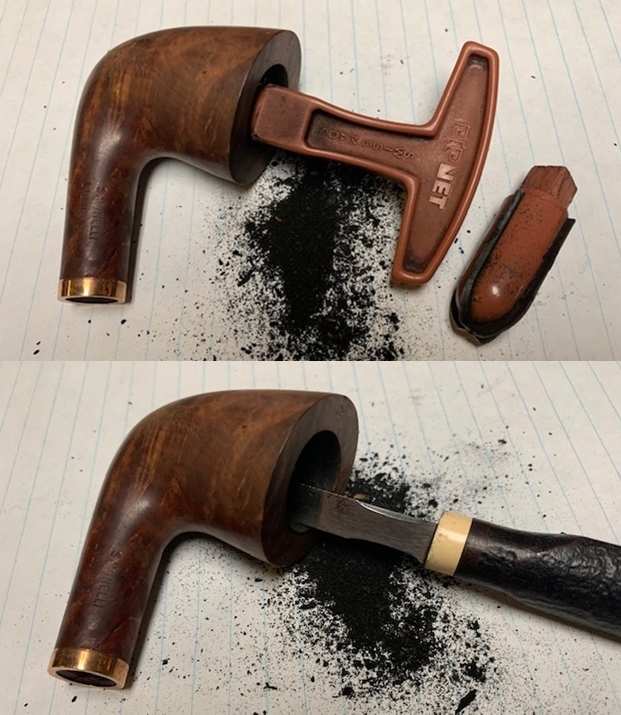
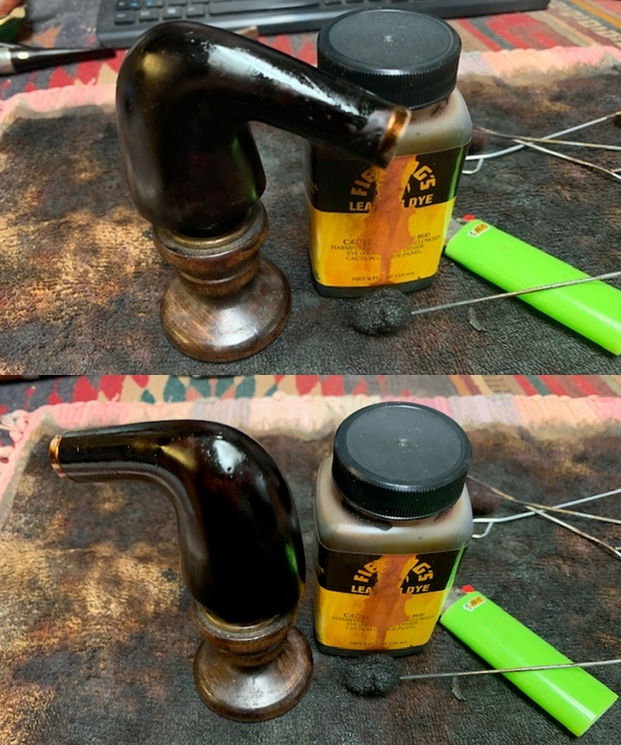
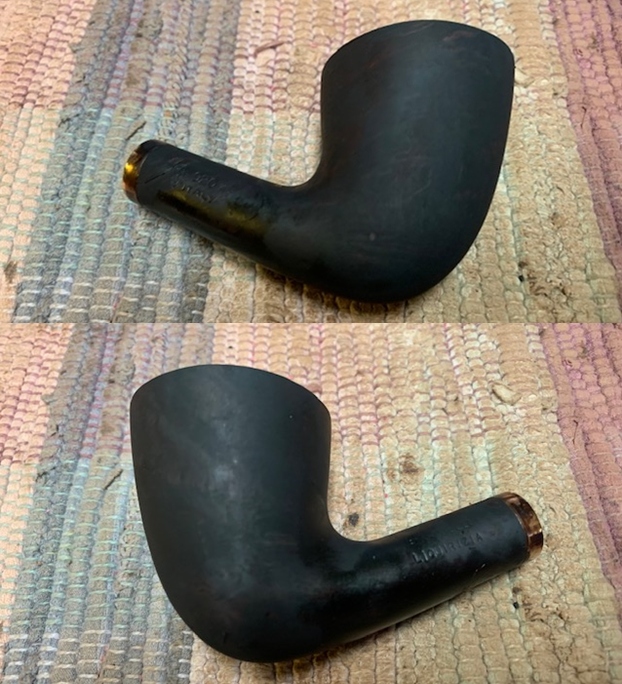
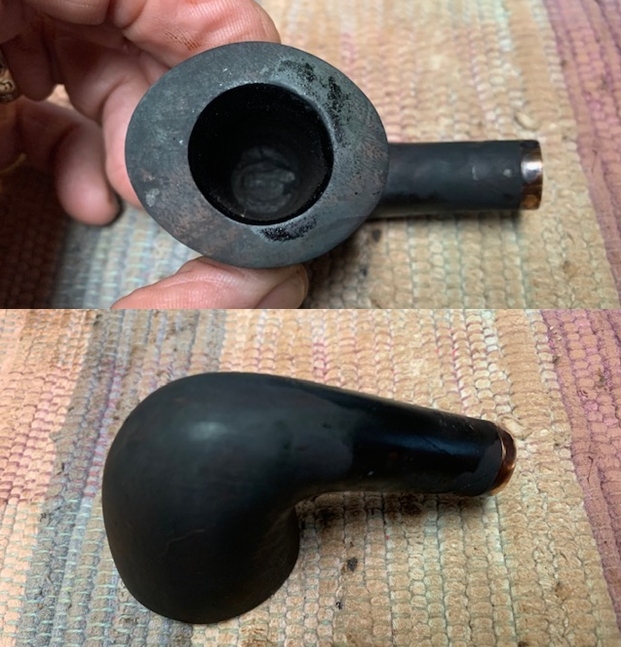
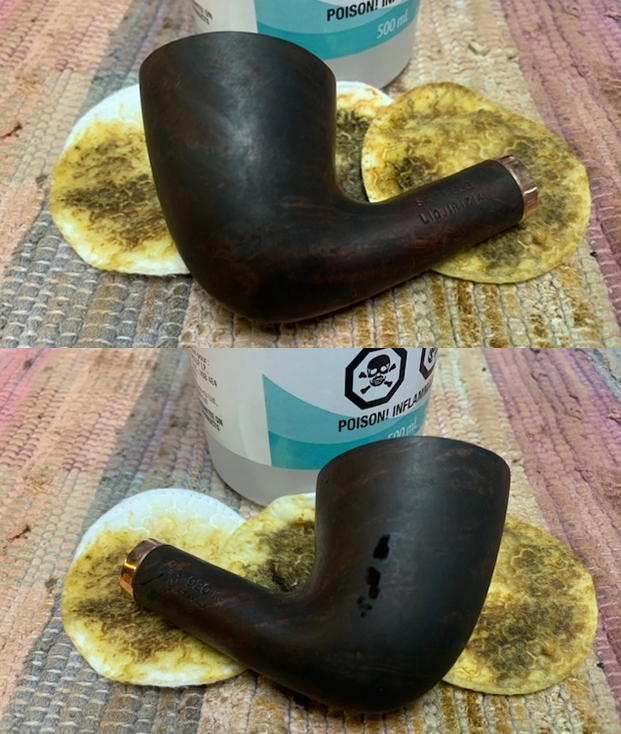
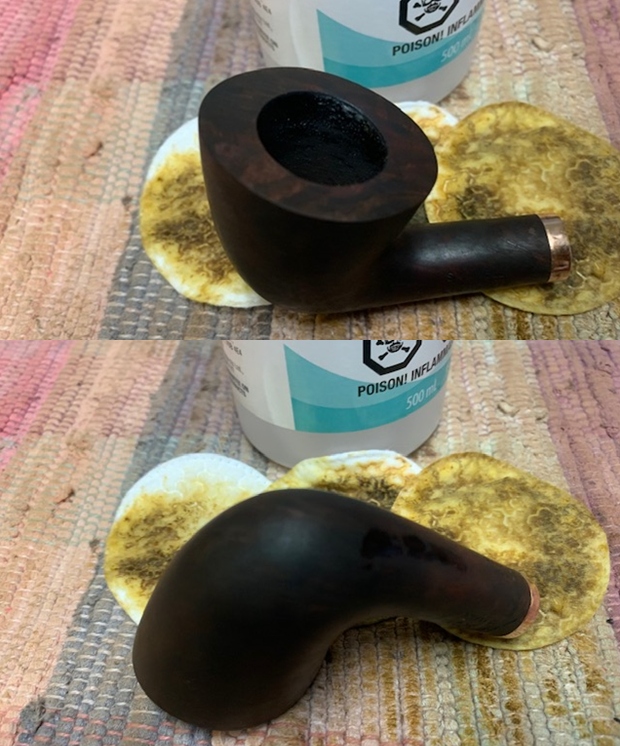
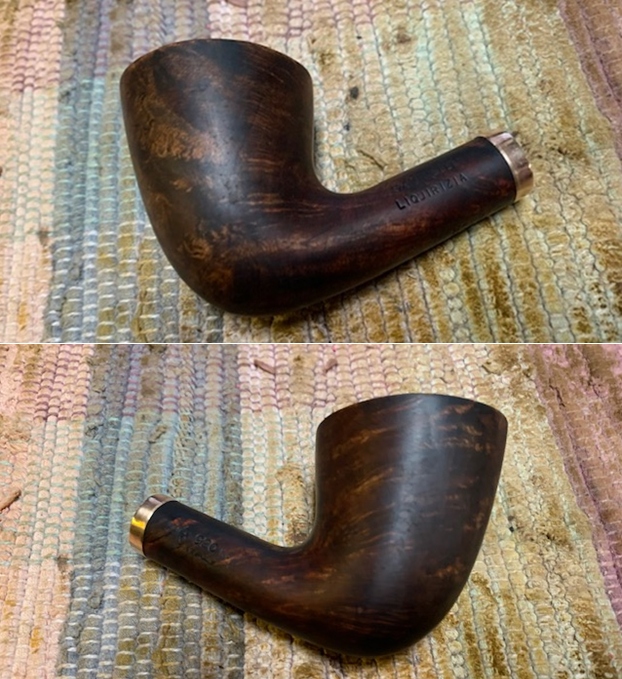
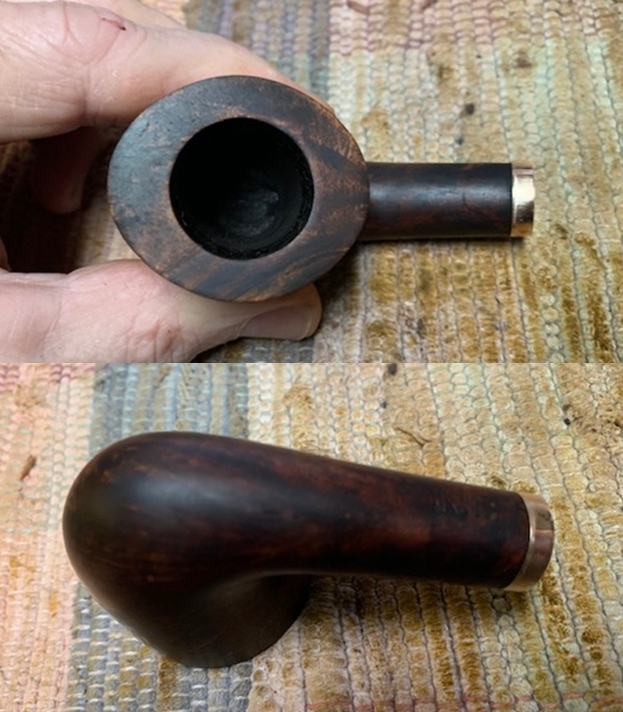
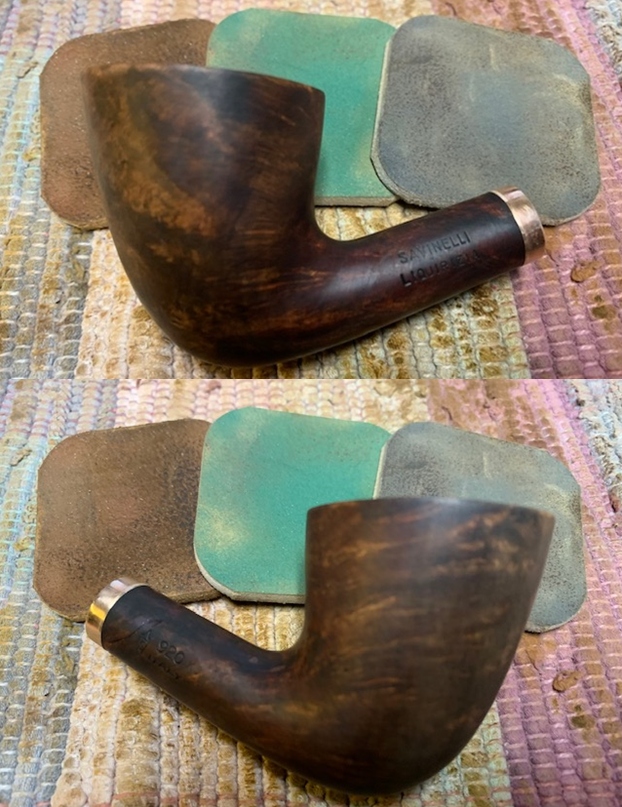
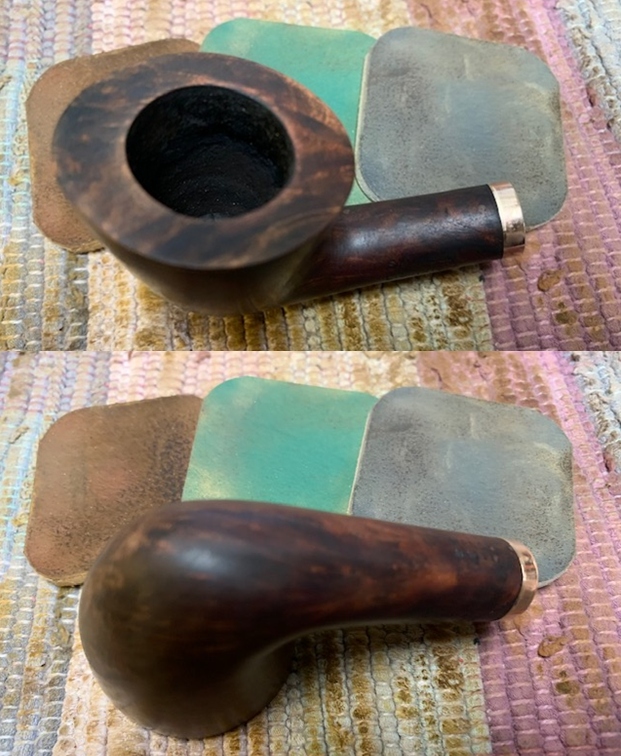
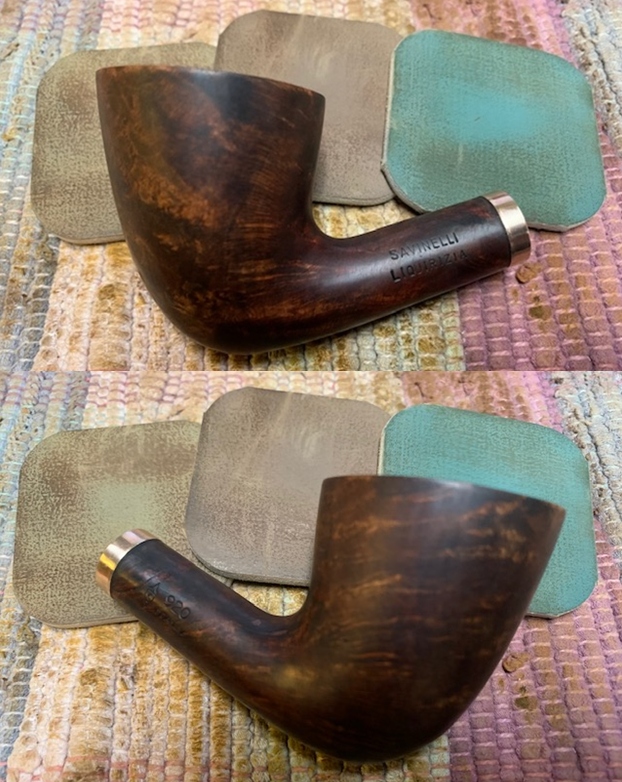
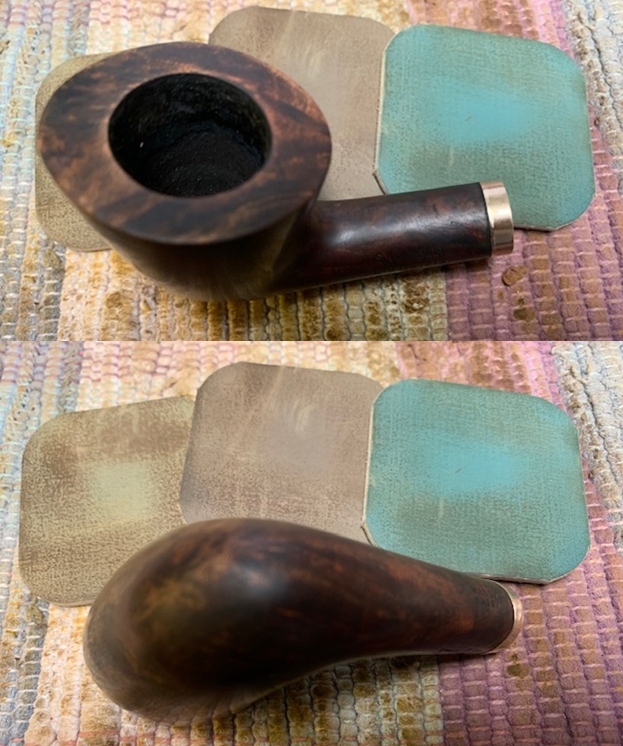
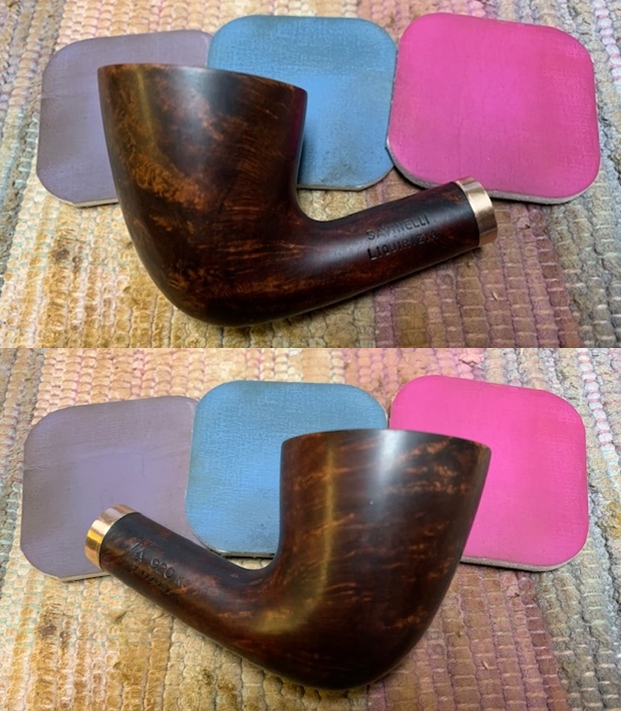
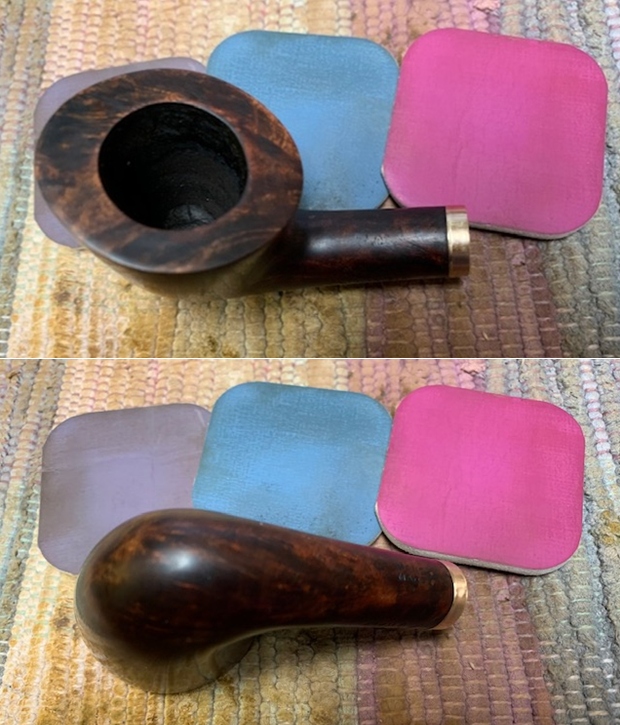
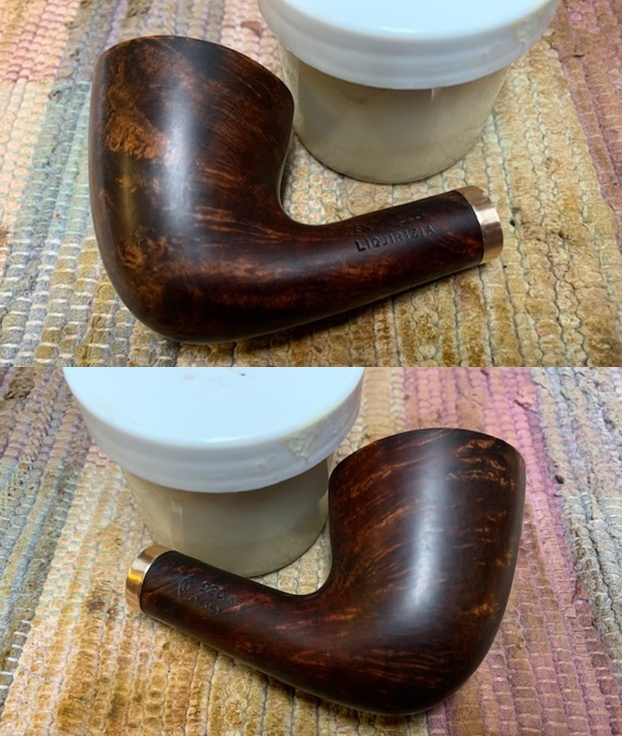
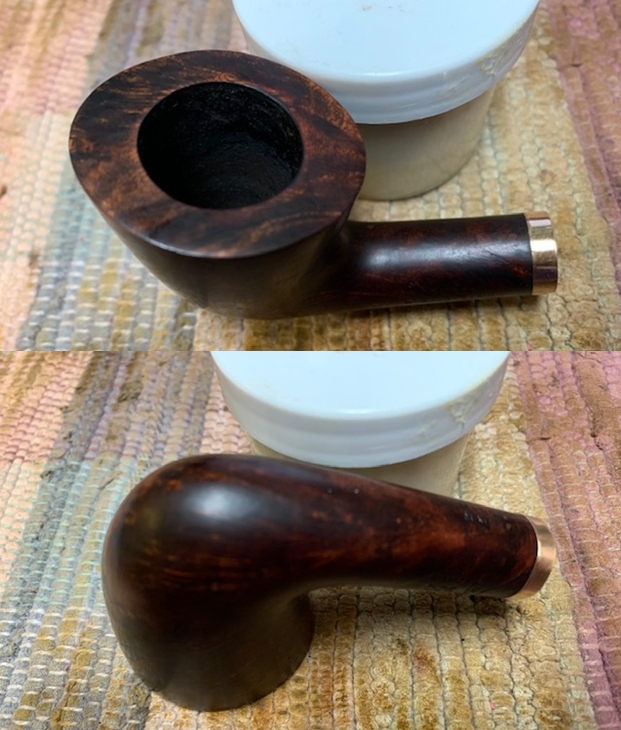
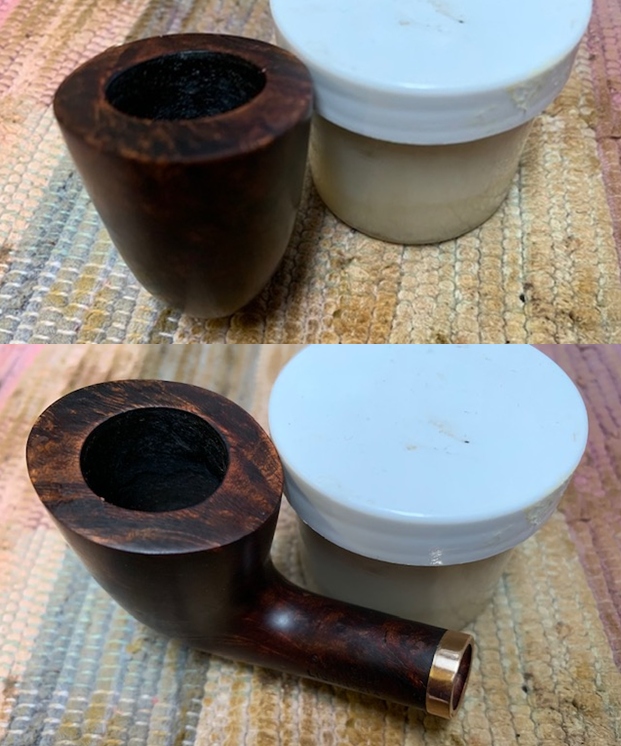
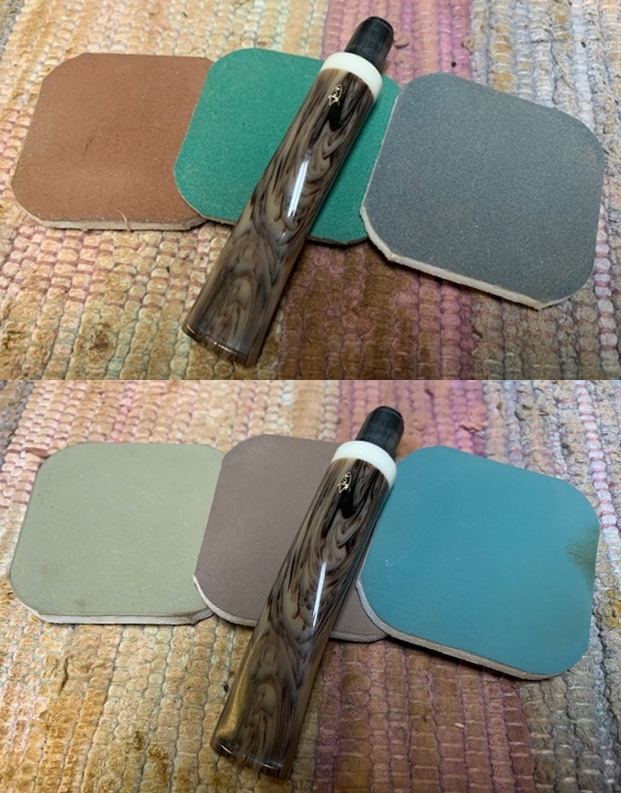
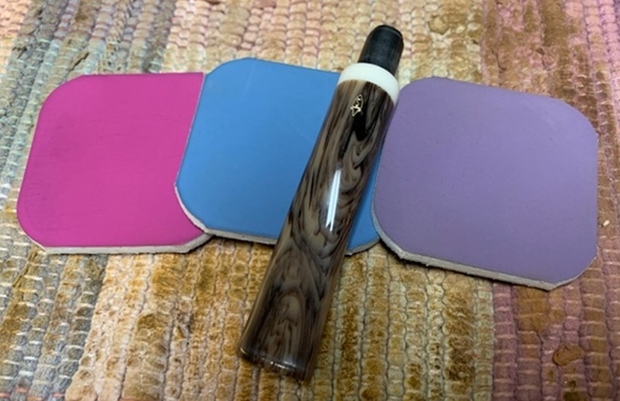
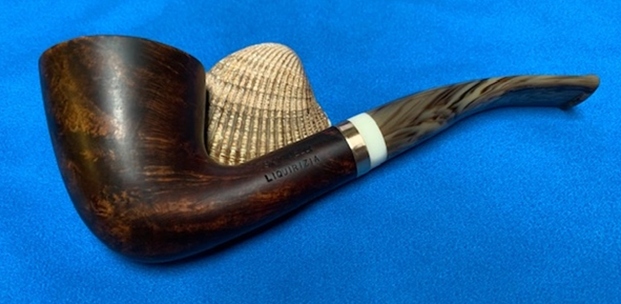
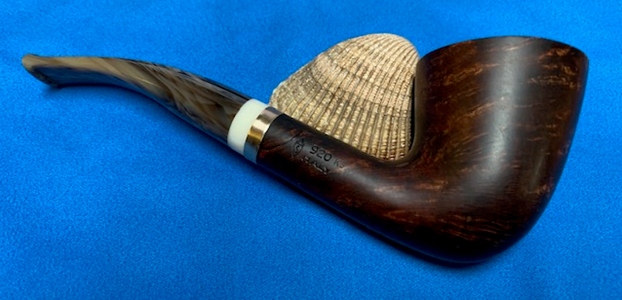
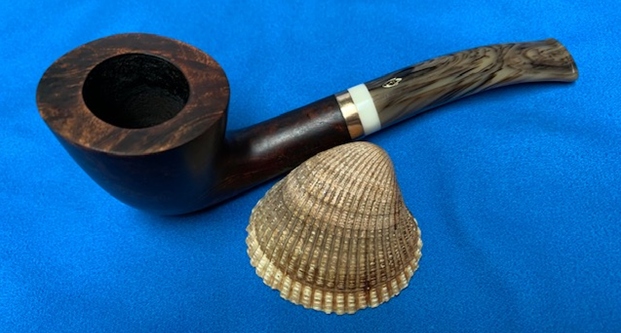
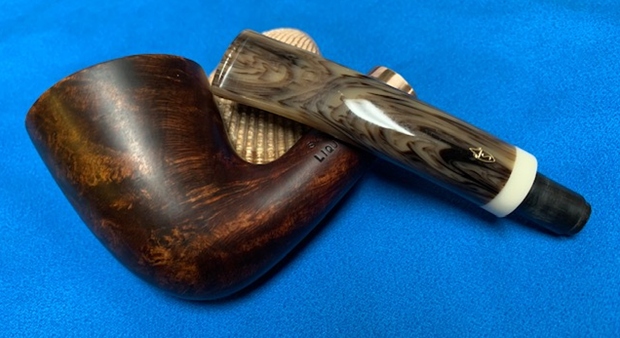
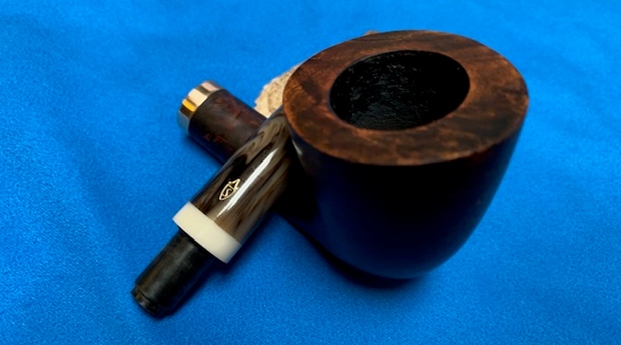
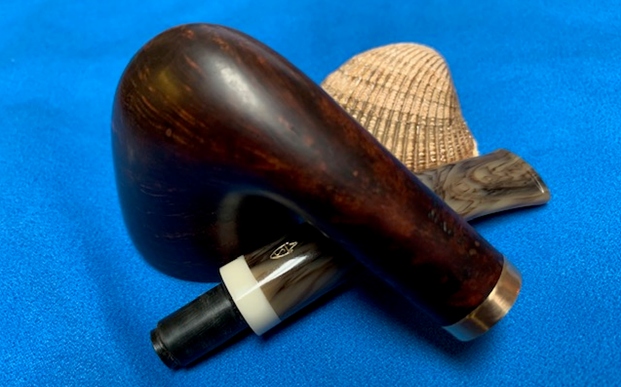
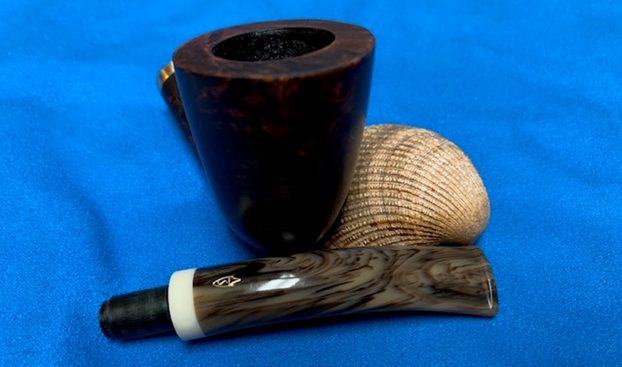
He included pictures of both pipe for me. I decided to tackle the Savinelli first. Here are the photos that Zak included with his email. As you can see the shank is snapped with a clean break about ½ inch up the shank. Zak fortunately had the pieces of the broken pipe and delivered them to me. The break had not damaged the stamping on the pipe. It read on the left side Savinelli [over] Liquirizia. On the right side it had the Savinelli Shield S logo followed by the shape number 920KS [over] Italy. On the underside of the shank it is stamped Hand Made. The pipe had a beautiful acrylic stem with a white band on the end. The tenon was Delrin and had been drilled out for a Savinelli 6mm filter or a Balsa filter. The bowl had a moderate cake and some lava on the rim top. The stem and shank had tar and oils. I cleaned out the shank and the areas of the break and glued the broken piece back in place on the shank using clear CA (super glue). The photos below show the glued shank piece.  When I repair this kind of break in a shank gluing and clamping it is not sufficient to hold. As the stem is put back in place the break will happen again due to the pressure from the tenon on the walls. I have learned that a simple band will bind it together and add strength. I have some brass bands that I picked up online that are quite thin but have and end cap that works really well to bind it all together and strengthen the joint. I went through the bag of bands I have and found the one that fit the best.I sanded the repaired area smooth with 220 grit sandpaper to blend the repair into the surface of the briar. Once the repair was smooth heated the band with a lighter and pressed it onto the shank end against my topping board to press it in place. The band added stability to the repair.I filled in a few spots with clear CA glue and resanded them with 220 grit sandpaper. Once the repairs cured I wiped the bowl down with acetone to remove the spotty varnish coat that was on the rest of the bowl. I touched up the repaired areas with a Cherry stain pen to blend it in and prepare it for a further stain coat a little later.I reamed out the uneven cake in the bowl with a PipNet reamer and cut it back to bare briar so I could inspect the interior walls. I cleaned up the remnants of the cake with a Savinelli Fitsall Pipe Knife. The walls of the bowl looked very good with no heat damage or fissures.I put a cork in the bowl and stained it with a dark brown stain. I flamed the stain to set in the briar and then repeated the process until I was happy with the coverage on the bowl. It did a great job blending the repaired area into the briar.   I set the bowl aside so the stain coat would cure overnight. Here is what it looked like in the morning when I brought it to the table.   I wiped the bowl down with isopropyl alcohol to make the finish more transparent. I began to see the grain stand out.  I continued to wipe it down until I had the variation in colour I was looking for. The grain really stood out now and the brass band was a great contrast.   I polished the briar with micromesh sanding pads – wet sanding with 1500-12000 grit pads and wiping the bowl down between each pad with a damp cloth. The contrasting colours really came alive.  I rubbed the bowl and shank down with Before & After Restoration Balm. I worked it into the surface of the bowl sides and shank with my fingertips to clean, enliven and protect the briar. I let the balm sit for a little while and then buffed with a cotton cloth to raise the shine. The Balm did its magic and the grain stood out.    I polished the acrylic stem with micromesh sanding pads – 1500-12000 grit pads. I wiped it down with a damp cloth after each sanding pad. The photo below shows the polished stem.  This nicely grained Savinelli Liquirizia 920KS Bent Dublin with a thin brass repair band and a swirled acrylic stem is a great looking pipe. The briar around the bowl is clean and really came alive. The rich brown stains gave the grain a sense of depth with the polishing and waxing. The grain really popped. The brass band binds the cracked shank repair and gives it a bit of bling. I put the acrylic stem back on the bowl and carefully buffed the pipe with Blue Diamond on the buffing wheel using a light touch on the briar. I gave the bowl and the stem multiple coats of carnauba wax on the buffing wheel. I buffed the pipe with a clean buffing pad to raise the shine. I hand buffed the pipe with a microfiber cloth to deepen the shine. The finished Savinelli Liquirizia Bent Dublin is a beauty and feels great in the hand and looks very good. Give the finished pipe a look in the photos below. The dimensions of the pipe are Length: 5 ½ inches, Height: 2 inches, Outside diameter of the bowl: 1 ½ inch, Chamber diameter: ¾ of an inch. The weight of the pipe is 44grams/1.55oz. The pipe will be going back to Zak as soon as finish the second one. He will soon, so he can enjoy it again. Thanks for reading this blog and my reflections on the pipe while I worked on it.

Renewed Life for a Savinelli Capri Root Briar 316EX Squat Dublin


Blog by Steve Laug

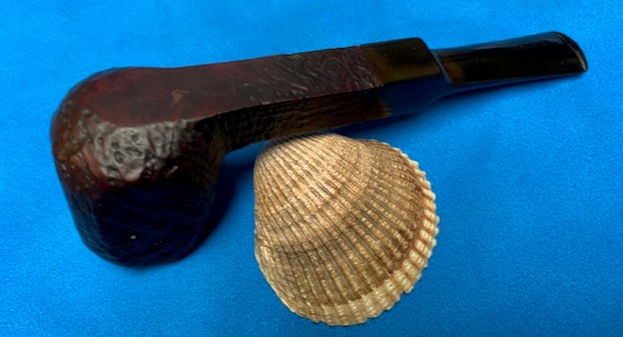
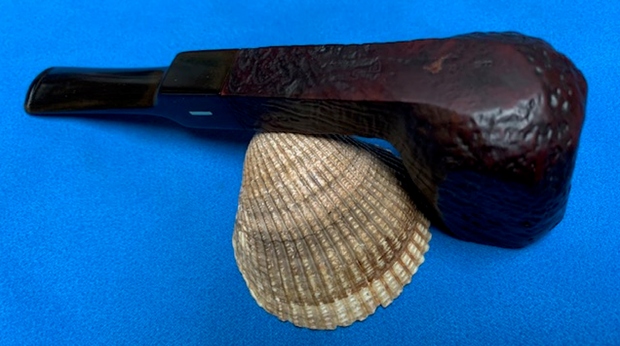
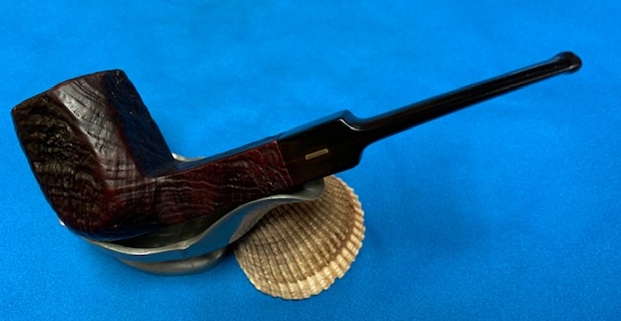
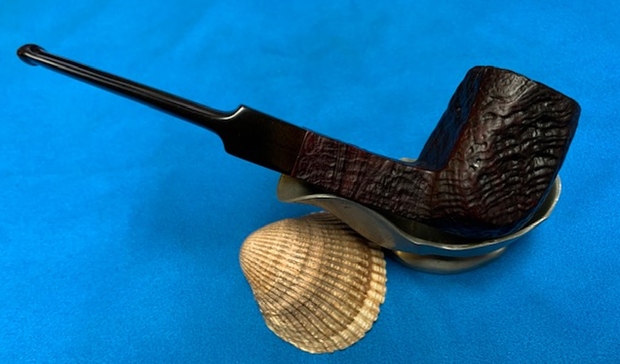
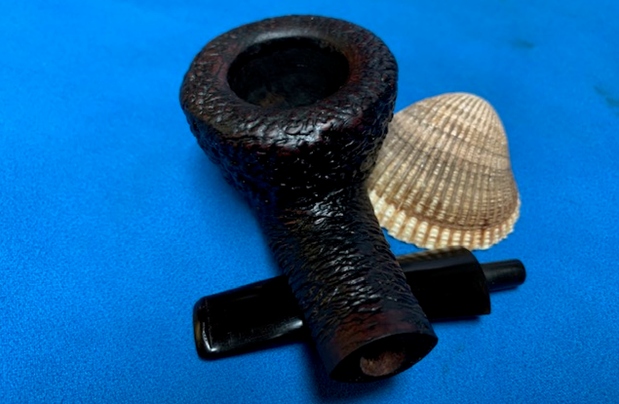
The next pipe on the work table came to us from a pipe hunt that Jeff and his wife recently did in Utah, USA.  The pipe is a great looking squat Dublin shape. The rim top and bowl are clean with variations of brown and black stains. On the heel of the bowl it is stamped Savinelli Capri [over] Root Briar. That is followed by The Savinelli “S” shield and Italy and the shape number 316EX. The pipe has a Sea Rock or coral style rustication that I really like. The finish was very dirty with dust in all of the rustication, making it hard to see beyond that to the finish underneath that. There was a medium cake in the bowl and it had overflowed with lava onto the rim top. It was hard to know at this point the condition of the rim edges. The stem was oxidized and there were tooth marks and chatter on both sides just ahead of the button. The Savinelli S shield logo on the top of the stem had worn off. Jeff took photos of the pipe before he started working on it. I include those below. Jeff took photos of the bowl and rim top to show the cake in the bowl and the lava build up on the rim top and dust and grime in the rustication. It was thick and hard but hopefully it had protected the rim and edges from damage. The lava is deep in the rustication and there is a buildup on the inner edge of the bowl. He took photos of the top and underside of the stem showing the scratching, oxidation and tooth marks on the stem surface and button. The tooth marks are quite deep on both sides of the stem.   Jeff took a photo of the sides and heel of the bowl to show the condition of the finish – the grime and grit all over the sides and bottom of the bowl. The rustication is deep and dirty but it is interesting. This is a very tactile finish and one that I enjoy.   Jeff took two photos of the stamping on the underside of the shank to capture all of it. It is very clear and readable other than the shape number 316EX. This pipe was a real mess like many of the pipes we work on. I was curious to see what it would look like when I unpacked it. I was surprised at how good it looked. Jeff reamed it with a PipNet pipe reamer and cleaned up the reaming with a Savinelli Fitsall Pipe Knife. He scrubbed out the internals of the shank and stem with alcohol, pipe cleaners and cotton swabs until the pipe was clean. He scrubbed the exterior of the bowl with Murphy’s Oil Soap and a tooth brush to remove the grime and grit on the briar and the lava on the rim top. The finish on the bowl looked really good when I got it. The rim top looked much better and the inner and outer edges were looking good. He soaked the stem in Before & After Deoxidizer bath to remove the oxidation. The stem looked better other than some light oxidation and the tooth marks and chatter in the surface. When the pipe arrived here in Vancouver for the second stop of its restoration tour it looked very good. I took photos of the pipe before I started my work on it.  I took photos of the condition of the rim top and stem before I started working. The rim top looks very good. The crevices and valleys of the rustication are clean and look great. The bowl is spotless. The stem is lightly oxidized and has some tooth marks and tooth chatter. The Savinelli S shield on the top of the stem is worn off. I took a photo of the stamping on the underside of the heel and the shank. It is clear and readable as noted above.I took the bowl and stem apart and took a photo of the pipe to show the look of the pipe.I worked some Before & After Restoration Balm into the finish of the bowl and the rim top and shank with my fingertips and a horsehair shoe brush to clean, enliven and protect it. I find that the balm really makes the briar come alive again. The contrasts in the layers of stain and the separate finishes really made the grain stand out. I let the balm sit for a little while and then buffed with a cotton cloth to raise the shine. The bowl really looks good at this point. I set it aside and worked on the stem. I filled in the tooth dents and marks with Black Super Glue and set it aside for the repairs to cure. Once they cured I flattened them with a file. I cleaned up the repaired areas with 220 sandpaper to blend the repairs into the surface of the stem. I started polishing it with 400 grit wet dry sandpaper.  I polished the stem with micromesh sanding pads – wet sanding it with 1500-12000 grit pads. I polished it further with Before & After Pipe Stem Polish – both fine and extra fine. Once again I am the part of the restoration that I always look forward to – the moment when all the pieces are put back together. I put the pipe back together and lightly buffed the bowl with Blue Diamond. I buffed the stem with a heavier touch with Blue Diamond on the buffing wheel. I gave the bowl multiple coats of Conservator’s Wax and the stem multiple coats of carnauba wax. I buffed the pipe with a clean buffing pad to raise the shine. I hand buffed it with a microfiber cloth to deepen the shine. It is fun to see what the polished bowl looks like with the combination of rustication and smooth finishes. The black vulcanite stem stands out as a shiny black contrast to the colours of the bowl. This dark stained Savinelli Capri Root 316EX Dublin must have been a fine smoking pipe judging from the condition it was when we received it. Have a look at it in the photos below. The dimensions are Length: 5 ¾ inches, Height: 1 ¾ inches, Outside diameter of the bowl: 2 inches, Chamber diameter: 1 ¼ inch. The weight of the pipe is 49grams/1.69oz.  This is one that will go on the Italian Pipemakers section of the rebornpipes online store shortly. Thanks to each of you who are reading this blog. Remember we are not pipe owners; we are pipemen and women who hold our pipes in trust until they pass on into the trust of the next generation.

Restoring a Savinelli Nonpareil 9412 Freehand


Blog by Steve Laug

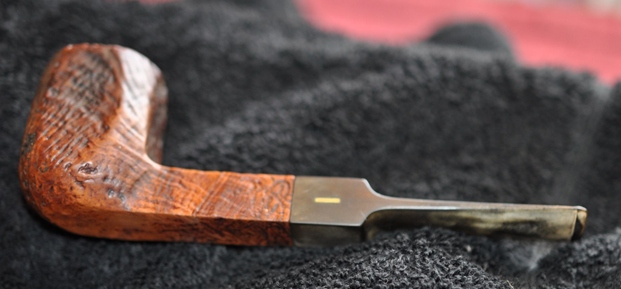
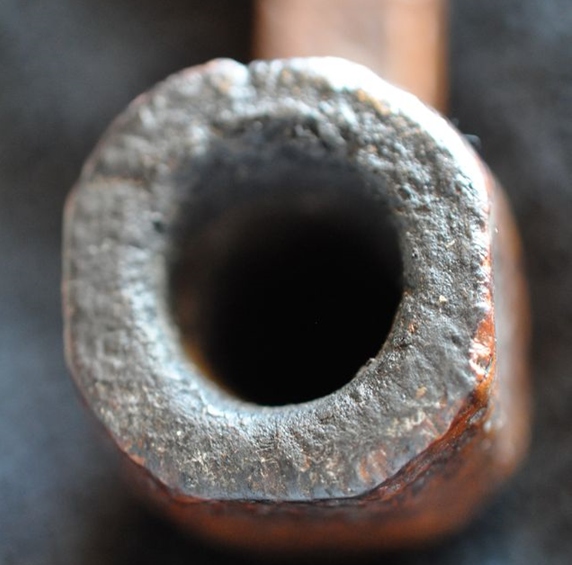
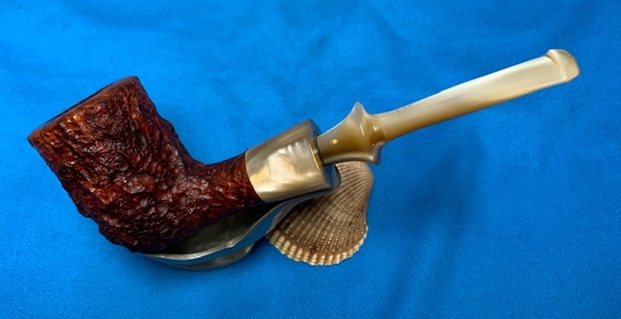
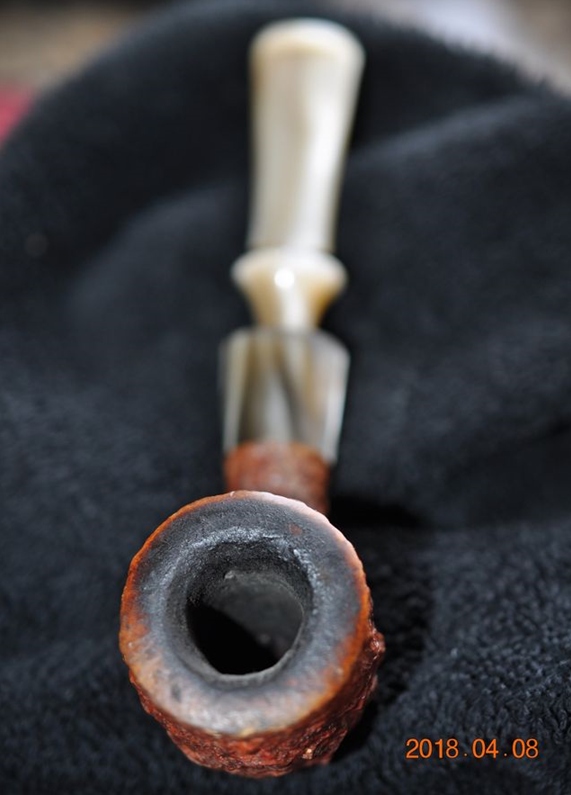
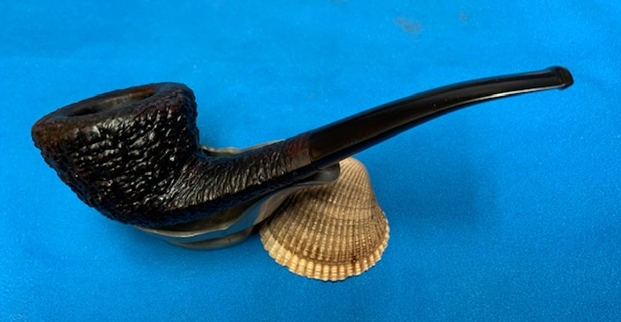
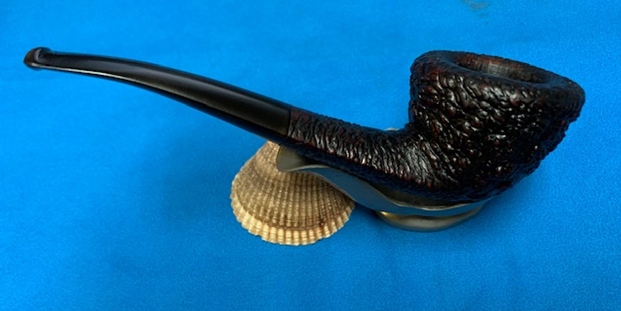
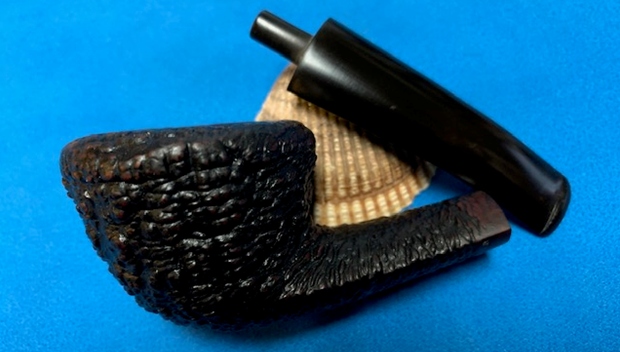
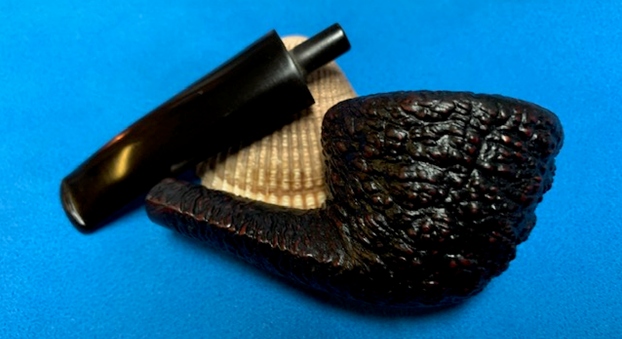
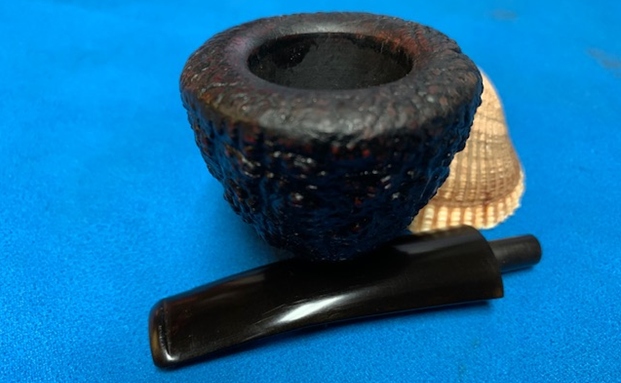
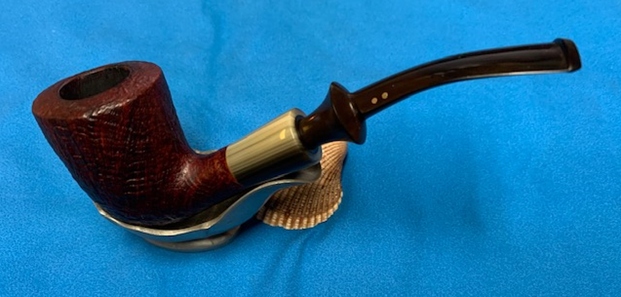
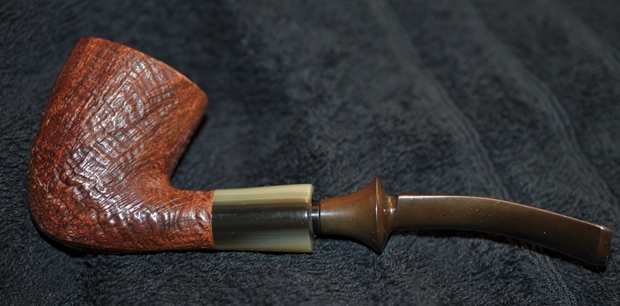
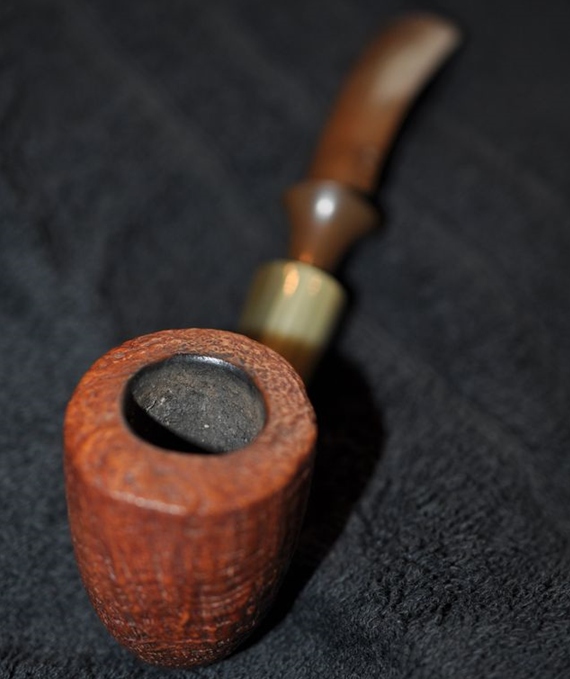
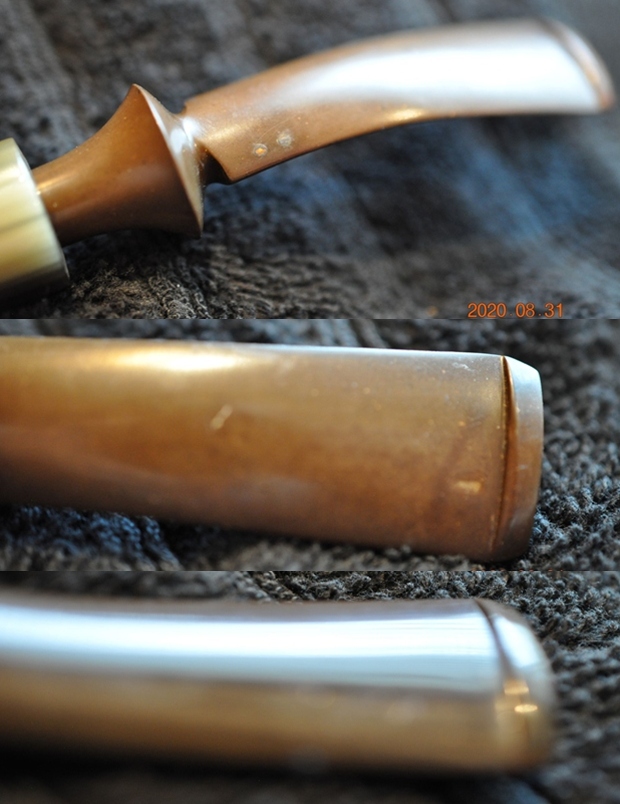
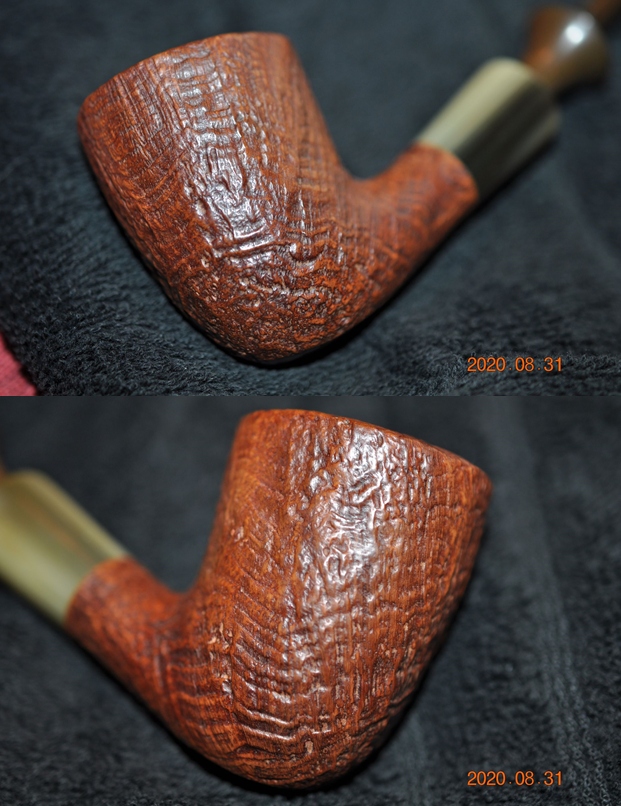
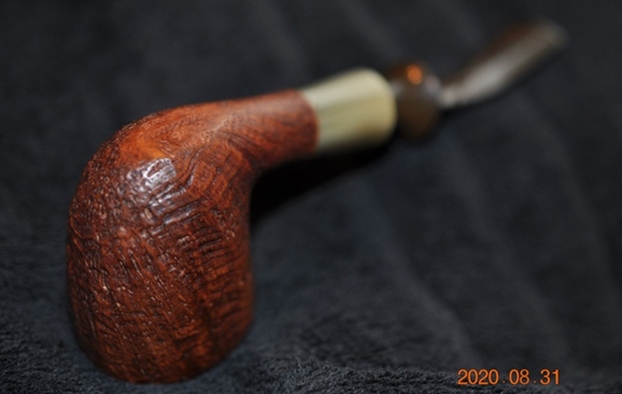
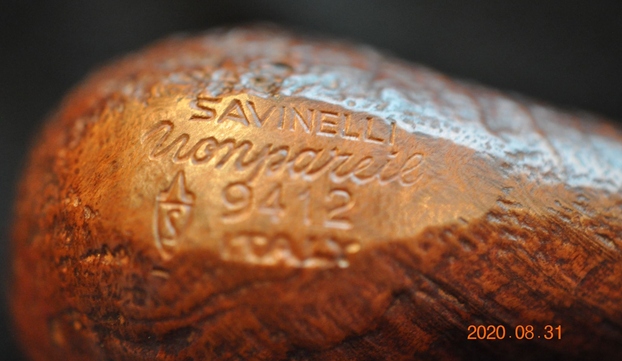
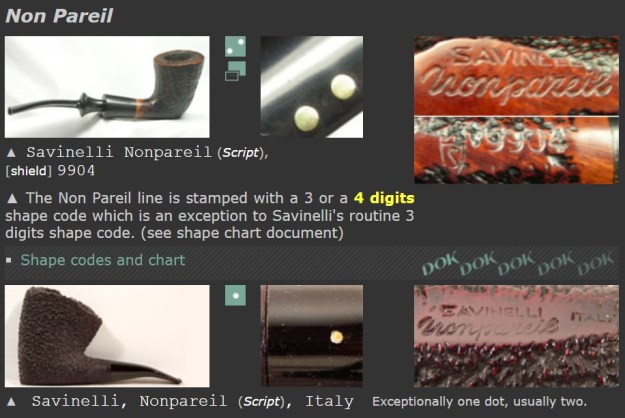
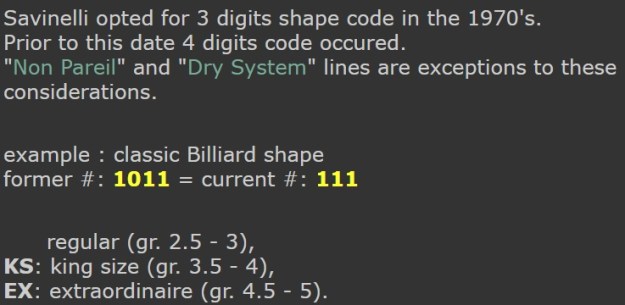
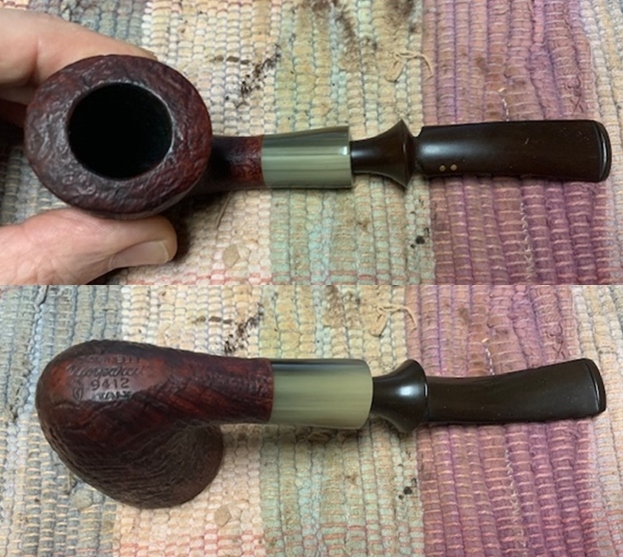
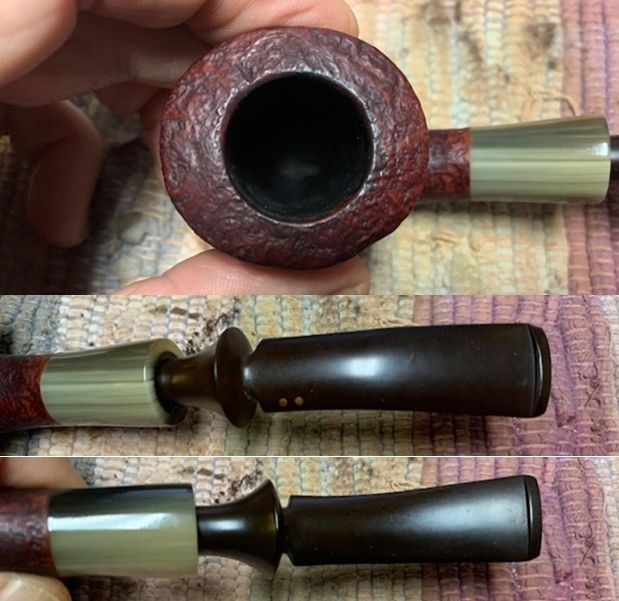
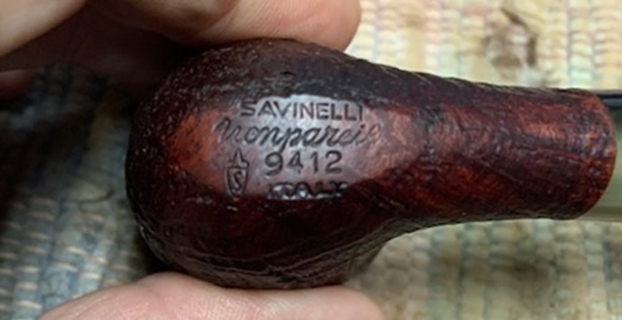
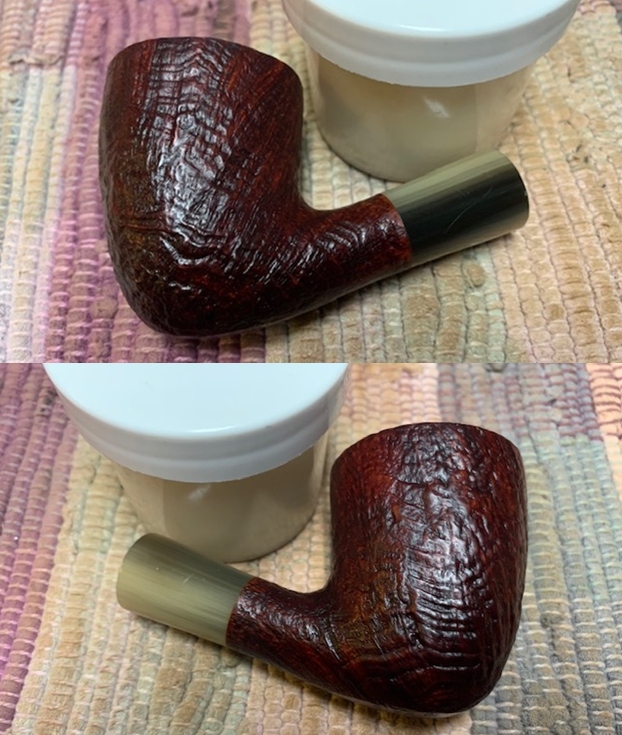
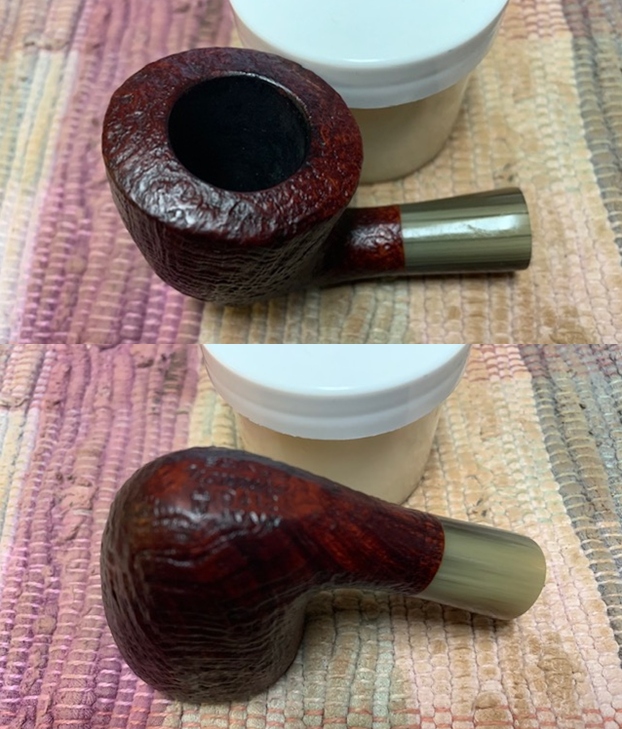
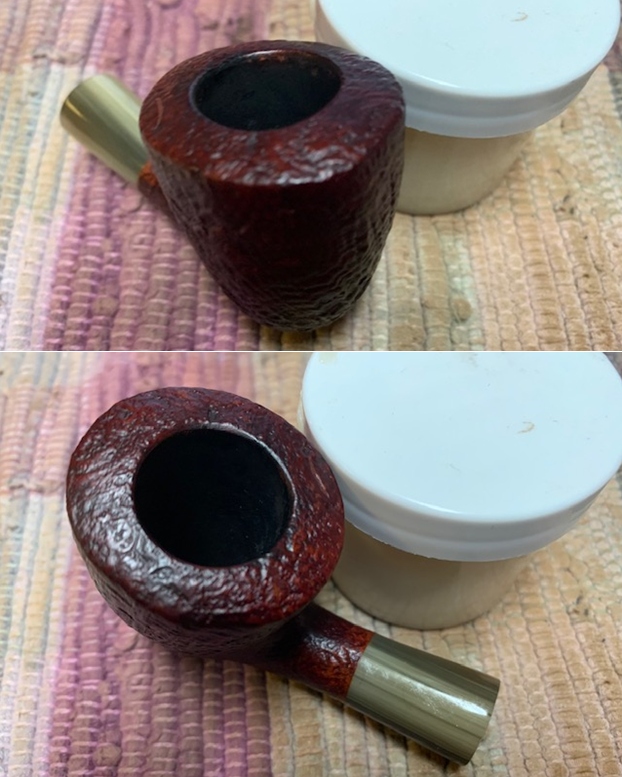
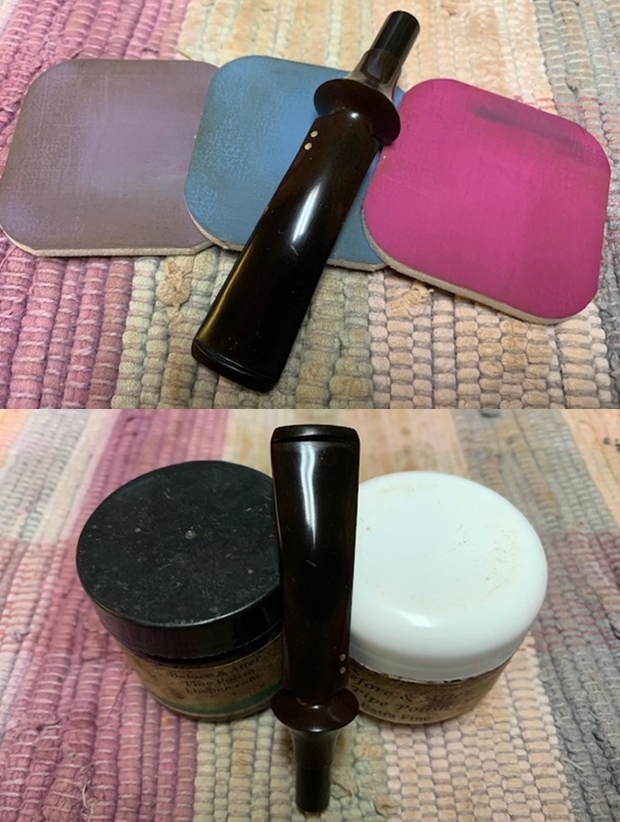
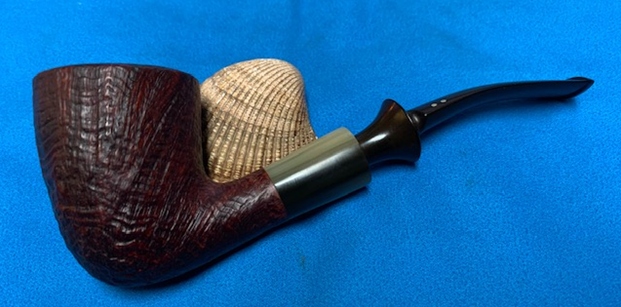
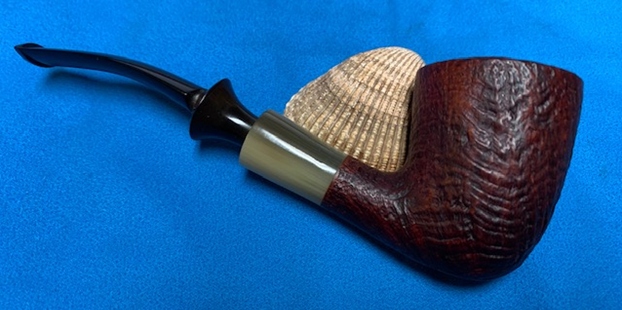
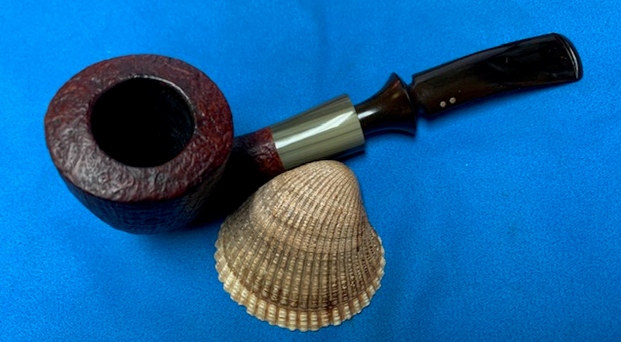
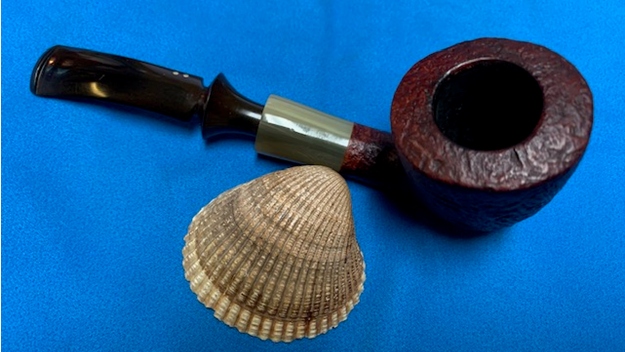
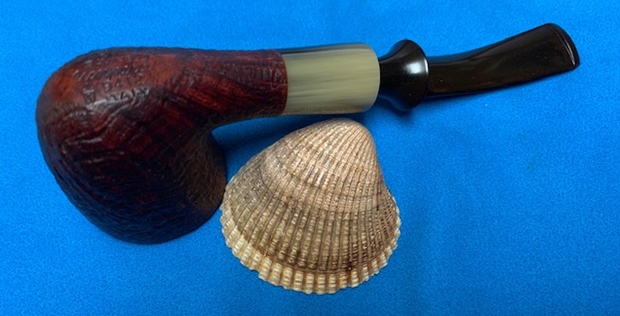
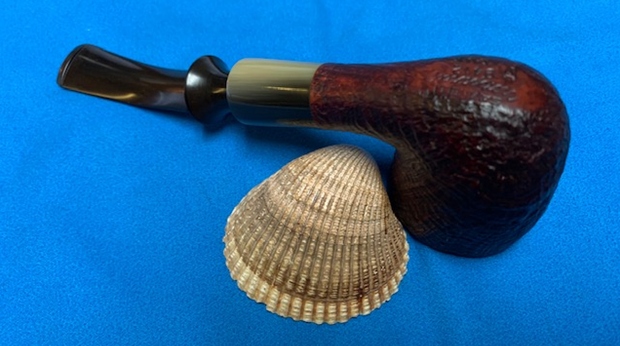
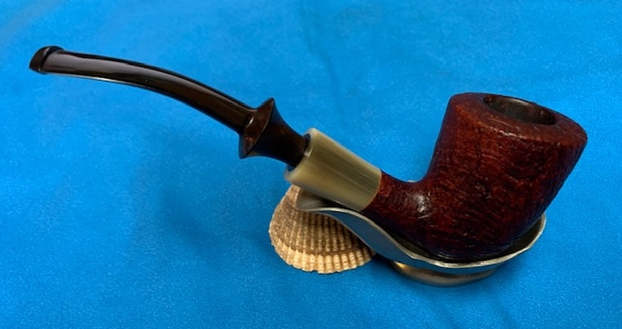
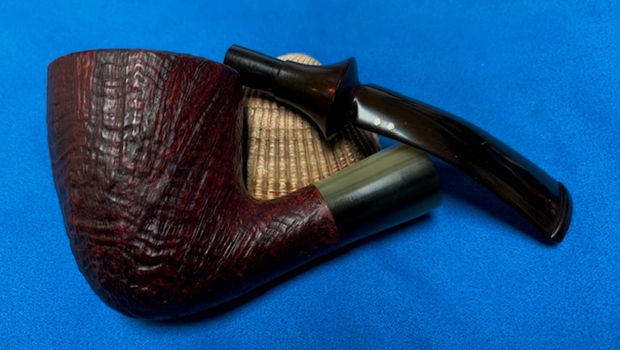
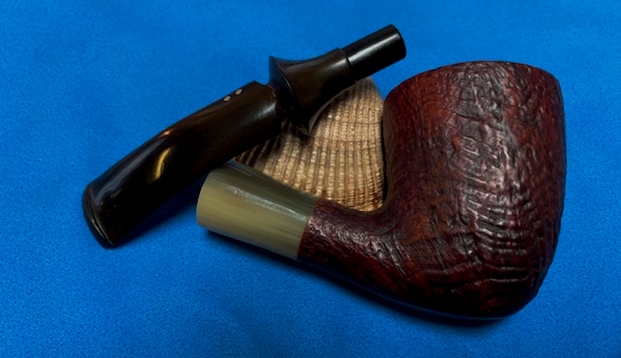
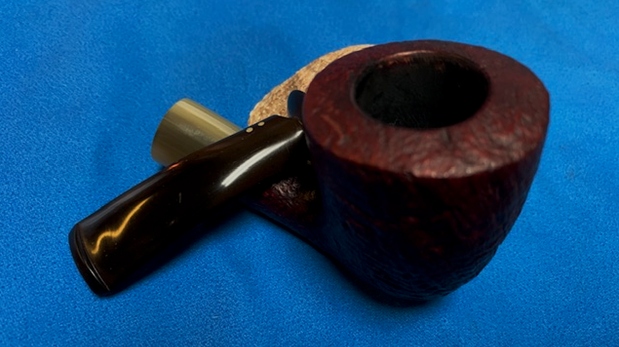
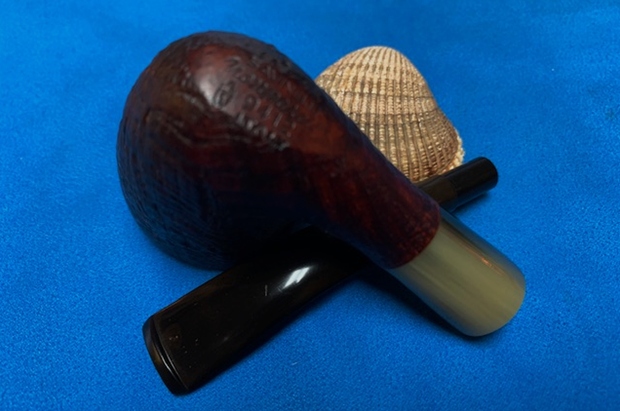
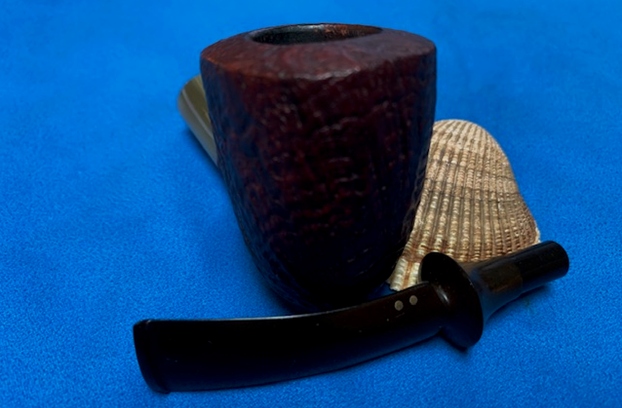
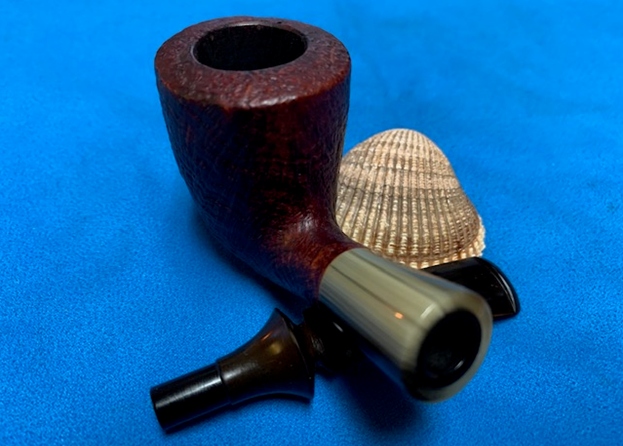
The next pipe on the work table came to us from a pipe hunt that Jeff and his wife recently did in Utah, USA. The pipe is an interesting almost Danish looking Savinelli pipe with a faux horn shank extension that has a metal cup in the shank to stabilize the extension. The pipe is well shaped and has nice sandblasted grain around the bowl. The pipe is stamped on the heel of the bowl and reads Savinelli [over] Nonpariel [over] 9412 (shape number) [over] Savinelli S shield followed by Italy. There was a grime and dust in the nooks and crannies of the sandblast on the briar. The bowl was moderately caked while the top and inner edge of the rim were dusty but otherwise quite clean. The inside edge looks like it may have burn damage on the front right. The outer edge has a lot of nicks and chips. The faux horn shank extension looked very good and the metal insert was snugly in the shank end. The fancy vulcanite stem was oxidized and had tooth chatter and marks on the top and underside near the button and on the button edge. The pipe showed a lot of promise but it was very dirty. Jeff took some photos of the pipe before he started his cleanup work. He took photos of the rim top and bowl to give a clear picture of the thickness of the cake and tobacco debris as well as the relatively clean inner edge of the rim. He also took photos of the top and underside of the stem as well as the horn shank extension. The photos show the overall condition of the stem. The stem had two brass dots on the left side of the taper just past the saddle portion of the stem.  Jeff took photos of the sides and heel of the bowl to give a picture of what the briar looked like. It truly has some nice sandblasted grain – birdseye and cross grain around the bowl and shank. The faux horn shank extension is quite nice looking. The stamping on the underside of the shank is clear and readable and read as noted above. I turned to Pipephil (http://www.pipephil.eu/logos/en/logo-savinelli3.html) to get a quick view of the Nonpareil Line. I did a screen capture of the site’s information and have included that below. I am also including a screen capture of the Shape and code chart introduction that is link in the above capture.It appears that the Nonpareil 9412 that I am working on is made before 1970 so it is at least 50+ years old. It is in great shape. I am not sure what the exception noted above is about.

I turned to Pipedia (https://pipedia.org/wiki/Savinelli) for a quick read. The site is worth reading the history of the Savinelli brand and it philosophy of pipemaking. There was nothing specific on the Nonpareil line however so it was time to work on the pipe.

Jeff had cleaned up the pipe with his usual penchant for thoroughness. He reamed the pipe with a PipNet pipe reamer and removed the rest of it with a Savinelli Fitsall Pipe Knife.  He scrubbed the bowl with undiluted Murphy’s Oil Soap with a tooth brush. He rinsed it under running warm water to remove the soap and grime. He cleaned out the inside of the shank and the airway in the stem with alcohol, cotton swabs and pipe cleaners. He soaked the stem in a Before & After Deoxidizer bath and rinsed it off with warm water. I took photos of the pipe before I started my part of the restoration work. The rim top cleaned up really well. The rim top, inner and outer edge of the bowl is in excellent condition. The stem surface looked very good with a few tooth marks and chatter on both sides near the button. I removed the stem and took a photo of the pipe to give a sense of the whole. The fancy saddle stem is nice and the photo gives a sense of what the pipe looks like. The bowl was in such great condition after Jeff’s cleanup that I did not have a lot to do with it. I rubbed the bowl and shank down with Before & After Restoration Balm. I worked it into the surface of the bowl sides and shank with my fingertips to clean, enliven and protect the briar. I let the balm sit for about 10-15 minutes and buffed with a cotton cloth to raise the shine. The grain came alive and the fills while visible look better than when I began.     I set the bowl aside and turned to work on the stem. I “painted” the stem surface with the flame of a lighter and was able to lift out all but one deep tooth mark on the top surface ahead of the button. Once the repair cured I used a file to flatten it out and then sanded it with 220 grit sandpaper. I started polishing the stem with 400 grit wet dry sandpaper. I scrubbed the stem with Soft Scrub All Purpose cleanser to remove the remaining oxidation. I have found that a good scrub with this product removes the oxidation left behind by the other methods. You can see it on the cotton pads underneath the stem.I still found that the stem had some oxidation that was quite deep in the vulcanite. I put it in a bath of Briarville’s Pipe Stem Oxidation Remover and let it soak for 2 ½ hours. When I took it out of the bath I rubbed it down with a paper towel remove the oxidation and the product. It came out significantly darker.I polished the vulcanite stem with micromesh sanding pads – 1500-12000 grit pads. I wiped it down with Obsidian Oil after each sanding pad. I used Before & After Pipe Polish – both Fine and Extra Fine to further polish the stem. This Savinelli Nonpareil 9412 Freehand is a great looking pipe now that it has been restored. The sandblasted finish gives the shape an elegant look. The flow of the bowl and stem are well done make for a great hand feel. The faux horn shank extension has a metal insert in the shank end to keep it from splitting. I put the stem back on the bowl and carefully buffed the pipe with Blue Diamond on the buffing wheel using a light touch on the briar. I gave the bowl and the stem multiple coats of carnauba wax on the buffing wheel and followed that by buffing the entire pipe with a clean buffing pad. I hand buffed the pipe with a microfiber cloth to deepen the shine. The finished Savinelli Nonpareil 9412 fits nicely in the hand and feels great. Give the finished pipe a look in the photos below. The dimensions of the pipe are Length: 6 inches, Height: 2 inches, Outside diameter of the bowl: 1 ½ inches, Chamber diameter: ¾ of an inch. The weight of the pipe is 50grams/1.8oz. It is a great looking and light weight pipe. I will be putting it on the rebornpipes store shortly. If you are interested in adding this pipe to your collection send me a message or an email. Thanks for reading this blog and my reflections on the pipe while I worked on it. There are many more to come!
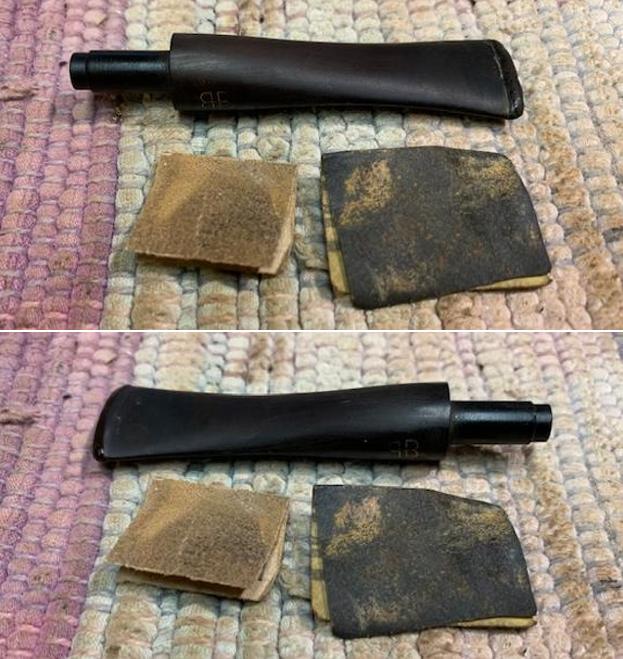
Restoring a Savinelli Oscar Aged Briar 701 Rusticated Lovat


Blog by Steve Laug

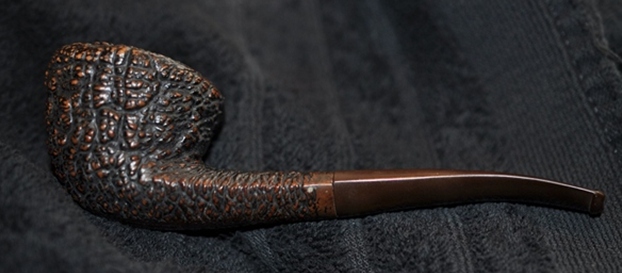
The next pipe on the work table came to me from Jeff’s pipe hunts or auction purchases. We pick up quite a few pipes from his hunts. I try work them into the restoration queue so that I can keep them moving. This is an interesting looking piece – a multi-hued rusticated Lovat showing through the grime. The pipe is stamped on the underside of the shank and reads Oscar [over] Aged Briar to the right of that it is stamped with a Savinelli Shield S followed by the shape number 701 [over] Italy. The finish had a lot of grime ground into rustication on the briar. The bowl was heavily caked with a lava coat on the top of the rim. It was hard to tell how the inner and outer edge of the rim actually looked until the bowl was reamed. The stem was in decent condition with tooth chatter and marks on the top and underside near the button. It had the typical Savinelli Made Oscar shooting star on the left side of the saddle stem. It had promise but it was very dirty. Jeff took some photos of the pipe before he started his cleanup work.   He took a photo of the rim top and bowl to give a clear picture of the thickness of the cake and the overflow of lava on the rim top. He also took photos of the top and underside of the stem to show the chatter and tooth marks. Otherwise the stem is quite clean.   He took photos of the sides and heel of the bowl to show the rustication patterns and variations in colour on the bowl. It is a pretty pipe. The stamping on the heel of the bowl and shank is clear and readable and reads as noted above. The shooting star on the stem side is also clear.       Jeff had picked this pipe up in April of 2017 and had cleaned it and sent it to me not long after that. That will tell you how far behind I am on the restoration projects sitting all around me. Jeff had done his usual thorough cleanup on the pipe. He reamed it with a Pipnet Reamer and cleaned up the reaming with a Savinelli Fitsall pipe knife.  He had scrubbed the exterior of the bowl with Murphy’s Oil Soap and a tooth brush and rinsed it off with warm water to remove the grime from the finish. He cleaned the internals of the shank and stem with alcohol, cotton swabs and pipe cleaners to remove the tarry residue and oils in the shank and airway. He soaked the stem in Before & After Deoxidizer to remove any oxidation on the stem surface. When it arrived here on my work table I took photos of the pipe before I started my part of the restoration. The pipe looked amazingly good.   The inner and outer edges of the rim were in good condition. The inner beveled edge of the rim looks very good. The rim top is absolutely beautiful! The stem look good but there was still some oxidation and there were tooth marks and chatter on both sides near the button.    I took a photo of the stamping on the heel of the bowl and underside of the shank. The stamping is clear and readable and reads as noted above.      I took the stem off the pipe and took a photo of the parts to show the look of the pipe as a whole.The pipe was in such good condition after Jeff’s clean up work that the rim top only needed to be polished with 1500-12000 grit micromesh sanding pads to raise a shine.  I rubbed the bowl and shank down with Before & After Restoration Balm. I worked it into the surface of the bowl sides and shank with my fingertips and a horsehair shoe brush to clean, enliven and protect the briar. I let the balm sit for a little while and then buffed with a cotton cloth to raise the shine. You can see the sparkle in the rustication surfaces as the light hits them.   I set the bowl aside and turned my attention to the stem. I touched up the Shooting Star logon the left side of the saddle stem with Antique Gold Rub’n Buff. I am out of white paint and for some reason the liquid paper does not work on the shooting star. I am going to hunt down some Rub’n Buff White that should work as well. I pushed it into the stamping with a tooth pick. I rubbed it off with a cotton pad to remove the excess and still leave some in the stamping.     I polished the vulcanite stem with micromesh sanding pads – 1500-12000 grit pads. I wiped it down with a damp cloth after each sanding pad. I used Before & After Pipe Polish – both Fine and Extra Fine to further polish the stem.   This Savinelli Made Oscar Aged Briar 701 Lovat is a great looking pipe now that it has been restored. The mix of brown stains makes the rustication almost sparkle and works well with the polished vulcanite taper stem. I put the stem back on the bowl and carefully buffed the pipe with Blue Diamond on the buffing wheel using a light touch on the briar. I gave the bowl and the stem multiple coats of carnauba wax on the buffing wheel and followed that by buffing the entire pipe with a clean buffing pad. I hand buffed the pipe with a microfiber cloth to deepen the shine. The finished Savinelli Made Oscar Aged Briar Lovat fits nicely in the hand and feels great. Give the finished pipe a look in the photos below. The dimensions of the pipe are Length: 5 ½ inches, Height: 1 ¾ inches, Outside diameter of the bowl: 1 ¼ inches, Chamber diameter: ¾ of an inch. If you are interested in adding this pipe to your collection send me a message or an email. Thanks for reading this blog and my reflections on the pipe while I worked on it. There are many more to come!

A Rebirth for a Savinelli Capri Root Briar 4011 Zulu from Bob Kerr’s Estate


Blog by Steve Laug

I have just over 20 more of Bob’s pipes to finish before I have completed the restoration of his estate so I am continuing to work on them. The next one from Bob Kerr’s Estate is a Savinelli Capri Root Briar Zulu. (Bob’s photo is to the left). If you have not “met” the man and would like to read a bit of the history of the pipeman, his daughter has written a great tribute that is worth a read. Because I have included it in most of the restorations of the estate to date I thought that I would leave it out this time. Check out some of the recent Dunhill restoration blogs that include the biographical notes about Bob (https://rebornpipes.com/2020/01/01/restoring-the-last-of-bob-kerrs-dunhills-a-1962-dunhill-bruyere-656-f-t-bent-billiard/).

The Savinelli Capri Root Briar Zulu has a rusticated finish (looks a lot like the Castello Sea Rock finish). It is a coral like rustication around the bowl that was filled in with dust and debris. It was stamped on underside of the shank. It is stamped Capri [over] Root Briar followed by Savinelli Italy and the shape number 4011. The finish was dirty with dust and grime ground into the bowl sides. There was a thick cake in the bowl and lava overflow on the rim top. The vulcanite stem was oxidized and had tooth marks and chatter ahead of the button on both sides. Jeff took photos of the pipe to show its general condition before he did his cleanup. As I mentioned above the exterior of the pipe was very dirty – grime and grit ground in from years of use and sitting. The rim top was covered with a coat of thick lava that overflowed from the thick cake in the bowl. It was hard to know what the rim edges looked like because of the lava. Jeff took photos of the sides and the heel of the bowl to give a better feel for the condition of the briar around the bowl. You can also see some of the few fills in the briar in the photos.

The next photo show the stamping on the underside of the shank and it is very readable. It reads as noted above. The stem was dirty, calcified and oxidized with tooth chatter and marks on the top and underside of the stem at the button.    I have always like the Savinelli Capri Root Briar finish so I was glad to be working on this one. With over 125 pipes to clean from Bob’s estate I took a batch of them to the states with me when I visited and left them with Jeff so he could help me out. Jeff cleaned the pipes with his usual penchant for thoroughness that I really appreciate. Once he finished he shipped them back to me. Bob’s pipes were generally real mess and I did not know what to expect when I unwrapped it from his box. I was surprised to see how well it turned out. He reamed it with a PipNet pipe reamer and cleaned up the reaming with a Savinelli Fitsall Pipe Knife. He scrubbed out the internals with alcohol, pipe cleaners and cotton swabs until the pipe was clean. He scrubbed the exterior of the bowl with Murphy’s Oil Soap and a tooth brush to remove the grime and grit on the briar and the lava on the rim top. The finish looks very good with good looking grain around the bowl and shank. Jeff scrubbed it with Soft Scrub and soaked it in Before & After Deoxidizer to remove the oxidation on the rubber. When the pipe arrived here in Vancouver for the second stop of its restoration tour it looked a lot better. I took photos before I started my part of the work.  I took some close up photos of the rim top and the stem surface. I wanted to show what cleaned bowl and rim top looked like. The rim top and the inner and outer edges of the bowl were in excellent condition. I also took close up photos of the stem to show the tooth marks and the remaining oxidation on the stem surface.    I took photos of the stamping on the underside of the shank and it is clear and readable. It is stamped as noted above.    I removed the stem for the shank and took a photo of the bowl and stem to give a picture of what it looked like. The heavy oxidation is very visible.I rubbed the bowl down with Before & After Restoration Balm. I worked it into the surface of the briar with my fingertips to clean, enliven and protect it. I let the balm sit for a little while and then buffed with a cotton cloth and shoe brush to raise the shine.     I set the bowl aside and turned my attention to the stem. I used a Bic lighter to “paint” the surface of the stem with the flame to lift the tooth marks on both sides of the stem. The heat lifted the tooth marks to the degree that was able to sand out the remaining marks on the stem surface.       I filled in the remaining divots with black super glue. I set the stem aside to let the glue cure. Once they cured I used a needle file to flatten repaired areas. I sanded out the remaining tooth dents in the top and underside of the stem with 220 sandpaper. I started polishing the stem with 400 grit wet dry sandpaper.     I polished the vulcanite with micromesh sanding pads – 1500-12000 grit pads. I wiped it down with a damp cloth after each sanding pad. I used Before & After Pipe Polish – both Fine and Extra Fine to further polish the stem.  I left a little oxidation around the stamp so as not to damage it more.    This Savinelli Made Capri Root Briar 4011 Zulu from Bob Kerr’s estate cleaned up really well and looks very good. The mixed stain brown finish on the pipe is in great condition and works well with the polished vulcanite taper stem. I put the stem back on the bowl and carefully buffed the pipe with Blue Diamond on the buffing wheel using a light touch on the briar. I gave the bowl and stem multiple coats of carnauba wax on the buffing wheel and followed that by buffing the entire pipe with a clean buffing pad. I hand buffed the pipe with a microfiber cloth to deepen the shine. The finished Capri Root Briar 4011 Zulu fits nicely in the hand and I think it will feel great as it heats up with a good tobacco. The tactile finish will add to the experience. Give the finished pipe a look in the photos below. The dimensions of the pipe are Length: 6 inches, Height: 2 inches, Outside diameter of the bowl: 1 ½ inches, Chamber diameter: 7/8 of an inch. If you are interested in carrying on Bob’s legacy with this pipe send me a message or an email. I have more to work on of various brands. Perhaps one of those will catch your attention. Thanks for reading this blog and my reflections on the pipe while I worked on it. This is an interesting estate to bring back to life.

The next pipe from Bob Kerr’s Estate – a Savinelli Punto Oro 614 Full Bent


Blog by Steve Laug

I am continuing to work on the pipes in Bob Kerr’s estate for a while. I am getting closer to finishing restoring this large estate with only about 33 more pipes to do. This is one of his two Savinelli pipes that I am working on. I am cleaning them for the family and moving them out into the hands of pipemen and women who will carry on the trust that began with Bob and in some pipes was carried on by Bob. In the collection there were 19 Peterson’s pipes along with a bevy of Dunhills, some Comoy’s and Barlings as well as a lot of other pipes – a total of 125 pipes along with a box of parts. This is the largest estate that I have had the opportunity to work on. I put together a spread sheet of the pipes and stampings to create an invoice. I was taking on what would take me a fair amount of time to clean up. I could not pass up the opportunity to work on these pipes though. They were just too tempting. This rugged sandblasted Savinelli Punto Oro is a great pipe to work on. It is a shape that is interesting and unique. It will go on the rebornpipes store.

This Savinelli Full Bent Punto Oro 614 has a rugged, swirling sandblast finish with lots of nooks and crannies in the briar. It is a beauty! The pipe is stamped on a smooth panel on the underside of the heel and shank and reads Savinelli over Punto Oro. That is followed by the Savinelli logo Shield S and the shape number 614 over Italy. The valleys and ridges of the sandblasted grain showing through the grime and dirt are a mixture that leaves a rich texture. It had rich dark and medium contrasting brown stains that do not look too bad. There was a thick cake in the bowl with remnants of tobacco stuck on the walls. There was a fair lava overflow filling in the blast on the rim. The inner edge of the rim are dirty and may have some damage under the grime. It was a beautiful pipe that was dirty and tired looking. The stem was oxidized and calcified toward the end. This one had the characteristic tooth marks that I have come to expect from Bob’s pipes. Jeff took photos of the pipe before he started his cleanup work on it. He took photos of the bowl and rim top to show the cake in the bowl and the lava build up on the edges of the bowl. It was thick and hard but hopefully it had protected the rim and edges from damage. It was hard to know for sure from the photos.Jeff took photos of the sides and heel of the bowl to show the condition of the finish. You can see the beautiful swirls of the sandblast. There is a lot of dust and grime filling in the valleys. He took a photo of the stamping on the smooth panel on the underside of the bowl and shank. The stamping was readable as you can see from the photos and read as noted above.Jeff took photos of the top and underside of the stem showing the tooth chatter, scratching and oxidation on the stem surface and wear on the edges of the button. I turned to Pipephil’s site to get a feel for the Punto Oro line. I have worked on both smooth and sandblast finish Punto Oro pipes in the past. This was another sandblast one – this time a dark one rather than natural. Here is the link (http://www.pipephil.eu/logos/en/logo-savinelli3.html). I have included a screen capture of the pertinent information on the line below. It appears the line came out in both smooth and sandblast finishes. I turned to Pipedia to look at what information they had on the brand. I found a catalogue page on the Punto Oro which confirmed what I had surmised about the line having both smooth and sandblast finished pipe (https://pipedia.org/images/d/db/Sav_Punto_Oro.jpg). I have included a screen capture of the page below. It says that the line was available in 2 distinct finishes – a rich Mahogany smooth finish and a genuine sandblast.The Savinelli shape number was 614 so I turned to the Savinelli Shape Chart on Pipedia and included a screen capture (https://pipedia.org/images/4/41/Sav_Shape_Chart_2017.jpg). I have drawn a blue box around the 614 shape in the photo below.With over 125 pipes to clean from Bob’s estate I took a batch of them to the states with me when I visited and left them with Jeff so he could help me out. Jeff cleaned the pipe with his usual penchant for thoroughness that I really appreciate. This one was a real mess and I did not know what to expect when I unwrapped it from his box. He reamed it with a PipNet pipe reamer and cleaned up the reaming with a Savinelli Fitsall Pipe Knife. He scrubbed out the internals with alcohol, pipe cleaners and cotton swabs until the pipe was clean. He scrubbed the exterior of the bowl with Murphy’s Oil Soap and a tooth brush to remove the grime and grit on the briar and the lava on the rim top. The finish looks very good with good looking grain around the bowl and shank. Jeff scrubbed it with Soft Scrub and soaked it in Before & After Deoxidizer to remove the oxidation on the rubber. When the pipe arrived here in Vancouver for the second stop of its restoration tour it looked a lot better. The stem still had a lot of deep oxidation. I took photos before I started my part of the work.  I took some close up photos of the rim top and also of the stem surface. I wanted to show what cleaned bowl and rim top looked like. The rim top good but there was some damage on the left front inner edge. The sandblast finish is very nice. I also took close up photos of the stem to show the light tooth marks and the remaining oxidation on the stem surface.I took a photo of the stamping on the underside of the shank and it is clear and readable. It is stamped as noted above.I took the stem off the shank and took some photos to give a clear picture of the pipe from the left side profile and the top looking down. It is a really pretty pipe.Since this is another pipe Bob’s estate I am sure that some of you have read at least some of the other restoration work that has been done on the previous pipes. You have also read what I have included about Bob Kerr, the pipeman who held these pipes in trust before I came to work on them (see photo to the left). Also, if you have followed the blog for long you will already know that I like to include background information on the pipeman whose pipes I am restoring. For me, when I am working on an estate I really like to have a sense of the person who held the pipes in trust before I worked on them. It gives me another dimension of the restoration work. I asked Brian if he or his wife would like to write a brief biographical tribute to her father, Bob. His daughter worked on it and I received the following short write up on him and some pictures to go along with the words including one of Bob’s carvings. Once again I thank you Brian and tell your wife thank you as well.

I am delighted to pass on these beloved pipes of my father’s. I hope each user gets many hours of contemplative pleasure as he did. I remember the aroma of tobacco in the rec room, as he put up his feet on his lazy boy. He’d be first at the paper then, no one could touch it before him. Maybe there would be a movie on with an actor smoking a pipe. He would have very definite opinions on whether the performer was a ‘real’ smoker or not, a distinction which I could never see but it would be very clear to him. He worked by day as a sales manager of a paper products company, a job he hated. What he longed for was the life of an artist, so on the weekends and sometimes mid-week evenings he would journey to his workshop and come out with wood sculptures, all of which he declared as crap but every one of them treasured by my sister and myself. Enjoy the pipes, and maybe a little of his creative spirit will enter you!

Now on to my part of the restoration of this Savinelli Punto Oro Full Bent. I decided to start by dealing with the damage to the inner edge of the rim. I used a folded piece of 220 grit sandpaper to smooth out the edge and give it a slight bevel to remove the damaged area and bring the bowl back into round.I used a black Sharpie Pen to touch up the washed out area on the left side of the shank. It did not take too much to blend that area into the browns and blacks of the surrounding sandblast. I used a Walnut stain pen on the newly beveled inner edge and on the rim top to blend in the repairs.I rubbed the bowl down with Before & After Restoration Balm. I worked it into the surface of the briar with my fingertips and a horsehair shoe brush to clean, enliven and protect it. I let the balm sit for a little while and then buffed with a cotton cloth and shoe brush to raise the shine. Mark Hoover’s Balm is a product that I have come to appreciate and one I use on every pipe I have been working on. I set the bowl aside and turned my attention to the still oxidized stem. I used a lot of elbow grease and scrubbed the stem with Soft Scrub and cotton pads. It took some time to work out much of the oxidation but it was definitely looking better.I worked over the rest of the remaining oxidation and the tooth marks with 220 grit sandpaper. I started polishing the stem with 400 grit wet dry sandpaper. At this point it is starting to look much better.  I polished the vulcanite with micromesh sanding pads – 1500-12000 grit pads. I wiped it down with a damp cloth after each sanding pad. I used Before & After Pipe Polish – both Fine and Extra Fine to further polish the stem. This Savinelli Punt Oro 614 from Bob Kerr’s estate turned out to be a great looking pipe. The mix of brown stains highlights the sandblasted grain around the bowl sides, top and bottom. The lighter brown stain on the flat bottom of the heel and underside of the shank is a great contrast. The finish on the pipe is in excellent condition and the contrasting stains work well with the polished vulcanite saddle stem. I put the stem back on the bowl and carefully buffed the pipe with Blue Diamond on the buffing wheel using a light touch on the briar. I gave the bowl and stem multiple coats of carnauba wax on the buffing wheel and followed that by buffing the entire pipe with a clean buffing pad. I hand buffed the pipe with a microfiber cloth to deepen the shine. The finished full bent Savinell Punto Oro fits nicely in the hand and feels great. Give the finished pipe a look in the photos below. The dimensions of the pipe are Length: 5 ½ inches, Height: 1 ¾ inches, Outside diameter of the bowl: 1 ¼ inches, Chamber diameter: ¾ of an inch. If you are interested in carrying on Bob’s legacy with this pipe send me a message or an email. I have more to work on of various brands. Perhaps one of those will catch your attention. Thanks for reading this blog and my reflections on the pipe while I worked on it. This is an interesting estate to bring back to life.

New Life for a Savinelli Extra 412KS Dublin


Blog by Steve Laug

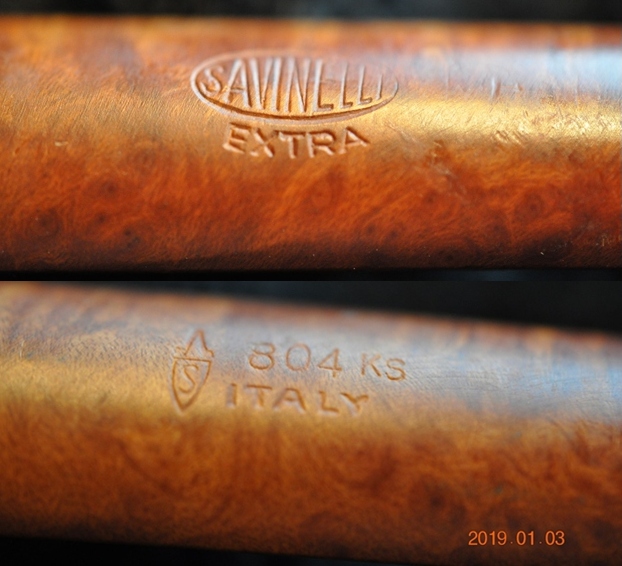
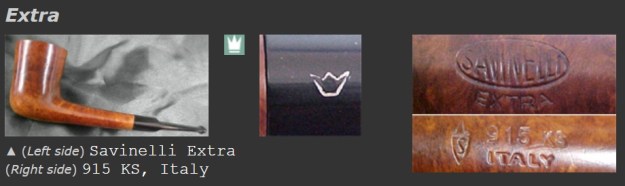
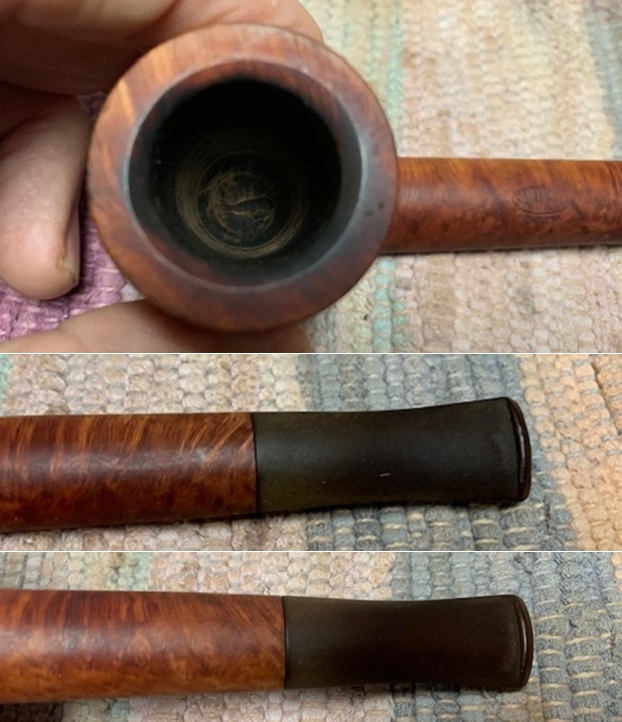
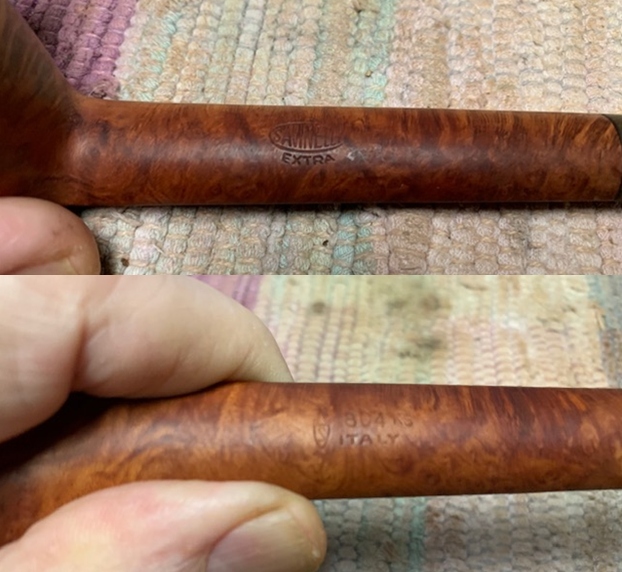
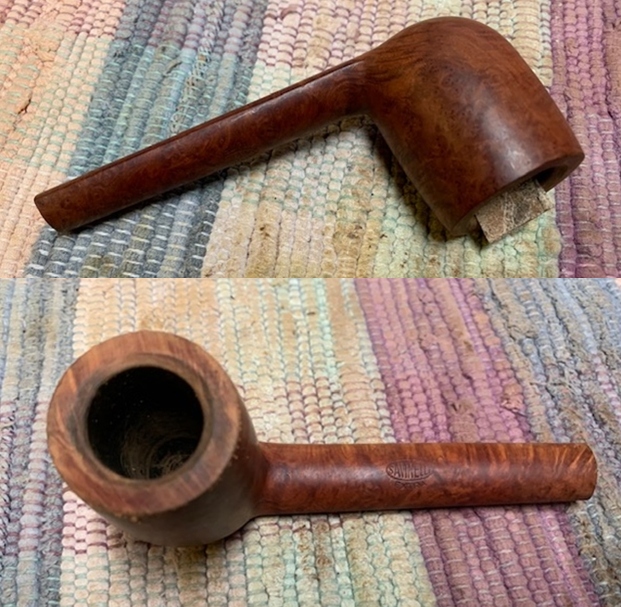
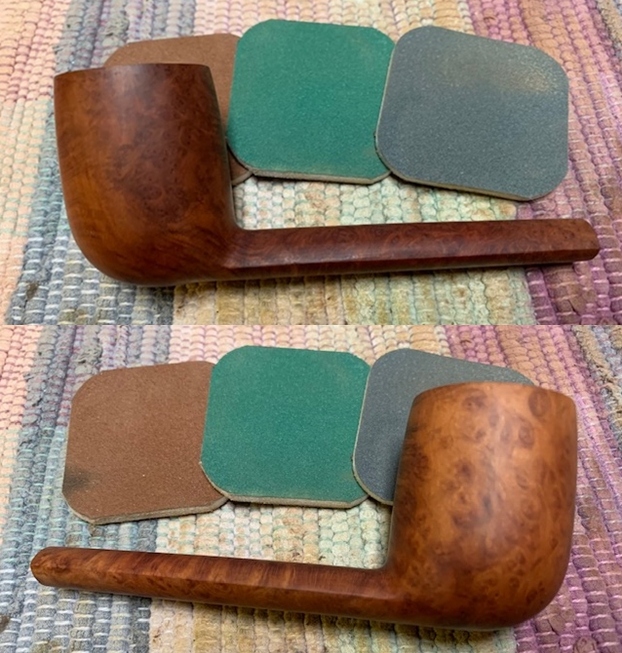
The next pipe on the table came to us from one of Jeff’s pipe hunts. It is an interesting straight Dublin shaped pipe with darkening and lava around the rim edge and top. It is stamped with a oval with SAVINELLI inside and EXTRA below that on the left side of the shank. On the right side of the shank it was stamped with the Savinelli “S” shield and the shape number 412KS over Italy. The stamping is clear and readable. The pipe has a combination of brown stains that highlighted some nice mixed grain around the bowl sides. The finish was very dirty with grime ground into the bowl. The bowl had a thick but even cake in the bowl and a heavy lava overflow on the inner edge of the top and beveled edge all around the bowl. It was hard to know what was underneath the lava and grime in terms of damage to the inner edge and the top of the rim. The taper stem was oxidized and there were tooth marks and chatter on both sides and on the top and bottom edges of the button. There was gold crown stamped on the stem. Jeff took photos of the pipe before he cleaned it up. Jeff took photos of the rim top to show the thick cake in the bowl and the lava overflow on the rim top and the beveled inner edge of the rim.  Jeff took some photos of the bowl sides and heel to show the great looking grain around the bowl. It is actually a nice looking pipe.  The stamping on the sides of the shank is shown in the photos below. They look very good and readable.  There is also a crown on the left side of the taper stem. The stem was a very good fit to the shank. It was oxidized, calcified and had debris stuck to the surface of the vulcanite. It also shows the tooth marks on the stem and on the button surface.  I turned to Pipephil (http://www.pipephil.eu/logos/en/logo-savinelli2.html) to read about the Extra Line. It is a smooth finished pipe with the same stamping on the shank and on the stem as the one that I am working on. I have included the screen capture from the site below.Armed with that information and a clearer picture of the original pipe I turned to work on the pipe on my work table. Jeff had done a great job cleaning up the pipe as usual. He reamed the pipe with a PipNet reamer and cut back the cake back to the bare briar. He cleaned up the walls with a Savinelli Fitsall Pipe Knife. He scrubbed the interior of the bowl and shank with pipe cleaners, cotton swabs and alcohol to remove the tars and oils. He scrubbed the exterior of the pipe with Murphy’s Oil Soap and a tooth brush to remove the grime from the finish. He worked on the rim top lava and darkening with the soap and tooth brush. He scrubbed the inside of the stem with alcohol and pipe cleaners. He scrubbed the exterior with Soft Scrub and then soaked it in Before & After Deoxidizer. He washed it off with warm water to remove the Deoxidizer. The pipe looked far better. I took photos of the pipe when I received it before I started working on it. I took photos of the bowl and rim top as well as the stem to show how clean they were. You can see the damage and the darkening on the inner edge and the top on the right front and the rear of the bowl. The stem looks clean of oxidation and the tooth marks and chatter are fairly light.  I took photos of the stamping on the sides of the shank. They are clean and readable and read as noted above.    I took a photo of the pipe with the stem removed to show the overall look of stem, tenon and profile of the pipe.I decided to start my work on the pipe by addressing the darkening on the rim top and the inner edge. I topped the bowl on a topping board with 220 grit sandpaper on a board. I used a folded piece of 220 grit sandpaper to work on the inner edge to remove the darkening. It took a bit of work but I was able to remove the majority of it and the end product looked much better. I polished the bowl and rim with micromesh sanding pads – wet sanding with 1500-12000 grit pads. I worked over the rim top and edge of the bowl with the pads. I wiped the bowl down with a damp cloth after each pad to remove the sanding debris.      I used an Oak stain pen to blend the cleaned rim top into the colour of the rest of the bowl. The match was perfect.I rubbed the briar down with Before & After Restoration Balm. I worked it into the briar with my fingertips. The product works to clean, enliven and preserve the briar. I let it sit for 10 minutes while I worked on the stem. After the time passed I buffed it with a cotton cloth to deepen the shine. The briar really comes alive with the balm.   I set the bowl aside and turned my attention to the stem. I decided to “paint” the stem surface to raise the dents in the vulcanite. The process worked very well.     I built up the edges of the button and filled in the small dents in both sides of the stem. Once the repairs had cured I used a needle file to recut the edge of the button. I worked over the oxidation on the stem and blended the repaired area of the button with 220 grit sandpaper. I started polishing the stem with 400 grit wet dry sandpaper. At this point it is starting to look much better.   I touched up the gold crown on the stem side with Rub’n Buff Antique Gold. I pressed the gold into the stamp and buffed it off with a cotton pad.   I rubbed the stem down with Denicare Mouthpiece Polish – a red, gritty Tripoli like substance that is a paste. I rubbed it into the surface of the stem and polished it off with a cotton pad. I have found that is a great intermediary step before polishing with micromesh pads. I am not sure what I will use once the final tin I have is gone!     I polished the vulcanite with micromesh sanding pads – 1500-12000 grit pads. I wiped it down with Obsidian Oil after each sanding pad. I used Before & After Pipe Polish – both Fine and Extra Fine to further polish the stem.   This Savinelli Extra 412KS Dublin is a great looking pipe. The mix of brown stains highlights the mix of grain around the bowl sides, top and bottom. The finish on the pipe is in excellent condition and the contrasting stains work well with the polished black vulcanite taper stem. I put the stem back on the bowl and carefully buffed the pipe with Blue Diamond on the buffing wheel using a light touch on the briar. I gave the bowl and stem multiple coats of carnauba wax on the buffing wheel and followed that by buffing the entire pipe with a clean buffing pad. I hand buffed the pipe with a microfiber cloth to deepen the shine. The finished Savinelli Extra 412KS Dublin is quite nice and feels great in the hand. Give the finished pipe a look in the photos below. The dimensions of the pipe are Length: 5 ¾ inches, Height: 2 inches, Outside diameter of the bowl: 1 ½ inches, Chamber diameter: 7/8 of an inch. Thanks for walking through the restoration with me as I worked over another beautiful pipe. This pipe will be added to the Italian Pipe Makers section of the rebornpipes store soon. If you want to add it to your collection send me an email or a message! Thanks for your time.


A Savinelli Sherwood Rock Briar 608 Bent Billiard


Blog by Steve Laug

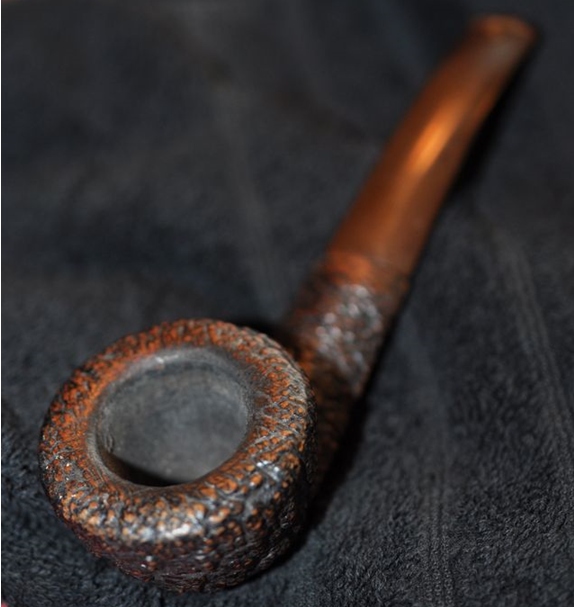
The next pipe on the table came to us from one of Jeff’s pipe hunts. It is an interestingly rusticated Bent Billiard with darkening around the rim edge and top. It is stamped with Sherwood over Rock Briar on the heel of the bowl followed by the Savinelli “S” shield and the shape number 608 over Italy on the shank. The stamping is clear and readable. The pipe has a combination of brown stains and the worm trail rustication is not only tactile but also a purposeful pattern to the finish. The finish was very dirty with grime ground into the bowl. The bowl had a thick but even cake in the bowl and a heavy lava overflow on the inner edge of the top toward the back of the bowl. There was darkening on the briar around the inner edge and the top of the rim. The saddle stem was oxidized and there were tooth marks and chatter on both sides and on the top and bottom edges of the button. There is no stamping on the stem. Jeff took photos of the pipe before he cleaned it up. Jeff took photos of the rim top to show the thick cake in the bowl and the lava overflow on the inner edge of the beveled rim.  Jeff took some photos of the bowl sides and heel to show the “worm trail” rustication around the bowl and the great looking grain as well. It is actually a nice looking pipe.  The stamping on the underside of the shank is shown in the photos below. They look very good and readable.The stem was a very good fit to the shank. It was oxidized, calcified and had debris stuck to the surface of the vulcanite. It also shows the tooth marks on the stem and on the button surface.  I am including the section from the previous blog I did o the Sherwood Rock Briar pipe that I restored. I quote:

I turned to Pipephil (http://www.pipephil.eu/logos/en/logo-savinelli3.html) to read about the Sherwood Rock Briar. It is a smooth pipe with the worm trail carving around the bowl. Sometimes I wonder if it was not Savinelli’s answer to the Custombilt Craze or what Lorenzo was selling that was similar. This is definitely tamer! I have included the screen capture from the site below. Armed with that information and a clearer picture of the original pipe I turned to work on the pipe on my work table. Jeff had done a great job cleaning up the pipe as usual. He reamed the pipe with a PipNet reamer and cut back the cake back to the bare briar. He cleaned up the walls with a Savinelli Fitsall Pipe Knife. He scrubbed the interior of the bowl and shank with pipe cleaners, cotton swabs and alcohol to remove the tars and oils. He scrubbed the exterior of the pipe with Murphy’s Oil Soap and a tooth brush to remove the grime from the finish. He worked on the rim top lava and darkening with the soap and tooth brush. He scrubbed the inside of the stem with alcohol and pipe cleaners. He scrubbed the exterior with Soft Scrub and then soaked it in Before & After Deoxidizer. He washed it off with warm water to remove the Deoxidizer. The pipe looked far better. I took photos of the pipe when I received it before I started working on it. I took photos of the bowl and rim top as well as the stem to show how clean they were. You can see the darkening on the inner edge and the top on the right front the bowl. The stem looks clean of oxidation and the tooth marks and chatter are very clear in the photos.    I took a photo of the pipe with the stem removed to show the overall look of stem, tenon and profile of the pipe. There was a crimped aluminum tube in the tenon once the stem was off and it inhibited airflow and was really unnecessary.I decided to start my work on the pipe by addressing the darkening on the rim top and the inner edge. I used a folded piece of 220 grit sandpaper to work on the edge and the rim top at the front of the bowl to remove the darkening. It took a bit of work but I was able to remove the majority of it and the end product looked much better.I polished the bowl and rim with micromesh sanding pads – wet sanding with 1500-12000 grit pads. I worked over the rim top and edge of the bowl with the pads. I wiped the bowl down with a damp cloth after each pad to remove the sanding debris.   Because the bowl and rim top looked so good I decided to move on to rubbing the briar down with Before & After Restoration Balm. I worked it into the briar with my fingertips and a horse hair shoe brush to get it into the crevices. The product works to clean, enliven and preserve the briar. I let it sit for 10 minutes while I worked on the stem. After the time passed I buffed it with a cotton cloth to deepen the shine. The briar really comes alive with the balm. I set the bowl aside and turned my attention to the stem. I decided to pull the crimped tube in the tenon so I heated it with a lighter and twisted it free. Behind and under the aluminum tube there was a lot of tars and oils so I recleaned the inside of the stem with pipe cleaners and alcohol.   I worked over the oxidation on the stem and the button with 220 grit sandpaper and sanded it until I had removed it. I started polishing the stem with 400 grit wet dry sandpaper. At this point it is starting to look much better.   I rubbed the stem down with Denicare Mouthpiece Polish – a red, gritty Tripoli like substance that is a paste. I rubbed it into the surface of the stem and polished it off with a cotton pad. I have found that is a great intermediary step before polishing with micromesh pads. I am not sure what I will use once the final tin I have is gone!   I polished the vulcanite with micromesh sanding pads – 1500-12000 grit pads. I wiped it down with Obsidian Oil after each sanding pad. I used Before & After Pipe Polish – both Fine and Extra Fine to further polish the stem.   This Savinelli Sherwood Rock Briar 608 Bent Billiard is another interesting looking pipe. The mix of brown stains highlights the smooth briar between the rusticated patterns around the bowl sides, top and bottom. The finish on the pipe is in excellent condition and the contrasting stains work well with the polished black vulcanite saddle stem. I put the stem back on the bowl and carefully buffed the pipe with Blue Diamond on the buffing wheel using a light touch on the briar. I gave the bowl and stem multiple coats of carnauba wax on the buffing wheel and followed that by buffing the entire pipe with a clean buffing pad. I hand buffed the pipe with a microfiber cloth to deepen the shine. The finished Sherwood Rock Briar 608 Bent Billiard is quite nice and feels great in the hand. Give the finished pipe a look in the photos below. The dimensions of the pipe are Length: 5 ½ inches, Height: 2 inches, Outside diameter of the bowl: 1 ¼ inches, Chamber diameter: ¾ of an inch. Thanks for walking through the restoration with me as I worked over another beautiful pipe. This pipe will be added to the Italian Pipe Makers section of the rebornpipes store soon. If you want to add it to your collection send me an email or a message! Thanks for your time.