

Blog by Paresh
While surfing eBay for estate pipe lot, I came across a job lot that contained four estate pipes. The seller had not included any description for the item other than a simple statement that read “The lot is being sold as is. Pictures are part of description” or words to that effect. The worst part was that there were only two pictures that were posted by the seller!! Here are the pictures that were posted by the seller… 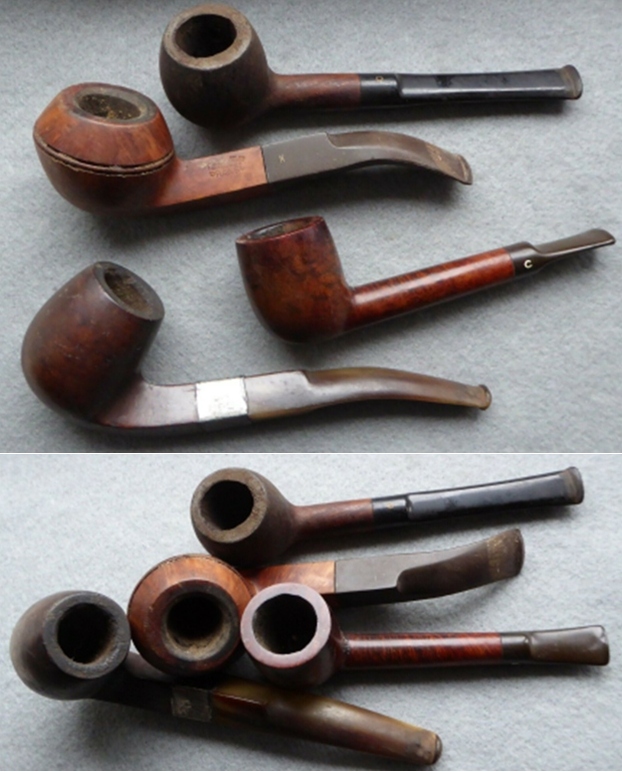 I could make out one Orlik with dental stem, a Hardcastle “Drawel” Bulldog, one Comoy’s Lovat, and the last one was unidentifiable but appeared to be fitted with a horn stem. The pipes appeared to be in a decent condition and included some nice brand names. Soon the pipes reached Abha at my home town. When she opened the parcel, the stench that emanated from the box was just unbearable. The origin of the stench was the horn stem on the pipe that was in the lot. It is this pipe that Abha had worked on first (indicated with a red arrow) and thus finds itself on my work table now.
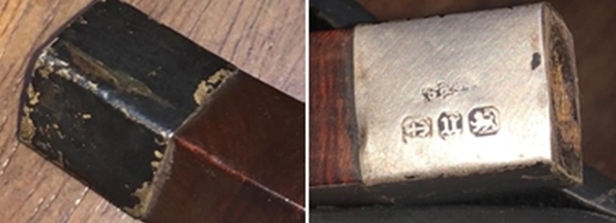
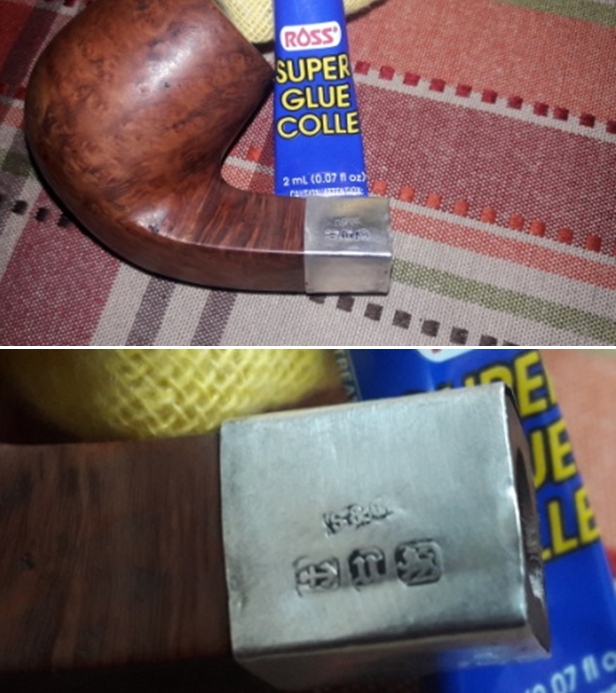
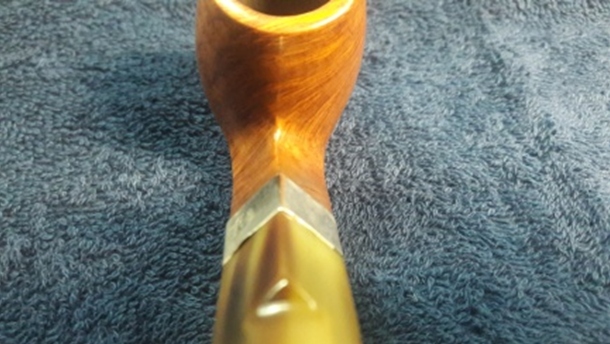
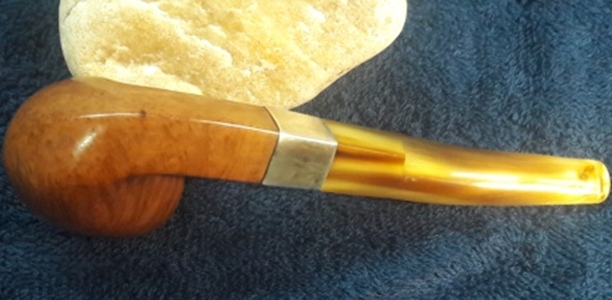
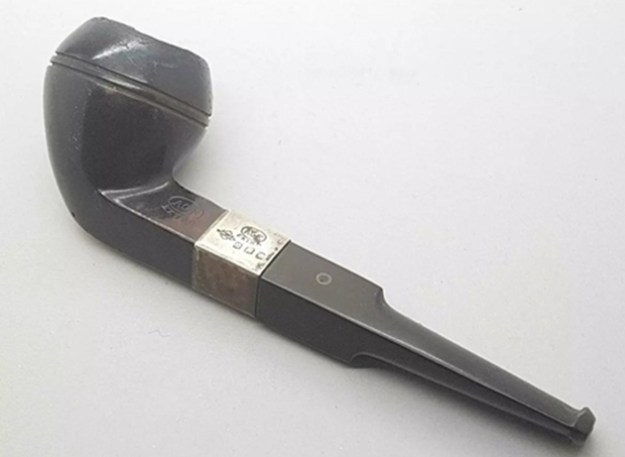
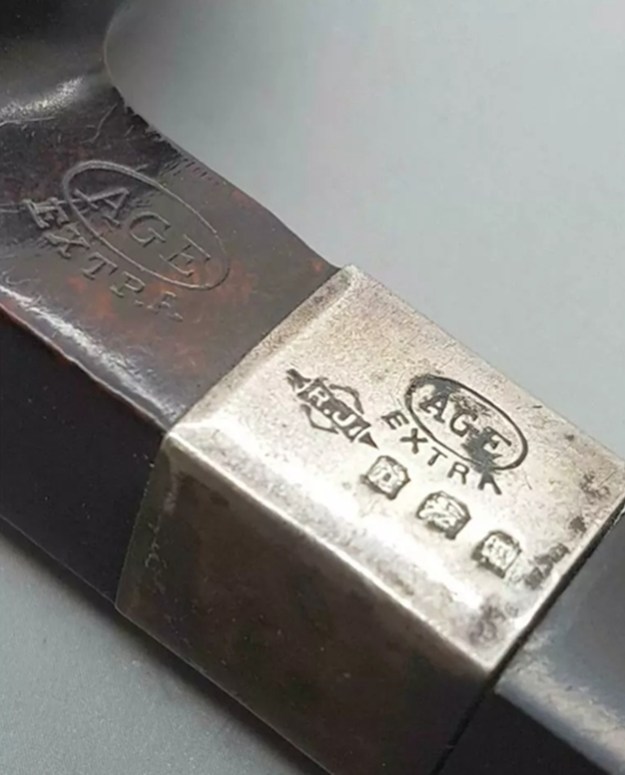
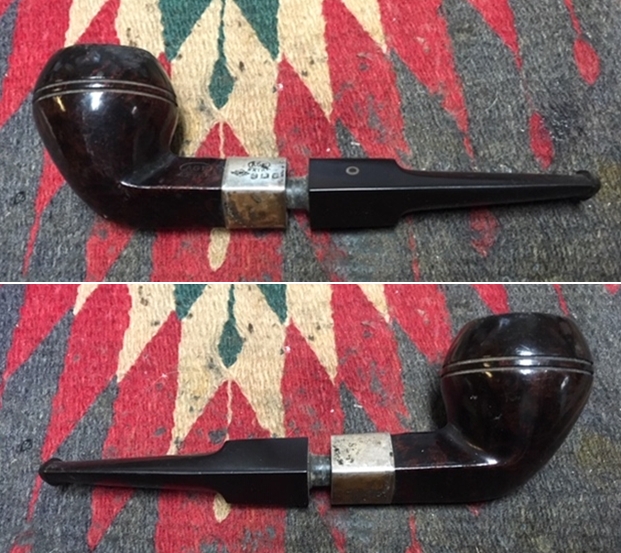
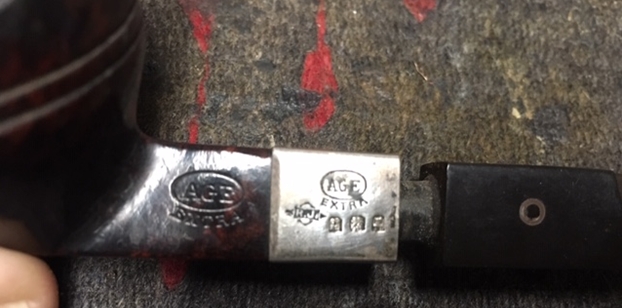
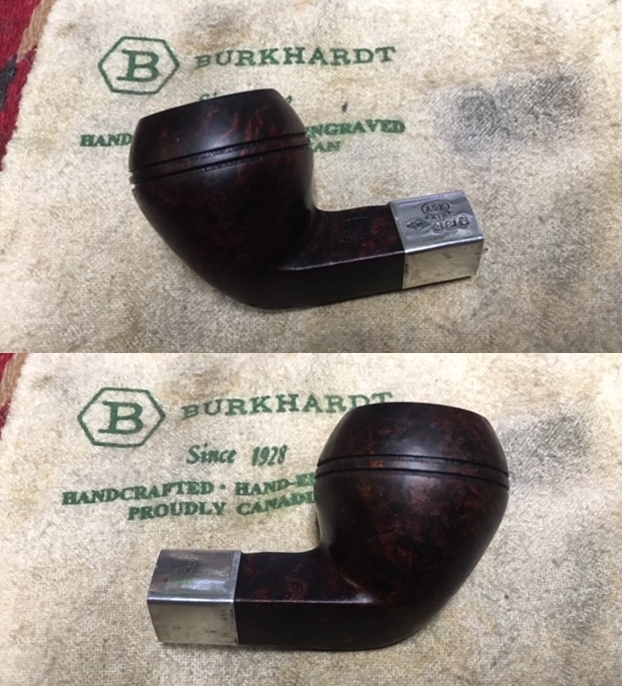
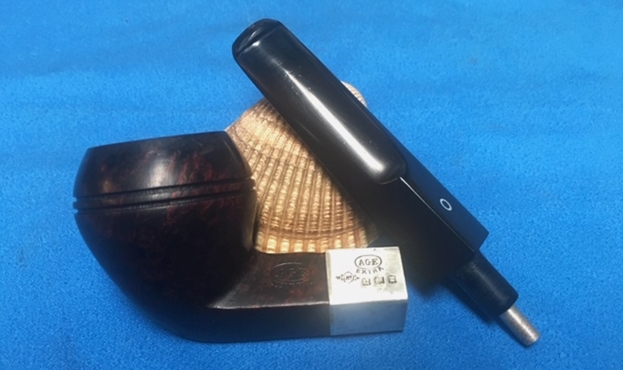
 The pipe is a classic Bent Billiard with a square shank and a saddle horn stem with a threaded tenon. It is a fairly large sized pipe with a nice hand feel and a surprisingly light weight that makes it comfortable for clenching. It has a hallmarked silver band at the shank end. The silver ferrule at the shank end is stamped as “S & G” in what appears to be a rectangle (?) that has been buffed out along with the other letters following “G” (faint outlining can be made out though!) over three sterling silver hallmarks. From right to left the first cartouche is with a LION PASSANT certifying silver quality followed by a cartouche with date code letter “U” and the last cartouche contains the “Anchor” of the Birmingham Assay Office. The shank and horn stem are devoid of any stampings.
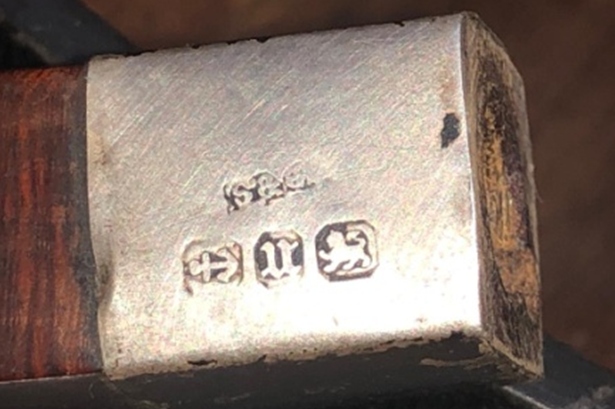 I had not come across this brand earlier and the only clue was in the stampings seen in the hallmarked silver band. I visited www.silvercollection.it and upon searching through the index, I came across a stamp that was the closest of all those that were described. The maker’s mark was described as S&G Ltd into an oval Salmon (Barnett) & Gluckstein of 41, Clerkenwell Road, London.
Here is the link to the relevant page followed by a screenshot of the same page with the nearly matching maker’s mark as seen on the pipe and indicated by the blue arrow.
http://www.silvercollection.it/englishsilvermarksXS.html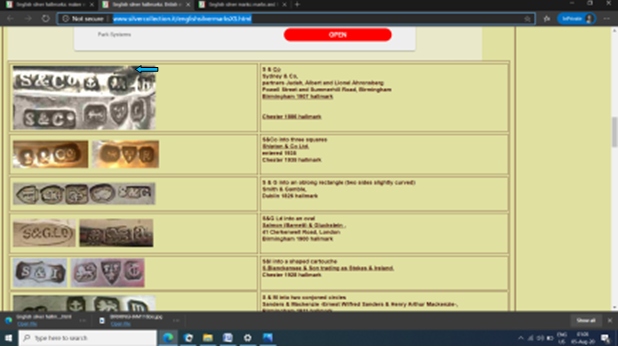
 The next step was to date this pipe with the help of the hallmarks as seen on the silver band at the shank end. The Anchor was easy to identify as Birmingham Assay office. The letter “U” closely matched up with the letter that identified it as being assayed by the Birmingham office in 1894!! Given below is the link that will take the readers to the relevant section of dating.
http://www.silvercollection.it/englishsilverhallmarksBIR.html
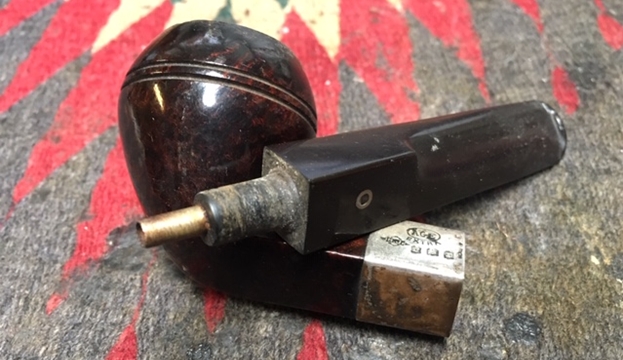
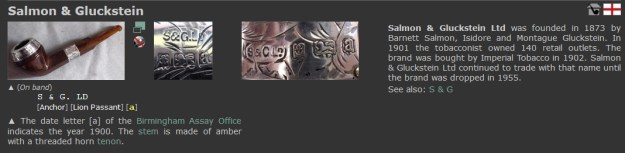
While researching my previous project, a 1907 “AGE” pipe, “Who Made That Pipe” by Wilczak and Colwell had indicated towards Salmon & Gluckstein brand as English makers of this pipe. Further, I remembered that Salmon & Gluckstein brand was brought over by Imperial Tobacco Co. in 1902 and was thereafter continued under the brand name “Bewlay”. I visited pipedia.org to know more about Salmon & Gluckstein. Though there is not much information that is available on the brand; here is the link for those readers interested.
https://pipedia.org/wiki/Salmon_%26_Gluckstein
To summarize, the pipe that is on my work table is by Salmon & Gluckstein, as inferred from the Anchor stamp of Birmingham Assay office and probably dates to 1894. The reason for the doubt is because the date letter is not a perfect match, but the closest that I could identify.
I would be really happy if any of our esteemed readers could either support or refute my appreciated dating of this pipe with necessary evidence.
Initial Visual Inspection
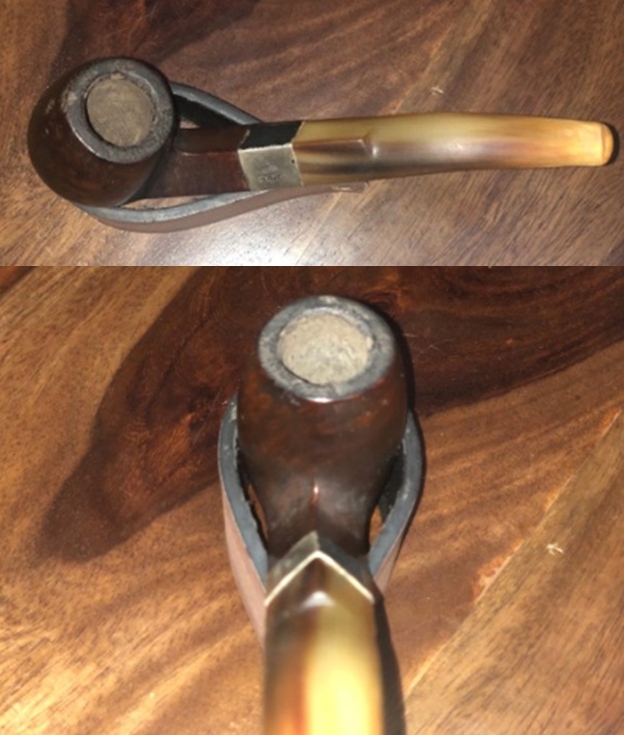
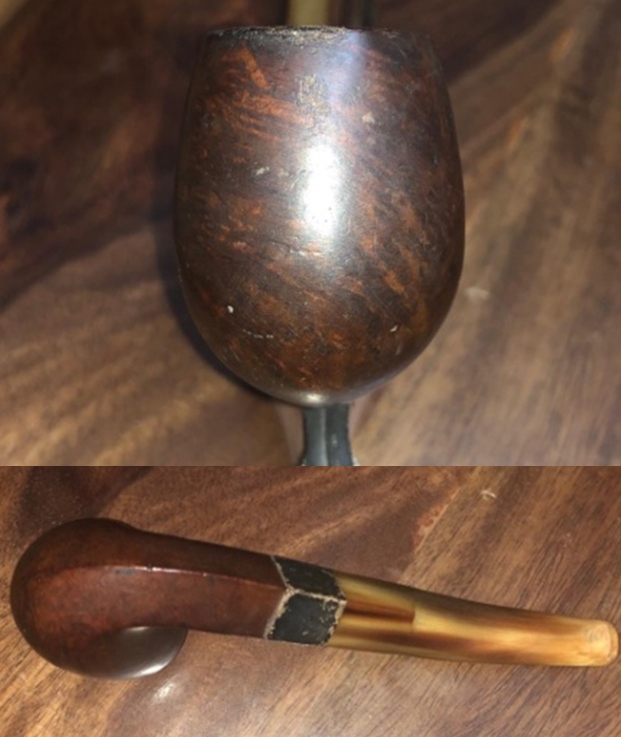
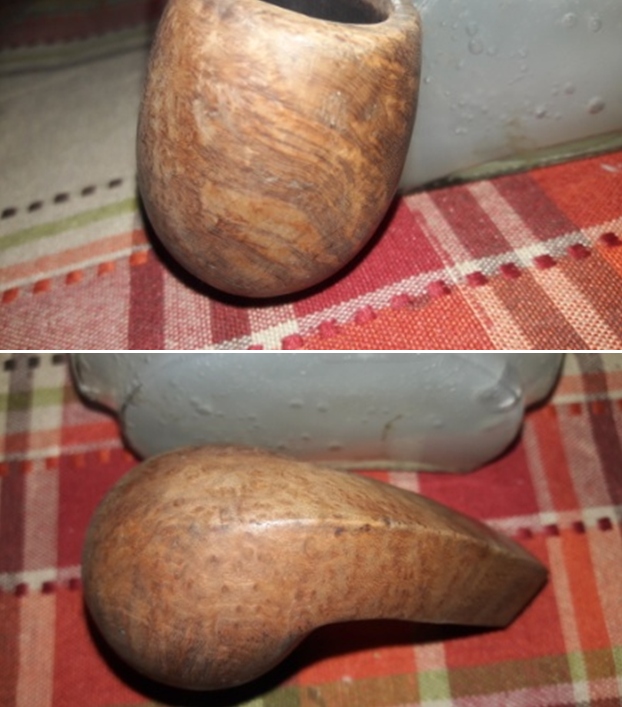
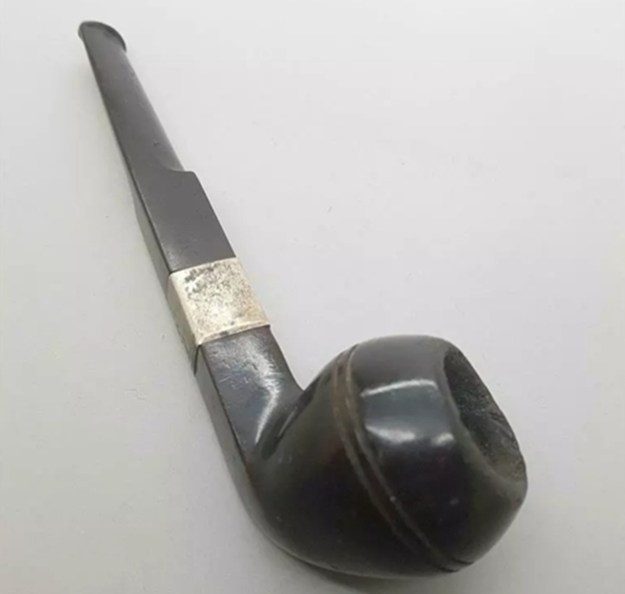
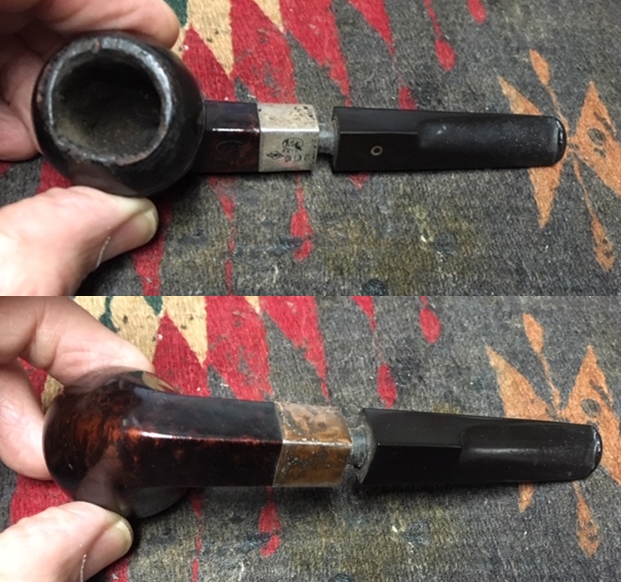
This pipe has the classic Bent Billiard shape with a diamond shank and a fairly large sized bowl. The stummel boasts of some beautiful and cross grains all over the bowl and shank. The stummel surface is covered in dirt and grime of the overflowed lava and grime. There is not a single fill in the briar which speaks of high quality selection of the briar. There is a thick layer of cake in the chamber. The horn stem, with a few bite marks, has a terrible stench emanating from it. The set of pictures below shows the condition of the pipe when it had reached us.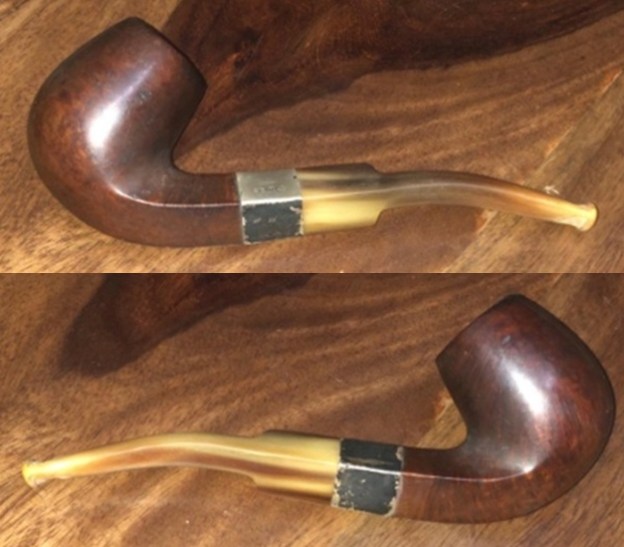
 Detailed Inspection Of The Pipe And Observations
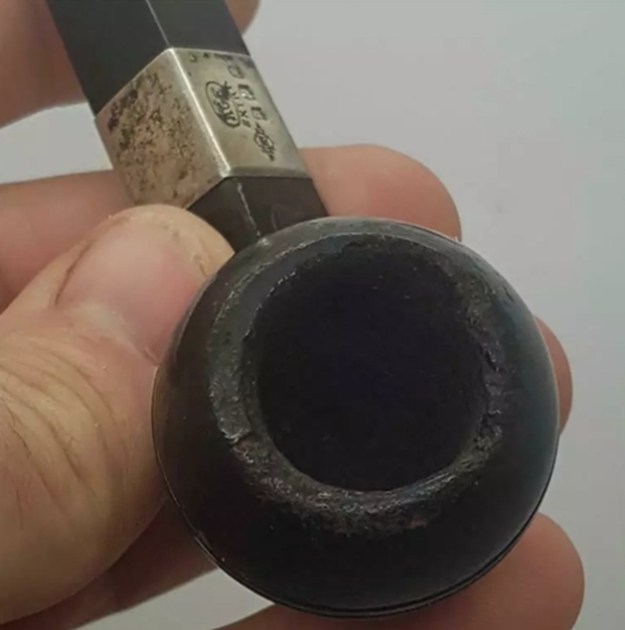
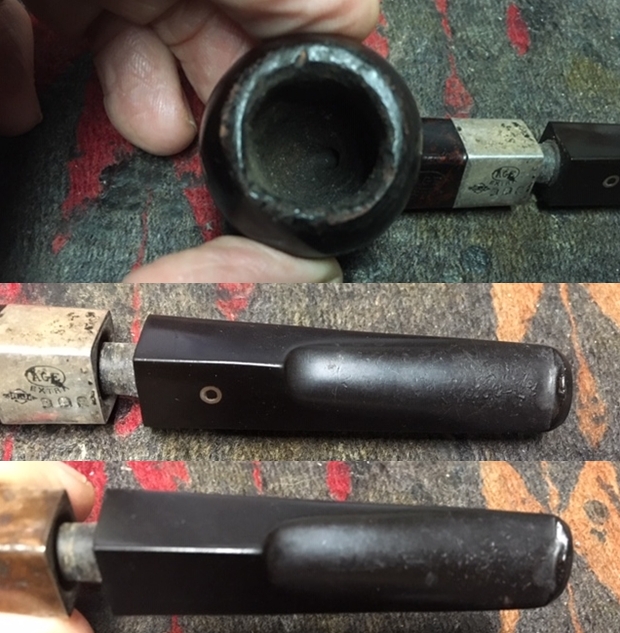
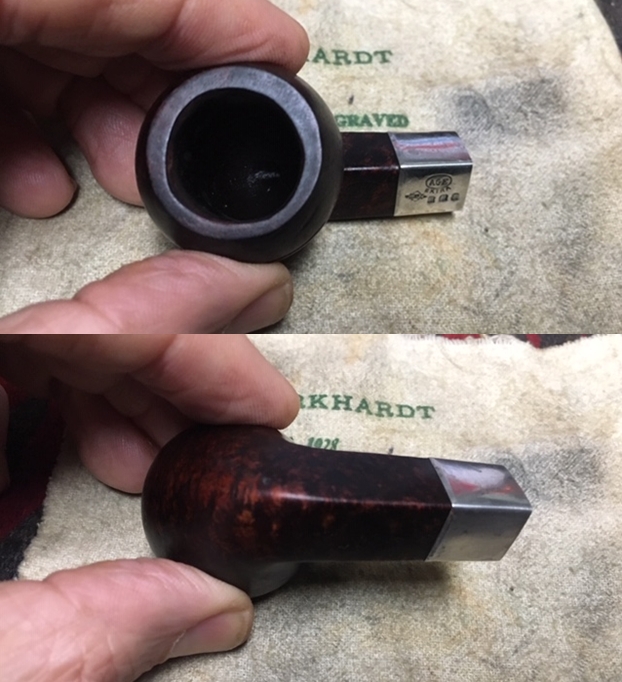
The chamber has an even layer of thick cake. The smooth rim top surface shows a number of dents/ dings and is covered in lava overflow, dirt and grime from previous usage. Both the inner and the outer rim have suffered a few blows on a hard surface resulting in a few minor chipped edge surfaces and with the inner edge being out of round. The condition of the inner walls of the chamber can be commented upon after the cake has been taken down to the bare briar. The chamber exudes a very strong odor of old tobacco. The draught hole is dead center at the bottom of the chamber and that makes me believe that it should great smoke and the thick cake in the chamber lends credence to this observation. The stummel appears solid to the touch all around and hence I do not foresee any serious damage to the walls in the form of burnout/ deep heat fissures/ lines or pits. To address the damage to the inner and outer rim edges, I shall create a slight bevel to both the rim edges. Topping the rim surface should address the dents and dings over the rim top surface. The reaming and subsequent cleaning of the chamber and mortise should reduce the ghost smells from the chamber.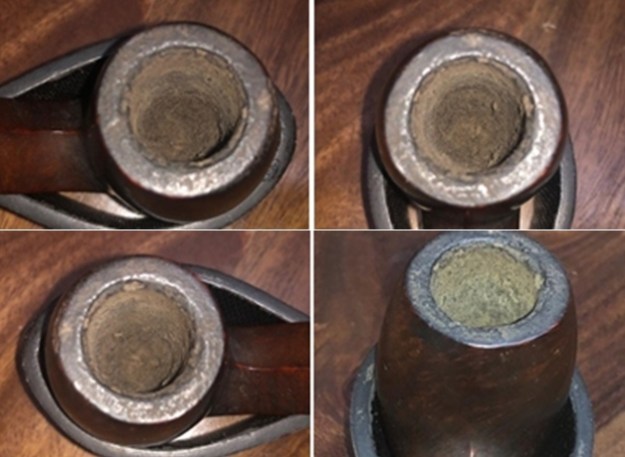 The smooth stummel surface is covered in lava overflow which in turn has attracted a lot of dust and dirt. The briar has taken on a layer of aged patina, through which one can make out the tightly packed cross grains that adorns most of the stummel surface and Bird’s eye grain at the foot and bottom of the shank. There are a few dents and chipped areas over the stummel surface (encircled in yellow), probably due to likely falls and or rough, uncared for handling of the pipe. However, there is not a single fill in the entire stummel, signifying very high quality of briar used in carving this pipe. The briar is looking lifeless and bone dry and has taken on dull dark hues. Thorough cleaning of the stummel surface and rinsing it under warm water should highlight the grain patterns. This cleaning will also further reveal any other damage to the surface. In all probability, I shall let these minor dents and dings to the stummel surface remain and avoid the process of filling these up with briar dust and superglue mix while the large one on the right side of the stummel will need a fill. Maybe, micromesh polishing will address a few of these scratches to some extent.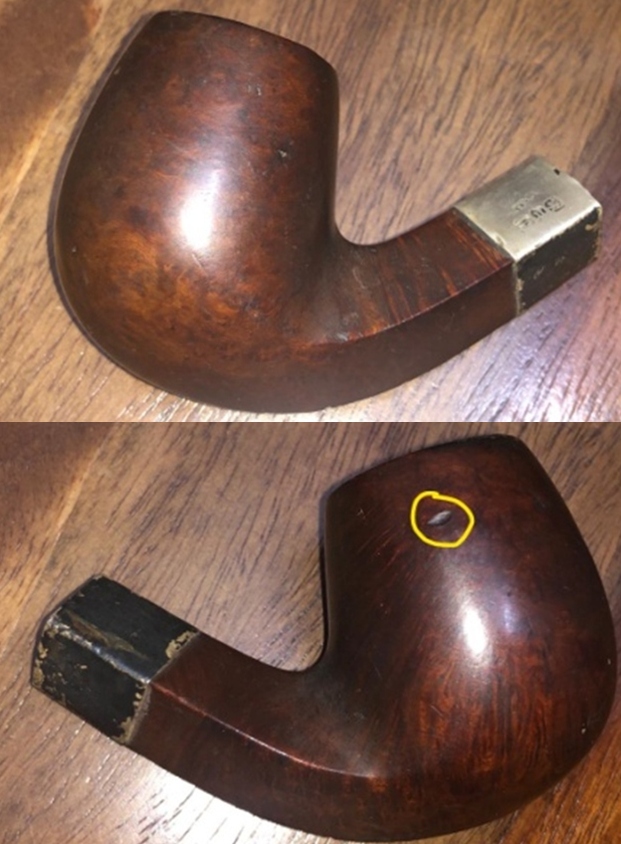

 The mortise shows heavy accumulation of oils, tars and gunk and due to which the air flow is not full and smooth.
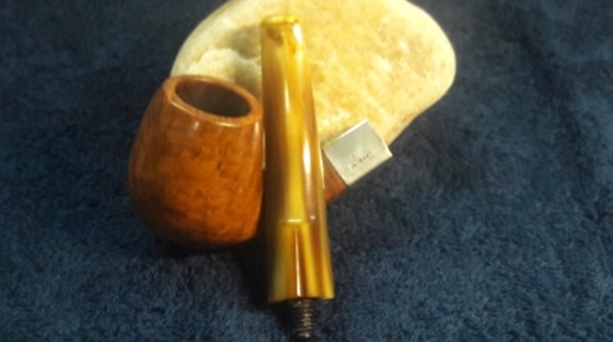
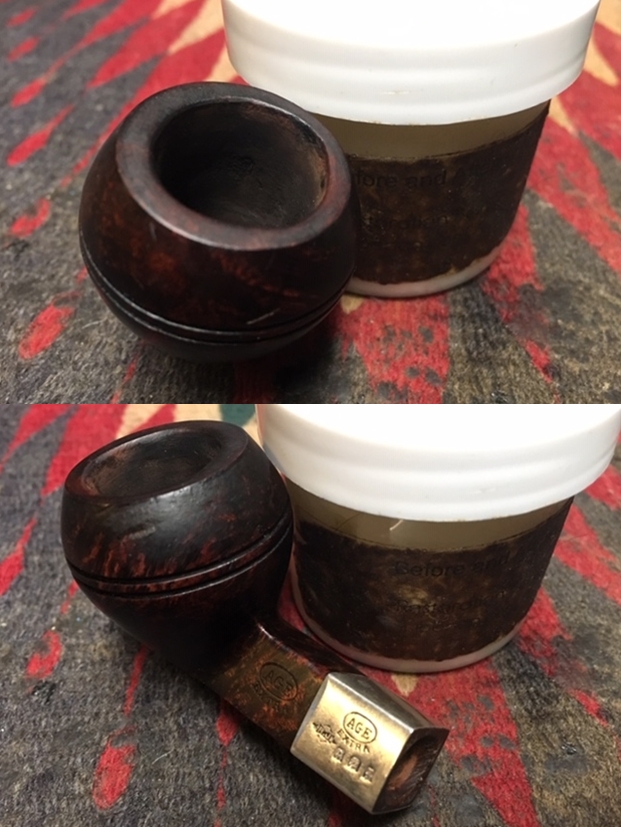
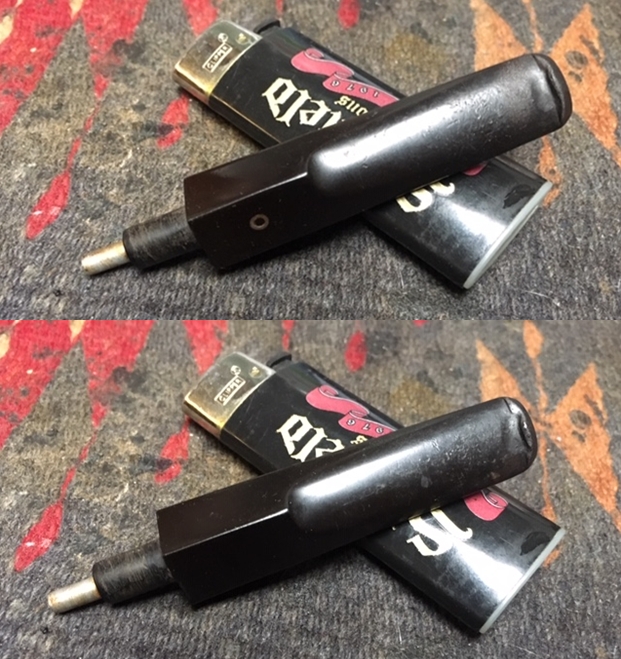
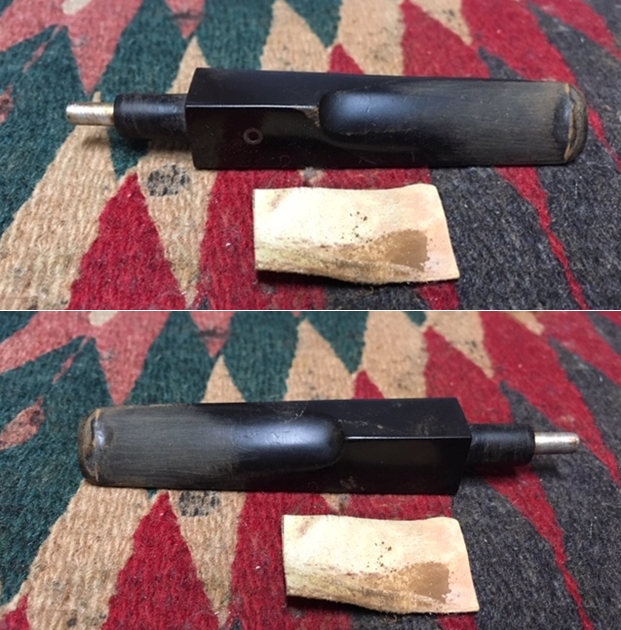
  The horn stem is in decent condition with no chipped surfaces and sans any worm holes which is common on such old horn stems. The stem surface is covered in dirt/ dust and looks dull and lifeless. The bite zone has deep tooth indentations on either surface. The button edges on both surfaces have minor bite marks. The threaded bone tenon is smeared in oils and tars and grime and so is the orifice slot. The entire stem had a horrendous stench and Abha, my wife, had half a mind to just throw the entire pipe away in some far away trash can. However, she did not and took upon herself the challenge to clean it up. Once the stem surface is cleaned and polished, the dark and light hues of the striations in the horn should stand out giving a new dimension to the appearance of the stem.
  The sterling silver ferrule is heavily oxidized and developed a patina commensurate with the vintage. The stamping on the ferrule for most parts is crisp and clear. The stamping in the cartouche that houses the Maker’s mark is buffed out with only the faint outline of the letters still visible. I would need to be very diligent while polishing the silver ferrule, least I end up buffing away rest of the stampings on the ferrule. Once the ferrule has been cleaned up, the shining piece of silver will add an elegant touch to the pipe.
 The Process
Abha started the restoration of this pipe by first cleaning the external surface of the horn stem with warm water and dish washing soap. Next she cleaned the internals of the stem with bristled pipe cleaners and 99.9% pure isopropyl alcohol. She further cleaned out the stem internals with a shank brush and dish washing liquid soap. She had to repeat the above process a number of times, including drying it out in open air. The stem is now clean with the stench being a distant memory and what a relief that was!! She was careful to rehydrate the stem with EVO every time she cleaned the stem and left it out to dry in open air. 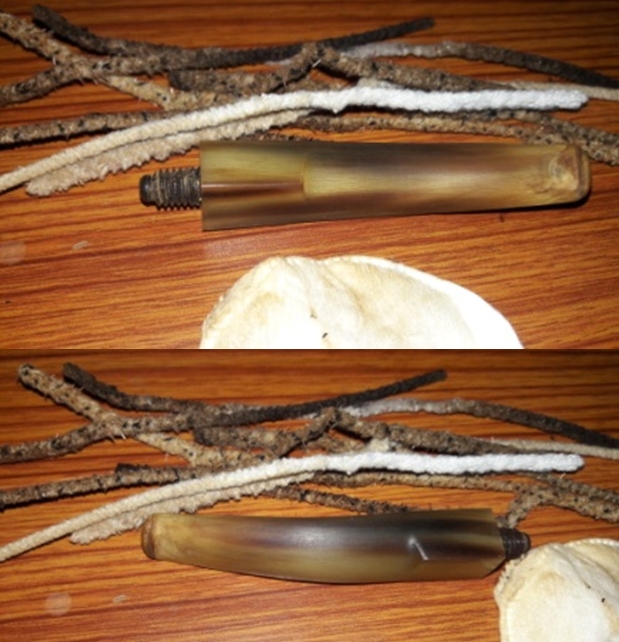
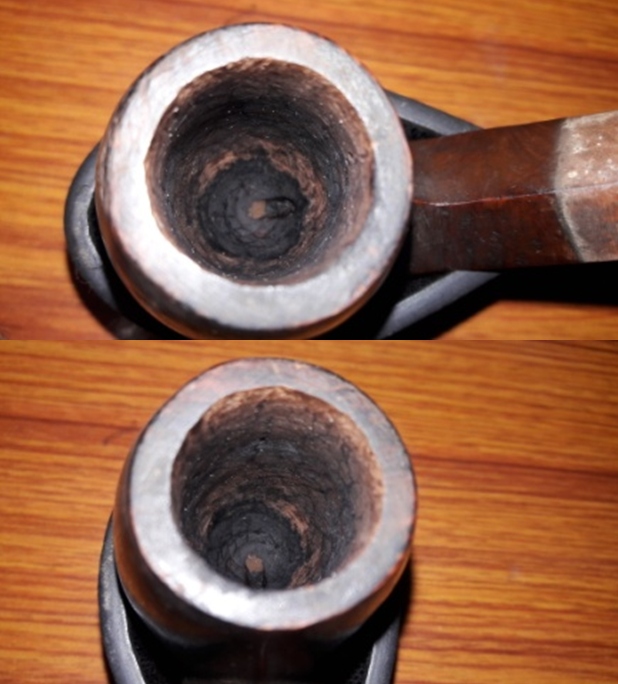
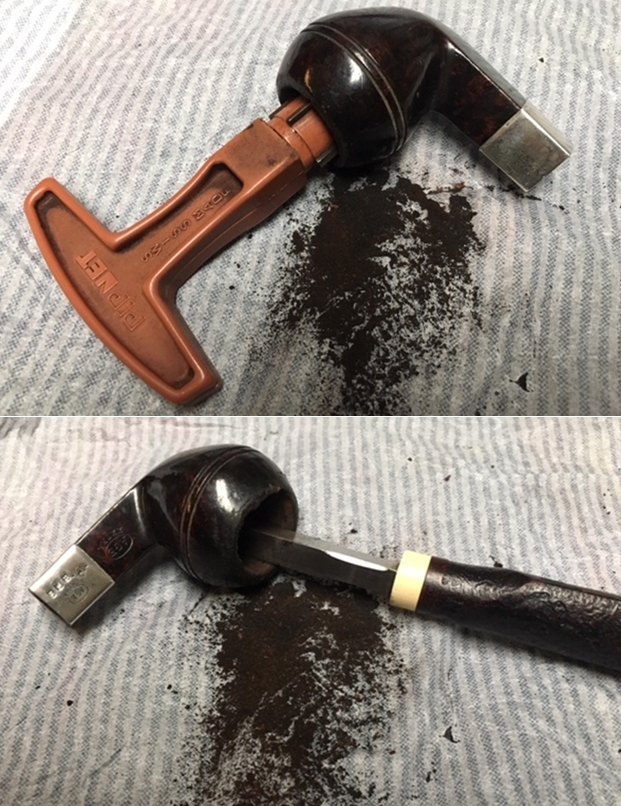
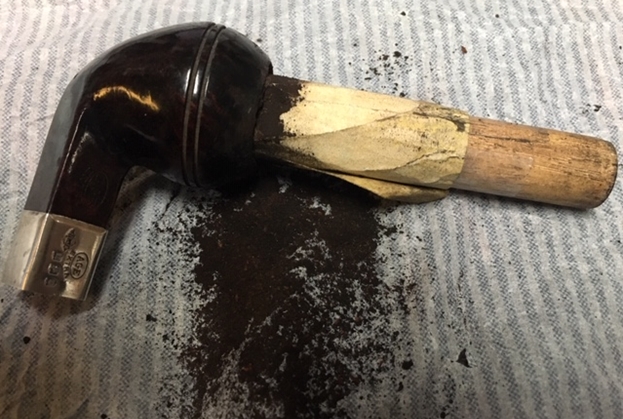
 While the stem was being cleaned by Abha, I worked on the stummel by first reaming the chamber with size 2 and 3 Castleford reamer heads. With my fabricated knife, I further scraped the chamber walls to remove the remaining carbon deposits and also scraped out the lava overflow from the rim top surface. Once the cake was reamed back to the bare briar, I used a 150 grit sand paper followed by 220 grit sand paper to remove all the traces of remaining cake and also to smooth out the inner walls of the chamber surface. Finally, to remove the residual carbon dust, I wiped the chamber with a cotton pad wetted with 99.9% pure isopropyl alcohol. Few very minor webbing of heat lines can be seen along the heel and walls of the chamber. I am not sure if these are heat lines or remnants of old cake over the wall surface. The outer and inner rim edge is chipped in a few places along the rim top and will be addressed by topping the rim top. The rim top surface itself is peppered with dents/ dings and scratches which too will be addressed during the sanding. The inner rim edge is charred and would need to be addressed. The ghost smells are still strong and may further reduce after the shank/ mortise are thoroughly cleaned.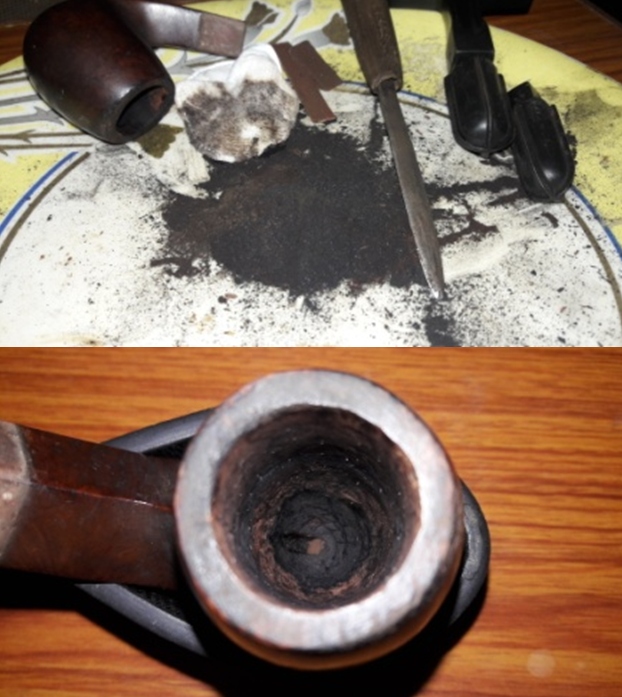
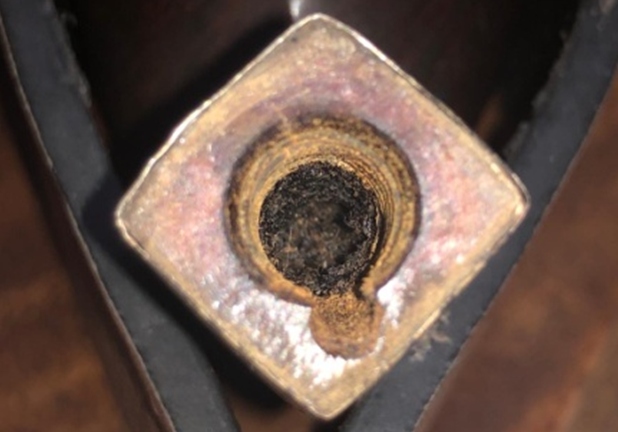
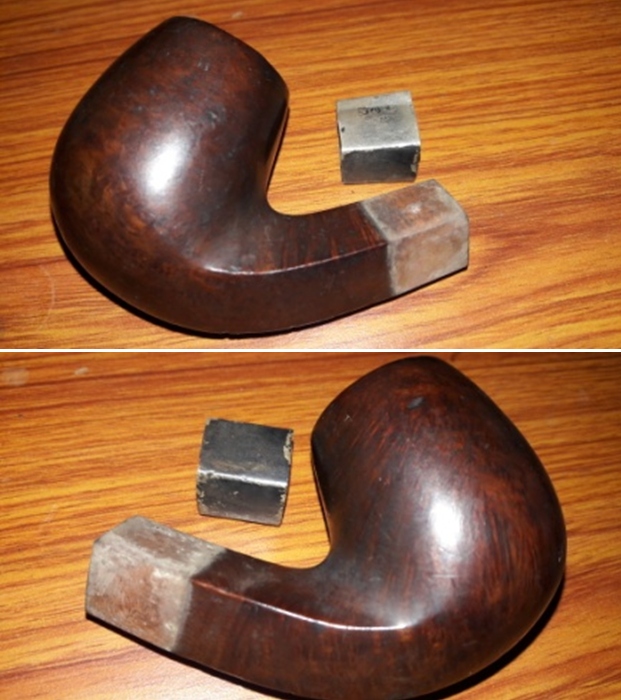
 While I was working on the stummel, the sterling silver band at the shank end came off easily since the glue that had held it in place had dried out completely. Closer examination of the shank end revealed a pristine shank end with no signs of cracks or chipped surface.
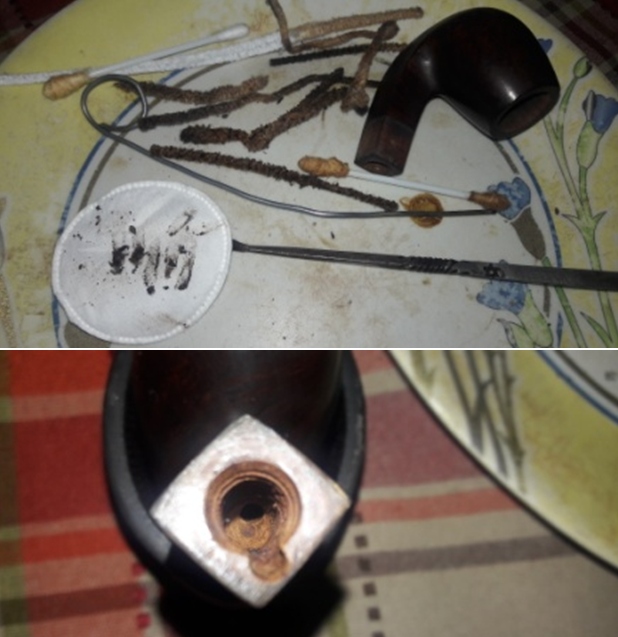
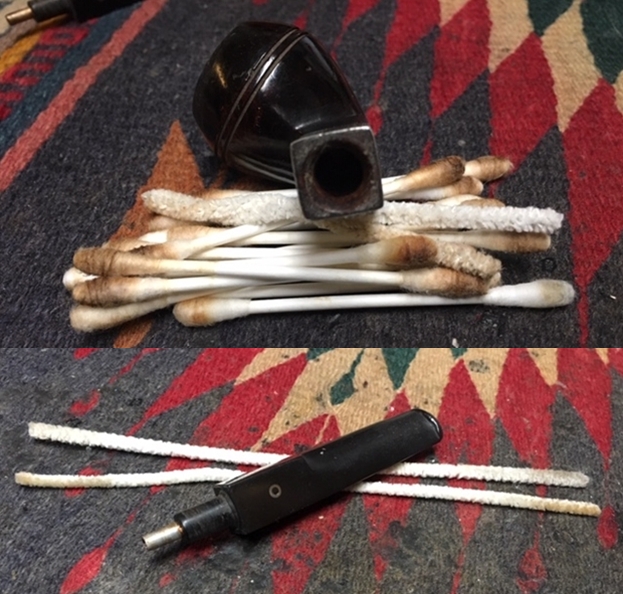
 This was followed by cleaning the mortise with q-tips, pipe cleaners and shank brush dipped in isopropyl alcohol. I scraped the walls of the mortise with my fabricated knife to remove the dried oils and tars. The mortise was a bear to clean and the heap of pipe cleaners and q-tips that were used is an indication of the gunk and tars that were removed. The old smells of the tobacco are still strong and would need more invasive methods to get rid of these odors.
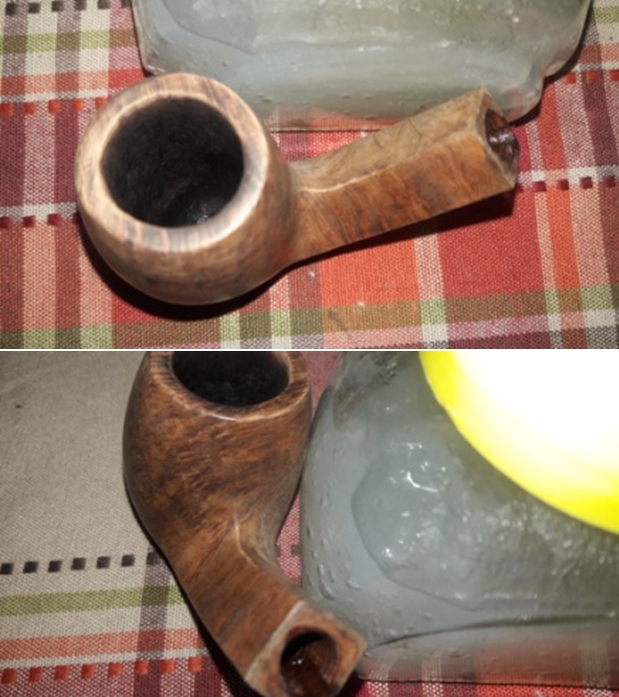
  With the bowl internals clean, I move to clean the exterior of the stummel. I used a hard bristled tooth brush and Briar Cleaner, a product that has been developed by Mark Hoover, to scrub the stummel and rim top. I set the stummel aside for 10 minutes for the product to draw out all the grime from the briar surface. After 10 minutes, I washed the stummel under running warm water with anti oil dish washing detergent till the stummel surface was clean and dried it using paper towels and soft cotton cloth. I simultaneously cleaned the shank internals with the detergent and hard bristled shank brush and set the stummel aside to dry out naturally. The stummel surface has cleaned up nicely with the beautiful grain patterns on full display. This cleaning has also exposed the many dings and scratches over the surface that were hitherto fore were hidden under the dirt and grime. These will have to be addressed, either by steaming or sanding. I shall subject the chamber to cotton and alcohol treatment to eliminate the ghost smells completely.
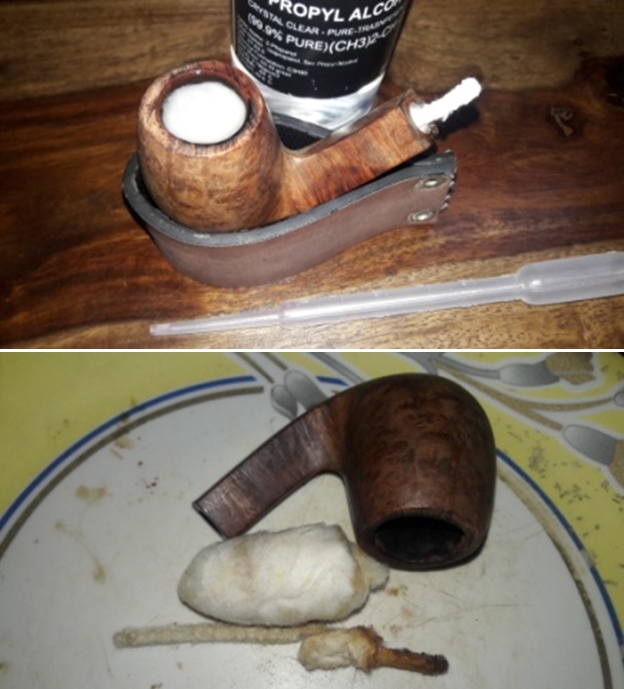
 I continued the cleaning of the chamber and shank internals with a salt and alcohol bath. I use cotton balls which is an at par substitute as I have realized over the years. I draw out a wick from the cotton and along with a folded regular pipe cleaner; insert it in to the mortise and through the draught hole in to the chamber. Thereafter, I packed the chamber with cotton balls to about quarter of an inch below the inner rim edge and soaked the cotton balls with isopropyl alcohol up to the brim. About half an hour later, the level of alcohol had gone down, having being absorbed by the cotton. I topped it up once again and set it aside overnight. By next morning, the cotton and alcohol had drawn out all the remaining oils and tars from the chamber and mortise, fulfilling its intended task. I removed the cotton balls and ran pipe cleaners through the mortise to clean out all the loosened tars and gunk and further cleaned it with alcohol and q-tips. The chamber now smells clean and fresh. I set the stummel aside to dry out naturally.
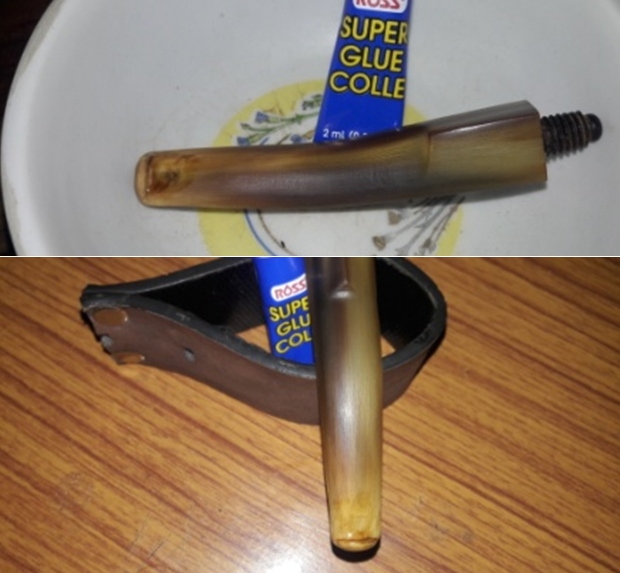
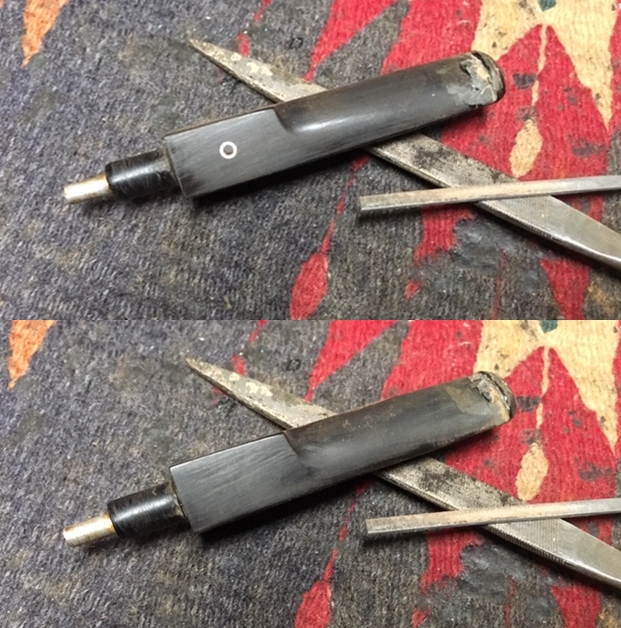
 To begin repairs to the stem, I cleaned the areas in the bite zone with cotton swab and alcohol. Next, I filled the tooth indentations in the lower surface with clear CA superglue and set it aside to cure. After the glue had partially hardened on the lower surface, likewise, I filled the upper surface tooth marks and set the stem aside for the superglue to harden completely. Once the fill has hardened, I shall file and sand the fills to reconstruct the bite zone and the buttons on either surfaces and subsequently match it with the surface of the stem.
 The stummel had dried out and I decided to have a closer look at all the dents and dings and scratches on the stummel surface. I marked them out with a red felt pen. This step would help me in getting a clearer picture of the extent of damaged areas and identifying the major surface damage which would need to be addressed. I would need to sand the stummel surface to address all the minor scratches and dings while the larger ones will be filled with a mix of superglue and briar dust.
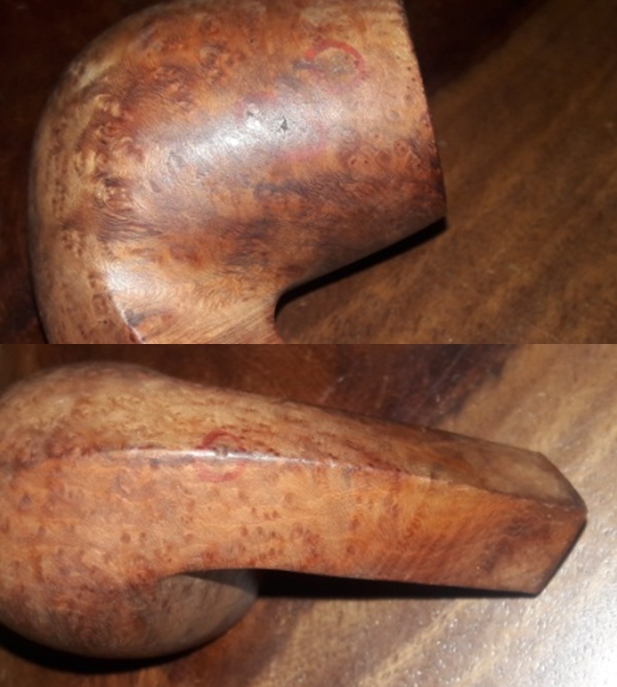 Next I closely examined the inner rim edge. It is charred on the left side in the 7 o’clock direction (encircled in red). Though not very deep, it is significant enough to render the rim out of round. I shall firstly minimize the charred surface by topping the rim surface and thereafter crate a slight bevel to the inner rim edge. To address the outer rim dents and ensure the symmetry of rim top, I shall create a similar bevel to the outer rim edge.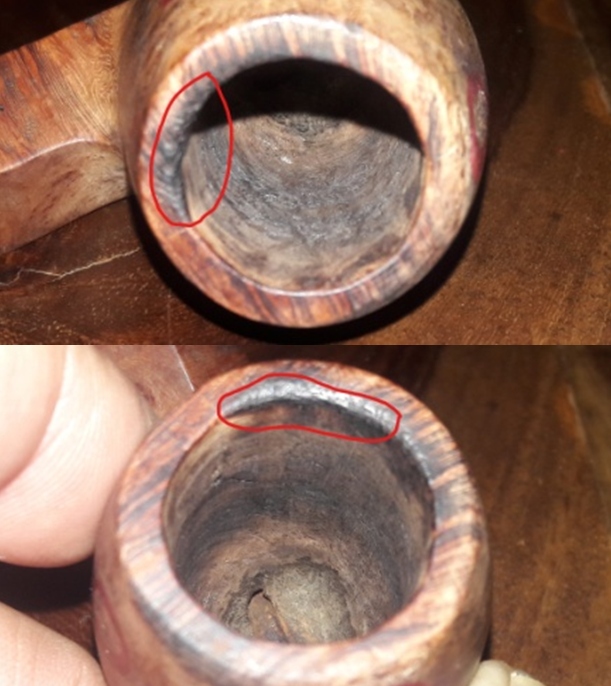
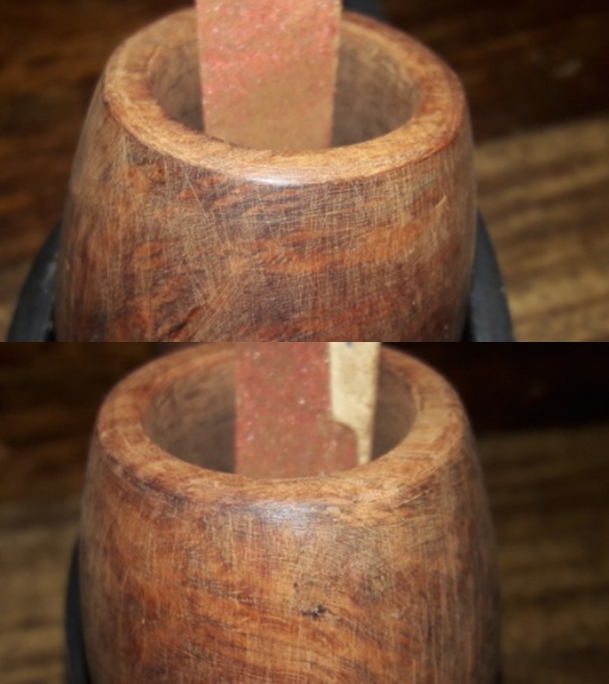
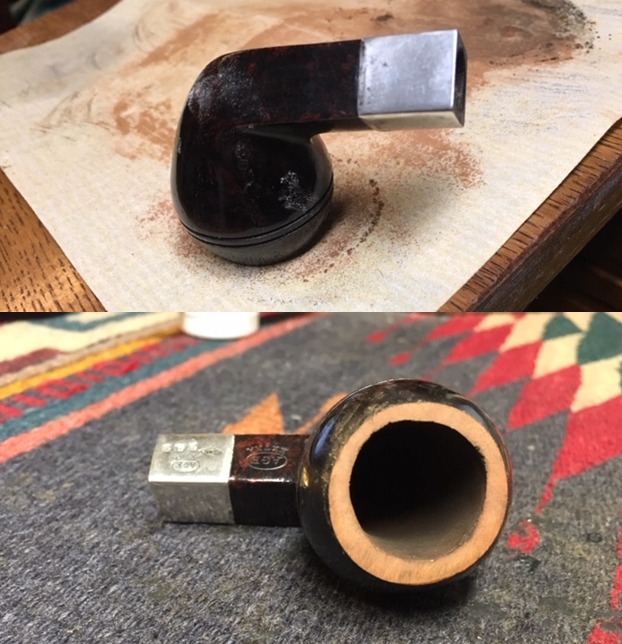
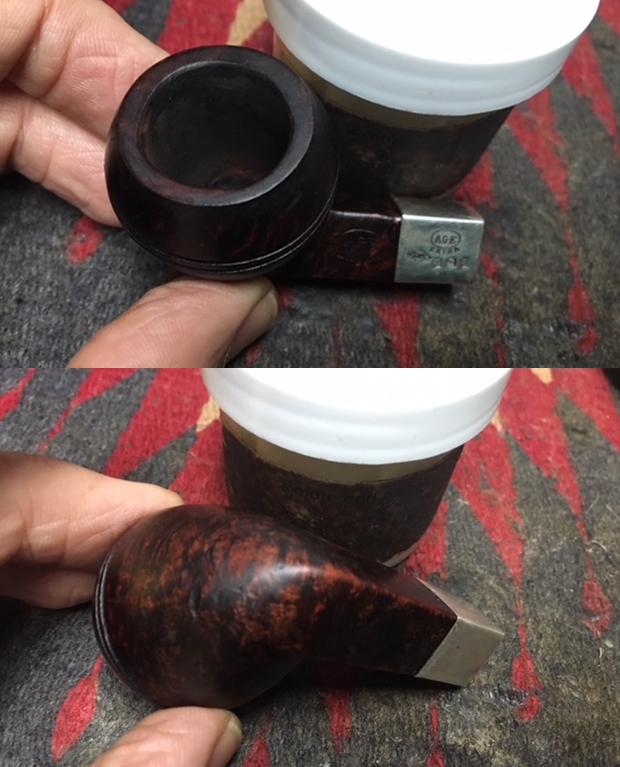
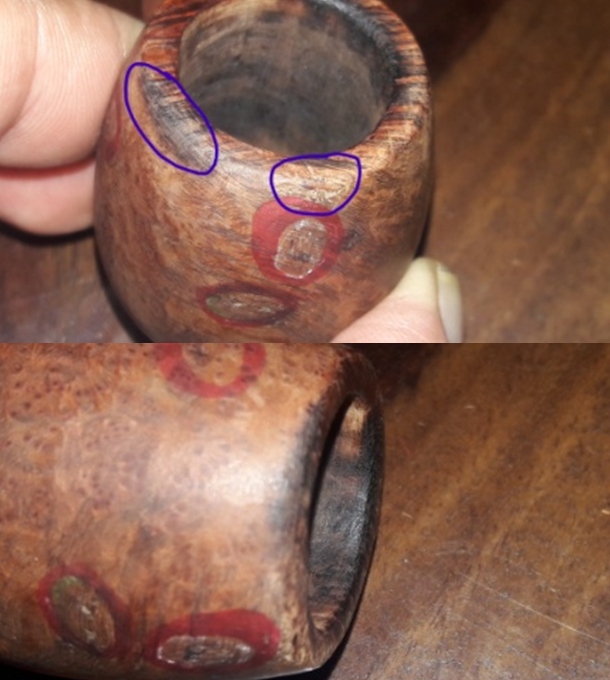 With the above observations completed, I turned my attention to address the damage to the stummel. I decided to address the rim top surface dents/ dings and the out of round inner edge first. I topped the rim top surface on a piece of 220 grit sand paper, checking frequently for the progress being made as I hate to lose briar estate any more than absolutely necessary. The inner and outer edges are still uneven, though much better than before topping. With a folded piece of a 220 grit sand paper pinched between my thumb and forefinger, I create a slight bevel on the inner and outer edges of the rim top surface. This helps to mask and address the minor dents and dings that had remained on the rim edges after topping. I am careful so as not to alter the profile of the stummel by excessive topping or creation of the bevels. I am pretty pleased with the appearance of the rim top and edges at this stage. The following pictures show the progress being made and improvements to the inner and outer rim edges.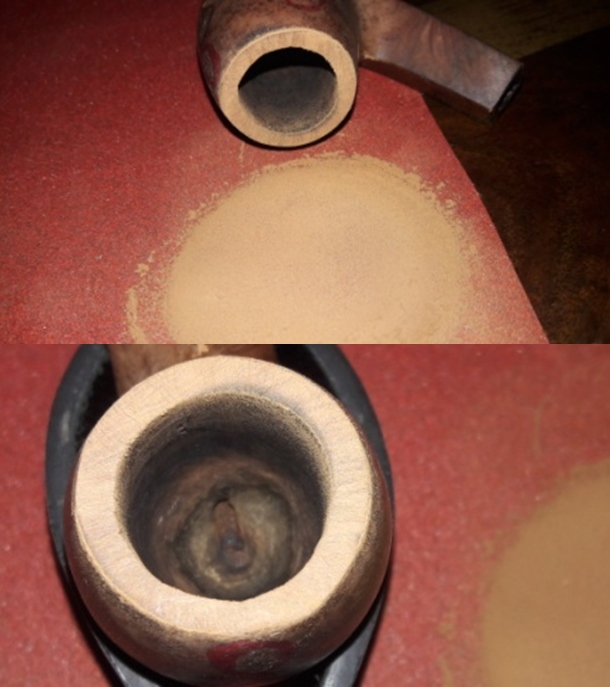
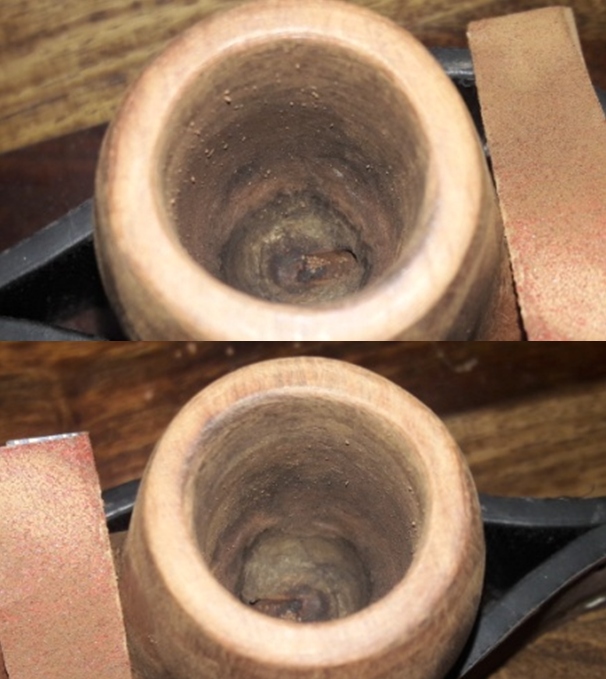
 I sand the entire stummel with a piece of 220 grit sand paper to address the dents and dings to the stummel surface. Though 95% of the scratches and dings have been eliminated, there still remains few dings that will be required to be filled with a mix of CA superglue and briar dust.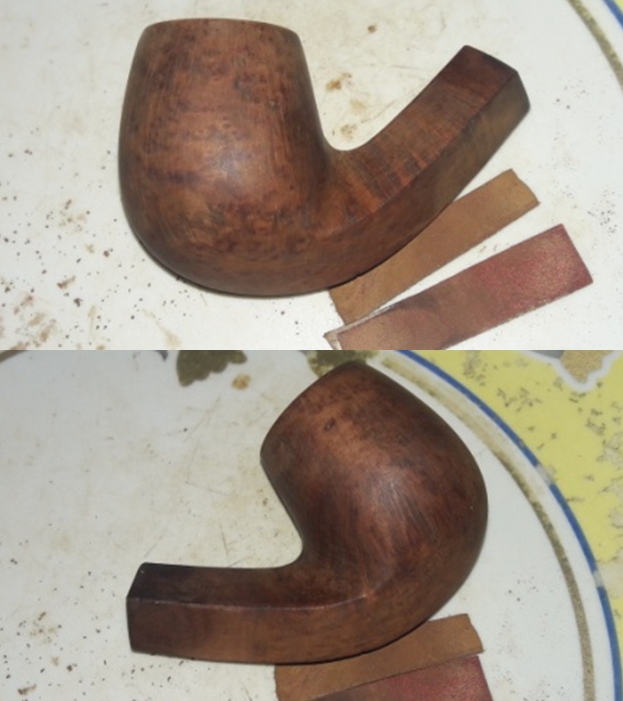
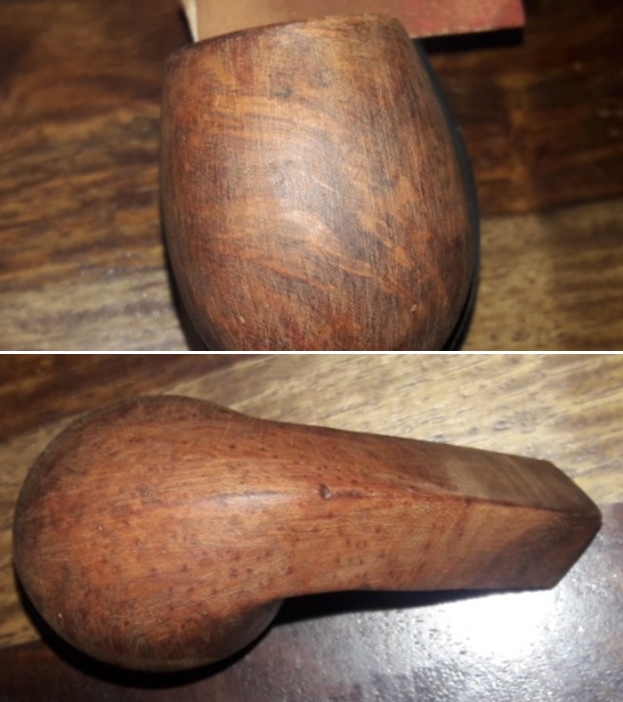 Using the layering method, I filled these dings and the chipped stummel surface with a mix of briar dust and CA superglue till the mound of the mix was slightly above the rest of the stummel surface. This helps in a better blending of the fill with the rest of the stummel surface while sanding and reduces the scratches caused by the use of a needle file as you have a correct perspective of the sanding that is required. I set the stummel aside for the fills to cure.
 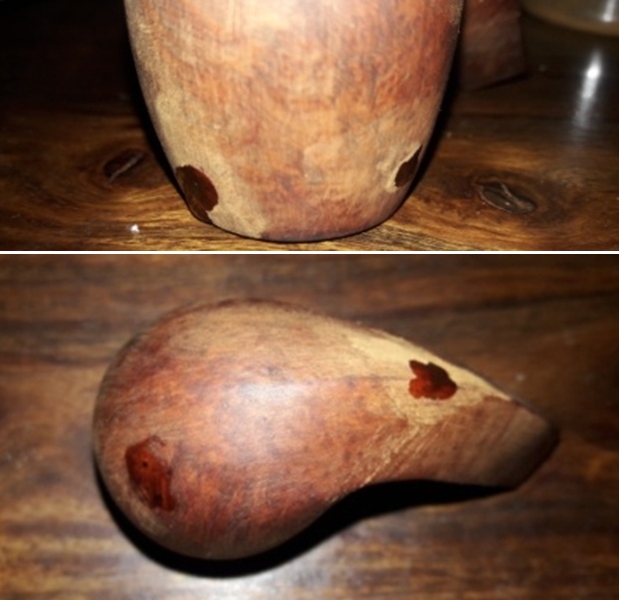 Once the fills had cured, with a flat head needle file, I sand the fills till I had achieved a rough match with the surrounding stummel surface. I again sand the entire stummel with a piece of 220 grit sand paper to address the dents and dings to the stummel surface and also to further match the fill with the rest of the stummel surface. A few minor dents and dings still remained and I accept these dings as part of this pipe’s journey to date.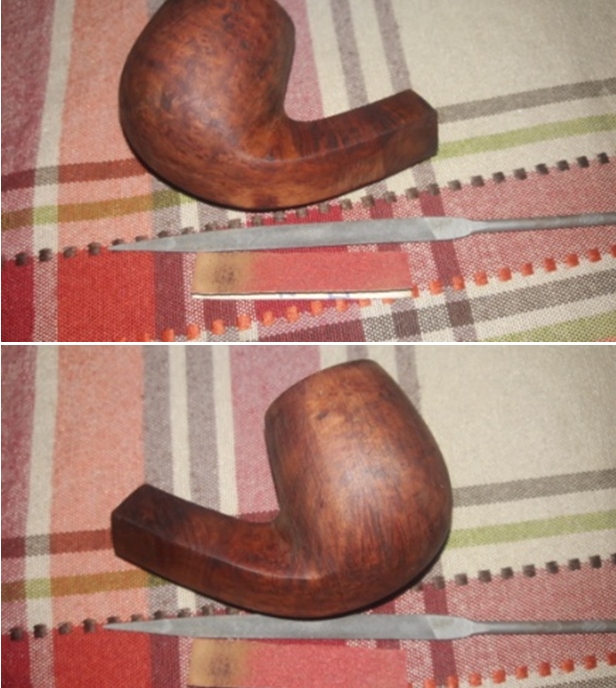
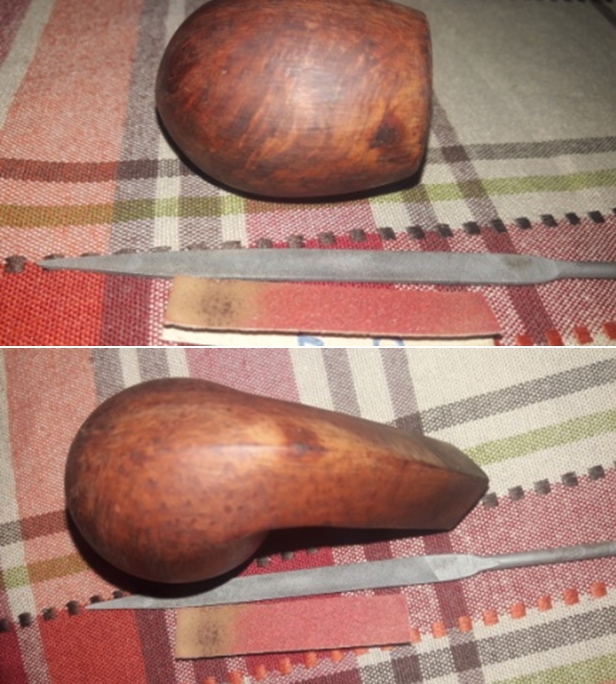
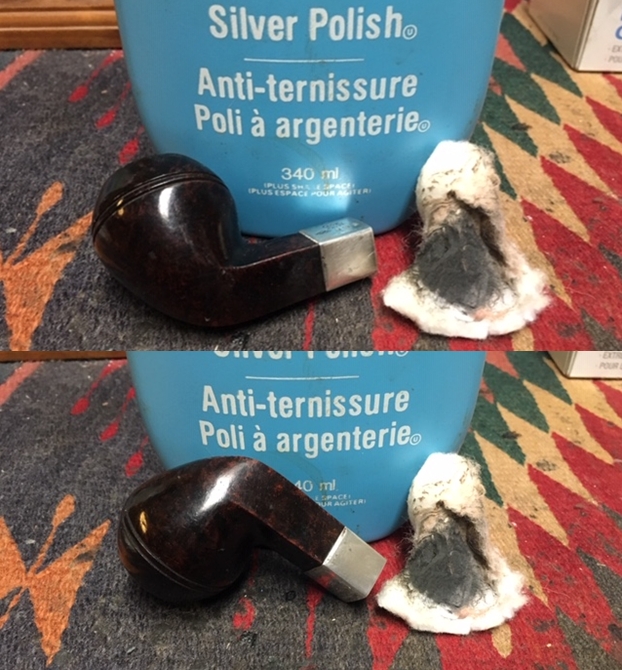
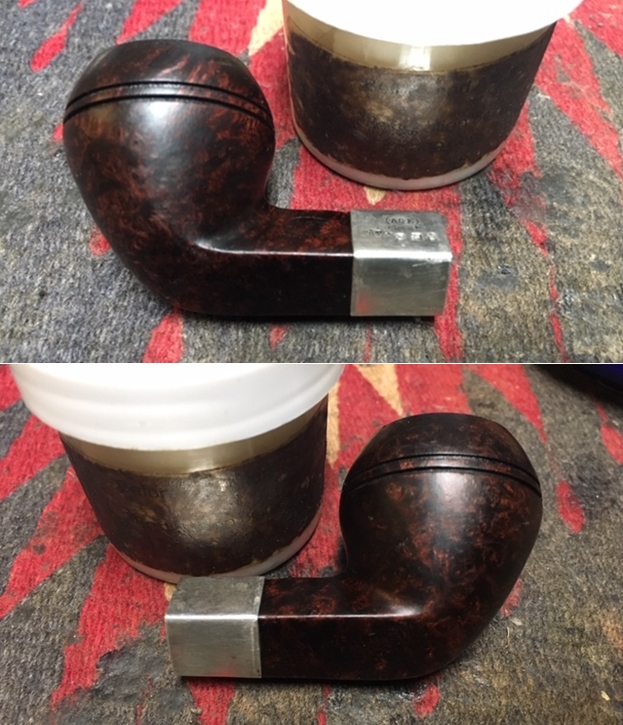
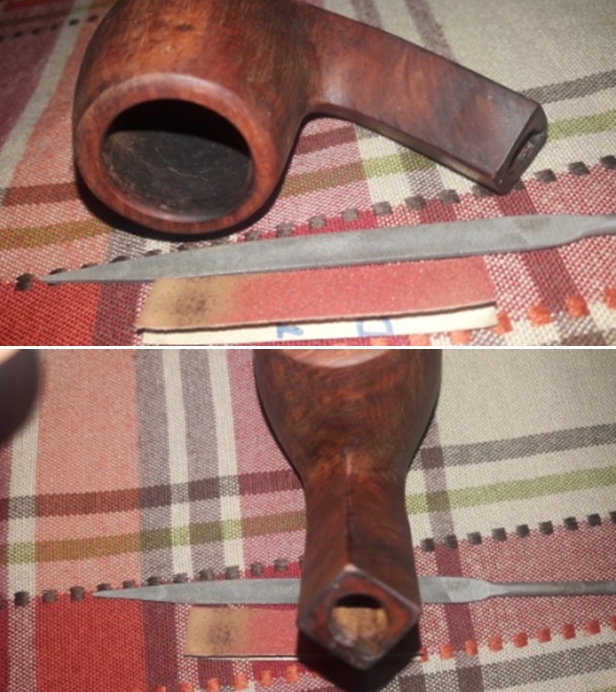 I cleaned the sterling silver ferrule at the shank end with “Pitambari”, a powder that is available all across India that is used to clean and shine brass and silverware. Even Abha uses it to polish her silver and gold jewelry and cutlery. This compound is a very fine powder and is least abrasive with fantastic results. The results were appreciated by Steve during his visit to India. The band is now a nice shining piece of sterling silver and will provide a nice contrast between the shining horn stem and the dark brown stummel.
 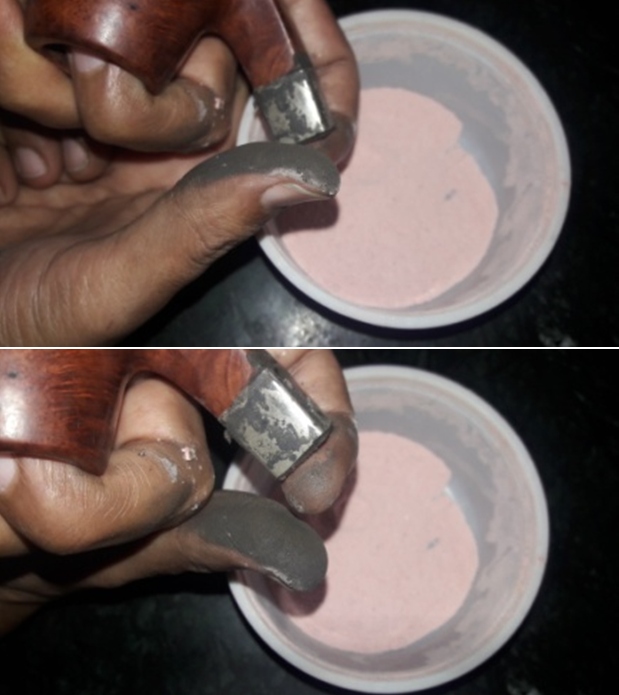 Prior to proceeding with micromesh polishing cycle, I reattached the sterling silver band to the shank end using superglue.
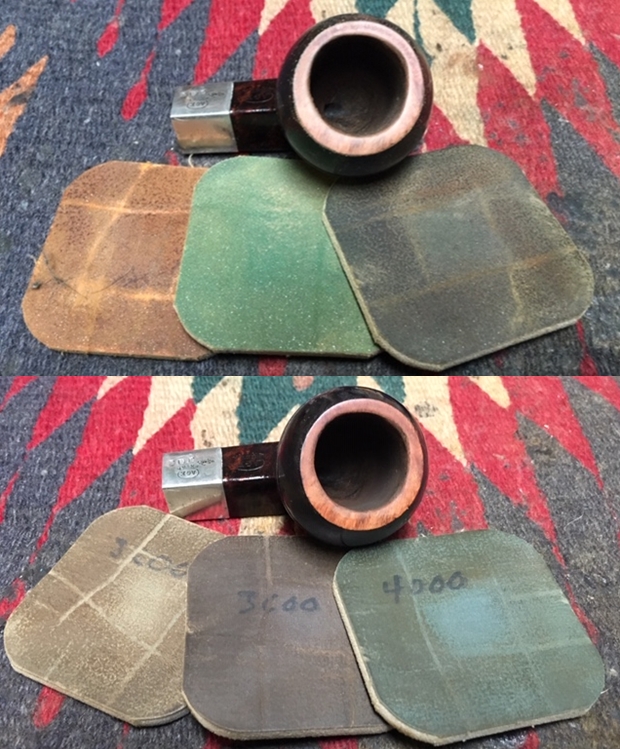
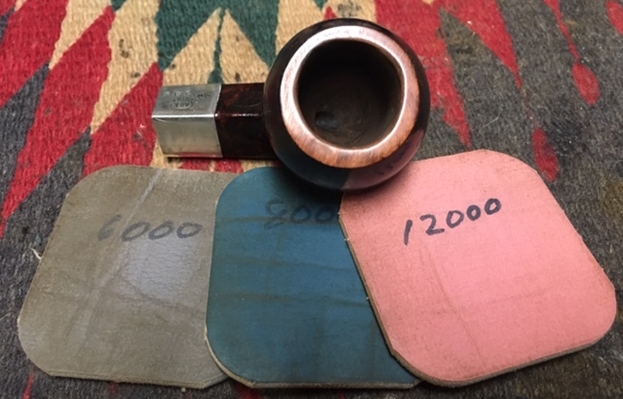
  I followed it by wet sanding the entire stummel with 1500 to 12000 grit micromesh pads, wiping frequently with a moist cloth to check the progress. I really like the looks of the stummel at this point in restoration. The grains and the clean lines of this piece of briar is really appreciable.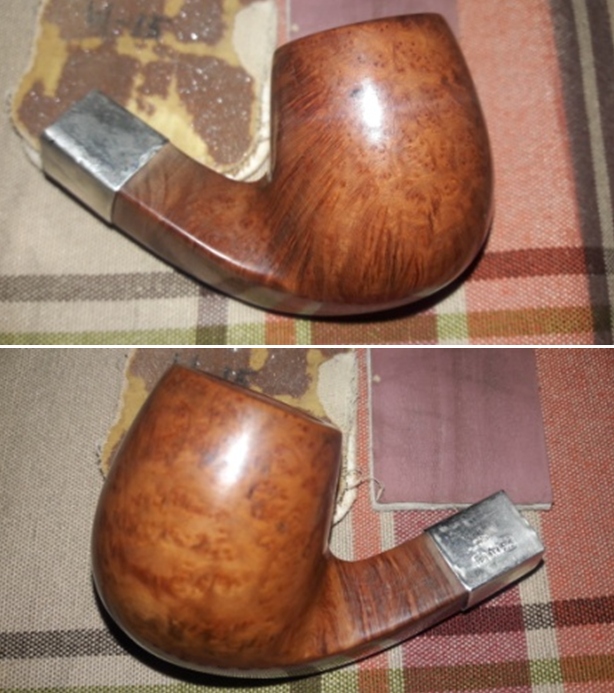
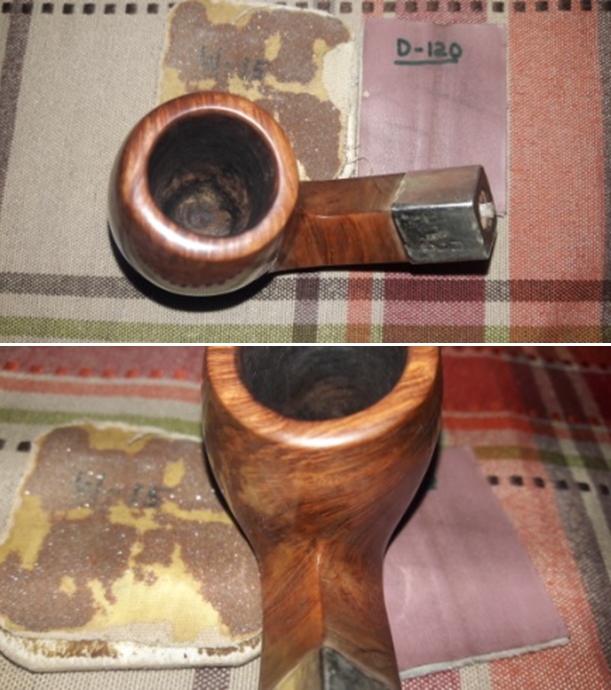
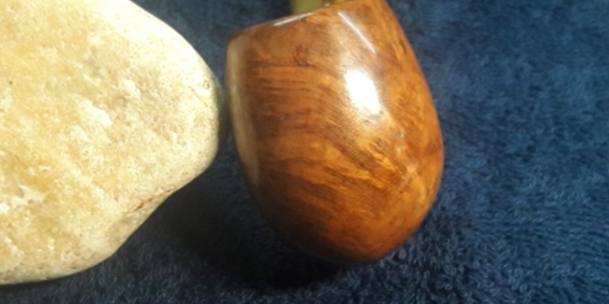
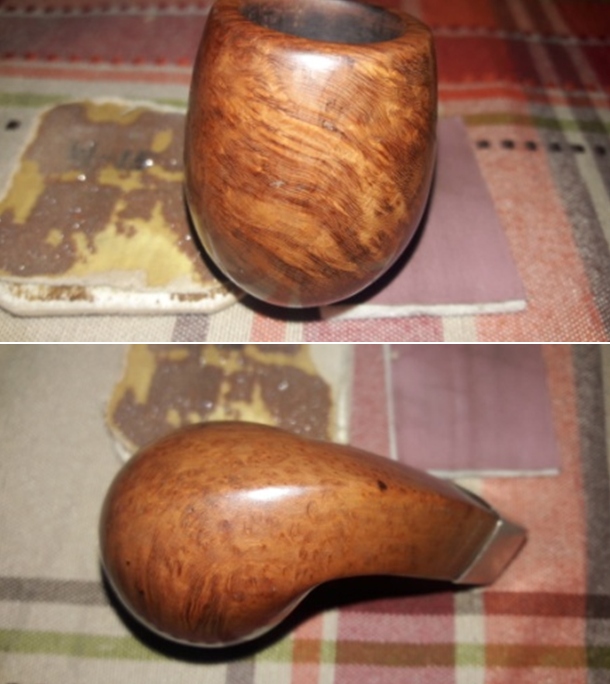 Next, I rubbed a small quantity of “Before and After Restoration Balm” deep in to the briar with my finger tips and let it rest for a few minutes. The balm almost immediately works its magic and the briar now has a nice vibrant appearance with the beautiful grain patterns displayed in their complete splendor. I further buffed it with a horse hair brush. The contrast of the dark browns of the Bird’s eye and cross grains with the natural patina of the rest of the stummel adds an interesting dimension to the appearance of the stummel which may be insufficiently described in words and far better seen in person.
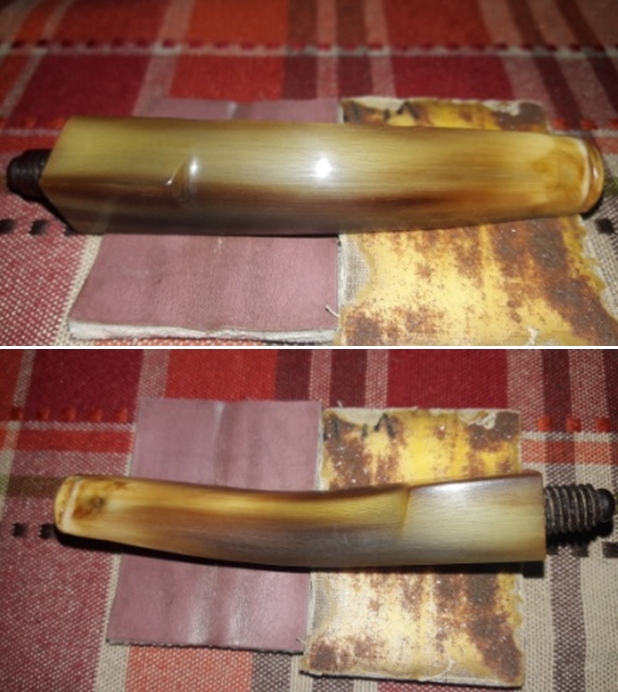
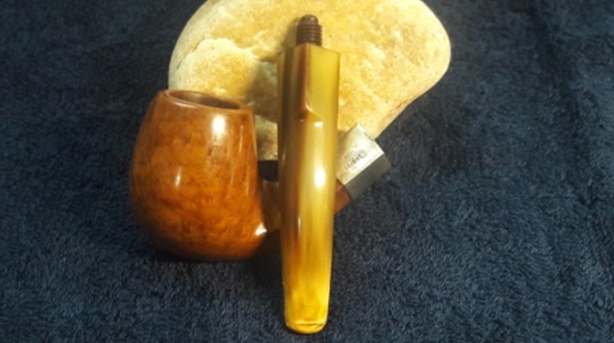
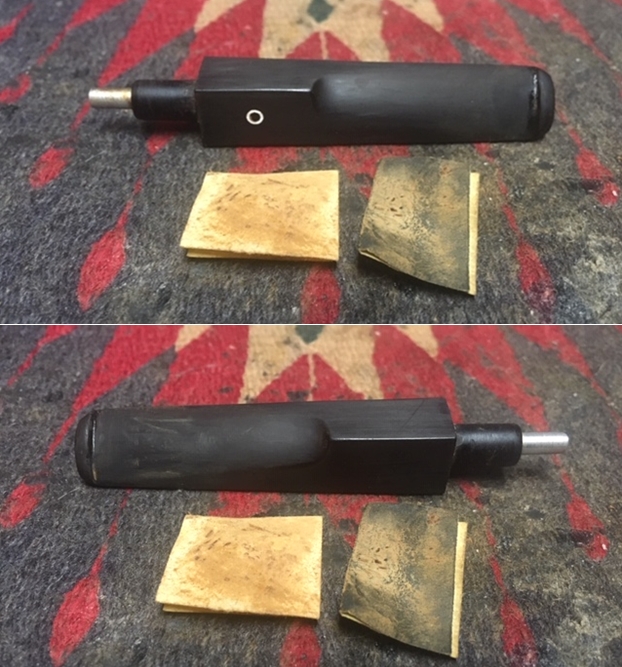
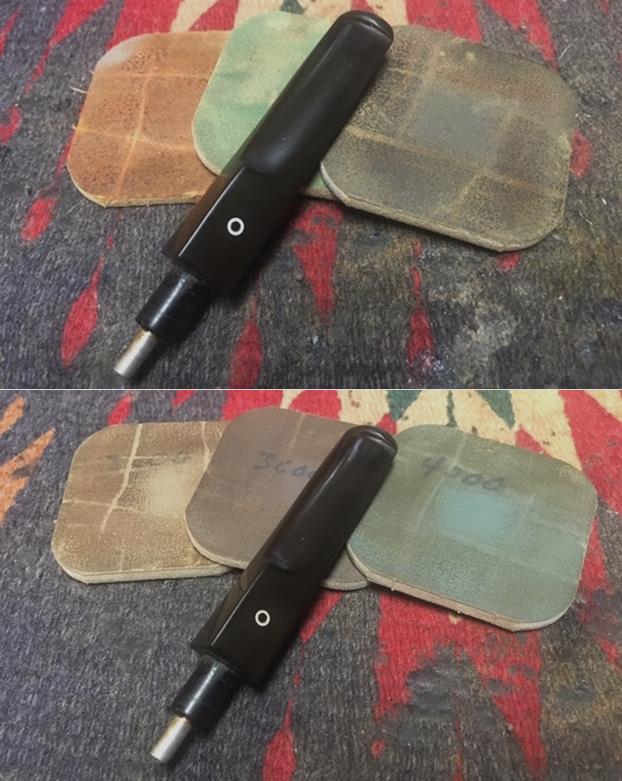
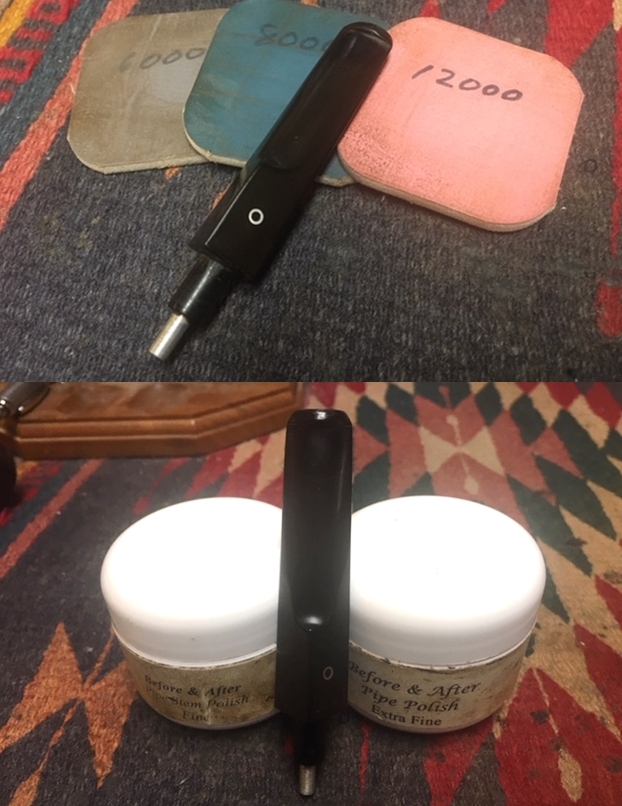
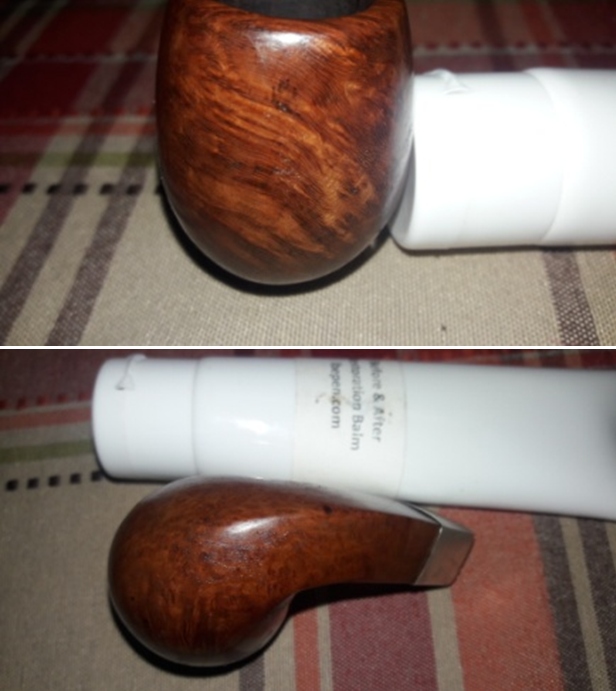 With the stummel rejuvenation almost complete, save for the final wax polish, I worked the stem. The fill had cured and with a flat head needle file, I worked on the filling till I had achieved a rough match with the surrounding surface and had sufficiently sharpened the button edges. To bring a deep shine to the horn stem, I went through the complete set of micromesh pads, wet sanding with 1500 to 12000 grit pads. I wiped the stem with moist cloth after each pad and rubbed it down with Extra Virgin Olive oil to rejuvenate the horn. I am pretty happy with the way the stem repairs have shaped up and also the buttons have a nice delicate shape to them. The finished stem is shown below.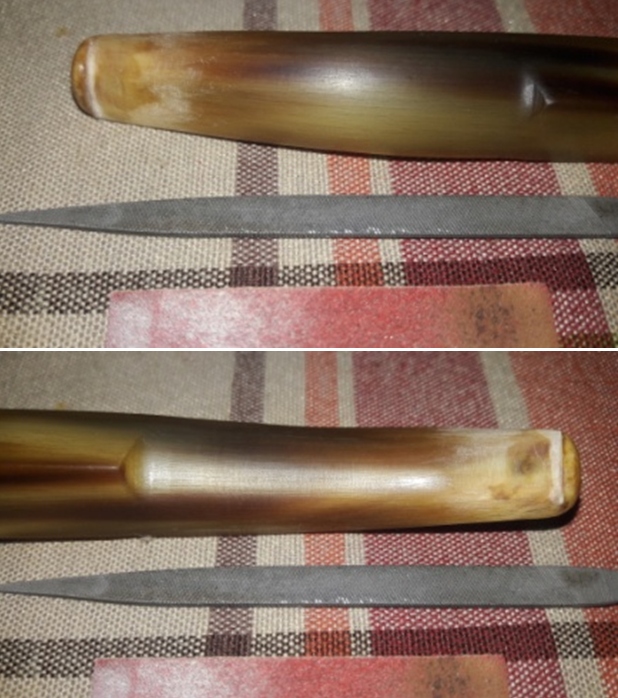
 I have now reached the homestretch in this restoration project. To complete the restoration, I mount a cotton cloth buffing wheel on to my hand held rotary tool and polished the stummel and stem with Blue Diamond compound. This compound helps to remove the minor scratch marks that remain from the sanding.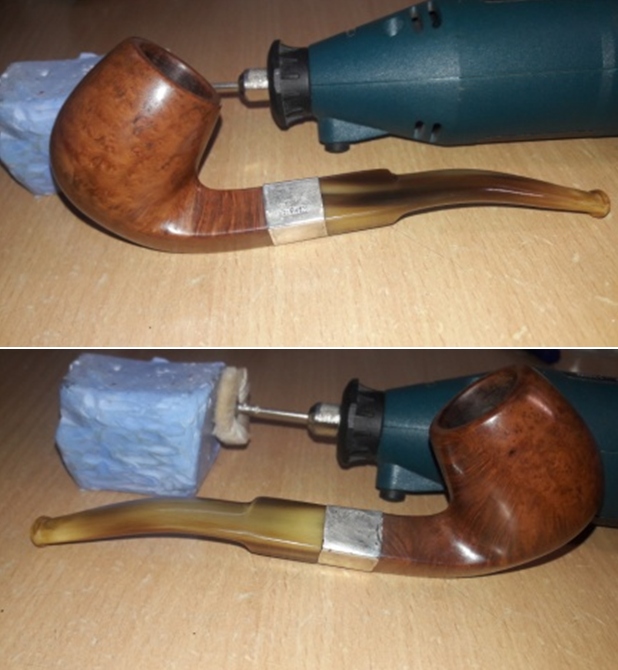
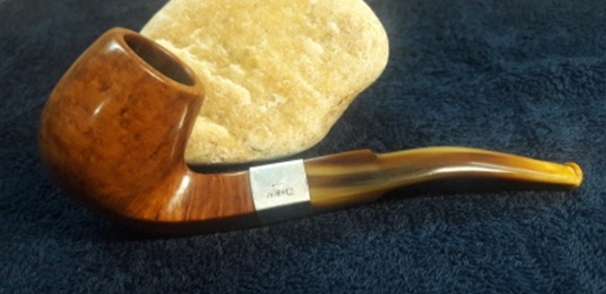
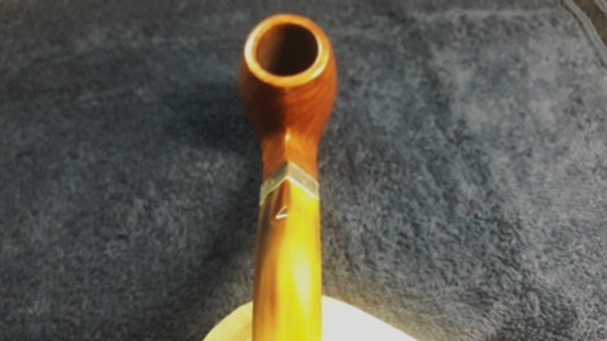
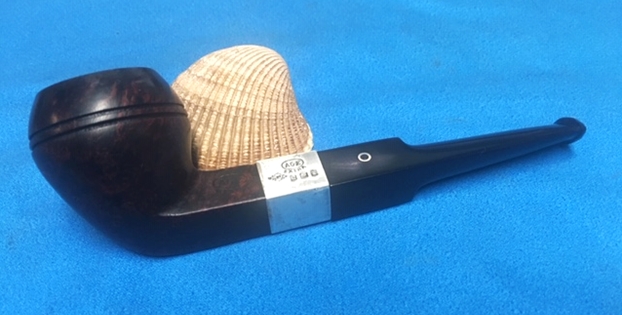
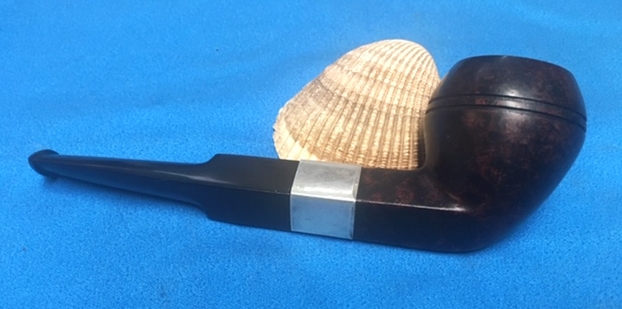
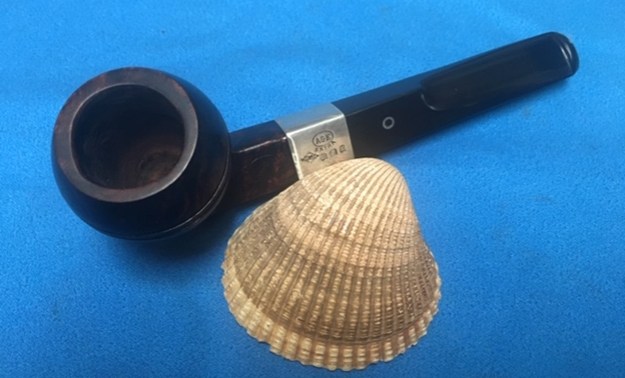
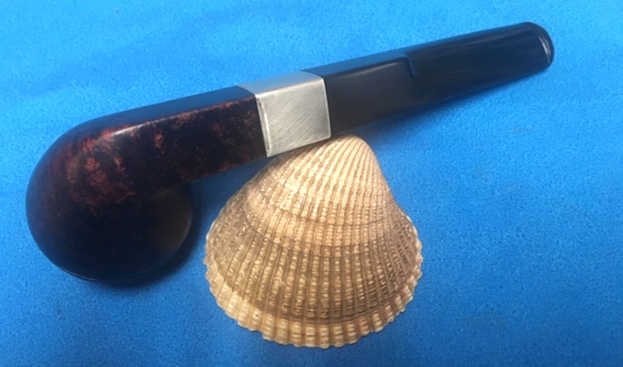
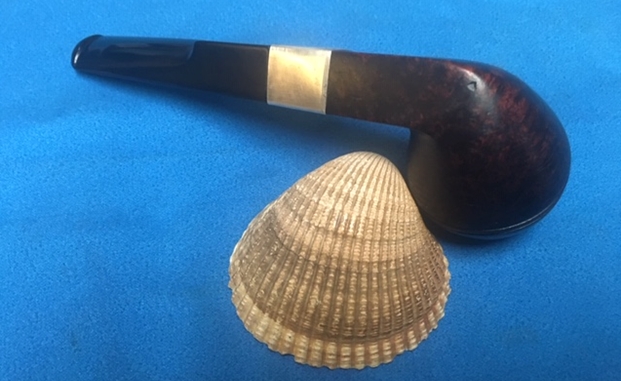
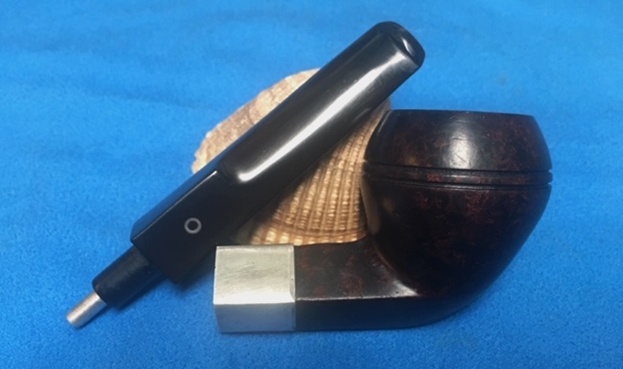
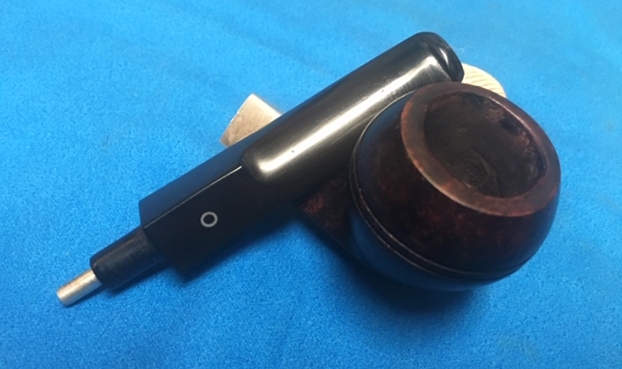
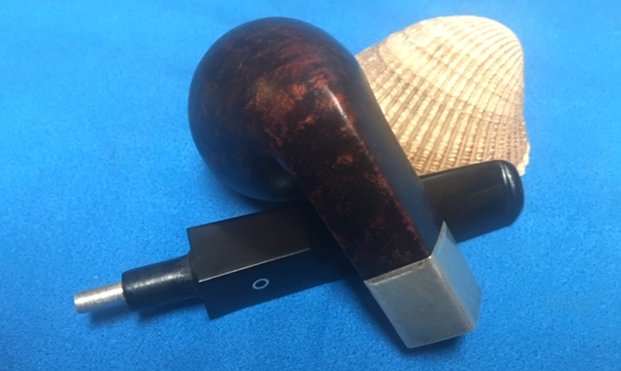
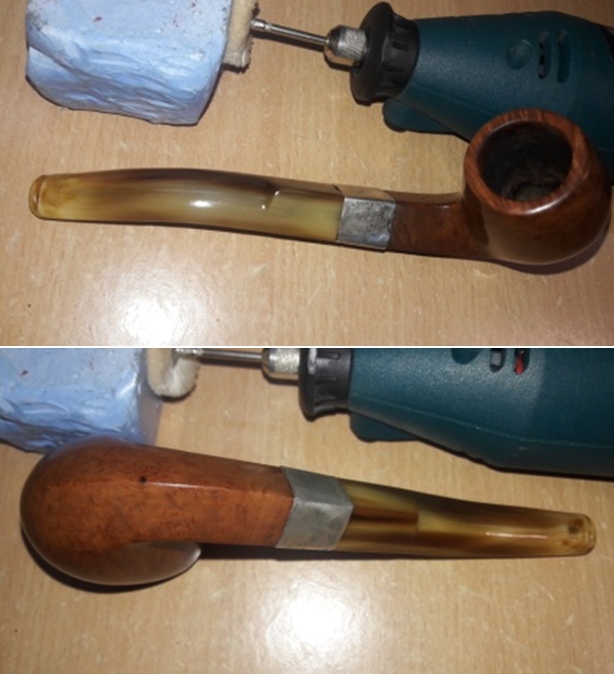 I mounted another cotton buffing wheel that I have earmarked for carnauba wax and applied several coats of the wax. I finished the restoration by giving the entire pipe a rigorous hand buffing using a microfiber cloth to raise the shine further. The finished pipe looks amazingly beautiful and is ready to join my collection. I only wish it could share with me its life story of the past years while I enjoy smoking my favorite Virginia blend in it or maybe an English blend or maybe just keep admiring it!! Big thank you to all the readers who have joined me on this path by reading this write up as I restored and completed this project.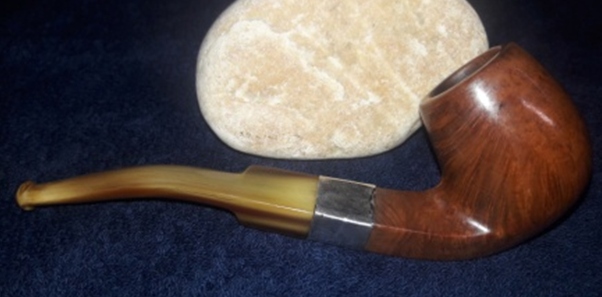








 rebornpipes