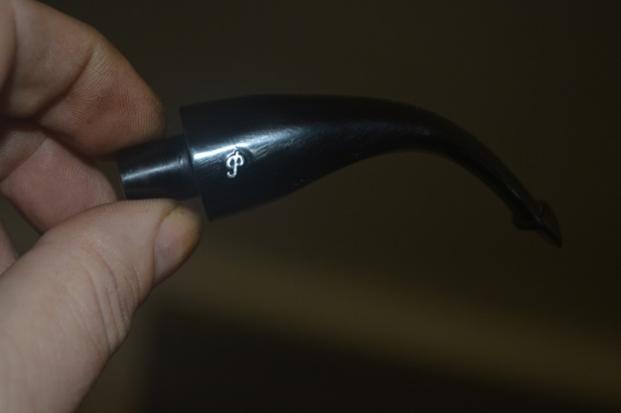
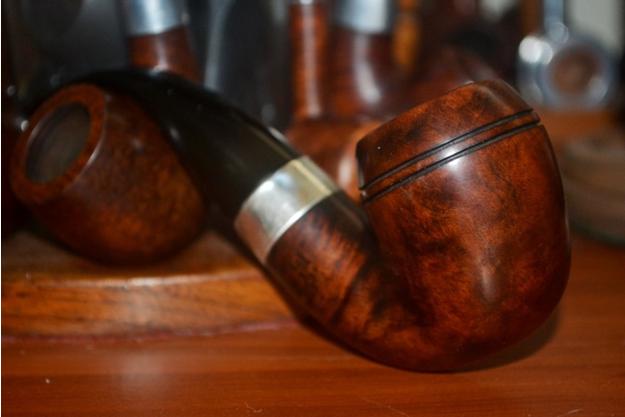
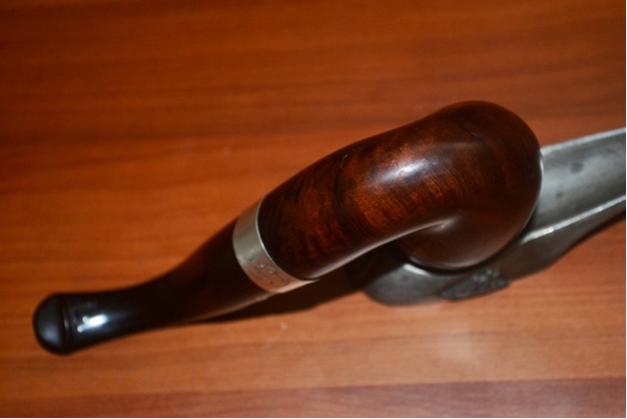
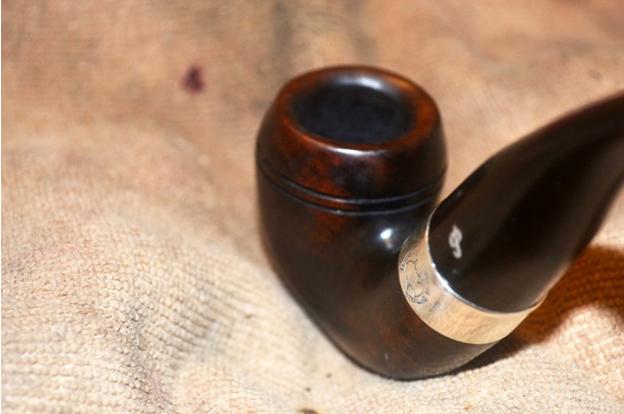
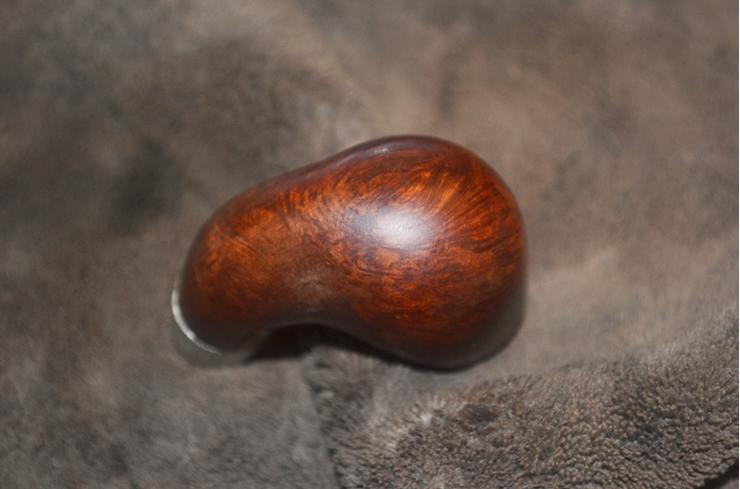
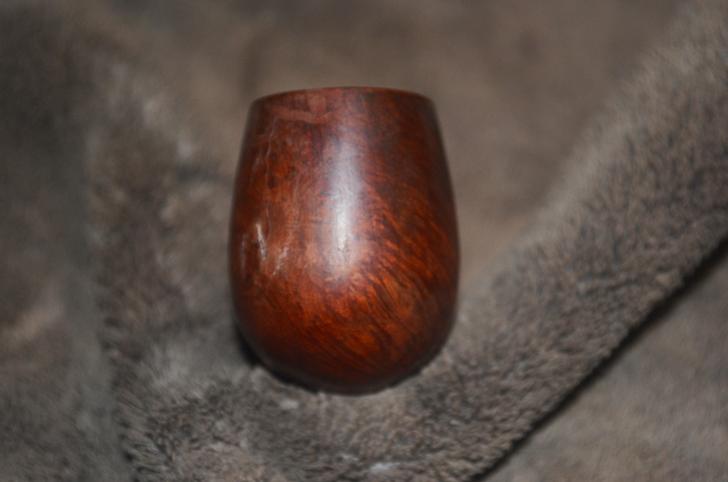
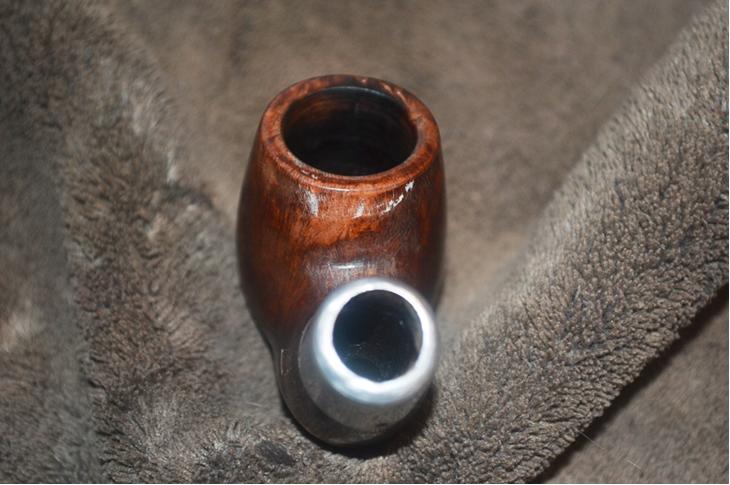
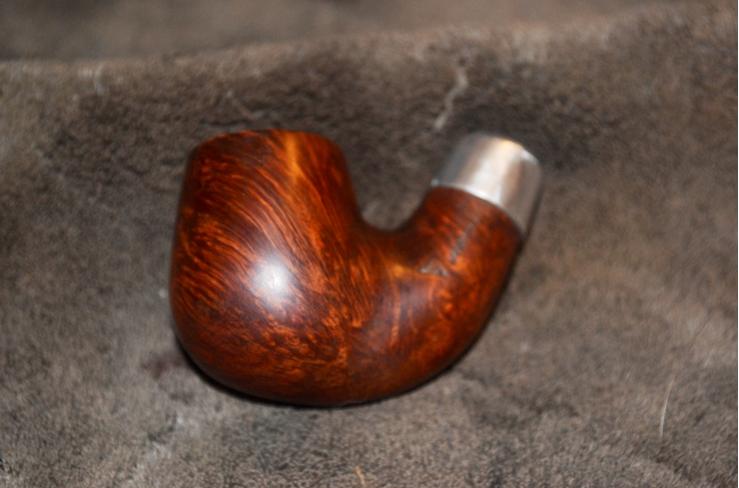
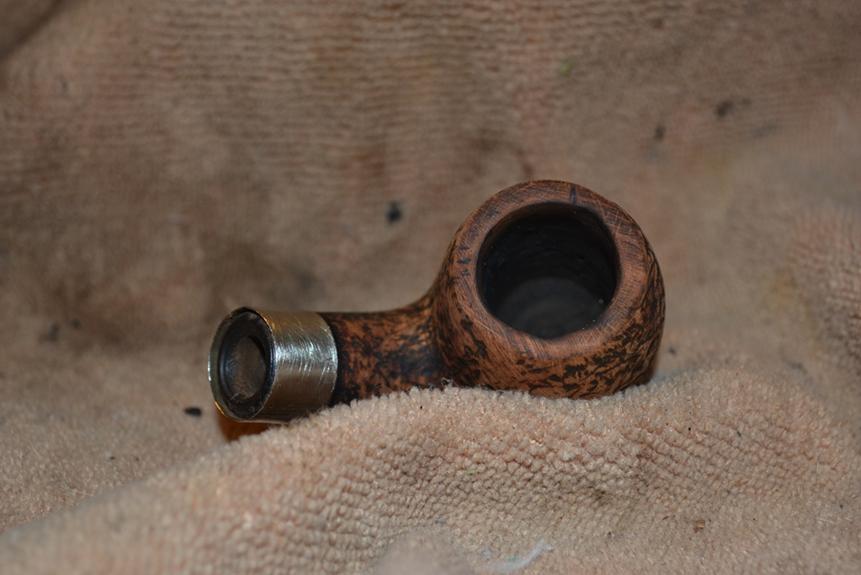
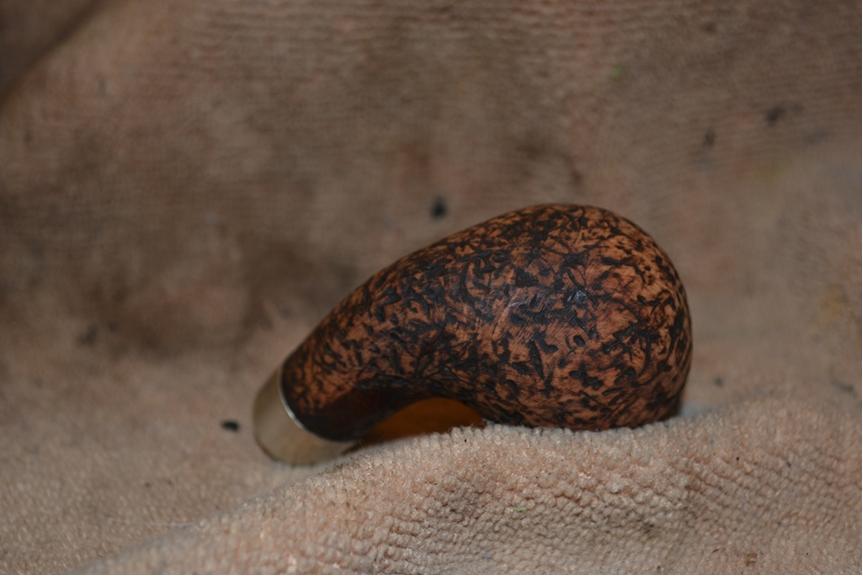
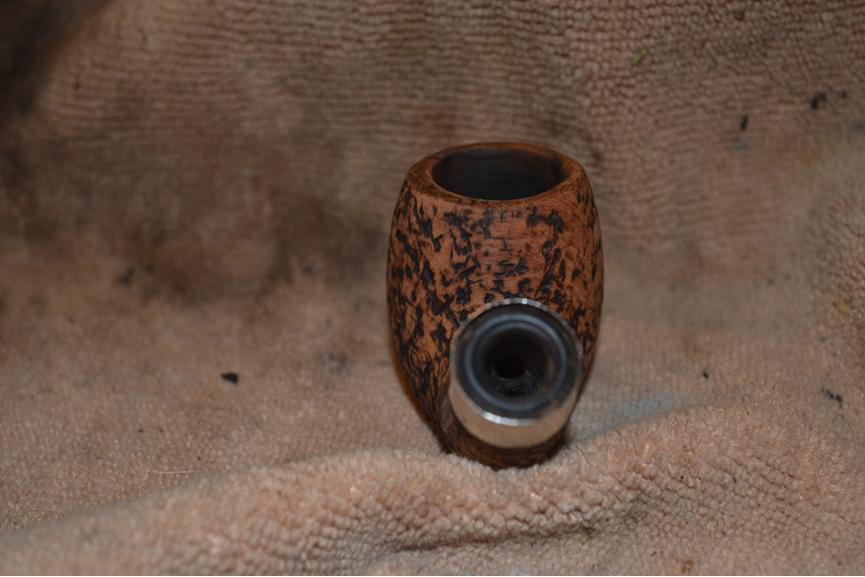
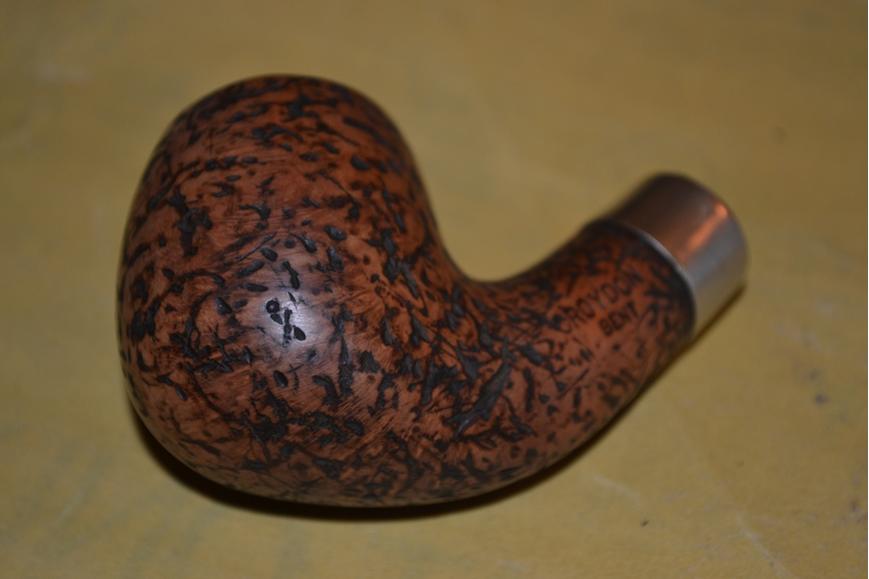
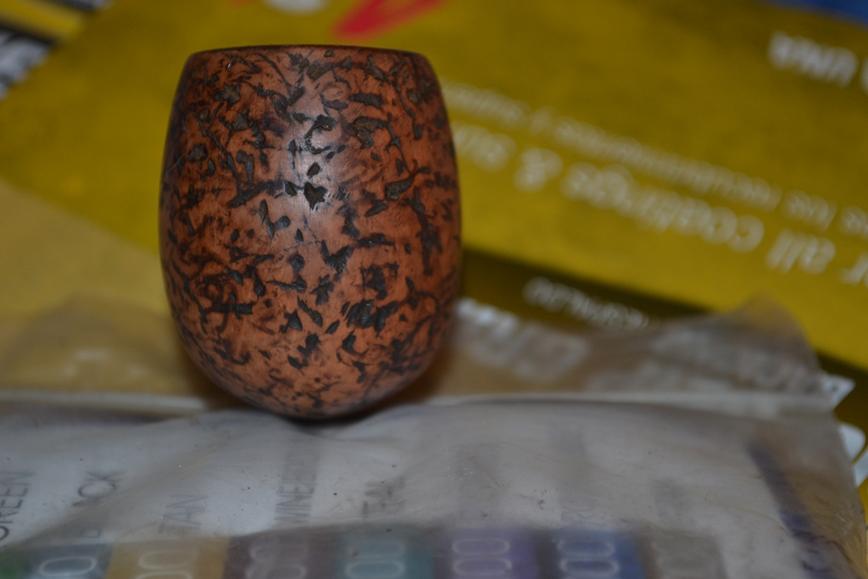
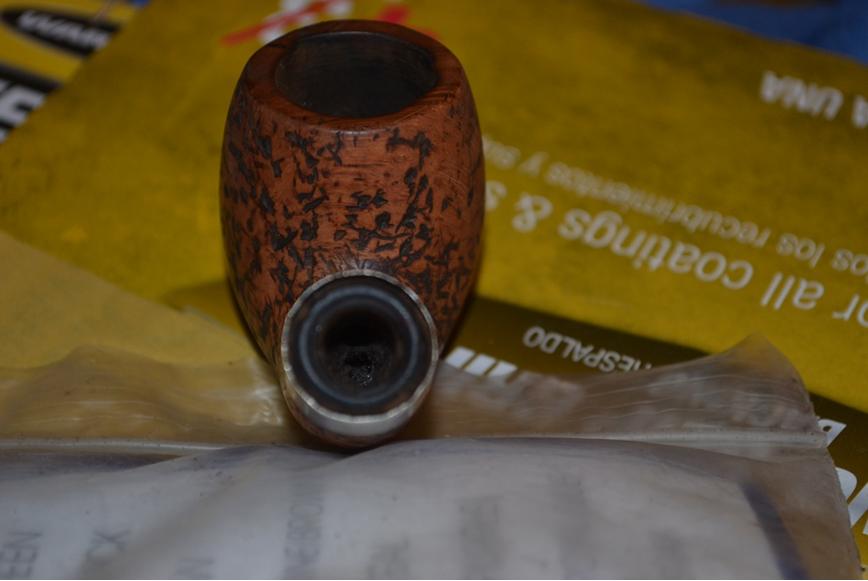
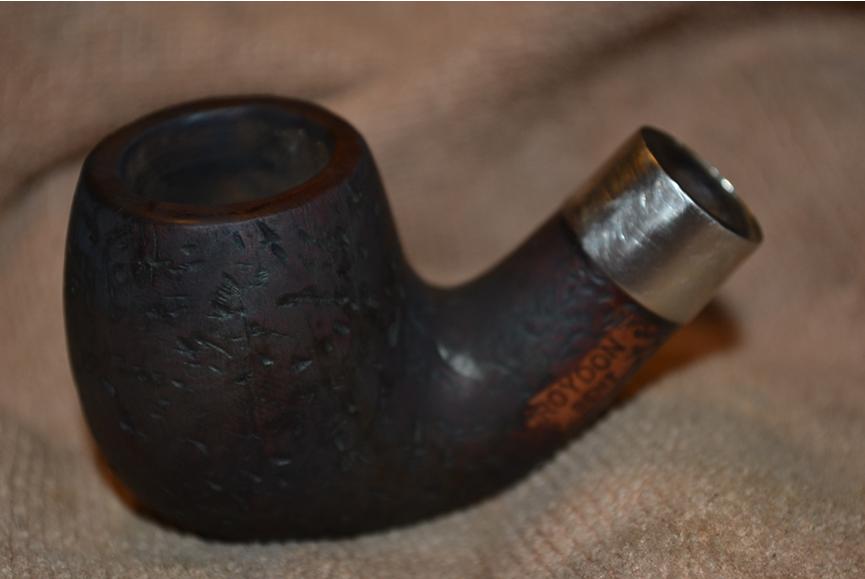
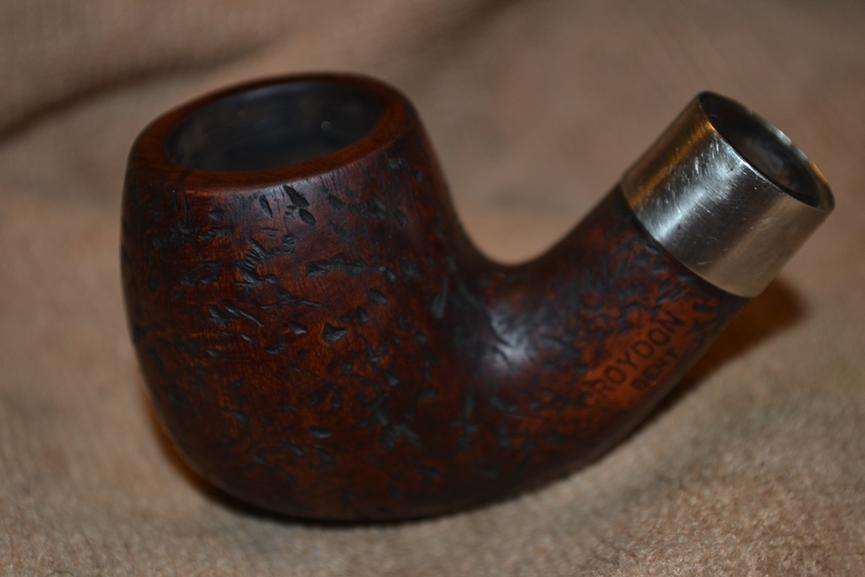
Tag Archives: Robert M. Boughton article

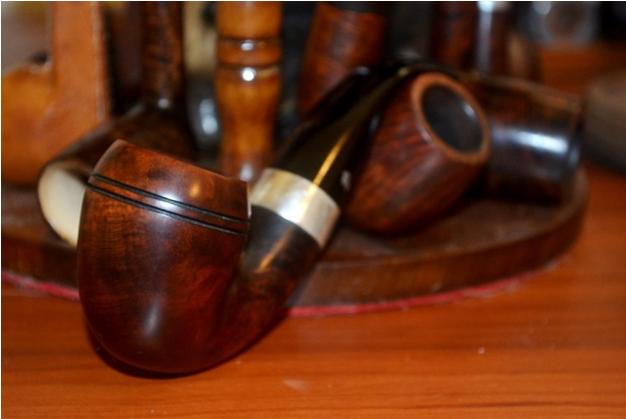
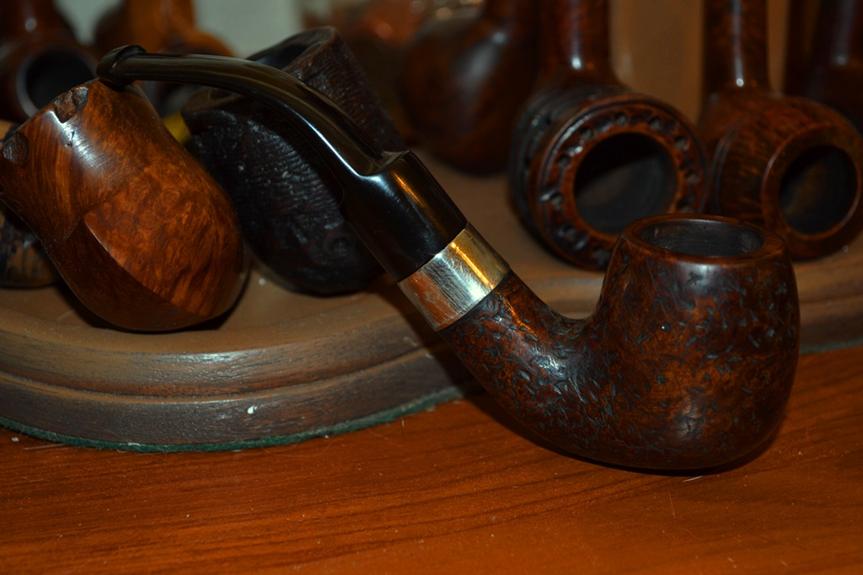
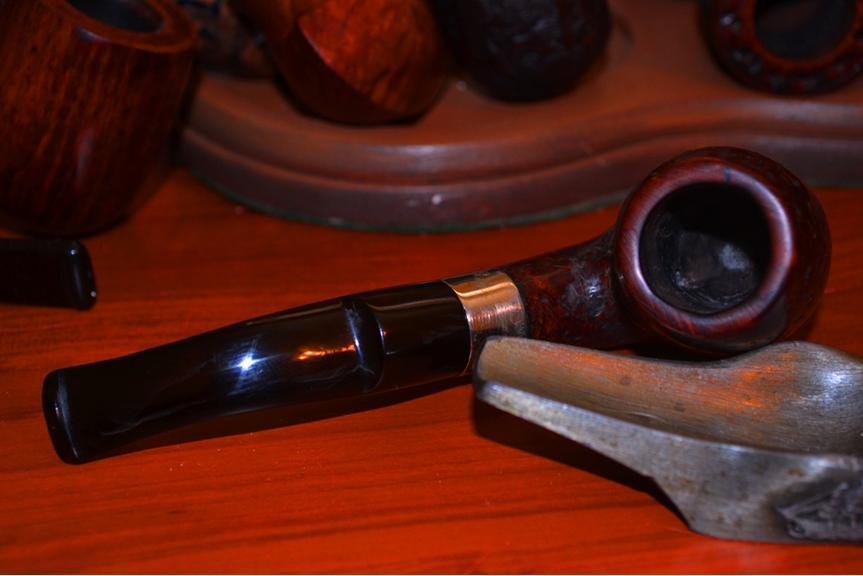
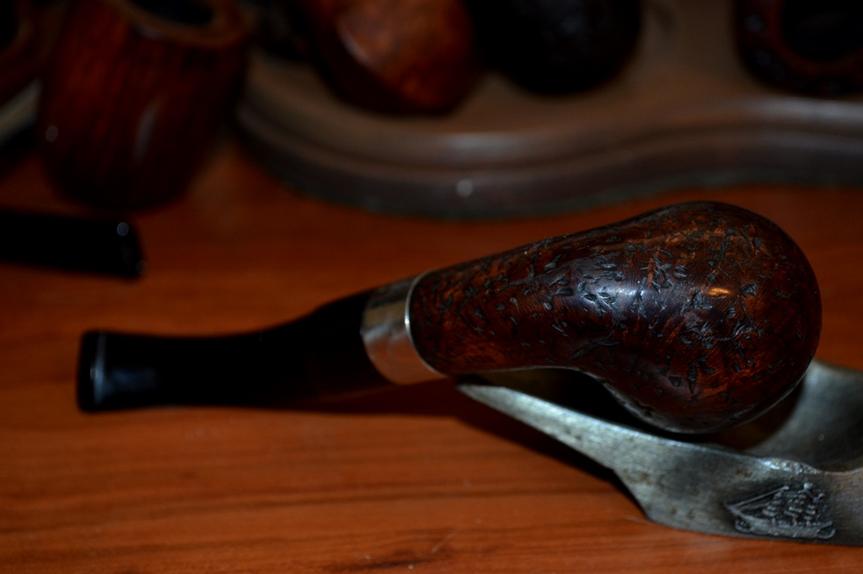
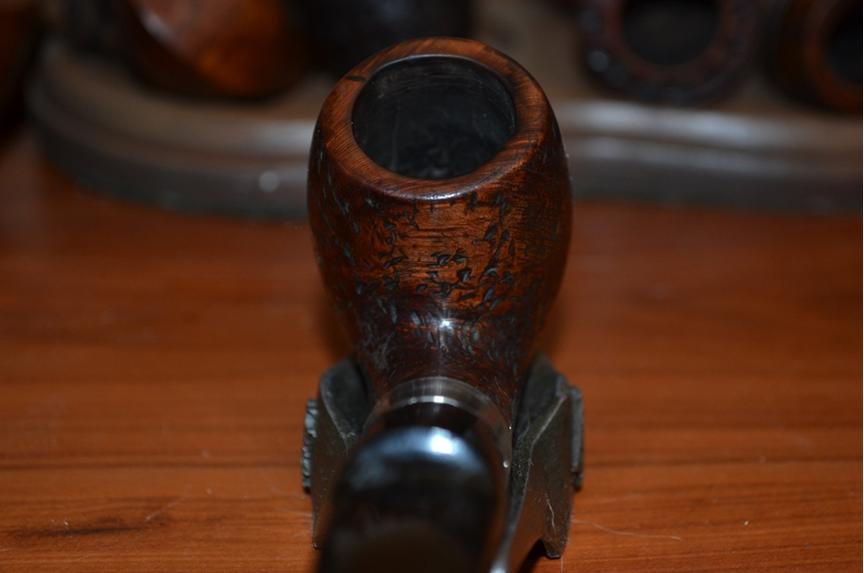
The Pipe of the Baskerville


Guest Blog by Robert M. Boughton
Member, North American Society of Pipe Collectors
http://www.naspc.org
http://www.roadrunnerpipes.com
http://about.me/boughtonrobert
Photos © the Author

“There is nothing more stimulating than a case where everything goes against you.”
― Sir Arthur Ignatius Conan Doyle (1859-1930), Scottish author, in “The Hound of the Baskervilles,” 1902

INTRODUCTION
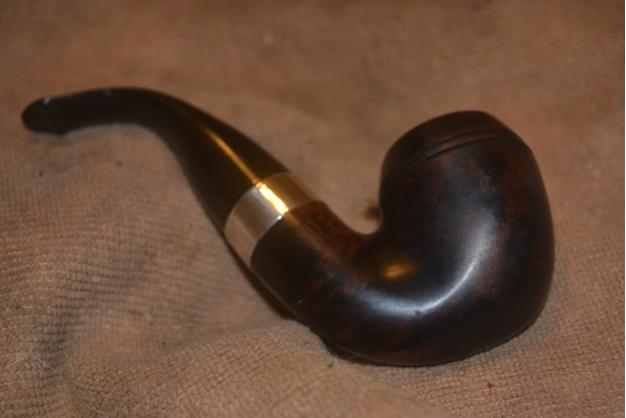
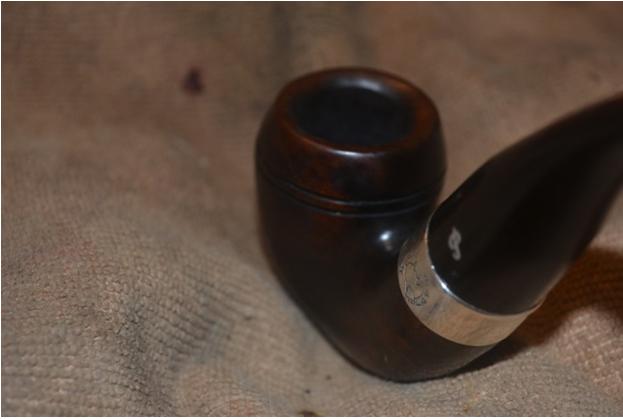
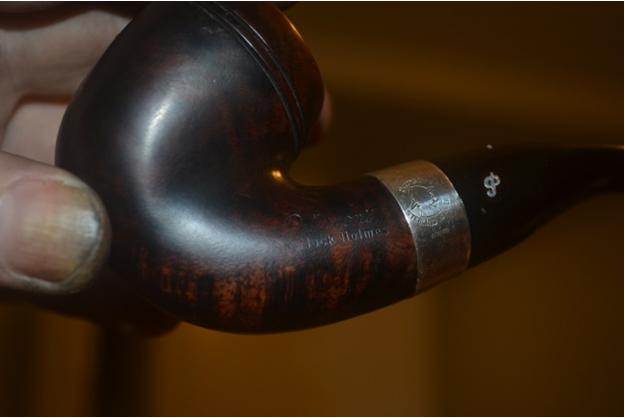
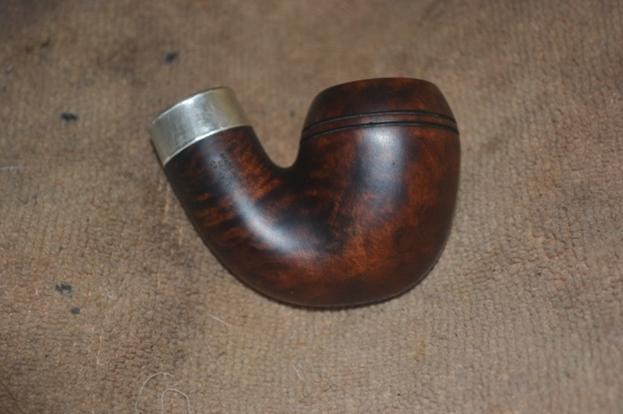
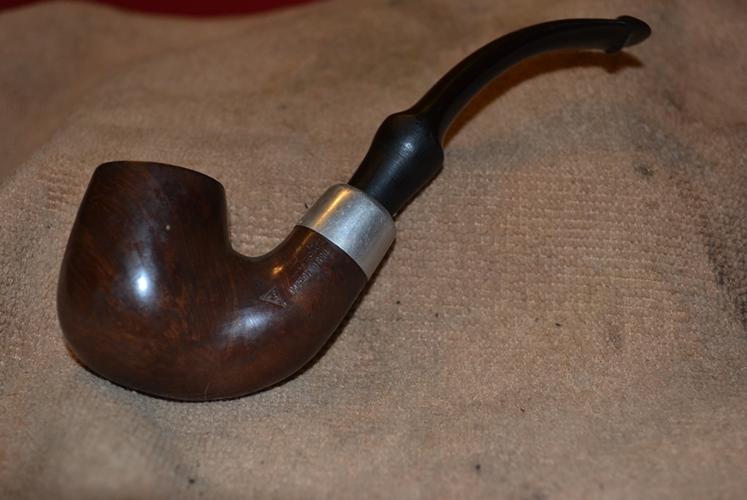
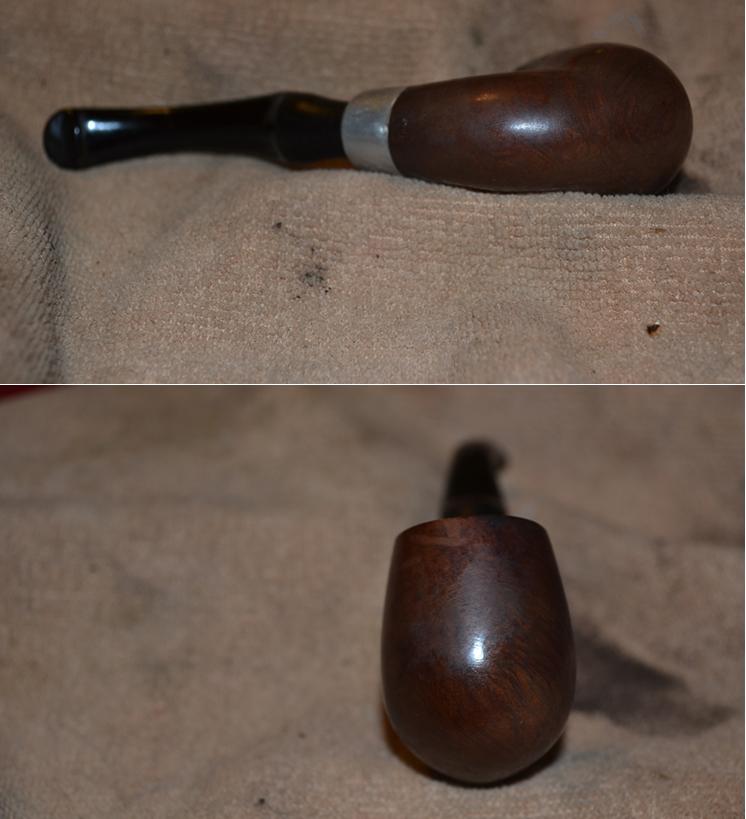
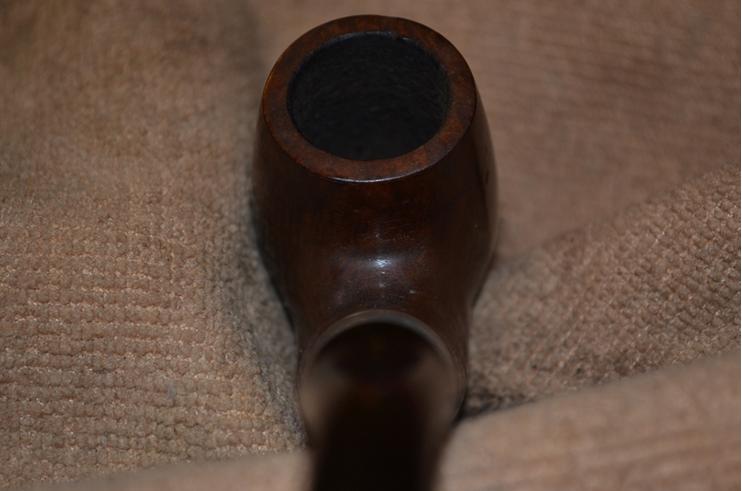
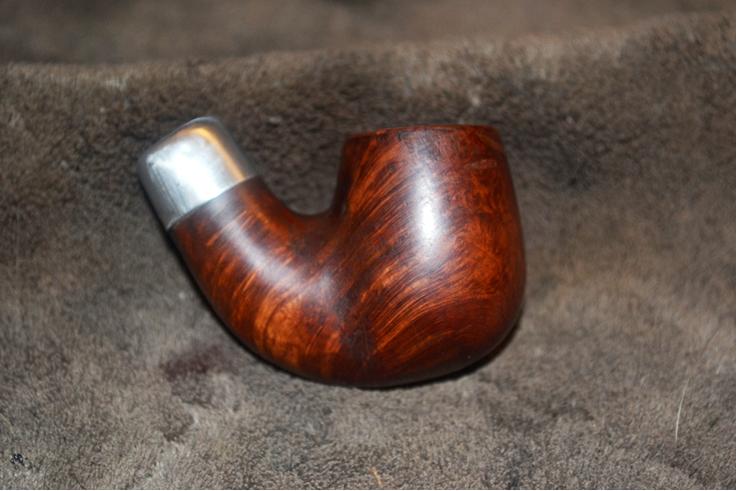
The first time I had occasion to suspect some force was working against me on the subject of this essay, restoring a Peterson’s Sherlock Holmes Baskerville smooth, was my belief that the pipe offered for sale was, in fact, not authentic. The discovery that my fear was misplaced was, of course, a happy relief and led me to purchase the distinctive Hungarian shaped model from an eBay seller. The desired confirmation was the result of an email I sent to Peterson’s of Dublin doubting the legitimacy of the pipe shown due to the absence of the Baskerville name on the nomenclature. In every other respect – its overall appearance, apparent beauty and shape – the pipe seemed right, but these days any online buyer cannot be too careful. I included in my query a link to the eBay listing and soon received the following reply from a gentleman named Glen:

“I can tell you this is a genuine item. It has discoloured due to smoking over the years and there are variations on stampings throughout the years of the lines.”

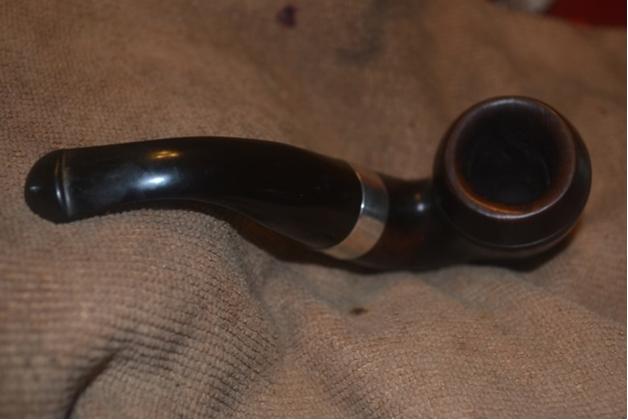
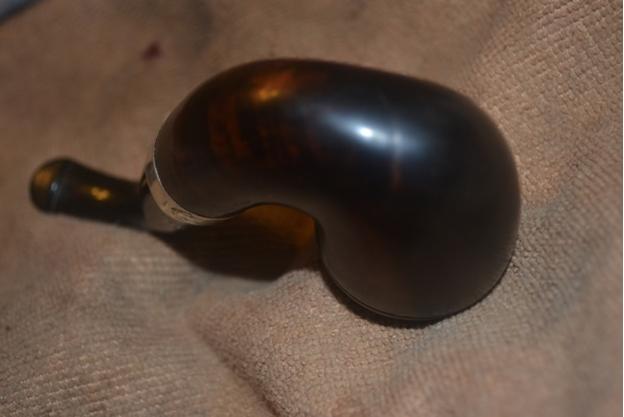
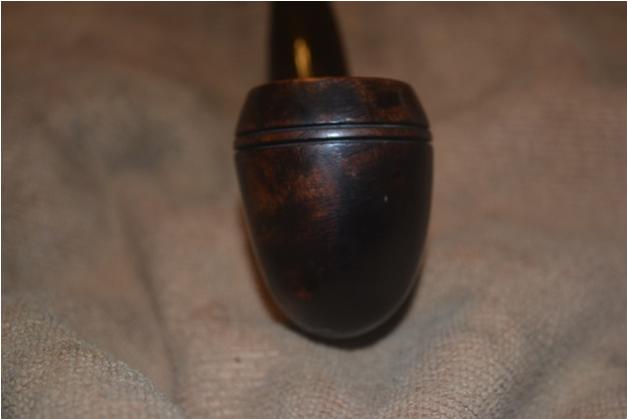
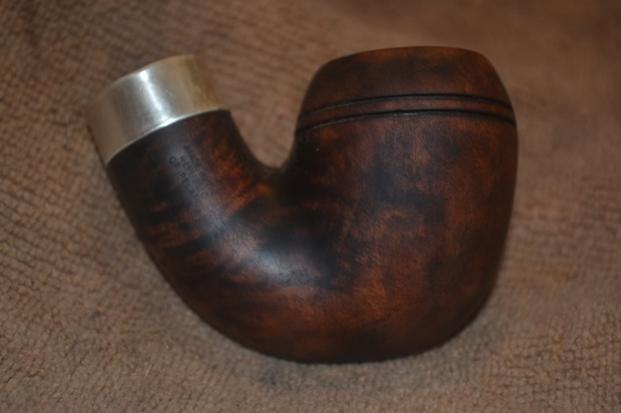
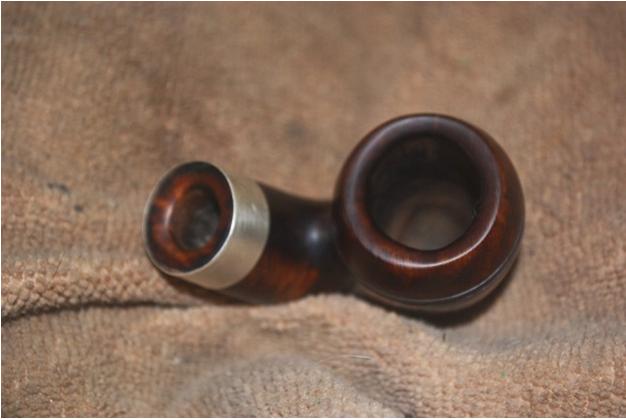
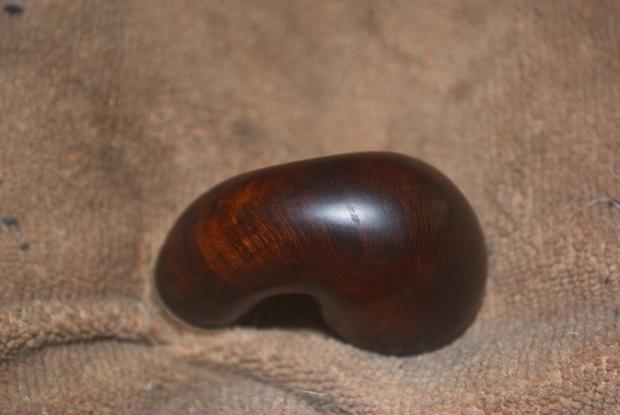
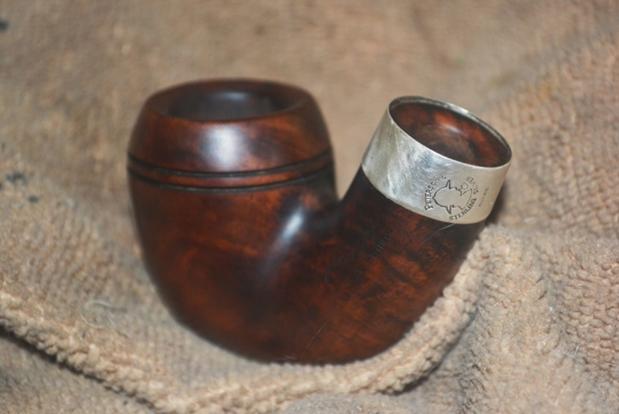
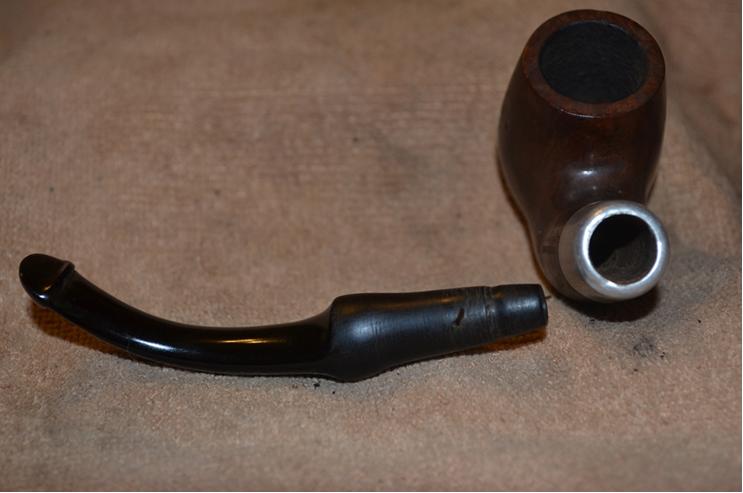
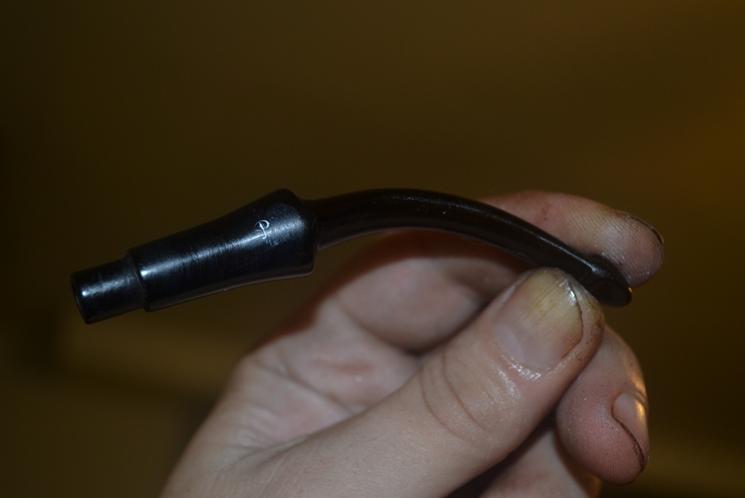
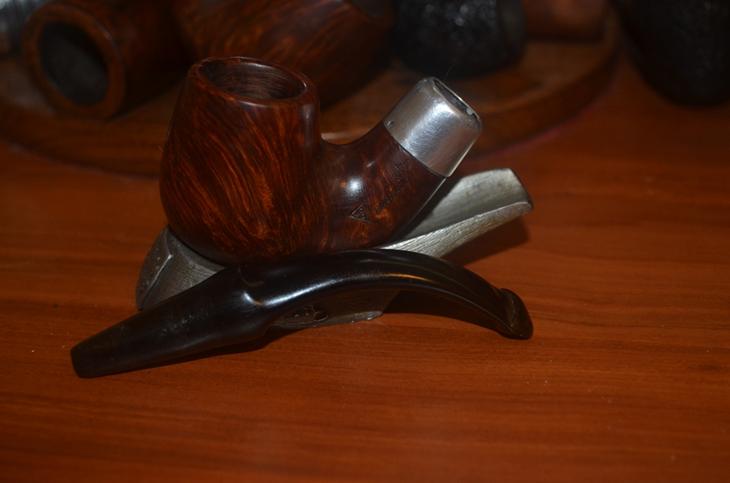
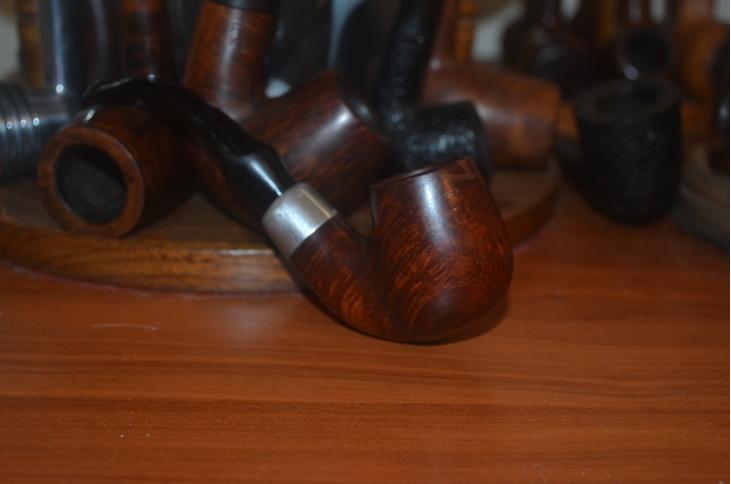
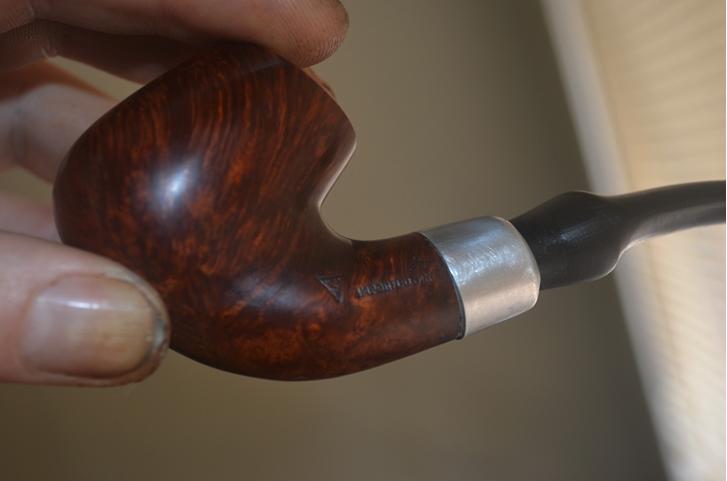
This brings me to my conclusion that the pipe I bought is from the original Sherlock Holmes Collection in 1987. Later issues tend to include the more common stamping of Peterson’s of Dublin/Sherlock Holmes/Baskerville, while mine is abbreviated to Peterson’s/Sherlock Holmes. The newer designs also have the inset sterling band, while the shape of my older Baskerville is smooth and uniform up the shank leading to the bit.
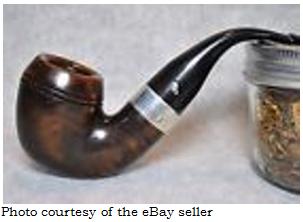
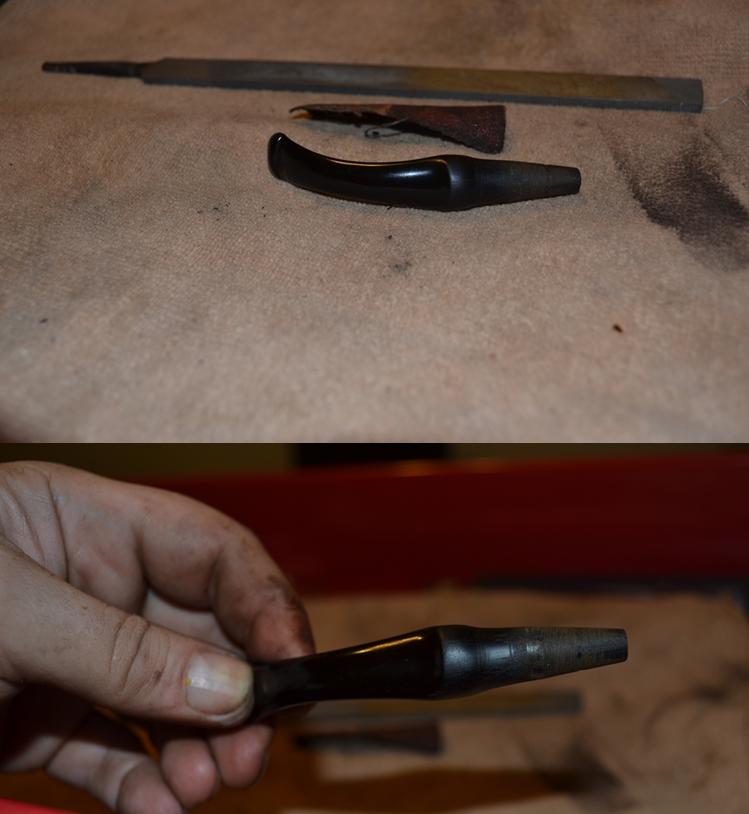
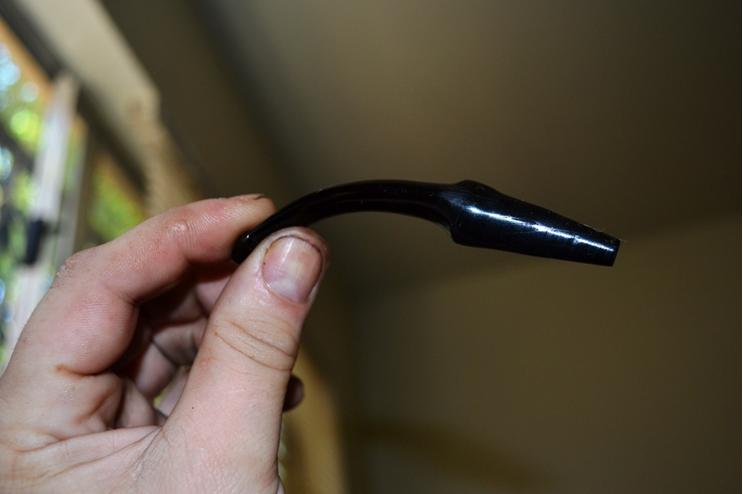
Pete1The other problems I faced with the restoration will be discussed in the order of their occurrences.

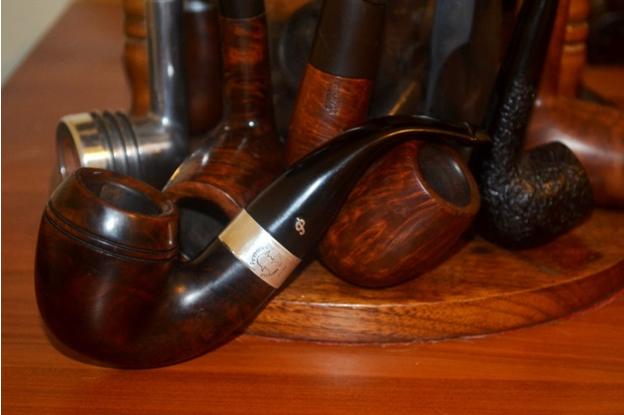
The Baskerville makes the second pipe from the several Peterson’s Sherlock Holmes series I have so far acquired. I expect someday to own the entire collection, in all of the other finishes that include the same number of rustics/sandblasts and eight ebony versions, not to mention one variety that really revs my engine. But that can wait. Here is my other SH pipe.Pete2 A great fan of the riveting published adventures of the brilliant if fictional mystery sleuth, I never tire of re-reading them or watching the various movie and TV adaptations, in particular the BBCs recent modern-day “Sherlock” with Benedict Cumberbatch in the title role. And as I noted in a previous blog, Holmes, despite the myth born of generations of portrayals by many talented if misled actors, did not smoke a gourd calabash or churchwarden. The most common type or shape of pipe mentioned by his loyal chronicler, in fact, is cherry wood (with six references). See https://www.gutenberg.org/files/1661/1661-h/1661-h.htm – or better yet, re-visit the stories themselves – for details.

I came across some curious similarities in the life of the celebrated creator of Mr. Sherlock Holmes of 221B Baker Street in London and the crime solver himself. Despite early stabs at writing, one of which was published, Doyle surprised his family by deciding to pursue a degree in medicine, which he received from the University of Edinburgh in 1881. [http://www.biography.com/people/arthur-conan-doyle-9278600#synopsis]

At least two real persons, both medical doctors contributed to Doyle’s ultimate creation of Sherlock Holmes: one of his professors and mentor, Dr. Joseph Bell, a renowned forensic scientist, had keen powers of observation, and Dr. Henry Littlejohn, a surgeon of police who for almost half a century consulted with Edinburgh police on medical issues related to crimes, both later contributed to Doyle’s unique detective character. [http://www.todayifoundout.com/index.php/2014/04/real-life-sherlock-holmes/]

After Doyle completed his third year of medical school, he signed on a ship’s surgeon for a vessel bound for the arctic circle. This experience gave him a zest for adventure.

And then there is the Watson connection. Not only was Watson a physician, but take a look at this photo of the author himself and compare the likeness.Pete3 RESTORATION
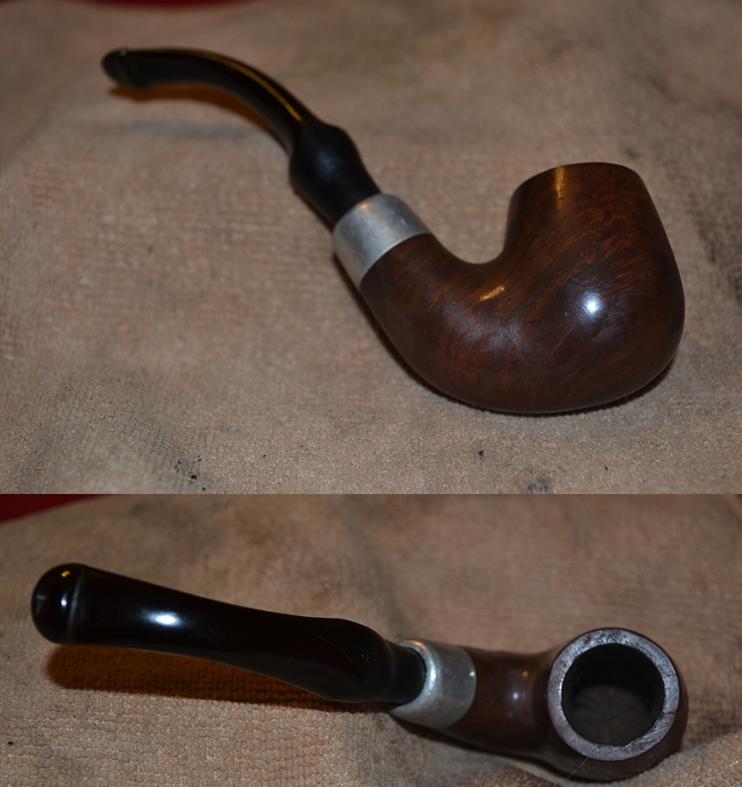
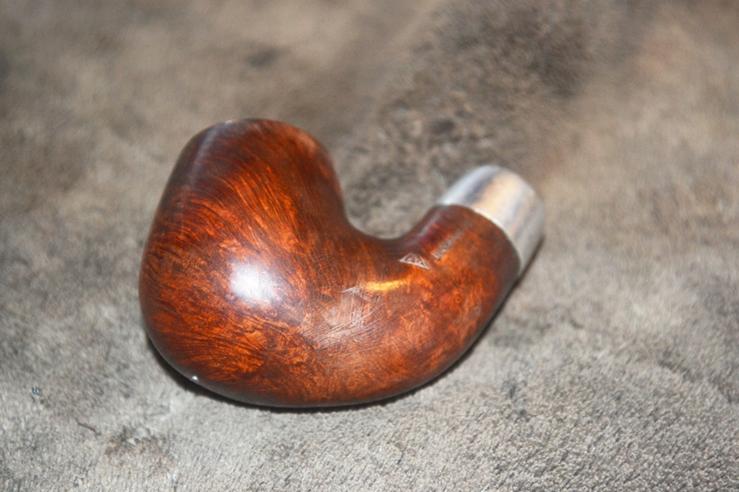
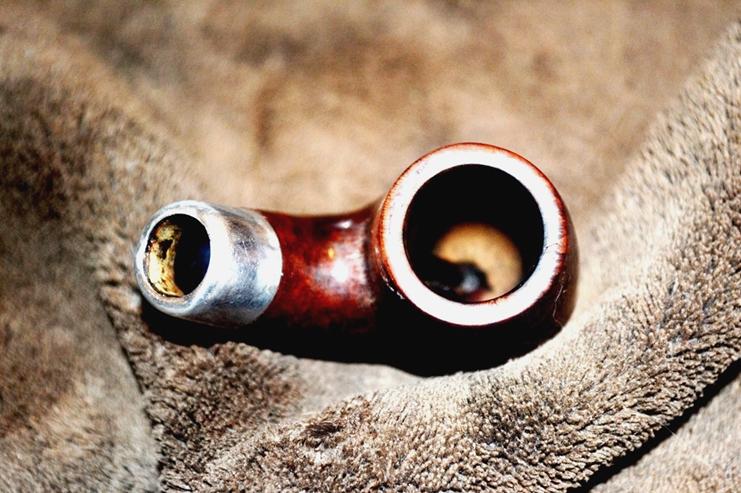
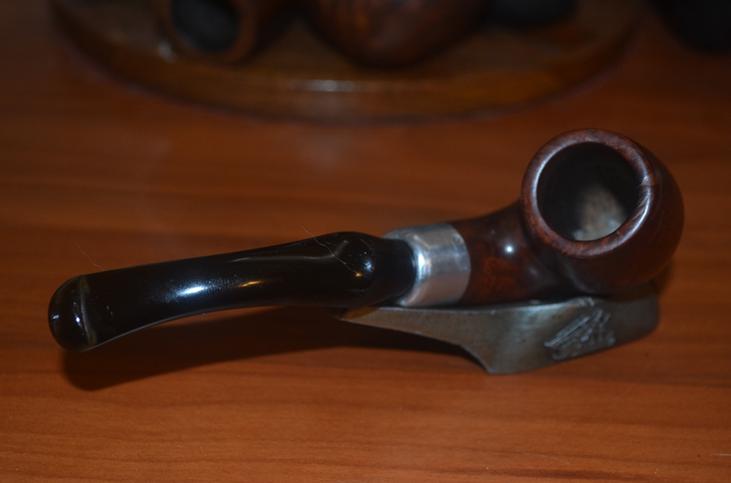
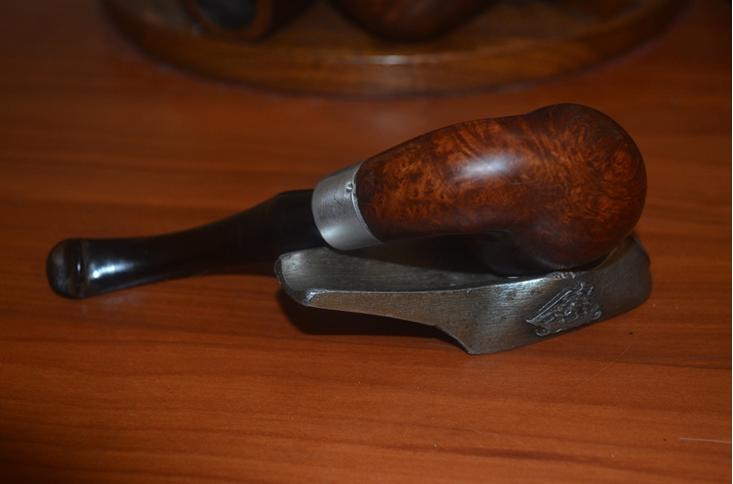
These photos of the Baskerville as I received it show how the picture in the eBay listing was a bit forgiving of the effects of age and smoking on the pipe, as noted by Glen from Peterson’s.Pete4

Pete5

Pete6

Pete7

Pete8

Pete9

Pete10

Pete11 Here, in brief, is where everything truly began to go against me, although I might state the process that unfolded with greater accuracy and brevity as being my own fault, pure and simple. I actually reached the end of a full “restoration” and took what I thought would be the photos of the finished pipe when, upon closer scrutiny, I noted with a sick feeling in my heart and gut that the Baskerville was not up to my standards, even though I knew I was not about to offer this potential beauty for sale. One-dimensional pictures tend to reveal the flaws with unforgiving accuracy. Check out these two angles alone, which are representative of the whole as it was.Pete12
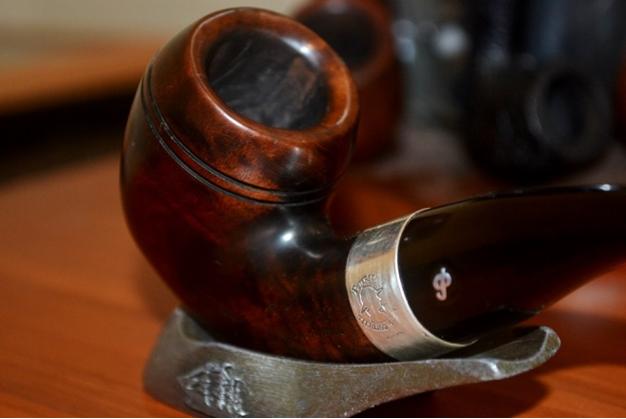
Pete13 For the most part, I’ll leave the criticism to the readers, but I will point out the most noticeable flaws, including unfixed scratches and other blemishes, not to mention the awful look of the chamber in the first photo above. Most disturbing to me was my failure to remove certain black areas caused, as noted before, by age and use, as well as the general lack of discernible graining I had intended to enhance.

And so, as the traditional children’s song goes, “Finnegan, begin again.”

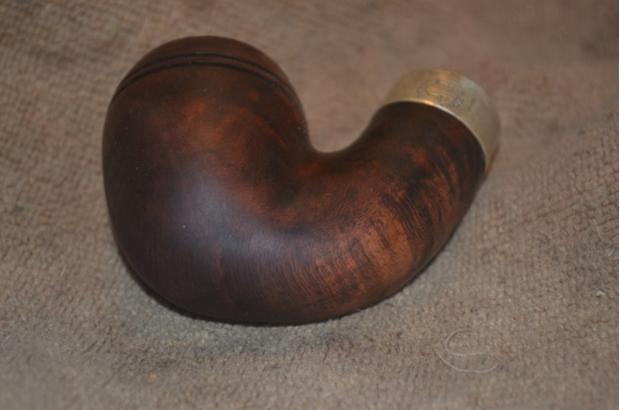
Removing the newly-applied waxes and stain, this time with 500-grit paper for a slow, gentle approach, proved much easier and faster than the far more laborious work I did the first time around. I only had to focus on the unresolved scratches and black areas. The paper alone was perfect for the small but pervasive scratches and a good deal of the blackened briar.Pete14
Pete15

Pete16

Pete17

Pete18

Pete19 The dark patches were the most difficult to remove, and when I reached the point where the sandpaper wasn’t up to the task, I finished with the finest grade steel wool. This part required considerable effort around the bottom, front and back of the bowl as well as the shank, but it worked. At last, the wood was the right shade and with no more serious dark spots.

Having enjoyed a few bowls of tobacco in the Baskerville (well, more than a few), I sanded out the small amount of carbon with 320 paper and retorted the pipe once more. Then I stained the outer wood with Fiebing’s Brown and flamed it.Pete20 I took off the char with 4000 micromesh and buffed from 1500-4000.Pete21
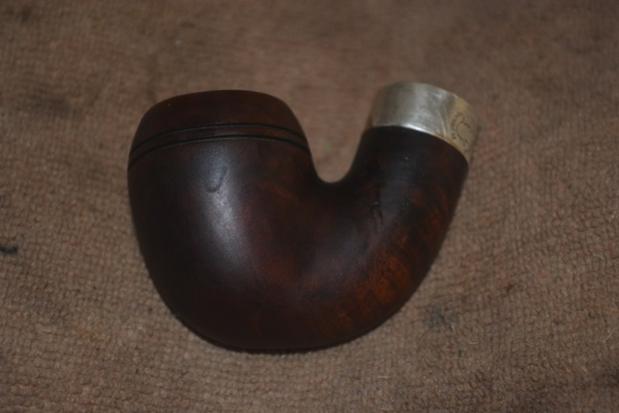
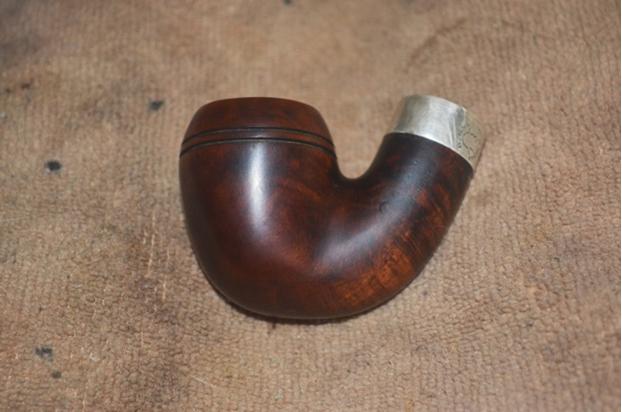
Pete22

Pete23

Pete24

Pete25

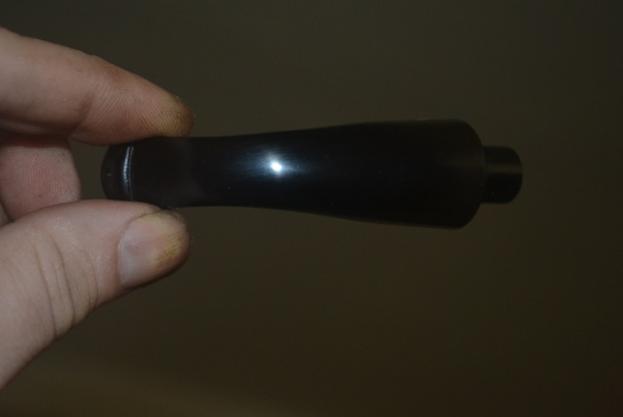
Pete26 The stem, almost perfect, only wanted gentle micro-meshing in a few spots, with 3200 and 4000. I buffed it with red Tripoli and then again on the clean wheel. I buffed the bowl and shank with white Tripoli, White Diamond and carnauba.Pete27
Pete28

Pete29

Pete30

Pete31

Pete32

Pete33

Pete34 But remember how I was describing how everything turned against me, only it was really my own fault? Well, then, that brings me to the final error: one I have learned to avoid so often in the past but this time spaced until it was a single stroke too late. In my enthusiastic sanding with the 500-grit paper, I took off a little of the Peterson’s/Sherlock Holmes stamps – not all, but part.Pete35
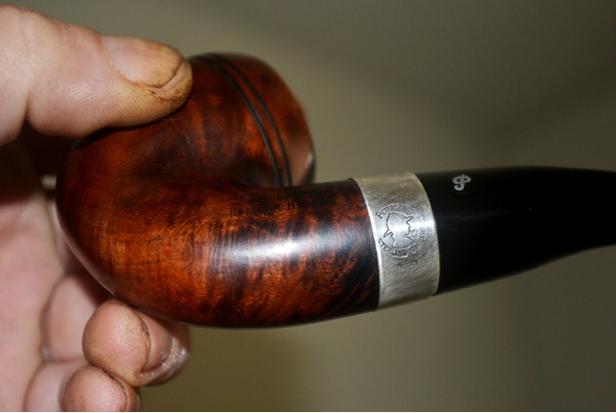
Pete36 CONCLUSION
For this blog, I attempted considerable research into the various Peterson’s Sherlock Holmes pipe series. I use the word various because of the three main groups that are commonly known to connoisseurs of the great Irish pipe company established in Dublin in 1865: the Sherlock Holmes Original Collection (with the word Original added only after the decision to add another and then a so-called final series was made), the Return of Sherlock Holmes Collection and the Adventures of Sherlock Holmes Collection. My goal was not only to identify the differences in the several lines’ designs and names but to determine the date(s) of manufacture. Despite my previous knowledge of the incredible difficulty of dating pipes in general and Peterson’s in particular, I thought these tasks would be easier than usual. I have almost never been more mistaken.

Starting at the source, so to speak – in this case, http://www.peterson.ie/CatalogueCOMP.pdf – I found, on pages 10-13 of the catalogue, listings for the first two collections, but nothing concerning the Adventures pipes. And although this catalogue did give the date of the SH Original Collection as “First produced in 1987 to honour the most famous character in fiction, Sherlock Holmes,” the term “first produced in” was vague. Well, for this small amount of help I was grateful, although almost every other website on the subject repeated the same general year. Also, I am sure that no matter how popular Sir Arthur’s brilliant mystery sleuth may be, the notion that Mr. Holmes deserves the high place in all of literature that Peterson’s bestows upon him would be readily accepted by Holmes himself were he real and alive but hotly debated in scholarly circles.

Furthermore, the official Peterson’s catalogue showed only the smooth versions of that series with a note that the series was of seven pipes, one for each day of the wee, with shapes “most favoured by Holmes.” [Again, see my proof of the erroneous nature of this claim above.] Almost as an afterthought, the catalogue reveals that all of the smooth designs shown are also available in rustic, sandblast and ebony versions, and a gold band can be substituted for the sterling silver.

As for the Return of Sherlock Holmes Collection, no date(s) of manufacture is given, and Peterson’s again shows only the smooth versions and notes the availability of gold bands but makes no reference to the same alternative rustic, sandblast and ebony versions. But it does mention and show these a couple of pages down.

The greatest surprises are the absence of the Adventures of Sherlock Holmes Collection altogether but the inclusion of beautiful pure white, sterling banded Sherlock Holmes Meerschaums in the same designs as the Original Collection, but again undated.

Therefore, searching far and wide for a list of the Adventures of SH Collection, I came across another Peterson’s of Dublin site showing the seven newest designs, mixed among smooth, rustic and sandblast. [http://www.peterson.ie/c/164/adventures-of-sherlock-holmes] Again, no date(s).

Finally, as a last measure before finishing this blog, I thought of the obvious and Googled “dating peterson sherlock holmes pipes.” I was rewarded with a site [http://thepetersoncollector.blogspot.com/2010/07/welcome-to-my-new-blog.html] providing almost all of the hard-sought data:

Sherlock Holmes Original Collection 1987-c. 1989
Return of Sherlock Holmes Collection c. 1991
Sherlock Holmes Meerschaums 2006

And so, would anyone out there who knows when the Adventures of Sherlock Holmes Collection came to be please reply to this blog with the coveted information…and if possible, a URL to verify it?

Sure as there be five-leaf clovers, I will sleep better having read the end of the mystery.

WDC Wellington Bent System – Restoring a Mainstay Pipe of the Celebrated Maker


Guest Blog by Robert M. Boughton
Member, North American Society of Pipe Collectors
http://www.naspc.org
http://www.roadrunnerpipes.com
http://about.me/boughtonrobert
Photos © the Author

Bruno Antony: Each fellow does the other fellow’s murder. Then there is nothing to connect them. The one who had the motive isn’t there. Each fellow murders a total stranger. Like you do my murder and I do yours…For example, your wife, my father. Criss-cross.
― from “Strangers on a Train” (1951), directed by Alfred Hitchcock, screenplay by Raymond Chandler and Czenzi Ormonde, starring Farley Granger and Robert Walker [Bruno]

INTRODUCTION
The movie was one of Hitchcock’s greatest and a favorite of mine. How could it not be, with the legendary detective novelist Raymond Chandler as the top word-man? But this is not a blog about swapping murders. It does concern the swapping of a bit, however, or to be more accurate, the removal of one from a basic Peterson’s System Standard in my collection of pipes awaiting more extreme repair, and which won’t be missed before it can be mended, to use for the William Demuth Co. Wellington System Billiard.

But first, let’s play Find the Pipe in the Lot.Robert1 No doubt you have spotted it without trouble, or will soon deduce the answer from following photos.

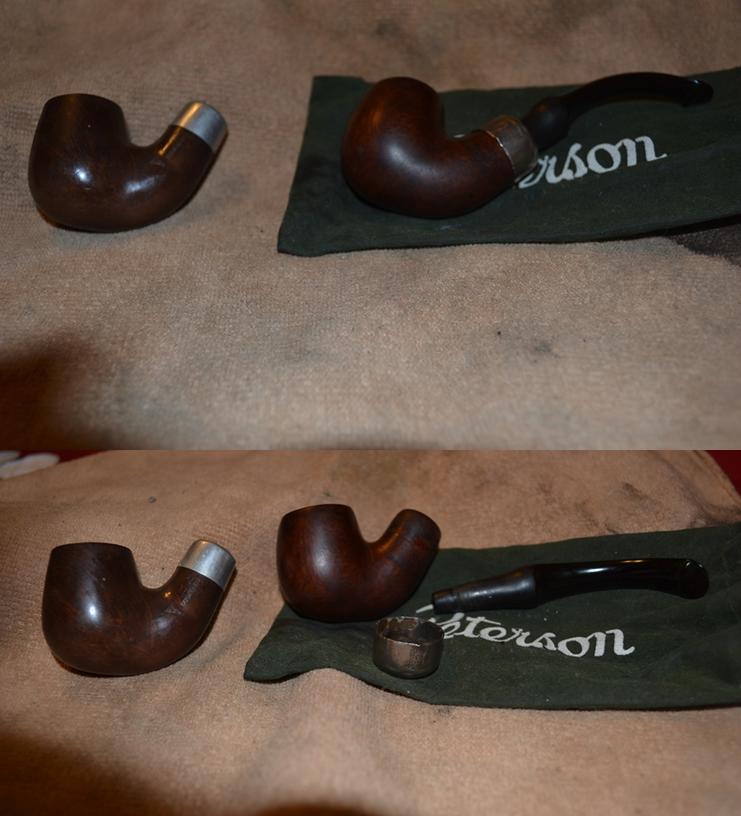
Now for the criss-cross: watch as the bit, at first loose but in place in the shank of the Peterson’s Standard System to the right in photo one, without warning falling to the trademark green sleeve along with the battered band in photo two. Look long enough, and I guarantee you’ll see the moment of selfless sacrifice for the blighted, bit-less predicament of the once proud, near-twin WDC close by. And then, in photo three – the miraculous transplant to the WDC after the donated organ has embraced its new host body, at least tentatively.Robert2

Robert3 A few words concerning the William Demuth Co. are in order, for those not familiar with its illustrious history. Demuth (1835-1911) entered the U.S. as an emigrant from Germany with no money when he was 16 and worked a number of odd jobs. His break came when he attained the position of clerk for a tobacco products trade company. Demuth founded his own company in Brooklyn, New York in 1862, two years into the Civil War, when he was only 27.
Success was rapid, leading to friendships with such prominent figures as James A. Garfield. [Garfield was inaugurated as the twentieth U.S. president in 1881 after winning by the narrowest popular vote margin in history, a mere 9,464 ballots, but with an extra 59 Electoral College votes. He served only four months before he was gunned down by a single shot aimed by Charles Julius Guiteau, an American lawyer denied an ambassadorship to France(evidently for good cause, as shooting the president on July 2, four months into his term, was not very diplomatic). Although Garfield lingered for about two and a half months, the assassin’s bullet caused the blood poisoning to which he succumbed. Guiteau was hanged several days short of a year after the ultimate assassination.]

At the Presidential Inauguration, Demuth presented Garfield with two meerschaum pipes, one in Garfield’s image and the other in the new First Lady’s. The friendship of the two men led to Demuth’s commissioning of a partial presidential line of pipes. But the linchpin WDC pipe was the Wellington, which lasted beyond the company’s own lifetime. Having become a subsidiary of S.M. Frank & Co. in 1937, WDC continued until the final day of 1972. The Wellington, however, was still offered in Frank’s catalog until 1976 and even had a brief reprise in the mid-1980s by way of consumer-direct sales.

Here are two other Wellington’s, the first courtesy of pipephil.eu and the second from pipedia.org.Robert4 RESTORATION Robert5

Robert6

Robert7

Robert8 In a sentence, this restoration was more about the stem than anything else. I had decided to go with a perfect replacement from a Peterson’s Standard System pipe in my personal collection. Then, when I donned my Dollar Store 3.75X glasses for a “final” close inspection, I cringed at the sight of the faint black outline of the Peterson’s P, shown below, now filled in with a white china marker.Robert9 Note the correct shape of this bit from lip to tenon. My next brainstorm was to sand off the P, and in fact set out to do so when I came to my senses. What can I say? Sometimes I have the stupidest ideas. And so I opted to let the buck stop here and repair the bit I took off of the Peterson’s System Standard shown in the criss-cross photos of the Introduction. That System Standard needs serious work, also; not only a new, genuine bit but a replacement matching band. I will tackle that one when I have the new bit and band and am up to speed on the process of banding.

With a happy glow of contentment in the pit of my belly, I replaced the above bit, with the P filled in at last, on its rightful pipe in the stand-up, two sided bookshelf with doors where I store most of my collection, and opted to proceed with this restoration by doing the long, tedious work of applying layers of black Super Glue to build up the thinner, bottom section of the bit that lacks a tenon. As a result, while the rest of the Wellington has been finished for about ten days, the old bit, mangled by some wannabe pipe fixer, took days of patient layering, sanding and micro-meshing each phase, then polishing on the buffers, and was only completed moments ago.

I started the bit on its way, which I knew would take some days, by filing it to a uniform tapering roundness and sanding with 150- and 320-grit paper before micro-meshing from 1500-4000.Robert10

Robert11 After that I gave the entire surface of the bit below the bulge the first of four thick coats of black Super Glue. Aware of the risk, I then stripped the old finish with as short as possible of an Everclear soak.Robert12

Robert13

Robert14

Robert15

Robert16

Robert17 Leaving the bowl and shank for about 10 minutes in the alcohol and time enough to dry, I reamed and sanded the chamber to the smoothness of a chamois cloth and retorted the pipe using the bit from my own Peterson’s System Standard. Starting with super fine 0000 steel wool, then micromesh every step from 1500-4000, the wood and steel band had a nice natural sheen.Robert18

Robert19

Robert20

Robert21

Robert22

Robert23 Without stain, using the natural rich color of the briar, I prepared the bowl and shank for the coming test to see if the bit worked out, the likelihood of which I had doubts, by buffing it with white Tripoli, White Diamond and two coats of carnauba, using the plain cloth buffer between each, of course.

The following days seemed to drag with each successive layer of black Super Glue and the long drying time followed by sanding with 200-grit paper and micro-meshing up the scale each time. But in the end, the result was worth the time and effort, considerable and somewhat unnerving as they were.Robert24

Robert25

Robert26

Robert27

Robert28

Robert29

Robert30

Robert31 CONCLUSION
Again, this battle was far more about trying to recover an available bit, so that it would fit and lock in the shank, rather than any problems I faced with the bowl and shank. As the bit was when I received the Pete System Standard with which it came, well, the bit was the tip of the iceberg with that future project. In fact, my friend and mentor, Chuck, recommended that I send it to someone he knows in Denver – not so much because the task was beyond my skills but that it was what he would do if he needed a new Peterson’s bent system pipe stem with the right measurements as well as a replacement band of the appropriate type. I was fortunate with the WDC in that it called for a bit designed after the Pete System variety.

Of course I would have preferred to place a perfect, like-new bit in this great WDC Wellington, but the personal reward came in finding out that I could take what I had and make it work.

I think I’ll do the same with the estate Peterson’s Standard System that gave its bit for this pipe, after I’ve received the new parts in the mail.

The Perfect Birthday Present for a Mother Who Never Smoked and Has Everything


Guest Blog by Robert M. Boughton
Member, North American Society of Pipe Collectors
http://www.naspc.org
http://www.roadrunnerpipes.com
http://about.me/boughtonrobert
Photos © the Author

Mr. McGuire: I just want to say one word to you. Just one word.
Benjamin: Yes, sir.
Mr. McGuire: Are you listening?
Benjamin: Yes, I am.
Mr. McGuire: Plastics.
Benjamin: Exactly how do you mean?
― From “The Graduate” (1967), directed by Mike Nichols; with Anne Bancroft, Dustin Hoffman, Katharine Ross, many others…and Walter Brooke as Mr. McGuire

INTRODUCTION
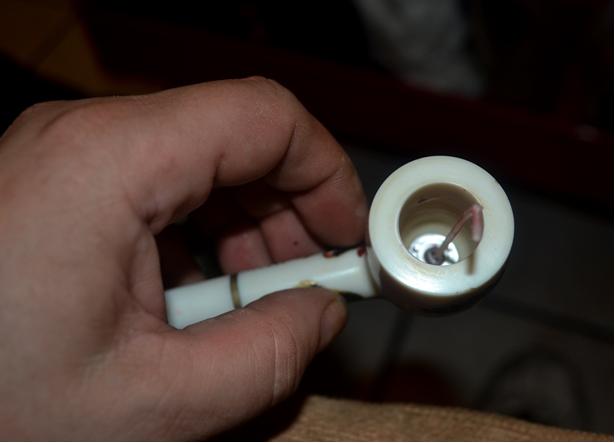
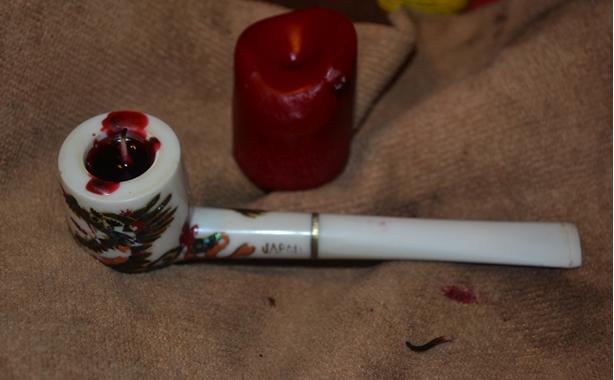
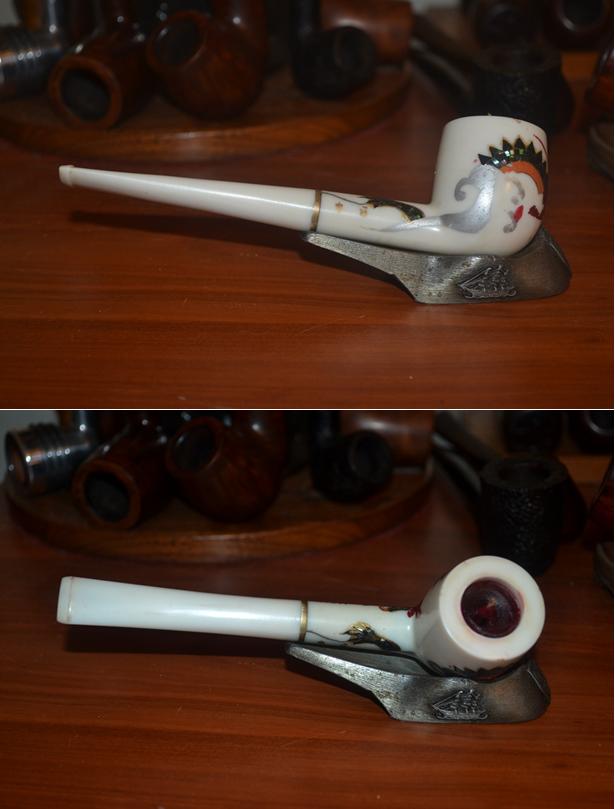
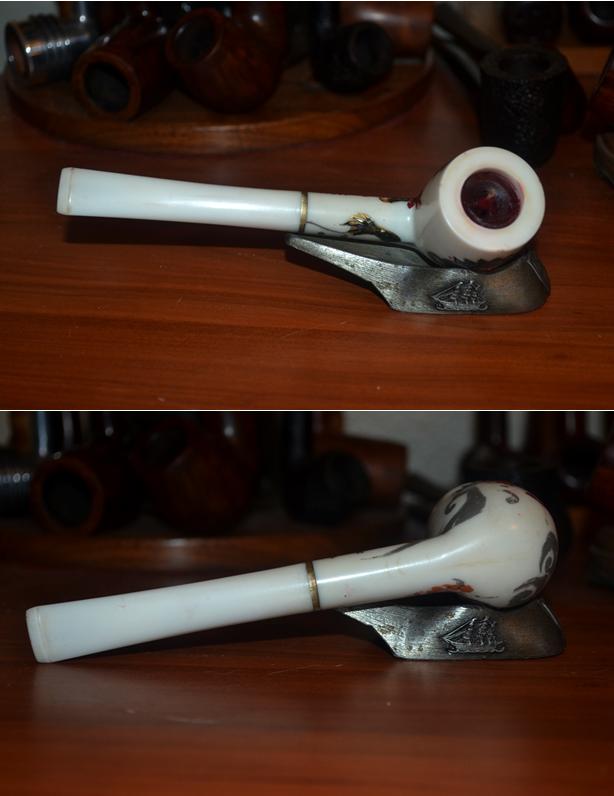
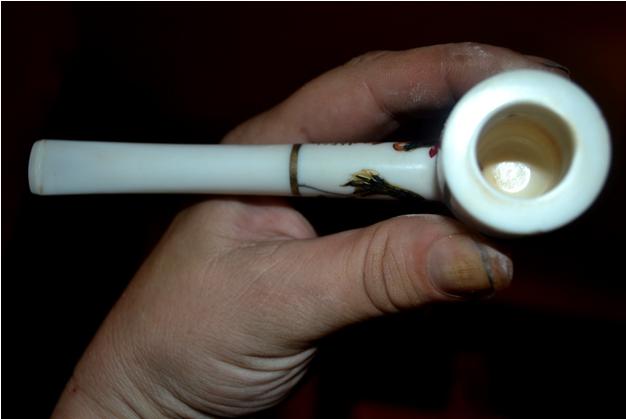
My mother’s birthday was last Saturday, June 27. I won’t go into the kind of details most women prefer to avoid, even though my mother is by no means most women. She would be the first person to tell you her age, and that is as it should be. But I will tell you about the Japanese hand-painted and otherwise adorned white billiard I bought as part of a pipe lot, thinking it was ceramic, even when it arrived, because of its heft and the thickness of the bowl. I will describe and illustrate this pipe and the work I did to restore it because of my decision to make something unusual and special of the otherwise novelty or gift store item as a late present to my mother for a landmark birthday (I’ll go that far and not a word more).

I only learned of the true composition of the Japanese beauty after I stopped by my Post Office Box to pick it up, along with the regular briars that came with the lot, on the way to my pipe club’s monthly meeting on the third Thursday of a forgotten month last year. And it really is a pretty thing, with its hand painting and what looks to be intricate application of green, red, purple, blue, black and other colored stones of whatever types arranged in the shape of a dragon.

As I recall, I arrived at the meeting a little late and showed it first, as my supposed jewel of the lot, to my mentor, Chuck. He took it in his rough but surprisingly kindly hands and turned it every which way, frowning.

“What the hell have you got here?” I believe were his exact first words. Anyone who knows Chuck understands how he likes to beat around the bush.

“Ummm, a ceramic pipe from Japan?” I tried, feeling my gut sink, rightfully as it turned out.

“I don’t think so,” he said and headed across the room to a table where two professional pipe-makers, Victor Rimkus and Don Warren, sat talking.

I like to think the idea that discretion is the better part of valor stayed me from joining them. Instead I watched and listened from my seat at a safe distance. At least they all seemed genuine in their curiosity and perplexity about the material used to fashion this odd Japanese billiard. At last, Victor whipped out his trusty cellphone to use the flashlight app, but not as I expected. Here is a poor shot I later took replicating his action.Rob1 I gave it a moment’s thought as I vaguely heard them chortling, and the truth hit me like the bright Christmas ornament Victor had made of my beautiful new pipe: it was plastic!

Chuck walked back to me with one of his big grins and the pipe outstretched in a hand, and as I took it, he asked, “Do you know what you have here?”

“Yes, I figured it out,” I replied, snatching it from him with a bit of motherly protection.

“That’s how you learn,” he said, managing not to laugh outright.

And so I had a marvelous Japanese plastic pipe that I knew right off I could never imagine offering it for sale, even if there might be someone somewhere on the planet who would want to buy it. Yes, I did smoke a bowl in it later that night, for the experience if nothing else, and it wasn’t all that bad; maybe a tad toxic, but not bad at all.

RESTORATION
Rob2

Rob3

Rob4

Rob5 Doesn’t it look like the dragon broke its hind quarters with the bit fully closed at an exact half-turn off? I set the dratted thing away with my broken pipes, all of the others of which had one thing in common, even the cheapest Medicos – they were real pipes, not plastic and Made in Japan, if the fatally flawed tobacco pipe was not in fact made in one of the Koreas.

At any rate, the week before my mother’s birthday, I found myself in line at my Post Office with a card I found there (the USPS is hilarious when it comes to greeting cards), and the idea to send my dear mother the pretty plastic pipe that might have come all the way from Japan first occurred to me. I dismissed the notion out-of-hand as some sort of mental attack of ghastly tackiness.

But as the week passed, somewhere in the echoes of my mind as Glen Campbell sings “Wichita Lineman,” I continued to cogitate on how I might somehow make the perhaps proudest pipe poseur into a worthwhile gift my mother might just love. After all, she has become quite interested in the myriad types of pipes and ways they can go wrong following my blogs on this site, despite the fact that she has never smoked anything – at least not to speak of.

Well, first I had to align the bit, which several of the above photos reveal is half off its screw, in more ways than one. Besides, this was a new lesson I received from Chuck regarding a genuine example of fine pipe-making, a 1930s L&H Stern Park Lane De Luxe Billiard that was about an eighth of a turn off. And so I gathered together my pump pliers, a small cloth and a Bic, and set myself to the task of heating the tenon until it was black. Then I draped the cloth over the tiny screw sticking out of the shank and clamped my pliers over the cloth until the jaws settled and closed shut. With all of my might, I turned the tenon as far as it would go, which turned out to be about halfway, and repeated the process. The stem was in perfect alignment.Rob6 By the way, not only is the direction to turn the tenon counterintuitive, as Chuck warned me obliquely, but the entire concept of heating metal (which thereby expands it) takes some pondering to get a handle on. But if nothing else, my mind does thrive on theories that seem to defy logic. Consider this: the turning of the tenon, in the direction it is off-set, is made possible by the very expansion of the metal stretching that which surrounds it. The trick is not heating it to the point of cracking the outer substance.

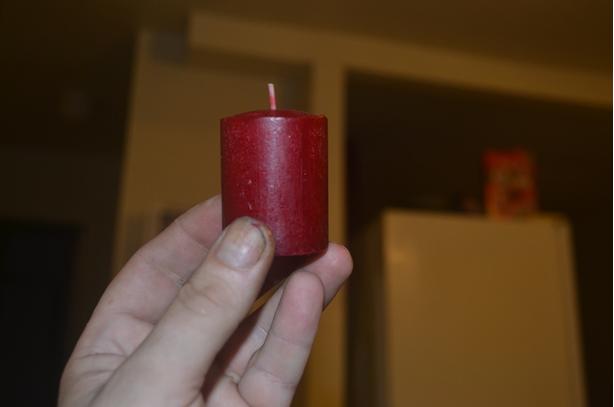
I considered skipping the next step for reasons that will become apparent, but the thought was abhorrent to me, and so I cleaned some stains, light and dark brown, from the chamber using a small cotton cloth square with a little Everclear. There was still a light brown area around the bottom of the chamber.Rob7 While I was at it, I used the super fine steel wool #0000 on the bit and turned it from a creamy color to bright white. I finished the bit with 4000 micromesh.Rob8 I happened to have a dark red votive candle that was perfect for my plan.Rob9 Peeling away the paper label from the bottom of it, I removed the wick and its aluminum base and inserted it in the direct center of the chamber.Rob10 By now I’m sure it’s clear where I’m headed with this. If not, there is something wrong with the reader’s sense of foreshadowing. At any rate, I bent the top of the wick to a side and melted the rim of the candle into the chamber until it was almost full. I set it aside to harden again and clipped the excess wick.Rob11 The waxed that dripped onto the pipe’s rim came off easily, and since no buffing on a wheel was necessary or even possible, I was finished.Rob12

Rob13

Rob14

Rob15 CONCLUSION
For the most part, I have no problem with special kinds of plastic being used to make tobacco pipes. I have even said that no real pipe collection is complete without at least one of The Pipe versions, made of pyrolytic graphite/phenolic resin, a high heat and pressure plastic the components of which were created more often for use in liquid rocket fuels. This liberal attitude toward pipe material, in a rarefied and more than a little opinionated sub-culture of human society in general, does not go over well with many pipe enjoyers. But The Pipe models, started in 1963 by the Super-Temp Corporation contracting with Venturi Inc. for marketing, lasted until 1975. They were supposed to be fun, and, after a brief time of distribution of only the pure black “dress pipe” variety, were offered in multiple colors such as yellow and red and were often mixed in wild combinations representative of the good old Hippie Generation that inspired them. The Pipes made no pretense of being anything but a fancy kind of plastic that may have been used in the construction of the Japanese billiard, which was likely bought by or for a collector who discarded it after learning of its material. Here are two The Pipes I own, one of which I will restore for sale on my site and the other that I will keep.Rob16 I guess all I have left to say at this point is: Happy Birthday, Mom! I hope you enjoy your new, very special Japanese plastic tobacco pipe candle for many years. And remember, you can burn it as often as you like, and I’ll always refill it for you.

A Possible Peterson Croydon That Could Be the Twin of another Reborn Pipe; or, Two Minds with Almost a Single Thought


Guest Blog by Robert M. Boughton
Member, North American Society of Pipe Collectors
http://www.naspc.org
http://www.roadrunnerpipes.com
http://about.me/boughtonrobert
Photos © the Author

“There comes a time in every rightly-constructed boy’s life when he has a raging desire to go somewhere and dig for hidden treasure.”
― Samuel L. Clemens (Mark Twain, 1835-1910), U.S. author and humorist, in “The Adventures of Tom Sawyer” [1876]

INTRODUCTION
I often wonder what my life would be like today had my mother married the man she loved – a well-known Apollo Program astronaut who later even tried to convince her to leave my dad. But she chose the space research and development nerd in the Brooks Brothers suits instead of the man in the dark blue uniform – which he sometimes traded for a big, bulky, white one with a sealed helmet to protect him from the void of space – who had the Right Stuff.Rob1 By the time he called again, I was about 10, living in the well-to-do Cleveland suburb of Shaker Heights, and Tricky Dick had somehow just been re-elected President. Even I knew what a mistake that was. I got out of bed late one night during one of my parents’ Gatsby-like parties to answer the phone upstairs in the hallway. A hushed voice, halting in surprise, asked, “Is Kit – your mother – there?”

I told him she was at the party downstairs and said I could go and get her, but he quickly said no, asking me to have her call him and giving me his nickname. He must have thought I wouldn’t know who he was, but meeting him when I was just a toddler was something I never forgot. “Yes, sir, I’ll tell her, Colonel So-and-So [not his real name],” I replied, and can still hear him almost choke up over the long-distance phone line 43 years ago. Speechless for a moment, he at last suggested I just tell my mother in the morning, and I said, like a good little soldier on a mission, “Okay, sir. I understand.” And somehow I did.

Some events seem probable had my mother not married the man in the Brooks Brothers suits: I likely would have followed the astronaut to the Air Force Academy, and he would have been proud of me until he died some years back, unless I beat him to it in the service of my country. But the rest is blurry, except that I am still fatherless although my dad is alive and well.

Oh, and one more thing. I would not be here in beautiful Albuquerque, searching for treasures in pipe lots and one at a time and all the other right places.

RESTORATION
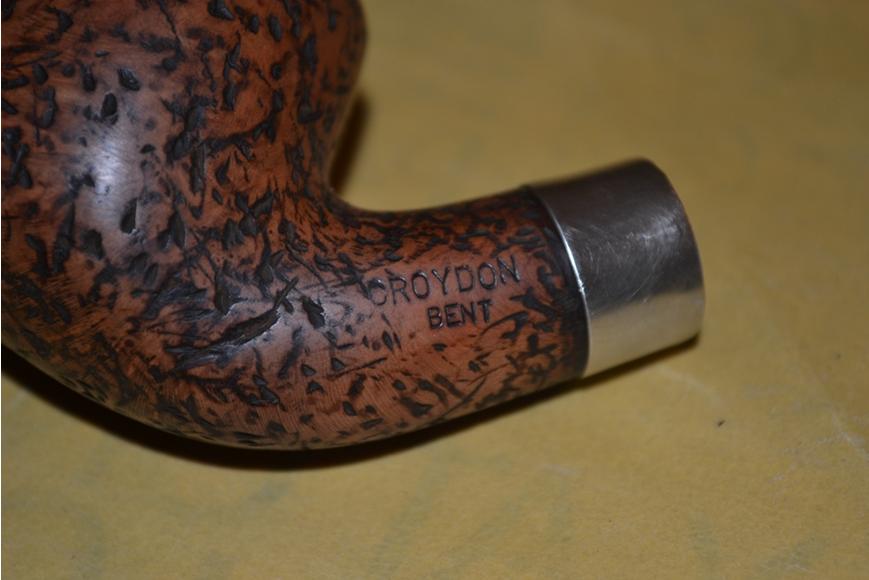
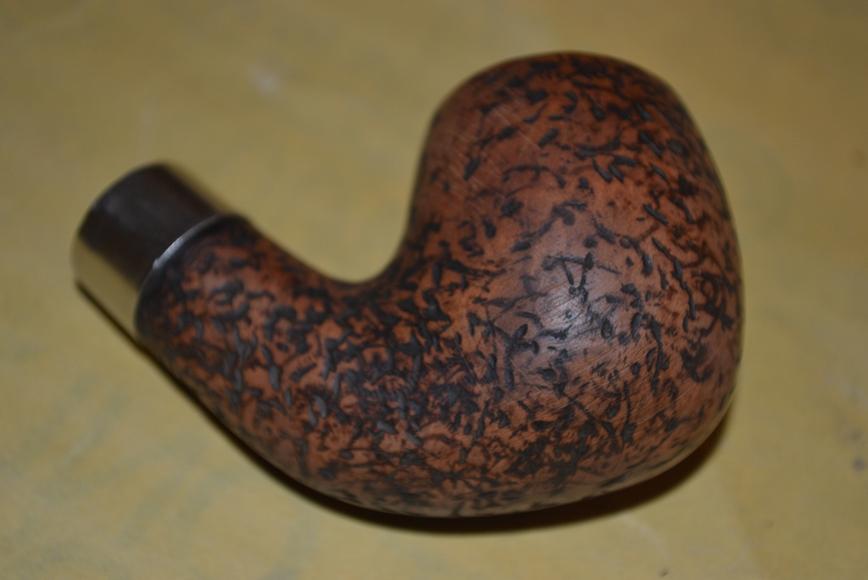
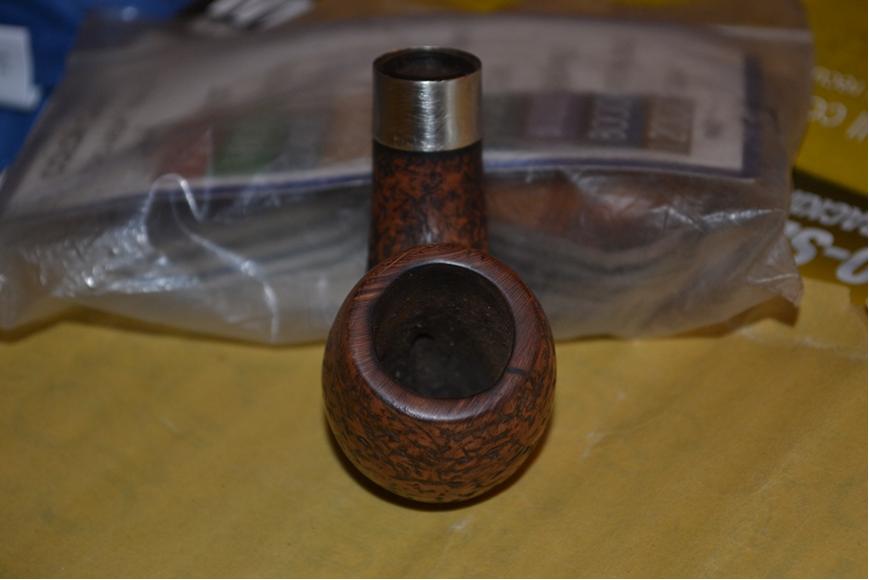
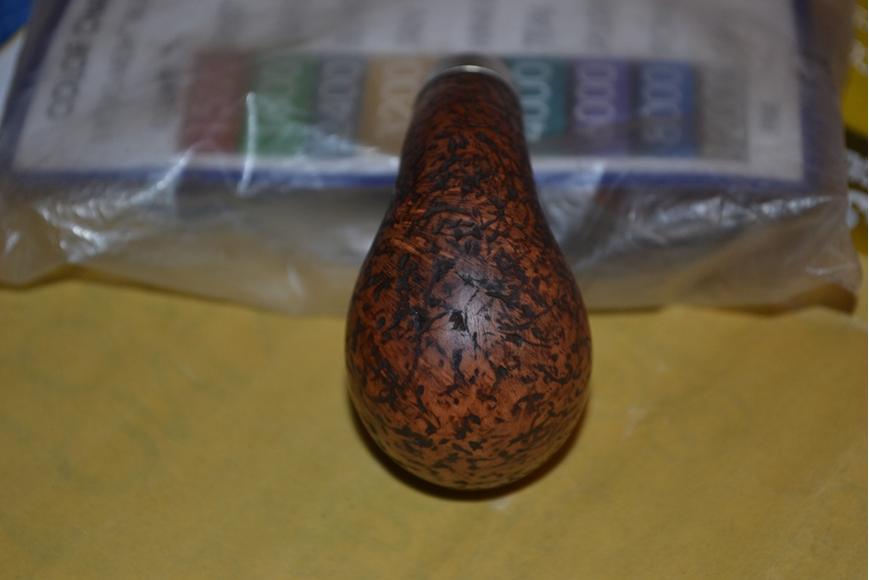
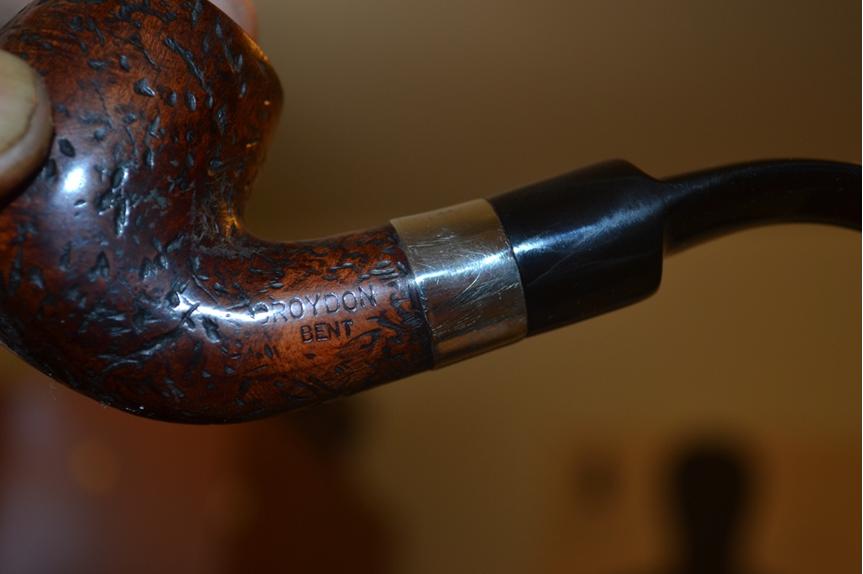
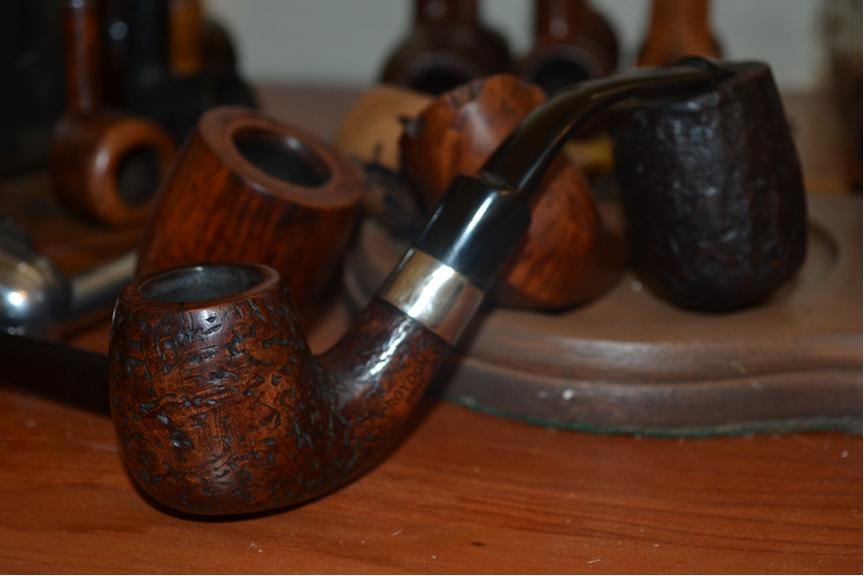
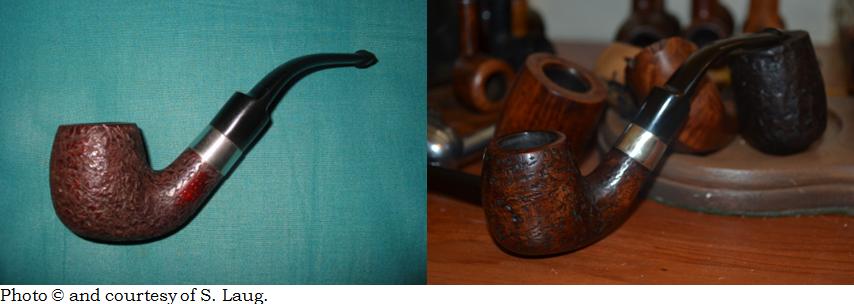
Looking online last week for background information on Croydon, I found links to various sites showing versions said to be made in London and Surrey, England as well as Spain, but without photos showing the nomenclature. Then I found a site for a definite Croydon brand from a Dutch carver named Lex Brouwer. There were also several sites for other brands, including Hilson and Peterson’s, with Croydon lines. I felt safe ruling out Hilson, which is known for its meerschaum lined chambers and mostly glazed clay bowls and shanks. Imagine my surprise to find an old Reborn Pipes blog by our host himself, from three years ago (June 20, 2012), about a ruined Croydon he believed was an old Peterson and of course re-made it to look perhaps better than new! Here are, top to bottom, his Croydon before restore and mine:Rob2

Rob3 Clearly, the similarity of the two pipes, other than the identical stampings of CROYDON over BENT, is not in these two before shots. What is amazing is how alike our vision of the finished pipe should be. (No fair skipping ahead to see what I mean! Bad habit!) Maybe even scarier is the fact that Steve’s modifications were made by necessity, about which you can read at https://rebornpipes.com/2012/06/20/old-croydon-reborn-3/, while mine were just for the sake of personal preference and nothing else. I might just as well have reamed and sanded the chamber, scrubbed and retorted the insides, lightly micro-meshed the bit below the lip and given the whole thing a nice new buffing.Rob4

Rob5

Rob6

Rob7

Rob8

Rob9 But I’m just sick and tired of all the rusticated pipes that are finished with black stain! Enough is enough, I say! At least for this restoration, which I can only call that because of the initial stripping of the insidious stain, starting with 300-grit sandpaper followed by 400 and micromesh every grade from 1500-4000.Rob10

Rob11

Rob12

Rob13

Rob14

Rob15 I wanted to remove as much of the black from the crooks and crevices of the rustication as possible. Yes, my goal was to eradicate it if possible, which proved impossible with my knowledge – short of soaking only the wood in Everclear, which was problematic what with having to plug both ends of the draught hole and keeping the metal tilted up and out of the 95% alcohol. I suspect the alcohol would have eaten its way past any stoppers I might have devised anyway, and besides, I have had enough experience stripping pipes this way to have learned that less, in most cases, is better. Of course, in the case of Steve’s Croydon, he had absolutely no choice but to do a total makeover, even to the point of considering the idea of re-Christening the completed work a “Croydon-Reborn.” Reading his blog, I was touched by the apparently sincere struggle he had with the entire process he has many times since performed with ever-increasing brilliance.

At any rate, I chose the kinder, gentler approach of going over the wood again, but with super fine 0000 steel wool and focusing my tiring hand-work on the celestial but microcosmic canals and pocks. Then I did the full range of micromesh again from 1500-4000.Rob16

Rob17

Rob18

Rob19

Rob20

Rob21

Rob22 As is apparent, my efforts to remove even a little more of the blackness were fruitless. I should have known better than to try, but still not refrained from using the steel wool and another thorough micromesh progression for its fine effect on smoothing the wood and making it glow.

It was time, if not overdue, for retorting, which took a surprisingly low number of Pyrex test tubes of boiled Everclear shot through the stem and shank into the chamber filled with cotton that came out with any brown, and another to boil up and drain out several more times to confirm the job was done right.

Now, for the point of all this technically unnecessary work obliterating the certainly OK original black stain. What I was looking for was something closer to the briar’s true color but dark enough to cover the grain and fill in the grooves. I decided on Lincoln Marine Cordovan (Burgundy red) boot stain, knowing that except with the lightest shades of briar, it leaves only a subtle redness. Here it is, first stained and flamed, then gently buffed with 3200 micromesh and then after being hand-coated with Halcyon II to sit a while before buffing on the clean wheel.Rob23

Rob24

Rob25 Everything so far had worked out just right to do the minor clean up needed on the upper top and bottom of the bit, and including the lip, while the wax on the briar dried a little and worked into the wood. I micro-meshed the bit with 1500, 2400, 3200 and 3600 before buffing with red and white diamond, using the clean wheel and a soft cotton rag after both. Below are two shots before and one after, as both sides ended up the same.Rob26

Rob27

Rob28 The last part of the job was to put the briar to the clean buffer with a light touch, re-join the two separated parts of the pipe and again wipe the whole thing with a cotton cloth.Rob29

Rob30

Rob31

Rob32

Rob33

Rob34

Rob35 I caught the slight smudge on the top of the stem in the photos above after taking them and fixed the problem. Now for the final, left view photos of Steve’s finished Croydon and mine side-by-side.Rob36 CONCLUSION
This was, of course, no competition, if only because of the fact that Steve’s was done three years ago, a few months before we ever “met” online. But had they both taken place at the same time, his would, hands-down, be the winner. Being able to take a pipe in the abominable condition in which Steve found his and clean it, rusticate the bowl and shank himself and replace not only the stem but, it appears, the band using the exact types with which an original is created astounds me…and inspires me.

If I still drank, Steve, I’d have two, one for me and one for you. But I wouldn’t stop there, so I guess I’ll have to settle for a Monster!

Finding a Heart for an Aristocob Aluminum (Rhodesian?)


Guest Blog by Robert M. Boughton
Member, North American Society of Pipe Collectors
http://www.naspc.org
http://www.roadrunnerpipes.com
http://about.me/boughtonrobert
Photos © the Author

The Wizard of Oz: “As for you, my galvanized friend, you want a heart. You don’t know how lucky you are not to have one. Hearts will never be practical until they can be made unbreakable.”
The Tin Woodsman: “But I still want one.”

― From “The Wizard of Oz” (movie, 1939)

INTRODUCTION
As a movie and trivia buff, not necessarily together, one of my favorite questions that comes up now and then in conversation and on quiz shows is “When was the Golden Age of Hollywood?” I like it because of the slippery term Golden Age, which implies years forming a great period of time with specific world-changing events and personages, as in the Bronze Age or the Age of Enlightenment. It’s also a trick question, the expected (but incorrect if often accepted) answer being 1939. Granted, in that one year, some of the great movies in Hollywood history were made, including “The Wizard of Oz,” “Gone with the Wind,” “Stagecoach,” “Mr. Smith Goes to Washington” and “Wuthering Heights”. But the true and more agreed upon answer would be 1930-1959, which encompassed “All Quiet on the Western Front” to “Anatomy of a Murder”.

All of this is my way of approaching a term I often refer to but did not coin, the Golden Age of Pipe Smoking. In my mind, although the exact timeline is sometimes said to have begun as long ago as the mid-1800s, this period was from the 1930s into the ’70s, when pipes were ubiquitous and respected all over the world, as reflected in motion pictures, TV and society in general. Below are a few famous Hollywood pipe men: Fred Astaire, John and Lionel Barrymore, Harry Belafonte and Fred MacMurray.Cob1 My own dad and almost all of his friends enjoyed and in many cases had collections of the magic briar social lubricant. The subject of this blog, a brand of pipe named with perhaps tongue-in-cheek humor, is one of the quirkiest, most unusual examples conceived during this wonderful age that I believe is experiencing a renascence: the Aristocob, invented by Joseph W. Zarikta for the Al Cobb Corporation and granted U.S. Patent №. 3,292,639 on December 20, 1966.Cob2 The Al Cobb Corp. became Al-Cob Corp. in Grand Haven, Michigan, and still later Aristocob Inc. in Caledonia, Michigan before being taken over by the Missouri Meerschaum Company in Washington, Missouri. Missouri Meerschaum made the corncob inserts from the early 1970s until 1983, and since then replacements have not been manufactured, but with dedicated searching some will, on occasion, show up when they are found and offered online. Even though I could not locate any for this restoration, I know they still pop up because of several sold-out listings I found on eBay. However, by most accounts the original inserts, or even self-styled replacements, are high maintenance contraptions that quickly become wet, mushy and, in short, nasty to use. Still, our esteemed host, Steve, emailed me the following message: “I love those old aristocobs. They are sweet looking retro experiments.” Indeed they are. I even found several sites where this pipe is given the high description of “art deco.”
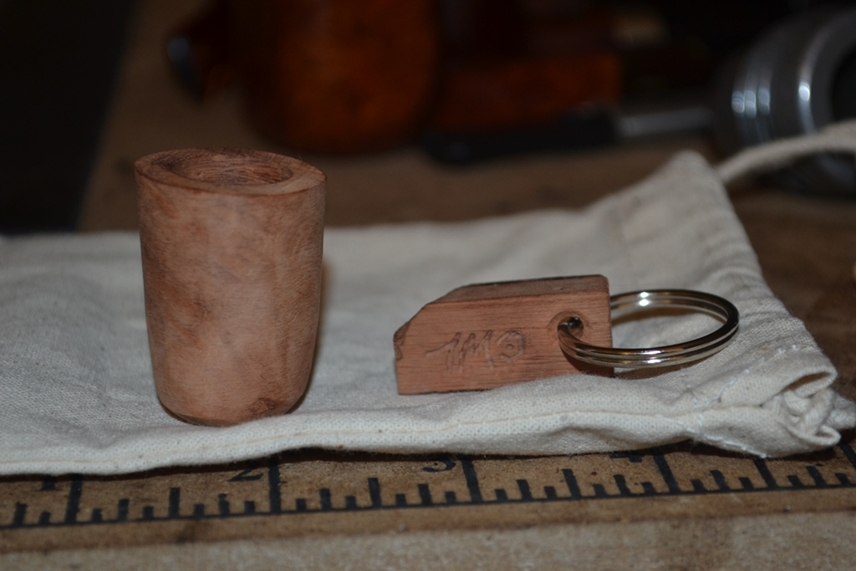
Nevertheless, I believe I have found a more suitable and permanent solution to the problem, even if it does detract from the good, old timey flavor of the maker’s intent: briar inserts made to fit the Aristocob. [See http://www.owlpipes.com/#!new-collection/c1jn5.%5D For this restoration I ordered one, and considering I bought the beat-up old pipe itself for $2 at a yard sale, the $25 cost of the briar insert should be worth it. As timing allowed, the insert arrived on Friday but was too big for my home mailbox, where the package was sent due to a mix-up with PayPal, instead of the Post Office Box I use most often. And the Postman being too lazy to walk to my door (or just afraid to do so in my neighborhood), I picked it up at the Post Office Saturday.

This restoration, therefore, takes place in real-time, as I write this.

RESTORATION

SATURDAYCob3

Cob4

Cob5

Cob6

Cob7

Cob8

Cob9

Cob10

Cob11 Before venturing to my neighborhood Postal Station, which is the local training site and therefore deplorable, I decide to do a preliminary clean-up of the metal. The oxidation on the bowl, in particular in the threads and deep grooves, comes off with ease using a pair of small, thin, cotton gun cleaning patches soaked in Everclear. I am able to use the same patches to clean the threaded lid inside and out. The identical process on the chamber removes most of the old tobacco juice and minimal oxidation except for the brown grime near the opening of the air hole. For that I dip a bristly cleaner in the alcohol and run it through the wide open, tubular shank and into the bottom of the chamber. The shank needs a second swabbing.Cob12

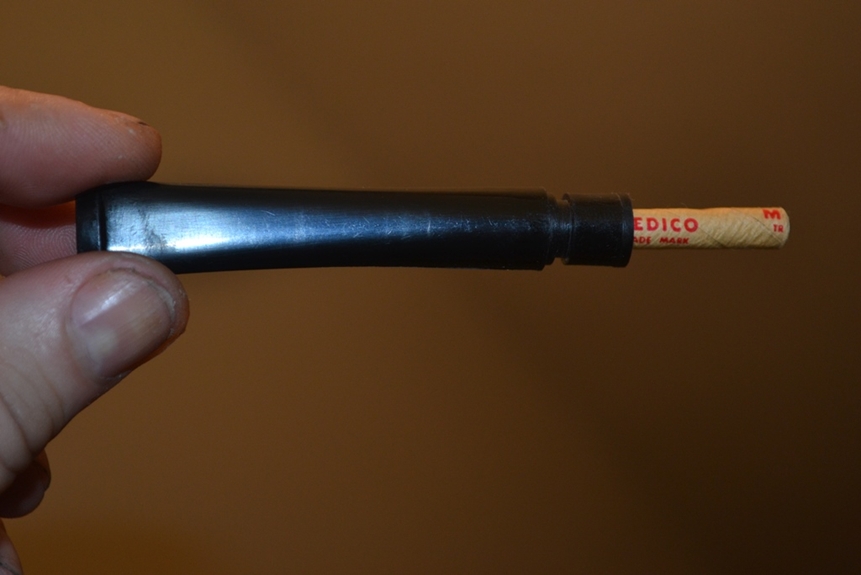
Cob13 The pipe cleaner dipped in freshener that I run through the air hole of the bit comes out clear, but it doesn’t hurt to try. The outside of the bit, with almost no scratches, buffs up nicely using micromesh. I place the filter, in this case a Medico because it fits and I have a few – and with this pipe, a filter really will be necessary – into the stem.Cob14

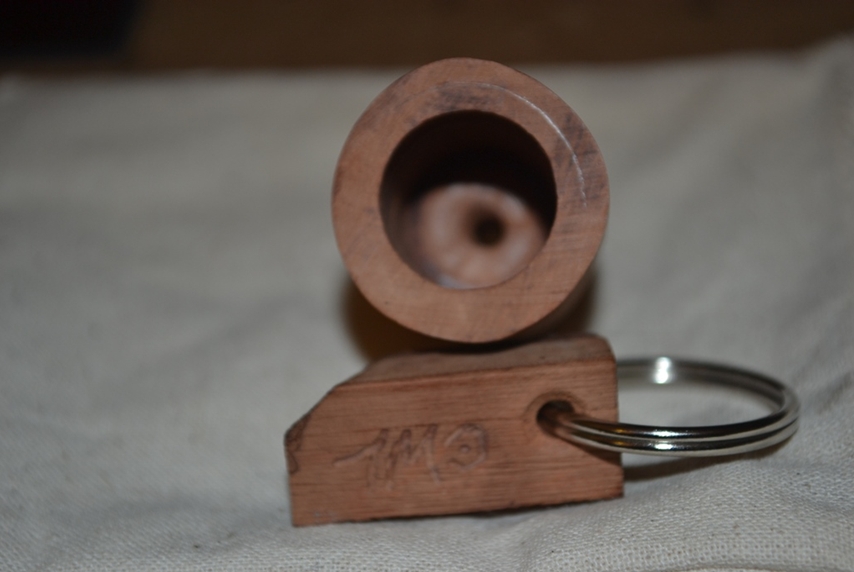
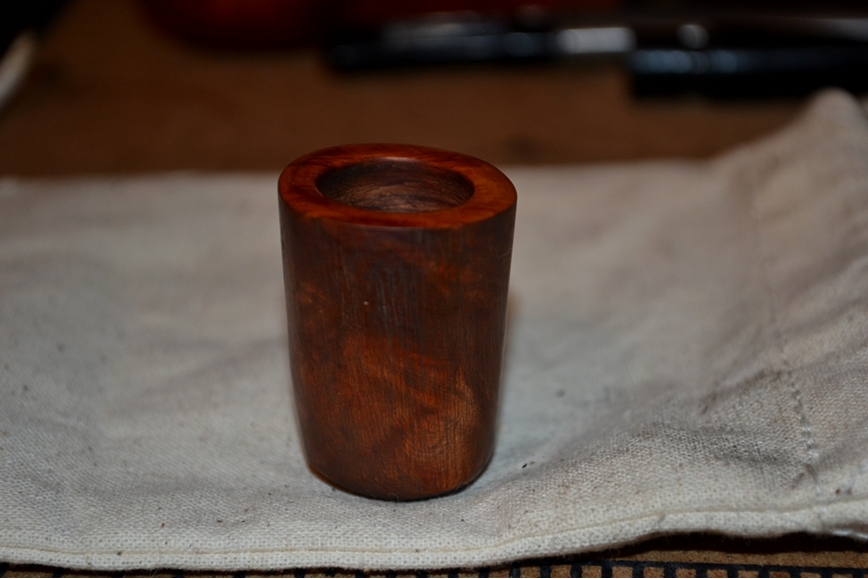
Cob15 And so the time to face the ordeal of the long, slow line at the Post Office comes. An hour later I am home again with my new briar insert and a surprise: a small key chain fashioned with a little chunk of lightweight, pale briar, both of them in a nice bag with a drawstring.Cob16

Cob17 Now, something about the nakedness of the insert, being briar instead of the traditional corncob, just doesn’t sit right with me. Even when I test the fit by dropping it in the chamber and screwing on the lid, while indeed the briar is the correct size, the raw part of the rim that shows, beneath the top of the aluminum lid when I screw it on, is wrong. I ask myself (not out loud, but in my head – I’m not crazy, even if at times I ramble and digress), “Would I ever, even on the most rushed or easygoing project, conceivably consider leaving any rim unpolished?”

“Hell, no,” is my immediate response, though still silent. And so the next stage begins with what is intended to be just a quick sanding, micro-meshing and waxing of the rim. In point of fact, I try only the progression of micromesh, but that reveals the need for sanding, which I accomplish with 400-grit paper before re-doing the micromesh.Cob18

Cob19 SUNDAY
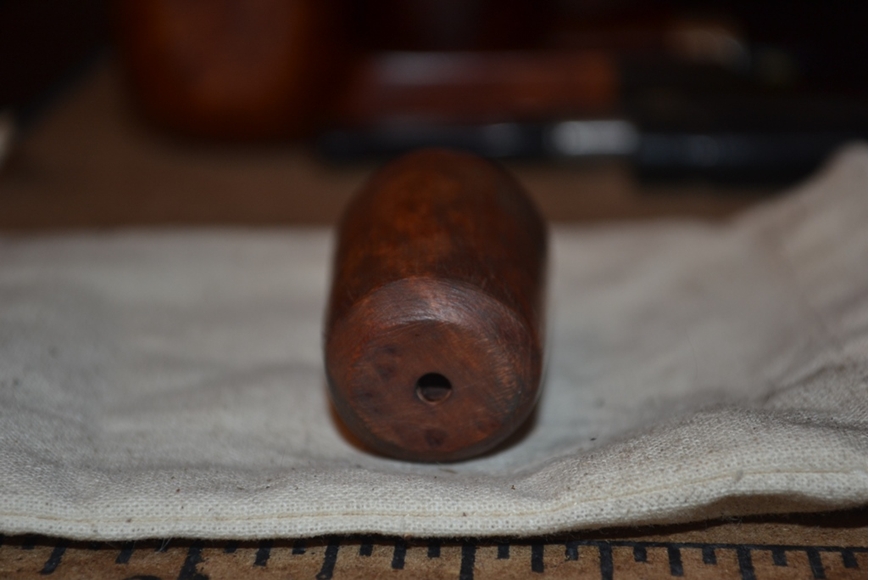
But of course, once I start down that road – as simple as settling for the polished rim of the insert with its newly exposed even grain would be, given that it is the only part that will show through the lid – I simply cannot bring myself to leave the sides completely unfinished. Still, I approach this task with nowhere near the detail I would give a regular briar bowl. A fast sanding with 320-grit paper followed by 400, then micro-meshing, satisfies me, and it shows in the photos below. I consider doing the bottom of the insert, with a small hole drilled to allow moisture to pass in this most bizarre system pipe, but good sense does get the better of me, when my mind comes around to the reality of the resulting damage to anything sitting for long in the potential quagmire that the lucky buyer of this fine pipe might create even without the genuine, disposable corncob inserts.Cob20

Cob21 Now, as midnight approaches, the second day of sporadic work on the Aristocob reaches its end and extends into another, as seems to be the nature of my life so often these hectic days. I need to run to the nearest Walmart anyway, to buy more distilled water, distilled white vinegar and baking soda to continue with the final few steps of this experimental restoration.

MONDAY

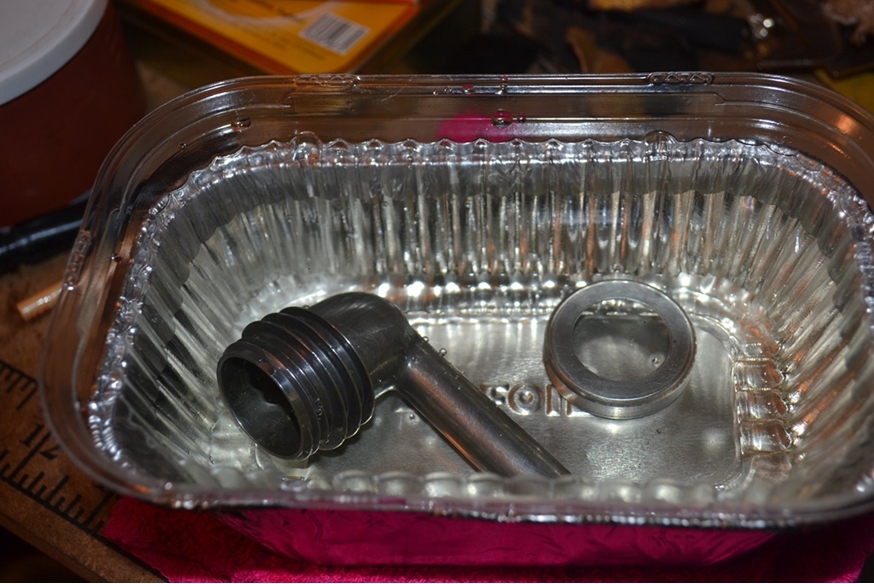
Having secured the necessary ingredients for the culmination of an exciting and hopefully successful restoration, the next stage is to soak the aluminum for ten minutes or so in enough of the pure vinegar to cover all of the metal. As I have never before had occasion to work with aluminum in this sort of project, I have not tried the unusual method of cleaning any part of a pipe, and must trust a fellow pipe club member who actually makes his living engaging daily in this process to remove dirt and other substances from industrial parts made of the same material, and at the same time brighten it. I do, at least, confirm online that the procedure is an established and excellent means of accomplishing the goal.Cob22 While the aluminum soaks, I enjoy a brief respite from my toils, with a pipe-full of some of the last of my C&D Pirate Kake in a newly-acquired Castello Old Antiquari KKKK Sandblasted Bulldog. There is no doubt this is a bulldog compared to the dubious designation of Rhodesian that, with clear reservations, I suggest for the Aristocob by way of calling the art deco thing anything other than that.

Alright, then; the aluminum Rhodesian has soaked for 12 minutes now in white vinegar, and I am one step closer to seeing if the well-intentioned advice of my fellow piper has any merit to it. First giving the metal pieces a basic rinse with tap water, I replace them in the plastic container for a thorough dousing in a concoction of the same with an unspecified and therefore liberal amount of baking soda stirred in to rid the aluminum of any residual acidic vinegar.

After a long day involving far more than this restoration, which details I will spare the reader and try to make myself forget, I suspect the Old Antiquari is up for another ten-minute smoke, and I know I am.

Ten more minutes fly by, and the water and baking soda have done as much as they can to ensure the complete removal of vinegar. I rinse the metal again and dry the lid, bowl, shank and chamber with a cotton rag. I decide to use another cleaner to dry the inside of the shank and chamber air hole, only to discover that the combination of the vinegar and the following water-baking soda soaks has dredged up much more vintage grime. Both ends of the one dry cleaner, then a second dipped in Everclear and a third dry cleaner clear out the remaining mess, and I re-wipe the chamber with a rag.

The pipe is as ready as I can make it for reassembly. I drop the polished briar insert in place, screw on the lid and slide the bit with its new Medico filter into the shank, and give the whole thing a rubbing with the cotton rag.Cob23

Cob24

Cob25

Cob26

Cob27

Cob28 CONCLUSION
Although not as shimmering as it once looked new in its package with a couple of spare corncob inserts, the vintage Aristocob Rhodesian, like the Tin Woodsman in Oz, has a new briar heart that matches the second part of “my galvanized friend[’s]” name. And this new transplant will last much longer than the original.

Conjuring a Makeover for a Carey Magic Inch


Guest Blog by Robert M. Boughton
Member, North American Society of Pipe Collectors
http://www.naspc.org
http://www.roadrunnerpipes.com
http://about.me/boughtonrobert
Photos © the Author

“Blessed are they who see beautiful things in humble places where other people see nothing.”
― Camille Pissarro (1830-1903), French Impressionist painter

INTRODUCTION
I suspect there is some aspect of my basic personality that is incapable, to a degree, of not admiring the tenacity alone required to survive 67-years – and still going – in the admirable pursuit of providing affordable smoking pipes. Remember, this is an industry that has seen all manner of fly-by-night systems for dissipating the high heat of the all-important tobacco that has an inherent tendency to become moist and therefore brackish in the process of flowing through the basic designs of all pipes.

Notwithstanding the relative quality of pipes that evolve based on the periodic new patents from the ever-pioneering designers at E.A. Carey, which also owns the Duncan Hill Aerosphere brand, the system’s section that comprises the so-called “Magic Inch” has changed little since 1948, when the first billiard version was created and marketed. The system involves five elements: 1-2) the first two in the double-pronged tenon, the thin, hollow end of which attaches to the plastic bit and the typical part that slides into the shank; 3) the thin bit insert with six small drilled holes, two each on the top and bottom (when properly inserted) and one each on either side; 4) the newer Papyrate II sleeve (two-ply) – made of very thin, wet slices, from the roots of an aquatic plant, that are pressed together and dried – that fits snugly over the holes of the bit insert, and 5) six horizontal slits in the shank end of the bit, three on the top and three on the bottom. The photos of the bit show the used, brownish papyrate sleeve that came with the original pipe.Carey1

Carey2

Carey3

Carey4

Carey5 Back some months when I was snatching up pipe lots online, I bought one with 10 sundry examples of the craft, including a few nice finds such as a Kaywoodie Filter Plus metal pipe from the late 1950s, a Jobey Extra, a nice glazed clay pipe and others, with this Magic Inch among them.Carey6 I put all of these in a small box “for later,” except for the beautiful unknown clay billiard that I cleaned up and added new cork in the shank with a hole drilled to fit the screw-in tenon attached to the acrylic stem, for my own collection.

By the way, not everyone knows that Carey does not only make Magic Inch pipes. Here are a few of the company’s representative standard briar pipes.Carey7 But this blog concerns the vintage Magic Inch billiard, U.S. Patent №. 3,267,941 granted in 1966, shown in the lot above three rows down on the right. A few years ago, I owned, and for a while enjoyed, another Magic Inch, and it wasn’t – well, bad. But first, I have a few comments regarding Carey’s rather imaginative advertising.

Numerical data and the manifold methods of collection, arrangement and interpretation of them for publication as fact by the complex use of statistics in almost every facet of society – including but by no means limited to governmental and other political concerns, businesses and the news media – can be misleading at best and downright manipulative at worst.

Take, for example, the E.A. Carey Smokeshop claim [http://www.eacarey.com/ pipes.html] that it has sold more than one million of its Magic Inch pipes since 1948. That sounds impressive, and suggests that Carey’s pipes are superior to others. But that total averages to 15,152 pipes (rounded up, through 2014) per year. Then again, Carey changes the number of Magic Inch pipes sold in the same period to a vague “hundreds of thousands” [http://www.eacarey .com/magicinchinfo.html]. Allowing for hundreds of thousands to be a maximum of 200,000 pipes, which quite likely is stretching it, the average drops to 3,030. Somehow, I doubt that either annual sales figure engenders any impulse among the world’s other pipe makers to compete with the folks at the venerable Carey Smokeshop online, both in the U.K. [http://www.eacarey. co.uk/] and U.S.

Now, to return to the real subject matter, the purpose of this particular blog is to show how a pipe with a singular lack of attractive qualities can be transformed into something nicer.Carey8

Carey9

Carey10 RESTORATION
After removing and separating the bit and two-sided tenon, throwing away the old brown papyrate sleeve, on an impulse, I decided to give the old rusticated briar girl an Everclear soak. For some reason, this process took quite a while – say six hours. At any rate, when the old finish was stripped and the wood dried, I began a hand-buff with super fine steel wool followed by a progression of micromesh pads from 1500-3600.

I turned a reamer a few times in the chamber, followed by sanding with 200-grit and 320, and the chamber was almost good to go. Then I attached a suitable stem and retorted the shank and chamber.Carey11

Carey12

Carey13

Carey14

Carey15

Carey16 Thinking the pipe, which was dreary in the beginning, deserved something more distinctive and in keeping with its natural reddish color, I chose maroon boot stain. After the quick application and flaming, I rubbed the wood gently with 3200 micromesh.Carey17

Carey18

Carey19

Carey20

Carey21

Carey22 To clean the hollow plastic bit and tenon, I diluted – and I mean heavily – a little Everclear with a lot of water. I like to think of this as the Reverse Julia Childs Approach. The popular cook once said, “I like to cook with wine. Sometimes I even put it in the food.” From what I recall of watching Julia in the studio kitchen on TV, I am not surprised that she seemed to have forgotten the apparent equal measures of wine expended in the food and down the hatch. Anyway, I bent a soft pipe cleaner in half and dipped it in the comparatively wimpy solution, which is like comparing wine to Moonshine, and inserted the folded end in the stem, turning it several times and finding it needed replacing. And so I repeated the action, but giving the inner bit the old in-and-out, scrubbing its sides. Only the slightest amount of grime came out on the second run, and I used the same cleaner to work through the slits on the top and bottom. I used a third, dry cleaner to finish.

The outer bit required very little work with one micromesh pad, although I forget the grade, to make it shine. Using a white china marker, I filled in the small, long-empty square with a three-sided C in the middle, forming all but one line of a second square. Thanks to a generous gift of a handful of papyrate sleeves from my good friend and mentor, Chuck Richards, I was able to complete the tenon for ultimate placement into the shank.

All that was left to do was buff the wood on the electric wheels, using white Tripoli and White Diamond, with quick runs on the clean wheel after each. At last, with a finger, I applied a thin, even coat of Halcyon II, and after letting the briar sit for 10-15 minutes, buffed it with the clean wheel.Carey23

Carey24

Carey25

Carey26

Carey27

Carey28

Carey29 CONCLUSION
Love ’em, hate ’em or really don’t give a hoot either way, the Carey Magic Inch has secured its place in tobacco pipe history, as well as giving many a smoker a start in the pleasures derived from fine tobaccos. And as far as I’m concerned, the Carey system works better than most far more complicated attempts.

Imagine, if you will, a special place in the Twilight Zone – an area so horrific only the most heinous attempts at pipe cooling ever make it there. Take, for example, the following specimen, a Jenkins, which, with its screw designed to hang while smoking like a broken appendage from the underbelly of the shank at a point just before the bowl, may never find its way back.Carey30

Concerning the Rising Popularity of Churchwardens in General, a Little about Their History and the Cleanup of a Barely Smoked Savinelli Rustic Aged Briar


Guest Blog by Robert M. Boughton

Member, North American Society of Pipe Collectors
http://www.naspc.org
http://www.roadrunnerpipes.com
http://about.me/boughtonrobert
Photos © the Author, except as noted

“The supreme accomplishment is to blur the line between work and play.”
― Arnold J. Toynbee (1889-1975), British historian

INTRODUCTION
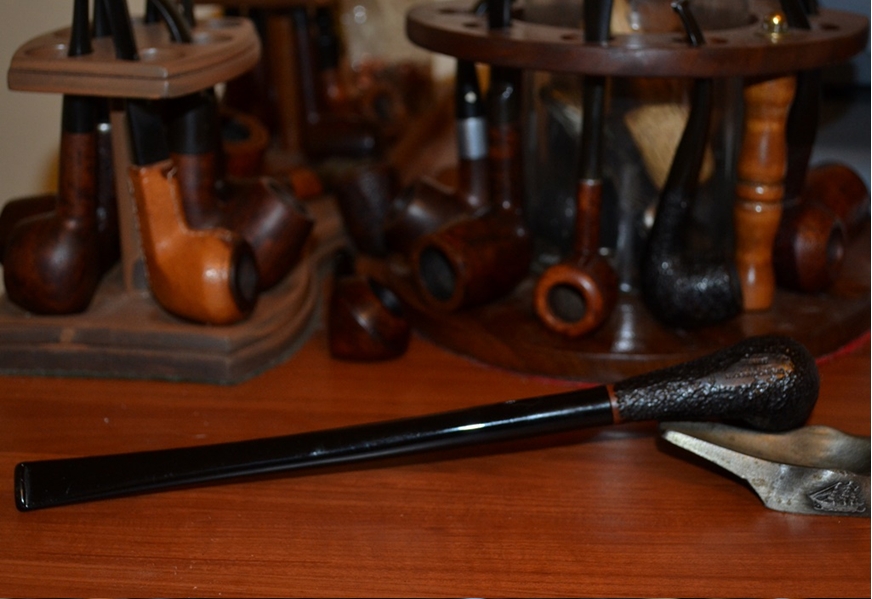
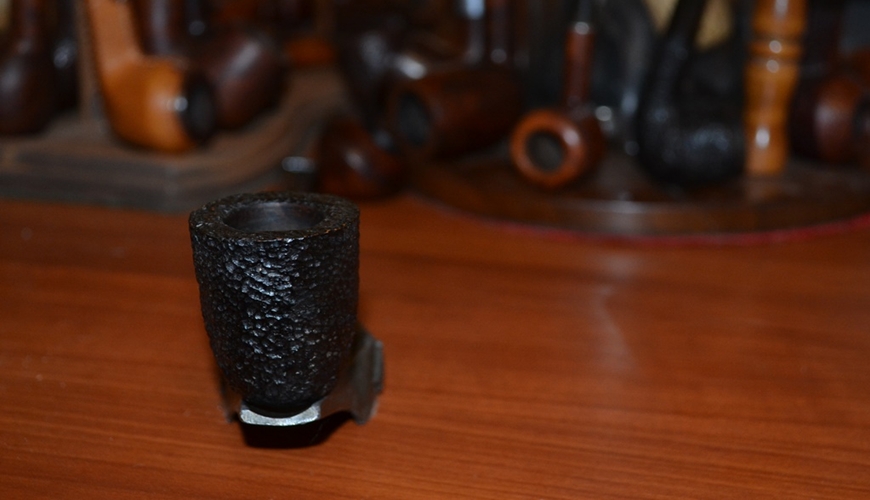
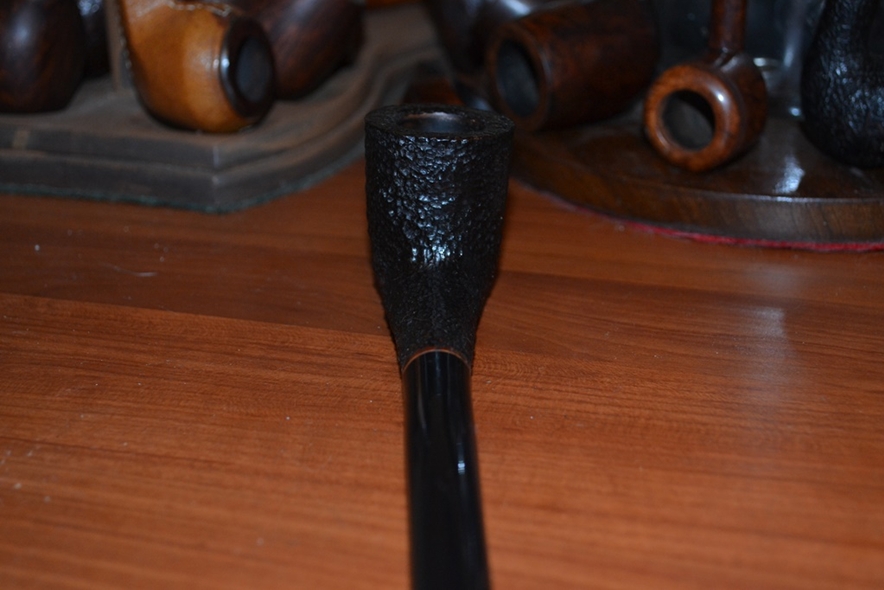
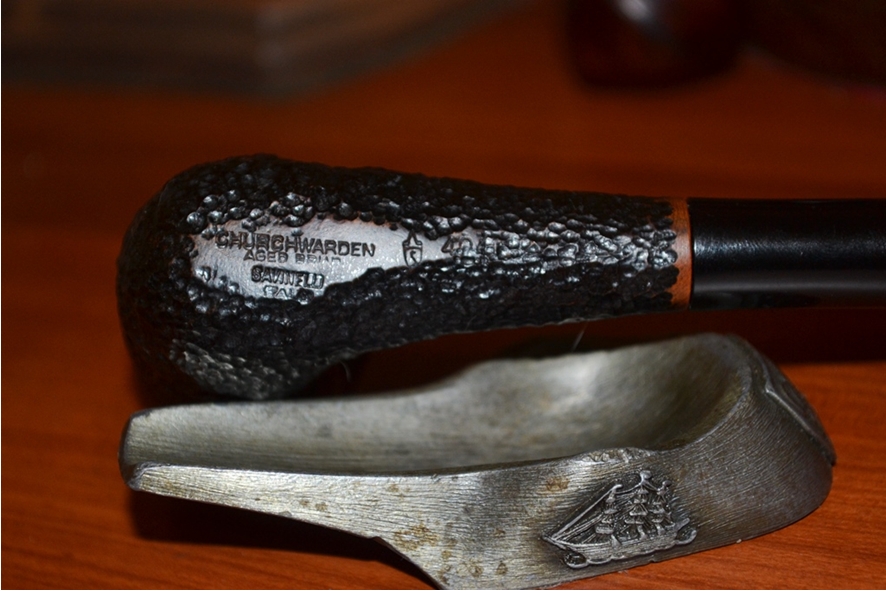
If ever a pipe found its way into my possession and was sheer play and no work to clean up, this black Savinelli Rustic Aged Briar Dublin Churchwarden is it. I bought the long, sleek, exquisite example of the fine Italian pipe crafter’s genuine labor as a perfect addition, not to my own collection but to the growing and diversifying line of brands and styles I sell. Based on the requests I have received for churchwardens in general, as well as my eavesdropping at the local tobacconist I favor, this classic old style appears to be experiencing a comeback in popularity.

Perhaps the shift in supply and demand – as well as the corresponding rise in average churchwarden prices, at my preferred tobacconist and online, compared to the not so distant past – are due in part to the timeless popularity of the classic fantasy novels of J.R.R. Tolkien, starting with “The Hobbit” [1937] and “The Lord of the Rings” trilogy [1954-1955]. This year, in fact, marks the sixtieth anniversary of “LOTR,” and the recent releases of movie versions of both of these can only have spurred interest in the centuries-old pipe shape thanks to the churchwarden-puffing Hobbits, wizards, elves, dwarves and – yes – men. Or maybe the increase in sales and prices is just a sign of greater discernment among pipe enjoyers, and those new to the pleasure in particular, who seek the smoother, cooler satisfaction of a good tobacco’s flavor that the longer shank and bit can provide.

Whatever the cause of this apparent resurgence, I am doing my best to follow the tide by locating and restoring more of this venerable style’s many examples at affordable prices. I already went so far as to clean up a beloved but no longer often enjoyed Clark’s Favorite from my own collection. I bought the lovely pipe several years ago, restored, for about $40 (at which time a quick check online showed the same but new pipe on sale at $69) and sold it to a prospective customer who was bent on a medium-length church or nothing.Rob1 I still miss the Clark’s Favorite, which I supposed I could always replace for the new price noted above. Today, the same smooth version, with its orange-black acrylic bit, is on sale for $112 compared to the MSRP of $140.

Savinelli for one, seeming to recognize the inconvenience of carrying a long, fixed-bit church about town to enjoy on the go, now offers a nice selection of “Tandem” versions that can be enjoyed at home in their full glory and, when traveling anywhere, with a second short bit. The model shown below, the Tandem Rusticated #112, comes with two completely separate bits – the longer Vulcanite and the shorter acrylic.Rob2 This particular Tandem, by the way, is now on sale for $108 as opposed to its regular price of $130.

There are, however, still other “churchwardens” with the two bits combined as one, where the entire bit can be twisted off at the shank and the shorter part at the top, with the button, replaced in the shank. Of course, these models carry a higher price tag. Take, for example, this adjustable Cassano smooth billiard, which I bought last night at my tobacconist’s shop for $175. The full churchwarden large poker is 13” in length, and the smaller option is 8½”.Rob3

Rob4

Rob5 A BIT OF HISTORY
The churchwarden is one of the oldest of pipe shapes. The earliest use was in the Orient, where the bowls were likely made (for the most part to smoke opium) not only of known materials – including amber, ivory, various metals such as brass, different kinds of wood, bone and clay – but also jade and other exotic minerals. The bits (without buttons) often matched the bowls, although combinations of brass, wood, bone and/or ivory were not uncommon.

However, the clay bowl and long wooden shank without a bit was the design adopted and quickly adapted in late 18th or early 19th century Europe. So popular were the original Western World churchwardens that many Eastern European taverns kept supplies on hand for their customers’ use, and the habit of biting off the end of the wood shank for a fresh smoke developed. Until the mid- to late-1800s, clay bowls with wood shanks, open where the bit would now be found, remained the prevailing materials of construction.

As for the origin of the name churchwarden, there are three main theories, given here in reverse order of likelihood: the first, that smoking was permitted almost everywhere, including churches, in those dear lost days, and the long length and design of the pipe allowed it to rest on the pews; the second, that certain individuals, erroneously called churchwardens and trusted with guarding England’s churches in the 1800s, very much enjoyed their pipes and fancied the popular style, and the third, that real churchwardens (who by every official definition were not guards but honorary officers of local parishes or district churches entrusted with administrative and other minor duties) became known for their love of the pipe later named for them.

And contrary to popular myth created by various actors who have performed the role of Sir Arthur Conan Doyle’s brilliant mystery solving character, Sherlock Holmes, using fancy Gourd Calabashes or sundry churchwardens as props – which falsehood was adored and perpetuated by generations of Sherlockian fans – these are the facts: the shape or material of pipe most often cited by Holmes’ fictional chronicler, Dr. John H. Watson, was cherry wood (six references), followed by several mentions of standard-sized clay pipes and some appearances of briars. You can read the entire “Adventures of Sherlock Holmes” at https://www.gutenberg.org/files/1661/1661-h/1661-h.htm and locate all of them yourselves.

THE CLEANING
Rob6

Rob7

Rob8

Rob9

Rob10

Rob11

Rob12 To start on an honest note, I only show the few following steps needed to clean this almost-new Savinelli Rustic Dublin Churchwarden beauty for the sake of showing the pipe itself and the ease with which it was spruced up. The bit had no signs whatsoever of having been touched by any hands, much less placed in a mouth and smoked. In other words, its outside was buffed to the highest sheen, as if it came fresh from the factory in Barasso, Italy, in the Varese province. And so I began by running a long, soft cleaner dipped in alcohol once through the 7½” bit, which was all but 3” of the total length, removing the smallest amount of tobacco residue, and again for good measure.

The rim had minor blackening, not part of the stain. I removed that with a quick brush using 1800 micromesh and proceeded to the chamber. Two easy turns of a reamer followed by about 30 seconds of sanding with 200-grit paper and then 320 made the chamber as smooth as it ever was.

For the sake of thoroughness, I attached an otherwise useless small bit with a tenon that fit the shank and retorted the inner shank and chamber. To my amazement, one Pyrex test tube of boiled Everclear came back from the first passage with the lightest shade of brown, and despite about six more tries to make the alcohol darker, the barely tested briar was clean.

Then I noticed a spot on the outer edge of the shank opening that appeared to be smooth and dark red. With a small scrap of super fine steel wool, I probed the narrow strip of briar around the opening and watched it come clean. Below are before and after photos.Rob13

Rob14 I could have left the briar in the excellent shape it already was, but as chance happened, I had just received my order of a new jar of Halcyon II wax, and had to try it out. Therefore, I gave the wood a spin on the clean buffer and with one finger applied a dab of the Halcyon as far as it would spread before adding a smidge more to finish coating the bowl, shank and rim. Setting the wood on a cotton rag, I waited about 10 minutes and again took the duller-looking briar for a fast spin on the clean wheel. Whether or not these steps were necessary, here are the final results.Rob15

Rob16

Rob17

Rob18

Rob19

Rob20

Rob21 CONCLUSION
That is all.

SOURCES
(in haphazard order)

http://www.onlineoriental.com/Merchant2/merchant.mv?Screen=CTGY&Store_Code=1&Category_Code=14
http://www.quora.com/What-kinds-of-pipes-did-Sherlock-Holmes-smoke-according-to-Sir-Arthur-Conan-Doyles-writings
http://www.sherlockian-sherlock.com/jeremy-brett-churchwarden-pipe.php
http://www.pipedia.org/wiki/Churchwarden_Pipes

Guide to Tobacco Pipes & Pipe Smoking


http://www.smokingpipes.com/pipes/new/savinelli/index.cfm?tag=Clark’s%20Favorite
http://www.smokingpipes.com/pipes/new/savinelli/moreinfo.cfm?product_id=160492

A Bachelor’s Soliloquy for a Lovely French Camelia Bulldog


Guest Blog by Robert M. Boughton
Member, North American Society of Pipe Collectors
http://www.naspc.org
http://www.roadrunnerpipes.com
http://about.me/boughtonrobert
Photos © the Author

My oldest pipe, my dearest girl,
Alas! Which shall it be?
For she has said that I must choose,
Betwixt herself and thee.

Farewell, old pipe; for many years
You’ve been my closest friend,
And ever ready at my side
Thy solace sweet to lend.

No more from out thy weedy bowl,
When fades the twilight’s glow,
Will visions fair and sweet arise
Or fragrant fancies flow.

No more by flick’ring candlelight
Thy spirit I’ll invoke,
To build my castles in the air
With wreaths of wav’ring smoke.

And so farewell, a long farewell–
Until the wedding’s o’er,
And then I’ll go on smoking thee,
Just as I did before.

― Edmond Day, “A Bachelor’s Soliloquy,” in Bain Jr., John, ed., “Tobacco in Song & Story,” 1896

INTRODUCTION
Aware of my sometimes peculiar use of quotes to lead into blogs, I ask that you try to follow this reasoning behind the above description of a somewhat disingenuous if humorous plan. As a recovered alcoholic (which is not to say cured), I have not found it necessary to return to the certainty of the lifestyle I led until my last drink of the life-deadening liquid, for persons of my nature, 27 years and a few months ago. Still, I remember with a cringe the oft-quoted “Lips that touch wine shall never touch mine,” a slight adjustment of the popular slogan of the Temperance Movement in the late 19th and early 20th centuries, that I used to hear with frequency in certain circles.

I always recoiled from the notion as being too Puritanical for my liking. Likewise, as a bachelor, I still (or perhaps more so now, given the socio-political incorrectness of enjoying tobacco, even a pipe) encounter the ultimatum of choosing my great, sundry pleasures derived from these marvelous instruments of relaxation and contemplation, or someone with whom to share my life. Being somewhat obdurate when push comes to shove, so to speak, I have no trouble saying fare thee well to all who spur the ominous prognostication of the inevitable disaster of any proposed relationship founded upon such Draconian conditions.

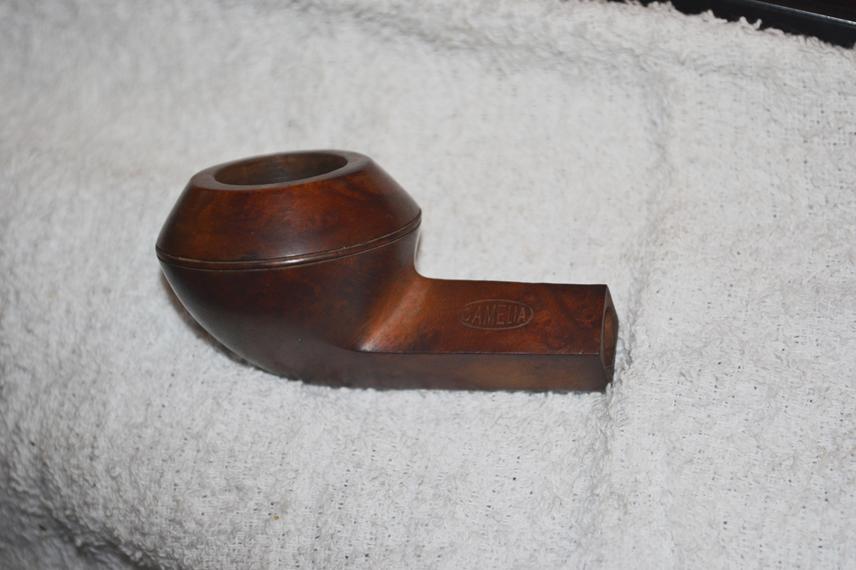
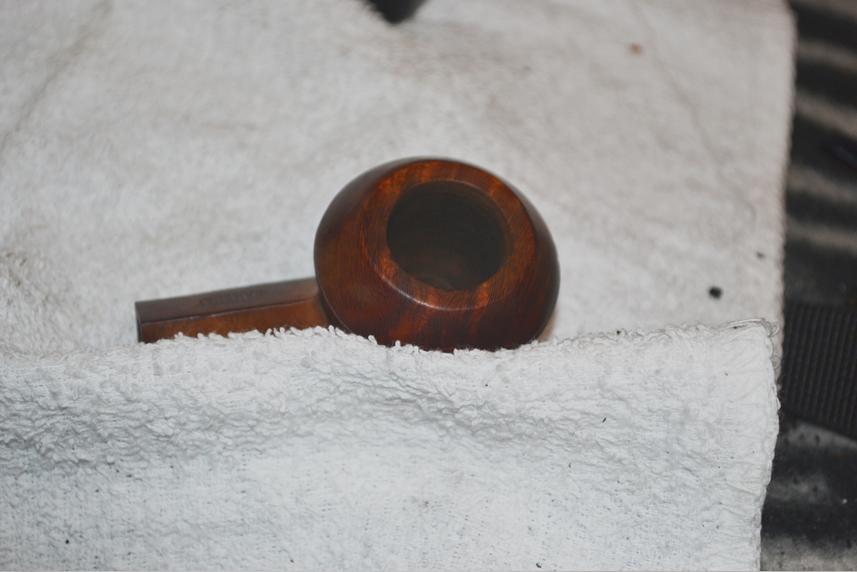
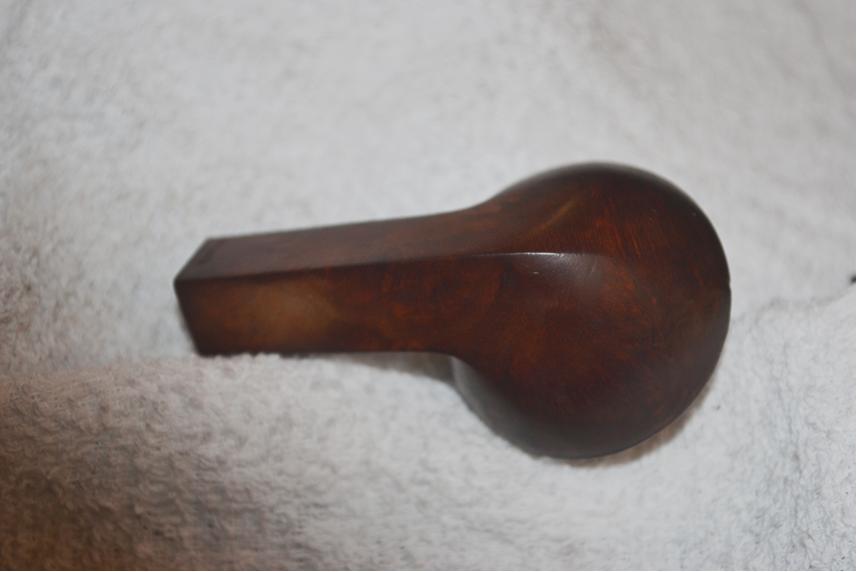
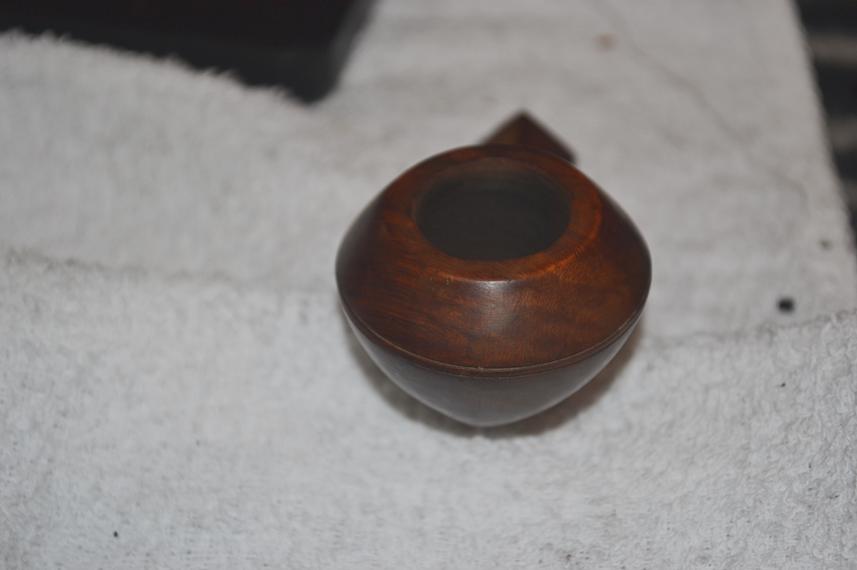
Thus, coming upon the quote in an old collection devoted to the comforting qualities of fine tobaccos, I made a mental connection with the habits of many former drinkers to eschew even those who are able to enjoy liquor socially and responsibly, and their cohorts in the dating war who substitute tobacco use as the evil enemy. People of these sorts are deluded by their recruiters. And while, again, I do not condone the deceptive behavior suggested by the English-speaking but now apparently almost forgotten poet, I do understand his hunger to enjoy all of life’s appetites, and I find it somehow French in attitude, and by association à propos to my sentiments for this lovely example of the elegant Camelia straight smooth bulldog #699, originating in France of excellent lineage, being, according to Pipedia, an obsolete line of pipes once made by GBD.

[There is, by the way, an anonymous, very funny spoof on Hamlet’s famous soliloquy, called “The Bachelor’s Soliloquy,” available at http://www. monologuearchive.com/a/anonymous_001. html.]

THE RESTORATION

Cam1

Cam2

Cam3

Cam4

Cam5

Cam6

Cam7 While the stem sloughed off its inner and outer impurities in an OxiClean soak, I turned to the briar. The rim burn was removed with greater than usual ease using super fine steel wool, and the chamber cake crumbled almost as fast with a few turns of a 17mm reamer followed by 150-grit sandpaper, then 320.

I removed the stem from its soak and rinsed it before wiping off the residue and cleaning the air hole with a soft, thick cleaner. The resulting evidence made clear that a large area, on both sides below the bit, required more work before applying the micromesh.Cam8

Cam9 And so I reattached the stem to the shank and retorted the pipe before finishing the stem with light work using 320-grit paper on the scratched areas before a four-stage micromesh progression from 1500-4000.

I gave the briar a bath and saw no major scratches or other blemishes. My next step of micro-meshing the wood the same way I did the stem turned out to be a waste of a few minutes, but what the heck.Cam10

Cam11

Cam12

Cam13

Cam14

Cam15 Granted, based on the original color of the pipe, it was already prepared for polishing with the buffers. But I seem to draw over-dark-stained pipes with unnatural frequency. I don’t think I’m alone in appreciating as much of the good grain every pipe has to offer. Therefore, I got out a small piece of the super fine steel wool to ease away a shade or two of the stain. Of course, when I could see the result I wanted, I had to re-micromesh the whole outer briar again and apply a light brown stain to the shank and lower bowl up to the bulldog line and inward curve of the top. Flaming that part and letting it cool before using 3600 micromesh to remove the film of char, I applied burgundy stain to the curved top and rim of the bowl and flamed it, and after the cool-down period I wiped it gently with the micromesh also. The effect produced was subtle but still there for the discerning eye.

Ready for the electric buffers, I took the two pieces of the Camelia from my living room work substation to the bedroom/workroom proper. For the stem, I followed my former practice of buffing with white and red Tripoli followed by White Diamond, one after the other, as I incorrectly understood they were to be applied. Then I buffed the briar with the same compounds and wax except for the red Tripoli, and including a double carnauba wax. The Camelia straight, smooth bulldog was the last pipe I worked on with this procedure because of a comment by my friend and mentor, Chuck, when I showed him the pipe. He had been asked by another member of our pipe club why my pipes appeared duller than his when compared side by side on the same table. Chuck’s close inspection of the Camelia then revealed streaking of the finishes, and he was able to deduce the reason.

Armed with my new understanding of how to run the stem and briar over a clean buffer on the wheel between coats, I returned home later and began by putting both parts to an unused replacement pad to clear off the excess previous waxes and repeated the series of buffs, using the clean pad after each. After the re-buffs, I filled in the Camelia brand mark on the stem with a white china marker.Cam16

Cam17

Cam18

Cam19

Cam20

Cam21 CONCLUSION
The entire pipe, from bowl to bit, glowed with a far brighter and unyielding finish. Showing Chuck the new and improved completed Camelia, he smiled after the quick look-over that is necessary when nothing is wrong, and asked with obvious excitement, “Was I right? Doesn’t that simple step make all the difference in the world?”

Yes, Chuck, you were right. And the world is a little bit better as a result.

A Savinelli Catalogue Smuggled from Argentina by a Pipe Patriot


Guest Blog by Robert M. Boughton
Member, North American Society of Pipe Collectors
http://www.naspc.org
http://www.roadrunnerpipes.com
http://about.me/boughtonrobert
Photos Provided by Gustavo Capozzi

“The original is unfaithful to the translation.” ― Jorge Francisco Isidoro Luis Borges, KBE(1889-1986), Argentine short story writer, essayist, poet, translator and Knight of the British Empire, regarding Henley’s translation of Beckford’s “Vathek” [1943]

I noticed fairly frequent comments from a certain Argentine member of the Smokers Forums on various threads of mine as well as others, but his note on my most recent post about the restoration of a Savinelli Panama Bent Bulldog #111 KS was – in particular because of the broken English that seemed to me even more apropos to his meaning – eloquent and moving. The member, whose real name I now know is Gustavo Capozzi, referred to a comment I made, that I never bought a Savinelli I didn’t like, when he wrote:

“Robert I agree with you. When I´m a young boy, looked through the window the Savinelli pipes, and as people with money buy.In my student days had only national pipes and an Albanian as ‘imported’.I have a catalog Savinelli of that time where I enjoyed. Even today I could not get some. Congratulations!”

Concluding from the message that he has never owned a Savinelli, I experienced a series of vivid mental images of the young Gustavo growing into manhood, saving the cherished Savinelli catalogue and never being able to afford one or, now, to find the fine Italian brand anywhere in his native country because of governmental commercial import regulations. To be open to the point of risking sounding mushy, I was very touched. And the final word of congratulations to my good fortune added a sense of downright guilt.

In a private message to him on the Forums, I suggested that our host, Steve, would likely be quite interested in the catalogue, which Sr. Capozzi agreed to photograph and email. In fact, he replied that he had already done so, with such speed that I was further struck by his deep love of Savinellis. However, in a case of miscommunication, I believed he had sent the photos to Steve. Eager to know that they were received, Sr. Capozzi wrote to me again, and I contacted Steve, who responded that he had no such email. When I relayed this news to him, he dashed back the frantic note, “emails were sent to you!!!!!!”

With a rising sickness in my stomach, I searched my email, not finding anything. Then I found all but the first batch in the WRONG Junk Mail folder (only with MS Office, I know) and hastened to alleviate Sr. Capozzi’s clear agitation. He shot back the first eight photos.

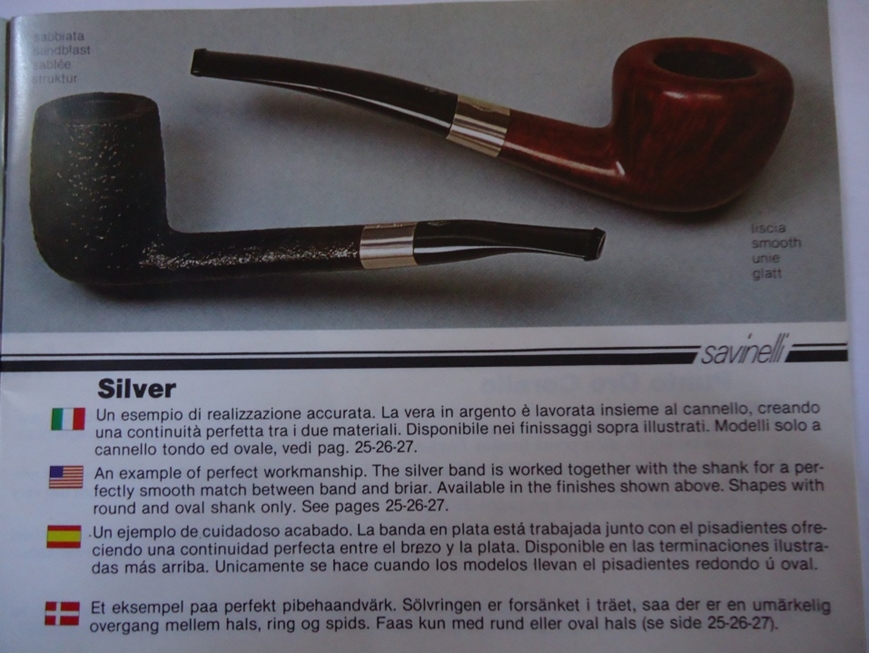
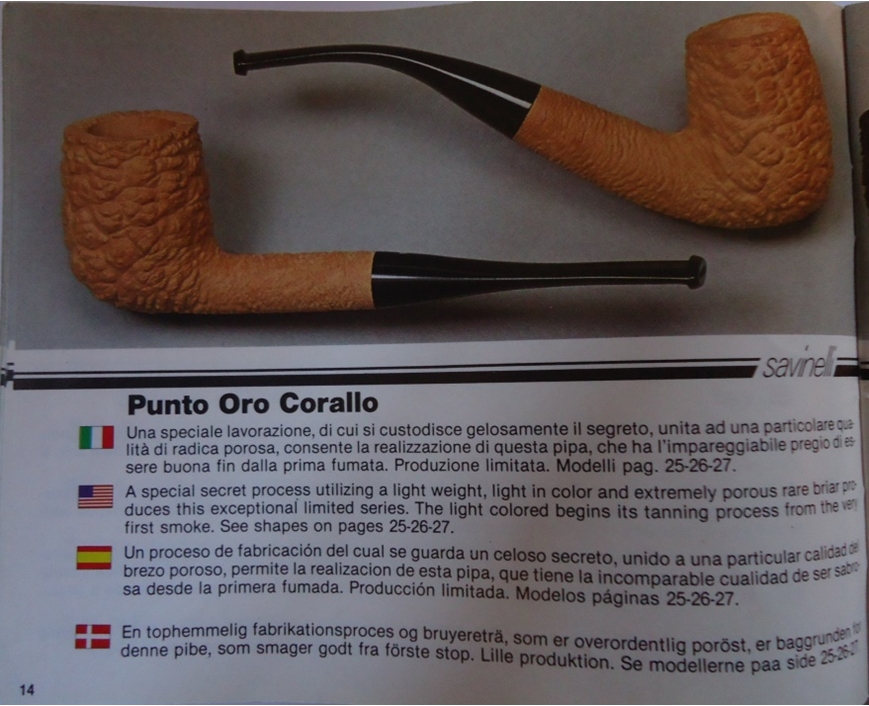
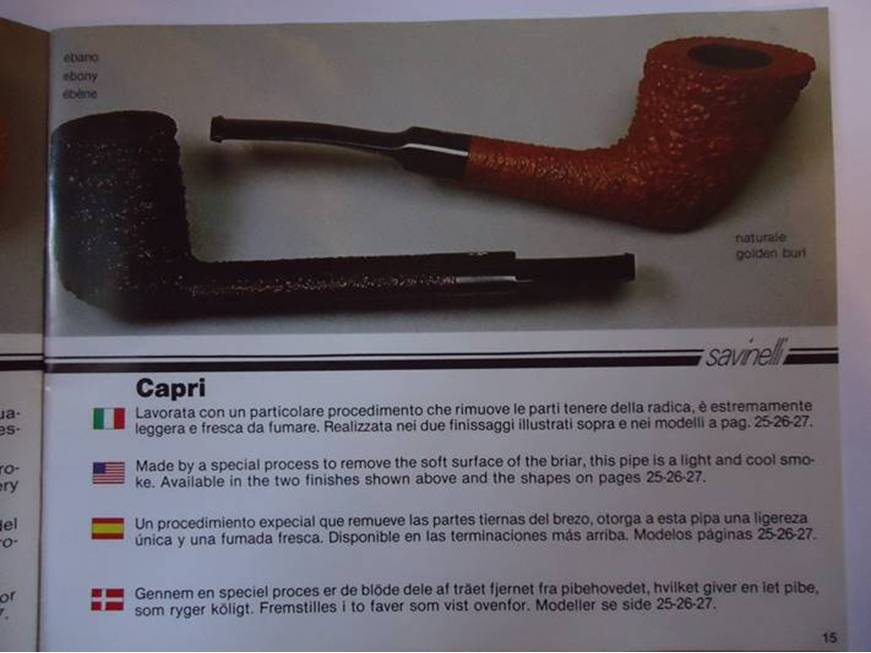
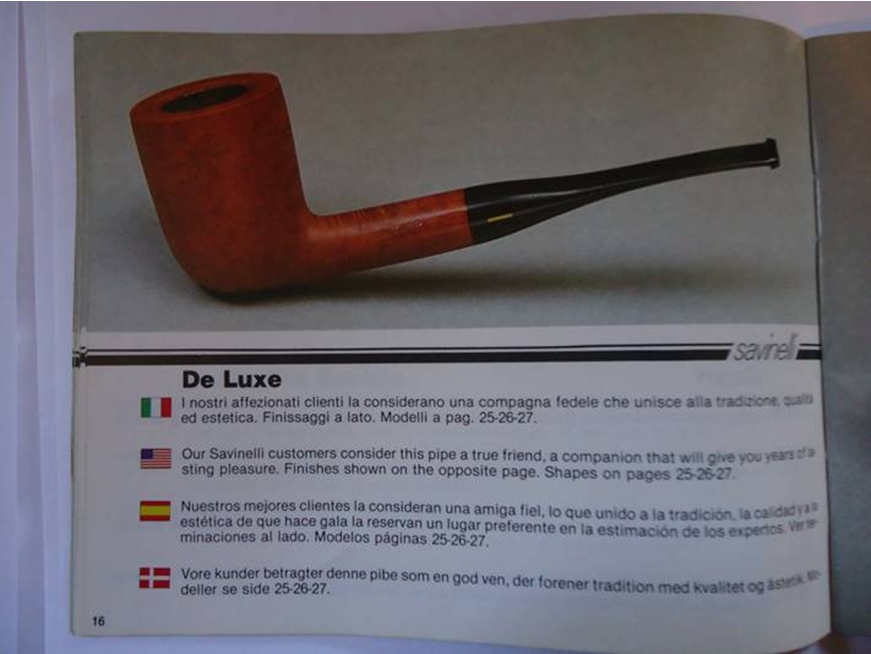
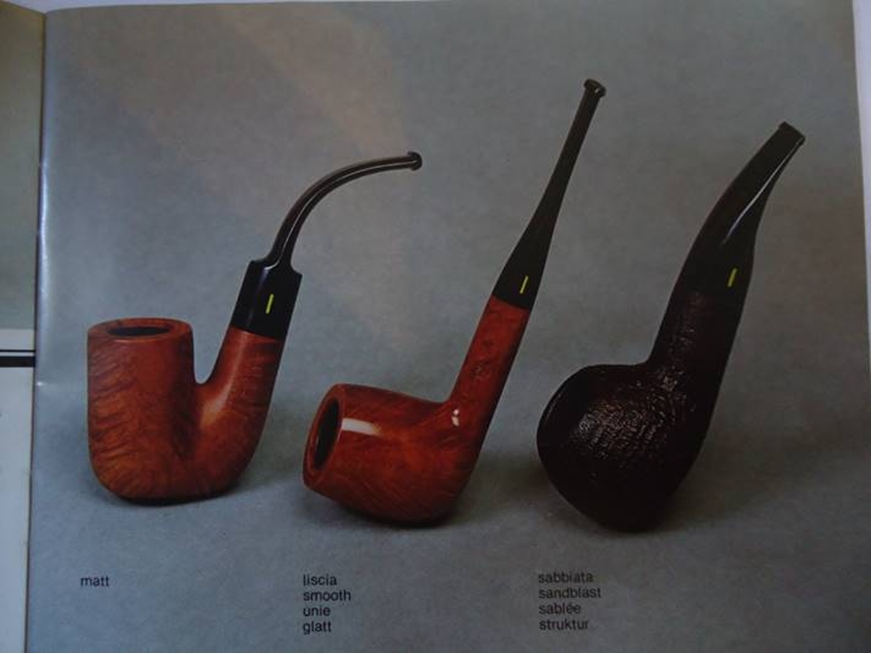
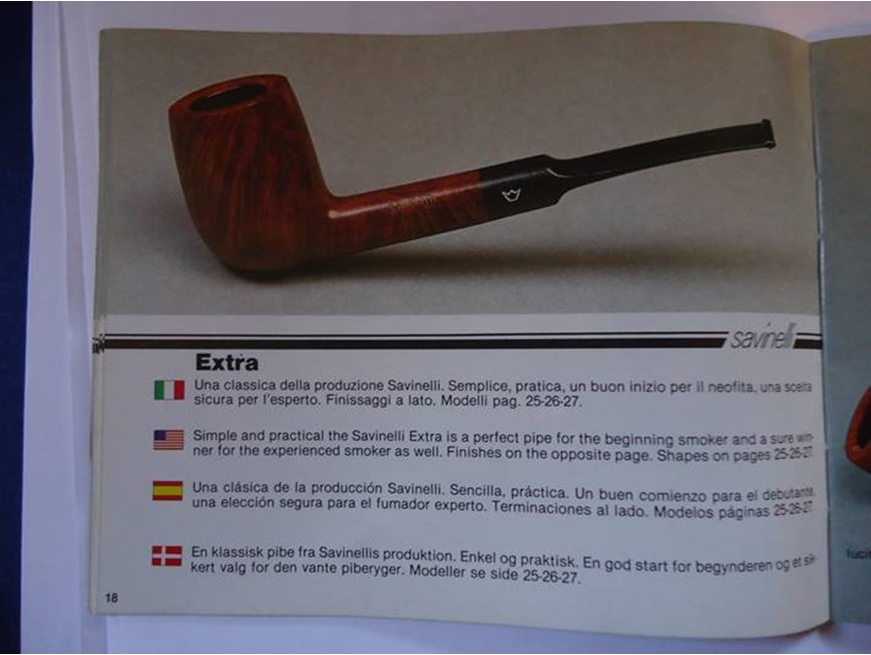
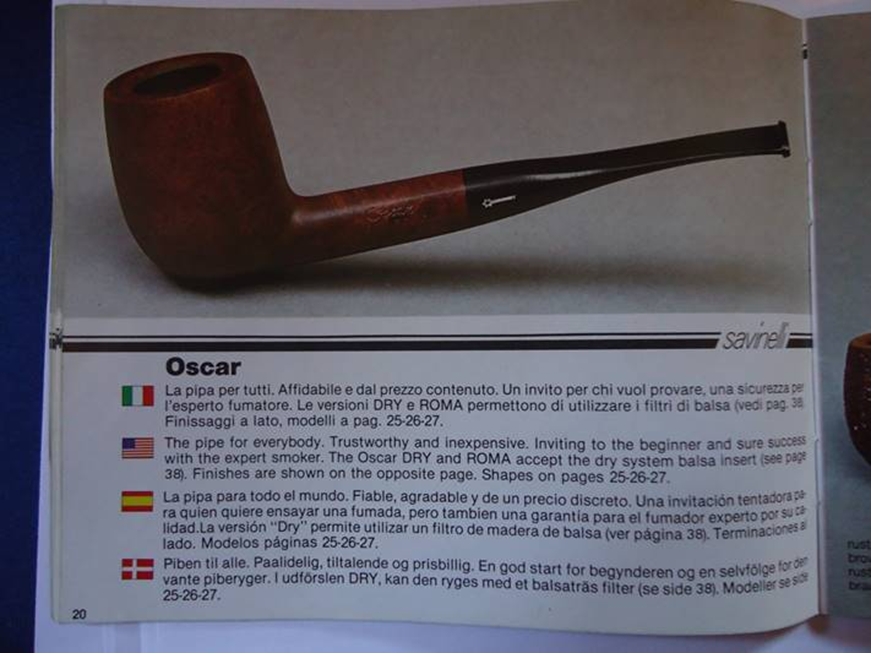
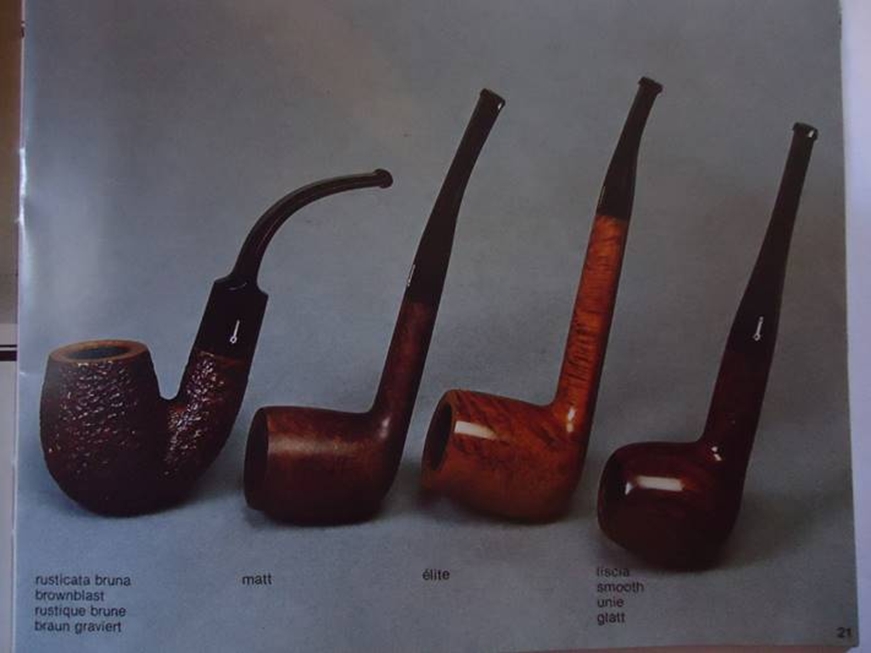
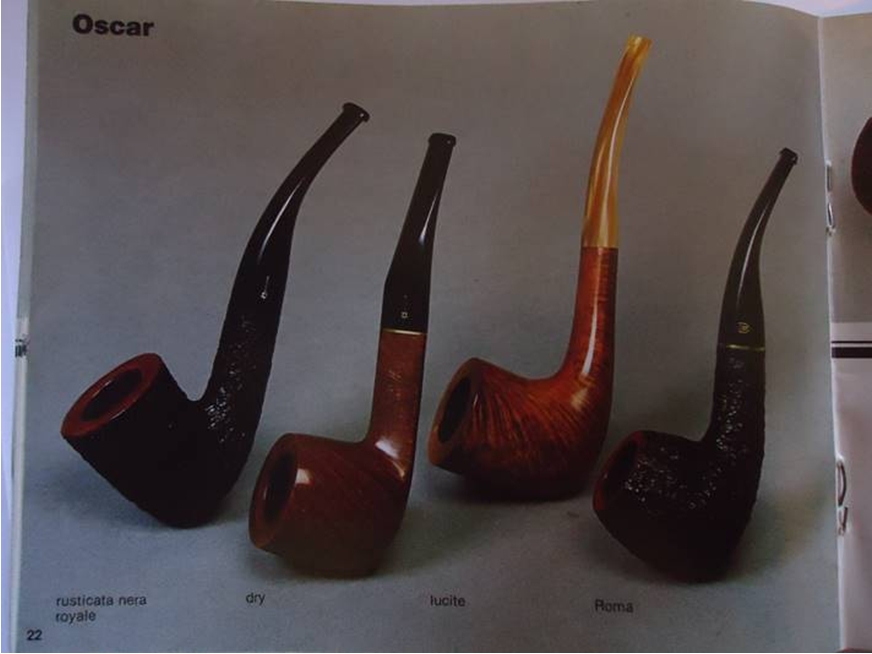
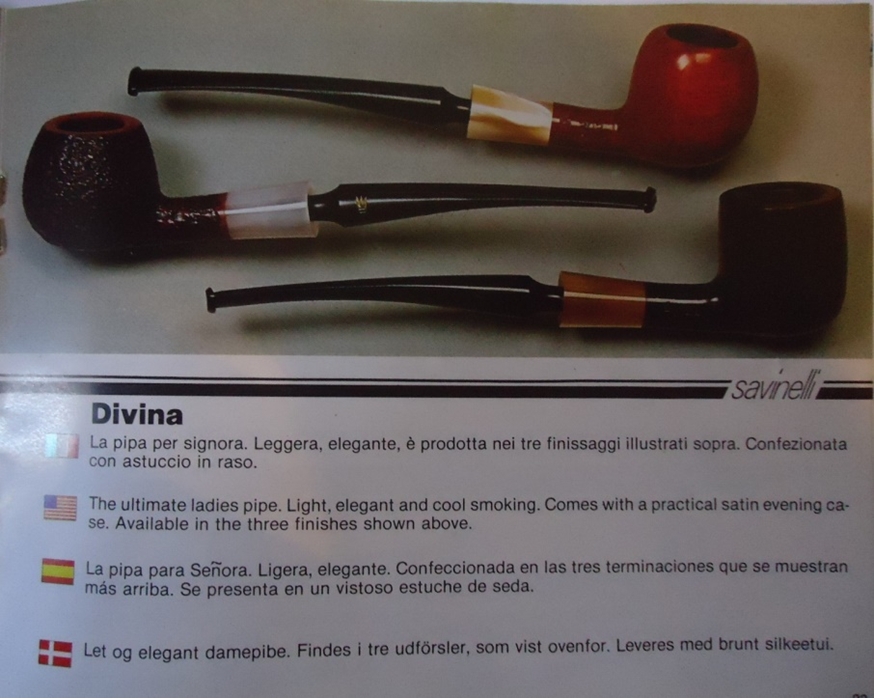
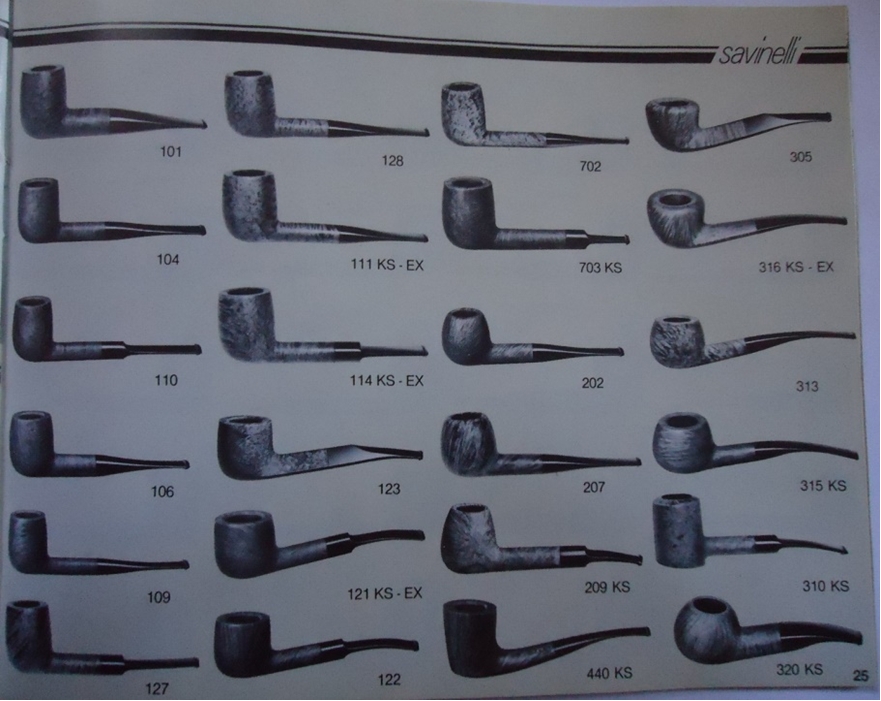
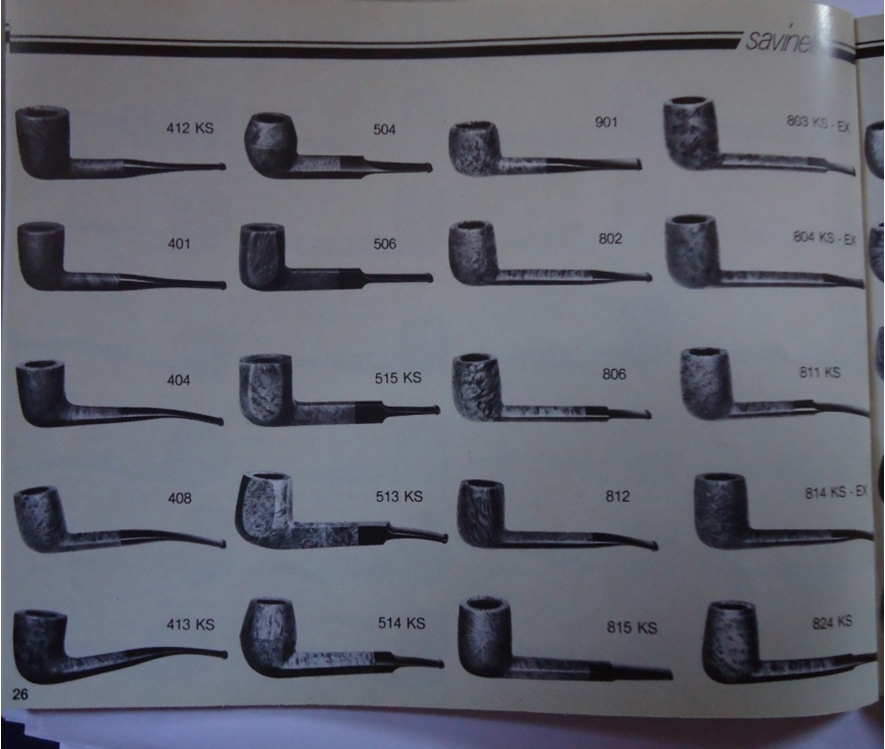
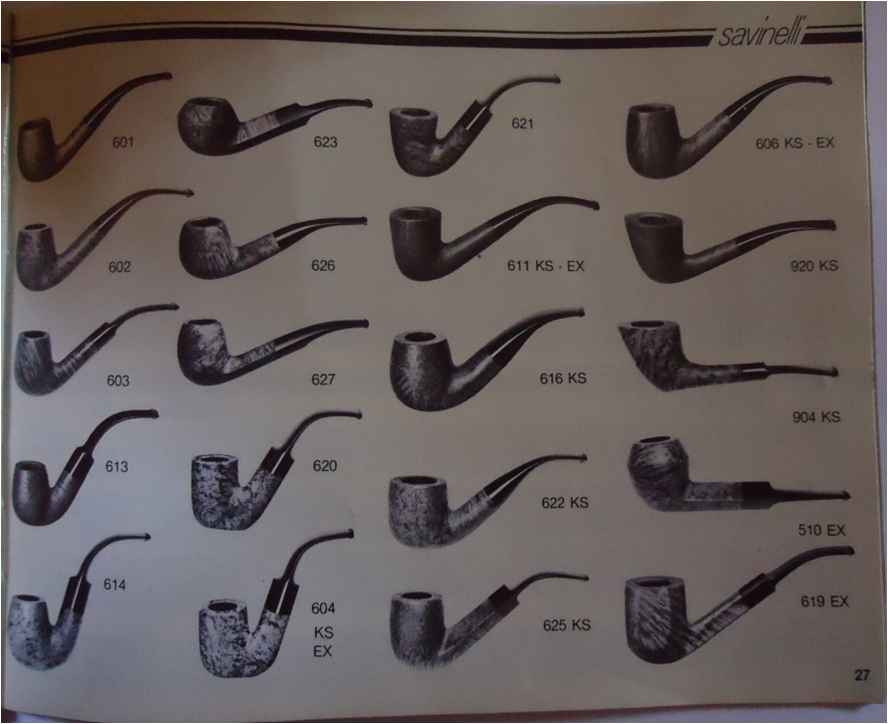
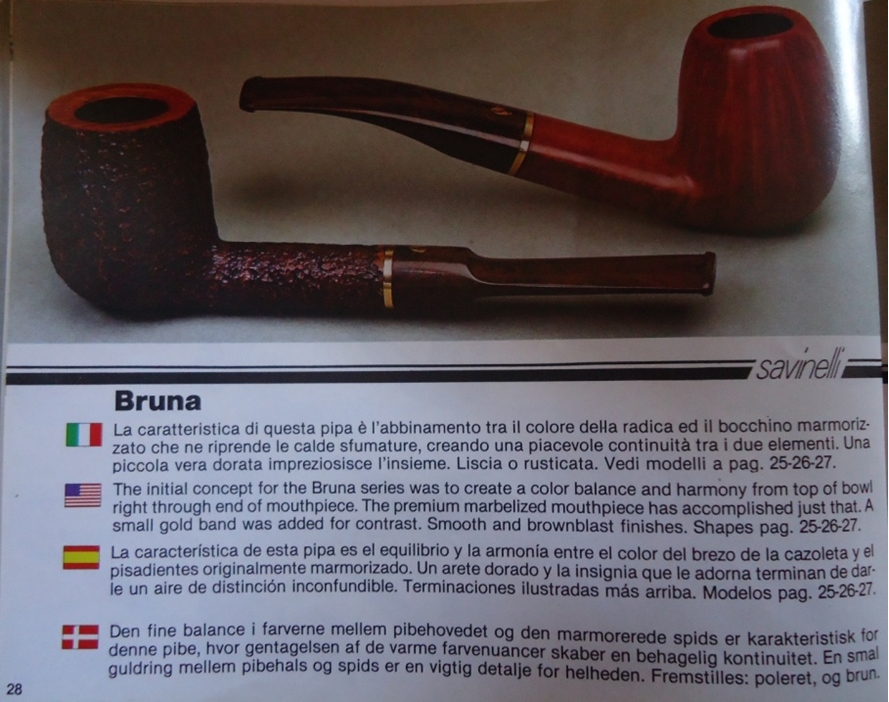
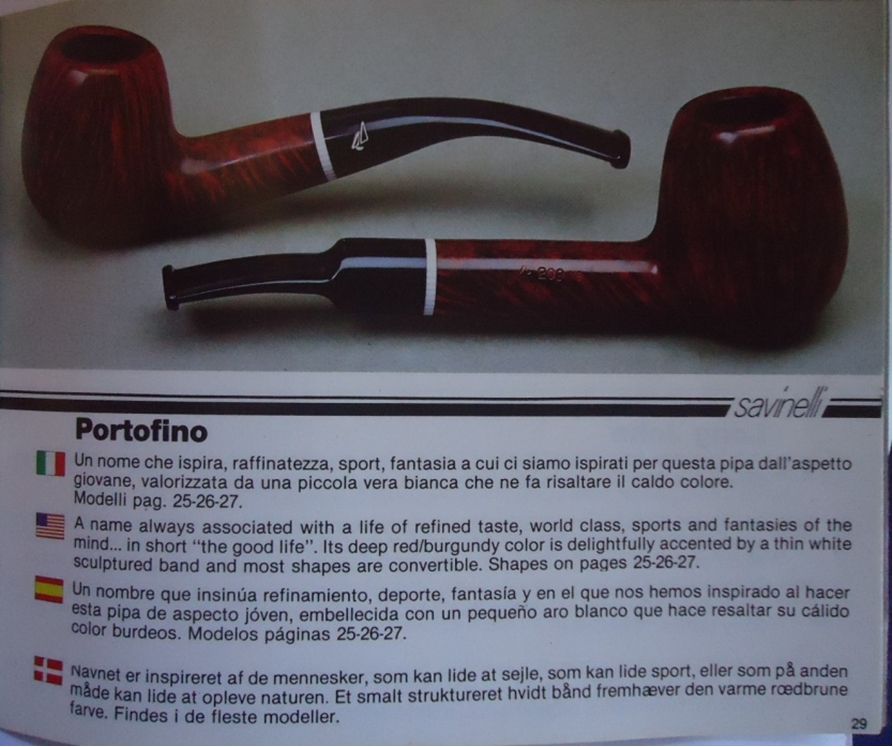
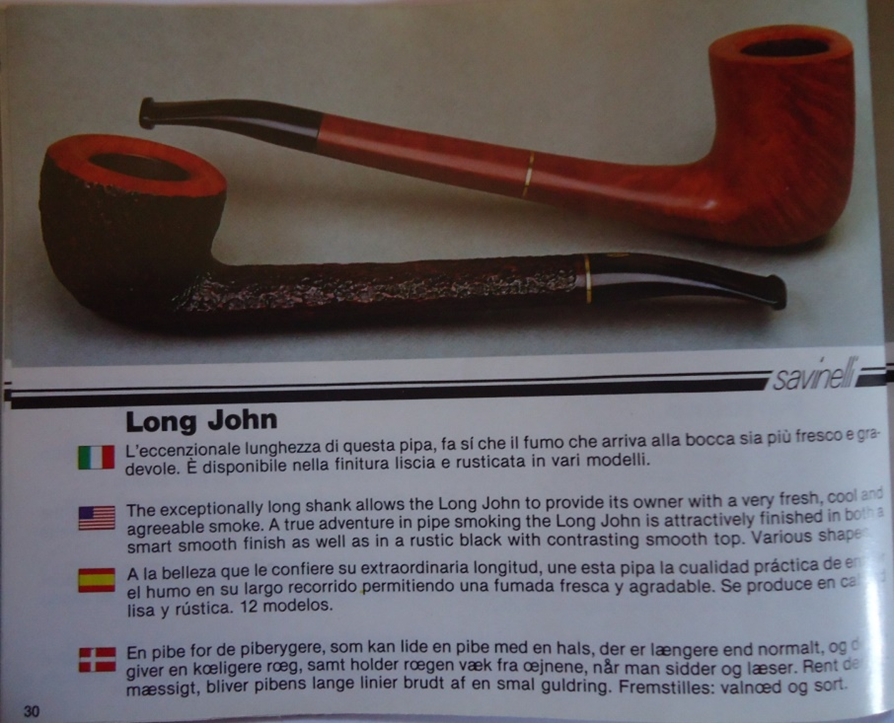
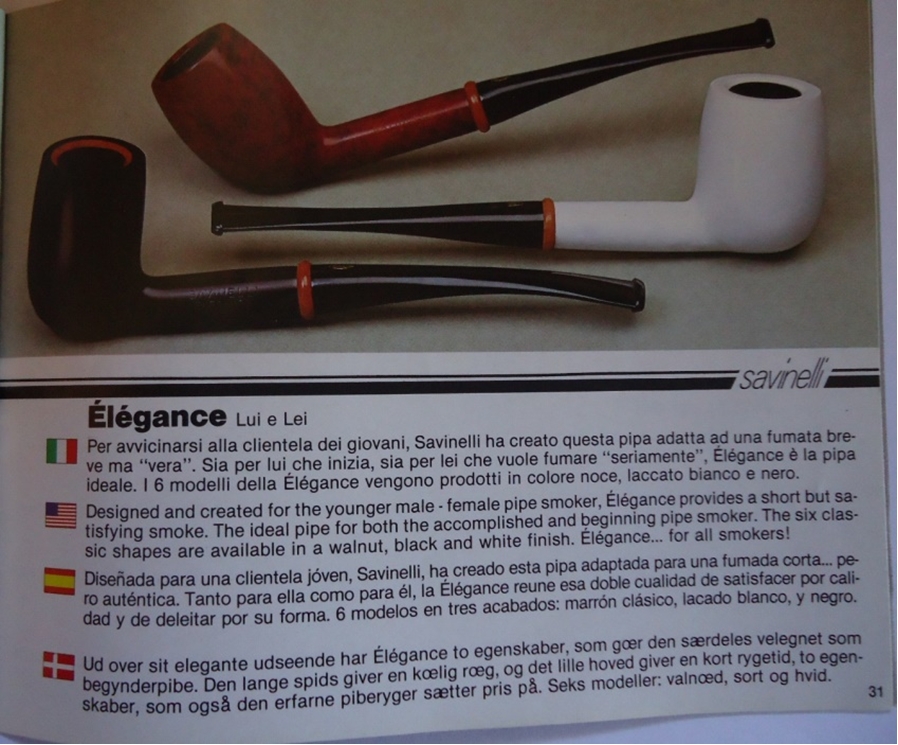
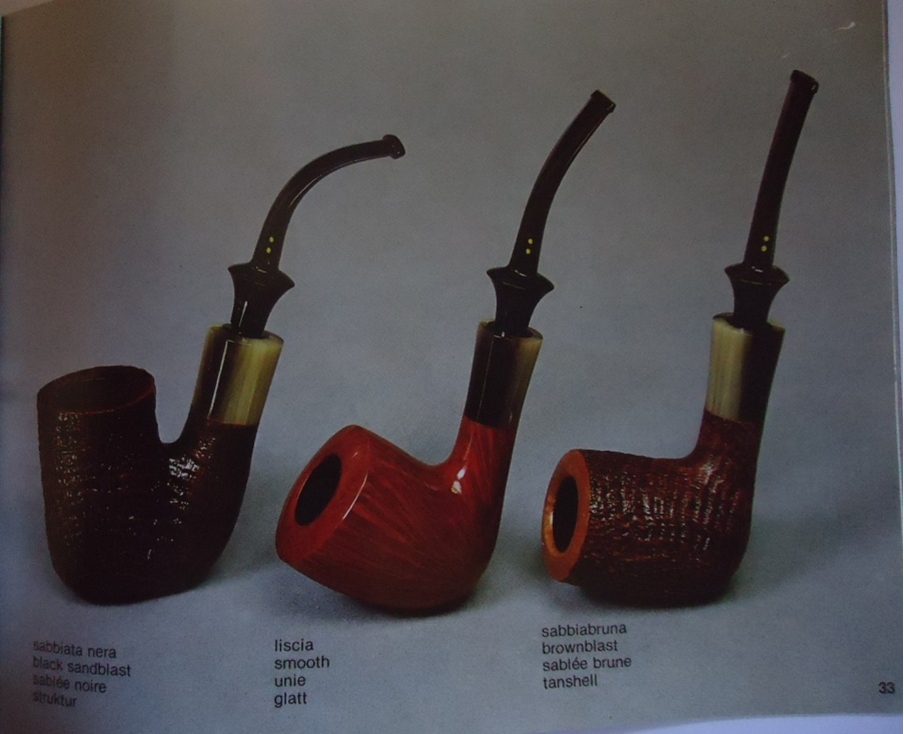
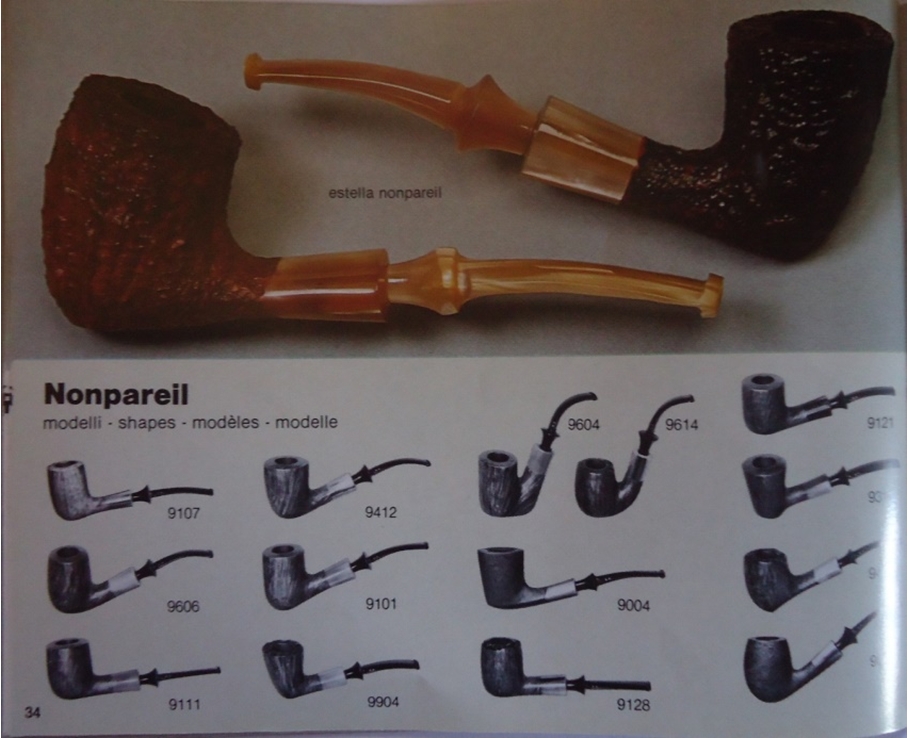
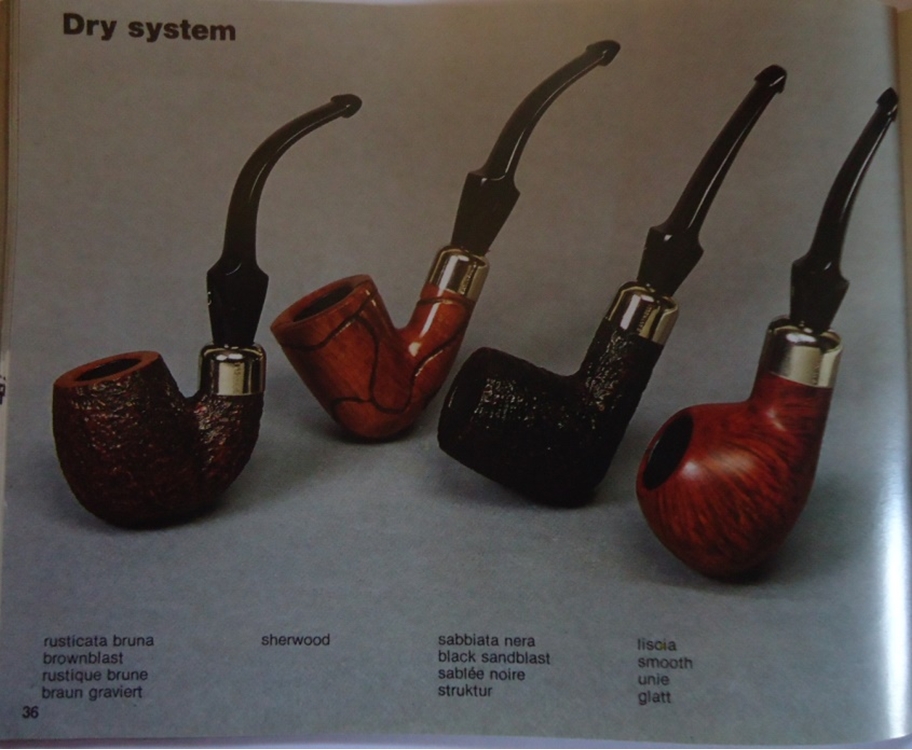
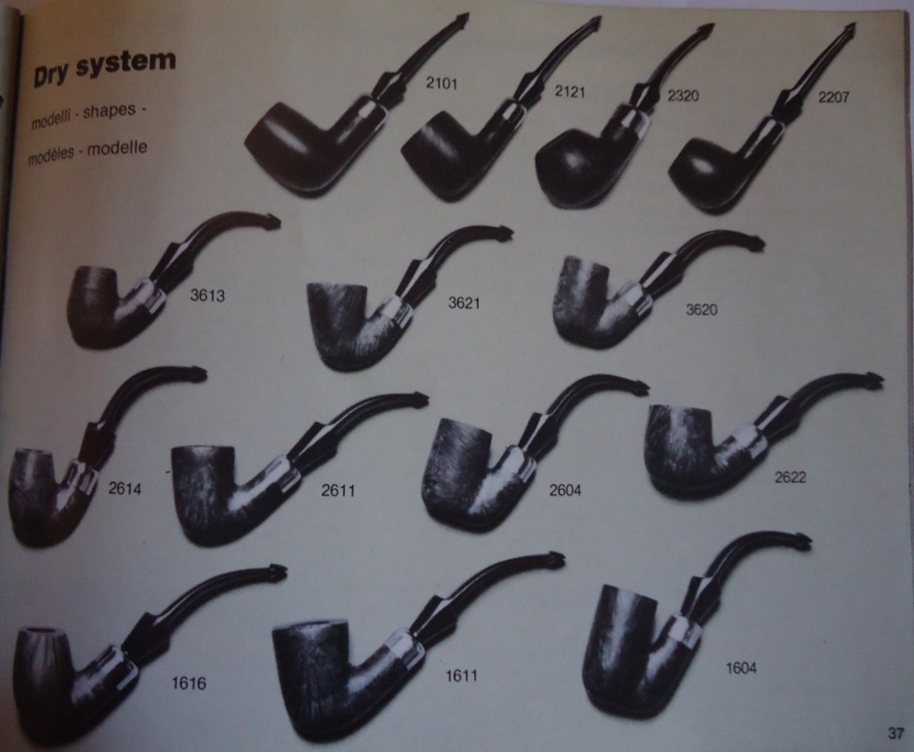
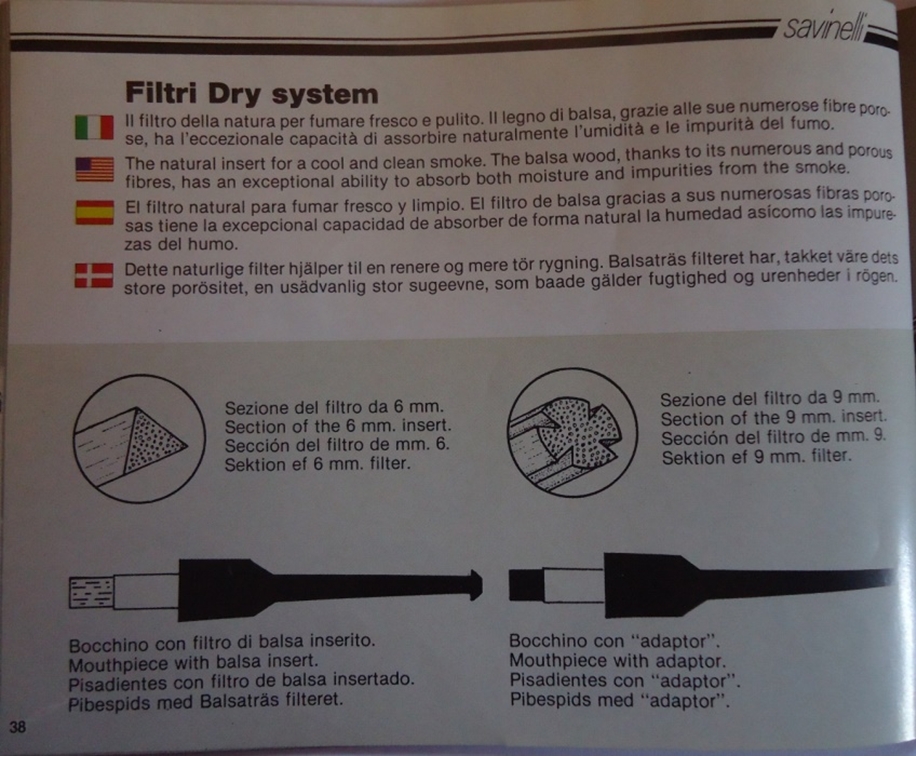
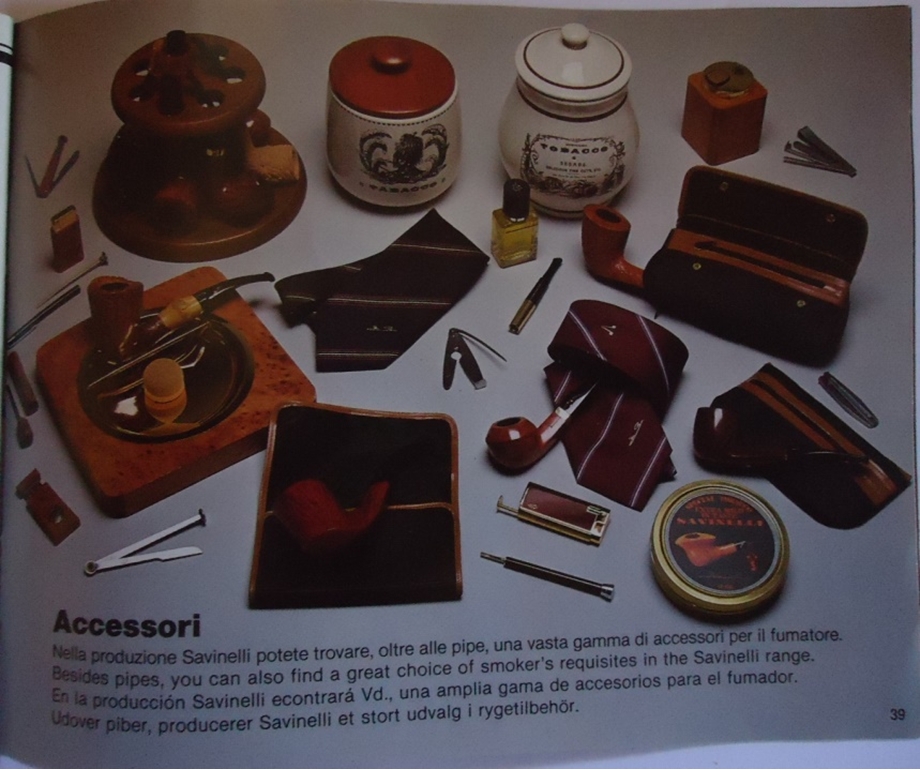
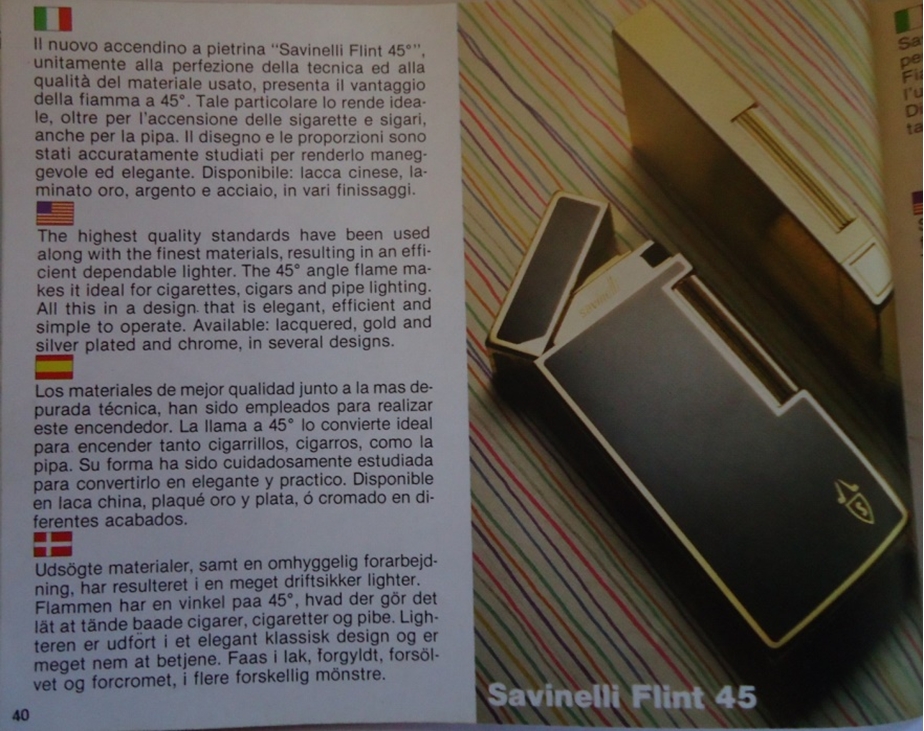
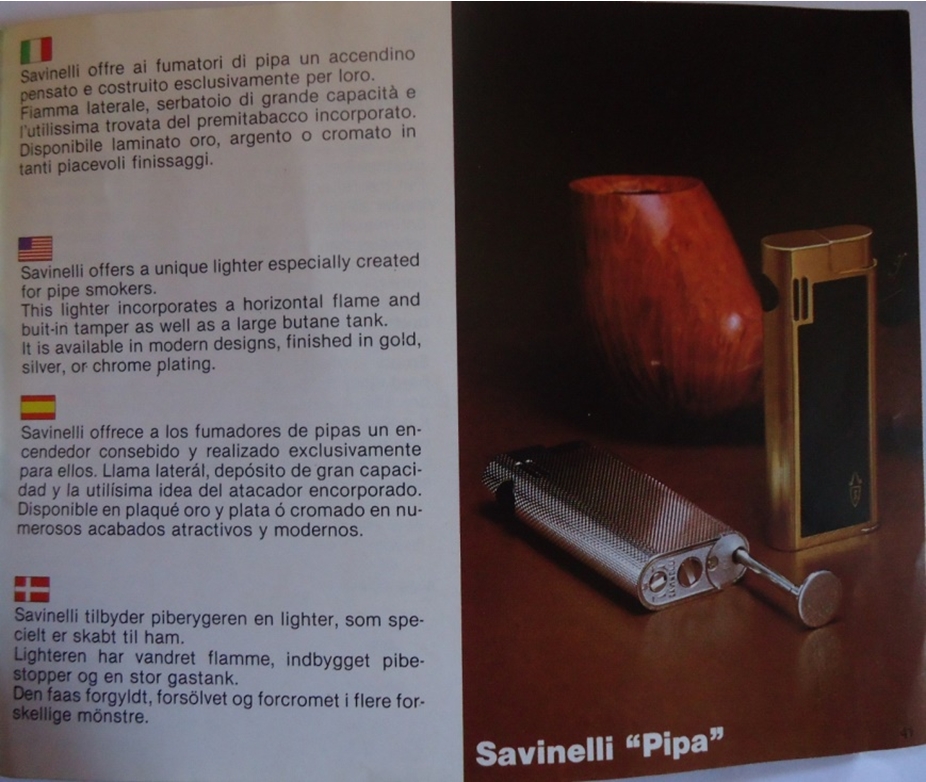
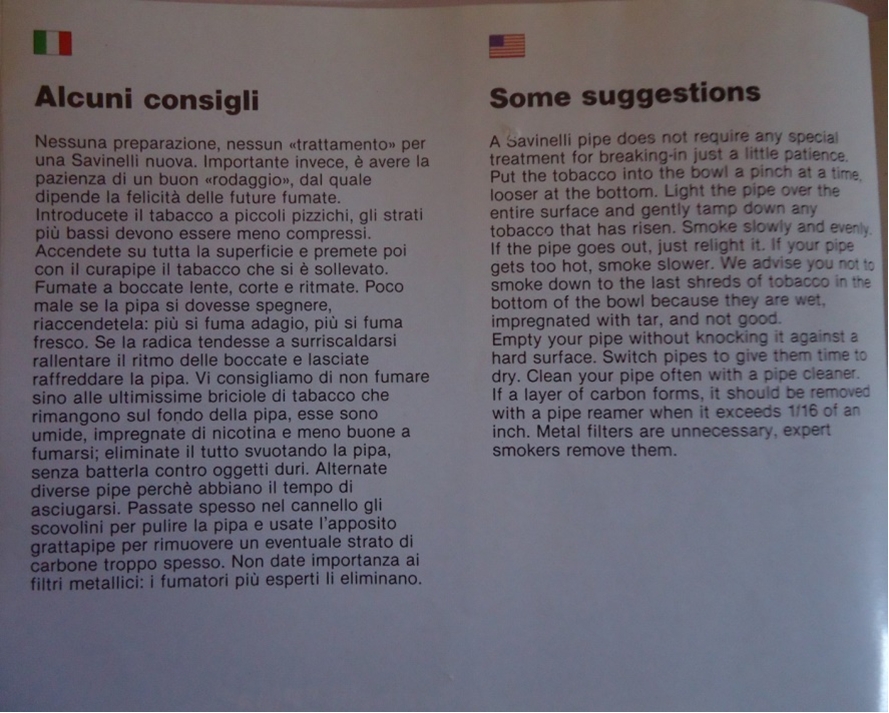
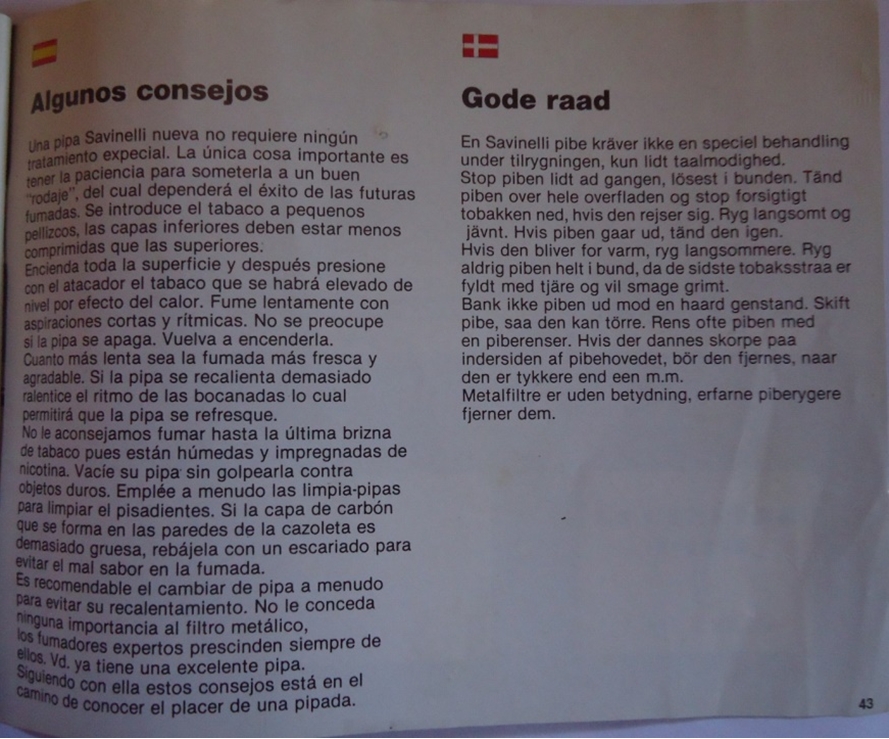
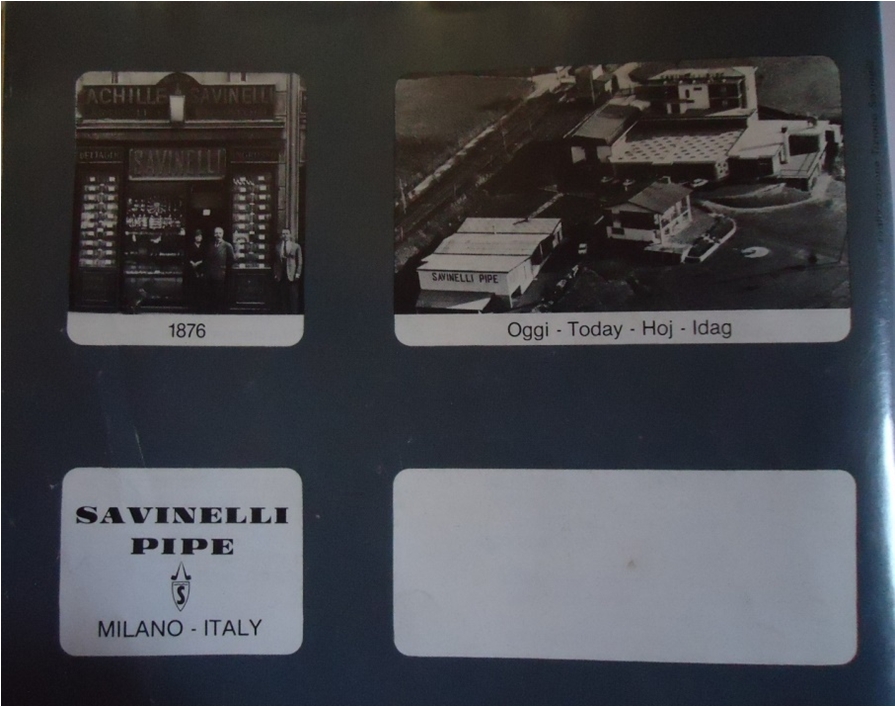
As a final note before posting the catalogue, I will just add that Sr. Capozzi and I turned out to be mutual fans of the great Argentine writer Jorge Luis Borges, whose quote above seemed fitting to the means of my new friend’s photo translation of the catalogue for our enjoyment and learning…and how much there is to learn from this marvelous catalogue is astonishing: pipe lines, shape charts, dry system pipes, filter dry systems, accessories and even “suggestions.”Sav1 Sav2 Sav3 Sav4 Sav5 Sav6 Sav7 Sav8 Sav9 Sav10 Sav11 Sav12 Sav13 Sav14 Sav15 Sav16 Sav17 Sav18 Sav19 Sav20 Sav21 Sav22 Sav23 Sav24 Sav25 Sav26 Sav27 Sav28 Sav29 Sav30 Sav31 Sav32 Sav33 Sav34 Sav35 Sav36 Sav37 Sav38 Sav39 Sav40 Sav41 Sav42 Sav43 Sav44 There happens to be one particular Savinelli in my possession that I have good reason to suspect would make an excellent first for him, if I can find a way to clear Argentina’s red tape. And, of course, provided Sr. Capozzi will give me his address.

A New Lesson Graces an Albertson Sandblasted Bent Bulldog Restore


Guest Blog by Robert M. Boughton
Member, North American Society of Pipe Collectors
http://www.naspc.org
http://www.roadrunnerpipes.com
http://about.me/boughtonrobert
Photos © the Author

“Every failure is a lesson well learned, every success is a battle well fought, and every friend is a jewel well-kept in one’s heart.”
― Unknown

INTRODUCTION
As a valued friend and mentor, Chuck Richards can be counted on to tell me the truth, always. No matter how special are the occasions when his comments are clear thumbs-up, being thick-skinned, I can say with all honesty that I value more the constructive tips, outright lessons and even contributions (whether requested or not) that this gem of a friend has shared with me during the fleeting past three years since I made my first pipe restoration of a Czech-made La Grande Bruyère mini bent billiard. This openness in my character is fortunate, considering the greater incidence of the latter compared to the former.

Chuck with Victor Rimkus in a rare peaceful moment.

Chuck with Victor Rimkus in a rare peaceful moment.

The only aspect of Chuck’s always invaluable input that sometimes frustrates me, as can happen in particular when two people are friends and see each other often, is his erratic timing. While for the most part Chuck speaks his mind with blunt promptness, he has far more projects in his own shop, not counting the free work he performs for customers at the tobacconist where he works, than I can even imagine. Therefore, he has the odd habit of briefing me on certain pipe restoration intelligence data, pertinent to my Need to Know clearance, crucial to my reputation and consequent success in the business.

By way of example, there was the time early last December when Chuck, after being approached by an unspecified number of my local customers with reports of un-thorough cleaning of the inner stems and shanks of some pipes I had sold to that date, at last brought up the subject. I was not only unhappy to learn that any of my friends and associates who paid money for my pipes were too worried they might “hurt my feelings” by giving me the chance to correct the problem myself; I was still more irked that Chuck failed to warn me after the first instance. [See https://rebornpipes.com/2014/12/10/in-retort-to-claims-of-unclean-restored-pipes-robert-m-boughton/ for the full story.] Of course Chuck then emphasized the importance of retorting, and in one mad 18-hour marathon when my retort kit arrived in the mail soon after, I corrected the problem with every remaining pipe on my sales list, as I have done with each pipe I’ve restored since.

And so, last Friday night at our weekly pipe club get-together I showed Chuck my latest finished projects. He examined them before leaning toward me to tell me discretely of another fellow club member who saw my array of pipes for sale next to his at the monthly Moose Club meeting, where we are free to sell. It seems the gentleman in question, who is getting into the restoration practice, wondered why my pipes (and his own, it turned out) looked “so dull” compared to Chuck’s. I am pleased that I was apprised of the comment soon afterward, but had to wonder why Chuck – who no doubt noticed the same effect long ago – didn’t tell me of the importance of using an un-waxed buffer wheel after each application of the various waxes that can be used to finish pipes.

I had more than usual difficulty grasping the process as Chuck explained it to me, until his third description, when some light in my head snapped on. I understood he was not talking about removing the nice shiny layer of wax applied with such care; he was describing a way to take off the excess wax and firm up the rest so that it would shine even more, not smudge and last longer.

“You won’t believe the difference in the look of the pipe when you use a clean buffer after each wax you put on it,” Chuck told me, smiling in relief and the genuine pleasure he derives from explaining anything pipe-related, when he saw that my head had wrapped around the whole idea.

Again, of course, I remembered Chuck’s work-load and other difficulties, not to mention the bombardment of questions he receives every day from friends and customers. I identified with the high probability that every time he planned to say something it simply slipped his mind.

At any rate, this blog concerns a lovely rusticated bent bulldog made by the Belgian company known as Albertson, which, after World War II, was taken over by the Hilson factory. Since that crafter went bankrupt in 1980, the Albertson brand has been continued by the Royal Dutch Pipe Factory.

Considerable work went into this particular restoration, the first opportunity to use my new knowledge of proper pipe waxing. Thank you, Chuck, for being a real friend again. I officially challenge anyone to inspect this bulldog and find anything whatsoever lacking in its inner and outer shimmer.

THE RESTORATION Robert2

Robert3

Robert4

Robert5

Robert6

Robert7

Robert8 When my now customary first step of OxiCleaning the stem was complete, the well-shaped and gently curved stem was clean but covered with green, white and brownish spots. I solemnly affirm that I documented the result with a photo, but it seems to have been lost due to a malfunction of my camera. Likewise, the effects of 220-grit sandpaper on removing the serious tooth chatter that marred both sides of the top of the stem, almost an inch below the lip, are gone. Even the lip had been gnawed and required intense sanding, but at least I avoided Black Super Glue.

I stripped the rusticated briar in Everclear.Robert9 Again, the photos of the bare briar after this process are not to be found, although rubbing with super fine steel wool, then sanding the top of the bowl above the traditional line to make it lighter in color, followed by a thorough micro-meshing of the whole with five grades from 1500-4000 made the wood ready for buffing. The only way I can even begin to explain the absence of these particular photos is to note that all of them were taken in order during a short period of peculiar behavior by the DSLR.

After sanding the chamber with 320-grit paper followed by 200, I retorted the pipe. For the first time, that step required only one test tube of boiled alcohol, thanks to the excellent care by the previous owner and the Everclear soak. I had stained all of it but the top and rim with burgundy boot dye, which I flamed and hand-buffed with 4000 micromesh before resorting to 3600 to heighten the new red tone. Here is the briar when I was almost done prepping it for the final buffs.Robert10 At the last moment, I decided to give the upper part of the bowl and the rim a final sanding with 320-grit paper and re-using the same micromesh progression as before to take it all the way down to its natural light brown color. All was in order to try out my newly-learned wheel buffing technique.

The stem took a little extra work with its extra lines, using the regular red Tripoli followed by White Diamond. I happened to have an extra, new buffer which I then attached to the electric wheel that had held the red Tripoli cloth. Beginning on the briar with a regular white Tripoli buff, I held it up in the light for a better look before I moved to the clean buffer and turned the wood with extra care. Again I held it up to see the change, which, as Chuck had promised, was prominent. Repeating these steps with White Diamond and at last carnauba (since I still need to replace my spent supply of Halcyon II), when the work was done I was truly impressed with the far finer and more solid shine.Robert11

Robert12

Robert13

Robert14

Robert15

Robert16 CONCLUSION
I was fortunate to start with an estate pipe that was well-tended by it prior owner, and I like to think that he would be pleased with its new, sharper two-tone look. My only regret is that now I have to re-polish my entire growing collection of pipes for sale. But I am looking forward to the next monthly Moose Lodge meeting of the pipe club on the third Thursday of April. You can bet I’ll be there, with all of my pipes arranged proudly beside Chuck’s.

Still I wonder…what future comments might make their way to me via my good friend and mentor? Perhaps now my potential local customers might find the good grace and trust to approach me instead.