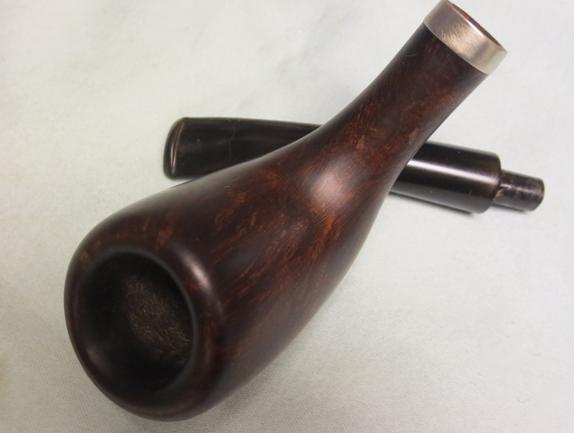
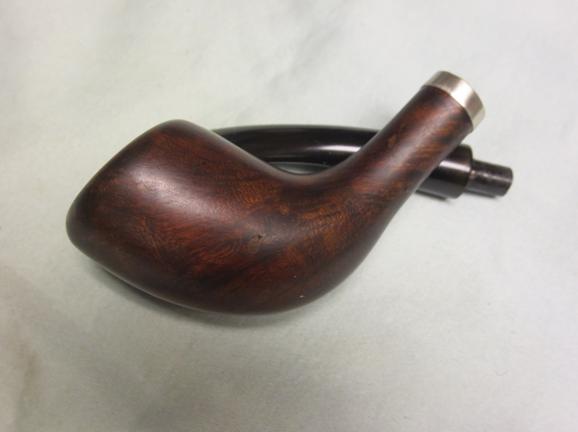
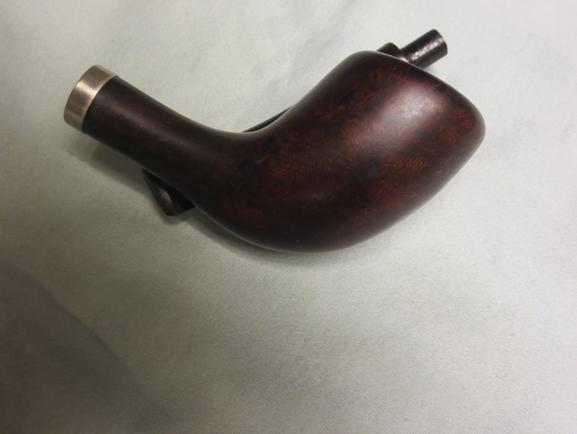
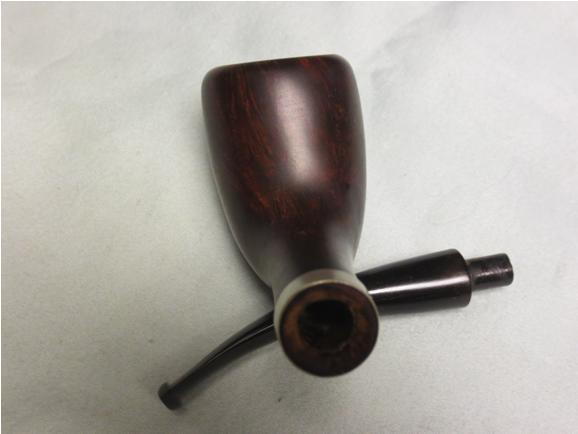
Tag Archives: restaining

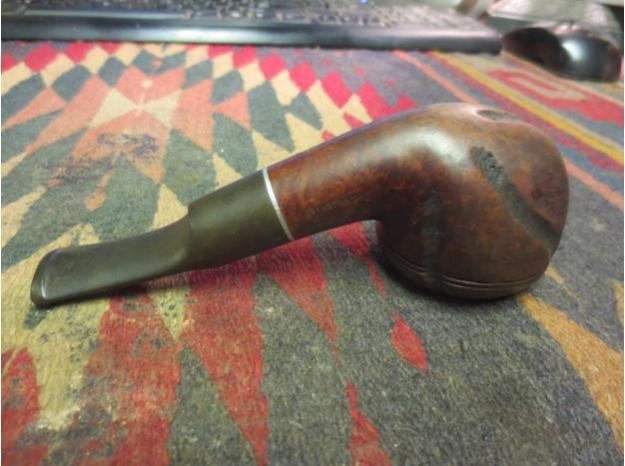
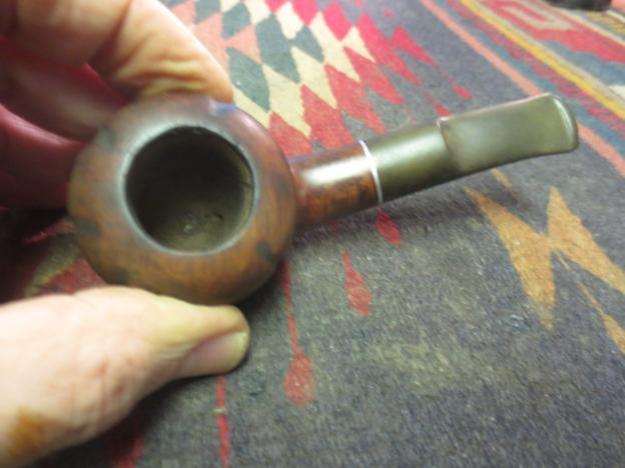
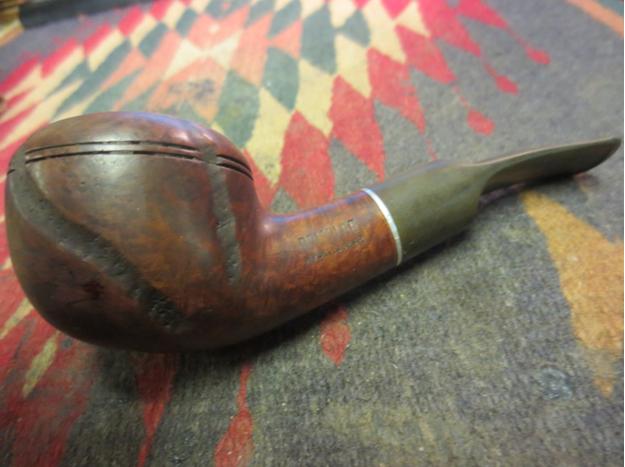
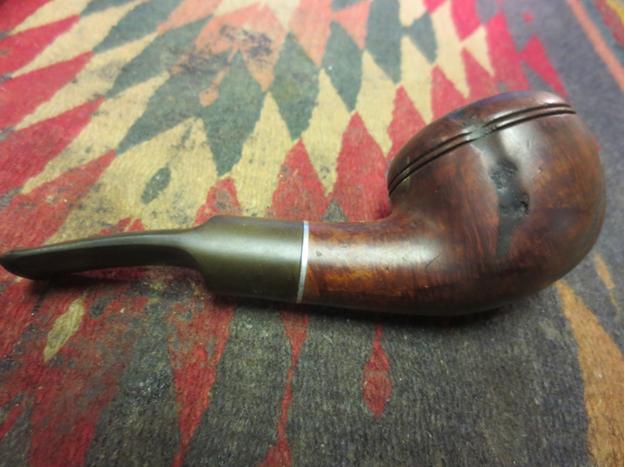
Cleaning up a Bruyere Garantie Pocket Pipe with a Horn Stem


Blog by Steve Laug

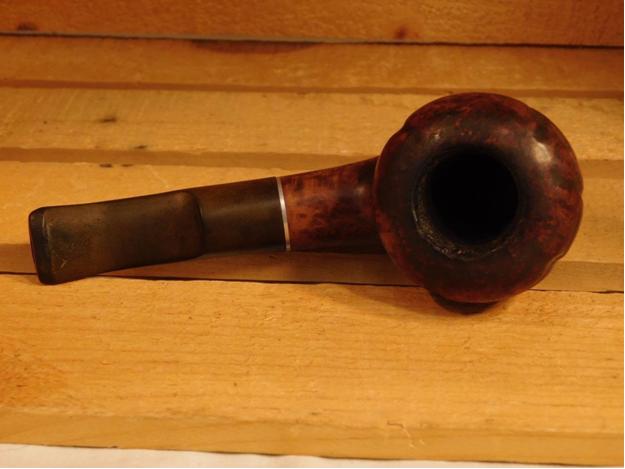
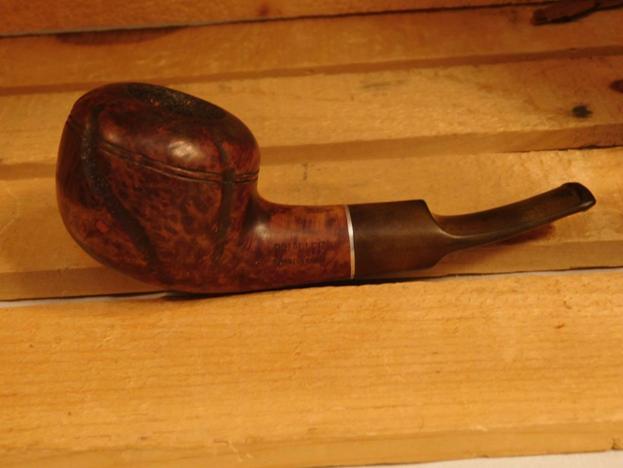
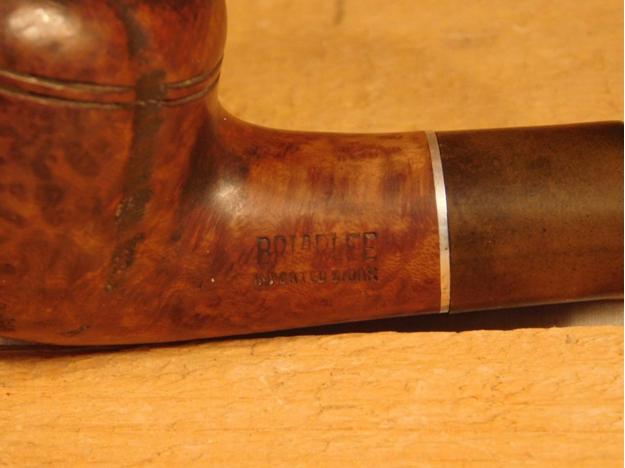
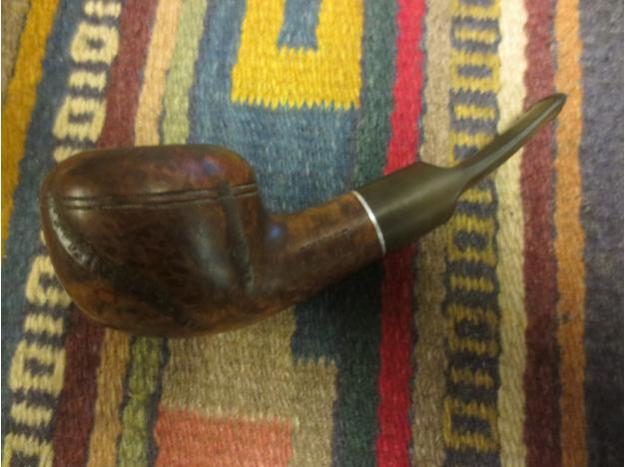
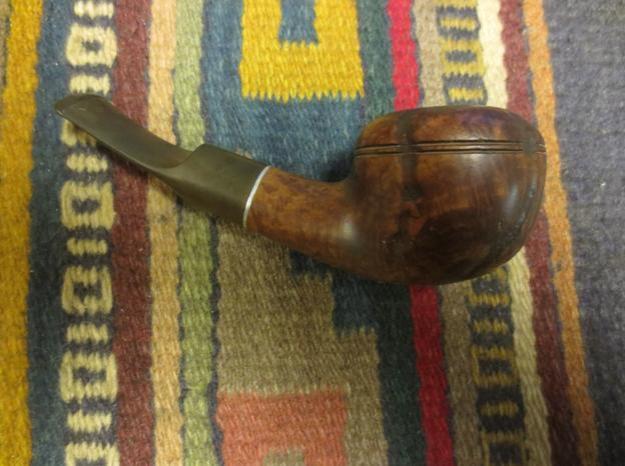
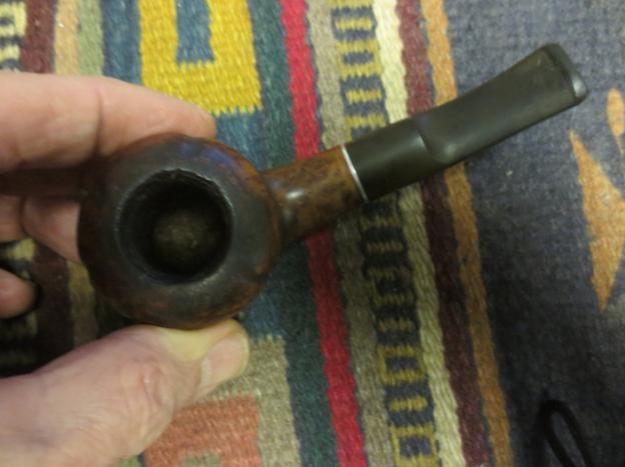
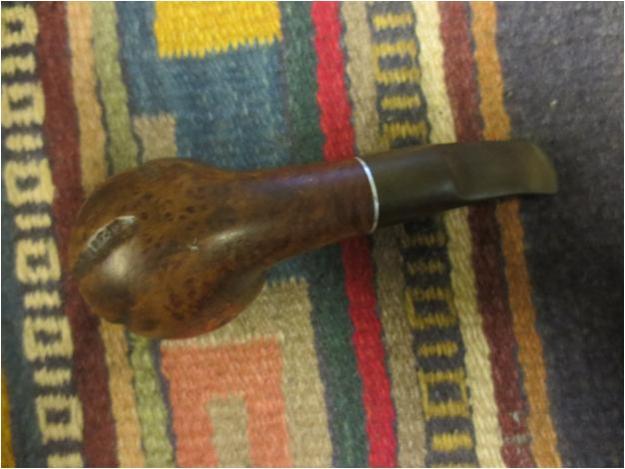
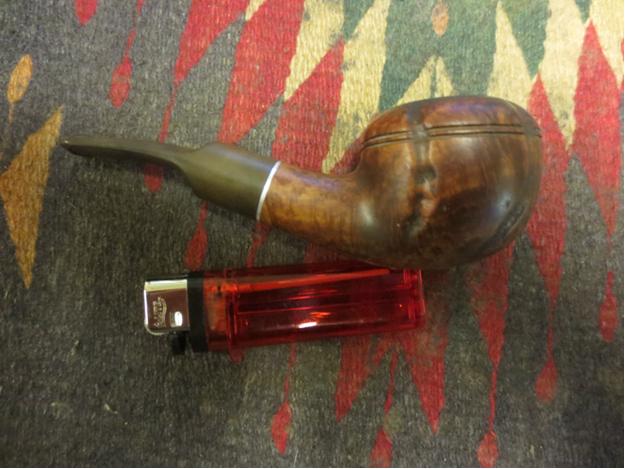
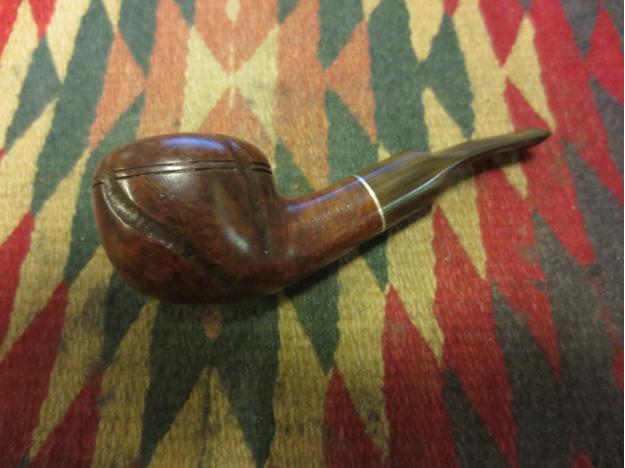
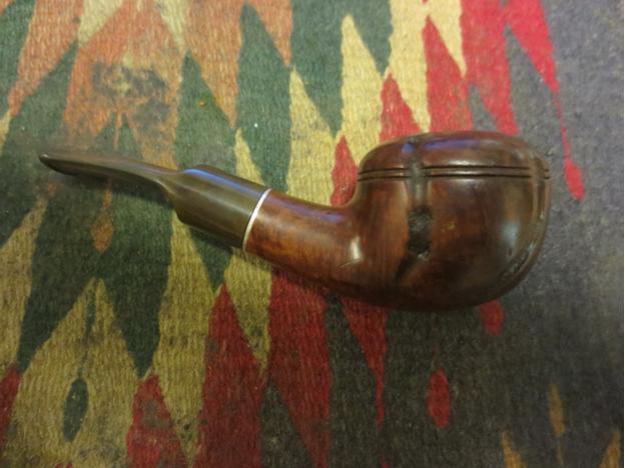
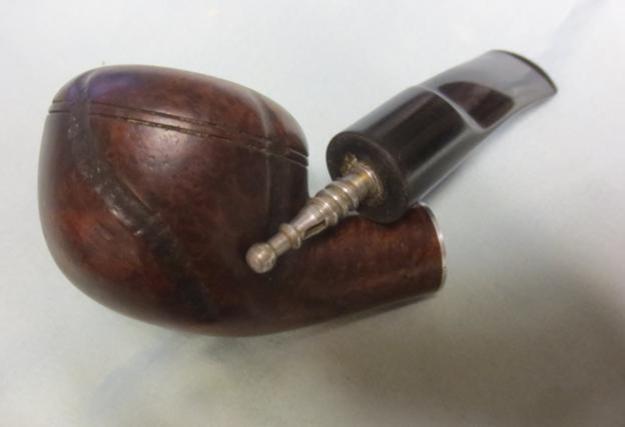
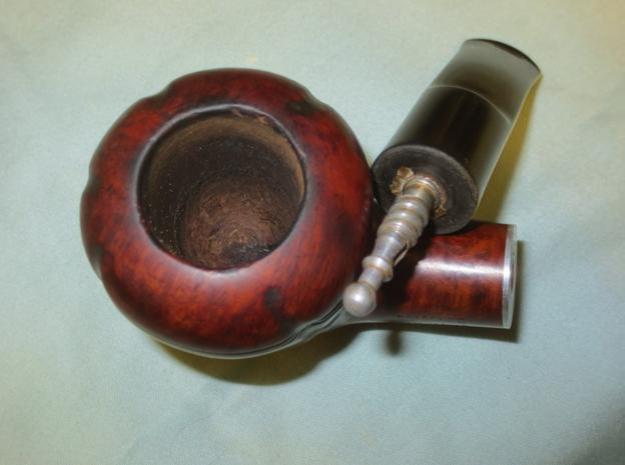
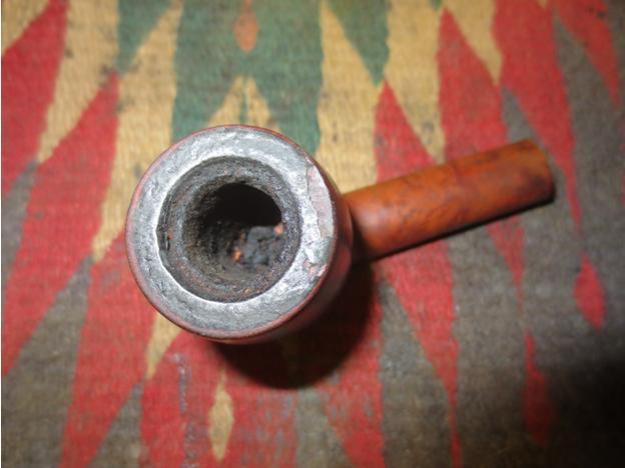
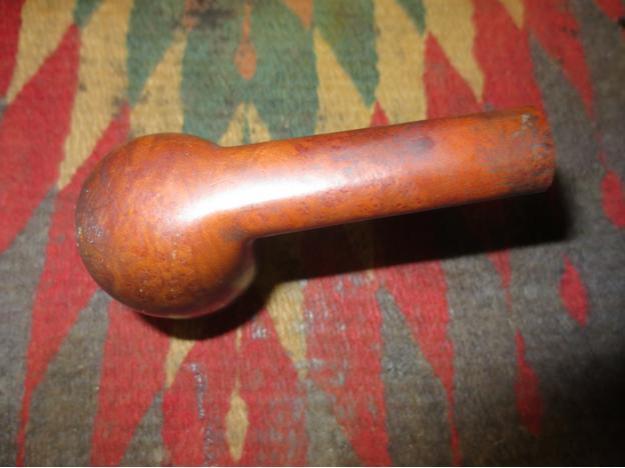
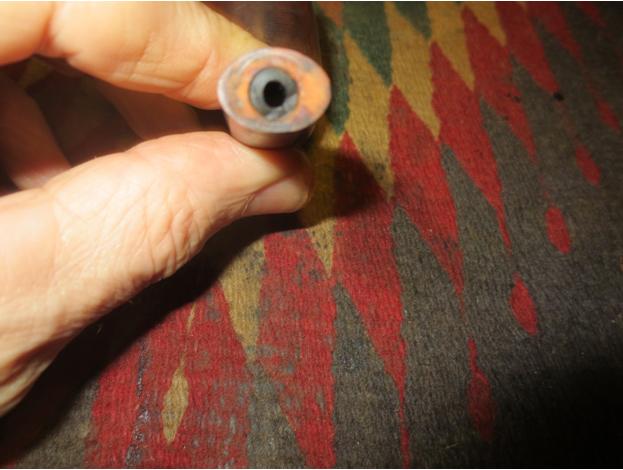
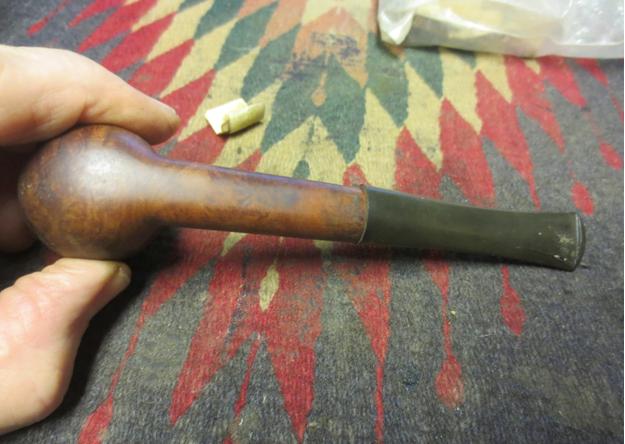
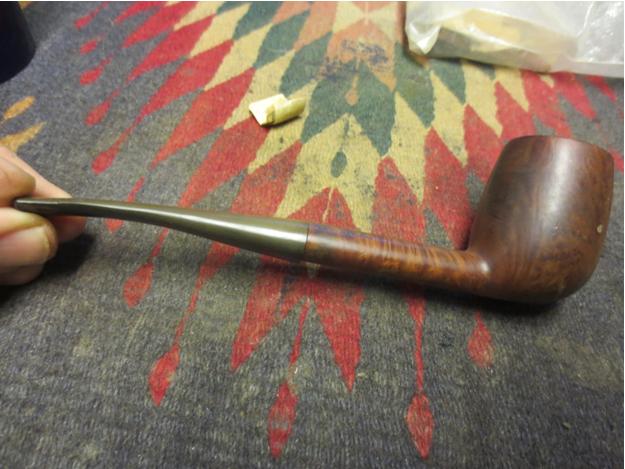
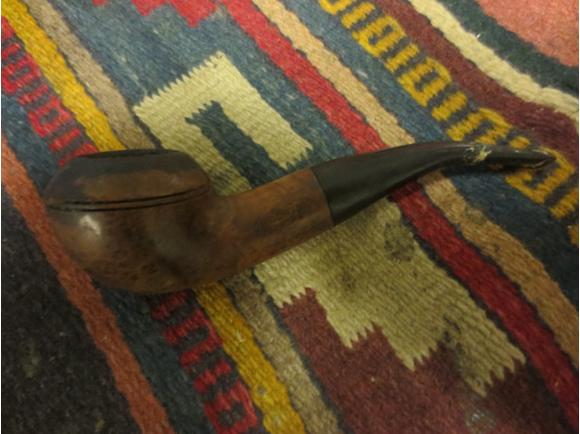
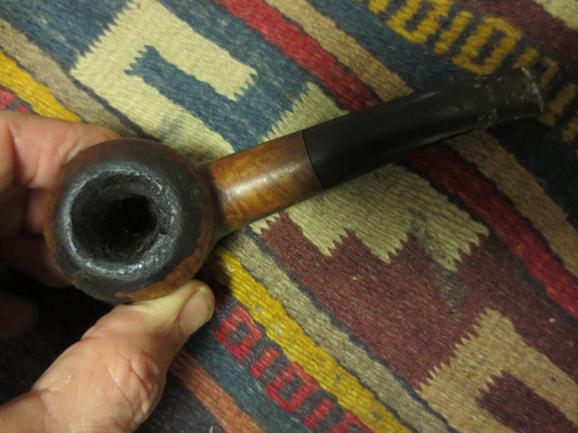
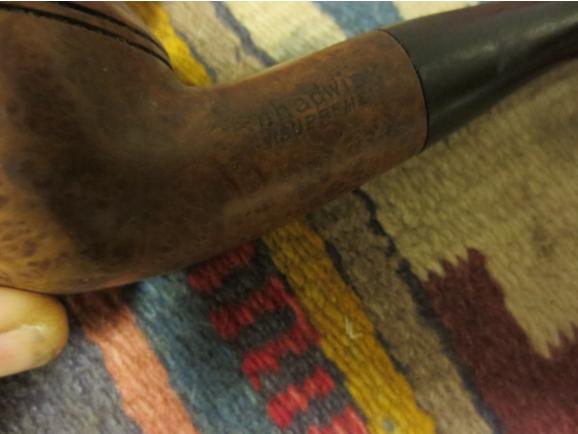
This pipe reminds me of the Mokin Pocket Pipe that Anthony restored and wrote about in an earlier blog. When I saw it on eBay I put a bid in and actually won it. The pipe needed a lot of work. From the photo it looked as if it had a thick coat of varnish or some shiny topping. That would need to go. The finish was spotty and appeared to have some flecks of paint on the top and on the skate at the bottom of the bowl. The rim was darkened and hard to tell whether it was burned or just tarry. The bowl was slightly out of round but it also had a cake that would need to be reamed out before addressing the out of round inner wall of the rim.The stamping was clear and distinct and read Bruyere Garantie on the left side of the shank. The stem had a double circle on the left side. The stem also appeared to be horn. There were two deep cuts on the right side of the stem near the button that would need work and with those marks I was sure there were other issues. The first two photos are the ones included in the seller’s description of the pipe on eBay. I had no idea what the other side or bottom of the bowl or stem looked like or if there would be more issues that would need to be addressed.Bruyere1

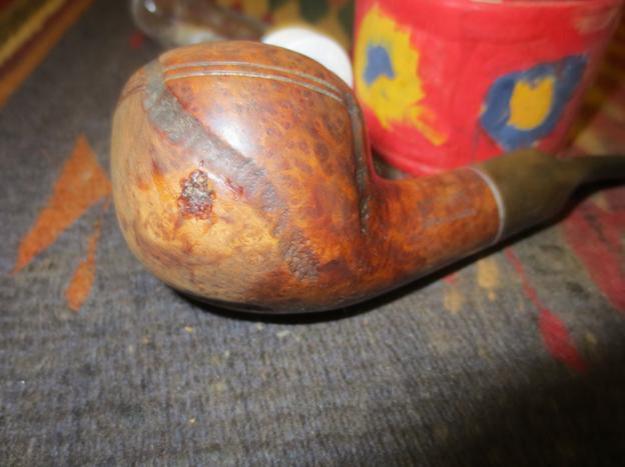
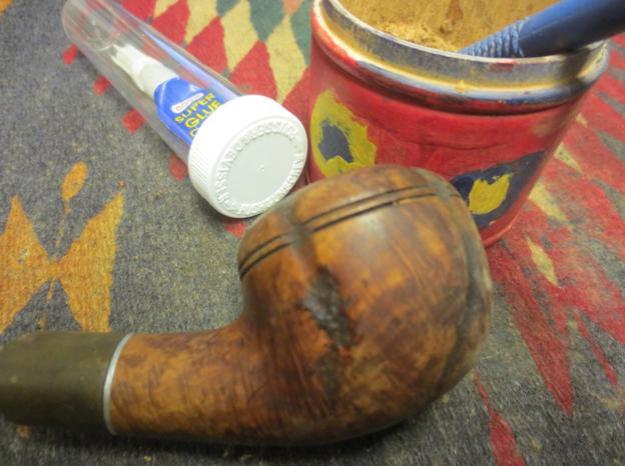
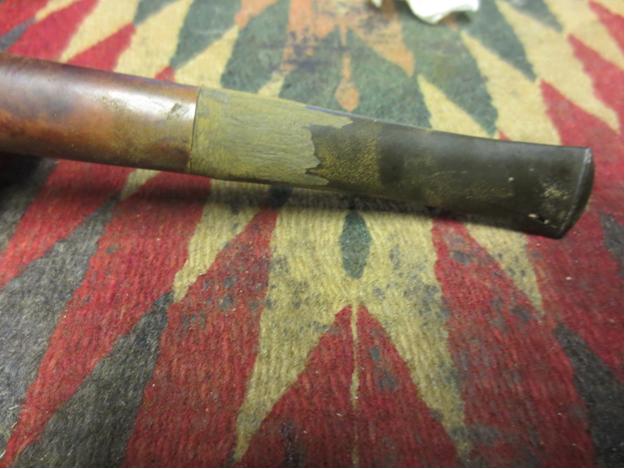
Bruyere2 When the pipe arrived I was both encouraged by what I saw and concerned by several other issues that had not been shown in the photos above. The encouraging thing was that there was no shiny coat of varnish or lacquer on the bowl. All that was present was a very dirty, grimy natural finish that seemed to have a reddish-brown colouring to it. The concerns involved the fills on the underside of the bowl. What had appeared to be paint flecks on the skate at the bottom turned out to be part of the fill on the bottom and a missing piece of briar. The bowl was indeed caked and the cake was crumbling and uneven. Looking at it initially I wondered if there would not be burned spots in the walls of the bowl once the cake was removed. The inner edge of the rim was also more damaged than I had expected from the seller’s photo. The cuts in the stem were dangerously close to the airway but fortunately had not broken through. The fact that the airway was unharmed was a small miracle given the depth of the cuts. The fact that they angled probably save the airway from damage. On the underside of the stem there were also large chips missing from the stem at the shank stem union. It appeared that someone had tried to pry the stem away from the shank rather than twisting it off. There was also tooth chatter on the top and underside of the stem near the button. The button however was clean and sharp as was the slot in the in the end of the button. The stem had some beautiful striations of colour that I had not seen in the photos and I looked forward to seeing if I could bring them out.Bruyere3
Bruyere4

Bruyere5

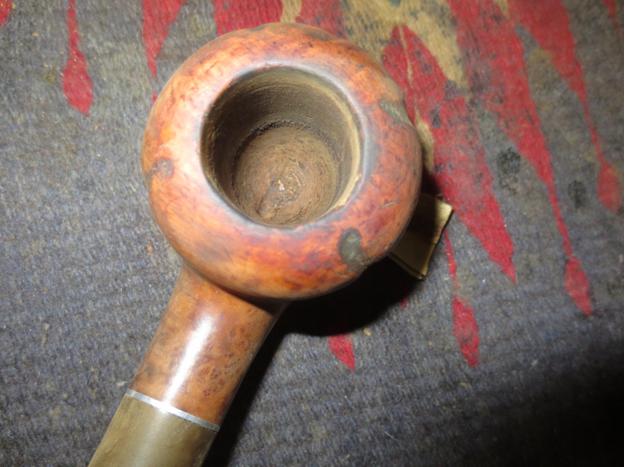
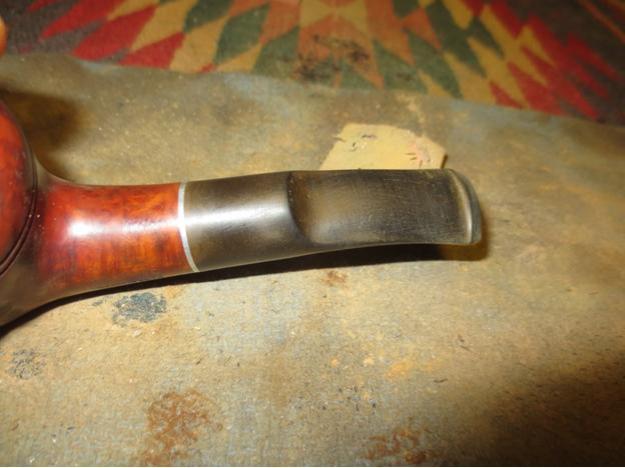
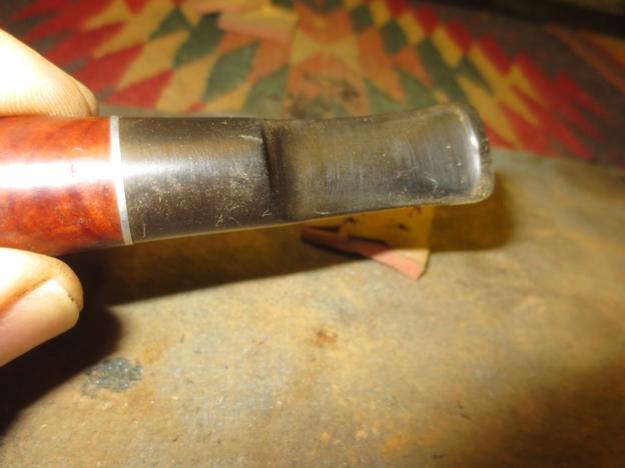
Bruyere6 I took some close up photos of the damage to the rim and the stem. The first photo below shows the damage to the inner edge of the rim and the crumbling cake in the bowl. Looking closely at the top of the photo and the bottom of the bowl you can see the cause for my concern regarding the potential burn out damage. The second and third photos below show the cuts in the stem and the missing chips. You can see how close the cut closest to the button came to the airway in that photo.Bruyere7

Bruyere8

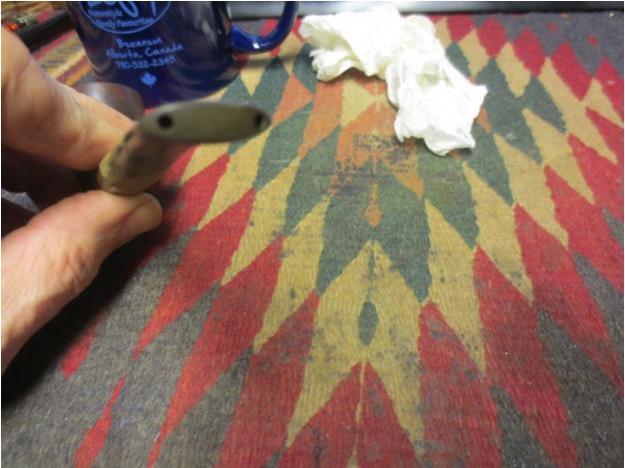
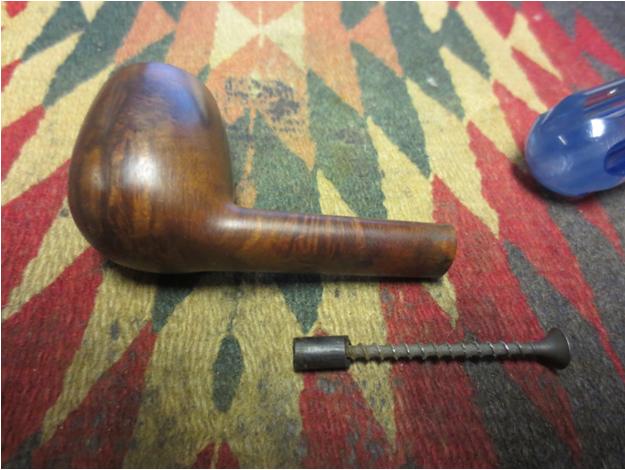
Bruyere9 The next photo shows the stamping on the side of the shank and the logo on the stem. It is hard to see but much of the depth of the stamping on the stem is gone so restoring that with new white colouring will not be possible.Bruyere10 When I removed the stem the tenon was inset aluminum and there was a stinger apparatus in place. It was a twisted piece that had a slot in the top for the airflow that followed the twist to the airway. It was stuck in the tenon and would need to be loosened before I could properly clean out the airway in the stem. I included some extra photos of the stem to show the cuts and chips from a different angle.Bruyere11

Bruyere12

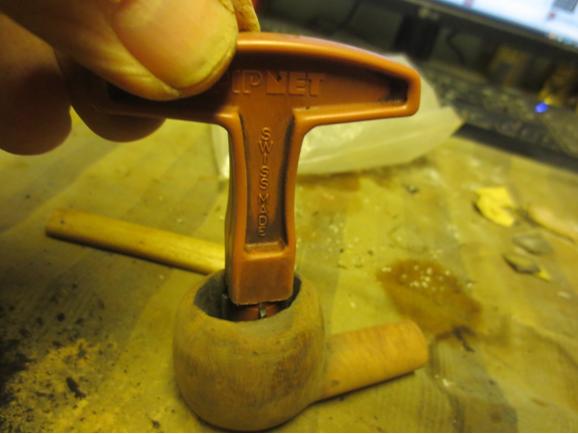
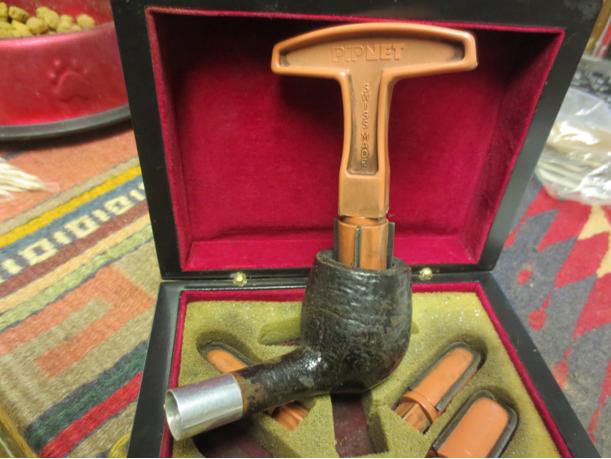
Bruyere13 I reamed the bowl with a PipNet reamer. I started with the smallest cutting head and cleaned things up with it first. I then used the second cutting head which was pretty close to the diameter of the bowl. I cut the cake back to nothing so that I could examine the interior walls of the bowl. I was pleasantly surprised to find that once the cake was gone the interior walls of the bowl were solid and there was no burning.Bruyere14
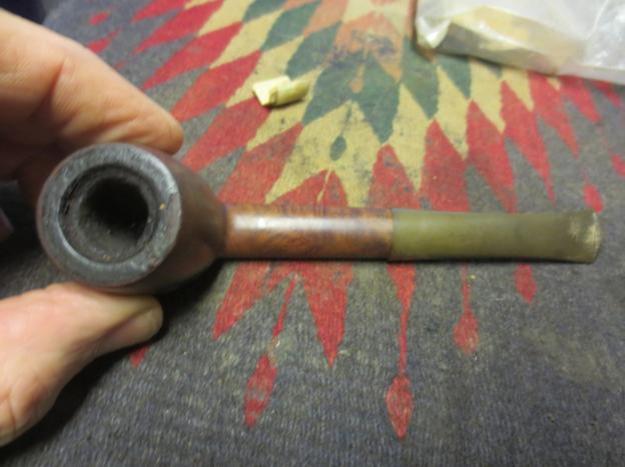
Bruyere15 I worked on the out of round bowl with a folded piece of sandpaper to smooth out the damaged areas and bring it back to as close to round as I could get it. I then topped the bowl on my topping board to smooth out the rim and clean up the damage on the surface. I will often do this just to bring the damage on the inner edge of the rim closer to the top so that I can smooth it out further with sandpaper.Bruyere16
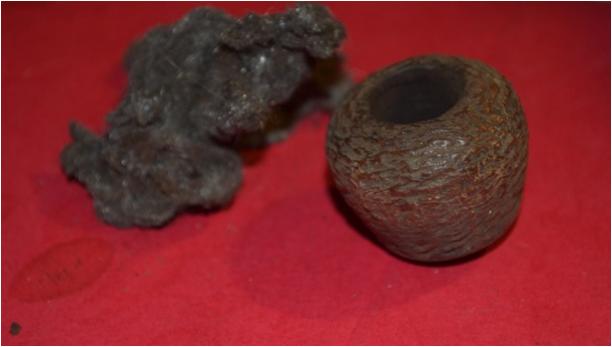
Bruyere17

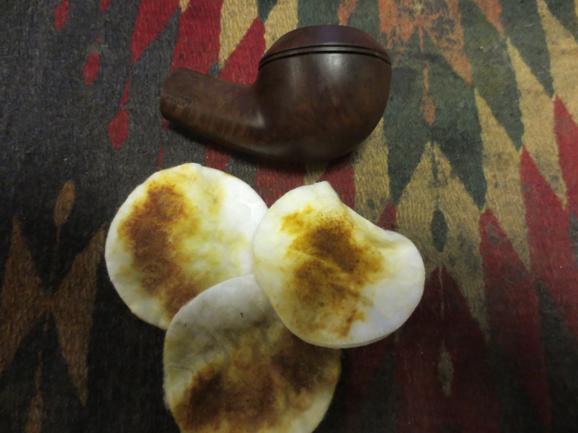
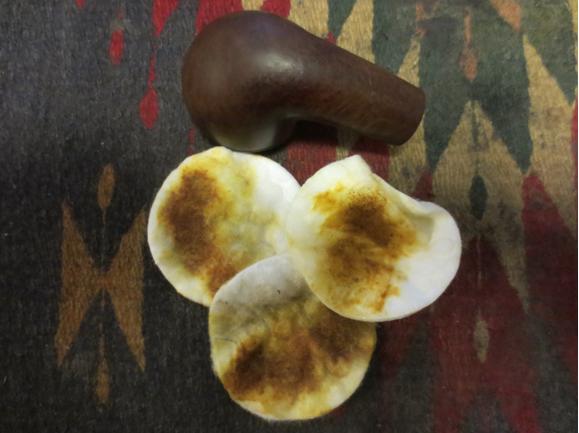
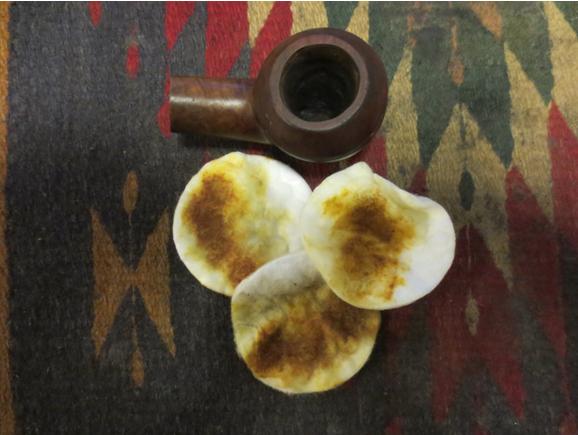
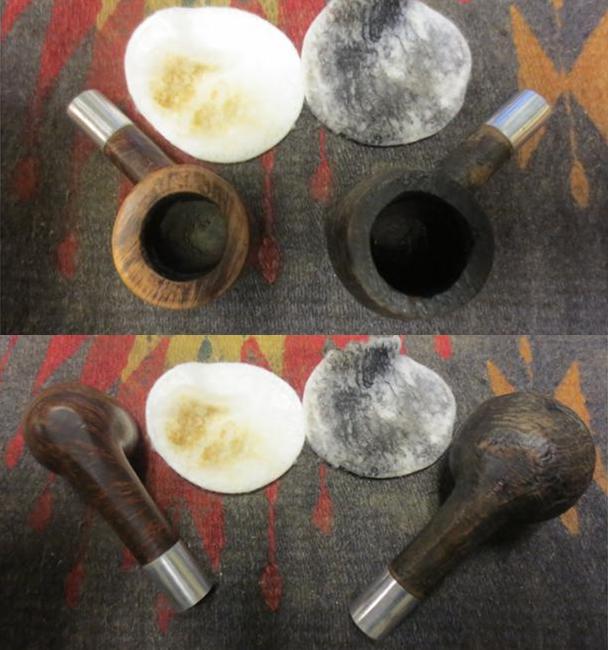
Bruyere18 I wiped down the bowl with acetone on a cotton pad to remove the grime and the remnants of the finish. There appeared to be some damage to the front of the bowl that I wanted to have a closer look at once the bowl was cleaned up.Bruyere19 I wiped down the horn stem with cotton pads and some alcohol to clean up the surface so that I could begin the repairs. I debated on whether to use black super glue or clear super glue for the repairs to the chipped areas but decided to go with the clear hoping that once it dried the colour would come through the repair and blend it into the horn better. I layered the repair to the chipped areas on the underside and the cuts on top side of the stem. I wanted each layer to dry before I added another layer of glue.Bruyere20

Bruyere21

Bruyere22 After many layers of glue I was disappointed that glue did not cure clear but rather had a cloudy white appearance. The fills on the cut areas dried hard but looked like two white slashes. I was hoping that as I polished the stem these would blend in a bit more. The fills in the chips were a mixed bag. The smaller ones dried perfectly and blended in well. The larger divot was also white. I cleaned that area once again and added a drop of black superglue to the top of the repair to see if I could hide it better.Bruyere23

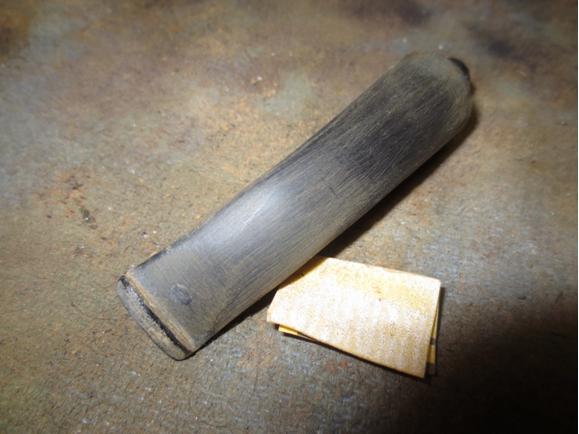
Bruyere24 I sanded the bowl and stem with 220 grit sandpaper and then medium and fine grit sanding sponges to clean up the repairs and the scratches in the briar. I carefully avoided the area of the stamping and the logo so as not to harm them. I also cleaned up the stinger and was able to remove it from the tenon. It was threaded and after cleaning up the joint I was able to unscrew it and clean it and airway of the stem. I wet sanded the bowl and stem with a 1500 grit micromesh sanding pad. The striations of colour are beginning to show on the stem and the bowl is looking far better than when I started.Bruyere25

Bruyere26

Bruyere27 I wiped the stem down with a light wipe of alcohol to remove the sanding dust and then continued to wet sand it with 1500-2400 grit micromesh pads. I rubbed it down with Obsidian Oil and then dry sanded with 3200-4000 grit pads. I rubbed it down again with the oil and then finished sanding it with 6000-12000 grit pads. I gave it a final coat of Obsidian Oil and let it dry.Bruyere28

Bruyere29

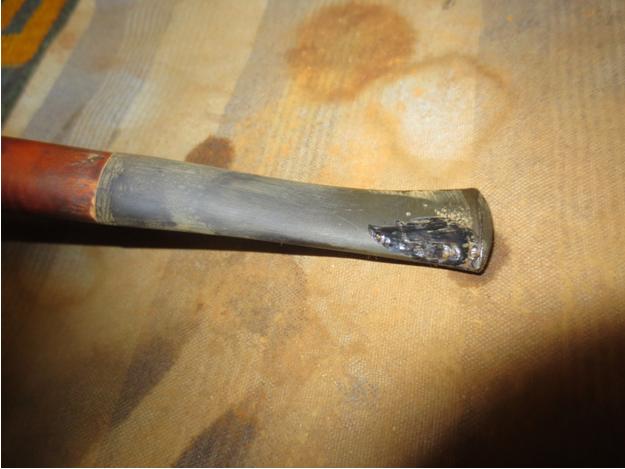
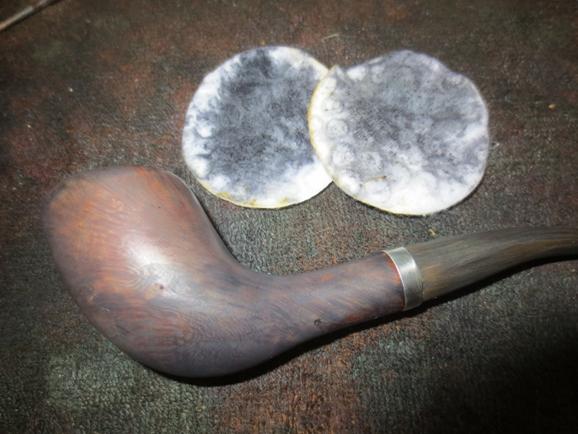
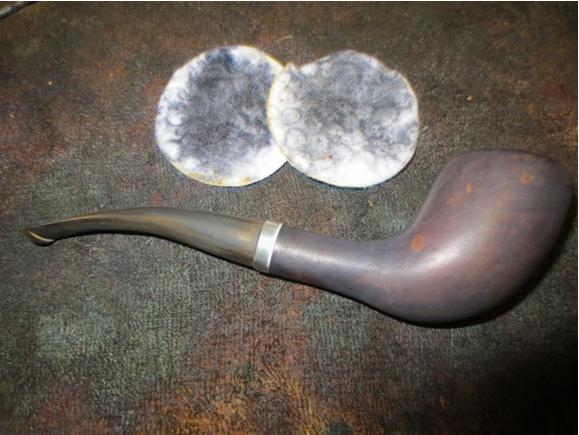
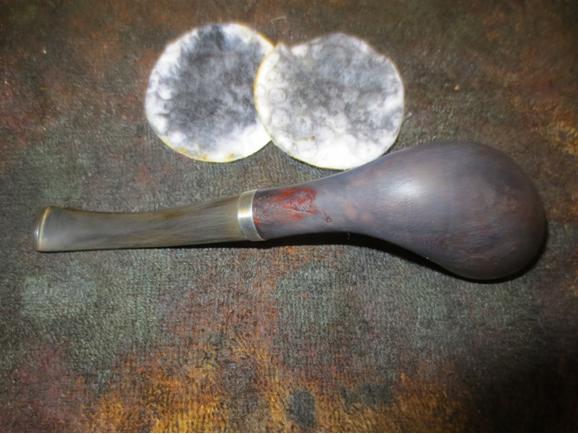
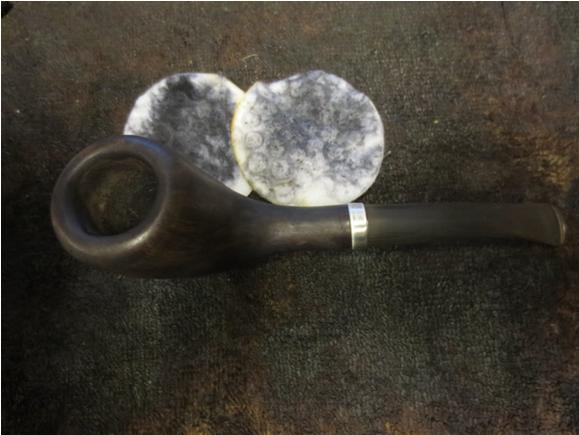
Bruyere30 I buffed the bowl and stem with White Diamond and Blue Diamond on the wheel. I then cave the bowl and stem multiple coats of carnauba wax and buffed it with a clean buffing pad. I hand buffed the stem and the bowl with a microfibre cloth. The first photos below are of the polished stem. You can see the repairs from the cuts. For some reason the glue dried white – even though it is clear. I did a patch on the chip on the underside with black super glue and it does not quite match… ah the frustrations of repairs. This one is staying with me so I will not mind as the stem is now smooth and polished. The cuts and the chips are repaired and are smooth to the touch. The fit of the stem to the shank is good with no missing stem parts.Bruyere32

Bruyere33

Bruyere34

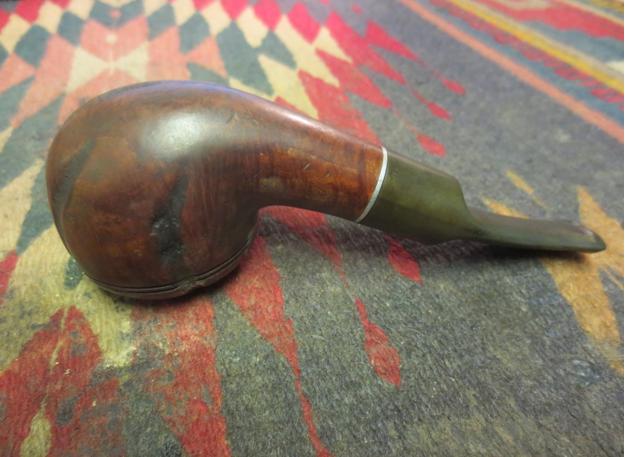
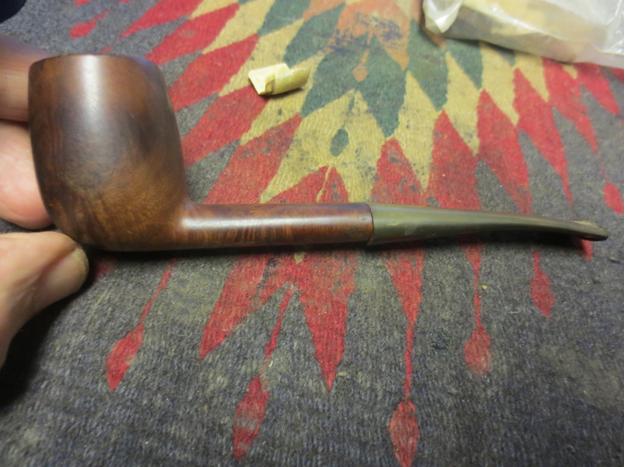
Bruyere35 The final four photos show the finished pipe. The bowl polished up very nicely with just carnauba wax. The polished stem shows the striations that are one of my favourite parts of horn as a stem material. The deep shine is a bonus.Bruyere36

Bruyere37

Bruyere38

Bruyere39

A Peterson 301 System Pipe Reborn


Blog by Steve Laug

I have this pipe and one other left to clean up of the donated pipes for the benefit of Smokers Forums. This one is a Peterson’s System Standard Bent Pot. It is stamped Peterson’s System Standard on the left side and on the right side it is stamped Made in the Republic of Ireland over 301 which is the shape number. The finish was shot, worn and stained with most of the colour faded out. The nickel ferrule was oxidized and dull. The rim was dirty and nicked on the top surface but undamaged on the inner or outer edge. There were some deep scratches on the underside of the bowl that went across the surface of the briar. They were ragged and I knew that steaming them would not raise them. There was also some road rash on the right side of the bowl where it looked as if the bowl was dropped on concrete. The bowl had a thick cake that was soft and crumbly. The stem was oxidized and dirty with some tooth chatter on the top side and the underside near the p-lip. The interior was also dirty with grit. The inside of the shank/mortise was surprisingly clean with dust and tobacco residue but little tar and oil. The inside of the stem was also dirty. The hole in the end of the button was in great shape.Pete1
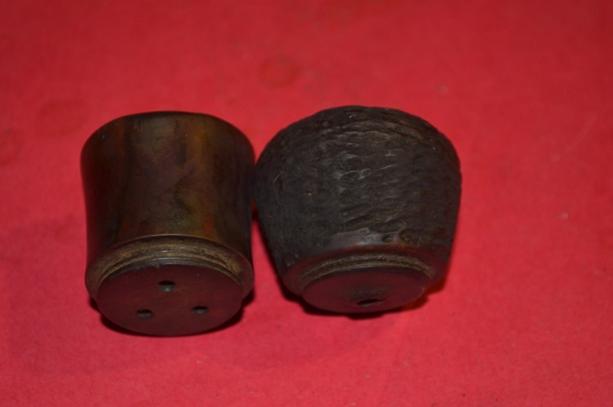
Pete2 I took a close up of the rim and bowl to show the thickness of the cake. I reamed the bowl with a PipNet reamer and took the soft cake back to bare briar so that a new hard cake could be developed by the new owner of the pipe.Pete3

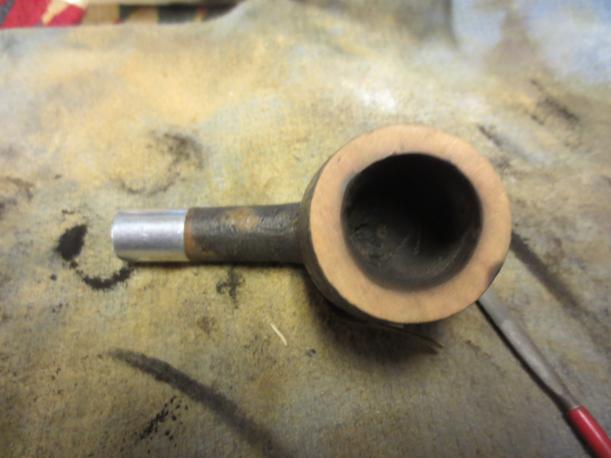
Pete4 I sanded out the bowl to remove the ridge that appears in the photo below. You can also see the dents and nicks in the surface of the rim.Pete5 I lightly topped the bowl with a topping board to take out the damaged surface of the rim and clean up the top.Pete6 I wiped down the bowl with acetone on cotton pads to remove the finish and the grime in the grain of the briar.Pete7

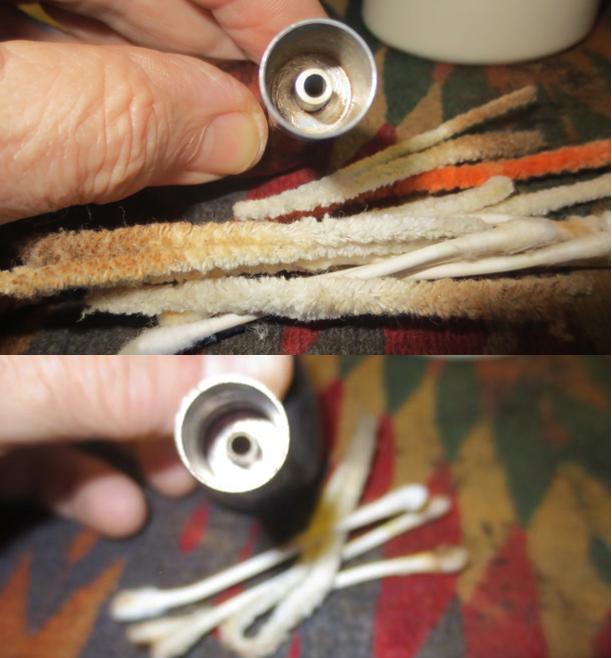
Pete8 I filled the deep scratches in the bottom of the bowl with clear super glue and also filled the road rash nicks on the right side of the bowl. I sanded them smooth with 220 grit sandpaper and then sanded them with a medium and a fine grit sanding sponge. I also sanded them with 1500-2400 grit micromesh sanding pads to smooth out the scratches. I stained the bowl with a dark brown aniline stain that I thinned with 3 parts alcohol to 1 part stain. I flamed the stain to set it deep in the grain.Pete9 To make the stain more translucent I scrubbed down the surface with alcohol to lighten the stain and make it more transparent.Pete10 I put a light coat of wax on the bowl to protect it while I cleaned the inside of the pipe. I used pipe cleaners, cotton swabs and alcohol to clean out the shank and mortise area. I polished the nickel ferrule with a silver polishing cloth and was able to remove the oxidation.Pete11

Pete12

Pete13 I let the stem soak in Oxyclean for several hours while I worked on the bowl and then gave it a vigorous rubdown with coarse cloth to remove the loose oxidation. I then sanded it with 220 grit sandpaper and a medium and a fine grit sanding sponge to further remove the oxidation. Once it was gone I buffed it with red Tripoli and then moved on to sand it with the micromesh sanding pads – wet sanding with 1500-2400 grit pads, rubbing it down with Obsidian Oil and then dry sanding with 3200-4000 grit pads and giving it another rub down. I buffed it with White Diamond and then finished with 6000-12000 grit pads before giving it a final coat of oil and letting it absorb into the stem.Pete14

Pete15

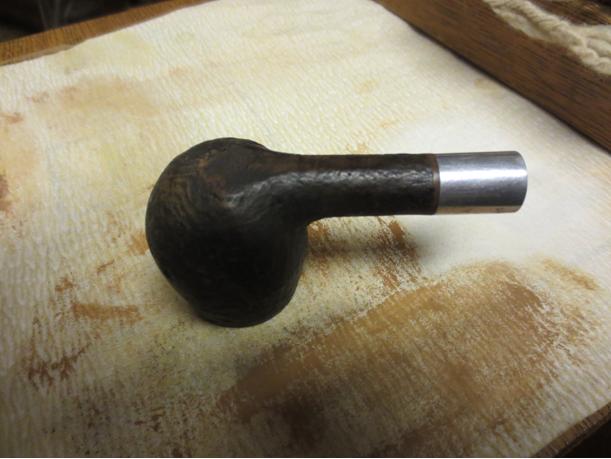
Pete16 I finished by buffing the pipe with Blue Diamond on the wheel and then giving the bowl and stem multiple coats of carnauba wax. I buffed it with a clean flannel buff and then hand buffed with microfibre cloth. The finished pipe is shown below.Pete17

Pete18

Pete19

Pete20

Repairing a Broken Shank on an LHS Park Lane DeLuxe — Lovat 12


Blog by Steve Laug

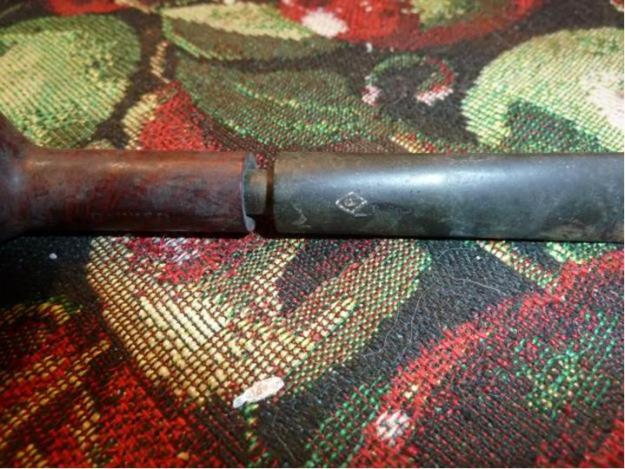
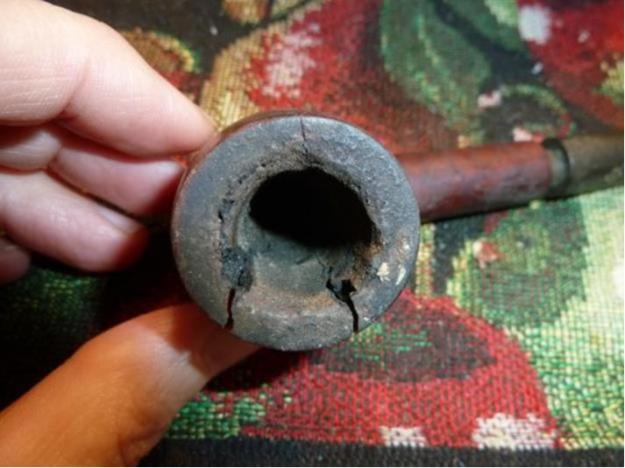
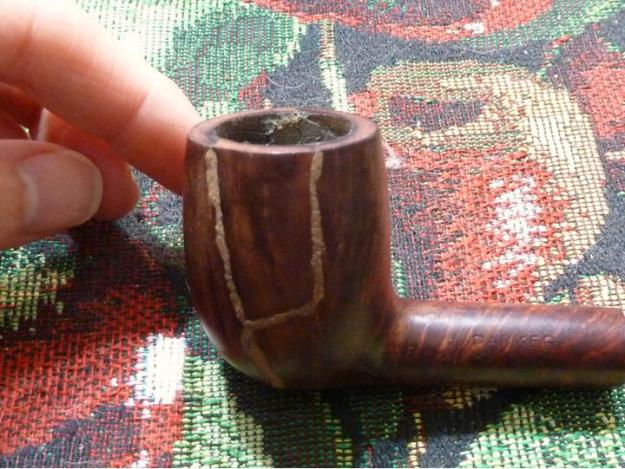
I came home from a two-week work trip to Berlin and Budapest to find a package from Troy Wilburn waiting for me. It contained a beautiful little LHS Park Lane De Luxe Lovat shape 12 that we had been speaking about before the trip. I am a sucker for LHS pipes and really like the Park Lane series as they have a quiet elegance about them. The shank on this one had broken near the bowl. Fortunately it was a clean break and not splintered or chipped. The repair on these has become pretty straight forward for me. I have learned a few tricks in joining the parts of a broken shank together from the Frankenpipes that I have crafted. That was their purpose and their schooling has paid off on quite a few of these shank repairs for me. The Park Lane had a Bakelite stem (at least I think it is Bakelite as it feels and acts different from Cumberland). The next two photos show the snapped shank.LHS1

LHS2 Just as I suspected I had a piece of brass tubing that was the perfect size and fit for the repair. I used a file to cut grooves into the tube and to roughen the surface for the glue to have something to hold onto when I glued it in the shank.LHS3

LHS4 I cleaned out the airway on both sides of the broken shank to remove debris and to give a good clean surface for the glue to bond with. To check the size and the fit of the tube in the two parts of the shank I inserted it in the bowl end of the break and then twisted the shank end onto it. The fit was perfect and once glued the repair should be solid.LHS5 I mixed some epoxy and applied it to the metal tube being careful to not get any inside of the airway. I inserted it into the bowl side of the break. I left slightly over half of the tube extending so that when I put the shank piece in place there would be enough of the metal tube to strengthen the repair on that end.LHS6
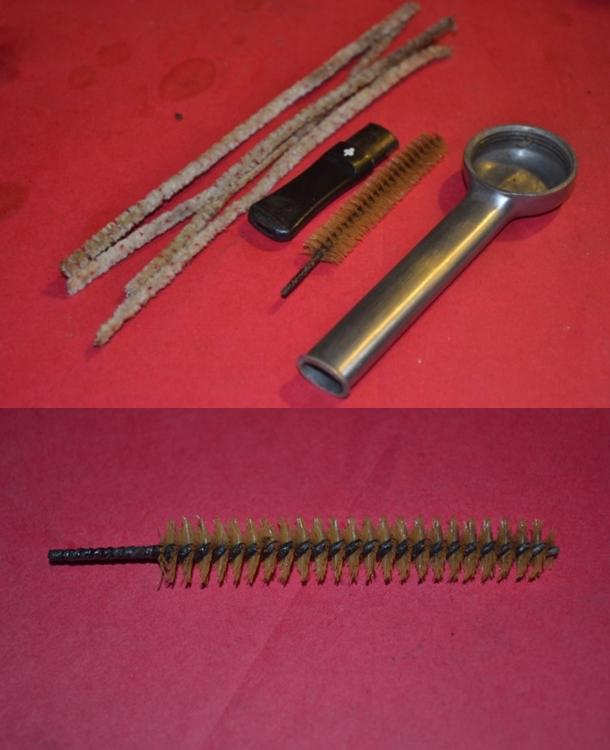
LHS7 When the epoxy set and the tube was solidly in place I painted some more of the epoxy on the opposite end of the tube and a little on the briar surface of each side of the break. I have learned not to overdo the glue on the briar as it is a pain to remove from the wood when it dries. I twisted the shank piece in place, lined it up and pressed it in place against the bowl side. I held it firmly until the quick set epoxy set and that portion of the repair was finished.LHS8

LHS9

LHS10

LHS11 I pushed some fine briar dust into the small space that remained around the surface of the crack and then filled it with clear super glue. I applied it with the point of a dental pick so as not to get too much glue on the briar.LHS12

LHS13

LHS14

LHS15 I sanded the repaired area carefully with a folded piece of worn 220 grit sandpaper to remove the excess glue and briar dust from the patch. Then I sanded with a fine grit sanding sponge to remove the scratches. I used a medium brown coloured stain pen to touch up the sanded area around the patch. I cleaned out the shank with a pipe cleaner to make sure that there was no glue in the tube.LHS16

LHS17

LHS18

LHS19 The stem was slightly under clocked. I heated the stinger with a lighter until the glue in the stem softened and then carefully screwed it into the shank while holding the shank. I was able to align it perfectly with the shank.LHS20 With that completed, the repairs to the pipe were finished. The stem was in the right position. The cracked shank repaired and strengthened with an inner tube. All that remained was to clean up the surface of the pipe and give it a coat of stain to blend in the sanded areas around the repairs. I also needed to do some work on the stem with micromesh to raise the shine and polish the Bakelite. (I rarely use the buffer on these older LHS stems as I do not want to risk it. I would rather polish them by hand than damage them.)LHS21

LHS22 I wiped the bowl and shank down with alcohol on a cotton pad to remove the grit and grime on the surface of the bowl and to remove the remaining finish.LHS23

LHS24 I cleaned off the tars on the stinger with 0000 steel wool. I wet sanded the stem with 1500-2400 grit micromesh sanding pads and then rubbed it down with Obsidian Oil. I continued to dry sand the stem with 3200-4000 grit pads and then gave it another coat of oil. I finished with the final three grits of micromesh – 6000-12000 – and gave it a final coat of Obsidian Oil. Once the oil dried I gave the stem some coats of Paragon Wax and hand buffed it with a microfibre cloth.LHS25

LHS26

LHS27 I gave the bowl a rubdown with some olive oil and then buffed it out. I touched up the light areas of the stain on the repaired shank with a dark stain pen and then rubbed a little more oil onto the shank. I buffed the pipe with Blue Diamond and then gave it several coats of carnauba wax. I buffed it with a clean flannel buff and then hand buffed it with the microfibre cloth. The finished pipe is shown below. I am hoping to put it in the mail later today or tomorrow to get it back to Troy.LHS28

LHS29 There was some light damage to the rim surface. I decided to leave it alone as it was not enough to top the bowl. It gives character to this old pipe.

LHS30

LHS31

Rejuvenating and Repairing a Whitehall Dublin


Blog by Steve Laug

This old Whitehall pipe came to me from the antique shop in Victor, Idaho, a small town on the way to Jackson Hole, Wyoming. On a recent trip to Idaho my brother and his family and my daughters and I visited Jackson Hole. On the way home, we stopped in Victor to stretch our legs and wander a bit. I went into the antique shop and struck up a conversation with the owner. Eventually a tin of five pipes and some parts came out from under the counter. I bought all of them. They traveled back to Vancouver with me and will one day all be refurbished.

This Dublin shaped pipe is stamped Whitehall on the left side of the shank – though the stamping is faint. On the right side it is stamped Imported Briar (also faint). It has a flat bottom and sits well on that. The finish was very worn but was a rich oxblood colour under the grime. The bowl sides have some great cross grain. There were some small fills near the top of the bowl on the left side. The rim was damaged on the outer edge and very caked from the bowl over the rim top. The inner edge of the rim was still round and did not show signs of damage under the thick cake. The stem appeared to be a poor fit but as I looked at it I realized that it was upside down. The flattened bottom of the bowl had not been continued on the stem so it sat wrong.Dublin1

Dublin2

Dublin3

Dublin4 I took some close-up photos of the rim and sides of the bowl. The rim photo shows the tarry buildup and the side photos show the stamping.Dublin5

Dublin6

Dublin7 I generally ream the bowl when I start a clean up to remove the cake so I can examine the pipe thoroughly to check for inside wall damage and potential issues. I reamed it with a PipNet reamer and took the cake back to bare briar.Dublin8 While I was at it I scrubbed the rim with alcohol and cotton pads to remove some of the tars. I had to use a sharp blade to gently scrape away the thick coat of tars while I was scrubbing. The photo below shows the initial cleanup of the rim and newly reamed bowl.Dublin9 I sanded the rim with 220 grit sandpaper to further remove the tars and to minimize the outer edge damage. There was a burn mark on the front left of the rim that I was able to reduce but not remove altogether.Dublin10 I scrubbed out the shank and the bowl with alcohol, cotton swabs and pipe cleaners.Dublin11 I wiped down the exterior with alcohol and cotton pads to remove the finish and to clean it up. In doing so I found that there was a small shallow crack/flaw toward the bottom of the bowl on the left side. In the photo below the dental pick is at the close end of the crack and the dark spot is the far end.Dublin12 I picked out the crack with the dental pick, drilled two small holes – one on each end of the crack to stop it from going further. Interestingly this crack followed the pattern of the grain on the side of the bowl. Once I had it cleaned out I wiped it down with alcohol a final time. I pressed briar dust into the crack, dripped super glue into it and then pressed more briar dust on top of the glue. The photo below shows the repaired crack. Fortunately the crack was not deep and did not affect the interior of the bowl. It did not go all the way through and appeared to be more of a flaw in the briar than damage.Dublin13 I sanded the repair with 220 grit sandpaper to remove the excess patch and blend it into the surface of the briar. I sanded it with a medium and a fine grit sanding sponge to remove the scratches in the briar and feather out the surface. I sanded the entire bowl and rim with the same sanding sponges and sandpapers.Dublin14 I aligned the stem and sanded it with 220 grit sandpaper to smooth out the rough surface and then flatten the bottom to match the bottom of the shank.Dublin15

Dublin16

Dublin17

Dublin18 I wiped down the bowl with alcohol and then stained it with an oxblood alcohol based stain. I put the stain on heavy around the sanded areas on the shank and the bowl repair. I also darkened those areas with a dark brown stain pen following the pattern of the grain. I lightly buffed the pipe by hand and took the pictures below to show how the newly stained pipe looked at this point.Dublin19

Dublin20

Dublin21

Dublin22 I darkened the rim with the stain pen and gave it another top coat of the oxblood stain. I flamed it and buffed it lightly.Dublin23 With the bowl finished I worked on the stem. I wet sanded it 1500-2400 grit micromesh sanding pads. I rubbed it down with Obsidian Oil. I continued by dry sanding it with 3200-4000 grit pads, rubbed it down again with oil and then finished by dry sanding with 6000-12000 grit pads. I gave it a final coat of Obsidian Oil and let it dry.Dublin24

Dublin25

Dublin26 I buffed the bowl and stem with Blue Diamond on the buffing wheel, gave it multiple coats of carnauba wax and then buffed it with a clean flannel buff. I brought it back to the work table and then hand buffed it with a microfibre cloth. The finished pipe is shown below. It looks better than it did when I started, in my opinion. The rich oxblood colour helps to hide the repair and the burn mark on the rim. It should be a great smoking pipe if the amount of cake buildup that was there when I started is any indication. It should continue to provide great service to whoever ends up with it in their pipe rotation. Thanks for looking.Dublin27

Dublin28

Dublin29

Dublin30

Dublin31

Dublin32

Repairing and Restemming a York (KBB) Diamond Shank Bent Billiard


Blog by Steve Laug

When I was traveling in Idaho my brother and I took the family for a trip to Jackson Hole, Wyoming. On the way we stopped in a little town called Victor, Idaho. There was an antique shop there in the town and I found four more old pipes. The first of these reminded me of an old WDC Diamond shank billiard that I have. This one was stamped YORK on the left side of the shank and from research it may have been made by KBB. It was in rough shape. The shank had been cracked and repaired with glue and a piece of twisted wire. The stem obviously had a broken tenon and the previous owner had carved it down to fit in the shank anyway. The bowl had a thick cake and the finish was gone. The rim was damaged on the front outer edge and there was some tar on the rim.York1

York2

York3

York4 On the right side of the bowl near the shank junction there was a pink putty fill that was coming out. Most of the putty had fallen out of the briar. This would need to be repaired.York5 When I got back home I took the pipe out of the bag to have a look. The silver end cap had some hallmarks but they were the faux hallmarks that I have found on older American made pipes to give them a touch of class. All four edges of the band were split. I removed the stem and looked inside the mortise and could see that a major part of the briar was missing on the right side of the shank under the cap. With little effort I removed the cap and sure enough a huge chunk was missing out of the briar. In fact the whole right side under the cap was gone. There was a small crack that had been repaired earlier. There was a small hole in the shank to stop the crack and the crack was glued and clamped with the wire. This was going to take a bit of work to bring it back from the brink of destruction. York6 I clipped the wire with a pair of wire cutters so that I could work on repairing the broken portion of the shank. This repair would take some careful and time consuming work to rebuild the missing portion of briar.York7 I reamed the bowl to clean out the thick cake. It was crumbling so I wanted it removed so that the repair of the shank would be less dirty. I use a PipNet reamer to take the cake back to the bare briar.York8

York9 The first step in rebuilding the broken area was to clean up the damaged ends of the remaining briar. Once it was clean I put clear super glue on the raw edge of the broken spot and tamped the end into some briar dust. I repeated the process until the edge was repaired as much as possible with this method.York10

York11 During the process I also picked out the broken putty fill and replaced it with briar dust and super glue.York12 I sanded the flat surface of each of the four sides of the diamond shank smooth with 220 grit sandpaper until the cap slid easily over the shank. I also faced the end of the shank on the topping board.York13

York14 The next step in the process of rebuilding the shank and the mortise was a little more difficult than the briar dust and super glue rebuild. It involved working on the internals of the shank. I glued the end cap in place with wood glue and clamped it in place to take care of small splits in the edges of the metal cap. Once that dried and set, I mixed white wood glue with briar dust to make putty. I tamped the mixture into the remaining areas of the shank with a dental pick and dental spatula until the area was filled solid looking once again. The next two photos show the rough repair on the inside of the mortise and shank. The broken area is gone! The holes are filled in and the repair is complete. Once the glue set I would have to clean up the mortise and make the walls smooth. The edges of the metal cap, looking at it from the end are damaged and I will not be able to repair them.York15

York16 While the shank repair cured I worked on the rim. There was a thick tar build up that was like rock on the back edge and the front edge of the rim had been knocked against something hard and was rough.York17 I decided to top the bowl to remove the rock hard tar and also minimize the damage to the front of the bowl. I used a topping board with 220 grit sandpaper and worked the rim against the sandpaper until the damage was minimized. Once I had it smoothed out I put some briar dust and super glue on the remaining divot on the front edge of the bowl as a fill. When it dried I sanded it smooth and lightly topped the rim once more to even out the repair with the rest of the rim. (That picture will be shown shortly.)York18 The stem that came with the bowl was damaged beyond repair. It had been repeatedly been cut off by the previous owner and hacked at until it fit in the damaged tenon. It was not a stem I would use again on this pipe. I went through my can of stems and found a faux p-lip stem – the airway came out the end of the button rather than on the top. It was old enough to work on this pipe and with some modification I thought it would look just right. The problem was that it did not have a tenon. When I found it the tenon was missing and the end of the stem had been drilled out to receive a replacement tenon. I am currently out of Delrin tenons so I used a thin vulcanite stem as the sacrificial tenon. I glued the tenon on the donor stem in place in the diamond shaped stem with super glue and then cut off the stem with a hacksaw. I left a piece of vulcanite that was longer than necessary so that I could work it to a proper fit in the repaired shank.York19

York20 The next photo shows the repaired stem and tenon and the topped bowl before I put the two parts together. I used a Dremel to remove the excess material on the new tenon and shortened it to the depth of the mortise in the shank.York21 The next photo shows the repaired fill on the bowl side with another photo of the new stem.York22 Once the shank repair was dry I used a needle file to clean up the rough areas and smooth out the inside of the mortise. I gave it several more coats of glue and briar dust to buildup the areas that had shrunk as the glue dried. I continued to work it with the files and sandpaper until the fit was correct. I cleaned out the airway to the bowl and the inside of the mortise with alcohol, cotton swabs and pipe cleaners in preparation for putting the new stem in place.York23 The next two photos show the newly fit stem. There was still work to do to fine tune the flow of the diamond stem sides to match the flow of the diamond shank but the look is clear at this point in the process.York24

York25 I sanded the stem with 220 grit sandpaper and with a medium and a fine grit sanding sponge to fine tune the fit. When I had it the way I wanted, it was time to bend the stem. I used my heat gun to do the work. In this case I quickly set it up on the dryer in our laundry room (shh don’t tell my wife I did this) and heated the stem. I bent it over an old rolling pin that I use for this purpose until the bend in the stem matched the curve of the bottom of the bowl. I set the bend by holding the stem under cool running water.York26

York27 The next two photos show the newly bent stem and give an idea of how it will look with the pipe once it is finished.York28

York29 With the easiest part of fitting a stem completed I went on to do the laborious and tedious part of sanding and more sanding to get the fit just right. To do this without rounding the edges of the stem at the shank stem junction I use a plastic washer placed between the two areas. I sanded the stem with 220 grit sandpaper to smooth out the transition and make the angles square (or at least as square as possible on these old pipes where every side has a different angle and width).York30 When I had the fit of the stem correct it was time to polish it. I wet sanded with 1500-2400 grit micromesh sanding pads and rubbed the stem down with Obsidian Oil.York31 I needed a break from the stem work so I turned my attention to the bowl. I rubbed it down with a light coat of olive oil to highlight the grain. I took a few photos to show what it looked like at this point. It is certainly looking far different than it did when I started working on it. There is a deep richness in the red tones of the briar.York32

York33

York34

York35 I decided to highlight those tones with a dark brown aniline stain thinned by 50% with some isopropyl alcohol. I applied it and flamed it to set it in the grain.York36 I hand buffed it with a cotton cloth to get an idea of the coverage. It was still too dark to my liking so I would need to address that.York37

York38 I wiped the bowl down with some acetone on a cotton pad to remove some of the stain and make the grain show through better.York39

York40 I buffed the bowl with White Diamond and then gave it the first of many coats of carnauba. I don’t know about you but by this point in a long refurbishment I get a bit anxious to see what I have accomplished. It always seems that it is going to go on forever so I rewarded myself by putting the stem in place and taking a few photos to see what I had achieved.York41

York42 For comparison purposes I took the next two photos of the pipe with the old stem next to the new one. You can see how badly hacked the vulcanite was from the previous owners salvage work on his broken pipe. The pipe is beginning to look like a very different pipe than when I started. That always encourages me!York43

York44 Now it was time to finish up with this long project and get the stem done. I dry sanded it with 3200-4000 grit micromesh sanding pads and then rubbed it down with Obsidian Oil once again. I then dry sanded it with 6000-12000 grit pads and gave it a final coat of oil and let it soak into the vulcanite.York45

York46 I buffed the stem and bowl with Blue Diamond and then gave them both multiple coats of carnauba wax. I buffed them with a clean soft flannel buff to raise the shine and then hand buffed the pipe with a microfibre cloth to finish. The completed pipe is shown below. It has come a long way from the pipe I started on this morning. I had a quiet day at home and between reading and napping finished the work on this old timer. From what I can find out in my research and from Who Made That Pipe, the pipe may well be from the old KBB pipe works. Thanks for looking.York47

York48

York49

York50

York51

York52

A Restored LHS Certified Purex #95 Squashed Tomato


Blog by Dave Gossett

A pipe shape this elegant deserves a better name than squashed tomato. I received this pipe looking more like a bruised tomato. It was beat up and chewed up. An LHS this shape doesn’t pop up very often so I was happy to accept the pipe in any condition.dPk6umBl

Dave2

Dave3

Dave4 I started off with the routine internal cleaning of the pipe with alcohol, pipe cleaners, and shank brush.

Next I began to work out the dents by heating a butter knife with a propane torch and pressing it firmly to the dented areas with a damp rag between the two. This generates steam and lifts the dents out of the briar. This may have to be done several times to the same area depending how bad the dents are.

After steaming, I sanded the scratches from the rest of the briar, smoothed out the bowl chamber, prepping it for the carbon coating, gave it a light alcohol scrub with 0000 steel wool to remove the leftover patchy original finish, and finally, masked off the shank and polished the aluminum.Dave5

Dave6

Dave7 Next up is the stem rebuild.Dave8 A tight fitting plug/form for the air way and bit is made from cardboard wrapped in clear tape.

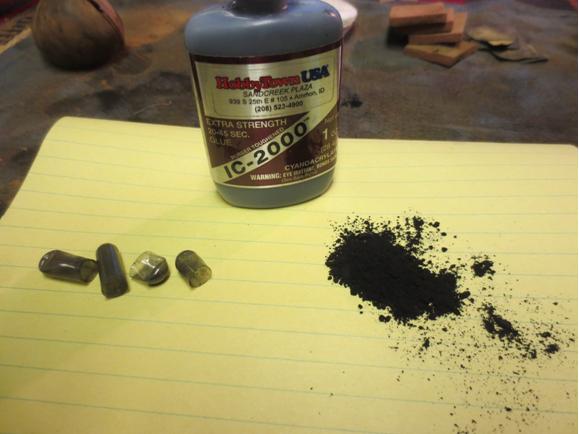
Here is a picture of all the materials used for the stem rebuild.

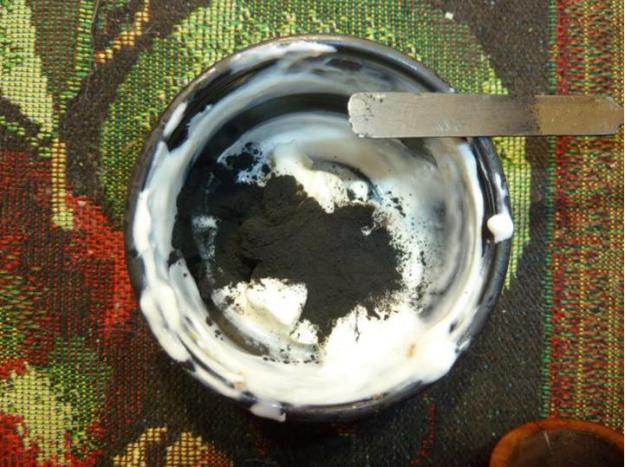
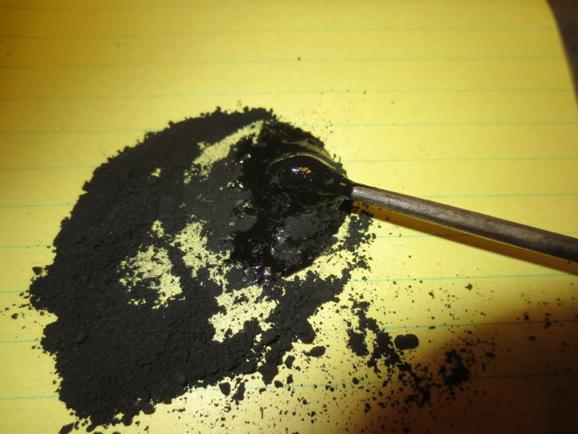
Cyanoacrylate glue (medium viscosity), activated charcoal. Dave9 I use disposable things for mixing and application process. 25% charcoal/75% glue mixed thoroughly is the recipe. I mix it in bottle caps, and use a q-tip stem with a small scoop/spoon cut into the end to apply to the repair site.

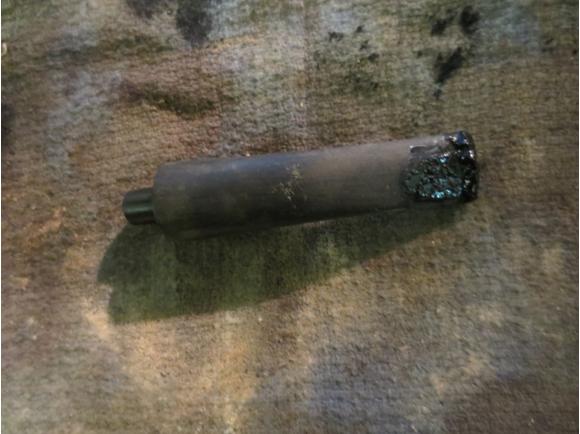
The repair site needs to be scored and cleaned before the mix is applied.Dave10 Once the material has cured, the tape covered cardboard plug is easily removed. Using a needle file I reshaped the button and then wet sanded the stem.

Back to briar.
Now that it has been steamed, sanded, and had the old stain removed, I applied a custom color mix of Fiebings, consisting of dark brown, a hint of orange, and a bit of oxblood, thinned a bit with alcohol.Dave11

Dave12 I always like seeing the color transformation from the dry stained tint to the very different shade it becomes after the carnauba wax is applied.

The final step in the restoration after waxing is the carbon bowl coating. It’s a very simple detail to make an old estate pipe look fresh again. Maple syrup and activated charcoal. After the bowl chamber is clean and smooth, lightly coat the bowl chamber with maple syrup, then fill the bowl to the top with the charcoal. Leave it for one hour or more then dump the bowl and blow through the shank to remove the excess. Next is the hard part. Don’t touch it for 5 days. It takes 3-5 days for it to harden and cure. I usually give it a week just to be sure. Once it has set up, it’s as tough as a Savinelli carbon coating and looks just as good. The pipe will have the familiar slightly bitter taste of a brand new pipe, but it doesn’t last nearly as long. After you smoke a bowl or two it goes away. Dave13

Dave14

Dave15

Dave16

Dave17

Dave18

Dave19

Dave20

Restoring a No-Name Bent Rhodesian


Blog by Aaron Henson

Still being relatively new to the pipe collecting/restoration hobby I have been a bit selective when it comes to the pipe I purchase. I typically look for shapes that have visual or tactile appeal and pay little attention to the name on the stem. And in that line of thought, ever since seeing the GBD 4292 for the first time I have wanted a pipe of this shape. So when I came across this no-name bent Rhodesian on eBay, I quickly placed a bid.Aaron1 It’s not that there were no markings on this pipe. The left side was stamped with STANDARD on the shank and a white 5-point star on the stem. The right side of the shank was stamped with Bruyère in script over Garantie.

A week later the package arrived in the mail and happily, the pipe was just as described and there were no surprise chips or cracks that the seller forgot to mention in the advertisement.Aaron2

Aaron3

Aaron4

Aaron5 Stummel Inspection
The grain was very nice with some birds eye on the right side and a kind of flame grain on the left. There was some minor denting on the heel but the only real wood flaw was a large fill on the left side The color of the fill did not blend well with the grain and it detracted from look of the pipe. Around the rim there was some chipping and charring; damage not uncommon in a used pipe. The only other major issue that I found was the that the twin groves around the bowl were not very deep and had been worn completely away on the right side.

Stem Inspection
The stem was in very good shape. There were some tooth marks on the bottom side of the stem with moderate oxidation overall. The singer was removable and had a modest build up of tar. The biggest issue with the stem was the loose fit to the stummel – which didn’t become apparent until after the shank was cleaned.

During the inspection I decided to change the stain and finish of the pipe in order to highlight the grain and camouflage the large patch. So I began by setting the stummel to soak in 95% isopropyl alcohol to remove finish and loosen the tars and cake. I set the stem to soak in the same solution in a different container for the same reasons.Aaron6 After an overnight soak, I began cleaning the stem with pipe cleaners, running them through until they came out clean. To address the oxidation, I placed a small dab of petroleum jelly over the star and set the stem to soak in a solution of 50/50 chlorine bleach and water. After 20 minutes – when the bubbles had subsided – I rolled the stem over in the solution and let it go another 20 minutes. Then I removed from the bath, rinsed with fresh water and set the stem aside to dry.Aaron7 I didn’t get back to the work bench right away, so after a 36 hour soak, I removed the stummel from its alcohol bath and wiped it dry. I then reamed the bowl with 40 grit sand paper wrapped around a ½” diameter dowel (although this method works well, I did finally order a Castelford pipe reamer from Amazon). Once the cake was removed and the chamber cleaned, I went to work on the shank. Pipe cleaners and cotton swabs removed the remaining gunk inside the shank.

The chips and charring around the rim could only be cleaned up by topping the bowl. I use a sheet of 220 grit sandpaper laid on a flat surface and worked the stummel around in the circular motion. Even pressure and constant checking ensured that the rim was flat and level. I didn’t get the deepest chips because I was concerned that anymore material off the top would change the look of the pipe. Looking back now, I could have filled these chips with a briar dust patch. Maybe I will go back and do that this fall.

I sanded the remainder of the bowl with 320 – particularly around the large filled area and decided that the fill was in good shape and not worth removing. The fill proved to be of a darker color and that went along with my finishing plans.

The parallel grooves around the bowl were next on the list. On the right side they had worn away until they were barely visible. I went to my local hardware store and searched through the saw blades until I found what I was after: a thin fine toothed mini-hacksaw blade that just fit the width of the existing grooves. I trimmed the end of the blade with shears so I would have more clearance around the shank. Using the existing groves as a guide, I carefully worked my way around the bowl deepening and redefining the grooves. As usual, I found that not rushing yielded the bet results.Aaron8

Aaron9 Returning to the stem, I tried applying heat to raise the tooth mark but that did not answer. So I roughened the tooth marks with 320 grit paper and fill of the divot with black superglue in multiple thin layers, letting the glue dry completely (12 hours) between layers. Once the final layer of superglue was dry, I feathered out the patch with 320 grit paper. Then I began the sanding/polishing process by wet sanding with 400 – 4000 grit paper stopping every few grits to dry the stem and apply a light coat of mineral oil. I didn’t touch the star on the stem until I got to the 2000 grit paper not wanting to damage the logo. Once I finished polishing the stem with 6000 – 12000 grit paper I oiled the stem and set it aside.

I wanted to provide some contract to the grain of the pipe and to make the grooves really stand out. The original grooves did not have a contrasting color. I began with a coat of Black Fiebing’s leather dye. In retrospect, I should have thinned it down some.Aaron10 After the stain dried, I had a difficult time removing it. Acetone wipes and eventually light sanding removed most of the dye but left enough to highlighting the grain.Aaron11 I wanted a little more color so I applied a 3:1 diluted coat of Fiebing’s Ox Blood dye. This had the result of giving the pipe a pink hue that had me more than a little concerned. Happily, it all came together with multiple thin coats of olive oil. I left the oil on the stummel until it soaked in and then applied the second and third coats. The third coat did not soak in, so I wiped in clean and set it aside to rest for a couple of days.Aaron12 Before taking the pipe to the buffing wheel and thought I would address the loose stem. I tried bee’s wax, which has worked in the past, but the stem remained too loose. After a little research I heated the tenon over the heat gun and then inserted a nail set into the air hole and let the tenon cool. This technique only enlarges the end of the tenon rather than the full length of the tenon, which is a better repair. I went through the heating/cooling process several times until I got a snug but not tight fit. Another thing to be aware of when heating the tenon is that the softened tenon may ‘sag’ a little. If this happens, then you may be left with a little gap between the stem and shank.

From here, I assembled the pipe and took it to the buffing wheel. I use an inexpensive Sears buffing system that fits into the chuck of my drill press. I found on previous projects that gearing down the drill speed to 1200 rpms was important to maintain control and not overheat the pipe. I finished with three coats of carnauba wax and buffed to a shine.Aaron13

Aaron14

Aaron15

Restoring an LHS Certified Purex Bullmoose Rhodesian


Blog by Dave Gossett
Dave1 LHS Certified Purex shape #99.

This pipe was in better shape than most estates I start with. It had some dents and dings and some tooth chatter, but overall it was a solid pipe.Dave2

Dave3

Dave4

Dave5 I started off this restoration with the usual internal cleaning, giving the stem, mortise, and airway an alcohol scrub with pipe cleaners and a shank brush. Next up was the bowl chamber. After removing what little cake build up that was in the bowl, I sanded the bowl chamber smooth with 400 grit.

Next, I tackled the dents and dings – first with steam followed by 2000 grit. Heating the flat side of a butter knife and pressing it firmly to the dented areas with a damp rag between the two will generate steam, lifting the dents from the briar. Don’t try this around any stampings, as it will lift the stampings just as it does with dents. This may need to be done more than once or twice for stubborn dents.

After I had worked the dents, I gave the briar a very light scrub with alcohol and 0000 steel wool to remove the stain and even out the finish where I had steamed and sanded.

After prepping the briar, I started on the stem. The button was a little worn down but not bad enough to reform, so I left it as is. I used a needle file to remove the tooth chatter. Feathering out and away from the button past the damaged area will prevent the stem from having a warped look or divot around the repaired area.Dave6

Dave7 The next step after removing the tooth chatter was wet sanding the stem to remove the oxidation and file marks. The way this particular stem was made with a metal inserted logo and metal ring and stinger attached, made this clean up much easier than most others. No worrying about working around a fragile stem stamping or rounding the crisp edge of the stem/shank connection, I was able to just mow through the whole stem while wet sanding until I unearthed fresh black vulcanite.

Now that the grunt work is over, it’s almost time for the fun stuff…Dave8

Dave9 Oh, one more thing. Let’s try our hand in some metal alchemy by making the aluminum look more like sterling silver.

I prepped the briar with tape for two reasons. First, the compound will raise the grain if you run it on a buffing wheel and secondly, the tarnish/compound mix on the buffer wheel with stain the briar black.Dave10 Notice how dark the tape is afterwards.Dave11 The natural briar looked pretty nice and I thought about leaving it in a natural finish, but I decided to put it back to its original color, or as close as I could get. I blended a color close to the LHS burgundy by mixing two full droppers of alcohol, one full dropper of oxblood, and one half dropper of dark brown.

Pay no mind to the workbench of disarray. Sometimes I lose the pipe I’m working on in all the clutter.Dave12

Dave13 After the stain had dried, I lightly sanded the briar with a worn piece of 2000 grit to highlight the grain a bit, and then proceeded with laying on the carnauba wax. Two coats followed by a hand buff with a microfiber rag.Dave14

Dave15

Dave16

Dave17 I forgot to wipe out the buffer fuzz before taking photos.Dave18 Last but least, I finished up the pipe by adding a fresh carbon bowl coating. This is a simple and effective way to give a tired looking bowl chamber a great new look. I’ve seen many crazy recipes for a homemade bowl coating but after trial and error, I have found this to be the most effective and easiest way to do it. Once the bowl chamber is clean and smooth, apply a thin coat of maple syrup to the chamber. Next fill the entire bowl to the top with activated charcoal. Leave it for one hour, then dump it out and blow through the shank to remove excess. Don’t touch it for five days. After the five day curing process, it is as tough as a Savinelli factory coating and looks just as nice.Dave19

Bringing a Dunhill Bruyere Bent Rhodesian 08 Back From the Brink


Blog by Steve Laug

This Dunhill Bruyere was part of the gift lot for sale for Nepal. It was in very rough shape and one that would never be fit enough to grace a collection. The Dunhill stamping is only visible under bright light with a lens. The stamping on the left side of the shank is Dunhill over Bruyere. On the right side it is stamped with 4 in a circle and an A. The rest of the stamping is very faint and reads Made in London England (At least that is what it looks like). The shape number 08 is gone except for the 0. The finish was gone. The double ring around the bowl was virtually ruined and the bowl itself was in very rough shape. The rim was beat up and out of round. There were burn marks on the rim, the left side and bottom of the bowl and on the left side of the shank. To me it looks like the pipe was laid in an ashtray and the cigarette burned the bowl. It was in very rough shape. The stem was badly oxidized and upon examination there was a small split in the button on the underside and the stem was thin and the edges of the button were rounded down.Dunhill1

Dunhill2

Dunhill3

Dunhill4 I took some close up photos of the bowl to give a better picture of what I had to work with on this one. You can see from the photos the issues that I pointed out above. The ring was badly damaged and rough. The bowl was out of round and the rim was damaged. The finish was spotty and grimy.Dunhill5

Dunhill6

Dunhill7

Dunhill8

Dunhill9 I have one newer Bruyere in my rack so I kind of knew the colour this pipe should have been and it was not even close any more. I did a bit of searching on the web to see if I could find a finish chart and also one that would confirm the shape number that I was “speculating” on. I have included the next two charts for the information that I gleaned from them. The Bruyere was more dark/reddish coloured than this one was and the faint number was indeed 08 which was called a Bent Rhodesian.dunhill_pipe_finishes

dunhill_shape_size_chart The next two photos show the stem in some closeup photos. I wanted to show the oxidation and the split in the button on the bottom side of the stem. The fit in the shank was also worn. The tenon was sloppy fitting and could be wobbled side to side and up and down.Dunhill10

Dunhill11 I put off working on this one for a long time, choosing rather to work on pipes that I had some sense of what the finished product would look like. I had no idea if I could restore this one to any semblance of its original state let alone bringing back to “BEST QUALITY” which the Dunhill catalogue above said that Bruyere pipes stamped with the large “A” were supposed to be. This one was a challenge and I really drug my feet and postponed the test as long as possible. After looking at the photos above I hope that I have communicated the state of the pipe I was going to deal with. I have made no mention at all of the state of the inside of the shank and the stem. It was a mess as well – a thick black crud covered the inside of the airway in the stem and the shank and the mortise was almost clogged with the almost petrified tars of years of neglect.

So, yesterday I decided was the day to tackle this pipe. I had mowed the yard and done my weekend chores and needed some down time to relax. I suppose many of you would not call this relaxing but I still am under the illusion that it is restful…. Shhh don’t change my illusion please. I began with cleaning out the rings around the bowl. They were rough but they were also clogged with all kinds of debris. I used a sharp, thin blade pen knife that I have and use for this kind of thing. It works wonders and within a short time I had cleaned out the grime and the original red stain was showing in the bottom of the grooves.Dunhill12

Dunhill13 I scrubbed the bowl with cotton pads and acetone to remove the grime and the damaged finish. I also wanted to see the extent of the burn marks on the bowl, rim and shank. I wanted to see if they went deeper than the surface. Knowing that would help me decided what to do to address them.Dunhill14

Dunhill15

Dunhill16 With the grime cleaned off the rim I could see what I had to work with. The bowl was in rough shape. It was out of round but the inner edges did not have any char or burn. The rim had lots of dents and dings from someone using it as a hammer.Dunhill17 I decided to top the bowl to flatten out the rim and clean up as much of the damage as possible. I would then have to work on sanding the inner edge of the rim to smooth it out. I used the topping board with 220 grit sandpaper.Dunhill18

Dunhill19 With the rim flattened out once more and the outer edge more evenly set on the bowl top it was time to address the inner edge of the rim. I used a folded piece of 220 grit sandpaper to clean up the edge. I was able to greatly improve the “roundness” of the inner edge. While it was not perfect it was far better than when I started.Dunhill20 I cleaned out the shank and the airways with alcohol, cotton swabs and pipe cleaners. I scrubbed and scoured and scraped the airways clean of the “fossilized” tars until the pipe cleaners and cotton swabs came back white. Since I was probably going to smoke this one myself I decided to not use the retort at this point. If it smoked rough I could always set up the retort and let it do its magic.Dunhill21 I sanded the stem with 220 grit sandpaper, repaired the small split in the button on the bottom side and then sanded the stem with a medium and a fine grit sanding sponge. I rubbed it down with some Obsidian Oil and put the pipe back together. I took a few photos of the cleaned up look. If you are getting the idea that I was postponing working on the double ring and the heavy damage there you are correct in your assumption. I was not sure I would be able to work any redemption on that area of the bowl. Time would tell.Dunhill22

Dunhill23

Dunhill24

Dunhill25 I could not postpone dealing with the ring damage any longer if I was going to finish the pipe. I had read with interest Mark Domingues write up on restoring the rings on the Peterson 80 that he posted here recently. I spent time looking at how he rebuilt the centre briar ring between the two lines. I was ready to start. I cut a piece of note card the width of the back of the bowl and decided to address that damage first. I pressed briar dust into the damaged area of the ring and tamped it in with dental pick. When it was full I put some drops of clear super glue onto the briar dust. I did the same all around the bowl until I had a real mess on my hands. I was careful not to put the glue or dust on the places where the rings were in good shape. I would use these as guides to recut the lines later.Dunhill26

Dunhill27

Dunhill28 I used a flat, thin blade knife edge needle file to recut the grooves in the bowl. It took a lot of work to slowly and carefully recut them but it worked as the photos below show.Dunhill29

Dunhill30

Dunhill31

Dunhill32 After the initial cutting of the grooves with the needle file I continued to use it to smooth out the grooves and the edges on the top and bottom. They took a lot of work to smooth things out. I also folded 220 grit sandpaper and ran it through the grooves on the bowl. Once they were smooth and cleaner looking than before it was time to clean off the bowl and then restain it with the first coat of stain. I wiped the bowl down with alcohol on cotton pads to remove the excess briar dust and any remaining glue. I sanded the burn marks on the bowl and rim with a medium and a fine grit sanding sponge to minimize them. I sanded them again with 1500-2400 grit micromesh pads to smooth out the scratches. I then gave it a coat of oxblood aniline stain, flamed it and set it aside to dry.Dunhill33

Dunhill34 The burn marks still showed with this first coat of stain and it was a little too red to my liking. I buffed it with White Diamond and then brought it back to the table to do some more work. I took some photos of the pipe after the buffing. I find that a couple pics help me focus on what needs some more work. In this case I could see that a little dark brown stain would work to tone down the red and also blend the dark spots in a bit more.Dunhill35

Dunhill36

Dunhill37

Dunhill38 I used a dark brown stain pen to give it a top coat of stain. In the photos it looks streaky but I don’t worry too much about that as a buff once it is dry will take care of that.Dunhill39 I buffed the bowl with White Diamond and a light touch. It is looking better. The rings on the left side are better but are still a little rough. The rest of the way around the bowl they are looking really good. The dark brown stain did a better job of blending in the dark spots and toning down the red. I liked the colour and it seemed to match the chart photos of the Bruyere that I had found.Dunhill40

Dunhill41

Dunhill42

Dunhill43

Dunhill44 At this point it was time for a break. I put the stem on the bowl and loaded a bowl of Boswell’s North Woods and went to church with my daughters. I smoked a bowl as I walked with them and loaded another bowl on the way home. I sat on the porch and fired up a third bowl filled with Malthouse Reserve 12. This pipe really sang with English tobaccos. Even if it was still a bit ugly it smoked well!

When I finally went back to the shop I worked on polishing the stem. I put the plastic spacer/washer between the shank and the stem and worked on it with micromesh sanding pads. I wet sanded with 1500-2400 grit pads and then rubbed the stem down with Obsidian Oil. I dry sanded with 3200-4000 grit pads and rubbed it down again with the oil. I dry sanded with 6000-12,000 grit pads and then gave it a final coat of Obsidian Oil. I set it aside to dry.Dunhill45

Dunhill46

Dunhill47 The stem was looking really good. There was a rich glow to the vulcanite. These older Dunhill pipe stems really shine like glass when they are polished. I set the stem aside and did a bit more work on the bowl. I used a very small oval needle file to work on the rings on the left side and front of the bowl. I wanted to clean up the edges and sharpen the overall look of the rings.Dunhill48

Dunhill49 I followed the oval file with a flat rectangular blade needle file and cleaned up the edges of the rings some more. When I had finished with the flat file the rings looked far better than they were when I started.Dunhill50

Dunhill51 I gave the bowl another coat of stain with the dark brown stain pen and then buffed the bowl and stem with Blue Diamond Plastic polish. I gave them both multiple coats of carnauba wax. Then I buffed the pipe with a clean flannel buff and polished it. The finished pipe is shown below. I think this one will stay with me as the nomenclature is almost illegible and the dark marks all over the bowl still show. The pipe smokes well so it will be a work horse pipe for me. It was well worth the time to clean up and I learned much in the process of reworking the rings.Dunhill52

Dunhill53

Dunhill54

Dunhill55 Thanks for looking.

Doing an interior shank repair and restemming a KBB Yello Bole Lovat


Blog by Troy Wilburn

I got this pipe from a member of Dr. Grabows Collector Forum, John McP. He hails from across the pond in Scotland. He had contacted me about a old KBB Yello Bole pipe that he had picked up that did not have a stem and wanted to know a little about it and what kind of stem it originally had. He also informed me it had an old repair of a cracked shank.

It is stamped 2079 and had the “Honey Cured Briar” under the KBB Yello Bole, which made it a pre 1936 model. I then checked my Kaywoodie charts. It’s a large bowl, long shank Lovat saddle bit. Even though the KW shape charts call it a Canadian I don’t think so because of its round shank. I’ll never consider a round shank as a Canadian.K1 I informed him that it was a nice pipe and should be a good smoker once cleaned up and a replacement stem found. Unfortunately for John the old repair was not a good one and it had made the shank weak. When John tried to fit some stems to it, a piece broke out of the shank. He asked me if I wanted it free of charge as he did not want to tackle repairing the pipe.

The pipe as John showed me before he sent it.K2 I agreed that I would see what I could do with it. Well after over a month in the mail it finally arrived and I got a good look at it and found a donor saddle bit from another Yello Bole.K3

K4 The bowl had some black scorch marks from smoking hot.K5 I was going to get this pipe blasted after repairs to help hide them and cover some dark burn marks on the bowl. After much thought I decided to restore it close as factory as I could. The possible history of this pipe was just too good to alter it. In the short time of my possession of this pipe it had already been half way around the globe. That’s just a fraction of the long life that this pipe has had over it’s at least 80-year-old life. Maybe it was taken over by an allied soldier and left behind as a gift of friendship? Maybe it was carried by an OSS agent behind German lines during the war? Maybe not but its fun to think of the possibilities.

So all the sand pits and small fills were left as is and not covered or filled. After all it’s a Yello Bole if it did not have these imperfections it would have been a Kaywoodie. The old war horse has some scars from repairs and wear. The stamping’s are quite worn but it’s a pipe someone had thought enough of to repair it once before. Hopefully it has many more years left in it.

I decided to do an inner band like Steve did on a YB I sent him for repair. I found an old metal tenon from a Grabow filter stem I had.K6 I filed out the inner shank and broken shank piece to clean up and to give the glue something to grab too.K7 After grinding the metal tenon to fit inside the shank. I cleaned up the shank and broken piece with some 91% alcohol and marked the best way it fit with a black sharpie so I know where to place it when glued.K8 I mixed up some two part epoxy and then set the inner band in the shank.K9 After it set up I got ready for the broken piece and cleaned off the Sharpie from the metal band to ensure a good bond. I put two part epoxy on the metal band then super glue on the briar edges and set the broken piece. Then I applied briar dust before the glue set. I had to work fast so no pics during this process, only before and after.K10

K11

K12 I then sanded the repairs; the old repair had a bad high spot and took some filing.K13 I had to build up the bottom from making the old repair flush again. It was a bit lower than the stem.K14 I then filed the stem to match the shank.K15 After cleaning out the shank and bowl I noticed that all the old YB coating was gone from wear or scraped out over time. I decided to remove all the cake and address this later.K16 I then stripped off the old finish with warm water and Oxy Clean bath. I did some light scrubbing with a toothbrush and a Scotch Brite pad used on the stubborn spots. I then wet sanded repairs and bowl with various grits of wet dry paper from 600 – 2500.K17 After this I wiped the pipe several times with household bleach to lighten the dark spots and repairs so it would be harder to spot with the dye.K18 After bleach bath the pipe is ready for dye.K19 I then mixed up some dye close to original stain but slightly darker to help cover the repairs and black marks. I applied three coats.K20 Pipe dry and ready for some base wax.K21 After applying three coats of wax to lock in the dye I mixed up some homemade Yello Bole bowl coating.K22 I applied the bowl coating and found a Yello Bole paper cover from a NOS pipe I have. The cover is from an Imperial but I thought it would look nice for the pictures.K23

K24 After several more coats of wax the pipe is done. First off the repairs are not perfect and I wish I could have gotten a tighter fit with the stem. This was my first inner banding so I didn’t get the band quite as square as I should have making the stem fitting a bit difficult .The more I tried to get a tight fit the more gap I would get on one side, so I settled for a uniform gap. I’ll know better next time and should get a better fit. Here are some pics of the finished repairs.

As Steve pointed out to me on the Dr. Grabow Collectors Forum, if you flare the tube it will make it fit more squarely. I think showing your mistakes is as important as showing your successes for the next person trying to do a similar repair. So if you are doing an inner band repair soon I suggest you flare the end before you set it with epoxy.K25

K26

K27

K28 I did manage to save what little of the stamping’s were left.K29

K30 Pictures of whole completed pipe K31

K32

K33

K34

K35

K36

K37

K38

K39

K40

K41 Even though this was a tough and time consuming refurbish it was quite fun and wish to thank John for sending me this old soldier to be used and enjoyed again.