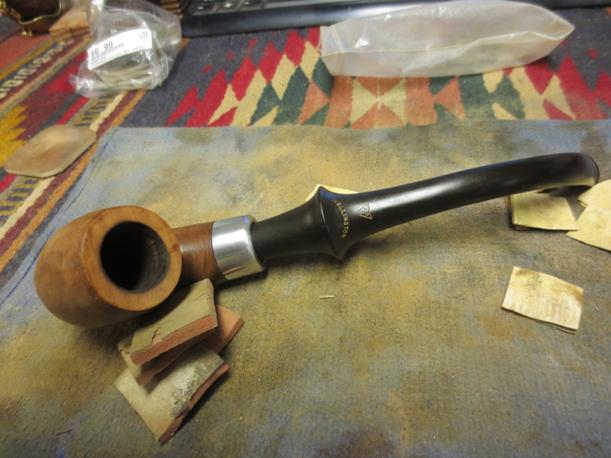
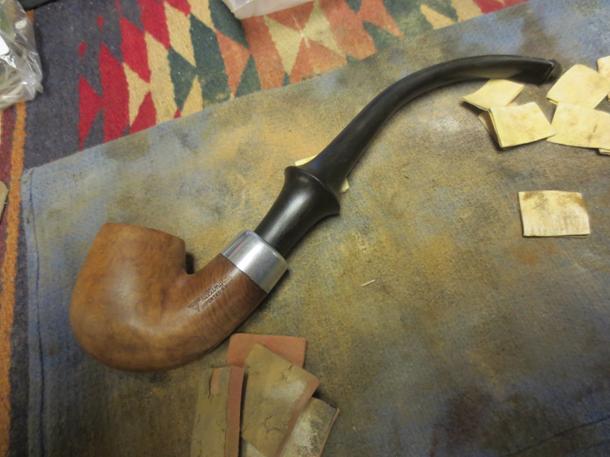
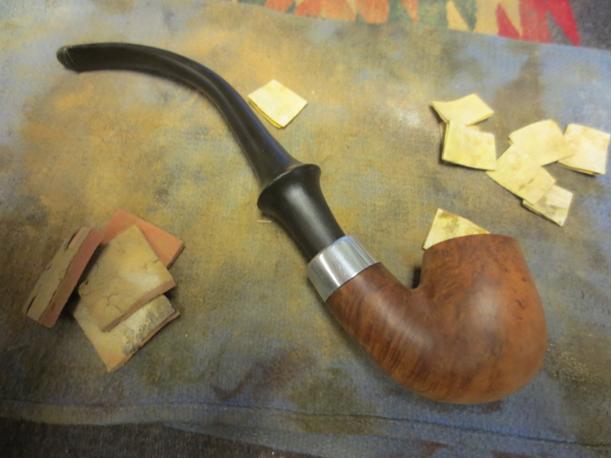
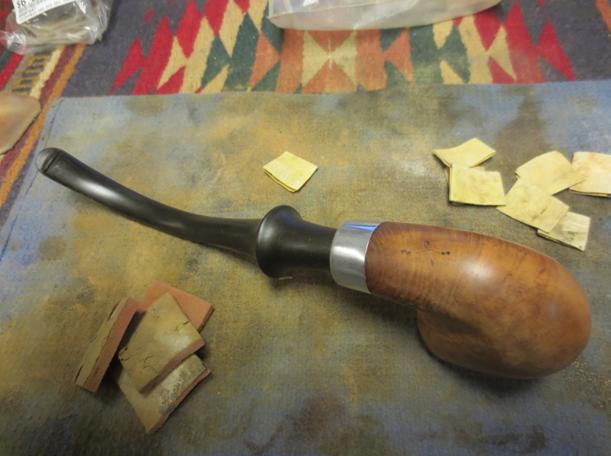
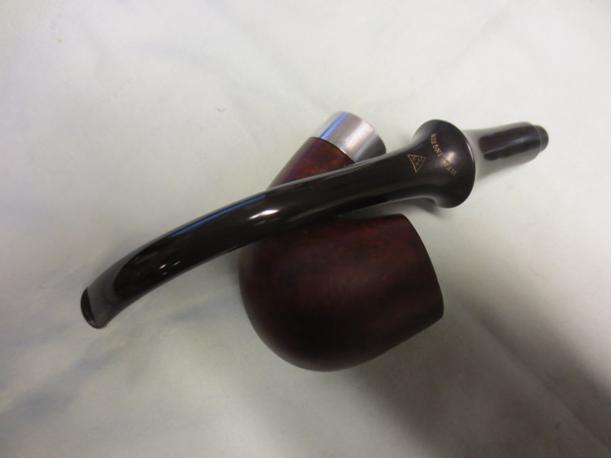
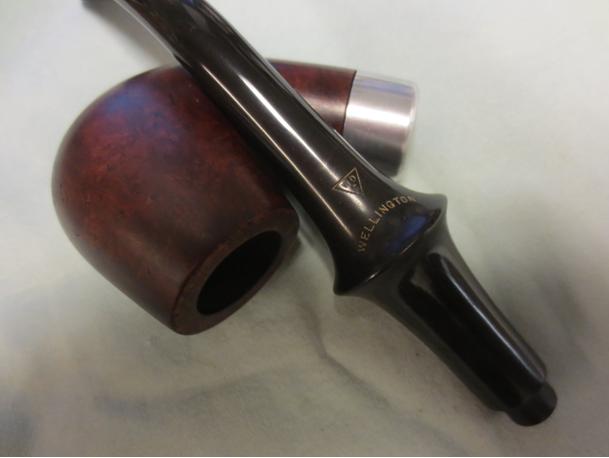
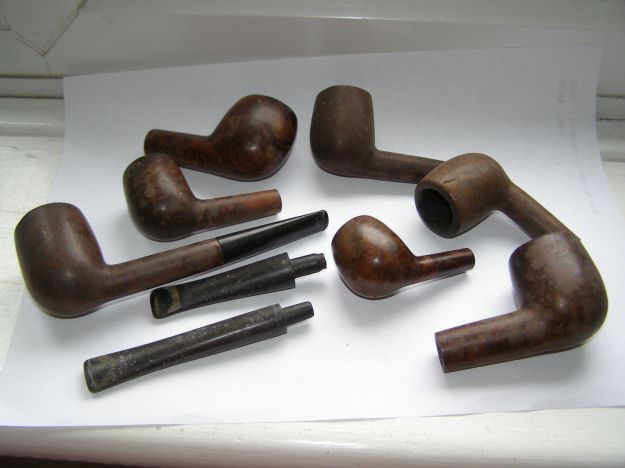
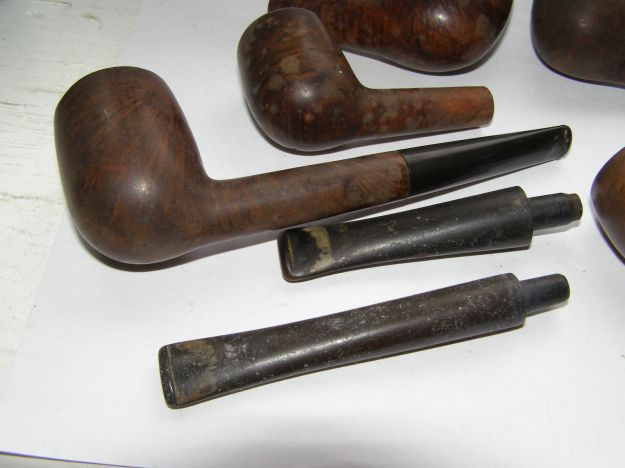
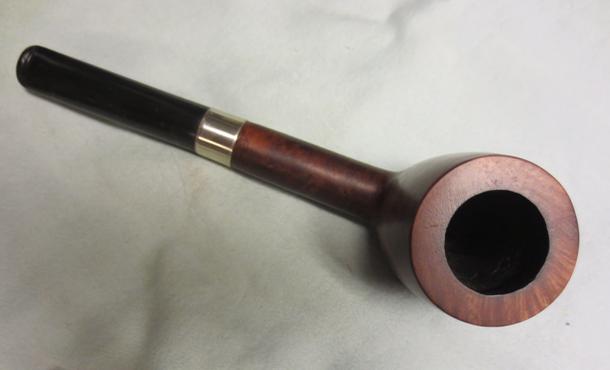
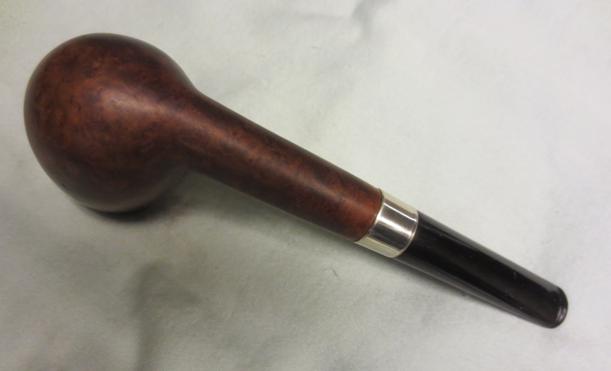
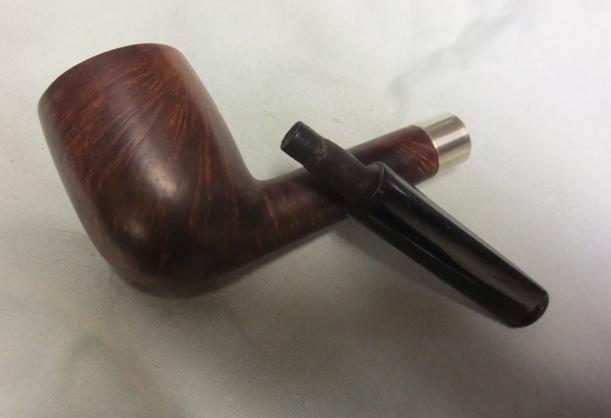
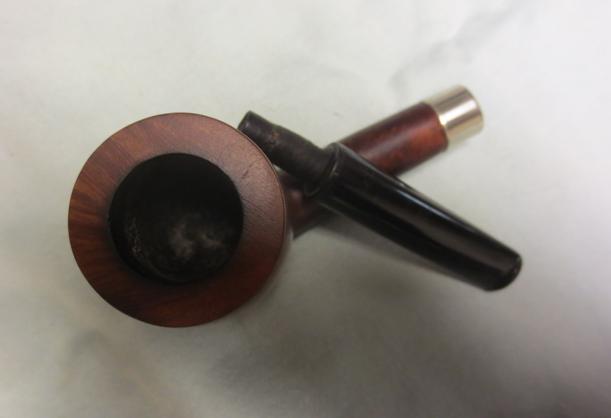
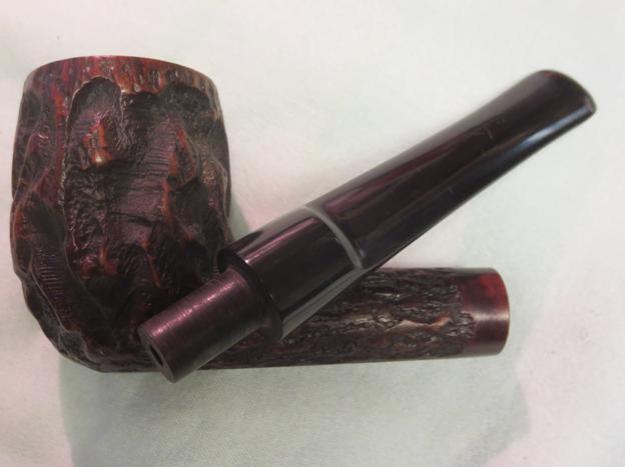
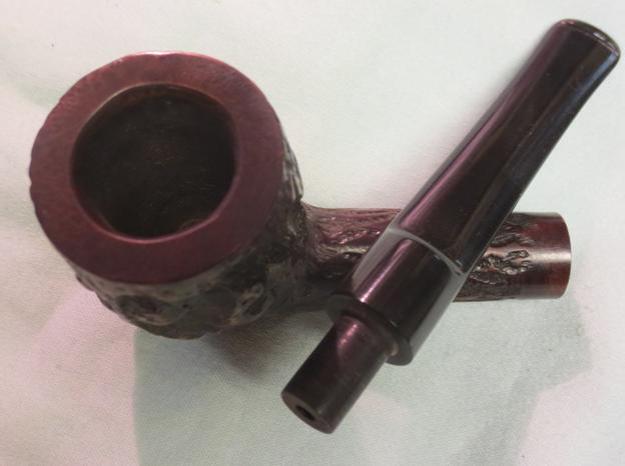
Tag Archives: restaining a bowl and rim

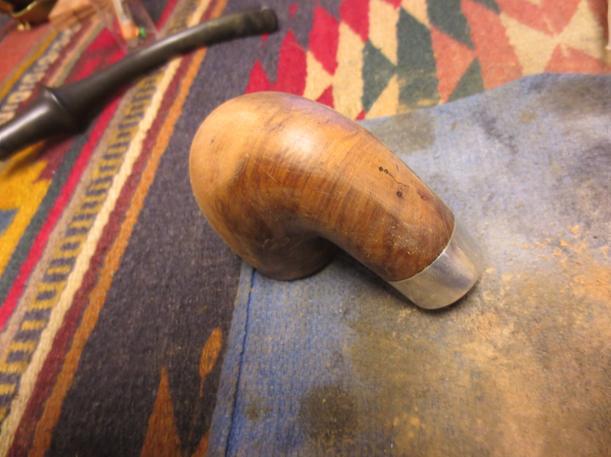
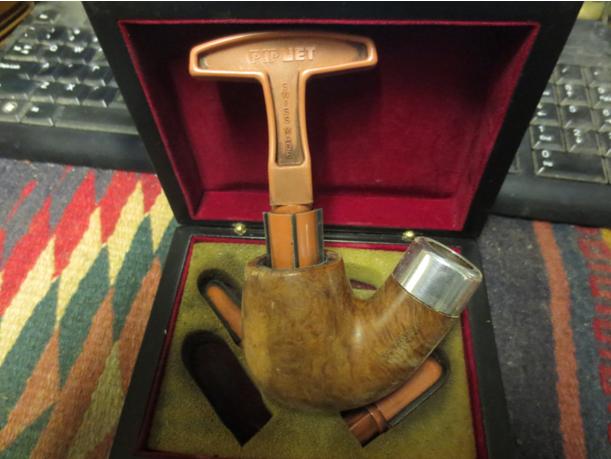
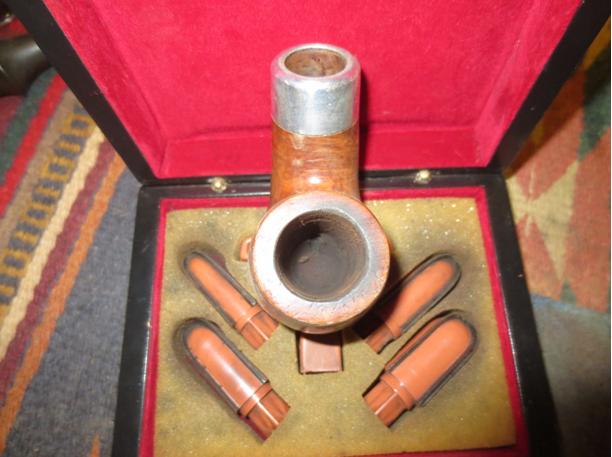
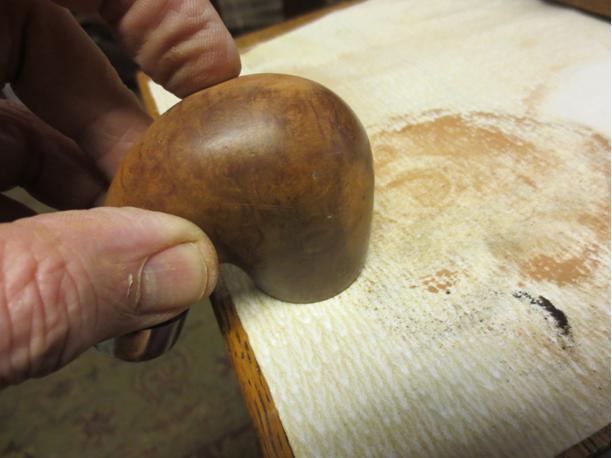
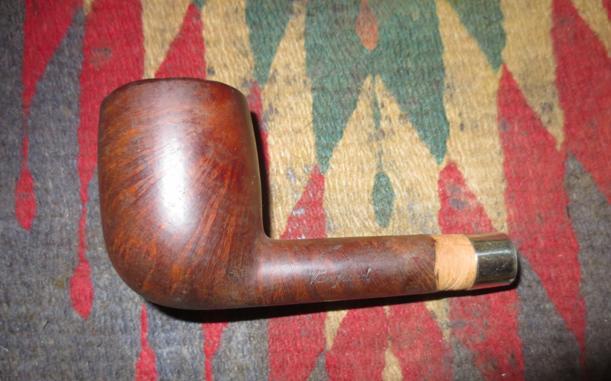
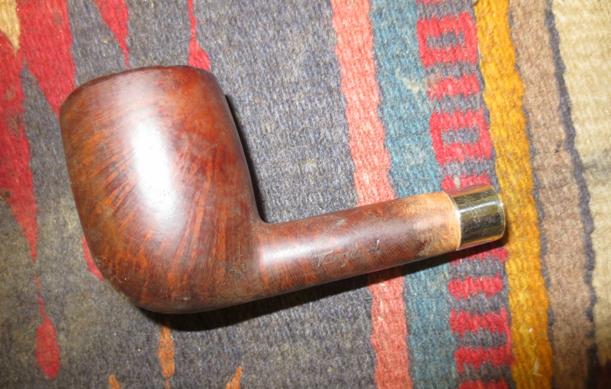
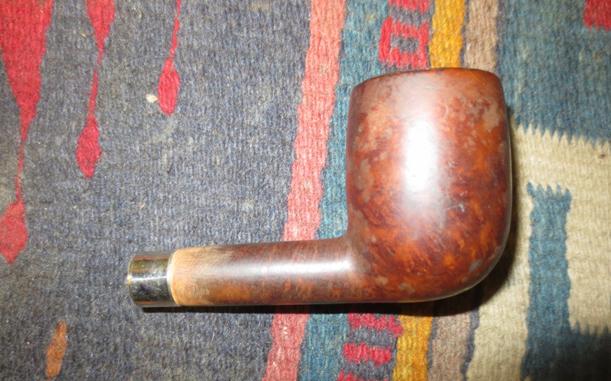
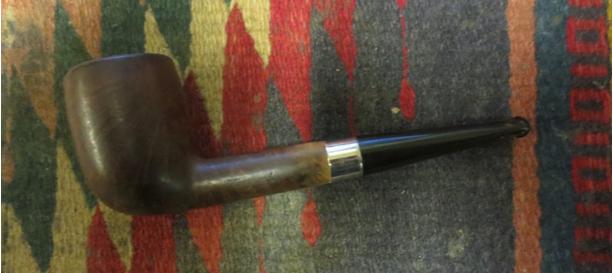
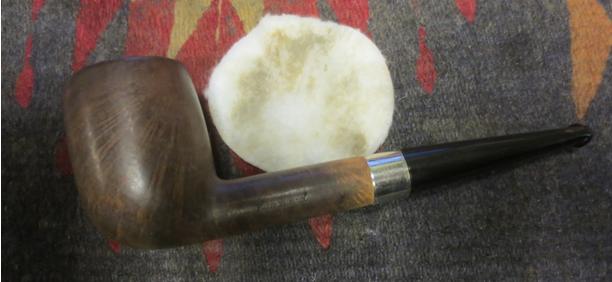
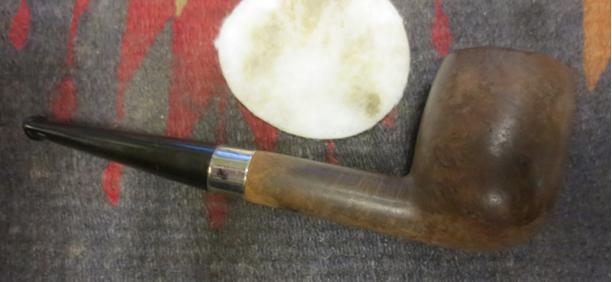
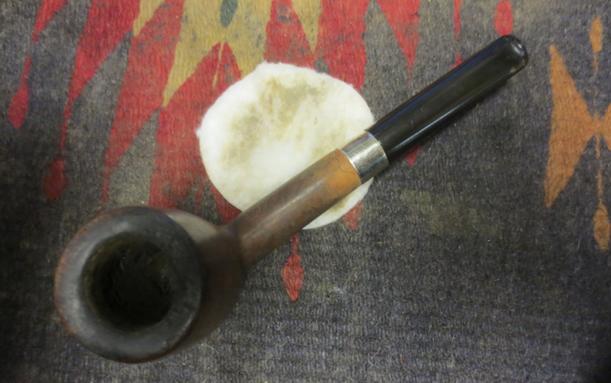
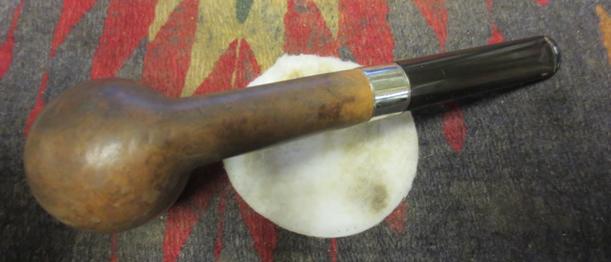
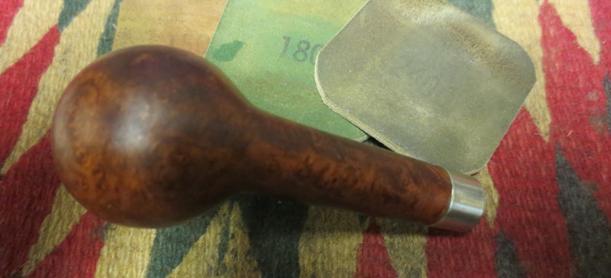
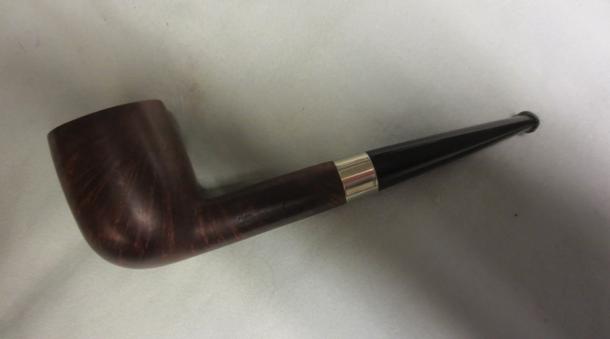
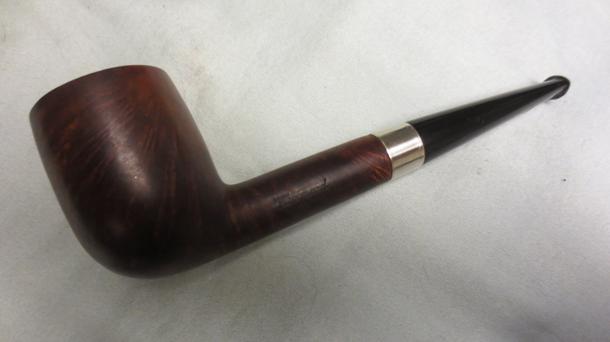
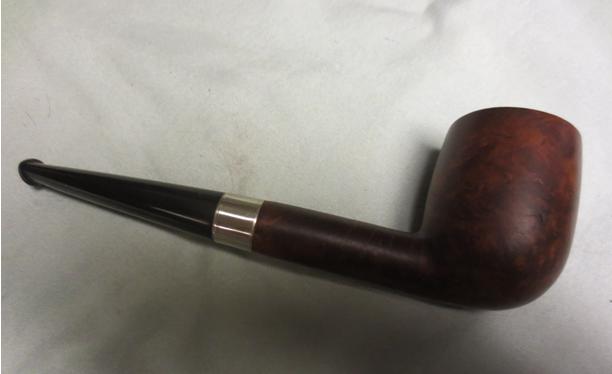
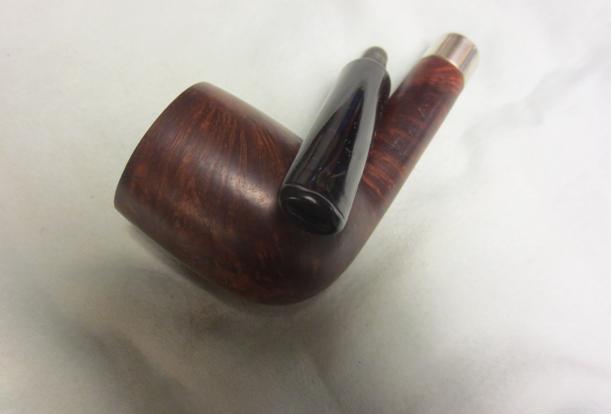
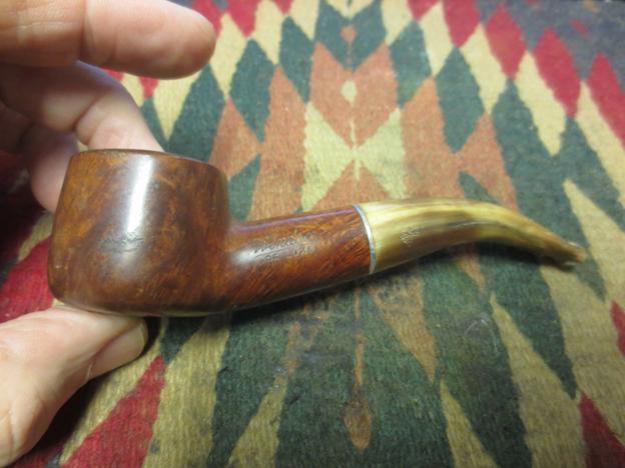
Repairing and Restoring a1929 Irish Free State Billiard


Blog by Aaron Henson – 11/29/15

I think the thrill of the hunt is part of what makes this hobby so enjoyable. Going into a new store or happening upon a pipe in an unlikely place, never knowing just exactly what you are going to find and always keeping a lookout for that forgotten gem.

This past summer I was on vacation with my family in Seaside, Oregon. Between Seaside and Astoria I visited 14 different antique stores and only two had any pipes at all. And of those, they were all on the pricy side; too rich for me.

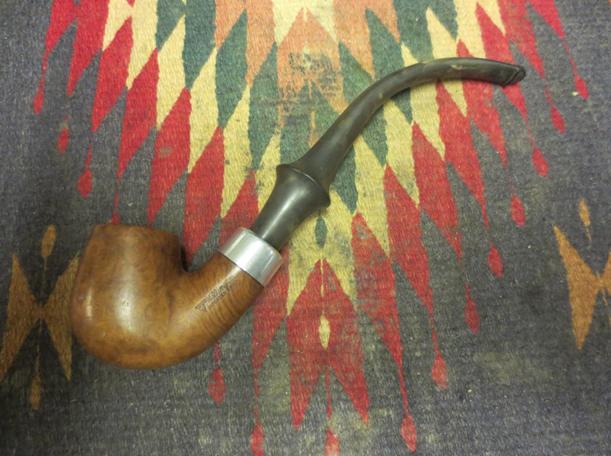
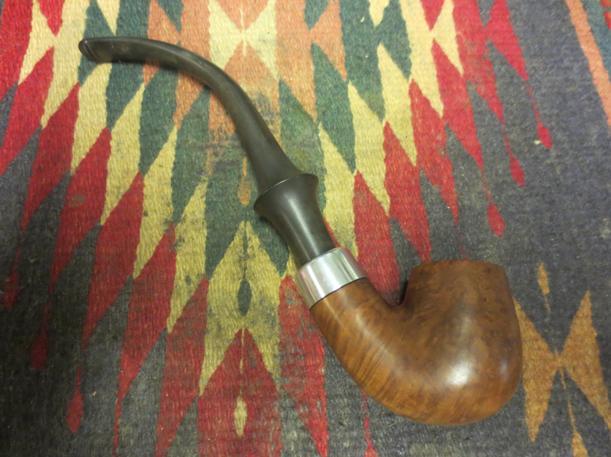
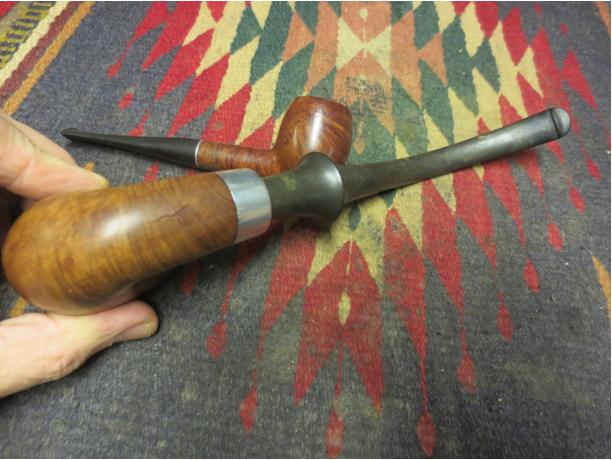
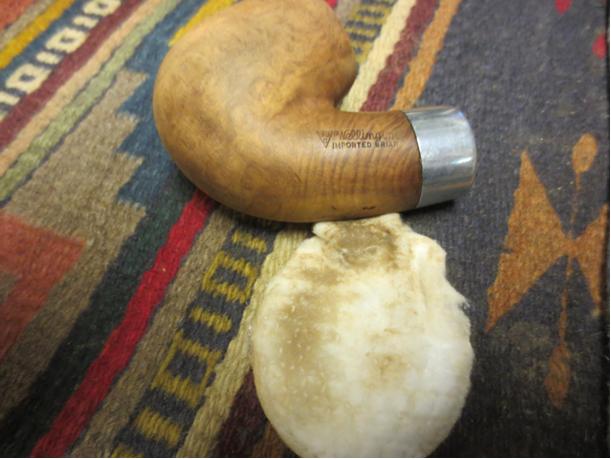
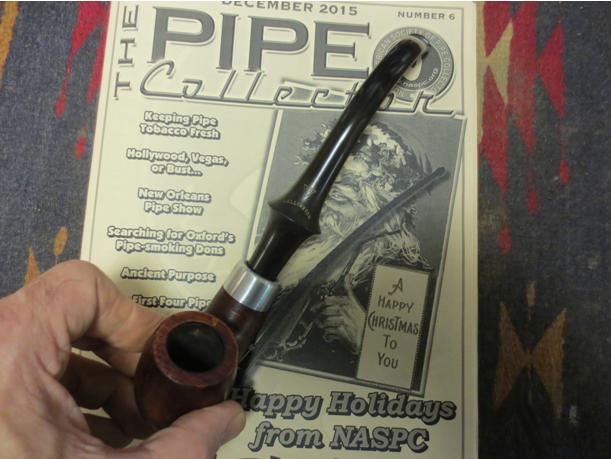
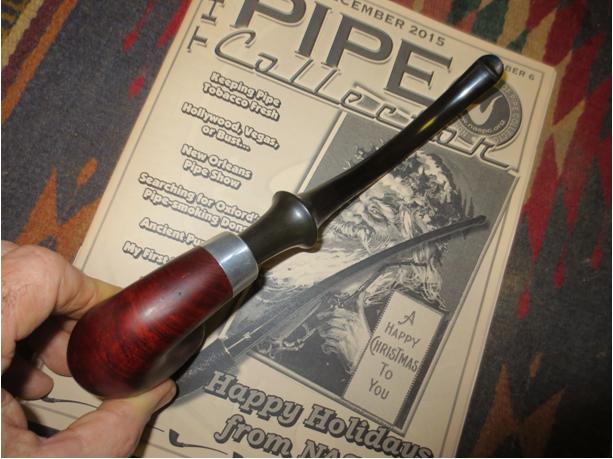
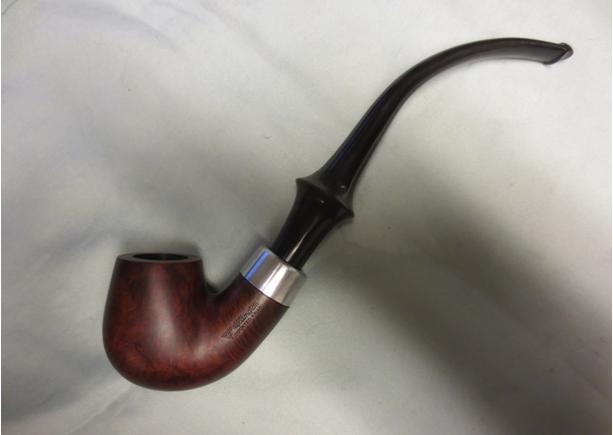
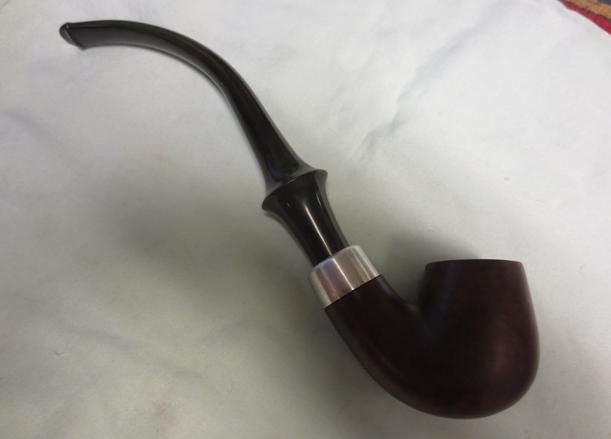
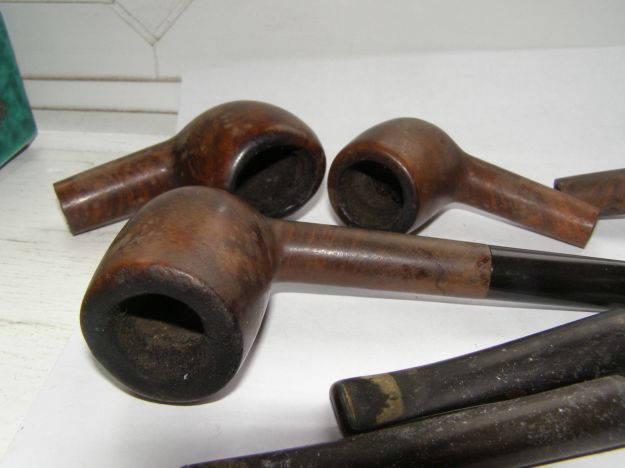
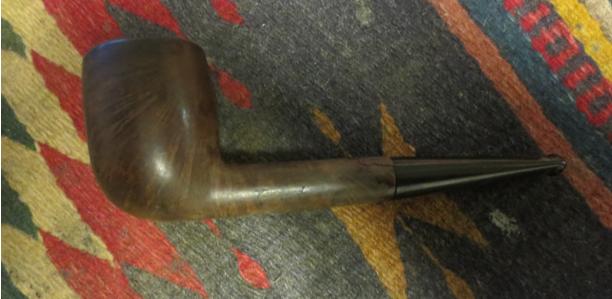
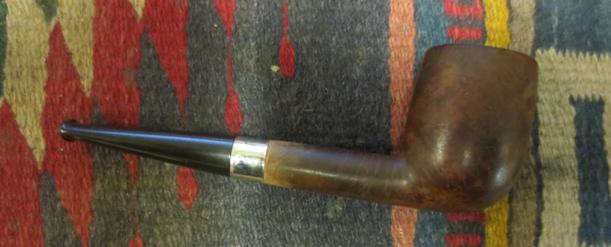
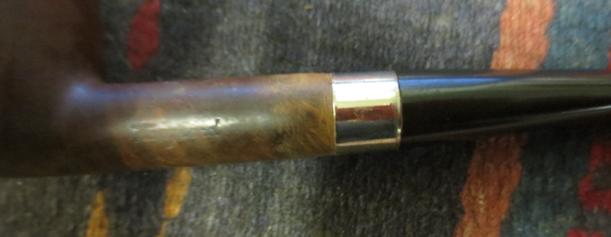
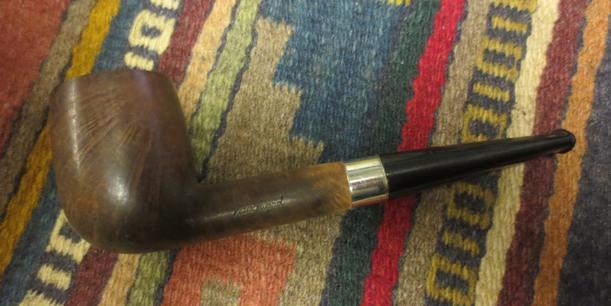
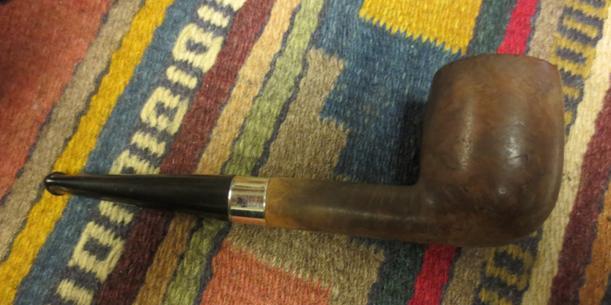
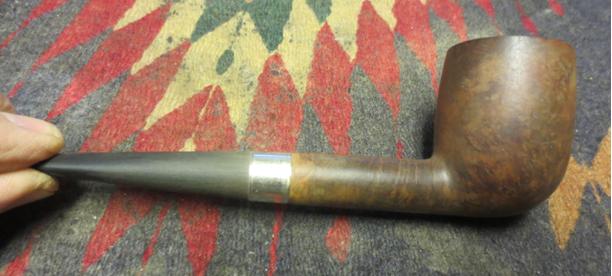
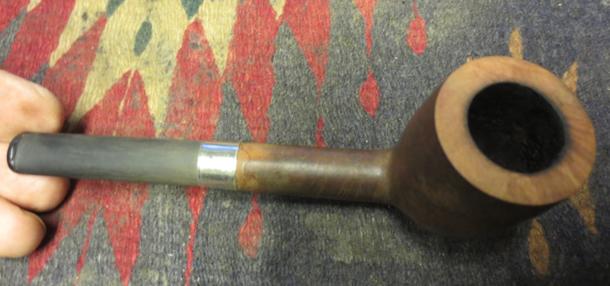
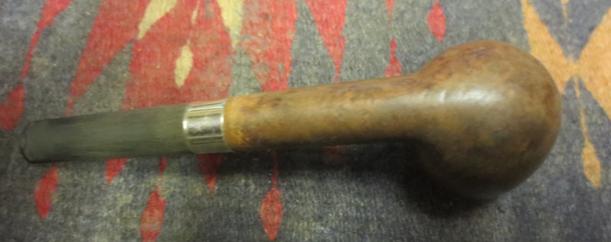
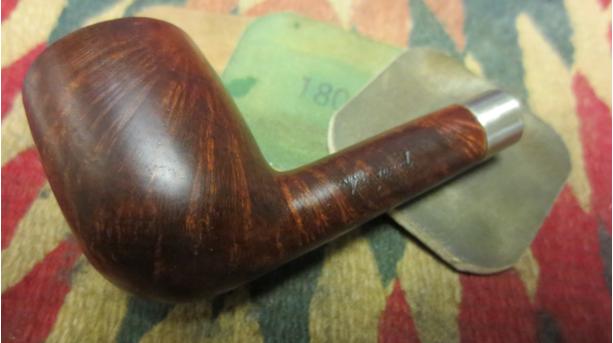
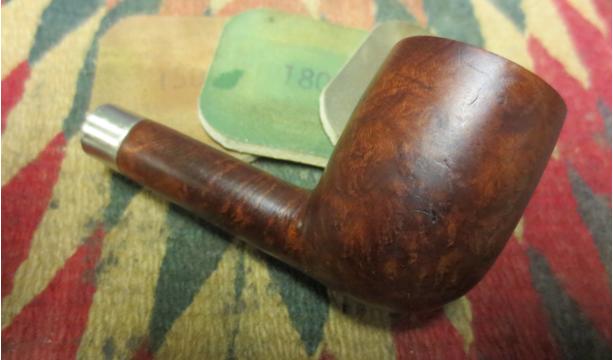
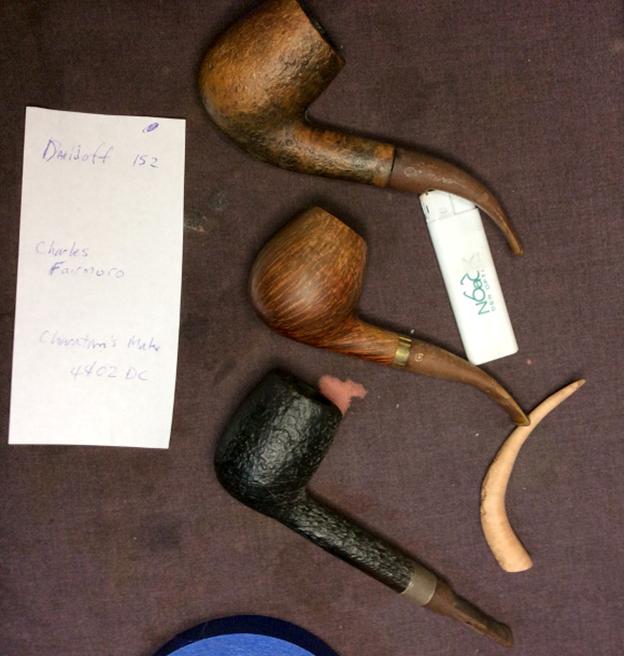
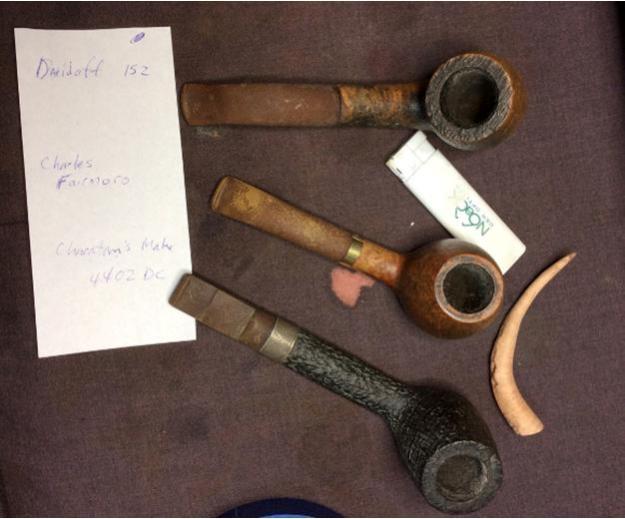
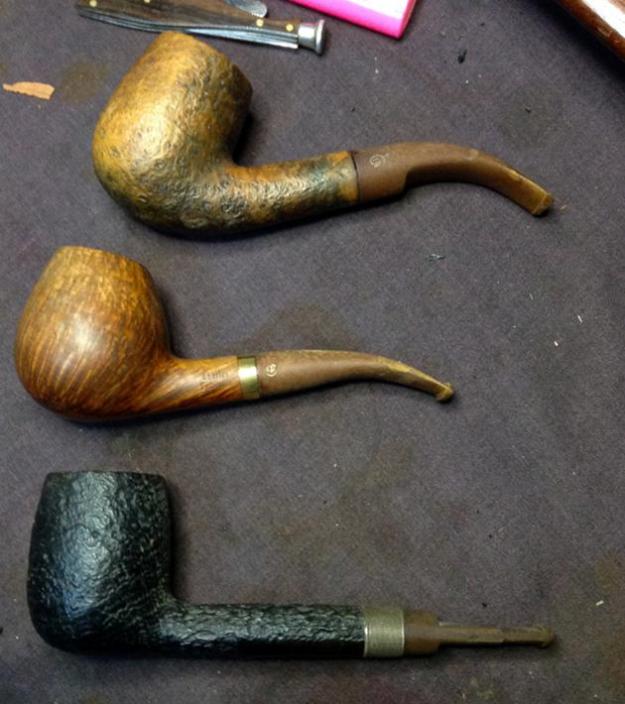
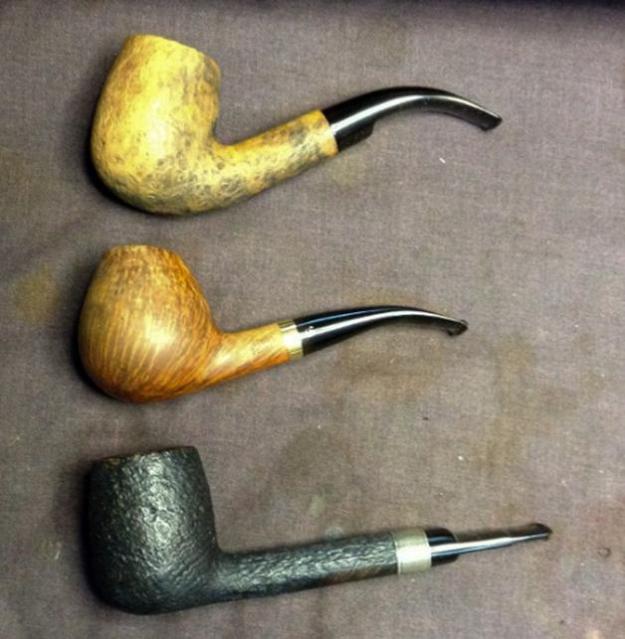
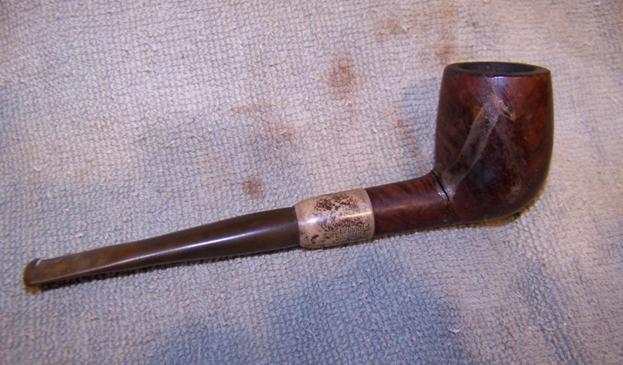
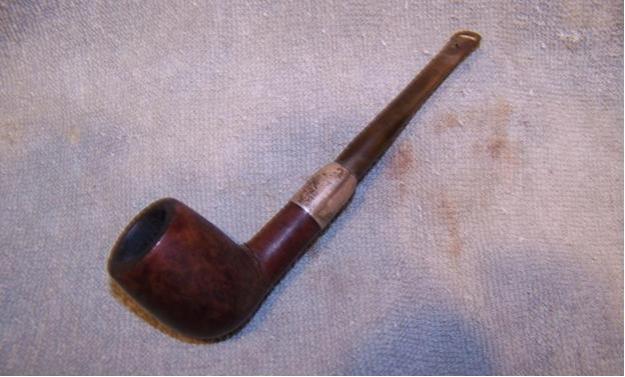
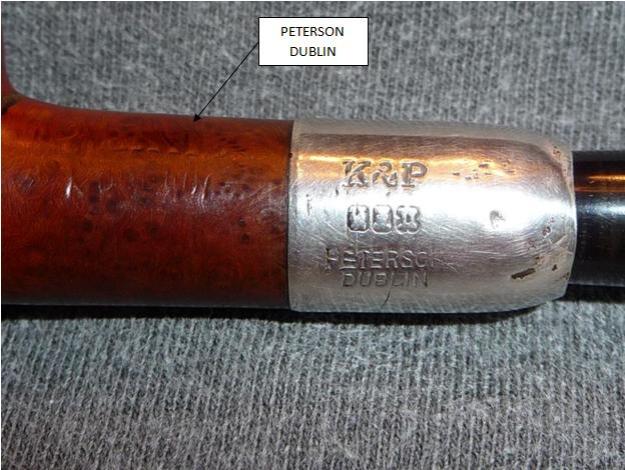
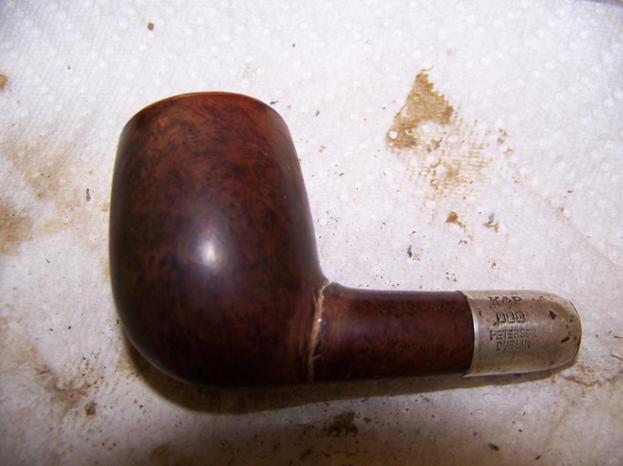
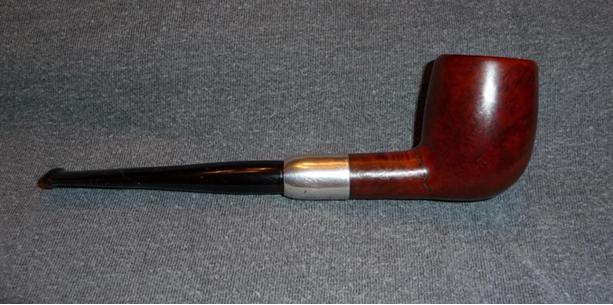
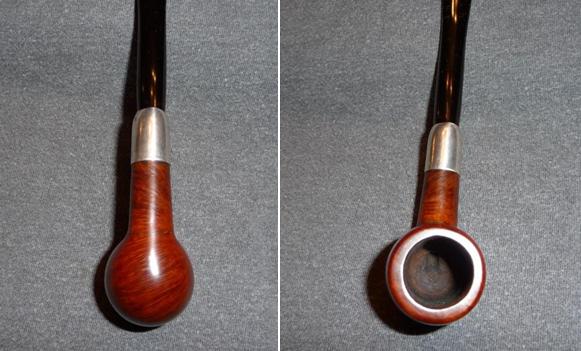
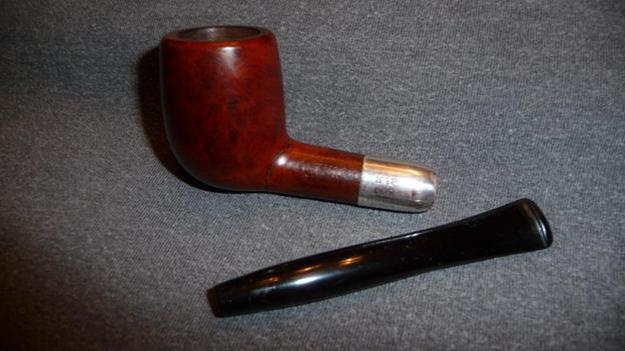
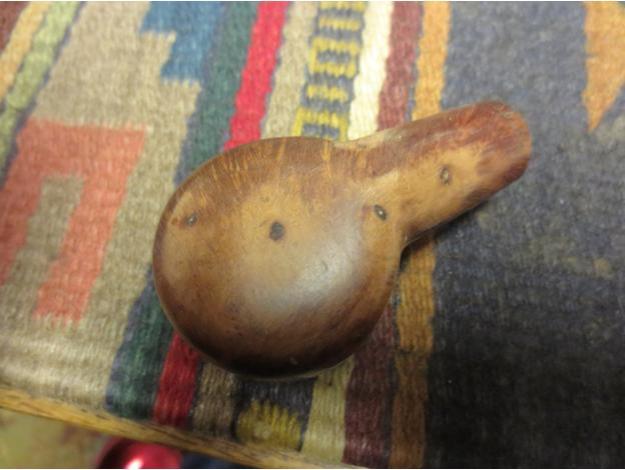
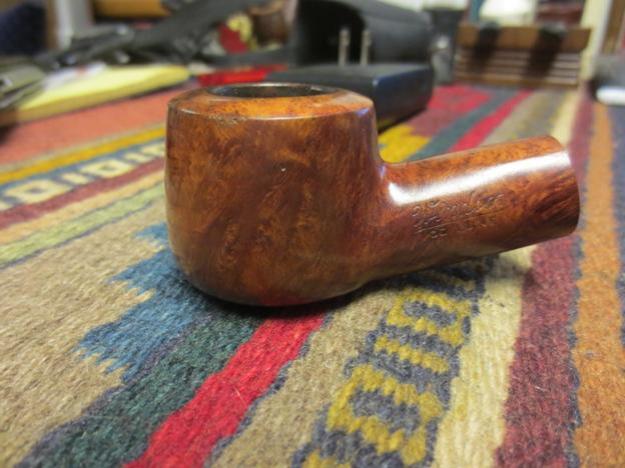
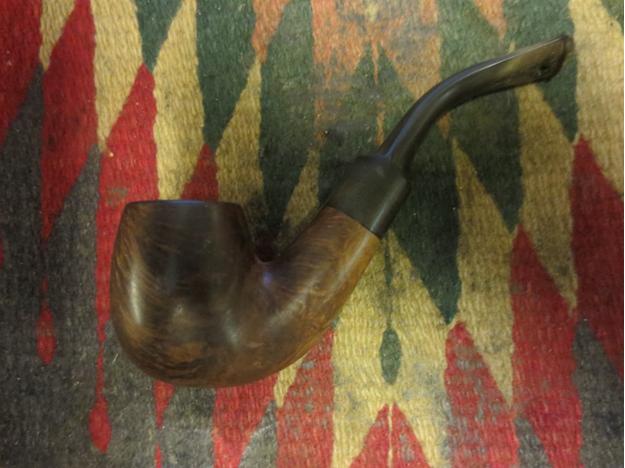
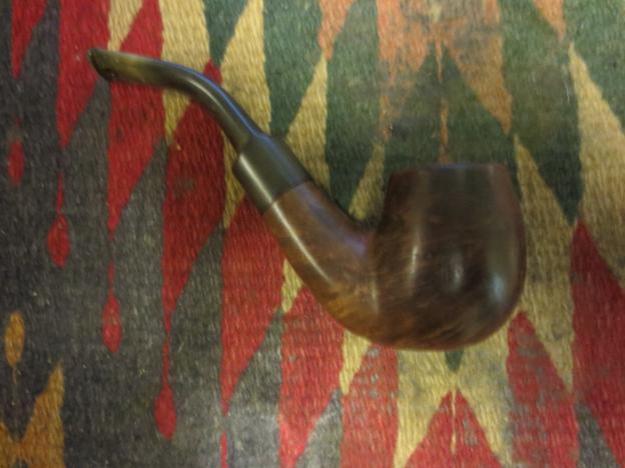
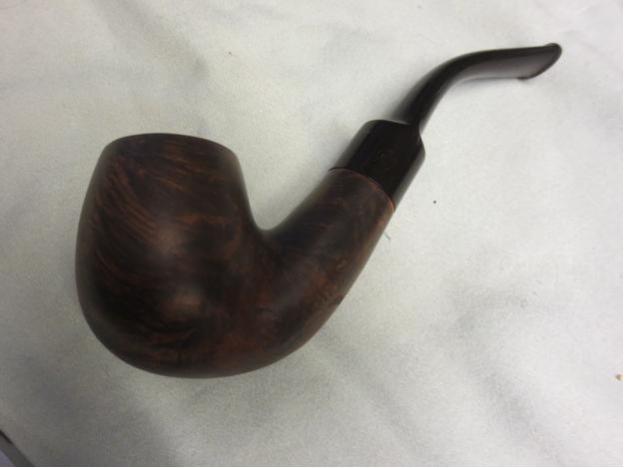
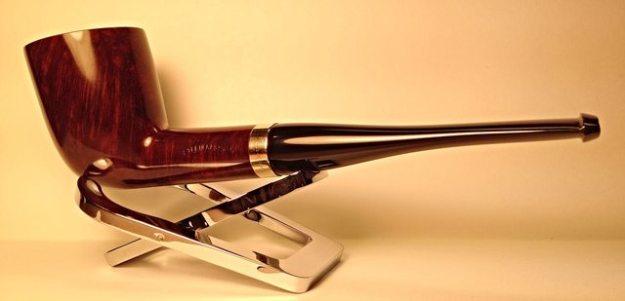
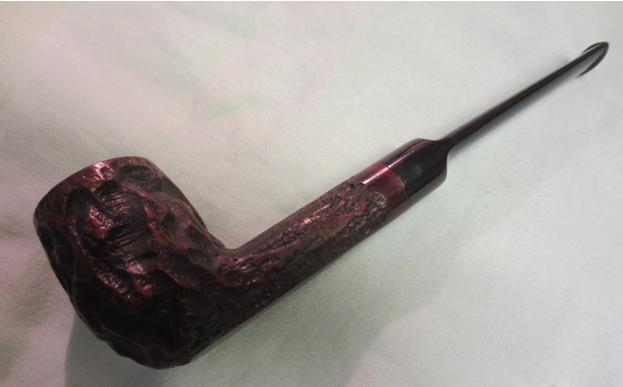
Partly on a whim and partly out of desperation, I went into a second-hand store that I had passed by several times. It was more “junk” than “antique” and of course that is where I made my score although I didn’t think so at first. Three pipes: the first was a non-briar volcano with “Italy” stamped on the bottom, the second was a Medico that was in such bad shape it could only be used for parts but the third was intriguing with a silver band. I could not read the markings for all the filth on the pipe. I negotiated with guy behind the counter and walked out will all three for $15.Aaron1 It was clear that this had been a very nice pipe in its day. The wood grain that could be seen through the grime was beautiful and the Army Style push stem I thought gave the pipe a classy feel. When I got it back to the house and looked it over in better light, I noticed that the band had been rotated on the shank so the writing was upside down and in the dim light of the store I could not read it. Now I could see that it clearly said “Peterson” and “Dublin” stamped in the silver band.

A Peterson, my heart skipped a beat. I was well aware of Peterson’s long history of making quality pipes and now I had picked up an early model for 5-bucks!Aaron2

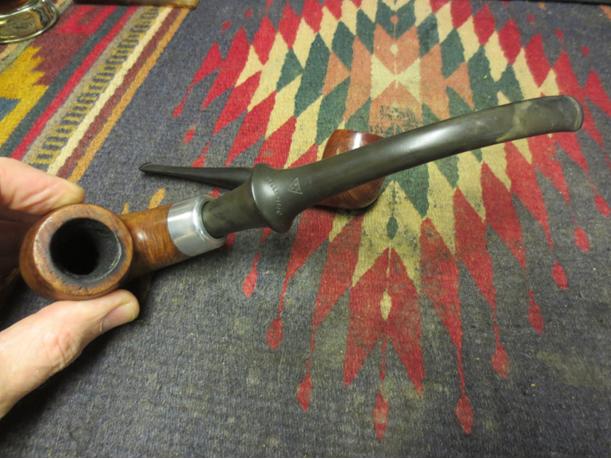
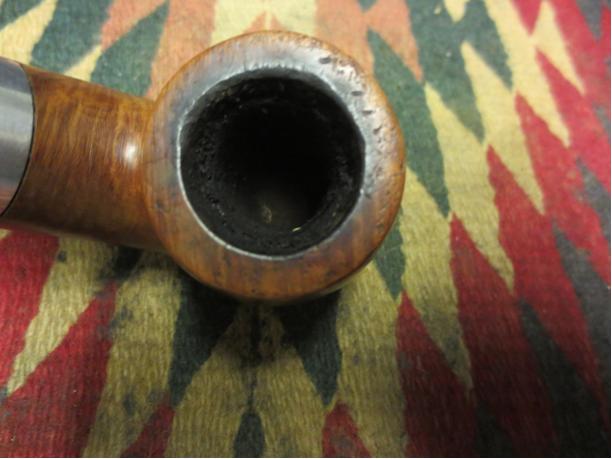
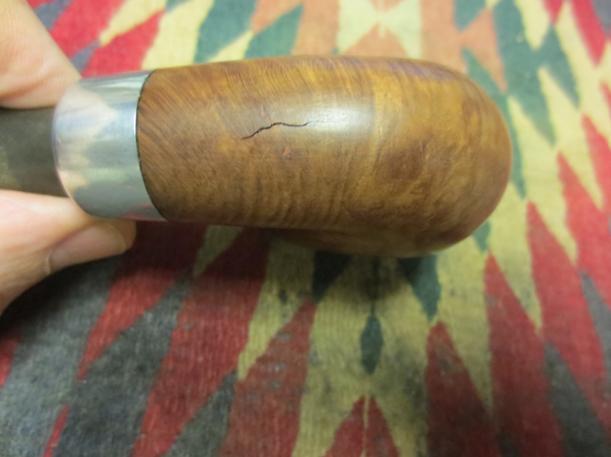
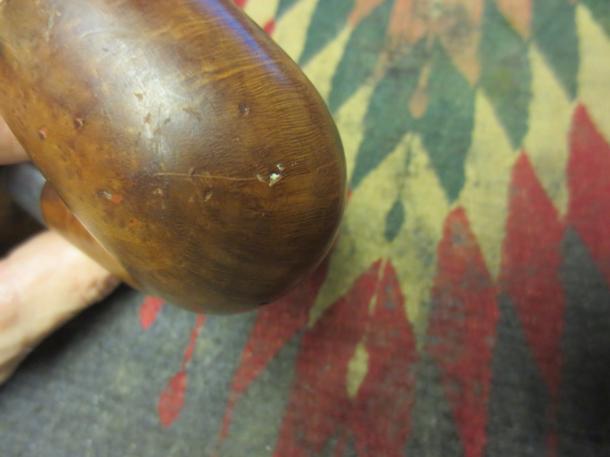
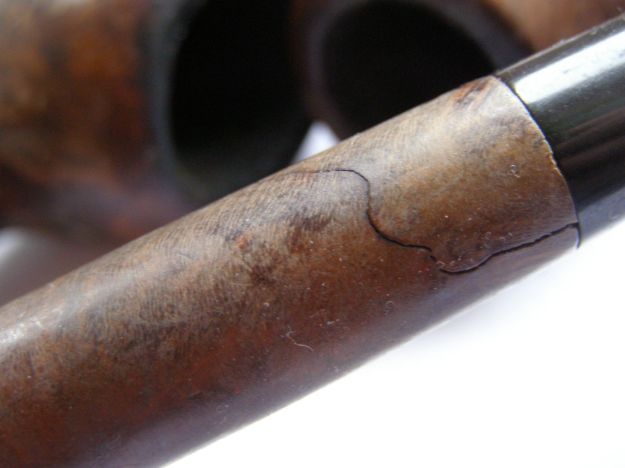
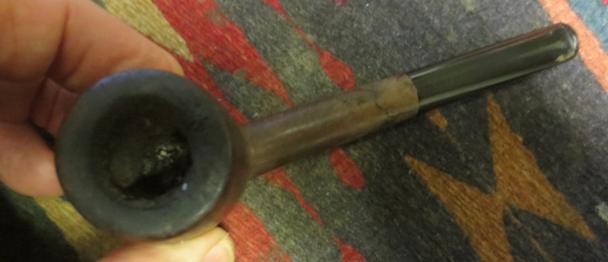
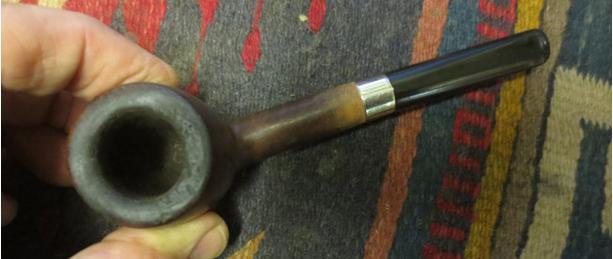
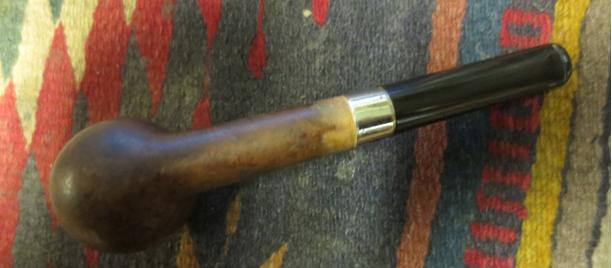
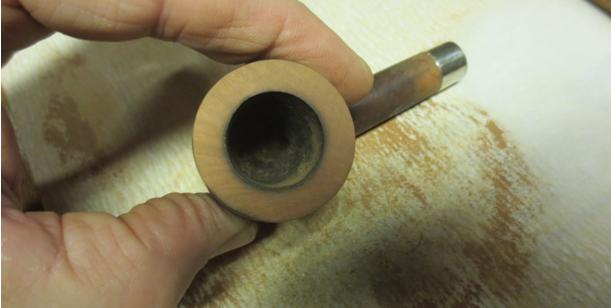
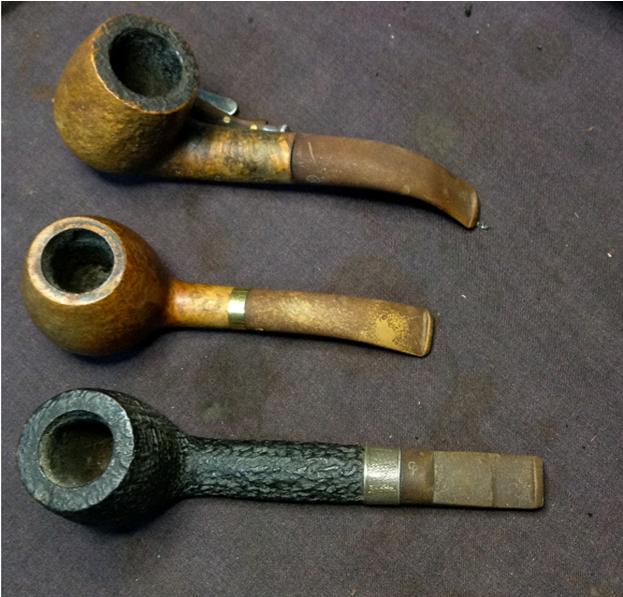
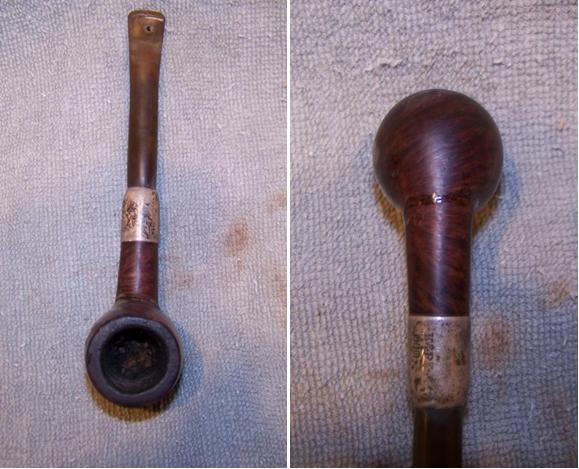
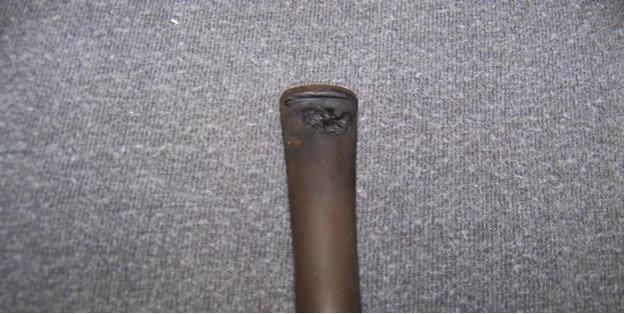
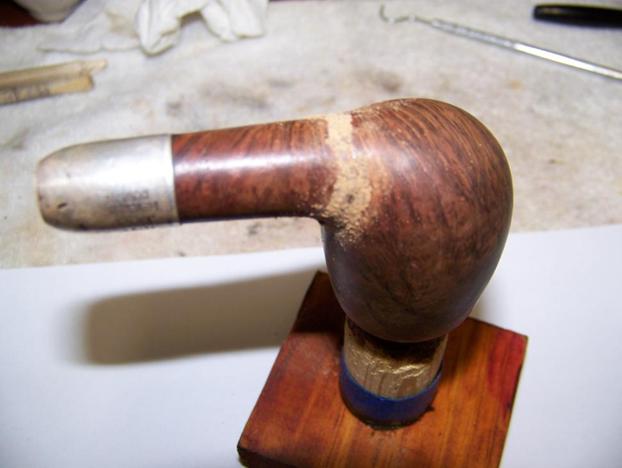
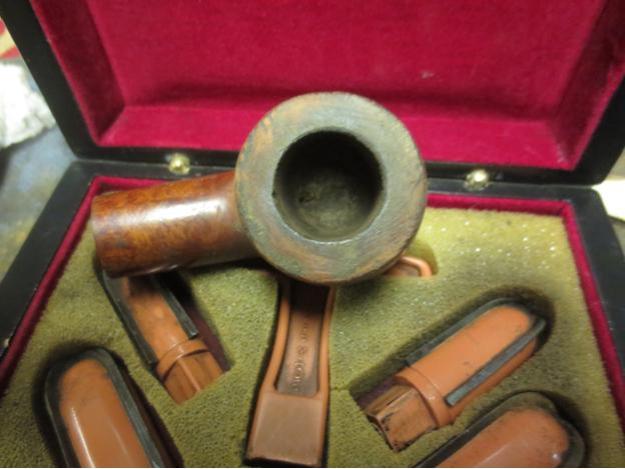
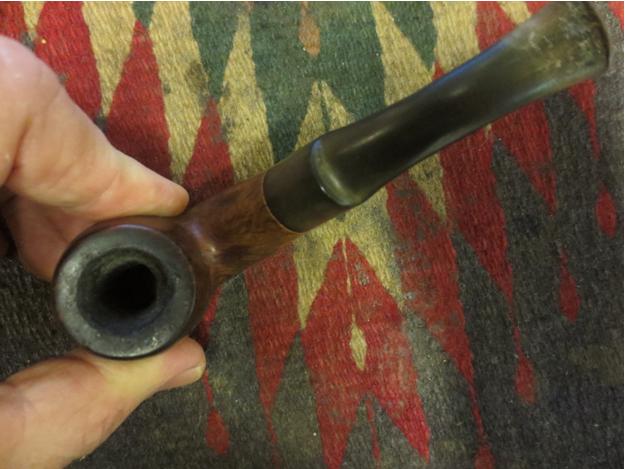
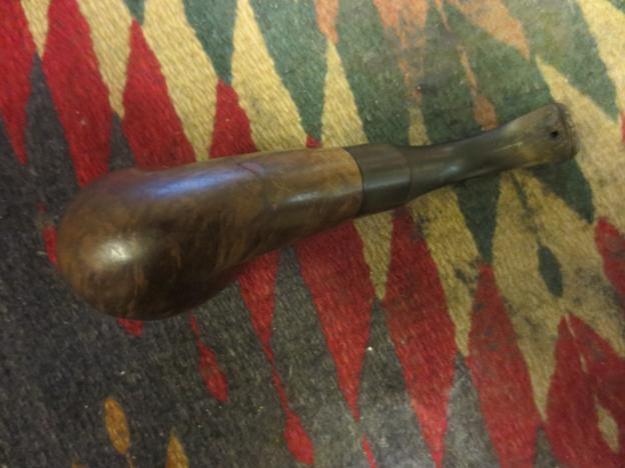
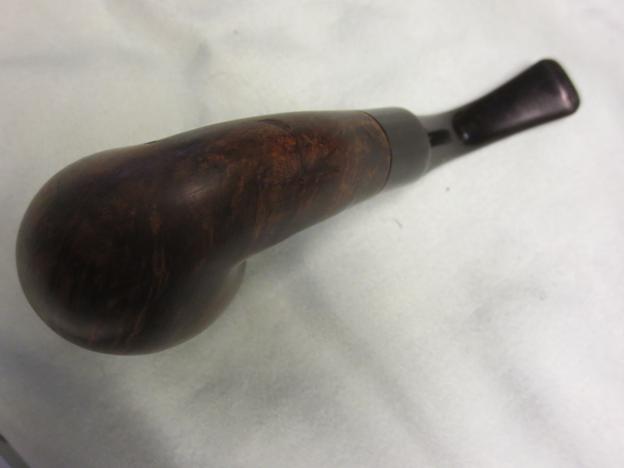
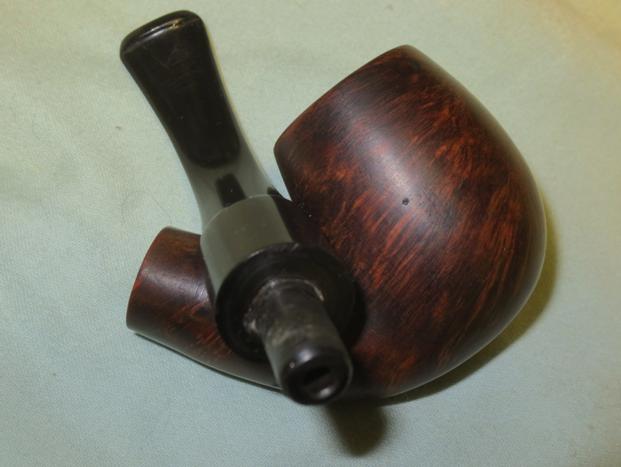
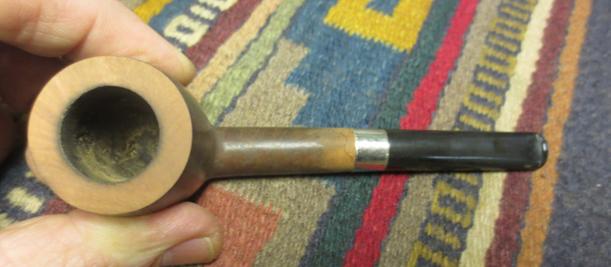
Aaron3 The bowl had a good build up of cake and a fair amount of unburned tobacco in the bottom. Some build up of tars on the rim but otherwise seemed to be in good condition. The shank had clearly been broken, however and the glue used for the repair was spread all over one side of the bowl. The stamping on the band, as stated before, were worn and not very readable. The stem was oxidized and had a hole in the top near the button. This must have been a favorite pipe of the previous owner.

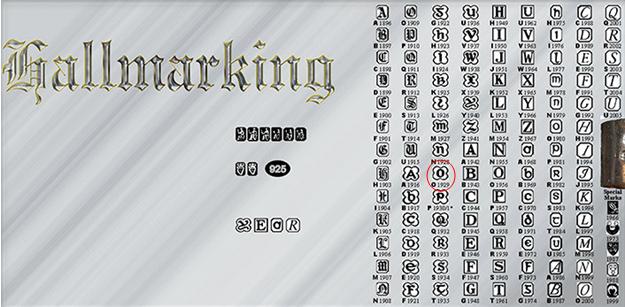
When I got home from vacation, I tried to understand the symbolic hallmarks on the band. Not being familiar with Peterson marking I sent a picture to Steve Laug to ask his opinion. Steve very graciously referred me to his Peterson expert, Mark Irwin. With Mark’s help I was able to understand Peterson’s hallmarking and dated the pipe as 1929 – placing it in the Irish Free State era: 1922 – 1937. At least, that was my interpretation of the third hallmark, an “O”.Aaron4

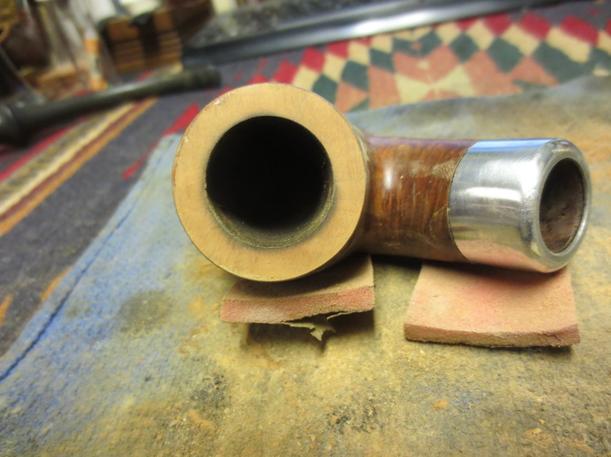
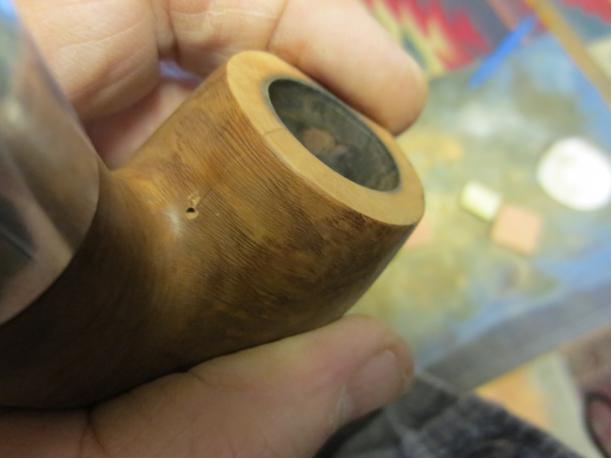
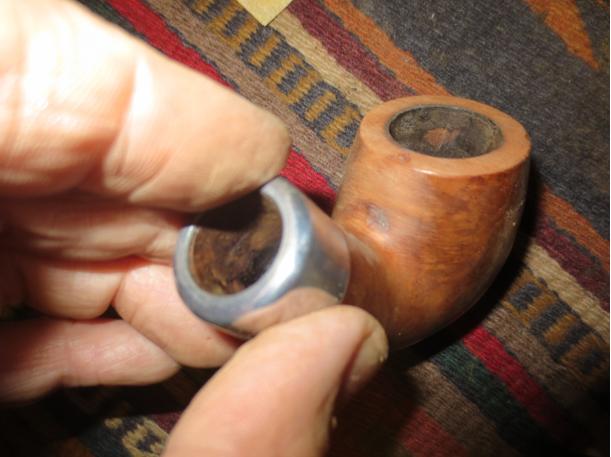
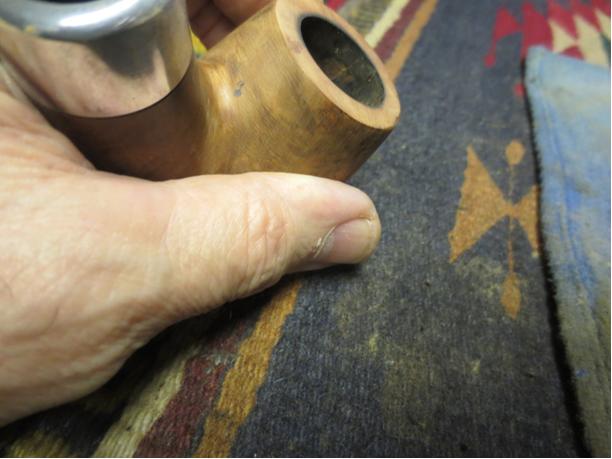
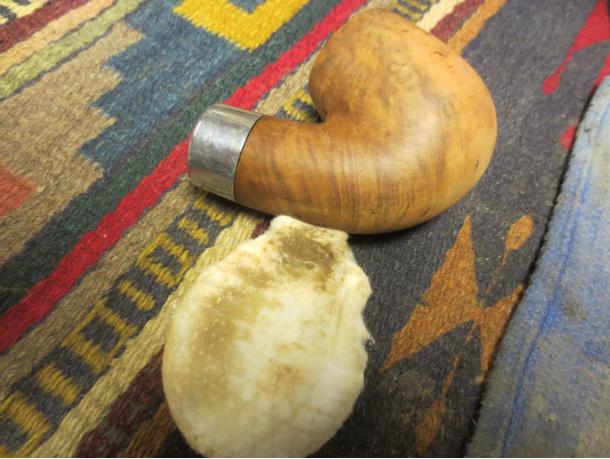
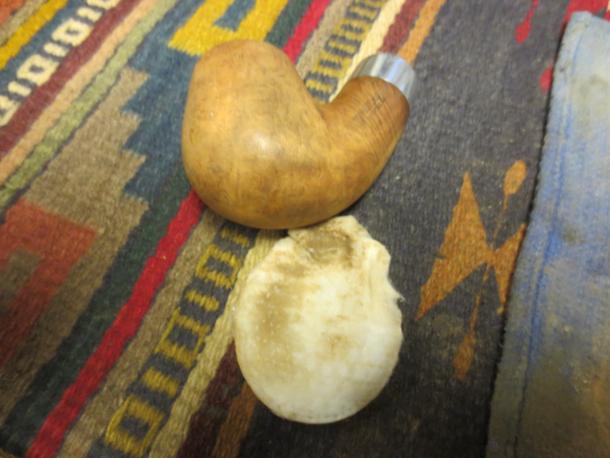
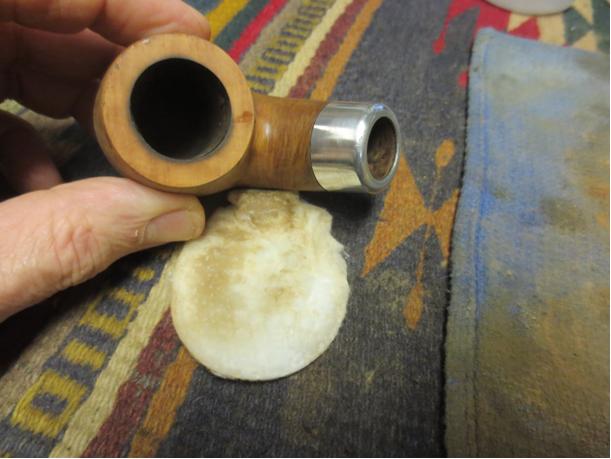
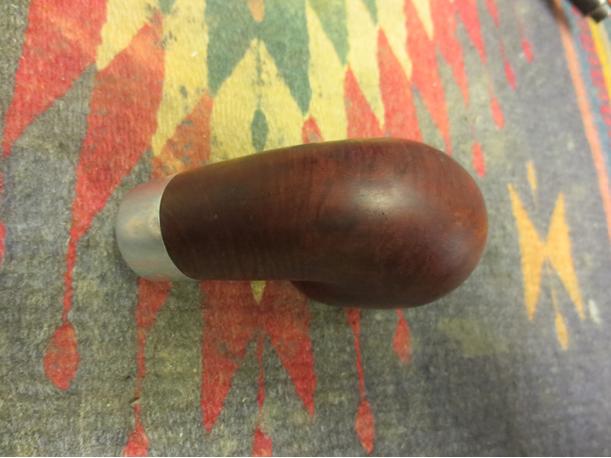
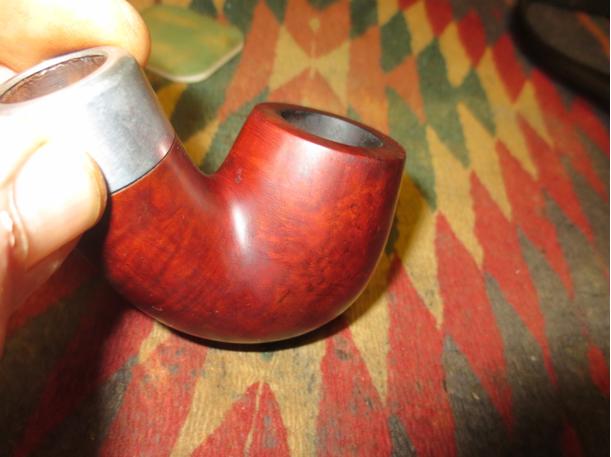
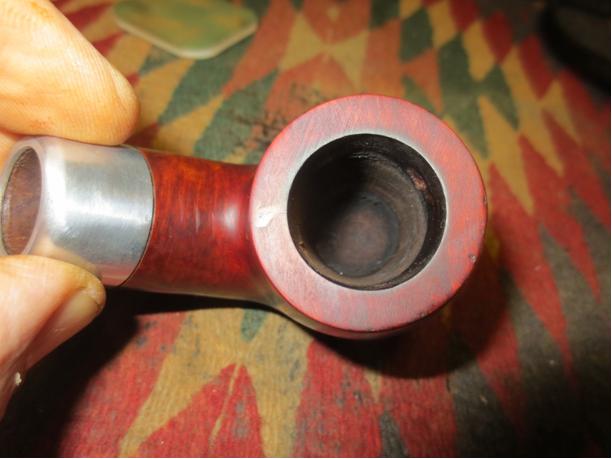
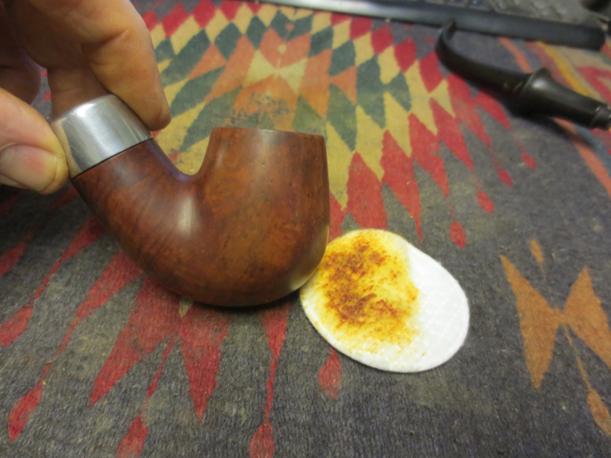
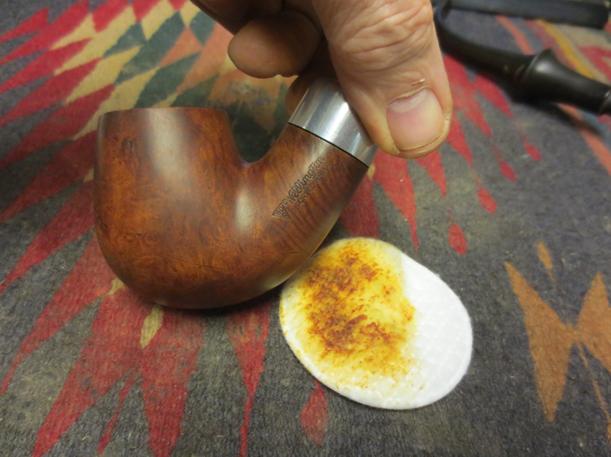
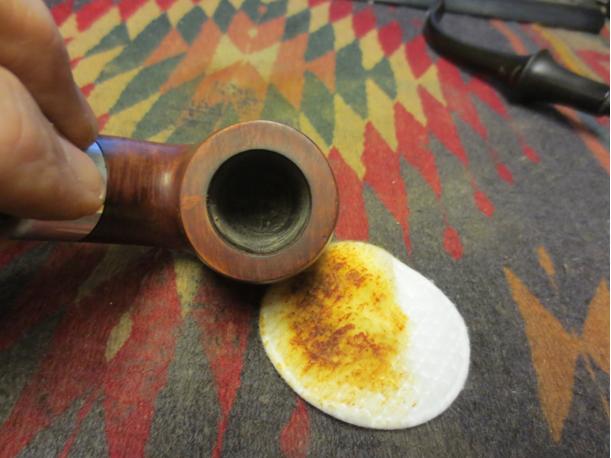
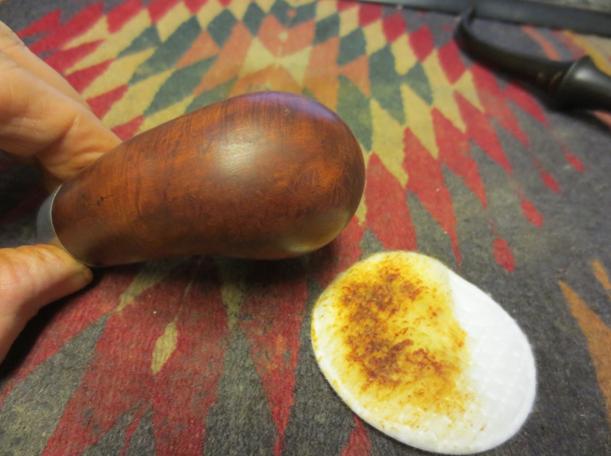
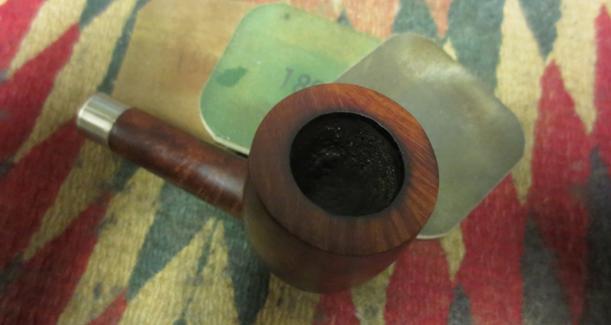
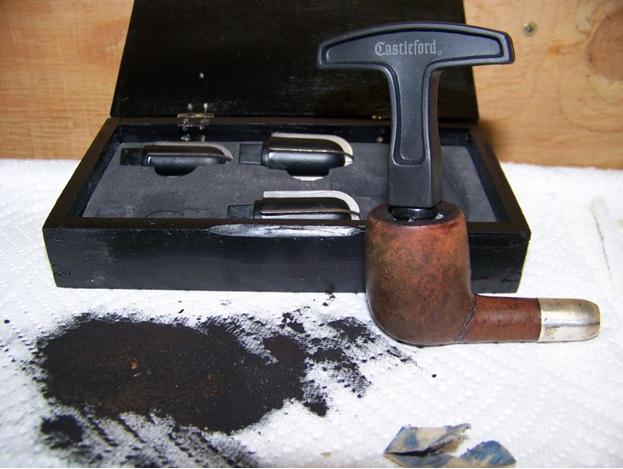
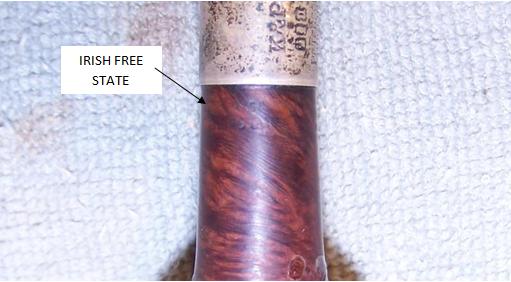
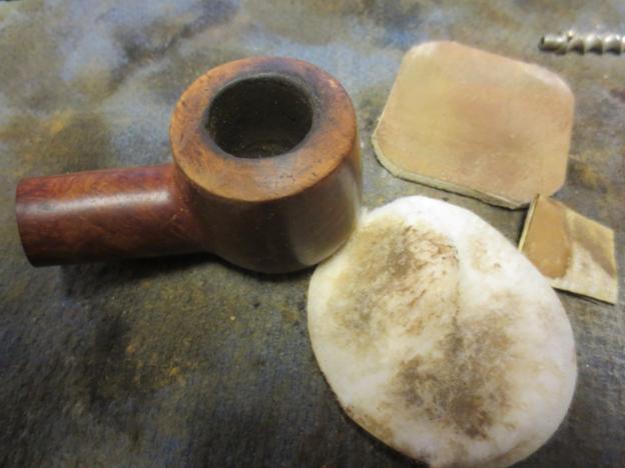
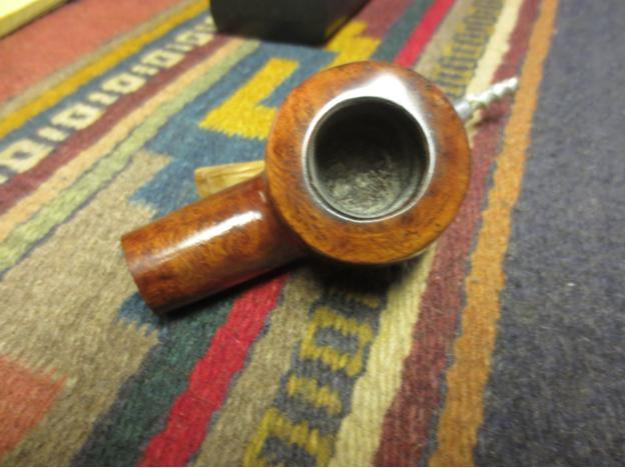
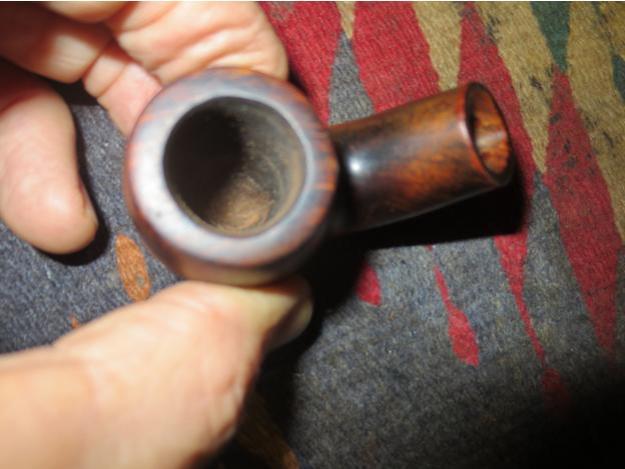
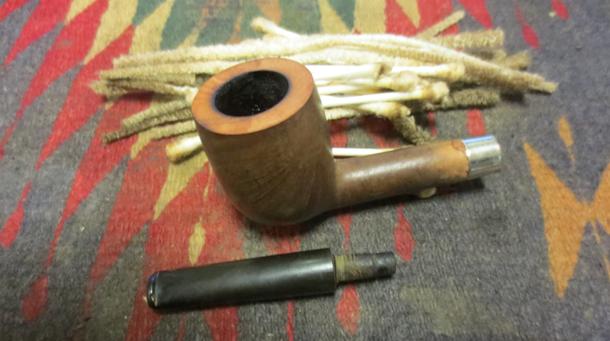
Aaron5 I began by reaming out the cake with a Castleford reamer and took the interior back to bare wood. There were some burn marks under the tar on the rim so I elected to top the bowl with some 220 grit paper laid on the flat work bench.Aaron6 Next I heated the band with a flame and then using leather jawed pliers and carefully rotated the band back into correct alignment.Aaron7 The outside of the bowl I wiped down with a cotton pad soaked in acetone. This removed the grime and the glue. I had been worried that the glue was covering a crack in the bowl but it turned out that the person doing the shank repair had just been sloppy. The glue came away and revealed pristine briar underneath. In just the right light, I also could see a very faint IRISH FREE STATE stamped into the bottom side of the shank – Confirmation!Aaron8 The break between the bowl and the shank had been complete. I could see the seam all the way around the shank but it had been a clean break. There were no gaps, rounded edges nor missing pieces; so far, so good.

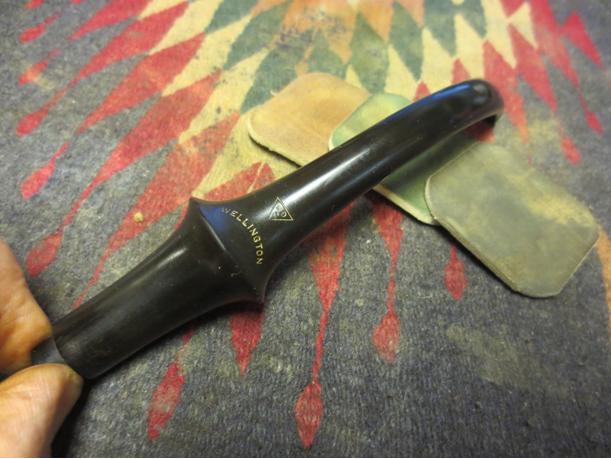
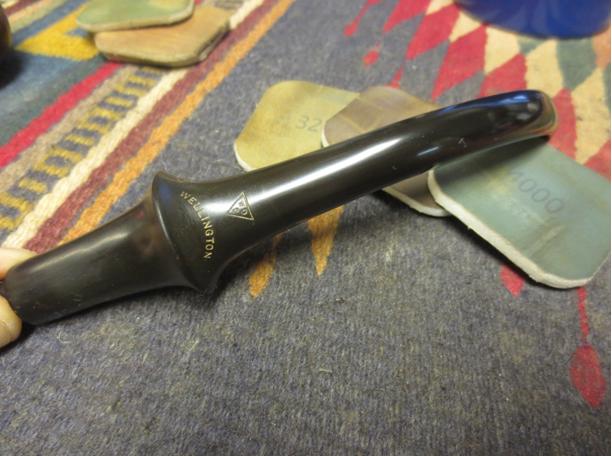
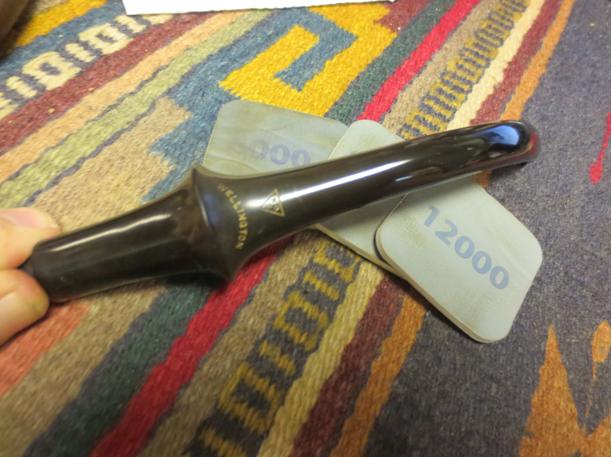
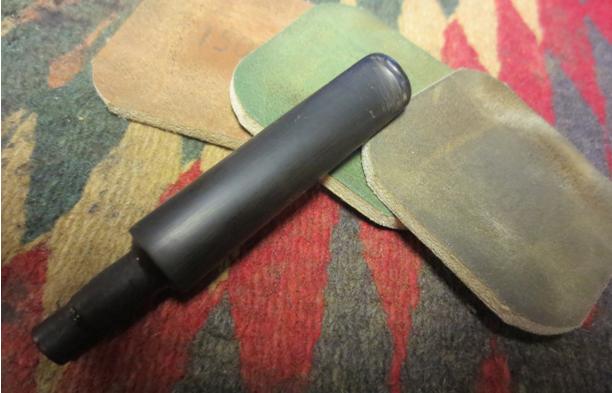
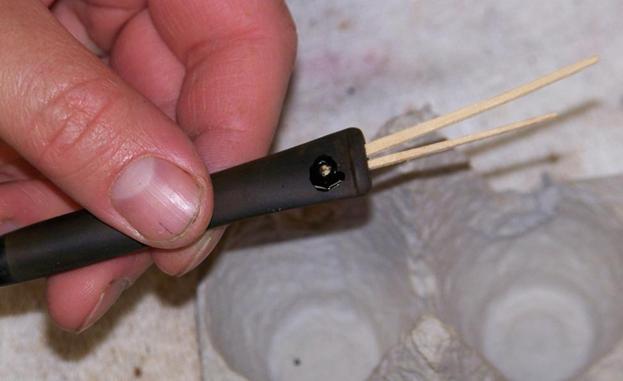
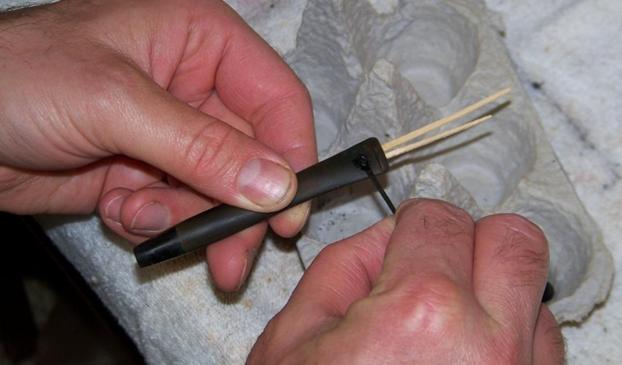
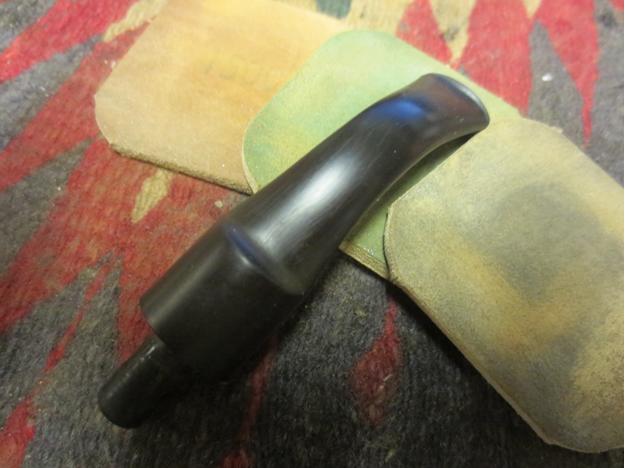
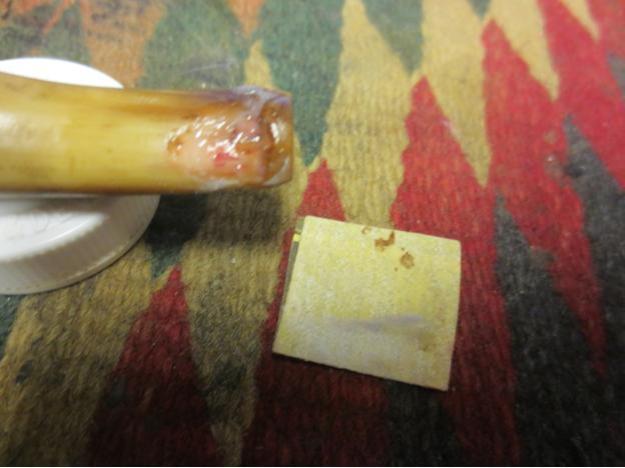
At this point I turned my attention to the stem. I put the stem to soak in a mild chlorine bath to raise the oxidation. A light sanding with some worn 400 grit paper removed the oxidation completely. I picked the loose material out of the hole, made backing plug out of toothpicks and slipped it into the airway. This would hold my patching material in place. Next I mixed up some StewMac black super glue with some activated charcoal powder and worked it into the hole with another tooth pick. I set the stem aside to cure over night.Aaron9

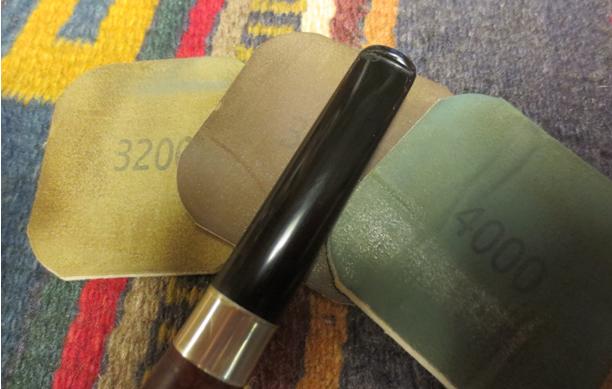
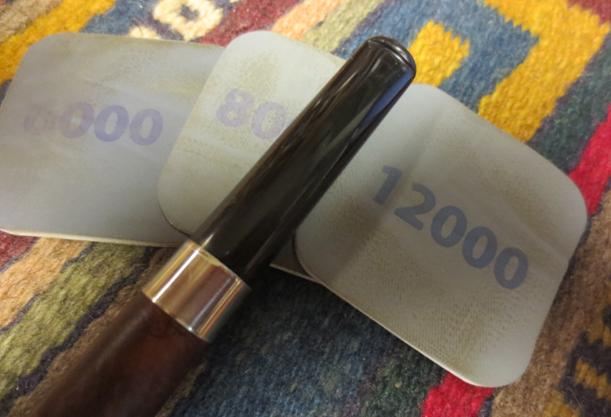
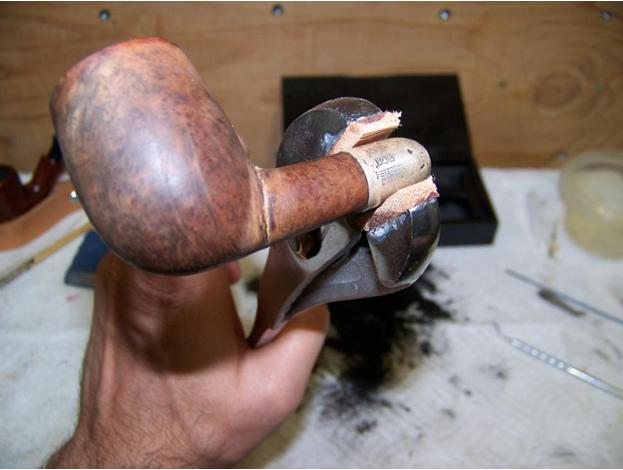
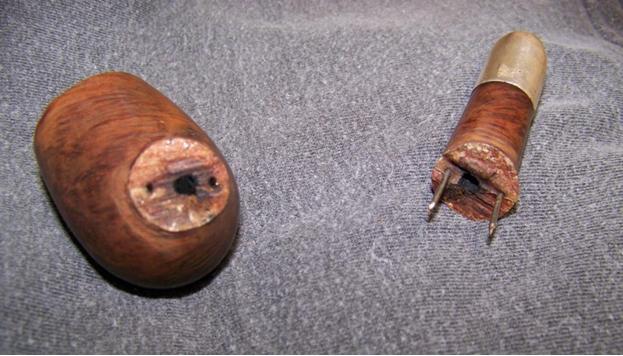
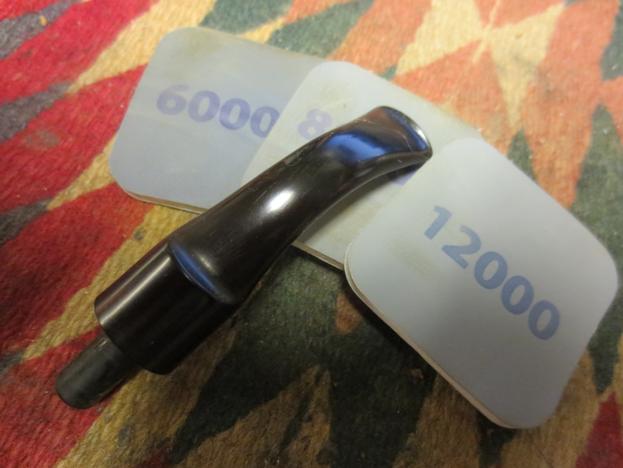
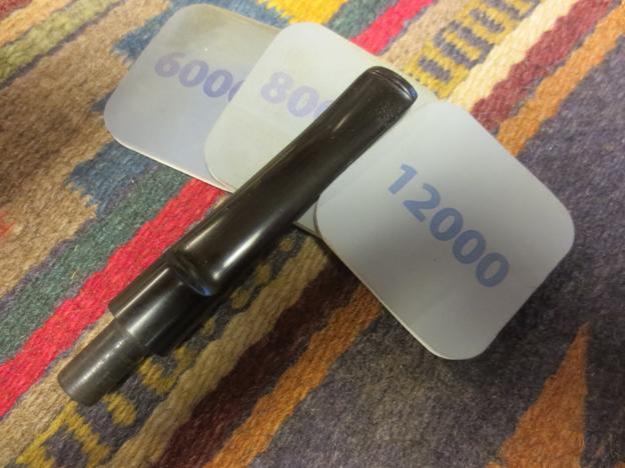
Aaron10 When I came back to the stem I sanded down the fill with 220 grit paper. The plug blended nicely and I proceeded to polish the stem with 1500 – 12000 micromesh pads. Cleaning the inside of the stem was quite simple, four of alcohol soaked pipe cleaners (2 bristled and 2 soft) took care of the insides and the stem was done.Aaron11 Returning to the stummel, I began to work the bowl-shank joint back and forth with ever increasing force. I caught myself holding my breath, afraid of breaking the pipe beyond repair but dismissed that thought as fear of the unknown and pushed on. Eventually the crack began to open up and the shank and bowl were separated. I was surprised to see that the original repair had included two small brads – or pins – set on either side of the air hole to strengthen the break. Since the brads were already in proper alignment I decided to reuse them in my repair.Aaron12 After some research, I settled on the J-B Kwik Weld as my epoxy of choice. Its resistant temperature is less than that of original J-B Weld (300 vs 550 degrees); however, I do not think the shank should reach 300 degrees during a smoke. But the real advantage in my minds was that the set time is only 6 minutes compared to 4-6 hours. I didn’t want to have to come up with a way to hold the two parts together for several hours and risk the parts slipping.

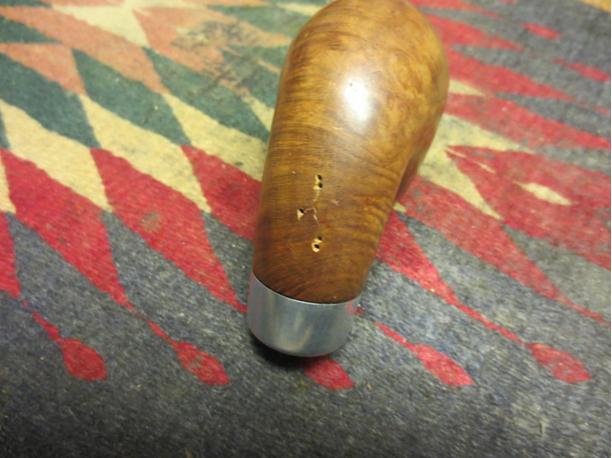
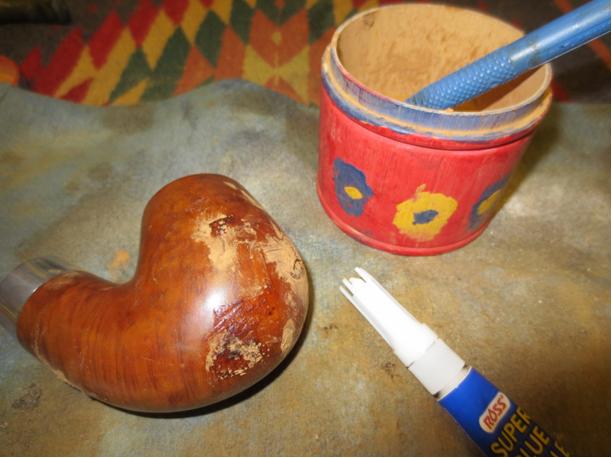
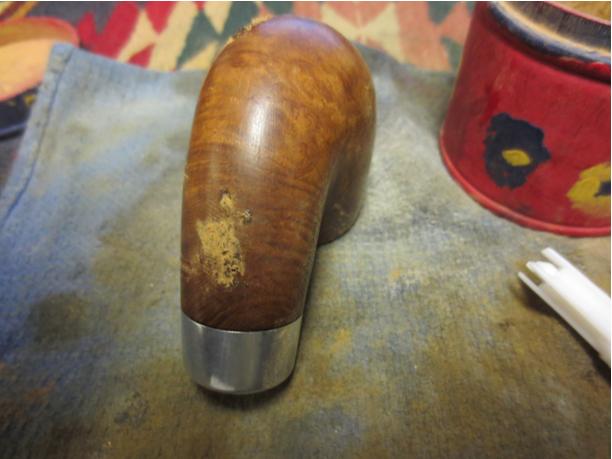
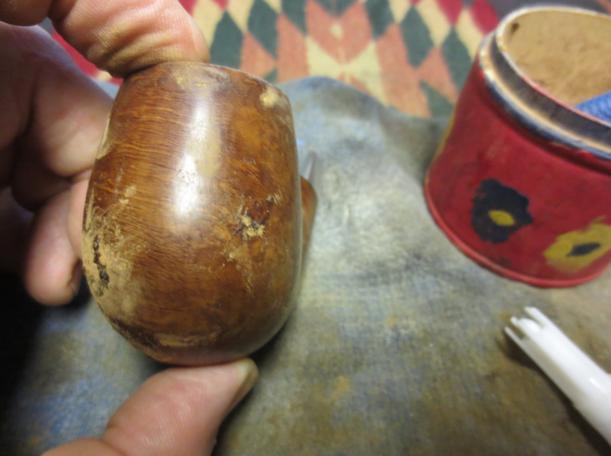
In order to keep the airway clear during the repair, I pushed a pipe cleaner through the airway before smearing the epoxy on the both surfaces with a tooth pick. With the clock running on the set time, I pushed to the two parts together using the old brads as alignment pins. Looking back I think it would have been better if I had only used one of the pins. The fit was tight and I was fighting against the pins to get the two parts tight together when the time ran out on the epoxy. I was left with a larger gap between the pieces than I thought was right; I had been hoping for a flush fit. Before setting the pipe aside to cure I wiped off the excess epoxy and removed the pipe cleaner.Aaron13 I let the pipe sit overnight and the next day I used a dental pick to remove some of the epoxy from the gap between the stummel and bowl. The gap was very small, less than a 1/32 of an inch on top and near flush on the bottom. When the crack was as clean as I could get it, I filled it with briar dust and placed drops of clear super glue on top to hold the dust in place. When the super glue dried I smoothed out the repair with 220 grit sand paper.Aaron14 There were some minor dents in the bowl and I decided to steam them out by wrapping the bowl with a damp terry cloth rag and going over the rag with a clothes iron set on high. If you used this method I would advise keeping your figures well clear of the iron. Speaking from personal experience, you don’t have to be very close to the iron get burned by the steam. Fortunately, I did not drop bowl!

I sanded the entire bowl with 400 – 2000 grit paper to remove all the dents and scratches but being sure to stay clear of the marking on the shank. The markings were faint but I wanted to preserve as much of them as I could.

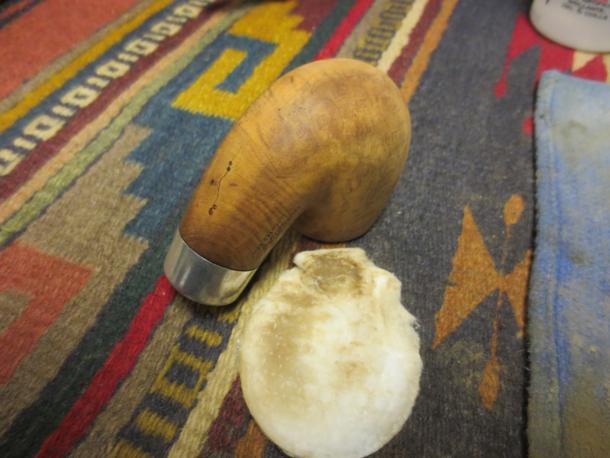
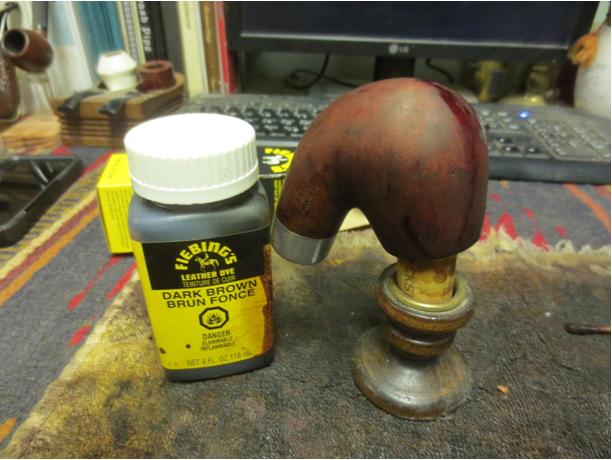
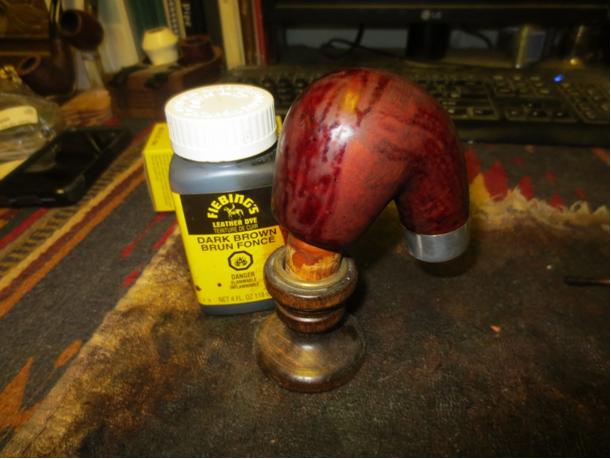
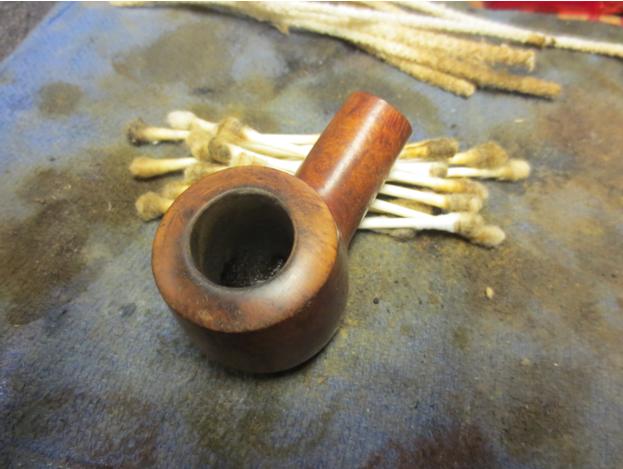
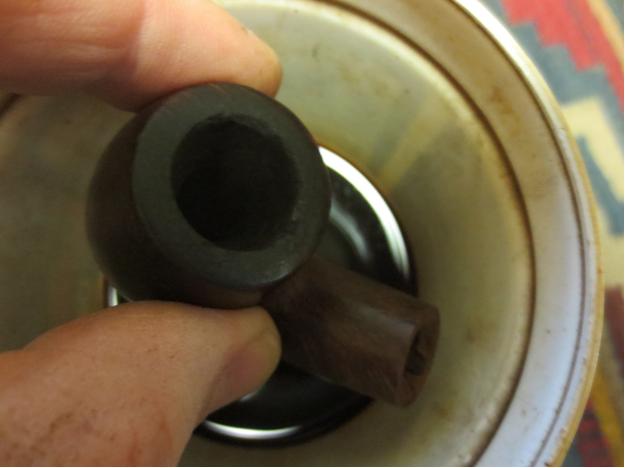
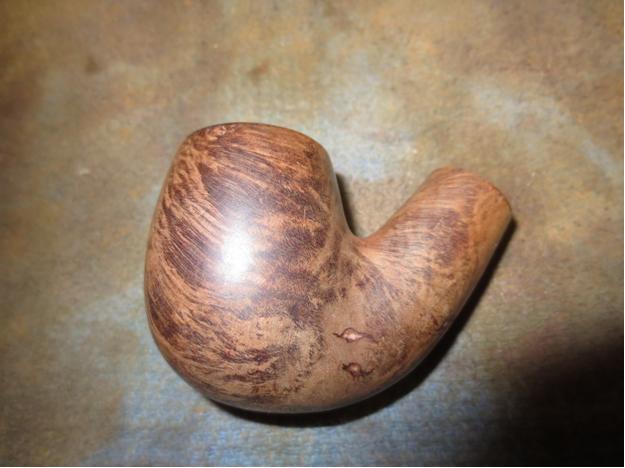
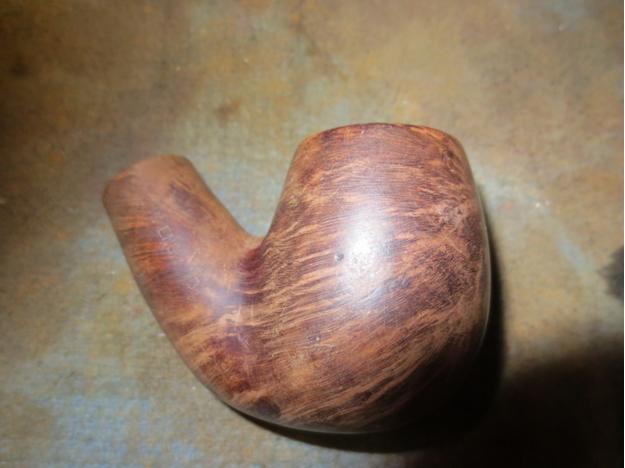
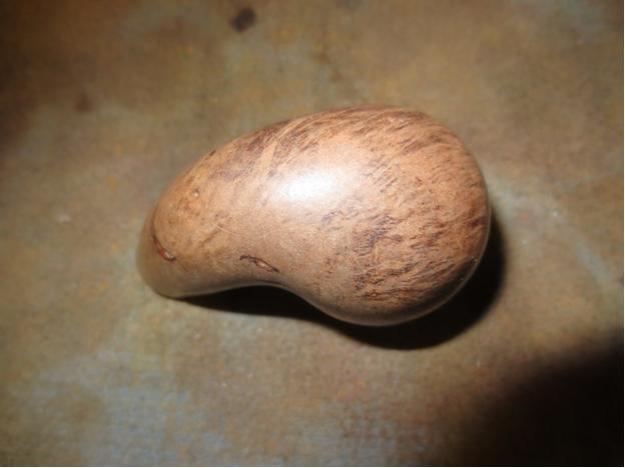
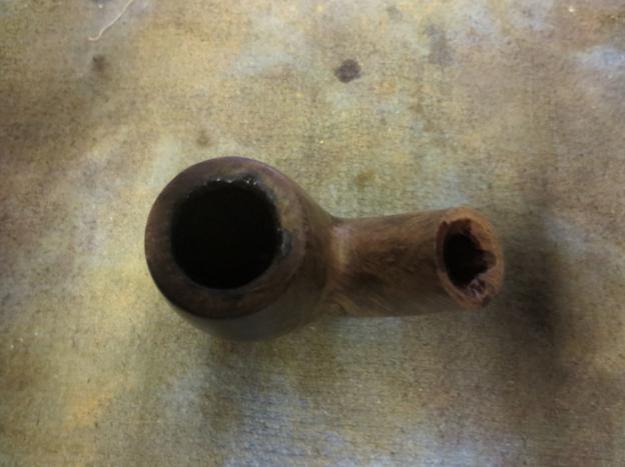
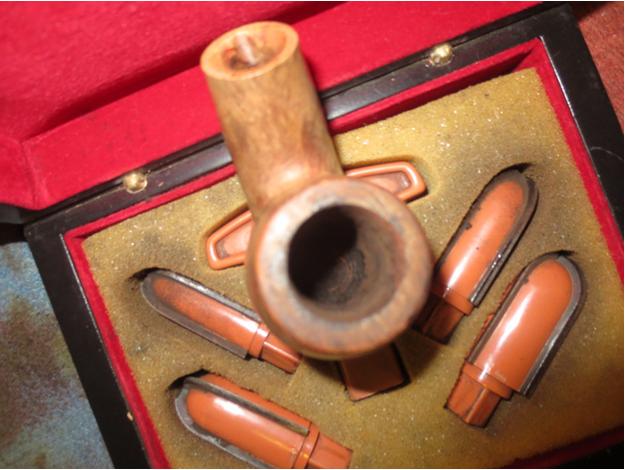
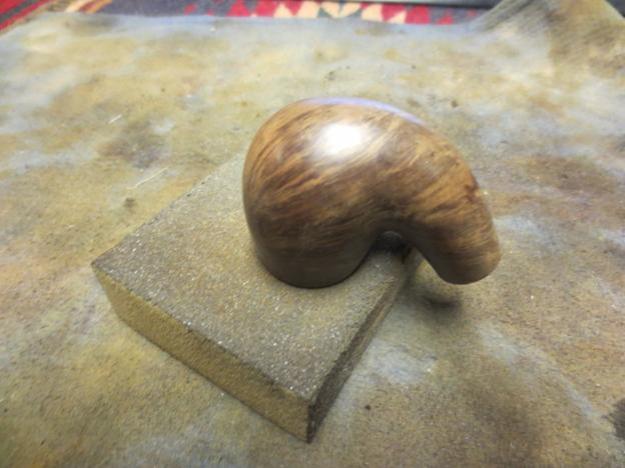
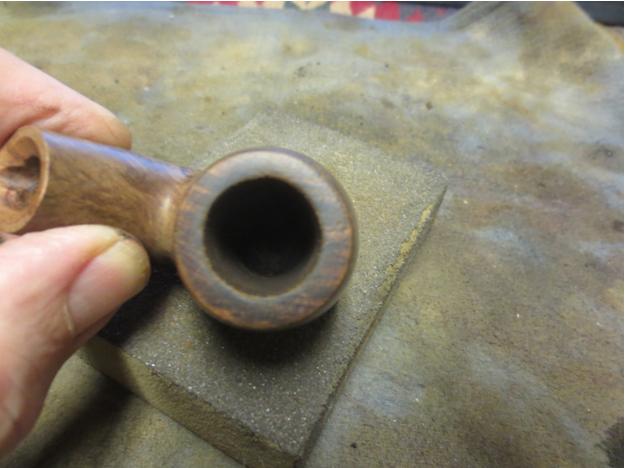
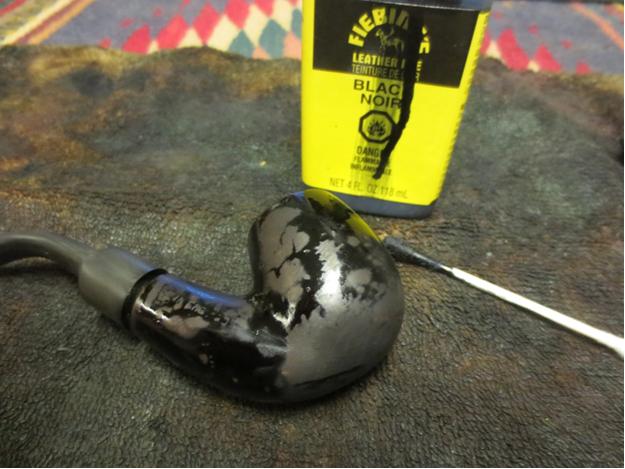
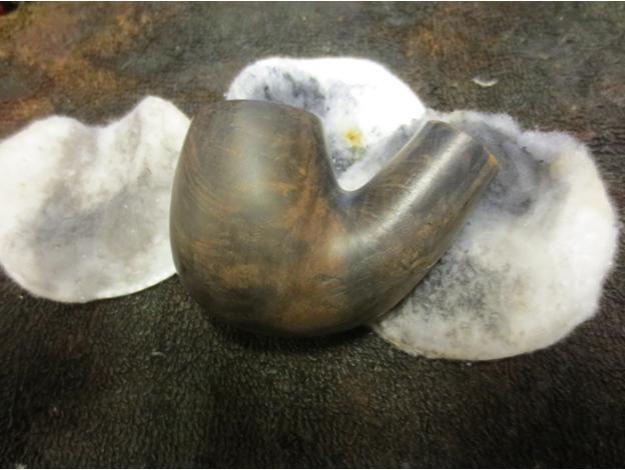
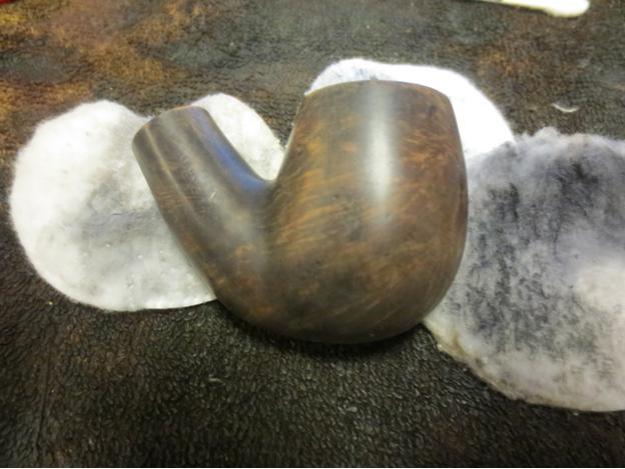
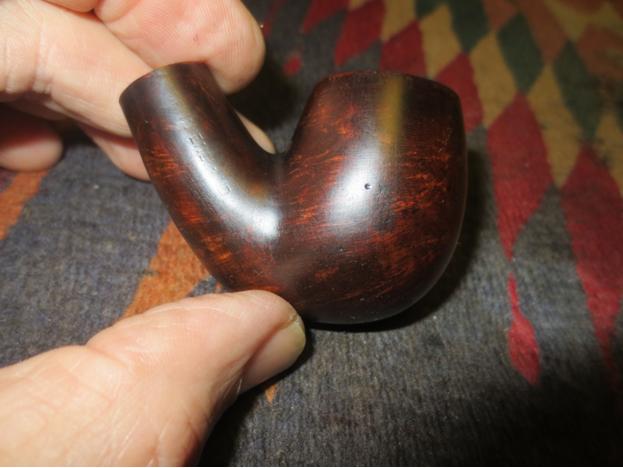
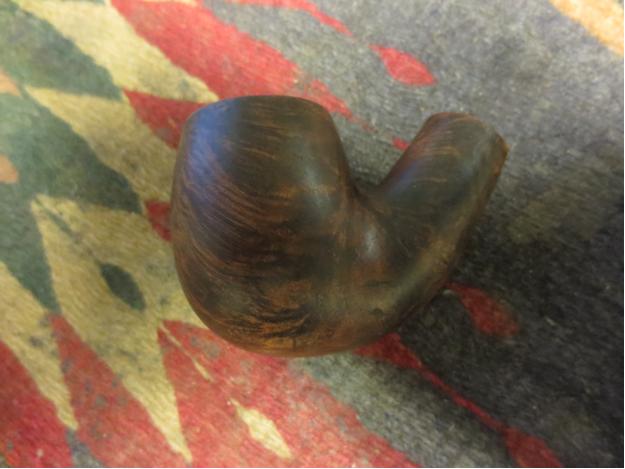
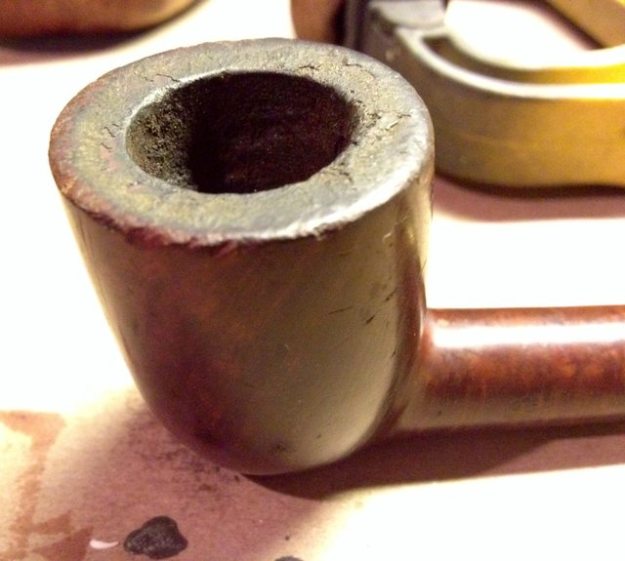
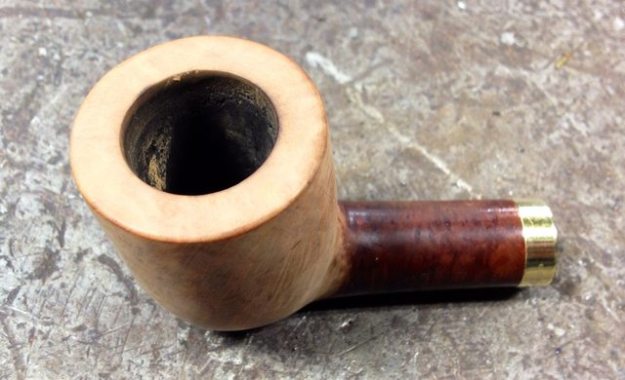
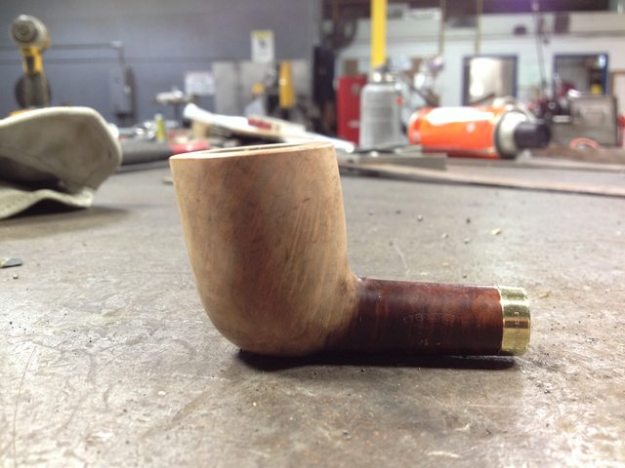
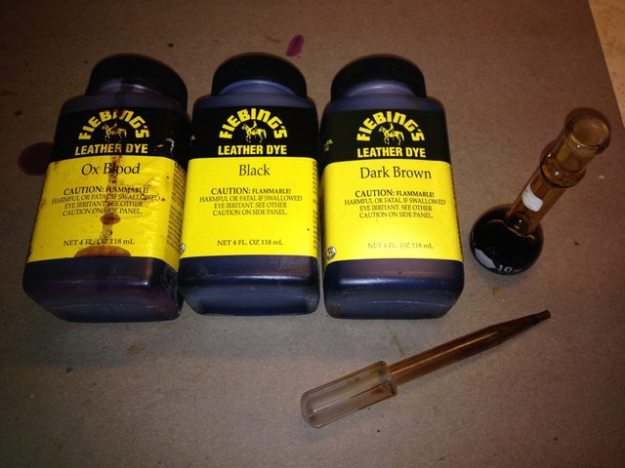
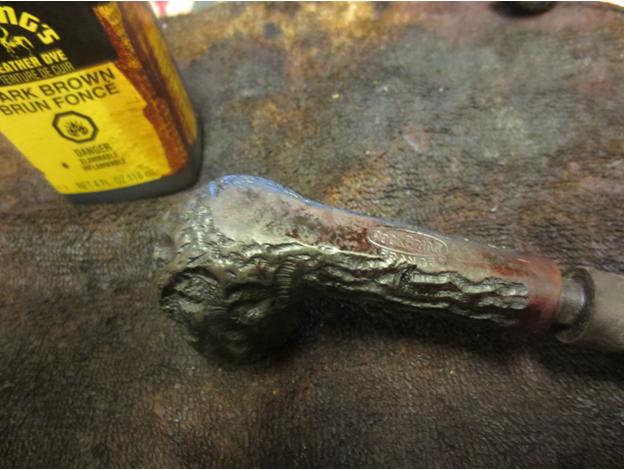
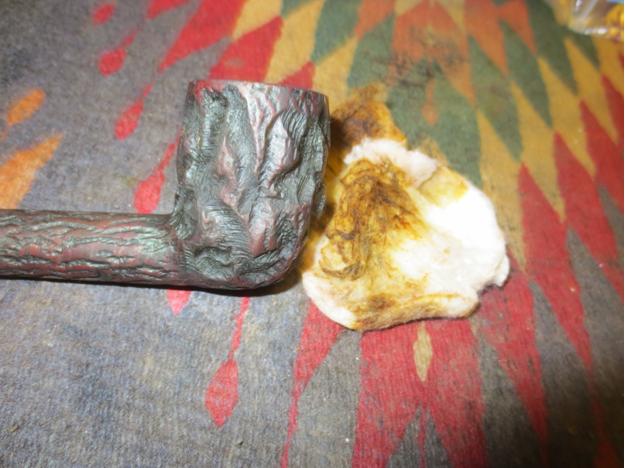
The bowl had beautiful grain and I wanted to use a light brown stain to highlight it. I used one part Fiebing’s light brown mixed with 2 parts isopropyl alcohol applied with a cotton swab in layers until the color looked just right. I flaming each layer and wiped off the excess with a cotton pad moistened with alcohol.

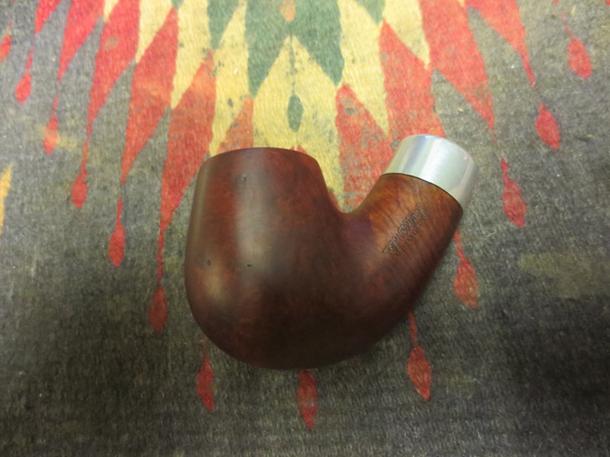
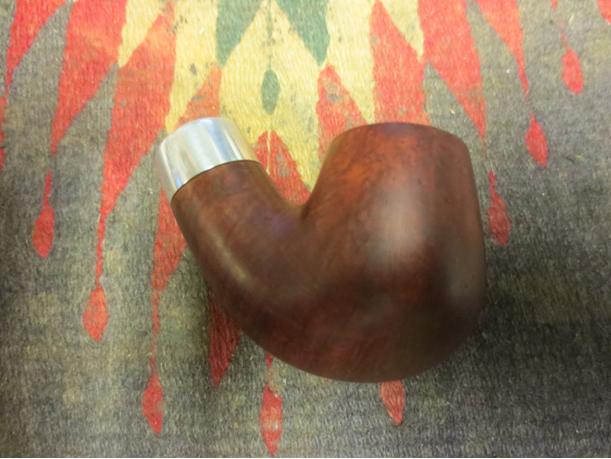
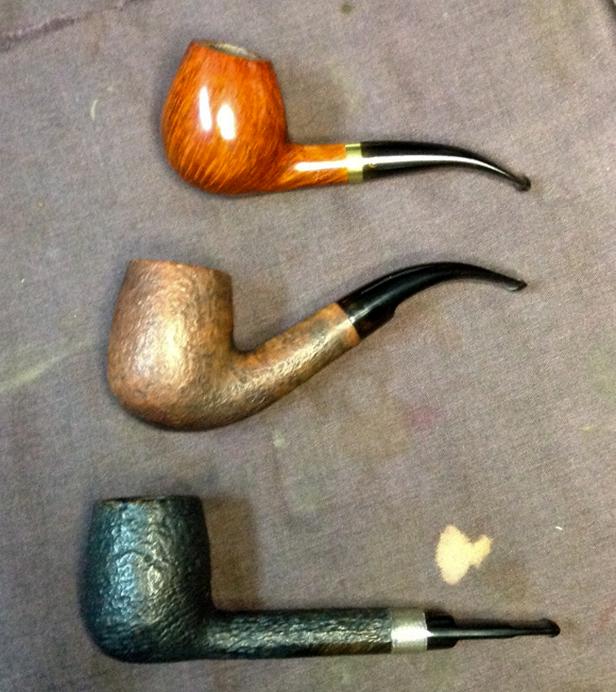
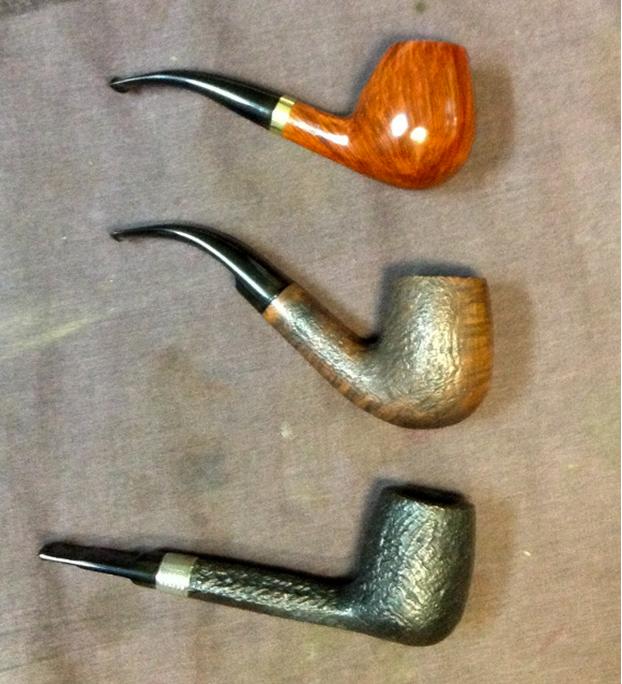
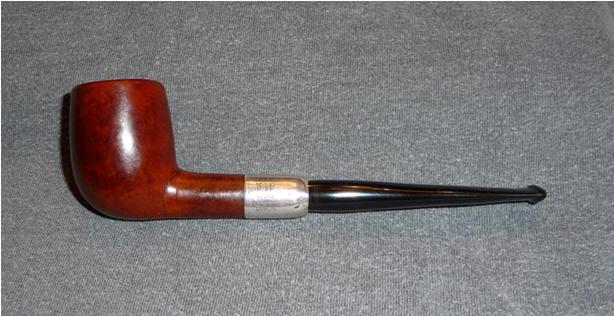
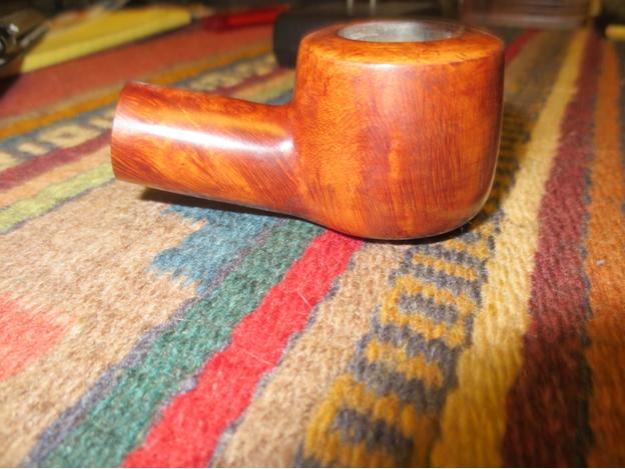
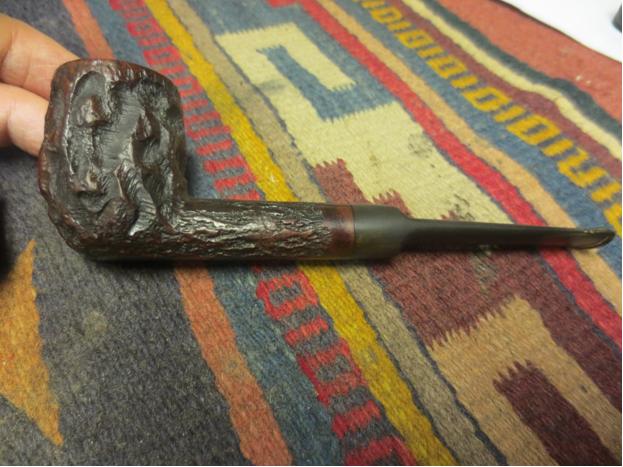
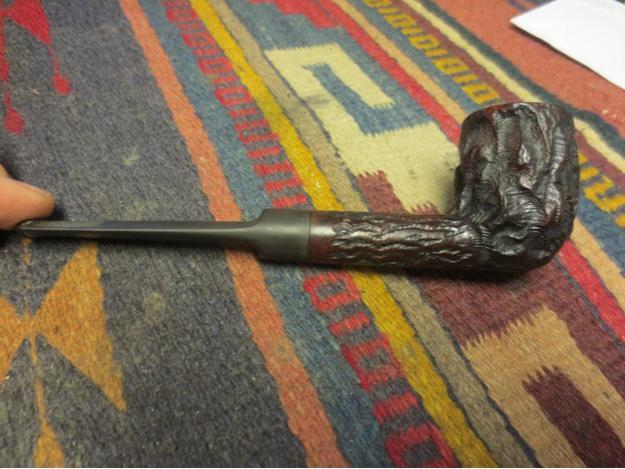
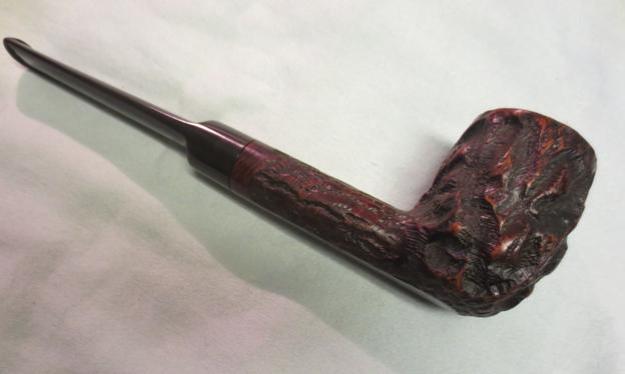
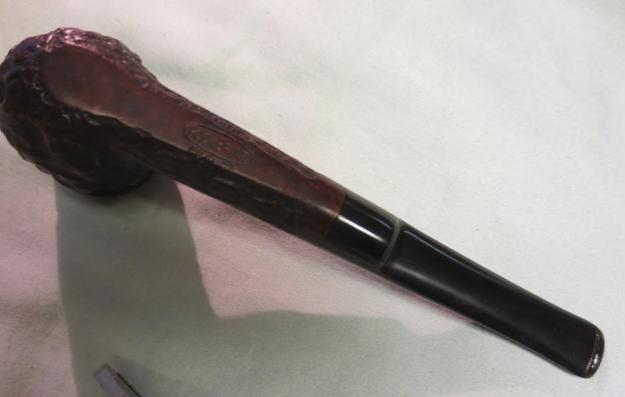
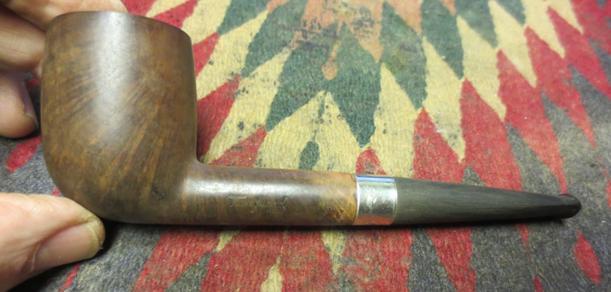
The next to last step was to polish the sterling silver band. For this I tried a new technique that I had recently learned on this blog using a small amount of cigar ash and saliva. I was careful not to polish too much – or at all – around the hallmarks. The final step was a trip to the buffer for three coats of carnauba wax on the briar and stem. I hand applied a light coat of Walker Briar Works carnauba wax sealer on the silver band and I buffed the pipe with a micro fiber cloth to bring up the shine.Aaron15

Aaron16

Aaron17

Aaron18

Restoring a Windsor De Luxe 13106 Unique with a Horn Stem


Blog by Steve Laug

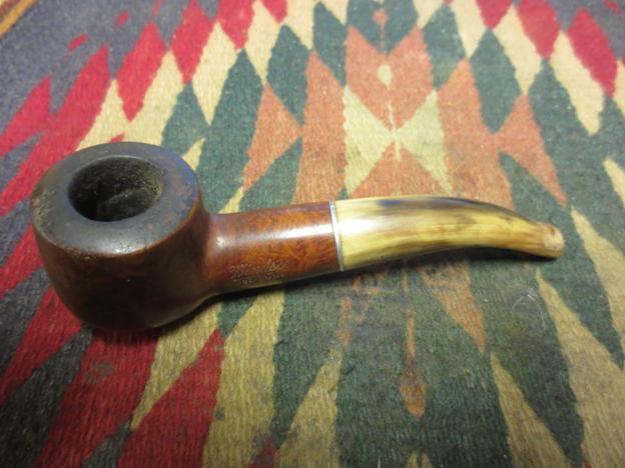
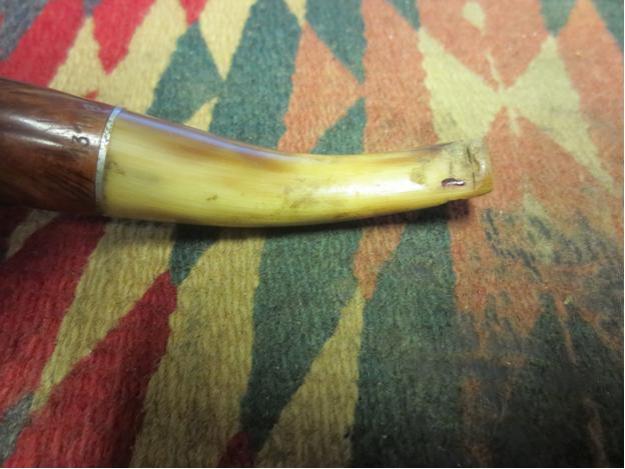
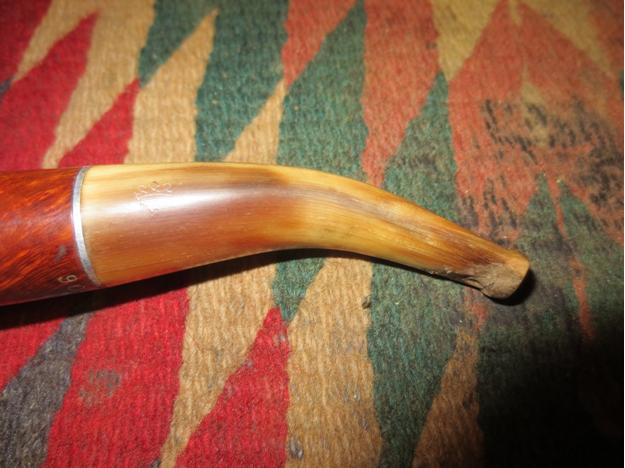
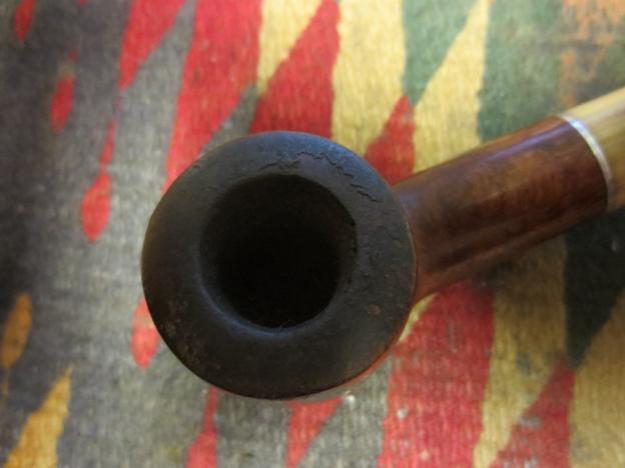
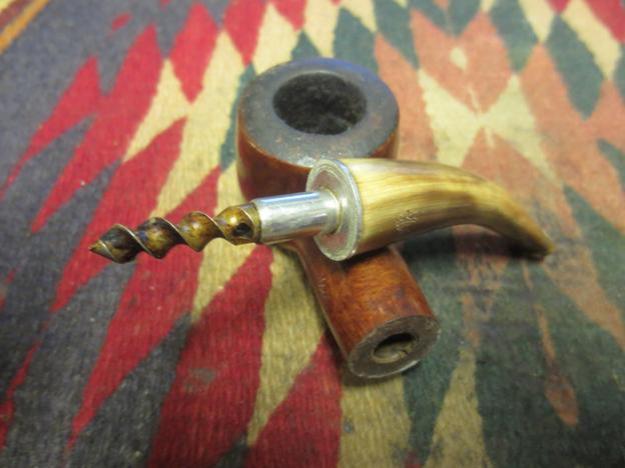
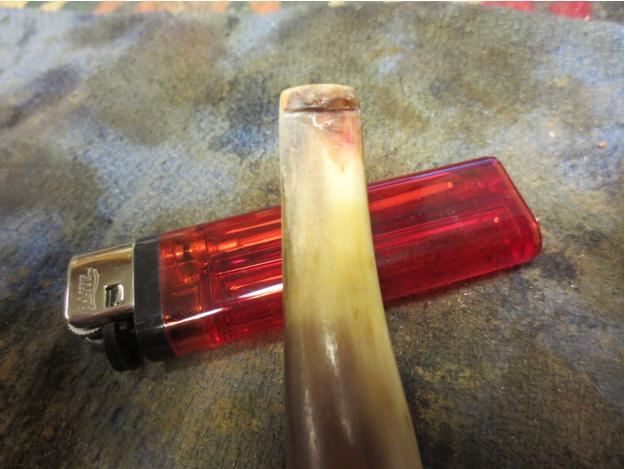
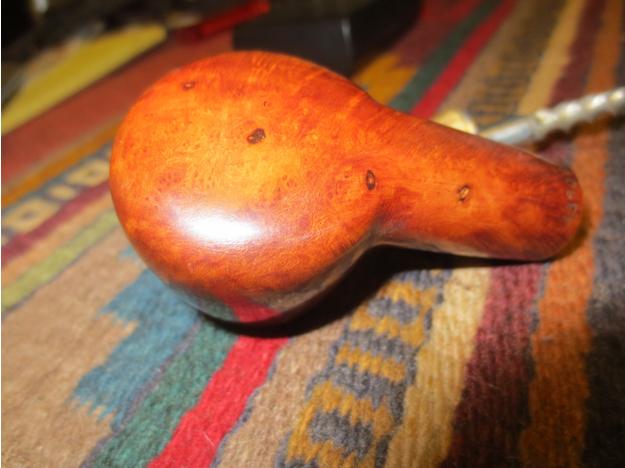
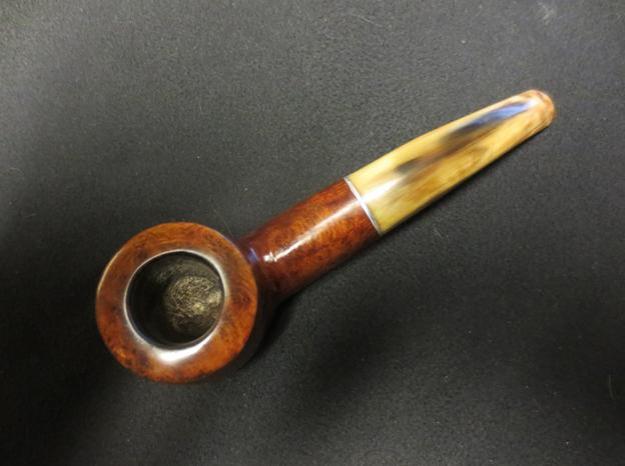
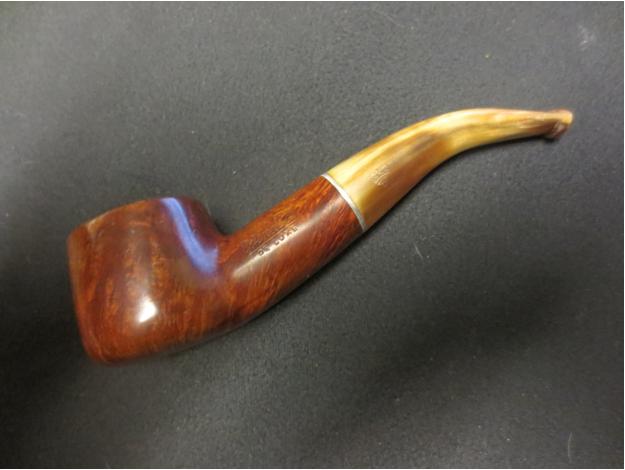
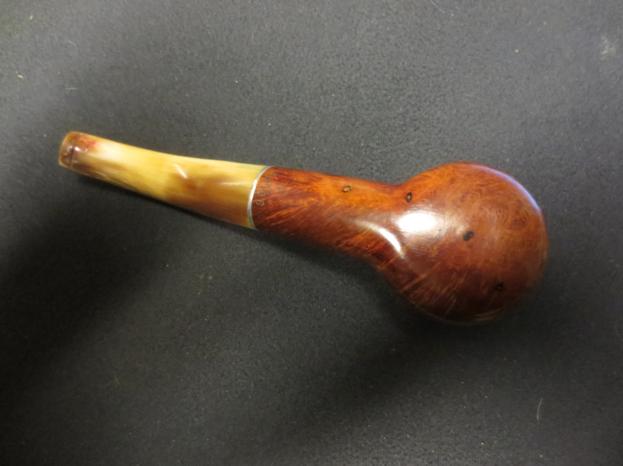
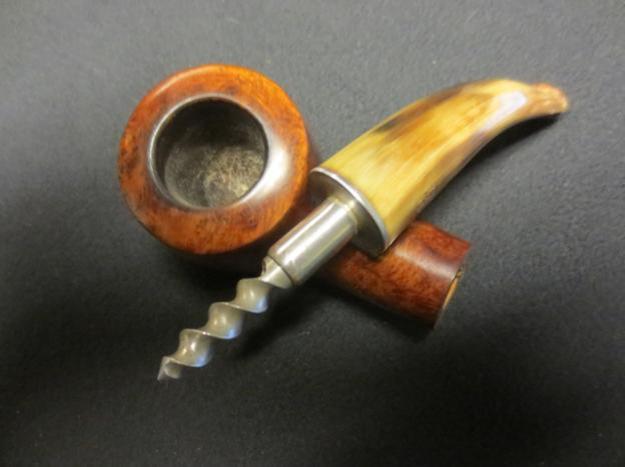
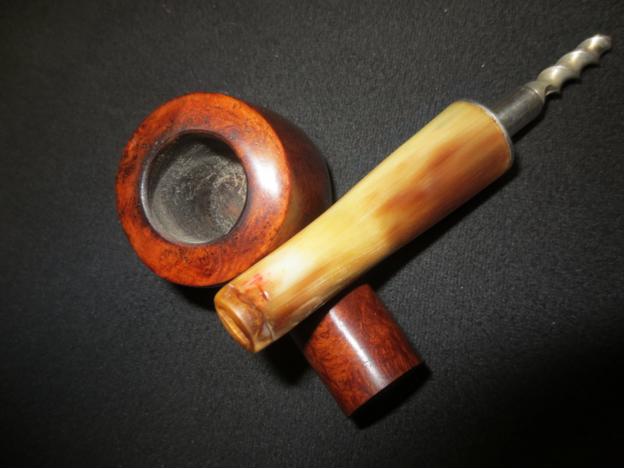
When I saw this old horn stem pipe on Ebay UK I immediately put in a bid and I won the pipe. It had a great striated horn stem that had lots of deep colours. The area in behind the button on the top and the bottom of the stem was really damage with large chunks of horn missing. On the underside of the stem there was a dark red stain in the striations of the horn near the button. The stem has a metal push tenon with a twisted stinger apparatus screwed into the end of the tenon. The metal ring between the shank and the stem was attached to the stem. The stem had a faint crown stamped in the horn. The bowl had a thick cake and the rim was heavily covered with lava that flowed over from the bowl. The underside of the bowl had a half-dozen fills in it that were shrunken and filled with white putty. The stamping on the shank said Windsor in a script with a flouring line underneath. Stamped under that was De Luxe. On the underside of the shank next to the stem it was stamped 13106. I have no clue as to the provenance of the pipe – WMTP says that there are several makers in England that made the brand. All have stamping that is slightly different. The finish on the bowl looked to be in decent shape under the grime and build up on the sides of the bowl. (Anyone have any ideas on the maker let me know).horn1

horn2

horn3

horn4 I took close up photos of the stem to give an idea of the damage that I would be working with on this pipe. On both sides of the stem there was serious damage in the form of missing chunks of horn. These chunks were missing in the sharp edge of the button and in the surface of the horn itself. The first and second photos show the top and bottom sides of the stem. In the second photo below there is a dark line at the bottom edge of the stem next to the button – that is the red mark that was in the surface of the horn. The third photo below shows the profile of the stem and clearly shows the missing chunks in the horn.horn5

horn6

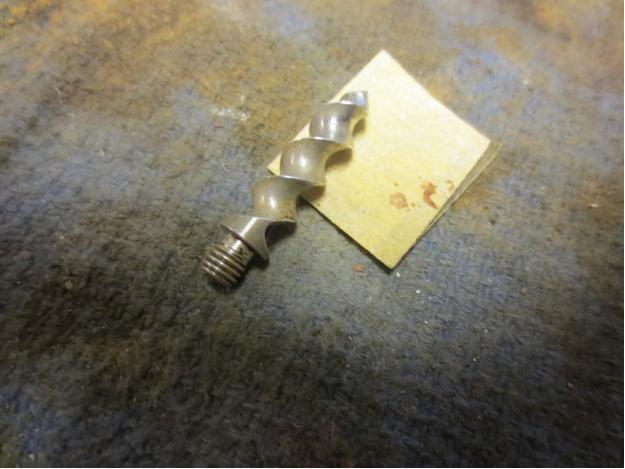
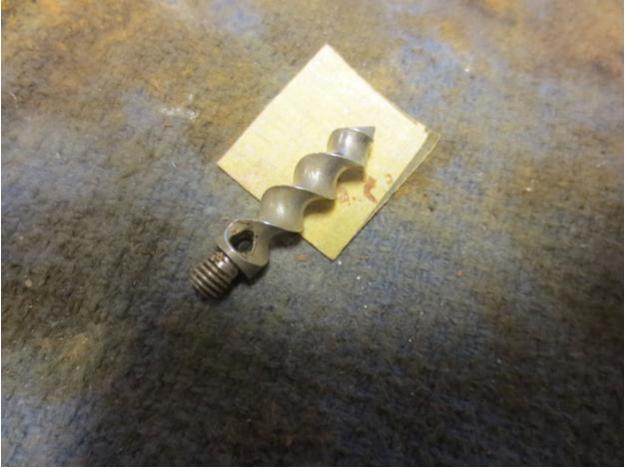
horn7 The close up photo of the rim below shows the overflow of lava on the surface that would need to be removed to assess damage to the bowl and rim.horn8 The twisted aluminum stinger apparatus was hefty and at first glance seemed to be stuck in the tenon. I tried to turn it and pull it and it would not budge. I would need to heat it to see if I could loosen the tars that bound it to the tenon.horn9

horn10 I decided to work on the stem first. I enjoy working on and repairing horn stems. I find great satisfaction in bringing them back to life and bringing out the rich glow that come from a polished piece of horn. In this case I sanded out the damaged areas with 220 grit sandpaper to smooth the edges of the holes and to clean up the debris. I wiped it down with a cotton pad and alcohol to clean off all the debris. I decided to add a little colour to the horn before filling in the hole so that the darker striation would continue to the button. I used a black permanent marker to colour in a stripe from the place it ended on the undamaged portion back to the button. I filled in the damaged areas on the surface of the stem and on the button with clear super glue. The area on the underside where the red spot was cleaned up a bit but the red bled through. I added multiple coats of the glue to build up the areas. I overfilled them so that I had material to work with in reshaping the button and the stem surface.horn11

horn12

horn13

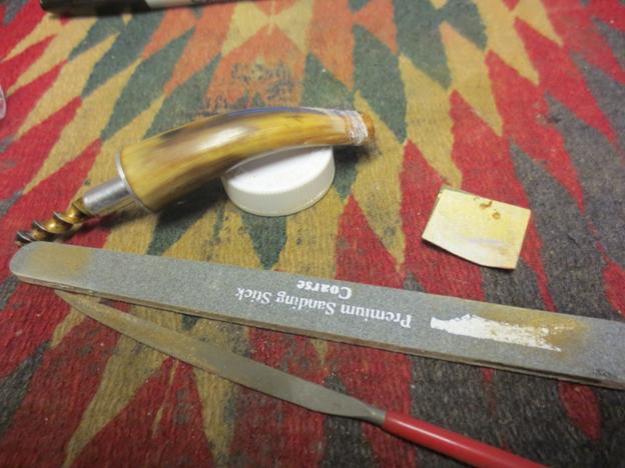
horn14 Once the glue dried I used a needle file and a coarse sanding stick to recut the edge of the button and clean up the top face of the button. I wanted a clean defined area that matched the undamaged part.horn15 I sanded the entire stem, carefully avoiding the area of the stamping with 220 grit sandpaper to blend the repair into the surface of the stem and to shape the button. I heated the metal tenon with a lighter and was able to unscrew the stinger from the end.horn16 I worked on the shape of the button and the flow into the button with sandpaper and sanding sticks. The shiny areas in the photo below next to the button are the patches of superglue. Much polishing still remains to be done at this point but the surface is smooth to the touch.horn17

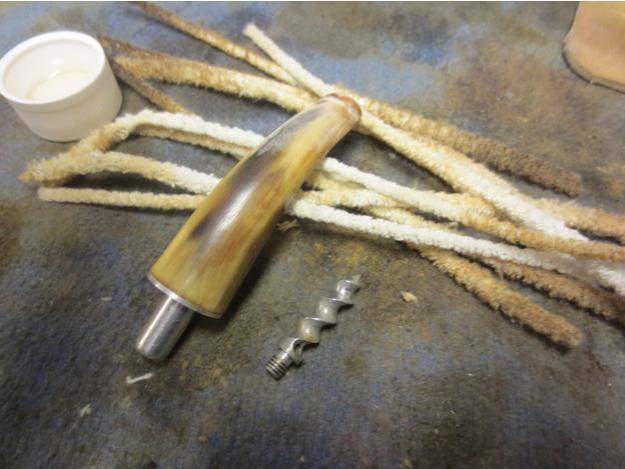
horn18 I cleaned up the stinger with 0000 steel wool to remove the tars and tarnish. I cleaned out the inside of the stinger with pipe cleaners, cotton swabs and alcohol.horn19

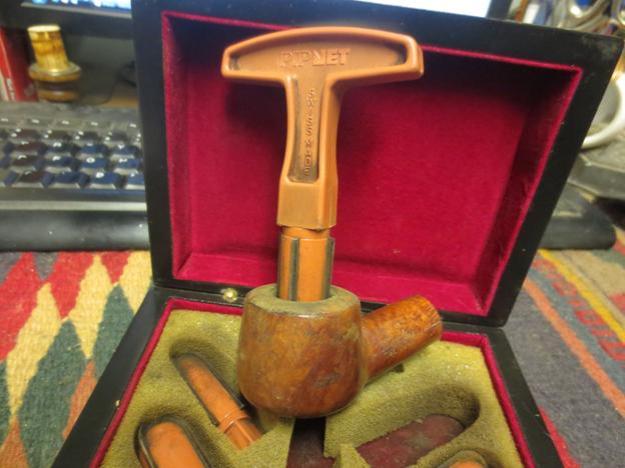
horn20 I reamed the bowl with the PipNet reamer and took the cake back to bare wood. I wanted to check out the inside of the bowl for damage or cracks. Fortunately it was very clean.horn21

horn22 I scrubbed the rim with alcohol and cotton pads to remove the tars. It was very hard so I also used a 1500 grit micromesh sanding pad. I was able to get most of the build up off the rim. There was some darkening that I would need to sand with a more aggressive grit of sandpaper. I scrubbed the exterior of the bowl down with acetone on cotton pads as well to remove the grime and old finish.horn23With the basic work done on the exterior I cleaned out the shank and the airway in the stem. I also scrubbed out the inside of the bowl with alcohol, cotton swabs and pipe cleaners.horn24

horn25 I put the pipe back together to get a look at how things were coming along. I wanted to see what the repaired stem looked like. In the photos below you can see the new look of the stem from all angles. I am pleased with the overall repair of the stem.horn26

horn27

horn28

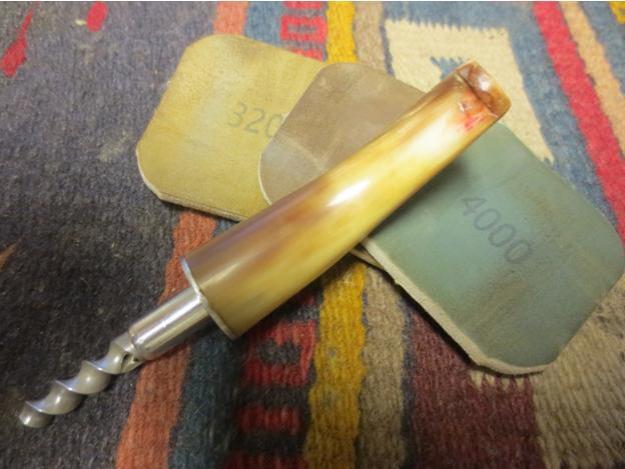
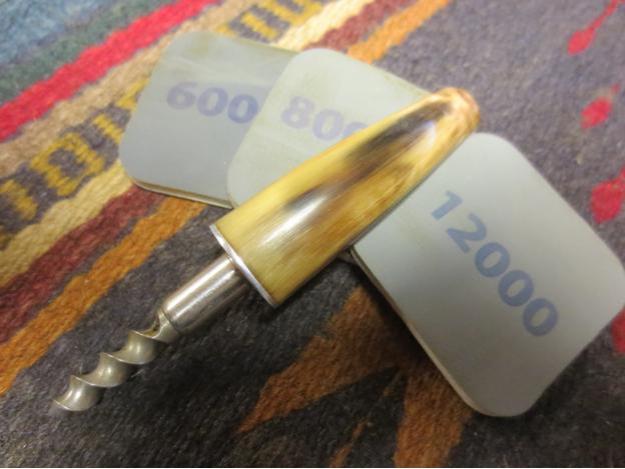
horn29 I took the stem off the pipe and worked on it with the micromesh sanding pads – wet sanding with 1500-2400 grit pads and dry sanding with 3200-12000 grit pads. I rubbed the stem down with Obsidian Oil between each pad as I have found when working with horn that the oil gives it a better bite into the material and helps raise the shine.horn30

horn31

horn32

horn33

horn34 I lightly buffed the stem with Blue Diamond and then gave it several coats of carnauba wax. I buffed it with a soft flannel buff and then hand buffed it with a microfibre cloth.

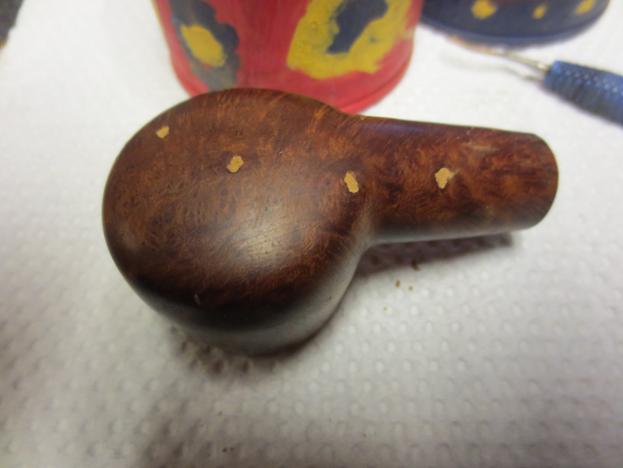
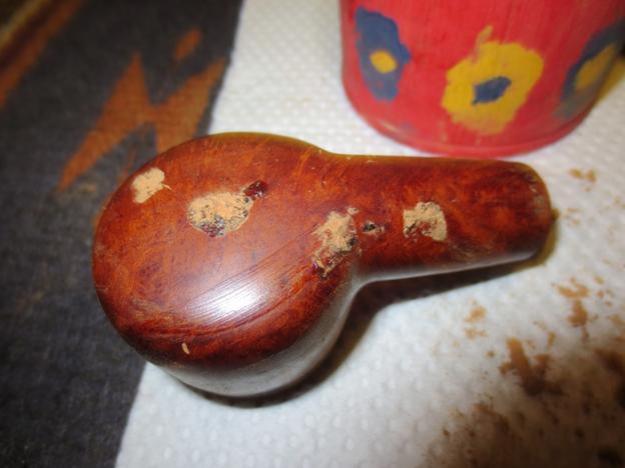
With the stem done I turned to the finish on the bowl. I used a dental pick to remove the putty fills from the bottom of the bowl and shank. I wiped the bottom of the bowl down with alcohol and then packed briar dust into the holes where I had removed the putty. Once the dust was packed in I put a drop of clear super glue on top of the dust and then packed it down with the pick. I added more briar dust to top up the fill.horn35

horn36 When the patches had dried I sanded them with 220 grit sandpaper to remove the excess material and blend the surface of the patch into the bowl surface.horn37 I heated the briar and then stained it with a medium brown aniline stain. I flamed the stain to set it in the briar. I buffed the bowl with Blue Diamond on the wheel and then gave it several coats of carnauba wax to give it a shine. I hand buffed it with a microfibre cloth.horn38

horn39

horn40

horn41 I pushed the stem back in place and gave the entire pipe a final coat of wax and then buffed it with a clean flannel buff. I finished by buffing it by hand with the cloth. The finished pipe is shown in the photos below. It is a beautiful pipe and the horn just shines. I am looking forward to enjoying it in the days ahead. What would you call this shape? Any ideas?horn42

horn43

horn44

horn45

horn46

horn47

horn48 Thanks for looking.

Cleaning up Two Sisters – A pair of Beaver Cut Genuine Briar Pipes


Blog by Steve Laug

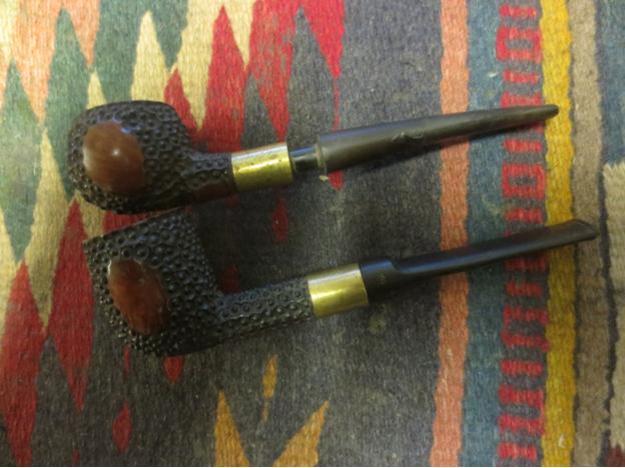
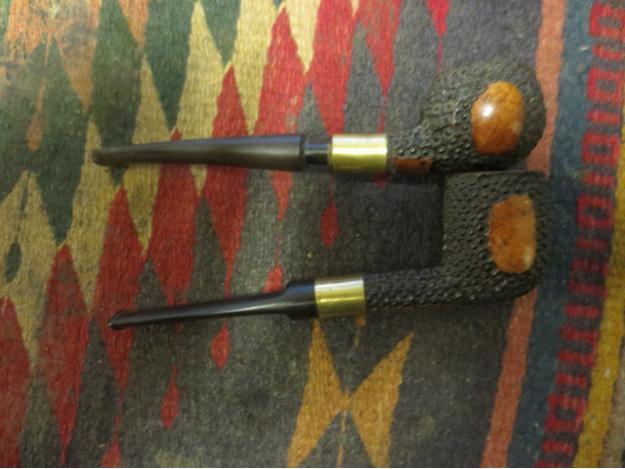
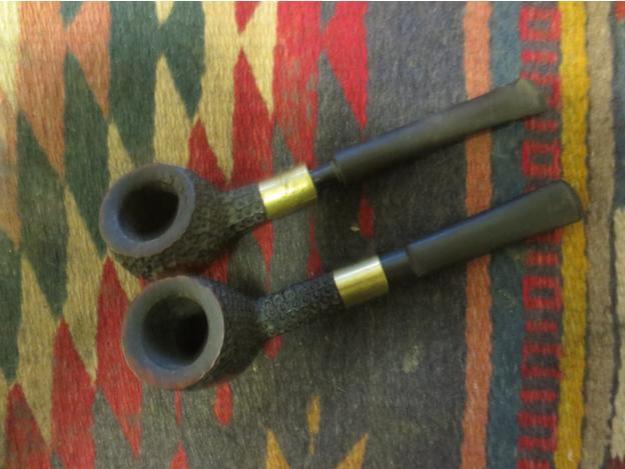
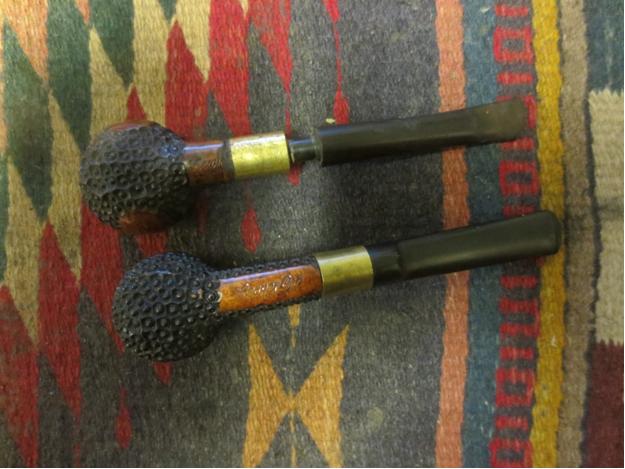
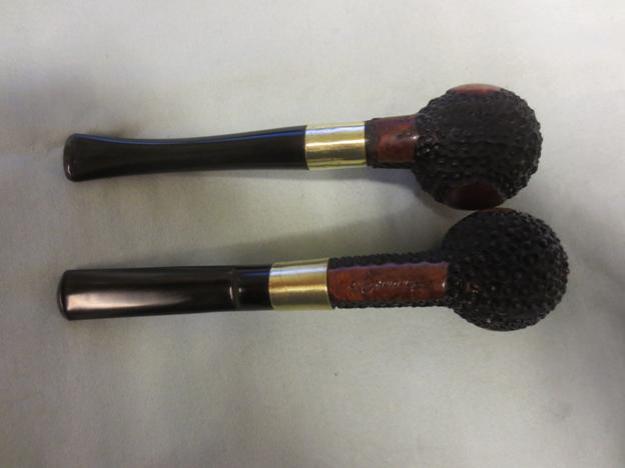
I received this pair of pipes from Charles Lemon of Dad’s Pipes Blog. He picked them up as part of an estate from London, Ontario, Canada. They are both stamped on the bottom of the shank on a smooth surface with the words Beaver Cut in script over a block script Genuine Briar. He did some hunting on the web and could find nothing that gave any sense of history of the brand. When I got them I did the same and found absolutely nothing. The Genuine Briar stamping tells me it is post WW2 and is made in the USA. I found another Beaver Cut for sale on Worthpoint but it also did not have any information. From what I can find that is the extent of the information available.

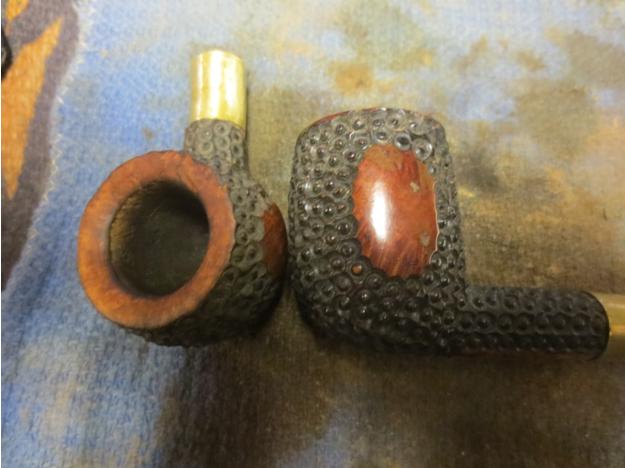
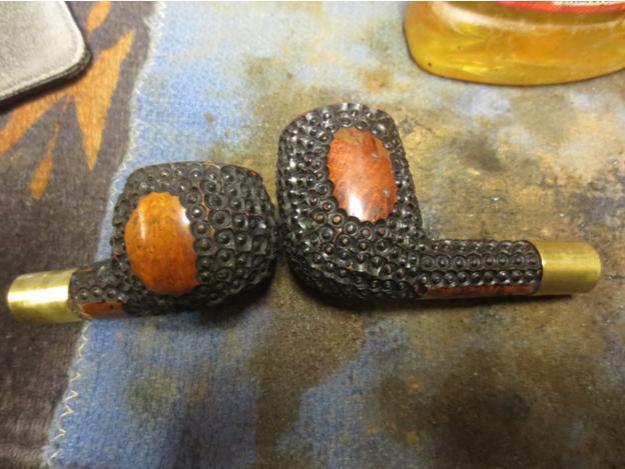
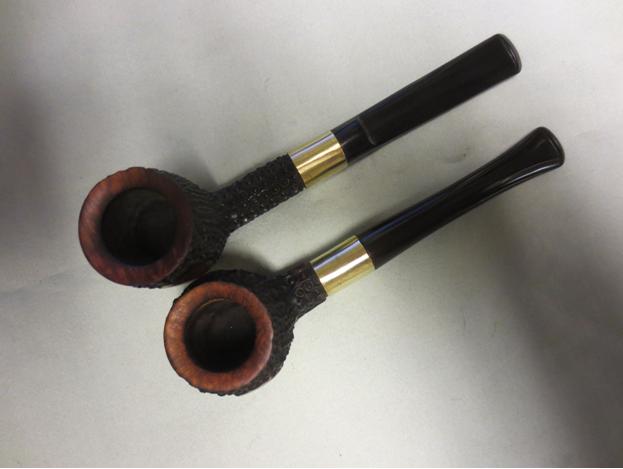
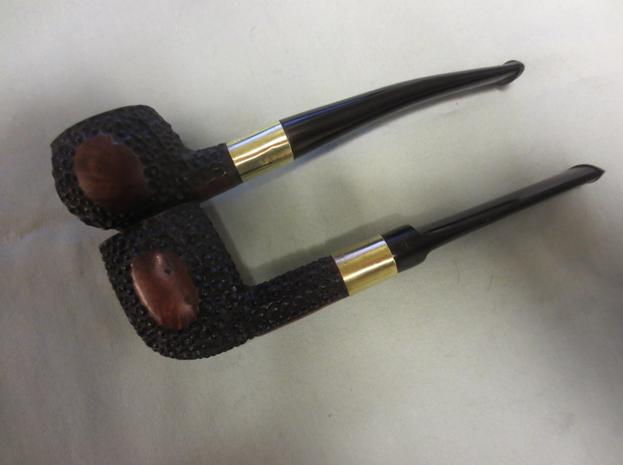
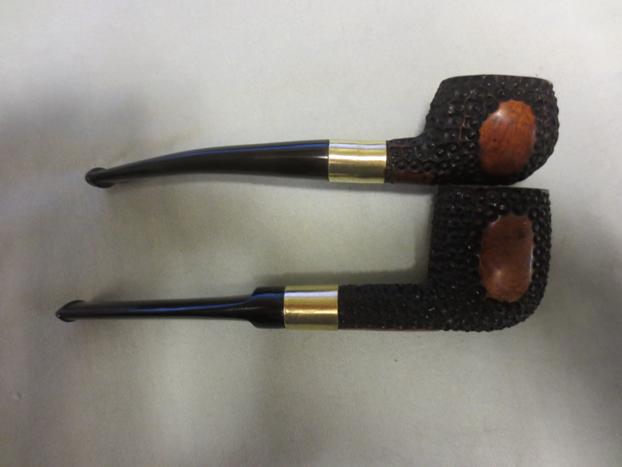
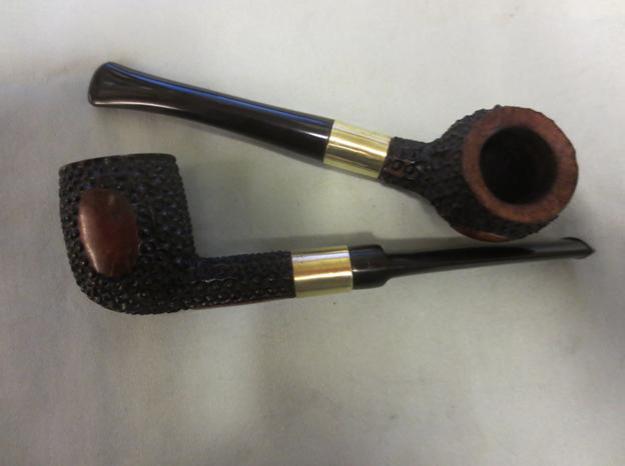
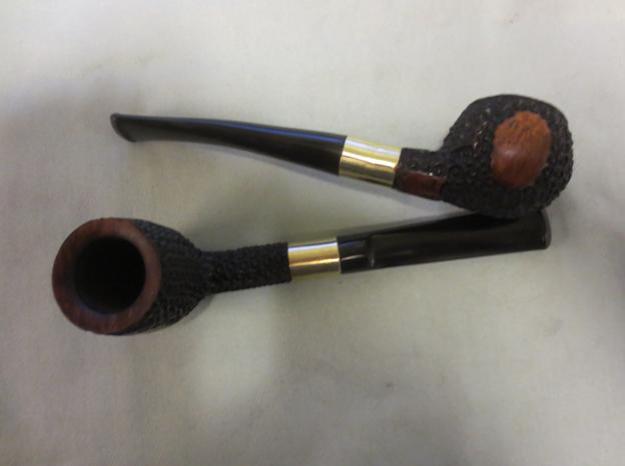
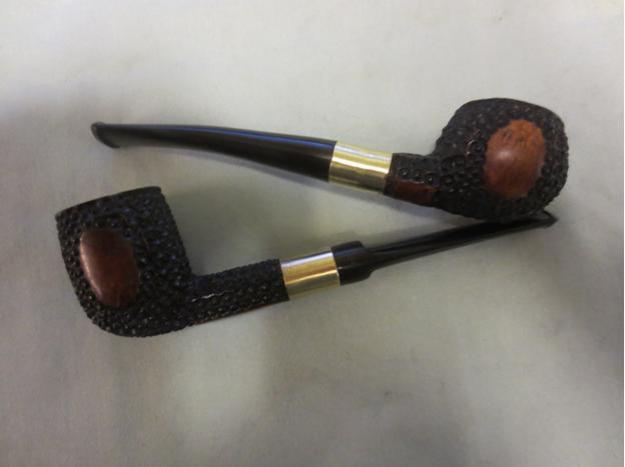
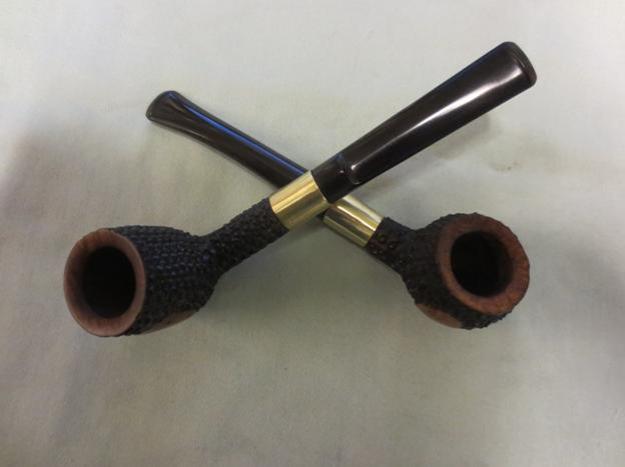
The top pipe in the photo is Prince. The rustication was dirty and a lot of dirt and debris had collected in the grooves. It had a rustication pattern that I had not seen before. It is like rows and rows of birdseye cuts in the surface of the briar. There is a smooth patch on both sides and on the bottom of the shank. The bowl had a thick cake and the shank had a lot of debris and oils in it. The rim had an overflow of lava and oils on the top of the bevel. The inner and outer edge of the rim was in great shape and the bowl was still in round. The brass band on the shank appeared to be factory as it was on both pipes and was identical. It was scarred and had tarnished. When it was installed the installer had made a mess of the shank. He had cut the shank back farther than the length of the band so that when it was installed it left a groove between the edge of the band and the rustication on the shank. It looked almost as if the band was an afterthought. I am pretty certain that it was sent out from the factory with that look. The stamping had been cut in two by the chopping of the briar to fit the band. The stem did not fit the shank due to the buildup internally. The stem was also missing a large chunk on the right side near the button and someone had cut a groove in the top of the stem to begin cutting a new button but had not finished the work.

The lower pipe is a Billiard with the exact same grain pattern. It was in a bit better shape than the Prince. The grooves in the unique rustication were actually clean. There was a varnish coat on the smooth parts of the bowl even though there were several sandpits in each smooth spot. The bowl had a thick cake and the rim had an overflow of tars and lava which obscured the bevel. The fit of the band to the shank on this one was better though looking at it from the end of the mortise it was clear that the shank was out of round. The brass was also scratched and marred on this pipe. The stamping on this one was clean and deep. The stem diameter extended further on the right side than on the left though the stem was of equal diameter all the way around. There were some light tooth marks on the top and the bottom of the stem near the button and there was tooth chatter. The stem was oxidized but was faintly stamped with a B in a circle.Beaver1

Beaver2

Beaver3

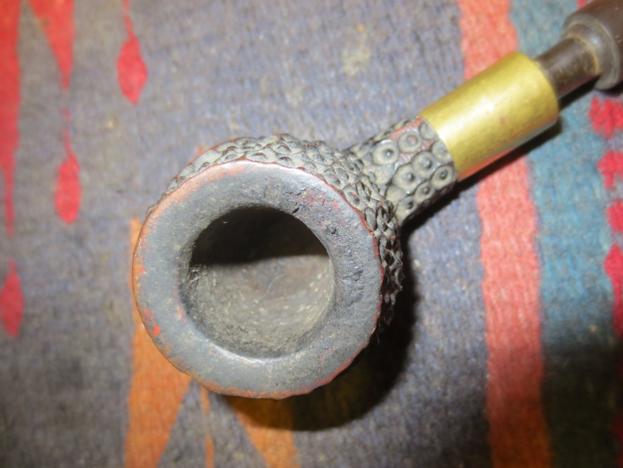
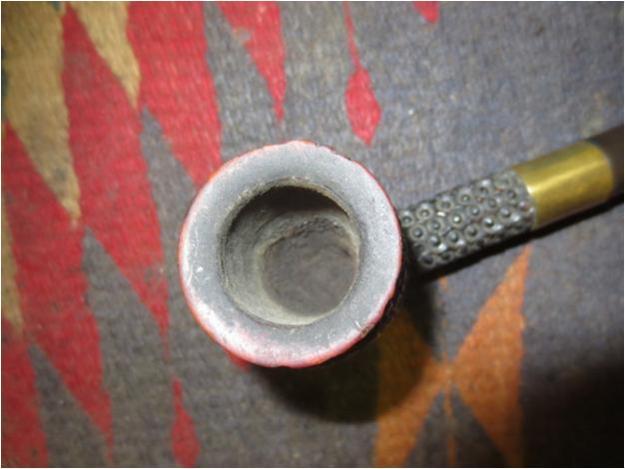
Beaver4 I took a close up photo of the rim on each of the pipes. The first photo below shows the rim on the Prince and the second shows the rim on the Billiard. The buildup and the uneven cake are visible in both pipes. It is hard to see the bevel on the rim in the Prince but it matches the one on the rim of the Billiard.Beaver5

Beaver6 I also took some close up photos of the stems on both pipes to show the state of the stem. The first two photos show the stem on the Prince. You can see the damage of the broken area on the side of the button and the cut off button. You can also see the groove or divot that had been cut in the stem to make the pipe useable. The third and fourth photos show the stem on the Billiard and you can see the tooth marks and chatter on the stem surface. It is also clear that it does not fit well against the side of the band.Beaver7

Beaver8

Beaver9

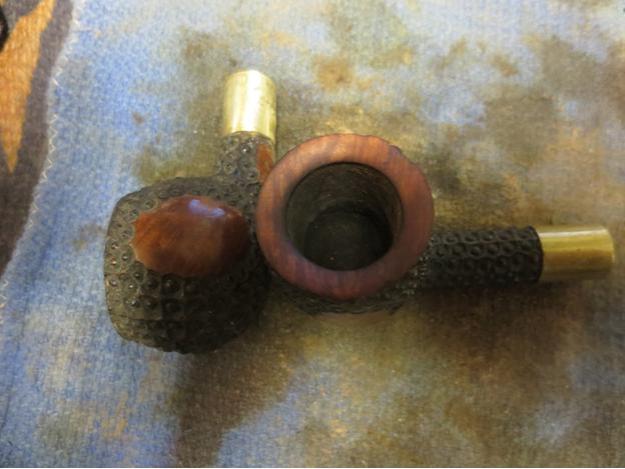
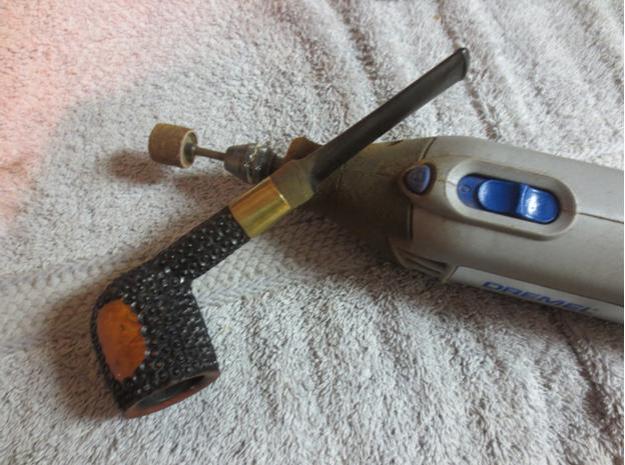
Beaver10 I decided to restem the Prince so I found a stem in my can of stems that was the same diameter as the shank and slightly longer than the broken stem to account for the missing button. I turned the tenon with a sanding drum on a Dremel to get a close fit and then hand sanded until it push snuggly into the mortise.Beaver11 To deal with the badly fit shank band I cleaned the area with a dental pick and then pressed briar dust into the groove just ahead of the band. I dripped clear super glue into the briar dust and then as it settled add more glue and more briar dust. I wanted the transition between the shank and the band to be smooth. I sanded the repair with a folded piece of 220 grit sandpaper and then with a medium and a fine grit sanding sponge to smooth out the scratches in the surface.Beaver12 I reamed both bowls back to bare wood with a PipNet reamer. I sanded the beveled rim on the Prince to clean off the oils and lava and to show the bevel. More work would need to be done on both rims.Beaver13

Beaver14

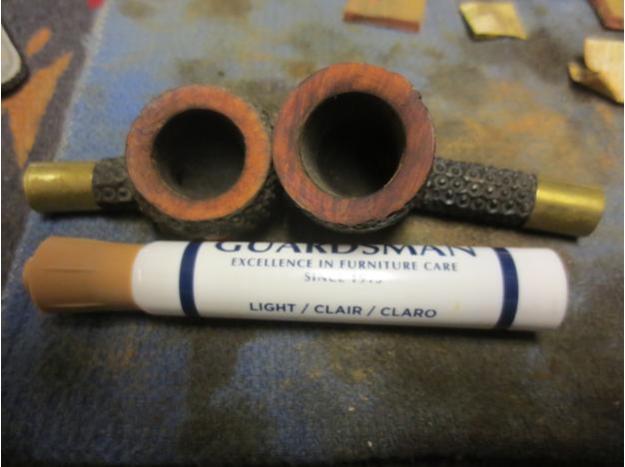
Beaver15 I worked on the bevel of the rims with 220 grit sandpaper to remove the buildup and also to smooth out the bevel. It took quite a bit of sanding on both rims to get the angle consistent all the way around the bowl and also to remove the burn damage on the inner edge of both. I sanded both with a medium and fine grit sanding sponge to finish the cleanup.Beaver16 I stained the newly cleaned surfaces of the rim with a light brown stain pen to approximate the colour on the smooth portions on the bowl sides and bottom of the shank.Beaver17 I sanded them both with 400 grit wet dry sandpaper to smooth out the remaining scratches that showed up with the stain. It also lightened the stain enough that the match was perfect.Beaver18

Beaver19

Beaver20

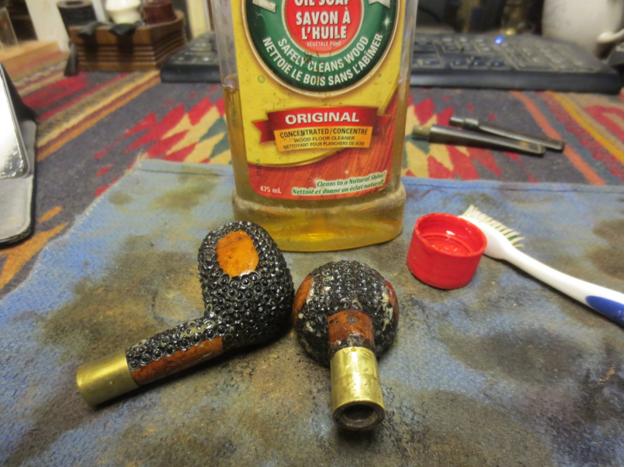
Beaver21 With the rims finished it was time to scrub the rustication. I used Murphy’s Oil Soap and a tooth brush to scour the rustication pattern on both bowls. I scrubbed them and then rinsed them under warm running water.Beaver22

Beaver23

Beaver24 To address the difference in diameter of the stem and the band on the shank on the Billiard I used a Dremel and sanding drum to take down the top, bottom and right side of the saddle stem. I repeatedly checked the fit until I had it very close then I finished adjusting the fit by hand with 220 grit sandpaper. I sanded the stem on the Prince with 220 grit sandpaper to remove the oxidation and the calcification on the end of the stem.Beaver25

Beaver26

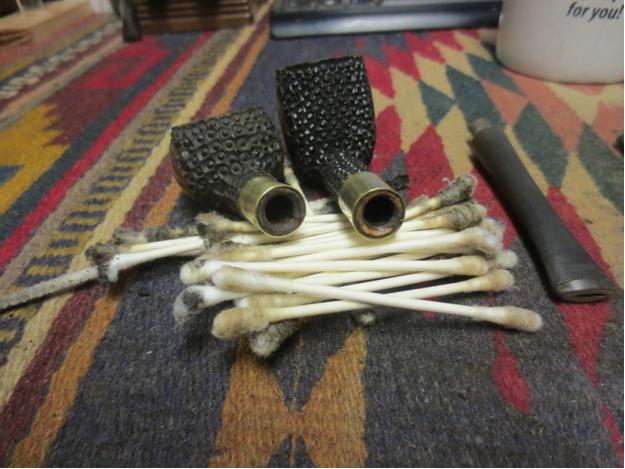
Beaver27 With the fit finished on the stems it was time to clean out the internals of the stems and shanks. I used alcohol, cotton swabs and pipe cleaners to scrub the insides until they were clean.Beaver28

Beaver29 I wet sanded the stem and the brass with a 1500 grit micromesh sanding pad for the first round of sanding on both. It worked to remove many of the scratches and marks in the brass and the vulcanite.Beaver30 I worked on the stem with the micromesh sanding pads – wet sanding with 1500-2400 grit pads and dry sanding with 3200-12000 grit pads. I rubbed the stem down with Obsidian Oil between each set of three pads. When I finished sanding with the 12000 grit pad I let the oil dry on the stem.Beaver31

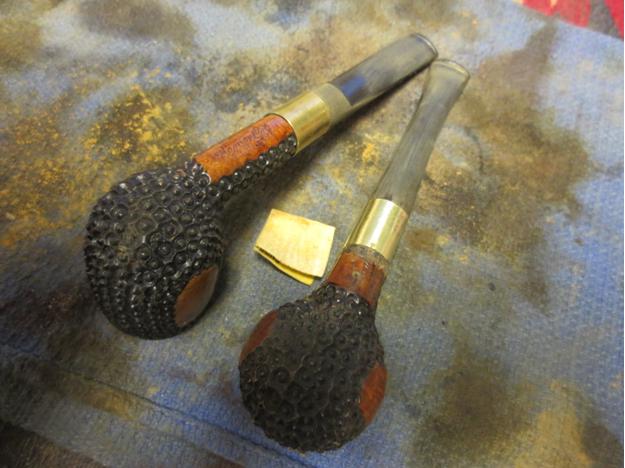
Beaver32 In the final sanding I sanded the brass and it carried over onto the top portion of each stem giving it a bit of a brown look in the next photo. This all came off when I buffed the stem with red Tripoli and White Diamond.Beaver33 I heated the stem on the Prince and gave it a slight bend to give it a more finished looked. I buffed the stems and rims with White Diamond and Blue Diamond and then gave them multiple coats of carnauba wax. I also waxed the smooth portions on the bowl sides, shank bottoms and the rims. I buffed these with Blue Diamond as well. I wiped the rustication down with a light coat of olive oil to bring some life back to the briar. The finished sisters are shown below.Beaver34

Beaver35

Beaver36

Beaver37

Beaver38

Beaver39

Beaver40

Beaver41 Thanks for looking. Does anyone have any information about this brand? It would be great to be able to get a little information. Please post anything you know in the comments below. Thanks.

A Mysterious Little Bent Billiard Brought to Life


Blog by Steve Laug
This is another pipe I picked up at the antique mall in Idaho Falls. It is a bit of a mystery pipe in that the stamping is faint on the left side of the shank. On the right side it is stamped Made in England. On the right side it is missing some of the first letters but is stamped _ ANTE_ over London. Searching through Who Made That Pipe the best option I found for that combination of letters was a CANTERBURY. The brand was made by Comoy’s. There is a very faint C in a Circle on the stem that also matches the CANTERBURY stamping so I think that may well be the stamping on this mystery pipe. The pipe was in pretty rough shape. The previous owner was in the antique mall when I bought it and he walked me through its deficiencies as he saw them. He had wrapped a piece of Teflon tape around the tenon to hold it in the shank. The stem itself had deep bite marks on the top and a large bit through on the underside near the button. The bowl had some fills on the left side and the underside that were quite large. The finish was shot and was dirty with lots of dents and dings. The rim was smooth but had tars and lava overflow. The bowl was heavily caked and the cake was as hard as rock. The inner edge of the rim was slightly damaged and out of round. The outer edge was clean with a small fill on the front of the bowl near the rim.Cant1

Cant2

Cant3

Cant4 I took the next photos to give a clear picture of the bite through on the underside of the stem and a close up of the thick cake in the bowl.Cant5

Cant6 I tried to ream the bowl with a PipNet reamer and barely made a dent in it. It was very hard. I decided to let it soak in an alcohol bath to soften the cake. I left it in the bath overnight.Cant7

Cant8

Cant9 When I took it out of the bath the finish was clean. The briar looked pretty good. The grain was quite nice. The fills softened and were white putty that would need to be removed and refilled.Cant10

Cant11

Cant12

Cant13 The softened cake came out easily with the PipNet reamer and then I scraped it further with a pen knife. The next photo shows the cleaned out bowl. I wiped down the rim with a soft cloth to remove the tars.Cant14 I lightly topped the bowl with a medium and fine grit sanding block to clean up the rim surface. The cleaned up rim looked very good.Cant15

Cant16 I cleaned out the bowl and shank with alcohol, cotton swabs and pipe cleaners.Cant17 I picked out the putty fills with a dental pick. I filled in the holes with briar dust and then covered that with super glue. I added more briar dust to smooth out the repairs.Cant18

Cant19 I sanded the bowl repairs with 220 grit sandpaper and then with a medium and a fine grit sanding sponge. I forgot to take photos after sanding the bowl.
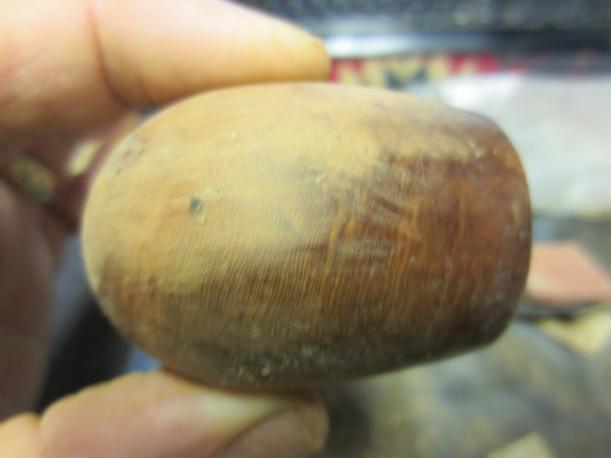
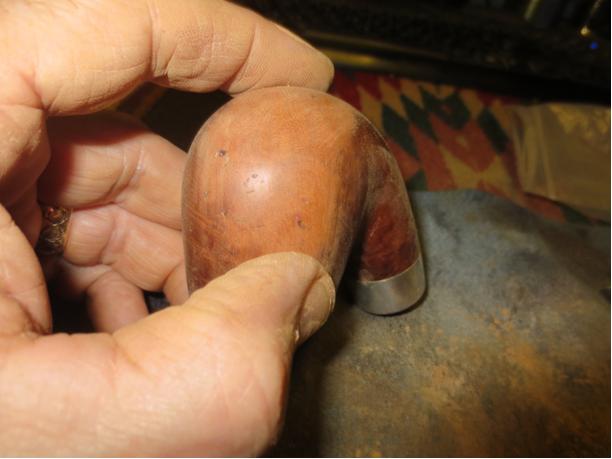
I set the bowl aside and worked on the stem. I cleaned out the bite marks on the top of the stem and the underside with a dental pick, alcohol and cotton swabs. Once they were clean I put some charcoal powder and black superglue on the bite marks on the top of the stem and leveled the repair with the edge of the dental pick. I set it aside to dry.Cant20 Once the topside repair was cured I put Vaseline on the point of an old nail file that I use to repair bite throughs. I inserted it in the slot on the button. I mixed some black super glue and charcoal powder and filled the hole in the stem with the mixture. I spread it and leveled it with a dental pick. When the repair was finished I set the stem aside to cure once again.Cant21

Cant22 The next morning I sanded the repairs on the top and bottom of the stem with 220 grit sandpaper and with a series of sanding sticks to smooth out the surface. The sanding sticks allowed me to get a good angle on the sharp edge of the button. I started with the coarse stick and worked my way up to the fine stick.Cant23

Cant24 I cleaned out the inside of the stem to remove the Vaseline and the dust from sanding using alcohol, pipe cleaners and cotton swabs. I heated the tenon with a lighter and inserted an ice pick in the airway in the tenon to expand the tenon enough to get a good solid fit in the shank.Cant25 With the stem repair complete and the pipe clean inside and out I decided to do some contrast stain work on the bowl. I stained it with a black aniline dye for the first coat. I wanted to blend in the fills a bit and also highlight the grain. I was aiming for a darker colour in the finished product so this was the first step.Cant26 I applied the stain and then flamed it. I wiped it off with alcohol on cotton pads to lighten the surface coat while leaving the black in the grain and the fills.Cant27

Cant28 I sanded the bowl with micromesh sanding pads to remove more of the finish and then gave it a top coat of a medium brown stain. I applied it and flamed it before hand buffing it.Cant29

Cant30 The colour of the pipe was still too dark to really make the grain pop so I sanded it with a medium and a fine grit sanding sponge to further remove some of the dark colour and to also minimize the scratches in the briar. I wiped it down with acetone to lighten it further.Cant31

Cant32

Cant33

Cant34 With the finish on the bowl complete I sanded the stem with micromesh sanding pads. I wet sanded with 1500-2400 grit pads and dry sanded with 3200-12000 grit pads. Between each set of three pads I rubbed the stem down with Obsidian oil. On the last rub down I let it sit until it was absorbed.Cant35

Cant36

Cant37 I buffed the pipe with Red Tripoli and White Diamond to further lighten the top coat of stain and to polish the stem. I then buffed the pipe with Blue Diamond and gave it multiple coats of carnauba wax. The finished pipe is shown below.Cant38

Cant39

Cant40

Cant41

Cant42

Cant43

Cant44

Revival of a Globetrotter: LHS Sterncrest 14K


Blog by Dave Gossett
Dave1

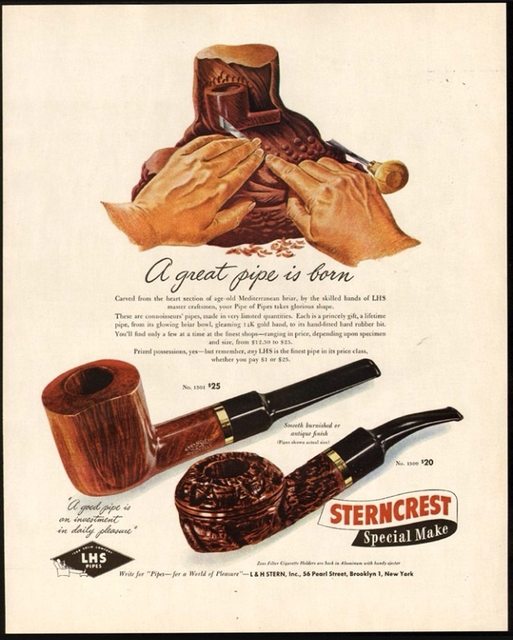
Dave2 A great pipe is reborn, the ad should read. This old LHS has been an extensive traveler throughout its long life. Plucked from the Mediterranean soil and carved in Brooklyn New York, traveling to the west coast, back to the east coast once more. From there it made its way to British Columbia, then again back to the east coast of America where it currently resides.

I received this pipe in an estate lot from California with the tenon and stinger broken off in the mortise. Someone had crudely tried to remove the broken tenon without success. I thought the pipe was a lost cause, but with little hope for a remedy I put out the bat signal for help. Steve Laug himself from Reborn Pipes answered the call. Off to British Columbia it went to undergo surgery from the master repairman.Dave3

Dave4 Here is the link to Steve’s great repair/rescue and stem replacement on this pipe.

Removing a Broken Metal Tenon from a LHS Sterncrest 14K

Back from surgery, Steve had sent me a fully functioning usable pipe.Dave5

Dave6 I started in on the usual ream and clean. Next I lightly topped the bowl and began working out the dents and scratches.Dave7

Dave8

Dave9

Dave10 Once I had a smooth clean stummel, I mixed up some Fiebings and tried to match the original finish.Dave11

Dave12 Sanding with 2500 grit I lightened the stain until I was close to the shade I wanted. I used a rag dampened with alcohol around the stampings to lighten those areas and blend in with the rest of the stummel.Dave13

Dave14

Dave15

Dave16

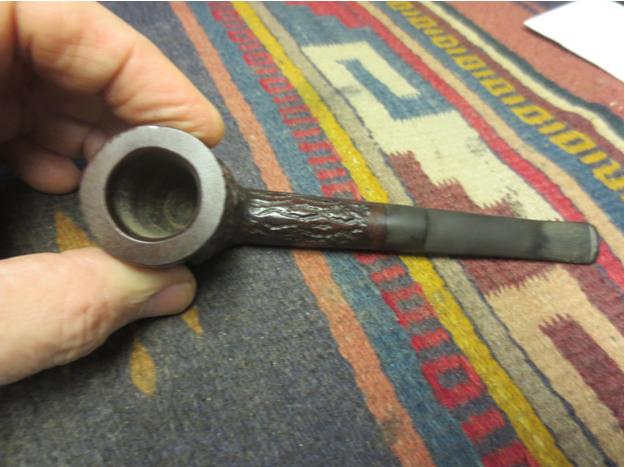
Bringing a Mastercraft Rock Briar Billiard back to life


Blog by Steve Laug

I found this old billiard for sale in an antique mall in Idaho Falls, Idaho. It was there when I visited in July and I bypassed it. It was still there this time so I made a deal with the seller and it came home with me. The bowl was dirty and had a cake and a bunch of tobacco debris and dust in the bottom. The rim had a buildup of tars and lava on the surface. The inner edge had some light damage and was slightly out of round. The finish was a rough rocklike rustication that was worn and dirty. There were white flecks and flecks of what looked like putty fills on the side of the bowl. There were several small sandpits in the bowl sides and on the bottom right side of the shank.RB1

RB2

RB3

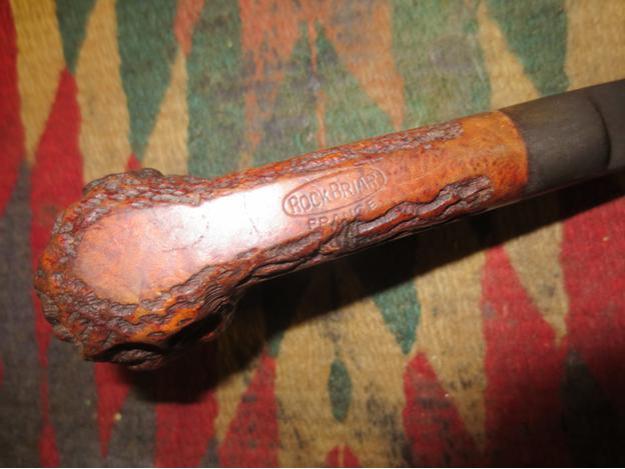
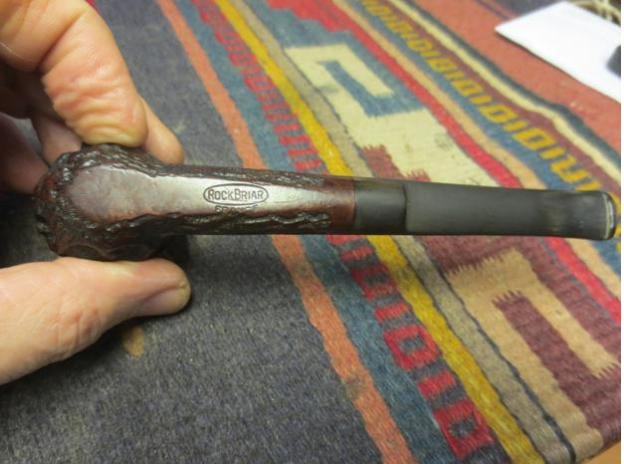
RB4 The stamping on the bowl was on a smooth flattened panel on the bottom of the bowl and shank. It bore the stamping Rock Briar in an oval and underneath France. I found out from Who Made That Pipe that the pipe was made for Mastercraft in France. From my research it doesn’t appear that Mastercraft ever manufactured pipes but rather bought them from multiple factories — mostly French and English. It survived briefly the post war recovery and then was acquired by Grabow.RB5 The next photo is a close-up picture of the rim and the debris in the bowl. The rim and bowl would take some work to clean out.RB6 I reamed the bowl with a PipNet pipe reamer and starting with the smallest cutting head worked my way up to one the same diameter as the bowl. I removed the cake and the clutter in the bottom of the bowl. I also used a pen knife to scrape out the small remnant of cake that the reamer did not take out.RB7

RB8 I scrubbed the bowl with a brass bristle whitewall tire brush to remove the buildup of grime and dust in the grooves of the rustication. Once the grime was loosened I put the bowl in an alcohol bath to soak while I went to work for the day.RB9

RB10 When I got home from work I took the bowl out of the bath and used the brass bristle brush on it once again. When I had finished brushing it I dried it off with a cotton cloth. The following photos show the bowl after the half day soak.RB11

RB12

RB13 I decided to lightly top the bowl to clean up the rim surface. I used a 220 grit topping board followed by a medium and a fine grit sanding sponge.RB14

RB15 I used a folded piece of 220 grit sandpaper to sand and bevel the inner rim. I wanted to minimize the inner edge damage.RB16

RB17 I scrubbed the bowl down with acetone on a cotton pad to remove the dust and remnants of the finish on the bowl and shank. I scrubbed out the shank, mortise and the bowl with alcohol, cotton swabs and pipe cleaners to remove the debris and dust.RB18

RB19

RB20 I decided to do a bit of contrast on the stain. I used a black Sharpie pen to colour in the grooves and rusticated patterns on the bowl and shank. Once I finished that they would add some depth to the colour that I stained the pipe.RB21

RB22 I stained the bowl with a dark brown aniline stain that I had thinned by half to give a bit of translucence to the colour on the bowl. I applied the stain and flamed the bowl to set the stain in the grain.RB23

RB24

RB25

RB26 I wiped the bowl down with isopropyl alcohol on a cotton pad to remove the stain from the high spots on the briar. I wanted a distinct contrast in colour between those and the grooves which I had coloured black.RB27

RB28 I buffed the bowl with red Tripoli and with White Diamond to remove some more of the colour from the high spots and polish them while leaving the grooves dark and unpolished.RB29

RB30

RB31

RB32 The stem was in decent shape with some tooth chatter and minor oxidation. I like the overall look and the rustication on the bowl. The stem and shank are long and straight and work well with this pipe.RB33

RB34 I sanded the stem with 220 grit sandpaper on both sides next to the button to remove the tooth chatter. I followed that by sanding it with a medium and fine grit sanding sponge.RB35

RB36 I worked on the stem with the micromesh sanding pads. I wet sanded with 1500-2400 grit pads and then rubbed the stem down with Obsidian Oil. I dry sanded with 3200-4000 grit pads, gave it another coat of oil and finished with the 6000-12000 grit pads. I gave it a final coat of Obsidian Oil and let it dry.RB37

RB38

RB39 I buffed the pipe with White Diamond and Blue Diamond and then gave it multiple coats of carnauba wax. I buffed it with a clean flannel buff and then hand buffed it with a microfibre cloth. The finished pipe is shown below. The unique finish intrigues me and the rustication feels great in the hand. Thanks for looking.RB40

RB41

RB42

RB43

RB44

RB45

Reworking a Burned Rim on a Savinelli Oscar Lucite Prince


Blog by Steve Laug

My brother bought me a beautiful little Savinelli Prince when I was visiting. It is stamped Oscar Lucite on the left side of the shank and has the Savinelli shield and shape 313 over Italy on the right side of the shank. On the underside it is stamped Savinelli Product. The stem bears the embossed shooting star logo that is a familiar mark on the Oscar line. We had looked at it several hours earlier and I had passed on it because of the rim damage. I just did not feel like dealing with that as I looked at it and I felt the seller was asking too much for the condition it was in. But throughout the day it nagged at me and I kept thinking I should take another look at it and make an offer just to see if I could get the price down.Prince1

Prince2 So we went back late in the afternoon and I picked up a few other pipes there and my brother got the shopkeeper to take the pipe out of the case so we could look at it again. I examined it and could see that not only the top of the rim was damaged but the inner edge had significant damage from the burn. It seemed that the previous owner had not smoked the pipe much as it was in great shape other than that damage. The bowl was not even caked or darkened from mid bowl to the bottom. I removed the stem and checked out the mortise to see what it looked like. It was actually very clean. I examined the airway and slot in the stem to see what they looked like in terms of use. The stem was in great shape with no tooth marks or damage. All those things made me wonder if he used a torch lighter, fired it up once or twice – just enough to char the rim and damage it and then decided that either this particular pipe or pipes in general were not his cup of tea. Either way the pipe was in decent shape except for the burn on the back right side of the rim.Prince3

Prince4 I put it back but my brother said he would buy it for me so it came back to Canada with me. I have been home for over a week now and have cleaned up several of the pipes that came back with me. I picked the Savinelli up several times over the weeks and always put it back as I just did not feel any push to work on it. On Sunday I talked with my brother on Face Time and he asked if I had worked on it yet. I said no but it would be next on the agenda so last evening I took it from the box of refurbs to deal with it. I sat at the work table for a while examining it and looking at how deep the burn mark went into the briar. It was deep but I knew that topping it could remove much of the rim damage on the surface. I was concerned about the inner edge of the rim and wondering how I could bring that edge back into round with the rest of the bowl. I scraped out the bowl with a pen knife to remove the tobacco debris from the surface and then removed the stem to prepare it for topping.Prince5 To begin with I used a worn piece of 220 grit sandpaper to work on the rim. I faced it into the sandpaper and turned it until I removed a lot of the surface damage. I continued to work it until the sandpaper did not remove any more. I then changed the topping paper for a new piece of 220 grit sandpaper to finish the process. I sanded it until the surface was smooth and the slope of the burn from the surface to the inside of the bowl was minimized. I should have measured how much material I removed from the surface but I just kept sanding until most of the burn mark was gone. I am still surprised that it did not change the shape dramatically – such is the mercy that the burned rim was on a prince.Prince6 I sanded the rim with a medium and a fine grit sanding sponge and then with micromesh sanding pads using 1500-4000 grit pads to remove the scratch marks left behind by the sandpaper. Once the rim was smooth I stained the rim with a light brown stain touch up pen and blended it to match the colour of the rest of the bowl. I buffed it with red Tripoli and then White Diamond to smooth it out.Prince7 I then folded a piece of 220 grit sandpaper and worked on the inner edge of the rim. I wanted to bevel like it had been originally. A gentle slope on the rim toward the bowl would work to hide the burned edge and bring the rim into round once again. I sanded it with the sand paper at the same angle the entire way around the bowl edge. I repeated the circuit around the bowl repeatedly to keep the angle consistent the entire circumference of the inner edge. I sanded it until it was canted to the angle that had originally been present on the bowl.Prince8 Once the sanding was done I used a dark brown stain touch up pen to darken the bevel on the rim. I figured that by darkening the entire bevel I could mask the effect of the burn mark. I cleaned out the shank and the inside of the bowl with alcohol and cotton swabs to remove the debris and to blend the darkening of the bowl with the dark brown stain of the rim. I wanted the transition between the rim edge and the dark of the bowl to flow together.Prince9

Prince10

Prince11 I restained the rim with a light brown stain and then buffed the bowl. I gave it a light coat of olive oil and then buffed it with carnauba wax. The repaired rim is shown after all of the polishing and buffing in the next photos. The darkening of the bevel on the rim does a pretty decent job hiding the burn mark.Prince12

Prince13

Prince14 I cleaned up the stem with cotton swabs, pipe cleaners and alcohol to sanitize and refresh it. I used the micromesh sanding pads – wet sanding with 1500-2400 grit and dry sanding with 3200-12000 grit pads. I buffed the stem with Blue Diamond on the wheel to raise a final shine. I gave the bowl and stem several coats of carnauba wax and buffed them with a clean flannel buff. I finished by hand buffing the pipe with a microfibre cloth. The finished pipe is shown in the photos below. I was able to minimize the burn mark and its effects on the rim top and edge. The pipe looks great and is ready for a real pipeman to take care of it and enjoy it.Prince15

Prince16

Prince17

Prince18

Cleaning up a Bruyere Garantie Pocket Pipe with a Horn Stem


Blog by Steve Laug

This pipe reminds me of the Mokin Pocket Pipe that Anthony restored and wrote about in an earlier blog. When I saw it on eBay I put a bid in and actually won it. The pipe needed a lot of work. From the photo it looked as if it had a thick coat of varnish or some shiny topping. That would need to go. The finish was spotty and appeared to have some flecks of paint on the top and on the skate at the bottom of the bowl. The rim was darkened and hard to tell whether it was burned or just tarry. The bowl was slightly out of round but it also had a cake that would need to be reamed out before addressing the out of round inner wall of the rim.The stamping was clear and distinct and read Bruyere Garantie on the left side of the shank. The stem had a double circle on the left side. The stem also appeared to be horn. There were two deep cuts on the right side of the stem near the button that would need work and with those marks I was sure there were other issues. The first two photos are the ones included in the seller’s description of the pipe on eBay. I had no idea what the other side or bottom of the bowl or stem looked like or if there would be more issues that would need to be addressed.Bruyere1

Bruyere2 When the pipe arrived I was both encouraged by what I saw and concerned by several other issues that had not been shown in the photos above. The encouraging thing was that there was no shiny coat of varnish or lacquer on the bowl. All that was present was a very dirty, grimy natural finish that seemed to have a reddish-brown colouring to it. The concerns involved the fills on the underside of the bowl. What had appeared to be paint flecks on the skate at the bottom turned out to be part of the fill on the bottom and a missing piece of briar. The bowl was indeed caked and the cake was crumbling and uneven. Looking at it initially I wondered if there would not be burned spots in the walls of the bowl once the cake was removed. The inner edge of the rim was also more damaged than I had expected from the seller’s photo. The cuts in the stem were dangerously close to the airway but fortunately had not broken through. The fact that the airway was unharmed was a small miracle given the depth of the cuts. The fact that they angled probably save the airway from damage. On the underside of the stem there were also large chips missing from the stem at the shank stem union. It appeared that someone had tried to pry the stem away from the shank rather than twisting it off. There was also tooth chatter on the top and underside of the stem near the button. The button however was clean and sharp as was the slot in the in the end of the button. The stem had some beautiful striations of colour that I had not seen in the photos and I looked forward to seeing if I could bring them out.Bruyere3
Bruyere4

Bruyere5

Bruyere6 I took some close up photos of the damage to the rim and the stem. The first photo below shows the damage to the inner edge of the rim and the crumbling cake in the bowl. Looking closely at the top of the photo and the bottom of the bowl you can see the cause for my concern regarding the potential burn out damage. The second and third photos below show the cuts in the stem and the missing chips. You can see how close the cut closest to the button came to the airway in that photo.Bruyere7

Bruyere8

Bruyere9 The next photo shows the stamping on the side of the shank and the logo on the stem. It is hard to see but much of the depth of the stamping on the stem is gone so restoring that with new white colouring will not be possible.Bruyere10 When I removed the stem the tenon was inset aluminum and there was a stinger apparatus in place. It was a twisted piece that had a slot in the top for the airflow that followed the twist to the airway. It was stuck in the tenon and would need to be loosened before I could properly clean out the airway in the stem. I included some extra photos of the stem to show the cuts and chips from a different angle.Bruyere11

Bruyere12

Bruyere13 I reamed the bowl with a PipNet reamer. I started with the smallest cutting head and cleaned things up with it first. I then used the second cutting head which was pretty close to the diameter of the bowl. I cut the cake back to nothing so that I could examine the interior walls of the bowl. I was pleasantly surprised to find that once the cake was gone the interior walls of the bowl were solid and there was no burning.Bruyere14

Bruyere15 I worked on the out of round bowl with a folded piece of sandpaper to smooth out the damaged areas and bring it back to as close to round as I could get it. I then topped the bowl on my topping board to smooth out the rim and clean up the damage on the surface. I will often do this just to bring the damage on the inner edge of the rim closer to the top so that I can smooth it out further with sandpaper.Bruyere16

Bruyere17

Bruyere18 I wiped down the bowl with acetone on a cotton pad to remove the grime and the remnants of the finish. There appeared to be some damage to the front of the bowl that I wanted to have a closer look at once the bowl was cleaned up.Bruyere19 I wiped down the horn stem with cotton pads and some alcohol to clean up the surface so that I could begin the repairs. I debated on whether to use black super glue or clear super glue for the repairs to the chipped areas but decided to go with the clear hoping that once it dried the colour would come through the repair and blend it into the horn better. I layered the repair to the chipped areas on the underside and the cuts on top side of the stem. I wanted each layer to dry before I added another layer of glue.Bruyere20

Bruyere21

Bruyere22 After many layers of glue I was disappointed that glue did not cure clear but rather had a cloudy white appearance. The fills on the cut areas dried hard but looked like two white slashes. I was hoping that as I polished the stem these would blend in a bit more. The fills in the chips were a mixed bag. The smaller ones dried perfectly and blended in well. The larger divot was also white. I cleaned that area once again and added a drop of black superglue to the top of the repair to see if I could hide it better.Bruyere23

Bruyere24 I sanded the bowl and stem with 220 grit sandpaper and then medium and fine grit sanding sponges to clean up the repairs and the scratches in the briar. I carefully avoided the area of the stamping and the logo so as not to harm them. I also cleaned up the stinger and was able to remove it from the tenon. It was threaded and after cleaning up the joint I was able to unscrew it and clean it and airway of the stem. I wet sanded the bowl and stem with a 1500 grit micromesh sanding pad. The striations of colour are beginning to show on the stem and the bowl is looking far better than when I started.Bruyere25

Bruyere26

Bruyere27 I wiped the stem down with a light wipe of alcohol to remove the sanding dust and then continued to wet sand it with 1500-2400 grit micromesh pads. I rubbed it down with Obsidian Oil and then dry sanded with 3200-4000 grit pads. I rubbed it down again with the oil and then finished sanding it with 6000-12000 grit pads. I gave it a final coat of Obsidian Oil and let it dry.Bruyere28

Bruyere29

Bruyere30 I buffed the bowl and stem with White Diamond and Blue Diamond on the wheel. I then cave the bowl and stem multiple coats of carnauba wax and buffed it with a clean buffing pad. I hand buffed the stem and the bowl with a microfibre cloth. The first photos below are of the polished stem. You can see the repairs from the cuts. For some reason the glue dried white – even though it is clear. I did a patch on the chip on the underside with black super glue and it does not quite match… ah the frustrations of repairs. This one is staying with me so I will not mind as the stem is now smooth and polished. The cuts and the chips are repaired and are smooth to the touch. The fit of the stem to the shank is good with no missing stem parts.Bruyere32

Bruyere33

Bruyere34

Bruyere35 The final four photos show the finished pipe. The bowl polished up very nicely with just carnauba wax. The polished stem shows the striations that are one of my favourite parts of horn as a stem material. The deep shine is a bonus.Bruyere36

Bruyere37

Bruyere38

Bruyere39

Removing Stain from a Briar Pipe – Additional info added


Blog by Dave Gossett
stain1

stain2 I’ve been working on a stain removal recipe/technique with some junker pipes and came up with this. It works pretty well. It will also strip the color out of any fills in the pipe and they will stand out afterwards. This is great for a fill free briar, but not recommended if it does, unless you plan on digging out the old fills and replacing them with briar dust. I always advise trying new repair and restoration tips on a test pipe before trying it on a keeper.

Step 1. Use Murphy’s wood soap to remove the wax. Take care not to get the Murphy’s soap inside the pipe!

Step 2. Wipe down with alcohol.

Step 3. Mix a heavy batch of Oxy Clean powder with hot water. 3 tablespoons give or take. Use just enough hot water to dilute the powder and then add a couple of shots of 91% alcohol. Heat the briar with a hair dryer before starting. This opens the pores and speeds up the removal process. (at least that’s my theory.)

0000 steel wool can be used with mix to gently scrub the briar. The steel wool is fine enough it will not scratch the briar. Use gently, let the wool do the work for you. A rag can be used but it will take a few runs to achieve the same results. When dipping the rag or wool don’t submerge to the bottom of the mix where the undissolved gritty powder is settled. You don’t want the grit on the briar when scrubbing. Stay clear of the stampings with the steel wool. Use a rag on those areas.

Rinse the stummel clean with tap water and towel off so the oxy residue doesn’t dry on the wood.

Let the stummel dry completely to see if you’re satisfied with the coloring. repeat the process again if it’s still dark.

Step 4. Depending on how much time and cleaning it took to remove the stain, it could raise the grain a bit. Don’t worry. Most of the time this isn’t the case. After the stain has been striped and the pipe has thoroughly dried, give the stummel a light dry sanding with 2000-3000 grit and this will take care of any raised grain concerns.

Step 5. Now your pipe is ready for your color change of choice or waxed up for a beautiful natural finish.

I tried to be as detailed as possible but may have forgotten something. This is why I recommend trying new techniques on a test pipe.

Here are the results of the stain removal on a very dark pipe.

Photos of the pipe before stripping the stain:stain3

Stain7

stain6

stain5 Photo of the pipe with the stain stripped:stain2 Photos of the finished pipe:stain9

stain10

stain11ADDENDUM

Dave took the time to measure all of the components in his recipe and has sent them to be added to this post. Here it is:
1 cup hot water (hotter the better)

3 spoons of Oxy Clean powder

After the Oxy is thoroughly dissolved then add the alcohol

1 spoon of 91% alcohol

The alcohol cuts the suds and stops the solution from becoming a foaming mess while you’re working on the pipe.

Thanks Dave

A Simple Elegance: Cleaning, Restemming and Restoring a Diplomat Billiard


Blog by Steve Laug

On my recent Lethbridge trip I found the Diplomat pipe at an Antique Fair. It is a nice sandblast billiard with a dark undercoat and a brown over stain. The bowl was in decent shape. The sandblast was deep and quite beautiful to look at. The nooks and crannies caused in the process made for an interesting feel in the hand as well. The stain had worn off in spots on the sides of the bowl and along the outer edges of the rim. The finish was also generally dull and lifeless. The surface of the rim was dirty with tars and oils. The inner edge was slightly damaged and would need to be worked on. There was a thick cake around the middle of the bowl and light at bottom and on top. The stem was one that somebody had Gerry-rigged to fit. It was smaller in diameter and the tenon was too small. The previous owner had wrapped the tenon with thread and then with aluminum foil and pressed it into the shank. The stem had also been hacked up to repair a damaged button and grooves had been carved on the top and bottom sides of the stem to make it a dental bit.Dip1

Dip2

Dip3

Dip4

Dip5 I took close-up photos of the top of the bowl and the underside of the shank to give a clear picture of the state of the inner edge of the rim and the stamping on the pipe.Dip6

Dip7 The next two photos show the stem that came with the pipe and the “fancy” work that had been down to make it fit the shank and create grooves on the top and underside that would allow the pipe to be held in the mouth behind dentures.Dip8

Dip9 My first task was to go through my stem can and see if I could find a better stem for this pipe. I did not have a tapered stem that would readily fit but I did have a saddle stem that would look good after shaping and fitting it to the shank.Dip10 I lightly sanded the tenon to get a snug fit in the shank and pushed the new stem home to have a look at the fit. The stem would need to be sanded to bring the diameter at the stem/shank union down to match the shank. I took a few photos to see what the pipe looked like with this new stem.Dip10

Dip11

Dip12

Dip13 I used a Dremel with a sanding drum to carefully reduce the diameter of the saddle portion of the stem. I have found that I can roughly shape the stem to fit better and then finish by hand sanding it (photo 1). Once I had the rough shape I sanded it with a coarse emery paper to remove the gouges and scratches left behind by the sanding drum (photo 2). I slipped a plastic washer on the tenon and put the stem back in place. I sanded it with 180 and 220 grit sandpaper to further shape it and remove the scratches (photo 3).Dip15

Dip16

Dip17 With the basic fit correct and only needing to fine tune it and polish the stem I decided to ream the bowl. I used a PipNet reamer and took the cake back to bare wood.Dip18

Dip19 I cleaned out the inside of the shank and stem with pipe cleaners, cotton swabs and alcohol. Once it was clean I worked on the inner edge of the rim. I sanded it and reshaped it to make it smooth and round once again using a folded piece of 220 grit sandpaper.Dip20

Dip21

Dip22 I sanded the stem some more with 220 grit sandpaper and flattened the bottom side to match the flat bottom of the shank. The next set of three photos show the fit and shape of the stem at this point.Dip23

Dip24

Dip25 The button was quite thin and I decided to build it up with black superglue. I also could see a repair that had been done on the stem before I used it so I worked on that to further blend it into the stem surface.Dip26 When the glue dried I sanded it with 220 grit sandpaper to feather it into the surface of the rest of the stem and also worked on shaping the button. In the second photo below you can see the end view of the built-up and reshaped button.Dip27

Dip28 I sanded the stem and button with a medium and a fine grit sanding sponge to remove the scratches and blend in the patches. I then wet sanded the stem with 1500-2400 grit micromesh sanding pads and then rubbed the stem down with Obsidian Oil. I dry sanded with 3200-4000 grit pads and rubbed it down again with oil. I finished by sanding it with 6000-12000 grit pads and gave the stem a final coat of Obsidian Oil. I set it aside until the oil was dry.Dip29

Dip30

Dip31

Dip32 I touched up the worn spots on the finish of the bowl with a dark brown stain pen and a black permanent marker and then buffed the bowl and stem with White Diamond on the wheel. I buffed it again with Blue Diamond and then gave the pipe multiple coats of carnauba wax. I polished it with a clean flannel buff and then hand buff with a microfibre cloth. The finished pipe is shown in the photos below. I like the looks of the saddle stem and the deep sandblast finish. The pipe has an understated elegance about it that I like.

Thanks for looking.Dip33

Dip34

Dip35

Dip36

Dip37