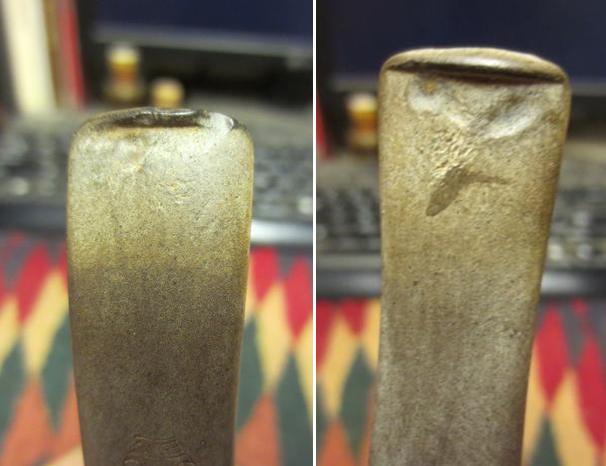
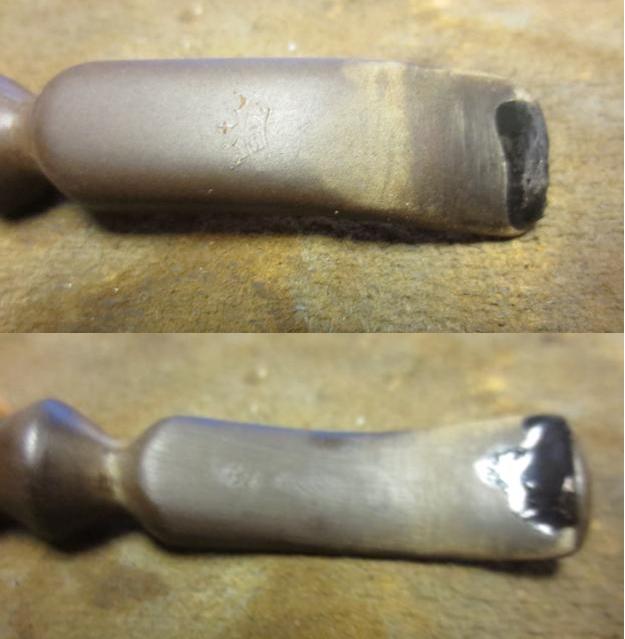
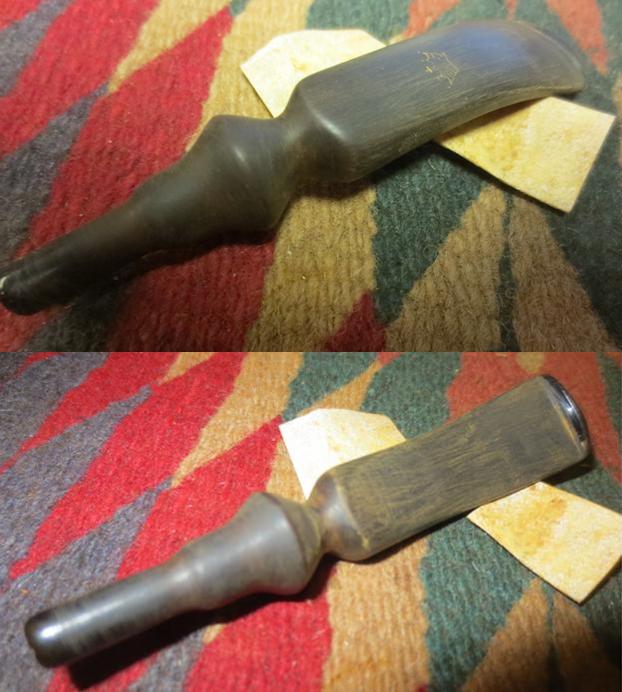
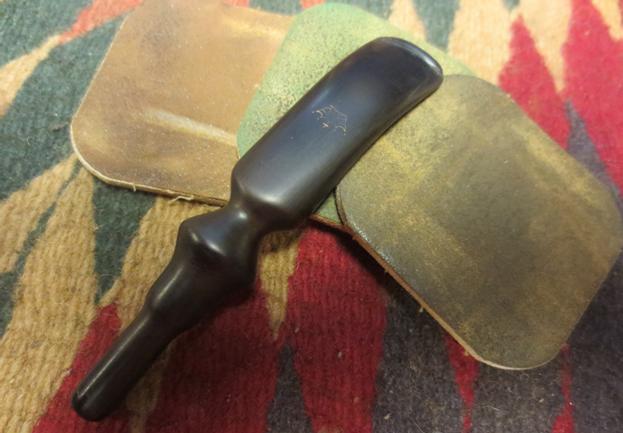
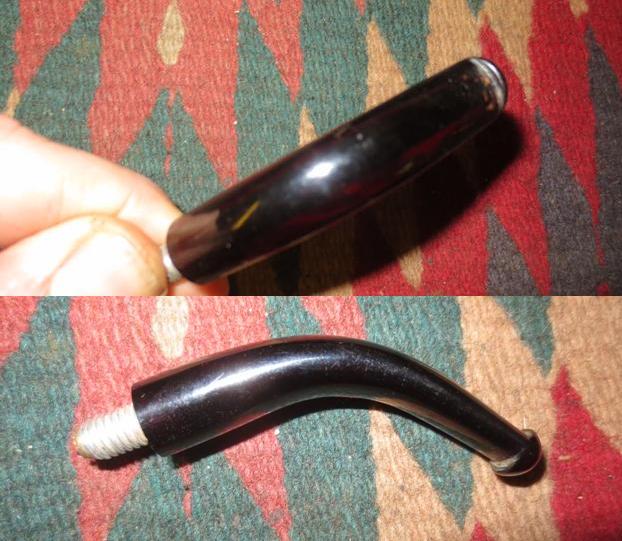
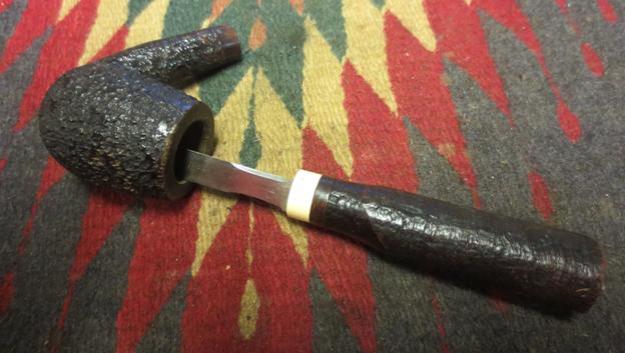
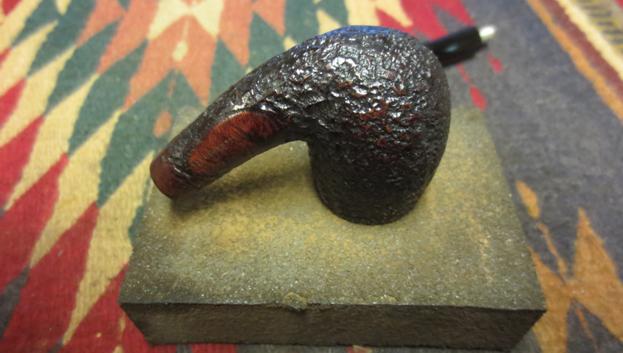
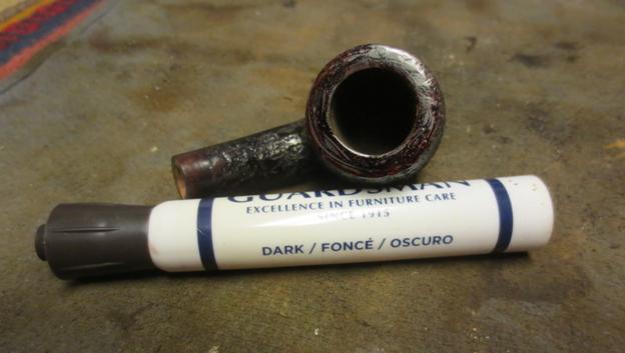
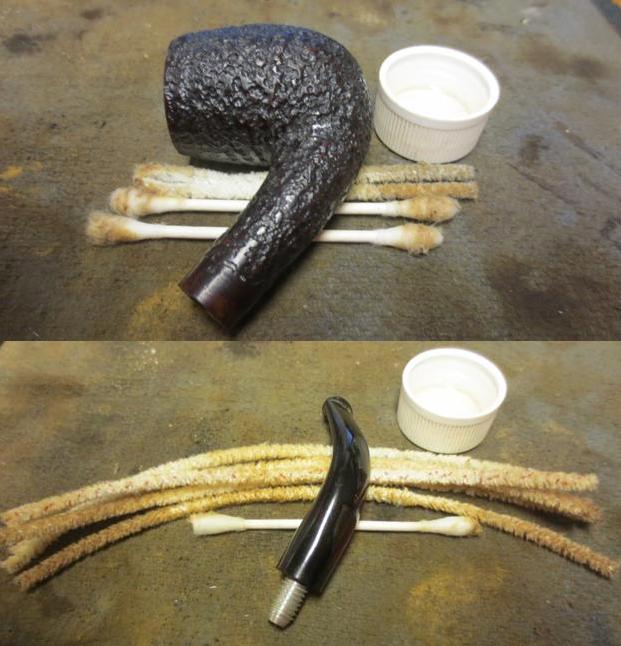
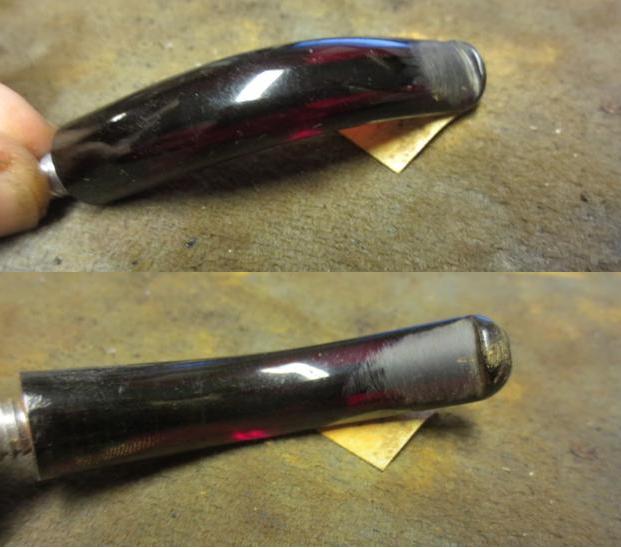
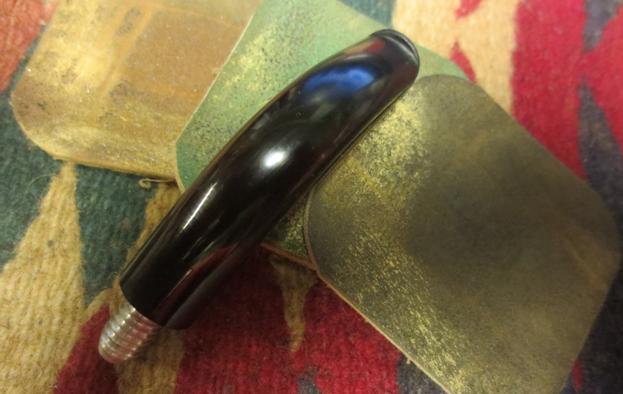
Tag Archives: restaining a bowl and rim

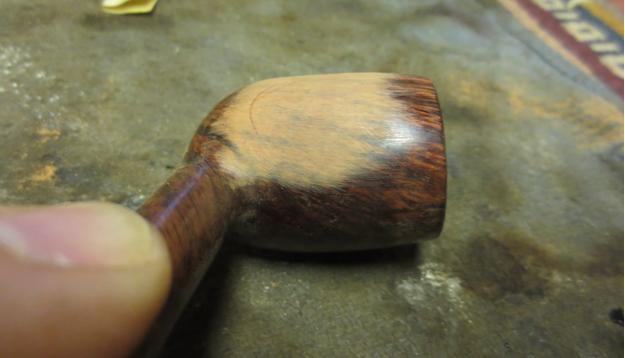
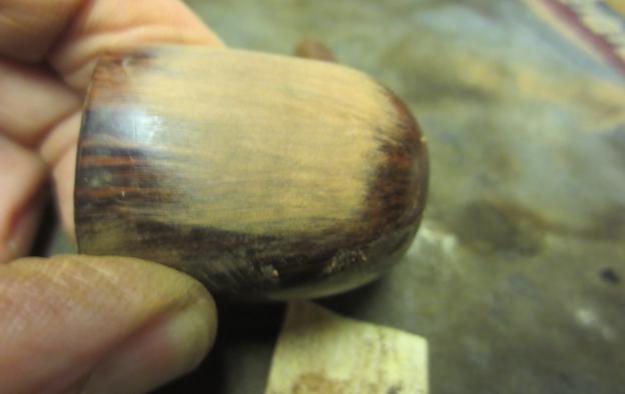
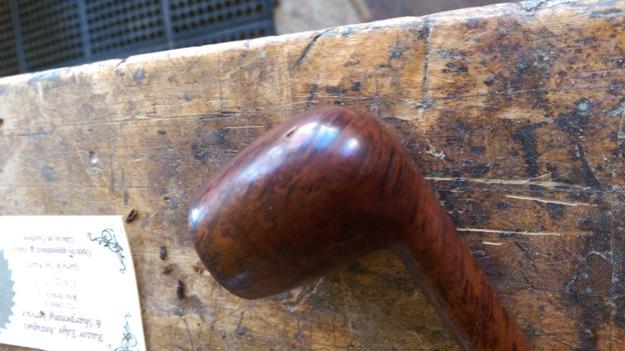
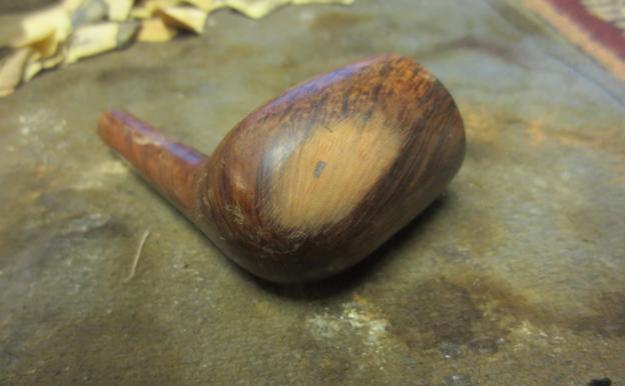
A Nice Looking Drucquer & Sons Berkeley DRUKE 187 Pipe


Blog by Steve Laug

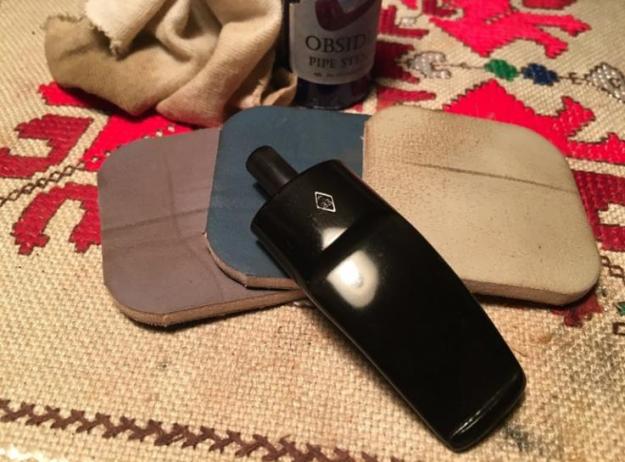
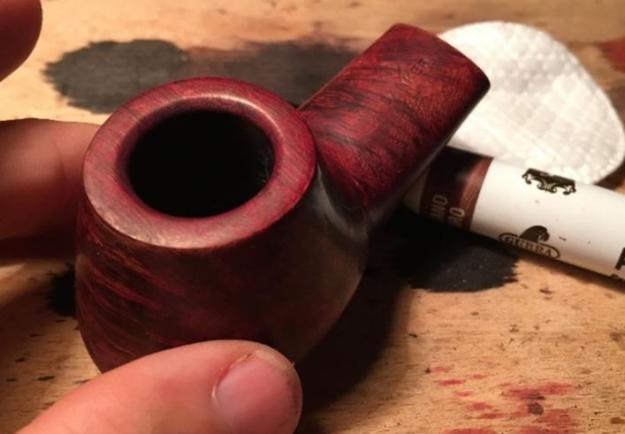
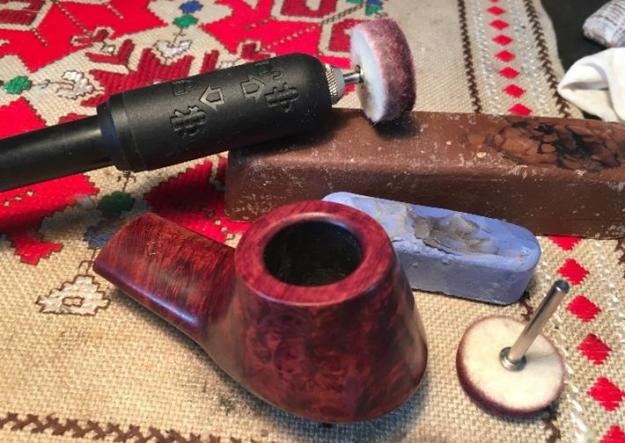
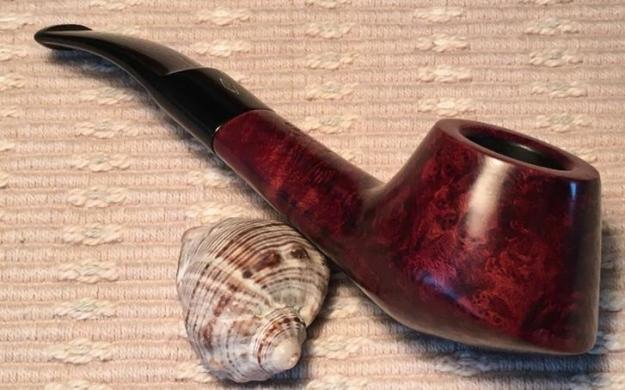
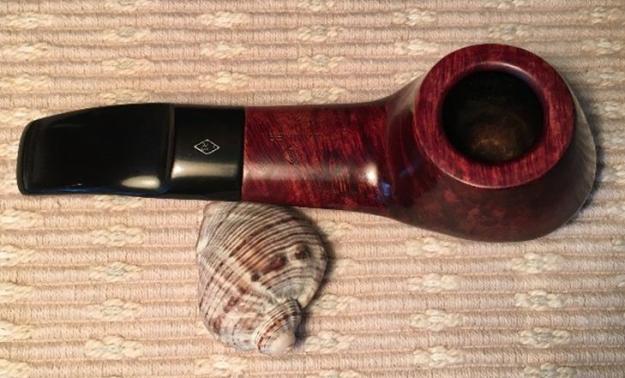
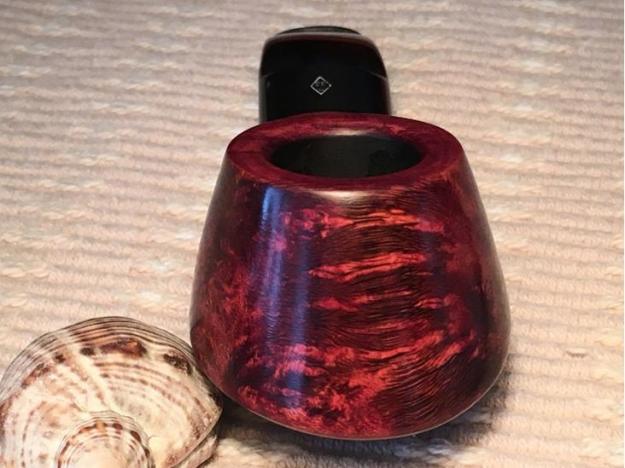
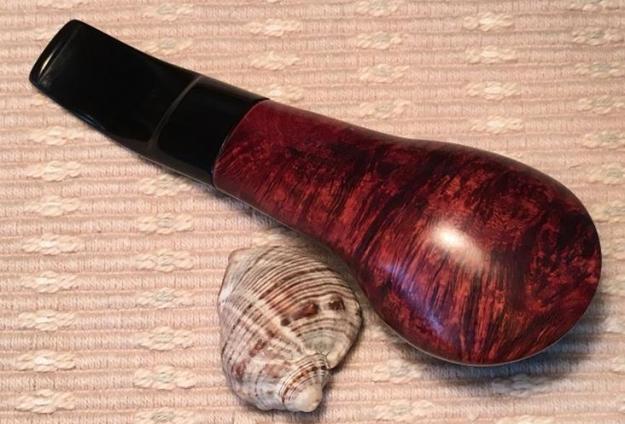
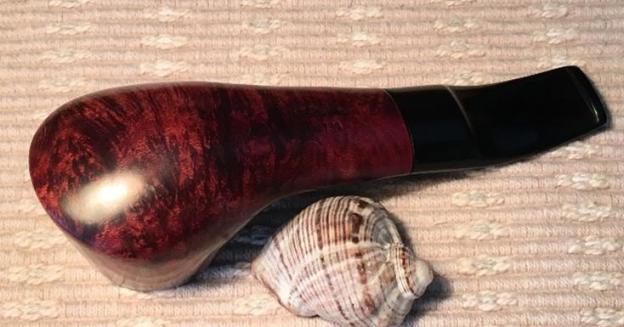
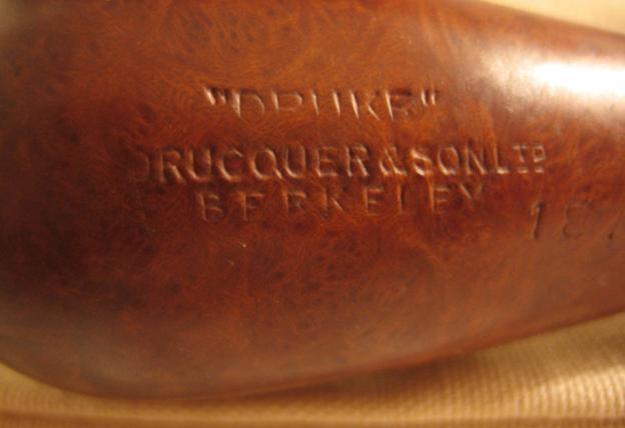
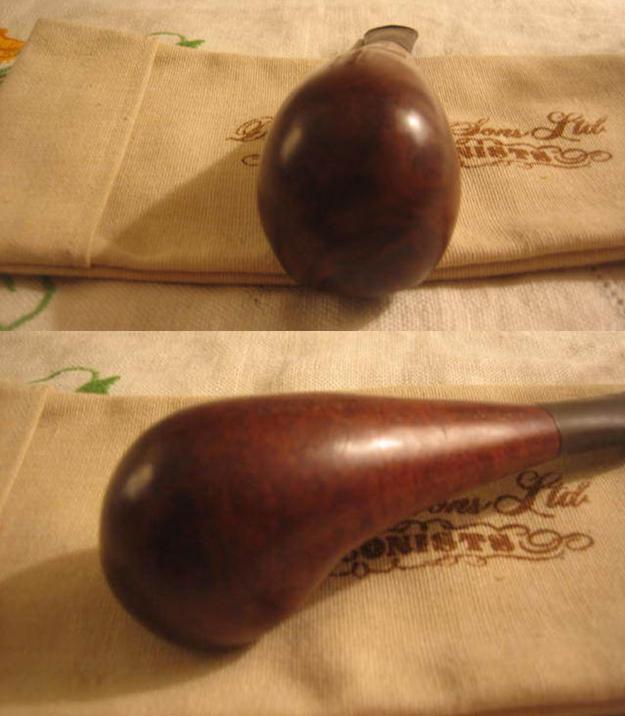
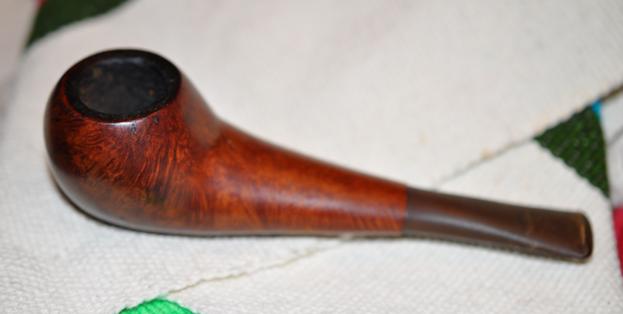
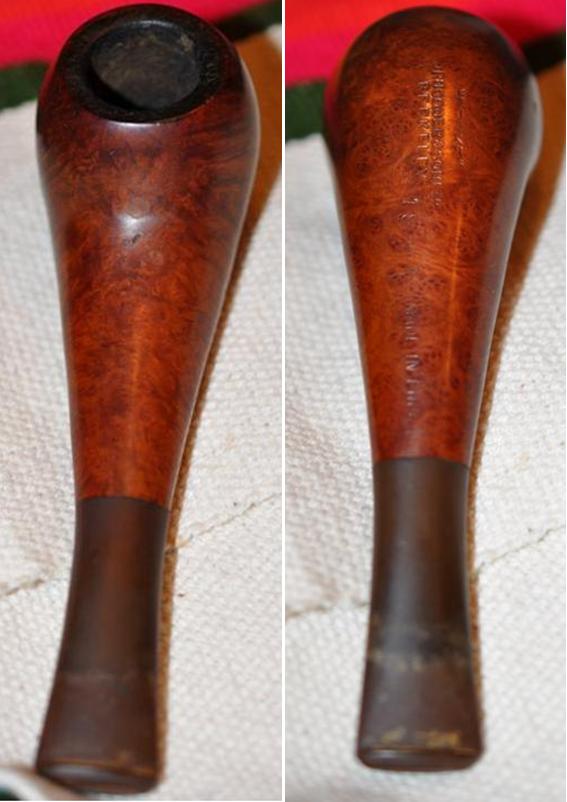
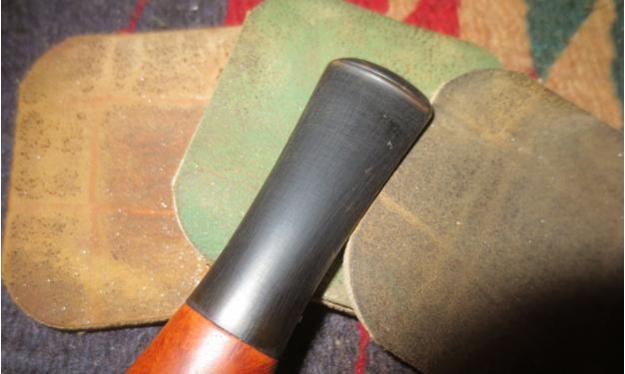
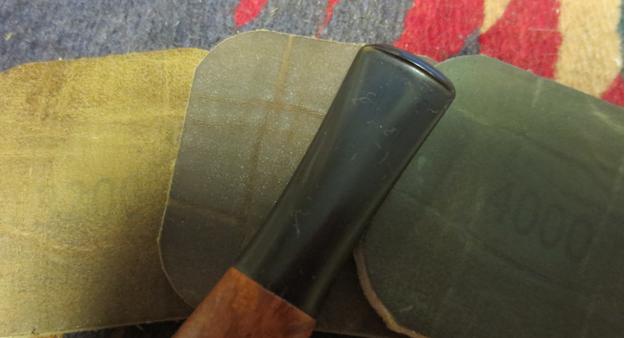
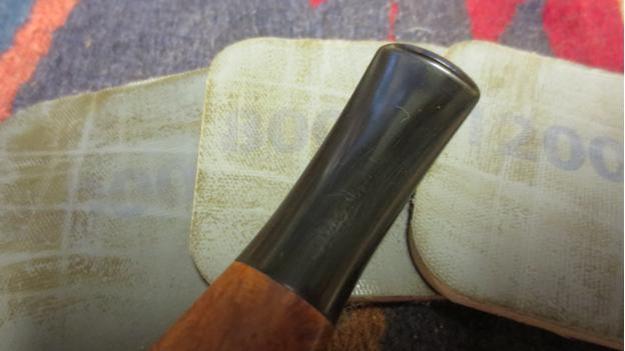
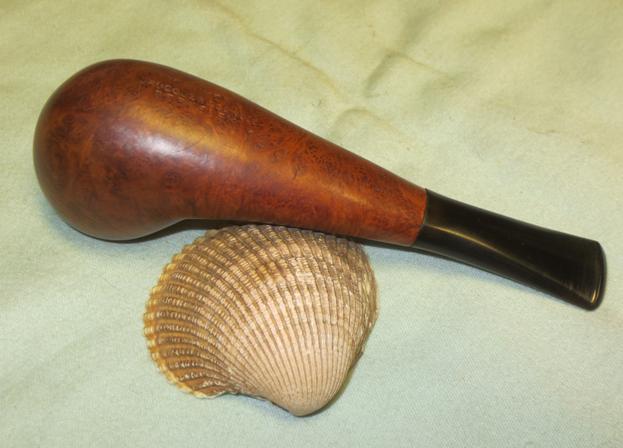
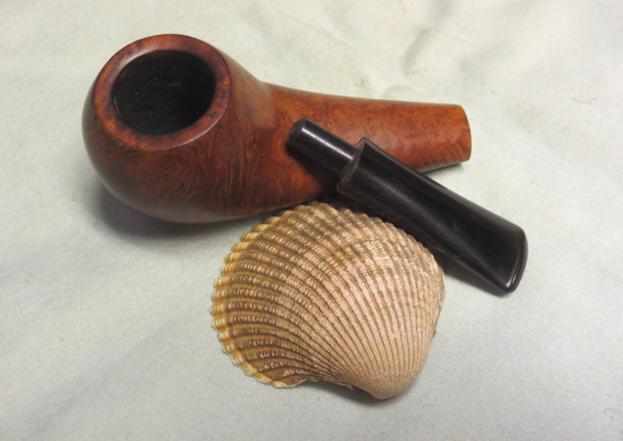
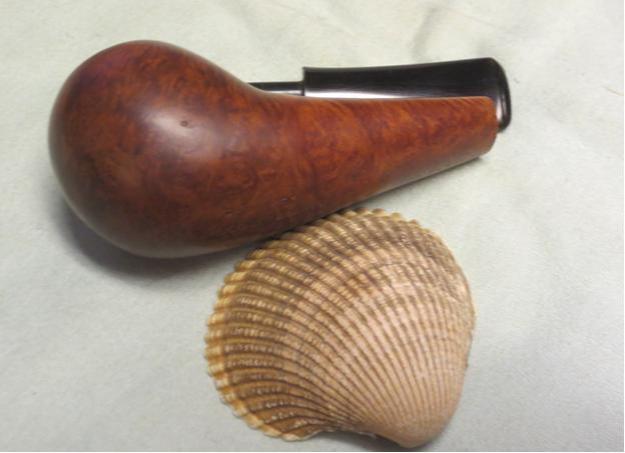
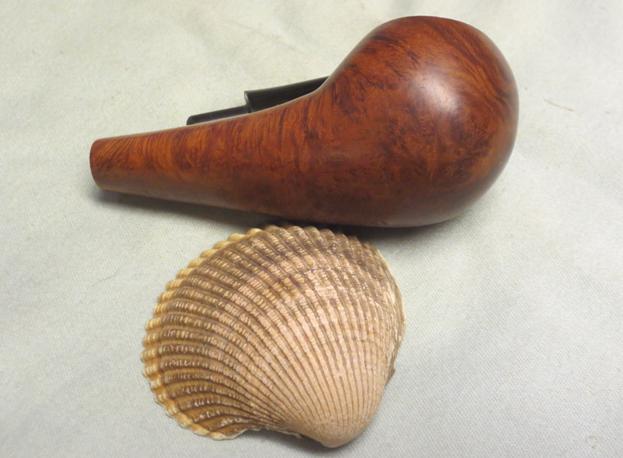
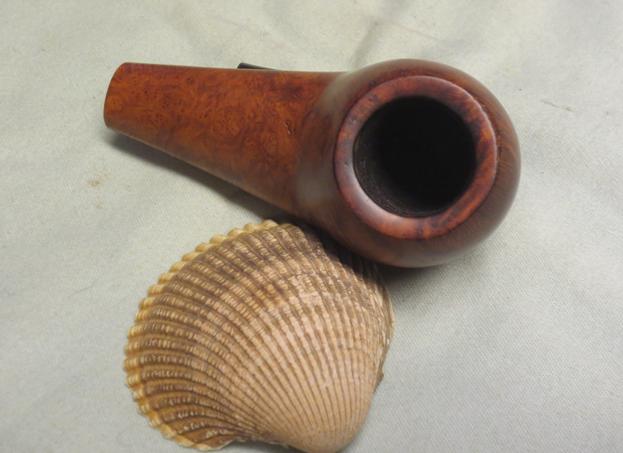
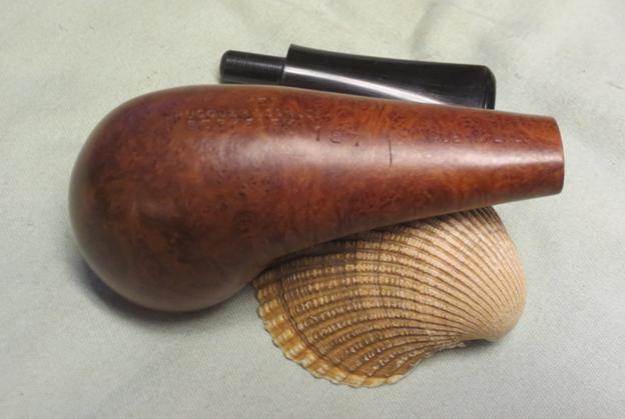
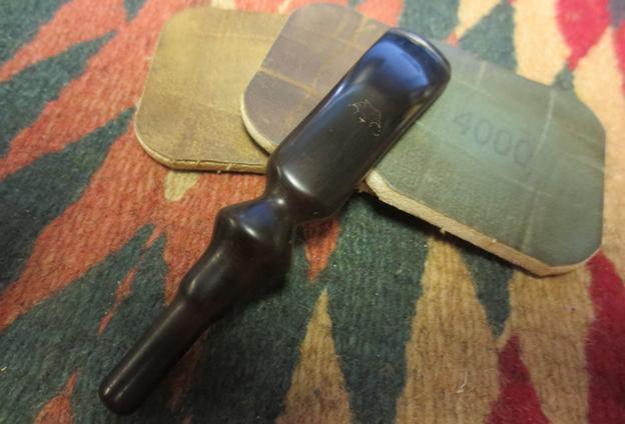
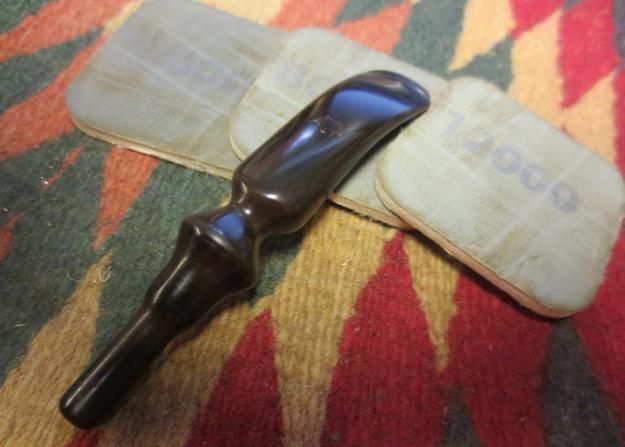
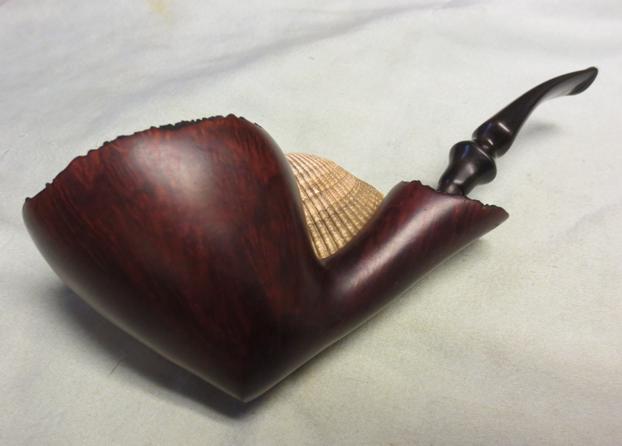
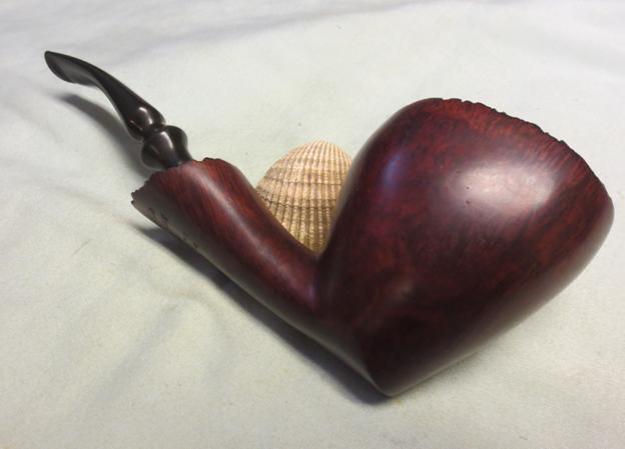
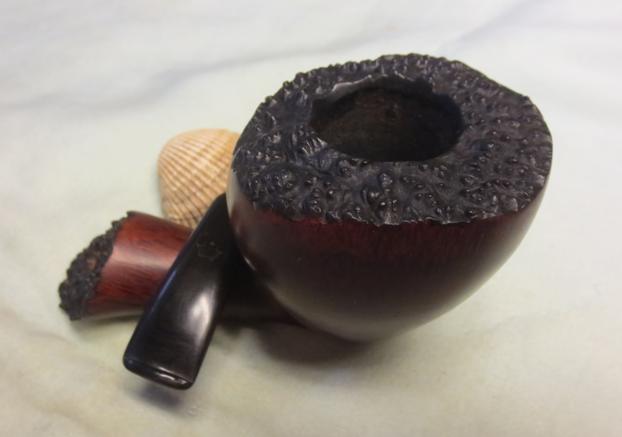
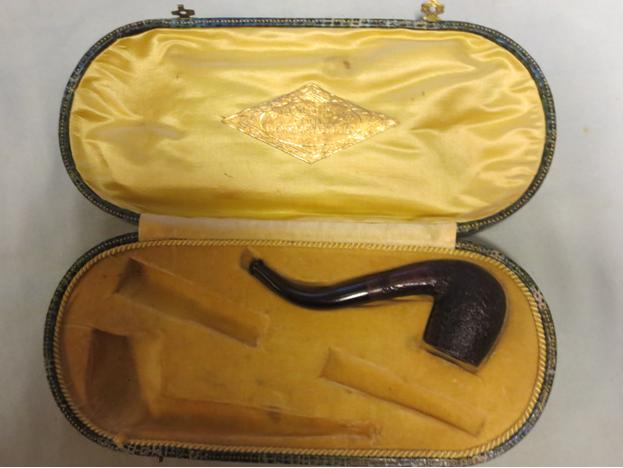
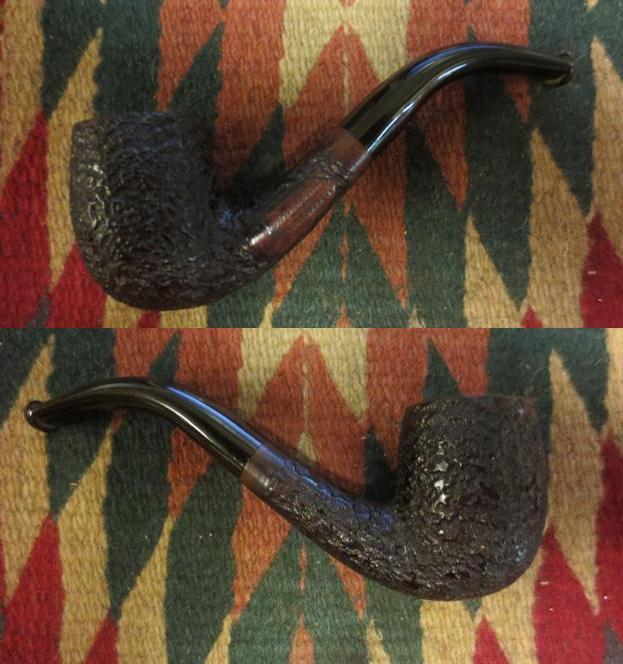
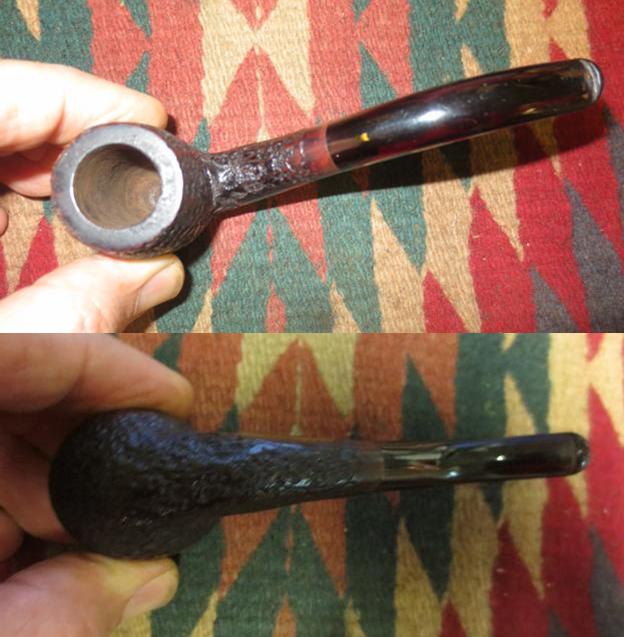
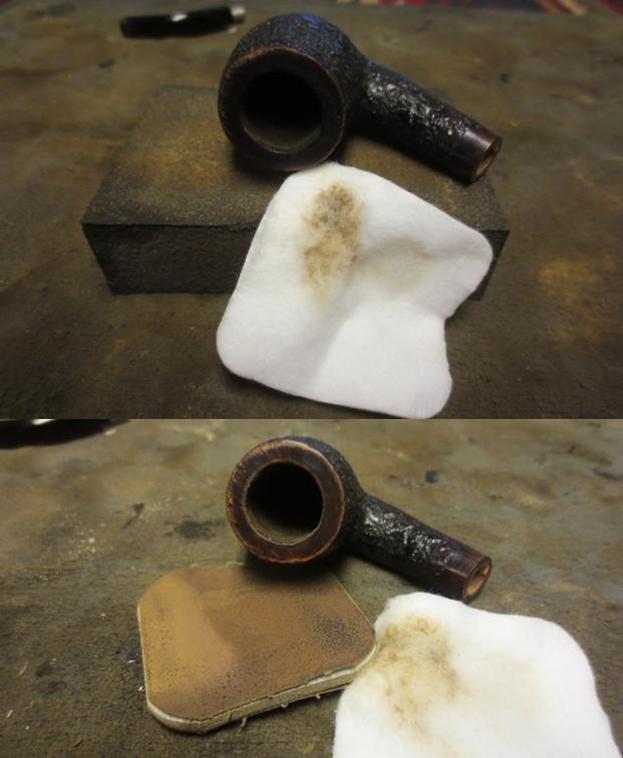
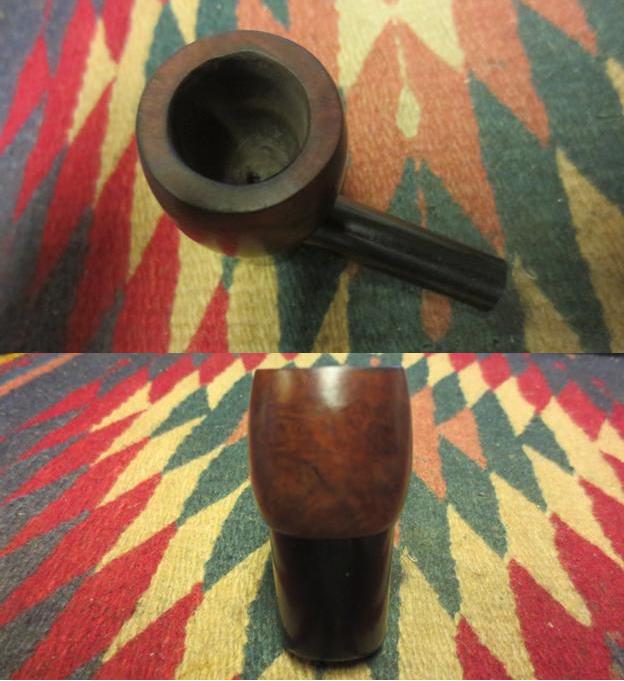
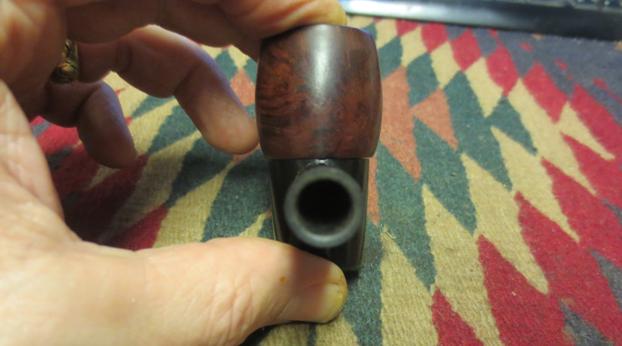
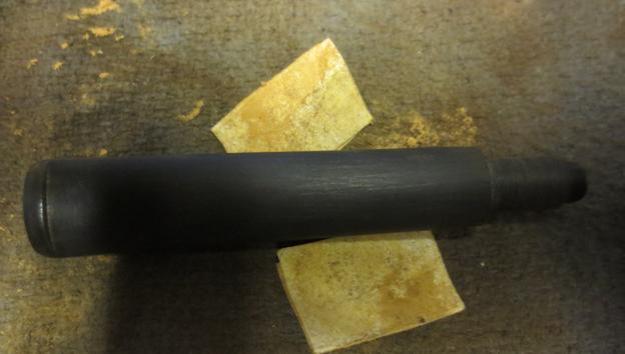
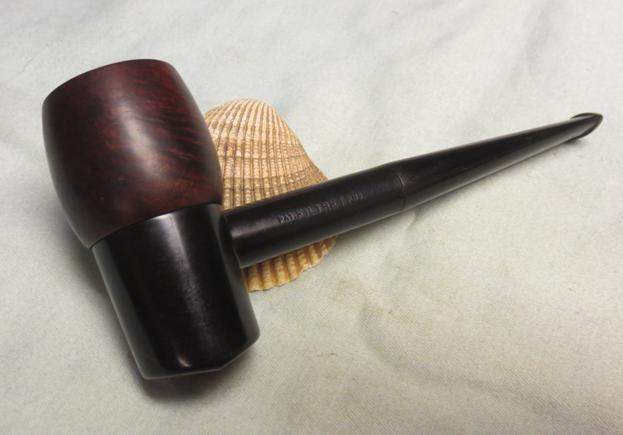
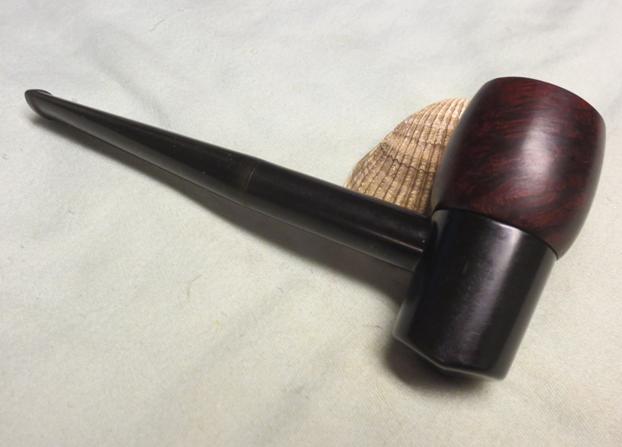
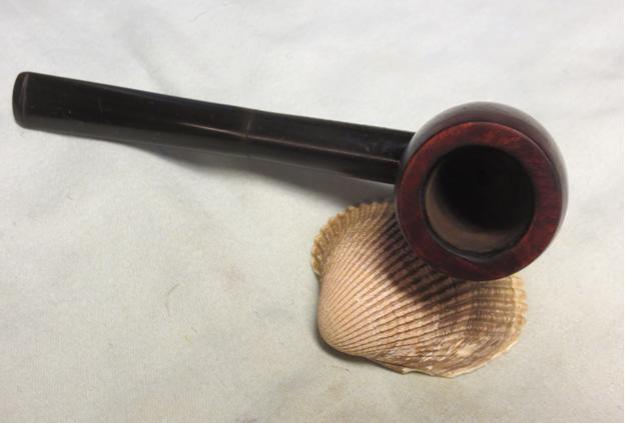
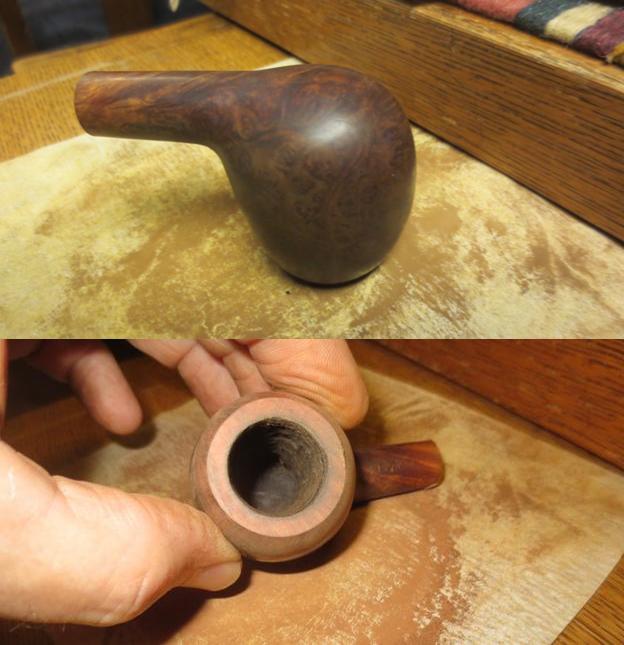
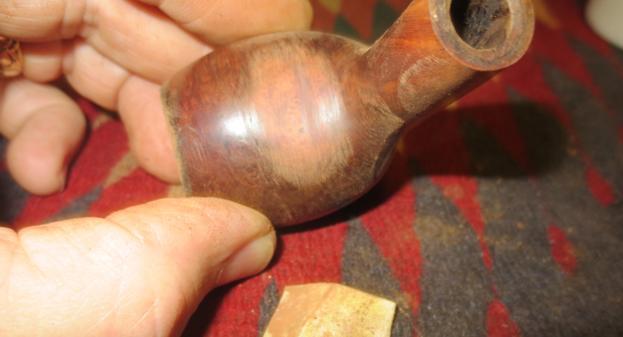
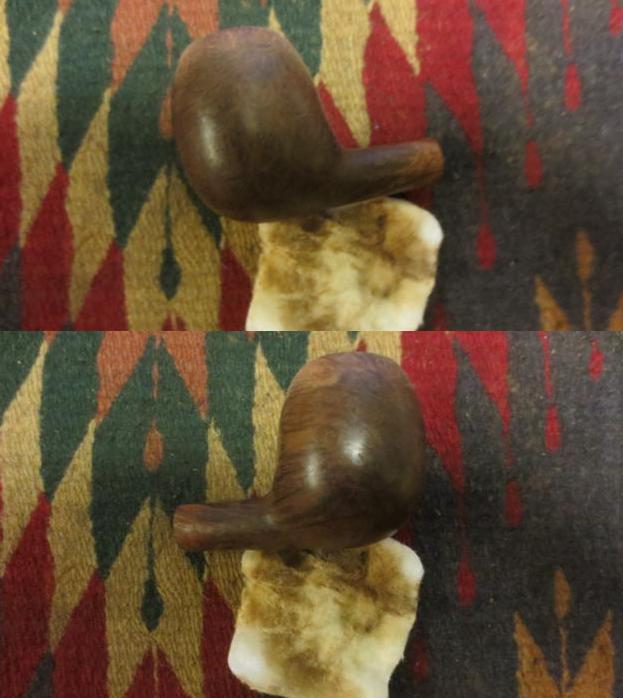
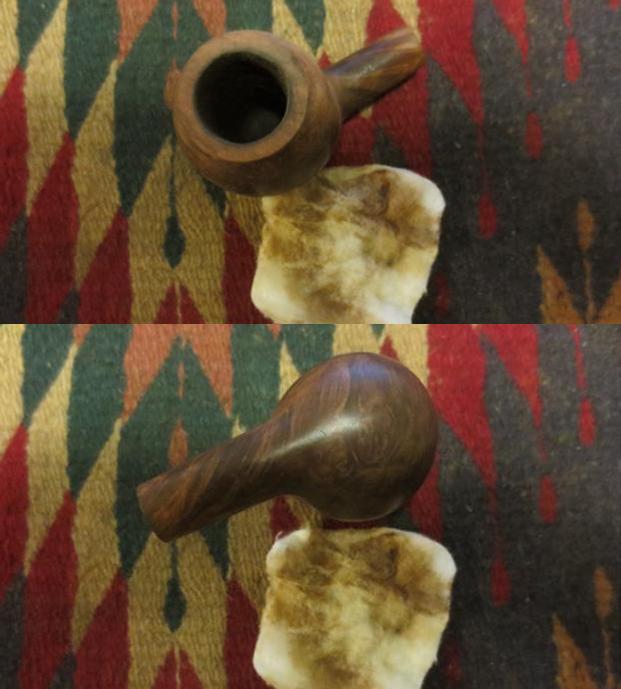
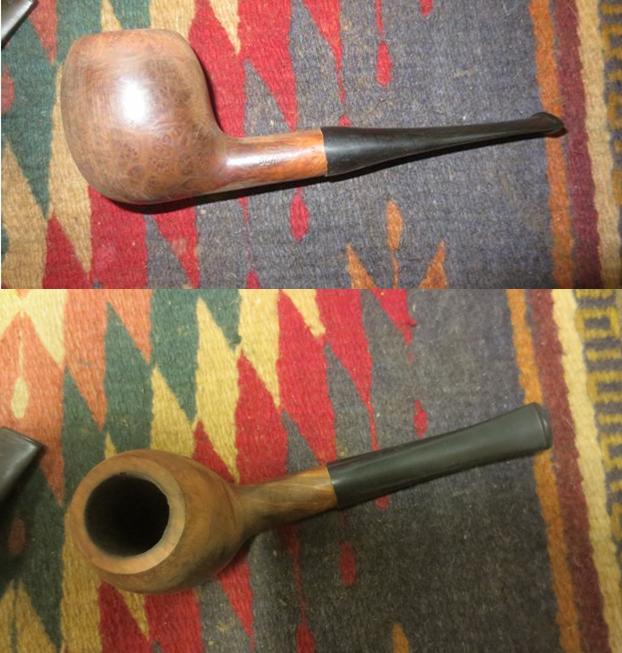
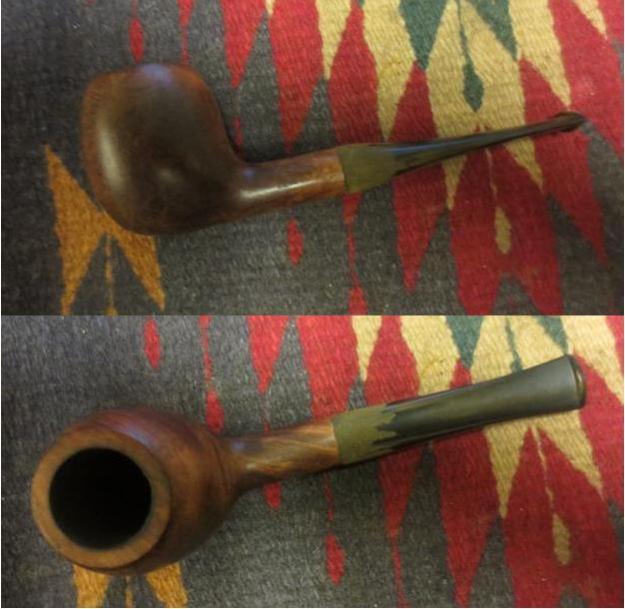
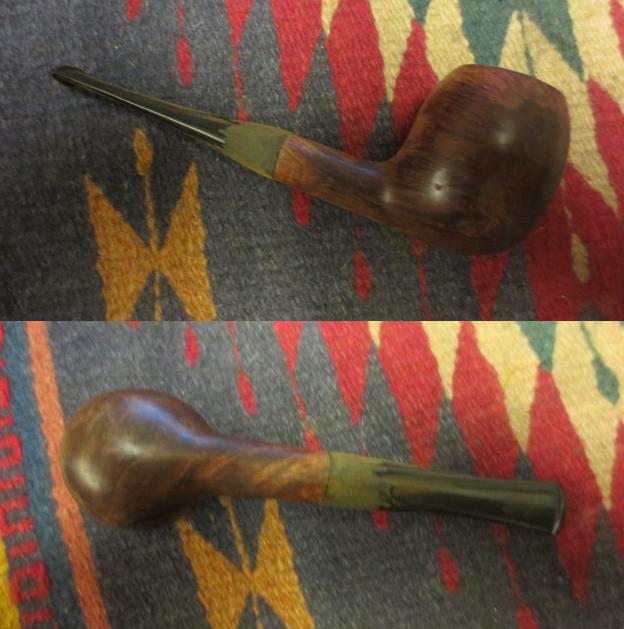
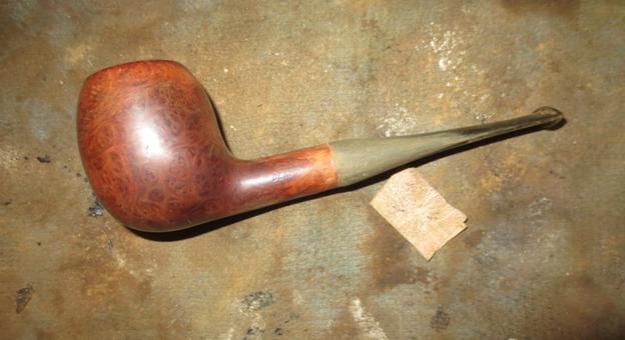
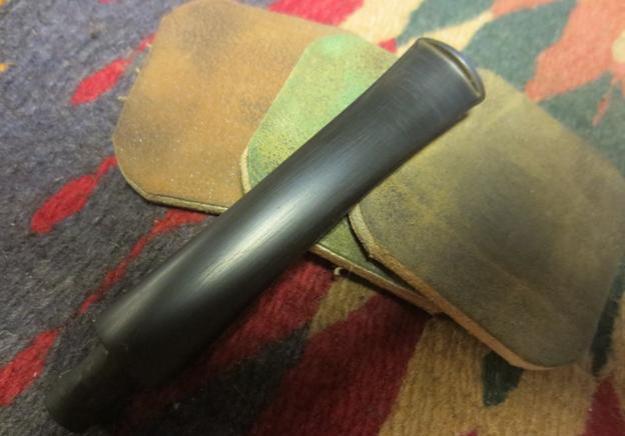
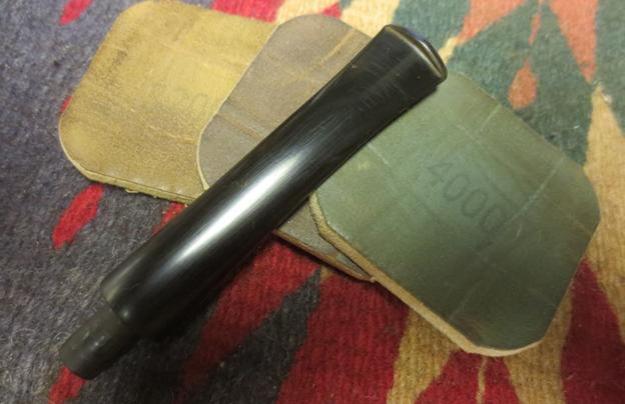
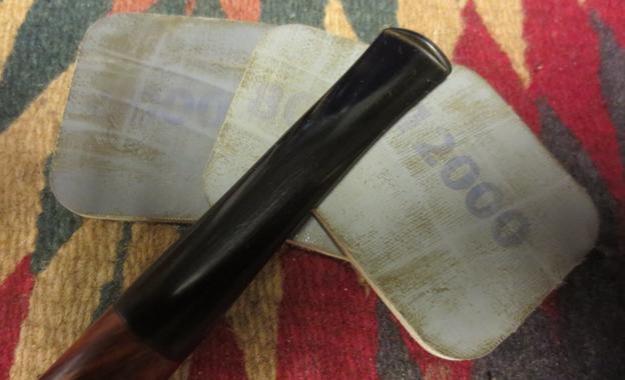
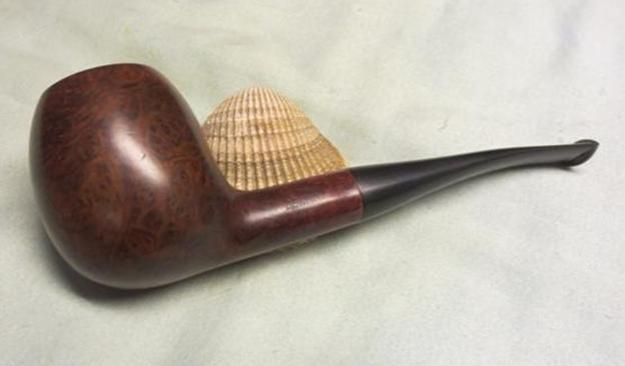
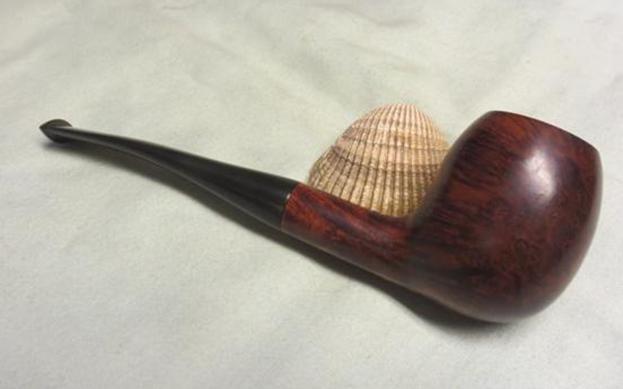
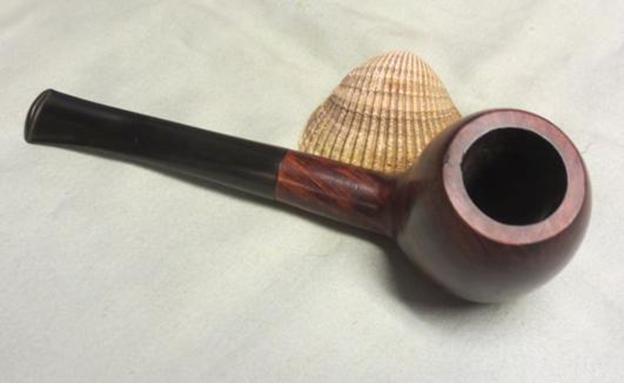
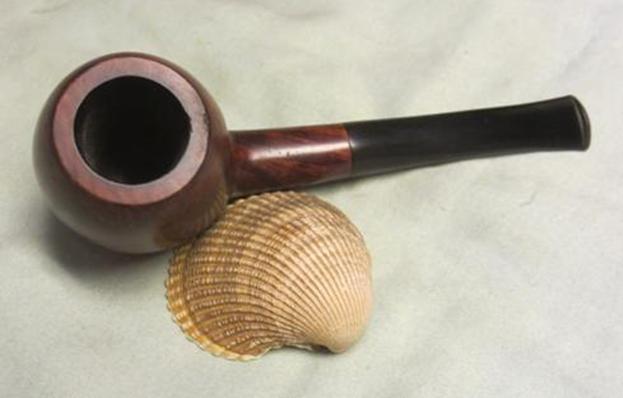
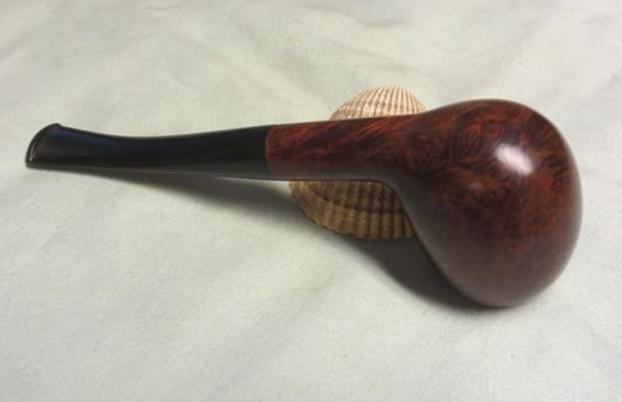
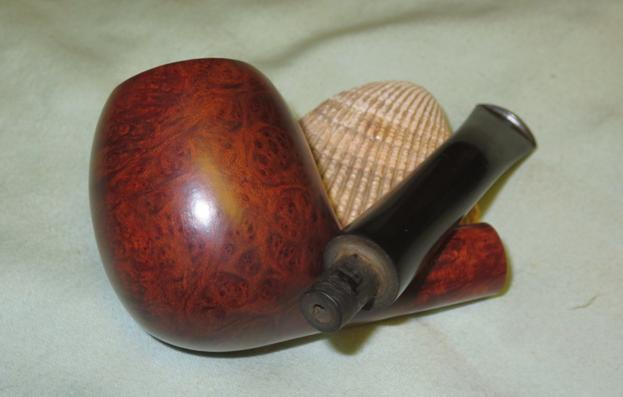
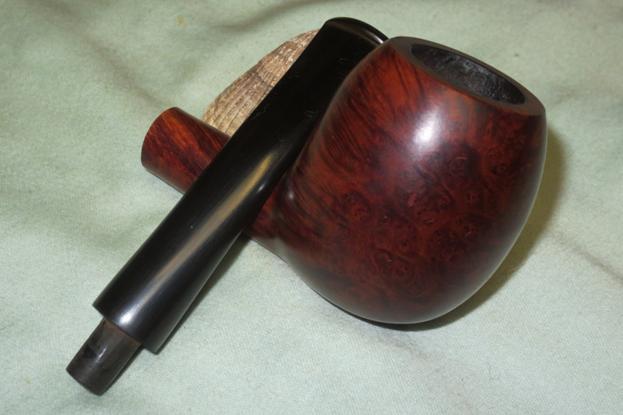
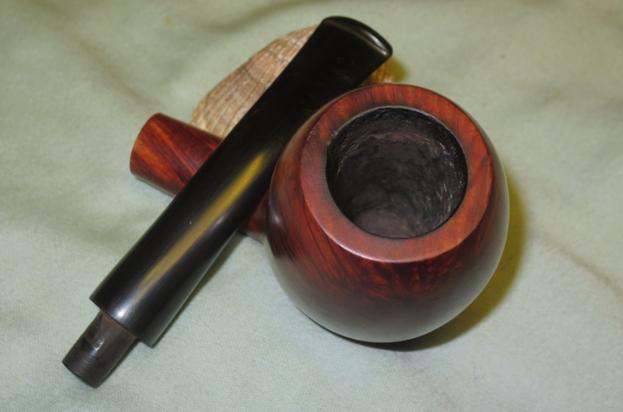
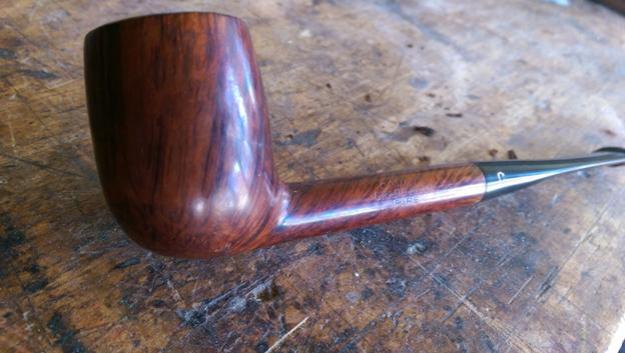
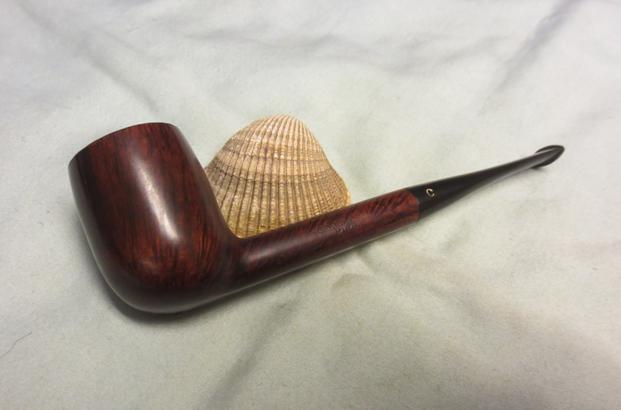
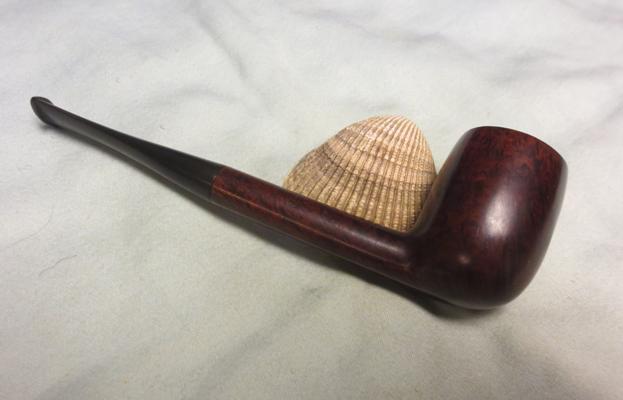
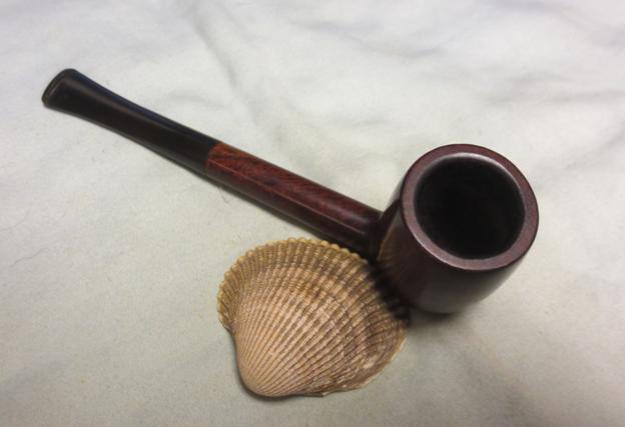
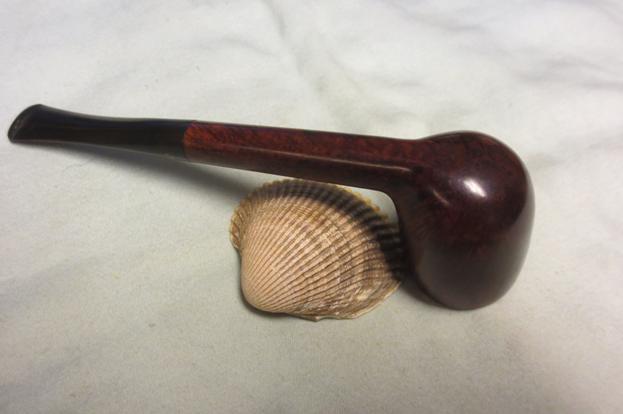
My brother sent me an eBay link that had a few pipes from Drucquer & Sons Ltd, Tobacconists for sale. We bid on several of them and this was one of the ones we won. It is a lot like the Pipo shaped pipes that are still made today. This one is English made and I have no idea what to call the shape. The photos taken on top of the pipe sock came from the seller.Dru1The pipe is stamped on the underside “DRUKE” over Drucquer & Sons Ltd. Underneath that it is stamped Berkeley with a shape number 187 below and toward the stem. Next to the shank/stem junction it is stamped Made in England. I have done some searching but cannot find either the shape or the number on the various English pipe brand charts.Dru2 Dru3When the pipe came to my brother he took some photos to capture the condition of the pipe before he cleaned it up for me. The next photo shows that the overall condition of the pipe is quite good. The finish is not too bad though there are some sand pits or nicks on the back side of the bowl. The rim is dark and oily. The bowl had a thin cake. The stem was oxidized and there was some tooth chatter on the top and bottom sides near the button.Dru4 Dru5He took a close up photo of the top of the bowl that shows the cake and the condition of the rim. It was covered with lava over flow but there appeared to be little rim damage other than a few shallow nicks on the outer edge of the rim.Dru6He reamed the pipe and scrubbed the exterior of the bowl with Murphy’s Oil Soap and a tooth brush. He was able to remove the majority of the rim darkening and all of the cake. The soap took off the grime on the finish so that when he sent me the pipe it was clean. The stem oxidized a bit more after the cleaning but it was not too bad. The pipe has some excellent grain around all sides of the bowl and shank. The next photos show the pipe as it was when it arrived in Vancouver.Dru7 Dru8 I took a close up of how the rim looked after my brother had cleaned it up. It was in decent shape with just some darkening and a few pieces of tar stuck to the surface.Dru9I wiped down the rim with a cotton pad and alcohol to remove the remnants and then sanded it with a folded piece of 220 grit sandpaper. I sanded it until the rim was clean and the bevel was smooth to touch. I sanded it with 1500-3200 grit micromesh sanding pads to remove any scratches left behind by the sandpaper.Dru10I wiped the pipe down with a light coat of olive oil and polished it by hand. The grain began to really stand out and the virgin finish looked good (the pipe had never been stained so the oil approximated what would have been there when the pipe was new).Dru11I sanded the stem with 220 grit sandpaper to remove the tooth marks and chatter on both sides of the stem. I wet sanded it with 1500-2400 grit micromesh sanding pads and gave it a coat of Obsidian Oil. I dry sanded it with 3200-4000 grit pads and gave it another coat of oil. I finished sanding it with 6000-12000 grit pads and gave it a final coat of oil. I set the stem aside to dry.Dru12 Dru13 Dru14I buffed the entire pipe with Blue Diamond on the wheel to polish the stem and the bowl. I gave it multiple coats of carnauba wax to protect and give it shine. I buffed it with a clean buffing pad to shine it and then hand buffed it with a microfibre cloth. The finished pipe is shown in the photos below. Does anyone know what to call this shape? Does anyone have a similar pipe or even the same one from Drucquer’s & Sons Ltd.? Thanks for looking.Dru14a Dru15 Dru16 Dru17 Dru18 Dru19 Dru20 Dru21 Dru22

Restoring an Old Bruyere Extra Floral Carved Bent Billiard


Blog by Steve Laug

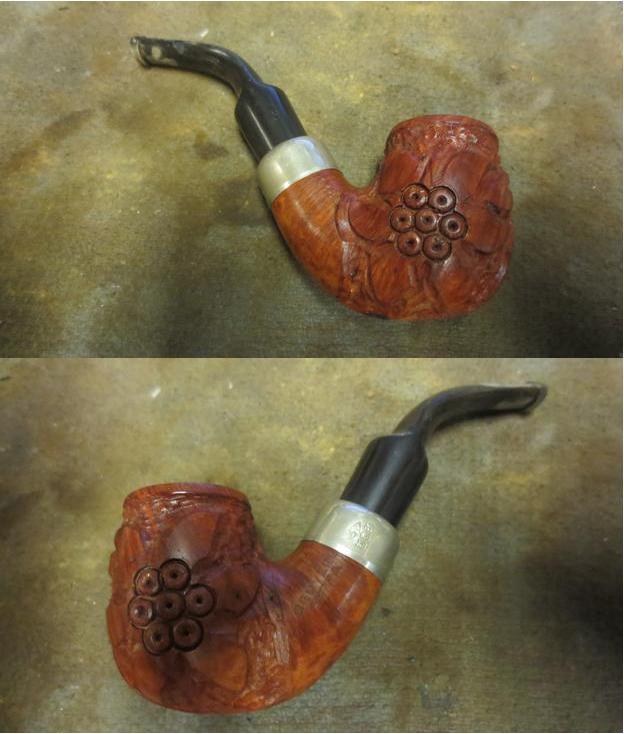
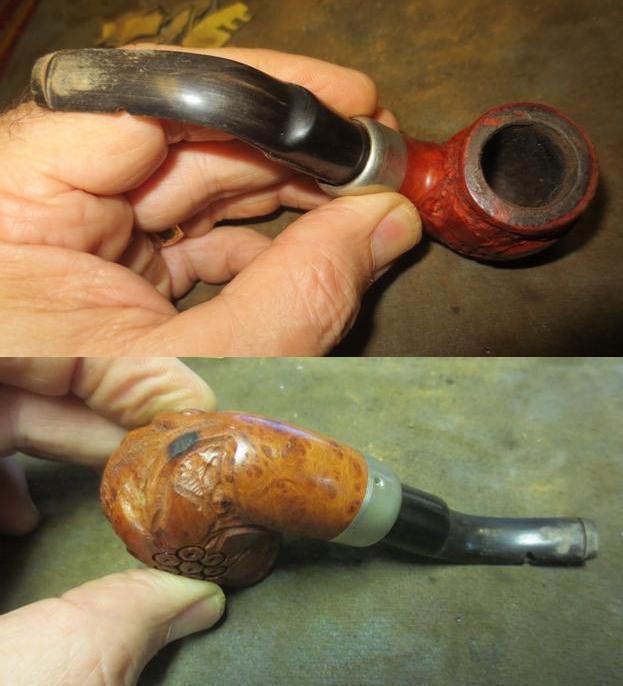
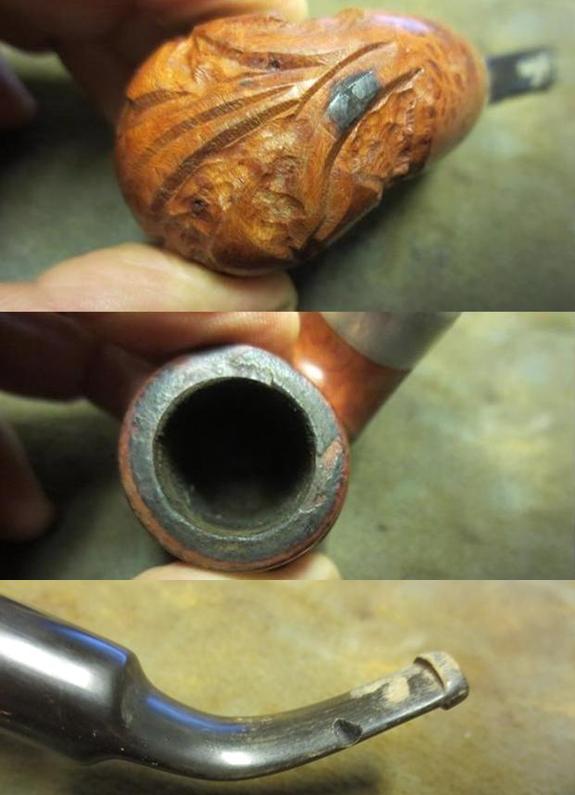
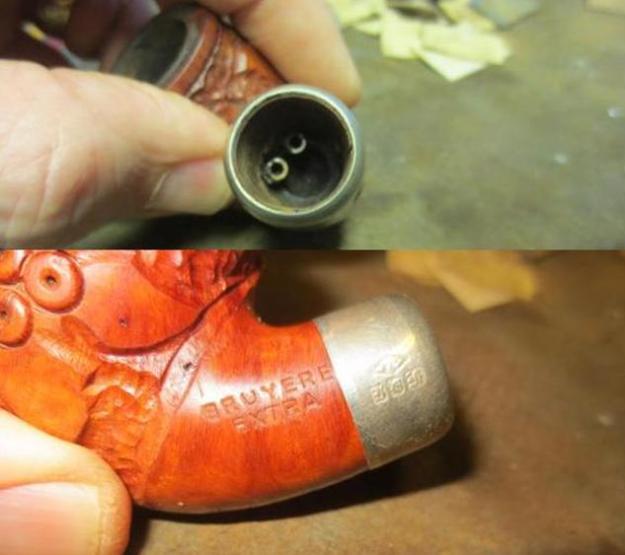
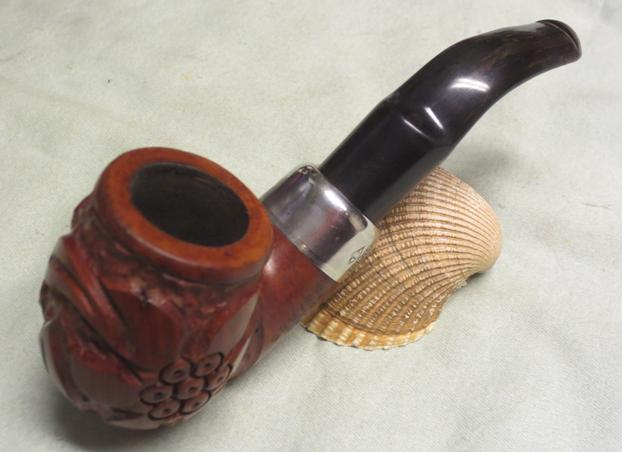
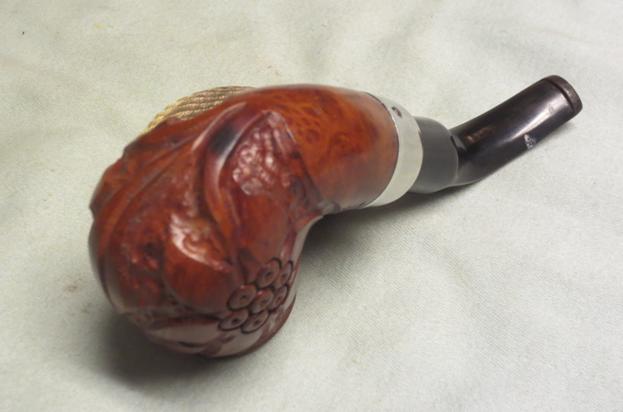
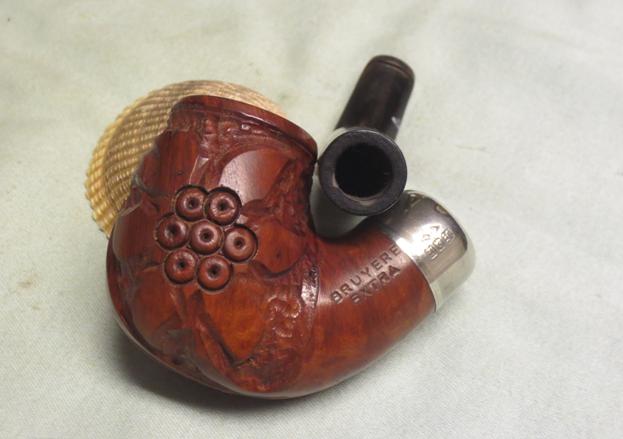
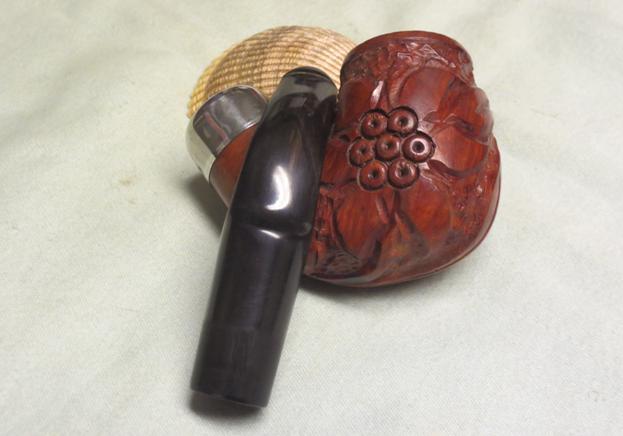
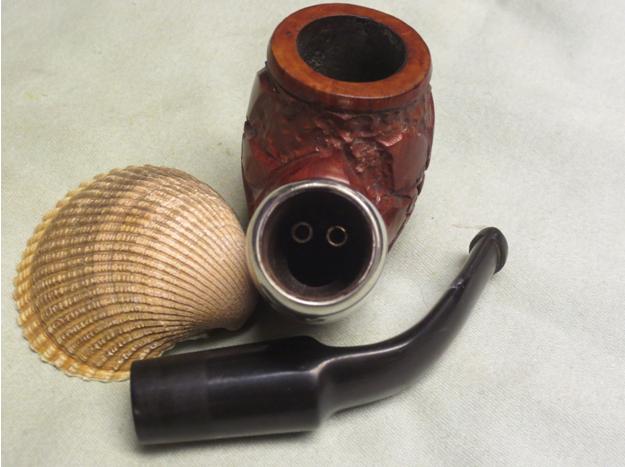
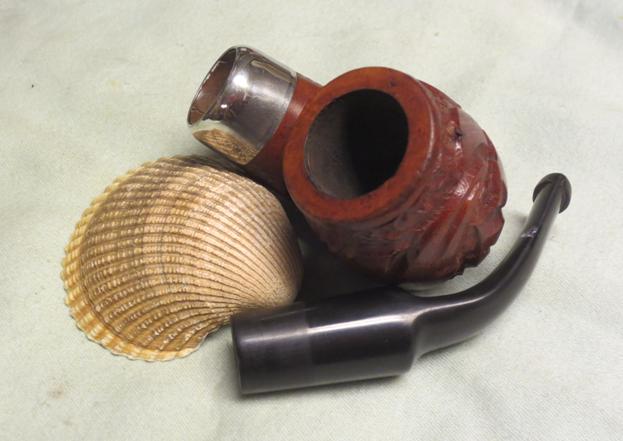
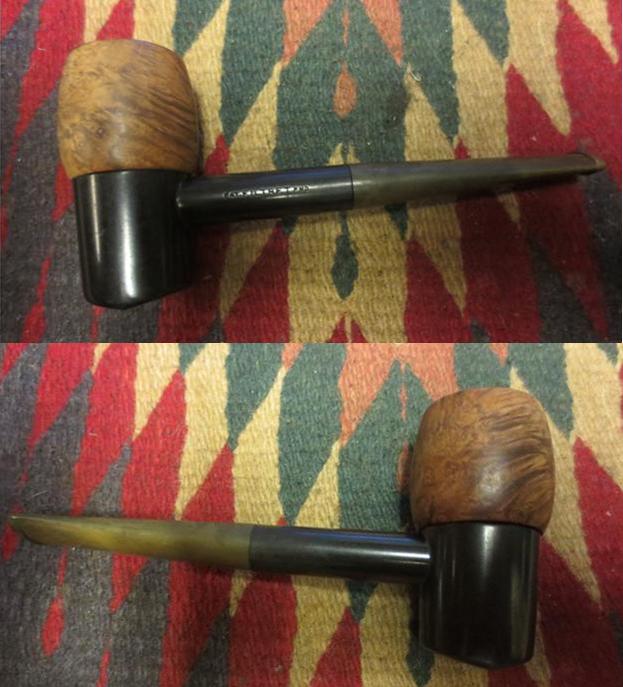
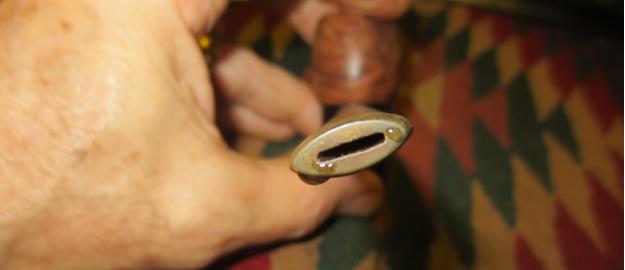
This interesting old pipe is unique in many ways. The first and most obvious is the floral pattern carved on the bowl sides and bottom. It is well carved and the petals and the leaves flow around the bowl. They sit against a rusticated finish in the gaps of the leaves and around the top of the bowl. There was one burn spot on the bottom of the shank where it looked as if the pipe had been set down in an ashtray and was burned. The second visible uniqueness is the horn stem with the orific button on the end. It had a little damage on the right edge of the stem but it was fixable. The third unique feature was not visible until I removed the stem. The stem had a large chamber in the saddle portion as did the shank. There were also two tubes at the end of the mortise and a collecting chamber or sump. The pipe was in pretty decent shape for its age. I can only hope that when I reach that age, if I am still around I will look as good.Bru1My brother Jeff had reamed the bowl and done the initial clean up. He had scrubbed the surface of the bowl and the shank. It is great that he is doing that part of the job for me as it speeds up the process that I do in the restoration. The rim had some hard cake built up on the surface. There was a burn spot on the bottom of the shank that is visible in the second photo below.Bru2I took some close up photos of the areas that needed work. The first photo shows the burned spot. Fortunately the burn had not softened the wood too much. It was hard when I probed it with a dental pick. The second photo shows the hard cake on the rim. It is quite thick but the rim appears to be undamaged and the inner and out edges of the rim are in great shape. The third photo shows the damaged portion of the right edge of the stem. I have seen these often on horn stems and have always wondered if it was not damage done by a worm eating the horn.Bru3I took several more close up photos. The first photo shows the two inner tubes that enter the bowl in two spots at the bowl bottom. It is a twin bore airway. The second photo shows the stamping on the left side of the shank – it reads Bruyere Extra. The right side of the shank is stamped with the shape number 6185. The band has three hallmarks and EP in a diamond. The hallmarks are letters, each in a car-touche. My guess is that these signify the maker.B

The letters are JBF and look like the ones I have pictured to the left.

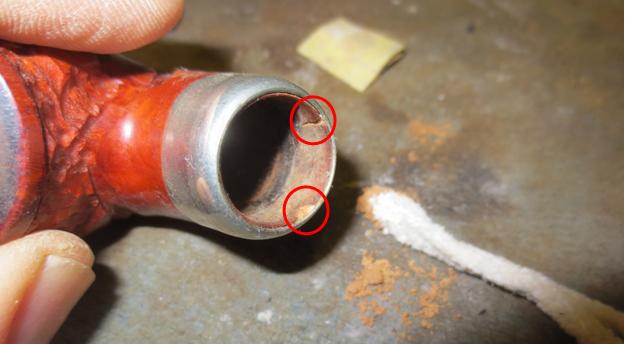
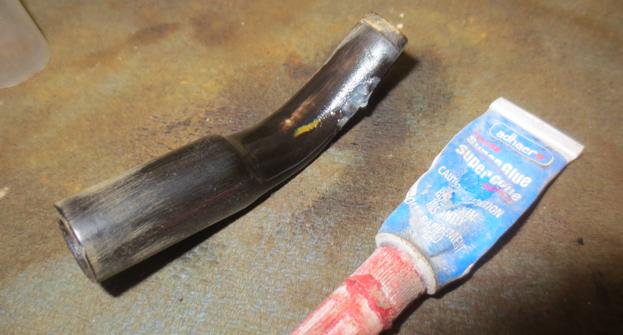
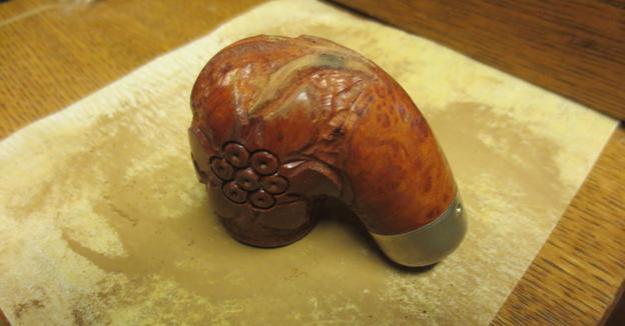
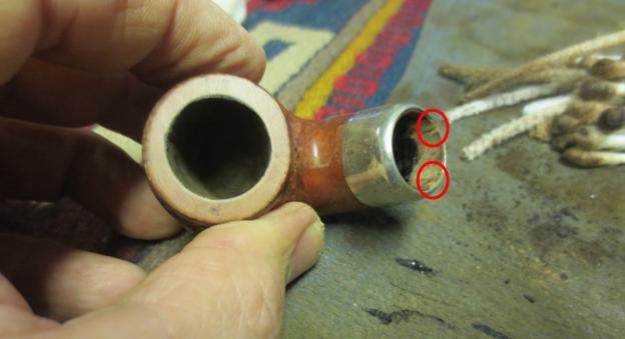
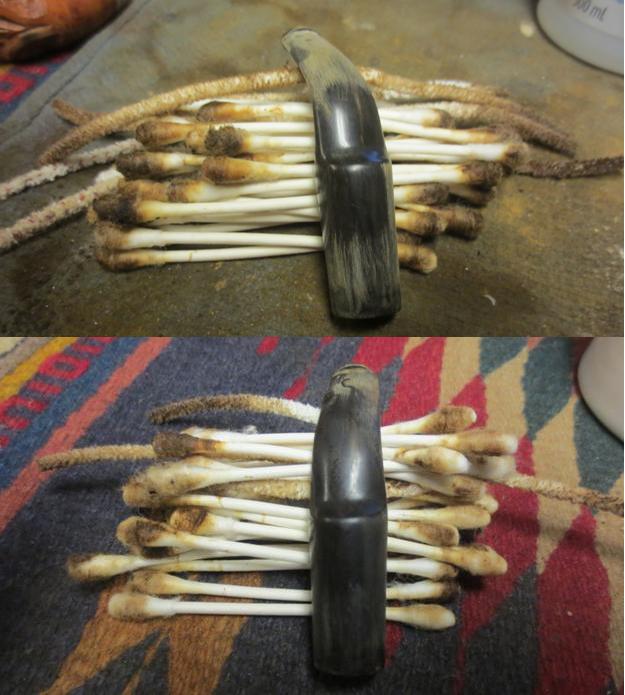
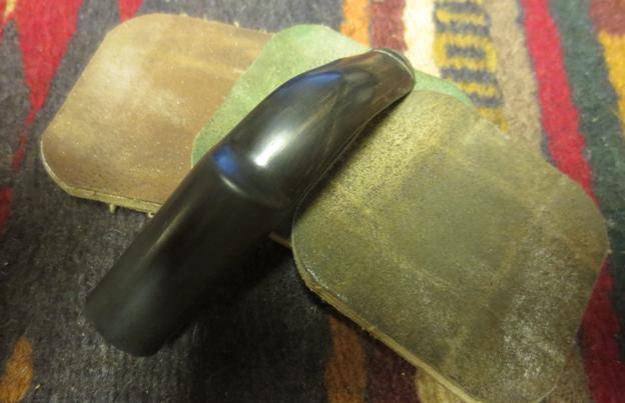
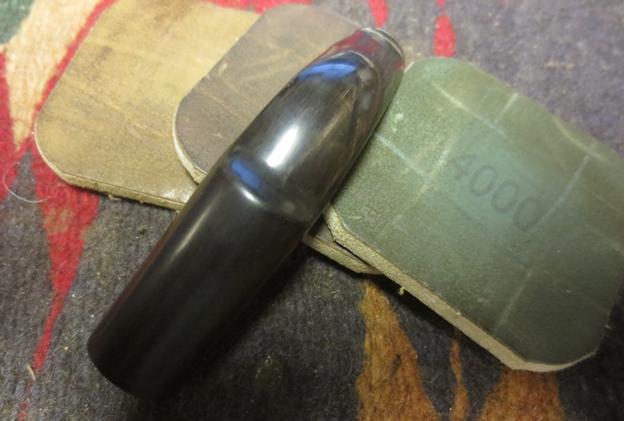
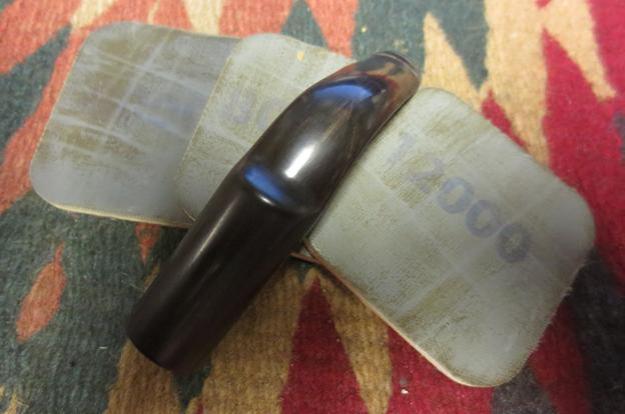
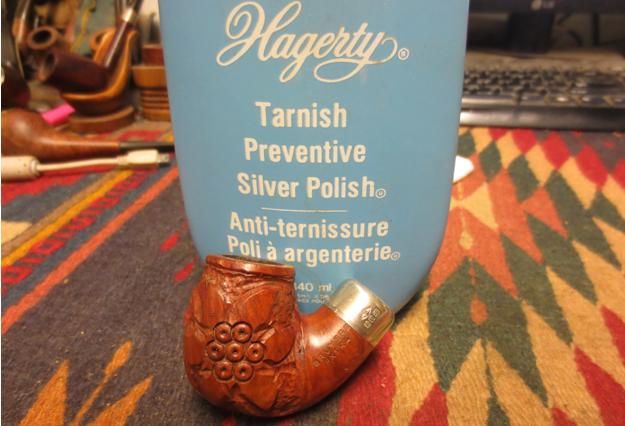
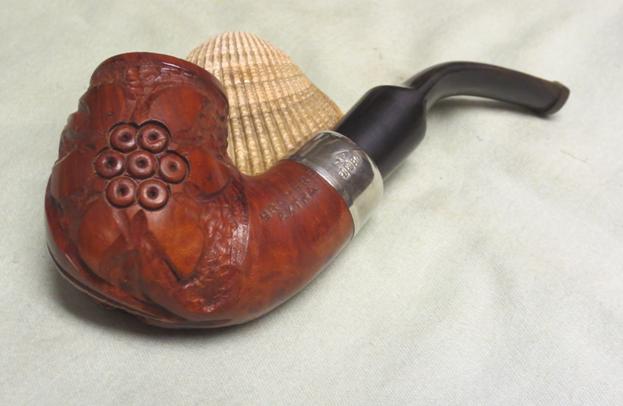
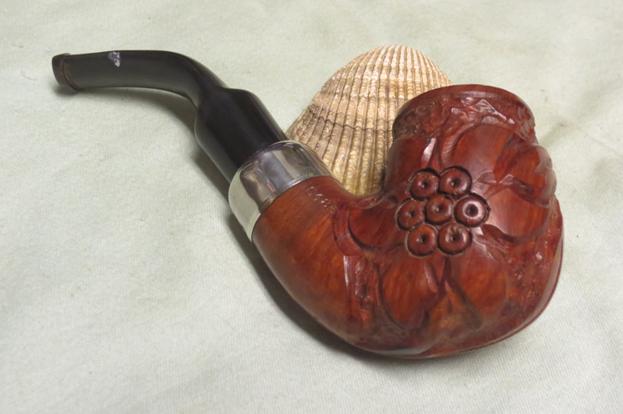
Bru4The inside edge of the briar was thin in several spots. The two that were the most problematic can be seen on the bottom edges of the shank on the right side of the photo below. I have circled the two spots in red. The top one was missing a wedge of briar and the bottom was a half circle of briar. Both were repairable with briar dust and wood glue.Bru5I decided to work on the stem repair first. I cleaned the area on the horn with alcohol and a cotton swab and then filled it in with clear super glue. For some reason this time around the repair turned white. That has never happened for me. Generally the glue dries clear and the underlying colour of the horn shines through. I set the stem aside to let the glue cure.Bru6The tars and oils were almost petrified on the top of the rim. I had soaked the rim with alcohol to try to soften them with no success. I decided that the best option was to lightly top the bowl until the hard tars were gone. I used a topping board and 220 grit sandpaper to remove the buildup. I sanded the burned area on the bottom of the shank at the same time to remove the surface damage to the briar. I sanded it until the briar was darkened but solid.Bru7Once the rim was clean I sanded it with 1500-3200 grit micromesh sanding pads to smooth out the scratches left behind by the topping of the bowl. I scrubbed out the sump and the open mortise with cotton swabs and alcohol until it was clean. I cleaned out the twin bore tubes with pipe cleaners and alcohol. I used an all purpose wood glue and briar dust to build up the two spots on the inside of the shank and sanded them smooth. They are circled in red in the photo below.Bru8I sanded the repair to the horn with 220 grit sandpaper and sanded the tooth marks and chatter on the top and bottom of the stem until it was smooth. I cleaned out the chamber in the stem with pipe cleaners, cotton swabs and alcohol until it was clean. I had to do two full cleanings remove the tars in the chamber. The first photo below shows the stem after the first cleaning. The second photo shows the second cleaning. It took a lot of cotton swabs to clean out the chamber. I don’t like to boil hot alcohol through horn stems with the retort as I do not want to damage the stem.Bru9With the inside of the stem clean I sanded the exterior with micromesh sanding pads. I wet sanded it with 1500-2400 grit pads and rubbed it down with Obsidian Oil. I dry sanded it with 3200-4000 grit pads and gave it another coat of oil. I finished sanding it with 6000-12000 grit pads and gave it a final coat of Obsidian Oil.Bru10 Bru11 Bru12I polished the Electro-Plated silver end cap with silver polish to remove the tarnish and restore the shine. I stained the rim with a light brown stain touch up pen to match the colour of the rest of the bowl.Bru13I gave the bowl several coats of Conservators Wax and hand buffed it with a shoe brush. I buffed the stem with Blue Diamond on the wheel and then gave the bowl and stem several coats of carnauba. I had a light touch on the bowl so it did not clog up the carvings. I buffed the pipe with a clean buffing pad to shine it and then hand buffed it with a microfibre cloth. The finished pipe is shown in the photos below. Have any of you seen a pipe with plumbing like this one? Do you recognize the hallmarks or the brand or shape number? Let me know as I am curious. Thanks for looking.Bru14 Bru15 Bru16 Bru17 Bru18 Bru19 Bru20 Bru21


A Large Ben Wade Royal Grain Freehand brought back to life


Blog by Steve Laug

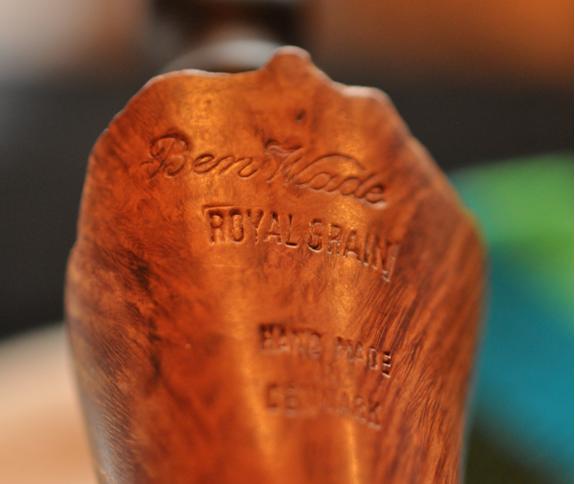
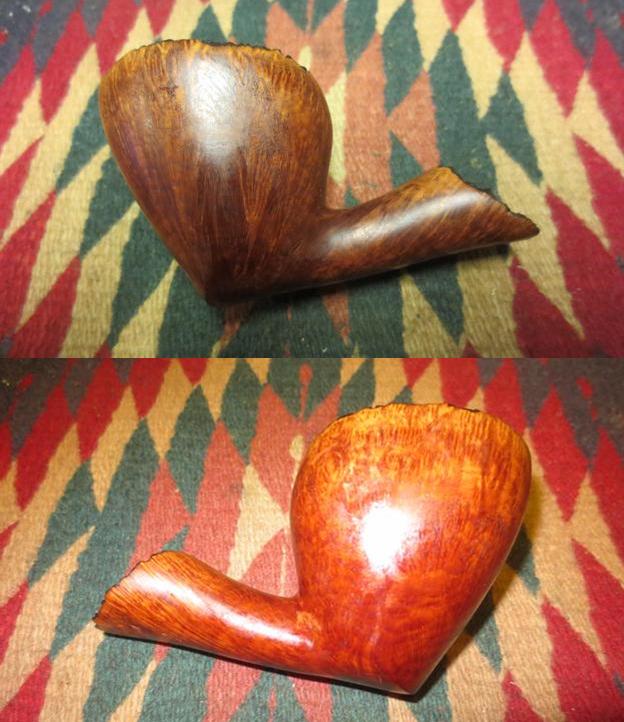
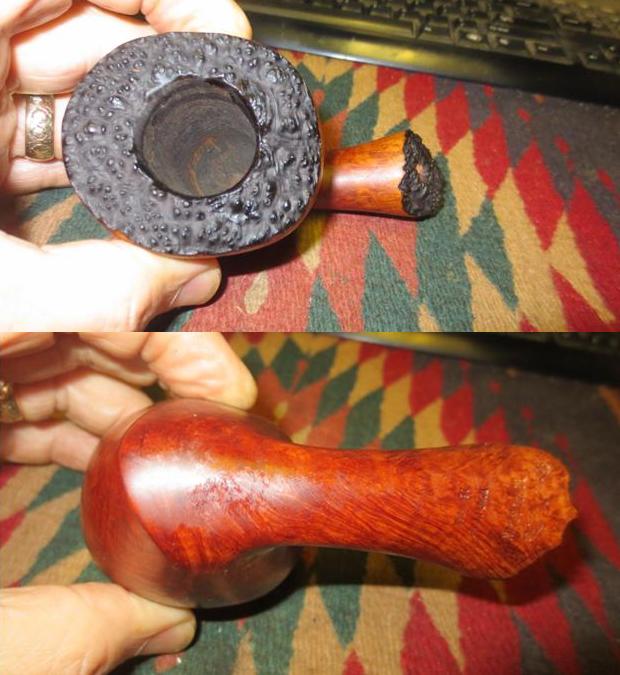
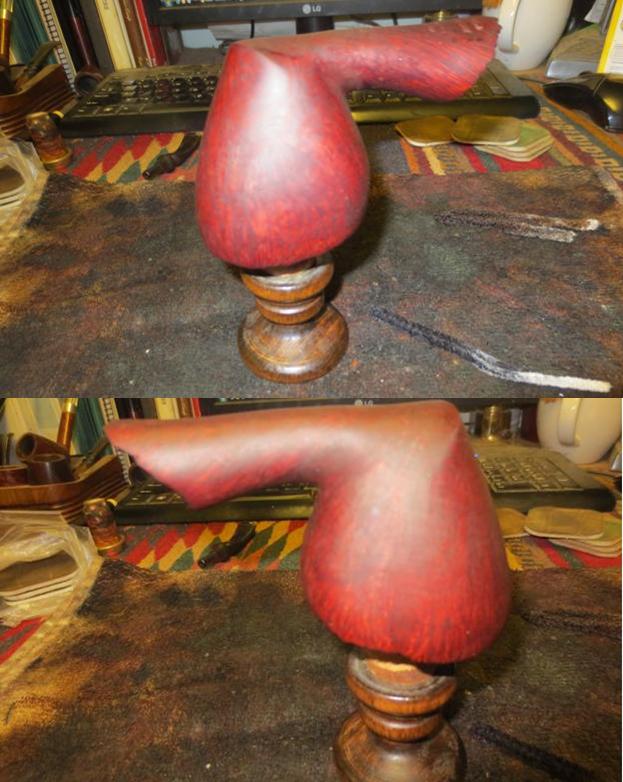
One of the recent acquisitions that my brother sent me is a beautiful freehand briar pipe. The briar is a piece of plateau with mixed flame and straight grain. The plateau is on the top of the bowl and also the end of the shank. The plateau was faded with most of the dark stain washed out. The smooth portions of the bowl were also faded and washed out. The stem was oxidized and had deep teeth marks on the top and the bottom of the stem near the stem. There were some scratches on the bowls sides but none of them were deep. The bowl was large – 1 inch in diameter. The inside of the bowl was also quite clean. The photos below show what the pipe looked like when my brother received it.Ben1 Ben2The pipe is stamped Ben Wade over Royal Grain over Hand Made in Denmark. The stamping is clear and readable.Ben3The next photo shows some of the scratches in the bowl. They are not deep but they are visible.Ben4My brother scrubbed the briar with Murphy’s Oil Soap and a soft tooth brush. He rinsed it under running water and cleaned out the interior with pipe cleaners, cotton swabs and alcohol.Ben5 Ben6I took a close up photo of the plateau rim. It is clean and undamaged. I took a close up photo of the stamping on the shank as well. The grain and the stamping are in great shape.Ben7 Ben8I stained the plateau on the rim and the shank with black aniline stain and flamed it to set it in the grain. I used a pipe cleaner to apply the stain because the fuzz on it went into the grain and high spots. I find that it works amazingly well to apply the stain.Ben10I wiped down the bowl with a little bit of olive oil to see what the grain looked like and also so I could sand the bowl with micromesh sanding pads. I sanded it with 1500-4000 grit sanding pads until it was smooth.Ben11 Ben12Once I had sanded the scratches out of the grain I stained it with a mixture of dark brown stain and alcohol – 50/50 mixture. I flamed it and repeated the process until the coverage was good. I kept the brown stain off of the plateau areas of the bowl and shank.Ben13My brother washed the stem with Murphy’s Oil Soap and rinsed it off. The oxidized stem has deep tooth marks on the top of the stem that crossed the top of the stem and the button on the left side. The underside had three deep grooves in it that did not penetrate into the airway. The fact that they did not break through into the airway was the only real blessing in the mess.Ben14I sanded the stem to smooth out the oxidation and to remove the debris around the tooth marks. I wanted the stem area clean so that I could patch it. I used black super glue and let it dry for one hour and then sprayed it with an accelerator to harden it.Ben15I used a needle file to recut the button edges and clean up shape of the button. I sanded it with 220 grit sand paper to remove the excess black super glue patch and blend it into the surface of the stem. The Ben Wade Crown stamp was faint but still slightly visible. I planned on maintaining it as much as possible.Ben16I wet sanded the stem with 1500-2400 grit micromesh sanding pads and rubbed it down with Obsidian Oil. I dry sanded the stem with 3200-4000 grit pads and gave it another coat of oil. I finished sanding it with 6000-12000 grit pads, gave it a final coat of Obsidian Oil and set it aside to dry.Ben17 Ben18 Ben19I buffed the bowl and stem with Blue Diamond on the buffing wheel and then gave the bowl and the stem multiple coats of carnauba wax. I buffed it with a clean buffing pad to raise the shine. I finished by hand buffing it with a microfibre cloth to deepen the shine. The finished pipe is shown in the photos below. It is a large pipe. The dimensions are: length – 7 inches, height – 2 ½ inches, inside diameter of the bowl – 1 inch, outside diameter of the bowl – 2 ½ inches. If this beauty is of interest to you send me a message or leave a response below. It could easily be added to your rack and provide years of service. If it is anything like my Ben Wade Freehand this is likely to be great smoking pipe. Thanks for looking.Ben20 Ben21 Ben22 Ben23 Ben24 Ben25 Ben26

A Picadilly Brand Genuine French Rustique Briar Pipe


Blog by Steve Laug

The second box that was labeled Picadilly Brand Genuine French Rustique Briar Price $15 had one lonely pipe left in it after I had combined the pieces in the first boxed set and cleaned up the Berkeley Club billiard. This one was the only one that actually belonged in the set. It is marked as the others had been on the left side of the shank. It reads Real Briar in script over Made in France stamped in a smooth part of the shank. This one had been smoked, though lightly. The bowl had a light cake and the rim top was covered in tar and oils with a slight build up. The stem had tooth chatter on the Redmonal/Bakelite top and bottom sides near the button. The alignment was perfect on this one. Real1I took some photos of the pipe before I cleaned it up to show the condition it was in when I started. It was a really clean pipe compared to many of the ones that I work on. It would be an easy cleanup.Real2 Real3I took a close up photo of the rim top to show the cake and the build up on the rim. I also took some close up photos of the stem to show the tooth chatter and the metal tenon on this pipe.Real4 Real5I scraped out the light cake with a Savinelli Pipe Knife.Real6Rather than top the bowl and start over with the finish I used a medium grit sanding block to remove the tarry build up on the rim top. I scrubbed it down with a cotton pad and alcohol and then followed that by sanding the top with a 1500 grit micromesh sanding pad.Real7 Real8I touched up the stain on the rim with a dark brown stain pen.Real9I cleaned out the mortise and the airway in the shank and the stem with a cotton swabs, pipe cleaners and alcohol.Real10I sanded the stem with 220 grit sandpaper to remove the tooth chatter and marks on the top and the bottom sides. I wet sanded it with 1500-2400 grit micromesh sanding pads to begin polishing them I gave it a coat of Obsidian Oil. I dry sanded it with 3200-4000 grit pads. I gave it another coat of oil. I finished sanding it with 6000-12000 grit pads, gave it a final coat of oil and set it aside to dry.Real11 Real12 Real13 Real14I gave the bowl and stem several coats of Conservator’s Wax and buffed it with a shoe brush. I lightly buffed the bowl and stem with a clean buffing pad. I hand buffed it with a microfibre cloth. I put the pipe back in its case while I continue to look for the rest of the set to complete a second boxed set. The finished pipe is shown in the photos below. It is a beauty. Thanks for looking.Real15 Real16 Real17 Real18 Real19 Real20

Another for the strange but true hunt for a Cooler/Drier Smoker Collection


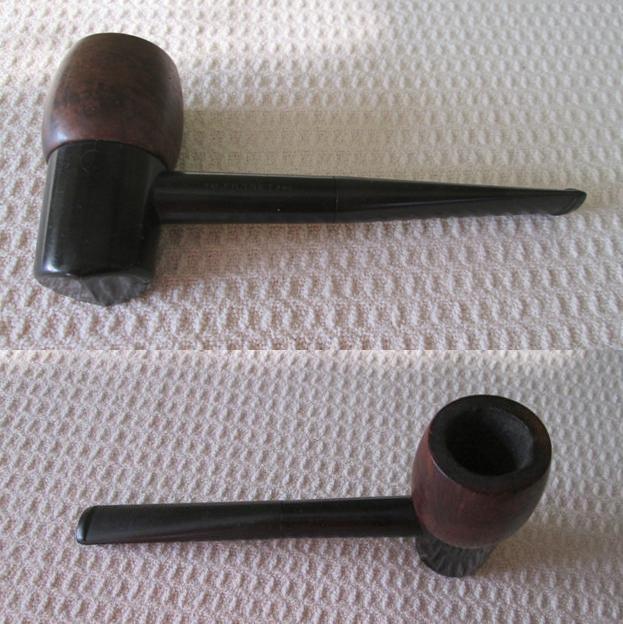
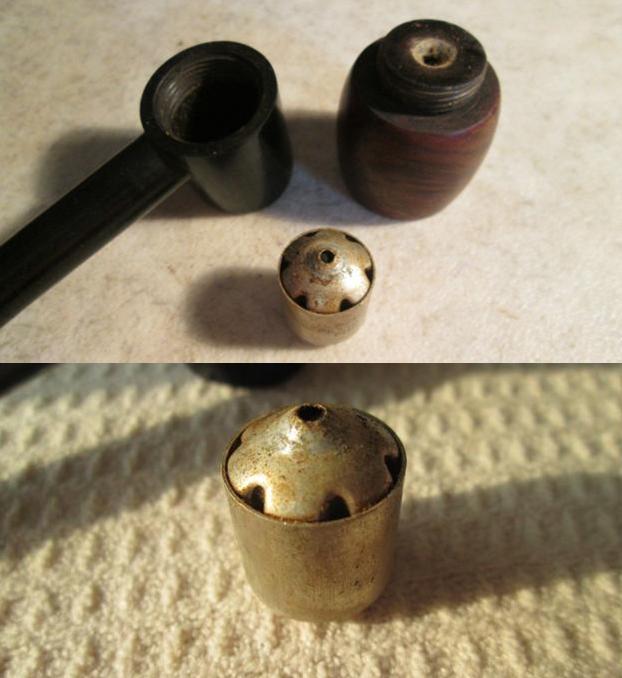
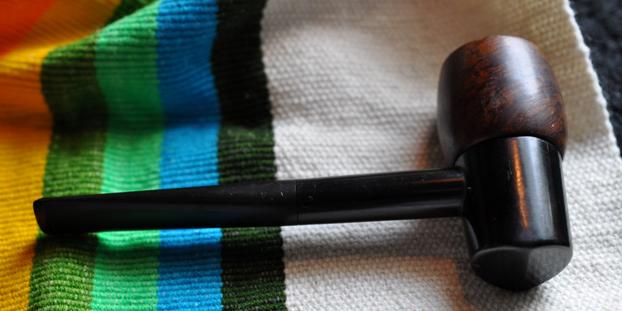
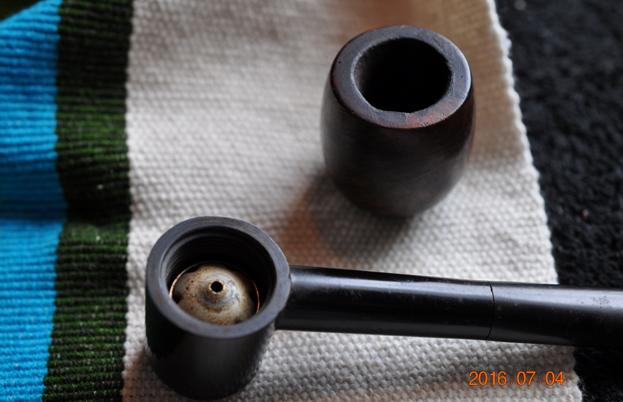
Blog by Steve Laug

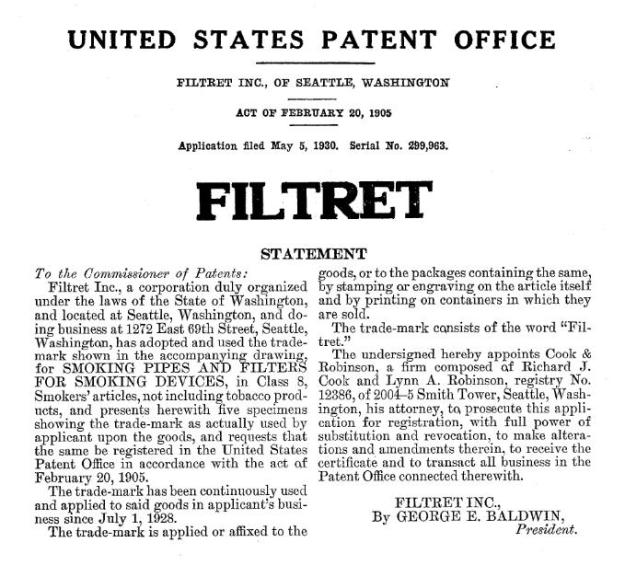
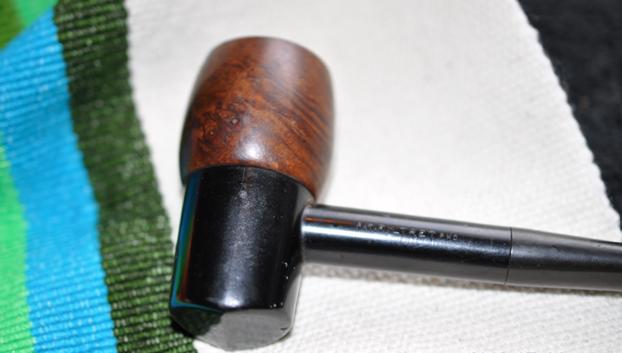
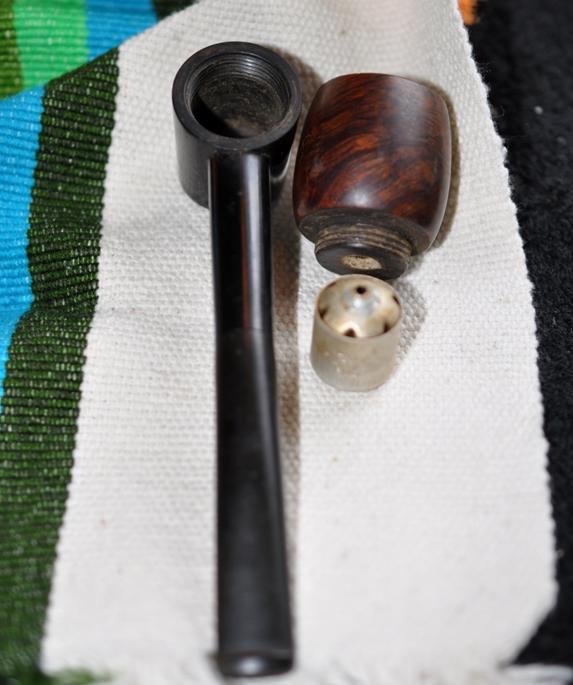
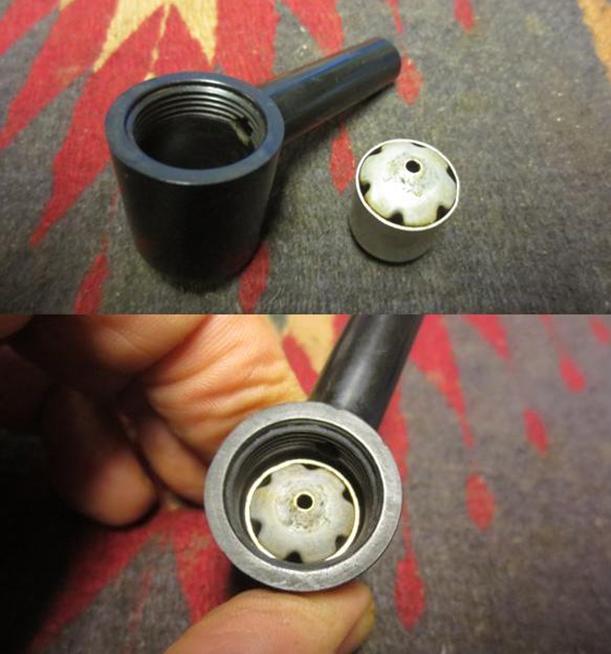
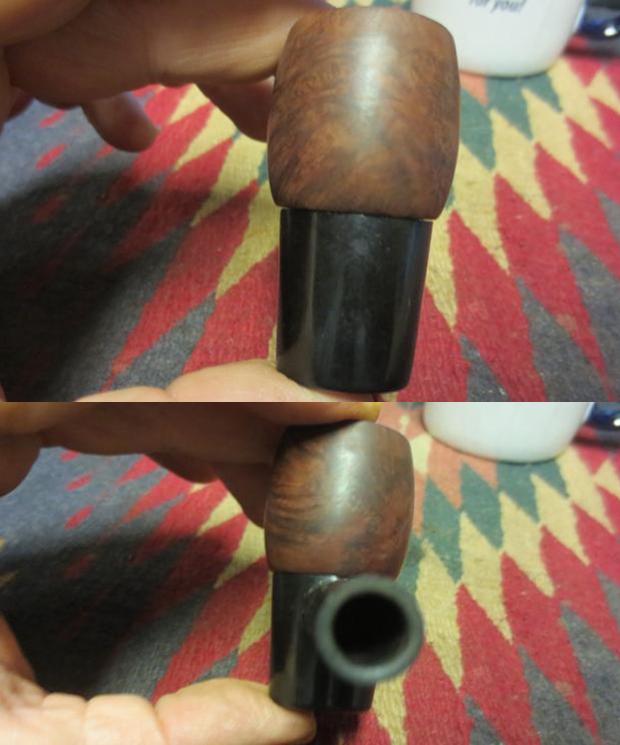
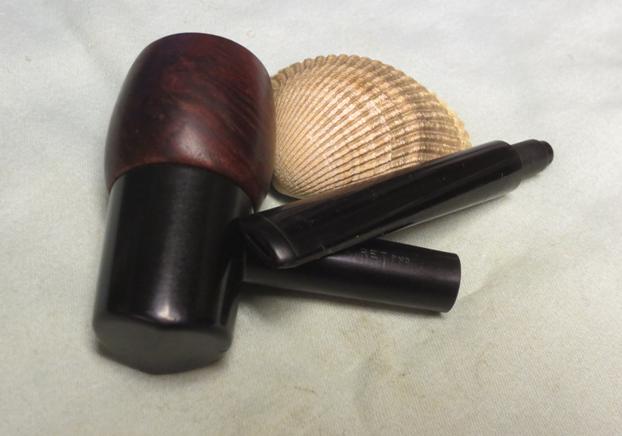
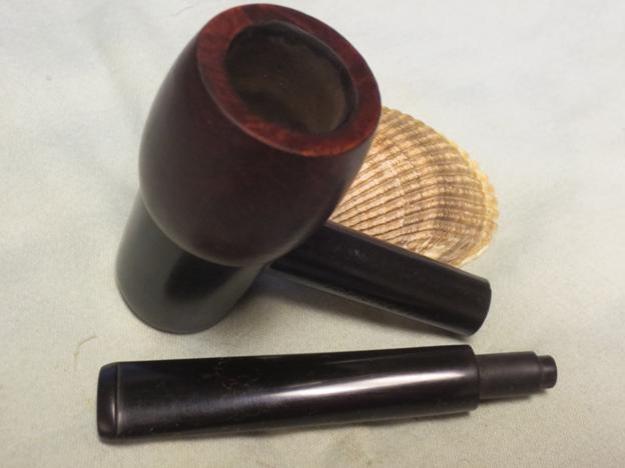
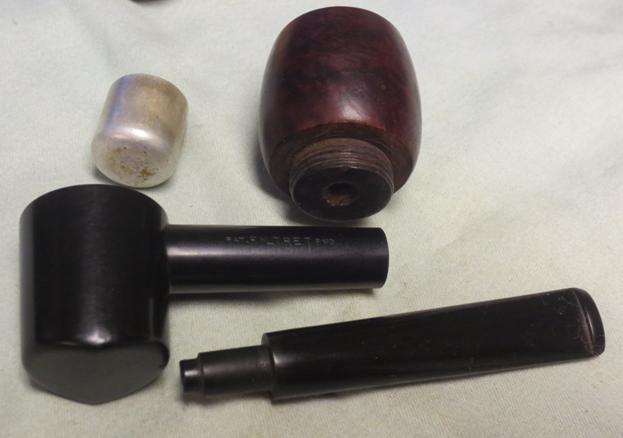
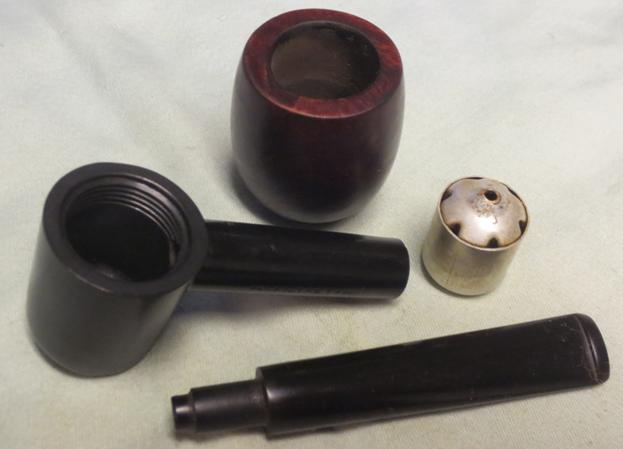
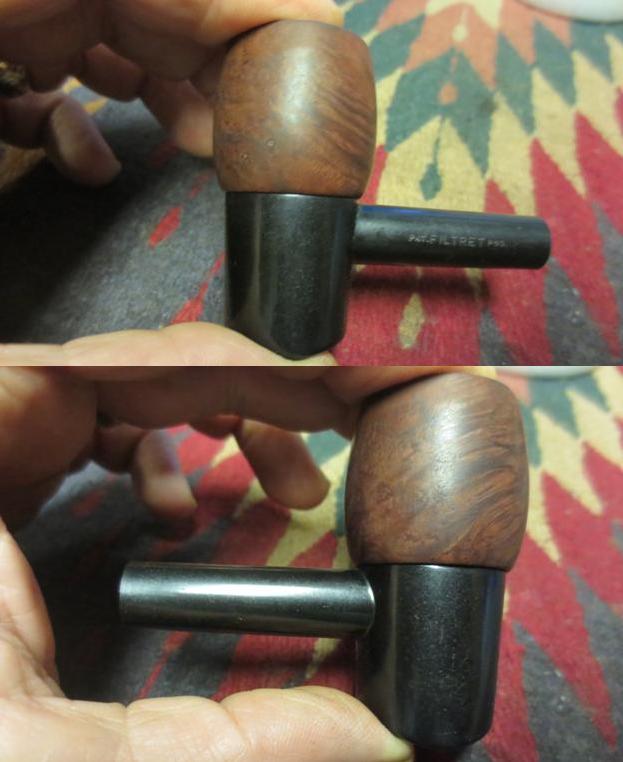
My brother sent me the links to this sale on EBay and I was hooked. It is probably the oddest pipe contraption I have seen in the many pipes that formed the pipeman’s dream of a cooler, drier smoke. There have been many over the years that vied for the oddest looking contraption but to date this one takes the prize. I have a few in my own oddity collection that would give this one a fair run for its money but I think this one is still by far the strangest. The T shaped look of the pipe is one thing but once it taken apart it is even odder. The only normal part of the pipe is the vulcanite stem. The Bakelite shank ends in a dropped down base that is part of the shank. It is as big as the briar bowl on the top.Filt1Inside the base is a metal canister contraption that has six wedge shaped holes around the edges and a single hole in the crowned centre. The crowned centre meets the hole in the bottom of the threaded briar bowl which is indented to hold the contraption in place.Filt2The Bakelite shank on the pipe is the only part of the pipe that bears any identification marking. It reads Filtre T with PAT. to the left of the name and PND. to the right. Thus the stamping is Filtre T Patent Pending. The Bakelite base is quite thick with threads extending into it to hold the bowl in place. The diameter of the opening is ¾ inches and the exterior 1 inch. The length of the base and stem is 5 1/8 inches. With the bowl in place the height is 2 ½ inches tall. The hang down base is 1 ¼ inches. The bowl itself is 1 ¼ inches. The filter canister is stamped with the same stampings as the shank PAT. over FILTRET over PND. and is made of aluminum.Filt3I did some hunting for a Patent on the US Patent site and found a written patent. The pipe seems to have been made by FILTRET Inc. of Seattle, Washington and the patent filed by George E. Baldwin, President on May 5, 1930. I cannot find the attached specimens mentioned in the document but this at least identifies the name and gives me a base date.

Filt43

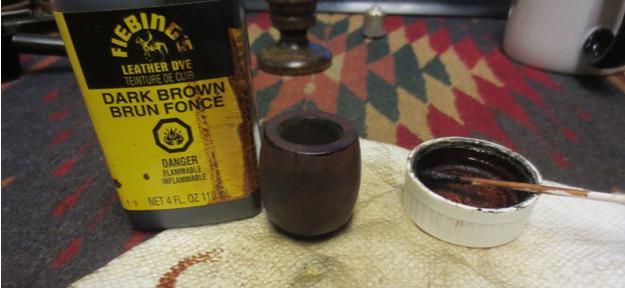
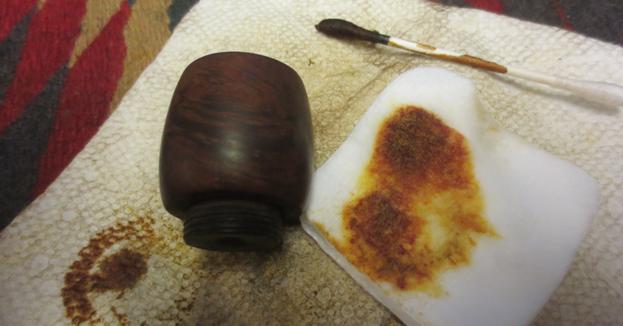
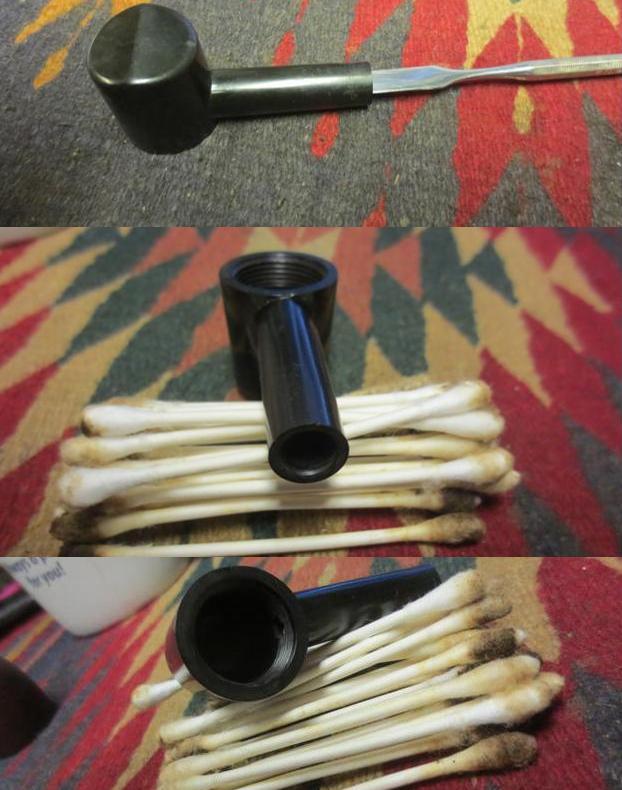
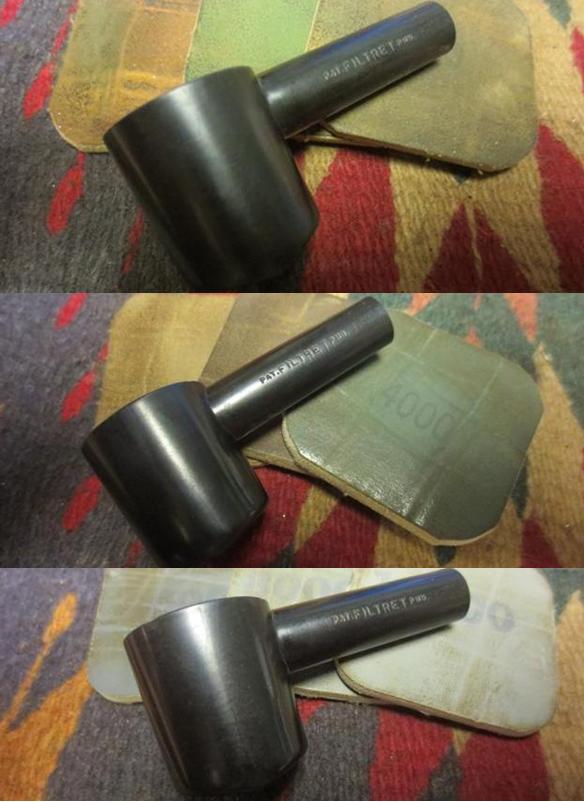
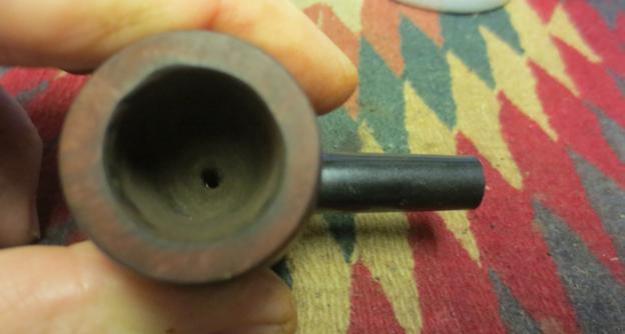
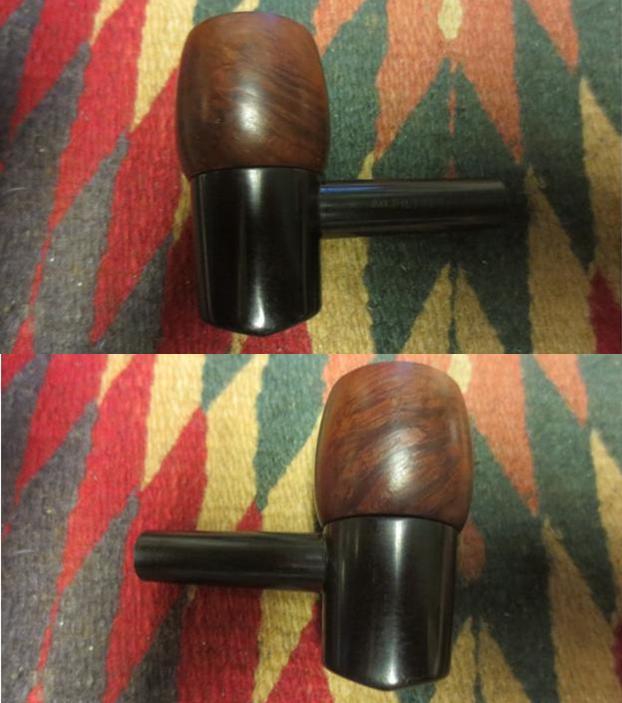
When the pipe arrived in Idaho my brother took some photos of it. The stem was slightly oxidized and it was stuck in the shank. It was underturned to the left and could not be straightened out. The rim was dirty with a tar build up and there was a cake in the bowl. The bowl itself was slightly out of round. The briar had a few small fills in it and the finish was dirty.Filt4 Filt5 Filt6When my brother Jeff took the bowl off the base the interior of the base was very dirty with tars and oils. The metal basket was also covered with debris of tars, oils and saliva. It looked to me that the way the pipe worked was that the air was drawn through the single hole in the top of the canister and then it came out through the wedges and into the airway in the shank.Filt7 Filt8 Filt9This pipe was a pleasure to work on because Jeff did the lion’s share of work on it. He reamed and cleaned the bowl. He cleaned out the stem with pipe cleaners and alcohol and the base with cotton swabs and alcohol. He flushed out the canister with alcohol and then water. He flushed it until it was clean. He scrubbed the bowl with Murphy’s Oil Soap and removed the finish and the debris from the surface of the bowl. He was able to remove much of the tar and oil on top of the bowl. The next set of four photos show the way the pipe looked when I unpacked it this afternoon. Thanks Jeff this was an easy clean up.Filt10 Filt11I took a close up photo of the rim top to show the damage to the inner edge of the rim. It is darkened and also has some burned areas on the top and inner edge.Filt12I also took a close up photo of the stem – it was stuck tight in the shank and it was underturned to the left. I tried to heat it with hot water to try to loosen it. It would not move. After taking this photo I put it in the hot water to soak and see if it would loosen the tars and oils in the shank that were holding it tight.Filt13I turned my attention to the bowl and the base while the stem soaked. I cleaned out the airway in the bottom of the bowl with a cotton swab and alcohol to remove the “gunk” that was clogging the airway and reducing the air flow.Filt14I topped the bowl on a topping board with 220 grit sandpaper. I topped it until I had removed the damaged areas on the rim surface.Filt15I rolled a piece of 220 grit sandpaper to sand the bowl and the inner edge to clean up the damaged inner edge and bring it back to round.Filt16I sanded the bowl and rim with a medium and a fine grit sanding block to remove the scratches in the briar. Once it was clean of scratches I stained it with a dark brown stain thinned by half with alcohol. I flamed it and repeated the process.Filt17I wiped the bowl down with cotton pads and alcohol to make the stain more transparent and to make the grain show through.filt18I took the stem and base out of the hot water and wiggled it until the stem turned. I removed the stem so that I could clean the inside of the shank and base.Filt19I used a dental spatula inside the tube of the shank to scrape away some of the thick build up on the walls of the shank. I then scrubbed it down with alcohol, cotton swabs and pipe cleaners until they finally came out clean. I also scrubbed down the inside of the base with them to remove the grime in the base.Filt20I used the micromesh sanding pads to polish the Bakelite base and the shank. I sanded it with 1500-12000 grit pads and then wiped it down with some Obsidian Oil.Filt21I scrubbed out the canister one more time and found that it was very clean. I dropped it in place in the base.Filt22With the canister in place I screwed the bowl onto the base and took some photos.Filt23 Filt24 Filt25It was ready to buff with Blue Diamond so I took it to the wheel and buffed the bowl and the base. I gave bowl several coats of carnauba wax and then buffed it with a clean buffing pad to raise the shine. Once I finish the stem I will give it several more coats of wax.Filt26 Filt27 Filt28I cleaned out the airway in the stem with alcohol, cotton swabs and pipe cleaners. After heating it with the hot water to loosen the stem a lot of grime came loose in the shank and ran down the stem.Filt29The stem had some tooth chatter along with the oxidation that I brought out with the hot water bath. I sanded it with 220 grit sandpaper to remove both the chatter and the oxidation. I wiped it down with Obsidian Oil.Filt30I wet sanded the stem with 1500-2400 grit micromesh sanding pads and rubbed it down with Obsidian Oil. I dry sanded it with 3200-4000 and gave it another coat of oil. I finished sanding it with 6000-12000 grit pads and gave it another coat of oil. I buffed it on the buffer with Blue Diamond polish and gave it a final coat of Obsidian Oil and set it aside to dry.Filt31 Filt32 Filt33I put the pipe back together and gave it a final buff with Blue Diamond and then gave it multiple coats of carnauba wax. I buffed it with a clean buffing pad and then by hand with a microfibre cloth to deepen the shine. The finished pipe is shown in the photos below. It is a true oddity but the more I worked on it the more I am intrigued with it. I wonder how the contraption works in real-time. Well, I may have to give it a try one day soon. Thanks for looking.Filt34 Filt35 Filt36 Filt37 Filt38 Filt39 Filt40 Filt41 Filt42

A Berkeley Club 7118 Billiard that turns out to be Sasieni Made


Blog by Steve Laug

Inside the first boxed set of Picadilly Brand Genuine French Rustique Briar pipes that my brother picked up was a straight billiard that did not bear the markings that were on the bent billiard or on the other complete set of Picadilly pipes. This one had a familiar finish to me but I could not put my finger on it and identify it. It was stamped on the underside of the shank with the following: 7118 over Berkeley Club over London Made. The bowl end of the smooth bottom of the shank it was stamped England in an arch. The finish on the bowl sides was very clean. The rim was a bit beaten. The front edge of bowl had been knocked out on a hard surface repeatedly and left a rash. The entire top of the rim was also beaten up and pitted. It was the only part of the bowl that was in rough shape. The stem had some tooth chatter and some light tooth marks on the top and bottom sides near the button. There was some oxidation and a faded stamp with what looked like a B partially circled by a C.Berk2 Berk3I took a close up photo of the bowl and rim to show the cake on the bowl and the damage to the rim surface. I also took a close up photo of the stamping on the underside of the shank.Berk4I went online to Pipephil’s site Logos and Stampings (http://www.pipephil.eu/logos/en/logo-b4.html) and found the brand and the reminder that had niggled at the back of mind. The Berkeley Club with this stamping was made by Sasieni. The photo below came from that website and shows the same finish and the same stamping on both the shank and the stem.Berk1With that in mind I took the pipe apart to have a look at it. I was expecting the pipe to have an inner tube in the tenon. I looked in the bowl and the point extended into the bowl showing a glint of metal. However when I took the pipe apart there was no inner tube. I shined a light down the mortise and airway in the shank and sure enough the tube had broken off in the airway leaving the mortise unobstructed. I looked at the stem and saw the same – broken off slightly inside the tenon leaving it also unobstructed.

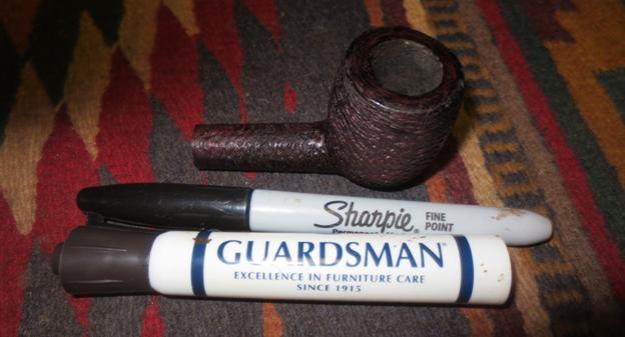
I decided to work on the rim top damage by topping the bowl with 220 grit sandpaper on a topping board. It took some work to remove the damaged portion of the rim. The second photo shows the initial sanding and the third photo shows the finished topping. You can also see the chips in the cake at 12 o’clock in the third photo.Berk5I used the Savinelli Pipe Knife to clean out the cake in the bowl and work on the inside edge of the rim. I was able to remove all of the cake and smooth out the rim edge while keeping it in round in the process.Berk6With that completed I decided to drill out the broken inner tube in the shank of the pipe. I used a drill bit almost the same size as the airway in the inner tube. I increased the size of the bit until it was the same size as the airway and drilled out the broken tube. I never use a power drill when I am doing this – rather I use a cordless drill sans battery (I don’t want to inadvertently hit the trigger and regret it). I turned the shank onto the drill bit until it grabbed onto the tube and I was able to pull it out on the end of the bit. While I was pulling I also used the end of the Savinelli Pipe Knife to push on the end of the inner tube in the bowl. It takes patience but the result leaves behind no damage to the airway or the bowl.Berk7I scrubbed the rustication on the bowl with a tooth brush and Murphy’s Oil Soap until it was clean. I rinsed it under running water to remove the soap and the debris. I dried it off with a soft cotton towel.Berk8I took some photos of the cleaned and dried pipe to get an idea of what I needed to do with the finish on the bowl and shank. The pipe looks really good other than the top of the rim that I will need to restain and polish.Berk9 Berk10I cleaned out the mortise in the shank and the airway in the shank and the stem. The airway was quite clean thanks to the broken inner tube. The mortise had some tars and oils that took a few cotton swabs, pipe cleaners and alcohol to remove. The stem was dirty on the inside and took considerably more pipe cleaners than the shank. I used pipe cleaners and alcohol to clean out the stem airway.Berk11To match the stain on the bowl sides I used a black Sharpie Marker and a dark brown stain pen to restain the rim top and the outer edges of the bowl.Berk12I cleaned up the inner edge of the bowl with a piece of sandpaper wrapped around my finger to smooth out the rough edges of the inner rim. It took a few passes to smooth out the edge but when it was done it looked much better.Berk13I gave the bowl a coat of Conservator’s Wax and buffed the bowl with a shoe brush to bring up the shine.Berk14I used the same method that I spelled out above – a stationary drill and drill bits to remove the broken tube in the tenon. I drilled until the bit caught a hold of the tube and then pulled the tube out of the tenon.Berk15I used some European Gold Rub ‘n Buff to fill in the logo on the stem. I applied it with a cotton swab and then rubbed off the excess. The finished logo is shown in the photo below.Berk16I wet sanded the stem with 1500-2400 grit micromesh sanding pads. I rubbed it down with Obsidian Oil. I dry sanded it with 3200-4000 grit pads and gave it another coat of oil. I finished sanding with 6000-12000 grit pads. I gave it a final coat of Obsidian Oil and set it aside to dry.Berk17 Berk18 Berk19I buffed the stem with Blue Diamond polish on the buffing wheel and then gave it multiple coats of carnauba wax. I buffed the bowl and the stem with a clean buffing pad to raise the shine and polish the wax. I buffed it again by hand with a microfibre cloth. The finished pipe is shown in the photos below. It came out looking really good. This one will eventually be listed for sale on the store. You can send me an email or a message any time if you would like to add it to your collection. Thanks for looking.Berk20 Berk21 Berk22 Berk23 Berk24 Berk25 Berk26

Another ‘Hole in the Wall’ Find – BBB Banker Bent Volcano


Blog by Dal Stanton

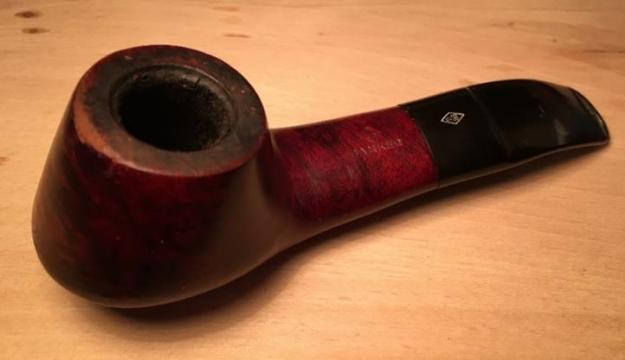
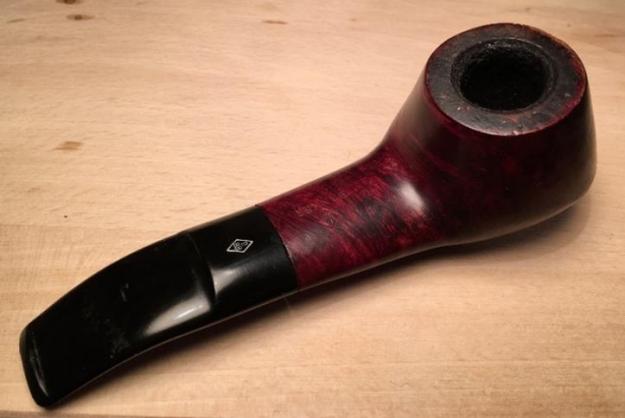
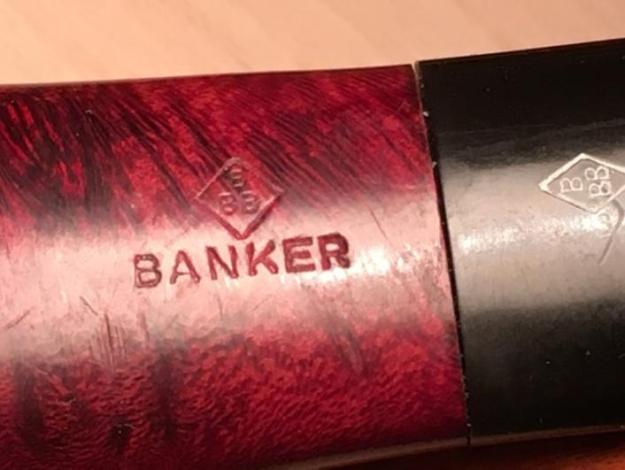
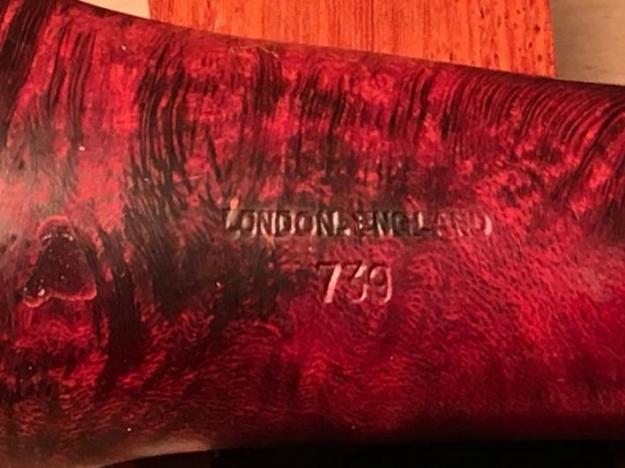
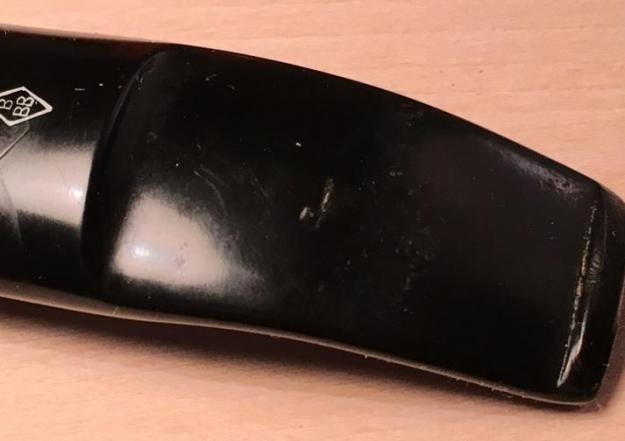
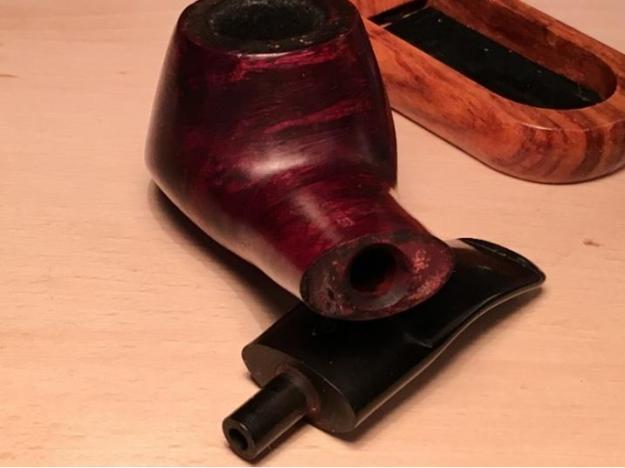
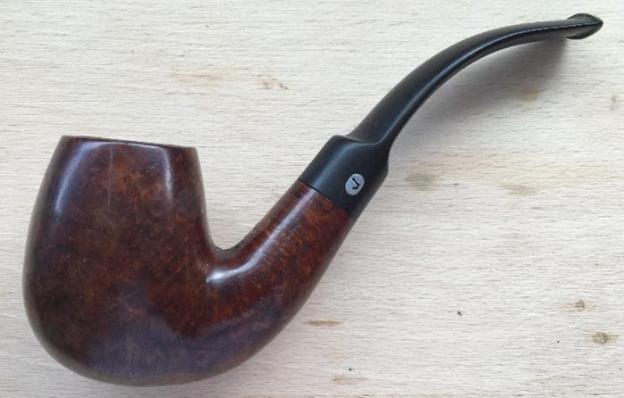
Last April, during one of my earlier visits to what I have affectionately named, ‘The Hole in the Wall’ antique store near the Zhenski Pazar (Women’s Market) in downtown Sofia, Bulgaria, my eyes locked on to a very handsome pipe that called out to me resolutely – “Take me home!”  The pipe was a slightly bent volcano shape, brandishing a broad flattened oval shank and stem that drew my attention.  In my small collection of pipes then, and even today, I have nothing like it.  After taking in the unique shape, the briar grain, obscured by layers of grime and old wax, gave me an internal ‘wow!’ that I carefully kept hidden from the shop owner who would see my excitement as potential greater profit for him – so I played it cool.  I looked at how the grain moves horizontally across the bowl and shank giving the appearance of a tiger pattern looking down on the shank.  Looking straight at the bowl the grain looked like horizontal flames terminating on the sides of the bowl with Birdseye patterns – I was anxious to work on this pipe.  The top of the shank was imprinted with the classic BBB diamond mark over Banker.  Underneath the shank had London, England over 739.  The stem top also had the white diamond BBB mark.  I also spied another pipe in the basket that looked like a good candidate to bundle with the BBB Banker, a French Jeantet Fleuron 70-7 which helped me negotiate 30 Bulgarian Leva for the pair – about 16US.  Not a bad deal at $8 a pipe!  The first picture is the Jeantet followed by the BBB Banker after I arrived home from the ‘Hole in the Wall’ with my newest acquisitions:Bank1 Bank2 bank3 Bank4 Bank5 Bank6 Bank7 Bank8 Bank9I found a lot on the internet about the BBB name.  The small blurb in Pipehill describes the evolution of the BBB moniker:
BBB: ” Best British Briar” is now a brand of the Cadogan Company (Oppenheimer group). American rights to use the brand name were sold to Wally Frank in 1980.

Founder of the brand in 1847: Louis Blumfeld. The oldest pipe brand name in the UK has been registered in 1876 (Blumfeld Best Briar).

Steve also posted a blog on the history of BBB pipes a few years ago using the French article:

https://rebornpipes.com/2012/08/05/history-of-bbb-pipes/

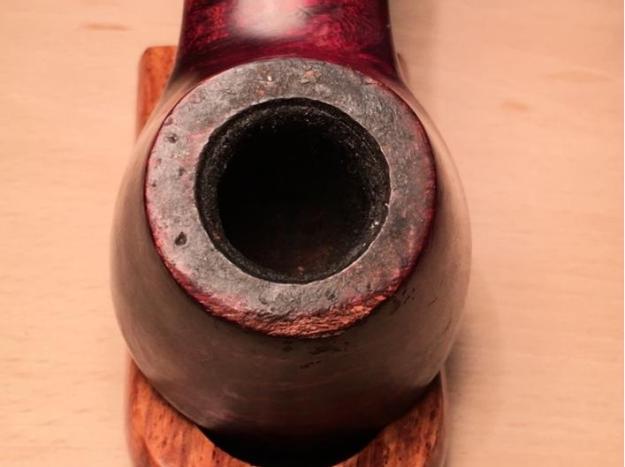
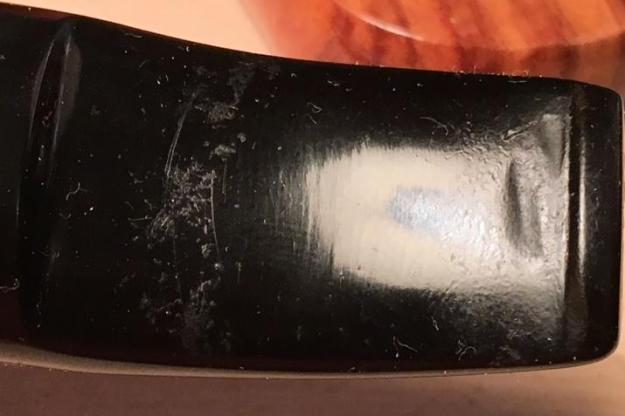
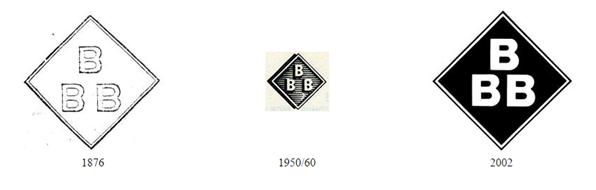
I discovered that there are many BBB collectors and enthusiasts in my research.  Unfortunately, I could find nothing helping me to date or place my BBB Banker except some informed guesses comparing to the BBB stamps (pictured below) depicted in the French article Steve posted above which would probably date the Banker at the earliest in 1989 when the Cadogan Company consolidated manufacturing its various pipe lines at Southend-on-the-Sea, but more likely in the 2000s – not a terribly old pipe (Can anyone help me on that?):Bank10The condition of the Banker is generally good.  There is some cake build up in the chamber but I still want to ream the bowl down to the briar for a fresh start and to be able to make sure there are no problems lurking beneath – which I really don’t expect.  The rim has light grime and lava on it, but a significant wearing down of the front lip so that bare briar is exposed.  The stummel looks to be in good shape – I detect one fill underneath but it looks to be solid and will blend well.  The stummel grain is dulled and obscured by grime and oil build up.  The stem is in good shape – showing almost no oxidation, but has a tooth dent on the lower side of the bit.  I take a fresh close up of the rim to mark the progress.  I begin with reaming the bowl with my Pipnet reaming kit.  As I’ve become accustomed, I try to do the dirtier part of the cleanup on the 10th floor balcony adjoining our bedroom where my work-station is here in Sofia, Bulgaria.  Sometimes I wish I had a basement work area, but we do what we must!  I use only the two smaller blades of the four blades available to ream the cake down to the briar.  I follow the use of the reaming blades with 120 grit sanding paper to clean the cake further and finish with 240 grit on the chamber wall.  The bowl looks good.  True confession – while I was reaming the bowl my thoughts drifted off to a Savinelli reaming knife – on the eBay block, that I’ve had my eye on – one like Steve often employs.  There are still a few days left in the auction and I’m hopeful that I might add it to the arsenal!  I’ll let you know!  In order to get a better idea of the rim’s condition, I clean the external stummel with Murphy Oil Soap and work on the grime covering the rim.  I use cotton pads with undiluted Murphy’s.  I also employ a brass brush to work on the rim.  After the cleaning, I take the stummel to the sink and rinse it with cool tap water.  The pictures show the progress.Bank11 Bank12 Bank13 bank14Ok, for you who have years of restorations under your belts, here are some newbie musings – your patience appreciated!  At this point I realize I need to top the bowl to repair the front lip of the rim – it won’t take much but it is needed.  When one takes the rim down to the bare briar, I’ve learned that one also must have a plan for matching the hue of the old stain if one desires to keep the old stain tone matching the bowl.  I like the color scheme of the BBB Banker and I desire to keep it.  To keep it, I need to match the rim color tone with the rest of the stummel AND I need to address the very minor scratches and wear marks on the stummel surface BUT NOT sand it aggressively to remove the stain.  It is in some ways much easier to take the briar down to the wood with acetone and sanding and then apply new stain and voila!  New surface and color all blended and ready to go.  I know this situation calls for use of polishing compounds and such, which is a more passive approach to dealing with the surface – more opportunity to learn new things!  So, I move forward with topping the bowl with the aim of maintaining the current rich, deep red tones – we’ll see how it goes.  I took the BBB Banker to the topping board – 240 grit paper on a chopping block and rotated it on the paper in a gentle clockwise circle not applying too much pressure – letting the grit do its work.  To make sure I wasn’t leaning into the damaged lip area as I rotated, I eyeballed that the damaged area was untouched during the early rotations which meant the topping was true – I took a picture at this point (second picture).  I took off only enough to clear out the front lip problems.  I think it went well and the bowl looks perfectly round.  As I often like to do, to add a classy touch to the rim I bevel the inside lip.  I make the initial cut of the bevel with 120 grit sanding paper followed by 240 grit.  I’m satisfied with the bevel – not too much but just an accent.  I use micromesh on the rim from 1500-12000 to complete the rim repair preparing it for stain later.Bank15 Bank16 Bank17 Bank18 Bank19Now, the stummel surface.  I have questions rolling through my mind regarding how aggressive I can be to remove small scratches and wear blemishes but maintain the original patina of the briar as it came to me.  I elect to micromesh the stummel surface and leave the small blemishes.  I do not start with the coarsest pad (1500) but at 2400 – gentle approach (though the first picture below shows the 1500 it was not used).  I’m not sure this is the best plan but I can always back up to a more aggressive posture if I’m not satisfied with the results.  After a quick email with Steve, I feel better about the course of action.  I continue on the stummel with micromesh pads 3200-4000 and 6000-12000.  I am loving the briar grain popping out through the micromesh process – one of God’s small creations each piece of briar.  The pictures show the progress:Bank20 Bank21 Bank22As I put the stummel aside to work on the stem, I realized that I was so involved in working on the externals that I forgot that I hadn’t cleaned the internal of the stummel nor stem.  Before working on finishing the stem I decide to use the retort to clean the internals.  Last time I used the retort, an alcohol saturated cotton ball was launched from the bowl during the process.  I was gun-shy of the retort to begin with when I first acquired it – the launch didn’t help.  Notwithstanding, I unwrap the retort, get out the vodka, and proceed to let the retort do its work.  The pipe was surprisingly clean.  After two retort cycles, I finished off with cleaning the internals of stummel and stem with Qtips and pipe cleaners dipped in alcohol.  I think it’s better to clean internals earlier in the process….Bank23 Bank24 Bank25Now to the stem externals.  Earlier, I applied black super glue to two significant tooth dents on the underside of the bit (visible in picture above).  I use 240 grit sanding paper to remove the excess super glue removing traces of the dents as  well as file marks after using a needle file to fine tune the shape of the button. There was very little oxidation on the stem or teeth chatter so I proceed to wet sand with micromesh 1500-2400 and apply Obsidian Oil to the stem.  I follow by dry sanding using 3200-4000 micromesh pads and then the same with 6000-12000 and apply Obsidian Oil and set the stem aside to dry.  I’m pleased with the vulcanite ‘pop’ – that wet reflective look is great.Bank26 Bank27 Bank28 Bank29Well, I mentioned earlier that I was hopeful to add a Savinelli pipe knife to my tool box.  Steve speaks highly of this tool and has increasingly put it to good use in his restoration work.  He also posted a blog describing it when it arrived on his work table in Vancouver.  When I saw one on the block in the eBay’s estate pipes in tobacciana listings a few days ago, I decided to watch the auction and see if I could snag it – it seemed to be calling out to me: “I want to live in Bulgaria!”  As you would guess, others were watching too.  I’m thankful that my bid was sufficient and my new Savinelli pipe knife will be delivered to my daughter and son-in-law who live in Denver.  They will carry it with them to Bulgaria (along with some other supplies I’ve ordered including 32 oz. of Lane BCA Cavendish tobacco which I discovered with great enjoyment on my last trip to the US) when they visit in September!  My son-in-law had no problem agreeing to find space in the suitcases when I bribed him with sharing bowls together of the Lane BCA!  So, I’ll look forward to their arrival for the additional reasons that they will be packing new supplies and my new pipe knife!Bank30The BBB Banker slightly bent volcano is now in the home stretch.  After topping and sanding the rim with micromesh, I left the rim the bare wood until I finished the sanding of the stummel. I did this so that the stain I would eventually apply to the rim would be more closely matched.  Using an Italian brand stick, I applied a dark Mahogany stain to the rim and before it dried, lightly wiped it with a dry cotton pad to remove uneven stain application – the first two pictures below show before and after application of the stick.  I’m very satisfied with the match up of stummel and rim and am anxious to finish the stummel.  Living on the 10th floor of a former Communist block apartment building and with my work station in my bedroom (shared with my gracious and understanding wife!) space is at a premium.  My Dremel high speed tool is my workhorse when it comes to the polishing wheel.  Starting with a felt wheel, I first purge the engaged wheel by using the flat edge of the Dremel’s metal tightening wrench against it.  This softens the wheel and rids it of residue Tripoli caking from previous jobs.  With the newly purged wheel, I begin the final polish of the BBB Banker applying Tripoli to the surface addressing the minor pits and scratches on the bowl surface that I did not sand out aggressively to guard the beautiful patina of this piece of briar.  Bank31 Bank32 Bank33Finished with the Tripoli and Blue Diamond, I change to a cotton cloth wheel for the Dremel and apply several coats of carnauba wax.  I use the slowest setting for the Dremel and keep a continuous circular rotation over the briar surface – oh my, does the grain pop!  I cannot say exactly when this pipe was made, but if it’s been since 1989, someone employed by Cadogan Company’s Southend-on-the-Sea pipe making plant did an amazing job with the choice of this piece of briar and the volcano shape it became.  The grain is beautifully showcased in horizontal movements laterally across the stummel so that one can see the horizontal flame grain facing the stummel straight on and then move to the sides of the stummel and see the grain emerge in Birdseye perspective and swirls.  In the beginning I described the top-down view of the broad, flattened oval shank as reminiscent of tiger fir to me – now as I look at it zebra also comes to mind.  Another example of the beautifully showcased briar grain in the Volcano shape is the broad landscape of its underside – from across the broad shank to the front lip of the volcano base, runs a robust dissecting flow of grain that is majestic from my vantage point.  Yes, I confess, I’m a briar grain junkie.  Its beauty reminds me of its Maker.  With my last application of carnauba wax on stem and stummel, I change to a clean cotton cloth wheel and buff the entire stummel and stem.  Then I give the BBB Banker bent volcano a brisk buffing with microfiber cloth to bring out the richness of this briar even more.  I’ve enjoyed this restoration and look forward to loading the BBB Banker with its first bowl of tobacco in my hands.  Thanks for joining me!Bank34 Bank35 Bank36 Bank37 Bank38 Bank39 Bank40 Bank41 Bank42
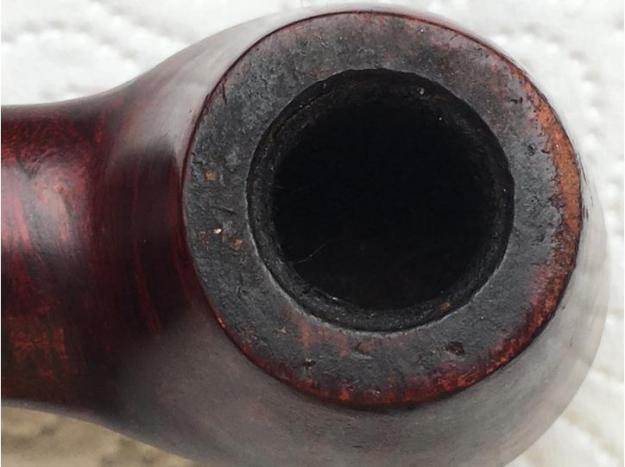
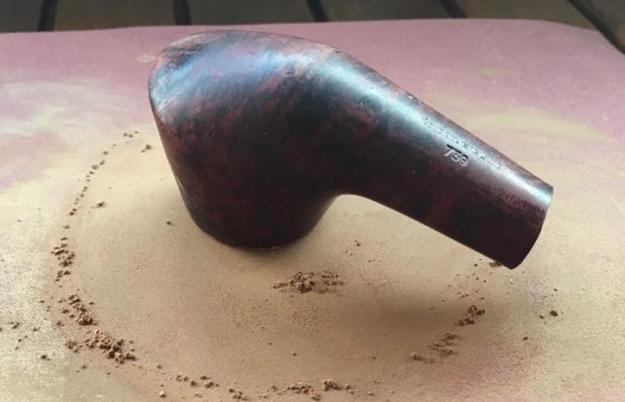
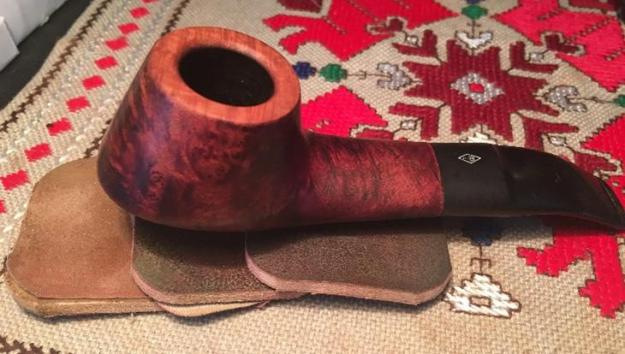
 

Restemming and Restoring a Made in Denmark Apple


Blog by Steve Laug

I got an email from a fellow in Dawson Creek, British Columbia asking if I would be willing to work on a pipe that he had that was one of his favourites. It was an apple that he really liked and he liked the patina on it as well. This is what he wrote to me: Sir, I have a pipe in need of your skills. I was visiting City Cigar on a trip to Vancouver and William recommended you. I’ve inherited a pipe from my dad that needs to be refurbished. I wish to add a new curved stem. The old stem’s very loose. I will mail, or ship the pipe to you, as I live in Dawson Creek, BC. Once we discuss price & details. After leaving City Cigar, I was left with the impression that you’re “the guy” for the job.” 

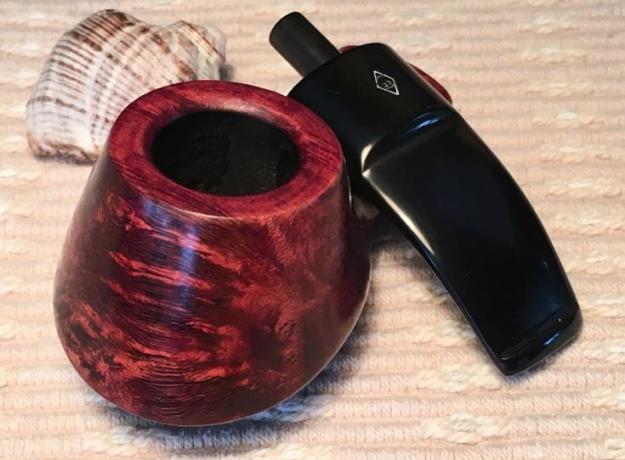
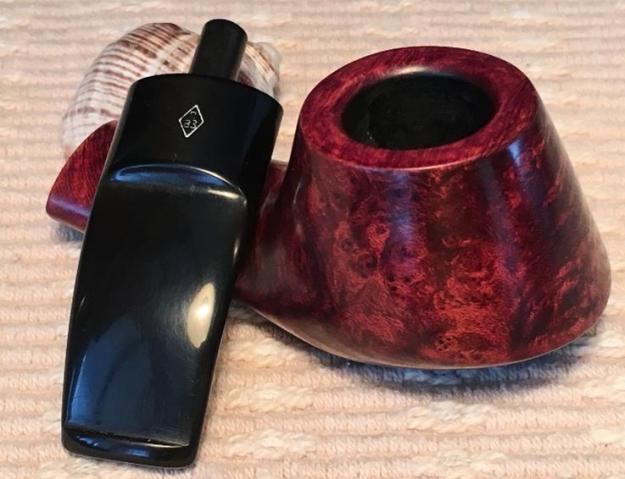
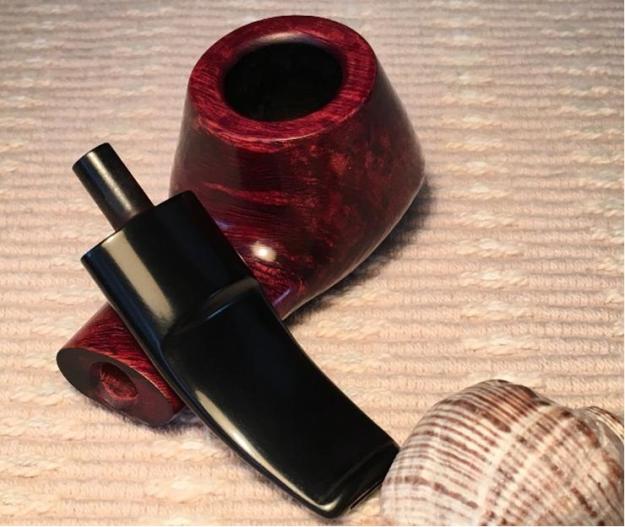
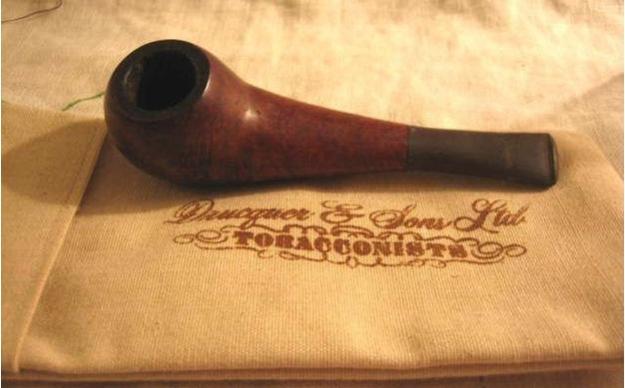
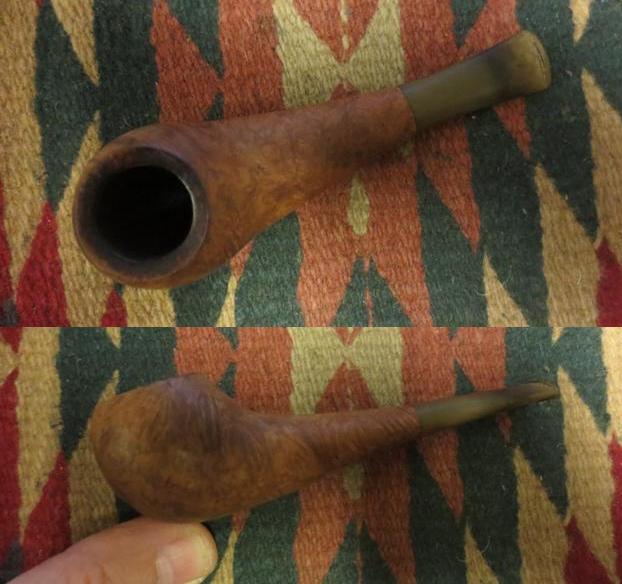
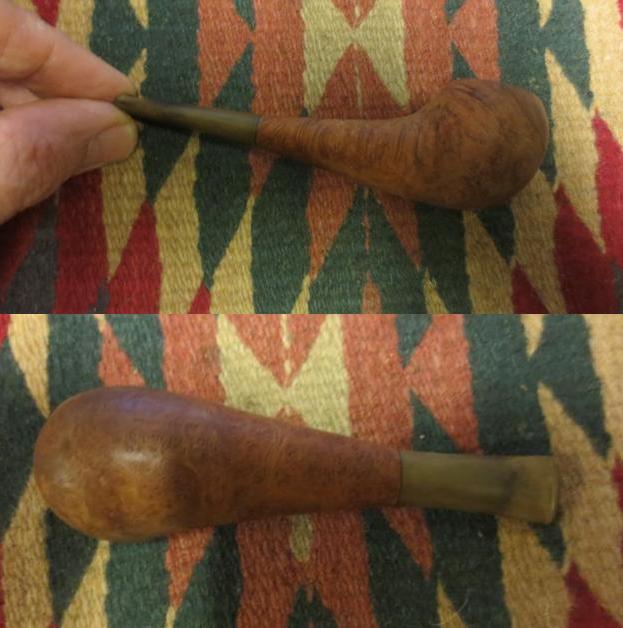
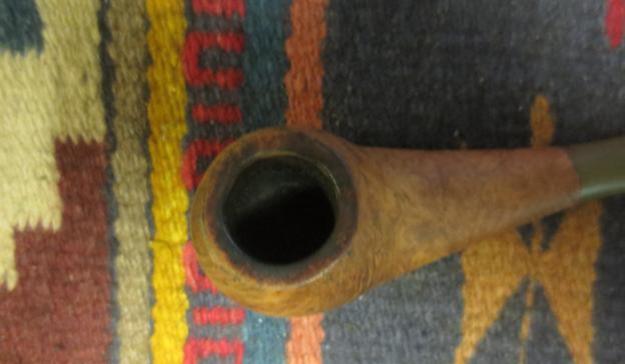
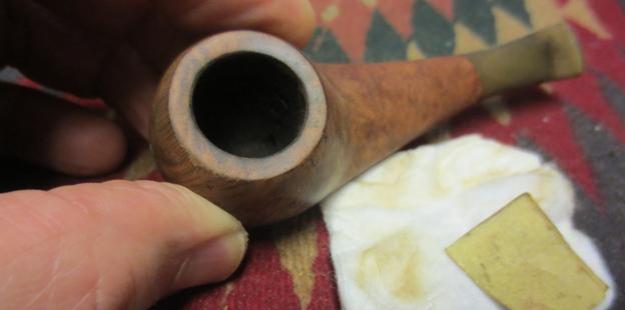
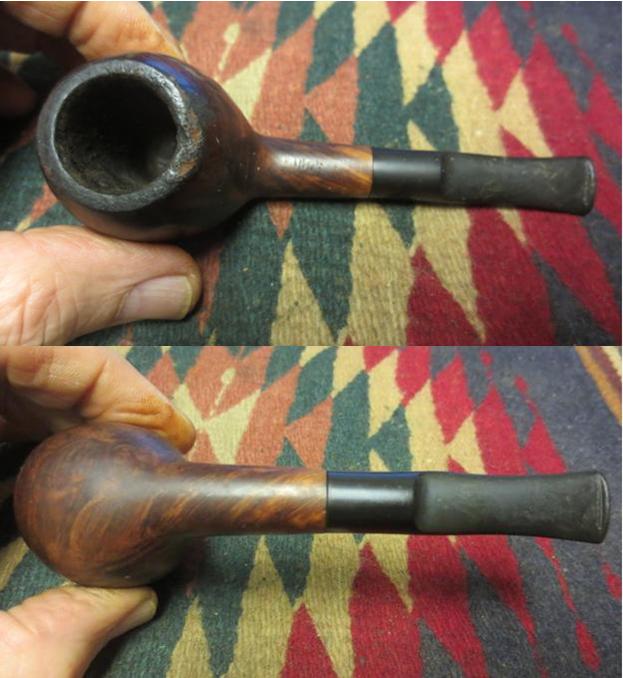
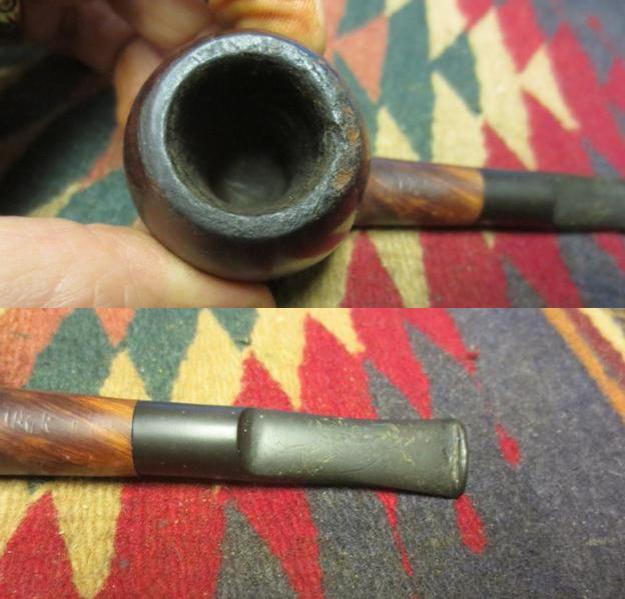
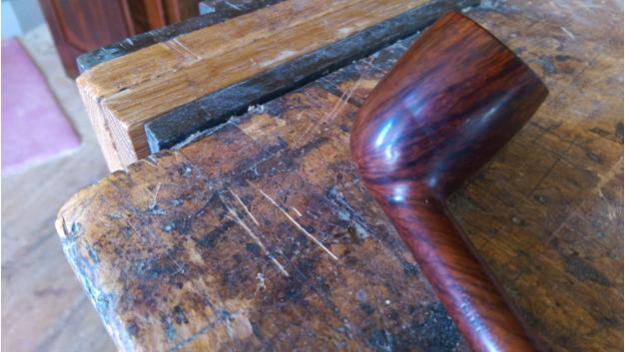
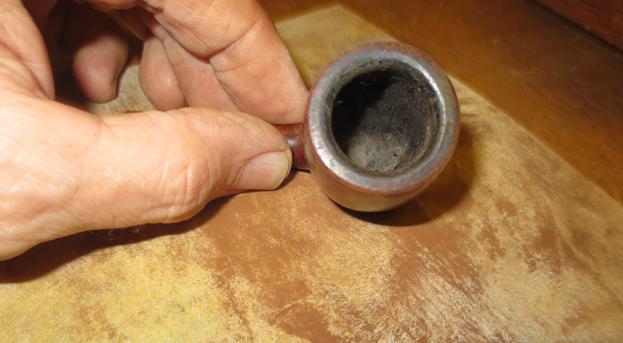
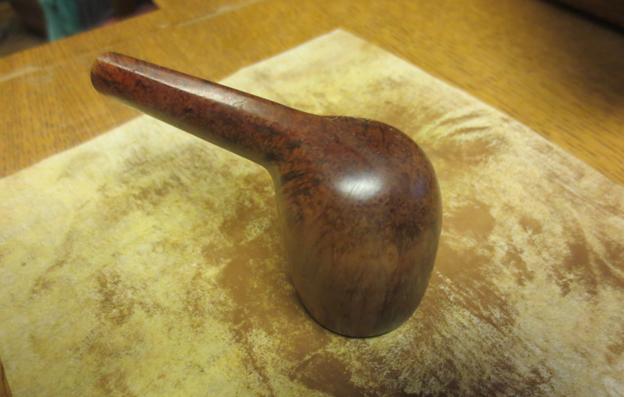
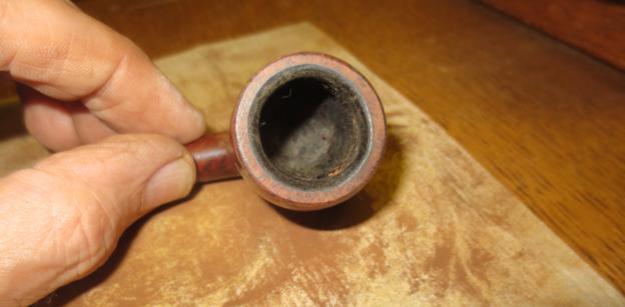
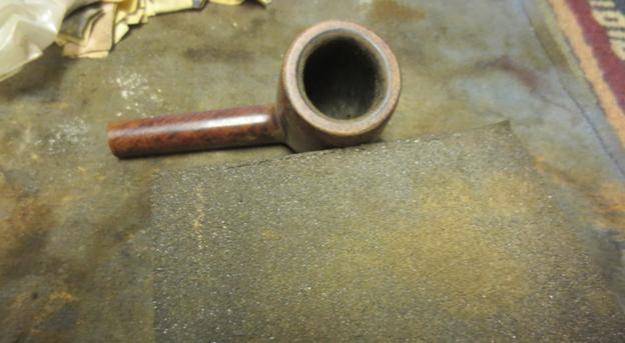
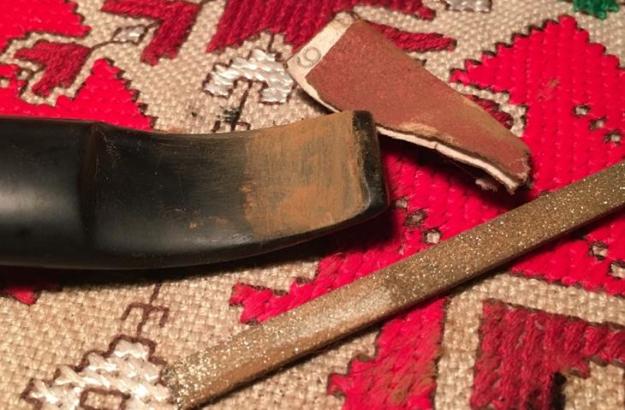
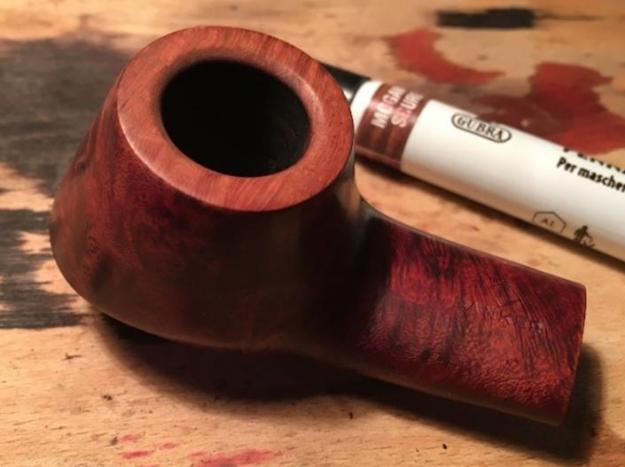
I asked him to send some photos of the pipe and give me a look at the pipe. The next two photos are the ones that he sent to me. The saddle stem looked like a replacement to me. I had him send the pipe to me for a closer look.apple1When it arrived I could see that my assumption about a replacement stem was correct. Whoever had added the new stem had sanded the shank and removed half of the stamping on the shank. I could read that it said Made in Denmark and that there were no other stampings. The shank was significantly lighter in colour than the bowl. The rim was dirty and had a chip out of it and its top was damaged. There was some concrete rash on the back side below the chip where the bowl had been knocked on concrete.apple2 apple3I took a close up photo of the bowl top to show the extent of the damage and the uneven cake on the bowl sides. I also took photos of the stem and shank junction to show how the shank had been sanded to meet the stem diameter.apple4

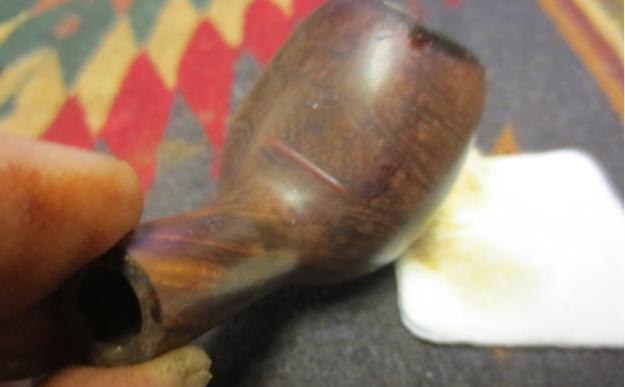
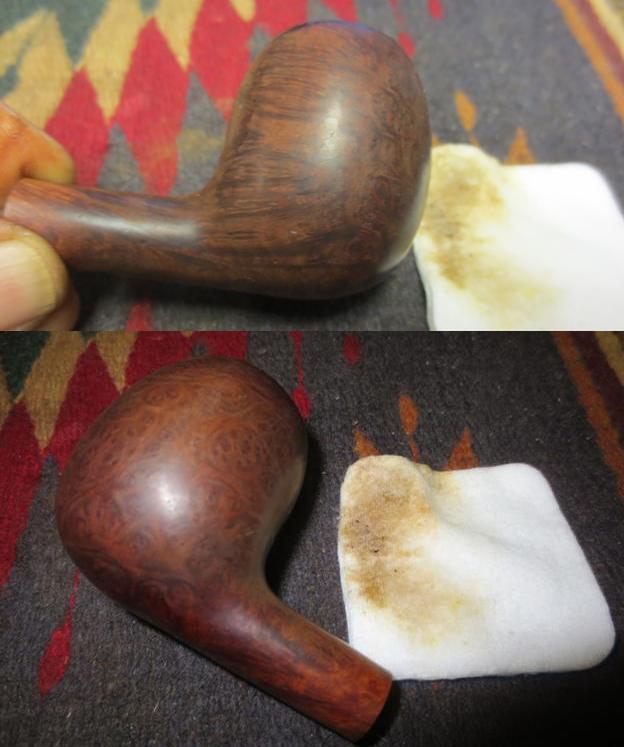
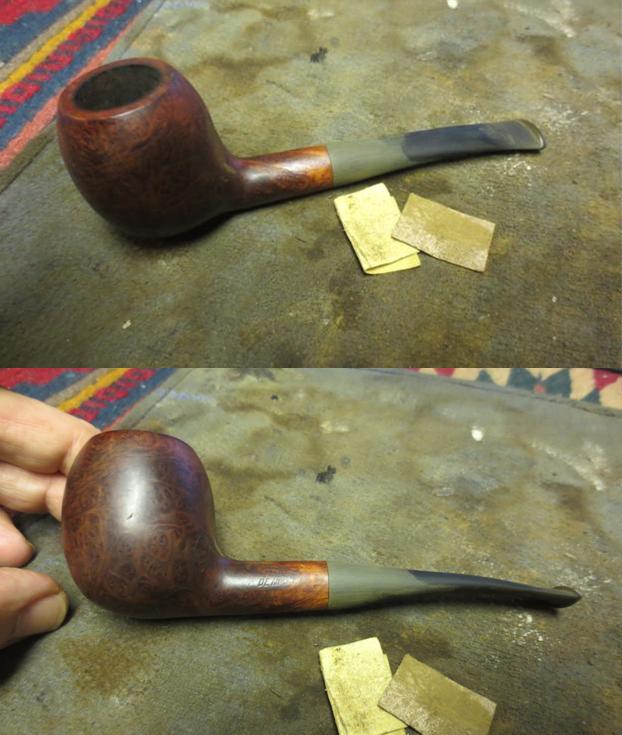
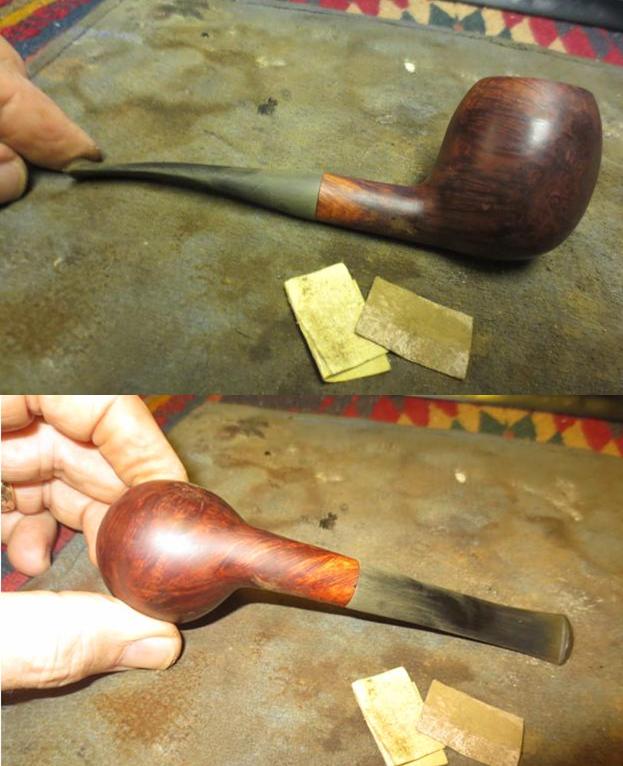
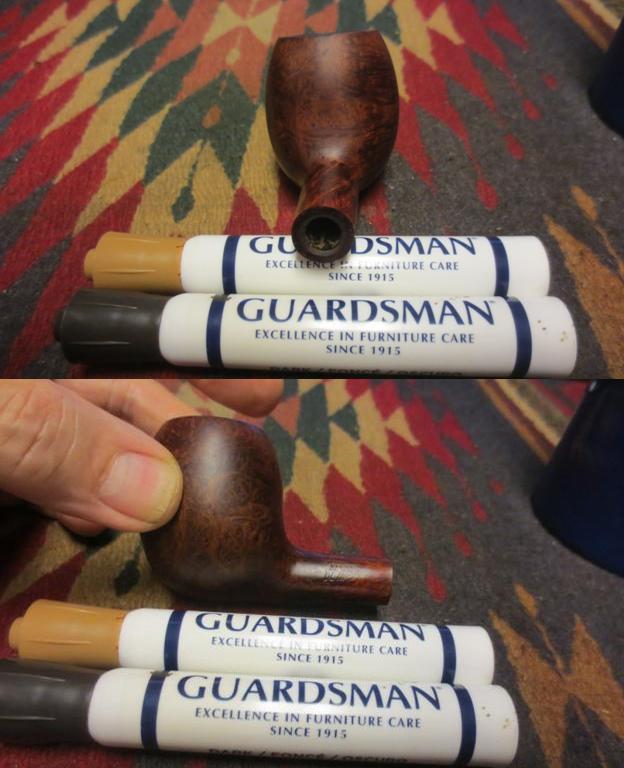
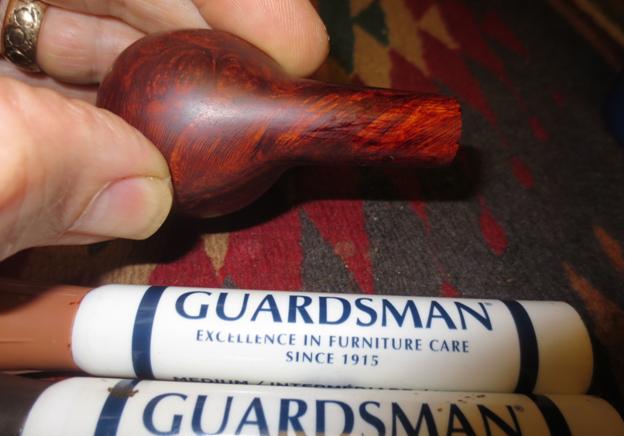
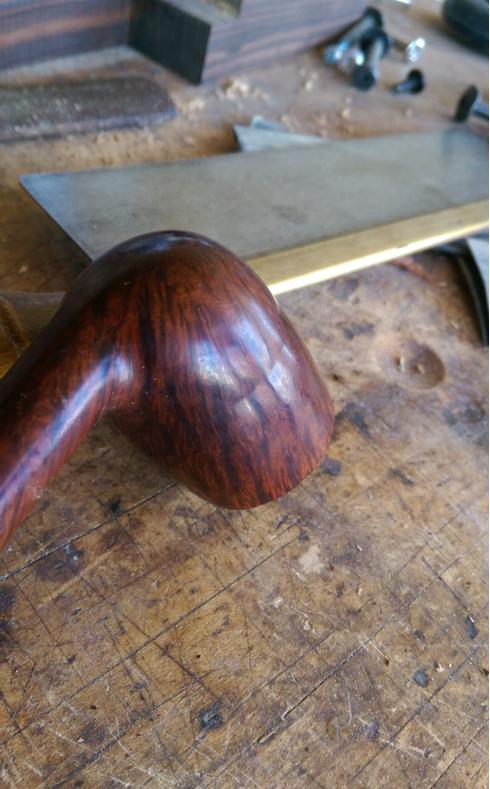
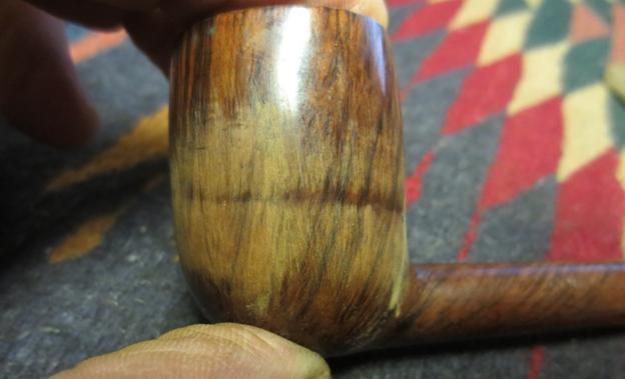
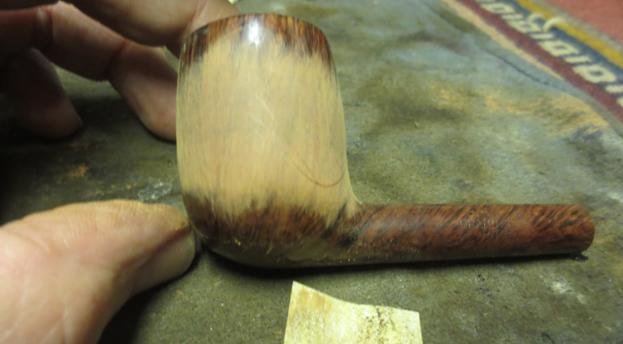
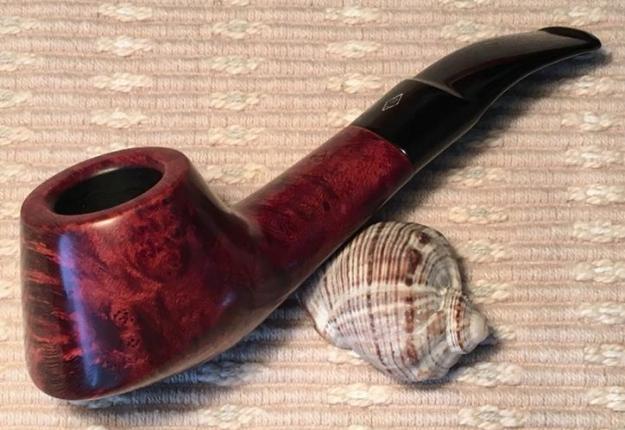
I also took a photo of the back side of the bowl showing the horizontal line across the bowl. That line was a large fill that bulged and stuck out the surface of the bowl.apple5The bowl was covered with a thick grime and sticky material. I wiped it down with a cotton pad and alcohol to remove the grime and get back to the finish. The grain really began to shine through once I had removed the gummy buildup. The left and right sides of the bowl showed some nice birdseye. The front and back showed cross grain that ran along the top and bottom of the shank. The birdseye ran along both sides of the shank.apple6I topped the bowl on a piece of 220 grit sandpaper to remove the damaged portions of the rim.apple7I sanded the backside of the bowl to smooth out the bulging fill that ran across the bowl.apple8I sanded down the outer edge of the rim to remove the rim damage and also the burn and darkening on the edges. I scrubbed the bowl down with acetone and cotton pads to remove the finish so that once it was clean I could blend in the lighter portions with the rest of the bowl.apple9 apple10The owner wanted a new stem for the pipe so I went through my can of stems until I found one that would fit. He wanted a taper stem and the one I found would suit the bill. He also wanted it to have a slight bend in the end. This sharply tapered stem would make that an easy fit and fix. The stem was slightly larger in diameter than the shank so I would need to reduce it to match.apple11I took off the excess vulcanite with a Dremel and sanding drum. I worked on it until it match the shank diameter.apple12 apple13I took it back to the work table to hand sand it. I used 180 grit sandpaper and took back the excess stem material.apple14I sanded the stem further with 220 grit sandpaper until the transition between the stem and shank was smooth to the touch. I heated water in the microwave until it was boiling and put the stem in the water to soften it enough to put the bend in it. I bent it just enough to give it a jaunty look.apple15 apple16I used the medium and the dark stain pen to touch up the shank. The combination of colours matches the rest of the bowl colour.apple17 apple18I wet sanded the stem with 1500-2400 grit micromesh sanding pads to begin polishing it and to begin to remove the scratches. I rubbed it down with Obsidian Oil. I dry sanded it with 3200-4000 grit pads and gave it another coat of oil. I finished sanding it with 6000-12000 grit pads and gave it a final coat of Obsidian Oil. I set it aside to dry.apple19 apple20 apple21I buffed the bowl and stem with Blue Diamond on the buffing wheel and polished the briar and the stem. The polishing took out the last of the scratches in the vulcanite stem. The fill on the back of the bowl blends in perfectly now and it is smooth to the touch. The transition from the stem to the shank is also smooth. The slight bend in the stem works well with the pipe. It is finished and ready to go back to Dawson Creek. Hopefully the owner will enjoy the new stem and the virtually “new pipe”. It still carries with it the memories of his dad giving it to him. It still as some of the marks of its story but the look and the feel of the pipe are better than when we began the journey. Thanks for looking.apple22 apple23 apple24 apple25 apple26 apple27 apple28 apple29

Doing Shaping Work on a Comoy’s Grand Slam Pipe 66


Blog by Steve Laug

Recently I traded the Simpson Sandblast Billiard that I restored with a reader of the blog for a Comoy’s Grand Slam 66. It is stamped on the left side of the shank Comoy’s over Grand Slam over Pipe. On the right side it has the classic Comoy’s Circle Made in London over England Com Stamp and further along with the shape number 66. The finish was in decent shape though there was some sticky dirt buildup on the sides. The right side of the bowl had a small divot on the bottom front of the bowl. On the left side of the bowl there was a ring or a small trough that was indented in the bowl from the left rear of the bowl to left front of the bowl. It looked like a dent in the briar. It is very clearly shown in the second and the third photos below. The stem had some oxidation and three deep tooth gouges on the top of the stem and one on the button top. There were also some deep tooth marks on the underside of the stem and the button. The C stamp on the stem is a newer stamp in the vulcanite that is painted with a white paint.Comoy1 Comoy2 Comoy3I measured and studied the side of the bowl before I decided what to do with it. I was not sure if the trough was caused by and issue inside of the bowl so my brother and I both cleaned and checked that out and could see nothing. I turned to look at the outside of the bowl and noticed that the bowl actually bulged above and below the line. That line itself actually was the same height as the rest of the bowl apart from the bulge. The bulge was thus briar that needed to be removed rather than the line a dent of missing briar. I breathed a sigh of relief and began to work on restoring it to normalcy.

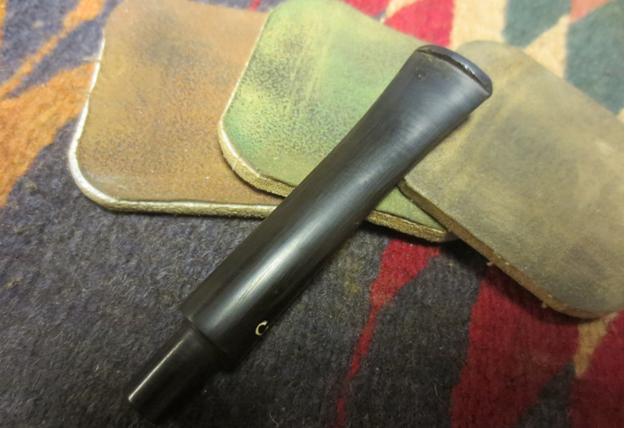
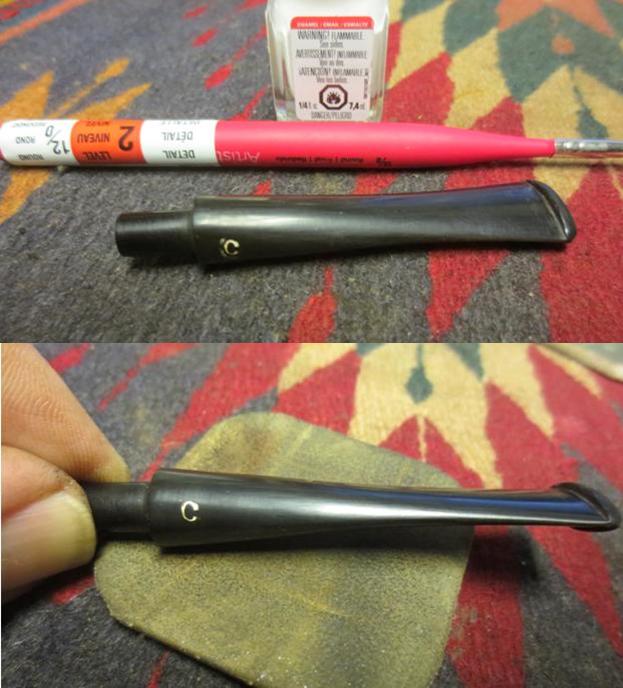
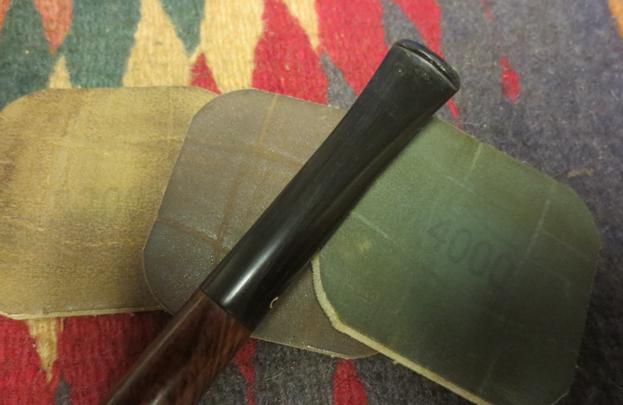
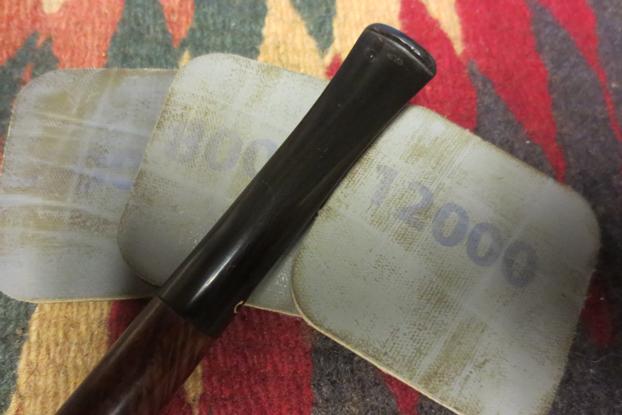
I sanded the side of the bowl with 220 grit sandpaper to try to minimize the groove in the bowl side. The photos below show the progress of the repair. The first photo shows the first sanding on the bowl side. With the initial sanding you can see length of the groove on the side of the bowl. I sanded the bowl side on both sides of the groove until the groove disappeared. I was actually surprised that I was able to remove the damage to the bowl without making the bowl any thinner in the process. It was almost as if when the bowl was turned in the factory the cutting head that turned the bowl slipped and left a hump above and below the groove. Thus the groove itself was actually level with the rest of the bowl other than the humps.Comoy4 Comoy5 Comoy6 Comoy7In the next photo you can see the slight divot at the 11 o’clock position at the top of the photo. It was a deep cut in the briar that must have happened when the pipe was dropped somewhere along process. I sanded it smooth and filled in the divot with clear super glue and briar dust. Once the repair cured I sanded it smooth with 220 grit sandpaper to smooth out and blend in the repair. I sanded it with a medium and a fine grit sanding block to remove the scratches in the briar.Comoy7a Comoy8The rim on the bowl had a light buildup of tars so I lightly topped it on the topping board to remove the buildup. I topped it against 220 grit sandpaper then against a medium and a fine grit sanding block.Comoy9 Comoy10 Comoy11 Comoy12I stained the bowl with a dark brown aniline stain thinned with alcohol to match the colour of the existing finish. I applied it to the surface and flamed the stain. I repeated the process until I had a good even coverage on the bowl sides.Comoy13 Comoy14I wiped the bowl and shank down with alcohol on cotton pads to even out the colour of the stain and make it more transparent. Once that was done, the finish of the bowl looked really good to my eye.Comoy15 Comoy16 Comoy17 Comoy18The stem was a newer style Comoy’s as noted above because of the style of the logo. It was stamped into the vulcanite and then painted. There were some significant bite marks on the stem that needed attention. The lighter tooth marks I was able to sand out with 220 grit sandpaper and remove them. There were others that were quite deep. I cleaned the surface of the stem and used a thick black super glue to fill in the tooth marks. Comoy19I sanded the repaired spots with 220 grit sandpaper and cleaned up the sharp edge of the button with a needle file. I was pleased with the overall look of the stem once the repairs had been sanded smooth.Comoy20I wet sanded the surface of the stem with 1500-2400 grit micromesh sanding pads to begin the process of polishing the stem. I rubbed it down with Obsidian Oil.Comoy21Before proceeding further with the micromesh I decided to touch up the “C” stamp. I used a fine bristle brush and white acrylic paint to fill in the letter. I sanded off the excess with the 1500 grit micromesh pad and went over that section with 1800-2400 grit to match the rest of the stem.Comoy22I dry sanded the stem with 3200-4000 grit pads and gave it another coat of Obsidian Oil. I finished sanding it with 6000-12000 grit pads, gave it a final coat of oil and set it aside to dry.Comoy23 Comoy24I polished the pipe and the stem on the buffing wheel with Blue Diamond polishing compound and gave the entire pipe several coats of carnauba wax. I buffed it with a clean buffing pad and then by hand with a microfibre cloth. The finished pipe is shown in the photos below. The adjustment to the left side of the bowl worked well to smooth out the bulges and crease and the pipe looks as it should have when it left Cadogan. Thanks for looking.Comoy25 Comoy26 Comoy27 Comoy28 Comoy29 Comoy30 Comoy31

A Pipe with a Story – an R.V.W. Handmade 5 pipe


Blog by Steve Laug

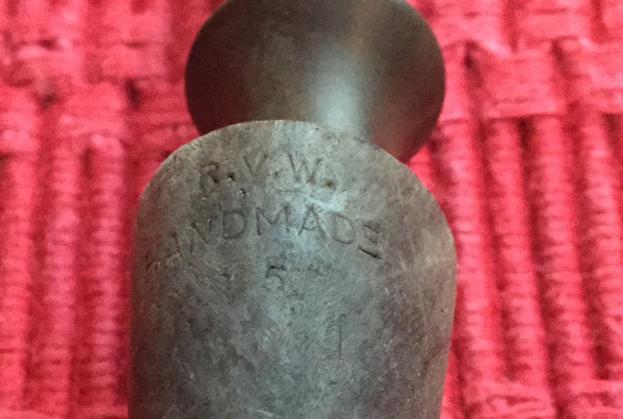
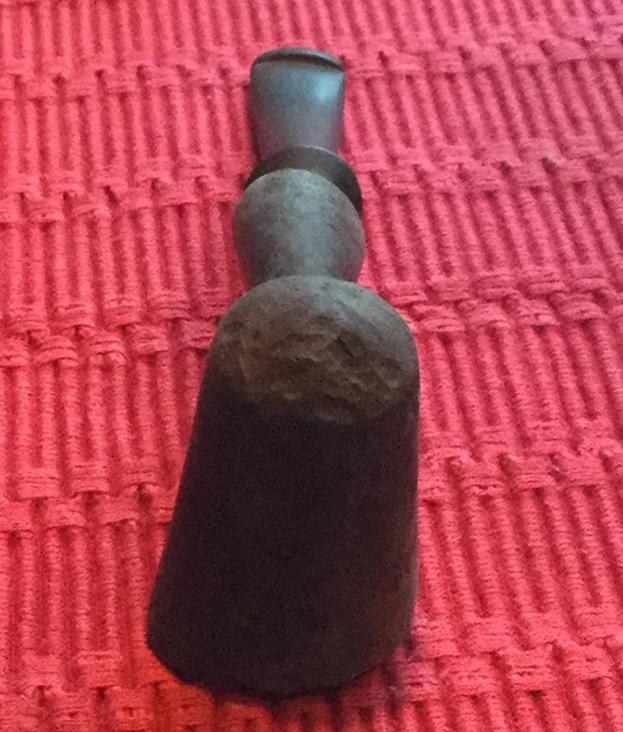
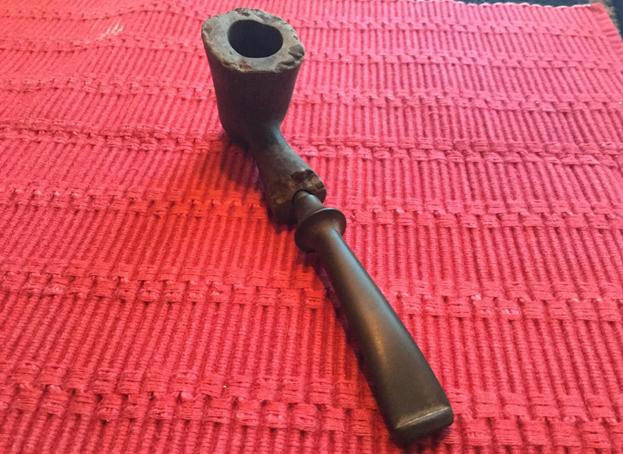
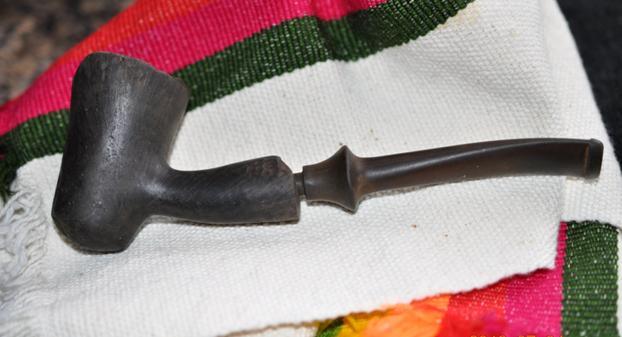
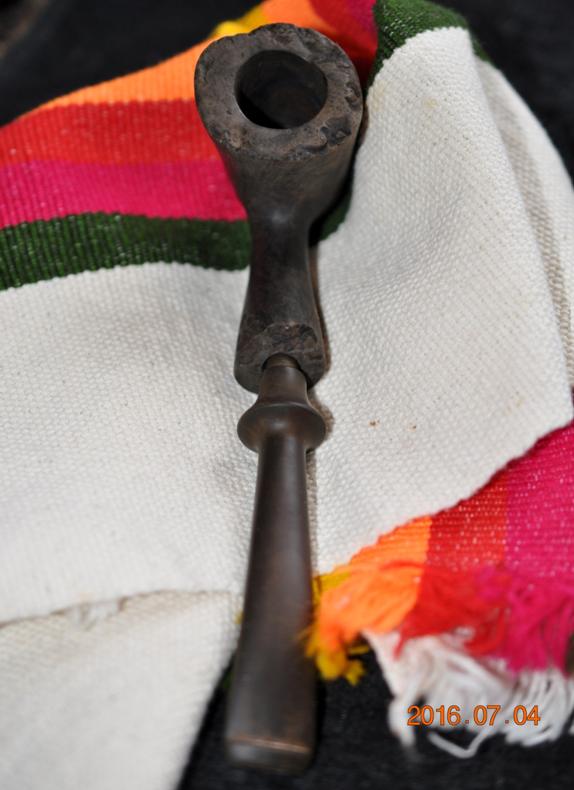
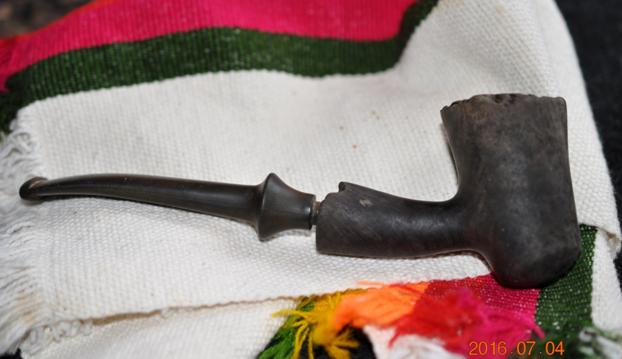
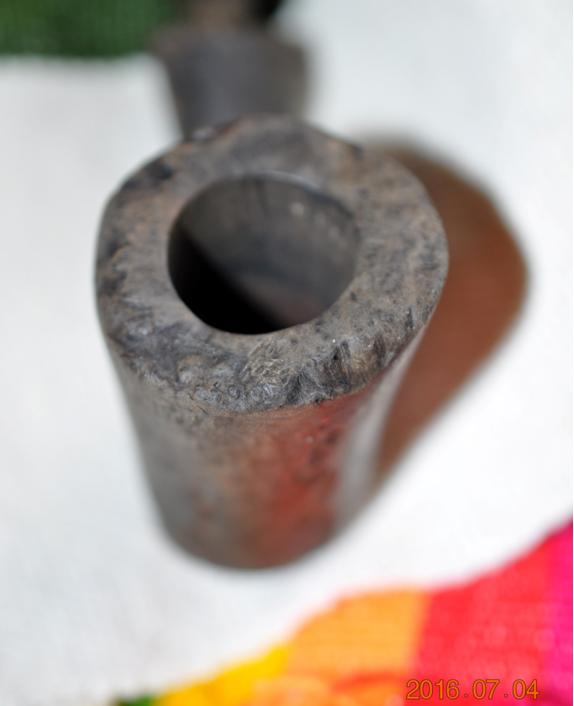
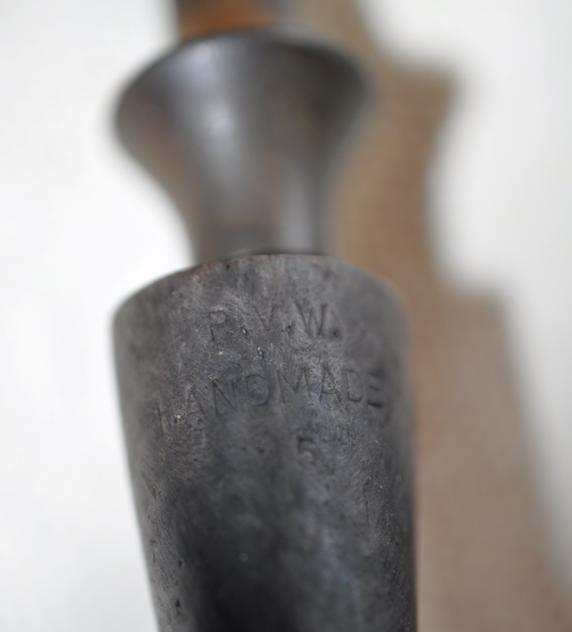
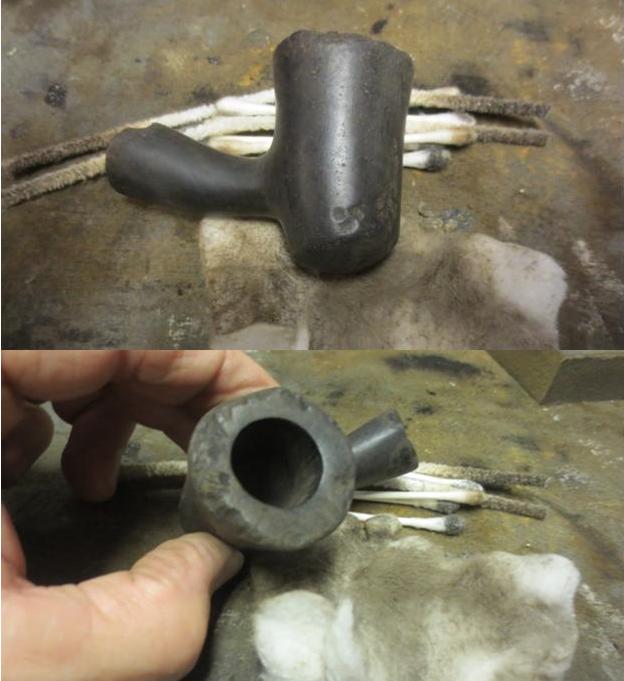
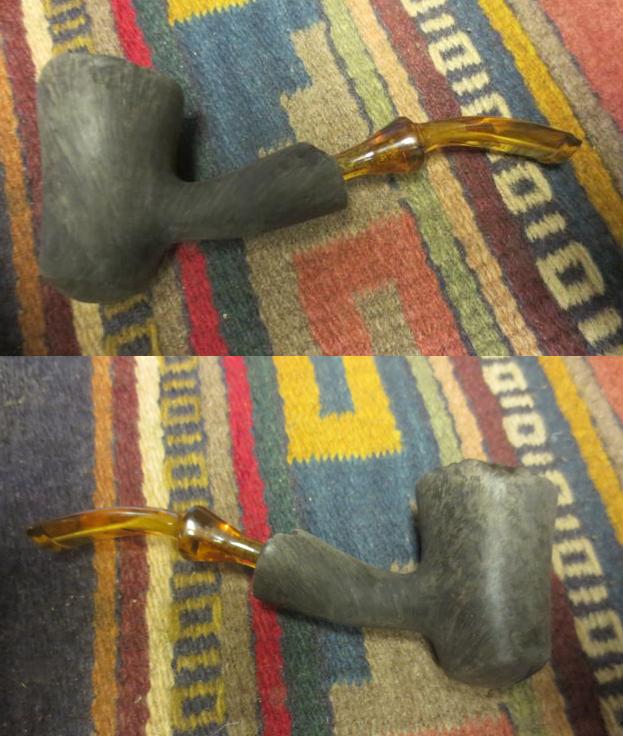
My brother sent me pictures of a pipe he found on eBay that grabbed his attention. It was not so much the pipe but the story of the pipe that caught his eye. He sent me the link and I had a look but was not sold on picking up the pipe. But he wanted it so he threw in a bid and won the pipe. He wrote to the seller and asked about it. He received a reply that the pipe had been found in Northern Michigan, US in a mud bank on the Rifle River – farm country in the middle of nowhere. They had no more information. The pipe was dark and looked like the mud bank it had been found in to my eye. The stem looked too long and the flow of the pipe did not work for me.R1The stamping on the pipe was pretty clear which surprised me. On the underside of the shank it read R.V.W over Handmade and then a 5 underneath that. That piqued my interest a bit so I decided to wait and reserve judgment until I saw the pipe.R2 R3 R4While I waited I did a bit of research and found out the pipe was made by Randy Wiley. I Googled to find his website and was directed to his Faceboook page. The link follows: https://www.facebook.com/wileypipes?__mref=message_bubble. I sent him a message on Facebook and related the story that my brother told me. I also included the above photos of the pipe supplied by the eBay seller. The next day I received a message back from Randy. Here is what he wrote: “Hi Steve, Wow, Glad there wasn’t a body with it. I’ll bet it was dropped while fishing. I’ve heard many stories. One day someone will find a pipe while scuba diving. I know the owner. This pipe is a second, RVW. It retails today for around $105.00”

When I first read his response I missed the part about him knowing the owner. This morning I read his response again as I was working on this blog and wrote Randy back regarding that line. I wonder if the original owner would want the pipe returned. We shall see.

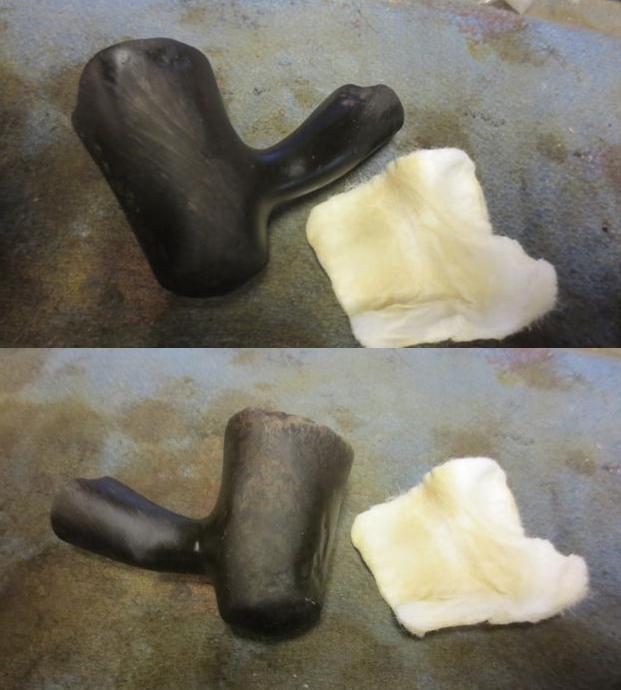
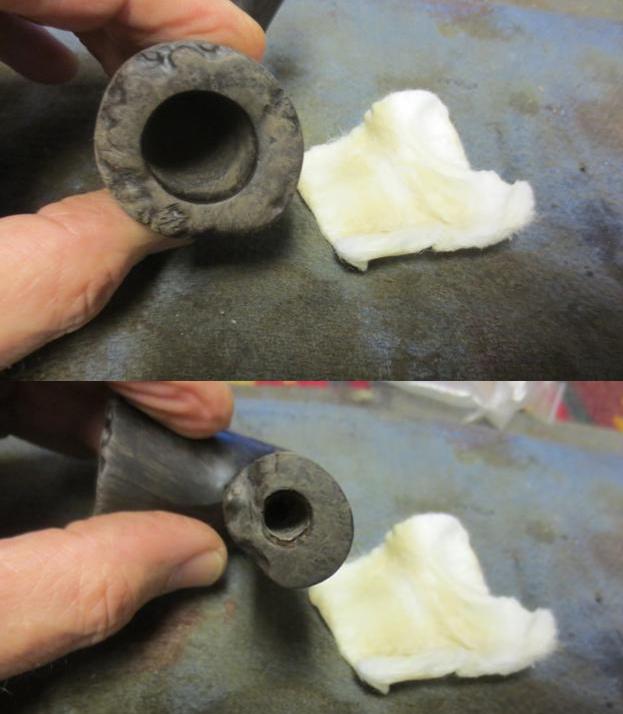
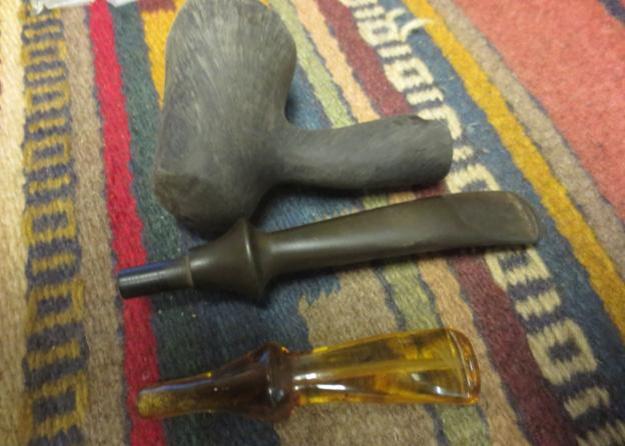
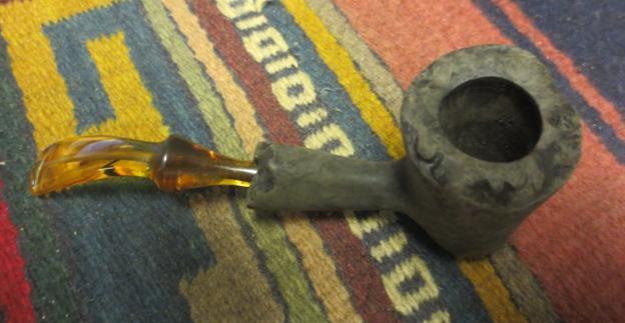
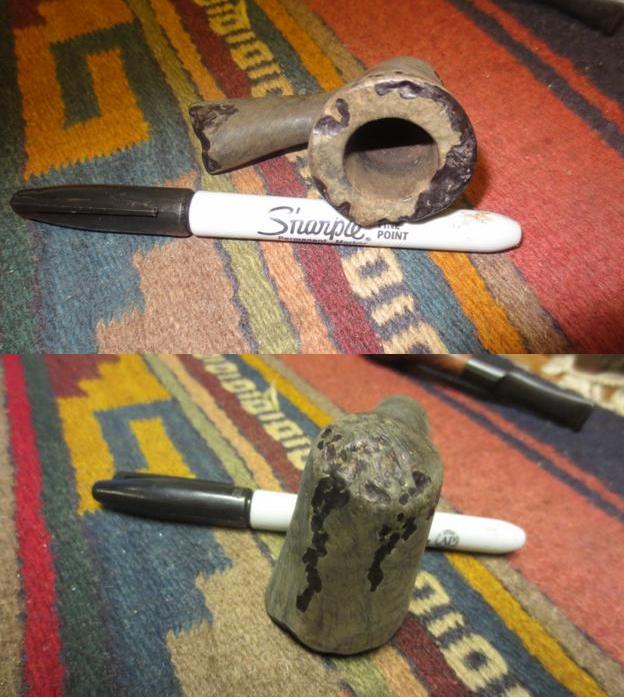
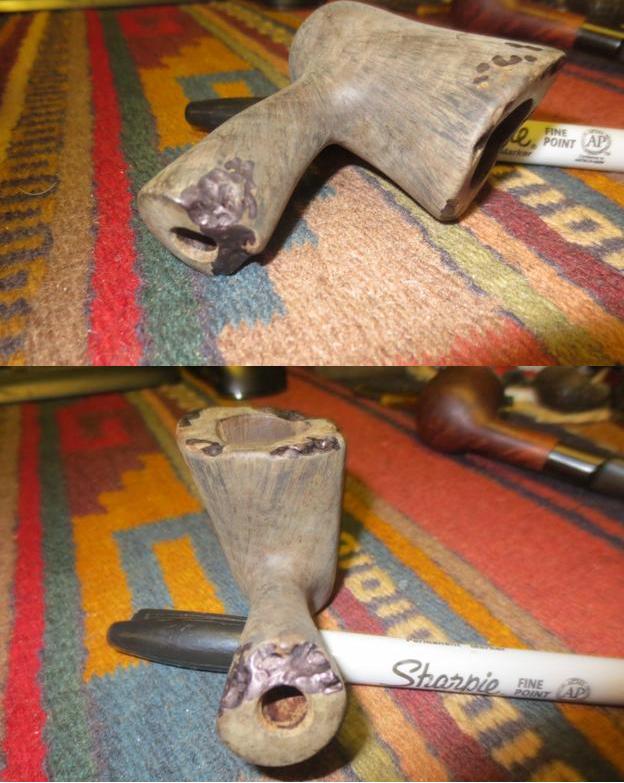
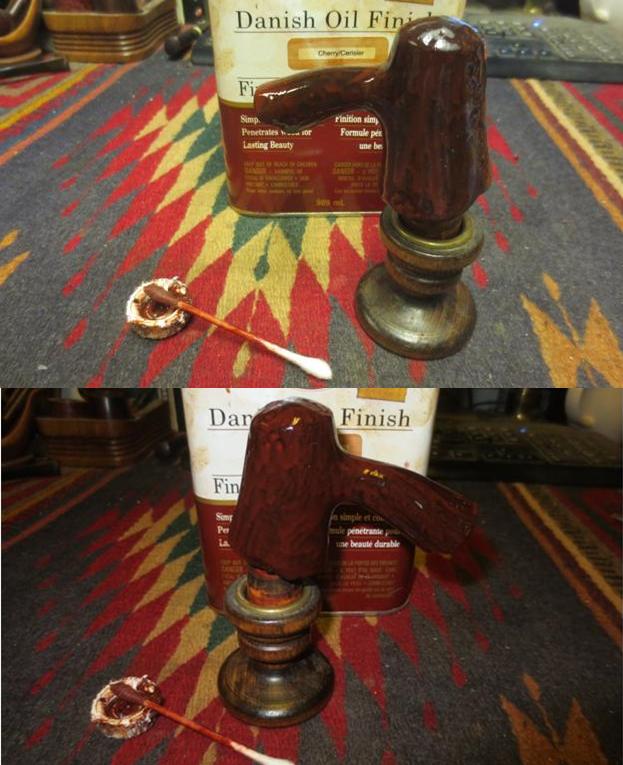
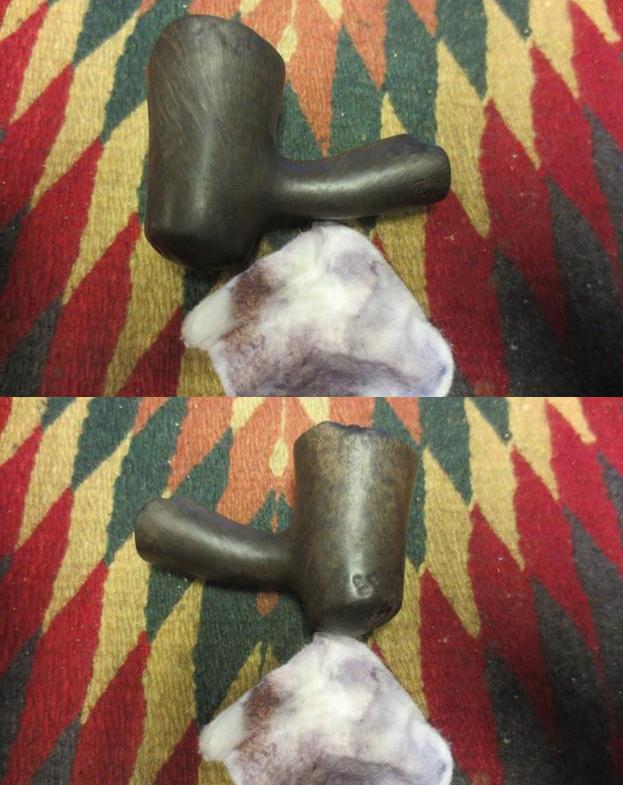
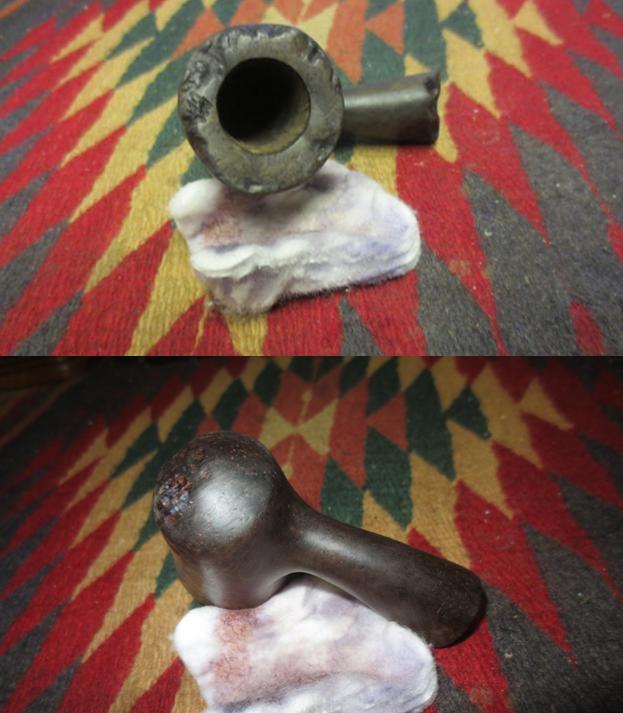
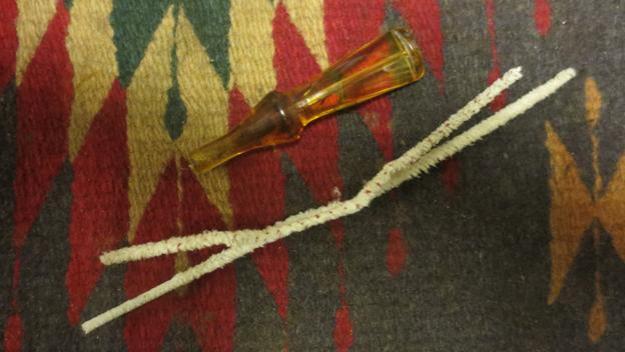
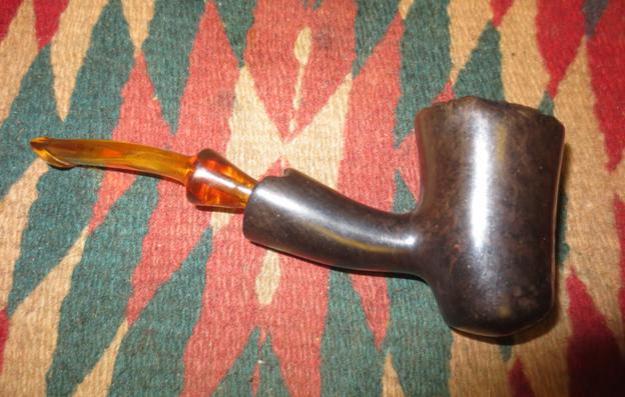
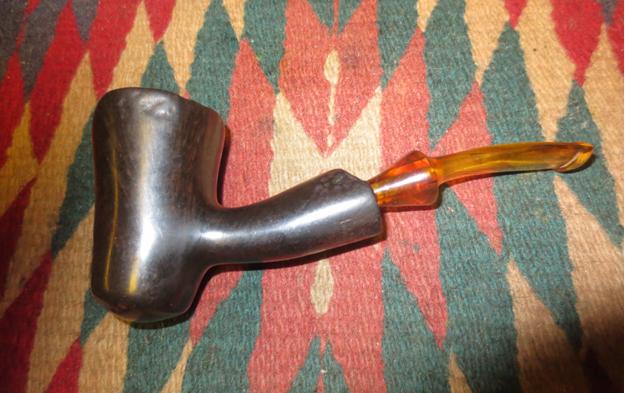
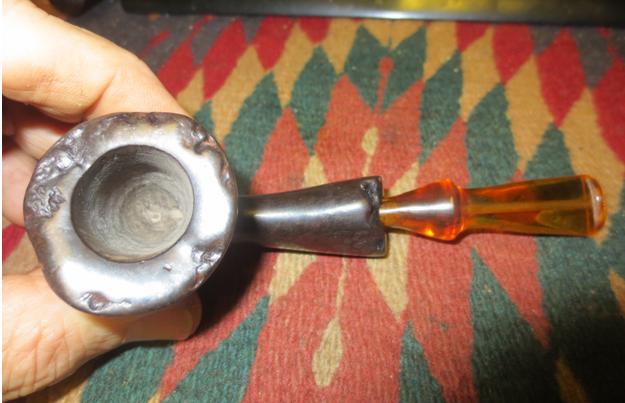
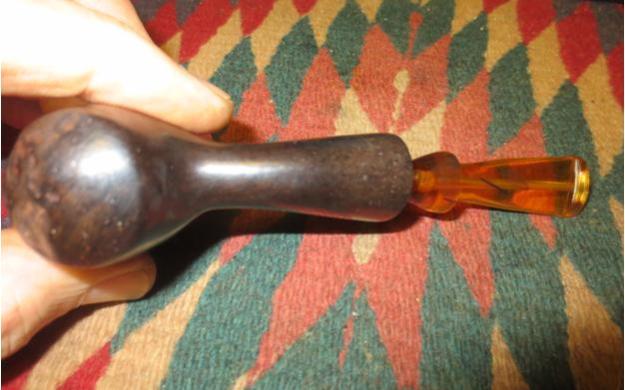
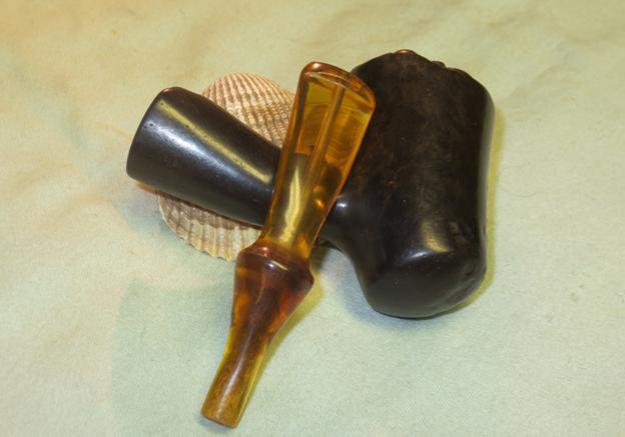
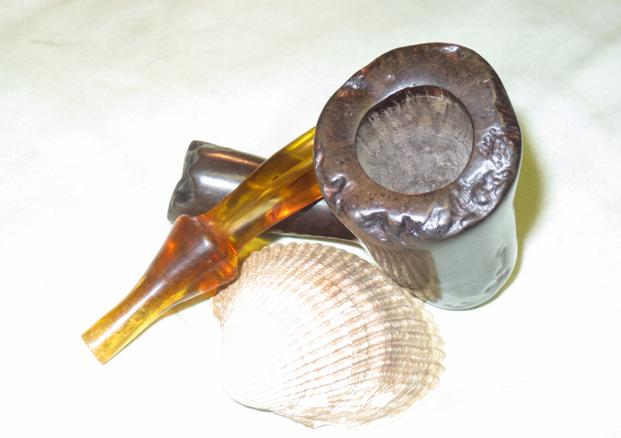
When I was in Idaho I taught my brother to do the initial clean up on the pipes. It has been a real help for me. With the box of pipes to be refurbished filling up on this end it is really nice to have him work on them ahead of time. When I get them they have been reamed and the internals all cleaned so it makes my work much quicker. Because this one attracted his attention he really liked the cleanup of it. He reamed and cleaned the bowl and shank as well as the airway in the stem with pipe cleaners, cotton swabs and alcohol. He scrubbed the exterior of the bowl with a tooth brush and Murphy’s Oil Soap to remove the debris left behind by the mud bank. He took the following photos to show the pipe after his cleanup work. The straight grain on the left side, back and front of the bowl and the birdseye on the right side are beginning to show through.R5 R6 R7 R8 R9When I received the pipe I brought it to the worktable and took some photos of it before I began to work on it. While the grain was showing through it was still too dark to my liking. There were also many tiny nicks and pits in the surface from time spent in the mud by the river. These would need to be sanded out. The rusticated portions on the bowl sides and edges were also in need of deeper cleaning. The heel of the pipe had been knocked around and had many nicks and pits. The combination of smooth and plateau on the rim also needed deeper cleaning. The stem still seemed too long to me and if I end up either keeping the pipe or selling it I think I will make a second stem that is more proportional to the pipe in my opinion. The stem was oxidized but did not have any tooth marks or chatter.R10 R11I ran the Savinelli Pipe Knife around the inside of the bowl out of habit with little effect because my brother had done a great job reaming this one.R12The bowl had some white debris in the bottom which I think was water marks from its time in the mud. I used alcohol pipe cleaners and cotton swabs to remove that debris. I scrubbed the exterior of the bowl and shank to remove more of the dark stain with acetone on cotton pads and was able to remove some more dark stain. There was more work to be done in this area but I would keep trying.R13 R14I scrubbed the exterior with a bleach mixture to further remove the stain. The next photos show the effect of the bleach on the stain. The grain is beginning to show.R15 R16I went through my stem can and found a nice amber Lucite stem that was the right length to my eye and would be a great contrast with the bowl. I did not have to do any fitting or tenon work as the stem fit in the mortise perfectly from the start. The stem was bent too much and would need to be straightened and bent to match the flow of the bowl. You can see in the photo below that the new stem is about an inch shorter than the one that came with it when I got it. I put the stem in place and took some photos to get an idea of how the pipe looked with the stem. You can also see the effect of the bleach on lightening the stain on the bowl in these photos.R17 R18 R19I used a Sharpie pen to darken the plateau areas on the end of the shank and the top of the bowl. I also used it on the rustications down the bowl sides and front.R20 R21I used Watco’s Danish Oil with a Cherry Stain to stain the bowl. It is an oil based product and as it dries on the surface it darkens to a black cherry. I applied the stain with a cotton pad and let it absorb into the warm briar.R22When it had dried I buffed it off. The stain had darkened and with the natural darkening that had happened as the pipe lay in the mud the overall appearance almost a rich charcoal grey with red undertones.R23 R24I forgot to take photos of the process of rebending the stem but what I did was boil water in the microwave in a cup and then heated the stem until it was flexible in the hot water. I inserted the tenon in the mortise and then bent the stem to match the flow of the bowl. I held the stem under cool water to set the new bend. There was some tobacco stains in the stem from a previous pipe it had graced. I cleaned it out with pipe cleaners and cream cleanser/soft scrub cleanser until all of the stains were gone.R25There was a groove in the stem on the top side about a ¼ inch from the saddle that I sanded out with 220 grit sandpaper. I worked over the stem with micromesh sanding pads – wet sanding the stem with 1500-2400 grit pads and dry sanding with 3200-12000 grit pads.R26 R27 R28I sanded the bowl with micromesh sanding pads to try to lighten the dark cherry colour of the stain. I finished sanding it with 6000-12000 grit pads to polish the briar.R29While I was finishing polishing the pipe, I received an message from Randy regarding the previous owner of the pipe. He said that he had confused it with one that had been lost while scuba diving. So he could not remember who had purchased this one. I had also asked whether the stem was original and he was not certain.I actually found that to be good news as I did not like the stem that it came with.
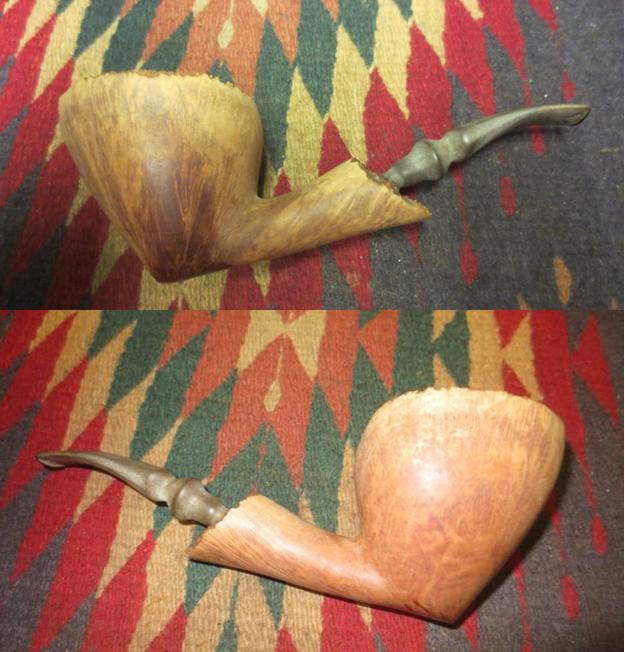
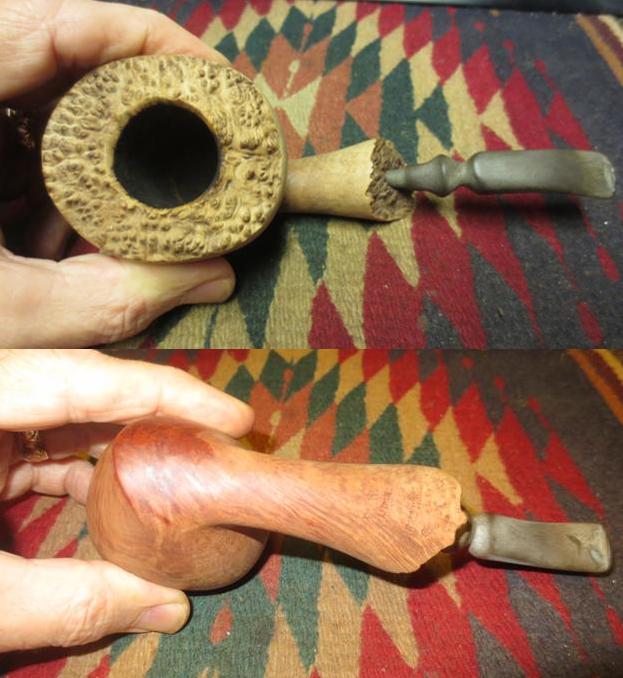
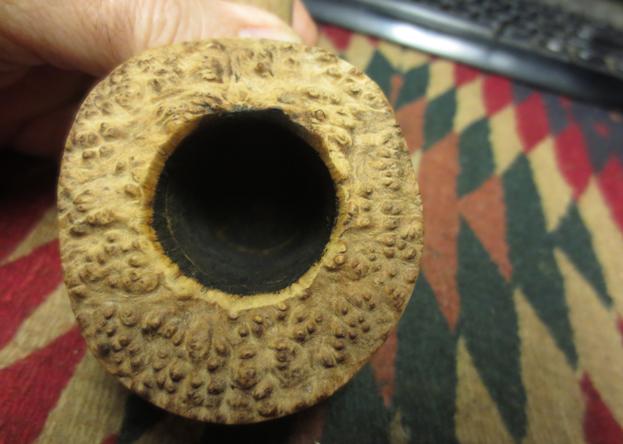
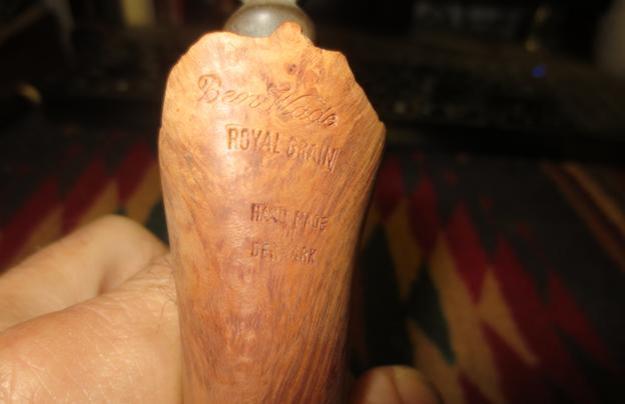
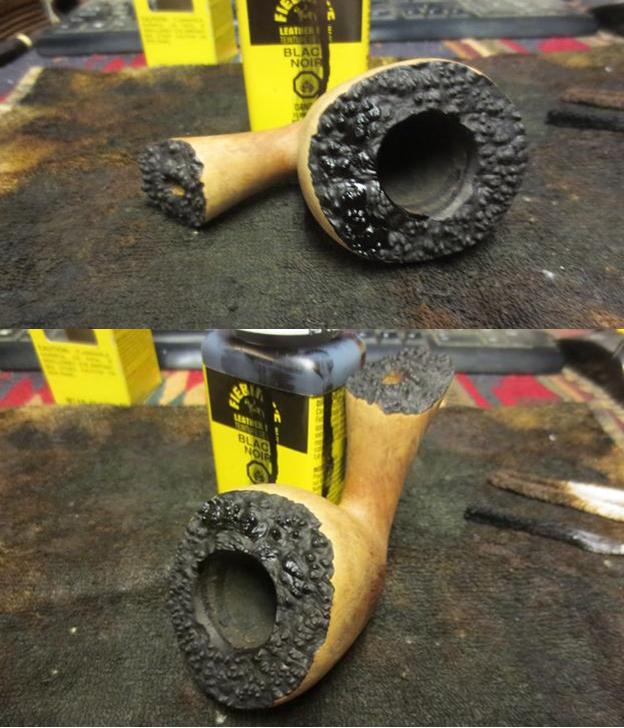
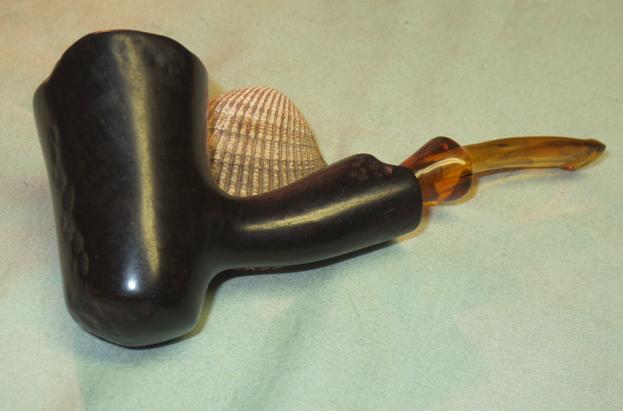
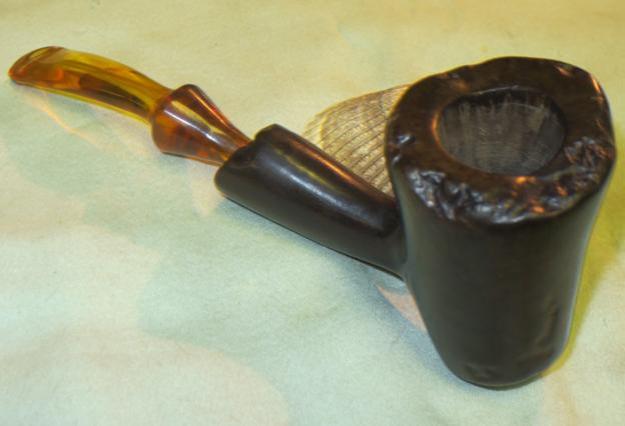
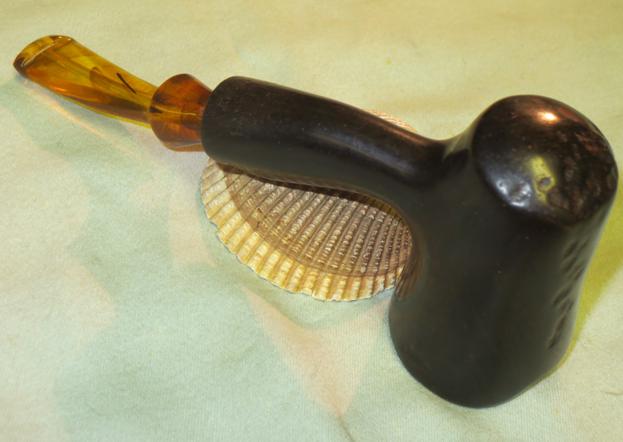
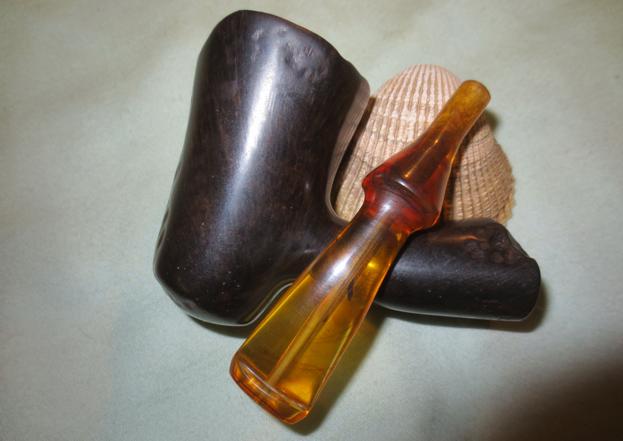
I took the pipe to the buffer and buffed the pipe with Blue Diamond and then gave it several coats of carnauba wax. The briar has many small pits in the surface that I am convinced came from its time spent in the mud alongside the river. Part of me wanted to sand them out and remove them but another part, the part that won decided to leave them to bear witness to the shadow life this pipe had before it was found. I took the next photos with the blanket background as it seems to allow the grain to stand out a bit.R30 R31 R32 R33The next photos I took against a light blue backdrop to show the contrast between the amber stem and the dark cherry stain. Thanks for looking.R34 R35 R36 R37 R38 R39