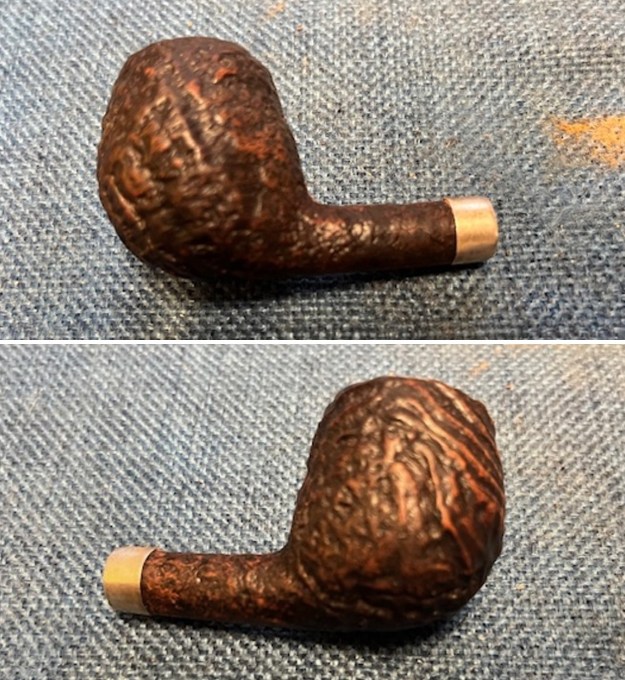
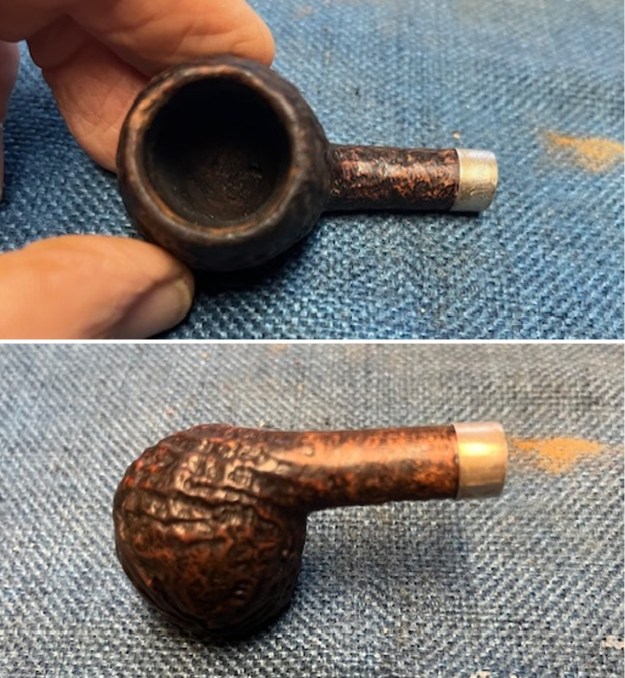
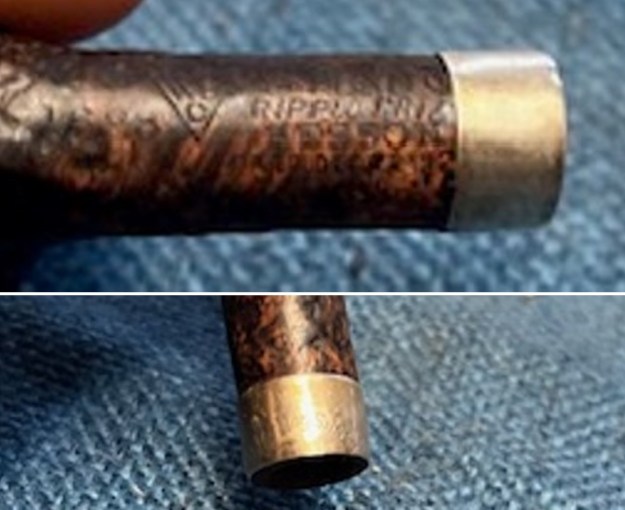
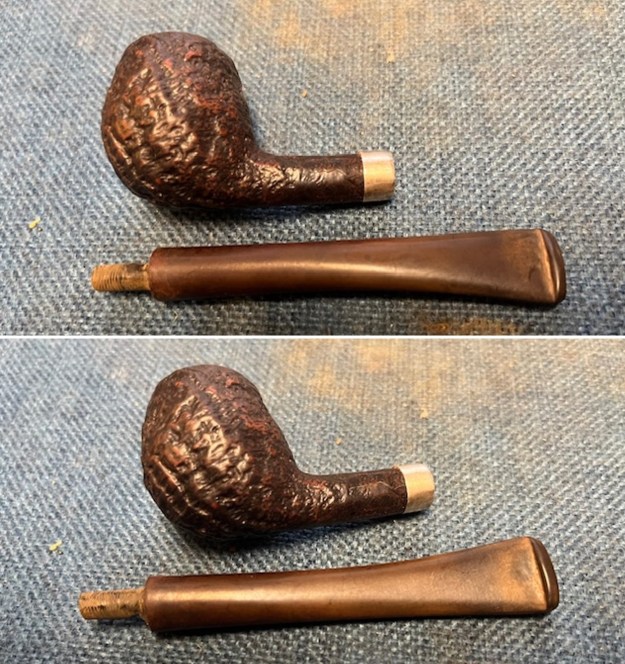
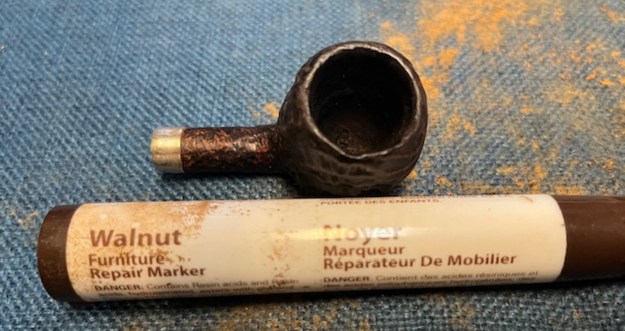
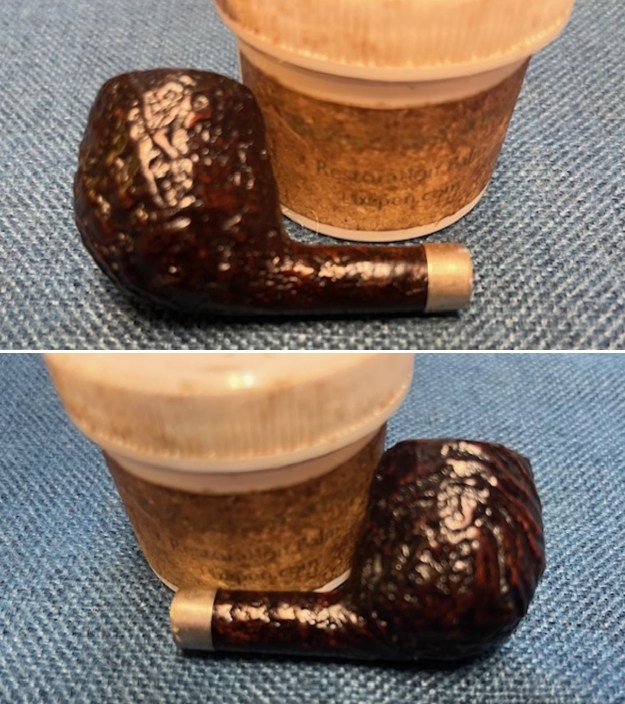
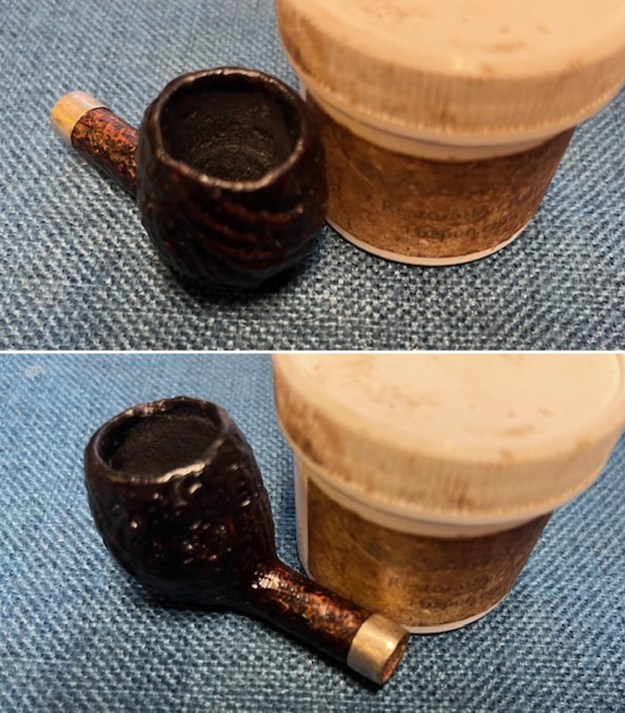
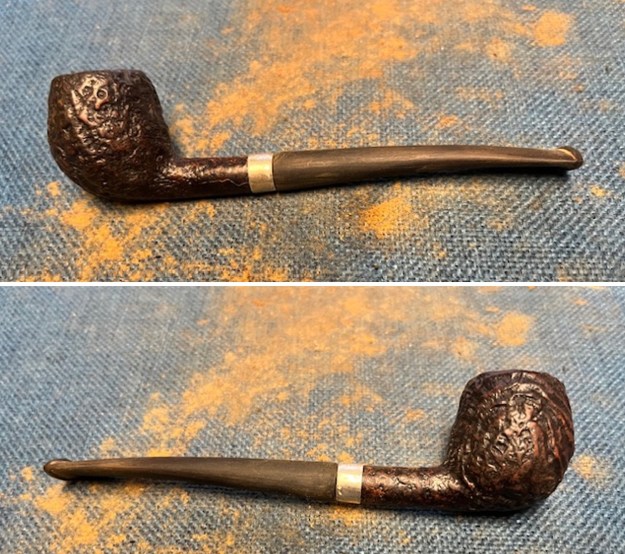
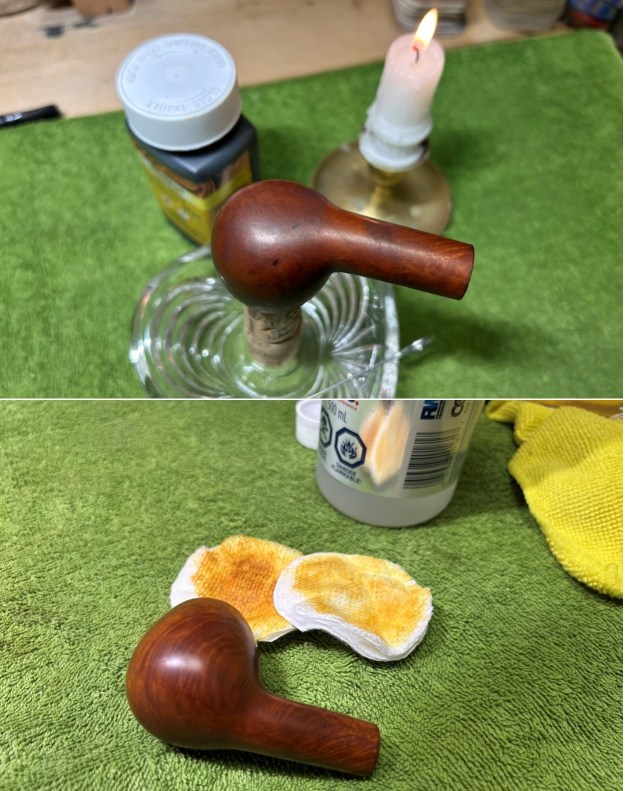
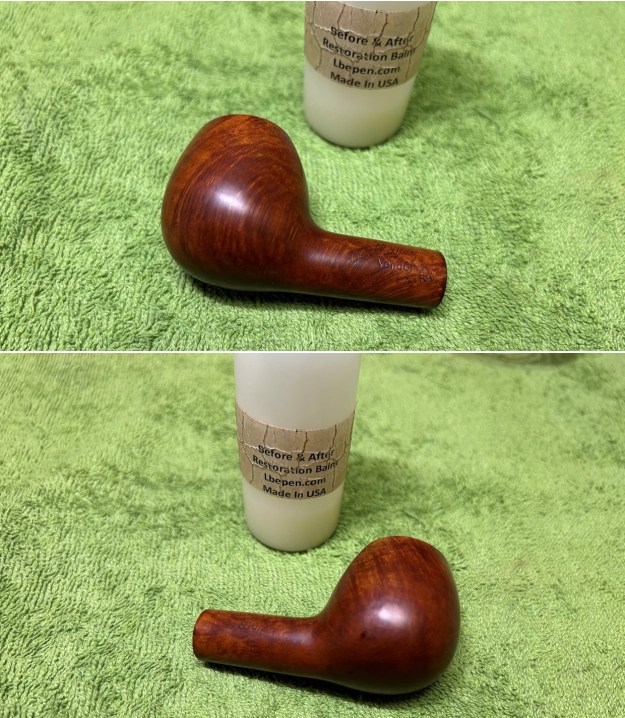
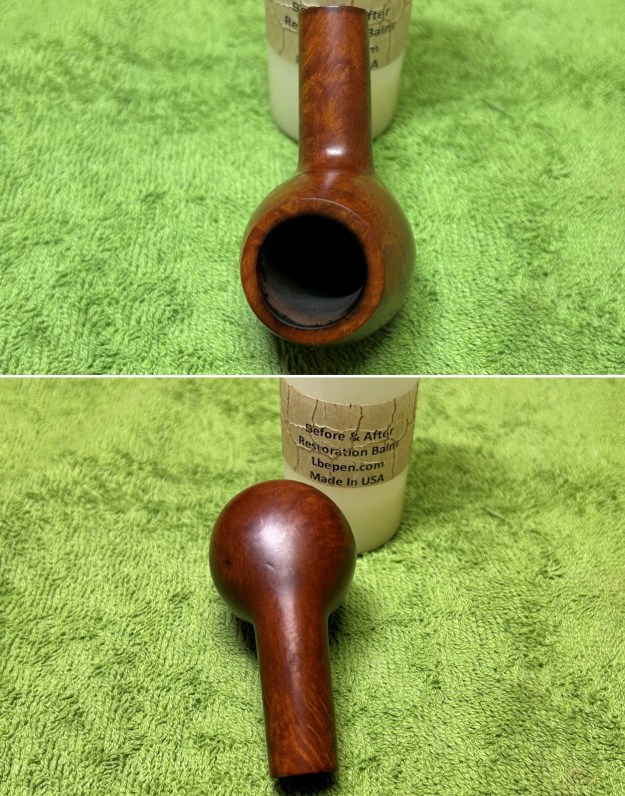
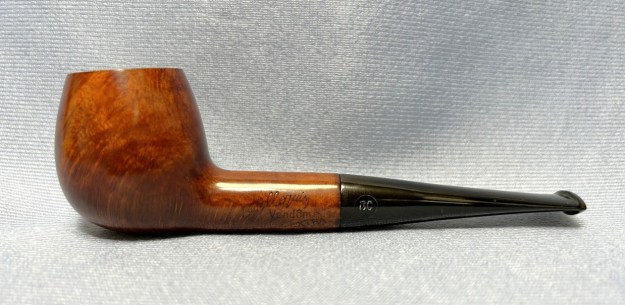
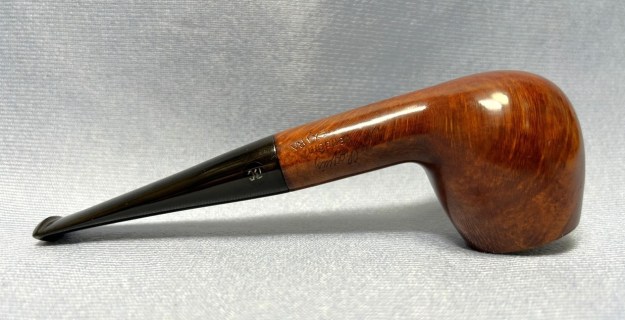
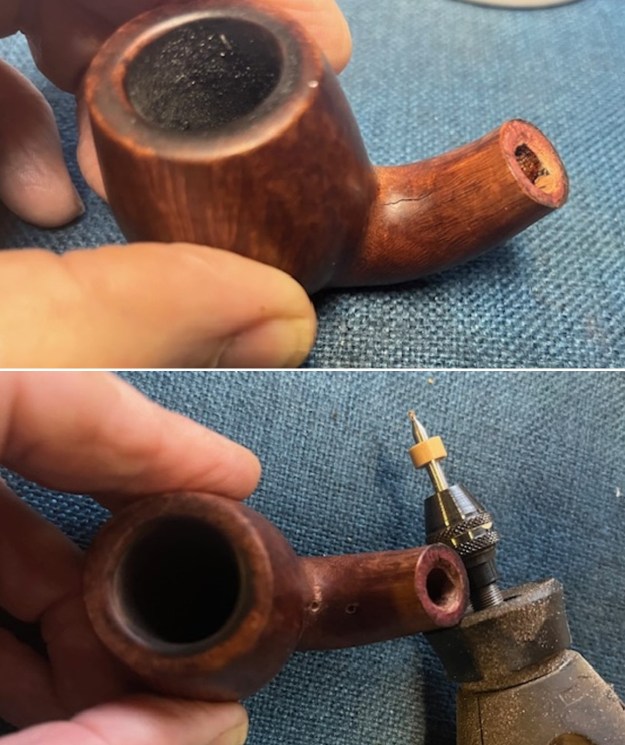
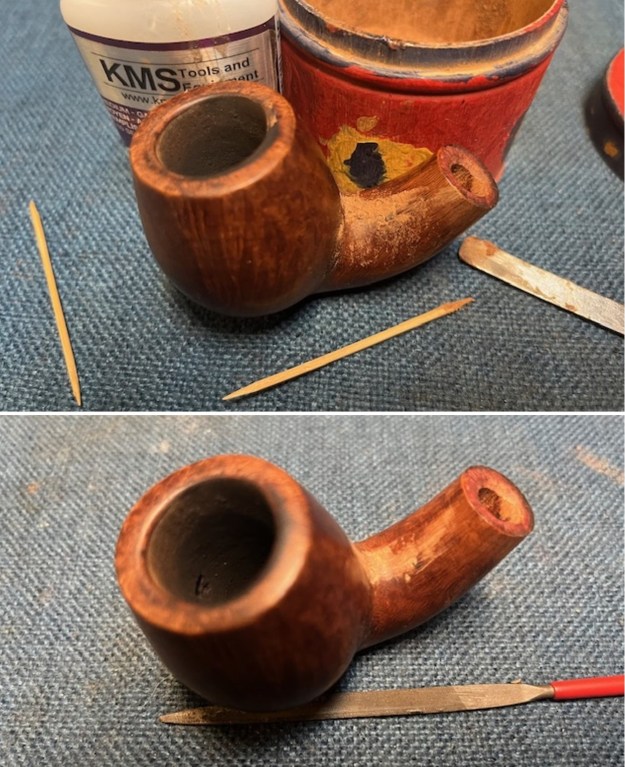
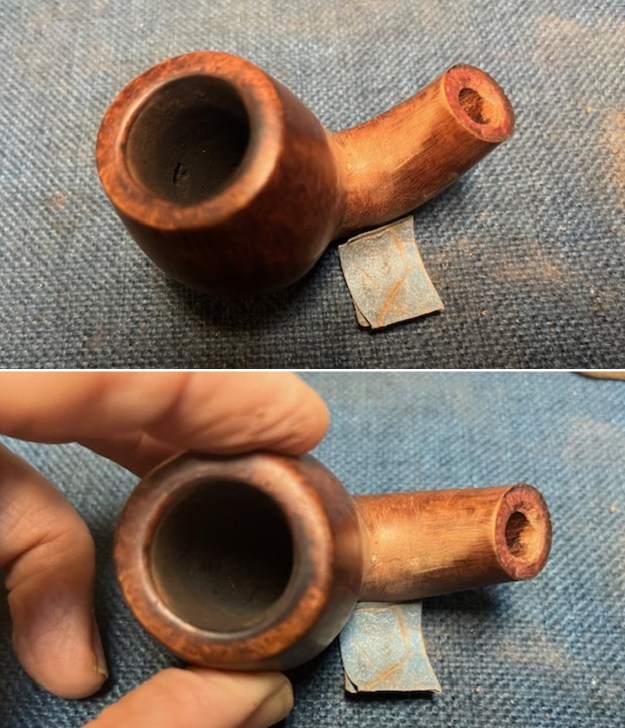
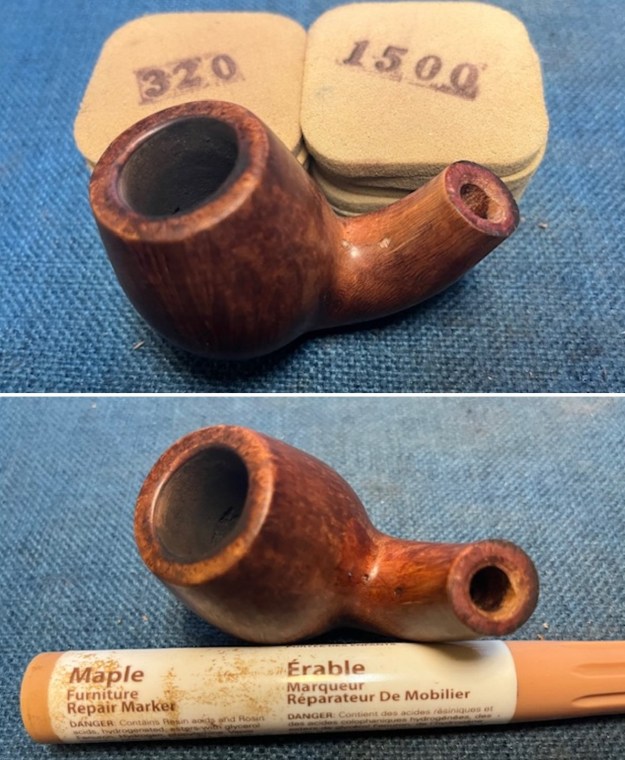
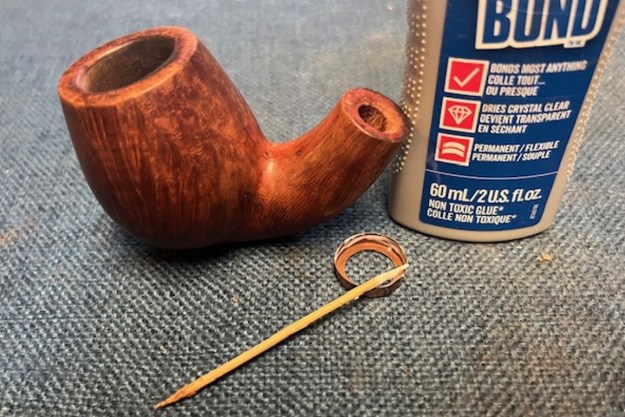
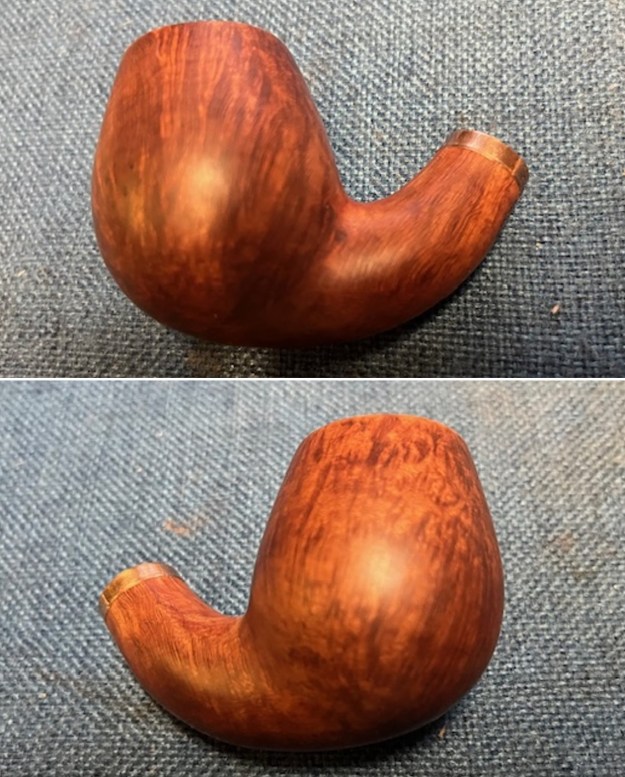
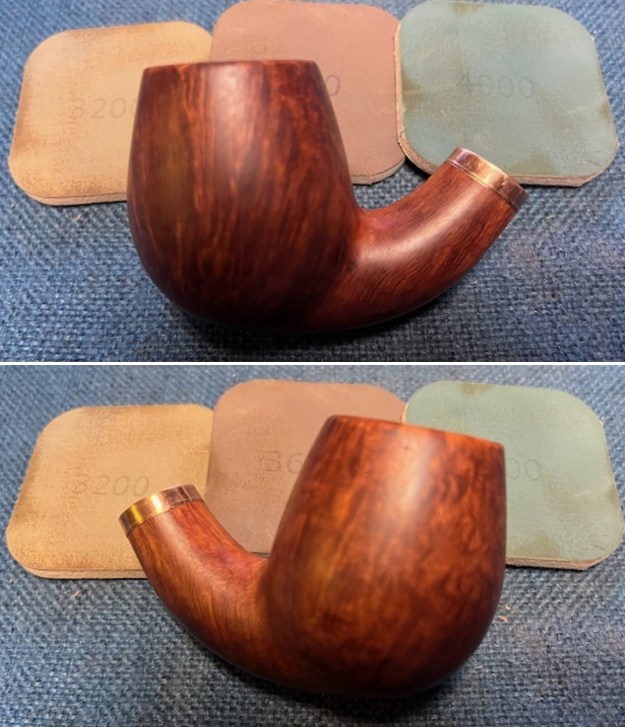
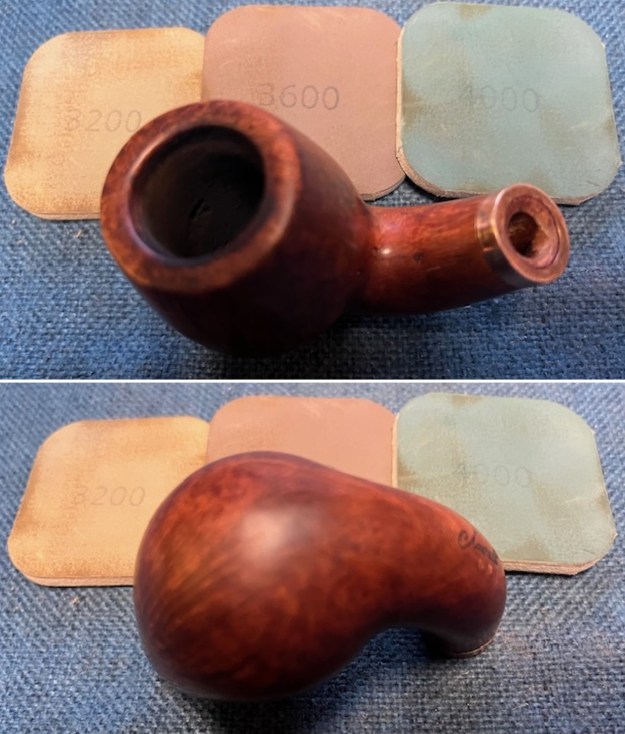
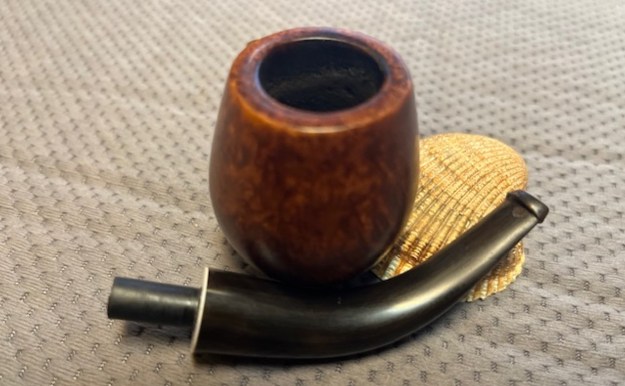
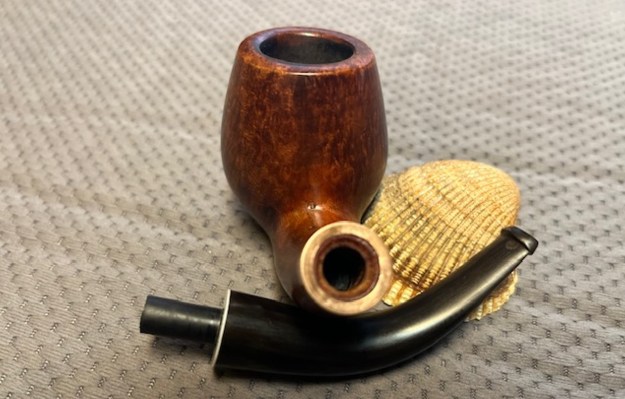
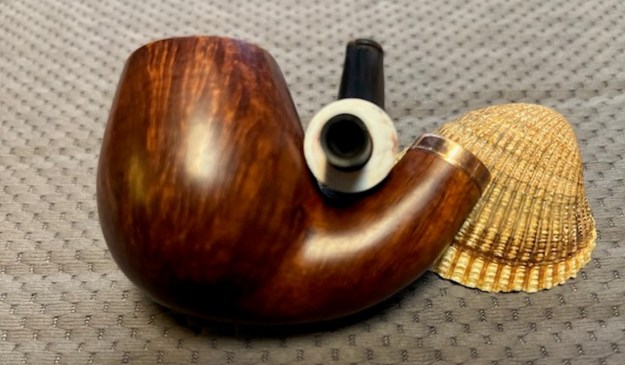
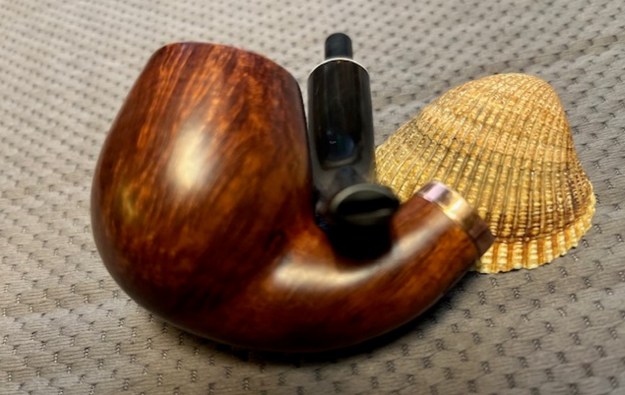
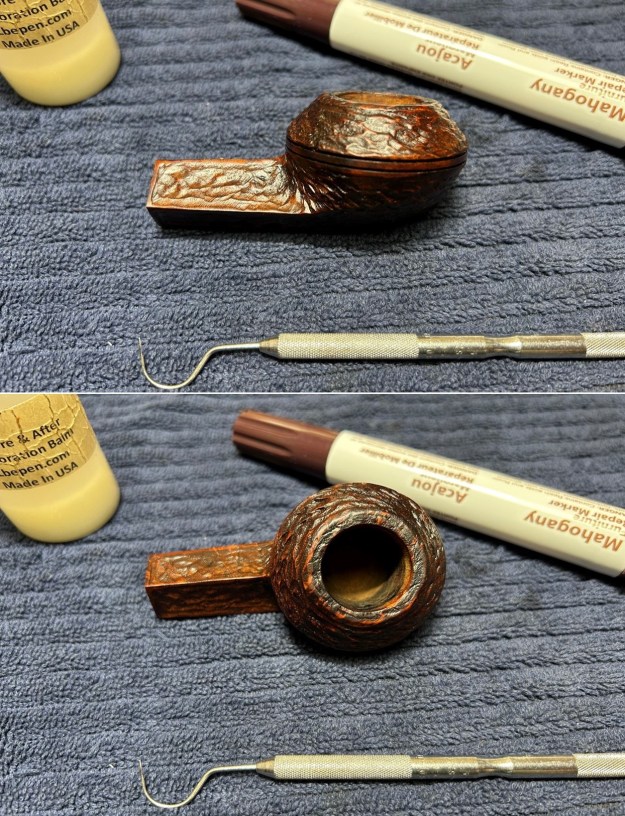
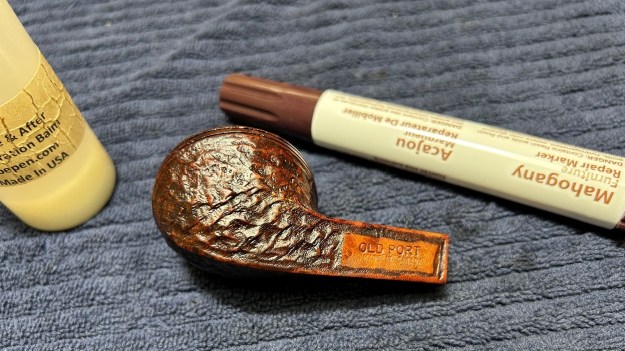
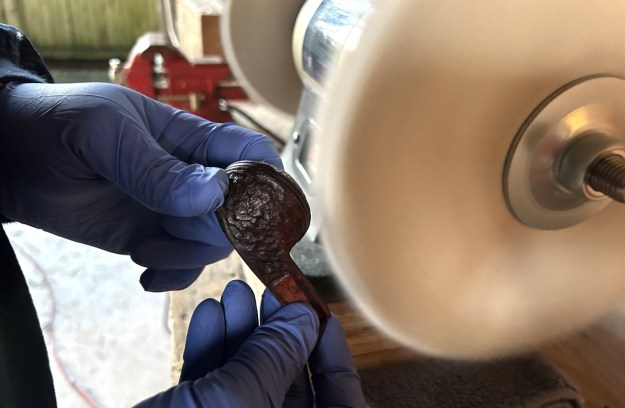
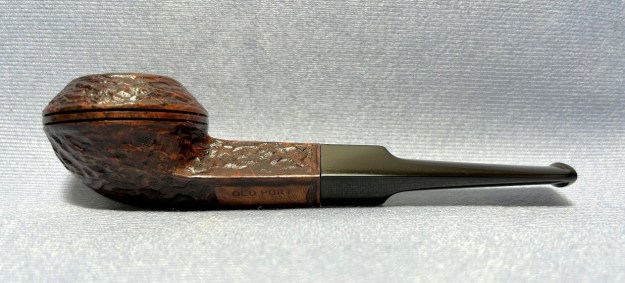
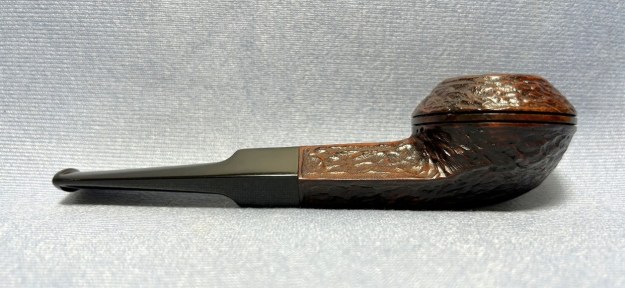
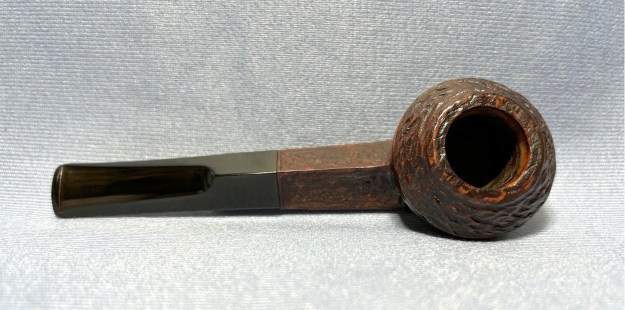
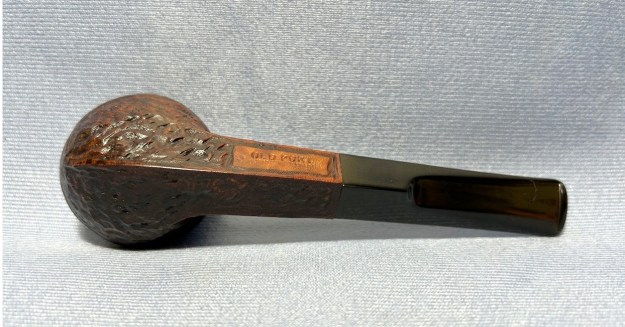
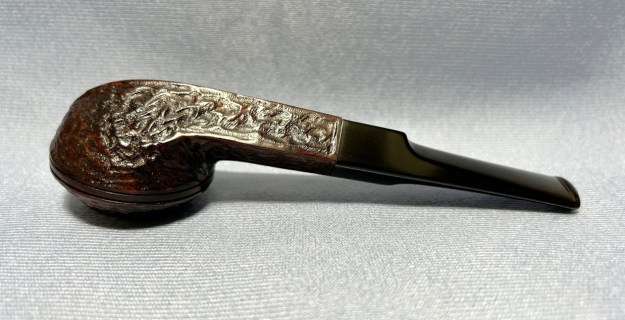
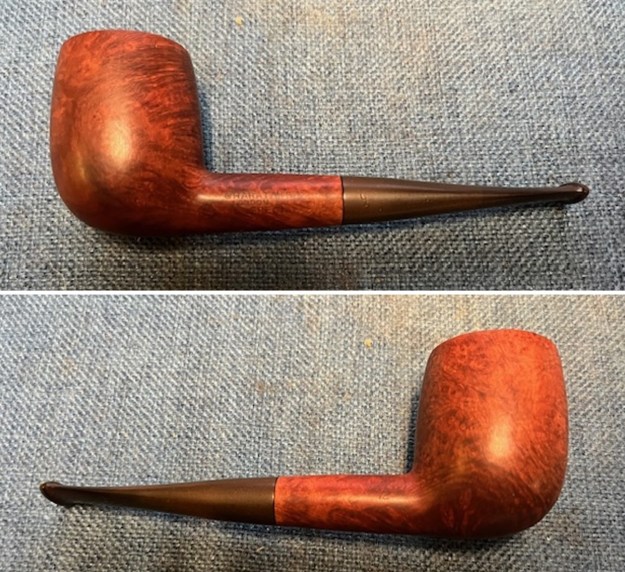
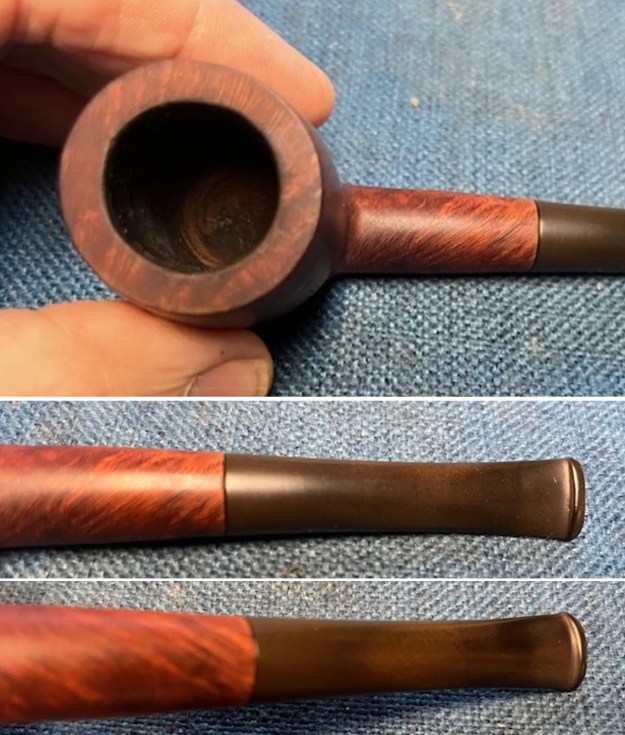
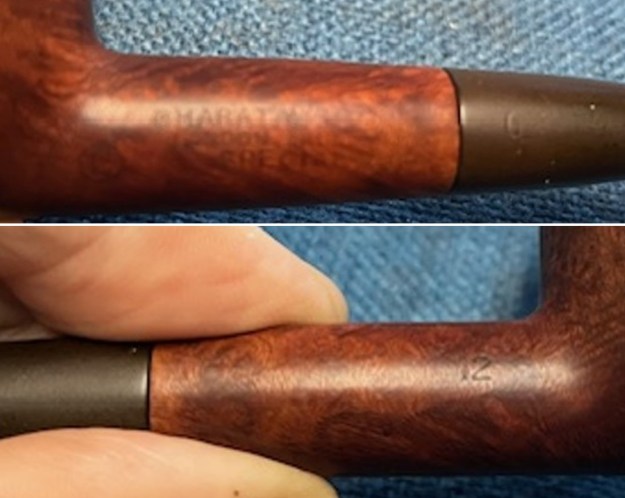
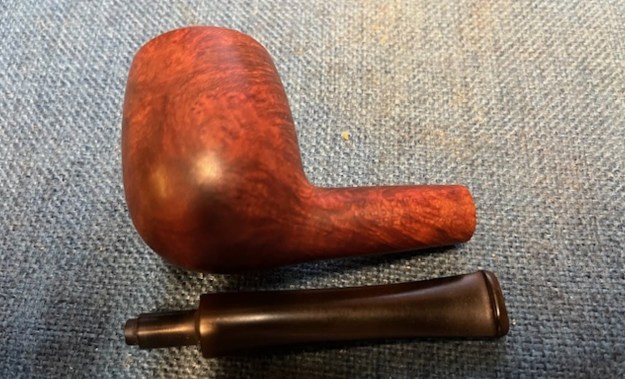
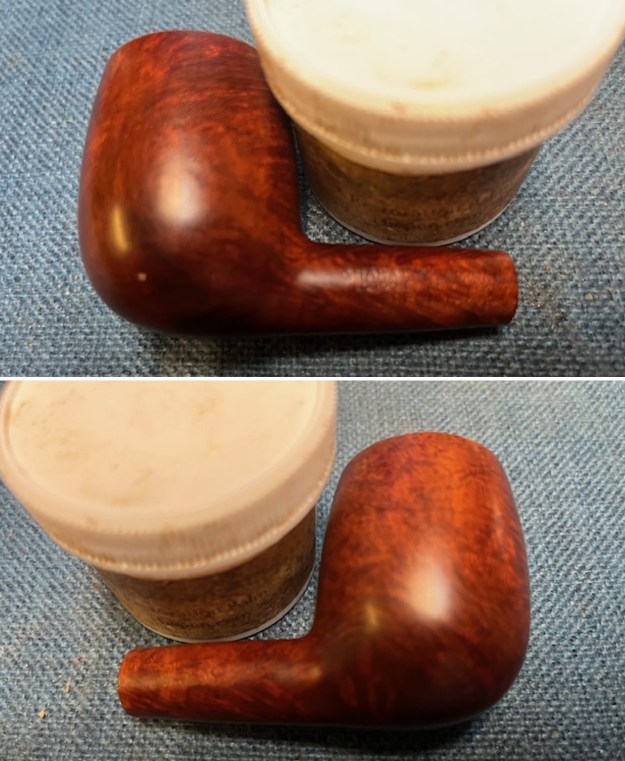
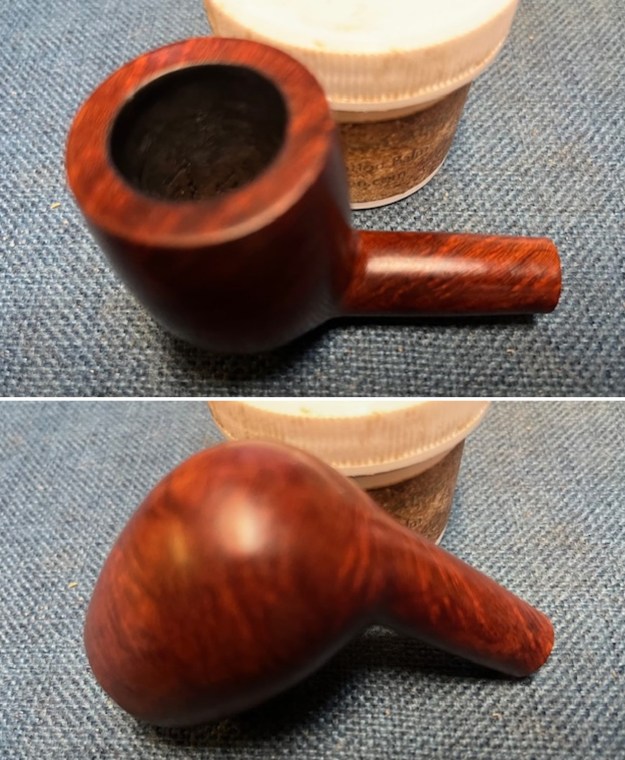
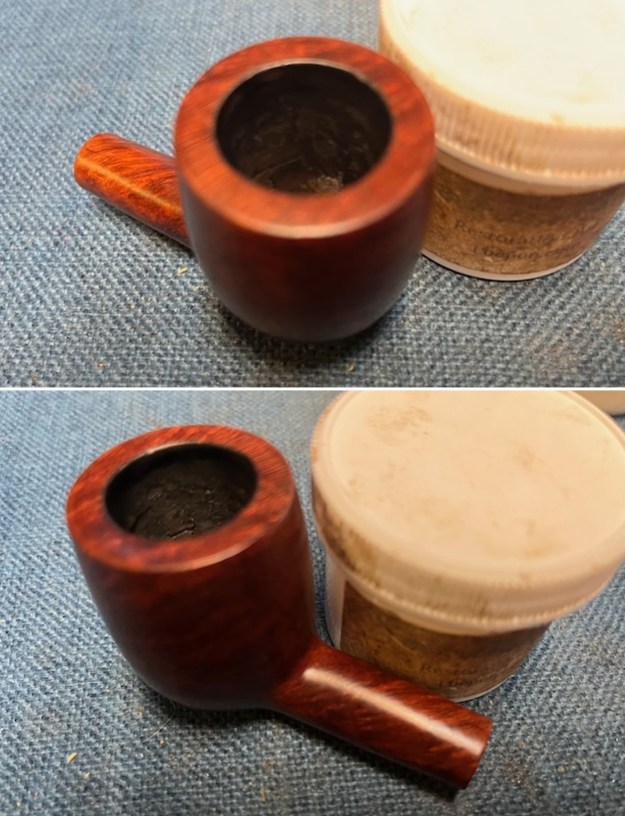
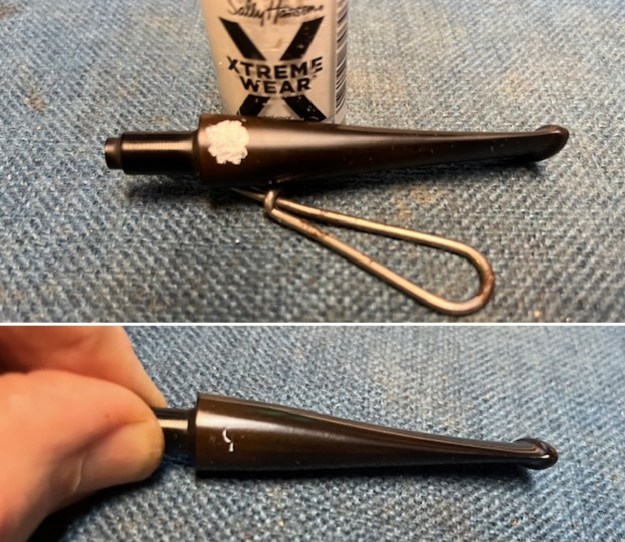
Tag Archives: restaining a bowl and rim

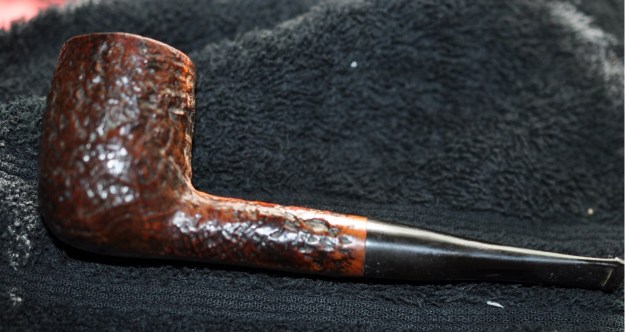
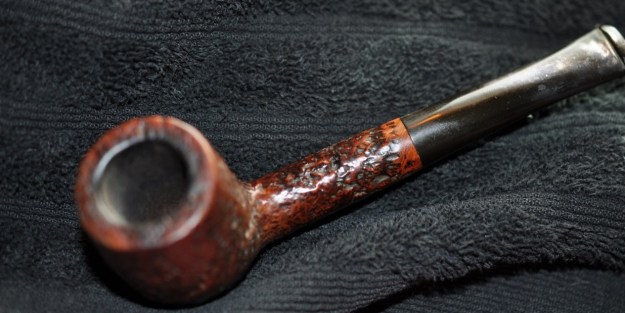
Restoring a Conway Aristocrat Made in England Bulldog


by Steve Laug

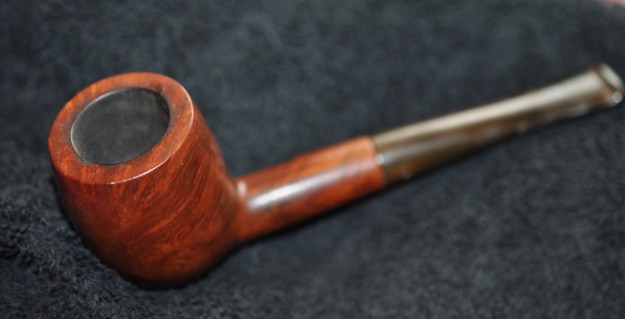
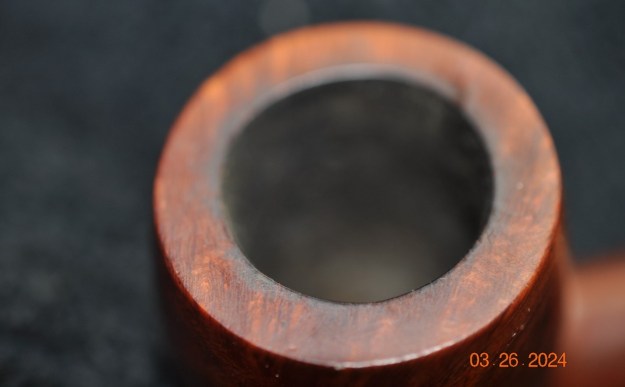
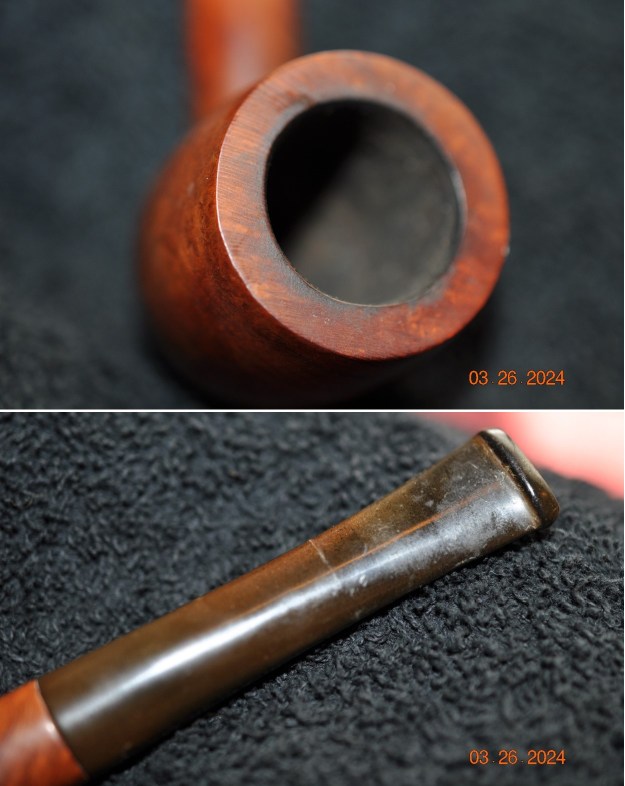
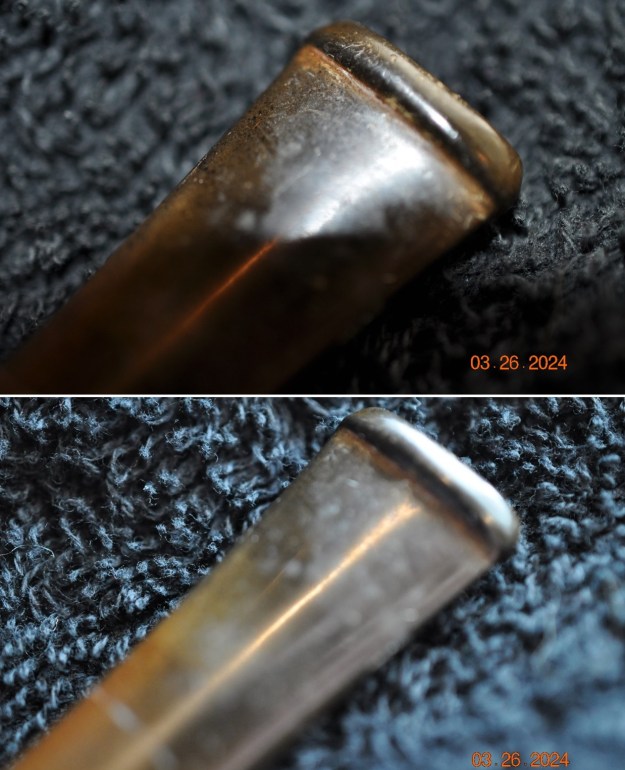
I picked some older pipes to work on next. The next of these is a Classic, Smooth Straight Bulldog with a Saddle Stem. We purchased this one on 09/20/2023 from a seller in Portland, Oregon, USA. The is a large straight Bulldog that is stamped on the top left side of the shank and reads Conway [over] Aristocrat. On the left side it is stamped Made in England. On the top left side of the saddle stem the Circle C logo of Conway was stamped. The pipe was well used. The finish was dirty with dust and debris in the smooth briar and in the twin rings around the rim cap. The bowl had a thick cake in it and heavy lava on the rim top and the inner edge. There was some damage on the left back of the rim top and om the bevelled inner edge of the bowl. The vulcanite stem was oxidized, calcified and had some tooth marks on the surface ahead of the button. Jeff took photos of the pipe before he started his cleanup work. He took some closer photos of the rim top and bowl to show the condition. You can see the thick cake in the bowl and the lava on the rim top and inner edge. You can see the chip on the outer edge at the back of the rim top. It is hard to know for certain but it looks like there is some roughening on the back inner edge. He also took photos of the stem to show its condition. You can see the oxidation, calcification and tooth marks and chatter. Jeff took some photos of the sides and heel of the bowl to show the condition of the finish on the bowl. The twin rings and bowl cap are quite well done and you can see the nicks and damage in the briar. He captured the stamping on the left top and right top side of the diamond shank. It is faint in spots but reads as noted above. It is interesting to note the nicks on the shank. The circle C logo stamped on the left side of the saddle stem is faded but the stamp is quite deep. I turned to Pipephil’s site (http://www.pipephil.eu/logos/en/logo-c6.html) to see what I could find out on the brand. I did a screen capture of the section on the site on the Conway label. It is a pipe that bears the same stamping as the one in hand here other than the shape number. I also copied the sidebar information below the screen capture.Conway pipes were most probably made by Singleton & Cole. If the pipe is stamped with a shape number this probability almost becomes a certitude. According to Wilczak & Colwell (op. cit.) Loewe had a line named Conway.

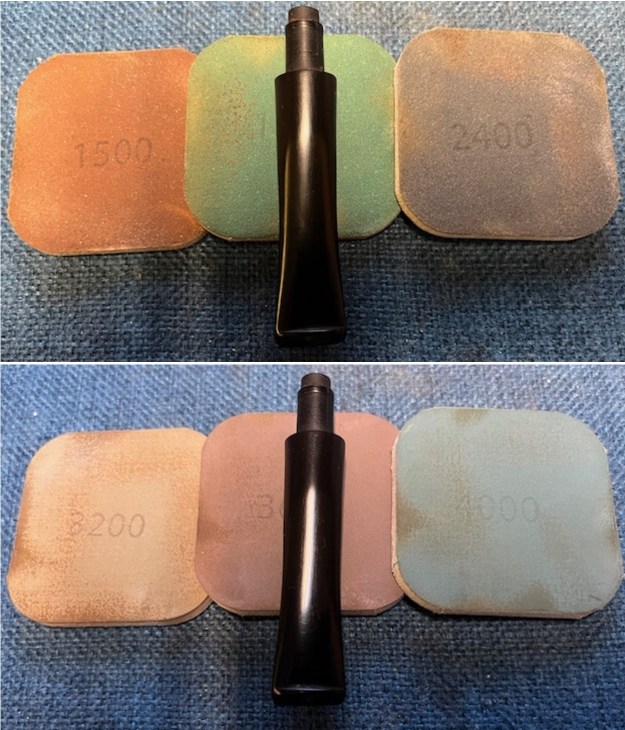
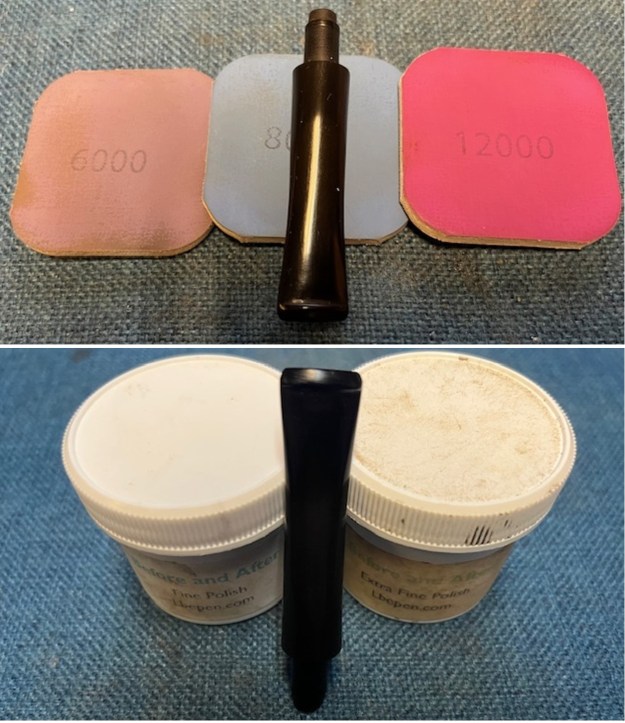
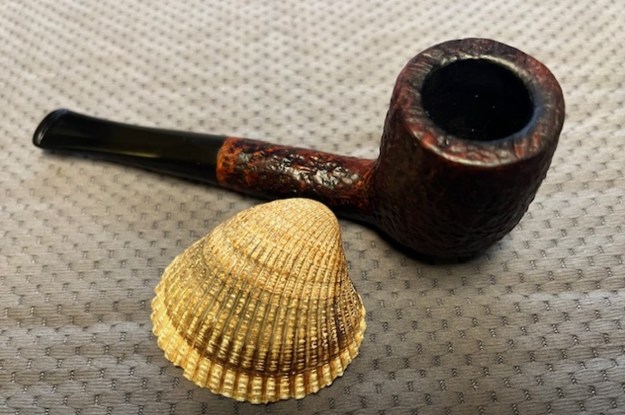
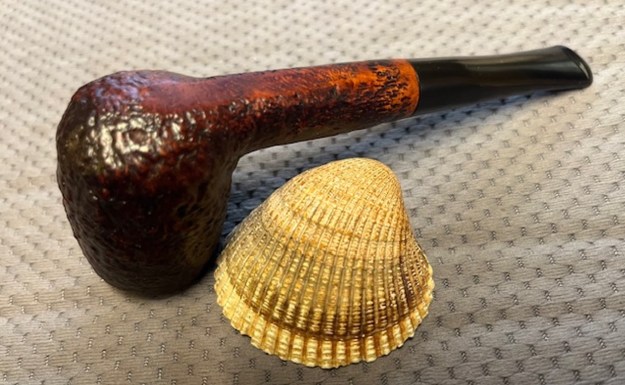
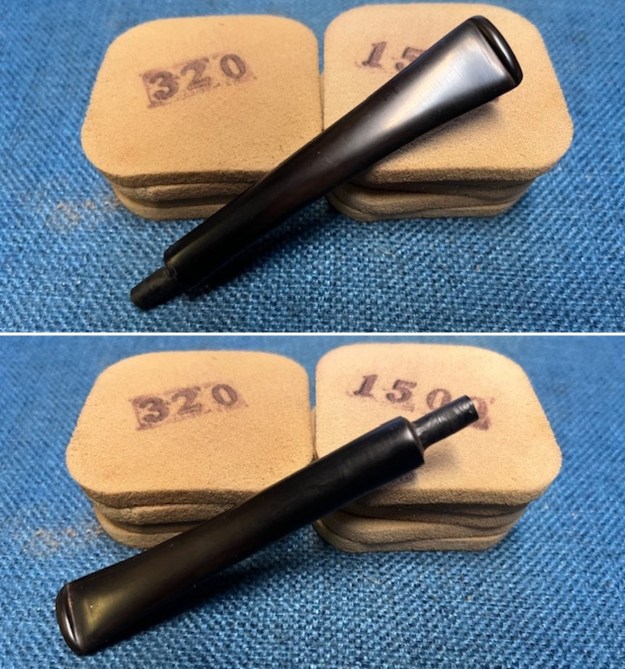
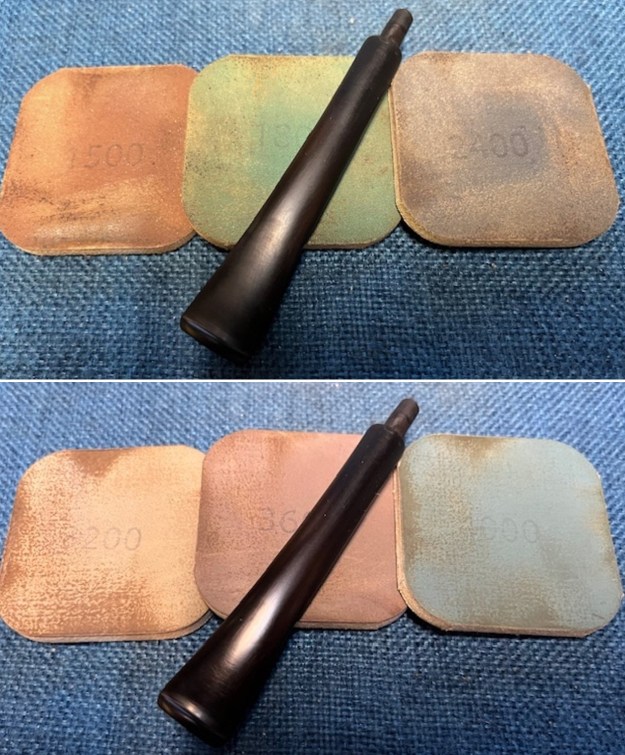
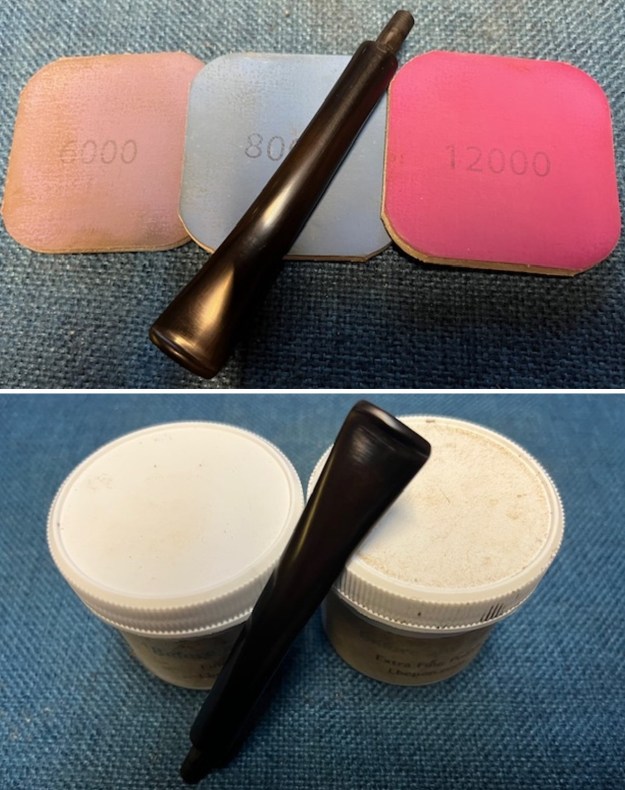
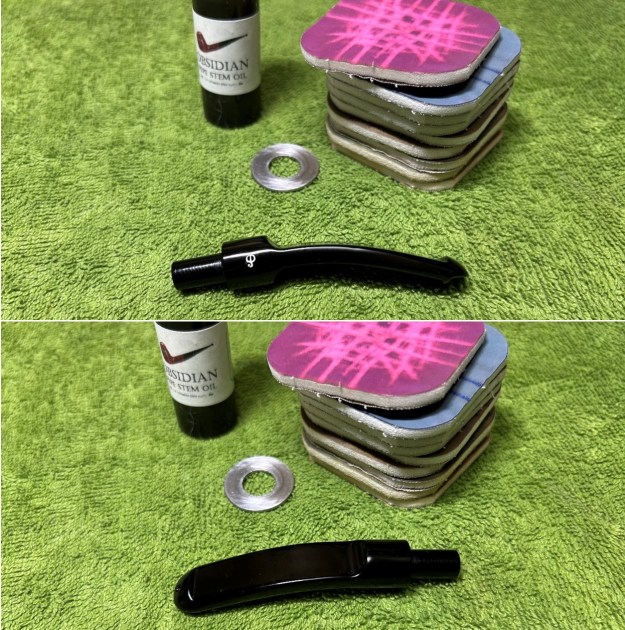
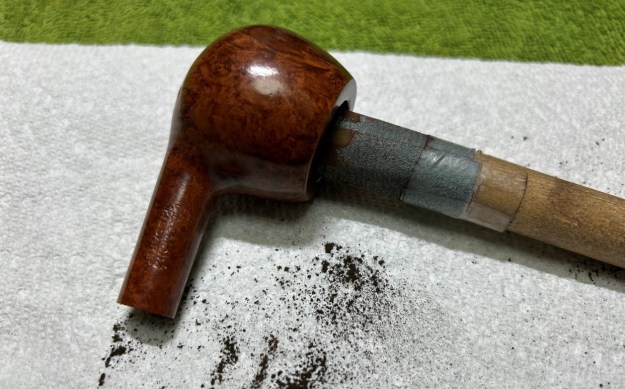
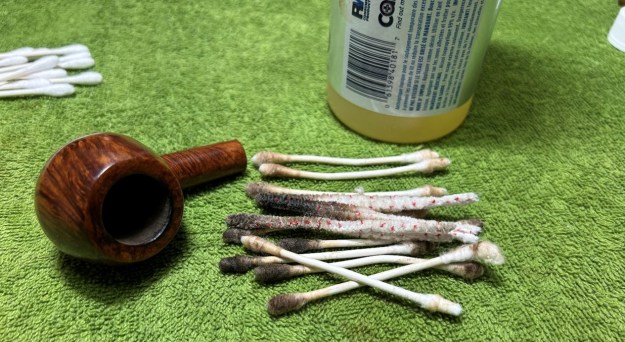
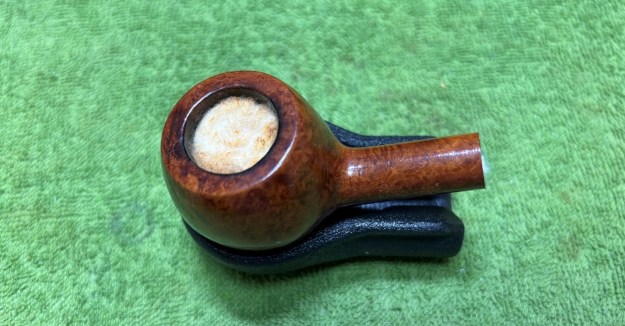
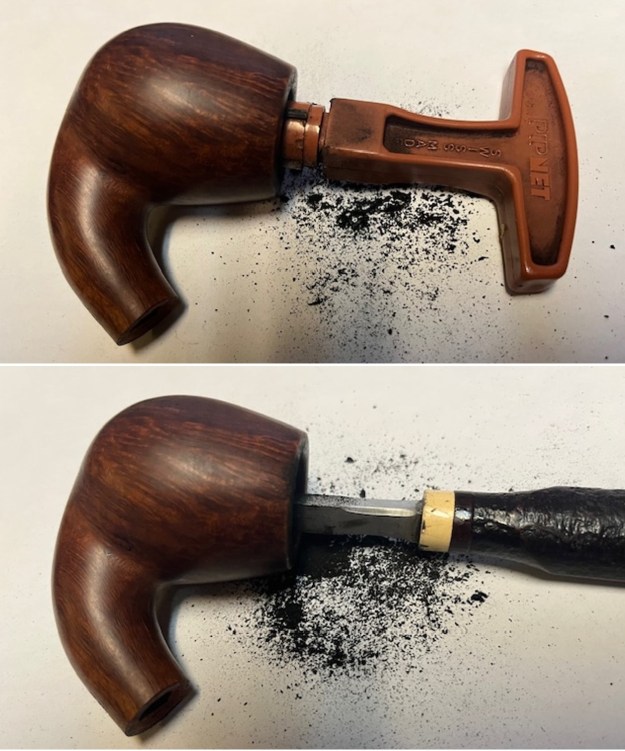
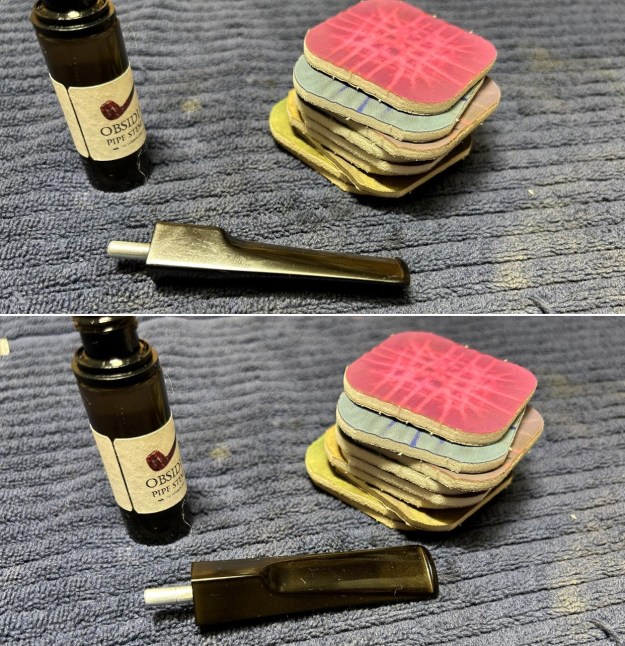
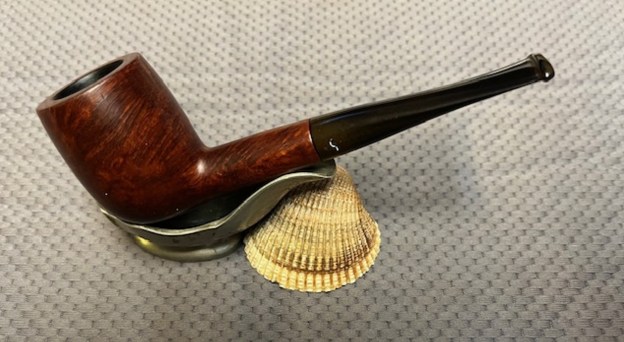
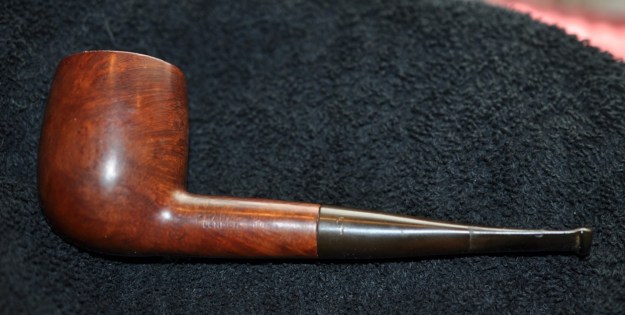
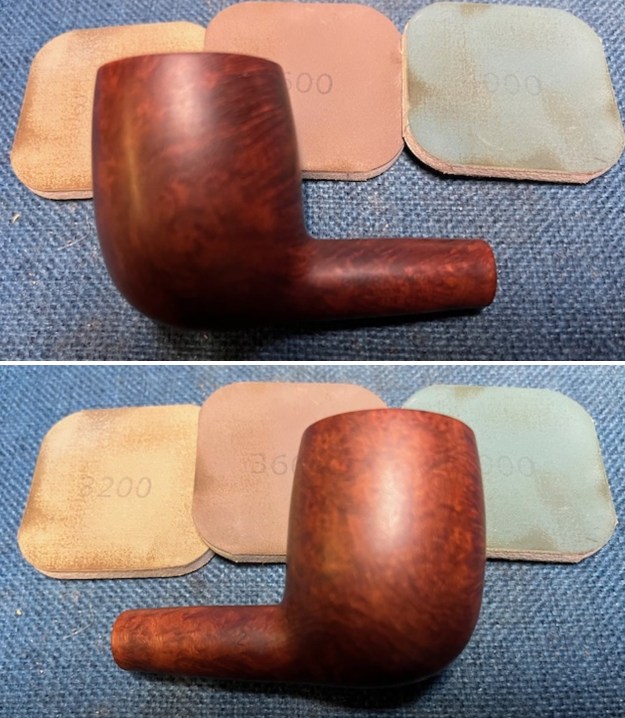
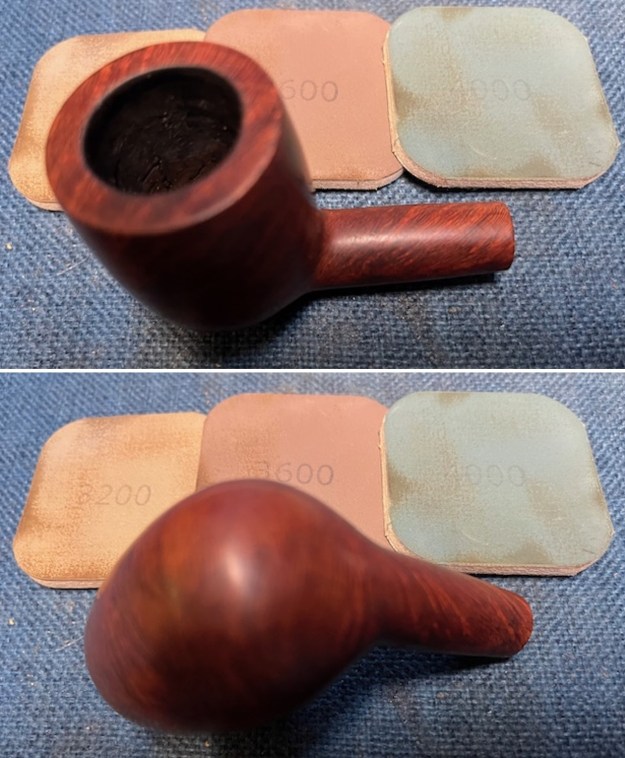
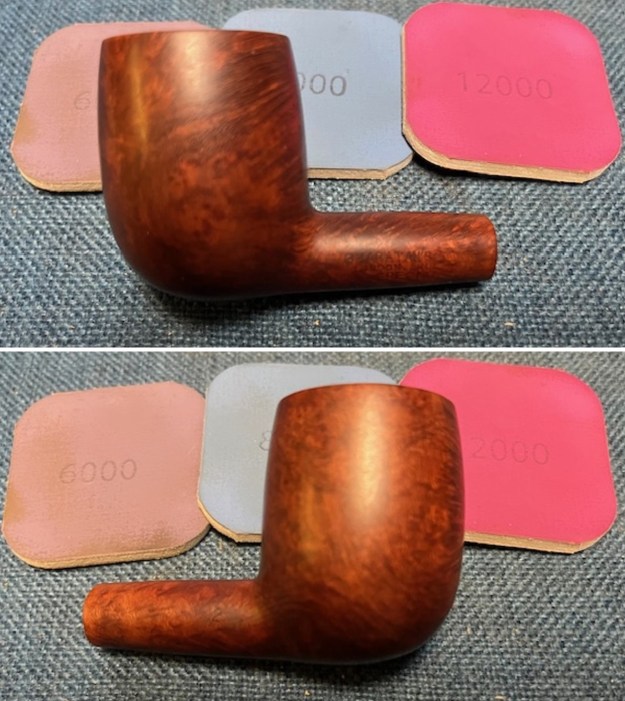
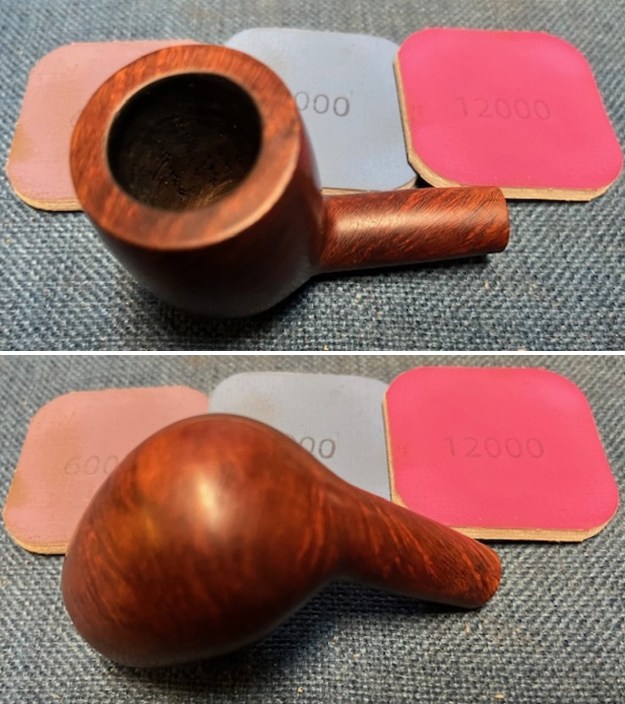
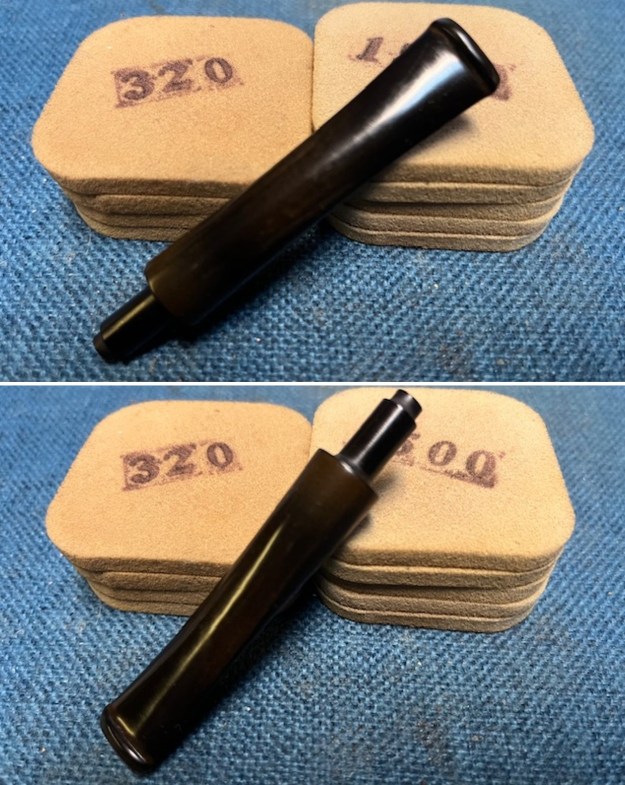
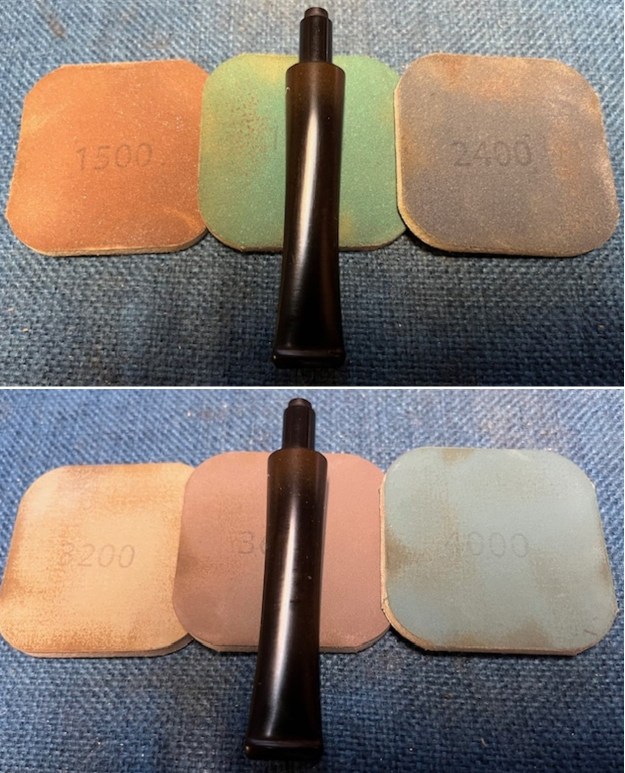
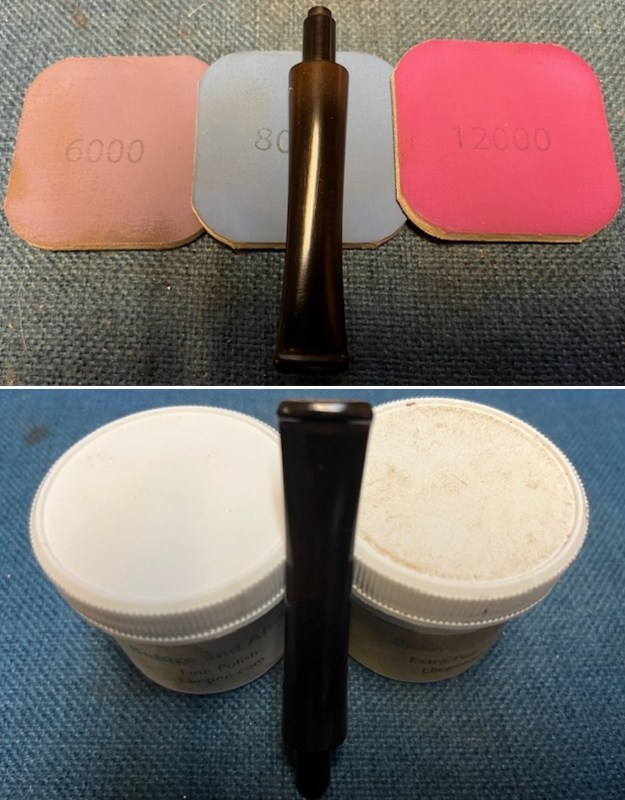
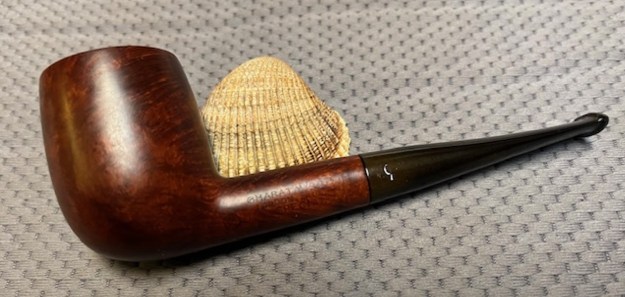
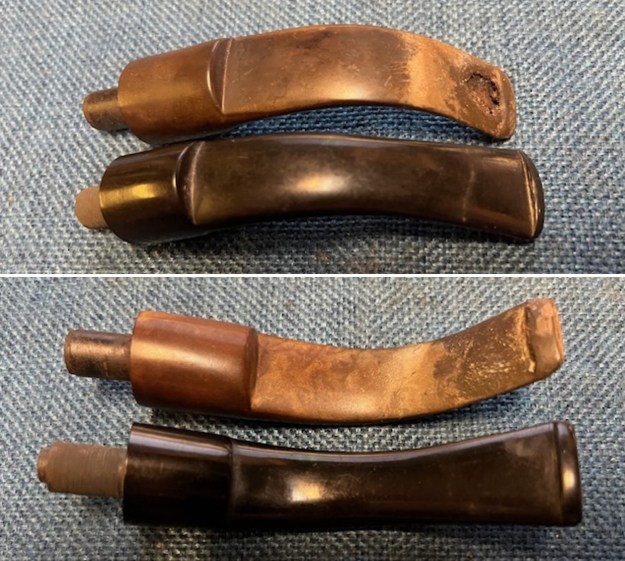
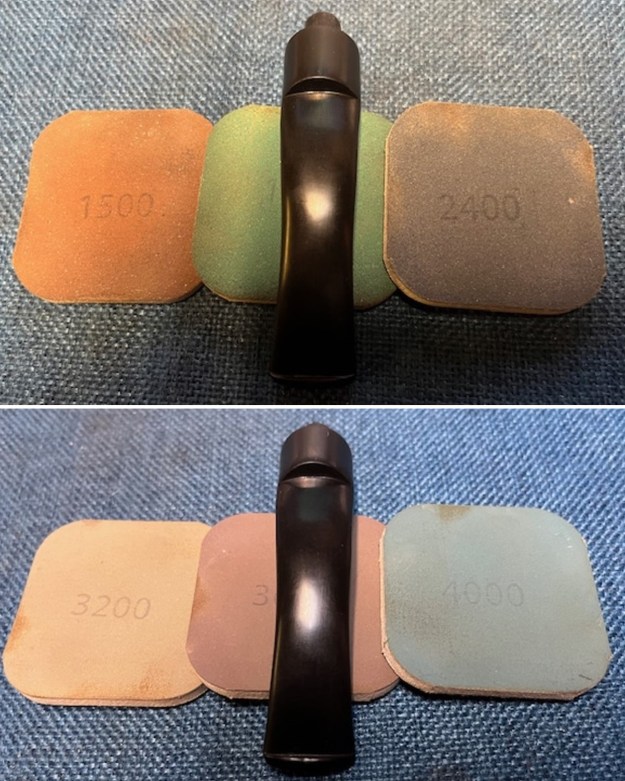
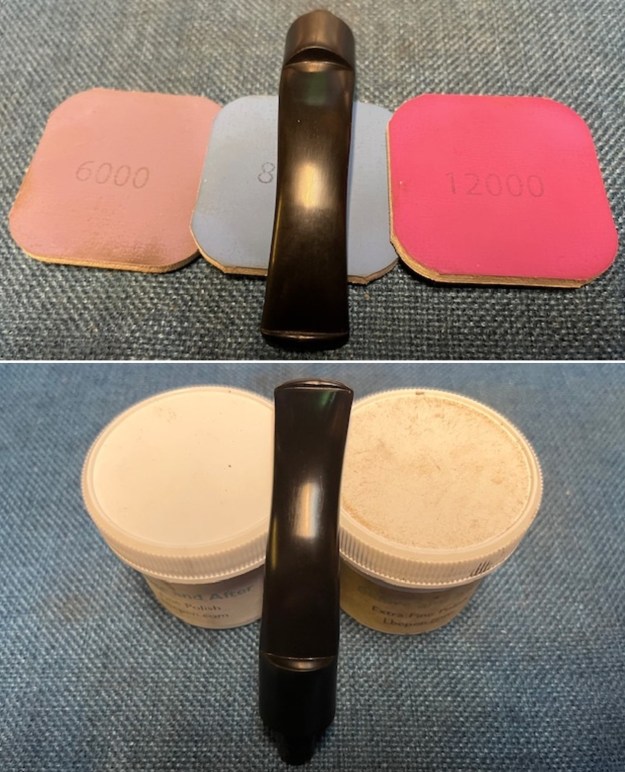
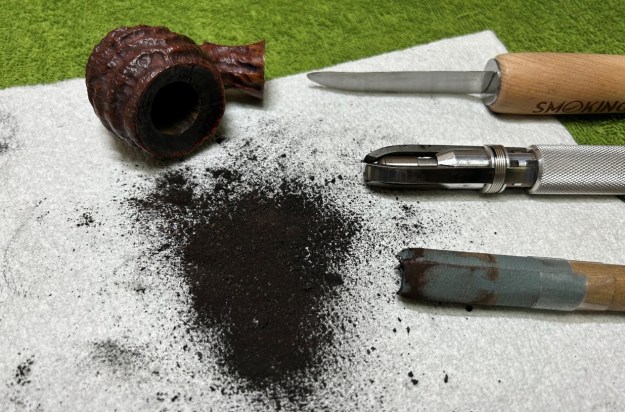
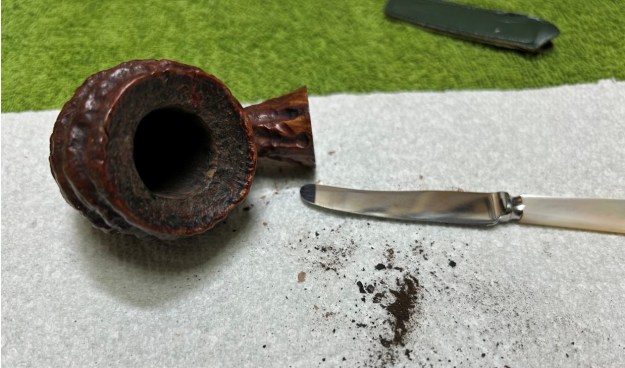
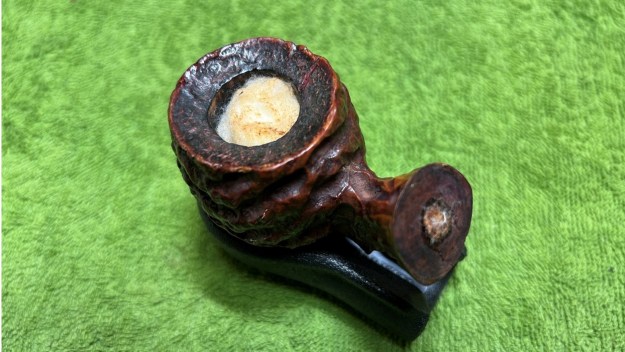
I turned to a link on Pipedia hoping for more information (https://pipedia.org/wiki/Conway). Sadly the only information was a mention of the information on Pipephil’s site. There were some amazing photos of the brand on the site. There was one that included an unsmoked Apple with a box and pipe sock as well as a brochure. The interesting point is that it was also an Aristocrat.Armed with that information that pipe was probably made by Singleton & Cole in London, England. I turned to work on the pipe itself. Jeff had cleaned up the pipe and it looked very good. He reamed the pipe with a PipNet pipe reamer and removed the rest of it with a Savinelli Fitsall Pipe Knife. He scrubbed the bowl with undiluted Murphy’s Oil Soap with a tooth brush. He rinsed it under running warm water to remove the soap and grime. He cleaned out the inside of the shank and the airway in the stem with alcohol, cotton swabs, shank brushes and pipe cleaners. He soaked the stem in Briarville’s Stem Deoxidizer and rinsed it off with warm water. I took photos of the pipe before I started my part of the restoration work. The rim top cleaned up really well. The rim top had some damage on the back left side of the top. The outer edge of the bowl look very good. The inner bevelled edge was clean but had some darkening all around the bowl. The stem surface was clean but the oxidation was still visible and calcification was gone. Overall it looked very good with a few tooth marks and chatter on both sides near the button.The stamping on top left side of the shank and the top right side is clear and readable. It is stamped as noted above. It is faint in spots but still clear. The logo on the left topside of the saddle is also clear. I removed the stem and took a photo of the pipe to give a sense of the whole. The wide taper stem is nice and the photo shows the proportions of the pipe. I used a wooden half sphere and a piece of 220 grit sandpaper to clean up the rim top and the bevel on the bowl. Once finished the inner edge looked better. I then topped the bowl with 220 grit sandpaper to remove the damage to the left side of the rim top. I took a photo of the top after this part of the work as well.I washed the bowl with cotton pads and acetone to remove some of the opaqueness of the stain. Once I washed it down it looked much better. The grain really stood out and I was able to add a bit of colour to the sanded rim top. I touched up the stain on the rim top with a Walnut stain pen to match the rest of the bowl colour. It matched well and once it was polished and buffed it would be perfect.I sanded the bowl and shank with 320-3500 grit sanding pads. I wiped the bowl down after each sanding pad to remove the debris. The pipe was beginning to look much better. I polished the smooth briar around outside of the bowl and the rim top with micromesh sanding pads. I sanded it with 1500-12000 grit pads and wiped the bowl down with a damp cloth to remove the sanding dust. I rubbed the bowl and shank down with Before & After Restoration Balm. I worked it into the surface of the bowl sides and shank with my fingertips and a horsehair shoe brush to get it into the rings and rustication. It works to clean, enliven and protect the briar. I let the balm sit for 15 minutes and buffed with a cotton cloth to raise the shine. The grain and the rustication came alive. I set the bowl aside and turned my attention to the stem. I “painted” the tooth marks with the flame of a lighter to lift them (forgot to take photos). The heat did a great job lifting all of them. The marks and chatter that remained I filled in with black CA glue strengthened with carbon and rubber. Once cured I flattened them with a file and blended them into the surface by sanding with 220 grit sandpaper. I touched up the Circle C logo on the left side of the stem with white acrylic nail polish. Once it cured I scraped off the excess and polished the stem.I polished the roughness, scratch marks and smoothed the stem with 320-3500 grit sanding pads. I wiped the stem down after each sanding pad with an Obsidian Oil impregnated cloth. It removes the dust and also gives the sanding pads some bite. By the final pad it was looking quite good.I polished the vulcanite stem with micromesh sanding pads – 1500-12000 grit pads. I wiped it down with Obsidian Oil after each sanding pad. I used Before & After Pipe Polish – both Fine and Extra Fine to further polish the stem. I rubbed it down with a final coat of Obsidian Oil and let it dry. This Conway Aristocrat Straight Bulldog is a great looking pipe now that it has been restored. The style of rustication that is used around the bowl is quite beautiful and works well with both the shape and the polished vulcanite taper stem. I put the stem back on the bowl and carefully buffed the pipe with Blue Diamond on the buffing wheel using a light touch on the briar. I gave the bowl and the stem multiple coats of carnauba wax on the wheel and followed by buffing the pipe with a clean buffing pad. I hand buffed the pipe with a microfiber cloth to deepen the shine. The finished Conway Aristocrat Bulldog fits nicely in the hand and feels great. Give the finished pipe a look in the photos below. The dimensions of the pipe are Length: 5 ¾ inches, Height: 1 ¾ inches, Outside diameter of the bowl: 1 ¼ inches, Chamber diameter: 7/8 of an inch. The weight of the pipe is 47 grams/1.66 ounces. I will be putting it on the rebornpipes store in the British Pipemakers Section shortly. If you are interested in adding this pipe to your collection send me a message or an email. Thanks for reading this blog and my reflections on the pipe while I worked on it. I appreciate your support and time!

Restoring a Republic Era Peterson’s “Shannon” 6 Billiard


by Steve Laug

A couple of weeks ago I received a message on Facebook from Shannon about cleaning up a pipe for him. It was one of his favourite pipes so he wanted it spiffed up. I have included several of his messages below along with photos of the pipe in question.

Hello! I saw the beautiful work you did on a Peterson Shannon 80S recently and not only would I like to purchase that but I would also like to see if you could give my Shannon Billiard a glow-up. I purchased it with some minor wear and teeth marks but it has been faithful for a good while. would like to get it a sibling and pair them together as fresh if possible. Please let me know…

…I’ve only been smoking for a little over a year so when I saw that Peterson had a whole line in my own name, I’ve kinda been drawn to it. They’re just not that common and usually in a sad state when I see them.

Here’s the pipe in question. I covered the teeth marks with a pipe bit but as you can see, it’s still in pretty good shape overall.Probably THE best smoking pipe I own, especially for when I don’t feel like fully rubbing out flakes. It handles folded tobacco better than the rest of the ones I have. Here’s a couple more photos I just took of the minor issues… We chatted back and forth a bit about his pipe and I agreed to work on it for him. He boxed it up and sent it to me to work on. It arrived this week thanks to UPS and I opened the box and took the pipe out. I examined it and took photos of the pipe. It was well smoked and well cared for. The bowl has a light cake on the top 2/3rds and the bottom 1/3 is raw briar – not darkened by smoking. The rim top had some darkening in spots and the inner edge also had some darkening. The finish was shiny like it had a light varnish coat. There were some oils and grime in the finish. The stem was in good condition other than the tooth marks and chatter on both sides ahead of the button. The brass spacer on the stem was lightly oxidized. The Peterson’s P logo stamped on the left side of the stem was faint but had remnants of gold in it. The pipe was stamped on the left side of the shank and read Peterson’s [over] Shannon. On the right side it bore the number 6 next to the bowl/shank junction which is the shape number for a Peterson’s Billiard. That is followed by Made in The [over] Republic [over] of Ireland in three lines. This tells me that the pipe was a Republic Era pipe which dates it between 1948 and present date. I took photos of the pipe before I started my work on it. It really is a beautiful piece of briar. I took photos of the bowl and rim top to show the condition. You can see that my assessment in the above photos is correct. The rim top shows some darkening toward the back and around the inner edge of the rim. The cake is the bowl is quite light. The photos of the stem show the tooth chatter and marks (which are light but still present) from the previous owner Shannon bought the pipe from. Otherwise the stem looks very good.I took photos of the stamping on the shank sides. It is clear and readable as noted above. The P logo on the stem side is deep but the colour in it is faint. I removed the stem and took a photo of the pipe to show the proportions of the stem to the bowl. The stem is a classic Peterson style taper stem.Before I started working on the pipe I turned to “The Peterson’s Pipe” by Mark Irwin and Gary Malmberg to see what it had to say on the “Kildare” line. On page 313 it says:
Shannon (19695-c.1987) First offered as entry-grade walnut or black sandblast, P-lip mouthpiece and a nickel band. In 1969-c.1970 offered through Iwan Ries as Shannon Meerschaum lined, middle grade black sandblast and higher-grade brown sandblast finish, P-lip mouthpiece. From 2005 as polished tan and black stain, unmounted, P-lip or fishtail mouthpiece with stamped gold P on the vulcanite mouthpiece.

I believe that the pipe I am working on is from the 2005 line. It has a polished tan and black stain and a fishtail mouthpiece. It has a classic shape and the information would make the pipe one issued after 2005. It has a bit of age on it and it is in excellent condition. Now it was time to work on the pipe.

I started my work on the pipe by dealing with the shiny top coat on the bowl. I wanted to remove that and clean up the finish. I wiped down the bowl with acetone on a cotton pad to remove the varnish (possibly shellac). It worked very well to get rid of the top coat without harming the stain coat on the bowl. It also looked much better after the wash with the acetone. I used a dowel wrapped with 220 grit sandpaper to smooth out the thin cake in the bowl. It was a bit rough and uneven before I sanded it. Once finished it was smooth to touch from the top to the bottom of the bowl. I cleaned out the internals of the pipe with pipe cleaners, cotton swabs and isopropyl alcohol. It was quite clean which is a tribute to Shannon’s care of his pipes. I cleaned out the remnants of tars and oils in the shank and the pipe is clean. There is a smoky smell of tobacco but it is clean.I polished the briar with micromesh sanding pads – dry sanding it with 1500-12000 grit sanding pads. I wiped it down with a damp cloth after each sanding pad to remove the dust. The rim top, edges and bowl were really shining by the final pad. I paused the polishing to clean up the top of the rim a bit. I used a folded piece of 220 grit sandpaper to remove the darkening on the rim top. It looked better at this point. Afterwards, I repeated the 1500-2400 grit pads and then continued to work through the rest of the pads. It looked much better. I rubbed the bowl and rim down with Before & After Restoration Balm. I worked it into the surface of the briar with my fingertips to clean, enliven and protect it. I let the balm sit for 15 minutes and then buffed with a cotton cloth to raise the shine. I really like watching the Balm do its magic and bring the briar alive. I set the bowl aside and turned my attention to the stem. I set the bowl aside and turned my attention to the stem. I “painted” the vulcanite surface with the flame of a lighter – constantly moving the flame over the tooth marks and was able to lift many of them. I was able to lift them significantly enough that sanding them with 320-3500 grit sanding pads.I sanded the stem with the 2 inch square 320-3500 grit sanding pads and easily removed the tooth marks and chatter. I wiped down the stem after each sanding pad with Obsidian Oil. I polished out the scratch marks left behind by the sandpaper. The stem looked very good.The stem was in such good condition that I decided to just do some preliminary work on it before polishing it. I touched up the “P” logo on the left side of the stem with Rub’n Buff Antique Gold. I let it dry then polished off the excess with a worn 1500 grit micromesh sanding pad. Once the excess was removed the stamp looked much better. There were some weak spots on the curve of the “P” stamp but overall it looked very good. I polished the stem with micromesh sanding pads – dry sanding with 1500-12000 grit pads. I wiped the stem down after each sanding pad with Obsidian Oil. I polished it further with Before & After Pipe Stem Polish – both Fine and Extra Fine, I rubbed it on with my finger and buffed it off with a cloth. I gave the stem a final coat of Obsidian Oil and set it aside to let the oil be absorbed. Once again at this point in the restoration process I am excited to be on the homestretch. I look forward to the final look when the Peterson’s “Shannon” 6 Billiard with a fishtail stem is put back together, polished and waxed. I put the bowl and stem back together. I lightly polished the bowl and stem with Blue Diamond to polish out the scratches in the briar and the vulcanite. I gave the bowl and the stem multiple coats of carnauba wax. I buffed the pipe with a clean buffing pad to raise the shine. I hand buffed it with a microfiber cloth to deepen the shine. The pipe polished up pretty nicely and the beautiful grain really popped with the wax and polish. The shiny black vulcanite stem is a beautiful contrast to the browns of the bowl and thick shank. This Republic Era Peterson’s “Shannon” 6 Straight Billiard was another fun pipe to work on. It really is a quite stunning piece of briar whose shape follows the flow of the briar. The pipe feels great in the hand will be better when warmed up while smoking. The finished pipe is shown in the photos below. The dimensions of the pipe are Length: 6 inches, Height: 1 ¾ inches, Outside diameter of the bowl: 1 ¼ inches, Chamber diameter: ¾ of an inch. The weight of the pipe is 1.48 ounces/42 grams. I will be sending it back to Shannon shortly. This is an interesting estate to bring back to life.
As always, I encourage your questions and comments as you read the blog. Thanks to each of you who are reading this blog. Remember we are not pipe owners; we are pipe men and women who hold our pipes in trust until they pass on into the trust of those who follow us.
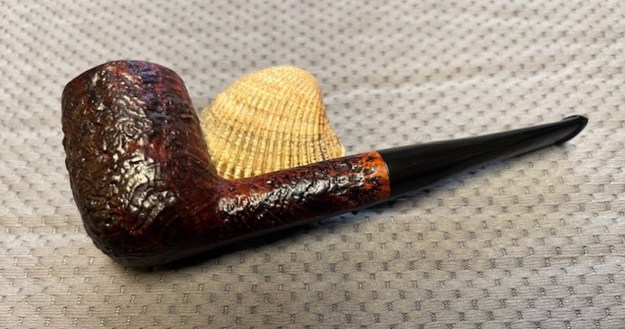
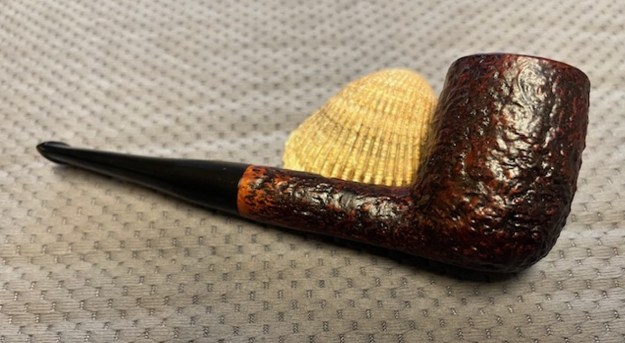
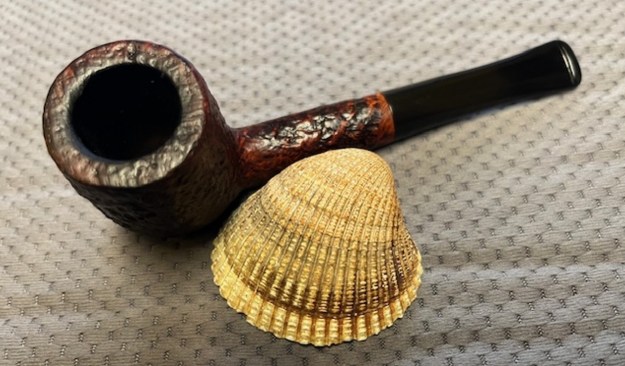
A Gold Star Diplomat 9486 from my Grandfather


by Kenneth Lieblich

This pipe has a bit of a story to it. Every once in a while, I pull out a pipe from my late grandfather and clean it up. The pipe today is a charming hexagonal panelled billiard, with a square shank, and a straight square stem. I do not know where my grandfather acquired it (or under what circumstances), so I asked my father but he didn’t know either. It doesn’t really seem like the sort of pipe he would have selected, so I wonder if it was given to him. After my grandfather died, his pipes ended up wrapped in newspaper, in a cardboard box, in a basement – as so many grandfather’s pipes do. In this case, it was the basement of my parents’ home. About fifteen years ago, my parents had a small flood and this box (along with several others) got wet and stayed wet for a long time. This had ramifications… The pipe’s markings on the left side of the shank read Gold Star [over] Diplomat. On the right side, they read London England [over] 9486. Also, on the stem, there is a star enclosing the letters GS.Very little information turned up about the brand, Gold Star. Nothing from Pipedia. Over at Pipephil, they had the following:This suggested to me that the pipe was a Sasieni sub-brand. Crucially, however, Pipephil also included this line:

The pipes temporarily gathered under the “Gold Star” label obviously aren’t from the same maker.

This was important to me, because the shape number, 9486, didn’t seem to correspond to anything that Sasieni made. So, I did some sleuthing and figured out that, in fact, the name Gold Star was also produced by GBD. This did fit, and I found some examples of GBD 9486 online, including this one (among others) from Iwan Ries’ website:Clearly, my grandfather’s pipe was one of these and I can confirm that both Sasieni and GBD (at least) made the Gold Star name. I am pleased to say that this post has added that small tidbit to the collective knowledge of pipe making in the twentieth century.

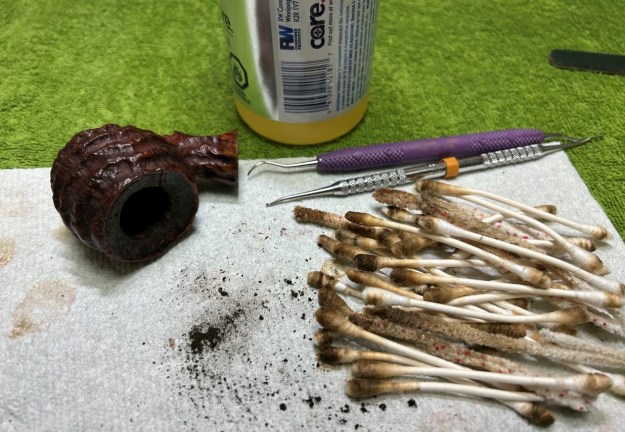
Anyway, on to the pipe – and this poor pipe had some issues. Sitting in moist newspaper for as long as it did had some very negative effects. I don’t remember the crack on the shank being there in the past and I wonder if the water induced stresses in the wood that caused the crack. There were other small fissures in the bowl, I don’t think they were flood-related. Another problem related to the water was the colour of the wood – any staining this pipe had was long gone. Finally, as I was examining the pipe, I didn’t realize it in the moment, but the yellow stem would prove to be the biggest problem of them all. The effect of water on vulcanite stems is well known, but stems don’t normally sit in water for an extended period of time. Aside from the above, the stummel had the following problems: lava on the rim, charring to the rim, some cake in the bowl, and a few substantial fills. Meanwhile, the stem had its own set of problems (besides its colour): tooth marks and scratches, and a filthy stinger. The stinger was first on my list. It went for a soak in some lemon-infused isopropyl alcohol. I let it set for several hours and then cleaned it off and it looked much improved. I then finished it with some 0000-grit steel wool and moved on.I wiped down the outside of the stem with oil soap on some cotton pads. That did next to nothing. I took my BIC lighter and painted the stem with its flame. This helped a bit, but not much. Then, I cleaned out the insides with pipe cleaners and isopropyl alcohol.Now it was time to remove the horrific yellow on the stem. I used some cream cleanser on the outside to remove the oxidation. I scrubbed and scrubbed and scrubbed. Then, the stem went for an overnight soak in the Pipe Stem Oxidation Remover. The following day, I cleaned the de-oxidizing mess off with alcohol, pipe cleaners, et cetera. I scrubbed again with cream cleanser on some cotton pads to remove the leftover oxidation. This worked only so well. I put the stem down, thought about it for a while, and decided to repeat that entire procedure: scrub with cream cleanser, soak overnight, and scrub with cream cleanser. This made the stem so much better than before, but still not great. Steve reminded me of an additional technique to try: soaking in Oxyclean. Again, this helped a bit, but it was just not going to be enough. This stem was definitely improved, but would always show the signs of its time in the water.I then used all nine Micromesh pads (1,500 through 12,000 grit) on the stem to make it look as good as possible. I also used Obsidian Pipe Stem Oil in between each pad scrubbing.On to the stummel. I used the KleenReem to remove the built-up cake, and followed that with 220-grit sandpaper to remove as much as I could. I wanted to take the bowl down to bare briar to ensure there were no hidden flaws in the walls of the bowl. Fortunately, there were none. I then proceeded to clean out the insides of the shank with cotton swabs, pipe cleaners, and isopropyl alcohol. There was quite a bit of filth inside this stummel – it took many pipe cleaners et cetera to clean it out.I decided that a de-ghosting session would be a good idea. I thrust cotton balls into the bowl and the shank and saturated them with 99% isopropyl alcohol. I let the stummel sit overnight. This caused the oils, tars and smells to leach out into the cotton. I followed that up by cleaning the insides with some Castile soap and tube brushes. I then moved on to cleaning the outside of the stummel with oil soap and some cotton pads. That removed any remaining dirt. The bowl was nice and clean after this. Having completed that, I was able to address the crack on the shank and the nicks on the bowl. This took some careful work. I filled the crack and the tiny divots with cyanoacrylate adhesive then let them cure. Now, with the nicks and crack filled, it was time to sand down the stummel. I used all nine Micromesh pads (1,500 through 12,000 grit) to sand everything smooth. Much improved. I felt that this pipe really needed a bit of colour – it had lost it during the flood. However, I only wanted a light stain. So I made a very dilute mixture of leather dye and alcohol. This didn’t really work well, so, instead, I simply put a drop (literally) at a time on my dauber and gently coated the wood with theat. I flamed it with my Bic lighter and let it sit overnight. Upon the morrow, I used isopropyl alcohol to wipe down the pipe and remove excess stain. I am very happy with the results.After that, a light application of Before & After Restoration Balm brought out the best in the stummel’s grain. What a difference that made! Then it was off for a trip to the buffer. A dose of White Diamond and a few coats of carnauba wax were just what this pipe needed. The lovely shine made the wood look great. This Gold Star Diplomat 9486 panelled billiard has an elegant feel to it. It took a lot of work – and the results were not exactly what I had hoped for – but I am proud of it and the final product is (hopefully) worthy of my beloved grandfather’s memory. Obviously, this is one pipe that I am keeping for myself and adding to my collection. I hope you enjoyed reading the story of this pipe as much I as I did restoring it. The approximate dimensions of the pipe are as follows: length 5⅛ in. (130 mm); height 1½ in. (39 mm); bowl diameter 1¼ in. (32 mm); chamber diameter ¾ in. (19 mm). The weight of the pipe is 1 oz. (31 g). If you are interested in more of my work, please follow me here on Steve’s website or email me directly at kenneth@knightsofthepipe.com. Thank you very much for reading and, as always, I welcome and encourage your comments.

Restoring a Rare Preben Holm Private Collection Circle B Hand Made in Denmark Freehand


by Steve Laug

This particular Freehand pipe was purchased from an auction seller in Sylacauga, Alabama, USA on 04/08/2024. It really is a very Preben Holm style Freehand pipe that is almost flower like in its shape. It has a twisted shank and a twisted vulcanite shank extension. It is stamped on a heel of the bowl and the lower backside of the bowl and reads Preben Holm on the bottom edge at the back of the bowl. On the heel it is stamped Private [over] Collection [over] B enclosed in a circle [over] Hand Made [over]In [over] Denmark. The smooth floral shaped pipe is dirty but the grime does not hide the beautiful looking combination around the bowl and shank. The stain is a black understain that brings out the grain highlighted by a top coat of walnut stain. The pipe had a moderate cake in the bowl and a thick lava overflow on the backside of the smooth rim top and inner edge of the bowl. There was grime ground into the smooth and sandblast finish and dust and debris in the valleys and turns on the flower petal shaped carving around the bowl and the shank end. The top edge of the petal on the left front of the bowl had a chip. There was also a darkened spot mid bowl on the right mid bowl toward the back of the bowl. The fancy vulcanite saddle stem and the vulcanite shank extension were oxidized. Added to that the stem surface was also calcified and had light tooth marks and chatter on both sides near the button. The pipe must have been a great smoker judging from the condition it came it. Jeff took photos of the pipe before he started his work on it. Jeff took photos of the rim top and the stem to show the condition of the pipe when we received it. You can see the moderate cake in the bowl and the lava on the rim top and inner edge of the bowl. The turned and twisted vulcanite shank extension and stem were dirty and had light chatter and tooth marks on both sides near the button. He took photos of the sides of the bowl and the heel to give an idea of the shape and the condition of the briar around the bowl. You can see the chip on the top of the front flower petal in the first photo. You can also see the darkened spots on the right side of the bowl in the second photo. It really is a nicely shaped pipe that has the classic look of a Freehand carved by Preben Holm.The next photos Jeff took shows the stamping on the back side of the bowl and the underside of the shank. It is clear and readable as noted above. I took the stem off the shank and took a photo to give a sense of the proportion of the pipe.
I had vague memories about the Private Collection line being a unique and special line of pipes made by Preben Holm but I had no idea what it meant and how it came to be so designated. It would take a bit of digging to ferret our that information on the web. I turned first to Pipephil’s site and there was an additional page on the Private Collection line that gave me a lot of detailed information on the line (http://www.pipephil.eu/logos/en/infos/prebenholm-pc1.html). I quote the extra page in full below with the inserted graphics.

The “Private Collection” pipes are Preben Holm’s most coveted pieces. They were crafted by the artisan himself from the late 1970’s to the end of his career in 1986.

The stampings on the shanks are always displayed in the same order (see right). Information in white is systematically stamped, the one in grey is optional.

“Additional stampings” may sometimes occur under the carver’s name (ie: “Traditional”, “Fancy”, “9m/m”, …)

The “C5” stamping appears on pipes distributed in the USA by CAO who took over distribution from Lane Ltd. in 1985. This distinguishing stamping was to avoid warranty issues with pipes that were not of CAO’s distribution.

Gradings: The early Private Collection series were graded with 4 letters (ascending): A, B, C and D. Those letters may be encircled (older markings) or not.

Later, a “x0x” 5 tiers grading system was introduced (ascending): 101, 202, 404, 606 and 808. Letter and x0x systems may coexist on the same pipe.

Signature stem logo

Nearly all pipes of Preben Holm’s Private Collection sport the carver’s signature on their stem. It may sometimes be worn and in a very few cases it may be missing (replacement stem?). But Preben Holm’s logos with the PH initials do not originally occur on Private Collection pipes.

So now I knew that the pipe was a part of the unique Private Collection that were crafted by Preben Holm himself. I learned that the pipe was made between the late 1970s and the end of his career in 1986. Now it was time to work on the pipe.

Jeff had cleaned up the pipe following his normal cleaning process. In short, he cleaned up the reaming with a Savinelli Fitsall Pipe Knife.  He scrubbed the bowl with undiluted Murphy’s Oil Soap with a tooth brush. He worked over the lava and debris on the plateau rim top and shank end and was able to remove it. He rinsed it under running warm water to remove the soap and grime. He cleaned out the inside of the shank and the airway in the stem with alcohol, cotton swabs and pipe cleaners. He scrubbed the stem with Soft Scrub and cotton pads to remove the debris and oils on the stem. He rinsed it with warm water and dried it off. I took photos of the pipe once I received it. You can see the burn marks on the right side of the bowl. It is very visible in the second photo below at midbowl. The one toward the back of the bowl had a very fine micro crack in the bowl. The second one was just darkened not damaged. The stem was still oxidized in the grooves after Jeff’s work but it was definitely better. The pipe really looked good. I took close up photos of the stem and the rim top to show both how clean they were and what needed to be addressed with both. The rim top and bowl still had some darkening and what looked like some hard lava in the plateau inner edge. The stem looked better and the tooth marks and chatter though light were still present. I would need to remove those to bring the stem back.I took photos of the stamping on the back bottom of the bowl and the heel of the bowl. You can see from the photos that it is clear and readable. I removed the stem from the bowl and took a photo of the parts to give a sense of the beauty of the pipe.I started my work on the pipe by using clear CA glue to fill in the burn areas on the bowl. The one toward the back of the bowl had a tiny micro crack in it. The one toward to front of the bowl was merely darkened. I shined a light in the inside of the bowl and checked it out for burn damage or cracks in the bowl sides. That would help explain if there were flaws on the inside or potential burn out or pointed to that potential in the bowl. Thankfully there was not any burn damage on the inside of the bowl. There were no burned areas behind the damage on the outside of the bowl. Once the glue cured on the bowl side I sanded it smooth with a folded piece of 220 grit sandpaper.I scrubbed the oxidized vulcanite shank extension with Soft Scrub on cotton pads. I was able to remove a lot of the oxidation with the product but there was still work to do on it.I sanded the bowl sides, reshaped the chipped petal edge on the left front outer edge and sanded the vulcanite extension with 320-3500 grit sanding pads. It worked very well. I wiped the bowl down with a damp cloth after each pad to get a sense of the progress in the process. To minimize the burn marks on the side I decided to stain the bowl with a Cordovan stain. I applied it with a wool dauber, flamed it with a lighter and repeated until I was happy with the coverage around the bowl and rim. Once the stain had cured I wiped the bowl down with cotton pads and acetone to make the stain on the bowl more transparent. It looked better but sanding and buffing would take off the remainder and leave it like I was aiming for. I set aside for the evening. In the morning I buffed the pipe with Blue Diamond to work toward more transparency in the stain coat. I wanted to see grain showing through but still disguise the burn marks a bit. It worked. I then sanded it with micromesh sanding pads – dry sanding with 1500-12000 grit pads. I wiped it down after each pad with a damp cloth. I finished by another trip to the buffer and finally I had it where I wanted it! Note: the stamping is untouched. I carefully avoided both buffing and sanding it. The stamp is on a curve so it is out of focus. I rubbed down the briar Before & After Restoration Balm. I worked it into the surface with my fingertips. The product works to clean, enliven and preserve the briar. I let it sit for 15 minutes then I buffed it with a cotton cloth to deepen the shine. The briar really comes alive with the balm. I set the bowl aside and turned my attention stem. I scrubbed the surface of the stem with Soft Scrub cleanser to begin to break through the remaining oxidation on the stem.I sanded out the scratches in the horn with 320-3500 grit sanding pads. I wiped the stem down after each sanding pad with a cloth impregnated with Obsidian Oil. It started to take on a deep shine.I polished the stem with micromesh sanding pads – 1500-12000 grit pads to remove them. I wiped the stem down with Obsidian Oil after each sanding pad. I used Before & After Pipe Polish – both Fine and Extra Fine to further polish the stem. I rubbed it down with a final coat of Obsidian Oil and let it dry. I am really happy with the way that this Preben Holm Private Collection Circle B Hand Made in Denmark Freehand turned out. It really is a beautiful looking pipe with a great shape and smooth finished bowl and rim and vulcanite shank end. The fancy original acrylic saddle stem is really nice. The black vulcanite colour of the stem works well with the briar. The briar really came alive with the buffing. The rich cordovan and brown stains of the finish gave the pipe a sense of depth with the polishing and waxing. I put the stem back on the bowl and carefully buffed the pipe with Blue Diamond on the buffing wheel using a light touch on the briar. I gave the bowl and the stem multiple coats of carnauba wax on the buffing wheel. I buffed the pipe with a clean buffing pad to raise the shine. I hand buffed the pipe with a microfiber cloth to deepen the shine. The finished Preben Holm Private Collection B Grade really is a beauty and feels great in the hand and looks very good. Give the finished pipe a look in the photos below. The dimensions of the pipe are Length: 7 inches, Height: 3 inches, Outside diameter of the bowl: 2 inches long x 2 inches wide, Chamber diameter: 7/8 of an inch. The weight of the pipe is 48 grams/1.76 ounces. In all my years of working on pipes I have never seen a Preben Holm Private Collection pipe and this one is a beauty. I intend to hold onto it for my own enjoyment. Thanks for reading this blog and my reflections on the pipe while I worked on it. It was a fun one to work on!

Getting Creative with this Weber Golden Walnut Imported Briar Apple


by Steve Laug

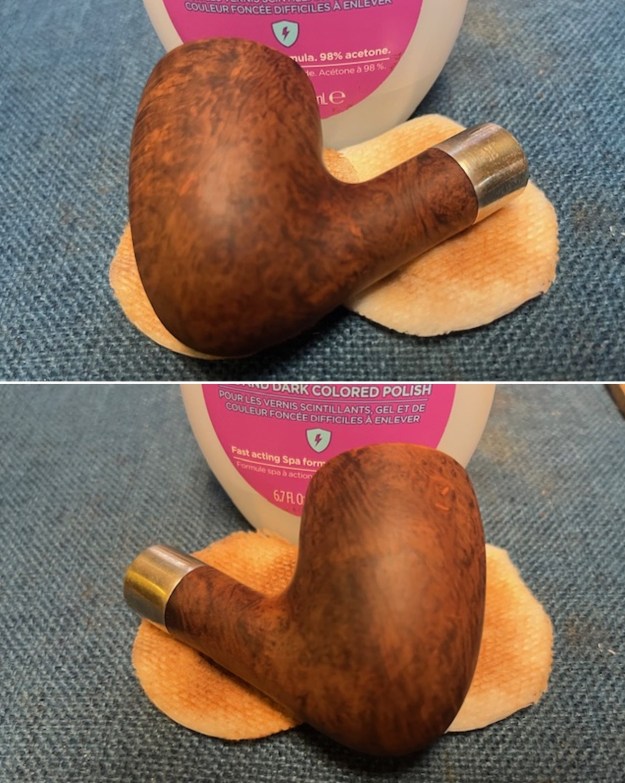
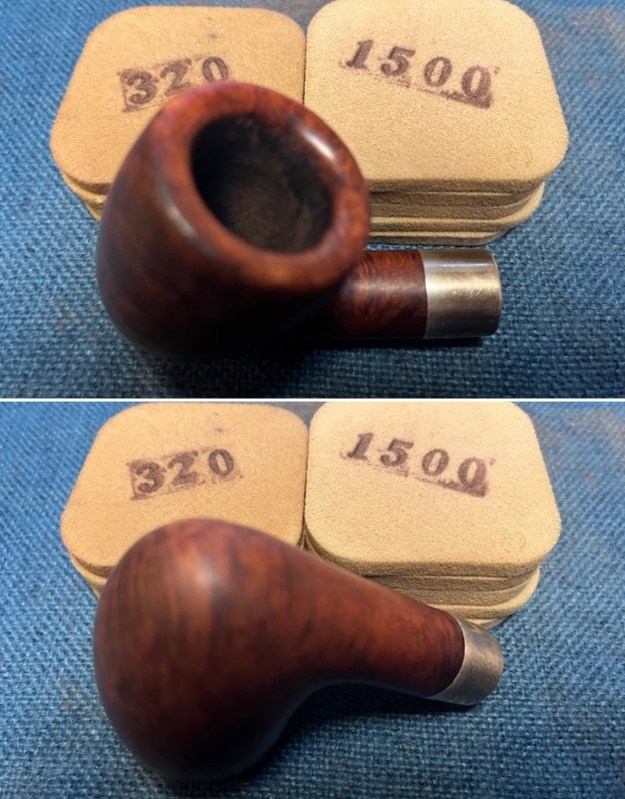
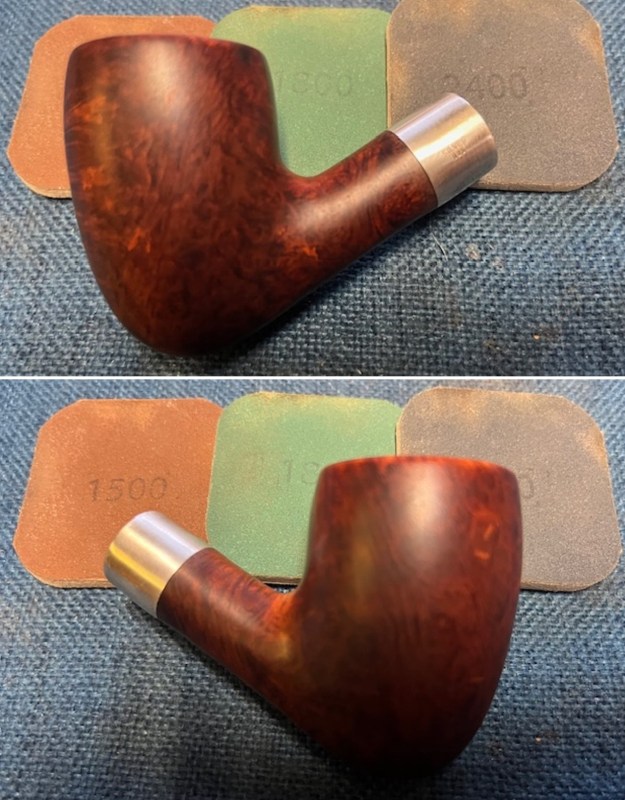
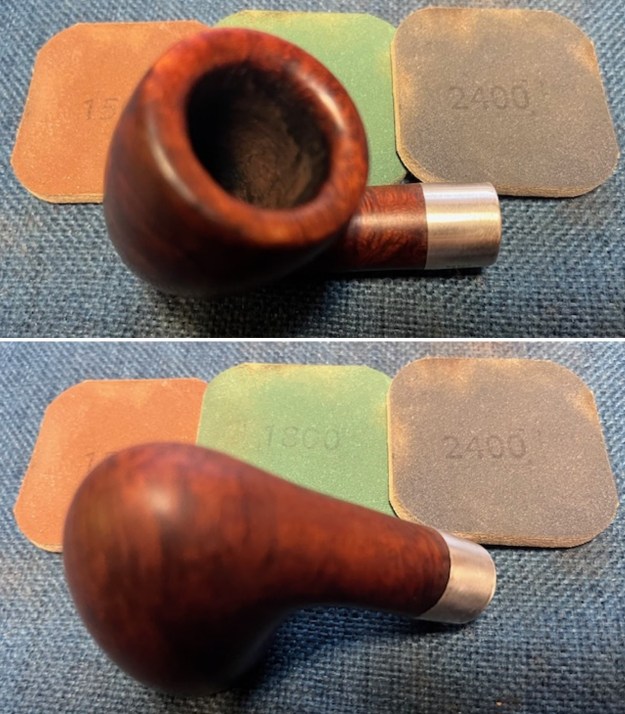
The next bowl on the table is a classic shaped Apple. It has been sitting here and I have looked at it over and over again and today I decided to restem it. I wanted to try something a little different with this restem and see if I could come up with an interesting restem. I think when you see it you will either love it or hate it! But there you go. Here is what I did! I cleaned up the bowl and matched a stem with briar bowl. It is a cleanup and restore and is a break from my work on the Freehand pipes. The bowl is dirty and somewhere in its life before it came to us the stem was lost. The finish was coated with varnish that left it shiny even under the grime. It showed promise under the grit and grime of the years. It was stamped on the left side of the shank and read Weber in an oval [over] Golden Walnut. The right side of the shank it is stamped Imported Briar. The bowl had a thick cake and a thick lava overflow on the rim top. There was some lava and tars coming down the bowl sides from the top. It is a pretty pipe with some great grain under the grime. I am hoping to match a nice stem to it. I took some photos of the bowl before I started my work on it. I took a close up photo of the rim top and bowl to give more of a sense of what I see and noted above. It is a dirty pipe but seems to have no damage on the rim top or edges.I took a photo of the snapped tenon in the shank end. The end of the tenon is quite smooth so it was a clean snap. I will need to pull it before I can fit a new stem to it.I took a photo of the stamping on the left and right side of the shank. The stamping looks blurry and double stamped in the photos but in person it is clear and readable. Recently I picked up some unused acrylic stems. There was an acrylic amber/orange variegated saddle stem in the lot. It was drilled for a new tenon and was clean. This stem had a close diameter to the shank end of the Weber and would work well I think.I put the bowl in the freezer for 30 minutes then used a drywall screw to pull out the broken tenon. I screwed it into the tenon and wiggled it free from the shank. I used the tenon piece to fit a new tenon in the shank end.I fit the new tenon in the shank end and it was a little tight. I used a Dremel and sanding drum to reduce the diameter just enough for a snug fit. I painted the threaded tenon with black CA glue and turned it into the end of the new stem. The fit was good. I set it aside and let the glue cure. I put it in the shank and the fit against the shank end was slightly off. I used a file to make the transition between the shank and the saddle portion of the stem very smooth. I liked the look of the variegated orange acrylic stem with the browns of the briar bowl. I cleaned up the file marks on the shank and avoided the stamping on both sides with a folded piece of 220 grit sandpaper. Once finished the transition and both the briar and the acrylic were smooth. I set aside the stem and turned my attention to reaming the pipe. I used a PipNet Reamer with the first and second cutting heads to take back the heavy cake to bare briar. I cleaned up the reaming with a Savinelli Fitsall Pipe Knife and finally sanded the bowl walls with 220 grit sandpaper wrapped around a dowel. I like to remove all the cake to examine the walls for damage and checking. Great news is that this one is free of any damage. With the bowl reamed it was time to work on the rim top. The lava was hard and thick. I started the process with a topping board and 220 grit sandpaper. Once I had smoothed off the top outer edges it was clear that the inner edge of the rim top was slightly bevelled inward. I used a wooden half sphere and 220 grit sandpaper to clean up the bevel and remove the damage to that portion of the rim top and edges. I cleaned up a few spots with a folded piece of 220 grit sandpaper. To remove the shiny varnish coat on the bowl and to use the stain on the bowl to colour the rim top and sanded shank end I wiped the bowl and shank down with acetone. I used cotton pads with the acetone and was able to easily remove the varnish and move some of the stain to the sanded portions of the shank and rim. I would need to restain but it definitely looked much better. I matched the stain on the bowl and shank with a Maple Stain Pen. I put it on the smooth sanded rim top and shank end. I wanted it to start matched before I started sanding the bowl and shank with sanding pads. I was very happy with the match. I worked on polishing out the sanding marks with 320-3500 grit sanding pads. I worked particularly on the transition between the shank and the stem surface. I also worked over the briar of the bowl and rim top at the same time. The bowl and stem looked very good once I finished. I took the stem off the shank and turned to the bowl first. I polished the briar with micromesh sanding pads – dry sanding with 1500-12000 grit pads. After each sanding pad I wiped the bowl down with a damp cloth to remove the sanding debris and dust. It began to take on a deep shine. I rubbed down the briar Before & After Restoration Balm. I worked it into the surface with my fingertips. The product works to clean, enliven and preserve the briar. I let it sit for 15 minutes then I buffed it with a cotton cloth to deepen the shine. The briar really comes alive with the balm. I polished the stem with micromesh sanding pads – 1500-12000 grit pads to remove them. I wiped the stem down with Obsidian Oil after each sanding pad. I used Before & After Pipe Polish – both Fine and Extra Fine to further polish the stem. I rubbed it down with a final coat of Obsidian Oil and let it dry. This is another pipe that I am really happy about the finished restoration. This reborn Weber Golden Walnut with a newly fitted golden acrylic variegated stem turned out really well to my eye. After restemming I think that it is unique and beautiful looking classic apple with a twist. The bowl is a classic Bent Billiard and the “new” horn stem is a great match. The polished horn stem works well with the briar and the nickel ferrule. The briar really came alive with the buffing. The rich reddish brown stains of the finish make the grain really pop with the polishing and waxing. I put the stem back on the bowl and buffed the pipe with Blue Diamond on the buffing wheel. I gave the bowl and the stem multiple coats of carnauba wax on the buffing wheel. I buffed the pipe with a clean buffing pad to raise the shine. I hand buffed the pipe with a microfiber cloth to deepen the shine. The finished Weber Golden Walnut Apple really has a unique beauty and feels great in the hand. It looks very good. Give the finished pipe a look in the photos below. The dimensions of the pipe are Length: 6 inches, Height: 1 ½ inches, Outside diameter of the bowl: 1 ½ inches, Chamber diameter: ¾ of an inch. The weight of the pipe is 45 grams/1.62 ounces. The pipe will be going on the rebornpipes store soon. It will be in the American Pipemakers Section if you would like to add it to your collection. Thanks for reading this blog and my reflections on the pipe while I worked on it. It was a fun one to work on!

Nording “N” Handcrafted Made in Denmark Freehand with fancy turned vulcanite stem


by Steve Laug

It was time to turn back to one of the pipes that Jeff and I picked up. This pipe was purchased from an auction on 10/03/21 in Lacon, Illinois, USA. The pipe is Freehand take on a Rhodesian. The grain around the bowl sides, the plateau on the rim top and the rusticated almost leaf pattern on the underside of the bowl. The shank end has a vulcanite shank extension. You can see the flow of straight and flame grain around the bowl and shank. It is stamped on the underside of the shank with a hollow letter N [over] Handcrafted [over] Made in Denmark. There is no other stamping on the pipe. The stem does not have the expected Nording N anywhere on the sides or top. The pipe was very dirty with a thick cake in the bowl and some lava overflowing on to the plateau rim top. It was hard to know what the inner edge of the rim looked like because of the lava and cake. Other than being dirty the finish appeared to be in good condition. The fancy, turned stem was lightly oxidized and had come calcification ahead of the button. There was some tooth chatter and marks on both sides of the stem ahead of the button and on the button surface. Jeff took the following photos of the pipe before he started his clean up work on it. He took a photo of the rim top to show the thick cake in the bowl and the overflow of lava. The cake is thick and hard and the lava overflow is in the plateau. The bowl is dirty but it must have been a great smoking pipe. The stem looked dirty and oxidized with the calcification. The bite marks and tooth chatter on the stem were not too bad and the edge of the button was worn down. The mark on the back side of the bowl is actually more of the plateau running down the side rather than a flaw in the briar. The next photos show the sides and heel of the bowl to give a clear picture of the beauty of the grain around the bowl of the pipe. Under the grime there is some great grain peeking through. Jeff took photos of the stamping to capture the clarity of it even under the grime. The stamping is faint in spots but still readable. It reads as noted above.Before I started my work on the pipe I wanted to learn more about where this pipe fit into the Nording lines so I turned to the first of two sites that I always check to gather information on a brand. I turned first to Pipedia (https://pipedia.org/wiki/N%C3%B8rding). Nording’s were exclusively freehand shapes, graded from A, B, C, D, up to its highest grade, extra. Later an “F” grade was added—less expensive than the “A.” I could find no other information on the rest of the stamping on the pipe.

I did find a great collage of photos of Erik Nording that I have included below.I turned to the second information site – Pipephil’s (http://www.pipephil.eu/logos/en/logo-n2.html) did not find any more helpful information on the Nording N stamp.

Armed with that information I actually knew no more about this Freehand. I turned to address the pipe itself. Jeff cleaned up the pipe for me. He reamed the bowl with a PipNet pipe reamer and cleaned it up with a Savinelli Fitsall Pipe Knife. He scrubbed the exterior with Murphy’s Oil Soap and a tooth brush to clean off the grime off the finish and the heavy overflow of lava on the rim top. The cleaning had removed some of the black stain on the rim top. He cleaned up the internals of the shank, mortise and stem with pipe cleaners, cotton swabs and alcohol to remove all of the oils and tars in the pipe. He soaked the stem in Before & After Deoxidizer and was able to remove much of the oxidation. When it arrived here in Vancouver it was a clean pipe and I knew what I had to work with. I took photos of it before I started my part of the restoration. I took photos of the rim top and the stem to show their condition once it arrived in Canada. Jeff was able to clean up the incredibly thick cake and lava overflow that was shown in the rim and bowl photos above. You can see the spots where the black stain had been removed from parts of the plateau top. He was also able to get rid of the grime and grit in the surface of the briar. The inner edge of the bowl was in very good condition and was smooth to the touch. The rim top and edges looked very good. The stem looked much cleaner. There was tooth marks and chatter on both sides on and near the button.I took a photo of the stamping on the underside of the shank. It was clear and readable as noted above.I removed the stem from the shank and took a photo of the appearance of the parts. You can see how large the pipe is in the photos.I decided to start with polishing the briar and the vulcanite shank extension with micromesh sanding pads. I wet sanded it with 1500-12000 grit pads. I wiped the bowl down after each pad with a damp cloth. The bowl began to take on a rich shine and grain was beginning to stand out.  I paused the polishing to touch up the stain on the plateau rim top and shank end. I used a black stain pen and was able to match the black perfectly. It looks much better.I rubbed the bowl and shank down with Before & After Restoration Balm to deep clean the finish on the bowl and shank. The product works to clean, enliven and protect the briar. I worked it in with my fingers to get it into the briar. I used a horsehair shoe brush to work it into the plateau top.  After it sat for a little while I wiped it off and buffed it with a soft cloth. The briar really began to have a rich shine. I took some photos of the bowl at this point to mark the progress in the restoration. It is a beautiful bowl. I set the bowl aside and worked on the stem at this point in the process. I “painted” the tooth marks in the stem with the flame of a Bic lighter to lift them. I filled in the remaining tooth marks on the stem surface and button edge with black CA glue (forgot to take photos). I set the stem aside to let the repairs cure. I used a small file to flatten the repairs and recut the button edge. I sanded the repairs with 220 grit sandpaper to blend them into the stem surface. I sanded out the scratches in the vulcanite with 320-3500 grit sanding pads. I wiped the stem down after each sanding pad with a cloth impregnated with Obsidian Oil. It started to take on a deep shine.I polished the stem with micromesh sanding pads – wet sanding with 1500-2400 grit pads and dry sanding with 3200-12000 grit pads. I wiped the stem down after each pad with a damp cloth to remove the sanding dust. I used the Before & After Pipe Polish to remove the small minute scratches left in the vulcanite even after the micromesh regimen. I finished by wiping the stem down with a final coat of Obsidian Oil and set it aside to dry. I put the stem back on the Nording Made N Handcrafted Made in Denmark Large Freehand and took the pipe to the buffer. I buffed the bowl and stem with Blue Diamond to polish the briar and the vulcanite. Blue Diamond does a great job on the smaller scratches that remain in both. I gave the bowl and the stem several coats of carnauba wax and buffed the pipe with a clean buffing pad to raise the shine. I hand buffed it with a microfiber cloth to deepen the shine. The pipe polished up really nicely with a great contrasting stain look to the briar. The finished pipe is shown in the photos below. This is another unique Nording for me – the combination of plateau, rustication and smooth finish along with a vulcanite shank extension. The polished black vulcanite extension and stem looks really good with the reds and blacks standing out in the grain. The dimensions of the pipe are Length: 6 inches, Height: 2 ½ inches, Outside diameter of the bowl: 1 ½ inches wide x 2 long, Chamber diameter: 7/8 of an inch. The weight of the pipe is 77 grams/2.79 ounces. This is another pipe that I will be putting it on the rebornpipes online store shortly, if you are interested in adding it to your collection. Thanks for walking through the restoration with me on this beauty!
Cleaning up and Restemming a Sandy London Made Sandblast Billiard


by Steve Laug

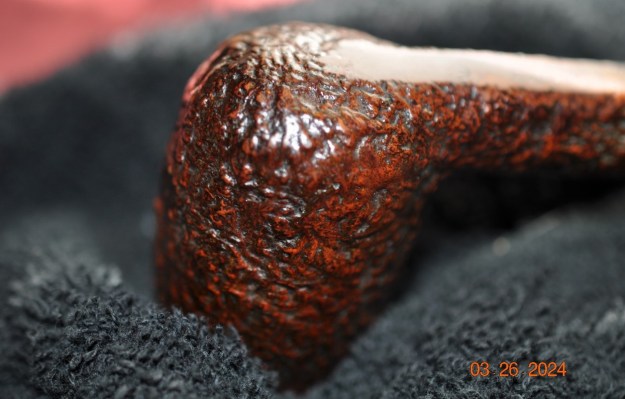
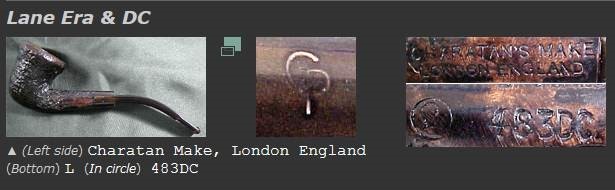
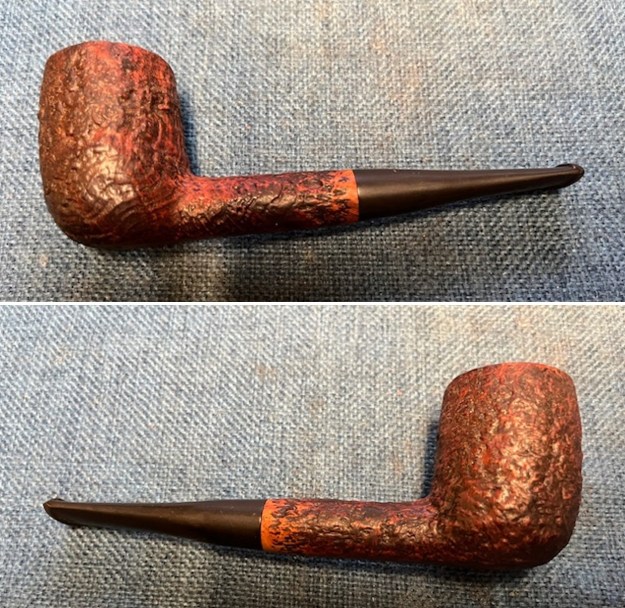
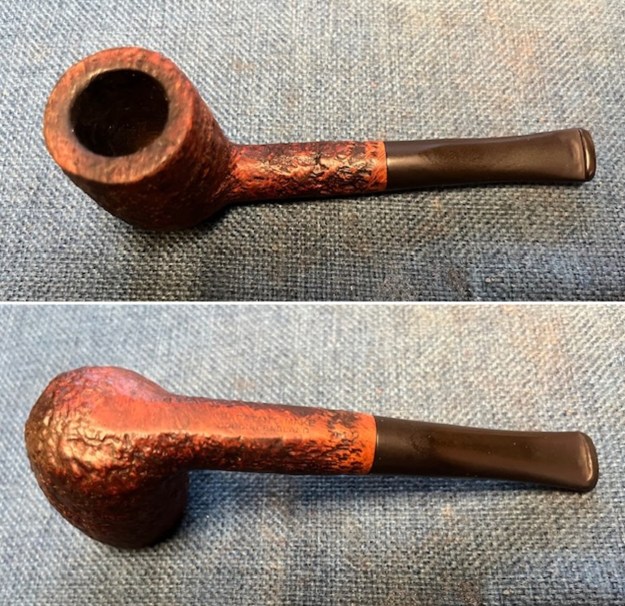
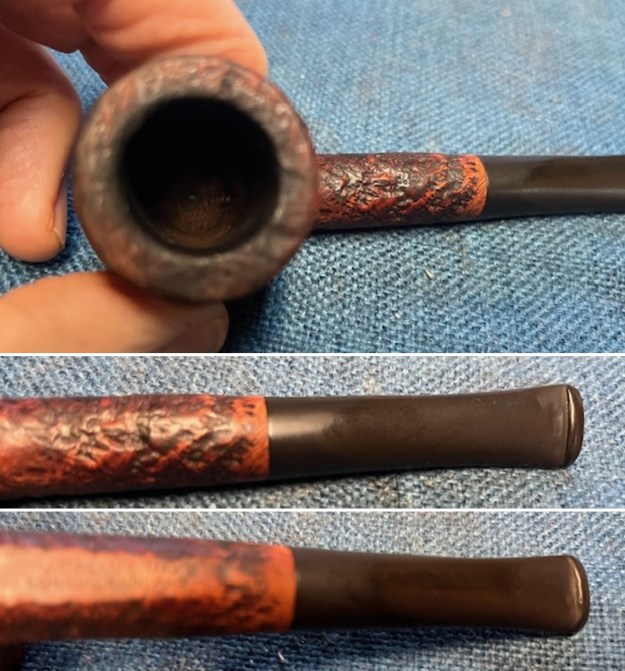
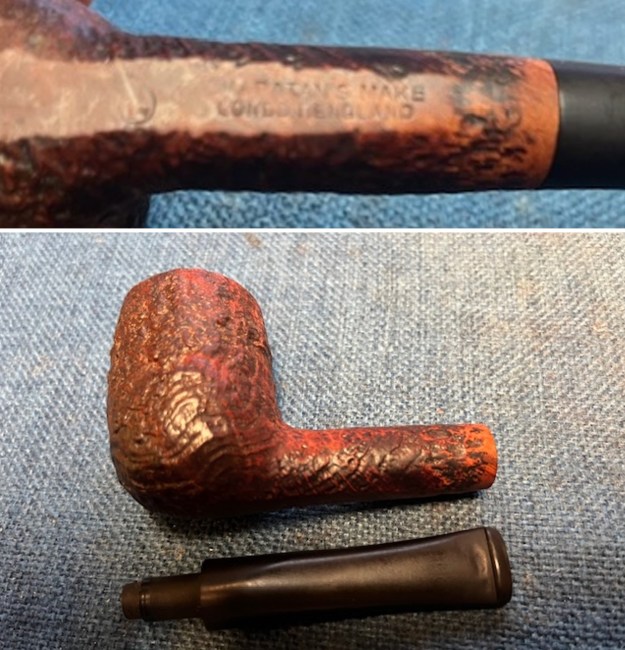
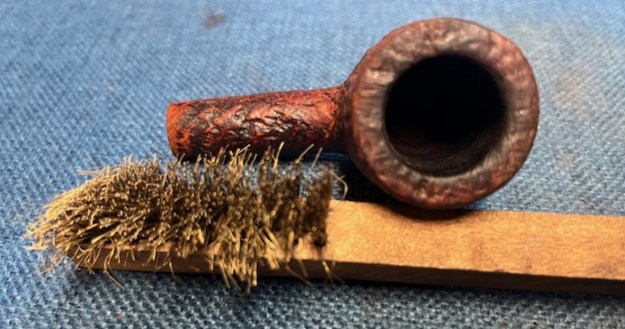
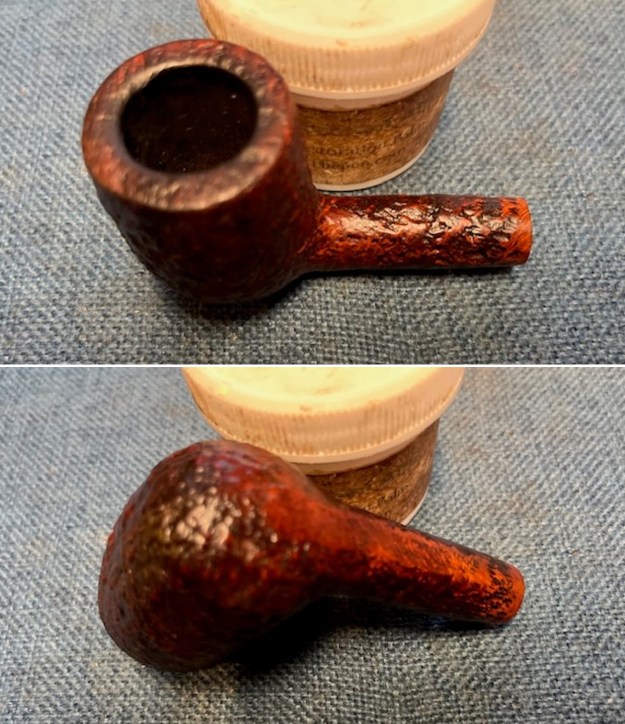
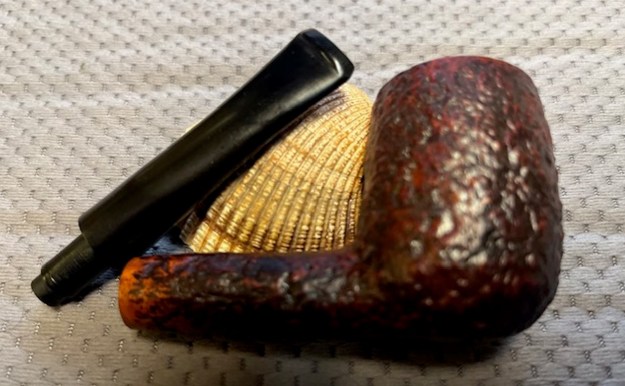
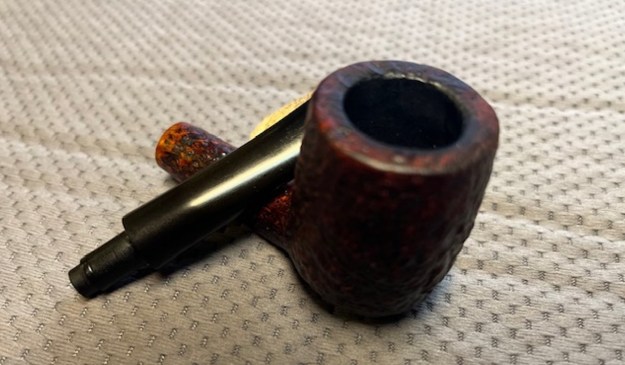
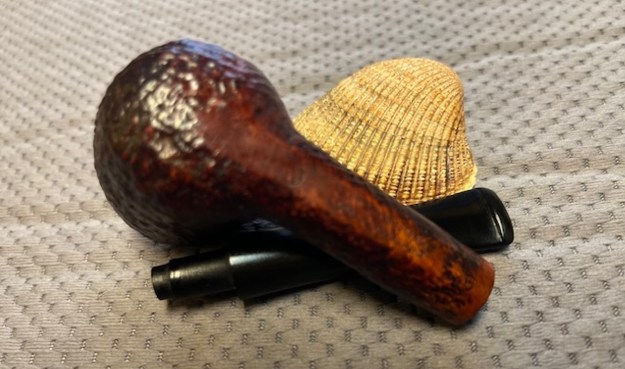
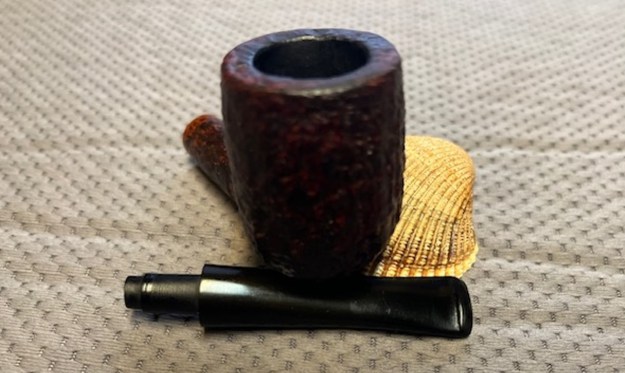
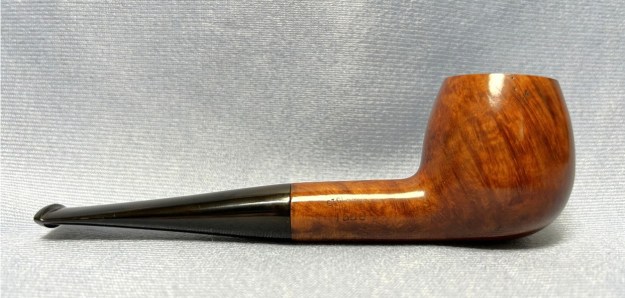
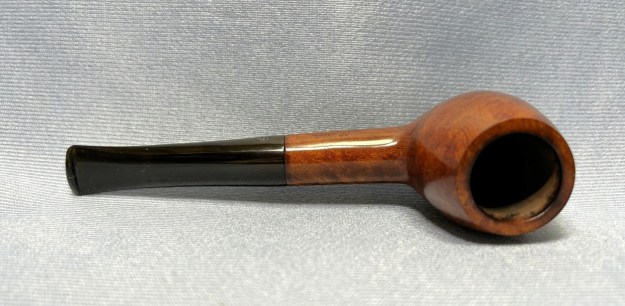
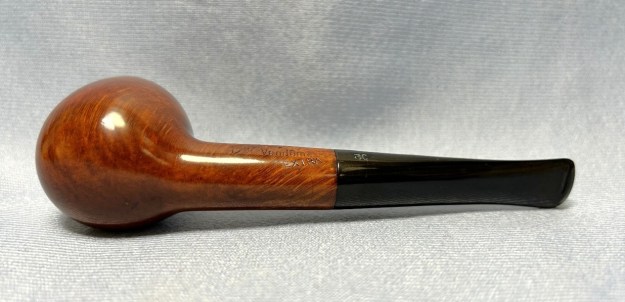
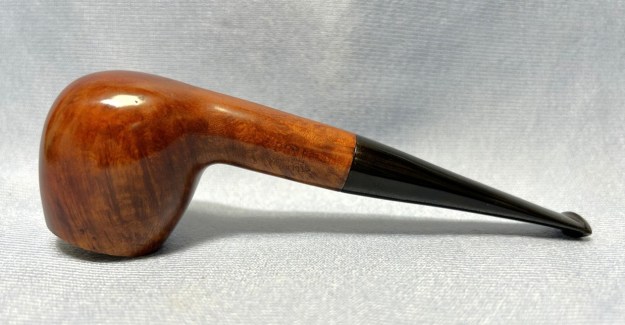
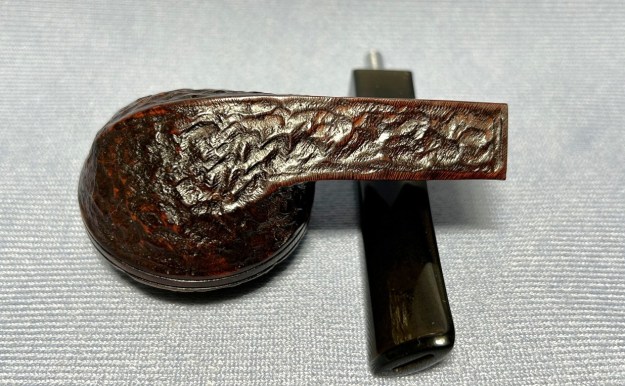
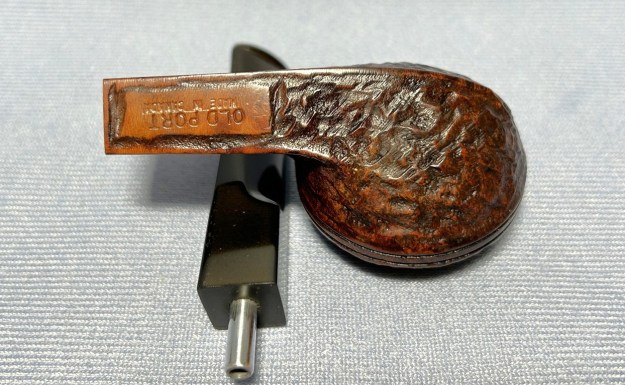
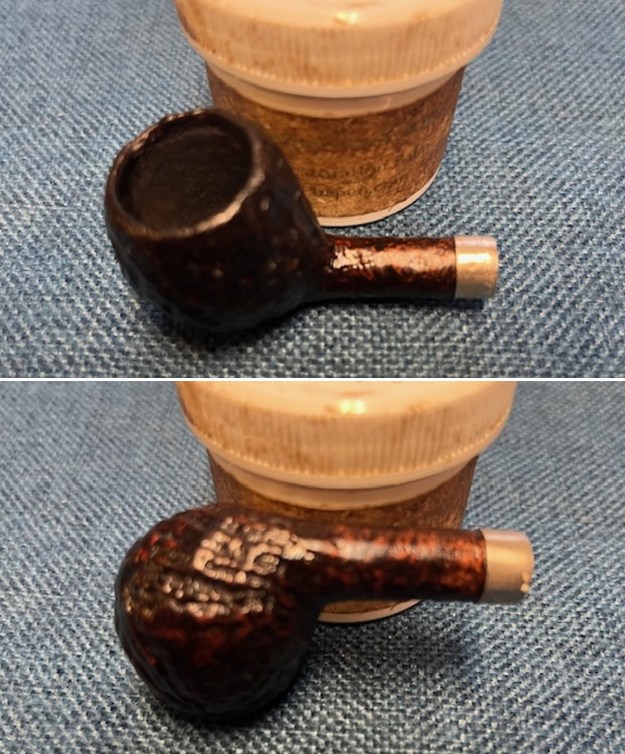
Once again, I dipped into my box of bowls to restem and came out with this interesting sandblast straight billiard. It is stained with a rich combination of brown stains that highlight the highs and lows of the blast. The finish is scratched and dirty but still interesting. The pipe is stamped on a smooth panel on the underside of the shank and reads 2 [followed by] Sandy [over] London Made. The bowl has a thick cake with some lava overflow on the rim top. There is something interesting about this little billiard bowl that makes me choose it next. Here are some photos for you to have a look. I took a close up photo of the rim top and bowl to give a sense of the thickness of the cake and the lava in the sandblast on the rim. It was a mess but obviously a well loved pipe. I took a photo of the stamping on the underside of the shank. There is a numeral 2 toward the heel of the bowl and the rest is centered in the shank in two lines as noted above.I took a photo of the stem I had chosen for the pipe next to the bowl so you can see the overall look of the stem and shank. It is slightly larger in diameter than the shank so that will need to be adjusted. The tenon is also slightly larger.I used a flat needle file to reduce the diameter of the tenon so that it would fit the shank of the pipe. It did not take too much to do and once it was removed it looked very good.I heated the stem with the flame of a Bic lighter to soften the vulcanite. Once it was soft enough I was able to straighten the stem to the angle that I wanted.I fit the stem to the shank and used a rasp to reduce the diameter of the stem. I wanted it to be a smooth transition from the shank to the stem. It was looking much better. I sanded the reduced stem diameter with 200 grit sandpaper to remove the file marks and smooth out the scratches. The transition began to really look good and it was smooth to the touch.I sanded out the scratches in the vulcanite with 320-3500 grit sanding pads. I wiped the stem down after each sanding pad with a cloth impregnated with Obsidian Oil. It started to take on a deep shine.I polished the stem with micromesh sanding pads – 1500-12000 grit pads to remove them. I wiped the stem down with Obsidian Oil after each sanding pad. I used Before & After Pipe Polish – both Fine and Extra Fine to further polish the stem. I rubbed it down with a final coat of Obsidian Oil and let it dry. I turned my attention to the bowl. I used a PipNet Reamer with the first and second cutting heads to take back the heavy cake to bare briar. I cleaned up the reaming with a Savinelli Fitsall Pipe Knife and finally sanded the bowl walls with 220 grit sandpaper wrapped around a dowel. I like to remove all the cake to examine the walls for damage and checking. Great news is that this one is free of any damage! I used a brass bristle wire brush to work over the sandblast rim top and edges. The inner edge and the top looked to be undamaged.I used alcohol, cotton swabs and pipe cleaners to clean out the internals of the shank and the new stem. Once finished the pipe smelled as clean as it looked.I scrubbed the bowl with a tooth brush and undiluted Murphy’s Oil Soap to remove the debris from the sandblast finish. I rinsed the bowl off with warm running water and dried it with a soft towel. It looked much better at this point. I restained the faded spots on the bowl sides and heel with a Mahogany and a Cherry stain pen to blend the colours into the sandblast finish. It looked much better at this point. I rubbed down the briar Before & After Restoration Balm. I worked it into the surface with my fingertips. I used a shoe brush to work the balm into crevices of the sandblast. The product works to clean, enliven and preserve the briar. I let it sit for 15 minutes then I buffed it with a cotton cloth to deepen the shine. The briar really comes alive with the balm. This is another pipe that I am really happy about the finished restoration. This reborn Sandy 2 London Made Sandblast Billiard turned out really well. I used a vulcanite stem I had here to fit the pipe with a new stem. After restemming I think that it really is a great looking pipe with a great shape and grain. The bowl is a classic English Billiard that looks excellent with the new vulcanite stem. The polished black of the stem works well with the briar. The briar really came alive with the buffing. The rich brown and mahogany stains of the finish make the blast really pop with the polishing and waxing. I put the stem back on the bowl and buffed the pipe with Blue Diamond on the buffing wheel. I gave the bowl and the stem multiple coats of carnauba wax on the buffing wheel. I buffed the pipe with a clean buffing pad to raise the shine. I hand buffed the pipe with a microfiber cloth to deepen the shine. The finished Sandy 2 London Made Billiard really has a unique beauty and feels great in the hand. It looks very good. Give the finished pipe a look in the photos below. The dimensions of the pipe are Length: 5 ½ inches, Height: 1 ½ inches, Outside diameter of the bowl: 1 ¼ inches, Chamber diameter: ¾ of an inch. The weight of the pipe is 28 grams/.99 ounces. The pipe will be going on the rebornpipes store soon. It will be in the British Pipemakers Section if you would like to add it to your collection. Thanks for reading this blog and my reflections on the pipe while I worked on it. It was a fun one to work on!
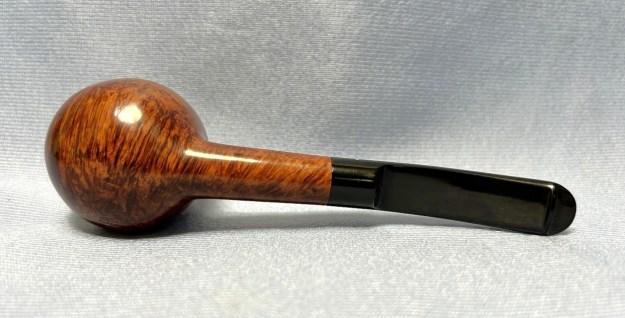
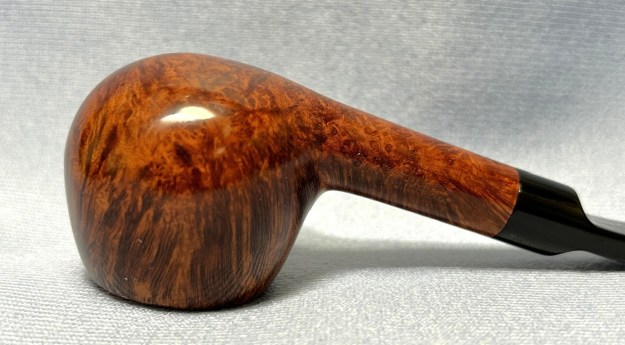
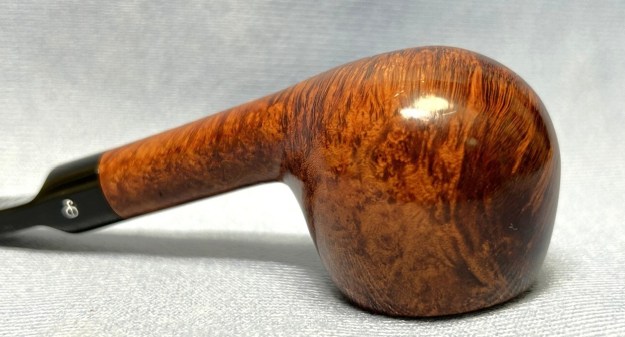
Having Fun Restoring Four Charming Pipes


by Kenneth Lieblich

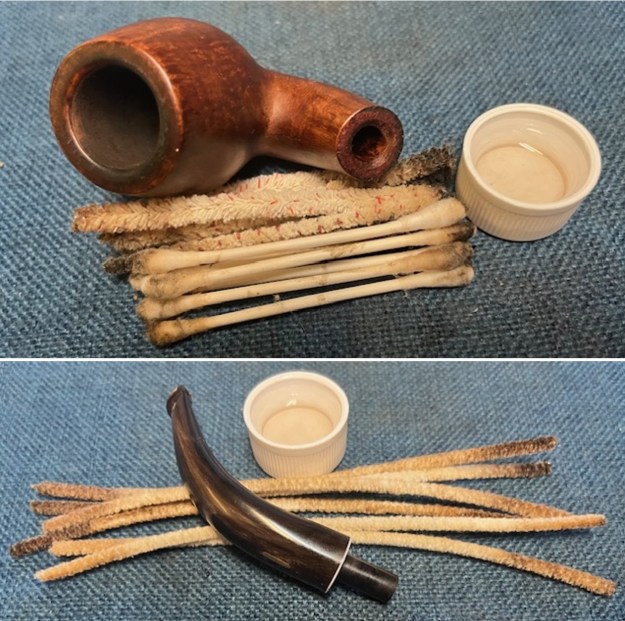
A great customer of mine recently sent me some pipes for repair and restoration. I was happy to help out and the pipes were sent to me post-haste. There were some surprises to be discovered and challenges to be overcome. On this occasion, I did something different than I usually do: I restored all four at once, rather than one at a time. This blog is more of a show-and-tell than my usual restoration stories. This blog post is going to give a good overview of the restorations but doesn’t need to provide detail on each individual pipe. Let’s jump right in and see what we’ve got.First is a Comoy’s Castleton 126 large straight pot. Second is a Savinelli Oscar 622KS Lucite king size bent pot. Third is a GBD London Made 1978 bent Dublin. Fourth is a Peterson Sherlock Holmes Watson P-lip. All four are very attractive and I’m sure will be good smokers. A first glace at them all suggests that everything is fine, but things are not always what they seem… As I was inspecting the Comoy, I noticed, to my chagrin, that the shank was completely snapped. Someone had glued it back together, but it wasn’t well done and I was going to have to redo it. Similarly, when I dug deeper into the Savinelli, I noticed that there was a lot of damage to the inside of the bowl. That’s a problem! But I’ve got a solution. Fortunately, the GBD and Peterson didn’t have any major issues. That was good news. With all four stems, I wiped down the outside with some oil soap on some cotton rounds. Naturally, the insides needed to be cleaned too, and I did that with some pipe cleaners and 99% isopropyl alcohol. Two of the stems were vulcanite and two were acrylic, so I only needed to soak the vulcanite stems in the deoxidizing liquid. When they were done, I wiped them down with some cleanser on cotton rounds. After that, I sanded all four stems with my Micromesh pads – and I used the pipe stem oil towards the end of the sanding. They all looked so much better when I was done. Next step, of course, was removing all the cake from inside the bowls. I took out my PipNet reamer and my KleenReem and went to work. There was plenty of filth inside and it took a little while to get it all out of four bowls. I followed that up by sanding the insides with a piece of 220-grit sandpaper on a wooden dowel. I also gently scaped down the bowl rims in order to remove any lava there. Working through these pipes reminded me that most of my cleaning techniques for these pipes came from Steve and his brother, Jeff. They personify the standard for which all pipe restorers should strive. Thanks again Jeff and Steve for all your help to me.Before I moved on to cleaning the inside of the stummels, I decided that it made sense, at this point, to take apart the broken shank. This would make it easier to clean. I used my heat gun, softened the glue, and it came apart easily. I wiped down the ends with acetone to ensure that no glue remained.Now, it was time to clean the insides. As usual, I used a truck load of pipe cleaners, cotton swabs, and isopropyl alcohol to get everything spick and span.Following that, I set all four stummels up for a de-ghosting session. The bowls were stuffed with cotton balls and then socked with alcohol. This works to draw out any remaining filth. It really makes things look and smell better. When that was done, I used some soap and tube brushes and scoured the insides. They looked fabulous. I also cleaned the outsides with some oil soap on some cotton rounds.Next, I needed to repair the broken shank on the Comoy and the gouges in the Savinelli. The location of the break on the shank was awkward and wouldn’t allow for a strengthening tube to be installed. So, I simply had to glue it with great care. I used wood glue, as it has the best strength for what was needed. I also coated a couple of cotton swabs with petroleum jelly and shoved them down the shank to prevent any glue from dripping into the shank. I clamped the two parts together and left them overnight. I was quite pleased with the results.Meanwhile, I needed to mix up some heat-resistant epoxy for the Savinelli. I stuck a petroleum-jelly-coated pipe cleaner into the draught hole of the pipe and applied a thin layer of epoxy. I also let this cure overnight. I then sanded down the excess and made the bowl a new coating – a mixture of yoghurt and activated charcoal. This also sat for some hours to try and it makes a wonderful coating for a new cake to build on. I then moved on to sanding down the wood on all four stummels. I used all of my Micromesh pads and endured that everything was smooth and lovely. There was, however, considerable burn damage on the Comoy. After topping the pipe and reshaping it, I decided that this one needed a new stain on the wood. With the broken shank, burns on the rim, and topping, it needed a beauty treatment. I ended up staining this one with Fiebing’s mahogany stain – it turned out absolutely beautifully, but, for whatever reason, the photos here show it as being much darker than it is in person. Trust me: in person, it looks great. All four pipes got a nice coating of the restoration balm and were left to sit for 20 minutes or so. I then buffed them by hand with a microfibre cloth. I took the pipes to my bench buffer and spiffed them all up with some White Diamond and carnauba wax. My last step was to polish the sterling silver band on the Peterson with my jewellery cloth. And voilà! These beauties are already on their way back to their owner. I trust that he will enjoy their new and improved status. I hope you enjoyed reading this quick write-up of this lovely bunch of pipes. If you are interested in my work, please follow me here on Steve’s website or email me directly at kenneth@knightsofthepipe.com. Thank you very much for reading and, as always, I welcome and encourage your comments.

Restemming and Redressing an interesting Prince Amled Calabash


by Steve Laug

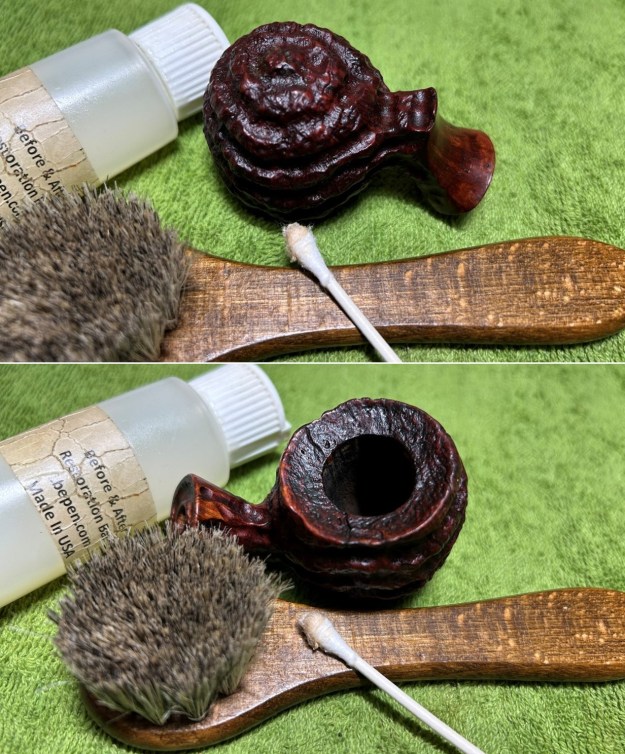
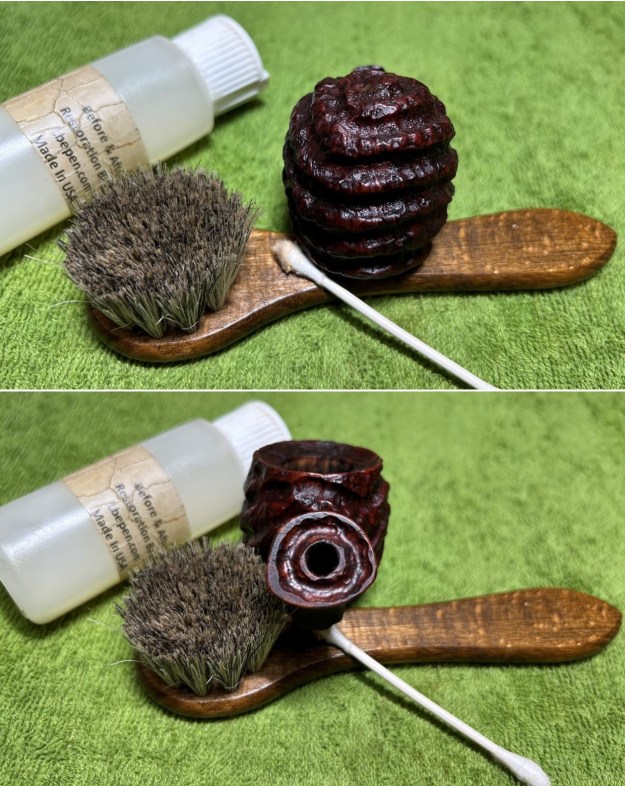
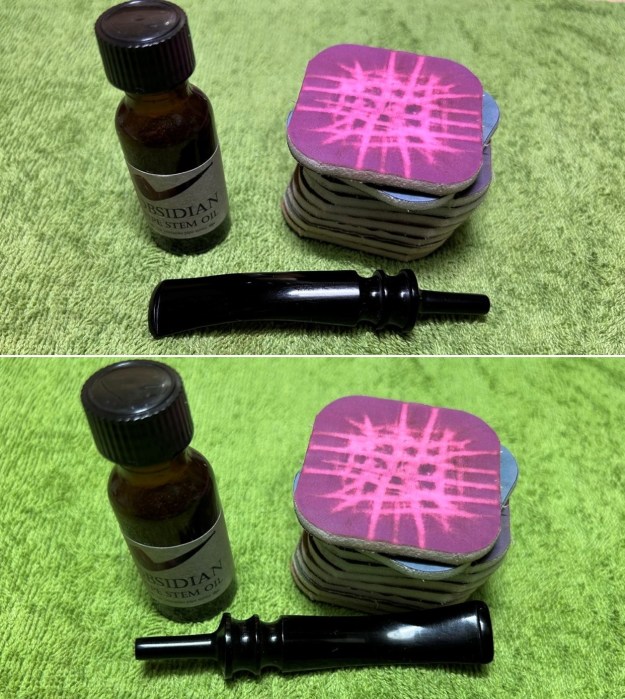
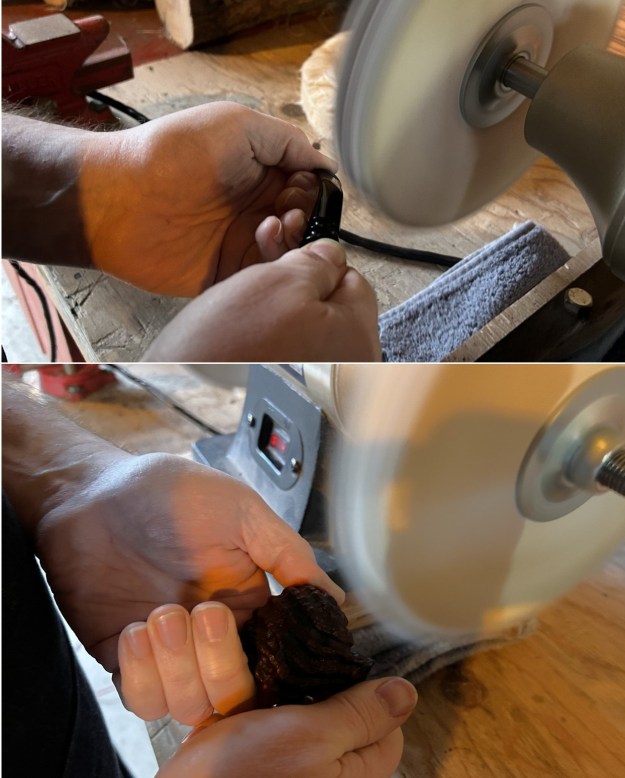
For the next pipe to work on I chose to clean up and match a stem with a uniquely rusticated calabash bowl that I have here in my box. This one was more complicated than some of the other quick cleanup and restores but it is interesting enough work to give me a break from normal restoration. This bowl has a wire rustication or bark rustication on the sides and shank. There is a smooth band on the shank end and around the rim top. The rim top itself is also smooth and bevelled inward. The finish was worn and quite lifeless looking. Nonetheless to me it showed promise under the grit and grime of the years. On the underside of the shank on a smooth panel it was clearly stamped Prince Amled [over] Made in Denmark [over] Hand Made. The conical bowl had a thick cake and an overflow of lava covering the inwardly bevelled rim top. The wire rustication was a filthy mess with lots of dirt and a bit of paint in the crevices. The shank end had some damage and was no longer smooth. There was also a small tenon snapped off in the shank that would need to be pulled before I could fit a stem to it. I took some photos of the bowl before I started my work on it. I took a close up photo of the bowl to give an idea of what I had to work with. The bowl was very dirty and had a thick cake. The rim top had a thick and hard lava that was obscuring whether there was damage to the smooth rim. Perhaps it had protected it from burn damage but only cleaning will reveal that. I also captured the broken tenon in the shank in the second photo. I took a photo to try and capture the stamping on the underside of the shank. It is present and is readable in person far more than the photos show. It is stamped as noted above.I went through my cans of stems here and found a thin taper stem that would fit quite well once the tenon was shaped and the diameter of the stem was fitted at the shank. It was dirty and needed a thorough cleaning but I think it will look good.Before I started to work on the pipe I wanted to refresh my memory about the brand. I turned first to Pipephils site to see if there was any information about the Danish Made Prince Amled brand (http://www.pipephil.eu/logos/en/logo-p5.html). I did a screen capture of what was on the site and I include that below. It was another of those pipes with little information included.I turned to Pipedia (https://pipedia.org/wiki/Prince_Amled) to see if there was any further information to help me with hunt for this pipe manufacturer. The listing for that pipe company had some great photos but also an appeal for information on the brand. It looked like I had as much information as I could find online.

It was time to work on the pipe! I decided to start by pulling the broken tenon in the shank. I screwed a coarse thread drywall screw into the airway and gently wiggled the tenon piece free. The shank was dirty but otherwise undamaged. There was some nicking on the shank end and edge that would need to be dealt with but otherwise it was good.Now the pipe was ready to be cleaned. I reamed it with a PipNet Pipe Reamer using the 1st and 2nd cutting heads to remove the cake. I cleaned up the remnants with a Savinelli Fitsall Pipe Knife. I finished the bowl by sanding the walls with a piece of 220 grit sandpaper wrapped around a piece of dowel. The bowl walls looked very good. I went through my thin brass bands to find one that would work to clean up the damage on the shank end. I use these to give a smooth surface to face the new stem. It adds a bit of bling but also does a great job making the shank face smooth to match the stem. I wiped the shank end down with alcohol to clean it off and gave the shank end a coat of glue. I pressed the band in place over the all-purpose glue and cleaned off the excess with a wet cloth.Once the glue had dried I scrubbed out the internals with pipe cleaners (normal & bristle), cotton swabs and alcohol to remove the tars and oils in the shank between the mortise and the entrance of the airway into the bowl. It was quite dirty. I cleaned out the internals on the stem at the same time.I scrubbed the exterior of the bowl and shank with a tooth brush and undiluted Murphy’s Oil Soap. I worked it into rustication on the bowl and shank and the dirty rim top with a tooth brush. I rinsed the soap and grime off with warm water and repeated the process until the pipe was clean. I dried it off with a soft towel. It looked much better at this point. I polished the rim top and the smooth portions of the band around the rim edge and underside of the shank with micromesh sanding pads – dry sanding with 1500 – 12000 grit pads. I wiped the briar down after each sanding pad to remove the debris. The smooth rim and edge began to take on a shine. I stained the rim top and the smooth portions of the rim edge, bowl and shank with a Cherry stain pen. It looks good but will look even better once it is buffed and polished. I rubbed the bowl down with Before & After Restoration Balm. I worked it into the surface of the briar with my fingertips and a horse hair shoe brush to clean, enliven and protect it. I let the balm sit for 10 minutes and then buffed with a cotton cloth to raise the shine. Mark Hoover’s Balm is a product that I have come to appreciate and one I use on every pipe I have been working on. I set the bowl aside and turned my attention to the stem. I sanded the stem surface with 320-3500 grit sanding pads to further blend them in and smooth out the surface of the stem.I polished the stem with micromesh sanding pads – dry sanding with 1500-12000 grit pads. I wiped the stem down after each pad with some Obsidian Oil. I finished hand polishing it with Before & After Pipe Stem Polish – Fine and Extra Fine. I rubbed it down with another coat of Obsidian Oil and let it dry. The stem really looked very good. This delicate and petite Prince Amled Hand Made Calabash Pipe is a real beauty. I know it is hand made in Denmark but that is the extent of the information available on the brand. The carving looks like tree bark on the sides and a great smooth rim and trim. The finish on the pipe is in excellent condition and the contrasting stains work well to highlight the stunning finish on the pipe. The thin vulcanite pencil stem adds to the mix. With the grime and debris gone from the finish and the bowl it was a beauty and the finish shows depth at this point. The rim top looks really good now. I put the stem back on the bowl and buffed the pipe with Blue Diamond on the buffing wheel. I gave the bowl multiple coats of Conservator’s Wax and the stem multiple coats of carnauba wax on the buffing wheel. I buffed it with a clean buffing pad on the buffer and hand buffed the pipe with a microfiber cloth to deepen the shine. The finished Prince Amled Calabash is quite nice and feels great in the hand. The dimensions of the pipe are Length: 5 inches, Height: 2 ¼ inches, Outside diameter of the bowl: 1 ¼ inches, Chamber diameter: 5/8 of an inch. The weight of the pipe is .92 ounces/25 grams. Thanks for walking through the restoration with me as I worked over another interesting pipe. This pipe will be added to the Danish Pipe Makers section of the rebornpipes store soon. If you want to add it to your collection send me an email or a message! Thanks for your time.

Restemming and Reclaiming a Hand Carved Odd Freehand


by Steve Laug

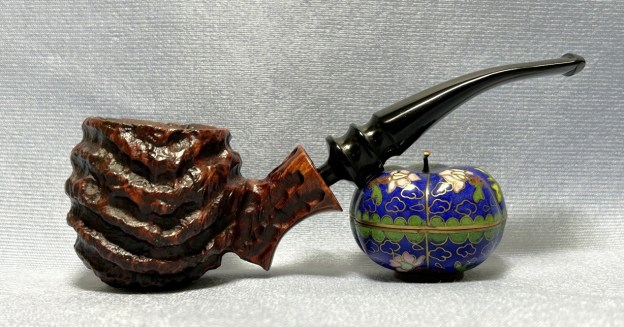
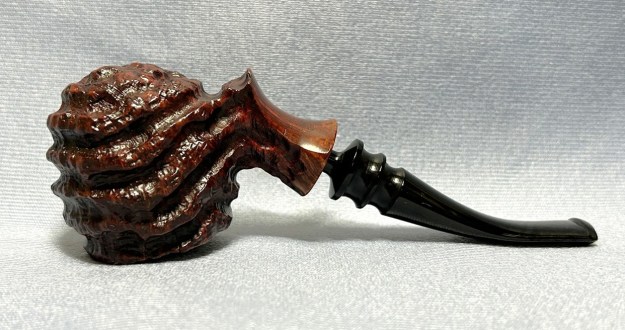
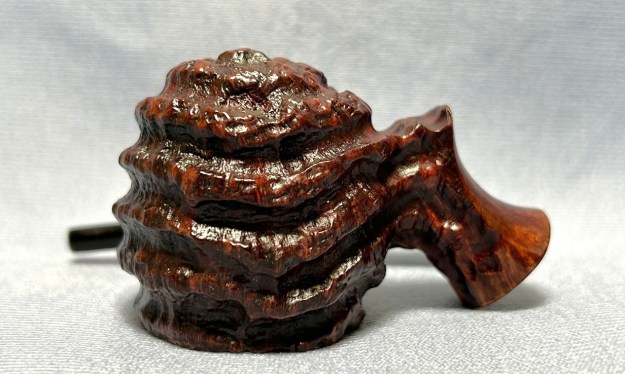
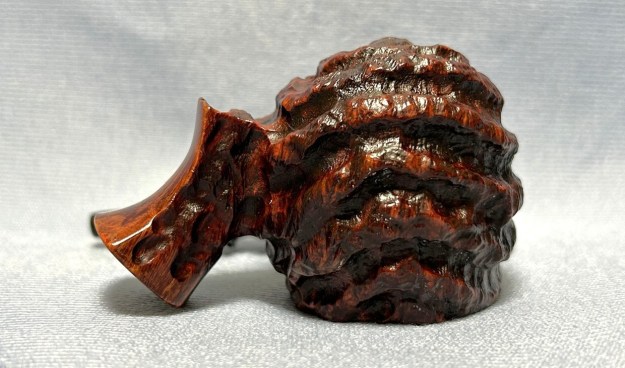
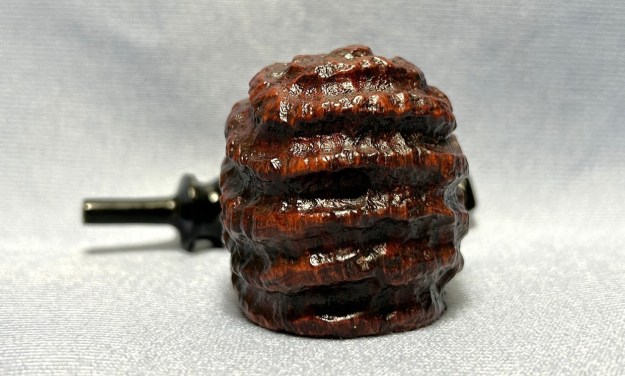
I am taking another break after the last three pipes I worked on the last few days. I decided to restem another one I had here. I cleaned up the bowl and matched a stem with a unique rustic freehand bowl that I have here in my box. It is a cleanup and restore and gives me a break from the routine of my other work on pipes. This bowl has an odd rustic/rough finish with a plateau rim top and shank end. The finish was a bit dull and lifeless. It showed promise under the grit and grime of the years. It has no stamping anywhere on the side or underside of the shank. The bowl had a moderate cake and some lava overflow on the smooth front space and plateau areas of the rim top. I don’t believe the bowl is briar but I am unsure of the wood. The bowl also had some dust and debris in rusticated finish of the bowl as well as in the crevices of the plateau on the shank end. I took some photos of the bowl before I started my work on it. I took a close up photo of the bowl to give an idea of what I had to work with. The bowl was very dirty and had a moderately thick cake. The plateau rim top has a lava coat that almost filled in crevices. I also took a photo of the plateau on the shank end to show its condition – dirty but in good shape.I went through my cans of stems here and found a nice clear smoky acrylic saddle stem that would fit quite well once I used a clear acrylic tube to line the shank. I have a nice piece of the tube from another stemless freehand that is perfect. Once I cleaned the shank and the stem I would press it in place in the shank like a Delrin or rubber sleeve and the it would be perfect and it will look good. While the glue cured I turned my attention to the bowl. I reamed it with a PipNet Pipe Reamer using the 2nd and 3rd cutting heads to remove the cake. I cleaned up the remnants with a Savinelli Fitsall Pipe Knife. I finished the bowl by sanding the walls with a piece of 220 grit sandpaper wrapped around a piece of dowel. The bowl walls looked very good. I cleaned up the plateau areas on the rim top and shank end with a brass bristle wire brush. I worked on it until the groves were clean. I wiped it down with a damp cloth to remove all the debris. It was looking better each step!I scrubbed the exterior of the bowl and shank with a tooth brush and undiluted Murphy’s Oil Soap. I worked it into the grain on the sides, the plateau on the rim top and shank end and the rusticated patch on the right side of the bowl with the tooth brush. I rinsed the soap and grime off with warm water and dried it off with a soft towel. I looked much better at this point. The grain really stands out. I scrubbed out the internals with pipe cleaners (normal & bristle), cotton swabs and alcohol to remove the tars and oils in the shank between the mortise and the entrance of the airway into the bowl. It was quite dirty.I sanded the sides the bowl and shank with 320-3500 grit sanding pads to start the polishing process. I wiped down the bowl with a damp cloth after each sanding pad. With the bowl polished I rubbed the bowl and shank down with Before & After Restoration Balm. I worked it into the surface of the bowl sides and shank with my fingertips and into the plateau rim top, shank end and rustication with a horsehair shoe brush. The product works to clean, enliven and protect the wood. I let the Balm sit for 15 minutes and then buffed with a cotton cloth to raise the shine. With the bowl cleaned and ready for use I fit the mortise with the clear rubber tube insert. I started the fit with the tenon. I pressed it in as far as possible with the tenon. There was still a small edge that needed to be pressed in. I used a Savinelli Fitsall Pipe Knife to press it the rest of the way into the shank. It looked very good. I set the bowl aside and turned my attention to the stem. I filled in the deep tooth marks with clear CA glue and set it aside to cure.Once the glue cured I used a small file to flatten the repairs and reshape the stem surface. I sanded the repairs on the stem surface with a folded piece of 220 grit sandpaper. It was starting to look better. I sanded the stem surface with 320-3500 grit sanding pads to further polish the stem. I wiped it down between sanding pads with a damp cloth.I used several needle files – round and oval as well as a button slot saw to shape the opening in the end of the button. It is much better than just the original drilled hole.I polished the acrylic stem with micromesh sanding pads – 1500-12000 grit pads. I wiped it down with a damp cloth after each sanding pad. I used Before & After Pipe Polish – both Fine and Extra Fine to further polish the stem. This oddly beautiful Hand Carved Danish Style Freehand with a fancy, turned smoky acrylic saddle replacement stem is a great looking pipe now that it has been restored. I put the stem back on the bowl and carefully buffed the pipe with Blue Diamond on the buffing wheel using a light touch on the bowl and shank. I gave the bowl and the stem multiple coats of carnauba wax on the buffing wheel and followed that by buffing the entire pipe with a clean buffing pad. I hand buffed the pipe with a microfiber cloth to deepen the shine. The finished Hand Carved Freehand fits nicely in the hand and feels great. Give the finished pipe a look in the photos below. The dimensions of the pipe are Length: 6 ½ inches, Height: 3 ½ inches, Outside diameter of the bowl: 1 ½ wide x 2 inches long, Chamber diameter: ¾ of an inch. The weight of the pipe is 79 grams/2.75 ounces. If you are interested in adding this pipe to your collection send me a message or an email to slaug@uniserve.com. Thanks for walking through the restoration with me as I worked over another very interesting pipe. I will be putting it on the rebornpipes store in the American Pipe Makers Section shortly if you would like to add it to your collection. Thanks for your time. UPDATE: I received a message on Facebook Tobacco Pipe Restorers Group about a possible maker for this pipe. Thanks Mason Evans! I am including that and a link to the article on Pipedia below:
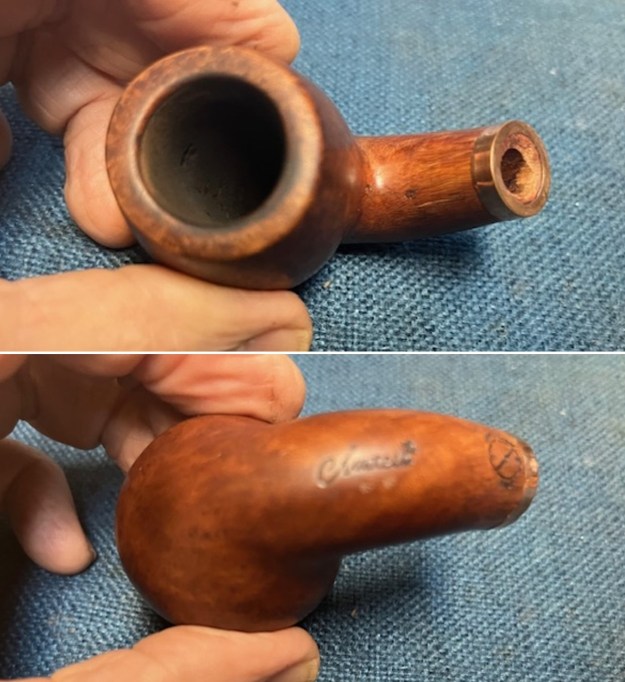
Mason: That looks like a Bubinga pipe by Tom “Pipecarver” Arcoleo.

https://pipedia.org/wiki/Tom_Pipecarver_%26_Son