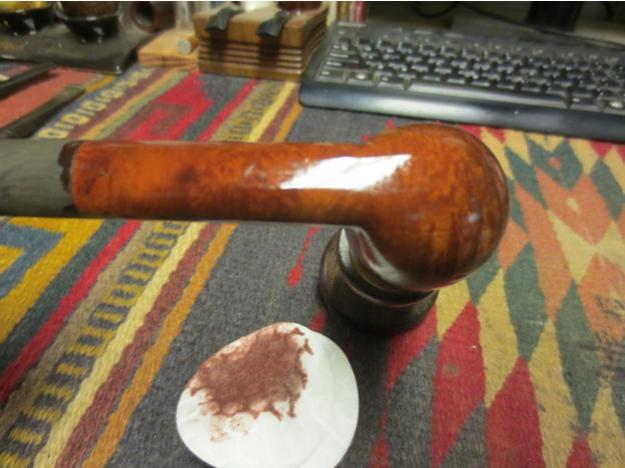
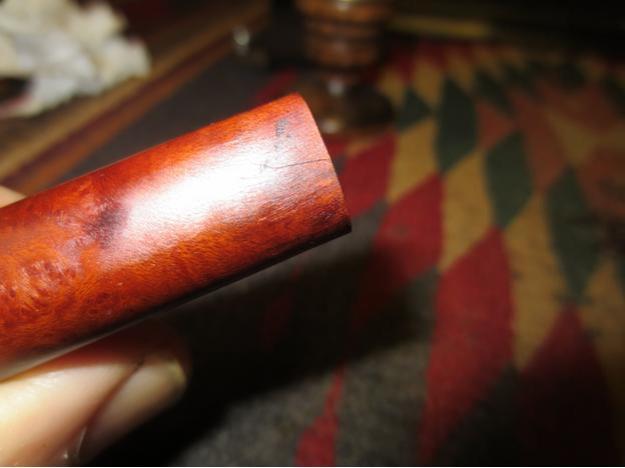
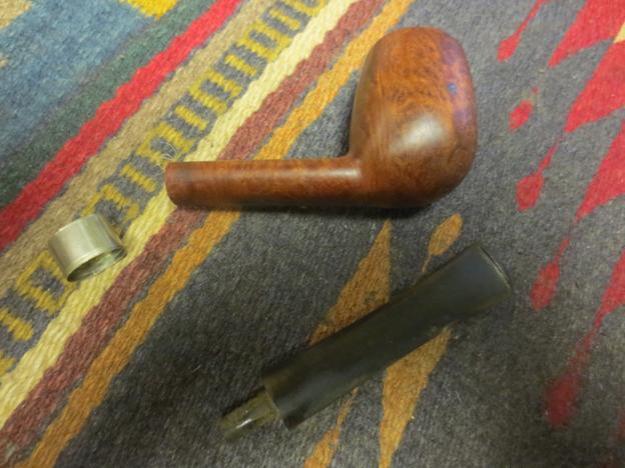
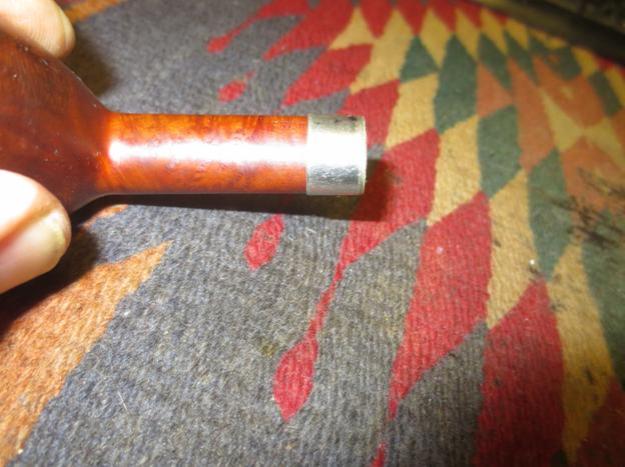
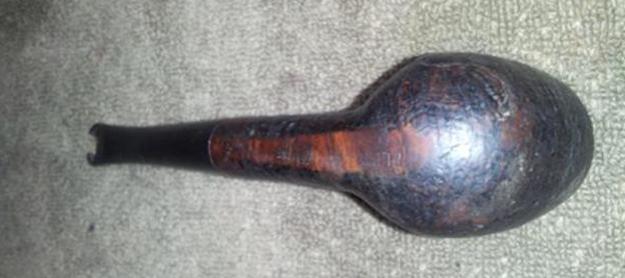
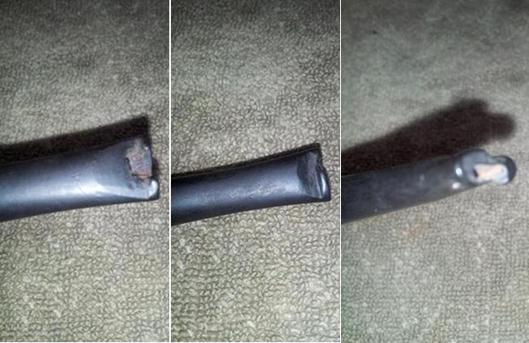
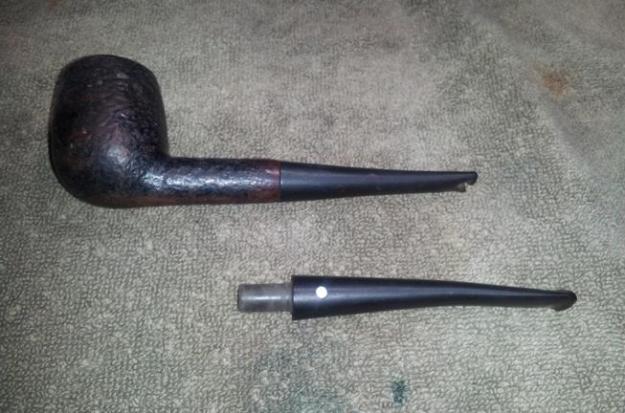
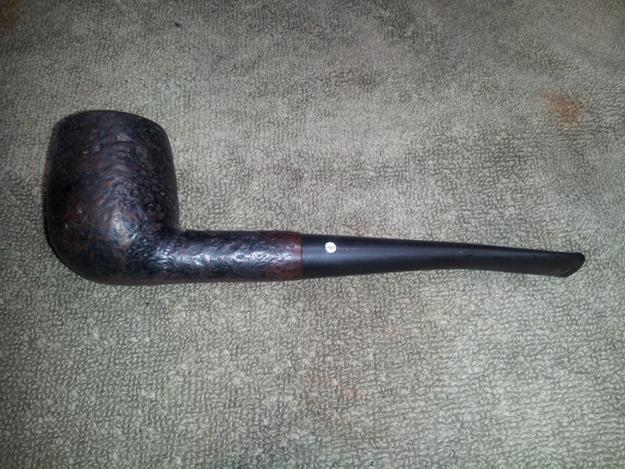
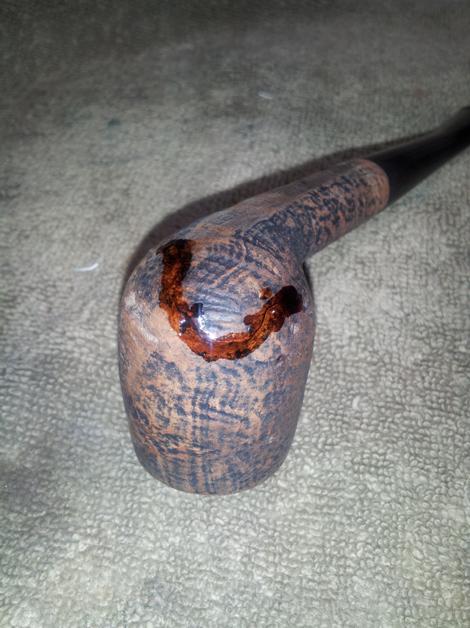
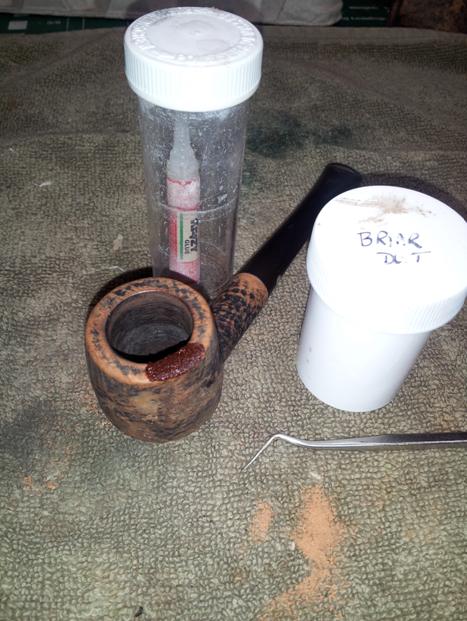
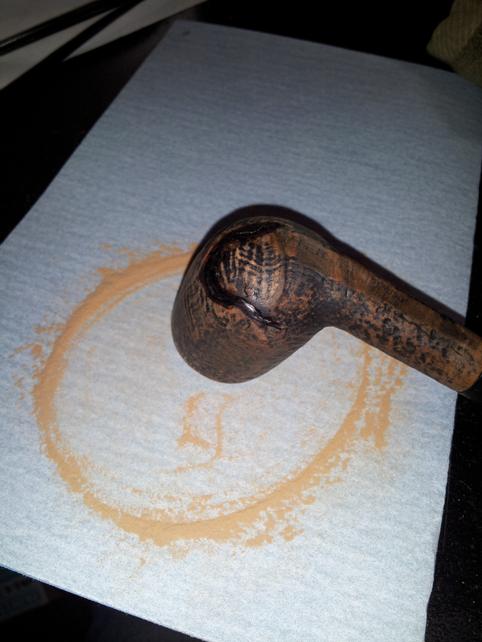
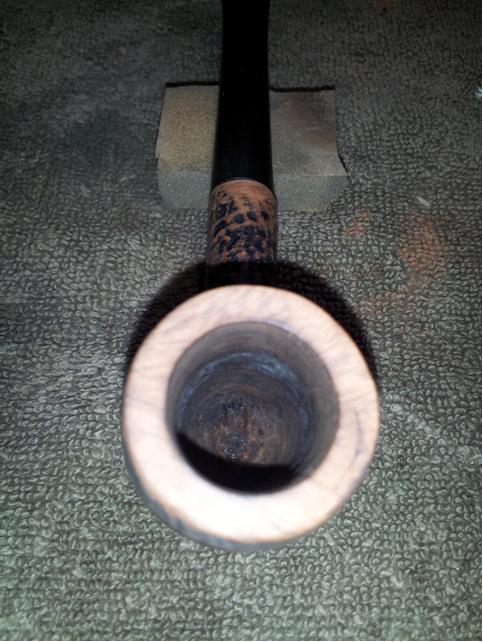
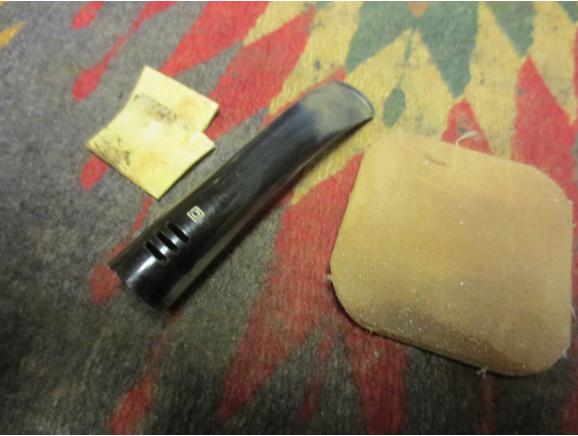
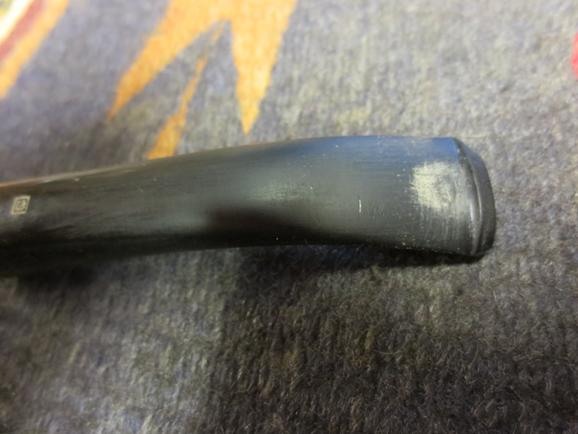
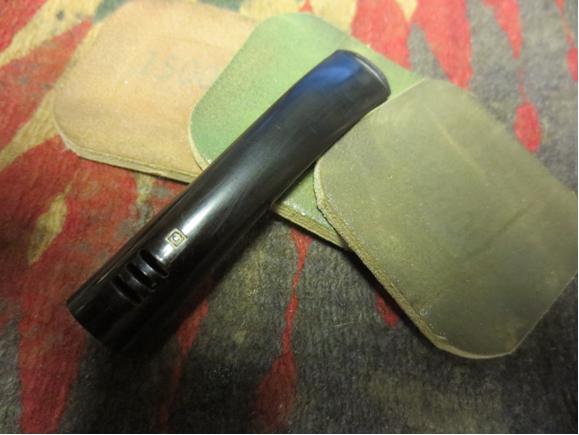
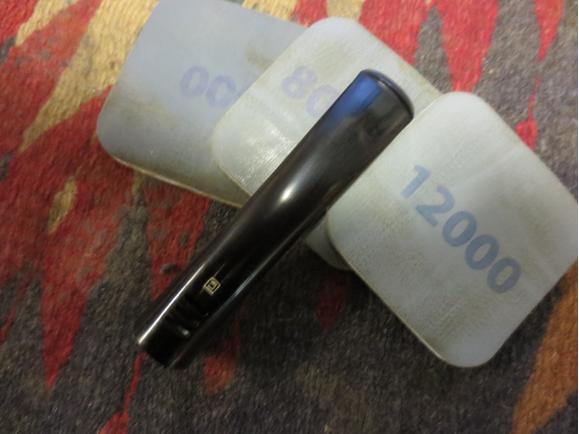
Tag Archives: repairing tooth marks

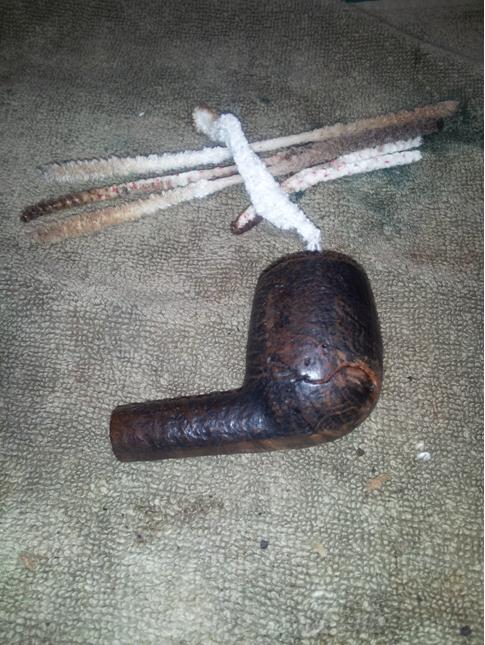
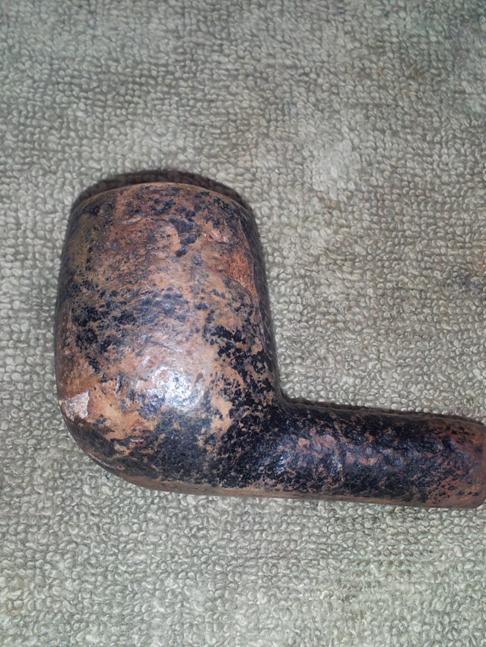
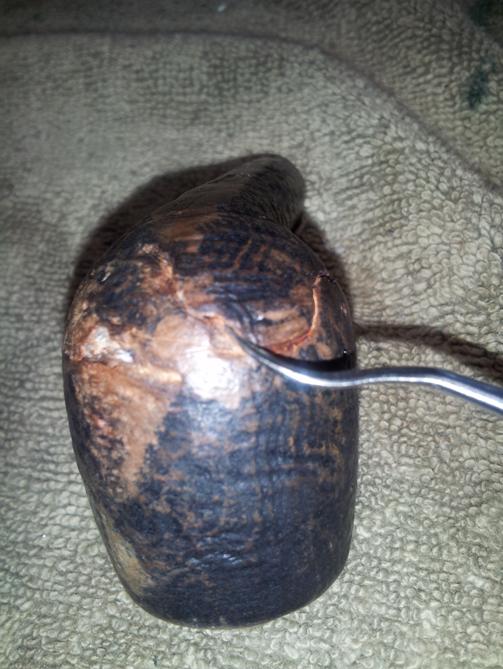
Putting the Rusticated Rim back on a Savinelli Capri 121 Pot


Blog by Steve Laug

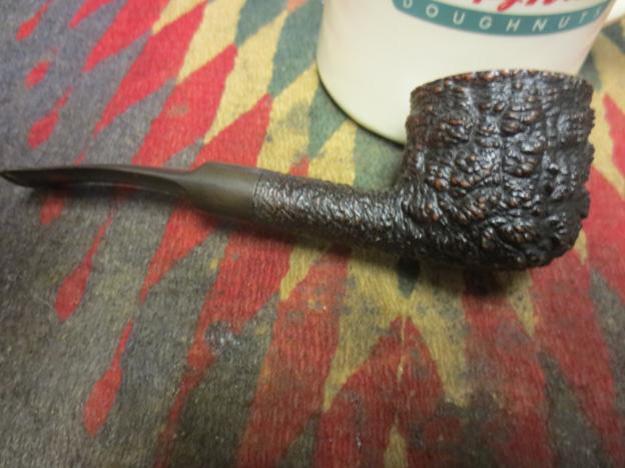
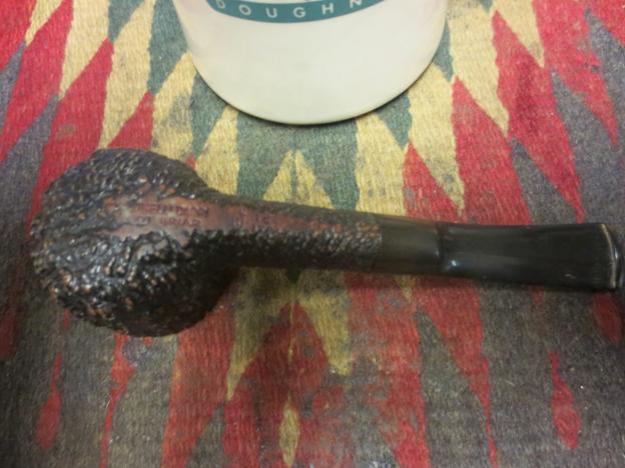
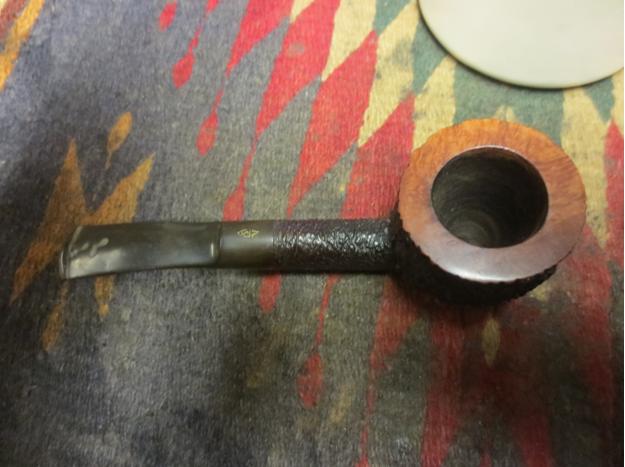
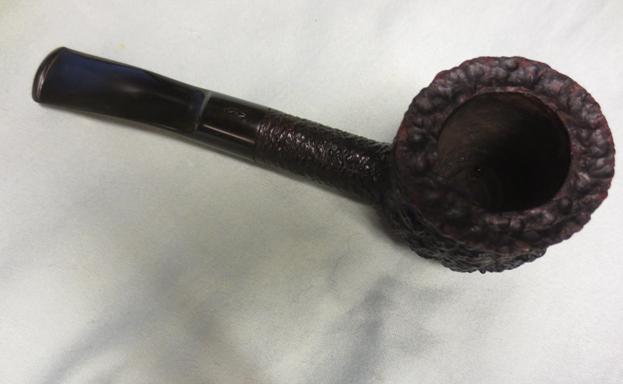
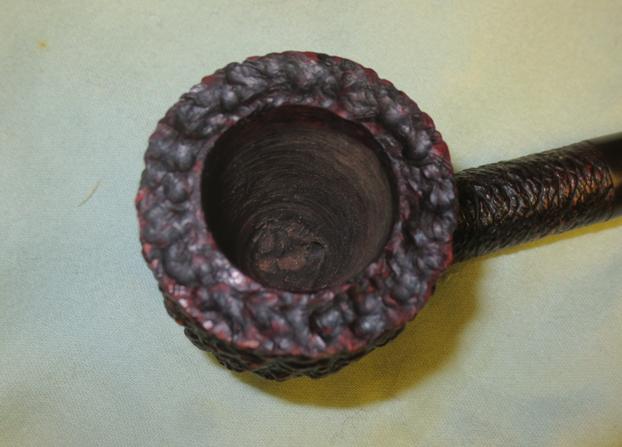
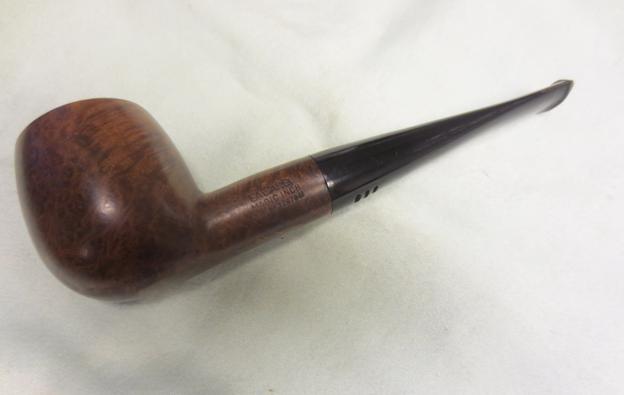
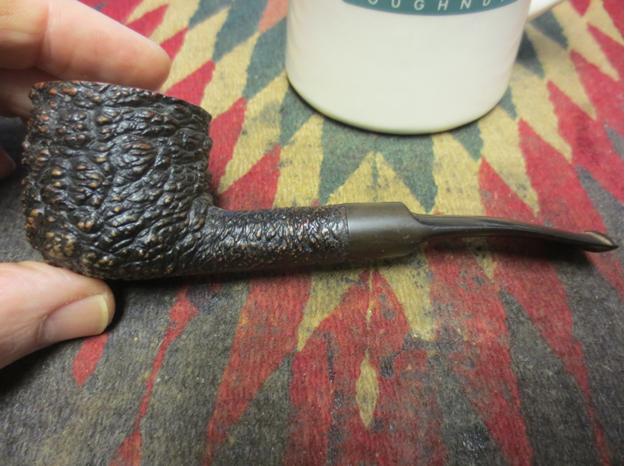
One of the gift pipes received from a friend when I repaired his pipe was a beautiful little Savinelli Capri 121 Pot. I love the finish on the Capris. There is something about the rusticated finish that adds a tactile dimension to the pipe that I thoroughly appreciate. This pipe was no exception. The finish on the bowl was in excellent condition though at some point in its life it had been topped. The typical rustication on the rim surface had been sanded smooth and the rim had been stained with a reddish brown stain. The internals of the pipe were very clean. The bowl had been reamed and the airway in the mortise was spotless. The stamping on the bottom of the shank was sharp and legible – it reads Savinelli Capri over Root Briar and the Savinelli shield and next to that the shape #121 over Italy.

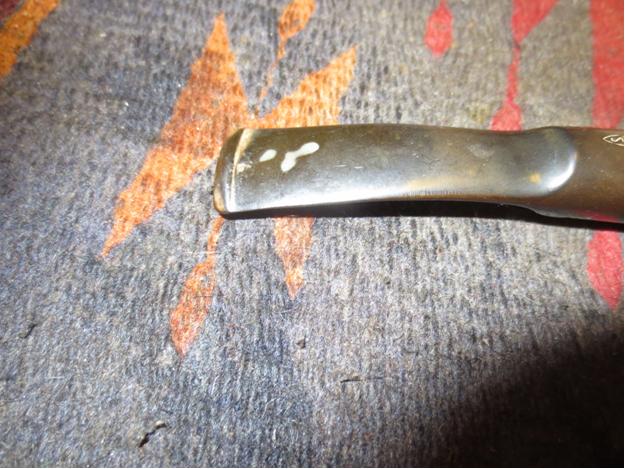
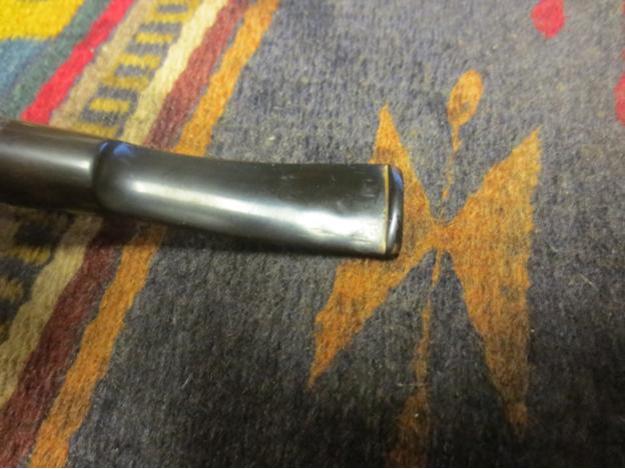
The stem had seen better days but it was still repairable. It was oxidized and the gold stamping was faint on top of the saddle. There were tooth marks on the top and the bottom of the stem. The ones on top had been repaired and filled with a white looking epoxy. It was hard and smooth but it was white and it looked really bad with the brown oxidation on the stem. These would need to be removed and repaired when I worked on the stem. The tooth marks on the underside of the stem were not as deep and could easily be remedied by sanding the stem. The inside of the stem was also very clean. I took the following photos when I brought the pipe to the work table.Capri1
Capri2

Capri3

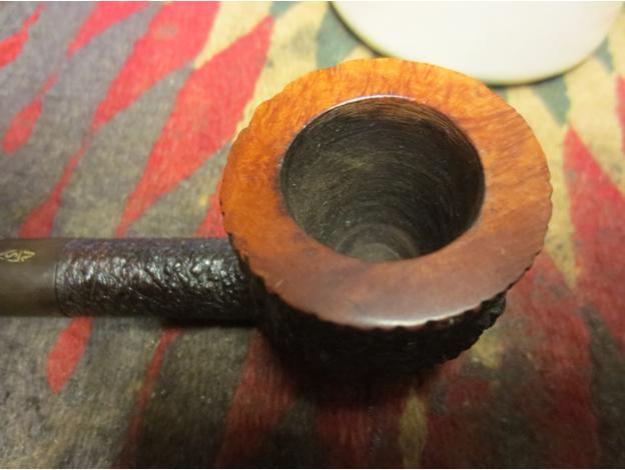
Capri4 I took some close-up photos of the rim and the stem to show the condition of both. The topping job on the rim actually was very well done. The refinish on it was impeccable – no scratches or grooves, just a clean smooth surface. The stem shows the story I mentioned above. The top side view shows the repairs and the underside view shows the dents.Capri5
Capri6

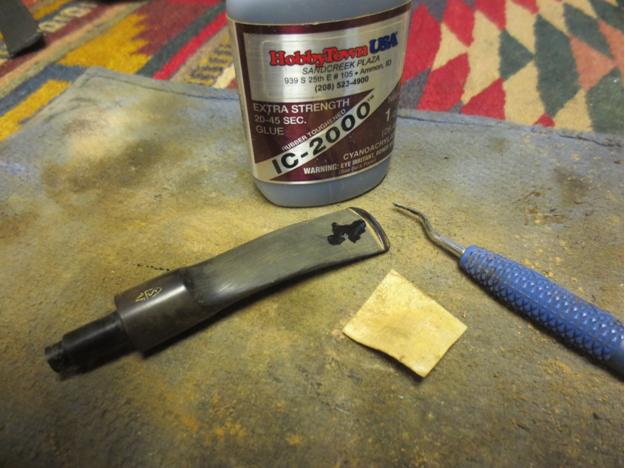
Capri7 Taking care of the dents on the underside of the stem was an easy matter. They were not too deep so I sanded the stem with 220 grit sandpaper and they disappeared.Capri8 The top of the stem was another matter. I wanted to remove the white repairs. I sanded the stem until they were four distinct repairs. Then I used the dental pick to pick away at the white epoxy repair until it was pitted and gave me a new divot to work with. I used some black super glue to refill the divots and cover the white that had been present before.Capri9
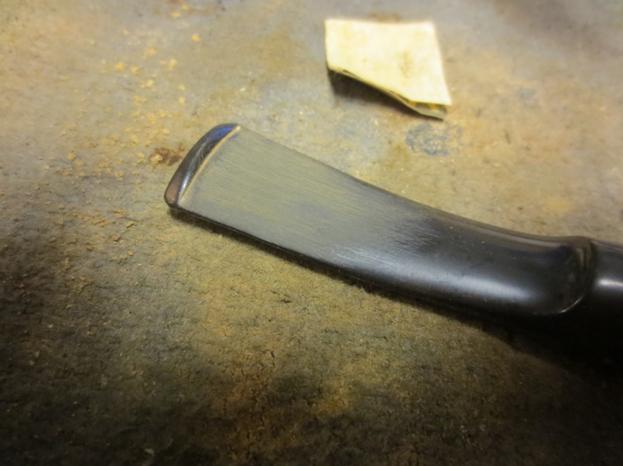
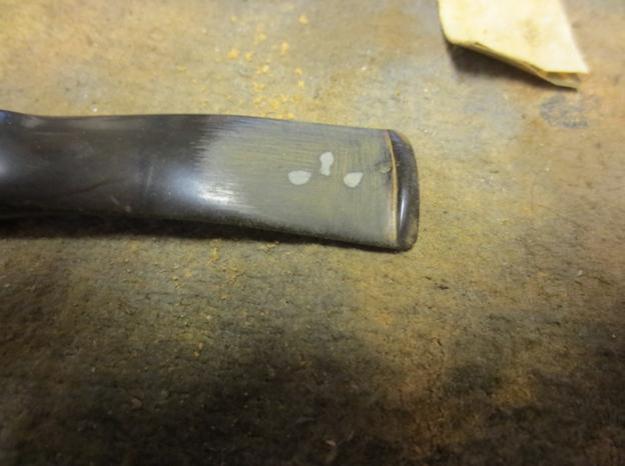
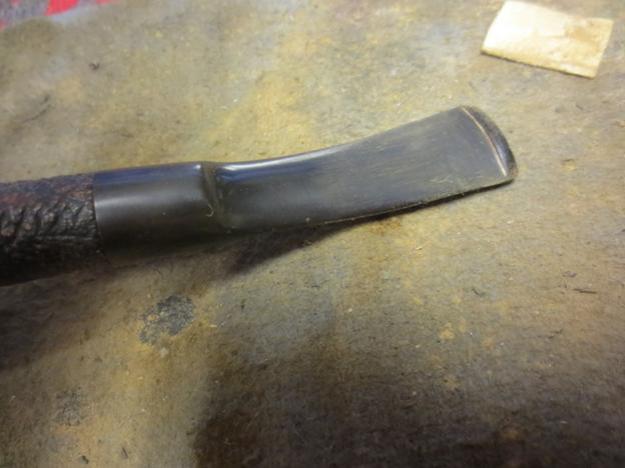
Capri10 I sprayed the glue with an accelerator and then sanded the repair with 220 grit sandpaper to blend it into the surface of the stem. In the next photo you can see that the white no longer was visible. The trick would be to keep it that way!Capri11
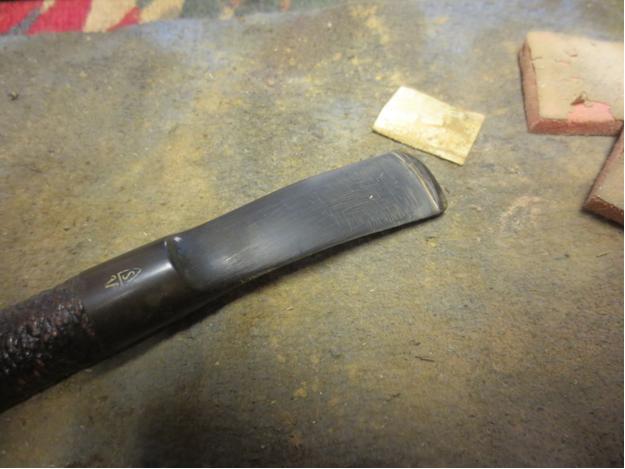
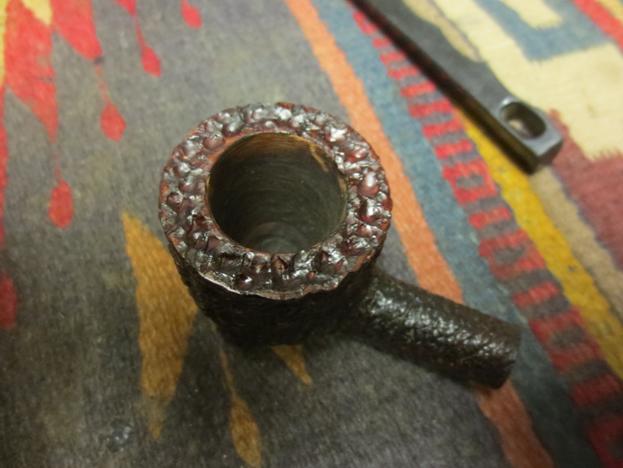
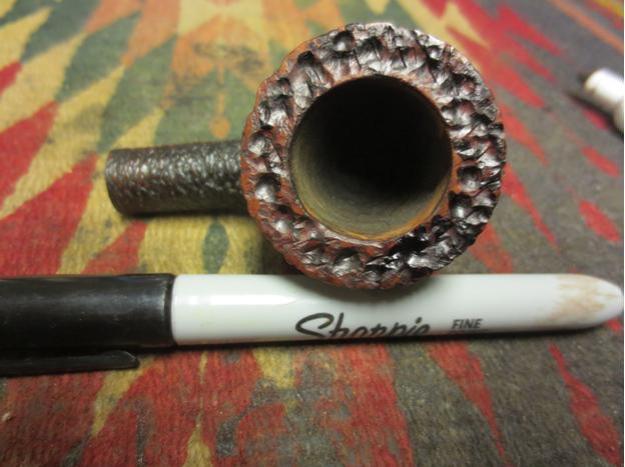
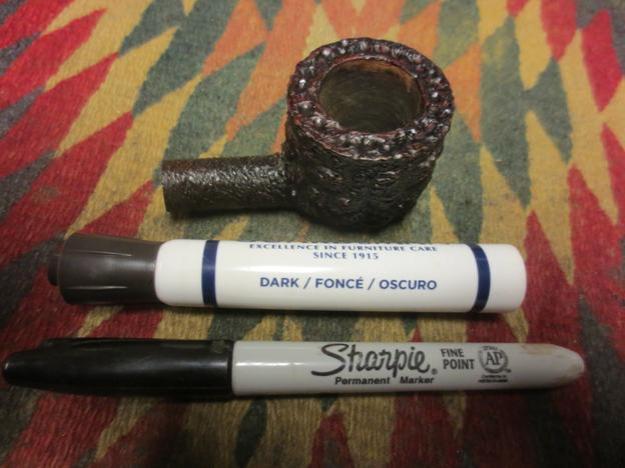
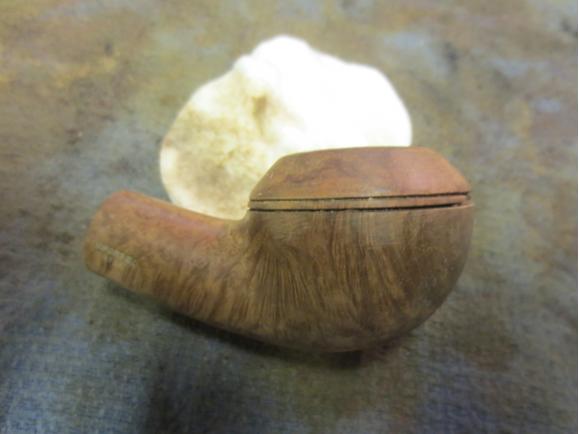
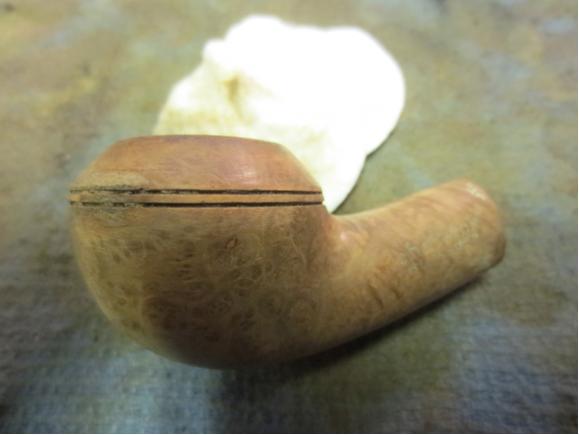
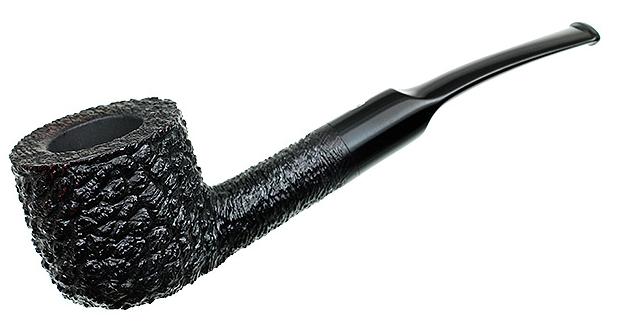
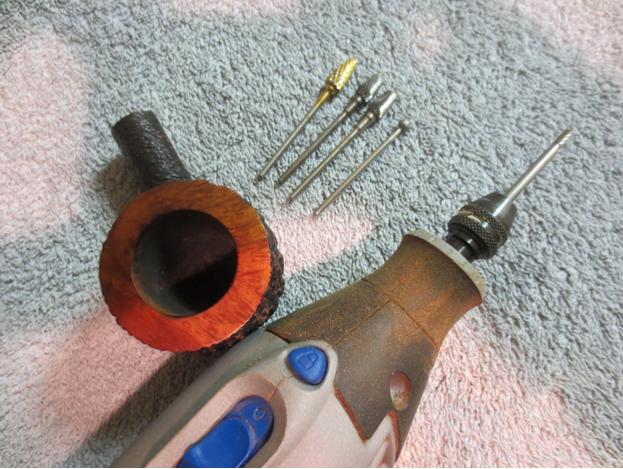
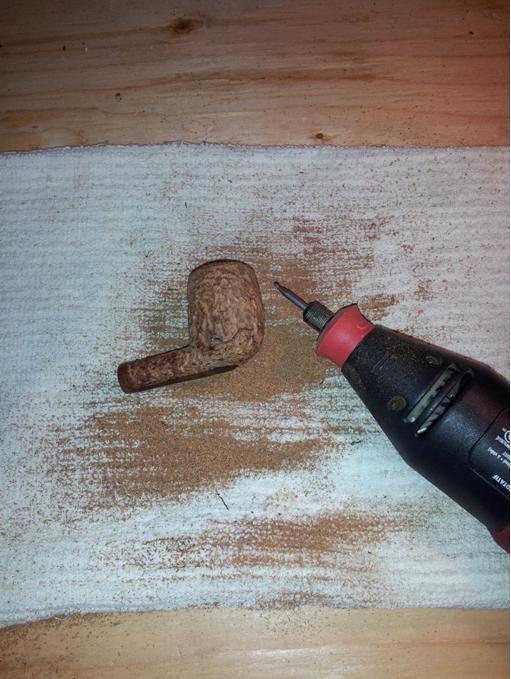
Capri12 Now it was time to address the rim. I was not sure about rusticating it because it actually looked quite fine the way it was. I went online and found a photo of a Capri that was the same shape and the rim was rusticated. I liked the look of the rim blending into the finish of the bowl. The decision was made. Now I had to work to get a similar look.Capri13 took out my Dremel and my assortment of burrs. I was pretty certain that I would use them all in the process of rusticating the rim with a deep and pebbled look.Capri14 I started with a simple cylindrical burr to carve some random swirls across the rim. I did this lightly at first and then deepened them. At this point I kept to the middle of the rim as I had ideas about rusticating the edges a little differently.Capri15 I followed that by using the ball burr to deepen the swirls and work on the inner and outer edges of the rim. At this point the surface was beginning to look good. But too me it was not rustic enough for the Capri finish on the bowl – it was too tame looking.Capri16 I used cone burr next with a cross hatch pattern to randomize the pattern even more and deepen the grooves in the surface and edges.Capri17 I next moved onto another cone burr with a spiral pattern and continued to work on the rim pattern. It was getting close to the point I was aiming for.Capri18 I used the last cone burr that had a swirl pattern in the opposite direction and went over the rim again to further accent the roughness.Capri19 I used the cylindrical burr to cut some of the lines between the divots and edges of the bowl and make it more craggy looking.Capri20 At this point in the process I was finished with the burrs and I put a coat of medium brown stain on the high points in the rustication using a stain pen. I followed that up with using a black Sharpie pen to fill in the divots and low spots on the rustication.Capri21
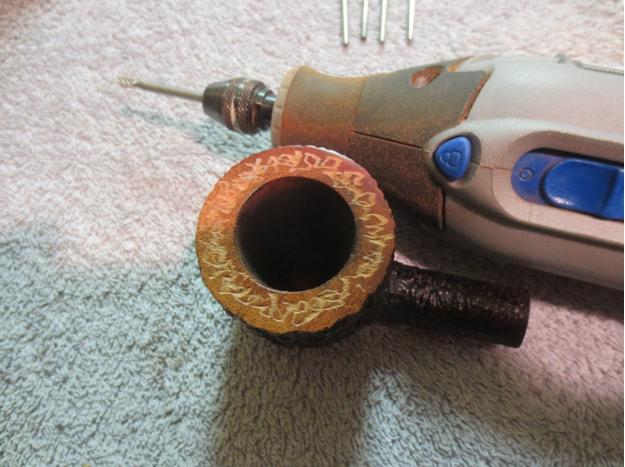
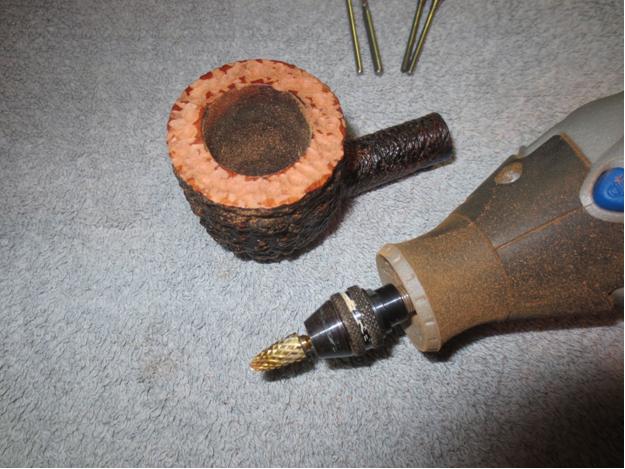
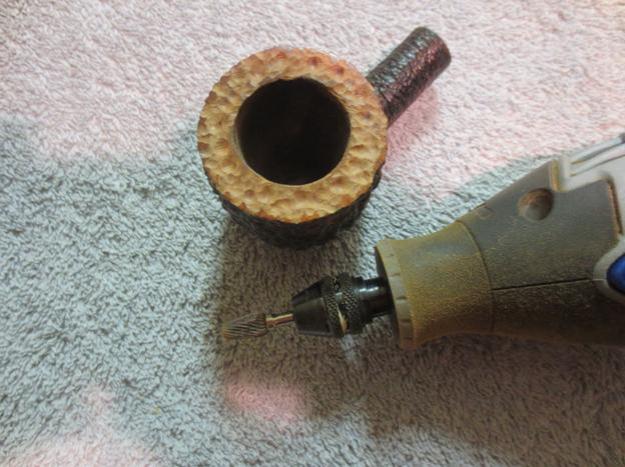
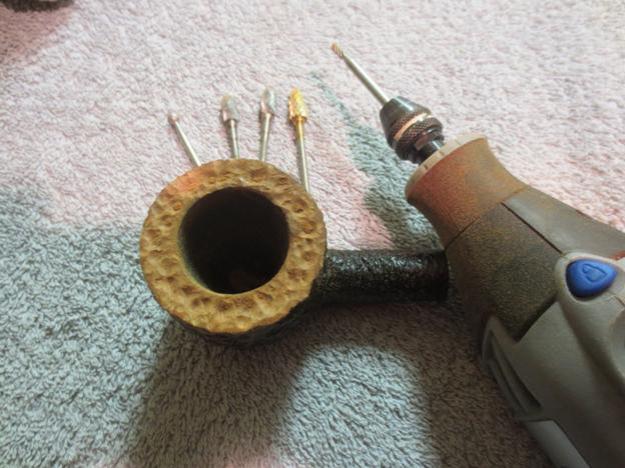
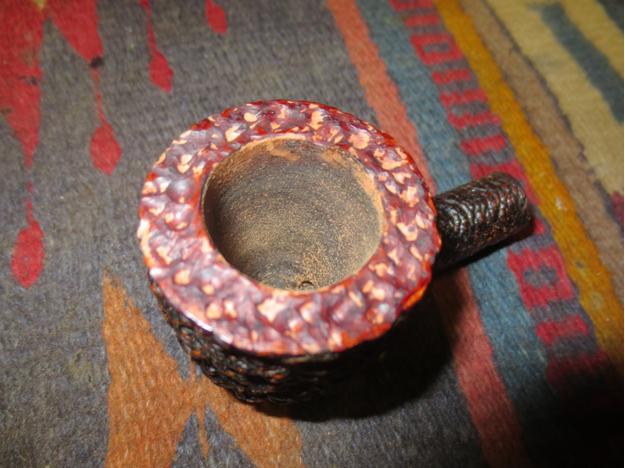
Capri22 I scrubbed the newly stained rim with a brass bristle brush to knock off some of the high spots and get a more burnished look like the bowl sides. I still was not happy with the stain so I used the sharpie again to darken the low spots and grooves. I then restained the rim with the dark brown stain pen. The colour was very close to the sides of the bowl.Capri23
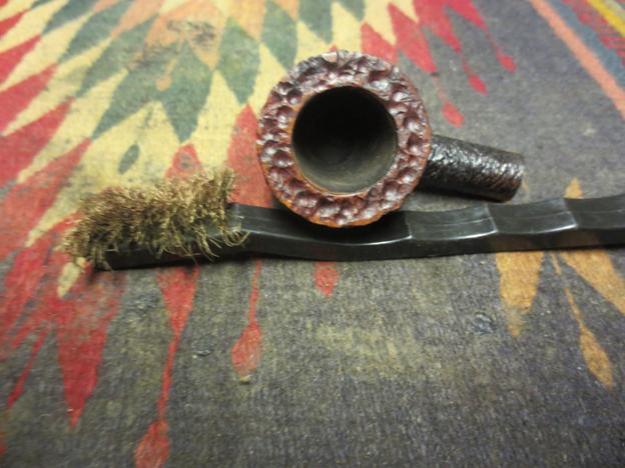
Capri24

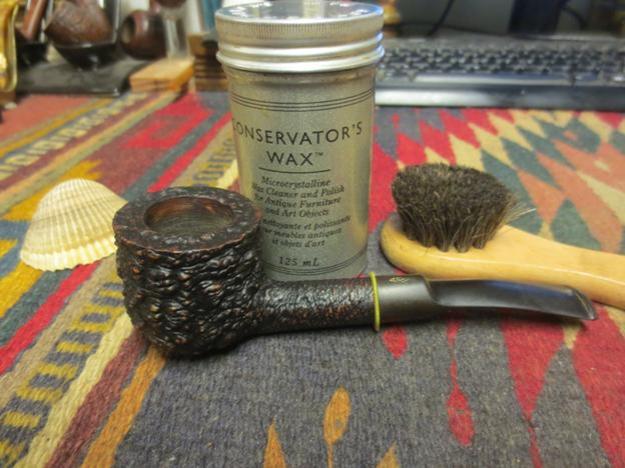
Capri25 I could have probably stopped there but I did not. I studied the photo of the rim above and noted that there were some striations or cuts in the surface of the rim that connected all the rustication and gave it a distressed look. I have a serrated edge letter opener here that I thought might work to give me more of that look. I cut the surface from every direction with the edge of the letter opener and carved and hacked it to distress it. I used the brass brush once again and then recut the rim with the opener.Capri26 I restained the rim with the black Sharpie and the dark brown pen. And then gave it a light buff on the wheel with Blue Diamond. I say light because if I had pressed any harder the polishing material would have gone into the grooves and made a mess. The rim looked good to me. The finish was done and all that remained was to wax it with some Conservator’s Wax.Capri27 I gave the bowl and rim several coats of Conservator’s Wax (works like Halcyon II on rusticated finishes) and buffed it with a shoe brush to polish and give a shine. I wet sanded the stem with 1500-2400 grit micromesh pads to begin the polishing process. It was tricky around the stamp on the shank so I had to work carefully with the pad to get as much of the oxidation as possible.Capri28
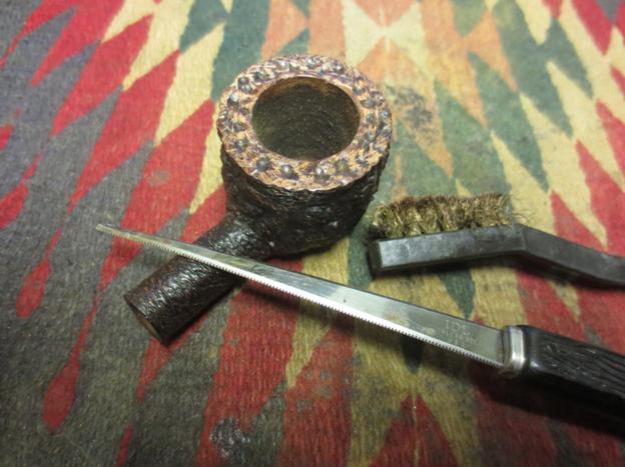
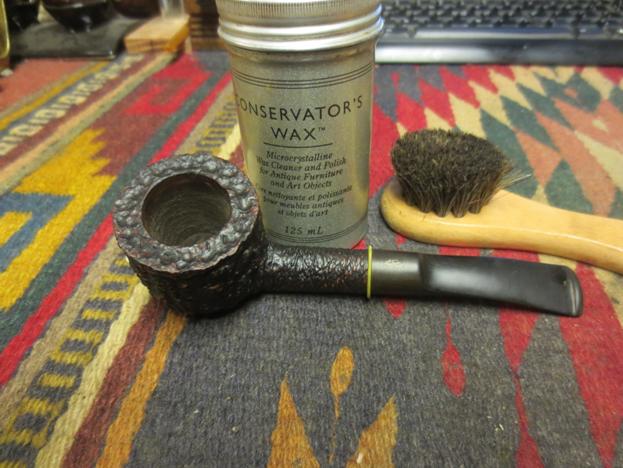
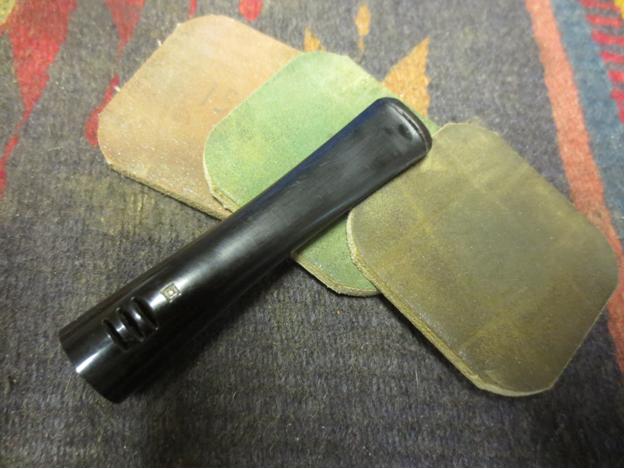
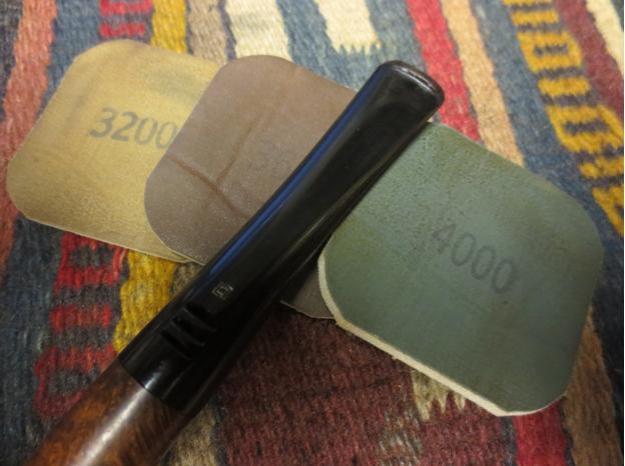
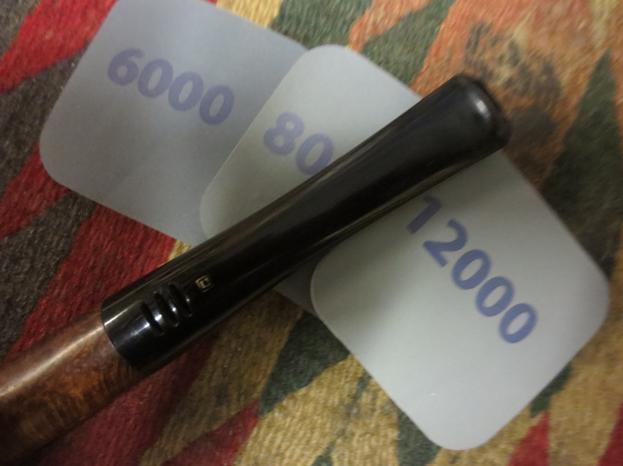
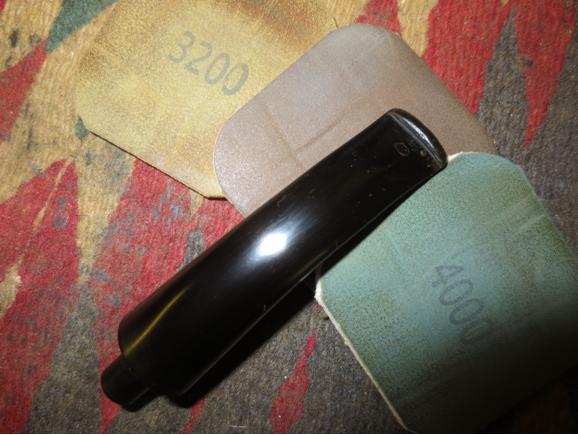
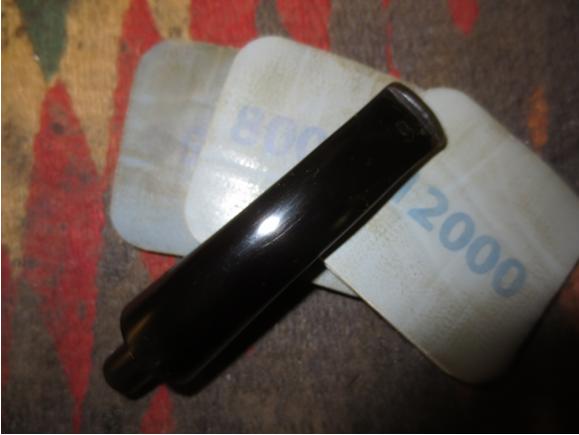
Capri29 I buffed the stem with White Diamond to further polish it and then sanded it with 4000 grit wet dry sandpaper to really work on the oxidation at the shank. It is a finicky part of the process because of the weak stamping. I rubbed the stem down with Obsidian Oil and then progressed to 3200-4000 grit micromesh pads. Another coat of oil preceded the final sanding with 6000-12000 grit pads. I gave the stem a final coat of oil and set it aside to dry.Capri30
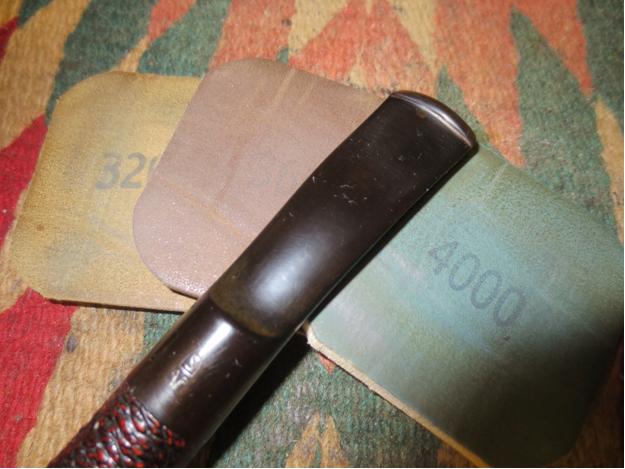
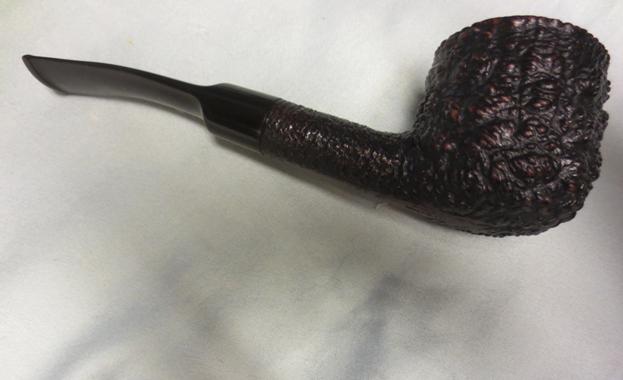
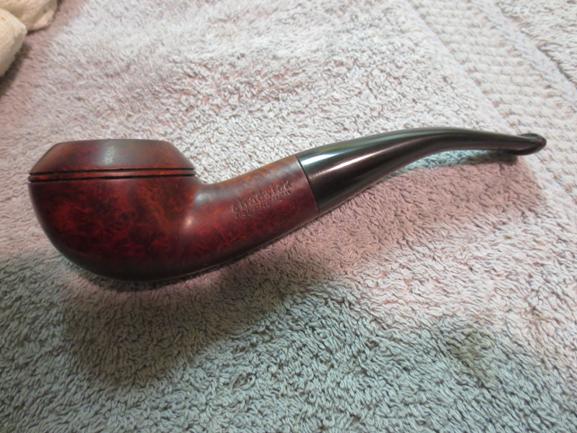
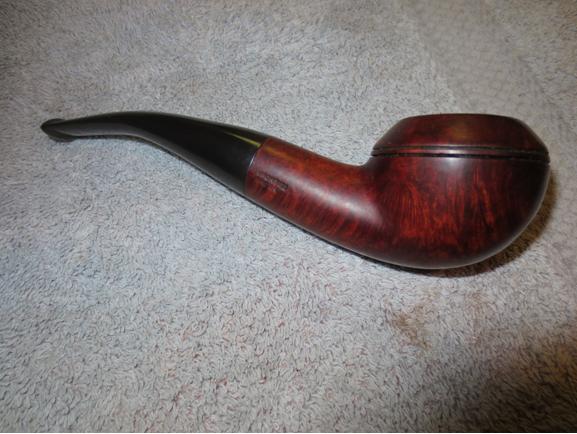
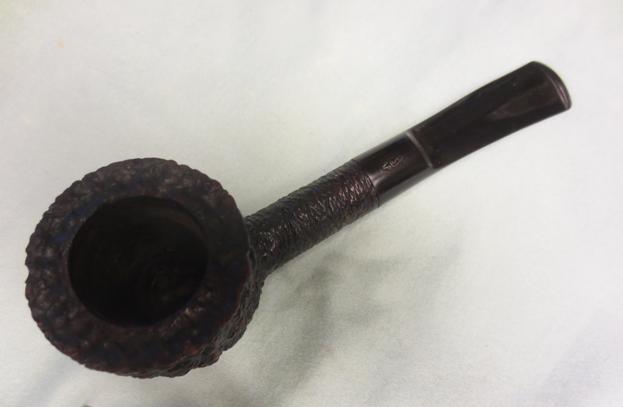
Capri31 I buffed the pipe with a shoe brush and then with a microfibre cloth. I gave it several more coats of the Conservator’s Wax and polished it to a shine. I buffed the stem with Blue Diamond and gave it several coats of carnauba to protect it and then buffed the stem with a clean buff to raise the shine. I hand buffed the entirety one final time with a shoe brush and then took the finished photos below. This was a fun project. You can see that the white stem repairs have disappeared and the rustication on the rim fits the overall look of the pipe far better than the smooth finish that was there before. Thanks for looking. Capri32
Capri33

Capri34

Capri35

Capri36

Capri37

Restemming and restoring an oval shank billiard with issues


Blog by Steve Laug

I was gifted an oval shank billiard with a broken tenon and no stem by a fellow pipe refurbisher. He knows I like a challenge so he thought that maybe this would be a fun one for me to fiddle with. I looked at it when I unpacked it and spent more time looking at it over the weekend. When I first picked it up I put it in the bin of pipe to be refurbished and pretty much figured it would be one of those that I picked up when I had nothing else to work on. I have a few of those sitting in the bottom of the box. On Sunday I was going through the box trying to decide which pipe I would work on next and picked it up. There was something about it that drew me to work on it next. I can’t tell you what that was; I have no words to describe it. I know though that those of you who refurbish pipes know the feeling and the call of certain pipes. This was one of those. So it came to my work table.

Now that I had made a decision to work on it I took time to look it over and assess it. That is what I always do when I work on a pipe. I look it over and list out what needs to be addressed if I am to bring this pipe back to life. I like to enter into the work with a clear idea of what needs to be done. Doing this keeps me from finding those issues that surprise you in the process – at least most of the time it does. There will always be exceptions to the rule. For this pipe it was pretty straight forward.
Here is a list of the issues:

1. The finish was very rough and the darkening of the briar around the middle of the bowl was worrisome. It was hard to tell if it was potential burnout starting to happen – thus darkening the briar or if it was dirt and grime. I was pretty sure it was just soiled and stained but could not tell for sure until I had reamed the bowl.

2. There were scratches and dents all over the surface of the bowl.

3. There was one large fill on the right side of the bowl, mid-bowl that would need some work. I would either need to pick it out and refill it or repair it.

4. There was a burn mark on the underside of the shank mid-shank.

5. There appeared to be a small crack on the bottom of the shank at the place the stem and shank meet. It extends inward about a quarter inch. It was hard to see as it was hidden in the dings on the bottom of the shank from when the pipe had been dropped and the stem broken.

6. The bowl had a thick cake in it to the point that the tip of my little finger was about all that would fit in the bowl.

7. The rim had nicks and damage to the surface as well as a lava overflow from the cake in the bowl.

8. The stamping was virtually nonexistent. All that remained was a faint stamp on the left top side of the shank near the end – it read Made in London. It would definitely disappear if I banded the pipe to deal with the crack.

9. The airway in the shank and mortise was dirty and clogged. I could push air through it but barely when I blew through the end of the shank.

10. There was a broken tenon stuck in the shank. Generally these are pretty straight forward so I was not too worried about removing it.

11. There was no stem to work from as a model and the oval shank would make matching it a challenge.

Here is what the pipe looked like when I brought it to the work table.Bill1

Bill2

Bill3

Bill4

Bill5 I started the cleanup by pulling the broken tenon. I used the normal drywall screw and had the tools handy. In this case I threaded the screw in gently and was able to pull the tenon out by hand very easily.Bill6

Bill7 I turned to my can of stems for a potential stem. I actually had one that was a decent fit. The tenon was perfect and the fit against the shank end was ideal. The diameter of the stem on the bottom of the oval was too big and would need to be sanded to a correct fit. It happened to be the only oval stem I had at the moment and it was a twin bore bite proof stem. I was careful in fitting the stem because of the small crack in the shank.Bill8

Bill9

Bill10

Bill11 I used the Dremel and sanding drum to take off the excess rubber on the bottom of the stem.Bill12 This may be a funny thing to say but as I examined the stem after I fit it to the shank I noticed it had a small hole near the button. When I turned it over to check it out then I noticed that I was dealing with a bite proof stem – a stem with two airholes coming out of the button from the single airway in the stem. Picture the letter Y and you have a good picture of the stem.Bill13 I inserted a greased pipe cleaner in the airway on left airhole and then repaired the hole in the underside of the stem. I used black super glue to fill it and built it up to give a good base. When it dried I sanded it smooth with 220 grit sandpaper to blend it into the surface of the stem.Bill14

Bill15 Reaming the bowl took some effort and several different reamers. I used the PipNet reamer to start and then worked on the bowl with a KLEENREEM reamer. I finished by using a pen knife to clean out the last remnant of carbon in the bowl. I cleaned out the airway in the shank and the stem with pipe cleaners, cotton swabs and alcohol.Bill16

Bill17 I topped the bowl on my sanding board and lightly sanded the cracked area and damage on the bottom of the shank end.Bill18

Bill19 I sanded the stem with 220 grit sandpaper and then with a medium sanding sponge to smooth out the scratches. I wiped the bowl down with acetone on cotton pads to remove the grime and the remaining finish. The new stem fit really well and I only wished that the shank did not have the small crack that mad banding a necessity.Bill20

Bill21

Bill22

Bill23 I cleaned the area around the fill on the right side and repaired it with super glue. I sanded it smooth and then sanded the bowl with a medium grit sanding sponge.Bill24 I heated the briar with a heat gun and then applied a coat of cherry stain to it. The stain took well and sat deeply in the grain of the bowl.Bill25

Bill26

Bill27 With the stain in place the crack on the underside of the shank was very visible. It was mid shank and extended about ¼ inch. At this point I had to decide how to address this crack. I could do a shank insert and do an internal repair or I could band it. In looking over the shank I realized that the tenon was already quite thin and I would be hard pressed to make it smaller to fit inside of a shank insert. I would need to band the pipe.Bill28 I had a round band that would fit once I flattened it. I opened the crack with a dental pick and filled it with glue to repair the crack and then pressed the band into place on the shank.Bill30

Bill31

Bill32 I lightly sanded the tenon as the band made the fit in the shank too tight. I put the stem in place and took the next photo to get an idea of the new look.Bill33 I set the bowl aside and worked on the stem. I sanded it with micromesh sanding pads. I did my usual routine with the micromesh pads – wet sanding with the 1500-2400 grit and dry sanding with the rest of the pads up to 12000 grit. I used Obsidian Oil as usual.Bill34

Bill35

Bill36 I buffed the nickel band with a jeweller’s cloth and buffed the pipe on the wheel with Blue Diamond polish. I gave the bowl and stem multiple coats of carnauba wax. I buffed it on a clean flannel buffing wheel and then by hand with a microfibre cloth to raise the shine. The finished pipe is shown below. I think that taking the time to recondition and restore this pipe paid off with a beautiful oval shank billiard. Thanks for looking.Bill37

Bill38

Bill39

Bill40

Bill41

Bill42

Bill43

Another Painful 70s Era E.A. Carey Magic Inch Apple Restored


Blog by Steve Laug

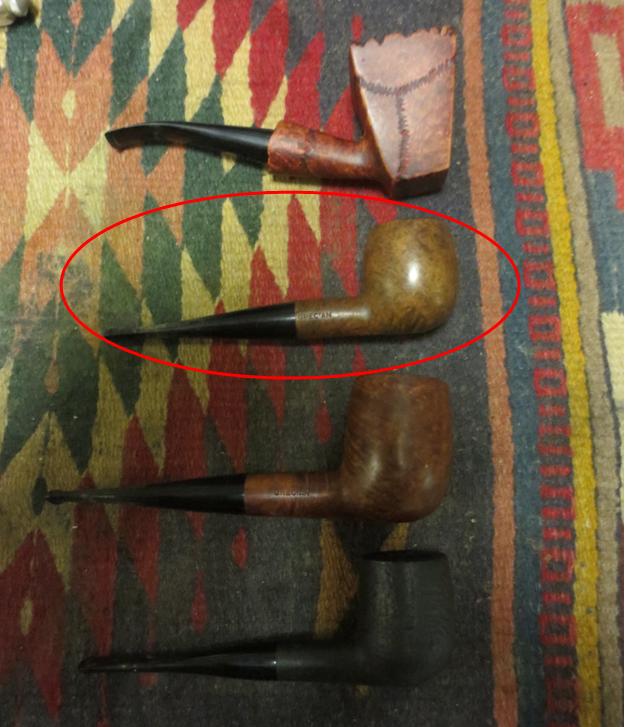
Reading the title of this blog you might wonder why I called it another painful Carey pipe. As this refurb description unfolds I think it will become clear what I mean by the title. In the Montana pipes that my brother Jeff sent me there were four E.A. Carey Magic Inch Patent pipes. I worked on the first one in the photo below, the Freehand and found that the bowl was a piece of cake. Getting the plastic apparatus cleaned in the shank was a challenge that took a lot of pipe cleaner and patience to move through. Because of that I have honestly been avoiding working on any of the others in the foursome. I have worked on a lot of others that have been sitting just because the cleaning is a pain, but more importantly trying to clean up the chewed up stems and getting any kind of shine on them is painstaking. The plastic cleans up well enough and I am able to repair the bite marks. The dents will not raise with heat, the inside of the stem takes a lot of scrubbing and is cavernous so lots of cotton swabs are sacrificed and lots of pipe cleaners. The plastic does not take kindly to the boiling alcohol of a retort so I am left to do the work by hand. Then once cleaned polishing the stem feels like an impossible challenge. I don’t remember how many hours of sanding with micromesh pads and then carefully, lightly buffing with the buffer went into bringing the shine on the Freehand so the lot just sat taunting me in my refurb box.

Finally, a few days ago I went through the remaining threesome to see if I had any sudden urge to work on one of them. I looked them over one at a time, examining the internals, the condition of the rim and the briar and also the stem….argghh. The stems on all of them have identical chew and bite marks. All were a mess. One of them stood out to me though and I ventured into working on it. It is the second pipe down from the top in the photo below (I have circled it in red).Carey4
Carey5Before I jumped into working on it I figured I better take some of the advice noted in the photo to the left. These Carey’s are time consuming and I find myself frustrated often in the process of polishing the stem.

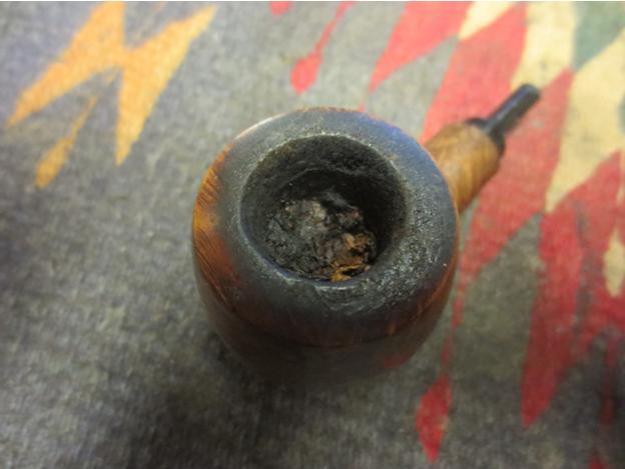
I knew without looking to deeply at this old pipe that it would be another one that drove me to the edge. The finish on the briar was dull and dirty. There was some interesting grain poking through – birdseye on the sides and cross grain on the back and front. The stamping was very clean and sharp. The rim was crowned and had a significant lava overflow build up on the top. The good thing was that there was no damage to either the inner or outer edge of the rim. The bowl still was half full of unsmoked tobacco but appeared to be heavily caked. It was hard and dense. The stem was a mess. Once I took it off the apparatus extending from the shank there was still a dirty papyrate filter in place on the tube. The inside of the stem was dark and oily. The outside was covered with deep tooth marks and also a generous case of tooth chatter. There was also a gummy substance on the clean top half of each stem that probably came from price tags that were in place at the antique shop where my brother found them.Carey6

Carey9

Carey8

Carey7 I took the next two photos to show the set up of the apparatus with the papyrate filter in place and the state of the bowl and the rim.Carey10

Carey11 The lava overflow on the rim took a lot of elbow grease to scrub it clean. I used Murphy’s Oil Soap and cotton pads to scrub it until I had it clean. I wiped down the rest of the bowl with the soap and then rinsed it with running water. I dried of the bowl and then cleaned out the shank with pipe cleaners and alcohol.Carey14

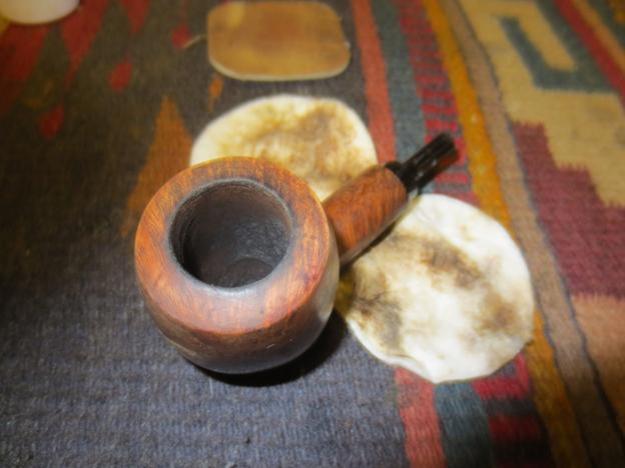
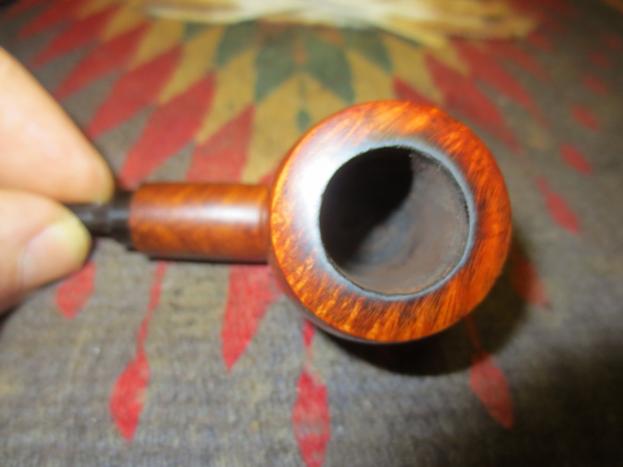
Carey15 With the briar clean and the internals of the bowl and shank clean I gave the bowl a light wipe down with olive oil so that I could see the grain more clearly. I took the next photos to show the beauty of this bowl.Carey16

Carey17

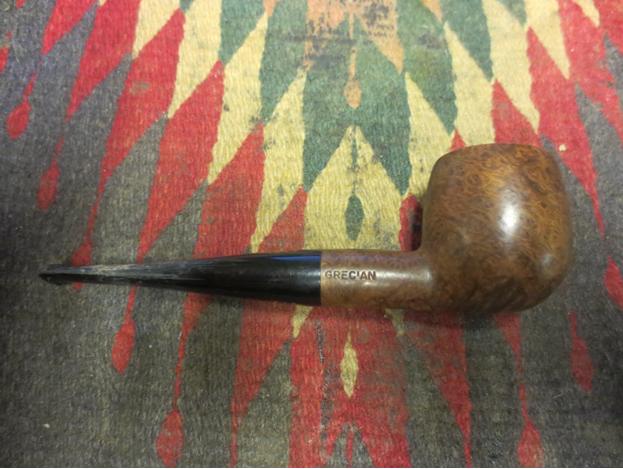
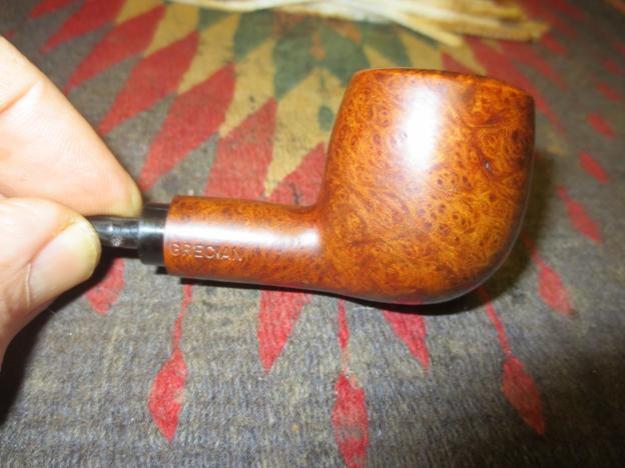
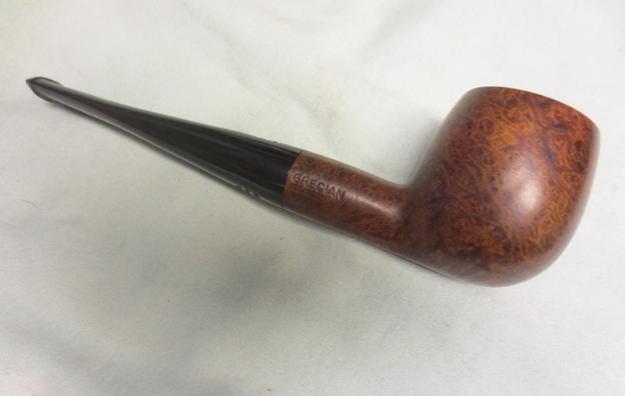
Carey18 The next photo shows the stamping on the left side of the shank. The right side is stamped Grecian.Carey19 I set the bowl aside to work on the stem. I sanded it with 220 grit sandpaper and a fine grit sanding sponge to clean off the tooth chatter and the grime. I wiped it down with alcohol on the outside to prepare it or the repairs on the deep tooth marks. I used black super glue and put drops into the dents, leaving a bubble so that when it dried and shrunk down the dents would be filled and could be sanded.Carey20

Carey21 When the glue dried I sanded the stem with 220 grit sandpaper once again to blend the patches into the surface of the stem.Carey22

Carey23 Before going any further I decided it was time to clean out the inside of the stem. I used cotton swabs, pipe cleaners and alcohol to clean out the internals.Carey24 With the inside cleaned and the repairs smoothed out I sanded the stem with a medium and a fine grit sanding sponge. They removed many of the scratches and the stem was beginning to take shape. I was not getting too excited however as this was when the tedious work really started.Carey25 I wet sanded the stem with 1500-2400 grit micromesh sanding pads and then gave the stem a coat of Obsidian Oil. It does not absorb into the stem material so I use it to give me more bite between the various grit pads of micromesh. I dry sanded with 3200-4000 grit pads and gave it another coat of oil. I buffed it lightly with White Diamond and then finished sanding with 6000-12000 grit pads. I gave it a last coat of oil to wipe down the dust and then hand buffed it.Carey26

Carey27

Carey28 I buffed the pipe with Blue Diamond Polish on the wheel and then gave it multiple coats of carnauba wax. I buffed it with a clean flannel buff and then buffed it by hand with a microfibre cloth. I don’t know how many hours I have in this stem but it certainly seemed to take forever. The bowl cleaned up great and the briar is quite remarkable. The beauty of the grain comes through clearly and the finished pipe looks great. I have two more Carey’s to clean up but I think I will wait awhile to tackle them. This one gets me half way through the lot. The finished pipe is shown in the photos below. Thanks for looking.Carey29

Carey30

Carey31

Carey32

Carey33

Carey34

Carey35

A DadsPipe is Reborn! – Reinventing a Fletcher Billiard


Blog by Charles Lemon

I was just putting the finishing touches on this pipe refurb when Steve Laug invited me to write a guest blog for rebornpipes. Timing couldn’t have been better, as the restoration of this old Fletcher billiard epitomizes for me the spirit of rebornpipes – taking an old, worn pipe and creating from it a beautiful and functional smoking companion.

Thanks for having me drop in on rebornpipes, Steve. I hope you and your readers enjoy this restoration journey.
– Charles
—–
I’ve had this old billiard pipe in my refurb box for a while now, so I decided that it was time to do something with it. It’s stamped “Fletcher, Genuine Briar, 4” on the flat bottom. A search online turned up absolutely nothing about the brand, though I can surmise that it was made somewhere in the USA circa 1950 to 1970 or so.

The bowl had a worn sandblast finish, and though covered in dirt, appeared to be in decent shape. There was a bit of cake buildup and tar on the rim that would clean up easily enough, but the stem was another matter. At some point in its history, the button had broken or been bitten off, and the remaining stem had been crudely “MacGuyvered” to allow the piper to continue smoking it. A file had been used to roughly gouge a line across the top and bottom of the broken bit to give at least some purchase in the teeth, and it had been left like that until the piper again bit through the stem, this time removing a chunk from the bottom of the “new bit”. This guy was a real pitbull! Charles1

Charles2

Charles3

Charles4

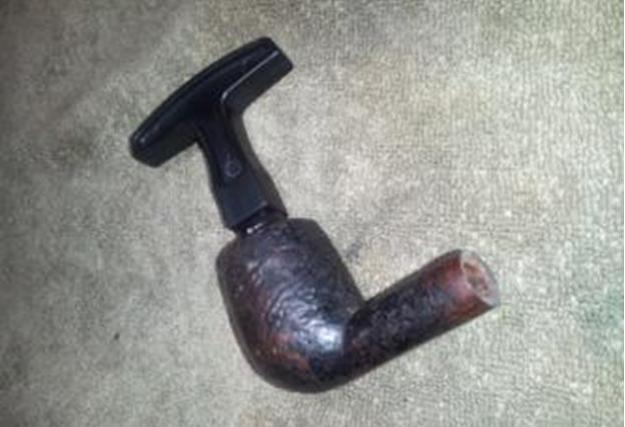
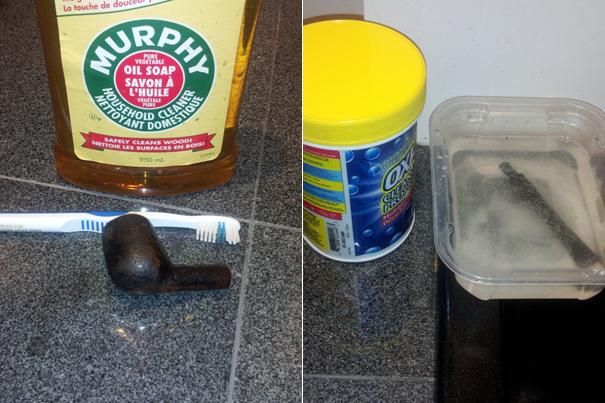
Charles5 I decided that, with about 3/4 of an inch missing, the mangled stem was too far gone to attempt to save it so I dug about in my stem box and came up with a replacement that fit the bill. This stem is brother to the one I used on my first parts pipe. They were both salvaged from estate pipes with ruined bowls, and both have the large silver dot on the side.Charles6 The tenon on the replacement stem needed only a bit of tweaking with sandpaper to fit snugly in the mortise. As you can see in this pic, the shank diameter is a bit larger than that of the stem, so there will be some reshaping to do to get the flow right from bowl to button, but I like the shape of things to come.Charles5a With the stem problem sorted, I got to work cleaning both stem and stummel before I got too far ahead of myself. I used my Castleford reamer to take the cake in the bowl back to bare wood. Luckily there was no damage hiding underneath, so I moved to the exterior, scrubbing the sandblast finish with Murphy’s Oil Soap and an old toothbrush. This lifted an inordinate amount of gunk from the stummel, leaving the briar quite patchy in places. I decided that a complete stripping of the old finish was in order, so I dropped the stummel into an alcohol bath, the stem into a Oxyclean bath, and left them to soak overnight.Charles7

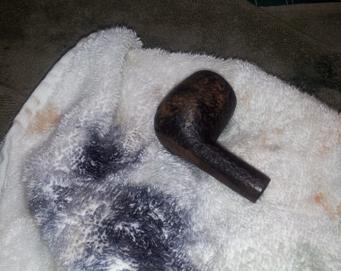
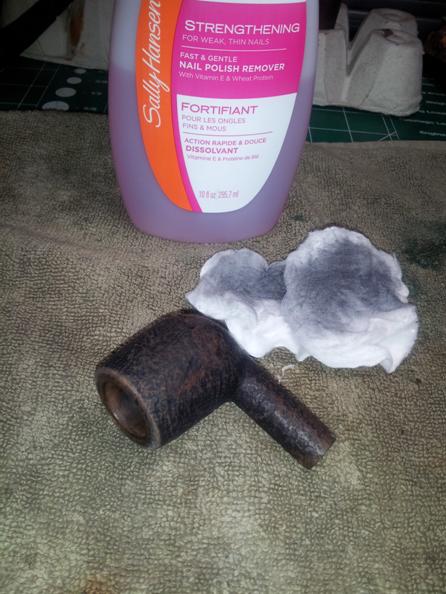
Charles8 The following day I retrieved the stummel from its soak and rubbed it in an old towel. To my surprise, most of the black topcoat came off on the towel! My guess is that our intrepid DIY piper “fixed” his pipe’s worn finish with a liberal application of black shoe polish….. I wiped the stummel down with acetone to remove as much of the loose colour as I could and then finished the basic cleanup of the stummel by scrubbing the airway and shank with alcohol & pipe cleaners.Charles9

Charles10

Charles11

Charles12 The stem cleaned up easily enough after its Oxyclean soak with a run of 600 – 2000 grit wet sandpapers and a few pipe cleaners dipped in alcohol.Charles13 Removing the built-up wax and dirt from the stummel had revealed a flaw in the briar. A “fault line” of sorts wound its way across the lower front face of the bowl. There was no indication that the flaw extended through to the tobacco chamber, but I flowed some CA glue into the line anyway. This may or may not have been necessary, but at least this way I hope that the line won’t expand to a crack the first time I light the pipe.Charles14

Charles15 I also found a small flaw in the rim, which I filled with CA glue and briar dust. I topped the bowl lightly after the fill cured to sand it down flush with the rim and remove a few small rim dents at the same time.Charles16

Charles17

Charles18 As I pondered how to refinish the pipe, I worked on the shank with various grades of sandpaper to reduce the diameter to match that of the stem and generally improve the flow of the shape from shank to stem. This smoothed out the sandblast on the shank, so I decided to rusticate the entire stummel to replace the texture and hopefully disguise the stabilized fault line on the bowl face. For this I used a round carving burr mounted in my rotary tool, working my way around the stummel until the entire surface had been carved, eradicating the sandblast. I then made a second pass with the burr, carving deeper lines and pits into the briar to give a chunkier finish and help blend in a few deeper pits left from the sandblasting process. I finished up the new rusticated finish by going over the entire stummel very lightly with a wood rasp to knock off a few sharp points and rough edges.Charles19

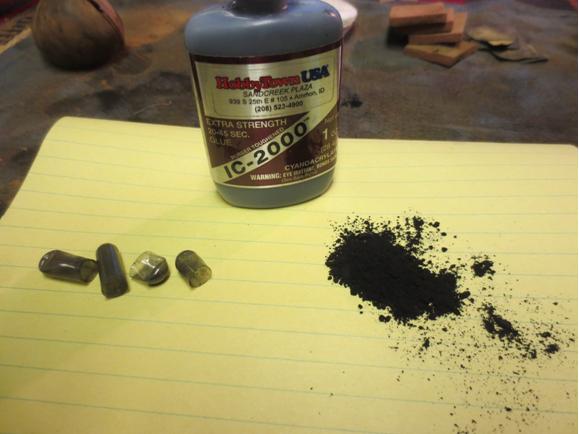
Charles20 I left the stummel at this point and went back to the stem to address a few issues there. The bite area had several deep tooth dents top and bottom and the button was quite worn. I dealt with both issues by mixing up some CA glue and activated charcoal powder and layering this mixture onto the stem, filling the tooth dents and building up enough material to carve a new button.Charles21

Charles22

Charles23 This repair always looks plain nasty at this point, but quickly improves once the CA has cured and I can get at the rough lumps of material with a file. I start by cutting the sharp leading edge of the button. This establishes the demarcation point between button and stem. After I have a nice sharp line all the way around the stem, I use files and sandpaper to remove excess material and create an even button height that matches the curvature of the stem.Charles24

Charles25

Charles26 Now in the home stretch of this restoration, I cleaned up the dust generated by the stem repair and set up my workbench for staining the pipe. I applied a two-step finish to the briar, starting with a diluted mixture of Fiebing’s Saddle Tan and Brown leather dyes. This matched the original colour of the smooth area on the bottom of the stummel, which will help tie this area in with the new smooth area on the bowl rim. When the first stain coat was dry, I rubbed off the excess colour with an old towel and applied a topcoat of stain made with Dark Brown and a little Black dye mixed together. I let this dry fully before scrubbing the stain off the high areas with 0000 steel wool. This exposed the lighter tan colour underneath, but left the black in the low areas of the rustication.

I finished the staining by wiping the stummel with mineral oil to add depth to the finish and moisturize the briar. Then it was off to the buffer for a run of White Diamond and several coats of Carnauba wax. This old Fletcher pipe is unrecognizable as the pipe I started with. I rather like the chunky rustication and the new stain. The grain on the rim and flat bottom really pops. A side benefit of old briar like this is the light weight. The pipe tips the scales at a mere 32 grams or 1.1 ounce. This rejuvenated old soul will be a comfortable all-day companion to its next piper. Here’s the finished pipe:
Charles27

Charles28

Charles29

Charles30

Charles31

Charles32

A Dr. Grabow Color Duke Billiard Renewed


Blog by Steve Laug

Most of the Dr. Grabow Color Duke pipes that have come across my worktable have been in rough shape. The paint has been chipped and the finish ruined. This is the second one lately that I have worked on. The first was the Cherry Apple Red Dr. Grabow Viscount that my brother found for me. This second one is a White Billiard with a saddle stem. It is one that was made for a paper filter rather than a stinger/spoon apparatus. The pipe is stamped Color Duke over Dr. Grabow on the left side of the shank and Imported Briar over Adjustomatic over Pat. 2461905. The Patent Number is for the Adjustomatic tenon.

The pipe came to me from a friend quite awhile ago and I just got around to working on it. It was in pretty decent shape other than being dirty. The finish has some dents in the bottom of the bowl on the right side. There was some staining on the right side of the shank at the stem/shank junction. The rim was dirty and had some darkening and a few spots where the finish was worn off. The bowl had a cake that would need to be removed. The screw in tenon was dirty but the stem aligned with the shank perfectly. The stem itself was dirty inside and out. There was tooth chatter on the top and underside of the stem near the button. On the underside was a deep tooth mark in the center about ½ inches from the button. The next photos show the pipe when I brought it to the work table.Duke1

Duke2

Duke3

Duke4 I took some close-up pictures of the rim and the dents on the bottom of the bowl to give a clear picture of the issues with this pipe.Duke5

Duke6 I reamed the bowl with a PipNet reamer and took the cake back to the bare briar. I used a pen knife to clean up remaining cake that the reamer left behind.Duke7

Duke8 I scrubbed the finish with cotton pads and Murphy’s Oil Soap as I did not want to use anything that potentially would damage the painted finish on the bowl. My intent was to get the grime off the finish and to remove as much of the rim darkening as possible without compromising the paint on the rim or edges.Duke9

Duke10 I rinsed the bowl with warm water and dried it off with a towel. Here are some photos of the cleaned bowl.Duke11

Duke12

Duke13

Duke14 I cleaned the inside of the shank and the stem with pipe cleaners, cotton swabs and alcohol until they came out clean.Duke15 With the bowl cleaned inside and out it was time to address the stem. I sanded the surface of the stem to clean off the dirt and tooth chatter. I wiped it down with a cotton swab and alcohol to remove the dust and to examine the dent on the underside.Duke16 After the deep dent was cleaned I filled it with a few drops of clear super glue.Duke17 Once the glue dried I sanded the repair to make it flush with the stem surface using 220 grit sandpaper.Duke18 I sanded the entire stem with medium and fine grit sanding sponges. The repair spot is beginning to blend in very well.Duke19

Duke20 I sanded the stem with micromesh sanding pads – wet sanding with 1500-2400 grit pads and then rubbing it down with Obsidian Oil. I dry sanded with 3200-4000 grit pads and gave it another coat of oil. I finished by dry sanding it with 6000-12000 grit pads. I gave it a final coat of Obsidian Oil and let it dry.Duke21

Duke22

Duke23 In the past buffing the painted bowls and the Grabow stems has caused me a lot of grief. I have found that these stems can take very little heat that the buffing pads generate so I hand buff them with Paragon Wax and a shoe buffer. I buff the bowls the same way using the shoe buffing brush and a microfibre cloth. The finished pipe is shown in the photos below. If you are interested in this pipe email or message me and make an offer. It could easily join your rack. Thanks for looking.Duke24

Duke25

Duke26

Duke27

Duke28

Duke29

A Passion for Rhodies and Dogs – Stem Repair on a Dunhill 52081 Rhodesian


Blog by Dutch Holland

With this blog it is my pleasure to introduce you to the work of Dutch Holland. His work comes highly recommended to us by Dave Gossett who has been a contributor to rebornpipes for a while now. Welcome to the blog Dutch. It is great to have you here.

Dutch1A number of years back I had the good fortune to acquire a Dunhill 52081 Bent Rhodesian. I readily admit to a passion for Rhodies and Dogs that borders on obsession. Several years later I came across a second pipe of the same year and style but a different finish. The temptation was overwhelming and I succumbed. The problem was this second pipe not only had been poorly used but it had a nasty chip in the top center of the bit at the button. But the price was right and at worst, I could always invest in a replacement bit. These Rhodies were only offered for a few years and they don’t come on the market very often so I made the decision to buy. That pipe sat in the “Awaiting Action” box in my shop for a number of years. I really wasn’t sure just how to deal with the repair but last year I decided to give it a shot and to my pleasant surprise found it was neither difficult nor complicated. As you can see from the picture above it’s all but invisible. It requires very close inspection by a knowledgeable eye to detect.

I’ve broken the process down into steps outlined below. Being able to fix a broken bit can do for you what it’s done for me, allowed me to rescue a pipe I really wanted. So here’s one way to do it.

Repairing damage to a pipe stem is an easy five step process. This kind of repair can be done by the hobbyist and makes an old pipe serviceable again at a very modest cost. The outcome is very dependent on the skill of the repairman so a few tries on an old stem for practice is recommended. The better your skill set, the better the final result but it’s neither difficult nor complicated, just time consuming. Some question the durability of this kind of repair but my experience is that they hold up to normal use quite well. I don’t recommend the use of harsh chemicals for cleaning but with reasonable care the repair will last a very long time and for the hobbyist it’s more than adequate for your average project.

What you will need:

Supplies
CA Glue, Activated Charcoal, a small drink bottle cap, light cardboard, Pipe cleaners, Scotch tape and some tooth picks

Tools
A small file set, Sandpaper (400, 600 & 1000 grit) and a set or Micro-Mesh pads (1500 to 12,000 grit)

The Process

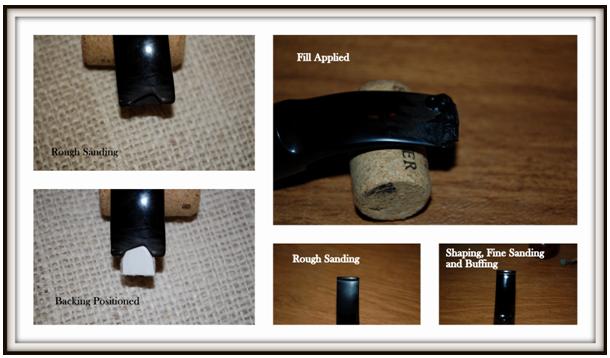
Step 1, Rough Sanding.
Sand the area to be repaired with the 400 grit sandpaper, beveling the area of the break to provide the maximum bonding area for the repair mixture. I like the courser grade as it scores the area around the break and reduces the stark contrast between the repair area and the rest of the bits surface making the repair difficult to detect. Clean the area to be repaired well and make sure it is free of any contaminants which might inhibit the bond of the glue/charcoal mixture. I usually use a high proof alcohol (Wild Turkey 101)

Step 2, Support the repair.
Insert support into the airway to prevent the mixture from invading it. A piece of light cardboard will do the trick. First rap the cardboard in Scotch tape (mixture won’t stick to the tape) and slide it into the slot. Then slide a pipe cleaner into the slot under the cardboard to force a snug fit up against the repair area.

Step 3, Making and applying the repair mixture.
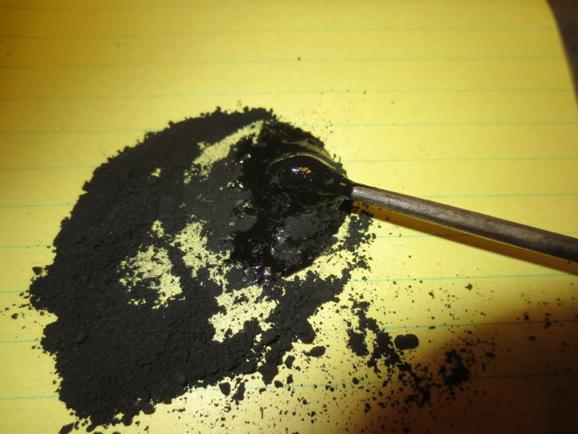
Place a portion of the activated charcoal in the drink cap. I use a spoon on a Czech pipe tool as about the right amount. To that I add the CA glue until I have about a 50% Glue mixture and then gently stir until the charcoal is completely mixed with the glue. I like to let the mixture set for 15 seconds to allow any air bubbles caused by the mixing to escape. Using the tooth pick apply the mixture to the repair area until the build-up is higher than the bit surface. There is some shrinkage when the mixture dries so extra depth is essential to getting a smooth, flat surface when finished. Work quickly as the CA glue thickens rapidly. If necessary repeat this step to get the surface level to where you want it. In the example shown below I added mixture twice. First to fill the gap and a second time to rebuild the button area.

Step 4, Rough sanding & Shaping
Once the repair mixture has cured, (I usually leave it for several hours, probably overkill but I find it shapes better if it’s well cured) start with the files and reduce the excess mixture and get a rough shape. Do not try to get a close finish to the shape you want as the files are quite course and will leave significant scratches on the surface. Allow for this by leaving some surplus material in place. Now with the sandpaper progressively contour the surface starting with the 400 and moving to 600 and then 1000 grits. Slow, careful sanding works best using the sandpaper to contour the fine details. Sometimes air bubbles get caught in the repair mixture and will leave a tiny void in the surface. Should this happen add a thin touch of the CA glue to the void and re-sand. The imperfection will become un-noticeable. Keep in mind that any irregularities in the surface will become traps for contaminants so don’t be too forgiving of them.

Step 5, Finishing the bit
Now you’re ready to restore luster to the bit. Here Micro-Mesh is a great solution for the task. Progressively sand the bit starting with the 1500 grit and progressing up to the 12,000 grit. The human eye cannot detect scratches left by the 12,000 grit pad so the surface looks shiny. I don’t recommend buffing as an alternative. You can quickly undo all the painstaking work you have just completed. As a final step in the process a light buff with white diamond followed some carnauba wax will give you a great shine and inhibit future oxidation.
So there you have it. Give it a try. You can’t make a broken bit much worse than it already is so there’s little at risk. Who knows, you might like the results and there’s something very satisfying about being able to rescue a pipe others would consider a lost cause. This technique was shared with me by Dave G and it works well so I pass it on with my recommendation.

Note
In subsequent tries I’ve found this solution works invisibly Vulcanite but is more detectable on acrylics.Dutch2

Taking a Swing at Reconstructing and Refurbishing an old CPF Meerschaum Bulldog


Blog by Steve Laug

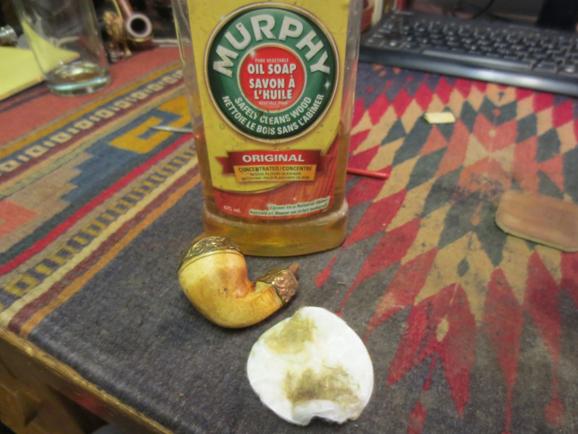
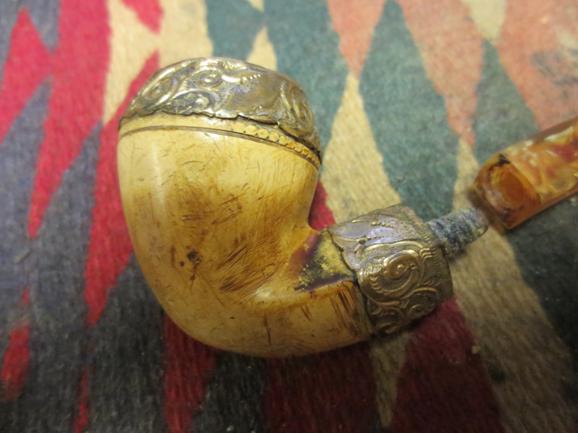
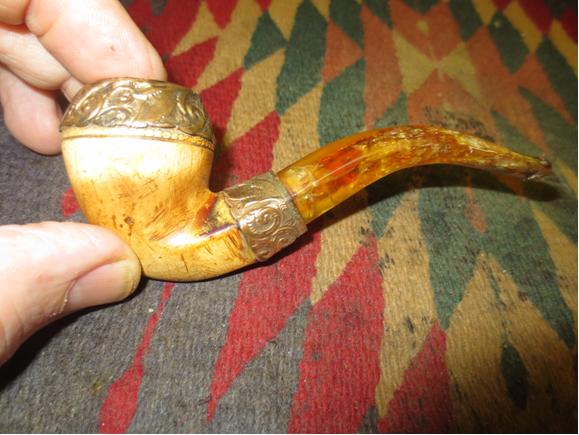
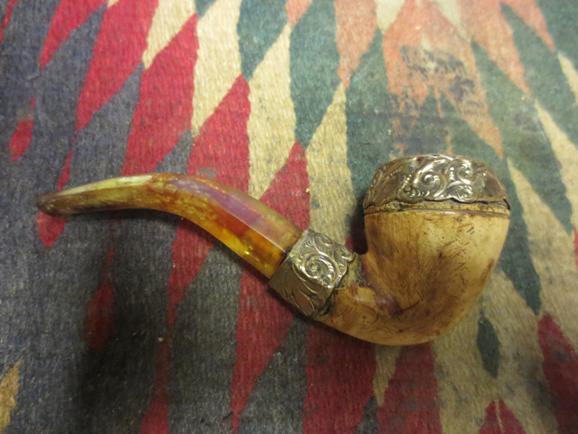
In a previous post where I wrote about repairing the overturned stem on the CPF Bulldog for Michael I referred to a Meerschaum Bulldog that he sent to me as a gift project. I had no idea what he meant about that until I took it out of the box and started checking it out. It really was a rescue dog operation. It is shown in the photo below (the pipe on the right). The picture does not show half of the story about the state of the old stem.CPF1 When the pipe was unwrapped what met my eye fit well with Michael’s “take a swing at it” approbation. It was in rough shape. The Meerschaum bowl was scratched and dirty and the bling was worn and tired. The rim was pretty beat up with dents and scratches but the bowl was solid. There was a light cake in the bowl and that was a plus, as it could have been heavily caked and have a clogged airway.

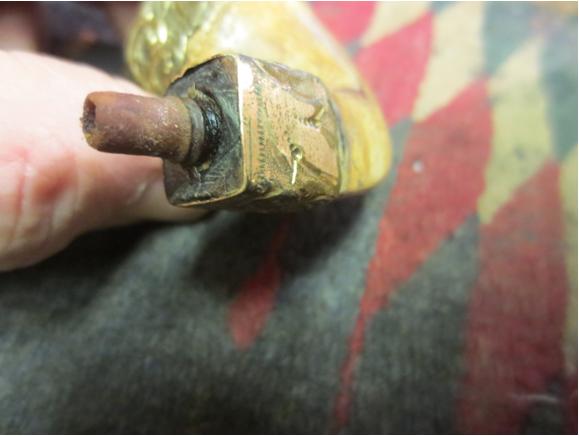
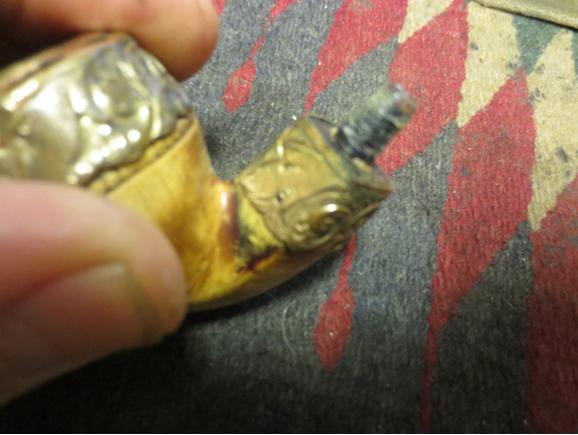
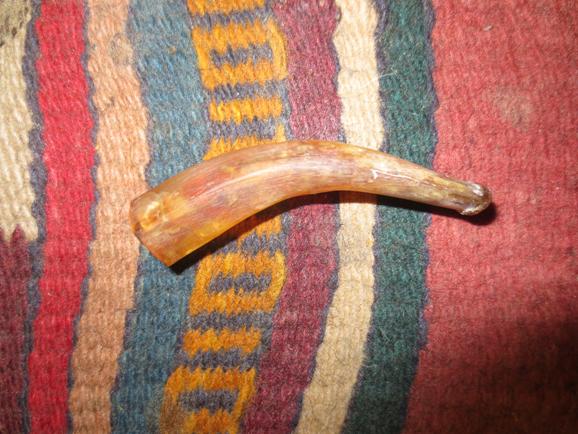
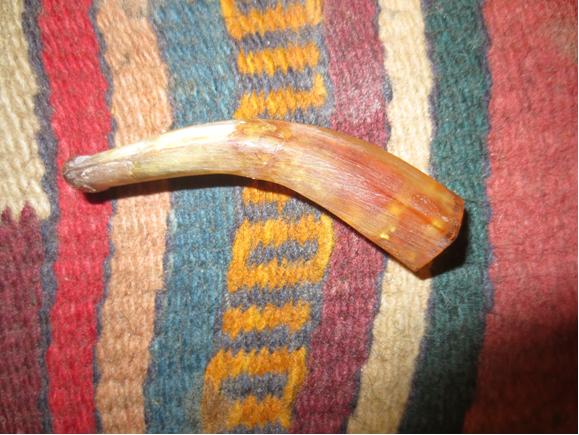
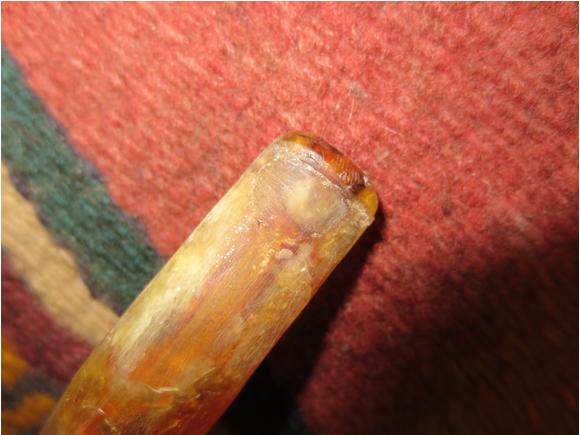
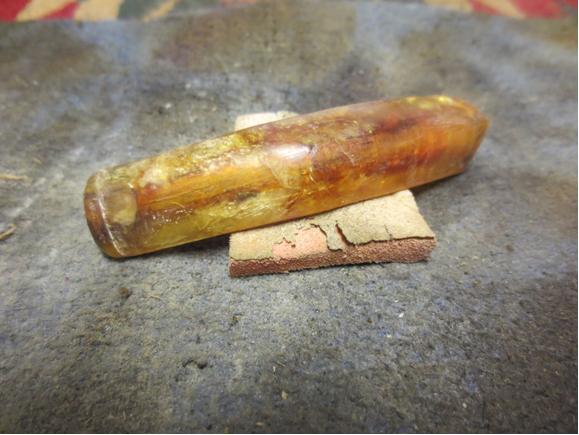
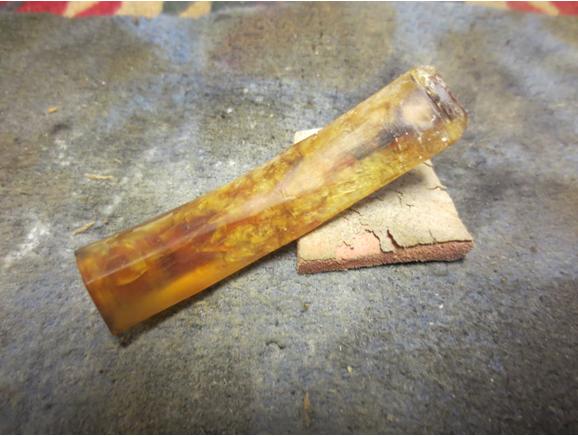
The worst part of the entire pipe was the stem. I am pretty sure it is not amber – at least it does not feel like amber or even have the weight of amber. I am guessing an early version of Bakelite but I am not sure. It is almost fibrous like material – reminds of fibre glass. Somewhere during its lifetime the stem had crazed and cracked all through from one end to the other. It looked like fractured glass. It was barely holding together. There was nothing hold it onto the shank but tars, oils and what seemed like thread that was wrapped around the dirty tenon. I carefully lifted the stem off the tenon and laid it aside. The tenon was covered with a thick tarry substance and what appeared to be thread. I am pretty certain that the previous owner had glued the threaded tenon into the shank and I would never get it loose. Here are a few photos of the pipe, carefully taken so as not to further damage the stem.

I am a sucker for these old timers. This was obviously someone’s beloved pipe. There was a time when I thought a badly abused old pipe was a sign of lack of care. I have come to understand that it is not that at all. It was someone’s constant companion through the good and the bad times. It was one that was always close at hand – to my thinking it may well of road along wherever the pipeman went in the course of his day and was always ready to be loaded and fired up. It is a small bowl so it would not have been a long smoke but it was one that he obviously enjoyed to the point that the pipe was worn and repaired and worn more and repaired more. His repairs were just enough to make the pipe smokeable again but not to make it beautiful. I wish it could talk and tell its story. It lived through two World Wars, the Wright Brothers and the birth of air travel, the first man on the moon, space shuttles and microcomputers. It has seen the turn of two centuries and still survives. Those are the things that I think when I look at a tired old pipe now. I can’t help but wonder about the fellow who once held it in his hands. My repairs are dedicated to carrying on his legacy in this pipe.CPF2

CPF3

CPF4

CPF5 If you are observant you will have noticed the black circular mark on the stem on both sides at the button. That black mark was a large hole, a bite through. That was another thing about the stem that made me pretty certain that it was not amber. I took a close up photo of both sides of the stem to show the size of the hole. It is quite large and centered on both sides. The button was also quite worn down and the slot had been opened leaving the top and bottom of the button very thin. You can see all of the cracks and crazing in the stem material in both photos. The airway and the area around the holes were black with tars. This old pipe was not stopped by the holes in the mouthpiece; the pipeman just moved it deeper into his mouth and carried on smoking his favourite pipe.CPF6

CPF7 I took a close up photo of the rim to show the dents and darkening on the metal cap. The ornamentation on the top the rim was worn down from many years of a thumb rubbing over the top of the bowl and leaving behind the remnants of what must have been a continuation of the pattern on the sides of the cap.CPF8 I decided to deal with the issues in the cracked and crazed stem. It was rough along the edges with what looked like splinters. I carefully worked to stabilize the stem material with clear super glue. I liberally coated the outside of the stem with clear super glue, filling the cracks and chipped areas and smoothing out the surface with the clear gel. Once I had it coated well I set it aside and let it harden. I have used the super glue before on Bakelite and it does a great job getting into the cracks and crevices in the material and hardening and preserving the original material. Once it was covered in the glue I had to figure out how to allow it to harden without sticking to everything it touched. I decide to put an ice pick in the airway and lay it across a box – suspended above the work top until it dried.CPF9

CPF10 After the stem had been sitting for four hours and the glue had dried to touch, I decided to “take a swing” at repairing the bite through issue on both sides of the stem. I cleaned the hole and the airway with a cotton swab and warm water to remove the oils and tars. I wanted a clean surface for the patch. I sanded carefully around the hole to roughen the surface to give the patch something to bond to. Then I greased a thick pipe cleaner with Vaseline and pushed it into the slot in the button. I wiped the edges around the whole so there was no grease on them. I put the first coat of super glue on the hole on the underside and sprayed it with an accelerator to harden the first coat of the repair. I repeated the process on the top of the stem until both sides were repaired with the first coat. I removed the pipe cleaner and set the stem aside to cure. The photos below show the process of the repair to the hole. You can see from the photos that the holes patched pretty nicely. They are rough but they are no longer holes. I will need to do a lot of sanding on the stem to clean up the patches and reshape the button but it will be usuable.CPF11

CPF12

CPF13

CPF14

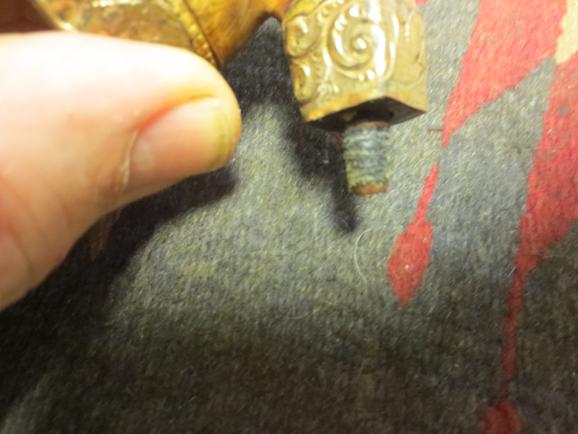
CPF15 After about an hour I gave it a second coat of glue on top of the repair and set it aside to cure again. While the repaired stem cured I went to work on the bowl. I used a pen knife to carefully scrape out the light cake in the bowl.CPF16 I cleaned out the rings around the bowl with the pointed end of a round needle file. I wanted to get the gunk out of the rings before I scrubbed the surface of the bowl.CPF17 I scrubbed the bowl with Murphy’s Oil Soap on a cotton pad remove some of the grime and clean up the exterior of the bling.CPF18 I used a cotton swab to soak alcohol around the threads of the bone tenon. I was able to pick out some of the thread that had been used to hold it in place. I am hoping that repeated alcohol applications will loosen the tenon so that I can unscrew it from the shank to do a thorough cleaning.CPF19

CPF20 The repeating swabbing with alcohol did not loosen the tenon at all. I think that the previous owner must have glue it in the stem and just pressure fit the stem onto the tenon. I had to come up with a different way of getting the stem to fit the tenon as the threads on the inside of the airway in the stem were worn and the stem just wobbled now that it was clean.

I examined the inside of the cleaned and restored stem and could still see the threads. I thought of trying cork and wrapping the tenon with that but after trying that it was too thick to fit into the stem. I then thought of wrapping the end of the tenon with thread and then coating the thread with wood glue. I tried that and it worked well. I was able to twist the stem onto the tenon and the threads in the stem worked into the glue and thread mixture on the tenon. The fix was a success.CPF21

CPF22

CPF23 I sanded the stem with 220 grit sandpaper to smooth out the repairs. I took down all the high spots and bumps left behind by the super glue. I recut the edge of the button on both sides of the stem with a needle file and then sanded the hole repairs on both sides to blend them into the surface of the stem.CPF24

CPF25

CPF26

CPF27 I reworked the button with files and cleaned up the slot with files as well. Once I had the look right I sanded the stem with a medium and a fine grit sanding sponge. The crackle in the stem material where all the crazing was and now the glue bonding it together gave the stem a bit of a sparkling look. An added benefit of the crackling look was that the patched holes at the button blended in quite well.CPF28

CPF29 I screwed the stem in place on the bowl and took a few photos to see what the finished look was going to be like. The repair makes the material sparkle. I really like the look that is coming together. I still needed to polish the stem with the micromesh sanding pads but you can see the finished pipe taking shape.CPF30

CPF31

CPF32

CPF33 I sanded the stem with micromesh sanding pads to raise the shine in the material. I wet sanded it with 1500-2400 grit pads and gave it a coat of Obsidian Oil. It would not absorb but it would give some traction to the next grits of micromesh. I dry sanded with 3200-4000 grit pads and gave it another coat of oil. I finished with 6000-12000 grit pads and applied several coats of carnauba wax to the stem by hand and hand buffed it with a microfibre cloth.CPF34

CPF35

CPF36 The wax on the stem, polished by hand gives it warmth and a glow that is beautiful. The repairs to the bite through on both sides of the stem blended in quite well do to the crackling of the stem material. All combined the stem came out quite well considering where I started with it in this process.CPF37

CPF38

CPF39

CPF40 I sanded the bowl with micromesh sanding pads to give it a shine. I decided to leave the scratches and dings in the bowl as it adds character to the old timer and are part of its long history as someone’s favourite smoking pipe. I can almost see the old pipeman putting the pipe in his pocket and heading off to work or for a walk. It certainly was not coddled like a pampered thing that wisdom of the age taught about meerschaums. No white gloves or careful handling this pipe saw much in its long life and carries the scars and marks of the journey. Now it is good to go for the next portion of its journey, one in which it will have a bit easier life.CPF41

CPF42

CPF43

CPF44

A Rescue Dog – Restoring a Chadwick “Supreme” Rhodesian


Blog by Steve Laug

The third pipe my brother Jeff picked up in the lot from the Montana was one of my favourite shapes. In the photo below of the pipes at the seller’s antique shop it is the pipe on the far right of the picture. Looking at it in the photos I wondered if it was a Peterson 999 or a GBD 9438 two of my all time favourite pipe shapes. I was pretty excited to see what it was once he got the pipes. Everything about that pipe shape made me think that my guess was not far off. When the pipes arrived in Idaho my brother called and read me the stamping. The pipe was stamped on the left side of the shank Chadwick over “Supreme”. On the right side it was stamped Imported Briar. At that point I was scratching my head. It still looked like an English-made pipe to me but I had not heard of the Chadwick brand.Chadwick1 When the pipe arrived in Canada I looked it over and was still convinced it looked English-made. I looked in Who Made that Pipe and it was listed there as made by Wally Frank in the US and England. The next photos show what the pipe looked like when it arrived here. There is a lot of promise underneath all the grime. There was a thick cake in the bowl and the rim was covered with the overflow of tars and oils down the sides to the double ring. The finish was dirty and almost gone. I am not sure if the pipe had a natural finish or was stained but it was no longer clear what the original had been like. The double ring had a large chunk missing on the front of the bowl. There were two fills on the bowl front that were shrunken and looked like dents. The shank was dirty. The stem was chewed and gnawed on to the point that the button was virtually gone on the top side. There was a chunk missing from it on the top middle of the button. There were deep tooth marks on the top and bottom of the stem near the button. The stem was oxidized and scratched and had a build-up of calcification about an inch up the stem toward the shank. Inside the stem and shank was very dirty. The airway to the bowl was clogged and I was not able to blow air through it. It looked to me that there had originally been a stinger in the tenon but it was no longer present.Chadwick2

Chadwick3

Chadwick4

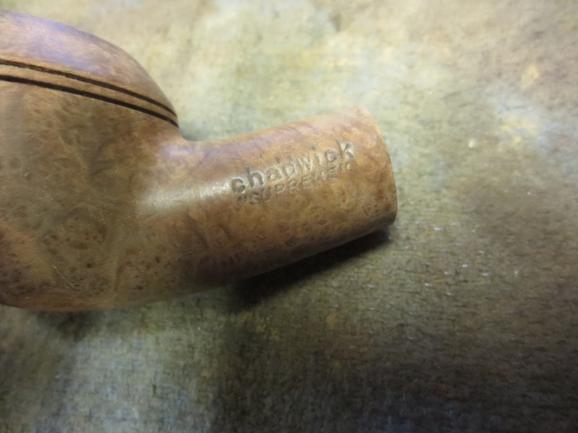
Chadwick5 I took some close up photos of the stamping and the condition of the bowl, rim and stem before I went to work on restoring it. You can clearly see the stamping on the left side of the shank – Chadwick Supreme. The rim is in nasty condition. I am not sure how the last pipe man had ever fit much tobacco in the bowl. All I know is that it must have smoked really well because it looked as if he had never laid it down. The stem condition is also clearly shown with tooth marks and gnawing on the button top and bottom.Chadwick6

Chadwick7

Chadwick8

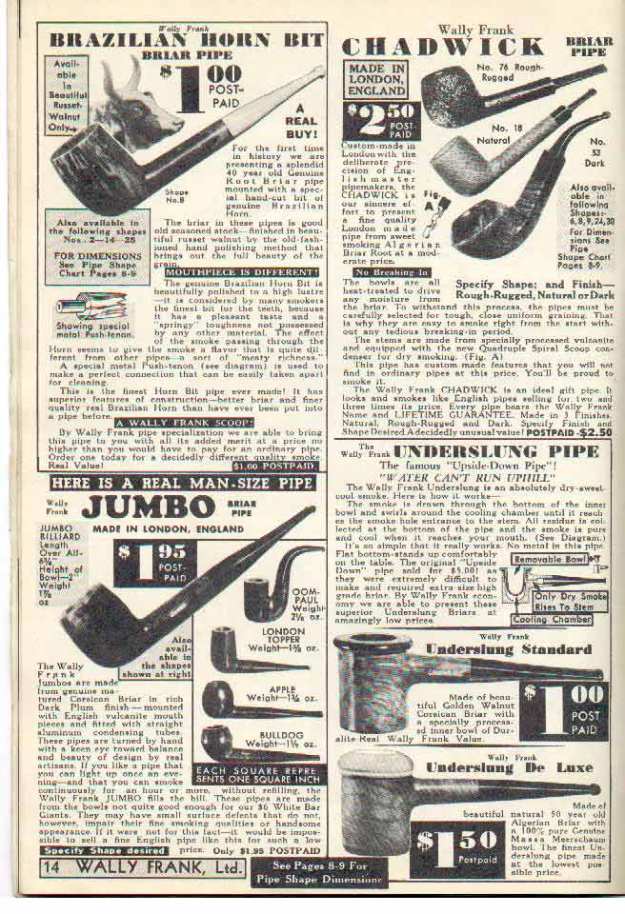
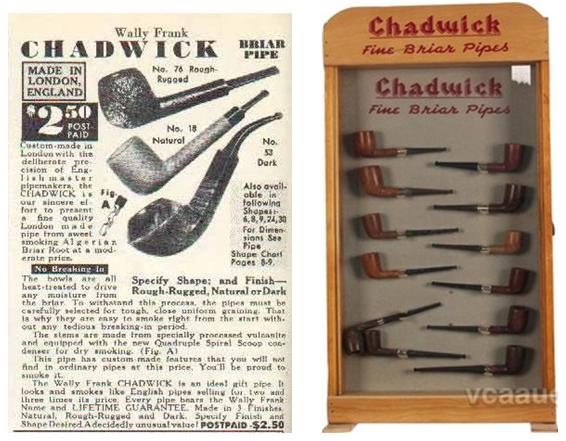
Chadwick8a Before I started cleaning it up I wanted to learn a bit more about the brand. I have cleaned and used quite a few Wally Frank pipes over the years and knew that other companies in Europe often made their pipes for them. It was highly likely that this was a British made pipe. I checked on Chris Keene’s Pipe Pages and found the Chadwick name in the Wally Frank Catalogue for 1939. None of the other catalogues would open but at least I had the information that I needed. The first photo below is of the whole page. The second is of the right top corner where the Chadwick line is mentioned. The third is of a Chadwick Display Cabinet that was provided to tobacconists and stores that sold the line.Chadwick9

Chadwick10 Now I knew that the Chadwick line was indeed made in England. My guess was correct and I would go one step further and guess that they were made by Comoy’s or GBD. The advertisement says that the pipe was “custom-made in London with the deliberate precision of English master pipemakers. The Chadwick is our sincere effort to present a fine quality London made pipe from sweet smoking Algerian Briar Root at a modest price.”

What interested me was that the pipe came in three different finishes – Rough-Rugged, Natural and Dark. I am pretty sure that the one I had was originally dark finished as the dark finish would hide the fills on the bowl and they would be blended into the briar. That gave me the direction that I would go in restaining the pipe once I got to that point in the restoration process.

I love reading these old catalogues and seeing the life time warrantee on the pipes and the fact that the pipe originally cost $2.50 with postage paid from the Wally Frank factory.

Armed with that confirmation of British origin for this old pipe I went to work to restore it to its former glory. I worked on the bowl first. I wanted to ream back the cake to bare wood to see what I was dealing with in the bowl. I set up the PipNet reamer with the smallest head first and found that the cake was incredibly hard. The cutting head barely made a dent in the cake. I took the largest sized cutting head – same diameter as the bowl and work on it and with a lot of force was able to begin to make a dent on the cake. It was just too hard to go too deep with the tool. I used a pen knife to try to cut back the lower portion of the cake but could not even cut into it because it was so hard.Chadwick11

Chadwick12 I decided to soak the bowl and soften the cake in an alcohol bath. I dropped the bowl into the bath and left it overnight to soak and soften the cake.Chadwick13 In the morning I took it out of the bath and dried it off with a coarse cotton towel. The soak also had the effect of softening the lava on the rim and cap so that when I dried the bowl most of it came off in the process. I was able to ream it back to bare wood with the use of a PipNet reamer and a KLEENREEM reamer. I used the drill bit part of the KLEENREEM tool to open the airway into the bowl and remove the clog. With that gone I could freely blow air through the bowl. The final photo in this set shows the conical bowl on the reamed pipe.Chadwick14

Chadwick15

Chadwick16 I wiped the bowl down with acetone on a cotton pad to clean off the remaining finish and the grime left behind after the soak and the reaming process. The damaged rings on the front of the bowl are visible in the photos as is the damage to the rim top.Chadwick17

Chadwick18

Chadwick19

Chadwick20

Chadwick21 I lightly topped the bowl on a topping board using 220 grit sandpaper to flatten the rim top and to remove some of the rounding to the outer edge of the bowl.Chadwick22 I used a dental pick to remove the fills that had shrunk on the bottom front of the bowl in preparation for replacing them.Chadwick23 I packed briar dust into the holes and then dripped super glue onto the packed briar dust.Chadwick24 I packed briar dust into the missing section of the double rings on the front of the bowl. I put super glue on top of the briar dust fill to build up the repair. I added more briar dust on top of the fills on the bowl front and on the repair to the rings.Chadwick25 I sanded the patches on the bowl front with 220 grit sandpaper and smooth it out to match the surrounding briar.Chadwick26 I sanded the patch on the ring repair with 220 grit sandpaper to smooth it out. There were still some low spots on that repair so I refilled the area with some more super glue.Chadwick27

Chadwick28 I set the bowl aside to let the repair on the rings cure before I cut the new rings into the bowl front. While it was sitting I sanded the stem with 220 grit sandpaper to remove the oxidation and the calcification. I wanted to clean up the stem before I worked on repairing the tooth marks and gnawed button. I cleaned the stem with alcohol and pipe cleaners.Chadwick29

Chadwick30

Chadwick31 I scrubbed out the tooth marks on the stem and the button with a cotton swab and alcohol in preparation for the repair I would do there. I mixed the patching material using finely crushed charcoal capsules and black super glue. I mixed the two to blend the materials. I use super glue that gives me 45 seconds of time before it hardens so I have to work quickly.Chadwick32

Chadwick33 When I had the paste mixed well I applied it to the tooth marks and built up the button with a dental pick and dental spatula. The repair is anything but beautiful at this point but the mixture adds strength to the repair that the glue by itself does not give with tooth marks and damage of this magnitude.Chadwick34

Chadwick35

Chadwick36 I set the stem aside to cure and went back to the bowl. I used a Buck Knife, a pen knife and a sharp-edged needle file to cut the lines in the patch on the bowl front. I wanted the new lines to connect seamlessly to the lines on either side of the repair. These three blades always have worked for me to get a good straight line match.Chadwick37 When I had finished cleaning up the lines on the bowl the stem repair had cured enough to begin to shape the button and clean up the tooth repairs. I sanded them with 220 grit sandpaper to begin to shape and smooth out the repairs.Chadwick38

Chadwick39

Chadwick40

Chadwick41

Chadwick42 When I had the basic shape of the button set up the surface was quite porous on the button surface and in one spot on the tooth repair on top of the stem so I gave them a top coat of clear super glue to fill in the pores left behind by the super glue/charcoal mixture. I set that aside to dry.Chadwick43

Chadwick44 I cleaned the bowl and shank with pipe cleaners, cotton swabs and alcohol. It was one dirty shank. It took a lot of scrubbing to clean out the grime. I scrubbed until the cleaners came out clean and white.Chadwick45 I wiped the bowl down with alcohol to remove any last dust or grime in preparation for staining the briar.Chadwick46

Chadwick47

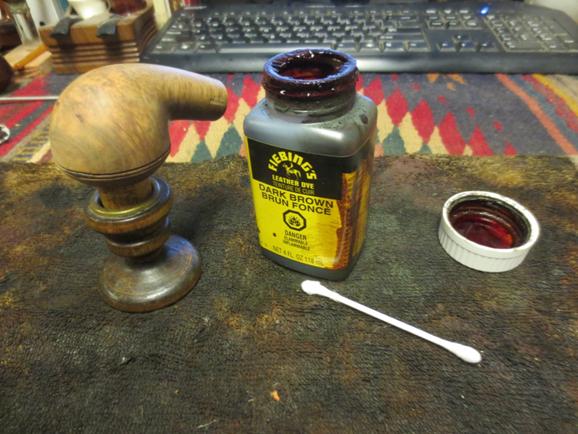
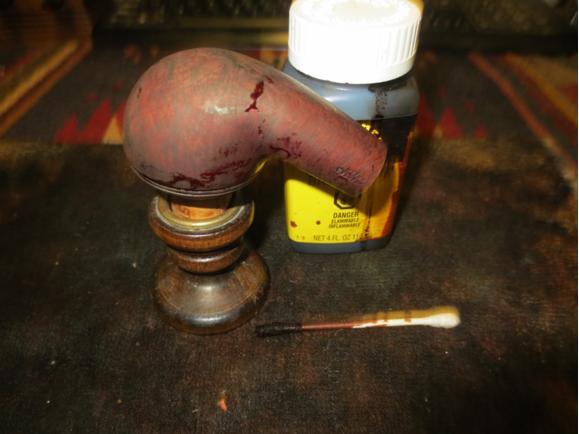
Chadwick48 I decided to stain the bowl with a dark brown aniline stain that I had thinned by half to give it a medium brown colour. I wanted to aim for the dark stain that was noted in the Wally Frank Catalogue above. I figured it would give me good coverage on the fills and the repair to the rings.Chadwick49 I applied the stain with a cotton swab and then flamed it with a lighter to set the colour in the grain.Chadwick50 I wiped down the freshly stained bowl with alcohol on cotton pads to even out the stain and to give it more transparency so that the grain shows through. When I was through I was happy with the colour and with the way it hid the fills on the bowl and the repair to the ring on the front of the bowl.Chadwick51

Chadwick52

Chadwick53

Chadwick54

Chadwick55 By that time the stem repair had dried and I sanded it with 220 grit sandpaper to smooth out the stem patch and do more shaping on the button.Chadwick56

Chadwick57

Chadwick58 I filed the slot in the stem to smooth it out and shape it. I also sanded the stem with a medium and a fine grit sanding sponge to further shape the button. I wet sanded the stem and button with 1500-2400 grit micromesh sanding pads and rubbed the stem down with Obsidian Oil. I dry sanded with 3200-4000 grit micromesh pads and gave it another coat of oil. I finished by sanding it with 6000-12000 grit pads and gave it a final coat of Obsidian Oil. I set it aside for the oil to dry.Chadwick59

Chadwick60

Chadwick61 I sanded the bowl with the micromesh sanding pads – 1500-12000 grit to polish the briar – bowl, shank and rim, to bring out the grain. When the grain began to pop I buffed the bowl and the stem with Blue Diamond on the wheel and then gave both multiple coats of carnauba wax. I buffed it with a clean flannel buff and then with a microfibre cloth. The finished pipe is shown in the photos below. It is a far cry better looking than when I started. This one is a keeper. Thanks for looking.Chadwick62

Chadwick63

Chadwick64

Chadwick65

Chadwick66

Chadwick67

Chadwick68

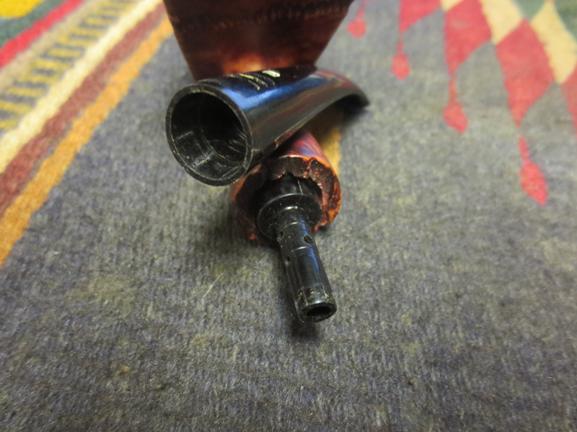
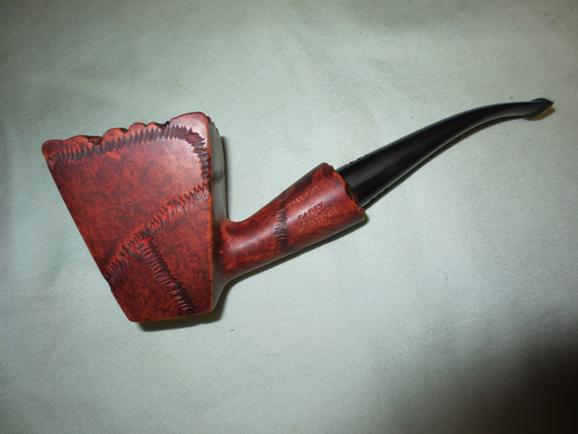
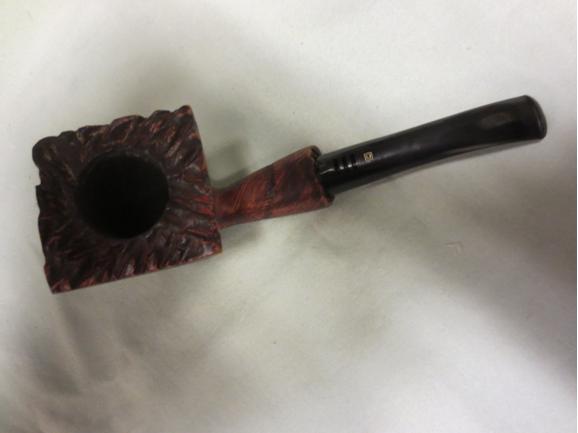
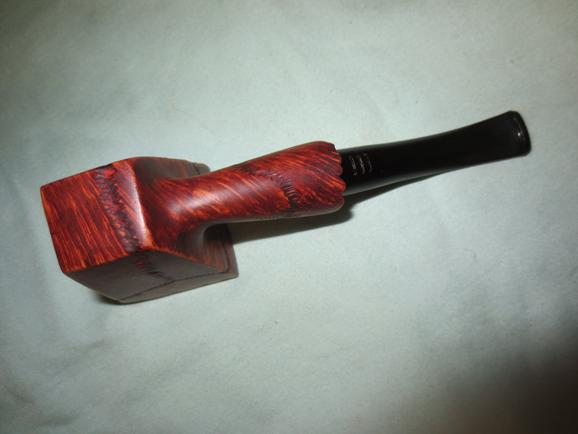
Carey Magic Inch Freehand Briar Pipe


Blog by Steve Laug

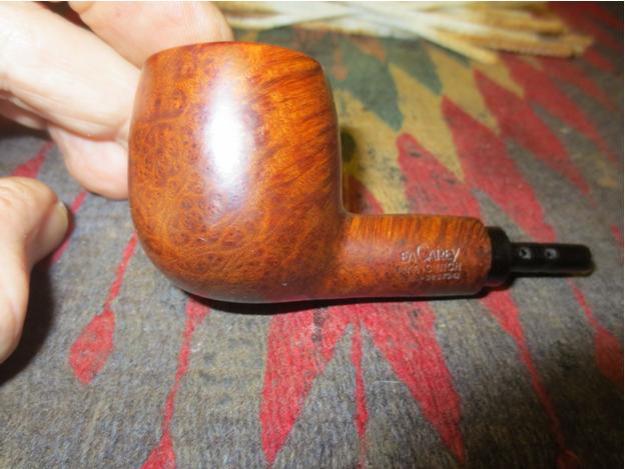
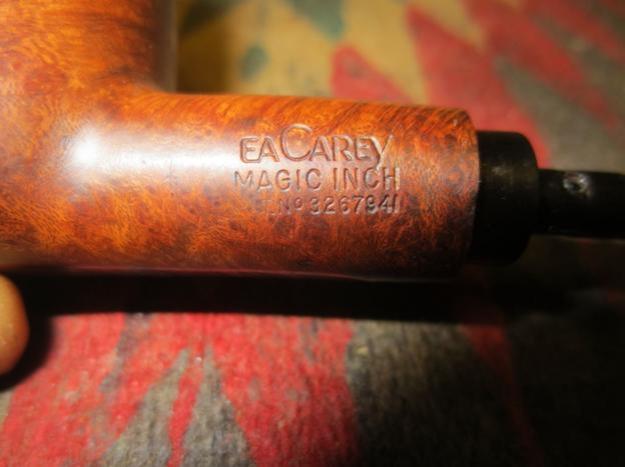
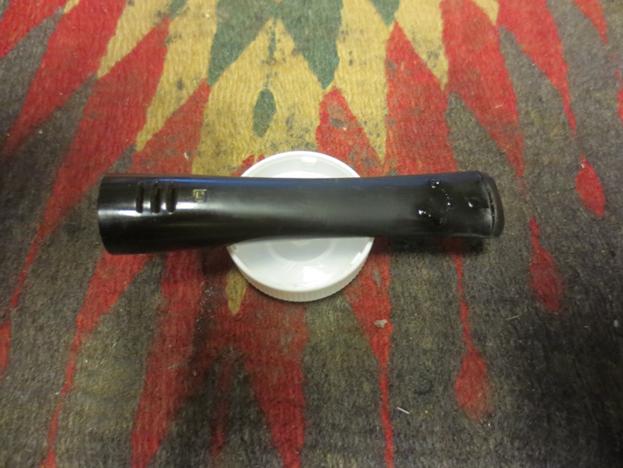
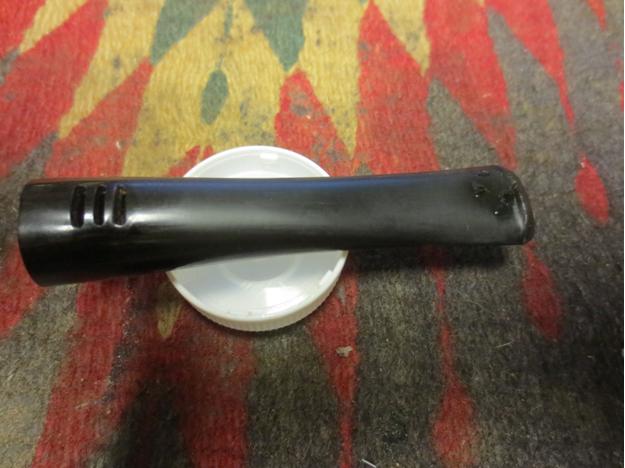
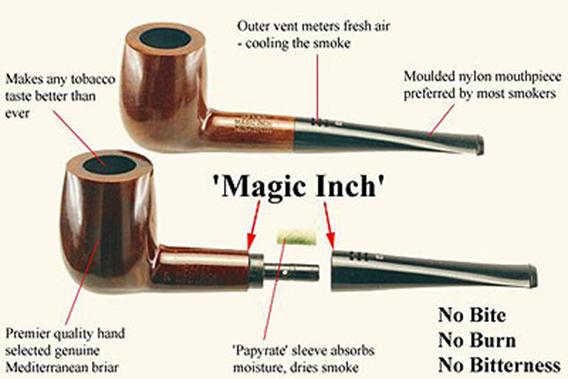
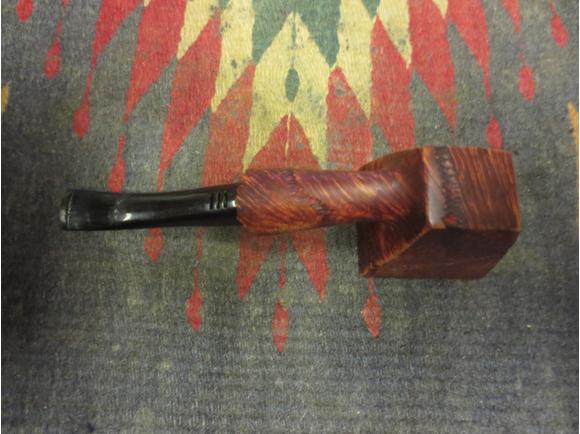
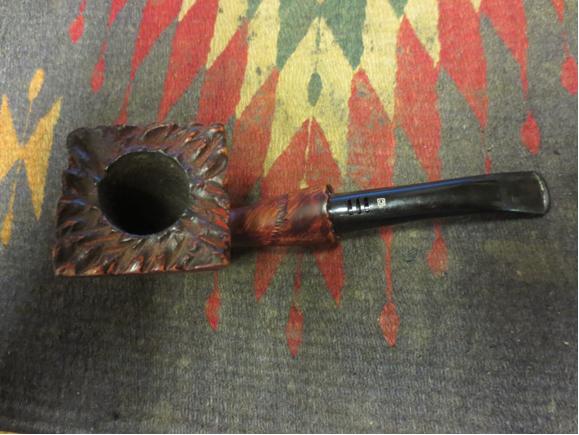
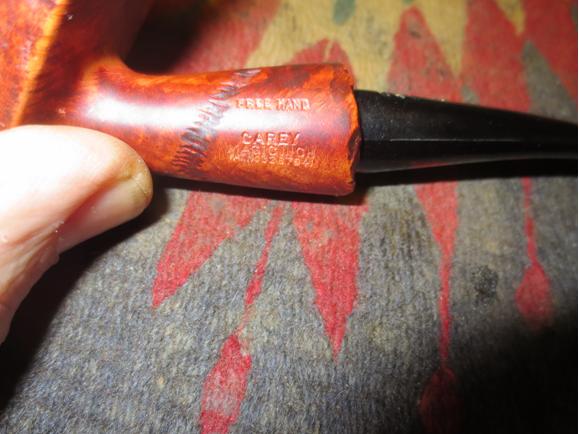
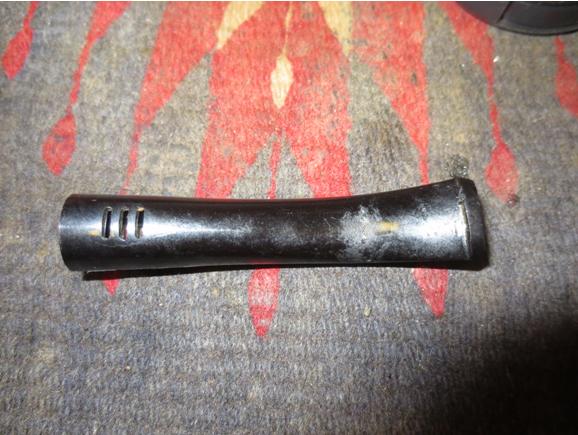
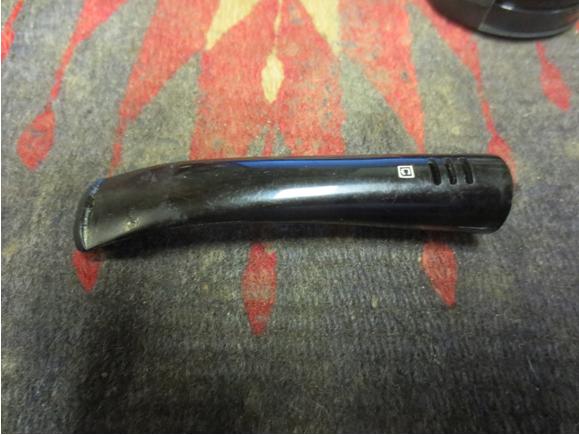
In the batch of pipes my brother purchased from an antique shop in Montana for me to clean up was the pipe pictured in the photo below – on its side on the pipe rack on the left of the photo bearing a $19 price tag. Turns out it is a Carey Magic Inch Freehand Pipe. It is stamped on the left side of the shank: Free Hand over Carey over Magic Inch. Underneath that is stamped a PAT. No. 3267941. On the right side it is stamped: Mediterranean over Briar Israel. The stem has three horizontal vents on the top and on the underside of the stem. There is a logo – a C in a box on the top of the stem behind the vents.Carey1 I did some research on the “Magic Inch” System and found out that it has been a Carey’s tradition for over 50 years. On their website they say that they have sold over 1,000,000 pipes. They describe the “Magic Inch” as: “an air chamber inserted between the imported briar bowl and the vented mouthpiece which allows cool outside air to enter and mix with the warm tobacco smoke inside the “Magic Inch” chamber. Tobacco tars, oils and moisture, are squeezed out of the smoke. The residue drops to the bottom of the chamber and is absorbed by the Papyrate sleeve.” http://www.eacarey.com/magicinchinfo.html

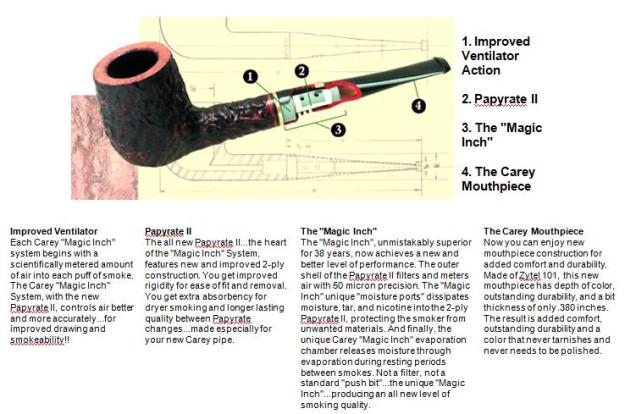
They provide the following diagram on their website and I have included it here to show the unique system.Carey2 I found a second diagram on the English Carey website. http://www.eacarey.co.uk/2010/10/the-carey-magic-inch/

I quote from their site as it gives some interesting history on the system: “A Carey pipe looks better and feels better than any ordinary pipe. It also smokes like no other pipe you’ve ever known, and that’s mostly thanks to the patented ‘Magic Inch’, an invention that revolutionised pipe smoking. Designed and patented by EA Carey in 1948 it was the result of a dedicated pipe smoker seeking a cooler, drier smoke whilst not detracting from the fulsome flavour of choice tobaccos. After years of research and the discarding of many ‘good ideas’ Carey settled on the basic design of the system and set about refining that design into the simple but highly effective device that is the basis of Carey Magic Inch pipes over 60 years later. Even today, more than 30 years after it was first introduced into Europe and particularly the UK, we have many seasoned pipesmokers who are still discovering the amazing difference and improvement in smoking pleasure they obtain from the Magic Inch system. It is not a trap or filter or other such sludge forming gadget. In fact, like all great discoveries and inventions, the secret is simple. By cooling, condensing and evaporating moisture with every puff, it prevents the tar, sludge, bite and bitterness that you may find in other pipes, ever reaching your mouth.”

They go on to describe the system in a classically English way: “The system has been designed to allow a precise amount of outside air into each puff of smoke. Unique moisture ports then dissipate wetness, tar and nicotine into the 2 ply Papyrate sleeve, protecting the smoker from unwanted materials. The Papyrate itself provides excellent absorbency for dryer smoking and increased durability. Subsequently the Magic Inch chamber releases moisture through evaporation during resting periods between smokes. Neither a filter nor a standard ‘push bit’, a true innovation.”Carey3 All Carey Magic Inch pipes are made from top quality Mediterranean briar designed, crafted and inspected by experts who take pride in their craft.

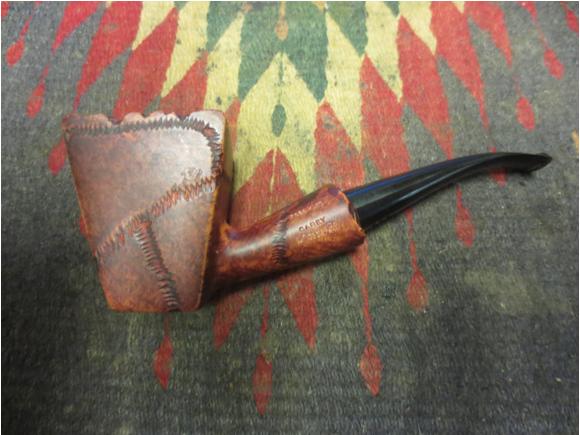
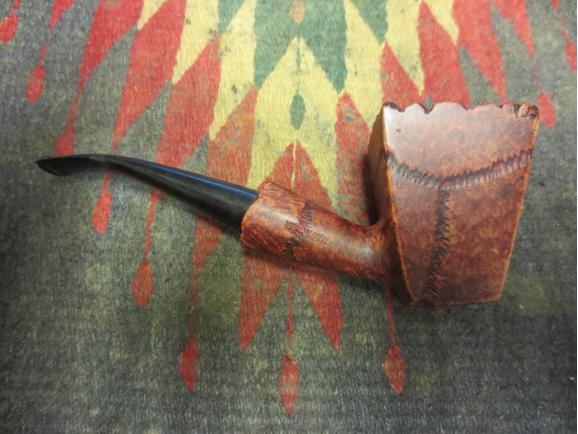
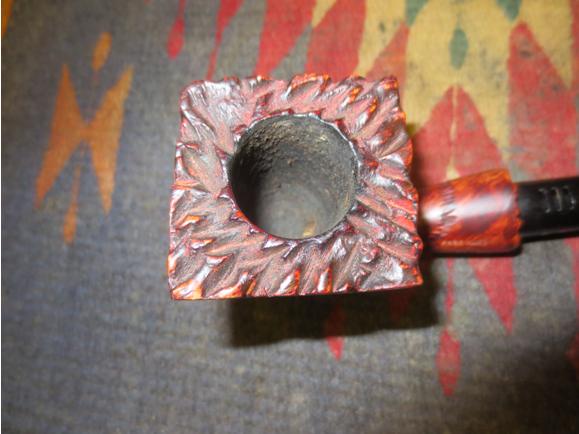
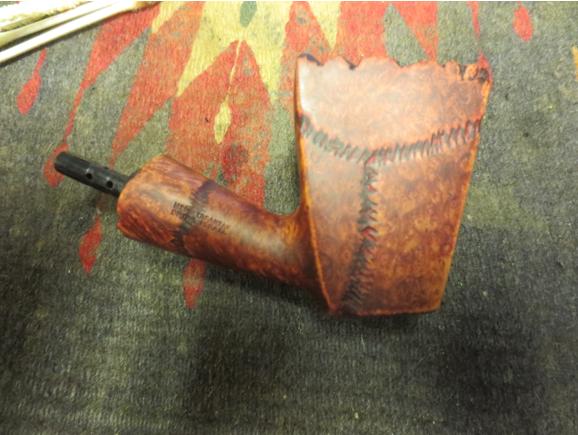
With this background information I started to work Carey Magic Inch Freehand that my brother had picked up for me. The bowl was quite clean on the inside – a light cake had formed. The rim had some darkening but was also very clean. The carved patterns on the pipe were very similar to some of the Alpha pipes that also had similar Frankenstein-like stitches on the worm trails carved into the sides and bottom of the bowl and shank. I would not be surprised if it was actually carved in the old Alpha Pipe Factory in Israel. The finish on the pipe was in very good shape and did not need to have anything done to it but clean it. The shank bears the stamping of Israel on the right side. The shape is a block/poker shape that never really was my cup of tea. I always look at them and feel like the carver stopped somewhere along the way and never finished carving the pipe. The rustication on the rim matched that on the shank end. The stem was typical Carey plastic and would be hard to work on. It had tooth chatter on the top and the bottom sides of the stem and some tooth marks that also went onto the button itself.Carey4

Carey5

Carey6

Carey7 The next close up photos show the rim and the cake in the bowl as well as the stamping on the sides of the shank.Carey8

Carey9

Carey10 I took the stem off the pipe to get a picture of the Carey Magic Inch system. The stem sits over a mortise insert with a one inch long perforated tube that extends into the stem when it is in place on the shank.Carey11 The stem was dirty on the inside and the tooth chatter and dents marred the top and bottom sides near the button.Carey13

Carey12 I scrubbed down the exterior of the bowl with a tooth brush and Murphy’s Oil Soap and rinsed it with lukewarm water. I dried off the bowl exterior with a soft cloth.Carey14

Carey15

Carey16

Carey17

Carey18 I scrubbed out the stem and the shank with cotton swabs, pipe cleaners and alcohol until the pipe cleaners and swabs came out clean.Carey19 I find the plastic material used on these stems to be a challenge to clean up and remove the damaged areas. Once it is sanded all of the polishing has to be done by hand. The heat of the buffer pads can seriously damage the stem by melting it. I sanded the tooth marks and chatter with 220 grit sandpaper to remove the damage. There was one spot on the top of the stem near the button that needed to be patched with clear super glue. It was a deep tooth mark that no amount of sanding would remove.Carey20

Carey21 When the patch cured I sanded it with the 220 grit sandpaper to smooth it out with the surface of the stem. I sanded it with a medium and a fine grit sanding sponge to remove the scratches.Carey22 Normally I wet sand the stem with 1500-2400 grit micromesh sanding pads but with this material it only gets muddy and makes a mess. I used some Obsidian Oil to rub down the stem between each pad and sanded it until the scratches began to disappear. I continue the process with 3200-4000 grit pads with the oil between each pad giving me some bite on the plastic stem. I forgot to take a picture of this step (I had already spent over 1 ½ hours on the stem at this point). I finished sanding it with 6000-12000 grit pads and the oil. When I had finished I rubbed it down with a final coat of Obsidian Oil and let it dry.Carey23

Carey24 I hand waxed the bowl and the stem with Conservators wax and buffed it with a shoe brush. I finished by buffing it with a microfibre cloth. The finished pipe is shown in the photos below. It is cleaned, restored and ready for whoever wishes to purchase it from me. It is not my style of pipe but I am sure it will make some pipe man very happy. Just email me if you are interested and make me an offer at slaug@uniserve.com Thanks for looking.Carey25

Carey26

Carey27

Carey28

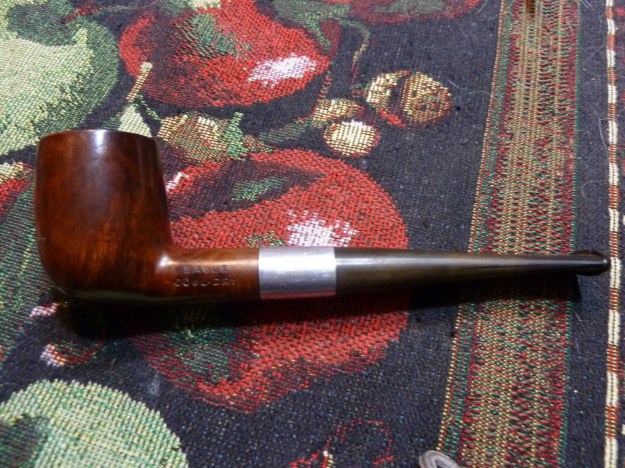
Restoring An Eagle Cool-Dry Billiard


Blog by Steve Laug

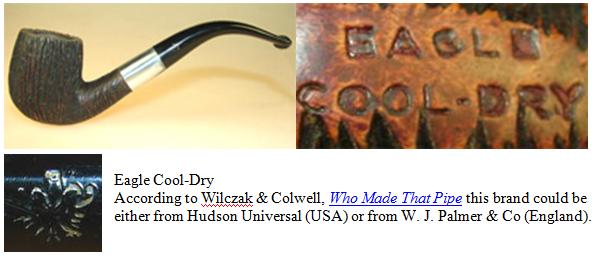
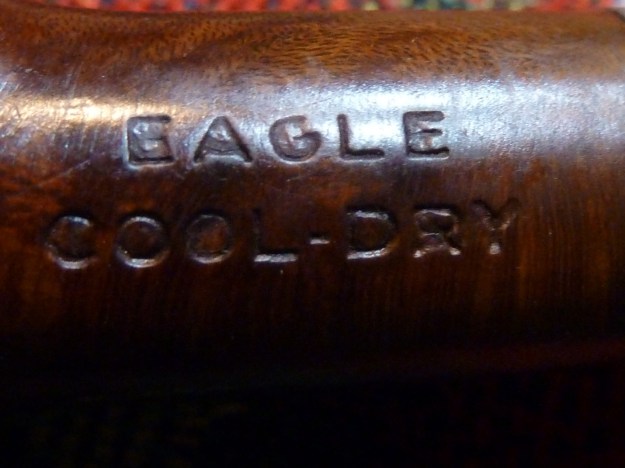
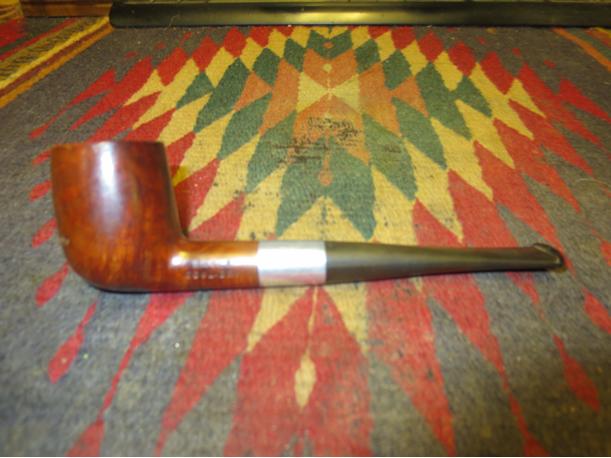
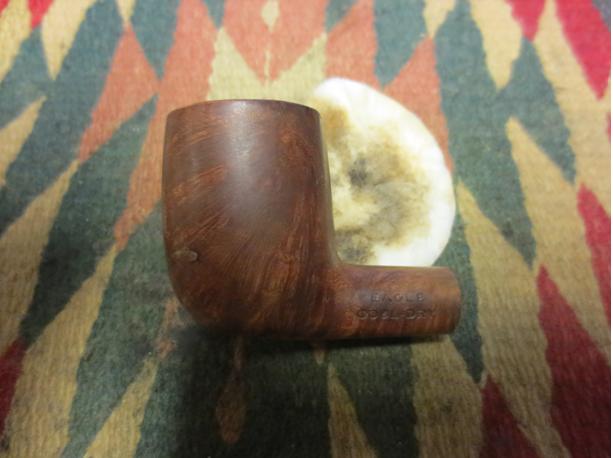
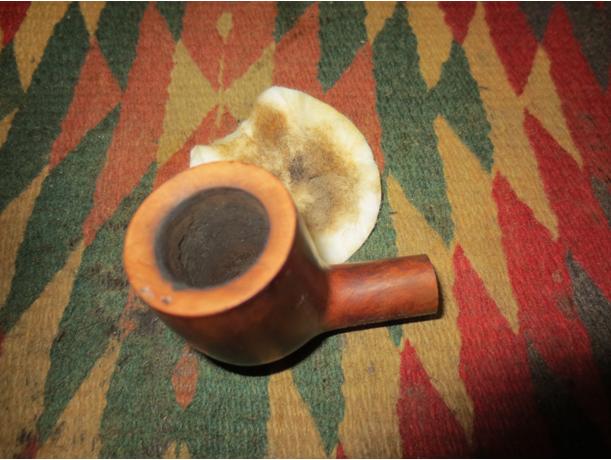
The pipe was another gift pipe sent to me by Pam. It is in decent shape. The stem is oxidized and has some tooth marks on the top and bottom side of the stem near the button. The tooth mark is like a vertical slit on the top and bottom side about ½ inch up the stem from the button. There is also a small tooth dent near the button. The metal part of the stem and tenon were integrated into the stem rather than in the shank of the pipe. The finish on the pipe was shiny and showed that the lacquer or varnish that had been used was peeling in spots on the front of the bowl. The stamping was deep and readable. There were quite a few fills on the bottom of the bowl. The largest was on the bottom front edge of the bowl. It had shrunken and was a large pit that ran across the front of the bowl. The bowl was heavily caked and the buildup on the beveled rim was hard and chipped looking. There were some nicks on the outer edges of the rim from when the bowl had been tapped out. The shank was not too dirty and the mortise appeared to be lined with a white tube of some sort.Eagle1 The Eagle Cool-Dry has some unique plumbing in terms of system pipes. It is different from any of the other pipes like this in my collection. The rest of the ones that externally look like this one, the Keyser Hygienic and the Millard Perfect Pipe are actually very different in terms of design. They have a metal insert at the end of the shank that acts as a condenser area with a tube extending from the airway into the condensation chamber. The stem also has a metal tube insert and no tenon but is a military mount stem that inserts into the chamber. The two tubes either meet in the chamber or sit in the chamber. The Eagle is very different in terms of design from the other two mentioned above. The shank is lined with either clay or meerschaum – hard to tell by just looking. My tendency is to assume it is clay. The porous tube is inserted into the shank forming the mortise of the pipe and extending to the end of the shank (see photo below). The metal tenon integrated into the vulcanite stem sits snuggly into the lined mortise. Once I clean it up I may be more certain what the material that makes up the mortise lining.Eagle3 As I worked on cleaning up the pipe I took a little time to see if I could ferret out any information on the brand and the manufacturer of the pipe. I looked for Cool-Dry pipes and found a metal Falcon like pipe that uses the same threaded bowls as Dr. Grabow Vikings. I looked for Eagle Pipes and found a clay pipe manufacturer in Montreal, Quebec in the late 1890s but nothing on a briar pipe maker of that name. I searched for patent information on the internals of the pipe under both the Eagle and the Cool-Dry name and found nothing specific on the system in this pipe. The one thing I did find was that the pipe was made by the Hudson Universal Pipe Co. who also made the brands Excelsior, Harrington Park, and Hilex. This information came out through some notes I found while Googling the brand.
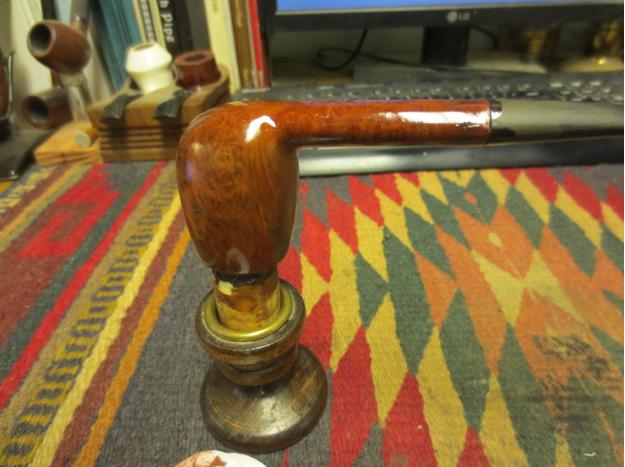
Having that information in hand I looked for the pipe on the Pipephil Stampings and Logos website and interestingly found the following picture and short information. The brief notes under the picture confirm that Hudson Universal Pipe Co. was one of the makers of the pipe. The pipe I received has the same stamping as the one pictured below. The one I have does not have the stem logo but rather is stamped ITALIA on the underside of the stem next to the metal portion of the stem.Eagle2a

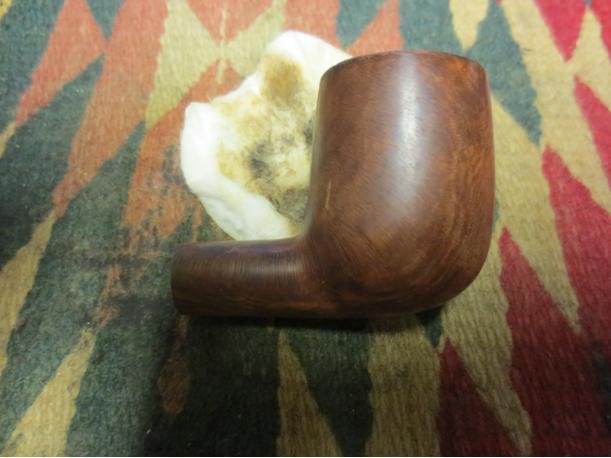
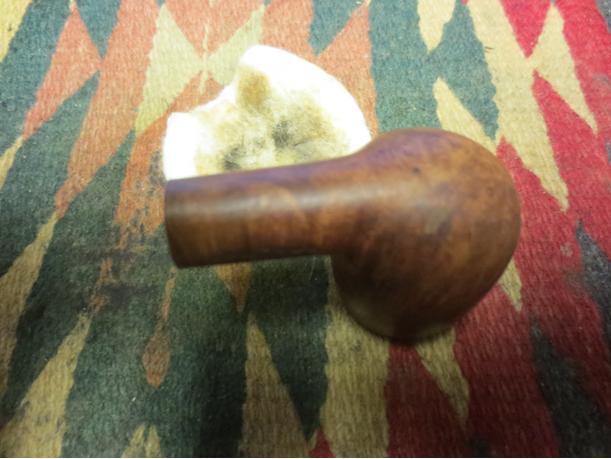
Eagle2 When I brought the pipe to my work table I took the following photos to give an idea of the condition it was in when I started. I have spoken of the finish and the general worn condition of the bowl. The rim and cake issues have also been mentioned. The photos show the oxidized stem and aluminum. The bowl has an attractive shape and there is something about the old pipe that drew me to it.Eagle4

Eagle5

Eagle6

Eagle7 The next two photos are close up shots. The first shows the large shrunken fill on the bottom front part of the bowl. The second shows the thickness of the build up on the rim and the cake in the bowl.Eagle8

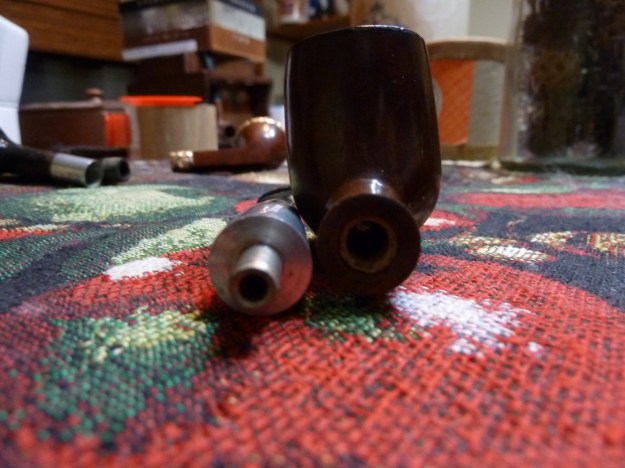
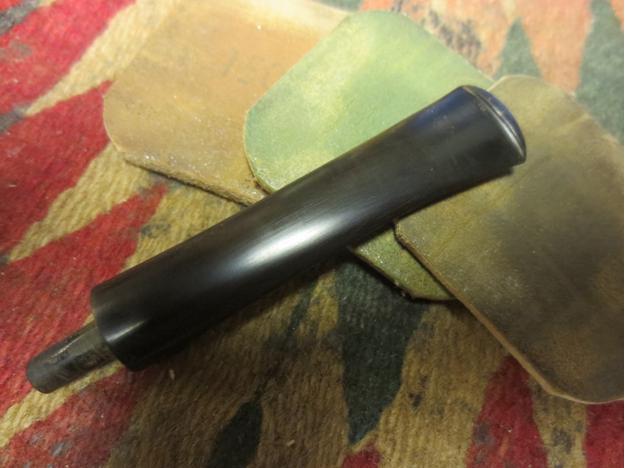
Eagle9 I took the pipe apart to show the nature of the tenon and stem apparatus.Eagle10 I sanded the stem with 220 grit sandpaper to remove the oxidation on the stem and to prepare it for the repairs that needed to be done to the tooth marks on both sides of the stem. I sanded it and removed much of the oxidation and minimized the tooth chatter. I then scrubbed the stem with alcohol to remove the dust and debris in the tooth marks. I filled them with a bubble of clear super glue – both the two spots next to the button (1 on top and 1 on the underside) and the two vertical cuts or marks (one on each side). I set the stem aside to let the glue cure.Eagle11

Eagle12 While the glue dried I worked on the bowl. I sanded the top of the rim with 220 grit sandpaper to remove the cake that had built up on that surface. I would need to continue to reshape the rim. I reamed it back to bare wood with a PipNet reamer.Eagle13

Eagle14 I continued to sand the rim and also sanded the inside edge of the rim with the 220 grit sandpaper.Eagle15 I scrubbed the bowl with acetone on a cotton pad to remove the varnish coat and the grime that collected on the briar through the years.Eagle16

Eagle17

Eagle18

Eagle19 The next photo shows the clay/meerschaum insert in the shank that lined the mortise on the pipe. I cleaned it with cotton swabs, pipe cleaners and alcohol.Eagle20 I picked out the large fill on the front of the bowl with a dental pick until the sandpit was clear of the white putty. I wiped the bowl down with alcohol on a cotton swab to clean out any remaining debris. I used the dental pick to press briar dust into the sandpit and packed it in. I dripped a couple of drops of glue into the dust. Unfortunately the glue ran down the face of the bowl. I am using a new kind of glue and it is very thin and dries slowly. I sanded the surface of the bowl to remove the heavy overdone patch until it was smooth with the surface of the bowl. I then added a little more briar dust to the patch and used the tip of the pick to put some more glue on the repair.Eagle21

Eagle22

Eagle23 When the glue dried I sanded the patch until it was smooth. I sanded the entire bowl with a medium and fine grit sanding sponge to remove the scratches. I wet sanded the bowl with 400 grit wet dry sandpaper and then with 1500-2400 grit micromesh sanding pads. I wiped the bowl down with alcohol and cotton pads to remove the sanding dust in preparation for restaining the pipe.Eagle24

Eagle25

Eagle26

Eagle27 I gave the bowl a coat of dark brown aniline stain and flamed it with a lighter. I gave the pipe several more coats of stain and flamed each one.Eagle28 When the stain had dried I hand buffed it with a cloth and then gave it a light buff on the wheel with White Diamond. The first two side view photos of the bowl show it with a red tint that really is not as prevalent as it appears. The photo of the bottom of the bowl is more accurate in terms of the colour of the pipe.Eagle29

Eagle30

Eagle31

Eagle32 I sanded the repaired stem with 220 grit sandpaper to blend the repair into the surface of the stem. I sanded it with a medium and a fine grit sanding sponge to remove the scratches in the surface of the stem.Eagle33

Eagle34

Eagle35

Eagle36 The stem was quite clean on the inside so it took only one pipe cleaner to take out the sanding dust that had collected inside.Eagle37 I wet sanded the stem with 1500-2400 grit micromesh sanding pads and then rubbed it down with Obsidian Oil. I dry sanded with 3200-4000 grit pads and then gave it another coat of oil. I finished sanding it with 6000-12000 grit pads. I gave it a final coat of Obsidian Oil and let it dry.Eagle38

Eagle39

Eagle40 I buffed the pipe and stem on the wheel with Blue Diamond. I gave the aluminum a light buff so as not to darken the buffing pad and carry the metallic colour onto the vulcanite or the briar. I gave the bowl and stem multiple coats of carnauba wax and then buffed the pipe with a clean flannel buff. I finished by buffing it by hand with a microfibre cloth. The finished pipe is shown in the photos below. The glow of the briar and the vulcanite are really set off by the burnished aluminum portion of the stem. It is truly a beautiful pipe. Thanks for the pipe Pam it is a keeper. Thanks also to each of you who are reading this blog.Eagle41

Eagle42

Eagle43

Eagle44

Eagle45

Eagle46