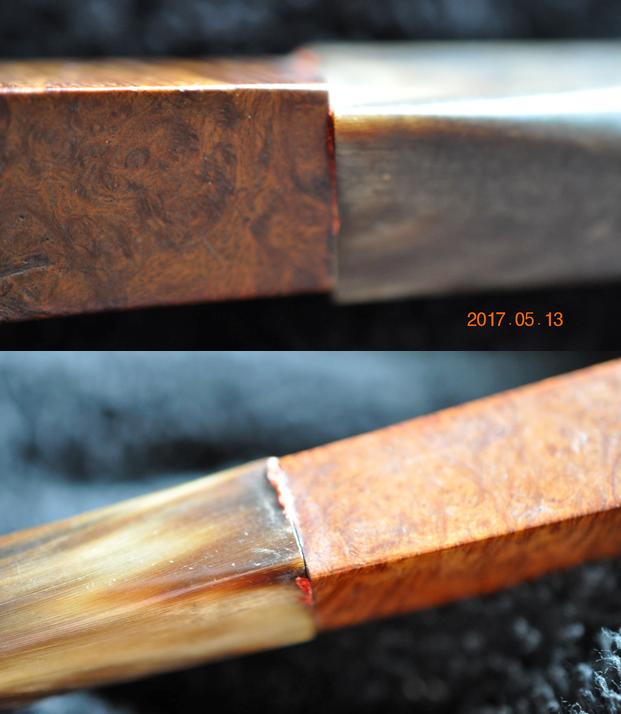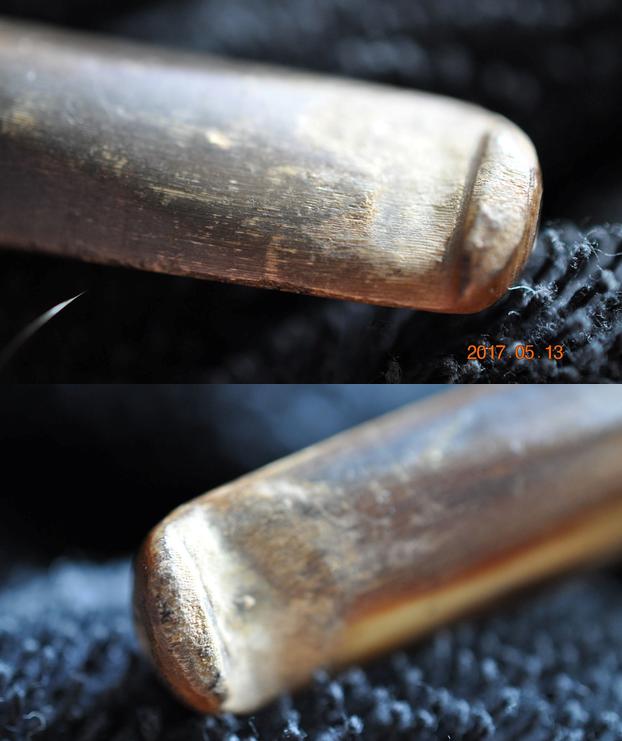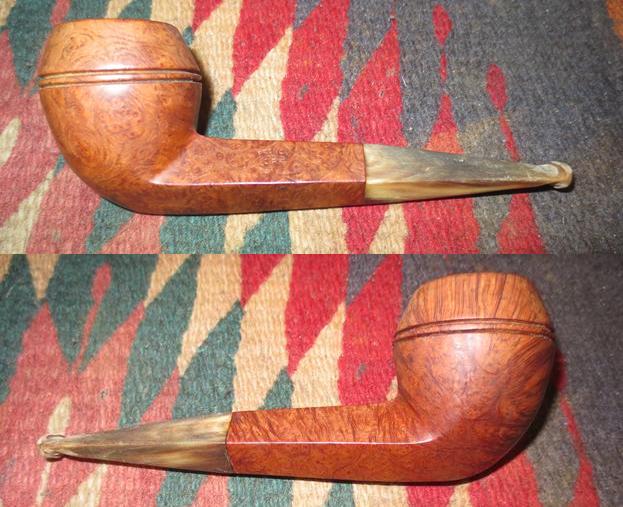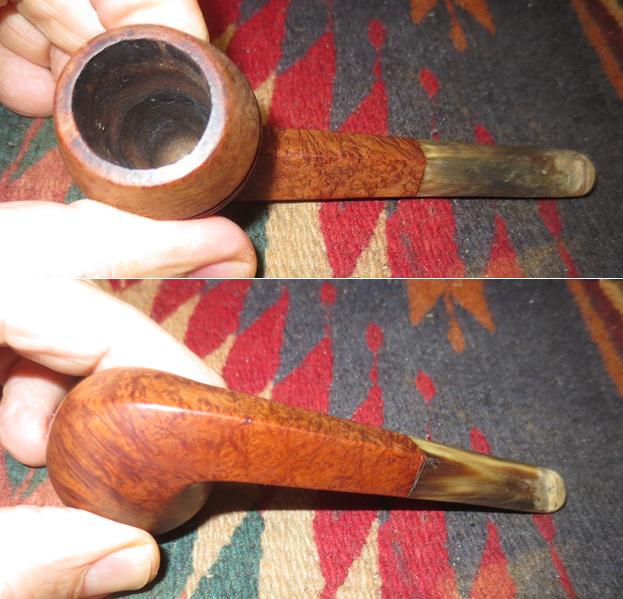
Tag Archives: repairing bite marks

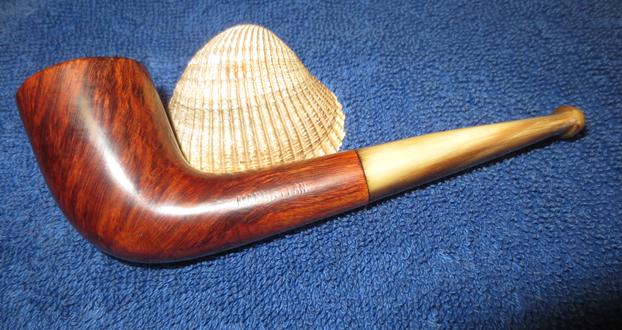
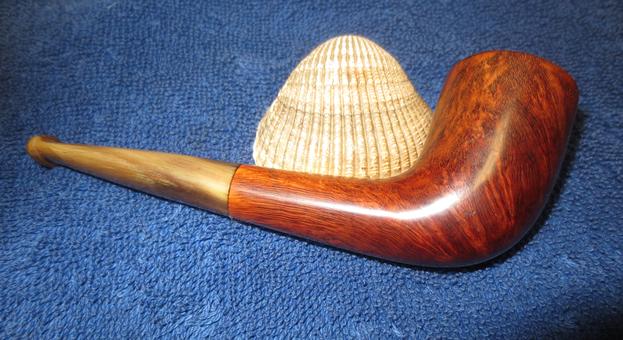
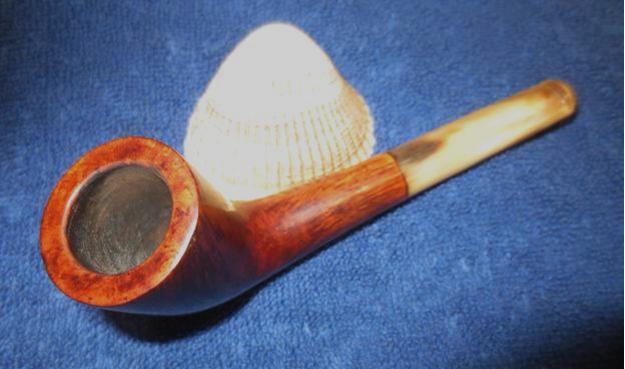
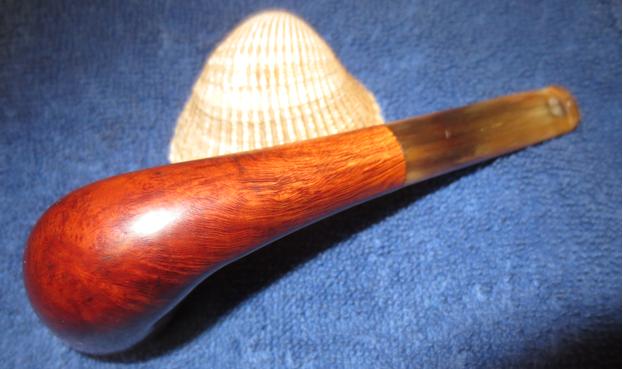
A Lady’s Choice – WDC Milano Swan Neck Billiard


Blog by Dal Stanton

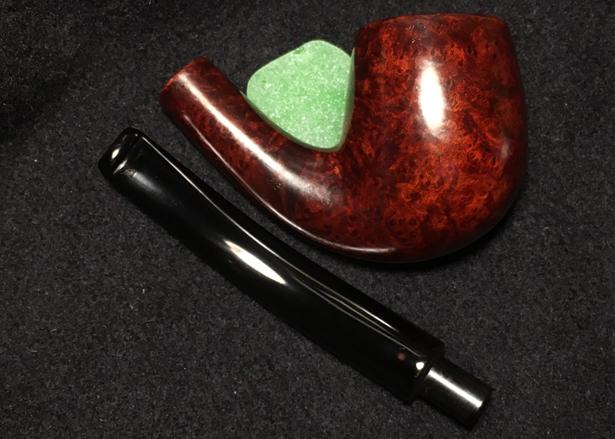
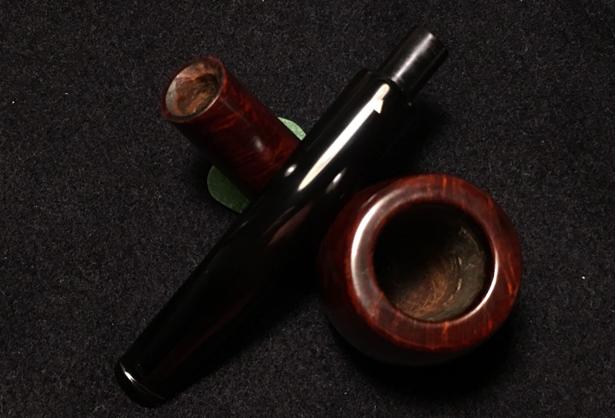
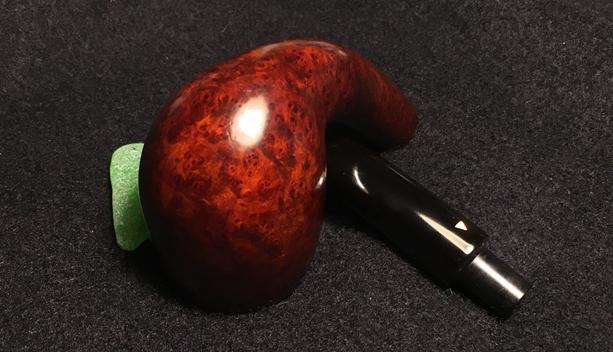
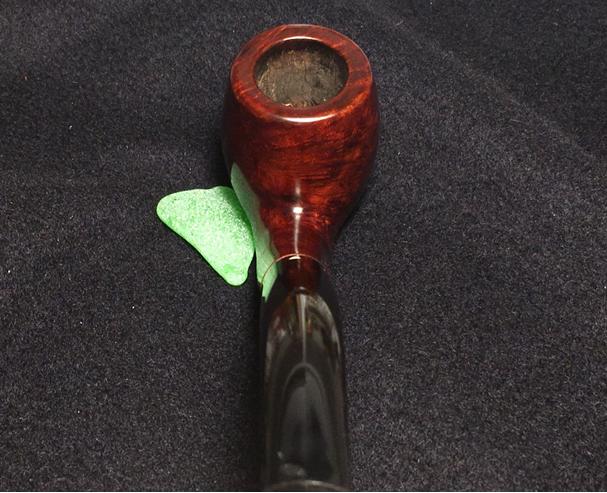
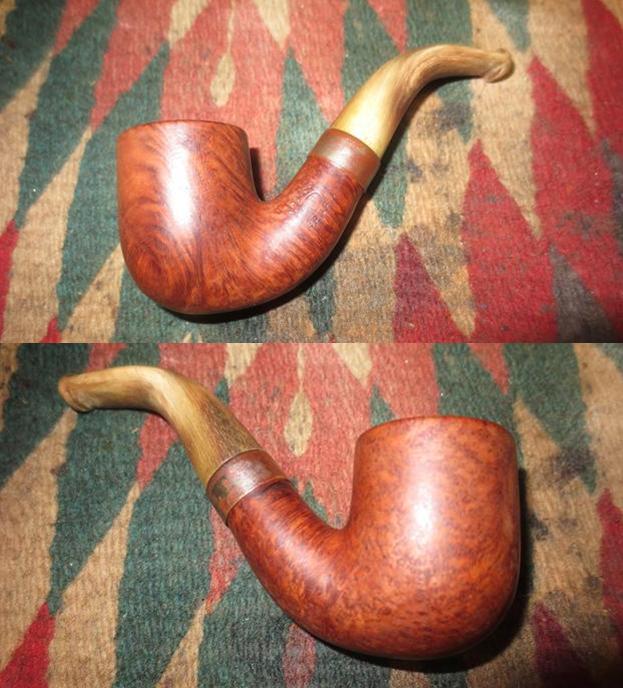
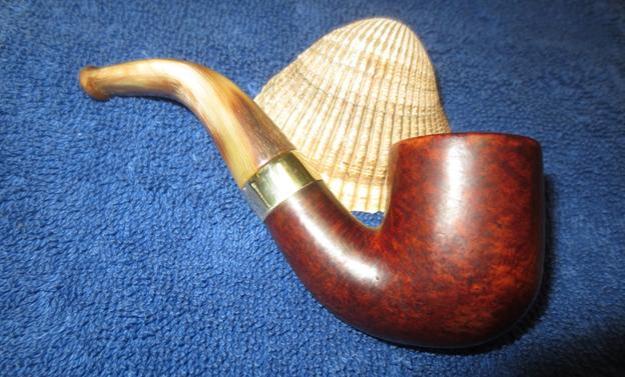
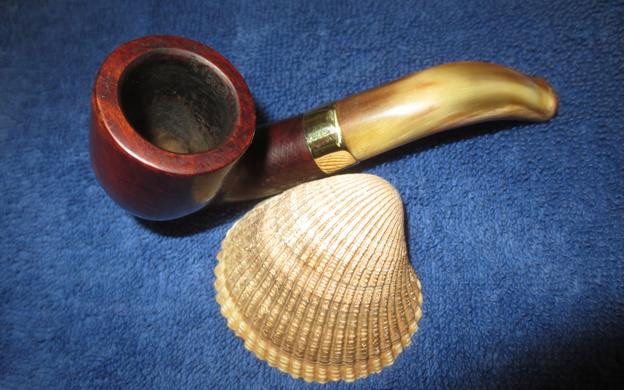
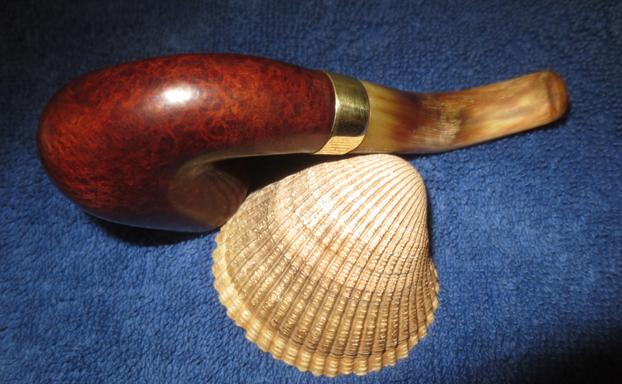
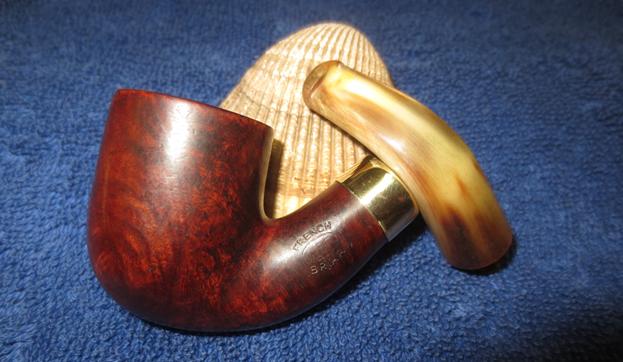
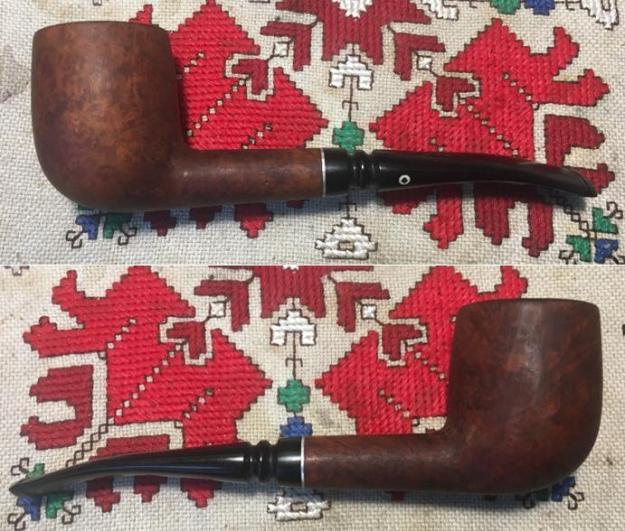
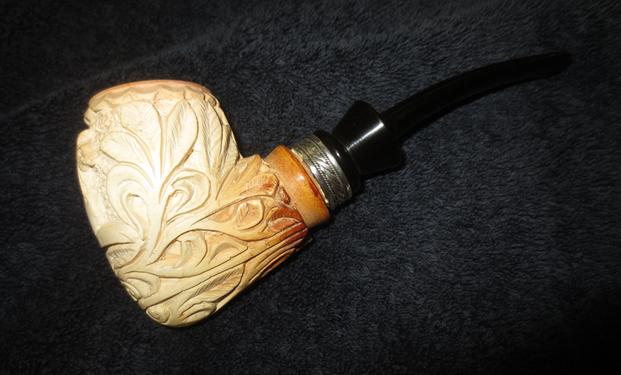
Is there a psychology in the choosing one makes when befriending a pipe?  A young Bulgarian lady, who also is a budding pipe lady, chose a pipe out of my ‘Help Me!’ baskets and boxes.  After looking at scores of hopeful candidates, there was only one – only one – that she held in her hands, looking at it and smiling. A beautiful, graceful, WDC Milano Swan Neck Billiard caught her attention, and it would seem, her affections.  Is there a psychology unfolding in the process, the evaluation, and the weighing of one pipe against another?  Or, is the process more like the lore of Harry Potter’s choice of one’s wand?  The young wizard does not choose the wand – the wand chooses his wizard.  Does the pipe do the choosing?

And is there any credence to the oft unspoken observation – do pipe stewards resemble their pipes like canine lovers sometimes uncannily resemble their 4-legged friends?  These observations come to my mind because intriguingly, the young lady who was claimed by the WDC Milano Swan Neck, shares, in some very remarkable ways, pleasing characteristics of this graceful pipe.

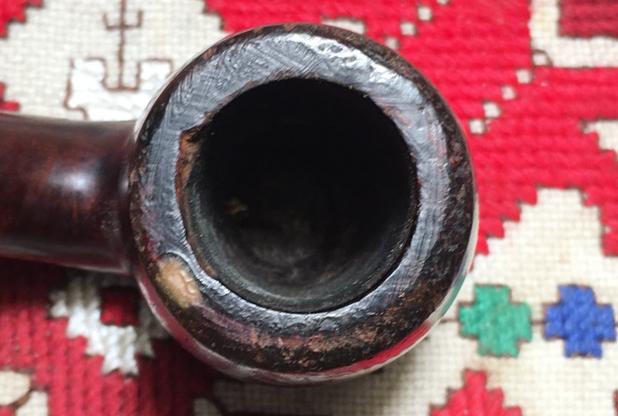
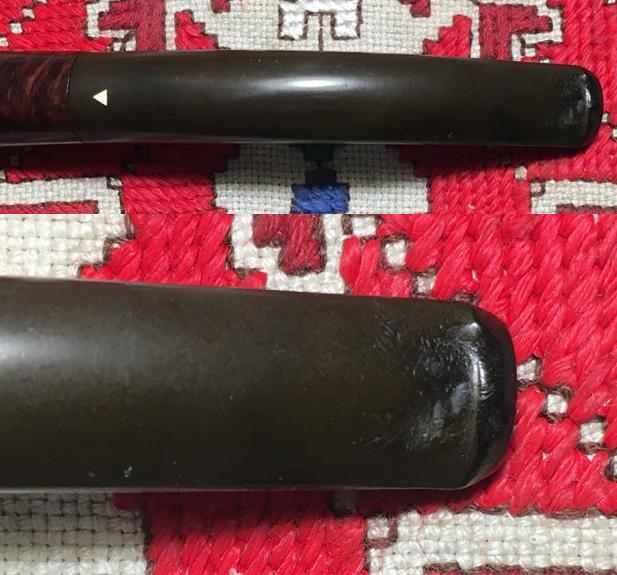
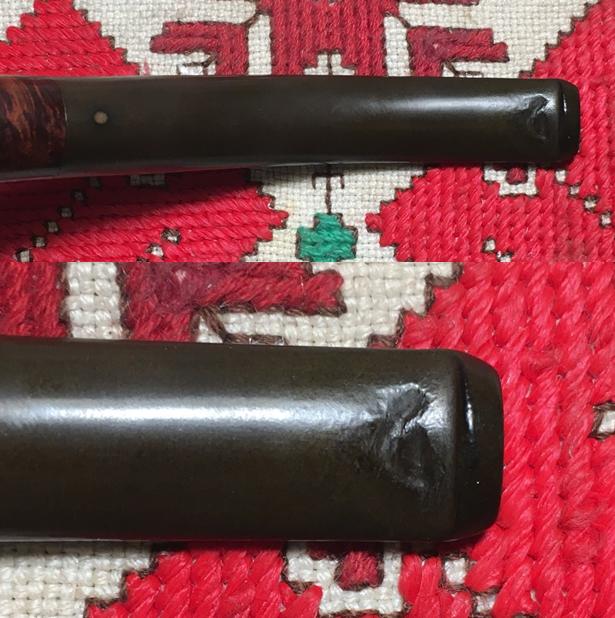
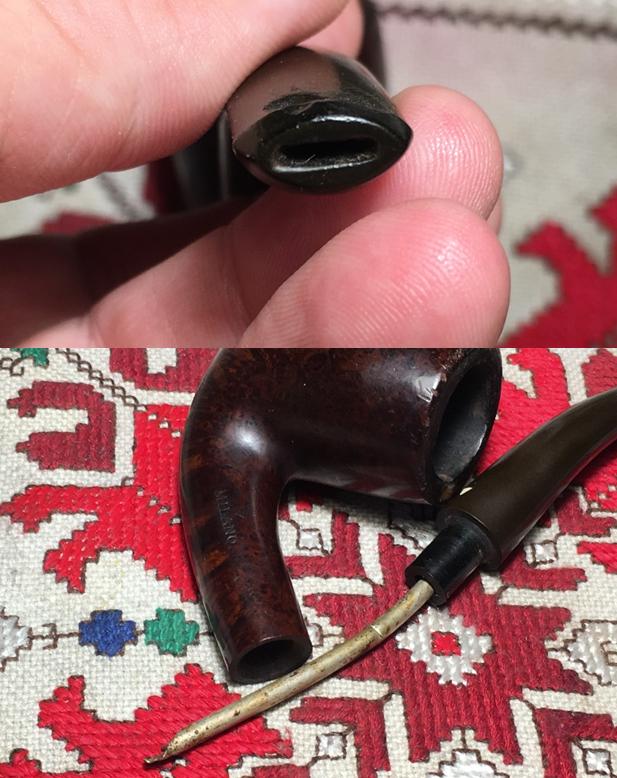
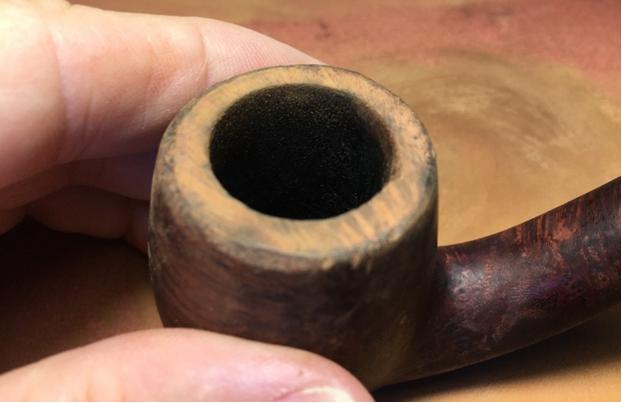
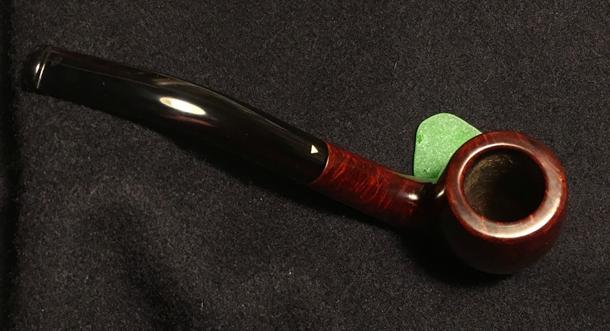
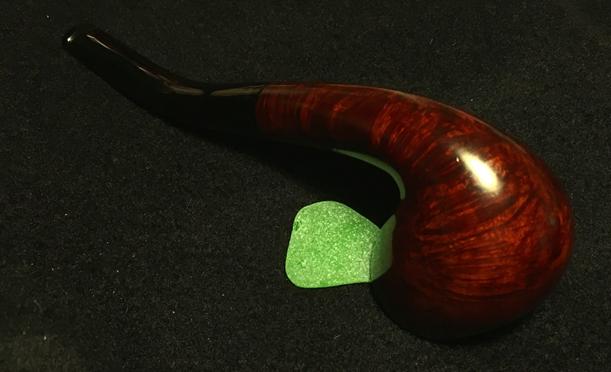
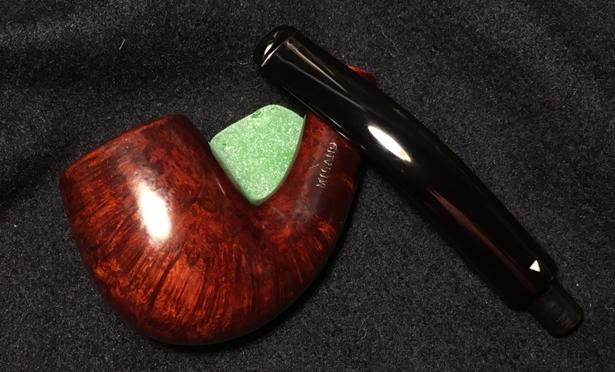
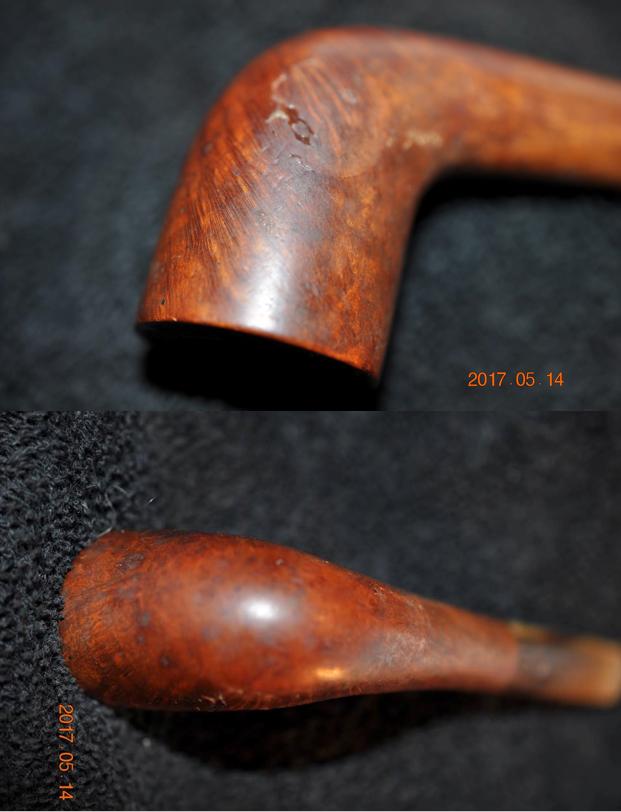
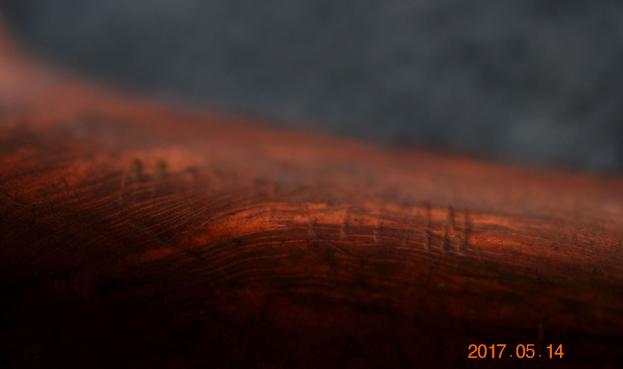
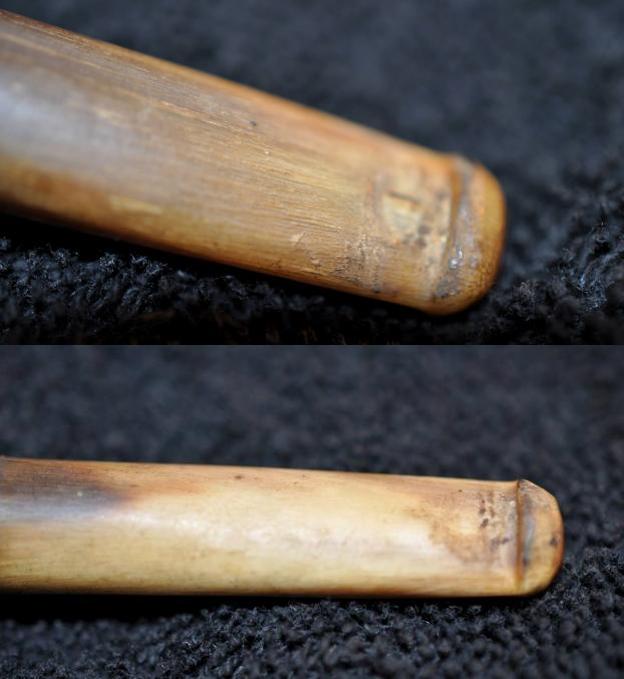
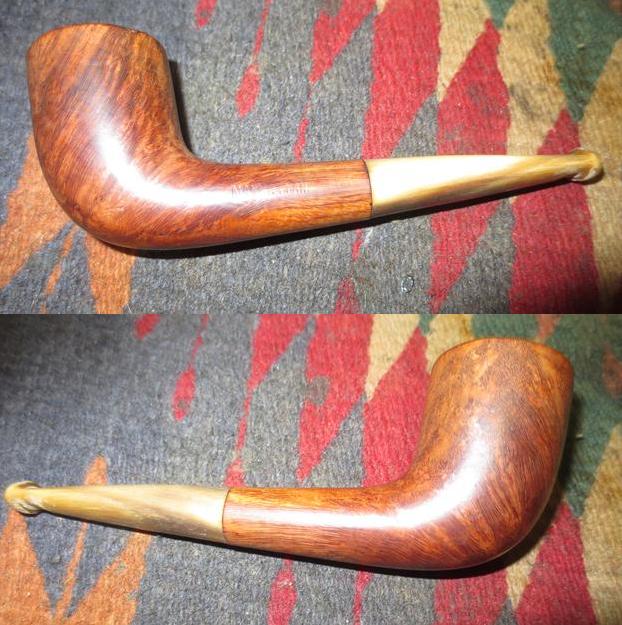
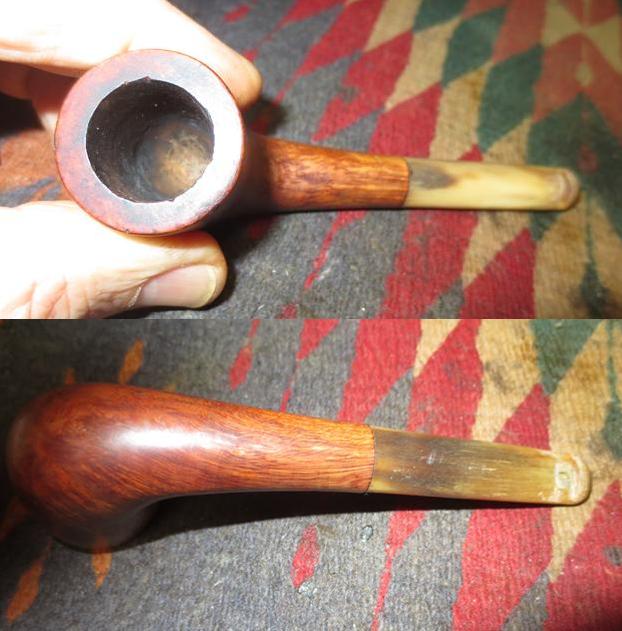
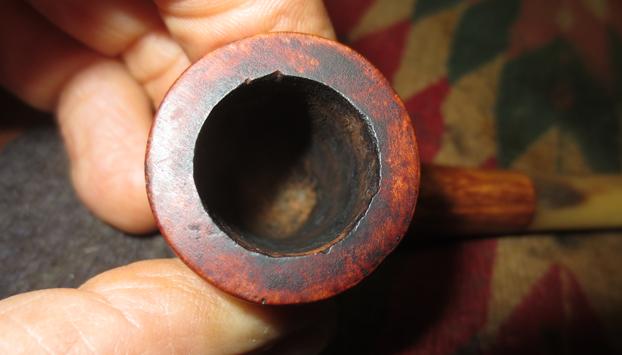
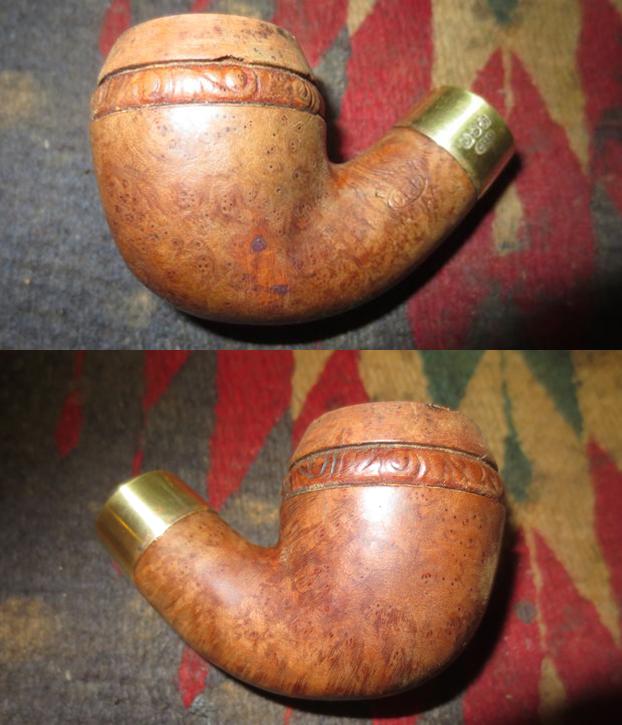
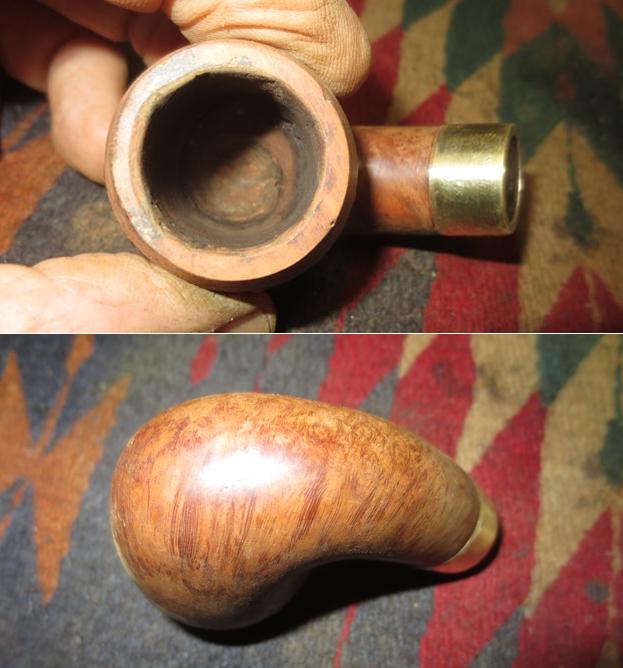
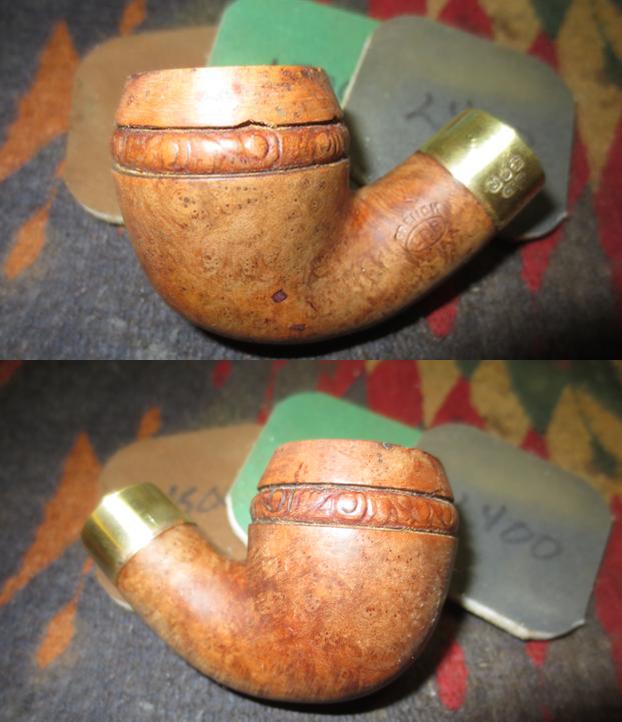
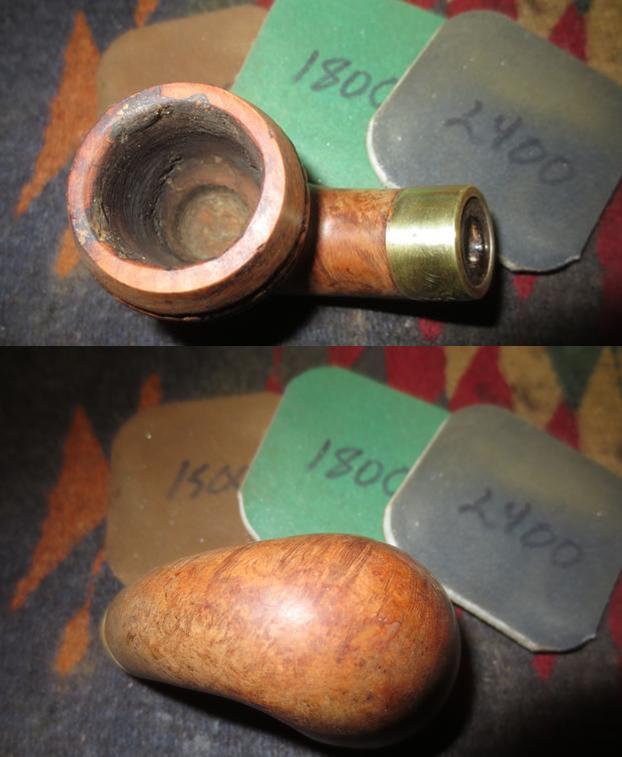
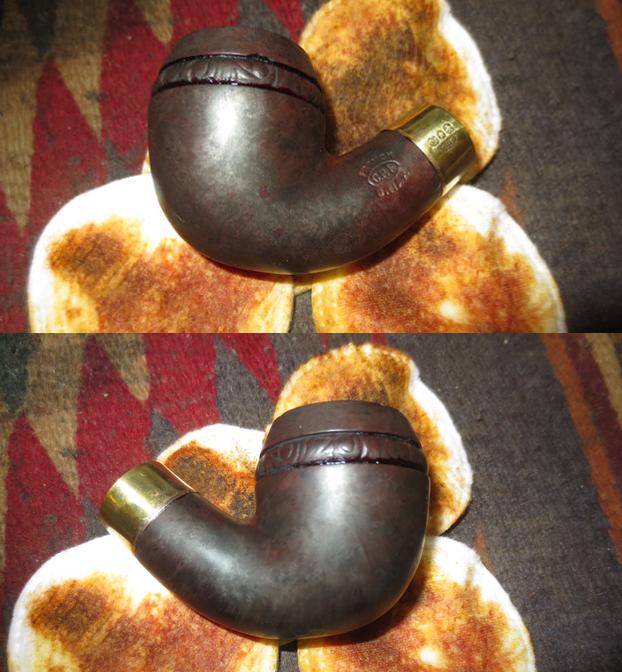
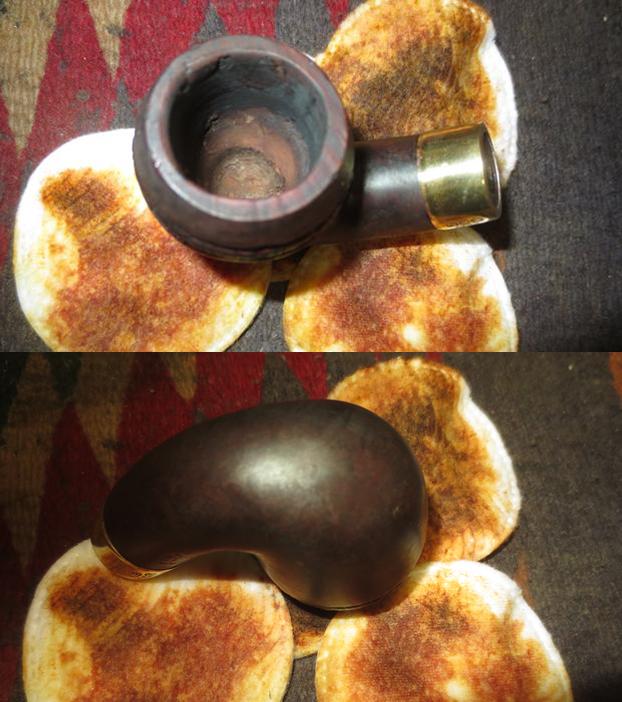
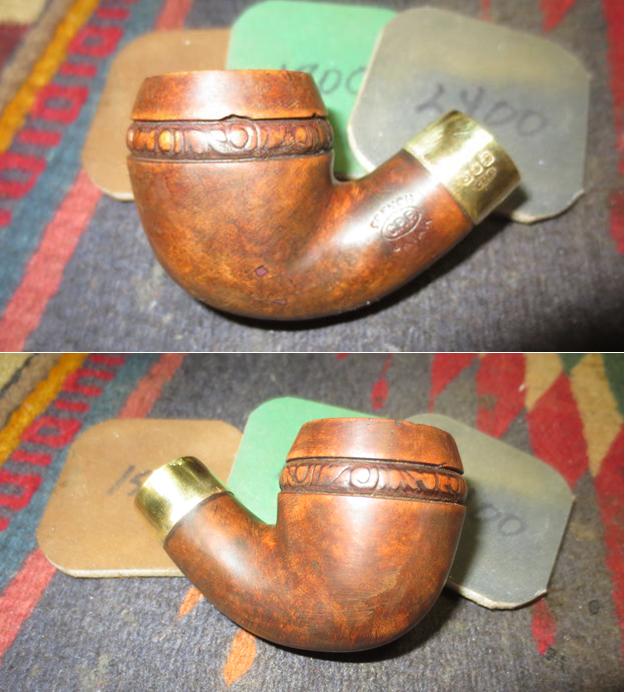
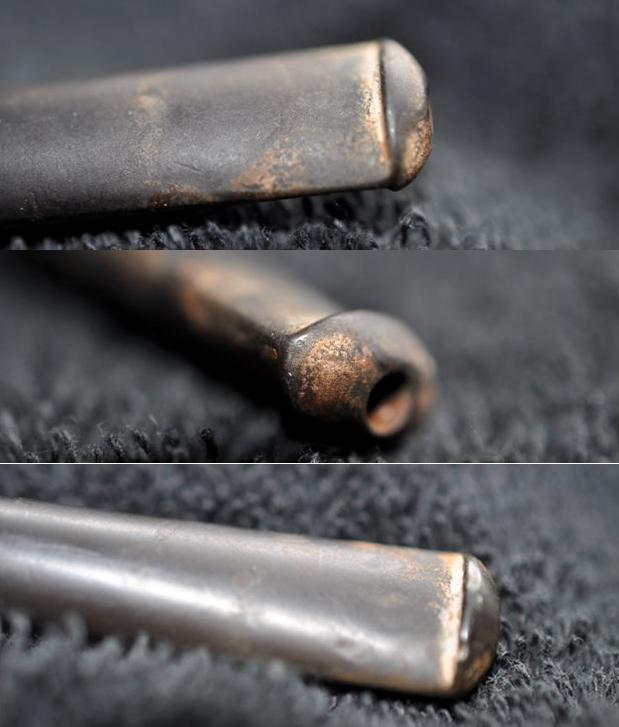
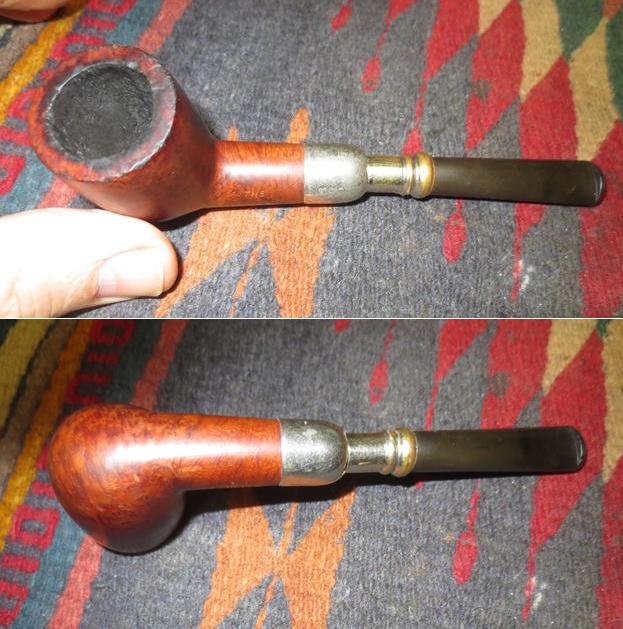
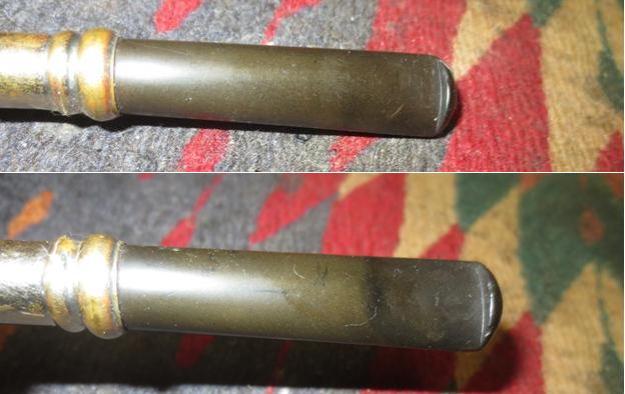
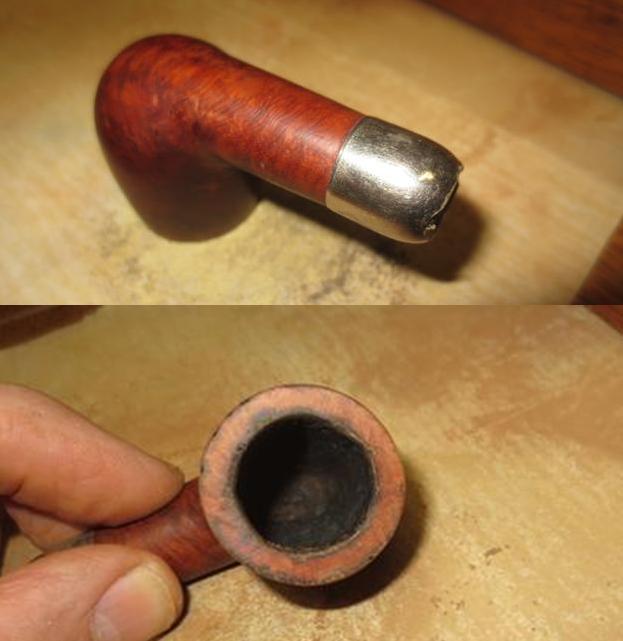
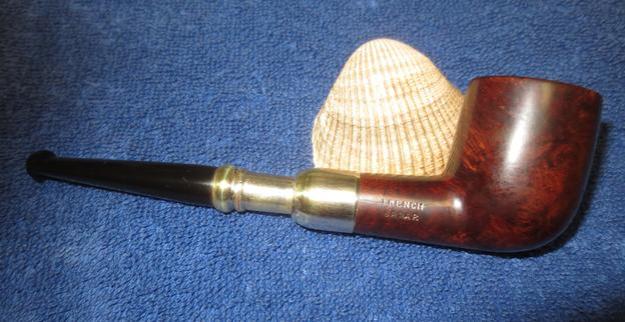
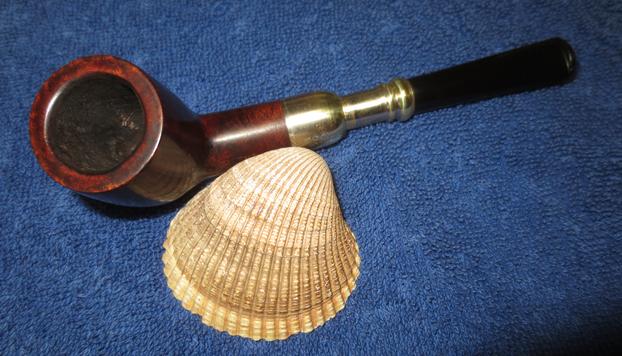
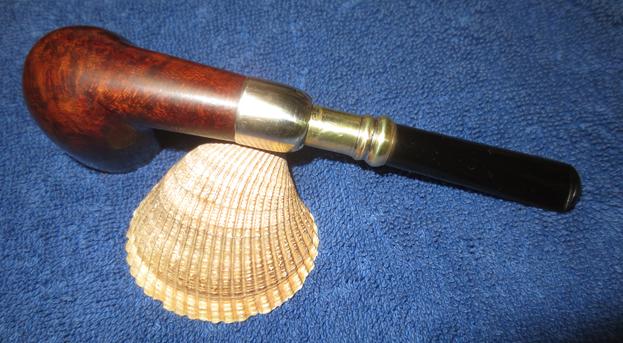
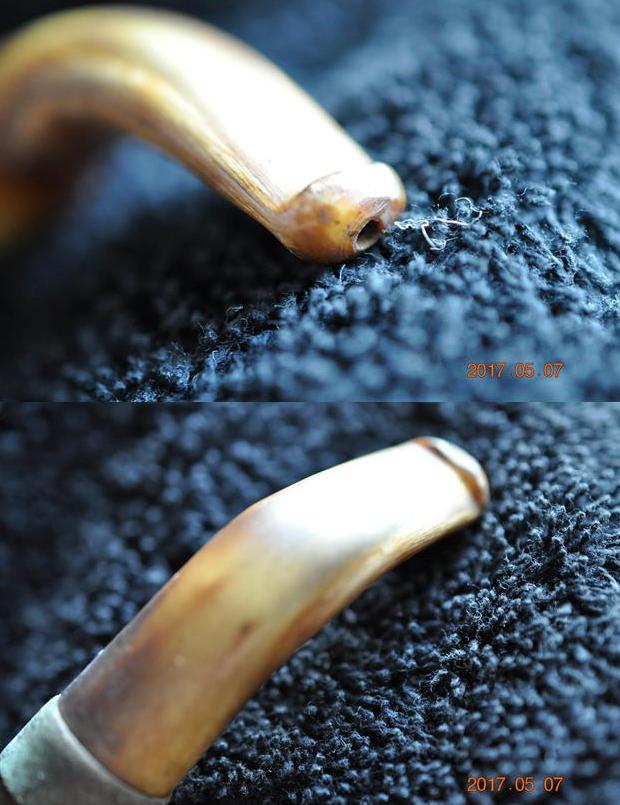
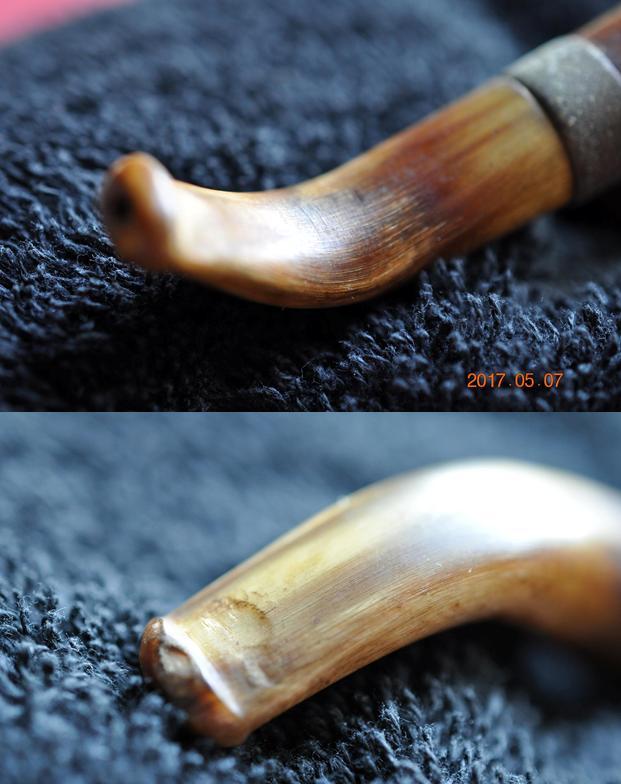
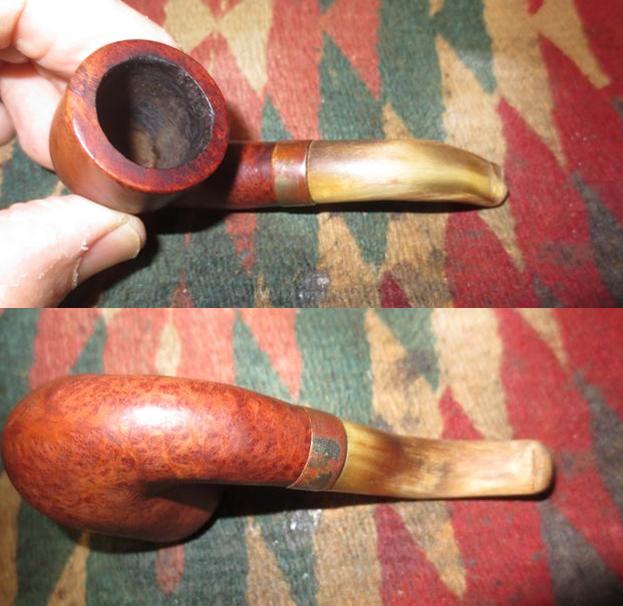
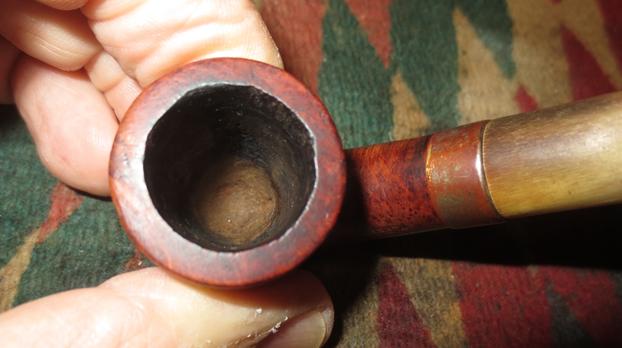
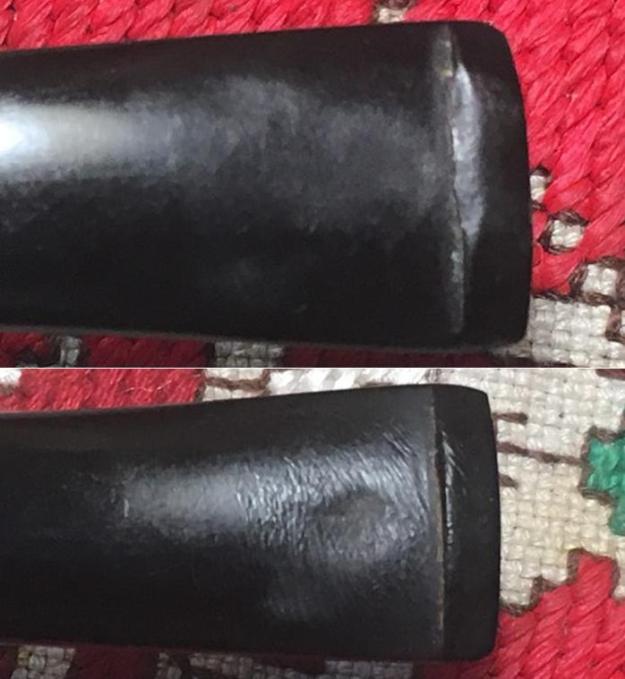
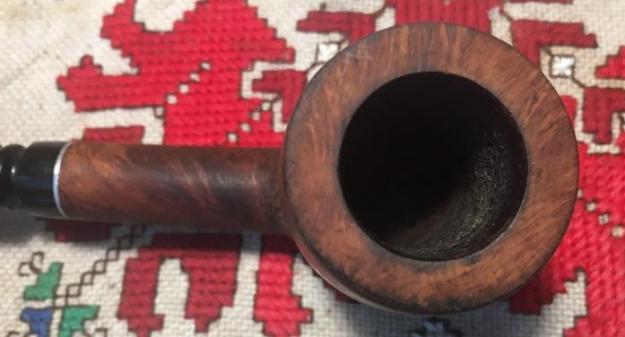
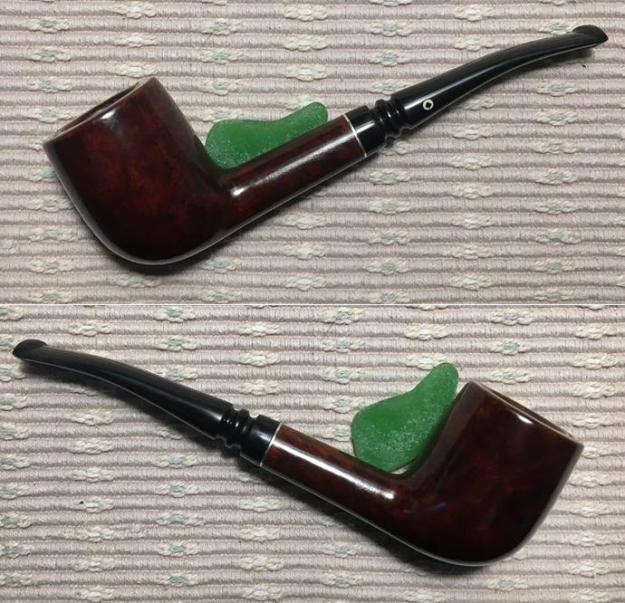
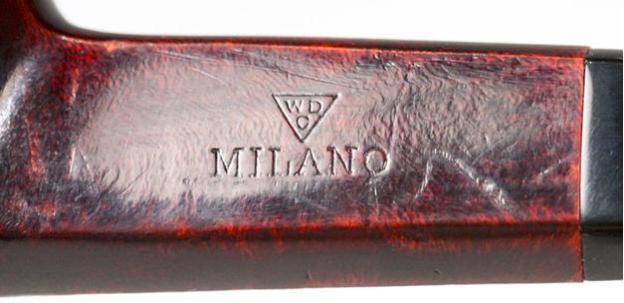
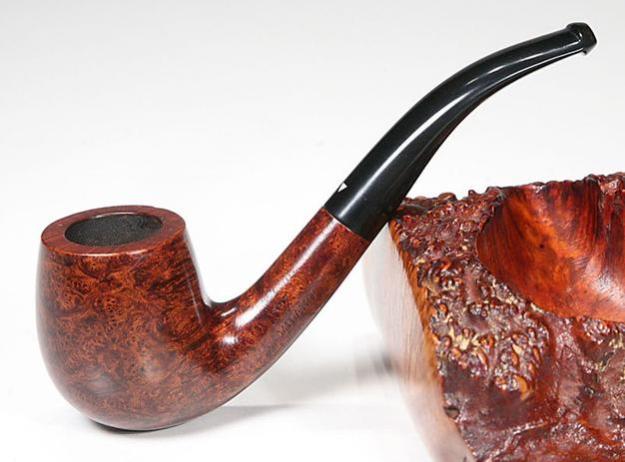
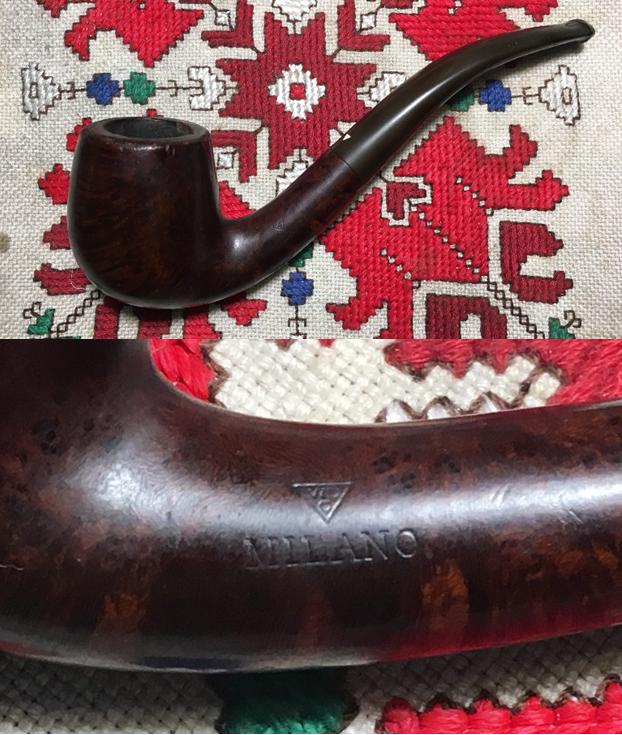
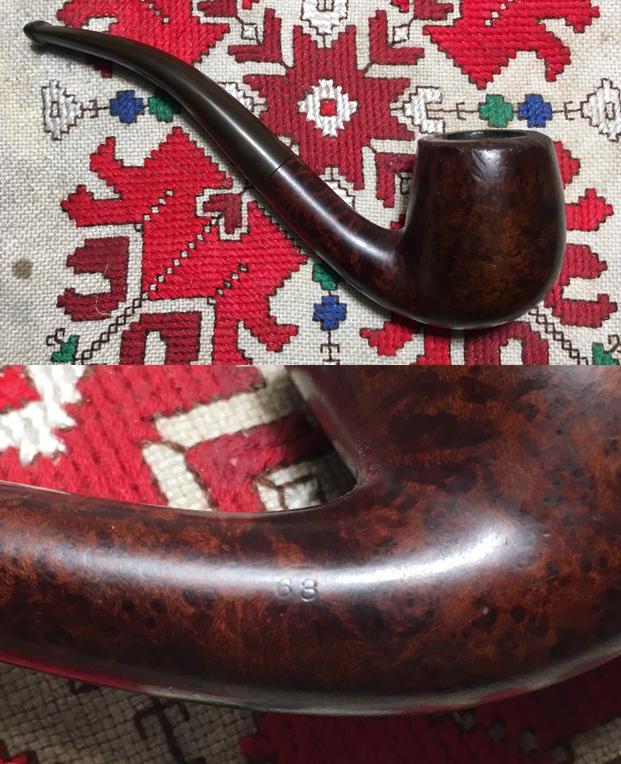
And then there is the ‘question’ of the ‘Pipe Lady’ more so than the ‘Pipe Man’.  A Pipe Lady lives closer to the social and cultural ‘edge’ when she takes her pipe in hand and enjoys a bowl of her favorite blend.  This picture I found somewhere on the internet (sorry, can’t cite!), I suspect would never be ascribed to Pipe Men.  Yet, a Pipe Lady looks at the three with a smile of agreement and a wink, while she is thinking, ‘You’ve got that one right!’This graceful, Milano Swan Neck stem comes from the William Demuth Company, established in 1862 – one of the oldest pipe manufacturing houses in the United States (Pipedia article).  The WDC Milano patent goes back to the 1920s with an example of the familiar WDC rhombus from the same WDC article in Pipedia (courtesy of Doug Valitchka).The eBay seller from Akron, Ohio, described the long dimensions of the Lady’s Choice WDC Milano:  Very graceful bent billiard! About 6″ long, bowl is 2″ tall, 1 3/8″ wide. ID 3/4″, depth 1 13/16″. From Pipedia’s WDC article, courtesy Doug Valitchka, a very nice example of what appears to be the same Swan Neck Billiard of the Milano line.From my worktable on the 10th floor of our flat here in Sofia, Bulgaria, I take these pictures to fill in the gaps. On the left side of the shank is stamped the traditional WDC rhombus [over] MILANO.  The right side is stamped the single shape number, ‘63’.  The chamber appears to have been cleaned to some degree and the carbon cake is very light.  The rim is sad.  It appears someone took a divot out of the internal lip trying to clean it or something.  The rim’s outer edge is beat up and I can see the vestiges of a bevel.  There is lava crusting as well on the rim surface and some hardened light stuff – the rim needs cleaning.  The stummel has few if any fills that I see – the grain of the tall bowl is impressive.  The stem has the WDC inlaid white triangle on the top.  Oxidation is present and the former steward was a clencher and chewer.  Both top and bottom of the bit shows deep bite dents.  The top button lip is dented.

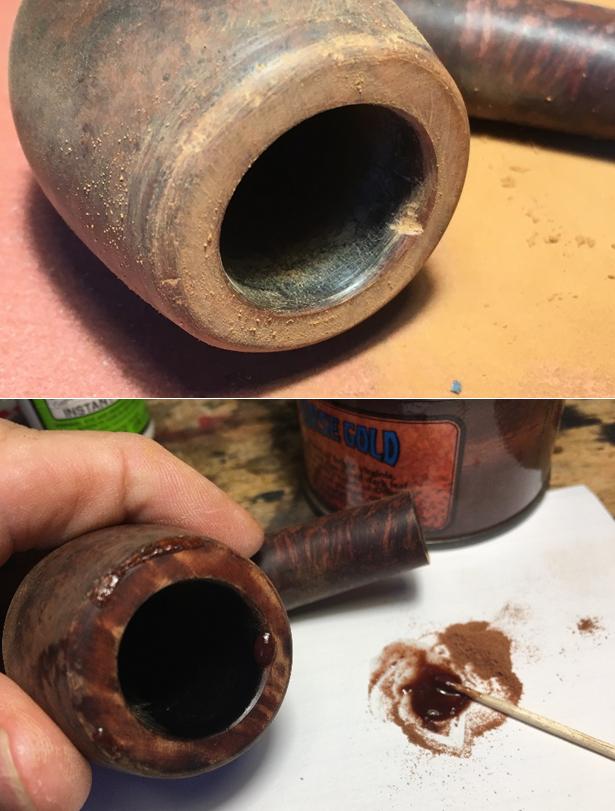
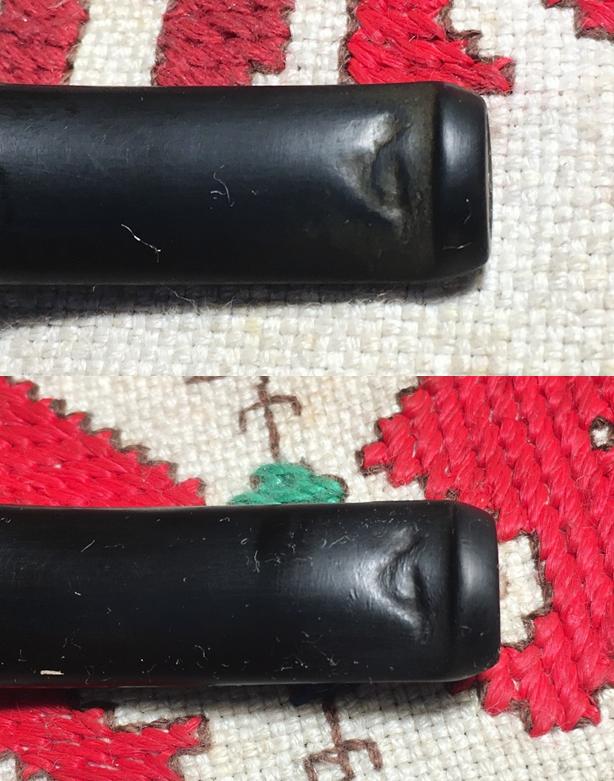
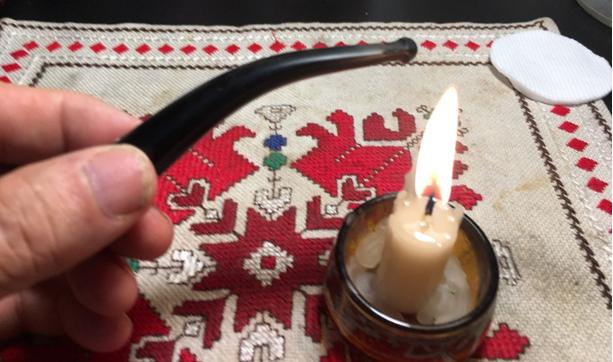
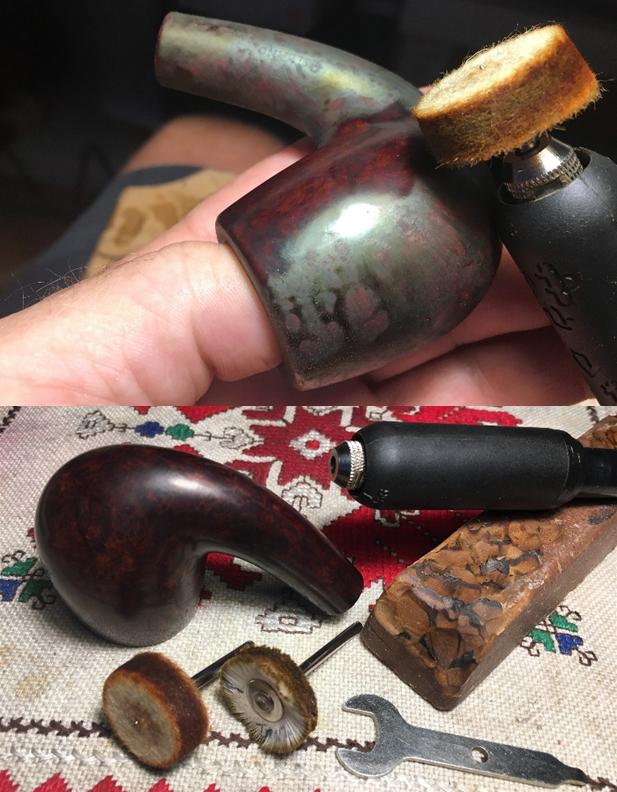
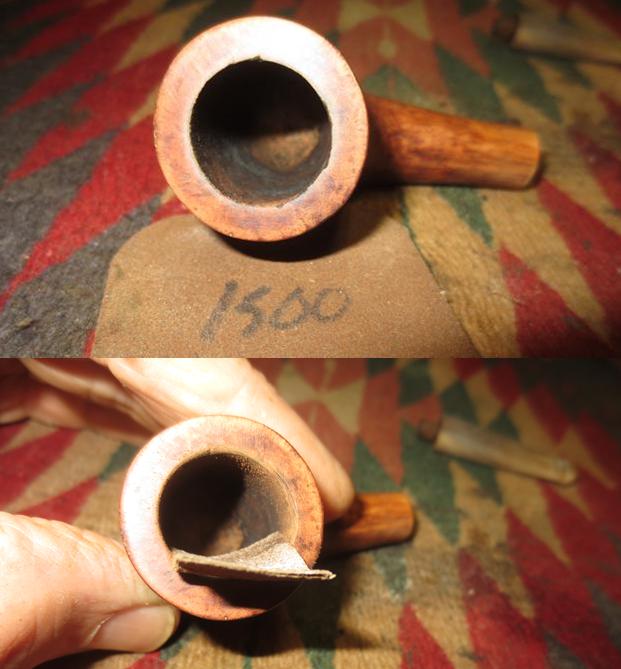
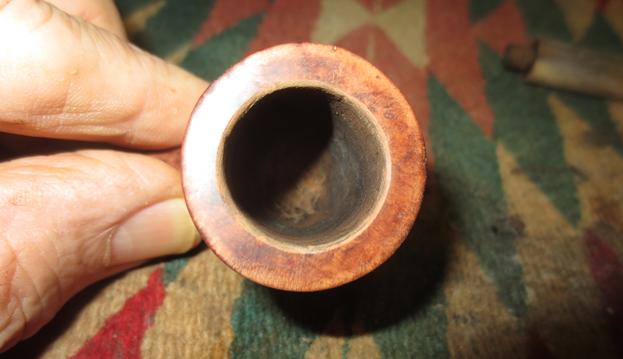
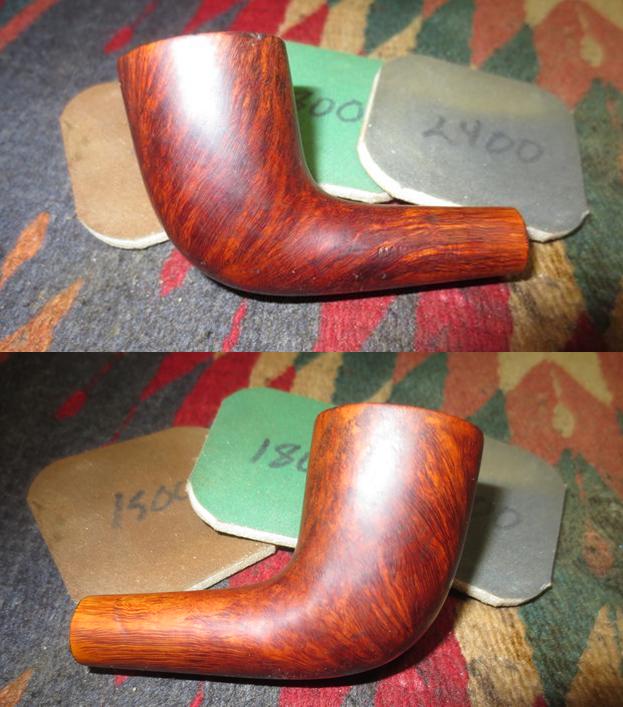
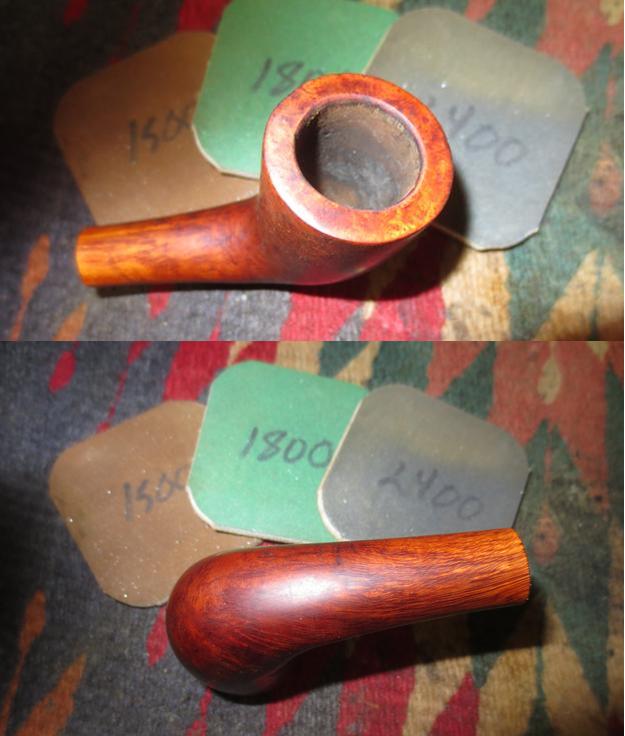
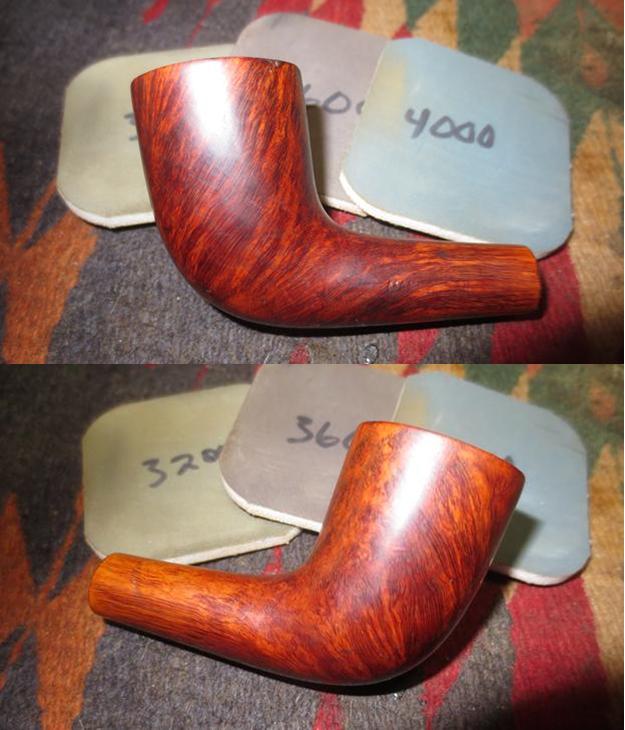
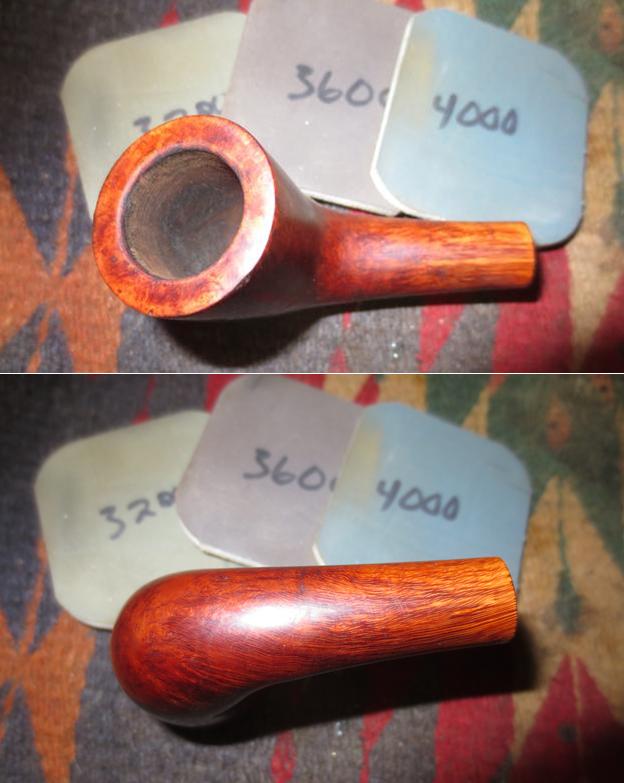
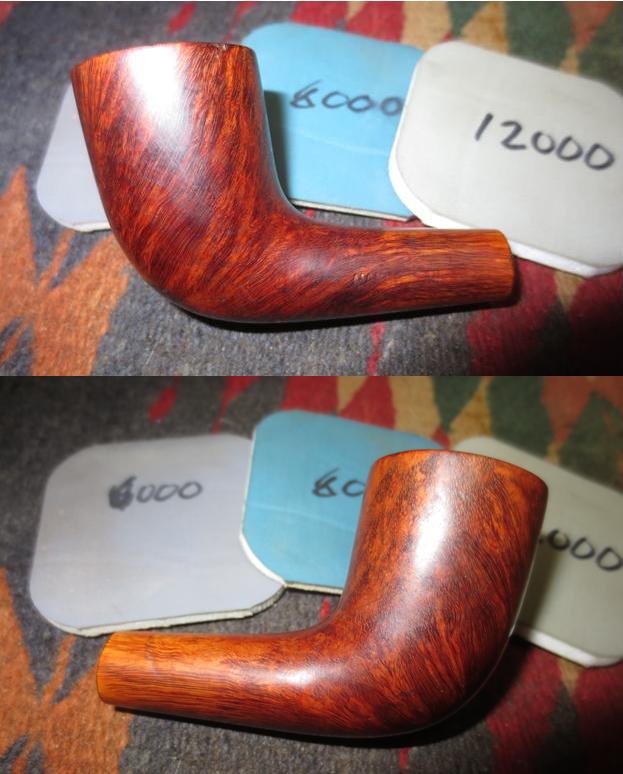
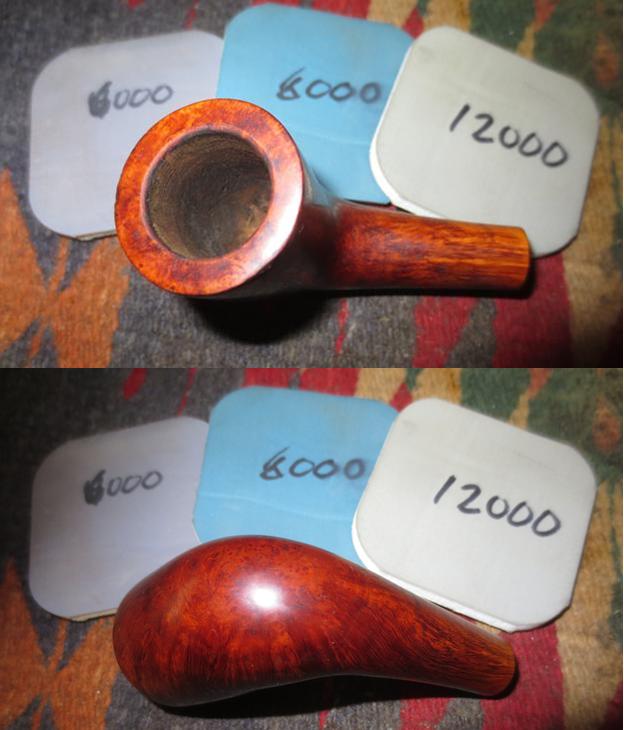
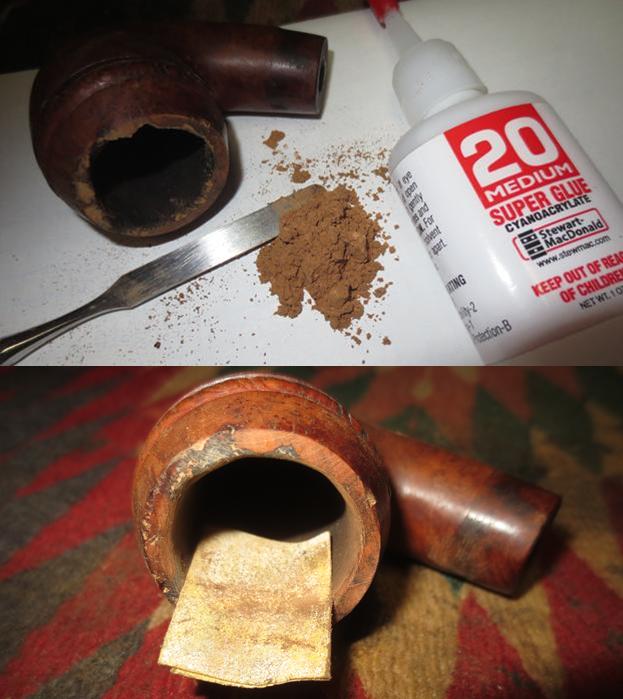
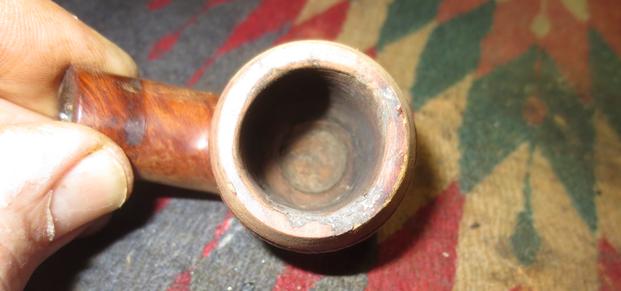
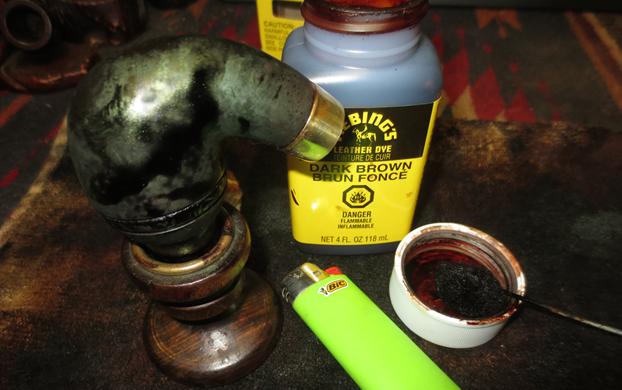
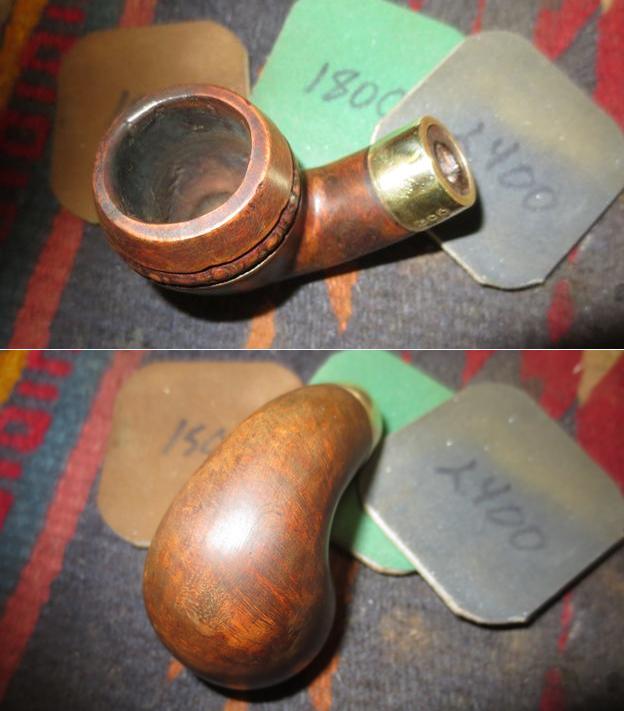
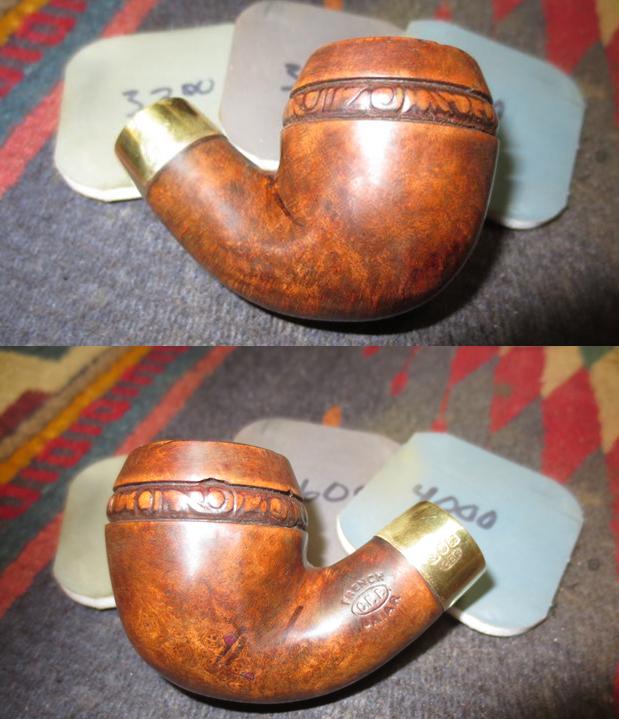
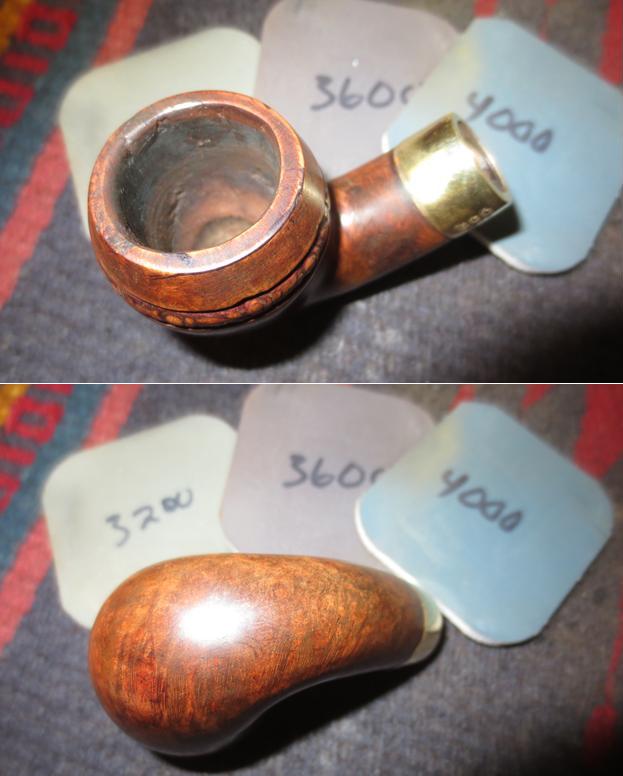
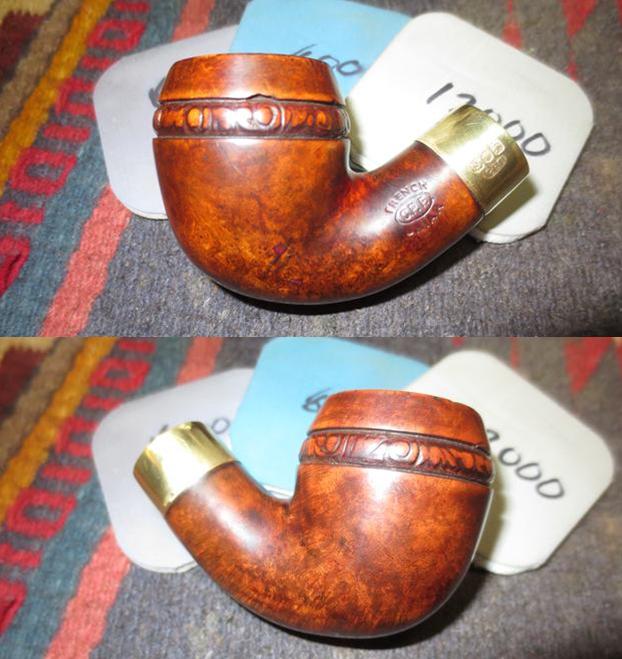
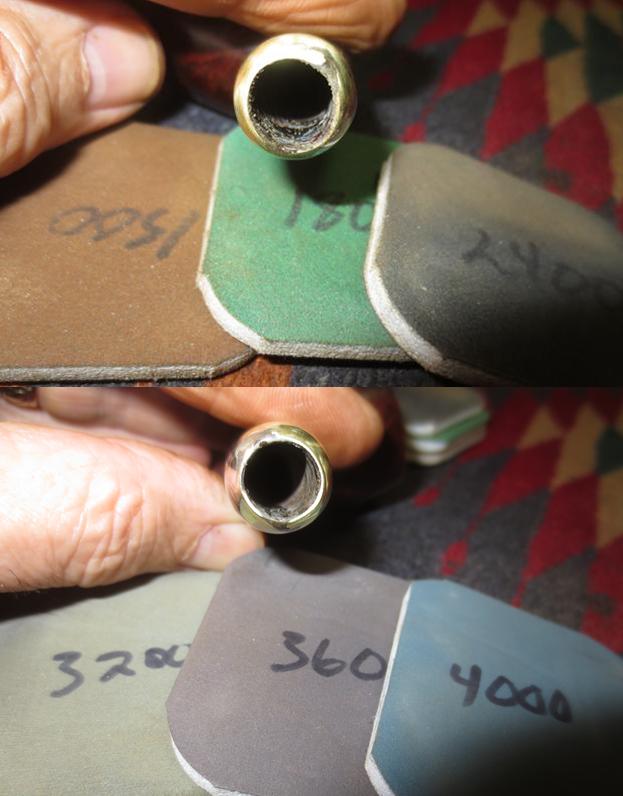
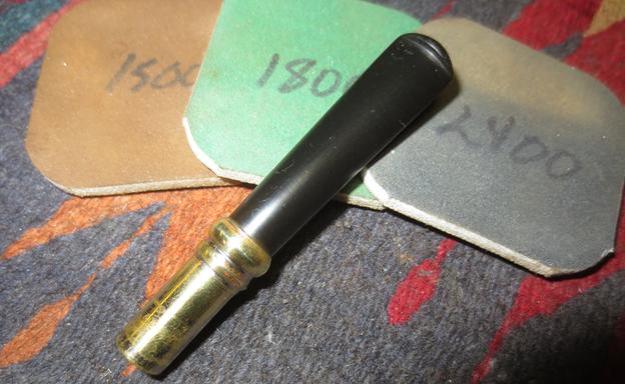
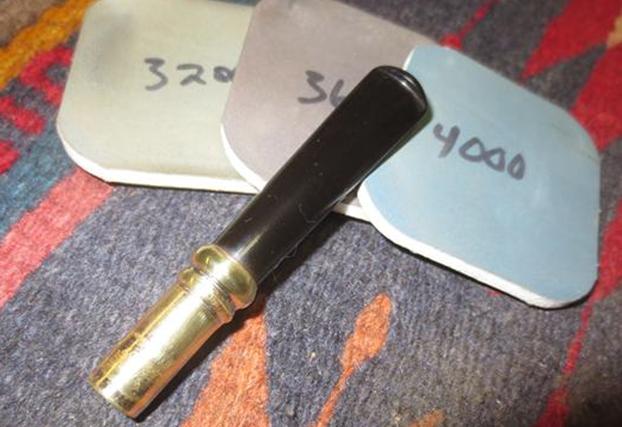
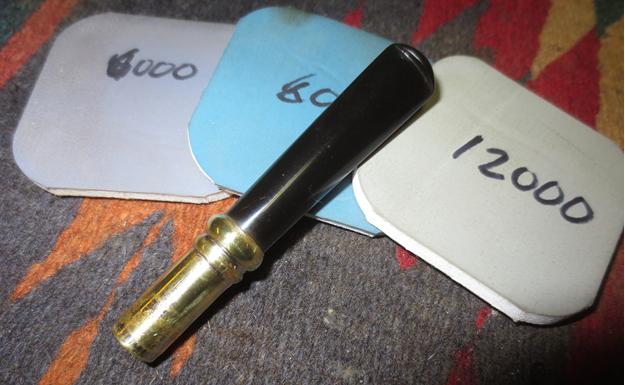
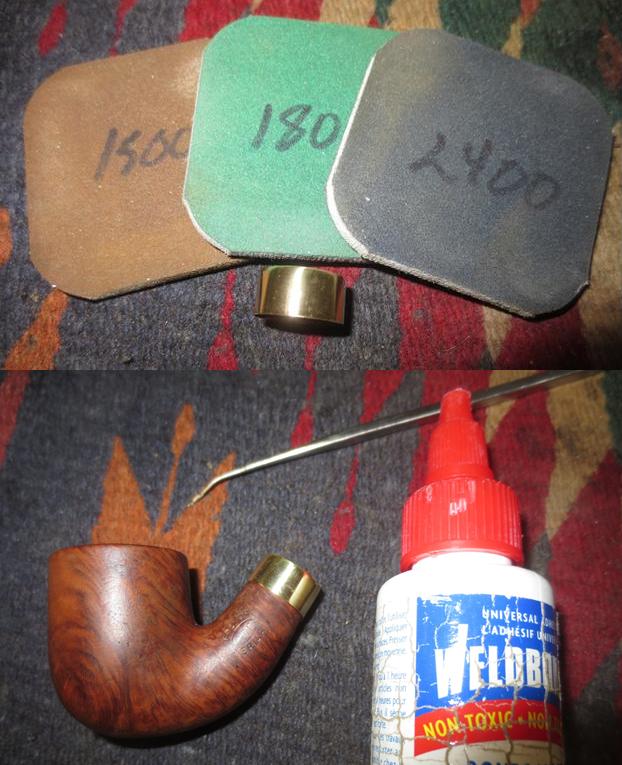
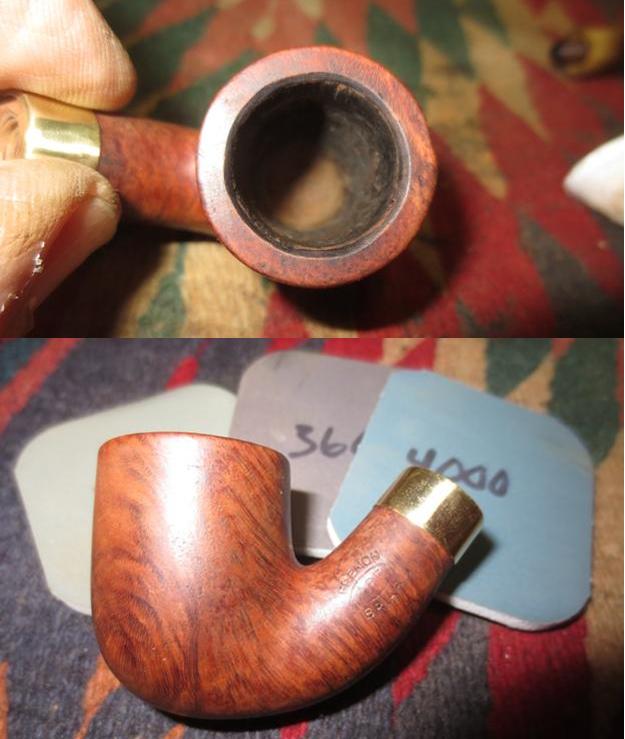
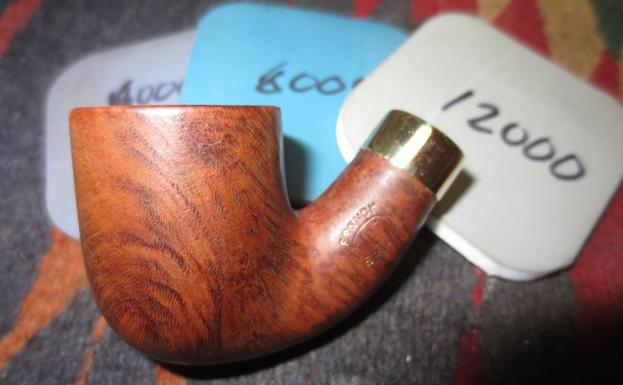
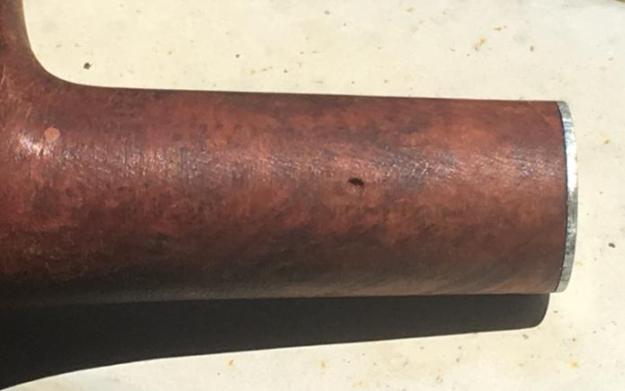
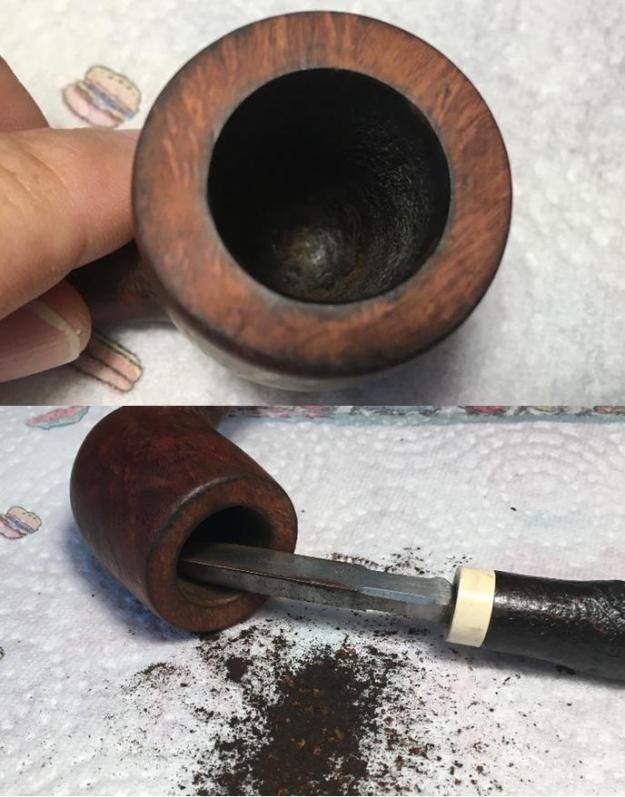
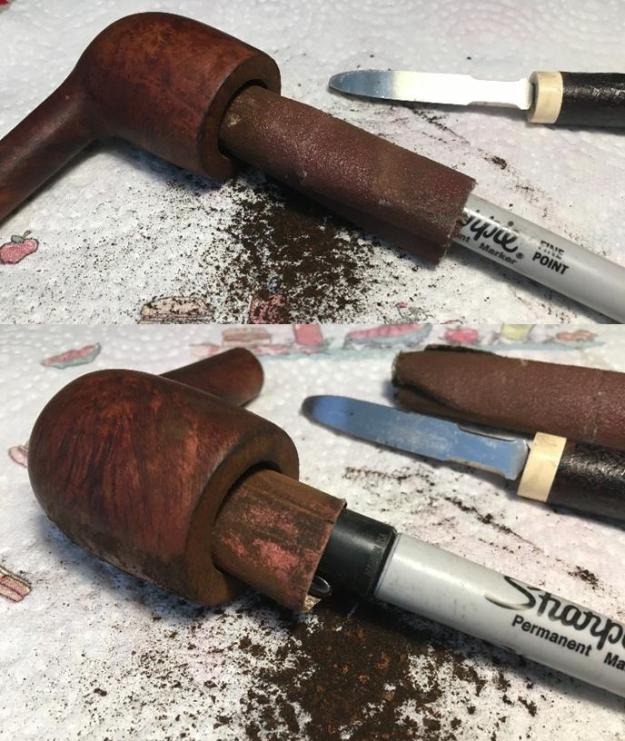
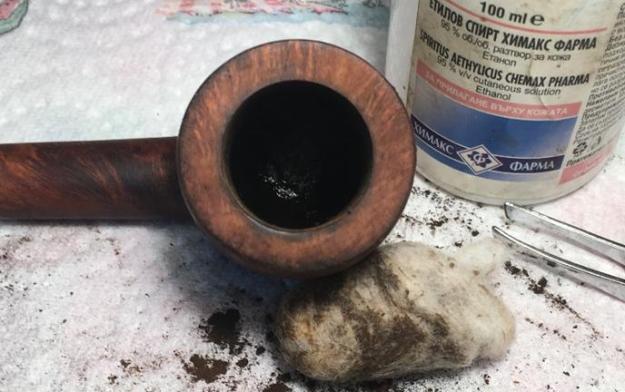
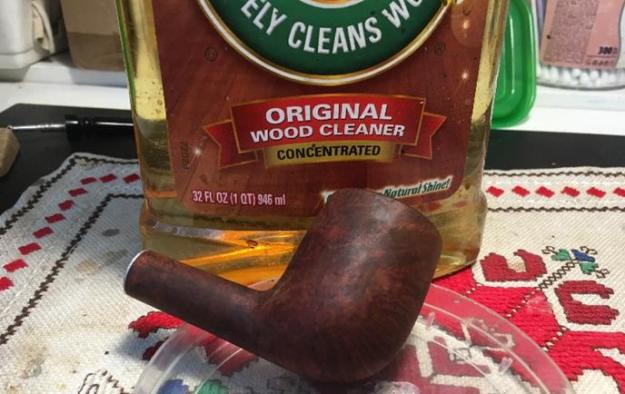
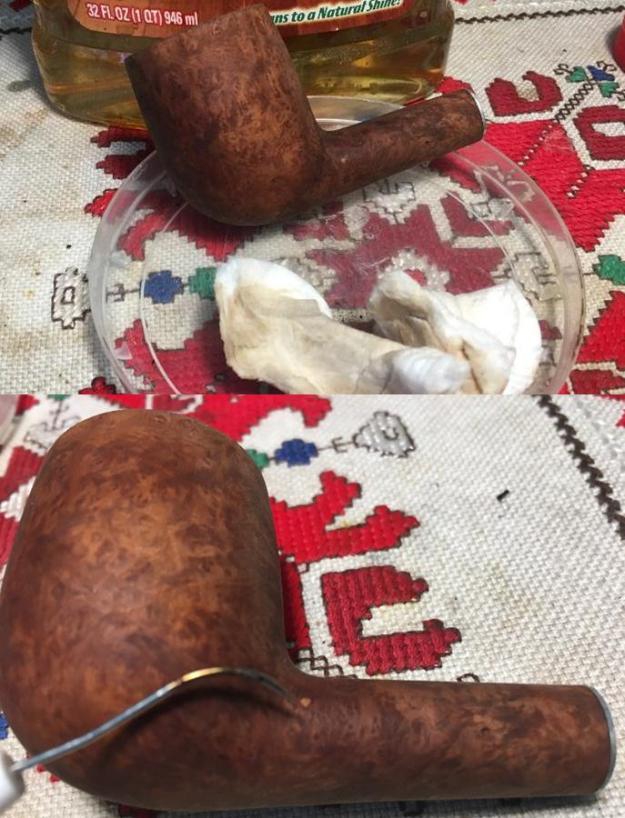
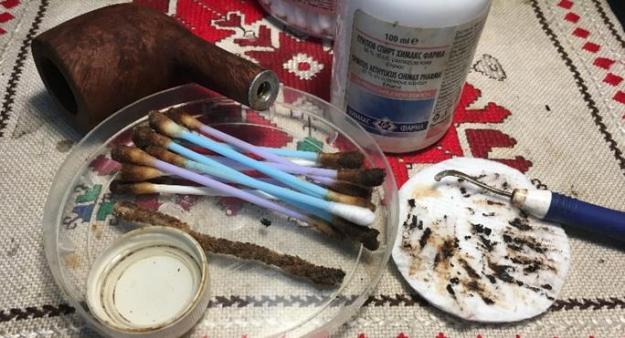
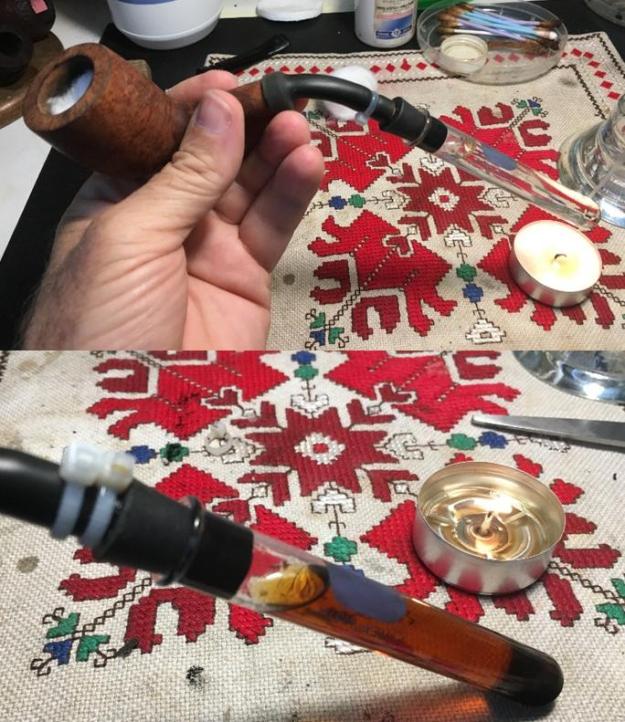
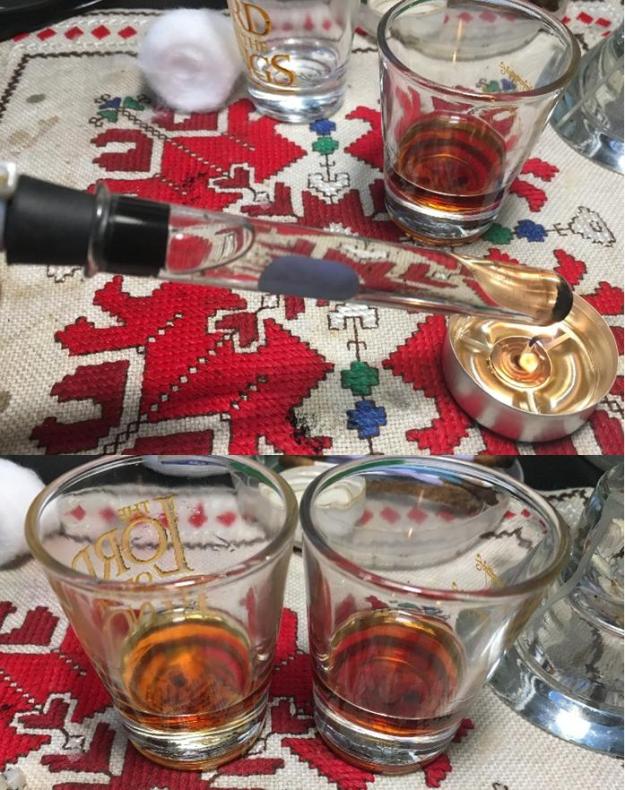
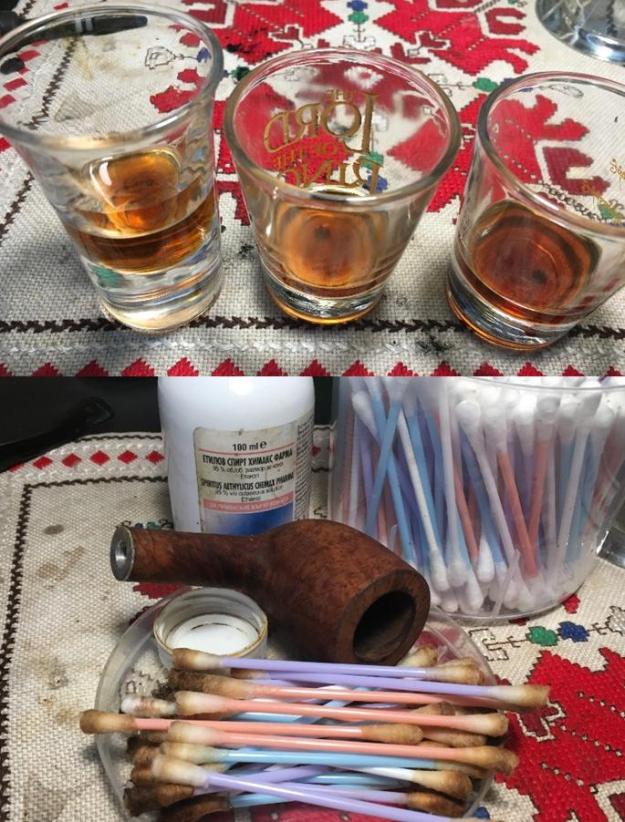
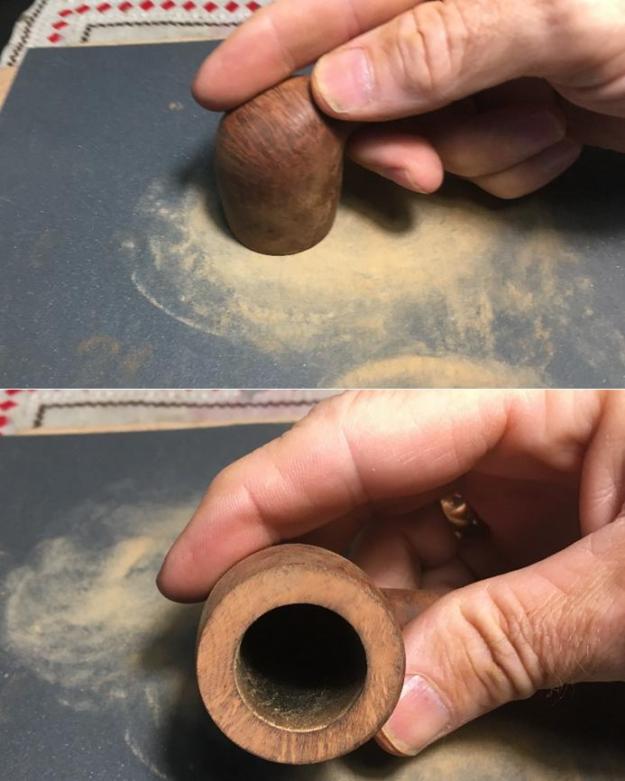
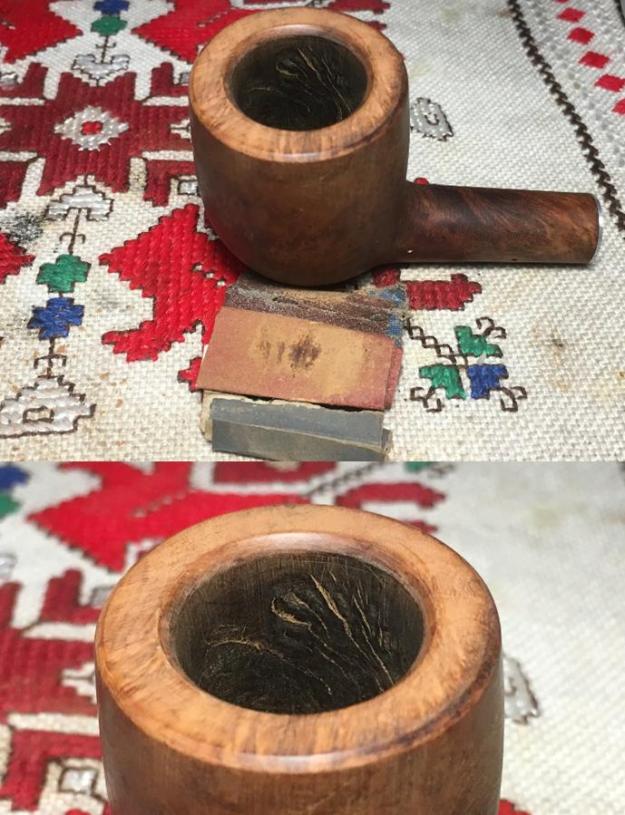
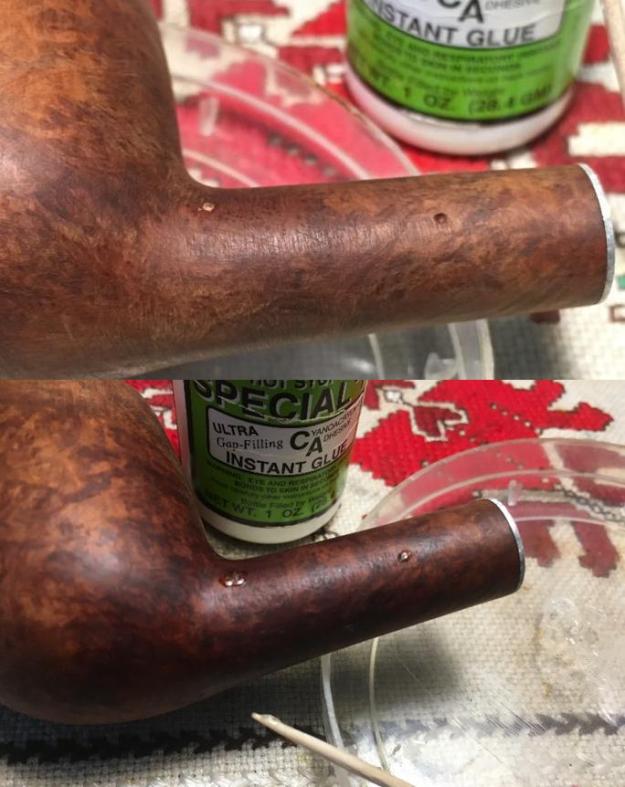
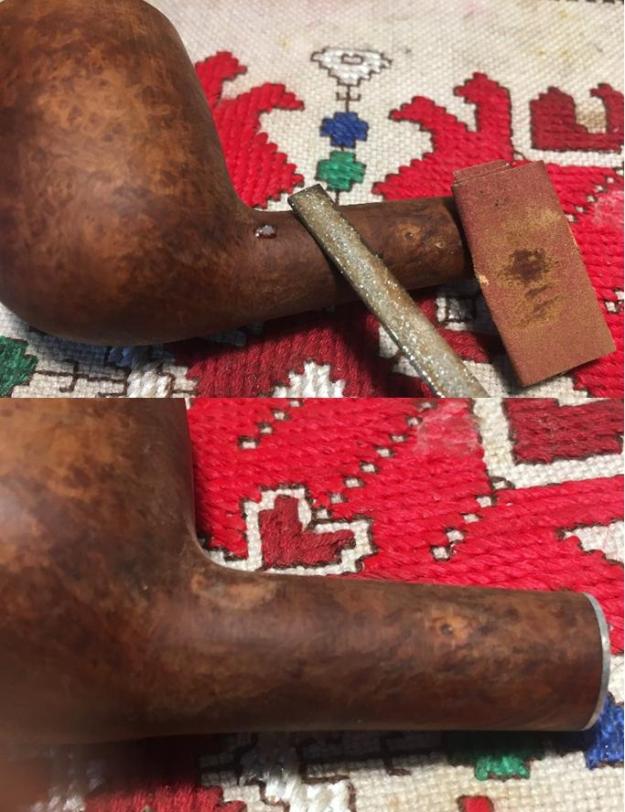
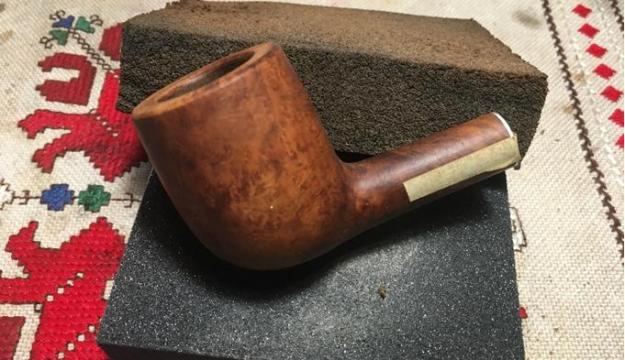
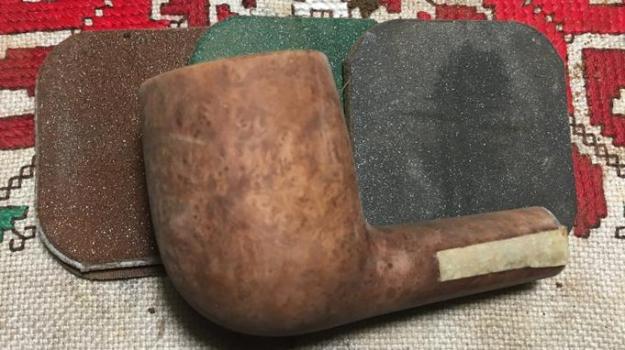
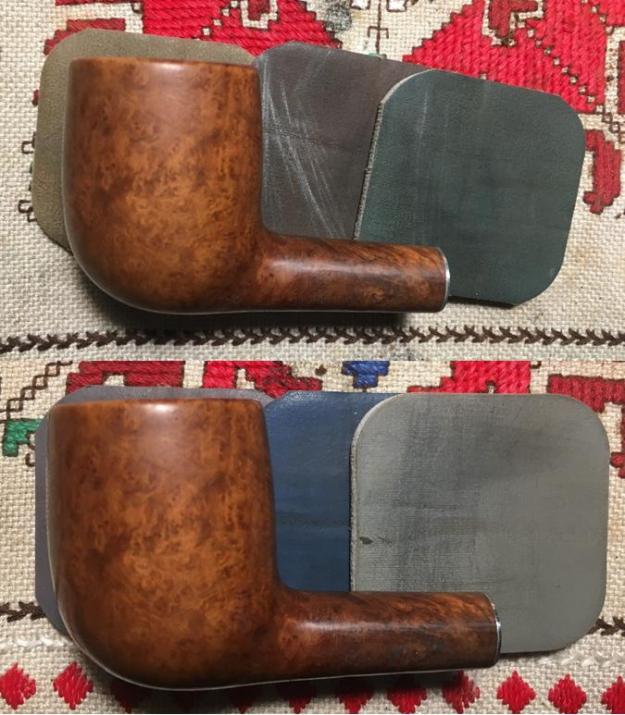
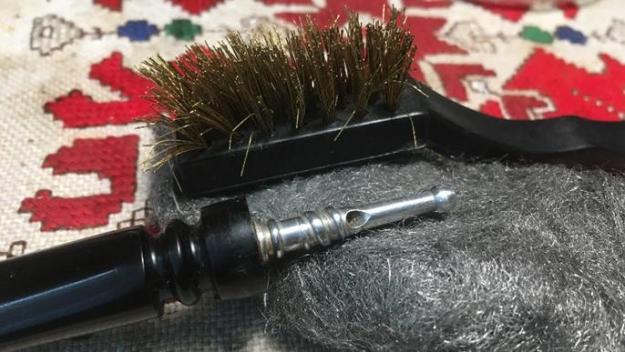
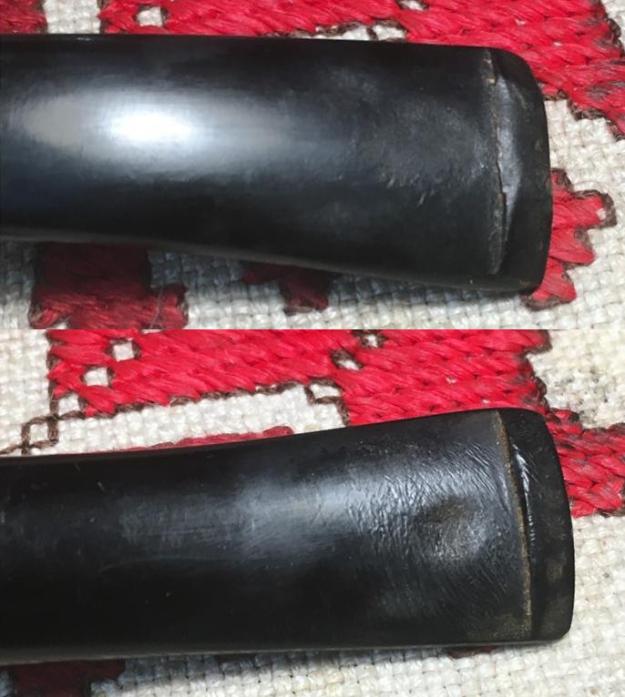
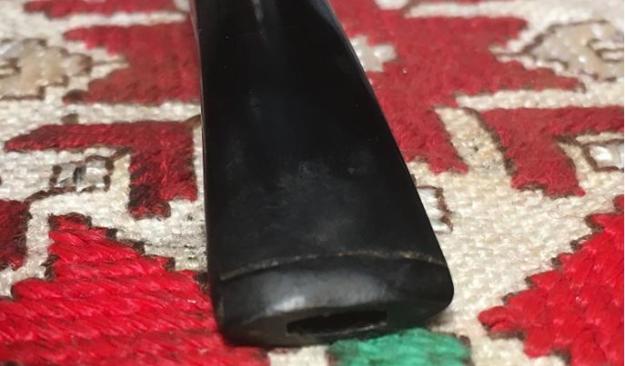
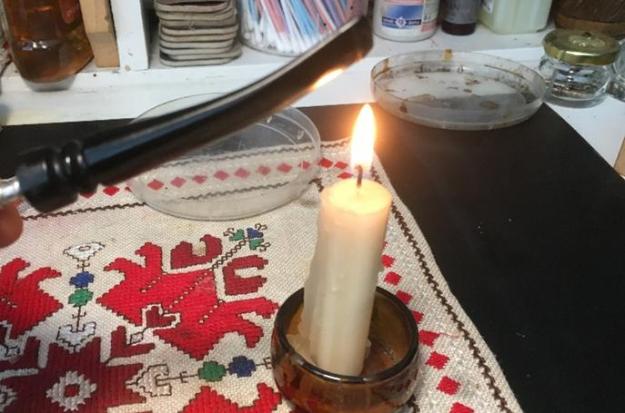
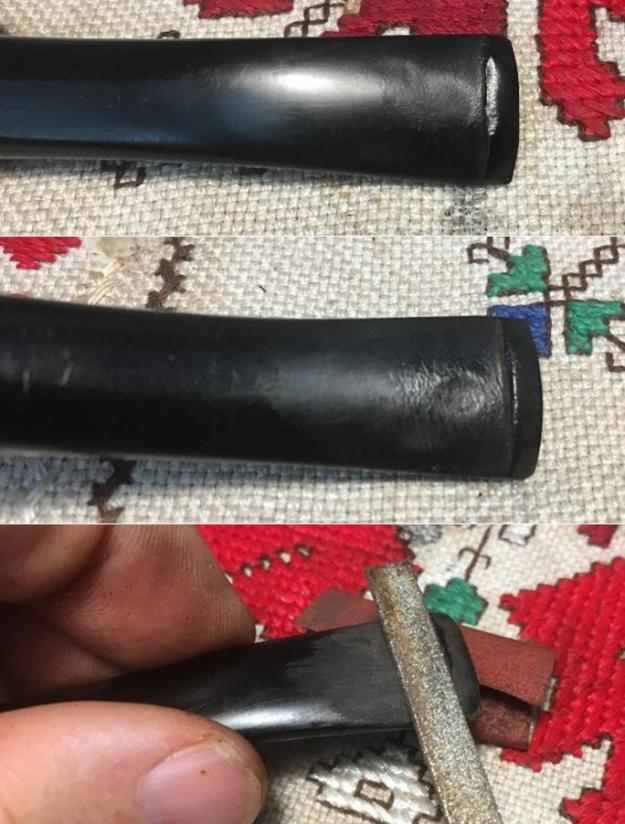
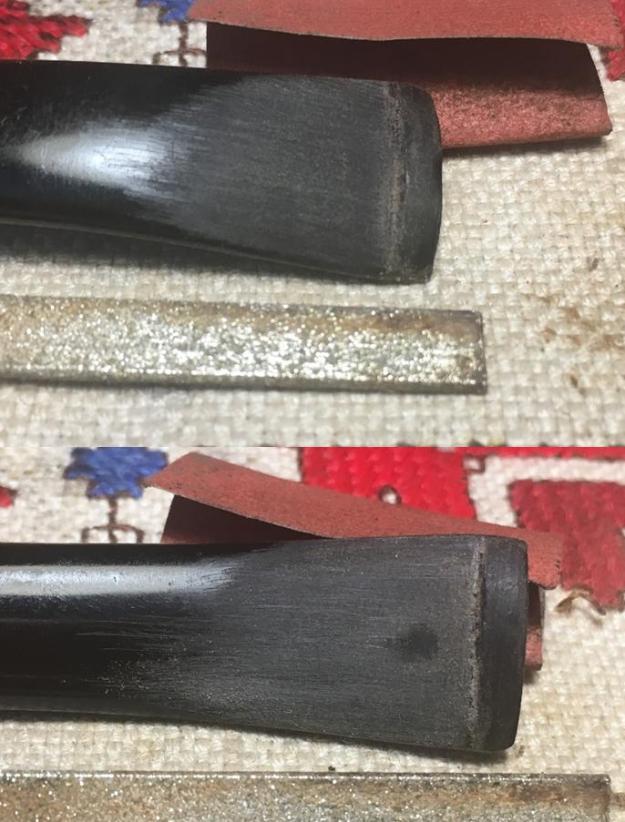
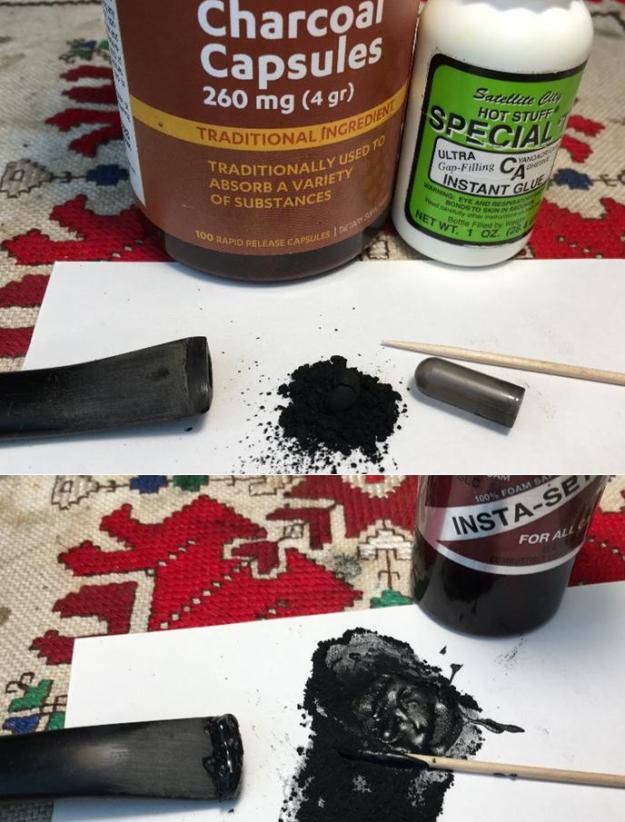
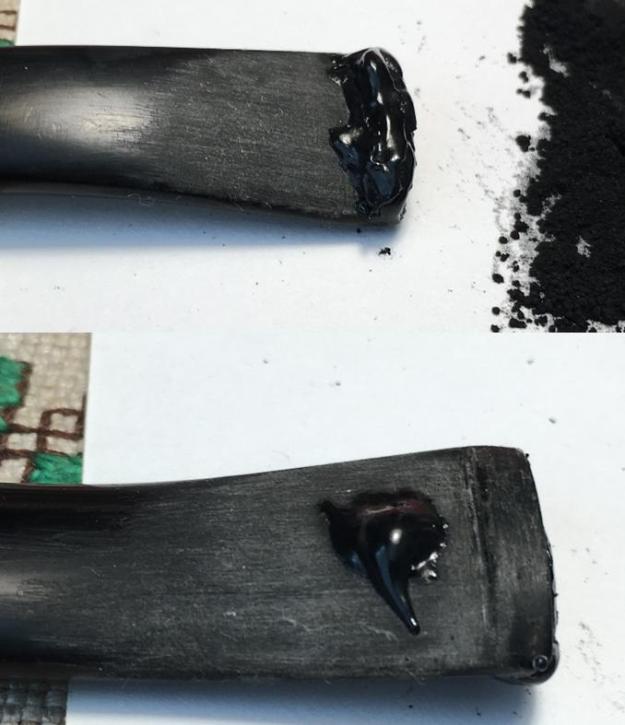
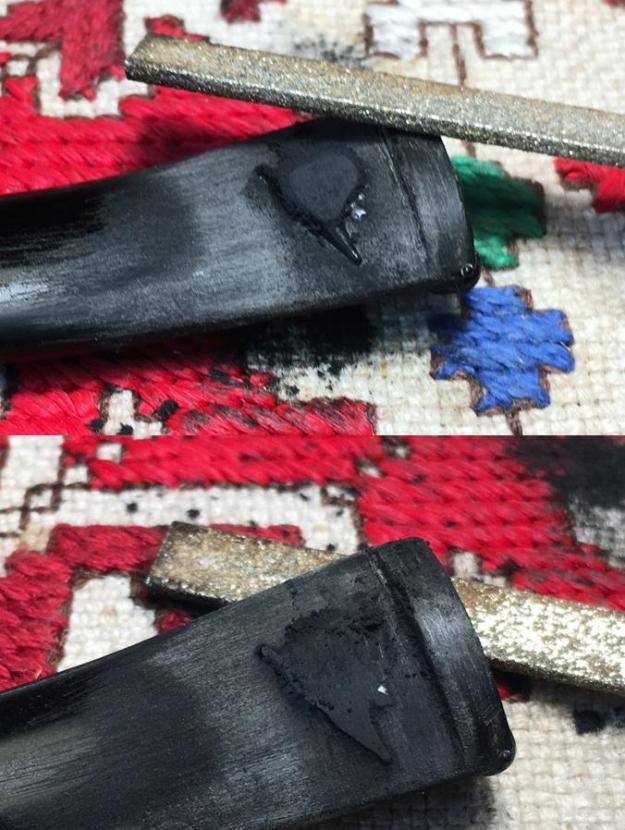
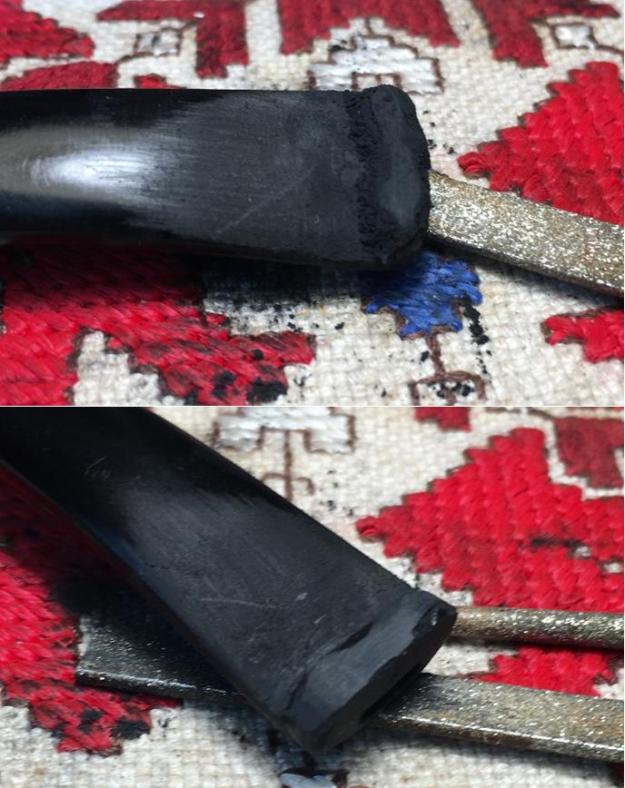
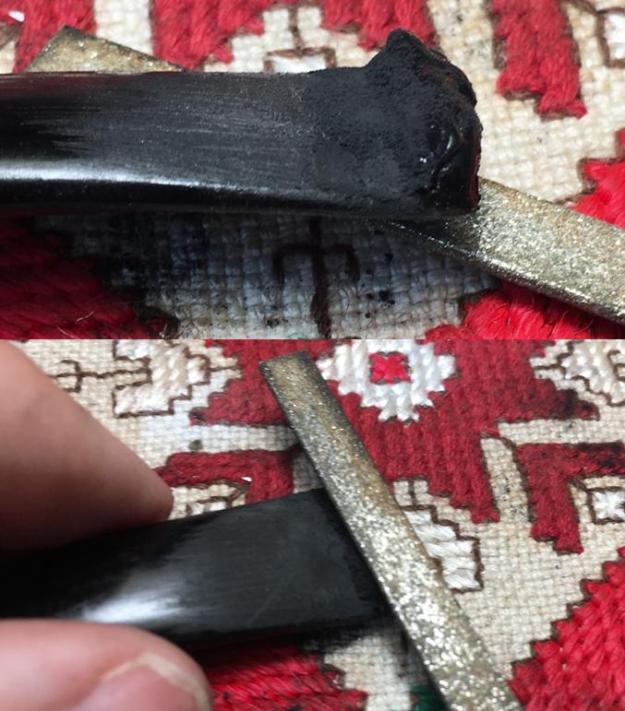
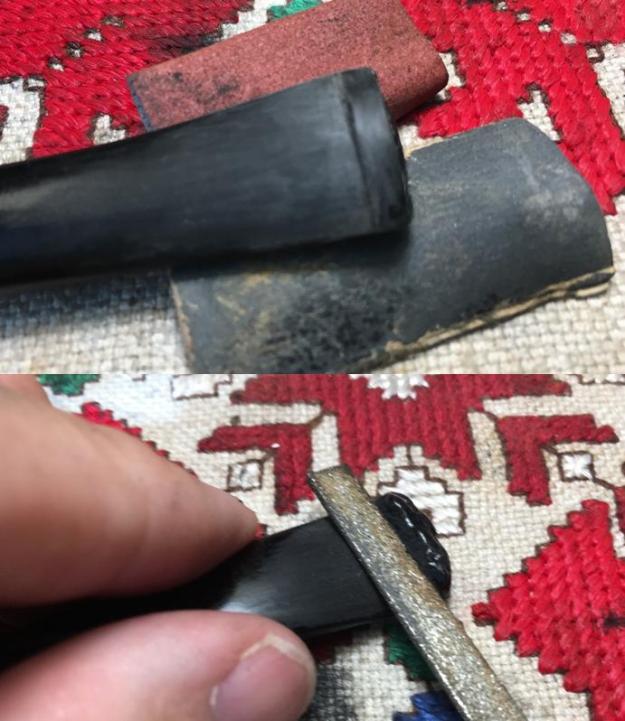
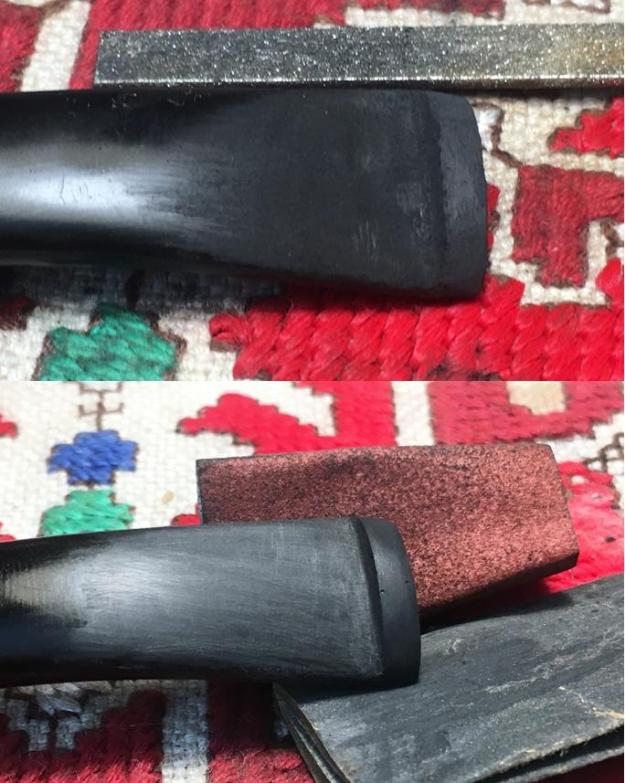
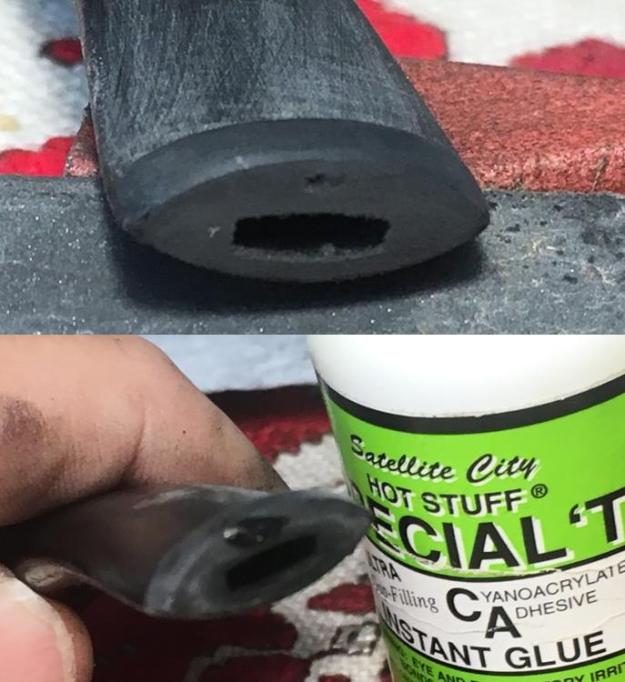
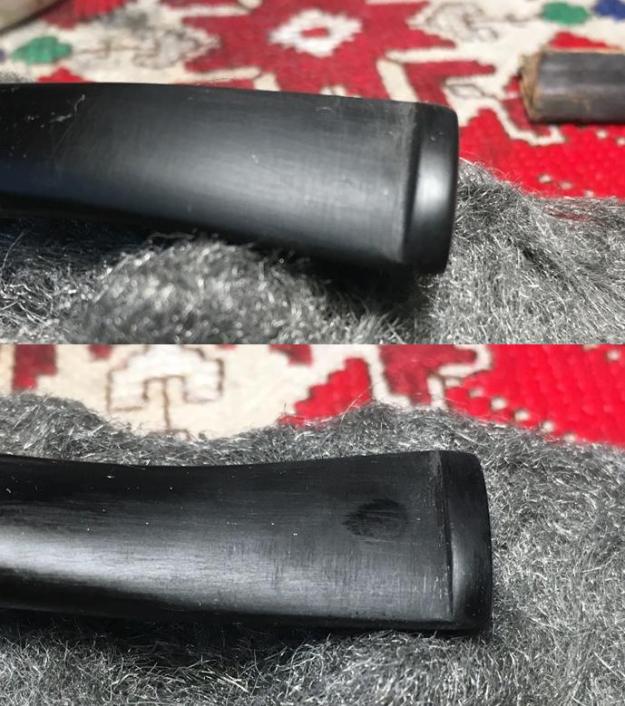
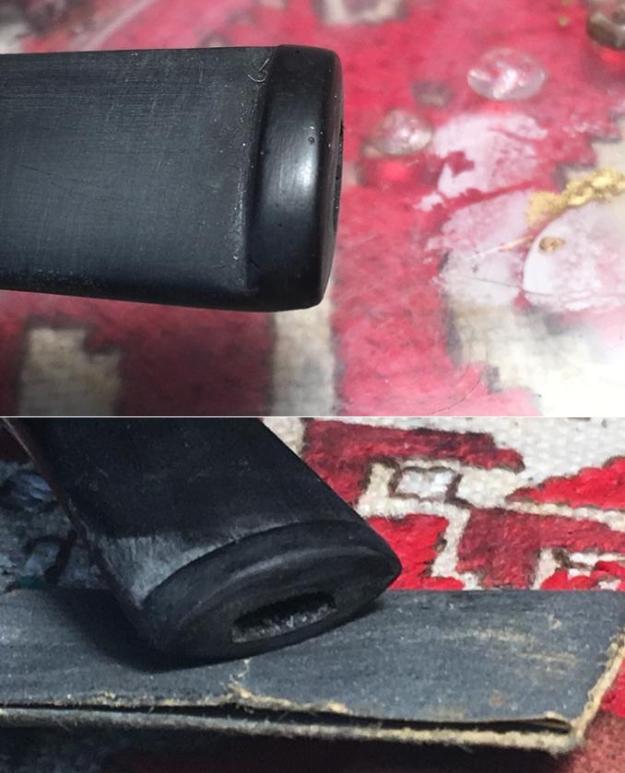
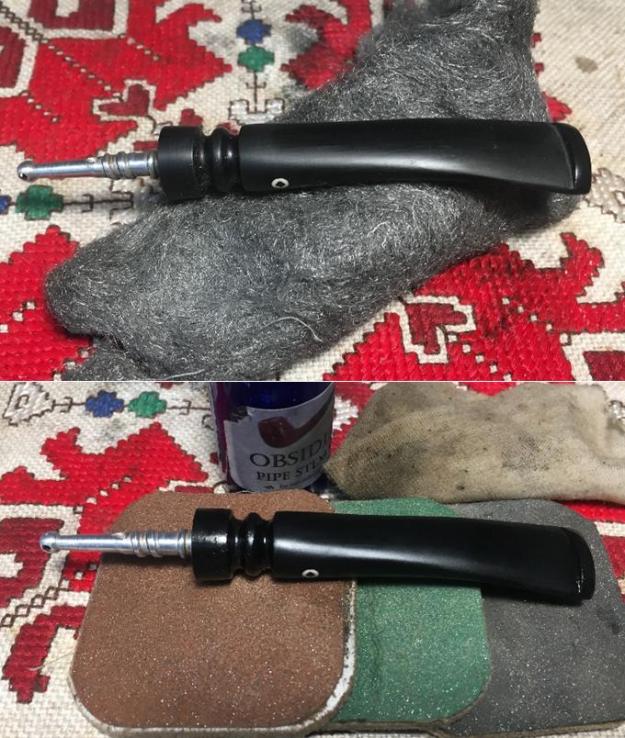
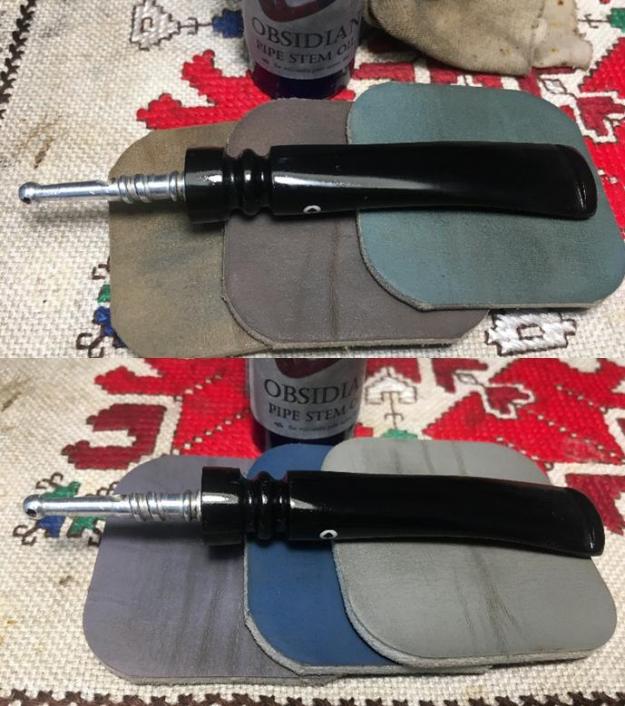
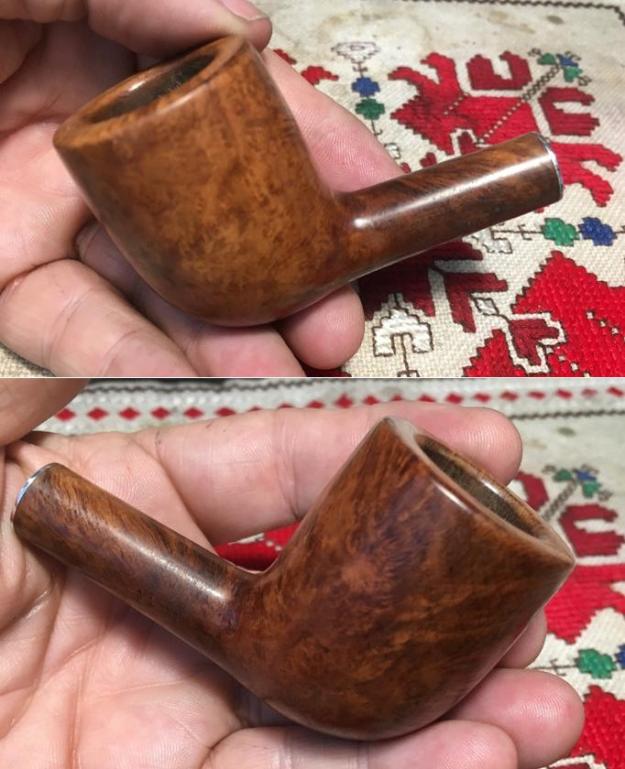
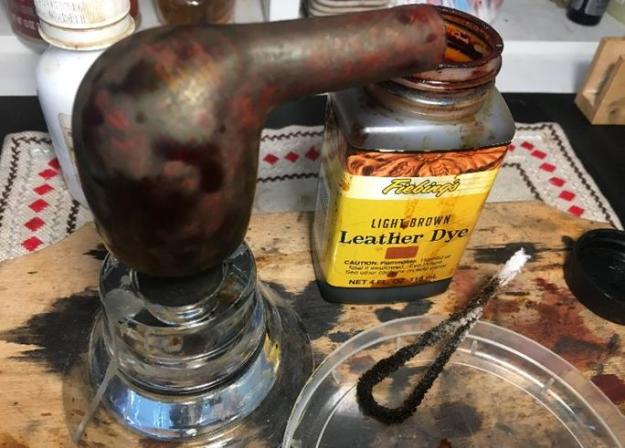
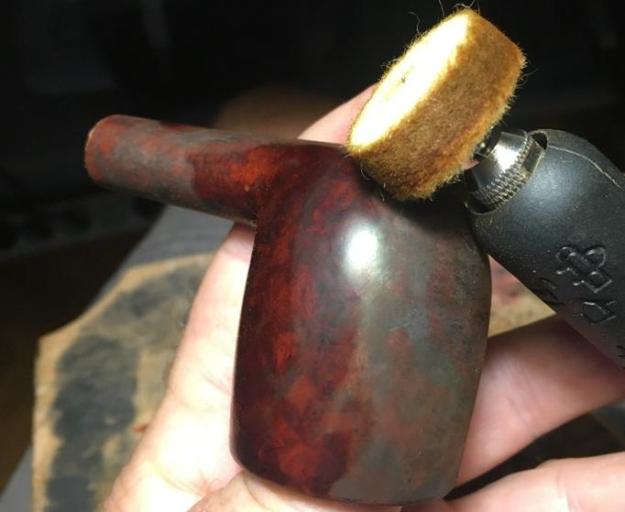
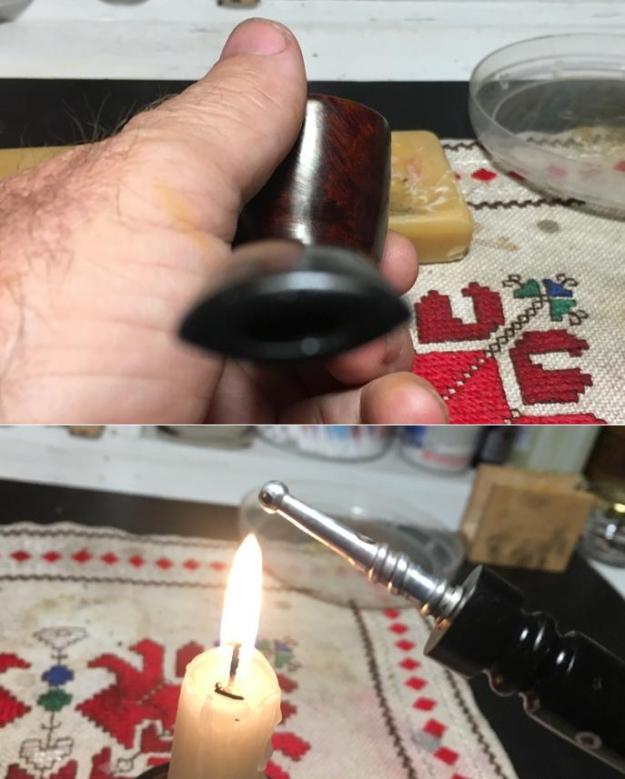
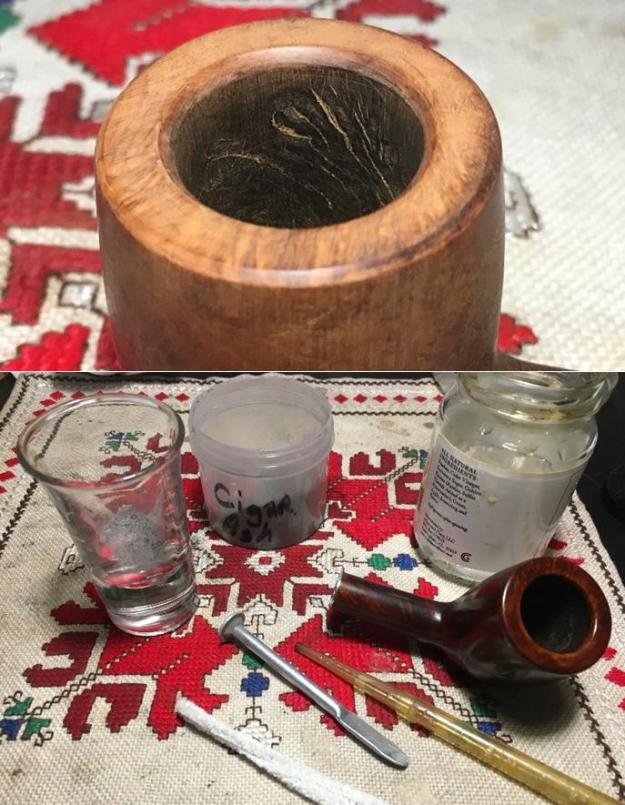
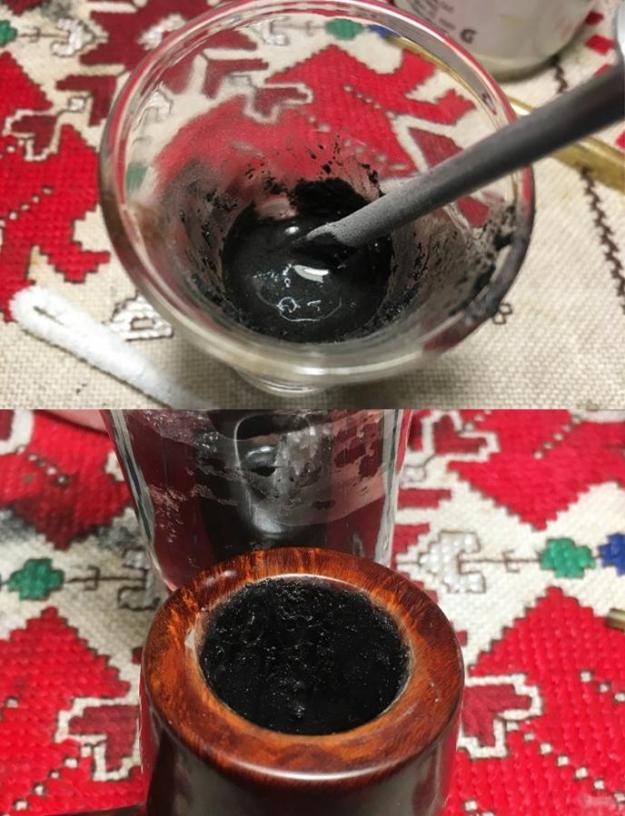
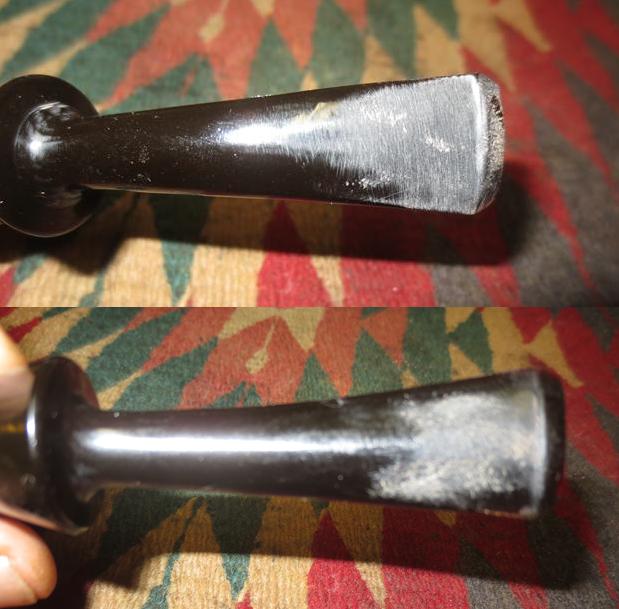
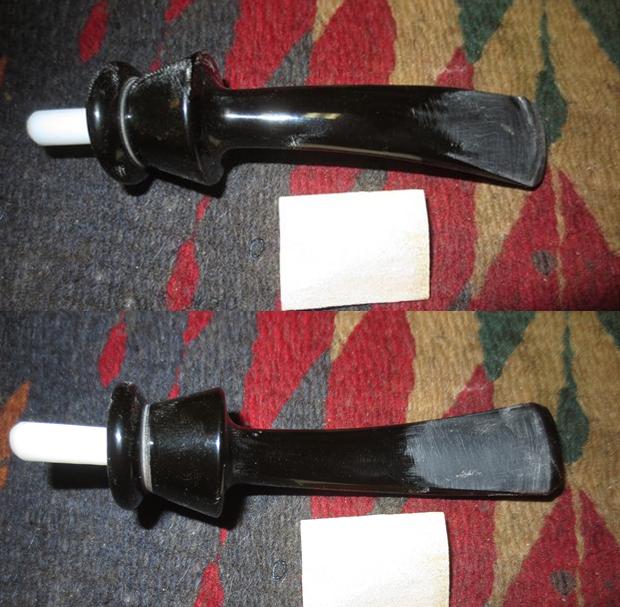
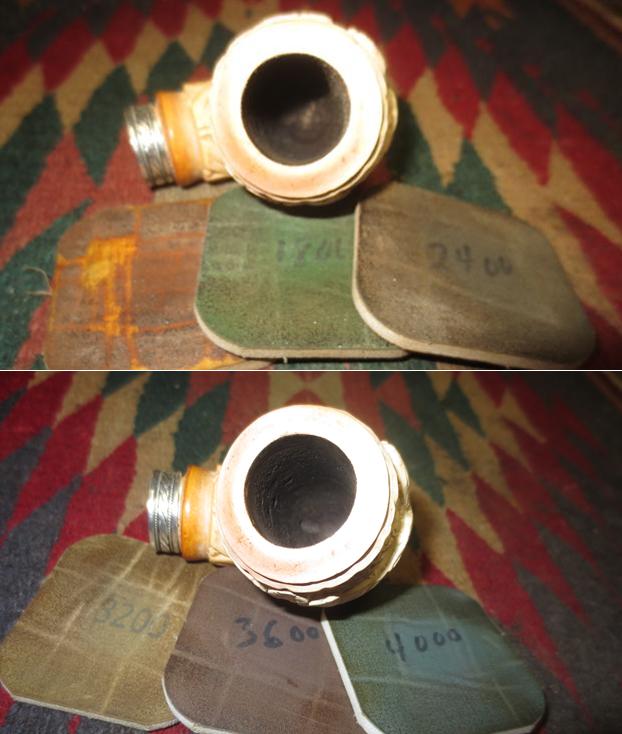
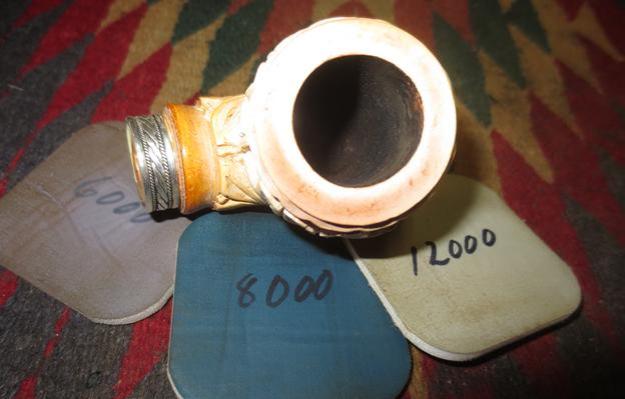
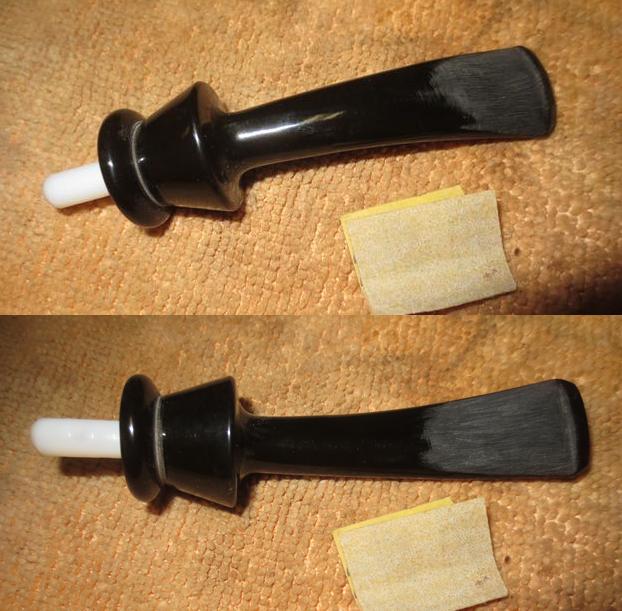
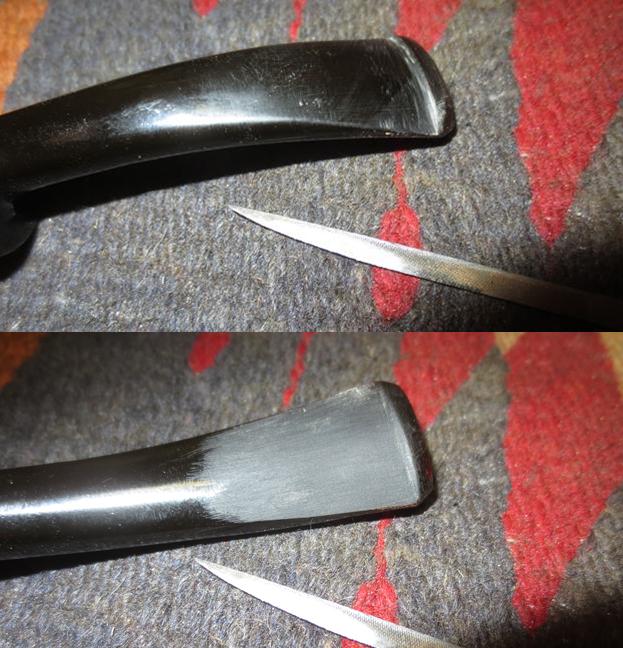
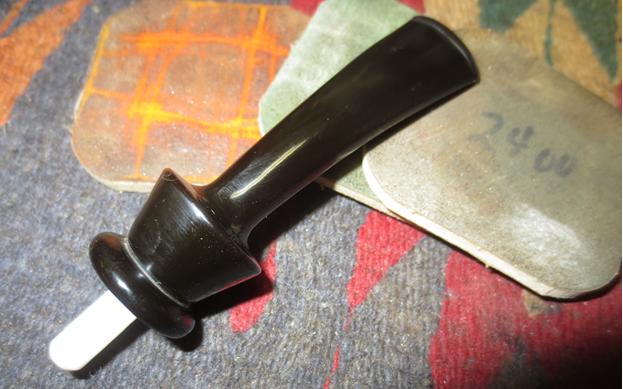
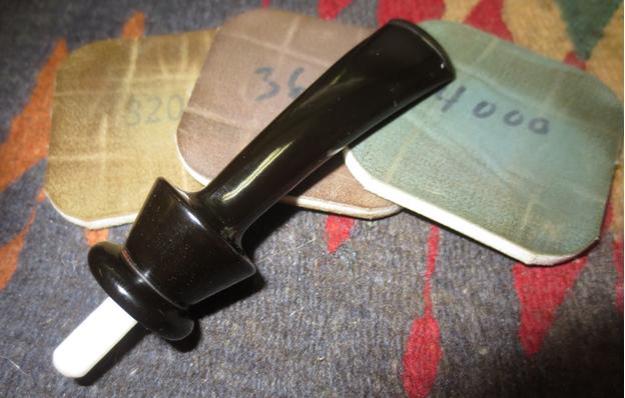
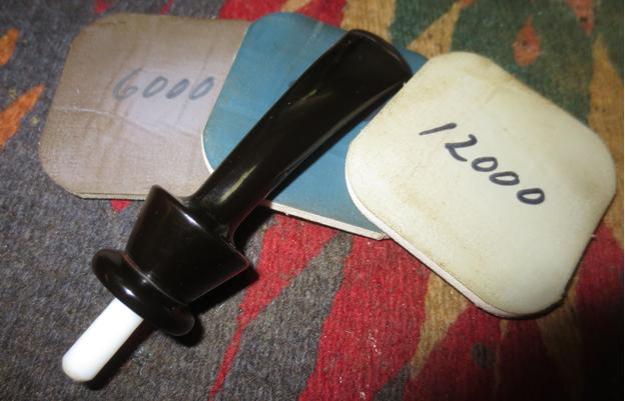
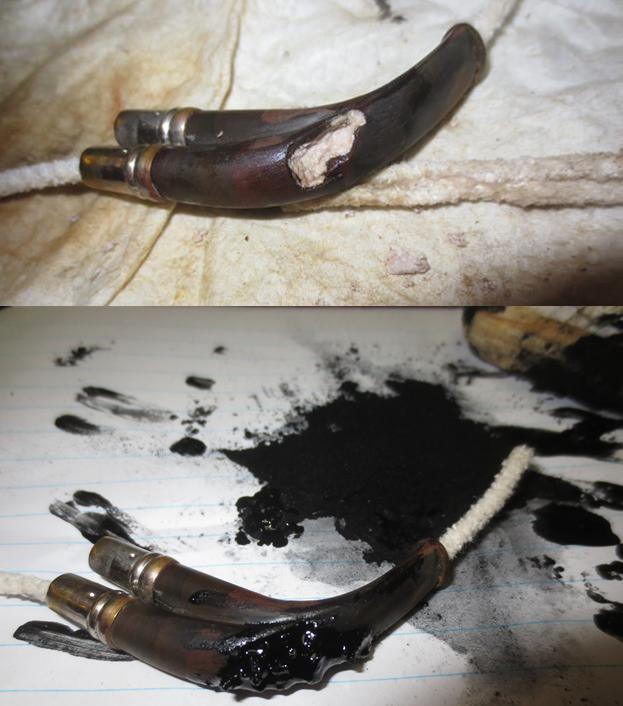
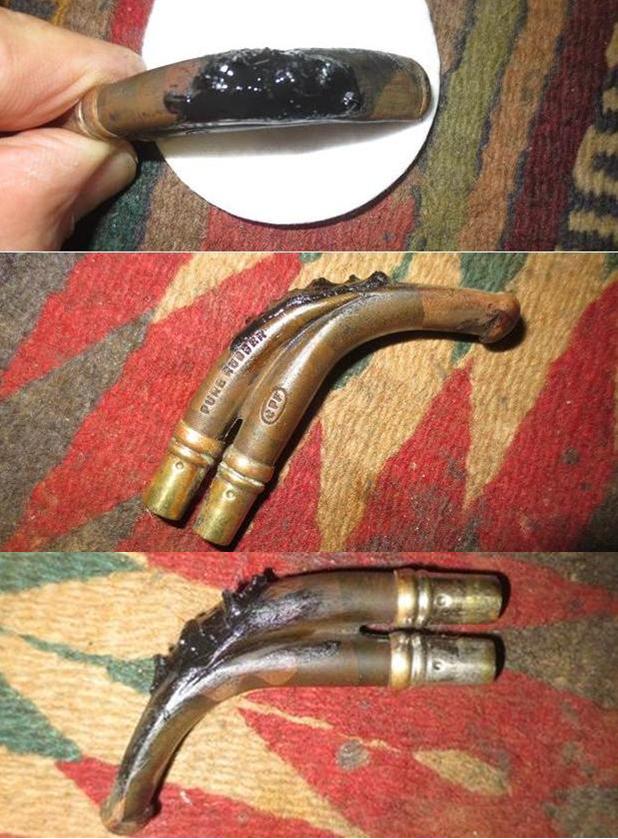
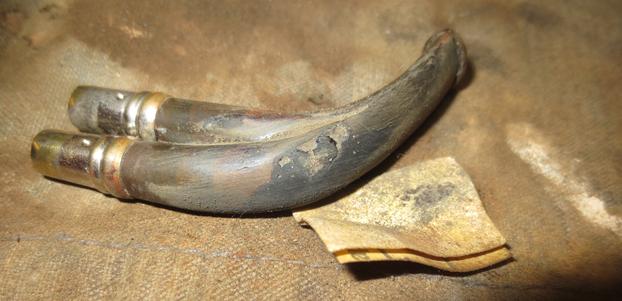
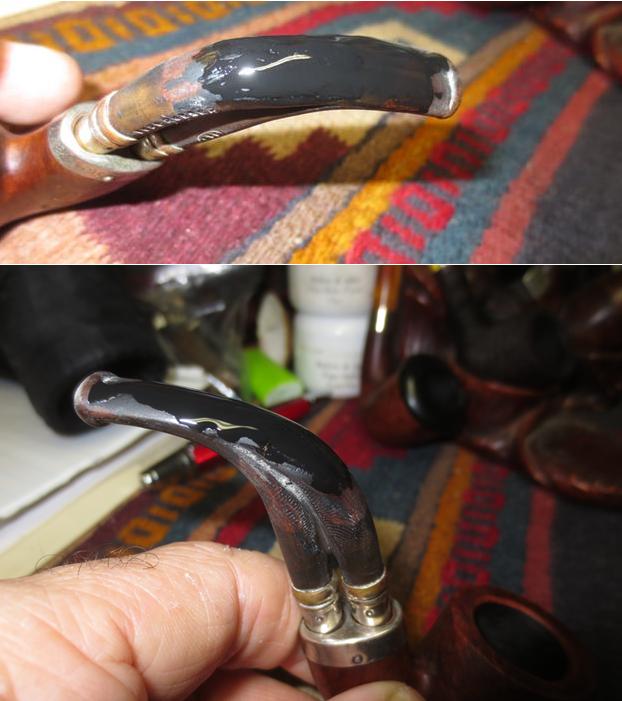
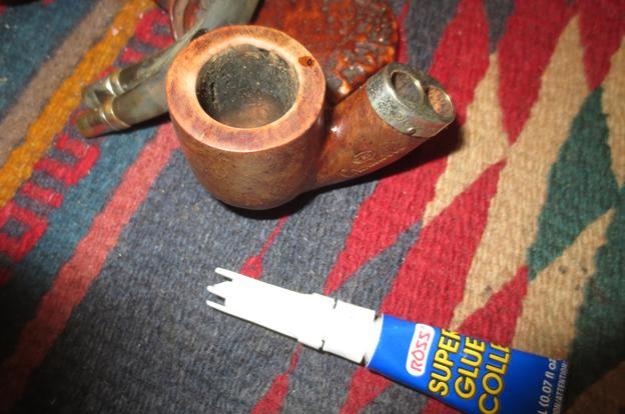
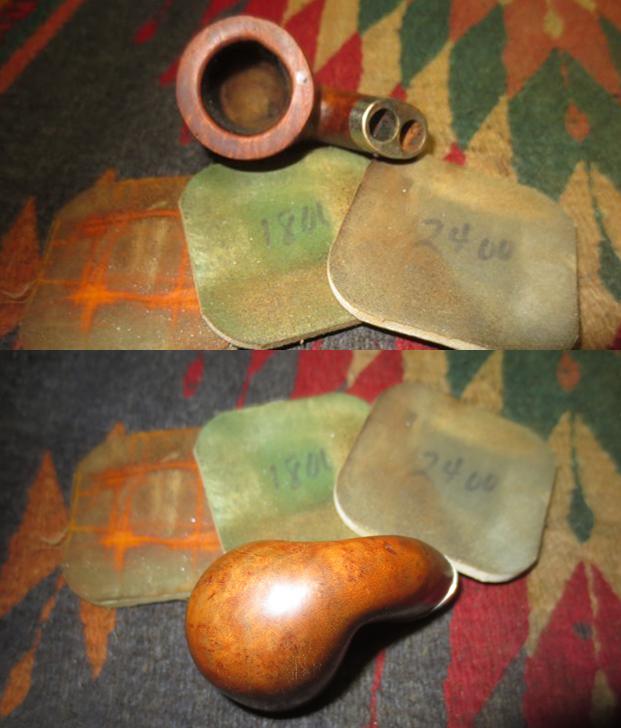
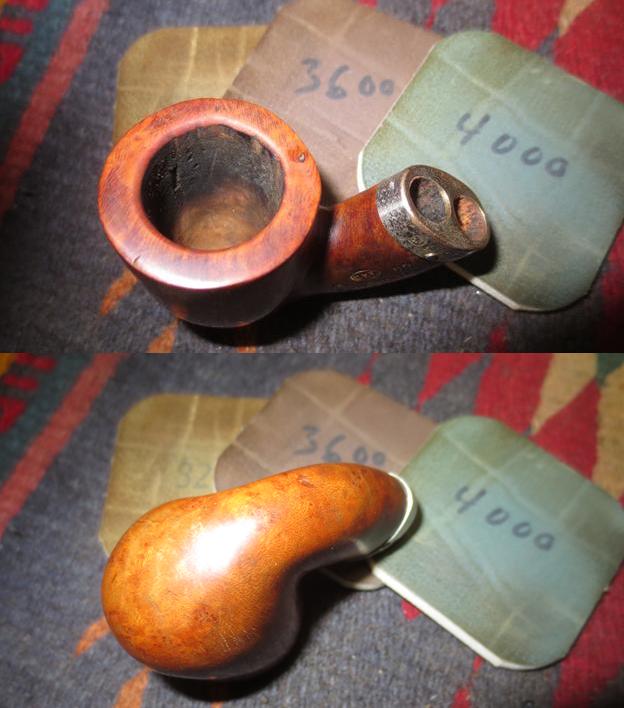
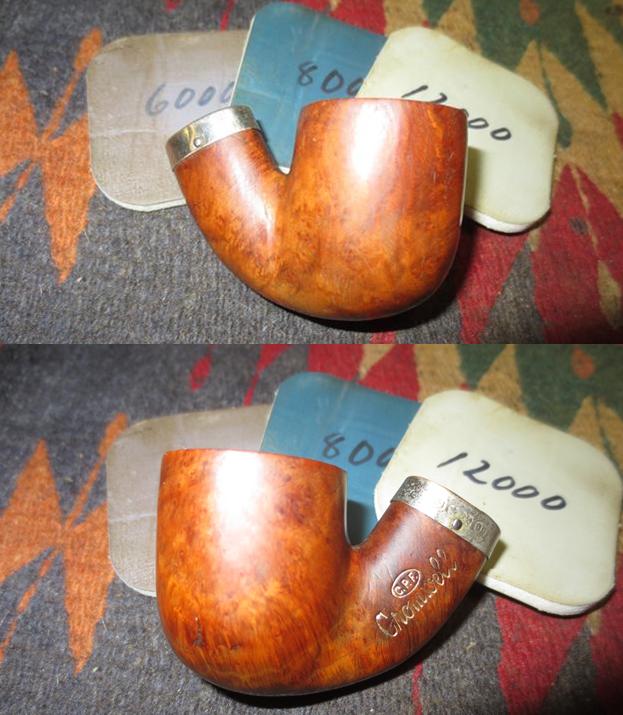
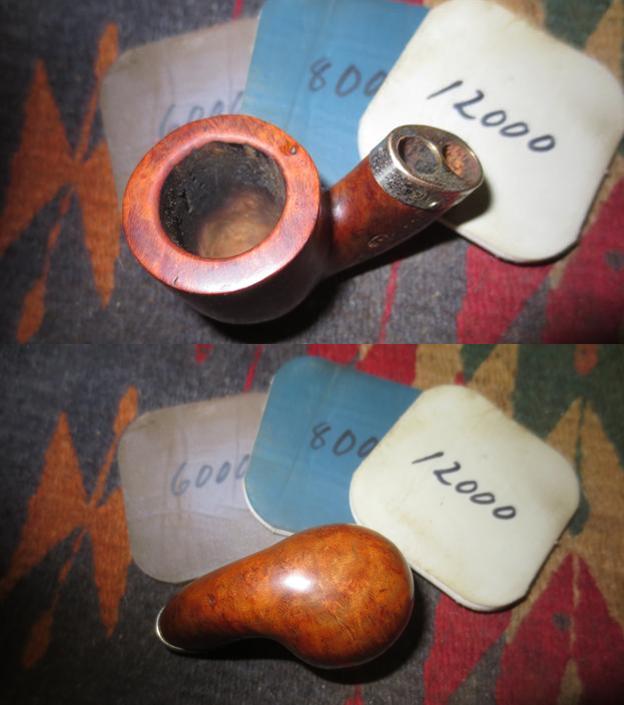
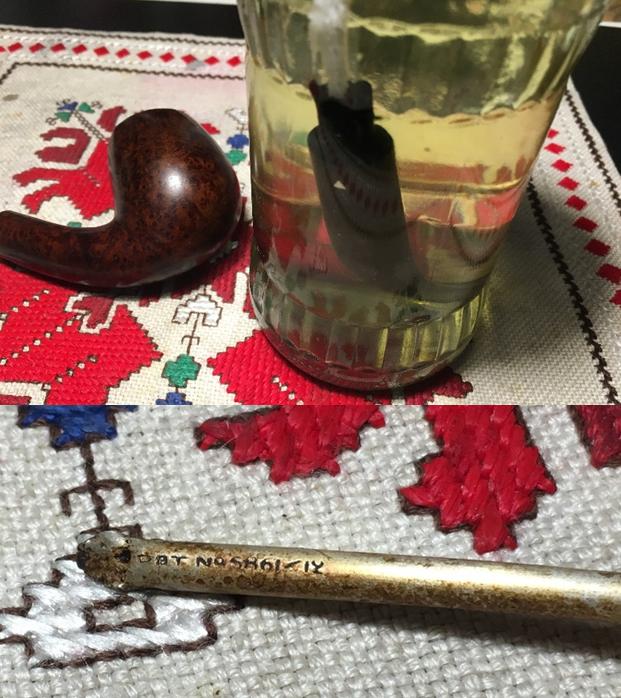
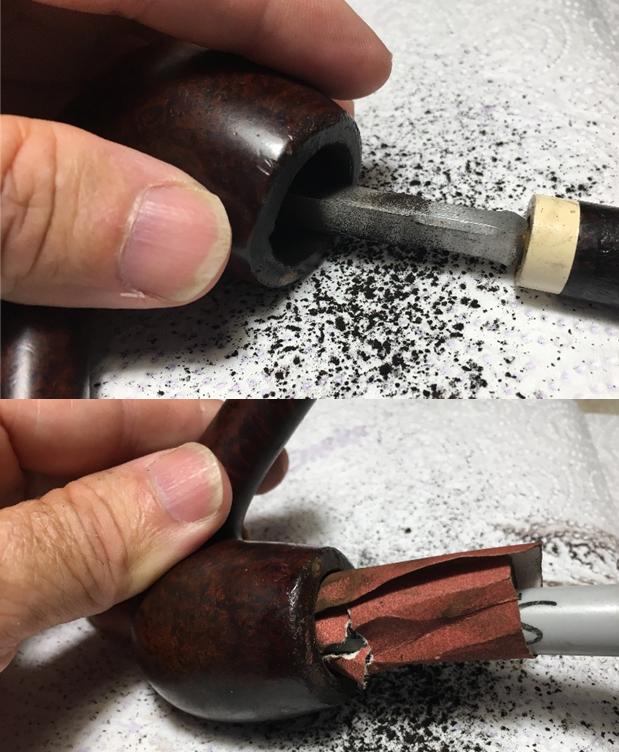
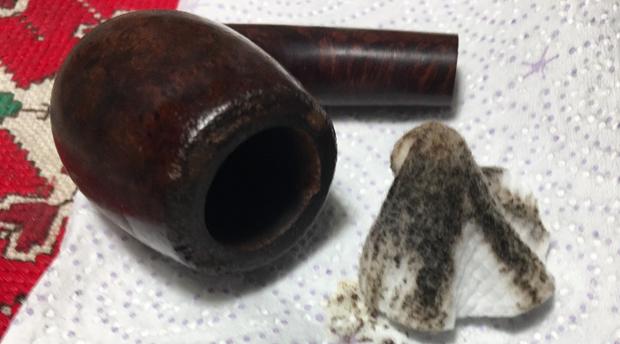
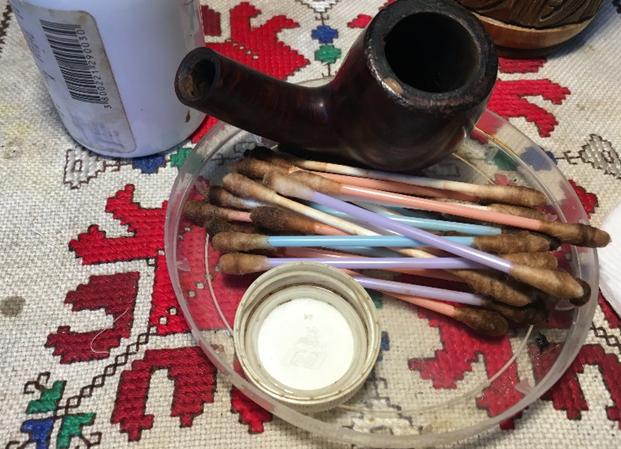
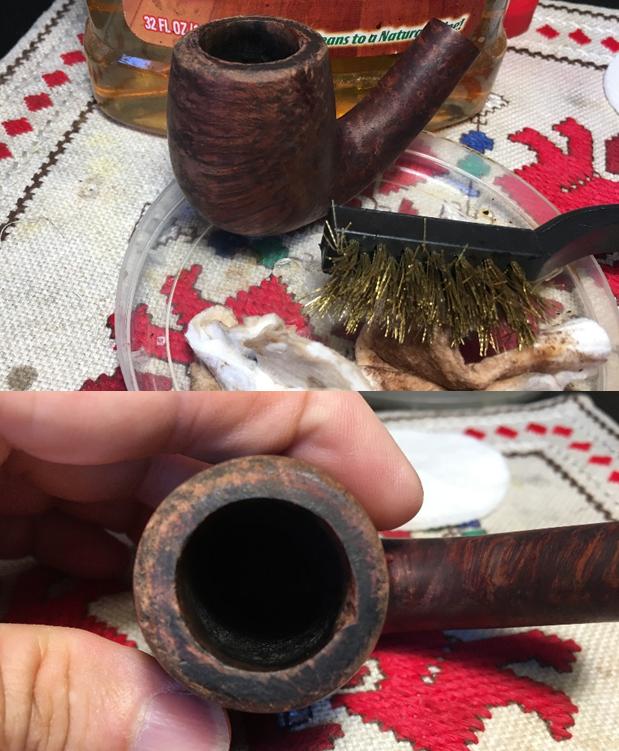
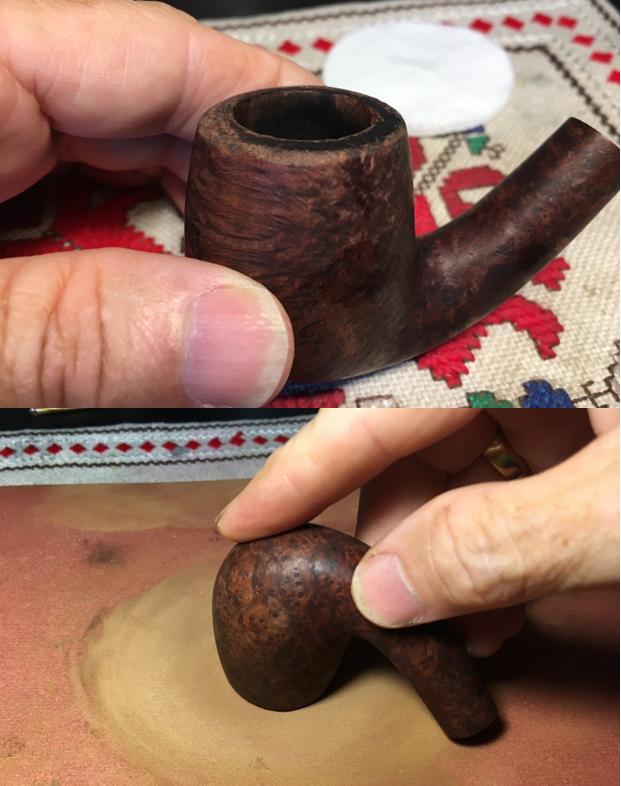
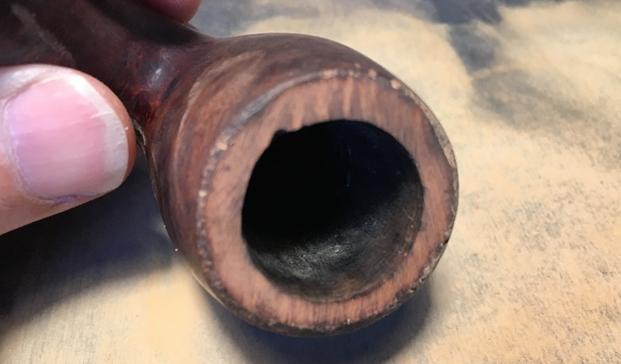
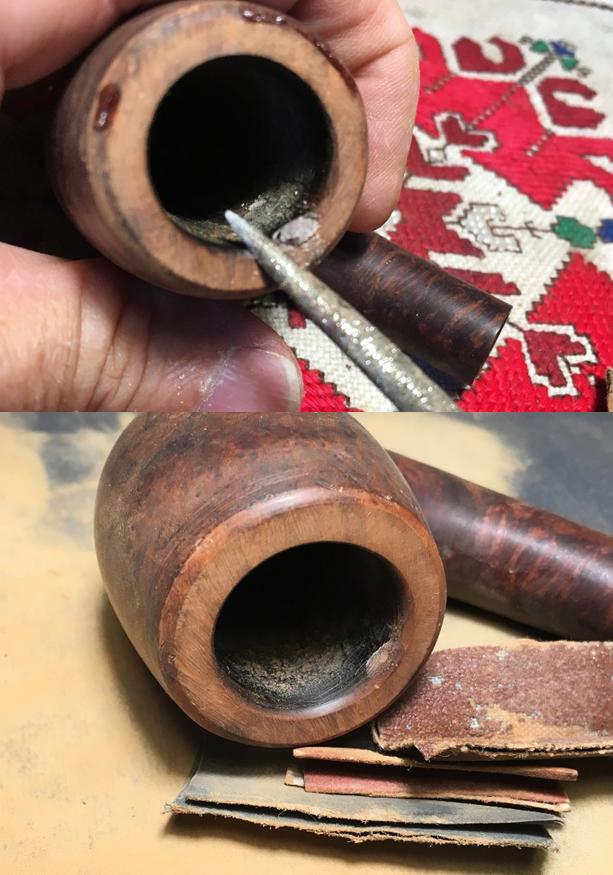
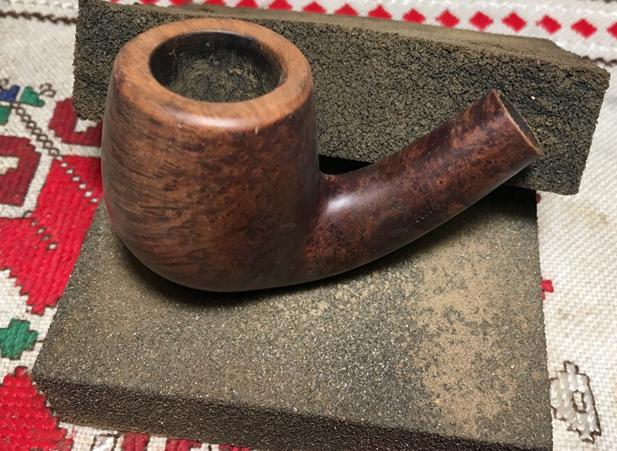
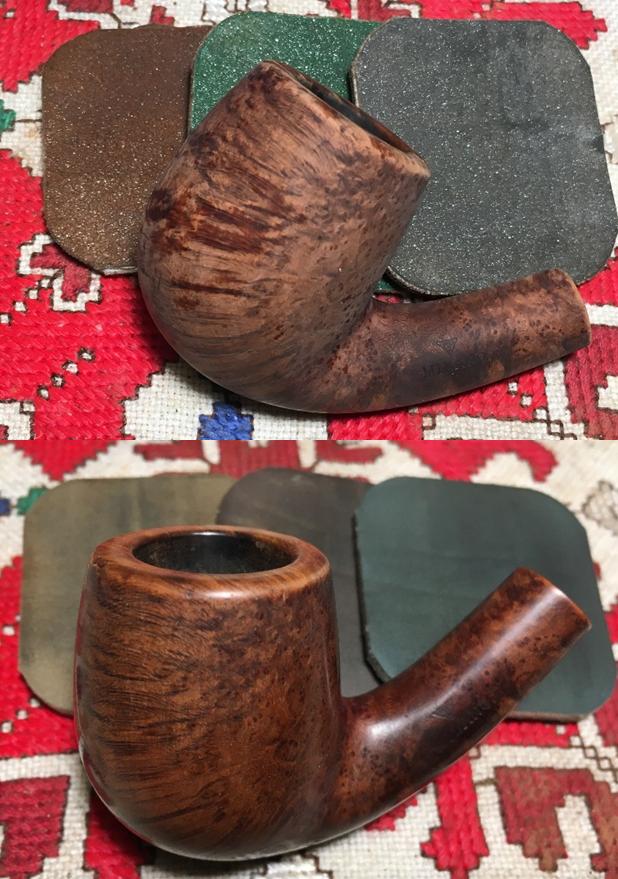
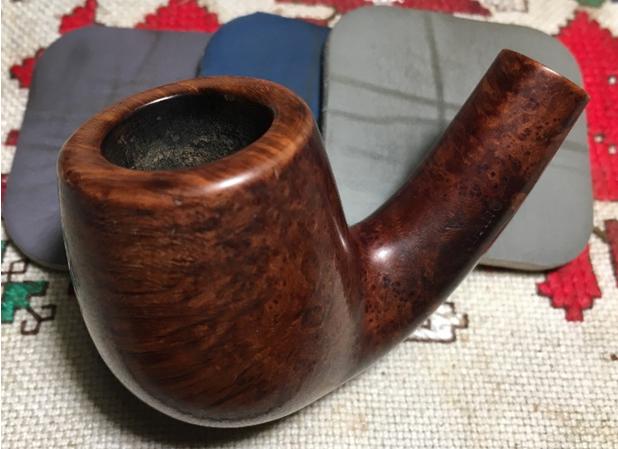
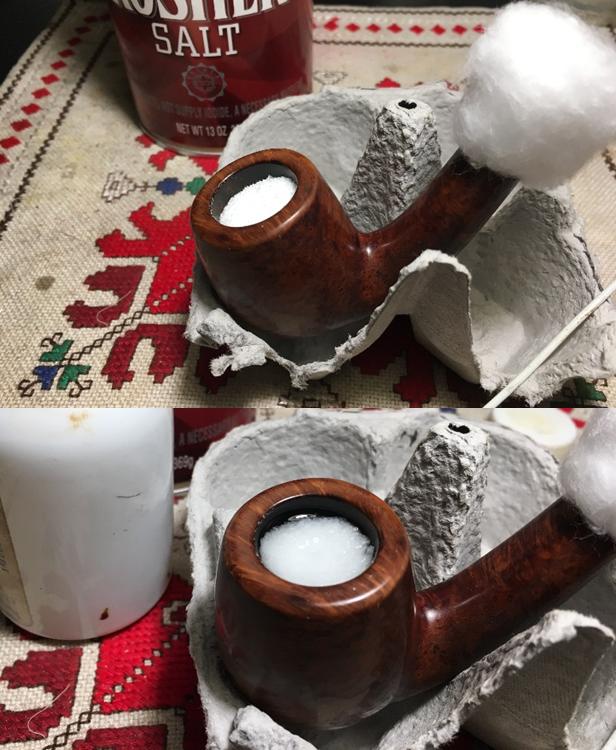
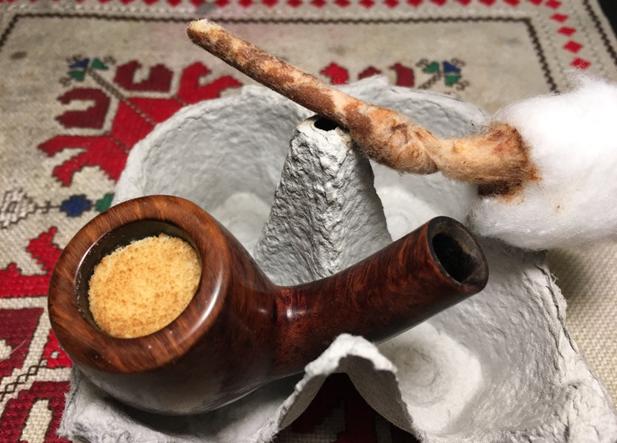
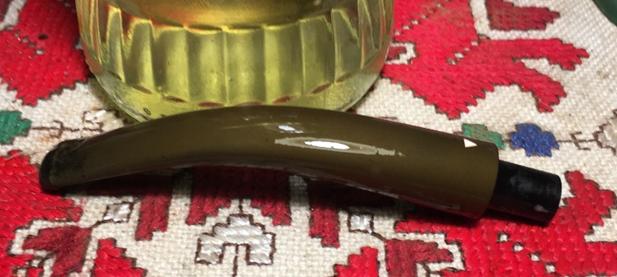
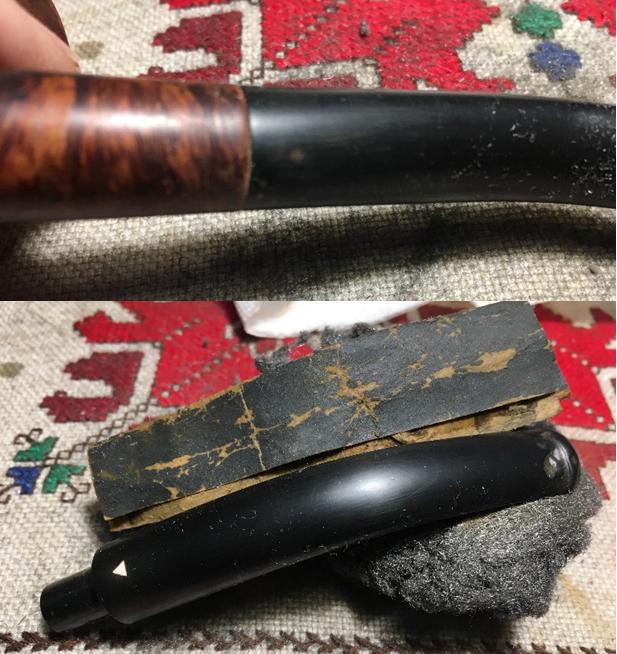
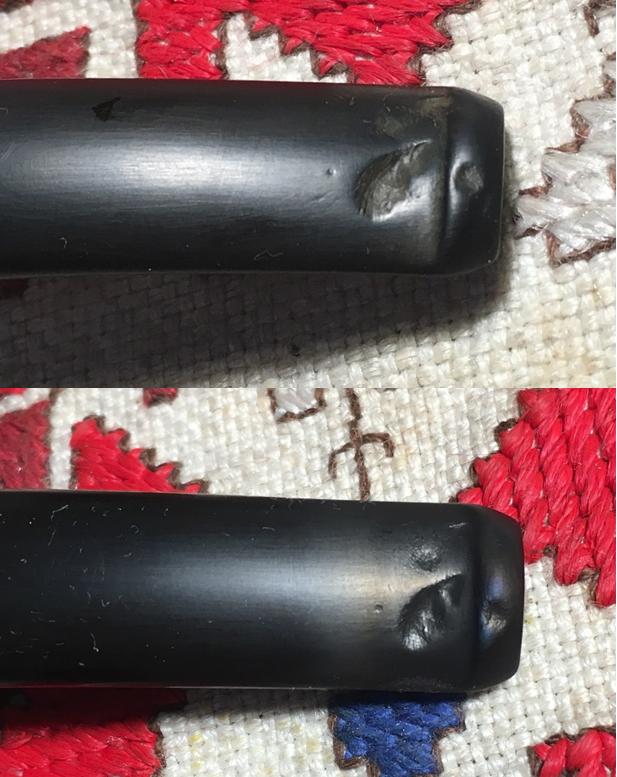
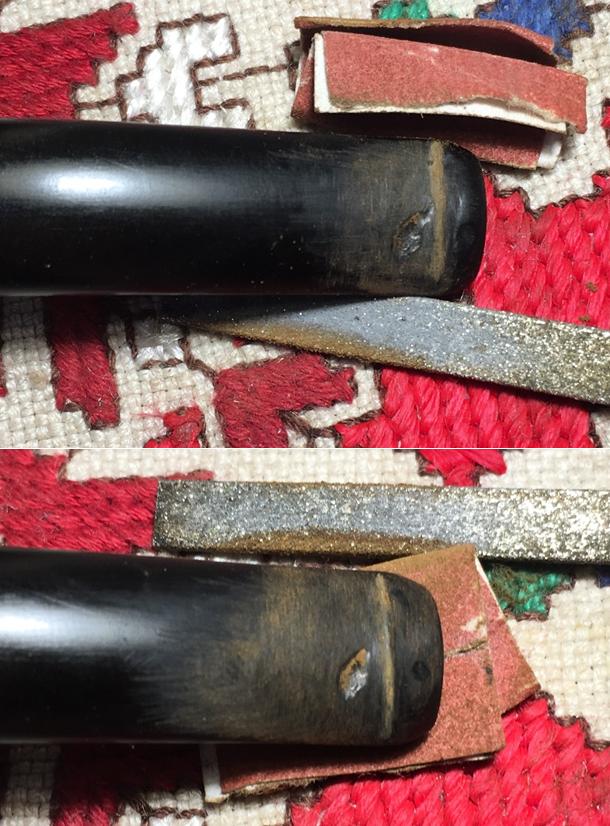
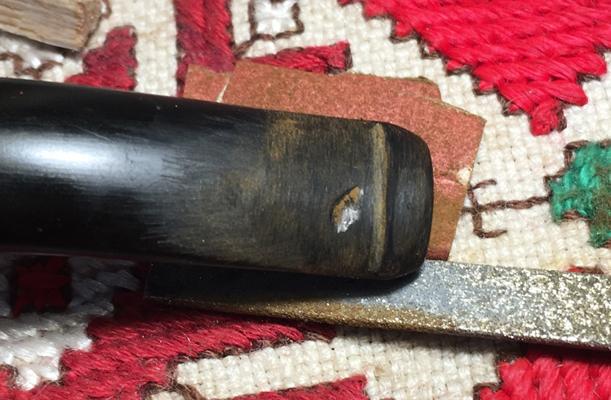
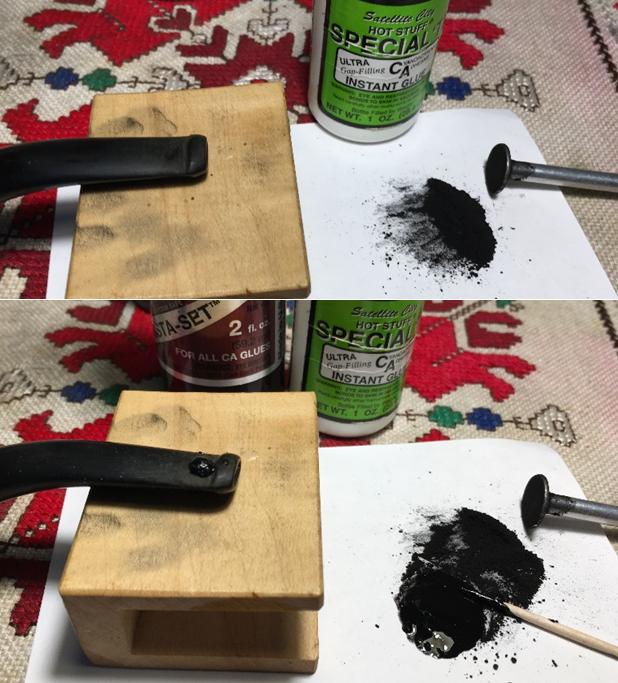
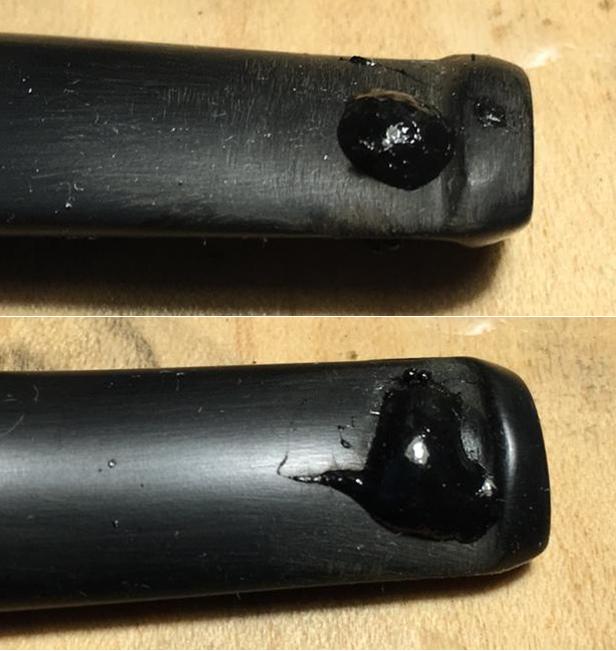
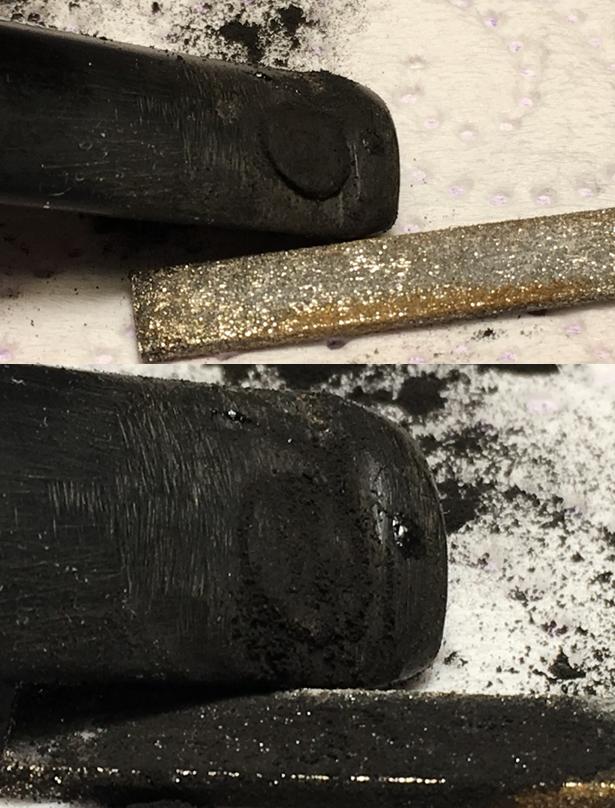
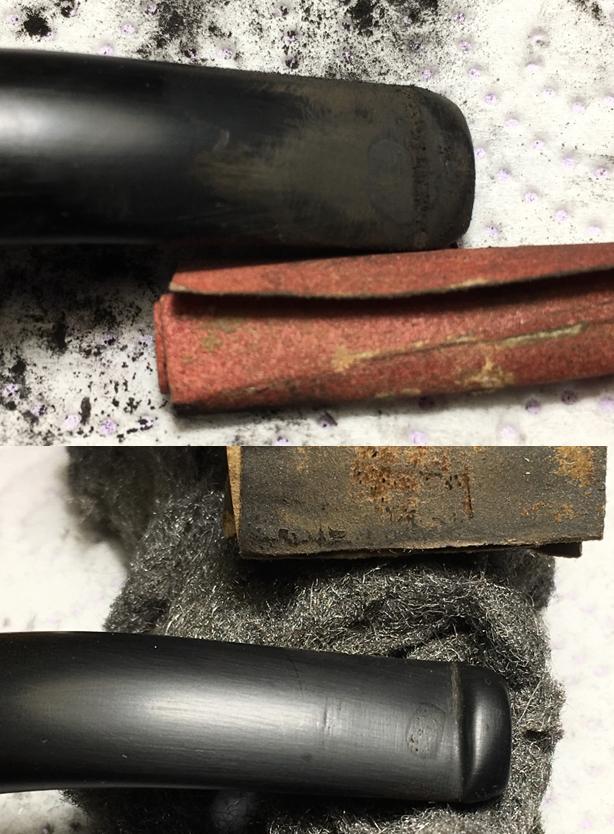
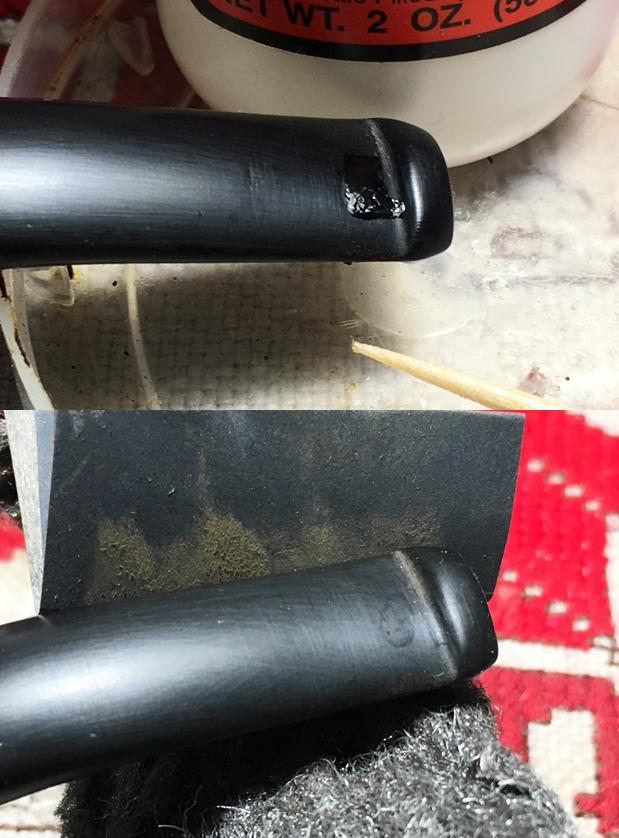
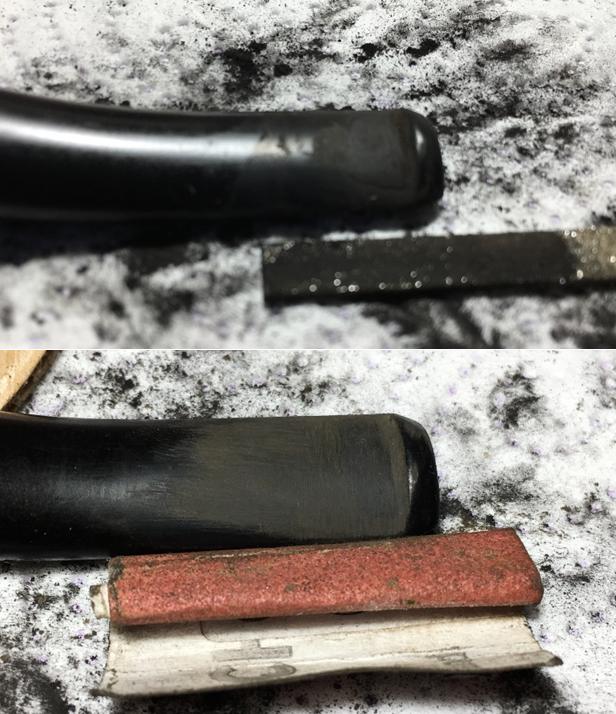
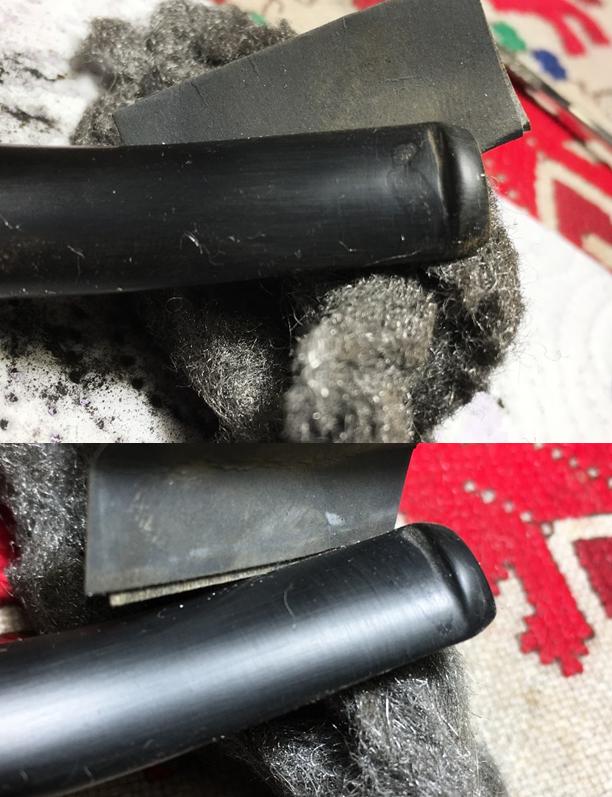
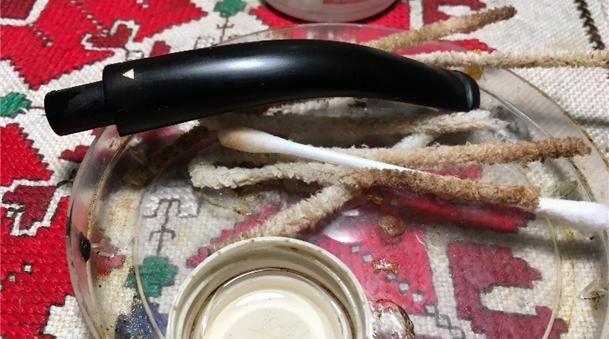
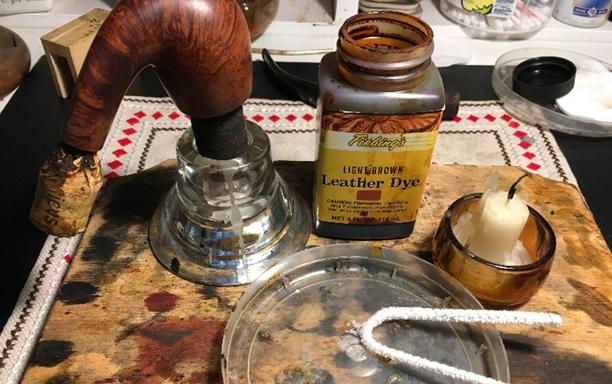
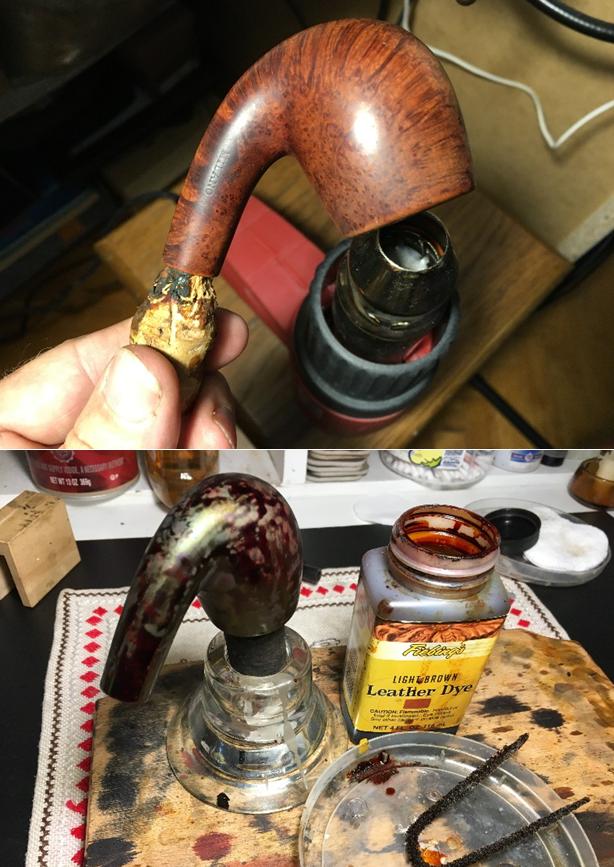
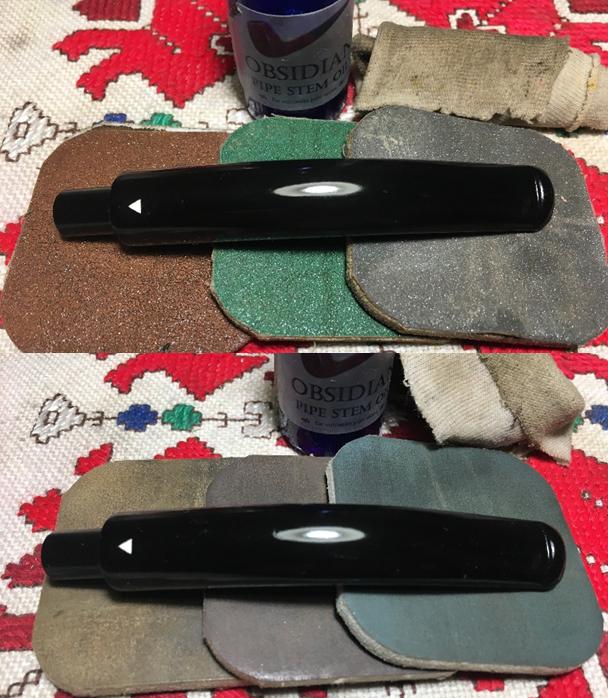
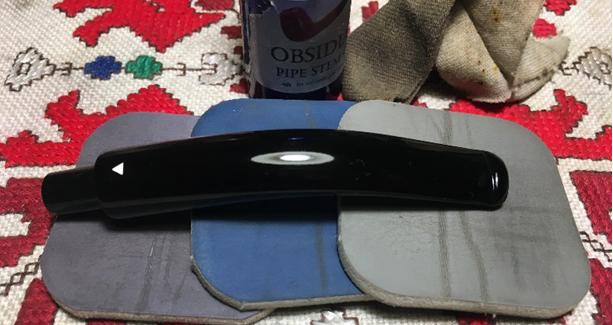
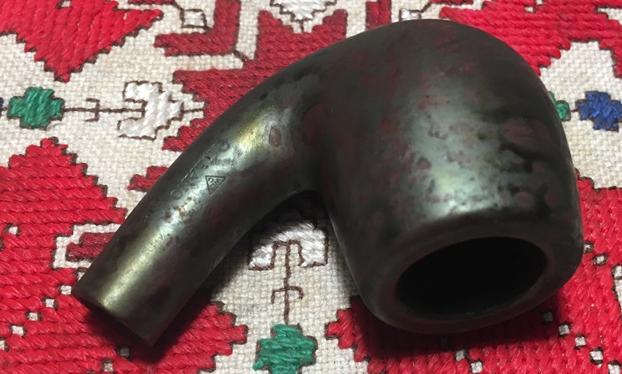
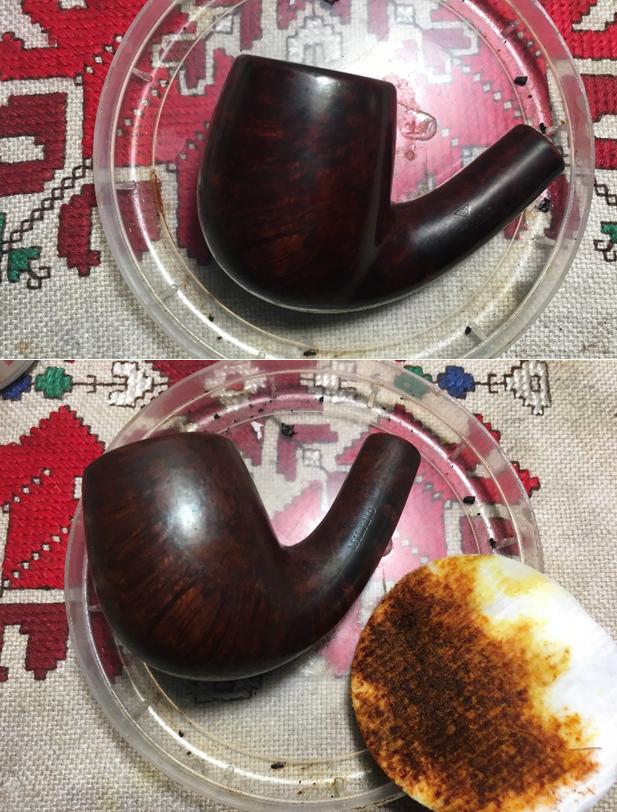
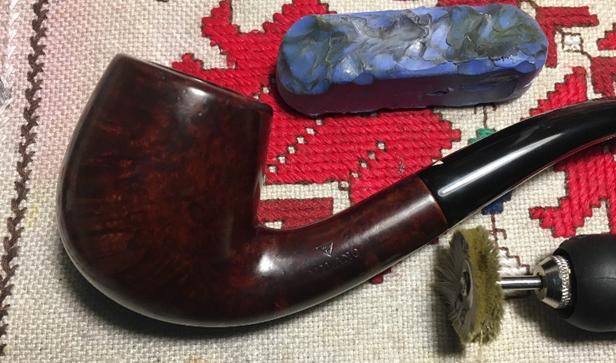
The recommissioning of this Lady’s Choice WDC Milano Swan Neck Billiard, begins by putting the stem into the OxiClean bath to work on the oxidation.  The second thing I do is toss the tubing that was hanging in the tenon.  If it belonged to this pipe originally, something is missing as the airway diameter of the tenon is much larger than the tubing.  On an interesting note, there is a patent number stamped on the tubular stinger.  I looked it up in Google patent search but found nothing that had bearing on pipes (PAT. NO. 5861 / IX – I think).Next, after spreading paper towel to catch the carbon dust, I use the Savinelli Pipe Knife to remove the little carbon left.  I follow with sanding the chamber walls with a 240 piece of sanding paper wrapped around a Sharpie Pen. I then turn to cleaning the internals of the stummel using cotton swabs and pipe cleaners wetted with isopropyl 95%.  There’s a good bit of tar and oils in the mortise.  After some time, I decide to switch to a Kosher Salt and alcohol soak to finish off the internal cleaning and to freshen the stummel.Next, using undiluted Murphy’s Oil Soap I work on the external surface of the stummel and the rim with cotton pads.  I also use a brass bristled brush on the rim.  After the scrub, I rinse the stummel in cool tap water.  The condition of the rim becomes more evident.  I think I will be able to remove the large divot at 4 o’clock in the second picture below by creating an internal bevel on the rim after I lightly top it. I start with by topping the stummel using 240 grit paper.  I follow by creating an internal and external bevel around the rim.  After a few rounds of working on the bevels, I realize that the internal rim divot is too much for the bevel to erase.  I switch gears and mix some briar dust with thick CA glue and create a putty and fill the divot on the rim.  I spray it with an accelerator to shorten the curing time.  With a needle file, I file down the briar dust patch material until it’s almost flush with the briar.  I then use 240 and 600 grit sanding paper to blend the patch and finish the bevel on the internal and external edges of the rim.I then sand the stummel using a medium grade sanding sponge followed by a light grade sanding sponge.  I remove the minor nicks and scratches on the bowl surface.I then proceed to sand the bowl using micromesh pads 1500 to 2400, then 3200 to 4000, then finally, 6000 to 12000.  The process brings out the beautiful horizontal grain flows from the front of the bowl downward to encompass the heel.  Bird’s eye grain is sprinkled nicely on the stummel sides. With the day ending, I continue the cleaning and refreshing of the stummel internals using a Kosher Salt and alcohol soak.  I create a wick to insert into the shank/mortise by twisting and stretching a cotton ball.  I take a straight stiff wire to help stuff it deeply into the mortise.  With the stummel secured in the egg carton I fill the bowl with Kosher Salt (which leaves no iodine after taste) and give it a shank to displace the salt.  I then, using a large eye-dropper, put isopropyl 95% into the bowl until it surfaces over the salt.  I put it aside for the night.  The next morning, the salt and alcohol soak did the job well.  The salt had turned dark and pulling the wick out – the same was true of it.  I toss the expended salt and wick in the waste and wipe the bowl out removing leftover salt.  Then returning to the use of cotton swabs and alcohol, in only a few plunges down the mortise, the internals are clean.  Pictures show the cleaning process. The stem was soaking in an OxiClean bath to raise the oxidation from the vulcanite.  I take stem out of the bath and the oxidation was raised showing the normal olive-green color.  I then take 600 grit sanding paper and wet sand the stem to remove the oxidation and to work on the serious teeth clenching damage. After the 600 grit sanding, I give the stem a stiff buffing from 0000 grade steel wool.  Interestingly, I noticed it earlier but thought that it would go away with the OxiClean and sanding.  I see a small lighter (reddish?) dot on the underside of the stem (second picture below), almost below the WDC triangle mark but just off center.  I’m not expecting a ‘manmade’ mark there so I assume it’s a discoloration in the vulcanite.  I take a little 240 grit paper and go after it, but it remains for now.  Pictures show oxidation and post-oxidation sanding. The button area is in bad shape.  The former steward was a clencher par excellence.  Neither upper nor lower bit areas were spared.  The upper has deep bites and a ‘wedgy’ dent on the button lip.  The lower button lip is spared, but there is a ‘go to’ clench handle which is distinct.  I take pictures to mark the start. Focusing first on the topside, I use the heating method to see if I might hopefully tease out the concave dents.  Then the bottom-side.  Vulcanite, a form of rubber, amazingly will seek out its original disposition when heated as the rubber expands with the heat.  I light a candle and pass the bit-end of the stem over the flame in back and forth style.  I try not to cook the vulcanite, but simply heat it strategically.  After some time, using heat on upper and then lower, I take pictures to compare.  You can see the closing of the dents in the picture comparisons below.  I think there is a beneficial change, but there are still dents to repair.  Pictures 1 and 2 are before heating and after for the upper side.  Pictures 3 and 4 of the lower side – before heating and after.  I first use 240 grit paper on the upper bit.  I sand out as much as possible all the smaller dents. Through the years of clenching, the button lip has lost its distinction so using a flat needle file, I reintroduce the lip edge and then follow by sanding with 240 to erase file tracks and shape more.  I’m wondering if I can avoid having to rebuild the button lip.  I gently sand the upper button lip as well.  The tooth grip has turned into only a small dimple – good movement.  I sand gently to remove the dimple because I don’t want to lose too much button real estate.  The top looks great.  The only patch needed is the remaining large dent.  The topside filing, sanding and shaping progression is pictured below. Turning to the lower bit, again I use 240 grit sanding paper to sand out what can be removed and blended by sanding. The dent/clench configuration was minimized by sanding but I need to patch what remains of the surface damage.To prep the vulcanite for the patch work, I wipe down the upper and lower bit with a cotton pad wetted with alcohol.  I mix activated charcoal powder with Hot Stuff Special ‘T’ CA Instant Glue (extra thick) to form a putty which is like molasses in viscosity to apply to the damaged areas.  I use a tooth pick as my trowel and tamper and I apply more putty than needed – the patch mound allows me to file down gently to the surface of the stem to achieve a better blended patch.  I apply putty to the upper bit, and a dab on the small, remaining dimple on the button lip.  I spray it with accelerator to cure the putty.  I then do the same for the needed area on the lower bit.  The pictures show the patch progress. Using a flat needle file, I begin filing the patch mound on the upper bit until I’m very close to the vulcanite surface.  With the patch expanding closely to the button lip, I also utilize the flat needle file to separate and define the button lip.  When close to the surface, I switch to 240 grit paper to bring the patch flush with the vulcanite surface.  After I’ve blended as far as 240 paper will take me, I switch to 600 grit paper and then finally, 0000 steel wool which fine tunes the blending and each in turn erases the former’s scratch marks.  I take pictures along the way to document progress. At this point, not surprised, I see very small air pockets exposed on the patch area (see picture above).  Taking Hot Stuff CA Glue, thinner than the ‘T’ I used for the patch, I dip a toothpick into the glue opening to give a coat of CA glue on the toothpick.  With this wet glue, I paint the patch with a thin glaze of glue which fills the air pockets.  I give the glaze of glue a quick spray of accelerator to cure it.  I then take 600 grit paper followed by 0000 steel wool to blend and complete the upper bit patch work.  The micromesh sanding later will further blend the patches.Now, to the lower bit patch.  As before, I use the flat needle file initially, then 240, 600 and then 0000 grade steel wool working toward the vulcanite surface then blending.  Again, a few miniscule air pockets are revealed in the patch, and I repeat the same procedure as on the upper patch. Having been so focused on the button repairs, I almost forget (again) to clean the stem internal airway.  With pipe cleaners dipped in alcohol, I do that and it does not take long to clean.Putting the stem aside, I pick up the stummel.  I will use Fiebing’s Light Brown Leather Dye to add some unifying hues on this very attractive WDC Milano’s grain.  I like the lighter motif which is what the Milano’s picture included above courtesy of Doug Valitchka.  I wipe the stummel with a cotton pad wetted with isopropyl 95% to make sure it’s clean.  I then warm the stummel with the heat gun after inserting a whittled cork into the shank to serve as a handle.  After the bowl is warmed, helping the briar more effectively to absorb the dye, I apply the dye liberally using a folded over pipe cleaner.  After the stummel is covered, I fire the dye with a lit candle which ignites the alcohol in the dye and sets the pigment in the grain.  After a few minutes, I repeat the procedure concluding with firing.  I then put the stummel aside to rest. While the stummel rests, the stem is ready for the micromesh pad cycle.  I wet sand with pads 1500 to 2400, then dry sand with pads 3200 to 4000 then 6000 to 12000.  After each cycle, I apply Obsidian Oil to rejuvenate the vulcanite, and my how it likes it!  The pop of a newly restored stem is wonderful to behold! The next day, I’m home from work, and it’s time to ‘unwrap’ the stained and fired bowl.  I mount the felt buffing wheel on the Dremel, which provides more abrasion to the surface, helping to remove the crust.  I used Tripoli compound with the Dremel set at 20% speed – slow because I don’t want to generate too much friction. Using the Dremel’s adjustment wrench, I purge the old compound off the felt wheel to clean and soften it.  I work the felt buffing wheel applying the abrasive Tripoli compound over the stummel.  I am not able to reach the bend curve between the shank and the bowl with the felt wheel.  I change to a cotton cloth buffing wheel again, only dedicated to Tripoli compound.  Each compound has its own dedicated Dremel buffing wheels.  With the cotton cloth wheel, I’m able to reach into the harder to get places.  I run the wheel over the entire surface.  I take a picture showing the completion of the ‘unwrapping’.  One of the helpful aspects of aniline, or alcohol-based dyes, is the ability to wipe it with alcohol to lighten the application as well as blend the dye.  I want to lighten this WDC Milano so I wipe it down with cotton pad wetted with alcohol.  I take a picture before and after.  Immediately after wiping down the surface, the surface clouds with the alcohol.  Then I remove the alcohol wipe clouding effect with Blue Diamond compound, with a cotton cloth wheel mounted on the Dremel at 40% speed.  Following the Blue Diamond application, the true ‘after’ picture is taken.  I also reunite the stem with the stummel for the Blue Diamond buffing.  Well, the third picture below represents the lighter ‘after’ picture, but I don’t believe the picture does justice to what my eyes are seeing.  The lightening and blending of the surface hue is showing off the grains quite nicely.  I’m liking it!  I think this, “Lady’s Choice” is going to like her choice too! I give the pipe a hand buffing with a felt cloth, not so much to buff up the shine at this point but to remove the compound dust from the surface.  The compounds are abrasives and the dust is the residue left over.  After this, I mount the Dremel with a dedicated cotton cloth buffing wheel, leaving the speed at 40%, I apply the carnauba wax evenly over the stummel and stem.  I finish with a hefty hand buffing of the pipe with a microfiber cloth to raise the shine more.
This WDC Milano Swan Neck Billiard is a lady’s choice.  I hope she likes it.  It is an elegant pipe and showcases beautiful flowing grain.  I’m pleased with the button repair that blended very well – without knowing it’s there, most people would not see it.  The repaired rim also looks good – forming the beginning of the long elegant lines carried through to the swan neck stem.  Nice.  Each pipe I restore benefits the work we do with the Daughters of Bulgaria – helping women and girls who have been sexually exploited and trafficked.  For more information about this and pipes I have available, check out the store at The Pipe Steward.  Thanks for joining me! 
Another interesting piece of pipe history Manhattan Canted Dublin with a Horn Stem


Blog by Steve Laug

I have worked on at least two other pipes that I wrote about that bore the Manhattan stamp on the shank in the past few years. One of them was a cased, bent Bakelite Bulldog with a Lockrite Stem. It had a Bakelite Manhattan stamp on the left side of the shank. When I wrote that blog I could find no information on the brand. The second one was a cased Manhattan Bakelite Billiard. The shank and the case on this one both had the same identifying information. The inside cover of the case read Manhattan over French Briar over Bakelite. The shank read Manhattan De Luxe stamped on the left side. In researching the blog on that pipe, I found that a company in the US called the Manhattan Pipe Company made the pipe. There was no other information that I could find at that time.

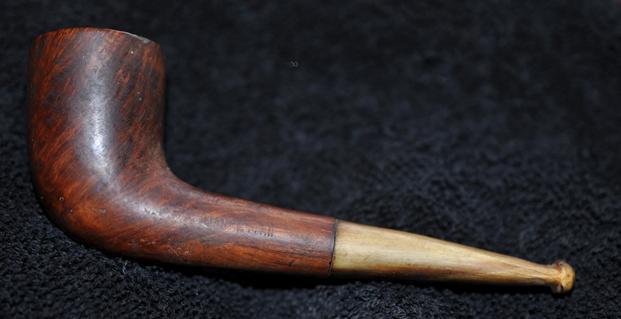
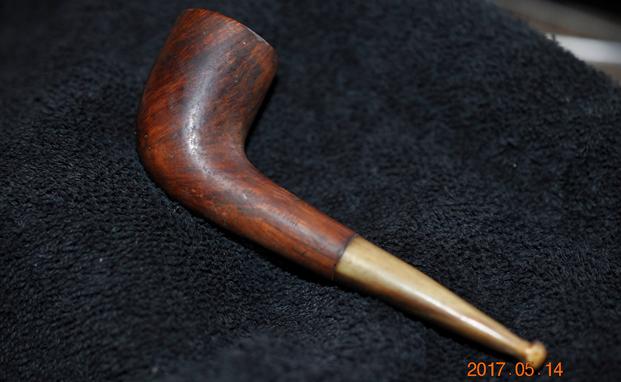
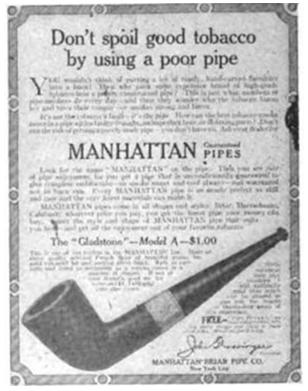
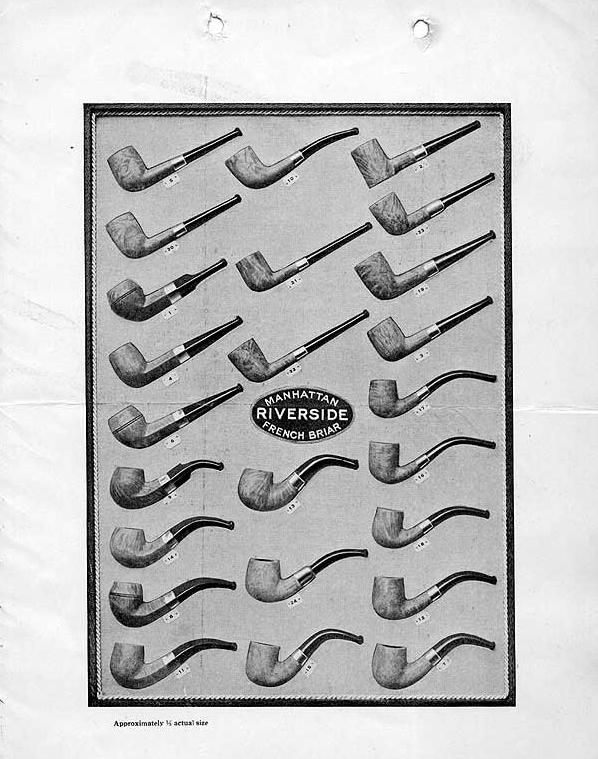
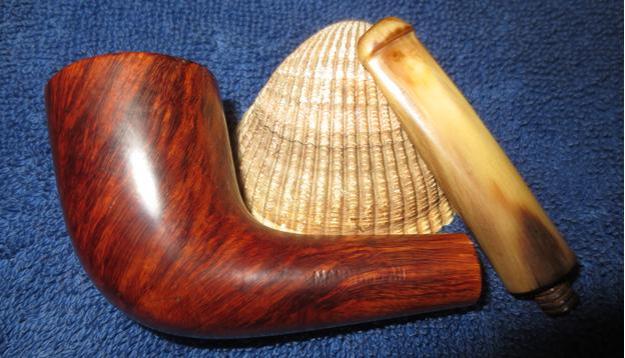
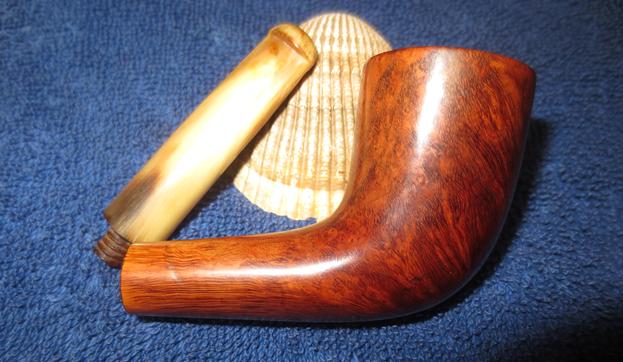
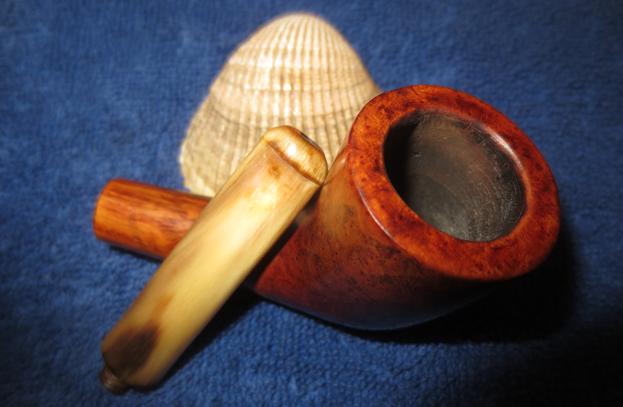
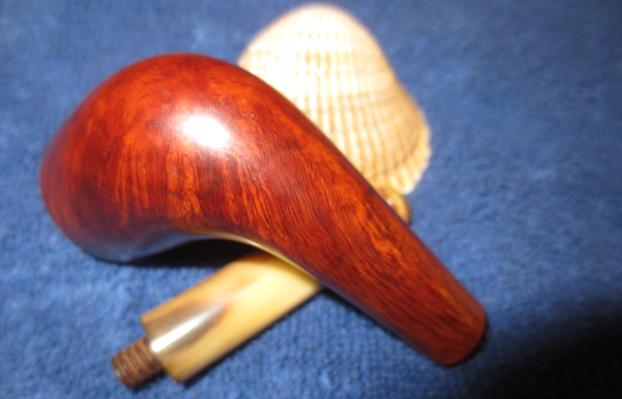
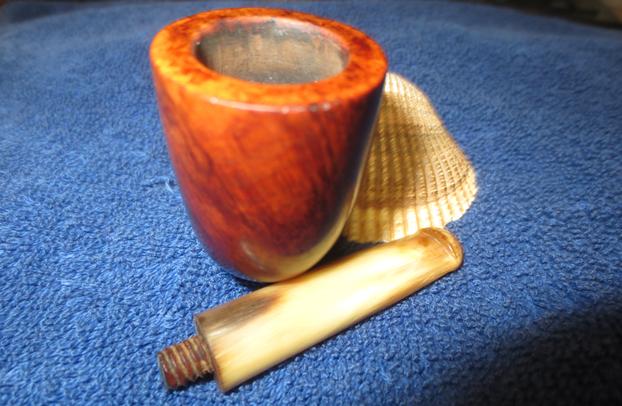
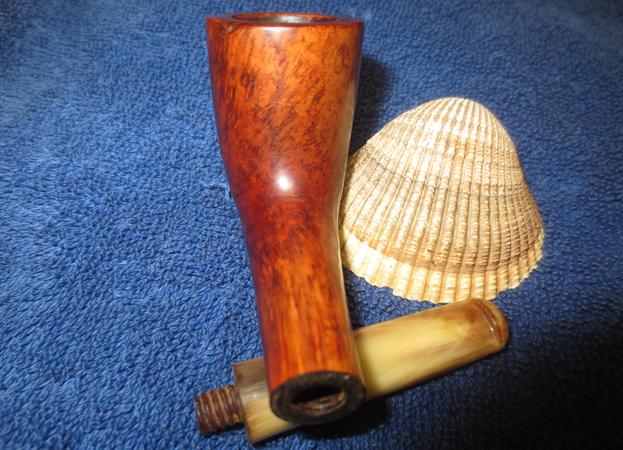
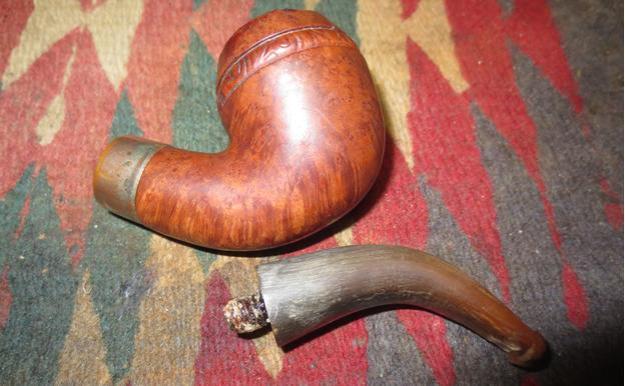
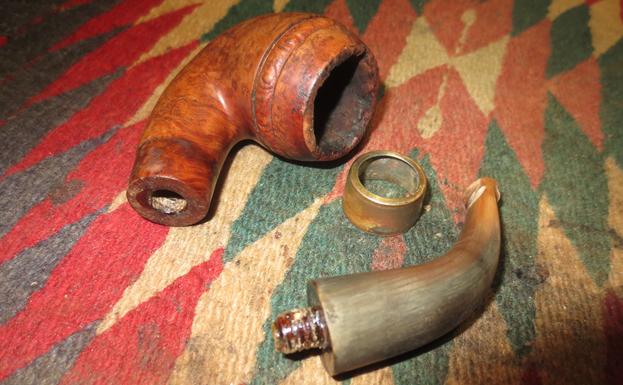
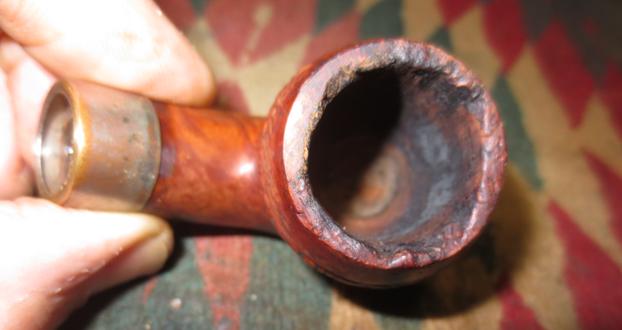
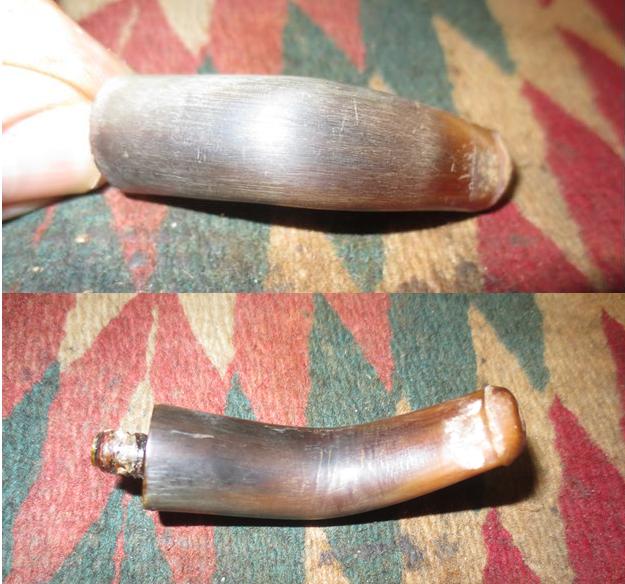
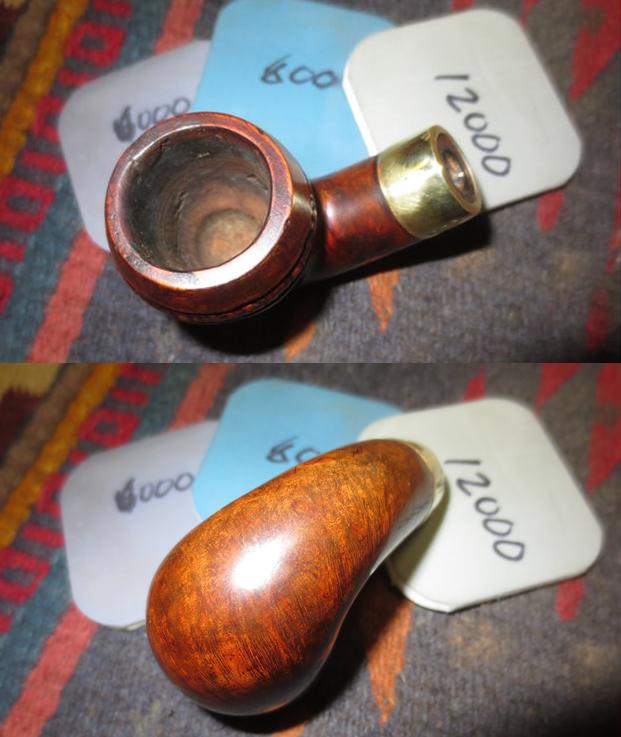
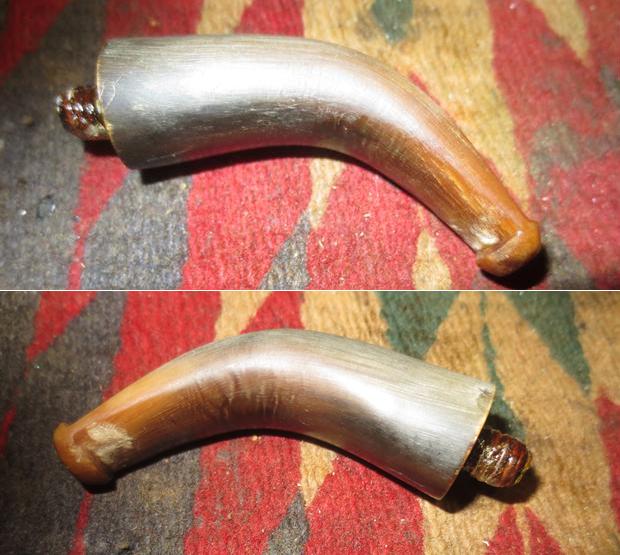
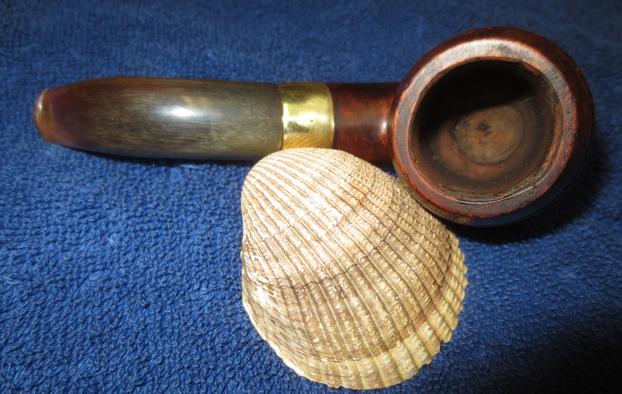
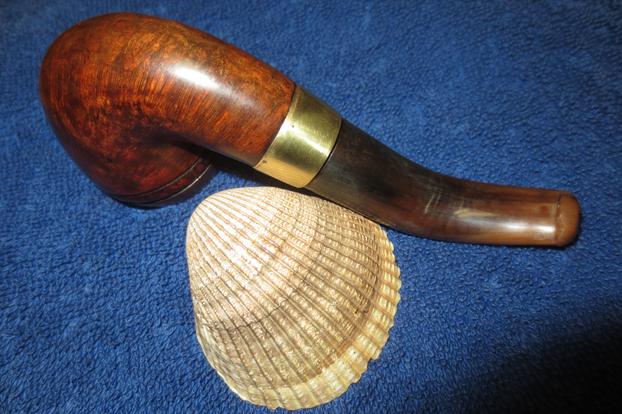
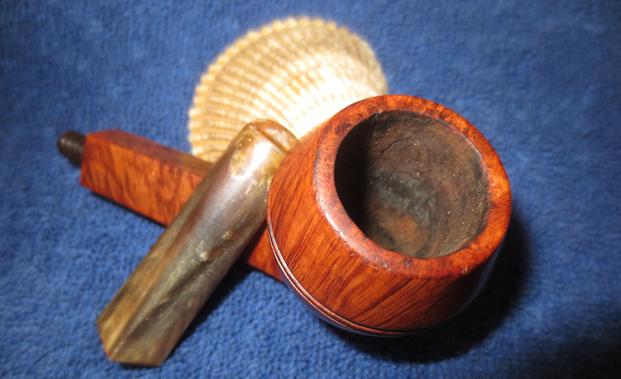
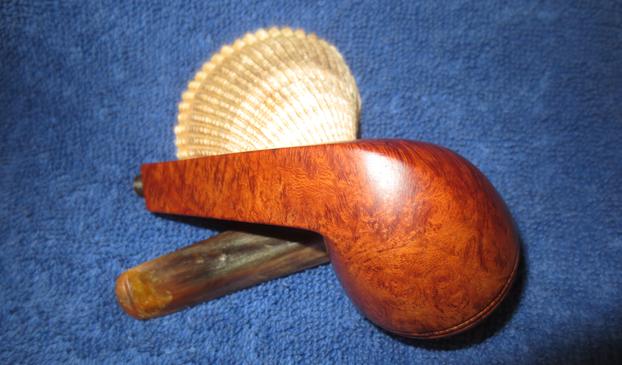
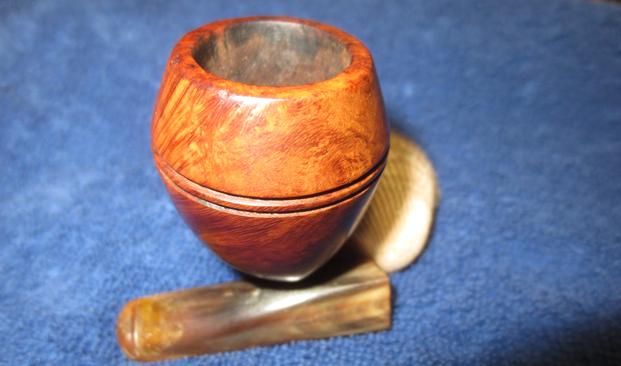
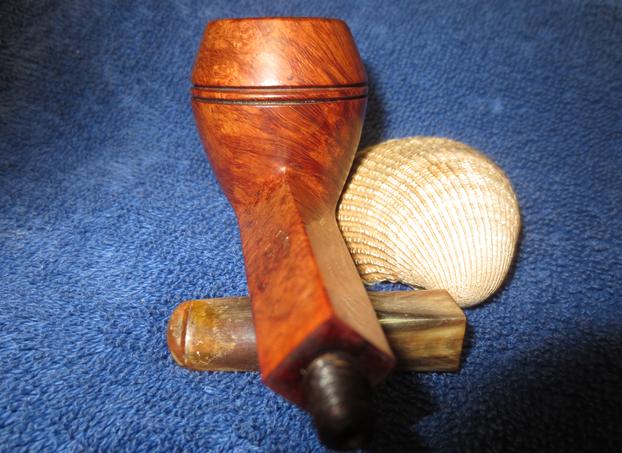
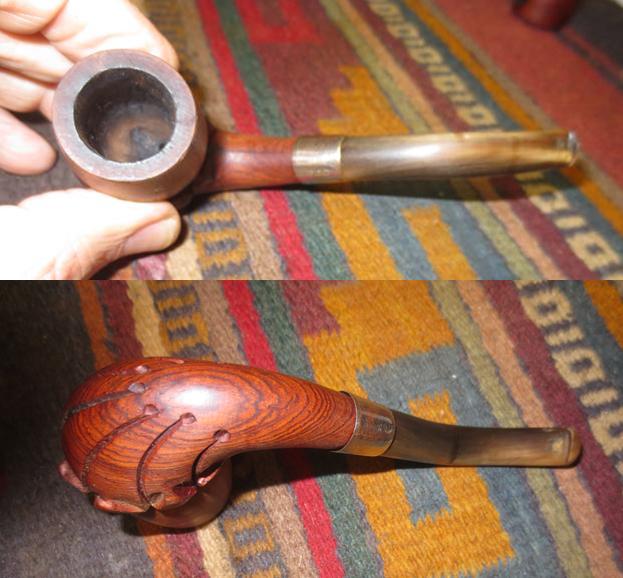
We found the next Manhattan on the virtual pipe hunt that my brother and I did in Montana. It was an older pipe than the others I had worked on. It also had a horn stem. I would call it a canted Dublin shape (others may differ on that). It is a very lightweight pipe and was in fair condition. The finish was worn and peeling but the briar had very interesting straight/flame grain that flowed on an angle on both sides of the bowl and horizontally along the shank. The back and front of the bowl had a mix of birdseye and flame grain. I have included the photos that Jeff took of the pipe before he worked his magic on it. I thought it would be interesting to see if there was any new information online regarding the brand. Of course, I checked on the Pipes, Logos and Stampings – PipePhil’s site. There was a listing for Manhattan pipes but there was not any new information and what was there was inconclusive. I turned to Pipedia to see if there was a new article. I was surprised to find that there was one, I do not know if it was new or not, but I do not recall seeing it before. The article was called The Manhattan Briar Pipe Company. It is an interesting read so I have included the article in its entirety as well as the advertisement from 1913 that showed a Manhattan pipe. The interesting thing for me is that the pipe is the same shape and style as the one I have in hand. The difference of course is that mine does not have a silver band and there is a horn stem rather than a vulcanite stem.

1913 Manhattan Advertisement

The Manhattan Briar Pipe Co. was organized in October, 1902 by the American Tobacco Company, under an agreement with the owners of the Brunswick Briar Pipe Company, as a New York corporation. Its initial address was 111 5th Avenue, New York City, and the value of its stock in 1902 was $350,000.00. American Tobacco Company had itself been founded in 1890 by J. B. Duke through a merger between a number of U.S. tobacco companies, and was one of the original twelve members of the Dow Jones Industrial Average in 1896. It was commonly called the “Tobacco Trust”.

The majority of the stock in Manhattan Briar Pipe Company was immediately acquired by the American Tobacco Company after the company was organized, but the prior owners retained a controlling minority interest for some years. In October, 1906, however, the American Tobacco Company acquired the remaining shares of stock, and from that point on Manhattan Briar was the pipe making branch of American Tobacco. By 1911, however, American Tobacco had been dissolved in anti-trust litigation, and Manhattan Briar Pipe Co. became a separate concern.

Manhattan Briar Pipe Co. had started operations in 1905 in Jersey City, New Jersey, having taken on a lease for a ten year period in 1905, and maintained a factory at Marion, New Jersey, where the pipes were made. By 1913, former American Tobacco pipe department chair John Glossinger was the president of Manhattan Briar Pipe Company, and began a significant advertising push for high grade pipes, using the slogan “Don’t spoil good tobacco by using a poor pipe”. It appears from cases having appeared on the estate market that Manhattan also sold meerschaum pipes, most likely rebranded articles originally made by European craftsmen.

After the expiration of the Jersey City lease the Manhattan Briar Pipe Company maintained offices and a factory at 415-425 Greenpoint Avenue, Brooklyn, New York beginning in 1915, evidently under the direction of W. C. Bastian, who had been granted a patent for a chambered pipe stem otherwise seemingly identical to a Peterson P-Lip in 1910. An employee of the company, one J. Gianninoto, was granted a patent for a device meant to permit the emptying of a cuspidor without the mess in early 1918, and the company continues to be listed in local directories through 1921. In 1922 Manhattan Briar was purchased by S.M. Frank and merged into that company. https://pipedia.org/wiki/Manhattan_Briar_Pipe_Co.

Further digging led me to a link on the S.M. Frank Co. & Inc. history page. Reading through the history of the company I found that S.M. Frank not only purchased the Manhattan Briar Pipe Company but also purchased WDC or William DeMuth & Company – two of the older brands that I enjoy working on. Here is the relevant section from the link: In the year 1900 Sam Frank Sr. started his own business, selling pipes and other tobacco items. His original office was located at 20 W. 17th Street, NYC. He was also closely associated with the sales staff of Wm. DeMuth & Co., selling their line of pipes. It was at this time that Mr. Frank first met Ferdinand Feuerbach and formed what would be a lifelong friendship. Mr. Feuerbach started working for the DeMuth Company in 1897 and by 1903 had become the production manager. In 1919, when Mr. Frank needed an experienced pipe man to run his pipe factory, located at 168 Southern Blvd., in the Bronx, he persuaded his old friend Ferdinand to join him. Mr. Feuerbach is credited with developing DeMuth’s popular Royal DeMuth and Hesson Guard Milano pipelines. In 1922, when S. M. Frank purchased the Manhattan Briar Pipe Co. the company incorporated.  http://www.smfrankcoinc.com/home/?page_id=2

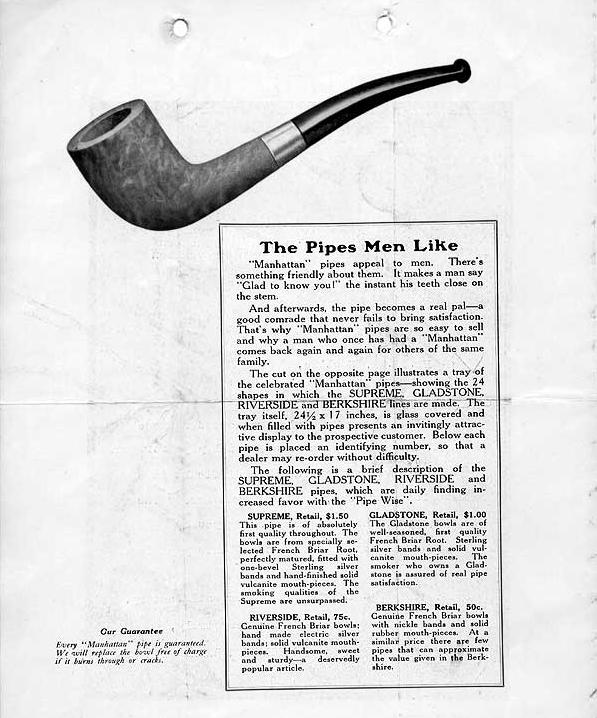
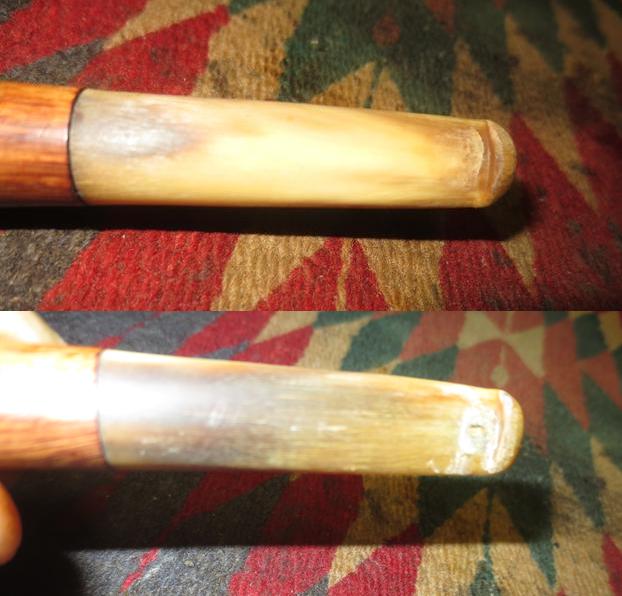
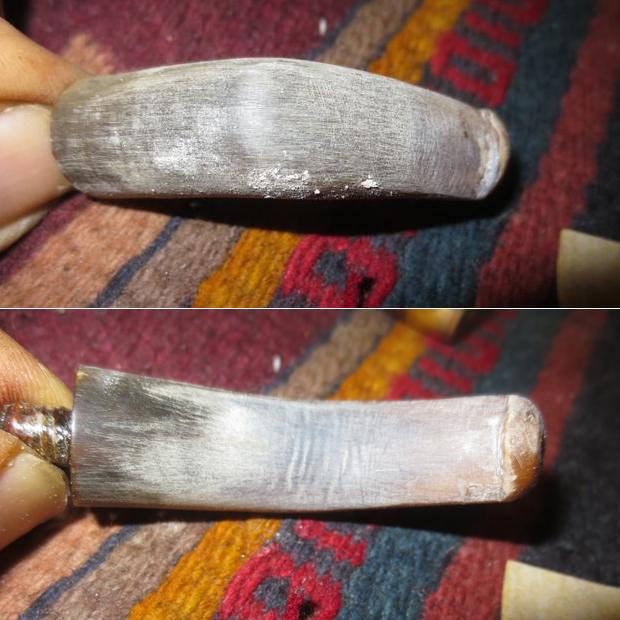
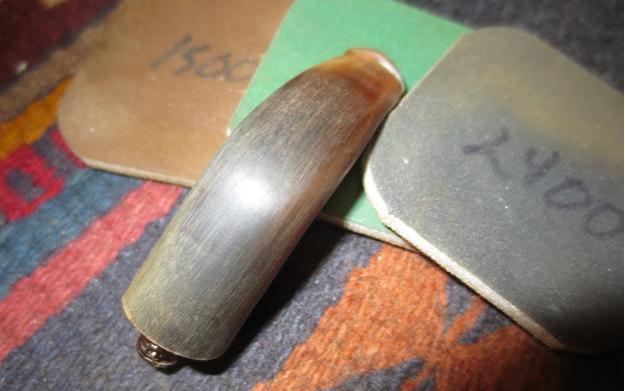
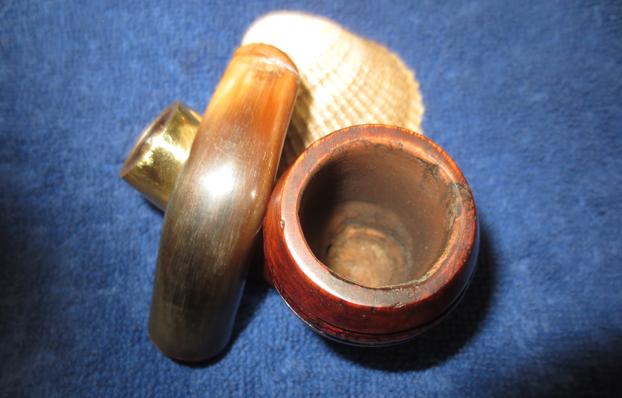
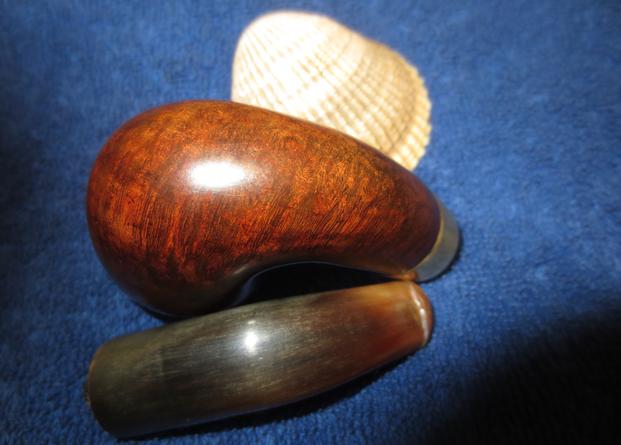
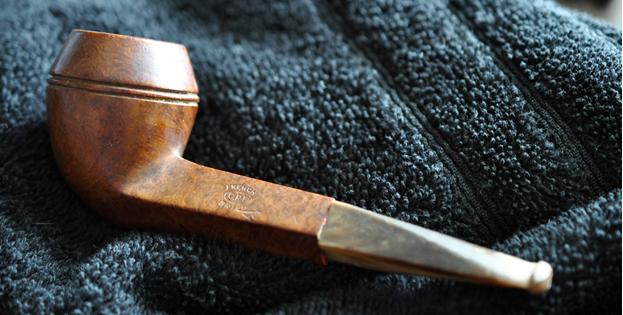
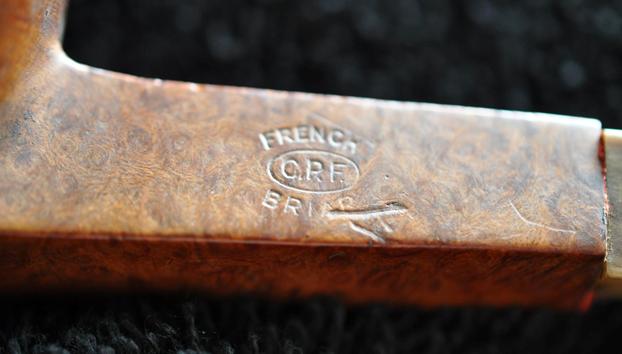
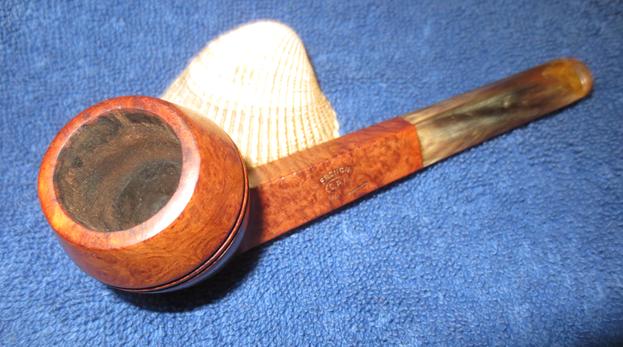
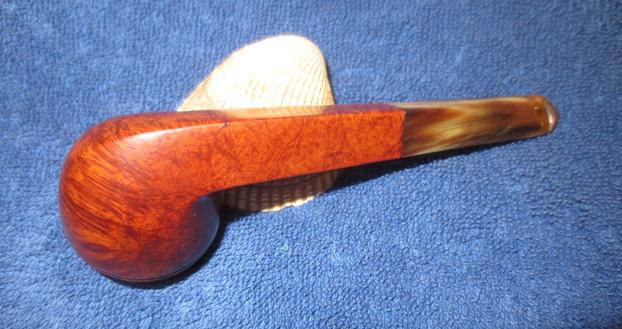
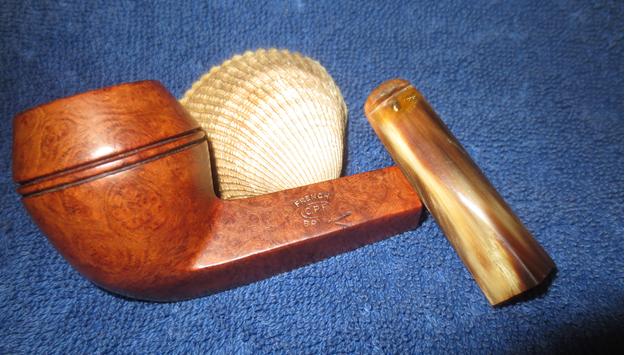
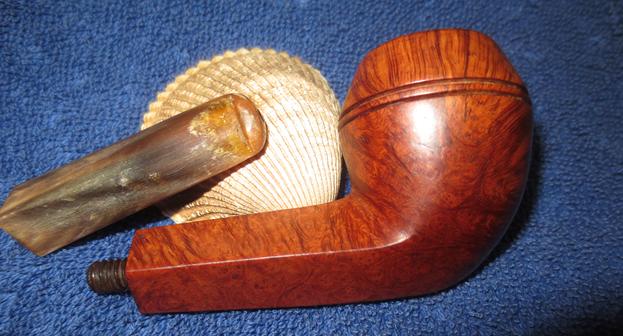
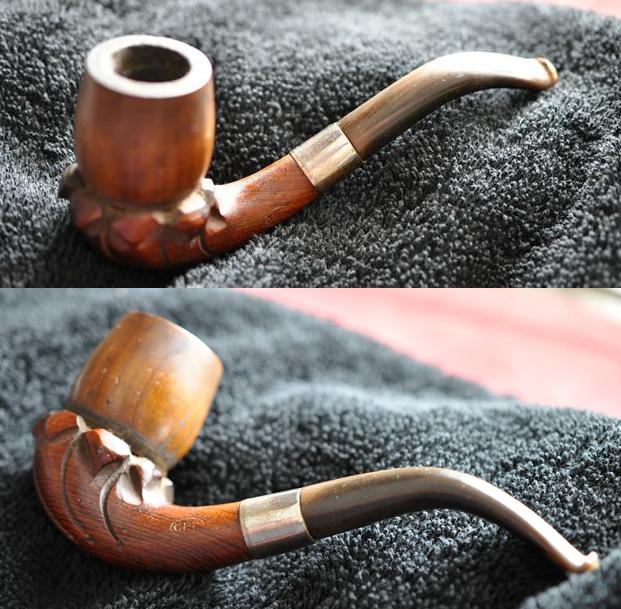
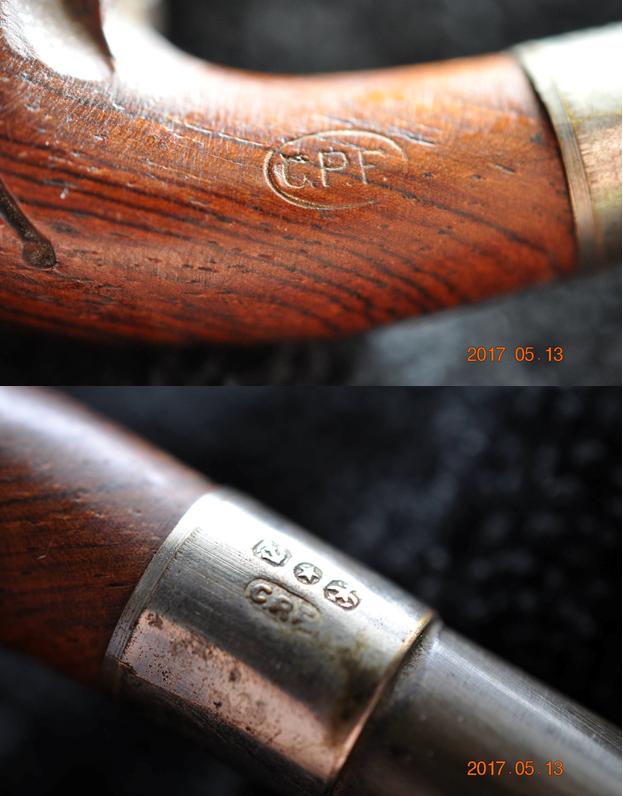
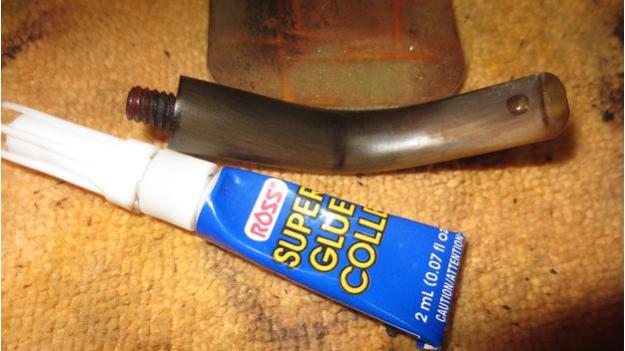
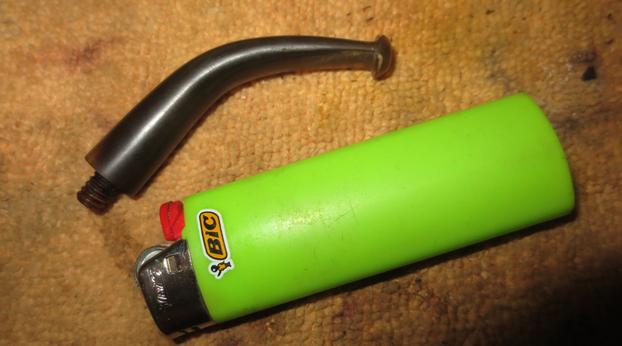
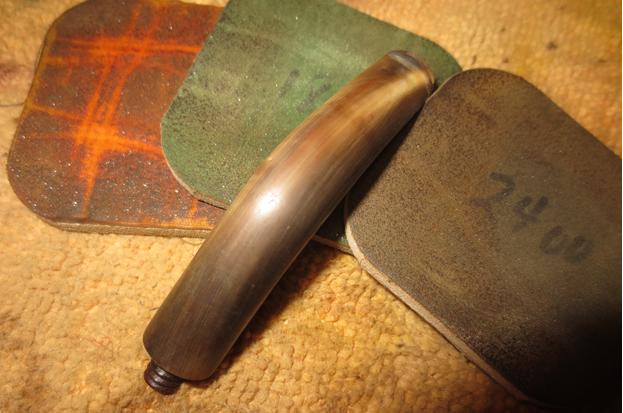
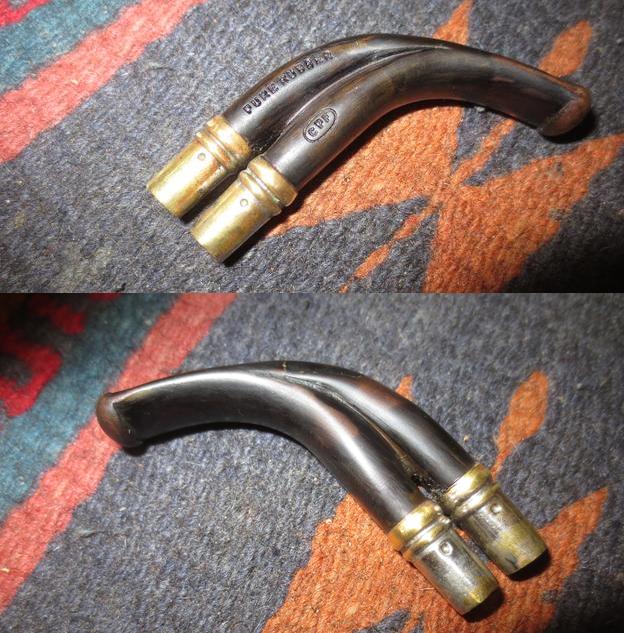
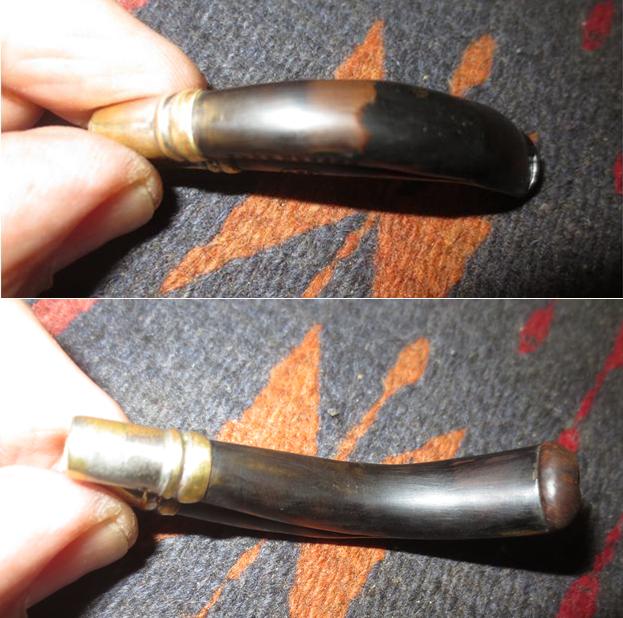
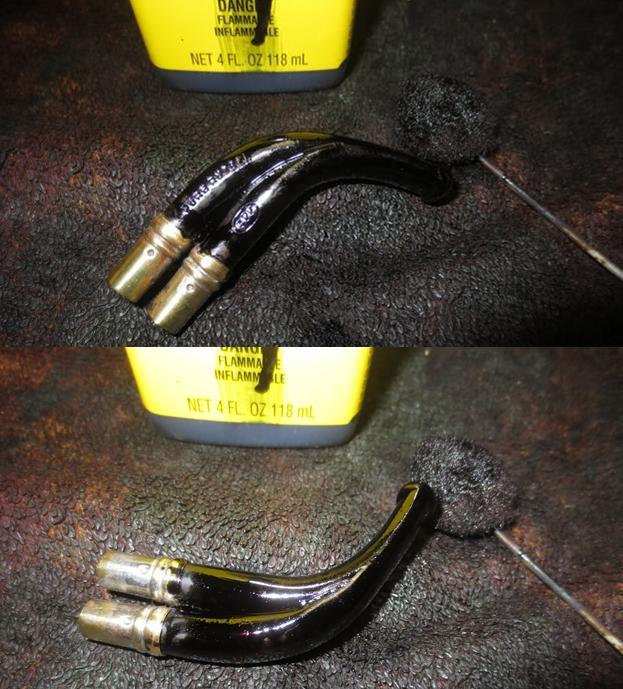
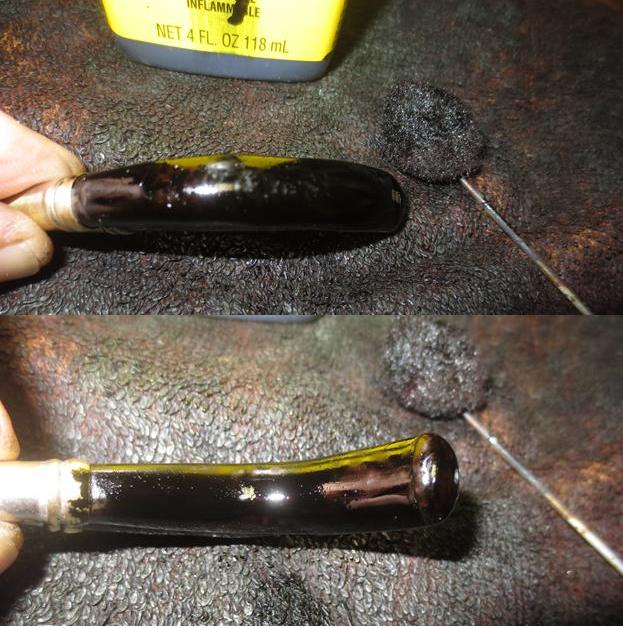
That link led me to me to some further information including an advertisement and a shape chart on Chris Keene’s Pipe Pages http://pipepages.com/mbpc2.htm. I have included them here with acknowledgement to Chris Keene. I always enjoy reading the old copy of these advertisements as they take me back to place where the pipe was an acceptable part of the life. Of course, this influx of information makes me wonder what I was looking for the last time I did a search for this brand. It seems some days you put in the right search parameters and hit the jackpot and other days the wrong ones leave you with nothing. I now knew more about the brand than I ever imagined when I began the hunt. I am pretty sure that my pipe was made in the era between 1900-1910. It is roughly from the same time period as the C.P.F. pipes that were in that lot.The bowl had a thick cake that had flowed out of the bowl and on the rim top. The inner edge of the rim appeared to be damaged but I would know more once I had it in hand. The next series of photos show the bowl from a variety of angles to show the condition of the finish and the grain around the bowl sides and bottom. The pipe was stamped on the left side of the shank MANHATTAN and there was no other stamping on the pipe.The horn stem was in decent condition with tooth chatter and marks on the top and underside near the button. There was also a small hole that was on the underside of the stem – it did not go all the way through the stem into the airway but it was present. The bone tenon was in good condition and the alignment of the stem to the shank was perfect.My brother Jeff has established his own process of thoroughly cleaning the pipes that he works on for me. This one was no exception, it was cleaned thoroughly. He reamed the bowl with a PipNet reamer and tidied it up with a Savinelli Fitsall Pipe Knife. He scrubbed out the mortise and the airway in the shank and the stem with pipe cleaners, cotton swabs and alcohol and cleaned the exterior of the threaded bone tenon with a cotton swab and alcohol. He scrubbed the exterior of the pipe with Murphy’s Oil Soap to remove the grime and grit on the bowl. He scrubbed the rim top with a tooth brush and the oil soap and was able to clean off the lava overflow. I took photos of the pipe to show the condition it was in when it arrived in Vancouver. The grain really was quite stunning. While the MANHATTAN stamp is legible on the left side of the shank it is quite faint. I took a close up photo of the bowl and rim top after my brother had clean it up. The rim top was in good condition, the bowl was clean but the inner edge of the bowl showed a lot of damage and looked like the same knife that had been used to ream the other pipes in this lot had done its work here as well.His clean up on the horn stem had revealed that the small hole I had noted on the photos above was indeed present and was a small separation between the fibres of the horn. Fortunately this is a simple repair but the repair always shows.Since the stem was clean, the repair was simple. I filled in the tooth dent on the top side of the stem near the button with clear super glue. I sprayed the repair with accelerator so that I could repair the split on the other side. I filled that split in with the same clear super glue, sprayed it with accelerator and took the following photos.I sanded the repaired areas with 220 grit sandpaper to smooth out the excess and blend it into the surface of the horn. I worked over the entire stem at the same time to smooth it out and remove some of the nicks and marks on the surface of the horn.Since I was already working on it, I decided to continue and polish the stem before moving on to the bowl. I polished it with micromesh sanding pads – wet sanding with 1500-2400 grit pads and dry sanding with 3200-12000 grit pads. I rubbed the stem down with Obsidian Oil after each pad to give more life to the horn. I gave it a final coat of oil after the last pad and set it aside to dry. The repair on the top of the stem disappeared into the horn while the larger split on the backside was smooth but more visible. I set the stem aside for its final polish on the buffing wheel once I finished the work on the bowl. I began by polishing the rim of the bowl with a 1500 grit micromesh pad. My purpose was to see if I could remove some of the darkening or if I would need to top the bowl. I was happy to see that the pad cleaned it up and no topping was necessary. I used a folded piece of 180 and 220 grit sandpaper to work over the inner edge of the rim and smooth out the rough spots. It did not take too much sanding to even things out and bring the bowl back into round. The next three photos show the process of the rim repair. I decided not to stain this pipe because the briar was so nice in its original form. I chose instead to polish the rim and bowl with micromesh sanding pads – wet sanding with 1500-2400 grit sanding pads and dry sanding with 3200-12000 grit pads. I wiped the bowl down with a damp cloth after each sanding pad to remove the sanding dust. The briar really began to shine as each successive grit of sanding pad was used. With the bowl finished, I put the pipe back together and took it to the buffing wheel. I buffed the bowl and stem with Blue Diamond, being careful not to damage the already faint stamping on the left side of the shank. I gave the pipe multiple coats of carnauba wax and buffed it with a clean buffing pad to raise a shine. I hand buffed it with a microfibre cloth to deepen the shine and give depth to the finish. The completed pipe is shown in the photos below. I love the way the rich striations of the stem play against the red of the buffed and polished briar. This is a beautiful pipe. Thanks for walking with me through the process.


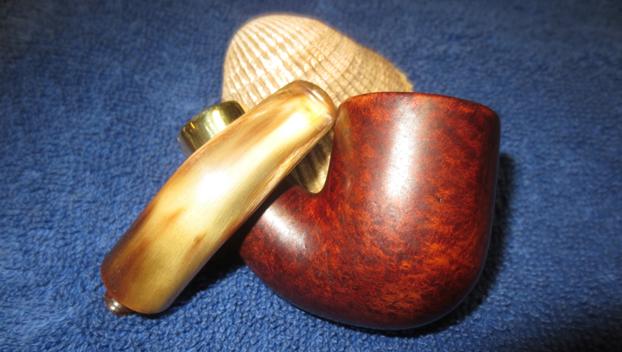
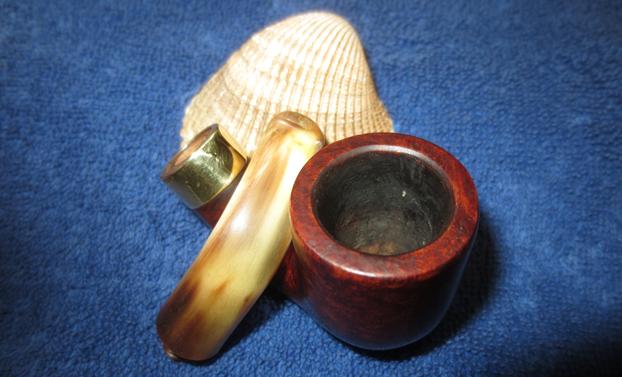
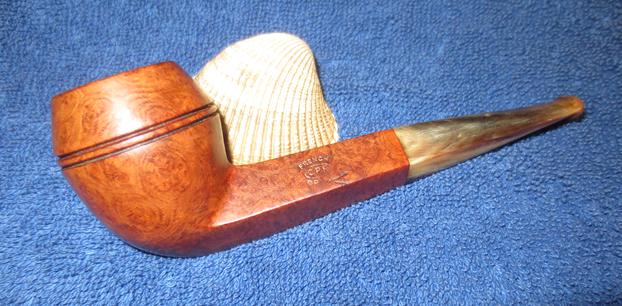
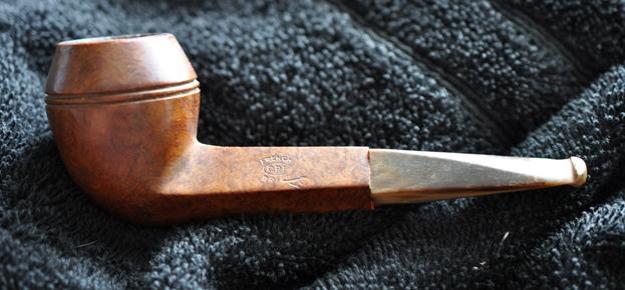
This Old CPF French Briar Rhodesian was in rough shape


Blog by Steve Laug

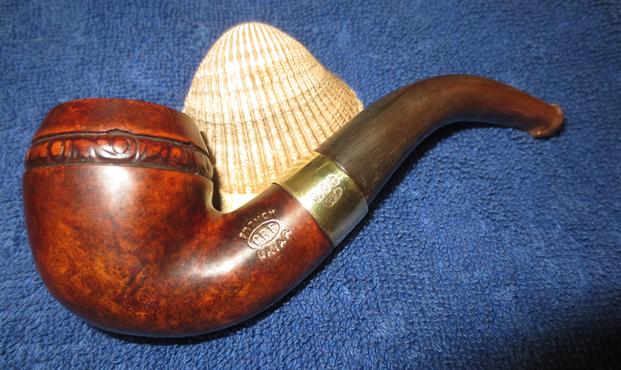
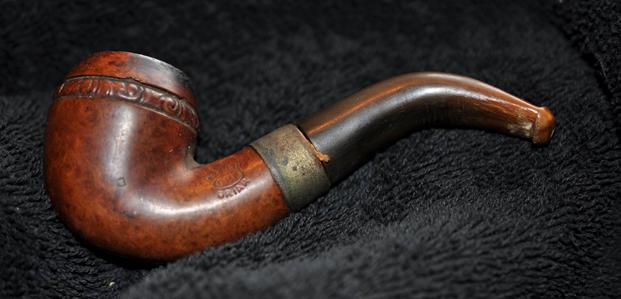
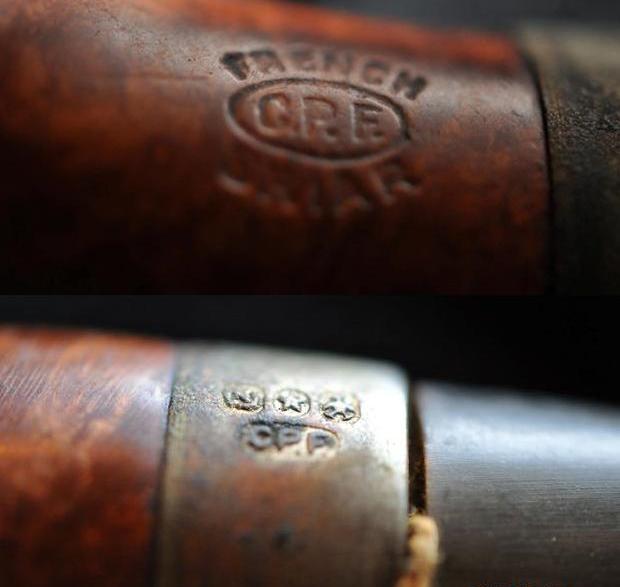
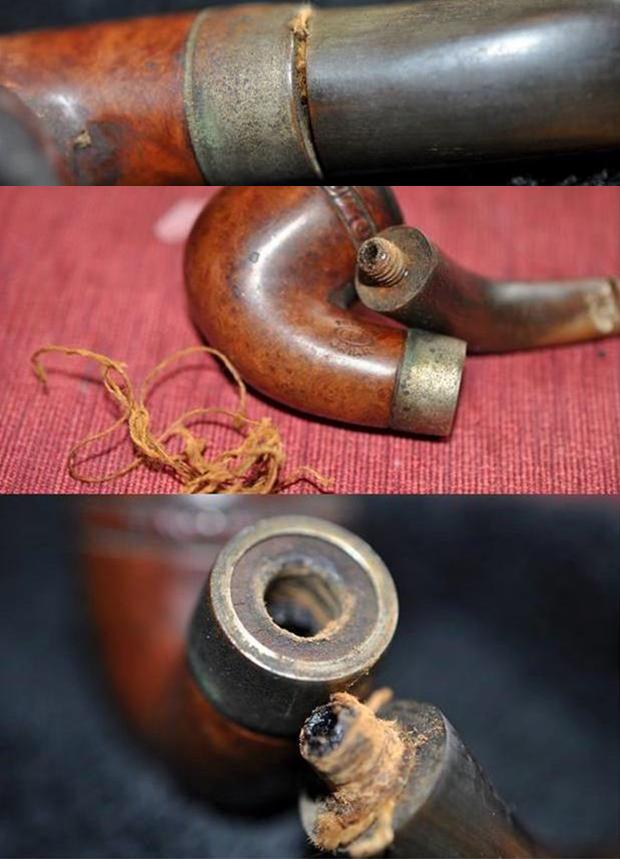
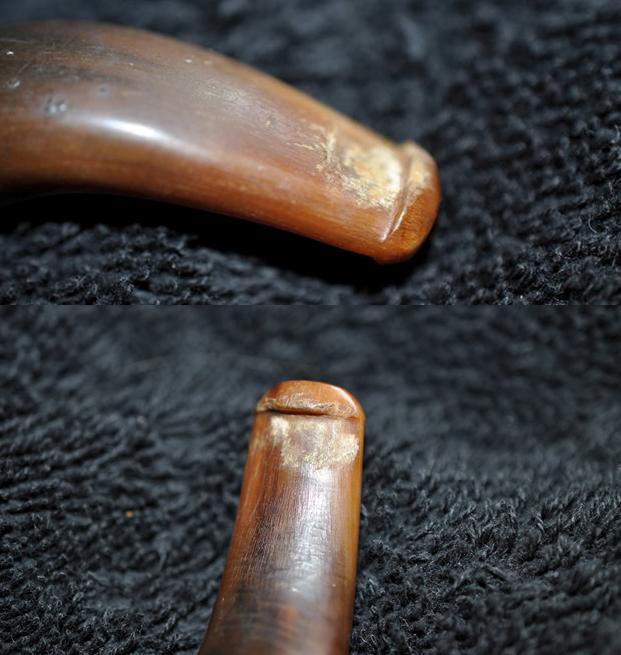
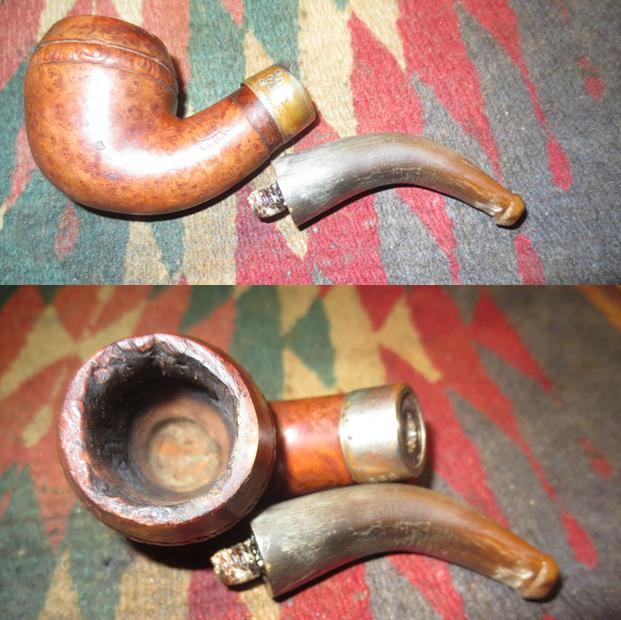
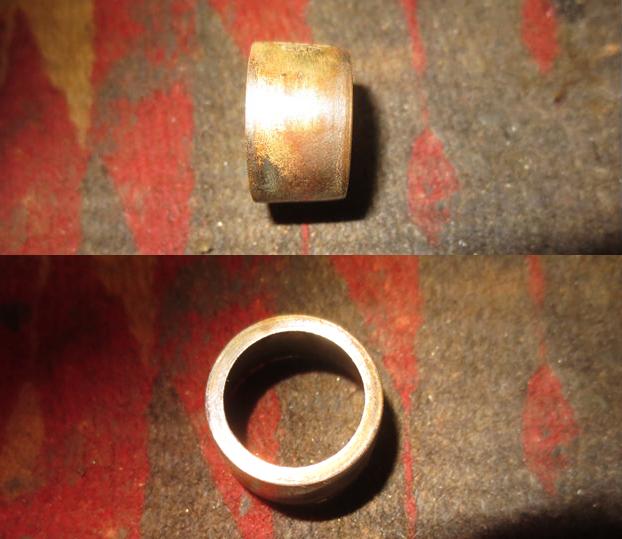
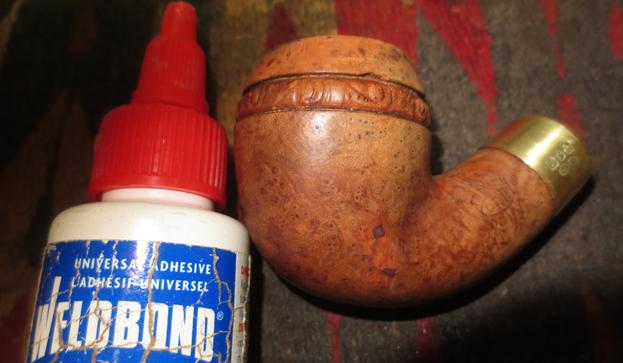
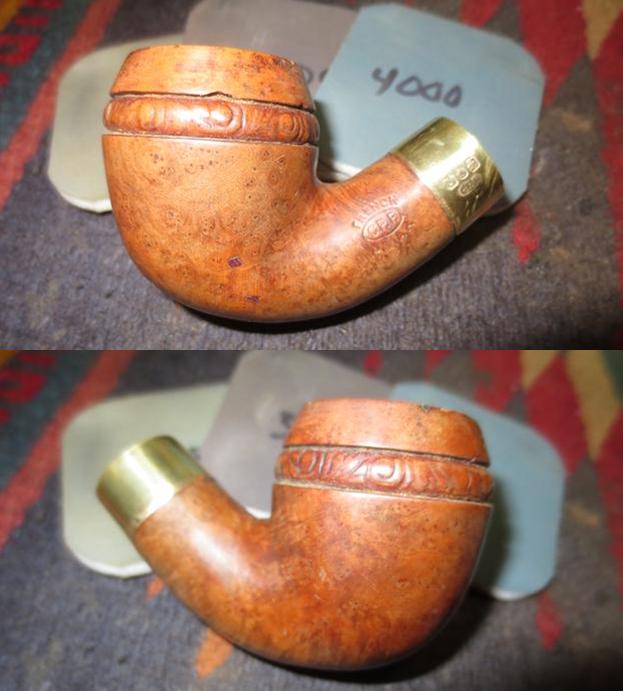
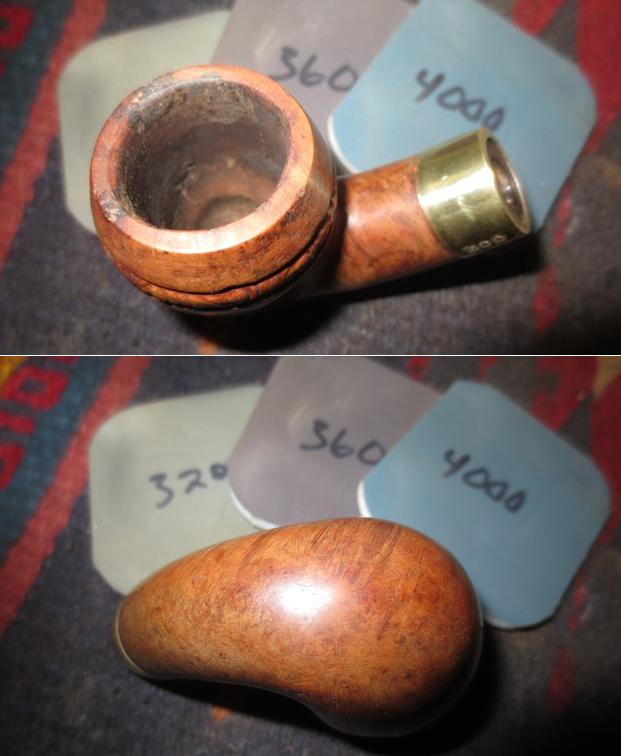
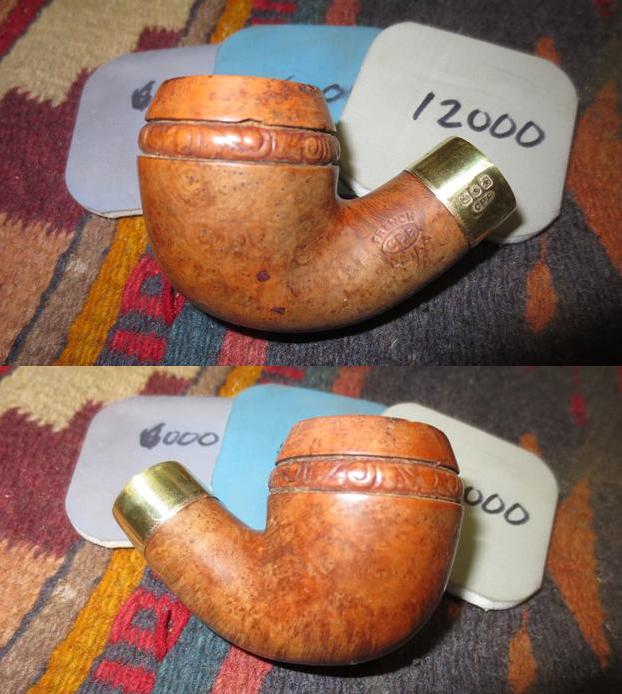
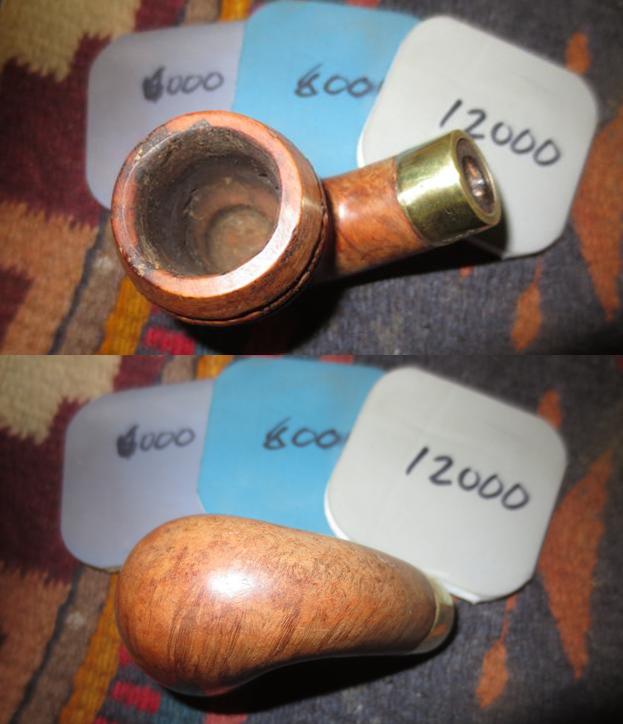
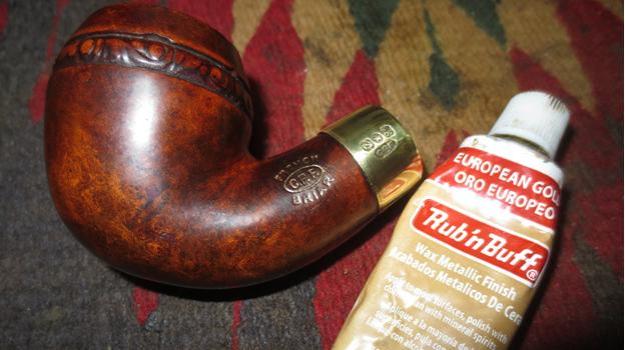
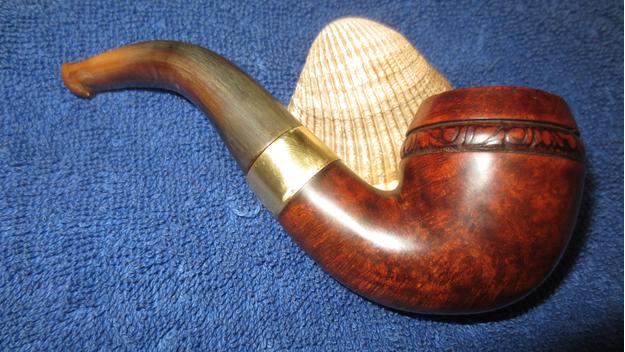
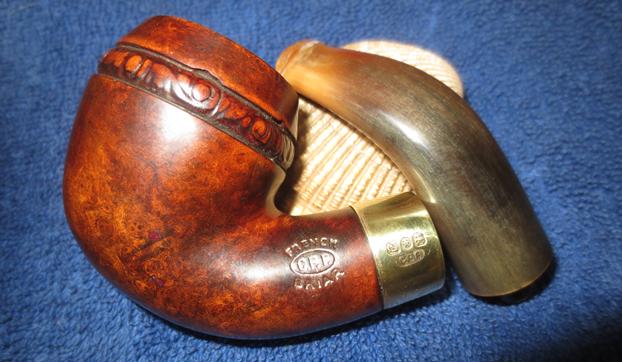
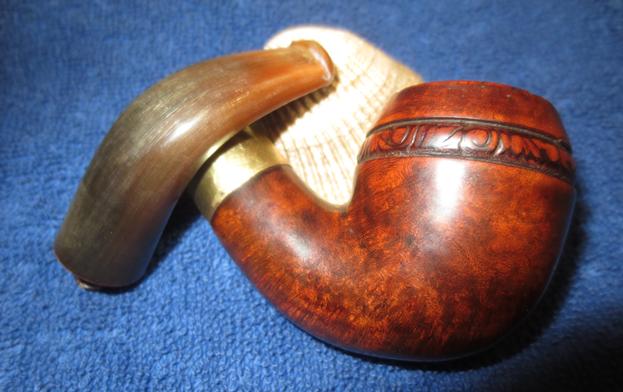
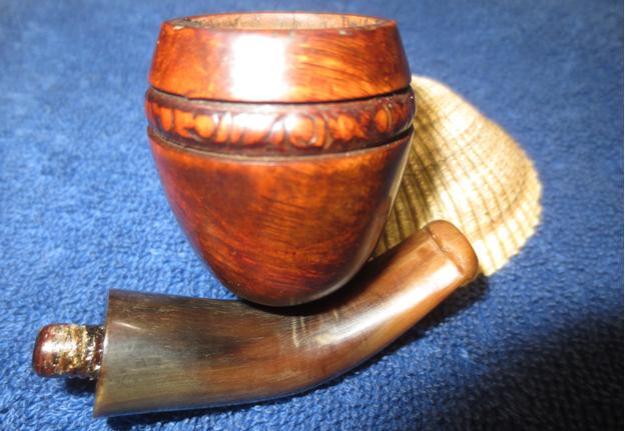
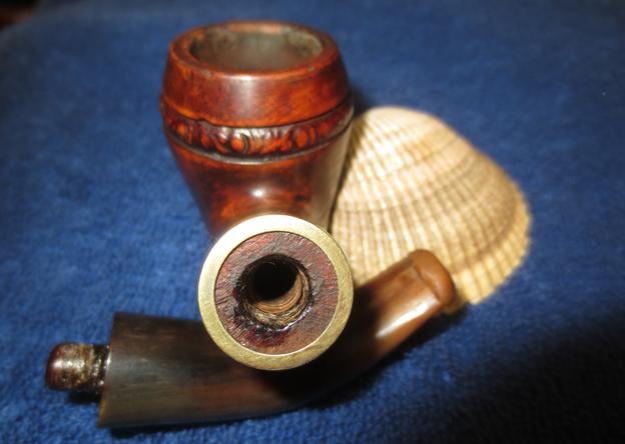
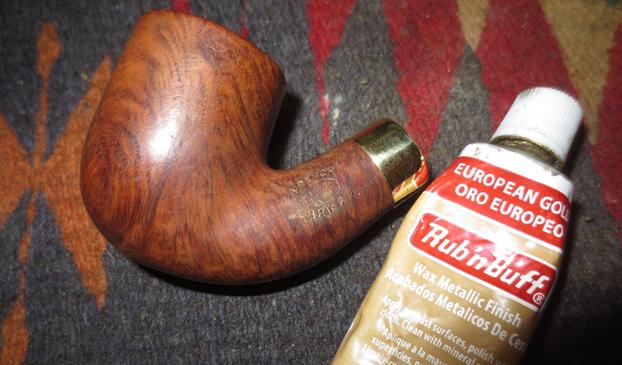
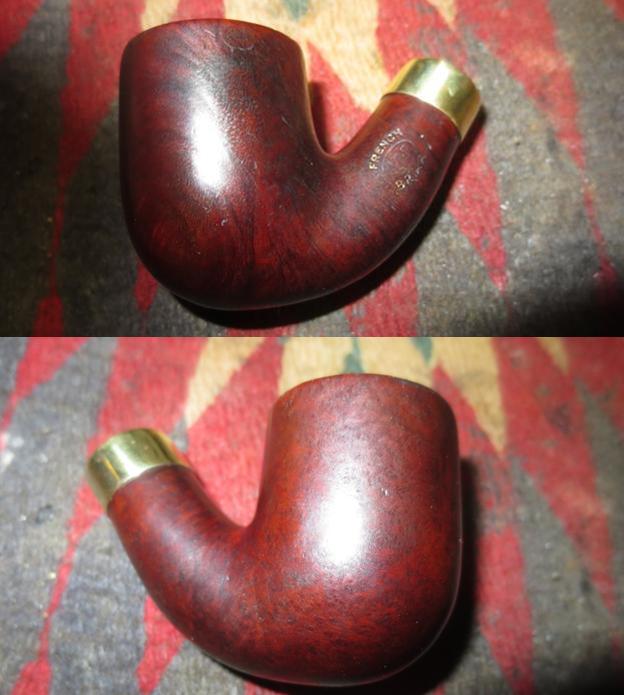
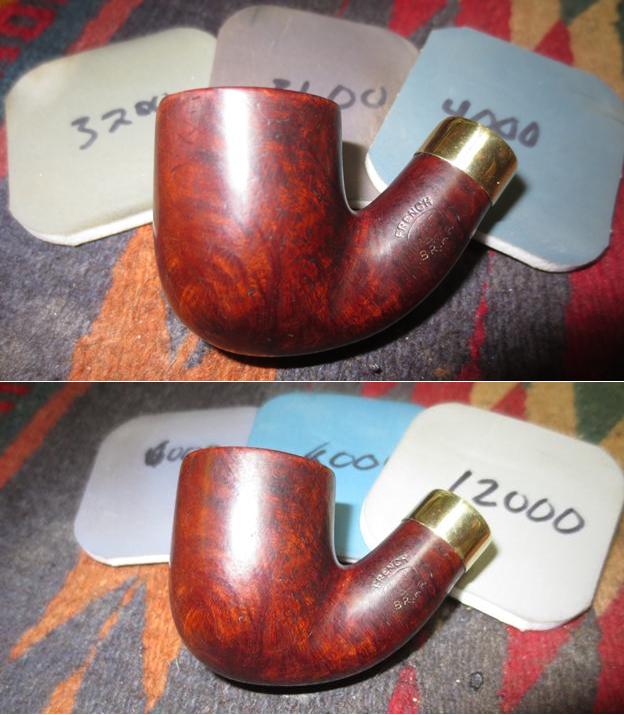
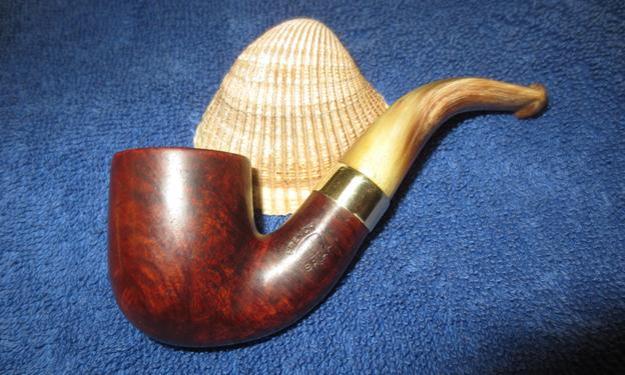
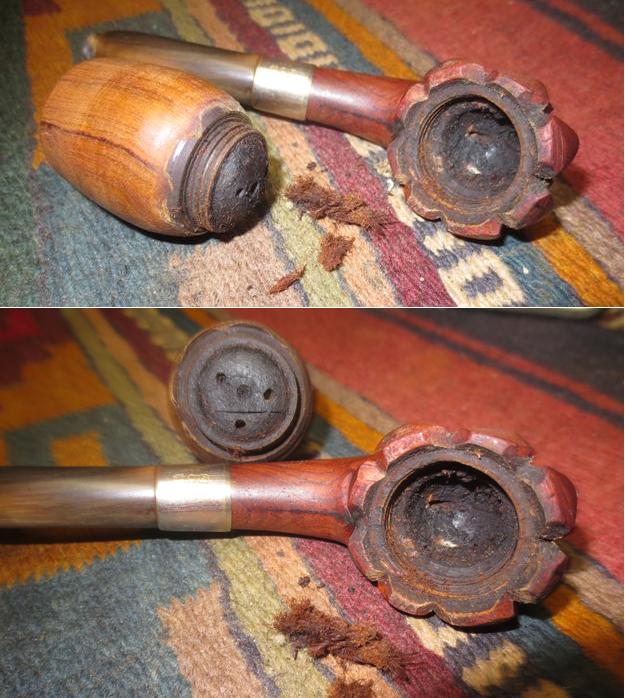
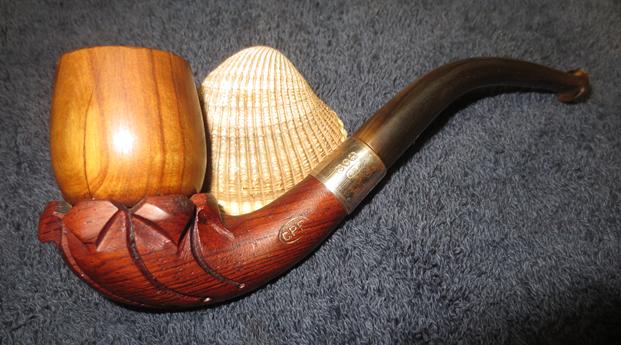
The next pipe I chose to work on from the lot of the lot of pipes my brother and I picked up on our virtual pipe hunt in Montana is another C.P.F. French Briar. This one is a Rhodesian shape with a chubby shank. It is an interesting shape and the carving around the band separating the cap from the body of the bowl. The band on the shank is loose and has turned so that the C.P.F. stamp on the band is on the other side. The finish is very dirty and the rim cap and top is heavily damaged. The horn stem is worn and there is tooth chatter on the top and underside of the stem near the button. There is a wrinkle in the horn on the underside mid stem. The stem looks like someone has either wrapped it or there is a gasket to keep it in place. The photos below show what it looked like before my brother did his clean up on it. If you would like to read about some of the others I have restored I have written about them in individual blogs. They include a CPF horn stem bulldog, a CPF French Briar bent billiard and a CPF Remington French Briar military mount billiard. (You can access them by clicking on the CPF Name above for a hyperlink to the blog). Just a reminder – CPF stands for Colossus Pipe Factory. The brand was made in the late 1880s and 1890s.Jeff took the above photo and the photos that follow to show the condition of the pipe before he cleaned it up. This sad little Rhodesian comes from the same era as the other pipes in this find – the late 1880s – early 1890s. If I thought the silver mount billiard was in bad shape this one was in worse condition than any of previous pipes I had worked on from this lot. It was worn and was in rough condition. The finish was worn off and appeared to be flaking in place. There were a lot of nicks, scratches around the outside of the bowl. The outside of the bowl was covered with grime, grit and was peeling. The rim of the bowl and top edge of the pipe were in abysmal condition. The rim had been knocked out on hard surfaces and burned. There were huge chunks missing all around the rim top. The front of the bowl was in worse condition than the back and sides. The height of the top cap was different all the way around. Once again there was a thick, crumbling cake buildup in the bowl and the lava from the bowl overflowed onto the damaged top of the rim. The band on the shank end was oxidized and the stamping on it was almost illegible. The horn stem had tooth marks on the top and underside near the button. There is a wrinkle in the horn on the underside mid stem.Jeff took close up photos of the rim top to show how bad it looked before he started the clean up. The thick cake and lava overflow on the rim filled in a lot of the damage. The full extent of the damage would be revealed once the cake was removed and the lava was cleaned. The third photo below shows the rim from one side and you can see the damage on that side. The next two photos show the condition of the bowl sides and the flaking finish. The damage on the rim edge also can be seen in the pictures.The stamping on the left side of the shank was readable – it had the C.P.F. logo in an oval with the words French Briar above and below the oval. The band on the shank end had the faux hallmark stamps that I was familiar with as well as the C.P.F. oval. The second photo shows something in between the shank and the stem. The first photo below shows the stem and the wrapping or gasket between the shank and stem. It is followed by photos that Jeff took when he removed the stem showing the wrapping – a thread of twine wrapped around the tenon to hold it in place in what appeared to be worn out threads in the mortise itself.The horn stem showed some tooth chatter, bite marks and what looked like wrinkles on the underside, but it was in better condition than the other previous horn stems I had worked on.Following his usual pattern, Jeff thoroughly cleaned the pipe. He reamed the bowl with a PipNet reamer and tidied up with a Savinelli Fitsall Pipe Knife. He scrubbed out the mortise and the airway in the shank and the stem with pipe cleaners, cotton swabs and alcohol. He scrubbed the exterior of the pipe with Murphy’s Oil Soap to remove the grime and grit on the bowl. He scrubbed the damaged rim top with a tooth brush and the oil soap. He scrubbed the band and stem at the same time to clean it. I took photos of the pipe to show the condition it was in when it arrived in Vancouver. You can see the damaged rim top and edges and the fill on the right side of the bowl. The condition of the briar is rough and the stem is oxidized. The band was loose so I removed it from the shank to clean it. I took a photo of the pipe parts.I took a close up photo of the rim top to show how great a job my brother did on it but also the extent of the damage that would need to be addressed in the repair.The stem was clean in decent shape. Very few tooth marks were on the top and bottom sides and those would be easy to deal with. The button was in excellent condition.I mixed a putty of super glue and briar dust to use for rebuilding the rim on the bowl and the top edge. The damage was quite significant so the repair would be extensive. I was hoping that it would work. Once it dried I topped the bowl on the topping board with 220 grit sandpaper and worked the inner edge with a folded piece of the same sandpaper. The repair came out quite well and gave me something to work with in the finished pipe. I polished the band with 1200-12000 grit micromesh sanding pads to remove the tarnish and corrosion from the surface. It worked really well and left behind a polished brass band. When I finished polishing the band I used an all purpose glue to glue it in place on the shank with the stampings aligned with those on the briar. I wiped down the bowl with alcohol on a cotton pad to remove the remaining sanding dust from the bowl and any grit that had accumulated in the carvings from my sanding. I polished the briar with micromesh sanding pads – wet sanding with 1500-2400 grit pads and dry sanding with 3200-12000 grit pads. I wiped the bowl down with a damp cotton pad to remove the dust after each set of pads. I stained the bowl with a dark brown aniline stain mixed with isopropyl alcohol in a 50/50 ratio. I flamed it and repeated the process until I was happy with the finish. I wiped the bowl down with cotton pads wetted with isopropyl to thin the stain and give it more transparency. When I finished that I buffed it with red Tripoli and sanded it down with 1500-12000 grit micromesh pads to polish it and give it the look that I was aiming for. The pictures tell the story. With the bowl done, except for the final buffing I turned my attention to the stem. The first thing I had to deal with was the worn threads in the mortise. I decided to fill in the threads on the tenon with super glue and make the stem a push stem. I could have removed the threaded tenon and inserted a new push tenon like those on meerschaum pipes but I wanted to keep the original look of the tenon and mortise so I figured that I could convert the stem to push status by simply building up the threads. I layered on clear super glue until I had the build up shown in the photos below. I still needed to sanded it smooth and reapply a final coat but you can see the process.I sanded out the tooth marks in the stem and worked on the “wrinkles” in the underside of the stem with 220 grit sandpaper until they were smooth. I worked on some of the marks at the tenon end of the stem at the same time as it seemed rough to touch.I polished the stem with micromesh sanding pads – wet sanding with 1500-2400 grit pads and dry sanding with 3200-12000 grit pads. I rubbed the stem down with Obsidian Oil after each pad to give the horn some needed oil to help with the dry feel that it had after over a hundred years of smoking. You can follow the development of the shine in the photos that follow. I love the feel and look of polished horn. There is nothing quite like it for translucency and feel. I had forgotten to touch up the gold leaf in the stamping on the shank up to this point so I applied some Rub ‘n Buff European Gold to the stamping with a cotton swab and rubbed off the excess. The stamping on this pipe was in excellent condition so it came out really readable.I buffed the pipe and stem with Blue Diamond on the buffing wheel to polish out the scratches that remained and to give it a shine. I was careful to avoid damaging the gold stamping on the shank. I gave the pipe multiple coats of carnauba wax to protect the horn and the briar. I buffed it with a clean buffing pad to raise the shine on the horn and the stem. I hand buffed it with a microfiber cloth to deepen the shine. The finished pipe is shown below. I am pretty happy how it came out considering what I started with. The rim and cap look the age of the pipe but the damage is gone and the pipe is ready for another 100 years. Thanks for going through the process with me on this challenging restoration.

Restoring another CPF French Briar – a Remington Silver Mount Billiard


Blog by Steve Laug

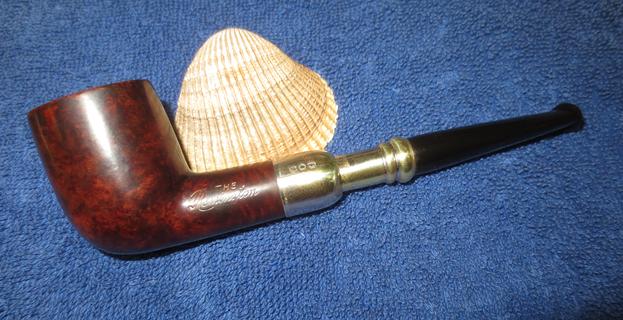
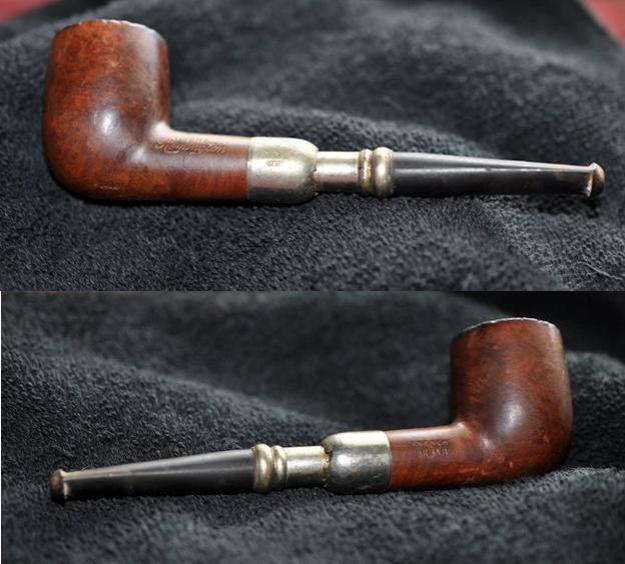
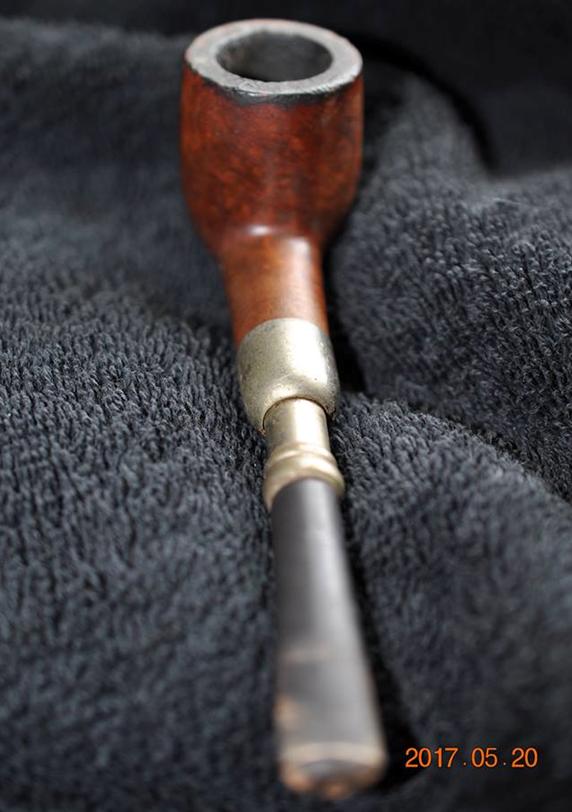
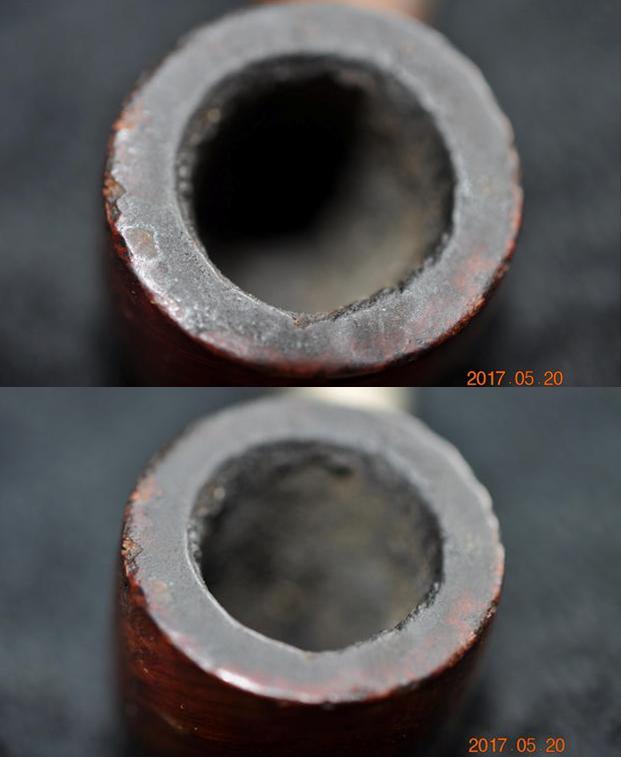
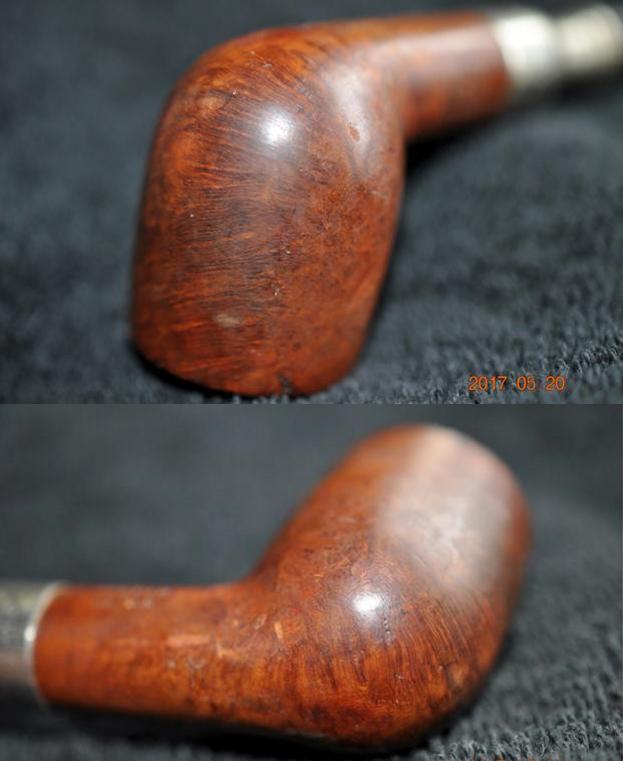
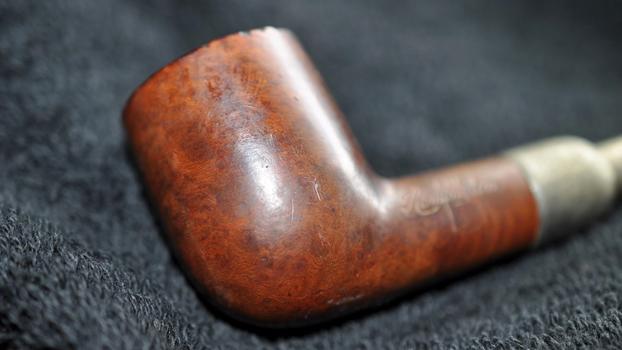
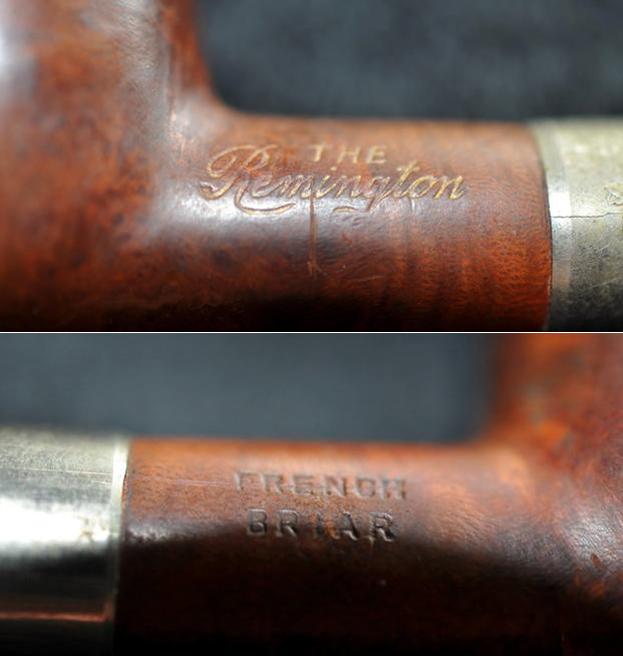
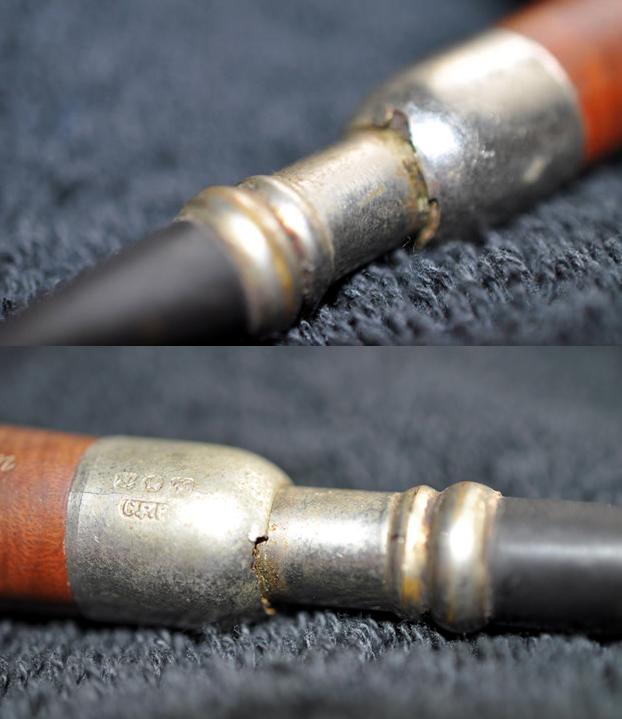
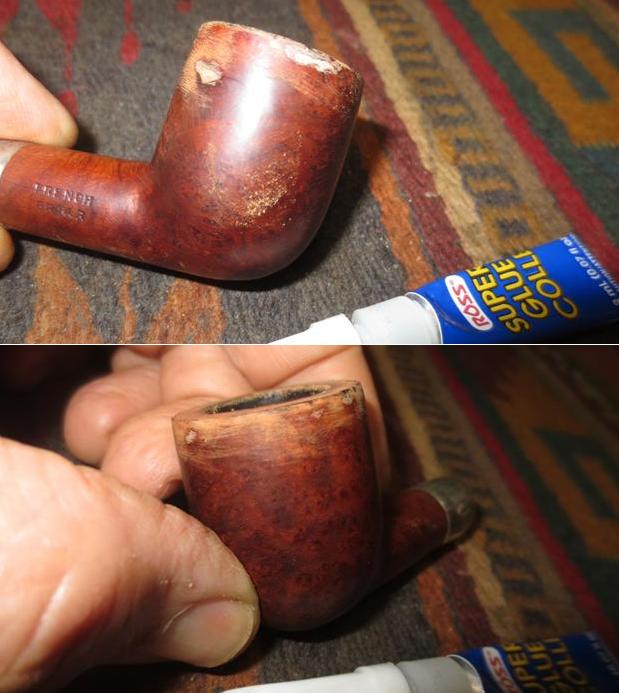
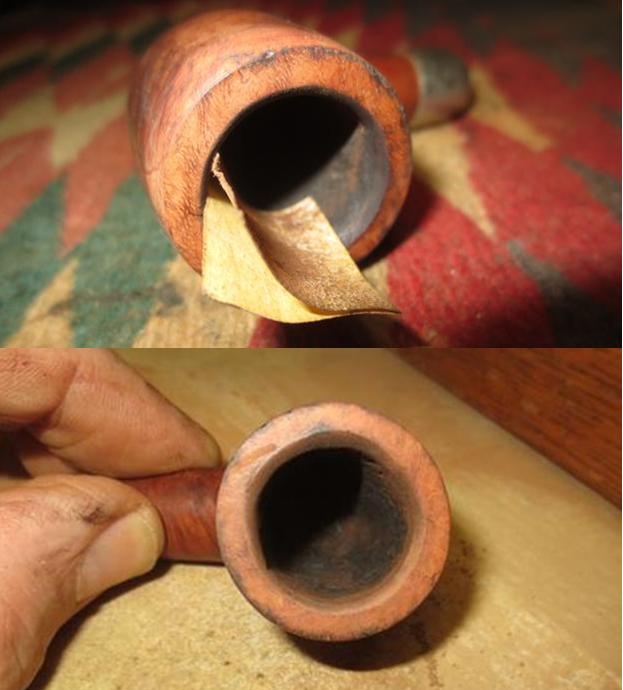
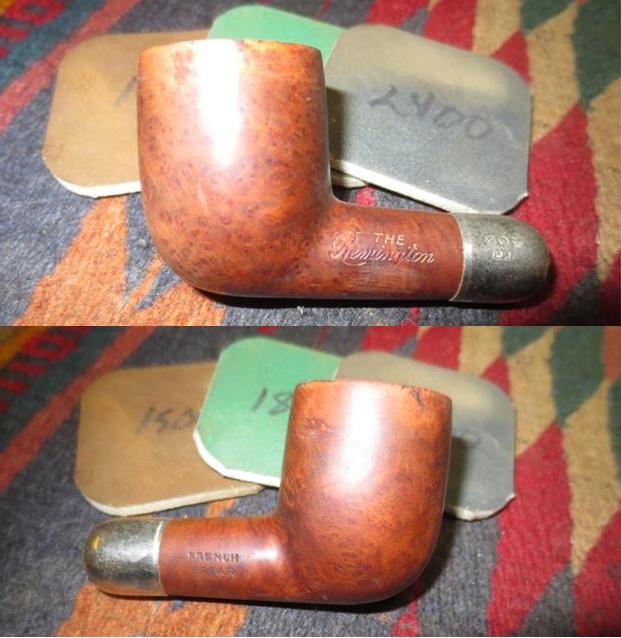
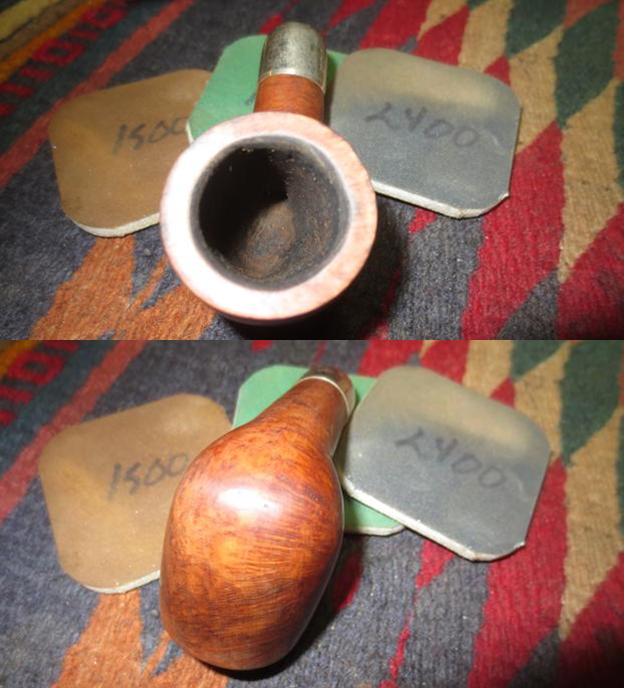
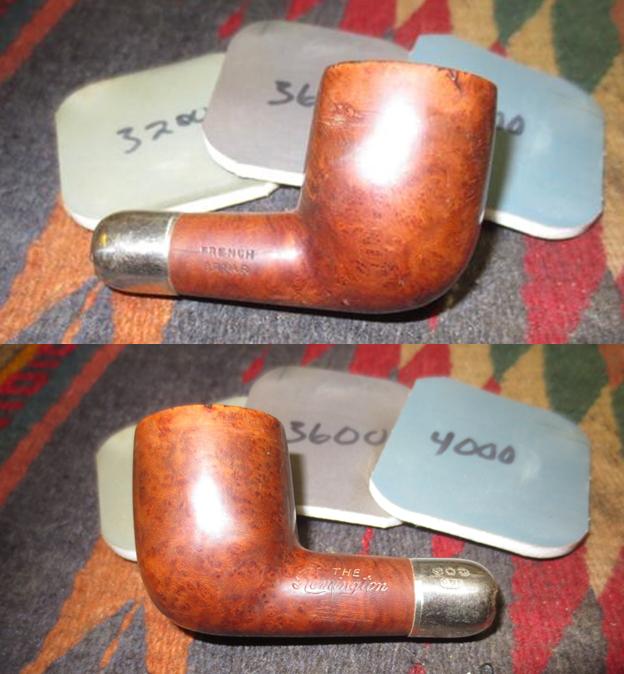
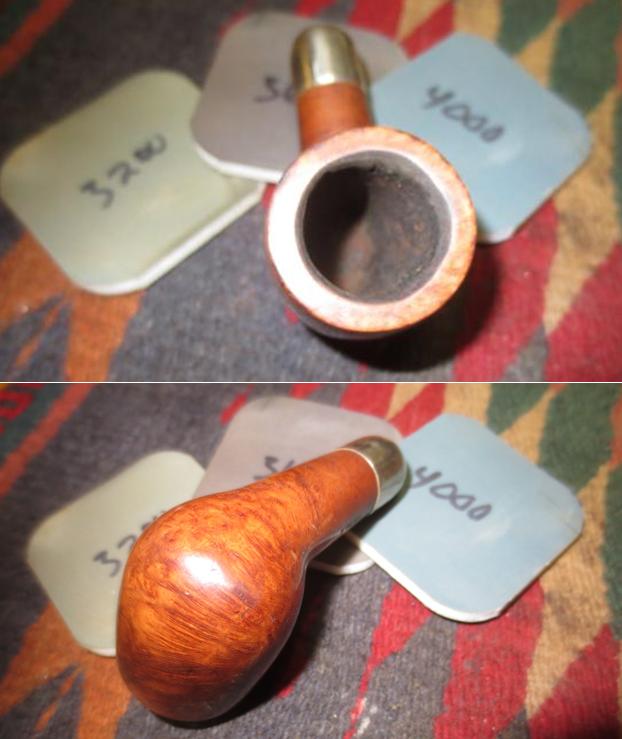
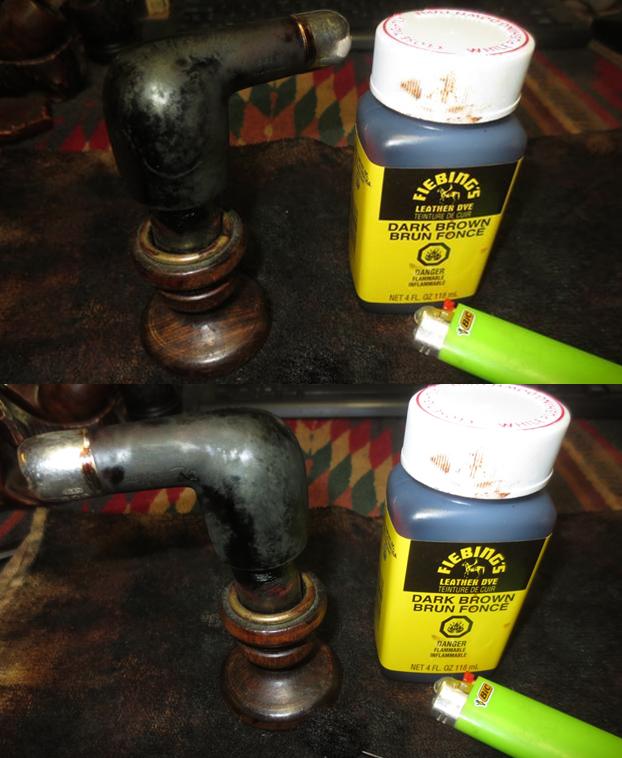
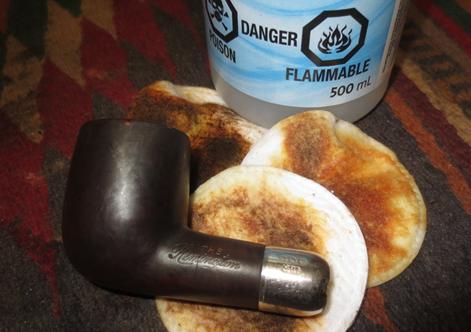
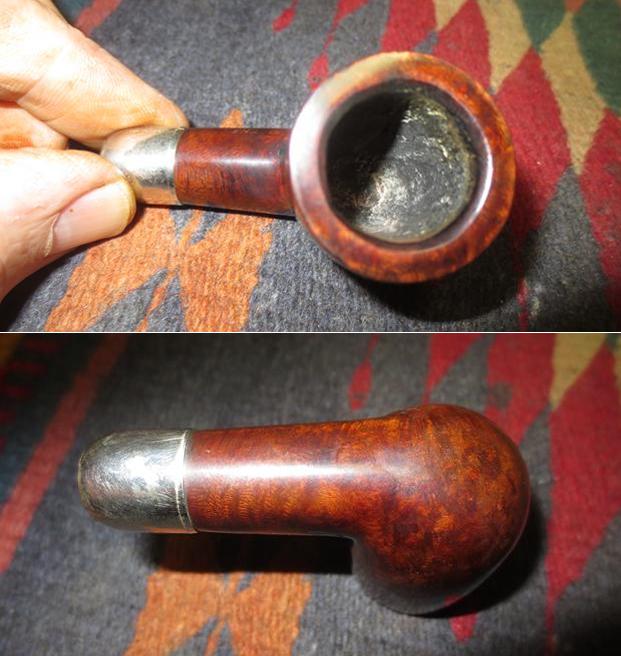
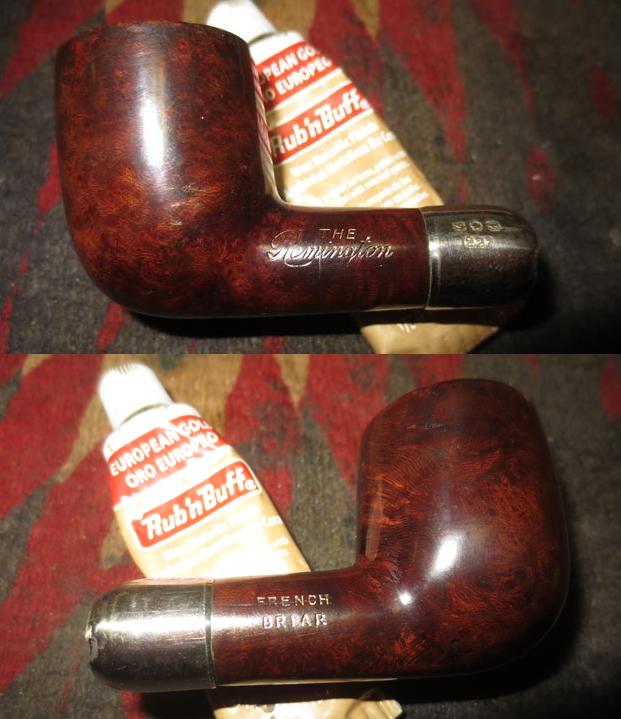
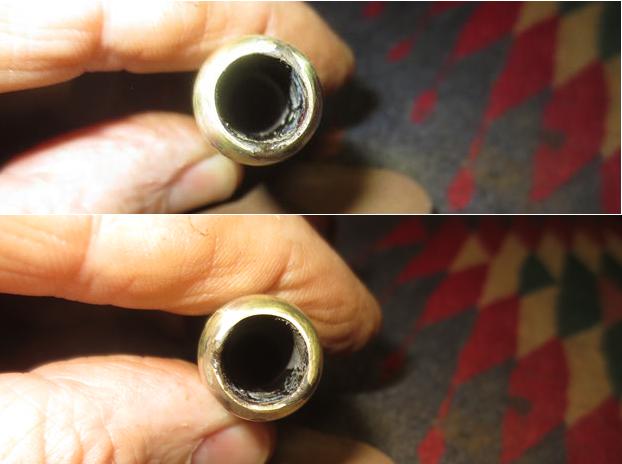
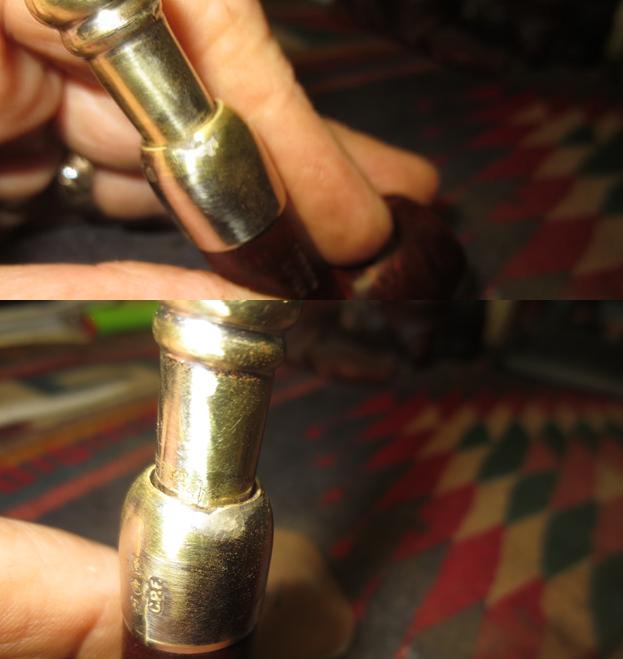
The next pipe I chose to work on from the lot of the lot of pipes my brother and I picked up on our virtual pipe hunt in Montana is a C.P.F. French Briar Silver Mount Billiard. It is a classic billiard shape, while the silver ferrule and cap on the stem end give it a feeling of elegance. The photos below show what it looked like before my brother did his clean up on it. It is another one from the lot of pipes my brother and I picked up on our virtual pipe hunt in Montana. I have written about several of the other CPF finds with the latest being a CPF horn stem bulldog and a CPF French Briar billiard. Just a reminder – CPF stands for Colossus Pipe Factory. The brand was made in the late 1880s and 1890s.Jeff took the above photos and those that follow to show the condition of the pipe before he cleaned it up. This little billiard comes from the same era as the other pipes in this find late 1880s – early 1890s. It was in worse condition in many ways than the previous pipes I had worked on from this lot. It was worn and was in rough condition. The finish was worn off and there were a lot of nicks, scratches around the outer rim of the bowl and top edge of the pipe. The outside of the bowl was covered with grime and grit. Once again there was a thick, crumbling cake buildup in the bowl and the lava from the bowl overflowed over the top of the rim. The damage to the outside of the rim made me think that the inner edge of the bowl was also damaged from the same kind of knife reaming. But I could not be certain until the cake was gone. The silver ferrule on the shank end was damaged and torn on end with what looked like small cracks in the silver. The tenon endcap was worn, scratched and some brass colour showed through the finish. The vulcanite stem had small tooth marks on the top and underside near the button and was oxidized.Jeff took the next two close up photos of the rim top and bowl. You can see the thick cake in the bowl and the chipped overflow on the rim top. The damage to the inside edge and the chips on the outer edge are visible under the cake. The next three photos show the grain under the dirty and damaged finish on the bowl sides. There are also scratches and nicks in the bowl and around the rim. The stamping on the sides of the shank was very readable. The left side read The Remington and the right side read French Briar. The silver ferrule is stamped with three faux hallmarks and the logo of C.P.F. in an oval. Some of the cracks and tears on the ferrule are also visible in the third photo. Jeff took photos of the condition and tears in the ferrule. It was in very rough shape and would take some work to repair and smooth out. But was it worth the effort. The bite marks, chatter and wear on the both the top and underside of the stem surface are visible in the next photos.Following his usual pattern, Jeff thoroughly cleaned the pipe. He reamed the bowl with a PipNet reamer and tidied up with a Savinelli Fitsall Pipe Knife. He scrubbed out the mortise and the airway in the shank and the stem with pipe cleaners, cotton swabs and alcohol. He scrubbed the exterior of the pipe with Murphy’s Oil Soap to remove the grime and grit on the bowl. He scrubbed the metal ferrule and stem end at the same time to clean it. I took photos of the pipe to show the condition it was in when it arrived in Vancouver. You can see the damaged rim top and edges and the fill on the right side of the bowl. The condition of the briar is rough and the stem is oxidized. Jeff had cleaned up the rim top and what was underneath was sad. The rim was chipped and damaged. The inner and outer edge of the bowl was badly damaged. The inner edge was out of round and the cuts in it seemed like they had been down when a previous owner had reamed the bowl with a knife. The outer edge was beat up with large chips and nicks going down the side of the bowl.The next photos of the stem and end cap show the brass shining through and the oxidation on the surface of both sides. The tooth marks and chatter are also visible. Fortunately they do not appear to be deep.I topped the bowl on the topping board using 220 grit sandpaper to remove the surface damage and clean up the edges from the top view. I did not have to top it too much to smooth out the rim. Topping the bowl also removed much of the damage to the edges as well.I used clear super glue and briar dust to repair the rough outer edge on the bowl top and the damaged fill on the back right side. I sanded the repairs smooth with 220 grit sandpaper to remove the excess repair and blend it into the surface of the briar.I sanded the repairs smooth and repaired the light bevel to the inner edge of the rim with a folded piece of 220 grit sandpaper to repair the damages to the inner edge.I polished the briar rim and the sides of the bowl with micromesh sanding pads – wet sanding with 1500-2400 grit and dry sanding with 3200-4000 grit pads. I wiped the bowl down after each pad with a damp cotton pad. The photos tell the story of the polishing process on the bowl. I heated the briar and stained it with dark brown aniline stain thinned by 50% with isopropyl alcohol. I flamed it to set it in the briar and repeated the process until the stain coverage was even all around the bowl.Once the stain had dried I wiped it down with isopropyl alcohol to thin the stain and make it more transparent. When I finished wiping it down I buffed it with red Tripoli to reduce the stain even more. The pictures that follow show the process of reducing the opacity of the stain. I touched up the gold leaf on the stamping using European Gold Rub’n Buff. I applied it with a cotton swab and rubbed off the excess with a cotton pad. The repaired stamping is shown in the next two photos.I decided to experiment with a repair to the tears in the ferrule using clear super glue. I had never tried this before but I had a hunch that the hardened glue would fill in the gaps and then I could sand it smooth. I applied the glue in layers until the edge was even with the end of the ferrule. I sanded the repairs after each application of glue until the surface of the repair matched the rest of the ferrule. While the glue is slightly visible it bound the tears together and I was able to sand it smooth and blend it into the silver. I polished the repair with micromesh sanding pads – wet sanding with1500-2400 grit pads and 3200-12000 grit pads. The following photos show the progress of the ferrule repair. With the bowl and ferrule restored and functional I turned my attention to the stem. I polished the metal end cap with Blue Diamond on the buffing wheel. I polished the vulcanite with micromesh sanding pads – wet sanding with 1500-2400 grit pads and dry sanding with 3200-12000 grit pads. I rubbed the stem down with Obsidian Oil after each pad and after the final pad I set it aside to dry. I buffed the pipe with Blue Diamond on the buffing wheel to polish the briar and the stem. I gave the bowl and stem multiple coats of carnauba wax and buffed it with a clean buffing pad to raise the shine on the pipe. I hand buffed it with a microfiber cloth to deepen the shine. The finished pipe is shown in the photos below. It has come a long way from the sad and damaged pipe that I started with when I began the restoration. What do you think? Was it worth the effort? Seems to me that it was more than worth it. Thanks for walking with me through this process.

Another Piece Pipe History – a Lovely CPF French Briar Bent Billiard


Blog by Steve Laug

The next pipe I brought to the work table was a little bent CPF French Briar billiard. The photos below shows what it looked like before my brother did his clean up on it. It is another one from the lot of pipes my brother and I picked up on our virtual pipe hunt in Montana. I have written about several of the other CPF finds with the latest being a nice little CPF horn stem bulldog. Just a reminder – CPF stands for Colossus Pipe Factory. The brand was made in the late 1880s and 1890s. This little bent billiard comes from the same era as the other pipes in this find. It was very worn and looked to be in rough condition. The finish was non-existent and there were a lot of nicks, scratches and grime on the surface all around the bowl. There was a thick, crumbling cake buildup in the bowl and it overflowed on to the top of the rim. It looked like the inner edge of the bowl was damaged from reaming with a knife but I could not be certain until the cake was gone. The gold band on the shank was so badly oxidized that it was impossible to see what was under the grime and sticky debris on it. The horn stem had tooth marks on the top and underside near the button and looked like it was delaminating along the edges and the bend on the underside. The horn was very dry. Jeff took some close up photos of the bowl and rim from the top. You can see the crumbling condition of the cake in the bowl and the thick overflow on the rim top. It was really hard to see the condition of the inner edge of the bowl.The grain underneath all of the grim on the sides of the bowl was really quite stunning, even through the debris, grime and buildup. The birdseye and cross grain stain out really well even through the dirty surface. The oxidation on the band was also heavy and very rough. It is hard to know what is underneath the corrosion.The stamping on the left side of the shank has the standard C.P.F. logo in an oval with French arched over the oval and Briar arched underneath. The stamping on the C.P.F. is fainter than the stamping on French Briar. The second photo shows the junction between the band and the horn stem. The horn looks rough and grainy.The next four photos show the stem from various angles. The first and second photos show what looks like delaminating on the left side near the button. The third and fourth photos show tooth marks on the top and underside of the stem at the button. The tooth marks on the top are deep. Jeff thoroughly cleaned the pipe. He reamed the bowl with a PipNet reamer and cleaned it up with a Savinelli Fitsall Pipe Knife. He scrubbed out the mortise and the airway in the shank and the stem. He scrubbed the exterior of the pipe with Murphy’s Oil Soap to remove the grime and grit on the bowl. He scrubbed the tenon with a tooth brush and removed the tars and oils. I took photos of the pipe to show the condition it was in when it arrived in Vancouver. I took a close up photo of the rim top to show the condition it was in after my brother had cleaned it up. It is amazing to me that he was able to remove the thick buildup on the rim top and the crumbling cake in the bowl and leave no debris behind. It was better than I had expected. The rough spots would be easy to sand out and smooth the ridges and bring it back to round. It appeared that the pipe had never been smoked to the bottom of the bowl as the bottom of the bowl is raw briar.The next two photos show the condition of both sides of the stem after the cleanup. Note the roughness on the underside of the stem and the tooth marks/chatter on both to top and the bottom near the button.You can see the oxidation on the band in the photos above. It is not clear what colour it is. The sticky grime was cleaned off but the oxidation would need to go. I sanded the band with 1500-2400 grit micromesh pads to remove all of the sticky substance and the oxidation on the surface. It came off really easily with some polishing. I glued the band in place on the shank with white glue and let it dry.I smoothed out the damage on the inner edge of the rim with 220 grit sandpaper and gave it a light bevel to minimize the damage. I stained the beveled edge on the bowl with a black Sharpie pen to blend it in with the inside walls of the bowl. I wet sanded the bowl and rim with 1500-2400 grit micromesh pads and dry sanded it with 3200-12000 grit pads.  I wiped it down with a damp cotton pad to remove the sanding grit. I polished the band while I worked on the bowl with the same grits of micromesh pads. The following photos showed the polishing on the briar. I touched up the gold leaf on the CPF French Briar logo with European Gold Rub’n Buff. I applied it with a cotton swab and wiped down the excess gold. The light of the flash showed more of the gold buff that needed to come off.I stained the bowl with a 50/50 mix of dark brown aniline stain and isopropyl alcohol. I applied the stain and flamed it with a lighter. I repeated the process until I felt the coverage was even. Once it dried I took some photos of the stained bowl. It is too dark to my liking but the coverage was even. I wiped the bowl down with alcohol on cotton pads to make it more transparent and let the grain show through. I polished the briar with micromesh sanding pads to further remove the stain and make the grain show through. The process of unveiling the grain is shown in the photos that follow.With the bowl finished I worked on the stem. I used some small drops of super glue to fill in the tooth marks on the stem surface and the button. Once the repairs had dried I sanded them smooth to blend them into the surface of the stem. I polished the stem with micromesh sanding pads. I wet sanded it with 1500-2400 grit pads and dry sanded it with 3200-12000 grit pads. I wiped the stem down after each pad with Obsidian Oil on a cotton cloth. I gave it a final coat after the last pad and set it aside to dry. I buffed the stem and bowl with Blue Diamond polish on the buffing wheel to polish it. I gave the stem and bowl multiple coats of carnauba wax. I buffed the waxed bowl and stem with a clean buffing pad to raise the shine. I hand buffed it with a microfiber cloth to deepen the shine. The finished pipe is shown in the photos that follow. The old timer looks really good and should have long years of life in it. I look forward to enjoying this pocket sized pipe. Thanks for walking with me through the process of the restoration.

Breathing life into an 1890’s era CPF French Briar Horn Stem Bulldog


Blog by Steve Laug

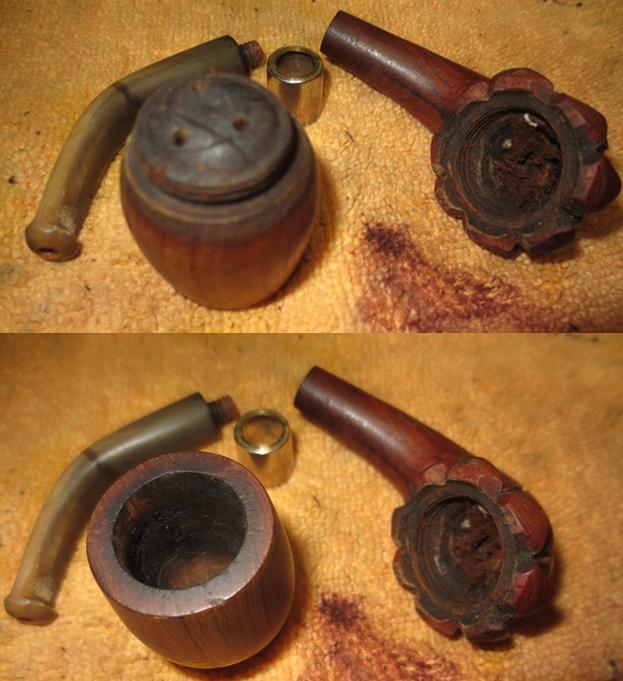
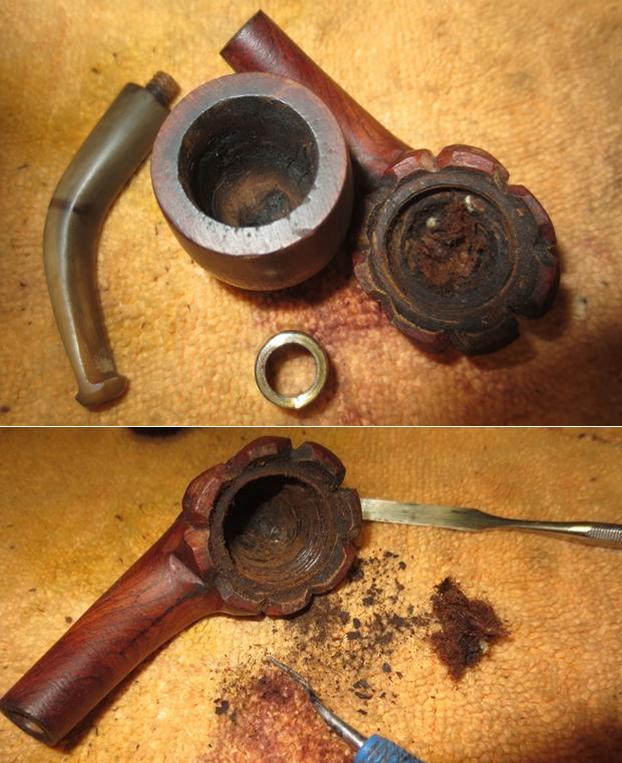
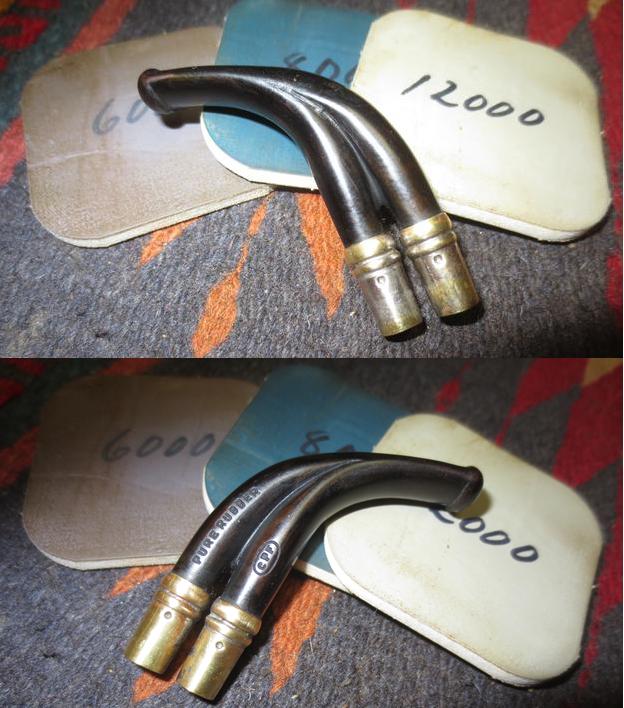
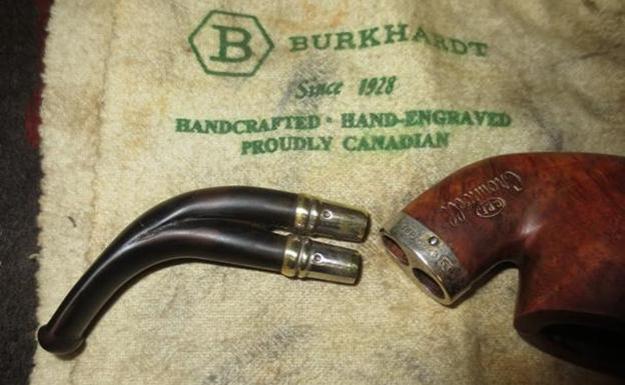
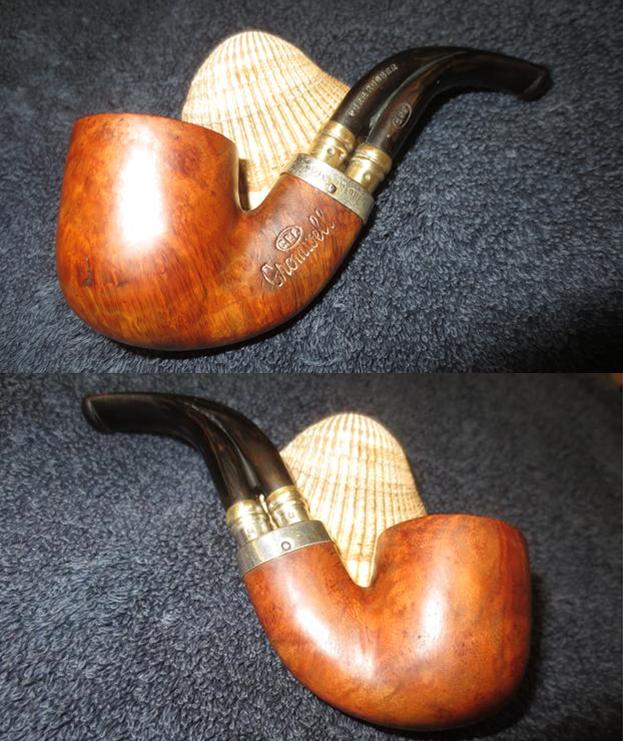
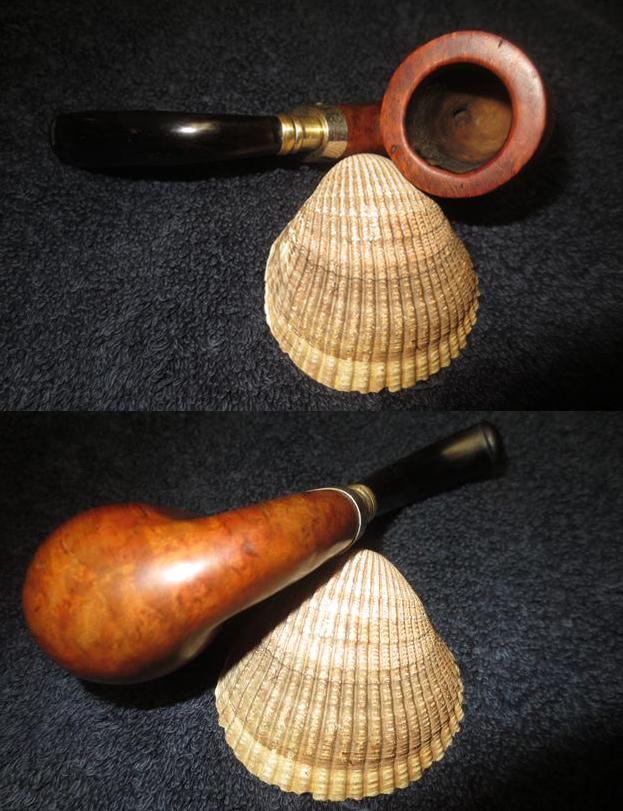
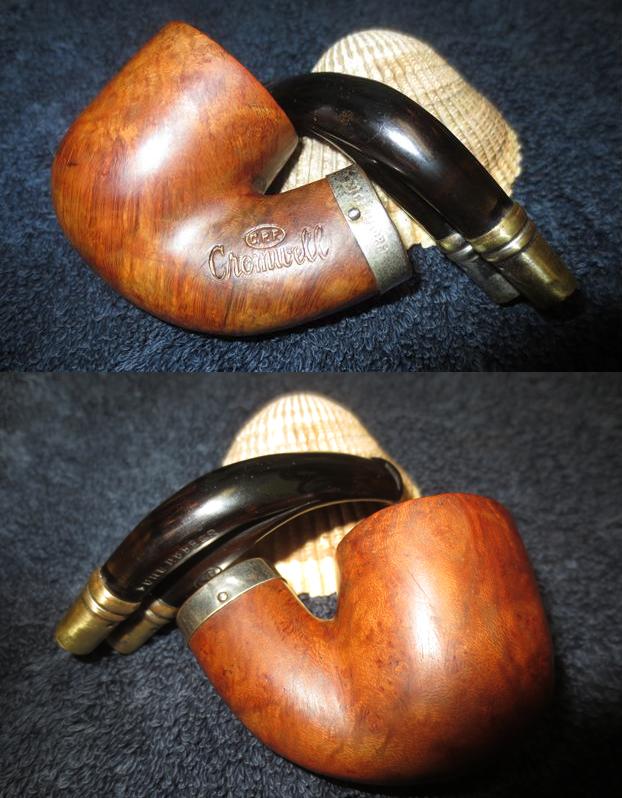
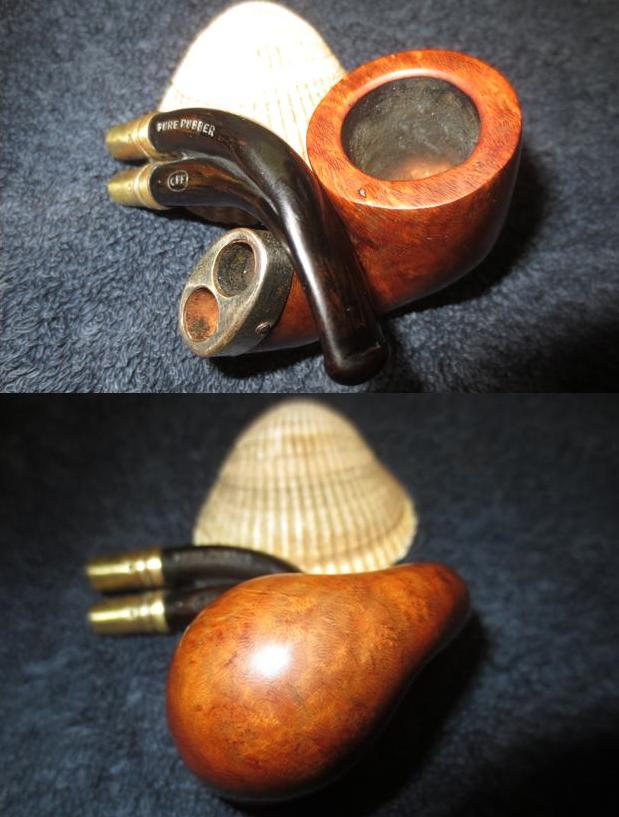
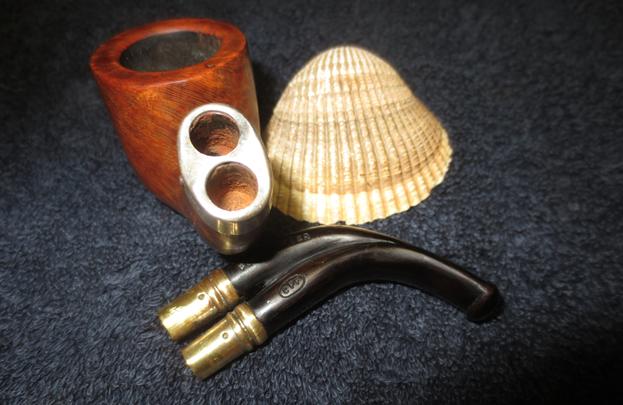
I decided to work on another one of the older 1890s CPF (Colossus Pipe Factory) pipes that my brother and I found on our virtual pipe hunt in Montana. That antique mall had just received a large estate of older CPF and WDC pipes. We picked up 30 pipes and one pipe case. There were 11 unique CPF brand pipes. Included were the following pipes (the three pipes that I have already restored are listed as hyperlinks below and you can click on any of them to read about the restoration. The rest will be finished in the near future). I chose to work on the French Briar Bulldog for this blog.

CPF military mount Oom Paul
CPF The Remington, French Briar, (military mount)
CPF French Briar with Hallmarked band and horn stem. Filigree carving around bowl
CPF Pullman with Horn Stem
CPF Siamese with twin horizontal stems
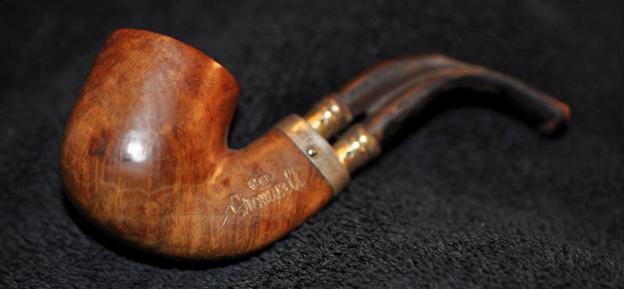
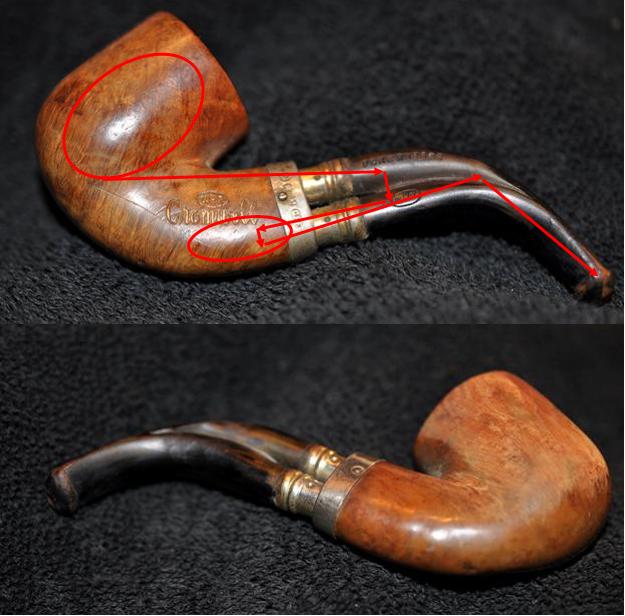
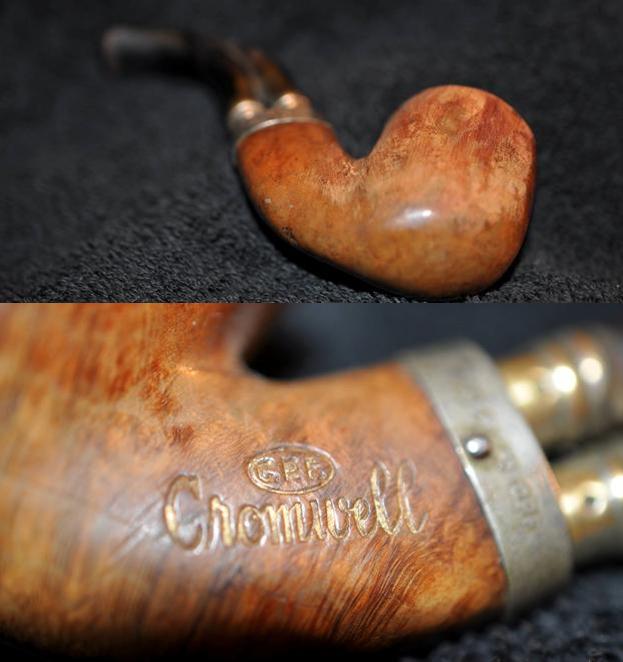
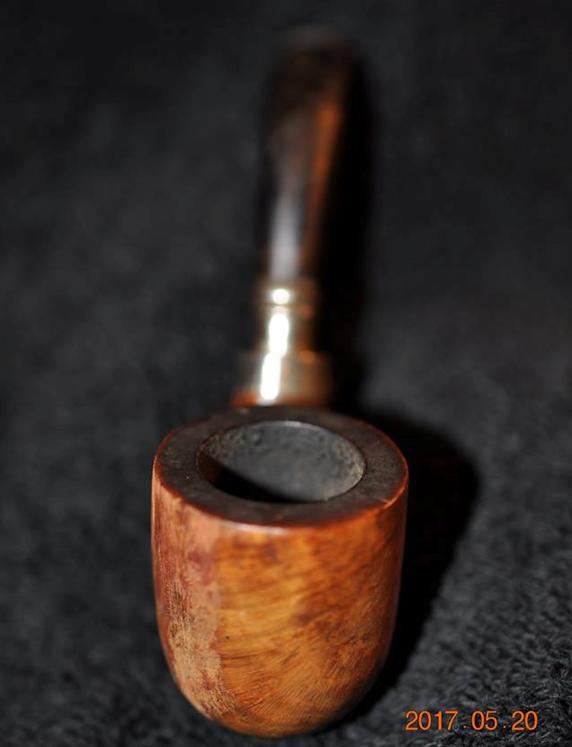
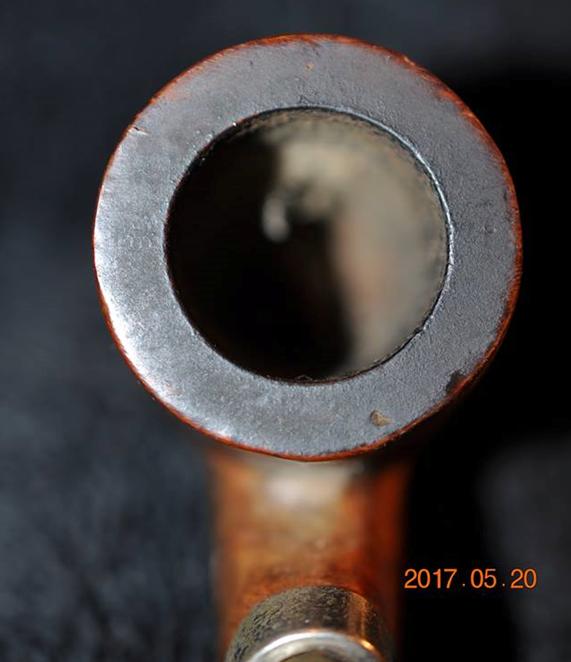
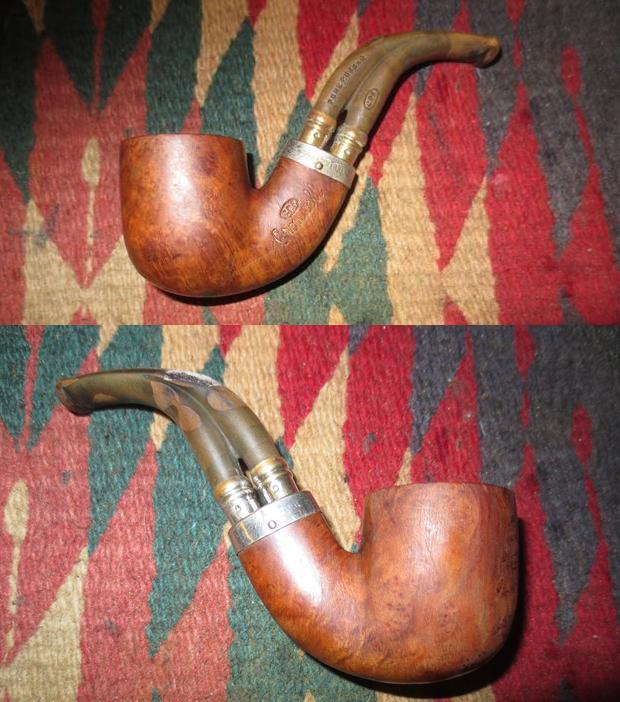
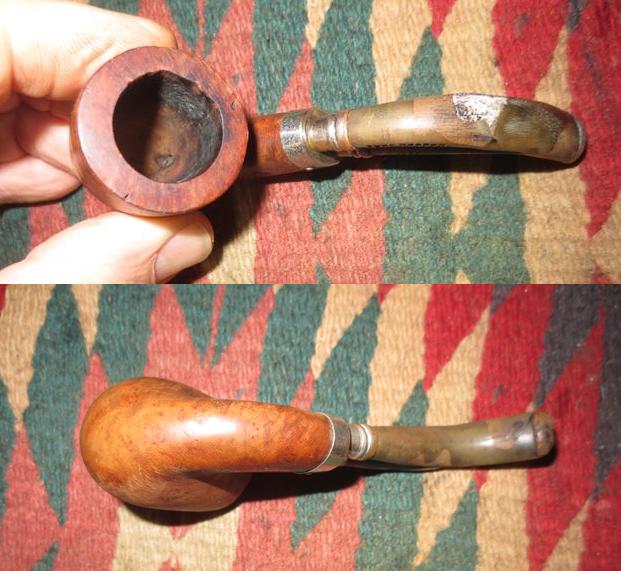
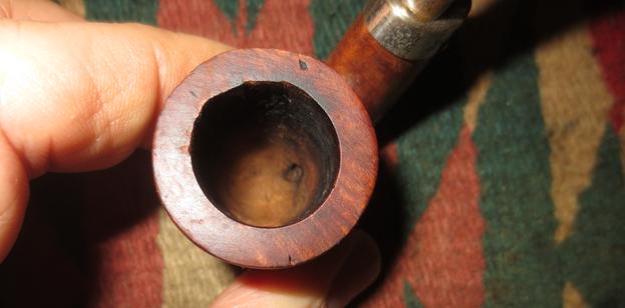
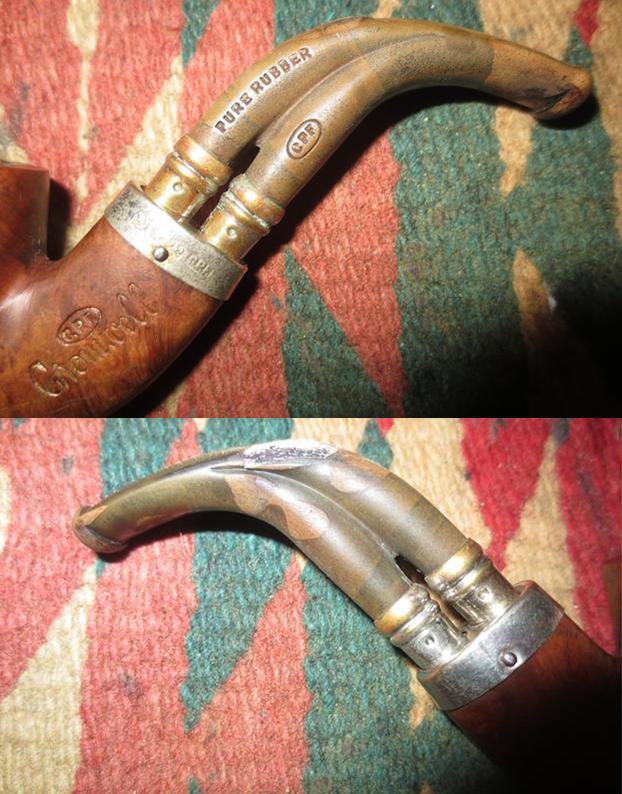
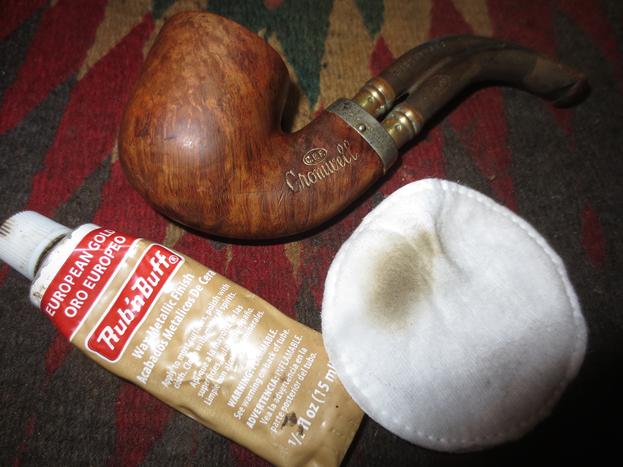
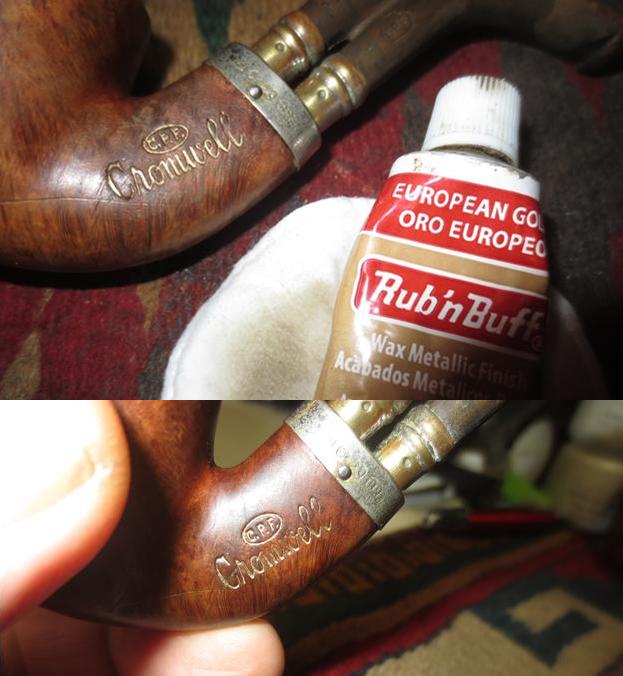
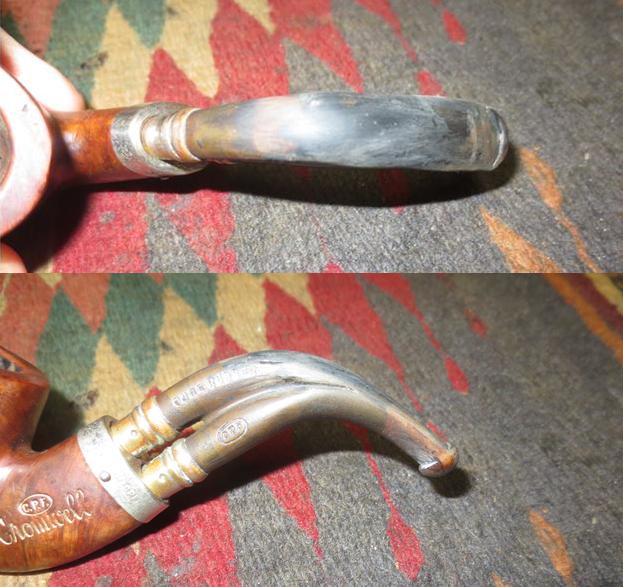
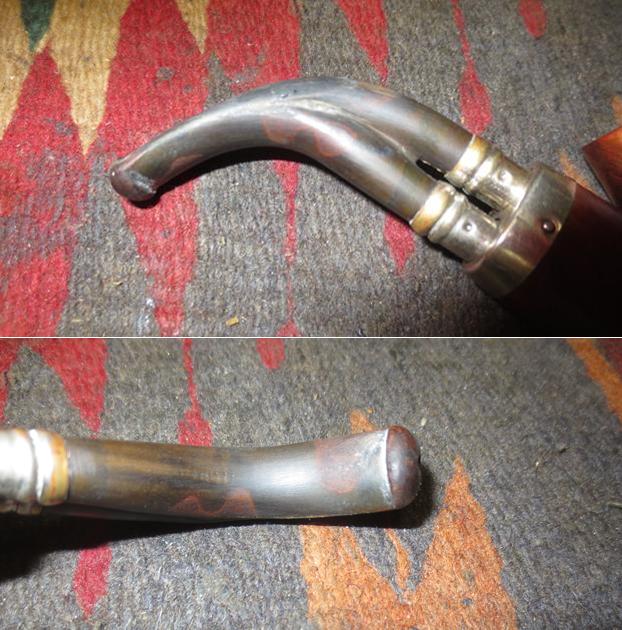
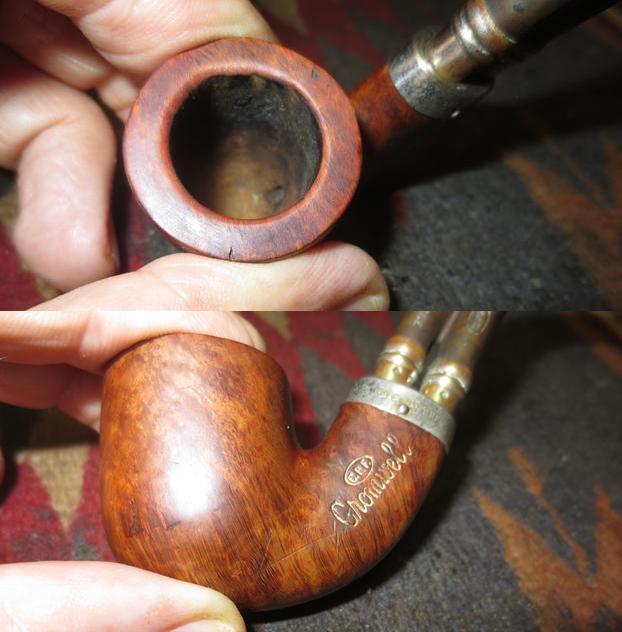
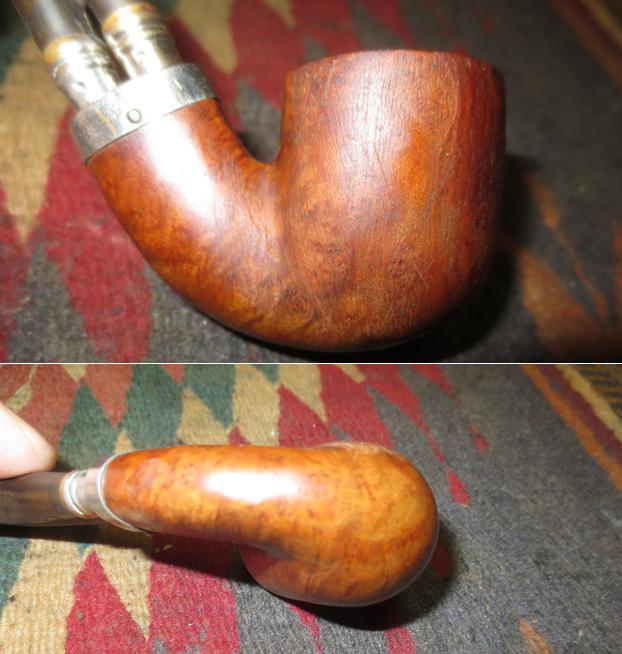
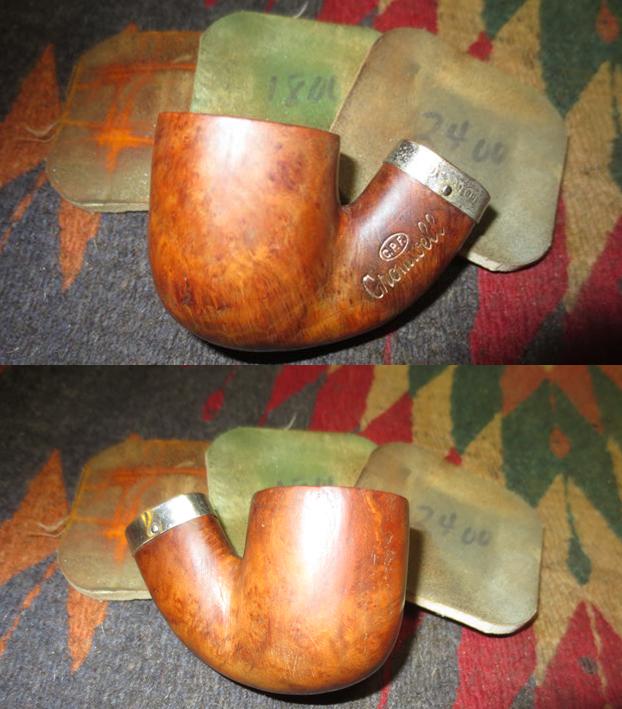
CPF Cromwell with twin vertical stems
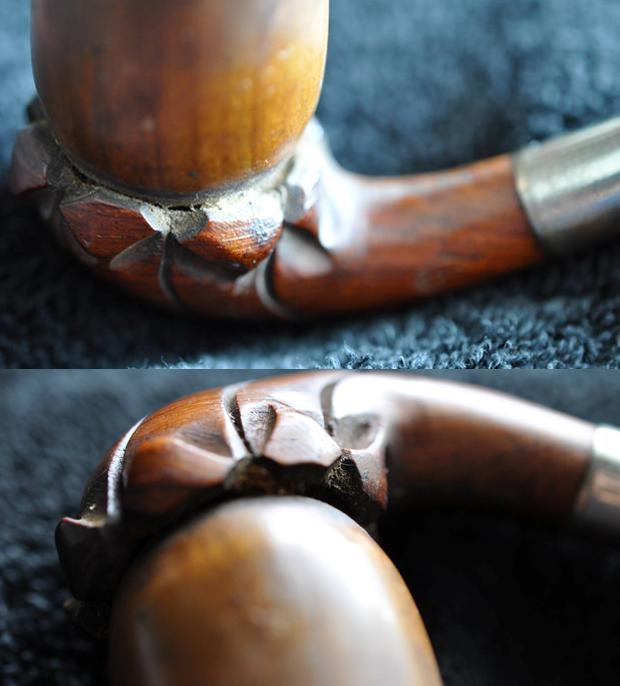
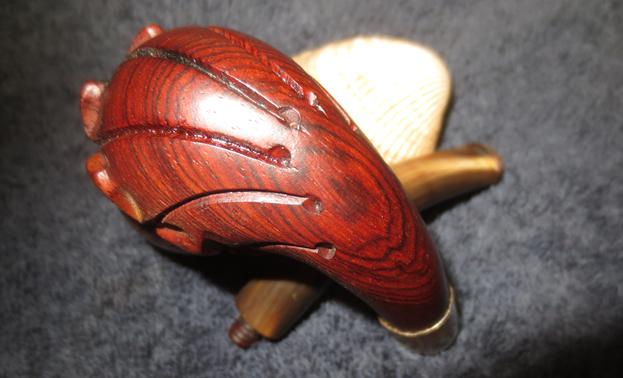
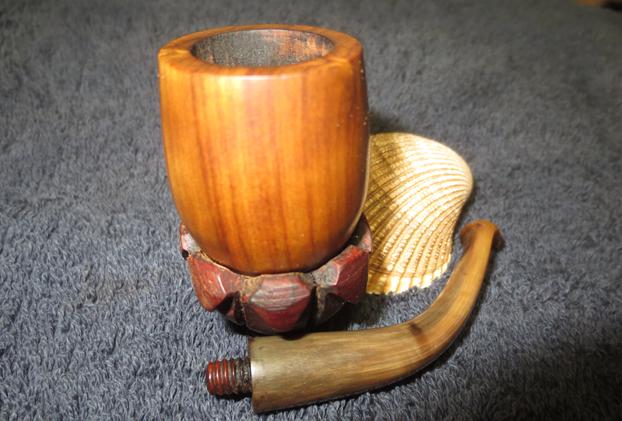
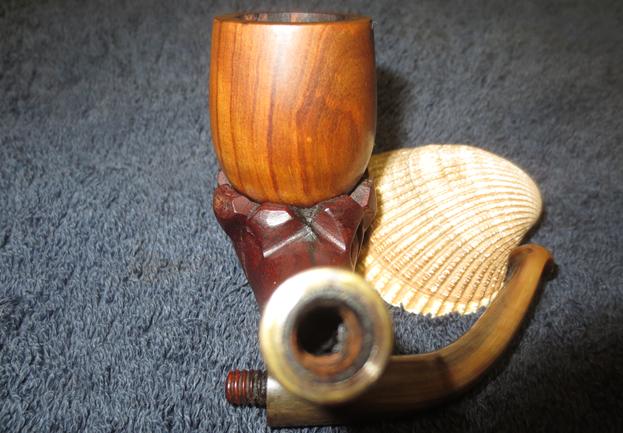
CPF Olivewood Bowl Sitting on Petals- Horn Stem
CPF French Briar Bulldog with Horn Stem (the pipe in this blog)
CPF French Briar with tarnished metal band and a Horn Stem (looks like mini-Wellington)
CPF French Briar Horn Shaped Pipe with metal band and Horn Stem
CPF Colon French Briar with Black Meer Bowl and Amber stem

It is a beautifully grained, long shank Bulldog with a horn stem. It is stamped with the C.P.F. in an oval logo. Arched above and below the logo it is stamped French Briar. There is a small flaw in the briar at the end of the Briar stamping. The finish was worn but the pipe was in otherwise good shape. There was a thick cake in the bowl and an overflow of lava on the rim top. The inner edge of the rim top appeared to have some damage but otherwise it was in good shape. The double ring around the bowl under the cap was undamaged and the center ring was unbroken. The horn stem was worn at the button and had been well chewed on both the top and bottom sides. The stem appeared to be underclocked in the pictures that follow but once my brother cleaned it up I would have a better idea with regard to that.

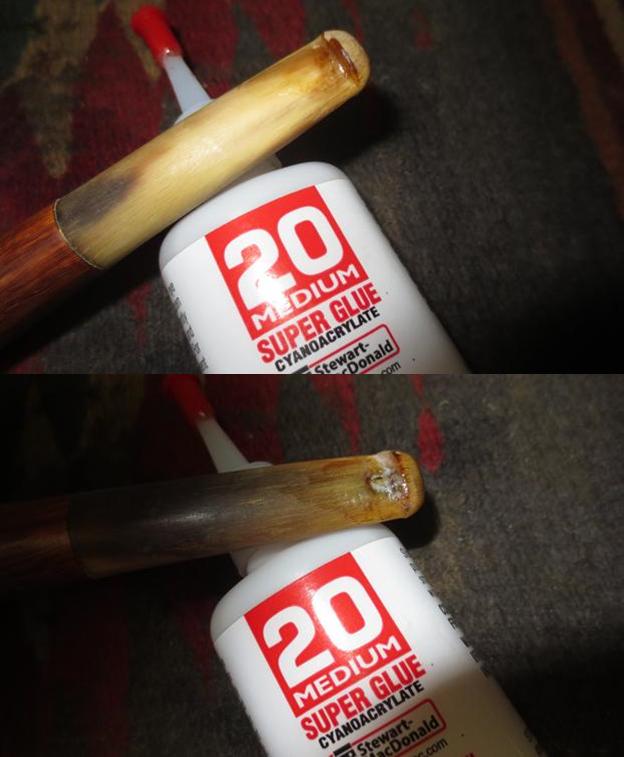
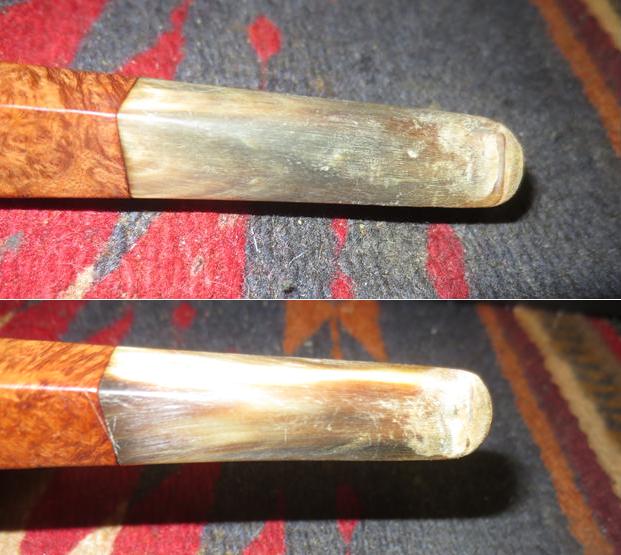
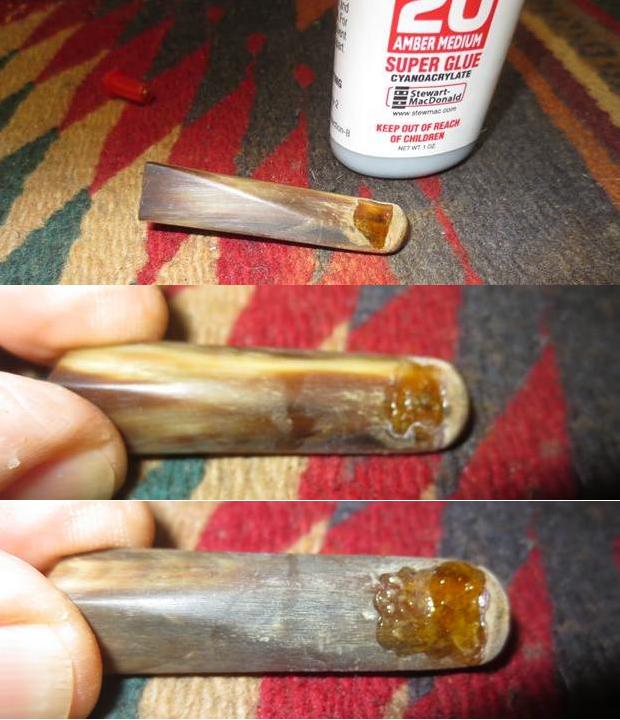
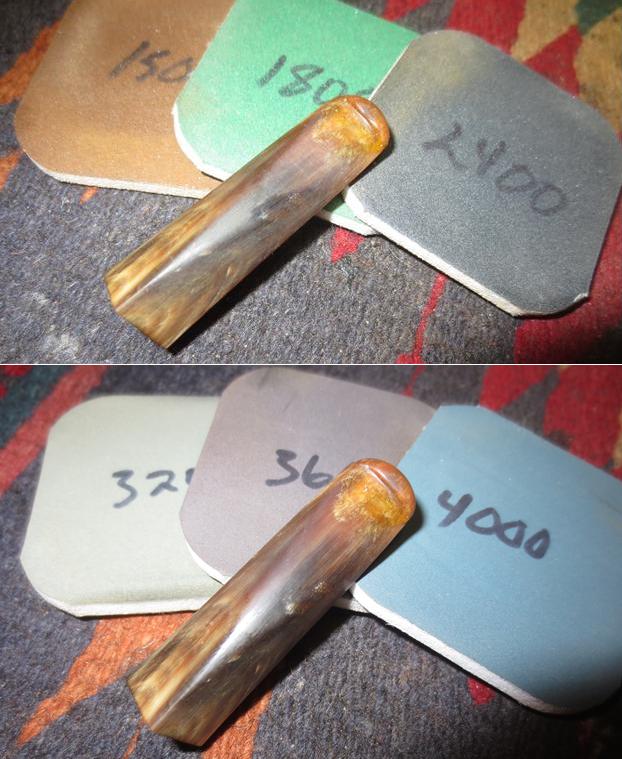
My brother took the following photos of the pipe before he started cleaning it. They give an overall picture and also close up pictures of the pipe from a variety of angles. He included a photo of the stamping on the left side of the shank. It was originally stamped with gold filigree in the letters but that had pretty much worn out. You can see the flaw or gouge going through the AR on the word Briar.The next four photos show the grain on the bowl from a variety of angles. The finish is very worn and dirty but the grain is quite nice and there are no fills in the briar. The close up photo of the rim top shows the scratches and lava on the top and the slight damage to the inner edge of the bowl. A fairly thick cake lines the walls of the bowl and is peeling on the front edge.The next two photos show the underclocked horn stem and what appears to be red thread that had been used to align the stem. It had obviously not worked.The next four photos show the condition of the horn stem. It is dried, chewed and delaminating at the button on both sides of the stem. The button itself also has some tooth damage to the top and underside. There appears to be a lot of colouration to the striations of the horn and it should clean up and be beautiful once polished. My brother did an amazing job on the cleanup of this old timer. His work keeps getting better and better and does not damage the old briar or horn. He reamed the bowl with a PipNet Reamer and cleaned it up with the Savinelli Fitsall Pipe Knife. He scrubbed the airway through the tenon and into the shank with pipe cleaners, cotton swabs and alcohol until it was clean. He scrubbed the externals with Murphy’s Oil Soap and was careful around the remaining gold filigree in the stamping on the left side of the shank. He was able to remove the tar and lava build up on the rim top and showed that inner edge was just lightly damaged. And low and behold once he had removed the thread on the metal tenon the stem lined up perfectly. I took the next four photos of the pipe when it arrived in Vancouver. I took a close up photo of the rim top and bowl to show how thoroughly Jeff had cleaned it. It would take very little work with a folded piece of sandpaper to smooth out the remaining damage to the inner edge of the bowl.He had been able to clean out the debris from inside the stem and also smooth out the exterior of the stem. The delamination of the horn would need to be stabilized and the deep tooth wear would need to be rebuilt to restore the taper of the stem.I decided to change my normal routine a bit and used amber coloured super glue from Stewart MacDonald to stabilize the horn around the button and up the surface of the stem for about an inch. This would bind together the strands of the horn and build up the tooth damaged areas on the surface. Once it dried I would be able to smooth out the repaired surface and blend it into the rest of the stem. I had an idea that the amber super glue would blend in better with the colours of the horn in this particular stem.I sanded the repairs with 220 grit sandpaper to blend them into the surface of the horn. I wanted a smooth transition between the repair and the rest of the horn. I also wanted to see if I had covered the damaged area of the stem surface well enough. I was pleased by what I saw once I had smoothed the repairs out. I polished the stem with micromesh sanding pads – wet sanding with 1500-2400 grit pads and rubbing the stem down with Obsidian Oil after each pad. I dry sanded the stem with 3200-4000 grit pads to further polish it and gave it more oil after each pad. The oil serves to give life to the dried horn. I buffed the stem with Blue Diamond on the buffing wheel before finishing polishing it with 6000-12000 grit micromesh sanding pads. I rubbed it down with Obsidian Oil after each of the micromesh sanding pads and let it dry after the final pad.With the stem finished I worked on the inner edge of the bowl. I used a folded piece of 220 grit sandpaper to smooth out the damage on the bowl edge. It did not take too much work to make it smooth once again. I sanded the top of the rim with micromesh sanding pads – wet sanding with 1500-2400 grit pads and dry sanding with 3200-12000 grit pads (I forgot to take photos of the work on the rim top with the 3200-12000 grit pads).I used some European Gold Rub’n Buff to rework the stamping on the shank side. I applied it to the stamping with a cotton swab and then wiped off the excess. The photo below shows the stamping with the gold applied.I put the stem back on the shank and buffed the pipe with Blue Diamond on the buffing wheel. I carefully worked over the shank so as to not damage the stamping. I gave the entire pipe multiple coats of carnauba wax to protect the briar and the horn. I buffed it with a clean buffing pad to raise the shine and hand buffed it with a microfiber cloth to deepen the shine. The finished pipe is shown in the photos below. It is a classic piece of pipe history. The shape and the finish of the pipe are exceptionally well done and show European craftsmanship that Colossus Pipe Factory was famous for. This is one of those pipes that will have a place in my own collection. It is just too beautiful to part with!

Jen’s Trove No. 4 – Reclaiming a Kaywoodie ‘Flame/Super Grain’ #11 Large Billiard


Blog by Dal Stanton

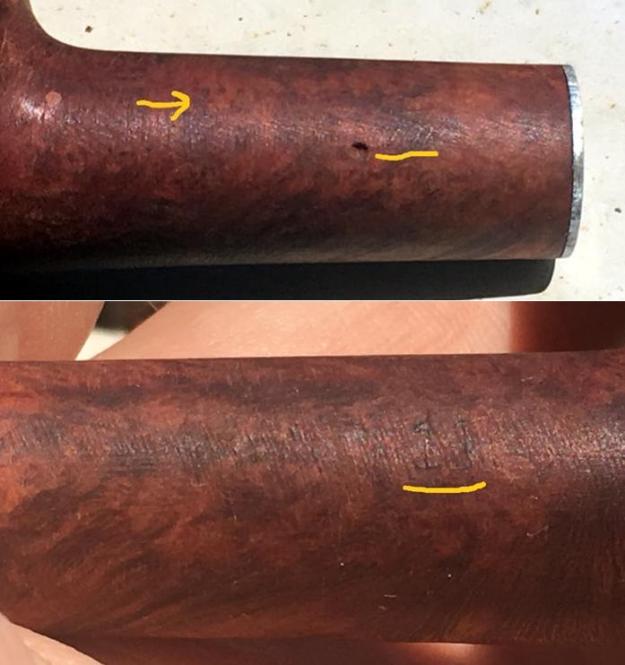
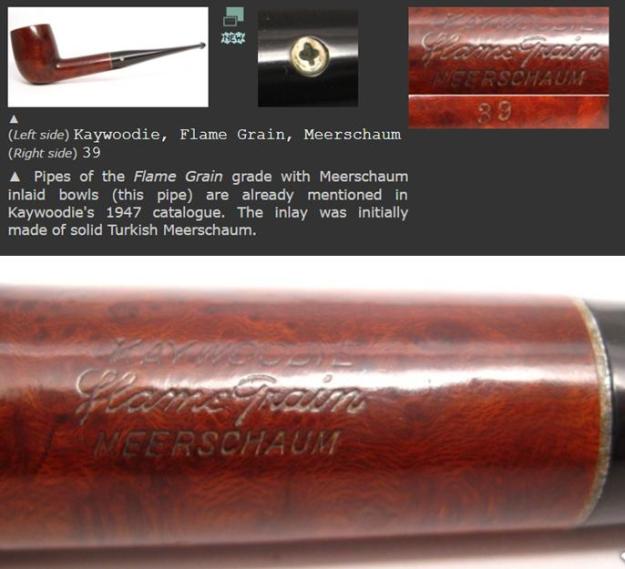
I think the reason this Kaywoodie stood out to Jen as she was rummaging through my baskets and boxes of ‘Help Me!’ pipes, was the ‘fancy stem’ and the strong, full look of the stummel.  The grain is impressive and it will clean up nicely.  Jen is leaving Bulgaria soon after working with us for a few years.  She’s taking a trove of pipes back to the US to give to the men in her family.  For her too, is the fact that each pipe she purchases will benefit our work with the Daughters of Bulgaria – helping women and girls who have been trafficked in Europe and sexually exploited.  This is the second Kaywoodie she has chosen.  The first was a beautiful Kaywoodie Author (See: LINK) that needed extensive rim repair.  The Kaywoodie now on the work table got my attention too, on the eBay auction block from a seller in North Carolina.  After Jenny rescued it from the basket, I take some pictures of the Kaywoodie she chose. Generally, the pipe is in pretty good shape other than normal time wear and tear issues, but the stem bit might need some work.  The rim and fire chamber are both in good shape, but in need of cleaning and the removal the light carbon cake to bring it to fresh briar for a new start.  In the picture immediately above shows two fills – one filled and one emptied.  The hole looks like a drill hole and I first suspected it was part of a cracked shank repair, but no cracks are evident.  Only these two fills on the stummel will need to be refilled and I’ll see if the other needs to be replaced.  The ‘Fancy Stem’ (I spent time trying to find a name for this type of stem and this is what I came up with via Steve’s assistance!) has serious tooth dents on the upper button lip and a significant dent and chatter on the lower bit.  I also detected that the classic Kaywoodie Synchro-Stem threaded tenon is underclocked a bit – which over time, I discovered, is a normal happening with metal threaded tenons (See from Reborn Pipes: About Stem/Bit Shapes).The nomenclature on the sides of the shank are in bad shape – almost warn off and beyond history’s grasp.  I had to take several looks at the stamping with a magnifying glass at different angles of light – lamp light and sunlight outside on my ‘Man Cave’ balcony on the 10th floor of our former Communist Blok apartment building.  What I can decipher with much effort, is a phantom “Kaywoodie” [over] “***in” offset to the far right of the Kaywoodie stamping above it (under the ‘-die’).  On the shank’s right side, I make a guess at ‘11’ which is a shape number.  These two pictures try to show what I can barely see!  I mark with yellow pen where the ‘K’ starts of Kaywoodie and I underline the ‘***in’ and the 11 in the second picture.With a passion to understand as much as I can about the provenance of the pipes I restore, I know that I’m on a steep learning curve with this only being my second Kaywoodie.  I’ve benefited much from Troy’s expertise, of Baccy Pipes, with Kaywoodie pipes and his help on this Kaywoodie.  I’ve picked up some of the markers that help establish a Kaywoodie’s identity.  The first thing to look at is, what is the “***in” refer to?  Identifying the Kaywoodie line, at least partially, can help place a pipe.  It did not take long as I search Pipedia for a listing of the names of the Kaywoodie lines (see LINK).  What I found is that throughout the years, Kaywoodie has put forward several lines with the word “Grain” making sense of my mystery “***in”:  Straight Grain, Super Grain, Flame Grain, Bird’s Eye Grain, Relief Grain, and Custom Grain – were the Kaywoodie lines that I cataloged from Pipedia.  My next step was to go to the Kaywoodie section of Pipe Phil’s inventory of examples and to see if I could find an example of what appears to be the same script style for the ‘Kaywoodie’ [over] ‘*** Grain’ in cursive, simply to visualize.  The only example I found of the same script for both ‘Kaywoodie’ and ‘Grain’ was this Flame Grain, Meerschaum from the 1947 catalogue that Kaywoodie produced.  A close look of the script follows in picture two.  I think this is a pretty good visual match of the nomenclature style.So, I think it’s safe to say that the Kaywoodie before me was a line suffixed by ‘Grain’.  I don’t know how rare or common the use of the cursive script was with Kaywoodie ‘Grain’ lines, but it could possibly help in identification if one knew.  Another concrete marker I identified was the shape number, ‘11’ which is identified as a ‘Large Billiard’ in the Pipedia Kaywoodie Shapes Guide.   This description seems to be right on with the Kaywoodie before me – a handful of wonderful Billiard briar!  The other marker that I was aware of was the iconic Kaywoodie stem shamrock or club.  From PipePhil.eu, I found this concise description that indicates that the black shamrock in the white dot started to emerge on pipes since 1937:

The cloverleaf logo: the round logo (black cloverleaf in white circle or white cloverleaf in black circle) was first used in 1937. Up until the late 40’s this logo was used on all of the upper grades pipes. The concomitant use of the plain white cloverleaf and the disk inlaid logo continued until the early 80’s.

Up until the late 1940’s/early 50’s, the logo was on top of the stem. After that the logo was moved to the side of the stem (exceptions exist).

The other solid marker that I investigated was the No. ‘11’ shape number.   In Pipedia’s Kaywoodie Shapes Number section, shape number 11 is described:

Shape # Description Years Produced
11 Large billiard 1935-1972

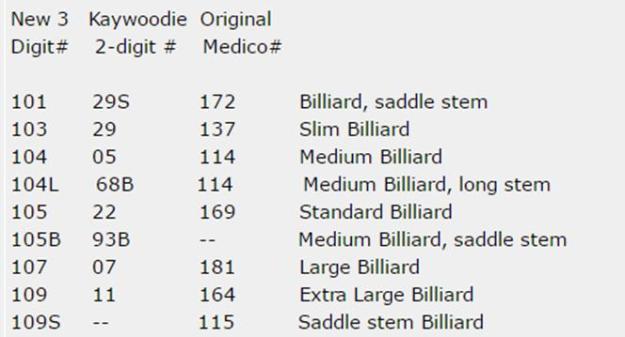
Troy later sent me another helpful link from Kaywoodie My Free Forum that allowed me to see all the Kaywoodie Billiard offerings with the comparison of 2 and 3-digit shape numbers.From the same Forum article, the center column reflects the 2-digit system employed from 1927 to 1972, when the system was changed to a 3-digit system when pipe production (for Kaywoodie, Yello-Bole and Medico) was moved to the Medico factory in Richmond Hill Queens NY as plans for new plant were in process.  The left-hand column above was the 3 digit numbers used during this period for all Kaywoodie and Medico pipes, from 1972 to 1980.  The same article indicated that the 2-digit numbers were only for Kaywoodies produced in the US – that Kaywoodie of London to Cadogan had their own three-digit system.

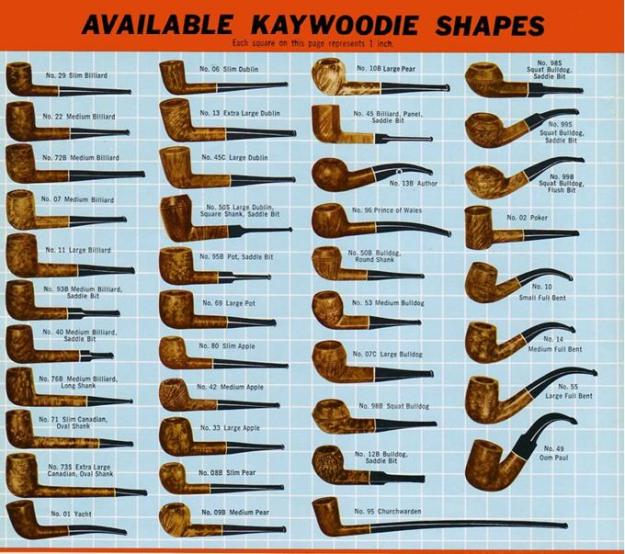
I took my search for a Kaywoodie ‘Something Grain’, shape #11 to the latest Kaywoodie Catalog that would have a representation of the #11 Billiard at Chris’ Pipe Pages that is consistent with the older Kaywoodie catalogues leading up to it (See: LINK).  See the 5th pipe down on the left:That is the Large Billiard stummel on my work table.  There is one thing that doesn’t line up. The Fancy Stem. I spend extensive time trying to find the No. 11 with a fancy stem flipping through all the Kaywoodie catalogs (referenced above) and found no specimen – not even on another shape.  During this exploration, I sent my forensic findings and some pictures to Troy whose experience with Kaywoodies is extensive.  I wanted to know what I might be missing.  After an enjoyable time of communicating back and forth – pipe restorers’ cyber fellowship, Troy’s experience with Kaywoodie pipes cut through my fog quickly.  Regarding the nomenclature of the Kaywoodie Jenny chose as part of her trove, I’ll let Troy’s observations conclude this Kaywoodie origins adventure!  Thanks Troy!

if the shank is straight then the only thing I can think of is someone took a pre-1972 #11 and re-stemmed it with a 1970’s type quarter bent stem.  If that is the case then it’s a 1955-1972 #11 Flame Grain with a different stem…. Or it could be a Super Grain (1955-1972) with a later Flame Grain type stem.

With a better understanding of this Kaywoodie in front of me, I start the restoration by reaming the fire chamber.  Since the cake is so thin, I use the Savinelli Pipe Knife to do the job.  After spreading out paper towel to catch the carbon, I employ the knife and it makes short work of the cake.  I follow by sanding the fire chamber with a coarse 120 grade paper, then a 240 grade paper – in both cases wrapped around a Sharpie Pen.  I finish by wiping the bowl with cotton wetted with isopropyl 95% to remove the residue carbon dust.  The pictures show the initial clean up.

Next, using undiluted Murphy’s Oil Soap I address the grime on the stummel using cotton cloth pads.  After scrubbing, I rinse the soap off the stummel with cool tap water, not allowing water in the internals. While the stummel is still wet, I probe the fill on the left side of the shank to see if it had softened and might come out.  It was solid.  The pictures show the progress. I now turn to cleaning the stummel internals because I like working on clean pipes.  Using pipe cleaners and cotton swabs dipped in isopropyl 95%, I go to work.  The internal gunk is thick – I use a curved, spaded dental probe to scrape the sides of the mortise and I remove a lot of old tars and oil built up. After some time working like this, I decide to switch tactics and use a retort to clean the internals and make more efficient headway!  After setting up the system, putting a cotton ball in the bowl, and lighting a candle to heat the alcohol in the capped test tube, the alcohol heats and eventually boils.  When it boils, the expansion forces the hot fluid into the stummel.  Much of the alcohol is initially absorbed into cotton ball so I replenish the alcohol and continue the process.  The rhythm of boil, expansion and then removing from the flame and tipping the stummel so that the expanded alcohol runs back into the test tube, is repeated several times. I pour off the first cycle into a Lord of the Rings commemorative shot glass to compare.  I refill the test tube with alcohol, and continue several more cycles, pouring out the expended alcohol in another shot glass and refilling with fresh alcohol for a 3rd and final cycle.  There is a gradual lightening of the expended alcohol as I picture all three for comparison.  After finishing use of the retort, I finish up again using pipe cleaners and cotton swabs.  The pictures show the progress. Looking at the stummel surface, the old finish does not look uniform so I use cotton pads and wipe down the stummel with acetone to remove vestiges of the old finish.  The acetone worked very quickly.  I again look at the suspect fill on the left side of the shank, and this time I detect a gap on the edge of it. I use the sharp dental probe to remove the old fill. Looking now more closely at the rim, there is a dark ring around the external edge simply indicating wear.  I take a picture of the right side of the rim that shows more wear.  To freshen the rim lines, I decide to lightly top the KW Billiard.  Using a chopping board topped with 240 grit paper I evenly rotate the inverted stummel, checking to make sure I’m staying true. After making sufficient progress with the 240, I switch to 600 grade to smooth further the top surface.  The pictures show the topping progress. With the topping completed, I fine tune the rim freshening by beveling the internal edge of the rim.  I use 120 grit paper rolled tightly to cut the initial angle of the bevel.  I follow the 120 with a rolled piece of 240, then 600.  To me an internal bevel adds class to a stummel.  This #11 Large Billiard stummel looks good.  I also lightly sand around the edge external rim.  This softens the lines.  The pictures show this rim fine-tuning process.To address the small holes on the left side of the shank, using a toothpick, I drop fill the holes using HOT STUFF Special ‘T’ – thick CA glue.  I put a little CA glue on close to the end of the toothpick and allow gravity to run it to the tip to allow a surgical application of the glue.  After applying the thick CA glue, I spray it with an accelerator to cure it more rapidly.  In a few minutes, using a flat needle file then a rolled-up piece of 240 grit paper, I bring the CA patch mound down to the briar surface. I finish by using a rolled-up piece of 600 grit paper to smooth the patches more and blend.  The pictures show the process. To prepare the stummel for sanding, to preserve what is the precious little of this Kaywoodie’s nomenclature, I cut small pieces of masking tape to cover the remnants.  First using a medium grade sanding sponge, I sand the stummel gently removing very small nicks and pits to smooth the stummel.  I follow with a light weight sanding sponge.  Using strategically placed thumb and fingers the masking tape guards did the job.Now to the micromesh pad cycles to bring out the grain on this already attractive Kaywoodie Large Billiard.  Using pads 1500 to 2400 I wet sand the stummel, followed by dry sanding with 3200 to 4000 and then 6000 to 12000 – throughout, guarding the nomenclature.  I am impressed by the quality of the briar grain emerging in the Kaywoodie Large Billiard.  The pictures show what I’m seeing. Putting the stummel aside, it’s time to tackle the Fancy Stem.  Using pipe cleaners dipped in isopropyl 95% I work on the internals.  I also employ the use of long wired brushes that more easily work up into the Kaywoodie 3-hole stinger/tenon system.  Following this, I use a brass bristle brush on the exterior of the stinger/tenon and finish with shining it with 0000 steel wool.With stem internals clean, I look again at the work needed on the upper and lower bit.  The upper button area has tooth chatter but more significant is the compression on the button lip that may need rebuilding.  Looking at the upper lip from the slot side, the lip has a dent that compresses toward the slot.  The lower bit has a significant tooth dent and chatter.  The lower button lip is in better shape.  I take some pictures to mark the problem areas. I decide to use the heating method first to see if this will minimize the damage.  By heating the vulcanite over a flame, the expansion of the rubber will seek out its original shape – at least in part.  I’ll give it a try, then move to sanding and filling.  With a candle lit, I pass the button area over the flame – back and forth several times.  The technique helps on the lower bit but not sufficiently.  The upper bit, button repair was not helped much.  So, using 240 grit paper, I work on the lower and upper bit. Using a flat needle file, I also try to remove dents from the upper button lip.  Pictures show the progress. The first pictures below show the sanding/filing progress on the upper lip.  I’m not satisfied with the results as I will need to remove more of the button than I want to remove the dents.  I wanted to see if I could repair the lip without rebuilding the lip, but this will not be possible.  I’ll need to mix activated charcoal powder with CA glue to rebuild the upper button lip and fill the dent on the lower bit.I open one capsule of activated charcoal and mix it with Hot Stuff Special ‘T’ CA glue. This CA glue is extra thick.  After cleaning the patch areas with a cotton ball and isopropyl 95%, I place a small puddle of ‘T’ CA glue on an index card, and use a toothpick as a mixer and trowel. After reaching a molasses-like viscosity with the mixture, I apply the mixture to the dent and the upper button lip.  I apply more mixture than necessary to enable later sanding down, shaping and blending the patches.  To shorten the curing time for the patches, I spray each with an accelerator.  The pictures show the progress. Back to filing and sanding.  Using a flat needle file, I file the patches down.  I follow by using 240 grit paper to fine tune bringing the lower bit dent patch down to surface level.  I blend the patch further using 600 grit paper. I do the same with the lower button lip.  After shaping the bit with the flat needle file, I use 240, 600 grit papers. The process with the button is a gradual filing, sanding and shaping until the button emerges and looks balanced.  Pictures show the progress. Above the slot, during the sanding, I notice a pinhole – what appears to be a small air pocket.  There are also very small air pockets on the upper button lip repair.  This is normal and I use a toothpick and drop-fill the hole with CA glue. I then paint a thin coat of CA glue over the button lip to fill the air holes.  I quickly spray the glue with an accelerator to shorten the curing.  I then finish the button sanding out the air pocket fills. I complete this phase of repair by using 0000 steel wool to the upper and lower bit.   The lower bit patch will blend more as I polish the stem.  The button looks good.  The pictures show progress. With the repair to the bit completed, I now turn to the Fancy Stem.  Even though there is no oxidation, I use 0000 steel wool to buff the entire stem to remove many small nicks and scratches on the surface.  I then begin the micromesh pad process by wet sanding with pads 1500 to 2400.  I follow by dry sanding with pads 3200 to 4000 then 6000 to 12000.   After each cycle, I apply Obsidian Oil to revitalize the vulcanite.  The Fancy Stem is looking good.  The pictures show the progress. I again take the stummel after completing the stem sanding.  During the stem work, I had in the back of my mind the consideration of the next step working with the Kaywoodie ‘Flame/Super Grain’ stummel.  The stummel’s natural briar color is dark and rich with grain flow – horizontal, bird’s eye and flame.  My idea is to add some pop to the grain by staining the stummel with a light brown dye.  This will not darken the stummel, but perhaps it will lighten the softer wood grains.  We’ll see!  I take a few pictures of the stummel to mark the progress.  Using a cotton pad wetted with isopropyl 95%, I wipe the stummel down to assure it’s clean. I use a cork inserted into the bowl to use as a handle and I warm the stummel using the heat gun to warm and expand the grain helping it to be more receptive to the dye.  I then apply a generous amount of Fiebing’s Light Brown Leather Dye to the stummel using a folded pipe cleaner.  When covered thoroughly with dye, I ‘flame’ the stummel with a lit candle which immediately burns off the alcohol in the aniline based dye.  This sets the hue in the grain.  After a few minutes, I repeat the process again and then set the stummel aside to rest.  The pictures show the process. After several hours, the stummel is ready to ‘unwrap’.  Using the Dremel, mounting a felt buffing wheel, at the slowest speed, I apply Tripoli compound to the surface to remove the fired crust.  I take a picture to show the contrast from the crust, and the emerging grain.  After the Tripoli, I lightly wipe the stummel with a cotton pad wetted with isopropyl 95% to blend the dye further.  After this, using a cotton cloth buffing wheel mounted on the Dremel, and notching up the speed to ‘2’ (fastest is 5), I apply the slightly less abrasive compound, Blue Diamond.  I love to see the rich tones of the briar grain emerge during this process.   Before I apply the carnauba wax to the stummel, I have a couple of corrections to apply.  The first is to correct the under-clocked stem.  Using a lit candle, I heat the metal tenon so that the vulcanite loosens its grip and I quickly screw the tenon in until it tightens and I apply pressure carefully to advance the stem.  I repeated the heating process a few times until I reached the desired stem position.  The pictures show the process. The second thing I wanted to do before applying the carnauba wax was to coat the fire chamber with pipe mud.  I have this tutorial bookmarked on Reborn Pipes here: LINK.  I noticed minor heat fissures in fire chamber earlier which is shown in the first picture below.  Applying a coat of pipe mud will simply coat the chamber, filling the fissures, and provide the foundation for a new cake to develop.  To create the pipe mud, I use a mixture of cigar ash (thanks to my colleague, Gary!) and water.  I make sure that the cigar ash is finely ground using the flat end of a pipe nail and I remove any solid debris.  I put ash in a shot glass and water in a small bottle and I add water using a large eye-dropper and mix with the pipe nail until I achieve a paste like viscosity.  I then use a pipe cleaner to paint the mud to the chamber wall and tamp it using the spoon end of the pipe nail tool.  I’ll wait about an hour for the mud to fully set up.  The pictures show the process. Now for the home stretch.  With stummel and stem reconnected, I apply several coats of carnauba wax to the Large Billiard stummel of this Kaywoodie Flame/Super Grain.  I use a cotton cloth buffing wheel mounted on the Dremel at the same speed (2) and methodically apply the carnauba using the sheen reflection on the surface to guide my application.  After applying carnauba, I change to a clean cotton cloth buffing wheel and go over the surface again to bring out the shine and more fully blend the wax.  Finally, I hand buff the pipe with a microfiber cloth to raise the shine more.

While we don’t know with 100% certainty whether this Kaywoodie #11 Large Billiard is a Flame Grain or a Super Grain, I believe the grain is a cut above the norm looking at its quality.  It has a beautiful flow of grains and is quite attractive.  The Large Billiard fills the hand well with an interesting, tapered Fancy Stem, that probably came later and is not original with the older #11 stummel.  I’m happy to provide this Kaywoodie to add to Jenny gift trove as she goes back to the US.  Jen’s purchase benefits the Daughters of Bulgaria, our work here in Bulgaria with women and girls sexually exploited and trafficked.  For more information about this work, take a look at The Pipe Steward.  Thanks for joining me!
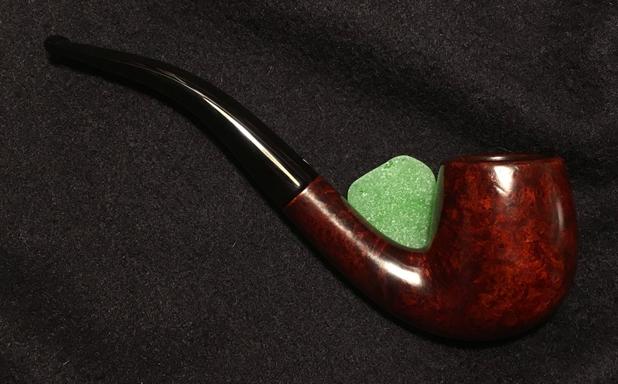
 

Rejuvenating a Beautiful Koncak Pegasus Carved Meerschaum


Blog by Steve Laug

The next pipe I chose to work on today is a nicely carved meerschaum by Koncak. I have never really collected meerschaum pipes so I do not have much knowledge of the various makers or carvers. I did some looking in some of the references I have here in the shop and found that Koncak is a Turkish meerschaum pipe brand. The meerschaum factory was founded by Ekrem Koncak in 1934 in Eskiehir, Turkey. It is one of that country’s oldest producing meerschaum pipe factories. They carve some highly unusual shapes. In 1974, Ekrem was succeeded by his son, Sadat, and in 1980 his daughter, Nurham took over the running of the company. In the meantime, Sedat Koncak bought the Austrian brand Bauer, and the two companies have maintained close commercial ties (from Pipes, Artisans and Trademarks, by José Manuel Lopes).

Jeff bought the pipe on EBay because the carving and shape stood out to him as beautiful. It is a large bowled unique. The sides and back of the bowl are carved with fronds of leaves possibly tobacco leaves. The front of the bowl is carved with reclining Pegasus – winged horse with some pock-marked stone around him. The end of the shank is smooth culminating in a silver band with a rope twist and a single line and a beaded line on each side of the rope. The shank is lined with Delrin and the push tenon is either Delrin or nylon. The stem is Lucite/acrylic and had a saddle and a wide blade that has tooth marks and file marks on both the top and bottom sides in front of the button.

The first photos below on the green background were taken by the seller. I include them here so that you can appreciate what caught my brother’s eye when he saw this beauty.

The photos on EBay show the dirty condition of the pipe but also show that it is in excellent shape under the grime and the dirt. My brother was wise in bidding and winning this beautiful example of Koncak workmanship. The photo of the bowl front shows the winged horse, Pegasus in a reclining position. The carving is quite well done. The details of the feathers on the wings, the mane on the horse’s head and the surrounding foliage around Pegasus are well done.

The bowl was shown with a thick cake that was spread throughout the bowl and there was an overflow of lava on the top. The shank and the underside of the bowl was already beginning to show a golden colouration and once the bowl was scrubbed clean I was pretty certain that the rim top and edge would also show the same kind of developing colour. My brother did very well in his purchase of this one. Now I just need to decide whether I keep it or let it go on the rebornpipes store. I guess that by the time I finish the pipe and do this write up for the blog the decision will have been made. I will let you know once the post has been completed. Thanks.

The EBay sellers photos also showed the condition of the stem (at least from the top view).When the pipe arrived in Idaho, Jeff took some more photos of it so that I could see the condition of the pipe. While it looked much like the seller’s photos it was both in better condition and worse condition at the same time.The case it came in was well fitted to the pipe. It was in good condition though there were places that the leather cover would need to be reglued. (When it arrived in Vancouver this was the first thing I took care of and set the case aside to let the glue cure.) There was a sewn in Koncak logo on the inside top of the case. The dirtiness of the pipe was as shown in the seller’s photos and surprisingly there were no areas that were damaged or broken. I was grateful that the pipe was in dirty but undamaged state.The next two photos show the condition of the cake in the bowl and the lava overflow on the rim top. The cake was thicker than it had appeared in the seller’s photos and the lava overflow was heavier and thicker.The next series of photos show the ornate leaf carvings around the bowl and shank leaving the centre of the front piece open for the carving of Pegasus, the winged horse. The next two photos show the stem and band work on the pipe. The silver band is quite beautiful and really stands out against the colouring meerschaum shank. The next photos that my brother took show the condition of the stem far better than the seller’s photos had. It had a lot of tooth chatter and dents on both the top and underside near the button extending about one inch up the stem. Jeff reamed the bowl carefully with a PipNet reamer and a Savinelli Fitsall Pipe Knife scrapping the cake back to the meerschaum wall of the bowl. He scrubbed the exterior of the pipe and rim with Murphy’s Oil Soap and was able to remove the entire lava overflow on the rim and the dust and grime from the nooks and crannies of the carving. He cleaned the internals with pipe cleaners, cotton swabs and alcohol until the surface was clean and refreshed. I took photos of the pipe when it arrived in Vancouver to show his craftsmanship in the cleanup phase of refurbishing. He does very good work and it makes my job much easier on this end. His work on the rim top is an example of how clean he gets the pipes. He was able to remove all of the lava overflow and leave behind a bit of patina.He had cleaned up the tooth chatter with the soap and scrubbing and what tooth chatter was left behind was minimal. There were also some tooth marks that would need to be addressed.I sanded out the tooth chatter and the tooth marks with 220 grit sandpaper to clean them up as much as possible. I wiped down the surface of the stem with a damp cotton pad to remove the sanding dust. I filled in the deeper tooth marks with clear super glue and set the stem aside to wait for the repair to cure. While the repairs cured I worked on polishing the bowl. I used micromesh sanding pads to polish the smooth portions of the pipe. I wet sanded them with 1500-2400 grit pads and wiped the bowl down with a damp cotton pad between each grit of micromesh. I dry sanded it with 3200-12000 grit pads and repeated the wipe down after each pad. By this time the glue had cured so I sanded the repairs on the stem smooth with 220 grit sandpaper blending them into the surface of the stem on both the top and bottom sides. At this point the stem is looking really good. Still work to do in reshaping the button but the repairs are getting there.I recut the sharp edge of the button with a needle file and smoothed out the edge with the thin edge of the file. The button was looking right. Now I needed to polish the stem.I polished the stem with micromesh sanding pads – wet sanding it with 1500-2400 grit pads. I wiped the stem down with a damp cotton pad to remove the dust. I buffed the stem with red Tripoli on the buffing wheel before continuing to polish it with micromesh sanding pads – dry sanding with 3200-12000 grit pads. When I had finished the polishing I wiped it down with a damp pad and gave it several coats of Conservator’s Wax. I buffed the stem with a microfiber cloth to deepen the shine. I gave the bowl a coat of softened white beeswax called Clapham’s Beeswax Polish and hand buffed it with a shoe brush. I hand buffed it with a microfiber cloth to deepen the shine. It is a large pipe whose dimensions are length: 6 inches, height: 2 ½ inches, outer diameter of the bowl: 1 ½ inches, chamber diameter: 7/8 inches. The finished pipe is shown in the photos below. Well the decision has been made as I hoped it would by this time in the write up of the restoration. While working on the pipe and cleaning it up I realized that it is too big for my liking and thus I will part with it on the rebornpipes store. I will list it shortly and if it is a pipe that you want to add to your collection you can email me at slaug@uniserve.com or send me a private message on Facebook. It truly is a stunning pipe. Thanks for walking with me through the cleanup.

Restoring a Unique Alternative Wood C.P.F. Tulip


Blog by Steve Laug

This is yet another unique older C.P.F. pipe find from our Virtual Pipe Hunt in Montana. It is amazing the number of older C.P.F. and other brands we found in that antique shop. Even more amazing is the sheer number of shapes that I have never seen or worked on before. This one is a C.P.F. that is made in two parts – a bowl that is screwed onto a base. The wood is not briar. The bowl is olivewood and the base is cherry. The pipe has the C.P.F. in an oval stamp on the left side of the shank. It is also stamped on the band with the faux hallmarks from that era and the logo. The stem is made of horn. It is a graceful and elegant looking pipe and one that I look forward to working on. My brother took quite a few photos of the pipe before he cleaned it up to show the details of the carving and the wood. I have included them at the beginning of the blog. My guess is that this pipe also comes from the mid-1880s to the early 1890s like the other C.P.F. pipes in the lot.The pipe was in pretty rough shape. The bowl had a thick cake with lava overflowing the rim. The finish was very dirty though appeared to look good underneath the grime. The screw in bowl was stuck in place on the base and we were uncertain that it would even come off. It looked like it originally was a separate piece but the grime and grit had locked it in place. The grooves in the base were filled with grime and the silver band was tarnished. The gold C.P.F. logo on the shank was faint. The horn stem had the usual tooth chatter and marks but other than that was in decent condition. With a little work this would be a beautiful pipe.

If you would like to read a bit of history on the brand you can have a look at a blog I wrote concerning C.P.F. or the Colossus Pipe Company https://rebornpipes.com/2013/04/14/some-reflection-on-the-historical-background-on-cpf-pipes/.The next series of photos show the condition of the bowl before cleaning. It was very dirty and there appeared to be cracks in the backside of the bowl. I would not be certain until it was cleaned and I had it in hand. The next photos show some of the detail on the base of the pipe. It is an interesting piece of carving. I have never seen one like it in either the old C.P.F. catalogues or in my online research regarding the brand. The bottom of the base shows the grain on this portion. Notice how well the carver centered the grain pattern on the base. It is a beautiful piece of wood. I am guessing cherry but I am not certain. You can see from the unique vertical grain on the bowl portion of the pipe that it is not briar. My thoughts are that it is olivewood but I could be wrong. Note also the buildup of grime around where the bowl sits on the base.The C.P.F. oval logo can be seen on the left side of the shank and also on the silver band. You can see from the photo that the band appears to be loose. Later photos reveal that it was indeed loose and could be slipped on and off the pipe.The next two photos show the shank with the band sitting under it and the threaded bone tenon on the horn stem. It is really dirty looking in the shank and mortise.The stem was probably in the best condition of the entire pipe. The graceful curve of the horn was undamaged. The striations were not separating and the variation in colour was stunning. The overall condition was really good. There was some light tooth chatter and marks near the button on each side but otherwise it was clean. The button was not chewed and the orific airhole in the centre of the button looked good. Jeff cleaned up the pipe – reaming the bowl with a PipNet reamer and cleaning up the reaming with a Savinelli Fitsall Pipe Reamer. He took the cake back to bare wood. He scrubbed the exterior of the pipe with Murphy’s Oil Soap and rinsed the soap and grime off the pipe. He removed the band and scrubbed under that as well with the soap. He cleaned out the mortise and the airway in the shank and the stem with pipe cleaners, cotton swabs and alcohol. He cleaned the horn stem with some oil soap as well. I took these pictures when the pipe arrived in Vancouver. It was in better shape than when we picked it up. Jeff had not been able to unscrew the bowl from the base as it was stuck with the goop that had covered the bowl and base. The rim top still had some darkening and spotty damage to the surface. Jeff and I were talking last evening on FaceTime and I decided that I would tackle the restoration on this old timer next. While we were chatting I held the base in one hand and wiggled the bowl with the other. After a few moments I was able to turn it from the base. What was underneath was absolutely gross. It looked like someone had packed the base with some kind of coarse material to act as a filter to trap any moisture that came from the combustion of the tobacco above. I also noticed that the bowl bottom had three airholes and one was entirely plugged and could not be seen from the inside of the bowl. The bowl had some dark staining and build up on the bottom of the bowl. I put the junk back in the bowl and set the pipe aside for the night.In the morning I took the pipe apart again to clean out the bowl base. I used a dental pick and a spatula to clear out the debris and hard build up in the base. I scraped out the threads on the bowl and the base to remove the debris. I scraped out the rounded base bottom to also remove the debris. I twisted the tip of a dental pick through the clogged third hole in the bottom of the bowl. I worked it from both the inside and the outside of the bowl until I had cleaned out the blockage. Once again the bowl had three holes that worked.I scrubbed the base and the bottom of the bowl with alcohol and cotton swabs. I scrubbed until it was absolutely clean. I scraped out the ledges on the inside of the base to remove the buildup that was there as well.I painted the shank end with Weldbond white glue so that I could put the band back in place. The band had a split on the right side that would need to be worked on as well. I put the band on the glue and held it in place until the glue had dried. I sanded the split in the band with 220 grit sandpaper and filled it in with clear super glue. There were also cracks in the bottom of the base just below the threads that matched the grooves carved on the outside of the shank. Once the glue dried I sanded the inside of the base smooth. With the repairs done to the base I turned to what had appeared to be cracks in the bowl sides and base. I sanded the stained and dirty base and the part of the bowl that had been seated in the base behind the leaves. I used clear super glue to fill in the small cracks on the bowl sides and bottom. They were very tight and did not move when I worked them with a dental pick. When the glue dried I sanded the bowl with 220 grit sandpaper until they were smooth and blended in well with the surface of the olivewood. I lightly topped the bowl with 220 grit sandpaper on a topping board until all of the damaged areas were removed and the rim top was smooth once again. I polished the olivewood with micromesh sanding pads – wet sanding it with 1500-2400 grit pads and dry sanding it with 3200-12000 grit pads. I wiped the bowl down after each of the micromesh sanding pads with a damp cotton pad to remove the sanding dust. The photos below show the progress of the polishing. I sanded the stem to remove the tooth chatter on the top and underside near the button. There was one deep tooth mark on the underside that I could not remove by sanding. I filled it in with clear super glue and let it dry. Once it had cured I sanded it smooth with 220 grit sandpaper to blend it into the rest of the stem surface. It was smooth but a bit lighter in colour than the surrounding area. Thankfully it was on the underside.When the stem was turned on to the shank it was slightly underclocked and there was no give in the stem to get the alignment correct. I carefully heated the bone tenon without burning it to soften the glue that held it in place. While it was still warm I was able to screw it in and align the stem properly.Now that things were aligned it was time to polish the stem. I polished the stem with micromesh sanding pads – wet sanding it with 1500-2400 grit pads and dry sanding it with 3200-12000 grit pads. I wiped the stem down after each of the micromesh sanding pads with Obsidian Oil to remove the sanding dust and give it more life. The photos below show the progress of the polishing. I love polishing horn stems because as you work them over they seem to take on a life of their own with a deep and resilient sheen. I took the pipe apart and buffed the parts. I buffed the bowl and the bottom and sides with Blue Diamond on the buffing wheel. I buffed the stem with Blue Diamond as well to polish out the tiny scratches that were left behind by the micromesh. I gave the parts multiple coats of carnauba wax and buffed them with a clean buffing pad to raise the shine. I hand buffed all of the parts with a microfiber cloth and put the pipe back together. I hand buffed it once again to finish the restoration. The finished pipe is shown in the photos below. It is a remarkable example of pipe making at the end of the 19th Century. The wood and the shape work well with the beautifully striated and gracefully bent horn stem. The silver band with the hallmarks and C.P.F. logo is a nice transition between the stem and the cherry wood base. Thanks for walking with me through this restoration.

Out Damn Spots – a C.P.F. Cromwell Double Vertical Stem Bent Billiard


Blog by Steve Laug

Like other older C.P.F. pipes this one has some real charm. It is on the petite side of things – 4 ½ inches long and 1 ½ inches tall. It is not a bad piece of briar, a mix of grains. The silver collar on the shank is stamped with faux hallmarks and the C.P.F. in an oval logo. It is probably silver or at least plated but I am not sure. The stem is the unusual part of the mix. It has two silver plated spigot tenons that fit into openings in the silver collar. The twin stems merge into one single airway. Looking at it I could not wait to examine it and see what it looked like with the stem removed and what the mortise looked like. The finish was worn but the pipe looked like it still had some life in it. The left side of the shank is stamped in worn gold leaf C.P.F. in an oval over Cromwell in script. There is no other stamping on the bowl. The stem is also stamped on the left side and reads PURE RUBBER on the top stem and C.P.F. in an oval on the lower stem. This pipe is also from the virtual pipe hunt my brother and I did in Montana. He took photos of the pipe from a variety of angles to show the uniqueness and the condition.I did some digging online and found a WDC Marlborough that had a similar configuration though far more boxy. It did not have the elegance that the C.P.F. does in my opinion. Playing around with the mechanics of the smoke and how it flowed through the stem I examined the dual mortise and the way the stem was laid out. I fed a pipe cleaner through the stem and found that natural flow of the cleaner was from the button through the top of the stem and into the top mortise. I could plug the lower tenon and the air was unobstructed from tenon to button. When I plugged the upper tenon and blew air through it I could feel it against my fingertip and then it made its way out the lower tenon. The airflow seems to have flowed against my finger and back a short distance to an opening between the two stems and out. From that I figured out that the smoker draws smoke through the upper mortise and into the airway on the stem. It flows into the bottom stem and mortise (which is a sump like the Peterson System pipes have) where moisture is collected and the smoke exits up the lower stem and into the button and into the mouth of the smoker. In my online search I found a photo of the Marlborough with the airpath drawn out as I conceived it in my words above. I drew the same kind of pattern on the C.P.F. to show how it appeared from my experiments. Here is the link to the Marlborough;  http://pipesmagazine.com/forums/topic/wdc-marlborough-double-airway. I used the drawing on that link to draw in the airflow on the Cromwell that I have. You can see that in the diagram below.I did some more digging on the internet to see if could find any more information on the brand. I found that C.P.F. did a second dual stem pipe called the Lafayette. Both pipes had military style bits so both were pocket pipes. Was it possible that C.P.F. did a line of pipes in honour or military leaders and these were two of those? You had Cromwell – potentially Oliver Cromwell, Lord Protector in England and Jean Lafayette, mercenary during the US Revolutionary War.The finish was very worn and there are a lot of scratches on the briar. I wonder if this little pipe was somebody’s pocket pipe and bumped against coin and whatever else was carried in the pocket of the pipe man who owned it. The bowl was caked and there was a lava overflow onto the rim top. There were some nicks and sandpits on the rim and the bottom of the bowl. My brother took photos of the stem and the mortise of the pipe. It is an unusual set up. The top portion of the twin stems fits in the mortise and the airway into the bowl is high at the bottom of that mortise. The second mortise for the lower portion of the stem is merely a dead space. It appears that the smoke came up the stem and circulated in the lower mortise before being drawn to the mouth of the smoker – perhaps it is a cooling system somewhat like the sump in Peterson System pipes. The twin ends of the stem are covered with a silver end mount and from the looks of the photos the pipe had been sitting for quite a while and cob webs had formed. The stem was oxidized for sure but something about the colour of the stem made me wonder what was happening with it. He did a lot of cleaning and scrubbing on this pipe and in the process we learned some interesting facts about the repair work that had been done on this pipe. The entire stem had been coated with what appeared to be a black paint. It was flaking and bubbling at the button end as can be seen in the photo above. The oxidized stem had some really strange patterns in the oxidation and there seem to be deep staining in spots on both the top and underside surfaces of the stem. On the topside there was a white repair that looked and felt like putty. The black paint had hidden that repair. Jeff had stripped the remaining finish off the dirty bowl, reamed the bowl and cleaned the rim top. The silver band on the shank looked better and the metal tenon ends on the military style tenons looked more brass than silver. He had cleaned out the two mortises and the airway into the bowl and the shank. Note the spotty appearance of the vulcanite stem. I took a close up photo of the rim top to show the condition of the surface and the damage on the right inner edge of the bowl. The bowl was out of round once he had removed the cake and the sandpits in the flat surface stood out.The next two photos I took show the condition of the stem. The stamping on it is very clear – Pure Rubber on the top stem and C.P.F. in an oval on the lower stem. I have not seen this spotty pattern in the oxidation before and I am wondering if in the process of the previous repair the repair guy did not damage the surface of the rubber. Note the putty fill as well. It is quite large.I used a dental pick to remove the putty fill and you can see from the photo below that it was quite large. It covered a large portion of the top and right side of the upper stem. I wiped the surface down with a damp cloth to remove the debris left behind by the putty in preparation for repairing the damage. I greased a pipe cleaner and put it in place in the airway in the stem so that it would not accidentally fill in from leakage of the repair. I mixed a batch of charcoal powder and black super glue putty and filled in the damaged area. I purposely overfilled it on the top to give me room to work. I carefully filled in the right side of the stem so as not to fill in the groove between the two parts of the stem. I put aside the stem so the repair could cure. Once the repair had dried I used a flat file to smooth out the ridges and peaks in the new surface. I sanded the repaired area with 180 and 220 grit sandpaper to further smooth it out and shape it.I wiped the stem down with a damp cloth and checked for air bubbles in the repair and areas that needed to be built up. I applied some more black super glue to the surface of the repair and smoothed it out with a dental spatula to ensure that all of the air bubbles had glue in them. I set the stem aside to dry.While the stem repair was curing I worked on the rim. I used a folded piece of 220 grit sandpaper to work on the damage to the inner edge of the bowl. It took a bit of work to blend in the damaged areas and smooth them out. I filled in the sandpits with clear super glue. It did not take too long to cure so when it had hardened I sanded it smooth and blended it in with the rest of the rim top. I wiped the bowl down with alcohol on a cotton pad to clean off any debris left behind by my rim work and used some European Gold Rub n’ Buff to touch up the gold in the stamping on the shank. I applied the product and rubbed it into the stamping and wiped off the excess with a cotton pad. The next three photos show the fresh shank. By this time the stem repair had hardened and I sanded the surface with 220 grit sandpaper to smooth things out. I used a folded piece to smooth out the grooves between the upper and lower stems. The stem is looking much better but the reddish spots in vulcanite really looked odd to me. I wondered if I would be able to polish them out of if I was going to be stuck with them in the finished pipe. The finish on the bowl was rough and there were a lot of scratches and worn areas on the sides and bottom. I sanded out the ridges and as many of the deep scratches as possible with 320 grit sandpaper. In the photos below you can still see the scratches but the feel in the hand is much better and the bowl is beginning to look smoother. I sanded these marks smoother with 400 grit wet dry sandpaper and then polished the bowl with micromesh sanding pads. I wet sanded with 1500-2400 grit pads and dry sanded with 3200-12000 grit pads. The next sequence of photos show the progress in smoothing and polishing the bowl. The stem still needed a lot of work. I shaped the repaired area and worked the surface over with 220 grit sandpaper to remove as much of the oxidation as I could. While it was definitely looking better the spotty areas were still visible. I still needed to polish the stem with micromesh pads to see how much more of the spotty surface I could clean. I also needed to finish polishing the silver tenon caps. I worked over the surface with 400 grit wet dry sand paper and 1500-2400 grit micromesh sanding pads and still could not remove the stained spots on the rubber. I decided to try something different. I stained those spots of the stem with a black aniline stain to see if that would bring the red spots more in line with the rest of the stem. When the stain dried the spots were definitely better, but they still stood out. Time to go back to the sanding and polishing! I wet sanded it some more with 1500-2400 grit micromesh sanding pads. I still had those obnoxious spots present in the rubber. They were deep and it really appeared that I would not get them out. I sanded the stem some more to try to remove more of the damaged areas. It did not seem to matter how much I sanded the spots remained. I decided to try one more trick. I used a black Sharpie Pen to colour in the spotted areas. I let the ink dry. I was hoping that these Permanent Markers would actually be permanent and cover the spots. Once the ink had dried I lightly sanded it with 3200-12000 grit micromesh sanding pads. The black seemed to stay in the spots better than any of the other methods so far. Maybe I had some success but polishing would tell the story. The more I polished most of the coverage remained but there were still remnants of the spot in the vulcanite. I polished the metal tenon caps with micromesh sanding pads and finished polishing them with a jeweler’s cloth to remove any remaining tarnish.I lightly buffed the stem with carnauba wax and buffed it with a clean buffing pad to raise the shine. I hand buffed it with a microfiber cloth to deepen the shine. I gave the bowl multiple coats of carnauba wax and buffed it with a clean buffing pad to raise a shine. I hand buffed it with a microfiber cloth. I put the parts back together and rebuffed it by hand. The finished pipe is shown in the photos below. The stem looks far better than when I first started but the spots still show through the polish. The pipe as a whole is a beautiful old piece of history. It does not look too bad for its age – over 125 years old. Thanks for walking through this restoration with me. It was a challenge and it was a pleasure to resurrect this old piece of tobacco history.