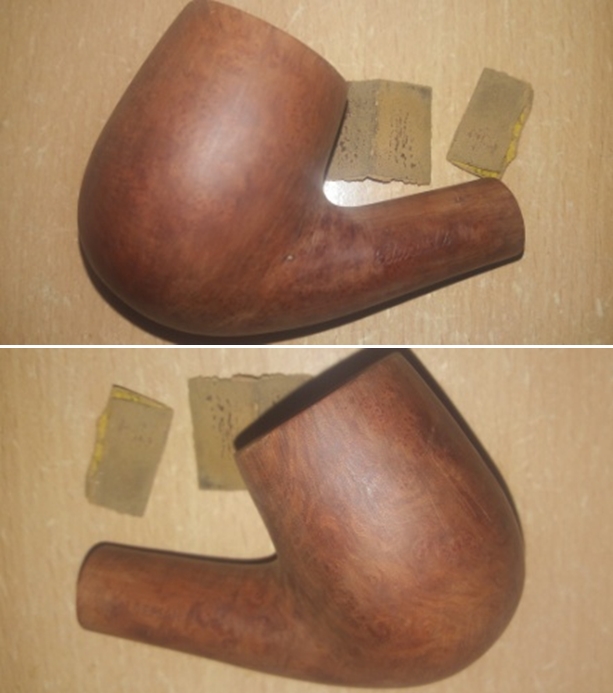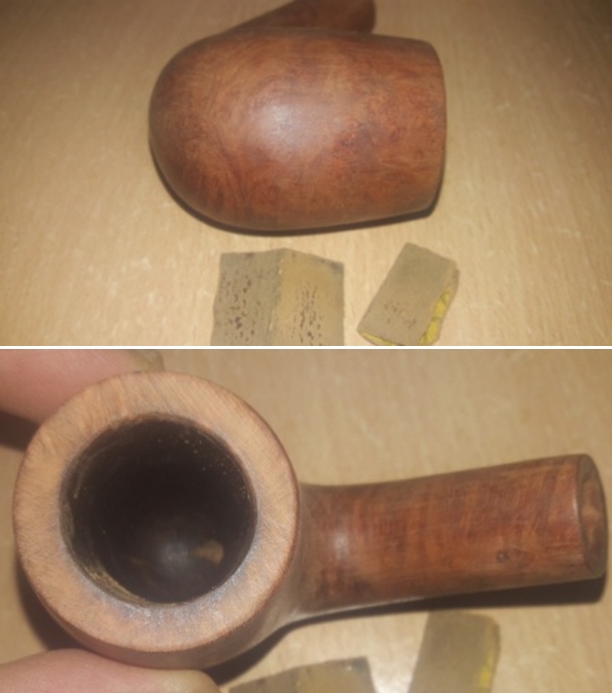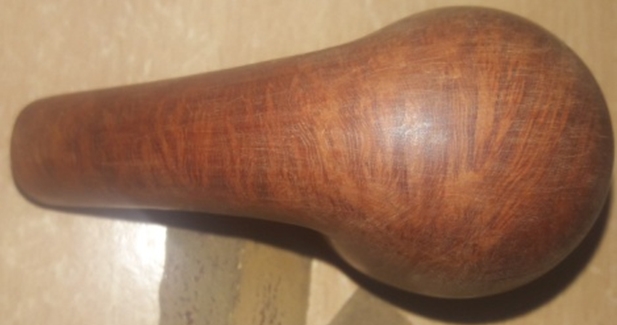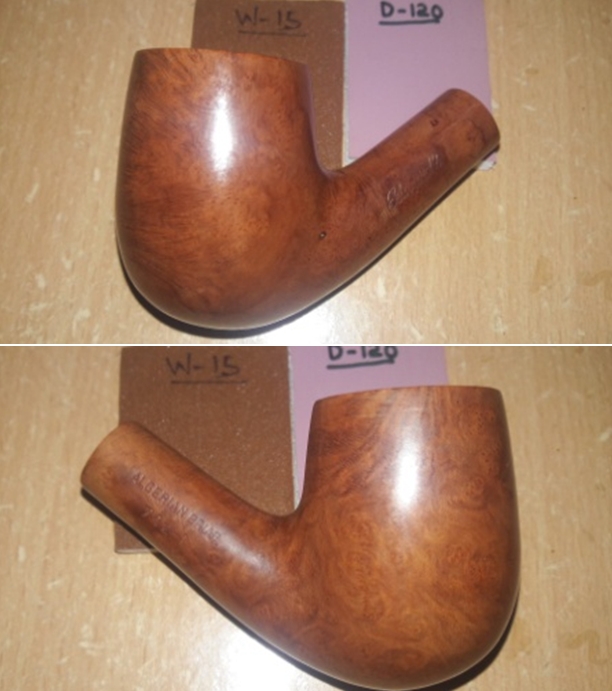
Tag Archives: repairing bite marks

A Tribute to an American Pipecarver – “John L. Lakatosh”


Blog by Paresh Deshpande

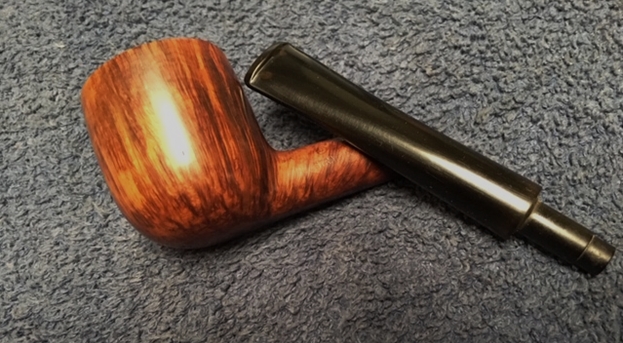
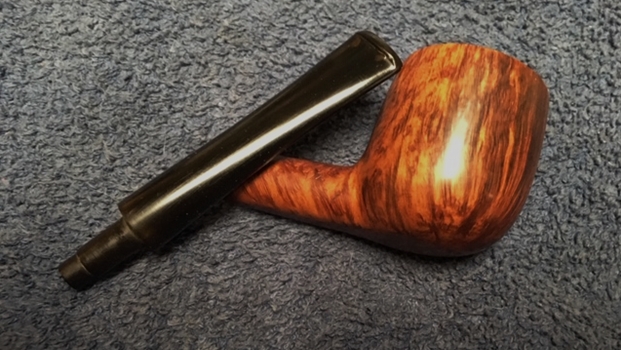
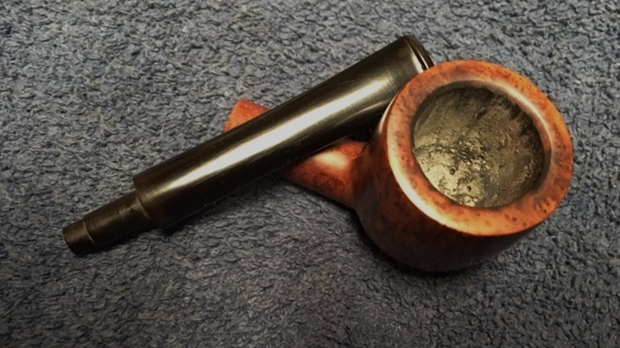
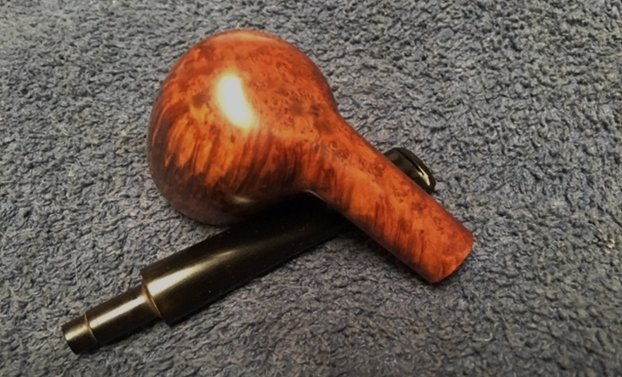
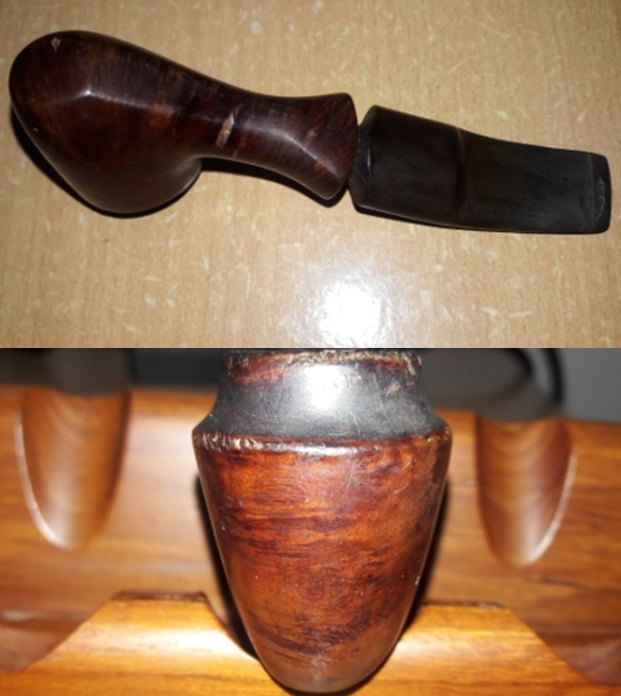
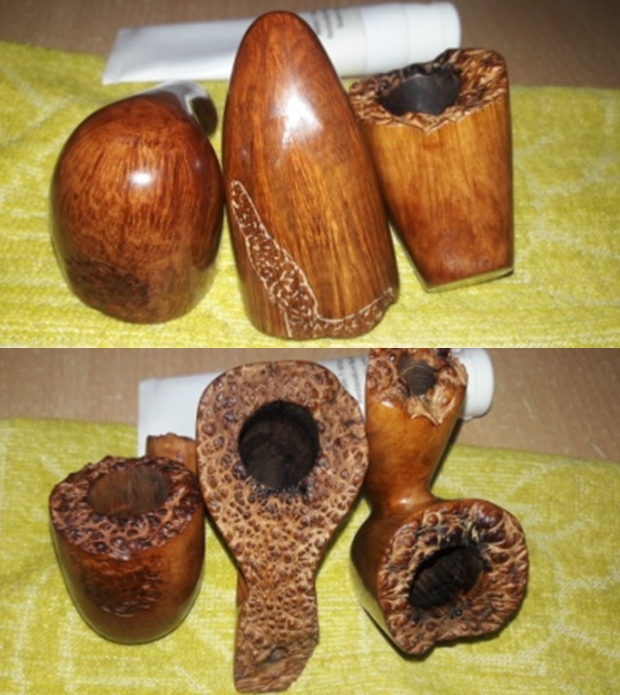
In my last blog on Boswell ’96 pipe restoration, I had confessed my growing admiration for pipes made by American pipe carvers after having worked on a number of pipes like Tracy Mincer, Custom-Bilts, Kaywoodies, John Bessai, J M Boswell etcetera. I realized that American pipe carvers are artistic, technologically inventive and that the pipes they made are robust, life lasting with a nice feel and heft and of very high quality. However, my liking for freehand pipes has remained undiminished. So now I have on my work table, three freehand pipes made by an iconic American small time pipe carver, who passed away in March this year. The carver that I am mentioning is Mr. John Lakatosh.

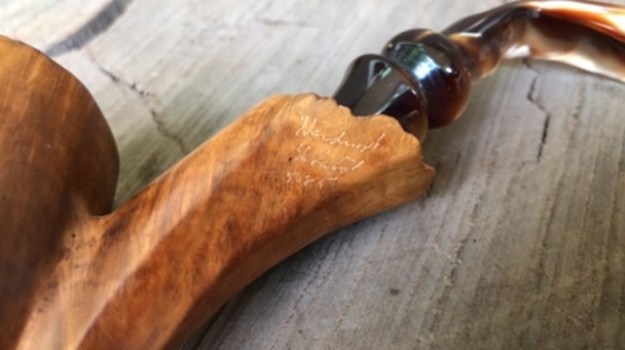
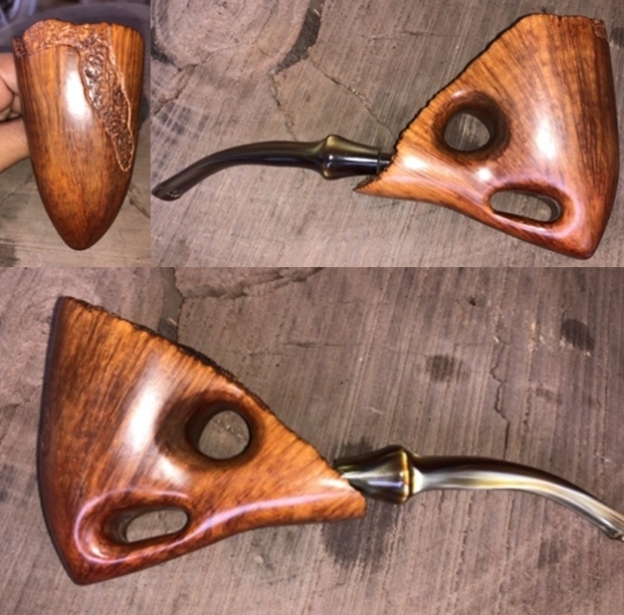
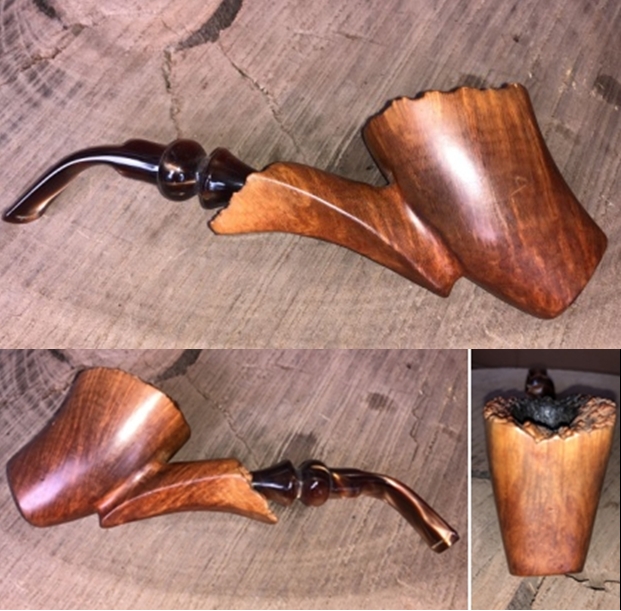
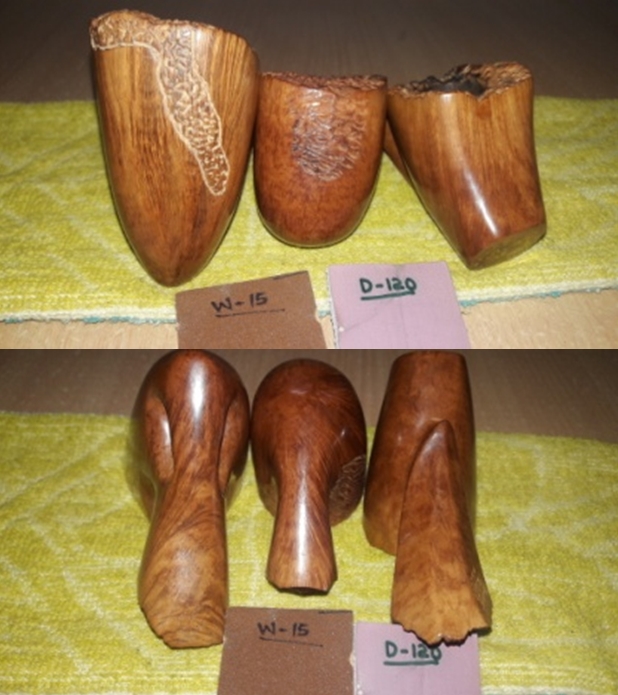
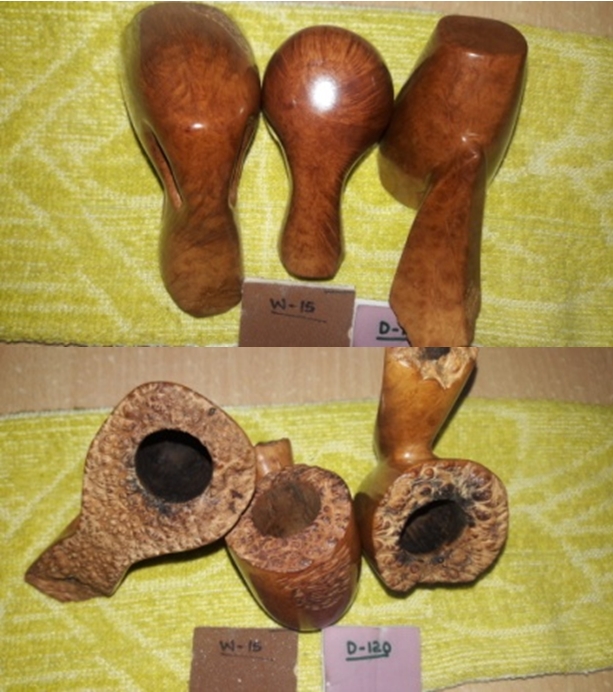
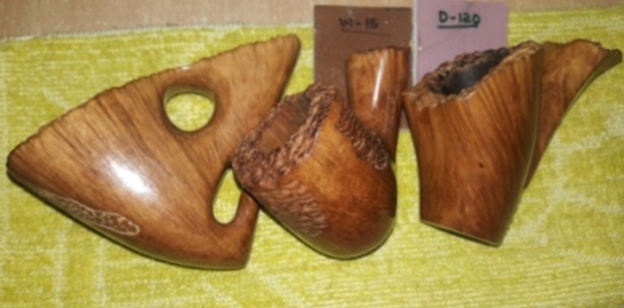
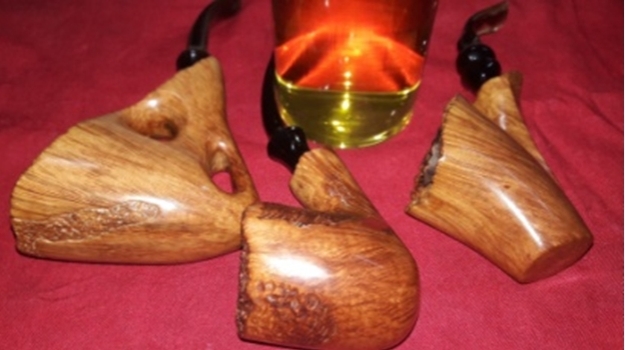
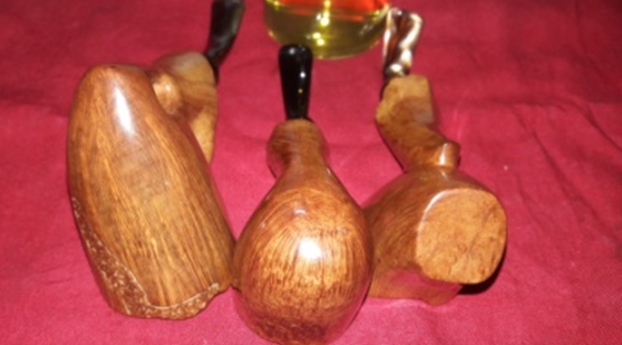
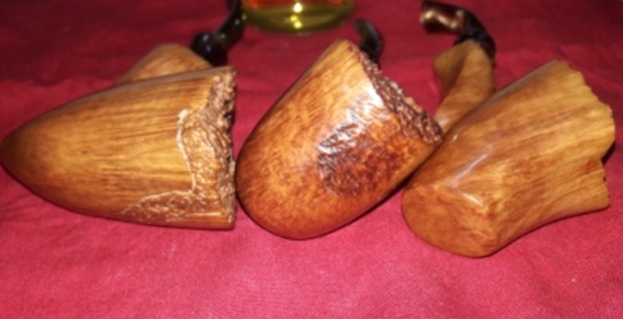
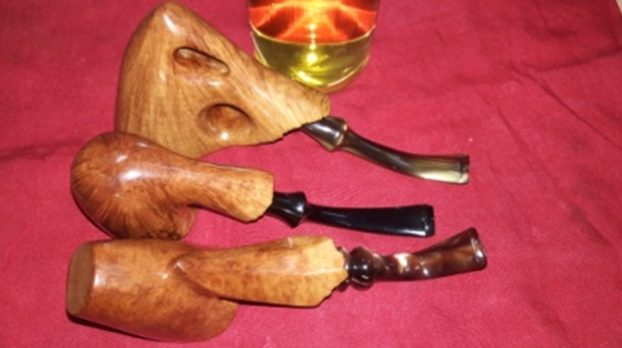
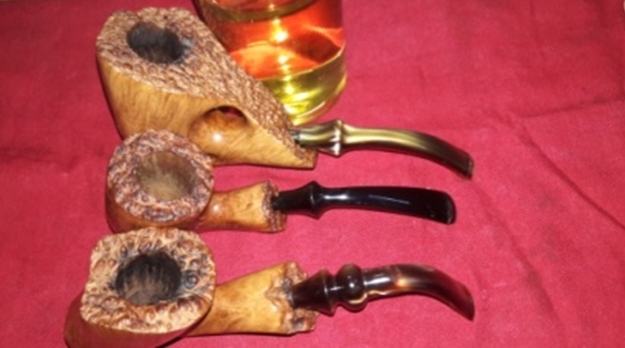
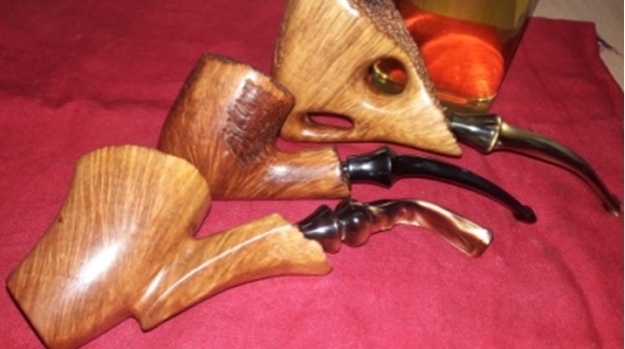
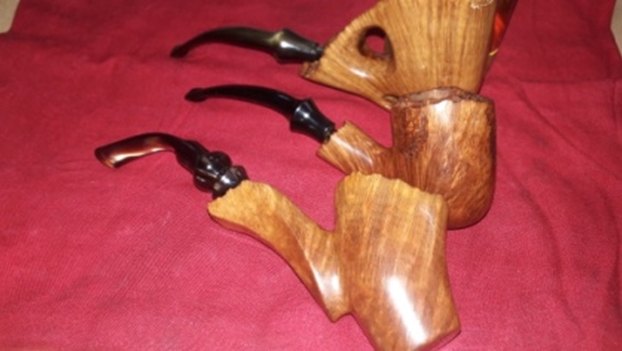
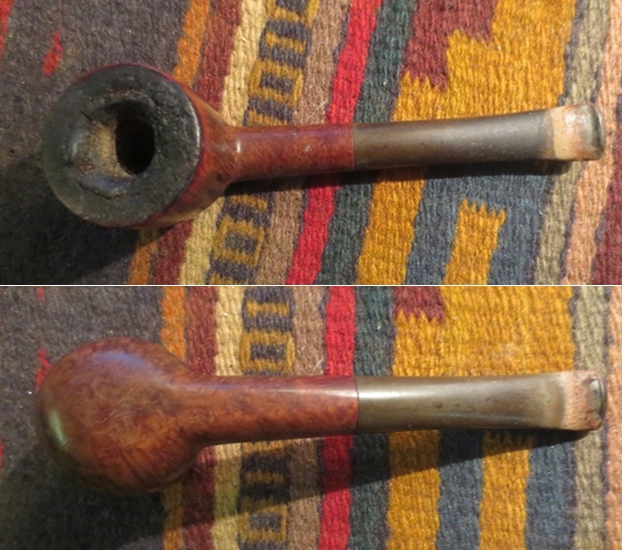
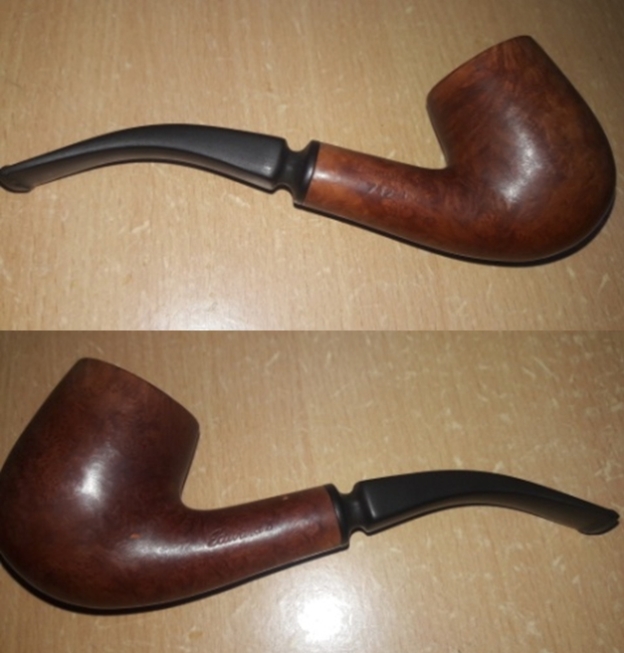
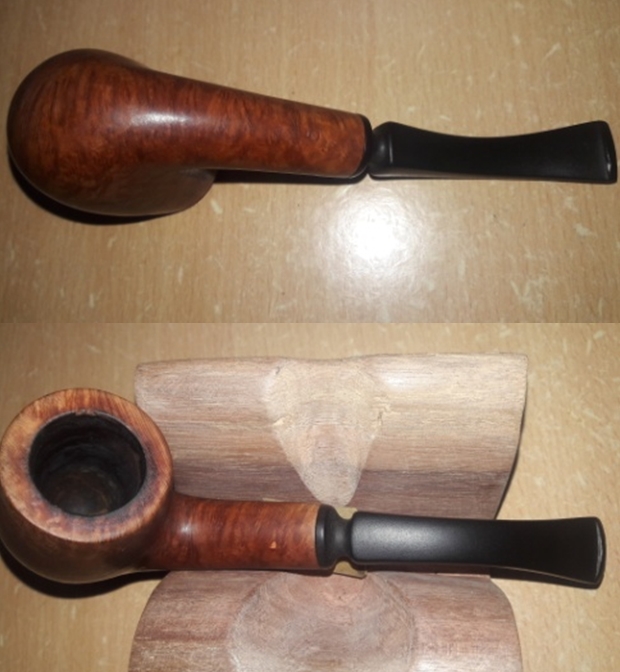
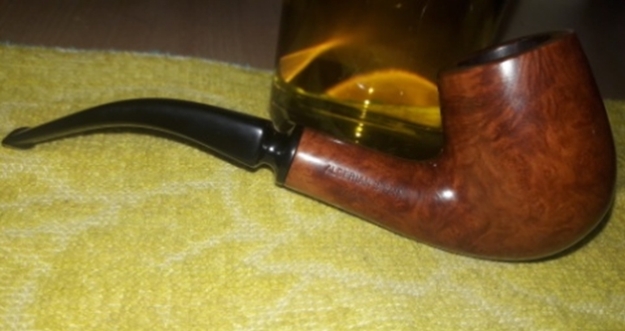
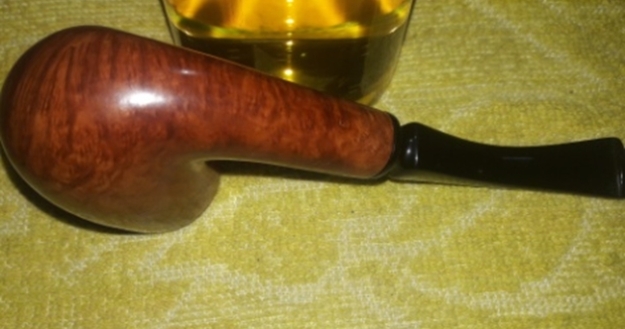
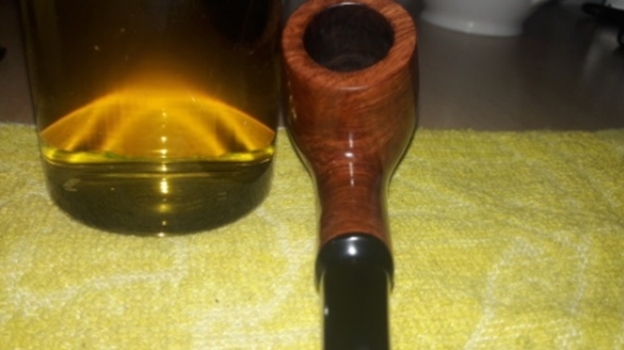
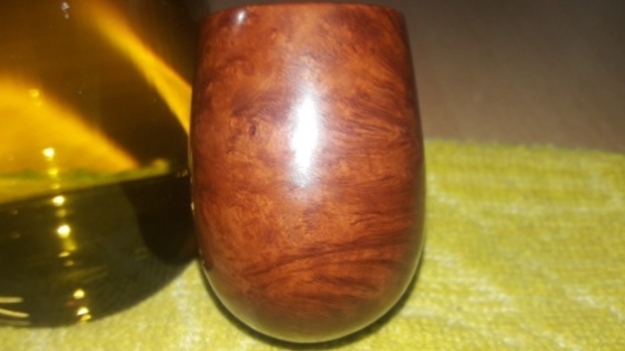
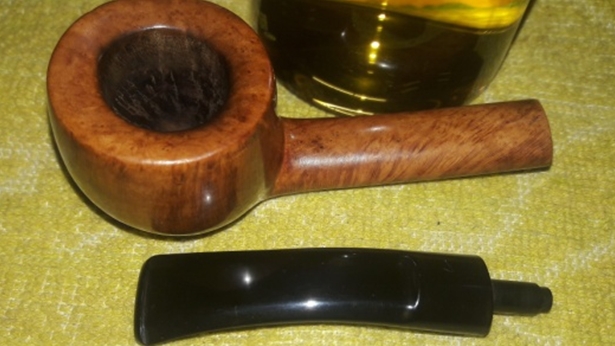
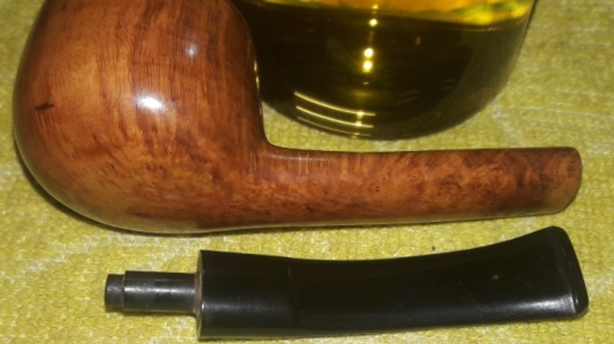
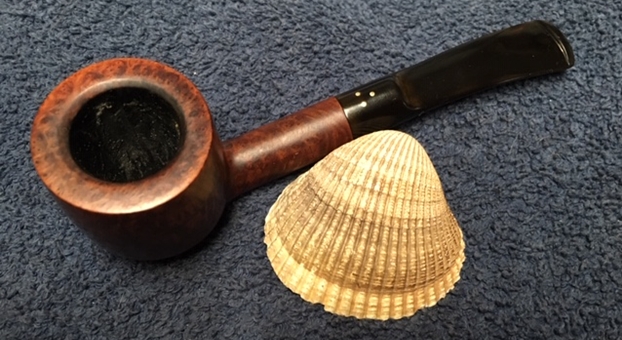
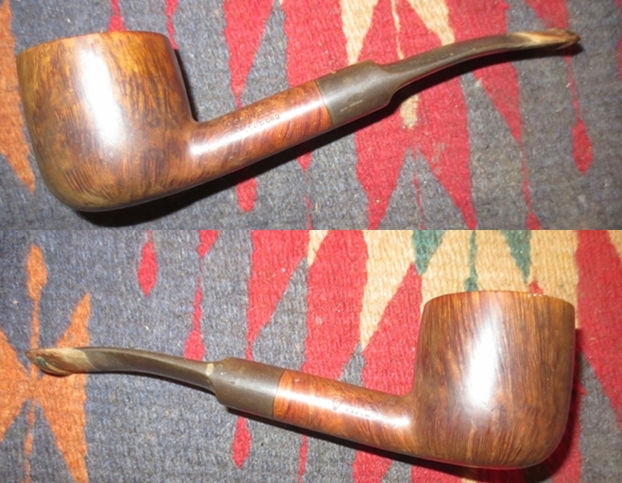
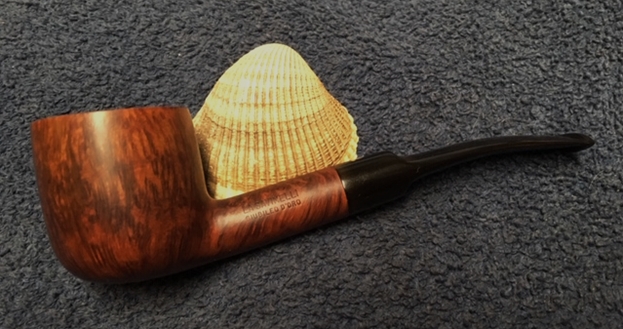
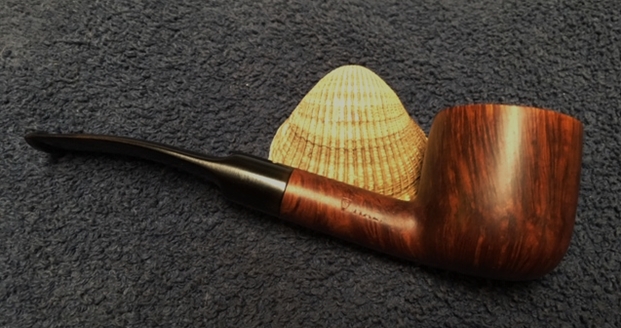
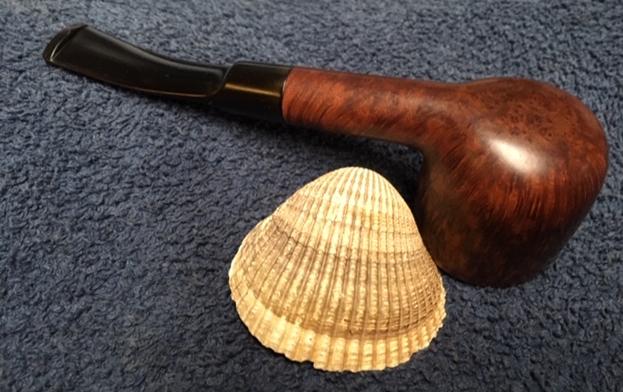
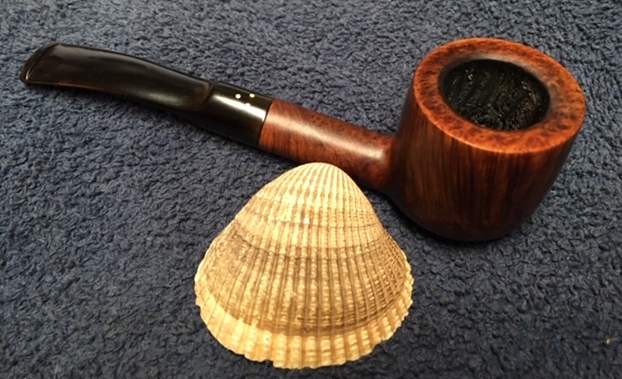
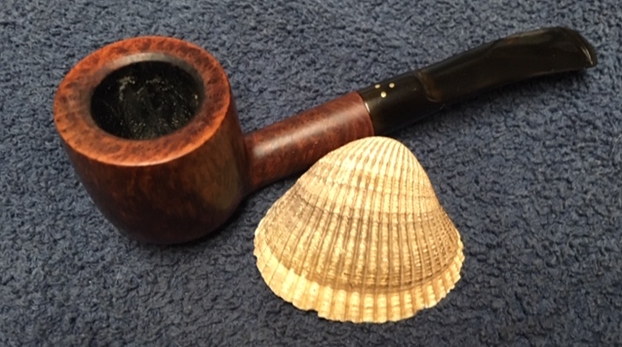
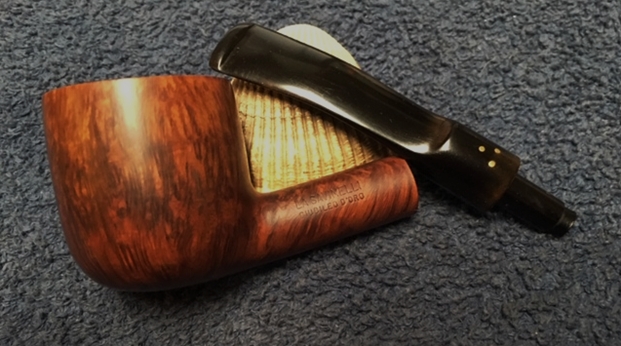
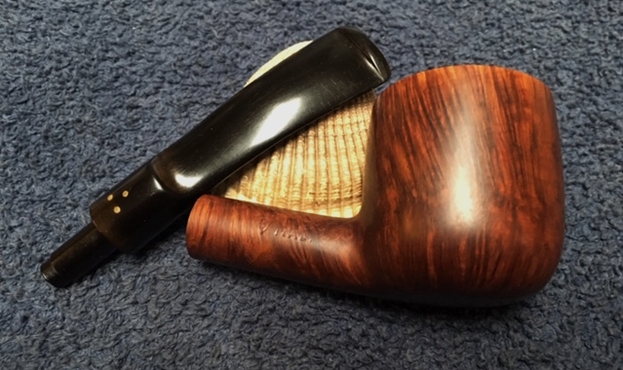
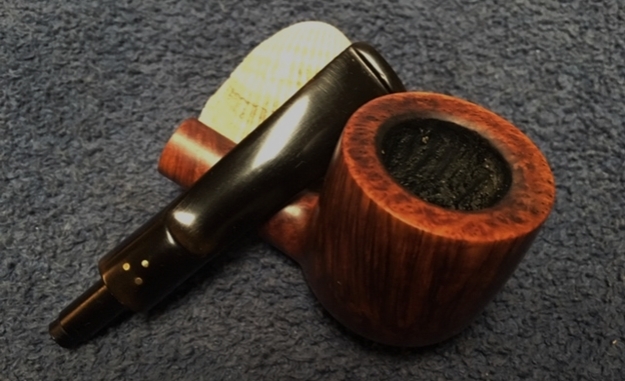
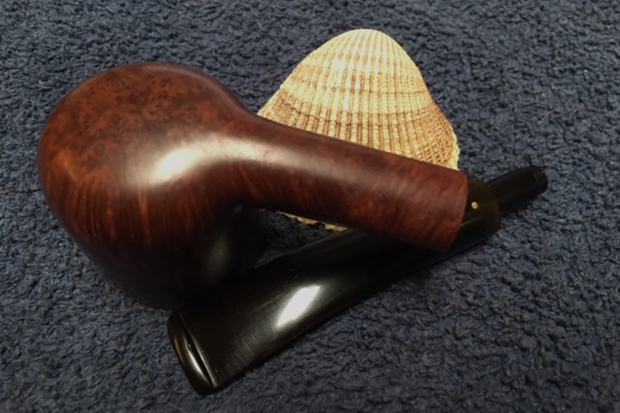
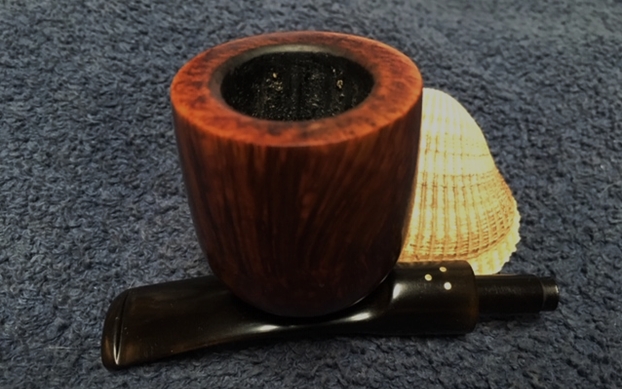
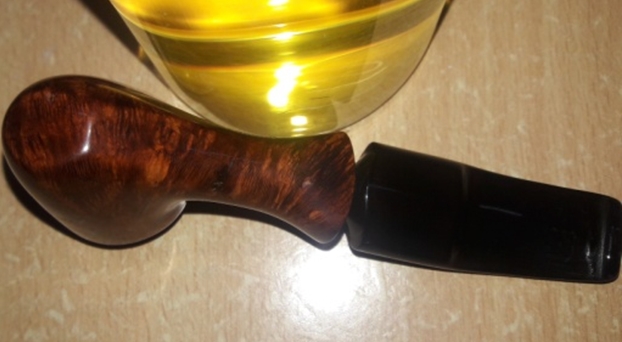
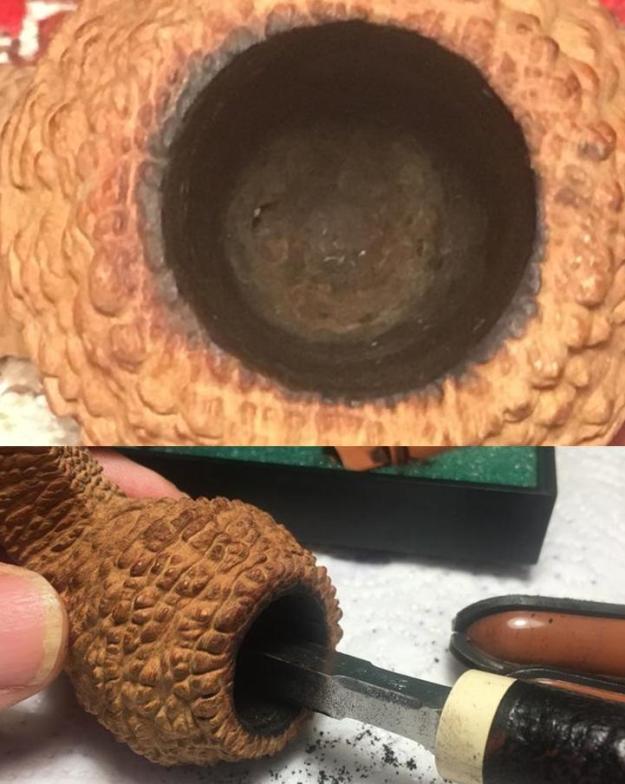
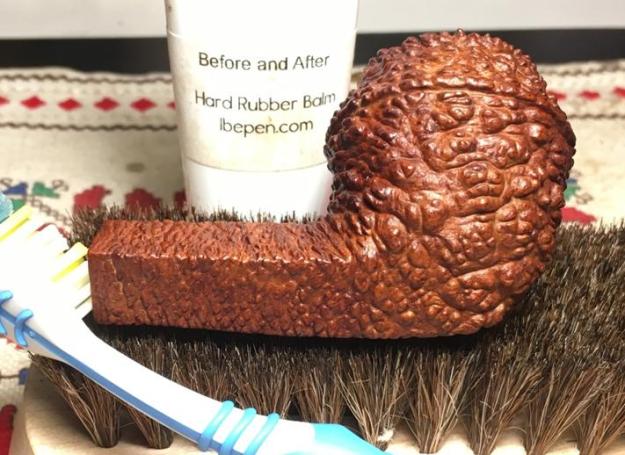
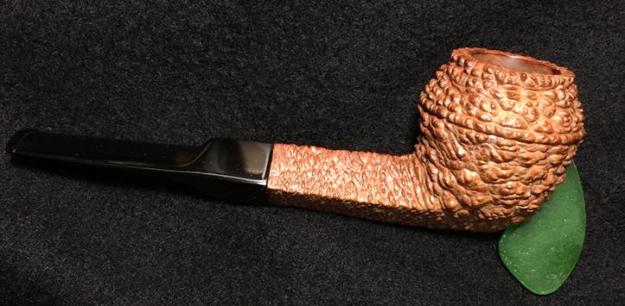
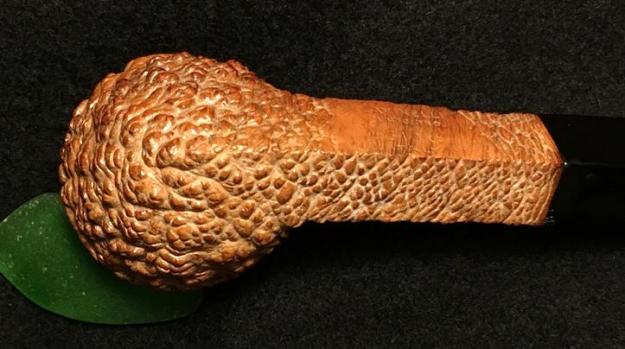
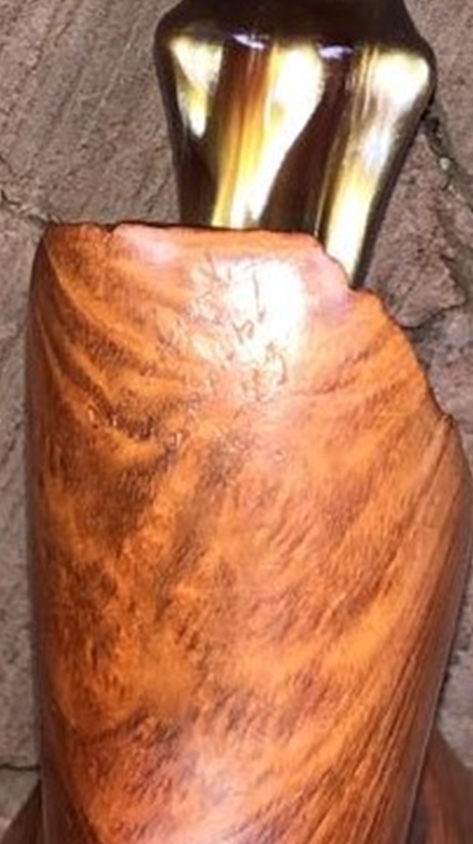
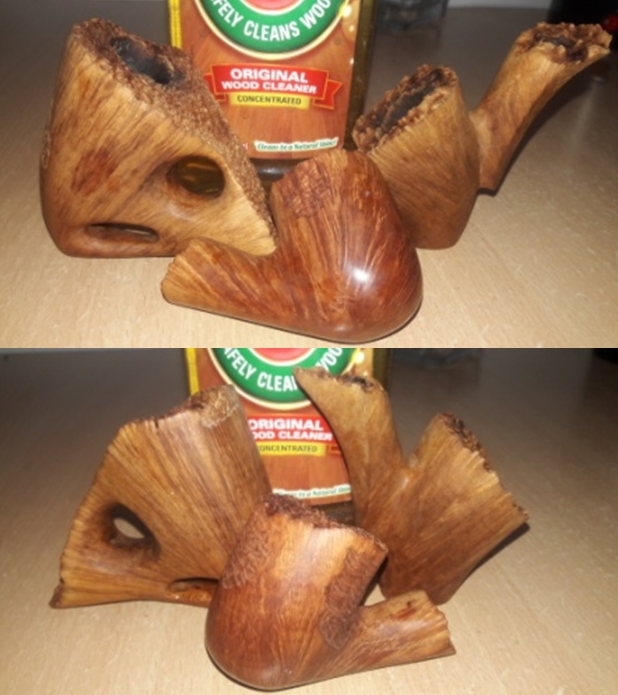
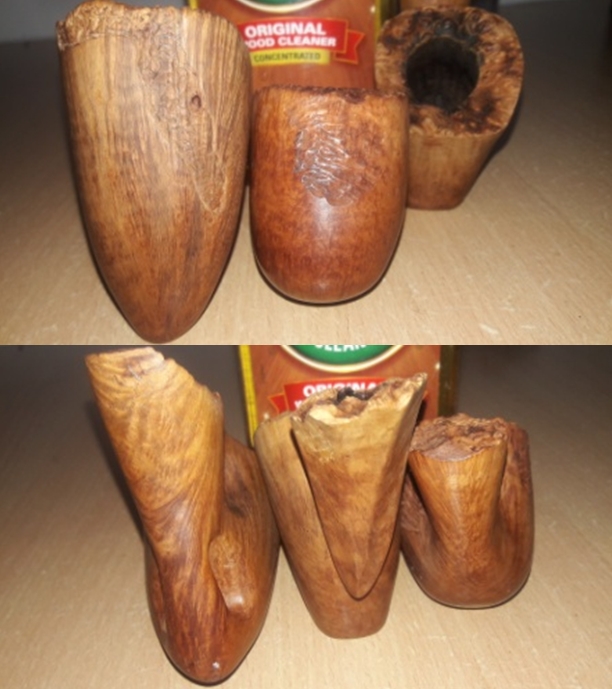
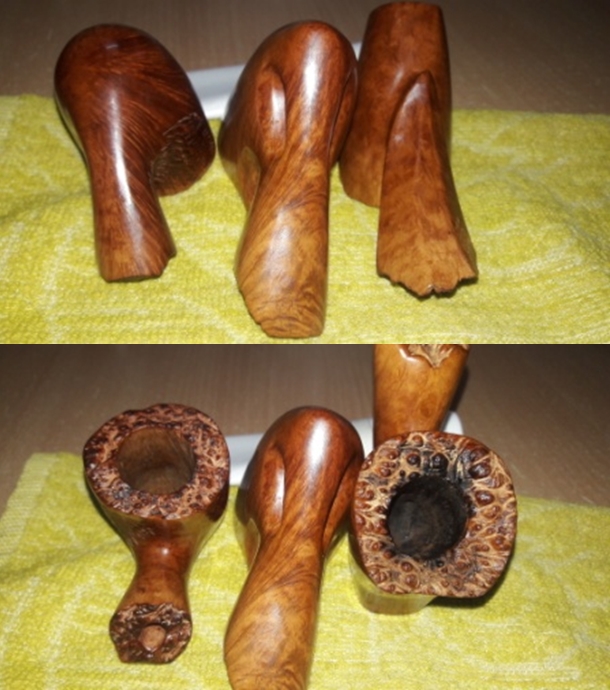
The three pipes currently on my work table are large sized freehand which were hand carved by John Lakatosh. The first is a large bent freehand billiard carved in 4-81; the second is a large sized triangular freehand pipe with a nice heft and hand feel, carved in 1-83 while the third is a sitter Saxophone (or should I call it a Ballerina!!!!!) carved in 5-85, the first digit indicating the month and later two digits denoting the year in which they were carved. All these pipes bear the stamping “HANDMADE” over “LAKATOSH” over the “MONTH AND YEAR” in which they were made. These stamps are in engraved in a script hand on the shank end of each pipe. I was keen to know more about John Lakatosh, the carver, his pipe making techniques and philosophy. I searched pipedia.com and there is a very brief write up on him. I reproduce the information available on pipedia.com for a quick read.
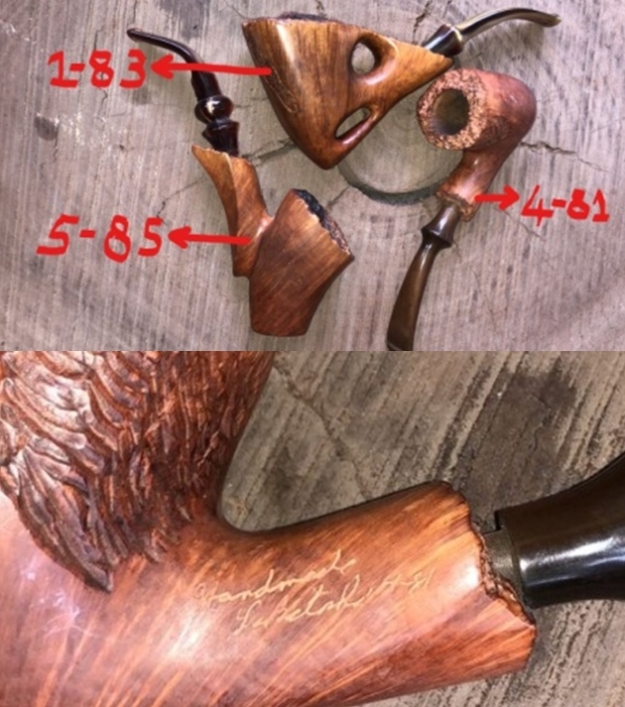
John Lakatosh was a carver from New Columbia, Pennsylvania. He made pipes in his home workshop in the Susquehana Valley up above Sunbury. John made pipes during the week and sold most of them at craft fairs in Central and Southern Pennsylvania. He retired from carving, to go back to bus mechanic work after the tobacco industry took a decline. He now lives with his wife in Lewisburg Pennsylvania, where he now crafts furniture for family and friends. He recently passed on March 8th 2018. (Primary/Familial Source)

As I was surfing the net for more information on Mr. John Lakatosh, I came across his obituary. Here is the link (https://www.heffnercare.com/obituaries/obituary-listings?obId=3010702)

INITIAL VISUAL INSPECTION
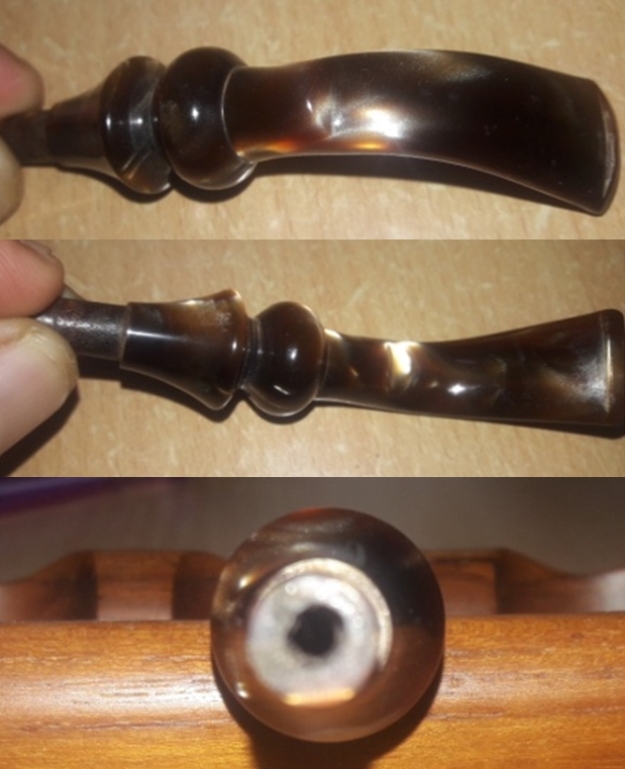
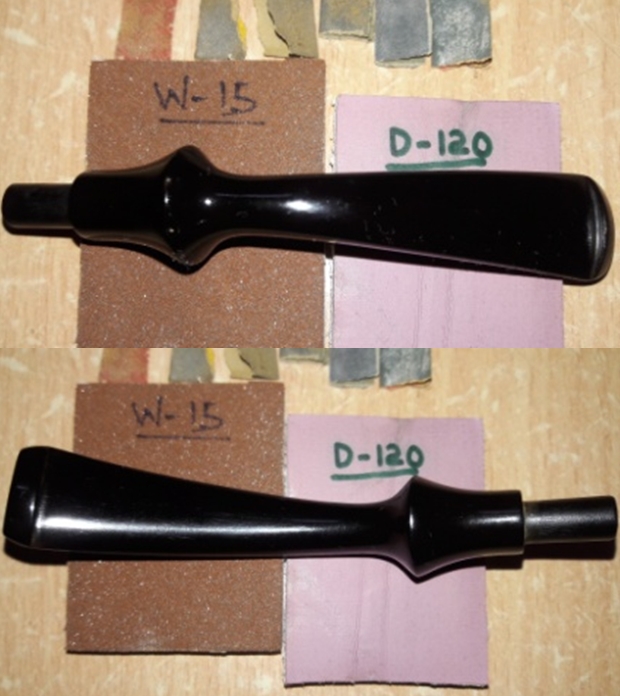
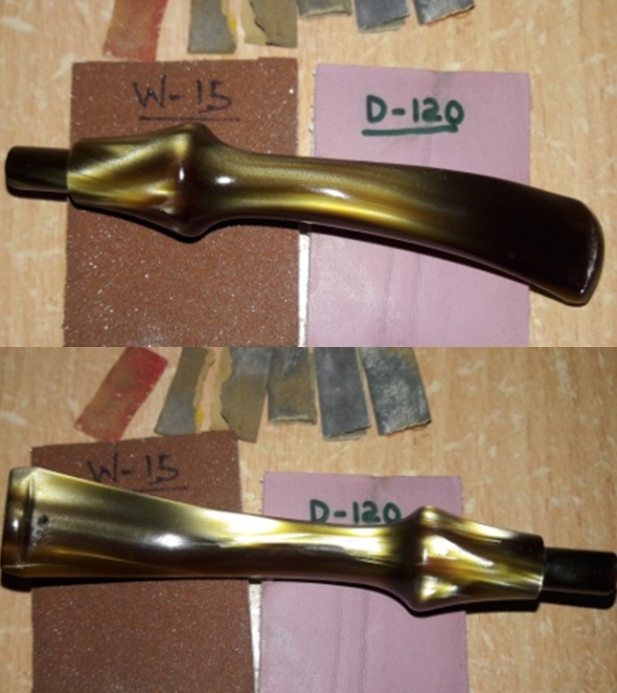
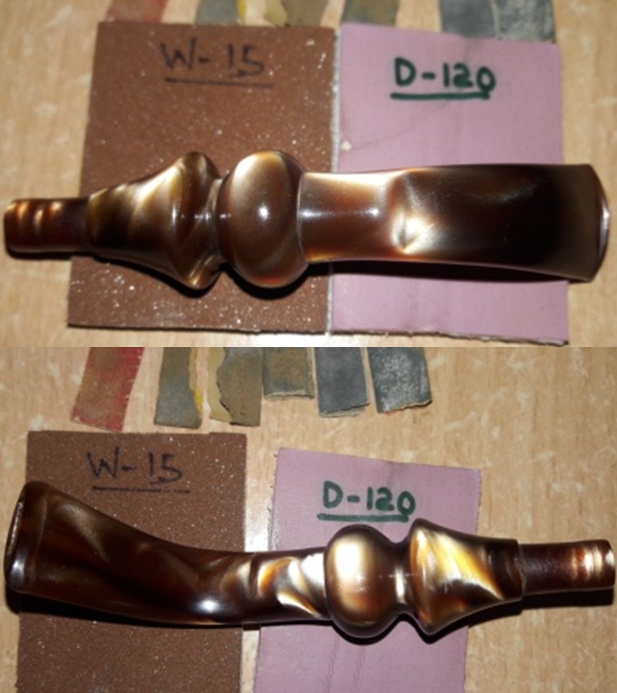
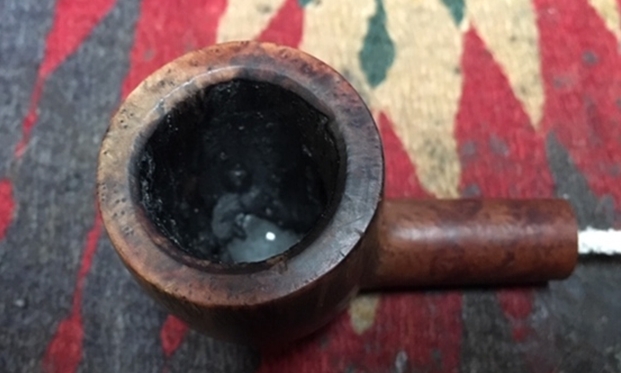
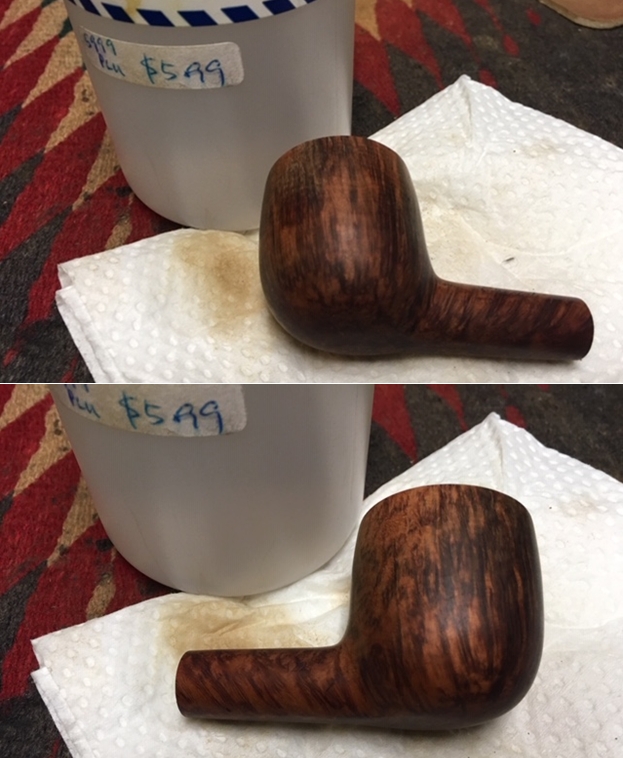
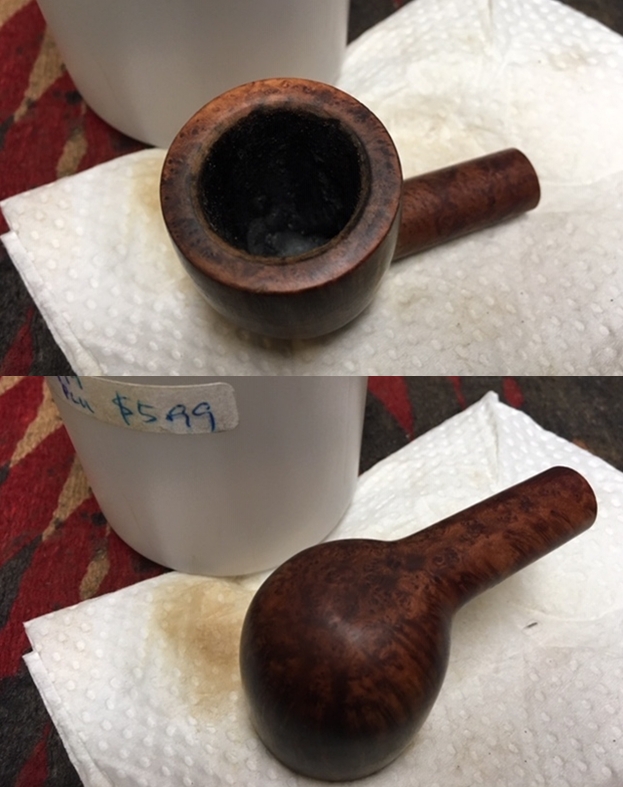
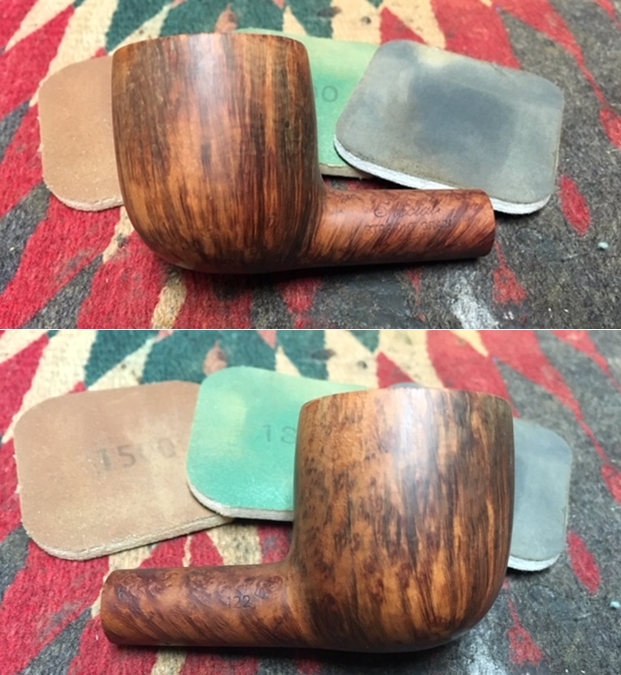
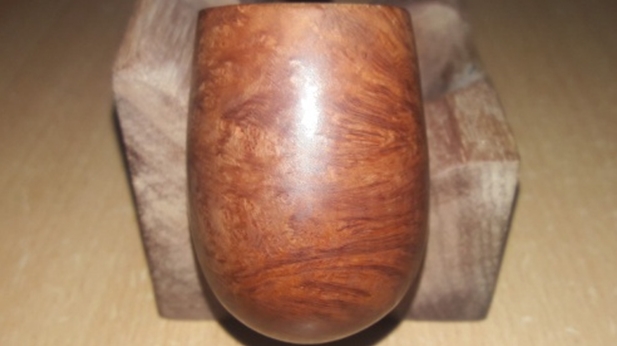
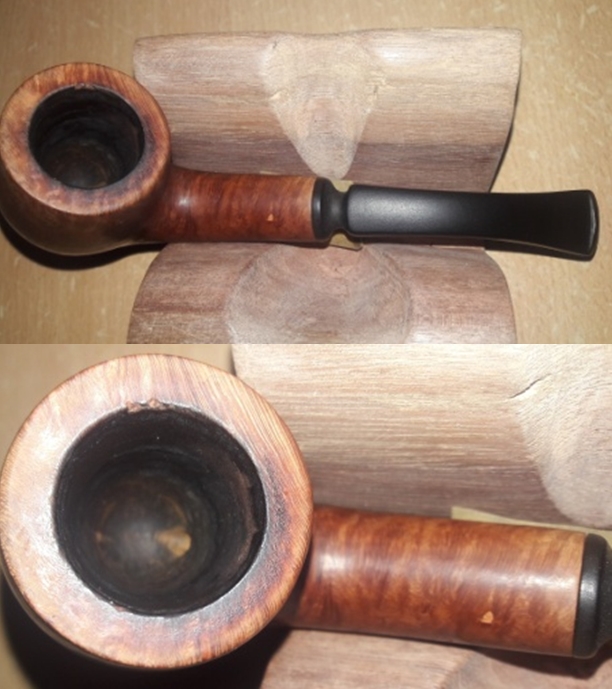
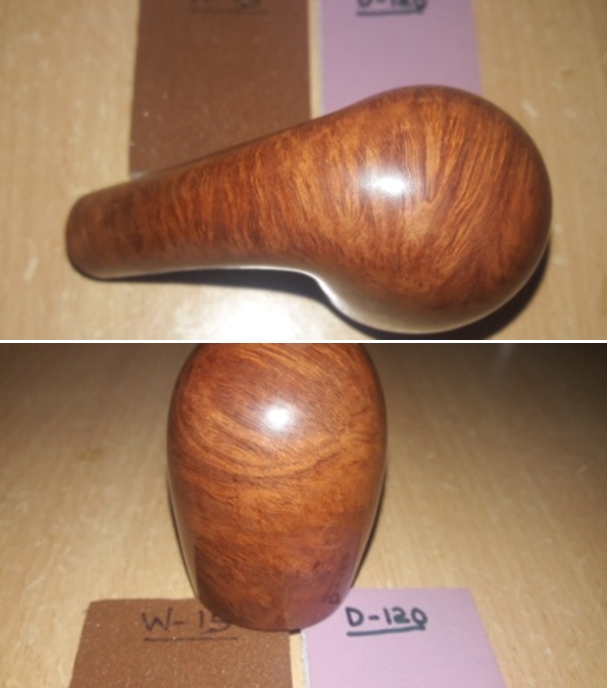
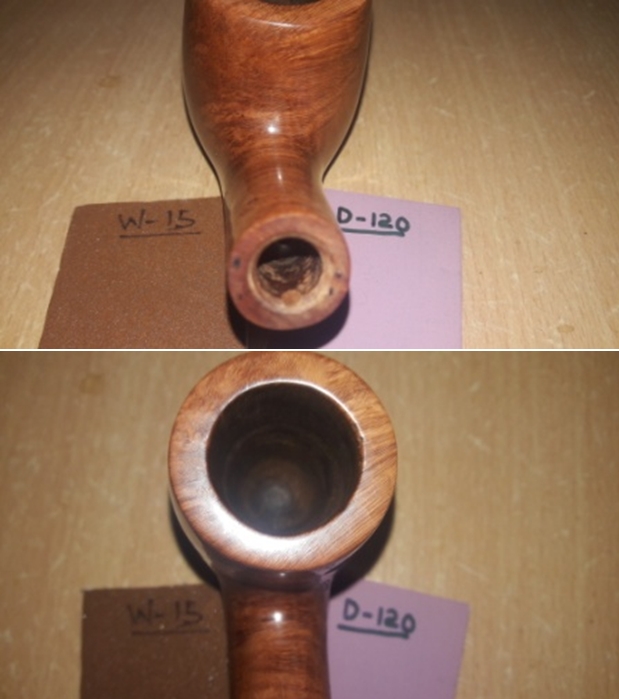
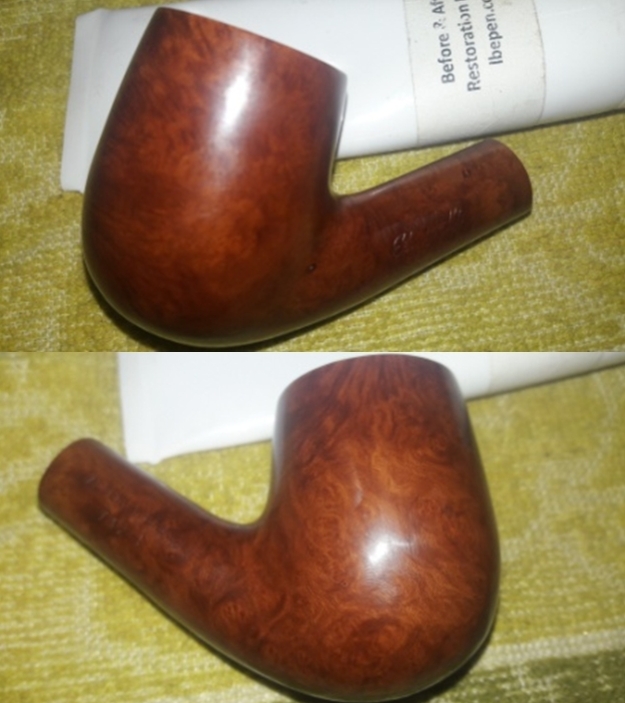
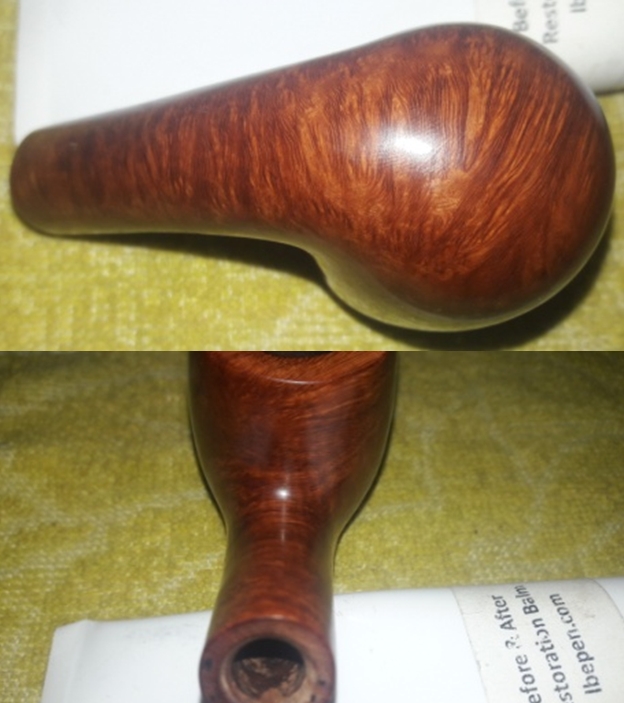
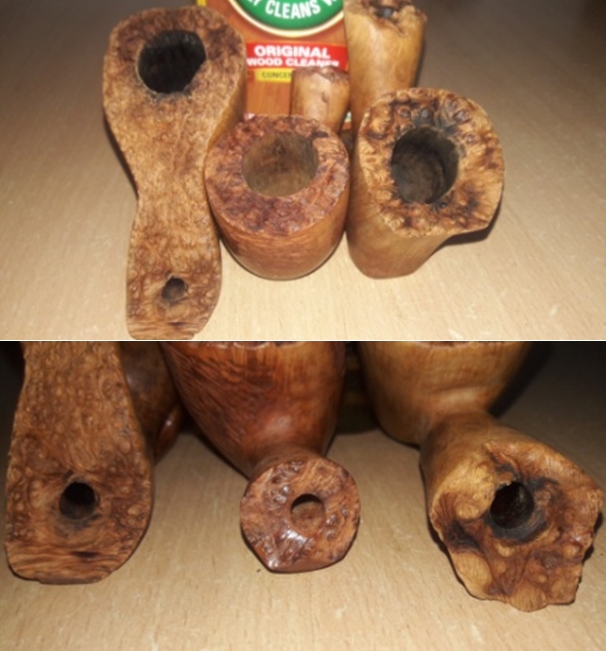
The stummel surface of all three pipes boasts of beautiful straight and flame grains all along the stummel surface. The 4-81 carved pipe has three hand rusticated patches, one on either sides of the bowl and one on the front side. The front of the stummel on the one carved in 1-83, has a beautiful and delicate sliver of rustication extending from top left side of the rim and extends to half way down towards the heel on the right side. The sitter carved in 5-85 has smooth surface with no rustications.  The stummel is relatively clean and has a few dents and dings likely due to uncared for storage. The briar is dull and lifeless and has taken on a layer of aged patina, through which one can make out the beautiful grains all round. All three pipes should clean up nicely. Apart from the pipe 4-81 which appear to have been smoked maybe once or unsmoked, the other two pipes have seen considerable use and have a decent layer of cake. The condition of the inner walls of the chamber on both used pipes can be ascertained only after the cake has been removed completely and taken down to bare briar. Both the bowl feels robust and solid to the touch from the outside. This issue should be a breeze to address. The plateau rim top has darkened on the 1-83 and 5-85, more so on the later due to frequent lighting, on the back side of the rim. This can be seen in above pictures. The plateau rim top of the 4-81 is pristine. The condition of the inner edge and rim top can be commented upon only once the rim has been cleaned. The plateau shank ends of all three pipes are clean and without any accumulation of dirt and grime. However, the mortise does show signs of accumulated dried oils, tars and remnants of ash, greatly restricting the air flow.The 1-83 and 5-85 have green and brown acrylic stem respectively. The 4-81 has a vulcanite stem. The acrylic stems have beautiful swirls of contrasting light and dark colors. The green stem has significant damage in the form of deep bite marks on both the upper and lower stem surface near the edge of the lip. The brown acrylic stem has tooth chatter on both surfaces of the stem, also near the edge of the lip while the vulcanite stem is devoid of any tooth chatter or bite marks, but is heavily oxidized. There is some damage to the stem in form of cuts, on the flared edge towards the tenon. The tenons on both the green and brown acrylic stem are covered in dried oils and tars and so is the airway. The air flow through the stems is laborious to say the least. The fit of both these stems in to the mortise is very loose, which will loosen further after the mortise and tenon have been cleaned. These issues will need to be addressed. THE PROCESS
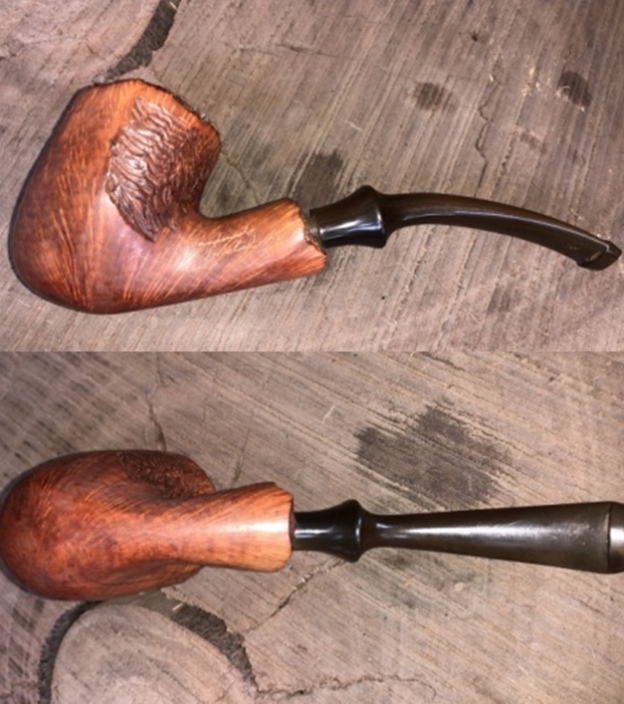
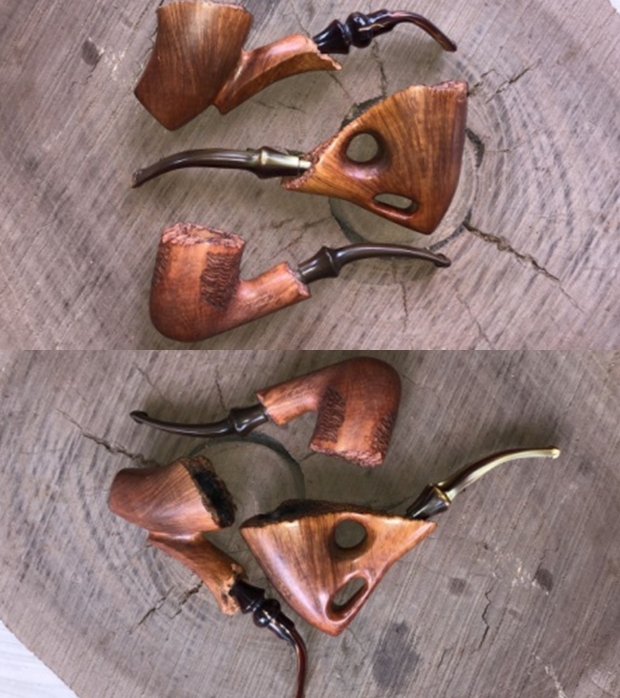
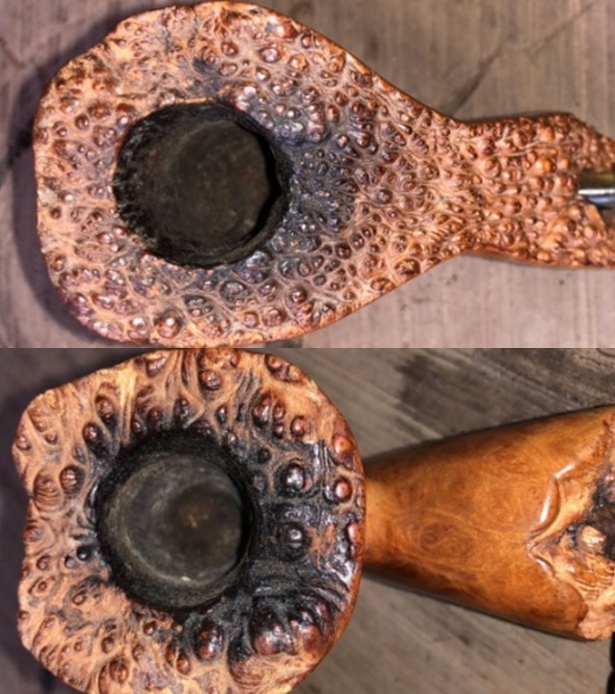
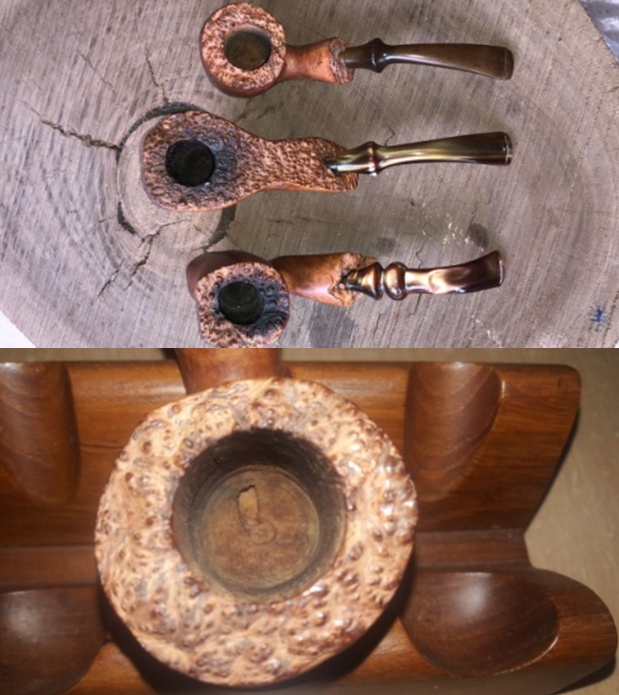
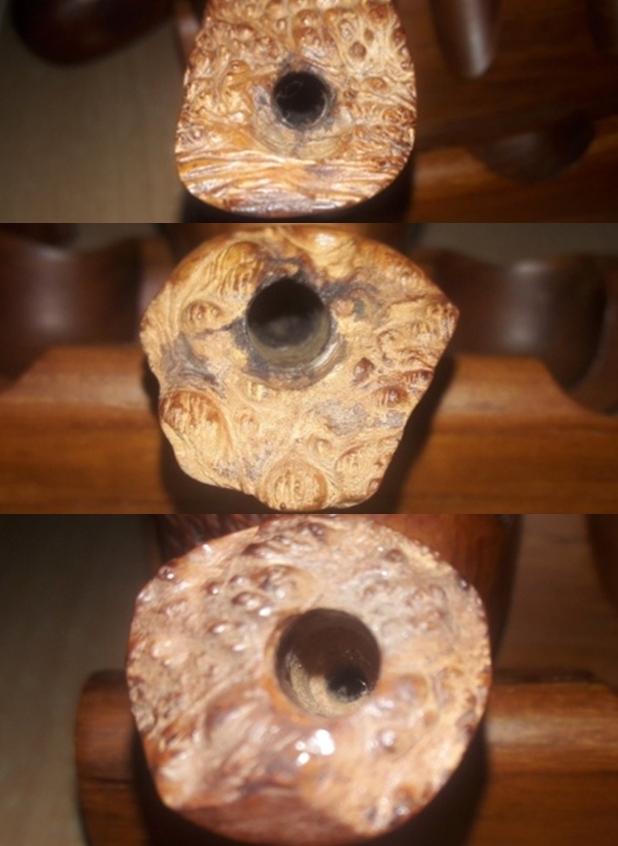
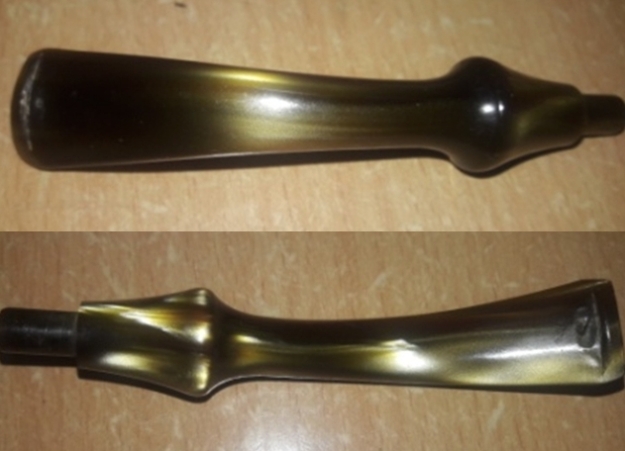
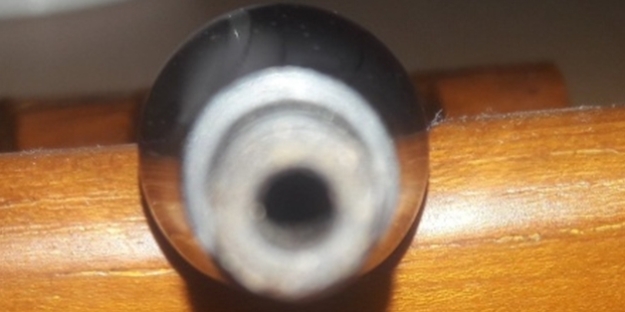
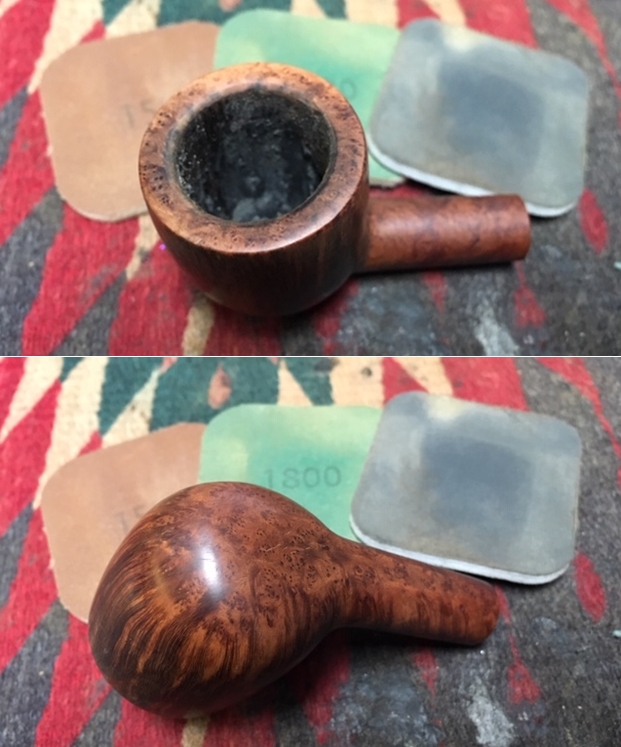
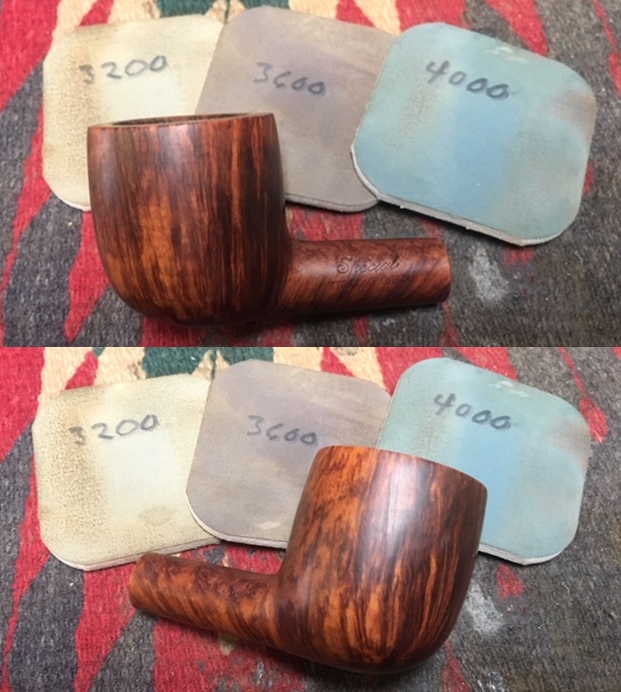
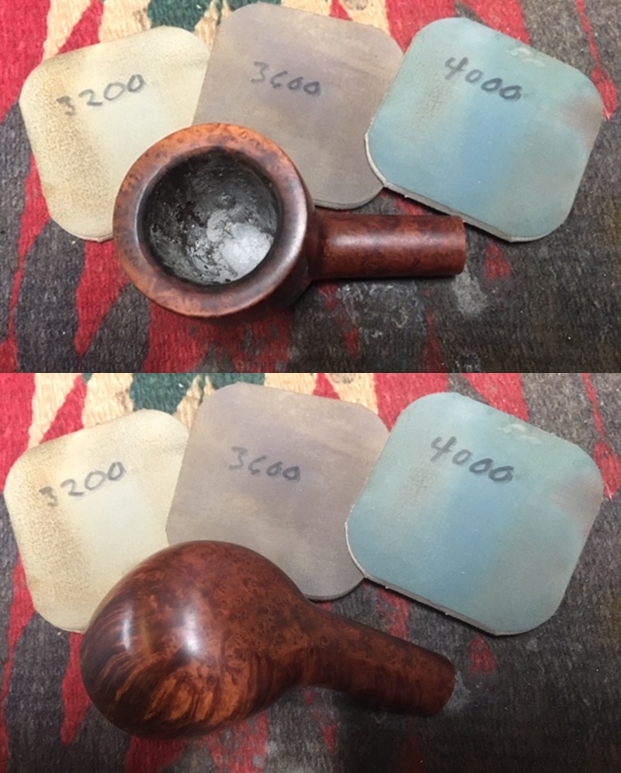
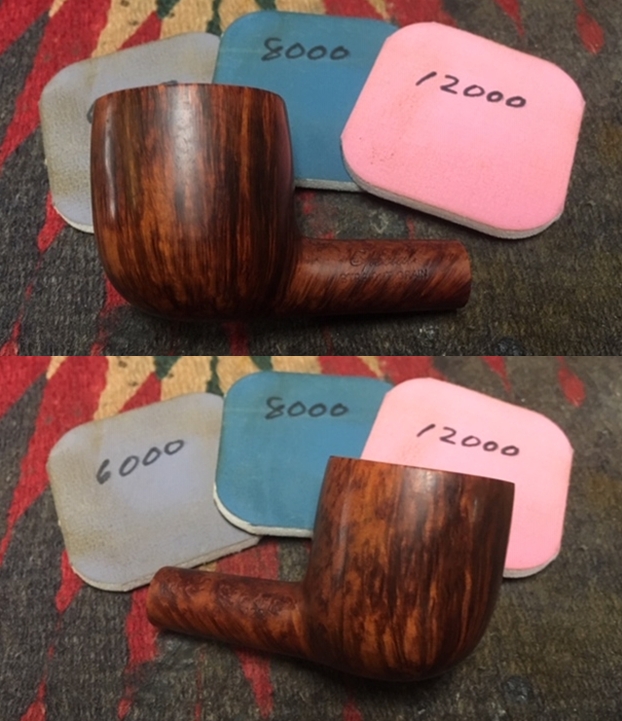
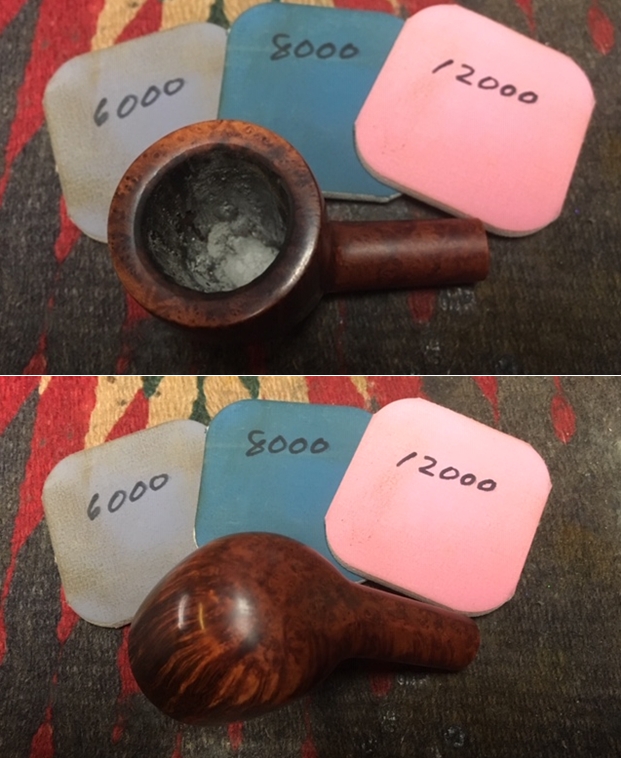
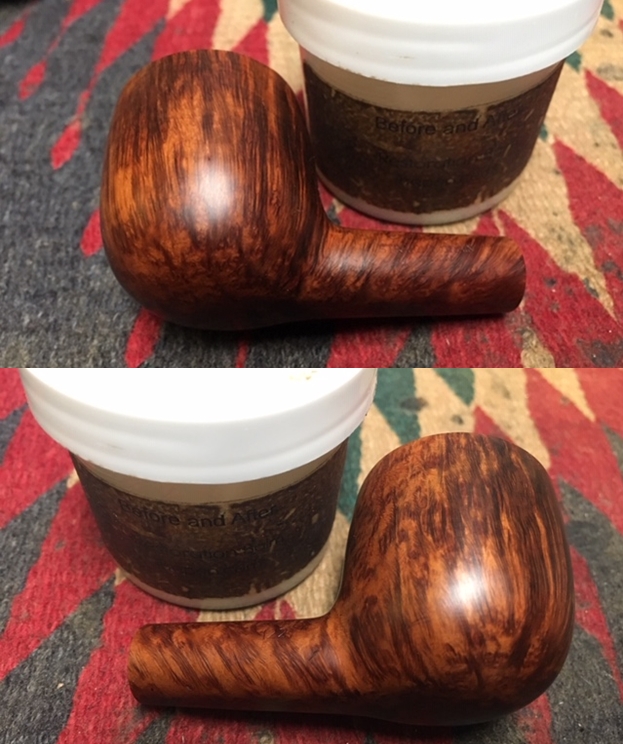
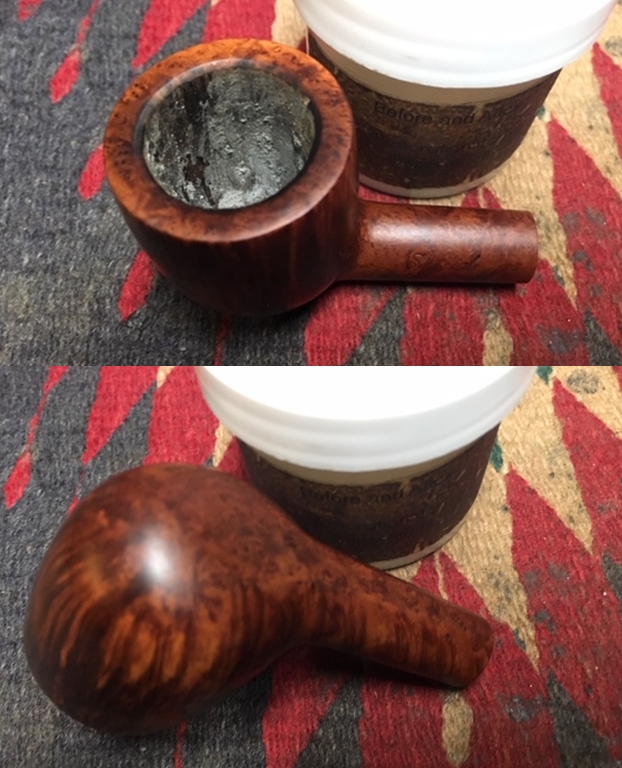
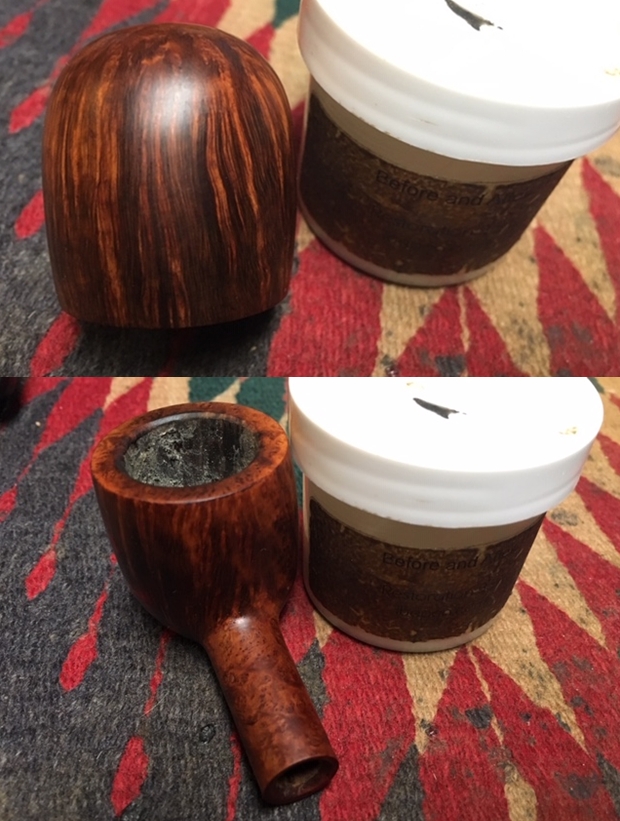
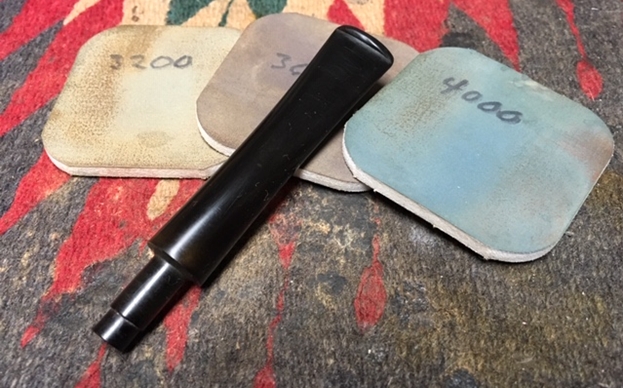
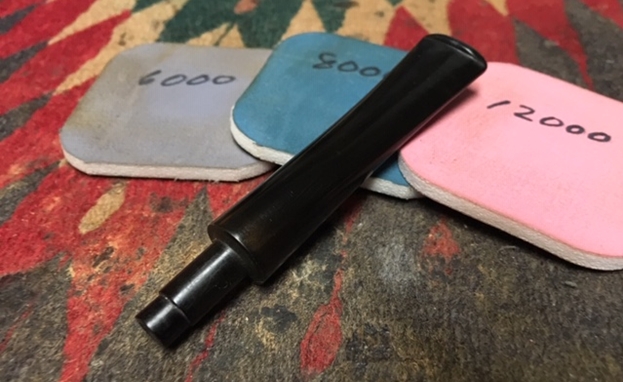
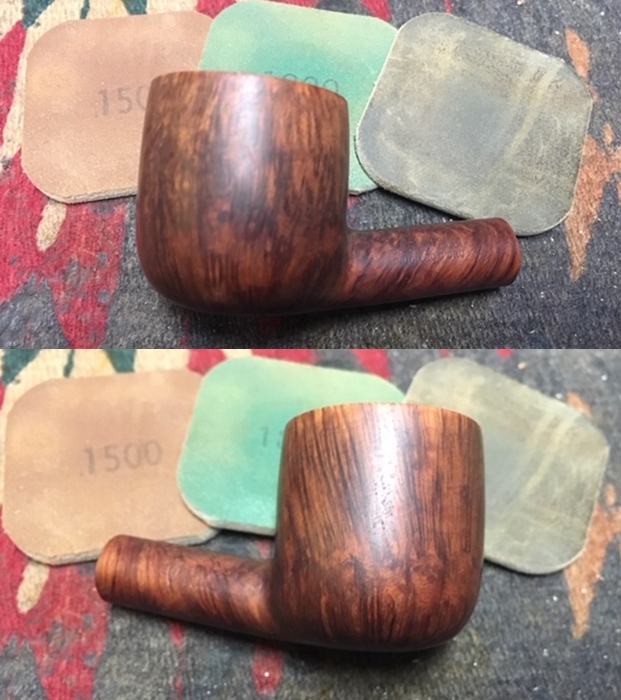
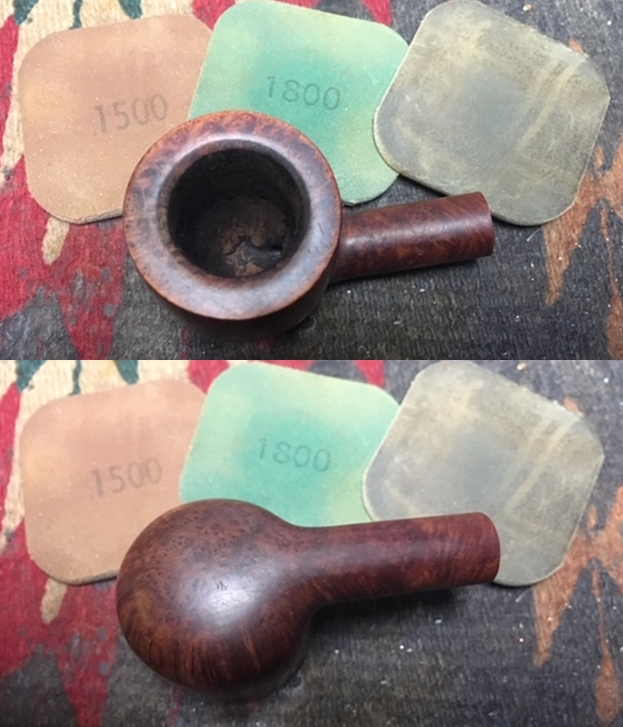
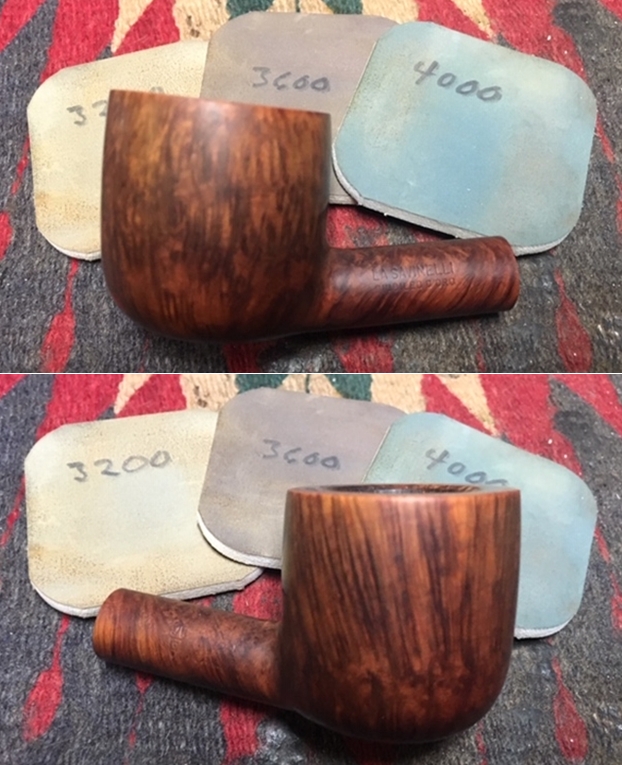
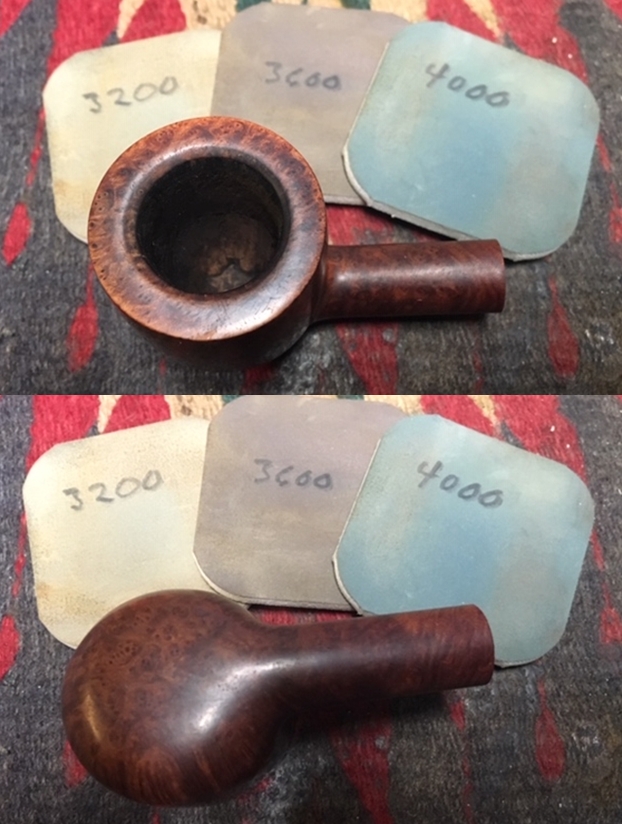
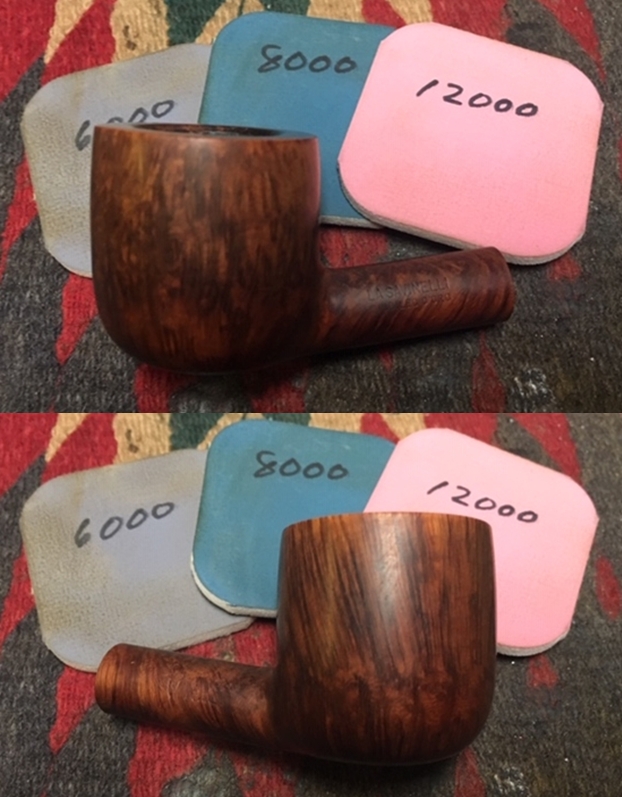
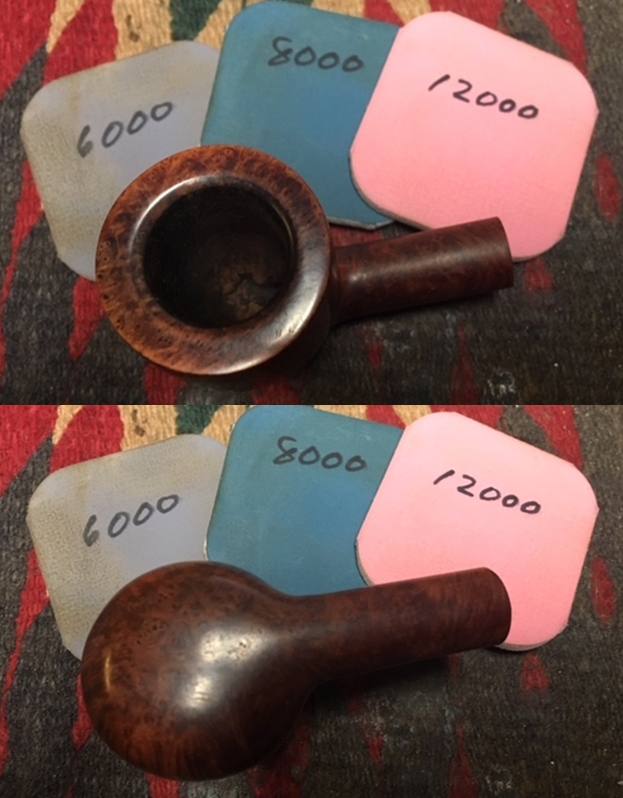
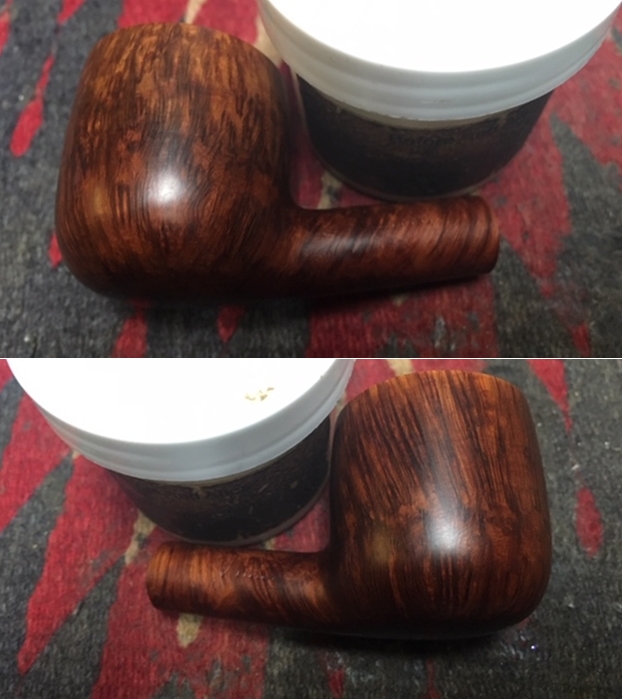
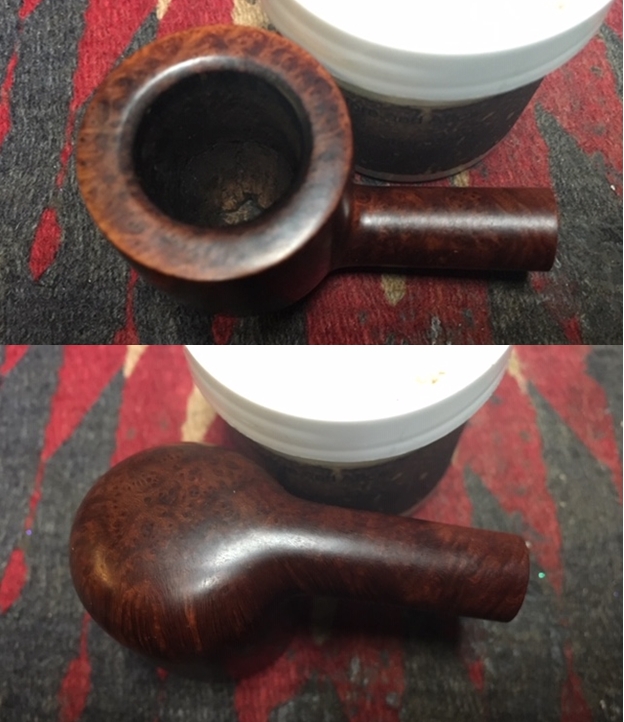
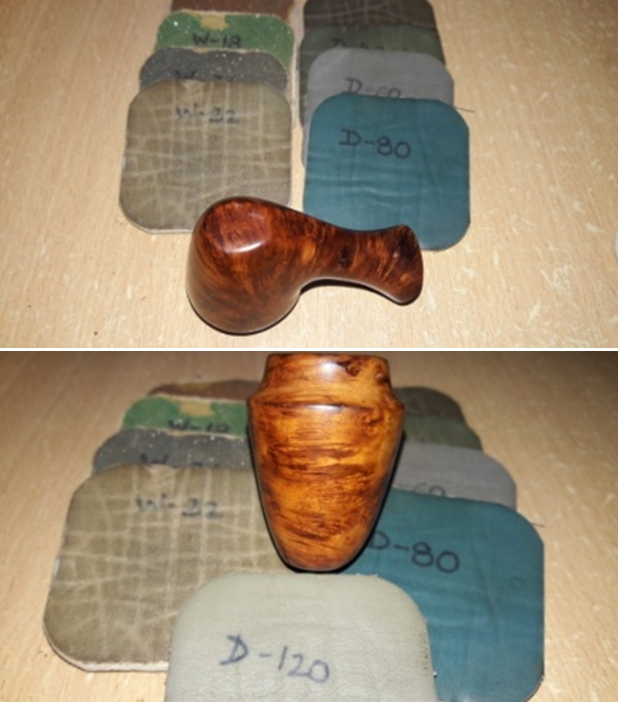
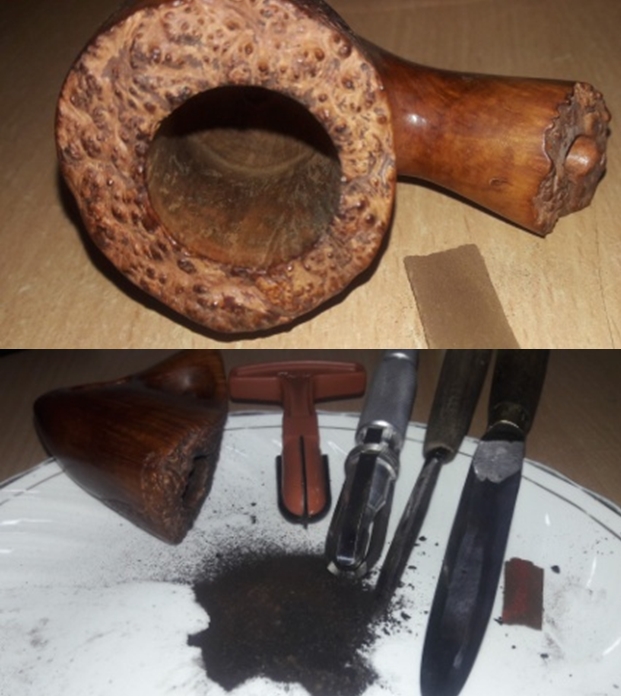
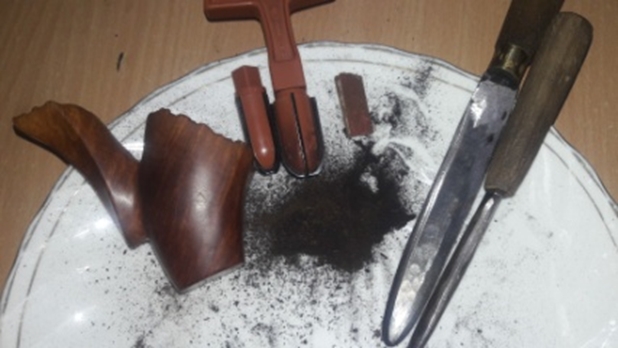
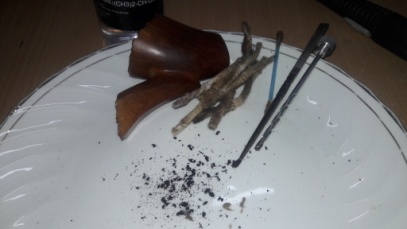
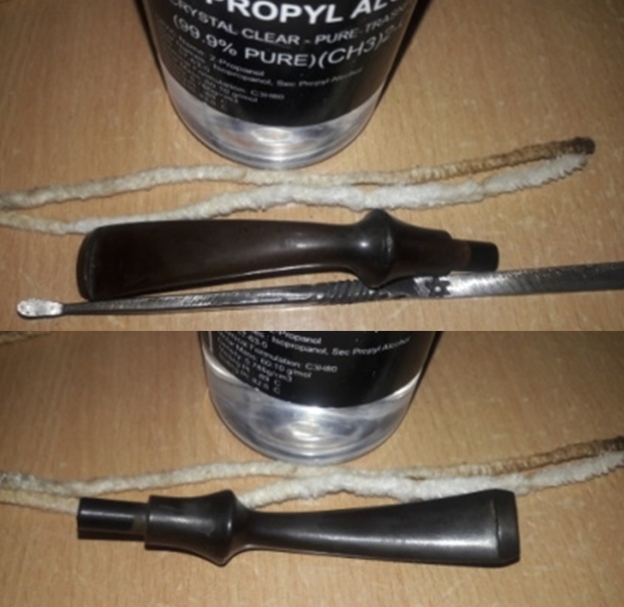
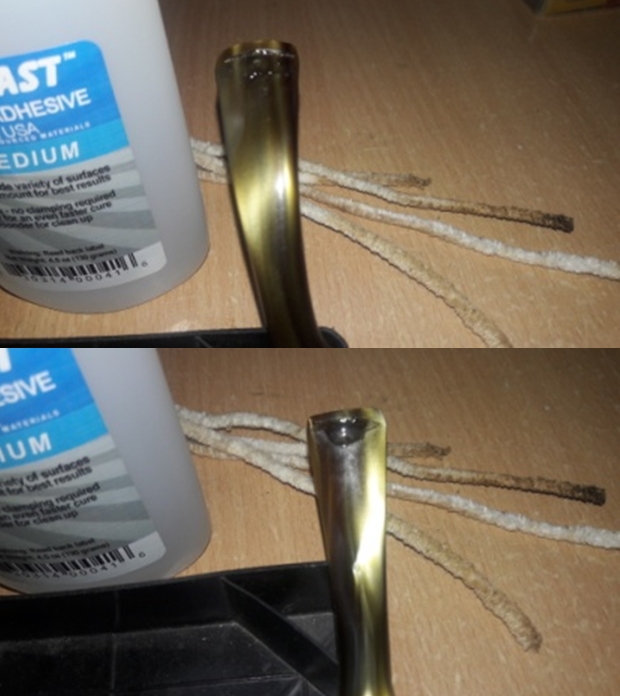
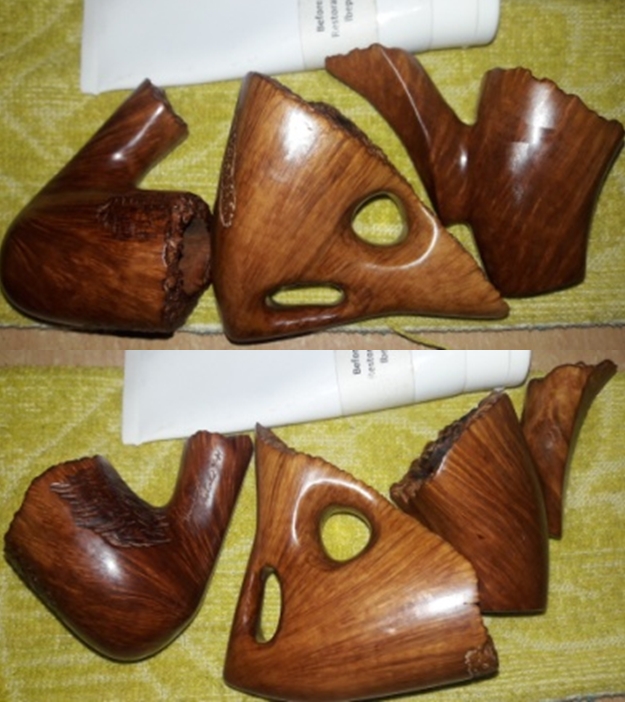
I started this project by reaming the chambers of 1-83 and 5-85 with size 3 head of PipNet reamer. I used a 220 grit sand paper, pinched between my thumb and forefinger, to sand the inner walls of the chamber of all three pipes. Once I had reached the bare briar, I wiped the chamber with a cotton pad dipped in isopropyl alcohol. This removed all the residual carbon dust and also rid the chamber of all ghost smells. I followed up the reaming by cleaning the mortise and air way of all three pipes, using hard bristled and regular pipe cleaners, q-tips dipped in alcohol. The mortise and the draught hole of 5-85 was so chock-a- block with all the dried tars, oils and gunk that I had to use my fabricated spatula and the drill bit from the Kleen Reem pipe reamer!!!! I gave a final clean with shank brushes dipped in alcohol and dried the mortise with a rolled paper napkin. The shank internals and the draught hole are now nice and clean with an open and full draw.I cleaned out the internals of the stem using hard bristled and regular pipe cleaners dipped in alcohol. I scraped the dried oils and tars from the tenon with the sharp edge of my fabricated dental spatula. The deep bite marks on the green stem of 1-83 were cleaned with cotton pad dipped in alcohol and spot filled with clear superglue. I set the stem aside to cure the fill. Now, it was the turn of the stummel of all three pipes to get cleaned up. Using a hard bristled tooth brush dipped in undiluted Murphy’s oil soap, I very deliberately scrubbed the stummel, cleaning the surface thoroughly. Special attention was paid to scrub out all the dirt and dust from the crevices in the rustication on the sides and front of the stummel on 4-81. I cleaned the plateau rim and shank end too. The stummel, plateau shank end and rim top were dried using paper napkins and soft cotton cloth. The cleaning of the stummel revealed three dents on the stummel of 5-85. I decided to raise these dents to the surface using the steaming method. I heated my smaller fabricated knife over a candle. Once the knife was hot, I placed a soaked Turkish towel over the dent and placed the heated knife over it. The steam generated pulled out two of the three dents. I spot filled the remaining dent with clear superglue and set it aside to cure overnight. Once the fill had cured, using a flat head needle file, I blend the fill with the surrounding briar and further sand it with a piece of 220 grit sand paper to achieve finer match. I wanted to highlight the grains seen and further blend all the repairs carried out to the stummel. To achieve this aim, I sand down the three stummel using micromesh pads, wet sanding with 1500 to 2400 grit pads and dry sanding with 3200 to 12000 grit pads. The three stummel now have a deep shine with grains popping out with magnificent contrast. Though this part of restoration is the second most time consuming and laborious, the end results are also the most satisfying. The play of grains, the contrast and the smooth surface are well worth the efforts. I rub a small quantity of “Before and After Restoration Balm” in to briar and let it rest for a few minutes. I took some extra efforts to work the balm in to the hand carved rustication on the bottom of the bowl. The balm almost immediately works its magic and the briar now has a nice vibrant appearance. I further buff it with a horse hair shoe brush. With the stummel nice and clean and attractive, I worked the stems of all three pipes. The fill on the green acrylic stem had cured nicely and I sand it down with a flat head needle file. I sharpened the lip edges using a needle file and sand the entire stem with 220 followed by 400, 800 and 1000 grit sand paper. This helps to reduce the sanding marks left behind by the more abrasive 220 grit paper. By mere sanding itself, the minor tooth marks seen on stem surfaces of the brown stem of 5-85 were addressed completely while this process eliminated the deep oxidation seen on the vulcanite stem of the 4-81 pipe. To bring a deep shine to the vulcanite stem as well as the green and brown acrylic stems, I went through the complete set of micromesh pads, wet sanding with 1500 to 2400 grit pads and dry sanding with 3200 to 12000 grit pads. I wiped the stem with alcohol after each pad and rubbed it down with Extra Virgin Olive oil. The internals of the stem was cleaned out using alcohol and pipe cleaners. The pictures of the process and final results are shown below. To finish, I re-attach the stem with the stummel. I mount a cotton cloth buffing wheel on to my local machine which is similar to a Dremel. I set the speed at about half of the full power and applied White Diamond compound to each of the three pipes. I wiped/ buffed all the pipes with a soft cotton cloth to clear it of any leftover compound dust. I then mounted another cotton cloth wheel on to the polishing machine and applied several coats of carnauba wax over the stummel and the stem of all three pipes. I finished the restoration by giving all the pipes a rigorous hand buffing using a microfiber cloth to raise the shine further. The completed pipes, with the dark brown hues of the stummel contrasting with the shiny black stem, looks lovely, fresh and vibrant; the photographs speak for themselves. The beauty, size and shapes of all these pipes make it one of my favorites and will find a place of pride in my modest collection. If only the pipe could tell some of the stories and techniques used by Mr. John Lakatosh while carving pipes.… Cheers!!
A Reborn Coventry Rusticated Bullmoose


Blog by Steve Laug

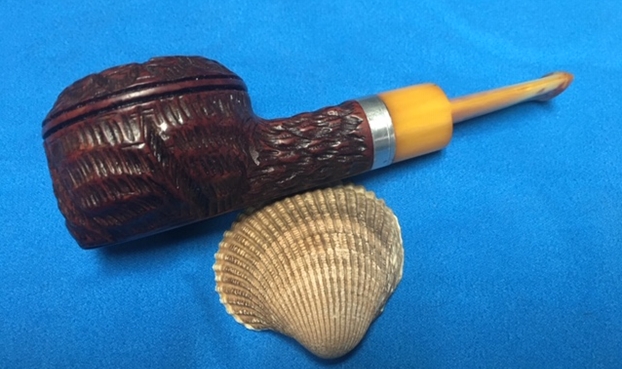
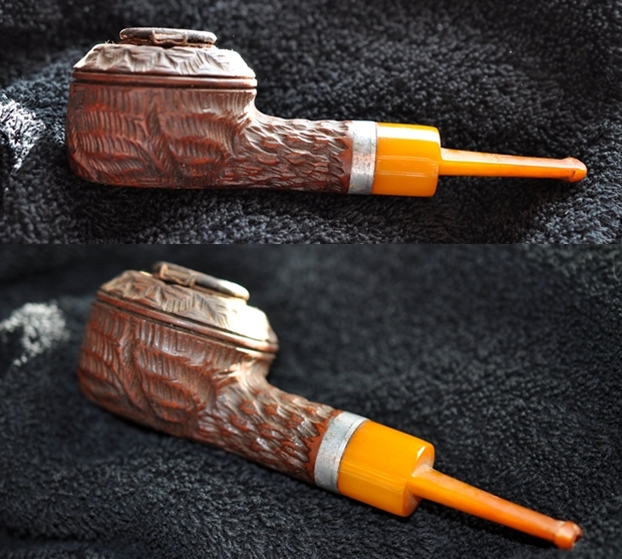
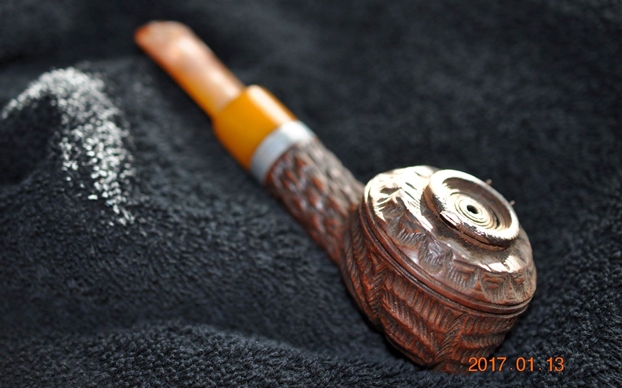
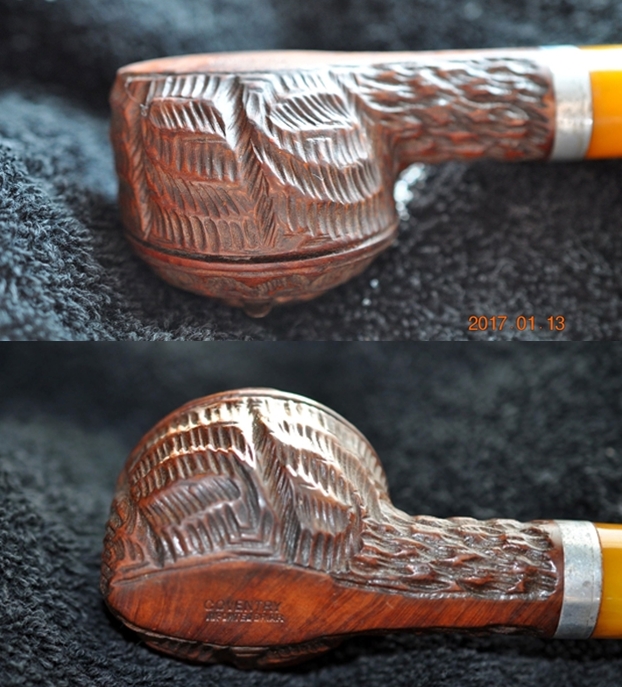
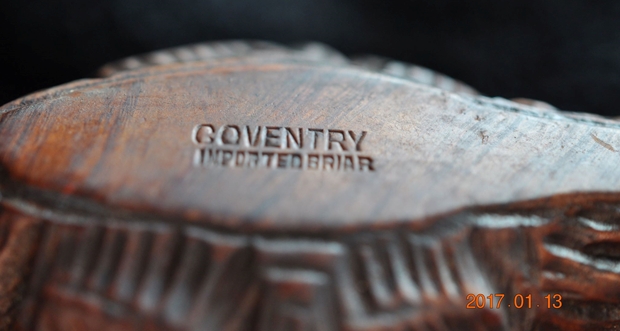
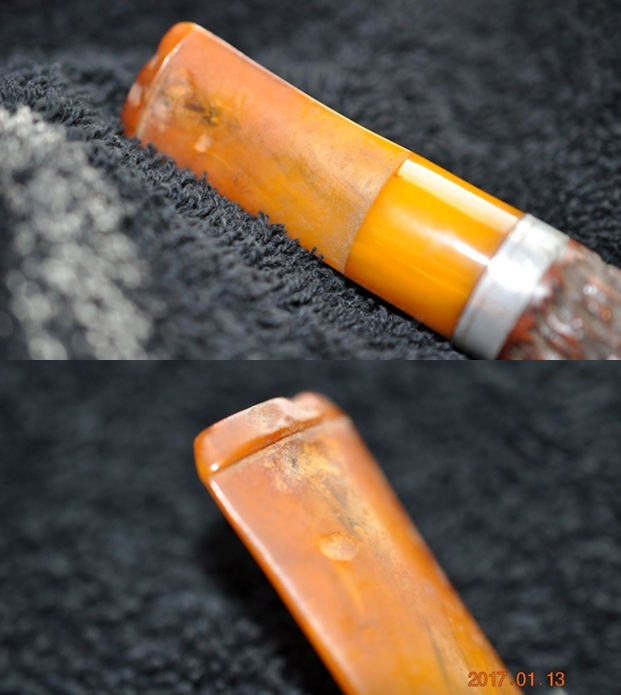
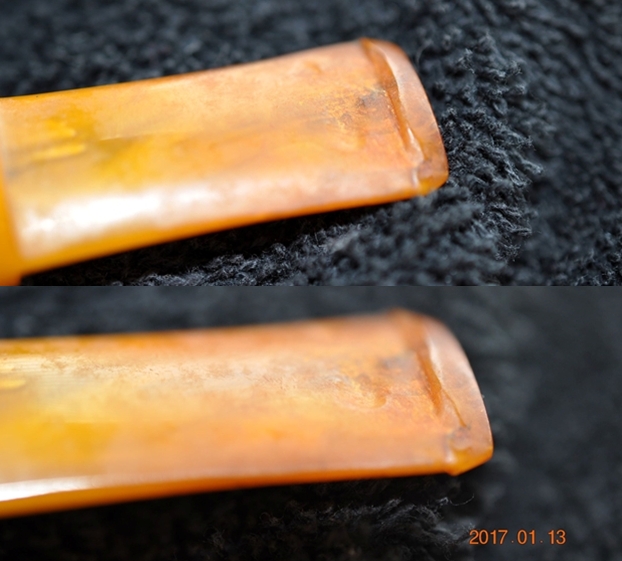
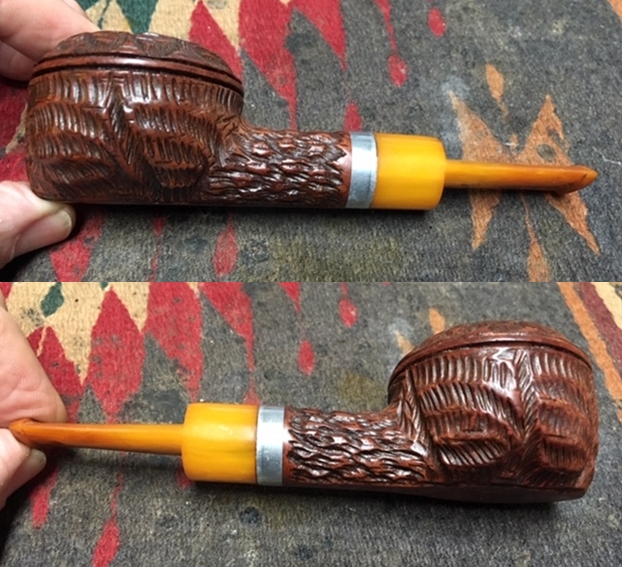
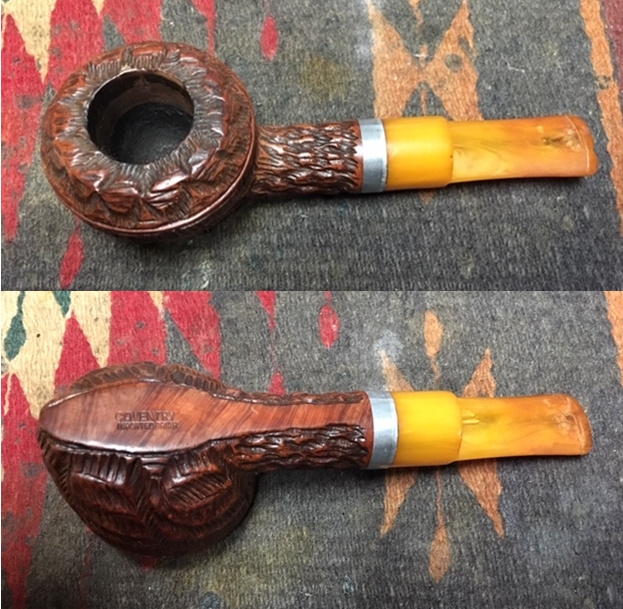
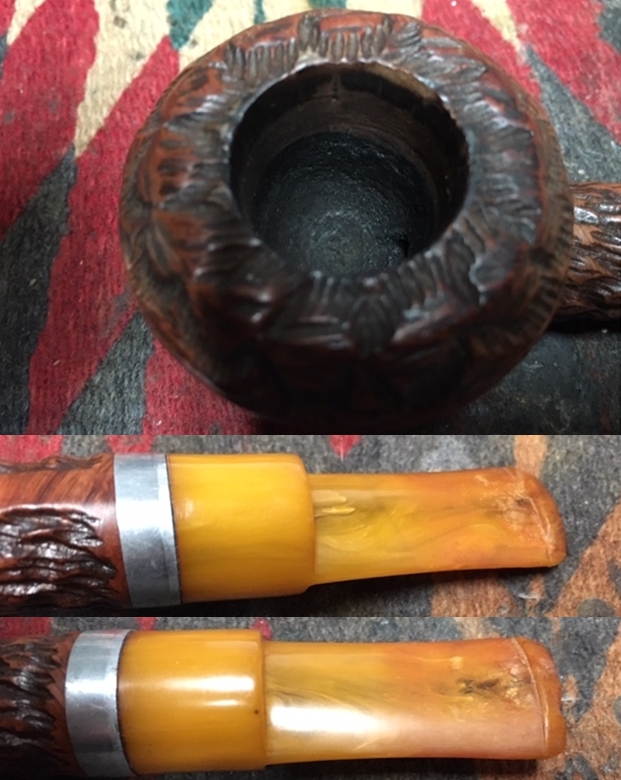
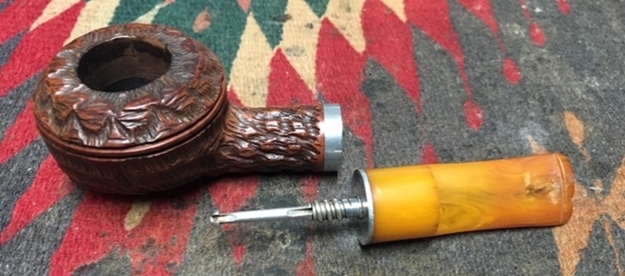
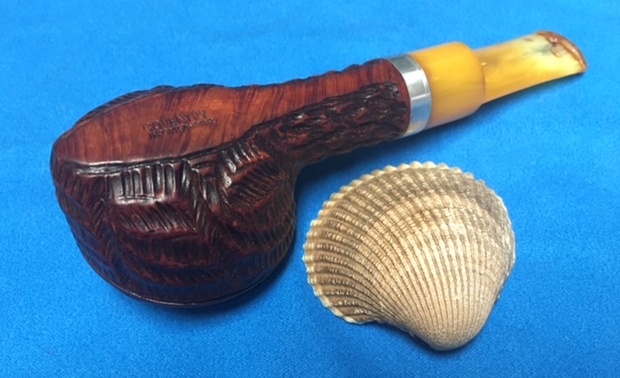
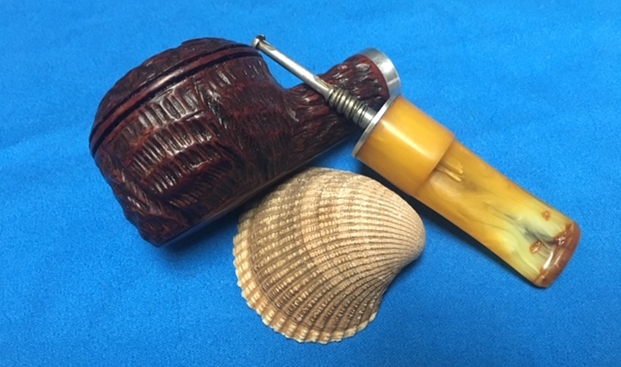
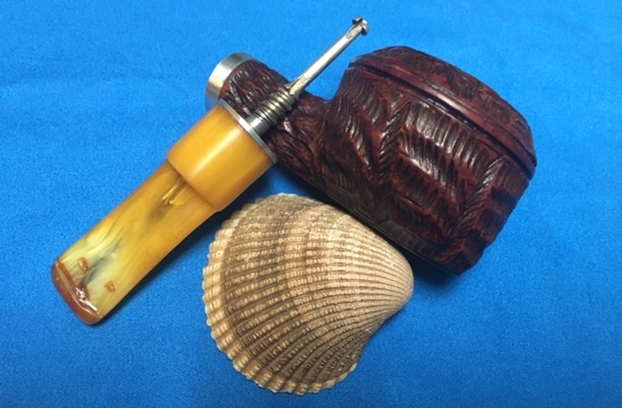
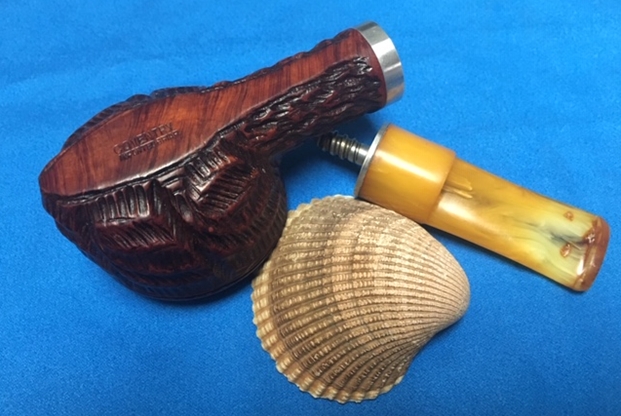
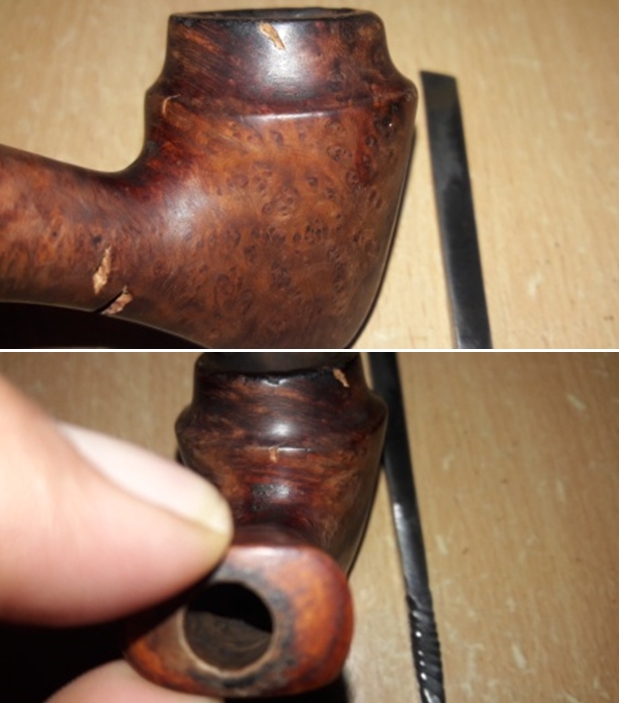
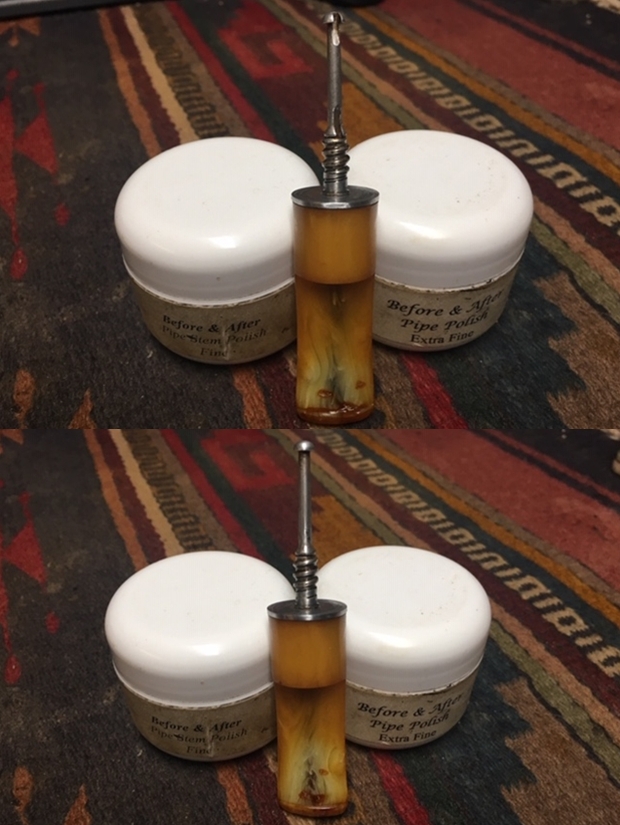
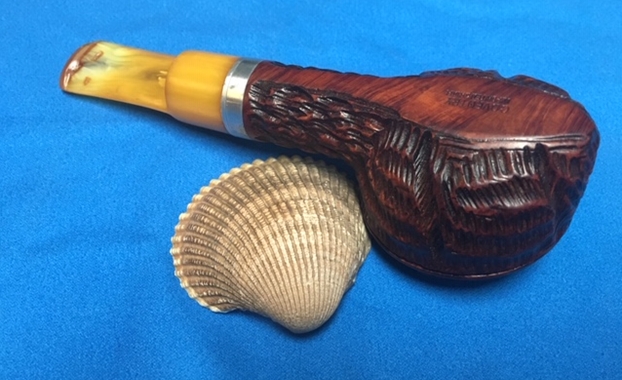
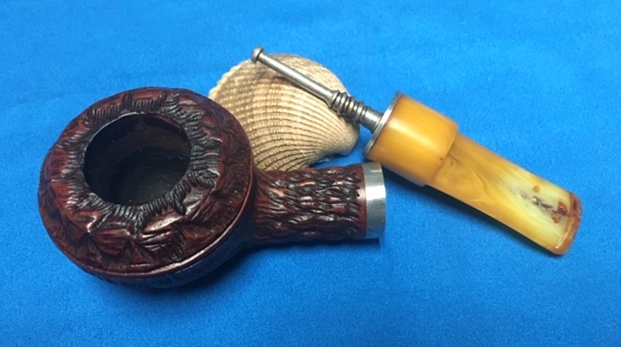
My brother Jeff picked up this Coventry pipe off eBay from Bradenton, FL. in January 2017. It is an interestingly shaped pipe and the rustication is quite unique. The rustication is dirty but in good condition. There is dust and debris in the grooves and valleys of the briar. The aluminum band is split with 1/3 remaining on the stem and 2/3 on the shank end. It is the exterior of the threaded mortise insert. The pipe had an aftermarket windcap that was absolutely filthy with debris, rust and tobacco tars and oils. There was a thick cake in the bowl that overflowed onto the windcap. The edges of the rim were in surprisingly good condition. The acrylic saddle stem was dirty and had deep tooth marks around the button on both sides and on the surface of the button as well. Jeff took photos of the pipe before he started his clean up. He took some photos of the rim top and the exterior of the bowl to show how dirty it was. You can see the lava on the rim and the rust and tars on the windcap. There is also a thick cake visible in the bowl. You can also see the sticky buildup on the exterior of the bowl. He took a photo of the stamping on the smooth, flat heel of the bowl – it read Coventry over Imported Briar.The stem showed a lot of wear and tear. There were deep tooth marks on the button surface itself and deep gouges and tooth marks on the stem for about an inch in front of the button. The material is an old style acrylic and I have learned from experience that it does not have memory like vulcanite. The tooth marks are there permanently. I have also learned that the colour darkens with time and sanding repairs always lightens the yellow. Knowing that means that some decisions will need to be made regarding the repairs. Jeff cleaned the pipe with his usual thoroughness. He removed the windcap and cleaned it as well as the pipe. He reamed the bowl with a PipNet reamer and cleaned it up with a Savinelli Fitsall Pipe Knife. He scrubbed the exterior with Murphy’s Oil Soap and a tooth brush to clean the dust and grime out of the valleys and grooves of the rustication. He scrubbed the rim top and it looked very good with no damage to the edges. The inside of the bowl was also in great condition. He scrubbed the internals of the shank and the stem with alcohol, cotton swabs and pipe cleaners. There was a long stinger in the shank that needed to be cleaned and he did that as well. The damage on the stem was quite visible once the stem was cleaned. I took photos of the pipe when it arrived here. I took some close up photos of the rim top and the stem to show the condition. The bowl and rim were perfect. The stem needed a lot of attention.I unscrewed the stem to get a photo of the long stinger that extends almost into the bottom of the bowl.I worked some Before & After Restoration Balm into the briar on the bowl and the rim top. I worked it into the surface with my fingertips to clean, enliven and protect the wood. I let the balm sit for about 20 minutes and buffed it off with a soft cotton cloth. I took photos of the pipe at this point in the process to show what the bowl looked like at this point. I set the bowl aside at this point and turned my attention to the stem. These early Bakelite/acrylic/plastic stems are really a pain and I do not relish repairing them. I have found that when they have been repaired and polished the stem loses the rich colour around the repairs. This one had been gnawed and there were deep tooth marks on the stem and button as well as several gouges in the surface of the stem. I cleaned the surface of the stem and filled in the marks with clear super glue. I rebuilt the top of the button and the edge. Once the repair cured I recut the edge of the button and flattened out the repairs with a flat needle file. It was still a mess but the bite marks and damage were no longer present.It is at this point that the issues always arise on these stems – sanding the repair smooth. When I blended the repair into the surface of the stem the area around the repair lightens significantly. It is ugly to my eye but I am willing to let it be because it improves the integrity of the stem.I cleaned out the dust in the airway in the stem and also some of the residual tars that are hard to get out of a pipe with the metal stinger apparatus like this one. I used pipe cleaners and alcohol and worked until the cleaners came out white.Now it was time to polish out the repairs and make the most of what looked rough. I polished the stem with micromesh sanding pads to remove the scratching left behind by the 220 grit sandpaper and give the briar and the acrylic a shine. I wet sanded with 1500-2400 grit pads and dry sanded with 3200-12000 grit pads. I wiped the stem down with a damp cloth after each pad. I gave it a final polish with Before & After Pipe Polish – both Fine and Extra Fine. Then gave it a final coat of Obsidian Oil. When I was finished the stem looked better than it did when I started. I still need to figure out how to keep the yellow from changing but oh well it is clean and sound. The photos tell the story. I put the bowl and stem back together. I polished the bowl and stem with Blue Diamond to polish out the scratches in the briar and acrylic. I gave the bowl several coats of Conservator’s Wax and the stem multiple coats of carnauba wax. I buffed the pipe with a clean buffing pad to raise the shine. I hand buffed it with a microfiber cloth to deepen the shine. The pipe polished up pretty nicely. The contrast of colours between the briar bowl and the yellow/gold acrylic stem really looked good in spite of the repairs. The Coventry Bullmoose looked really good and has a unique shape and finish that catches the eye. The finished pipe is shown in the photos below. The dimensions of the pipe are Length: 5 1/2 inches, Height: 1 ½ inches, Outside diameter of the bowl: 2 inches, Chamber diameter: 7/8 of an inch. This one will soon be on the rebornpipes store if you are interested in adding it to your collection. Thanks for reading this while I worked on it. It was interesting and unusual piece to restore and I really enjoyed the work.

Resurrecting a Tired & Worn Special Straight Grain 122


Blog by Steve Laug

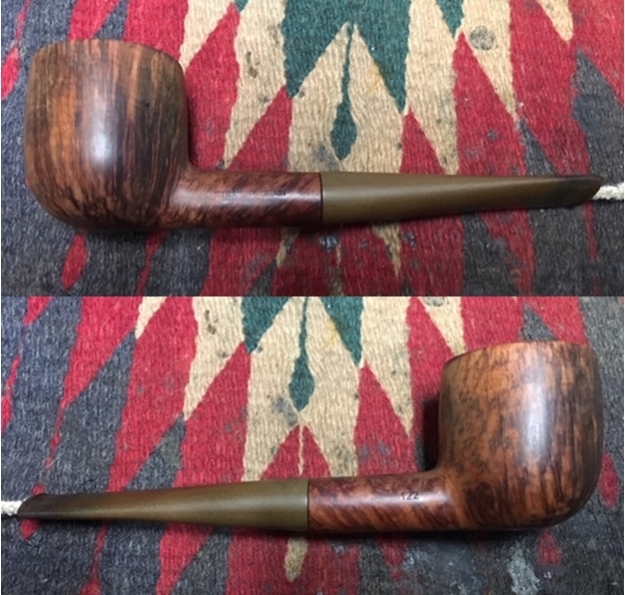
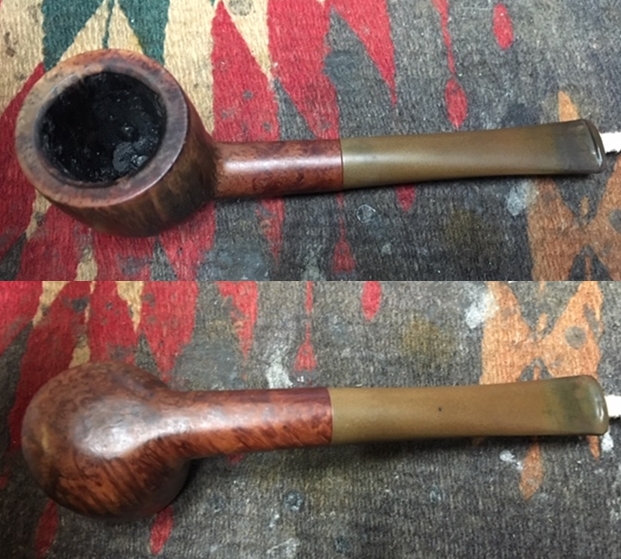
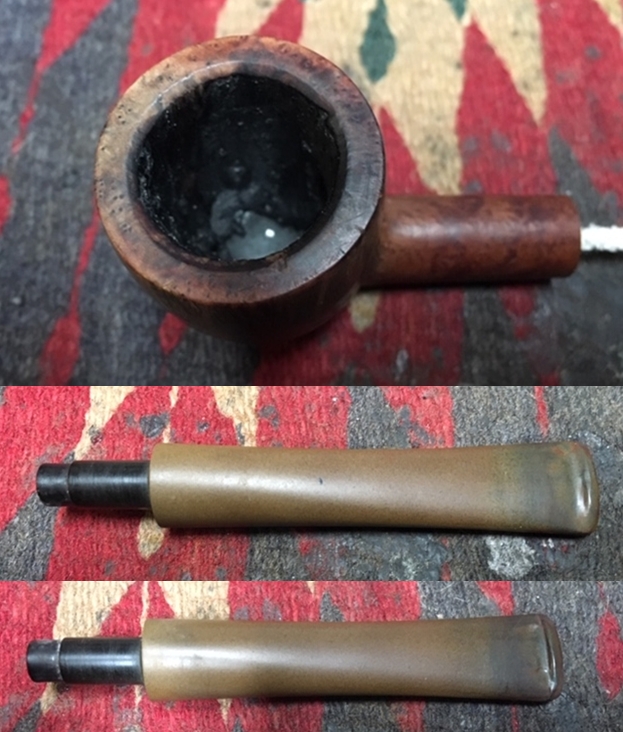
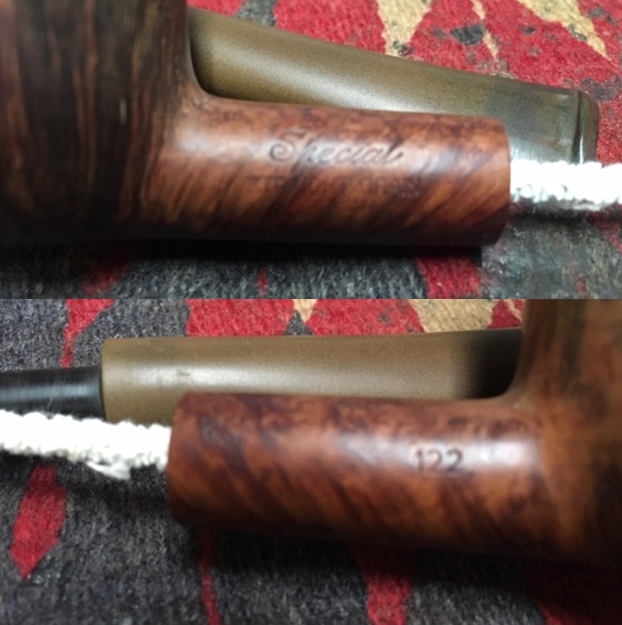
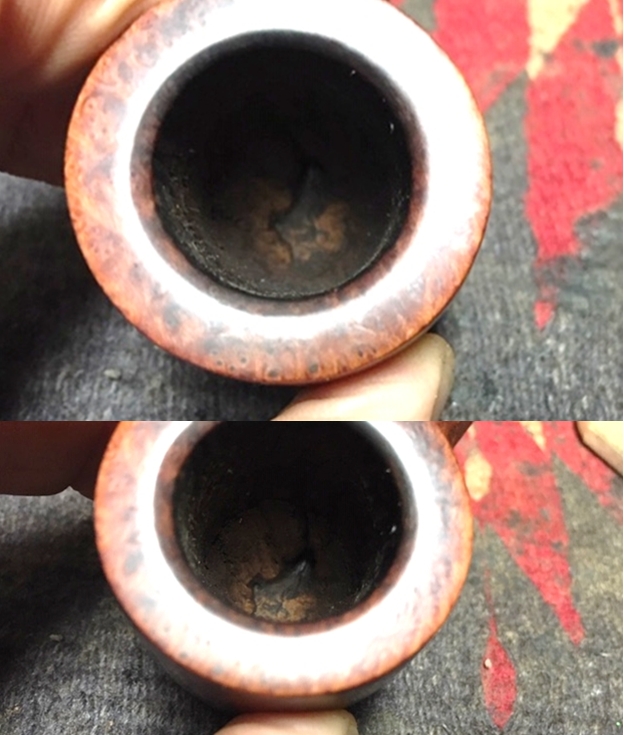
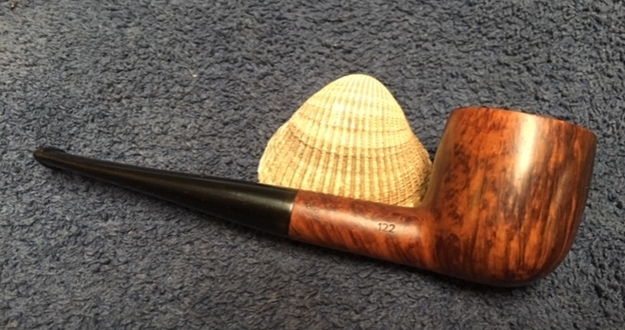
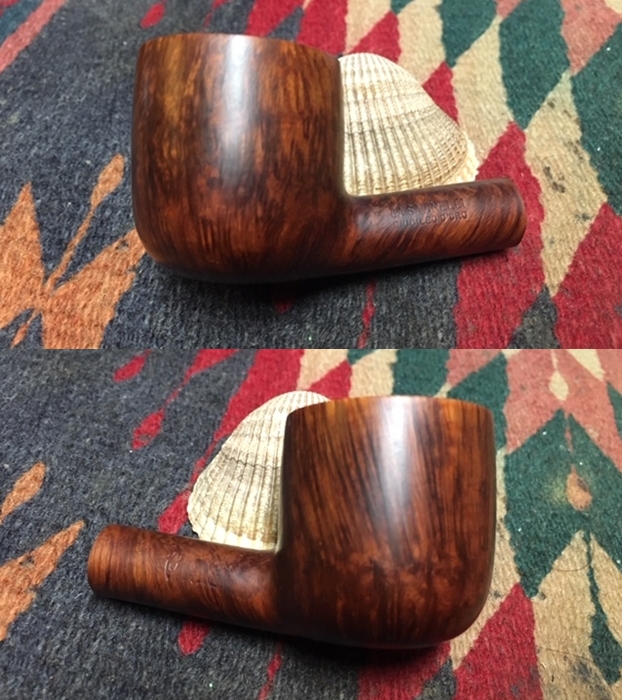
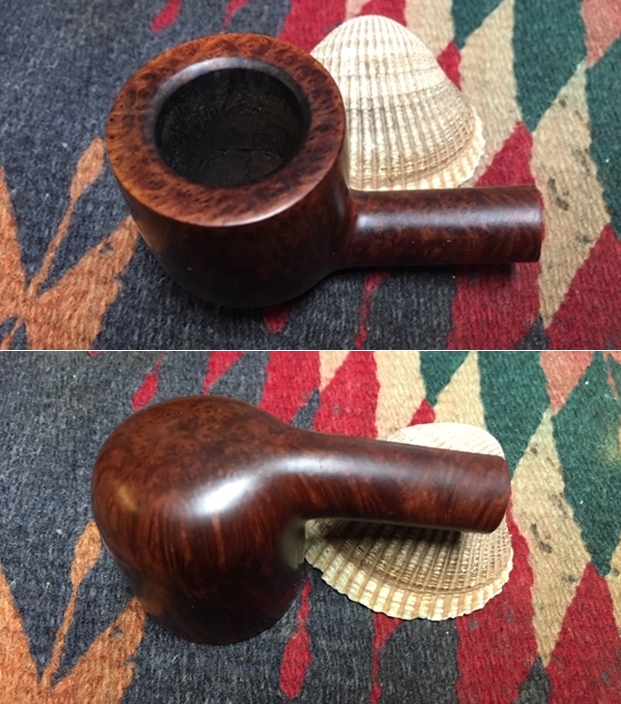
In my ongoing work on the estate pipes from the pipe shop that had closed here in Vancouver I am turning to a fourth pipe from the lot. The entire lot came to me from the estate of an older pipeman whose wife dropped them off at a pipe shop to be cleaned and sold. When the shop closed they came to me. The pipe on the table now is stamped Special over Straight Grain on the left side of the shank. On the right side it is stamped with a Comoy’s style COM stamp reading Made in London in a circle over England followed by the shape number 122. The briar has some nice straight and flame grain around the bowl with birdseye on the top of the bow, shank and the underside of both. The bowl had a thick cake in it with an over flow of lava on the rim top. The rim top looked very bad but it hard to know if there was real damage or if the marks were in the lava overflow. It was hard to know what the rim edges looked like with the thick coat covering it all. The briar was dull and dirty looking. The stem is vulcanite and is oxidized with no visible stamping or logo. There was calcification and tooth chatter and damage next to the button on both sides. There are heavier tooth marks on the underside of the stem. I took photos of the pipe when I received it.   I sent this pipe along with about twenty others from this lot to my brother Jeff in Idaho to work over and clean up. He cleaned up the pipes with his usual thoroughness – reaming the bowl and scrubbing the internals with alcohol, cotton swabs and pipe cleaners. He scrubbed the exterior with Murphy’s Oil Soap to clean off the dust and grime on the finish. When he sent it the pipe was ready to restore. Like the Savinelli I just worked on, I could not believe how good the rim top looked in comparison to what it was when he started. I was working on the Savinelli Giubileo D’ Oro and it had the same issues as this one with the trough in the bowl so I used the remaining pipe mud that I made for it to repair the bowl bottom on this pipe. In doing so I forgot to take photos before I began. I slid the stem over the pipe cleaner and put it in place to get photos. I took the following photos of the pipe to show what it looked like before I started working on the exterior. The briar was clean and the grain quite stunning. The finish looked dull and lifeless. I took a close up photo of the rim top after Jeff had cleaned it up. The look of the rim top and edges is very good. (Ignore the pipe mud in the bowl bottom.) He had been able to remove the cake and the lava very well. The bowl was clean but there seemed to be a trough in the bottom of the bowl made by a pipe cleaner repeatedly passing over the same spot. The stem is also shown and was very clean but oxidized. He had not started using Mark’s Before & After Deoxidizer at this point. The tooth marks on both sides near the button are visible in the photos.  The marks on the underside of the stem were worse than the ones on the topside.I took some photos of the stamping on the shank sides. The first photo shows the Special over Straight Grain stamp on the left side. The second shows the shape number and the COM Stamp that reads Made in London in a circle over England and the shape number 122 on the right side.There were several things about the stamping that I was unfamiliar with so I did some searching online. I had a memory of the Special being a Comoy’s product. The COM stamp on the shank and the stamping on the left side of the shank pointed to that. The shape number 122 also seemed to point in that direction. I turned to all of my usual sources – Pipedia and Pipephil and found nothing connecting the stamping to Comoy’s. There is not a note regarding the Special Straight Grain stamp on either site when it is missing the Comoy’s designation. However there was a connection with the shape number on the Comoy’s Shape Chart on Pipedia (https://pipedia.org/wiki/Comoy%27s_Shape_Number_Chart).

I have captured a portion of the chart to show the number and designation match what I have in hand.  I circled the shape number in red that is on the right side of this pipe. It fits the description of a 122 Pot with a straight stem and a medium sized bowl. I think I could safely assume I was working on a Comoy’s made pipe with an interesting and unique stamping – Special Straight Grain on the right side of the shank!

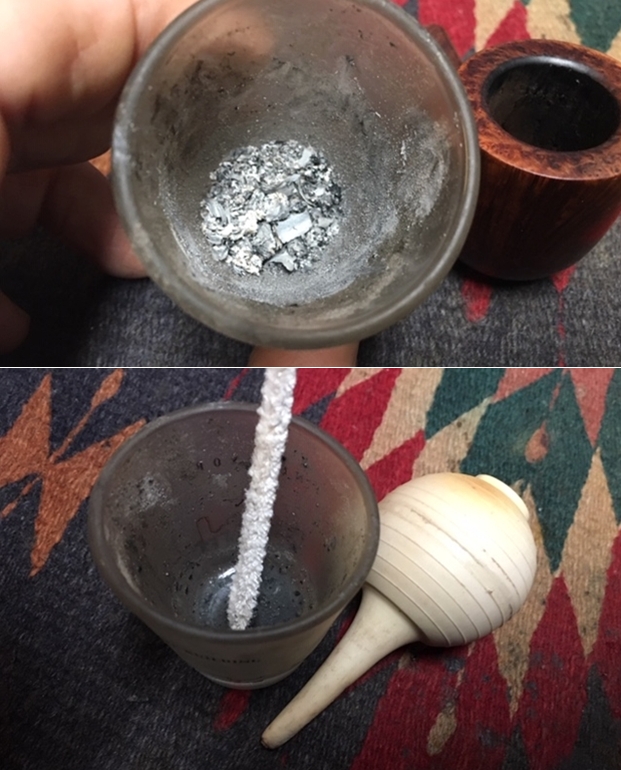
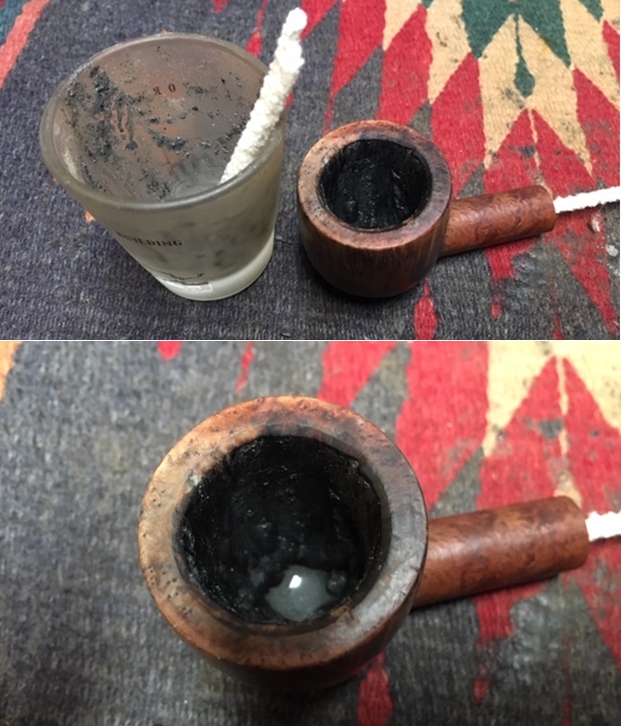
I started working on the bowl. Since I was working on the La Savinelli Giubileo D’Oro at the same time and both had parallel issues with the bowl I decided to address the trough in the bottom of the bowl first. It was quite visible and though the bottom of the bowl was still quite thick, it bothered me. I decided to mix a batch of pipe mud to fill in the trough and protect the bottom while a new cake was formed in the bowl. I mixed some cigar ash and water to form a paste. I put a pipe cleaner in the airway to protect it from being filled in. I used a folded pipe cleaner to paint the mud around the airway to clean up some of the edges and tamped some into the bottom of the bowl to fill in the trough. I packed it in place with a Czech pipe tool tamper as it fit in the bottom of the bowl. The pictures that follow tell the story. It will take a while to dry out but once it has dried it will be quite hard. I set the bowl aside while I worked on the other pipe.

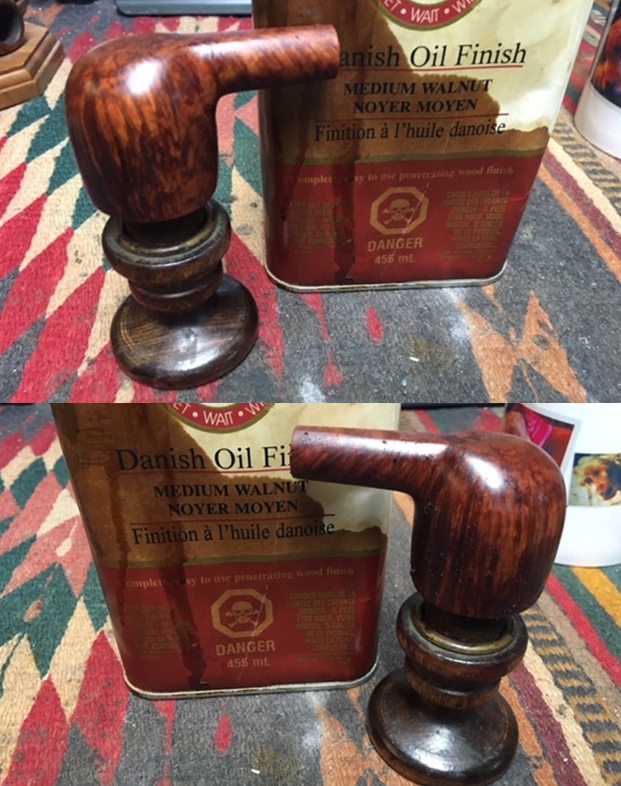
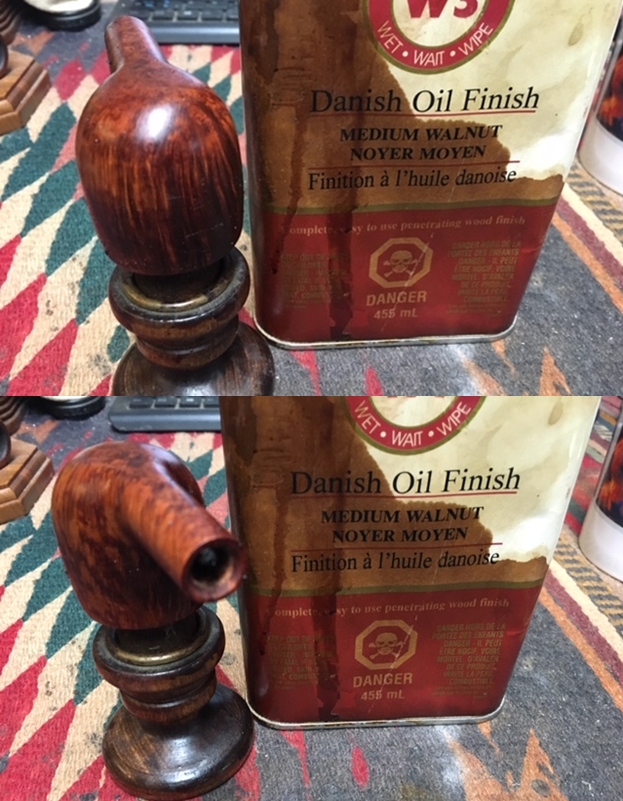
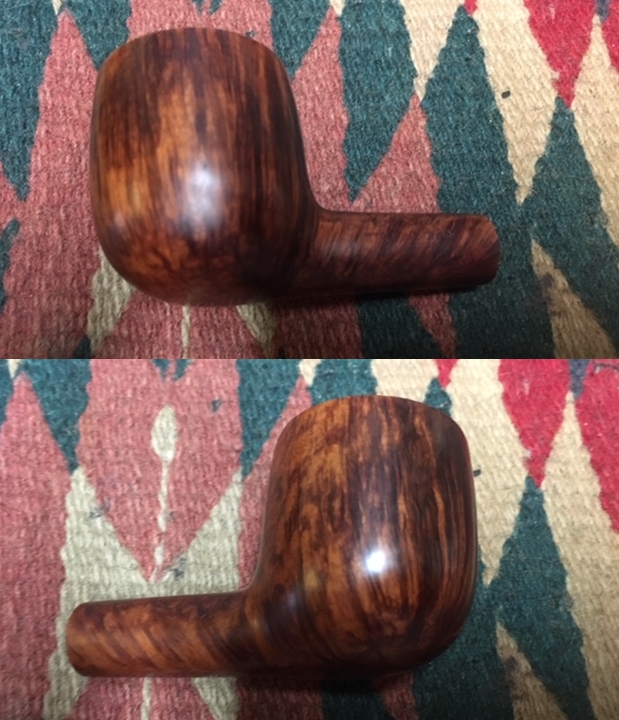
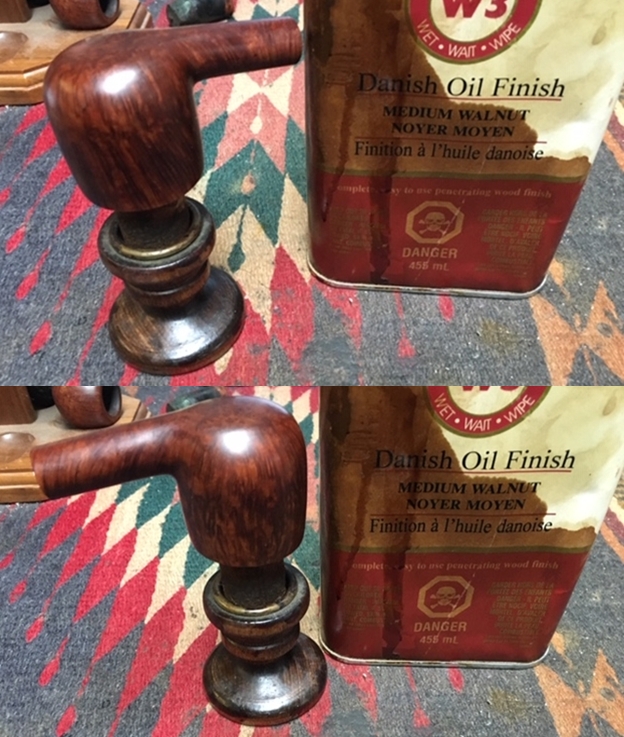
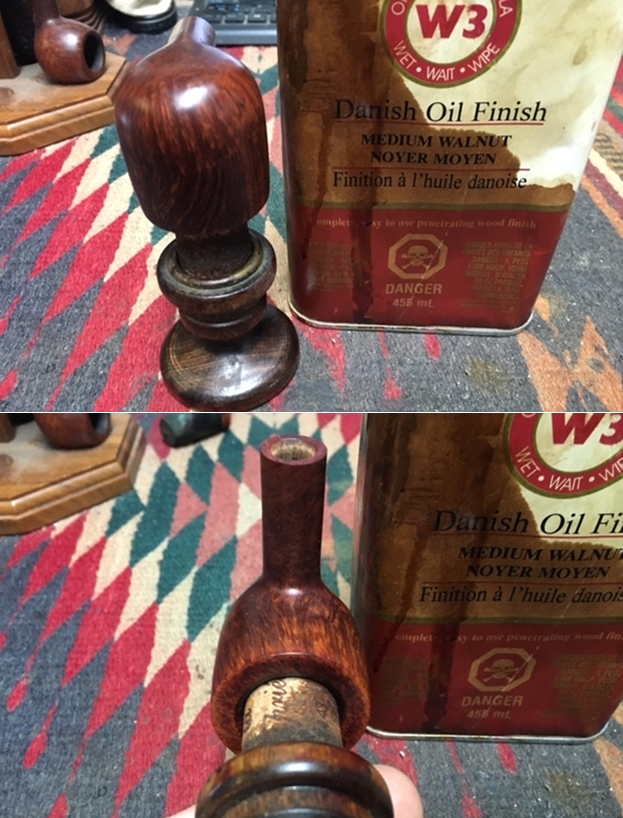
(The first two photos show the bowl of the Giubileo. The bowl on the Special had a twin looking bottom and I forgot to include photos of the bowl bottom on this repair. You can imagine it from the photos below.) I wanted clean up the rim top in the least intrusive method possible and still be able to deal with the scratches and wear on the flat surface. I wanted to see if I could minimize the darkening on the back side and the bevel of the inner edge of the rim top. I sanded it on a small medium and fine grit sanding block to see what I could do to begin with (forgot to take photos). I was happy with the way it was beginning to look. I finished with the blocks and wiped the bowl down with isopropyl alcohol to get a feel for what it looked like under the sanding dust. I polished the briar by wet sanding with 1500-2400 grit sanding pads to raise the shine. I also wanted to remove as much of the scratching as I could. I dry sanded the briar with 3200-12000 grit pads. I wiped the bowl down with a damp cloth after each pad. The briar began to really shine and the grain stood out. This was a beautiful pipe and worthy of the designation SPECIAL STRAIGHT GRAIN. The pipe was beginning to look really good and the grain was beginning to really pop. It was time to work some Before & After Restoration Balm into the briar on the bowl and the rim top. I worked it into the surface with my fingertips to clean, enliven and protect the wood. I let the balm sit for about 20 minutes and buffed it off with a soft cotton cloth. I took photos of the pipe at this point in the process to show what the bowl looked like at this point. I decided to rub down the surface of the bowl and shank with a Medium Walnut Danish Oil Finish and a cotton pad to give some depth to the finish. I really like how the Danish Oil Walnut Stain can make the grain pop on the briar without really darkening the finish. I hand buffed the bowl with a soft cloth to polish the briar. I buffed it lightly on the buffing wheel using Blue Diamond on the wheel. I took photos of the bowl after buffing. I really like the way that the grain stands out now. It is truly a beautiful piece of briar. The bowl looked good so I set it aside and turned my attention to the stem. I used a flat blade needle file to sharpen the edge of the button and smooth out the tooth damage to the edges of the button. I also worked on the tooth chatter with the filed. I followed that by using a Bic lighter to paint the surface of the vulcanite with the flame. Between the file work and the heat of the flame I was able to remove some of the marks and minimize the others. The photos tell the story.   I filled in the two deep tooth marks on the underside of the stem with superglue. The tooth marks on the topside were no longer an issue so I would only need to sand out the file marks. I set the stem aside to dry. Once the glue had dried I sanded the stem surface with 220 grit sandpaper to smooth out the repairs and remove the oxidation that was on the stem surface.I polished the stem with micromesh sanding pads – wet sanding with 1500-2400 and dry sanding them with 3200-12000 grit pads. I wiped the stem down with Obsidian Oil after each pad. I gave it a further polish with Before & After Pipe Stem Polish – both Fine and Extra Fine. When I finished I gave it a final coat of Obsidian Oil and let it dry. The following photos show the stem at this point. I polished the bowl and stem with Blue Diamond to polish out the scratches in the briar and rubber. I gave the bowl and the stem multiple coats of carnauba wax. I buffed the pipe with a clean buffing pad to raise the shine. I hand buffed it with a microfiber cloth to deepen the shine. The pipe polished up pretty nicely. The Walnut Danish Oil had really breathed life into the briar and the pipe came alive with the buffing. The contrast of colours between the briar and the stem worked really well. The Special Straight Grain pipe has a rich and classic look. The finished pipe is shown in the photos below. The dimensions of the pipe are Length: 5 1/2 inches, Height: 1 5/8 inches, Outside diameter of the bowl: 1 3/8 inches, Chamber diameter: 7/8 of an inch. This one will soon be on the rebornpipes store if you are interested in adding it to your collection. Thanks for reading this while I worked on it. It was interesting and unusual piece to restore and I really enjoyed the work.

Restoring a Beautiful “Edwards #712- L”


Blog by Paresh Deshpande

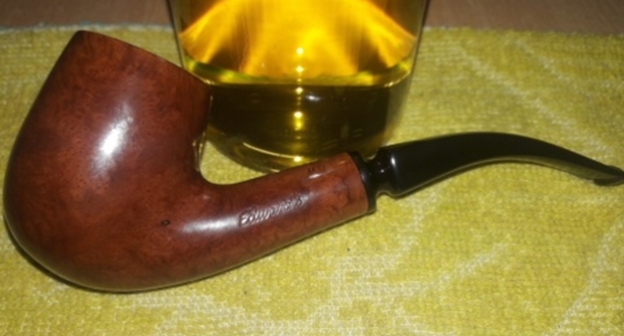
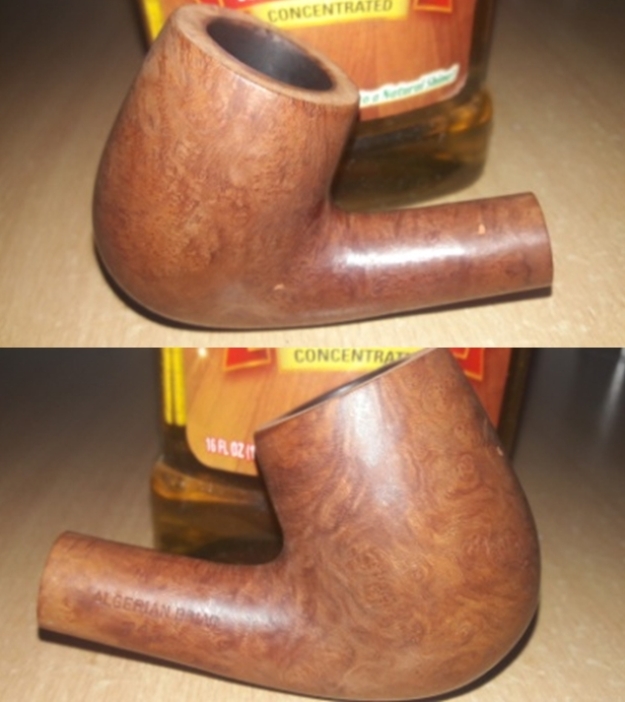
One of the first restorations that I had undertaken was an Edward’s # 784 quarter bent Zulu. It was a very clean pipe to begin with and only required cleaning and shining of the stem and the stummel. There was not a single fill on that pipe and the feel of the stummel in the hand, briar, the grains and the stem oozed superior quality. I really liked that Zulu. The next pipe on my work table is an Edward’s # 712-L. This large sized bent billiard has a fantastic heft to it and fills the palm nicely, and I do have fairly large hands!! There are two minute fills on this huge stummel but, nevertheless, it is one handsome and robust looking pipe!!

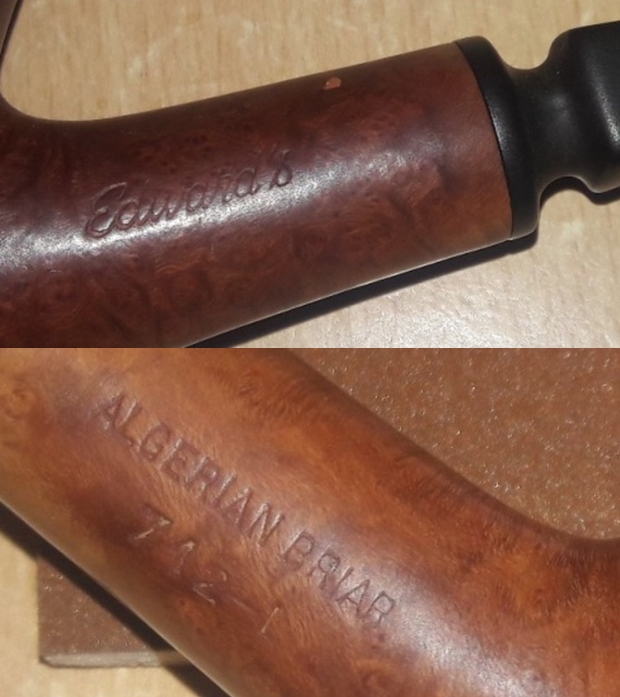
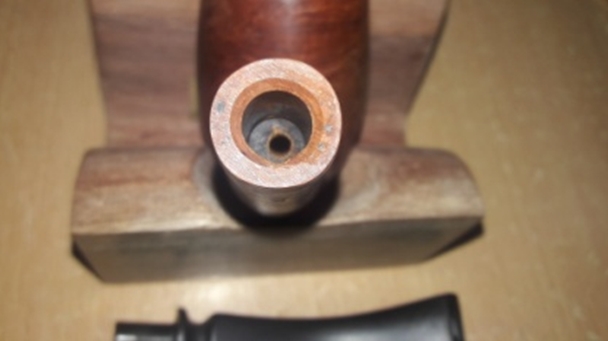
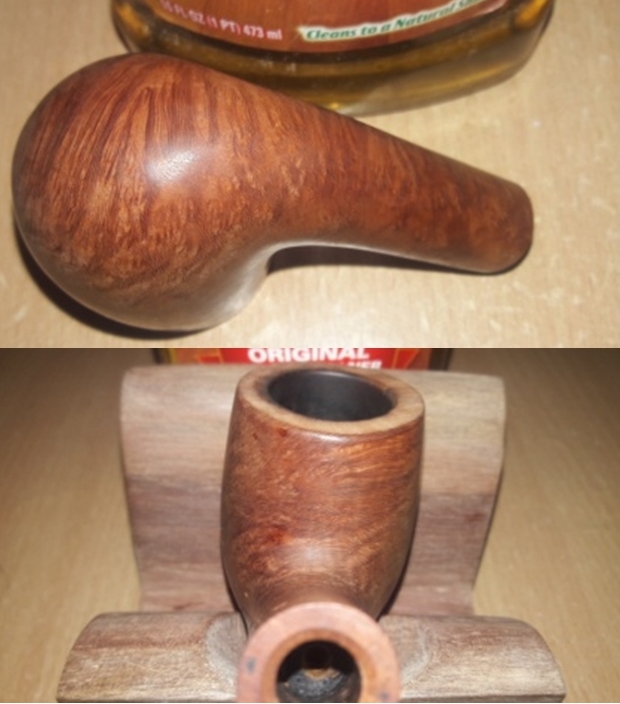
The stummel surface boasts of beautiful swirls of grains interspersed with bird’s eye along the sides of the stummel, while cross grains adorn the top and bottom of the shank extending to the back of the stummel. The left hand of the shank is stamped as “Edward’s” in cursive hand. The right side of the shank is stamped as “ALGERIAN BRIAR” in block letters over “712- L” which probably is the shape and the letter denoting the large size. The bottom of the shank bears “# 7” near the shank end which in all probability is the model number. The fancy stem bears no stampings.I searched pipedia.org for information and background of this brand and also attempt to date. I did not get the complete details that I was looking for, however the interesting information that I collected from this site was enough to convince me that the pipe I am currently working on is a no-push-over and can hold itself against some of the more known brands commanding a premium!! Here is the link to the information on pipedia.org (https://pipedia.org/wiki/Edward%27s).  For those who prefer immediate results without wasting time, here is an important piece of information from the website:-

“All of Edward’s pipes are Algerian Briar – a fact very few pipe companies can claim, and all are oil-cured utilizing natural finishes – no strange concoctions are used to interfere in your tastebud’s dance with the briar. Algerian, Calabrian, Sardinian, Corsican – take your pick, but Algerian Briar is generally considered the finest smoking briar ever used. When combined with oil-curing, Algerian takes on a magical quality that even Alfred Dunhill recognized as far back as 1918 as the choice for both his Bruyere and Shell.”  

I searched pipephil.eu in my attempt at dating this large handsome dude. Though I did not succeed in my endeavor, but I did get some interesting information like that Randy Wiley got his start at Edward’s!!!!!! Here is the link for those interested (http://www.pipephil.eu/logos/en/logo-e1.html). Even though this may not be a vintage pipe, but it definitely is of high quality and capable of holding itself up against some of the best in business!!!

INITIAL VISUAL INSPECTION
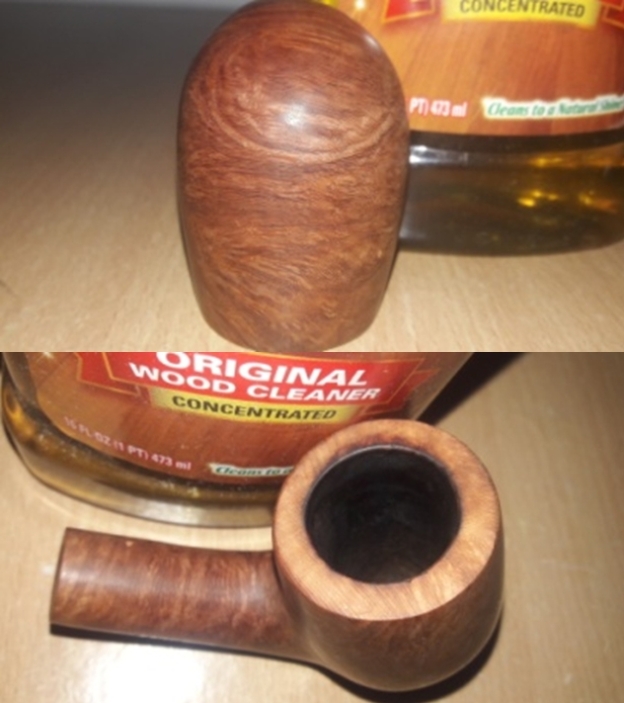
As I had noted earlier, this large bent billiard pipe was in great condition when I started restoring it. There were only two small fills on the shank, one on the left side near the bowl and shank joint and the other on the top surface of the shank, about an inch from the shank end. There is a small superficial chip in front of the bowl on the right side. The stummel is free of any spilled oils, tars or grime from the chamber. However, the briar is dull and lifeless and has taken on a layer of aged patina, through which one can make out the beautiful grains all round. This one should clean up nicely. The pipe appears to have been smoked a few times and there is a very thin layer of cake in the chamber. The chamber walls are nice and thick with no apparent damage. There is a minuscule amount of lava overflow on the rim surface. There are two small dents on the inner rim edge in 3 o’clock direction. The outer rim edge is slightly damaged in 12 o’clock direction, the result of likely being banged against a hard surface. The mortise is as clean as can be and the airflow through it is free and smooth. These issues should be a breeze to address. The vulcanite stem is without any bite marks or tooth chatter. There are small bite marks on the lower and upper lip edges. It is nice and dark, but not smooth. The roughness is due to oxidation of the top surface. These issues should not be a major headache to address. The tenon is clean and flow of air through the airway is full and smooth.THE PROCESS
I started this project by cleaning the chamber. Since there was a very thin layer of carbon, I used a 220 grit sand paper, pinched between my thumb and forefinger, to sand the inner walls of the chamber. Once I had reached the bare briar, I wiped the chamber with a cotton pad dipped in isopropyl alcohol. This removed all the residual carbon dust and also rid the chamber of all ghost smells. I worked on the inner edge of the rim and on the rim surface with a 220 grit sand paper. I realized that the nicks to the inner edge were larger than anticipated and also the rim surface had some blackened surfaces. I addressed these issues by topping the rim on a 220 grit sand paper. This addressed all the issues on the rim, including the damage to the outer edge of the rim.Now, it was the turn of the stummel to get cleaned up. Using a hard bristled tooth brush dipped in undiluted Murphy’s oil soap, I very deliberately scrubbed the stummel, cleaning the surface thoroughly. I cleaned the rim too. The stummel and rim top was dried using paper napkins and soft cotton cloth. I gouged out the old fills on the shank and the chipped portion on the front of the bowl with a pointed knife and wiped the area clean with a cotton swab dipped in isopropyl alcohol. I spot filled these with clear CA superglue and set it aside to cure. While the stummel was drying, I worked the stem. I sharpened the lip edges using a needle file. I sand the entire stem with 220 followed by 400 and 800 grit sand paper. This helps to reduce the sanding marks left behind by the more abrasive 220 grit paper. To bring a deep shine to the vulcanite stem, I went through the complete set of micromesh pads, wet sanding with 1500 to 2400 grit pads and dry sanding with 3200 to 12000 grit pads. I wiped the stem with alcohol after each pad and rubbed it down with Extra Virgin Olive oil. The internals of the stem was cleaned out using alcohol and pipe cleaners. The pictures of the process and final results are shown below. The fills on the stummel had cured. Using a 220 grit sand paper, pinched between my thumb and forefinger, I sand the fills and the entire stummel to match each other. I wanted to highlight the grains seen and further blend all the repairs carried out to the stummel. To achieve this aim, I sand down the stummel and rim top using micromesh pads, wet sanding with 1500 to 2400 grit pads and dry sanding with 3200 to 12000 grit pads. The stummel now has a deep shine with grains popping out with magnificent contrast. I rub a small quantity of “Before and After Restoration Balm” in to briar and let it rest for a few minutes. The balm almost immediately works its magic and the briar now has a nice vibrant appearance. I further buff it with a horse hair shoe brush. To finish, I re-attach the stem with the stummel. I mount a cotton cloth buffing wheel on to the Dremel (actually it is not the brand machine, but a local machine which is similar).  I set the speed at about half of the full power and applied White Diamond compound to the entire pipe. I wiped/ buffed the pipe with a soft cotton cloth to clear it of any leftover compound dust. I then mounted another cotton cloth wheel on to the polishing machine and applied several coats of carnauba wax. I finished the restoration by giving the entire pipe a rigorous hand buffing using a microfiber cloth to raise the shine further. The completed pipe, with the dark brown hues of the stummel contrasting with the shiny black stem, looks lovely, fresh and vibrant; the photographs speak for themselves. The beauty, size and shape of this pipe compel me to wonder how anyone could let go of such a robust and beautiful looking pipe! If only the pipe could tell the story of its journey till date…………… Cheers!
Restoring my Inherited, Long Oval Shank “SON” ¼ Bent Pot


Blog by Paresh Deshpande

I had set my eyes on this pipe’s restoration for a long time, but was delayed for some reason or the other. Finally, it is now on my work table and I am looking forward to finishing this pipe. This is one of the two “SON” pipes from my inherited collection, the other being an un-smoked sandblasted bent brandy in its original sock.

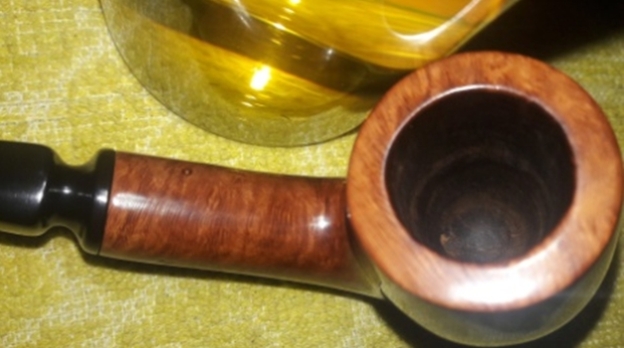
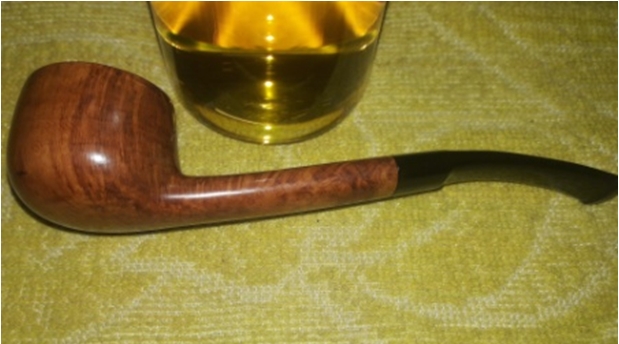
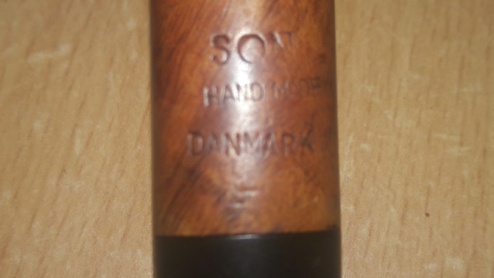
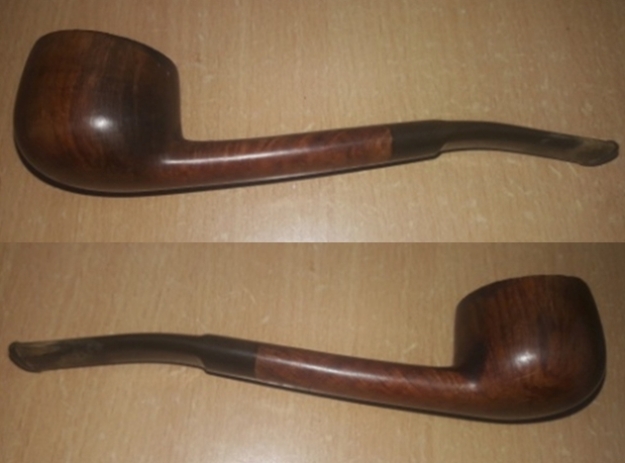
The stummel boasts of lovely straight grains rising from the heel of the stummel towards the rim while the long oval shank displays beautiful cross grains all round. The heel of the stummel has some fabulous swirls interspersed with bird’s eye!!!! The pipe is stamped on the bottom of the long oval shank end as “SON” over “HAND MADE” over “DANMARK”. The long ¼ bent saddle stem is devoid of any stamping.During my previous two restorations of Nording pipes, I had searched the internet and had come to know about the association between Mr. Nording and Mr. Skovbo and the first pipes that they made together were named “SON”! After the split, Mr. Nording continued to make pipes under this name before changing the company name to “Nording” in mid 1960s. Here is the link for more detailed information and reading interest; https://pipedia.org/wiki/Nørding. You may also like to read the write up on rebornpipes.com for abridged details; https://rebornpipes.com/2017/12/06/breathing-new-life-into-a-son-freehand-an-early-nording-pipe/

From the above information, I can safely claim that this pipe was made during the 1960s.

INITIAL VISUAL INSPECTION
Most of the pipes in my grandfather’s collection show signs of heavy usage with heavy build up of cake in the chamber and overflow of lava over the rim. The stem is also generally in dire state. I have always thought that my grand old man believed in a “use and throw” policy! This pipe is no exception to this general observation.

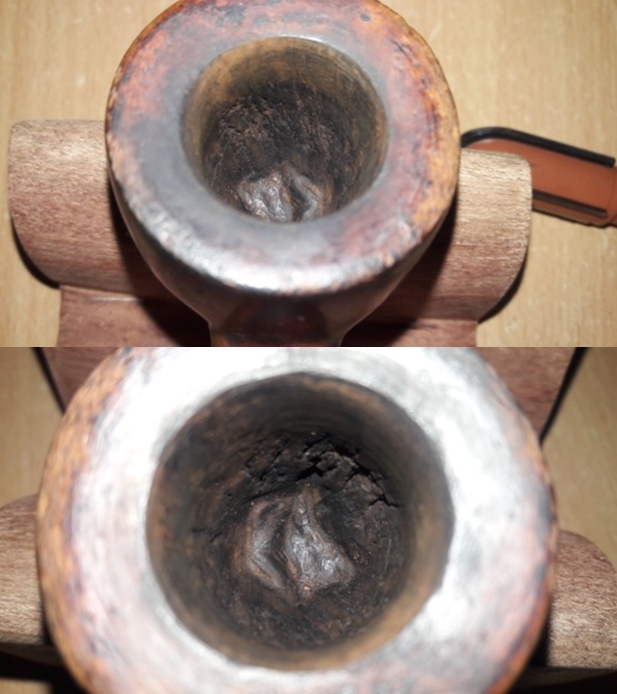
The stummel is covered in oils, tars and grime to such an extent that the bowl is very dull to look at with all the grains hidden and the surface sticky to the touch. This will need a thorough cleaning. There are a number of dents, dings and chipped surfaces over the entire stummel. Whether to sand the bowl with micromesh pads to bring to fore the lovely grains will be decided later. The bowl is heavily caked and has large amounts of lava overflow on top of the rim. The internal condition of the bowl and rim will be ascertained only after the cake has been completely reamed out. There is always a fear of possibility of charred rim edges or burn fissures or charred briar inside the chamber of pipes in this condition. However, the entire stummel appears solid to touch from the outside reducing the probability of any of the above issues being present.The rim top has an inward slope towards the chamber and will make topping impossible without compromising the rim profile, should the need arise. The heavy overflow of lava over the rim top also hides any damages to the inner edge of the rim and also atop the rim surface. However significant damage, in terms of chipped surface, is seen to the outer edge of the rim on the right side in 3 o’clock position and minor dents are seen along the entire outer rim edge. This will have to be taken care of.When I took some close up pictures of the heel of the pipe, I thought I could see a very small and thin crack dead in the center of the heel. My fears were confirmed when I shared pictures of this with my mentor, Mr. Steve, and he concurred with my assumptions. The exact extent of the damage, whether it’s a through crack or just a superficial external crack, can only be known after the cake has been completely reamed back to bare briar. Addressing this issue will be a first for me on my journey!As expected from the condition of the pipe, both the mortise and stem airway is clogged and air flow is restricted.The long ¼ bent saddle stem is heavily oxidized with heavy tooth chatter on both surfaces near the button end. The oxidation is heavier about an inch from the lip. The edges of the lip are worn and will need to be reconstructed and reshaped.THE PROCESS
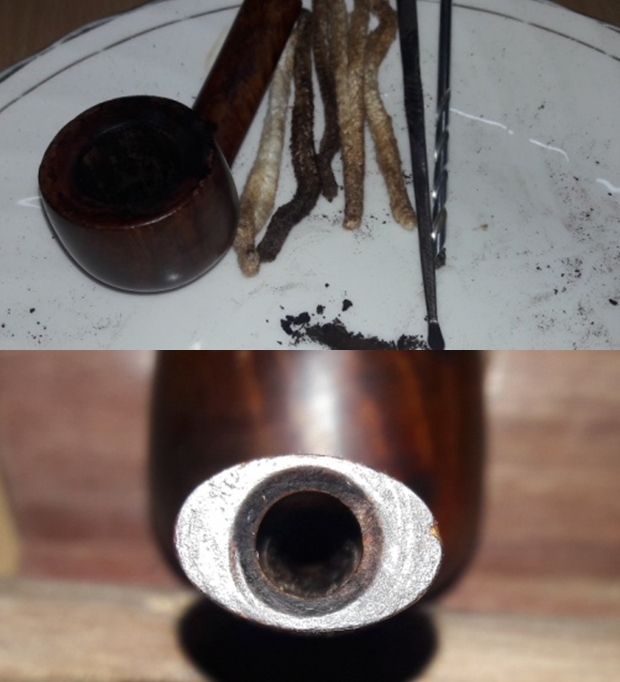
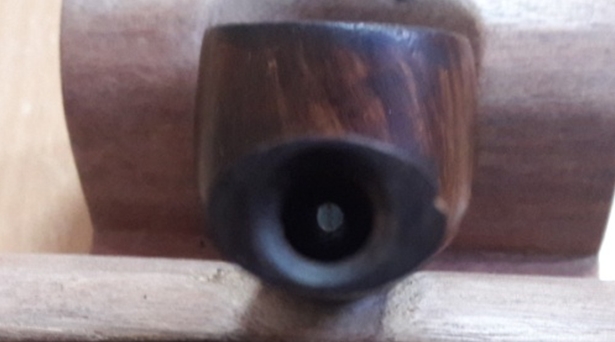
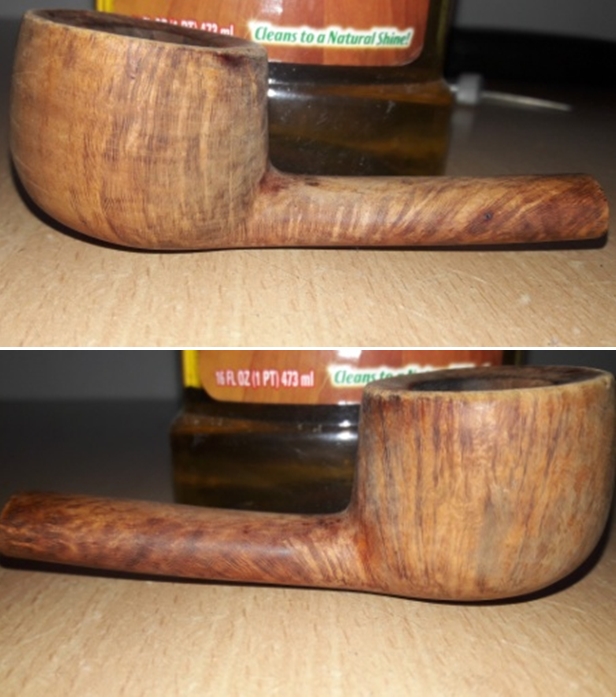
Since I had noticed a small hairline crack on the exterior surface at the bottom of the bowl, I wanted to investigate it further and that is where I start my restoration work. I ream the chamber with head size 2 of the PipNet reamer and progress to size 3 head. To smooth out the inner surface of the chamber and completely remove the last traces of remaining cake, I sand the inner surface of the chamber with a 220 grit sand paper. With a sharp knife, very gently I scrapped the surface of the rim top and removed the accumulated tars, oils and grime. I further clean the chamber with a cotton swab dipped in isopropyl alcohol.Once the chamber was cleaned, I was relieved that the hairline crack seen on the heel of the stummel was restricted to the external surface. However, the walls of the chamber have the markings of the beginning of burn out on the lower half of the chamber walls on the left, front and above the draught hole. I further sand the chamber walls with a 180 grit sand paper. With a fabricated thin and sharp knife, I gently remove all the charred briar from the walls and also from the bottom of the chamber. What was revealed really blew my sock away!!!! The extent of damage was something that I had not seen in 50 odd pipes that I have restored/refurbished to date. The gouges left behind were huge and the bottom surface was severely undulated. I shared these images with my Mr. Steve, who immediately responded and confirmed that the bottom had significantly thinned out and the walls have sustained significant damage. He suggested that the present condition necessitates coating with JB Weld to make it smokable and if that is not available, Plaster of Paris could be used as a substitute. But neither is available to me here in this remote area. I decided to proceed with further restoration while being on a look out for JB Weld! I clean out the mortise and the shank with a fabricated spatula, hard bristled and regular pipe cleaners dipped in isopropyl alcohol. To further clean and open out the drought hole, I had to use the shank cleaning tool of the KleenReem reamer. The amount of gunk, hardened oils and tars that was scooped out was astounding to say the least! After some efforts, I was finally able to clean out the mortise and airway of all the filth. The airflow is now open, full and free. Now, it was the stummel’s turn to be cleaned up. Using a hard bristled tooth brush dipped in undiluted Murphy’s oil soap, I very deliberately scrubbed all the stummel surfaces, cleaning them thoroughly. I cleaned the rim too. This cleaning and scrubbing revealed a new fissure/crack/fill towards the front of the bowl, on the left side. I checked the alignment of this crack with the heat fissures on the walls of the chamber as I feared a through burn out. Luckily, this fill was nowhere near the damaged portion of the chamber walls. The stummel and rim top was dried using paper napkins and soft cotton cloth. I set the stummel aside to dry out naturally. Next I decide to address the issue of damaged outer rim edge. I raised the chipped surface of the outer edge using the steaming method. I heat my fabricated knife and placing a wet Turkish hand towel over the damaged rim edge, placed the hot knife over it. The steam raised the chipped surface to a great extent. I followed the steaming process with sanding the entire stummel and shaping the rim outer edge with a 220 grit sand paper. I sand the rim surface and edge such that the profile of the inward slope of the rim top is maintained. It was a painstaking and time consuming process, but the end result was a smooth and even stummel, rim top and edges. I was very satisfied with the results of the effort. The superficial crack that was revealed on the front of the bowl after the cleaning of the stummel and the thin superficial crack seen on the heel of the stummel were addressed next. I gouged out the dead and dried briar from the crack with a thin and sharp knife, cleaned it with a cotton swab dipped in alcohol and filled it with clear CA superglue. There was a small nick on the right side of the shank end. This too was filled with superglue. Using a magnifying glass and a whitener pen, I marked the start, turning and end points along the extent of the crack. I next drilled holes using a 1mm drill bit (this was the smallest sized drill bit I could lay my hands on!!!) fitted on to my local Dremel machine, taking care that I did not drill a through and through hole. This helps in preventing further spreading/ progression of the existing crack. I cleaned the crack with a toothpick and spot filled clear CA superglue in to the drilled holes and over the crack. I set aside the stummel for the glue to cure. While the repairs to the stummel were curing, I addressed the repairs to the stem. Using a Bic lighter, I flamed both the surfaces of the stem. This helped in raising some of the tooth chatter and bite marks to the surface as vulcanite has a property to regain its original shape on heating. The high quality of the vulcanite ensured that maximum of tooth chatter was raised to the surface and what little remained, would be addressed subsequently during the sanding process. I used a 220 grit sand paper to sand out the oxidation. I used a flat head needle file to sharpen and reshape the lip edge and rubbed a little Extra Virgin Olive oil in to the stem surface. I wiped the stem again and worked on it with micromesh sanding pads – wet sanding it with 1500-2400 grit pads and dry sanding with 3200-12000 grit pads. Between each set of three pads I rubbed the stem down with extra Virgin Olive Oil and also gave it a final rubdown after the 12000 grit pad. I cleaned the stem airway with pipe cleaners dipped in isopropyl alcohol. I set the stem aside to dry while I worked on the bowl. I sand the fills on the stummel with a flat head needle file and further match these fills with the stummel surface by sanding it with a 220 grit sand paper. Once I am satisfied with the match, I progress to polishing the stummel with micromesh pads going through the entire cycle. Due to the light, natural hues of the briar, these fills are still visible, but overall, the pipe looks amazing. I intend to stain it with a darker shade, but as you guessed it right, I don’t have the material and wherewithal to carry out the staining. I rub a small quantity of “Before and After Restoration Balm” into briar with my fingers and let it rest for a few minutes. This balm enlivens and protects the briar. The balm almost immediately works its magic and the briar now has a nice vibrant appearance. I further buff it with a horse hair shoe brush. To finish, I re-attached the stem with the stummel. I mounted a cotton cloth buffing wheel on to the Dremel (actually it is not the brand machine, but a local machine which is similar).  I set the speed at about half of the full power and applied White Diamond compound to the entire pipe. I wiped/ buffed the pipe with a soft cotton cloth to clean it of any leftover compound dust. I then mounted another cotton cloth wheel on to the polishing machine and applied several coats of carnauba wax. I finished the restoration by giving the entire pipe a rigorous hand buffing using a microfiber cloth to raise the shine further. The completed pipe looks lovely, fresh and vibrant; the photographs speak for themselves. Thank you for having the patience to reach this far while reading the write up. It is always heartening when I receive comments on the write up, good or bad, either way is encouraging, but the real happiness and maximum satisfaction is derived from knowing that someone has dedicated his/ her precious time in reading your write up. PS: There are two issues which are yet to be addressed; one is the coating of the chamber for protection of the walls (functional necessity) and the second is staining the stummel in darker hues (cosmetic necessity). I do not have necessary materials and equipment to carry out these works as I pursue this hobby as a non earning pursuit. But I am gradually and step by step purchasing the equipment and materials necessary for reaching the standards that I have set myself. I shall keep you updated on this beauty as and when I address both the above issues. Cheers and wish me luck!!
Resurrecting a Sad, Old La Savinelli Giubileo D’ Oro 1221


Blog by Steve Laug

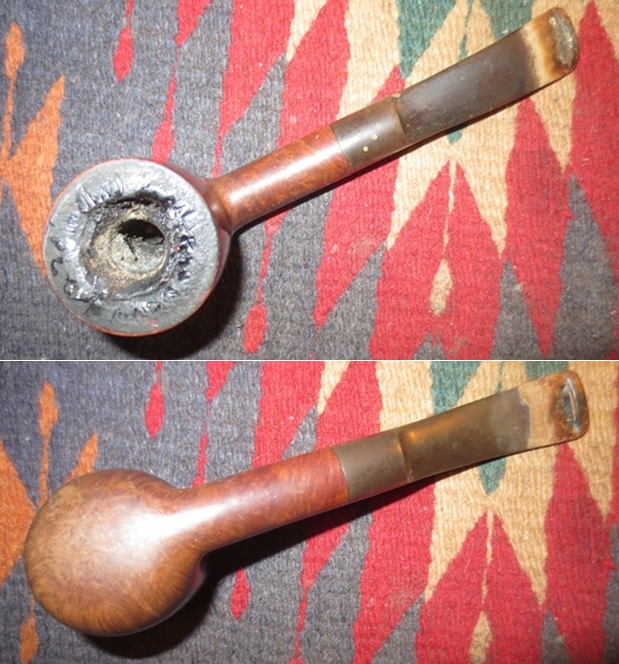
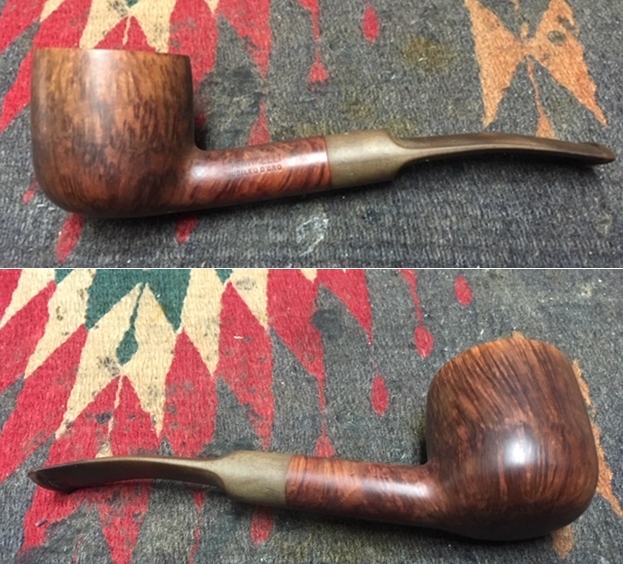
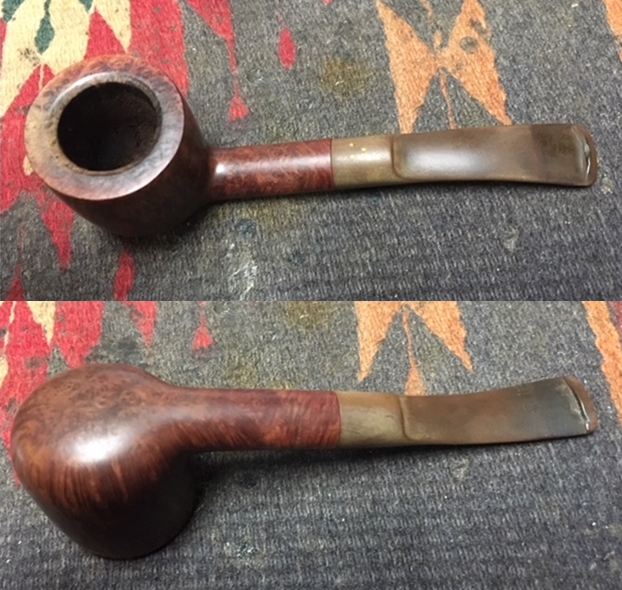
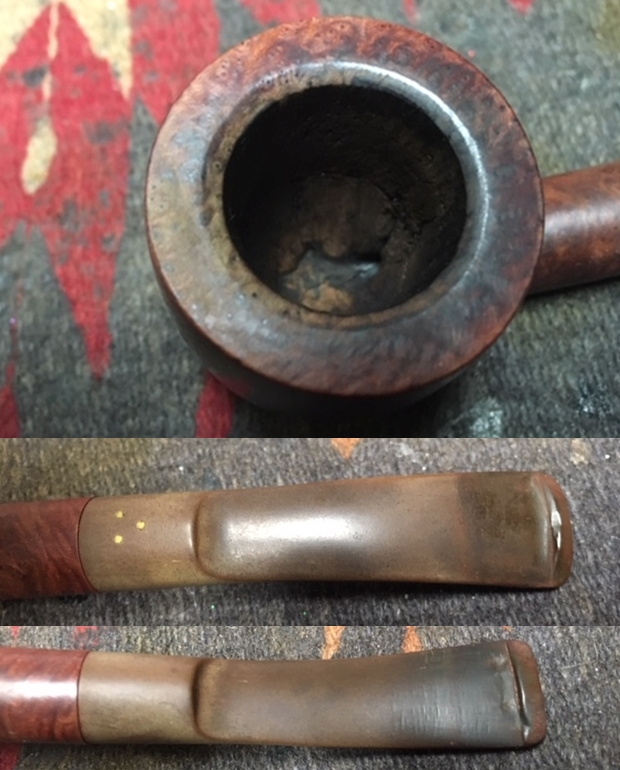
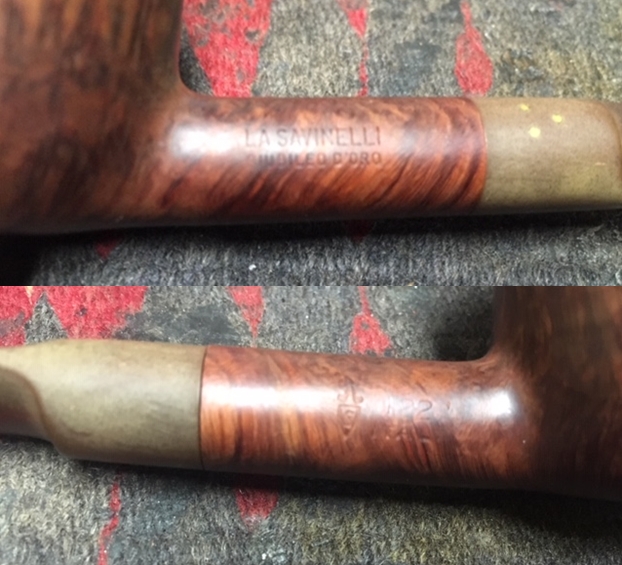
In my ongoing work on the estate pipes from the pipe shop that had closed here in Vancouver I am turning a third pipe from the lot. The entire lot came to me from the estate of an older pipeman whose wife dropped them off at a pipe shop to be cleaned and sold. When the shop closed they came to me. The pipe on the table now was a Savinelli Pot with a ¼ bent stem. It is stamped La Savinelli over Giubileo D’ Oro on the left side of the shank. On the right side it is stamped with the Savinelli Shield logo with two pipes over the shield. Next to that the shape number 1221 is stamped over Italy. The briar has some nice straight and flame grain around the bowl with birdseye on the top of the bow, shank and the underside of both. The bowl had a thick cake in it with an over flow of lava on the rim top. The rim top looked very bad but it hard to know if there was real damage or if the marks were in the lava overflow. It was hard to know what the rim edges looked like with the thick coat covering it all. The briar was dull and dirty looking. The stem is vulcanite and is oxidized. It has three gold (brass) dots on the top of the saddle. There was calcification and tooth chatter and marks damage next to the button on both sides. I took photos of the pipe when I received it. I sent this pipe along with about twenty others from this lot to my brother Jeff in Idaho to work over and clean up. He cleaned up the pipes with his usual thoroughness – reaming the bowl and scrubbing the internals with alcohol, cotton swabs and pipe cleaners. He scrubbed the exterior with Murphy’s Oil Soap to clean off the dust and grime on the finish. When he sent it the pipe was ready to restore. I could not believe how good the rim top looked in comparison to what it was when he started. I took photos of the pipe when I unpacked it. The briar was clean and the grain quite stunning. The finish looked dull and lifeless. I took a close up photo of the rim top after Jeff had cleaned it up. The look of the rim top and edges is very good. He had been able to remove the cake and the lava very well. The bowl was clean but there seemed to be a trough in the bottom of the bowl made by a pipe cleaner repeatedly passing over the same spot. The stem is also shown and was very clean but oxidized. He had not started using Mark’s Before & After Deoxidizer at this point. The tooth marks on both sides near the button are visible in the photos.  The underside of the stem shows some marks from the bending of the stem. None were cracks and for that I am glad.I took some photos of the stamping on the shank sides. The first photo shows the La Savinelli Giubileo D’ Oro stamp on the left side. The second shows the shape number and the Savinelli Logo and the made in Italy stamp on the right side.There were several things about the stamping that I was unfamiliar with so I did some searching online. I wanted to know when Savinelli stamped their pipe “La Savinelli”. I wanted to know why the pipe had a 4 digit shape number. I wanted to know about the “Giubileo D’ Oro” and where it fit in the hierarchy of pipes from the company. I also wanted to understand the three gold dots on the stem.

I turned first to Pipephil – http://www.pipephil.eu/logos/en/logo-savinelli2.html and there I found the first helpful information. My first and second questions were answered in the notes on the page.

  • The “LA” article precedes the “SAVINELLI” stamping on all pipes from the Giubileo d’Oro line.
  • 4 digit shape number (1221). The pipe predates the 1970’s.

I then turned to the Pipedia article to see if I could learn more about the pipe

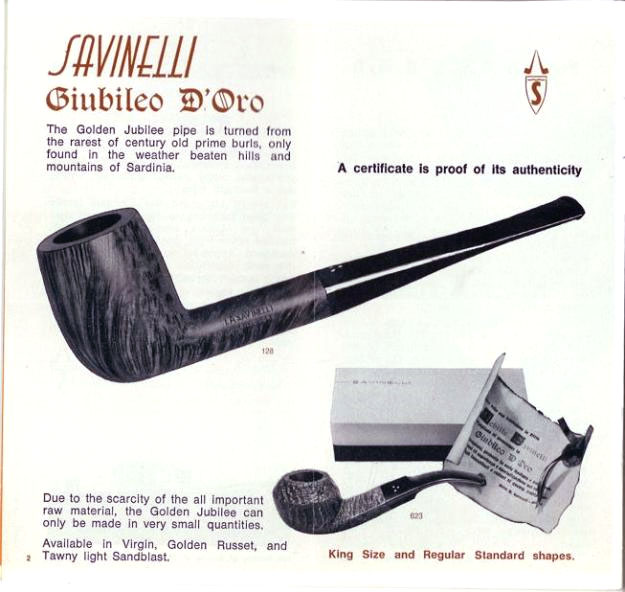
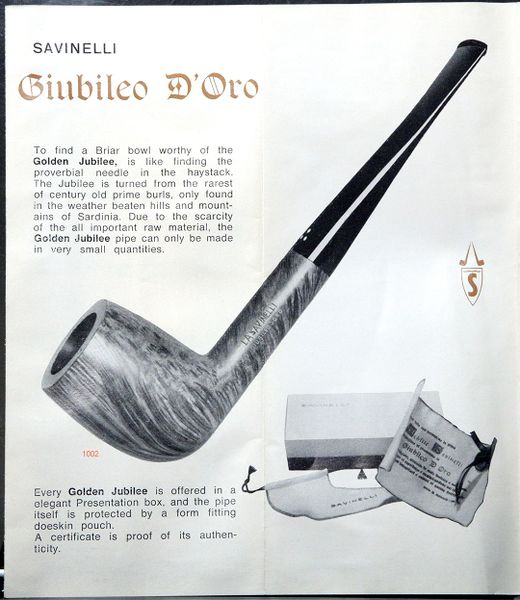
( https://pipedia.org/wiki/Savinelli). I have included to pages from Brochures that give some interesting information about the brand. It seems that Golden Jubilee pipe is made from very rare briar burls from Sardinia. Due to the limited raw materials available the pipe can only be produced in small quantities. Each pipe originally came with a certificate of authenticity. Sadly this was missing with the pipe I am working on.

Guibileo D’Oro Brochure Page, courtesy Doug Vliatchka

Guibileo D’Oro Brochure Page, courtesy Doug Vliatchka

I also did a websearch of Savinelli’s 50th Anniversary and was immediately given a link to their site (https://www.savinelli.it/rw2_en/catalog/product/view/id/15909/s/giubileo-oro-prime-0005?__from_store=rw2_en). They describe the line as follows:

The significance of ‘Golden Jubilee’ is to commemorate the “50th anniversary”; it defines the rarity of these pipes. Only 0.1% of our total production has the quality to be worthy of this unique series. Nature gives us this rare jewel of a pipe as an unparalleled and exceptional combination of perfect raw material and outstanding grain. The selection process is passed on only by word of mouth and is determined by the experience and high quality standards of Savinelli, a guarantee of reliability and elegant style.

Putting all of that together I learned that the pipe was a 50th Anniversary Commemorative and part of a limited production “Golden Jubilee” series. That would make it a mid 70s pipe rather than what Pipephil noted above. It is selected for its special and unique grain and handpicked for a shape to highlight the grain. The four digit shape number helps to date it as being made pre 1970. The entire line was stamped with the La Savinelli marking. It is a unique piece of history. Now to get to work on it!

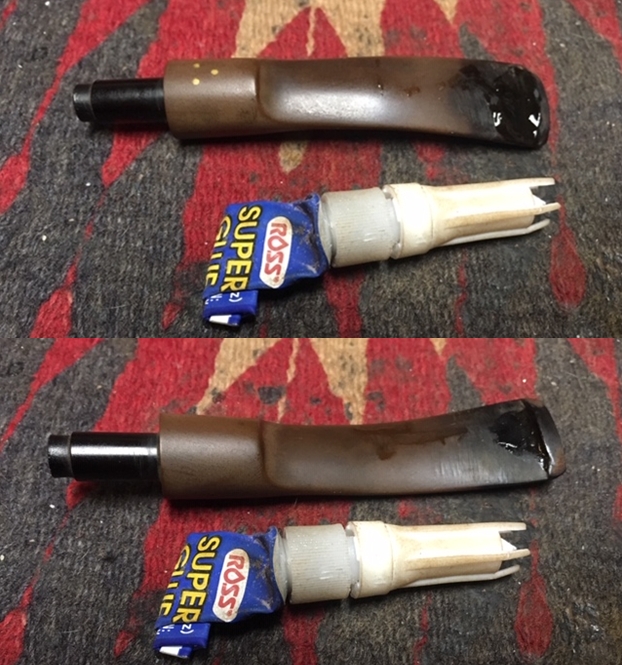
I started working on the bowl. I wanted clean up the rim top in the least intrusive method possible and still be able to deal with the scratches and wear on the flat surface. I wanted to see if I could minimize the darkening on the back side and the bevel of the inner edge of the rim top. I sanded it on a small medium and fine grit sanding block to see what I could do to begin with. I was happy with the way it was beginning to look. I finished with the blocks and progressed to micromesh sanding pads. I wet sanded it with 1500-2400 grit pads and dry sanded it with 3200-12000 grit pads. I wiped it down with a damp cloth after each pad. The pipe was beginning to look really good and the grain was beginning to really pop. It was time to work some Before & After Restoration Balm into the briar on the bowl and the rim top. I worked it into the surface with my fingertips to clean, enliven and protect the wood. I let the balm sit for about 20 minutes and buffed it off with a soft cotton cloth. I took photos of the pipe at this point in the process to show what the bowl looked like at this point. I decided to rub down the surface of the bowl and shank with a Medium Walnut Danish Oil Finish to give some depth to the finish. I really like how the walnut stain can make the grain pop on the briar. I hand buffed the bowl with a soft cloth to polish the briar. I buffed it lightly on the buffing wheel using Blue Diamond on the wheel. I took photos of the bowl after buffing. I really like the way that the grain stands out now. It is truly a beautiful piece of briar. It was time to address the trough in the bottom of the bowl. It was quite visible and though the bottom of the bowl was still quite thick, it bothered me. I decided to mix a batch of pipe mud to fill in the trough and protect the bottom while a new cake was formed in the bowl. I mixed some cigar ash and water to form a paste. I put a pipe cleaner in the airway to protect it from being filled in. I used a folded pipe cleaner to paint the mud around the airway to clean up some of the edges and tamped some into the bottom of the bowl to fill in the trough. I packed it in place with a Czech pipe tool tamper as it fit in the bottom of the bowl. The pictures that follow tell the story. It will take a while to dry out but once it has dried it will be quite hard. The bowl looked good so I set it aside and turned my attention to the stem. I used a Bic lighter to paint the surface of the vulcanite with the flame. The heat of the flame raised the tooth marks around the button edges significantly but a repair would still need to be done (forgot to take photos of this). I filled in the tooth marks with superglue spreading it with a toothpick. I set it aside to dry.

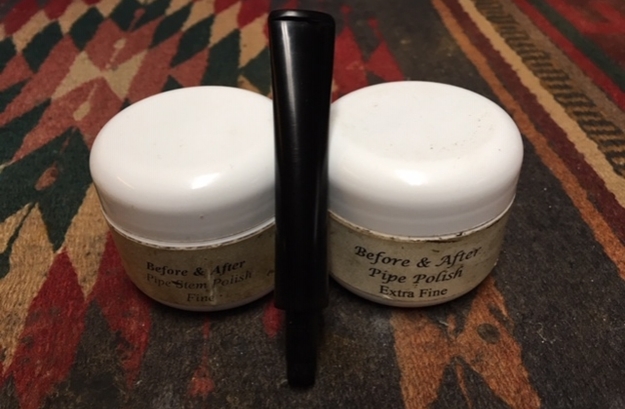
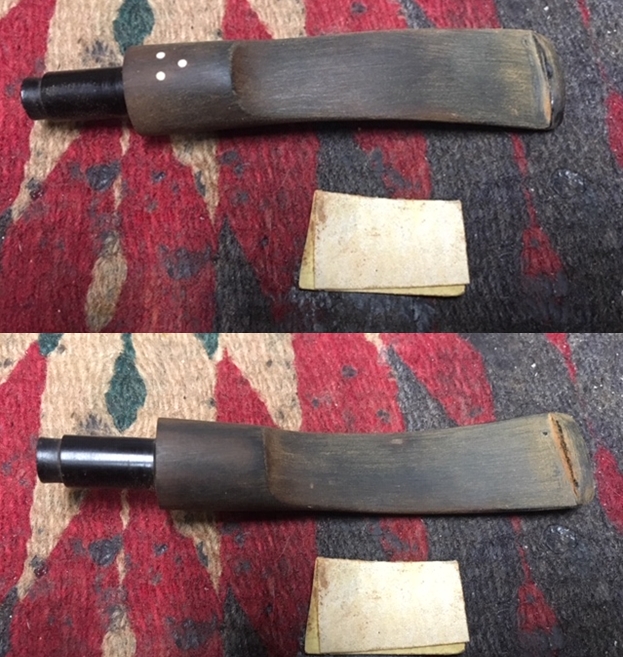
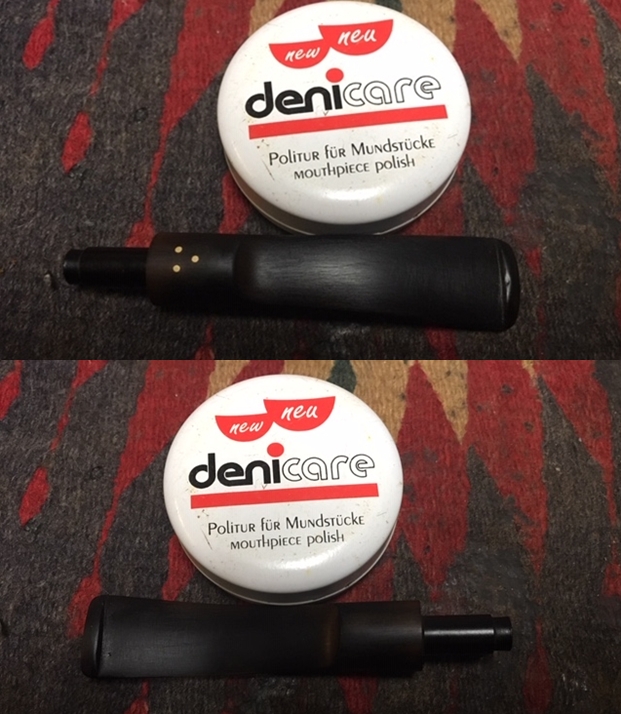
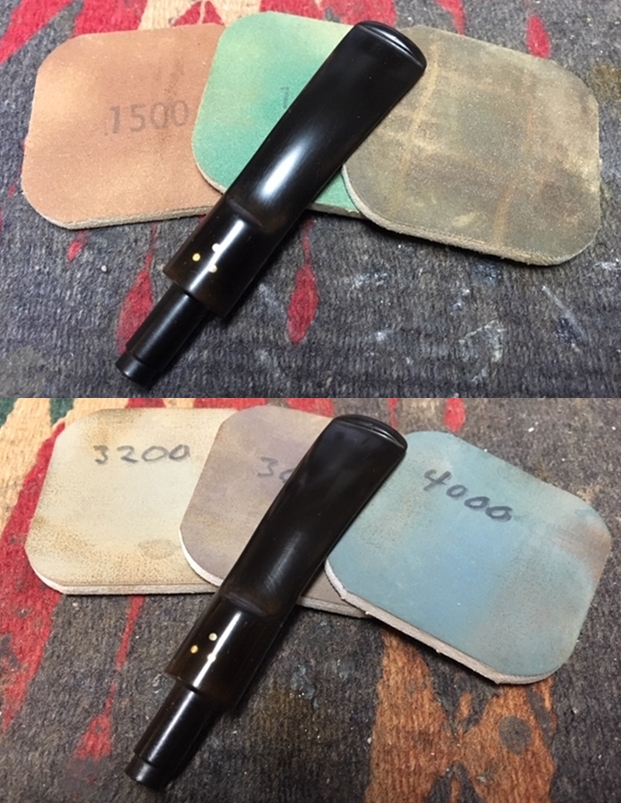
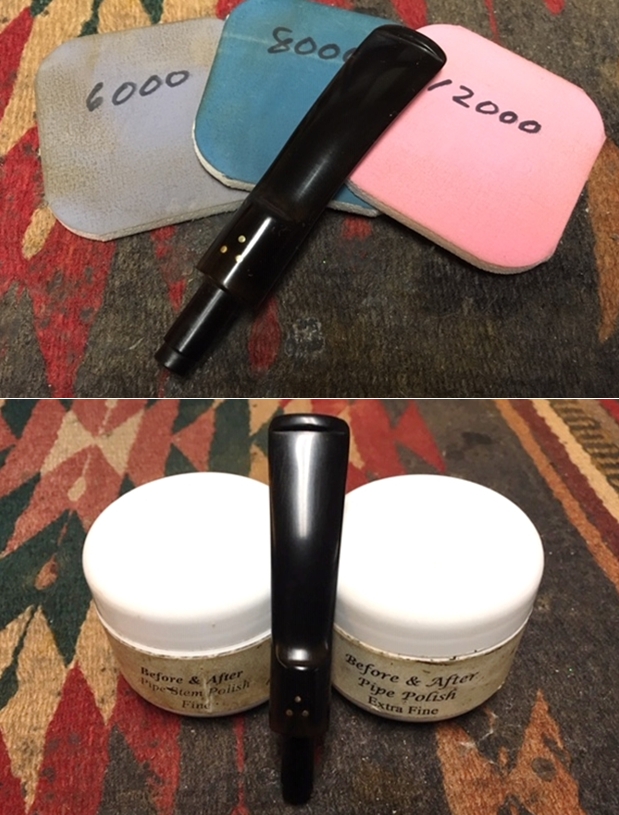
Once the glue repairs cured I sanded them with 220 grit sandpaper to blend them into the surface of the rubber. I began the polishing of the stem with Denicare Mouthpiece Polish to work on the oxidation. The photos show the progress. I polished the stem with micromesh sanding pads – wet sanding with 1500-2400 and dry sanding them with 3200-12000 grit pads. I wiped the stem down with Obsidian Oil after each pad. I gave it a further polish with Before & After Pipe Stem Polish – both Fine and Extra Fine. When I finished I gave it a final coat of Obsidian Oil and let it dry. The following photos show the stem at this point. I polished the bowl and stem with Blue Diamond to polish out the scratches in the briar and rubber. I gave the bowl and the stem multiple coats of carnauba wax. I buffed the pipe with a clean buffing pad to raise the shine. I hand buffed it with a microfiber cloth to deepen the shine. The pipe polished up pretty nicely. The Walnut Danish Oil had really breathed life into the briar and the pipe came alive with the buffing. The contrast of colours between the briar and the stem worked really well. The Giubileo D’ Oro pipe has a rich and classic look. The finished pipe is shown in the photos below. The dimensions of the pipe are Length: 5 1/2 inches, Height: 1 5/8 inches, Outside diameter of the bowl: 1 1/2 inches, Chamber diameter: 7/8 of an inch. This one will soon be on the rebornpipes store if you are interested in adding it to your collection. Thanks for reading this while I worked on it. It was interesting and unusual piece to restore and I really enjoyed the work.

New Life for an Italian Made Folding Pocket Pipe


Blog by Steve Laug

This is the second pipe from on the estate pipes from the pipe shop that had closed here in Vancouver. The entire lot came to me from the estate of an older pipeman whose wife dropped them off at a pipe shop to be cleaned and sold. When the shop closed they came to me. The pipe on the table now was another Italian made rusticated folding pocket pipe. It is stamped ITALY on the end just below the spot where the stem is inserted. There is no other stamping on the bowl. The briar has an interesting rustication pattern to it that flows vertically around the bowl. The bowl had hardly been smoked but the briar was dull and dirty looking. The folding stem is vulcanite and is oxidized. Other than the oxidation it was a clean stem. I took photos of the pipe when I received it. I sent about twenty of the pipes to my brother Jeff in Idaho to work over and clean up. He cleaned up the pipes with his usual thoroughness – reaming the bowl and scrubbing the internals with alcohol, cotton swabs and pipe cleaners. He scrubbed the exterior with Murphy’s Oil Soap to clean off the dust and grime on the finish. When he sent it the pipe was ready to restore. I took photos of the pipe when I unpacked it. The briar was clean and the finish dull. The oxidation on the stem had come to the surface. The first four pictures show the pipe with the stem open and ready to smoke. The next set of photos show the pipe with the stem folded over the top of the bowl for easy stowage in a pocket or a vest pocket. I took a close up photo of the rim top after Jeff had cleaned it up. The look of the rim top and edges is very good. The carved finish on the plateau top is clean and undamaged. He had been able to remove the cake and the lava very well. The bowl looked very good. The plateau on the shank end is also very clean. The stem is also shown and was very clean. The tooth marks on both sides near the button are visible in the photos.The pipe is similar to the Brebbia Version of the Rolex pocket pipe that Paresh posted recently on the blog (https://rebornpipes.com/2018/12/12/sprucing-up-a-sparingly-used-rolex-vest-pipe/). This one is stamped solely Italy so it is not clear who made it.

I worked Before & After Restoration Balm into the briar and the plateau on the rim top and the shank end. I worked it into the surface with my fingertips to clean, enliven and protect the wood. I let the balm sit for about 20 minutes and buffed it off with a soft cotton cloth. I took photos of the pipe at this point in the process to show what the bowl looked like at this point. I sanded the tooth marks and the surface of the stem with 220 grit sandpaper to minimize the tooth damage and to remove the oxidation. I was able to remove the majority of the tooth damage other than a few small spots along the button on the top side and the underside. I began the polishing of the stem with with micromesh sanding pads – wet sanding with 1500-2400 and dry sanding them with 3200-12000 grit pads. I wiped the stem down with Obsidian Oil after each pad. When I finished I gave it a final coat of Obsidian Oil and let it dry. The following photos show the stem at this point. I polished the bowl and stem with Blue Diamond to polish out the scratches in the briar and rubber. I gave the bowl and the stem multiple coats of carnauba wax. I buffed the pipe with a clean buffing pad to raise the shine. I hand buffed it with a microfiber cloth to deepen the shine. The pipe polished up pretty nicely. The original patina on the bowl came alive with the buffing and worked well with the polished vulcanite stem. The pipe has a rich look. The finished pipe is shown in the photos below. The shape, finish and flow of the pipe and stem work give the pipe a very classic pocketpipe look. The dimensions of the pipe when folded are Length: 2 ½ inches, Height: 2 ¾ inches, oval bowl that is 1 inch wide x 2 ½ long, Chamber width: 1/2 of an inch, Chamber Length: 1 inch. With the stem unfolded the pipe is Length: 3 ½ inches, Height: 2 inches. The bowl dimensions are the same. Thanks for reading this while I worked on it. It was interesting and unusual piece to restore and I really enjoyed the work.


Restoring a Beat up “Mini Woodart” Pipe #856


Blog by Paresh Deshpande

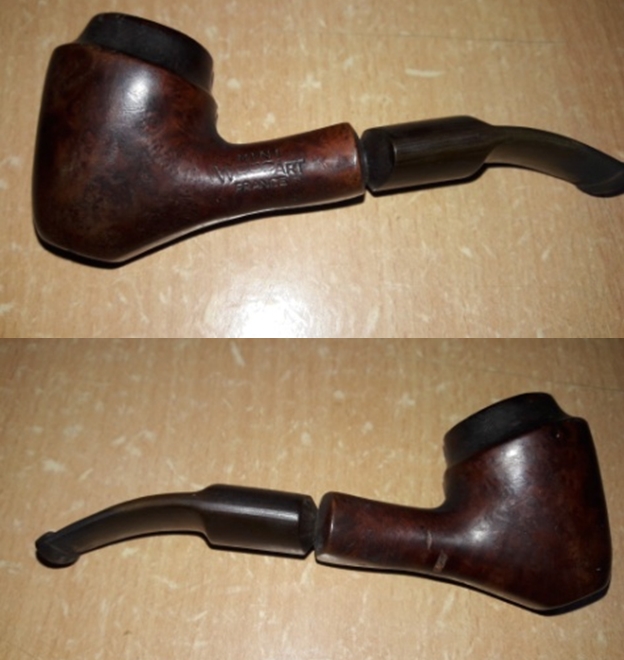
The fourth and the last pipe that I worked on simultaneously was another pipe that I had purchased on eBay along with the Rolex vest pipe. I was attracted to its vase like shape and through all the dirt and grime some beautiful bird’s eye grains peeked and beckoned me for help. The shank end flares out and the chunky, short and broad, 1/4 bent saddle stem with a conical tenon end makes for a very interesting appearance to the overall pipe. The appearance of this beauty was beat, the rim appeared to be damaged and there were a few prominent fills which appeared like blistered wounds. But, nevertheless, it is one handsome, more like cute, looking pipe!!!!

The stummel surface boasted of beautiful swirls of grains interspersed with bird’s eye along the sides of the stummel and shank, while contrasting cross grains adorn the top and bottom of the shank extending to the back and bottom of the stummel. The left hand of the shank is stamped as “MINI” over “WOODART” over “FRANCE”. The bottom of the flared out shank end bears the model number “# 856”. The saddle top of the stem bears the logo of “W” in an oval. This stem logo was revealed later after the stem had been soaked in hydrogen peroxide solution.I could not find any information about this brand on Pipedia.com or rebornpipes or anywhere on the internet. However Pipephil.eu does make a mention of this brand and even has a picture of a pipe with similar stampings (http://www.pipephil.eu/logos/en/logo-w3.html#woodart), but no further information was available!

INITIAL VISUAL INSPECTION
As I had noted earlier, this little pipe was in a sorry and battered state. There is not a single surface on the stummel which does not have either a dent or a fill or a chipped surface. The stummel is covered in oils, tars, sticky grime and dust, through which one can make out the beautiful grains all round. The overflow of lava has not only covered the area between the narrow top portion and rest of the bowl, but has spilled over to the back of the bowl and accumulated in the area where the shank meets the bowl. There are a large number of dents, dings and scratches prominently seen on the edge below the neck of the vase like stummel shape. There are a few major fills in the stummel, the most prominent ones being to the right side on the shank. These will need to be addressed. The bowl is narrow and tapers down towards the draught hole. The chamber has a thin layer of cake, but the appearance indicates that there may be issues with the walls of the chamber. The mortise is full of oils, tars and gunk and restricts air flow. The rim top is where maximum damage is seen through the overflowing lava. The inner and outer edge of the rim is peppered with dings, dents and chips, a result of striking the rim edge against a hard surface while cleaning after a smoke. The bowl is completely out of round with undefined rim edges. This will have to be taken care of without losing too much of briar estate and will be a challenge to achieve desired results. The vulcanite stem is so heavily oxidized that it appears brown in color!!!! The upper surface of the stem has very light tooth chatter towards the button end while the lower surface has a few deep bite marks with damage to the lip edge. This issue should not be a major headache to address. The tenon is filled with oils and tars, restricting flow of air through the airway.THE PROCESS
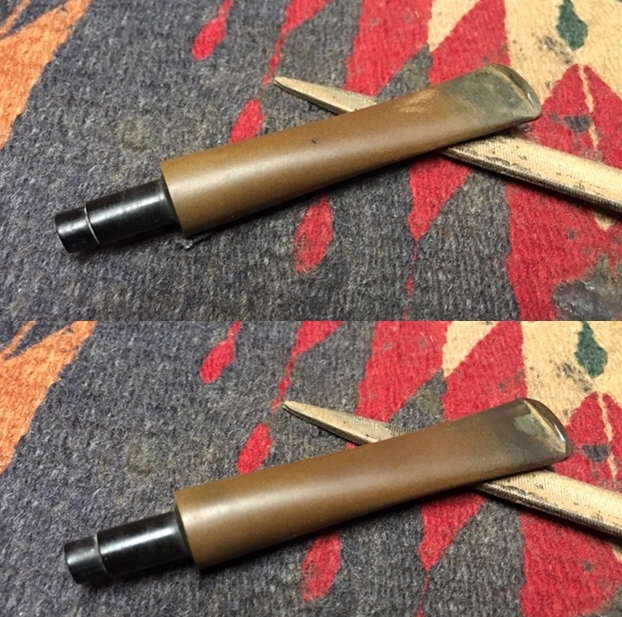
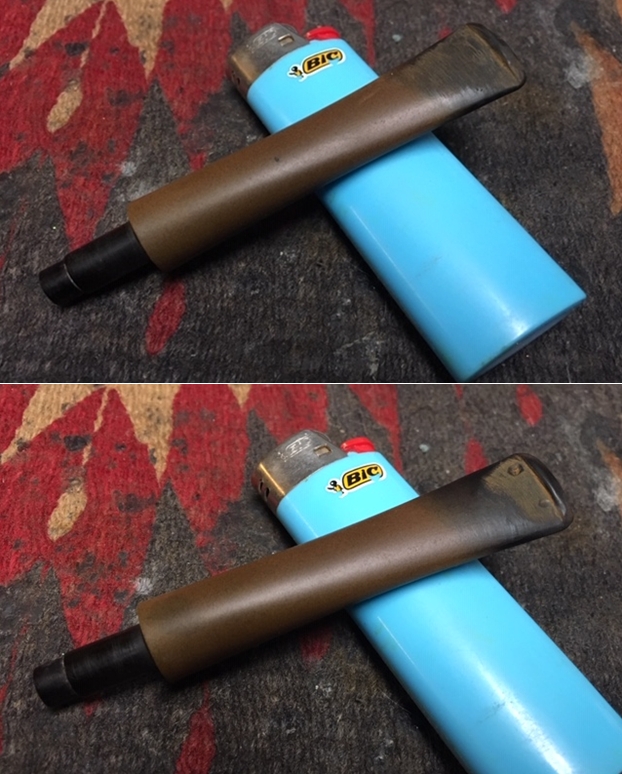
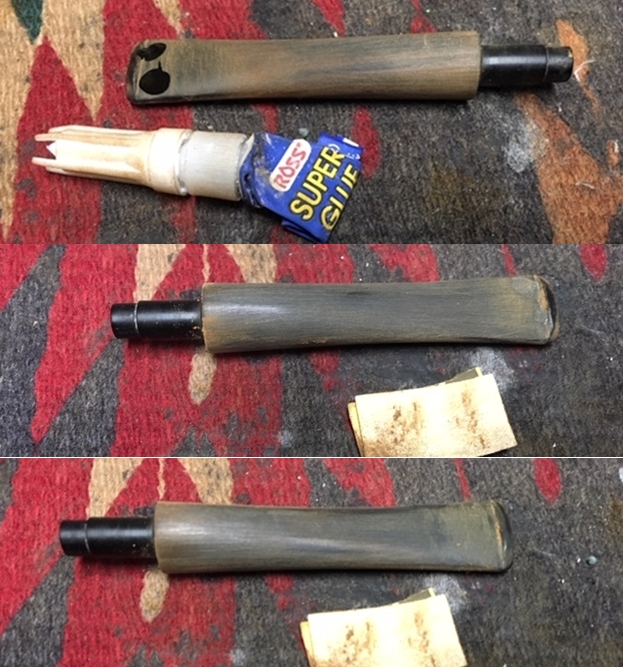
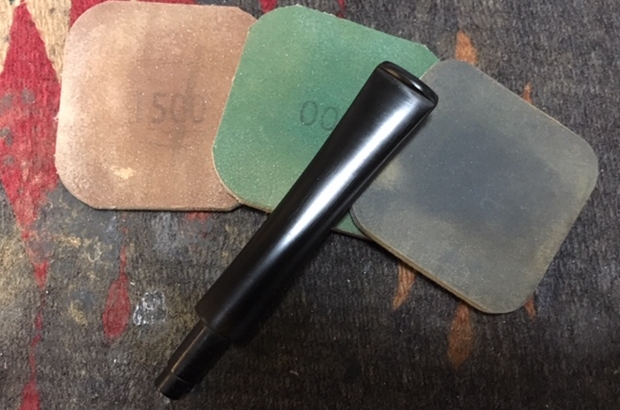
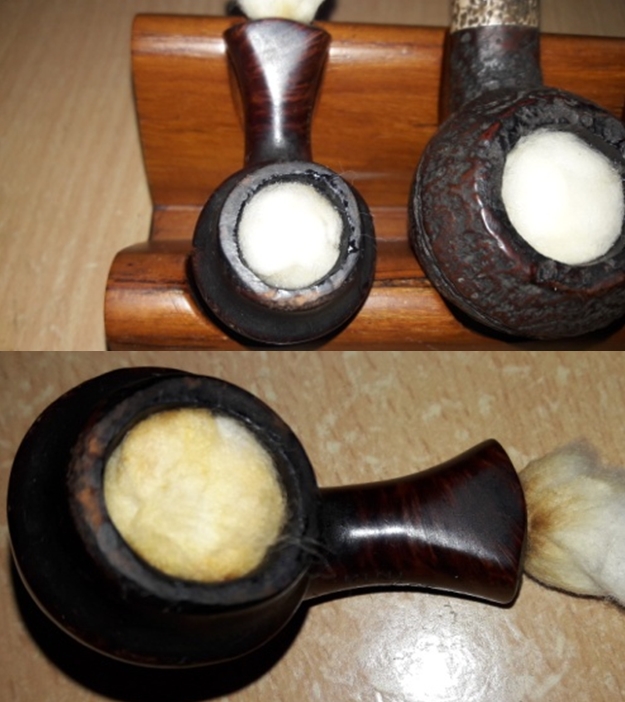
I started this project by flaming both the surfaces of the stem with a Bic lighter to raise the tooth chatter and bite marks to the surface. I followed it by immersing the stem in to the solution of hydrogen peroxide and hot water. Within 20 minutes the stem color changed to greenish brown, a sign indicating that the oxidation has been pulled to the surface. This also revealed the stem logo of “W” encircled in an oval, on the top surface.After the oxidation was raised to the surface, I removed the stem and wiped it with paper napkins. I ran a couple of pipe cleaners through the airway to clean it. Once I was satisfied that the internals of the stem are clean, with a 180 grit paper, I sand the stem surface to get rid of the raised oxidation. I followed it by filling the deeper bite marks and lip damage with a mixture of activated charcoal and CA superglue and set it aside to cure. While the stem was curing, I worked on the stummel. The small size of the chamber dictated that I could only use my smaller sized fabricated knife to remove as much cake as possible. I further sand the chamber walls with a piece of 150 grit sand paper wound on a thin but dry bamboo twig (which are abundant in the jungles in this part of my country) attached with a rubber band. This was followed by 220 and 400 grit sand paper and now we have a smooth and even surface on the walls of the chamber. This process exposed the walls of the chamber and confirmed my initial apprehensions. The chamber walls show a number of heat fissures on both the front wall as well as above the draught hole. I shall address this issue at the end by coating the chamber wall with a mixture of activated charcoal and yogurt. I wiped the insides of the chamber with a cotton pad dipped in isopropyl alcohol. I cleaned the mortise using hard bristled and regular pipe cleaners, dental spatula and shank brush dipped in isopropyl alcohol. I continued with the cleaning of the chamber by giving it a salt and alcohol treatment. I packed the chamber, just below the rim, with cotton balls. I stretched a cotton ball into a thick wick, tapering at one end, and inserted it in to the shank and pushed it as far inside as I could using a straightened paper clip. I find that cotton balls work just fine in drawing out all the tars and smells from the mortise and the bowl. I topped the bowl with alcohol again after 20 minutes when the alcohol level had gone down and set it aside overnight for the cotton and alcohol to do its intended job. The next day, the cotton and alcohol had fulfilled its intended task. I removed the cotton balls and ran pipe cleaners through the mortise to clean out all the loosened tars and gunk. The internals of the stummel is now clean and fresh. I set the stummel aside to dry out. While the stummel was drying, I worked the stem. I covered the stamping on the stem with whitener using a whitener pen. The filling of charcoal and CA superglue had cured and using a needle file, I sand the filling to match the surface of the stem. For a better blending, I further sanded the entire stem with 220 followed by 400 and 800 grit sand paper. This helps to reduce the sanding marks left behind by the more abrasive 220 grit paper. To bring a deep shine to the vulcanite stem, I went through the complete set of micromesh pads, wet sanding with 1500 to 2400 grit pads and dry sanding with 3200 to 12000 grit pads. I wiped the stem with alcohol after each pad and rubbed it down with Extra Virgin Olive oil. The internals of the stem was cleaned out using alcohol and pipe cleaners. The finished stem is shown below. With a sharp, thin knife I removed the entire old and loosened fills and cleaned the surface with alcohol. These are now ready to take on a fresh fill. Now, it was the turn of the stummel to get cleaned up. Using a hard bristled tooth brush dipped in undiluted Murphy’s oil soap, I very deliberately scrubbed the stummel, cleaning the surface thoroughly. I cleaned the rim too. However, the grime, oils and tars covering the stummel and rim surface was so stubborn that I could not get rid of it completely.  The stummel and rim top was dried using paper napkins and soft cotton cloth. I mixed briar dust and CA superglue and filled all the major gashes while the minor ones were filled with clear CA superglue. I set the stummel aside to dry the filling.After the filling had dried out overnight, I sand the filling with a flat head needle file to match the surface of the stummel.Before sanding the entire stummel to match the fills and clean the stubborn grime, I decided to address the out of round and charred rim top by topping the rim top on a 220 grit sand paper. I was careful not to sand too much to maintain the original profile of the stummel. Topping also helped in reducing the dents and chipping to the outer edge of the rim. The rim top, after topping, looks much better.However, the inner edge profile was still uneven giving the bowl an out of round appearance. Also the outer rim edge had a few dents, chips and scratches. I addressed these issues by creating a bevel on the inner and outer edge of the rim. The results are pleasing to the eye.The issue of damaged rim was addressed to a great extent at this stage. However, the issue of addressing the large number of dent, dings and scratches prominently seen on the edge below the neck of the vase-like stummel shape still remains. I decided to reduce/ eliminate, if possible, these dents and dings by steaming them out. I heated my fabricated knife over the flame of a candle, placed a wet Turkish hand towel over the marked areas and steamed out the dents by placing the heated knife over the towel. Though some dents were still visible, these were greatly reduced when compared to before steaming.Thereafter began the arduous, painstaking and time consuming process of matching the repairs by sanding the entire stummel with 220 followed by 400 and 800 grit sand papers. I was able to match all the repairs and dents and dings on the lower edge of the stummel by upward sanding motion while moving up from heal and downward motions while moving down from the rim top. I was satisfied with the appearance of the stummel after this sanding. I wanted to highlight the grains seen and further blend all the repairs carried out to the stummel. To achieve this aim, I sand down the stummel and rim top using micromesh pads, wet sanding with 1500 to 2400 grit pads and dry sanding with 3200 to 12000 grit pads. The stummel now has a deep shine with grains popping out with magnificent contrast. I rub a small quantity of “Before and After Restoration Balm” in to briar and let it rest for a few minutes. The balm almost immediately works its magic and the briar now has a nice vibrant appearance. I further buff it with a horse hair shoe brush. To finish, I re-attach the stem with the stummel. I mount a cotton cloth buffing wheel on to the Dremel (actually it is not the brand machine, but a local machine which is similar).  I set the speed at about half of the full power and applied White Diamond compound to the entire pipe. I wiped/ buffed the pipe with a soft cotton cloth to clear it of any leftover compound dust. I then mounted another cotton cloth wheel on to the polishing machine and applied several coats of carnauba wax. I finished the restoration by giving the entire pipe a rigorous hand buffing using a microfiber cloth to raise the shine further.The completed pipe looks lovely, fresh and vibrant; the photographs speak for themselves. The beauty, size and shape of this pipe compel me to wonder if this pipe could once have been nestled in the hands of a lovely lady in Paris. If only the pipe could tell the story of its journey till date…Cheers!! PS: – Once I had finished with all the buffing and polishing, only one issue remained to be addressed; heat fissures on the walls of the chamber. I coated the walls of the chamber with a mixture of activated charcoal and yogurt. Once dried, this will speed up the formation of cake and protect the chamber from a burn out.
Sprucing up a Sparingly Used “Rolex” Vest Pipe


Blog by Paresh Deshpande

The third pipe that I worked on simultaneously is a small folding “Rolex” vest or pocket pipe which I had purchased on eBay. I generally avoid making purchases on eBay as I am not sure as to what I shall land up with. I know there are all kinds of checks and balances on the site to prevent fraudulent transactions and various guarantees protecting the buyer, but still the fear of unknown prevents me from making purchases. However, in this case, I found the pipe interesting with the asking price to my liking and the seller had advertised it as rarely used and from the pictures, it appeared so. I decided to add it to my collection and made the purchase.

A long wait of 43 days followed and finally the pipe was received by my wife as I was away at my duty station. She immediately gave me a call to confirm receipt and sent me pictures of the pipe. She confirmed that the received pipe was indeed in excellent condition and would not require much work. This coming from her allayed all my fears about the overall transaction. A few months later, I went on some well earned leave and on return bought it with me to restore.

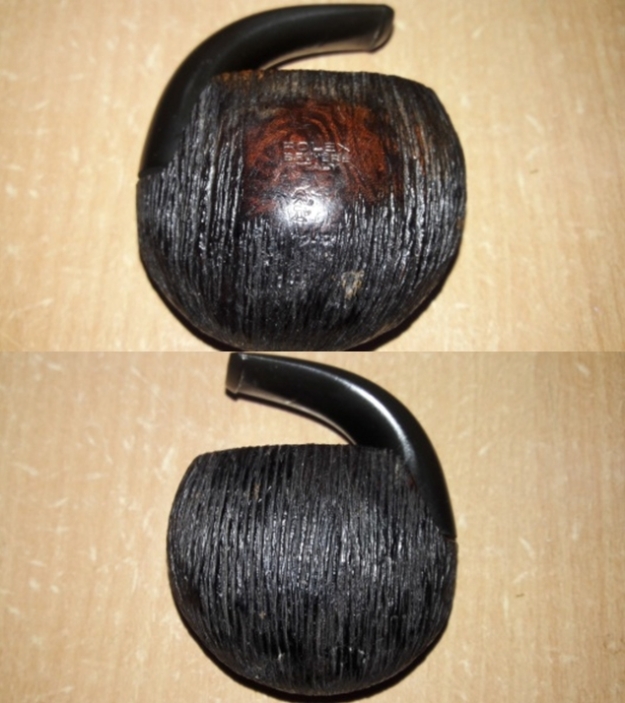
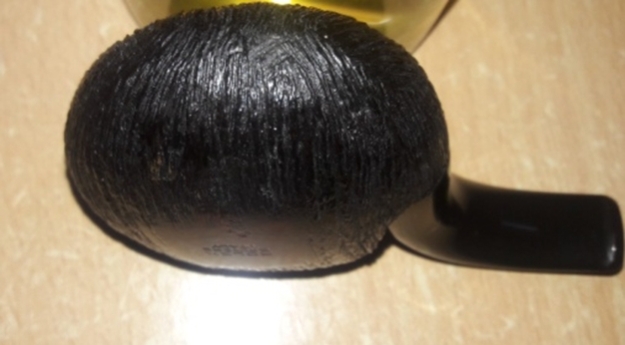
This round and flattened pipe has vertical thinly wired rustications running from the heel of pipe to the rim. The right side of the surface has a smooth surface in the center which bears the only stamping seen on this pipe. It is stamped as “ROLEX” over “BRUYERE” over “ITALY”. The bottom of the smooth surface has a stamp picturing a gnome. There is no other stamp on the stummel or the stem.I searched the internet for some information on this pipe and also on dating this pipe. I visited Pipedia and learnt that Rolex vest pipes were made by Brebbia of Italy. However, I hit a jackpot when I visited rebornpipes which really has a wealth of information on nearly every pipe ever made and served on a platter!!! It is here that I became aware that it is the picture of a gnome that adorns this pipe and that the gnome was the logo Brebbia used to put on its pipes from 1953 to 1956 (https://rebornpipes.com/2016/08/24/an-interesting-brebbia-silver-as1-square-shank-brandy/). Thus, is it possible to assume that this Rolex vest pipe was made between the years 1953 to 1956?????
INITIAL VISUAL INSPECTION
As is commonly seen on rusticated or sandblasted pipes, the crevices in these will be filled with dust, dirt, oils, tars and grime from all the years of smoking and storage. This Rolex vest pipe is no exception to this observation. The tight vertical rustications are filled with dust. The fact that the vertical rustications are dirty and filled with dirt is accentuated more due to a very dark reddish brown stain on the smooth patch on the stummel which bears all the stampings seen on this pipe. The briar is looking nice and a little TLC will further enhance its appeal.The bowl is oval and pinched at either end along the length of the pipe. The chamber is filled with a thin layer of cake which should make for an easy clean. However, the shape of the bowl and chamber will prevent the use of a regular pipe reamer. I would not be able to even sand it with a sand paper pinched between my fingers. Improvisations will have to be made to remove the cake build up. The short mortise is relatively clean and air flow is open and free. The rim top has the same thin wired rustications and is filled with dirt and dust. The inner and outer edge of the rim is in pristine condition with no dings or dents. The full bent vulcanite stem is so heavily oxidized that it appears greenish brown in color!!!! There are two major bite marks on the lower surface of the stem. The upper surface has a little debris stuck near the bottom of the lip. These issues should not be a major headache to address. The lip edge on both side is crisp and without any damage. The quality of vulcanite is good.THE PROCESS
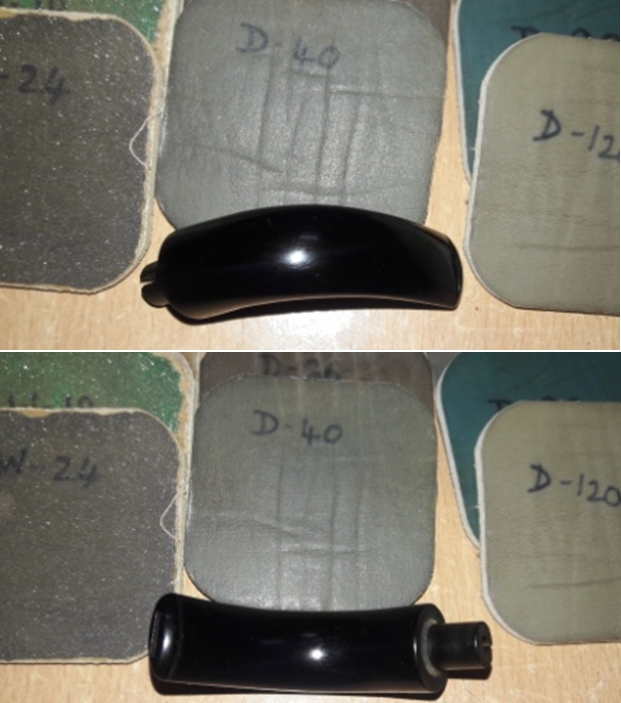
As I had written in my write-up on John Bessai, I had learnt the use of Hydrogen Peroxide and hot water solution to raise the stem oxidation to the surface. Since I had decided to use this method, I had immersed stem of this pipe along with the stems of the John Bessai and Mini WoodArt pipes to make maximum use of the solution. Before I immersed this stem in the solution, I flamed both the surfaces of the stem with the flame of a Bic lighter. This helped in raising the deep bite marks on the lower side of the stem to the surface. The result of this flaming was so fantastic, that there were little or no traces of any tooth indentation on the lower and upper surface. This was followed by immersing the stem in to hydrogen peroxide solution. Within 20 minutes the stem color changed to greenish brown, a sign indicating that the oxidation has been pulled to the surface.I used a 180 grit sand paper to sand out the raised oxidation and rubbed a little Extra Virgin Olive oil in to the stem surface. I wiped the stem again and worked on it with micromesh sanding pads – wet sanding it with 1500-2400 grit pads and dry sanding with 3200-12000 grit pads. Between each set of three pads I rubbed the stem down with extra Virgin Olive Oil and also gave it a final rubdown after the 12000 grit pad. I set the stem aside to dry while I worked on the bowl. I cleaned the stem airway with pipe cleaners dipped in isopropyl alcohol. I removed the cake from the chamber by scraping it with my smaller sized fabricated knife. I found the chamber to be solid and without any heat fissures or cracks. To finish the chamber, I wound a piece of 150 grit sand on a thin but dry bamboo twig (which are abundant in the jungles in this part of my country) attached with a rubber band, and used it to sand the inner walls. This was followed by 220 and 400 grit sand paper and now we have a smooth and even surface on the walls of the chamber, ready for taking on a fresh layering of carbon cake!! This was followed by cleaning the short mortise with qtips, pipe cleaners and shank brush dipped in isopropyl alcohol. This further eliminated all the traces of old smells from previous usage.
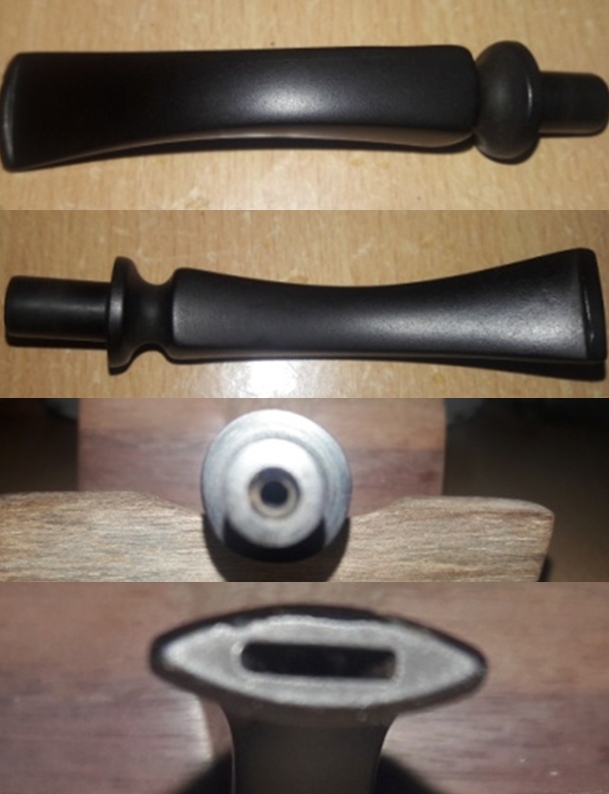
Now, it was the turn of the stummel to get cleaned up. Using a hard bristled tooth brush dipped in undiluted Murphy’s oil soap, I very deliberately scrubbed through all the vertical rustications, cleaning them thoroughly. I cleaned the rim too. The stummel and rim top was dried using paper napkins and soft cotton cloth. I set the stummel aside to dry out naturally. I started work on the stummel which has dried by now. I rub a small quantity of “Before and After Restoration Balm” in to briar and let it rest for a few minutes. The balm almost immediately works its magic and the briar now has a nice vibrant appearance. I further buff it with a horse hair shoe brush. To finish, I re-attach the stem with the stummel. I mounted a cotton cloth buffing wheel to the Dremel (actually it is not the brand machine, but a local machine which is similar). I set the speed at about half of the full power and applied White Diamond compound to the entire pipe. I wiped/ buffed the pipe with a soft cotton cloth to clear it of any leftover compound dust. I then mounted another cotton cloth wheel on to the polishing machine and applied several coats of carnauba wax. I finished the restoration by giving the entire pipe a rigorous hand buffing using a microfiber cloth to raise the shine further.The completed pipe looks lovely, fresh and vibrant; the photographs speak for themselves. Thank you for having the patience to reach this far while reading the write up.

Rejuvenating a Captivating Savinelli Punto Oro Corallo di mare 510ks Rusticated Bulldog


Blog by Dal Stanton

This exquisite line of Savinelli Punto Oro Corallo di mare came to me in a single Lot of 66 that I acquired off the eBay auction block.  As I’ve referenced several times before, the Lot of 66 has been very good to me and this pipe confirms this again.  I included a picture of the Lot of 66 below with an arrow marking the Savinelli.  Looking at this picture reminds me of many pipes that have found new stewards and some that have made it to my own personal collection!  Only one regret – the two clay pipes immediately below the Savinelli Punto Oro Bulldog did not make it in the transit from the seller.  Overall, I am very pleased!This Savinelli Punto Oro got the attention of a Texan named Charles in my online collection called For ‘Pipe Dreamers’ Only!.  He contacted me about commissioning the pipe and was hoping to get it by his 50th birthday on December 2.  My first thought was, what a great present for yourself!  Sweet!  Secondly, I thought about the other commissioned pipes in the queue for which other pipe men and women were patiently waiting.  Regretfully, I explained this to Charles and he insisted that I not bump anyone out of the line – I appreciated that!  As I’ve worked the queue down, I have communicated to Charles letting him know the progress and I told him that I knew I wouldn’t have it to him by his birthday, December 2, but I felt very confident that he could celebrate the New Year with this Savinelli.  Well, tomorrow is December 2, and the Savinelli is now on my worktable.  Here are pictures that drew Charles’ interest and why he was willing to wait – by the way, Happy Birthday Charles! The nomenclature is stamped on a smooth briar panel on the lower left of the diamond shank.  It reads, ‘SAVINELLI’ [over] PUNTO ORO [over] 510ks [over] ITALY.  To the left of the COM is the Savinelli stamp.  The stem has a single dot on the upper left panel of the diamond saddle stem. Ever since I started restoring pipes and came into contact with my first Savinelli restoration, a Tortuga, I have appreciated this Italian pipe name.  Before and after WW II, when Italian pipe production was known more for volume than for quality, and not considered by many in the same league with other European pipe makers, Achille Savinelli Jr.’s gravitas took shape to make Savinelli one of the premier names in pipe making today.  This clip from the Pipedia Savinelli article summarizes this well:
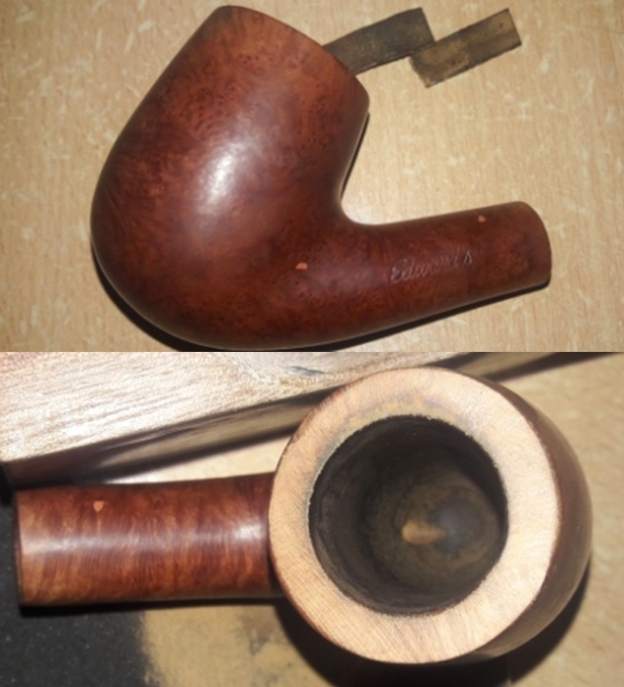
Savinelli Pipes began production in 1948 and, although the pipes were of a superior quality and unique in their aesthetic, the brand wasn’t an immediate success. Few new brands are. It takes time for the public to catch on. Retailers were skeptical of placing Italian pipes alongside their best sellers from England or France, and customers, in turn, were hesitant to purchase a Savinelli over pipes by already established, foreign brands. Achille Jr. stood by his product, however; he knew it was only a matter of time before the world realized that these pipes were of a far superior quality, capable of competing with even the most well-established pipe manufacturers in the world. As it turns out, he was right. In less than a year, Savinelli pipes gained prestige in markets all across the world—heralded for their delicate balance of innovation and tradition, of form and function. Savinelli pipes were placed alongside the likes of Dunhill and Comoy’s in tobacconists from the United States to Europe, and, in time, this exposure modified Italy’s reputation; it was not only the premier exporter of briar, but now a premium source of fine briar pipes. (Picture courtesy of Doug Vliatchka)

The shape number listed as a 510ks is an interesting version of the well-known and loved Bulldog shape.  I’ve taken a clip of the 2017 Savinelli Shape chart from the middle of the chart.  This section conveniently shows the 510ks in the center, 3rd pipe down.  Comparing this style of Bulldog to the other two Savinelli Bulldog styles (623 & 624ks) pictured below, the right lower two pipes, the differences are interesting.  The 623 and 624ks are more what I would call traditional or classic Bulldog shapes.  Whereas the 510ks, is taller with a more distinct volcano shaped cone.  It’s an interesting variation and I like it.

The Punto Oro (Gold Point) name is a higher quality line produced by Savinelli.  From the same Pipedia article above, the discussion was the quality of briar used in the manufacturing of Savinelli pipes.  This helpful anecdotal information about the Punto Oro line was made in the article:

This focus on quality begins with sorting, which is conducted in two distinct steps. In the first stage, an artisan sorts through a massive pile of briar blocks, the quality of which can range from complete scrap to pristine gems destined to become Punto Oros or Giubileos.

Perhaps the most interesting information I found on Pipedia was the special Punto Oro edition that Lot of 66 had provided me – the Corallo di mare, or ‘Coral of the Sea’ line.  Of course, the most striking and unique characteristic of this pipe is the amazingly pronounced and expressive rusticated light hued briar.  Pipedia provided an undated page of a catalog of the Savinelli Punto Oro Corallo di mare line.  I include the entire page here:The information block on the bottom is a gold mine of information about the characteristics of this unique briar.   It is described as porous like Block Meerschaum – which is interesting because when I first saw this pipe, I mistook it for Meerschaum until I got a closer look. As with Meerschaum, the claim is that this briar does not need to be broken in.  Yet, most interesting to me was the description of the pigmentation also being like Meerschaum – the more one smokes it the more the pipe will darken into the honey yellow patina.  Fascinating!  This bit of information gave me a new perspective and appreciation for the vintage of the Savinelli Punto Oro Corallo di mare that Charles had commissioned.  The patina on the pipe was a sign of its aging and vintage, as with a Meerschaum pipe.  I take another picture of the briar to show this patina. Wow!The pipe is generally in good condition but needs extensive cleaning.  The chamber has very light cake buildup, but the rim is darkened some by what I believe to be from the lighting practices of the former steward.  The backside of the rim has some scorching.  There is additional darkening from oils and grime.  The stummel is darkened from the patina development from the information related above, but it should lighten some when cleaned in the extreme ridges and peaks of the rusticated briar surface. The stem doesn’t appear to have much oxidation and the bit has very little tooth chatter.  I’m hopeful that this restoration will be more of a refresher!

With a much better understanding of the quality and characteristics of the Savinelli Punto Oro Corallo di mare Bulldog before me, I begin the restoration by adding the stem to a soak of Before & After Deoxidizer along with other pipes and their stems, that have already completed the restoration process.  I let the Savinelli’s stem soak for several hours. After several hours, I remove the Savinelli stem from the soak allowing the Deoxidizer to drain and again pushing a pipe cleaner through the airway to remove the fluid.  I then wipe of the raised oxidation with a cotton pad wetted with isopropyl 95%.  I follow this by wiping the stem with light paraffin oil which cleans it further and revitalizes the vulcanite.Now turning to the stummel, I use undiluted Murphy’s Oil Soap and a bristled tooth brush to clean the rusticated surface with its myriads of nooks and crannies!  I also use cotton pads on the smooth panel and rim.  For the rim, a brass wire brush helps to remove the lava flow.  I find that the tight crevices on the shank are the most uncooperative and I use a sharp dental probe to break up the compacted dirt.  The first picture below shows the compacted crud – the whitesh hue on the shank in the grain is dirt. After a lot of scraping and brushing, finally, I rinse the stummel with cool tap water and it looks great.  The first 4 pictures are before, and then after. Now, after cleaning. Well, I don’t normally do what I just did.  I was so taken with the rusticated finish that I forgot my usual practice of reaming the chamber before cleaning the externals.  Well, back tracking, I use the Pipnet Reaming Kit to clean up the very light cake in the chamber. I quickly discover that there is no cake really to ream with the blade heads, so I graduate quickly to scraping the walls and reaching down to the floor of the chamber with the Savinelli Fitsall Pipe Tool.  I follow by sanding the chamber with 240 grade paper wrapped around a Sharpie Pen and finish by wiping the carbon dust from the chamber with a cotton pad wetted with alcohol.  That was a quick chamber clean up and the pictures show the progress.  After clean, I inspect the chamber walls and it looks great – no heating problems are evident. Next, I turn to the internal cleaning of the mortise and airway.  I discover again, that this pipe has been cleaned well.  I expend one pipe cleaner and cotton bud and I’m convinced that the internals are clean – this doesn’t happen often, but thank you!Before turning to the stem, I decide to push forward with the one noticeable challenge on this stummel – the charred rim.  The conundrum is, if I sand it off by introducing a gentle internal rim bevel, I sacrifice a bit of that valuable rusticated rim real estate which I hate to do.  I scrubbed it well earlier with a brass wire brush which cleaned the rest of the rim nicely, but the inner rim is charred and there isn’t a remedy for that.  The charring is on the front right and the back left – diagonally.  I take another close-up picture from the steward perspective to show what I’m seeing.  Taking the conservative route, I decide to use the brass wire brush again.  I dip the brush in Murphy’s Soap, concentrating on the scorching, I scrub.  Amazingly, after some time, the scorched, damage briar starts giving away and I see more healthy briar.  You can still see where the most damage was (third pictures – lower right), but it will not draw as much attention to itself after the stummel is completed.  I may still need to sand a bit on the inner rim lip, but not a lot.  The pictures show the progress.  I’m amazed. I turn to the stem and use the heating method to deal with the very light bite dents on the bit.  I take a close-up of both the upper and lower bit to show what I see.  Using a Bic lighter, I paint the areas with the flame to heat and then expand the vulcanite which hopefully reclaims its lost space or at least, minimizes the compressions.  Painting the bit with the open flame of the Bic works like a charm as the compression are greatly minimized allowing me easily to sand out the dents using 240 grit paper.  While sanding, I also use a flat needle file to freshen the button lips.  In order to erase the scratches of the filing and 240 sanding, I wet sand the entire stem using 600 grade paper and follow this by sanding/buffing with 0000 steel wool. Pressing forward with the stem restoration, using micromesh pads 1500 to 2400 I wet sand and follow by dry sanding with pads 3200 to 4000 and 6000 to 12000.  Between each set of three I apply Obsidian Oil to revitalize the vulcanite.  I love the gloss pop of the vulcanite after the micromesh cycles! With the stem drying, I look again at the stummel.  There is a light dark ring on the inner lip of the rim persisting.  It’s not a lot and I address it simply using 240 grade paper tightly rolled.  I do not really introduce a bevel but clean the residue scorching and it cleaned up quickly. There is only minor briar erosion on the inner rim where it was scorched – see second picture below on the left. I’ve been looking forward to this phase of the restoration, refreshing of this Savinelli Punto Oro Corallo di mare – Sea Coral.  This unique rusticated finish needs a bit more consideration regarding the approach toward finishing it.  The surface does remind me of coral (and maybe a bit of elephant skin!) and the light hue of this Corallo di mare line evident in the Savinelli advertisement I included above confirms this.  I take some additional close-ups focusing on the hue and texture. Here’s the question which reveals a concern.  The honey brown hue shows the patina of this briar as the information above described.  At this point in the restoration, with other pipes, I might apply Before & After Restoration Balm to enrich the briar.  My concern is that this might overly darken the light complexion of this Savinelli’s briar and I don’t want to do this.  If the briar is more porous than regular briar, as the Savinelli information indicates, it might ‘drink up’ the Balm and a darkened briar might result.  Ok, I’m curious.  I decide to test a spot to see what happens.  I isolate applying a small amount over the smooth nomenclature panel to the shank edge – the edge has some rustication, but not as pronounced as the forward part of the bowl.  Here is the result.It does darken the briar but wow!  The result is a deep honey hue which to me, enhances the appearance. I decide to apply the Balm to the entire surface, but very sparingly.  I put a very small amount on my thumb and rub the Balm into the rusticated surface very briskly and aggressively spreading it across the briar surface.  I also use a bristled tooth brush to brush the area thus helping to deliver the Balm into the crevices.  After completing the application, I again rub the surface aggressively with my thumb to make sure the Balm was spreading evenly over the surface.  I then use a 100% horsehair Kiwi shoe brush to brush the surface to lift the excess Balm and to buff it up.  The result to me looks good – I think.  It’s time to turn out the light and I let the stummel dry through the night.The next morning, I reunite stem and stummel and take a good look – liking what I’m seeing!  I mount a cotton cloth buffing wheel to the Dremel, setting the speed at about 40% full power and I apply the abrasive, Blue Diamond compound.  As I do this, I know I’ll have to pay the piper later – the compound will gunk up in the rustication and it will take a good bit of effort to remove it.  Even though I know this to be the case, I apply the compound because I like the textured highlights and nuanced shading that will result from the fine abrasion.  It will also light the hue which I like as well.  One additional benefit is that it teases out the grain of the briar in the rustication.  The application of Blue Diamond compound on the gnarly surface eventually obliterates the cotton buffing wheel and I switch to a new one.In this picture below, you can see the leftover compound residue which I’ll need to remove, but also look closely at the rusticated mountains – the grain is peaking out.  Doing this kind of detail work even on a rusticated surface transforms presentation subtly – like moving from a regular TV screen to a high definition display.Using a toothpick, sharp dental probe and a bristled brush I painstakingly AND patiently work on cleaning the briar surface of the leftover compound dust.  It’s a bear of a job, but to me, the results are worth it, at least in this case! Before waxing, again I use the horsehair brush on the rusticated surface and I give the bowl and stem a buffing with a felt cloth to remove the residual compound dust.

In the interest of full disclosure, as I finished the Blue Diamond process, I became increasingly dissatisfied with how dark the stummel had become after my application of Before & After Restoration Balm.  The rusticated surface lost the light hue that I believe characterized the Corallo di mare line.  What to do?  I failed to take pictures, but what I ended up doing was plopping the entire stummel in a soak of isopropyl 95% for a few hours to remove the applications on the surface.  I wasn’t sure that the alcohol soak would do the job and I wasn’t sure if it might damage the patina.  After a few hours I removed the stummel and after drying, I simply buffed the surface with a clean cotton buffing wheel on the Dremel.  Amazingly, the surface buffed up to a lighter hue that resembled the original.  I was thankful and relieved.

After the grand detour and experiment, I next mount another cotton cloth wheel, increase the speed of the Dremel to about 50% full power and strategically apply carnauba wax to the Savinelli Punto Oro. I increase the speed to provide more RPM and therefore more friction to heat and dissolve the wax, so it is received by the surface more evenly.  I avoid wax buildup as I slowly work the wax into the surface, rotating the Dremel’s buffing wheel to agree with the flow of the rusticated pattern I’m working on.  This takes a good bit of time methodically to work through and cover the surface.  I apply a few coats of wax to both stem and stummel and then buff up the surface using a horsehair brush and then a rigorous hand buffing with a microfiber cloth.

My, oh my.  When I complete a project like this, I marvel at what comes from the many processes the restoration brings to bear.  The rusticated surface on this Savinelli Punto Oro Corallo di mare emulates a coral landscape.  I the intricate design of the rustication process holds my attention as I study the contours.  The light hued briar is also eye catching and unique and my decision to soak the stummel in alcohol to clean it I believe was spot on.  Charles, from Texas, commissioned this pipe from the collection, For ‘Pipe Dreamers’ Only! and he will have the first opportunity in ThePipeSteward Store to bring this Savinelli home to Texas.  This pipe benefits the Daughters of Bulgaria – an effort here in Bulgaria helping women and girls who have been trafficked and sexually exploited.  Thanks for joining me!