Tag Archives: repairing a cracked shank

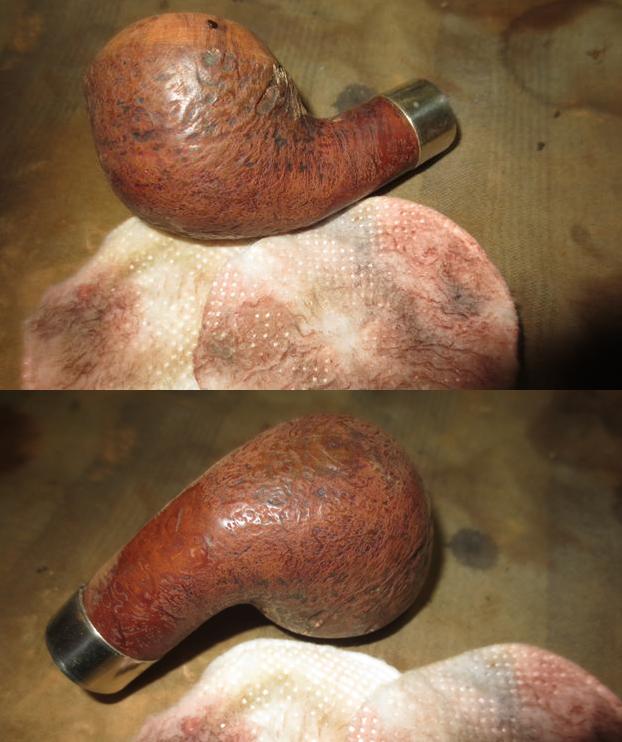
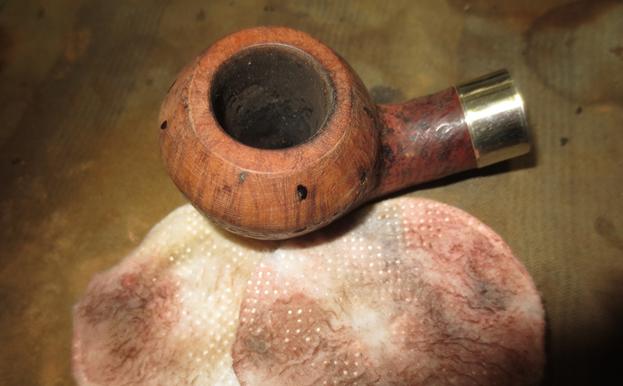
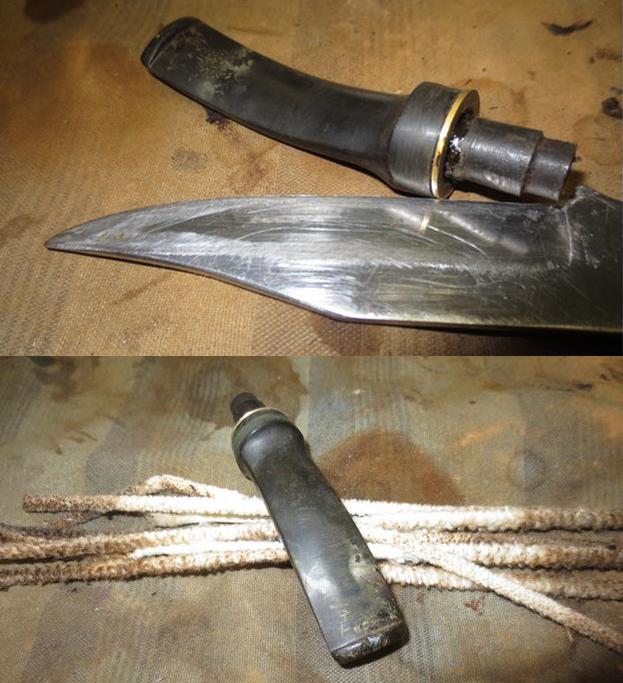
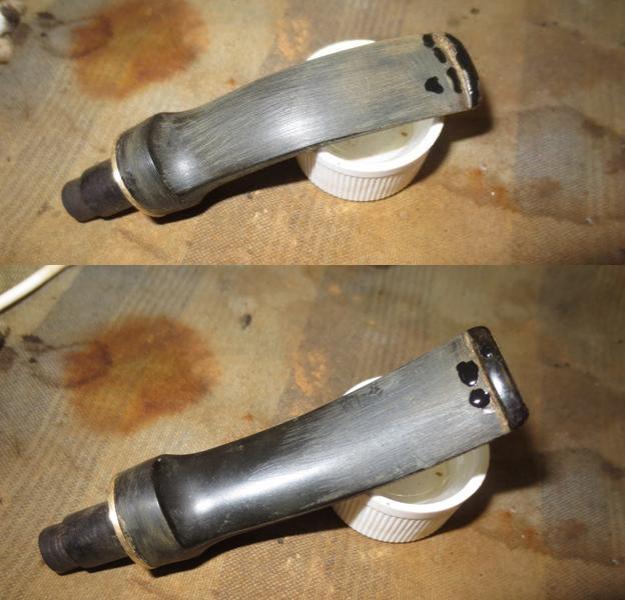
Easy Cleanup of a M&T Bent Horn Bulldog


Aaron Henson – 7/23/16

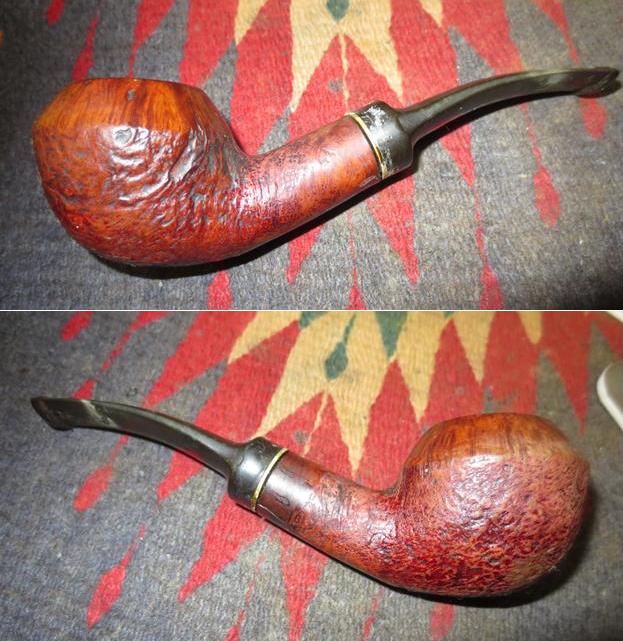
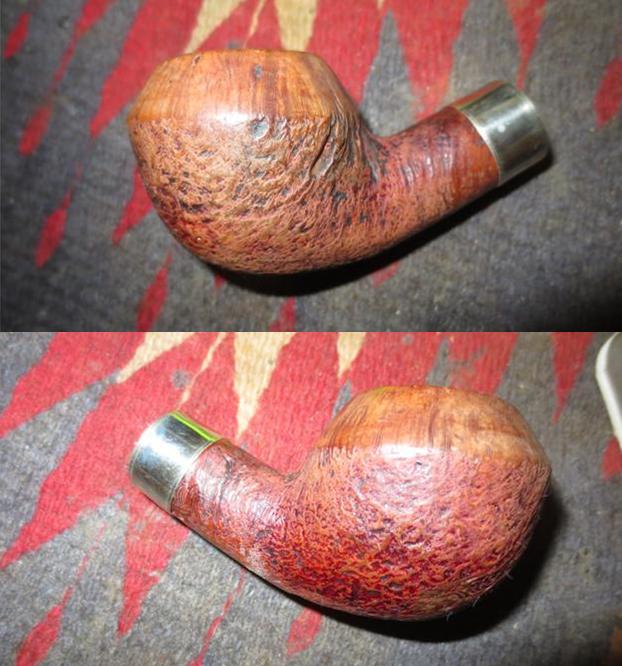
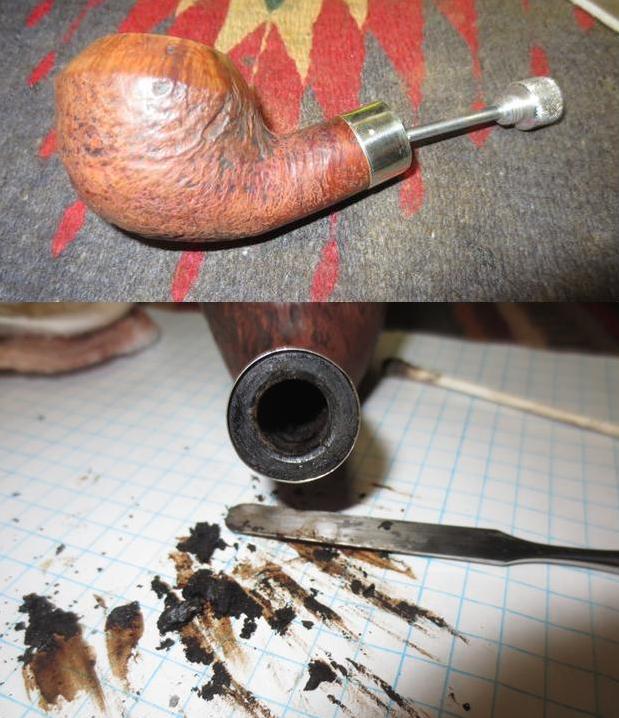
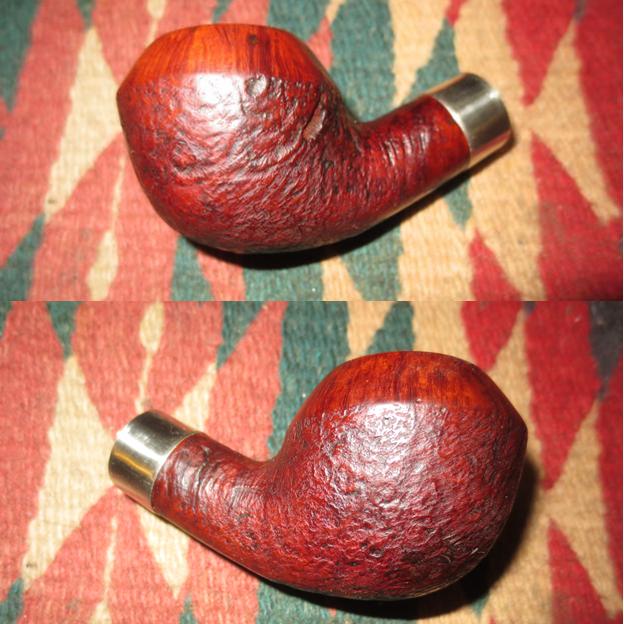
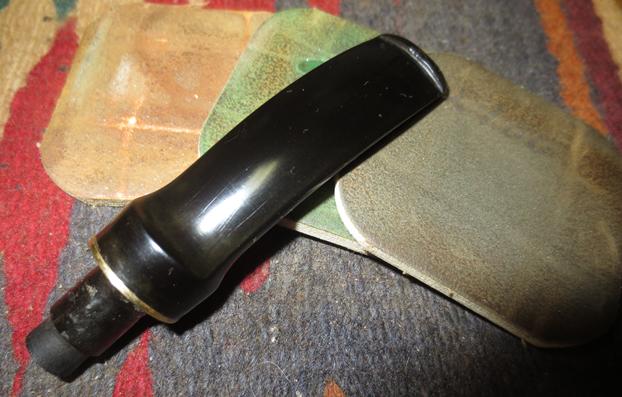
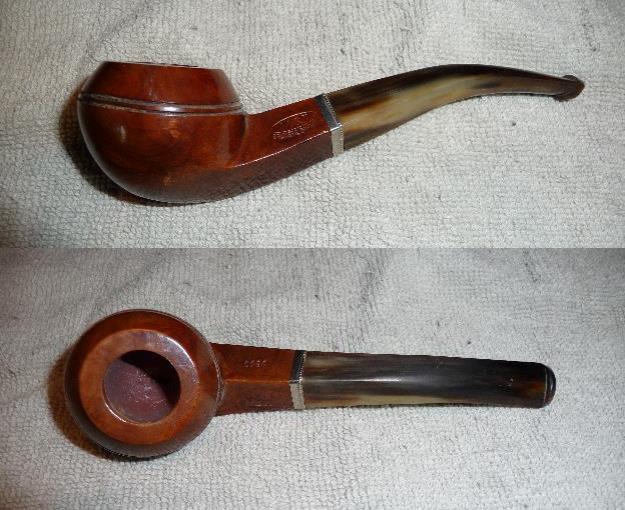
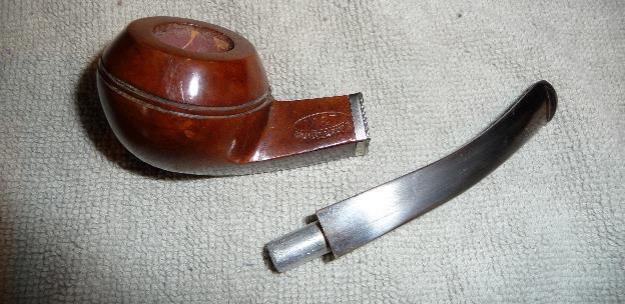
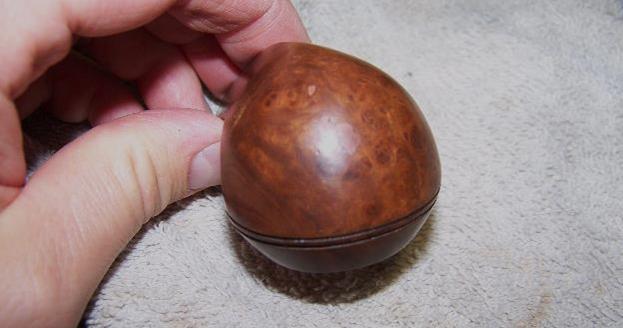
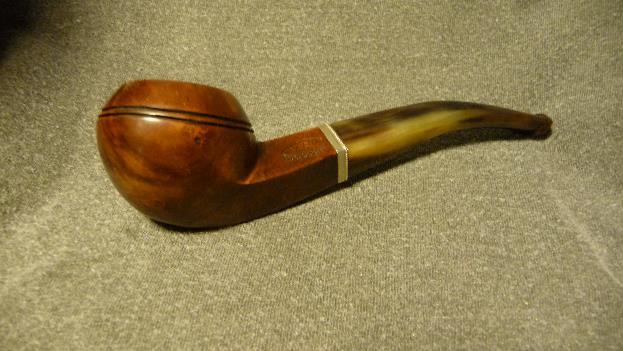
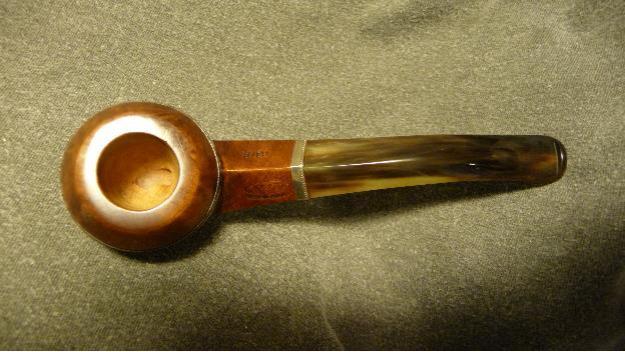
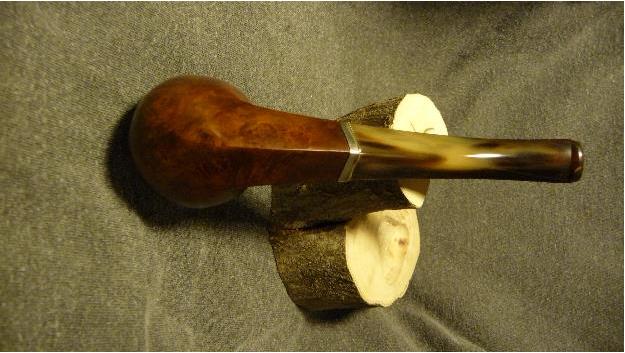
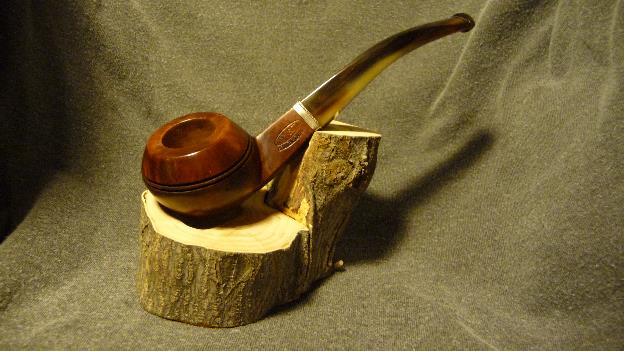
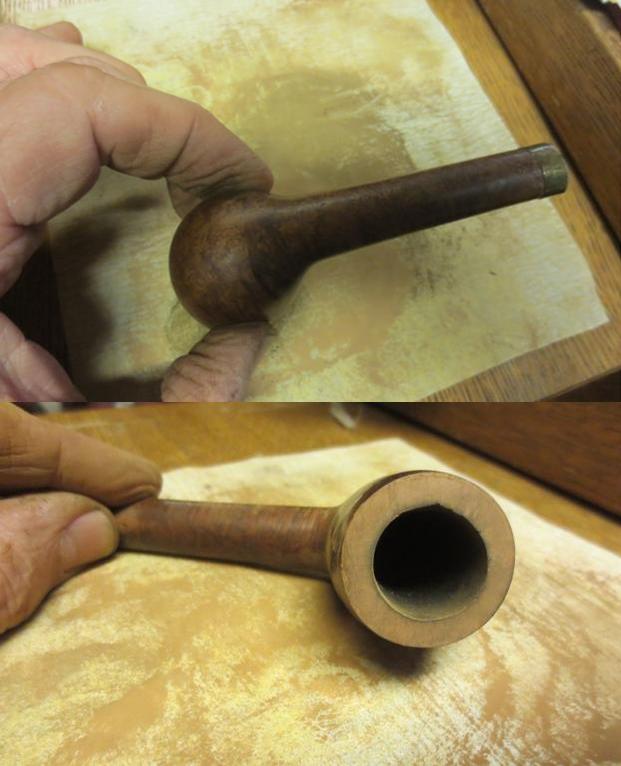
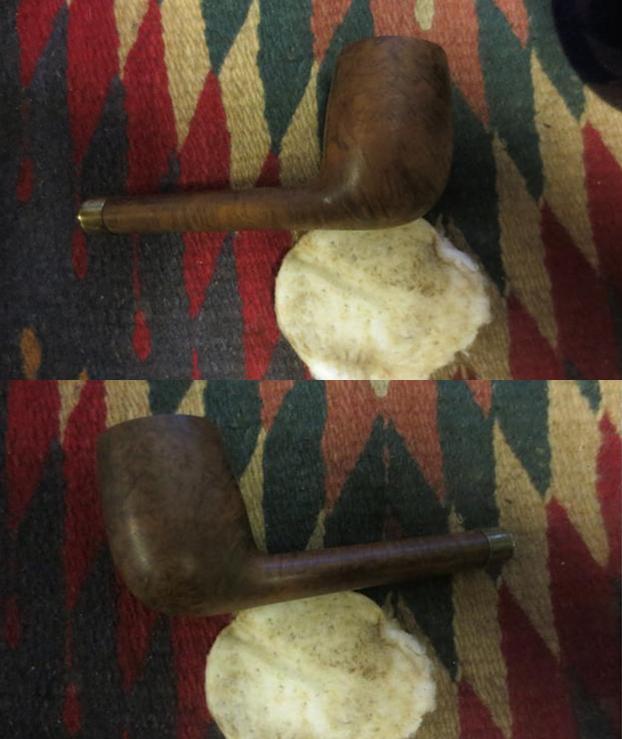
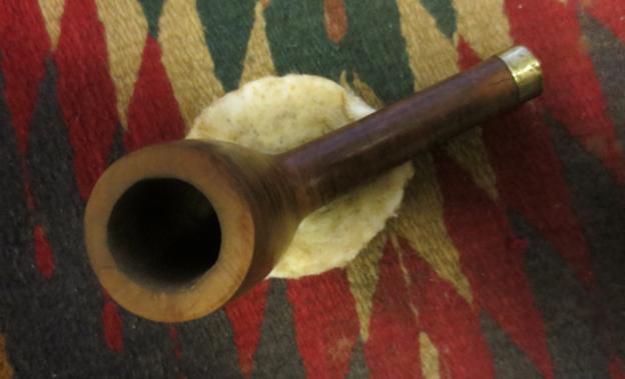
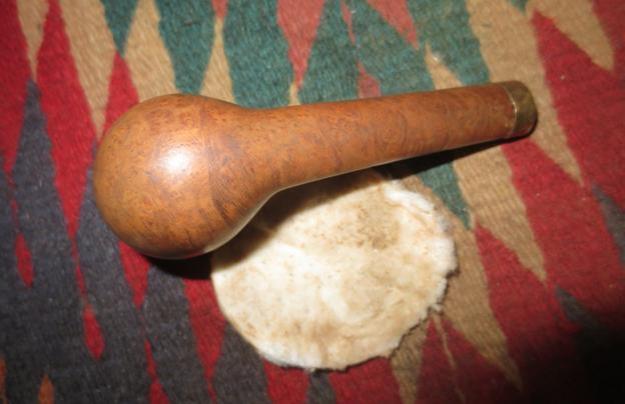
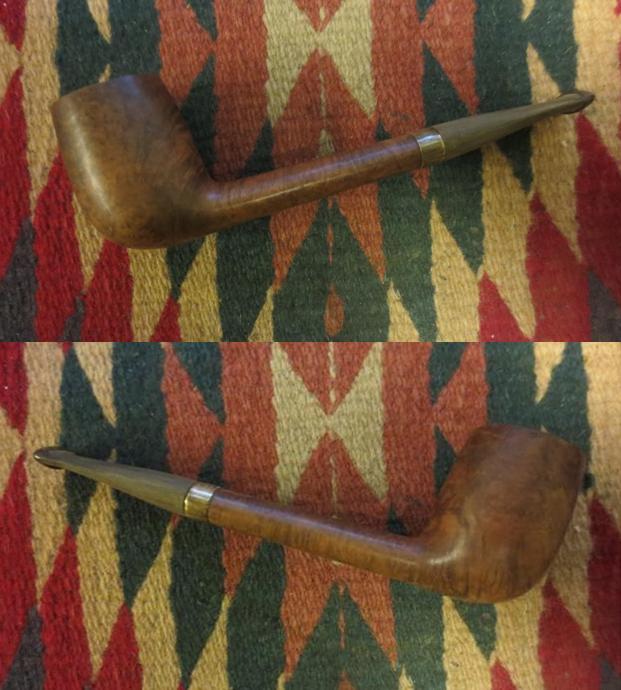
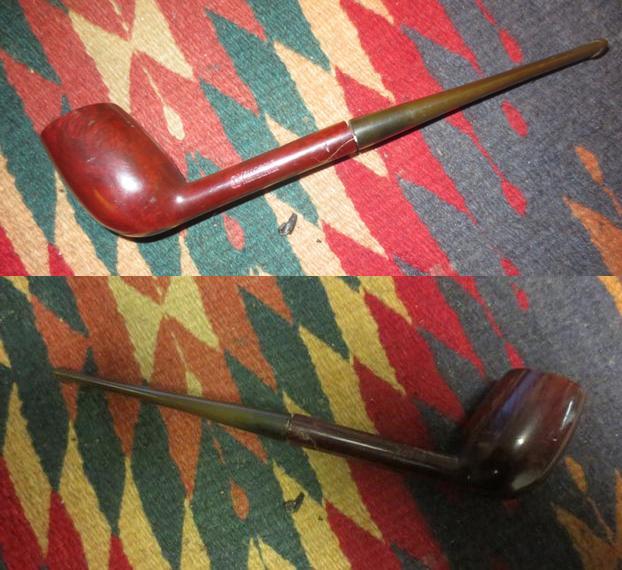
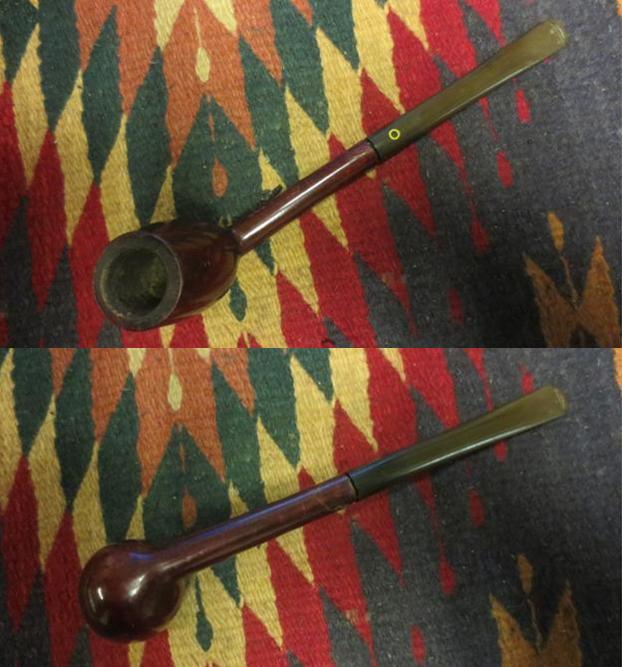
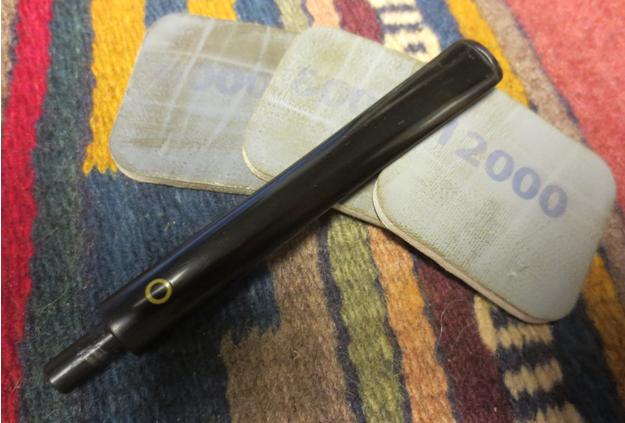
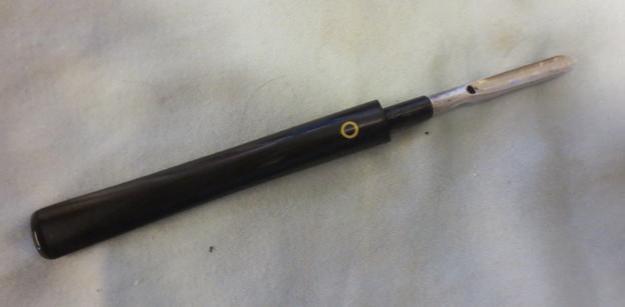
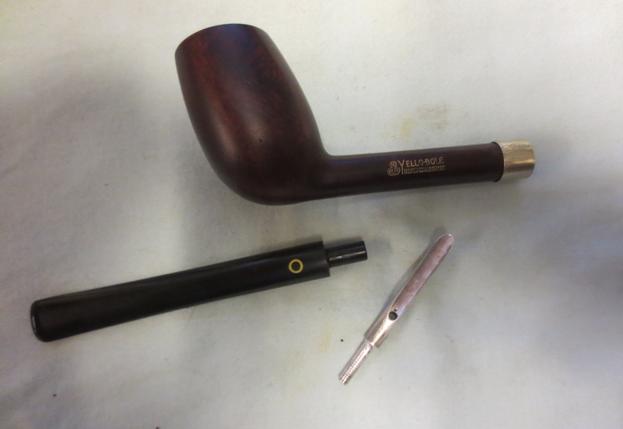
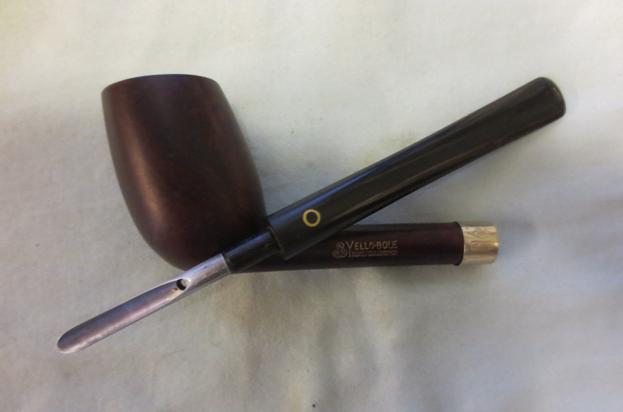
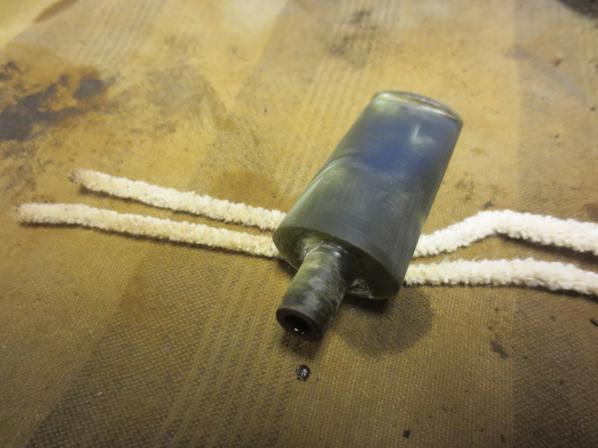
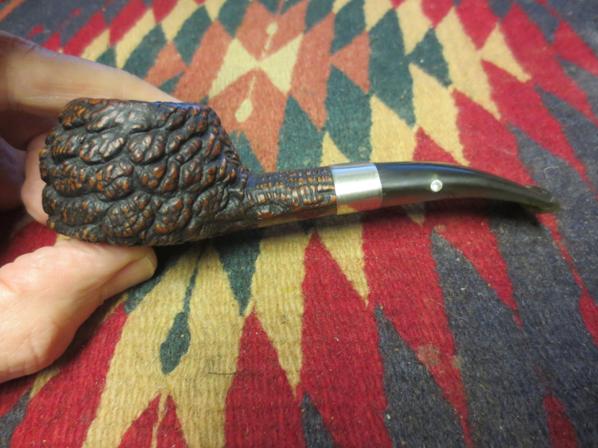
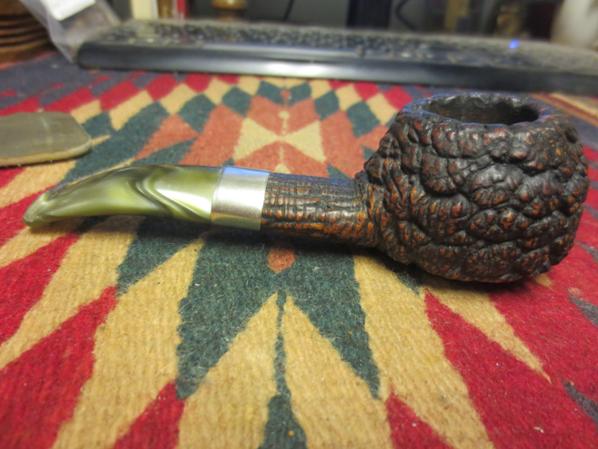
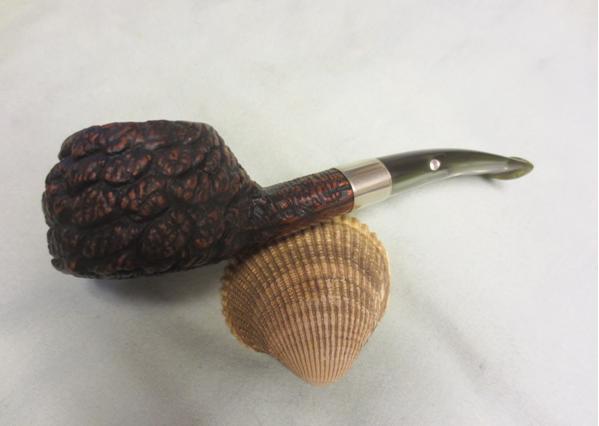
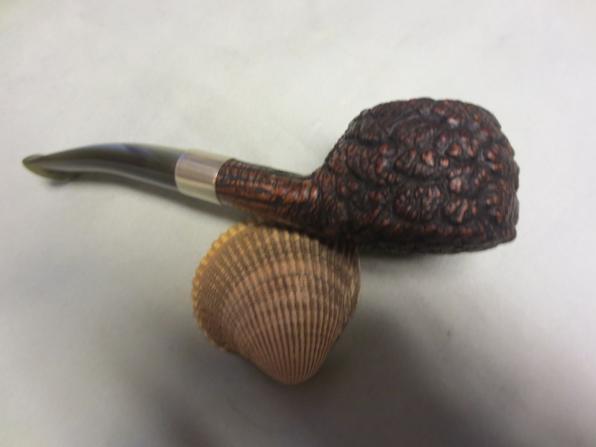
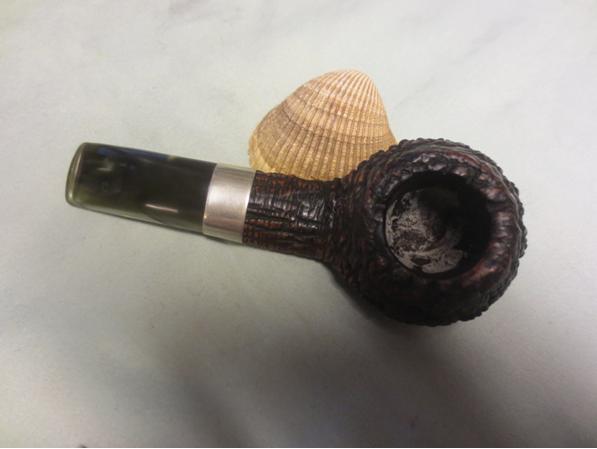
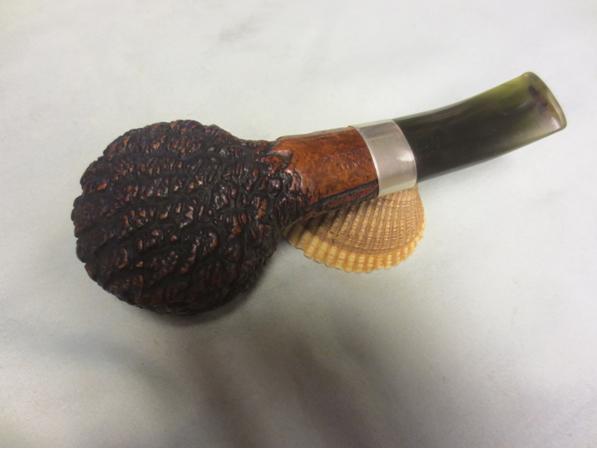
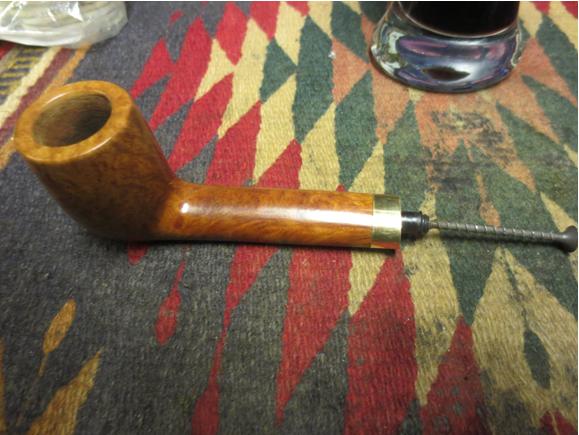
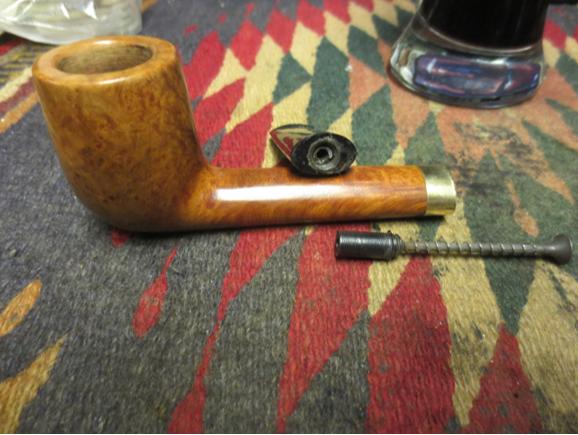
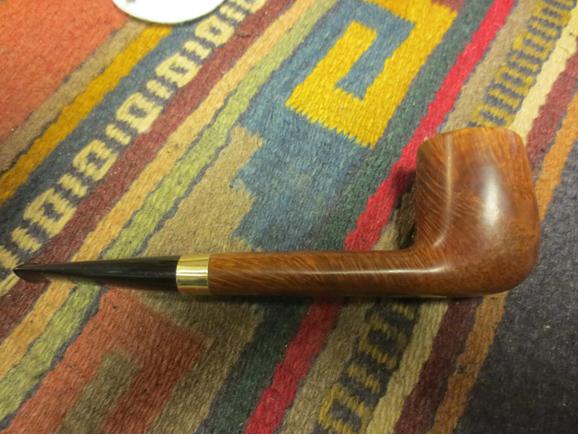
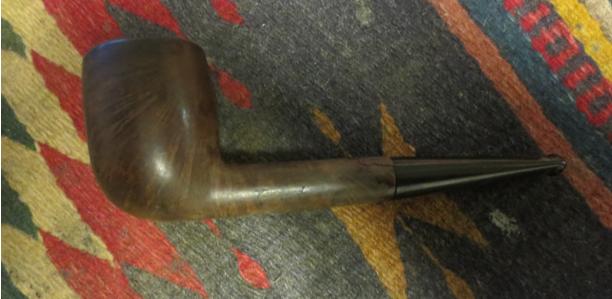
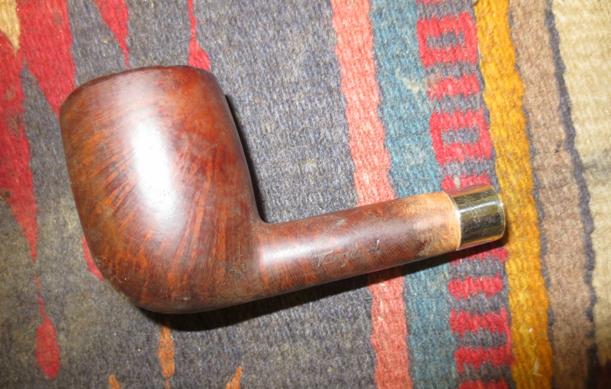
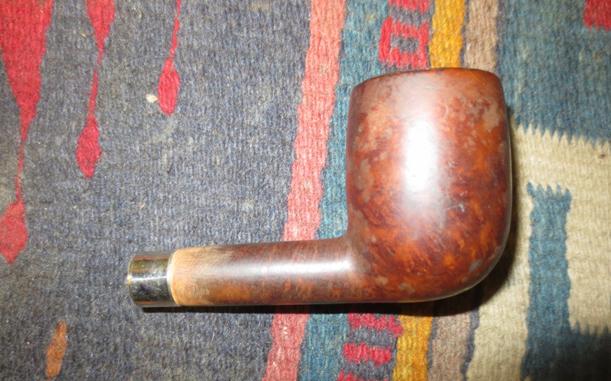
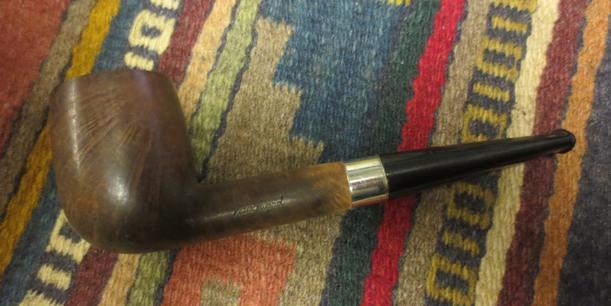
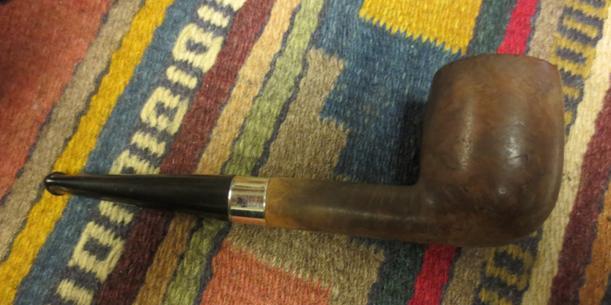
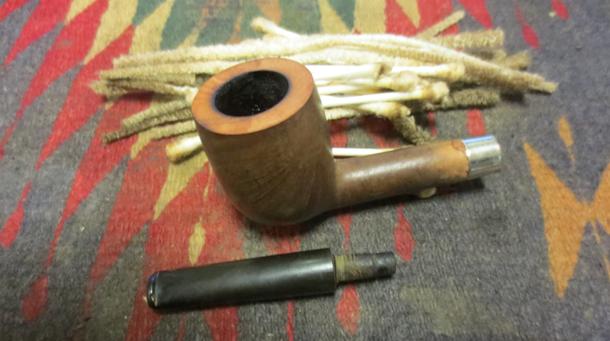
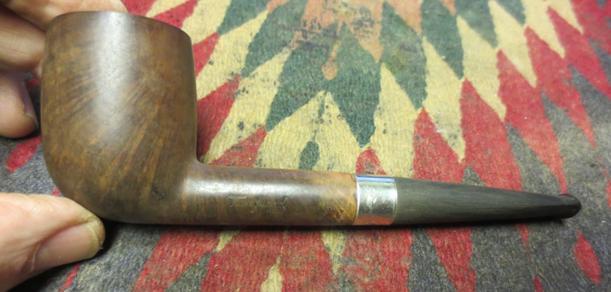
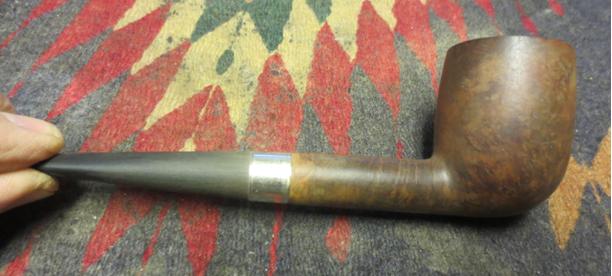
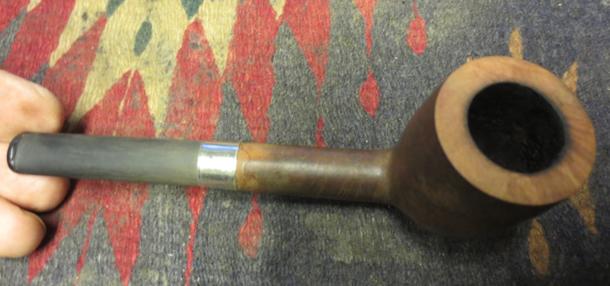
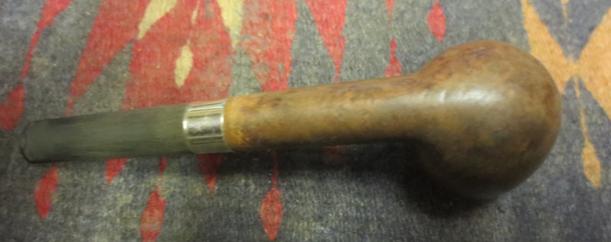
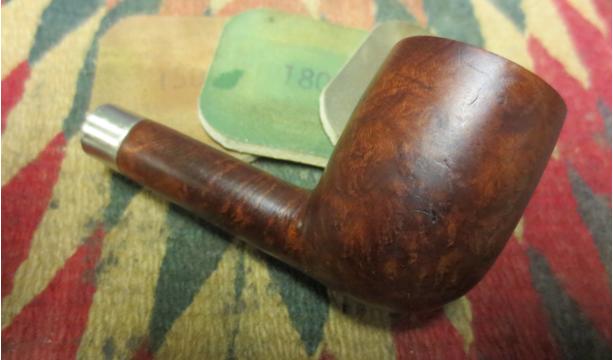
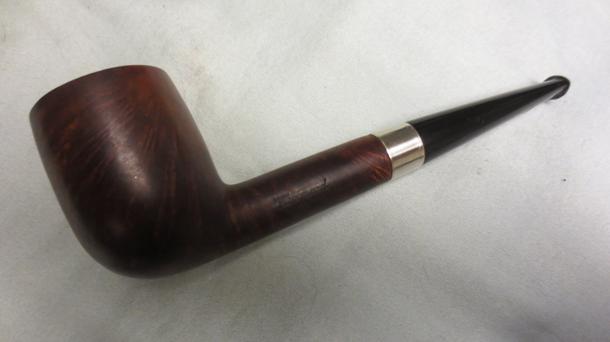
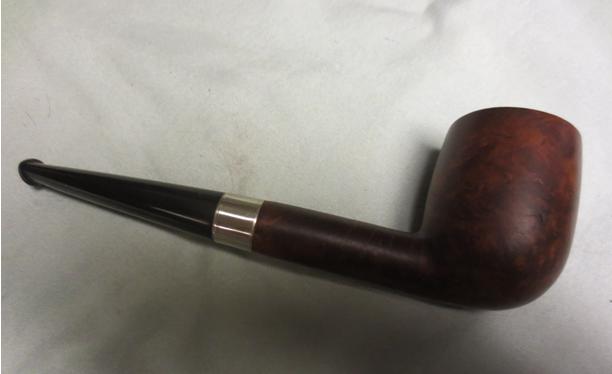
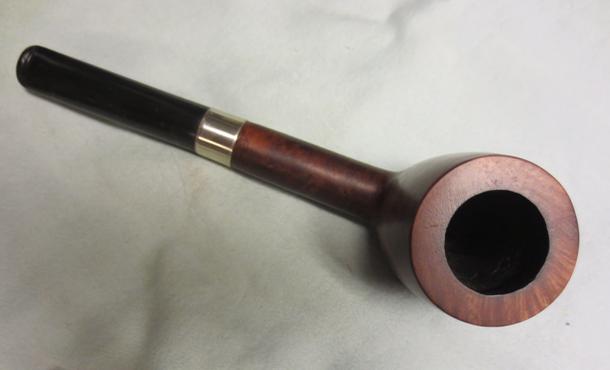
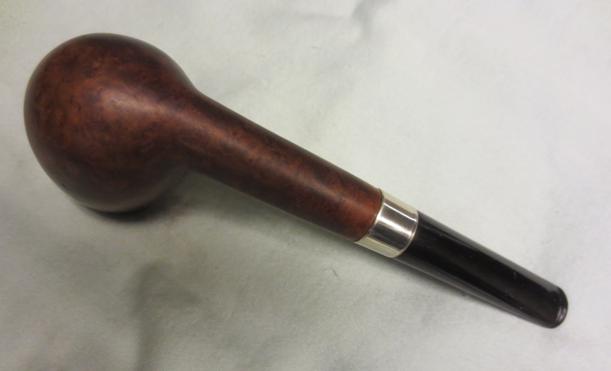
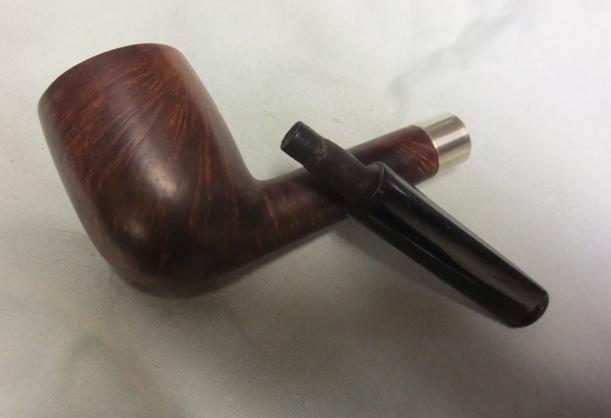
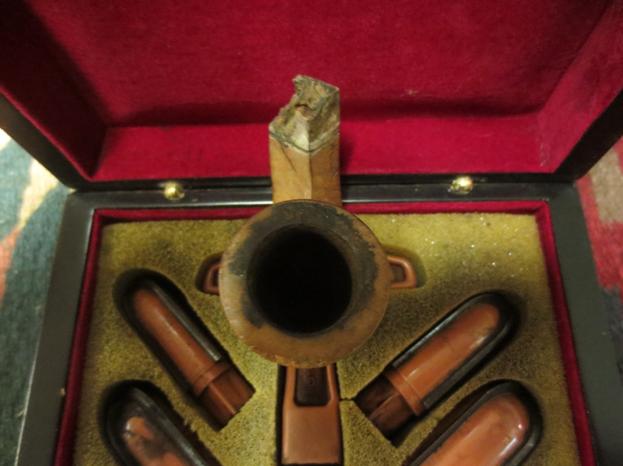
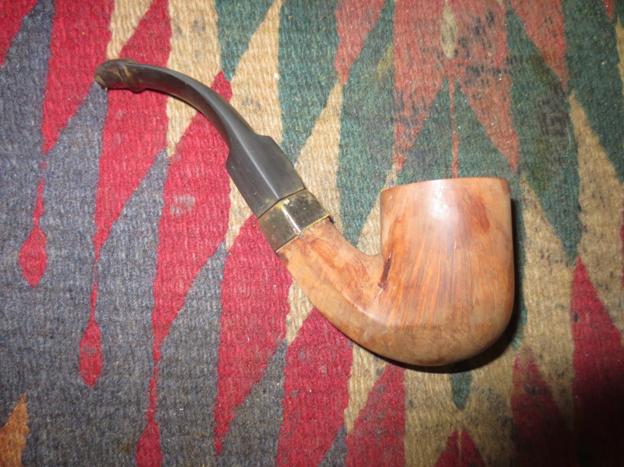
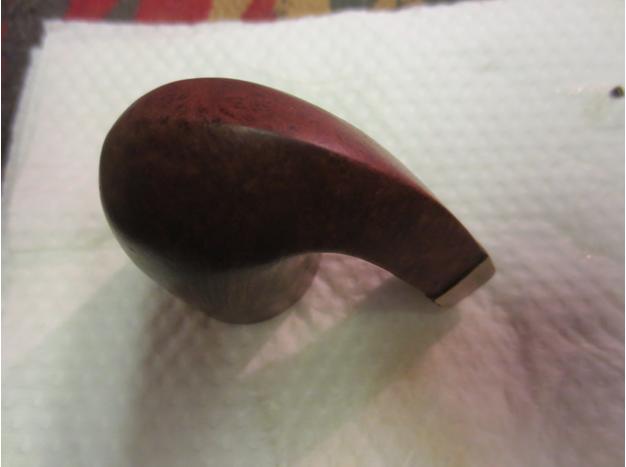
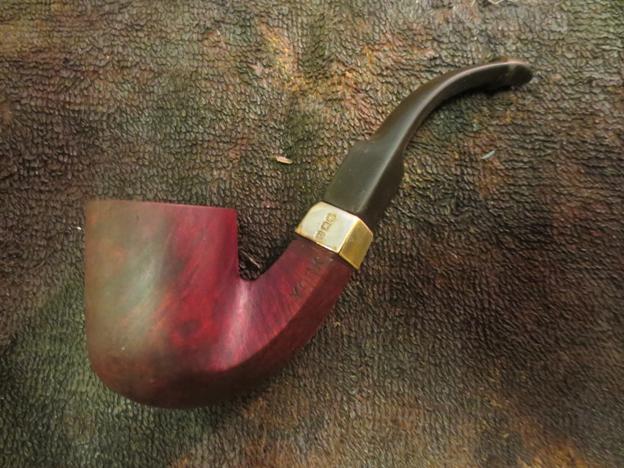
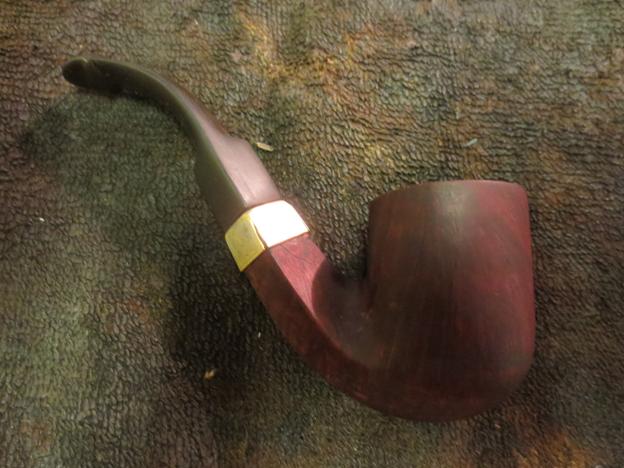
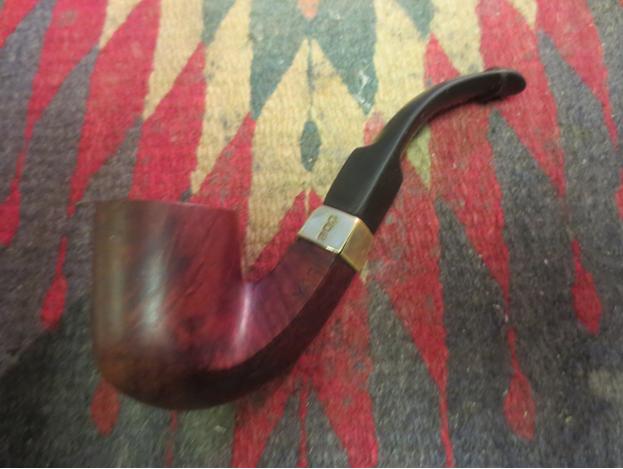
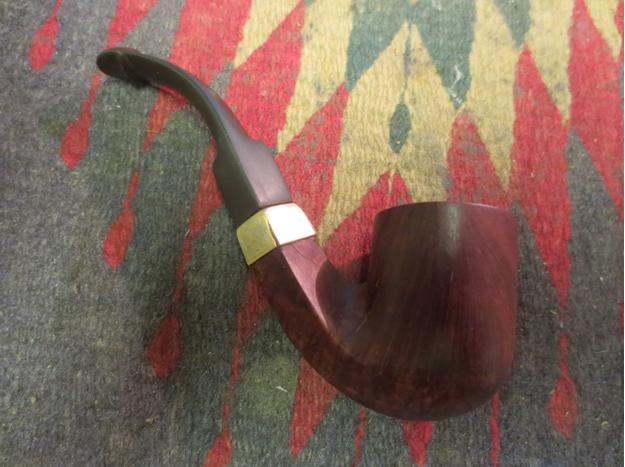
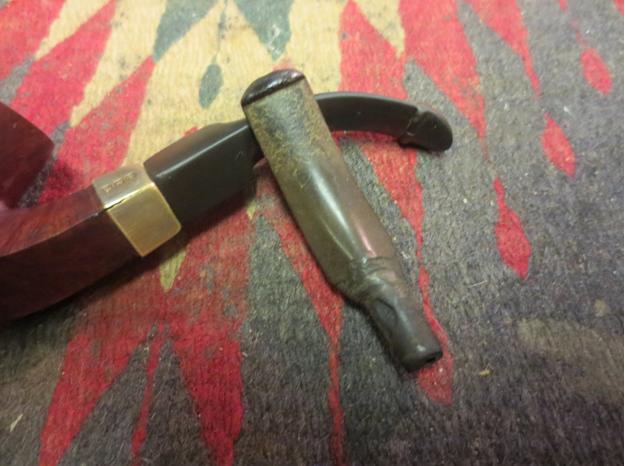
I have not been very good at documenting my last few restorations. Once I get into a project I tend to get so focused I forget to take pictures, especially if it’s a repair that is technically challenging or that I have not done before. The most recent example of this was an unsmoked M&T bent bulldog with a horn stem.  Even though it had never been used (it still had the factory purple putty bowl coating) it had a few issues to be addressed from its 40+ years of tumbling around in a drawer.M1When I saw the pipe in the case at the antique store the first thing that caught my eye was the horn stem and I knew I wanted it. In all honesty, I wasn’t one hundred percent sure that it was horn until I got it home. A couple of passes with a 2400 micro mesh pad and a sniff test confirmed my suspicions – it’s the same smell as when you use an emery board on a finger nail. M2I started with a little research into the brand.  The only M&T that I could find was the German pipe maker Müllenbach & Thewald.  They made pipes from 1830 until the 1972.  The company still exists but is solely devoted to mineral mining.  You might think this strange but M&T was known originally for clay pipes. In 1860 they branched into making wood pipes.  A short article on M&T can be found on Pipedia.
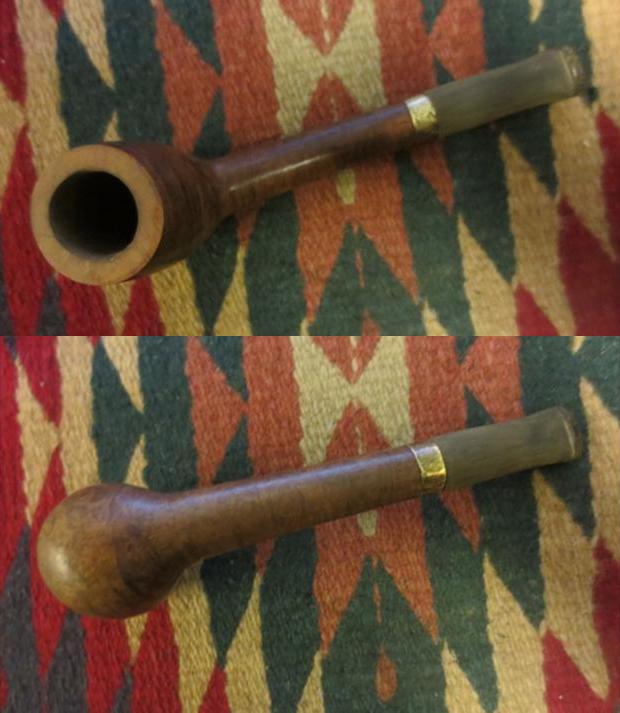
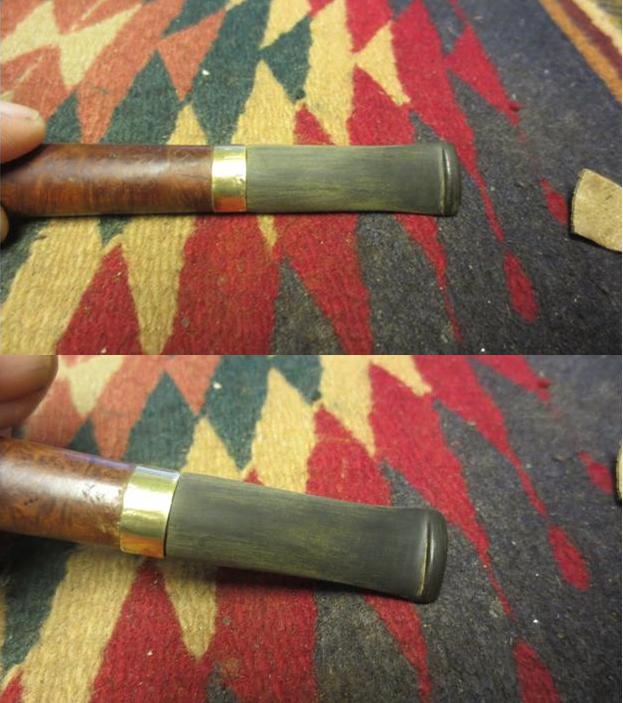
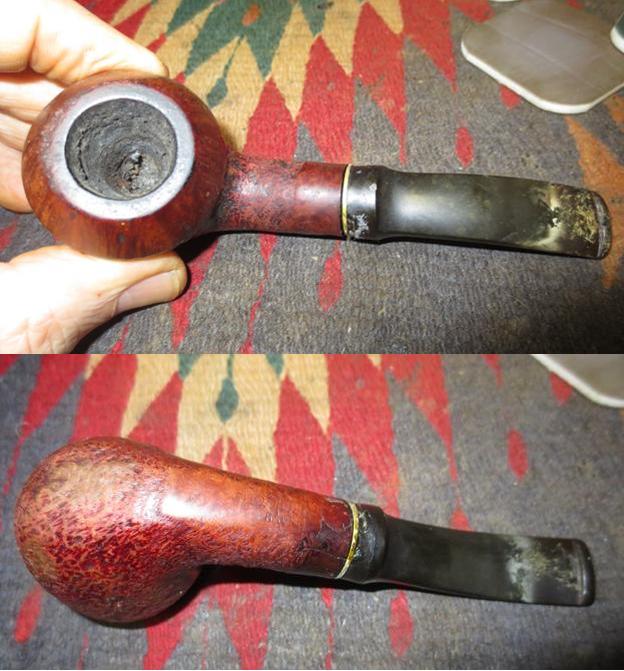
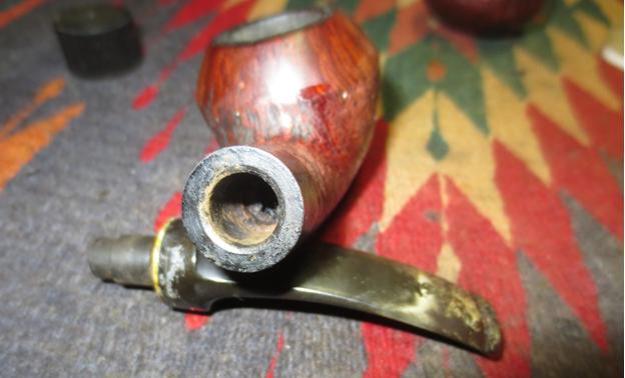
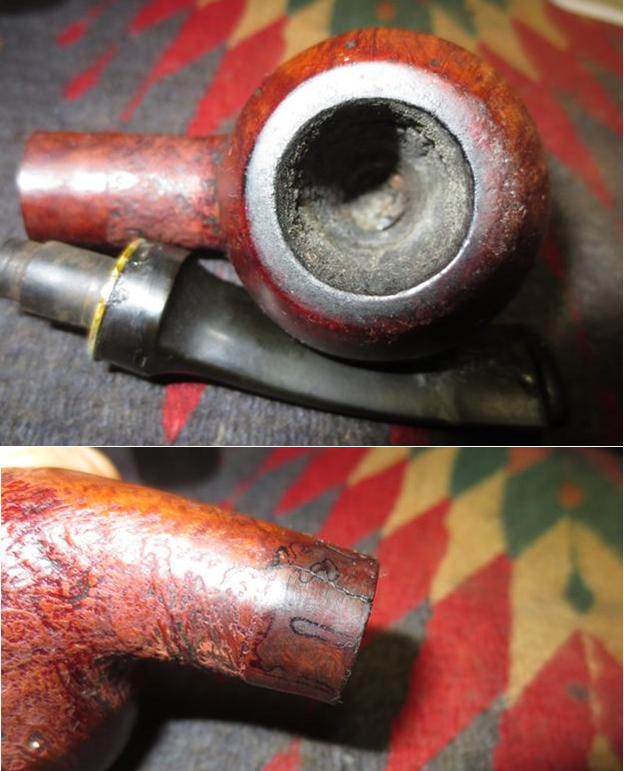
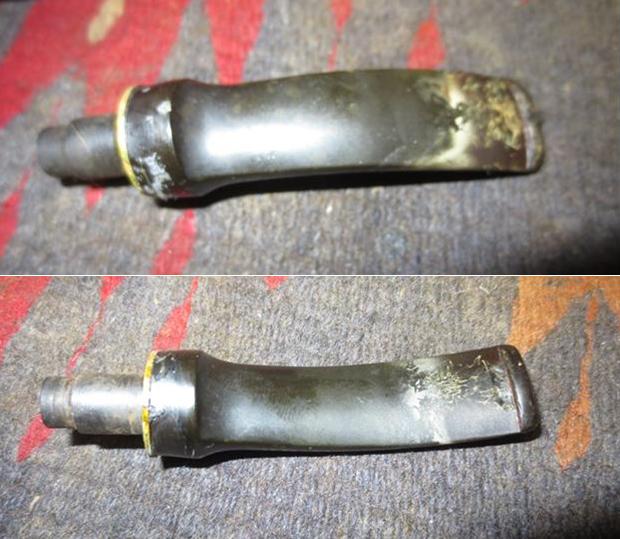
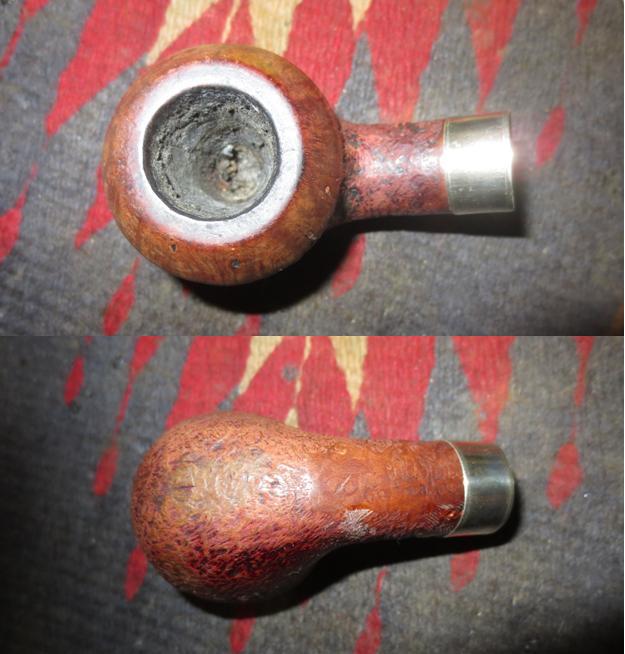
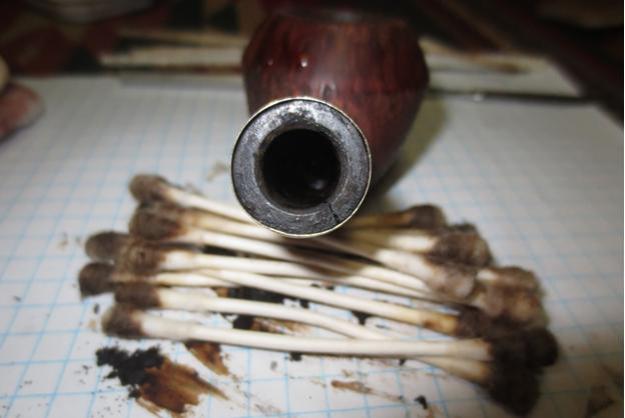
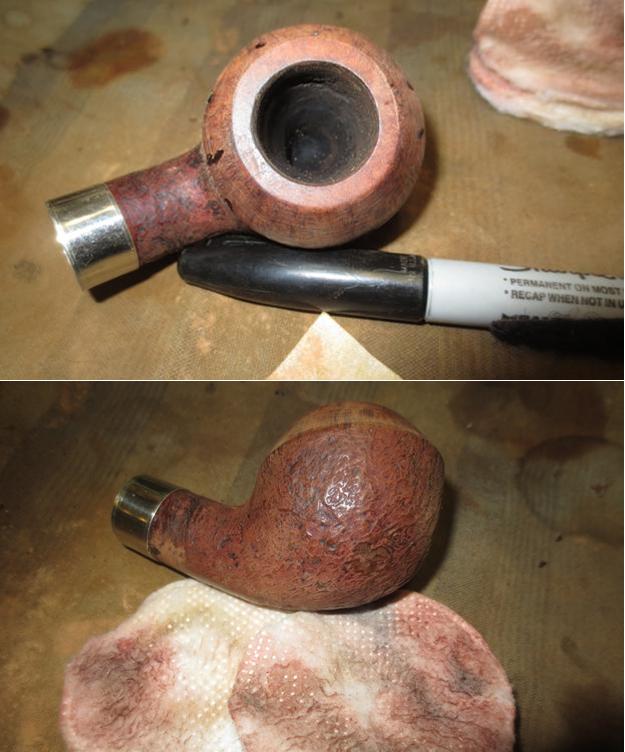
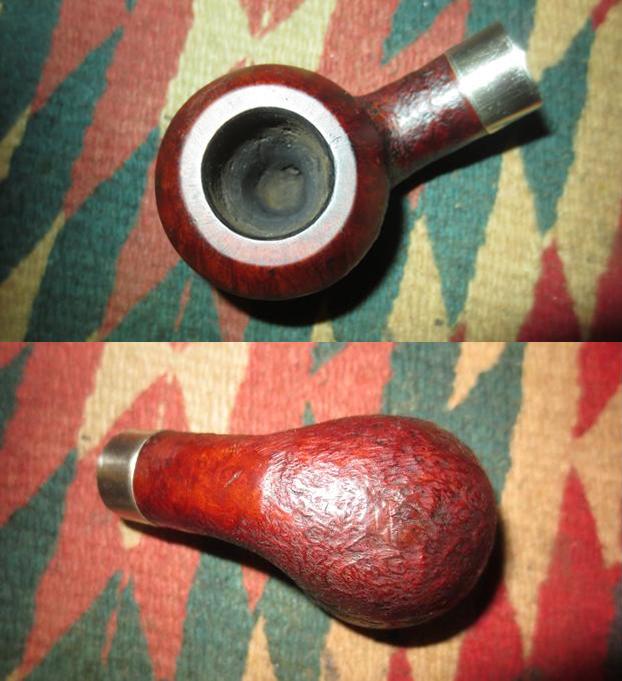
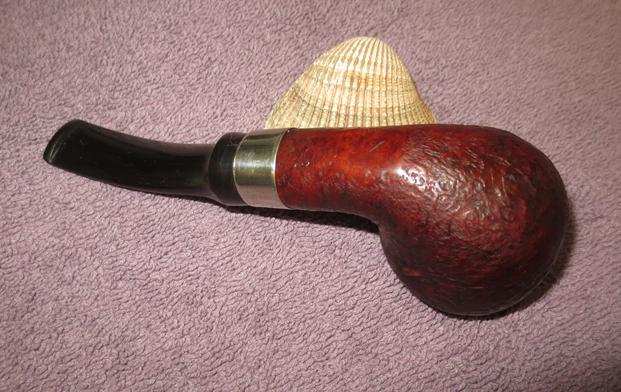
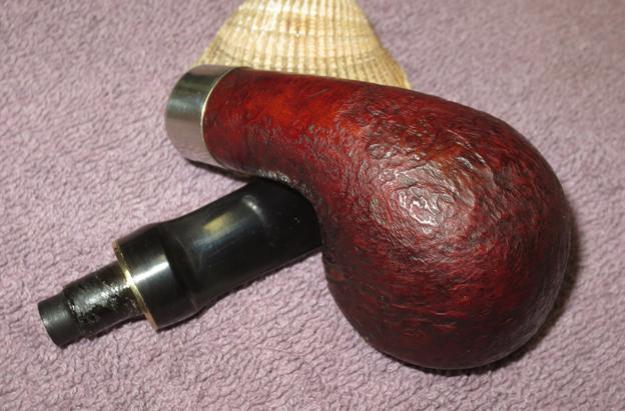
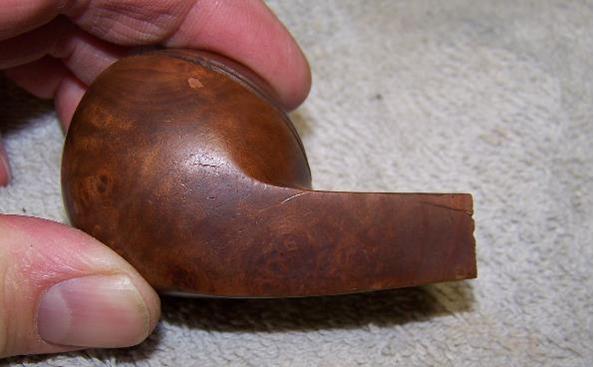
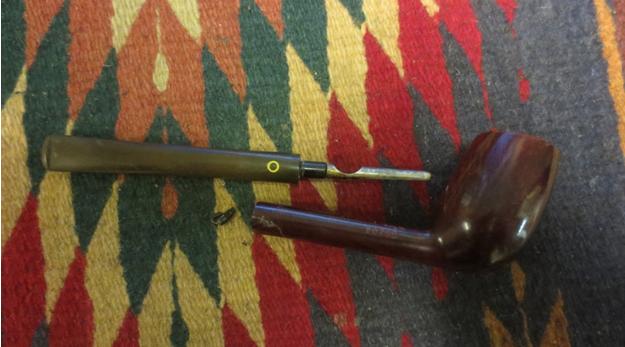
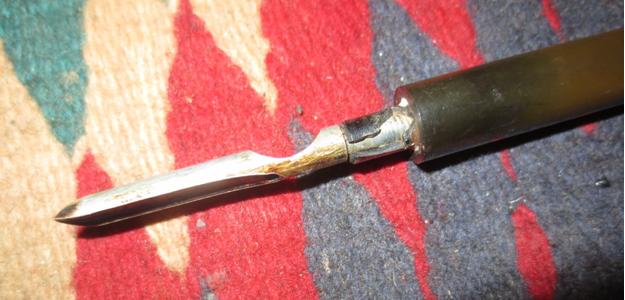
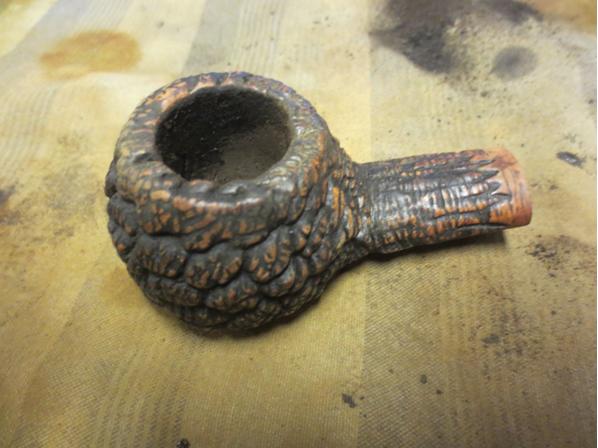
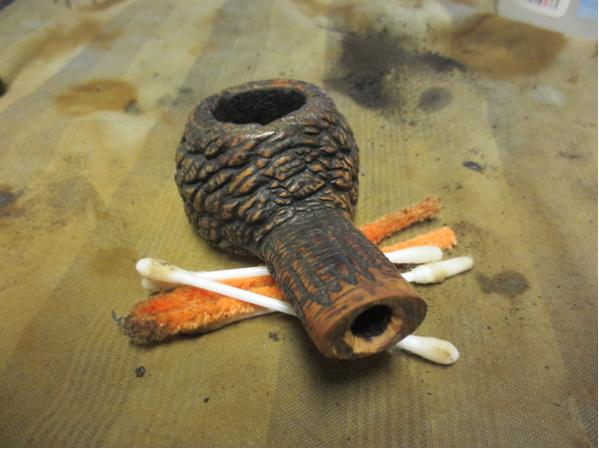
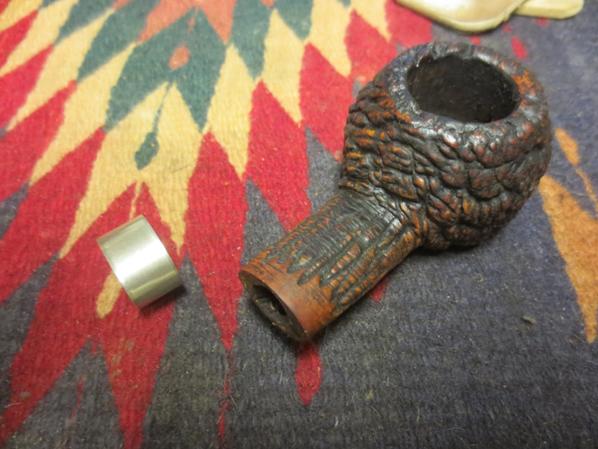
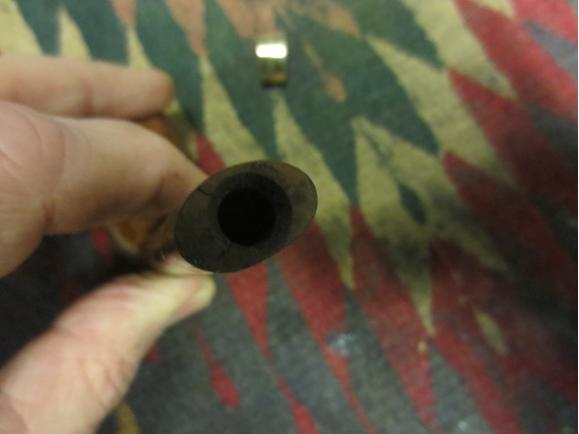
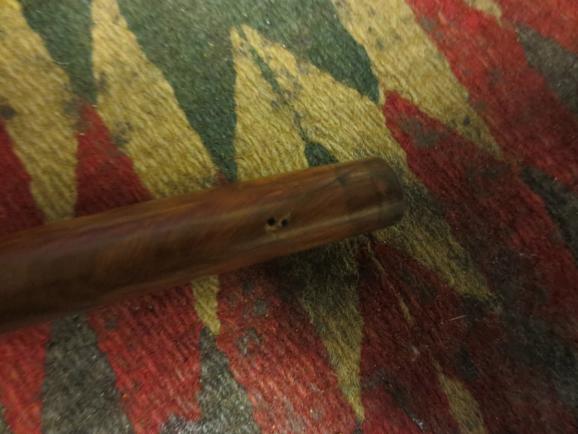
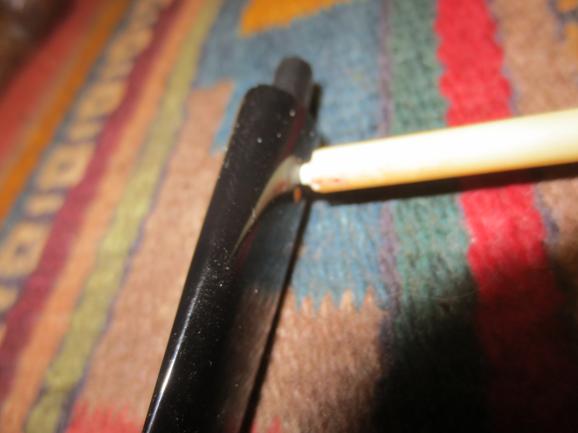
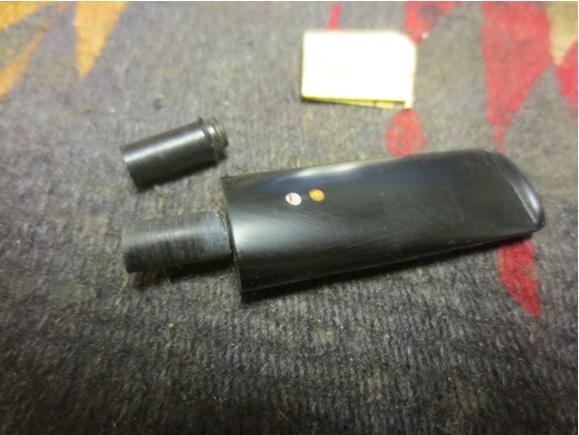
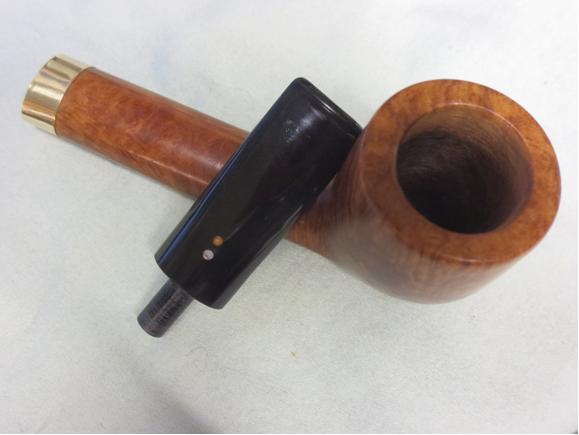
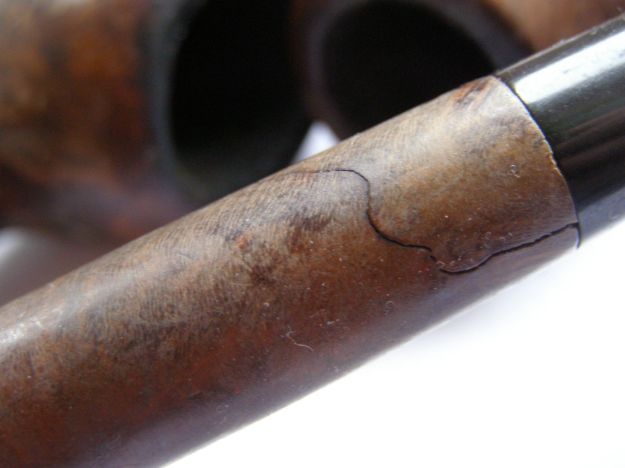
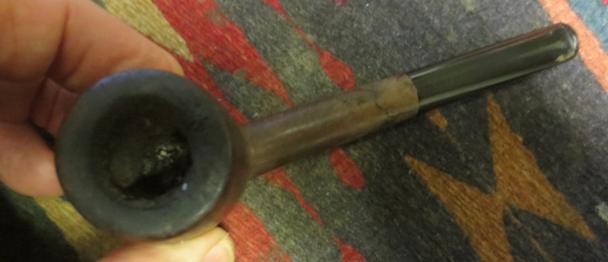
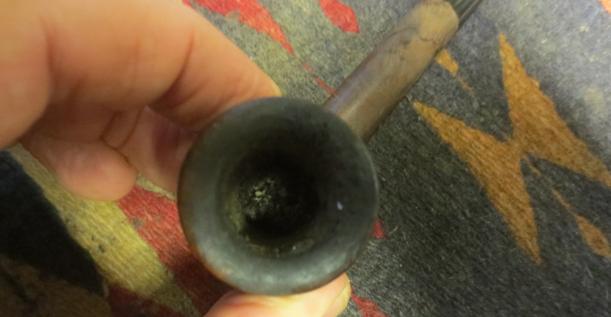
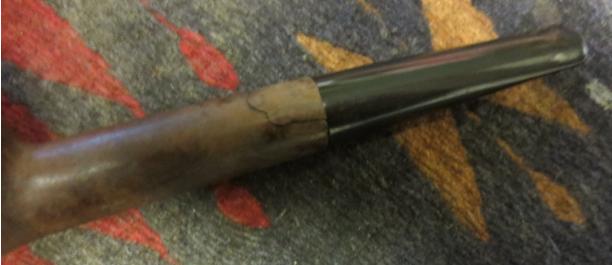
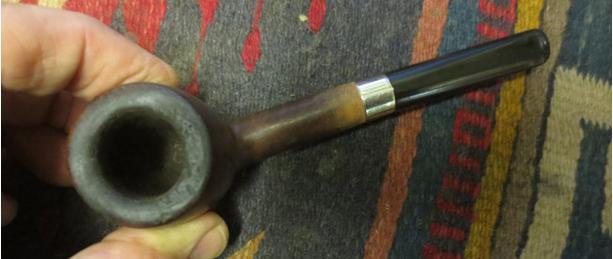
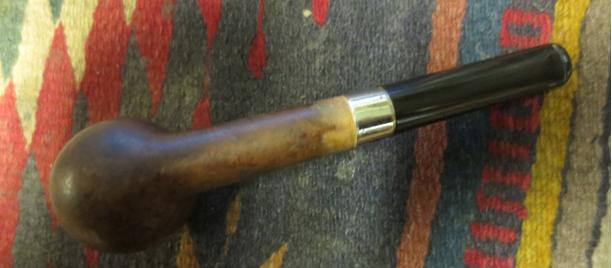
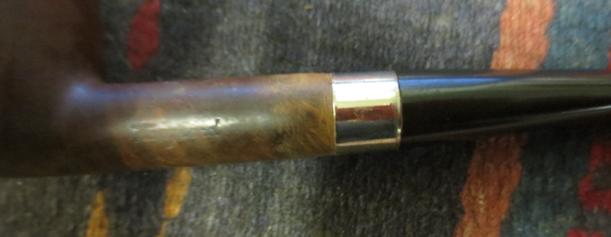
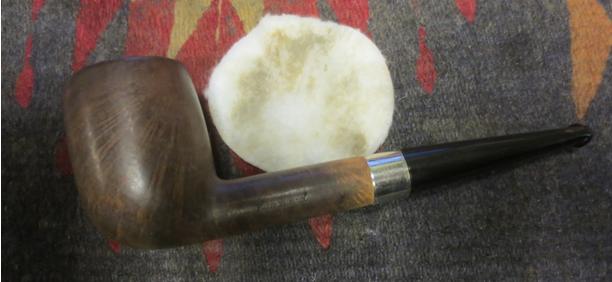
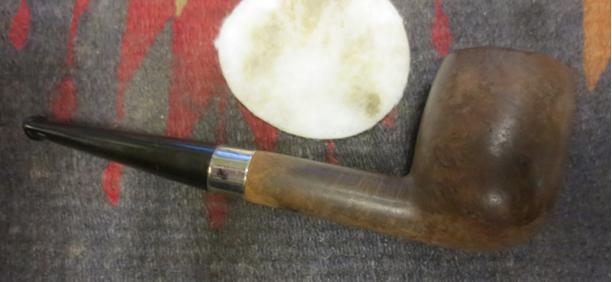
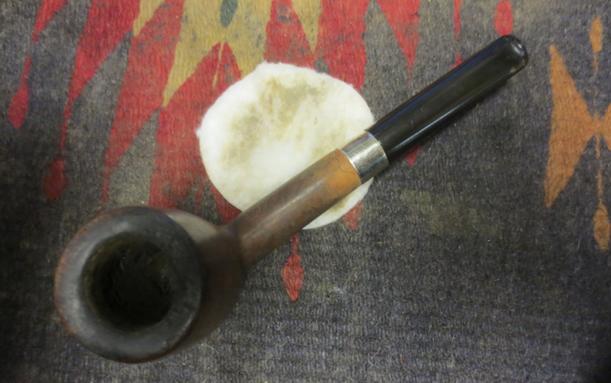
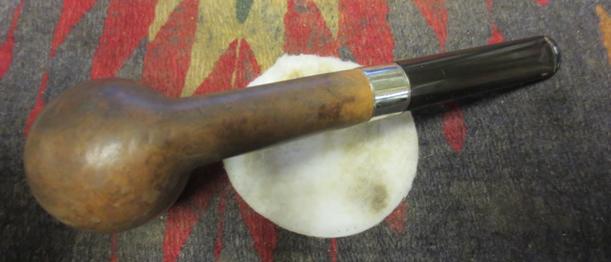
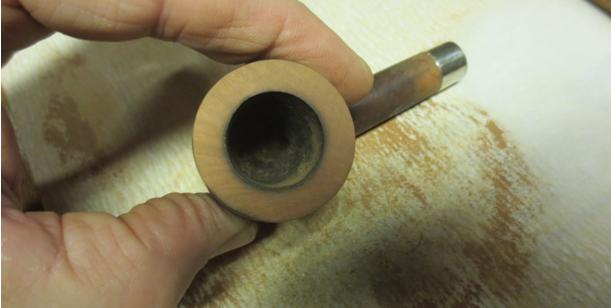
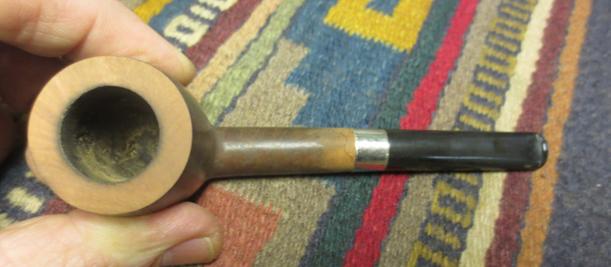
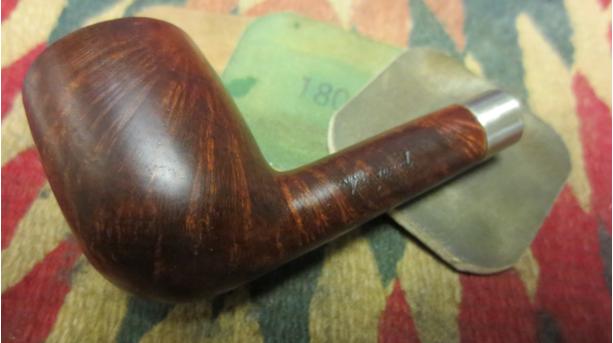
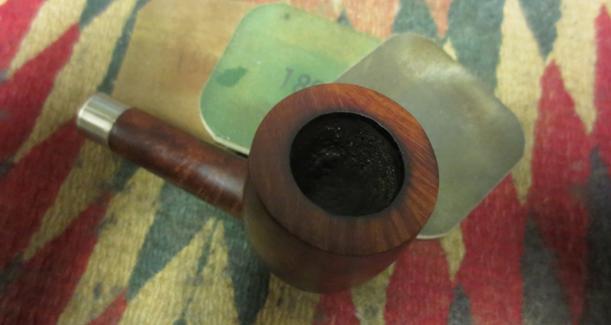
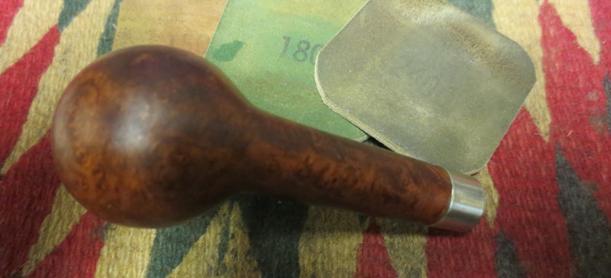
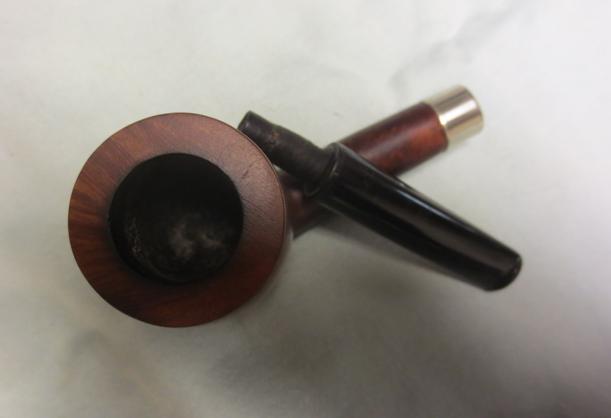
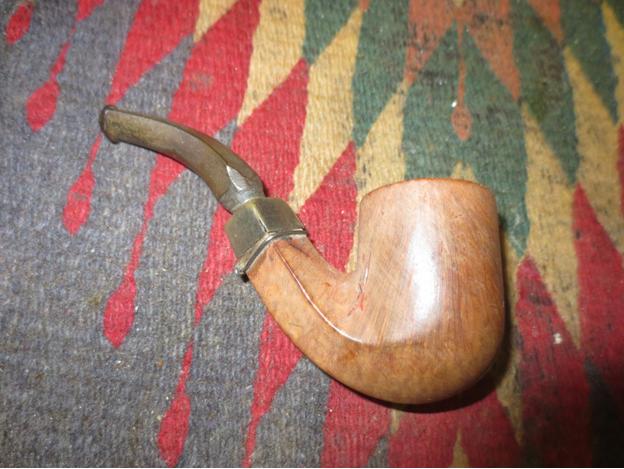
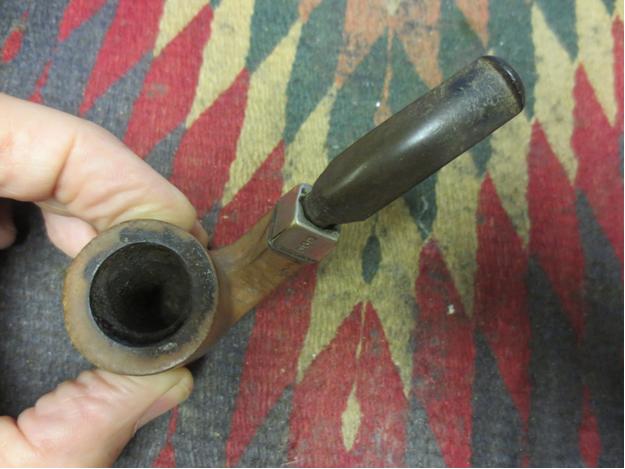
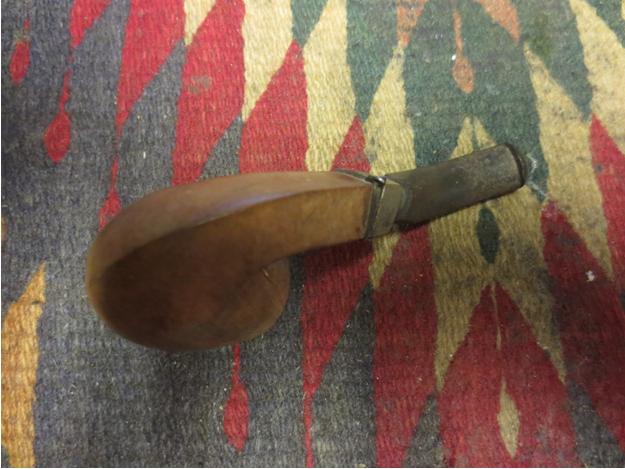
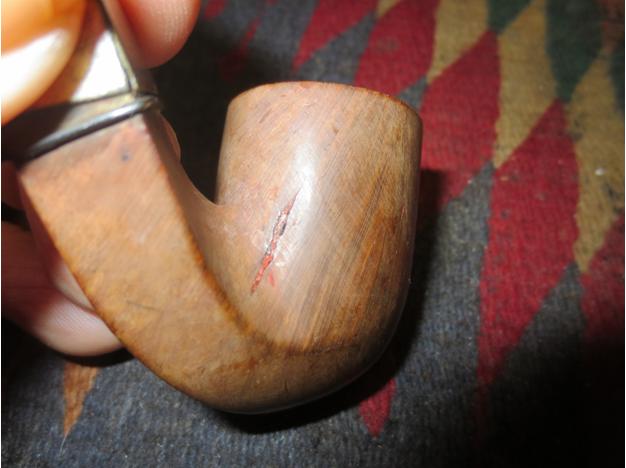
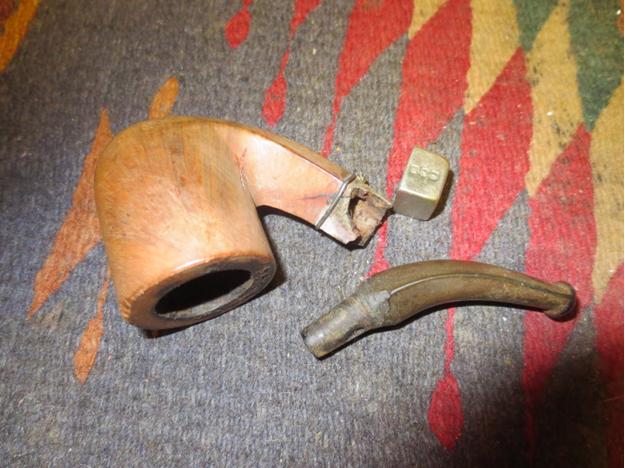
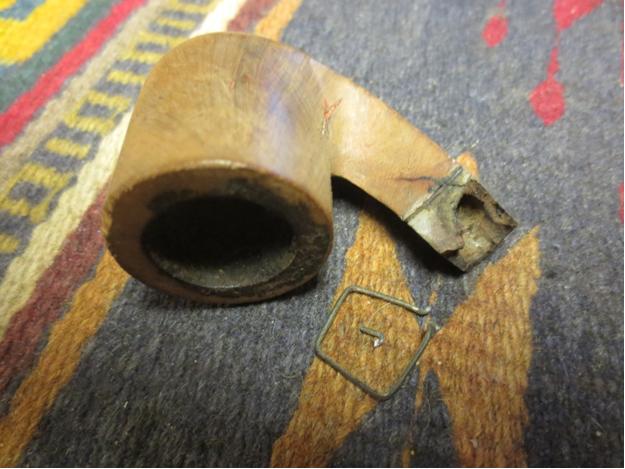
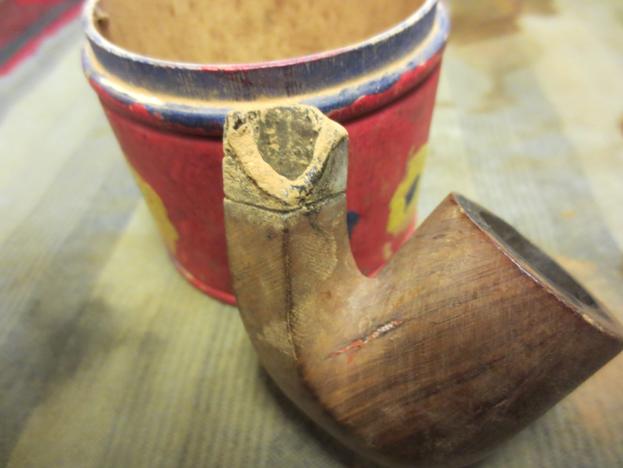
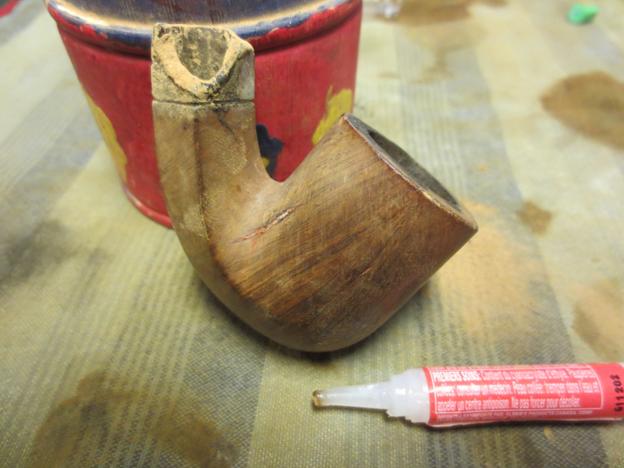
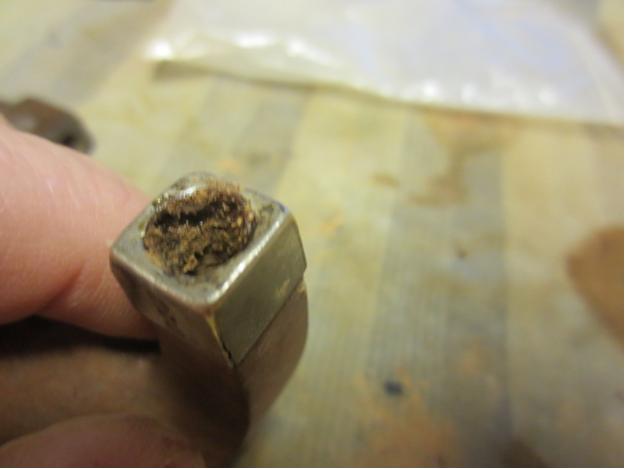
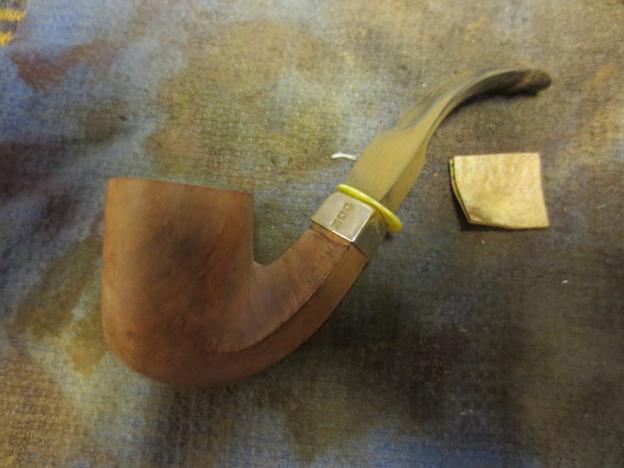
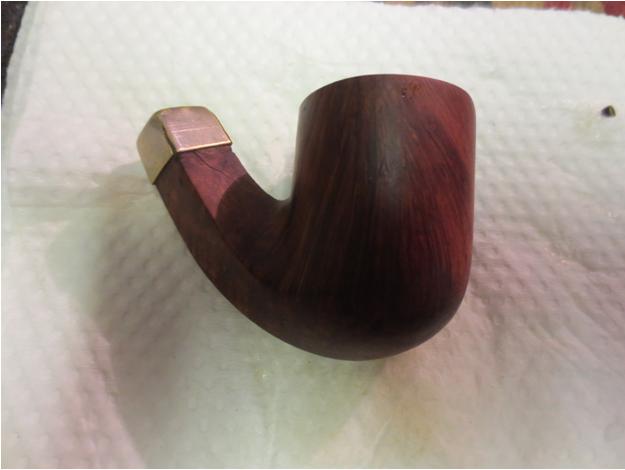
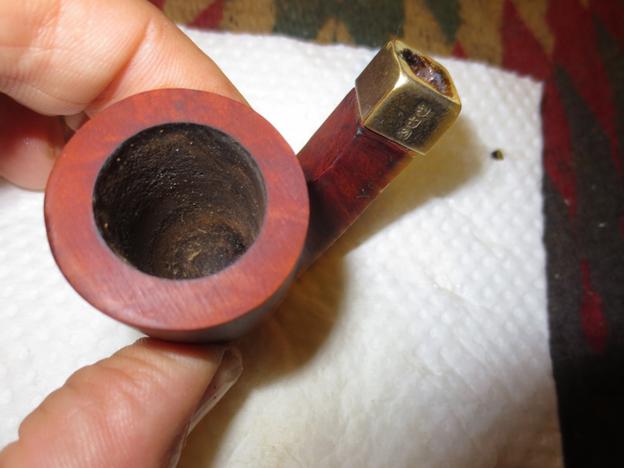
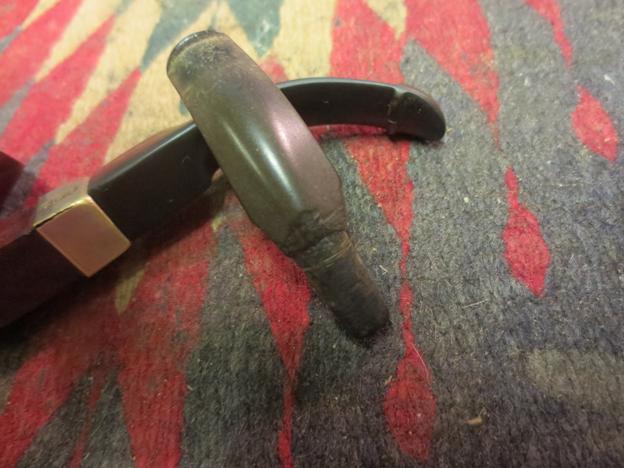
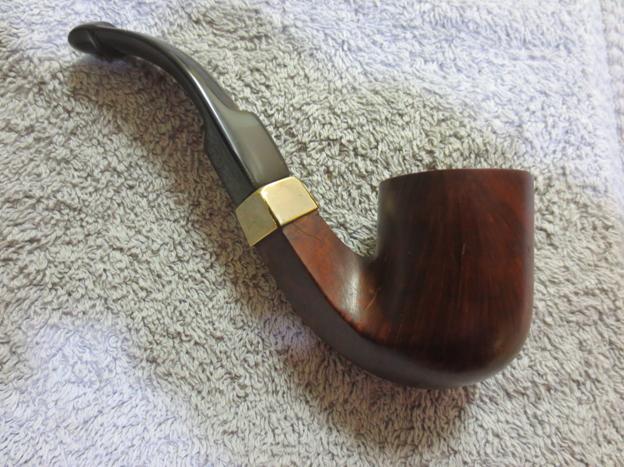
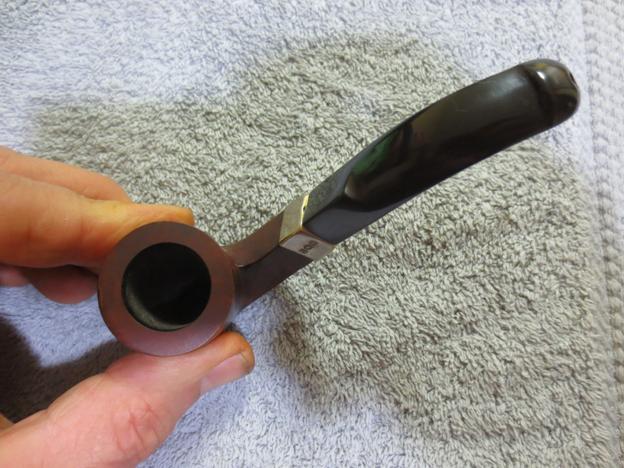
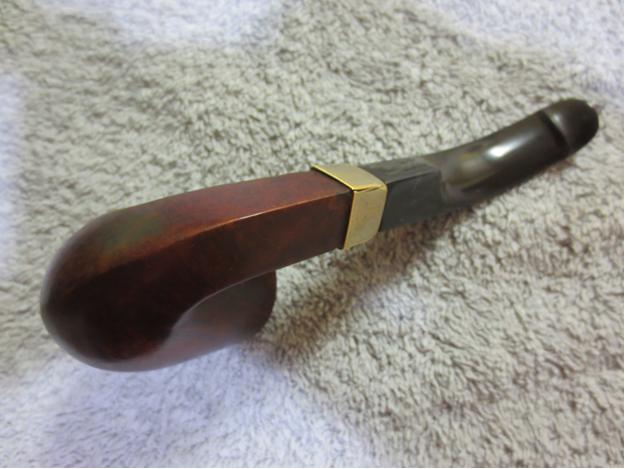
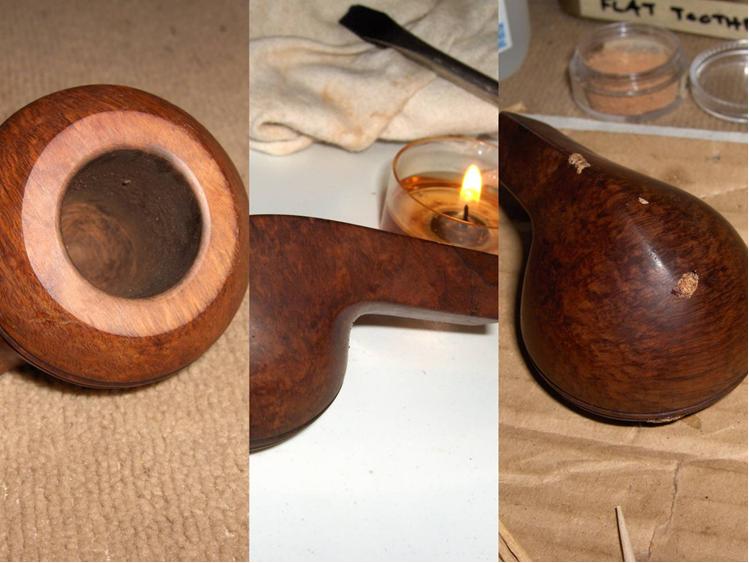
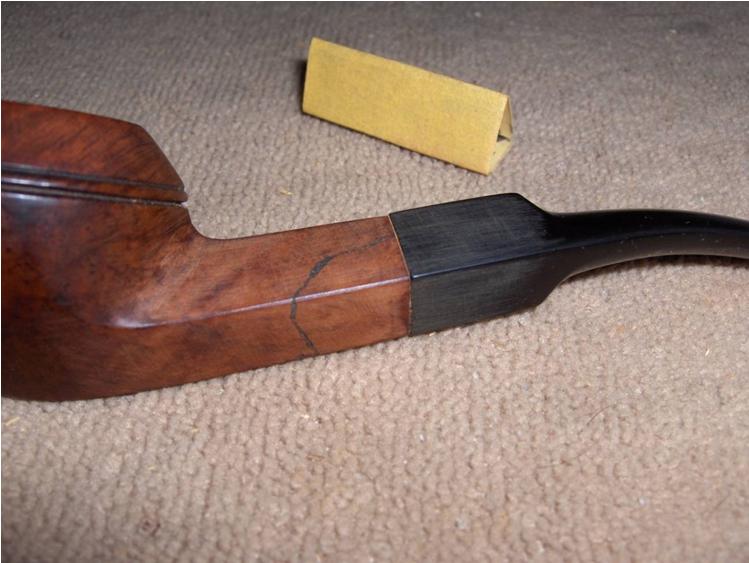
I began the restoration by performing triage of the issues to be addressed. The bowl was clean but had a dull finish that was marred with some dents and minor scratches. The factory bowl coating was starting to chip and a there were three small fills on the outside of the bowl that needed to be repaired. A close inspection of the shank revealed a small crack where the aluminum tenon inserted (seen in the picture below). I had assumed the narrow band was original to the pipe but perhaps it had been added to reinforce the shank?  I may never know the answer to that.  All in all the bowl was very good condition.M3The stem too was in almost “like new” condition.   A few scratches but the button was well define and, of course, no tooth chatter. The aluminum tenon was a little rough around the edges but the fit to the shank was fine.

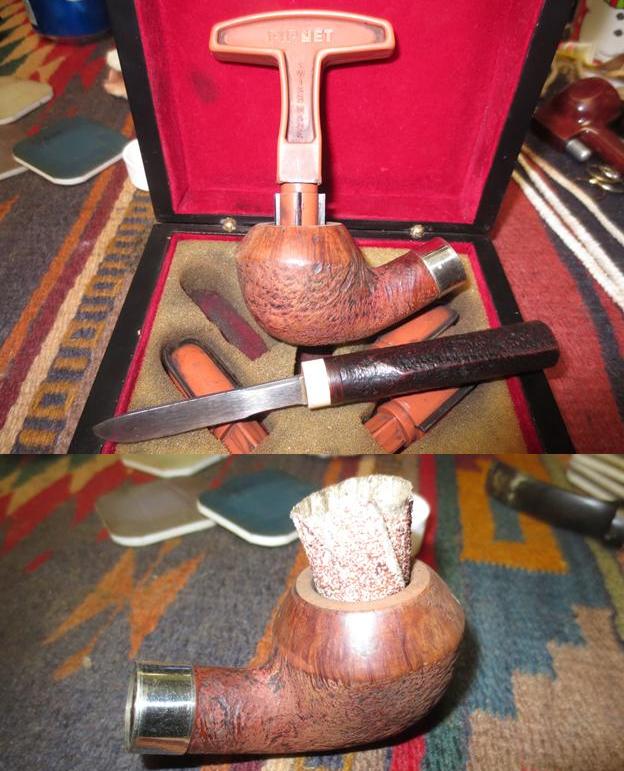
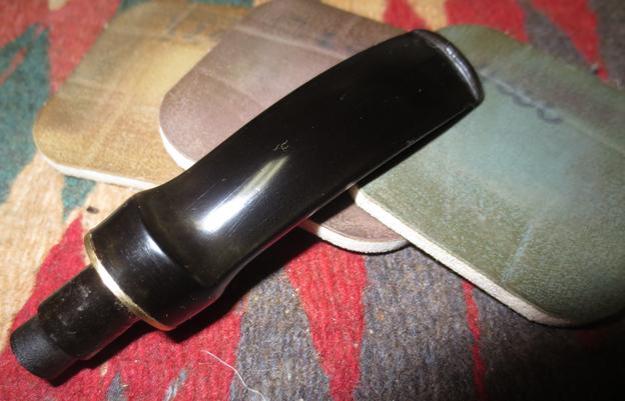
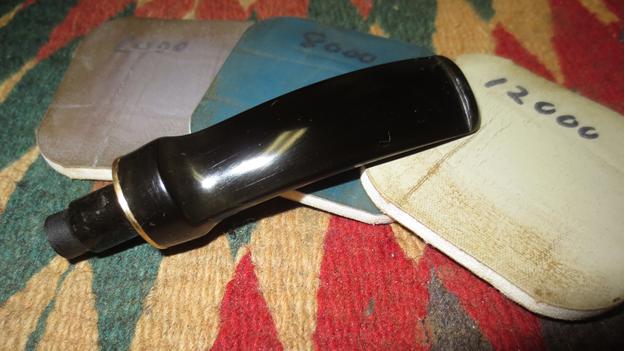
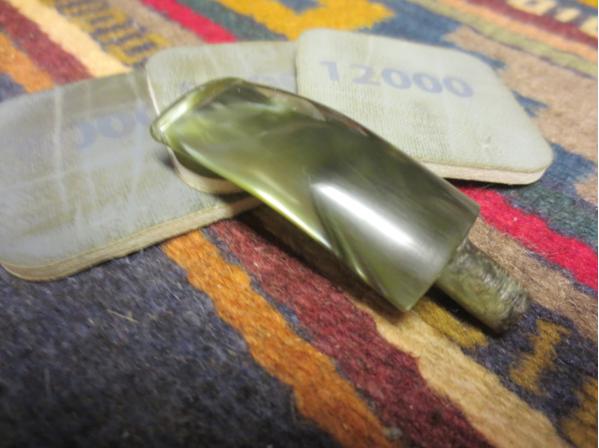
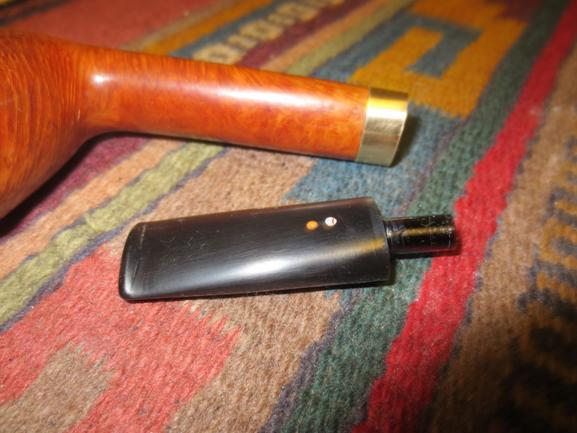
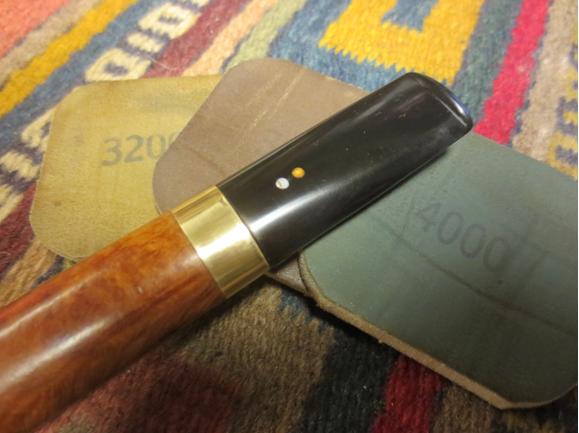
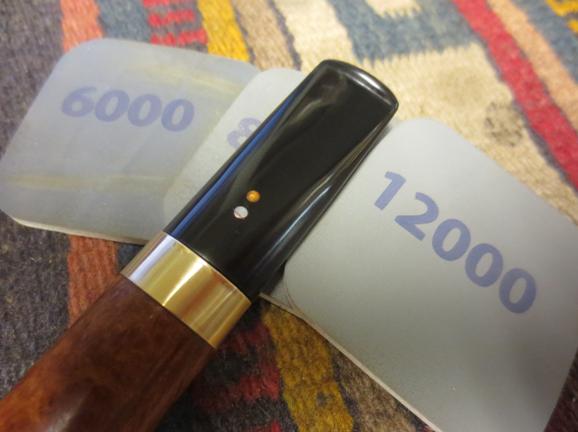
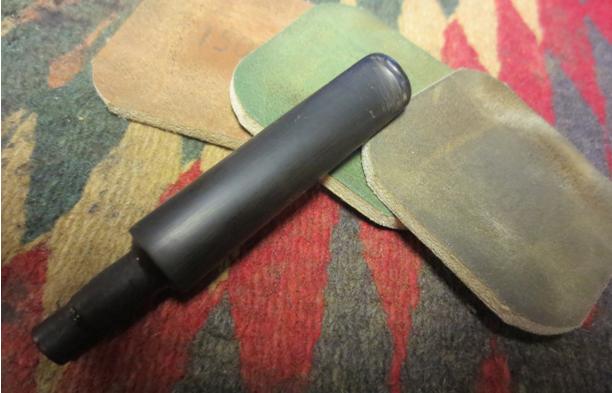
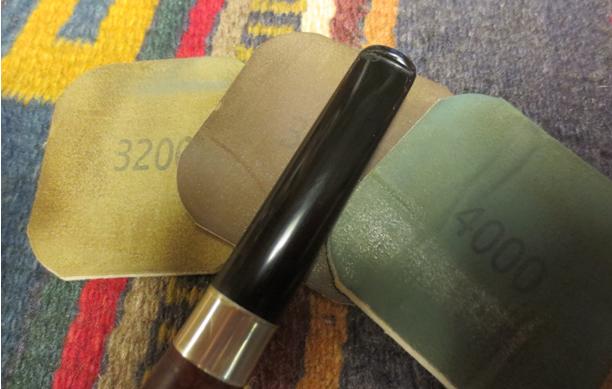
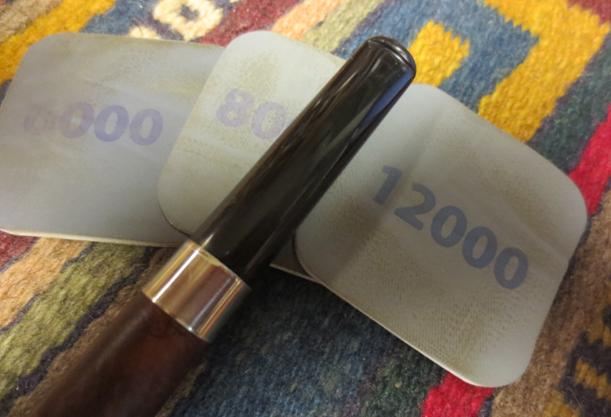
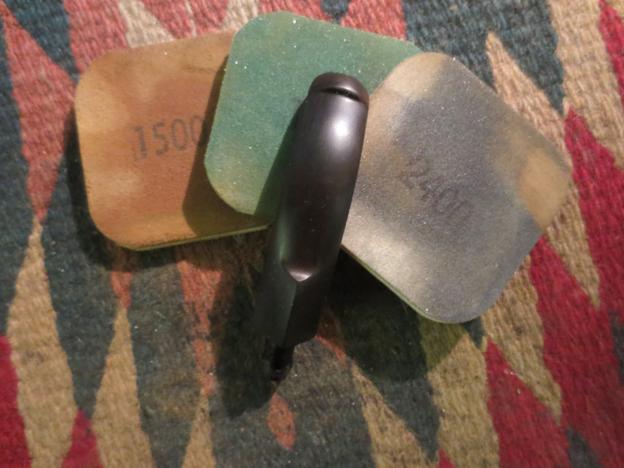
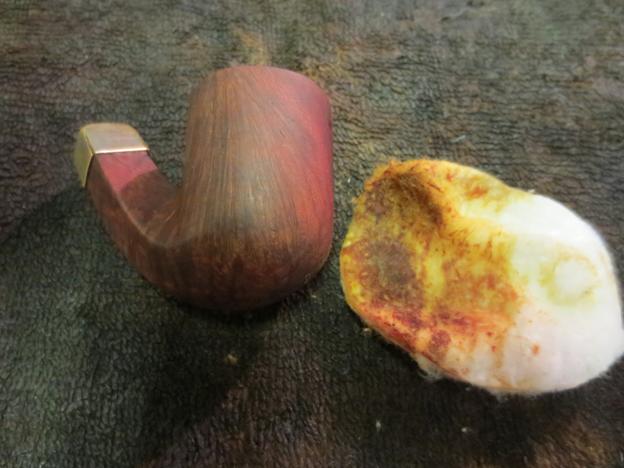
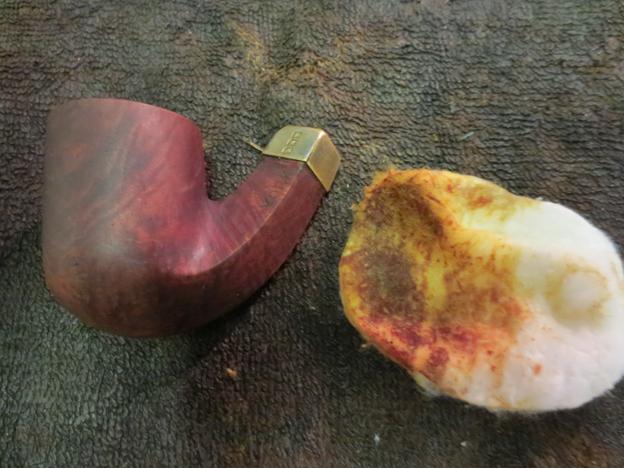
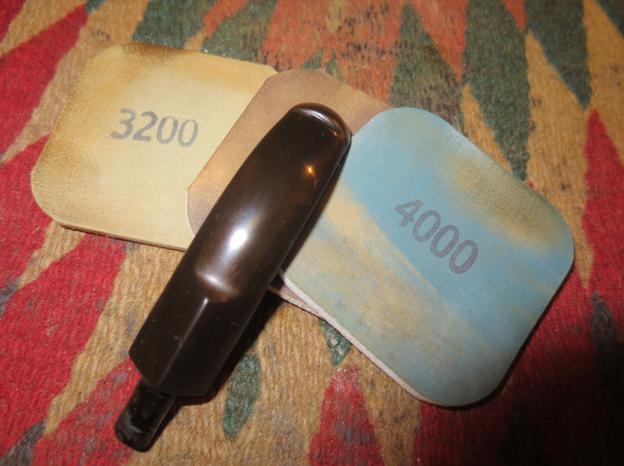
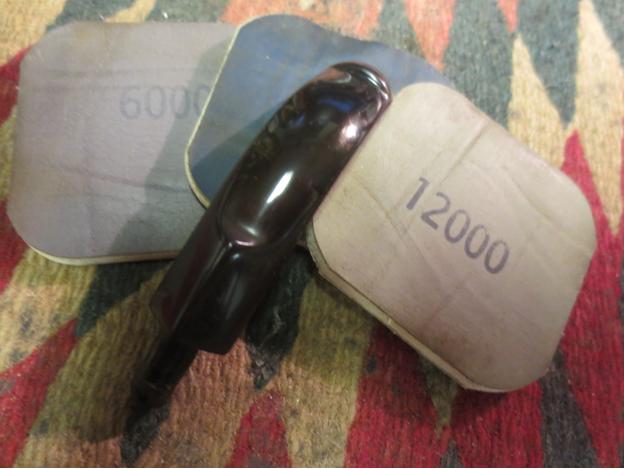
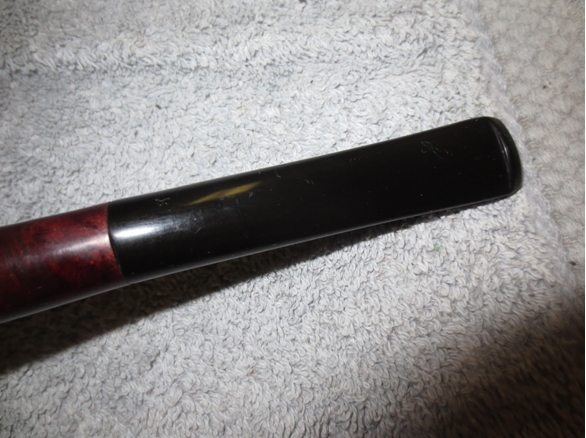
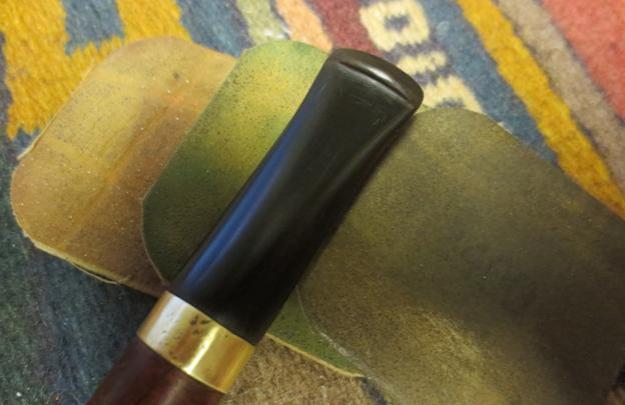
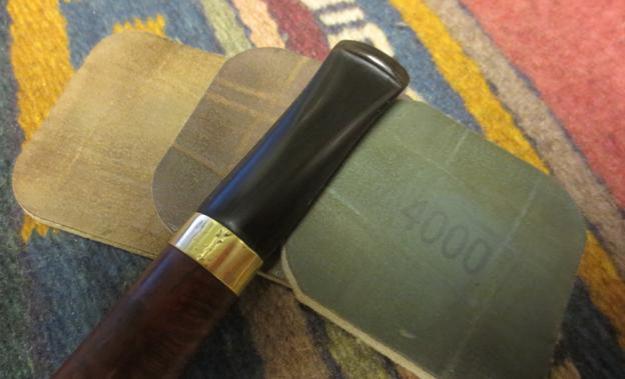
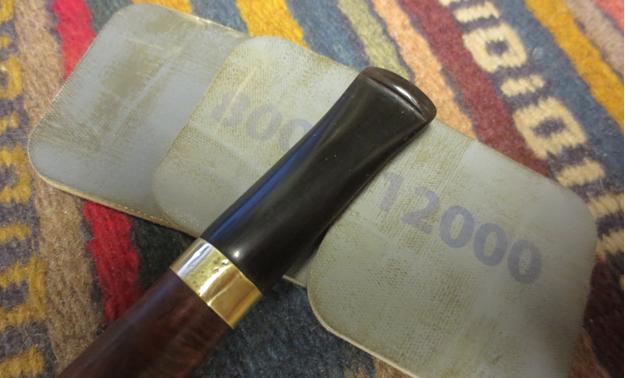
I started by applying a thin coat of mineral oil on the stem. This seemed to ‘hydrate’ the horn and give some bite to the micro mesh pads. I worked through the 1500 to 12000 pads stopping to apply oil as the horn dried out. The button was quite large and the edges sharp, a bit more than I like. But I kept it original and only slightly smoothed the corners while polishing. I smoothed up the edges of the tenon and set the stem aside.

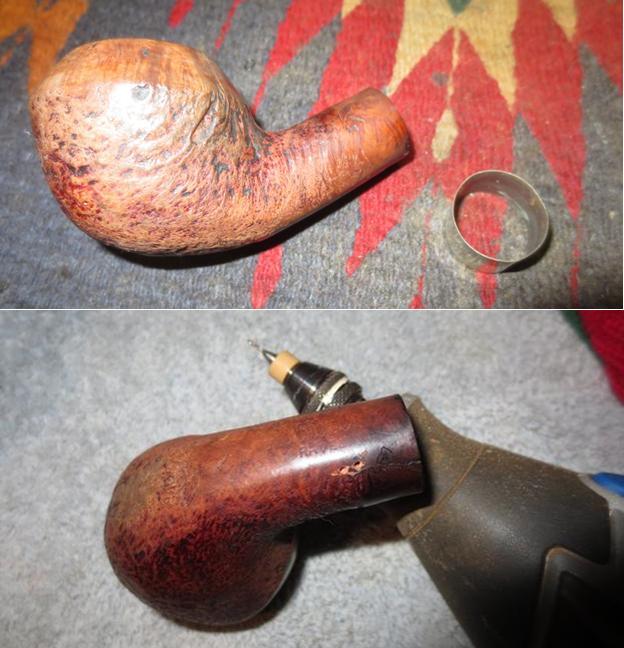
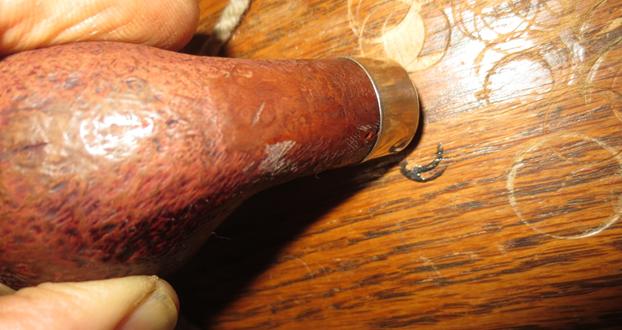
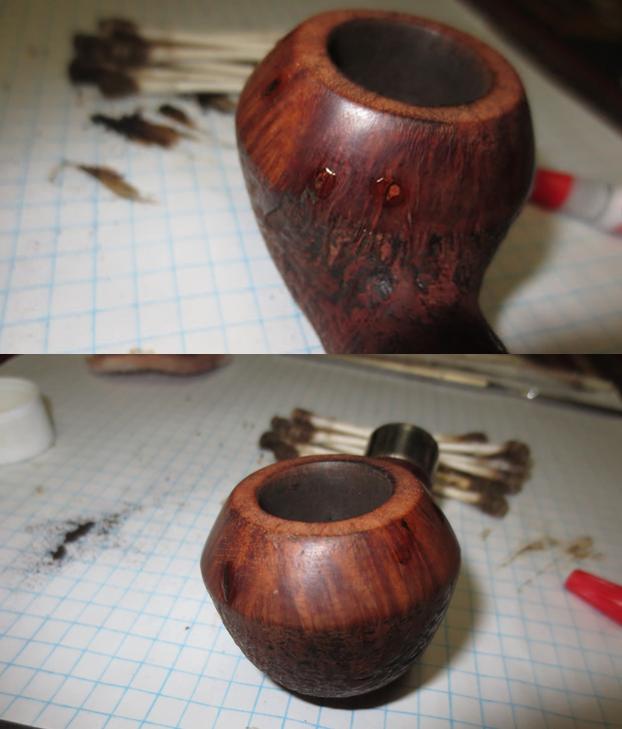
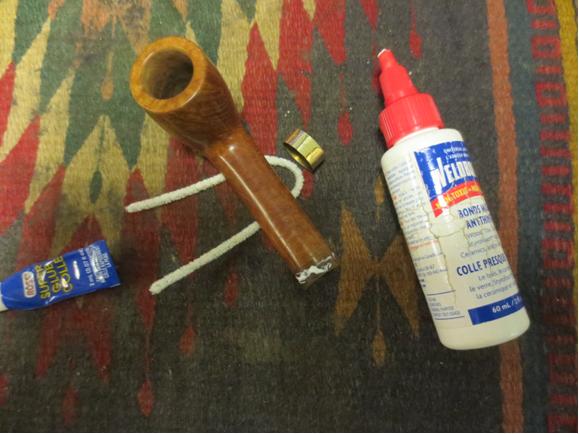
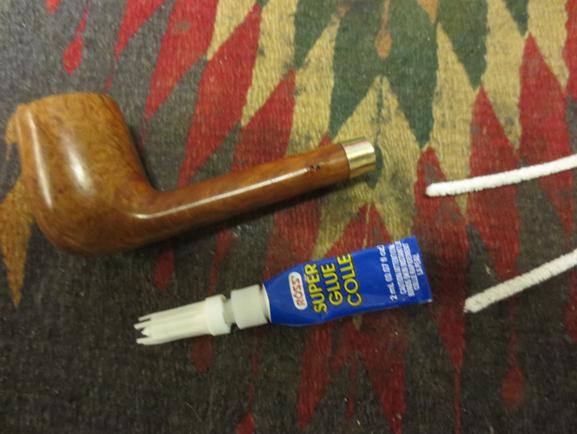
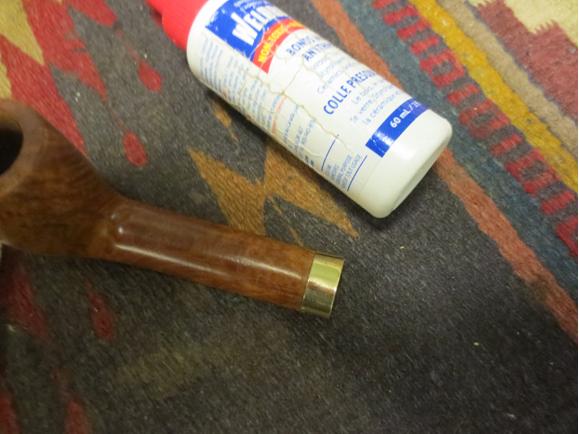
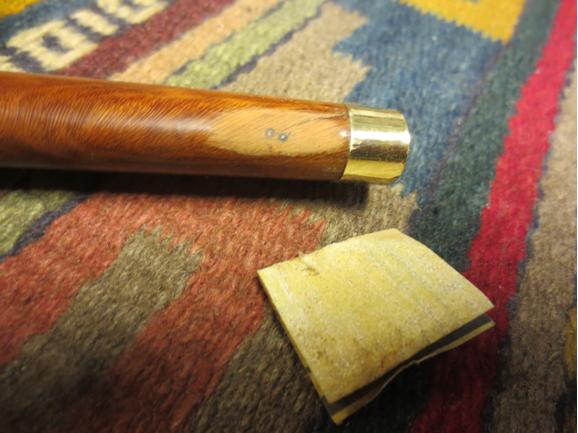
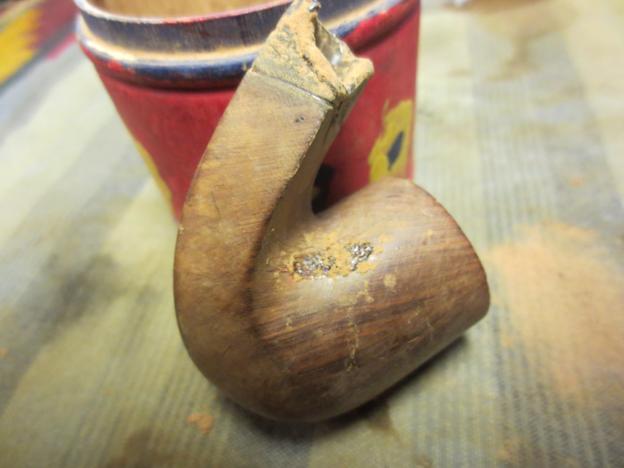
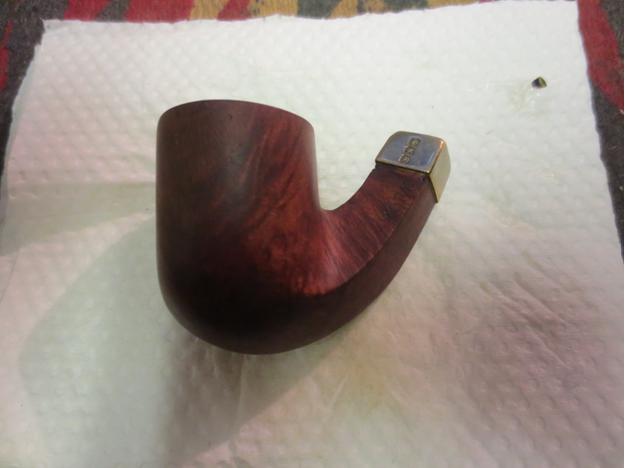
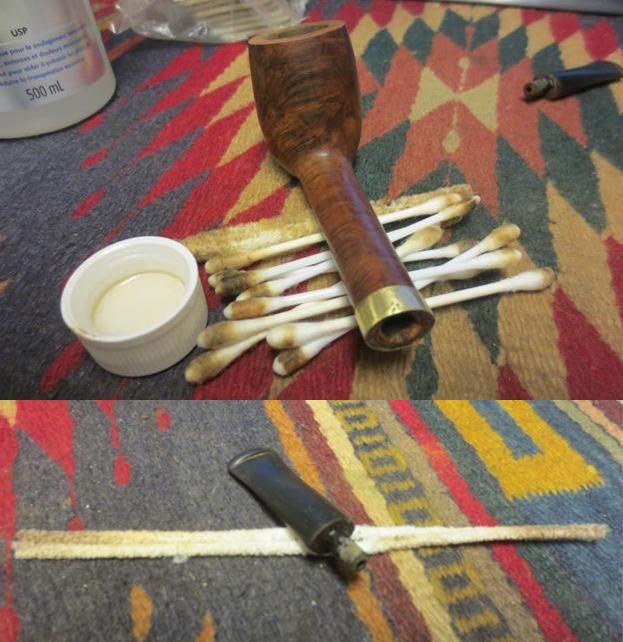
The first order of business was the cracked shank. Using a 1/64 drill bit, I drilled a hole at the end of the crack to stop its spread then filled the crack with clear supper glue.  Then I picked out the three putty fills and using a super glue and briar dust mixture, refilled the pits. Once cured I sanded the repair smooth.M4I steamed the dents out of the briar with a clothes iron applied to a wet cloth wrapped around the stummel – keeping away from the stampings and fingers.  I sanded the entire stummel up to the 3200 micro mesh then wipe down with alcohol before I stained.  In this case I tried to match the original color with several coats of different browns aniline dyes.

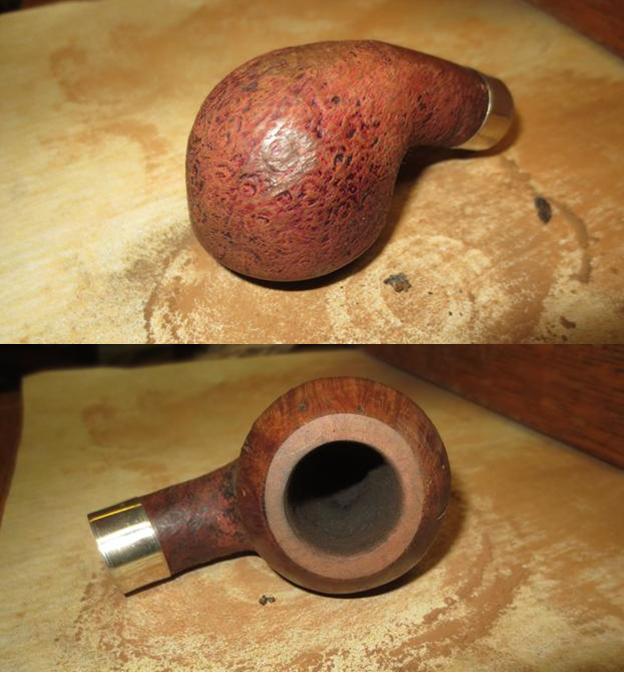
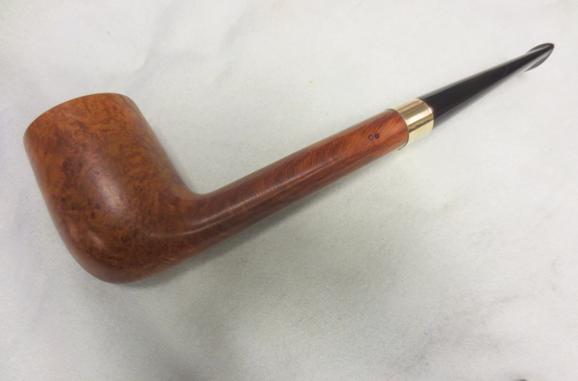
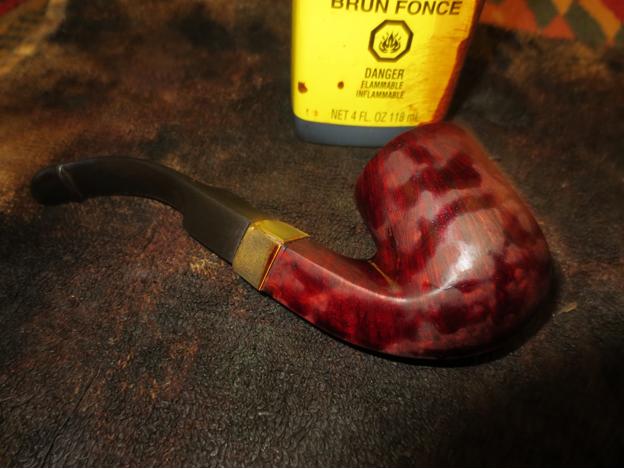
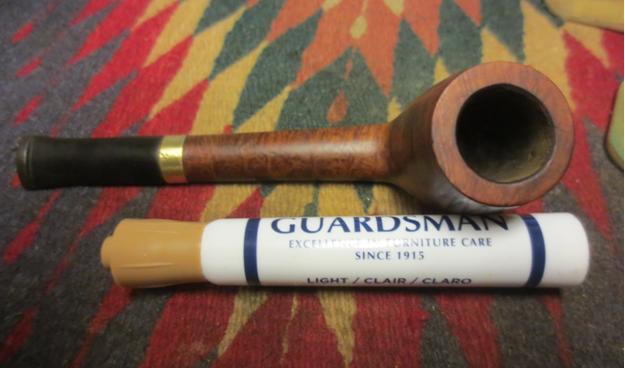
Before reassembling I decide to remove the factory bowl coat and leave it bare briar. Then I wiped the whole outside of the pipe with mineral oil and set it aside for twelve hours before taking to the buffer.  The oil seems to hydrate the briar and brings out a nice shine when waxed.  I first buff with red diamond, wipe off the residue with a soft cotton cloth then apply three coats of carnauba wax giving the pipe a little rest between each coat.

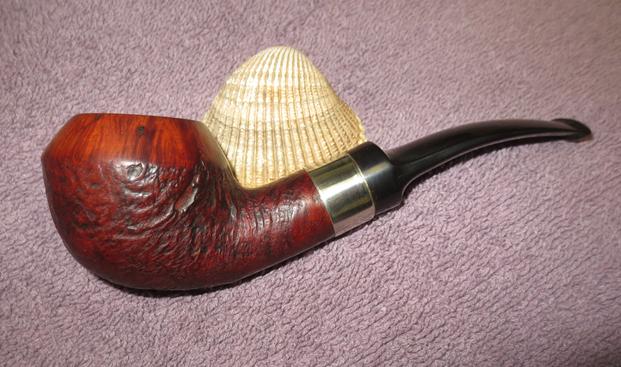
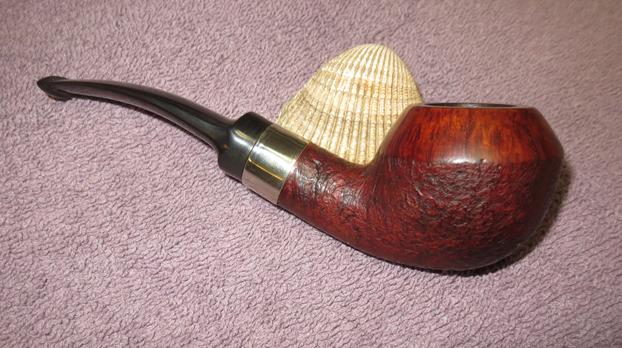
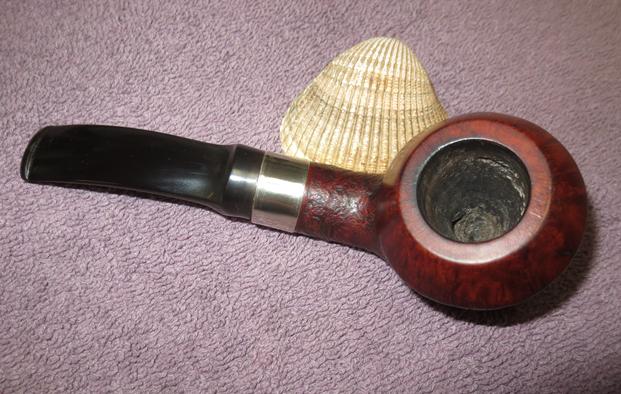
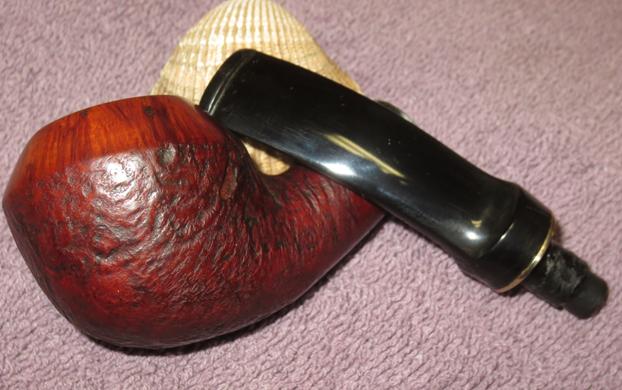
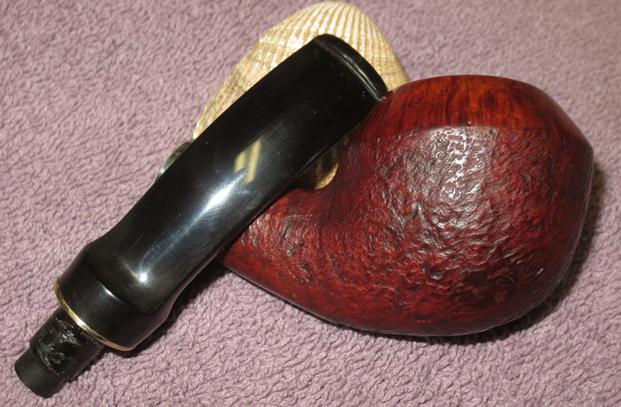
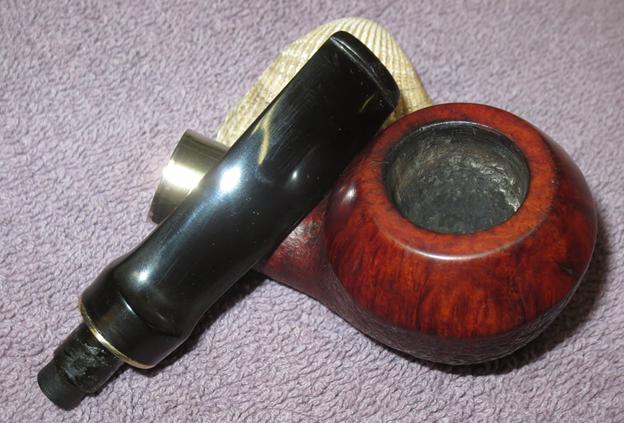
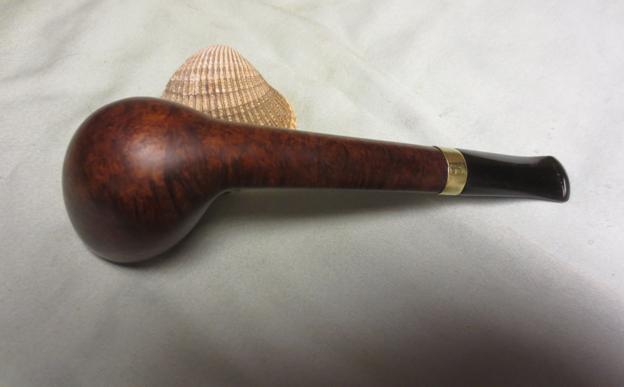
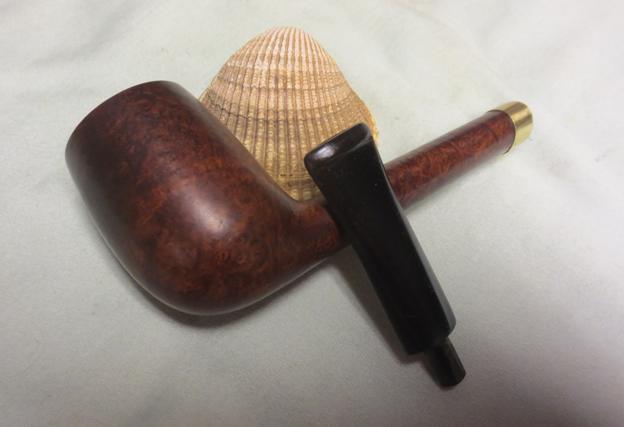
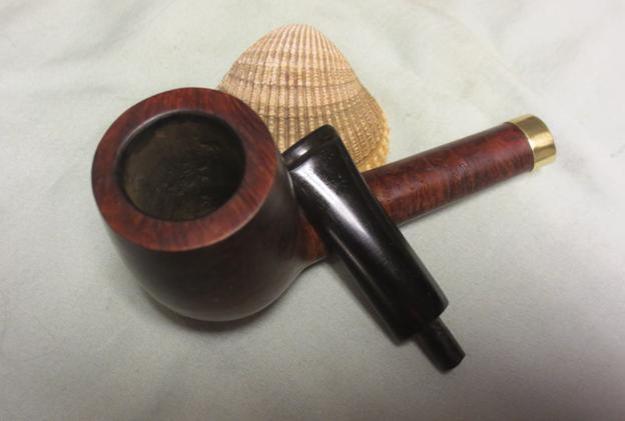
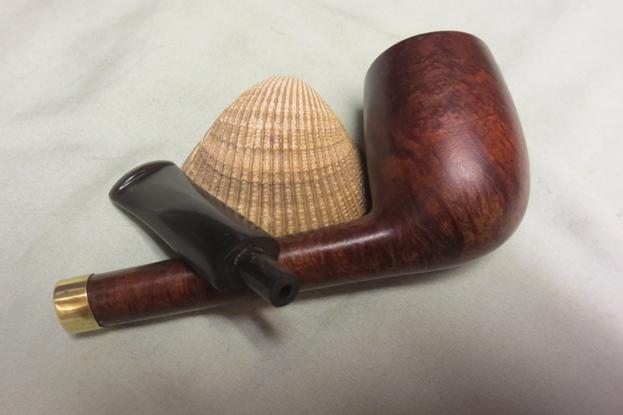
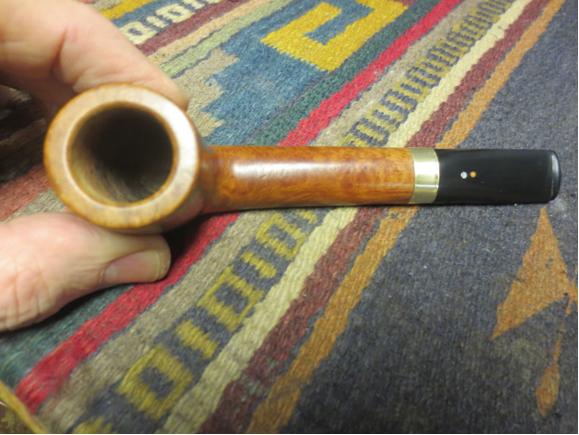
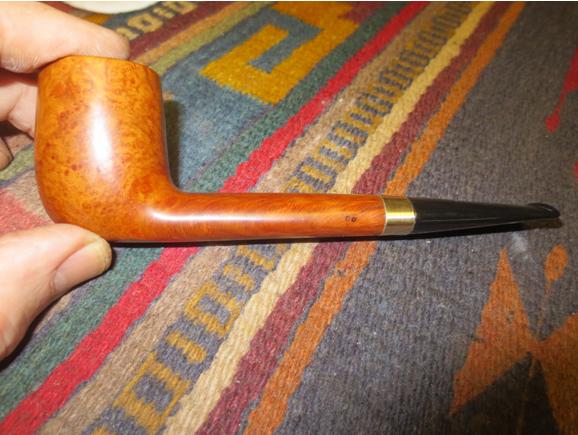
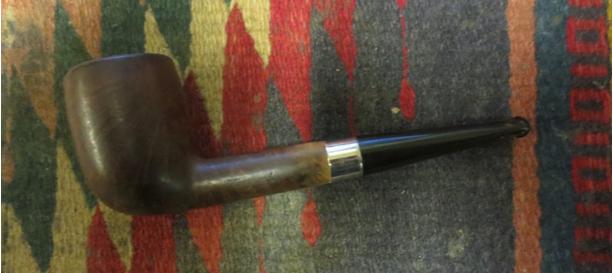
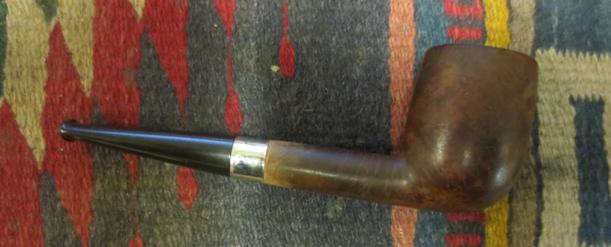
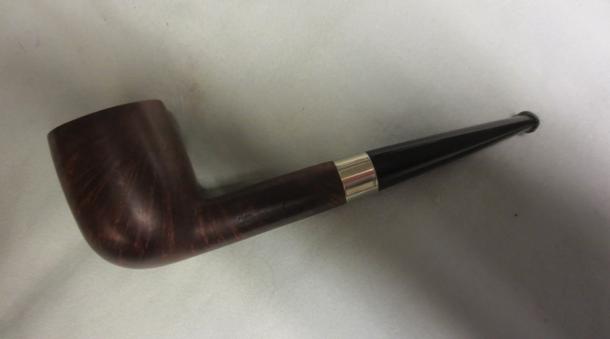
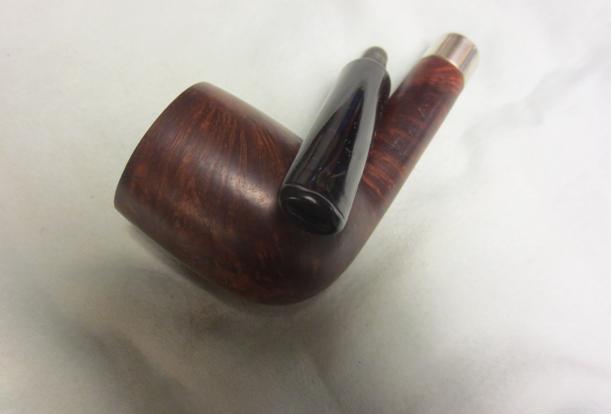
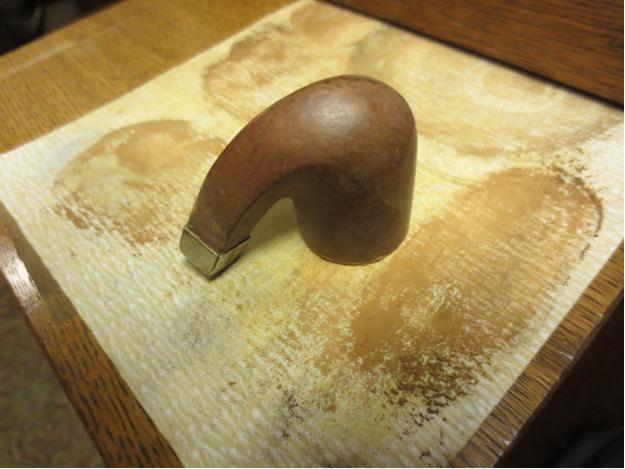
The bent bulldog is one of my favorite shapes and I love the horn stem.  I’m not sure when I will get around to breaking it in.  It might just stay unsmoked for a while.M5 M6 M7 M8

An Interesting Antique Store Stummel


Blog by Steve Laug

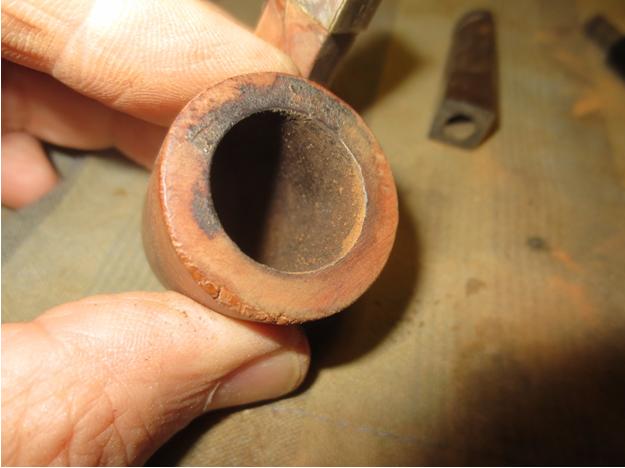
I have a routine when I visit in Bellingham. I take the ladies in my life to the mall and leave them to shop and I set out on my circuit of pipe haunts to see if I can find some likely object of my attention to repair. I rarely come home empty handed, though I don’t know if that is because I will work on many kinds of pipes or if it is because I generally find something. It may be hard for the observer to discern the difference, I know it is for my wife and daughters. I visited several of my haunts and finally in the last one I did a quick walk through and found nothing… this time it looked like I would come home empty handed. Just to make sure I asked at the counter if there were any old pipes in the shop. The seller pointed directly behind me and there in a case that I had totally missed were four pipes. I bought them all. They had a look of age about them so I jumped and paid the price. It turned out that one of them had a cracked bowl but I was able to cannibalize a sterling silver band for an old KBB Yello Bole from the 20s. Two of them were also older – one a GBD and one a Dr. Plumb. The fourth, a Canadian had a gold coloured band and was missing the stem. It looked pretty dirty and the finish was gone. I figured that it too might be one I cannibalized for parts. I paid for them and went out to my car. I went through them and looked them over. The first three showed no surprises. But the stemless bowl was a real surprise. There on the shank was the arced Barlings stamping and under that was the stamping Ye Olde Wood over 237 on the left top side of the shank and Made in England on the right top side. There is also a remnant of the word EXEL. Boy was I surprised. Suddenly it went from a potential victim for cannibalization to one that had some interest for me. It turned out to be the best of the lot.Barling1 Barling2 Barling3 Barling4I took a close-up photo of the rim to show the extent of the damage to that area. The cake in the bowl had flown over the top of the rim. There were also dings and dents that were quite deep. The outer edge was compromised and rounded over and the inner edge was out of round. I also included a photo of the stamping and the crack in the shank. This is the stamping that I saw in the bright daylight when I left the basement antique shop.Barling5I went through my can of stems and found one that would work on this shank. I had to go with a bit of an oversized stem in terms of diameter as the shank was thinner on the top than on the bottom. I would have to hand fit the stem to accommodate that idiosyncrasy.Barling6I used a microdrill bit to put a tiny pin hole at the end of the crack and then filled in the crack with super glue. The drilled hole would keep the crack from spreading and the glue would fill it in. The integrity of the shank was stabilized by the band as well.Barling7Once I had a good fit of the stem to the shank I used the Dremel and sanding drum to remove the excess vulcanite on the diameter of the stem. The fine tuning and flow of the stem would be done by files and hand sanding.Barling8 Barling9I reamed the bowl with the PipNet reamer and took out the majority of the cake. I cleaned it up and took it back to briar with the Savinelli Pipe Knife.Barling10 Barling11I topped the bowl on a topping board using 220 grit sandpaper. I removed the damaged surface of the rim until the outer edges were sharp and there was no rounding.Barling12I scrubbed the exterior of the bowl with acetone on cotton pads to remove the grime and wax that had built up and made the exterior dull and lifeless.Barling13 Barling14I reworked the inner edge of the bowl to bevel it and bring it back to round using a folded piece of 180 grit sandpaper and then a piece of 220 grit sandpaper.Barling15I wiped the bowl down again with acetone to remove any remaining grit and also the sanding dust from the rim repairs.Barling16I put the stem in place and took some photos to be able to see what still remained to remove from the diameter of the stem and what shaping still needed to be done. There was some width to be removed from the top and bottom sides at the band and then the taper needed to be reduced as well to remove the slight hip. The width on the right and left side also needed a bit more work to make the flow seamless.Barling17 Barling18I sanded the stem with 180 grit sandpaper to further shape it and clean up the flow from the shank to the button. It took a lot of sanding to get the angles and flow just right.Barling19I scrubbed out the mortise and the airway in the stem and the shank with alcohol, cotton swabs and pipe cleaners.Barling20I sanded the rim with a medium and a fine grit sanding sponge to remove the scratches left behind by the topping and then stained it with a light brown stain pen to match the colour of the bowl.Barling21I wet sanded the stem with 1500-2400 grit micromesh sanding pads and gave it a coat of Obsidian Oil. I dry sanded with 3200-4000 grit pads and gave it another coat of oil. I finished the sanding with 6000-12000 grit pads and gave it a final coat of oil. I set it aside to dry.Barling22 Barling23 Barling24I buffed the pipe with Blue Diamond and gave it multiple coats of carnauba wax. The colour darkened slightly with the wax. I buffed it with a clean buffing pad and then by hand with a microfibre cloth. The finished pipe is shown below. I am pleased with the way the fit and finish of the stem came out and also the overall look of the pipe. Thanks for looking.Barling25 Barling26 Barling27 Barling28 Barling29 Barling30 Barling31
 

Repairing and Restoring a KBB Yello-Bole 2070B Cutty


Blog by Steve Laug

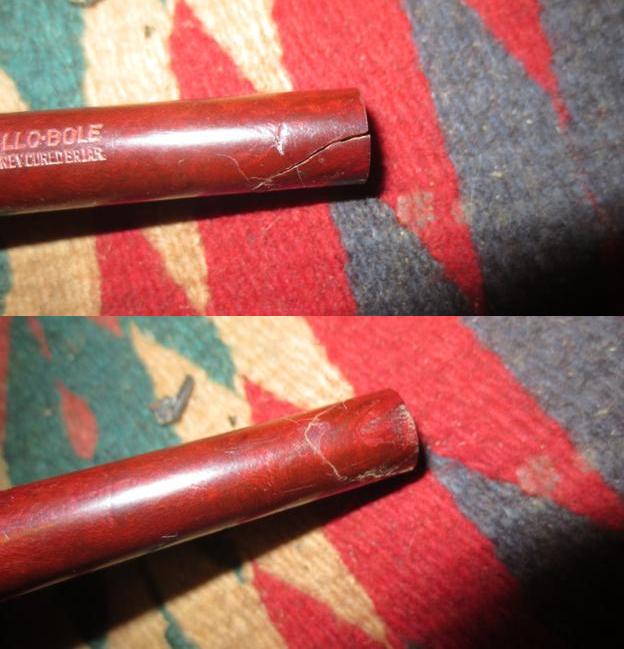
I was contacted by Robb, a reader of the blog about working on an old Yello-Bole Cutty that he had picked up. He said it was in decent shape but had a cracked shank that someone had already done a repair on. They had glued the shank with wood glue but when the stem was inserted it cracked again. He wanted the shank reglued and banded. We talked about different options for repairing the pipe and the costs of doing it. Finally, in an email he offered to trade me the pipe in exchange for one that I had for sale on the blog – a Kaywoodie Signature Bulldog. The deal was done and the pipe was now mine.

As with many of the pipes I repair and restore I want to learn as much about them as I can. I did some work on the internet trying to find the shape number of the pipe and information on the stamping. After a pretty fruitless search I wrote to Troy Wilburn of the Baccypipes Blog to get some information on dating the pipe. Troy has become my go to guy when I want to learn information on this particular brand of American pipes. He wrote back quickly with a reply which I summarize below. In it he walked me through the meaning of the stamping and how that helped with the dating of the pipe. His quick first answer stated that the pipe was made between 1933-1936. Here is the main portion of what he wrote to me:
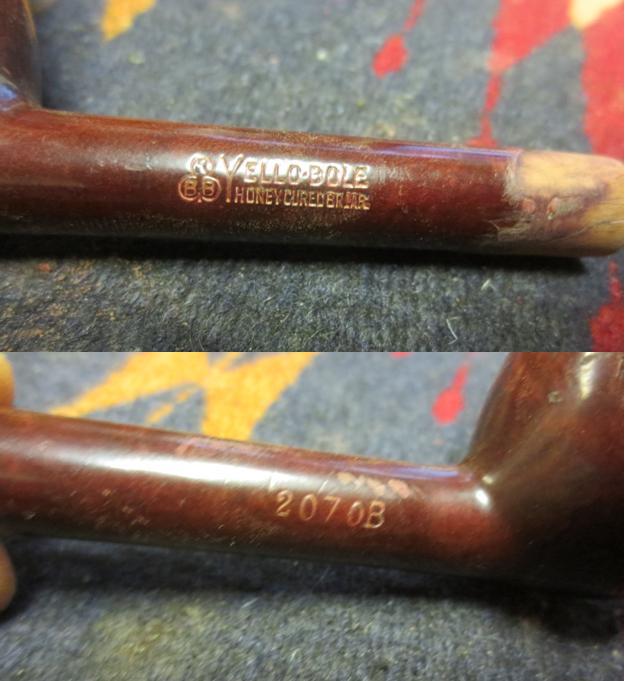
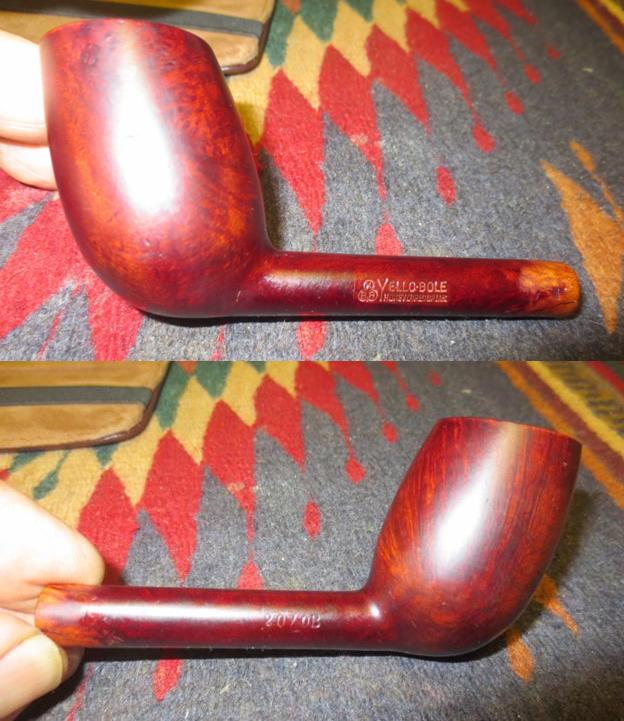
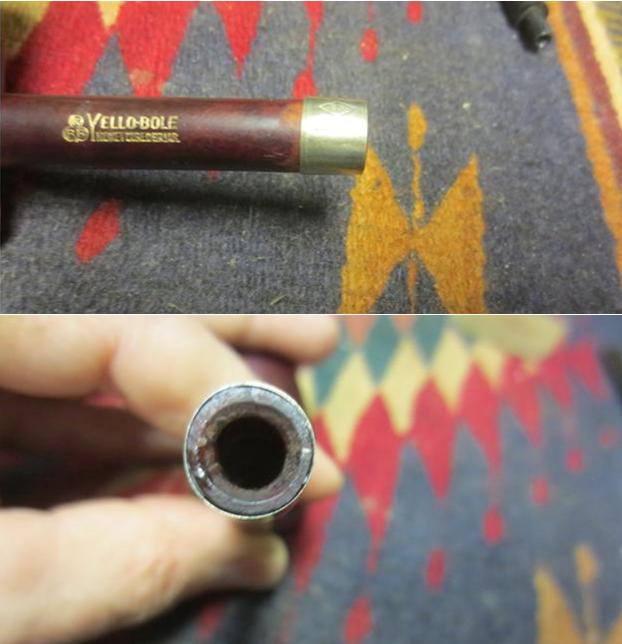
“I’ll break down the stamping and numbers for you. Starting with the left side of the shank the pipe is stamped with KBB in a clover leaf and next to that it says Yello-Bole. Underneath it is stamped Honey Cured Briar. Yello-Bole pipes that come from 1933-1936 bore the stamp Honey Cured Briar. On the right side of the shank it is stamped 2070B. The meaning of the numbers breaks down as follows. The number 20 tells us that the stem is black vulcanite with a push tenon made between 1932-1940s. The next two numbers, 70 gives the shape – a long Belgian and that it was made between 1928/9 and 1935. They made a regular 70 (it’s just called Belgian), a large Belgian 70B, and a long Dublin Belgian 70B.”

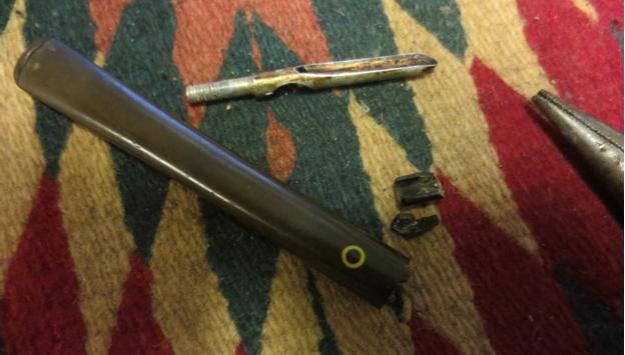
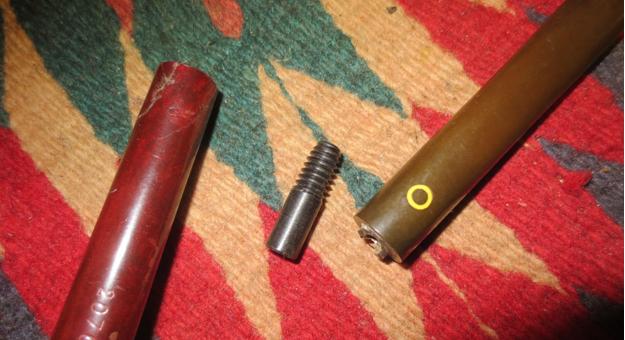
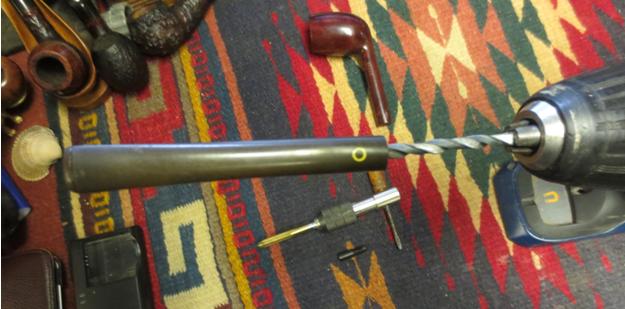
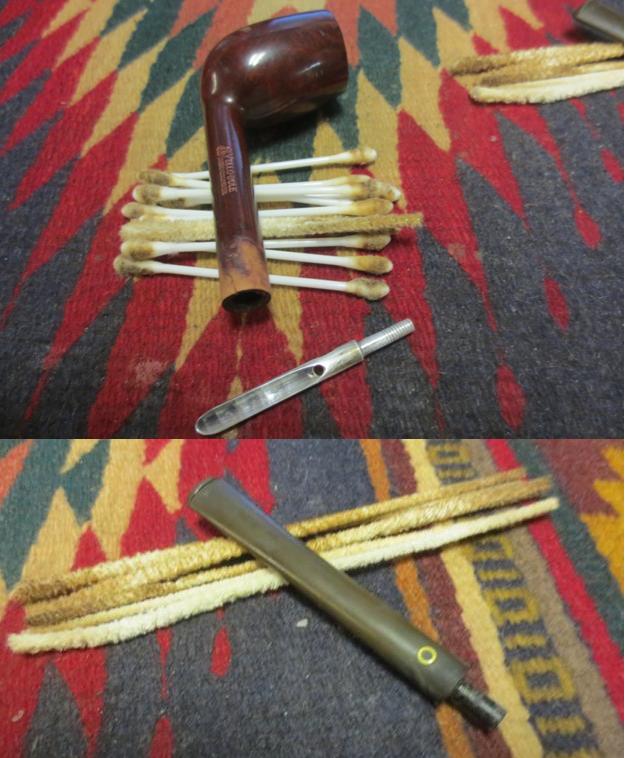
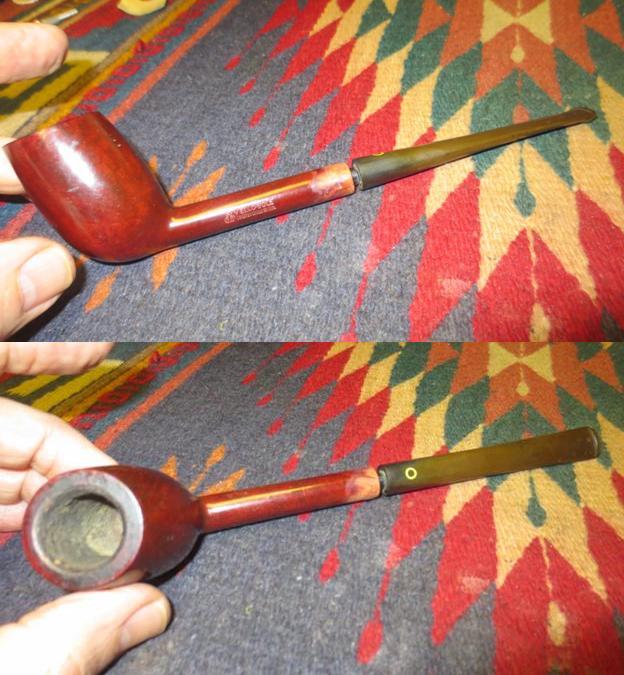
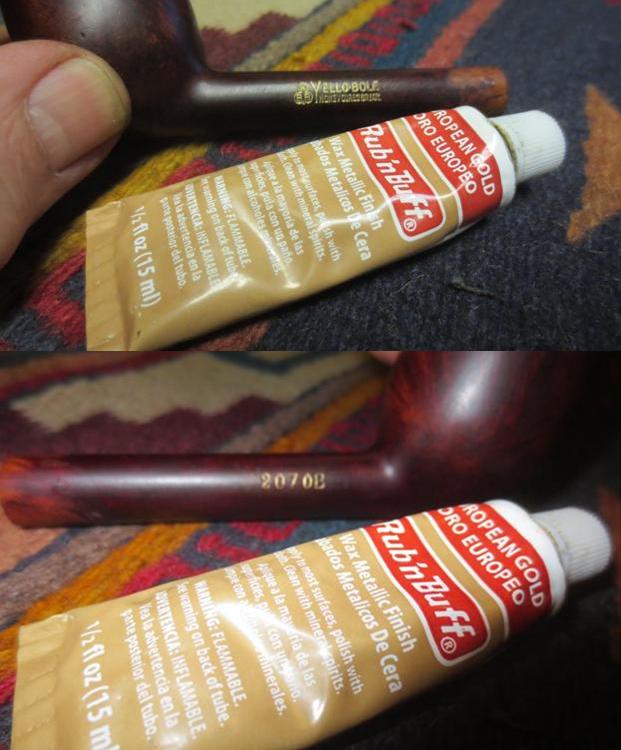
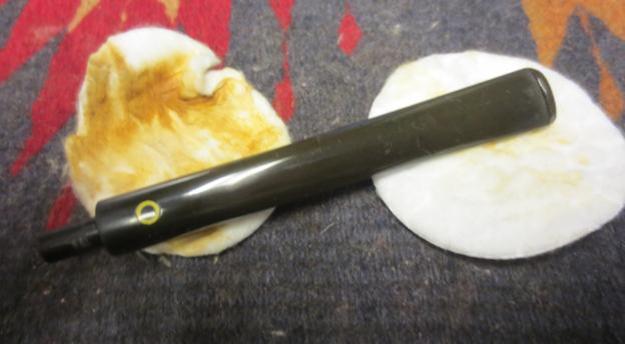
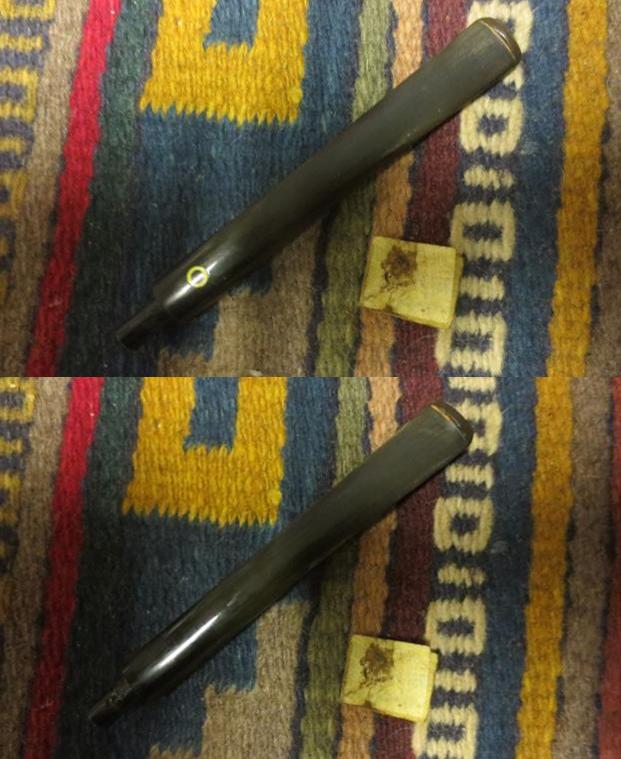
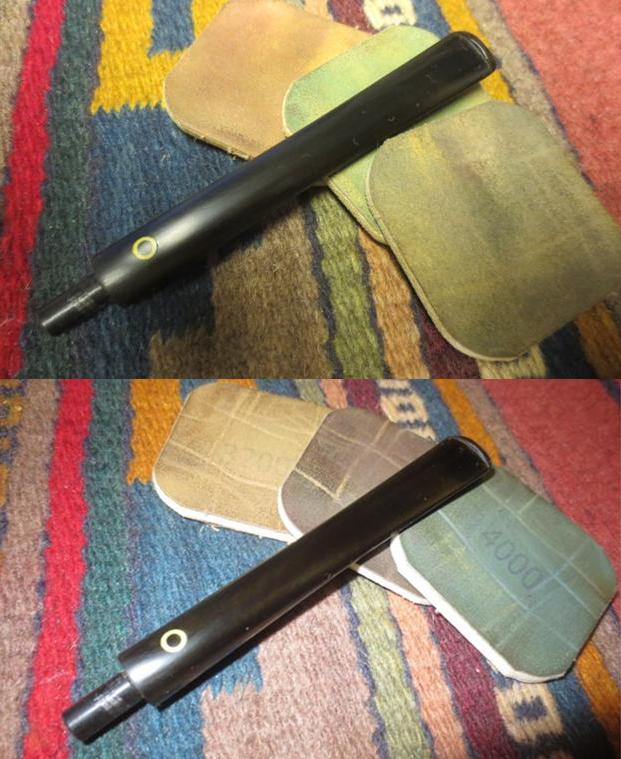
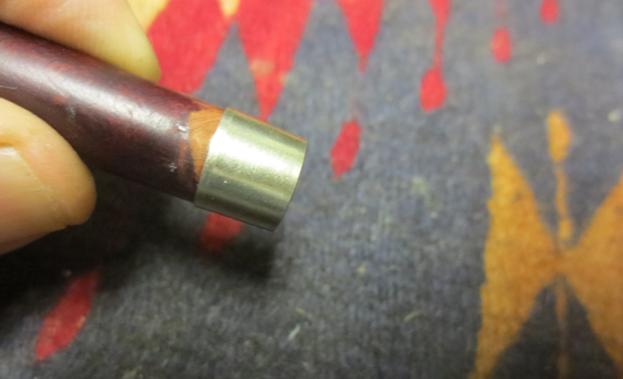
I took some photos of the pipe with the stem in the shank to highlight the issues that I saw with the pipe. Not only was the shank cracked but the tenon was also cracked and set at an angle to the stem making alignment in the shank impossible. The dimensions of the pipe to give some perspective to the photos are: Length – 8 inches, bowl height – 2inches, outer bowl diameter – 1 ¼ inches, inner bowl diameter – ¾ inches. You can see that it is a large pipe. The finish was crackled and dirty – almost opaque to the point that the grain was hidden. The rim had a lava buildup and the bowl had a thin, uneven cake that covered it top to bottom. The stem was oxidized and yellow. The stinger was glued in place in the tenon with the broken tenon anchored firmly to the metal insert on the stinger. It was also glued in sideways instead of upright.YB1 YB2 YB3I took a close up photo of the tenon and stinger repair that had been done to show the cracked and glue pieces of the tenon on the stinger. You can see in the photo where pieces of the tenon had broken free when I removed the stem from the pipe.YB4The crack in the shank arced from one side of the pipe to the other forming a closed crack. The chunk of briar had been glued in place by what appeared to be wood glue. The repair was not strong enough to protect the shank when the angled tenon was inserted in the mortise. Each time the stem was inserted the crack opened wide. Because it had a start and an end point there was no threat in the crack spreading upward along the shank. I had two options for repairing this. I could either insert a tube inside the shank thus internally banding the pieces in place or I could use a band on the exterior to the same effect. As I worked on the i decided to band the shank rather than do an internal repair. The thinness of the tenon with the stinger in place would make it impractical to reduce the size of the tenon further to fit in the inner tube repair.YB5I removed the stinger from the stem and broke away the pieces of the rubber tenon from the metal insert. The stinger was exceptionally long and once I replaced the tenon I would make a decision what to do with it.YB6I have an assortment of threaded replacement tenons that I use to repair broken tenons. I went through my container and found one that was a good fit in the shank.YB7I used the Dremel and sanding drum to flatten out the broken pieces of the old tenon on the end of the stem. I used the topping board to square up the end. I set up a cordless drill and a drill bit approximately the size of the threaded portion of the new tenon. I turned the stem onto the drill bit and slowly opened the airway to fit the new tenon. Once I had the airway open and deep enough to accommodate the threaded end I used a tap to cut threads into the inside of the stem. YB8I turned the new tenon into the threaded airway in the stem to check the fit. When it was correct I gave the threads a coat of slow drying black super glue and turned the tenon into the stem until it was tight against the face of the stem.YB9 YB10I set the stem aside to let the glue cure and began to work on the crack in the shank. It did not matter which way I chose to repair the shank I needed to clean up the previous repair and remove the dried wood glue. I needed a clean surface to reglue with super glue. Once I had the surface clean I pried open the crack and used a dental pick to push clear super glue into the crack. Once the glue was in place I clamped the shank until the glue set.YB11I sanded the glued shank with 180 grit sandpaper to remove the finish and the over flow of glue from the repair. I wanted to make the surface smooth so that I could either band it externally or do it internally and then refinish the shank.YB12 YB13The next two photos show the gold/yellow colour of the paint in the stamping of the shank on both sides. Once I stripped the bowl of the varnish coat this would disappear and I would need to recreate it.YB14I cleaned out the inside of the shank and the mortise with alcohol, pipe cleaners and cotton swabs. It was dirty but cleaned up easily. I repeated the same process on the airway in the stem. It too was easy to clean. I reamed out the bowl with the Savinelli Pipe Knife to take the cake back. Underneath the light cake I found that they original Yello-Bole coating was still in place.YB15Once the glue on the shank had cured overnight I carefully put the stem in the shank to check the alignment of the stem and shank. I took the following photos of the pipe at this point in the process.YB16 YB17I wiped the bowl down with acetone on cotton pads to remove the varnish coat that was crackling. It took some scrubbing but the finish came off quite easily and left the colour in the briar.YB18I was careful to not wipe around the repaired shank as the acetone will dissolve super glue and I would be back to square one. I sanded the bowl with 1500-2400 grit micromesh sanding pads to further remove the finish.YB19I wiped the bowl down with a light coat of olive oil to see what the grain looked like.YB20 YB21I cleaned the shank and used European Gold Rub N’ Buff to restore the gold in the stamping. I really like how Yello-Bole and some of the older American pipes utilized the gold leaf in the stamping to make it highly readable.YB22I scrubbed the stem with Meguiar’s Scratch X2.0 to remove the majority of the oxidation and polish the stem. The residue of the oxidation is shown on the cotton pad under the stem.YB23I sanded the remaining oxidation with 220 grit sandpaper to remove it from the surface of the stem. There were some small tooth marks on the top and bottom sides of the stem as well that I sanded out with the sandpaper.YB24I wetsanded the stem with 1500-2400 grit micromesh sanding pads and gave the stem a coat of Obsidian Oil. I dry sanded with 3200-4000 grit pads and gave it another coat of oil. I finished sanding with 6000-12000 grit pads and gave it a final rubdown with Obsidian Oil.YB25 YB26I drilled out the tenon to the diameter of the stinger apparatus that had originally come with the old tenon. I made it large enough that the stinger was removable in order that the pipe could be smoked with or without the stinger.YB27The band that Charles shipped me came on Friday and it was a good fit on the shank. I coated the shank with some white glue and pressed the band onto the shank. I wiped away the excess glue with a damp cotton pad.YB28 YB29I used a dark brown stain pen to touch up the area around the shank repair that extended beyond the band. The colour worked well with the brown/red colour of the stain on the rest of the shank.YB30I buffed the area around the band with White Diamond on the wheel to blend in the stain colour with the rest of the pipe. I buffed the entire pipe with Blue Diamond, being careful to avoid the nickel band. I have found that when I buff the band at the same time as the rest of the pipe the black from the nickel on the buffing pad is transferred to the shank and stem. I rubbed the stem down with Obsidian Oil and gave the stem and bowl multiple coats of carnauba wax. I buffed the pipe with a clean buffing pad and then with a microfibre cloth to deepen and raise the shine. The finished pipe is shown in the photos below. I really like the way it turned out and I am sure glad that I was able to work a trade with Robb for the pipe.YB31 YB32 YB33 YB34 YB35 YB36 YB37 YB38I took some final photos of the pipe. The first photo shows the stinger next to the bowl and stem go give an idea of the size of the stinger and the second photo shows the stinger in place in the stem. Thanks for looking. YB39 YB40
Restemming and Restoring a Potpouri Author


Blog by Steve Laug

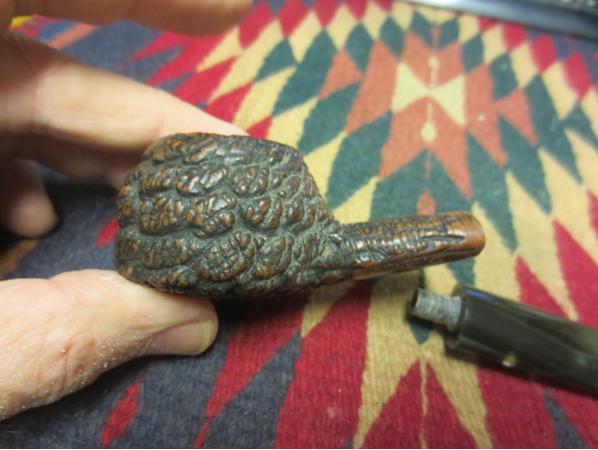
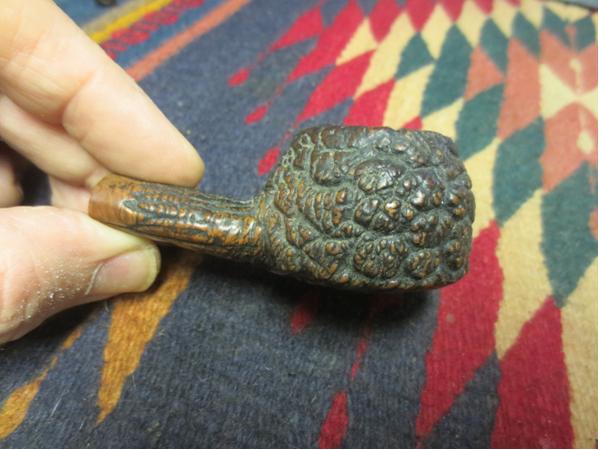
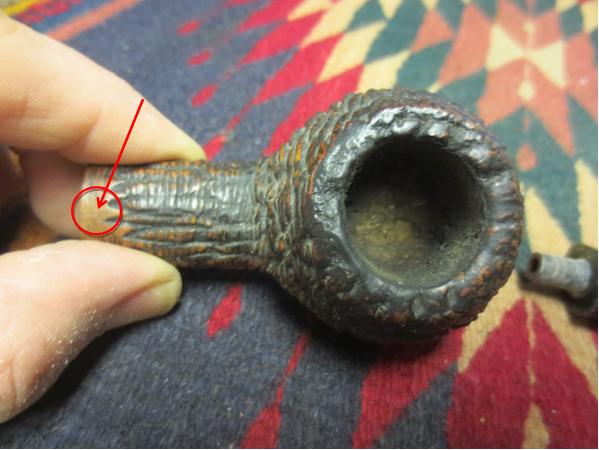
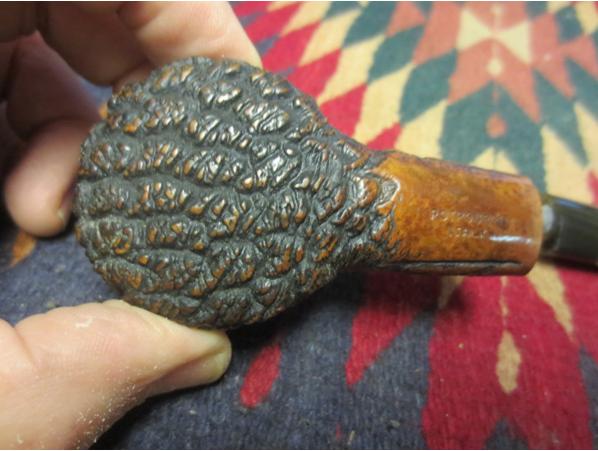
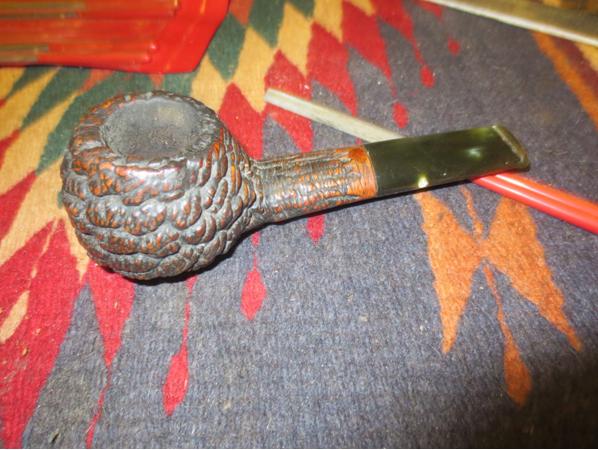
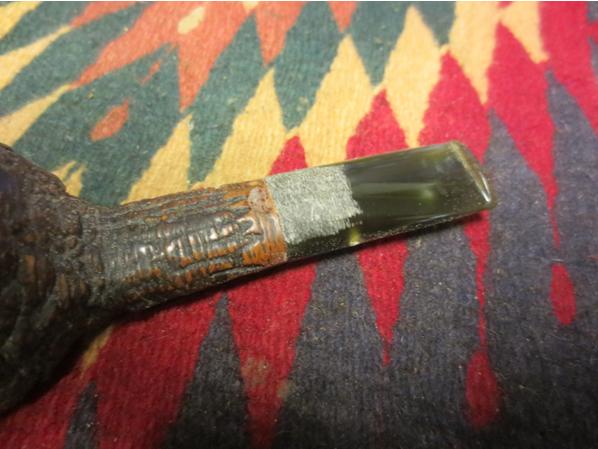
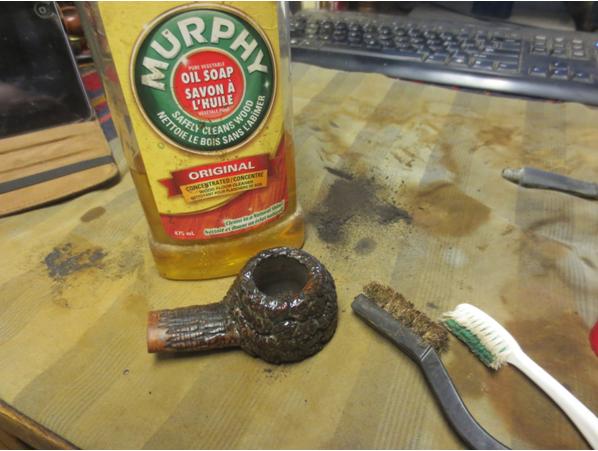
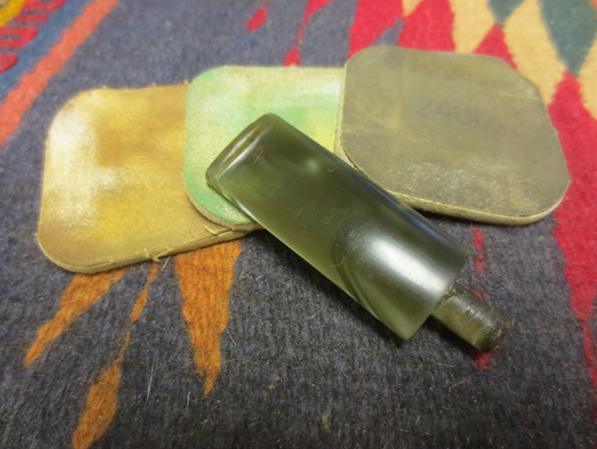
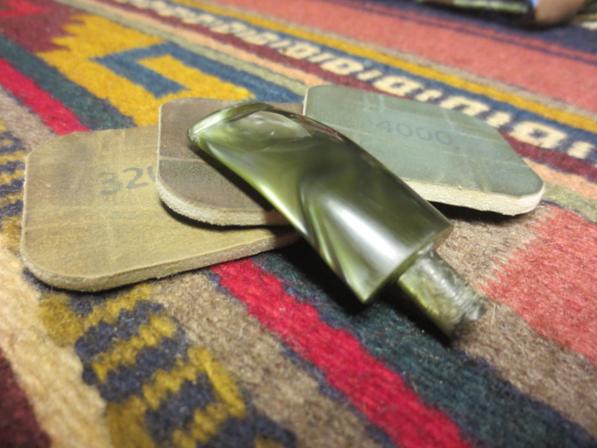
I have a growing box of bowls that came to me without stems. It seems each time I clean it out and restem the pipes I inherit more of them. This is not a complaint as I actually enjoy restemming pipe bowls. It is always a challenge to get a new stem to align properly with the shank and to deal with cracks or damages to the bowl or the shank. This bowl came to me and I immediately fell for the rustic rocklike features of the rustication. It was gnarled and rough looking and felt great in the hand. The bowl was dirty and the deep grooves of the rustication had a lot of dirt and grime build up in them. The rim was caked and the rustication pretty much filled in the grooves making the rim surface smooth. The bowl had a rough cake in it and looked as if someone had started reaming the bowl but did not finish. There were some small fissures like cracks in the sides of the bowl near the entrance of the airway and on the bottom and the top of the airway. Someone had cleaned out the shank so it was not too dirty. There was a small crack on the top of the shank that was about 1/8 long. I could open it slightly with a wedge so it would need to be glued and banded. The pipe showed a lot of promise though and I could see it come alive if I had the correct stem for it.Pot1 Pot2In the photo below there is a small crack barely visible in the middle of the shank end between my fingers. I have circled it with red to focus your eye on it. The tip of the red arrow is on top of the crack in the shank. It extends about 1/8 to ¼ inch.Pot3 Pot4I took a close-up photo of the bowl and rim to give you an idea of the state of things when I started. It is hard to see but at this point I could see some small cracks around the entrance of the airway to the bowl.Pot5I went through my can of stems and found a green acrylic stem that would do the trick on this pipe. It would go well with the rustication and the length and width of the stem would carry through the thickness of the bowl. I sanded the tenon with the Dremel and sanding drum until it was a close fit to the shank. I finished sanding by hand with 220 grit sandpaper. It fit well in terms of the width of the shank but it was slightly thicker on the top and the bottom where it met the shank. I was careful inserting it as I did not want to crack the shank further.Pot6 Pot7 Pot8I used the Dremel and sanding drum to remove much of the excess thickness on the top and the bottom of the stem at the shank junction. I do this carefully with the stem in place in the shank so that I can get it as close as possible without damaging the finish on the shank. You can see in the next two photos that the junction is pretty smooth now and the thickness is almost a match.Pot9 Pot10I finished the fit with a file and took off the remaining thickness that had to go. I also used the file to remove the tooth indentations on both sides of the stem near the button.Pot11 Pot12With the fit nearly perfect it was time to sand out the filing marks and smooth out the stem. I have a medium grit sanding stick that works perfect for this application and I sanded with it until all of the file marks were gone and the transition between the shank and the stem was smooth.Pot13 Pot14With the stem fit roughed in I turned my attention to the bowl and shank. I wanted to have the shank and bowl clean so I could deal with the repairs to the airway in the bowl and the crack on the top of the shank. I reamed the bowl with a PipNet reamer using the largest cutting head. I cleaned up the remaining cake with the Savinelli Pipe Knife.Pot15 Pot16I scrubbed the exterior of the bowl with Murphy’s Oil Soap and a tooth brush on the sides, shank and the bowl of the bowl. I scrubbed the rim with a brass bristle brush until all of the lava that filled the rustication was gone.Pot17I rinsed off the soap with warm water and dried the bowl with a soft towel. The cleaned and reamed pipe is shown in the photo below.Pot18With the bowl reamed and the finish clean I turned to the internals. I cleaned out the mortise and airway into the bowl with pipe cleaners, cotton swabs and alcohol. It did not take too much to clean out the pipe. I cleaned the stem the same way and used a dental pick to clean up the slot in the end of the button.Pot19 Pot20I lightly sanded the crack on the top of the shank and spread it open with a dental pick. I used a tooth pick to push super glue into the crack and then held the crack together until the glue set. Once it was dry I found a round band that had the right circumference to fit the shank and heated it with a lighter and pressed it onto the shank of the pipe.Pot21 Pot22With shank repair complete and the bowl cleaned and ready I put the stem in place in the shank and took some photos of the pipe. I really liked the look of the band breaking up the rustic bowl and the smooth green stem. The band fit perfectly and did not cover the stamping on the underside of the shank. I still needed to sand the stem some more to get a shine but you can see what the pipe will look like at this point. Pot23 Pot24I mixed a batch of pipe mud (cigar ash and water) and used a dental spatula to apply it to the bottom of the bowl. I inserted a pipe cleaner in the airway and used the spatula to apply the mud to the small cracks and fissures around the airway. Once the mud cured the pipe bowl would be in good shape until a new cake was built.Pot25I heated the stem in a cup of water in the microwave until it was pliable and then put a gentle bend in it to give it a more elegant look and comfortable feel.Pot26 Pot27I wet sanded the stem with 1500-2400 grit micromesh sanding pads to remove the scratches. I dry sanded with 3200-4000 grit pads and then finished with 6000-12000 grit pads. I rubbed away the sanding dust with a damp cloth.Pot28 Pot29 Pot30I gave the pipe a light buff with Blue Diamond on the wheel to bring some deep shine to the stem. I then gave the stem several coats of carnauba wax and buffed it with a clean buffing pad. I finished by hand buffing it with a microfibre cloth. The finished pipe is shown in the photos below. The green acrylic stem works well with the rough finish on the bowl. I like the finished look. What do think? Thanks for looking.Pot31 Pot32 Pot33 Pot34

Replacing a Broken Tenon & Repairing a Cracked Shank on a Radice Brown Canadian


Blog by Steve Laug

A friend on Facebook messaged me not long ago with a proposition. I had repaired a pipe for a friend of his before Christmas and now he had one for me. He would send it up with some pipes to add to my refurbishing box. The one he had for me to repair was a Radice Brown Canadian with a gold band. The pipe arrived with the broken tenon stuck in the shank. In looking it over I could also see a small crack coming out from under the band that would need to be addressed. I used my usual tenon pulling method and was able to wiggle it free of the shank. The tenon was Delrin and was threaded so that it screwed into the stem. It had broken off leaving two full threads remaining on the end of the tenon. The second photo below shows the pulled tenon and the broken remainder of the tenon in the stem.Radice1

Radice2 I drilled out the broken tenon using a drill bit slightly smaller than the diameter of the hole in the stem. As I drilled it the broken tenon stuck on the drill bit and I was able to unscrew it from the stem. The photo below shows the freshly drilled stem. There was a lot of clutter left behind by the drill that I would need to clean out. I used a dental pick and pipe cleaners to remove all the debris and open up the airway in the stem. I noticed that there was a ridge on the inside of the bowl toward the bottom from whoever had reamed it before I received it.Radice3 Once I had the tenon out of the shank and the stem drilled and cleaned I examined the pipe carefully. From experience I have seen that when a tenon snaps there can also be collateral damage such as a cracked shank. The band on the pipe was loose so I slid it off and examined the shank. From the end view photo below you can see a crack at about 11 o’clock. It ran up the shank for about ¼ inch and then turned downward along the side of the shank. It extended for almost an inch along the side of the shank. There was a slight crack that split off of it and headed backward toward the end of the shank as well. I used a microdrill bit on the Dremel and drilled a small pin hole at the end of each branch of the crack.Radice4

Radice5 I put a light line of white all purpose glue around the shank and pressed the band in place. I cleaned up the overage of the white glue.Radice6 I used a dental pick to guide super glue drops into the drill holes and along the crack.Radice7

Radice8 I sanded the repair I had made to the cracked shank with 220 grit sandpaper and then with a medium and a fine grit sanding sponge.Radice9 I sanded the repair area with 1500-2400 grit micromesh sanding pads and then stained it with a light coloured stain touch up pen. The colour matched the rest of the bowl and shank and once it was polished blended in well. The two dark spots on the side of the shank were the filled drill holes. They are smooth to touch.Radice10 I used a needle file to smooth out the ridge at the bottom of the bowl and blended it in with the sides of the bowl as much as possible. I cleaned out the shank with pipe cleaners, cotton swabs and alcohol. I used a dental pick to clean out the slot on the stem and then ran pipe cleaners and cotton swabs through it to clean up the threads in the tenon end and the airway throughout the pipe.Radice11 I set the bowl aside and began to work on the stem. I decided to fill the missing dot on the top of the stem before I replaced the tenon. I screwed the broken tenon in to give me something to hold onto while I worked on the stem. I used a knitting needle that was ivory coloured and cut it down with the Dremel until I had a piece that would fit in the hole in the stem. I glued it in place with super glue and then cut off the body of the needle leaving just a small piece in the hole. I sanded it with the sanding drum on the Dremel and brought it as close to flush with the surface of the stem as possible without damaging the stem.Radice12

Radice13

Radice14 I sanded the dot flush with the surface of the stem with sandpaper and then with the sanding sponges and micromesh pads. I removed the broken tenon and prepared to cut a new tenon. For the material I used a small stem that I have been cannibalizing for tenon repairs.Radice15 I cut off a piece of the stem that would give me material to work with using a hacksaw.Radice16 I used the Dremel and sanding drum and two different rasps to reduce the diameter of the end of the newly cut tenon that would insert into the stem. It had to be the same diameter as the threaded end of the old tenon.Radice17 When I had the tenon fit I cut the length back to match the length of the previous tenon. I put some clear super glue on the small end of the tenon and pressed it into the stem. I ran a bead of clear super glue around the insertion point of the new tenon to make an air tight fit. The photo below shows the new tenon in place in the stem sitting next to the broken one.Radice18 I sanded the new tenon with micromesh sanding pads to polish it and readied it for the shank. Once it was clean I pushed the stem into the shank and took a series of photos to show the newly stemmed pipe. I quickly sanded the gold band with 6000-12000 grit micromesh pads to remove the scratching and grooves that had been present when I received the pipe.Radice19

Radice20

Radice21

Radice22

Radice23 I sanded the stem with micromesh sanding pads – wet sanding with 1500-2400 grit pads and wiping down the stem with Obsidian Oil. I dry sanded with 3200-4000 grit pads and then gave it another coat of oil. I finished sanding with 6000-12000 grit pads and then gave it a final coat to wipe off the sanding dust.Radice24

Radice25

Radice25a I buffed the pipe and stem with Blue Diamond on the wheel and then gave it multiple coats of carnauba wax. I buffed it with a clean flannel buff. I hand buffed it with a microfibre cloth and then set it aside for photographs. I hand polished the band with a jeweler’s cloth to give it a shine to match the stem.Radice26

Radice27

Radice28

Radice29

Radice30

Radice31

Radice32

What a Mess – A Vanguard Reg’d. Lumberman with a Bit of History


Blog by Steve Laug

I recently came across an EBay lot of bowls without stems and broken tenons still in the shanks. In the lot was one that intrigued me. It was the only one with a stem. The stem was short and tapered. It was very narrow and the button and slot made me think that it was old. The lot had the look of older English pipes but there was no information on the stamping. When the lot arrived in Vancouver, the stemmed pipe was stamped Vanguard over Reg’d on the left side of the shank. All other stamping, if there had been any, was lost.lot1 The bowls finish was gone. The colour was almost grey and there were spots all over this bowl and the others as can be seen in the photo below.lot3 From the third and fourth photo provided by the seller I could see that the shank was cracked and would need to be addressed. The rim appeared to be very thickly covered with lava and the outer edge had been damaged and rounded.Lot5 The next photo shows the large crack that was present in the shank of the pipe. It had started to open and the edge of the shank where it met the stem had some nicks.lot8 When the box arrived the pipe was actually in worse shape than the photos had shown. The bowl rim was not all that was caked with tars. The bowl itself was almost 1/3 full of half burned tobacco, dottle that was rock hard and filled the bottom of the bowl. The cake on the rest of the bowl was not thick but was very hard. The finish was not only grey and spotty but was dented and rough to the touch. I could feel the ridge where the sides of the crack in the shank had separated. The rim edges were not only damaged and rounded but were also rough from banging out the burnt tobacco against something hard. The stem had tooth marks and chatter on both sides of the stem at the button. The button and slot were intact. The stem appeared to be as old as or older than I first thought. This was going to be a challenge to bring back to life but the age of it made it something I could not wait to tackle.Van5

Van6

Van7

Van8 I took some close up photos of the state of the rim and cracked shank once the pipe arrived. It was a mess that is for sure. The rim and bowl were in bad shape and smelled awful. The shank crack was worse than I had imagined. The first photo of the cracked shank is from the top and the second photo is from the side.Van9

Van10 I looked up the Vanguard name in Who Made That Pipe and found that there were two makers. There was a French maker and an English maker. The French pipe was made by Marchal, Rouchon 1907 and the English one was made by A. Oppenheimer/Bernhardt & Meyers. Given that I cannot be definitive as to which maker crafted this pipe. But the interesting thing is that the Marchal & Rouchon Cie which later became GBD France came under control of Oppenheimer in Great Britain. So you can see that though I may not know which one ultimately made the pipe the fact is that the two brands came together in 1902 when Marchal & Rouchon Cie sold out to Oppenheimer. I now have in my collection a pipe which may well have bridged the union of the two companies. The Vanguard thus could easily bear both the French and the English stamping. The lack of a “Made in…” stamp may well signify the years that the companies joined. That in itself made cleaning up and restoring this old-timer interesting for me.

I decided to start the clean up by reaming back the cake and cleaning out the dottle from the bowl. I used a PipNet reamer and started with the smallest head and worked up to the one that fit the bowl. I took the cake back to bare wood to check for damage to the inside walls of the bowl. With a pipe this worn I find that this is extremely necessary. I do not want any surprises after I have cleaned it up.Van11

Van12 To repair the damaged shank I opened the crack as much as possible without making it worse and used a dental pick to push super glue into the crack. I pressed it together until it dried. I then used the sanding drum on the Dremel to take down the shank slightly so that a band would fit snugly on the shank and hold the crack tightly together. I pressed the band onto the end of the shank and took the picture below before I heated the band and pressed it into place.Van13 I heated the band with a heat gun and then pressed it against a flat surface until the band was in place on the shank. I pressed it onto the shank and then used a folded piece of sandpaper to clean up the edge of the band and shank. I left about 1/8th of an inch of the band extending past the shank to deal with the chipped and damage shank end. The stem would not have had a clean fit against the shank because of the damage. When the stem was in place it fit inside of the band against he shank and looked great.Van14

Van15

Van16 With the band in place the shank was repaired and the tenon would no longer fit in the mortise. The contraction of the briar by the band cleaned up the crack and tightened up the loose fitting stem. I lightly sanded the tenon with a sanding drum on the Dremel and then by hand to get a snug fit in the shank.Van17

Van18

VaN19

Van20

Van21 I scrubbed the surface of the briar with acetone and cotton pads to remove the grime, spotting and remaining finish. There was some interesting grain under the grime.Van22

Van23

Van24

Van25 The damaged rim surface and outer edge required that the bowl be topped. I used the topping board and 220 grit sandpaper to remove the damaged surface and sharpen the edge of the bowl.Van26

Van27 I scrubbed the surface of the bowl down again with acetone and cotton pads to remove the dust and grime from topping.Van28

Van29

Van30 I cleaned the inside of the shank and the stem with alcohol, cotton swabs and pipe cleaners. I used the drill bit from the Kleen Reem pipe reamer to clean out the airway from the mortise to the bowl. When I was finished I swabbed out the bowl with cotton swabs and alcohol and was pleased to find that the rank smell was gone.Van31 I sanded the bowl and stem with 220 grit sandpaper and a medium and fine grit sanding sponge to remove the tooth marks on the stem and scratches in the briar. I steamed the dents in the briar with a knife blade and wet cloth.Van32

Van33

Van34

Van35 I sanded the stem with micromesh sanding pads – wet sanding with 1500-2400 grit pads and dry sanding with 3200-12000 grit pads. I rubbed the stem down with Obsidian Oil between each grit and then continued sanding until I had worked through the lot of pads.Van36

Van37

Van38 I wiped the bowl down with a light coat of olive oil and then sanded it with 1500-2400 grit micromesh pads and then continued through the rest of the grits of pads. I continued to polish the bowl with the remaining grits of micromesh.Van39

Van40

Van41

Van42 I buffed the pipe with Blue Diamond polish on the wheel and then gave it several coats of carnauba wax. I buffed it with a clean flannel buff and then hand buffed it with a microfibre cloth. The finished pipe is shown in the photos below. It came out well for a pipe that potentially was made 108 years ago. Thanks for looking.Van43

Van44

Van45

Van46

Van47

Van48

Van49

Van50

Repairing and Restemming a York (KBB) Diamond Shank Bent Billiard


Blog by Steve Laug

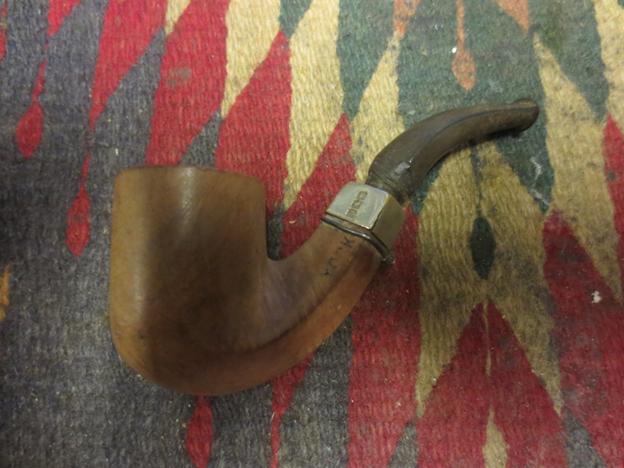
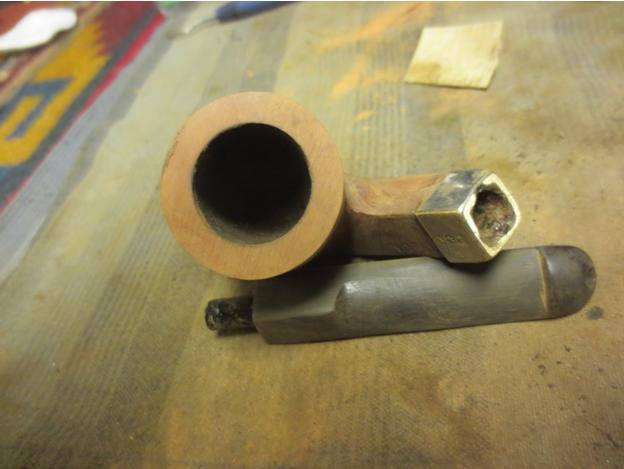
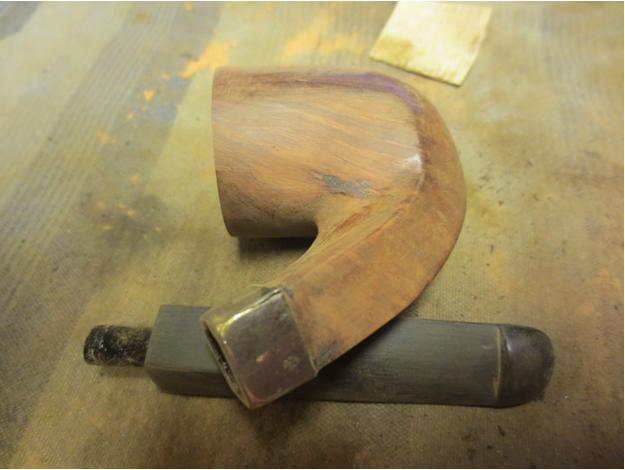
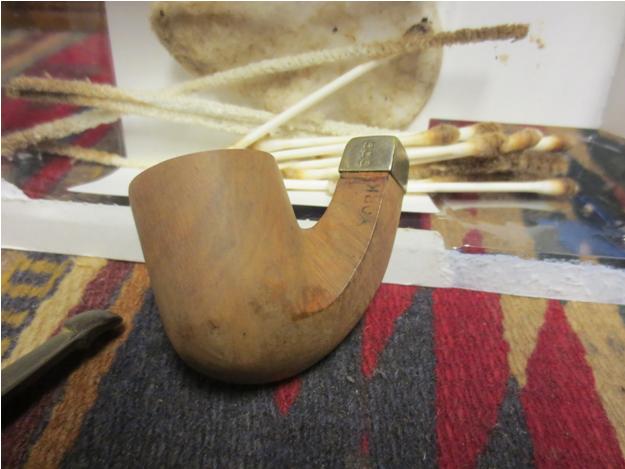
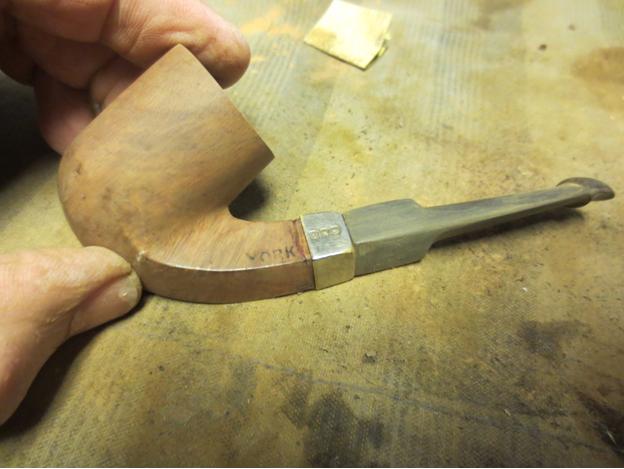
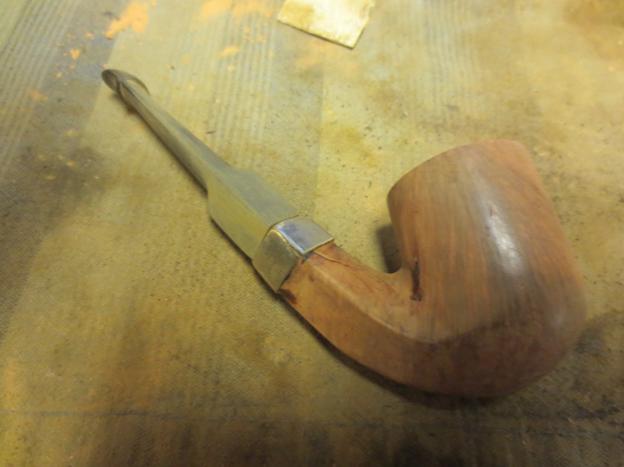
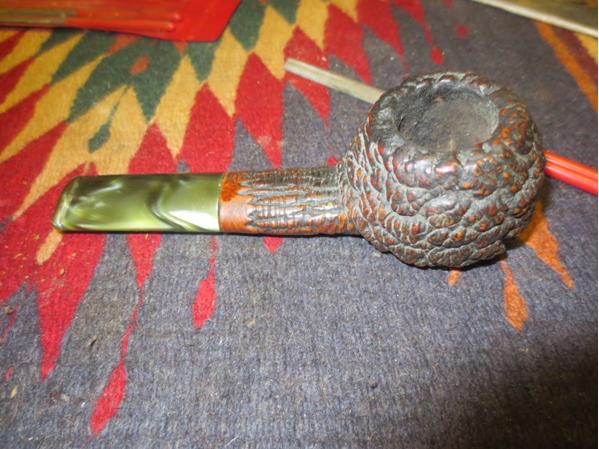
When I was traveling in Idaho my brother and I took the family for a trip to Jackson Hole, Wyoming. On the way we stopped in a little town called Victor, Idaho. There was an antique shop there in the town and I found four more old pipes. The first of these reminded me of an old WDC Diamond shank billiard that I have. This one was stamped YORK on the left side of the shank and from research it may have been made by KBB. It was in rough shape. The shank had been cracked and repaired with glue and a piece of twisted wire. The stem obviously had a broken tenon and the previous owner had carved it down to fit in the shank anyway. The bowl had a thick cake and the finish was gone. The rim was damaged on the front outer edge and there was some tar on the rim.York1
York2

York3

York4 On the right side of the bowl near the shank junction there was a pink putty fill that was coming out. Most of the putty had fallen out of the briar. This would need to be repaired.York5 When I got back home I took the pipe out of the bag to have a look. The silver end cap had some hallmarks but they were the faux hallmarks that I have found on older American made pipes to give them a touch of class. All four edges of the band were split. I removed the stem and looked inside the mortise and could see that a major part of the briar was missing on the right side of the shank under the cap. With little effort I removed the cap and sure enough a huge chunk was missing out of the briar. In fact the whole right side under the cap was gone. There was a small crack that had been repaired earlier. There was a small hole in the shank to stop the crack and the crack was glued and clamped with the wire. This was going to take a bit of work to bring it back from the brink of destruction. York6 I clipped the wire with a pair of wire cutters so that I could work on repairing the broken portion of the shank. This repair would take some careful and time consuming work to rebuild the missing portion of briar.York7 I reamed the bowl to clean out the thick cake. It was crumbling so I wanted it removed so that the repair of the shank would be less dirty. I use a PipNet reamer to take the cake back to the bare briar.York8

York9 The first step in rebuilding the broken area was to clean up the damaged ends of the remaining briar. Once it was clean I put clear super glue on the raw edge of the broken spot and tamped the end into some briar dust. I repeated the process until the edge was repaired as much as possible with this method.York10

York11 During the process I also picked out the broken putty fill and replaced it with briar dust and super glue.York12 I sanded the flat surface of each of the four sides of the diamond shank smooth with 220 grit sandpaper until the cap slid easily over the shank. I also faced the end of the shank on the topping board.York13

York14 The next step in the process of rebuilding the shank and the mortise was a little more difficult than the briar dust and super glue rebuild. It involved working on the internals of the shank. I glued the end cap in place with wood glue and clamped it in place to take care of small splits in the edges of the metal cap. Once that dried and set, I mixed white wood glue with briar dust to make putty. I tamped the mixture into the remaining areas of the shank with a dental pick and dental spatula until the area was filled solid looking once again. The next two photos show the rough repair on the inside of the mortise and shank. The broken area is gone! The holes are filled in and the repair is complete. Once the glue set I would have to clean up the mortise and make the walls smooth. The edges of the metal cap, looking at it from the end are damaged and I will not be able to repair them.York15

York16 While the shank repair cured I worked on the rim. There was a thick tar build up that was like rock on the back edge and the front edge of the rim had been knocked against something hard and was rough.York17 I decided to top the bowl to remove the rock hard tar and also minimize the damage to the front of the bowl. I used a topping board with 220 grit sandpaper and worked the rim against the sandpaper until the damage was minimized. Once I had it smoothed out I put some briar dust and super glue on the remaining divot on the front edge of the bowl as a fill. When it dried I sanded it smooth and lightly topped the rim once more to even out the repair with the rest of the rim. (That picture will be shown shortly.)York18 The stem that came with the bowl was damaged beyond repair. It had been repeatedly been cut off by the previous owner and hacked at until it fit in the damaged tenon. It was not a stem I would use again on this pipe. I went through my can of stems and found a faux p-lip stem – the airway came out the end of the button rather than on the top. It was old enough to work on this pipe and with some modification I thought it would look just right. The problem was that it did not have a tenon. When I found it the tenon was missing and the end of the stem had been drilled out to receive a replacement tenon. I am currently out of Delrin tenons so I used a thin vulcanite stem as the sacrificial tenon. I glued the tenon on the donor stem in place in the diamond shaped stem with super glue and then cut off the stem with a hacksaw. I left a piece of vulcanite that was longer than necessary so that I could work it to a proper fit in the repaired shank.York19

York20 The next photo shows the repaired stem and tenon and the topped bowl before I put the two parts together. I used a Dremel to remove the excess material on the new tenon and shortened it to the depth of the mortise in the shank.York21 The next photo shows the repaired fill on the bowl side with another photo of the new stem.York22 Once the shank repair was dry I used a needle file to clean up the rough areas and smooth out the inside of the mortise. I gave it several more coats of glue and briar dust to buildup the areas that had shrunk as the glue dried. I continued to work it with the files and sandpaper until the fit was correct. I cleaned out the airway to the bowl and the inside of the mortise with alcohol, cotton swabs and pipe cleaners in preparation for putting the new stem in place.York23 The next two photos show the newly fit stem. There was still work to do to fine tune the flow of the diamond stem sides to match the flow of the diamond shank but the look is clear at this point in the process.York24

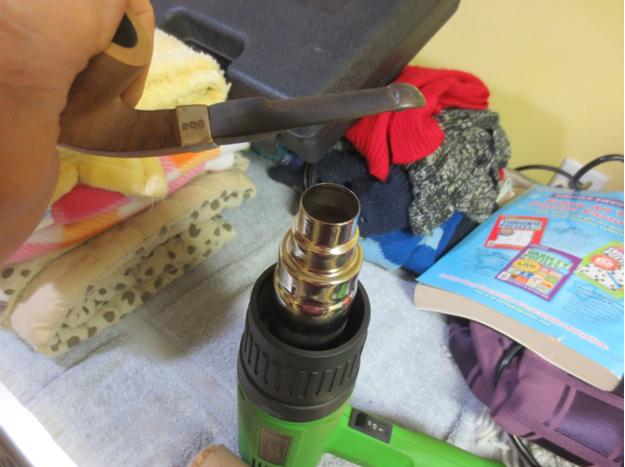
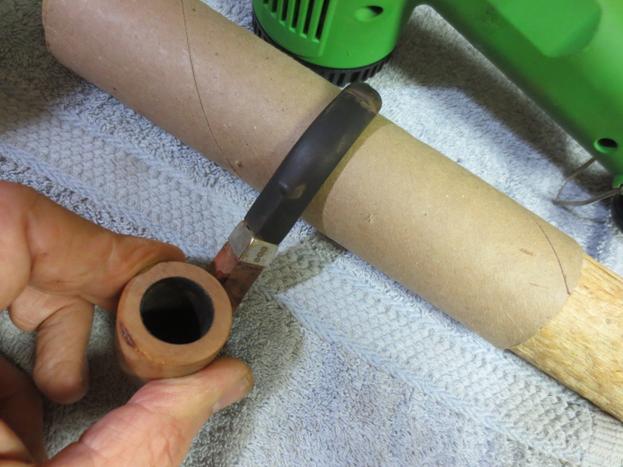
York25 I sanded the stem with 220 grit sandpaper and with a medium and a fine grit sanding sponge to fine tune the fit. When I had it the way I wanted, it was time to bend the stem. I used my heat gun to do the work. In this case I quickly set it up on the dryer in our laundry room (shh don’t tell my wife I did this) and heated the stem. I bent it over an old rolling pin that I use for this purpose until the bend in the stem matched the curve of the bottom of the bowl. I set the bend by holding the stem under cool running water.York26

York27 The next two photos show the newly bent stem and give an idea of how it will look with the pipe once it is finished.York28

York29 With the easiest part of fitting a stem completed I went on to do the laborious and tedious part of sanding and more sanding to get the fit just right. To do this without rounding the edges of the stem at the shank stem junction I use a plastic washer placed between the two areas. I sanded the stem with 220 grit sandpaper to smooth out the transition and make the angles square (or at least as square as possible on these old pipes where every side has a different angle and width).York30 When I had the fit of the stem correct it was time to polish it. I wet sanded with 1500-2400 grit micromesh sanding pads and rubbed the stem down with Obsidian Oil.York31 I needed a break from the stem work so I turned my attention to the bowl. I rubbed it down with a light coat of olive oil to highlight the grain. I took a few photos to show what it looked like at this point. It is certainly looking far different than it did when I started working on it. There is a deep richness in the red tones of the briar.York32

York33

York34

York35 I decided to highlight those tones with a dark brown aniline stain thinned by 50% with some isopropyl alcohol. I applied it and flamed it to set it in the grain.York36 I hand buffed it with a cotton cloth to get an idea of the coverage. It was still too dark to my liking so I would need to address that.York37

York38 I wiped the bowl down with some acetone on a cotton pad to remove some of the stain and make the grain show through better.York39

York40 I buffed the bowl with White Diamond and then gave it the first of many coats of carnauba. I don’t know about you but by this point in a long refurbishment I get a bit anxious to see what I have accomplished. It always seems that it is going to go on forever so I rewarded myself by putting the stem in place and taking a few photos to see what I had achieved.York41

York42 For comparison purposes I took the next two photos of the pipe with the old stem next to the new one. You can see how badly hacked the vulcanite was from the previous owners salvage work on his broken pipe. The pipe is beginning to look like a very different pipe than when I started. That always encourages me!York43

York44 Now it was time to finish up with this long project and get the stem done. I dry sanded it with 3200-4000 grit micromesh sanding pads and then rubbed it down with Obsidian Oil once again. I then dry sanded it with 6000-12000 grit pads and gave it a final coat of oil and let it soak into the vulcanite.York45

York46 I buffed the stem and bowl with Blue Diamond and then gave them both multiple coats of carnauba wax. I buffed them with a clean soft flannel buff to raise the shine and then hand buffed the pipe with a microfibre cloth to finish. The completed pipe is shown below. It has come a long way from the pipe I started on this morning. I had a quiet day at home and between reading and napping finished the work on this old timer. From what I can find out in my research and from Who Made That Pipe, the pipe may well be from the old KBB pipe works. Thanks for looking.York47

York48

York49

York50

York51

York52

Midterm Exam #4: Re-Refurbishing an Unknown Bulldog


Blog by Anthony Cook

It’s time for the fourth and final midterm exam! This one is an “unknown” bent bulldog that I picked up from eBay. I snagged it because I liked the shape and it was cheap. What I didn’t know at the time, but became immediately apparent when the pipe arrived, was that the end of the shank had been shattered into at least three pieces and glued back together. There was no stamping on the pipe, but I don’t think that was always the case. It was likely sacrificed during the shank repair. The repair is fairly obvious in my photos below, but I assure you that it was not nearly so in the seller’s. The right combination of lighting and angles can cover up a multitude of sins, folks. Caveat emptor.

The exposed cracks weren’t the worst part of the story though. The repair did as much damage to the pipe as the crack did. An alarming amount of material had been taken off while sanding out the excess glue. It’s difficult to see in the photos, because from any one angle everything looked correct. However, if you held the pipe in hand and rolled it around you would notice that no two faces on the shank were equal. The shank was no longer a diamond shape; it was a trapezium. The repairman hadn’t paid much attention to keeping the surfaces level either. So, there was a subtle undulation to the line of the shank as it went from thick to thin and back again several times along its length. There was also very little effort made to blend the repaired area into the rest of the pipe, and several shallow “steps” were visible where the two surfaces met. There was at least an attempt to match up the stem to the shank, but that only gave the stem the same odd angles and even they didn’t quite match up to the ones on the shank. All in all, it was a bit of a travesty. Here are a few photos taken just after it arrived.Anthony1

Anthony2

Anthony3 That was all far more than my tender, noobie hands could handle at the time. So, I cleaned the internals of the pipe and put it away for later, but not before adding a bit of bend to the stem that it seemed to have lost over time.
I’ve finished up work on all the rest of the pipes in that first batch. So, this week it was time to put a collar on that dog and turn in my final midterm.

I started (or restarted I should say) by dropping the stummel into an alcohol bath for a couple of hours to soften any coating that might be on the pipe. I had quite a surprise when I removed it later on. It looked fine when it was fresh from the bath, but a hazy, white glaze began to form on the surface as it dried. I hadn’t seen anything like this before and I’ll admit to a brief moment of panic. I assumed that this was probably the result of some type of coating reacting to the alcohol. So, I wiped the stummel down with acetone taking extra care around the shank repair, since acetone will break down superglue. That did the trick and the stummel cleaned up nicely.Anthony4 I set up the retort to see if I could remove any more tar buildup from the pipe. I flushed the shank about 10 times with boiling alcohol before allowing the pipe to cool. I noticed that the vial appeared to be losing a lot of liquid during the retort. The cotton wasn’t discolored. So, it wasn’t gassing out through the bowl. It really had me scratching my head until I saw a spot of moisture on the shank when I was removing the retort. For some reason, it wasn’t sealing well at the mortise and I’d need to look into that before I went much further.Anthony5 I gave the pipe a post-retort scrub of the stem and shank, and then inspected the crack repair for gaps. The surface of the glue joints looked airtight, but I noticed that the glue hadn’t penetrated very deep. The joints left shallow fissures inside the mortise and along the shank face. I used a small pushpin to place a little super-thin CA glue directly into the fissures, and then used a toothpick to apply a thin layer of the CA around the end of the mortise to create a seal inside as well as out.

When the glue was dry, I sanded out the interior patches with sanding needles and a piece of 400-grit sandpaper wrapped around a small dowel. I refaced the shank on my topping surface in a manner similar to how I would top a bowl (pressing lightly into the paper and using a circular motion). The following pictures show the patches when fresh and after they had been sanded out. You can also get some idea of the irregularities in the shank by comparing the differences in the face angles and wall thickness around the mortise.Anthony6 After that, I reattached the stem and ran a retort through it again to test for leaks. The outside of the stem and shank stayed dry as a bone through the whole process. So, I began addressing the pipe’s cosmetic issues.

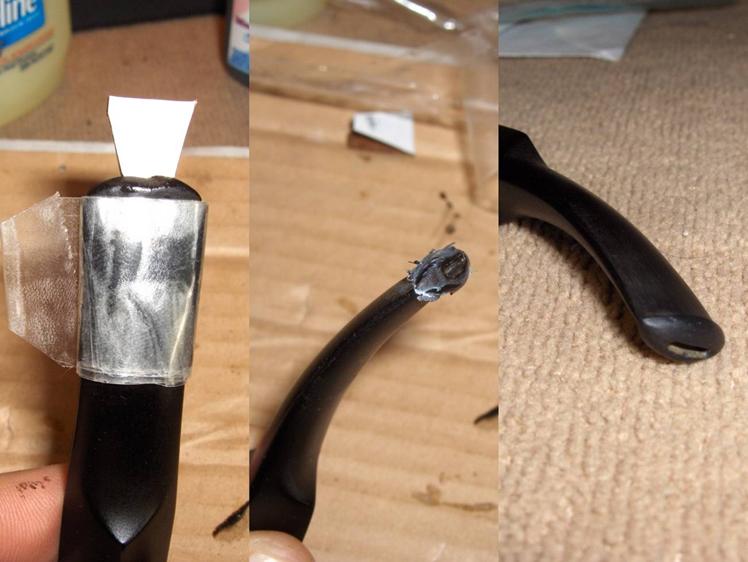
I lightly topped the bowl and chamfered the inner rim to remove the scratches and dings. Then, I steamed a few dents out of the finish by pressing a screwdriver that had been heated over a tea candle into a wet cloth placed over the dents. Finally, I used CA glue and briar dust to patch a few, small gouges and missing fills and sanded them out with 220-grit and 320-grit sandpaper.Anthony7 While I worked on the stummel, the stem had been soaking in an Oxyclean bath. I removed it and scrubbed it down with a Magic Eraser to remove any oxidation. I used black CA glue to fill the tooth dents on the top and bottom of the stem. Once that had dried I sanded it down with 220-grit paper.Anthony8 The stem button needed to be rebuilt since it was worn and dented. I wrapped several layers of clear tape around the stem just below the button to create a form to make a crisp edge and also inserted a Vaseline smeared wedge of cardboard into the slot to seal it. Then, I applied thick, black CA glue in several layers to the end of the stem to begin building the new button. It wasn’t a pretty thing to look at when I removed the tape, but the edge was sharp and there was enough material to work with. I trimmed away the glue artifacts created by the tape molding with an X-Acto blade and rough-shaped the new button with 220-grit paper.Anthony9 Once the button started taking shape, it was time to do something about the other end of the stem and also the deformity of the shank. This was the part of the exam that I had not been looking forward to. Up to this point, everything had been the equivalent to multiple-choice or fill-in-the-blank questions. There were a couple of challenges, but nothing too rough. The next part was more like the essay section.

After a lot of thought, I finally decided that there just wasn’t enough material left around the stem to square everything back up. So, I thought I’d try some trickery of my own. If I couldn’t make everything right, maybe I could use a little more finesse and subtlety than the original repairman did to make it at least look “righter”. If ya can’t beat ‘em, join ‘em.

I used 220-grit sandpaper to start carefully nudging the edges of the shank and stem saddle this way and that to give them an appearance of alignment. All the while I paid special attention to keep the faces as level and even as I could. There was very little technical skill involved. I was basically just freehanding. Once I had corrected the lines as much as I could, I began blending the reworked areas into the rest of the pipe with 320-grit. The photo below shows the progress somewhere early in the reshaping phase. Honestly, I was at this for a while and kind of lost myself in the middle of it. So, I didn’t get many photos.Anthony10 When I was as satisfied as I was likely to be with the shape of the shank and saddle, I went back to work on the rest of the stem to finish it up. I continued shaping the button with 320-grit and 400-grit paper. Then, I smoothed the entire surface by lightly sanding with 600-grit and 1200-grit paper. Finally, I polished the stem with micro-mesh pads 1500-12000.Anthony11 The stem work was wrapped up. So, it was time to do the same for the stummel. The off-kilter shape of the shank made it difficult to find a band that would fit well. It took three attempts before I found one that would work. I used a method for shaping a round band for the diamond shank similar to what Steve has previously written about here, but it took quite a bit of reworking to get it to conform to the now strange dimensions of the shank. I’m still not quite happy with how it fits, but I’m not sure what I could have done differently.Anthony12 There was nothing left to do at that point but to address the finish of the stummel. I wanted the final color to be close to the original but a little darker to help hide the bit of crack repair that was still visible. I heated the stummel over the heat gun to open the grain and then applied Fiebing’s black dye to the stummel. I then sanded down the surface with 400-grit paper to remove the remaining scratches and most of the black stain, except for what had set in the grain and recesses of the rings. Next, I applied a mahogany stain before sanding with 600-grit and 1200-grit paper. I took the stummel to the buffer and gave it a quick Tripoli buff, and then applied a final stain of British Tan.

The stummel was polished with micro-mesh pads starting with 3600-grit and working through to 12000-grit. I then buffed the entire pipe with white diamond compound and gave it several coats of carnauba wax to finish it up.

I leaned back in my chair and checked the clock on the wall. There were only minutes to go and most of the other seats were already empty. I had to admit that this was really as good as it was going to get. So, with a sigh, I stood up from my chair, gathered my exam materials, and delivered them to the desk at the front of the room…Anthony13

Anthony14

Anthony15

Anthony16

Replacing a Broken Tenon and Repairing a Cracked Shank on an Old KBB Yello Bole Billiard


Blog by Steve Laug

Troy Wilburn and I have been corresponding for a few months now about pipe restoring and the fun of the hobby. He has posted some of his work here so he is no stranger to pipe restoration. I had not heard from him for a while so I sent him and email to check on him. I know he loves the older Yello Bole pipes and I wondered if he had worked on any recently. I am including a portion of the email he sent me in response to mine. He wrote:

“Funny thing you have contacted me as I do have a couple of Yello Boles I need tenon repairs on. One is an old favorite of mine that snapped off. I have tried to repair it and it failed. The other is an odd shaped NOS (I can’t find the shape on any KW chart. It’s a large bowl billiard with a short oval shank and short straight stem) pipe that I purchased with a broken tenon already but I can’t get the broken piece out (it’s really stuck!) So it might need to be drilled out and a new tenon made, I don’t know.”

“Tenon repair is something I’m not that experienced on and they are both very nice old KBB YBs and would like nice repairs done on them, so I was thinking about sending them to someone more experienced in those types of repairs. I was gonna ask Ed but I know he is always swamped with projects, so I was thinking about asking you if you would be interested in repairing them for me…”

I replied that I would gladly have a look and them and give them a go if they were something that I could fix. When they arrived last week I unpacked the box that Troy sent. I have to tell you he did a masterful job of packing these old pipes. They were individually wrapped in bubble wrap and then placed in small plastic containers. Then the plastic containers were put in bubble wrap and put in a box. There was no movement or rattle in that package.
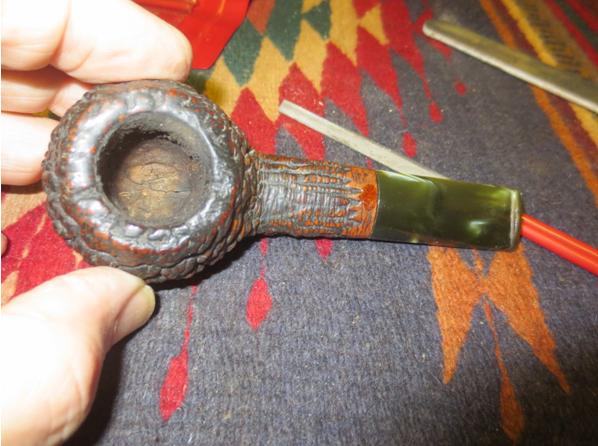
When I took the pipes out I could see what Troy was talking about. The little odd shaped NOS Canadian was strange. It had a metal tenon. Upon observation I could see that someone had left the broken tenon in the shank and then made a metal tenon that slipped inside the broken tenon. Deep in the shank was the stinger rattling around free in the airway between the broken tenon and the bowl. The billiard that I chose to work on first was another matter. I think Troy tried to epoxy the stem on the tenon but it did not hold. The face of the stem was spotty with glue. The shank on the pipe was clean but I did not spend too much time checking it out to see if there were cracks or problems. Even though the tenon snapped I just by passed my normal observation and went to work. That was a decision I would regret shortly… but let’s not get ahead of ourselves yet.

I faced the surface of the stem and smoothed out the broken area on a topping board. I started with a drill bit slightly larger than the airway and worked my way up to a large enough drill bit that I could turn a tap into it to thread it for the new threaded tenon. This has to be done very slowly and carefully to not drill to deeply into the stem or to angle things so that the tenon does not sit straight in the shank once it is in place. The stem had some spots of glue on the surface and some marks around the end where the tenon had snapped off that would need to be addressed once I got to that point.tenon1 I generally have a few threaded tenons to work with around here. Wouldn’t you know it all of my ¼ inch tenons were gone and all I had left were these large ½ inch ones. It would have to work for this repair. I used a tap to thread the newly drilled stem. I fit the tenon in place and twisted it down until it sat flat against the stem. I then twisted it free and put some glue on the threads and twisted the new tenon into the stem. I cleaned up the excess glue around the junction so that the fit of the tenon was smooth and tight.Tenon2 Once the glue set in place I set up my PIMO Tenon Turning tool on my cordless drill and took down the tenon slowly until I had removed enough of the excess Delrin to get it close to a fit. Because there are no micro adjustments on the tenon turning tool I always get as close as possible with the tool and then use the Dremel and sanding drum and to strip it more and then finish it by hand with sandpaper.Tenon3 I love the way the Delrin spins off the cutter on the tool. Here is the new tenon sitting among the Delrin scraps ready to take to the Dremel and then hand sand.Tenon4 I used the Dremel to take the tenon down some more. I then sanded it by hand until the size was the same as the shank. When I slid it in place the fit was perfect. I was happy to have finished what seemed to be an easy repair. I slipped the stem out of the shank to clean and polish the tenon. When I slid it back in place the sound that makes me cringe was heard. It was just a slight low pop. I removed the stem and could see a small crack had either appeared on the shank with the new tenon in place or the new tenon had made the crack appear. I will never know for sure as I did not check it before. I cleaned off that area of the shank and examined the crack. It was just under ½ long and curved up through the stamping on the shank. I was sick.
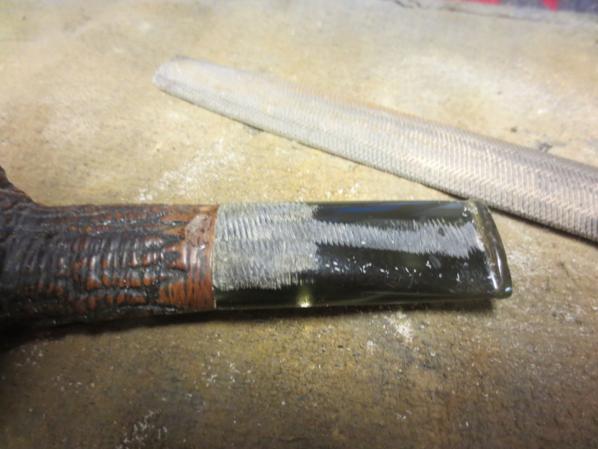
I wrote Troy a quick email and told him the situation as it stood – great fitting stem, repaired tenon and now a cracked shank. I asked if it was cracked before or if I had cracked it. He was not sure either. Ah well no matter. I was hoping he would confirm that it was previously cracked but he didn’t know. I asked about banding the shank and he said he would rather not as he did not like bands. But if I had to a thin one would do. The problem was twofold – I did not have a thin band and a thin one would not fix the crack. I suggested that maybe I could do an internal repair and thin down the new tenon to fit inside of the tube that would be used to repair the shank. He said to go for it and see what I could do.
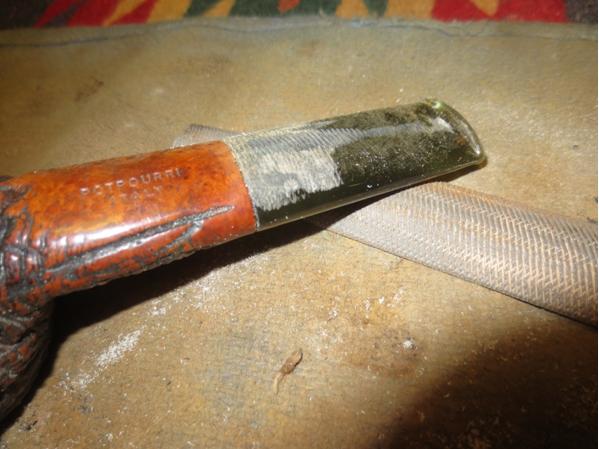
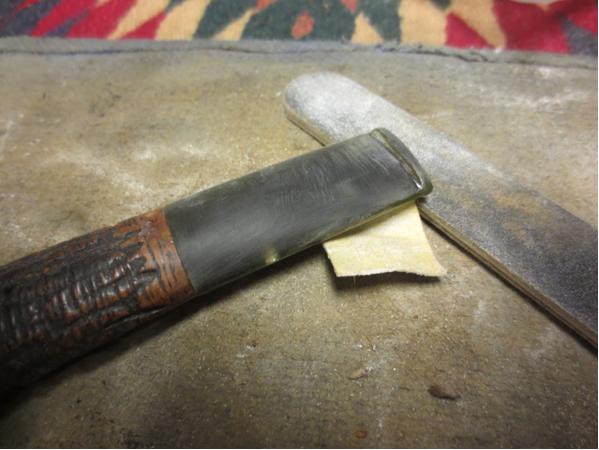
So I did a bit of looking through my parts bin to see if I could find either a piece of Delrin tube that I could drill and fit or a piece of metal that would work for the repair. I found I had a metal tube that would work. I cut off a piece the length of the mortise. I used the Dremel and sanding drum to roughen the surface of the tube and to reduce the diameter slightly. I wanted a good snug fit in the shank but did not want to open the crack or crack it further. I spread the crack slightly and put super glue in it and clamped it until it set.

While it was drying I used the Dremel to reduce the diameter of the tenon until it would fit inside of the metal tube. I figured it would be easier to do that fitting with the tube out of the shank than when it was inserted in the cracked shank. Again I sanded with the Dremel and then finished by hand sanding until the fit was a nice snug fit with the tenon all the way into the tube.tenon5

Tenon6 I sanded and smoothed the ends of the tube and made sure that the surface was rough enough to bond to the inside of the mortise. I roughened the walls of the mortise with a dental pick so that it was scored. I wanted to make both surfaces rough enough for the glue to bond to and make the tube secure in the shank. It would have to be a tight fit as I did not want the tube to come out with the stem when Troy took it off the pipe to clean it. I coated the outside of the metal tube with glue and let it get tacky. When it was tacky I pressed into the shank with the sharp end of a pair of needle nose pliers. I pushed it in until it sat against the end of the mortise in the shank.Tenon7 With the tube in place in the shank I still needed to flare the end so that it would fit against the bevel of the mortise end. I probably could have shortened the tube slightly but beveling the end would take care of that.Tenon8 I pressed the end of rounded tip of the needle nose pliers into the end of the tube and worked on the flare. It took some work to mould it to shape. I then use a small round needle nose file to smooth out the flare and match the angle of the bevel.Tenon9 I stained the end of the shank with a stain pencil and also touched up the cracked area on the shank. I will need to polish that to get it to match the shine on the bowl but you can see the fit of the stem against the shank and look of the shank.Tenon10 With the shank repair completed I needed to work on the stem. I sanded it with 220 grit sandpaper to remove the scratches and glue build up that was on the surface of the stem. I sanded it with medium and fine grit sanding sponges. Then it was time to sand it with micromesh sanding pads. Instead of wet sanding I used a little olive oil on the stem and sanded with the micromesh with oil. I did that with 1500-2400 grit pads. I continued with 3600-12,000 grit pads without adding any further oil to the surface of the stem. With these older Yello Bole stem I find that wet sanding does not work well but to sand with oil is perfect and will raise a nice shine. I also am careful about buffing them as they have a pretty low melting point and are easily damaged. This particular stem does not appear to be vulcanite so I was careful.Tenon11

Tenon12

Tenon13 The next two photos show the shank end. The stain got on the flare of the metal tube and I will need to wipe it out with a bit of alcohol. However you can see the flare of the metal and the briar to take the new tenon and hold the stem tight against the shank. The airway has what appears to be a loose piece of metal on the second photo at the bottom of the shank. I blew out the shank with air and the dust and fibres that were present disappeared.tenon14

tenon15 The next four photos show the finished pipe and stem. The newly fit stem sits nicely against the shank. The repair to the shank is solid and the crack is closed. With the metal insert it should be free from further cracking and the tenon slides in snugly to the mortise.tenon16

tenon17

tenon18

tenon19 The next two photos give a close look at the shank/stem junction. It is good and tight. The final photo shows that the new tenon sits tight against the stem and looks like it was when it left the factory – just narrower in diameter to fit in the metal tube.tenon20

tenon21

tenon22 The first pipe is finished Troy. Hopefully the second one will be much simpler. This one is ready for you to load up and enjoy once again.

It appeared to be a hopeless case, but was it really?


Blog by Steve Laug

This pipe was posted on Smokers Forums as one that was in rough shape. http://www.smokersforums.co.uk/showthread.php?273-Whew! As soon as I saw it I thought it would be fun to take on as a challenge and see what could be made of it. It was truly in very rough shape. So I put in a low bid on EBay and it was mine. Only the wait remained before I would see what I got myself into.

Worchester Dog

When it arrived I opened the box and took it out to see what I had to deal with on it. The stem was stuck in the shank and it was off center. I made a guess that it was a screw in stem – metal tenon and some kind of condenser. The finish was absolutely ruined. There was an opaque film all over the bowl and shank of varnish that had gone bad. There were crackles in the finish. The shank was crack badly and the shank was no longer square – the crack had expanded away from the angles of the pipe. The rim was invisible and the bowl was caked with a thick cake but upon examination it was full of cracks and crevices rather than a hard cake of carbon. Looking at what I could see of the inner edge of the rim it seemed like it was not damaged – at least not by reaming! There were several burn spots on the outside of the bowl around the rim and left side of the bowl from laying the pipe in an ash tray with a cigarette. It would indeed be a challenge and one that I wondered seriously about for a few moments.

I immediately put it in the freezer for a half an hour to see if I could loosen the stem from the shank. Once I took it out I was able to twist off the stem and remove it from the shank. I took it to my work table and examined it to see what I had to work with. I was quite happy to see that the shank had a metal tube inside that was threaded to receive the tenon. The tube extended into the shank about an inch. This would make a repair on the crack quite simple and not require that I band the pipe. The stem was overturned and the tenon would need to be heated until it was loose and then realigned on the shank. The insert in the shank extended further than the end of the shank and kept the stem from seating correctly against the shank. I also noted that the stamping did not read Worchester as the seller had listed it but that it read Dorchester and underneath that Algerian Briar. There was also damage on the shank near the bowl on the right side where the edge was pretty chewed up by what looked like a pair of pliers used to try and remove the stem from the shank. The slot in the button was clogged with oils and tars so I was assuming that insides were the same way. The stem had white spots on it that at first appeared to be paint but were actually pits in the stem. It appeared to be made of something other than vulcanite. I was not sure what it was but it was not rubber. All of the issues with this pipe, and they were many, but it was very repairable.

IMG_1583

IMG_1584

IMG_1585

IMG_1586

I reamed the bowl with a PipNet reamer using the smallest cutting head first and gradually working up to the diameter of the bowl. I wanted to ream the pipe back to bare briar to give a fresh start and be able to see if there were any burn out issues in the bowl. There were none.

IMG_1588

IMG_1589

IMG_1590

With the bowl reamed and the cake gone it was time to clean the exterior of the bowl and rim. I wiped it down with acetone to remove the finish and break up the crackled varnish that is visible in the above photos. I also lightly topped the bowl with a sanding block to remove the crumbly build up on the rim. I was guessing from my examination that the rim itself was not damaged so a light topping to remove the buildup would be all I would need to do. The next series of photos show the process of wiping down the bowl, topping it and wiping it down a second time after topping. While most of the varnish finish was gone, not all of it would come off with the acetone wash. So in the last picture below you can see the crackly finish on the shank and at the bowl junction.

IMG_1591

IMG_1596

IMG_1595

IMG_1594

IMG_1593

IMG_1592

I decided to drop the bowl in my alcohol bath to soak while I worked on cleaning up the stem. I use an alcohol bath to soak the pipe bowl and get underneath the varnish coat. Once it comes out of the bath it is relatively simple to wipe off the remaining finish. While it soaked I scrubbed the stem with Everclear and a soft bristle tooth brush. I scrubbed off the surface grit and grim and also worked on the button and slot to loosen the grit. I scrubbed the condenser as well with the Everclear and also used 0000 steel wool to polish it. I cleaned out the inside of the stem with thick and bristle pipe cleaners. Once it was clean it was time to take the bowl out of the bath.

IMG_1600

IMG_1601

I removed the pipe from the bath and scrubbed it with the tooth brush. I worked on the grooves in the bowl and also at the shank bowl junction. I dried it off and prepared it for work on the cracked shank. The crackled finish was finally gone and the pipe was clean.

IMG_1602

IMG_1603

IMG_1604

I scrubbed the area around the crack in the shank and picked out dust and particles with a dental pick. I dripped clear superglue into the crack and packed in briar dust with a dental pick. I clamped the cracked area and set it aside to cure for about a half hour.

IMG_1613

Once I removed the clamp the crack was sealed and the shank was returned to its original shape. I sanded the shank area to remove the excess superglue and the briar dust that was on the surface. The photo below gives a clear picture of the end view of the repaired shank and how it was squared up.

IMG_1614

The next step in the repair process was correcting the overturned stem. I removed the stem and sanded the metal end of the mortise insert flush with the shank end. Then I heated the tenon over a heat gun and when it was warm screwed it on to the shank and turned it until it lined up well with the shank.

IMG_1615

IMG_1616

IMG_1617

With the stem and shank aligned I sanded the shank area to clean up the damage to the right side where the marks were from someone’s pliers. I also sanded the stem shank junction and the repaired crack with a sanding block until the sides were all smooth in their transition from stem to shank. I wiped it down with an acetone wet cotton pad to remove the sanding dust and prepare it for staining. I used a black permanent marker to cover the fills in the bowl. I have found that when I follow the grain pattern with the marker before restaining the stain works well to mask the fills.

IMG_1618

IMG_1619

IMG_1620

IMG_1621

I chose to do a contrasting stain on this pipe, a black understain and an oxblood/mahogany top stain. I heated the briar and then applied a black aniline stain to the pipe. I applied it with a cotton swab and flamed it with a lighter. I reapplied the stain and also flamed it again to set the stain in the briar.

IMG_1622

IMG_1623

IMG_1624

I wiped the bowl down with acetone to lighten the black stain and make the grain stand out on the pipe. I also sanded it with a fine grit sanding sponge.

IMG_1625

IMG_1626

IMG_1627

From the above photos you can see the coverage of the black stain and the way in which the black permanent marker blends into the grain of the pipe. I wiped the pipe down repeatedly until it was the colour I wanted before I put on the next coat of stain. For the top coat I chose to use an oxblood or mahogany coloured aniline paste stain. I rubbed it on with cotton swabs and wiped it off with a soft cloth.

IMG_1628

IMG_1629

IMG_1630

IMG_1631

IMG_1632

IMG_1634

At this point I wiped the bowl down a second time with acetone wetted cotton pads and lightened the reddish finish. The fills are slightly visible but once the pipe is buffed and polished they will be blended in better. I buffed the bowl with White Diamond to remove more of the excess stain and help the contrasting under stain to show. I sanded the stem with a fine grit sanding pad, and then with micromesh sanding pads from 1500-12,000 grit until it shined. I then gave it a rub down with Obsidian Oil and finally with multiple coats of carnauba wax. Here is the finished pipe. It is ready to smoke and will in all likelihood last longer than I will. The lightweight aged Algerian briar evidently made this a great smoking pipe for the previous owner and it will remain that I am sure for the owners to come.

IMG_1636

IMG_1637

IMG_1638

IMG_1639