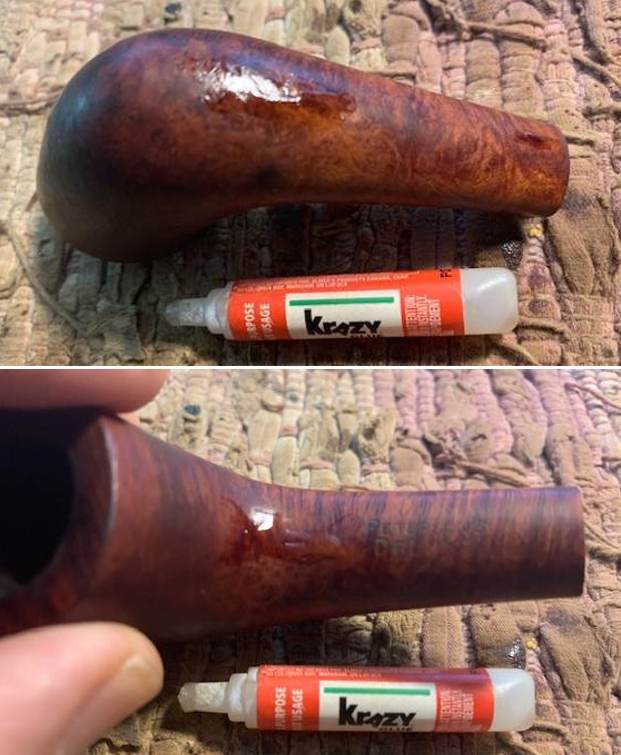
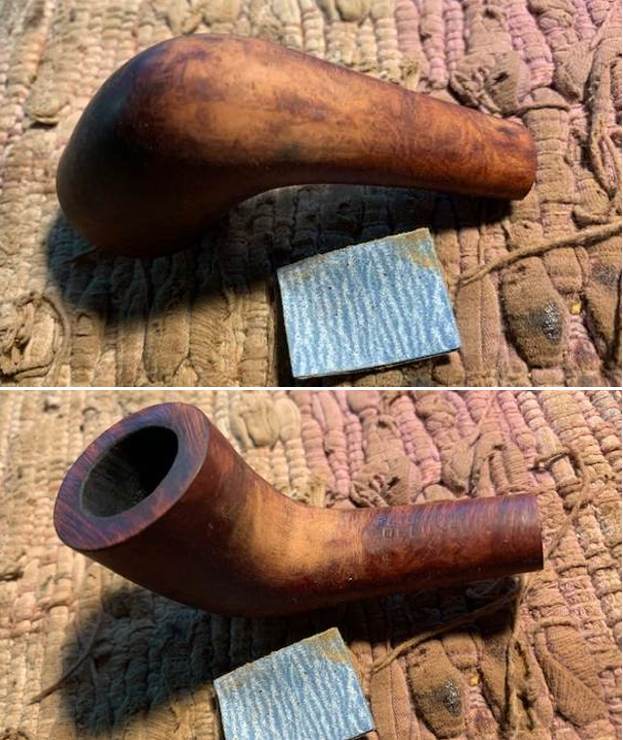
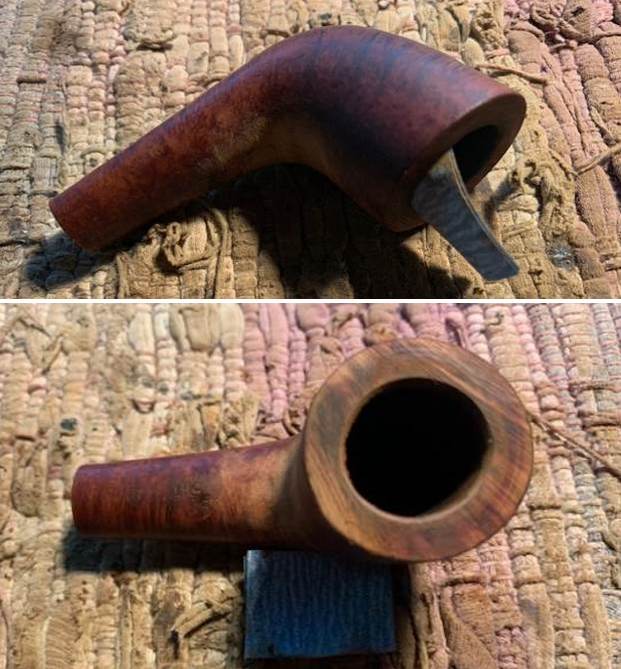
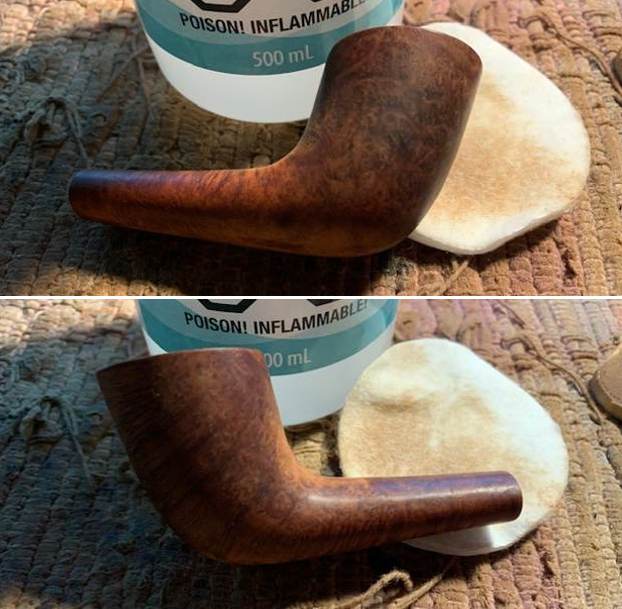
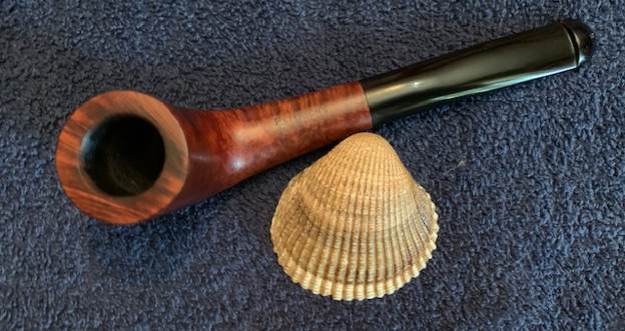
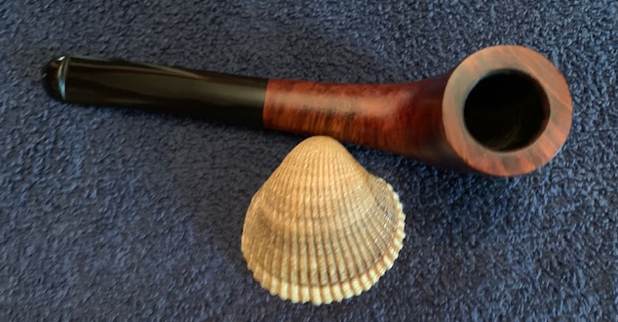
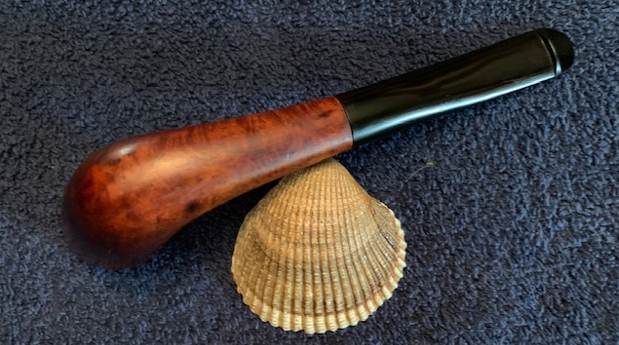
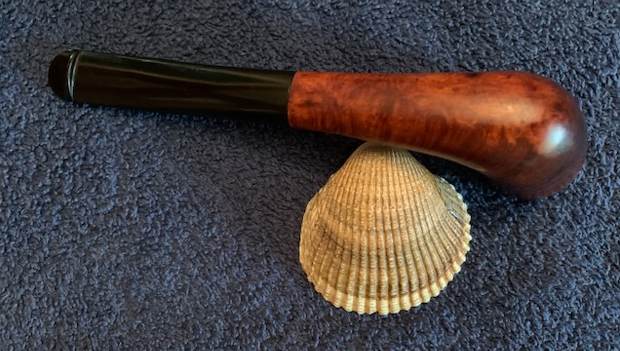
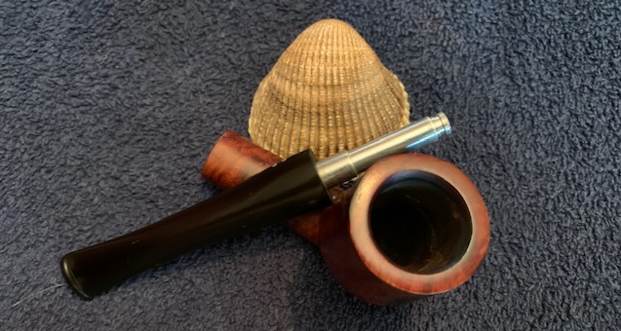
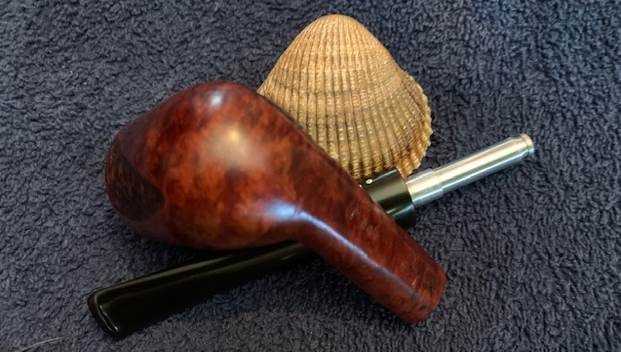
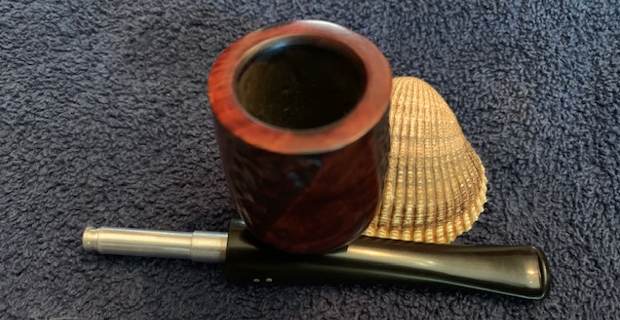
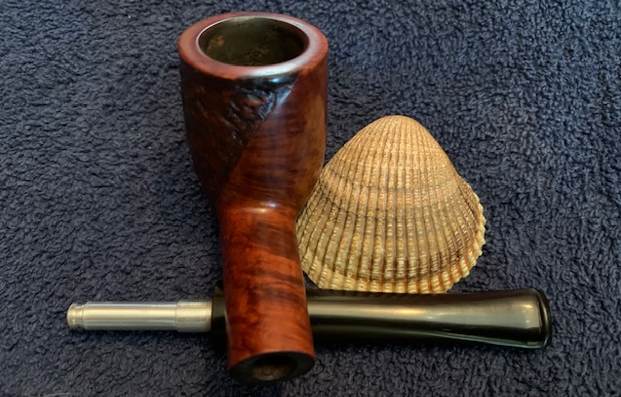
Tag Archives: removing tooth marks

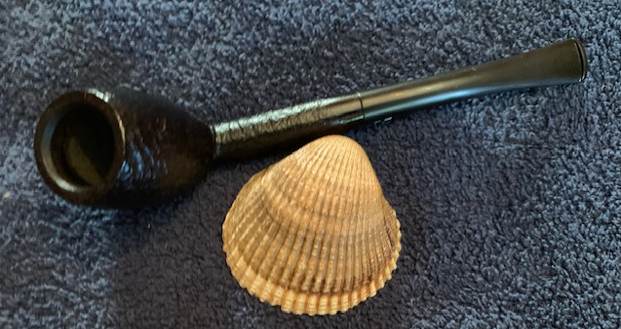
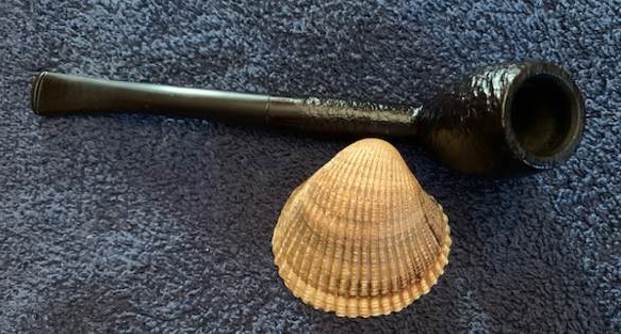
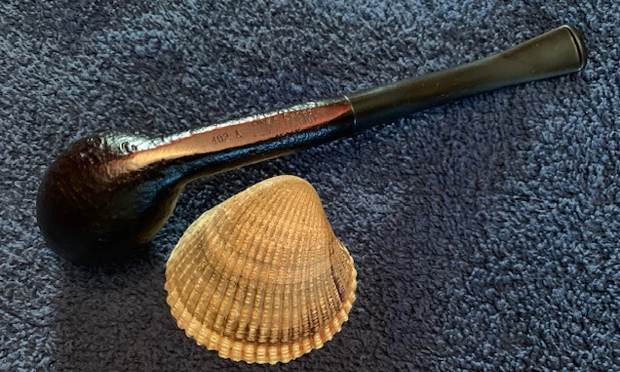
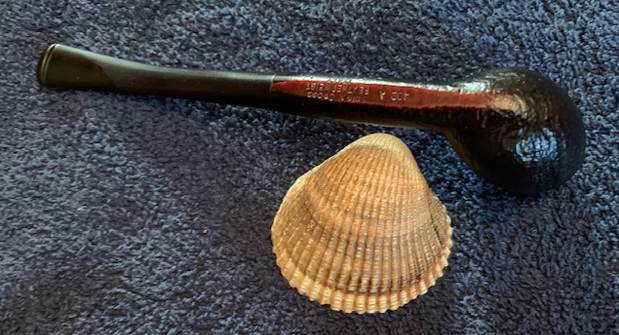
Breathing New Life into an older, worn Patent No. Dunhill Shell Briar 31 Billiard


Blog by Steve Laug

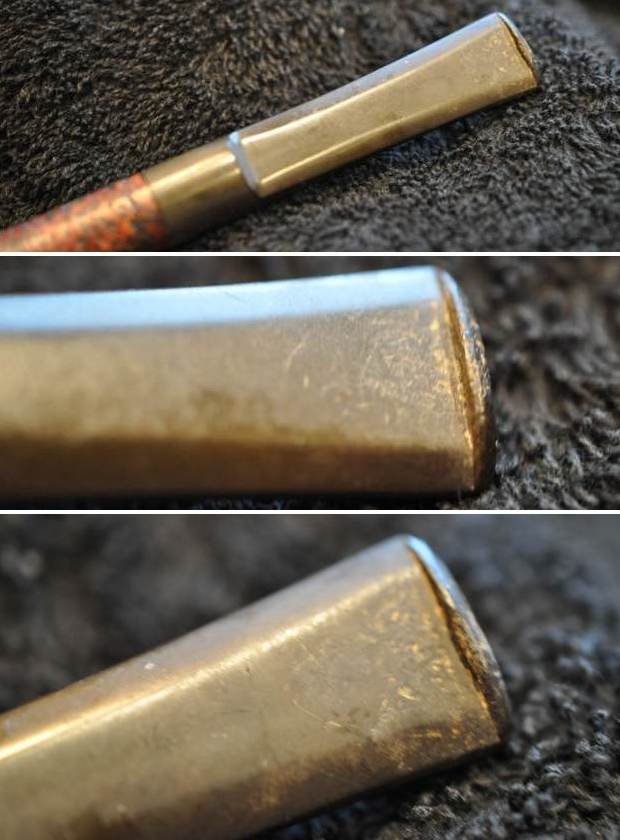
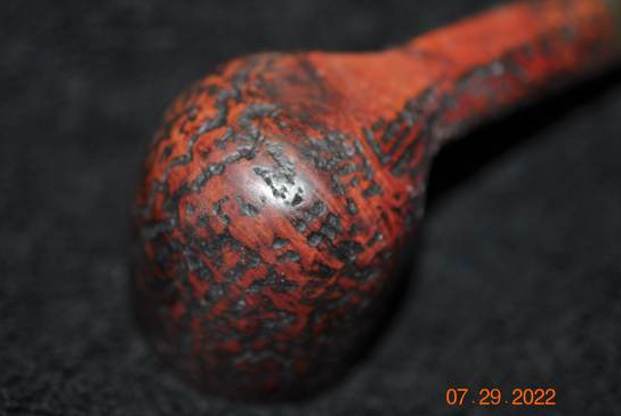
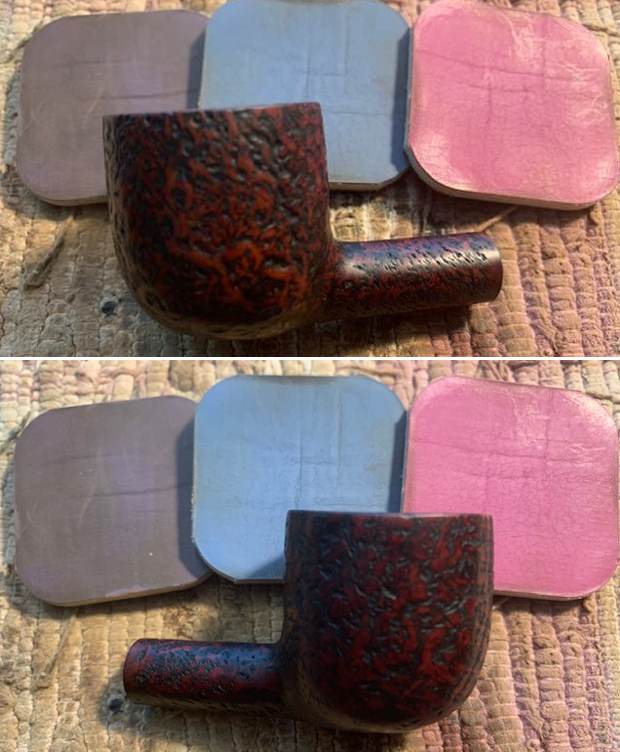
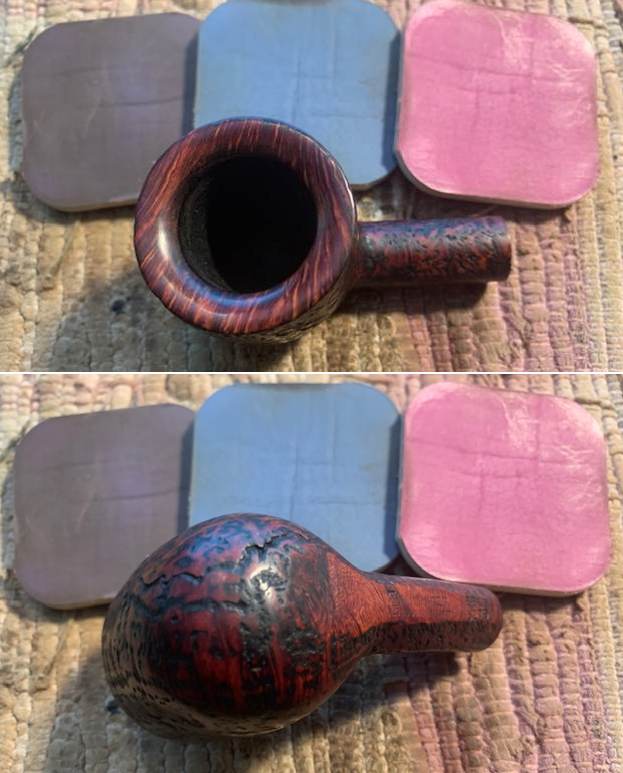
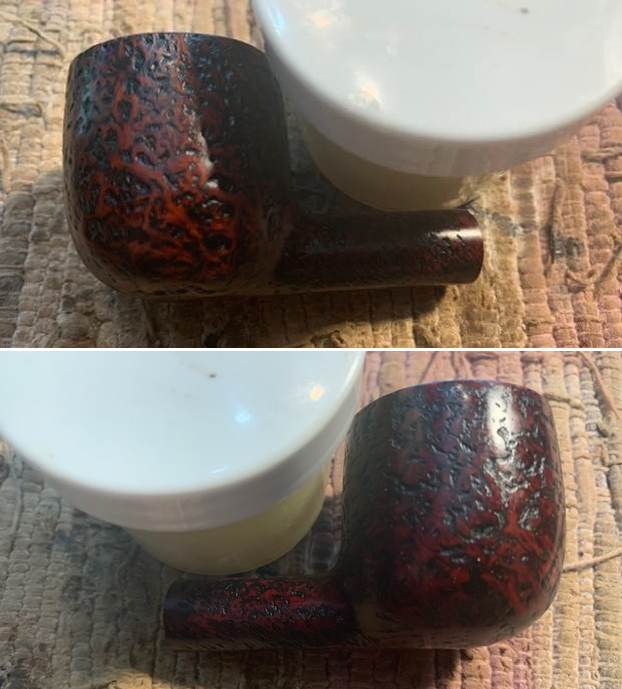
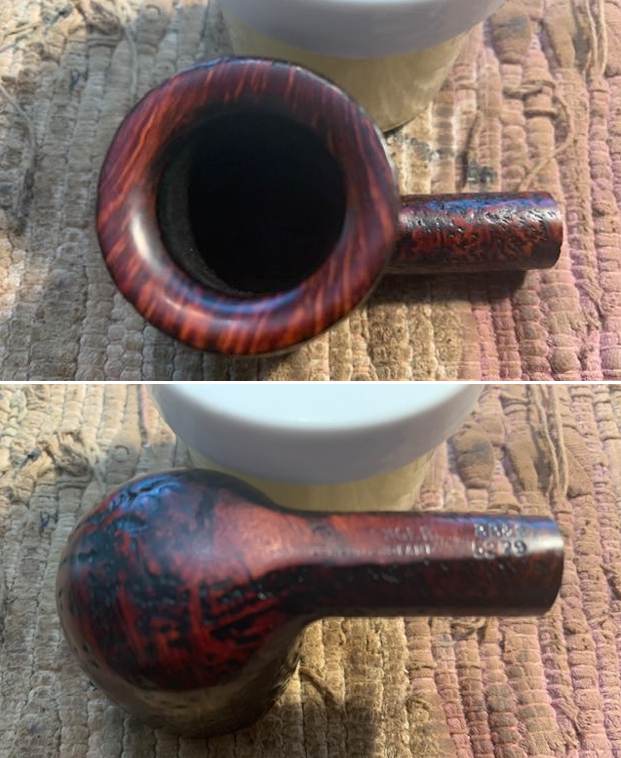
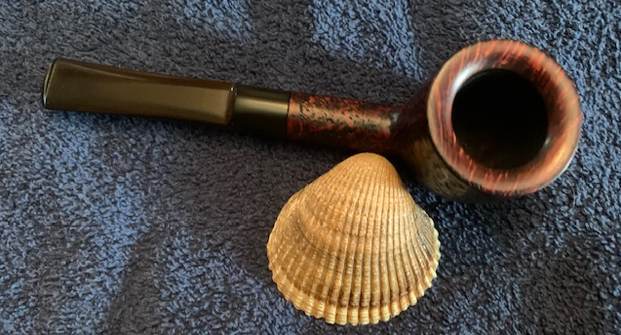
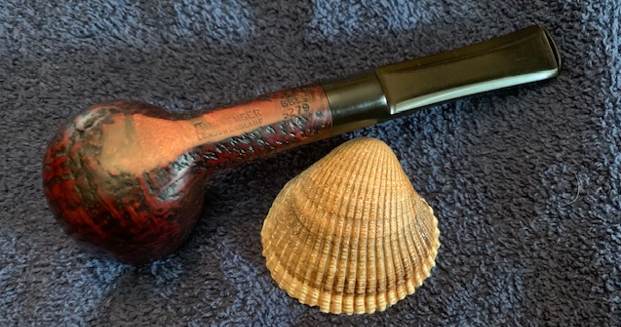
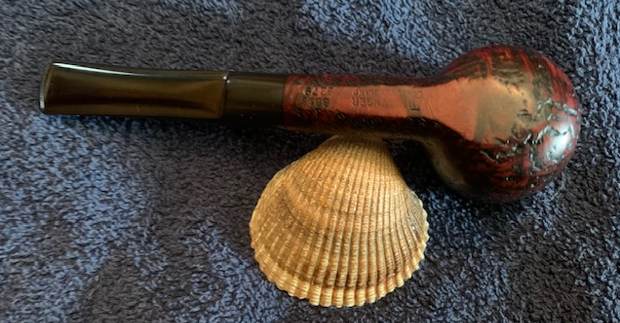
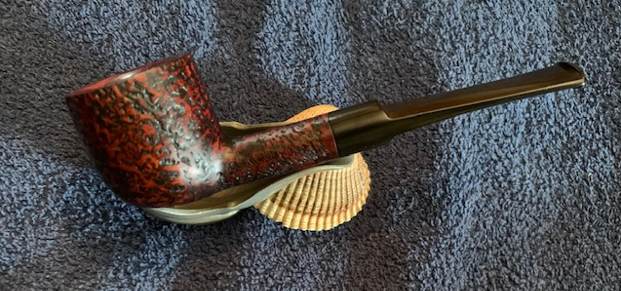
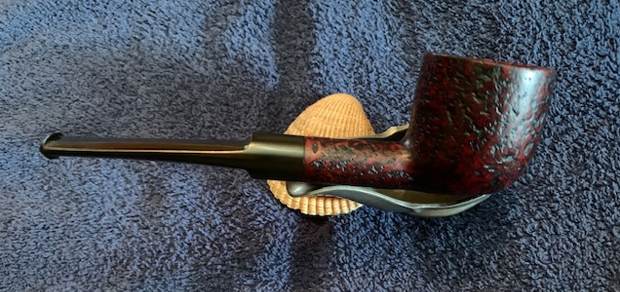
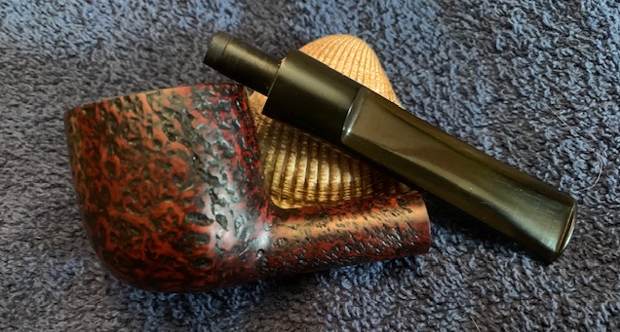
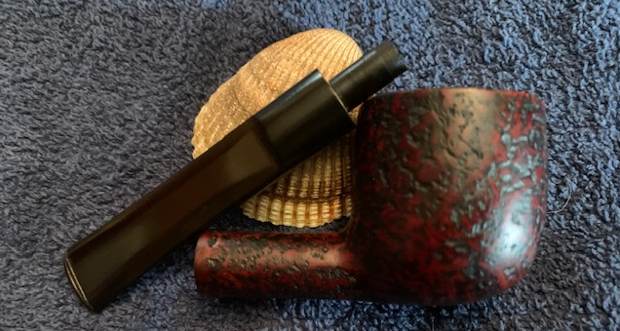
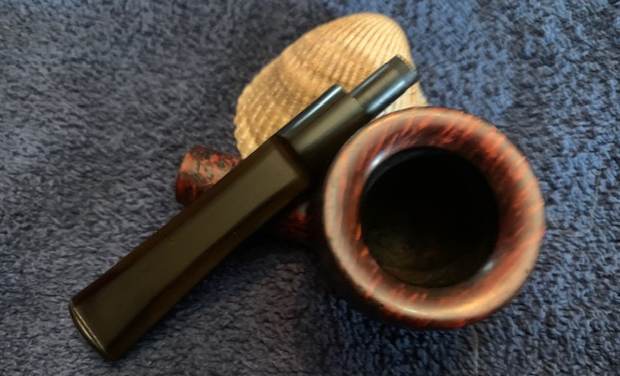
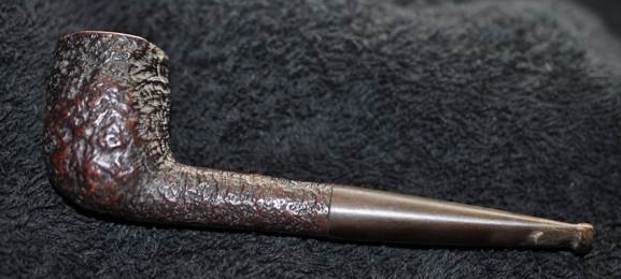
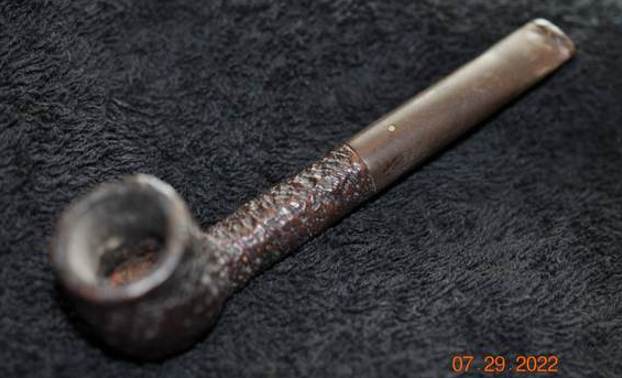
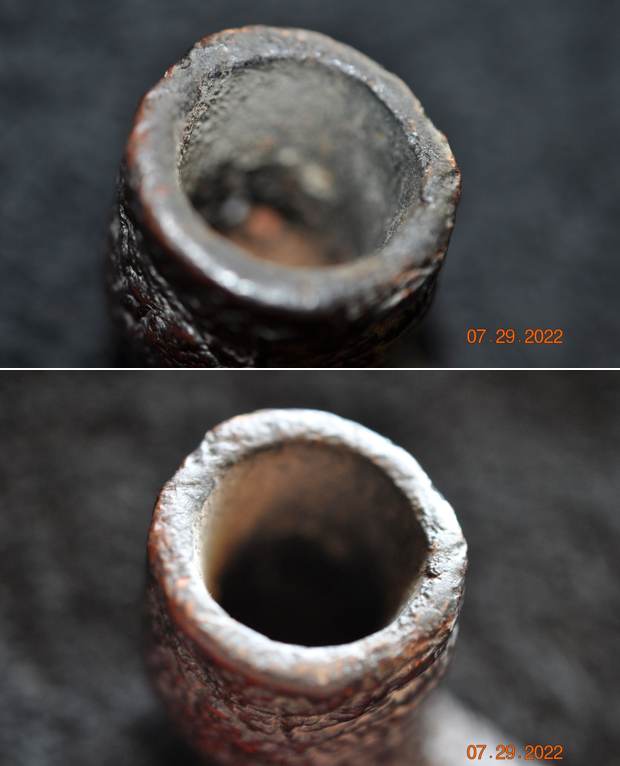
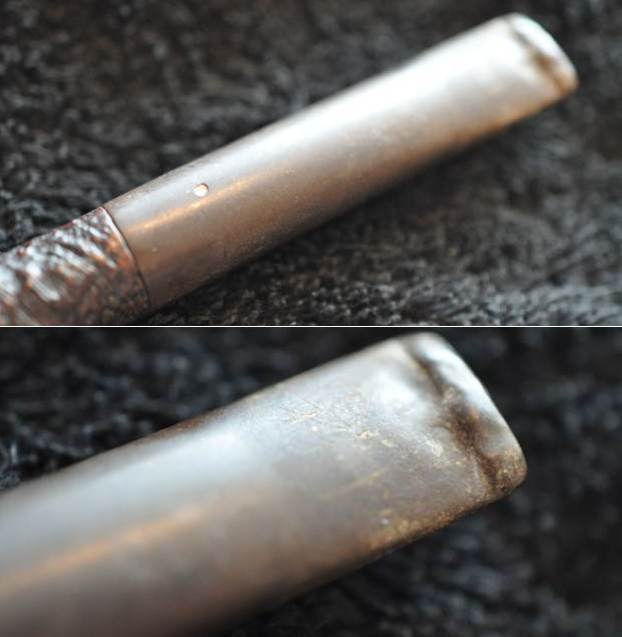
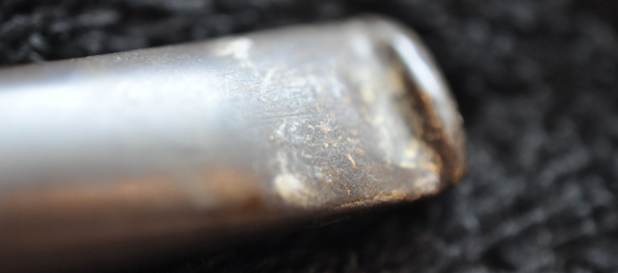
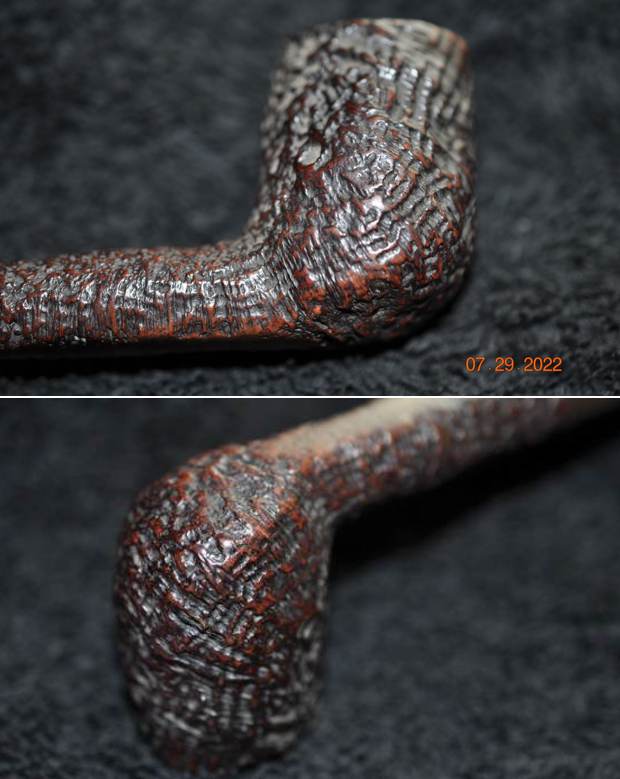
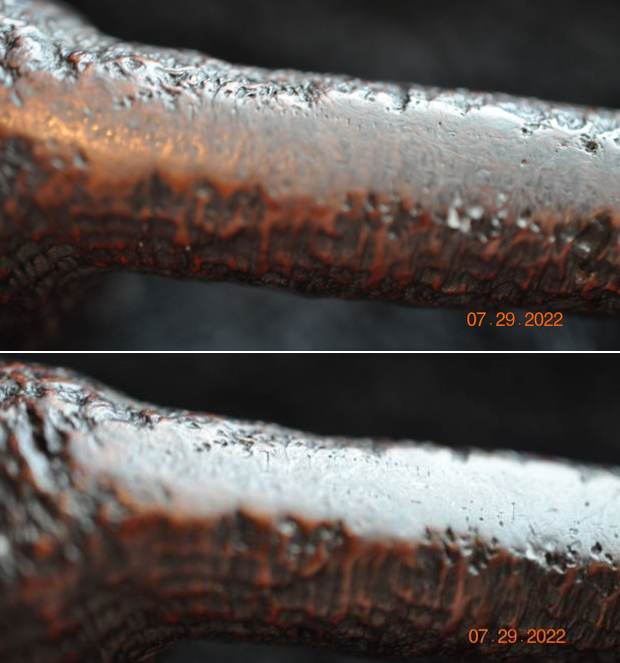
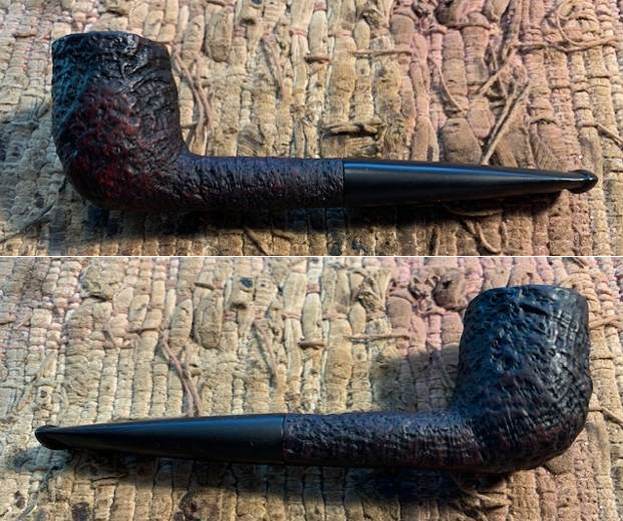
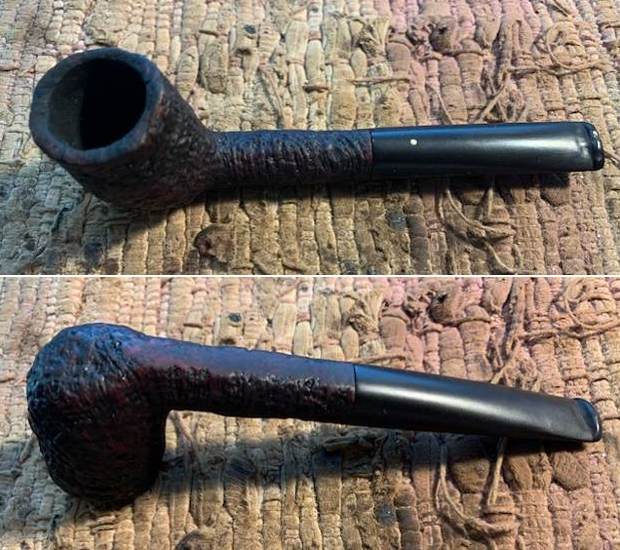
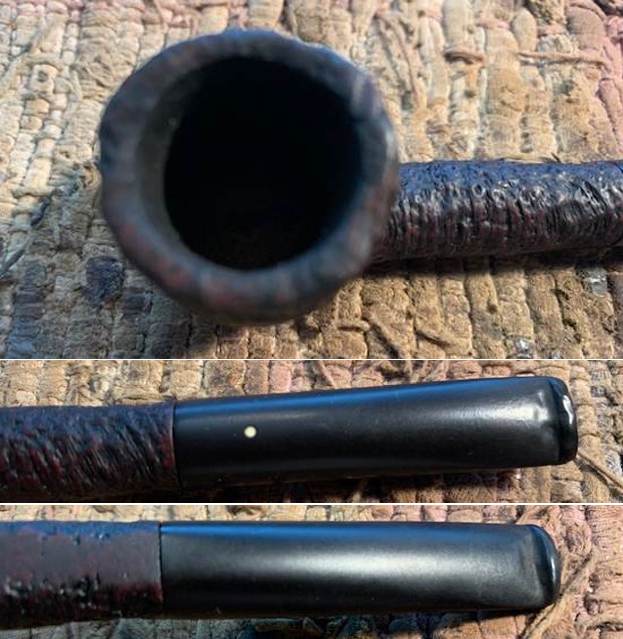
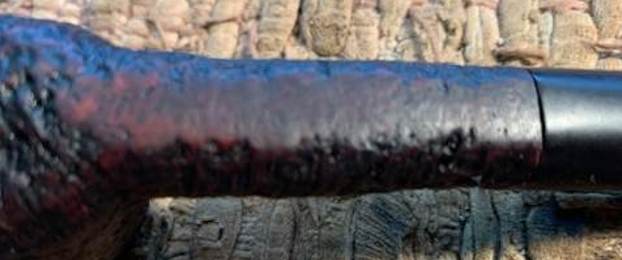
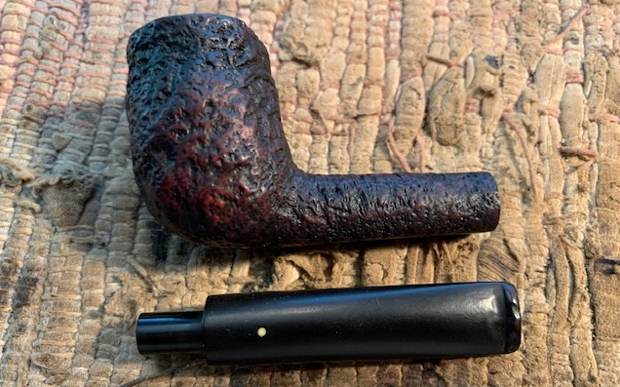
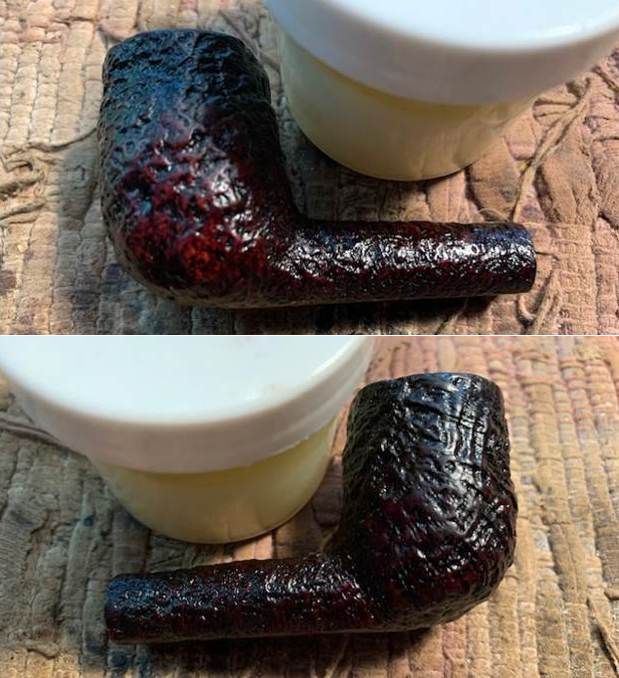
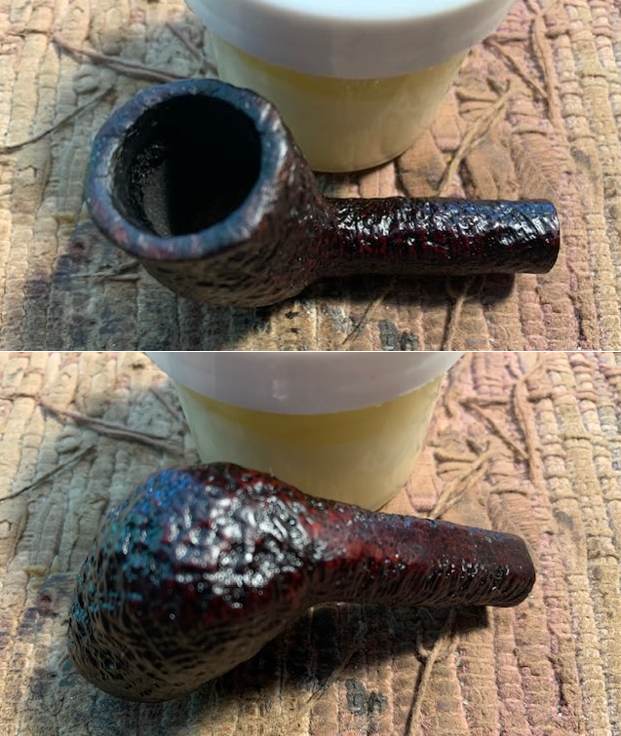
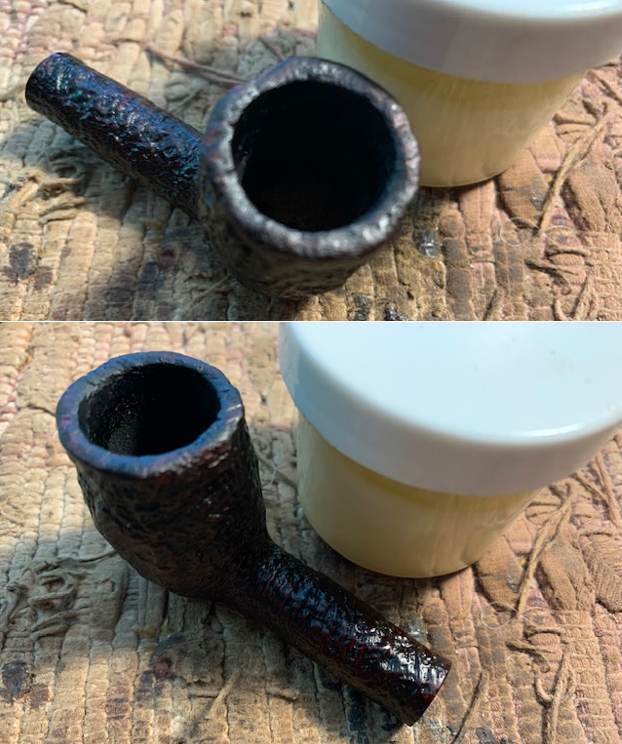
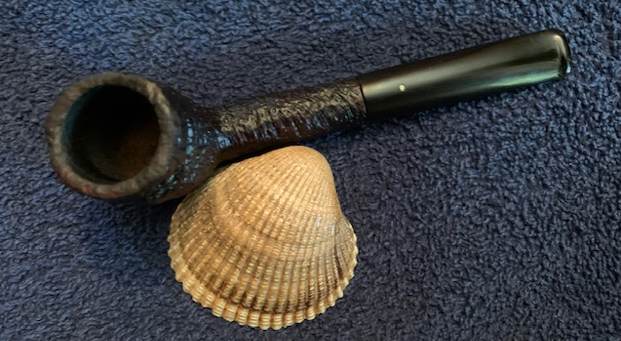
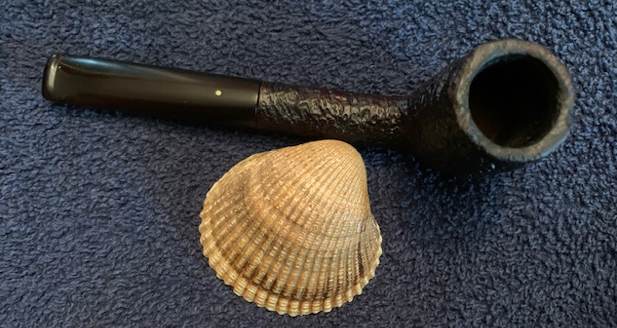
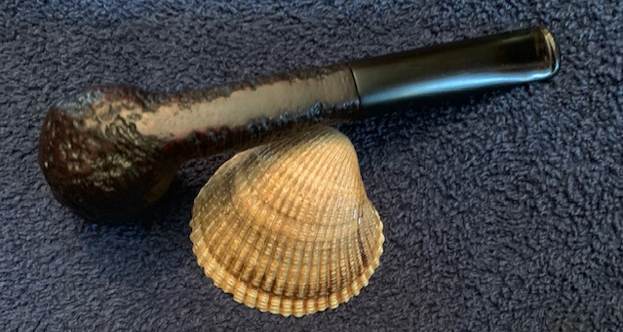
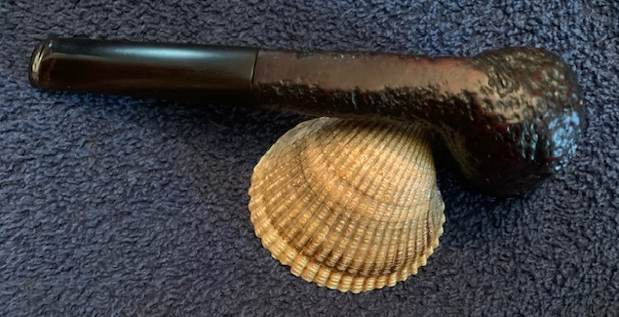
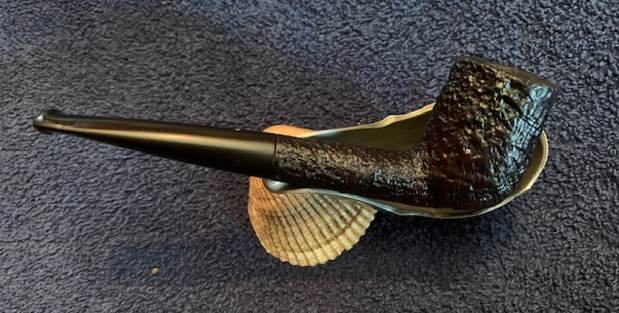
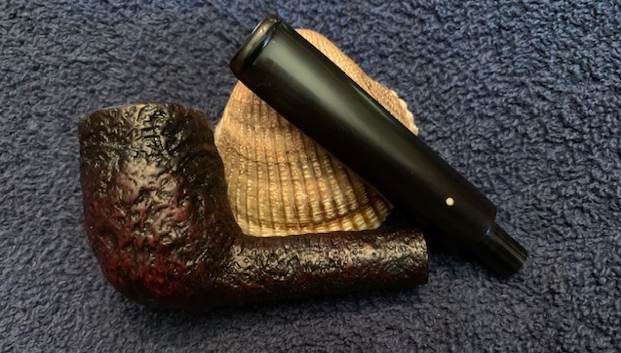
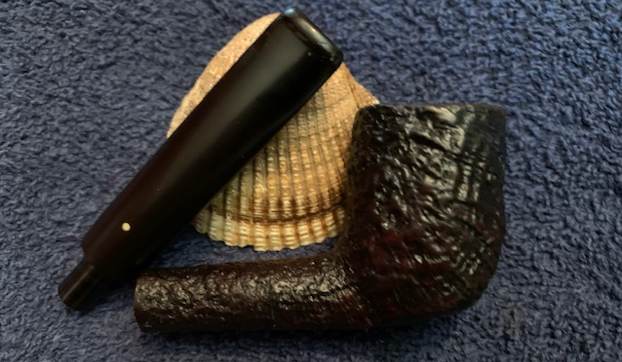
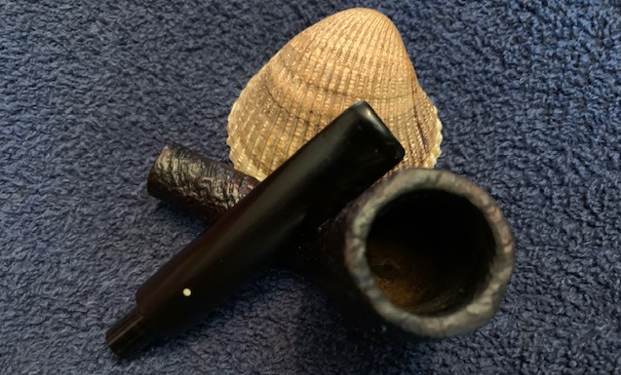
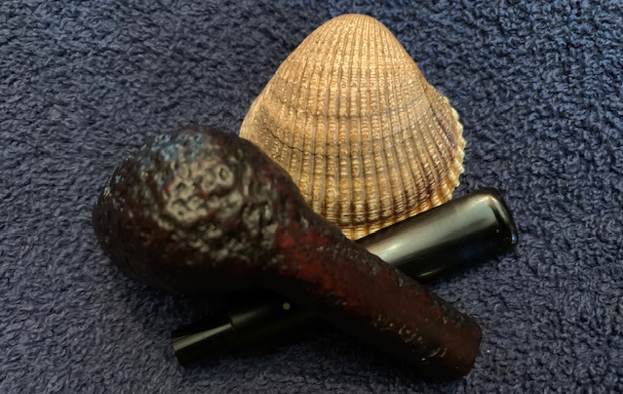
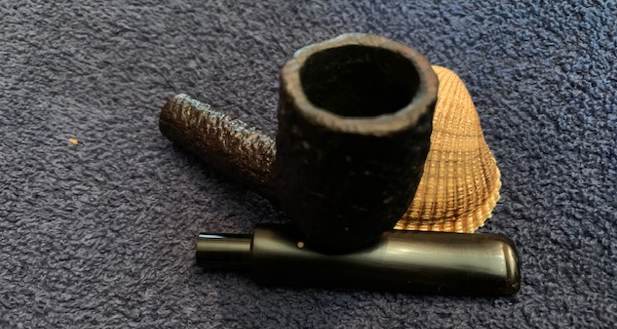
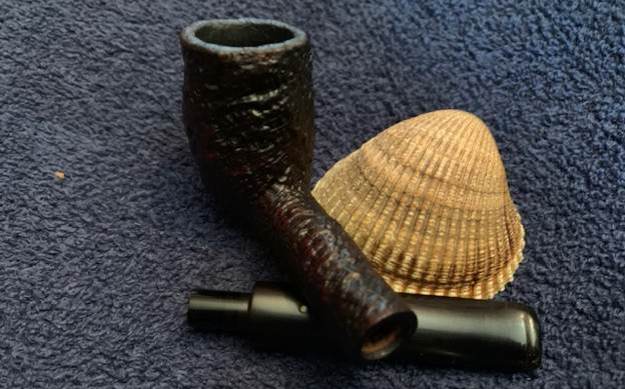
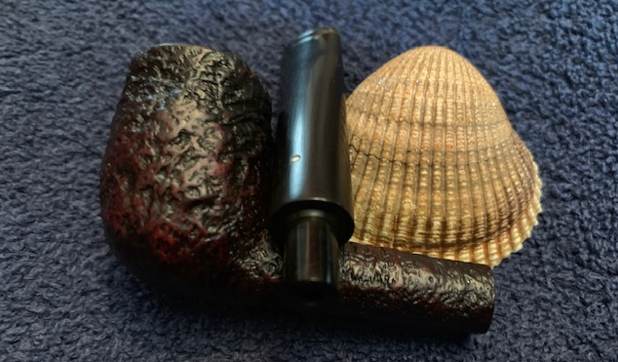
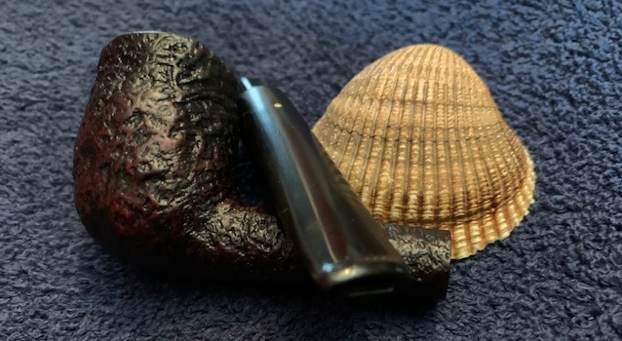
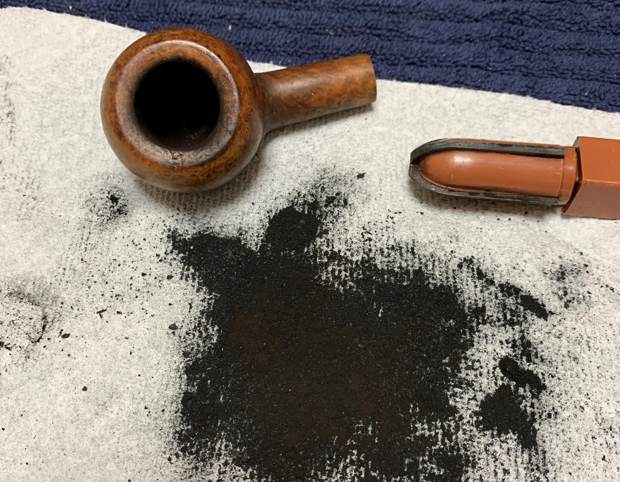
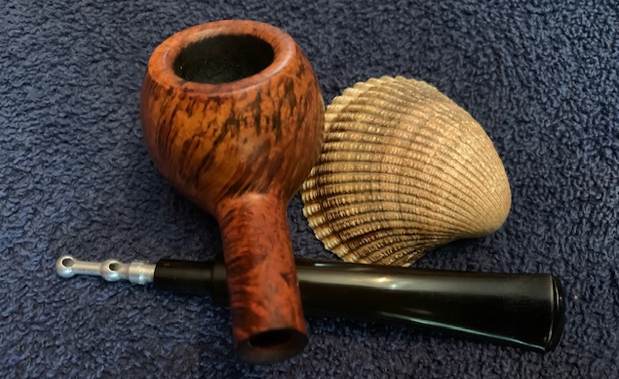
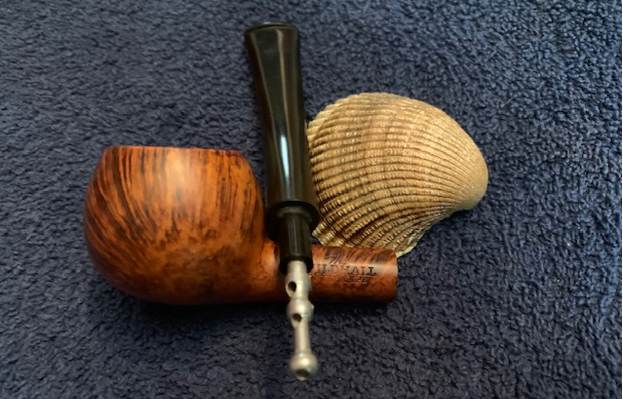
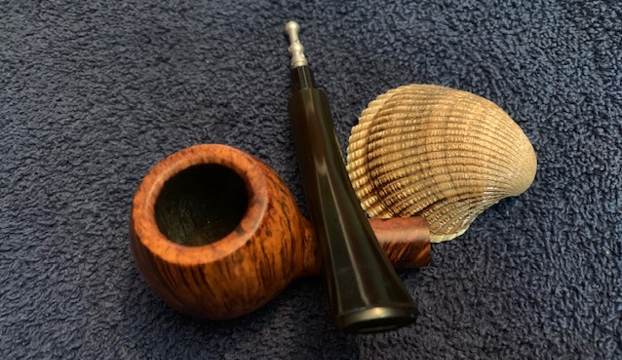
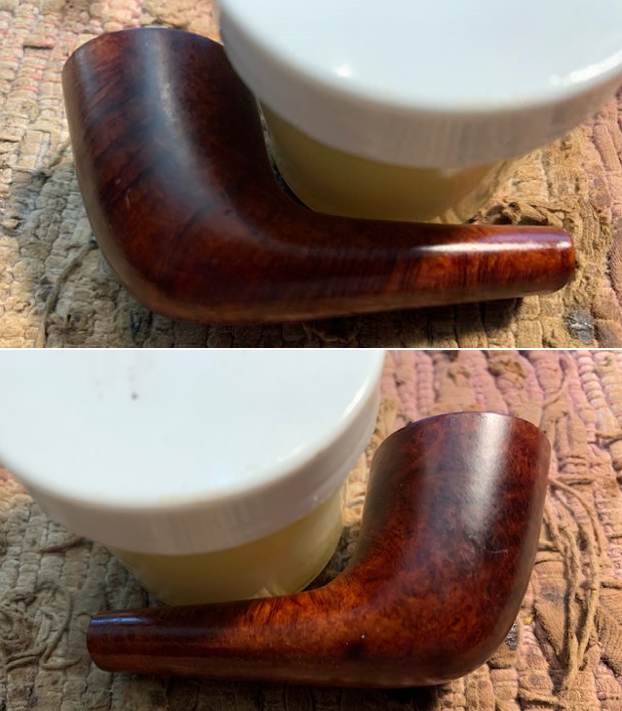
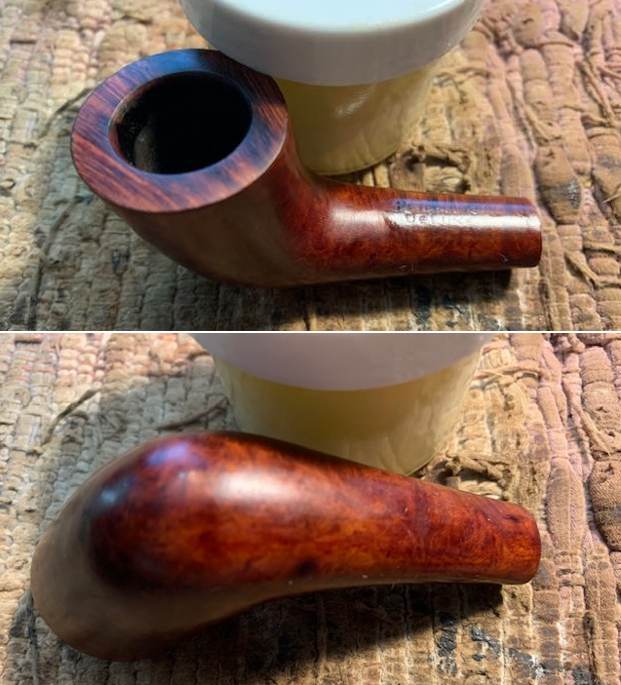
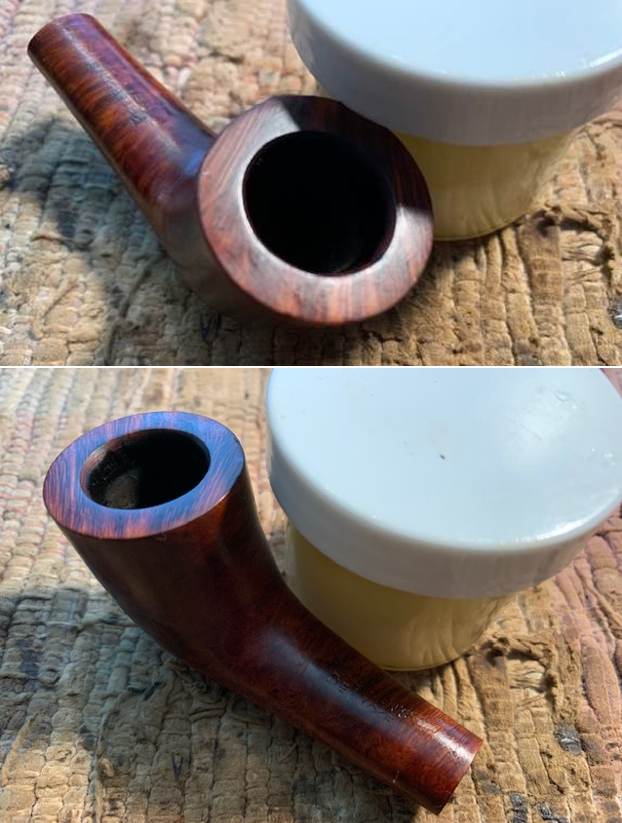
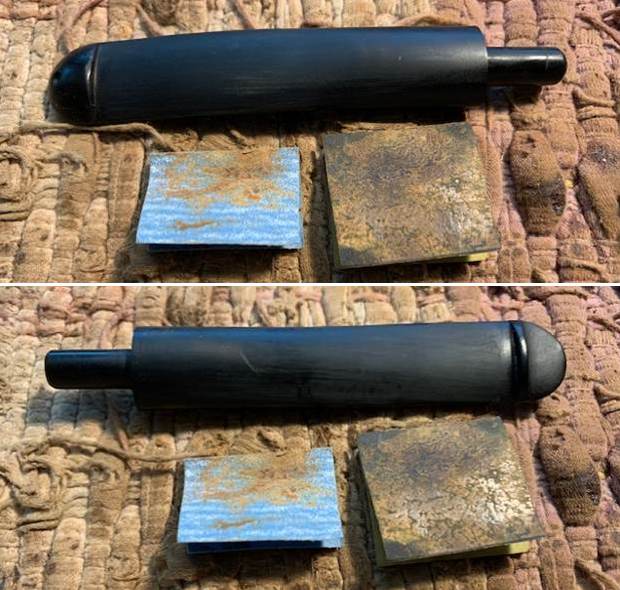
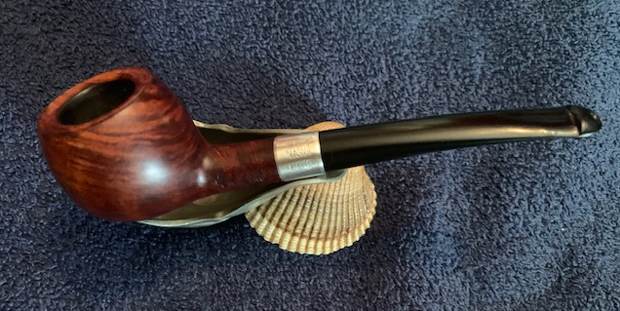
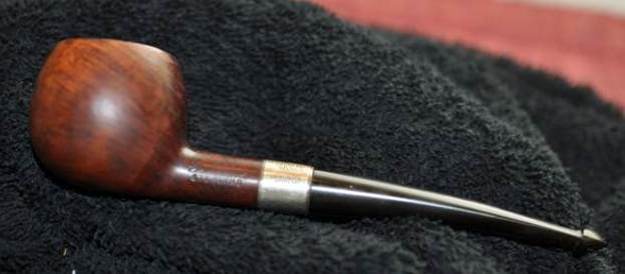
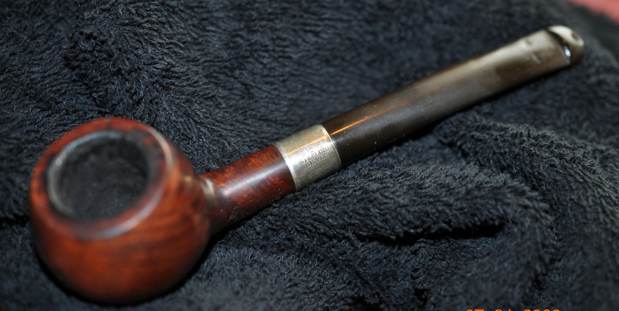
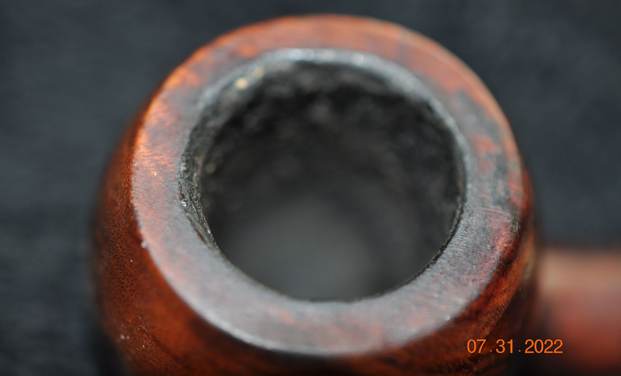
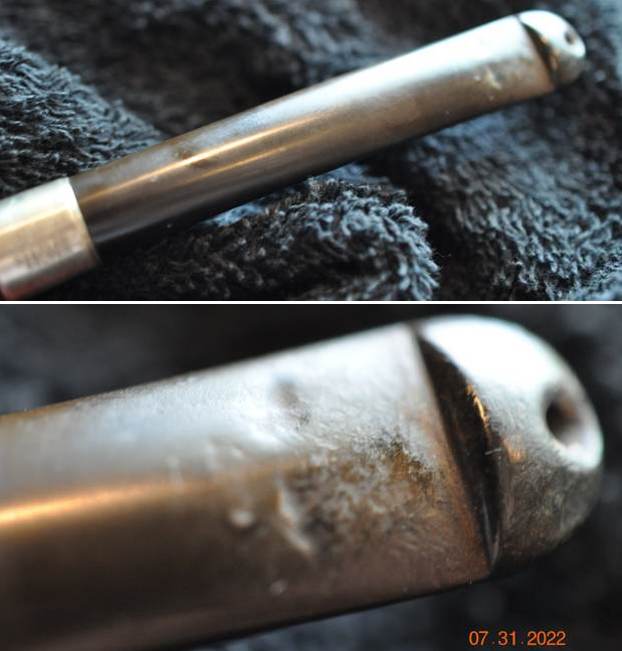
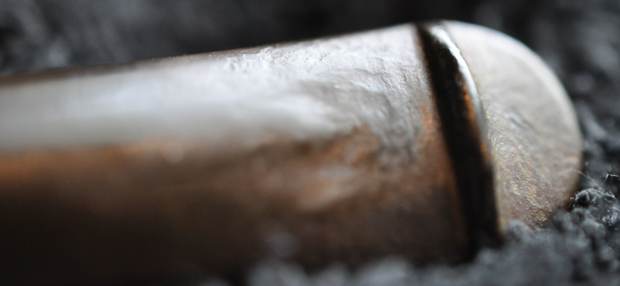
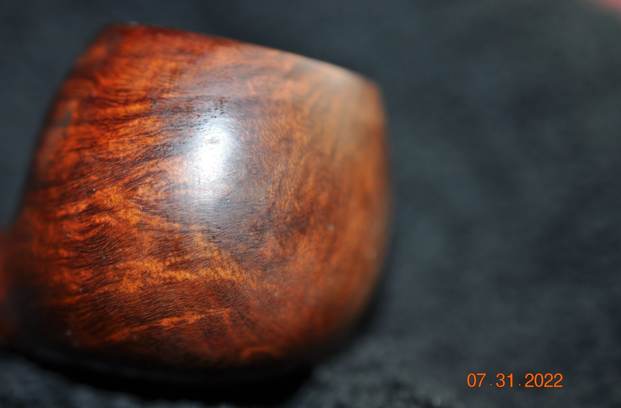
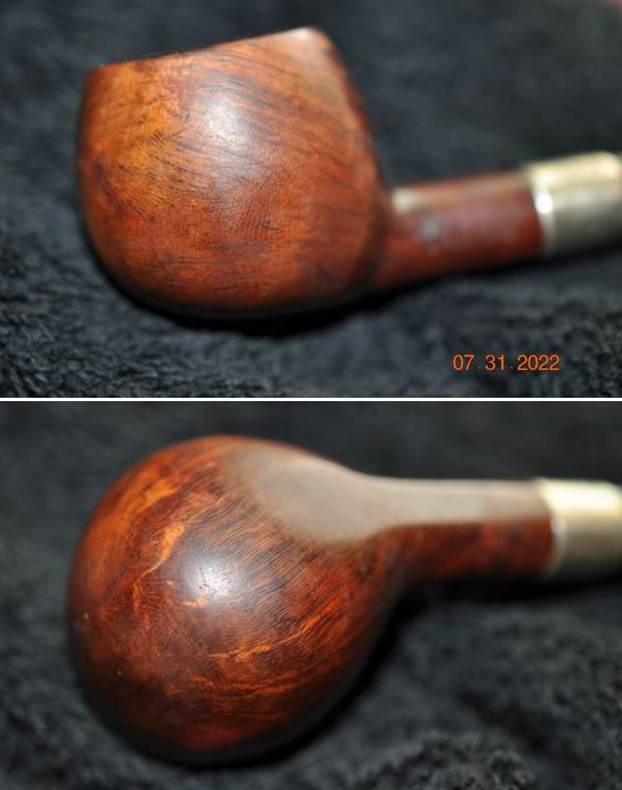
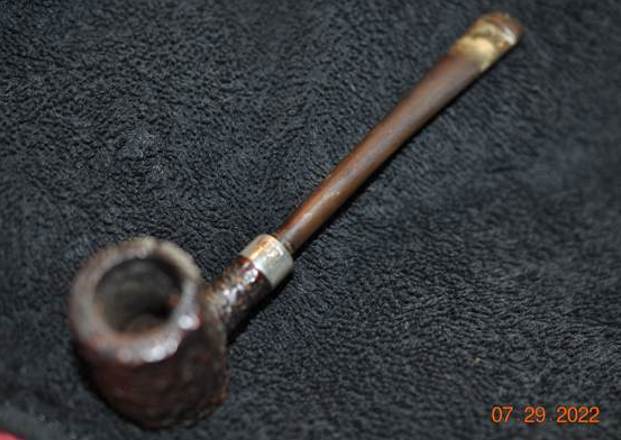
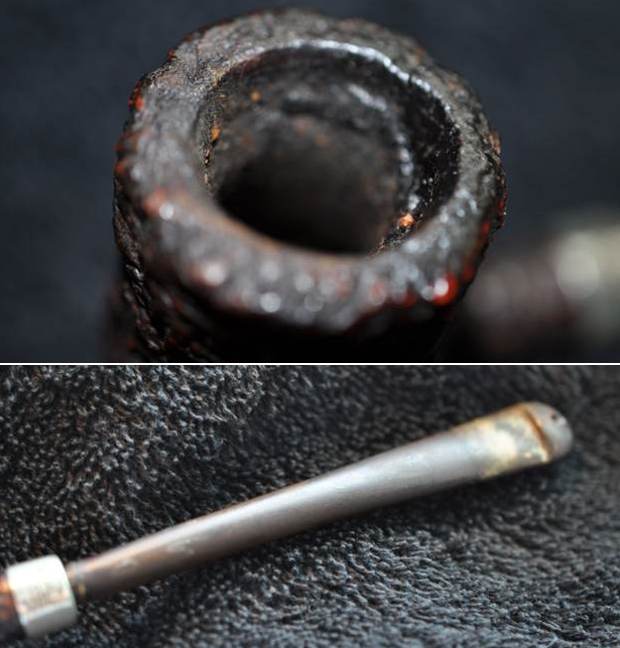
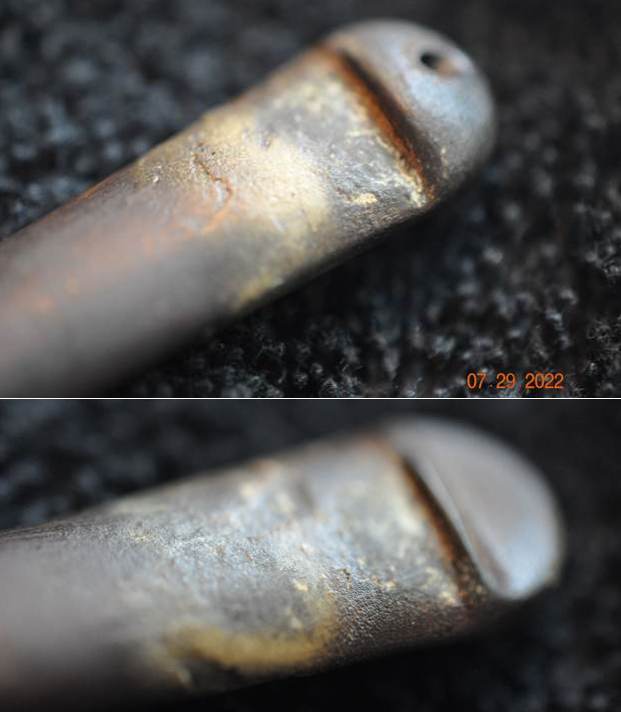
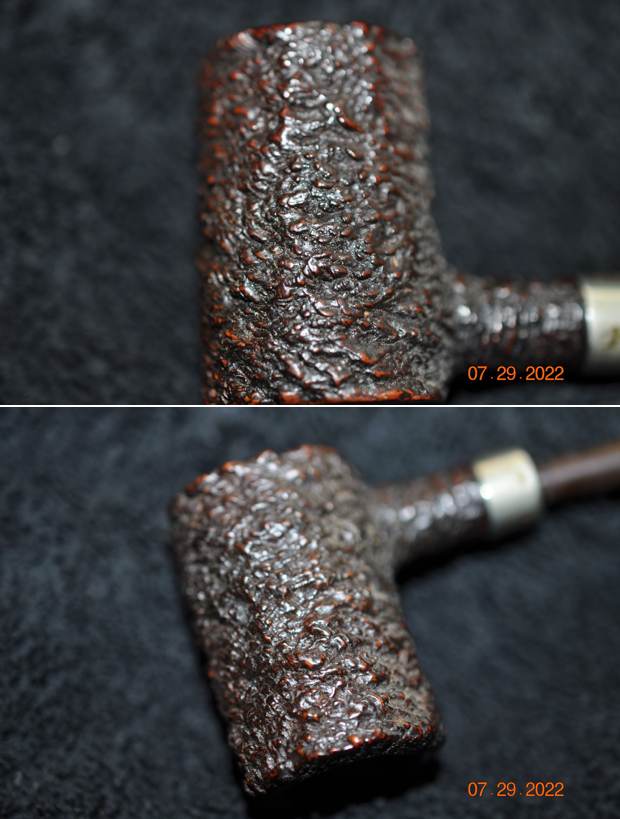
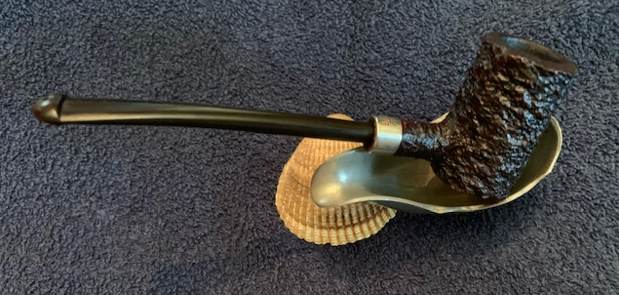
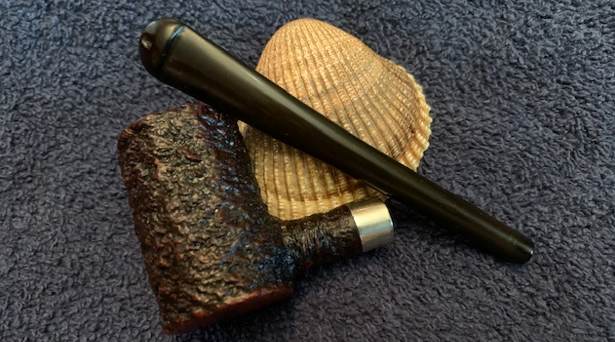
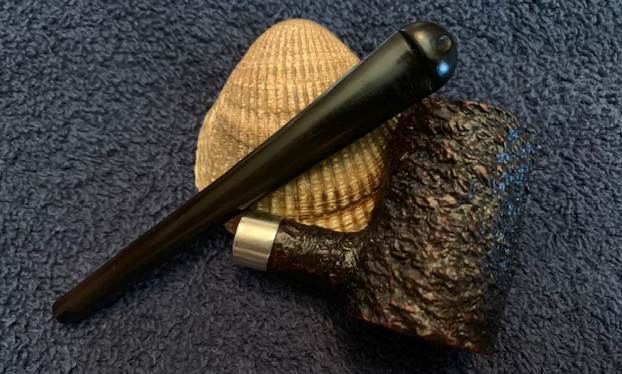
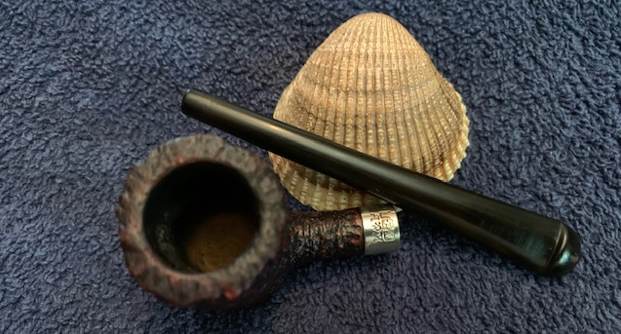
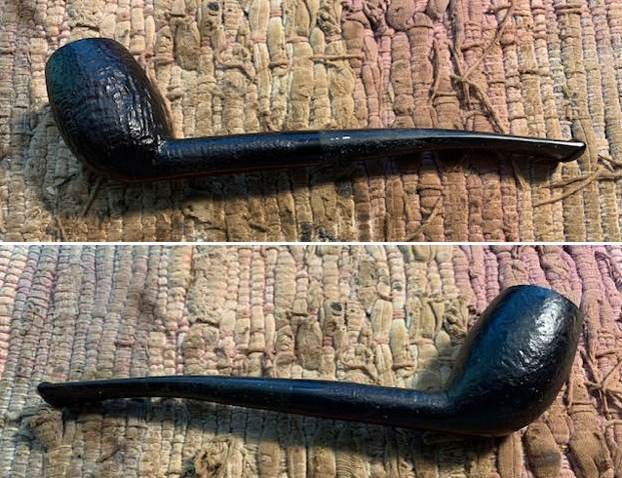
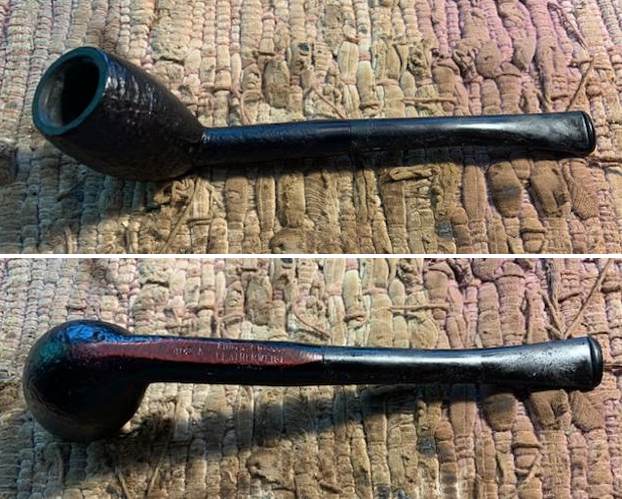
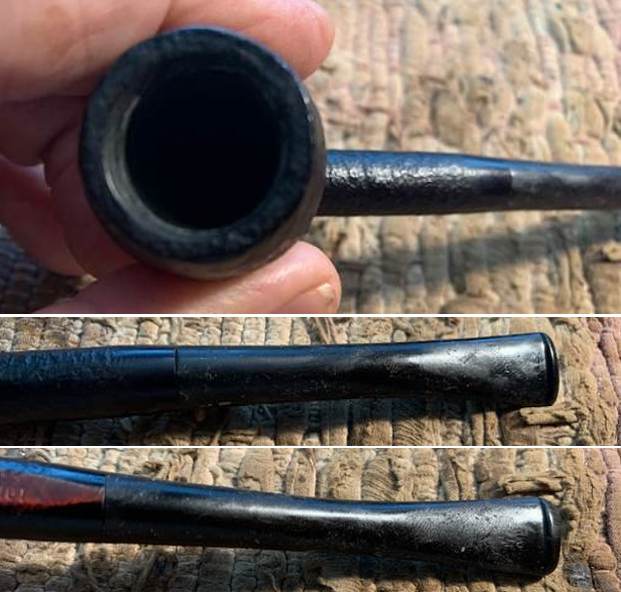
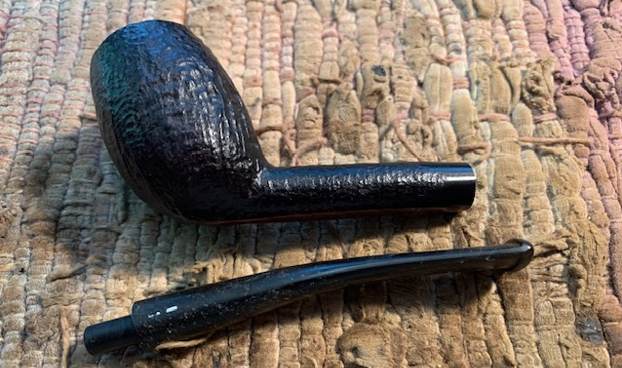
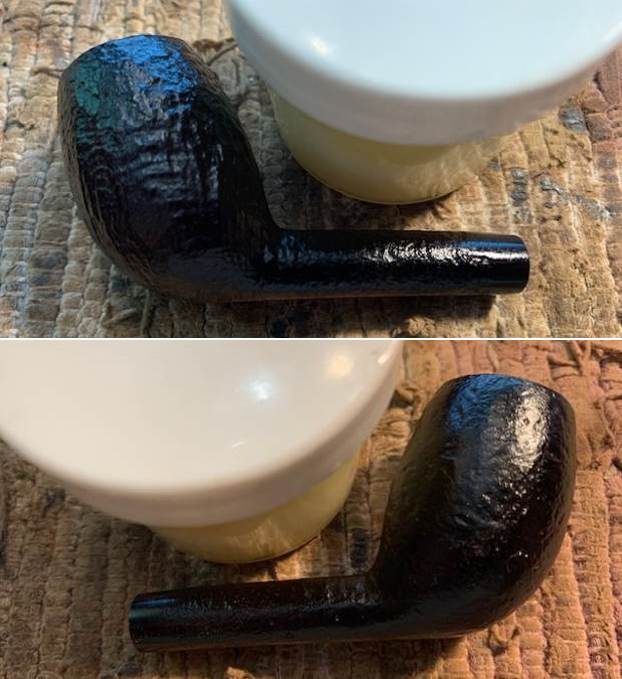
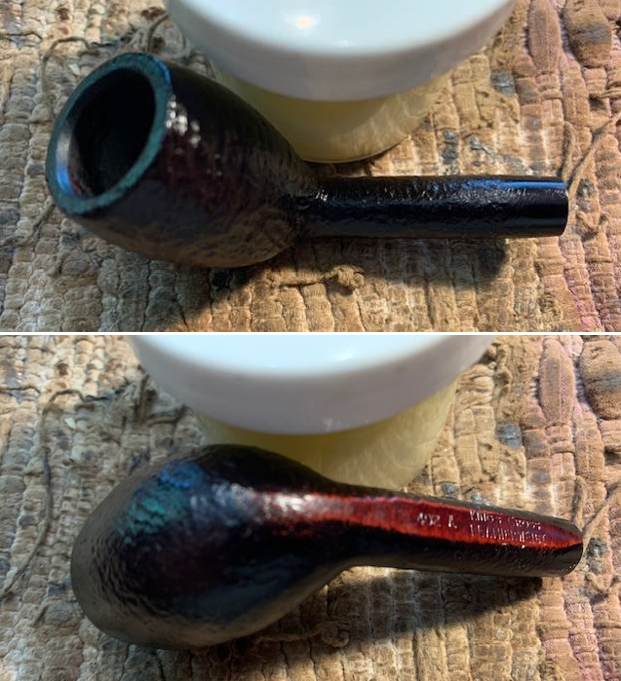
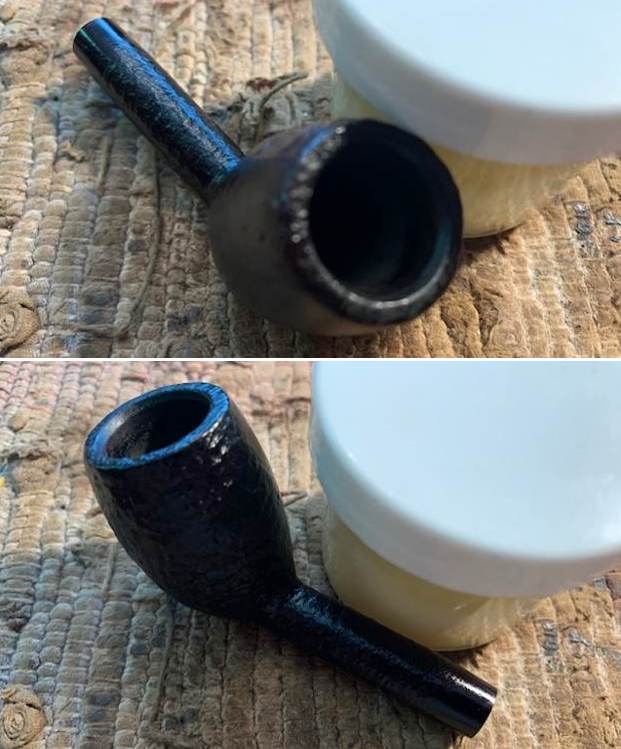
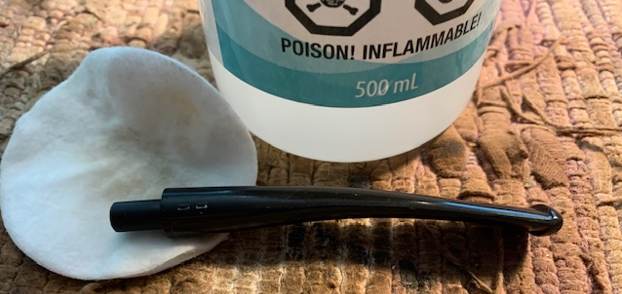
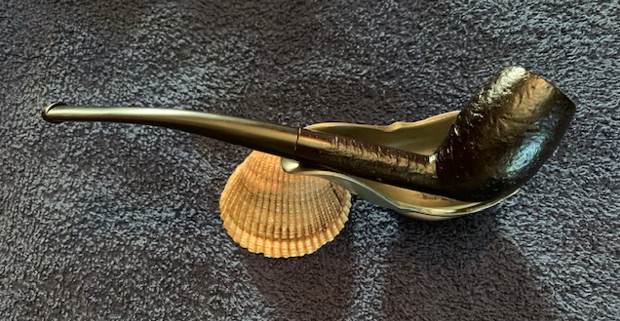
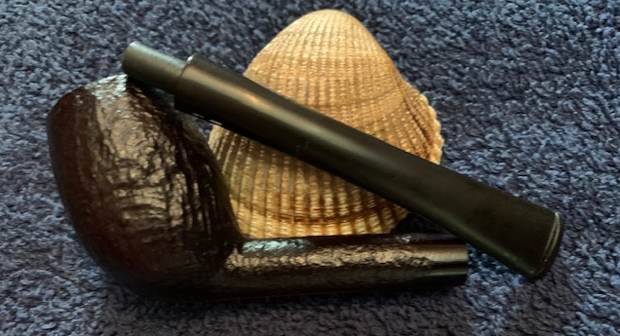
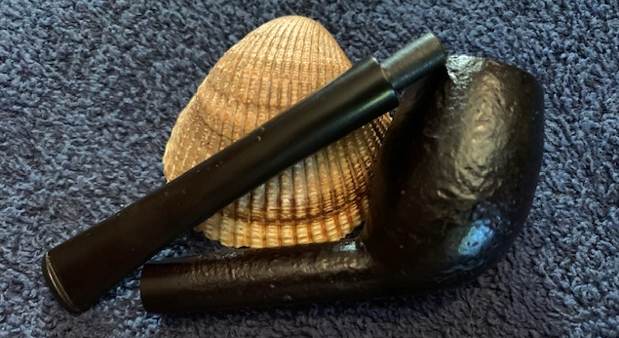
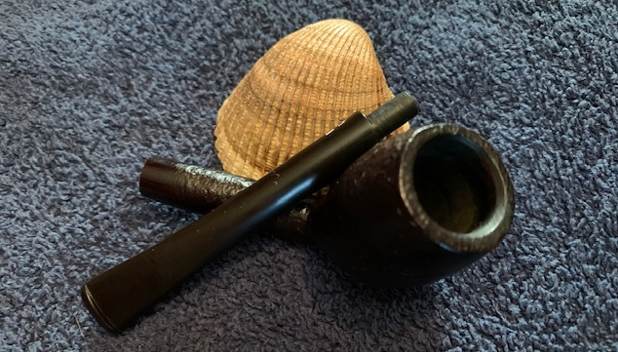
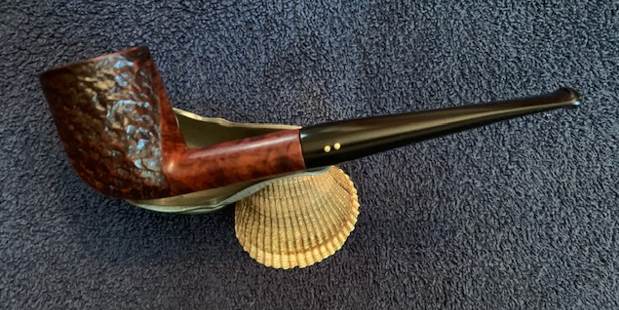
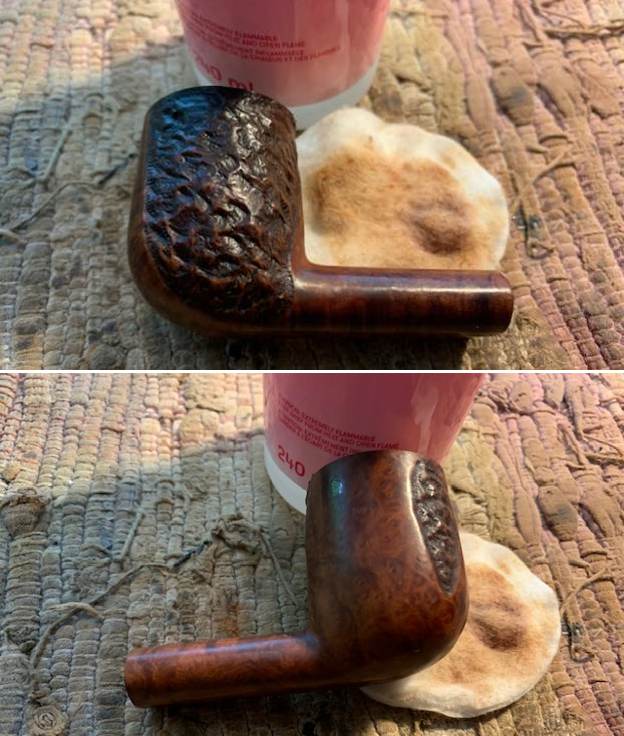
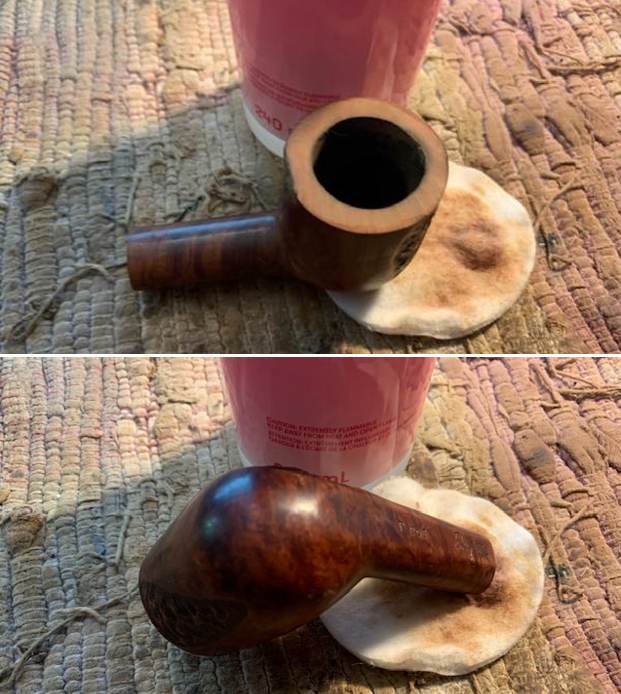
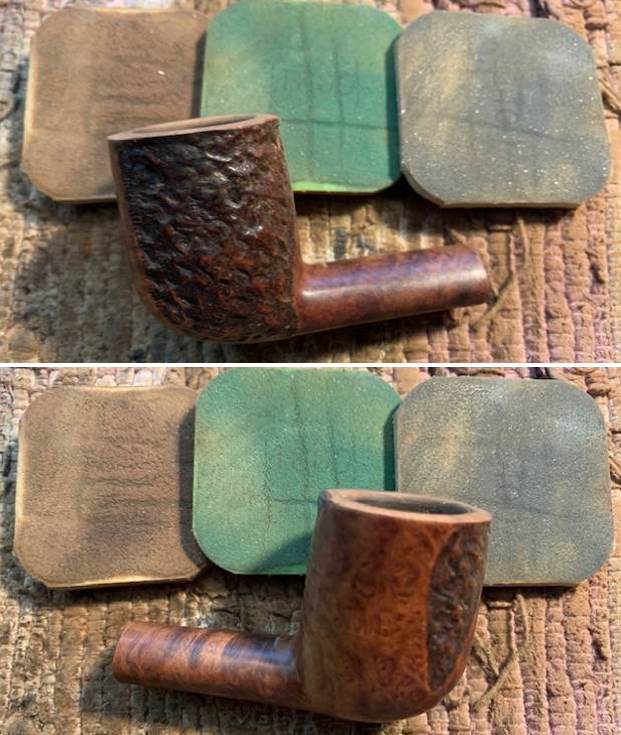
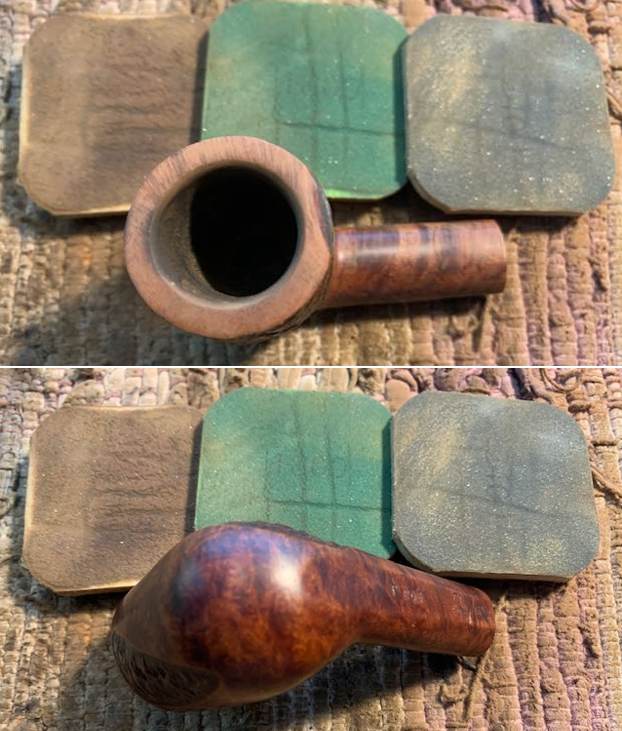
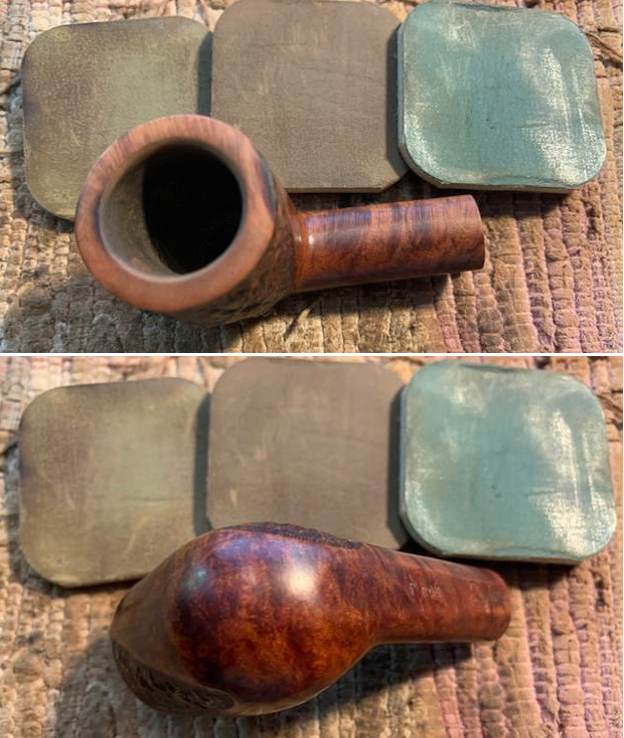
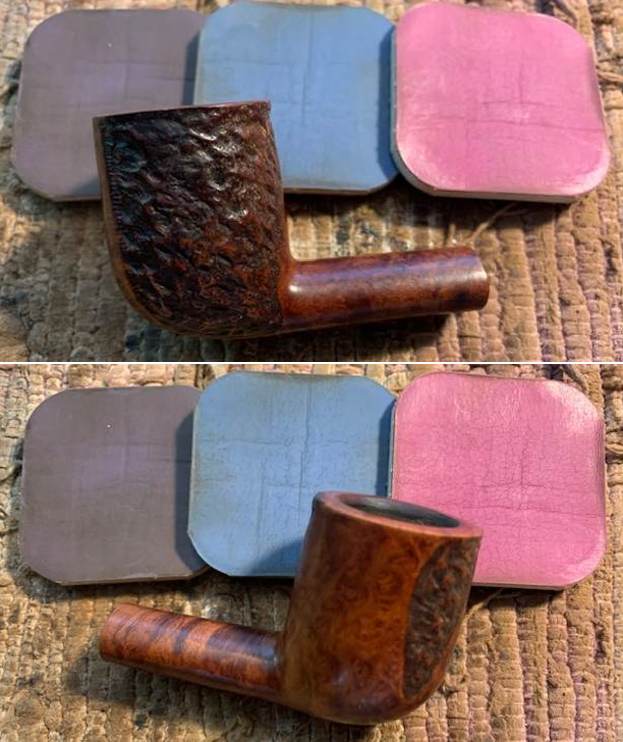
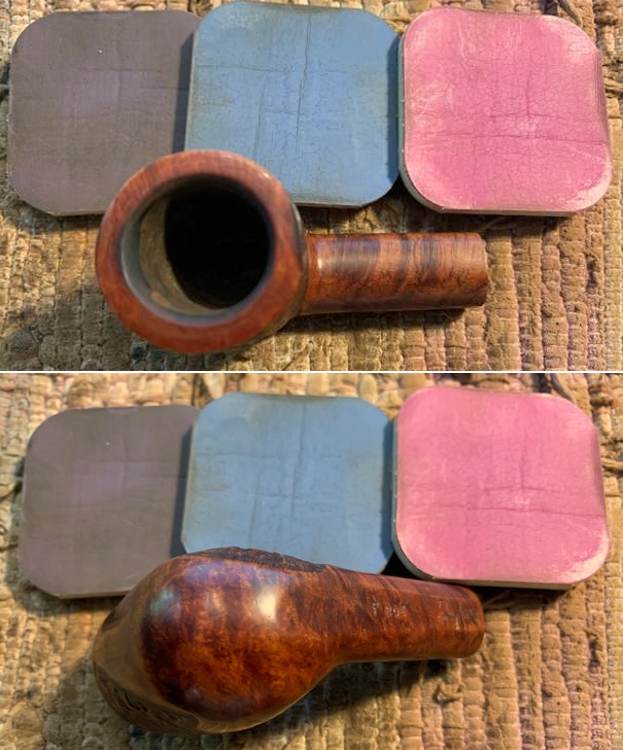
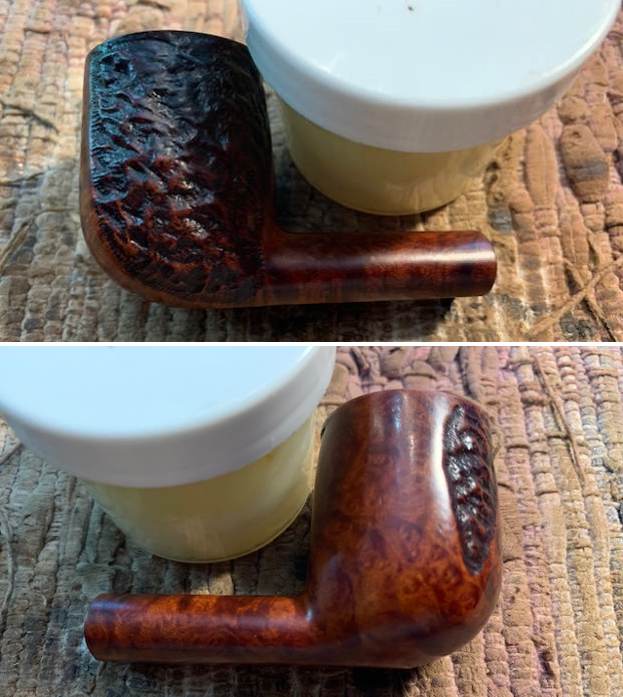
The next pipe on the work table is an older looking small Dunhill Shell Briar Billiard that had an older style straight taper stem that has no fishtail flare to the button. There were deep tooth marks and chatter on the top and underside of the stem near the button. The sandblast finish is a very deep, rugged looking and is quite dirty and dusty. The bowl had a thick cake that flowed over the rim top as thick lava and filled in the sandblast surface. The pipe was purchased from an antique store on 05/24/22 in Newberg, Oregon, USA. Under a bright light with a magnifying lens I was able to work out some of the details on the stamping. It is faint but the shape number reads 31 followed by Dunhill’s Shell Briar [over] PAT. NO. (after that it is unclear but it is a number that is quite long). The last readable digits are /12. Using John Loring’s book I did some digging on what was readable to determine the potential other numbers. I found a listing for DUNHILL’S SHELL BRIAR PAT. NO. 119708/17.5861/12 that fits the pieces that are visible on the underside of the shank. That dates the pipe to 1918?-1926. So we know that it is an old timer but I only wish I could read the stamping better. Jeff took photos of the pipe before he cleaned them up. I have included them below. He took photos of the bowl, rim top and the stem to show the condition of the pipe when we received it. You can see the thick cake in the bowl and the thick overflow of lava on the rim top. It was a real mess. The photos of the stem show the deep tooth marks and chatter against the button edge on both the top and underside. There was also some damage to the top edges of the button. The white spot on the top of the stem was smaller which also fits my assessment of this being and early pipe. He took photos of the side and heel of the bowl to give a clear picture of the rugged and deep sandblast around the bowl and shank. It is really a beauty.He took photos of the stamping on the underside of the shank. You can see the faint stamping  but it is not readable in the photos. As noted above I was able to discern some of the stamping.Now it was time to work on the pipe. It is really a beautiful piece. Jeff had done a great cleanup on the pipe. He reamed the bowl with a PipNet pipe reamer and followed up with a Savinelli Fitsall pipe knife to remove the cake. He scrubbed out the mortise and the airway in the shank and the stem with alcohol, cotton swabs and pipe cleaners. He scrubbed the bowl exterior with a tooth brush and Murphy’s Oil Soap to remove the grime on the finish of the bowl and the lava from the rim top. He rinsed it under running water. One of the benefits of this scrub is that it also tends to lift some of the scratches and nicks in the surface of the briar. He dried it off with a soft cloth. He cleaned the internals and externals of the stem with alcohol, pipe cleaners and cotton swabs. He soaked the stem in Briarville’s Pipe Stem Deoxidizer and rinsed it off with warm water and cleaned out the airway in the stem with alcohol, pipe cleaners and cotton swabs. I took photos of the pipe as I saw it when I put it on the table. I took photos of the rim top and stem to show the condition. The rim top and edge looked much better. The stem looked much better and there were deep tooth marks and chatter on both sides ahead of the button.  The stamping on underside of the shank is faint but I was able to decipher what remains as mentioned above. I really like the rugged sandblast on the bowl and shank. It definitely fits the time frame that I deciphered above. It is a beauty. I removed the stem from the shank and took a photo of the pipe to give a sense of the proportions of the bowl and stem.I started my work on the bowl by using a brass bristle brush to work over the sandblast on the rim top. I was able to remove the dust and debris and give the top blast more definition. It looked good and matched the blast on the bowl.I rubbed the bowl and shank down with Before & After Restoration Balm. I worked it into the surface of the bowl sides and shank with my fingertips and a horsehair shoe brush to clean, enliven and protect the briar. I let the balm sit for 10 minutes, then buffed with a cotton cloth to raise the shine. The Balm did its magic and the grain stood out on the briar.  I set the bowl aside and turned my attention to the stem. I “painted” the surface of the vulcanite with the flame of lighter. I was able to lift many of them. Those that remained, I filled in with clear CA glue. I set it aside to let it cure. Once it did, I reshaped the button and smoothed out the repair with a folded piece of 220 grit sandpaper. I started the polishing with 400 grit wet dry sandpaper.  I polished the stem with micromesh sanding pads – 1500-12000 grit pads. I wiped it down with Obsidian Oil after each sanding pad. I finished the polishing with Before & After Polishes – both Fine and Extra Fine. I gave it a final rub down with Obsidian Oil and set it aside to dry.   This Older Dunhill Shell Briar 13 Patent Billiard with a vulcanite taper stem has a deep and rugged sandblast finish that looks great . The rich dark contrasting stain makes the grain come alive with the polishing and waxing. I put the stem back on the bowl and carefully buffed the pipe with Blue Diamond on the buffing wheel using a light touch on the briar. I gave the bowl multiple coats of Conservator’s Wax and the stem multiple coats of carnauba wax on the buffing wheel. I buffed the entire pipe with a clean buffing pad. I hand buffed the pipe with a microfiber cloth to deepen the shine. The finished Dunhill Shell Briar Billiard really is a beauty and fits nicely in the hand and looks very good. Give the finished pipe a look in the photos below. The dimensions of the pipe are Length: 5 inches, Height: 1 ½ inches, Outside diameter of the bowl: 1 inch, Chamber diameter: ¾ of an inch. The weight of the pipe is .85 ounces/24 grams. For now I am holding onto this old timer as I want to spend more time interpreting the stamping. One day it may end up on the store but I am not sure. Thanks for reading this blog and my reflections on the pipe while I worked on it. There are many more to come!

A Good Smoker


by Kenneth Lieblich

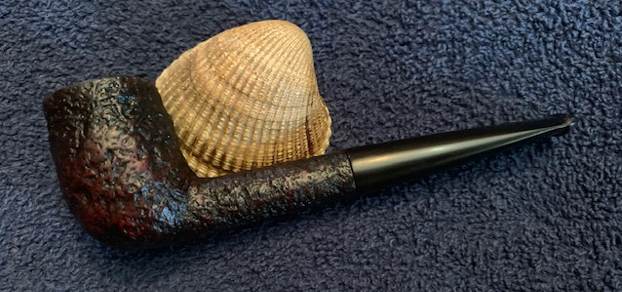
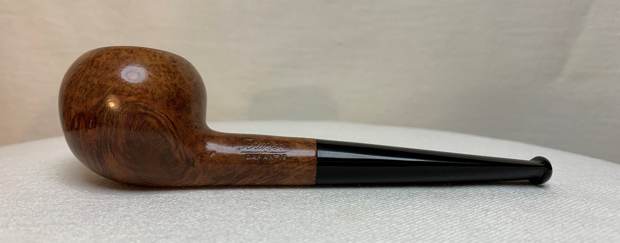
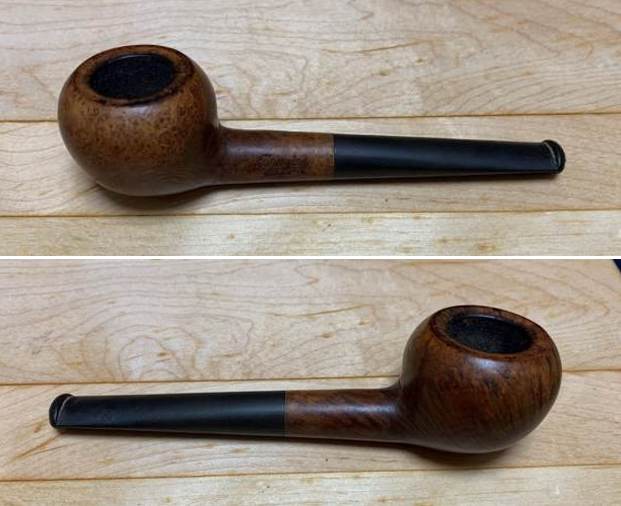
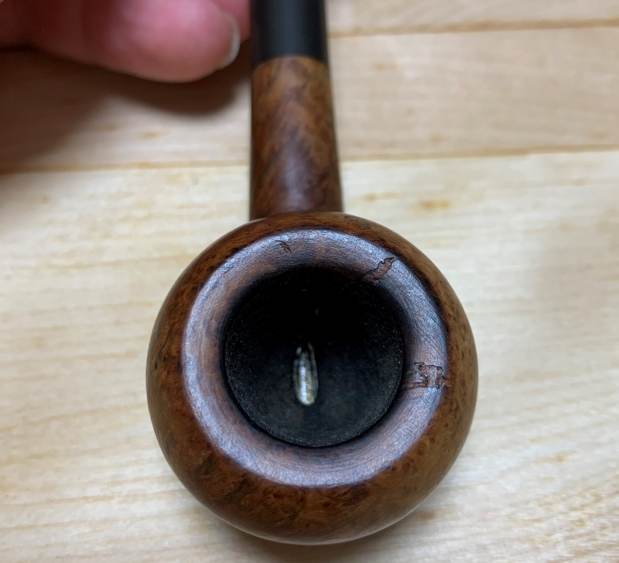
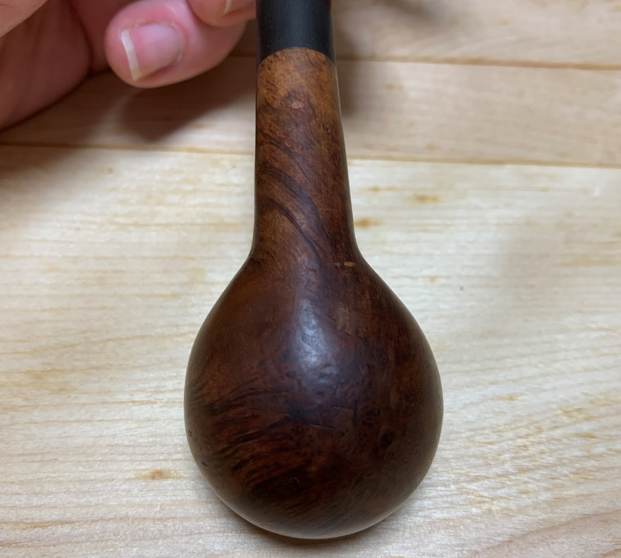
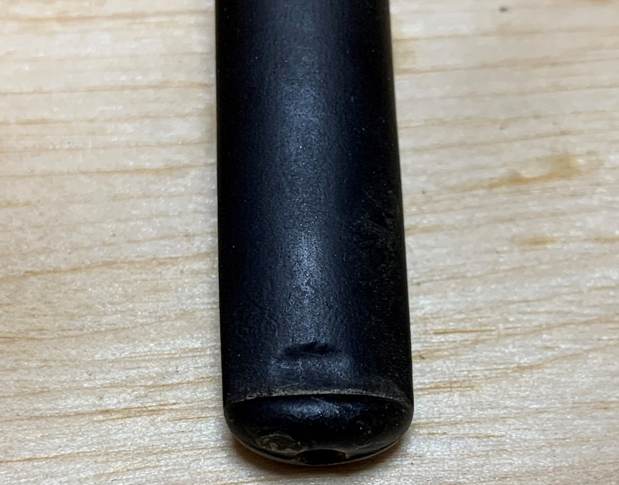
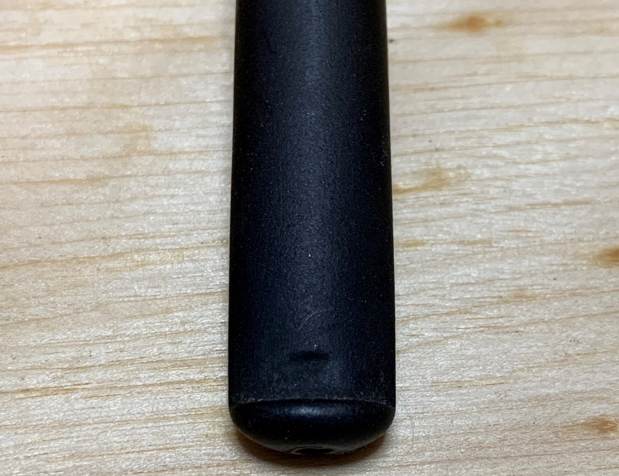
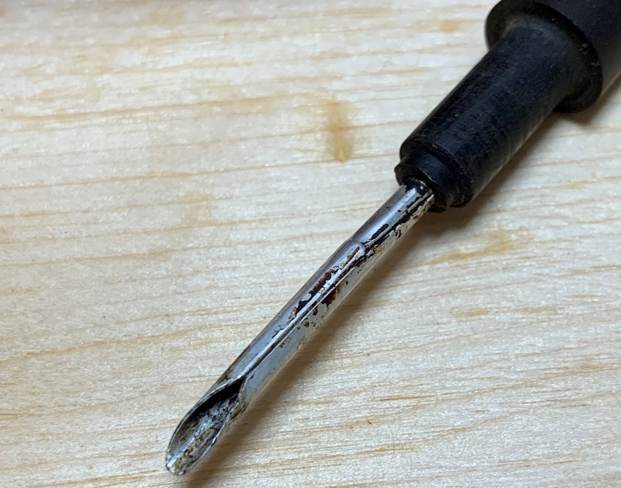
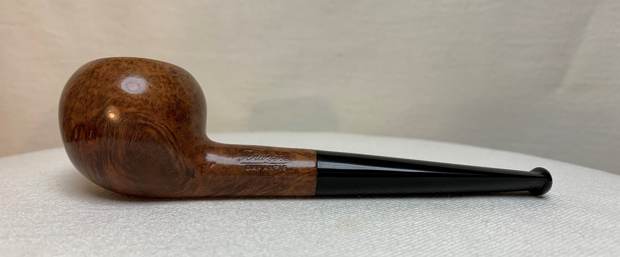
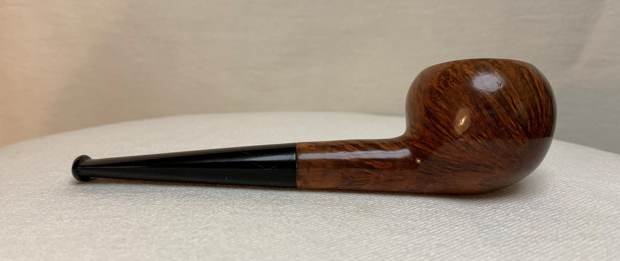
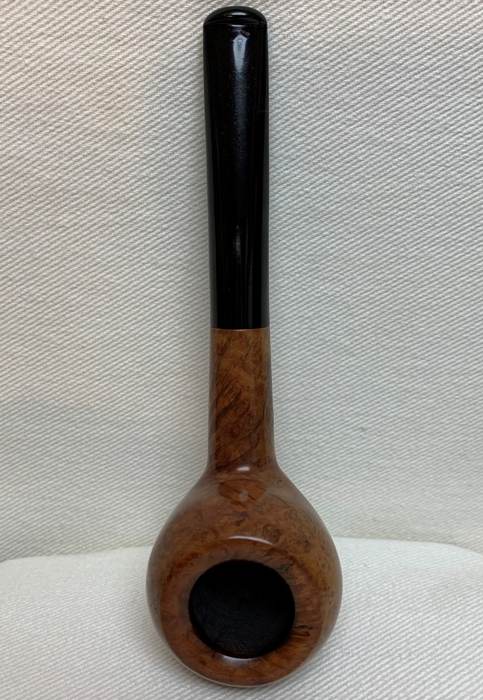
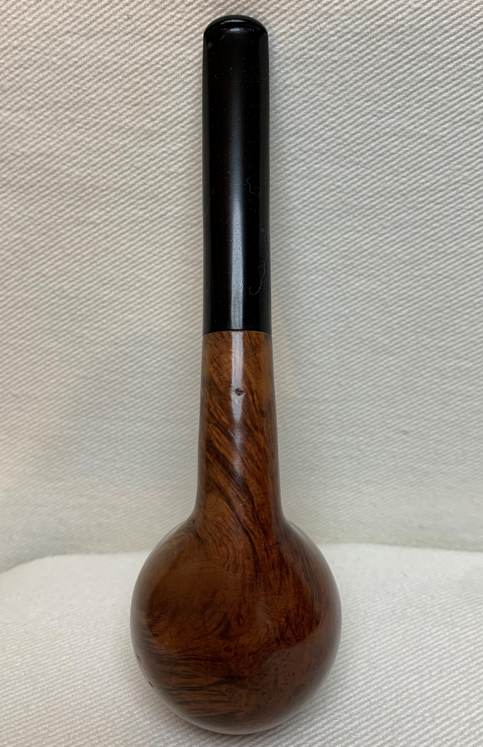
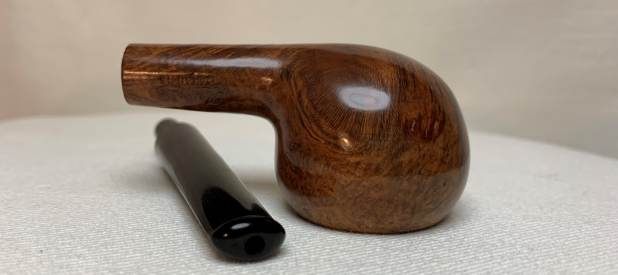
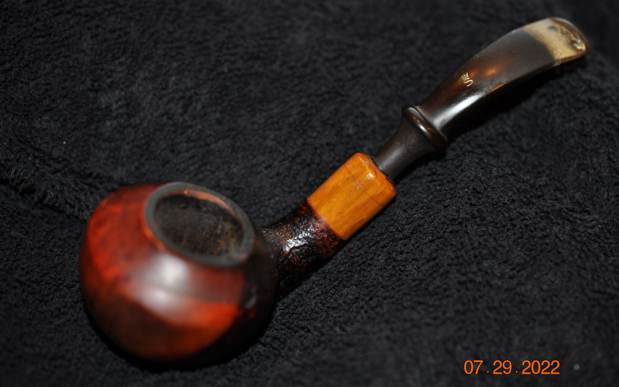
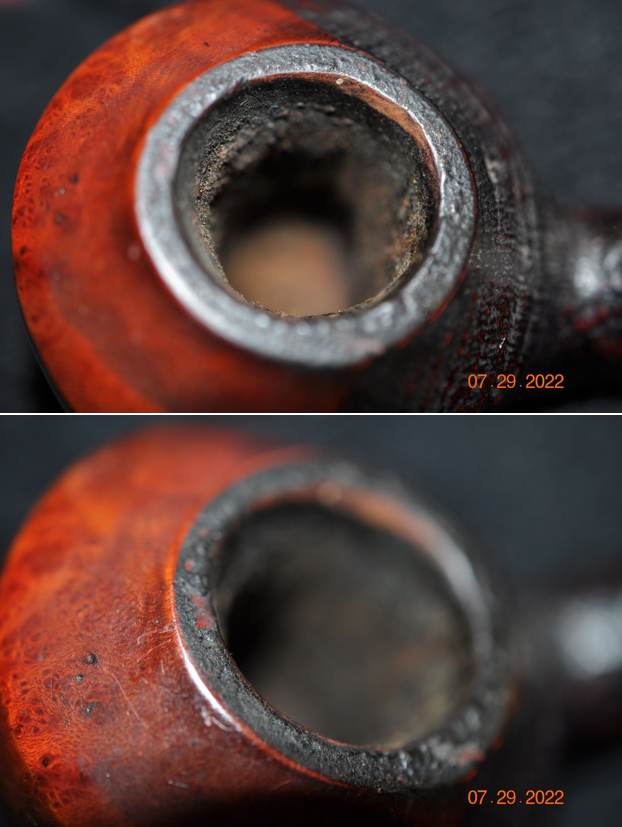
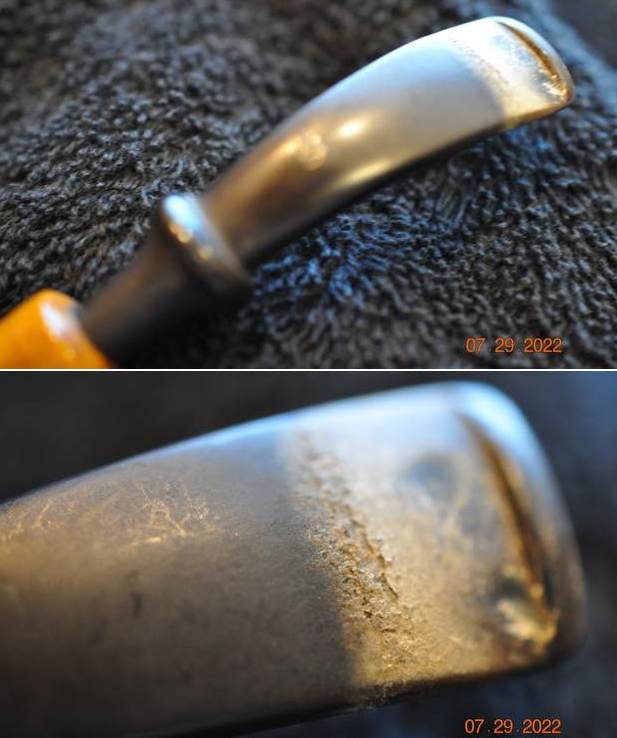
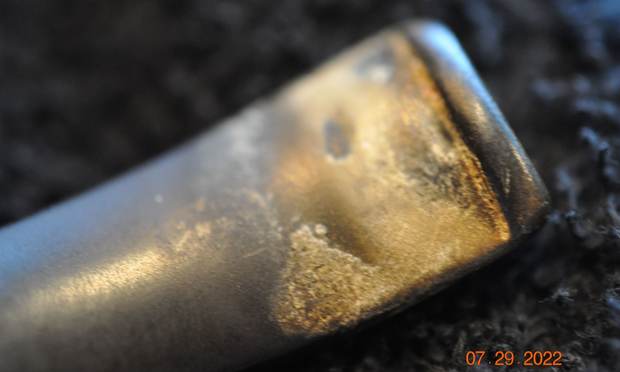
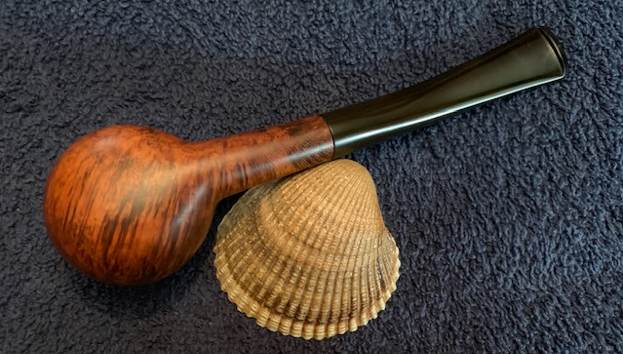
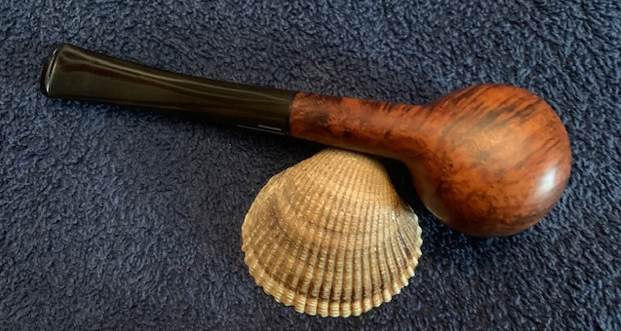
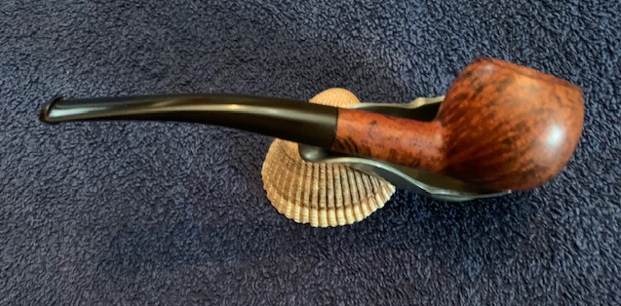
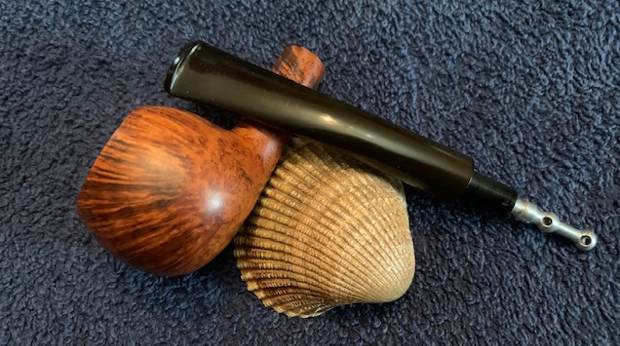
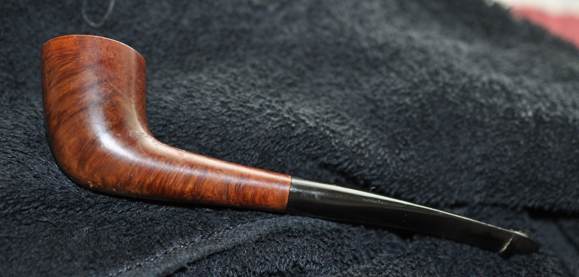
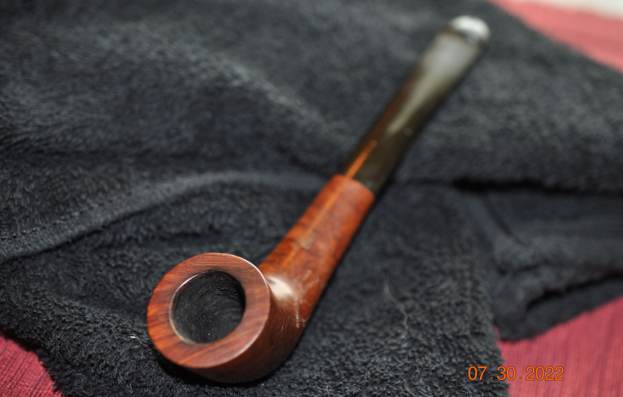
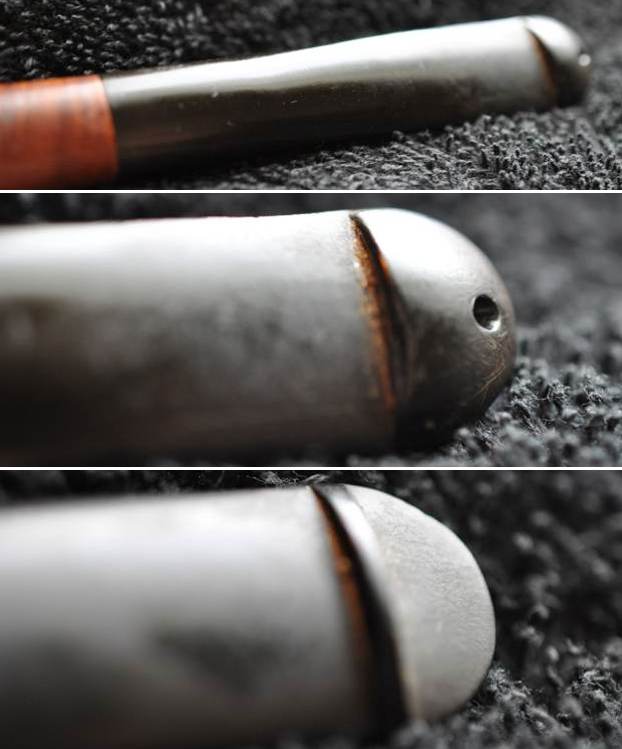
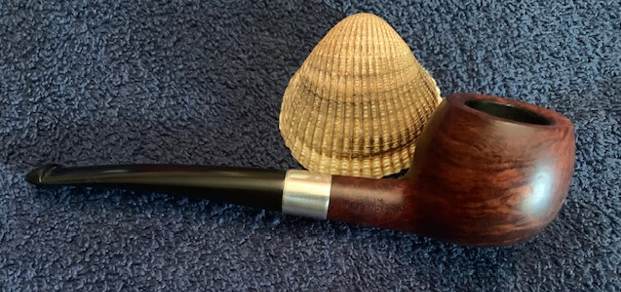
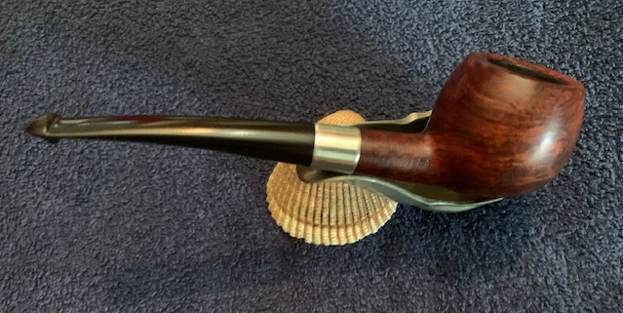
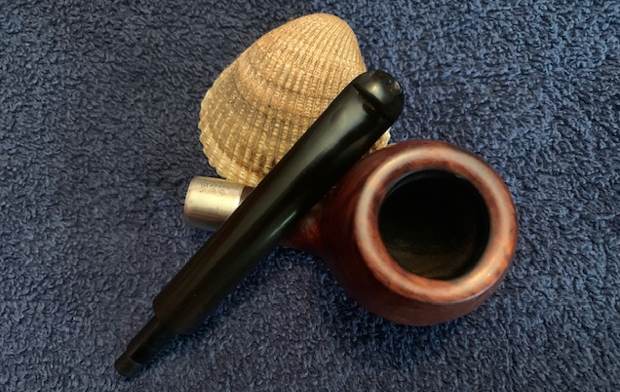
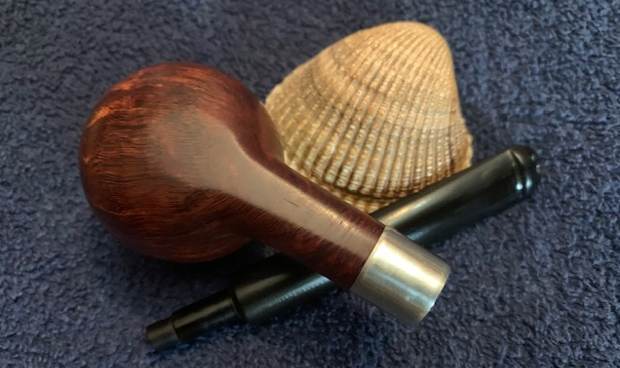
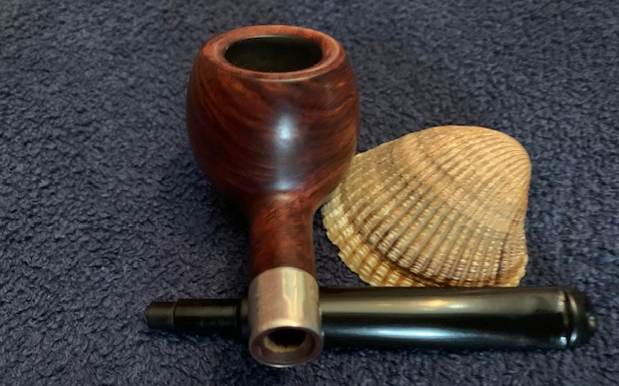
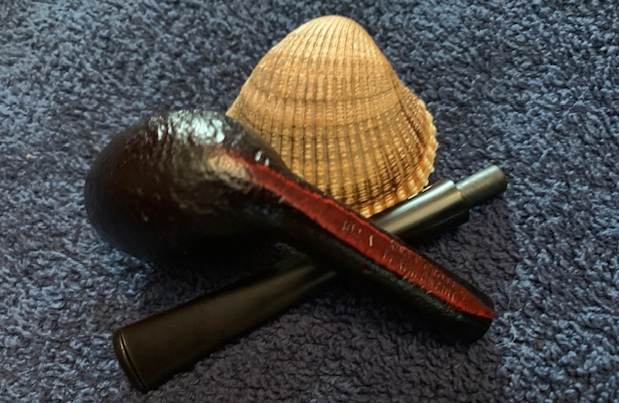
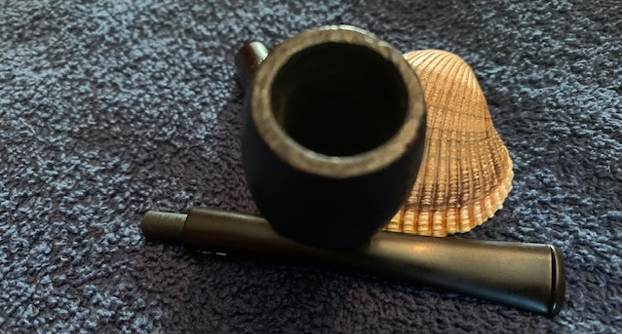
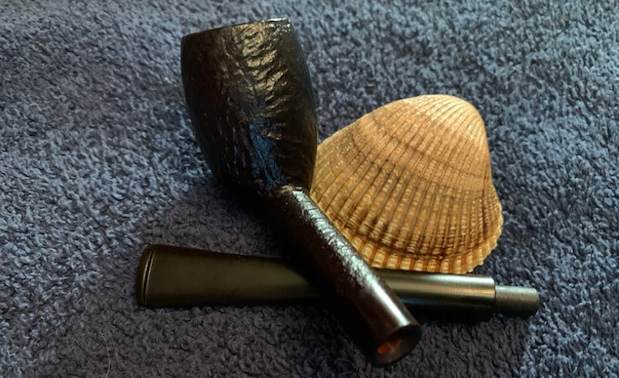
Next on the chopping block is an unnamed, apple-shaped pipe I acquired in a lot from France. My customer was looking for a simple, modest pipe — nothing fancy, but a good smoker. In his opinion, this one seemed to fit the bill quite nicely.  Clearly, it had been well-loved, as it arrived with a dirty inner tube, plenty of dents, marks and a burn on the rim. Interestingly, this pipe had an orific button at the end of the stem, a feature that apparently disappeared by the 1930s, so it must be around a hundred years old. For more information on the orifice button, take the time to read Steve’s interesting article on the subject. The only markings were on the left side of the shank: Bruyère [over] Garantie which translates to ‘Genuine Briar’. The words Bruyère Garantie on a pipe are the bane of my pipe restoration existence. They are found on a plethora of different pipes, usually without any other identification. Ugh. One comment on the old Pipes Magazine forums confirms exactly what my meagre research has uncovered:

“Lots of French and German pipes, even pre-war ones, were given the label “Bruyere Garantie.” At least the ones I’ve seen for sale were listed as being from the 1920s and 30s. But I suspect that is a genuine date for those because many of them had horn stems, which are much rarer in post-war pipes and some of them definitely had an Art Deco/Art Nouveau look about them as well as old-fashioned rounded buttons.” — pitchfork

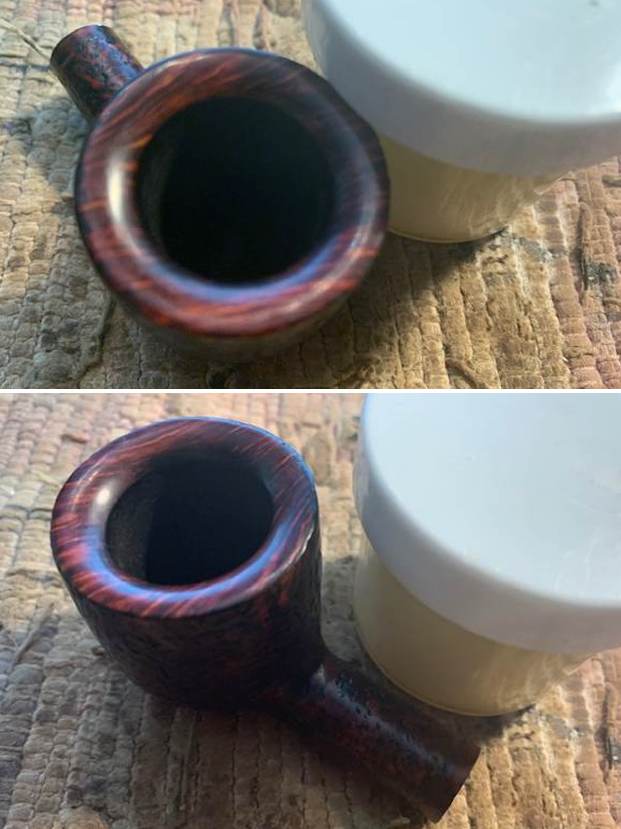
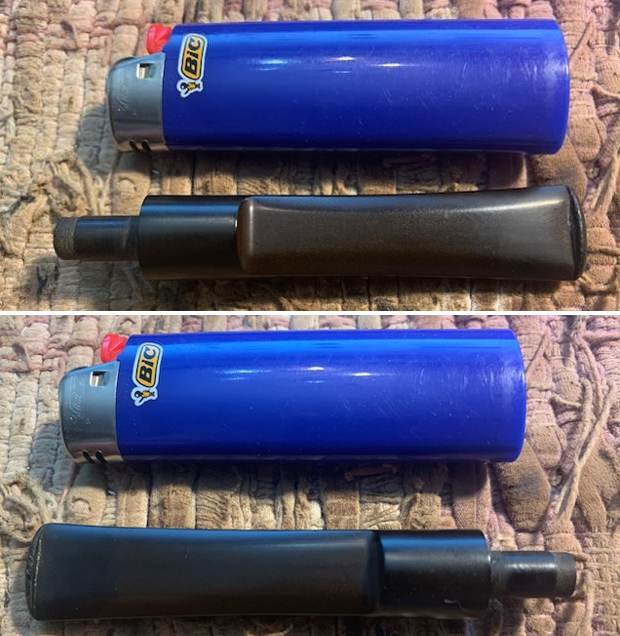
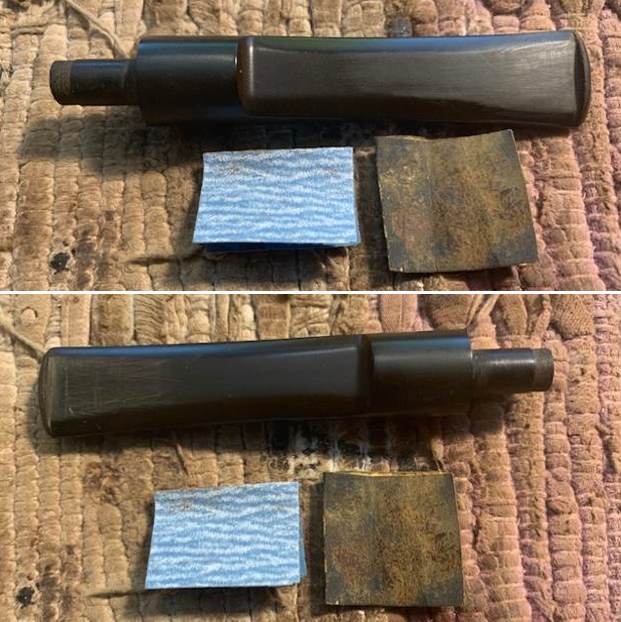
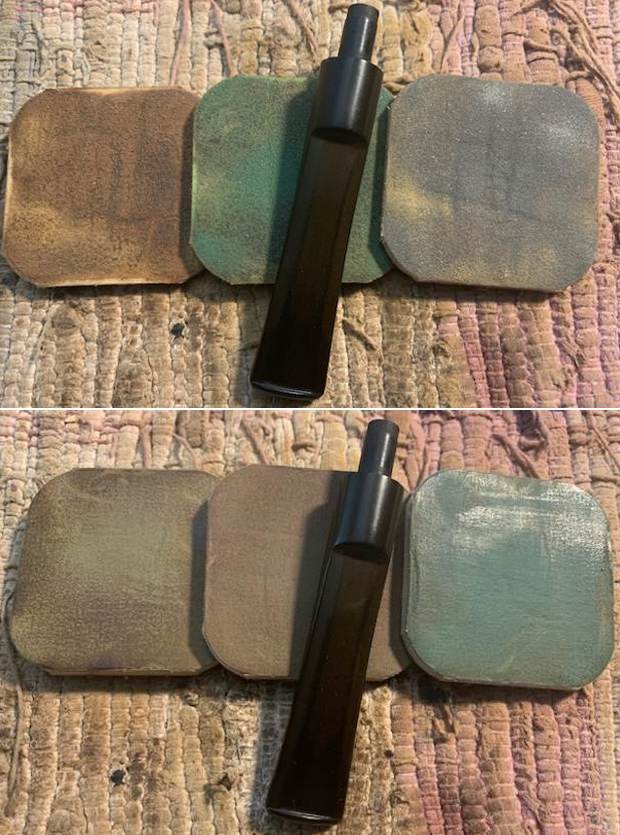
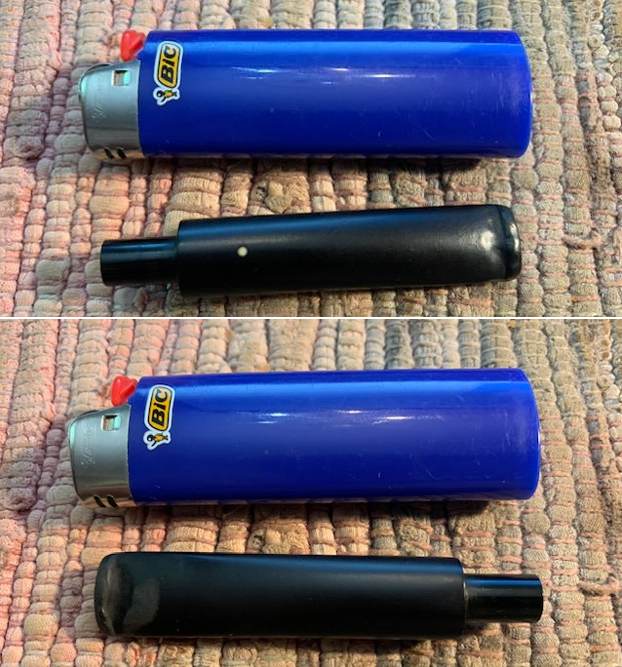
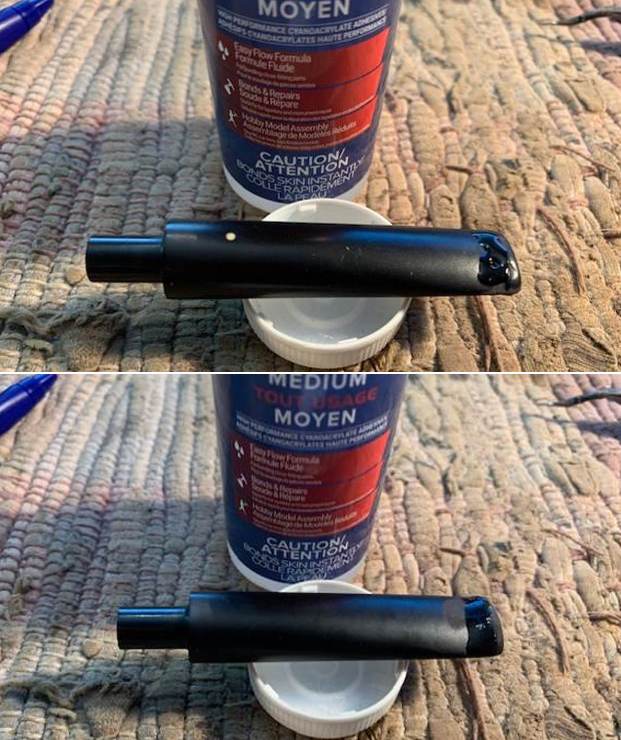
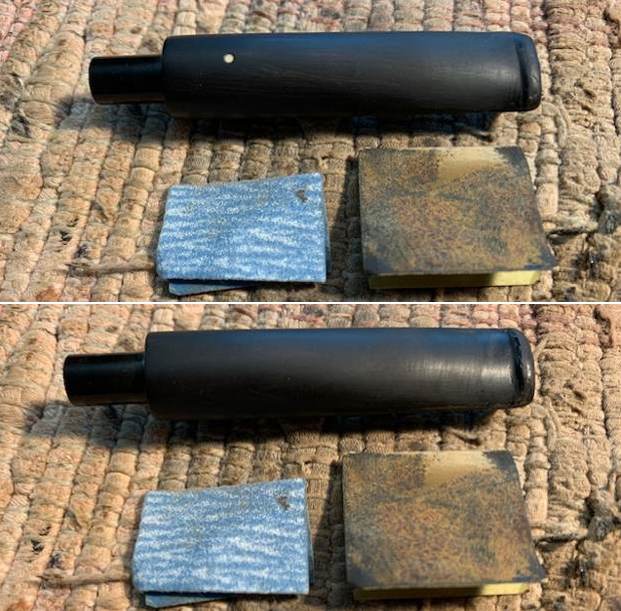
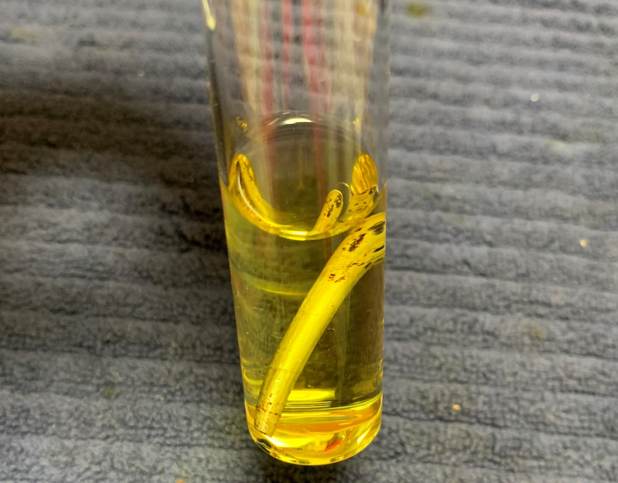
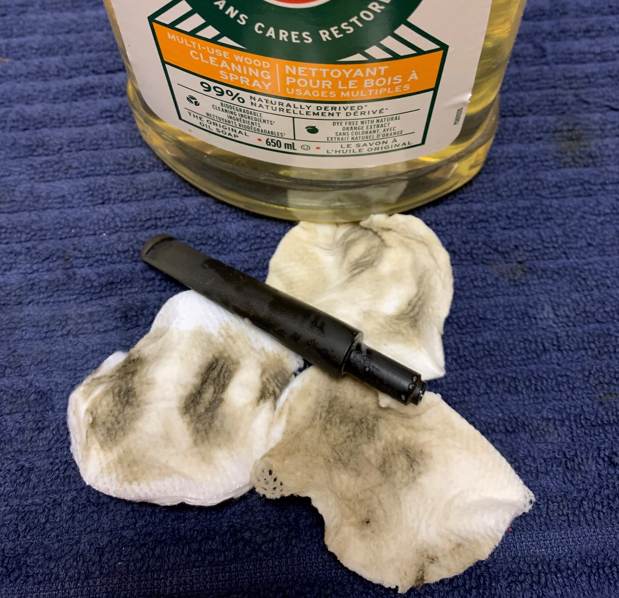
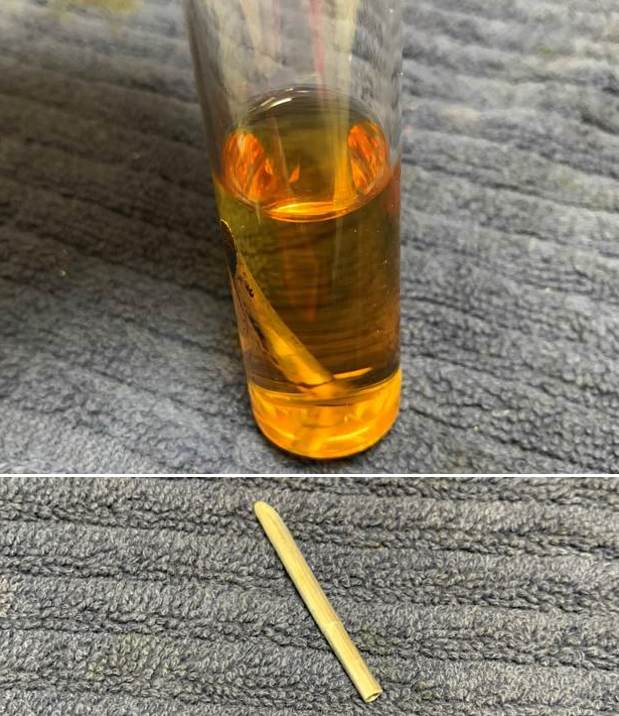
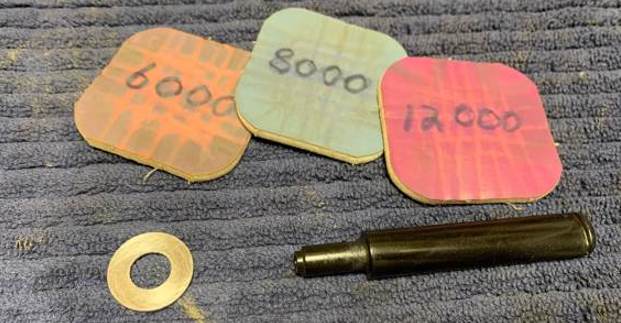
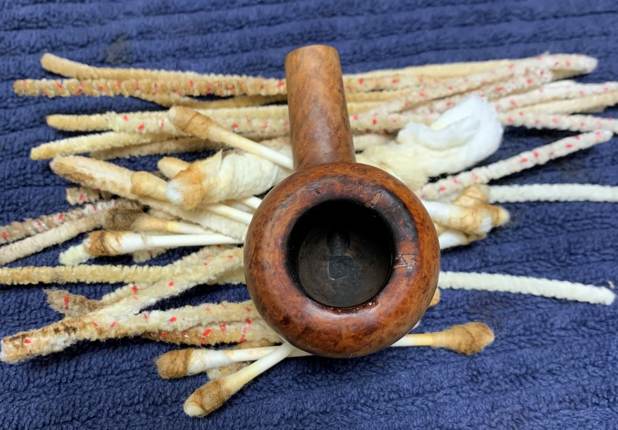
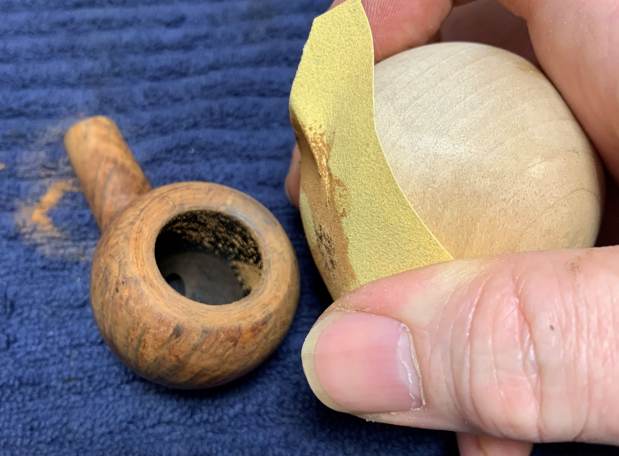
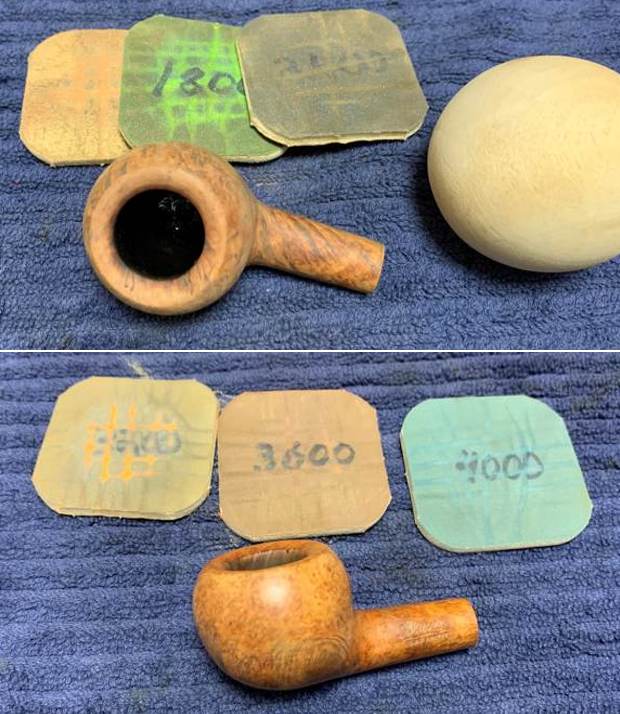
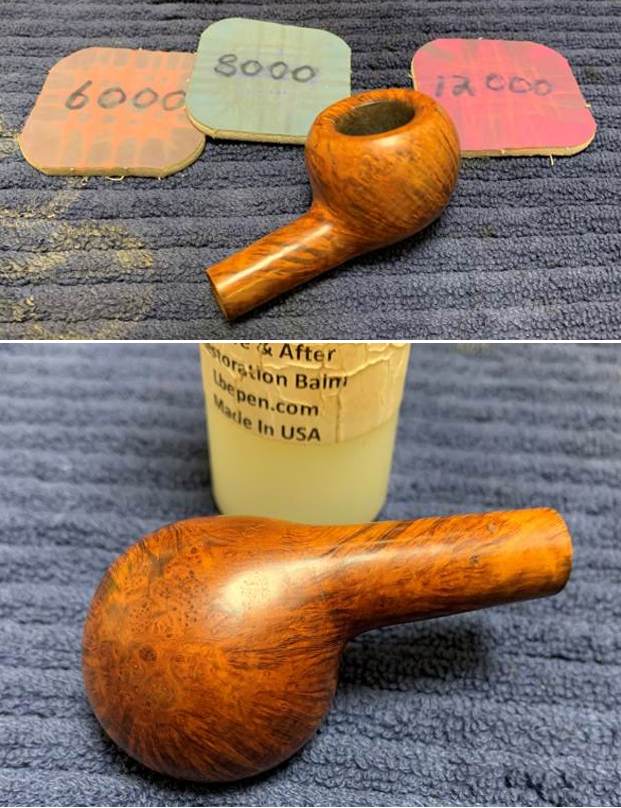
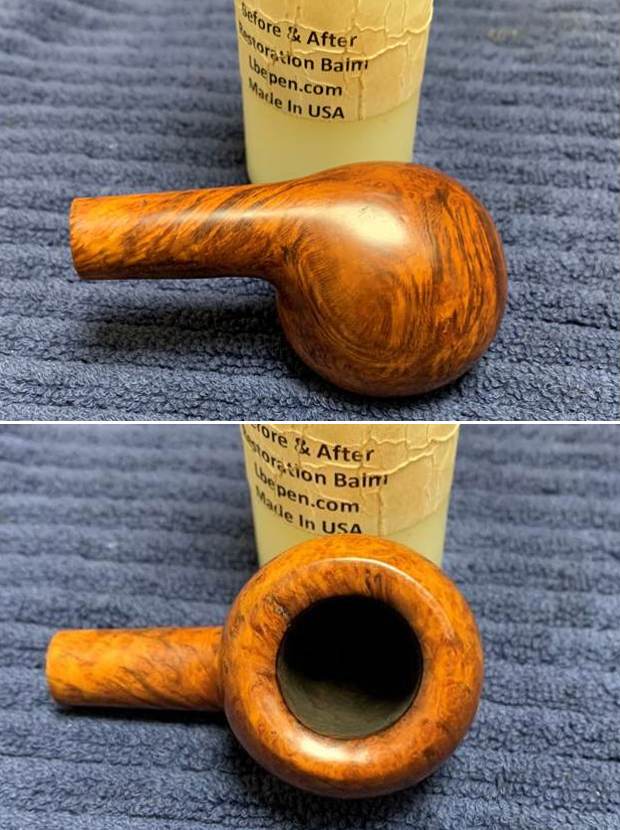
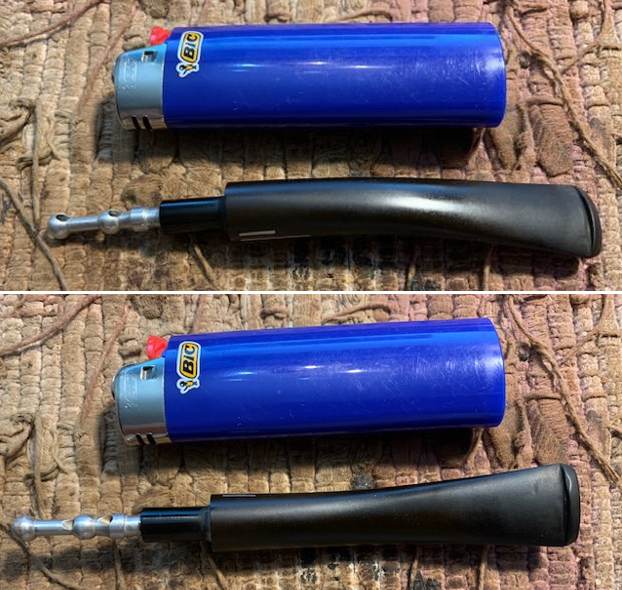
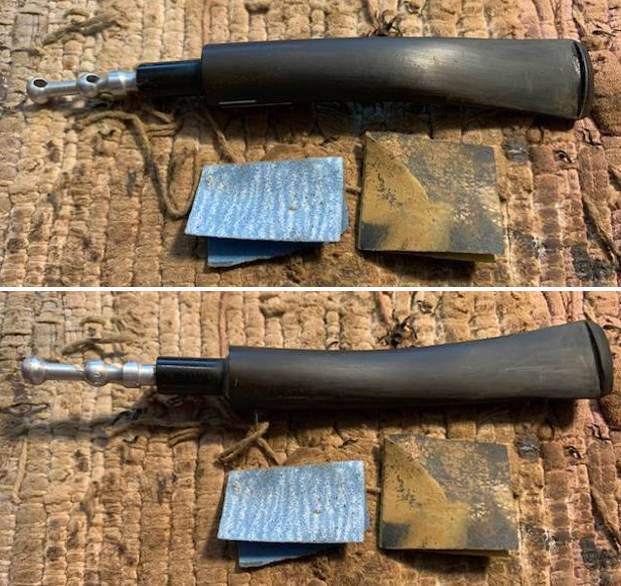
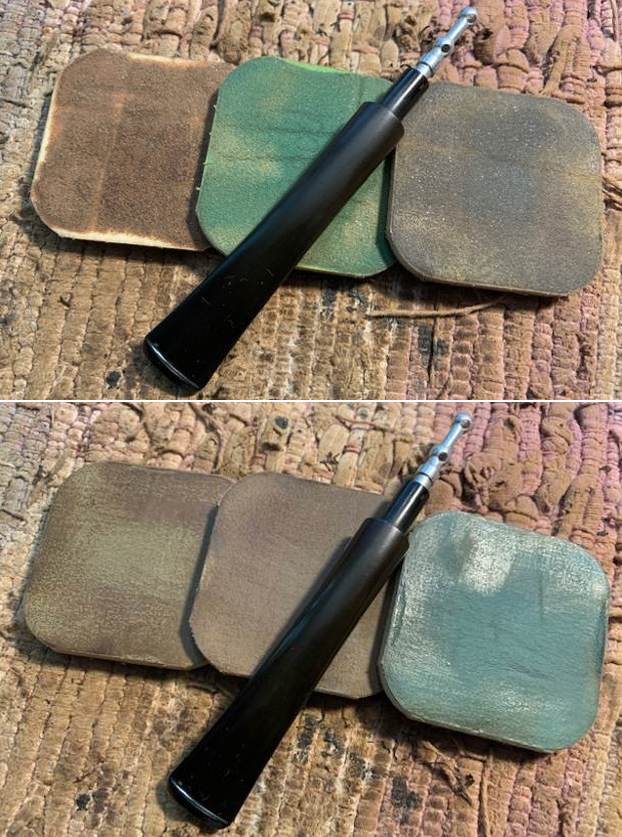
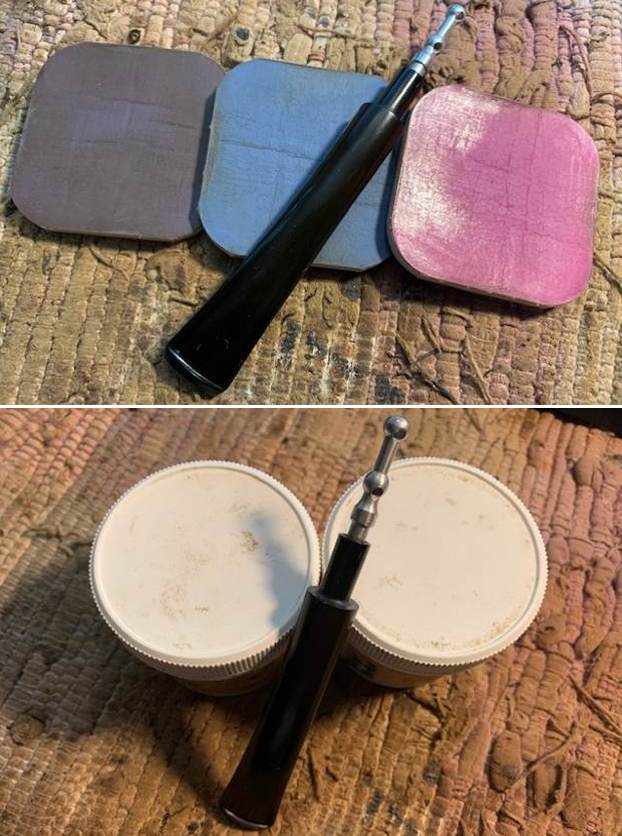
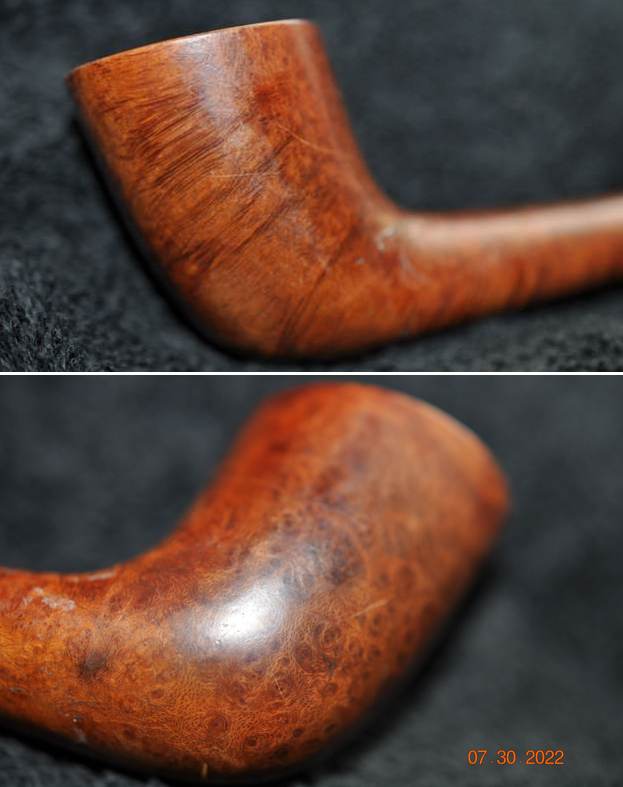
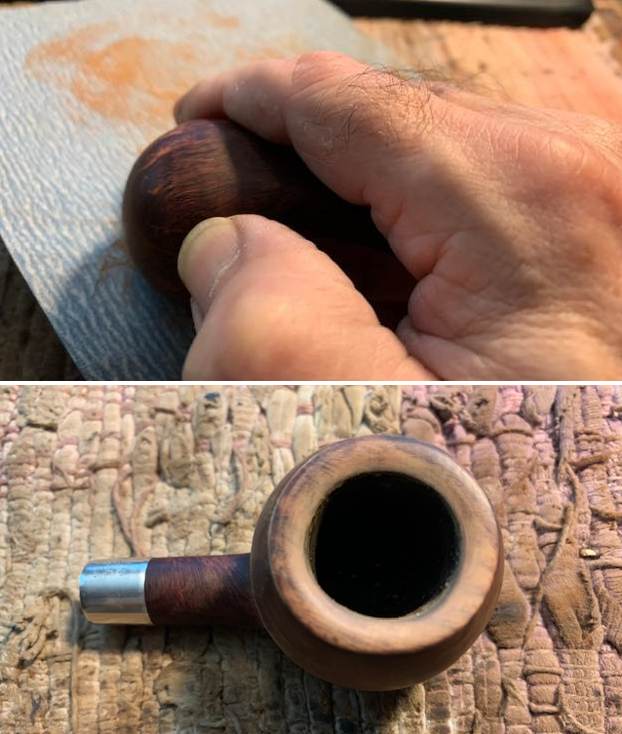
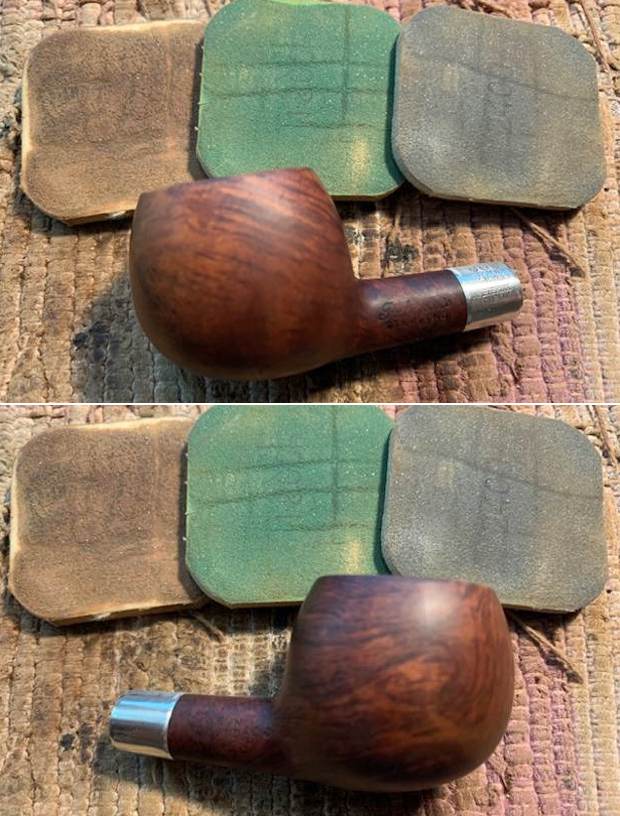
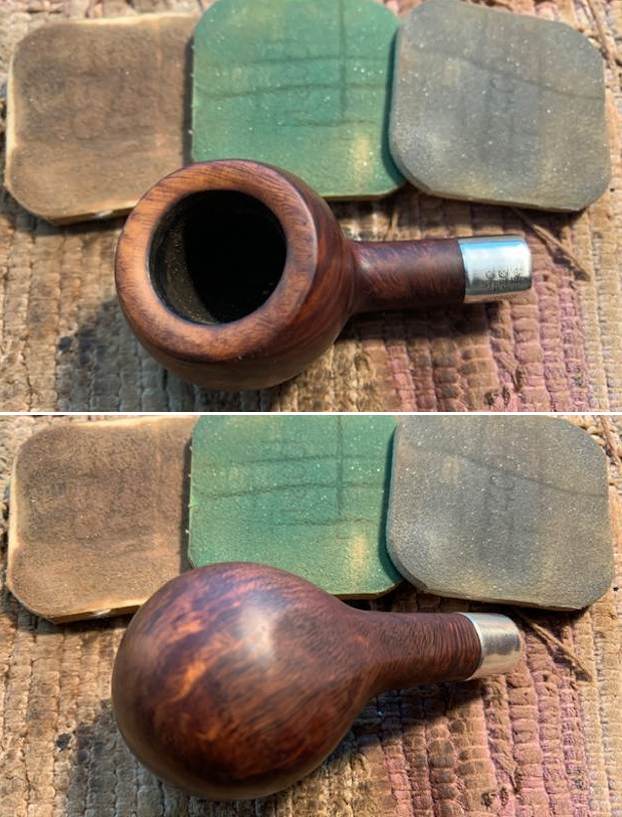
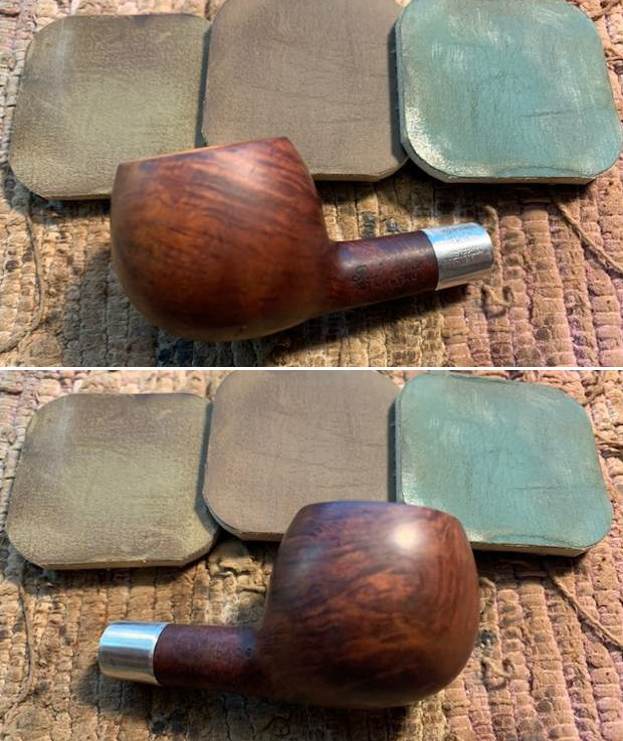
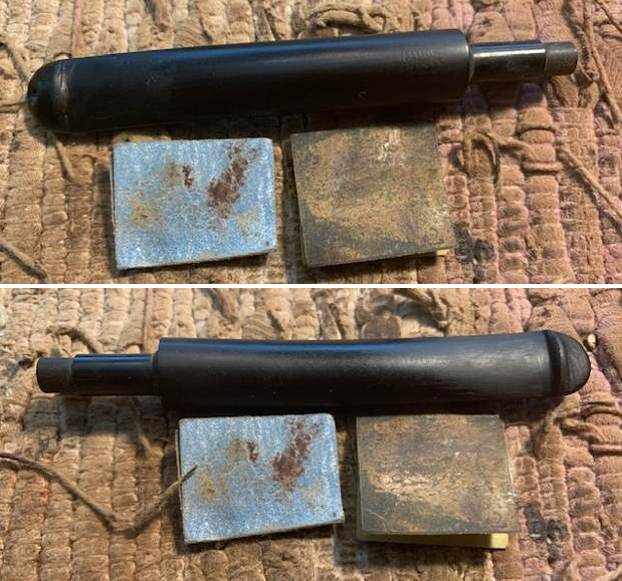
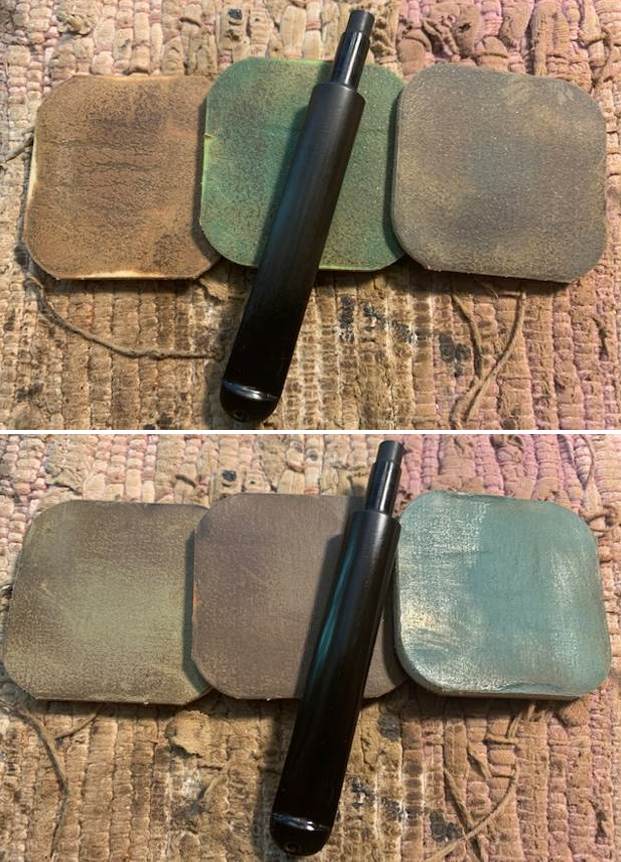
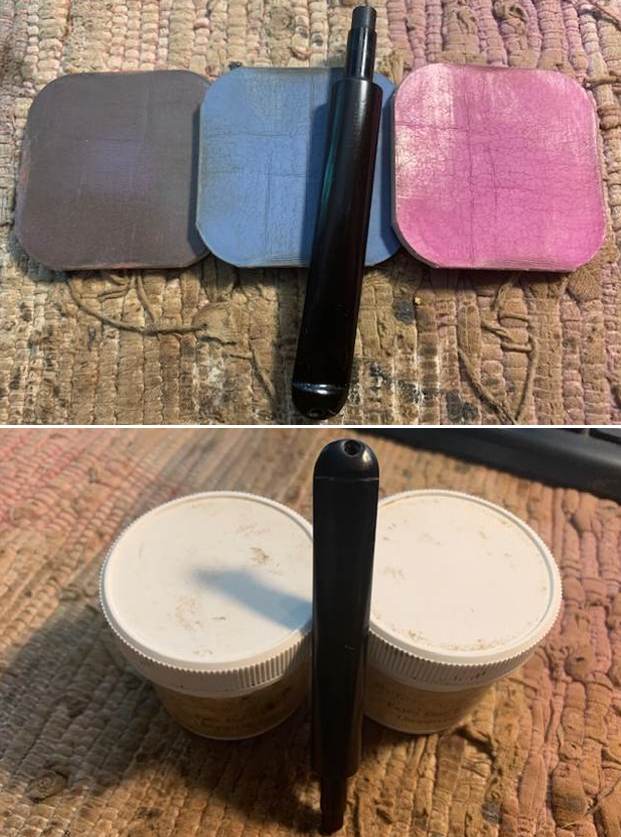
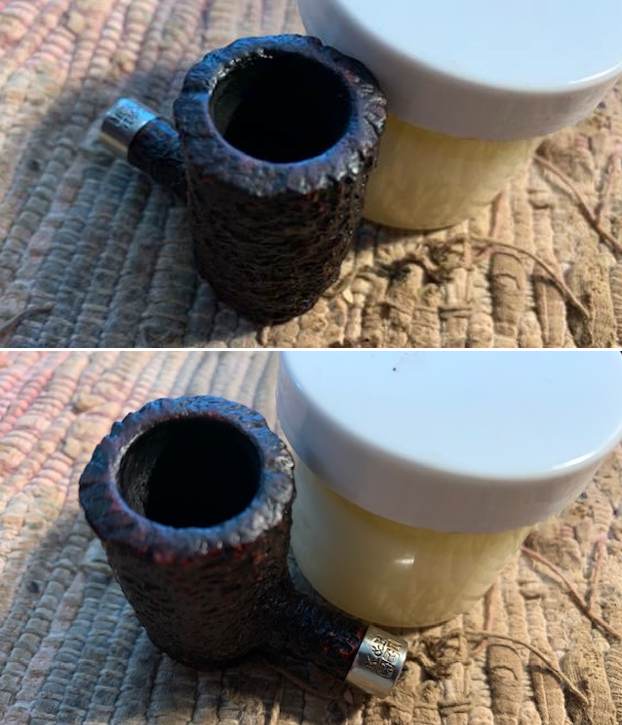
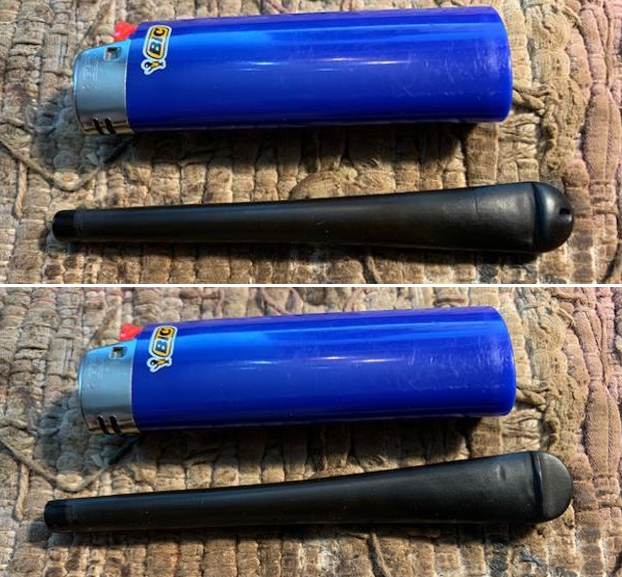
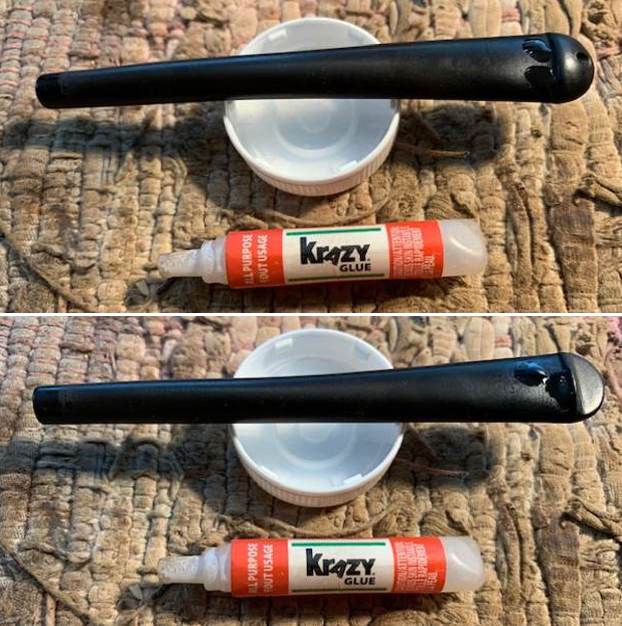
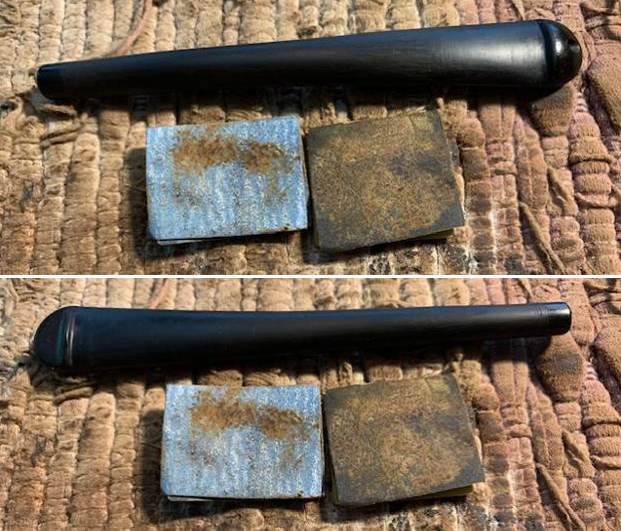
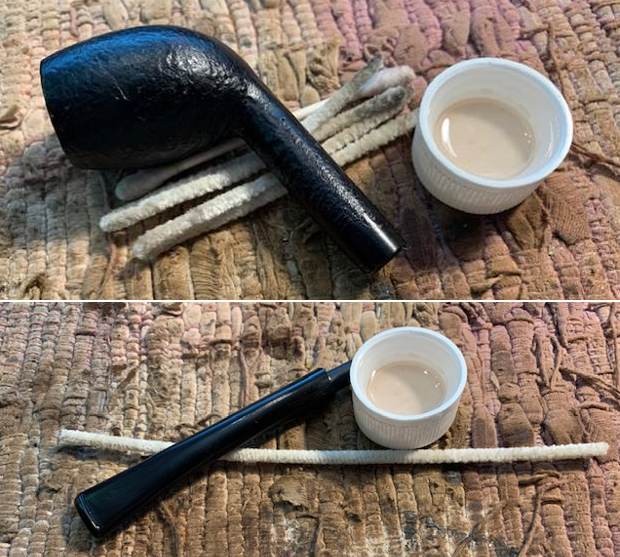
Well, time to get to work! I started by sending the inner tube for a soak in some lemon-infused isopropyl alcohol. I let it sit for several hours, cleaned it off and gave it a quick polish. Good as new! Next, I wiped the stem with Murphy’s Oil Soap on some cotton pads, then took a BIC lighter and ‘painted’ the stem with its flame to lift the bite marks. This did scarcely anything to fix the damage, but I would worry about that later. Then I cleaned out the inside with pipe cleaners and isopropyl alcohol. Fortunately, it wasn’t overly dirty, and it only needed a handful of pipe cleaners. Next, the stem went for an overnight soak in the Pipe Stem Oxidation Remover. The following day, I cleaned all of the de-oxidizing mess off with alcohol, pipe cleaners, et cetera. The oxidation had migrated to the surface and would be fairly straightforward to remove. I scrubbed with SoftScrub on some cotton pads to remove the leftover oxidation. I built up the bite marks on the stem with black cyanoacrylate adhesive and let them fully cure. Following that, I sanded the adhesive down with 220- and 400-grit sandpapers to meld seamlessly into the stem. I then used all nine Micromesh pads (1,500 through 12,000 grit) to bring out the lovely black lustre on the stem, with some Obsidian Pipe Stem Oil in between each pad scrubbing.   Now for the stummel. Firstly, I decided to ream out the bowl. I used the PipNet Reamer to remove the built-up cake and followed that with 220-grit sandpaper taped to a dowel to eliminate as much as I could. I took the chamber down to bare briar, as I wanted to ensure there were no hidden flaws in the wall. I also took this opportunity to wash the stummel with Murphy’s Oil Soap and remove as much grime as I could. Following this, of course, I cleaned out the insides with the requisite pipe cleaners and isopropyl alcohol. Now I could address the burn on the rim. I took some oxalic acid, used several Q-tips, and rubbed. The burn improved slightly, but it needed some more help, so I took a solid wooden sphere, wrapped a piece of 220-grit sandpaper around it, and sanded the inner edge of the rim. This helped to both remove the burn and maintain the beveled edge of the rim. The top edge of the rim was sufficiently even, so no extra sanding (topping) was needed.The century-old patina was nice enough that it didn’t need a new stain so I simply finished it up by sanding with my Micromesh pads (1,500 through 12,000 grit). Then applying some Before & After Restoration Balm added that je ne sais quoi which brings out the wood’s beauty.   In fact, the photo above shows a bit of burn remaining on the inner edge of the bowl. Although I don’t have photos, I did address this and the final product was much improved.

Finally, it was off for a trip to the buffer. A dose of White Diamond and a few coats of carnauba wax were just what this pipe needed. This is a handsome pipe with a classic look and feels very comfortable in hand. The lovely shine made the wood very attractive, and I know that the new owner will enjoy smoking it for many years to come. I hope you enjoyed reading the story of this pipe as much as I did restoring it. If you are interested in more of my work, please follow me here on Steve’s website or email me directly at kenneth@knightsofthepipe.com. Thank you very much for reading and, as always, I welcome and encourage your comments.

Replacing a Shattered Shank Extension Stanwell 643 Rhodesian


Blog by Steve Laug

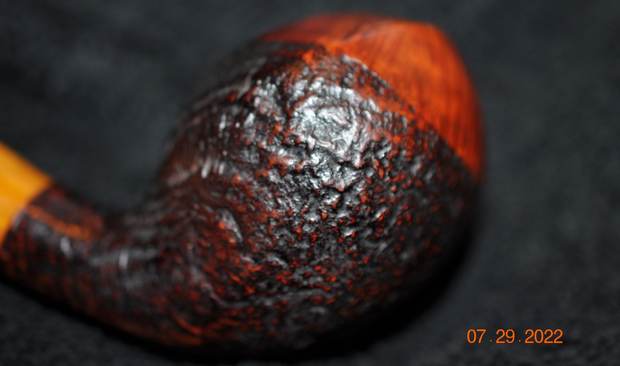
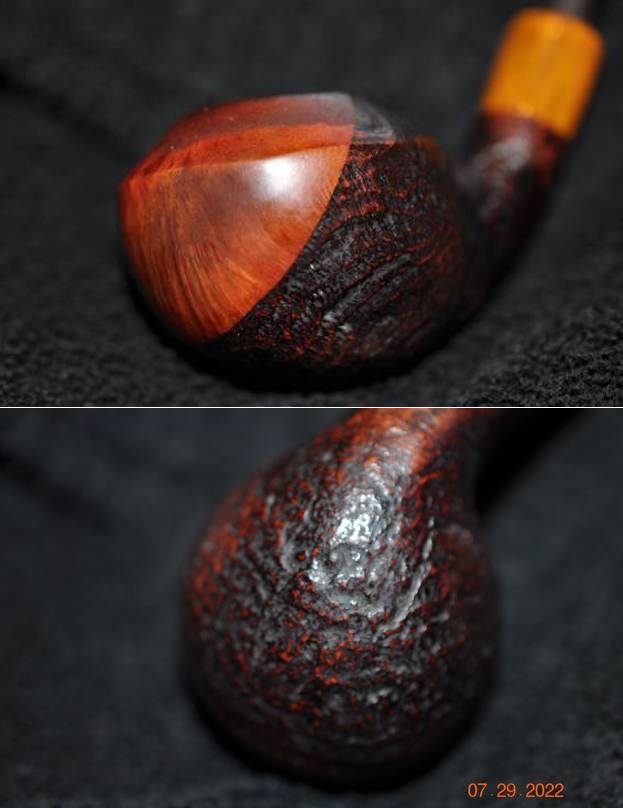
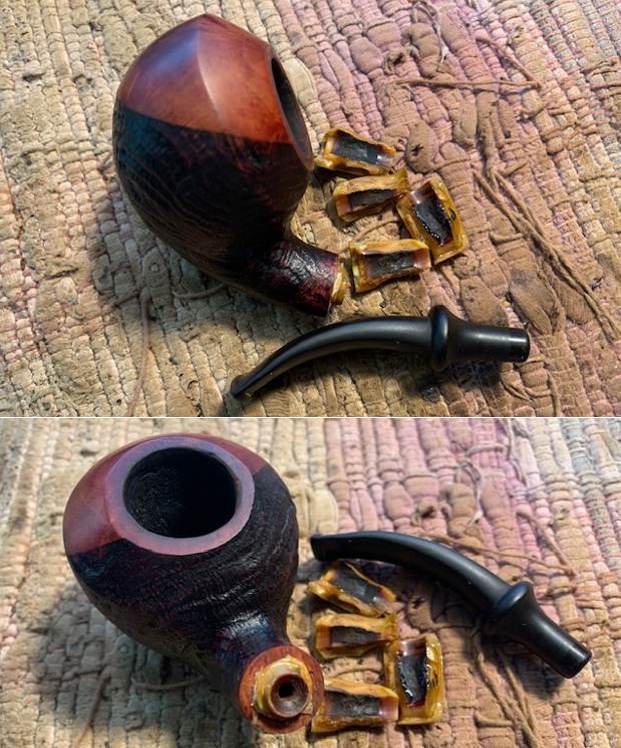
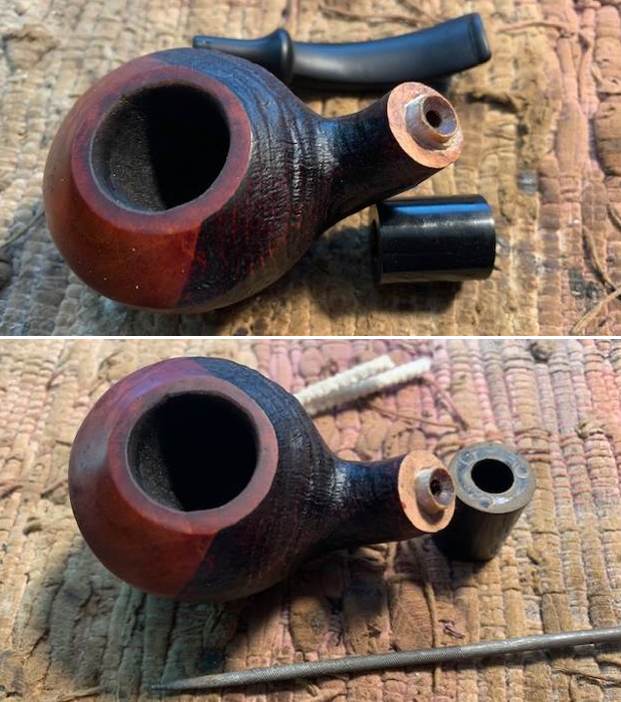
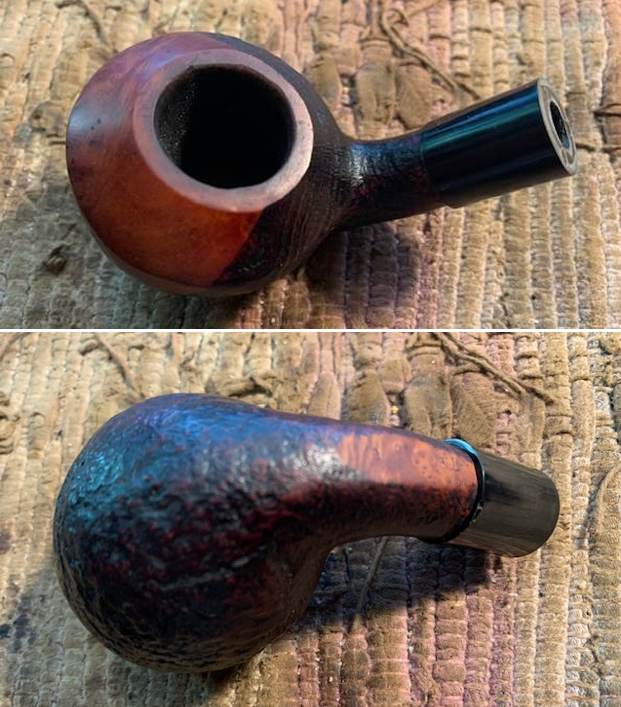
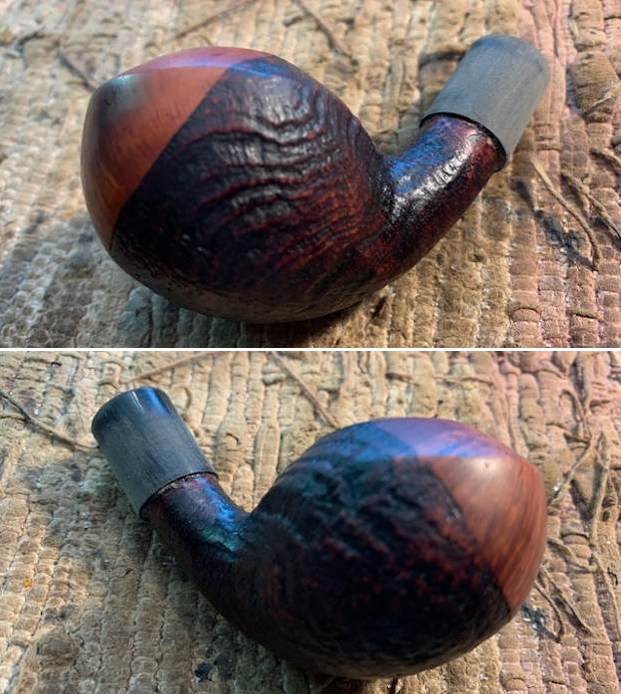
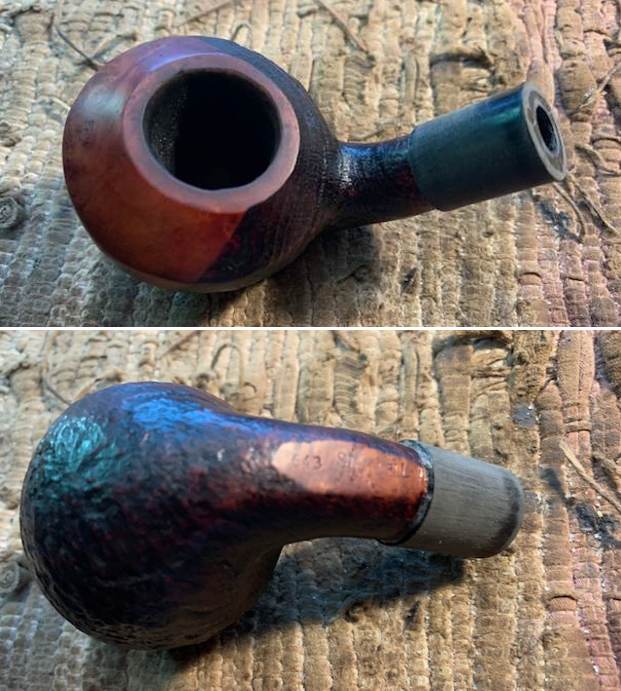
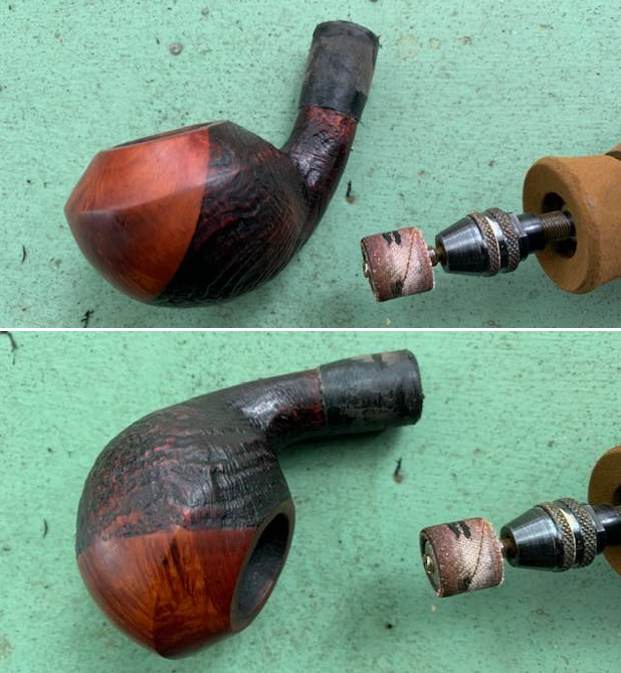
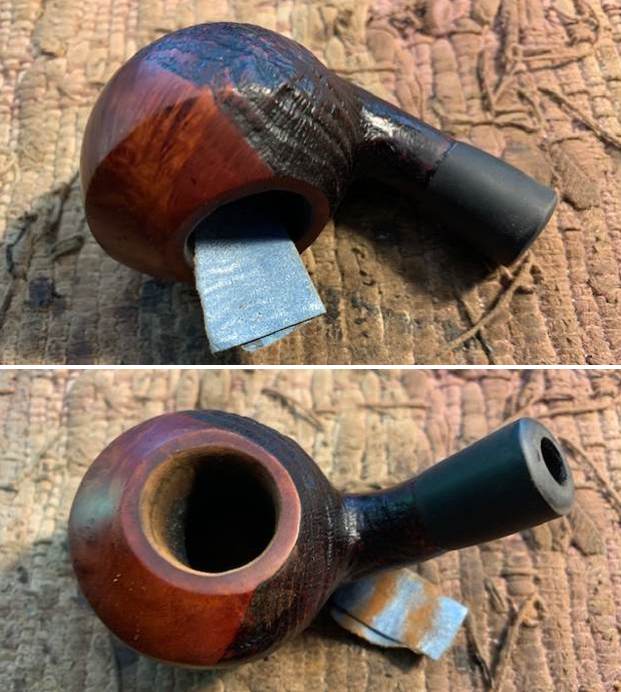
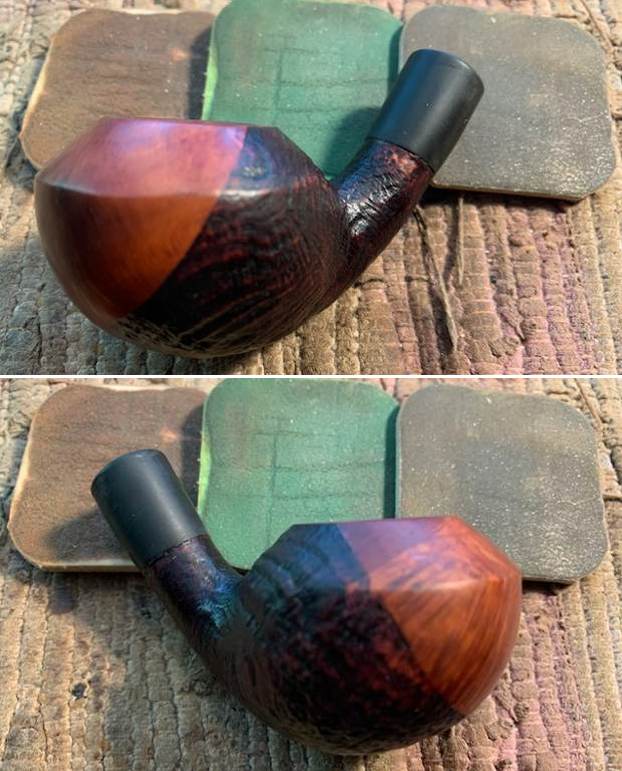
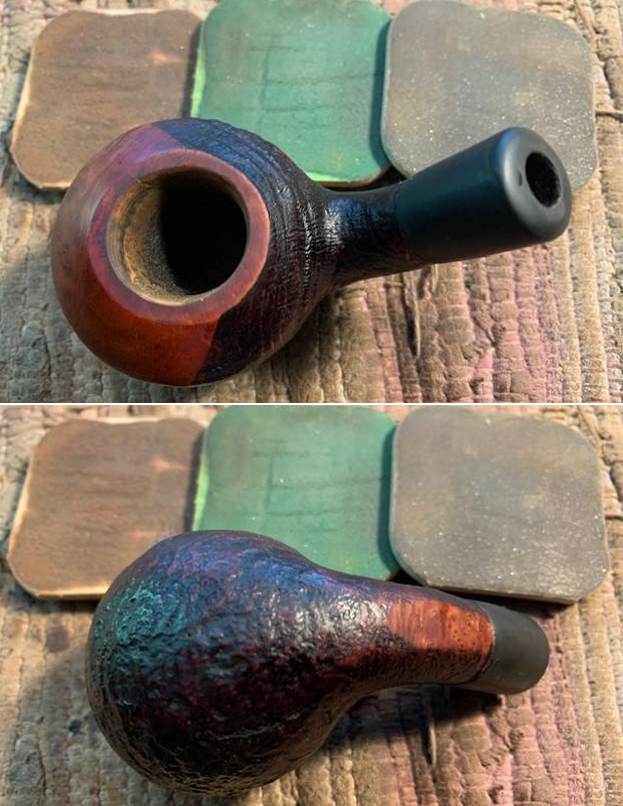
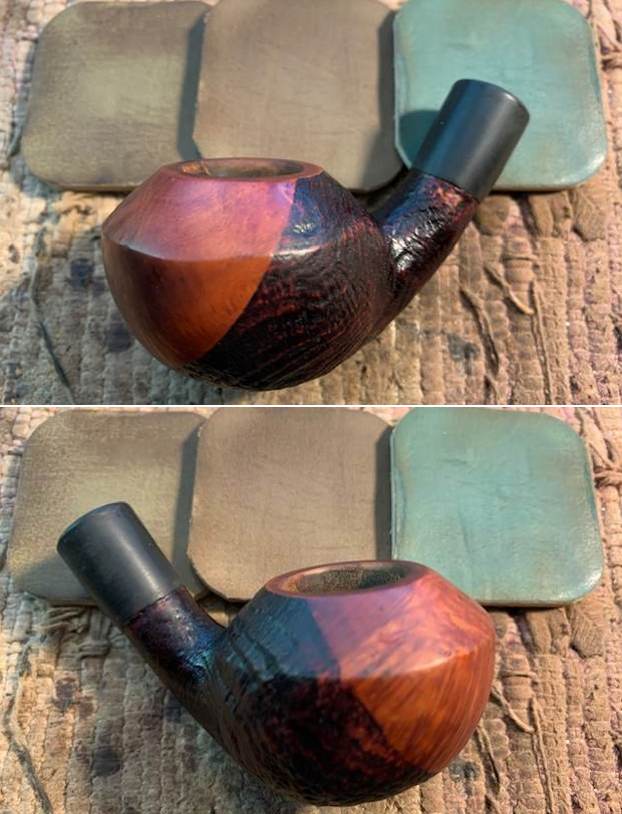
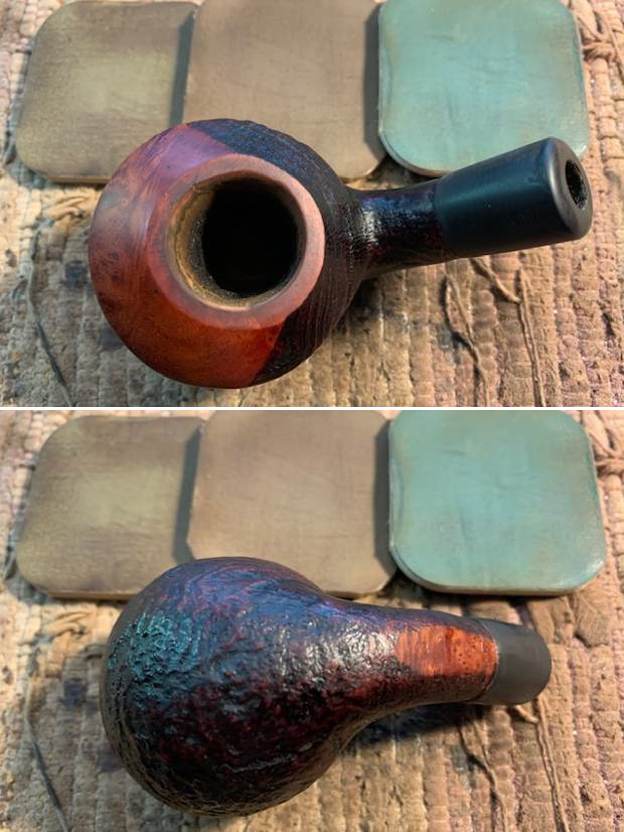
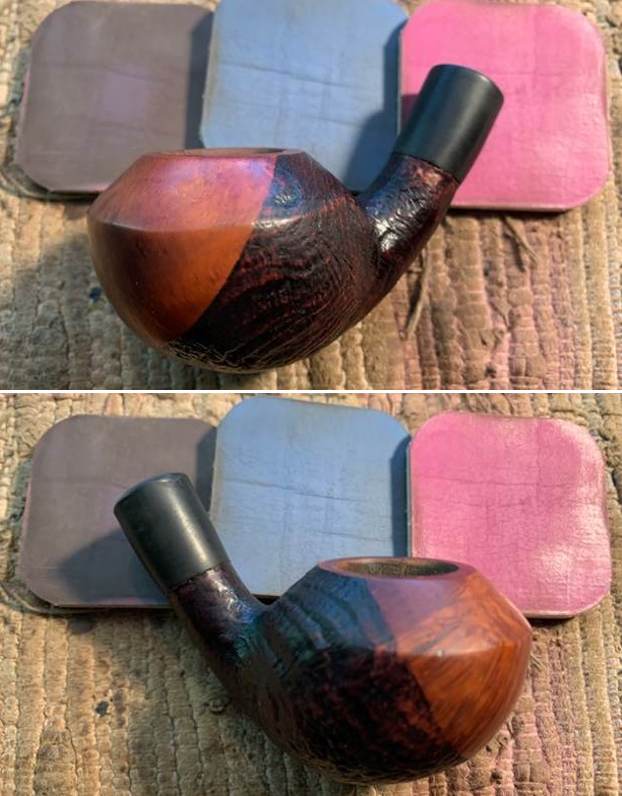
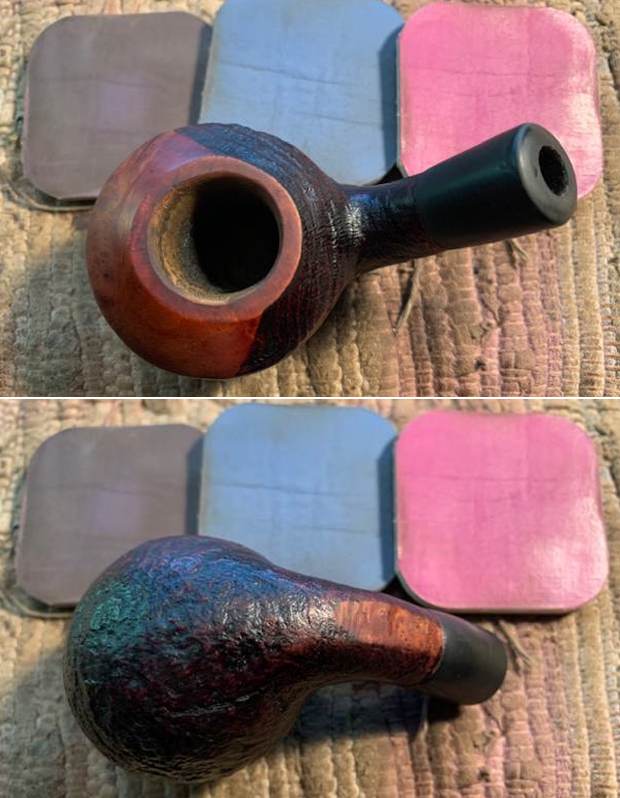
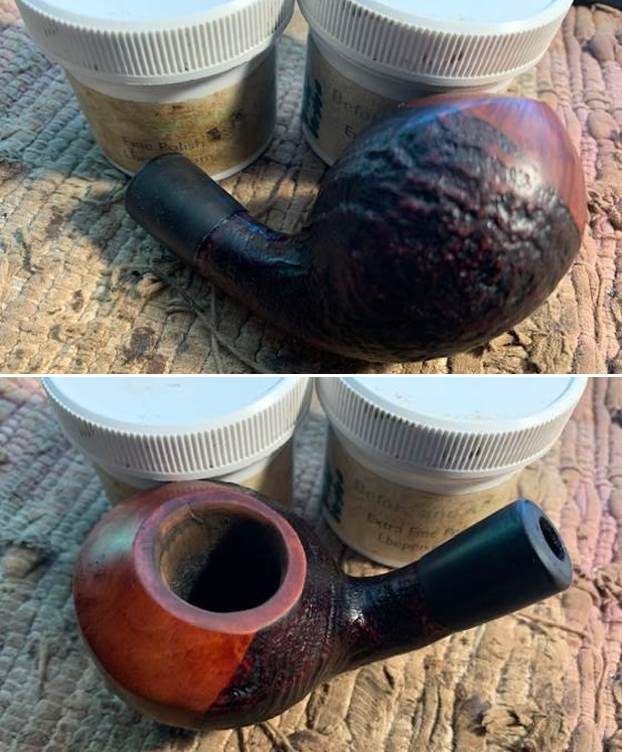
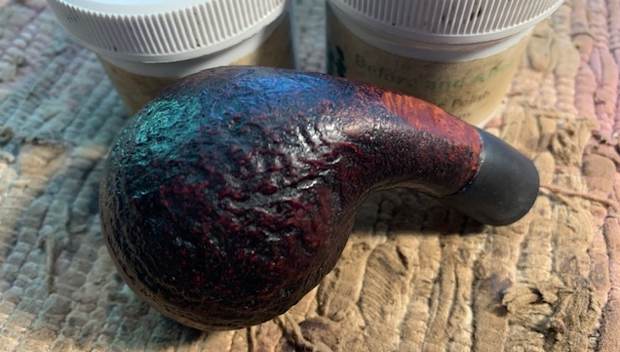
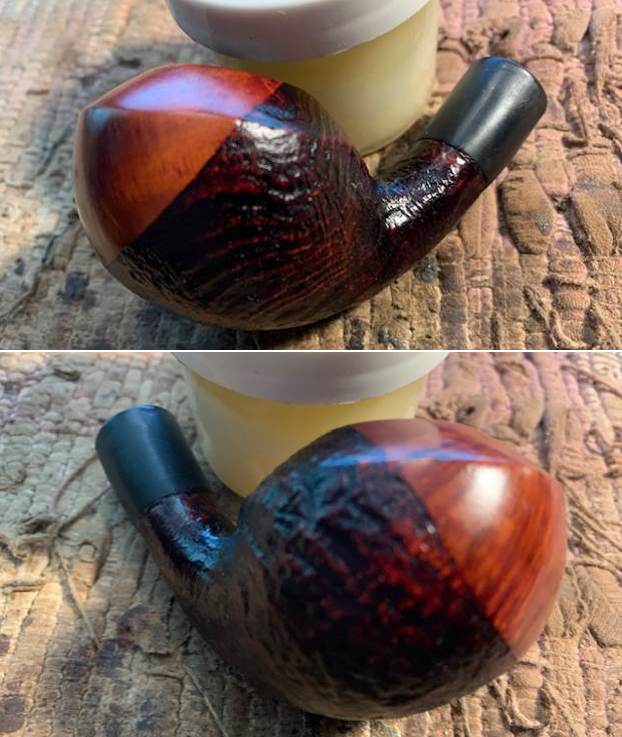
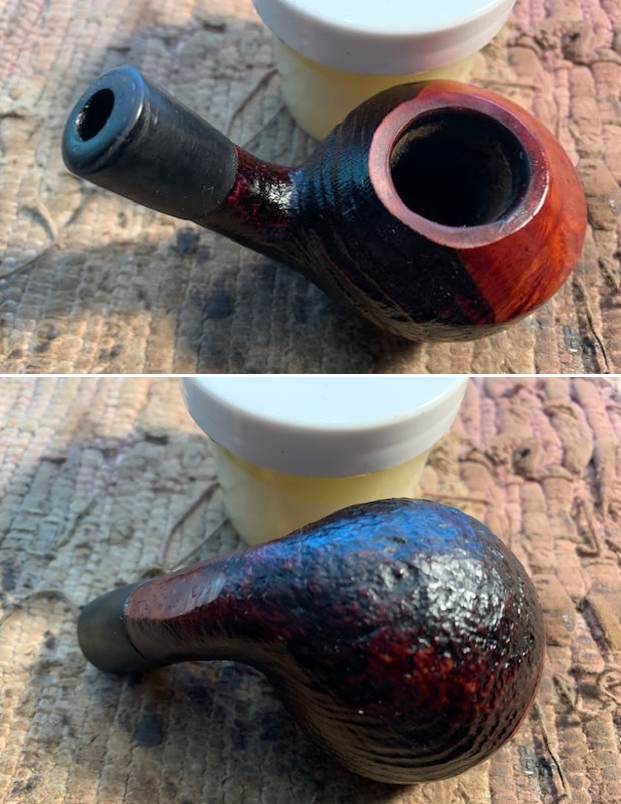
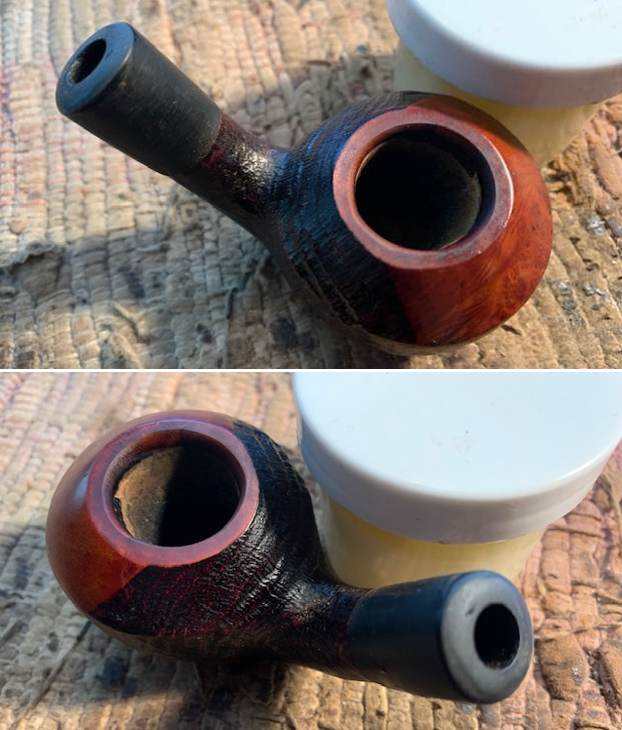
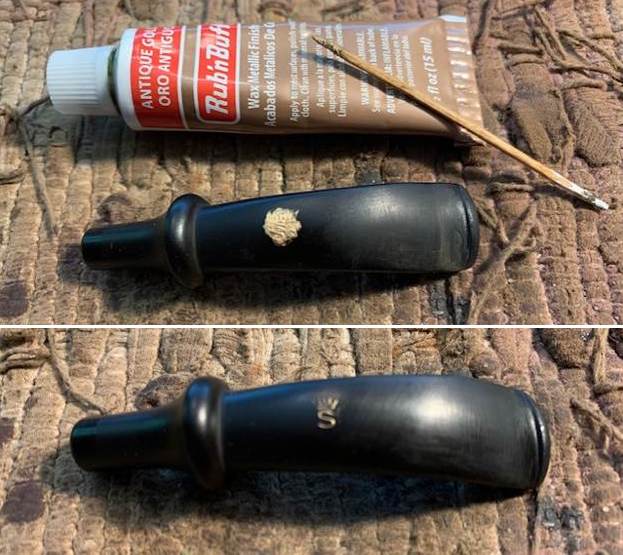
The next pipe really caught our attention with the variegated finish on the bowl – both smooth and sandblast. The orange/apricot acrylic shank extension looked great with the briar. Jeff picked it up from an antique mall on 05/10/22 in Astoria, Oregon, USA. The bowl had some interesting grain on both the smooth portion and the sandblast portion. The straight line transition is sharp and clear. There was a lot of dust and debris in the grooves of the blast and there was a thick cake in the bowl. There was a thick overflow of lava on the rim top and the inner edge of the bowl. The interior of the pipe was filthy with oils and tars. The acrylic shank extension had a lot of cracks and fissures but still appeared to be solid. The stem had a Stanwell Crown S on the top of the saddle. It was oxidized, calcified and had tooth marks and chatter on both sides near the button. The pipe was a real mess but it was also a beauty. Jeff took photos of the pipe before he started his clean up work on it. He took photos of the bowl and rim top as well as the stem to show the general condition of the pipe. You can see the thickness of the cake in the bowl and the lava on the rim top. The bowl and rim are a mess. There is also a lot of grim ground into the finish that is visible in the photos. The stem photos show the oxidation, calcification and the tooth marks on chatter on both sides. He took photos of the sides and heel of the bowl to give a sense of the finish and shape of the bowl. It is an interesting ¾ bent Rhodesian if held right and otherwise appears like a scoop. It really has some unique beauty to it. Jeff took photos of the stamping on the underside of the shank and it is clear and readable as noted above. The shank extension has a lot of cracks and fissures that are hard to capture in the photo but they were there and they were problematic.  Jeff had done a great cleanup on the pipe. He reamed the bowl with a PipNet pipe reamer and followed up with a Savinelli Fitsall pipe knife to remove the cake. He scrubbed out the mortise and the airway in the shank and the stem with alcohol, cotton swabs and pipe cleaners. He scrubbed the bowl exterior with a tooth brush and Murphy’s Oil Soap to remove the grime on the finish of the bowl and the lava from the rim top. Upon scrubbing it the shank extension shattered in his hands. It was destroyed and not fixable. He rinsed the bowl under running water. He carefully dried it off with a soft cloth. He cleaned the internals and externals of the stem with alcohol, pipe cleaners and cotton swabs. He soaked the stem in Briarville’s Pipe Stem Deoxidizer and rinsed it off with warm water and cleaned out the airway in the stem with alcohol, pipe cleaners and cotton swabs. I took photos of the pipe as I saw it when I put it on the table. You can see how badly Humpty Dumpty had come apart and there was no putting him back together again – no matter how many hands tried. It was going to have to be a replacement.In order to work on the pipe I need to remove the debris around the nub that had held the acrylic shank extension. I used a small file and a knife to scrape away the debris. I used small needle files to flatten the face of the shank and to clean up the edges of the nub. I wiped it down repeatedly with acetone on a cotton pad to remove the glue on the briar. I also went through my box of parts and found a nice black acrylic piece that would work well. It had the same diameter airway in it as the nub and should work well once it is finished. I decided to use WeldBond white all purpose glue to attach the acrylic to the briar nub. I set it aside to dry for 30 minutes. Once glue had set I checked the bond for stability and found that it would not hold well. I redid the glue with a clear CA glue and set it aside to cure. This time the bond was very strong and stable and was ready for the shaping. I used a piece of 220 grit sandpaper to start the process of shaping the shank extension. If I continued to sand it the shaping would take a very long time.   To speed up the process I decided to use a Dremel and sanding drum to shape the acrylic shank extension. I used it to taper the end that sat against the shank and upward to the shank end. It was looking good when I finished with the Dremel. I sanded out the Dremel sanding marks on the acrylic with220 grit sandpaper. I continued the shaping of the extension to flow smoothly from the shank end. The shape was what I was aiming for when I started the process. I put the stem on the shank and took some photos of the pipe with the newly shaped shank extension. I liked what I was seeing. Before I started polishing the shank end I used a folded piece of 220 grit sandpaper to smooth out the damage on the inside of the rim edge. Once I was finished it looked much better.I polished the smooth portion of the briar and the acrylic shank extension with micromesh sanding pads. I dry sanded both with1500-12000 grit sanding pads and wiped the sanded portions with a damp cloth to remove the sanding debris.   I polished the acrylic shank extension with Before & After Stem Polish (Fine and Extra Fine). I buffed it with a soft cloth after each of the polishes and the acrylic began to take on a shine. I rubbed the bowl and shank down with Before & After Restoration Balm. I worked it into the surface of the bowl sides and shank with my fingertips and a horsehair shoe brush to clean, enliven and protect the briar. I let the balm sit for 10 minutes, then buffed with a cotton cloth to raise the shine. The Balm did its magic and the grain stood out on the briar. I set the bowl aside and turned my attention to the stem. I “painted” the surface of the stem on both sides with the flame of a Bic Lighter to lift some of the tooth marks and chatter. I was able to lift some of them but there were several deep ones on each side available. I filled in those that remained with some clear CA glue. Once the repair cured I sanded the repair smooth with 220 grit sandpaper to blend it into the surface. I stated the polishing process with 400 grit sandpaper.I touched up the Stanwell logo Crown S on the top of the stem with some Rub’n Buff Antique Gold. I worked it into the logo with a tooth pick. I let it sit for a few minutes and then buffed it off with a soft cloth. I worked over the stamp with a won 1500 grit micromesh pad and the stamp looked very good.I polished the stem with micromesh sanding pads – 1500-12000 grit pads. I wiped it down with Obsidian Oil after each sanding pad. I finished the polishing with Before & After Polishes – both Fine and Extra Fine. I gave it a final rub down with Obsidian Oil and set it aside to dry. This Stanwell Sandblast/Smooth Mixed Finish Bent Rhodesian with a replacement acrylic shank extension and vulcanite saddle stem is a beautifully grained pipe with a flowing shape that looks great . The rich browns, reds and blacks of the contrasting stain makes the grain come alive with the polishing and waxing. I put the stem back on the bowl and carefully buffed the pipe with Blue Diamond on the buffing wheel using a light touch on the briar. I gave the bowl and the stem multiple coats of carnauba wax on the buffing wheel and followed that by buffing the entire pipe with a clean buffing pad. I hand buffed the pipe with a microfiber cloth to deepen the shine. The finished Stanwell Bent Rhodesian really is a beauty and fits nicely in the hand and looks very good. Give the finished pipe a look in the photos below. The dimensions of the pipe are Length: 5 ½ inches, Height: 1 ½ inches, Outside diameter of the bowl: 1 ¼ inch, Chamber diameter: ¾ of an inch. The weight of the pipe is 2.08 ounces/59 grams. This pipe will soon be on the Danish Pipe Makers Section of the rebornpipes store if you would like to add it to your collection. It was an enjoyable challenge. Thanks for reading this blog and my reflections on the pipe while I worked on it.

The Guildhall London Pipe 228C Prince Enlivened


Blog by Steve Laug

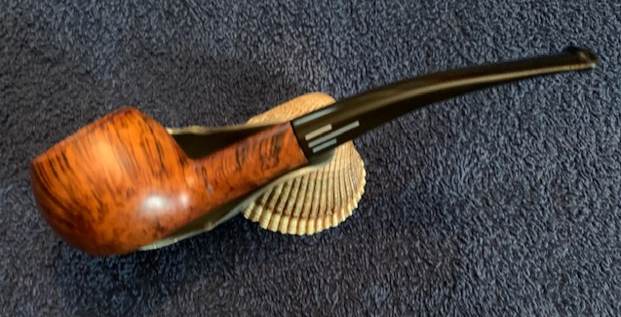
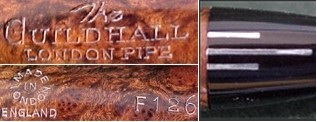
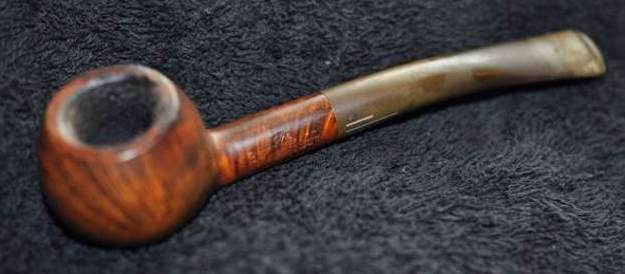
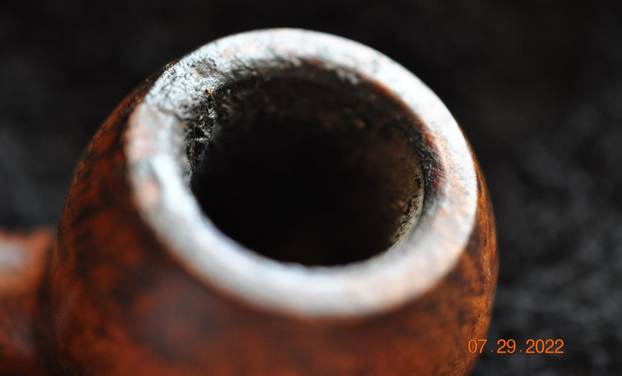
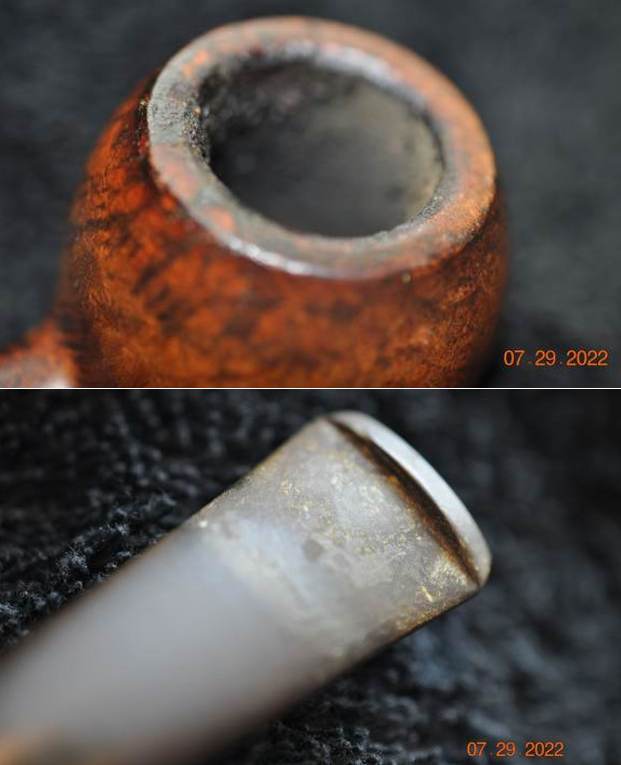
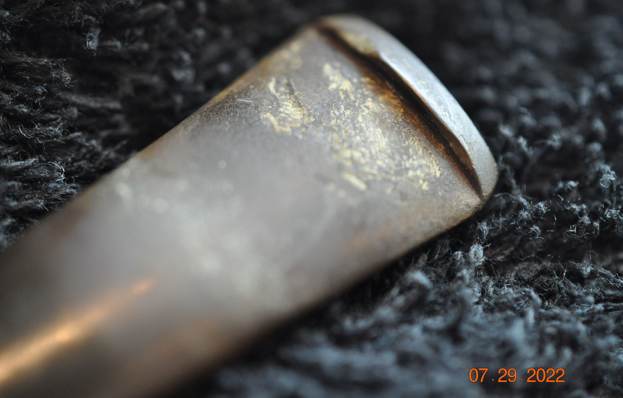
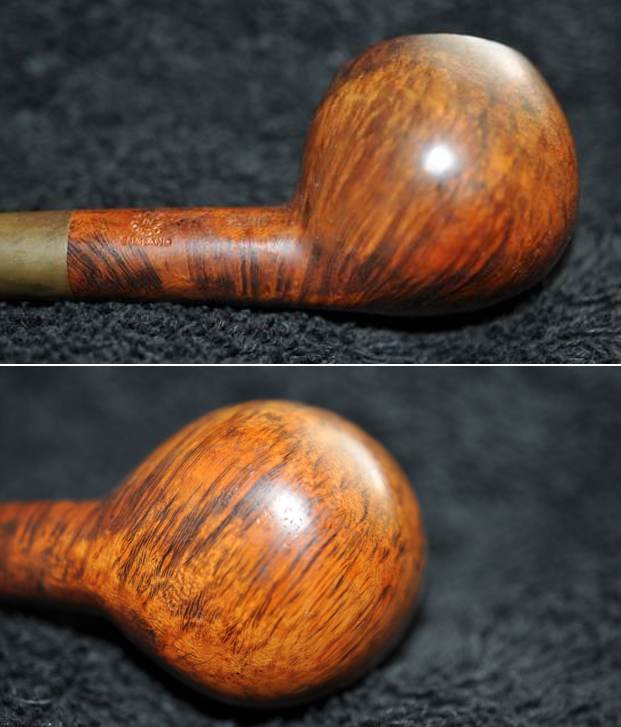
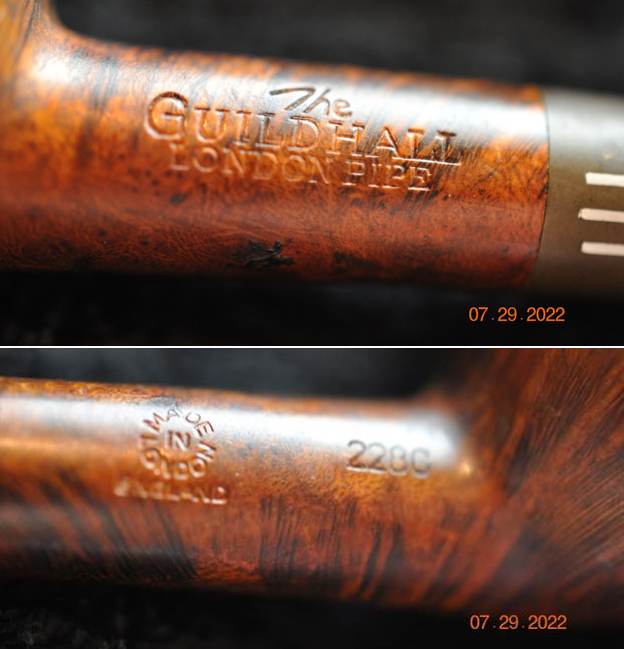
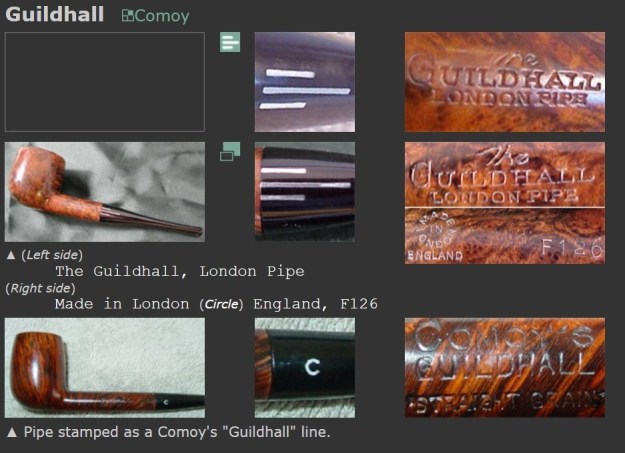
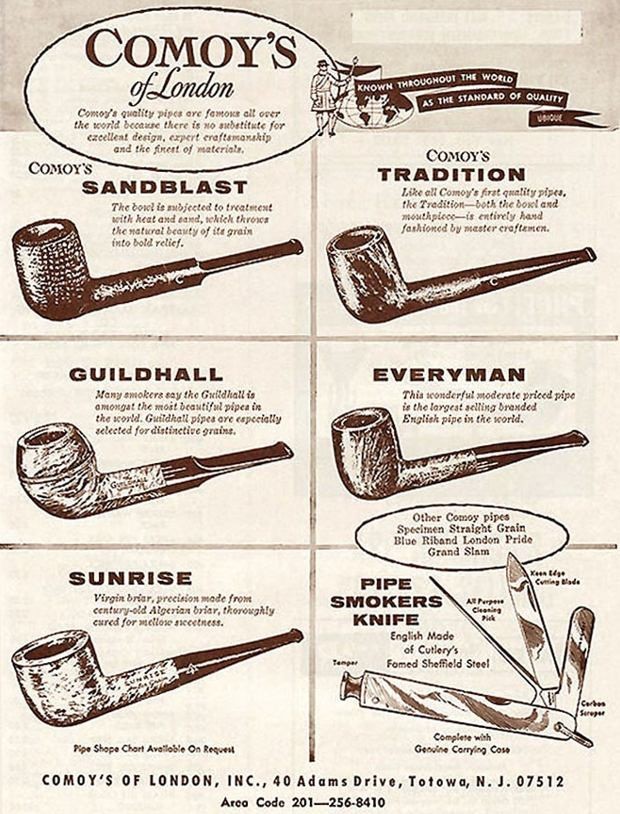
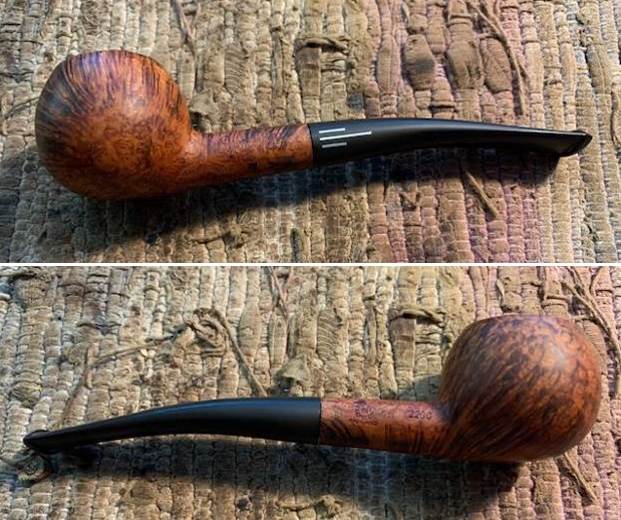
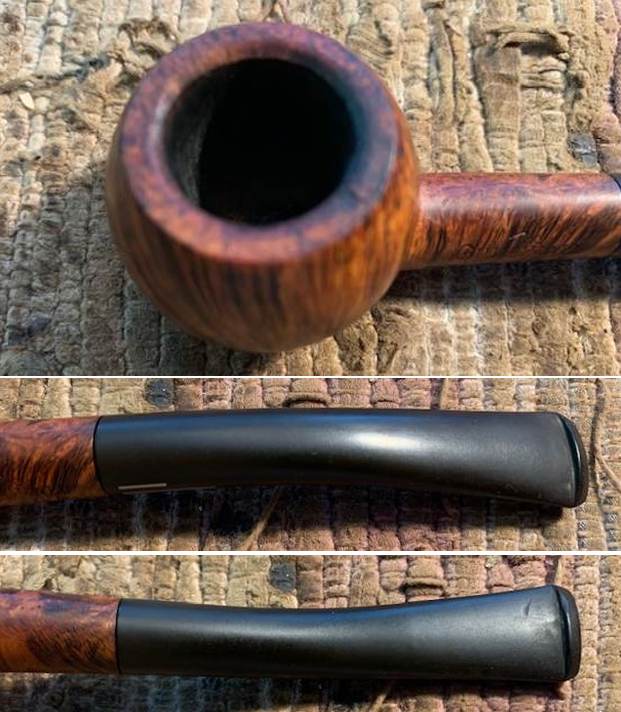
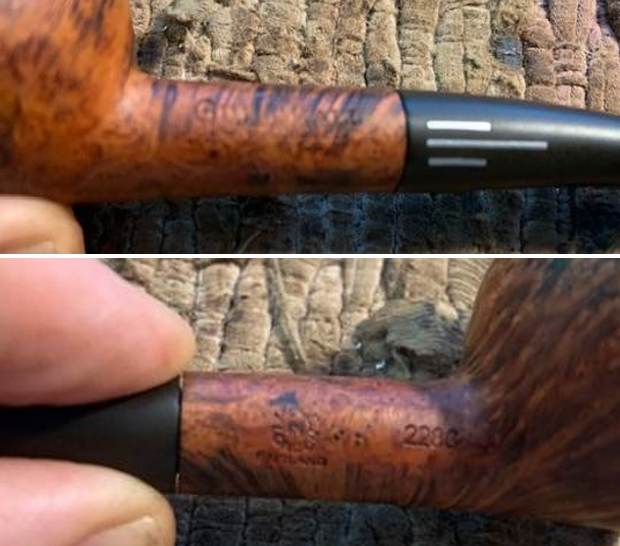
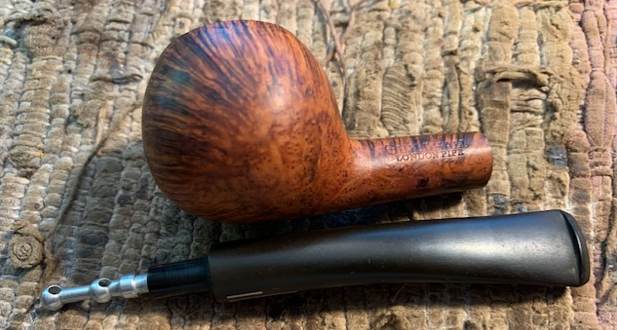
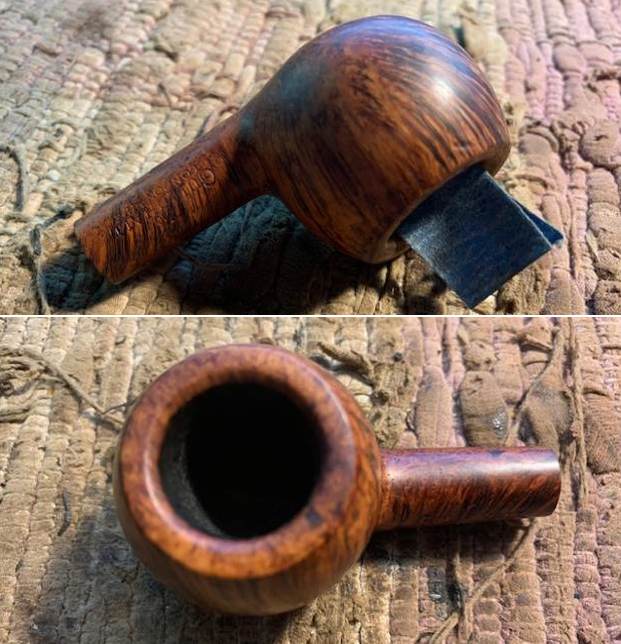
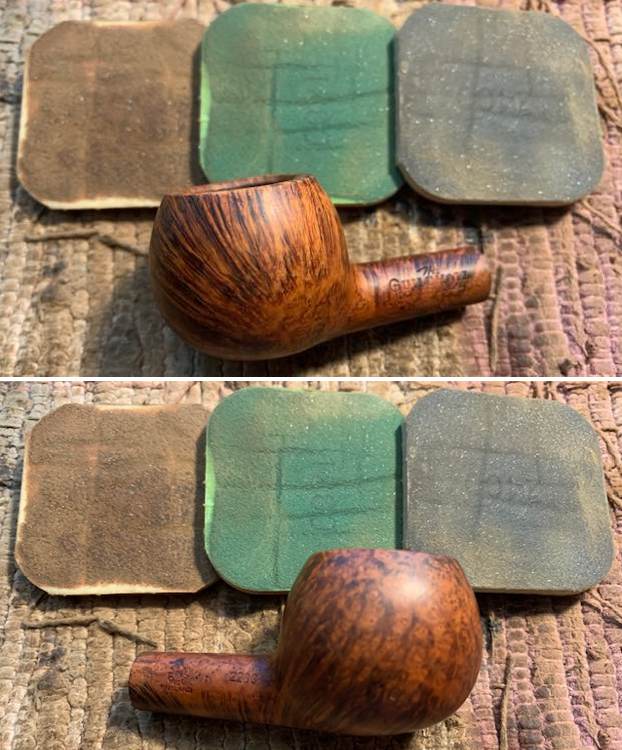
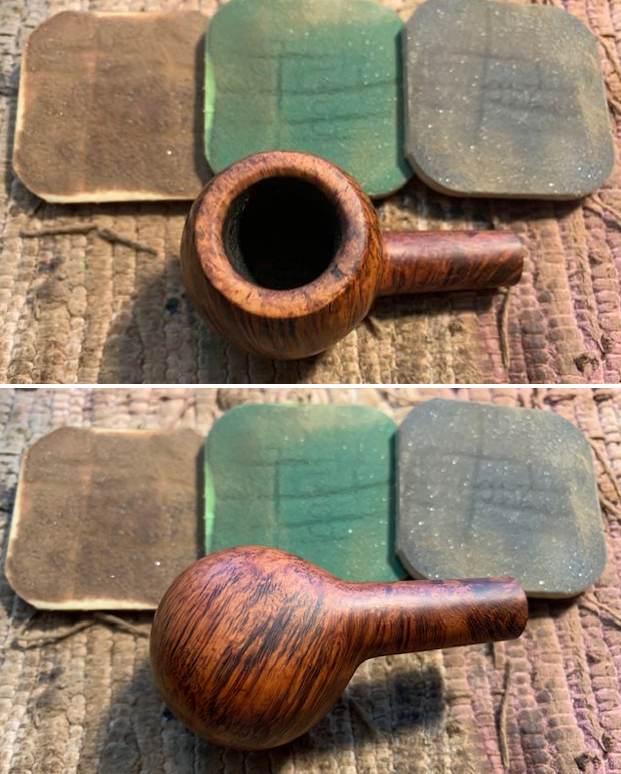
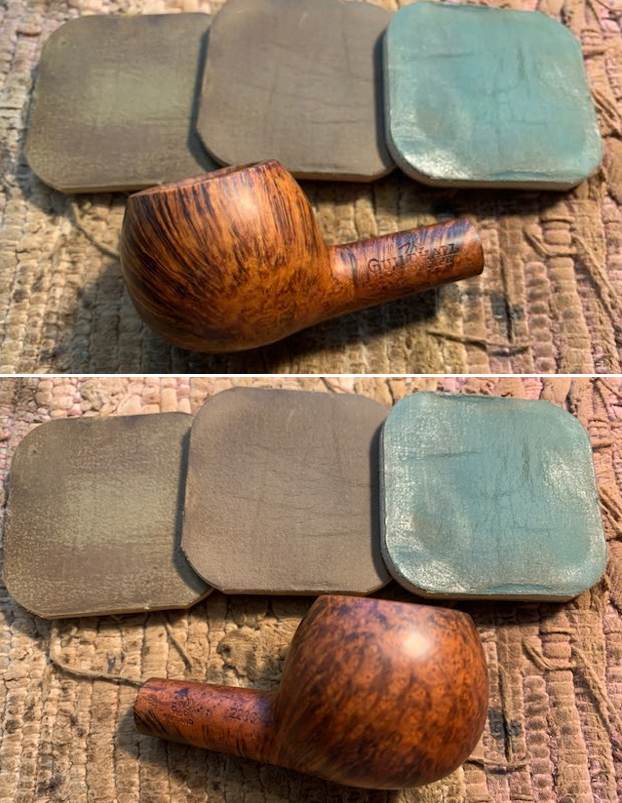
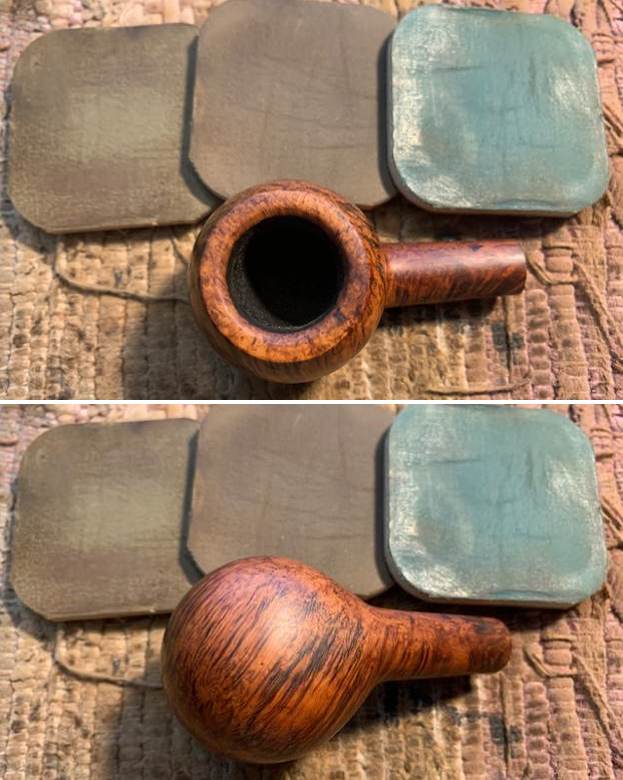
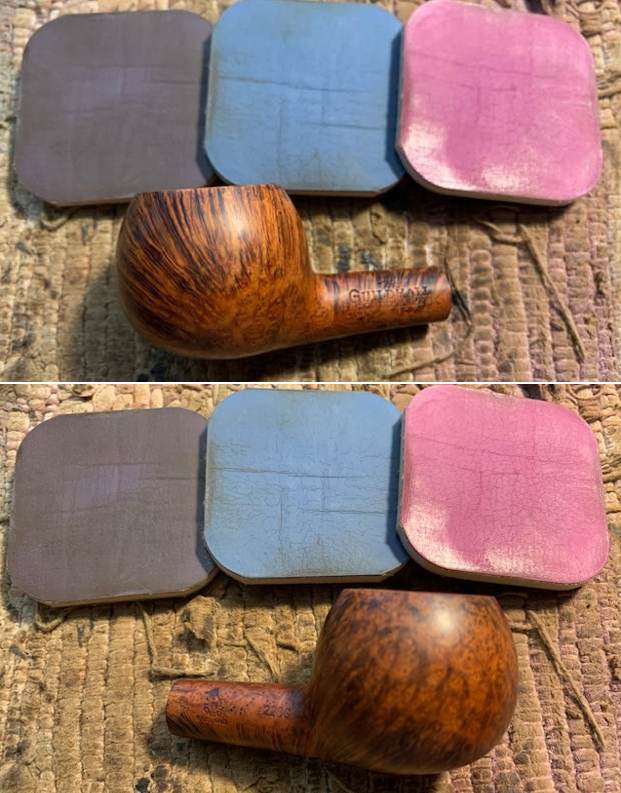
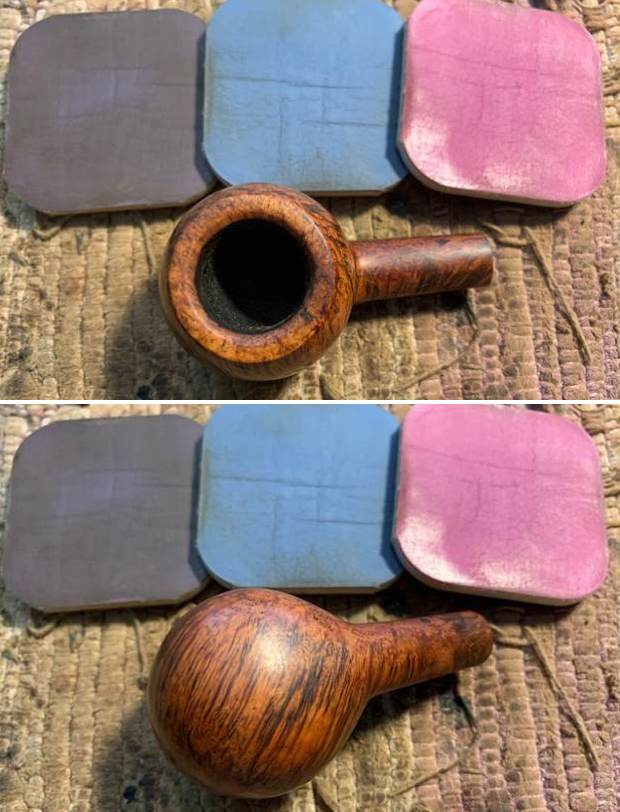
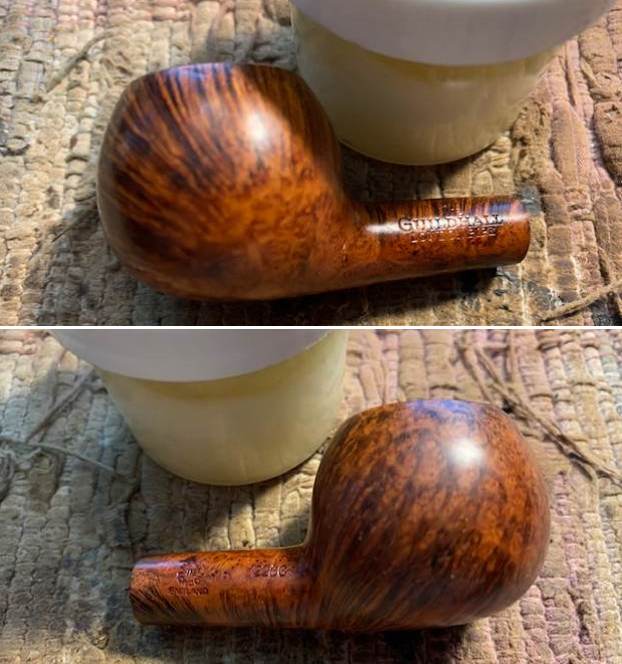
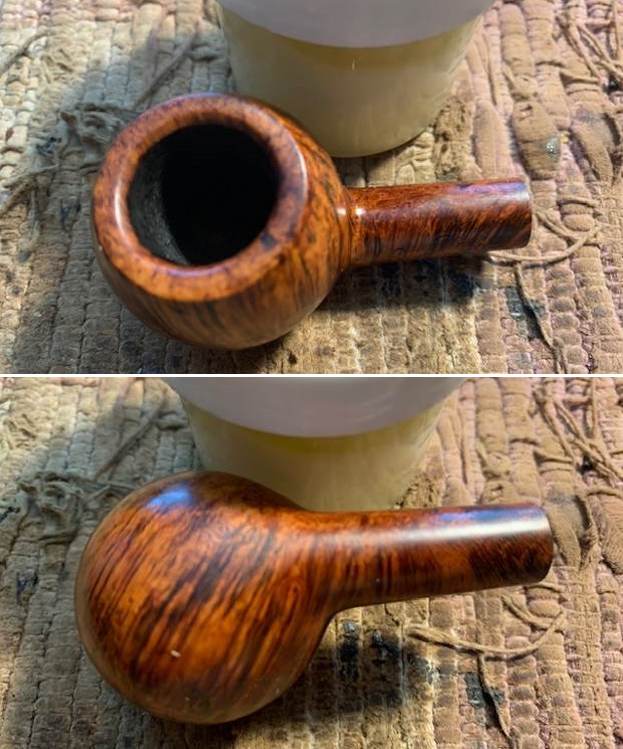
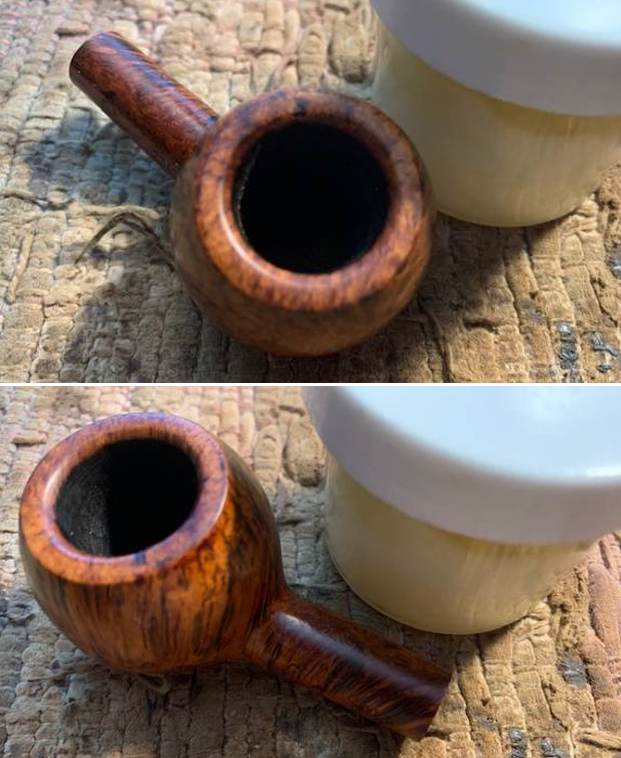
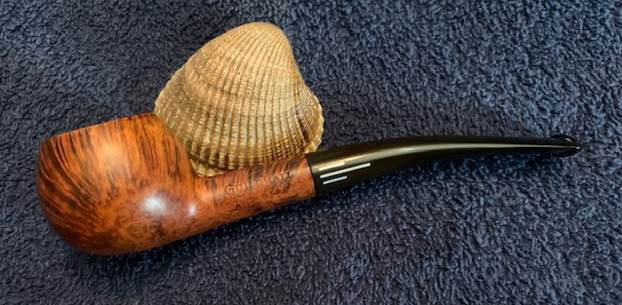
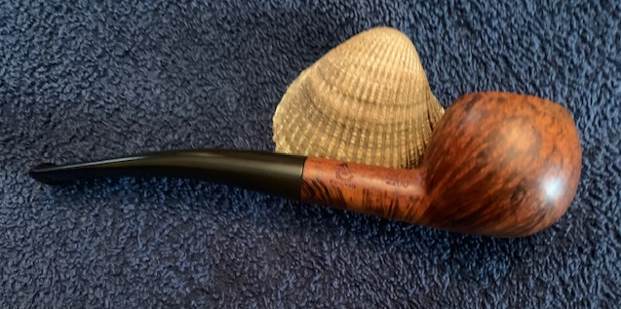
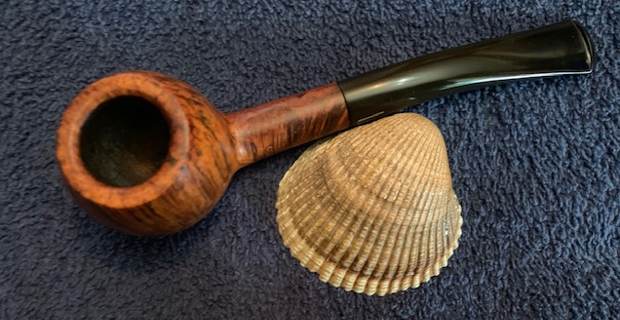
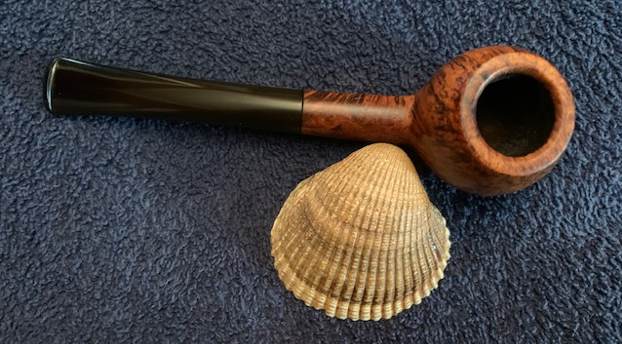
The next pipe is a really neat looking small Comoy’s Made Prince with a vulcanite taper stem. The classic Prince bowl was made to hold in your hand and has a flat bottom on the bowl and shank so it can be a sitter as well. It is quite light weight and small with a taper stem and looks comfortable. This pipe was purchased from an antique mall on 05/10/22 in Astoria, Oregon, USA. It is stamped on the left side of the shank and reads The [over] Guildhall [over] London Pipe. On the right side it is stamped with the Comoy’s circular COM Stamp – Made in London[over] England, followed by the shape number 228C. The exterior of the bowl was dirty with grime and grit ground into the briar. There was a heavy cake in the bowl and an eruption of thick lava on the rim top and beveled inner edge of the bowl. It was hard to know the condition of the rim top and rim edges because of the grime and thickness of the cake and lava. The cleaning would make it very clear! The stem was oxidized, calcified and had tooth marks and chatter on both sides near the button. Jeff took photos of the pipe to give a clear picture of what we were up against with this pipe. He captured the cake in the bowl and the thick eruption of lava on the rim top and edges exceptionally well in the next photos. It was very clear that it was an exceptional smoker! The stem is oxidized, calcified and shows the tooth marks and chatter on both sides ahead of the button. Jeff captured some of the beauty of the shape and the grain in the next photos. The mix of grains and the way in which the stain highlights them is quite stunning.   He took a photo of the stamping on the left side of the shank. It is clear and readable as noted above. You can also see the three silver bars on the top left side of the stem. The stamping on the right side reads Made In London in a circle over England (Comoy’s COM stamp) followed by the shape number 228C.   I turned to Pipephil’s site (http://pipephil.eu/logos/en/logo-g6.html) to confirm what I knew about the brand being made by Comoy’s. It did but did not give a whole lot of other information.There was a catalogue that had a page including The Guildhall London Pipe and describing it on Pipedia (https://pipedia.org/wiki/File:Comoy%27s_Sunrise.jpg). I quote from the page: “Many smokers say the Guildhall is amongst the most beautiful pipes in the world. Guildhall pipes are especially selected for distinctive grains.”Now it was time to work on the pipe. It is really a beautiful piece. Jeff had done a great cleanup on the pipe. He reamed the bowl with a PipNet pipe reamer and followed up with a Savinelli Fitsall pipe knife to remove the cake. He scrubbed out the mortise and the airway in the shank and the stem with alcohol, cotton swabs and pipe cleaners. He scrubbed the bowl exterior with a tooth brush and Murphy’s Oil Soap to remove the grime on the finish of the bowl and the lava from the rim top. He rinsed it under running water. One of the benefits of this scrub is that it also tends to lift some of the scratches and nicks in the surface of the briar. He dried it off with a soft cloth. He cleaned the internals and externals of the stem with alcohol, pipe cleaners and cotton swabs. He soaked the stem in Briarville’s Pipe Stem Deoxidizer and rinsed it off with warm water and cleaned out the airway in the stem with alcohol, pipe cleaners and cotton swabs. I took photos of the pipe as I saw it when I put it on the table. I took photos of the rim top and stem to show the condition. The rim top and beveled edge looked much better. There was some darkening on the back top and inner bevel that would need to be dealt with. The stem was vulcanite and there were tooth marks and chatter on both sides ahead of the button. The stamping on the left and right sides of the shank are clear and readable. It reads as noted above. The three silver coloured inset bars on the left side of the taper stem are also visible.     I removed the stem from the shank and took a photo of the pipe to give a sense of the proportions of the bowl and stem.I started my work on pipe by cleaning up the inner bevel and top of the rim at the back of the bowl. It looked much better afterward.  I polished the briar with micromesh sanding pads – 1500-12000 grit pads. I wiped the bowl down between pads with a damp cloth to remove the debris.  I rubbed the bowl and shank down with Before & After Restoration Balm. I worked it into the surface of the bowl sides and shank with my fingertips to clean, enliven and protect the briar. I let the balm sit for 10 minutes, then buffed with a cotton cloth to raise the shine. The Balm did its magic and the grain stood out on the briar.   I set the bowl aside and turned my attention to the stem. I “painted” the tooth marks with the flame of a lighter and was able to lift them significantly. I sanded out the remaining small dents with a folded piece of 220 grit sandpaper and then started polishing it with 400 grit wet dry sandpaper.  I polished the stem with micromesh sanding pads – 1500-12000 grit pads. I wiped it down with Obsidian Oil after each sanding pad. I finished the polishing with Before & After Polishes – both Fine and Extra Fine. I gave it a final rub down with Obsidian Oil and set it aside to dry.   This Comoy’s Made The Guildhall London Pipe 228C Prince with a vulcanite taper stem is a beautifully grained pipe with a flowing shape that looks great . The rich browns and blacks of the contrasting stain makes the grain come alive with the polishing and waxing. I put the stem back on the bowl and carefully buffed the pipe with Blue Diamond on the buffing wheel using a light touch on the briar. I gave the bowl and the stem multiple coats of carnauba wax on the buffing wheel and followed that by buffing the entire pipe with a clean buffing pad. I hand buffed the pipe with a microfiber cloth to deepen the shine. The finished The Guildhall London Pipe Prince really is a beauty and fits nicely in the hand and looks very good. Give the finished pipe a look in the photos below. The dimensions of the pipe are Length: 5 ½ inches, Height: 1 ½ inches, Outside diameter of the bowl: 1 ¼ inch, Chamber diameter: ¾ of an inch. The weight of the pipe is 1.06 oz./30 grams. This pipe will soon be on the British Pipe Makers section of the rebornpipes store if you would like to add it to your collection. Thanks for reading this blog and my reflections on the pipe while I worked on it. There are many more to come!

A Peterson’s Deluxe Zulu Brought Back to Life


Blog by Steve Laug

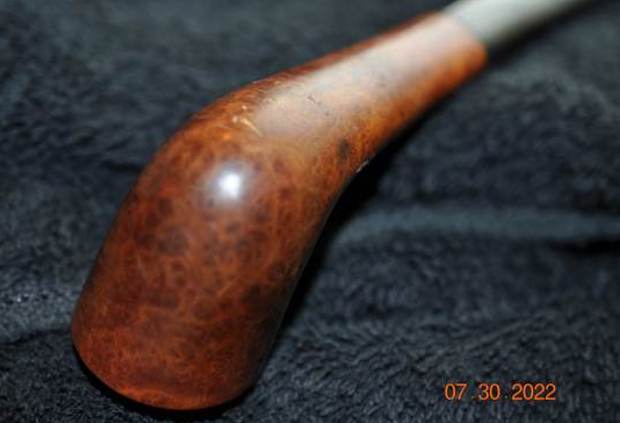
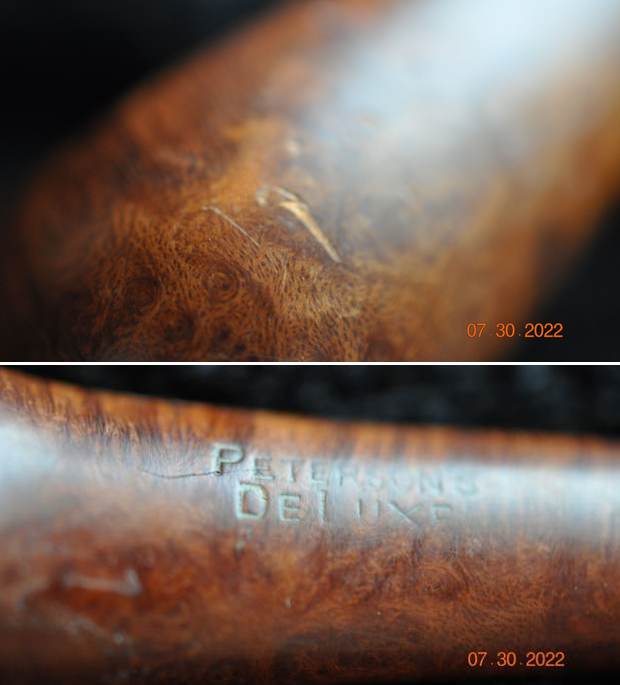
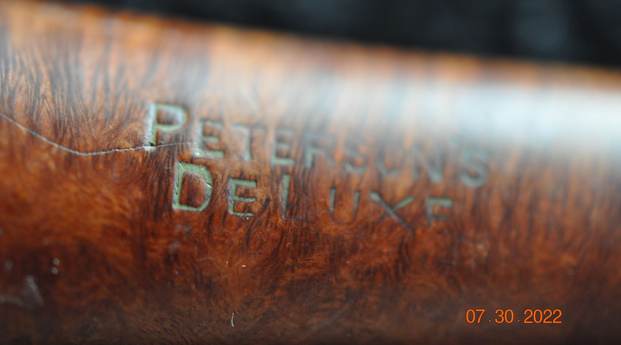
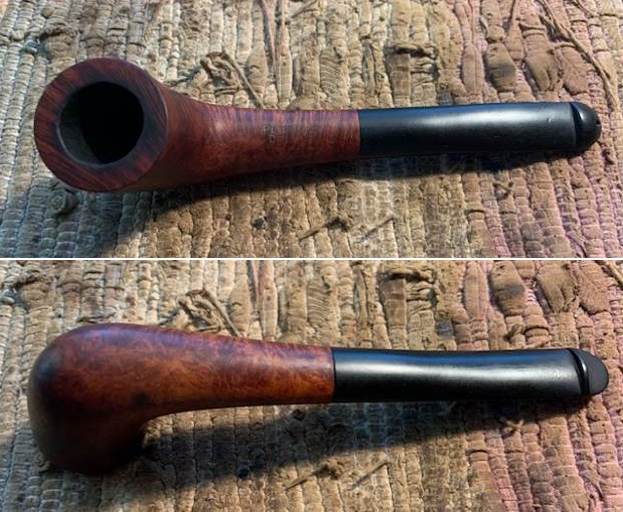
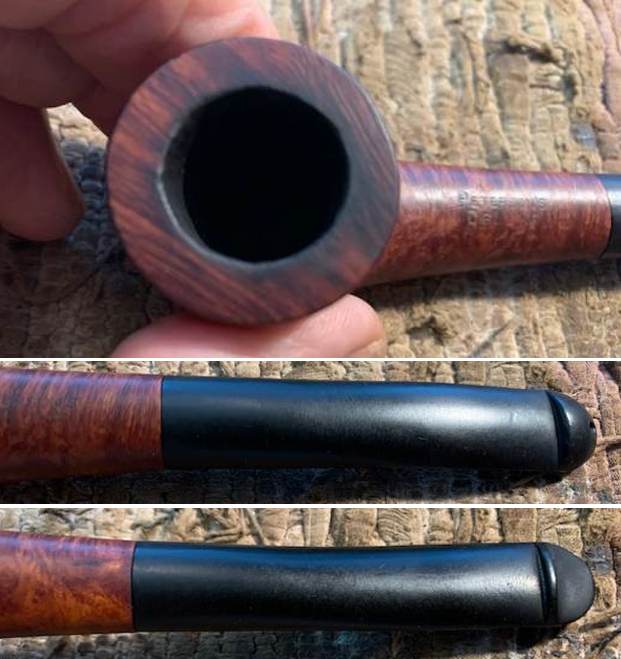
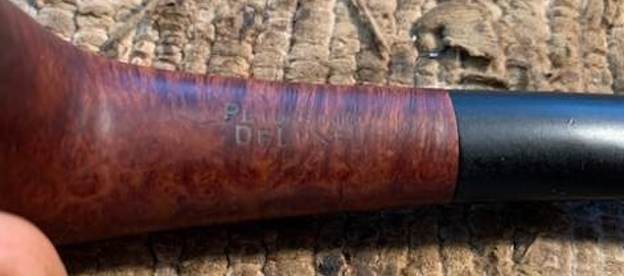
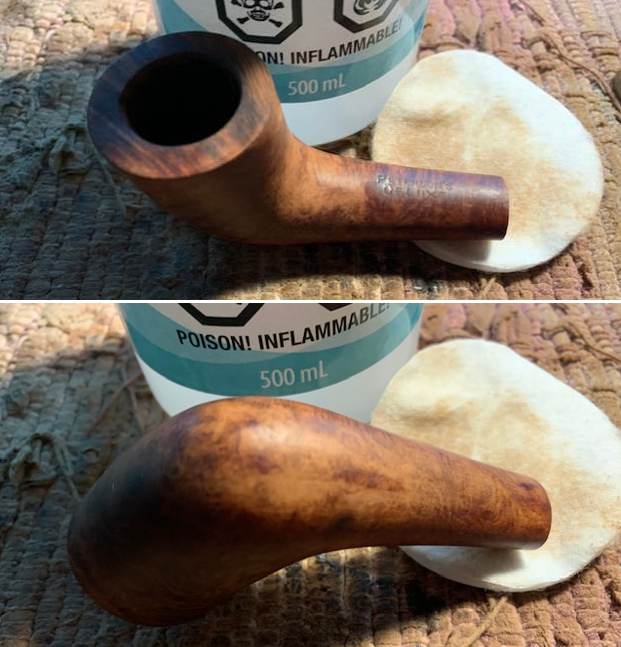
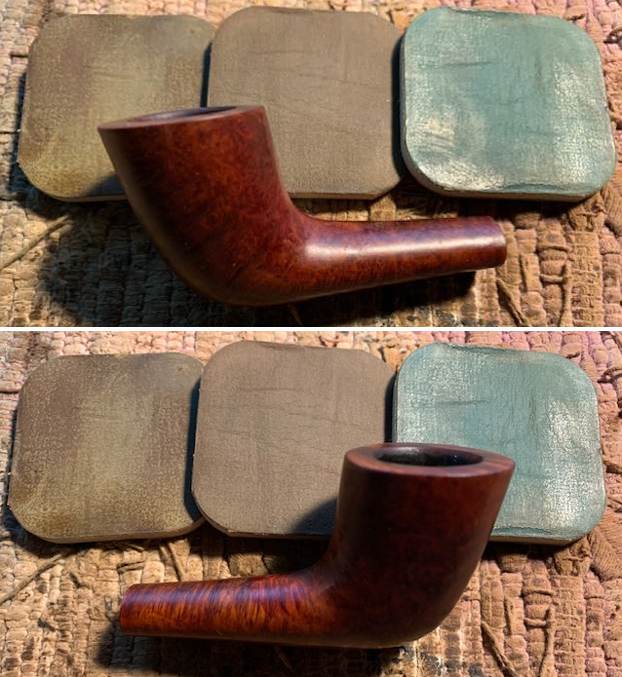
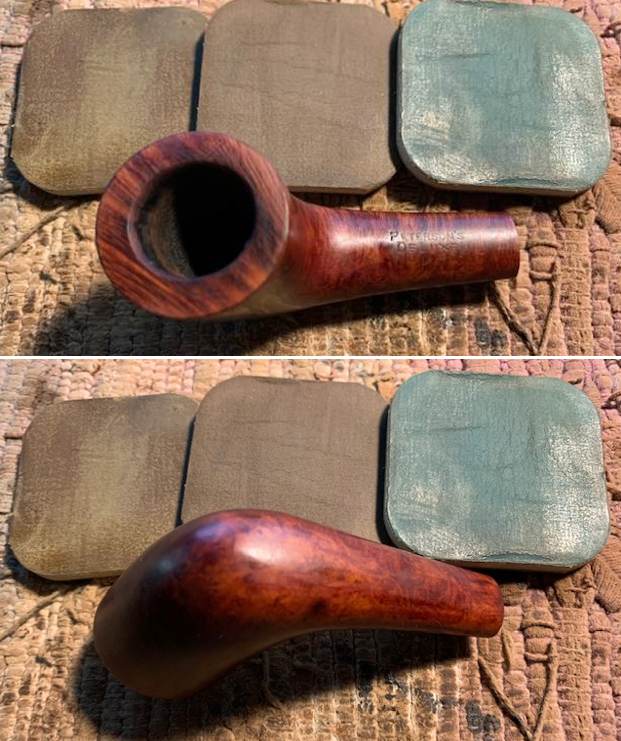
The next pipe I have chosen to work on is a Peterson’s Sterling Prince. This pipe was purchased on 05/25/22 from an antique mall in Portland, Oregon, USA. The grain on the pipe is quite beautiful and follows the flow of the bowl. The bowl heavily caked with a moderate lava overflow on the rim top. The inner edge of the bowl had some damage but also had cake on the edges. The outer edge looked to be in good condition. The finish on the bowl was filthy with grime ground into the surface but the grain shone through. There were some scratches on the top of the shank near the bowl and on the underside of the shank in the middle. The stem was lightly oxidized, calcified and also has tooth marks and chatter on both sides ahead of the button. The pipe was stamped on the topside of the shank and read Peterson’s [over] Deluxe. There does not appear to be any shape number or other stamping on the pipe. It is an interesting pipe that should clean up very well. Jeff took photos of the pipe before he started his clean up work. Jeff took photos of the rim top and stem to show the general condition of the pipe. The bowl is caked and the rim top and edges have a light lava overflow on the edges and top of the bowl. The stem is oxidized, calcified and has tooth marks and chatter on the top and underside near the button. Jeff took some photos of the bowl sides and heel to show the grain that was around this bowl. It is a nice looking pipe under the grime on the outside of the bowl.    Jeff took photos of the damage on the top and underside of the bowl and the small scratches/cracks on the top of the shank. The scratches/cracks are not deep but they are visible in close up and with a lens. He took a photo of the top side of the shank to show the stamping. It is readable in the photo below and is as noted above. You can also see the line running into the P of the top line. There were also several small lines on the underside of the shank.   I turned to Pipedia and read an article by Jim Lily called “A Closer Look at the Peterson Deluxe System pipe (https://pipedia.org/wiki/A_Closer_Look_at_The_Peterson_Deluxe_System_Pipe). While the article was focused on the System pipe there was some pertinent information on the Deluxe as a whole. I quote below:

…As far as value and cost is concerned, for the excellent quality finish, these are competitively priced at around $135 to $250 depending on size and briar grade.

For what it is worth, I reckon the Deluxes are probably the best value range of pipes that Peterson produce, both in terms of functionality and value. There is not a thing wrong with these pipes. Those who malign the brand because they’re made by the hundreds using machines, are very wrong, IMHO. I like them a lot and the bang for the buck is the best I’ve ever seen for new pipes of this quality. The Deluxes are all excellent smokers.

I then turned to the general history article on Pipedia (https://pipedia.org/wiki/Peterson). Below, I quote one section that refers to the hierarchy of the brand.

Peterson initially graded their mass -produced System pipes, i.e., regular catalogue pipes (in descending order) “Deluxe,” “First Quality,” “0” grade, “2nd grade,” and “3rd grade.”

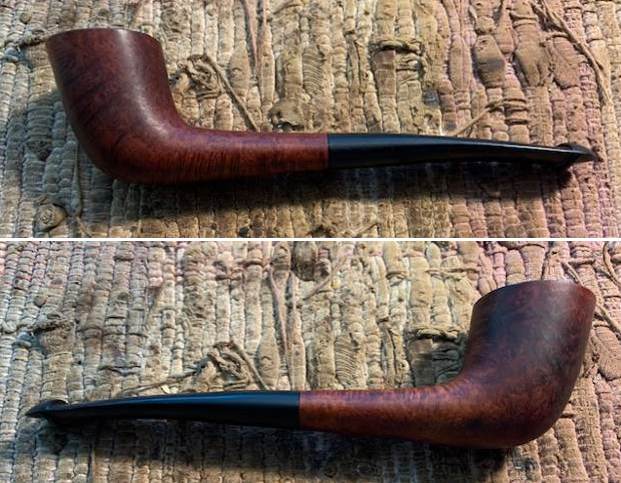
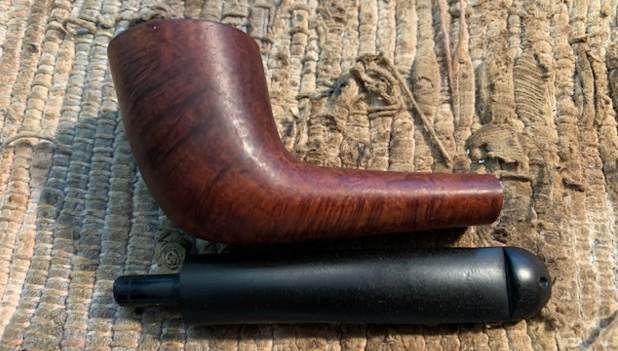
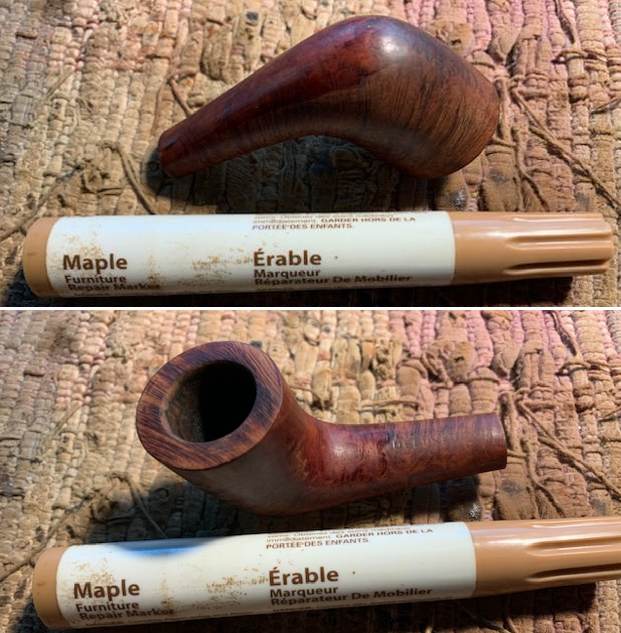
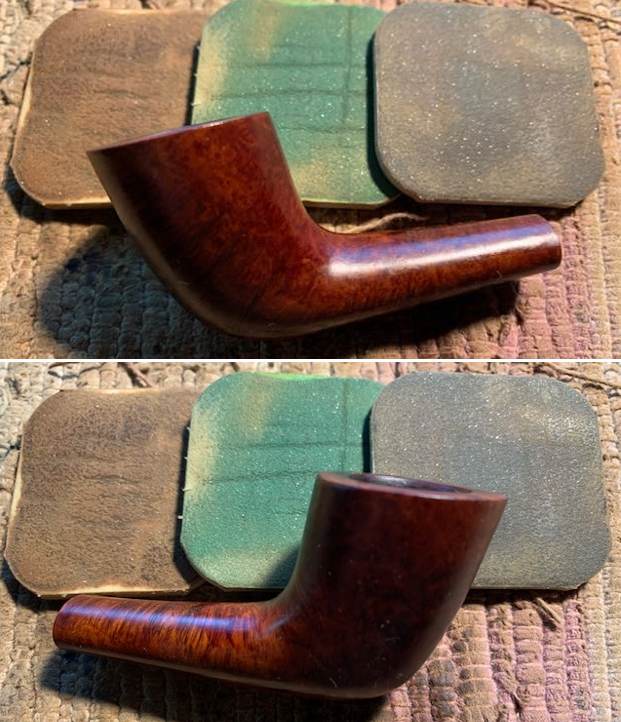
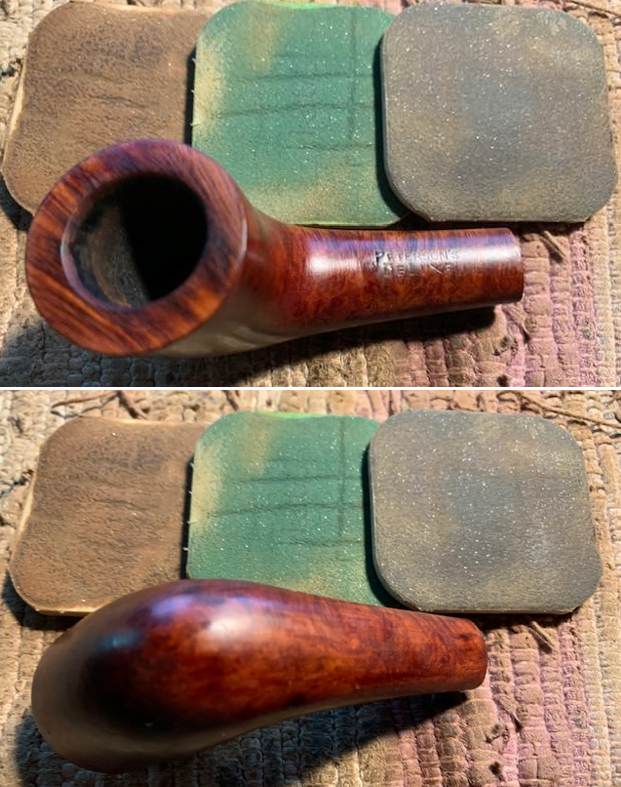
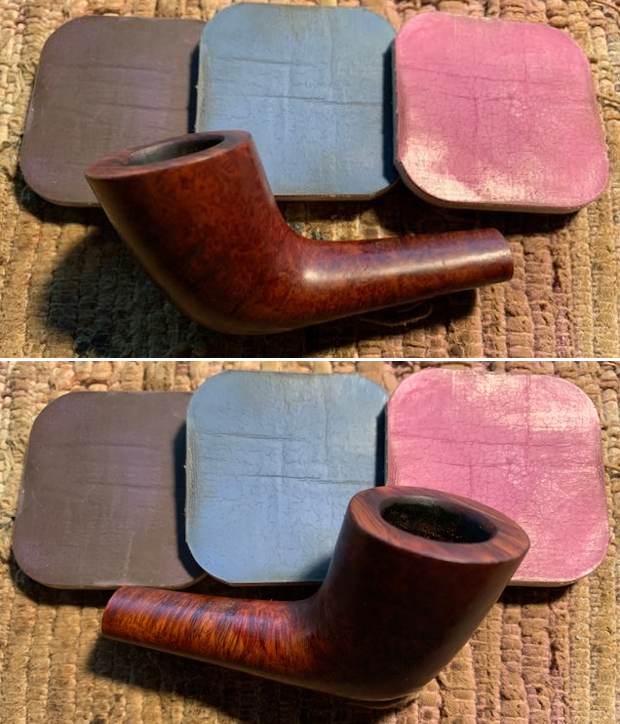
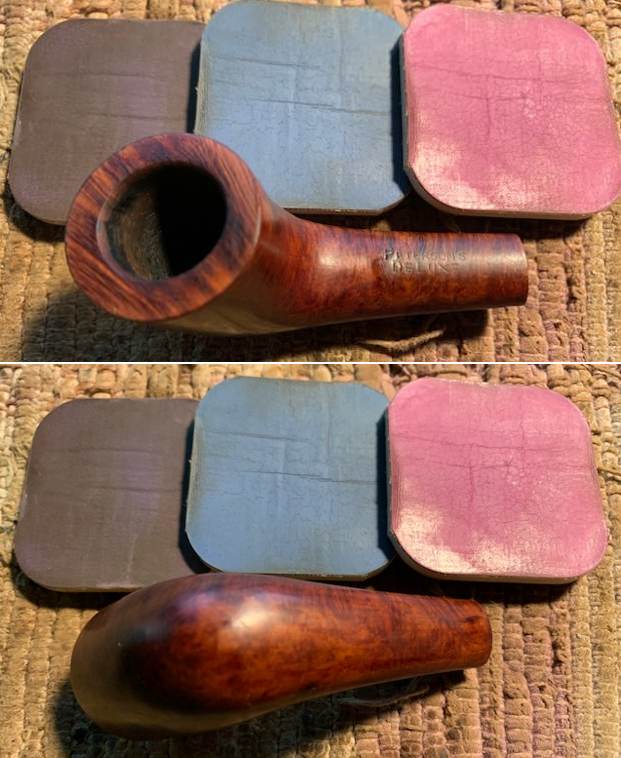
Now, on to the restoration of this beautifully grained Peterson’s Deluxe Zulu. Jeff had done a great job cleaning up the pipe as usual. He reamed the pipe with a PipNet reamer and cut back the cake back to the bare briar. He cleaned up the walls with a Savinelli Fitsall Pipe Knife. He scrubbed the interior of the bowl and shank with pipe cleaners, cotton swabs and alcohol to remove the tars and oils. He scrubbed the exterior of the pipe with Murphy’s Oil Soap and a tooth brush to remove the grime from the finish. He worked on the rim top lava and darkening with the soap and tooth brush. He scrubbed the inside of the stem with alcohol and pipe cleaners. He scrubbed the exterior with Soft Scrub and then soaked it in Before & After Deoxidizer. He washed it off with warm water to remove the Deoxidizer. The pipe looked far better when it  arrived. I took some close up photos of the rim top and also of the stem surface. I wanted to show how well it had cleaned up. The rim top had some darkening and there was some damage on the inner edge with burn damage and some darkening that was heavier on the front edge of the bowl. I also took close up photos of the stem to show the tooth marks and chatter on the surface near the button.    I took photos of the stamping on sides of the shank. You can see that it is stamped as noted above and is clear and readable. The stamping on the band is also visible.I took the pipe apart and took a photo of the pipe. It is a good looking pipe and has nice mixed grain around the bowl.There were a series of small scratches/cracks on the top and underside of the of the shank. The cracks are not deep but they are visible in close up and with a lens. I cleaned off the areas on the underside and the top side at the curve of the bowl and shank with some isopropyl alcohol. I smeared the surface of the cracks with clear CA glue and spread it into the cracks with a dental spatula. I set it aside to dry. Once the repairs cured I sanded the repaired surface with 220 grit sandpaper until the surface is smooth and the repairs blended in. I used the sandpaper to also smooth out the inner edge of the rim top and bowl. I sanded the rim top at the same time. The bowl edge and rim top looked significantly better.   With the sanding finished I wiped the bowl down with isopropyl alcohol on a cotton pad to remove the darkening and mixed stain around the bowl sides and rim top. I used Maple Stain Pen to restain the sanded areas of the shank (top and bottom) and the rim top. It matched the stain on the pipe quite well and would look even better once I buffed it.I polished the briar with micromesh sanding pads – dry sanding with 1500-12000 grit pads. I wiped it down after each sanding pad with a damp cloth to remove the sanding dust and debris left behind by the sanding. The briar took on a deep shine and the sanded portions blended in very well with the rest of the bowl.  I rubbed the bowl down with Before & After Restoration Balm. I worked it into the surface of the briar with my fingertips to clean, enliven and protect it. I let the balm sit for 15 minutes and then buffed with a cotton cloth to raise the shine. Mark Hoover’s Balm is a product that I have come to appreciate and one I use on every pipe I have been working on.  I set the bowl aside and turned my attention to the stem. I sanded the tooth marks and chatter on both sides of the stem with 220 grit sandpaper. I started polishing the stem with 400 grit wet dry sandpaper. I polished the stem with micromesh sanding pads – sanding it with 1500-12000 grit pads. I wiped the stem down after each sanding pad with Obsidian Oil. I polished it with Before & After Pipe Stem Polish – both Fine and Extra Fine. Once I had finished the polishing I gave it final coat of oil and set it aside to dry.    As usual at this point in the restoration process I am excited to be on the homestretch. I look forward to the final look when it is put back together, polished and waxed. I put the Peterson’s Deluxe Zulu back together. I polished the bowl and stem with Blue Diamond to polish out the scratches in the briar and the vulcanite. I gave the bowl and the stem multiple coats of carnauba wax. I buffed the pipe with a clean buffing pad to raise the shine. I hand buffed it with a microfiber cloth to deepen the shine. The grain really pops with the wax and polish. The shiny black vulcanite stem is a beautiful contrast to the browns of the bowl. This Peterson’s Deluxe was a great pipe to spruce up. It is a very comfortable pipe to hold in the hand. The finished pipe is shown in the photos below. The dimensions of the pipe are Length: 6 inches, Height: 1 ¾ inches, Outside diameter of the bowl: 1 ¼ inches, Chamber diameter: ¾ of an inch. The weight of the pipe is 28 grams/.99 ounces. This pipe will be going on the rebornpipes store in the Irish Pipe Makers Section if you would like to add it to your collection and be the first to smoke it. Thanks for reading this blog and my reflections on the pipe while I worked on it. This is an interesting estate to bring back to life.

Sprucing up a Peterson’s Sterling Made in Ireland 406 Prince


Blog by Steve Laug

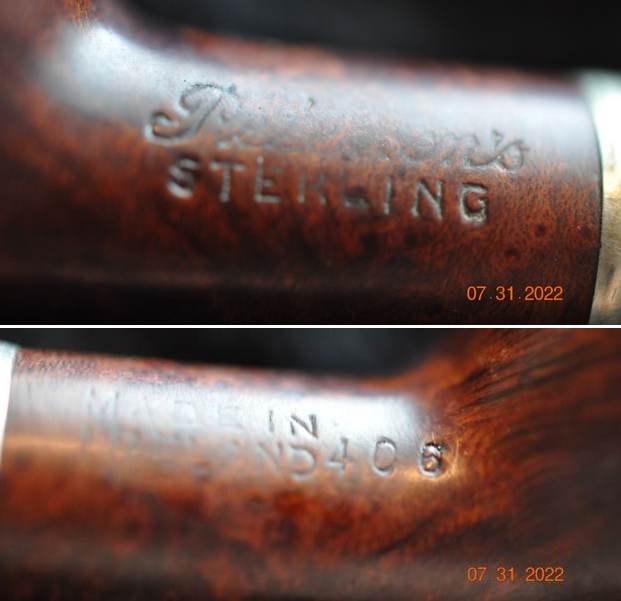
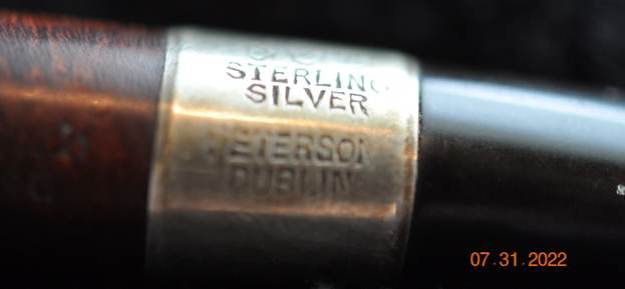
The next pipe I have chosen to work on is a Peterson’s Sterling Prince. The pipe was purchased on 06/24/22 from an online auction in Manorville, New York, USA. It has a Sterling Silver band around the shank that is tarnished and oxidized. The bowl heavily caked with a moderate lava overflow on the rim top. The inner edge of the bowl had some damage but also had cake on the edges. The outer edge looked to be in good condition. The finish on the bowl was filthy with grime ground into the surface but the mixed grain was quite nice. The stem was lightly oxidized, calcified and also has tooth marks and chatter on both sides ahead of the button. The pipe was stamped on the left side of the shank and read Peterson’s [over] Sterling. On the right side it is stamped with the Made in Ireland in two lines followed by the number 406 identifying the shape. It is an interesting pipe. That should clean up very well. Jeff took photos of the pipe before he started his clean up work. Jeff took photos of the rim top and stem to show the general condition of the pipe. The bowl is heavily caked and the rim top and edges have a thick lava overflow on the edges and top of the bowl. The stem is oxidized, calcified and has tooth marks and chatter on the top and underside near the button. Jeff took some photos of the bowl sides and heel to show the grain that was around this bowl. It is a nice looking pipe under the grime on the outside of the bowl.    He took photos of the sides of the shank to show the stamping. The stamping is readable in the photos below and is as noted above. He also took a photo of the band.   I checked on Pipephil’s website to see what I could learn about the stamping on the pipe. I found the following information that I quote:

The country of manufacture stamp changed from “Made in Eire” to “Made in Ireland” (In circle) about 1945. Later (1947-49) it became “MADE IN IRELAND” (block letters) stamped in one or two lines (http://www.pipephil.eu/logos/en/logo-peterson.html).

I turned to Pipedia’s article on Peterson pipes to see what I could garner from that information. It is a great read in terms of the history of the brand (https://pipedia.org/wiki/Peterson#1950_-_1989_The_Republic_Era). In a section on

Prior to 1920 it was rare for a country of origin to be stamped on the pipe, just Peterson’s Dublin on the band. After 1921/22 if it is stamped “MADE IN IRELAND” and the “Made in” is stacked over “Ireland” or “MADE IN EIRE” or several other forms, it was made between 1922 and 1938. A considerable number of Peterson pipes were stamped “Irish Free State”. From about 1930 to 1949, most of the pipes (those which were stamped) were stamped “Made in Ireland”.” If the stamp reads “MADE IN IRELAND” in a circle, the pipe was made between 1939 and 1948. These are all “prerepublic” pipes.

I then turned to the book I should have consulted first, The Peterson Pipe, by Mark Irwin and Gary Malmberg. On page 155 I found some information on the line.

Peterson’s US distributor during the early Republic era was Rogers Imports, Inc., a New York firm whose catalogs offered all varieties of smoker’s products. Rogers was the exclusive wholesale dealer for several prominent European pipe manufacturers, they also marketed accessories under their own name. On behalf of Kapp & Peterson they registered the Killarney, Shamrock and Sterling trademarks with the US Patent Office in the 1950s, and their catalogs also featured the System, Premier Selection and Supreme.

On page 156-157 in the same book there is a catalogue page with the Sterling shown on it. It sold for $7.50 in 1953. It read:

As the name implies the Sterling quality of this fine pipe is distinguished in a careful selection of its fine Mediterranean Bruyere, its careful workmanship and sparkling finish. Banded with a Sterling Silver band – a Hallmark of quality – the pipe is available in a handsome natural or dark rich walnut finish. Patent P-lip stem. Individually boxed.

With that information in hand I knew what I was dealing with in terms of the stamping on the pipe. It is a late Pre-republic era or early Republic era pipe. The Made in Ireland in two lines stamp on the right side of the shank tells me it was made between 1922-1938.

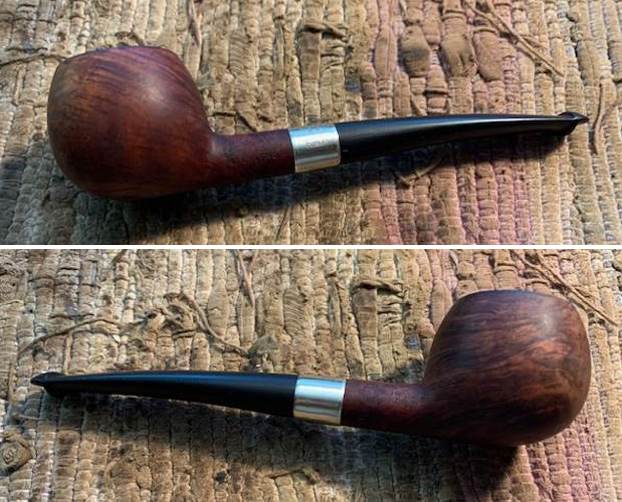
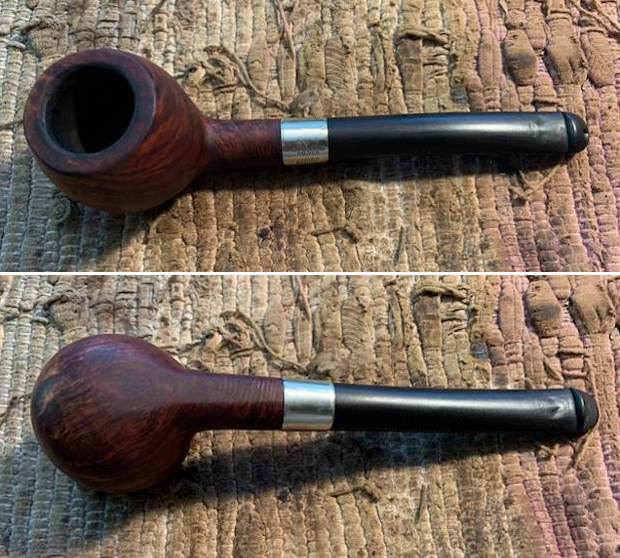
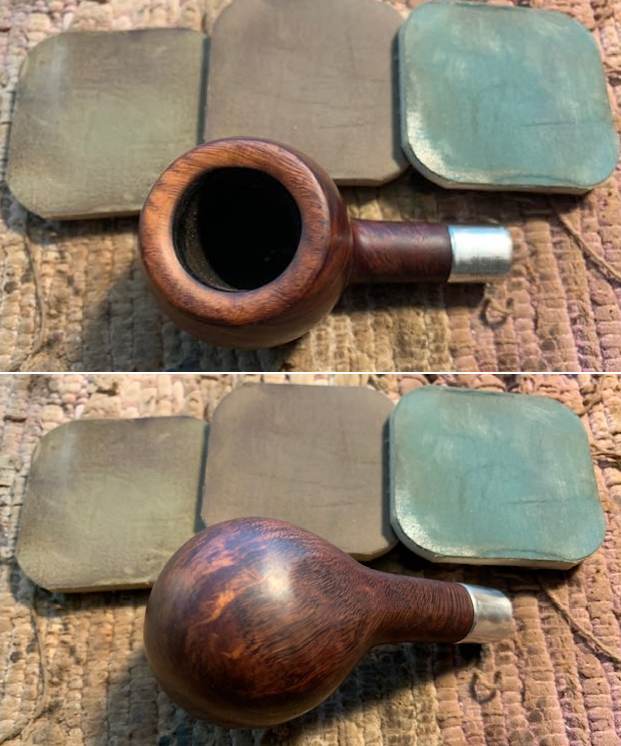
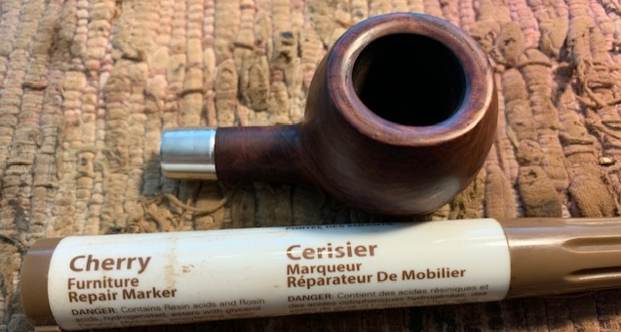
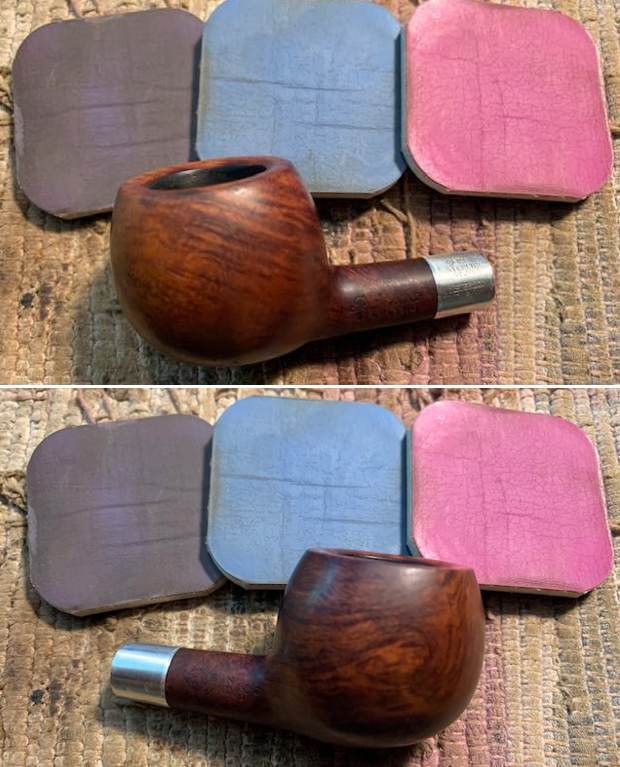
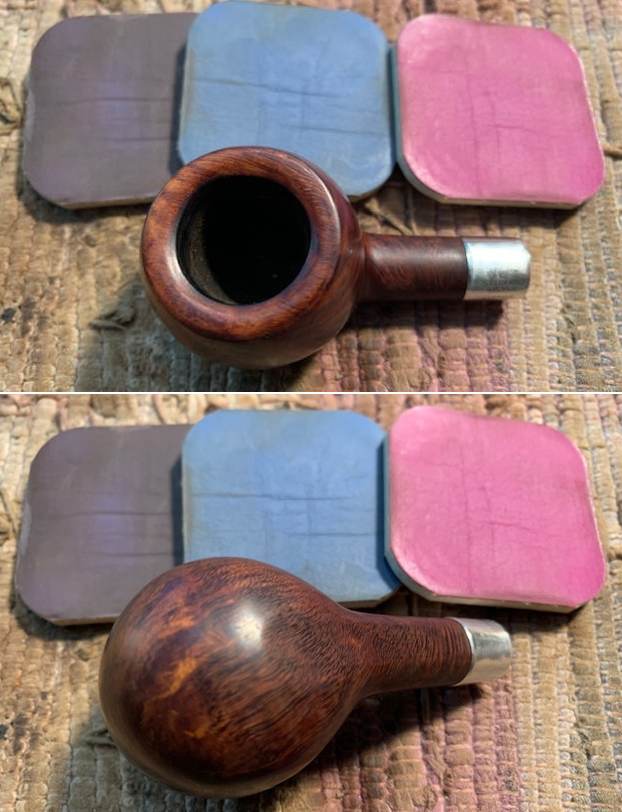
Now, on to the restoration of this beautifully grained Peterson’s Sterling 406 Prince. Jeff had done a great job cleaning up the pipe as usual. He reamed the pipe with a PipNet reamer and cut back the cake back to the bare briar. He cleaned up the walls with a Savinelli Fitsall Pipe Knife. He scrubbed the interior of the bowl and shank with pipe cleaners, cotton swabs and alcohol to remove the tars and oils. He scrubbed the exterior of the pipe with Murphy’s Oil Soap and a tooth brush to remove the grime from the finish. He worked on the rim top lava and darkening with the soap and tooth brush. He scrubbed the inside of the stem with alcohol and pipe cleaners. He scrubbed the exterior with Soft Scrub and then soaked it in Before & After Deoxidizer. He washed it off with warm water to remove the Deoxidizer. The pipe looked far better when it  arrived. I took some close up photos of the rim top and also of the stem surface. I wanted to show how well it had cleaned up. The rim top looked good. There was some damage on the inner edge with burn damage and some darkening that was heavier on the front of the bowl. I also took close up photos of the stem to show the tooth marks and chatter on the surface near the button. I took photos of the stamping on sides of the shank. You can see that it is stamped as noted above and is clear and readable.  The stamping on the band is also visible. I took the pipe apart and took a photo of the pipe. It is a good looking pipe and has Nice mixed grain around the bowl. I decided to start the process by addressing the damage on the rim top and the inner edge of the bowl. I used a folded piece of 220 grit sandpaper to sand the top and to give the edge a slight bevel and clean up the darkening and the damage on the edge. When I finished there was still damage on the right front that needed a little more work. I used a wooden ball and 220 grit sandpaper to increase the angle of the bevel and to even out the edges. It is looking much better. I polished the briar with micromesh sanding pads – dry sanding it with 1500-12000 grit sanding pads. I wiped the bowl surface down with a damp cloth to remove the sanding dust. Once I finished the exterior of the briar looked much better and had taken on a shine.  I paused in the polishing at this point to touch up the stain on the rim top. I used a Cherry stain pen and was able to match the rest of the bowl. I then picked up the polishing again with the last three micromesh pads.I rubbed the bowl down with Before & After Restoration Balm. I worked it into the surface of the briar with my fingertips to clean, enliven and protect it. I let the balm sit for 15 minutes and then buffed with a cotton cloth to raise the shine. Mark Hoover’s Balm is a product that I have come to appreciate and one I use on every pipe I have been working on. I set the bowl aside and turned my attention to the stem. I “painted” the surface of the stem with the flame of a lighter to lift the tooth marks. I was able lift many of them. I filled in the remaining marks with clear CA glue. I set the stem aside to cure. Once it cured I flattened the repairs with 220 grit sandpaper. I polished the stem with micromesh sanding pads – wet sanding with 1500-12000 grit pads. I wiped the stem down after each sanding pad with Obsidian Oil. I polished it with Before & After Pipe Stem Polish – both Fine and Extra Fine. Once I had finished the polishing I gave it final coat of oil and set it aside to dry. As usual at this point in the restoration process I am excited to be on the homestretch. I look forward to the final look when it is put back together, polished and waxed. I put the Made In Ireland Peterson’s Sterling 406 Prince back together. I polished the bowl and stem with Blue Diamond to polish out the scratches in the briar and the vulcanite. I gave the bowl and the stem multiple coats of carnauba wax. I buffed the pipe with a clean buffing pad to raise the shine. I hand buffed it with a microfiber cloth to deepen the shine. I polished the silver with a jeweler’s cloth. The pipe polished up pretty nicely. The grain really pops with the wax and polish. The shiny black vulcanite stem is a beautiful contrast to the browns of the bowl. This Peterson’s Sterling Prince was a great pipe to spruce up. It is a very comfortable pipe to hold in the hand. The finished pipe is shown in the photos below. The dimensions of the pipe are Length: 5 ¾ inches, Height: 1 ½ inches, Outside diameter of the bowl: 1 ¼ inches, Chamber diameter: ¾ of an inch. The weight of the pipe is 37grams/1.31 ounces. This pipe will be going on the rebornpipes store in the Irish Pipe Makers Section if you would like to add it to your collection and be the first to smoke it. Thanks for reading this blog and my reflections on the pipe while I worked on it. This is an interesting estate to bring back to life.

Fresh Life for a Republic Era Peterson’s Tankard


Blog by Steve Laug

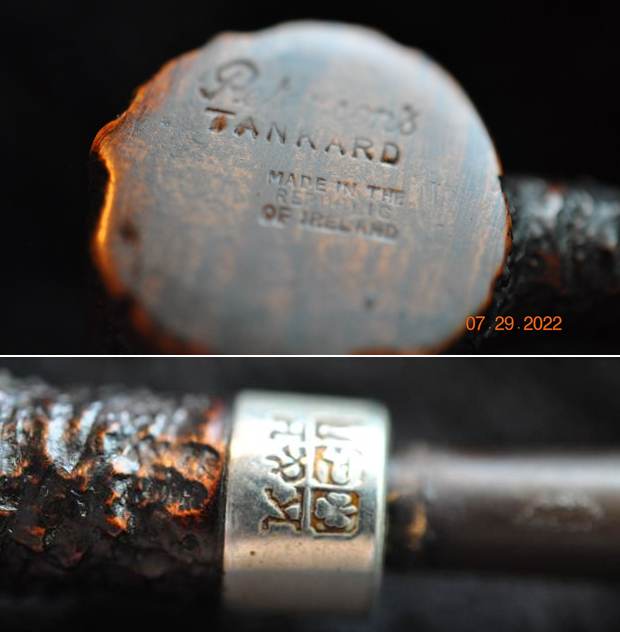
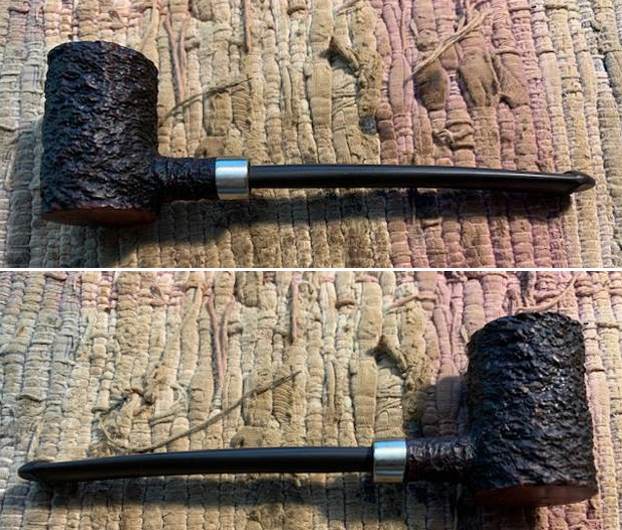
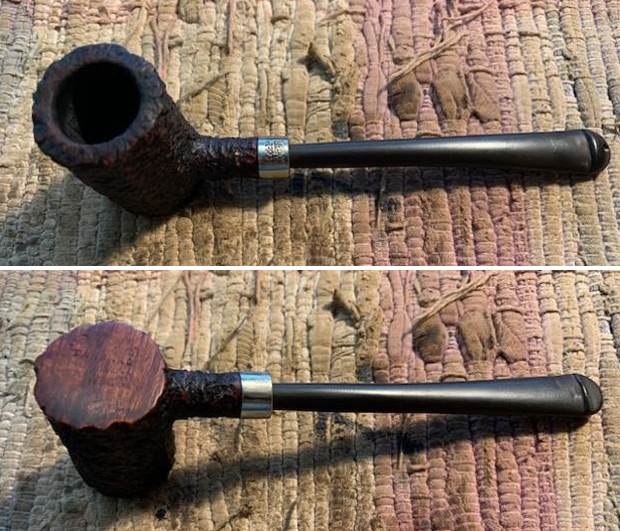
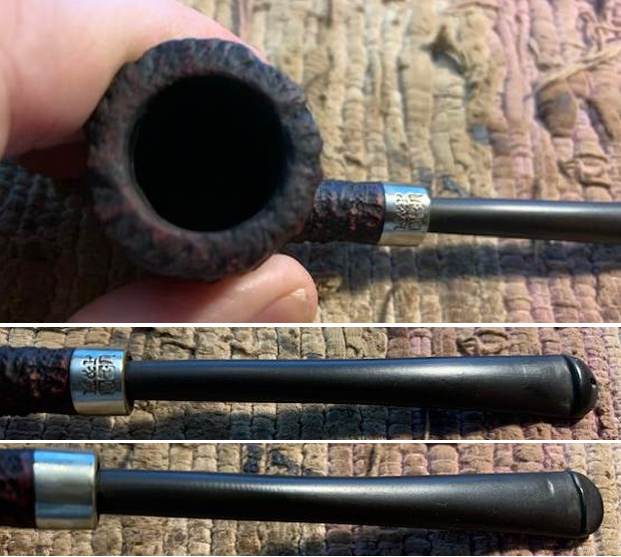
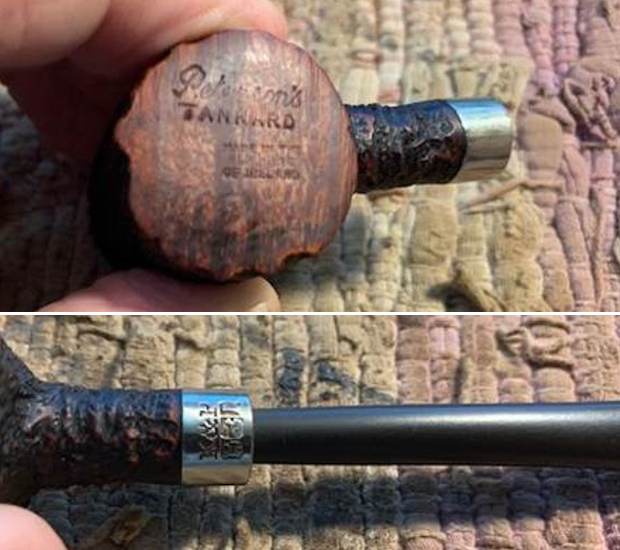
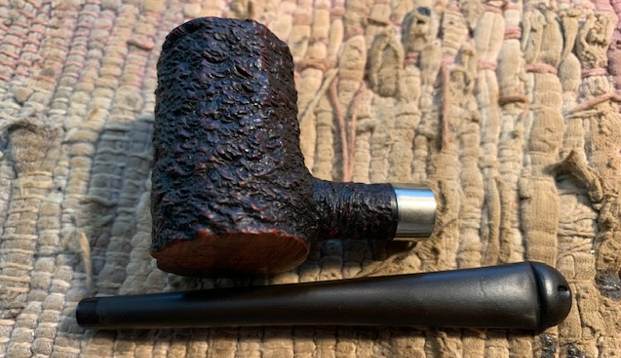
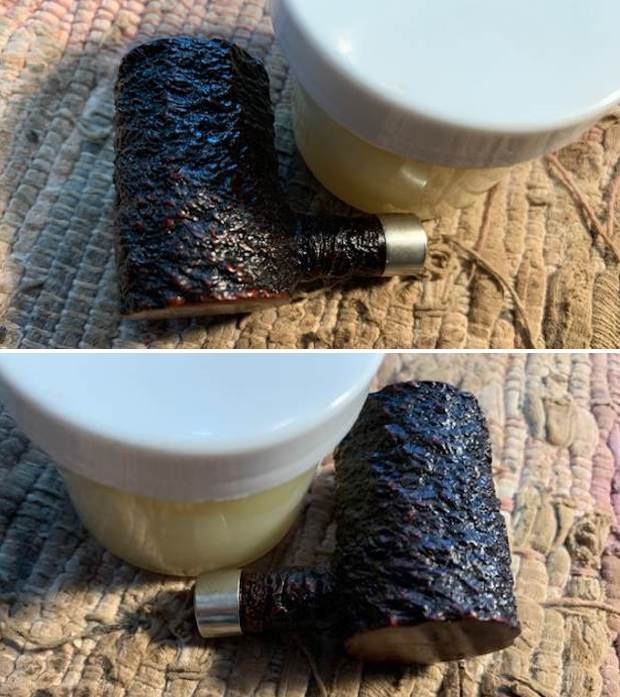
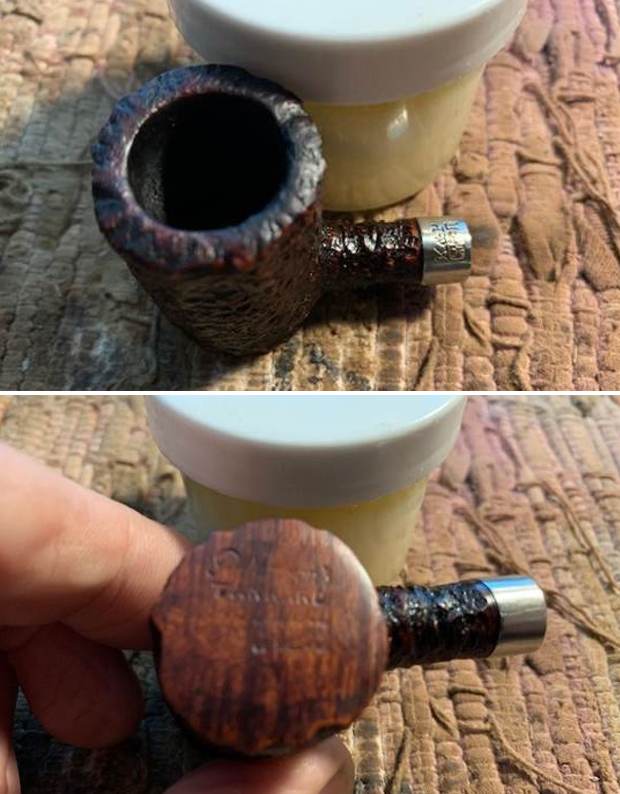
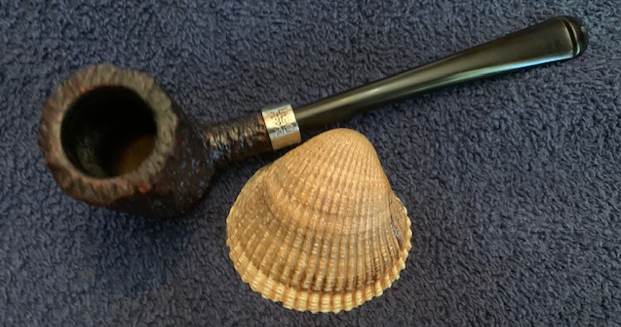
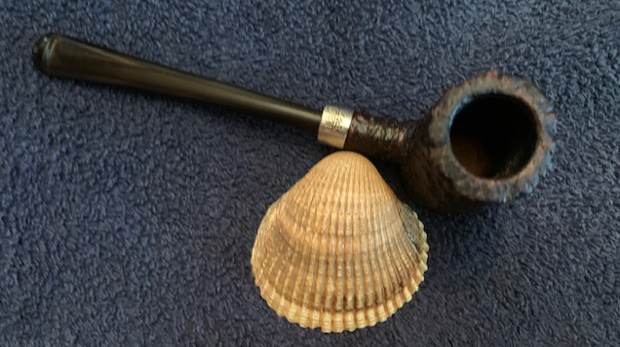
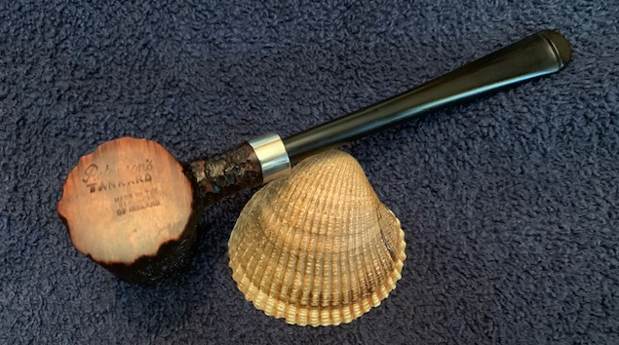
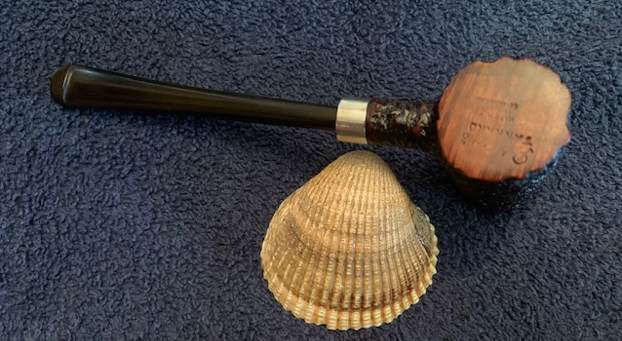
The next pipe I have chosen is a Peterson’s Rusticated Tankard pipe that was purchased on 05/10/22 from an antique mall in Astoria, Oregon, USA. This Tankard has a dark coloured stain on a very rustic finish around the bowl sides and short shank. It is also incredibly dirty. The Tankard had a nickel ferrule on the shank that was in great condition. The finish on the bowl sides was dirty. It was stamped on the heel of the bowl and read Peterson’s [over] Tankard. Under that it is stamped Made in the Republic of Ireland in three lines. The nickel ferrule is stamped K&P over three symbols – a Shamrock, a recumbent Lion, and a Tower. There was a thick cake in the bowl and thick lava overflowing over onto the rim top and the inner edge of the bowl. The stem was oxidized, calcified and had light tooth marks and chatter on the top and underside near the button. Jeff took photos of the pipe before his cleanup work. They tell the story and give a glimpse of the promise that we see in this pipe. Jeff took photos of the rim top and stem to show the general condition of the pipe. The bowl is heavily caked and the rim top and edges have a thick lava overflow filling in the rustication. The stem is oxidized, calcified and has light tooth marks on the top and underside near the button. Jeff took some photos of the bowl sides and heel to show the amazing rustication that was around this bowl. It is a nice looking pipe.    He took photos of the underside of the shank to show the stamping. The stamping is readable in the photo below and is as noted above. He also took a photo of the band. I am including the information from Pipedia’s article on Peterson pipes. It is a great read in terms of the history of the brand (https://pipedia.org/wiki/Peterson). I have included a bit of the pertinent history here.

1950 – 1989 The Republic Era – From 1950 to the present time, the stamp for this era is “Made in the Republic of Ireland” in a block format generally in three lines but two lines have been used with or without Republic being abbreviated.

During the 1950’s and 60’s the Kapp & Peterson Company was still in the ownership of the Kapp family. However 1964 saw the retiral of the company Managing Director Frederick Henry(Harry) Kapp.

I turned to “The Peterson Pipe” by Mark Irwin and Gary Malmberg to get some background on the Tankard Pipe. On page 313 it had the following information what they called the Specialty Briars. I have summarized the various pipes that were part of the Specialty Briars below and have also included the description of the Tankard itself.

The Tankard pipe was part of a line of Specialty Briars (1945-) which was a term used to describe the following lines: Lightweight, Junior, Churchwarden, Barrel, Tankard, Calabash, Belgique  and Giant.

Tankard (1945-) P-lip or fishtail mouthpiece, smooth or rustic finish, sandblast offered in 1970

I knew that I was dealing with a Republic Era pipe made between 1950 and the present. Now it was time to work on the pipe.

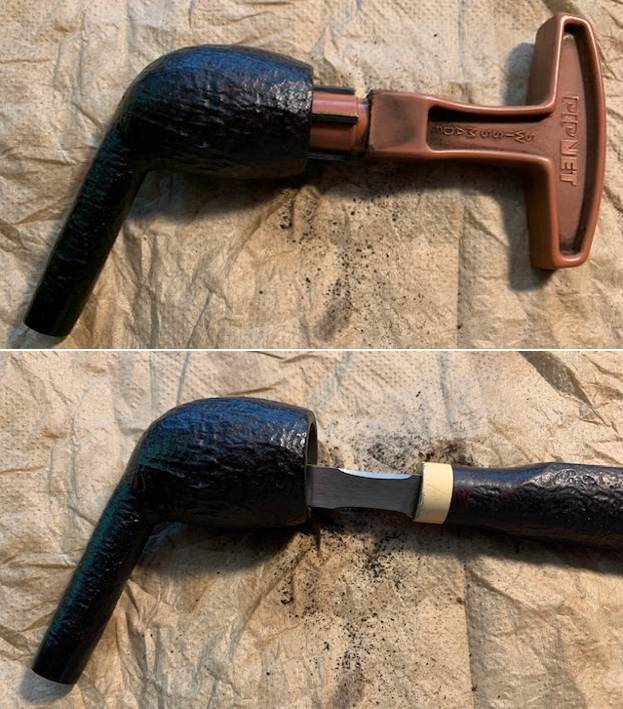
 Jeff had done a great job cleaning up the pipe as usual. He reamed the pipe with a PipNet reamer and cut back the cake back to the bare briar. He cleaned up the walls with a Savinelli Fitsall Pipe Knife. He scrubbed the interior of the bowl and shank with pipe cleaners, cotton swabs and alcohol to remove the tars and oils. He scrubbed the exterior of the pipe with Murphy’s Oil Soap and a tooth brush to remove the grime from the finish. He worked on the rim top lava and darkening with the soap and tooth brush. He scrubbed the inside of the stem with alcohol and pipe cleaners. He scrubbed the exterior with Soft Scrub and then soaked it in Before & After Deoxidizer. He washed it off with warm water to remove the Deoxidizer. The pipe looked far better when it  arrived. I took some close up photos of the rim top and also of the stem surface. I wanted to show how well it had cleaned up. The rim top looked very good. I also took close up photos of the stem to show the light tooth marks on the surface near the button. I took a photo of the stamping on the heel of the bowl. You can see that it is stamped as noted above. It is clear and readable.  I took the pipe apart and took a photo of the pipe. It is a good looking pipe and has a rugged rustication around the bowl. I worked some Before & After Restoration Balm into the surface of the briar with my fingertips and a horsehair shoe brush to clean, enliven and protect the briar. I let the balm sit for 15 minutes and then buffed with a cotton cloth to raise the shine. The photos show the bowl at this point in the restoration process.   I set the bowl aside and turned my attention to the stem. I “painted” the surface of the stem with the flame of a lighter to lift the tooth marks. I was able lift many of them. I filled in the remaining marks with clear CA glue. I set the stem aside to cure. Once it cured I flattened the repairs with 220 grit sandpaper.   I polished out the light tooth marks on the stem with micromesh sanding pads – wet sanding with 1500-12000 grit sanding pads. I wiped it down after each sanding pad with Obsidian Oil. I polished it with Before & After Pipe Stem Polish – both Fine and Extra Fine.  I am excited to finish this Republic Era Peterson’s Special Series Tankard. I put the pipe back together and buffed it with Blue Diamond on the buffing wheel. I gave the bowl multiple coats of Conservator’s Wax and the stem multiple coats of carnauba wax. I buffed the pipe with a clean buffing pad to raise the shine. I also hand buffed it with a microfibre cloth to deepen the shine. It is fun to see what the polished bowl looks like with the rugged rustication all around it. Added to that the polished nickel ferrule and the thin black vulcanite stem was beautiful. This rugged Classic Peterson’s Tankard is nice looking and the pipe feels great in my hand. It is light and well balanced. Have a look at it with the photos below. The dimensions are Length: 5 ¾ inches, Height: 1 ¾ inches, Outside diameter of the bowl: 1 inch, Chamber diameter: 5/8 of an inch. The weight of the pipe is 23 grams/.78 ounces. This pipe will be going on the rebornpipes store in the Irish Pipemakers Section soon. If you are interested in adding it to your collection. Thanks for walking through the restoration with me as I worked over this pipe. Thanks to each of you who are reading this blog.

Restoring a Antique Show Find – a Savinelli Made King’s Cross Featherweight 402A Cutty


Blog by Steve Laug

This morning two of my daughters and I met Kenneth and went on a hunt for pipes at an Antique and Collectible sale not far from here. We arrived when they opened the doors and the girls went off on their own hunt. Kenneth and I wandered row by row through the sale. We saw a lot of pipes for sale on the tables and the majority of them were worth far less than the seller was expecting. There were Kaywoodies, Grabows, Lorenzos and other odds and ends all priced between $50-70 dollars. It was discouraging to say the least. We finally came to one table where the seller was far more reasonable. Kenneth picked up two old timers – a Boer War trench art pipe and a Custombilt bent. I picked up a Kings Cross Cutty. We met my daughters and they had found a nice Brigham they took me to see. It had a shape number for a Billiard but it was preceded by the letter “P”. It also had an oval shank but all those made me want to add it to my list. With a bit of negotiation I picked up that Brigham as well. That closed out our hunt and we came home with our finds.

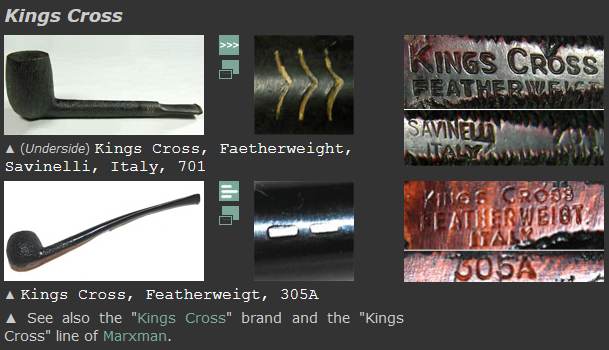
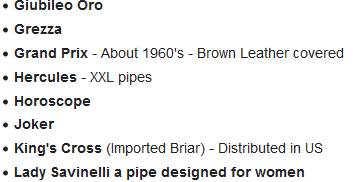
The sandblast bowl looked good on the outside and was clean. The sandblast finish was not deep but it was very tactile. The rim top and edges were in very good condition and showed no damage. The bowl was stamped on the underside of the shank and had the shape number and brand information clear and readable. It reads 402A (shape number) followed by Kings Cross [over] Featherweight [over] Italy. The stem had a sticky taped on price tage that left a lot of debris and “goop” on the stem surface. There were 2 white bars on the left side of the stem. There was light tooth chatter and marks on both sides near the button. I took photos of the pipe when I brought it home. I took some closeup photos of the rim top and the stem to show the condition. The rim top and edges are in good condition. They are dirty but still look good. There is a light bevel to the inner edge of the bowl and looks good. The stem had a lot sticky goop on it from the sales label that was on the stem. There was no oxidation and minimal tooth chatter or marks on the surface ahead of the button. It looked quite good underneath the goop. I took a photo of the stamping on the shank and the white bars on the left side of the stem. The stamping is clear and readable as noted above. I removed the stem and took a photo of the pipe to give a sense of the side view. It is a great looking pipe from this vantage point. The canted bowl and pencil shank and taper stem look good. It has been awhile but I believe I have worked on one of these in the past. It is a lighweight that I am pretty certain was made by Savinelli. I decided to turn to Pipephil’s site and see what was listed there under Savinelli (http://pipephil.eu/logos/en/logo-savinelli2.html). Sure enough there was a listing for Kings Cross Featherweight. I have included a screen capture of the section below.I then turned to Pipedia to find more (https://pipedia.org/wiki/Savinelli#Savinelli_made_sub-brands.2C_seconds_.26_order_productions). I found the listing under the section entitled Savinelli made sub-brands, seconds & order productions. I have included a section of the list of brands below. It says that the Kings Cross was Distributed in the US.There was also an advertisement for the Kings Cross Featherweights that has a great description of the brand. It reads:

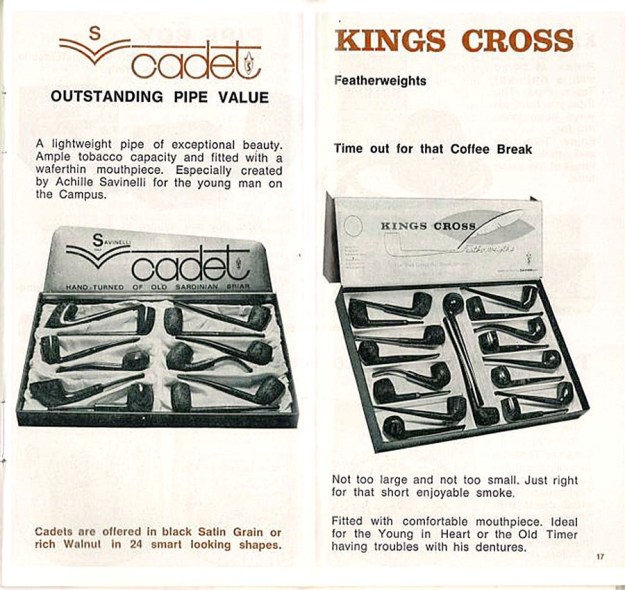
Time out for that Coffee Break. Not too large and not too small. Just right for that short enjoyable smoke.

Fitted with comfortable mouthpiece. Ideal for the Young in Heart or the Old Timer having troubles with his dentures.I reamed the pipe with a PipNet pipe reamer using the smallest cutting head to take the cake back to bare briar. I cleaned up the bowl walls with a Savinelli Fitsall Pipe Knife and removed the remaining spots of cake. I sanded the bowl walls with a piece of 220 grit sandpaper wrapped around a piece of briar. The bowl interior looked very good and the walls showed no damage. I cleaned out the interior of the shank and the stem with alcohol, pipe cleaners and cotton swabs. I worked over the interior until the cleaners came out clean. The pipe smelled and looked clean.  I worked some Before & After Restoration Balm into the briar with my finger tips. The product works to clean, revive and protect the briar. I let it sit on the pipe for 10 minutes then buffed it off with a soft cloth.   I wiped the stem down with isopropyl alcohol to remove the sticky label substance on the stem surface.I touched up the two white bars on the left side of the stem with white acrylic fingernail polish. Once the acrylic dried I scraped off the excess and polished it with a 1500 micromesh pad. I polished out the tooth marks and chatter on the stem with micromesh sanding pads – dry sanding it 1500-12000 pads. I wiped it down with some Obsidian Oil each pad to remove the dust and polishing debris. I polished it with Before After Pipe Polish – both Fine and Extra Fine. I gave it a final coat of Obsidian Oil and set it aside to dry.  This is another pipe that I am really happy about the look of the finished restoration. This reborn Savinelli Made Kings Cross Featherweight 402A Cutty turned out really well. I think that it is a great looking pipe with a great sandblast. The polished black of the stem works well with the rich dark stains of the finish. Buffing makes the finish come alive with the polishing and waxing. I put the stem back on the bowl and buffed the pipe with Blue Diamond on the buffing wheel. I gave the bowl and the stem multiple coats of carnauba wax on the buffing wheel. I buffed the pipe with a clean buffing pad to raise the shine. I hand buffed the pipe with a microfiber cloth to deepen the shine. The finished Kings Cross Featherweight Cutty really feels great in the hand and it looks very good. Give the finished pipe a look in the photos below. The dimensions of the pipe are Length: 6 inches, Height: 1 ½ inches, Outside diameter of the bowl: 1 inches, Chamber diameter: ¾ of an inch. The weight of the pipe is 25 grams/.88 ounces. The pipe will be going on the rebornpipes store soon. It will be in the Italian Pipe Makers Section if you would like to add it to your collection. Thanks for reading this blog and my reflections on the pipe while I worked on it. It was a fun one to work on!

Restoring a Antique Show Find – a Unique Brigham 2 Dot Straight, oval shank P203 Billiard


Blog by Steve Laug

This morning two of my daughters and I met Kenneth and went on a hunt for pipes at an Antique and Collectible sale not far from here. We arrived when they opened the doors and the girls went off on their own hunt. Kenneth and I wandered row by row through the sale. We saw a lot of pipes for sale on the tables and the majority of them were worth far less than the seller was expecting. There were Kaywoodies, Grabows, Lorenzos and other odds and ends all priced between $50-70 dollars. It was discouraging to say the least. We finally came to one table where the seller was far more reasonable. Kenneth picked up two old timers – a Boer War trench art pipe and a Custombilt bent. I picked up a Kings Cross Cutty. We met my daughters and they had found a nice Brigham they took me to see. It had a shape number for a Billiard but it was preceded by the letter “P”. It also had an oval shank but all those made me want to add it to my list. With a bit of negotiation I picked up that Brigham as well. That closed out our hunt and we came home with our finds.

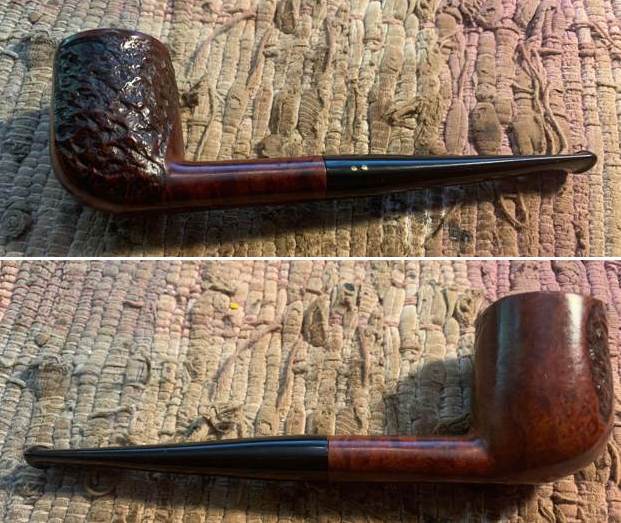
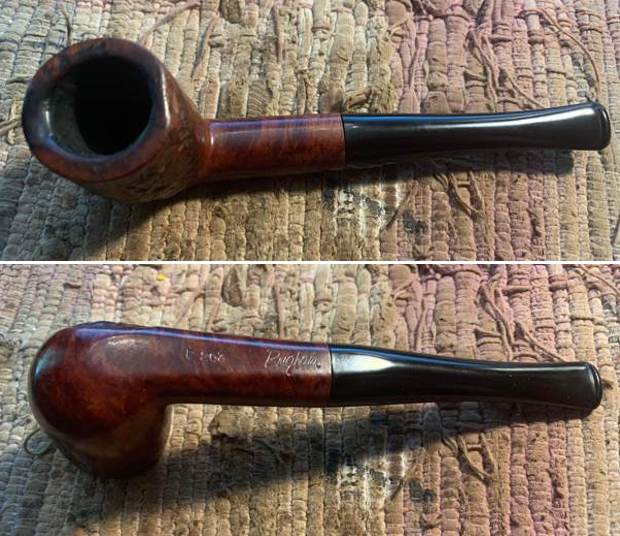
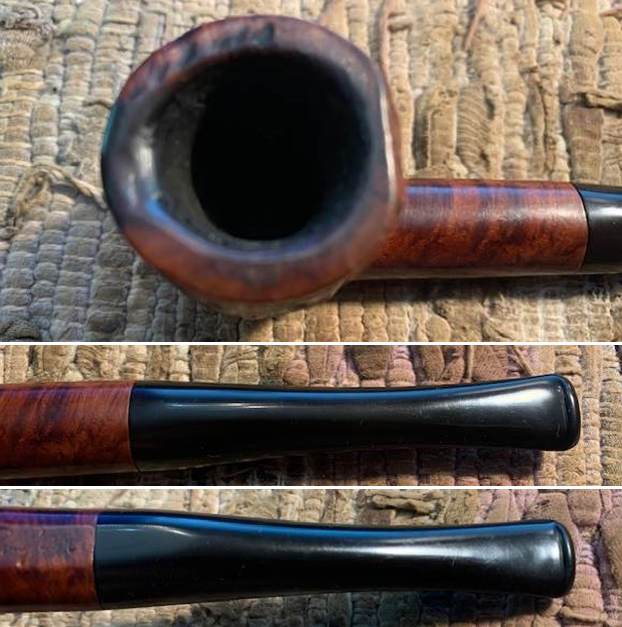
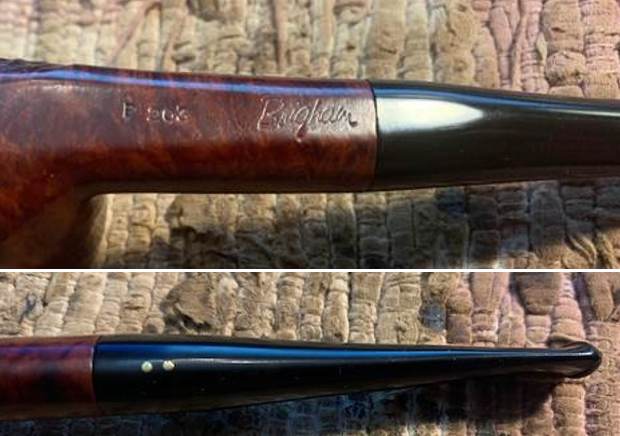
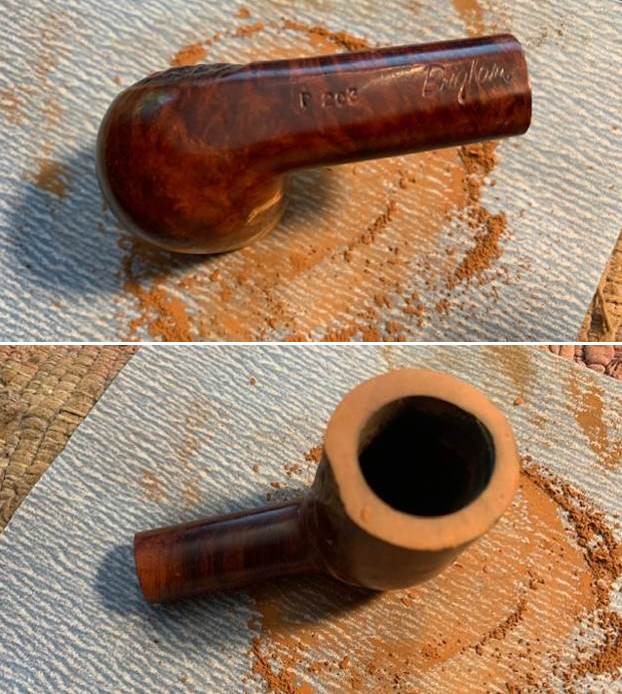
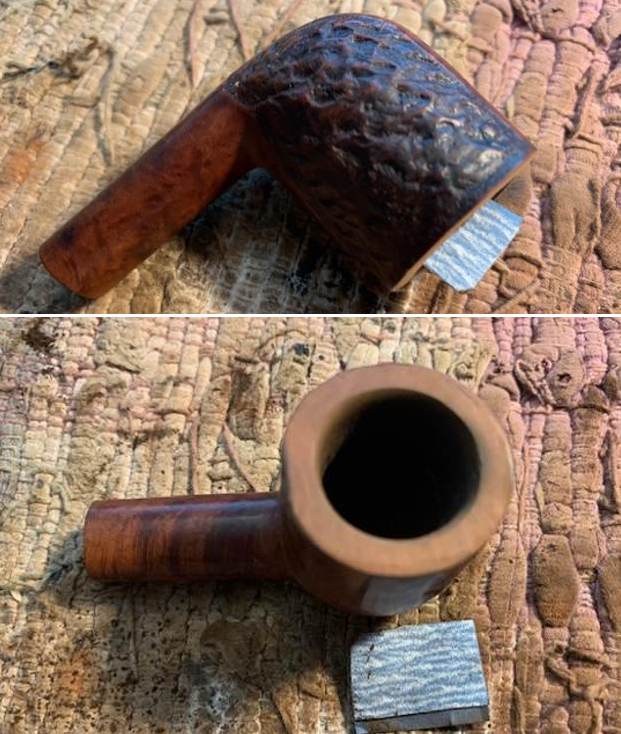
The pipe had a been given a coat of varnish that made it shine. The outside of the bowl had been cleaned off and wiped down. The finish was unique with rusticated patches with a classic Brigham rustication on both sides of the bowl. There was a smooth finish all the rest of the way around the bowl, rim top and shank. The rim top was in bad condition with burn damage on the front inner edge of the bowl that made the inner edge out of round. The back outer edge of the bowl had a chip out of the top edge and down 1/8 of an inch into the rustication leaving that portion flat and making the outer edge out of round. The rim top was a real mess but the uniqueness of the pipe made me want to deal with the trouble. I took photos of the pipe when I brought it home. I took some closeup photos of the rim top and the stem to show the condition. The rim top is in the condition described above. You can see the damage to the top front and inner edge of the rim and the damage to the outer edge of the bowl at the back. It is really quite a mess and will take some work to get it back to normal. The stem was in very good condition with no oxidation and minimal tooth chatter or marks on the surface ahead of the button. It looked quite good. I took a photo of the stamping on the shank and the 2 brass dots on the left side of the stem. The stamping is clear and readable as noted above.   I removed the stem and took a photo of the pipe to give a sense of the side view. It is a great looking pipe from this vantage point.   While I started my work on the pipe I wrote to Charles Lemon, my go to guy on all things Brigham. He is still in the process of writing the definitive history of the brand. I am including my email to him about this pipe and his response below. As usual his answer was definitive and very helpful.

I wrote him: Hi Charles, I went to an antique show this morning and picked up a couple of pipes. One is a Brigham P203 Oval Shank… it is a shape and a number I am not familiar with.. has the metal fitment. Some rim top damage but not a bad looking pipe.

Charles responded and wrote: Hey Steve. Good to hear from you. The “P” in the shape code stands for “promotional”.  These were usually made from stummels that for one reason or another didn’t quite meet the requirements for production pipes – things like slightly small briar blocks, short shanks, etc. I used to have one with an acrylic shank extension that made up the missing briar.

Apart from that, your 203 is a 2 Dot medium straight Billiard. If you put it side by side with a regular 03 shape you will likely be able to spot the differences that made it a promotional pipe.

Thanks Charles! Now I knew I was dealing with a 2 Dot Medium Straight Billiard (203 shape). The “P” stamp meant that it was a Promotional shape that used a block of briar that somehow did not meet the requirements for a production pipe. Now it was time to work on the pipe.

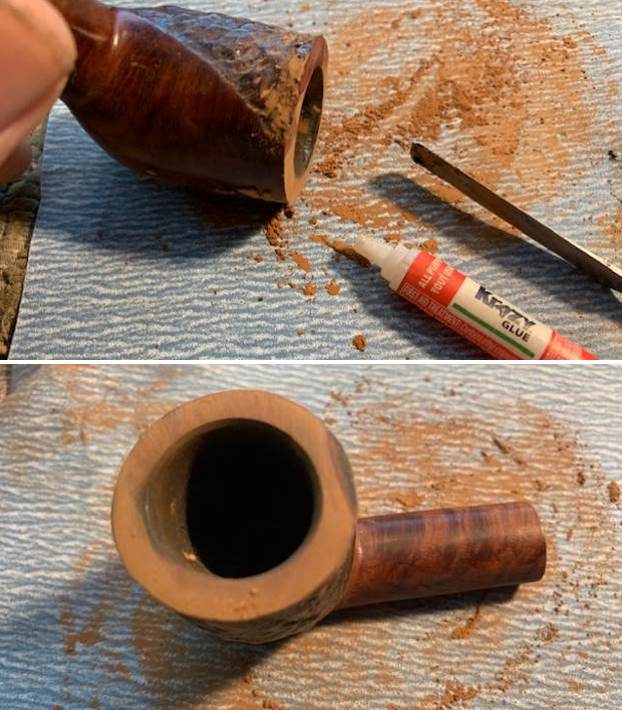
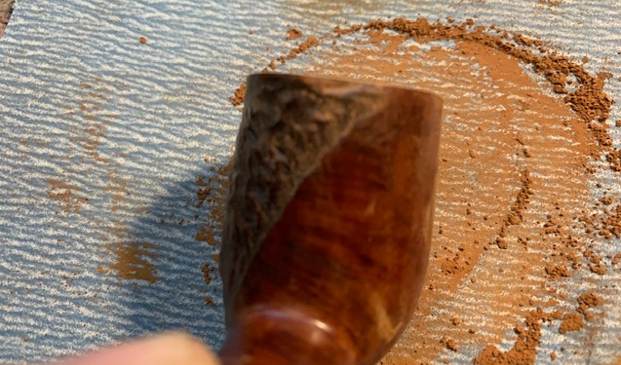
I reamed the pipe with a PipNet pipe reamer using the first three cutting heads to take the cake back to bare briar. I cleaned up the bowl walls with a Savinelli Fitsall Pipe Knife and removed the remaining spots of cake. I sanded the bowl walls with a piece of 220 grit sandpaper wrapped around a piece of briar. The bowl interior looked very good and the walls showed no damage. I cleaned out the interior of the shank and the stem with alcohol, pipe cleaners and cotton swabs. I worked over the interior until the cleaners came out clean. The pipe smelled and looked clean.With the pipe cleaned it was time to clean up the damaged rim top and edges. I topped the bowl with 220 grit sandpaper on a topping board. Once it was smooth I worked over the inner edge of the rim with a folded piece of 220 grit sandpaper. I gave the inner edge a slight bevel to minimize the damage. I rebuilt the back outer edge of the rim with clear CA glue and briar dust as well as the damaged inner edge at the front of the bowl. I topped the rim top again with 220 grit sandpaper to smooth it out and blend it in. I smoothed out the inner edge and outer edge with 220 grit sandpaper.  I wiped down the bowl sides with acetone to break the varnish/lacquer coat on the smooth and rusticated portions of the bowl to remove it and leave the finish clean. I polished the bowl sides, the top and inner edge of the bowl with micromesh sanding pads – dry sanding with 1500-12000 grit sanding pads. I wiped it down with a damp cloth after each pad to remove the debris. The smooth finish and the rustication took on a rich glow. The rim top and edges looked better and polished well. I worked some Before & After Restoration Balm into the briar with my finger tips and into the rustication with a shoe brush. The product works to clean, revive and protect the briar. I let it sit on the pipe for 10 minutes then buffed it off with a soft cloth.  I polished out the tooth chatter and marks on the stem with micromesh sanding pads – dry sanding it 1500-12000 pads. I wiped it down with some Obsidian Oil each pad to remove the dust and polishing debris. I polished it with Before After Pipe Polish – both Fine and Extra Fine. I gave it a final coat of Obsidian Oil and set it aside to dry.  I put a new Maple Distillator tube in the metal tenon and took a photo. This system works amazingly well and delivers a smooth dry smoke and allowing the free insertion of a pipe cleaner in the stem.  This is another pipe that I am really happy about the look of the finished restoration. This reborn Brigham P203 2 Dot Promotional Oval Shank Billiard turned out really well. I think that it really is a great looking pipe with a great shape and grain. The rebuilt rim top and cleaned up inner edge came out very well. The combination of the smooth finish and rusticated patches look good.. The polished black of the stem works well with the briar. The briar really came alive with the buffing. The rich brown stains of the finish make the grain really pop with the polishing and waxing. I put the stem back on the bowl and buffed the pipe with Blue Diamond on the buffing wheel. I gave the bowl and the stem multiple coats of carnauba wax on the buffing wheel. I buffed the pipe with a clean buffing pad to raise the shine. I hand buffed the pipe with a microfiber cloth to deepen the shine. The finished Brigham Promotional Oval Shank Billiard really feels great in the hand and it looks very good. Give the finished pipe a look in the photos below. The dimensions of the pipe are Length: 5 ¾ inches, Height: 1 ¾ inches, Outside diameter of the bowl: 1 ¼ inches, Chamber diameter: 7/8 of an inch. The weight of the pipe is 35 grams/1.23 oz. The pipe will be going on the rebornpipes store soon. It will be in the Canadian Pipe Makers Section if you would like to add it to your collection. Thanks for reading this blog and my reflections on the pipe while I worked on it. It was a fun one to work on!

What a Mess – a BB&S Challenger 5279 Pot


Blog by Steve Laug

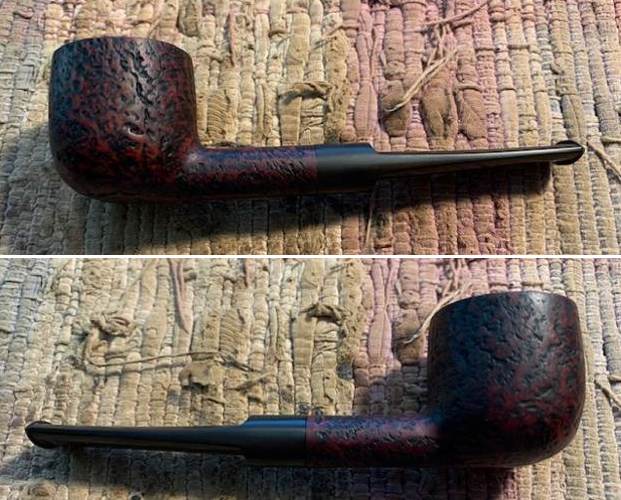
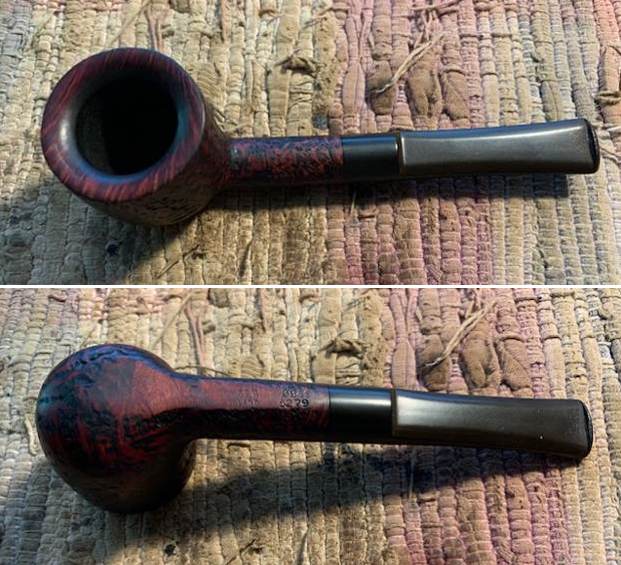
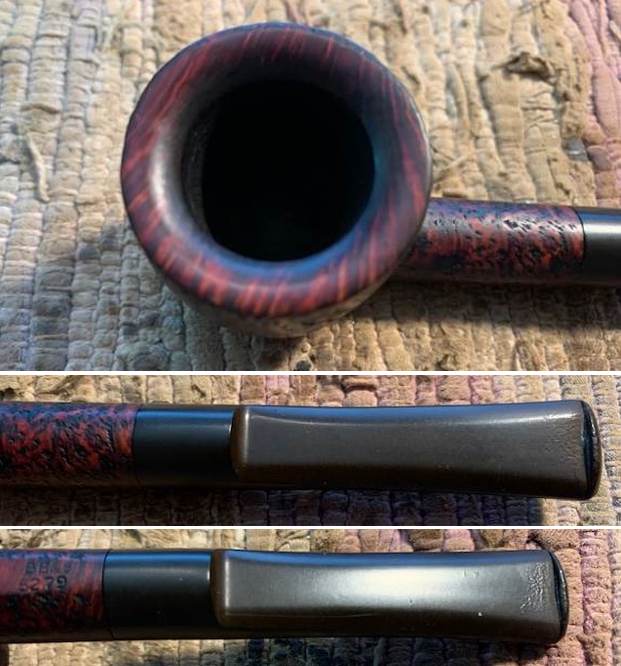
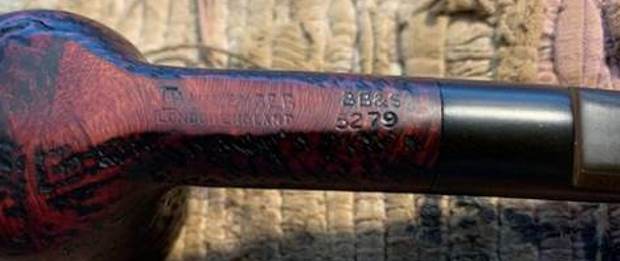
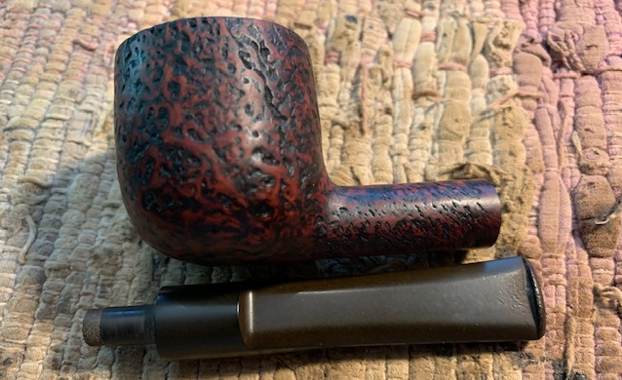
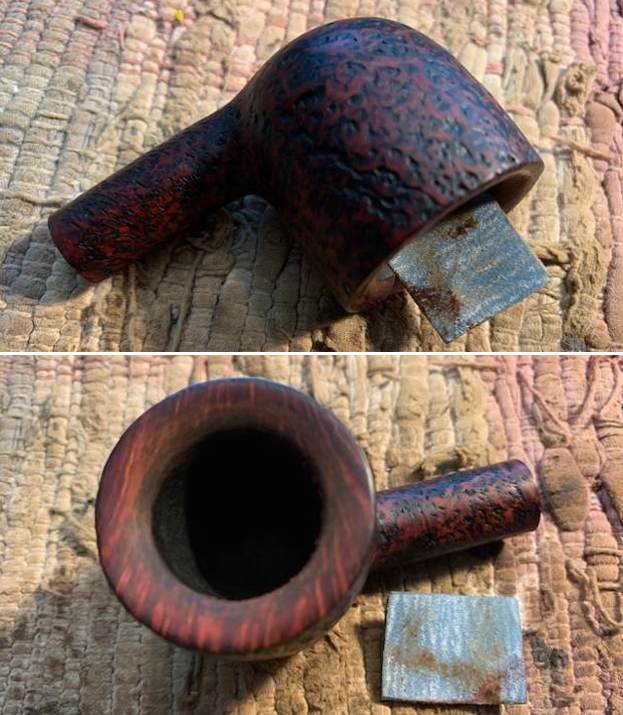
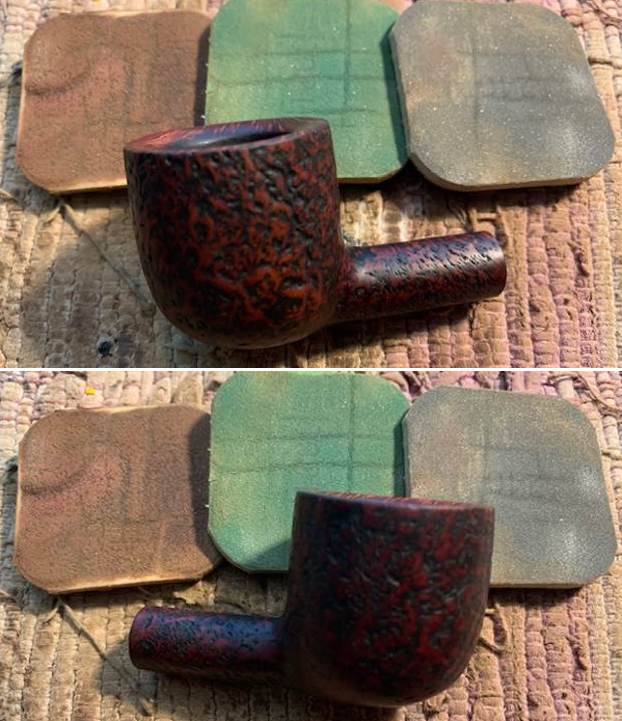
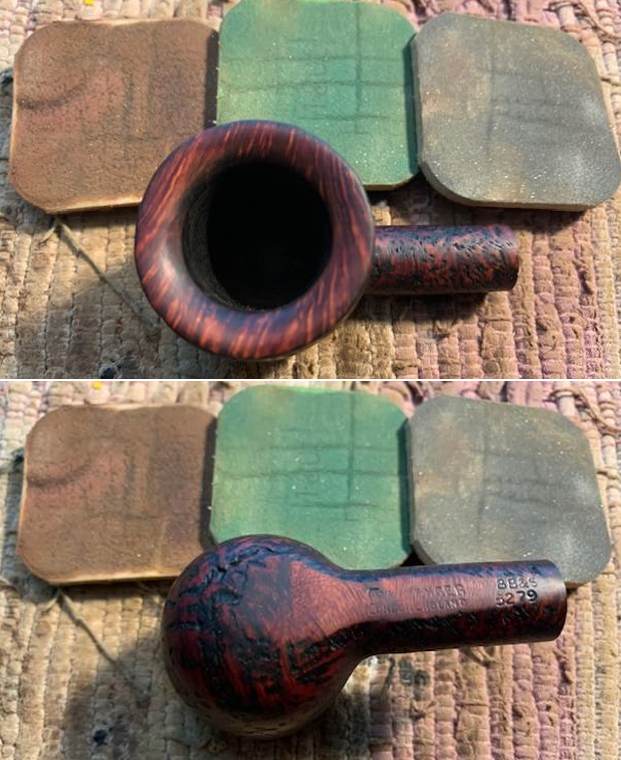
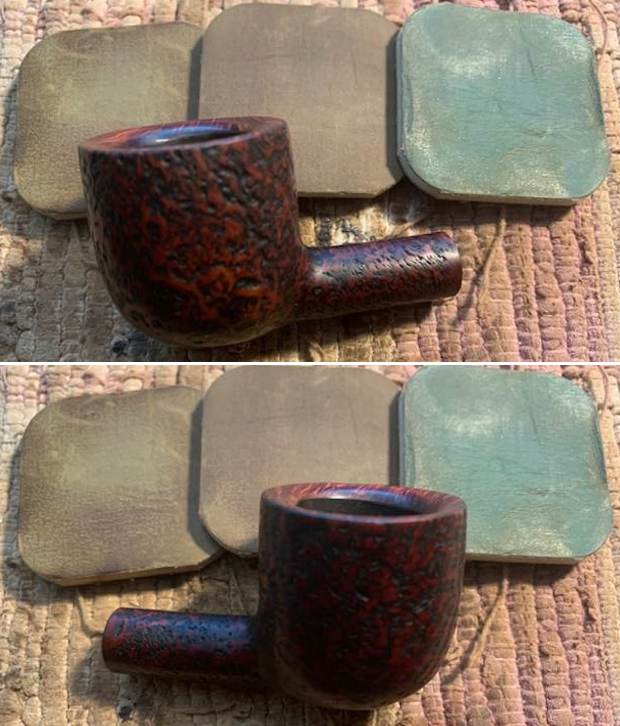
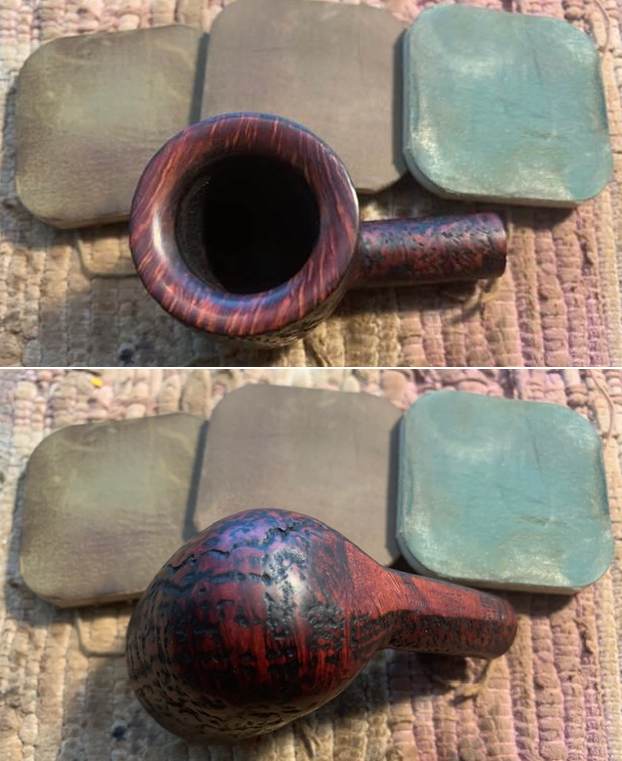
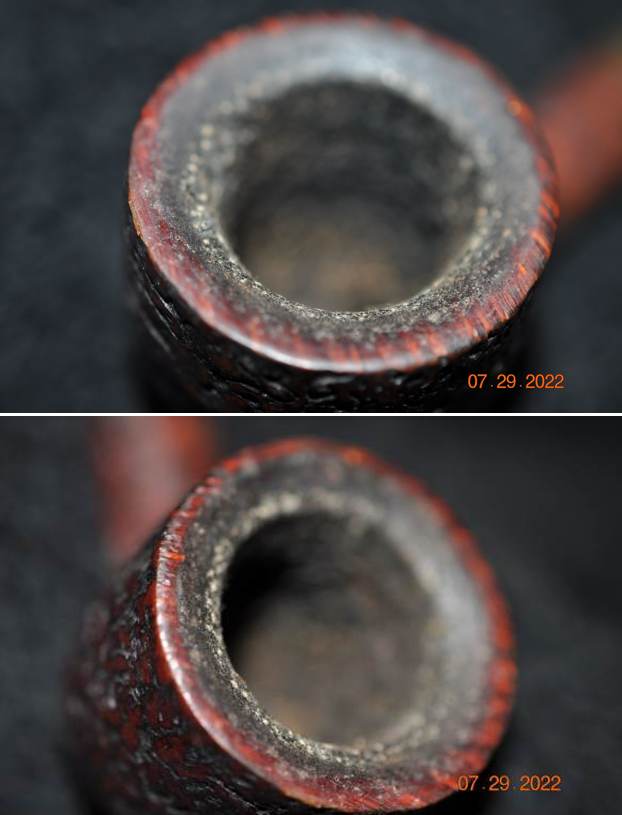
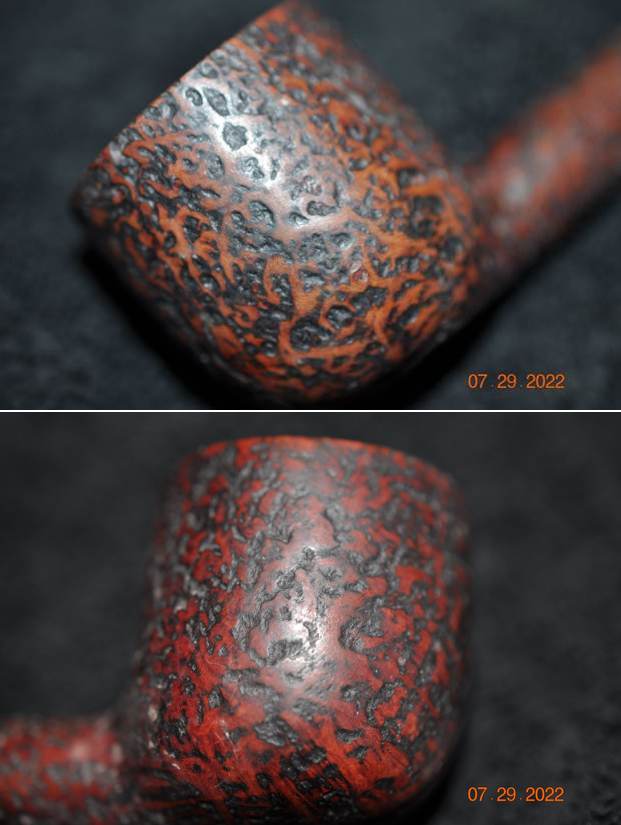
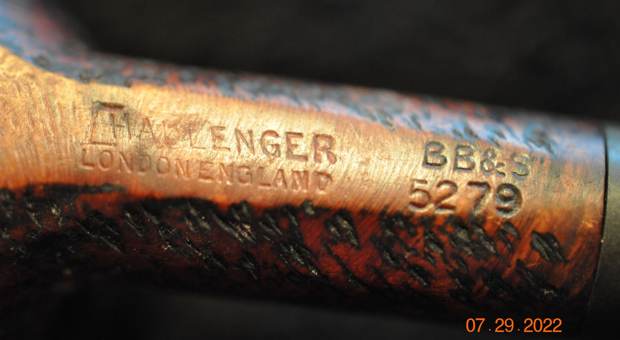
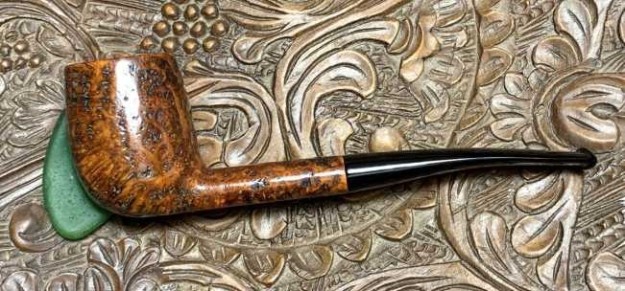
The next pipe on the worktable is a uniquely finished rusticated pot. It has a mixed finish – strange rustication with large spaces of smooth finish on the bowl and shank. There is something about the finish that is quite beautiful even through the grime. It was purchased on 05/25/22 from an antique mall in Portland, Oregon, USA. The shape of the pipe is a classic flat bottom Pot. It was stamped on the underside of the shank on a smooth panel. It reads Challenger [over] London England. That is followed by BB&S over the shape number 5279 next to the shank/stem junction. The finish was dirty with dust and grime ground into the nooks and crannies of the rustication. There was a thick cake in the bowl with tobacco debris on the bowl walls. There was a lava overflow on the inwardly beveled rim top. The inner edge of the rim was covered so thickly in lava it was hard to know what was underneath. The vulcanite saddle stem was calcified, oxidized and had tooth marks and chatter ahead of the button on both sides. Jeff took some photos of the pipe before he started to work on cleaning it up for us. Jeff took photos of the rim top and the stem to show the condition of the pipe when we received it. You can see the thick cake in the bowl and the heavy coat of lava on the inwardly beveled rim top. The stem is calcified and oxidized with light tooth chatter and marks on both sides near the button. He took photos of the sides of the bowl and the heel to give an idea of the shape and the condition of the briar around the bowl. It really is a great looking Pot with a very unique rustication finish on the bowl and shank. The next photo Jeff took shows the stamping on the underside of the  shank. It is clear and readable as noted above.  I remembered that Dal had written about a BB&S Challenger he had restored on the Pipesteward blog so I looked it up to see what he had learned about the  brand when he had worked on it and written his blog. Here is the link (https://thepipesteward.com/2022/07/13/renewing-a-barling-bbs-challenger-london-england-5589-billiard/). Here is a photo of the BB&S Challenger that he worked on finished and looking good. I am using his research on the brand and the stamping and have included it below. Thank you Dal for your work and the time it save me in redoing it! He wrote:
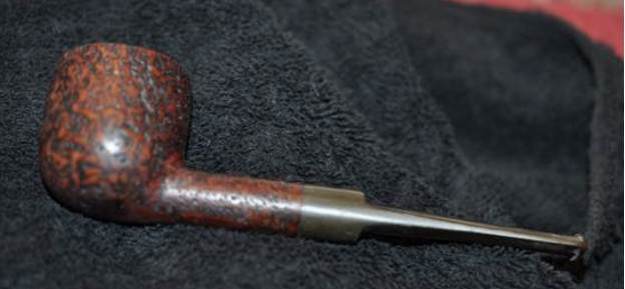
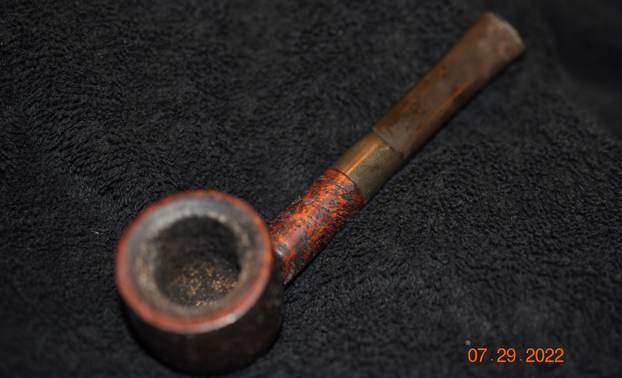
BB&S is noted in Pipedia with this brief entry (https://pipedia.org/wiki/BB%26S).

BB&S, which stood for Bill Barling & Sons, was a transition era Barling sub-brand. Among their lines were the Challenger, Rallye and Londoner. For more information see Barling.

He then turned to the section on Barling:

The history of the Barling name goes back to the 1700s when the Barling name was associated with silversmiths in England.  Benjamin Barling, according to the Pipedia Barling article, applied the silversmith trade to “outfitting meerschaum bowls with exquisite silver mountings.”  The founding of the B. Barling and Sons followed in 1812.  The Barling history is full as it developed and grew through the 1800s and into the 1900s.  The family-owned business continued until October 3, 1960, when the business was sold to the largest client of the Barlings, Finley.  The Pipedia article drills in more detail describing and defining the ‘eras’ of the Barling name.  Here is what is said about the eras, but the author makes the disclaimer that it’s not as straightforward as it appears:

Pre-Transition: 1812 (or 1815) thru October 3rd, 1960.
On that date, the Barling family sold their business to Finlay, their largest client.

Transition: Late 1960 thru February 1963.
Finlay was 40% owned by Imperial Tobacco. Imperial Tobacco had an option to purchase the remaining shares of Finlay, which it did in February of 1963. When Finlay was absorbed, Barling came under direct control of Imperial Tobacco.

Post-Transition Era: Early 1963 and later.
Imperial ran the business; some say into the ground. They closed the Barling factories in 1970 and outsourced the production of pipes, first to several English makers, and then later to Nording, etc. In 1980 Bucktrout purchases the rights to the Barling name and Barlings have shown up as relatively cheap pipes made by Peterson.

Though we now have Eras whose duration is linked to the *public record, it’s still not simple and here’s why.

The author of the Pipedia Barling article goes on to describe how when the Barlings sold the business to Finlay in 1960 ushering in the beginning of the ‘Transition Era’, the Barlings continued to operate the business for Finlay.  During this period of 20 months, pipes continued to be produced with no changes to the nomenclature.  The result of this was having no way of determining which pipes were produced under the Barling ownership before the transition period and those pipes produced during the transition, under new ownership.

For this reason, the Pipedia author proposes an alternative method of dating Barling pipes:

  • Family Era 1912 – 1962: Pipes made by the Barling family while it either owned or managed B. Barling & Sons.
  • Corporate Era 1962 – the Present: Pipes made after the family left off managing the company, beginning with the revised product grades and revised nomenclature that were introduced in the 1962 Dealers’ Catalog.

It is interesting also to note that the Pipephil.eu Barling entry identifies the transition period from the Barling family era to the later corporate era as dated from 1961 to 1967. There are differences in era dating from different sources, but with the B.B&S Challenger on the table now, which is not a Barling stamped pipe but a second brand line most likely put out by Barling during the early transition period dating this pipe somewhere from 1960 to 1962. In the Pipedia entry quoted above for BB&S, there are 3 lines put out during this time: Challenger, Rallye, and Londoner.

Pipephil has a helpful entry on BB&S with the panel.The ‘Challenger London England’ pictured on the top of the panel, matches the Challenger on the table.  The nomenclature on the panel is crisp showing what cannot be seen clearly on the Challenger on the table.
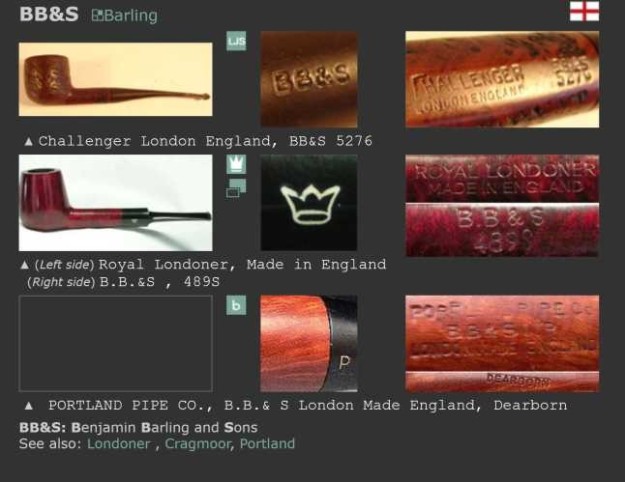
The author of the Pipedia Barling article makes one additional observation that helps to corroborate the sense that the BB&S Challenger on the table was indeed in the transition period, but more likely in the earlier part of the transition era – under the Finlay ownership commencing in 1960:

Initially, Finlay’s management used the remaining stock of bowls that were turned by the original family run company, and then proceeded to turn more bowls with old wood remaining in inventory, and at least initially, this work was performed by many of the same craftsman. Under Finlay’s management the factory continued to turn out a quality product. Production was expanded to produce a greater number of own name brands for Finlay and Bewlay, as well as the production of pipes for other pipe firms such as Colibri, Falcon, and Ronson. Also, several lines of “seconds” were developed, amongst them Portland, BB & S, Cragmoor, and London Brand.

Here, the ‘seconds’ are described during the Finlay ownership included ‘BB&S’. It would seem, therefore, that ‘Challenger’ is a line of the second, BB&S.

One last additional piece of information that is of interest. The Barling 4-digit numbering system was introduced in the June 1962, publication of the 150th Year Anniversary Catalogue which was still under Barling management, but owned by Finlay.

Here the number system is explained:

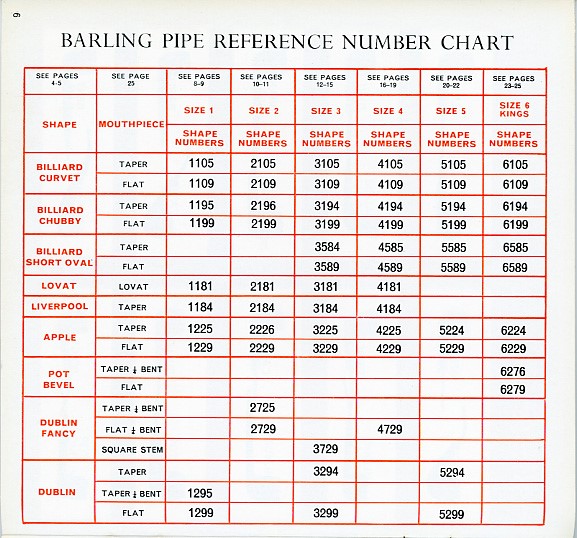
It is in the 150th Anniversary catalog that the new numbering system first appears. The new numbering system was introduced while the Barling family managed the business. The price list explains that the new number designates size.

The BB&S Challenger ‘shape number’ reflects this new Barling system. The first digit represents the size followed by a shape designation. The ‘Barling Pipe Reference Number Chart’ (https://pipedia.org/wiki/File:1962_Barling_Retailers%27_Cat_size_chart.jpg) below was taken from the ‘Retailers Catalogue’ which was also published in 1962, but later in the year. Note in the chart below, going horizontally, the sizes are from 1 to 6 representing an increasing size designation (‘1’ was introduced in this later catalogue)…The BB&S pipe I am working on is a 5279 which is not listed in the chart above. It lists a 6279 which is a SIZE 6/KING SIZE pipe. The description “Pot Bevel” Flat stem works and the 5 preceding the 279 number tells me the pipe is a SIZE 5 Pot Bevel. Thanks Dal for the help on this! Now it was time to work on the pipe!
Jeff had cleaned up the pipe following his normal cleaning process. In short, he reamed the bowl with a PipNet pipe reamer and cleaned up the reaming with a Savinelli Fitsall Pipe Knife.  He scrubbed the smooth bowl with undiluted Murphy’s Oil Soap with a tooth brush. He worked over the lava and debris on the rim top and was able to remove it. He rinsed it under running warm water to remove the soap and grime. He cleaned out the inside of the shank and the airway in the stem with alcohol, cotton swabs and pipe cleaners. He scrubbed the stem with Soft Scrub and cotton pads to remove the debris and oils on the stem. He soaked it in a bath of Briarville’s Pipe Stem Deoxidizer to remove the oxidation. He rinsed it with warm water and dried it off. I took photos of the pipe once I received it. It really looked good. I took close up photos of the stem and the rim top to show both how clean they were and what needed to be addressed with both. The rim top and bowl edges look better but the inner and outer edge was damaged on the front of the bowl. The stem looked better and the tooth marks and chatter was very light.  I took a photo of the stamping on the underside of the shank. You can see from the photo that it is clear and readable. I removed the stem from the bowl and took a photo of the parts to give a sense of the uniqueness of the finish on the pipe.I started my work on the pipe by addressing the darkening on the back inner edge of the bowl with a folded piece of 220 grit sandpaper. I worked on the inward bevel to clean up the top. It looked significantly better. I polished the smooth high spots on the bowl sides and the inner edge of the bowl with micromesh sanding pads – dry sanding with 1500-12000 grit sanding pads. I wiped it down with a damp cloth after each pad to remove the debris. The rustication took on a rich glow.   I worked some Before & After Restoration Balm into the briar with my finger tips and into the rustication with a shoe brush. The product works to clean, revive and protect the briar. I let it sit on the pipe for 10 minutes then buffed it off with a soft cloth.  I set the bowl aside and turned my attention to the stem. I “painted” the tooth marks and chatter on the surface of the vulcanite with the flame of a Bic lighter to lift them. I was able to raise the majority of them with the heat. I sanded out those that remained with 220 grit sandpaper. I started polishing the stem with 400 grit wet dry sandpaper.   I polished out the sanding marks on the stem with micromesh sanding pads – dry sanding it 1500-12000 pads. I wiped it down with some Obsidian Oil each pad to remove the dust and polishing debris. I polished it with Before After Pipe Polish – both Fine and Extra Fine. I gave it a final coat of Obsidian Oil and set it aside to dry.  This is another pipe that I am really happy about the look of the finished restoration. This reborn BB&S Challenger 5279 Pot turned out really well. I think that it really is a great looking pipe with a great shape and grain. The unique wide rustication pattern and the vulcanite saddle stem goes well together. The polished black of the stem works well with the briar. The briar really came alive with the buffing. The rich brown stains of the finish make the grain really pop with the polishing and waxing. I put the stem back on the bowl and buffed the pipe with Blue Diamond on the buffing wheel. I gave the bowl and the stem multiple coats of carnauba wax on the buffing wheel. I buffed the pipe with a clean buffing pad to raise the shine. I hand buffed the pipe with a microfiber cloth to deepen the shine. The finished BB&S Rusticated Challenger Pot really feels great in the hand and it looks very good. Give the finished pipe a look in the photos below. The dimensions of the pipe are Length: 5 ½ inches, Height: 1 ½ inches, Outside diameter of the bowl: 1 ½ inches, Chamber diameter: 7/8 of an inch. The weight of the pipe is 39 grams/1.38 oz. The pipe will be going on the rebornpipes store soon. It will be in the British Pipe Makers Section if you would like to add it to your collection. Thanks for reading this blog and my reflections on the pipe while I worked on it. It was a fun one to work on!