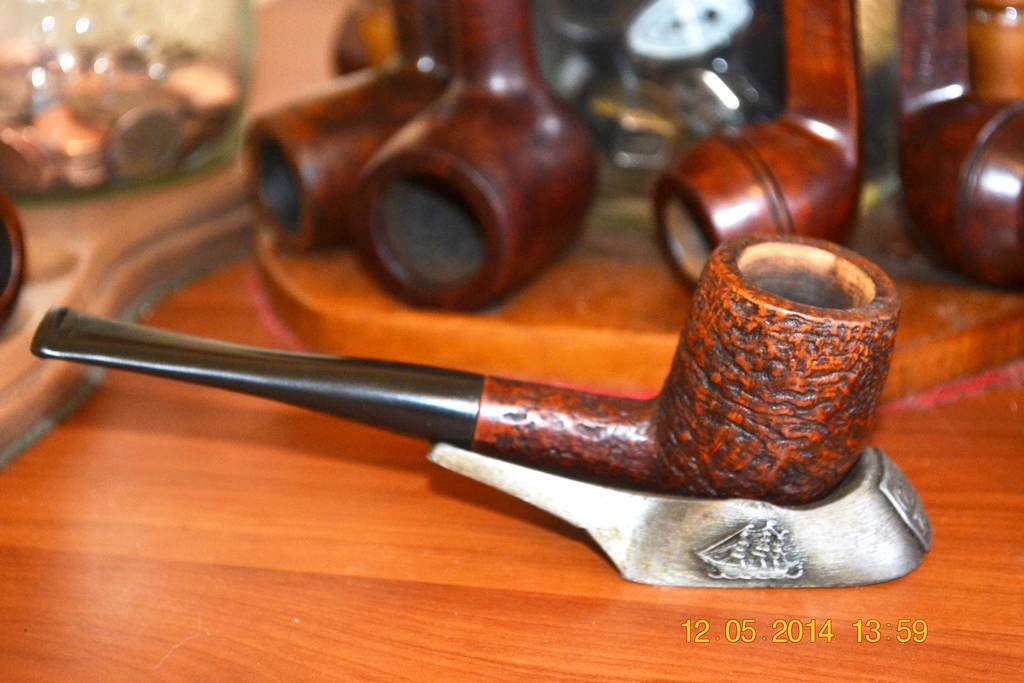
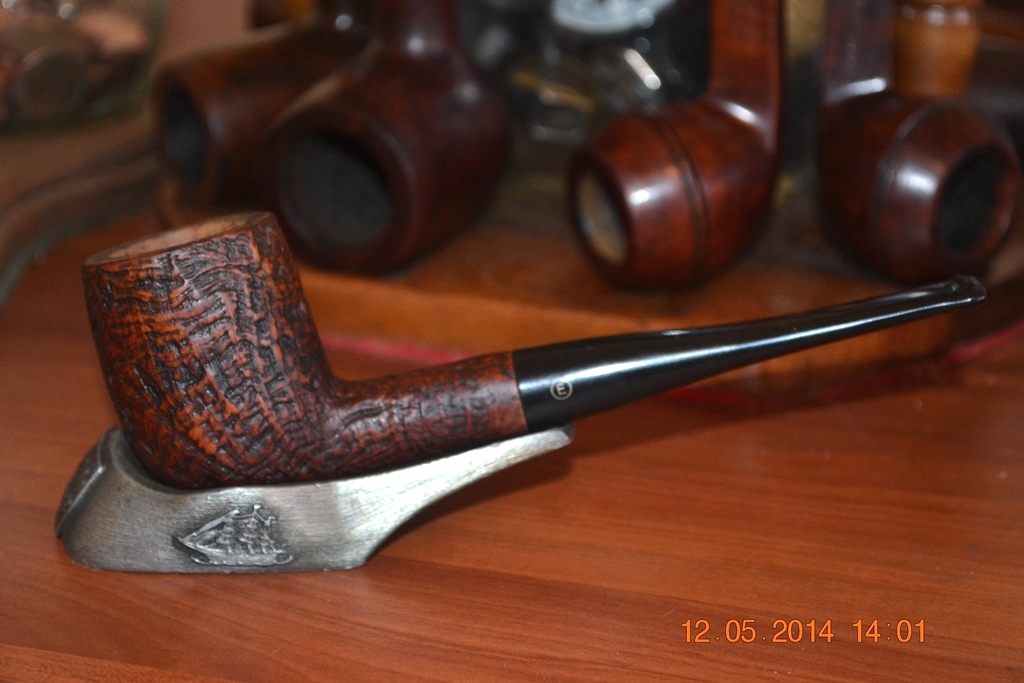
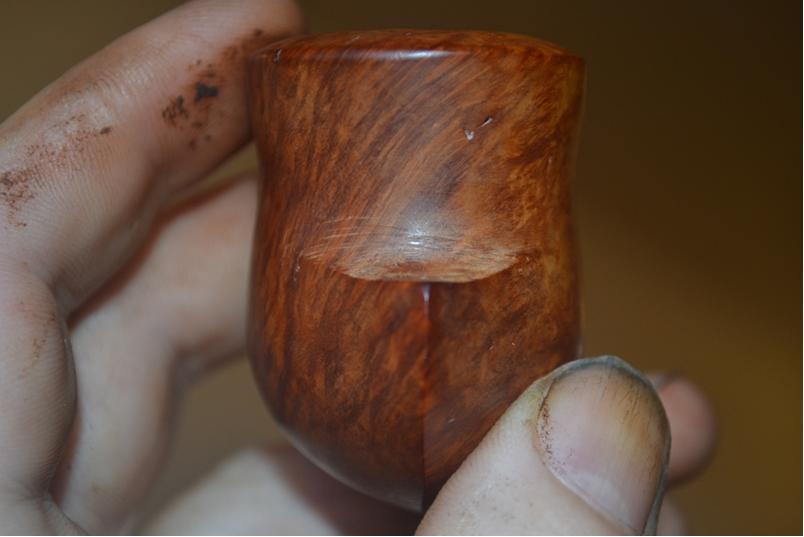
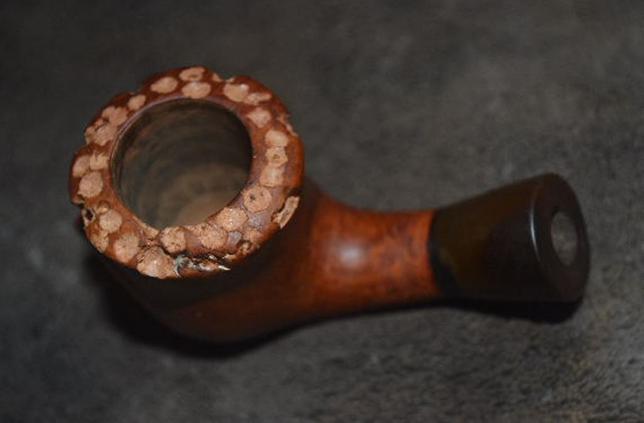
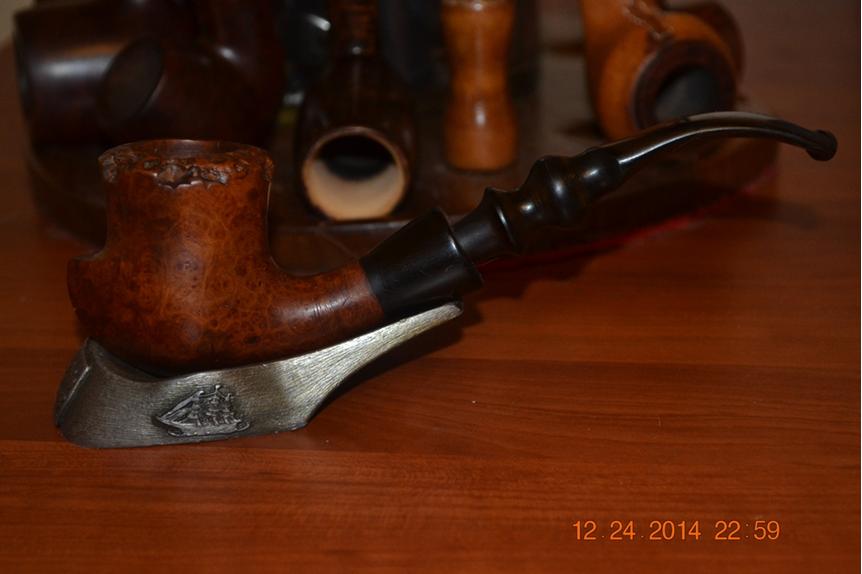
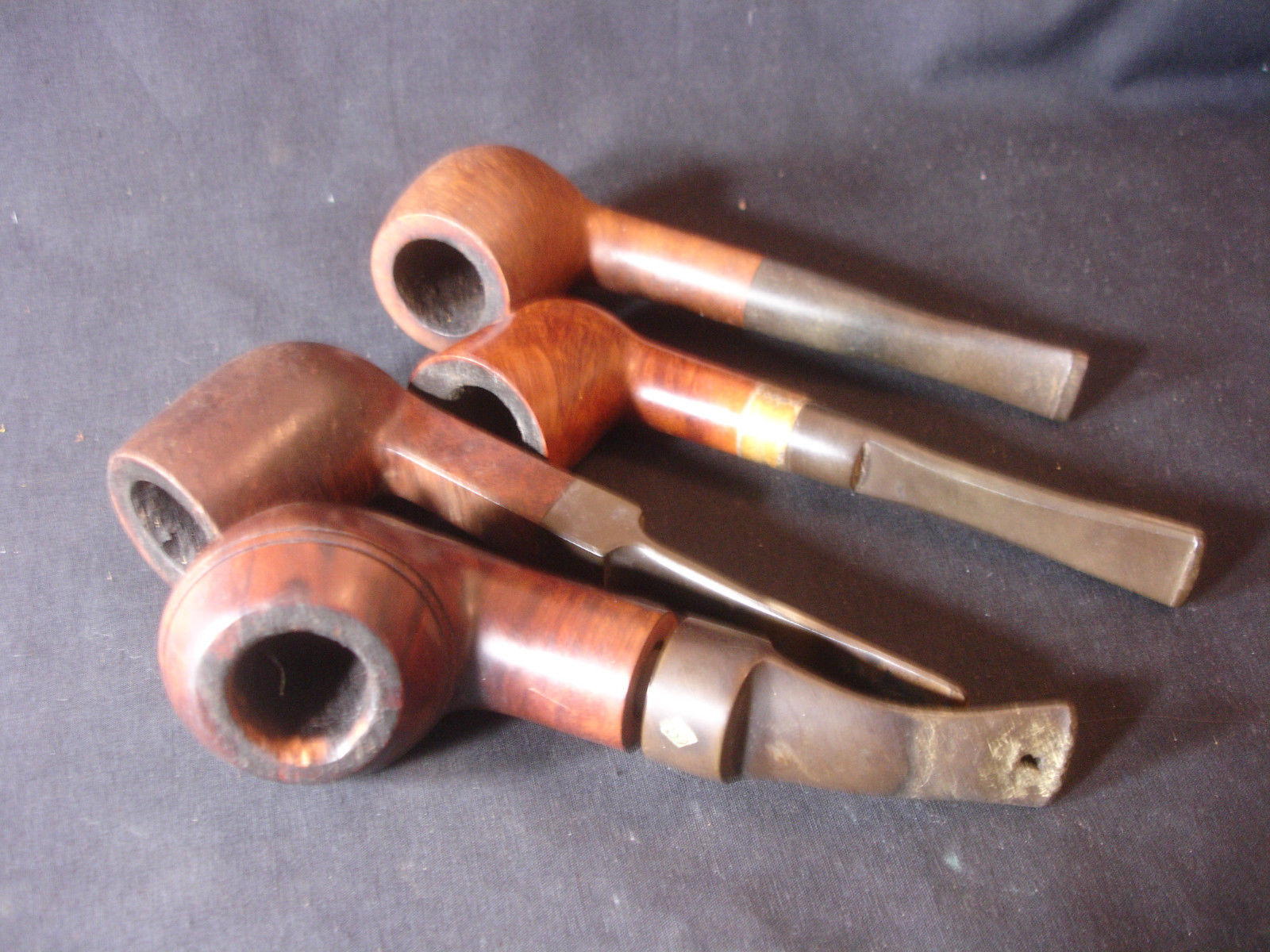
Tag Archives: removing oxidation

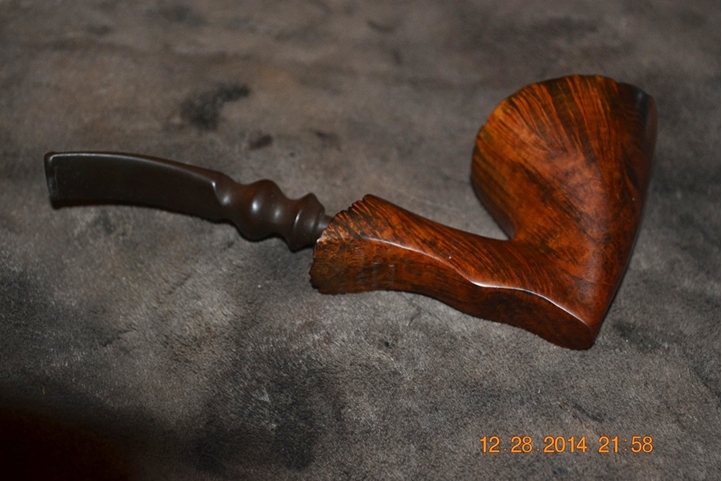
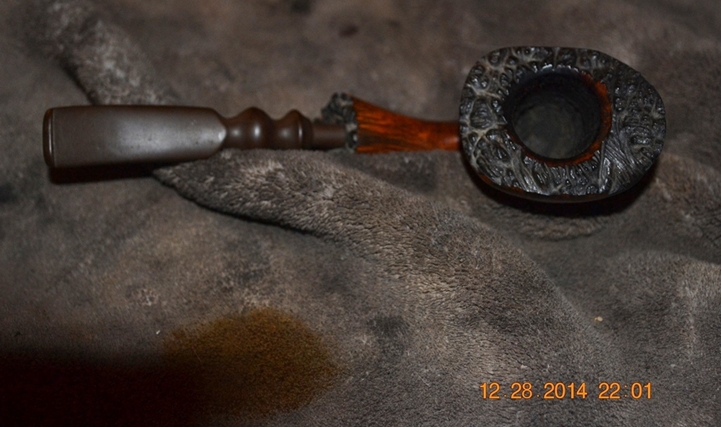
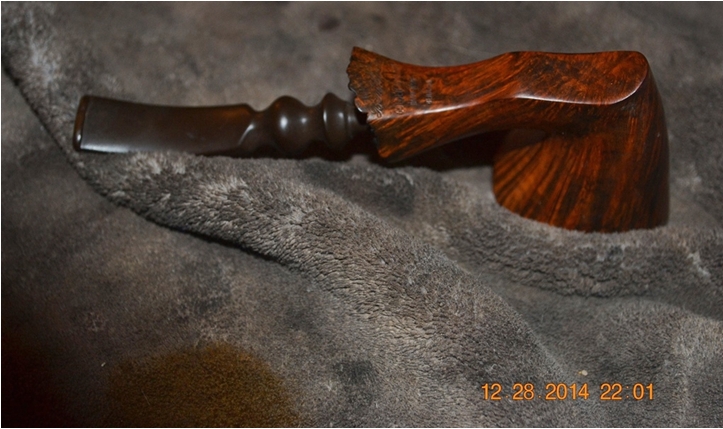
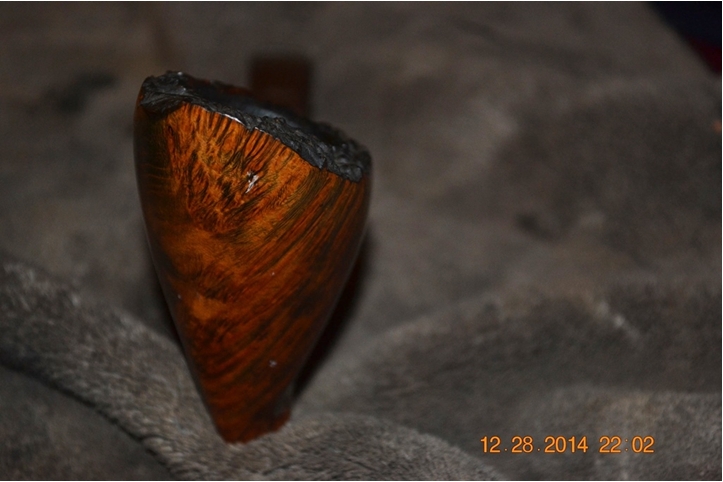
Giving New Life to a Briar Squire Bent Pot – Andrew Selking


Blog by Andrew Selking

This is the second article by Andrew that I have the pleasure of posting on the blog. It is about a well restored Briar Squire bent Pot. Andrew does some beautiful work and it is a pleasure to read and see the results of his work. Thanks Andrew.

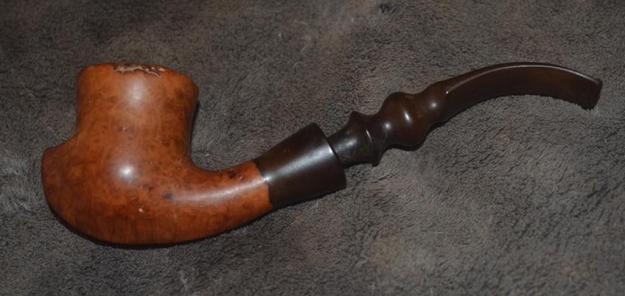
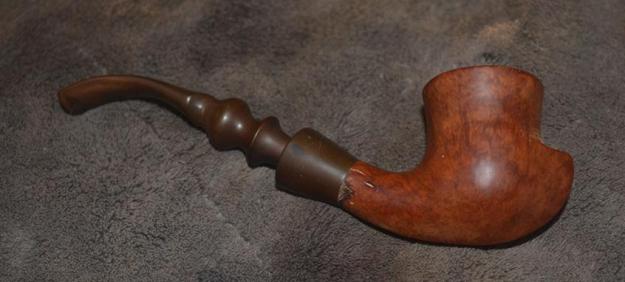
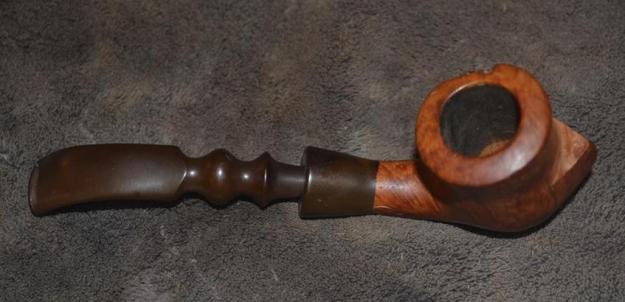
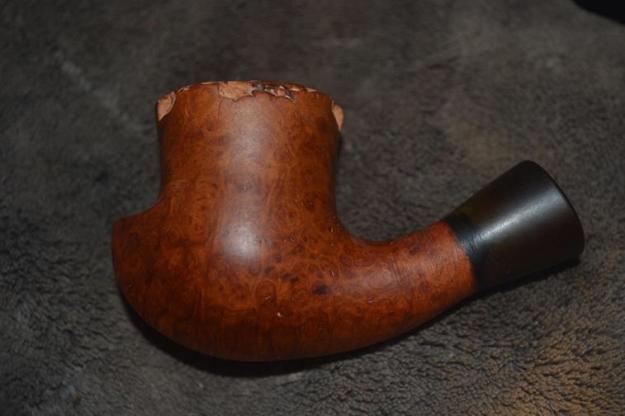
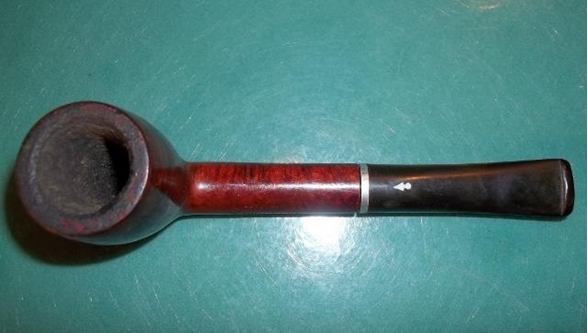
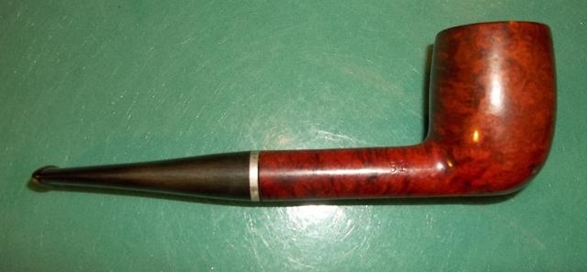
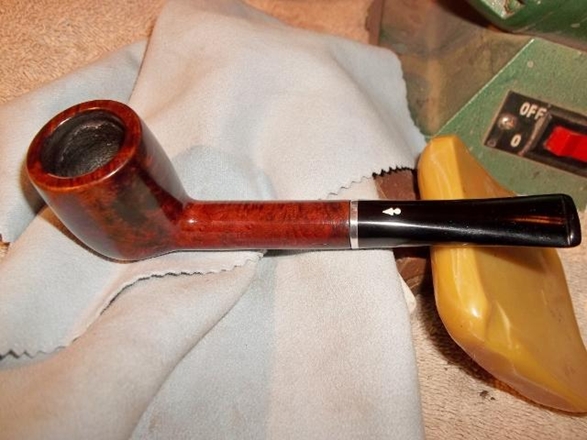
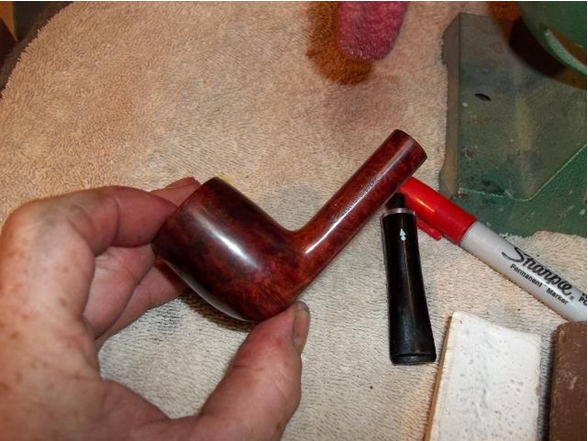
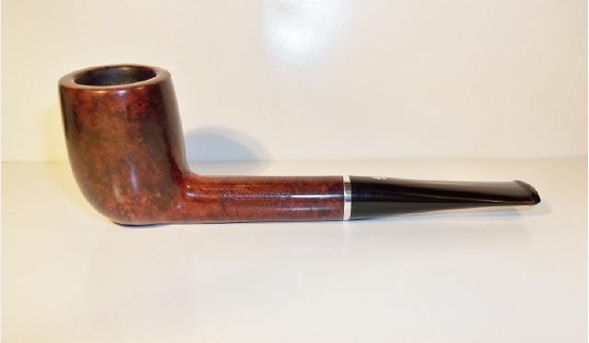
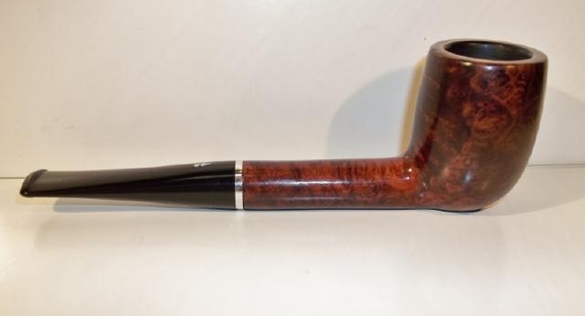
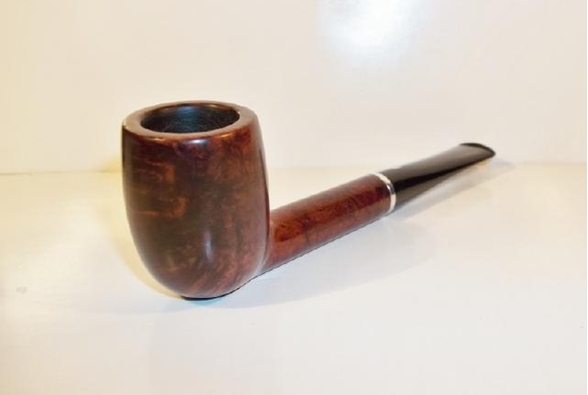
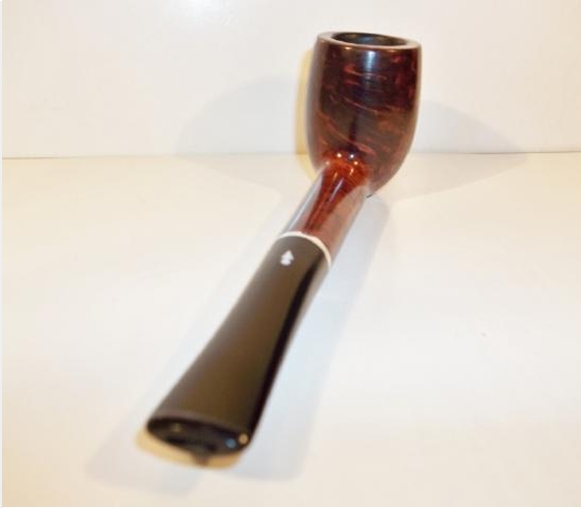
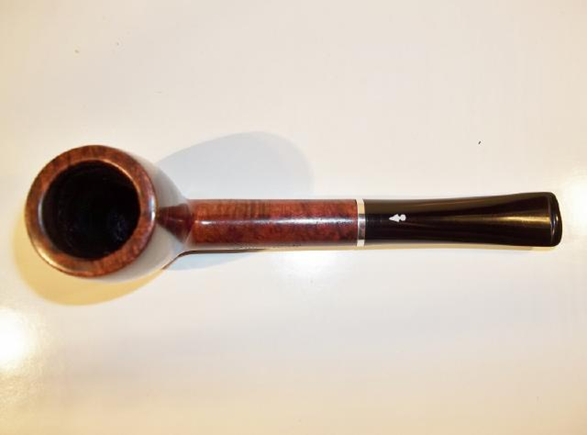
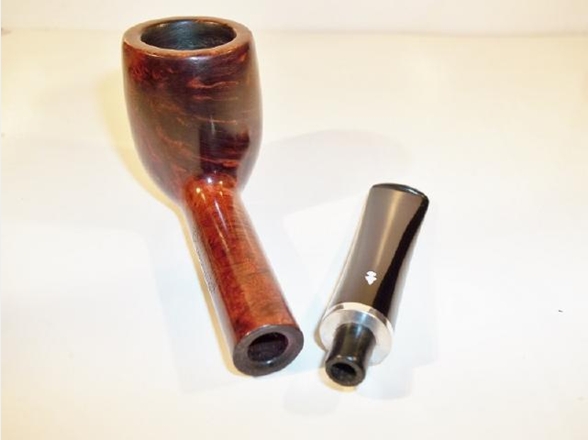
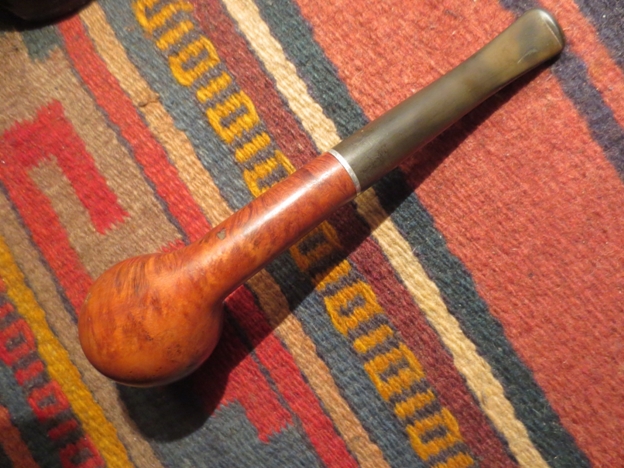
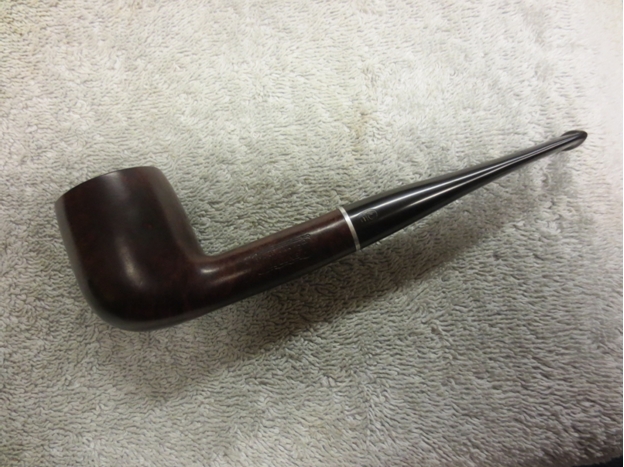
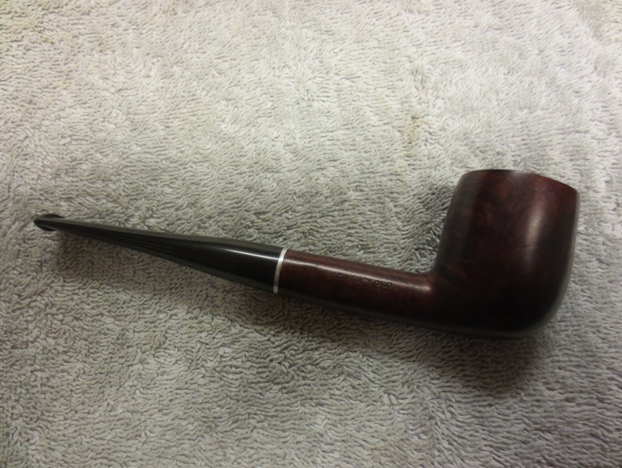
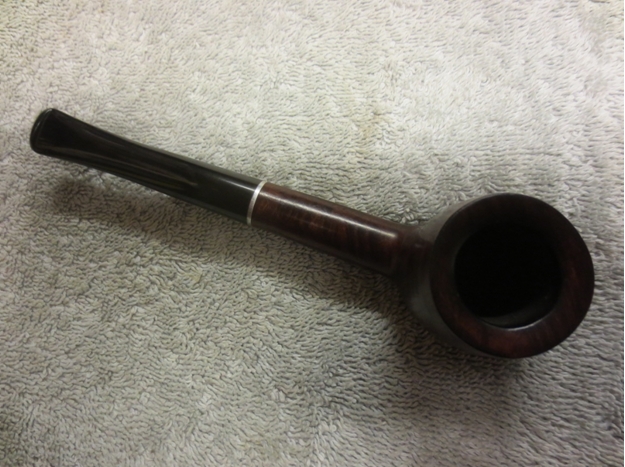
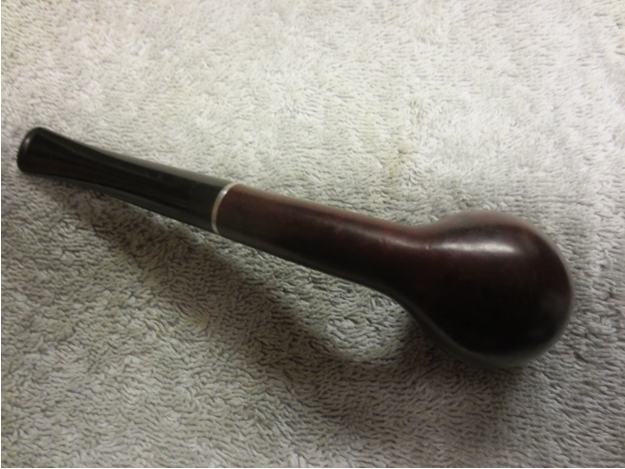
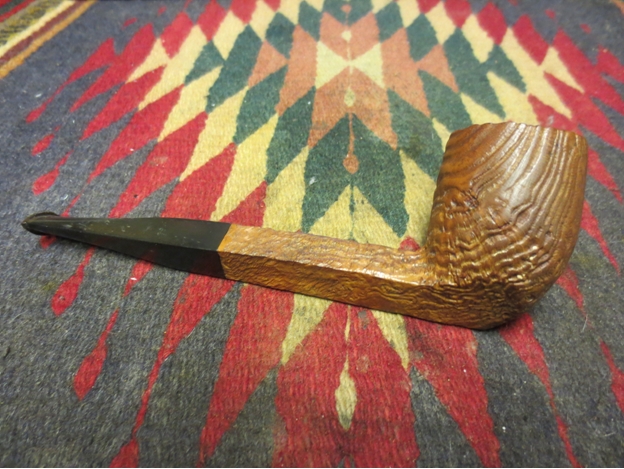
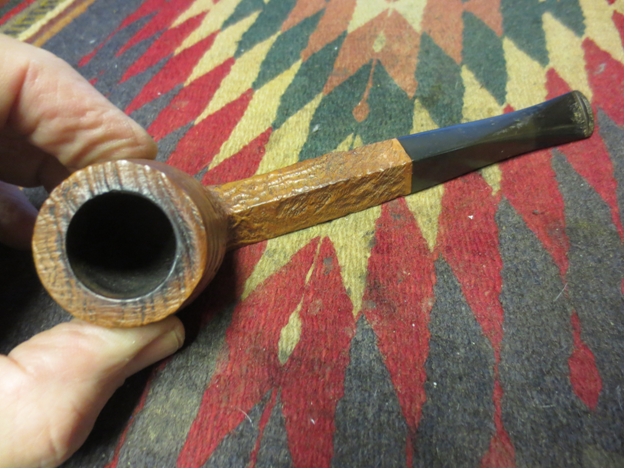
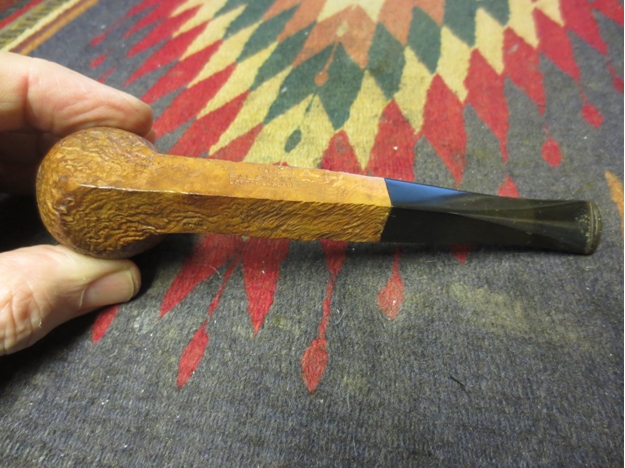
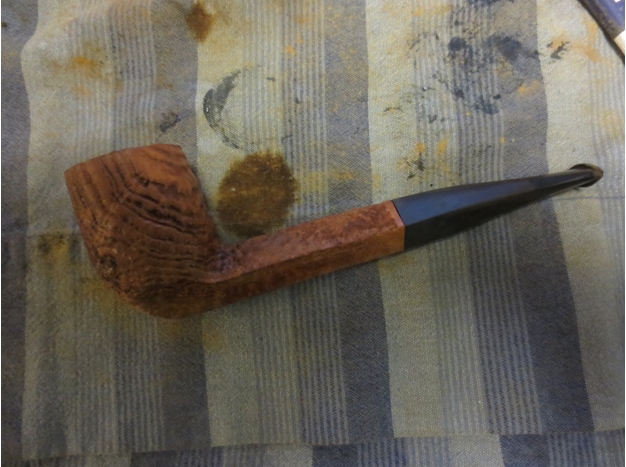
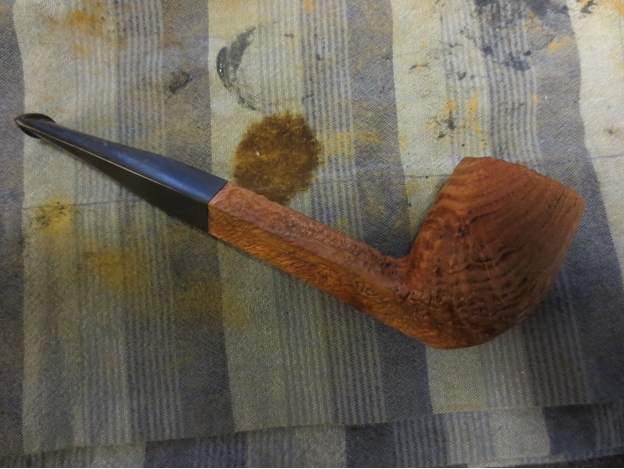
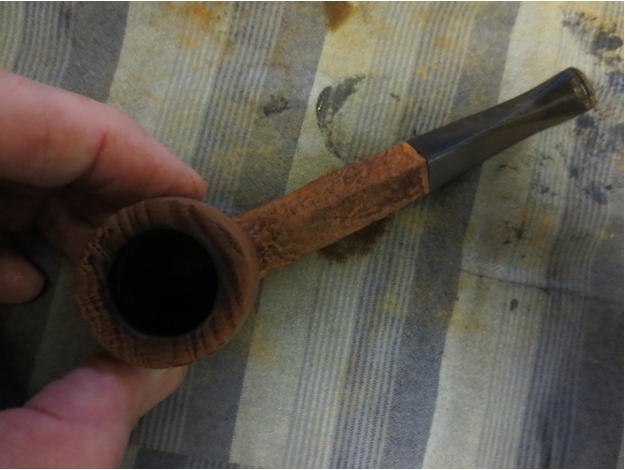
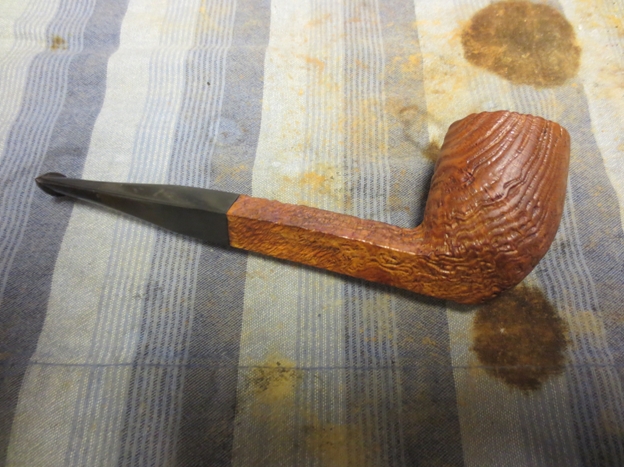
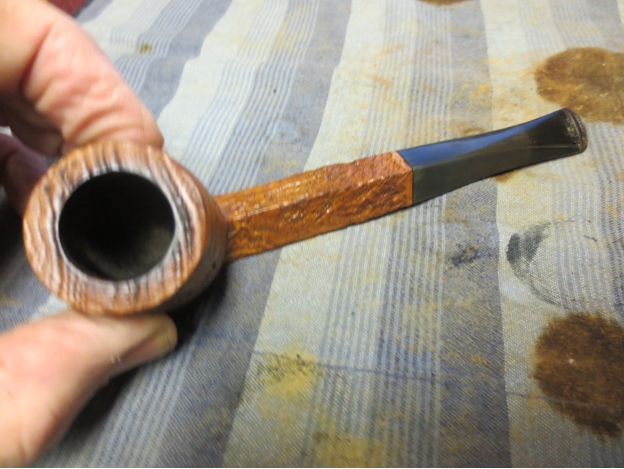
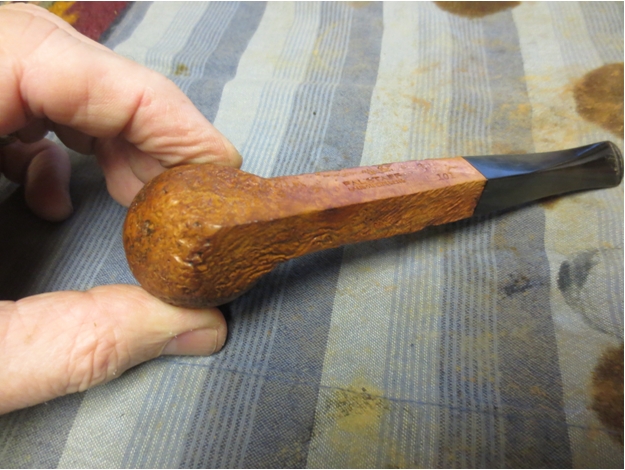
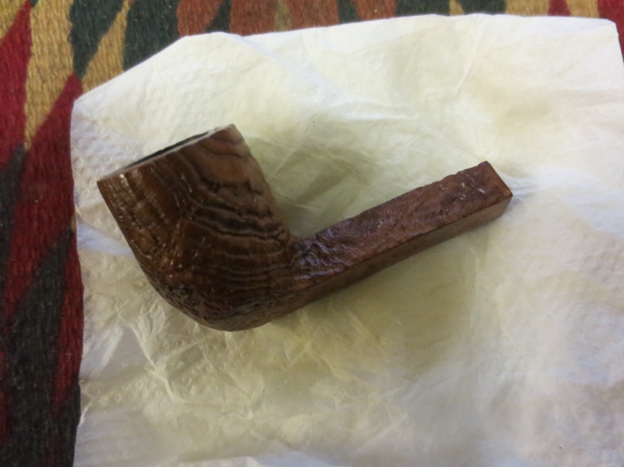
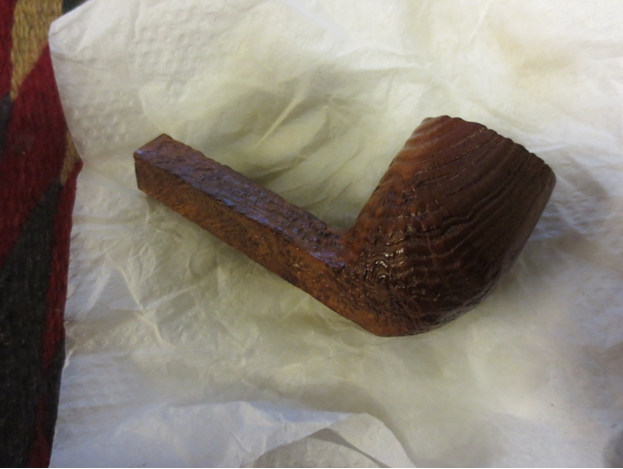
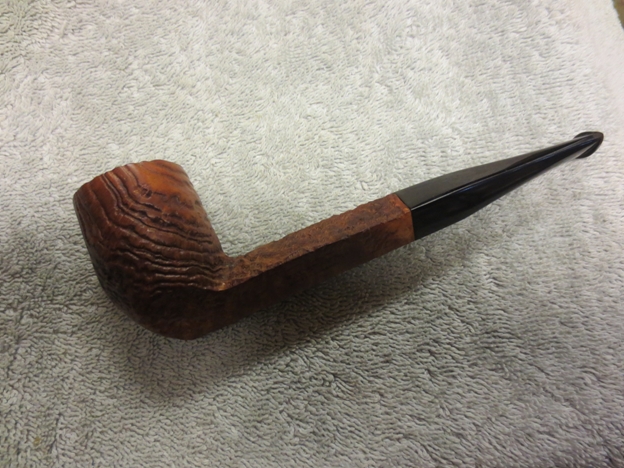
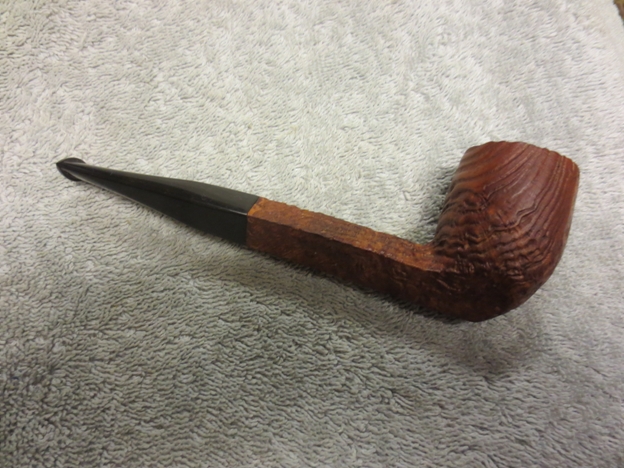
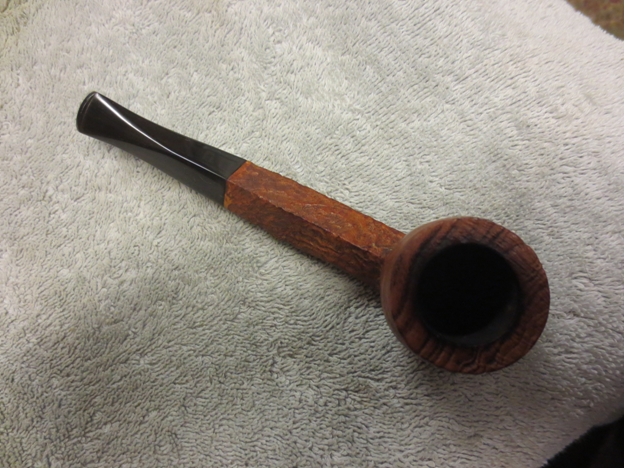
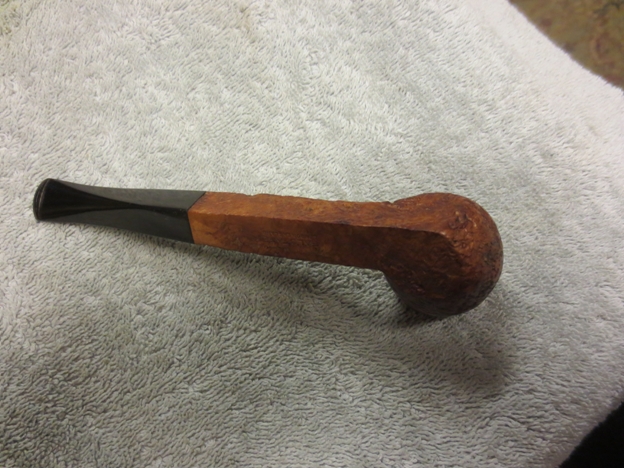
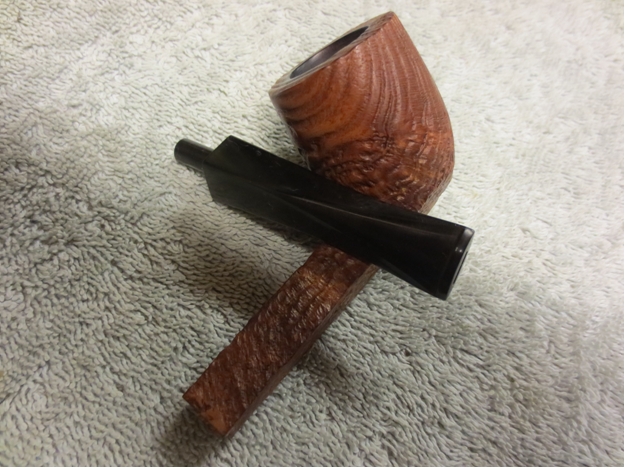
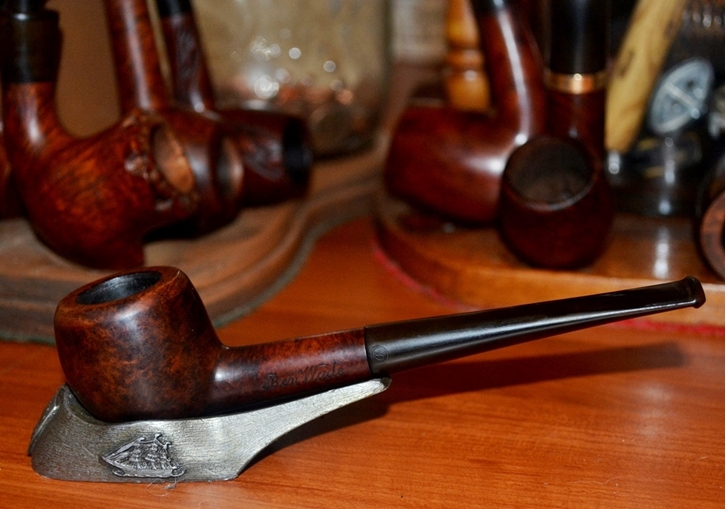
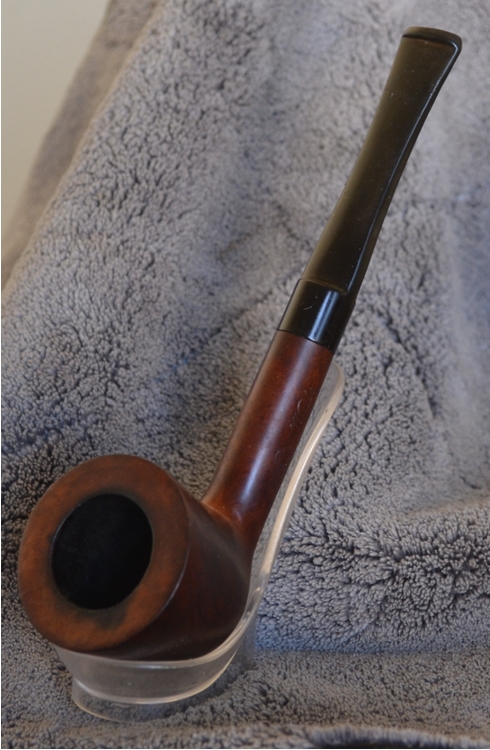
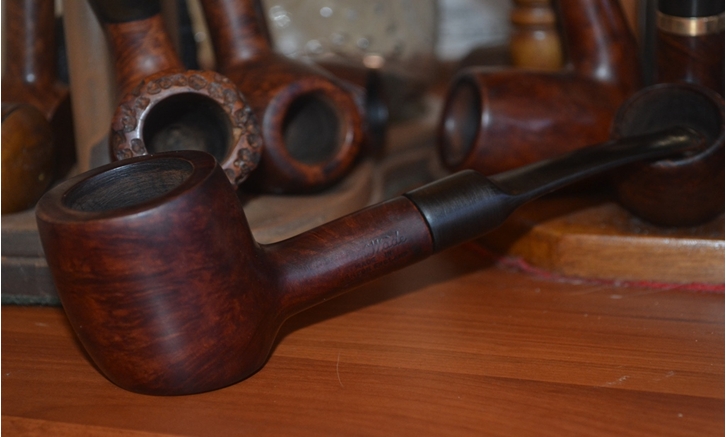
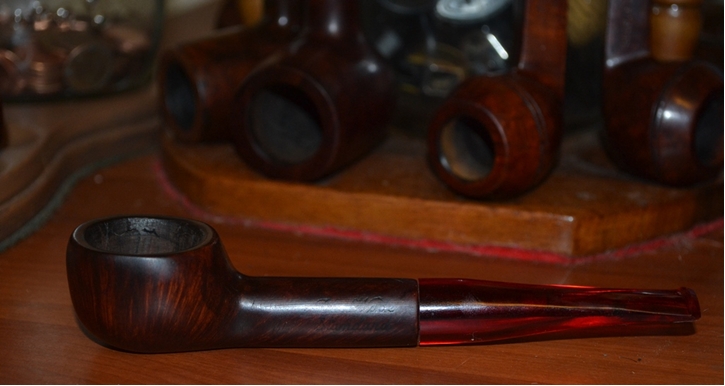
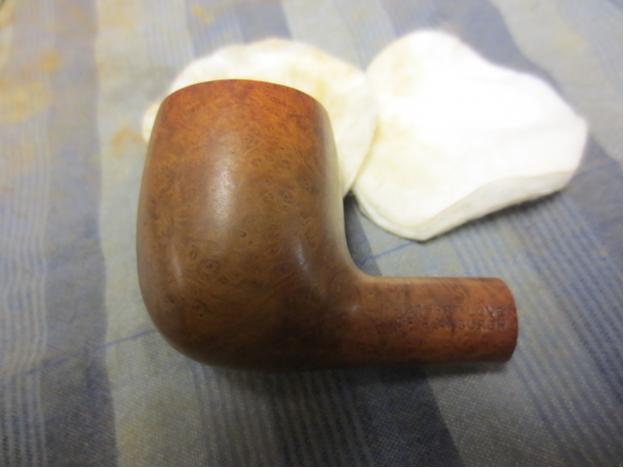
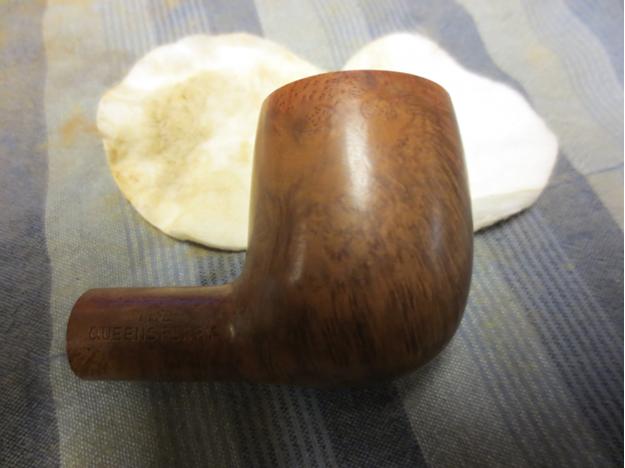
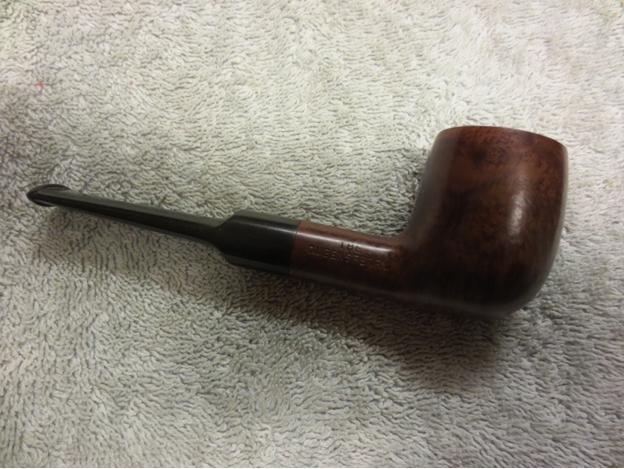
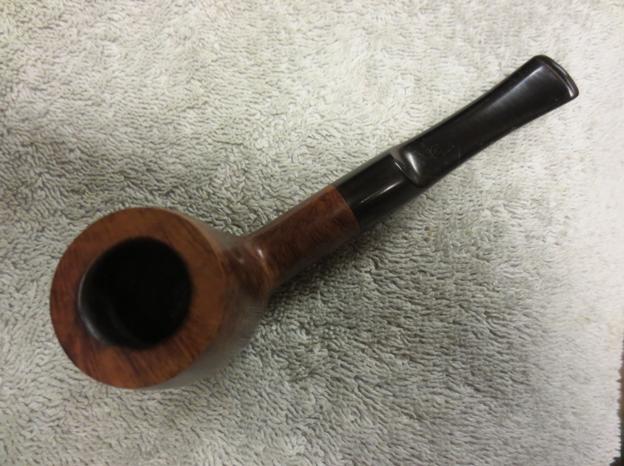
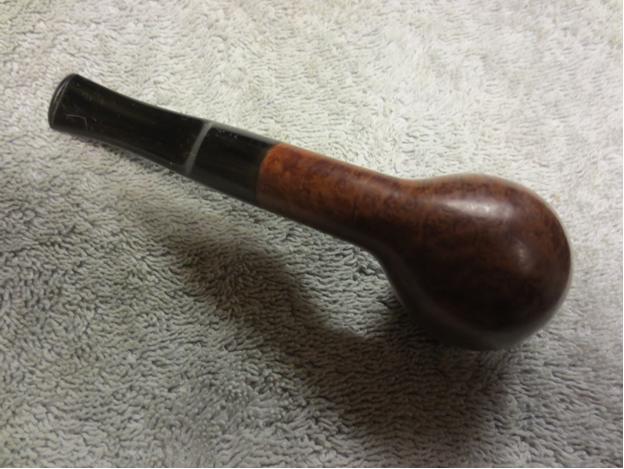
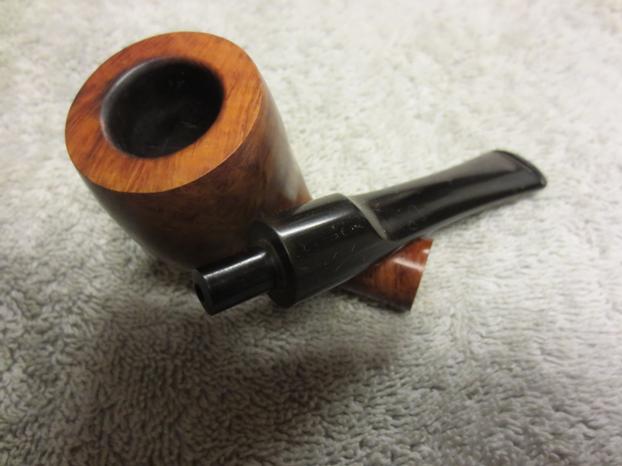
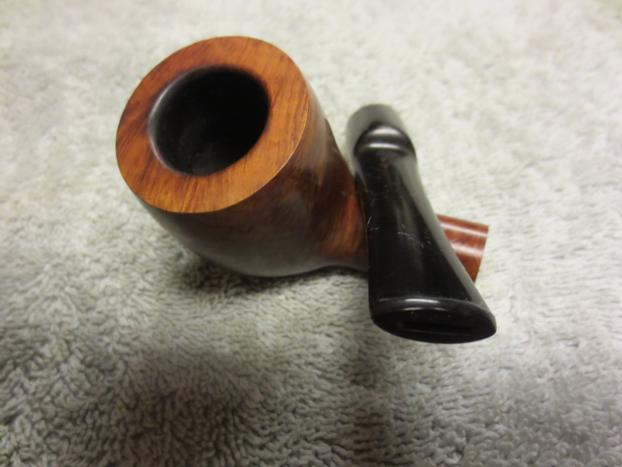
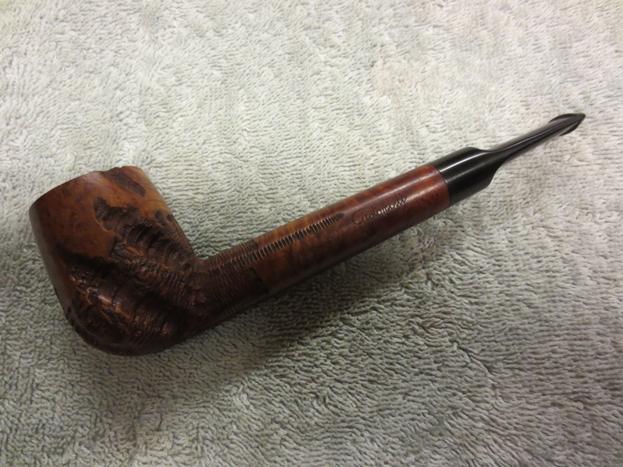
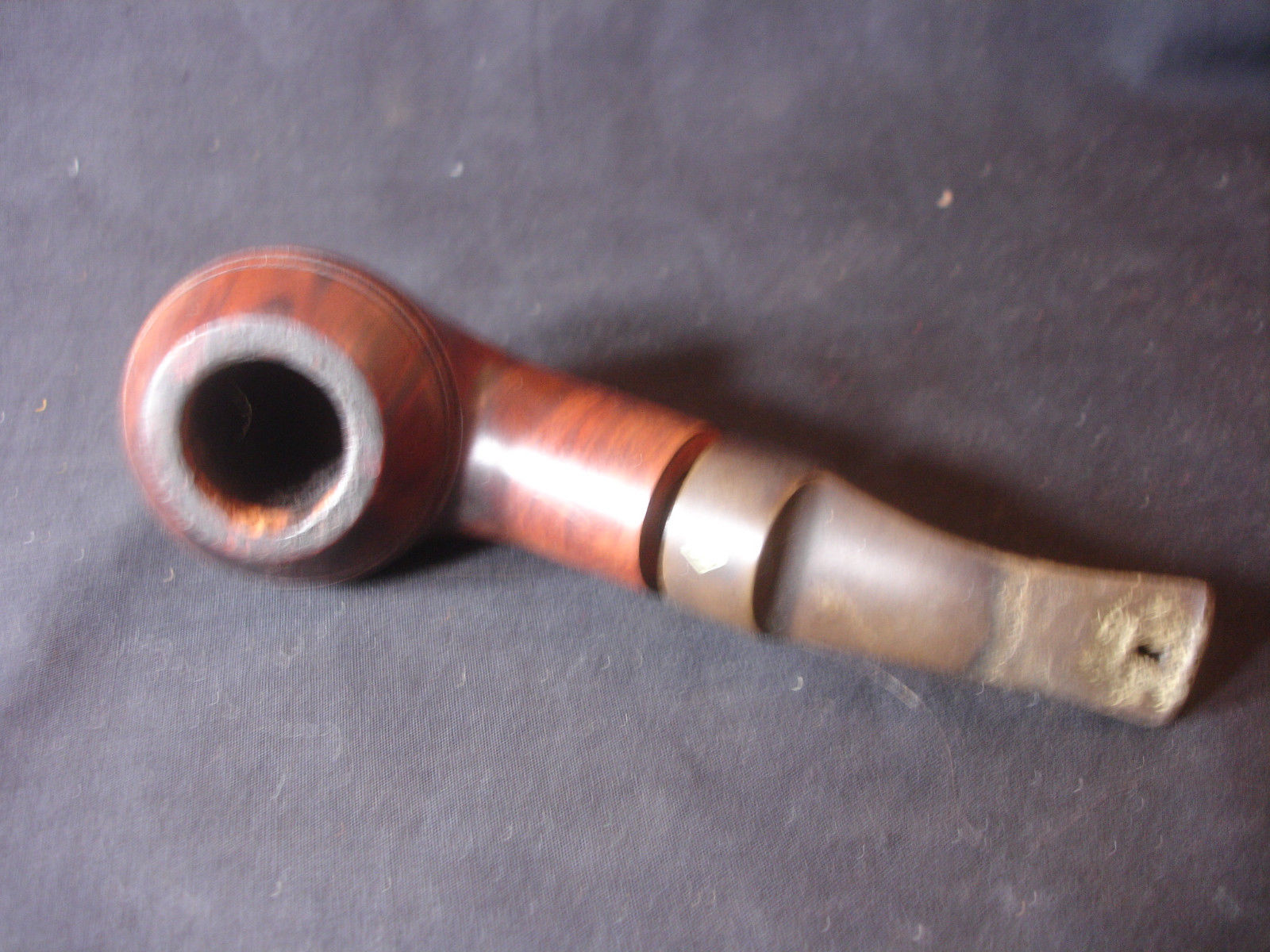
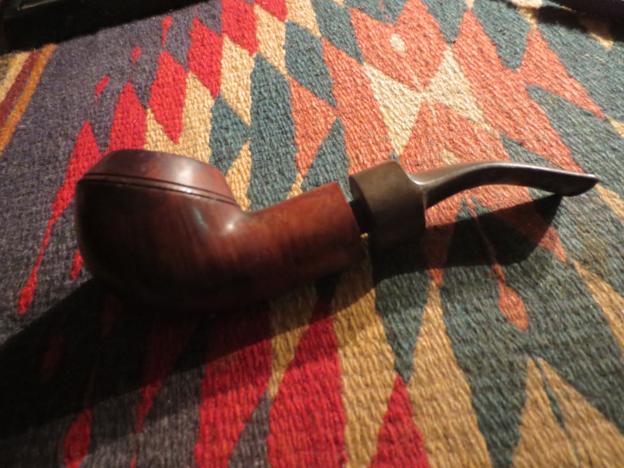
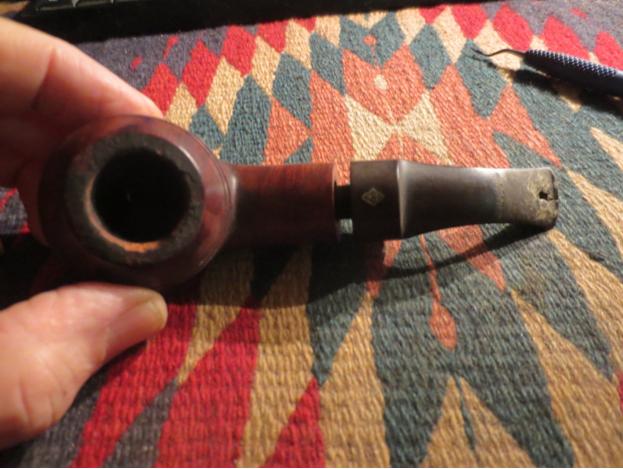
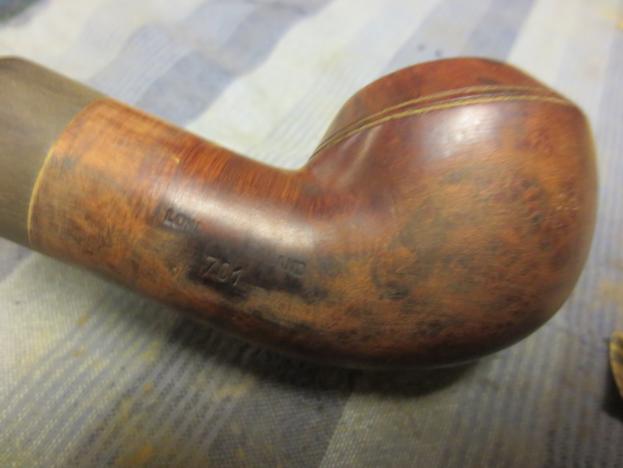
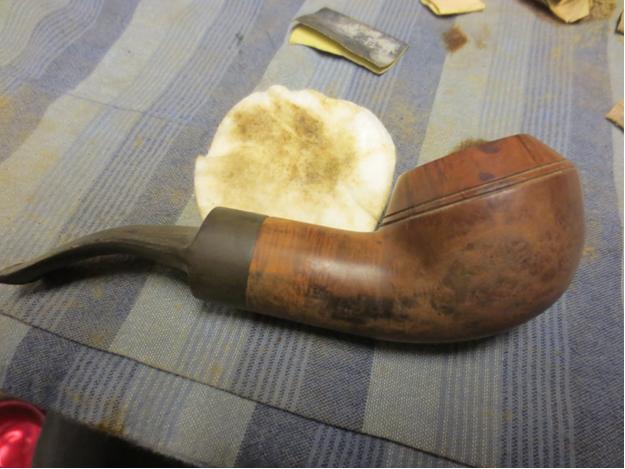
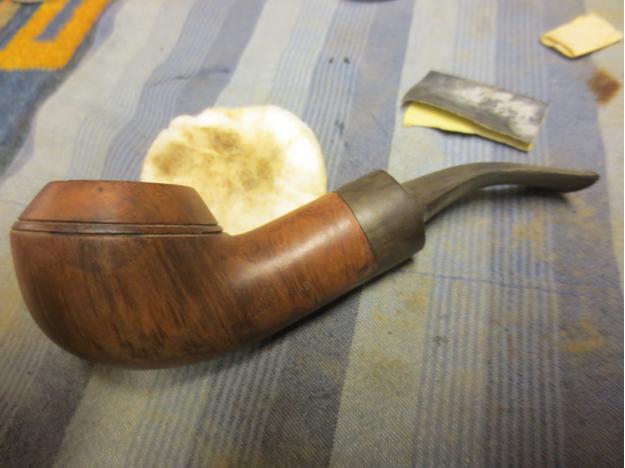
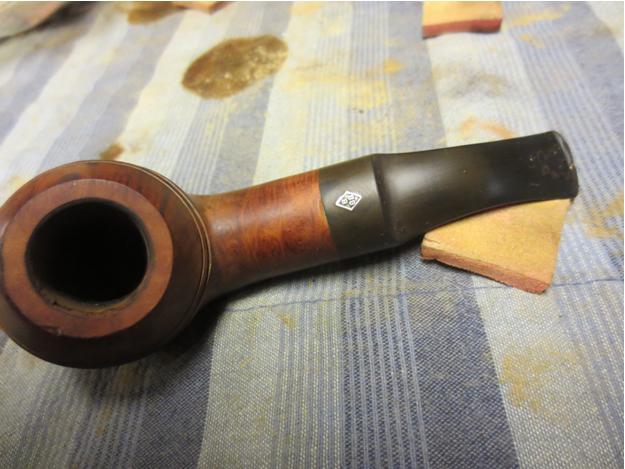
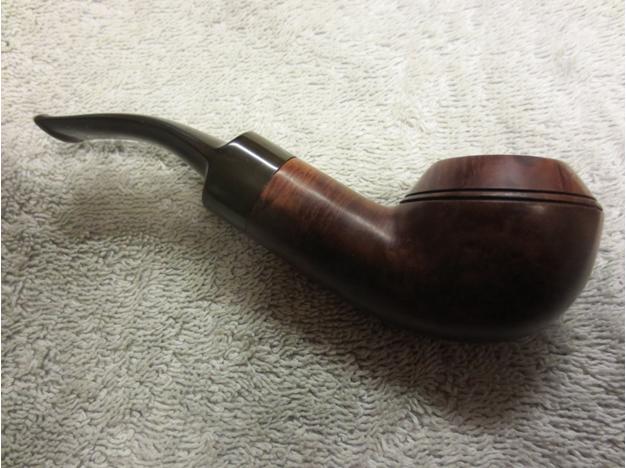
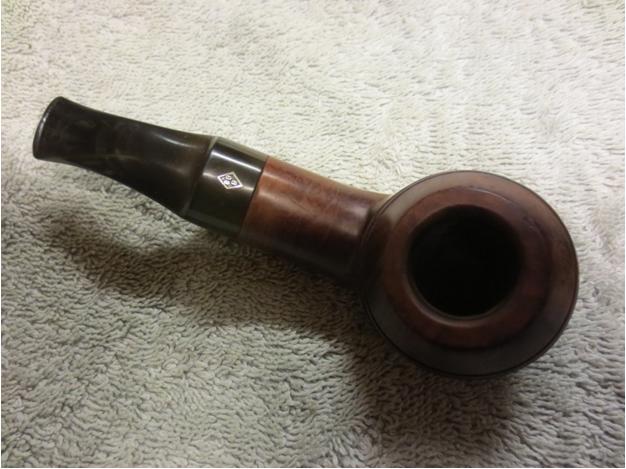
I did not get as many pipes completed as I planned this past weekend, my honey-do list was longer than anticipated. However, I could not resist finding the time to fix up a Briar Squire bent pot with a diamond shank. According to Pipephil.eu, the Briar Squire was a brick and mortar tobacco and pipe shop located in Crystal Lake, IL from 1977 to 1983. I assume they had their pipes made by an outside pipe maker. Whoever made this pipe did a nice job. There were no fills in it and judging by all the angles on the stem that was hand cut as well.

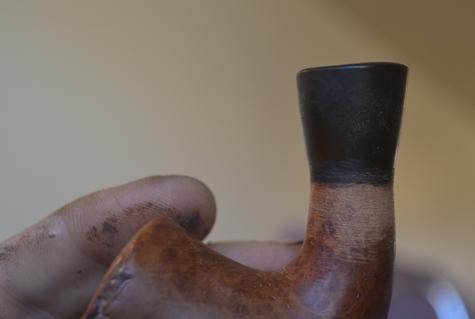
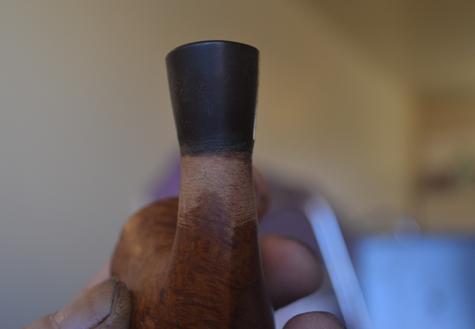
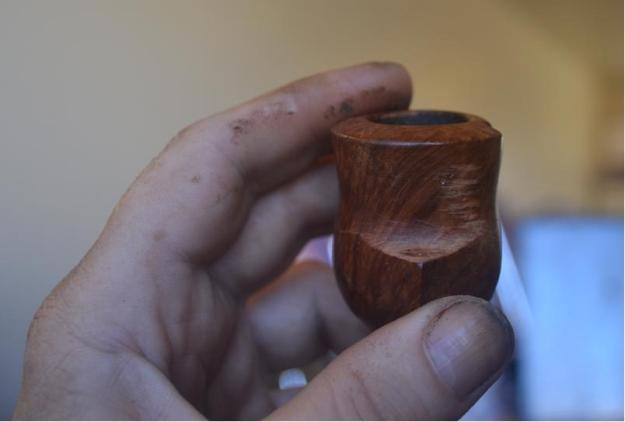
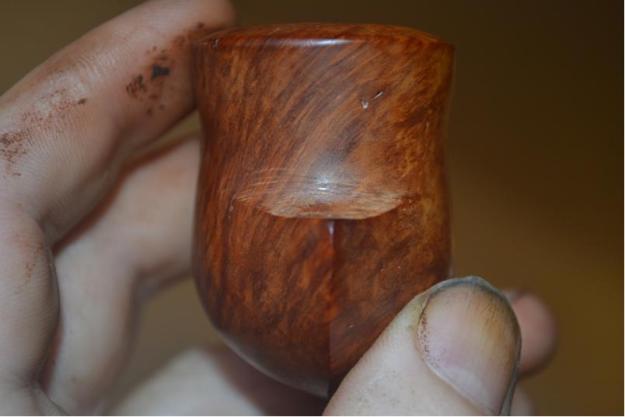
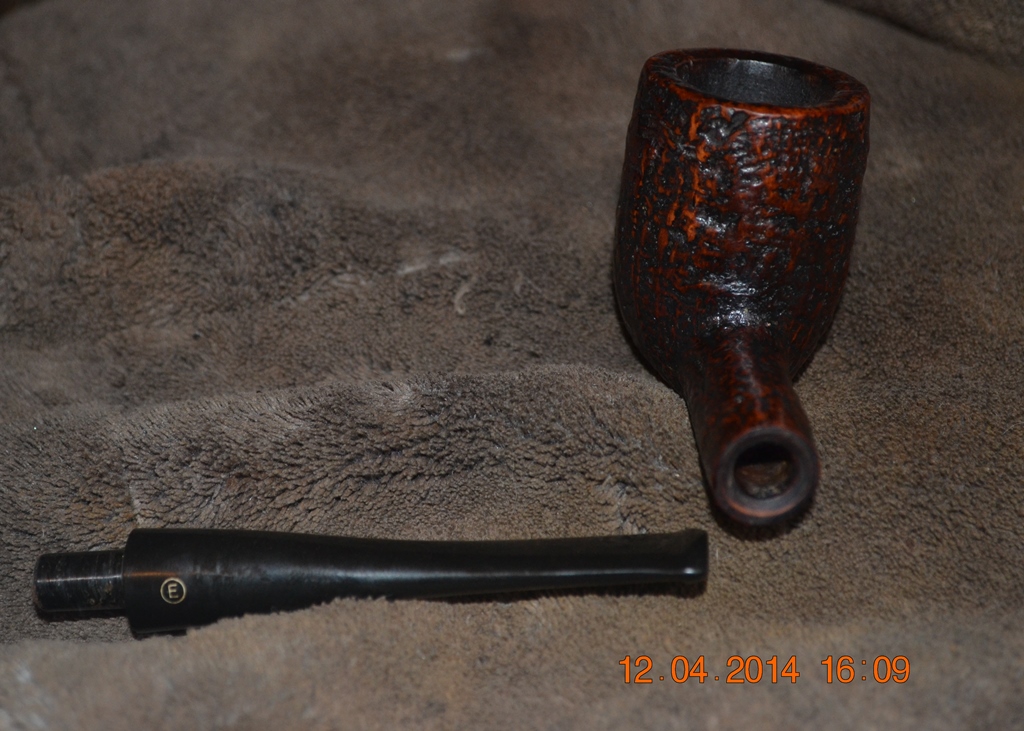
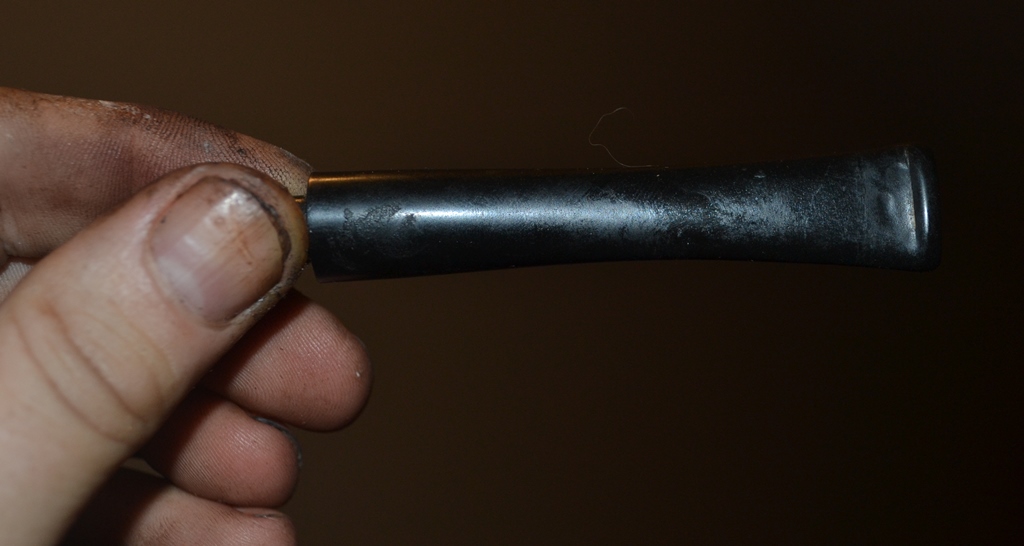
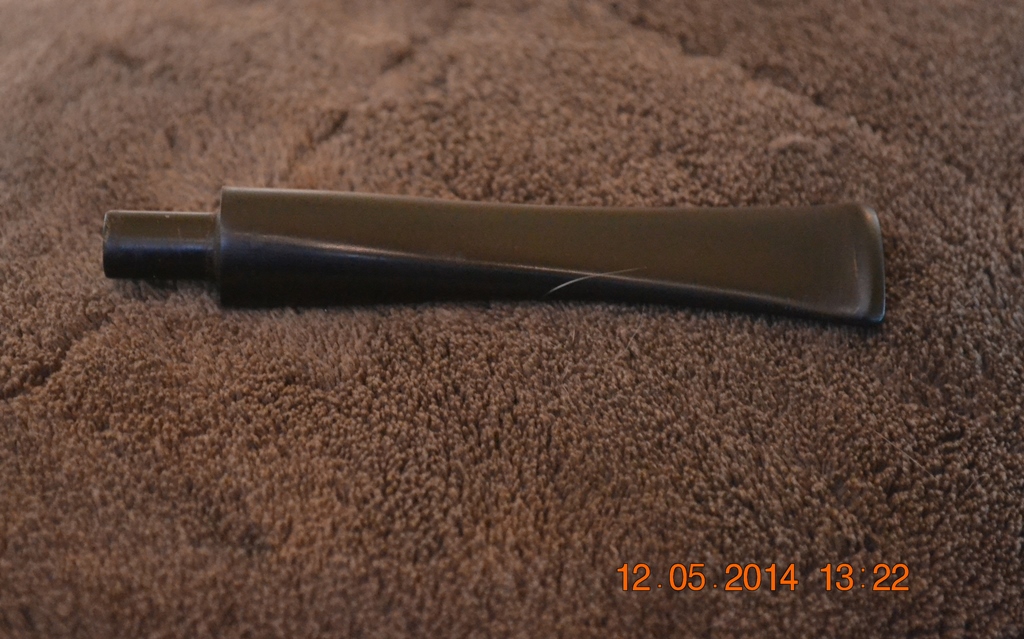
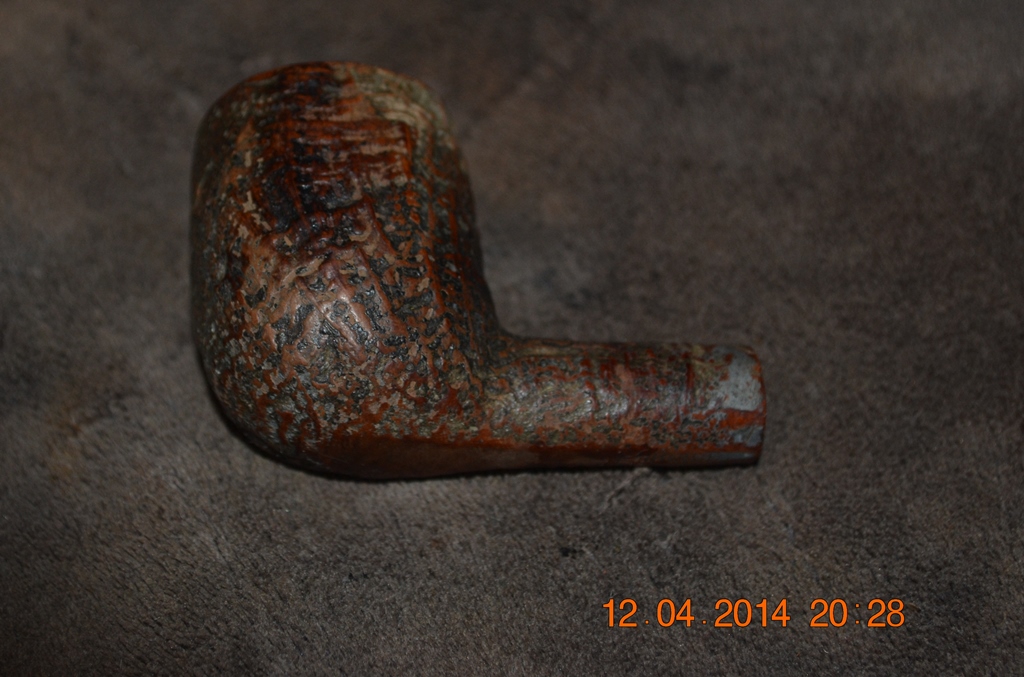
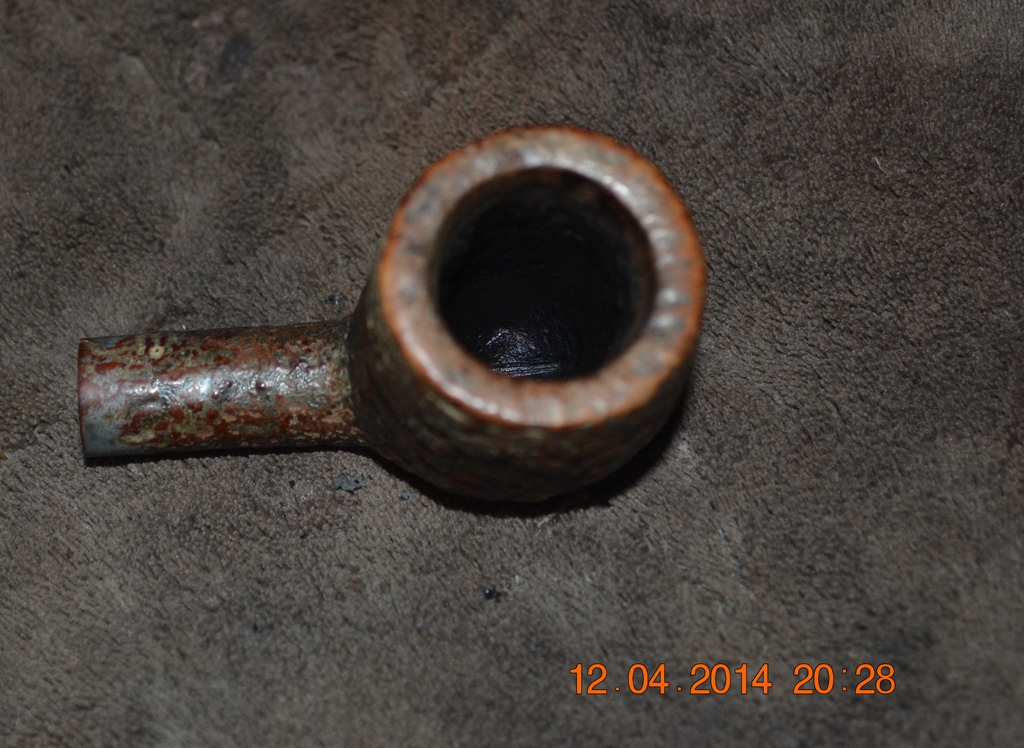
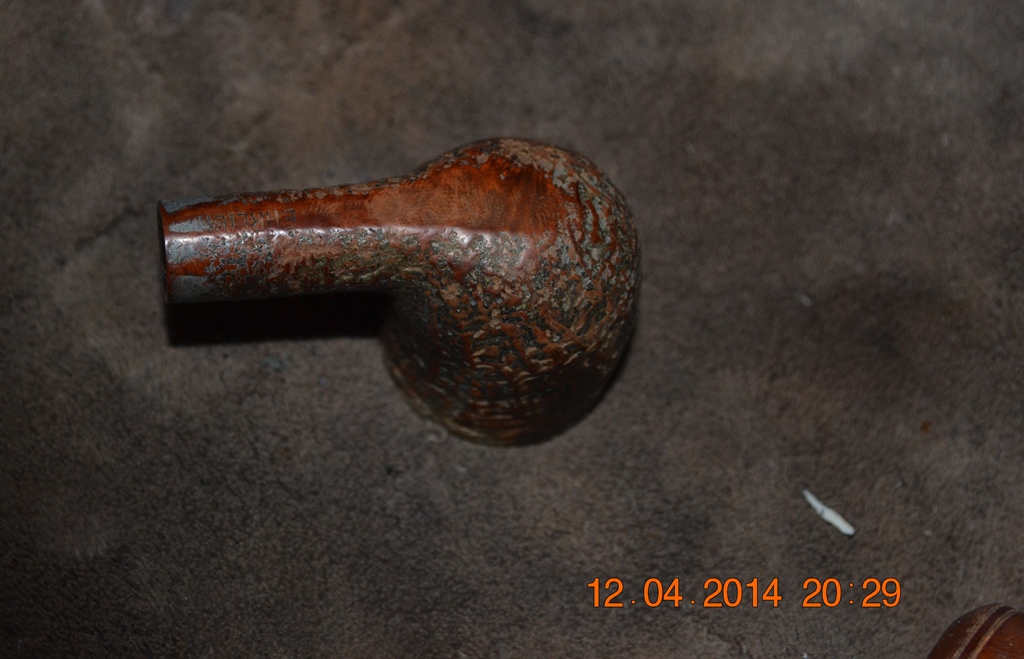
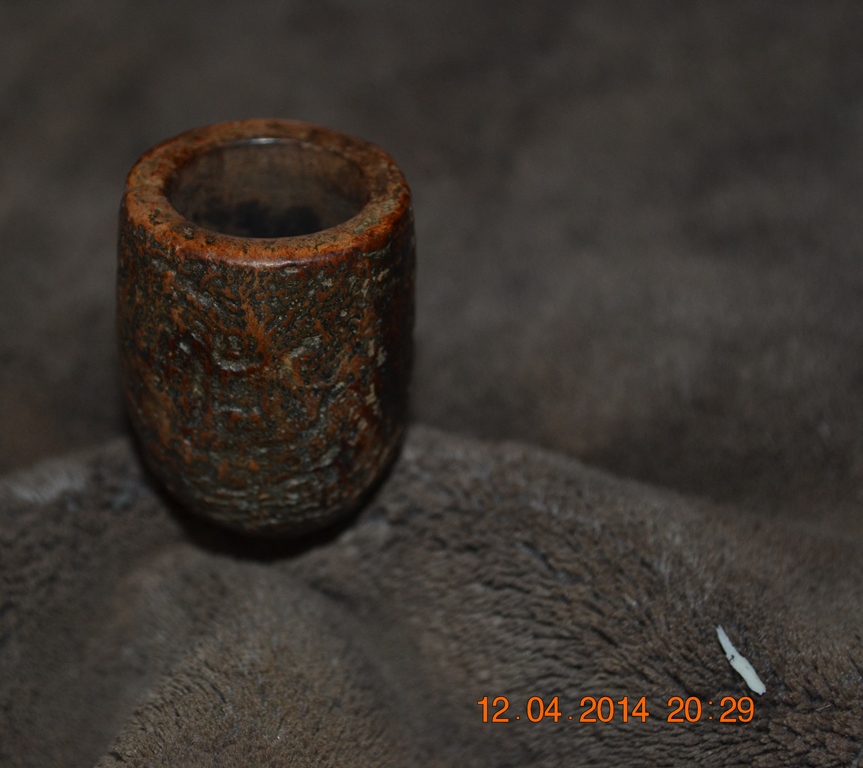
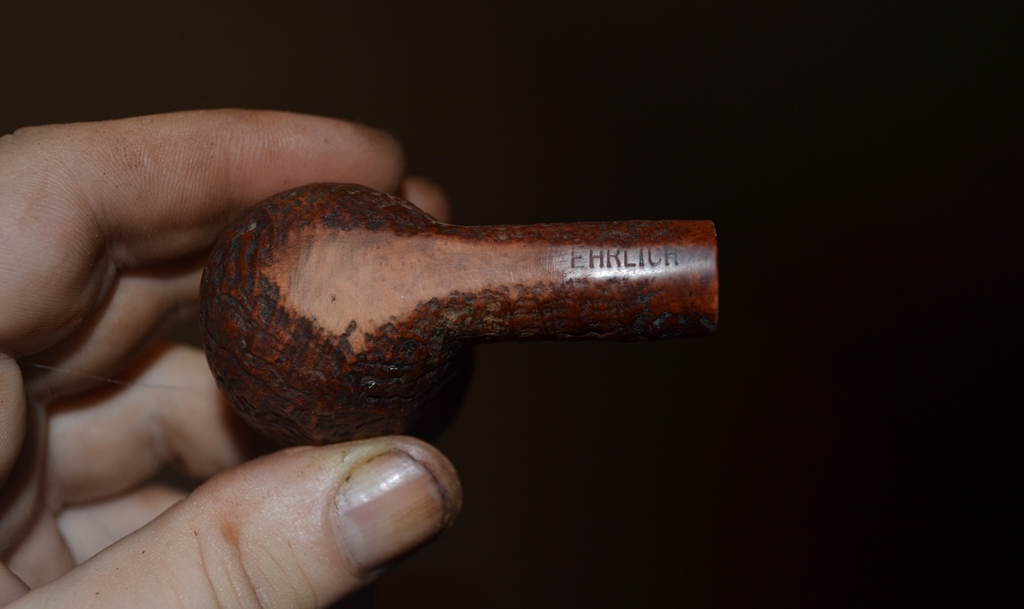
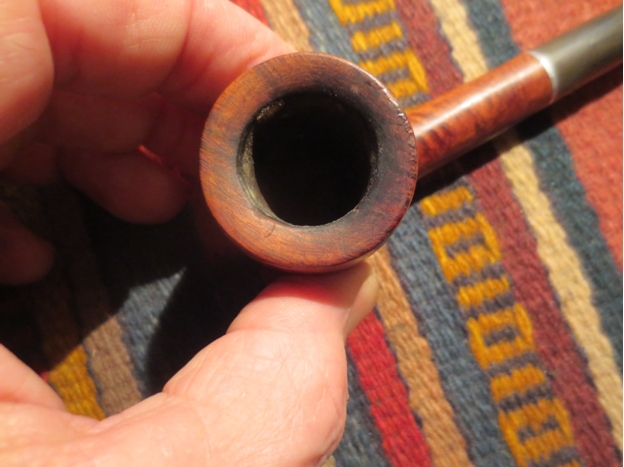
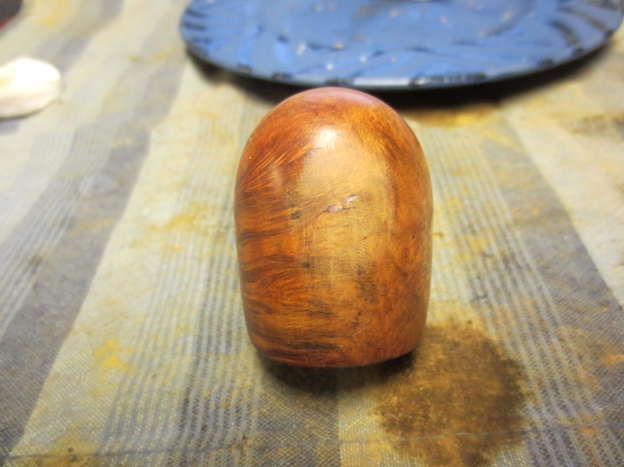
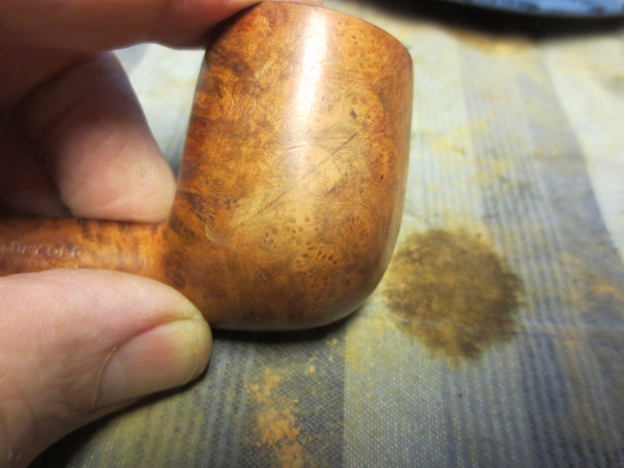
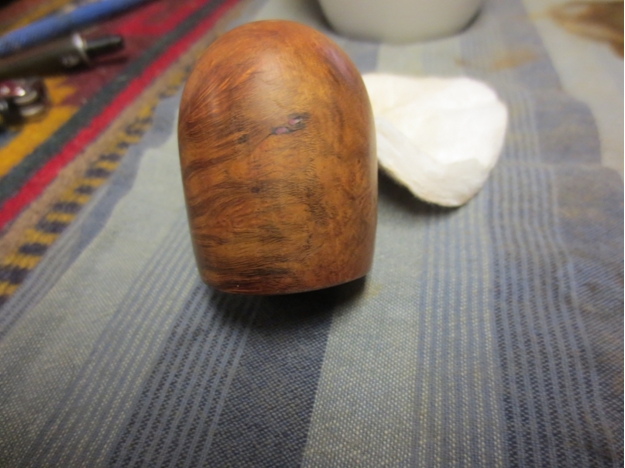
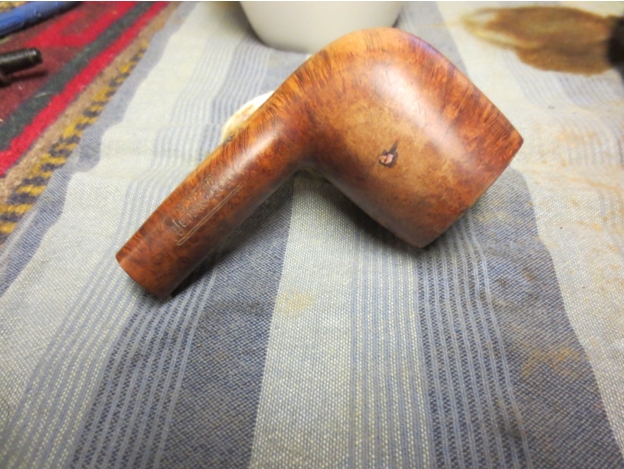
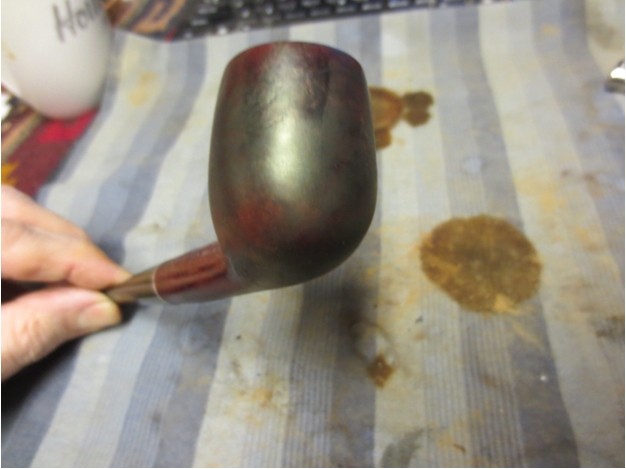
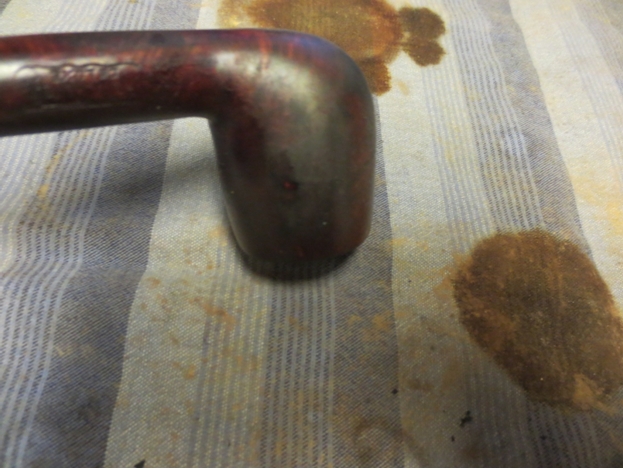
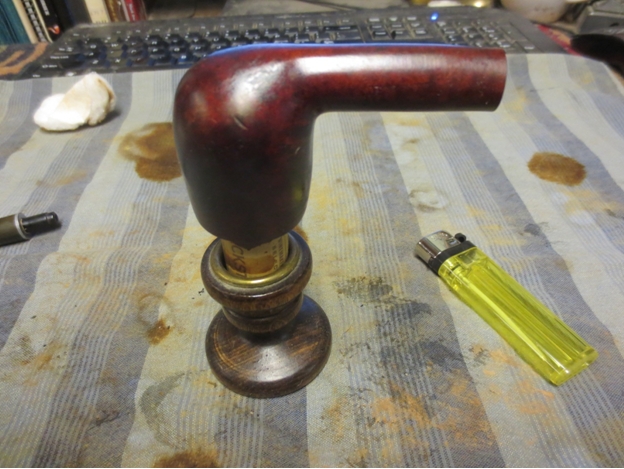
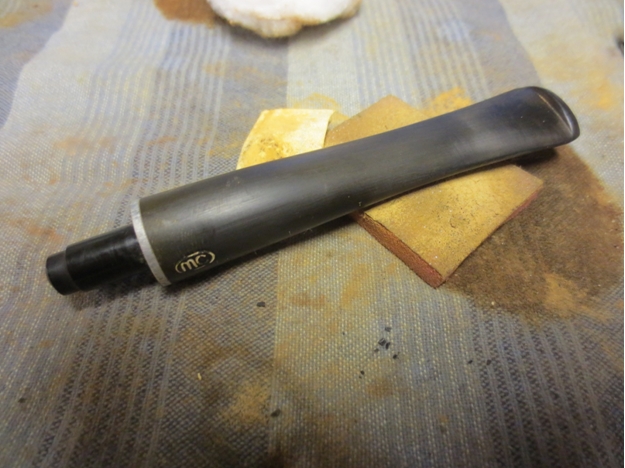
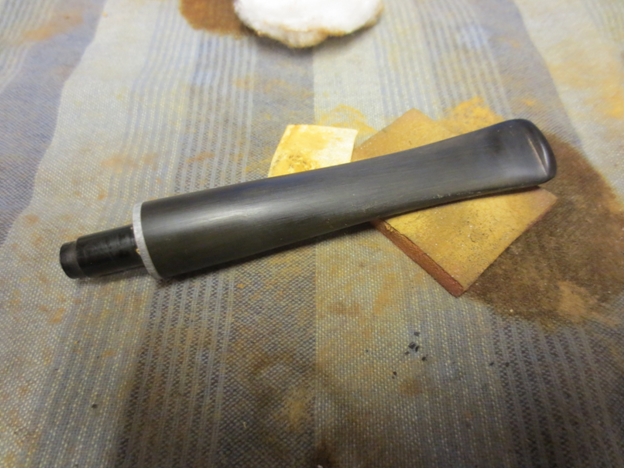
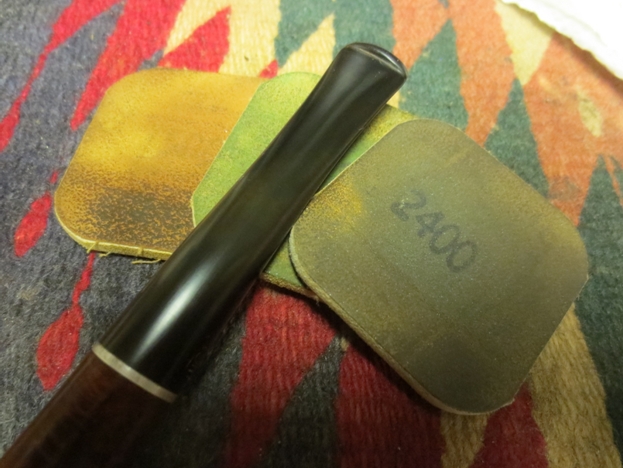
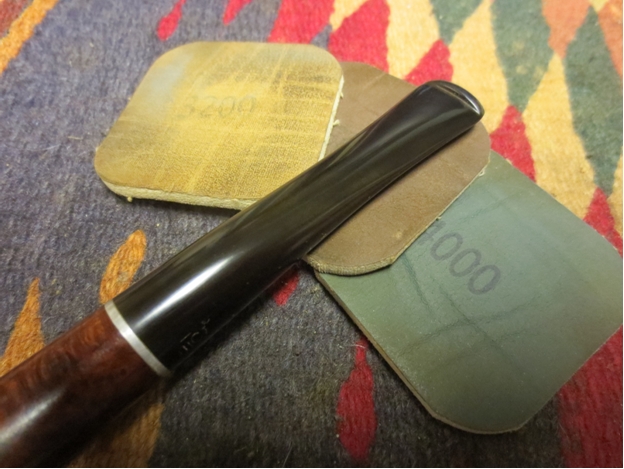
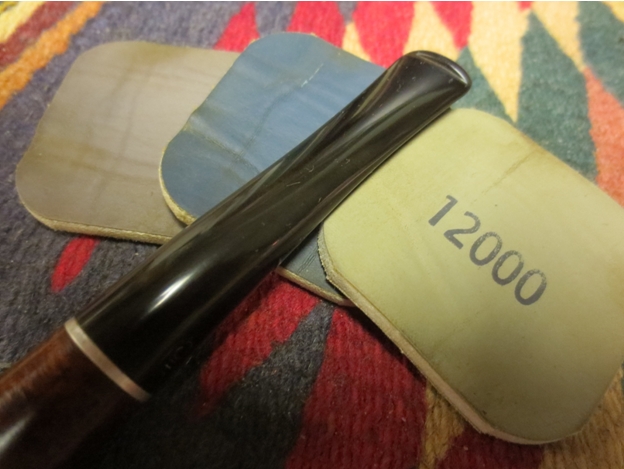
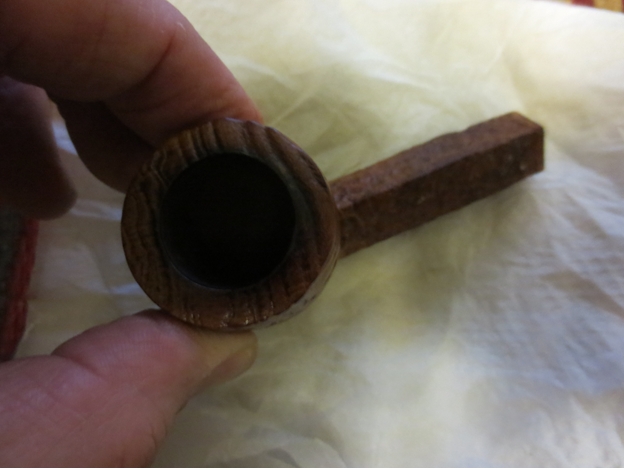
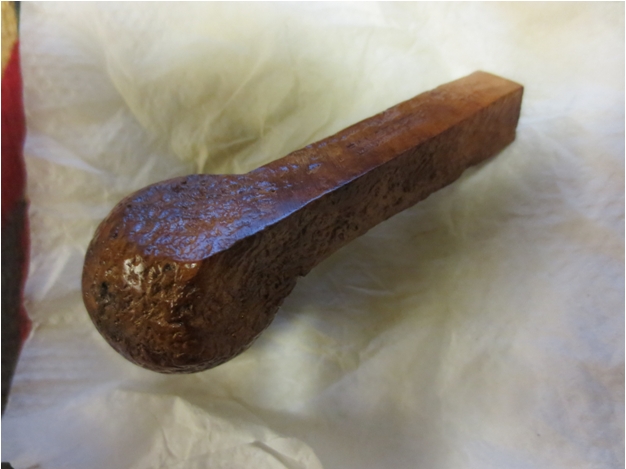
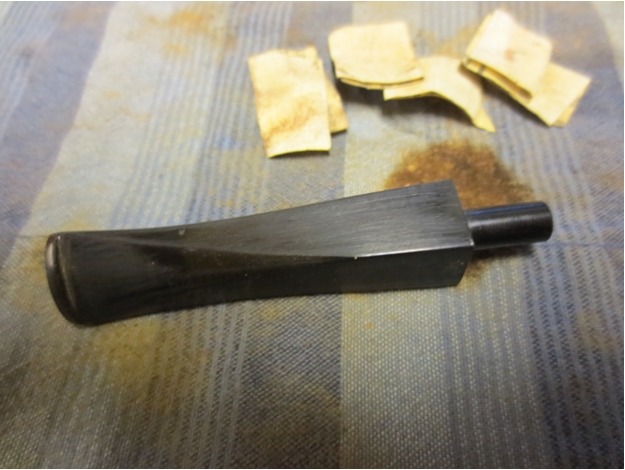
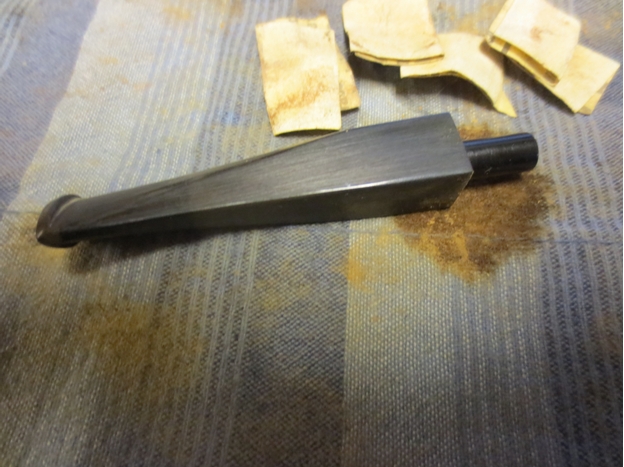
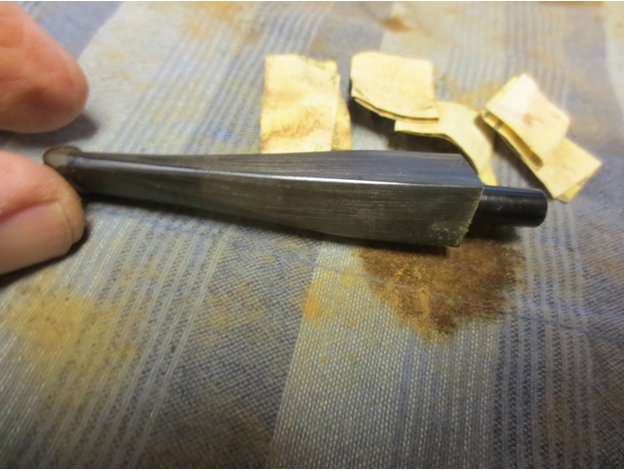
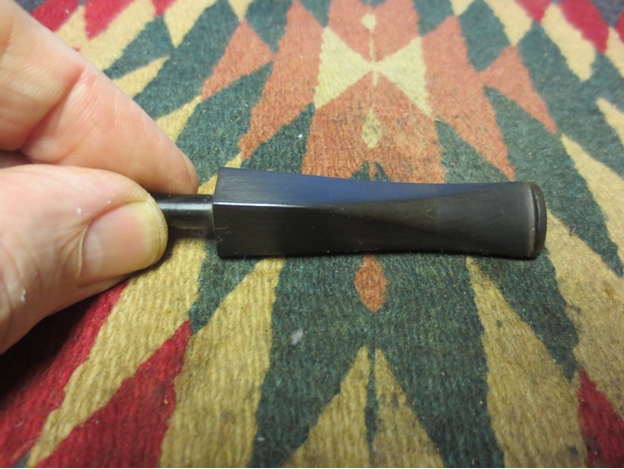
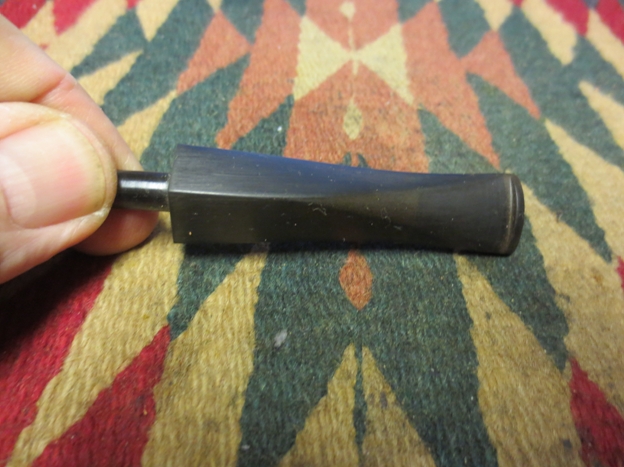
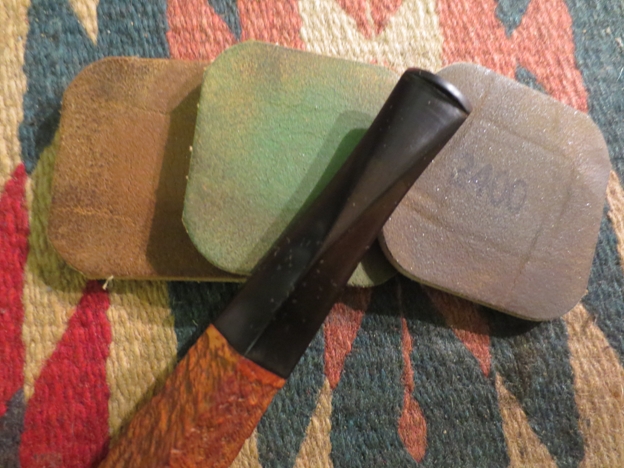
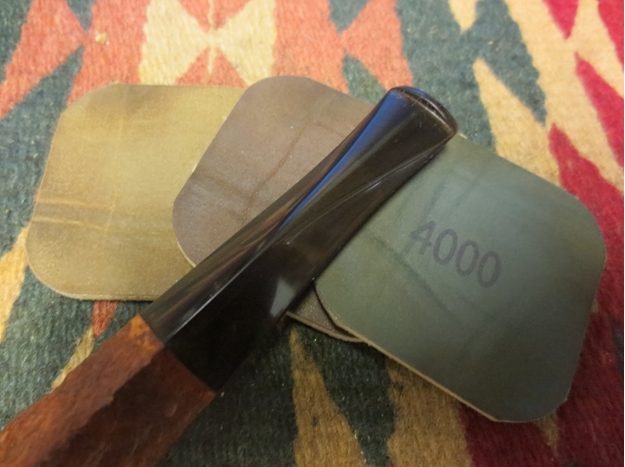
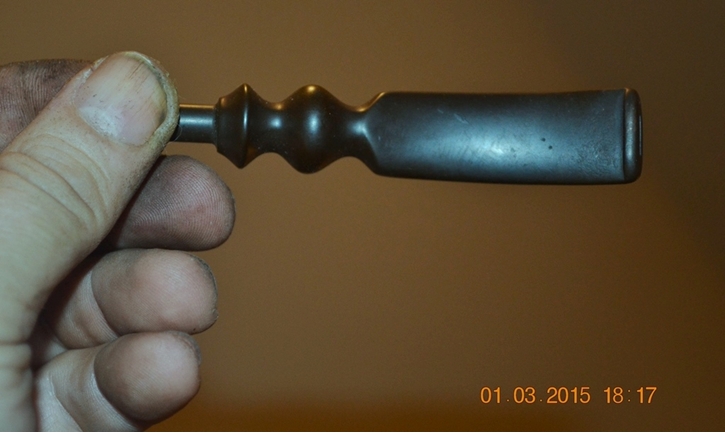
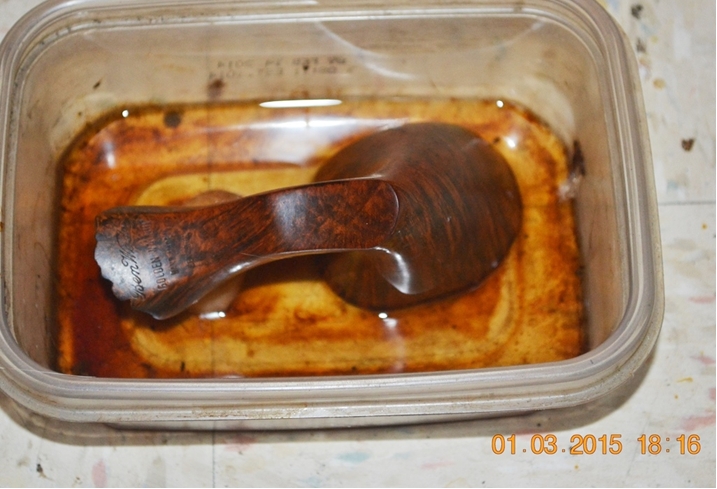
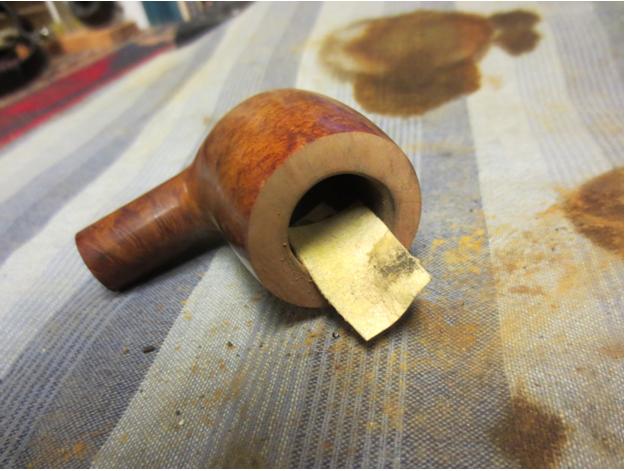
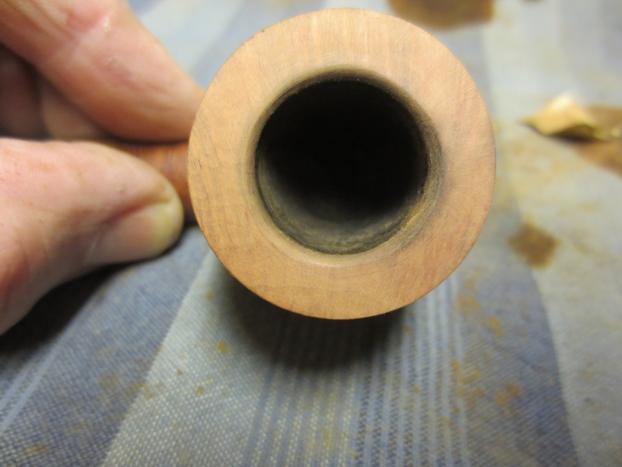
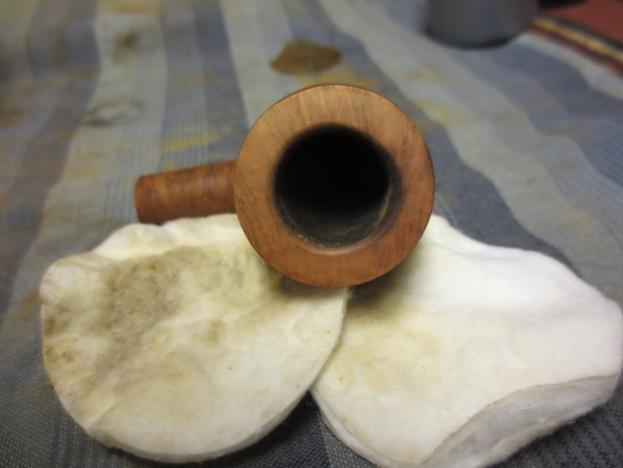
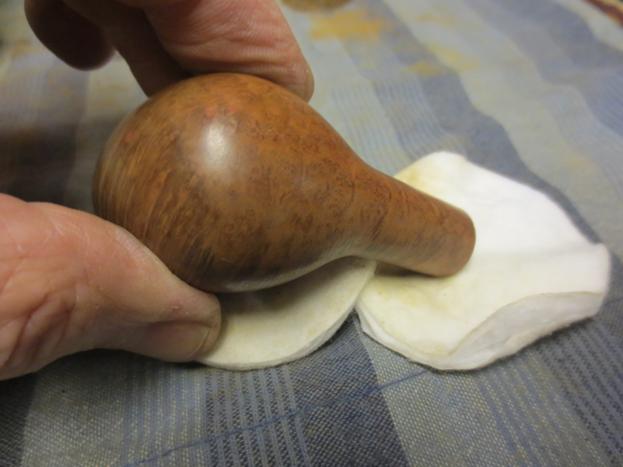
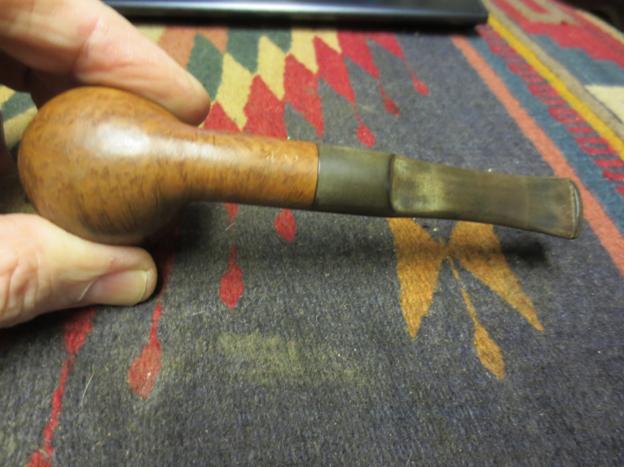
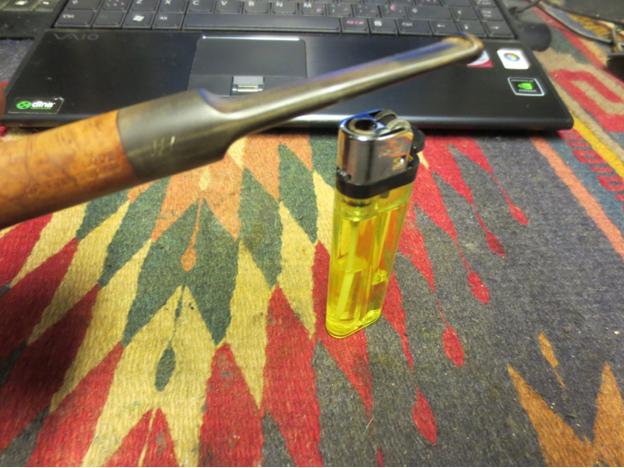
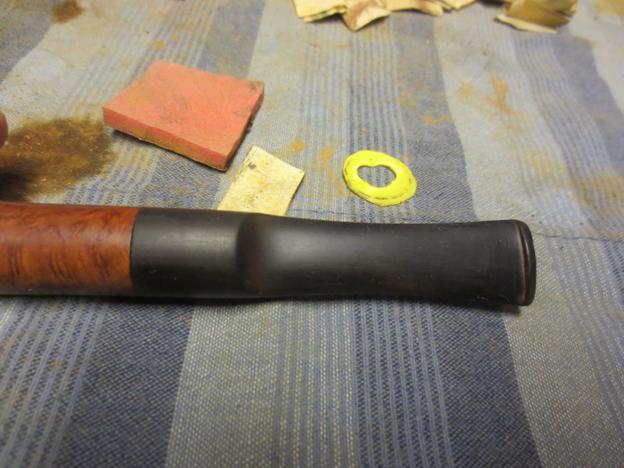
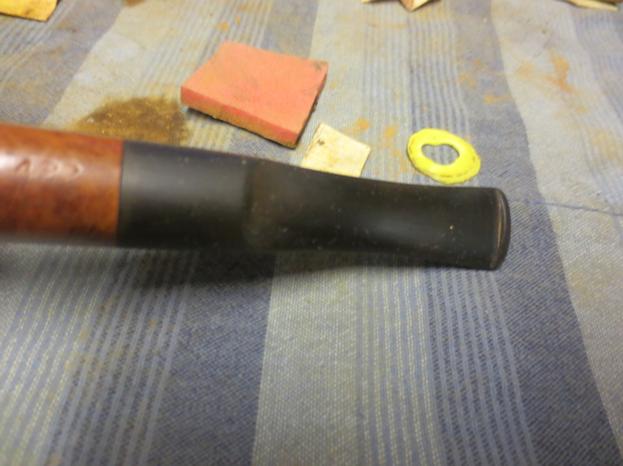
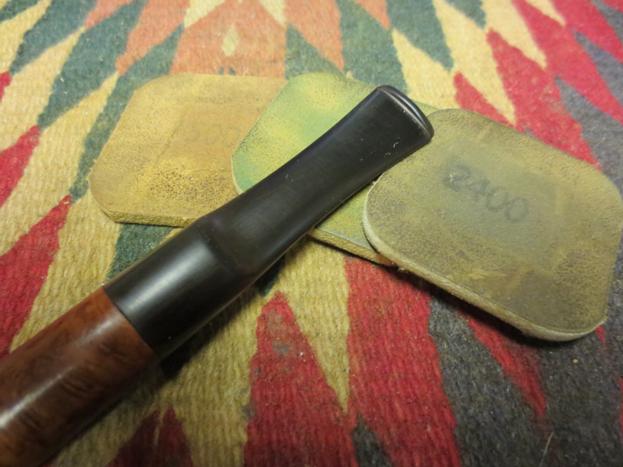
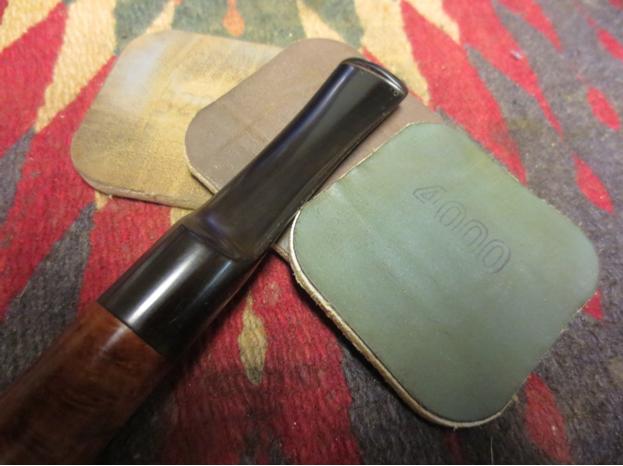
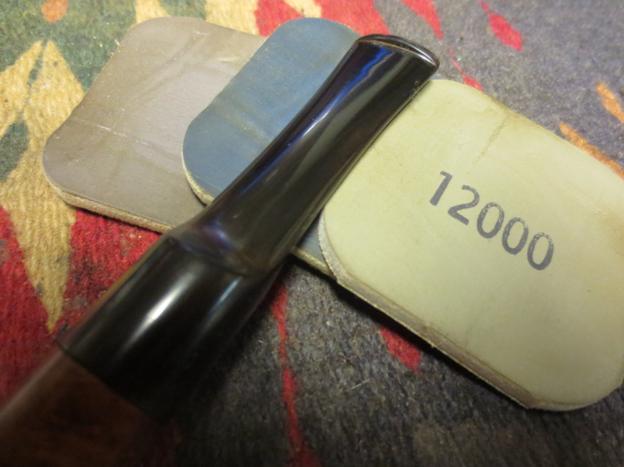
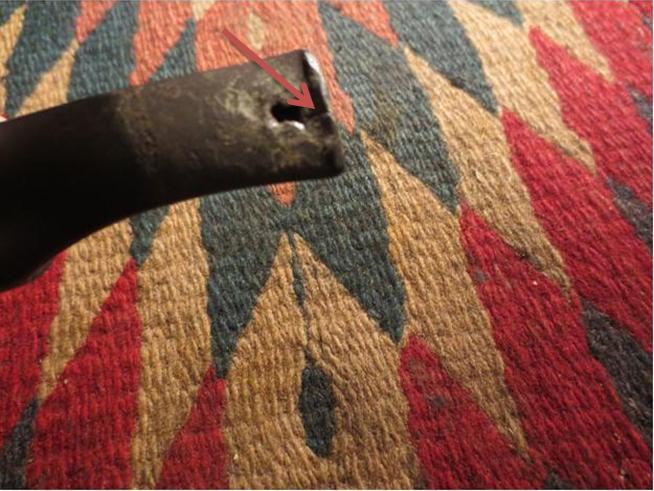
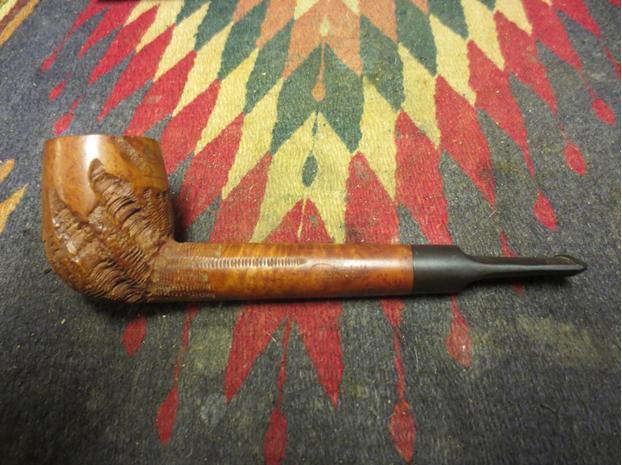
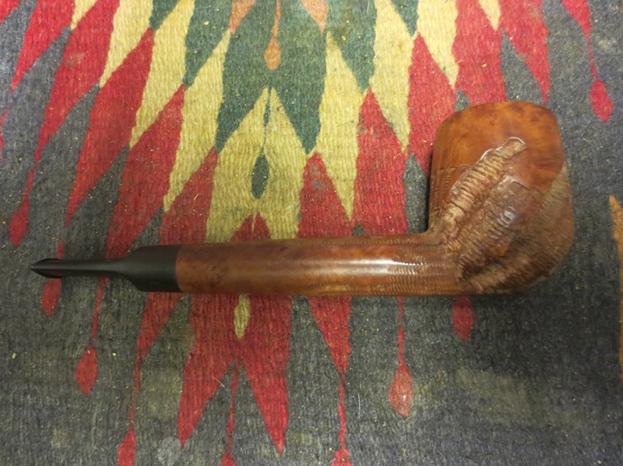
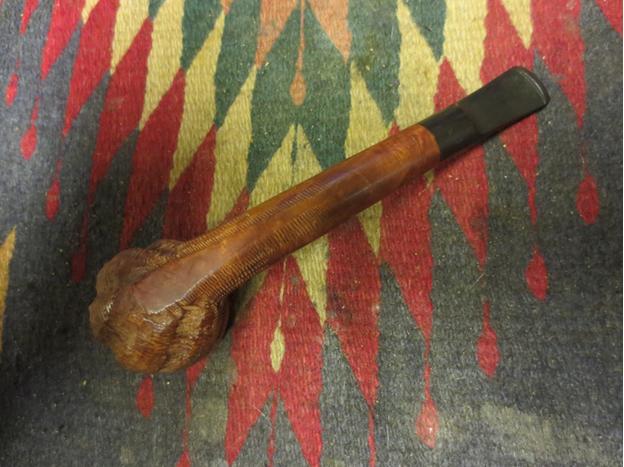
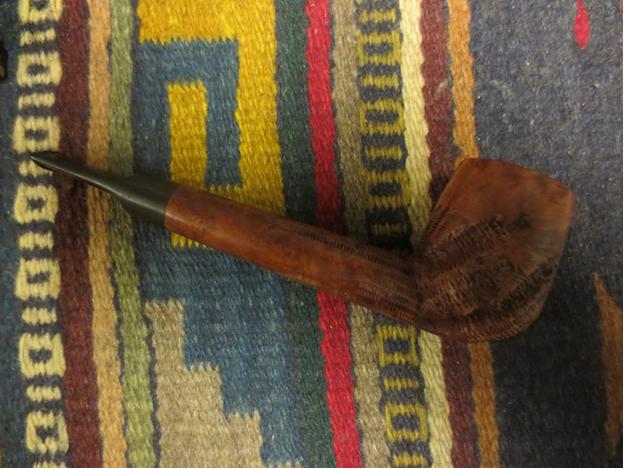
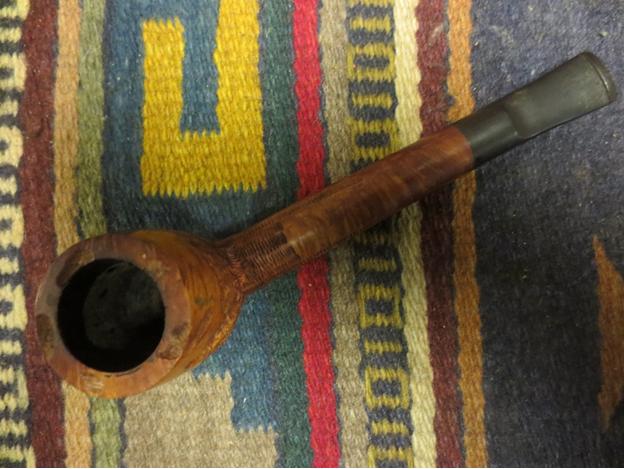
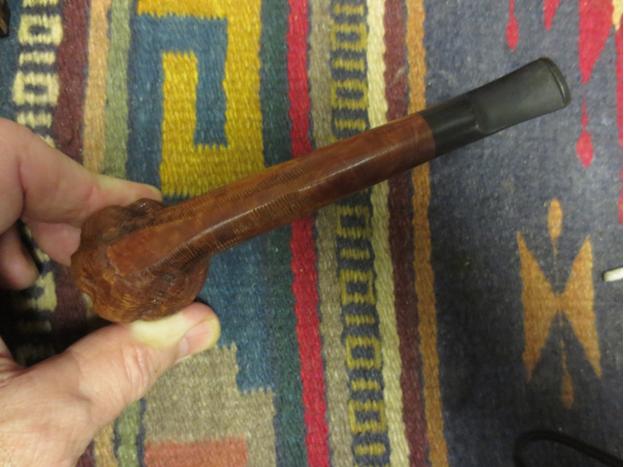
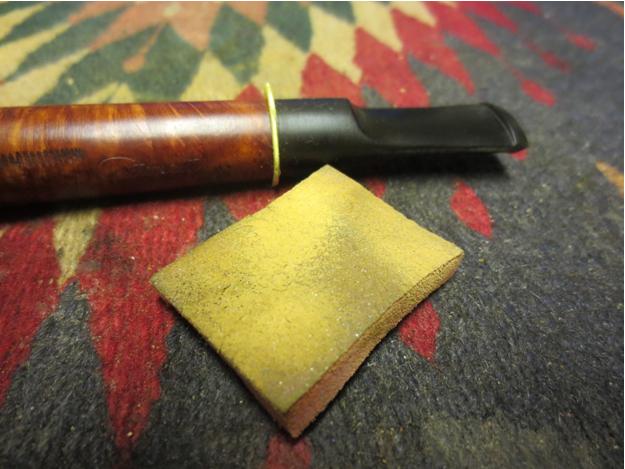
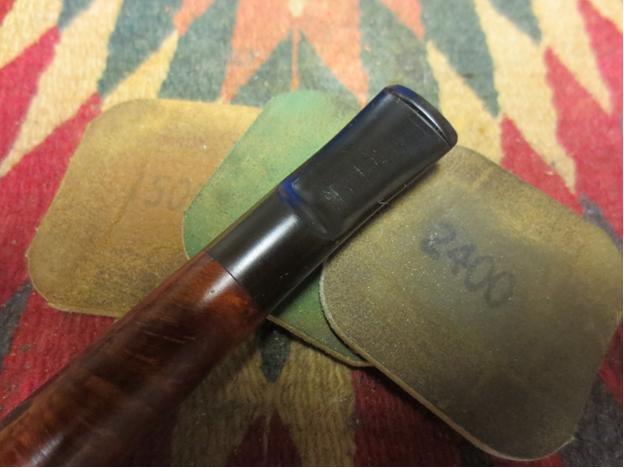
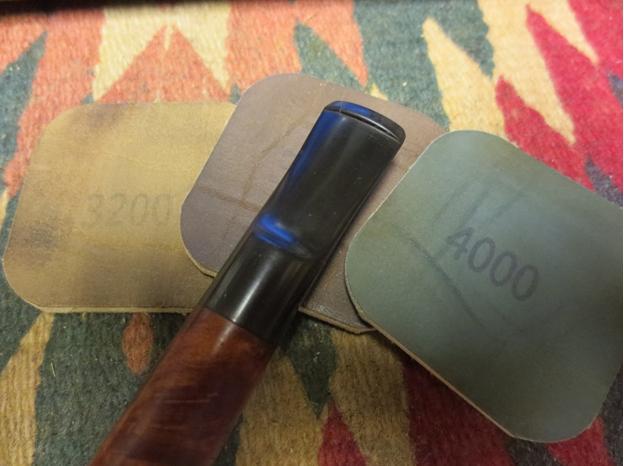
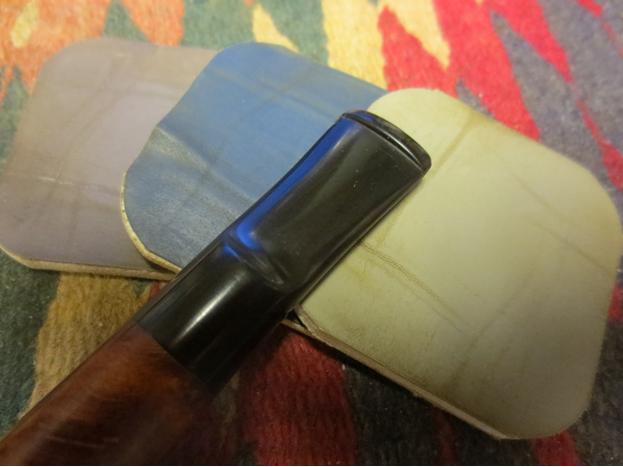
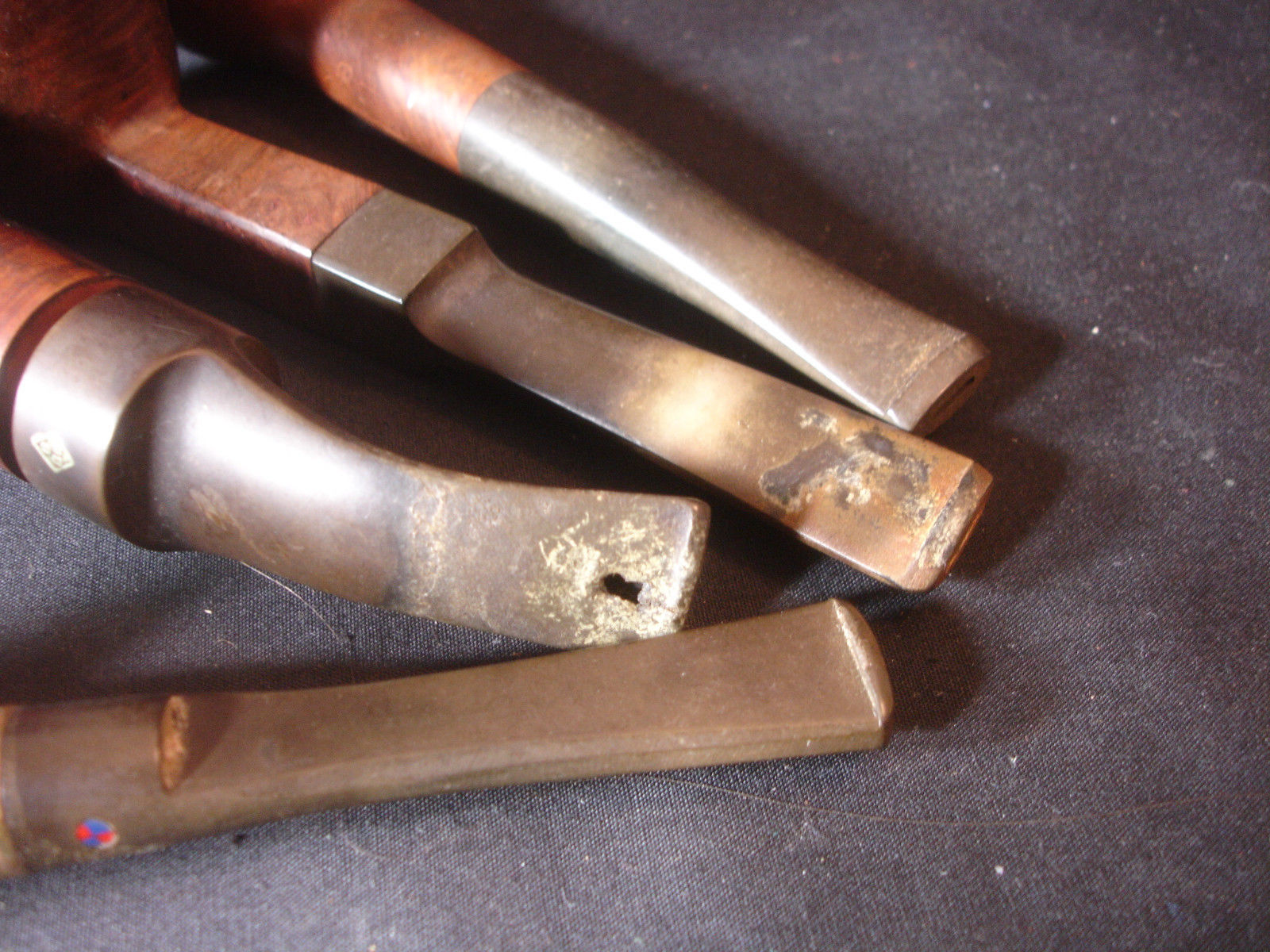
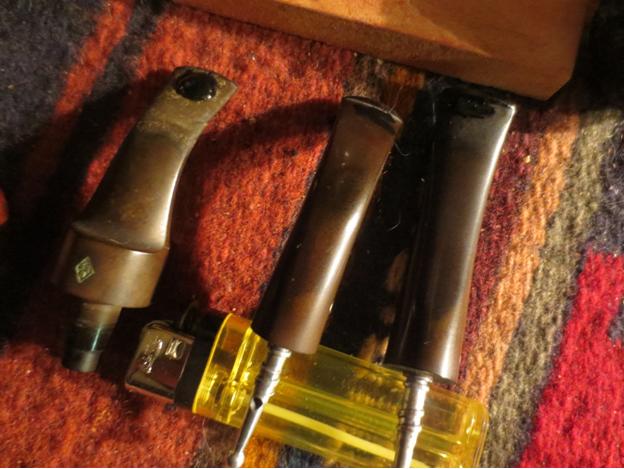
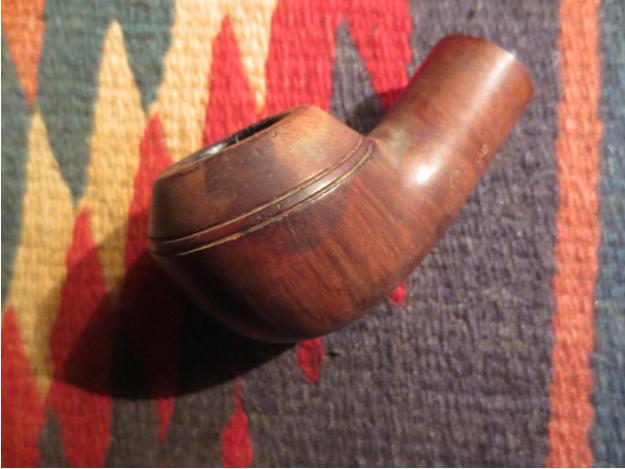
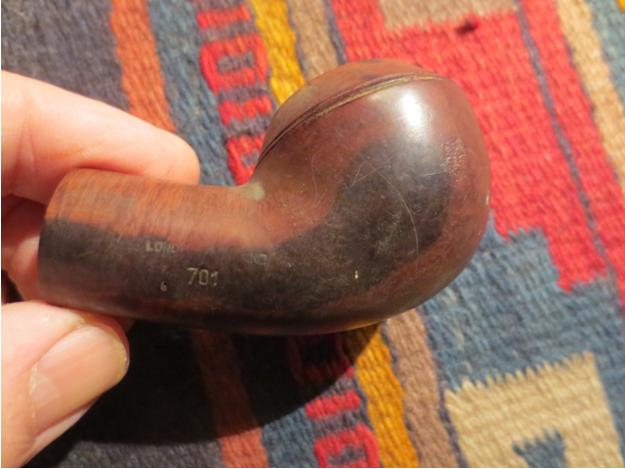
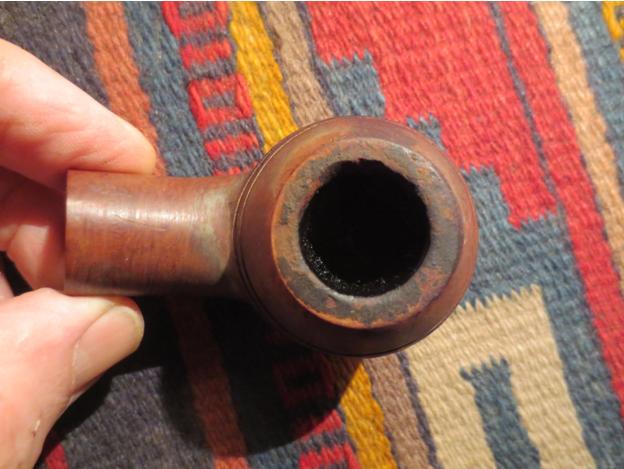
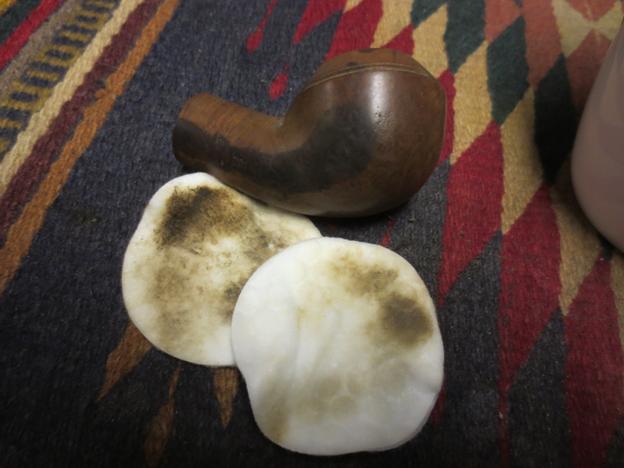
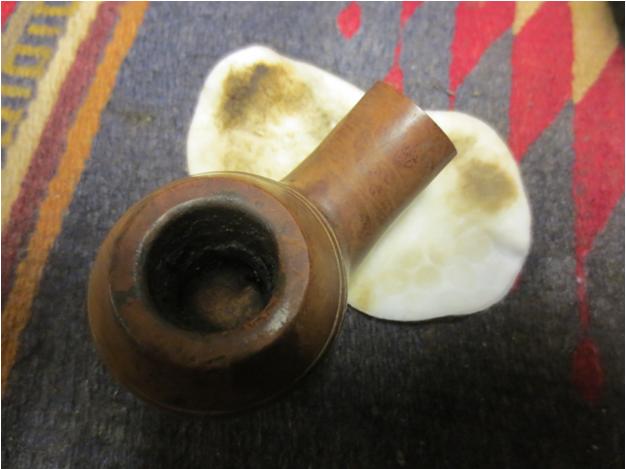
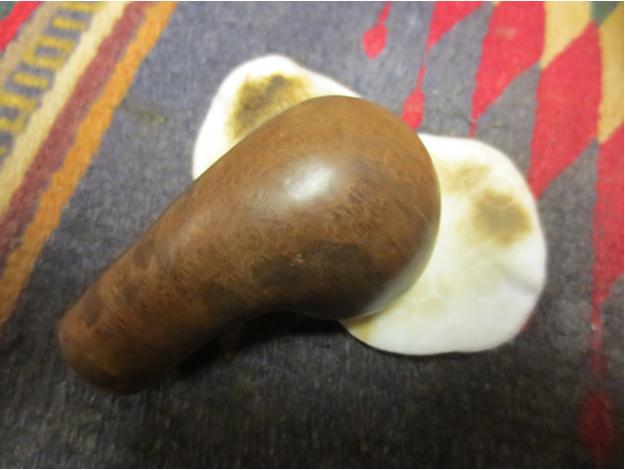
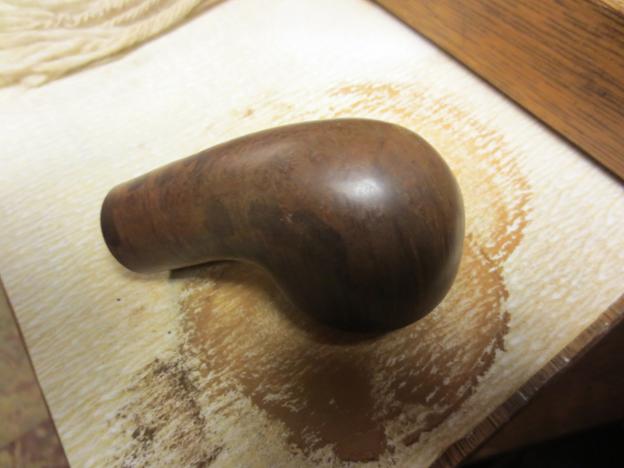
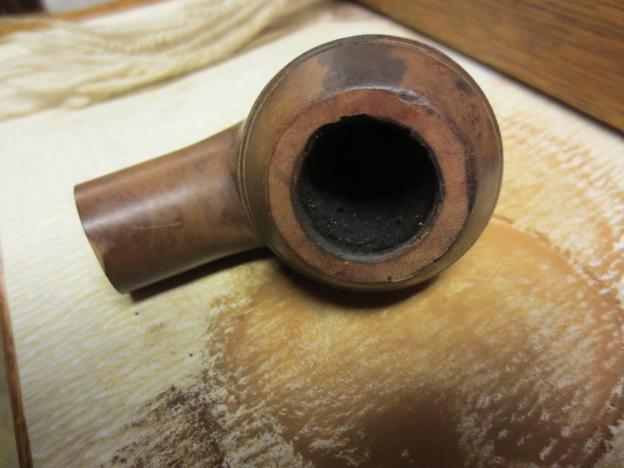
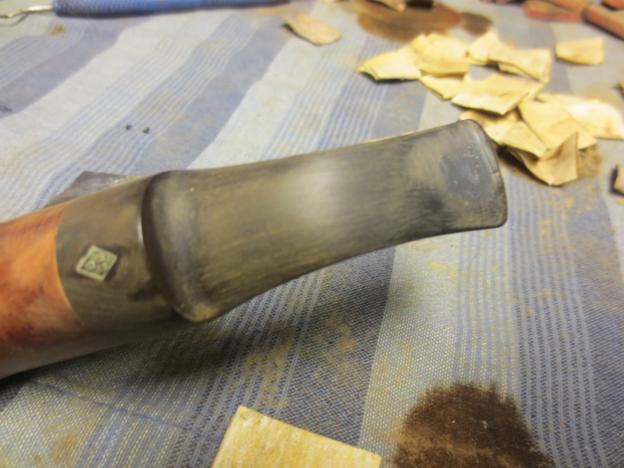
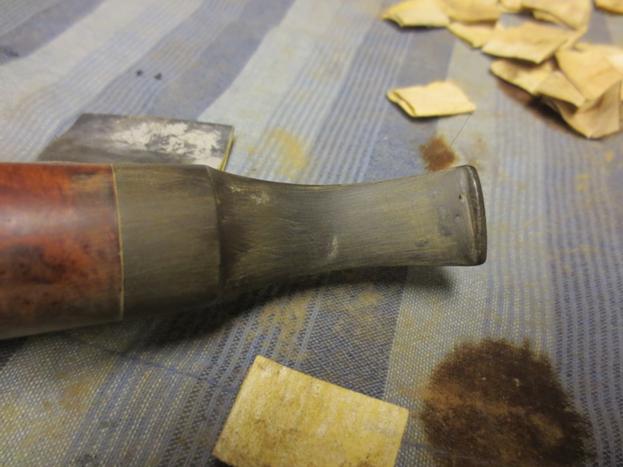
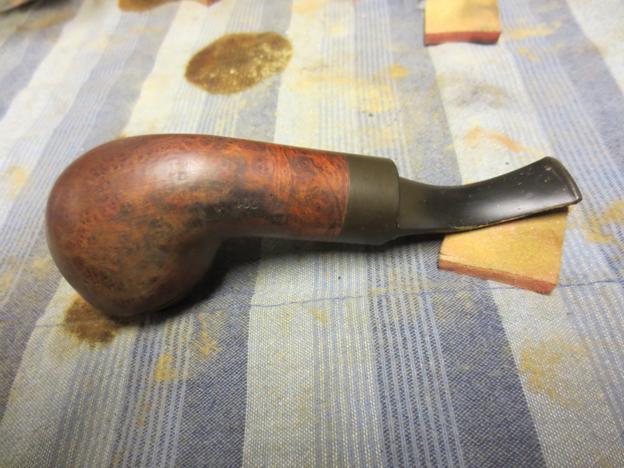
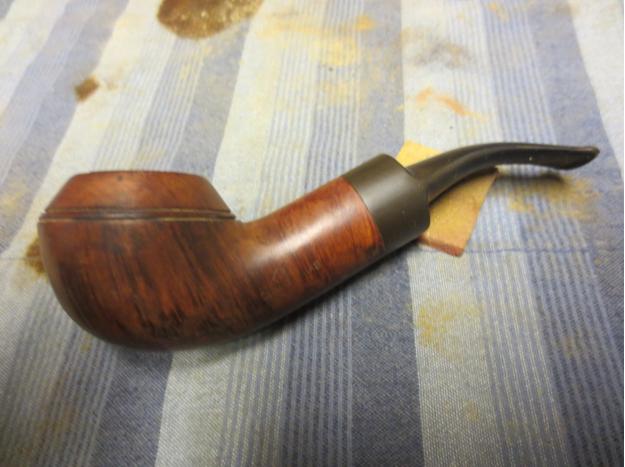
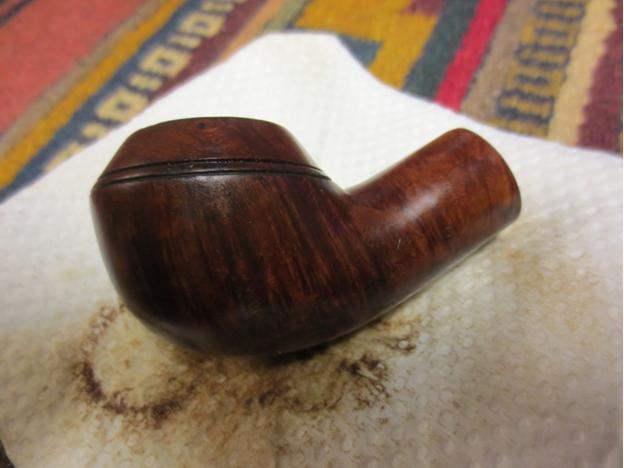
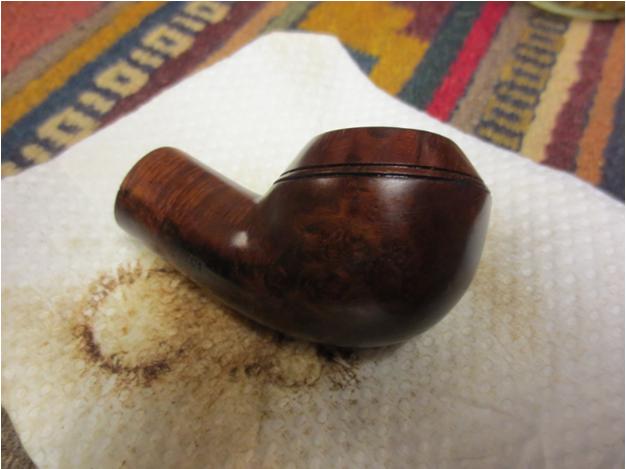
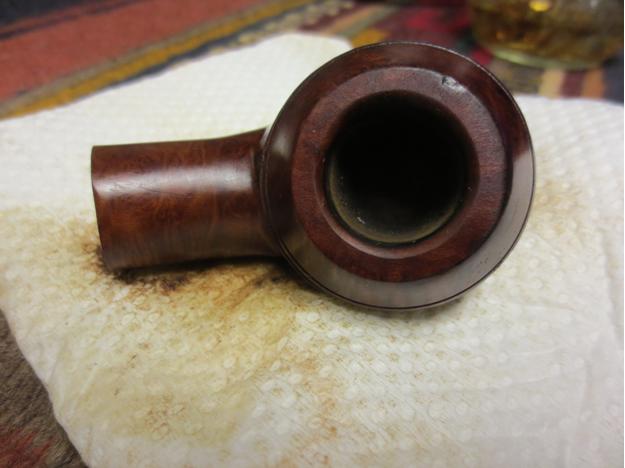
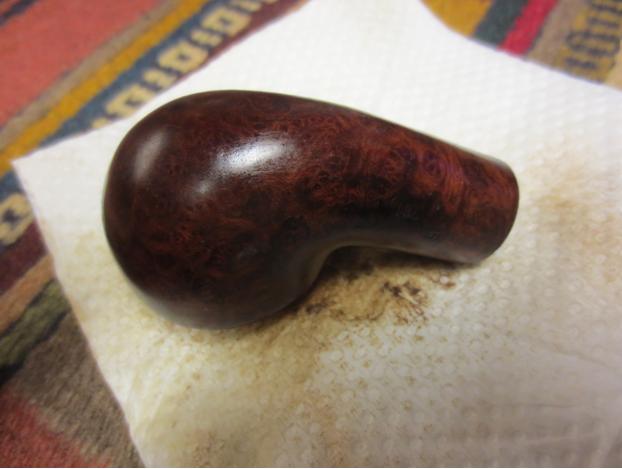
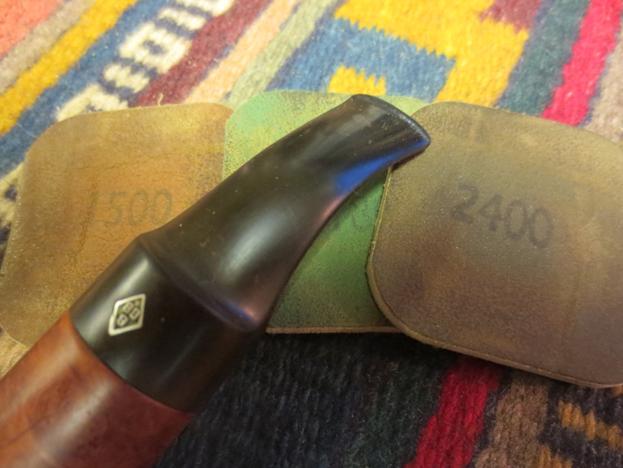
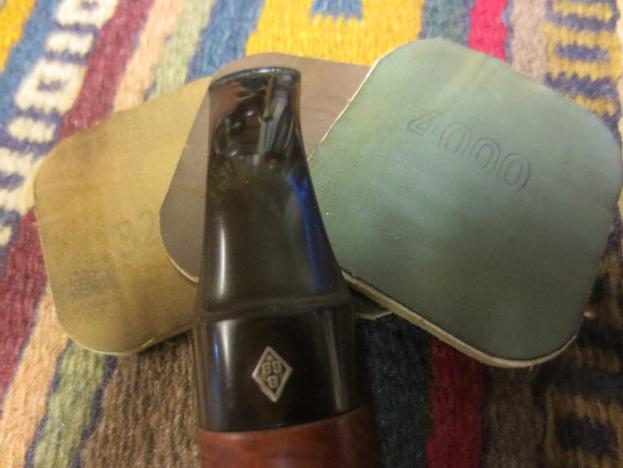
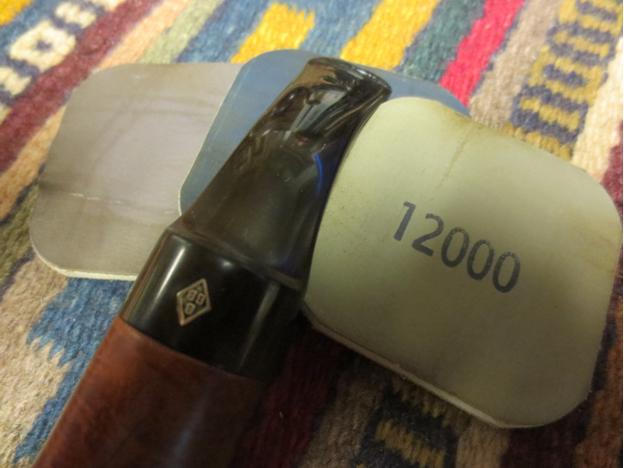
The previous owner kept the bowl very clean, but the stem had some tooth marks and calcification on the end. I dropped the bowl into the alcohol bath and went to work on the stem with the 400 grit wet/dry with water. As you can see in this picture, there is still some faint oxidation left.Briar1 I readdressed the oxidation with the 400 grit until it was gone. I find that it helps to dry the stem when you think you’ve reached the point where the oxidation is removed.Briar2 I then proceeded to use the micro mesh, 1500-2400 grit, with water.Briar3 Next I turned my attention to the bowl. The rim had some tar build up, which I tried to remove with distilled water.Briar4 The water helped, but there was an area of stubborn tar that just wouldn’t come off. Since I didn’t want to remove all of the finish, I used 1500 grit micro mesh to top the bowl.Briar5 I used 1500-2400 grit micro mesh without water on the bowl, then 3200-12000 grit micro mesh on the bowl and the stem.Briar6 The last few levels really do a nice job of polishing both wood and vulcanite.Briar7

Briar8

Briar9

Briar10

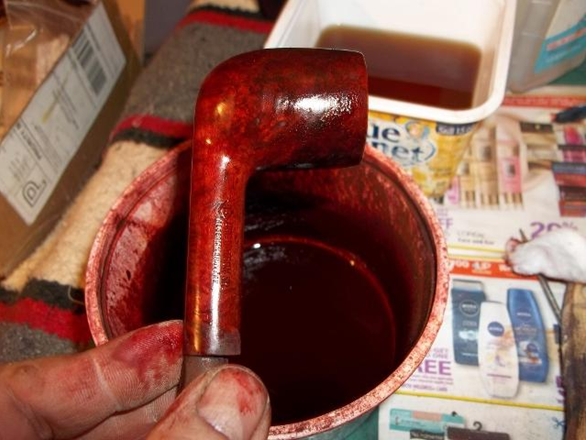
Briar11 Next it was time to apply the wax/stain. For red/brown colored pipes I use Kiwi Brown. As I mentioned in my previous post, it is very easy to work with and gives a good base shine before the final polish on the buffing wheel. Briar12

Briar13

Briar14

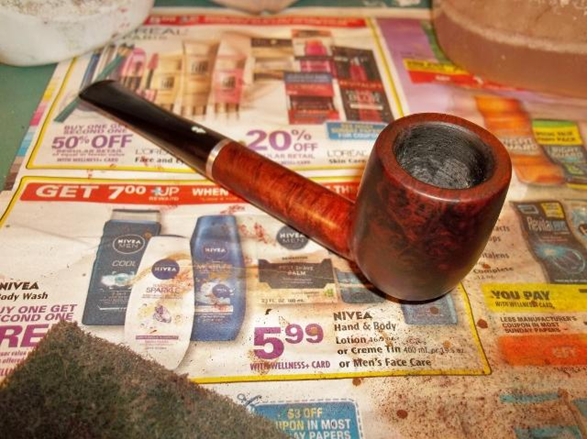
Briar15 After applying the shoe polish, I used the heat gun to melt the wax and buffed it out with a brush. As you can see.Briar16 Finally it was off to the buffing wheel.Briar17 Here are the results. Thanks for looking.Briar18

Briar19

Briar20

Briar21

Briar22

Restoring a Kaywoodie Super Grain 40 Lovat


Blog by Steve Laug

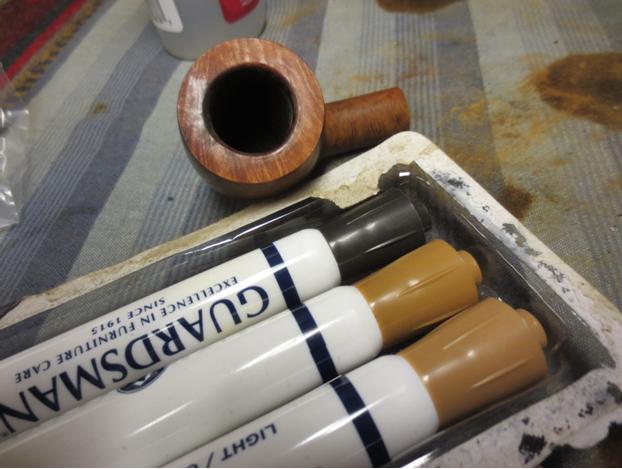
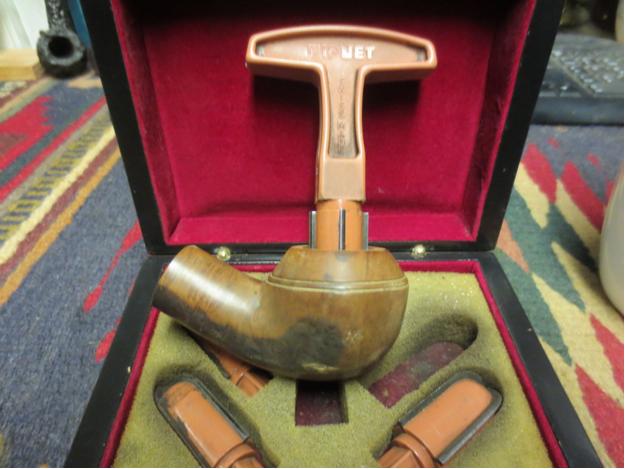
My son-in-law and I went pipe hunting a few weeks ago and this was one of the finds that day. I picked it up in an antique shop in Bellingham, Washington. I think I paid $15 for it. The stem was slightly overturned and would need to be fixed. The stem was clean of bite marks or tooth chatter. The stinger was intact and was a three-hole one so the pipe was newer rather than older. The finish was not ruined. The rim was caked with tars and oils. The buildup was only back side and went to the left side of the rim. The briar had quite a few fills on the sides and back of the bowl. The stamping on the left side was clean and easily read – Kaywoodie over Super Grain over Imported Briar. On the right side of the shank was stamped the shape number 40.KW1 KW2 The inside of the bowl had a light cake that was soft and crumbling. It would need to be reamed back to the bare wood in order to build a hard carbon cake.KW3 KW4 I reamed the bowl with a PipNet reamer and used the smallest cutting head first and then the second cutting head to finish the job.KW5 I removed the stem from the shank so that I could heat the stinger apparatus with a lighter. The black buildup of tars and oils on the stinger was hardened and not easily removed. Once I heated the stinger with the lighter I was able to wipe down the surface with a cotton pad and alcohol. I heated the stinger until the glue in the stem softened and then screwed the stem back into the shank and turned it until the stem lined up with the bowl.KW6 I cleaned the inside of the shank and stem with pipe cleaners, cotton swabs and isopropyl alcohol. The shank behind the metal insert was very dirty. I used the cotton swabs to clear out that area. I scrubbed it out until it was clean. I also cleaned out the airway in the stem the same way until it was clean.KW7 I scrubbed the top of the bowl with isopropyl alcohol on cotton pads to remove the buildup. It was thick so it took quite a bit of scrubbing. To finish removing it I used 1500 grit micromesh sanding pad and water. I was able to get the rim clean and then used a staining pen to touch up the rim.KW8 KW9 KW10 The lightest colour staining pen matched the finish of the bowl perfectly. I gave the bowl and rim a quick buff with White Diamond and then gave it multiple coats of carnauba wax and buffed it to a shine.KW11 I was fortunate that the stem was not damaged with bite marks or tooth chatter. I use micromesh sanding pads to clean up the stem. I wet sanded with 1500-2400 grit pads and dry sanded with 3200-12,000 grit pads until the finish of the stem was smooth. I buffed it with White Diamond to finish the process and then gave it a coat of carnauba.KW12 KW13 KW14 I put the stem back on the shank and then buffed the entire pipe with White Diamond a final time. I gave the stem and bowl multiple coats of carnauba wax and buffed it with a soft flannel buffing pad to raise the shine.KW15 KW16 I touched up the fills with the stain pen and then buffed the pipe bowl with White Diamond yet again. The results were acceptable. I gave the pipe several more coats of carnauba wax and buffed it with a soft flannel buffing pad. The finished pipe is shown in the next series of photos. It is ready to be loaded and smoked – clean and waiting for the next pipe man who will carry the trust to the next generation of pipe smokers.KW17 KW18 KW19 KW20
Cleaning up a Peterson 312 System Pipe


Blog by Steve Laug

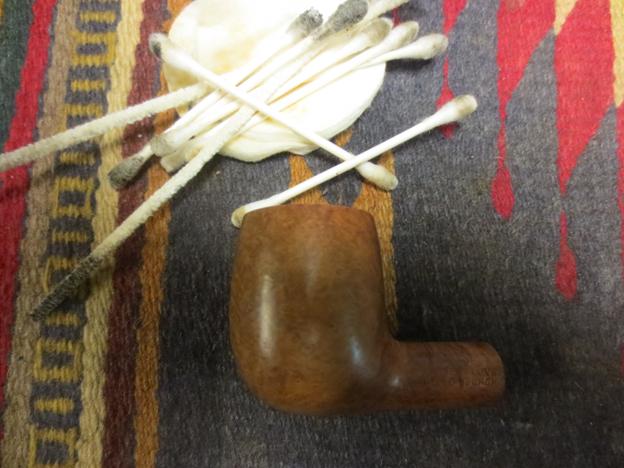
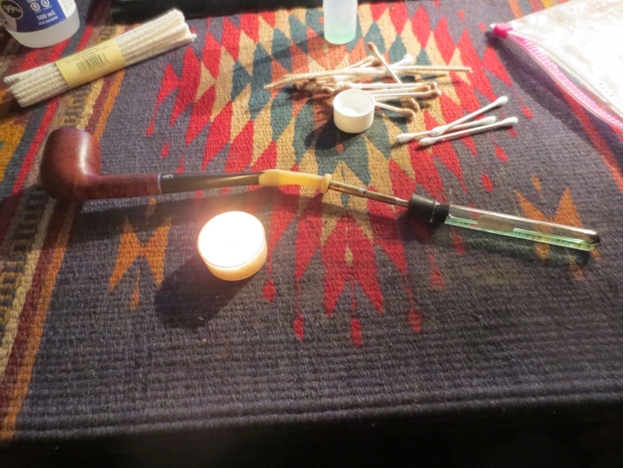
The Peterson I picked up on my trip was in great shape externally. The seller at the antique mall had cleaned up the outside of the pipe and polished the stem and bowl. The pipe was clean and shiny. The stamping was very clear on the ferrule and shank. The ferrule was stamped K&P Peterson’s and had three faux hallmarks as usual on the nickel ferrule of Peterson pipes. The shank was stamped on the left side with an arched Peterson’s over System and over Standard. On the right side of the shank the shape number has been stamped over with Made in the Republic of Ireland. The shape number is present under the over stamp and I can read the first two numbers clearly – 31_, but the third number is covered with other letters so it is not readable.Pete1 Pete2 I wanted to figure out the number stamping that lay hidden under the Made in the Republic of Ireland stamping. I went to the Peterson site and looked for the shape charts. I was able to identify the shape as a 312. Here is the link to the shape http://www.peterson.ie/p/5291/312-standard as well as a picture of the shape 312.0002552_312-standard_430 I also found this shape chart of Peterson System pipes on Pinterest and included the link to it here: http://www.pinterest.com/pin/464996730250913354/ I was particularly interested in noting the size variation between the 312 and the 314. While the shapes are very similar the 314 is significantly smaller than the 312.Pete3 The bowl had been wiped clean and had no cake inside. The rim was dirty and darkened with a thin buildup of carbon and oils. The inside rim was clean and the bowl was in round. There were no serious nicks in the bowl edges. The nickel band was polished and undented. The stem was lightly oxidized and had a light tint of brown. There were no tooth marks or bite marks on the stem. The pipe was in good shape and would be one of my easier clean ups. The inside of the shank and sump had a lot of tars built up inside. The airway was also dirty. The seller had used silver polish on the ferrule and there was a white buildup on the inside edges of the shank.Pete4 Pete5 Pete6 The next photo below shows the underside of the bowl and stem. Both the finish and the stem were in great shape with no visible dents or damage.Pete7 The tenon was wide open like it had been made for a filter. It could hold a paper Medico style filter. I have never seen a filter version of the system pipe. I am wondering if the stem is a replacement or possibly it was drilled out to open it up to receive the paper filter. Obviously the internals had not been cleaned. There was a buildup of hard carbon on the tenon end and on the inside of the tenon. It was hard and would not easily be removed.Pete8 I cleaned up the stem and the sump with cotton swabs, pipe cleaners and isopropyl alcohol until they came out clean. I used a lot of pipe cleaners and cotton swabs before it was clean. I softened the carbon buildup on the tenon with alcohol and then sanded it with 220 grit sandpaper and scraped it away with a small blade to remove the hardened carbon.Pete9 Pete10 The bowl and shank had a heavy aromatic tobacco smell so I stuffed them both with cotton balls and used an ear syringe to put alcohol in both the bowl and shank. I set the bowl upright in an ice-cube tray and let it sit while the alcohol and cotton wicked out the oils and tars and sweetened the pipe. By doing this the pipe would be reset and could be smoked with any tobacco without picking up residual tastes.Pete11 Pete12 While the bowl sat soaking I worked on the stem to remove the oxidation. I sanded it with micromesh sanding pads – wet sanding with 1500-2400 grit pads and dry sanding with 3200-12,000 grit pads. I wiped it down with Obsidian Oil between each set of three pads.Pete13 Pete14 Pete15 I buffed it with White Diamond on the buffing wheel. Then I gave it several coats of carnauba wax and buffed it to a shine with a soft flannel buffing pad.Pete16 Pete17 Pete18 Pete19 After the bowl had been sitting for 4 hours I took the photo below and then pulled out the cotton balls. The alcohol had evaporated and left behind a brown/amber residue on the cotton balls. Once the cotton was out I ran a folded pipe cleaner through the bowl and the sump area of the shank. It came out clean. I ran a straight cleaner through the airway into the bowl. It also picked up a slight bit of residue from the soak but it was clean after a few swabs. Best of all the smell of the aromatic tobacco was gone and what was left was a clean new pipe smell.Pete20 Pete21 Pete22 When the shank was dry I put the newly polished stem back in the shank. I gave the pipe a quick buff with some carnauba and polished it with a shoe brush to raise the shine. The finished pipe is shown in the photos below. It has some slight rim darkening from the previous owner but otherwise it is like new. The bowl and shank are fresh and ready to be loaded with a bowl of fine Virginias or some Virginia/Perique. I have some aged 5100 sitting in a jar here ready to smoke and also a small jar of some blending Perique so I may have to mix a small batch just for the inaugural smoke on this pipe…The briar is beautiful and the refurbished pipe came out very nice. I am looking forward to having a bowl very soon – just have to let the bowl dry out and air for a couple of days before I load it up and smoke it. In the meantime I will just look it over and enjoy the beauty of the pipe.Pete23 Pete24 Pete25 Pete26

Rode Hard Put Away Wet – A Tired Julius Vesz shape 31 Zulu/Canted Dublin


Blog by Steve Laug

When I walked by the display case in the antique mall and saw the classic Vesz finish and the O logo on the stem I knew I was looking at one of Julius’ pipes. It was in very rough shape. The stem was covered on the topside and underside from the button forward for about an inch with a lot of dents and bite marks. On the topside there was a bite through – not large, more of a pinhole sized hole. There was also a lot of calcified buildup on the stem. The stem was over bent and the flat bottom of the bowl and shank did not rest on the desk top when laid down. The stem arch kept it from happening. The button and crease had were also worn. The rest of the stem was oxidized. The bowl finish was dirty and worn with white paint spots on the bowl. The stem was very tight and hard to remove but when I did remove it the tars on the end of the tenon were thick. The inside of the stem was so filled that the airway was virtually clogged. The slot on the end of the stem was plugged but for a hole the size of a pencil lead.Vesz1 Vesz2 The rim was damaged and worn from tapping it out on hard surfaces. There were large dents and worn areas. The inner edge was blackened and on first glance looked to have burned damage. It was hard to tell for sure but it also looked to be slightly out of round due to the damage to the inside edge. The bowl was heavily caked with a concrete like carbon build up. I tried to ream it and found it too hard to cut as it stood. The inside of the shank had heavy carbon and tar buildup.Vesz3 The pipe is stamped on the flattened bottom of the shank. Toward the front of the bowl it is stamped Circle 3 which denotes the price point of the pipes. Julius stamped them 1-6 to denote the price. That is followed by the shape number – in this case 31. The final stamping is Julius Vesz over Hand Made.Vesz4 To soften the concrete like cake so that I could ream it more easily without damaging the briar I put the bowl into an alcohol bath to soak for a while. I also wanted to remove the grime from the rustication on the bowl and the soak would facilitate that.Vesz5 While the bowl soaked I worked on the stem. I cleaned the inside of the stem with cotton swabs, pipe cleaners and isopropyl alcohol. I also sanded the calcification with 180 grit sandpaper and 220 grit sandpaper to remove the build up from the surface of the stem. The tooth marks are very evident in the photos below.Vesz6 Vesz7 I took the bowl out of the alcohol bath to ream it and found that indeed the alcohol had softened the cake enough to make reaming a very easy task. I reamed it with a PipNet reamer starting with the smallest cutting head and working up to the size of the diameter of the bowl.Vesz8 I topped the bowl and removed the damaged surface of the rim. I set up a topping board and used 220 grit sandpaper to gently and carefully remove the damage. I sanded the bowl in a circular pattern on the board as I find that doing so does not leave as deep scratches in the finish. Once I had removed the damage I could see the state of the inner edge of the rim. It had some darkening but it was still solid. There were no deep burned areas that needed to be removed.Vesz9 Vesz10 Vesz11 I set up a heat gun and heated the bent stem to reduce the bend to a point where the pipe would sit up right on the flat bottom of the shank and bowl. I also heated the tooth dents to raise them as much as possible before I sanded them.Vesz12 Vesz13 Once the stem was heated and flexible I inserted it in the shank and pressed down on the bend to adjust the bend to allow the bowl to sit without falling over. The tooth marks did lift quite a bit and are visible in the last two photos of the foursome below.Vesz14 Vesz15 Vesz16 I sanded the stem with 220 grit sandpaper and then with medium and fine grit sanding sponges to clean up the dents as much as possible. The surface needed to be cleaned and prepped for the work of filling the dents with black super glue. I washed down the dents with alcohol to remove the sanding dust. I filled the holes and built up the dents in the button lip with black super glue until they were overfilled, then sprayed them with the accelerator to harden the glue. I sanded the fills with 180 grit sandpaper and then with 220 grit sandpaper to begin the process of smoothing them and blending them into the surface of the vulcanite.Vesz17 Vesz18 I continued to sand with the 220 grit sandpaper to shape the crease and the button as well as the surface of the patches until they were at the same level as the surface of the stem.Vesz19 Vesz20 I sanded the stem after that with a medium and a fine grit sanding sponge to further blend it into the stem surface. It took a lot of sanding to blend it into the surrounding vulcanite.Vesz21 Vesz22Vesz23 Vesz24 I rubbed down the stem with Obsidian Oil to make the scratches and trouble areas very visible. I also rubbed down the bowl with olive oil and wiped it off and set it aside overnight to let the oil be absorbed into the wood. In the morning I took the following set of two photos to show the state of the pipe when I began to do the finishing work on it. Vesz25 Vesz26 I sanded the stem with fine grit sanding sponges to clean it up further and remove the deeper scratches. I then sanded it with micromesh sanding pads – wet sanding with 1500-2400 grit pads and dry sanding with 3200-12,000 grit pads. I rubbed it down with Obsidian Oil between each set of three pads. I finished the stem work by buffing the stem with White Diamond on the wheel to finish the polish. I gave it several coats of carnauba wax and buffed it with a soft flannel buff to raise the shine.Vesz27 Vesz28 Vesz29 Vesz30 Vesz31 The bowl had a heavy ghosting of aromatics – it was overwhelming and no matter how many times I cleaned it the smell remained. I filled the bowl with cotton balls, pressed them down and then filled the bowl with isopropyl alcohol with an ear syringe until the cotton was soaked. I set the pipe bowl in an old ice-cube tray that holds it upright and let the alcohol and cotton do their work to pull out the oils from the briar and sweeten it. I have moved more and more toward using cotton instead of coarse salt. It seems to work just as well and is less of a mess in the clean up stage.Vesz32 I let the pipe sit with the alcohol and cotton balls for about three hours. The photo below shows the oils that were drawn out of the bowl. The cotton turned a yellow-brown and was almost dry.Vesz33 I took the cotton balls out of the bowl and cleaned the shank and bowl with pipe cleaners. I put the stem back in place on the pipe and gave the pipe a hand polish with some Halcyon II Wax. I hand buffed it with a shoe brush to raise the shine. The finished pipe is shown below. The look and feel of the pipe is far better than when I started. The repairs to the stem and button worked well and blended in nicely to the stem. The topping of the bowl removed the damaged portion and the blackening of the inner edge of the rim is merely a character trait. This is one that will stay in my collection. It smells sweet and is ready to smoke.Vesz34 Vesz35 Vesz36 Vesz37

Kaywoodie 8783B Drinkless Restoration (1935-1938)


Blog by Al Jones

The Shape 8783B is one of my favorite Kaywoodie shapes.  This shape is more common in the Supergrain grade and this is the first one I’ve seen available in the Drinkless grade.   This shape is almost identical in shape and size to my Comoys 499 Extraordinaire, but is significantly lighter at 54 grams.

Kaywoodie introduced the Drinkless grade in 1935.  The four digit shape stamp was last used in 1938.  This one has the four hole stinger with a large ball.  It is also my first vintage Kaywoodie with the “Reg No 213598” and “Drinkless” stamps on the stinger.  These details make it easy to date the manufacture of the pipe between 1935 and 1938.  “Drinkless” grade pipes seem to have nicer grain patterns than Supergrain pipes.  This one has some straight grain radiating around the bowl with birdseye on the bowl top.

The pipe was advertised as cleaned and polished.  But as you can see from these picture, there was still considerable oxidation on the stem.  The briar had some bruises with some rim darkening and one dent on the bowl top.

Kaywoodie_8783B_Drinkless_Before Kaywoodie_8783B_Drinkless_Before (2) Kaywoodie_8783B_Drinkless_Before (1) Kaywoodie_8783B_Drinkless_Before (3)

Kaywoodie_8783B_Drinkless_Before (11)

The nomenclature was worn, but visible to the naked eye.  This pipe is stamped Aged Bruyère with Drinkless over Kaywoodie.  Kaywoodie switched to the “Imported Briar” stamp in 1936, so it is possible that this pipe could be from 1935.  There are overlaps between years, so there is no definitive way to determine the exact year.

Kaywoodie_8783B_Drinkless_Before (8) Kaywoodie_8783B_Drinkless_Before (9)

The bowl appeared to be reamed and cleaned, but I soaked it with alcohol and sea salt just to be sure.  The stem presented a problem as it was completely blocked.  Using a piece of heavy copper wire, I was able to push out some dirty pipe cleaner debris and clear the stem.  The detail work and funneling on the button end is very impressive and comparable to Comoys buttons of that era.

I was able to partially lift the dent from the bowl top with steam.  I heat an old kitchen knife heated with a propane torch pressed onto a wet cloth over the dent.  I then removed some of the rim darkening with a worn piece of 8000 grade micromesh sheet.  The briar was then buffed with several coats of carnuba wax.  I was careful to stay away from the worn nomenclature to avoid any more damage.

The oxidation on the stem was pretty stubborn.  The stem appeared to have had some of the oxidation buffed or sanded off.   I started with 600 grit wet paper, then progressed thru 800, 1000, 1500 and 2000 grades.  I then used 8000 and 12000 grade micromesh sheets.  The stem was then buffed with White Diamond rouge.

Below is the finished pipe.

Kaywoodie_8783B_Drinkless_Gallery Kaywoodie_8783B_Drinkless_Finished (3) Kaywoodie_8783B_Drinkless_Finished (2) Kaywoodie_8783B_Drinkless_Finished (4) Kaywoodie_8783B_Drinkless_Finished (8) Kaywoodie_8783B_Drinkless_Finished (7) Kaywoodie_8783B_Drinkless_Finished (6)


Cleaning up a Unique No Name Metal Pipe – It turned out to be a Stirling


Blog by Steve Laug

When I found this old metal pipe on a recent trip to Alberta it had no markings and at first glance appeared to be similar to both Falcons and Vikings. There was a difference though from those other metal pipes that I have in my collection. The tube in the base was thicker in the section next to the stem. The tube actually was normal sized from the bowl to the first joint and thicker from the joint back to the end of the shank. The shank itself was also round instead of the oval ones found in the previously mentioned pipes.It was the shape that caught my eye and I had to take it apart to see what made it different. I was surprised that the stem was actually removable and came out very easily when turned. The stem was also vulcanite rather than nylon and seemed to be of a good quality as it did not have signs of oxidation on it. When I removed the stem I was surprised to see that it had a metal tenon like those found in Medico pipes – slotted on each side so that it can be adjusted for a tight fit in the shank. Obviously this tenon was made to accommodate a filter by all appearances. I was hooked so I paid for it and added to my pipe hunt “treasures” that I would restore when I got home from the road trip.
f634b1970596b4b85986ec05fb585e1cWhile I was travelling I posted pictures of the pipe on the PSU Pipe Smoker Unlimited Forum and got a response that what I had was probably a Stirling pipe. The response included a link to the Smoking Metal website http://www.smokingmetal.co.uk/pipe.php?page=285. The site had pictures of the pipe and it matched mine precisely. It stated the following: “STIRLING, no markings on pipe or bowls, only the box is marked as Stirling, as Foreign Made, but no idea by whom. There are several similar pipes, none of which have a name on them. Arcadia (on this website) is one, differing only in the fact that whereas this Stirling has an all vulcanite push fit stem, the Arcadia has a vulcanite stem with a metal threaded insert. The “Park Lane” has no facility for a filter like the Stirling. This one accepts some Dr. Grabow Viking Bowls as well. Its overall length is 5 7/8 inches or 149mm. I have included the photos from the Smoking Metal site for comparison sake.Stirling2Stirling3Stirling 1From the above photos I conclude that the pipe I found is indeed a Stirling Air-Cooled Briar. It evidently had originally come with interchangeable bowls. From the information found on the site I was able to ascertain that Grabow Viking Bowls would fit the base. I had several of those at home so I when I got home earlier this week I checked it out and found that they did fit well. While this information is helpful it still leaves a lot shrouded in mystery for me. I would love to figure out who made the pipe. I have written to Ed on the Dr. Grabow forum and Bill Feuerbach from KW to see if they have any information on the pipe. If any of you readers have any information please let me know.
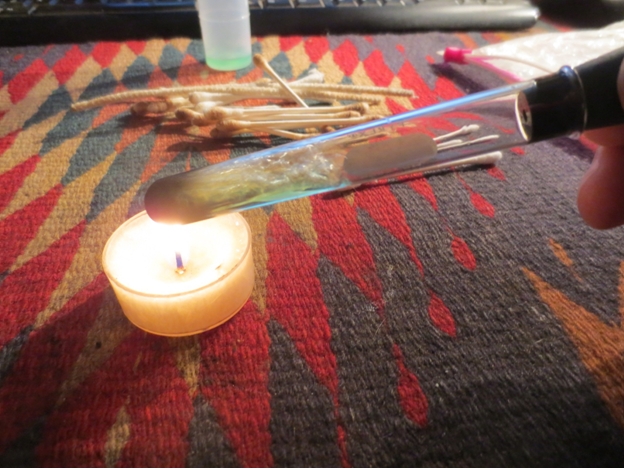
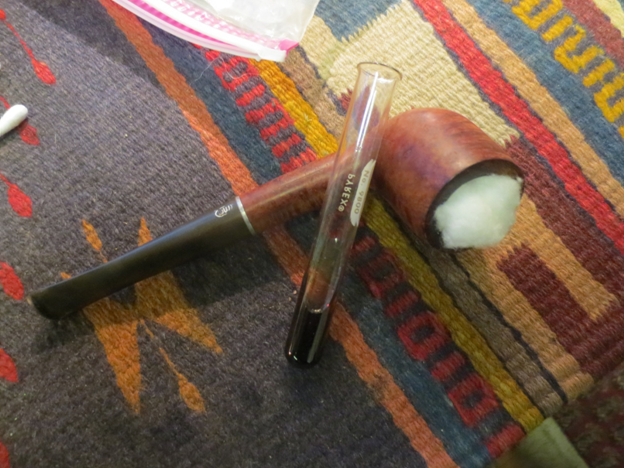
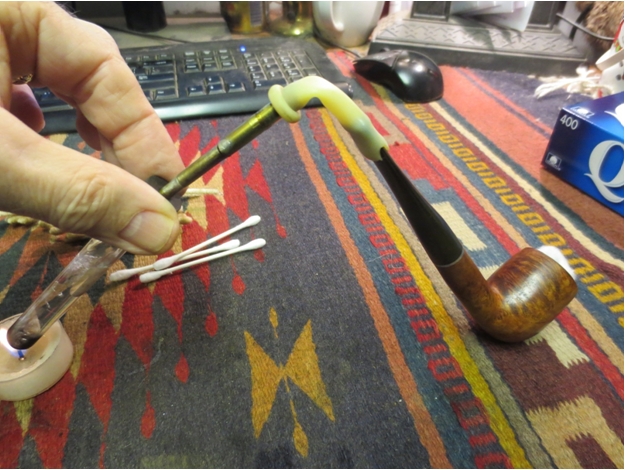
Now it was time to clean up the pipe. The bowl was thickly caked and the insides of the base were black with tars and oils that had hardened. The stem had some tooth chatter on both the top and bottom near the button. The finish on the bowl was flaking and the varnish coat was peeling off the briar. The rim was black with tars and also had some damage from the bowl being tapped out to empty it. The aluminum was oxidized and dirty as well. The next four photos show what the pipe looked like when I started to work on it.IMG_2559 IMG_2560 IMG_2561 IMG_2562 I took the pipe apart to clean the interior of the base. I used pipe cleaners, cotton swabs, cotton pads and alcohol to break through the hardened oils and tars in both the shank and the base. The tenon was metal (brass?) and was thickly caked as well. The two slots on the side of the tenon were covered so it was not clear that they even existed.IMG_2563 I reamed the bowl with a PipNet reamer and took it back to the briar. I started with the smallest cutting head and worked my way up to the size that fit the bowl.IMG_2564 IMG_2565I set up a topping board with 220 grit sandpaper and sanded the top of the rim to remove the damage.IMG_2566 IMG_2567 I scrubbed the finish off of the bowl with alcohol and also cleaned the bottom of the bowl. I sanded it with 220 grit sandpaper to break the finish and then used medium and fine grit sanding sponges to remove the scratches left behind by the sandpaper. I finished sanding it with micromesh sanding pads – wet sanding with 1500-2400 grit pads. The next series of three photos show the bowl at this point in the process. I was not sure whether I would stain the bowl or leave it natural and just polish it.IMG_2568 IMG_2569 IMG_2570I sanded the tooth chatter on the stem with 220 grit sandpaper to remove the damage and then followed that with medium and fine grit sanding sponges. I finished the stem by sanding it with micromesh sanding pads. I wet sanded with 1500-2400 grit pads and dry sanded with 3200-12,000 grit pads. I rubbed the stem down with Obsidian Oil between each set of three pads.IMG_2571 IMG_2572 Once the stem was done I buffed it with White Diamond and gave it several coats of carnauba wax. I cleaned the aluminum and polished it with a silver polish and polishing cloth then set it aside to figure out what I was going to do with the bowl. I finally decided to leave it natural but to also wipe it down with a light coat of olive oil to darken the finish slightly. I buffed it with White Diamond and then gave it several coats of carnauba wax and buffed it with a soft flannel buff to bring out the shine. The pipe was finished in terms of the cleanup. I put a Medico filter in the shank for the inaugural smoke though I will probably not keep it there for future smokes. The finished pipe is shown below.IMG_2573 IMG_2574 IMG_2575 IMG_2576

Restoring a Frozen Kirsten Companion K Straight Pipe


Blog by Steve Laug

The last pipe I picked up on my recent Alberta trip was a Kirsten style straight pipe. The metal shank is stamped on the left side Companion and on the underside it is stamped Made in U.S.A and then K. On the top of the shank the previous owner scratched in his initials FWE. The bowl was stuck on the shank. The finish on the bowl was worn and dirty. The rim of the bowl had a thick tarry buildup and had some deep dents in the surface. There was a thick cake build up on the inside of the bowl that was shaped like a cone – the bottom was very narrow and the top was wide open. Normally the bowl on Kirsten pipes are more U-shaped with the walls similarly open to the bottom of the bowl where the drilled screw goes through. The stem had a tooth mark on the top and the bottom side near the button. The stem was frozen in the metal shank and I could not twist it at all. The airflow adjustment end cap that normally twists to either open or dampen the airflow was also frozen in place. The metal barrel and end cap had scratches and marks on it. The end cap ridges were worn and looked like someone had used a pair of pliers on it to try to break it free.IMG_2531 IMG_2532 IMG_2533 IMG_2534 I was able to twist the bowl off the barrel by carefully turning it back and forth slightly to break it free. The tars in the barrel threads and on the drilled out screw in the bowl were really gummed up and dirty.IMG_2535I put the barrel in the freezer and left it there during dinner. After dinner I took it out and was able to twist the stem from the barrel. Once I removed the stem and the metal tube plunger it was extremely tarred and sticky. The second photo below shows the black tars of the interior of the barrel and plunger.IMG_2536 IMG_2537The end cap was still frozen in the barrel. I filled the barrel with alcohol and set it in an ice-cube try to let it soak. I knew that the tars on the plunger were also what held the end cap in place binding the metal of the barrel and the cap to each other. Typically the end cap had a rubber grommet on it that held it in place with a friction fit. In this case it appeared that the rubber grommet was compressed against the metal on the inside of the barrel and bound it in place.IMG_2538I cleaned the plunger and sanded the stem with 220 grit sandpaper to remove the hard tarry build up on it. I wiped it down with alcohol and then sanded it until the plunger was shiny and clean. I cleaned out the inside of the stem and the plunger with both bristle and regular pipe cleaners.IMG_2539 IMG_2540I reamed the bowl with a PipNet reamer and used all sizes of the cutting heads to ream back the carbon build up in the bowl.IMG_2541 IMG_2542 IMG_2543The bowl was badly dinged and hammered leaving some deep denting. I topped the rim with a topping board to clean up the damaged top edge.IMG_2544 IMG_2545I wiped down the bowl with alcohol on cotton pads and then used a flat blade screwdriver to remove the screw from the bottom of the bowl and remove bottom cap on the bowl. I wiped down the inside of the cap and cleaned the screw with a brass bristle tire brush. I wiped it down with alcohol and then sanded the outside of the cap and screw with 1500-2400 grit micromesh sanding pads to polish them.IMG_2546 IMG_2547The rim had two rather large fills that needed to be hidden with stain. I used the stain pens to restain the rim and the bowl. I started with the lightest colour pen and finished with the darkest colour.IMG_2548I buffed the bowl with White Diamond and then gave it several coats of carnauba wax. I put the metal cap back in place and turned the screw into the bottom of the bowl.IMG_2549 IMG_2550The end cap still did not come off after I had soaked it with alcohol. I used a Robertson head screw driver with a long shank and inserted it in the barrel. I hammered the end with a hammer and tried to drive it out of the barrel. It cam half way out but I could not budge it further. I boiled a cup of water and let the barrel and end cap sit in it to see if I could loosen the tars. I repeated this three times with the cooling of the water. I then inserted the screw driver and was able to drive out the cap. It was covered with a black tar build up and the inside of the barrel was also thickly coated. I cleaned out the inside of the end cap and the barrel with cotton swabs, pipe cleaners and alcohol. I rubbed down the rubber grommet on the stem and the end cap with Vaseline to soften them again and then inserted them in place in the barrel.IMG_2551I sanded the stem with 220 grit sandpaper and then medium and fine grit sanding sponges to remove the tooth marks and the oxidation. I then sanded it with micromesh sanding pads – wet sanding with 1500-2400 grit pads and dry sanding 3200-12,000 grit pads. I rubbed the stem down with Obsidian Oil between each set of three pads. I gave the stem a final buff with White Diamond and then gave it several coats of carnauba wax to give it a shine.IMG_2552 IMG_2553 IMG_2554The finished pipe is shown below. I rubbed the stem down with some Conservator’s Wax – a microcrystalline wax and hand buffed it with a shoe brush. I avoid using the buffer on metal as it turns the pads black and does not shine the metal. I put it back together and it is ready for its inaugural smoke. I have two other Kirstens that are great smokers and this one with be added to that number until the day I pass it on to someone along the way.IMG_2555 IMG_2556 IMG_2557 IMG_2558

A Spitfire by Lorenzo Mille Billiard – My First Dabble with Black Super Glue – Robert M. Boughton


Guest Blog by Robert M. Boughton
Member, North American Society of Pipe Collectors
http://www.roadrunnerpipes.com
http://about.me/boughtonrobert
Photos © the Author

“There is nothing insignificant in the world. It all depends on the point of view.”
—Johann Wolfgang von Goethe (1749-1832), German author, playwright and poet
Robert head INTRODUCTION
Perspective is the key to everything, from the incredible diversity of the daily activities to the personal, often unique worldviews of everyone on the planet. Take, by way of an extraterrestrial example, the Sombrero Galaxy shown above, an edge-on spiral 50,000 light years from one side to the other (half the size of our own) and 28 million light years from Earth. Discovered hidden within the constellation Virgo in 1781 and named by French astronomer Charles Messier because of his point of view at the time, the Sombrero seen head-on would have a much different appearance. In other words, looks can be deceiving.

And so I present the initial side view (somehow I neglected to photograph the left side) of the Spitfire by Lorenzo Mille – which, compared to Starbuck’s Venti, meaning 20, translates in the same Italian to 1000 – that lives up to its name in terms of its huge size, and lasts far longer than any of the aforementioned coffee chain’s drinks.Robert1 The massive, gorgeous billiard (measuring 5-3/4″ x 2″ in length and height with an outer rim diameter of 1-3/8″ and chamber dimensions of 7/8″ x 1-7/8″), as seen in this photo side angle as I received it in a pipe lot I bought online, is nothing less than gigantic all around. Even the relatively flat shank leading into the stem is an inch across. But, as will be shown in the next part of this blog, from other angles the pipe, which at least on my screen is the actual size, had its share of problems.

RESTORATION
Here it was from those other views.Robert2 Robert3 Robert4 Robert5 The blackened rim and badly caked chamber were easy enough to fix. I started on the chamber with my reamer and took out the majority of the carbon buildup, then switched to 150-grit paper followed by 400 before finishing with 800. The rim came clean with super fine steel wool before 1500 micromesh, then 2400, 3600 and at last 8000. So far, that is the finest grade of micromesh I have used, and it worked well.

Most of the stem cleaned up with 1500 micromesh and some 400-grit paper on the lip followed by 1500 again, and then 2400 to smooth it out.Robert6 Still, the tooth marks remained, and since my recent order of Black Hyper Bond, a.k.a. Super Glue, had arrived, I was presented with my first opportunity to try it on a stem. The hard part proved to be not squirting out too much.Robert7 A couple of hours later, long after I had prepared the nice hunk of briar for buffing, I returned to the stem and tried 2400 micromesh to remove the dried glue bump. After that, I finished it with 3600. Robert8 As I noted, this was my first time filling in a hole, so the result is not perfect, but I think it looked much better than before.

Every inch of the wood, to my continuing amazement, was as pristine and unblemished as the first side angle shows. This is the only pipe I have ever restored that had not even a single scratch on it, except for the rim, which ended up fine as I described. This was also one of the few times (all of the others on meerschaum restorations) where I only needed to buff the rim to make it shine again with its natural color, not needing to re-stain it.

This brings me, with rather unusual speed, to the final buffing, which I accomplished using my standard methods: red and white Tripoli followed by White Diamond on the stem, and white Tripoli, White Diamond and carnauba on the fine, already lustrous wood just for the sake of it.Robert9 Robert10 Robert11 Robert12 Robert13 Robert14 CONCLUSION
I was a little giddy trying out the Black Hyper Bond to repair the bite mark in the stem, and as I wrote before, the result is not as well done as I hope to achieve in the future and returning to some of my previous restores that some of you with excellent memories may recall needed similar work. But from my perspective, it’s a good start – better than government work at least, as the saying goes.

Grazzie Mille for your time and patience!

The Screwy Nature of the Jenkins Truly Dry System Billiard – Robert M. Boughton


Guest Blog by Robert M. Boughton
Member, North American Society of Pipe Collectors
http://www.roadrunnerpipes.com
http://about.me/boughtonrobert
Photos © the Author

“Life is really simple, but we insist on making it complicated.”
— Confucius (551-479 BC), Chinese philosopher, teacher, editor and politician

INTRODUCTION
I had two main concerns when another pipe lot arrived in the mail and I turned one of the diverse examples in my hands: the head of a screw tightened flush with the draught end of the bottom of the shank, just before the chamber, and my serious doubts that whatever purpose a screw might serve could be legitimate. In other words, I was afraid to remove the thing for fear the pipe, which otherwise had potential for elegance, would fall to pieces if I did so.Rob1 Before attempting to remove the ominous screw, I tried blowing through the open end of the shank, only to become red in the face and breathless with failure. Then I turned to running an alcohol-soaked pipe cleaner through the shank and found that it, also, was blocked, although the cleaner came out with only a light rusty color, a fact I told myself was promising. For the first time in my restoration experience, I had a structural problem with which to deal. I was elated.

Now, don’t go and think I’m some sort of nut who gets his jollies working on broken things. For the most part I satisfy myself making old, abused or “well-used” pipes beautiful again. From upcoming photos, the need for this treatment on the bizarre Jenkins billiard this blog is about will be obvious. It’s just that until this pipe, the only kind of restoration I had done was of the basic variety. At last, I had an opportunity to tinker around and make adjustments to a pipe’s infrastructure, if you will. Hence, I felt the butterfly effect in my stomach.

Before touching whatever was screwed into the bottom of the pipe – I only describe the device this way now, as at the time I had no reason to suspect it might be anything but an average screw – I thought it advisable to see if I could find a Jenkins Pipe Co. or the like anywhere online. I started with pipephil.eu, my favorite first stop, but found no mention of the brand. And so I resorted to pipedia.com, which, as a user-generated source of information, can be more dubious in its reliability. Still I found no mention of the maker, despite the crisp, clear nomenclature including an elaborate brand stamp.Rob2 Having spent two days using more than every word combination in Heaven and Earth than are dreamt of in my philosophy to track down the pipe’s origin, with both Google and Yahoo search engines, and finding everything but a plausible reference to the Jenkins who made this beautiful if weird pipe, my patience, wits and research skills (short of doing something crazy like going to the library) were exhausted. I must now hope for knowledgeable feedback from readers of this blog, or maybe our host.

The closest I came was a patent issued to one Eric G. Jenkins in 1959 for a wild but unique spring contraption to be used for tamping the spent ashes of pipe tobacco from the chamber into a suitable receptacle, without risking damage to the pipe or staining of the fingers, to which I gather pipe enjoyers back in the day had no other way to avoid. [See first hyperlink at the end of the blog. Thinking about it, the idea occurs to me that this is just the sort of Jenkins who could design the device used in the Ever Dry.

Remember, this was before the now ubiquitous three-piece pocket pipe tool was patented in the early 1970s.

RESTORATION
My routine in these blogs has been to take a linear path showing, with words and photos, what it was like, what happened, and what it is like now. But this restore was far more indirect, and so to guide me in my description of it I organized my photos to prompt my memory of just what it was I did, and when, to fix this Jenkins TrulyDry system pipe. That noted I will nevertheless begin with what it was like: Rob3 Rob4 Rob5 Rob6 Rob7 Rob8 As some may have noticed in a few of the photos above, the stem and shank were uneven. In fact, I had to place the entire pipe in the refrigerator for close to an hour before I could even make the stem budge much less remove it. That feat came with more time in the cooler. The problem with the alignment, I soon learned, was remedied without trouble by cleaning off the buildup of some substance, with which I am not familiar, from the tenon.Rob9 Confident enough to continue with the removal of the screwy, old-fashioned tenon attachment-like gizmo that was over-tightened into the bottom of the shank, I did so with extreme care and slowness, listening all the while for something like a nut to come undone inside. But there was no such sound.Rob10 Right away, it was apparent that the object removed from the shank was not a regular screw employed in an ad lib repair but something designed for a purpose, however inexplicable. Able to blow through the shank, at least, I decided it was time to clean the pipe after reaming and sanding the chamber and using super fine steel wool on the rim to remove the blackness there.

Without much hope that the pipe would have any draw on it when I replaced the screw, I was, therefore, not disappointed to find I was correct. But an idea came to me, and I loosened the screw just one full turn, allowing me to blow and inhale through the intact pipe. I removed the ventilator again and set it aside for the remaining work on the wood.

I cleaned up most of the scattered scratches either with 1500 micromesh or 400-grit paper and then rubbed the entire area of wood with the 1500 followed by 3600. The result was, as one reader of another recent blog commented, baby smooth. I also only had to re-stain a few small patches of the wood, not counting the rim.Rob11The stem required heavy sanding with 400-grit paper to fix all of the scratches, teeth chatter and uneven bit, followed by 1500 and then 3600 micromesh.

When I had prepped the pieces better than I had ever done before, the buffing brought out a brilliant, dark reddish luster. Rob12 - Copy Rob13 Rob15 Rob16 Rob17 Rob18 CONCLUSION
I emailed my blog-in-progress to a retired engineer friend of mine, who looked over the text and photos and called me to arrange a meeting at McDonald’s the next morning. Armed with my laptop, an iced coffee and two printouts of the ash removal system patent that even I could see did not match the device used in the Ever Dry, I was relieved when I saw my friend walk through the door.

Confirming my conclusion concerning what the valve was not, my friend determined by the design and placement of the device that it was some sort of ventilator, however obtuse in planning and execution, that was intended to release heat and maybe even to collect moisture and small pieces of tobacco with the valve extended almost all the way. The engineer’s analysis made sense, and, happy to have an explanation of the atypical screw valve to present in this blog space, I embraced it.

At that time, I experienced another one of my moments of clarity. Seeing the intentional groove cut into the wood, I suggested that it would accommodate storage of the device with the valve retracted at times when the pipe was not being enjoyed. The engineer concurred.

Still later, while making the extensive but necessary revisions to my original version that had been debunked by the good engineer, I recalled an enlightening and lengthy online article concerning and titled “The Revolution of the System Pipe,” by Don Duco. The general knowledge and research behind the study of the evolution of system pipes around the globe is exhaustive.

I flashed on a description of the original Kirsten metal pipes with screw-on briar bowls and their inclusion of a closure system between the bowl and the shank that accomplished the same result of the screw valve on the Jenkins, and realized the design of the mechanism in the Jenkins pipe was nothing more than an adaptation of the early Kirsten, despite the newer, cruder method.

Still, whoever owned the Jenkins pipe brand must have been a frustrated engineer, if only by the aesthetic evidence, for being inspired by the notion of screwing something that, when the pipe is being enjoyed, dangles downward with an obvious and alarming attraction of attention. Besides, anyone, whether or not a connoisseur of pipes but not familiar with the Jenkins system, seeing one with the head of a screw in the bottom of it, would think it some sort of jury-rigged attempt to hold the pipe together.

As my father often pointed out, it takes all kinds.

WEBSITES TO VISIT

http://www.google.com/patents/US2886044 (Click on View as PDF for official USPTO document.)

http://www.pijpenkabinet.nl/Artikelen/Systeempijp/art-E-systeempijp.html

The Wily Nature of a WDC 14K Full Bent Billiard Restore – Robert M. Boughton


Guest Blog by Robert M. Boughton
Member, North American Society of Pipe Collectors
http://www.roadrunnerpipes.com
http://about.me/boughtonrobert
Photos © the Author

O, what a tangled web we weave,
When first we practise to deceive!

— Sir Walter Scott, Scottish historical novelist, playwright and poet, in “Marmion” (1808), Canto VI, stanza xvii.

INTRODUCTION
I mention poet last among the great Scot’s endeavors because, if any of them were much good, the poetry was most lacking. However, there are forever those two lines that people remember, even if they often misattribute it to Shakespeare, who would have made a much better and shorter sonnet of the one theme had he thought of it. Scott’s epic in length tragic poem (in more senses than intended) – with its jumbled use of rhymed couplets in iambic tetrameter, alternating rhyme in iambic pentameter and alternating or nested rhyme in hymn meter – just tends to bore. I admit that my writing skills do not include poetry, which I consider the highest form of the literary art form, but I also do not pretend to have the mind for it.

Many of the quotes I include before my blogs are no doubt somewhat enigmatic, but this one hits the mark much closer. A quick look at the WDC Full Bent Billiard with 14K gold band reveals much ado about nothing as far as the need for serious restoration is concerned.Robert1In fact, when it came in the mail with six others I bought in a pipe lot, I was happy to see they were nowhere near as thrashed as many others I received before. Most, in particular the WDC, seemed at a glance to need only a simple refurbishing. Only upon close examination did I see the problems that appeared little but might indeed create bigger problems when the actual work began. Still I chose this one both because of its seeming almost pristine condition but because I might have a buyer lined up already.

As a note, WDC is short for the William Demuth Co., a U.S. crafter of fine pipes from 1862-c. 1973, after the venture had changed hands several times and was at last liquidated. The Full Bent Billiard described in this blog appears to be quite old, perhaps dating to the 1930s or ’40s, based on a WDC Master List by Kaywoodie [http://kaywoodie.myfreeforum.org/viewtopic.php?t=191&start=0].

Photo © WDC Master List

Photo © WDC Master List

RESTORATION
The problems I encountered, despite being almost invisible in the following photos, by the hidden nature of their presence convinced me to take on this supposed easy project. As a result, I was led, step by step, into a web of blemishes, some of which were simple to fix and others proving more difficult.Robert3 Robert4 Robert5 Robert6 Robert7In general, I start with the chamber, which in my recent blogs has involved the removal of massive cake buildup. Here it is apparent that is not a problem, but that fact ends up concealing a more significant flaw, which I will get to in short order. This time, I chose to begin with the rim and shank opening Even in the photo above, the blackening, scratches and jagged inner rim show. Closer photos display the rim and shank hole better.Robert8 Robert9Steel wool was perfect for the shank opening. But 1500 and even 800 micromesh proved ineffective on the rim. I jumped to 400 micromesh, which removed the blackening. As I intended only to sand the bowl this time instead of using my reamer that has been mandatory with so many other recent restores, I switched to 150-grit paper for the chamber, starting with the rim to eliminate the craggy inside.

After continuing with multiple turns of the paper until I reached the bottom, I tapped and blew out most of the accumulated carbon dust and used a small piece of cotton cloth to wipe off enough of the residue to insert a finger and feel the sides. They were smooth, but what I found at the bottom was troubling: a big hole with another ridge of cake around it.

And so I decided to go with the reamer after all. Besides, I thought, I like to leave the chamber wall as close as possible to the wood, and the reamer would accomplish that and even out the hole in the bottom – I thought.

However, while I indeed removed more carbon from the sides and bottom, the latter proved much more stubborn. Returning to the 150-grit paper, I took the walls down to where the wood almost showed all the way. With awkward, slow turns of the paper, during which I heard an awful scraping wail rising from the base of the chamber, I succeeded in sanding the hole as far as it would go. In the end, a small hole remained. For the first time, I understood that I needed some sort of tool I do not yet possess, but the result was satisfactory.

Meanwhile, I used a record 15 bristly pipe cleaners to remove the long-accreted mess of tar and other fantastic buildup of nastiness from the shank. I concluded a serious alcohol flush was in order. I stuck a piece of cotton in the bottom and for the first time plugged the shank with some cork I had on hand.robert10About a half-hour later, seeing the cotton was dark, I removed it with a cheap tobacco pick and pulled the cork, letting the brown alcohol drain through the shank. I had given the outer wood a good bath with purified water, which removed considerable filth, but being quick to wipe up the overflow of alcohol, I used it to wipe away more tenacious hangers-on, so to speak.Robert11 robert12The next strands of the web were the many tiny scratches and pits on the bowl and shank, all of which were so small I was (I have to admit) tempted to let them slide. That being a sin of restoration I have yet to commit with malice aforethought, my senses returned. I considered how to accomplish their elimination.

The 1500 micromesh worked on a few superficial scratches. Given that I could see them myself, I used the 320 micromesh for the deeper flaws that were small but still clear to serious scrutiny. That was the magic number but left the treated areas lightened. One of my goals with this restore was to avoid re-staining anywhere, and I had succeeded so far so I was determined not to resort to the last measure at the point. I tried the 1500 again on these spots and found it shined up the wood almost as it had been.

Then I had a thought. I know, the phenomenon doesn’t occur every day, but this was like one of James Joyce’s little epiphanies. Taking a risk, I used the 1500 micromesh on the entire bowl and shank, smoothing the entire surface to a nice glow.Robert13 Robert14 Robert15 Robert16 Robert17The only part of the web before I was clear of it was the stem. Now, I have had stems discolored and bitten almost to the point of being irreparable and made them shine like new. This stem, on the other hand, which showed nothing but the slightest use by a long-time, caring pipe tobacco enjoyer, eluded several efforts to remove the minor scratches. To my surprise, the chatter came off with ease, but the scratches would disappear with micro-meshing and then new scratches and even white blotches popped up when I wiped the stem down with my cotton cloth.

Nothing was going to stop me. And so, with a barrage of micromesh grades starting with 1500 and then 800 followed by 3200 and 320 and at last 1500 again, I could find no scratches, chatter or blotches.Robert18 Robert19All that remained was the buffing. I finished the stem with red Tripoli and White Diamond. The briar I used everything at my disposal, starting with white and red Tripoli, then White Diamond and at last carnauba.Robert20 Robert21 Robert22 Robert23 robert24 robert25CONCLUSION
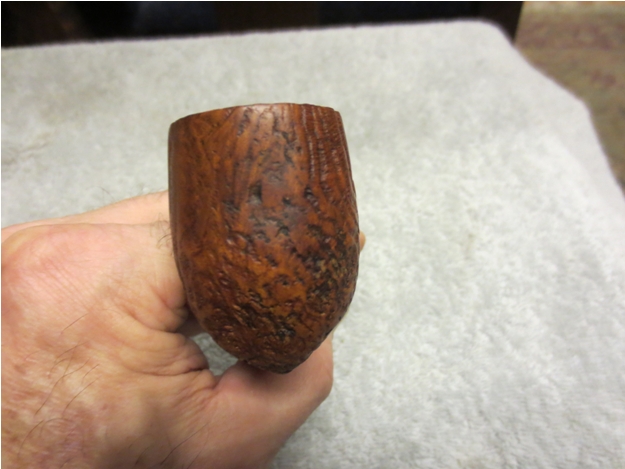
I had a good time restoring this excellent old pipe, despite the unexpected difficulties I seemed to encounter at every turn. In fact, I suspect the new problems added to the pleasure. I’ve always enjoyed a challenge, and while mine in this process may seem tame compared to those some of my more experienced readers have dealt with – and believe me, I’ve read enough of Steve’s and heard about plenty of my friend’s and mentor’s to know there is far worse – they nevertheless represent new obstacles I overcame. That, I understand, is what the job is all about.
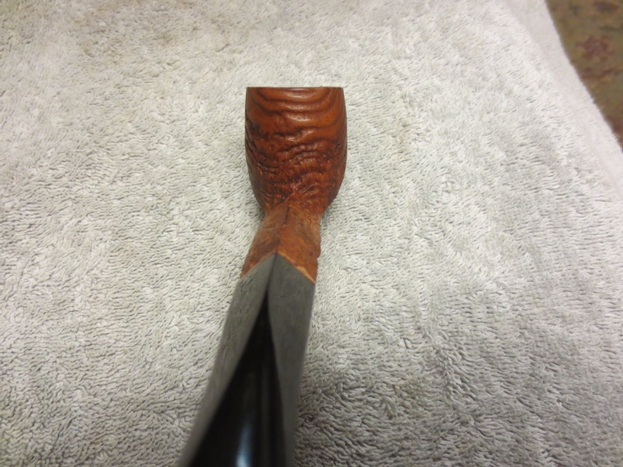
I suppose I was born with the type of personality that finds it impossible to overlook even the slightest flaws I notice in any project I undertake. People – for the most part those who are satisfied with mediocre conclusions – have always called me a perfectionist, but I never use the word to describe myself because I know I am far from it. Only on rare occasions have I completed a project (whether it be a short story, screenplay, novel, blog, pipe restoration or anything else) to which I did not return later and see how I could write, edit or do it better.

By way of example, when I was writing my last blog, on The Guildhall London Pipe, I started to insert photos and noticed the stem was not up to my present snuff, so to speak. And so, although it was somewhat of a hassle to stop my blog, get the pipe, remove the stem and not just rebuff it using the White Diamond wax I recently added to my wheels but re-sand it to remove the horrible discoloration I had missed before, I could not bring myself to publish photos knowing they would show my incompetence. I think the final result was worth the extra effort.

I am beginning to realize an important part of the restoration learning process is simple rising self-expectations. By good fortune, I have several dozen estate pipes in many shapes and degrees of duress on which to practice in the near future…and I am chomping on the bit!