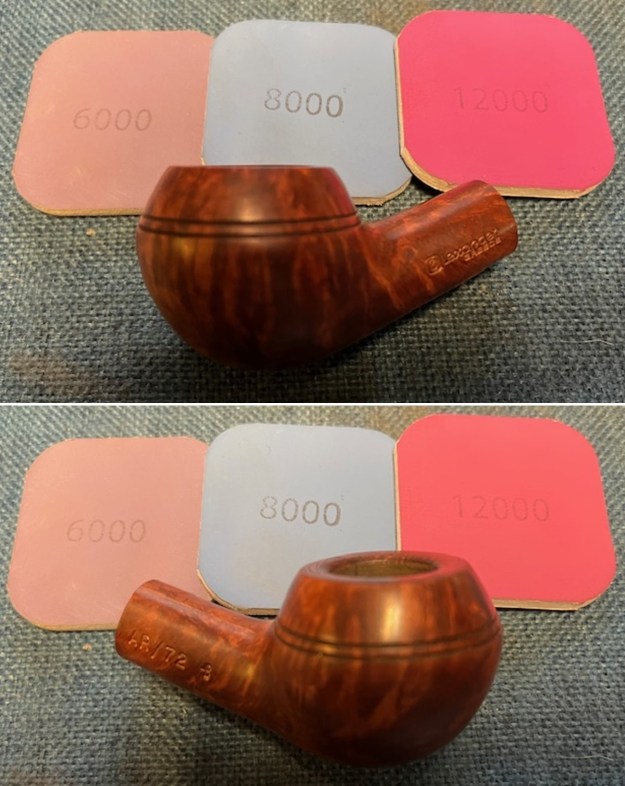
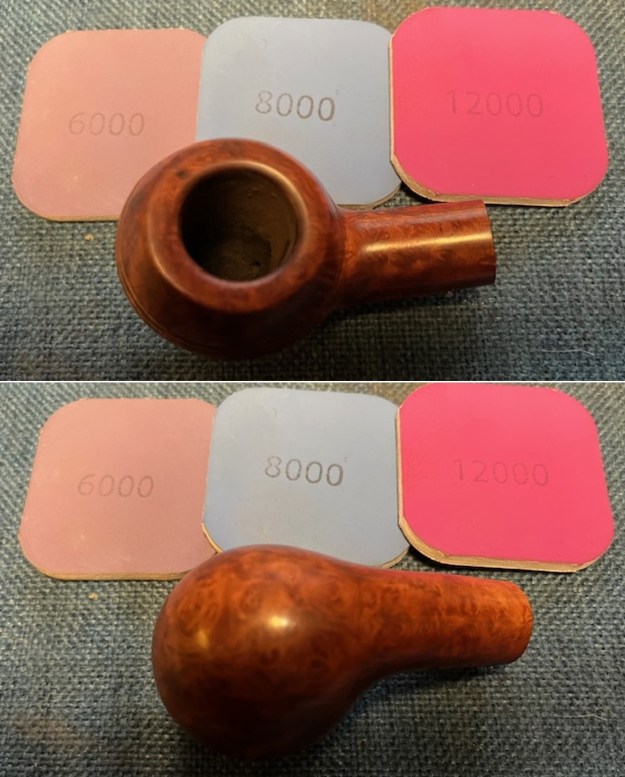
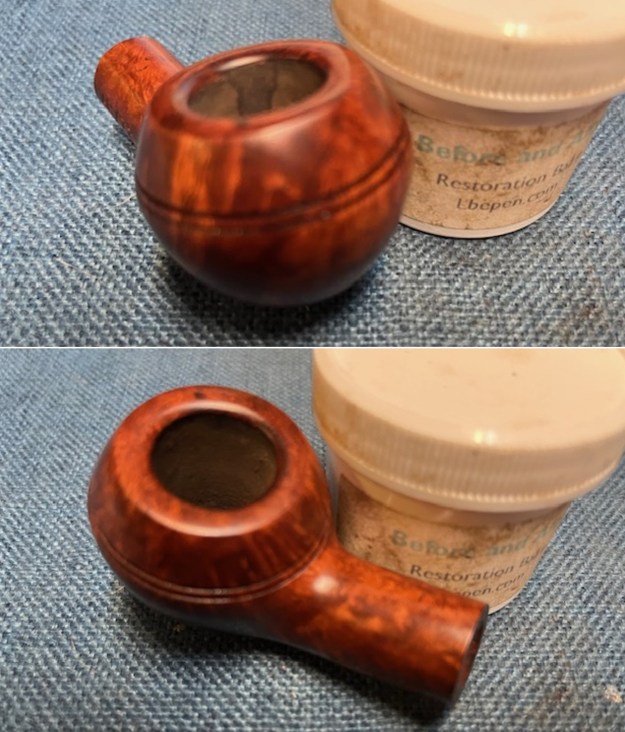
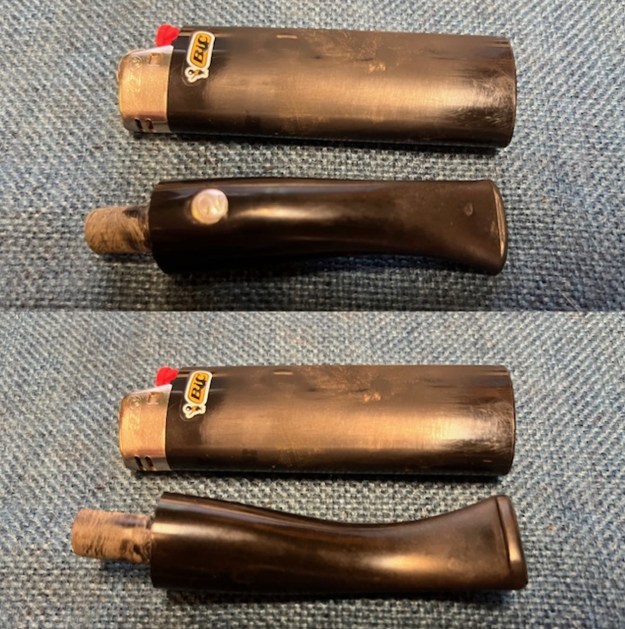
Tag Archives: removing a broken tenon

“Help I dropped a brand new Nording 3 Double Silver Freehand and snapped the tenon”


by Steve Laug

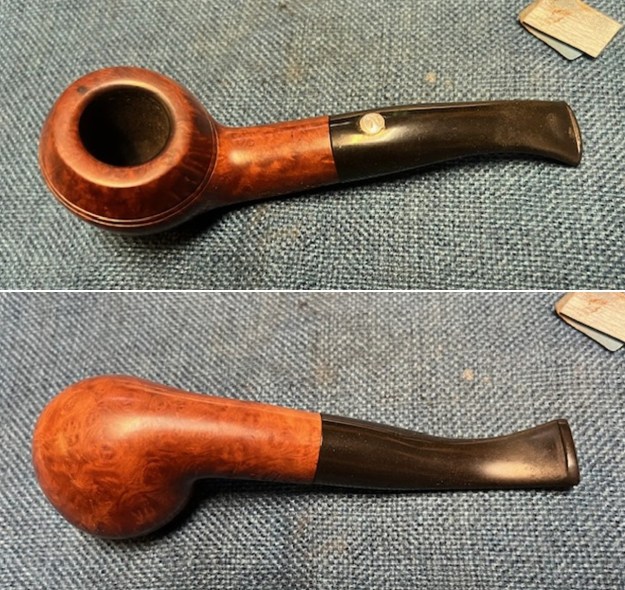
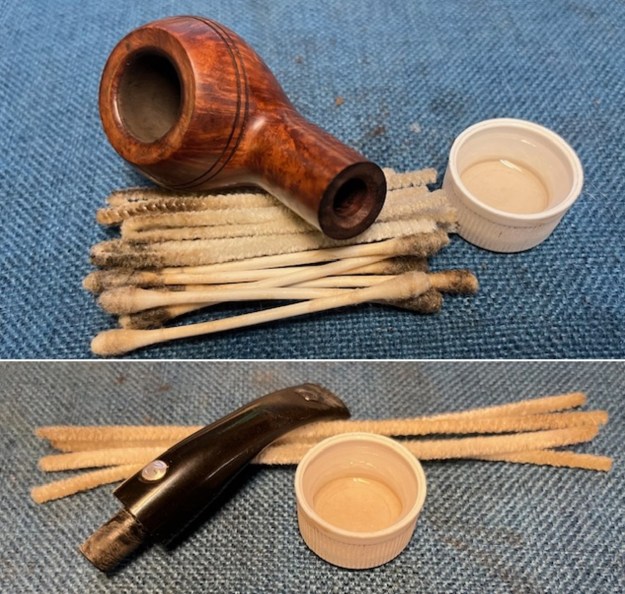
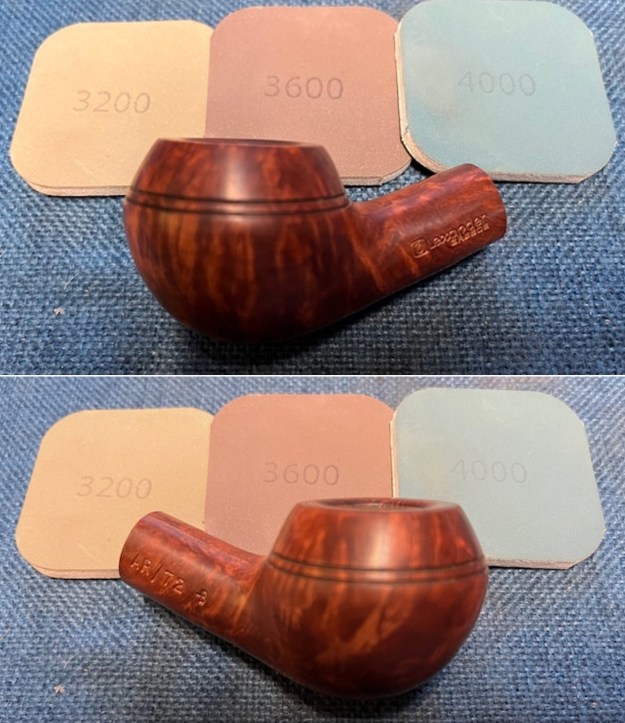
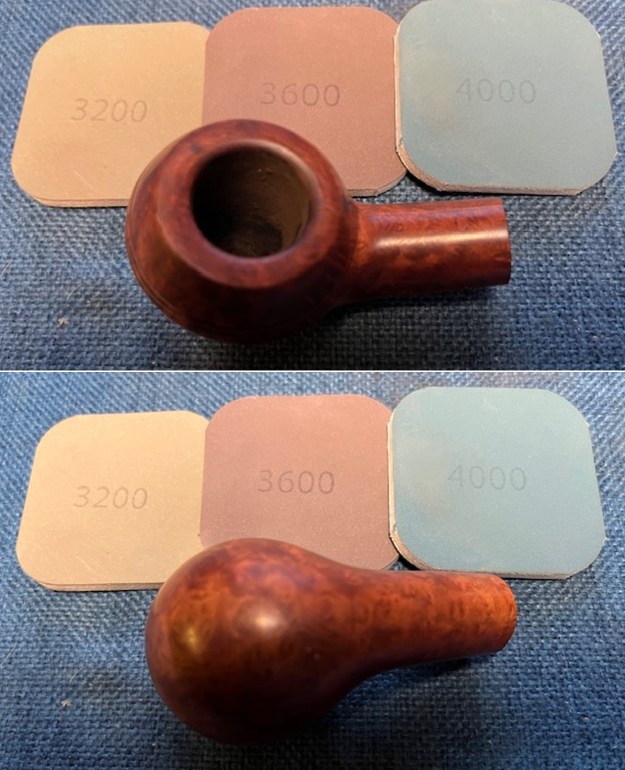
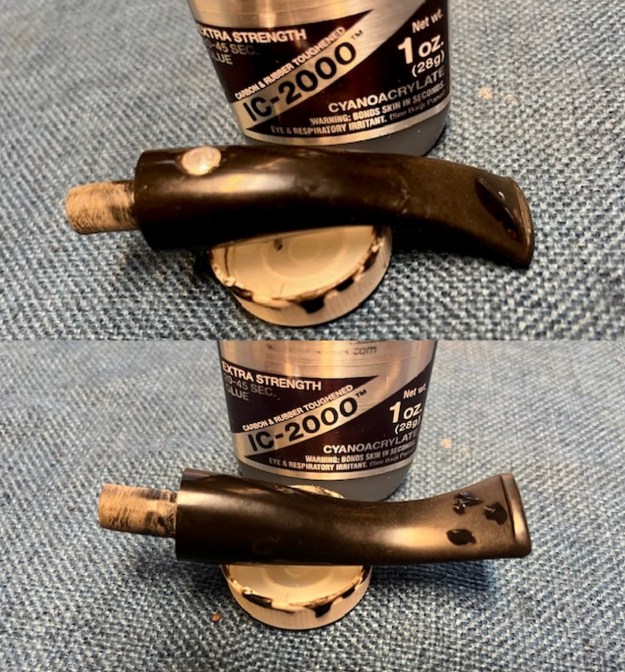
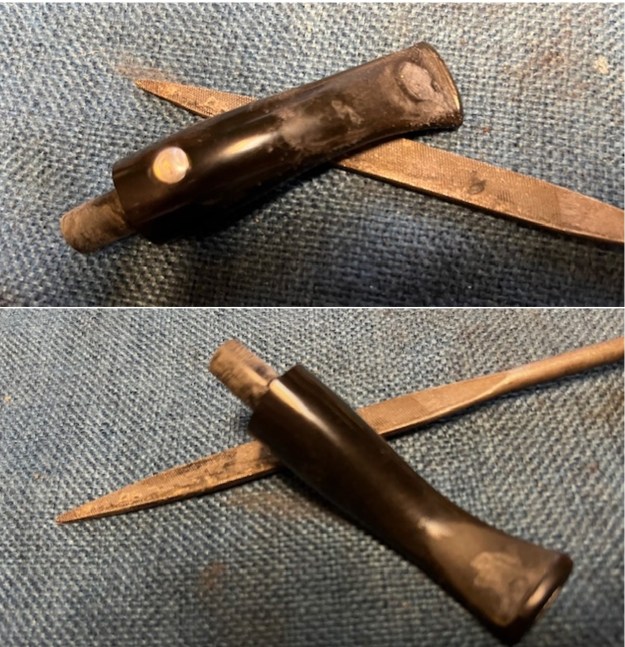
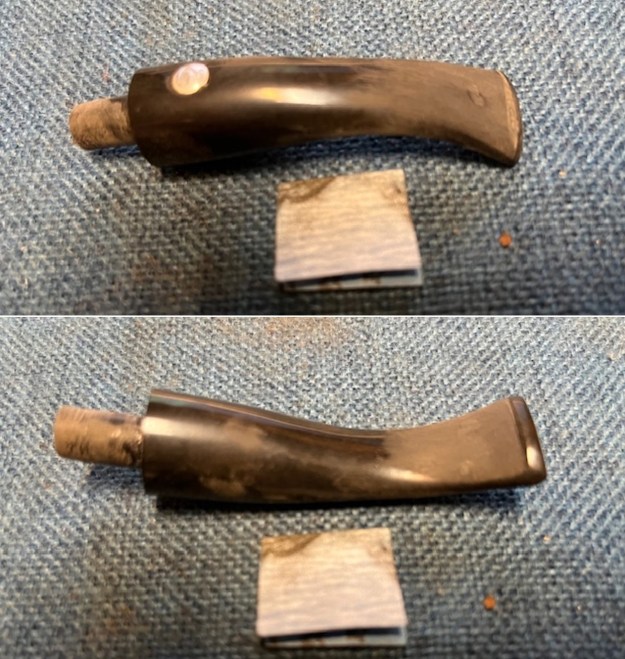
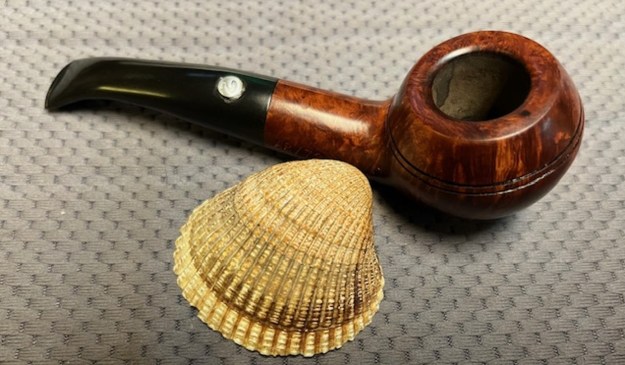
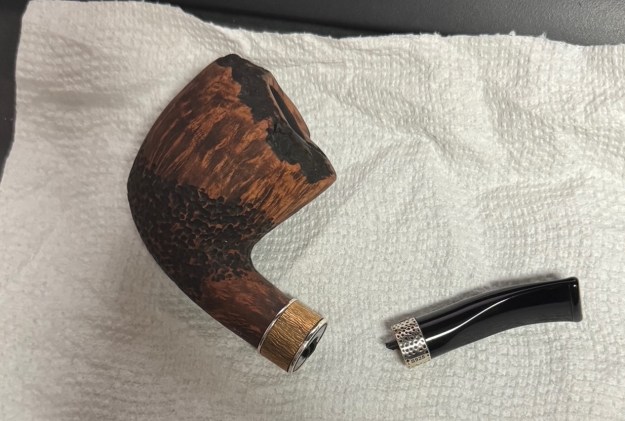
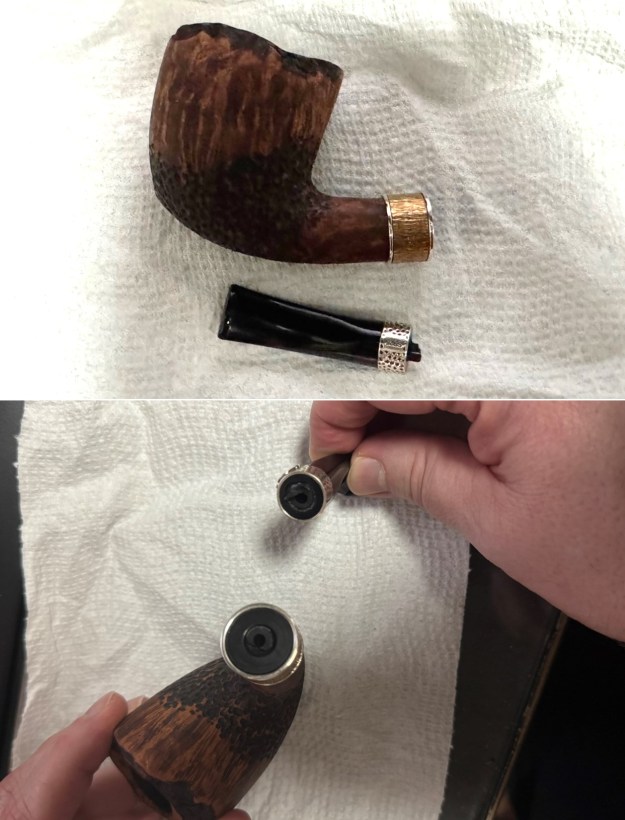
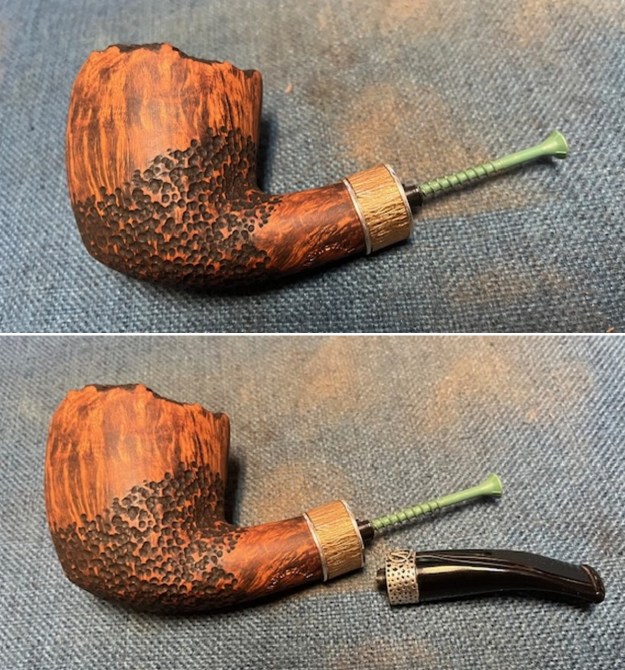
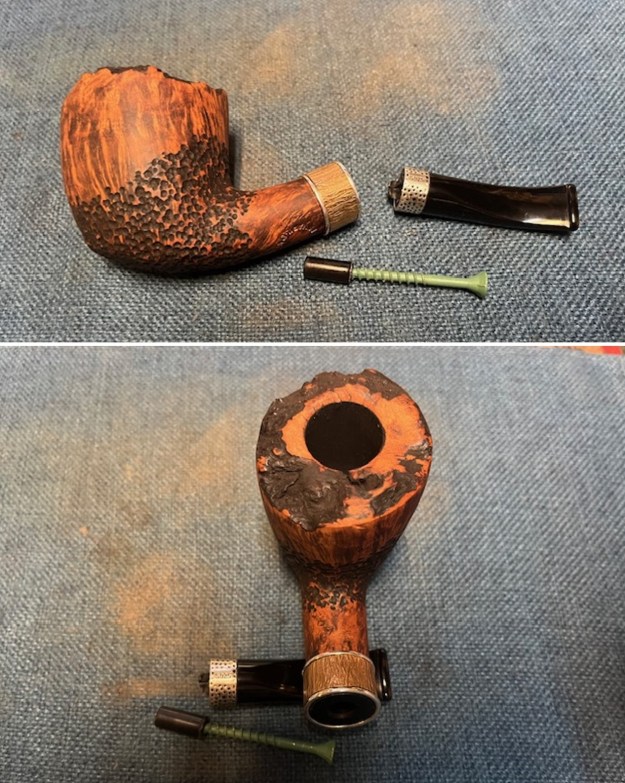
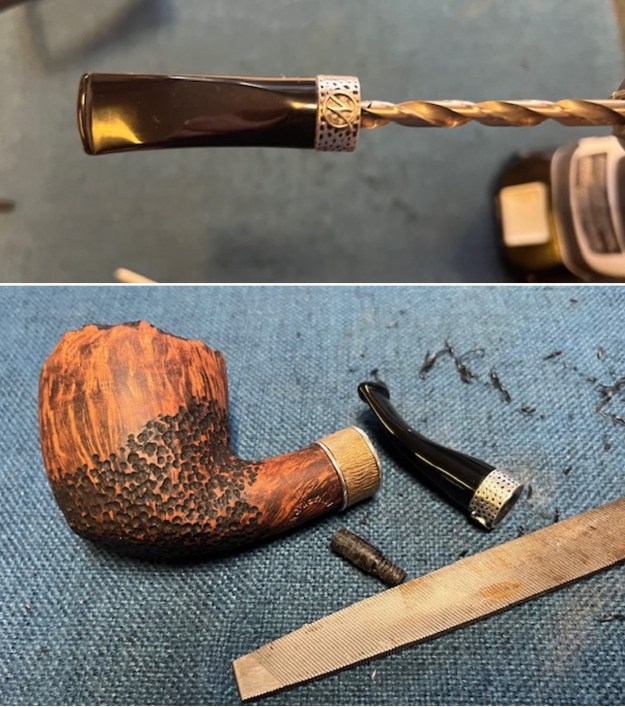
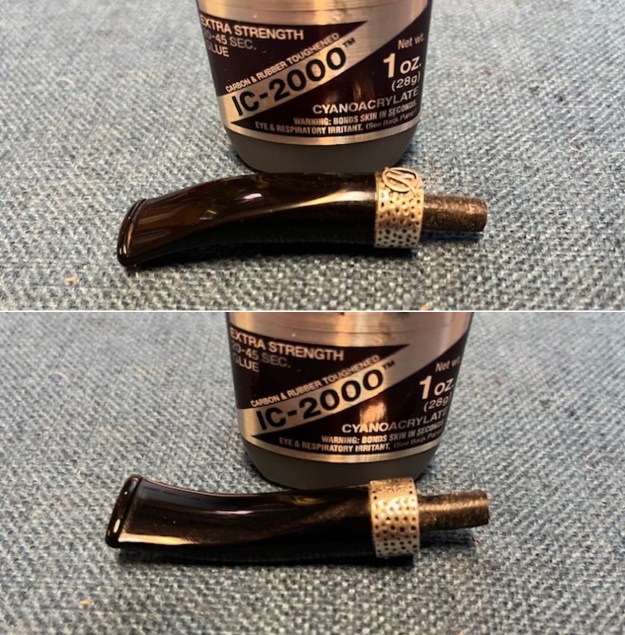
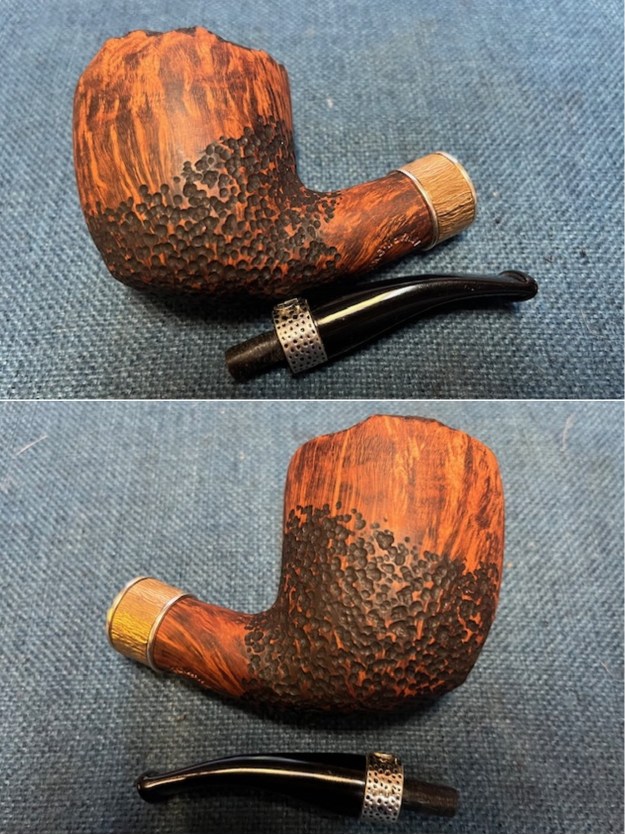
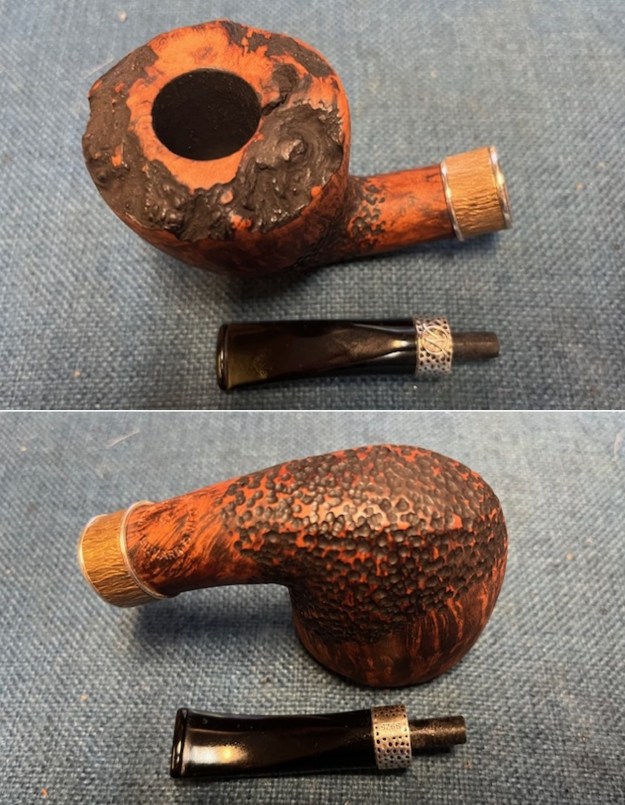
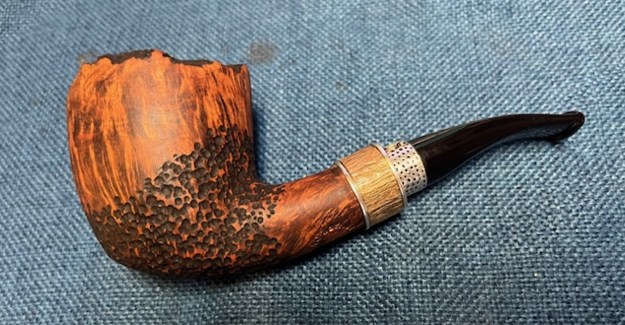
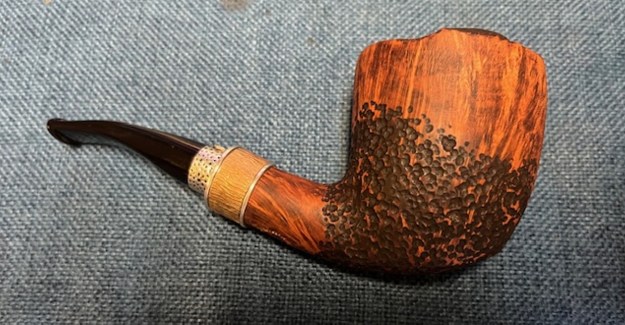
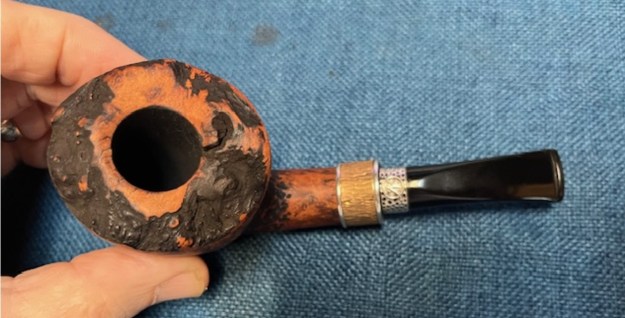
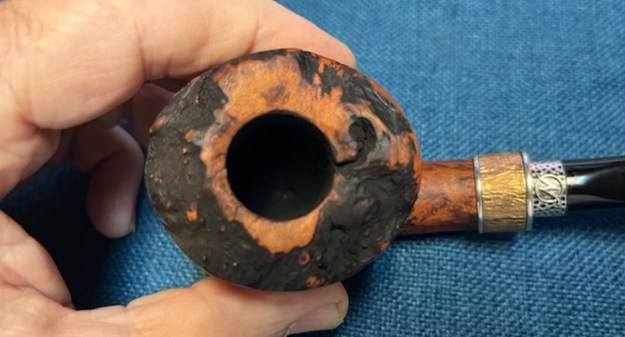
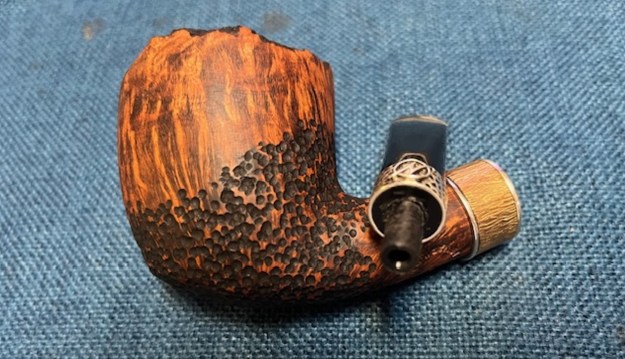
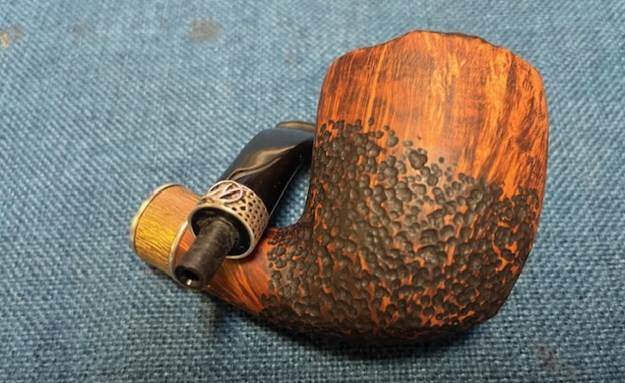
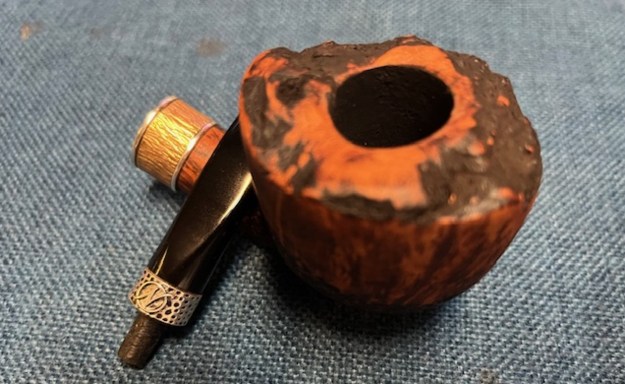
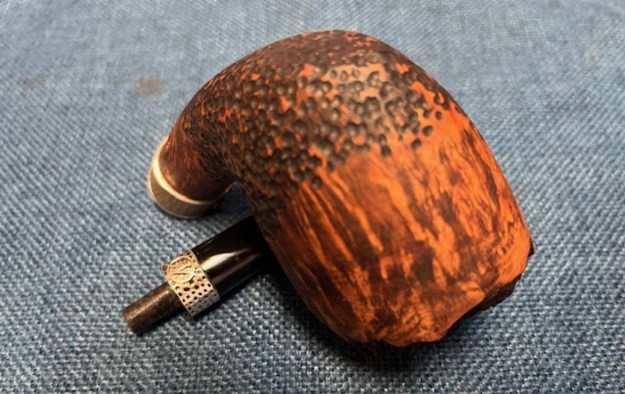
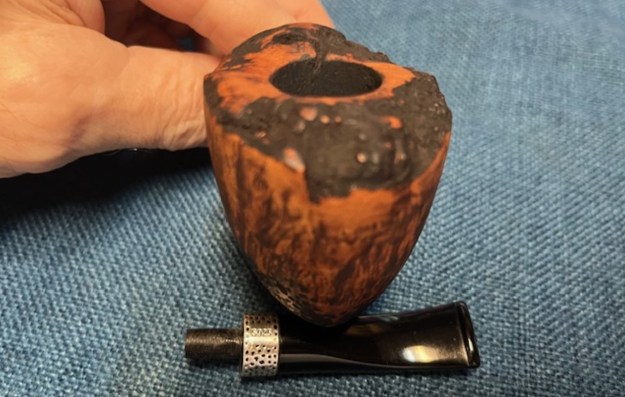
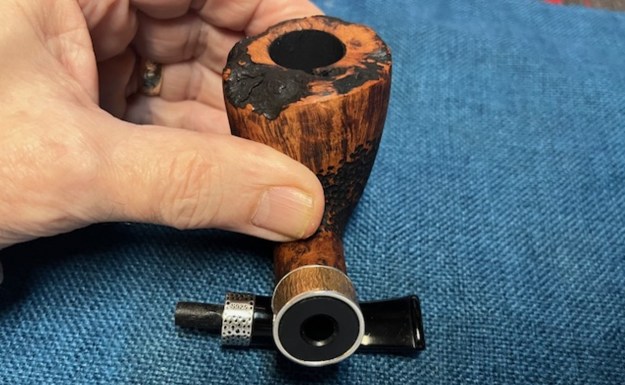
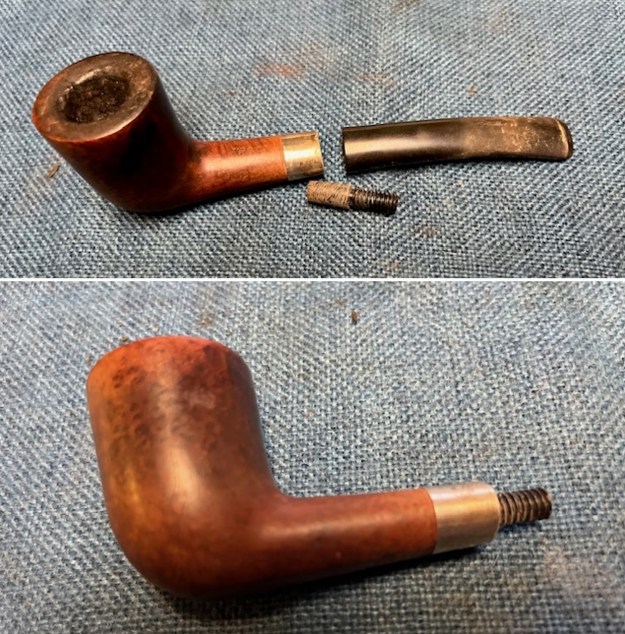
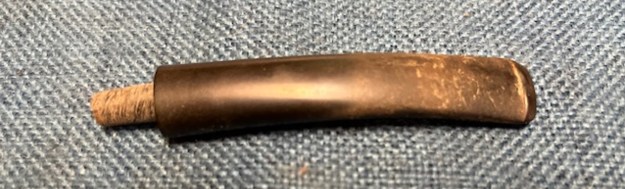
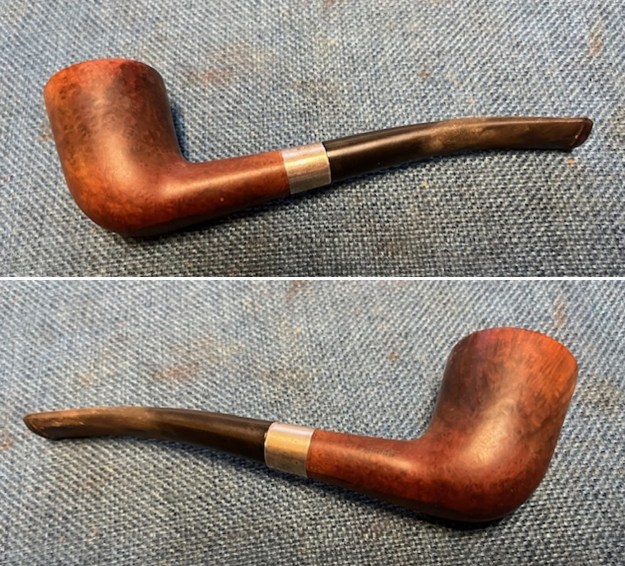
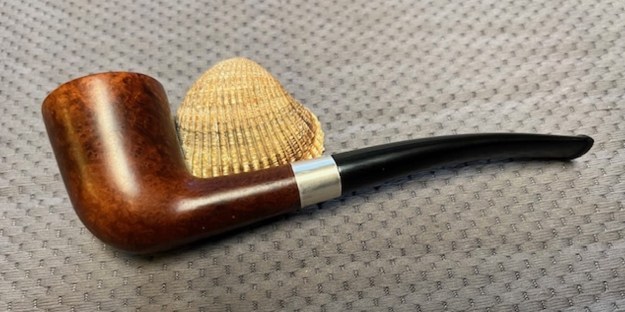
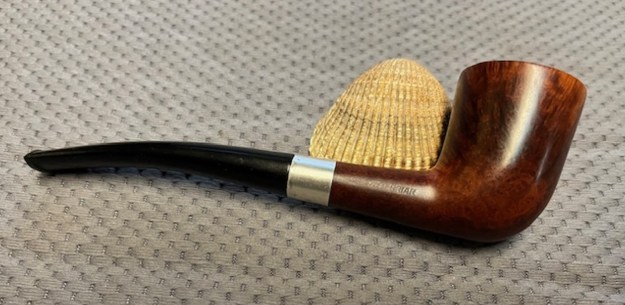
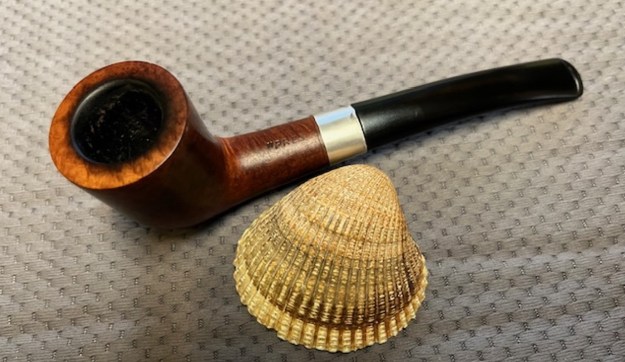
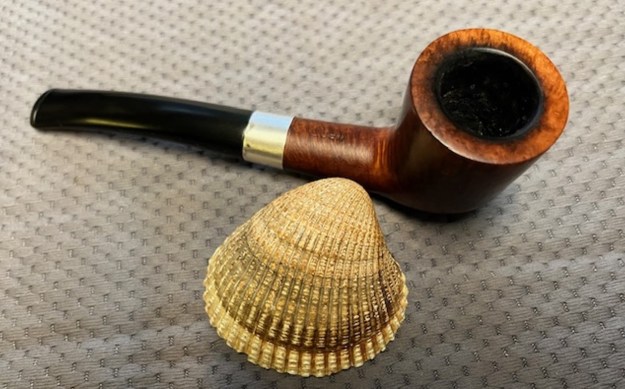
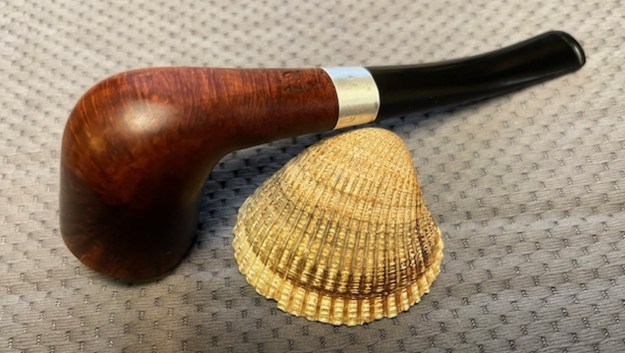
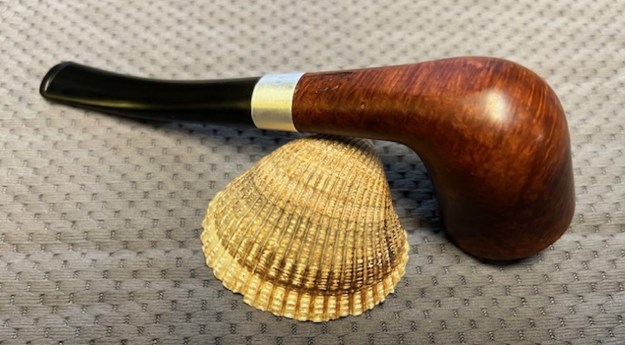
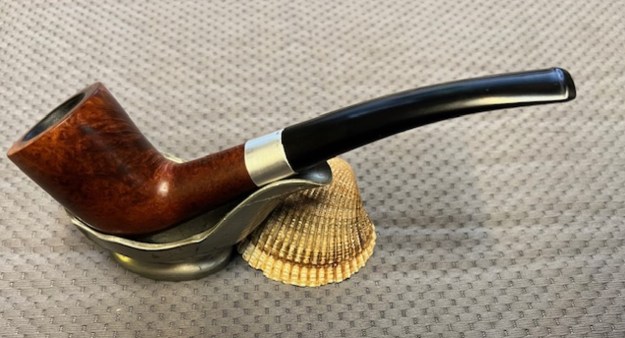
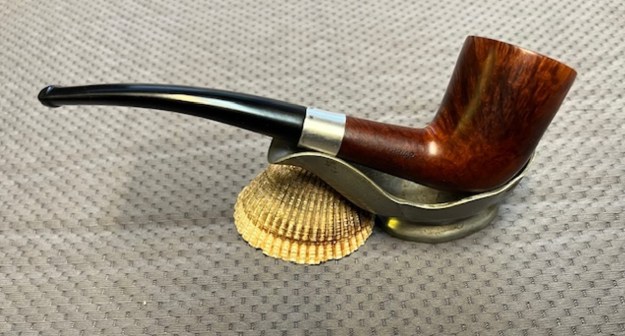
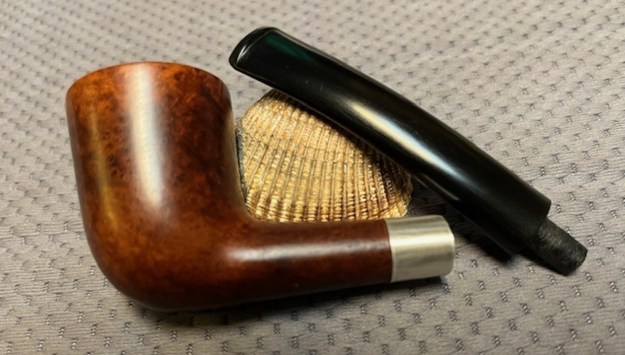
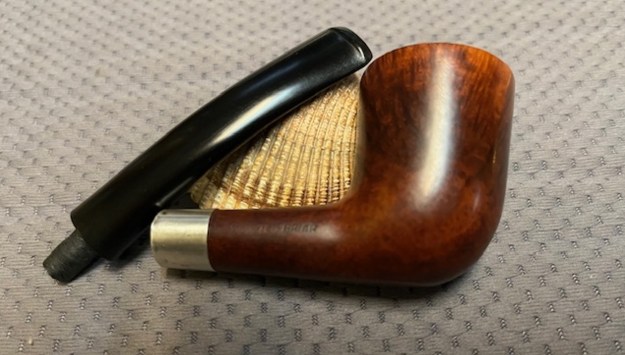
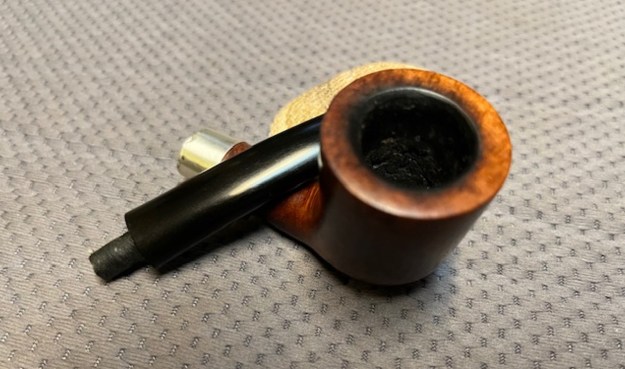
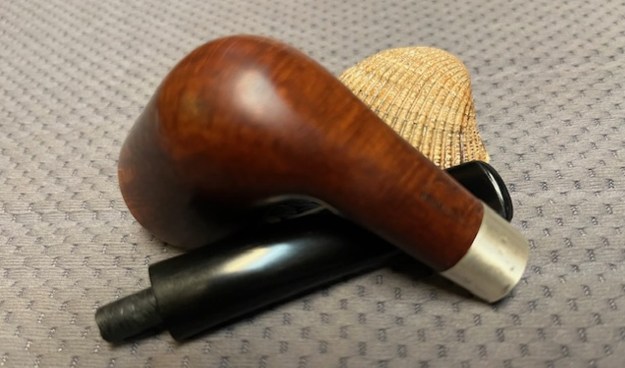
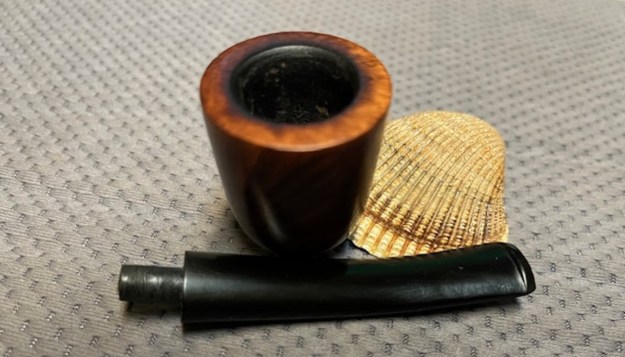
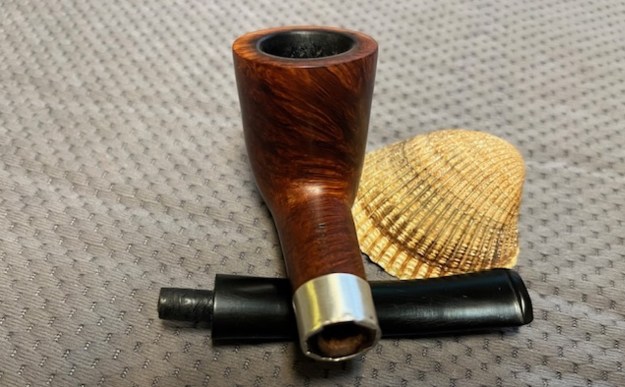
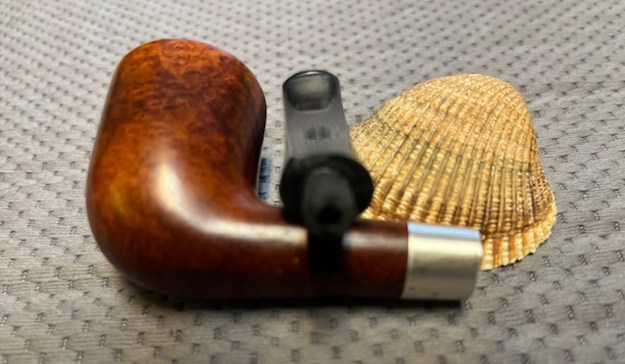
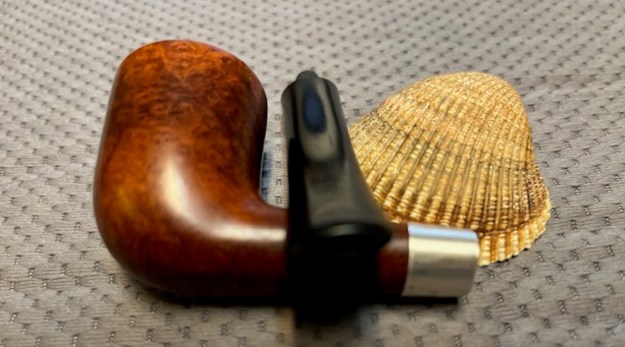
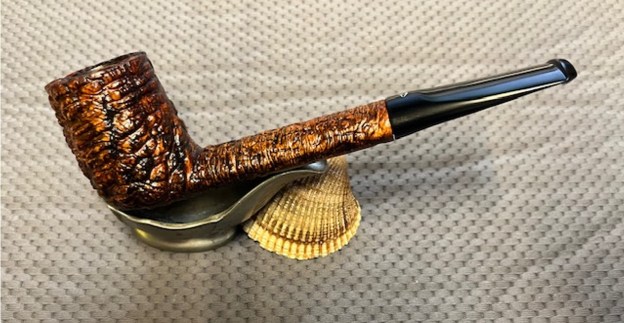
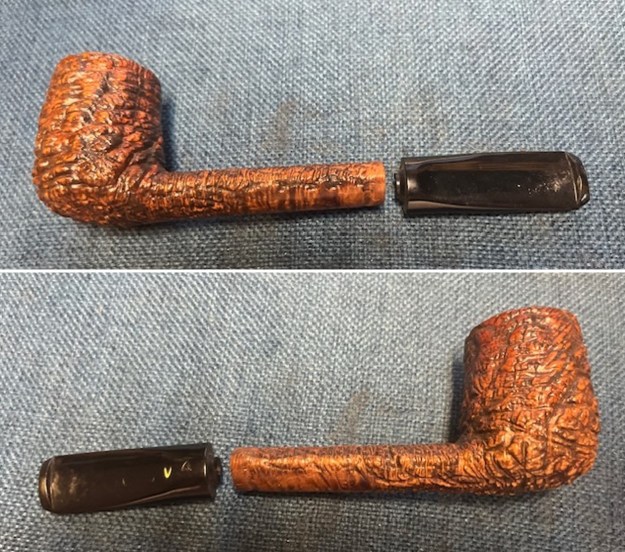
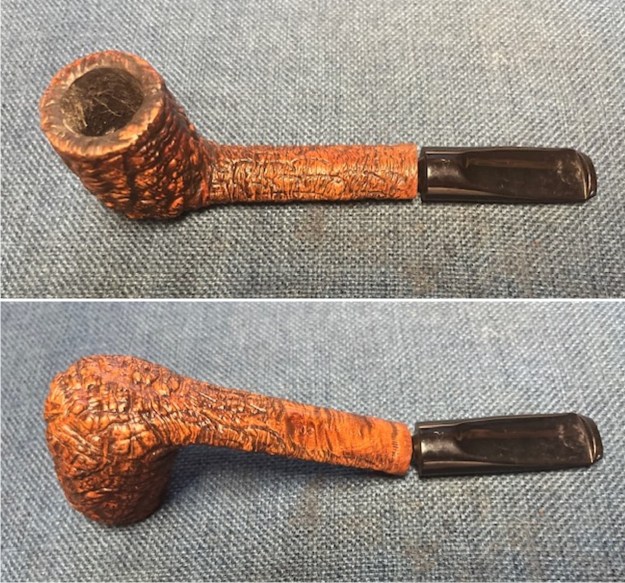
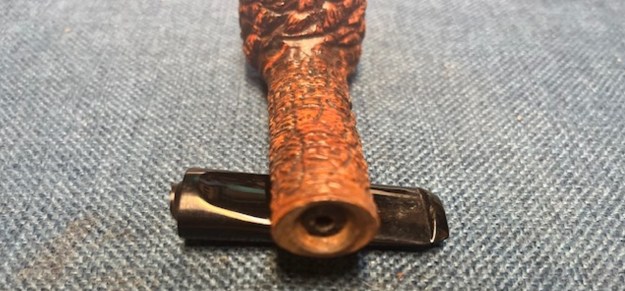
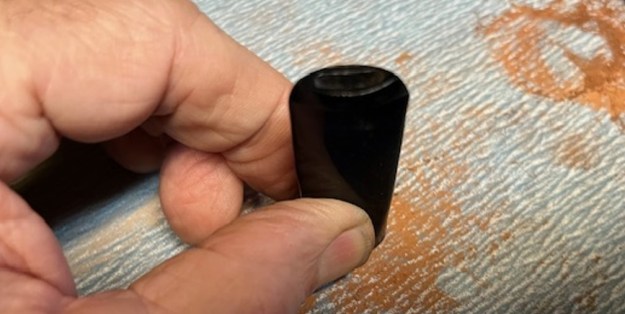
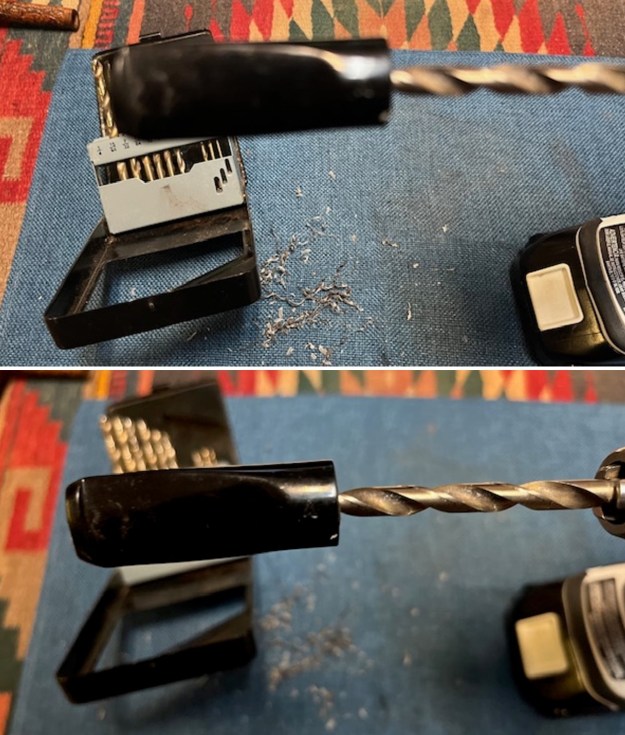
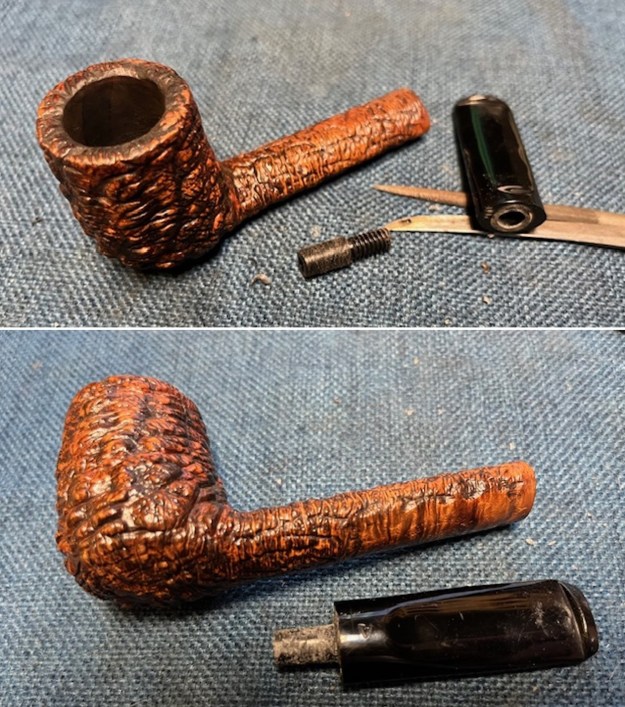
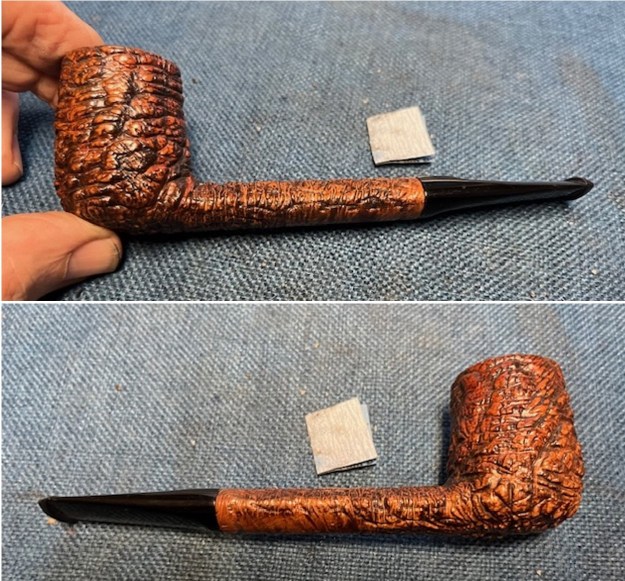
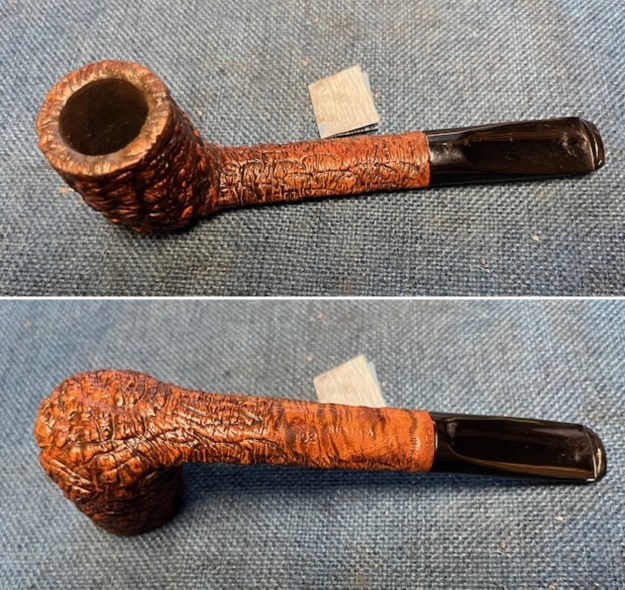
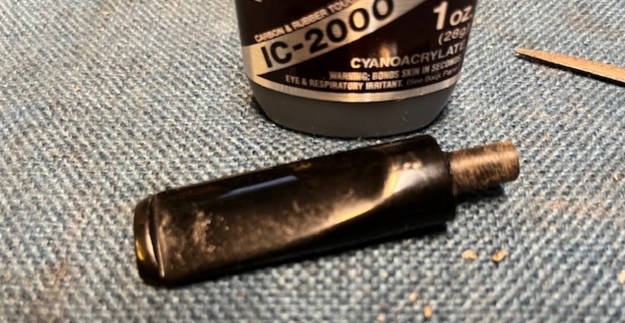
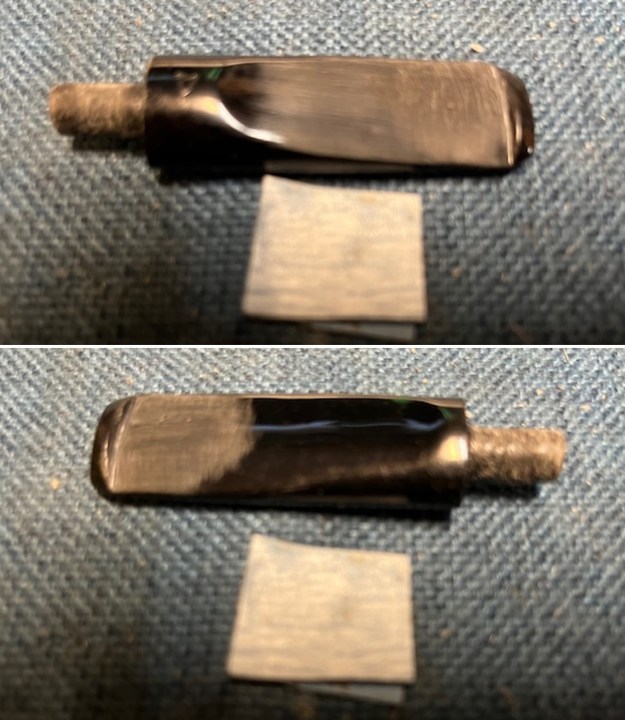
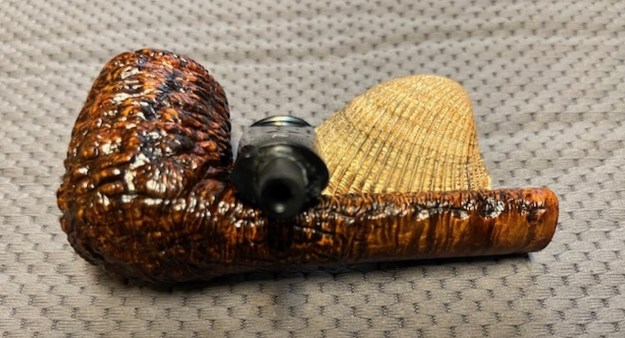
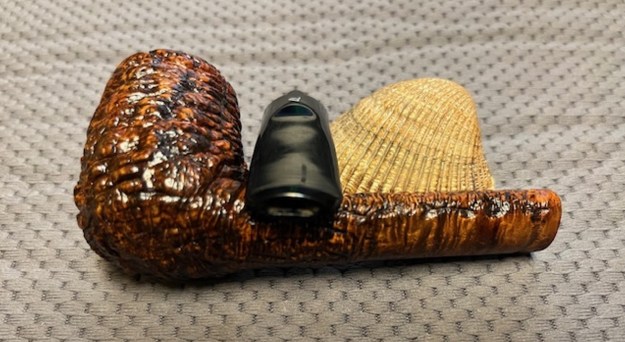
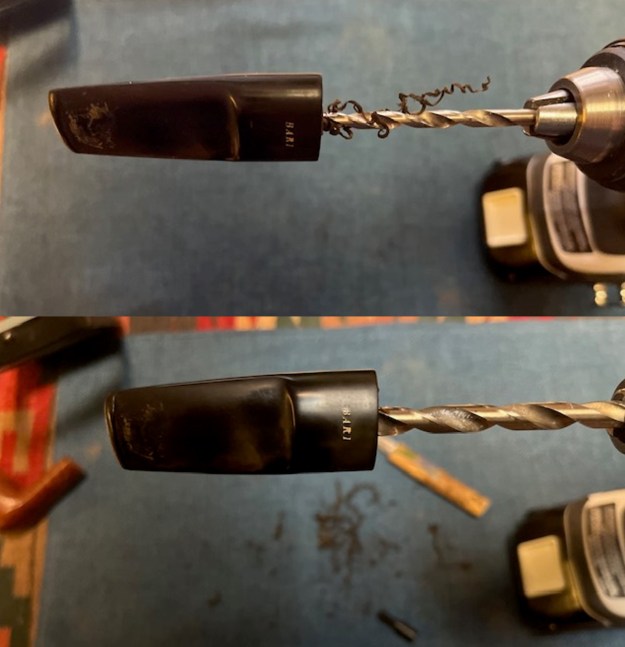
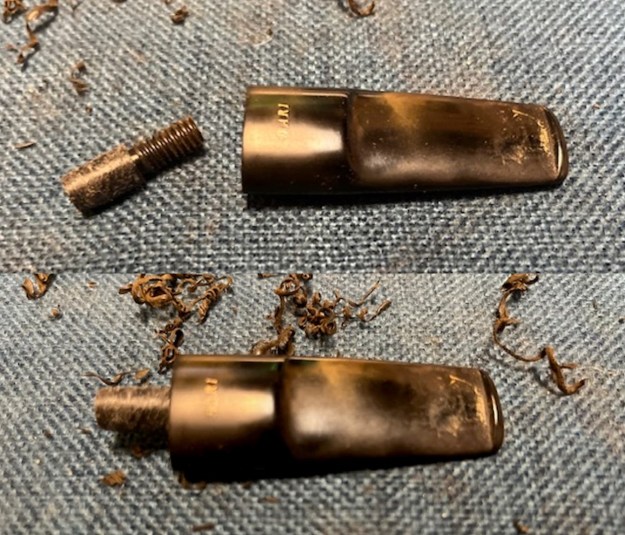
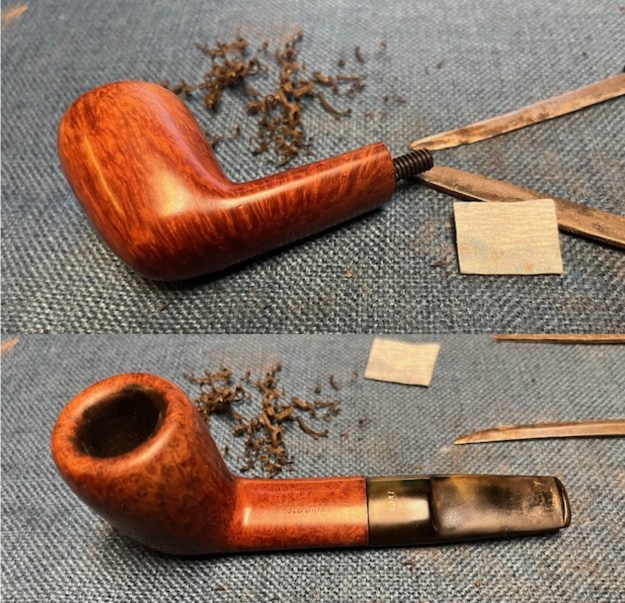
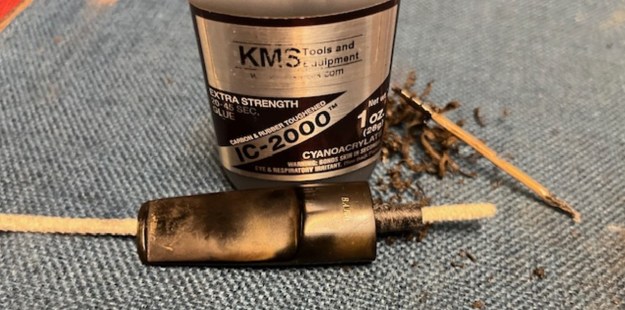
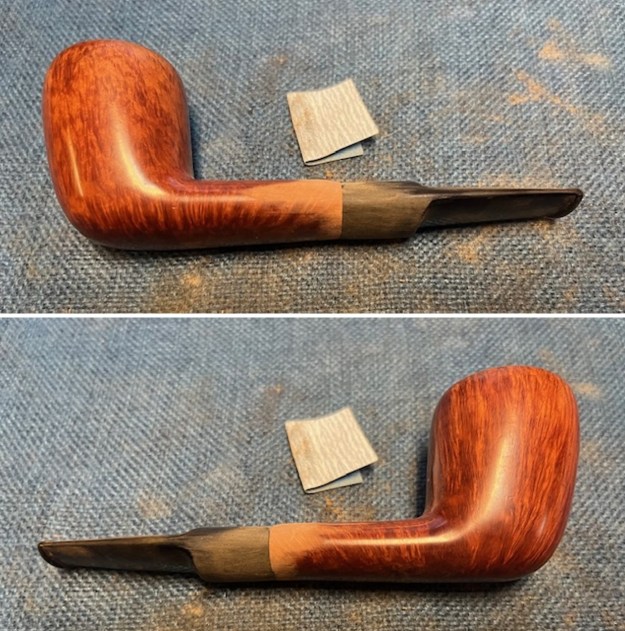
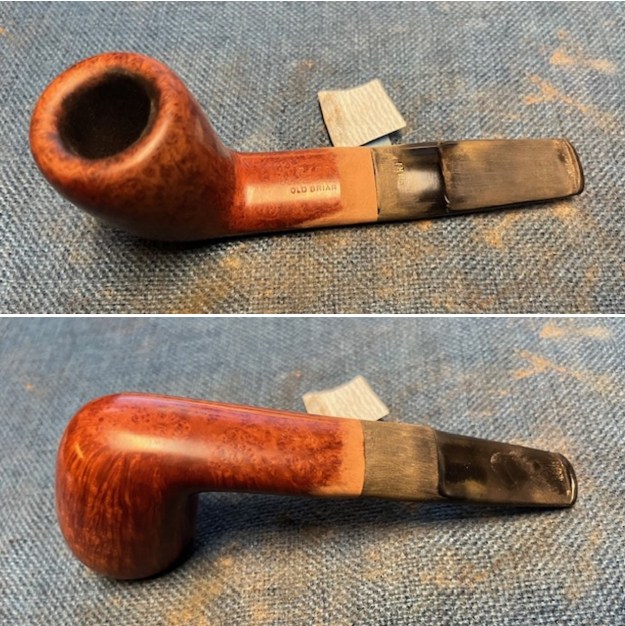
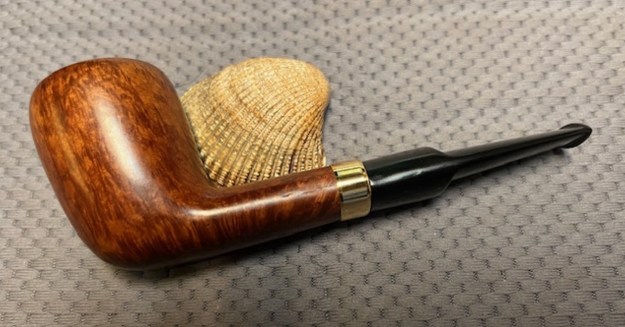
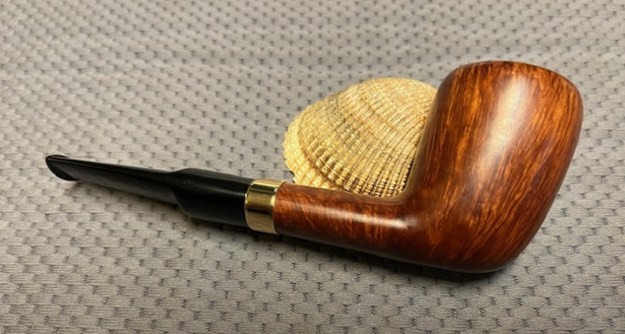
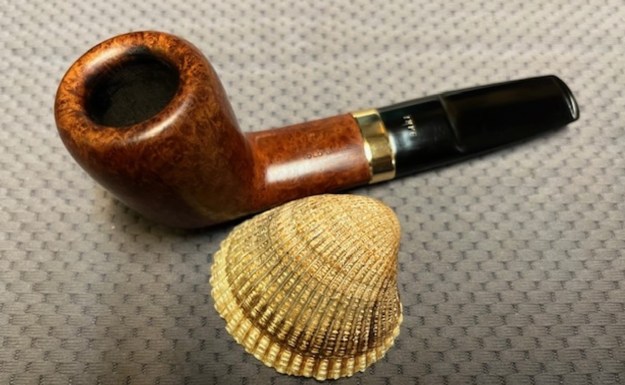
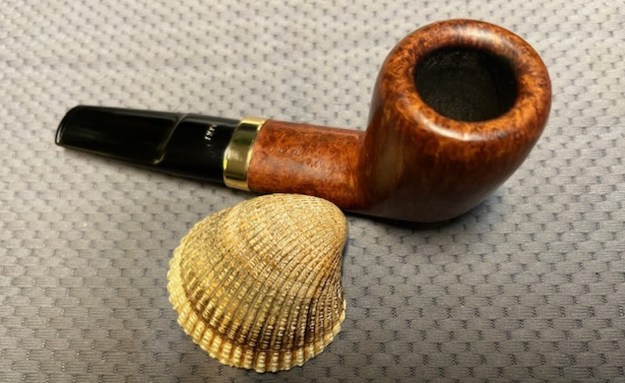
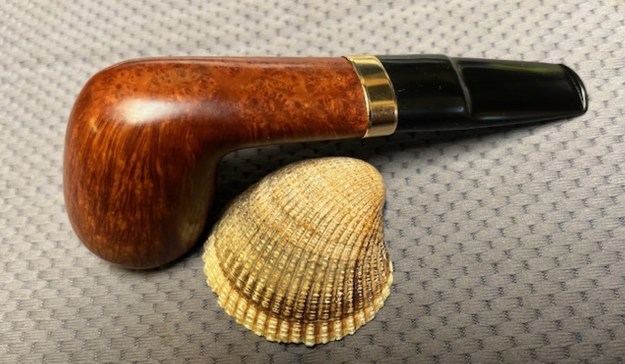
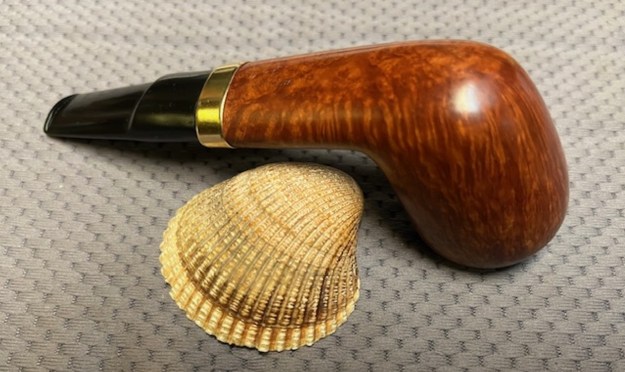
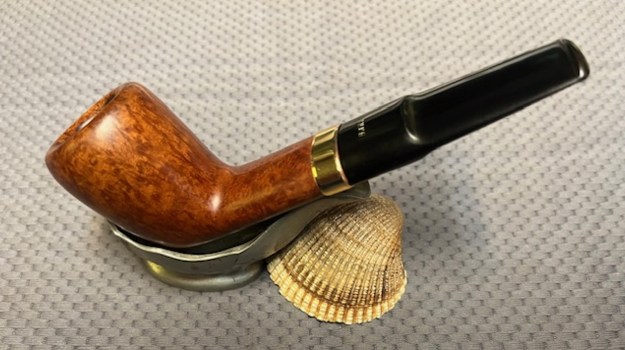
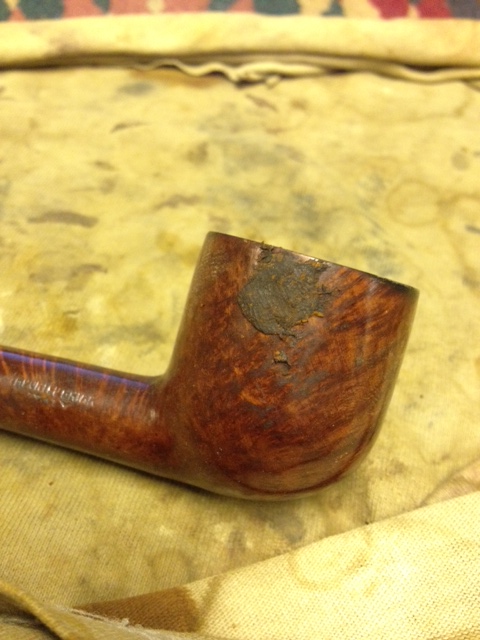
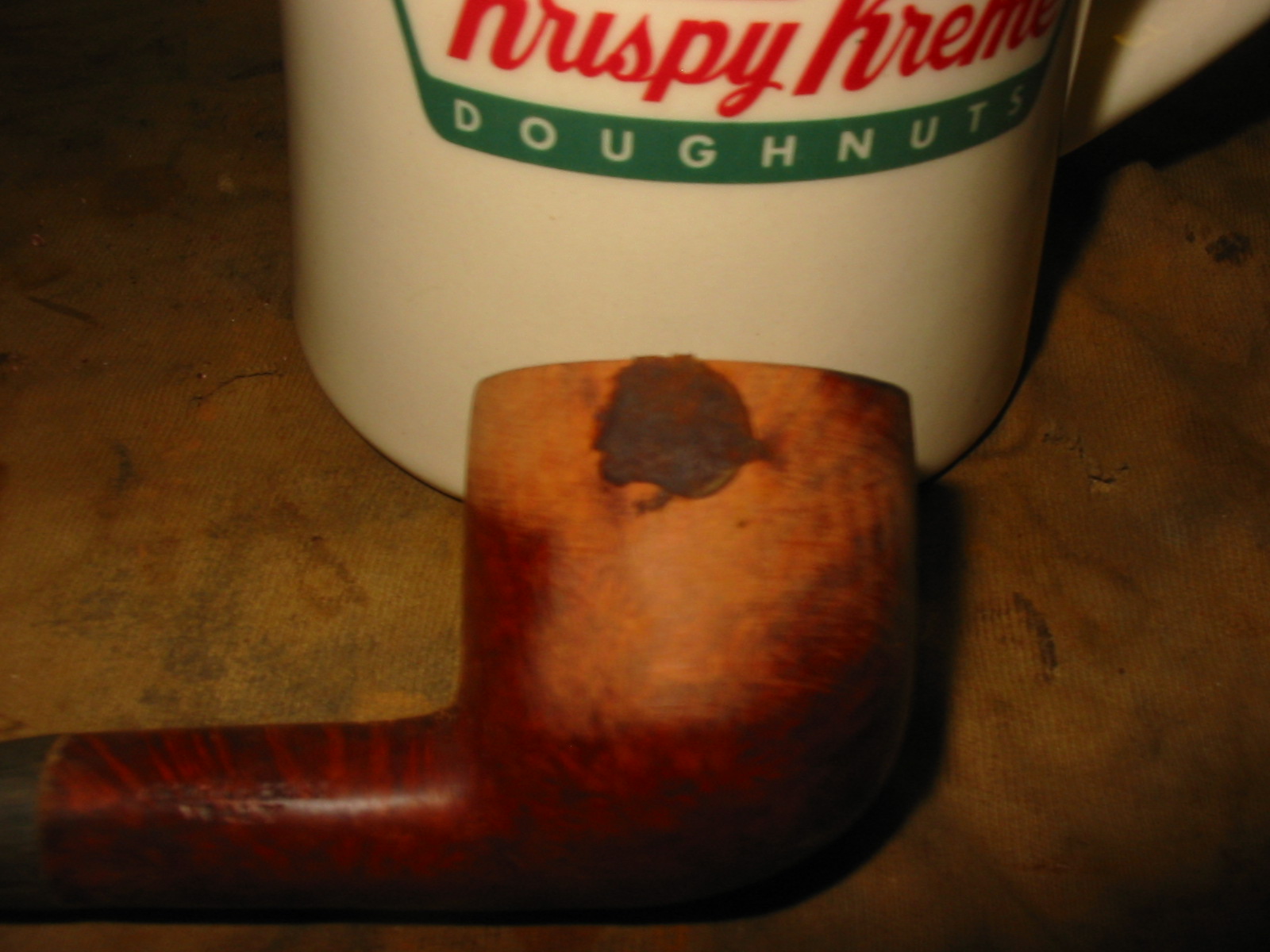
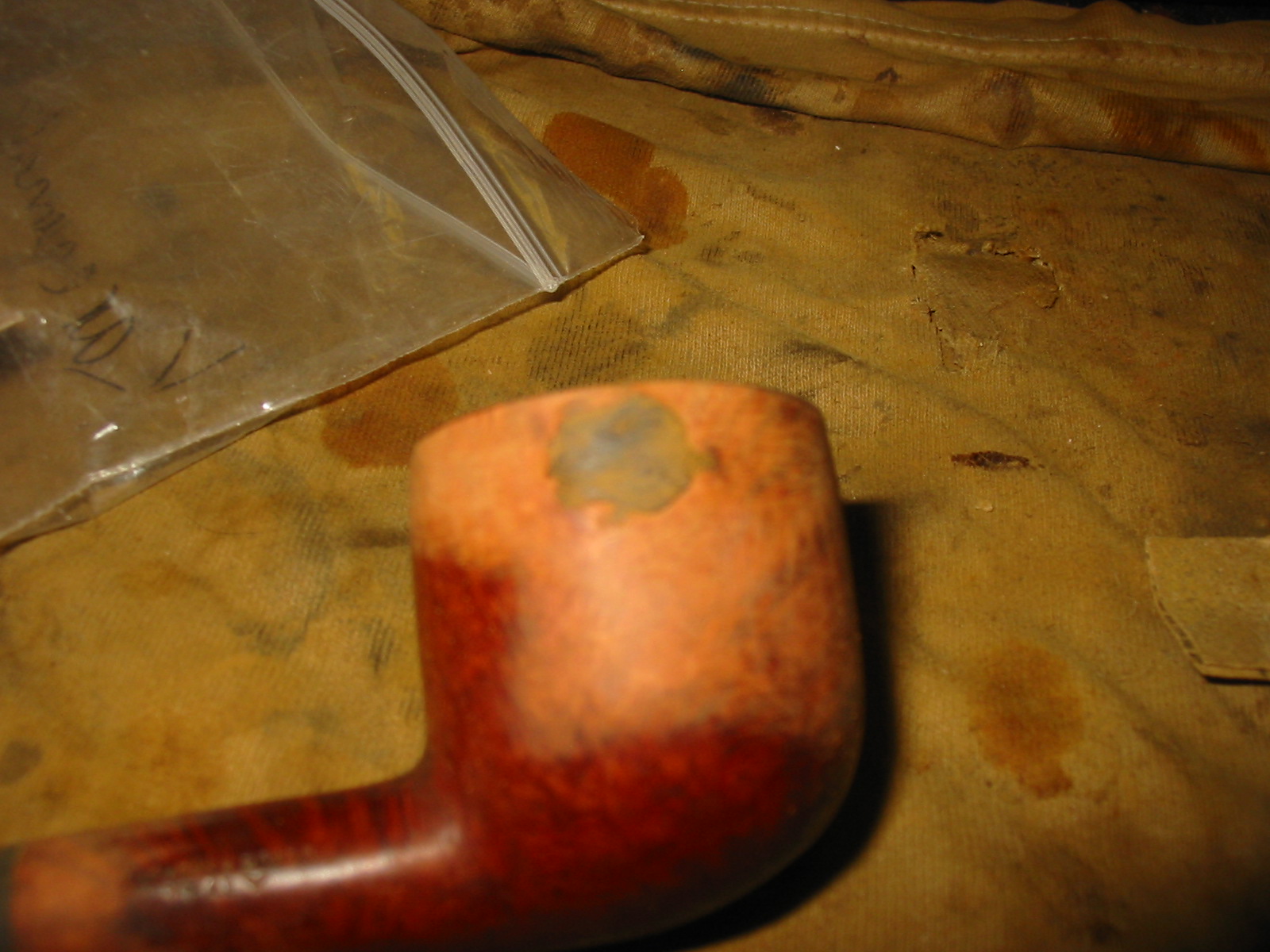
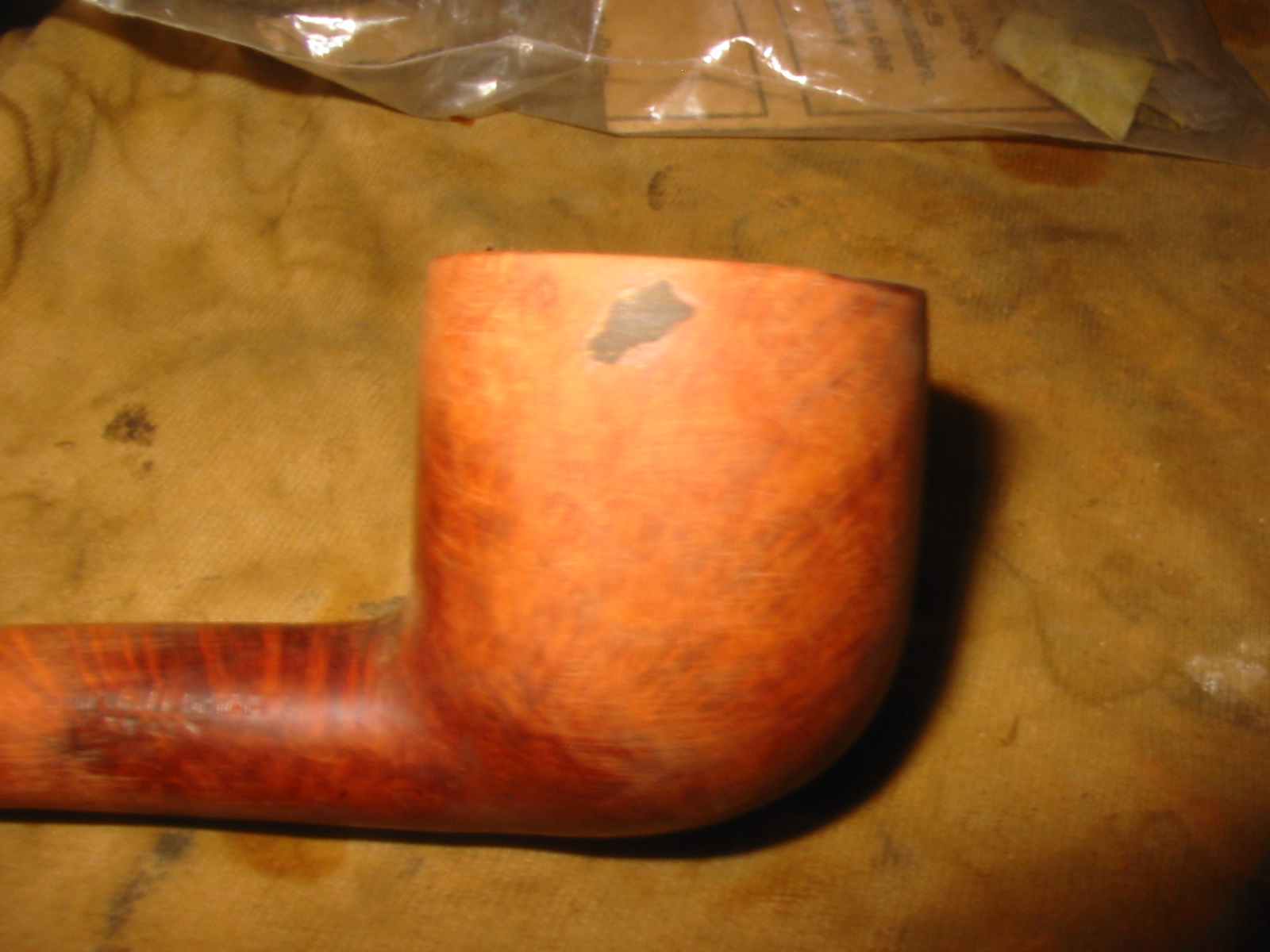
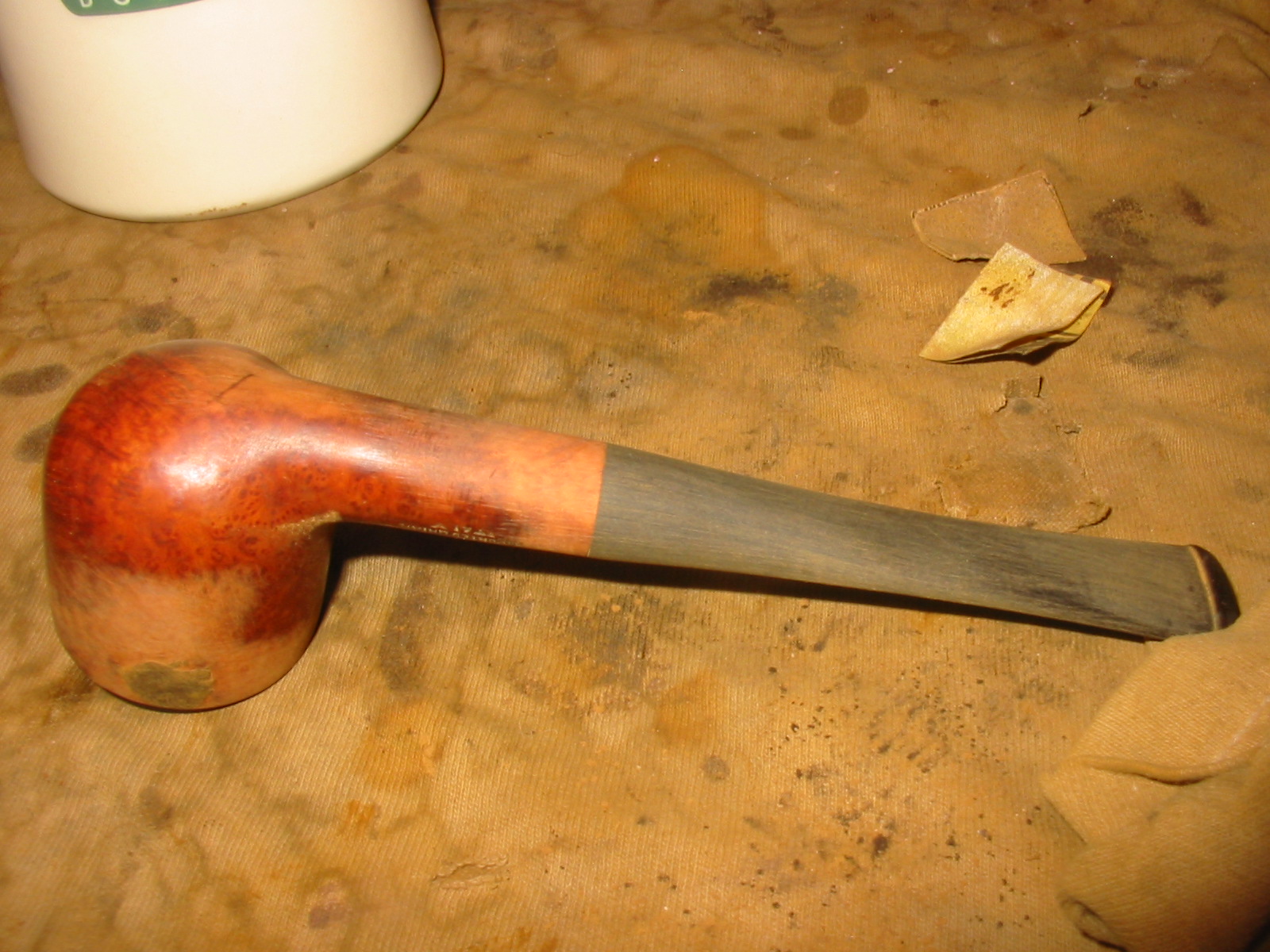
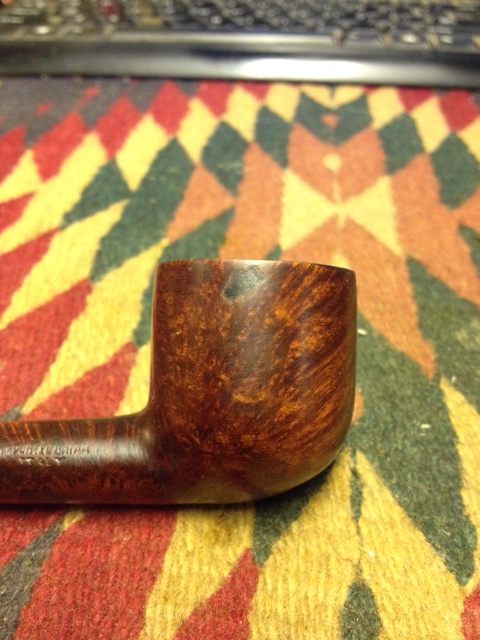
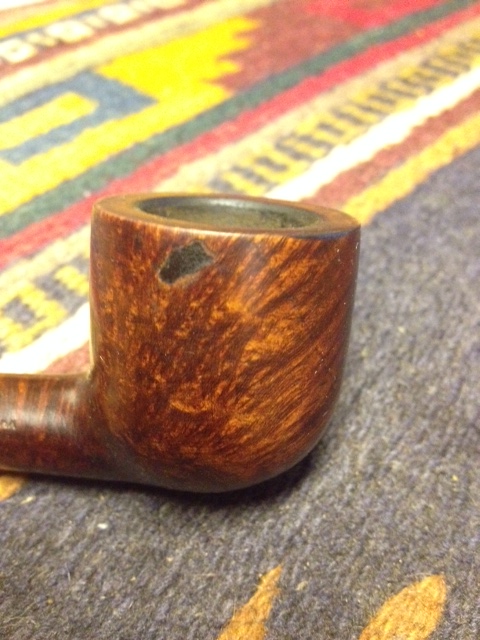
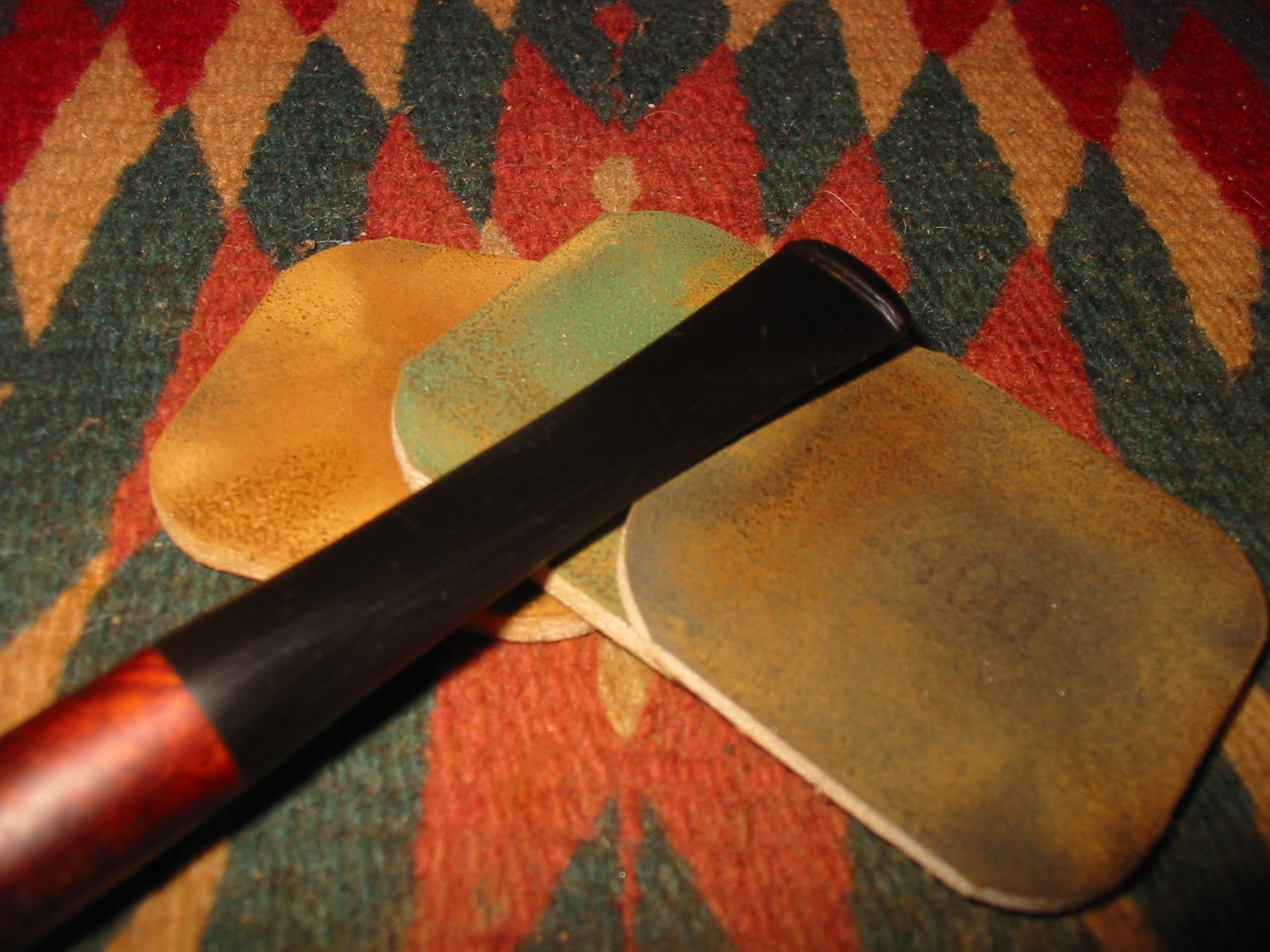
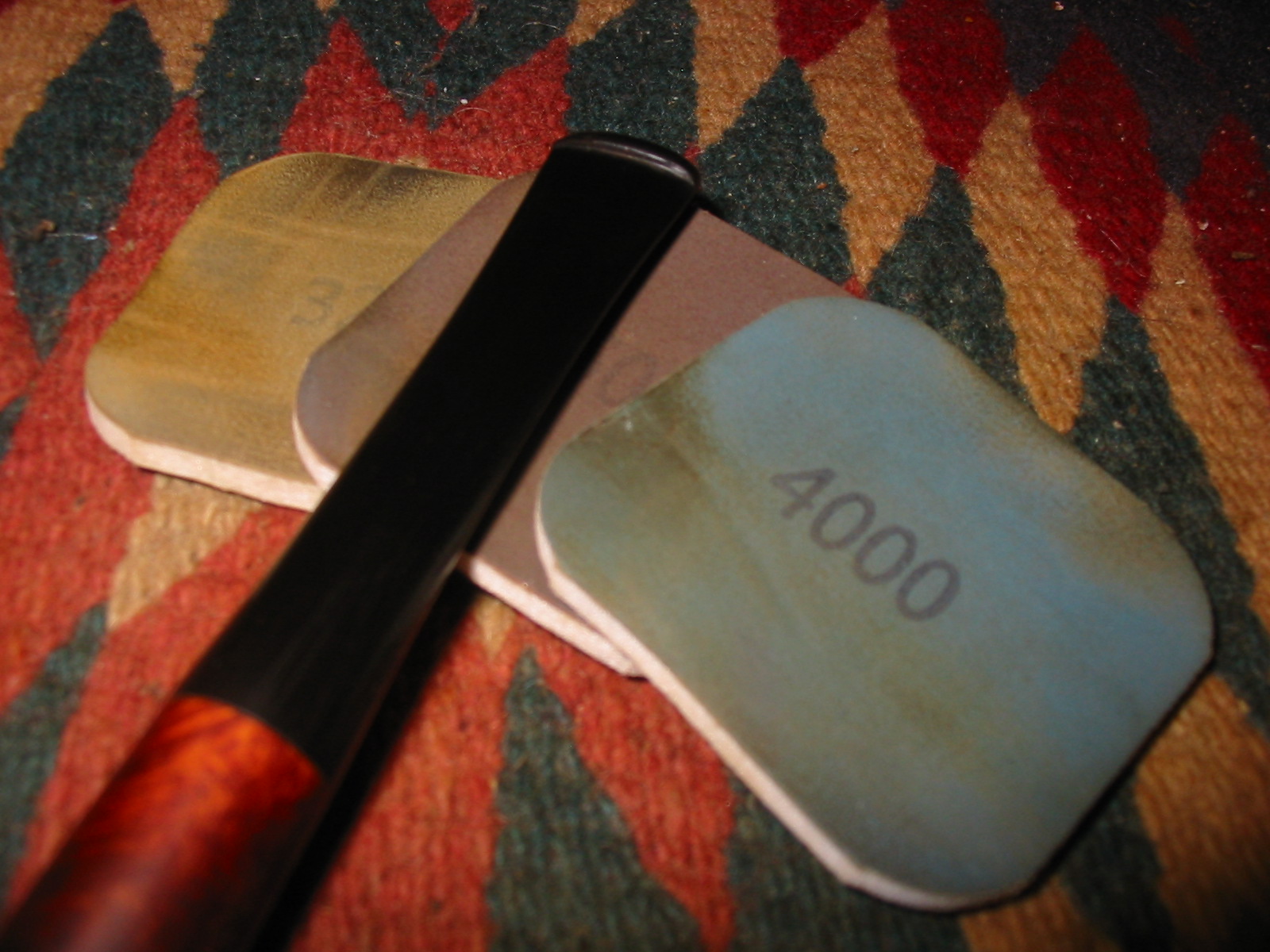
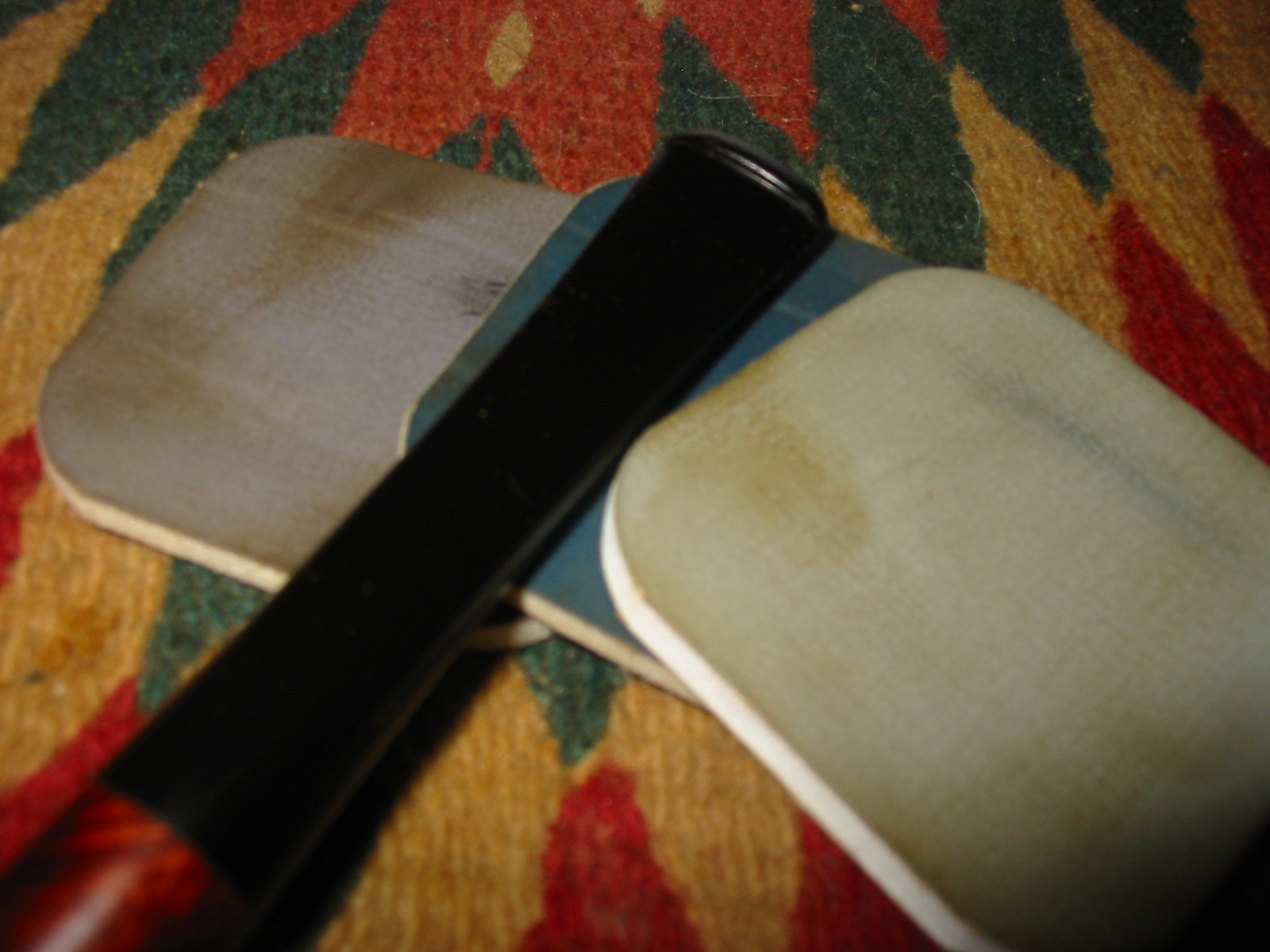
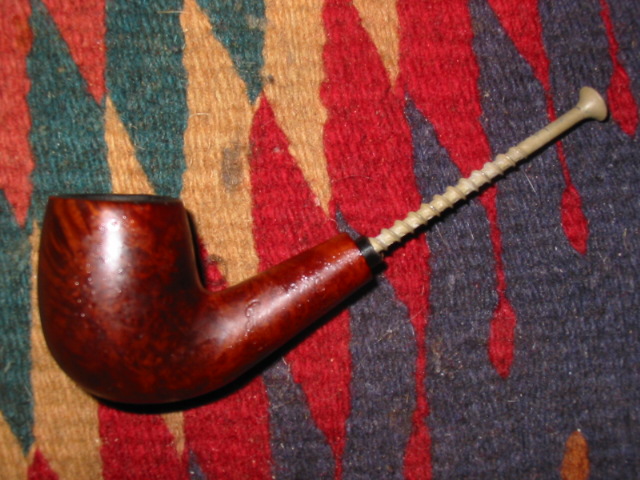
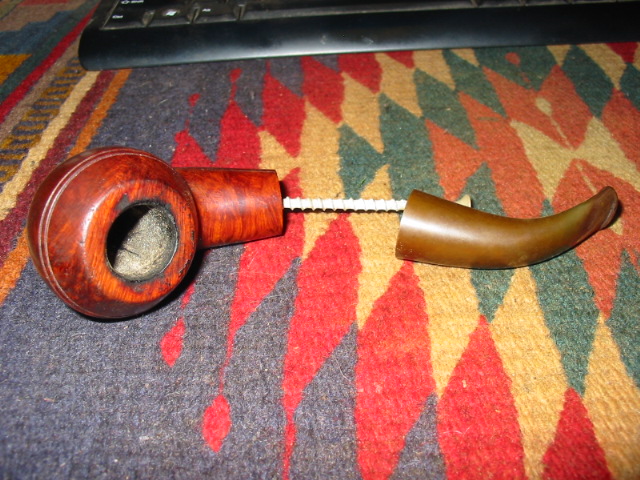
On the weekend I received a series of emails from a fellow here in Vancouver regarding a help with a pipe. He was unpacking his new pipe and he dropped it and the tenon snapped of the stem. The broken tenon was still in the shank and this was a brand-new pipe. He asked if I could help him and fix it. In days past this was a hard fix, but I have since done many tenon replacements. While I would not say it is simple it is certainly something that I can do. The pipe is a Nording 3 Made in Denmark Double Silver and is partially rusticated and partially smooth. It is a Freehand with some blackened plateau on the rim top. It has a gold band sandwich between two silver rings that allow the gold to be turned and spun. The acrylic stem is significantly smaller in diameter than the shank and also bears a nicely carved band with a Nording N logo on the top. He sent me the following photos with is plea for help. He shipped the pipe to me and it arrived at my place on Monday afternoon. I used my normal methods to pull the broken tenon from the shank. I threaded a drywall screw in the shank and tried to pull it from the shank with no luck. It would not come out. I put it in the freezer to see if the old freezer trick would cause it to loosen. I took it out of the freezer after 30 minutes and with some cajoling and wiggling on my part the tenon came free. I carefully flattened out the broken tenon piece remaining on the stem with a small sanding drum on my Dremel. I ran it at a very slow speed and flattened it carefully avoiding the silver band on the stem end. Did I say carefully? Once that was done I used various drill bits to open the airway in the stem to receive a new tenon. I used the Dremel to also reduce the diameter on the new tenon to match the diameter of the mortise. It fit very well. I roughened the end of the new tenon with a rasp so that it would have some bite for the glue when I fit it into the drilled out airway in the stem. I glued the new tenon in place in the mortise with Black rubberized CA Glue. I set it aside for the repair to cure.I set the stem and bowl aside and took photos of the way it looked and let it cure over night. It is a great looking pipe at this point. I still need to polish the new tenon and get a shine on it but it fits very well and all aligns with the shank. I look forward to putting the stem on the pipe in the morning. This morning I fit the stem to the shank and I was very happy with the fit. I polished the new Delrin tenon with micromesh pads and it looks good. Have a look at the pipe.

Replacing a snapped tenon on Fischer “Presi—-” Zulu


by Steve Laug

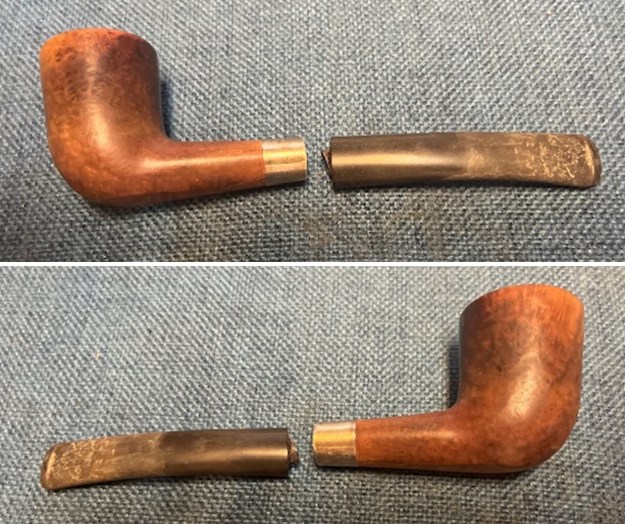
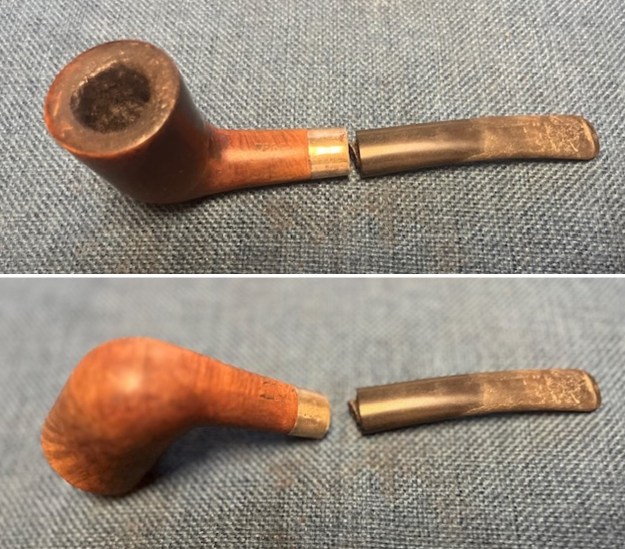
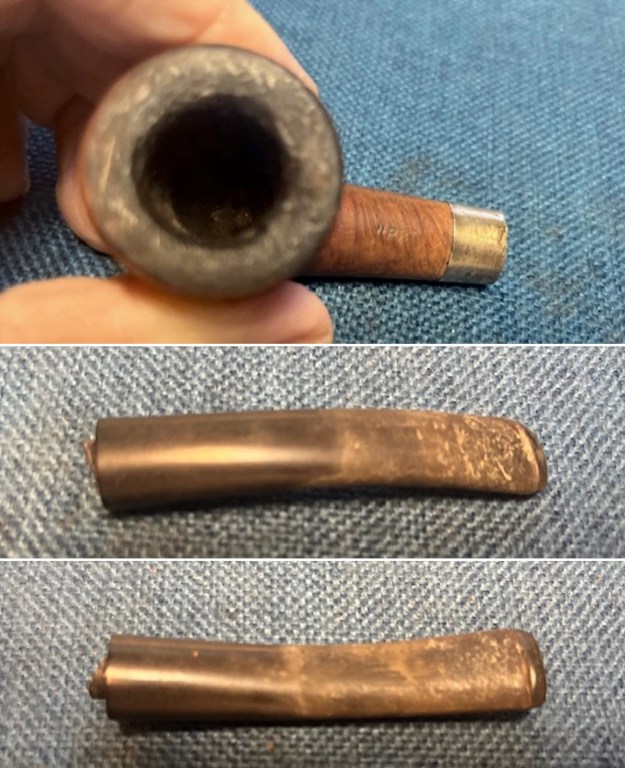
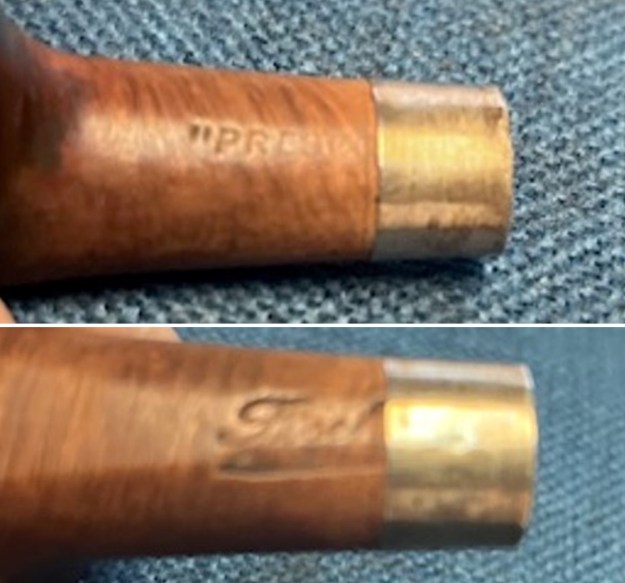
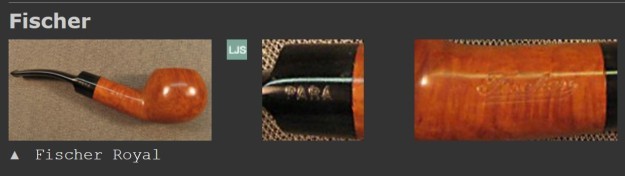
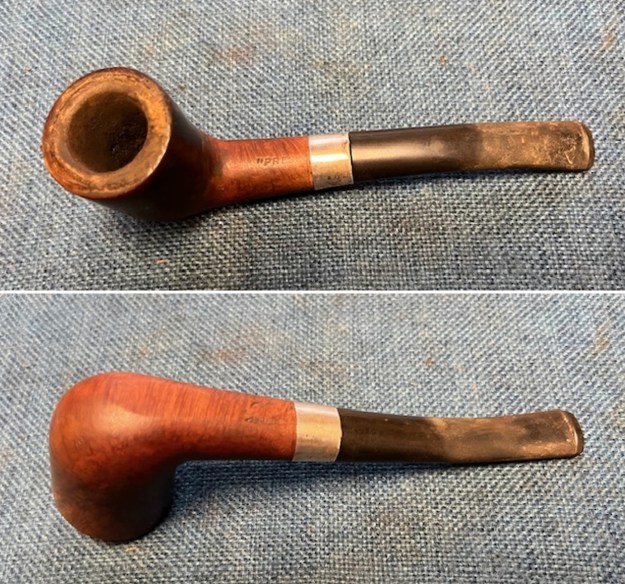
The next pipe on the work table is a smooth, classic Zulu shape that looks very European. It is stamped on the top side of the shank and reads “PRESI—-” with the rest of the stamp covered by the silver repair band. On the underside of the shank it is stamped Fischer in script but also some of the letters are covered by the band. On the right side of the shank it reads IMPORTED BRIAR. There were no other identifying marks or stamps on the shank or the band. It is another one that came from a box of pipes with broken tenons that I set aside to work on someday. Another one of those days I guess! It is Zulu shaped bowl with a slight bend and canted bowl and a vulcanite taper stem. It has a mix of grain around the sides and shank. The bowl had a heavy cake in the bowl and thick lava on the rim top. The finish was in worn and very dirty so it was hard to know with certainty what lay underneath. The internals were also very dirty and the shank/mortise was filled with tars and a white residue of what looked like tape. The nickel band has some deep nicks in it and the shank end of the band bent and flattened on the shank end. The vulcanite taper stem had no logo stamped on the topside. It has oxidation, calcification, tooth chatter and tooth marks on both sides ahead of the button. The tenon had snapped off cleanly and was missing when it came to us. I took photos of the pipe before I started working on it. I took photos of the bowl, rim top and stem sides to show the condition of the both. It was a dirty bowl with debris and a heavy cake on the walls. The rim top had a thick lava covering the bowl and the edges. It was hard to know what the condition of the inner edge was underneath. I took photos of the top and underside of the stem showing condition and the tooth marks on both sides ahead of the button.I took photos to capture the stamping on the top and underside of the shank. What is visible ahead of the band is clear and readable as noted above. I could not capture the faint Imported Briar stamp on the right side.I turned to Pipephil’s site (http://www.pipephil.eu/logos/en/logo-f2.html) and looked up the Fischer brand. I found the listing below and have included both a screen capture and the side bar notes. The stamping is the same as the one on the pipe I am working on.Store closed in 1978. Former address: House of Fischer, 1722 Boston Ridge Road, Orchard Park, NY.

I then turned to the listed for US pipe makers/manufacturers (https://pipedia.org/wiki/Fischer) to see if I could find out more information. I have included the article below.

Gustave Fischer was pipe maker for “The House of Fischer’, which was located in Orchard Park, NY, near Buffalo. The Fischer family apparently made pipes for six generations, starting in Germany and continuing in the United States until the 1970s. Their literature from 1956 said that all their briars were bench made. They also made meerschaums, but some confusion is caused by the fact that there was also Gustav Fischer, who made meerschaum pipes in Boston during roughly the same period.

The article went on to give information on the Fischer from Orchard Park, NY. I quote from that below.

The following information is gleaned from a thread on PipesMagazine.com

PIPES BY THE HOUSE OF FISCHER, ORCHARD PARK NY
Fischer pipes were made in USA through the 1950’s up to late 1978 when the owner, Paul Fischer retired, sold the store and moved to Florida in 1978. Unfortunately, The House of Fischer did not use a date stamp on their pipes, and therefore it is not possible to determine the exact date of manufacture.

Lee Pattison writes the following:

The Fischer shop in Buffalo closed in the late 1950’s last run by Arthur Fischer who moved shop to his home in Orchard Park. Arthur was the last of the family and retired 1978. Early pipes made in shop in Buffalo were stamped Buffalo in loop below name. Art deleted this from the stamp in early on 1960’s which helps in partial dating. Art did only pipe repair and sales. An unconfirmed report from a pipe maker Milton Kalnitz from the same era stated that the later pipe may have been made by Weber. Paul Fisher was part of the unrelated family in Boston Mass. The Buffalo shop started about 1890’s. Source of info was personal contact with family.

FISCHER PIPE QUALITY GRADE STAMPS
This is a list of various Fischer pipe stampings from my personal collection of over sixty Fischer pipes accumulated over the past forty plus years. It is by no means meant to be all-inclusive, however, if you find more Fischer pipe stampings please email me so I can update my list.

  1. Fischer Supreme
  2. Fischer Royal
  3. Fischer Imperial
  4. Fischer Golden 15
  5. Fischer 15 Grand
  6. Fischer 25 Grand
  7. Fischer Ramsgate
  8. Fischer Deluxe
  9. Fischer Special
  10. Fischer Texan (for which they applied for a patent)
  11. Fischer Seconds

The list of Quality Grade Stamps does not show one with the “PRESI… (President) stamp so it does not help me in identifying more information about the pipe. The Zulu has some great grain on the bowl and shank. I do know that is was made after the removal of the Buffalo stamp on the shank in the early 1960s as far as I can see due to partial coverage with a silver repair band on the shank end.

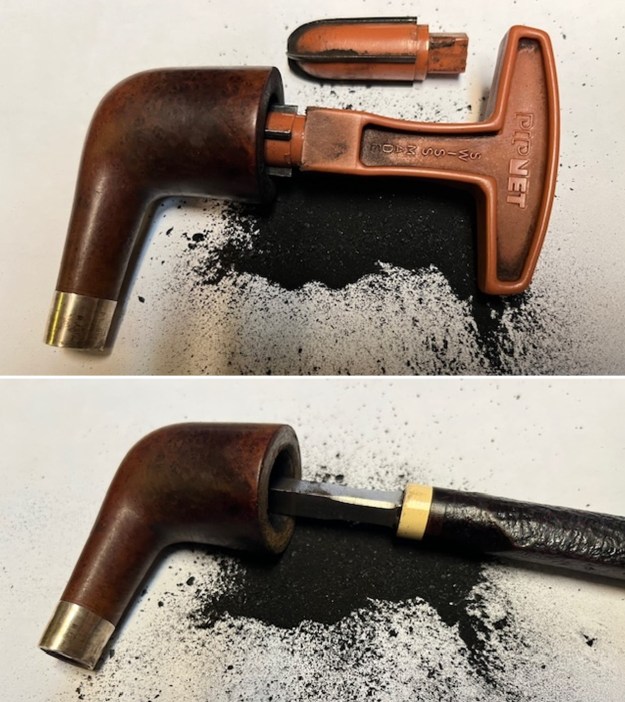
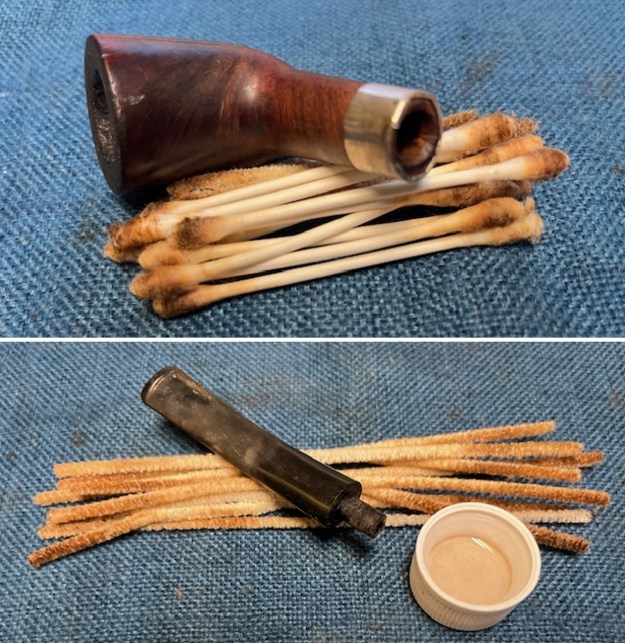
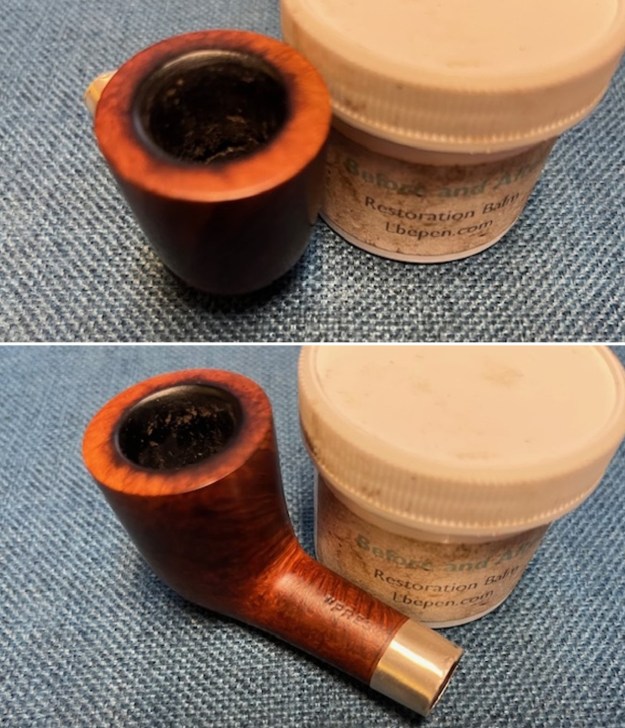
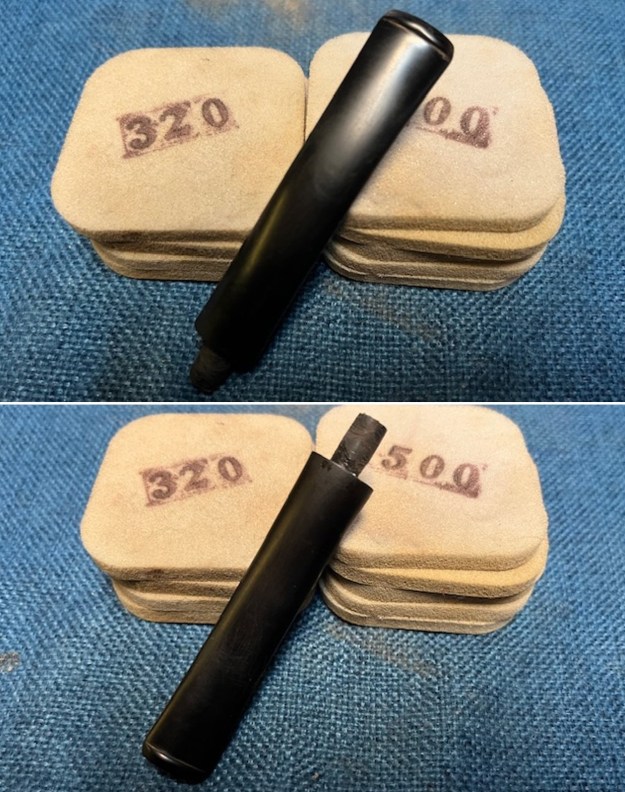
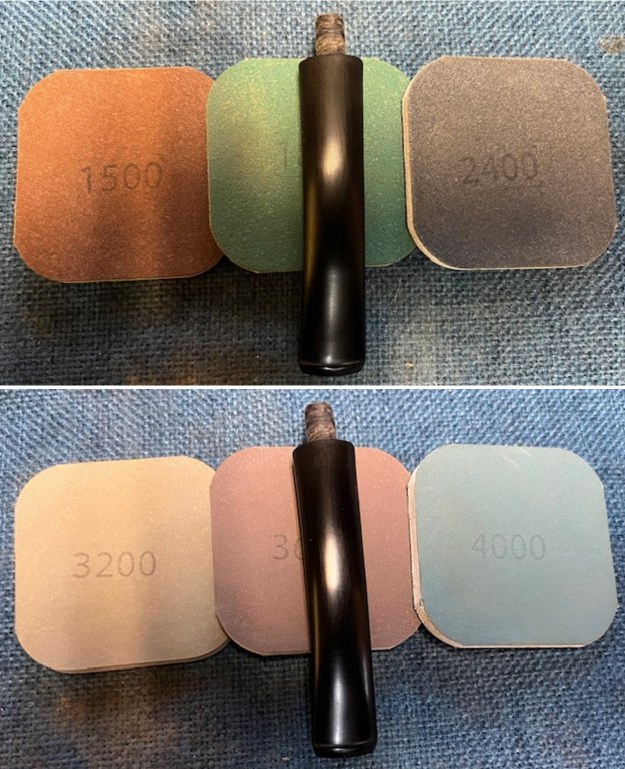
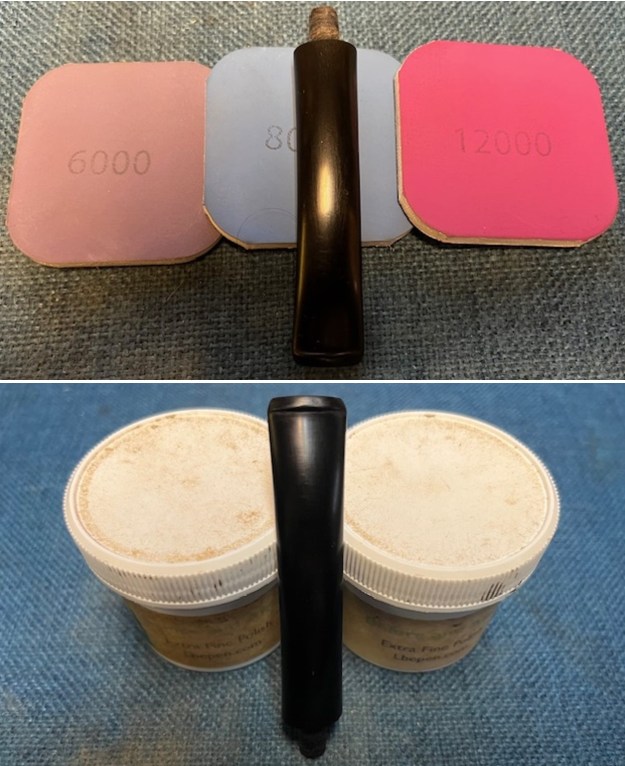
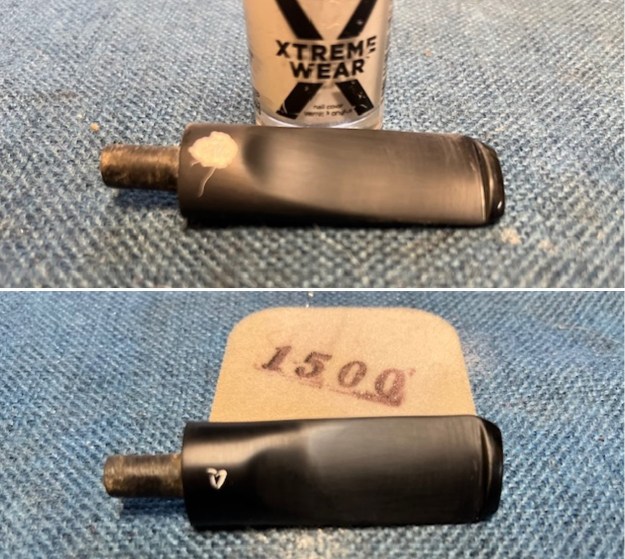
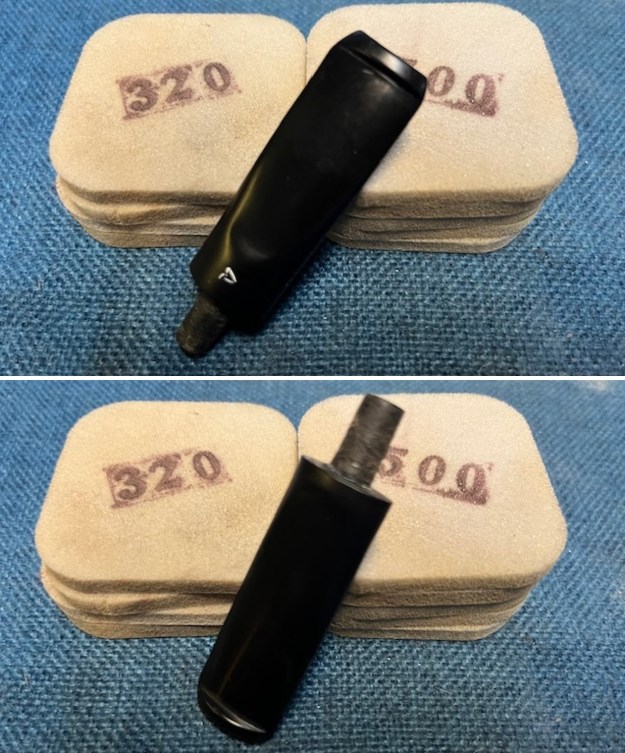
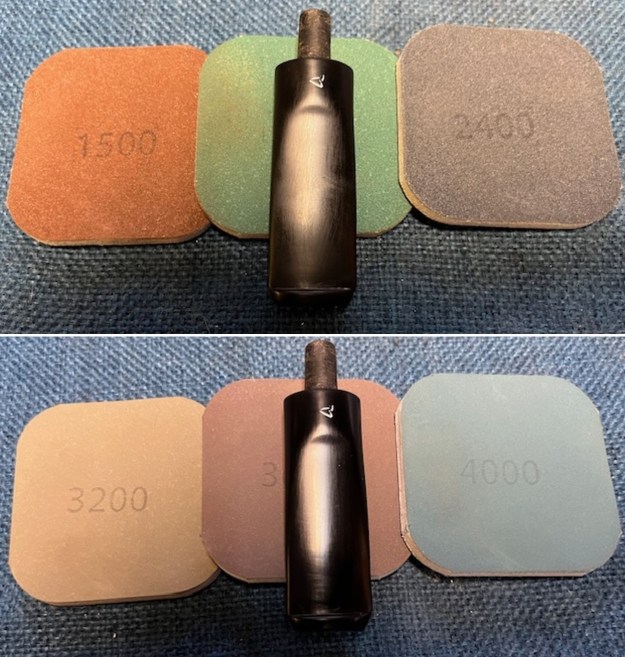
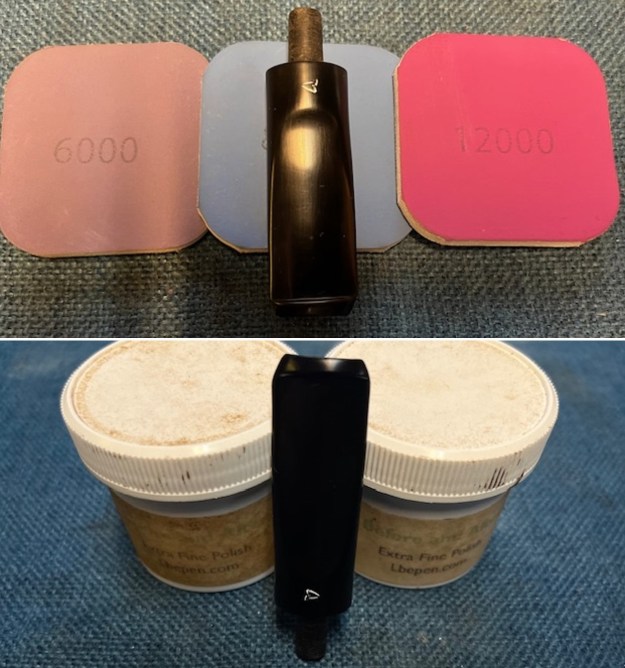
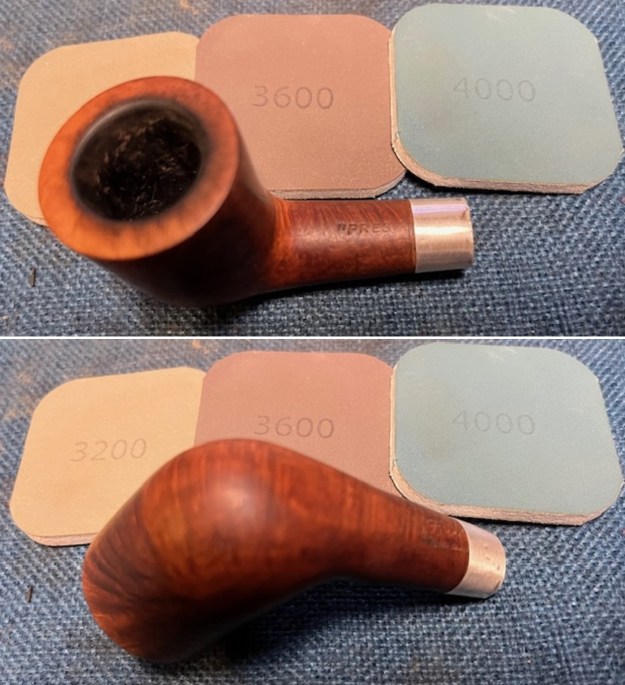
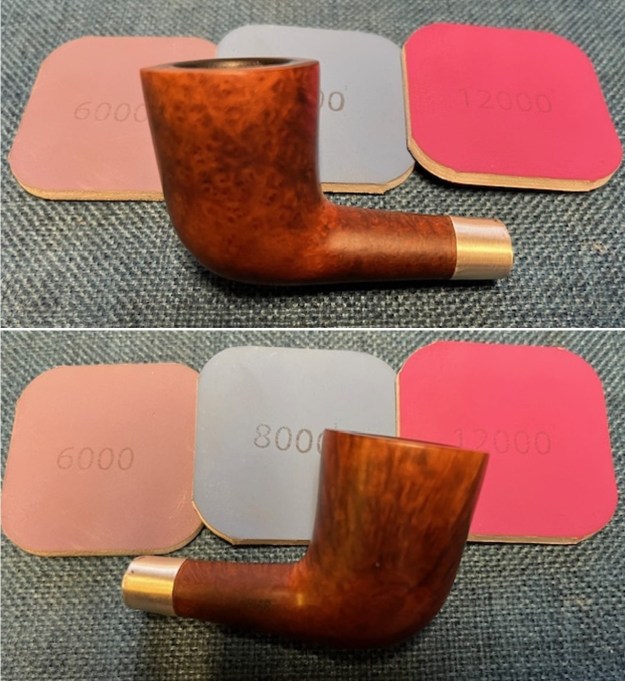
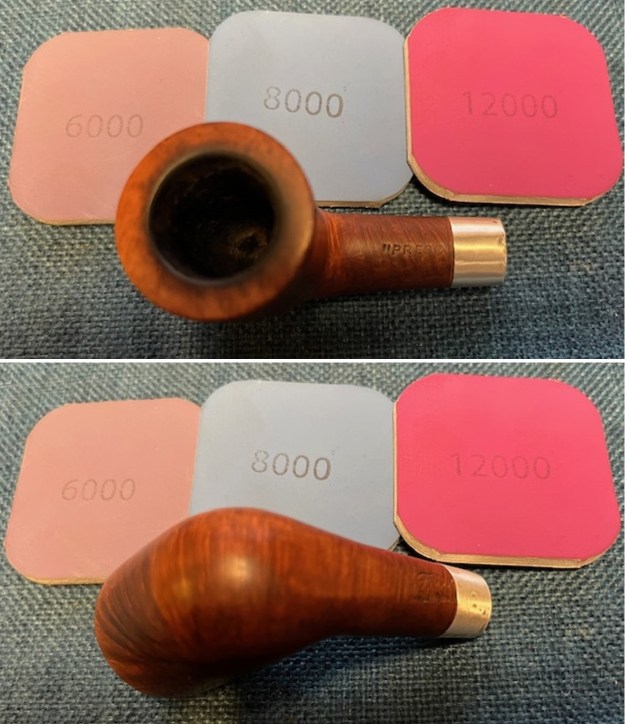
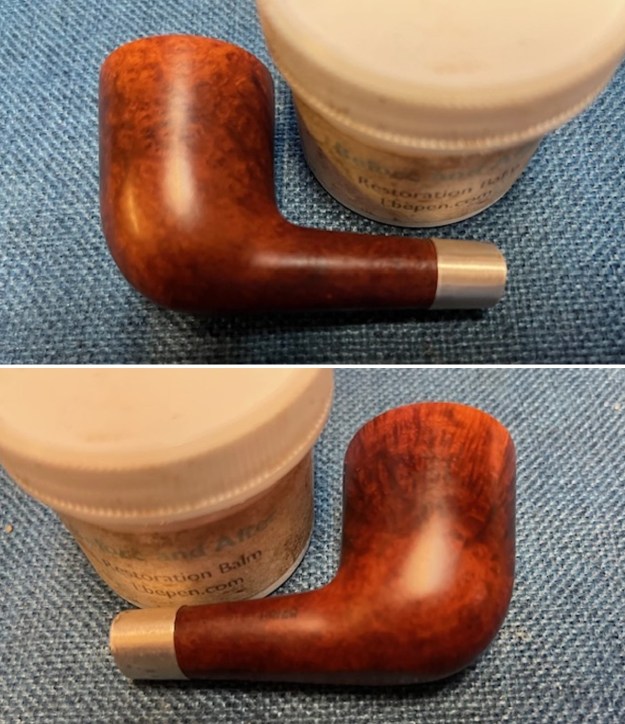
Armed with that information I turned to work on the pipe itself. In preparation for fitting a new tenon I flattened out the broken edges on the snapped tenon using a topping board and 220 grit sandpaper. I carefully smoothed out the stem end with a Dremel and sanding drum.I drilled the home for the new tenon using airway in the stem as a guide. I drilled it several times with increasingly larger drill bits until I had the opening the same size as the threaded portion of the new tenon.I fit the tenon in the stem to make sure the fit and alignment was correct and repeated the process in the mortise. I reduced the diameter of the tenon with a Dremel and sanding drum for a smooth fit in the mortise. I fit the stem on the tenon in the mortise to check the alignment.With the fit as good as it was going to get on this one I slid a pipe cleaner in the stem and tenon and painted the threads with black CA glue. I pressed it into place in the stem and set it aside to cure. Once the glue cured I fit the stem on the shank and took some photos to capture the fit to the shank. It looked very good. While the glue on the tenon continued to cure I turned my attention to the bowl. I reamed the bowl with a PipNet pipe reamer using the 2nd and 3rd cutting heads to remove the cake in the bowl. I cleaned up the reaming with a Savinelli Fitsall Pipe Knife and finally sanded the bowl with 220 grit sandpaper wrapped around a piece of dowel to clean up the walls of the bowl. It was in great condition. I cleaned out the shank and airway into the bowl and the stem with pipe cleaners, cotton swabs and alcohol to remove the tars and oils. I cleaned out the airway in the stem at the same time. I scrubbed the bowl and rim top with undiluted Murphy’s Oil Soap and a tooth brush to remove the grime. I rinsed it with warm water and dried it off with a cotton towel. I worked on the inner edge of the bowl to smooth out the darkening and damage. I lightly topped the bowl on a topping board with 220 grit sandpaper to smooth out the damage on the rim top. I worked over the inner edge once again and the top and edge looked good. I sanded the bowl and rim top with sanding pads – 320-3500 grit pads. I wiped the bowl down after each sanding pad to remove grime and check the progress. It was looking very good by the time I finished with the final pad. I polished the rim top and bowl with micromesh sanding pads – dry sanding with 1500-12000 grit sanding pads. I wiped it down with a damp cloth after each sanding pad to remove the dust and debris. The grain stood out more with each set of pads. I worked some Before & After Restoration Balm into the finish of the bowl, rim top and shank with my fingertips to clean, enliven and protect it. I find that the balm really makes the briar come alive again. I let the balm sit for 15 minutes and then buffed with a cotton cloth to raise the shine. The bowl really looks good at this point. I set the bowl aside and turned my attention back to the stem. I was surprised that there were not deep tooth marks to deal with and that really all I needed to do was remove the oxidation and calcification. To address that I sanded the stem with 320-3500 grit sanding pads and wiped the stem down after each pad with an Obsidian Oil saturated cloth to remove the grime and protect the stem.I polished the stem with micromesh sanding pads – dry sanding it with 1500-12000 grit pads. I polished it further with Before & After Pipe Stem Polish – both fine and extra fine. I put the stem back on the Fischer “President” Imported Briar Zulu and took it to the buffer. I worked it over with Blue Diamond to polish out the remaining small scratches. I gave the bowl and the stem several coats of carnauba wax and buffed the pipe with a clean buffing pad to raise the shine. I hand buffed it with a microfiber cloth to deepen the shine. The pipe polished up really well and the rim top looked good. I was happy with the look of the finished pipe. The photos below show what the pipe looks like after the restoration. The Fischer Zulu is a beautiful and unique take on a classic shape. The polished vulcanite taper stem looks really good with the browns of the briar. The dimensions of the pipe are Length: 5 ¾ inches, Height: 1 ½ inches, Outside diameter of the bowl: 1 ¼ inches, Chamber diameter: ¾ of an inch. The weight of the pipe is 1.13 ounces/32 grams. This is another pipe that I will be putting it on the rebornpipes store in the American Pipe Makers Section shortly, if you are interested in adding it to your collection. The long shank and tall bowl look and feel great in the hand. This one should be a great smoker. Thanks for walking through the restoration with me on this beauty!

Replacing a snapped tenon on Tinderbox Verona Rustica 702 Canadian


by Steve Laug

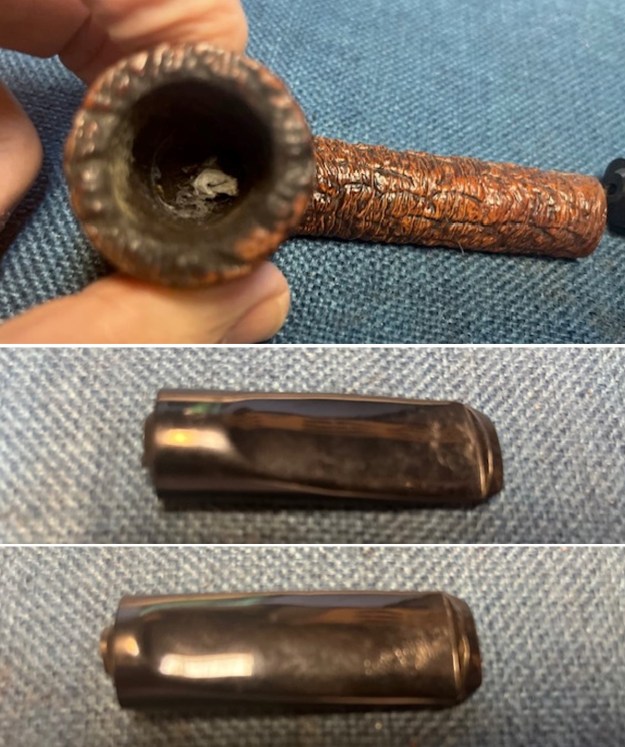
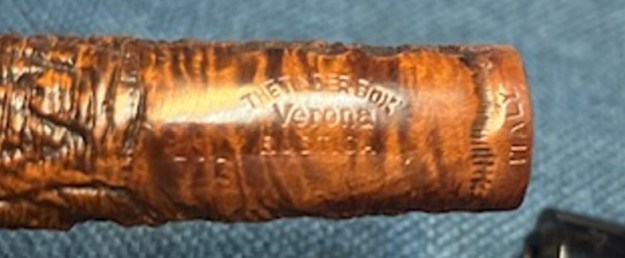
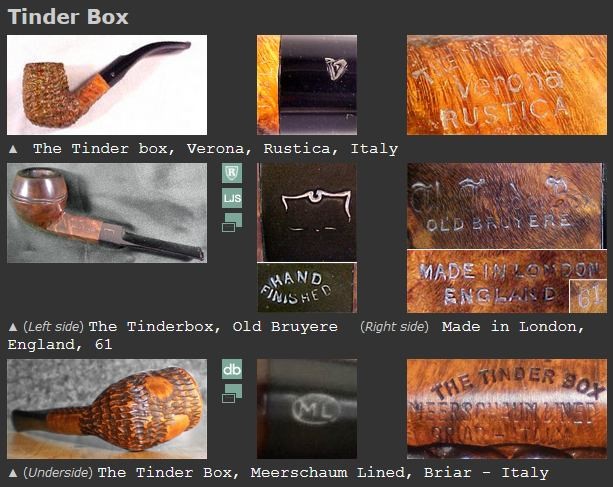
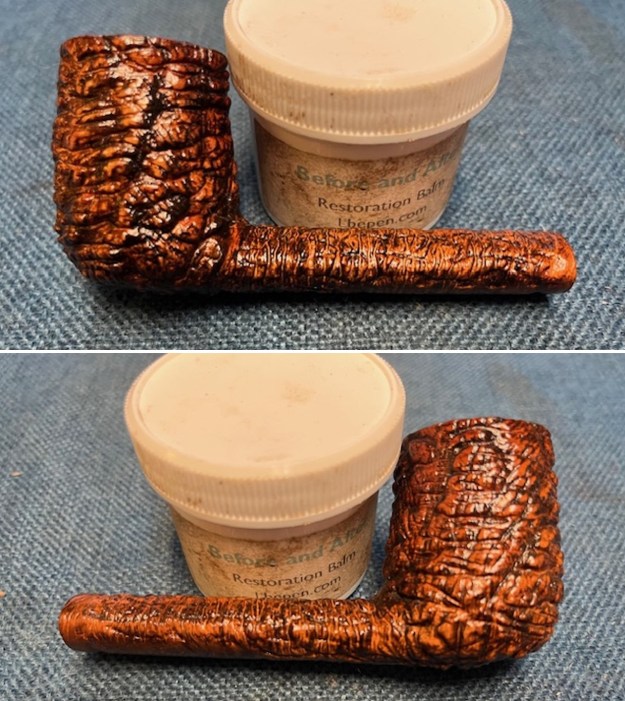
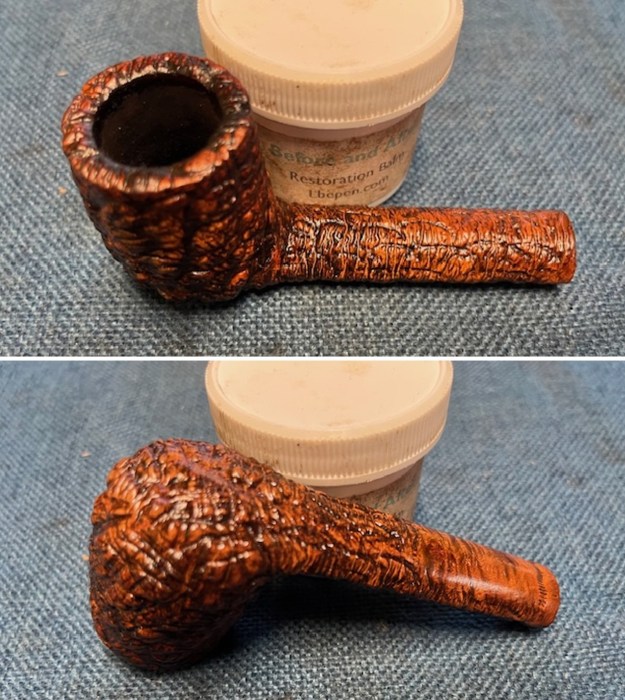
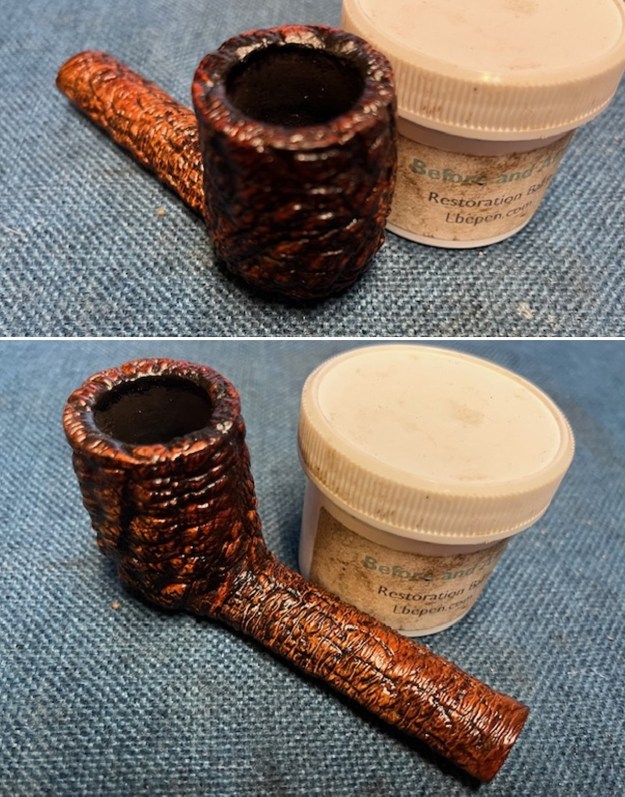
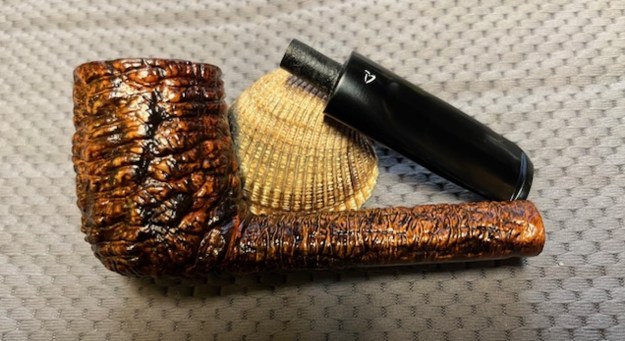
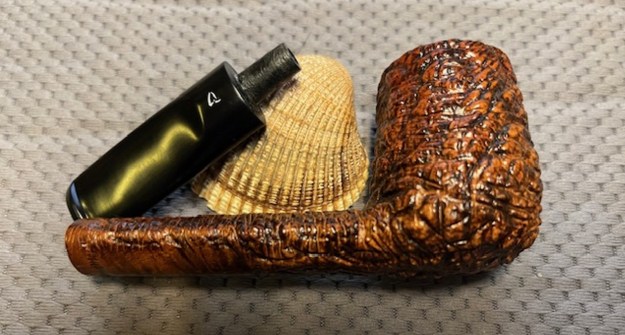
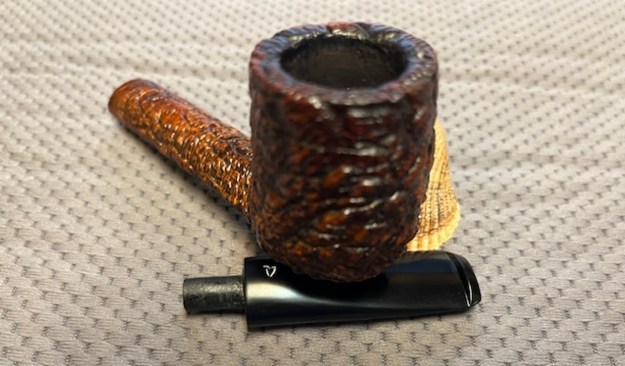
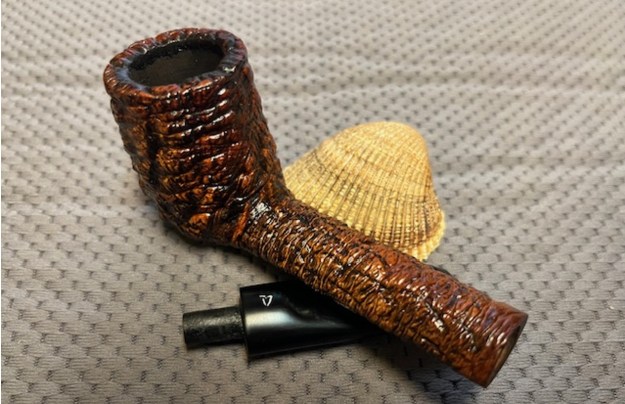
The next pipe on the work table is an almost Sea Rock Rusticated Canadian. It is stamped on the underside of the shank and reads Tinderbox [arched over] Verona [over] Rustica [over] 702 to the left. Along the shank end it is stamped Italy. It is another one that came from a box of pipes with broken tenons that I set aside to work on someday. Today is that day I guess! It is very deeply rusticated Canadian shaped bowl with an acrylic fancy smooth saddle stem. I really like the look of the rustication. The bowl had a moderate cake in the bowl and some lava in the rustication on the rim top. The finish was in excellent condition and had a mix of stains to highlight the high points and valleys. It was a dirty pipe on the inside of the shank. The acrylic fancy taper/saddle stem had a V logo stamped on the topside. It has tooth chatter and tooth marks on both sides ahead of the button. The tenon had snapped off cleanly in the shank. I took photos of the pipe before I started working on it. I took a photo of the shank end to show the snapped off tenon in the shank. The break is quite clean so it should clean up very well.I took photos of the bowl and rim top to show the cleanness of the bowl and the condition of both. It was a dirty bowl with dust and debris in the bottom and a thick cake on the walls. The rim top was filled in with lava. The inner and outer edges look good. I took photos of the top and underside of the stem showing tooth marks on the top and underside ahead of the button.I took a photo to capture the stamping on the underside of the shank. It is clear and readable as noted above. There was also a V stamped on the top of the shank.I remembered that The Tinder Box Tobacconist had several pipe companies in Europe make pipes for them so I looked them up on Pipephil’s site (http://pipephil.eu/logos/en/logo-t6.html). I found a listing with three examples shown in the screen capture below. The pipe I am working on is stamped like the first one, the Bent Billiard below. The stamping is identical other than the shape number 702 on mine.I turned to Pipedia for more information on the potential pipe makers for the company (https://pipedia.org/wiki/Tinder_Box). I quote below.
The Tinder Box was the chain of tobacco stores started by Edward Kolpin, Sr., who carved Ed’s Hand Made pipes. The store, eventually sold to a Canadian conglomerate, eventually reached 200 retail outlets by 2007, and in the 40 years it operated on a large scale a great number of pipes were made for The Tinder Box by well respected makers. A few include the Tinder Box Unique, made by Charatan, Christmas Pipes by Ascorti, and the Tinder Box Noble and Exotica, made by Shalom Pipe Factory, Mauro Armellini did make the Verona and Napoli lines.

Ed Kolpin, Jr., opened a small tobacco, pipe, and cigar store in Santa Monica, the Tinder Box, in 1928. Later it moved to its current location in 1948 where it began serving the many Hollywood celebrities living nearby. Part of the attraction were the famous pipes handmade by Kolpin himself. In 1959 Kolpin began a tobacco-store franchise, at first locally and then by the mid-1960s there were Tinder Box stores in malls across America. The franchise business was sold in the 1970s, but Kolpin still owns and operates the original store as of 2003.[1]

The stamping Italy that made me wonder if it was made by Lorenzo but it was not! It was carved by Mauro Armellini as noted in the quote in blue above. Now it was time to work on the pipe.

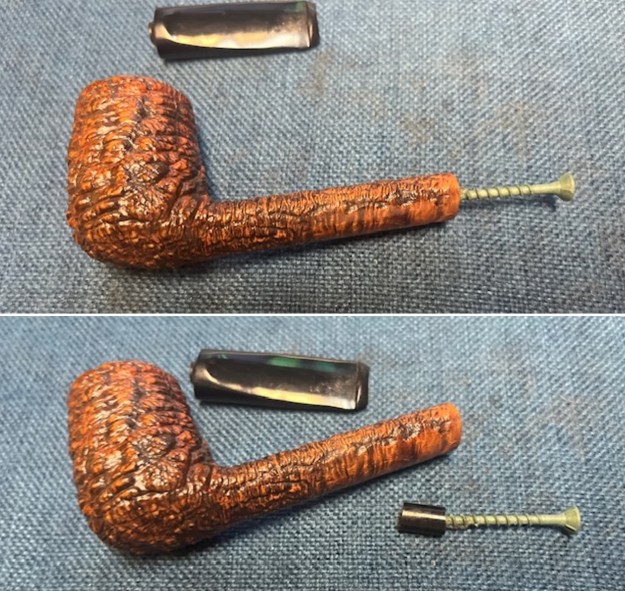
I started by pulling the broken tenon from the shank. I used a dry wall screw and turned it into the airway and wiggled the tenon free from the shank. It came out with no problem.In preparation for fitting a new tenon I flattened out the broken edges on the snapped tenon using a topping board and 220 grit sandpaper. I carefully smoothed out the stem end with a Dremel and sanding drum.I drilled the home for the new tenon using airway in the stem as a guide. I drilled it several times with increasingly larger drill bits until I had the opening the same size as the threaded portion of the new tenon.I fit the tenon in the stem to make sure the fit and alignment was correct and repeated the process in the mortise. I reduced the diameter of the tenon with a Dremel and sanding drum for a smooth fit in the mortise. I fit the stem on the tenon in the mortise to check the alignment. With the fit as good as it was going to get on this one I slid a pipe cleaner in the stem and tenon and painted the threads with black CA glue. I pressed it into place in the stem and set it aside to cure.While it was curing I turned my attention to the bowl. I reamed the bowl with a PipNet pipe reamer using the 2nd and 3rd cutting heads to remove the cake in the bowl. I cleaned up the reaming with a Savinelli Fitsall Pipe Knife and finally sanded the bowl with 220 grit sandpaper wrapped around a piece of dowel to clean up the walls of the bowl. It was in great condition. I cleaned out the shank and airway into the bowl with pipe cleaners, cotton swabs and alcohol to remove the tars and oils. I cleaned out the airway in the stem at the same time. I did the stem cleaning before I drilled the airway for the new tenon.I cleaned up the lava in the rustication on the rim top with a brass bristle wire brush. I worked over the surface until the grooves were clean and debris free.I scrubbed the exterior of the bowl with undiluted Murphy’s Oil Soap and a tooth brush to remove the debris from the deep rusticated grooves. I rinsed off the soap and grime with warm water. It looked much better at this point. I worked some Before & After Restoration Balm into the finish of the bowl, rim top and shank with my fingertips and a shoe brush to clean, enliven and protect it. I find that the balm really makes the briar come alive again. The contrasts in the layers of stain really depth and colour to the rustication. I let the balm sit for 15 minutes and then buffed with a cotton cloth to raise the shine. The bowl really looks good at this point. I set aside the bowl and turned my attention to the stem. I sanded the stem surface with 220 sandpaper to remove the tooth chatter and light tooth marks. It was looking much better at this point.I sanded the stem with 320-3500 grit sanding pads and wiped the stem down after each pad with an Obsidian Oil saturated cloth to remove the grime and protect the stem. I interrupted the sanding after the 1500 grit pad to touch up the V stamp on the top of the stem with white acrylic fingernail polish. I continued polishing the stem with the 2000-3500 grit pads. I worked over the stamped area to remove excess acrylic white. The logo looked very good. I polished the stem with micromesh sanding pads – wet sanding it with 1500-12000 grit pads. I polished it further with Before & After Pipe Stem Polish – both fine and extra fine. Once again, I am the part of the restoration that I always look forward to – the moment when all the pieces are put back together. I put the pipe back together and buffed the bowl and the stem with Blue Diamond on the buffing wheel. I gave the bowl and the stem multiple coats of carnauba wax. I buffed the pipe with a clean buffing pad to raise the shine. I hand buffed it with a microfiber cloth to deepen the shine. It is fun to see what the polished bowl looks like with the deeply rusticated finish and the black acrylic stem. This richly stained Tinderbox Verona Rustica 702 Canadian is light weight and ready for you to load up a tobacco of preference and enjoy a fresh smoke. Have a look at it in the photos below. The dimensions are Length: 6 inches, Height: 1 ¾ inches, Outside diameter of the bowl: 1 ¼ inches, Chamber diameter: ¾ of an inch. The weight of the pipe is 43 grams/1.48 ounces. This is one that will go on the Italian Pipe Makers Section of the rebornpipes online store shortly. Let me know if you are interested in adding it to your rack. Thanks to each of you who are reading this blog. Remember we are not pipe owners; we are pipemen and women who hold our pipes in trust until they pass on into the trust of the next generation.

Replacing a snapped tenon on an Alexander Greece AR/72 -B Rhodesian


By Steve Laug

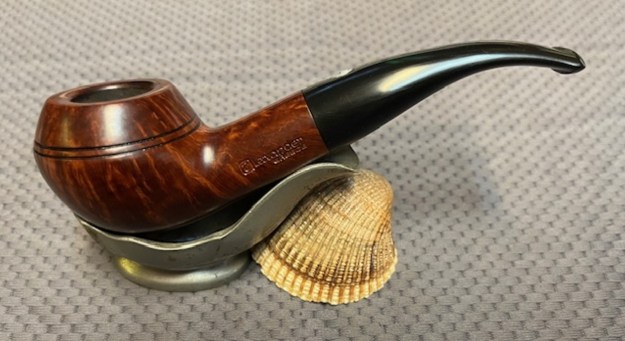
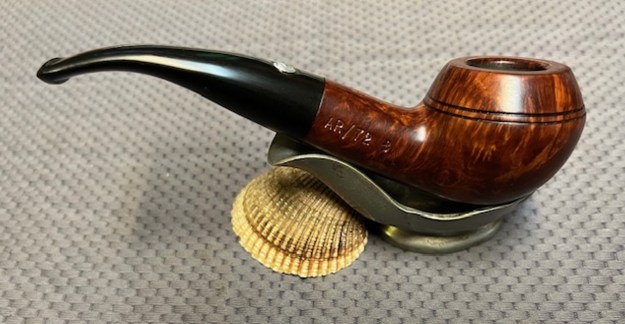
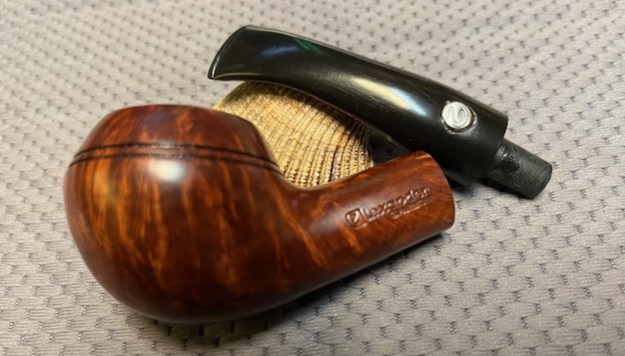
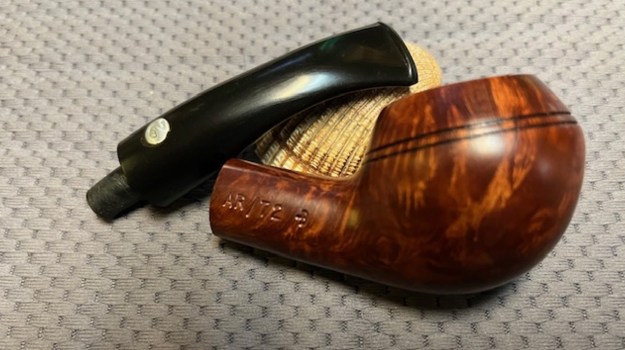
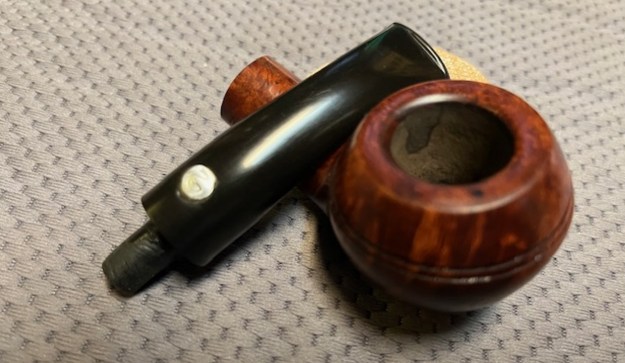
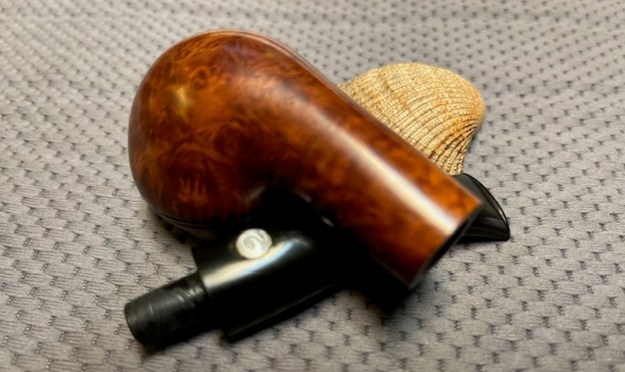
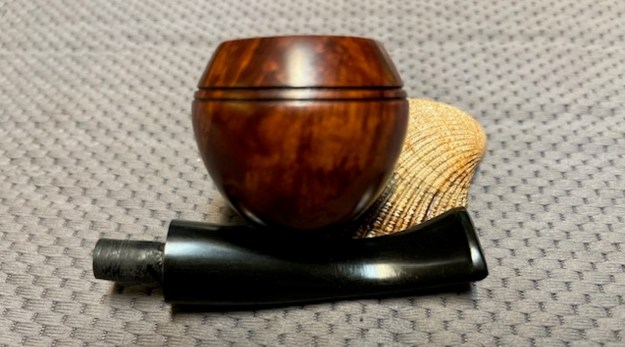
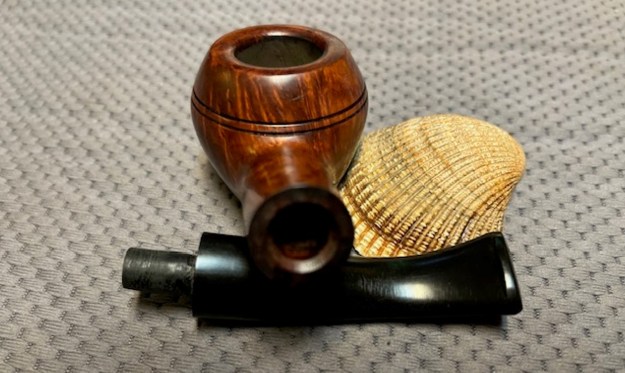
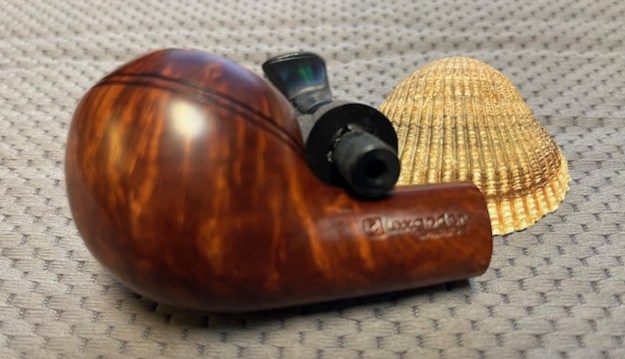
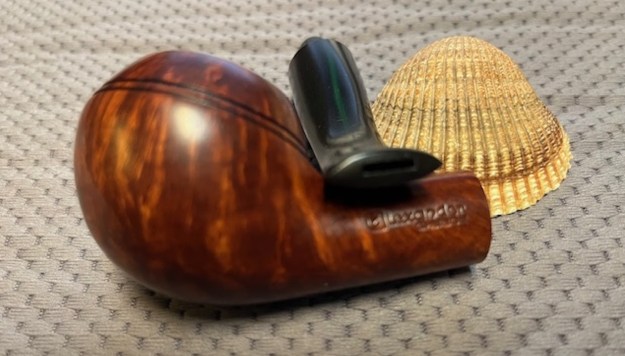
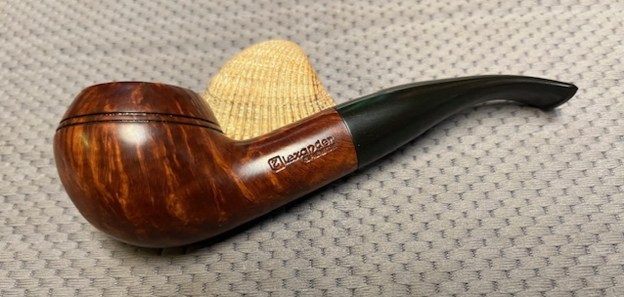
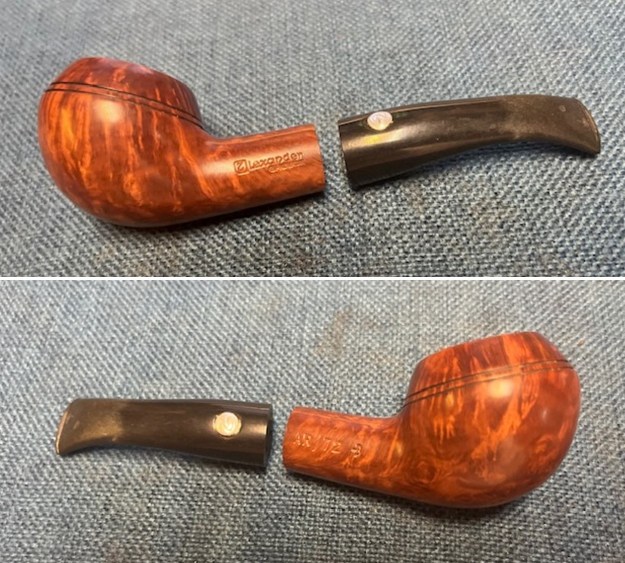
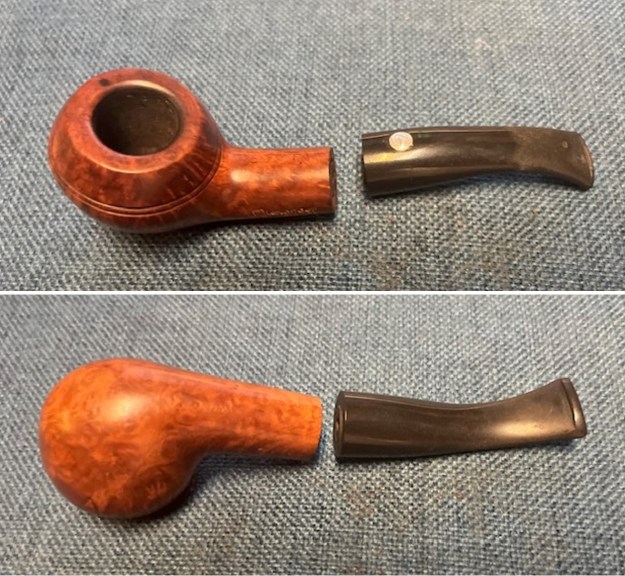
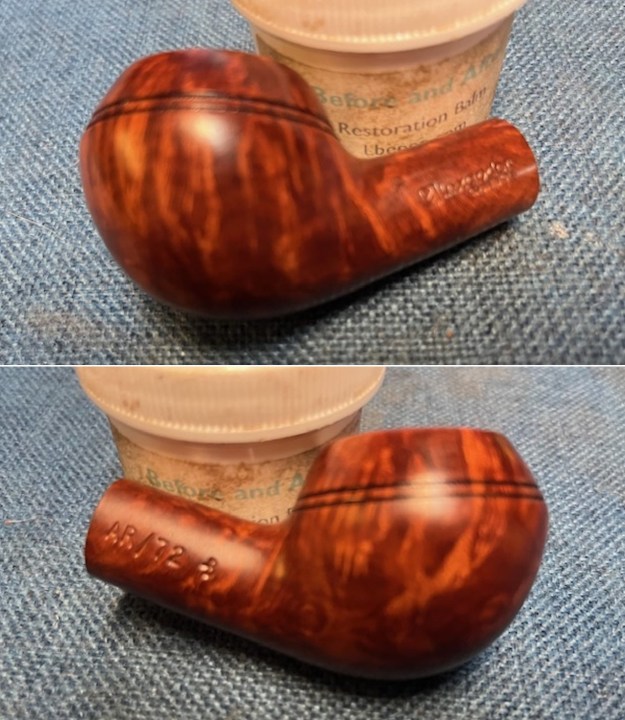
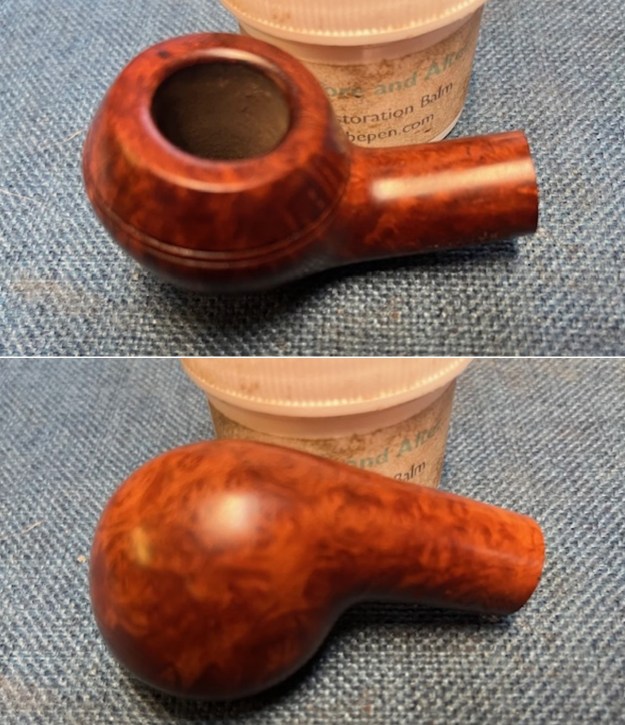
The next pipe on the work table is a beautifully grained Alexander Greece Rhodesian. It is stamped on the left side of the shank and reads Alexander [over] Greece. The A at the beginning of Alexander is a letter Z in the centre of the A. On the right side it reads AR / 72 B. It is another one that came from a box of pipes with broken tenons that I set aside to work on someday. Today is that day I guess! It is very classic shaped Rhodesian shaped bowl with an ebonite taper stem. I really like the look of a Rhodesian and this one has a little twist that makes it a bit different. The bowl was very clean and had no cake. The finish was in excellent condition and had a great wax/shellac coat. I would run some pipe cleaners through it but it appeared to be very clean. The ebonite taper stem had a fancy Z logo in a silver circle inlaid on the topside. It is not oxidized but has tooth chatter and tooth marks on both sides ahead of the button. The tenon had snapped off cleanly in the shank. I took photos of the pipe before I started working on it. I took a photo of the shank end to show the snapped off tenon in the shank. The break is quite clean so it should clean up very well.I took photos of the bowl and rim top to show the cleanness of the bowl and the condition of both. It was clean bowl that had been reamed. The inner and outer edges otherwise look very good. I took photos of the top and underside of the stem showing wear and tooth marks on the top and underside of the stem surface and button.I took photos to capture the stamping on the sides of the shank. It is clear and readable as noted above. I also took a photo of the inlaid Alexander logo on the left side of the stem. Before I started working on the pipe I turned to Pipedia to remind myself of the Alexander Greece brand and gather the background that makes working on pipes a pleasure (https://pipedia.org/wiki/Alexander_Pipes). I quote from the article below. Of note it starts with an update regarding the death of Alexander.
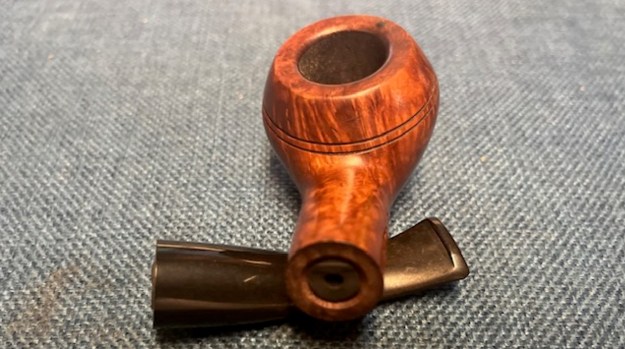
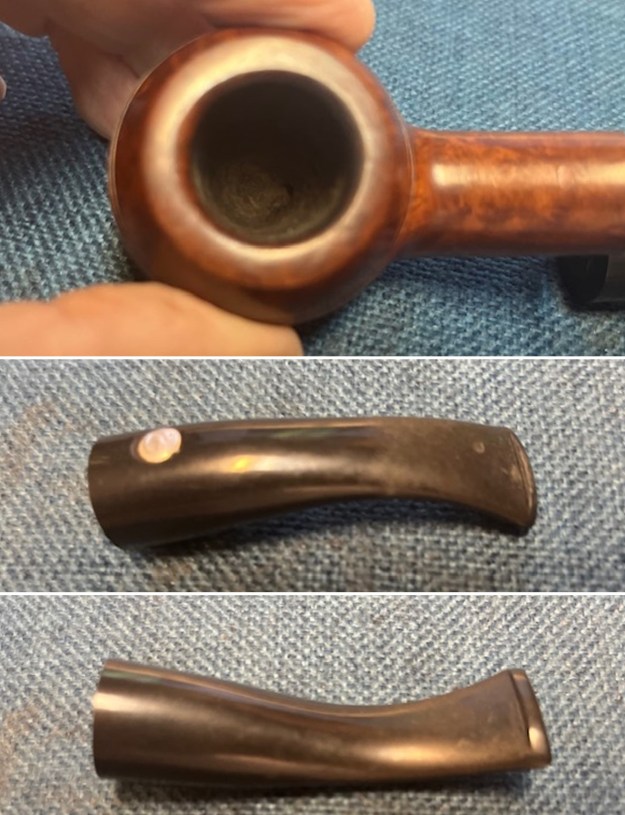
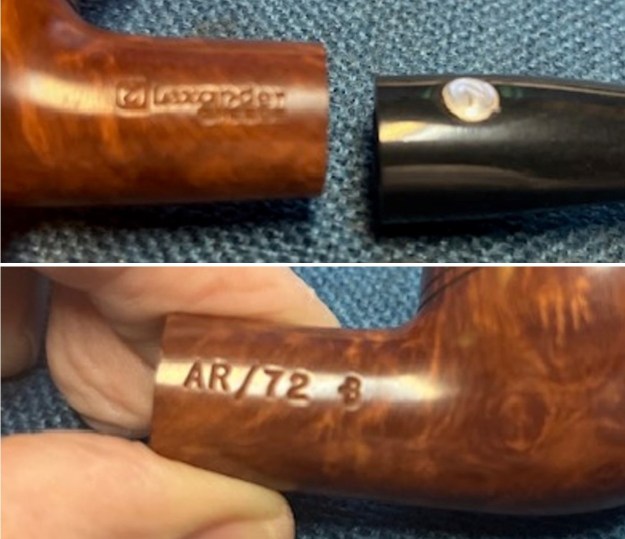
Update: Today I am saddened by the news that Alexander passed away on February 10th, 2015. Our thoughts and prayers are with his family and friends. We are very thankful for his contributions to the World of pipes. –sethile (talk) 21:00, 12 February 2015 (UTC)

“I am Alexandros Zavvos, born in Molos, Thermopylae, near Lamia. Since I was a child I had an inclination for art, starting with painting. I studied Radio-electronics, and at age 23 I got involved with commerce with a capital of 150.000 drs. in 1962.

I entered the pipe business where I met, by total chance, with Mr. Libero G. Albanese, first technician and producer of briar-wood models in Kalabria, Italy. When I told him that I am Greek, he almost prayed, saying that we Greeks have the best briar in the world for pipe-making! From that moment on I understood that this fellow is in love with his work – and he transmitted that to me instantly!

From mid-1962 to 1963 I searched all over the world for a college or a school in order to be taught the art of pipe-making, but in vain – there were none. Moreover, I wasn’t able to make it through the big European pipe-makers of that time (British, Italian, Danish). I was convinced that only through experience there was a chance of me becoming what I wanted.

In 1964 I started the commercial briar-wood model production, in 1965 I constructed empirically my first pipe and in 1967 I started the vertical production (this is from the briar Greek woods to the consumer) – maybe there is no other factory in the world producing smoking pipes vertically.

In 1970 I started the research, which was accomplished in 1984, on the 1st generation hygrostatic system. In that same period we founded, my brother and I, our factory in Lamia for the production of ebony epistomes.

Today, 40 years later, I have successfully arrived at the production of the 5th generation hygrostatic pipe. I will finish by saying that this pipe, to what concerns the pleasure it provides, has nothing to do with that pipe for peace, offered by American Indians.”

The Alexander Briar Pipes website still sells briar pipes of several styles, including “Hygrocool”, “Hygrocool NT”, regular pipes, cigarette pipes and pocket pipes, along with briar blocks, acrylic and ebonite stems and accessories.

At the mention of the Hygrostatic System above I remembered a pipe that Paresh had restored for me and gifted me when I went to India. I have included the link below.

https://rebornpipes.com/2019/08/02/gifting-my-mentor-and-dear-friend-steve-an-alexander-zavvos-hygrosystem-pipe/

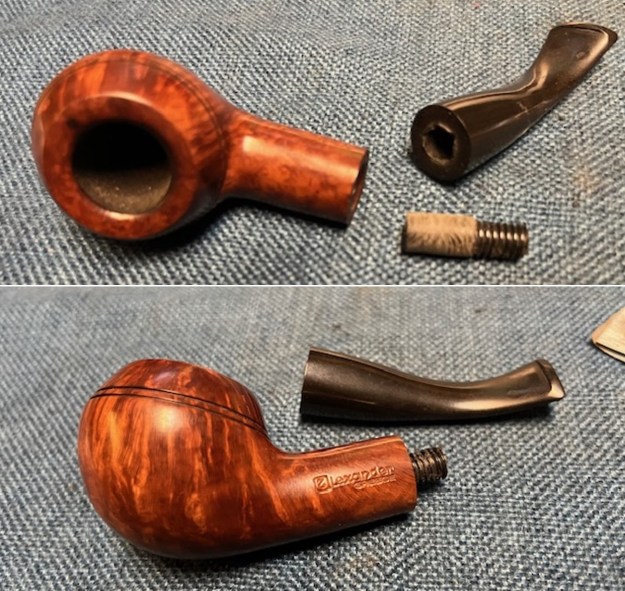
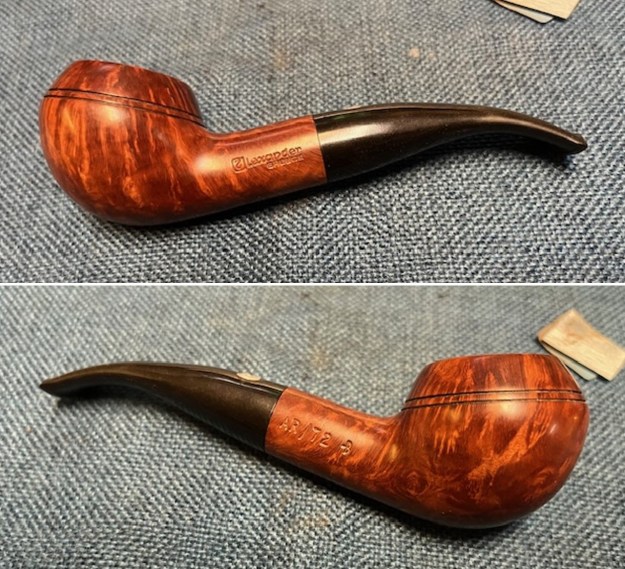
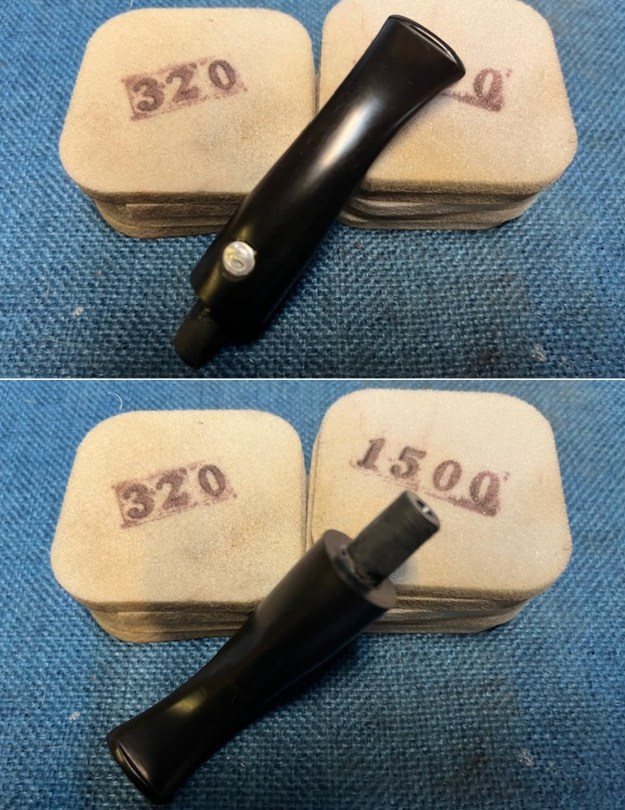
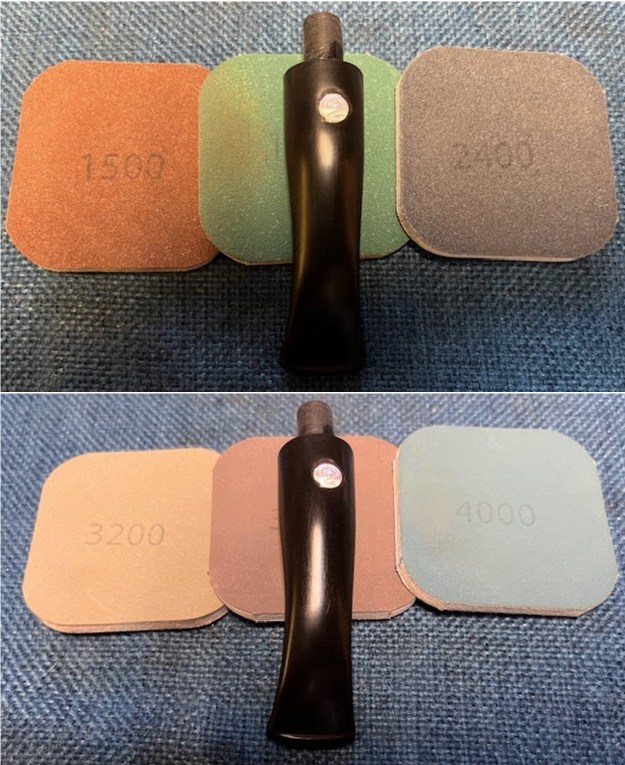
It is an interesting brand and a great looking classic pipe rather than his hygrosystem pipe. Given the information and background on the pipe I started my work on the pipe. I decided to start by pulling the broken tenon and beginning the process of the replacement. I used a drywall screw to pull the tenon. I screwed it into the airway and wiggled the broken piece out of the shank. The second photo of the bowl below shows the pulled tenon.In preparation for fitting a new tenon I flattened out the broken edges on the snapped tenon using a topping board and 220 grit sandpaper. I drilled the airway in the stem with increasingly larger drill bits until I had the bit that was the same size as the threaded portion of the new tenon.I fit the tenon in the stem to make sure the fit and alignment was correct and repeated the process in the mortise. I fit the stem on the tenon in the mortise to check the alignment. With the fit as good as it was going to get on this one I slid a pipe cleaner in the stem and tenon and painted the threads with black CA glue. I pressed it into place in the stem and set it aside to cure.I set the stem aside overnight to let it cure. I turned out the lights and called it a night. In the morning I sanded the bowl with 220 grit sandpaper on a piece of dowel to clean up the walls of the bowl. It had been reamed but needed to be sanded smooth. It was in great condition. I cleaned out the shank and airway into the bowl with pipe cleaners, cotton swabs and alcohol to remove the tars and oils. I cleaned out the airway in the stem at the same time.I polished the briar with micromesh sanding pads – dry sanding with 1500-12000 grit pads. I wiped the bowl down after each pad with a damp cloth to remove the sanding dust. I worked some Before & After Restoration Balm into the finish of the bowl, rim top and shank with my fingertips to clean, enliven and protect it. I find that the balm really makes the briar come alive again. The contrasts in the layers of stain really made the grain stand out. I let the balm sit for 15 minutes and then buffed with a cotton cloth to raise the shine. The bowl really looks good at this point. I set aside the bowl and turned my attention to the stem. I “painted” the surface of the stem with the flame of a Bic lighter to lift the deep tooth marks. I filled in what remained with black CA glue and set it aside to let the glue cure. I flattened the repairs with a small file to start the process of blending them into the surrounding ebonite. I sanded the stem surface with 220 sandpaper to further blend in the repairs and flatten them out. It was looking much better at this point. I sanded the stem with 320-3500 grit sanding pads and wiped the stem down after each pad with an Obsidian Oil saturated cloth to remove the grime and protect the stem.I polished the stem with micromesh sanding pads – wet sanding it with 1500-12000 grit pads. I polished it further with Before & After Pipe Stem Polish – both fine and extra fine. Once again, I am the part of the restoration that I always look forward to – the moment when all the pieces are put back together. I put the pipe back together and buffed the bowl and the stem with Blue Diamond on the buffing wheel. I gave the bowl and the stem multiple coats of carnauba wax. I buffed the pipe with a clean buffing pad to raise the shine. I hand buffed it with a microfiber cloth to deepen the shine. It is fun to see what the polished bowl looks like with the smooth finish and the black ebonite stem. This richly stained Alexander Greece AR/72 -B Rhodesian is light weight and ready for you to load up a tobacco of preference and enjoy a fresh smoke. Have a look at it in the photos below. The dimensions are Length: 5 ½ inches, Height: 1 ½ inches, Outside diameter of the bowl: 1 ¼ inches, Chamber diameter: ¾ of an inch. The weight of the pipe is 46 grams/1.66 ounces. This is one that will go on the Pipe from Various Makers Section of the rebornpipes online store shortly. Let me know if you are interested in adding it to your rack. Thanks to each of you who are reading this blog. Remember we are not pipe owners; we are pipemen and women who hold our pipes in trust until they pass on into the trust of the next generation.
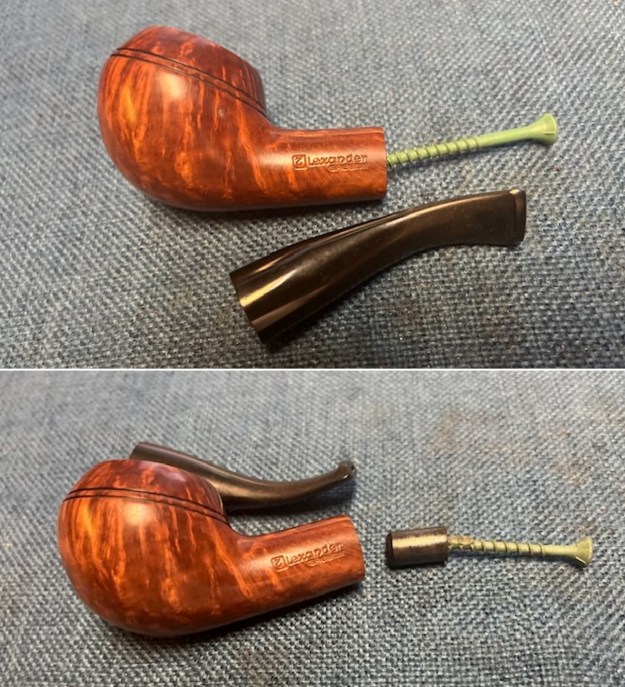
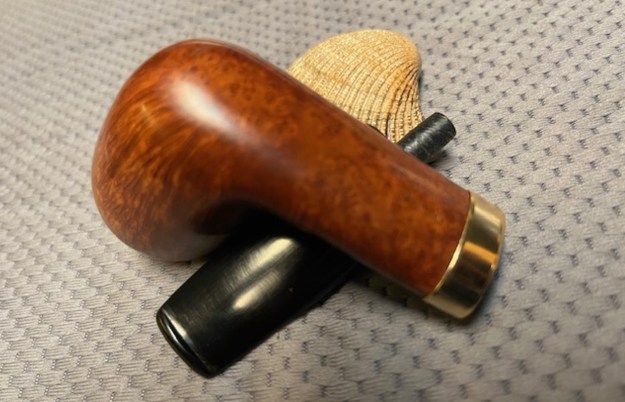
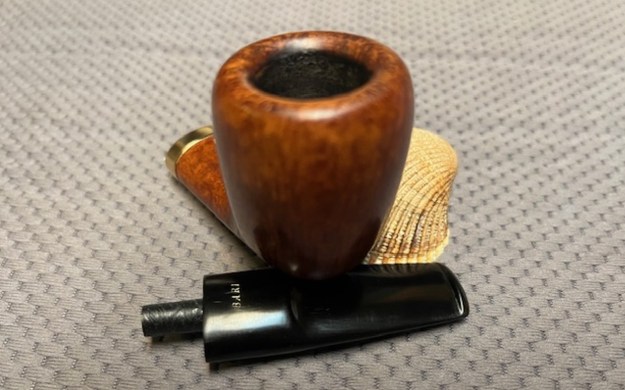
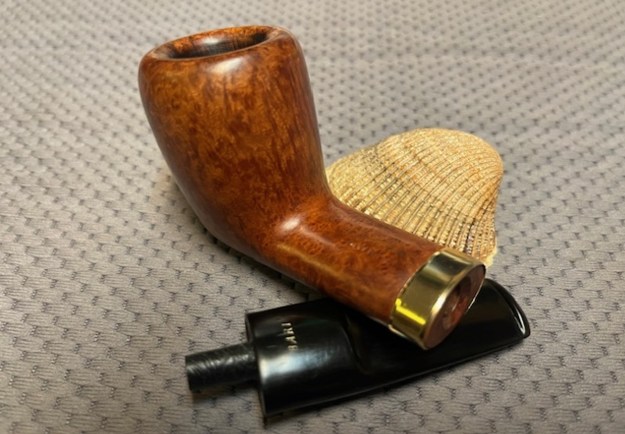
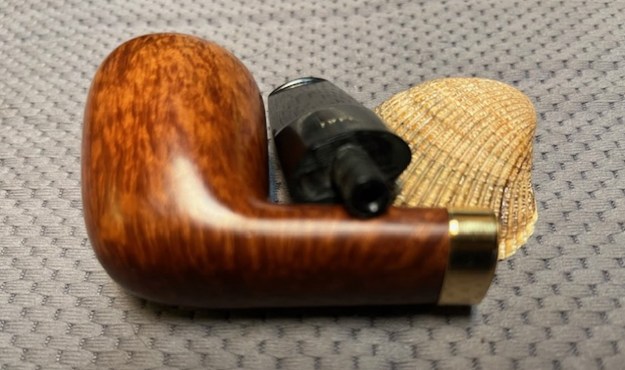
Replacing a Broken Tenon on a Bari Select Nature Old Briar 924 Oval Shank Acorn


by Steve Laug

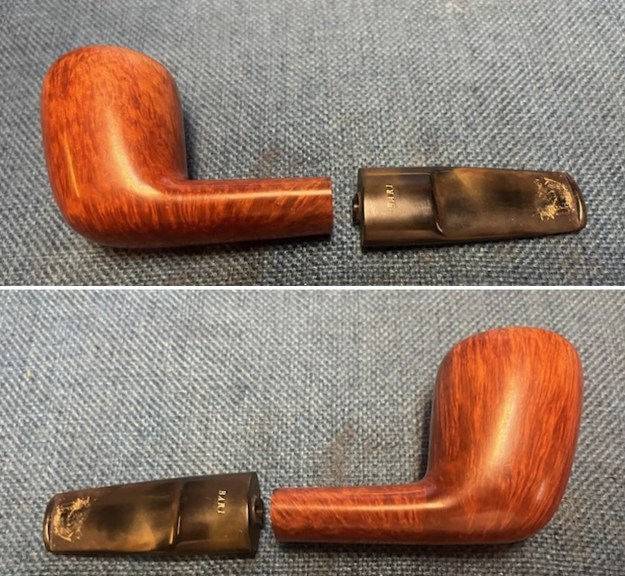
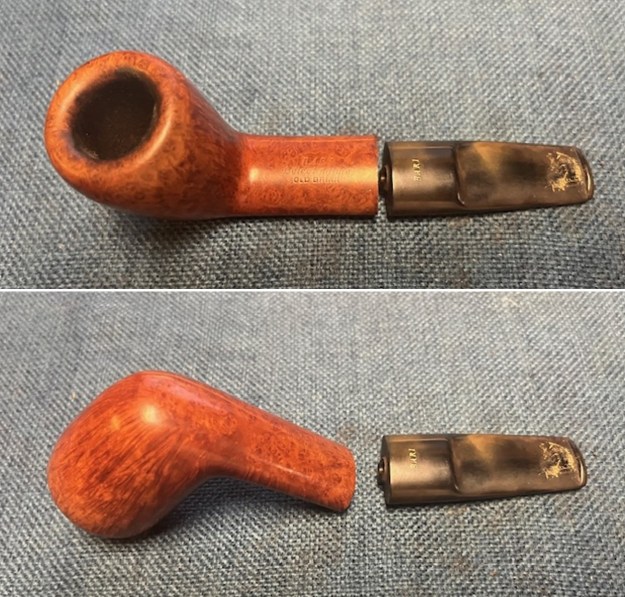
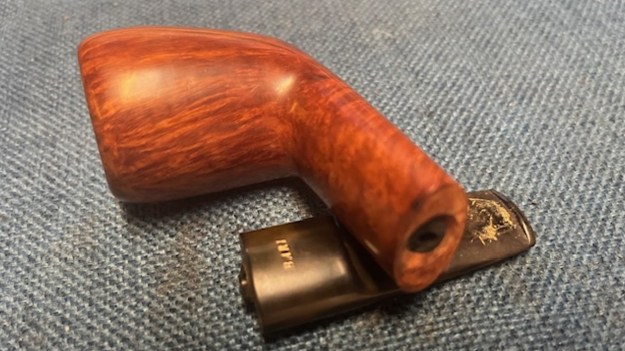
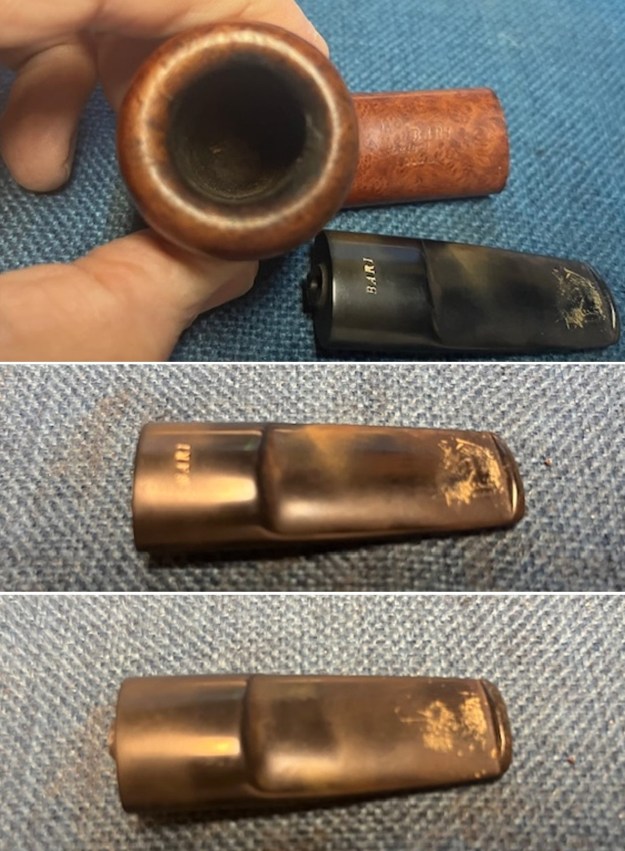
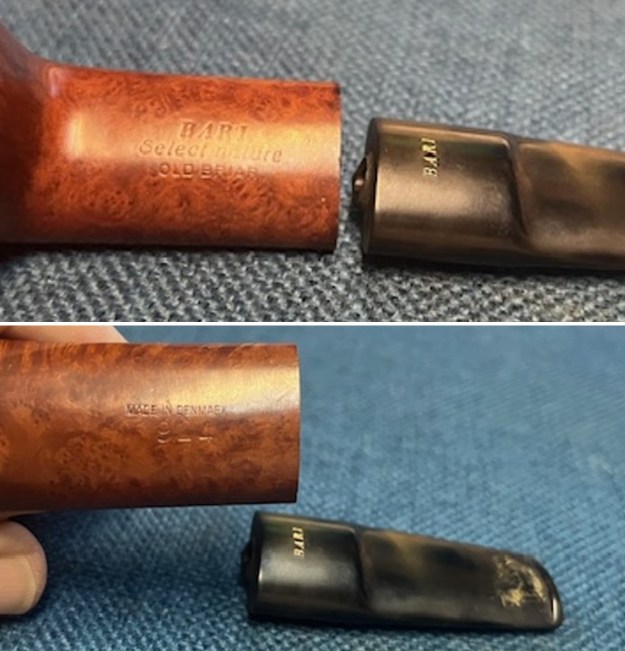
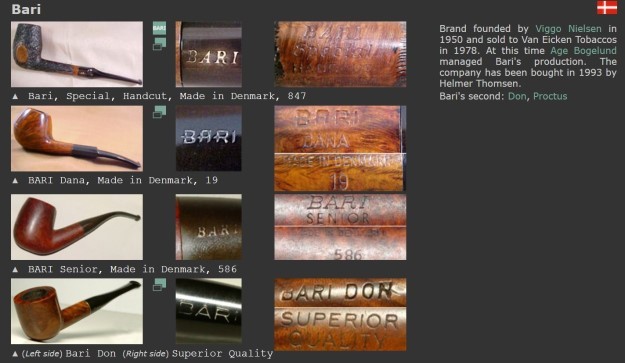
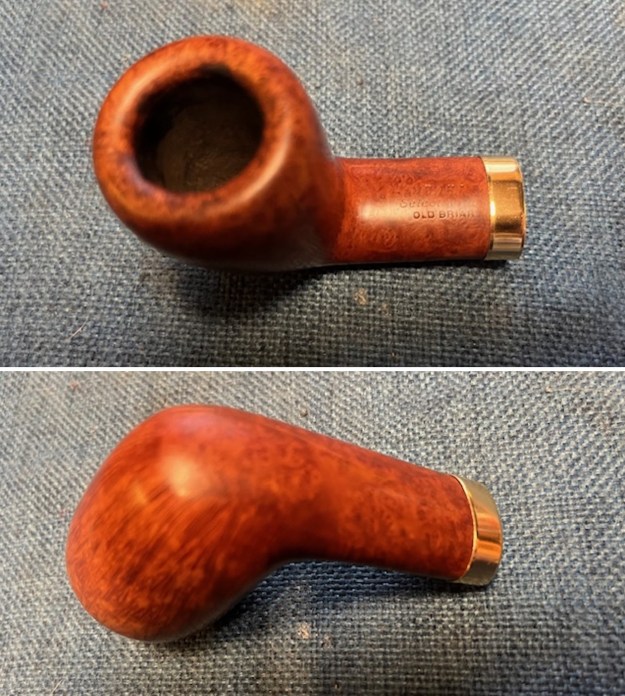
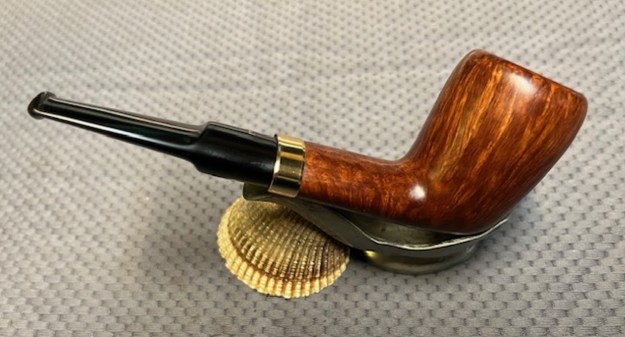
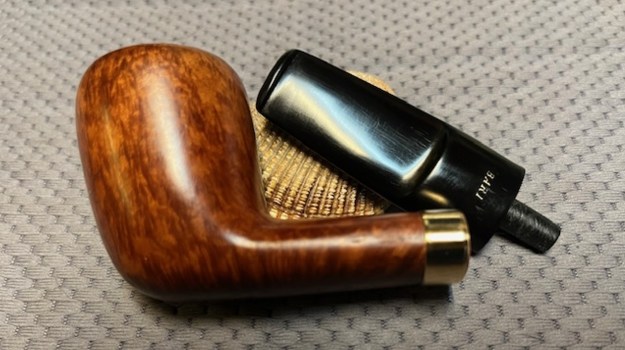
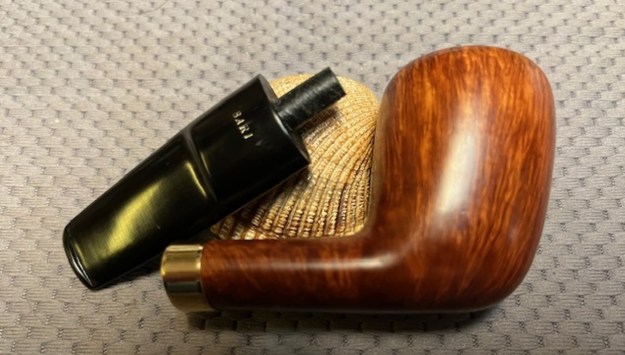
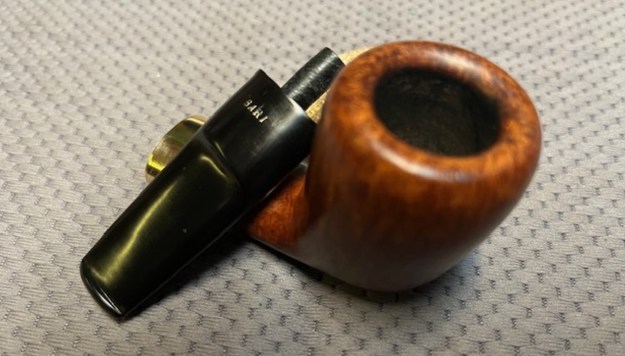
The next pipe on the work table is a beautifully grained Bari Oval Shank Acorn. It is stamped on the topside it reads Bari [over] Select Nature [over] Old Briar. On the underside it reads Made in Denmark [over] the shape number 924. It came from a box of pipes with broken tenons that I set aside to work on someday. Today is that day I guess! It is very nicely shaped Danish style acorn shaped bowl with a vulcanite saddle stem. I have worked on the shape previously and really like the look of it. The bowl has a thin cake and some lava overflow on the back of the crowned rim top and bevelled inner edge. It appeared to be in excellent condition under the grime. Only cleaning would make that very clear. The vulcanite saddle stem had a Bari logo stamp on the topside of the saddle. It is dirty, oxidized, calcified and has tooth chatter and tooth marks on both sides ahead of the button. The tenon had snapped off cleanly in the shank. I took photos of the pipe before I started working on it. I took a photo of the shank end to show the snapped off tenon in the shank. The break is quite clean so it should clean up very well.I took photos of the bowl and rim top to show the cake in the bowl and the condition of both. It was clean bowl that had been reamed. There was a spot of lava overflow on the back inner edge and rim top. The inner and outer edges otherwise look very good. I took photos of the top and underside of the stem showing the calcification, oxidation and tooth marks on the stem surface and button.I took photos to capture the stamping on the sides of the shank. It is clear and readable as noted above. I also took a photo of the Bari stamp on the topside of the stem.I turned to Pipephil’s site (http://www.pipephil.eu/logos/en/logo-b1.html) to see if I could find a listing for the Bari Select Nature Old Briar with this three digit number. There was nothing specifically listed for this line of Bari pipes. There was also good info on the brand as a whole and that it was founded by Viggo Nielsen in 1950 and he ran it until 1978 when Age Bogelund managed the production for them. In 1993 it was sold to Helmer Thomsen. I have included a screen capture of the section below.Pipedia gives a great history of the brand (https://pipedia.org/wiki/Bari) that is well worth reading. There were also photos of the Bari stamping on the Select Nature Old Briar line of pipes.

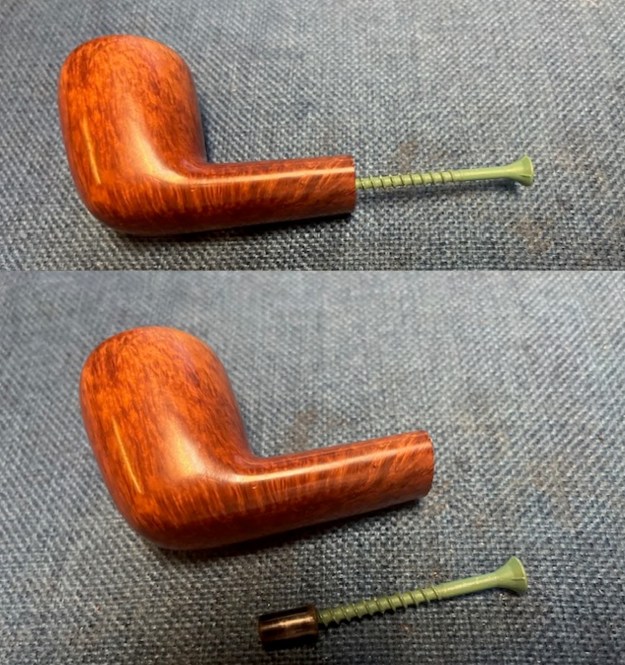
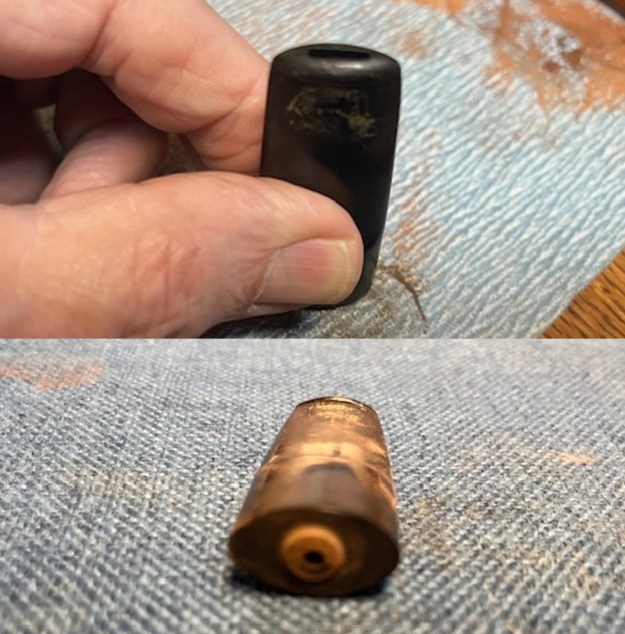
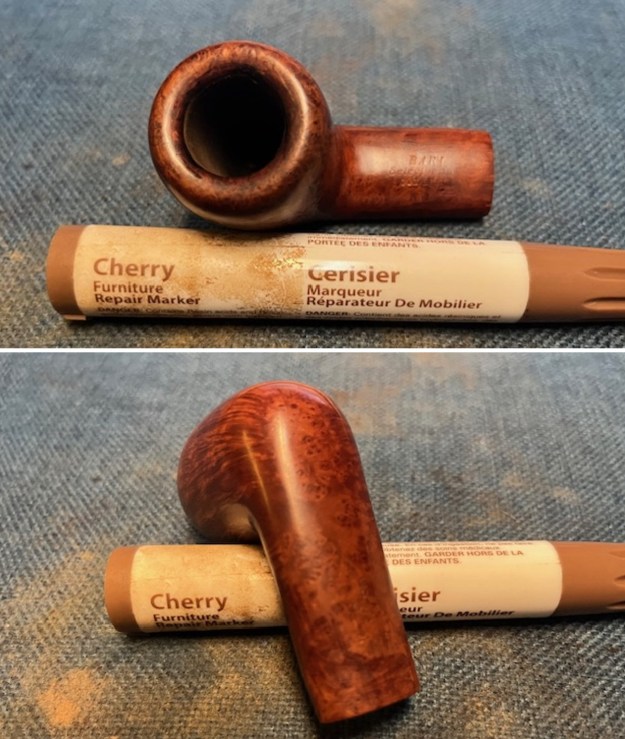
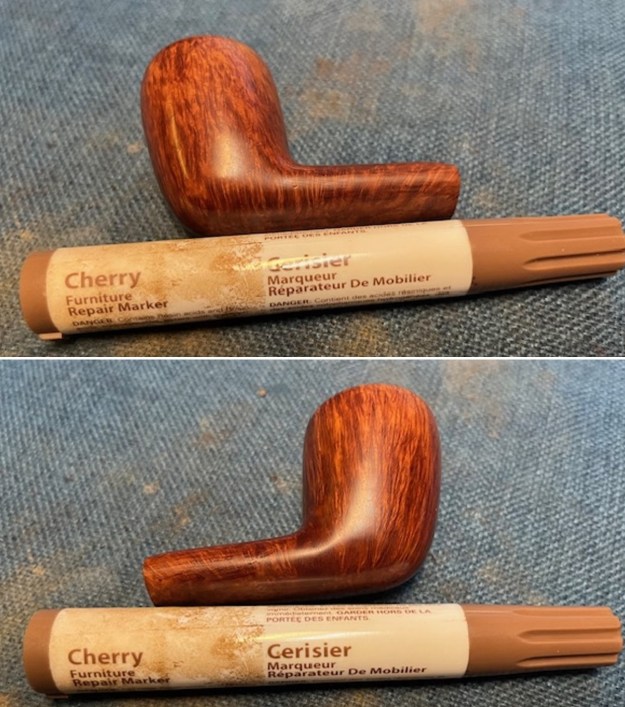
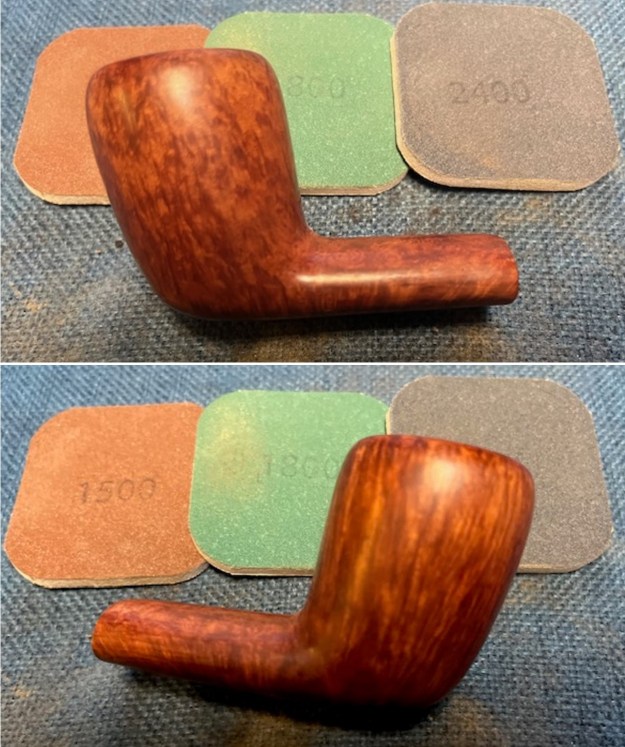
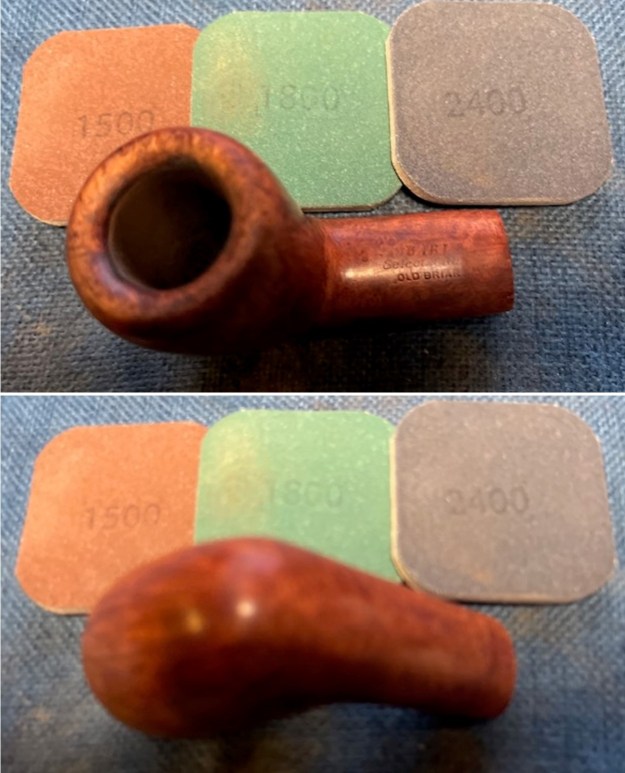
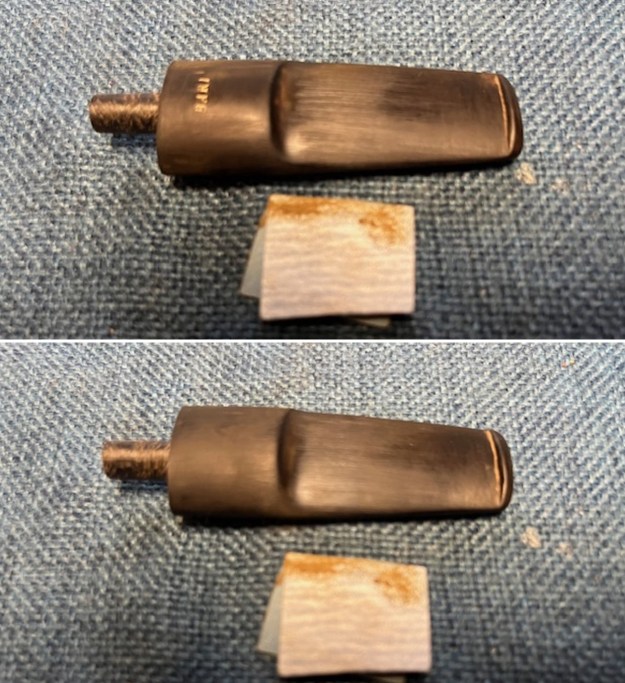
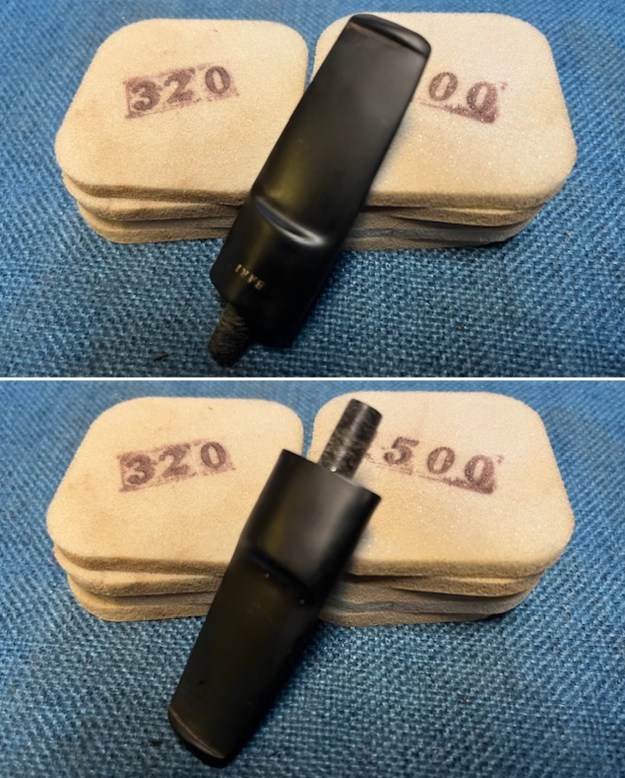
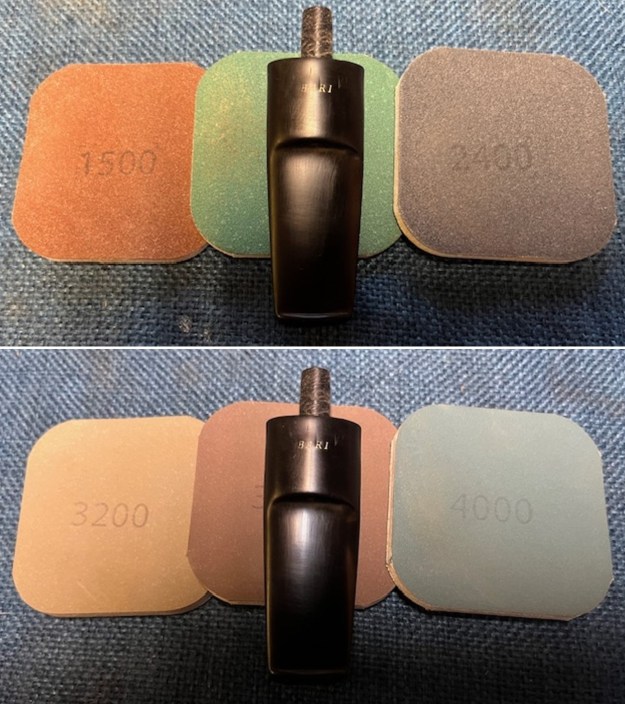
Given the information and background on the pipe I started my work on the pipe. I decided to start by pulling the broken tenon and beginning the process of the replacement. I used a drywall screw to pull the tenon. I screwed it into the airway and wiggled the broken piece out of the shank. The second photo of the bowl below shows the pulled tenon.In preparation for fitting a new tenon I flattened out the broken edges on the snapped tenon using a topping board and 220 grit sandpaper.I drilled the airway in the stem with increasingly larger drill bits until I had the bit that was the same size as the threaded portion of the new tenon.I fit the tenon in the stem to make sure the fit and alignment was correct and repeated the process in the mortise. I fit the stem on the tenon in the mortise to check the alignment. With the fit as good as it was going to get on this one I slid a pipe cleaner in the stem and tenon and painted the threads with black CA glue. I pressed it into place in the stem and set it aside to cure.I needed to adjust the fit of the stem to the shank. The alignment as slightly off on the top and the bottom of the stem and shank. I used a piece of 220 grit sandpaper to make the adjustments to the stem and the briar shank. I was careful to not damage either the stamping on the shank of the stamping on the stem. I continued smoothing out the sanded portions of the shanks and stem with 320-3500 grit sanding pads. I wiped it down with an Obsidian Oil impregnated cloth after each sanding pad. Since the bowl walls were clean or cake I did not need to ream the bowl. I sanded the bowl with 220 grit sandpaper on a piece of dowel to clean up the walls of the bowl. It had been reamed but needed to be sanded smooth. It was in great condition. I sanded the bevelled inner edge of the rim with a folded piece of 220 grit sandpaper.I stained the sanded areas on the shank and on the rim top with a Cherry stain pen. It blended in very well with the rest of the briar. It is a beauty. I polished the briar with micromesh sanding pads – dry sanding with 1500-12000 grit pads. I wiped the bowl down after each pad with a damp cloth to remove the sanding dust. I worked some Before & After Restoration Balm into the finish of the bowl, rim top and shank with my fingertips to clean, enliven and protect it. I find that the balm really makes the briar come alive again. The contrasts in the layers of stain really made the grain stand out. I let the balm sit for 15 minutes and then buffed with a cotton cloth to raise the shine. The bowl really looks good at this point. I had a gold band that was the perfect size for the shank. I had a hunch that it might give the shank a bit of bling that would look good. I pressed it in place on the shank. To get a sense of the new look. I really liked the way it looked so I set it in place. I set aside the bowl and turned my attention to the stem. I sanded the stem surface with 220 sandpaper to remove the scratching and reshaping marks on the stem. It was looking much better at this point but still had a long way to go.I sanded the stem with 320-3500 grit sanding pads and wiped the stem down after each pad with an Obsidian Oil saturated cloth to remove the grime and protect the stem.The BARI stamping on the stem had some scoring marks between some of the letters that I could not polish out without damaging the stamping so I left them. I polished the stem with micromesh sanding pads – wet sanding it with 1500-12000 grit pads. I polished it further with Before & After Pipe Stem Polish – both fine and extra fine. Once again, I am the part of the restoration that I always look forward to – the moment when all the pieces are put back together. I put the pipe back together and buffed the bowl and the stem with Blue Diamond on the buffing wheel. I gave the bowl and the stem multiple coats of carnauba wax. I buffed the pipe with a clean buffing pad to raise the shine. I hand buffed it with a microfiber cloth to deepen the shine. It is fun to see what the polished bowl looks like with the smooth finish and the black vulcanite stem. This richly stained Bari Select Nature Old Briar 924 Acorn is light weight and ready for you to load up a tobacco of preference and enjoy breaking it in. Have a look at it in the photos below. The dimensions are Length: 5 inches, Height: 2 inches, Outside diameter of the bowl: 1 ¼ inches, Chamber diameter: ¾ of an inch. The weight of the pipe is 44 grams/1.52 ounces. This is one that will go on the Danish Pipemakers Section of the rebornpipes online store shortly. Let me know if you are interested in adding it to your rack. Thanks to each of you who are reading this blog. Remember we are not pipe owners; we are pipemen and women who hold our pipes in trust until they pass on into the trust of the next generation.
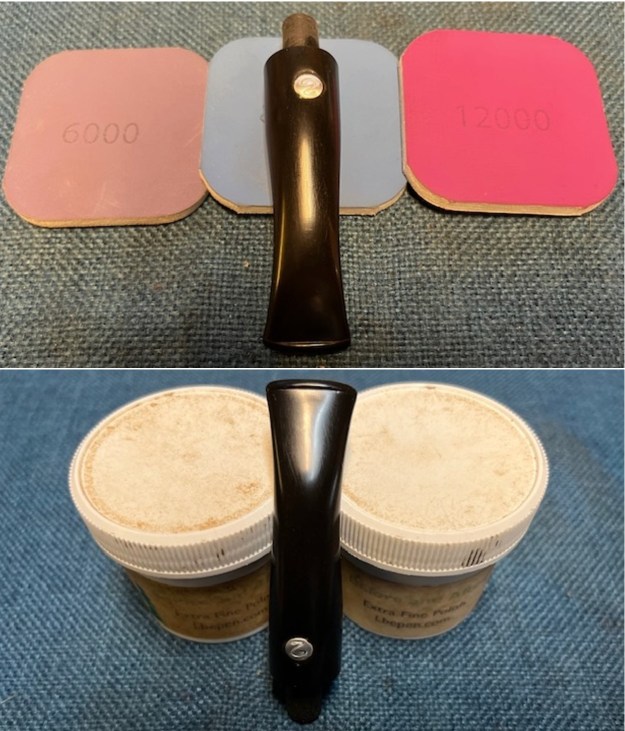
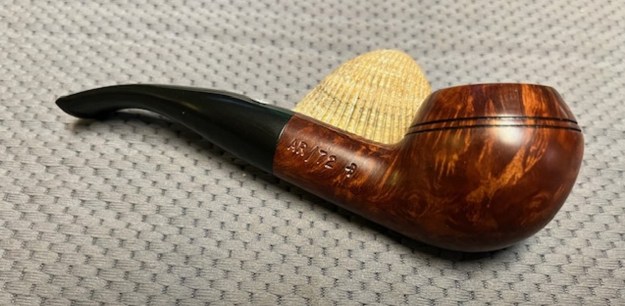
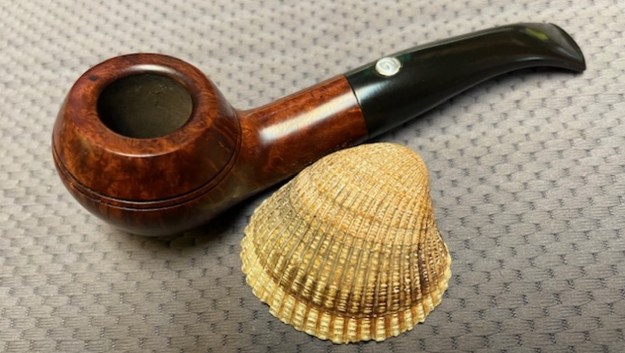
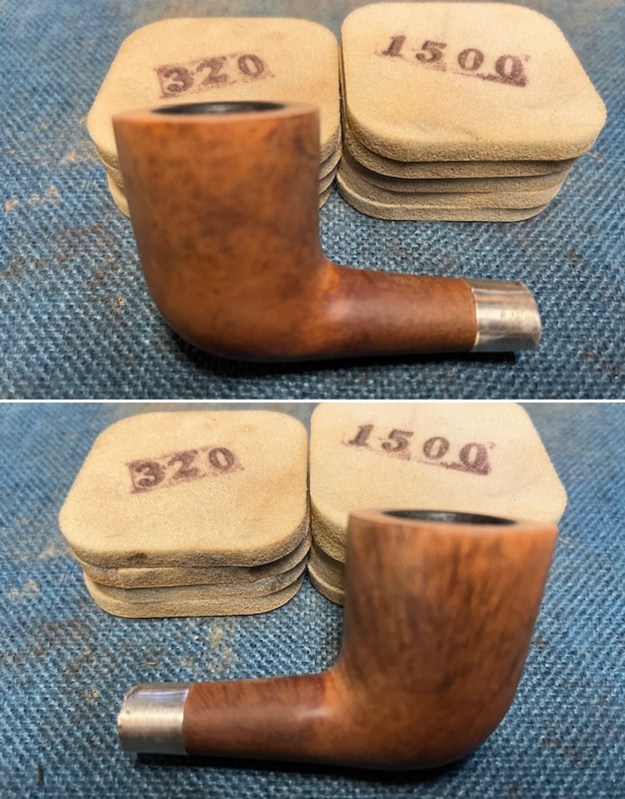
Replacing a broken tenon on a shank extension on a Meerschaum Figural


Blog by Steve Laug

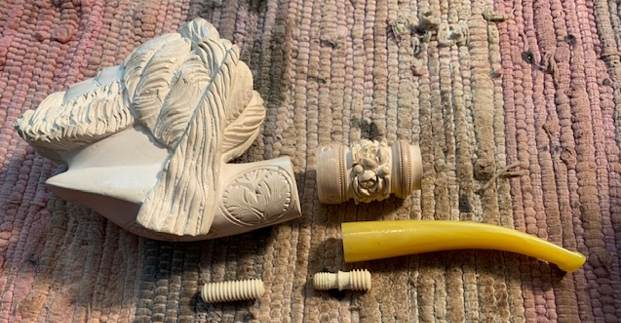
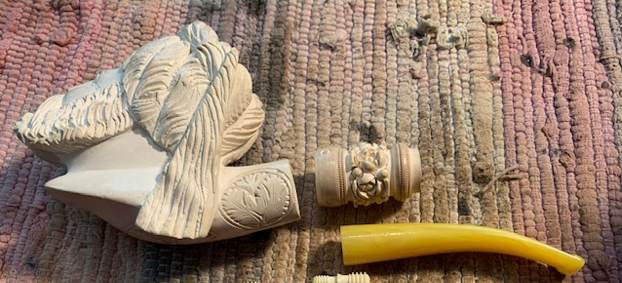
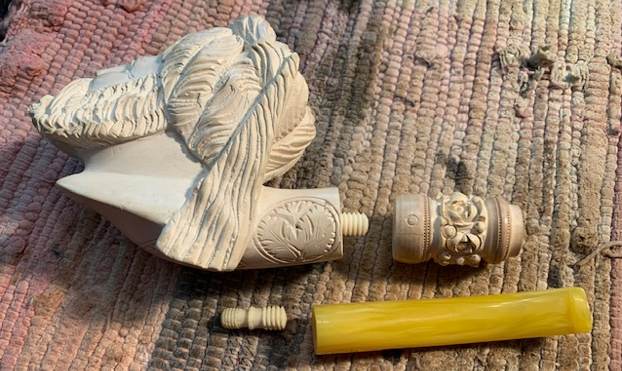
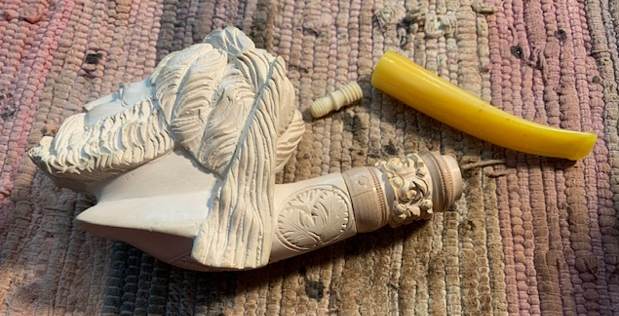
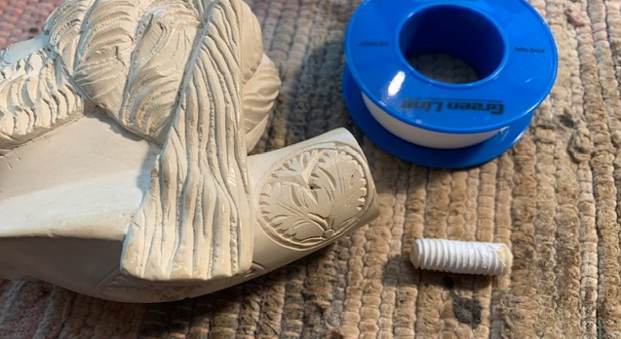
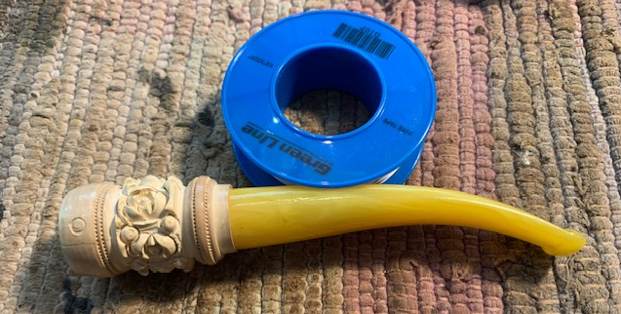
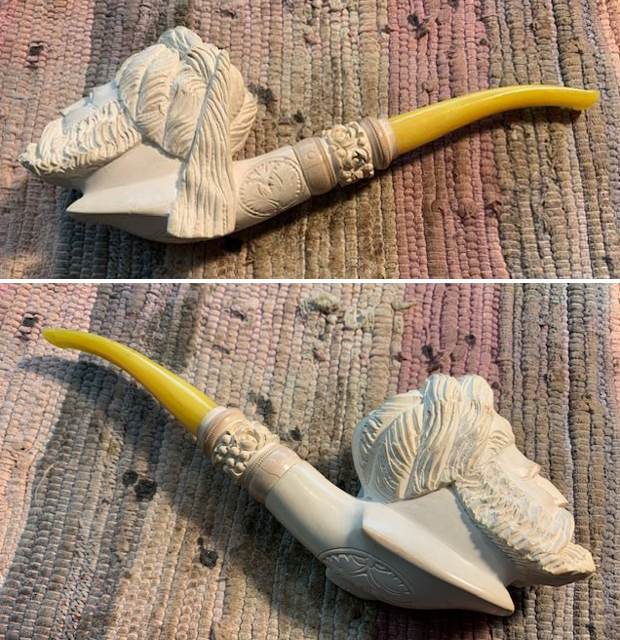
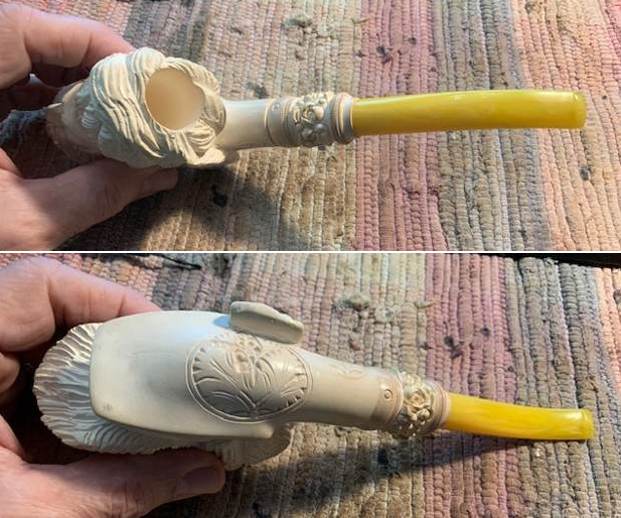
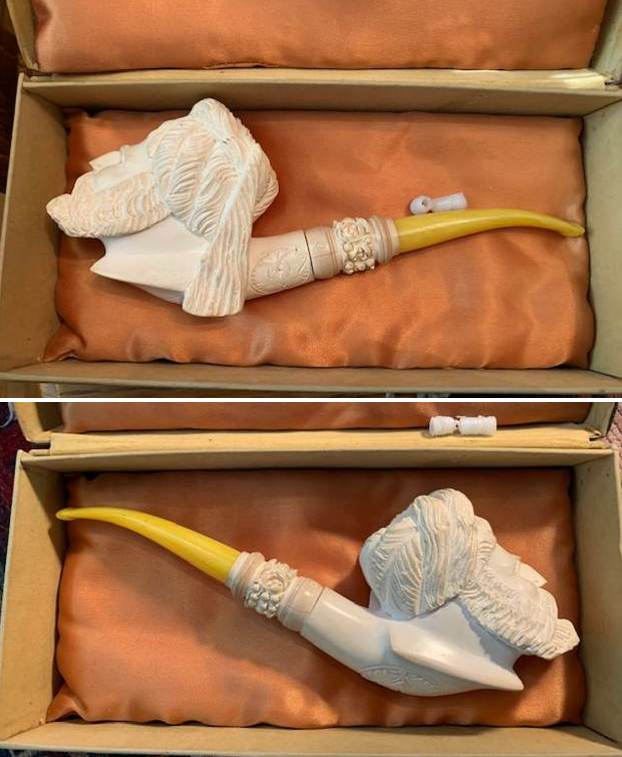
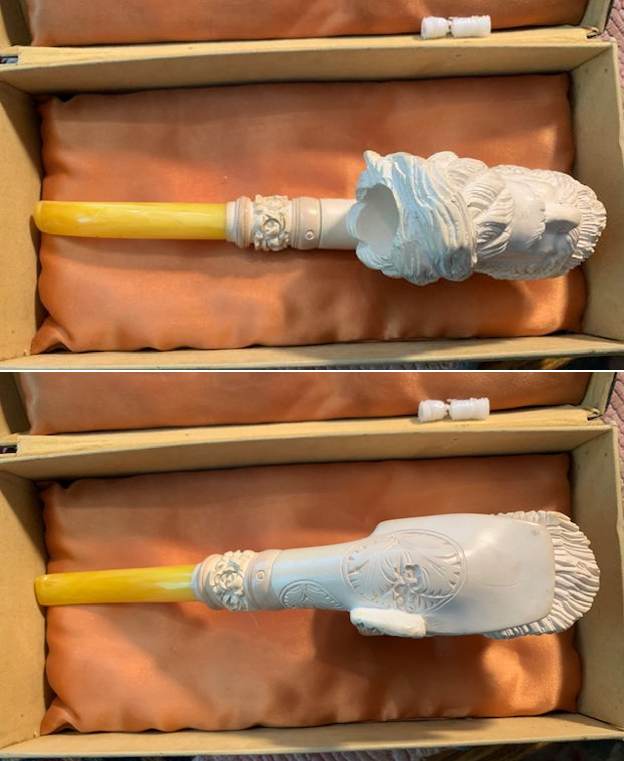
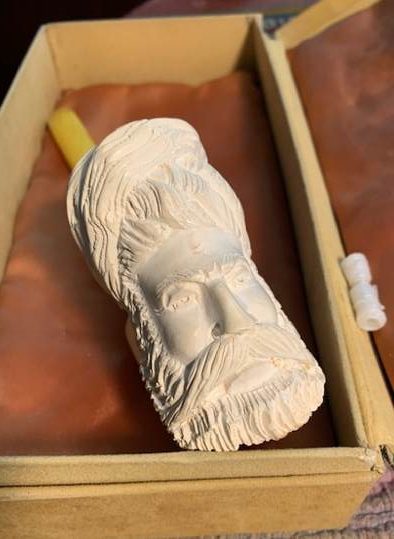
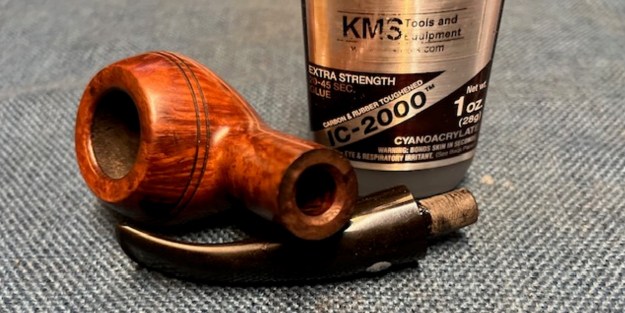
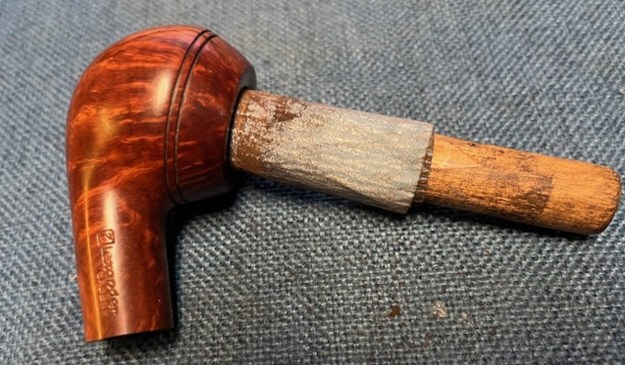
A local friend named Trevor dropped by my porch with a pipe that his boss had given him for his hard work through the years. The pipe had belonged to his boss’s father and he was quite clean to bringing to life so that he could actually smoke it. His boss’s father had never smoke it so it remained an unsmoked Figural Meerschaum in a presentation box. The box had a satin pillow lining and small pillow that sat on top of the pipe. He opened it up and a musty smell emerged from the long unused pipe. In the box sat a carved Meerschaum bowl, a small Meerschaum shank extension and an acrylic stem. The bone tenon in the stem was intact and undamaged. That is not what I was expecting when he had called about a repair on a broken tenon. What had broken was a plastic/nylon tenon that held the shank extension on the bowl and shank of the pipe. A portion of it was stuck in the bowl/shank and a portion of it was in the extension itself. It had snapped off without leaving anything to grab onto to pull it out. The fact that it was a threaded tenon also made this a challenging pipe to work on. Unfortunately I forgot to take photos of the pipe before I started working on it but I have a picture of the parts. You can see the bowl and extension in the photo below. You can also see the bone tenon at the bottom of the photo that goes in the stem. The broken plastic one is between the shank extension and the short shank.I had run out of bone tenons so I was just going to order some when Jeff called and reminded me that I had boxes of them at his place. I asked him to put together an assortment for me to go through and find the proper one for this pipe. While I waited for them to arrive I put the pipe aside and reflected on how I would remove the broken tenon pieces from the bowl and shank extension. I wrote to Charles Lemon and asked if he had any ideas for a quick and painless removal. Unfortunately he did not. His suggestion was the same as my initial thoughts which was to drill out both portions of the tenon. The threading was problematic if I wanted to keep those parts original but it could be done. However, I was not ready to give up yet on searching for another option.
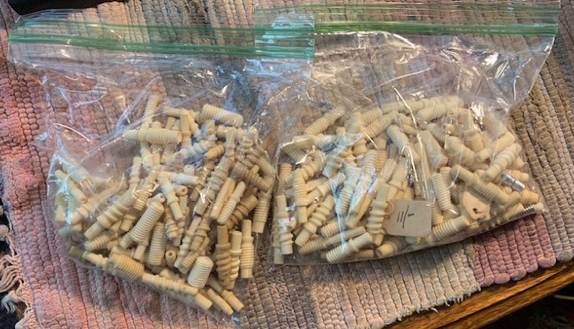
This week the box of pipes and the bone tenons arrived here in Vancouver. This what he sent me… just a few tenons to choose from. There must be one that would fit in that assortment don’t you think?Now that the replacement tenons were here I had to come to some decisions on removing the broken tenon from the two parts of the pipe. I have often heard people say that they don’t like bone tenons but I have to say this plastic/nylon was far worse than any bone tenon I have worked on in the past.
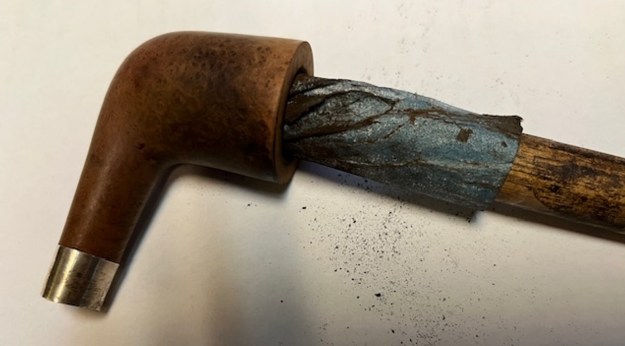
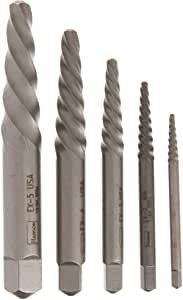
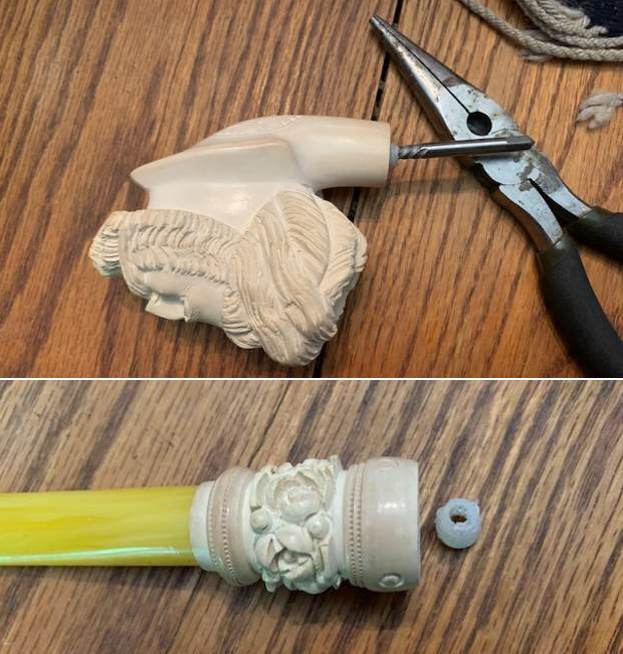
Yesterday (Friday) I came to a possible solution. I have a set of Spiral                                                 Screw Extractors like those to the right. The idea is to twist them into the head of a damaged screw and then reverse the drill and pull the screw out. I thought possibly I could turn the one that was the same size as the airway in the broken tenon until it bit. Then with a pair of pliers reverse it out. With apprehension about cracking the meerschaum I cast my worries to wind and tried it out. I turned it carefully into the broken tenon in the shank. It bit into the nylon/plastic. I used a pair of pliers and carefully turned the bit to unscrew the broken tenon. It worked very well and within a few minutes the tenon piece was out of the bowl portion of the shank.

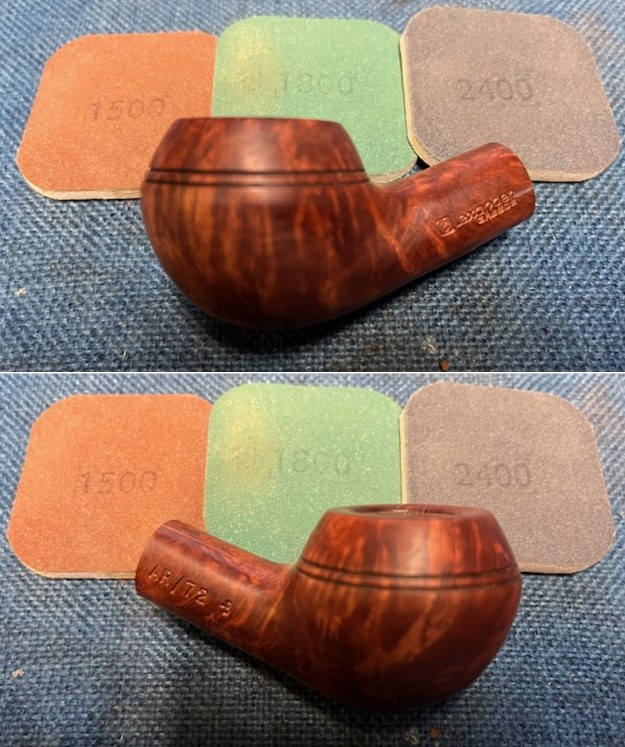
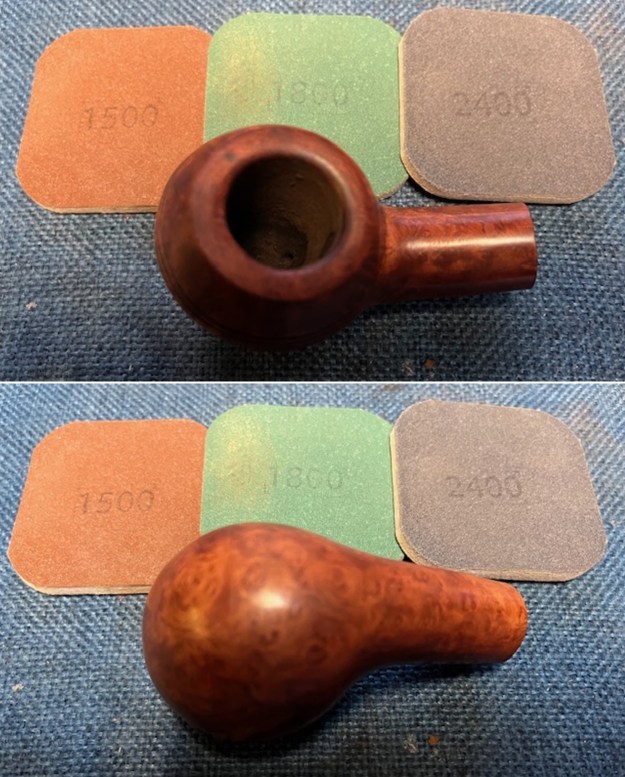
I was a little more reticent with the shank extension as it seemed more fragile and there was a small crack on each side of the meer already (at least I am pretty sure it was already there but I cannot be certain as it is certainly there now). I proceeded slowly and carefully with the same procedure and within minutes that piece of the broken tenon was also free of the shank extension. I let out a sigh of relief that it had work and not actually done more damage to the pipe. I took photos of the work and the results and have included them below.I went through the bag of tenons and found the perfect one. I took a photo of the parts of the pipe to show what I was working with. The tenon on the left is the one that joined the shank and shank extension. The one on the right is the one for the stem and shank extension. The smaller end screws into the stem itself.I turned the first tenon into the shank of the bowl to check the fit. The threads fit well but there was a little sloppiness at the shank end that I would need to deal with. You can see how it looks in the photo below.I turned the shank extension on to the tenon and took a photo. You can see the looseness at the joint. If you look closely you can also see the fine hairline crack in the middle of the extension next to the bowl. It is tiny and I repaired it with clear CA glue and clamped it together.I wrapped the bone tenon with some Teflon tape to assure that there was a snug fit in the shank and help tighten it. I taped the shank extension end with a little less of the to align things on the shank and extension and to snug the fit as well. I also wrapped the end of the tenon that fit in the stem end of the extension as well. I turned the stem onto the shank extension and lined it up. It looks good. I screwed parts together and everything lined up very well and the draught on the pipe was clear and unobstructed. I took photos of the pipe at this point in the process. It is a nice looking old pipe that is ready for its initial smoke. The pipe is ready for Trevor to pick up next time he stops by. I want to check with him about the hairline cracks in the shank extension to see if he remembers them or if perhaps it happened while it was in my care. I am hoping all is well. The cracks have sealed and do not seem to be growing at all. It is really a nice looking old pipe. Thanks for reading along as I worked on the process of this repair.
Restoring and restemming the first of two Television pipes – a Pot


Blog by Steve Laug

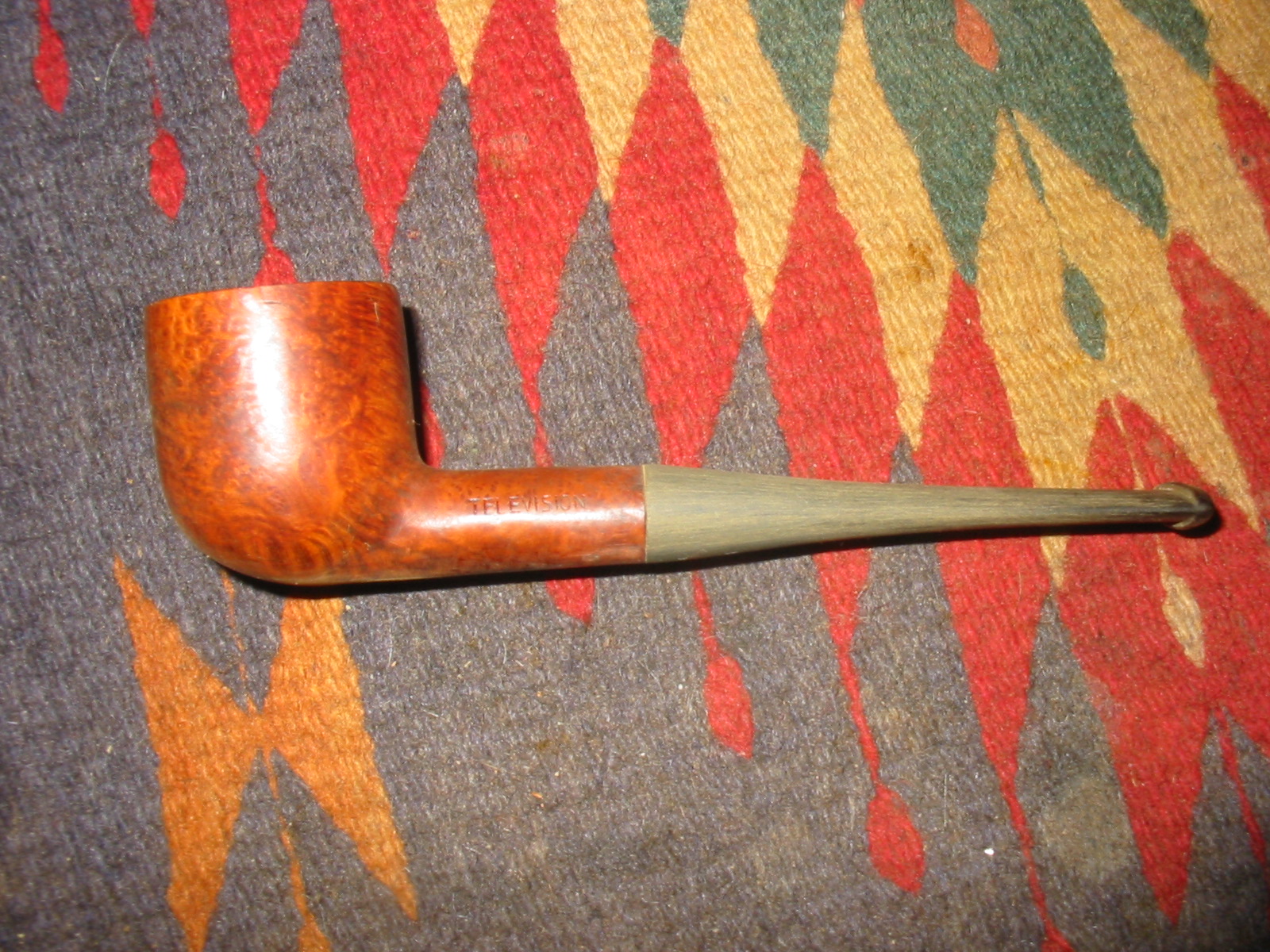
The first Television pipe of the two that came to me in a gift box of bowls needing stems was this pot shaped bowl. I had not heard of the brand before so I put a question on the online pipe forums that I frequent and got two responses with information. The first was a link to the Smoking Metal website which has become a standard place I check for metal pipes that I pick up or pipes with screw on bowls. I had not thought of looking on that site as the Television pipes that I had found were regular briar pipes. The link follows and gives a look at a unique Television pipe with a threaded bowl http://www.smokingmetal.co.uk/pipe.php?page=277. The second response came from Jose Manuel Lopes – Pipes Artisans and Trademarks. Lopes states that the brand was sold by A. Grunfield Co. and was produced by Gasparini. They were known to be an English brand with long stems.

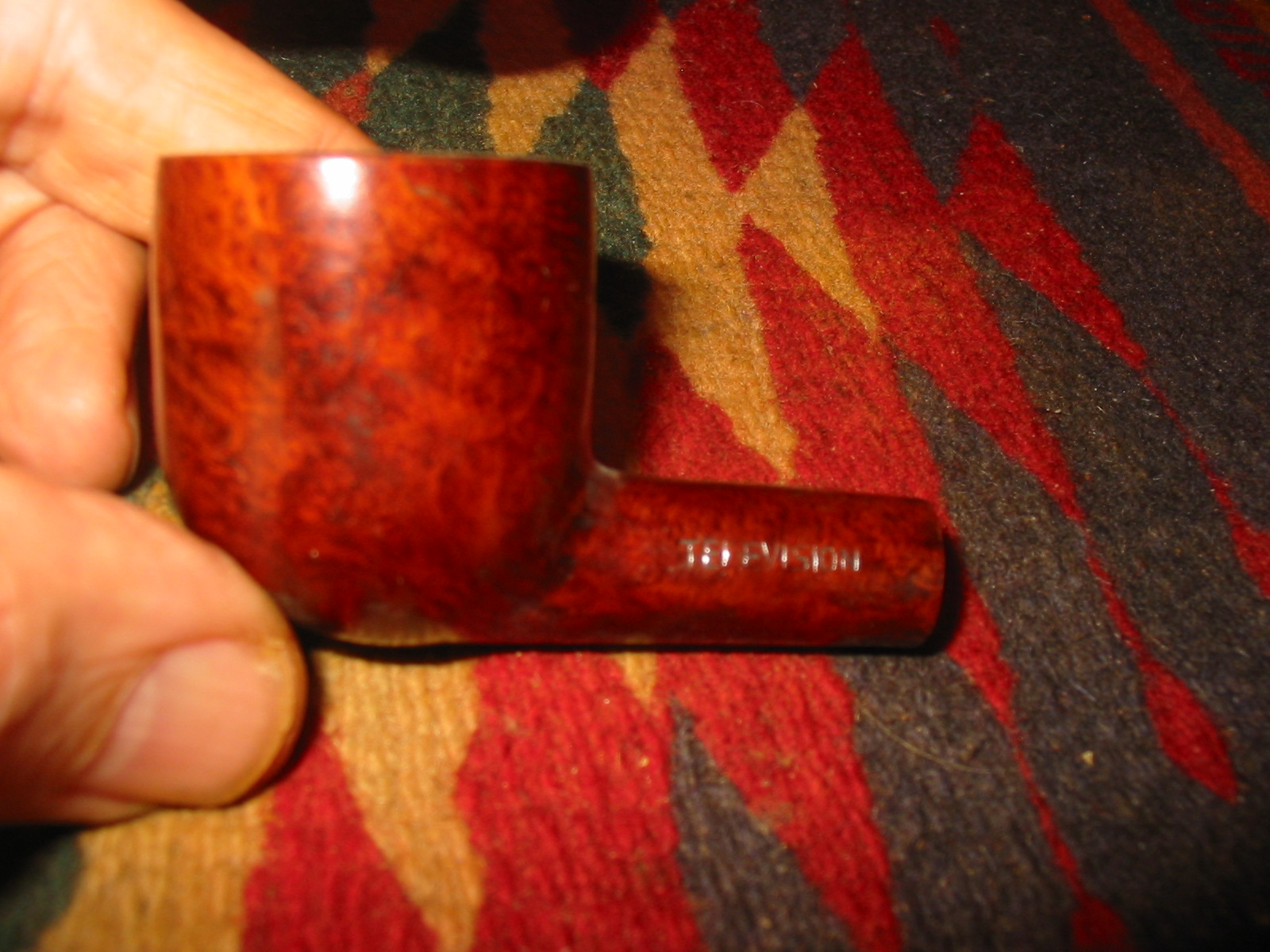
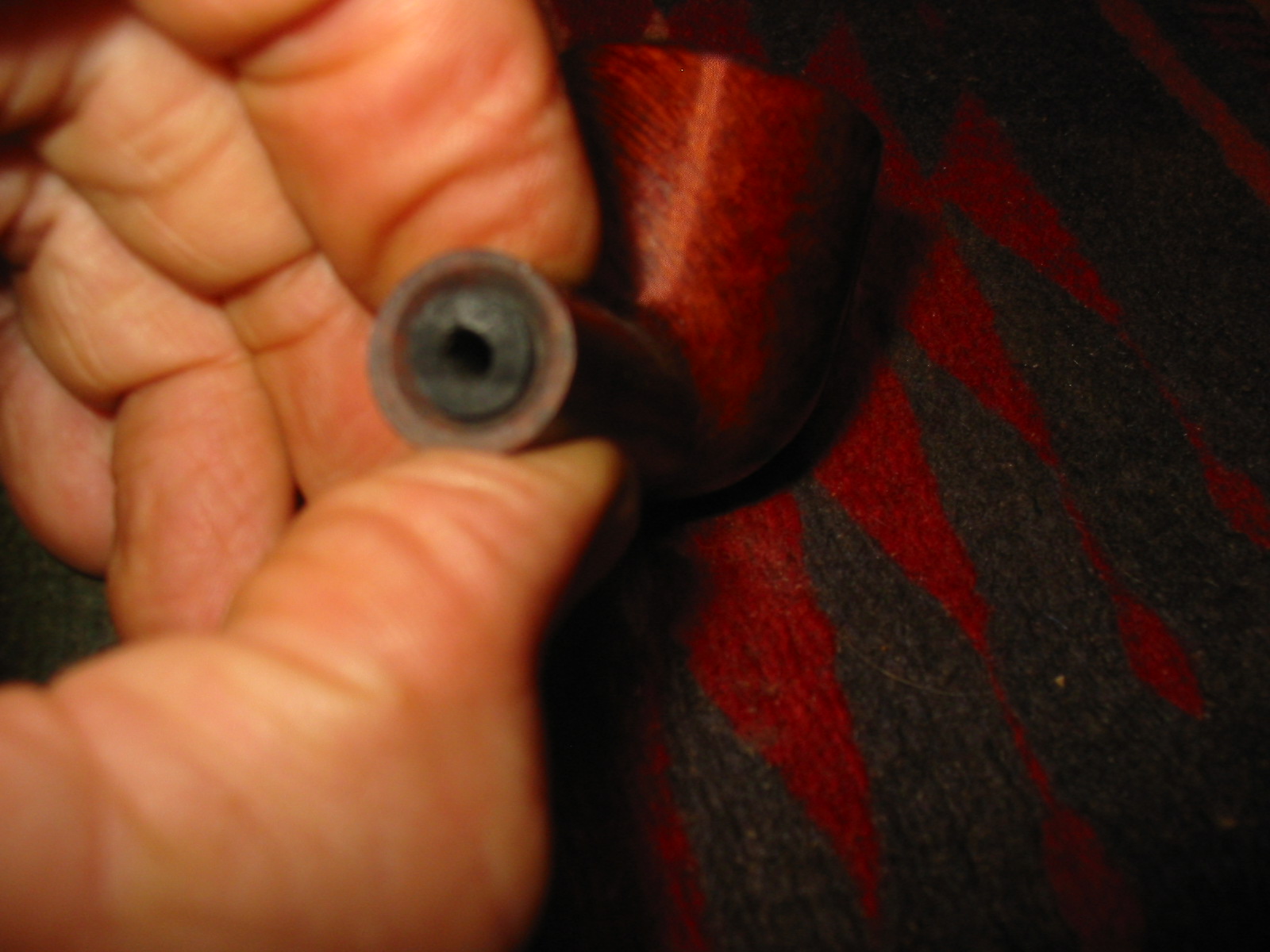
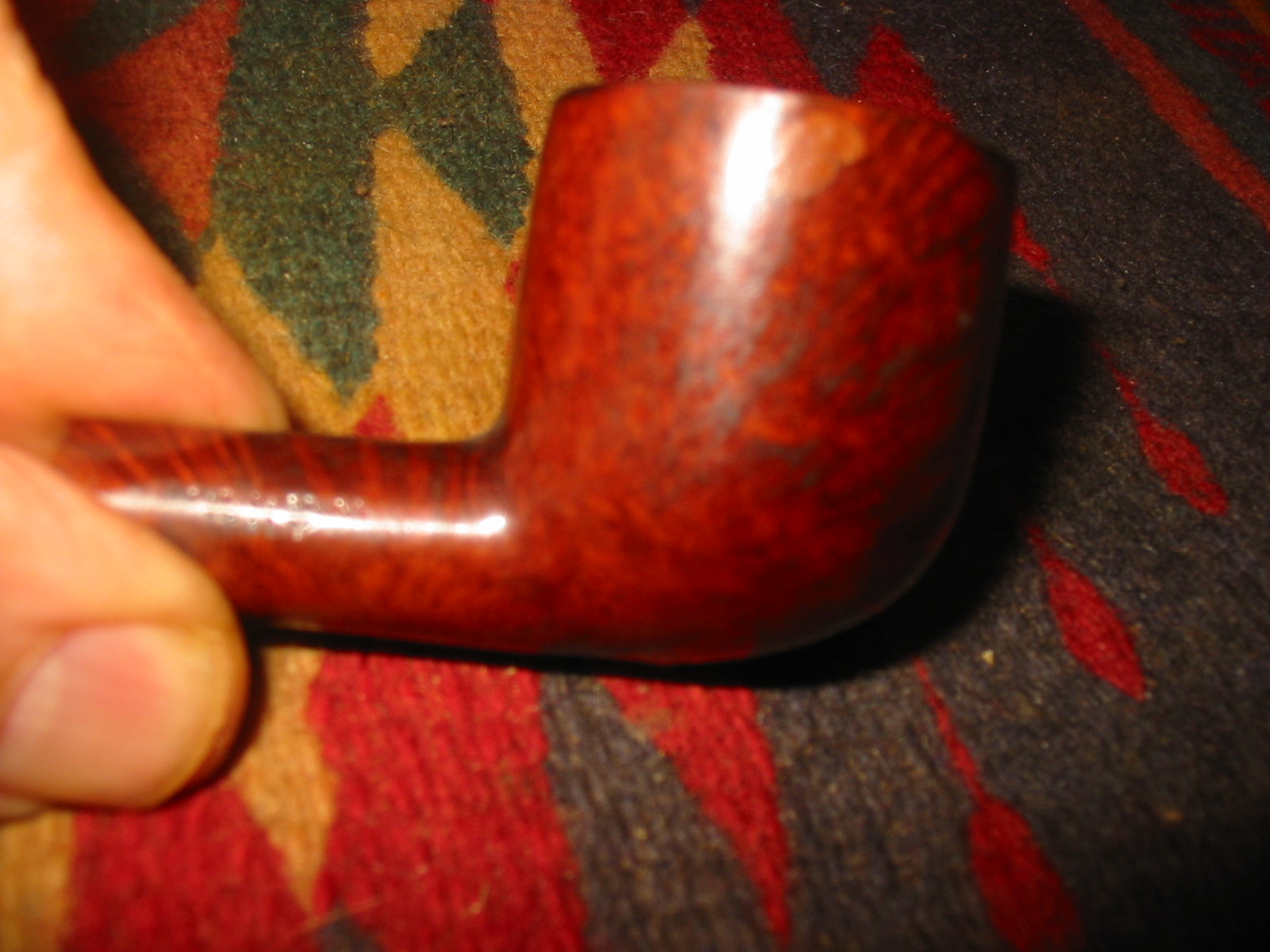
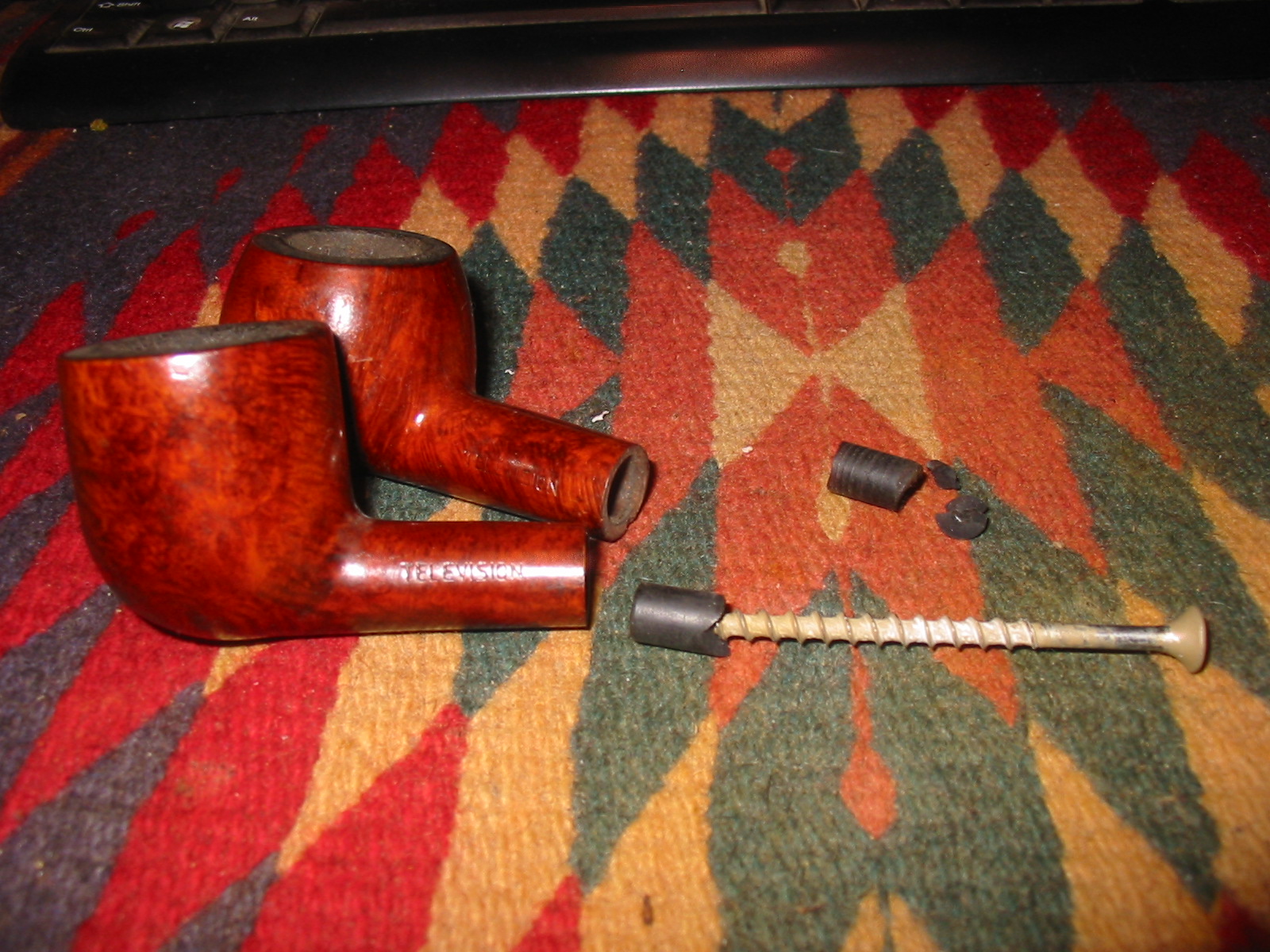
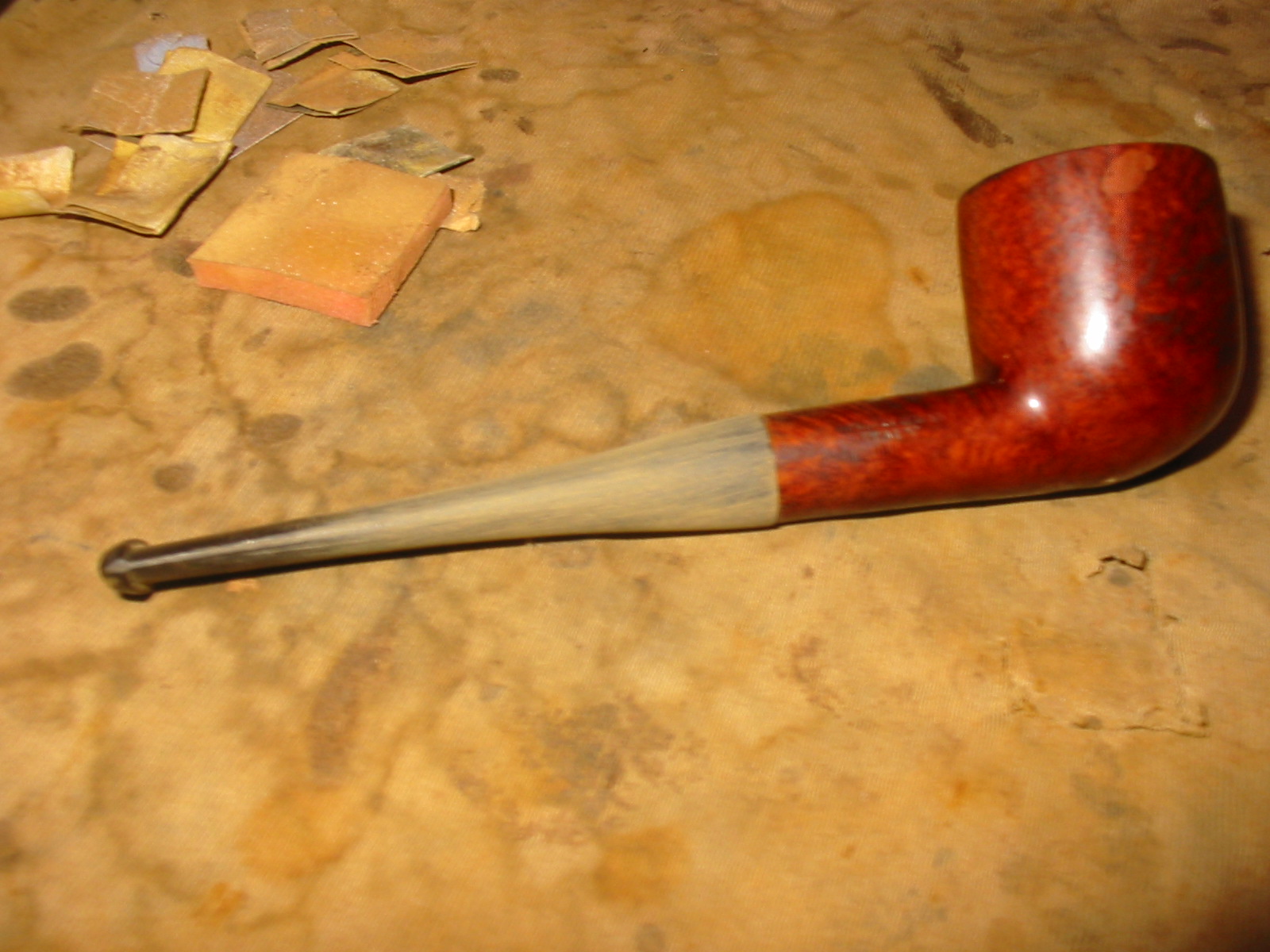
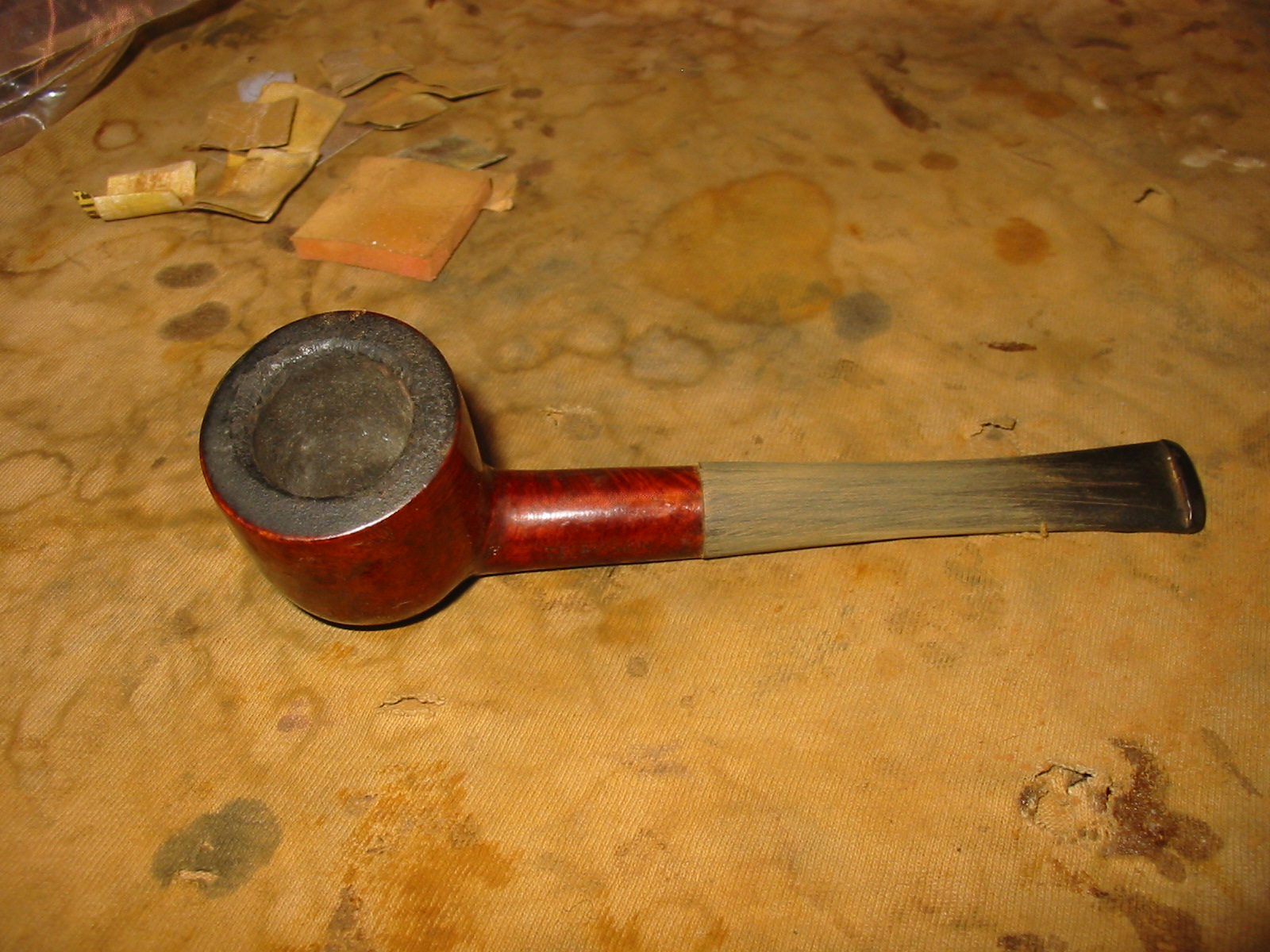
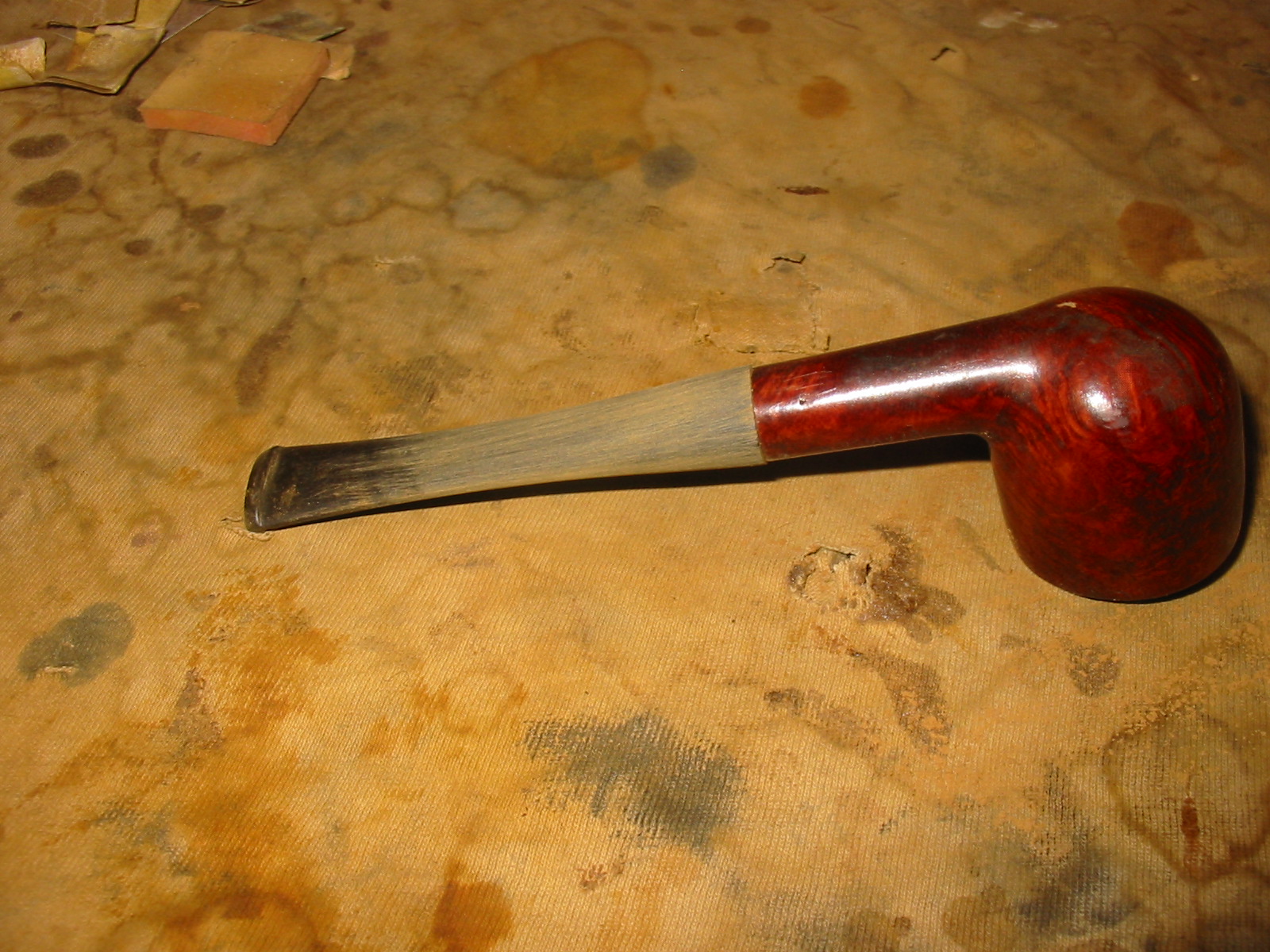
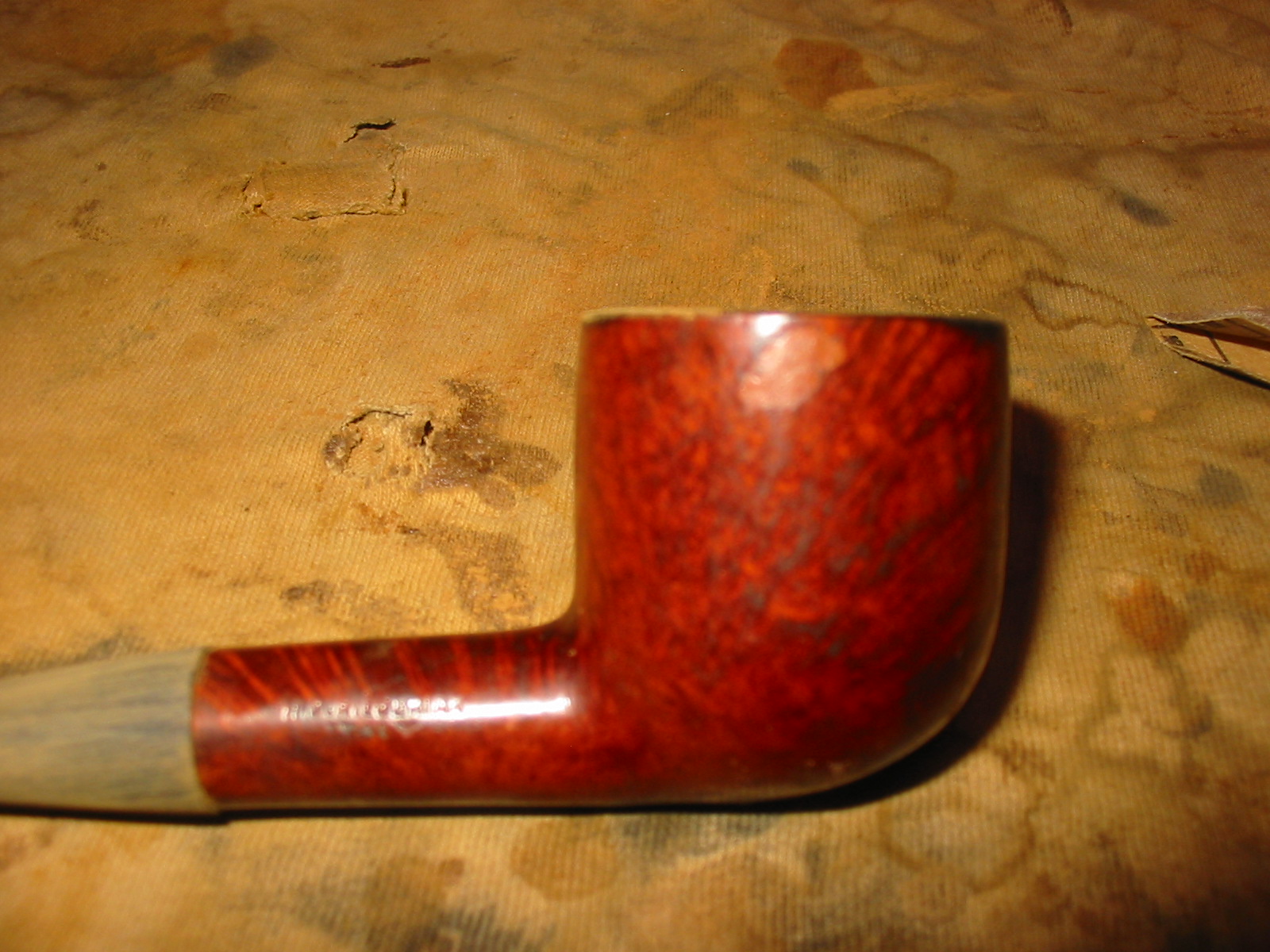
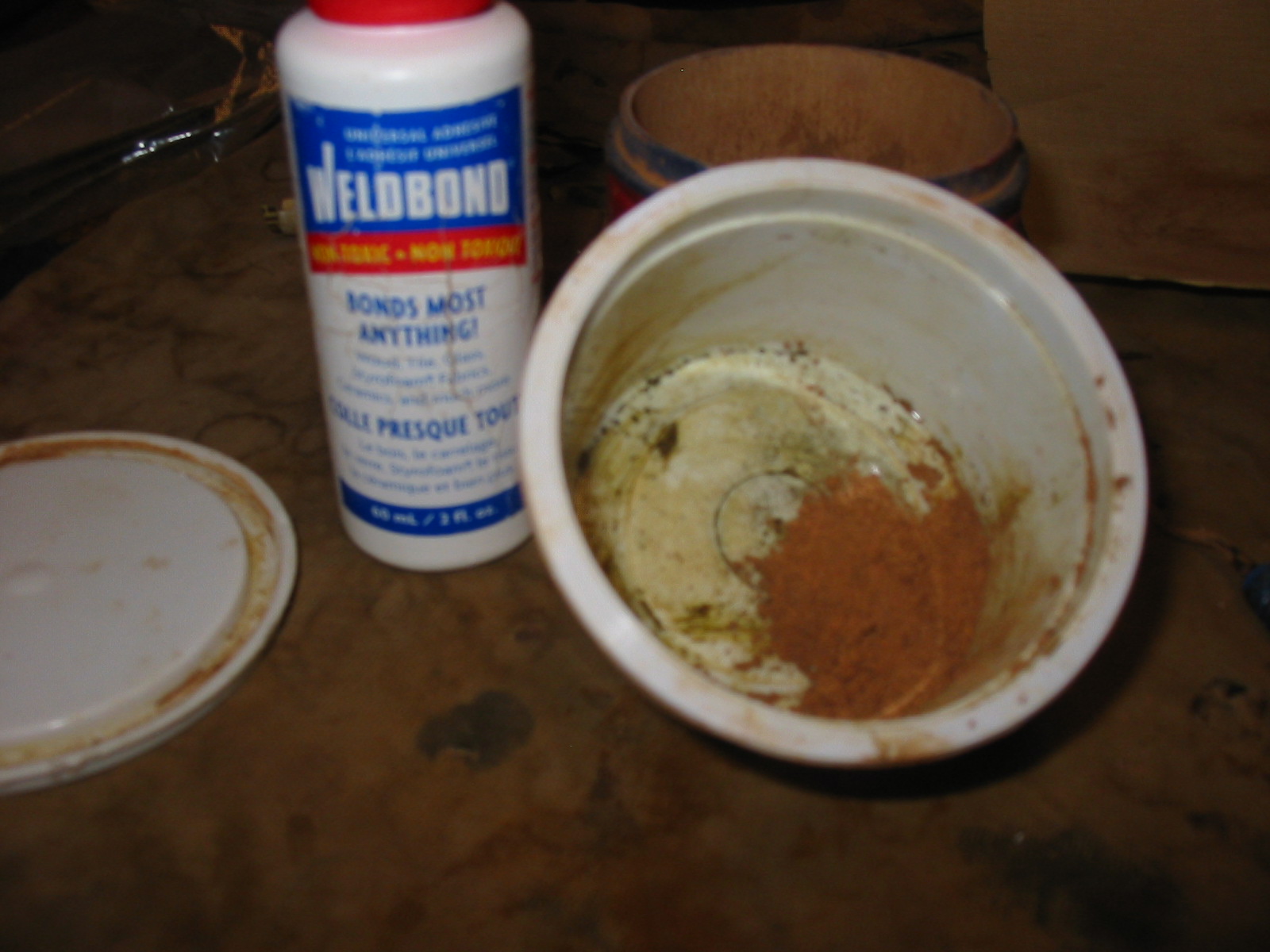
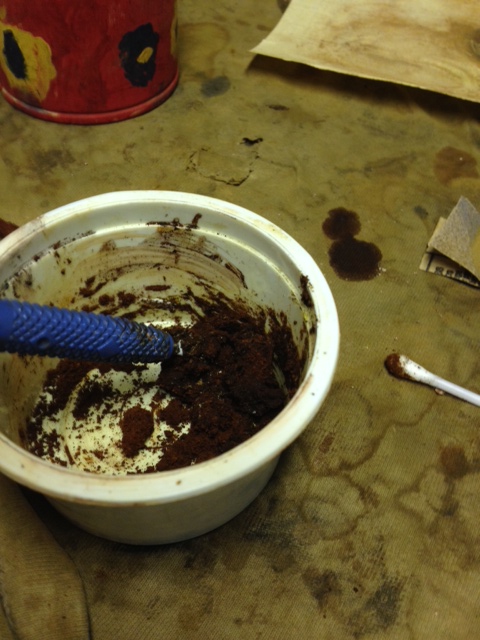
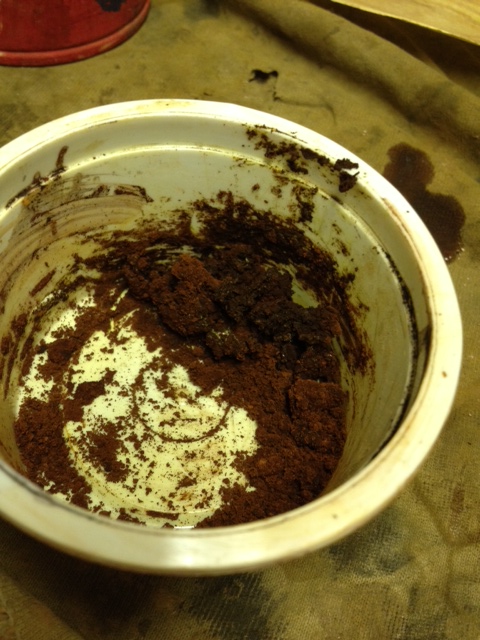
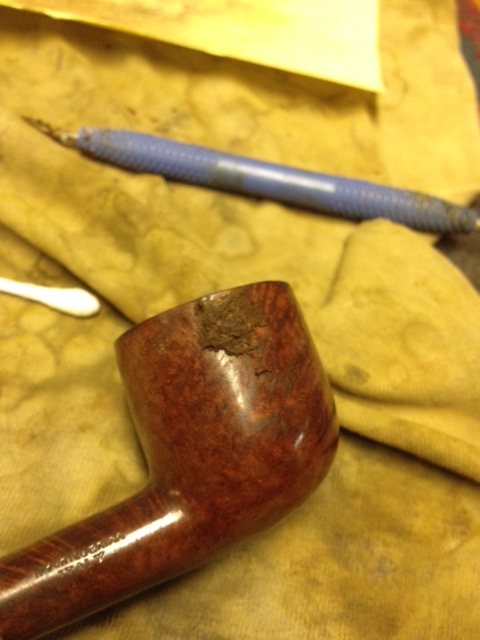
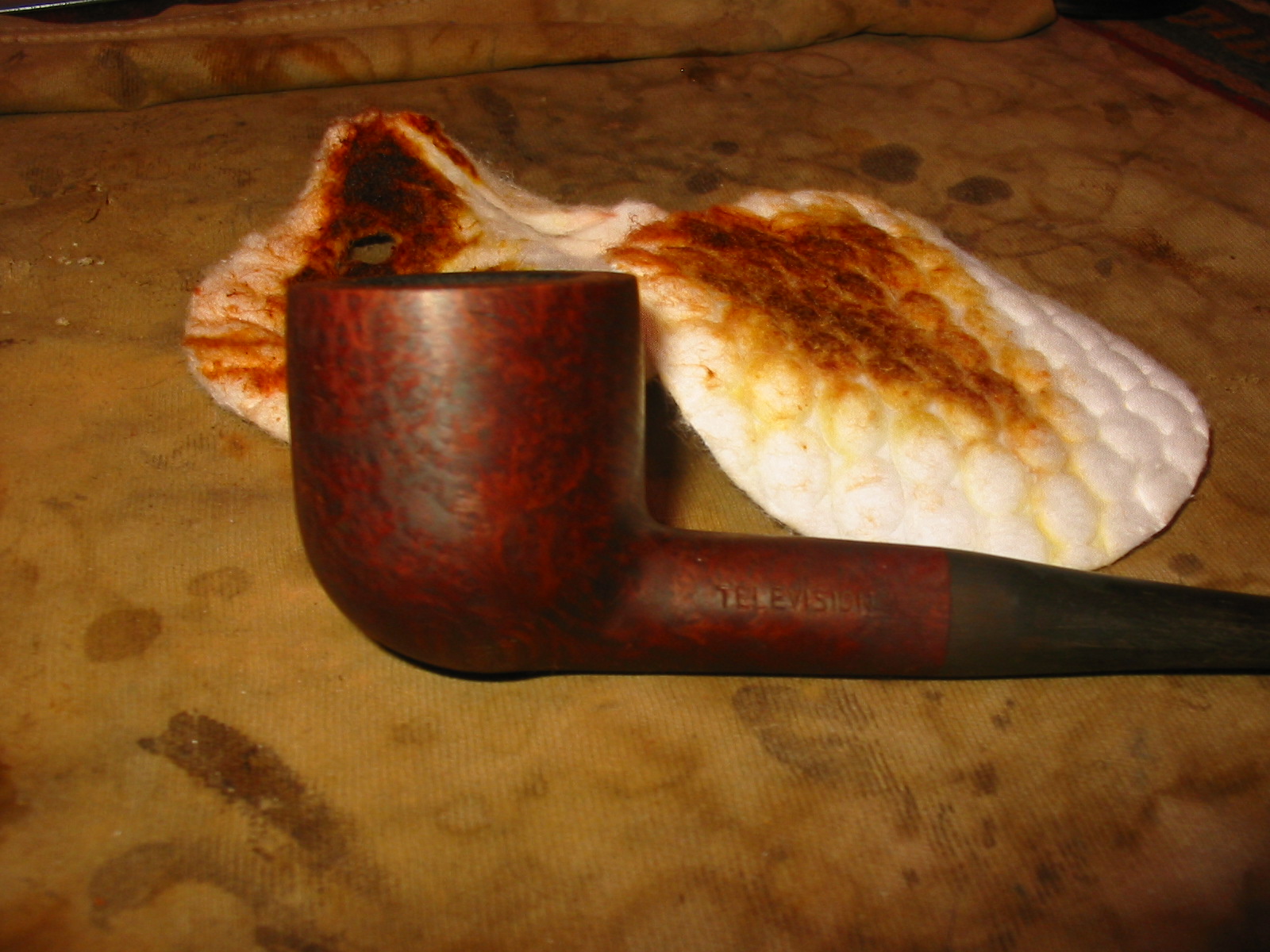
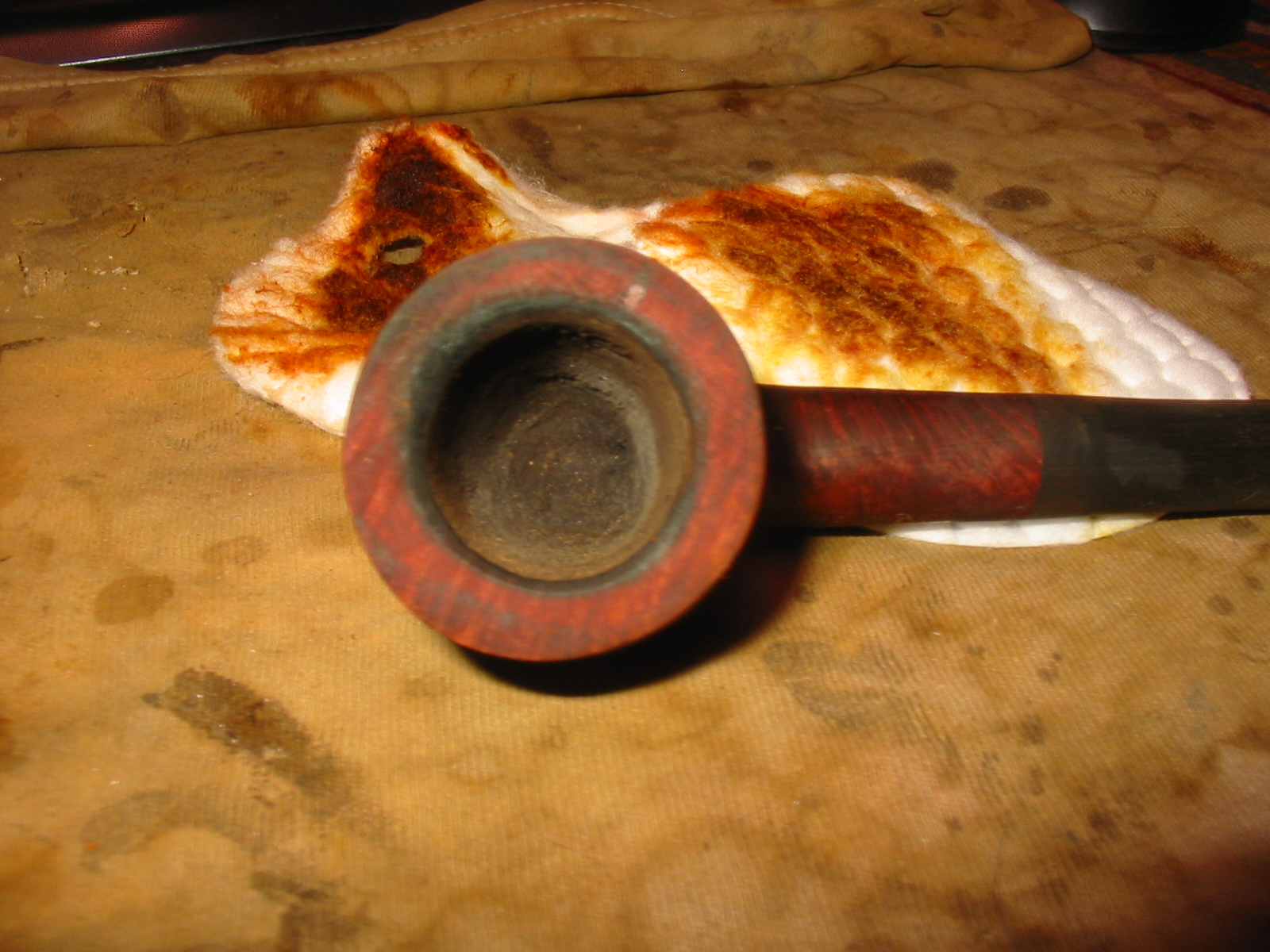
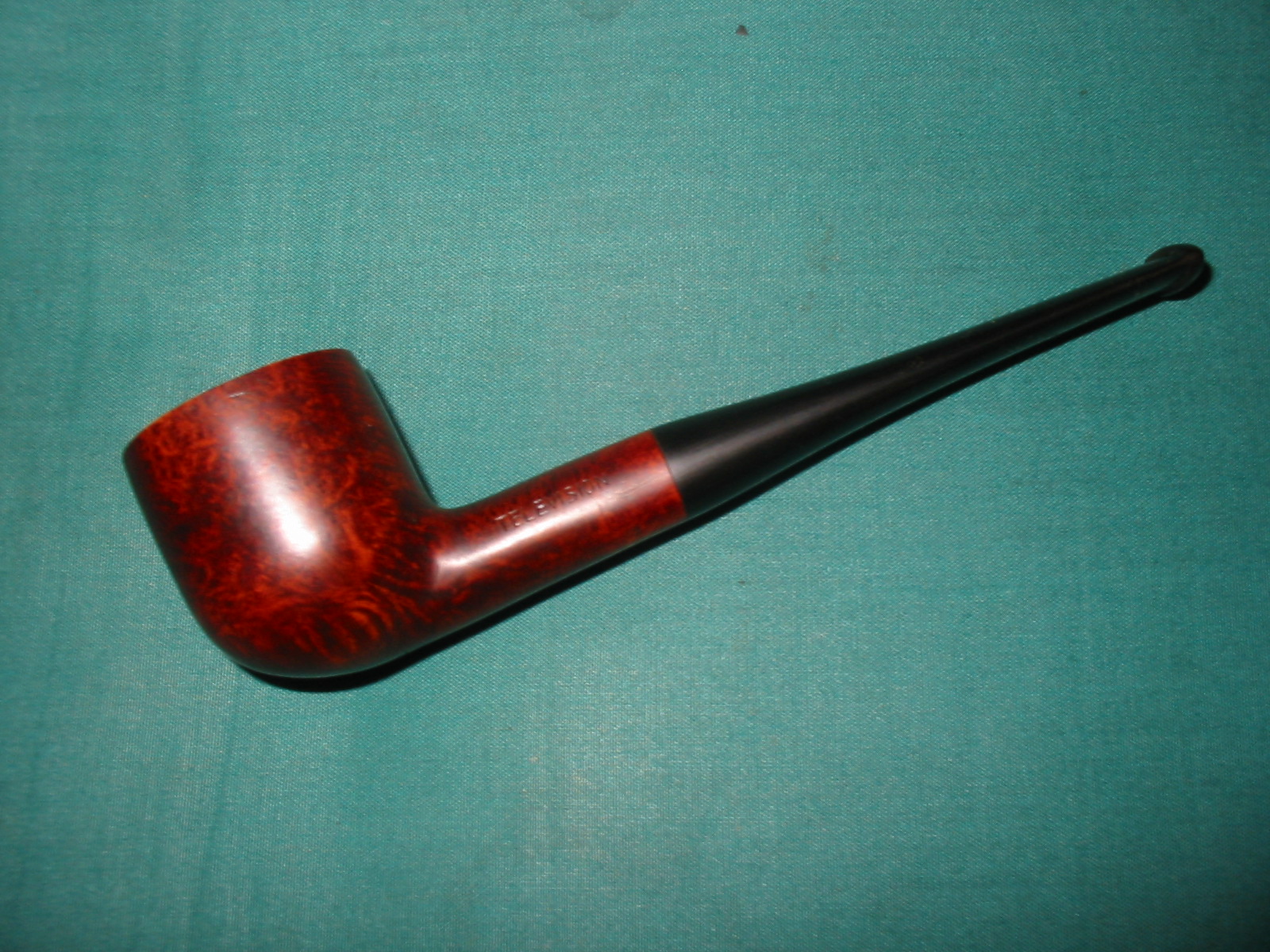
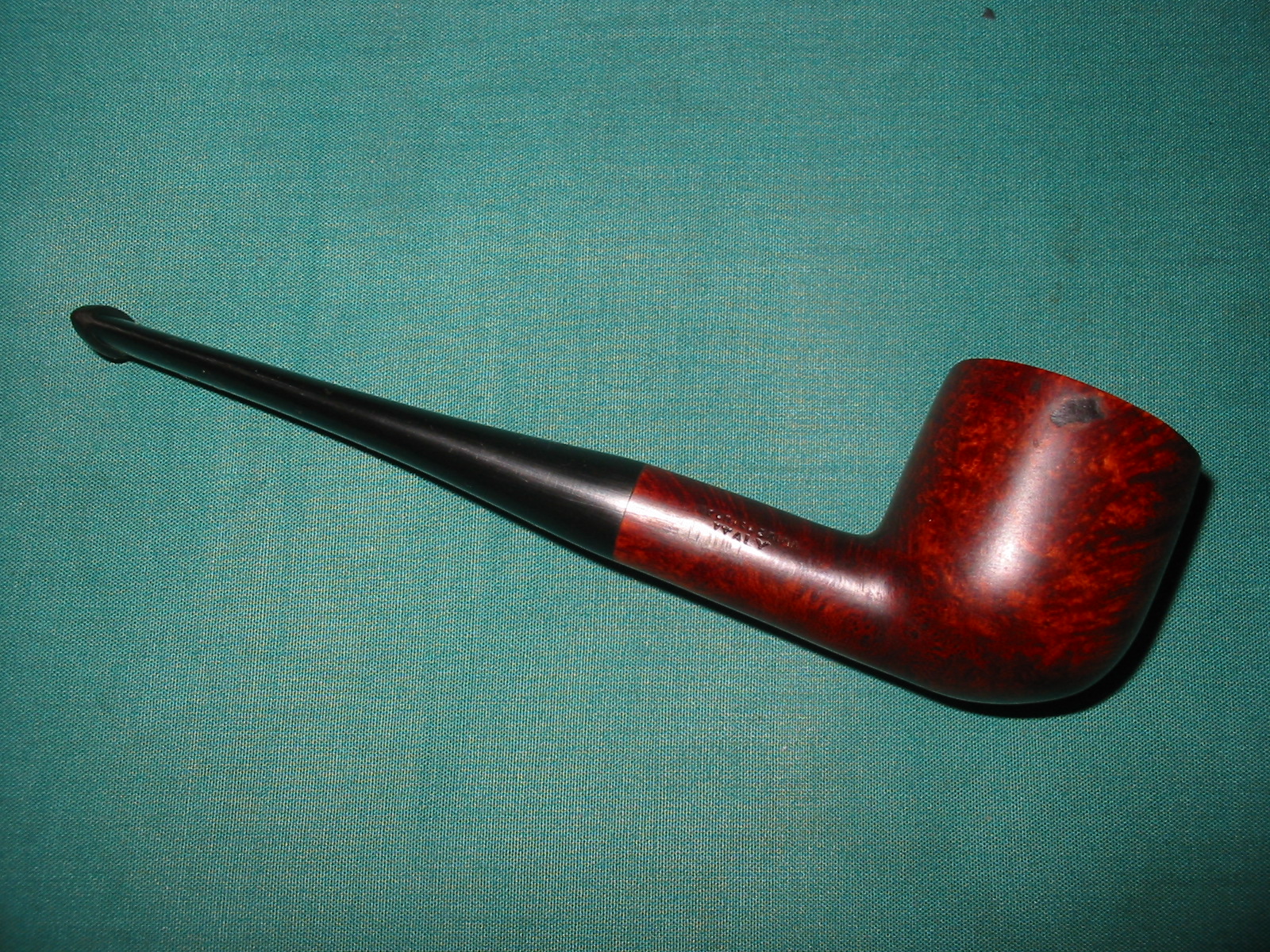
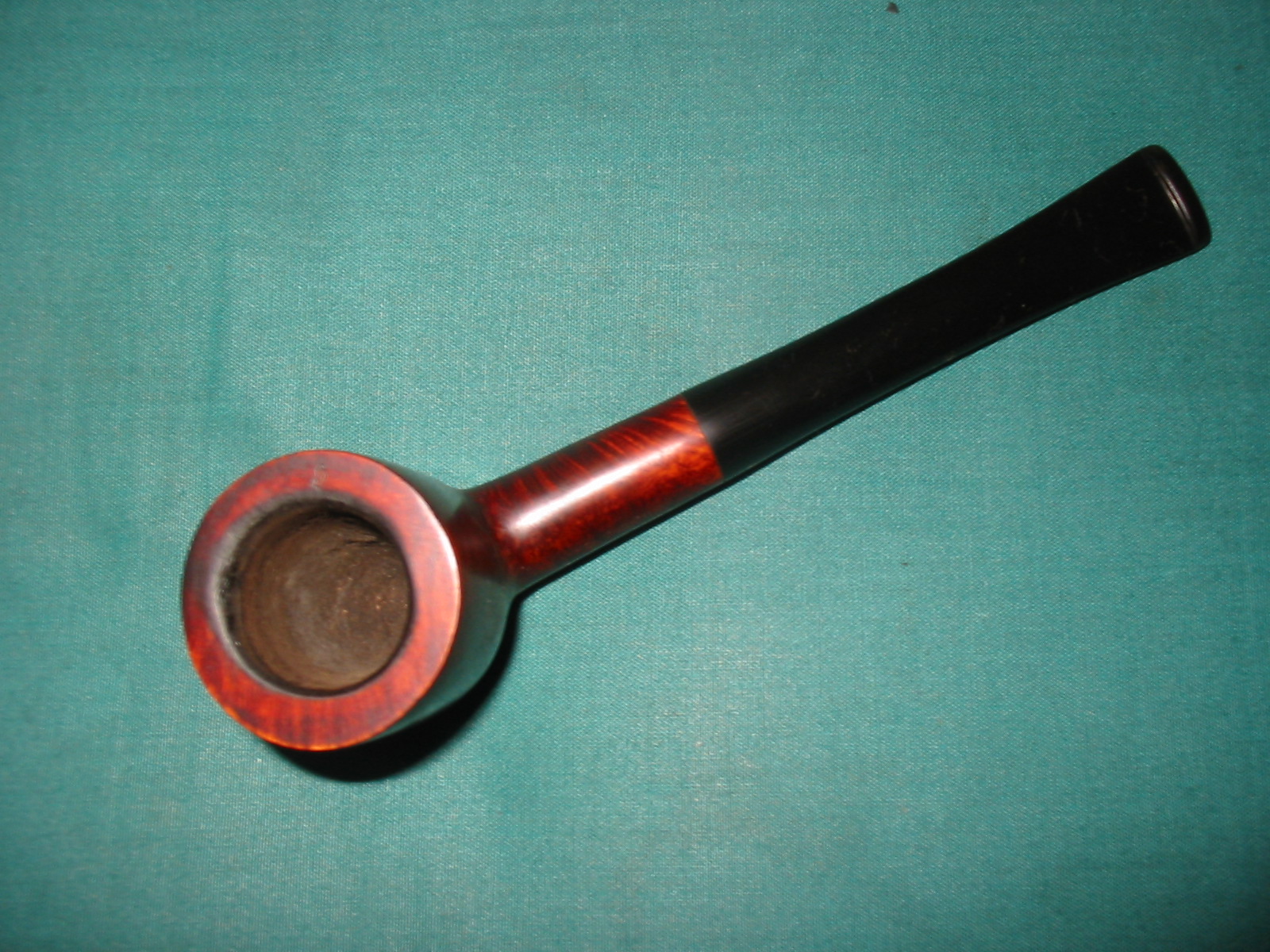
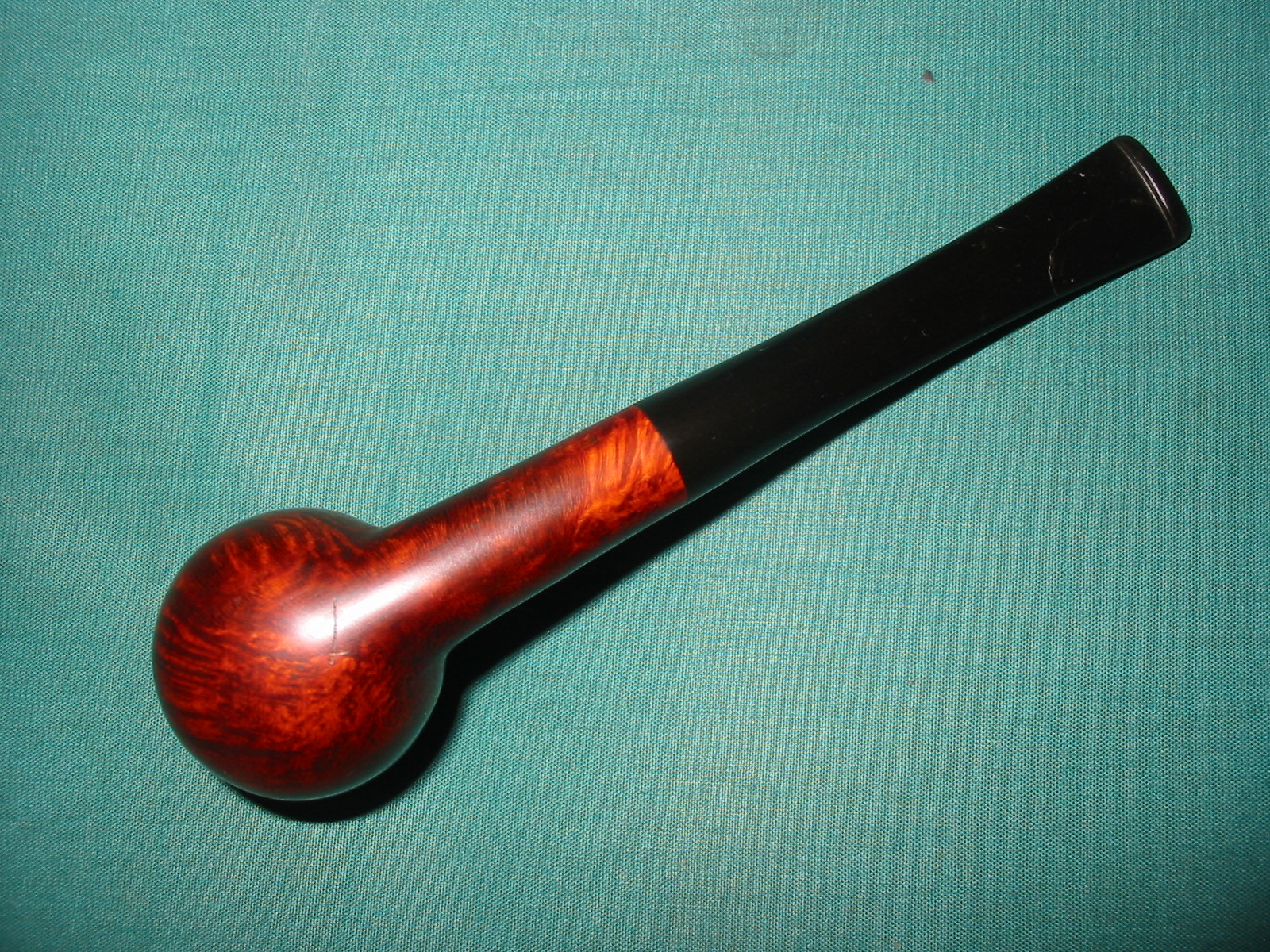
The first bowl I had was a pot shape without a stem. Like the second bowl it had a thick coat of varnish. There was a large fill on the right side of the bowl toward the top. It was a putty fill and was lighter than the briar. The grain on the pipe was very mixed. On the back and front of the bowl was cross grain and on the sides was some nice birdseye. The rim had a tarry buildup and a burned area on the back right side of inner rim. The bowl had an uneven cake on the inside. The right side of the shank was stamped Imported Briar over Italy and the left side was stamped TELEVISION. The second pipe bore identical stamping. There were no shape numbers on either bowl or shank. Both pipes had a broken tenon in the shank. IMG_7559 IMG_7562 IMG_7561 I used a wood screw I keep around for pulling out the broken tenons. I screw it in by hand and the wiggle it until it comes out. I removed the broken tenon from both of the pipe shanks while I was at it. IMG_7563 IMG_7564 I found a vulcanite stem in my can of stems that would work with the pipe and make it a standard pot shape pipe and stem. I turned the tenon on the PIMO Tenon Turning Tool until it was close and then fine tuned the fit with 220 grit sandpaper. The diameter of the stem was larger than that of the shank so I sanded it with 220 grit sandpaper to match the two. IMG_7780 IMG_7784 IMG_7785 IMG_7794 I decided to replace the large ugly fill on the right side of the bowl. It was a light brown/pink colour and stood out from the rest of a decently grained pipe. I picked it out with a dental pick and found that underneath the surface it was a white hard putty. IMG_7786 IMG_7788 There was also a fill on the underside of the bowl that I picked out and one on the rim. I decided to top the bowl to see how close to the side fill the top one was. I set up the sanding board and topped the bowl. Once it was topped I could see the fill on the rim and I decided to leave it as it was close to the inner edge of the bowl. IMG_7790 IMG_7791 I wiped off the surface of the bowl with isopropyl alcohol and spent time scrubbing the large fill on the side of the bowl. I then took some briar dust that I had and began to work on the patching material for the hole. I poured some Fiebings Dark Brown stain into the briar dust and mixed it until the briar dust was evenly stained a dark brown. IMG_7792 IMG_7793 photo b I then mixed in some Weldbond multipurpose white glue into the stained briar dust. Once it began clumping I worked it into a dough and kneaded in the briar dust until it was evenly mixed. photo c photo f The mixture was tacky but not wet. I tamped it into the two repairs on the bowl, the bottom and the left side. I pushed it down into the deep parts of both fills with a dental pick and a pipe nail. photo e photo i When the patch had cured overnight it looked like the photo below. It was a solid bump on the side of the bowl. It took a lot of sanding with 180 grit sandpaper and 220 grit sandpaper to reduce the footprint of the patch and level it with the surface of the briar. The next series of photos show the process of sanding the patch. IMG_7797 IMG_7800 IMG_7805 IMG_7810 I also sanded the shank to smooth out the junction of the stem and the shank at the same time I worked on sanding the patch. I used 220 grit sandpaper and then sanded both the bowl and shank with medium and fine grit sanding sponges. IMG_7801 IMG_7803 IMG_7804 IMG_7802 When all the sanded areas were smooth I sanded them again with micromesh sanding pads – wet sanding with 1500-3200 grit pads and dry sanding with 3600-6000 grit pads. When the scratches no longer stood out I stained the bowl with a dark brown aniline stain (same colour I had used in the briar dust patch). I applied the stain and flamed it and repeated until the coverage was even. I wiped the bowl down with acetone and isopropyl alcohol on cotton pads to make it less opaque. It took quite a few wipes to get it to the colour I wanted. The next series of photos show the progress of the wipe down. (The stained briar dust and wood glue dough patch did not work well in terms of blending with the briar. It still stood out but now was a dark brown.) IMG_7816 IMG_7818 IMG_7819 photo o photo p I still needed to do more sanding on the bowl – particularly in the area of the patch as it looked grainy. I wanted it to be smooth to the touch so I worked on it with the micromesh sanding pads and tried to blend it in more with the stain on the bowl. I also sanded the bowl and stem with the micromesh sanding pads. I wet sanded as usual with 1300-2400 grit pads and 3200-12,000 grit pads. I rubbed the stem down between each three grits of pads with Obsidian Oil. IMG_7821 IMG_7824 IMG_7828 I decided to use a walnut stain and boiled linseed oil. I wiped it on the bowl and then wiped it down. I used a cork and candle stand to hold the bowl while I let the linseed oil dry. I put the stem back on the bowl and then buffed both the bowl and stem with White Diamond and gave them multiple coats of carnauba wax. I buffed with a soft flannel buffing pad between coats of wax to give it a deep shine. The finished pipe is shown in the photos below. It is ready to load and smoke an inaugural bowl of tobacco by whoever owns it next. IMG_7844 IMG_7845 IMG_7846 IMG_7847
Pulling a Broken Tenon


Over the years I have had my share of broken tenons to remove. Some of them came from carelessness on my part but others I purchased that way. I took pictures of the process I use on two different pipes recently. The first was a little Barling with a broken tenon and a chewed stem. I ended up restemming this one. The second one was a Peterson 999 with a broken tenon that I hope to reuse the stem by drilling/tapping and inserting a new tenon to refit it.

Image

Image

Insert a screw part way into the airway on the broken tenon in the shank of the pipe. I use a dry wall or gyprock screw. I turn the screw in by hand. I do not want to expand the tenon at all I just want the screw to have a little bite to it so that I can use it to pull the tenon out by hand or with a pair of needle nose pliers. In this case in both pipes I was not able to pull out the tenon easily. Many times I am able to pull it out in a matter of seconds using this method. But both of these were exceptionally tight and immovable. I put them both in the freezer for an hour as I know that vulcanite and briar contract at different rates with a change in temperature. After an hour I removed the Barling from the freezer and was able to pull the broken tenon out very easily. I then unscrew the broken piece and lay it aside to use for a match on the new tenon I will cut as a replacement. It helps me to eyeball the fit. I also measure the mortise and set the tenon turner as closely as possible to the measurements. I then take the broken piece and slide it on the tenon turner to check the fit.
The tenon on the Peterson however, still did not budge after an hour in the freezer. I left it in for another half hour. Still it did not budge. I then dripped Isopropyl alcohol into the exposed mortise and hoped that it would work as a solvent to break the tenon free. I repeated this several times and left the pipe sitting with alcohol in it over night. The next morning the tenon still did not move.

ImageImage

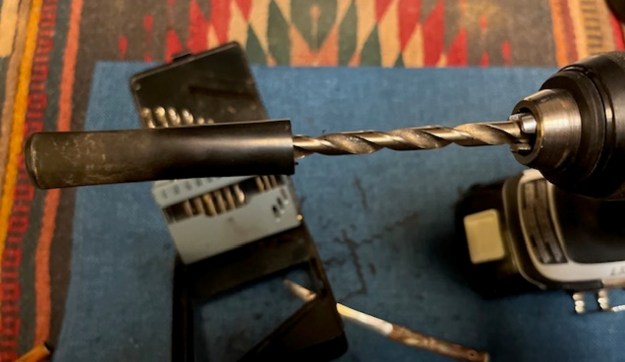
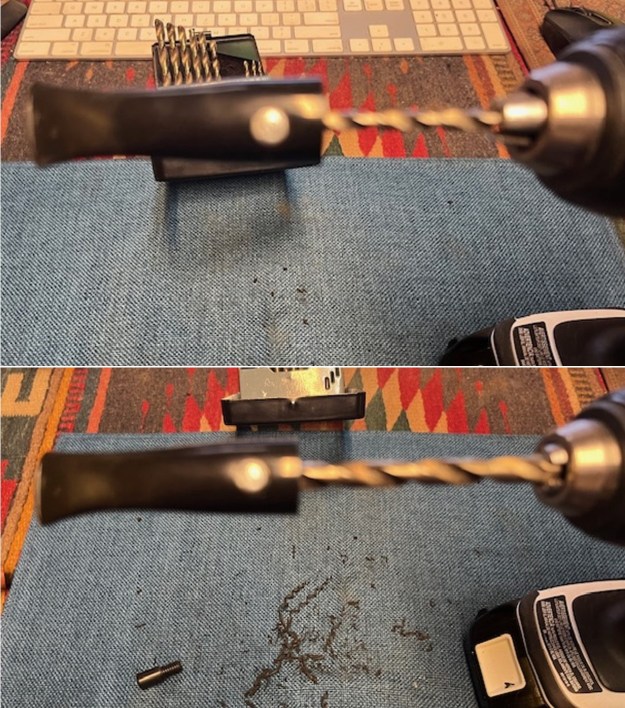
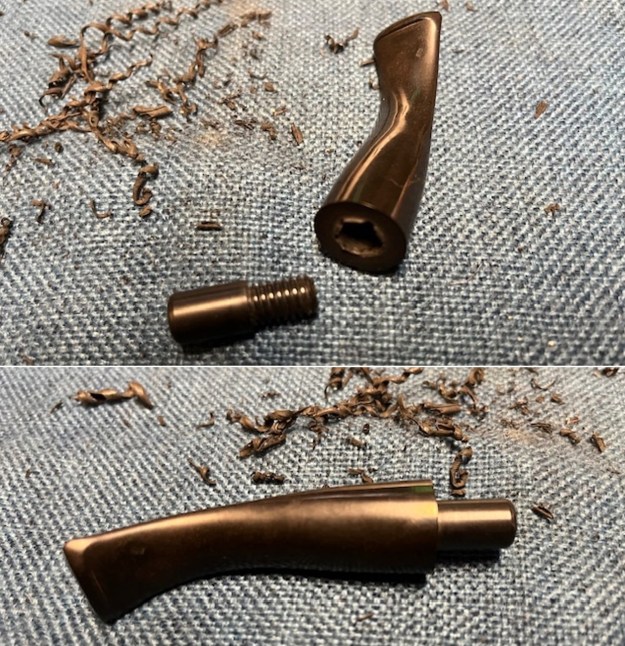
I decided to not fiddle around with trying to pull the tenon. I used my small drill bit and began to drill out the tenon. I never start with the exact size of the tenon but rather work with the size of the airway and work my way up. I have found that in the process of working through the bits the tenon inevitably breaks loose or crumbles to pieces. In this case, by the time I got to the third drill bit, when I reversed it the tenon came out with the bit. You will notice that I also flattened the broken portion of the tenon on the stem so that the surface was flat and smooth. I wanted it to be ready for when I would drill it out or tap to receive the new tenon that I have ordered.

ImageImage

As I close this essay I want to just mention a couple of reminders:

  1. Do not turn the screw into the airway to deeply as it does expand the airway and can actually crack the shank on the pipe. BE CAREFUL and go slowly.
  2. Do not use a tool to turn the screw into the airway – do it by hand so you can feel the progress and the bite before damage is done.
  3. If the tenon is stuck and immoveable in the first try put the pipe in the freezer for an hour or more to expand and contract the tenon and mortise. This usually works to break it free.
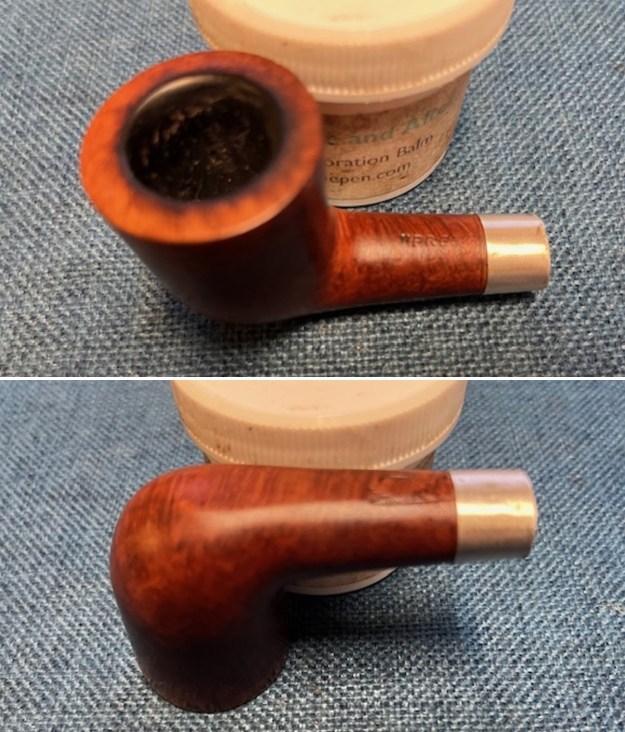
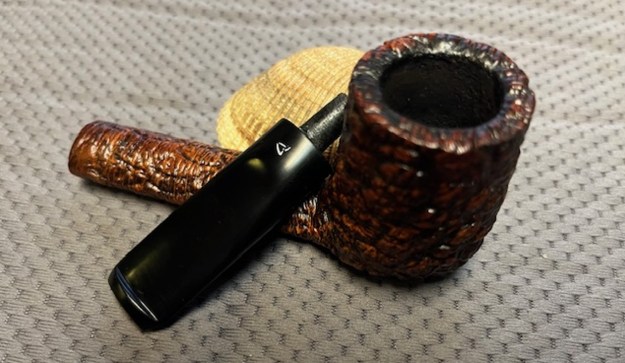
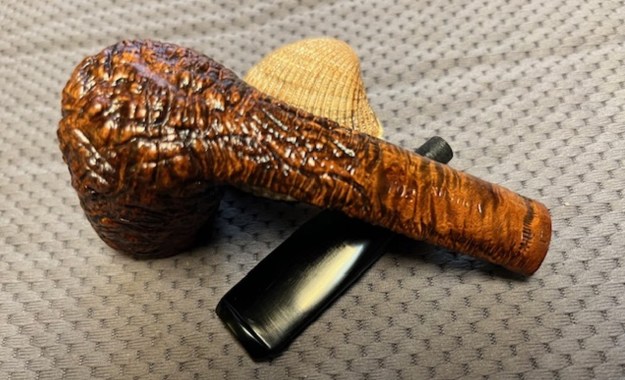
  4. Should you have to drill it out – use a bit a little larger than the airway to begin the process and work your way up to larger bits. Do not use a drill bit that is the size of the mortise lest you damage the mortise.
  5. Use a T handle hand drill not a power drill to do this as you can easily drill right through the bowl and ruin the pipe.