
Blog by Steve Laug
The next pipe I chose to work on came is another one from the lot of 11 pipes I purchased from a lady in Regina, Saskatchewan. She had found them in a house she bought and wanted to know if I wanted them. We struck a deal, I paid for the pipes and shipping and the box arrived while I was traveling in Europe. In the box were 4 Stanwells, I Danmore Bowl, 1 Soren Freehand, 1 Calabash with a Briar Bowl, 1 Nording Freehand, 1 Italian Made Bertenetti, 1 Rhodesian with a banded cracked shank, and 1 Brigham. I have restored the Nording, the snapped Stanwell, the Brigham, the Gourd Calabash with the briar bowl, restemmed the Danmore bowl and cleaned the Lorenzetti. There are blogs on each restoration available.
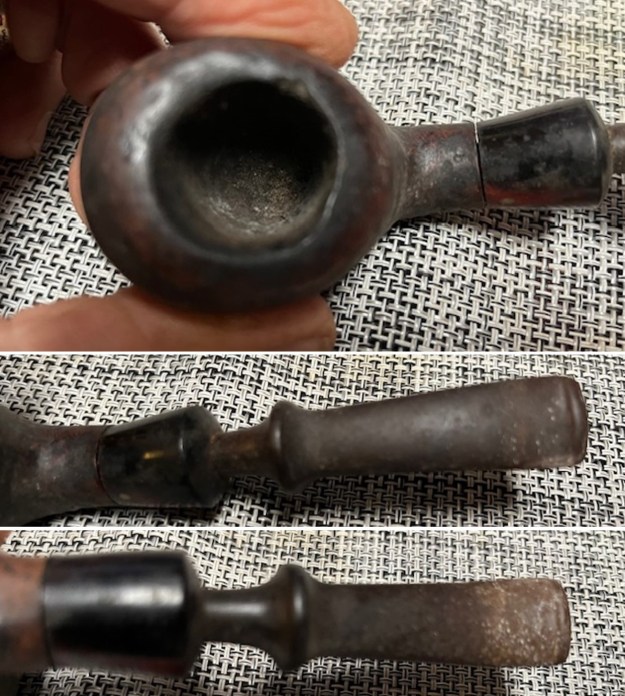
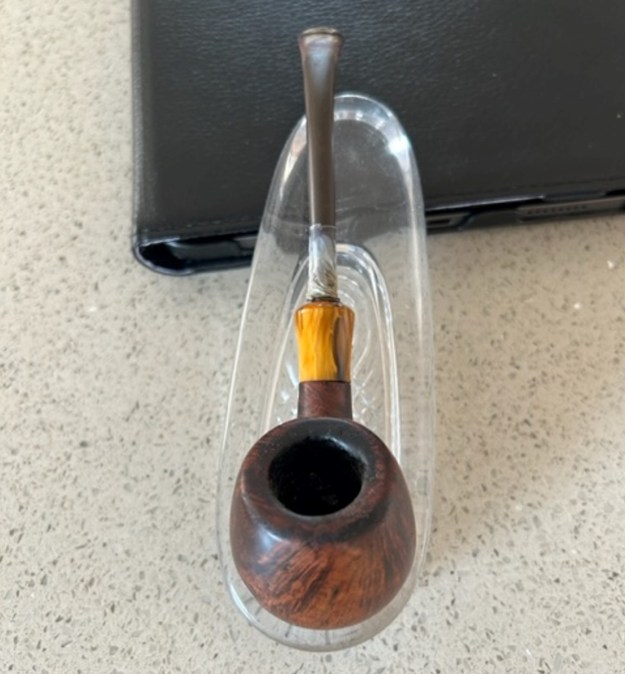
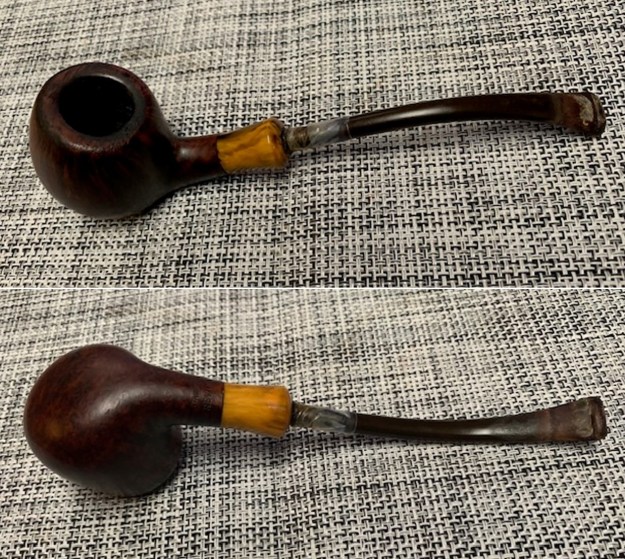
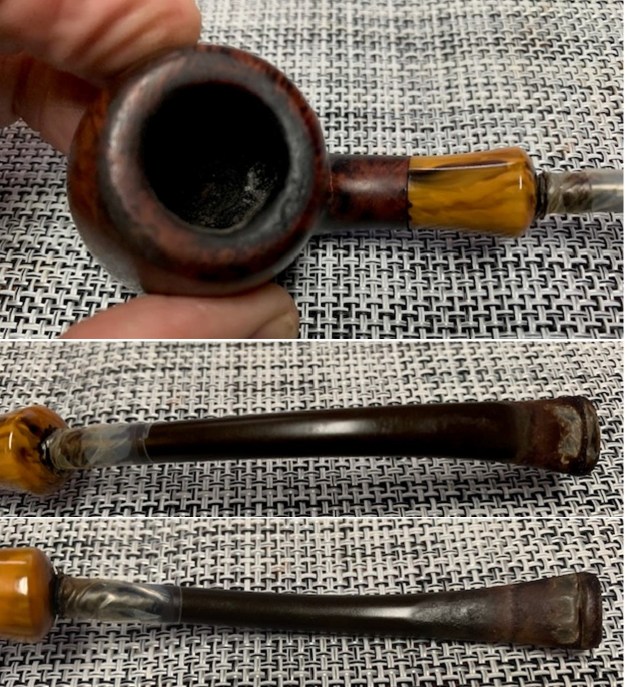
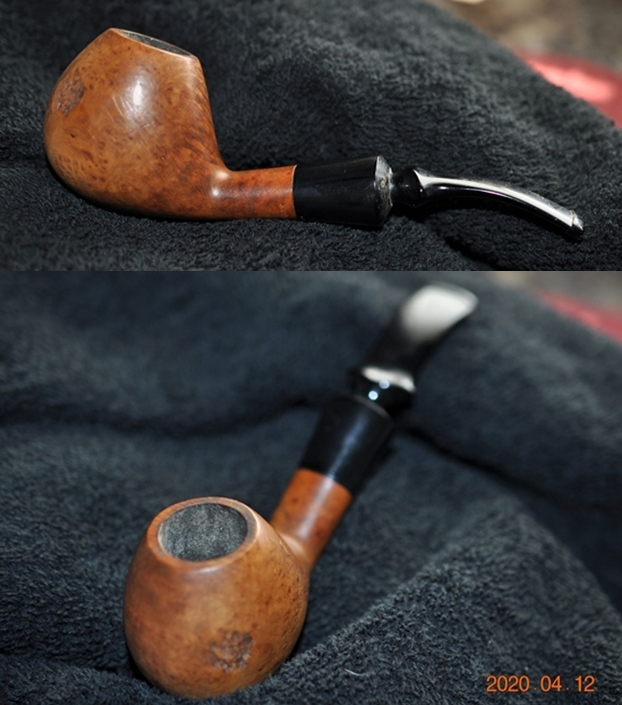
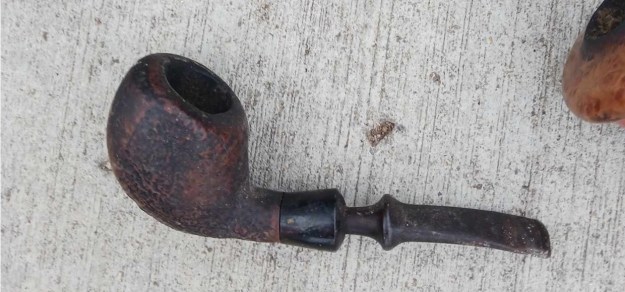 The next pipe on the table is another one of the dirtiest pipes in a box full of very dirty pipes. It is stamped on the underside of the shank and reads Stanwell [over] Antique [over] Made in Denmark. There is no visible shape number stamped on the pipe. There was a thick cake in the bowl, debris in the bottom and on the bowl walls and some remnants of tobacco. The airway was plugged and there was no draught on the pipe. There was a heavy lava overflow on the rim top and down the sides of the bowl and shank. It was hard to know the condition of the inner edges of the bowl because of the cake. The outer edge actually looked quite good under the grime. The finish was dirty and dusty and there was lava on the sides and heel of the bowl. The ruby coloured acrylic shank extension was filthy and loose on the shank. The stem was in rough shape in appearance but underneath the calcification and oxidation the tooth marks and chatter looked minimal. I took photos of the pipe before I started my cleanup work on it.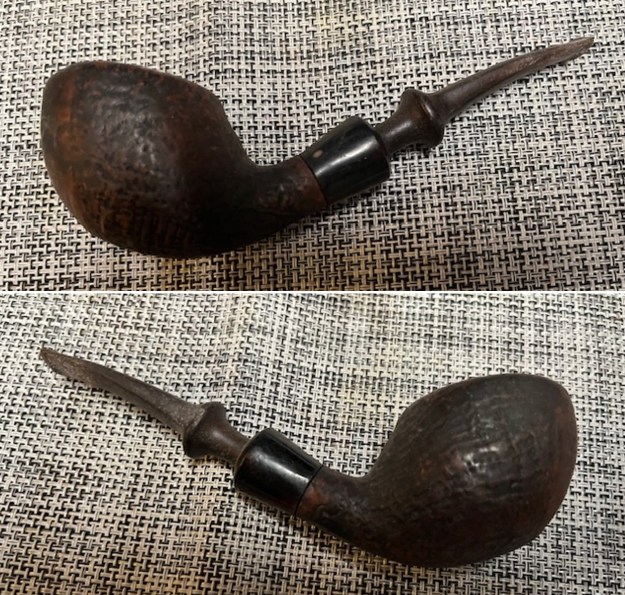
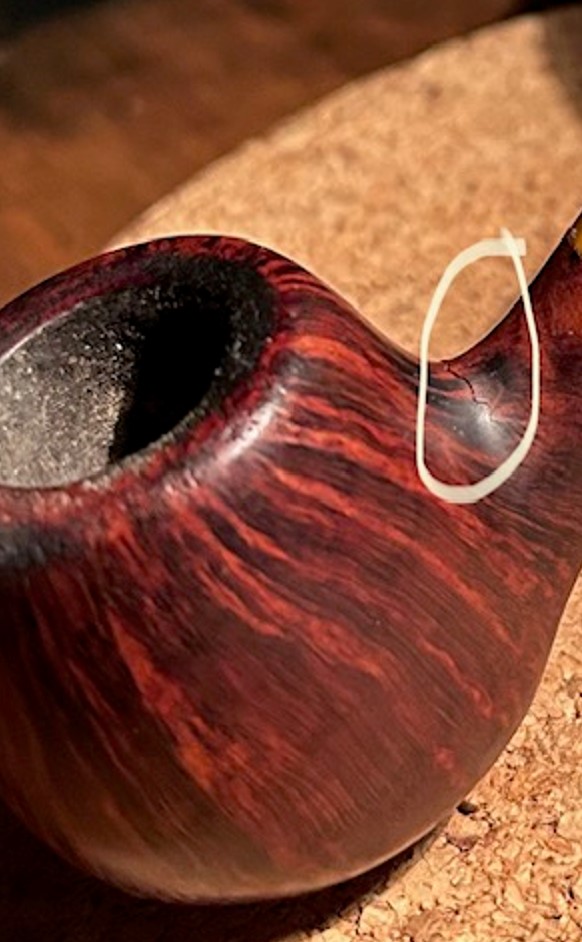
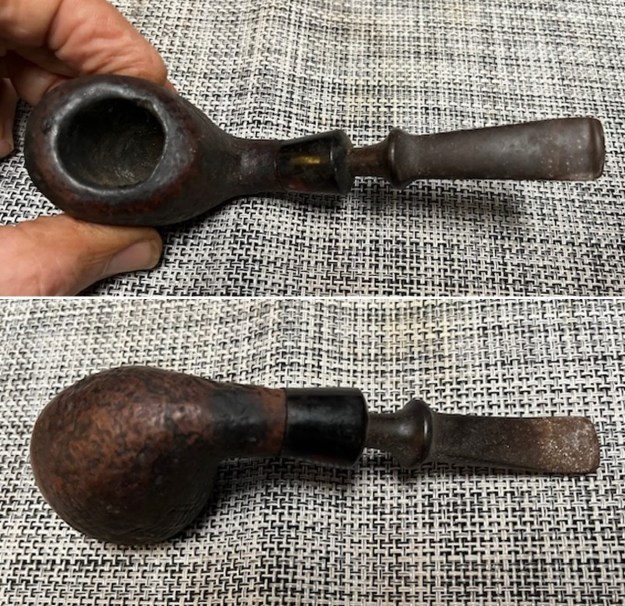 I took a close-up photo of the bowl and rim top to show the cake in the bowl. The rim top shows some thin lava spots on the smooth finish. The inner edge of the bowl is pretty rough with some nicks and lava buildup. The outer edges of the bowl are worn. I took photos of the top and underside of the stem surface and button to show its general condition. It looked very good under the spotty oxidation.
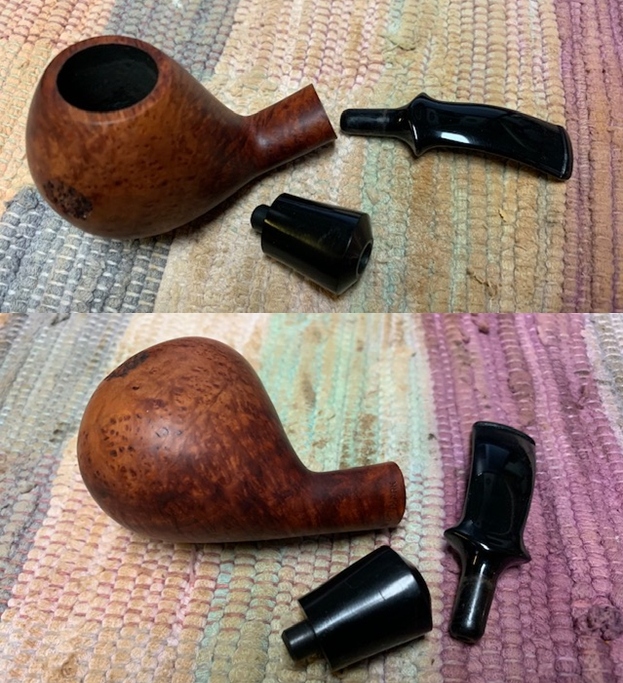
 The stamping on the underside of the shank is faint but readable as noted above. You can barely make out the Stanwell stamp on the smooth panel near the shank extension but it is present. There appears to be a burn mark on the shank in the flat spot. I took the stem and the shank extension off the pipe and took a photo to give a sense of the proportion of the pipe.
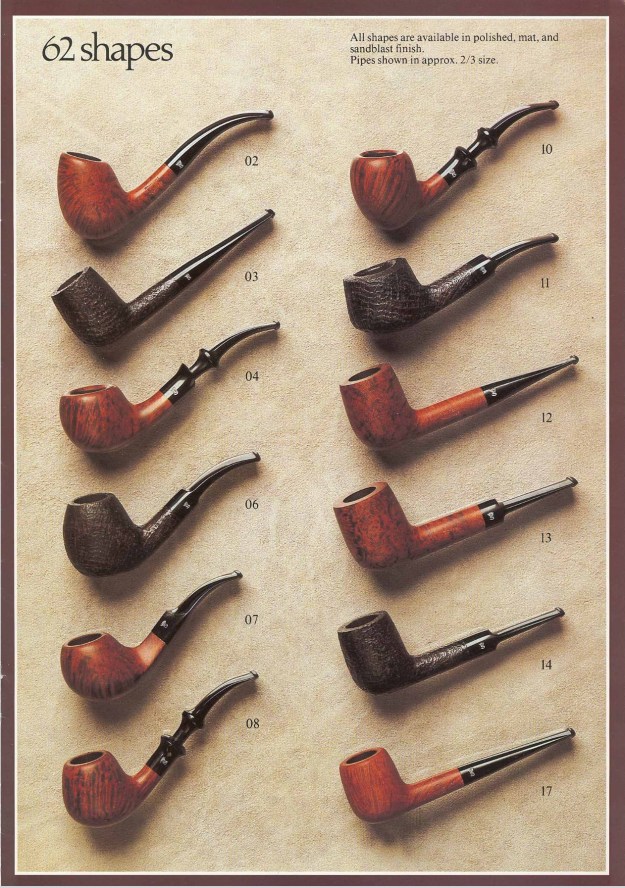
 I recognized the shape as being a Sixten Ivarsson design but Icould not remember the shape number associated with it. I turned to Pipedia’s article on shapes that Bas Stevens originally worked on to check it out (https://pipedia.org/wiki/Stanwell_Shape_Numbers_and_Designers). I am including a shape chart below. It identifies the shape as an 25 (second from the bottom of the second column in the photo below).
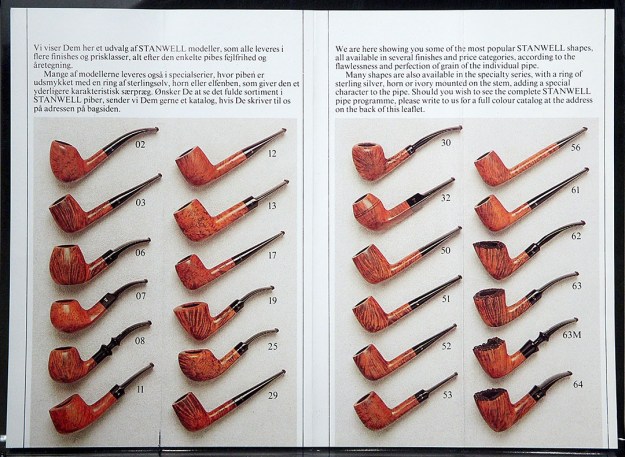 I also have included information the site regarding the shape 25. The pipe I am working on is 25b in the list below. Stanwell’s “25” shape number actually corresponds to two different designs. The first is a larger version of the “24,” a Freehand with an oval shank; the second is a rather gestural Danish Scoop of sorts with an oval bowl and a slight saddle-like bevel to the rim. Designed by Sixten Ivarsson. This vintage “25” is of the latter type, really showcasing its cupping gesture in profile and is seen here as part of the Antique series. It wears a dark sandblast and is accented by a ruby-hued ferrule, which matches the smoothly polished patch of briar along the bowl’s fore. (typically saddle, but can also be military mount, tapered, faux spigot saddle etc.), by Sixten Ivarsson.
- 25. Three versions of this shape number:
- a) Footed cutty with a long tapered stem (early 1950s – see catalog)
- b) Same as 24(a) but larger, by Sixten Ivarsson.
- c) Bent squat-apple with a rounded rim and a saddle stem, by Sixten Ivarsson.
List by designer
- Sixten Ivarsson: 01 (Nefertiti), 01 (Pick Ax), 02, 06, 07, 09, 10, 11, 13, 15, 17, 19, 20 (Boat), 20 (Bent Dublin), 21, 22, 23, 24, 25, 30, 32 (Free Hand), 33, 34, 35 (Bent Free Hand), 37, 38, 41, 43, 48, 55, 59, 62, 63, 64, 70 (Free Hand Volcano/Sitter), 75 (Billiard w/oval shank), 79, 82, 85 (Bent e), 86, 87, 90, 91R, 95, 96, 105, 110, 119, 124, 2606, POY 1993.
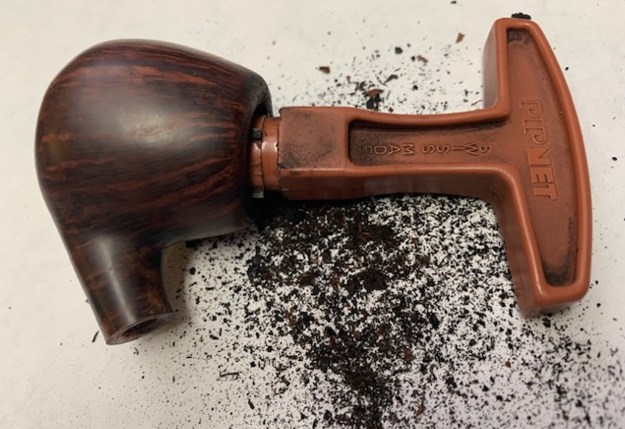
Now I knew it was an Ivarsson Design shape 25 with a military style saddle stem. Now it was time to work on the pipe. I removed the stem and turned my attention to the bowl clean up. I reamed the bowl with a PipNet pipe reamer using the fourth (and largest) cutting head to take the cake back to bare briar. I cleaned up the reaming with a Savinelli Fitsall Pipe Knife. I sanded the walls with a piece of 180 grit sandpaper wrapped around a dowel to smooth them out. 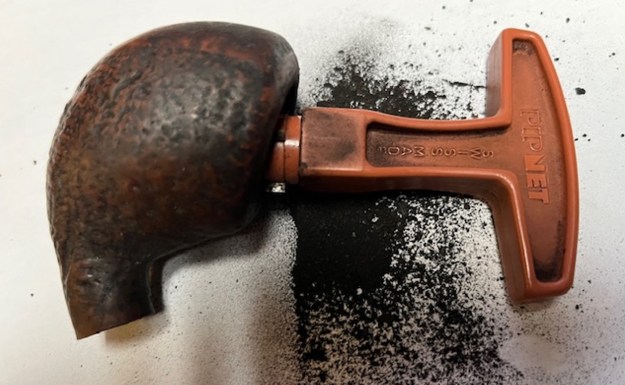
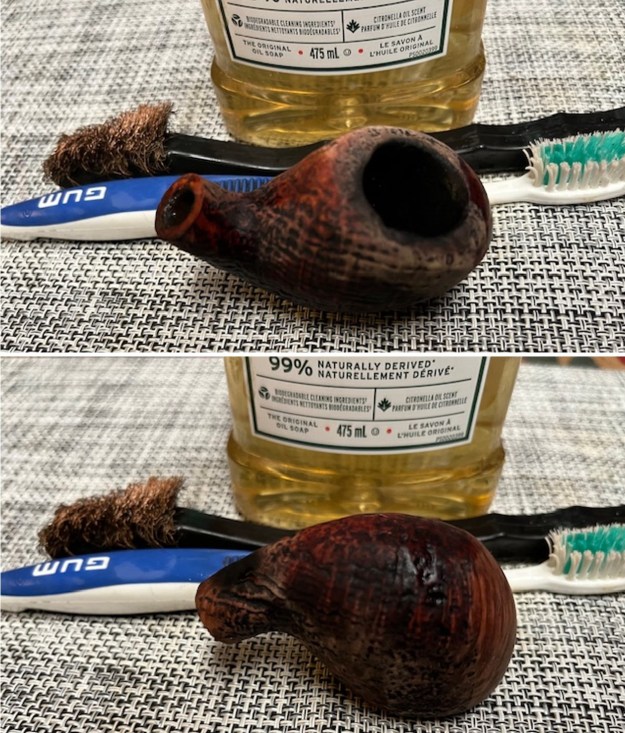
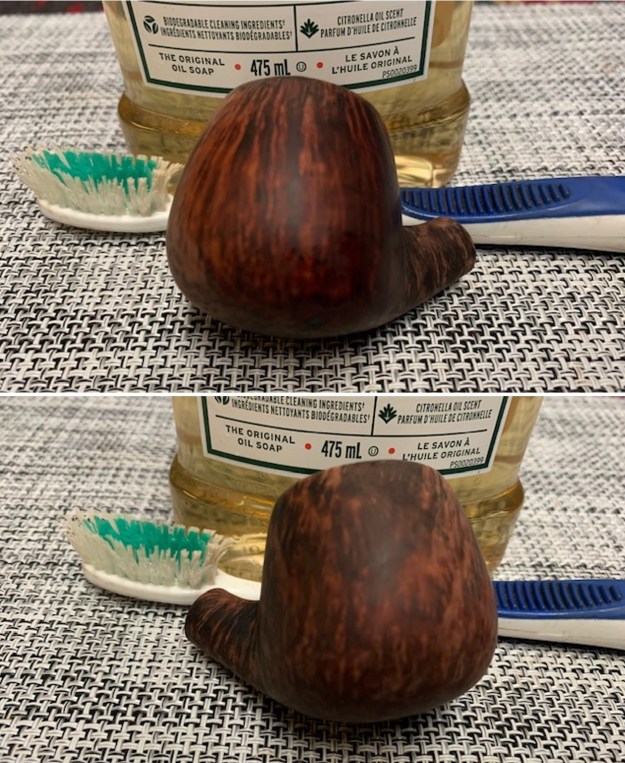
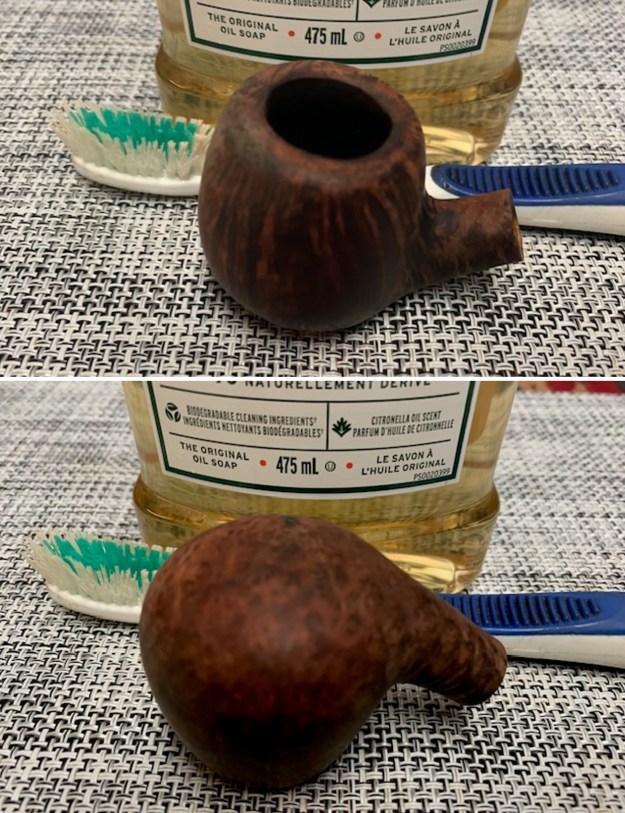
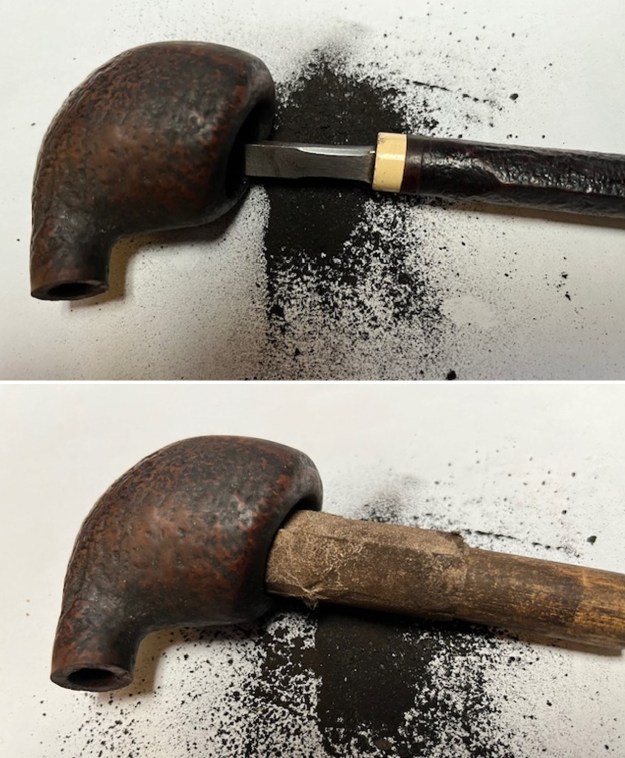 I scrubbed the exterior of the briar with a brass bristle wire brush, a tooth brush and undiluted Murphy’s Oil Soap. I rinsed it off with warm water to remove the grime and soap. It looked much better and the dust and debris was gone. I dried it with a cotton towel.
 I worked over the sandblast rim top and the bowl and shank sides with a brass bristle wire brush to further knock off the debris in the valleys of the blast.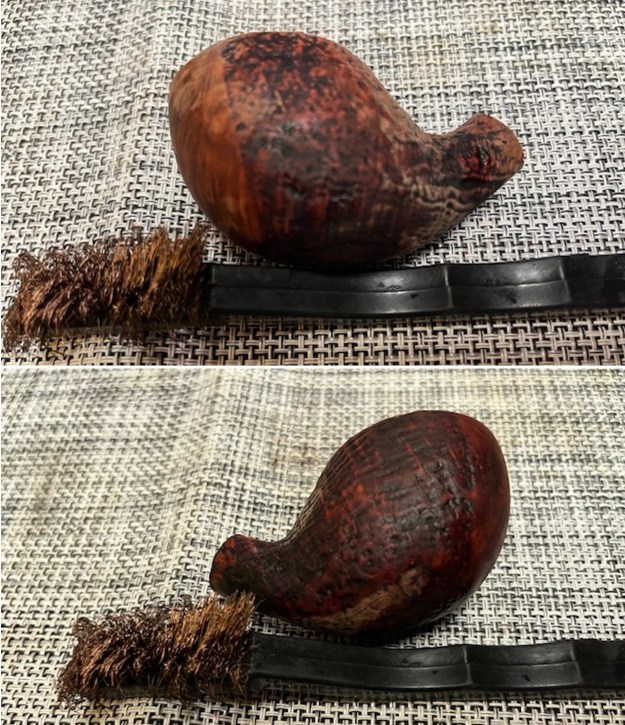
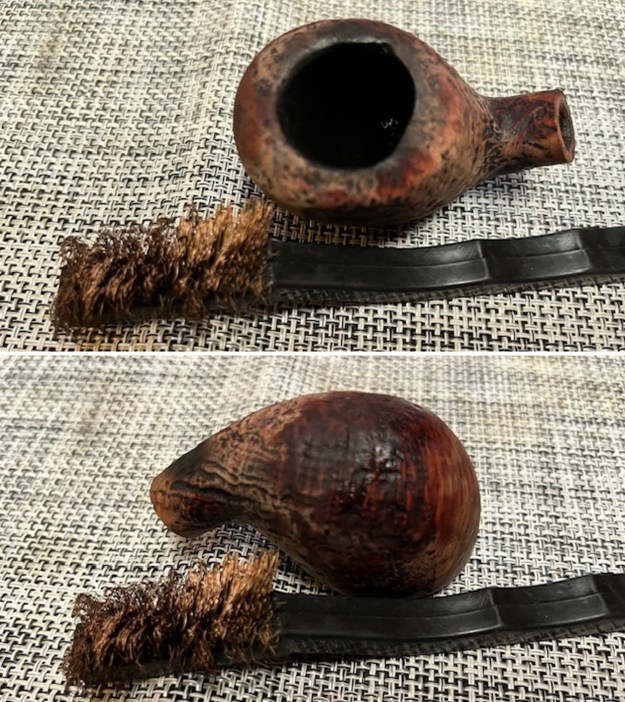 I worked over the damage on the inner edge of the bowl and the rim top. I also smoothed out the damage on the outer edge with a folded piece of 220 grit sandpaper. It looked much better after I sanded the damaged areas smooth. I worked over the rim top and the heel of the bowl with a dry brass bristle brush to remove some of the darkening. It is looking better.
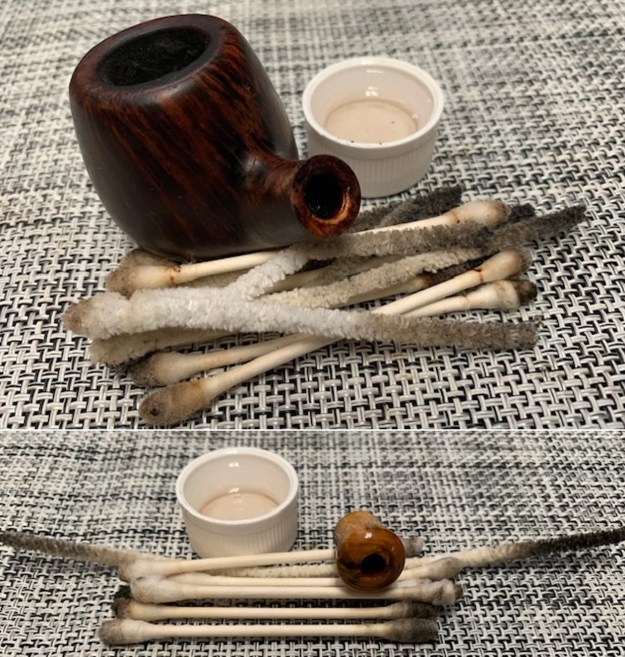
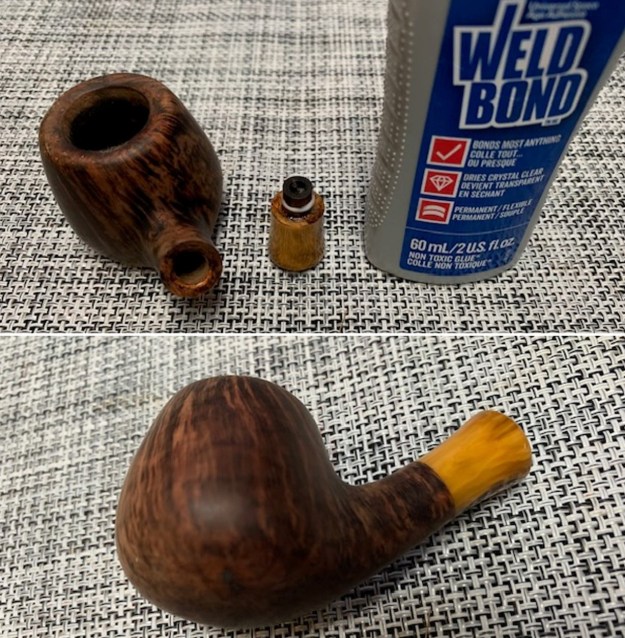
I scrubbed out the internals of the shank extension with 99% isopropyl alcohol, pipe cleaners and cotton swabs. 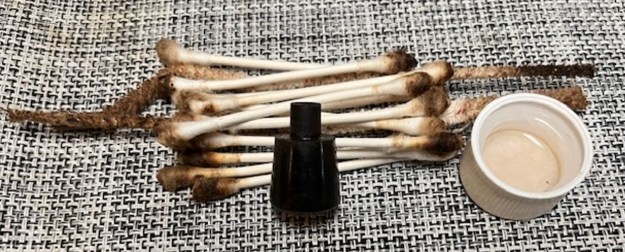 I wiped down the tenon on the shank extension with some white all purpose glue and the shank end and extension end with the glue and pressed it onto the shank. I aligned the shank and extension and held it in place until the glue set.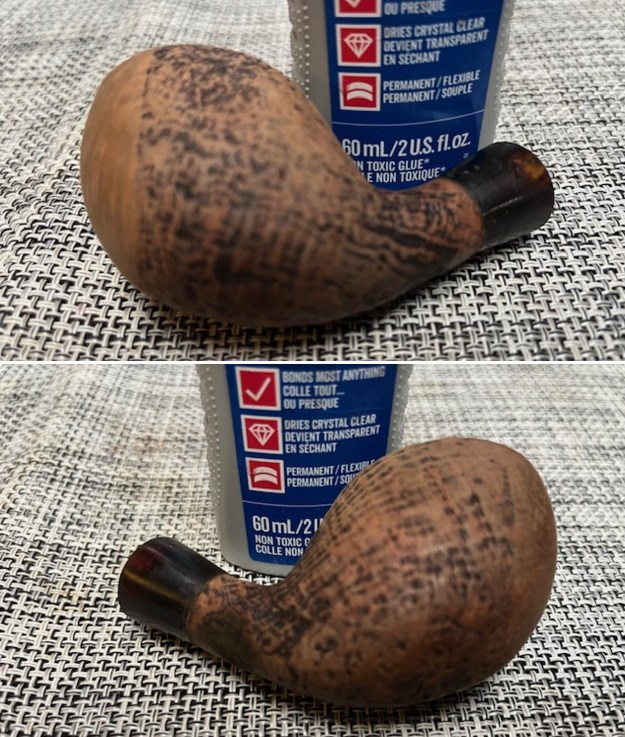
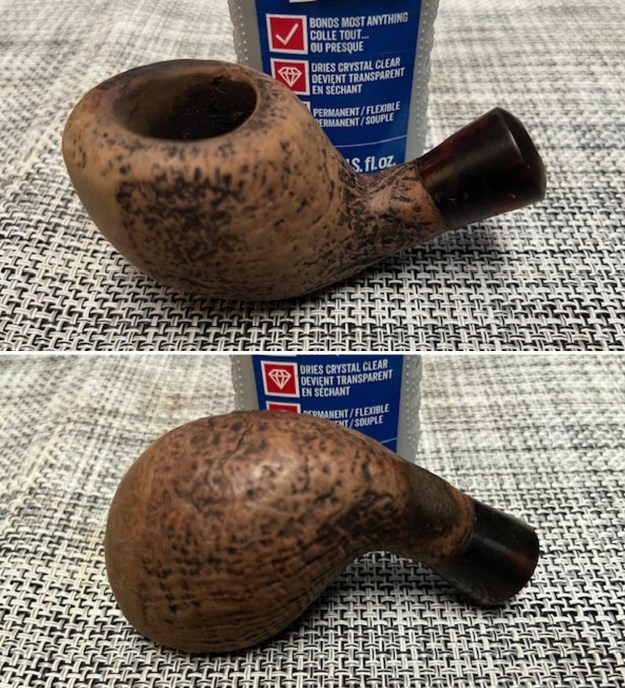 I used my Dremel and a dental burr to retrace the lines of the sandblast on the sides of the bowl and the heel. I also used it to recut the lines of the blast on the rim top as well.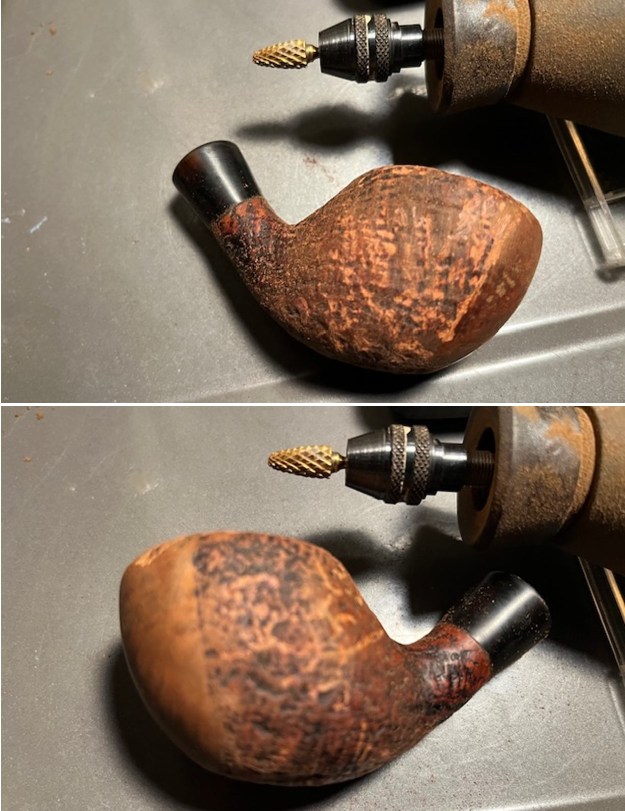
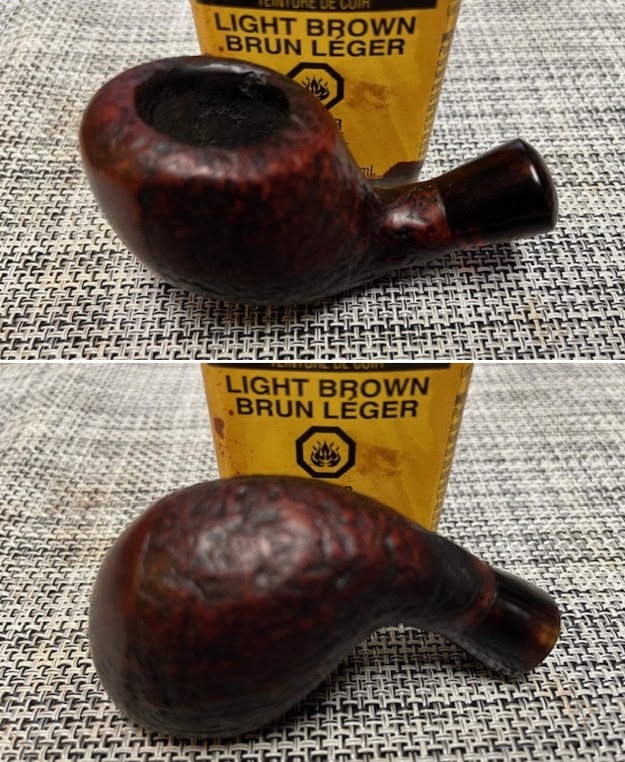
 I stained the bowl and shank with a light brown stain wash. I applied it to the surface of the briar with a wool dauber. I flamed it with a lighter flame to set it in the grain. I repeated the process until I was satisfied with the coverage.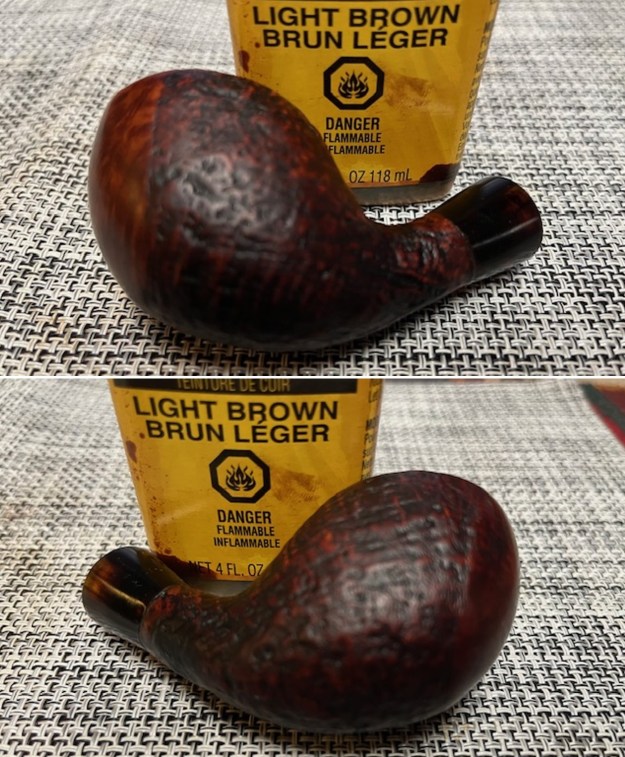
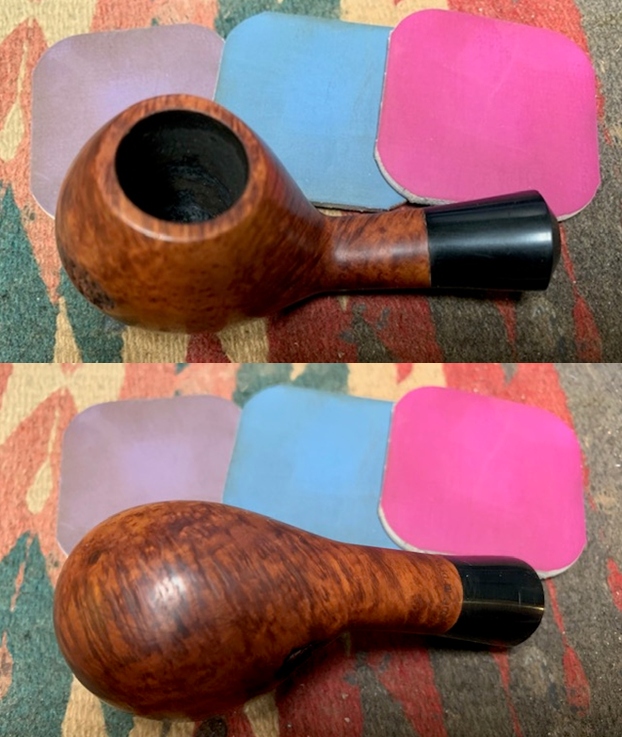
 I polished the acrylic shank extension and the briar with micromesh sanding pads – dry sanding it with 1500-12000 git sanding pads. I worked on the smooth front of the bowl and on the high spots on the sandblast. I wanted to make the new stain coat a bit more transparent. As I finished the last of the micromesh it looked much better.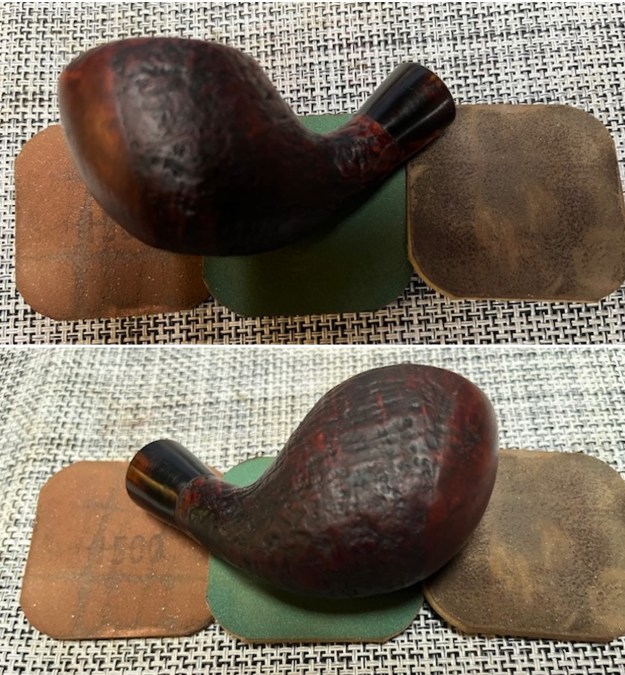
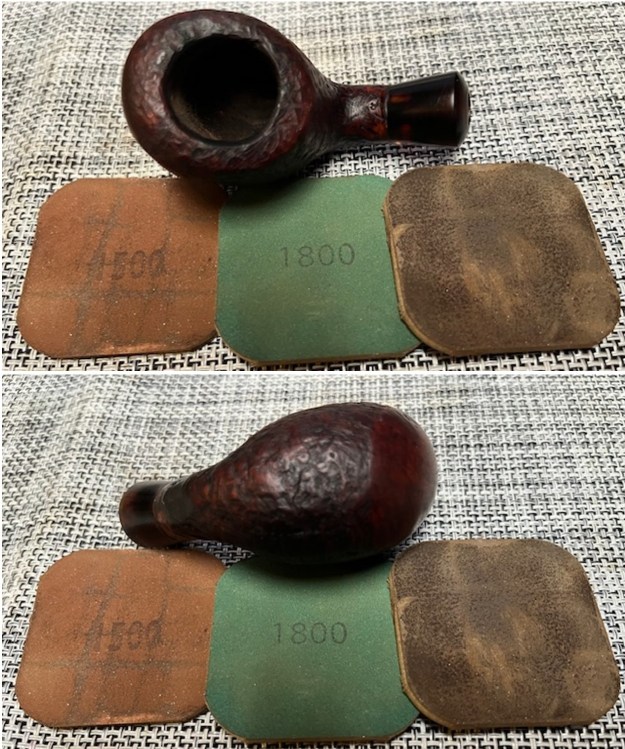
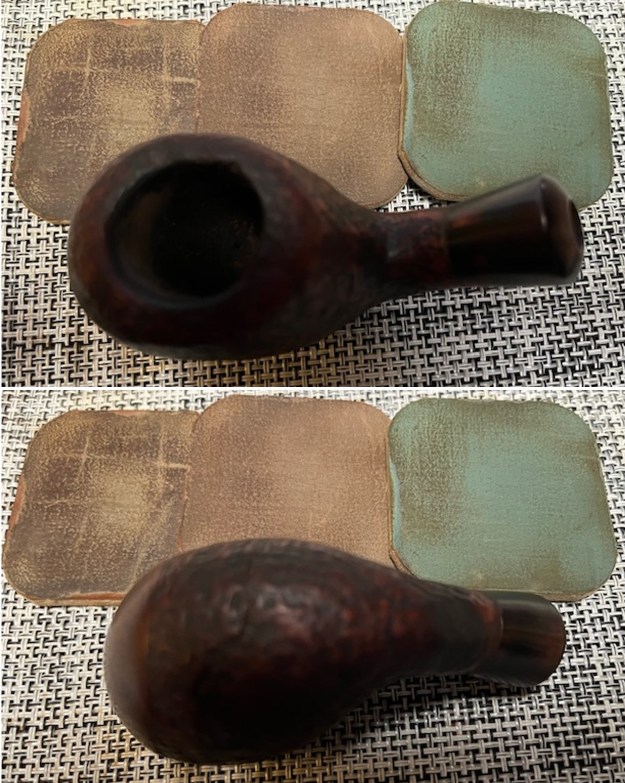
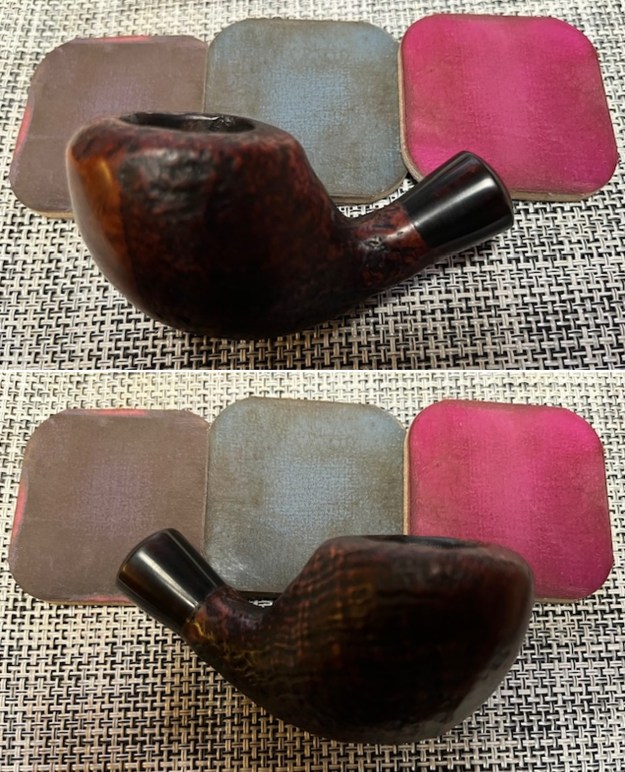
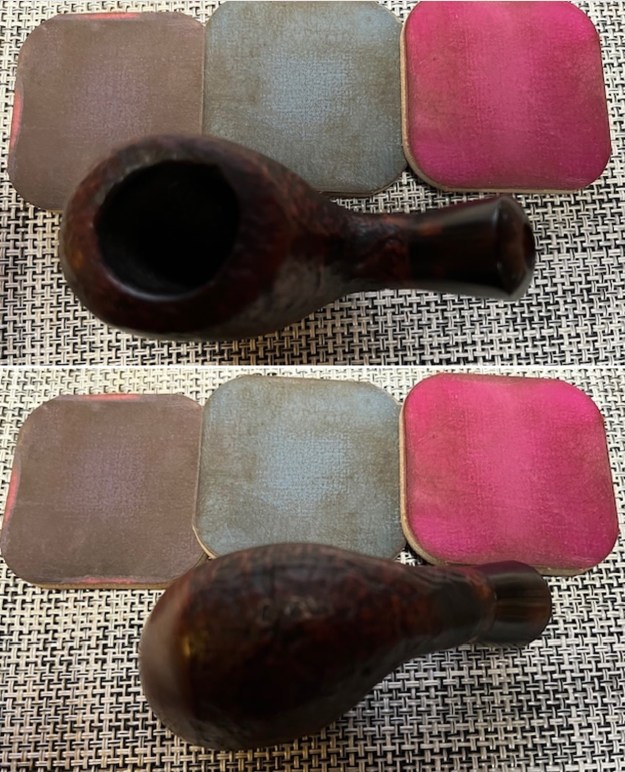 I cleaned out the shank now that the extension was attached with alcohol and pipe cleaners. It was not too bad in the shank end but the short briar to the from there to the bowl was dirty. I probably should have done the clean up earlier but I did not do so until now.
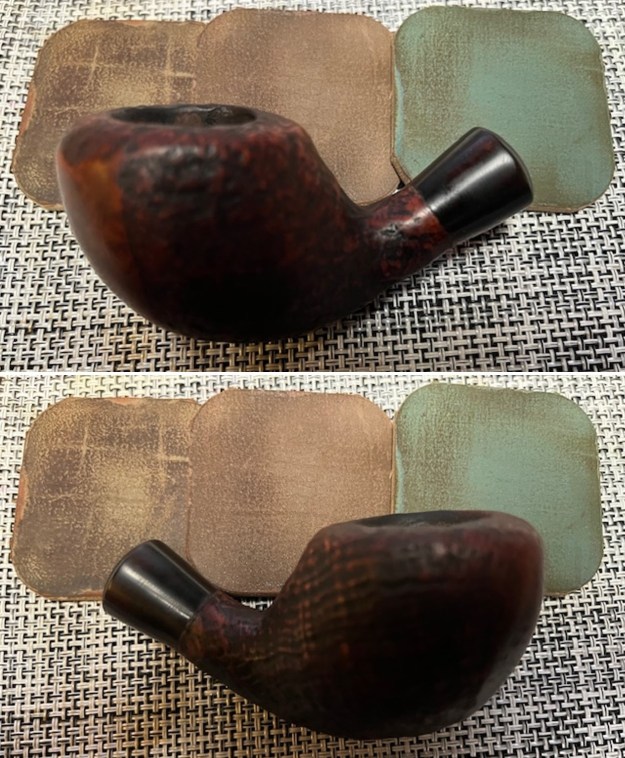
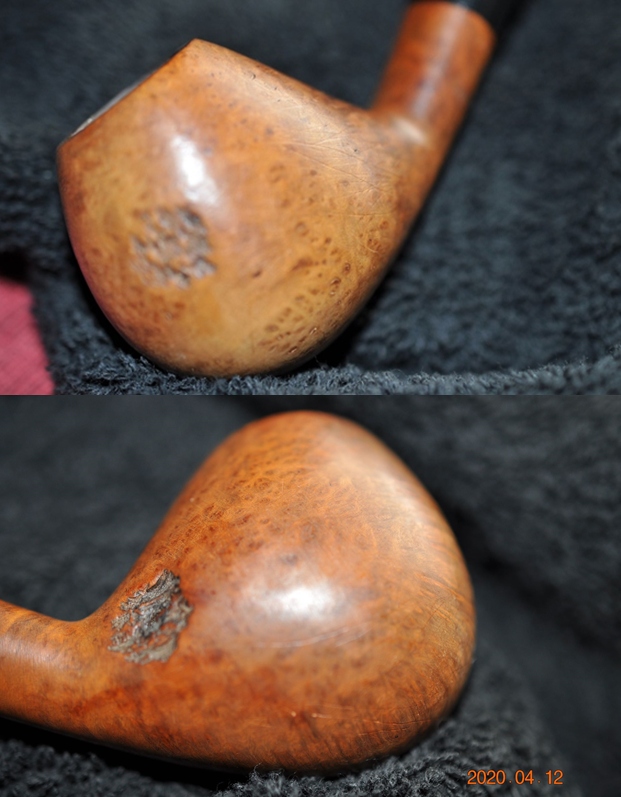
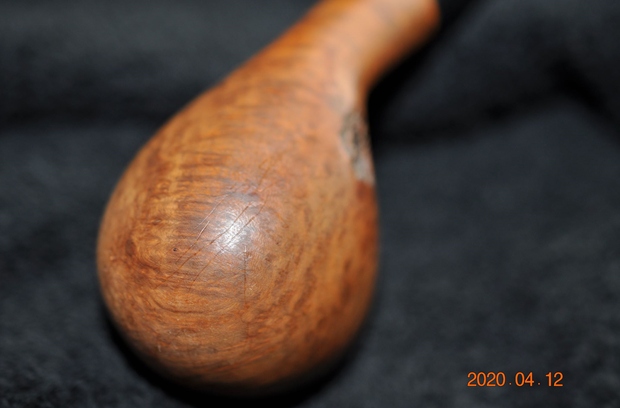
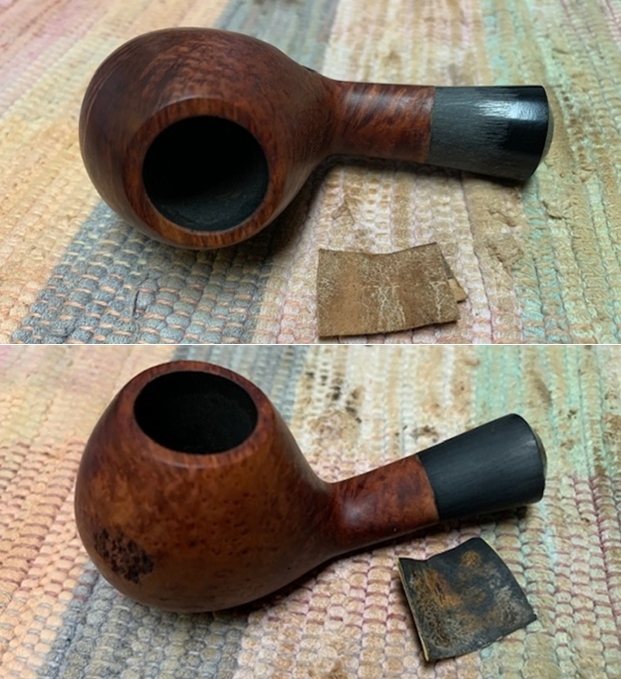
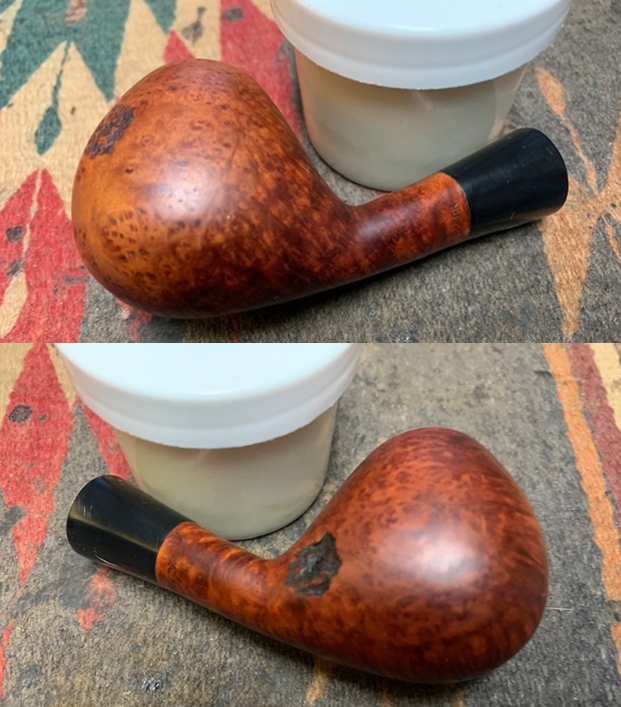
  I worked some Before & After Restoration Balm into the surface of the briar with my fingertips to clean, enliven and protect the briar. I let the balm sit for 15 minutes and then buffed with a cotton cloth to raise the shine. The photos show the bowl at this point in the restoration process.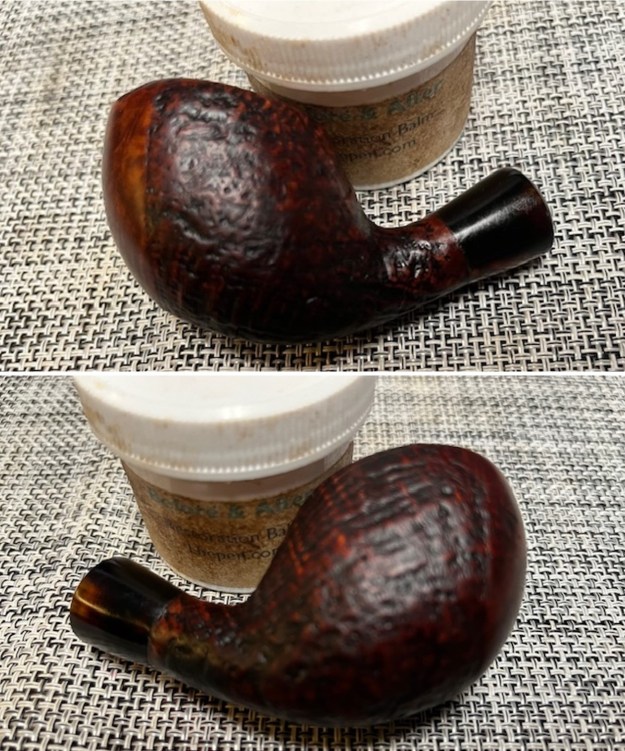
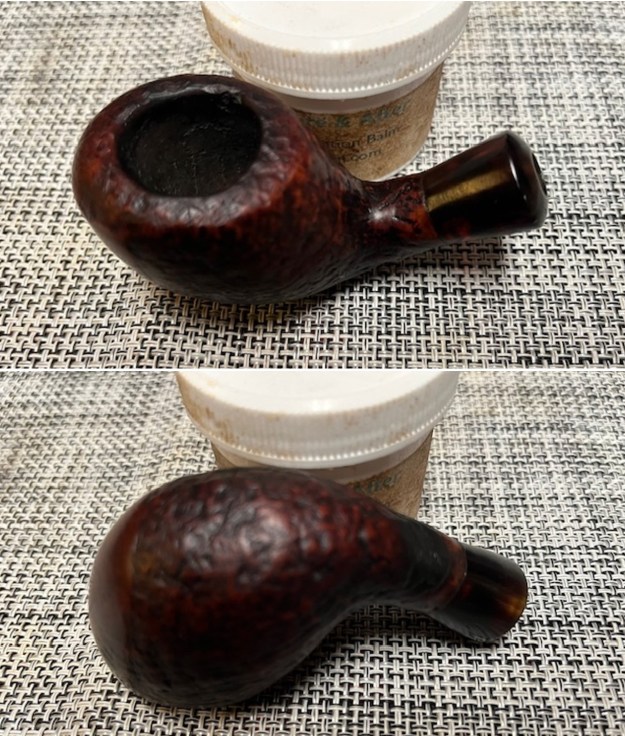
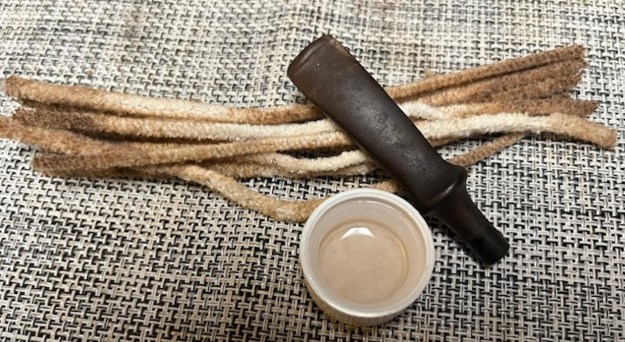
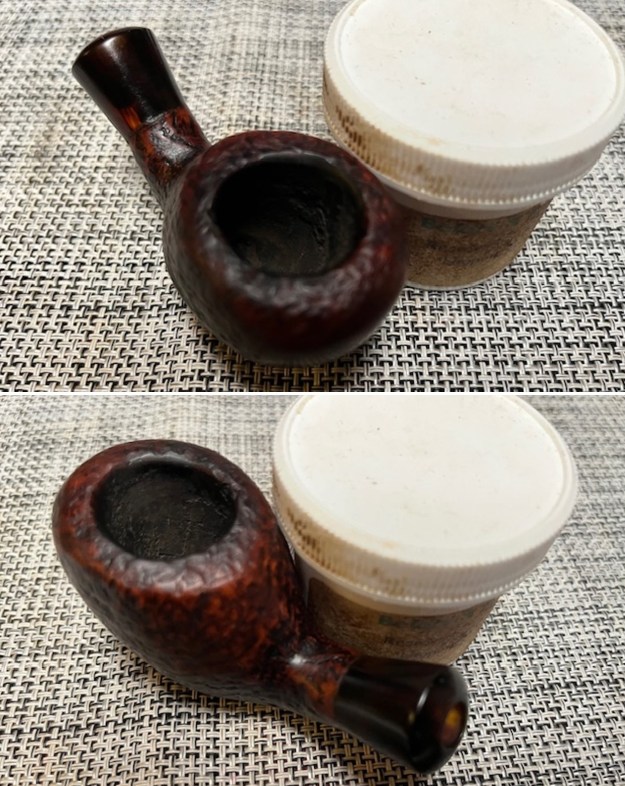 With that done, the bowl was finished other than the final buffing. I set it aside and turned my attention to the stem. I cleaned out the airway in the stem with pipe cleaners and isopropyl alcohol.
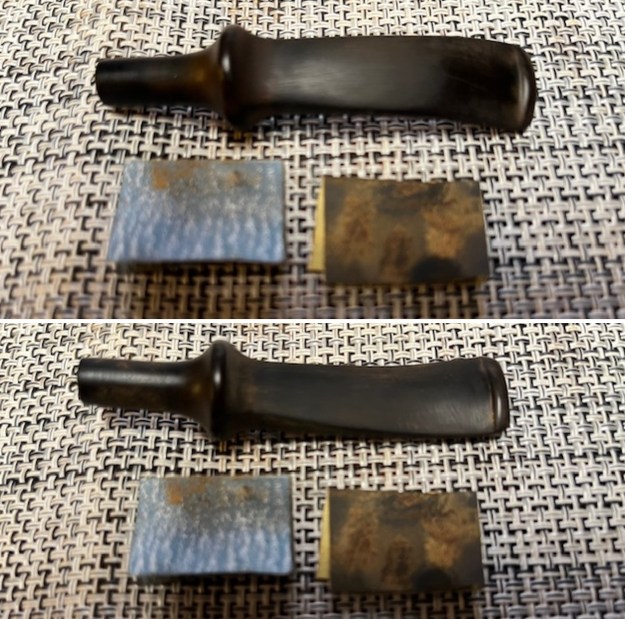
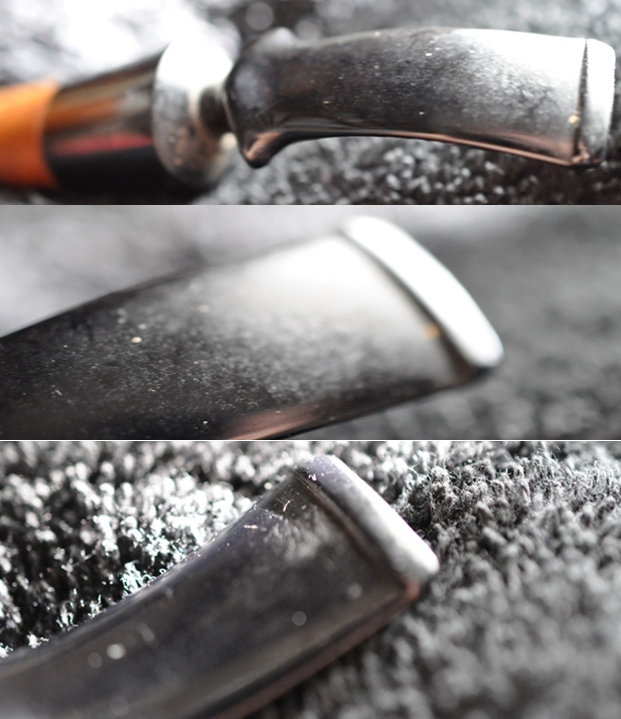
 I wiped it down with some Soft Scrub on cotton pads to remove the oxidation and calcification. I was able to remove most of the oxidation and the calcification. It looked much better when I finished.
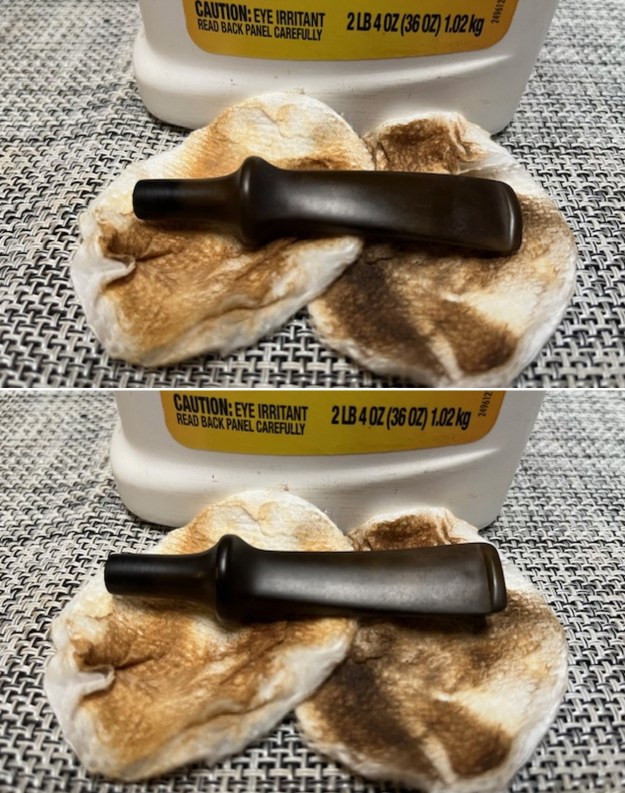 I sanded out the light tooth marks and chatter along with the remaining oxidation with 220 grit sandpaper and started polishing the stem with 600 grit wet dry sandpaper.
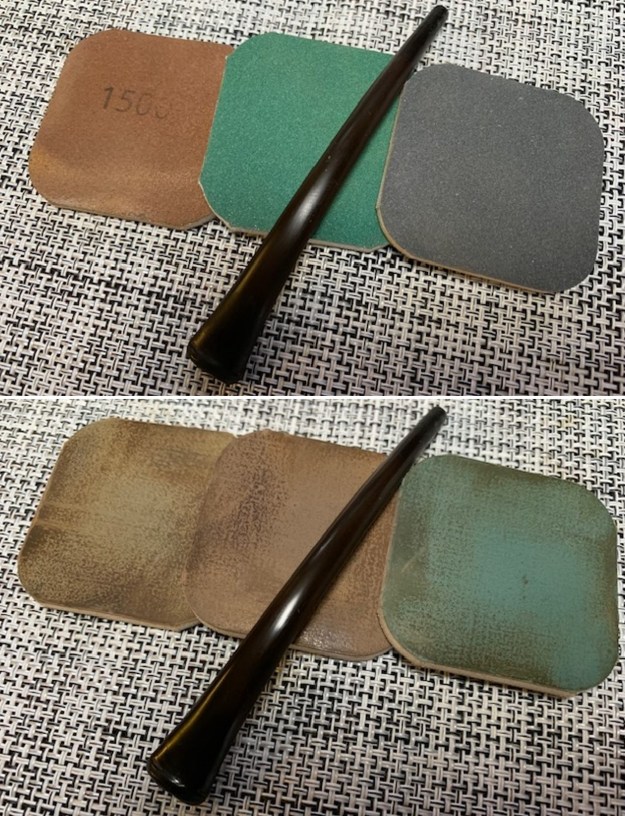
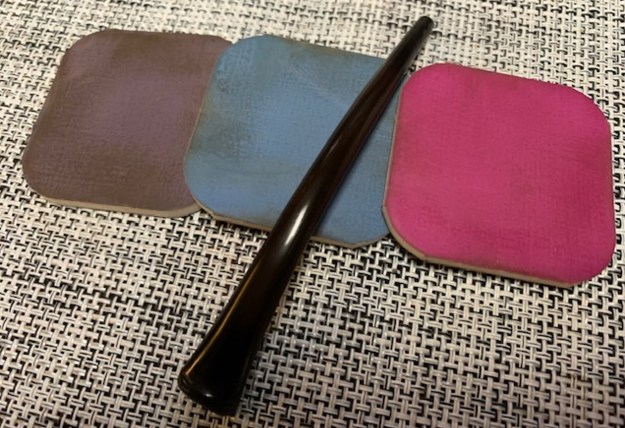
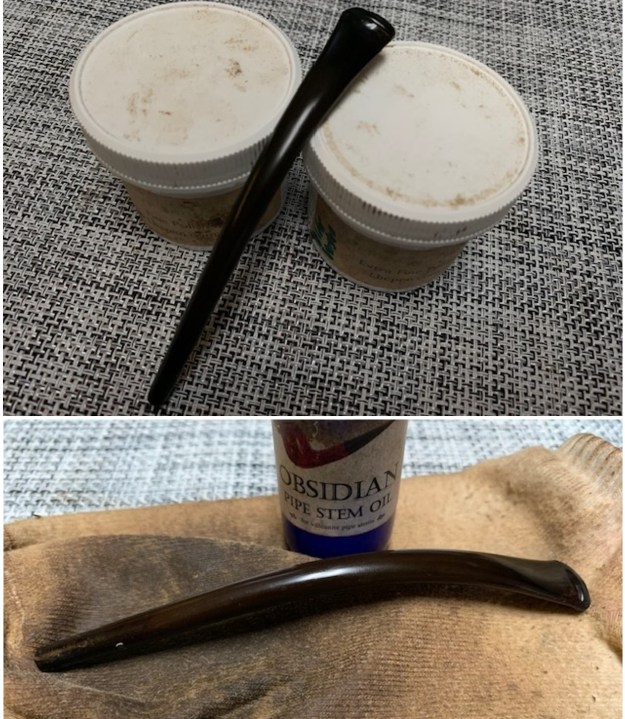
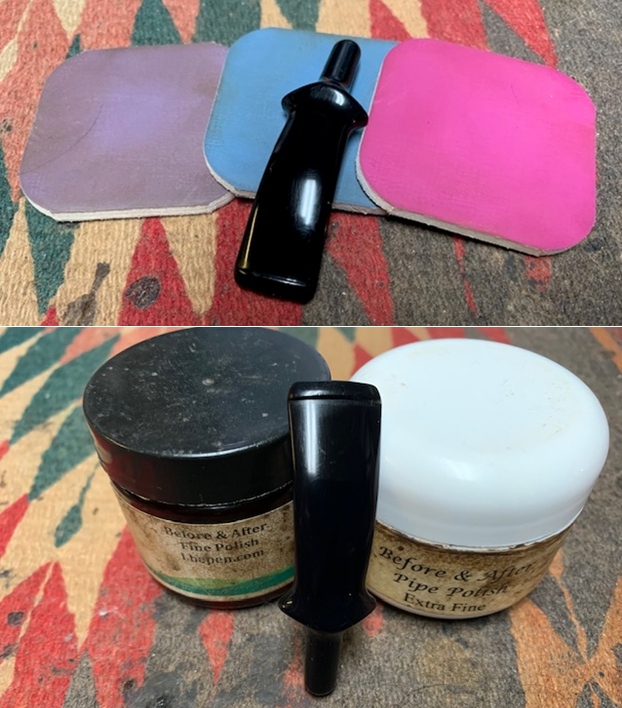
 I polished the stem with micromesh sanding pads – wet sanding with 1500-12000 grit sanding pads. I wiped it down after each sanding pad with Obsidian Oil.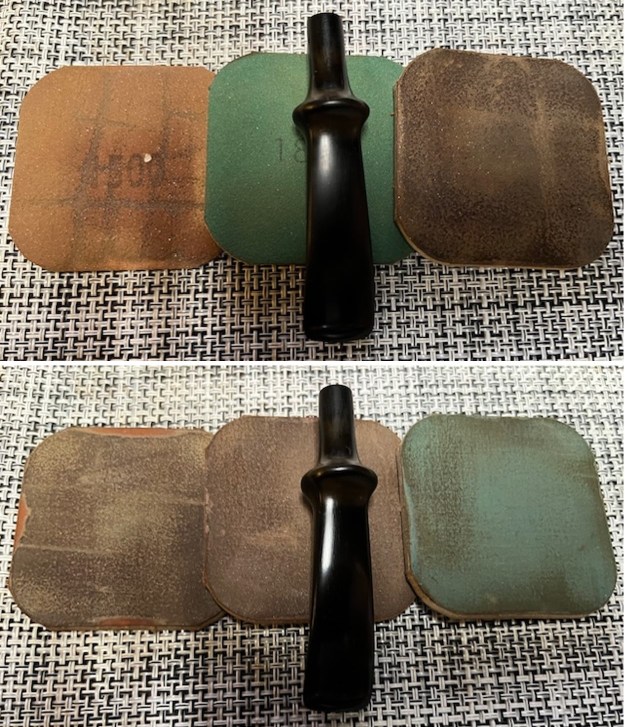
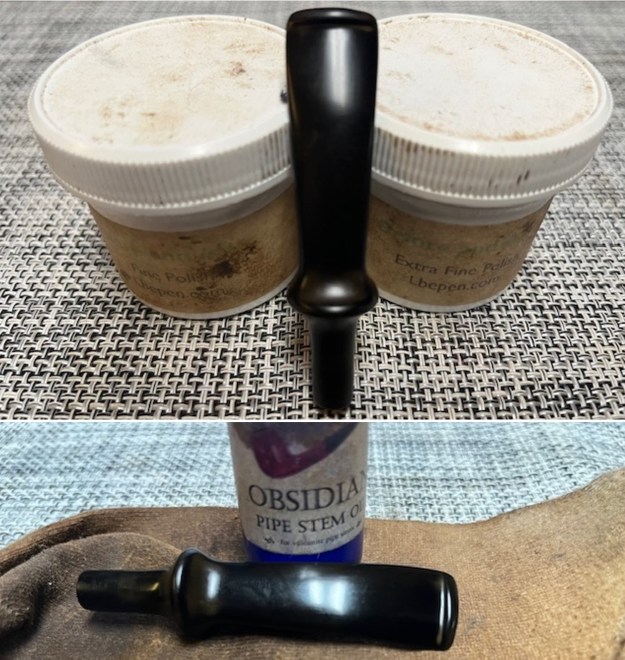
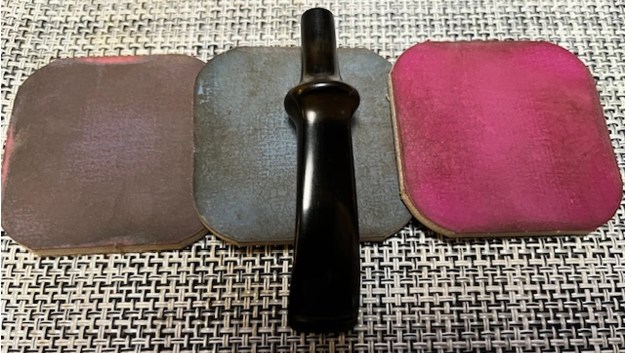 I finished polishing the stem with Before & After Pipe Stem polish (both Fine and Extra Fine) then wiped the stem down with another coat of Obsidian Oil.
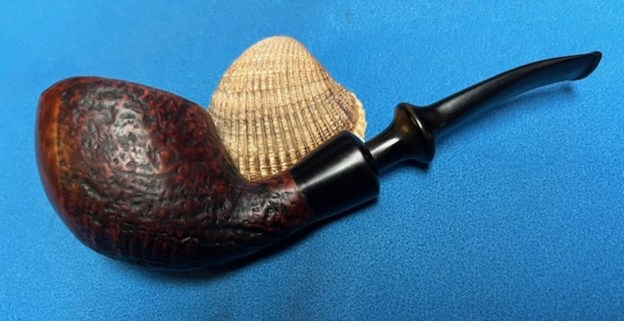
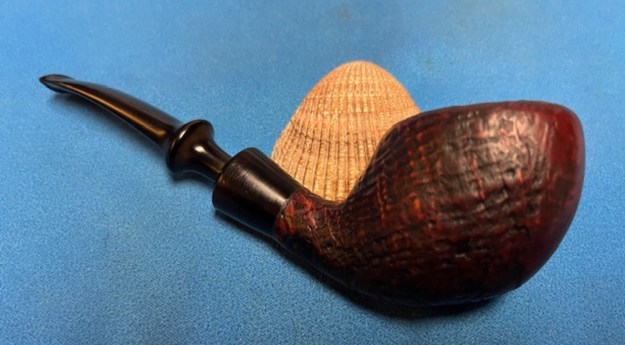
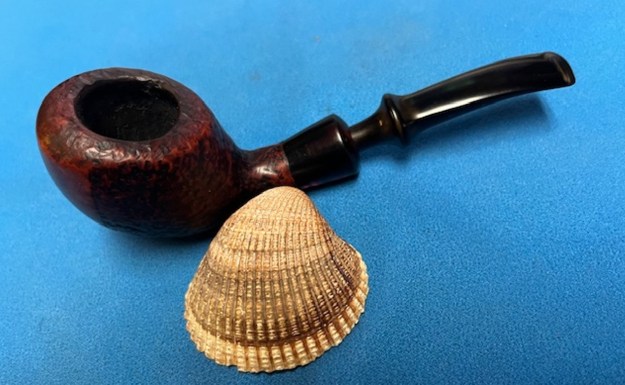
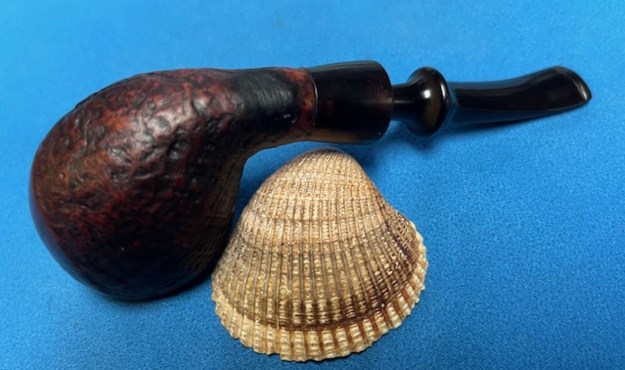
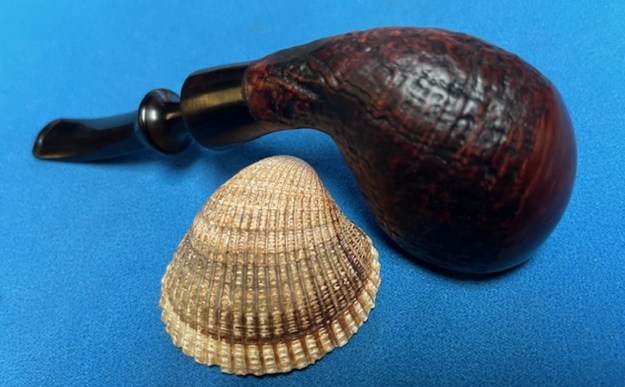
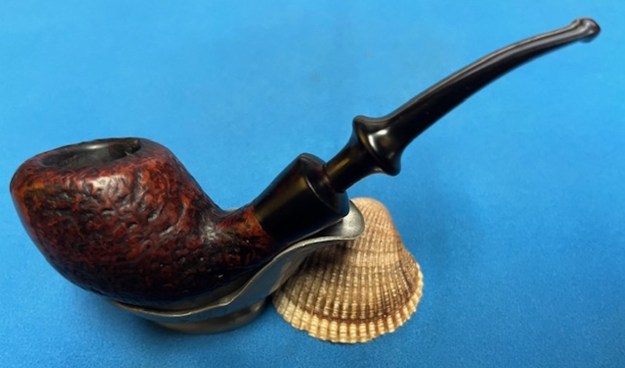
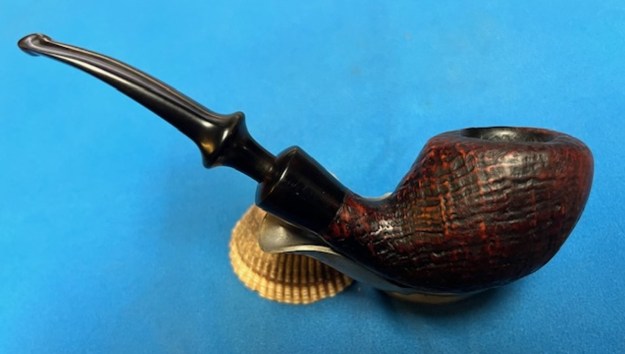
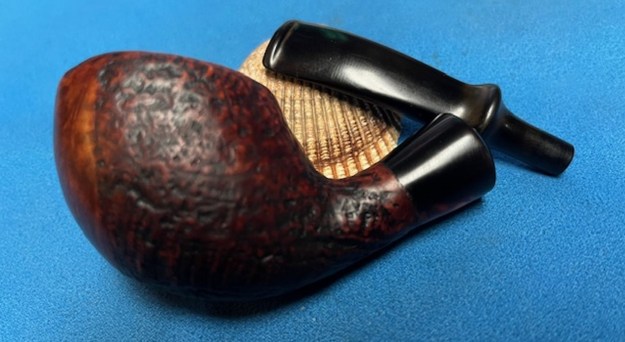
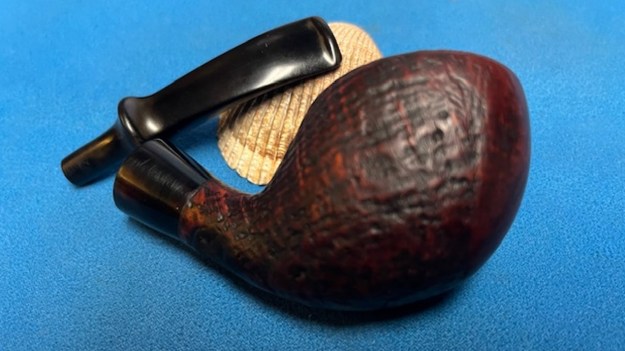
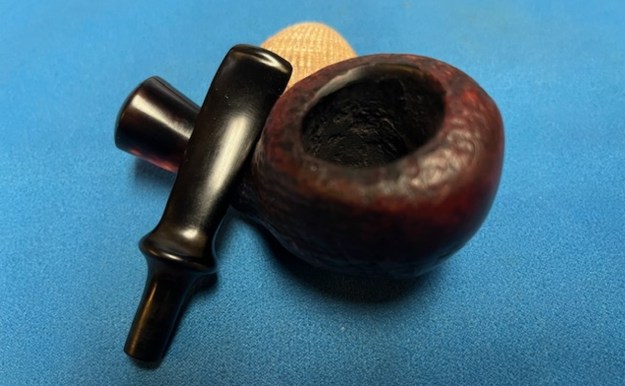
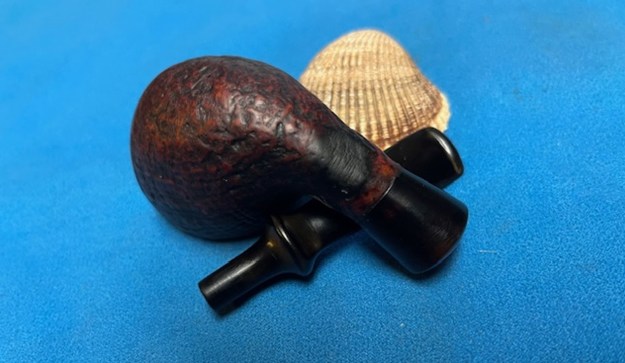
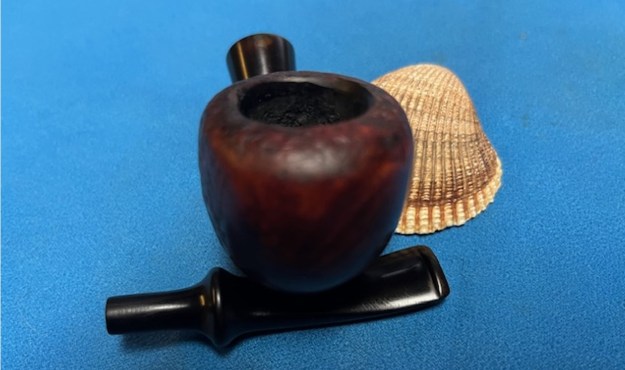
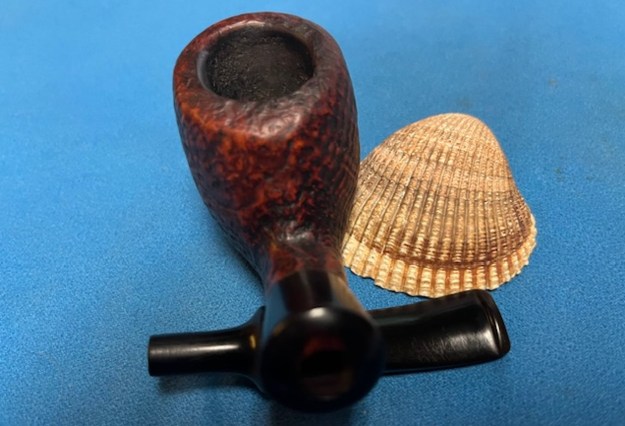
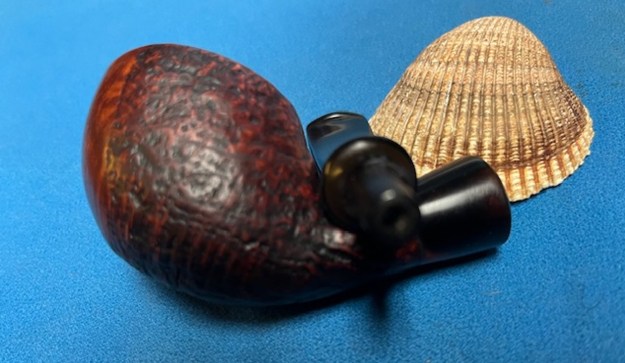
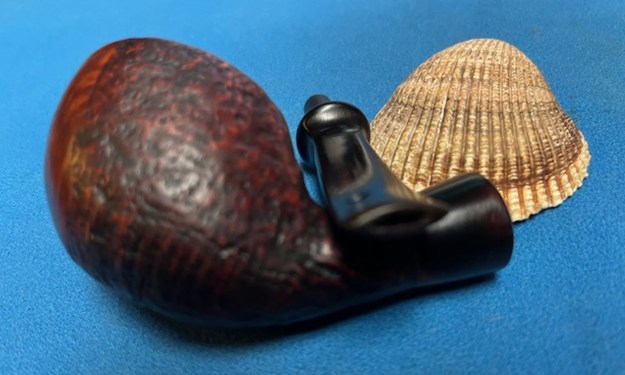
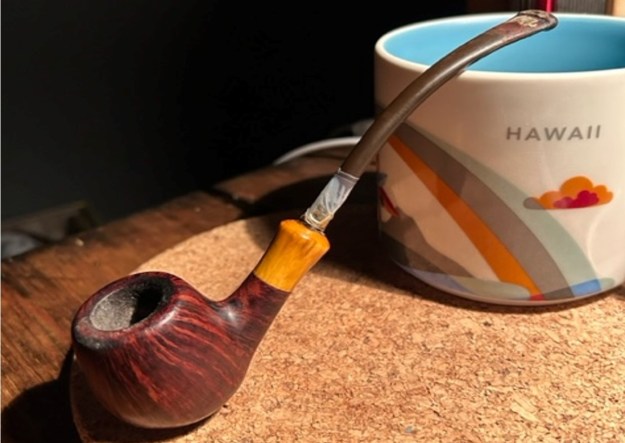
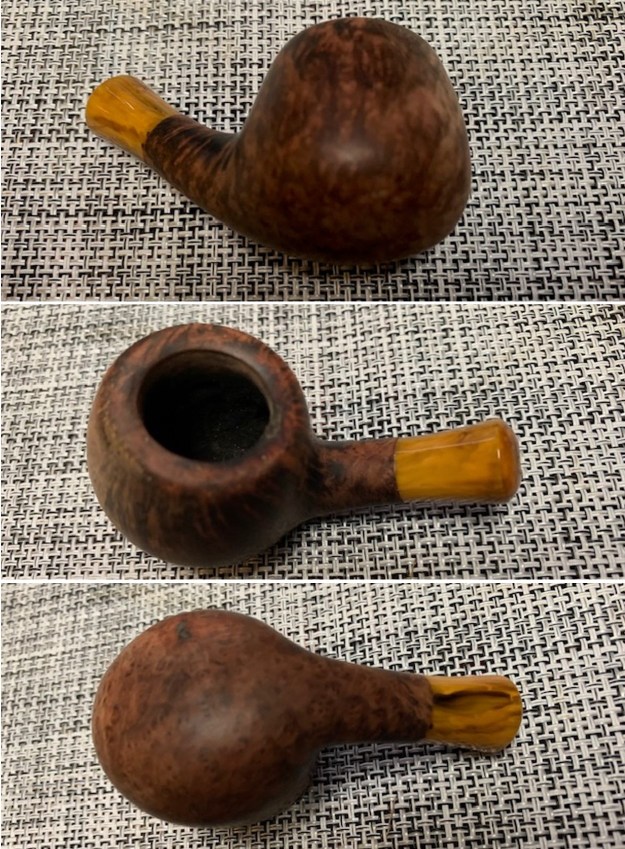
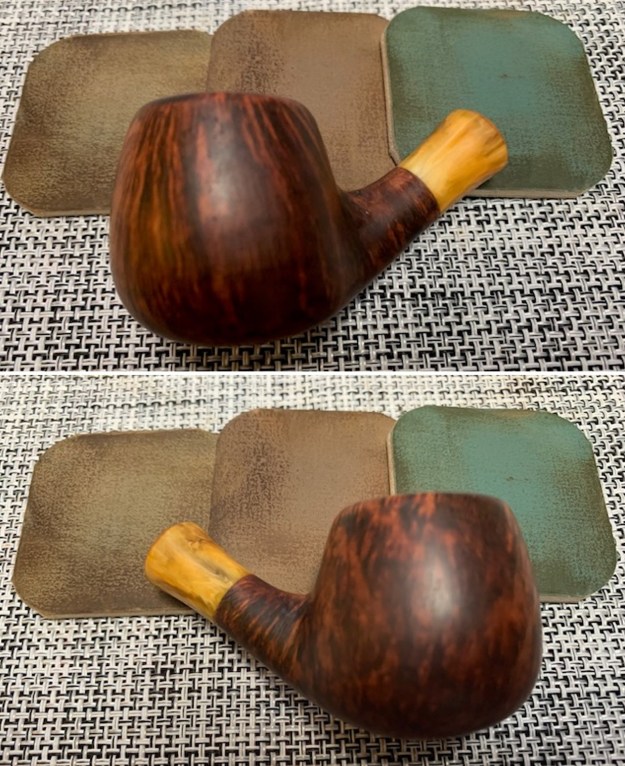
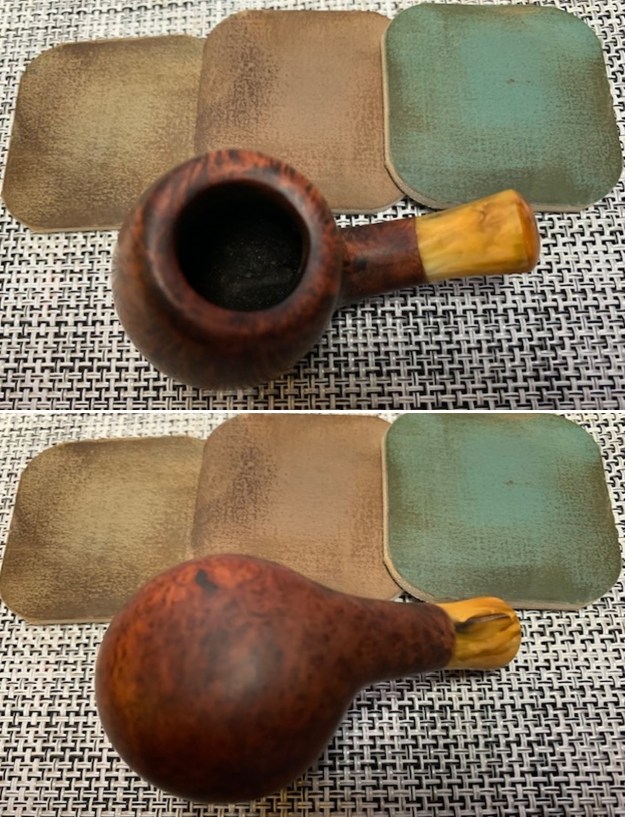
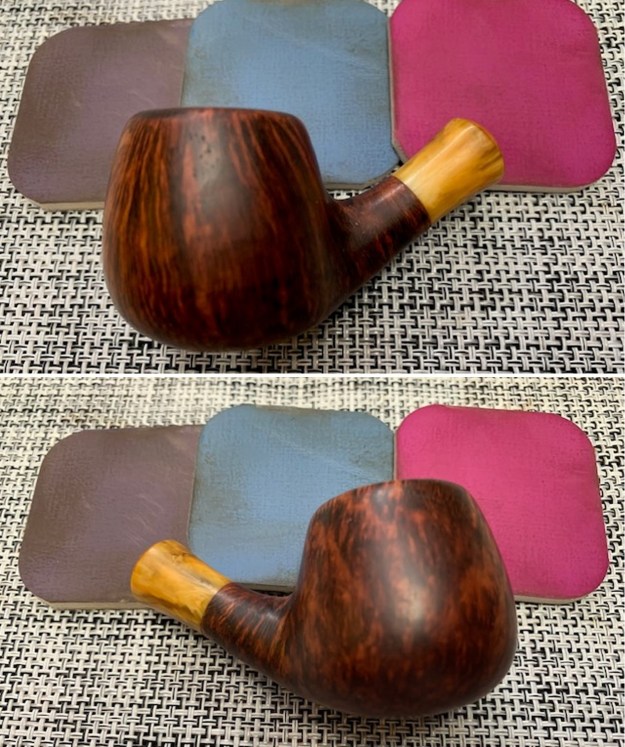
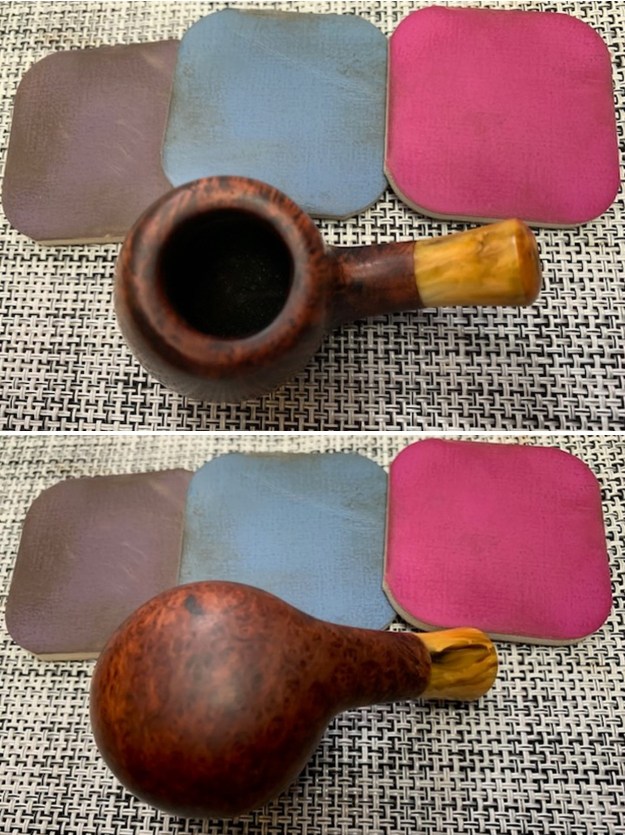
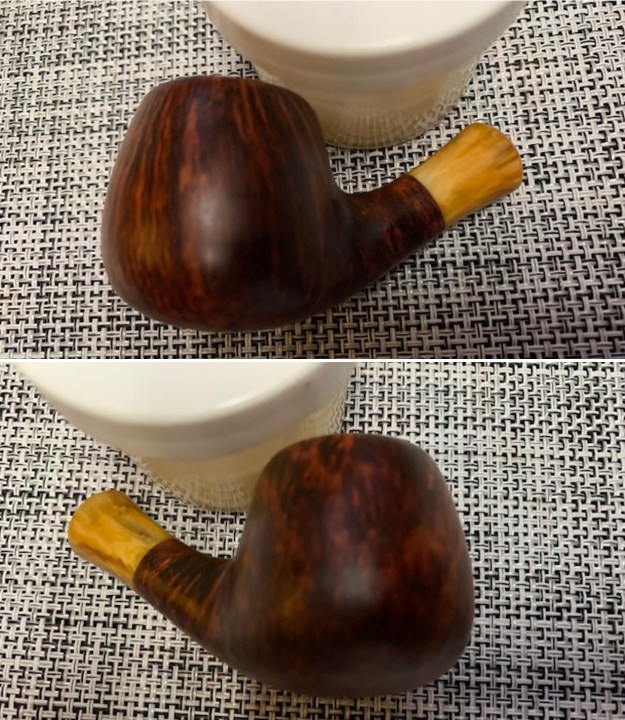
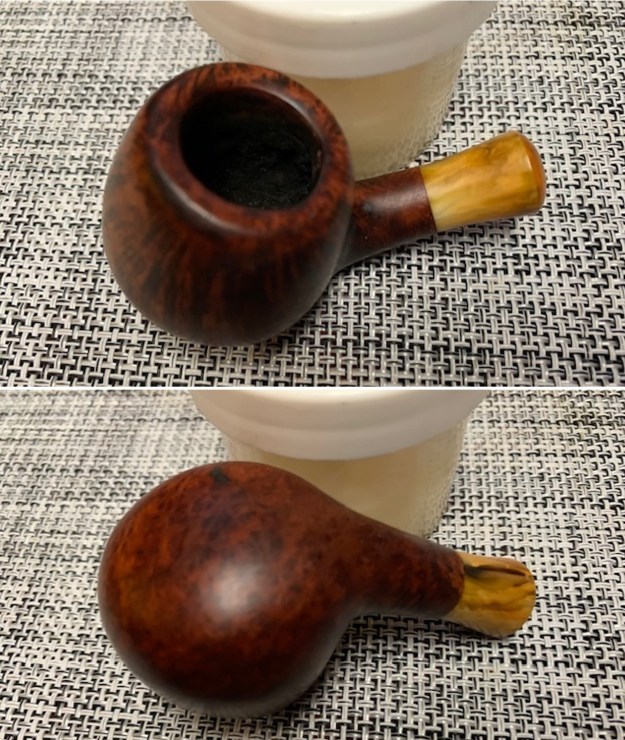
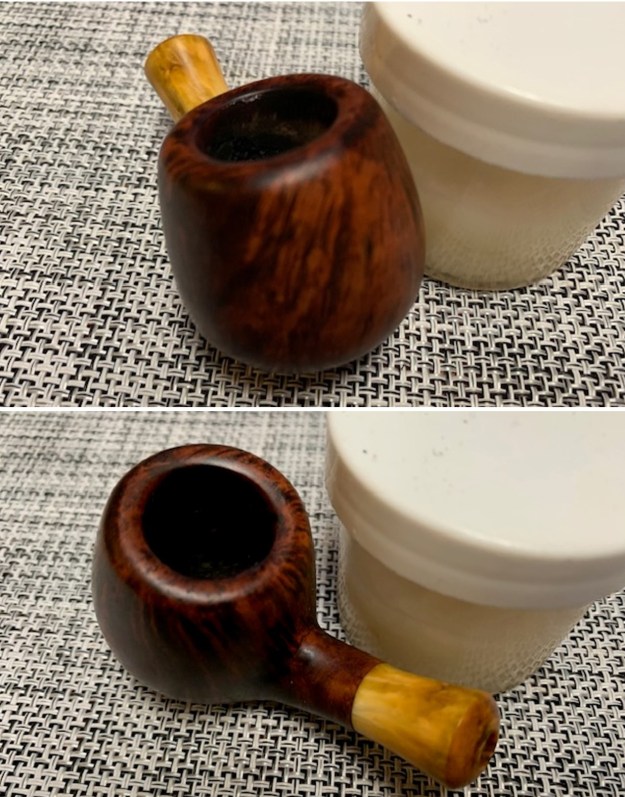
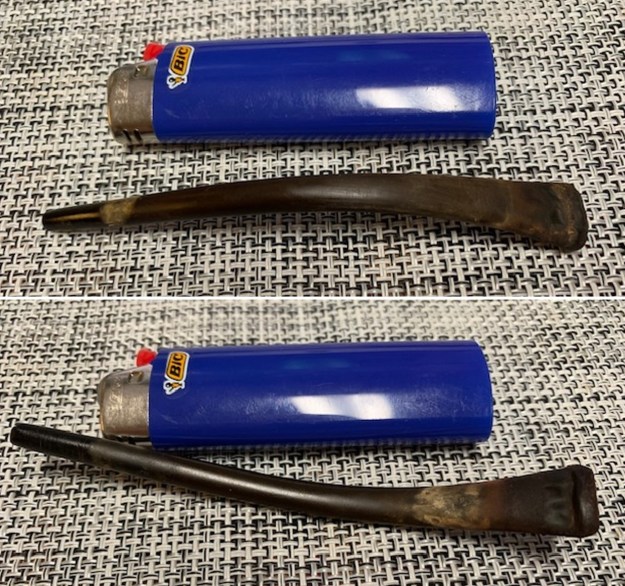
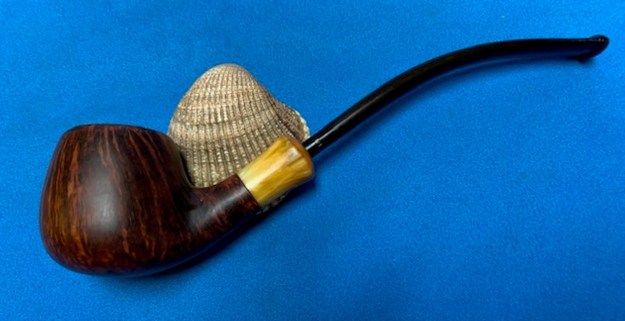
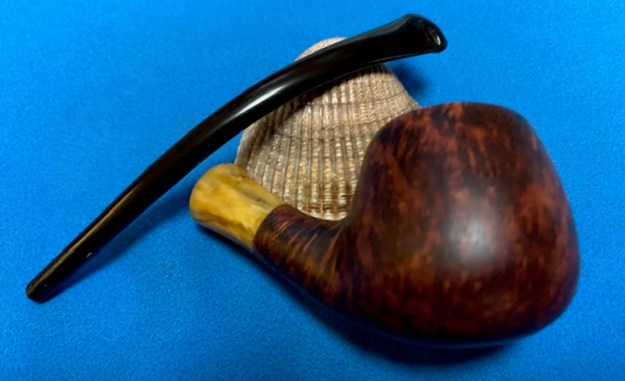
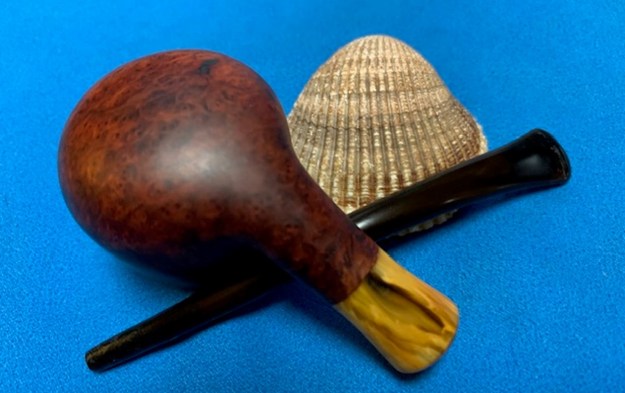
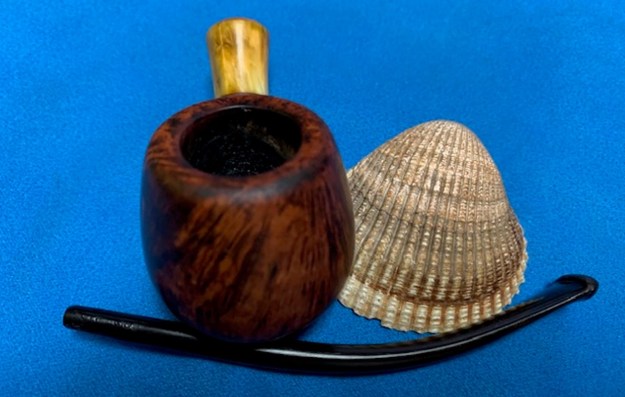
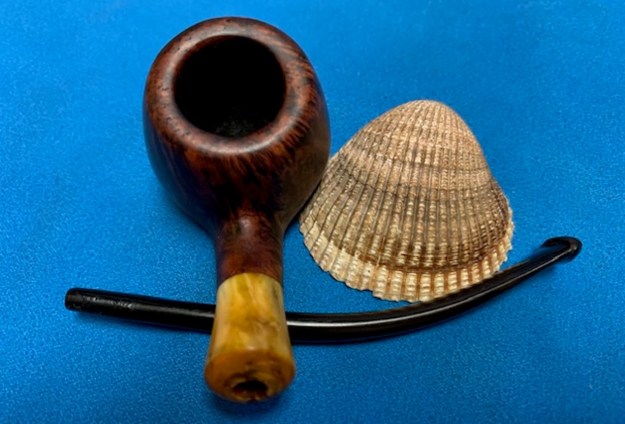
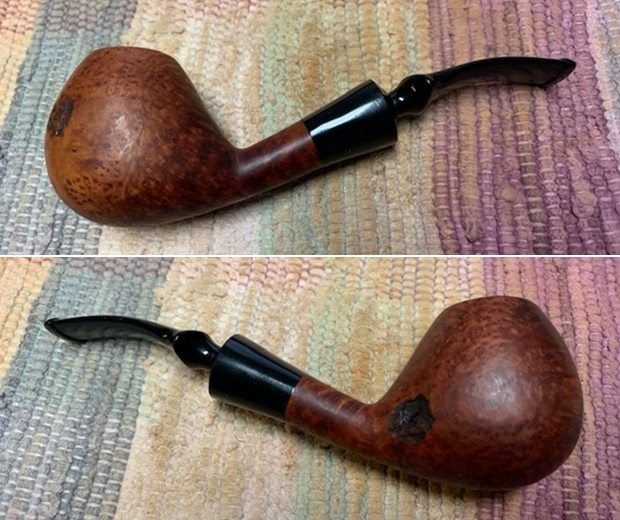
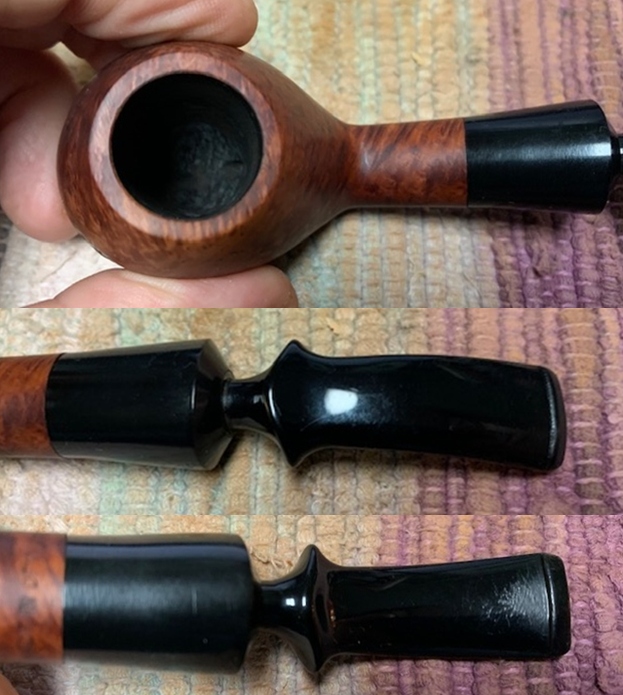
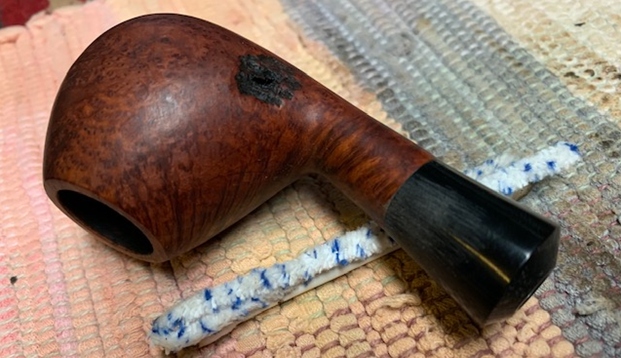
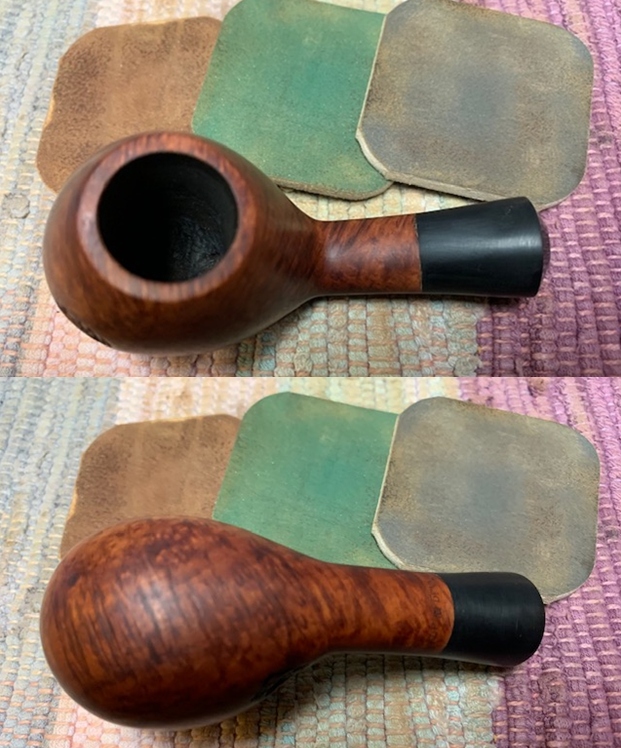
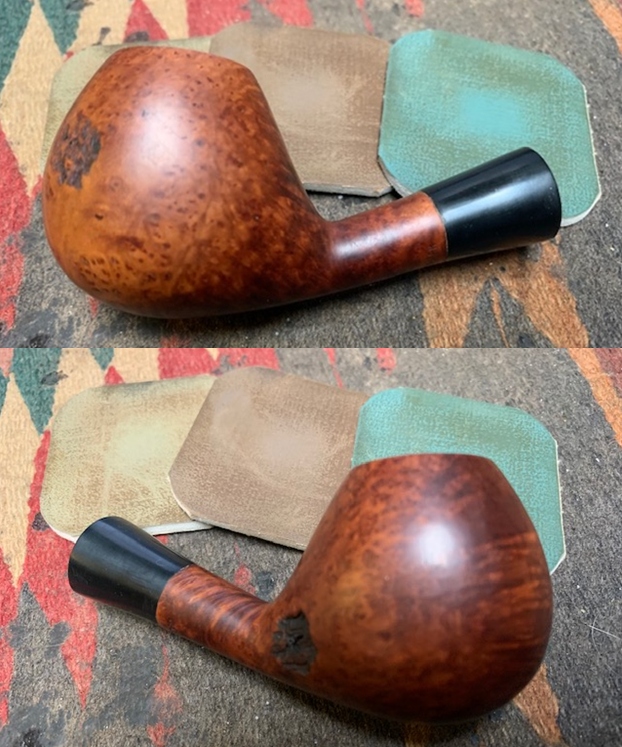
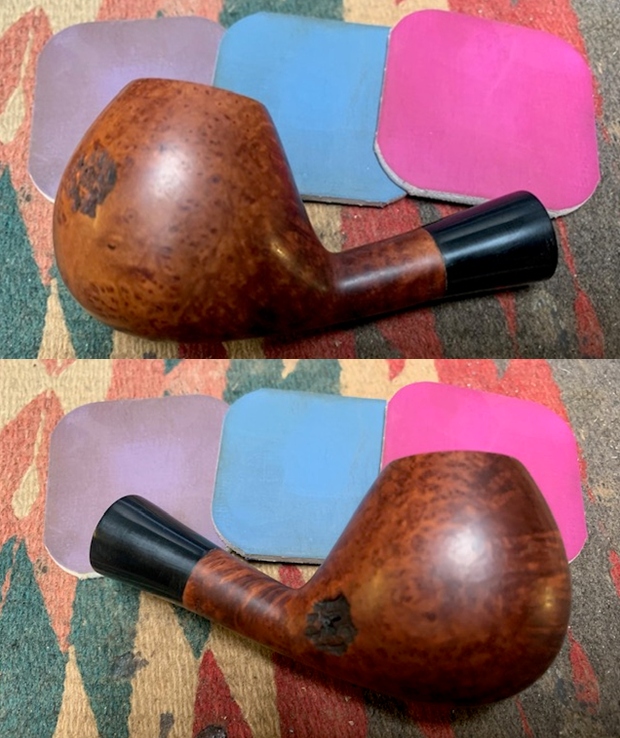
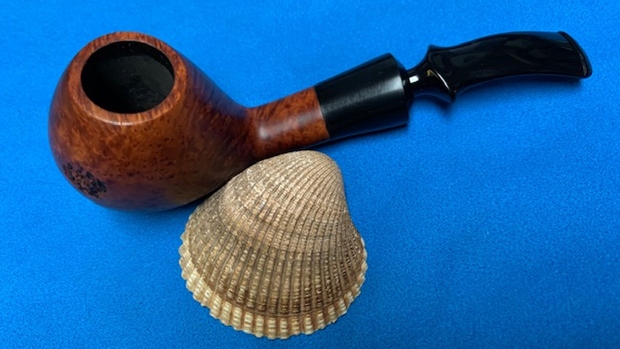
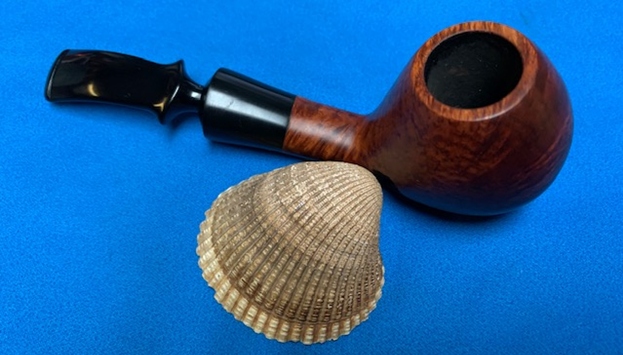
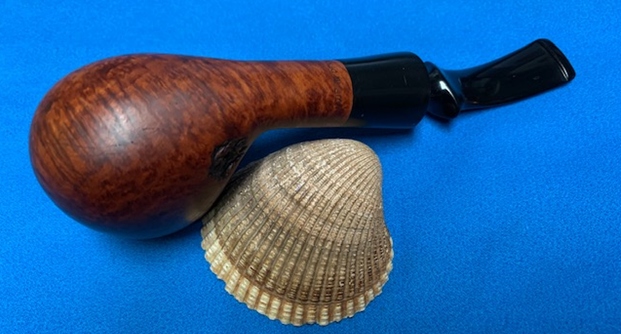
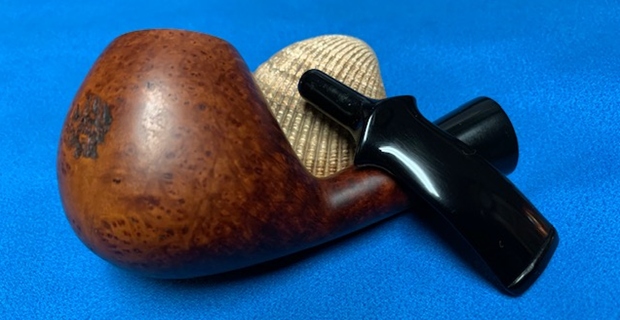
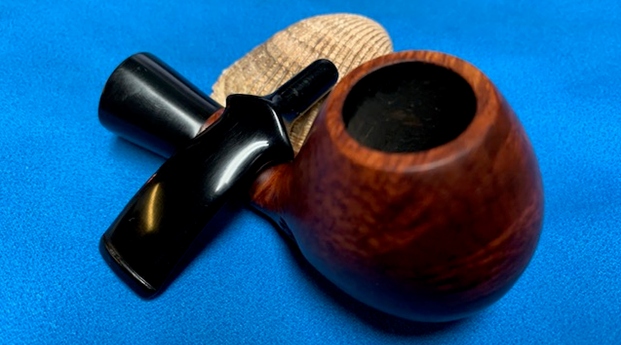
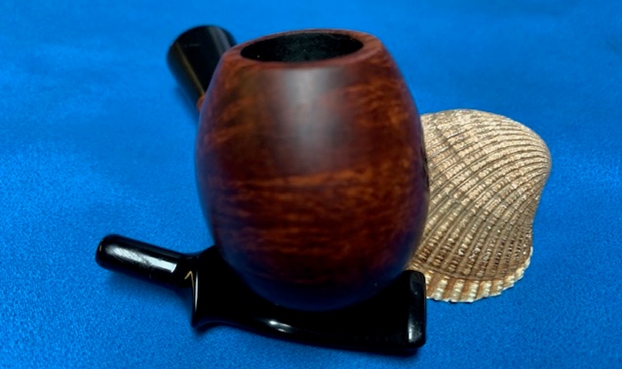
 I am excited to finish this Ivarsson Design Stanwell Antique Made in Denmark 25. I put the pipe back together and buffed it with Blue Diamond on the buffing wheel. I gave the bowl and the stem multiple coats of carnauba wax. I buffed the pipe with a clean buffing pad to raise the shine and hand buffed it with microfiber cloth to deepen the shine. It is fun to see what the polished bowl looks like with the polished black, fancy turned vulcanite stem was beautiful. This Stanwell Antique 25 Made in Denmark Scoop is nice looking and the pipe feels great in my hand. It is light and well balanced. Have a look at it with the photos below. The dimensions are Length: 5 ½ inches, Height: 1 ¾ inches, Outside diameter of the bowl: 1 ½ inches wide x 1 ¾ inches long, Chamber diameter: 7/8 of an inch. The weight of the pipe is 1.66 ounces/47 grams. It is a beautiful pipe and one that I will be putting in the Danish Pipemaker Section on the rebornpipes store. Thanks for walking through the cleanup with me as I worked over this pipe.
As always, I encourage your questions and comments as you read the blog. Thanks to each of you who are reading this blog. Remember we are not pipe owners; we are pipe men and women who hold our pipes in trust until they pass on into the trust of those who follow us. 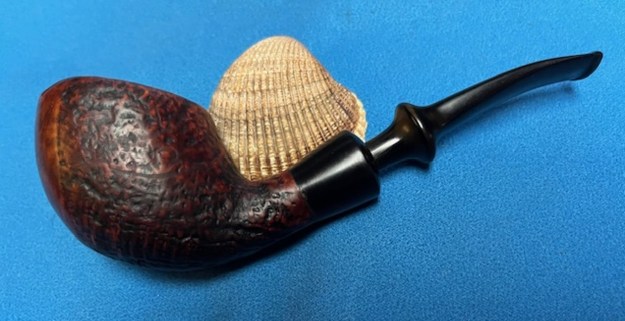























 rebornpipes