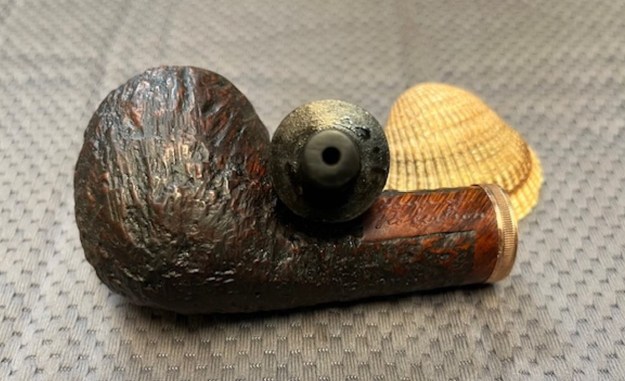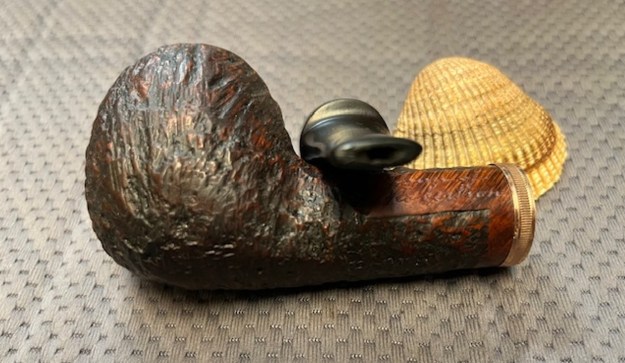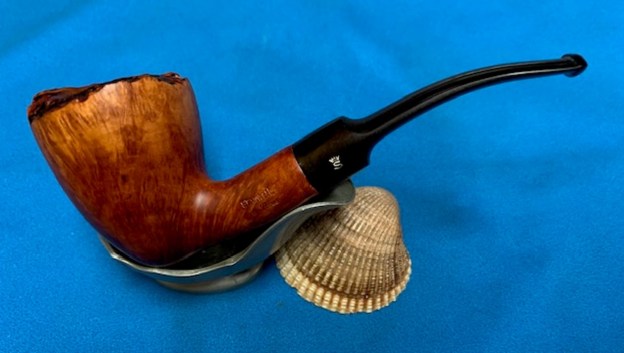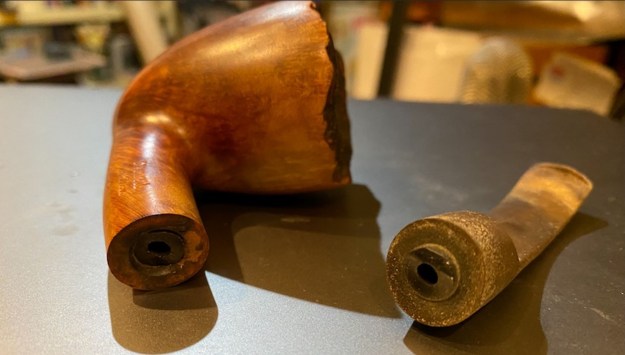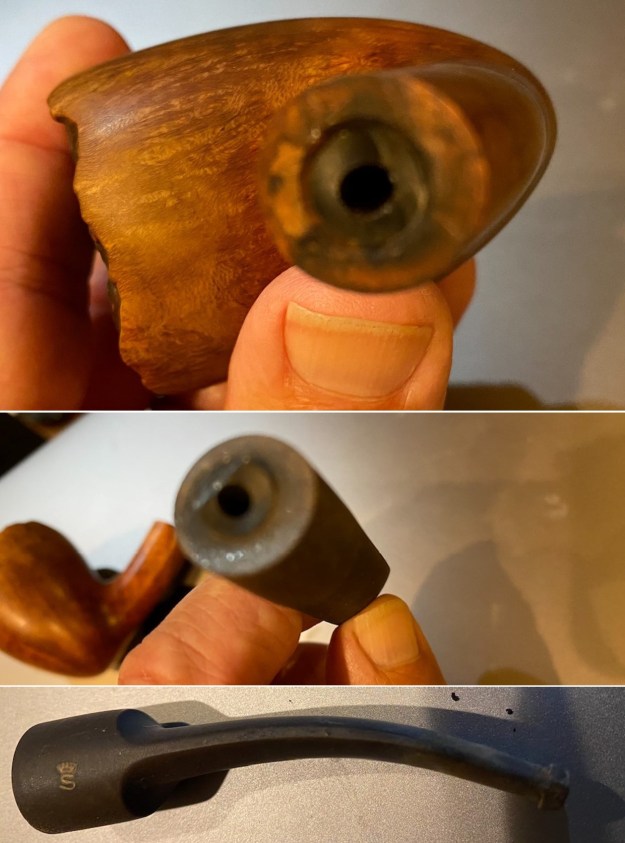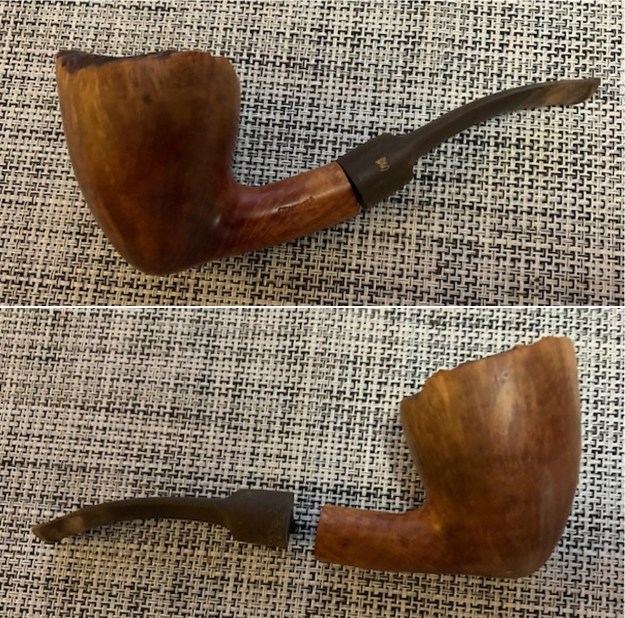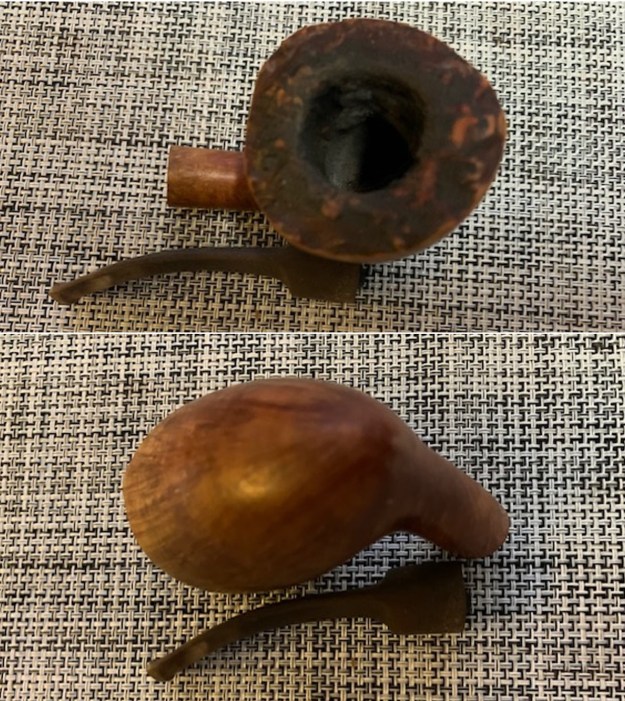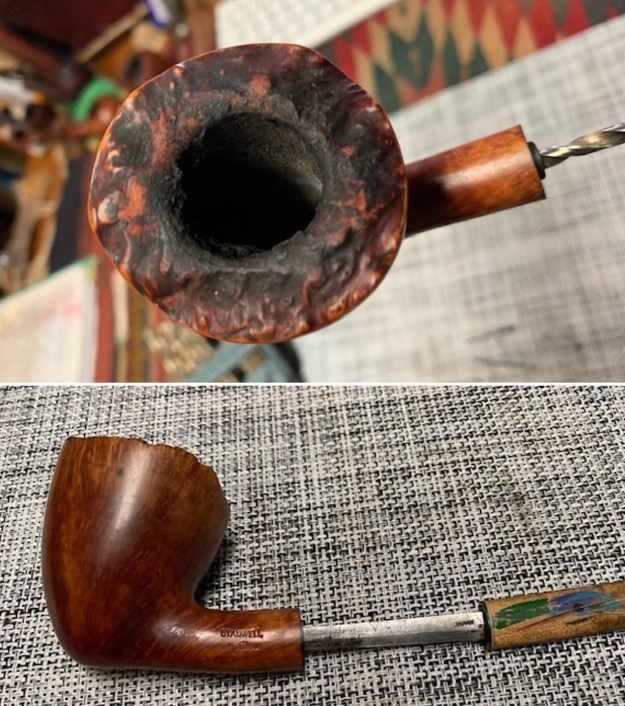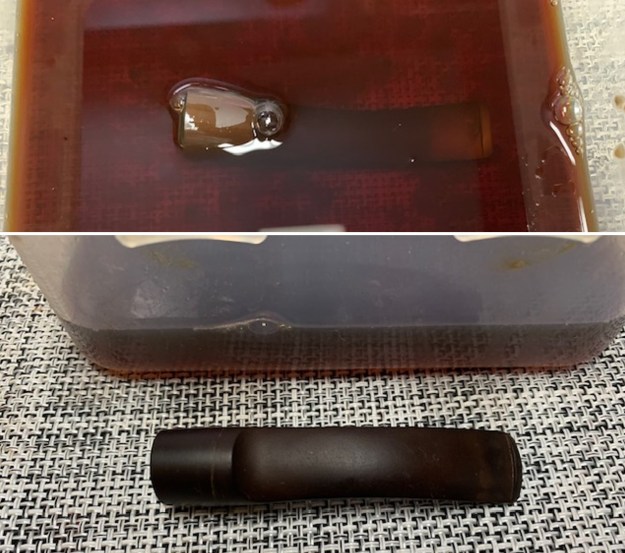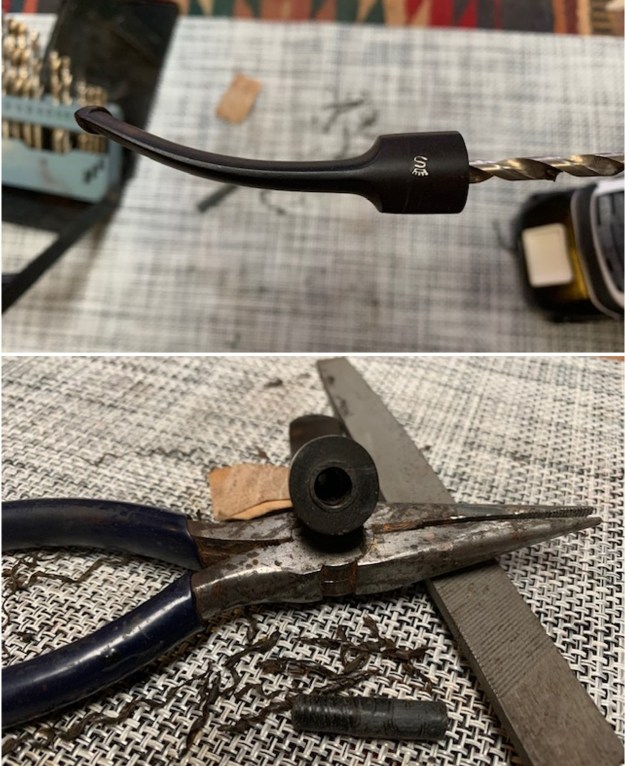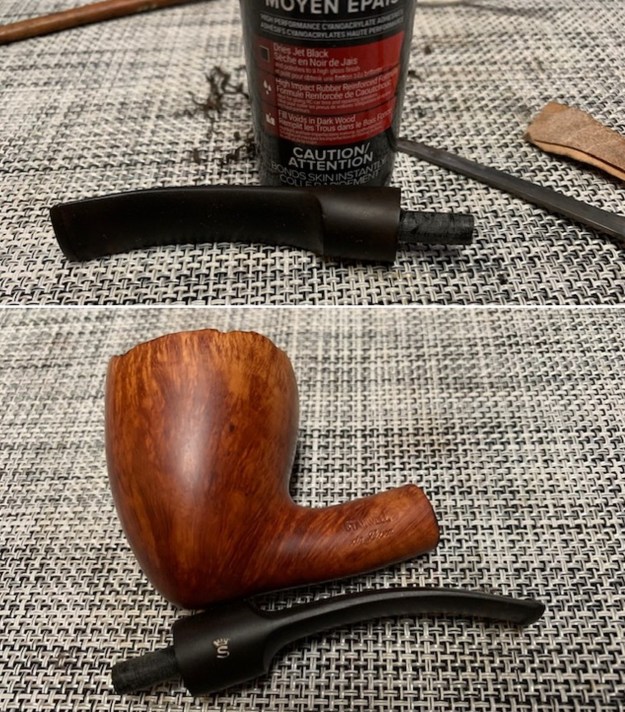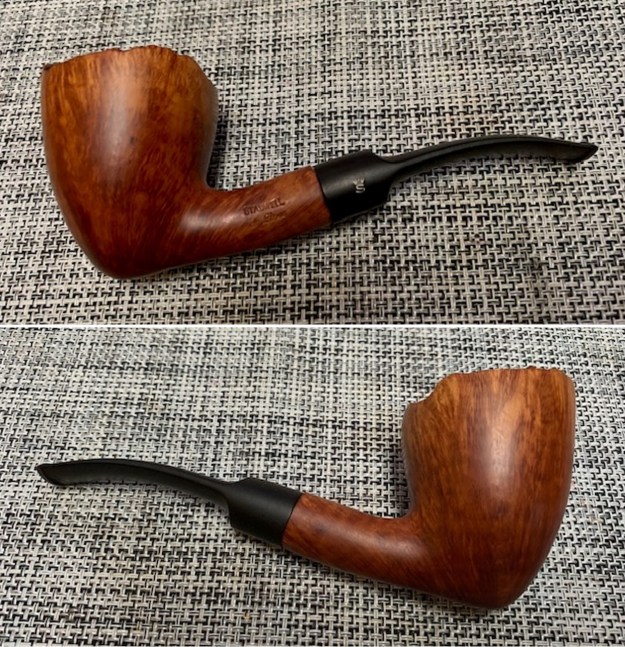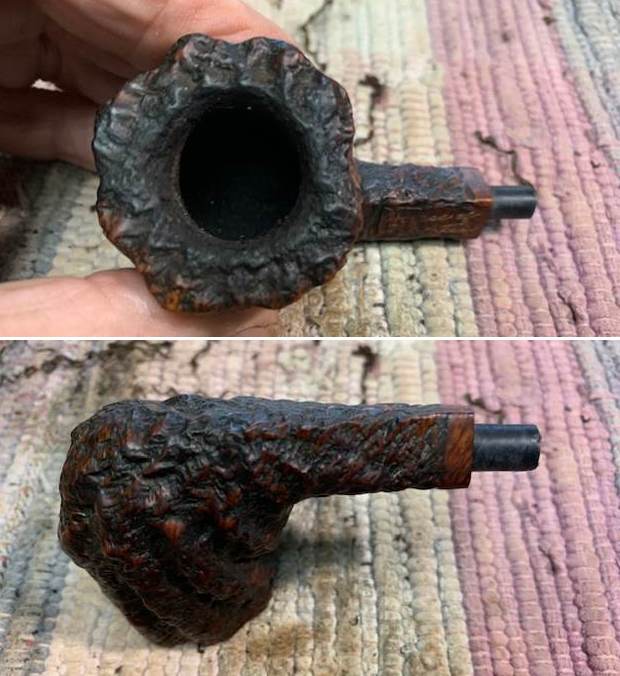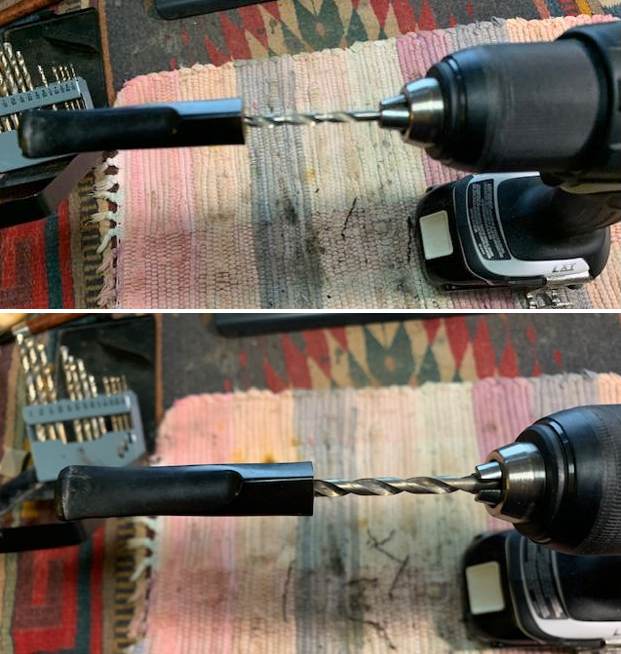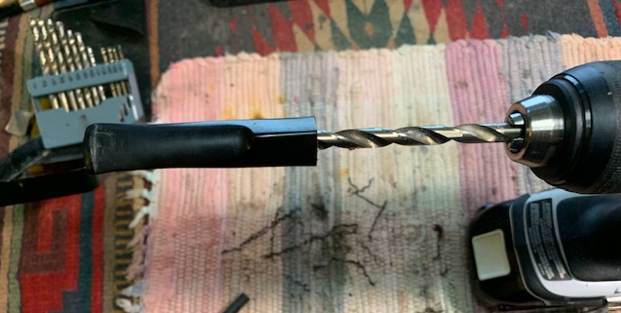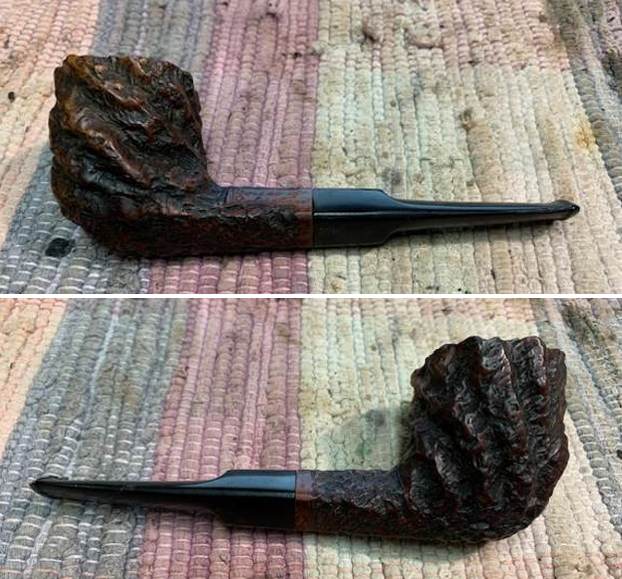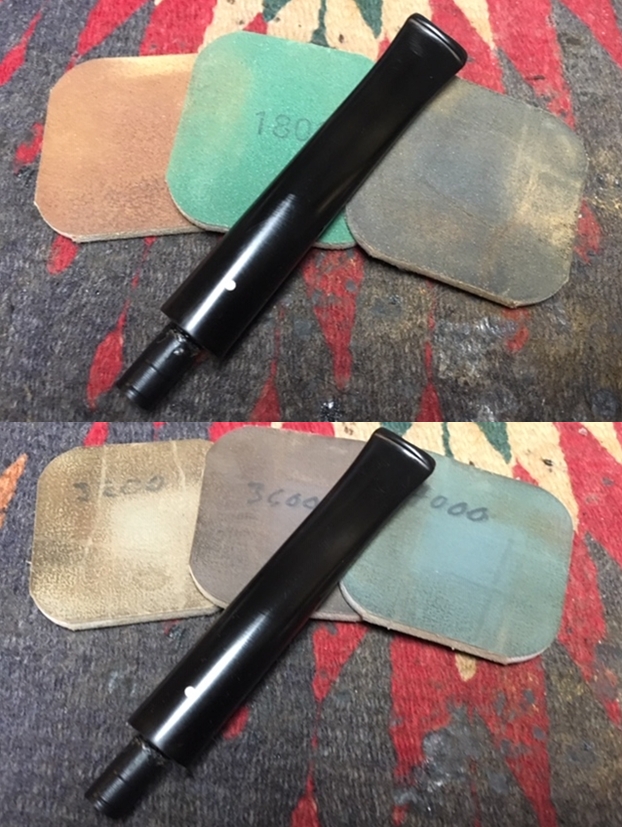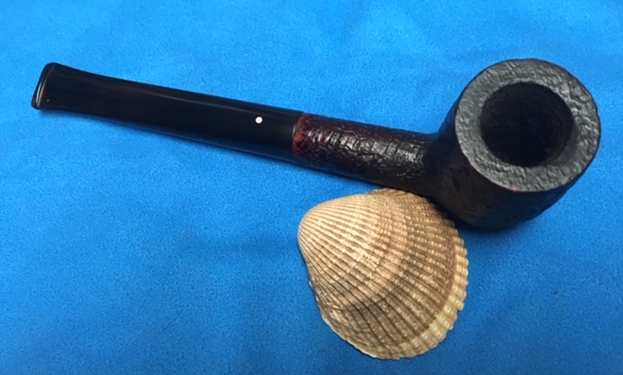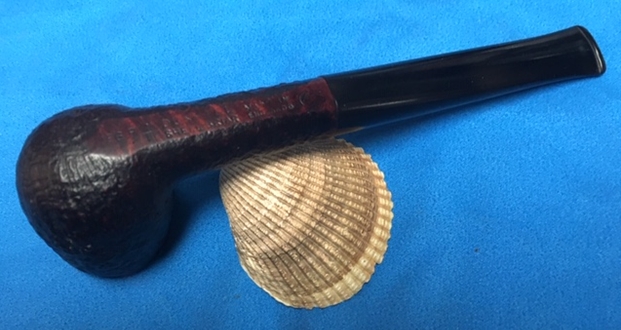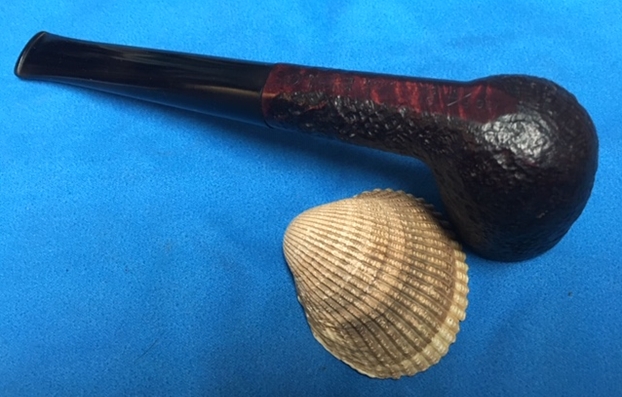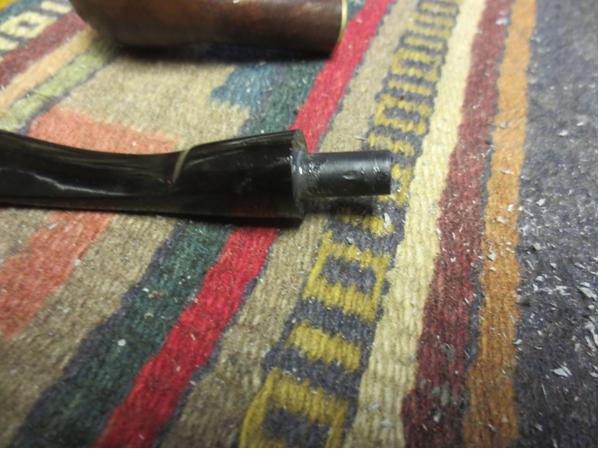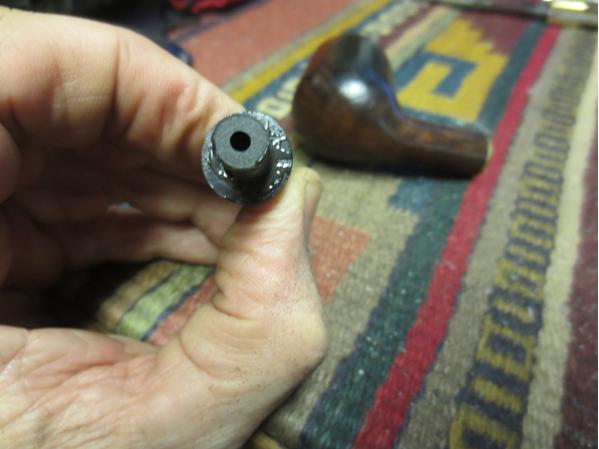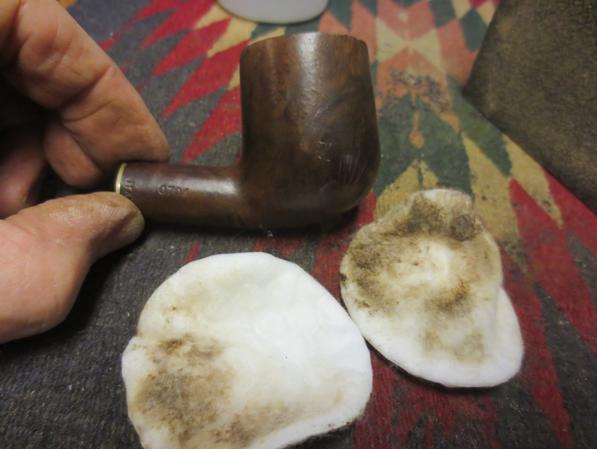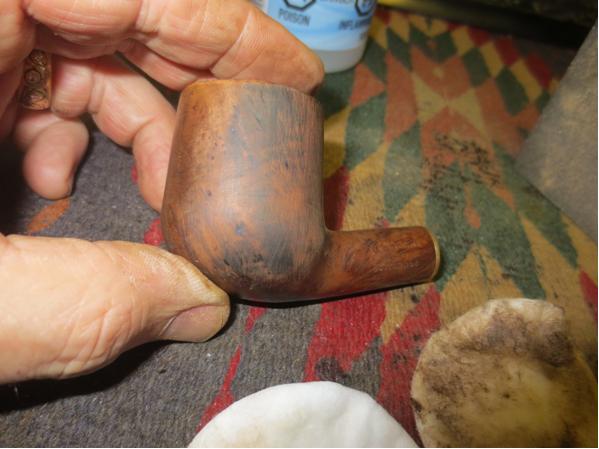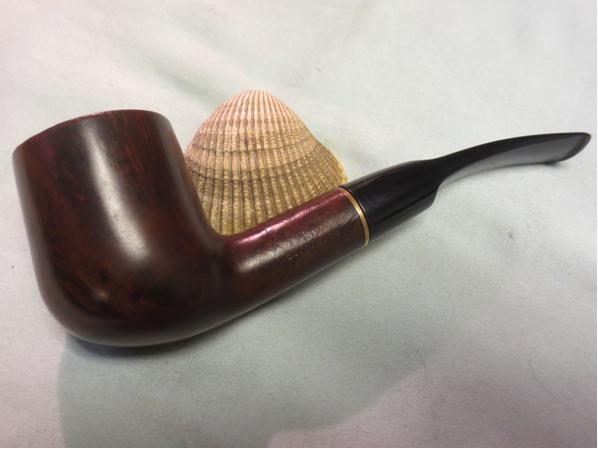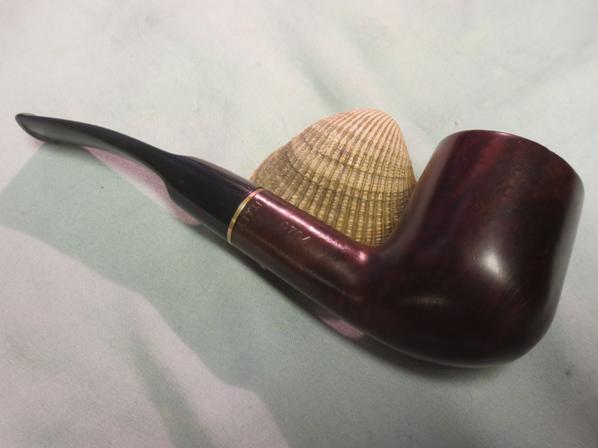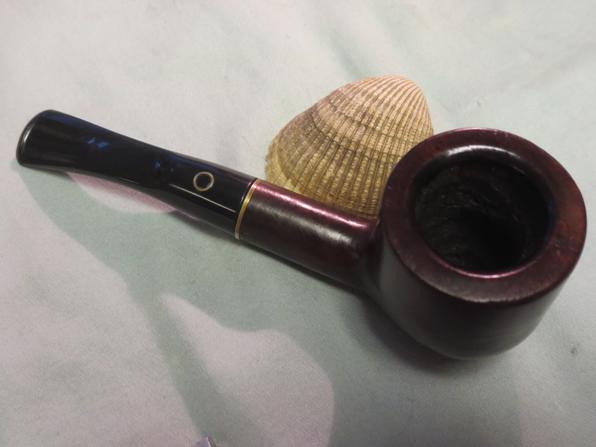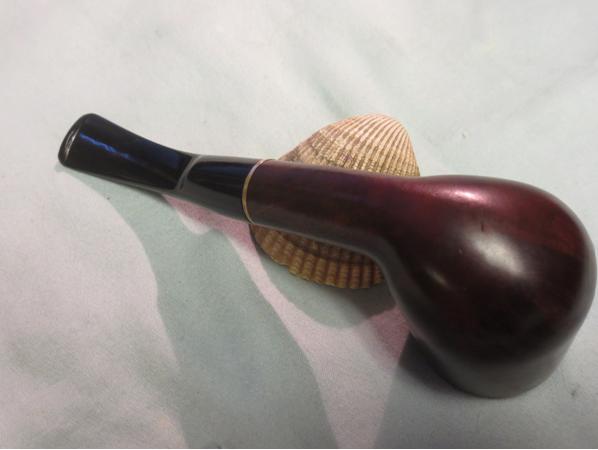
Tag Archives: pulling a broken tenon

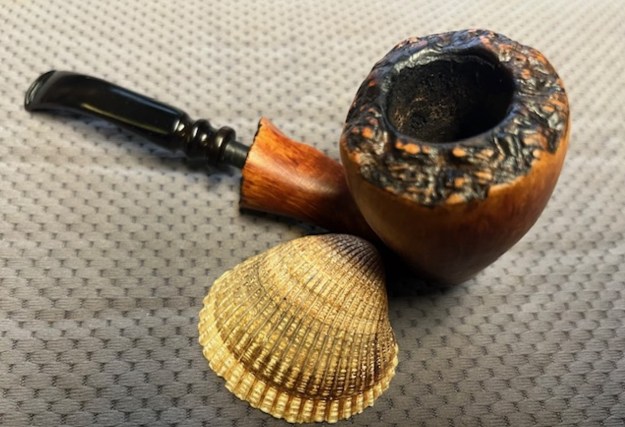
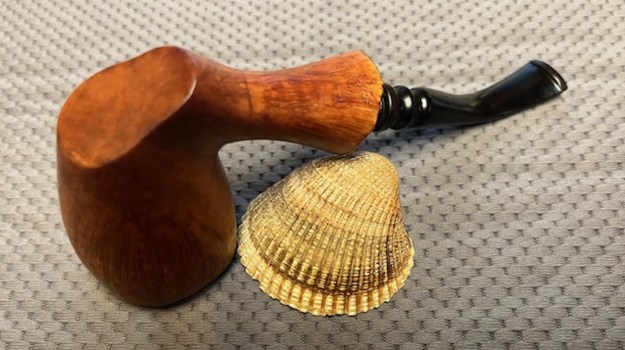
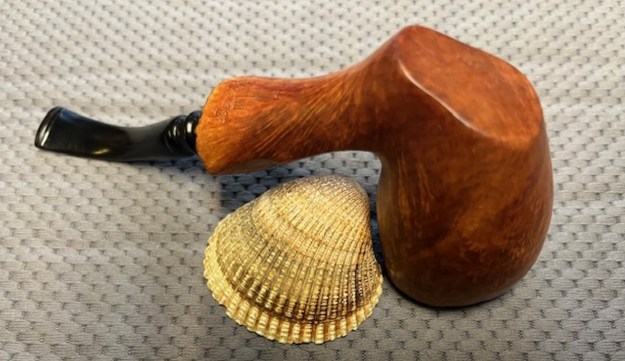
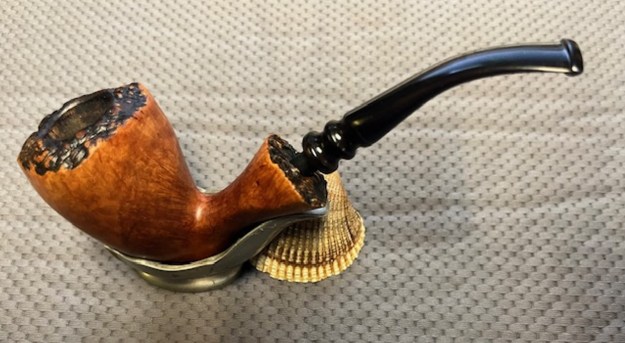
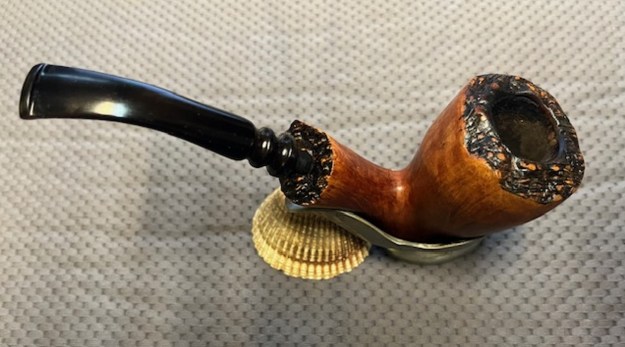
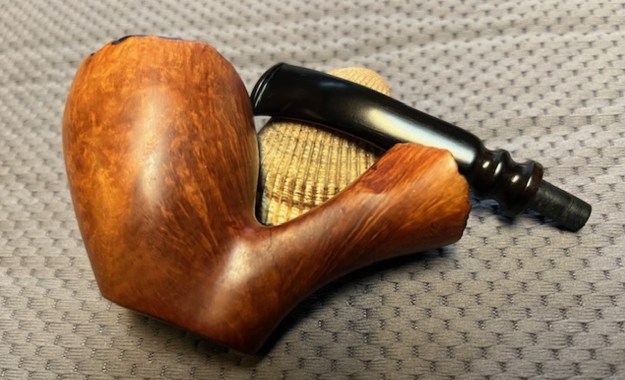
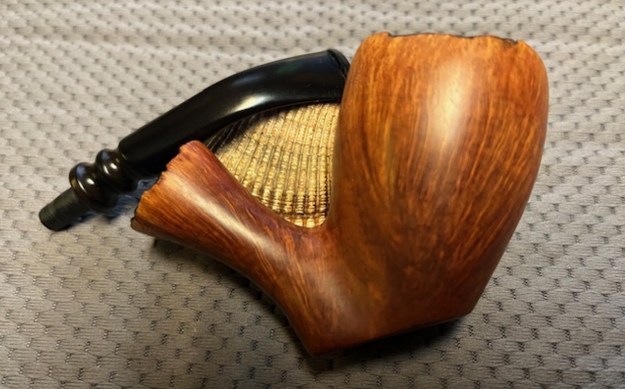
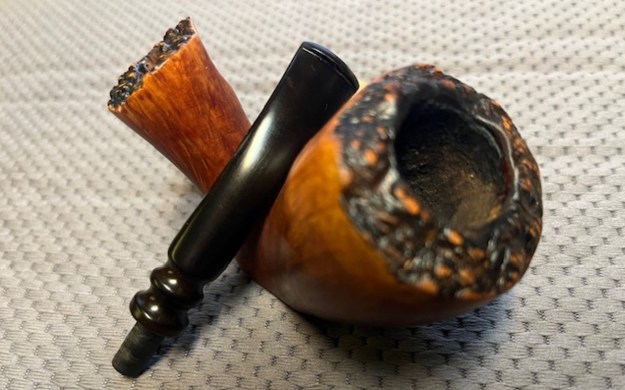
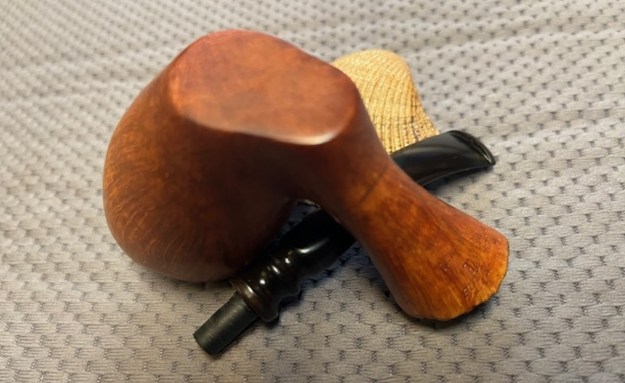
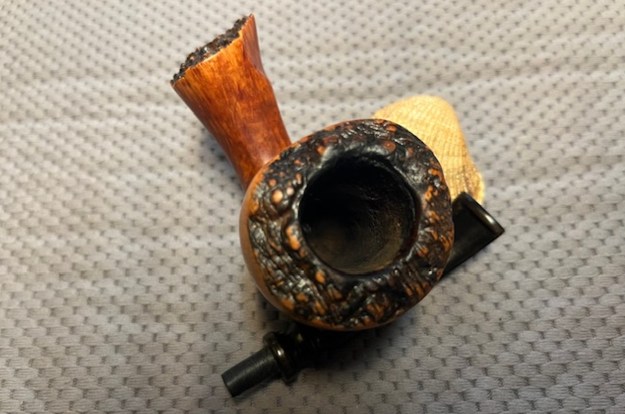
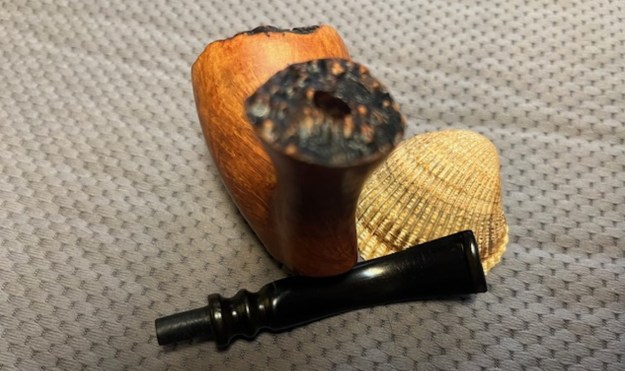
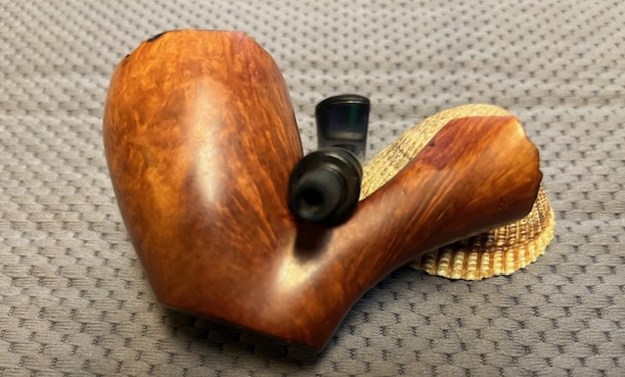
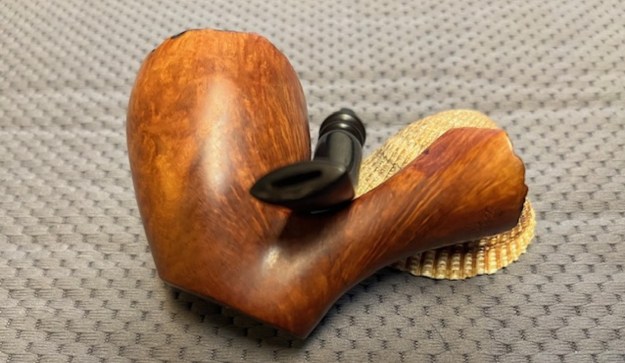
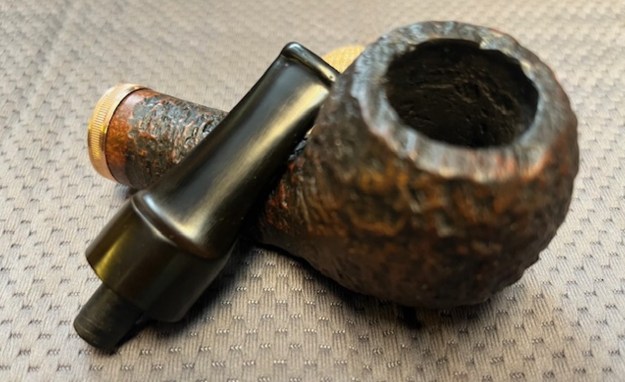
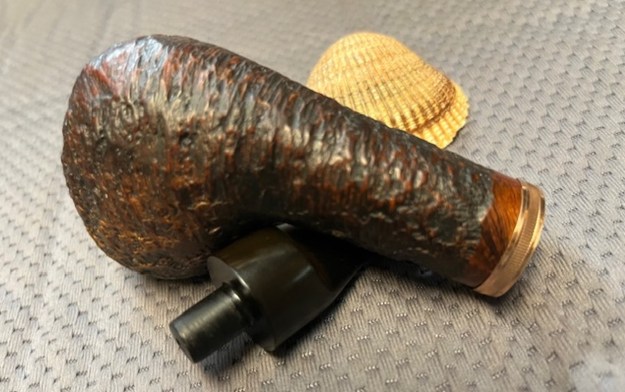
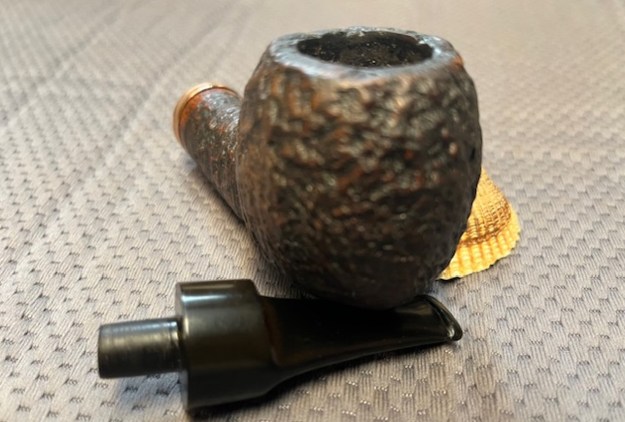
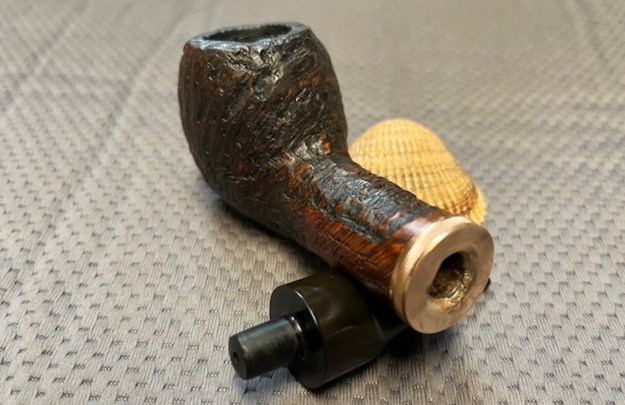
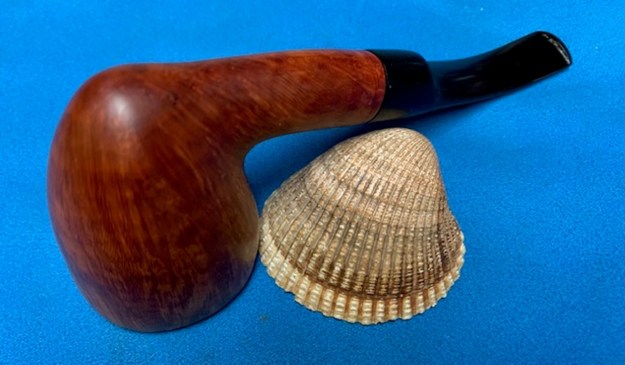
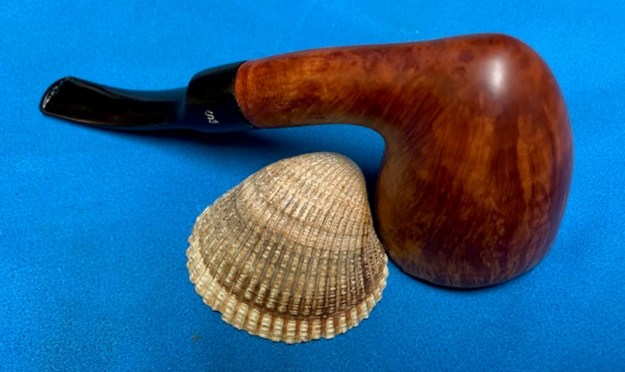
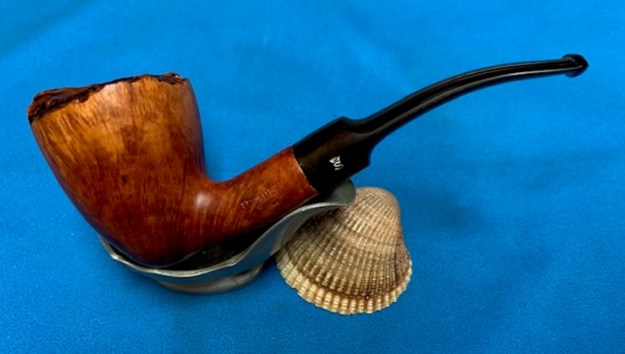
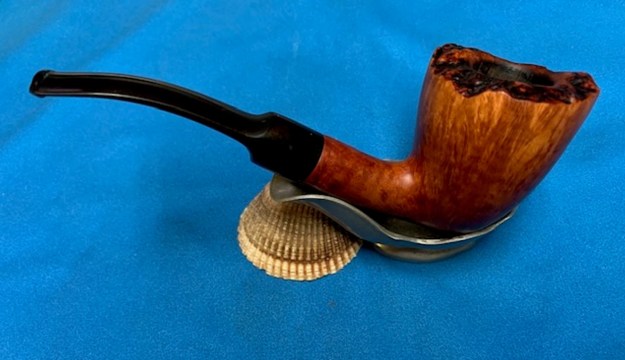
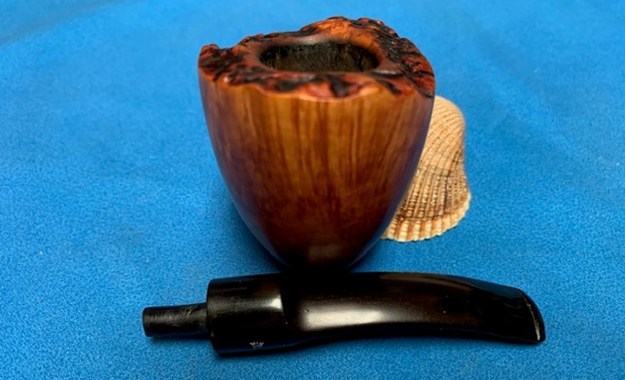
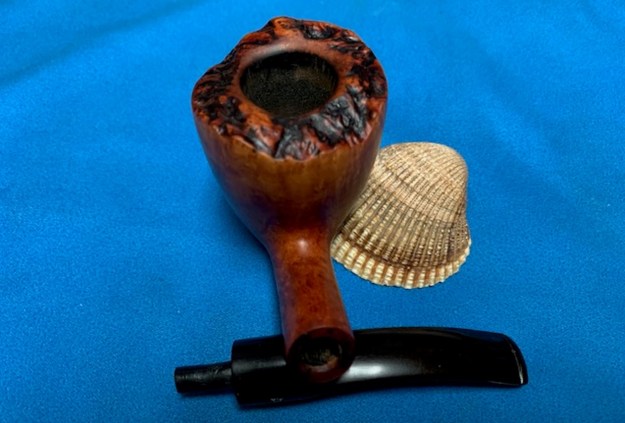
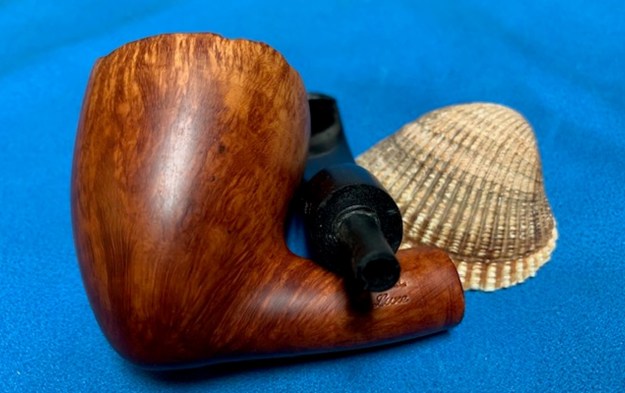
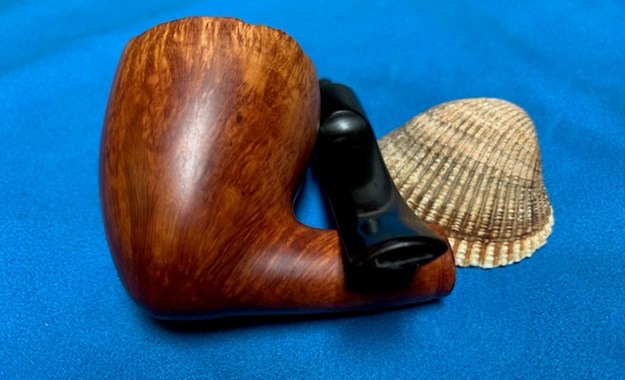
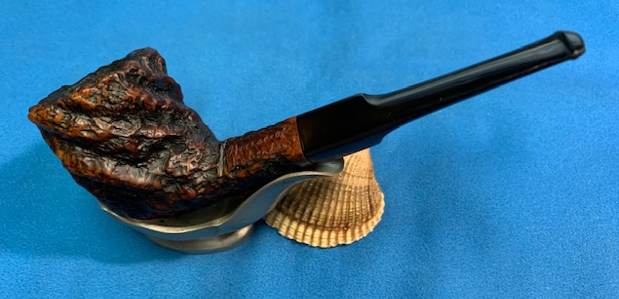
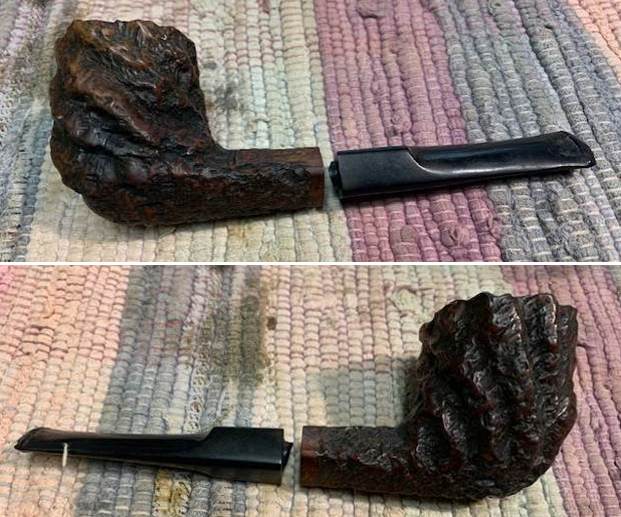
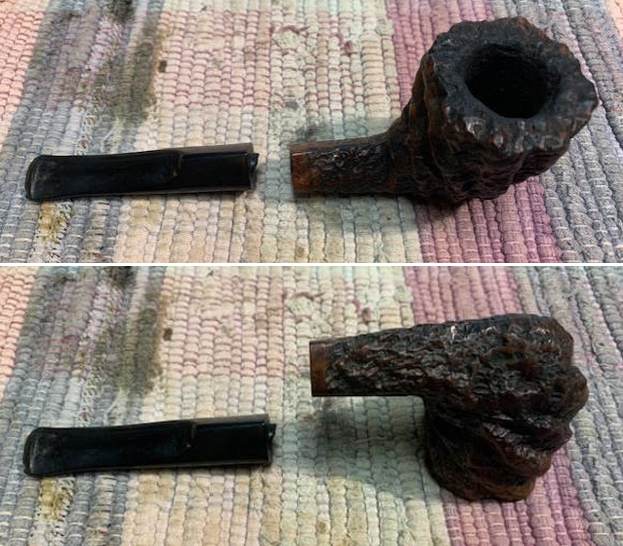
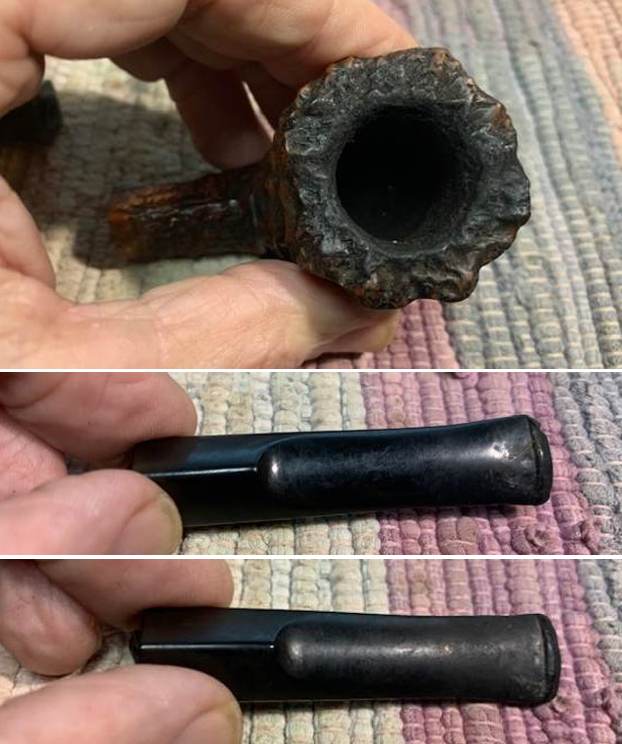
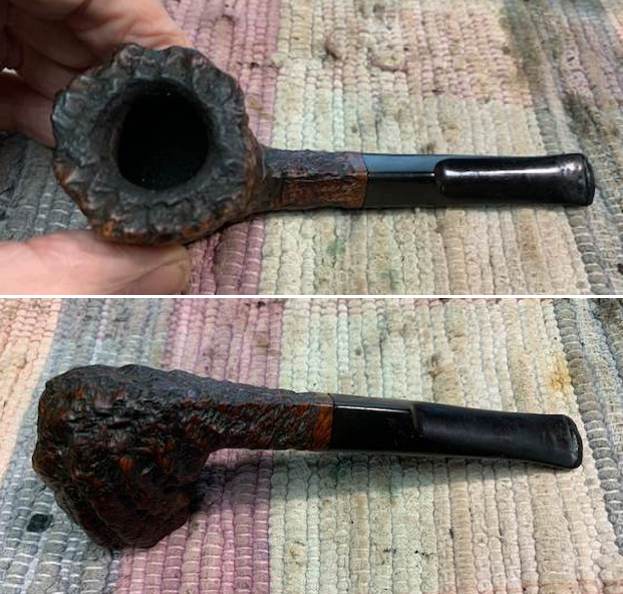
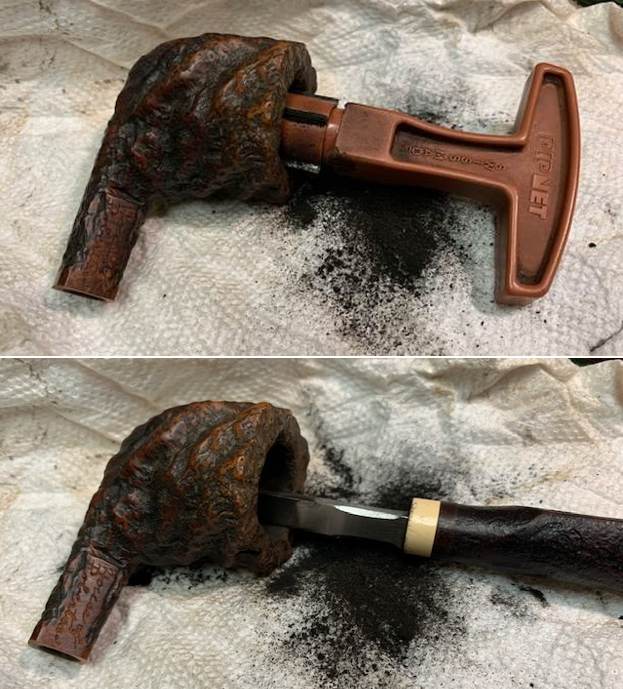
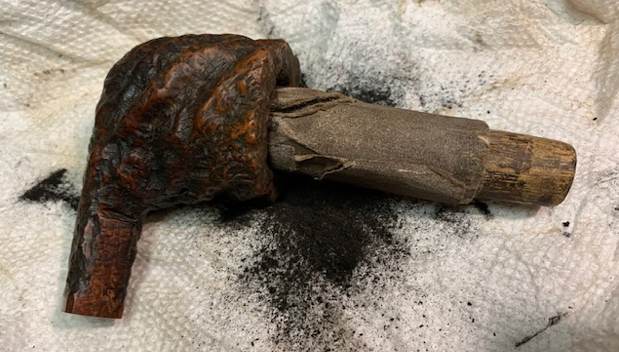
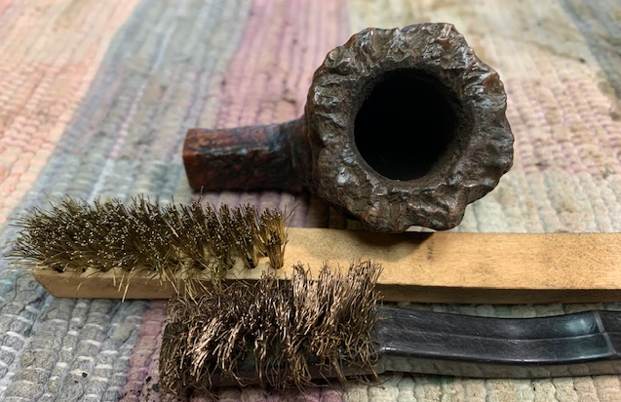
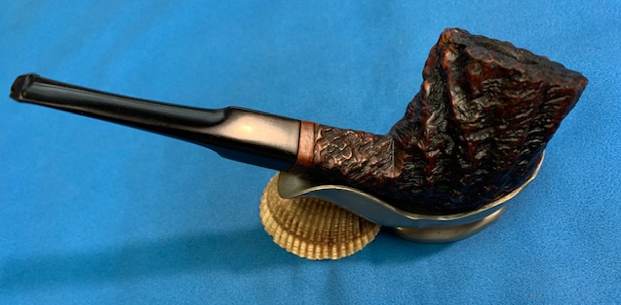
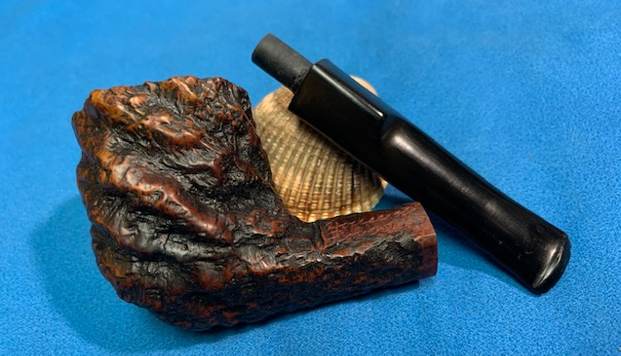
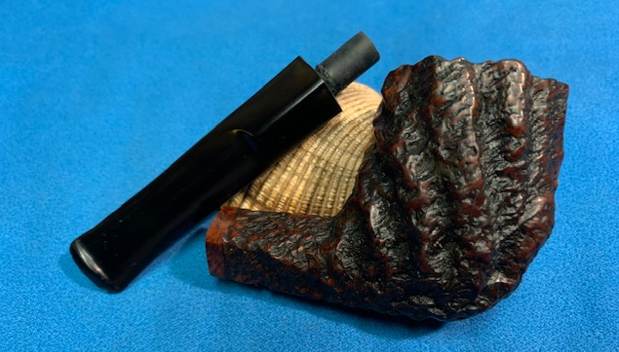
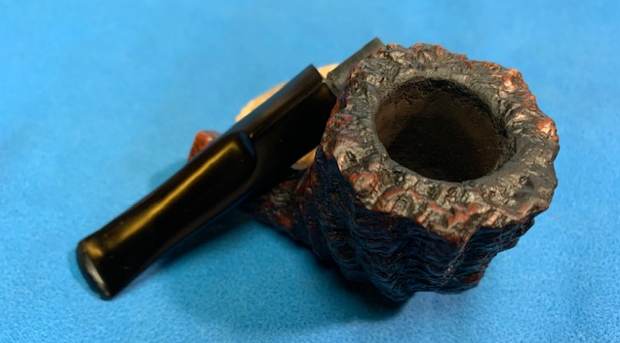
Repairing a Broken Tenon and Restoring a Wreck of a Ben Wade Deluxe Freehand


by Steve Laug

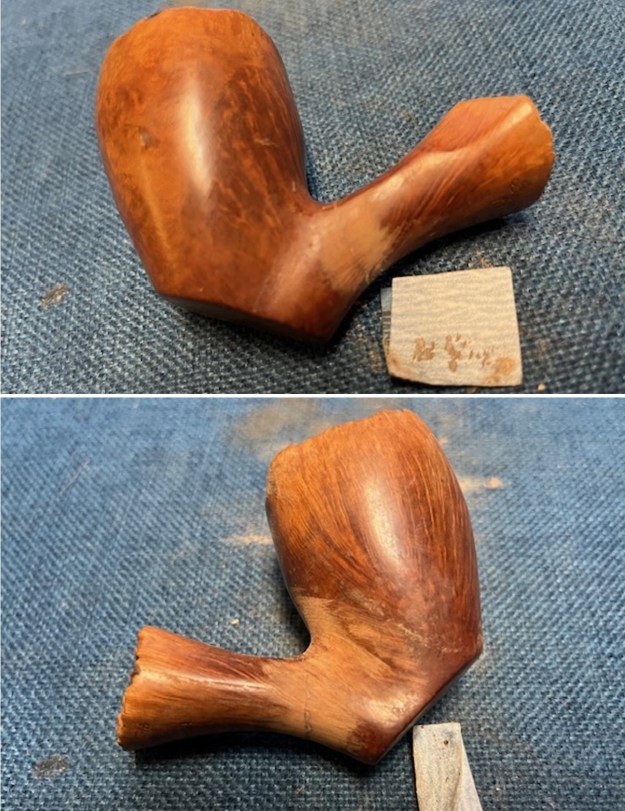
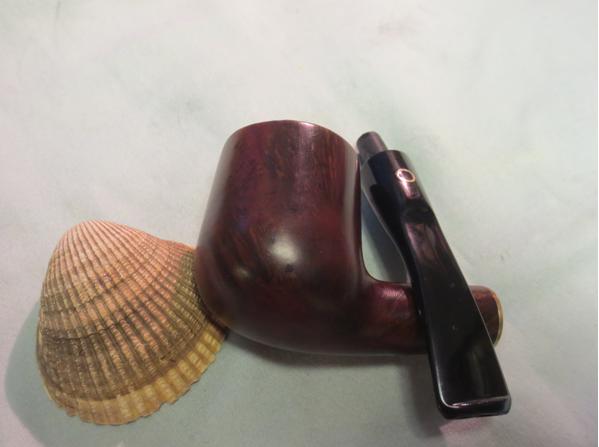
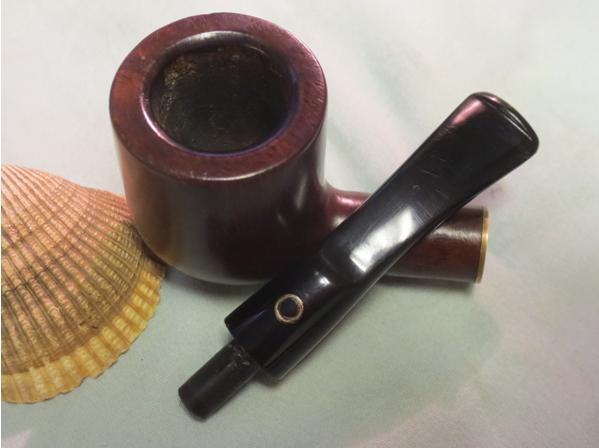
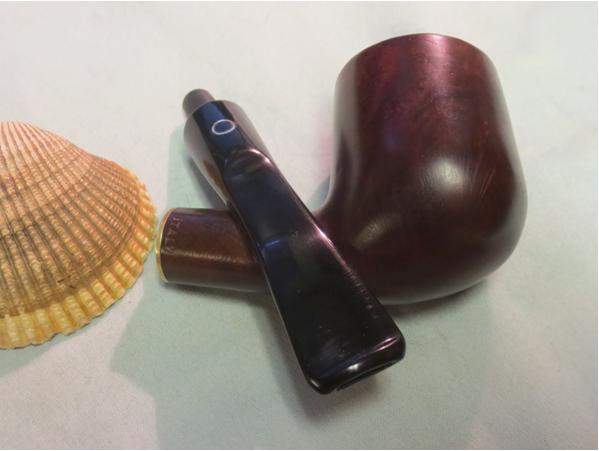
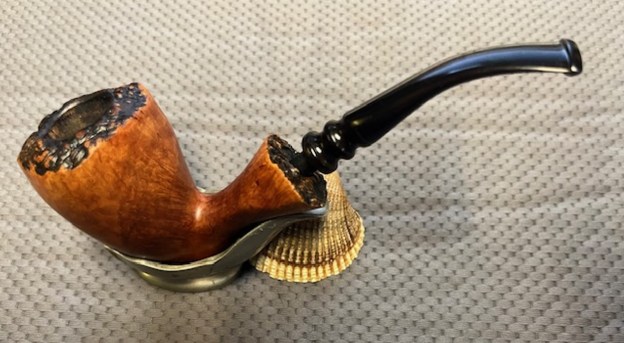
There is something almost electric about handling and working on a pipe designed and carved by Preben Holm. I can’t describe adequately the feeling I have when I turn the bowl and stem over in my hands even before I start working on the pipe. There is an energy that flows through the way he carved and shaped the pipes of his making. It calls me to clean up and restore even the worst wrecks of his pipes that come across my table. This filthy Ben Wade Deluxe was in the box of bowls with snapped tenons that I have here. It is number 6 of the recent rash of tenon replacements I have been doing.

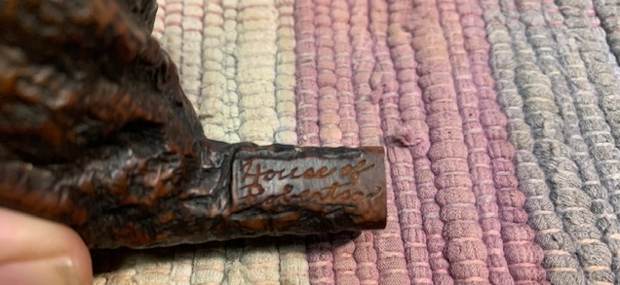
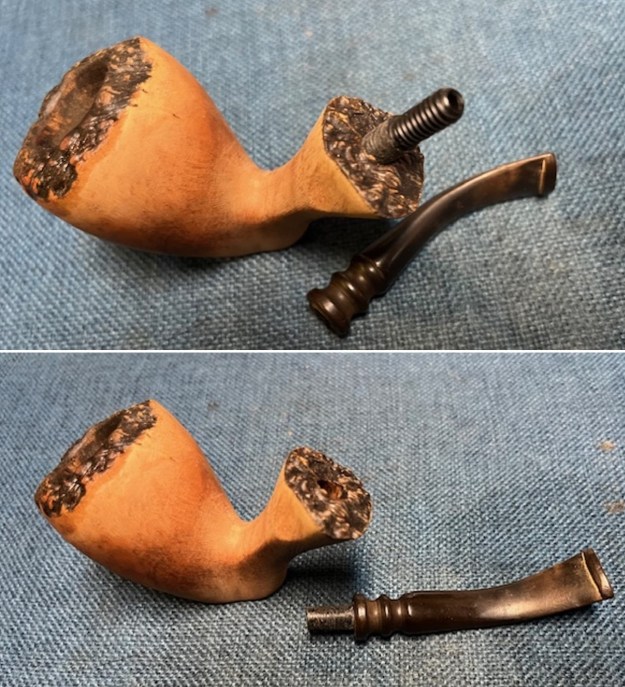
In the title I call the pipe a wreck because of some serious issues that stood out on the pipe. It had some visible repairs on the shank at the bowl and on the plateau on the shank end. The shank had been broken off somewhere along its journey. It had been well repaired with a stainless tube inside the shank. The repairer left a lot of glue all around the repaired crack – I say around because it went well beyond just the crack. It was a mess. The shank end plateau had what looked like a crack but surprisingly turned out to be a repaired chunk of briar that had been expertly fit and rusticated on the top right side along the mortise. The vulcanite stem had a snapped tenon and was oxidized, calcified and had tooth marks ahead of the button on both sides.

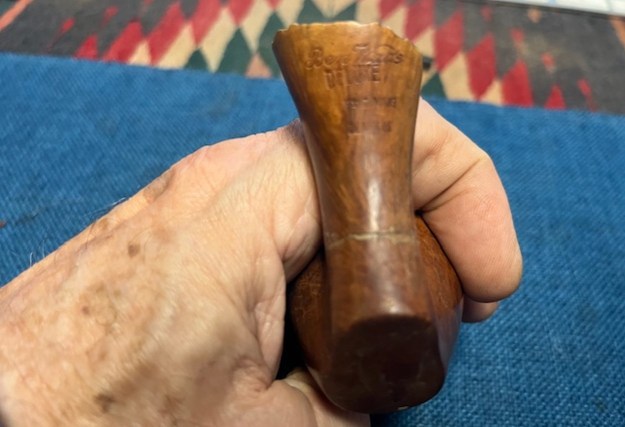
The grain on the bowl was present but almost a ghost. Preben Holm always chased the grain so it must be there under the dirt, messy glue and heavy oils on the surface. The plateau on the rim top was worn and heavily filled in with lava and debris on both the top. The shank end plateau was dry and spotty looking from the grime. While the pipe was a wreck all of the repairs pointed to the fact that it was well loved. It had continued to be smoked until the tenon snapped in the shank. The thick cake in the bowl and the lava on the rim top point to the fact that it was always in use. The cake is quite sticky and stinky and makes me wonder what was smoked in the pipe. Was it a heavily cased aromatic or something more nefarious? I am not sure, maybe both! I took these photos before I started my work. I took close up photos of the bowl and rim top to show the condition of both the bowl and plateau finish. You can see the lava and build up on the rim top and the lava flowing over the inner edge of the bowl. It is hard to know if there is damage or if the lava protected it. The bowl has a thick cake that lining the walls and overflowing into lava. The plateau surface is duty and also has some lava overflow in the valleys and crannies of the surface. The stem is oxidized, calcified and has tooth marks and chatter on both sides ahead of the button. Add to the mix the snapped tenon and you have a mess!I took a photo of the shank end to show the snapped tenon in the shank. It is snapped off quite smooth so it should be a relatively easy fix.I took a photo of the stamping on the underside of the shank, It is clear and readable. It reads Ben Wade [over] Deluxe [over] Hand Made [over] In [over] Denmark.I remembered a bit of history on the brand that included the thought that the Preben Holm pipes were marketed under the Ben Wade label in the US and imported through Lane Ltd. I turned to Pipedia and read the listing on the brand to refresh my memory and flesh out the knowledge of the brand (https://pipedia.org/wiki/Ben_Wade). I have included a photo from that site that was taken from a Tinderbox advertisement.Ben Wade Ad in a Tinder Box catalog, courtesy Doug Valitchka 
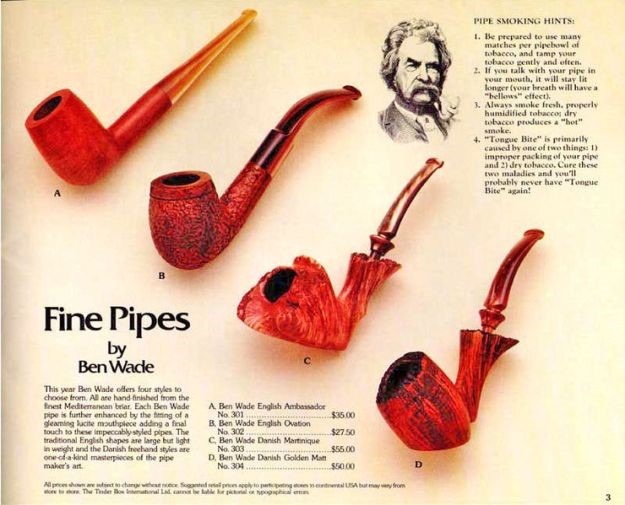
I quote the portion of the article that summarizes the history of the brand.

Advertisement

Young Copenhagen master pipemaker Preben Holm had made a meteoric career heading a pipe manufacture employing 45 people at the age of 22! But around the turn of 1970/71 he was in major financial difficulties. His US distributor, Snug Harbour Ltd. in New York City, left him in the lurch. Holm had three unpaid invoices on his desk and another large shipment was ready for the USA, when Snug Harbour’s manager told him on the phone that there was no money at all on the account to pay him.

So the Dane went to New York for an almost desperate search for a new distribution partner. He made contacts with Lane Ltd. and met Herman G. Lane in February 1971. Lane Ltd. had no interest in Holm’s serial pipes produced at that time but so much the more in the hand-carved freehands because the hype for Danish freehands and fancies in the States was still on its way to the climax then. The meeting resulted in an agreement to start a cooperation. Lane insisted to improve the quality considerably and in return he assured to be able to sell essentially larger quantities.

Holm went back home to work on new samples with all-new designs and altered finishes for Lane. Both, Lane and Holm, agreed that it would be unwise to sell the pipes under Preben Holm’s name as long as Snug Harbour had a considerable stock of Preben Holm pipes and might sell them pipes at very low prices just to bring in some money.

So on Mr. Lane’s proposal it was determined to use the name Ben Wade belonging to Lane Ltd. Lane spent considerable amounts of money for advertising the new brand in the big magazines– the centerpiece being whole-page ads showing a very exclusive Seven Day’s Set.

The cooperation with Lane Ltd. proved to be an eminent business success for both partners. Within a very short time Ben Wade Handmade Denmark sold in much larger quantities and at higher prices than they had ever dreamed of. And the hype these freehands and fancy pipes caused went on unbroken long after Herman G. Lane deceased. Preben Holm – obviously much more brilliant in pipe making than in pipe business – was in major troubles again in 1986 and had to sack most of his staff. The Ben Wade production was significantly lowered but continued until his untimely death in June of 1989.

Up to now Preben Holm made Ben Wade pipes are cult and highly sought for on the estate markets.

With that information I knew that this pipe was a Preben Holm made Freehand for distribution in the US by Lane Ltd under the name Ben Wade. The freehand rage occurred in the late 70s and the pipes were made until Preben’s death in 1989. My guess would be that this pipe was made sometime during that time period and potentially in the late 70s.

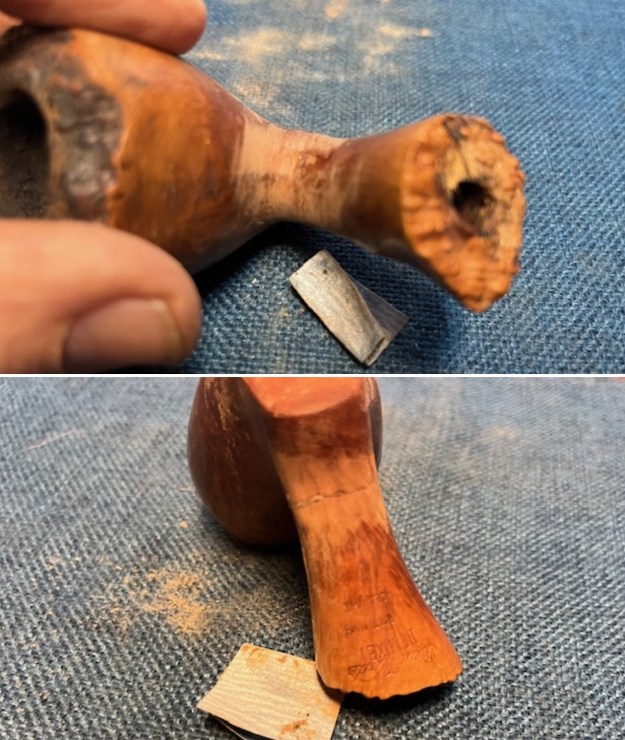
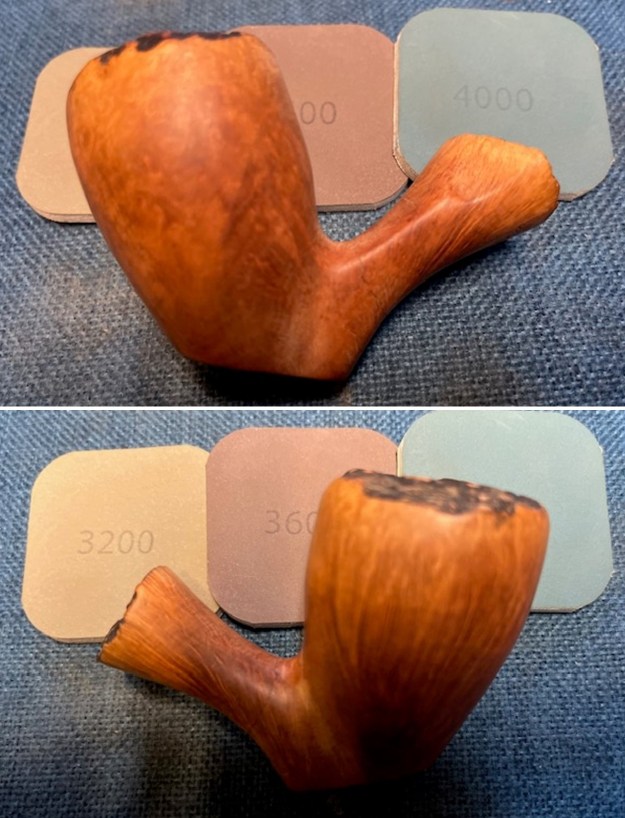
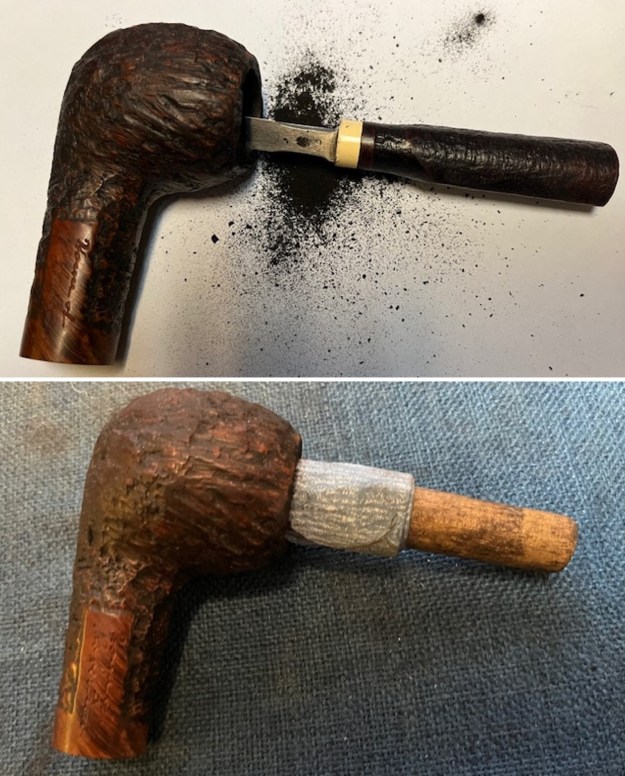
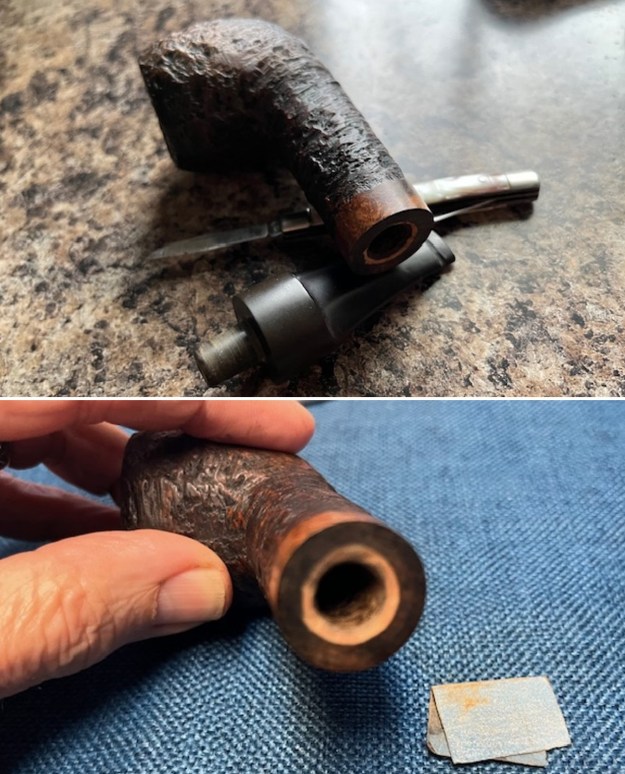
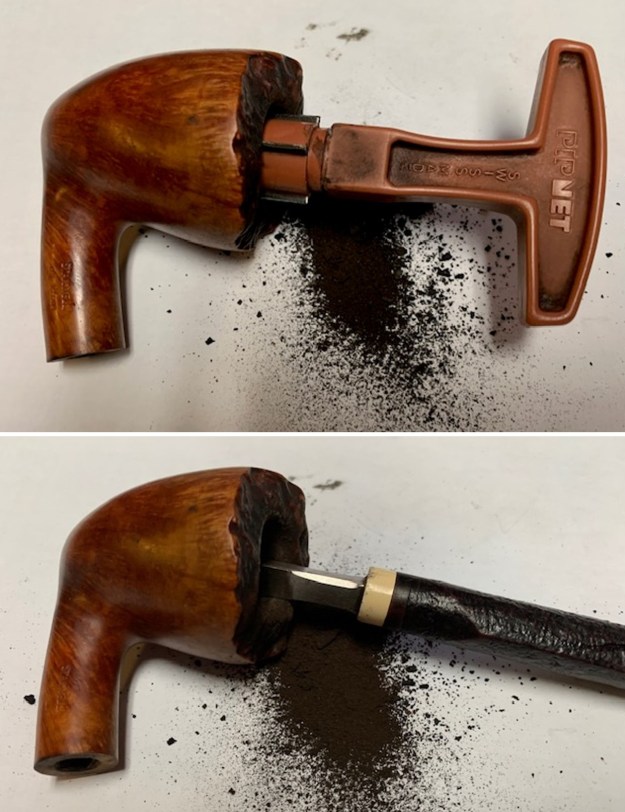
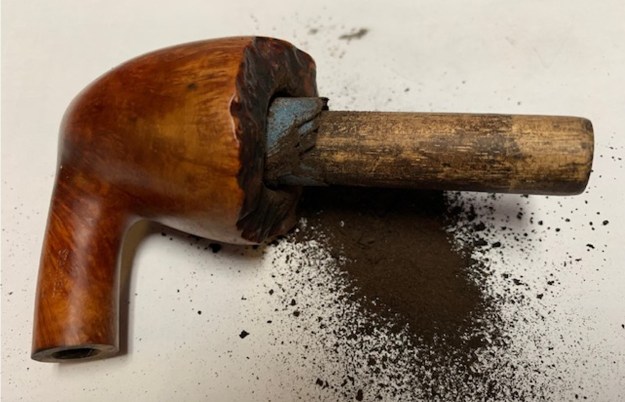
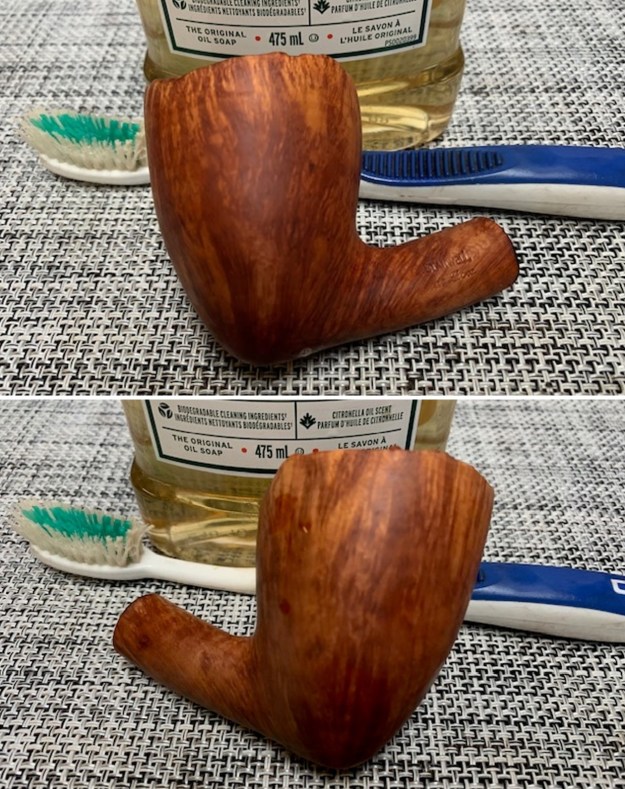
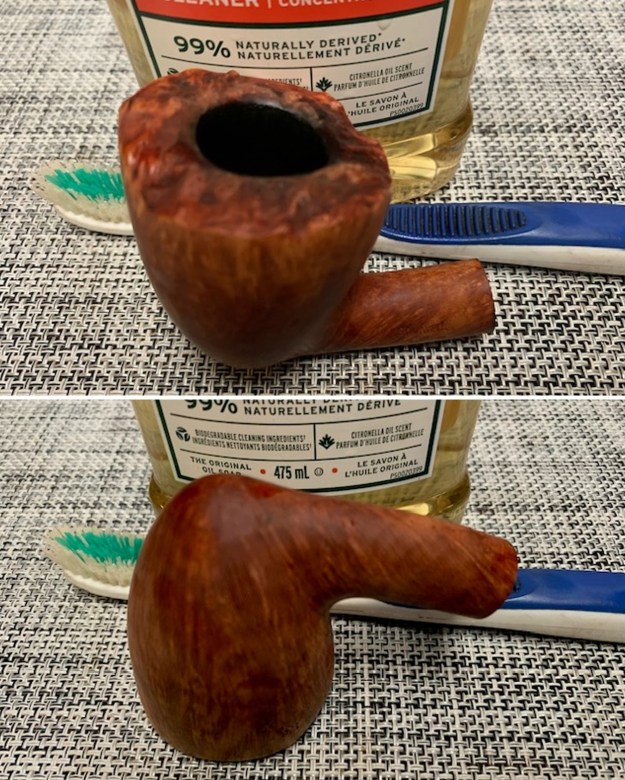
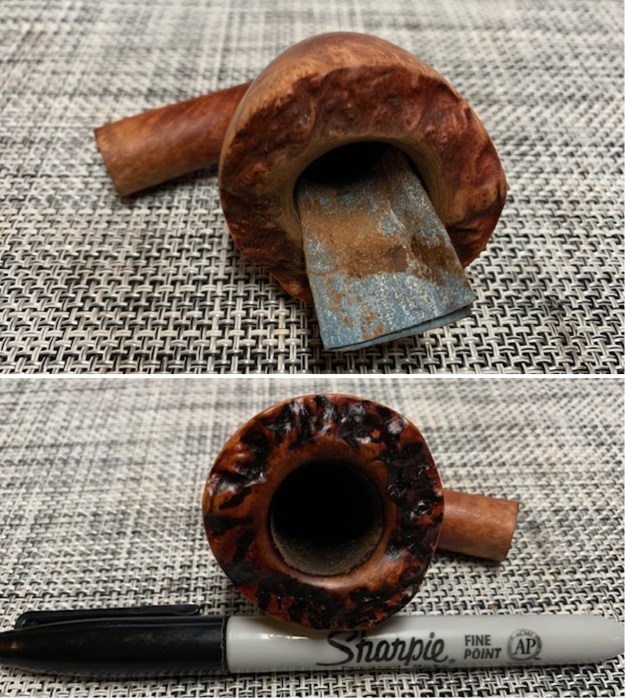
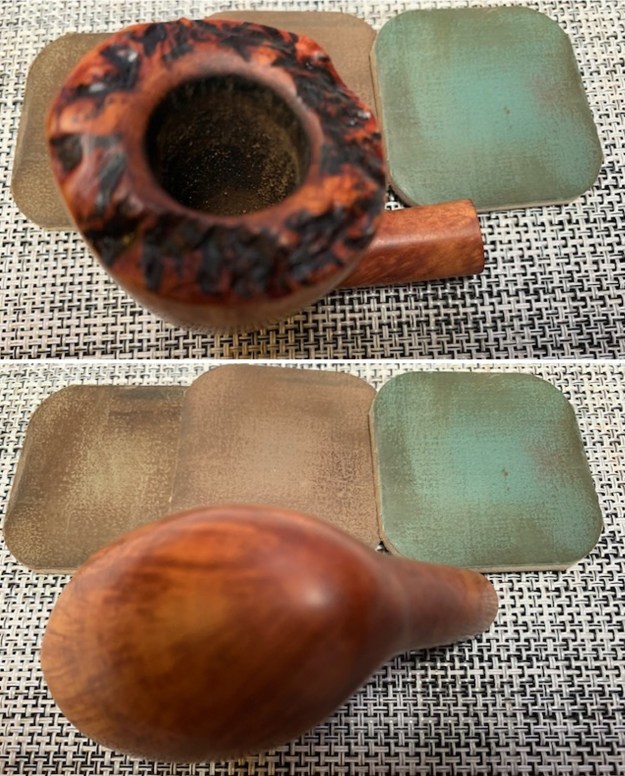
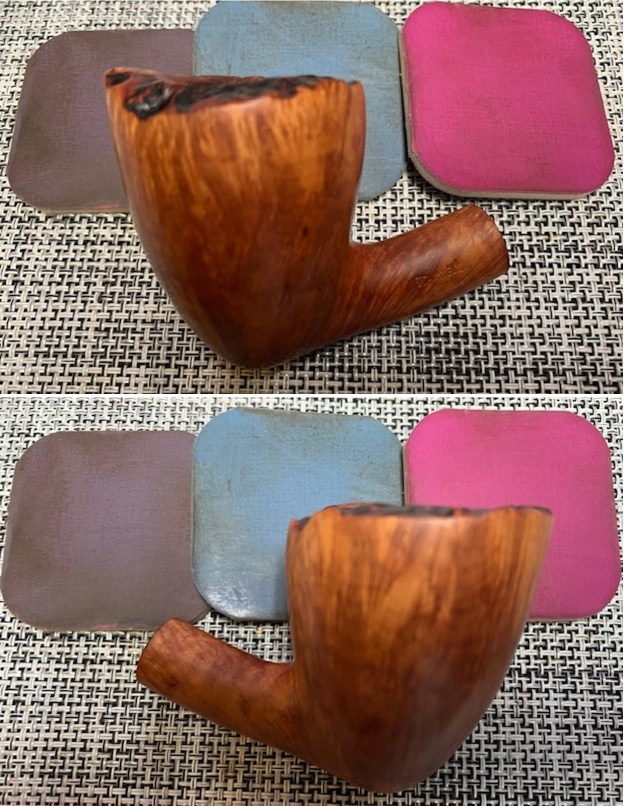
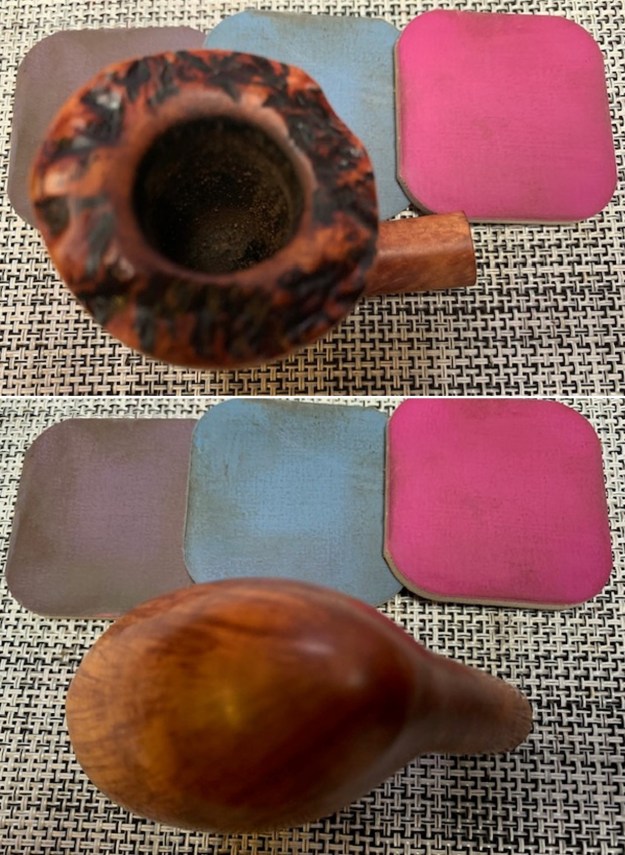
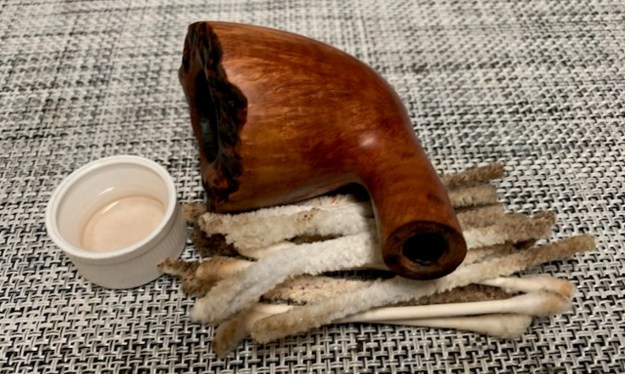
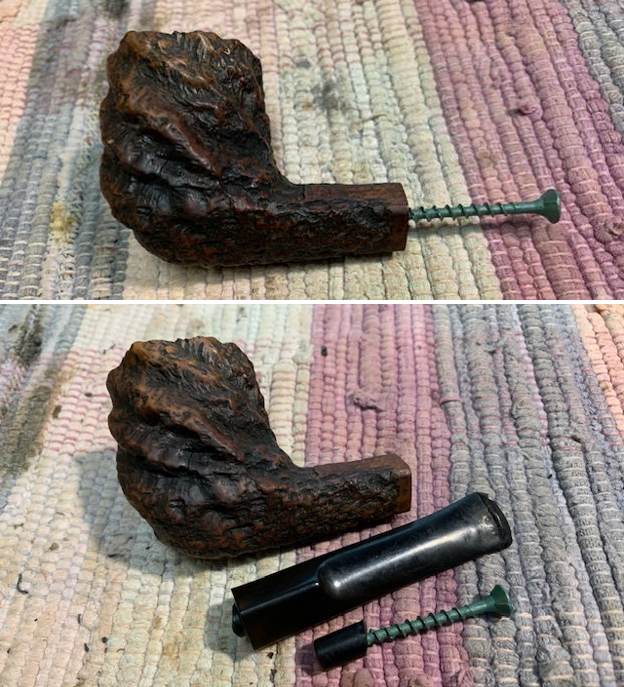
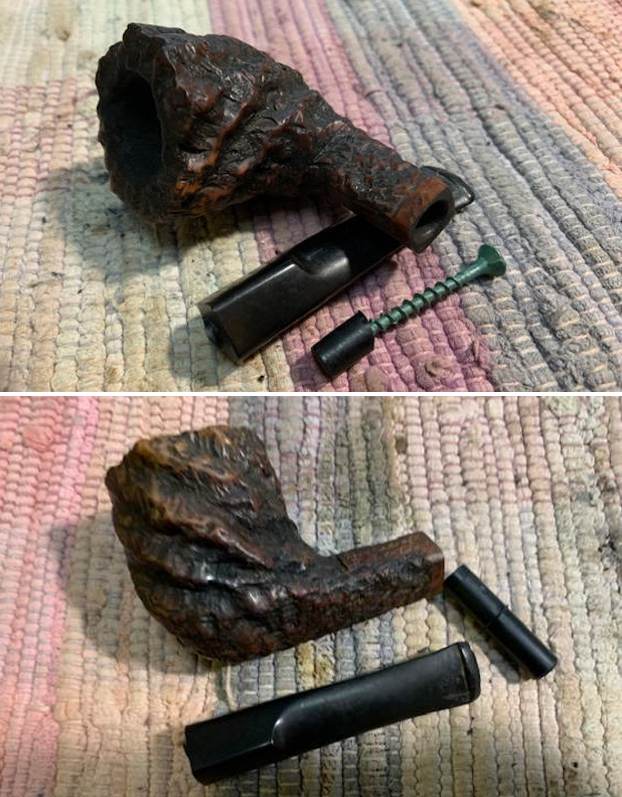
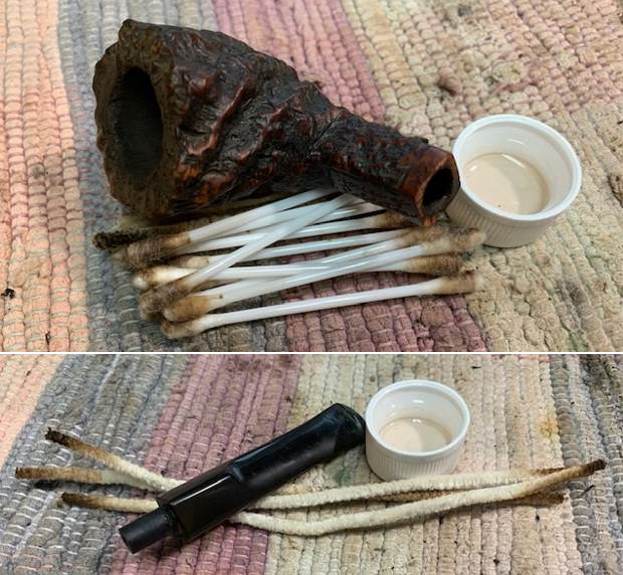
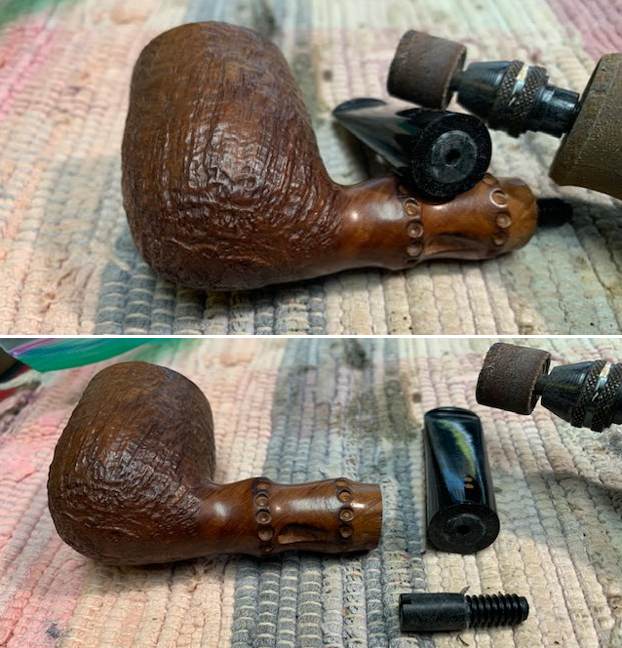
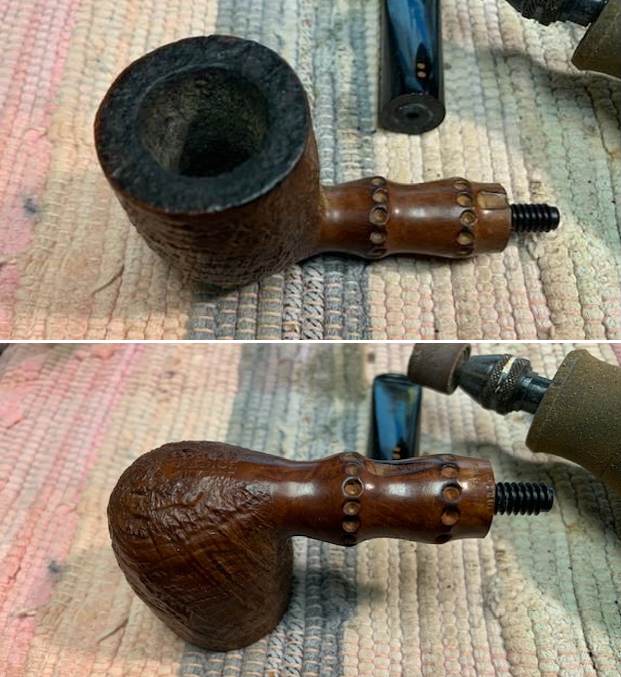
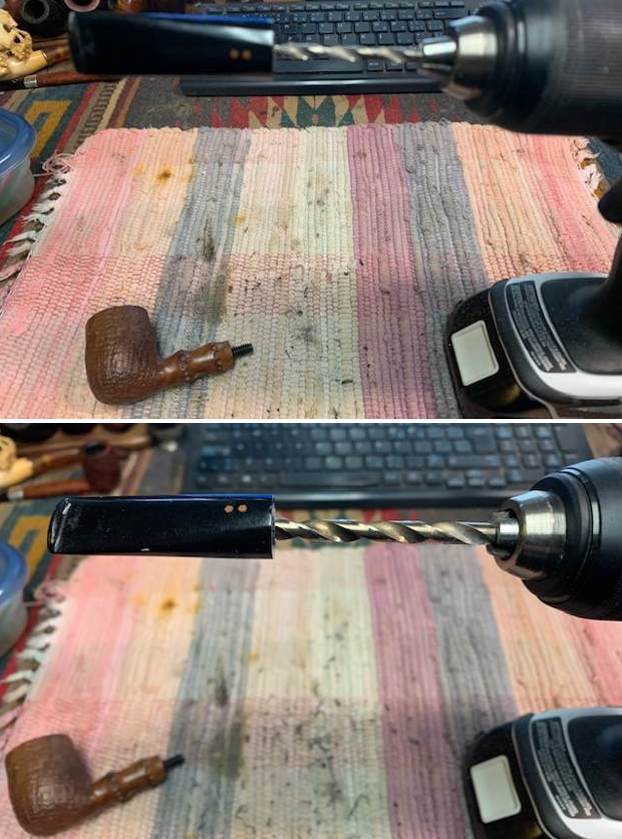
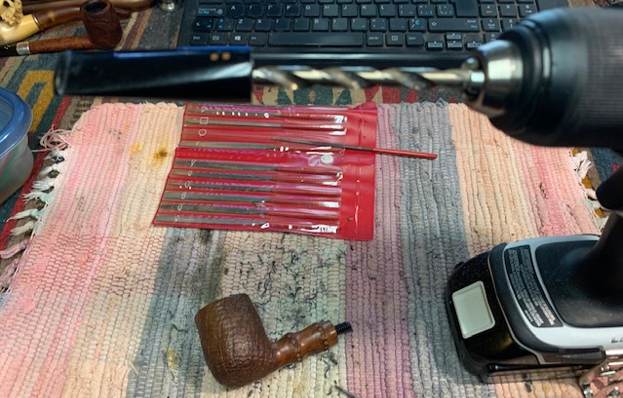
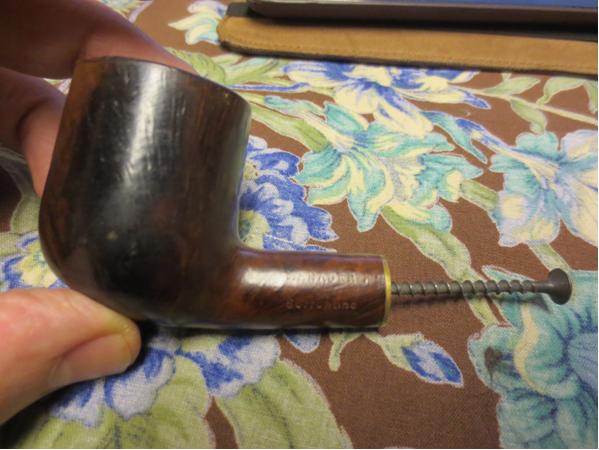
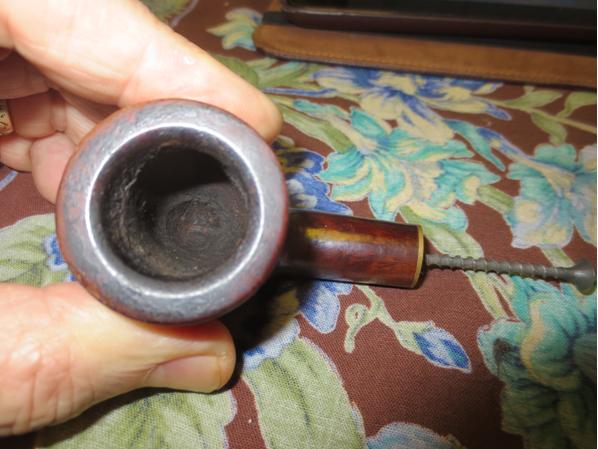
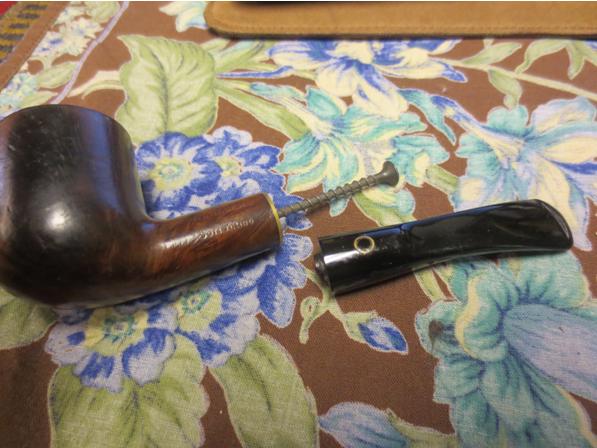
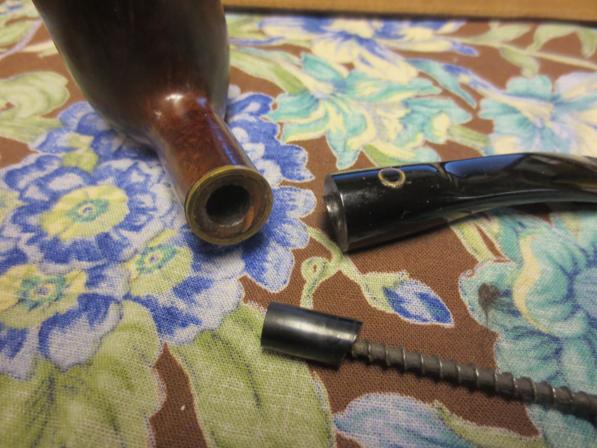
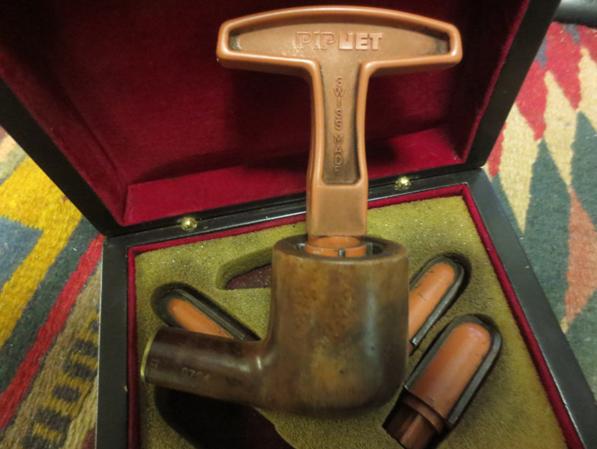
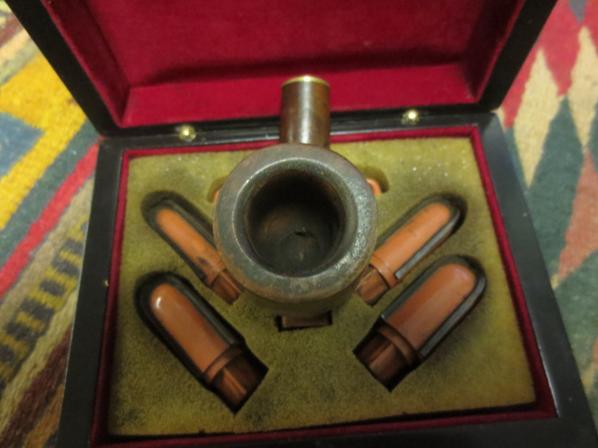
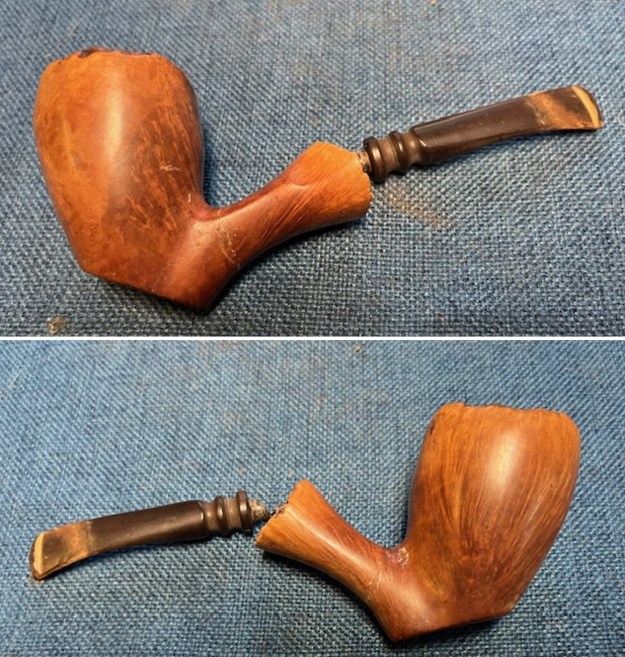
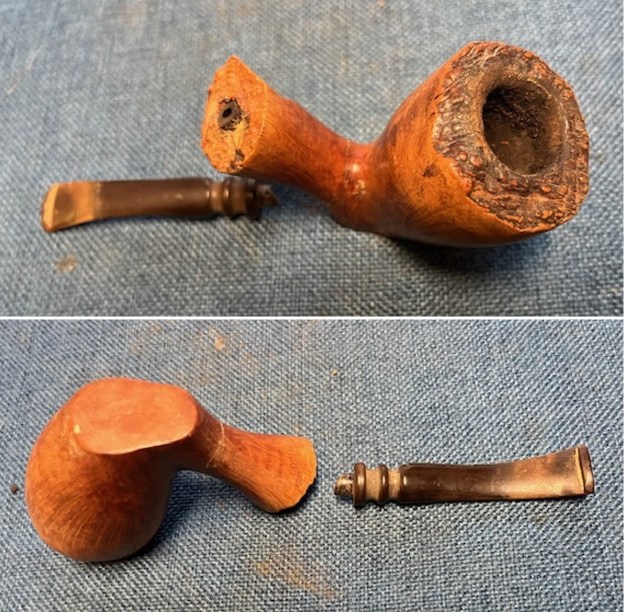
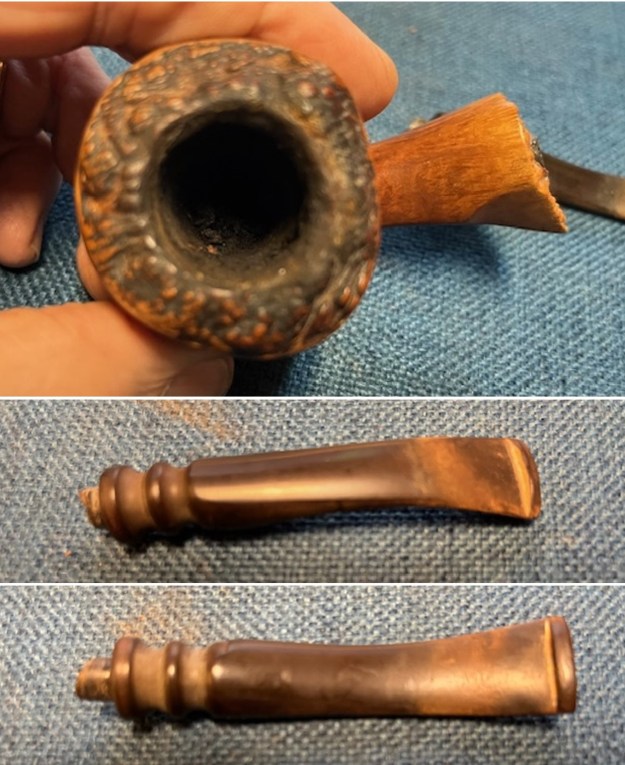
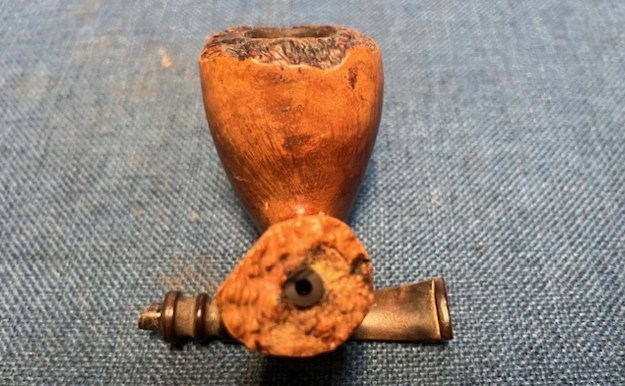
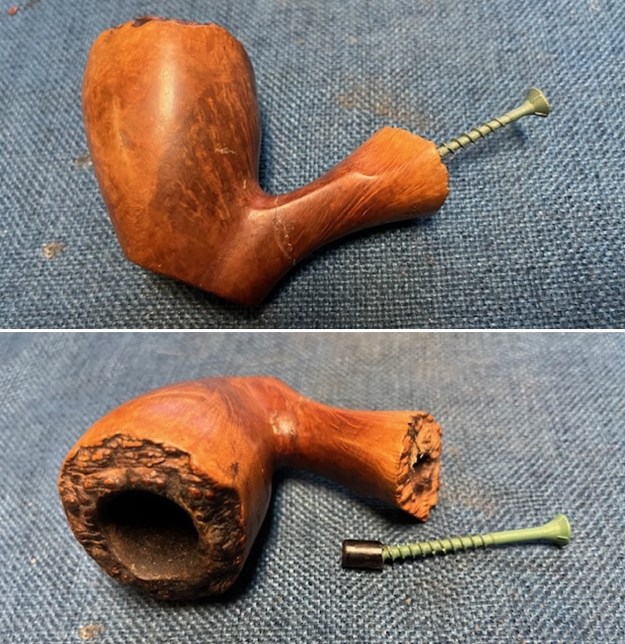
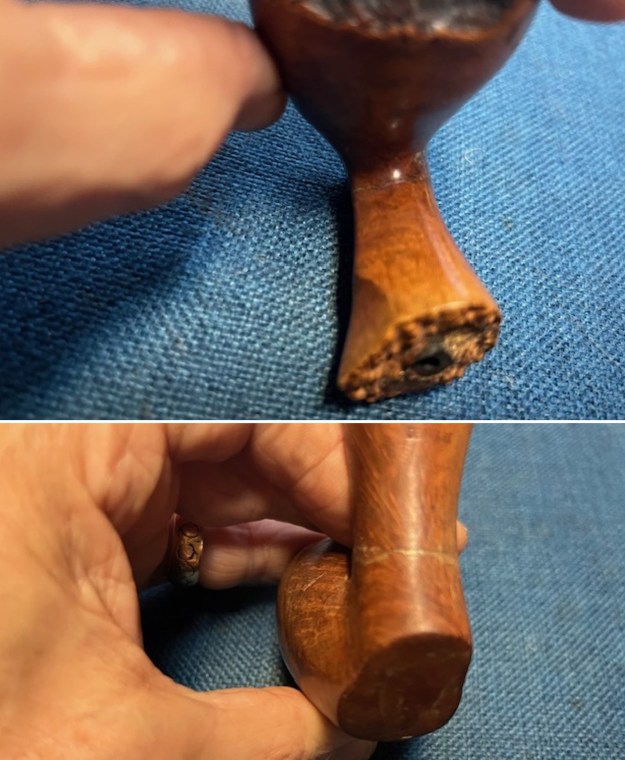
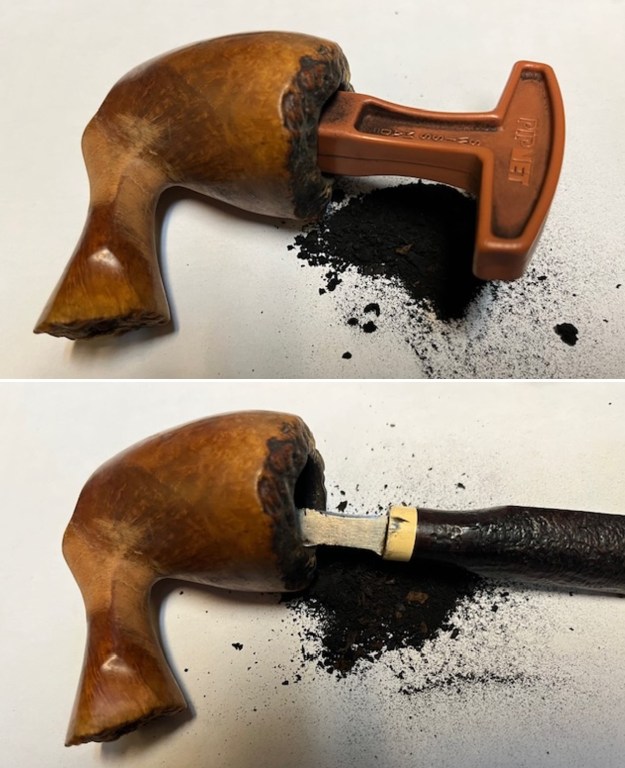
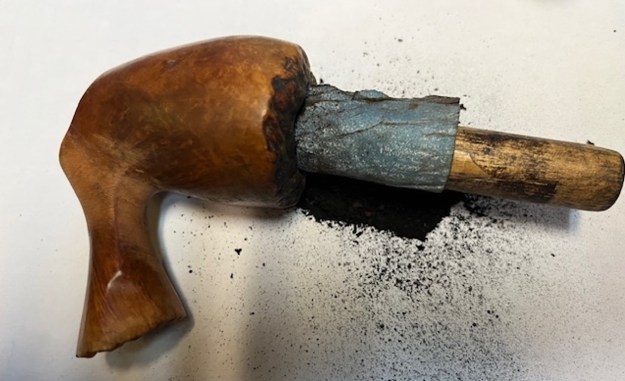
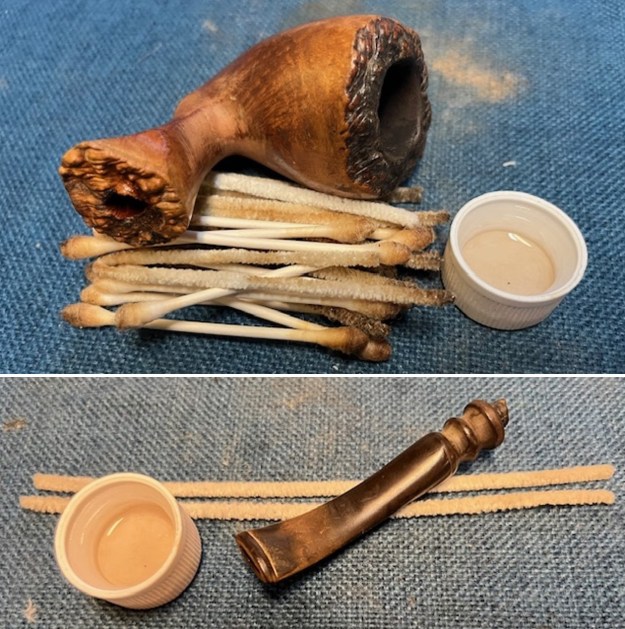
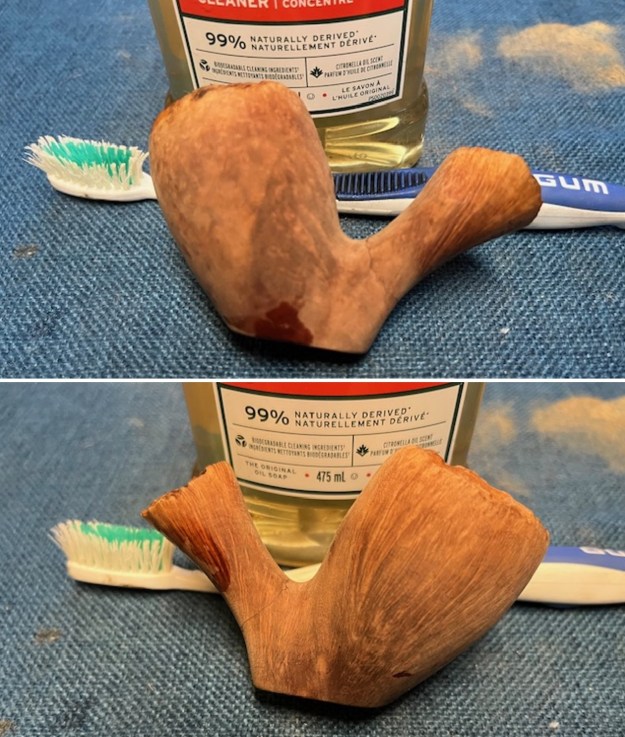
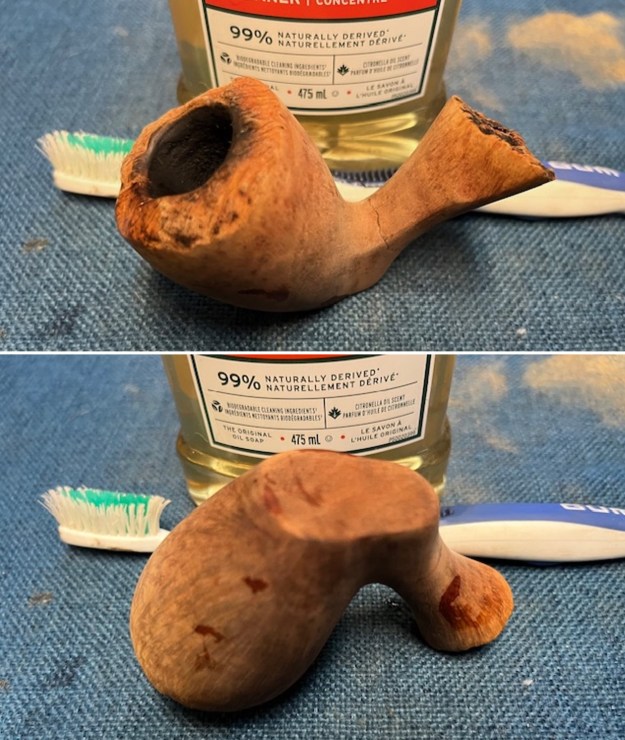
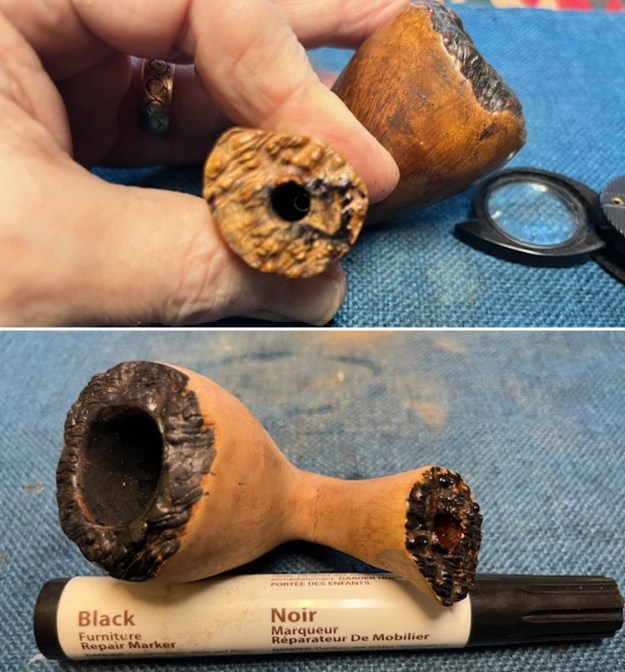
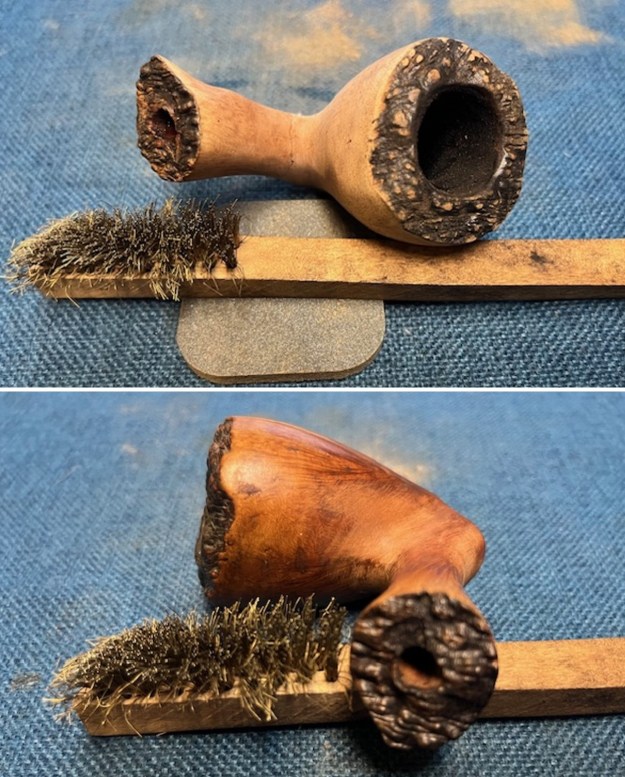
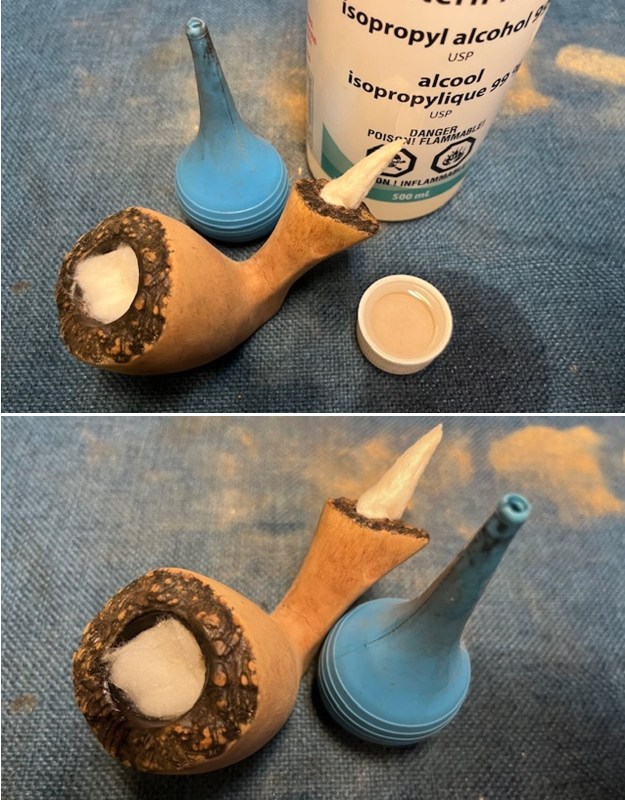
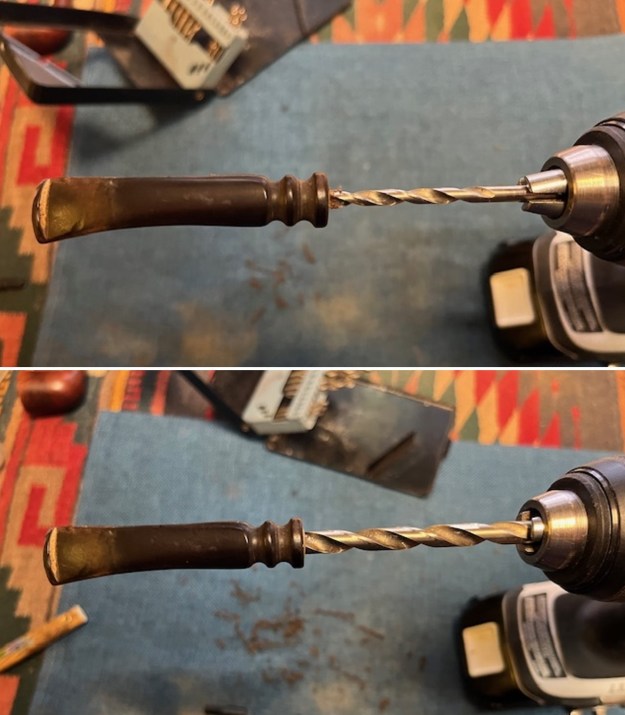
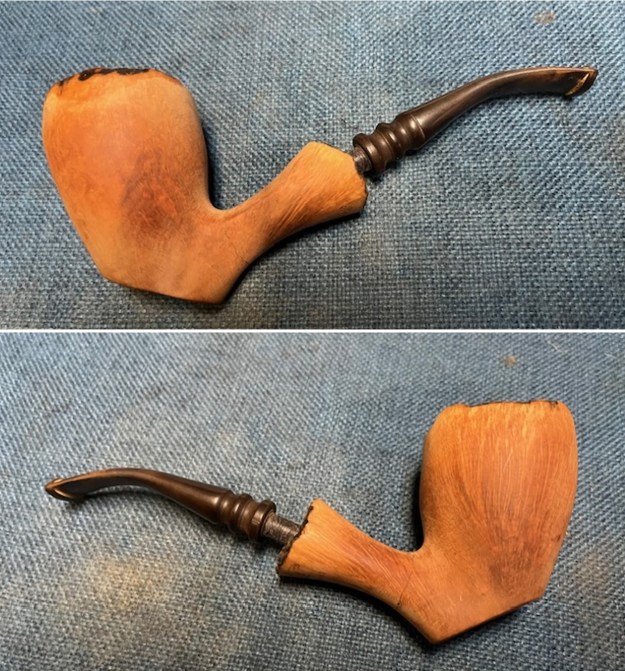
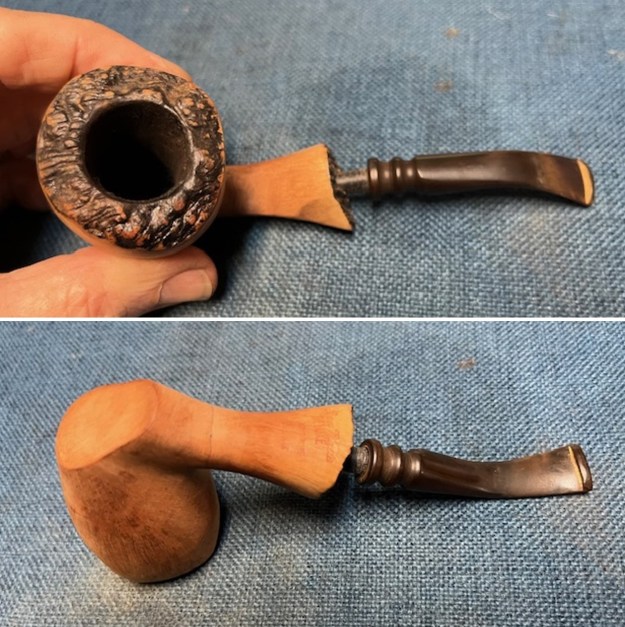
I started my work on the pipe by pulling the broken tenon from the shank. I used a dry wall screw turned into the airway in the broken tenon. I wiggled the tenon until it came free. It was tight so it took a bit of fiddling to get it to pop free.I took photos of the repaired crack on the shank. It had a heavy coat of glue all around the shank. It was smeared around the crack and also on the curved where the shank joined the bowl. It was messy but it was a strong bond. I sanded the area around the repair and the surrounding briar with a folded piece of 220 grit sandpaper. I was able to smooth out the repair and remove all of the glue spread around the briar. I decided to ream the bowl and do some internal clean up work before further polishing the briar. I reamed the bowl with a PipNet pipe reamer using the 2nd and 3rd cutting heads to remove the cake in the bowl. I cleaned up the reaming with a Savinelli Fitsall Pipe Knife and finally sanded the bowl with 220 grit sandpaper wrapped around a piece of dowel to clean up the walls of the bowl. The walls appeared to be in good condition. It still needed a lot of cleaning as the sticky debris was still on the walls. I cleaned out the shank and airway into the bowl and the stem with pipe cleaners, cotton swabs and alcohol to remove the tars and oils. I cleaned out the airway in the stem at the same time. I scrubbed the bowl and rim top with undiluted Murphy’s Oil Soap and a tooth brush to remove the grime. I rinsed it with warm water and dried it off with a cotton towel. I drew a box around the repair on the shank end. There was a square plug of briar that had been glued into the shank end and rusticated to look like plateau. I stained the shank end and the rim top with a black stain pen to blend the surfaces together. I used a brass bristle wire brush to work over the plateau on the top and shank end. I used a sanding pad to remove the black stain from the high spots on the plateau and it looked better. There was a strong stink of the previous tobacco (?) in the pipe so I stuffed the bowl with cotton bolls and filled it with alcohol using an ear syringe. I rolled a cotton boll and plugged the shank with it. I set it aside to draw out the tars and oils for the afternoon.While the cotton and alcohol were doing there work deghosting the bowl I turned my attention to working on the new tenon. I flattened out the tenon end of the stem with a Dremel and sanding drum and cleaned up the area on a topping board with 220 grit sandpaper.I drilled the home for the new tenon using airway in the stem as a guide. I drilled it several times with increasingly larger drill bits until I had the opening the same size as the threaded portion of the new tenon.I fit the tenon in the stem to make sure it was straight everything aligned straight. At this point the stem and new tenon looked very good. I took a break at this point and went out on the porch and enjoyed a few bowls in my new Castello. I came in late afternoon once it got cooler and checked on the deghosting of the bowl. I could not do any more work fitting the stem until I had removed the cotton bolls and cleaned out the shank and bowl once more. The cotton had darkened and once I removed it the bowl smelled much better. I cleaned up the bowl and shank with alcohol cotton swabs and pipe cleaners a second time. It smelled much cleaner and looked that way too. Now I could fit the new tenon to the mortise. I took a photo of the repair to the shank. There is a stainless steel tube in the shank that gives it more strength. It is a well done and solid repair. [The photo is from an earlier moment before I stained the shank end.]
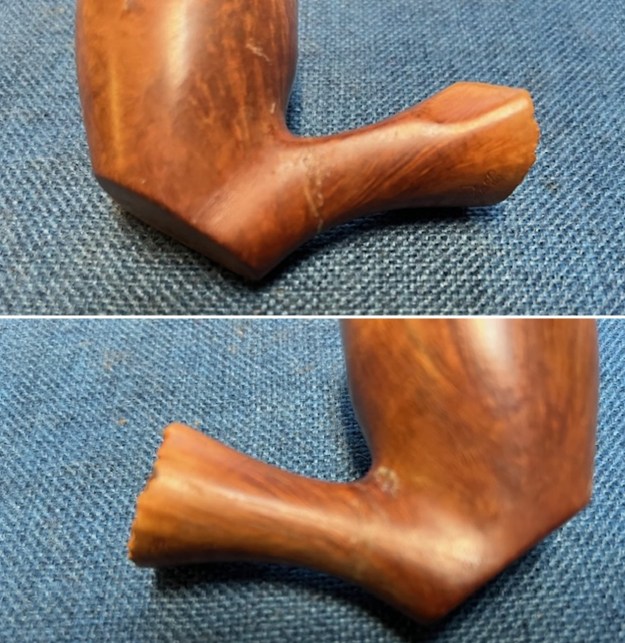
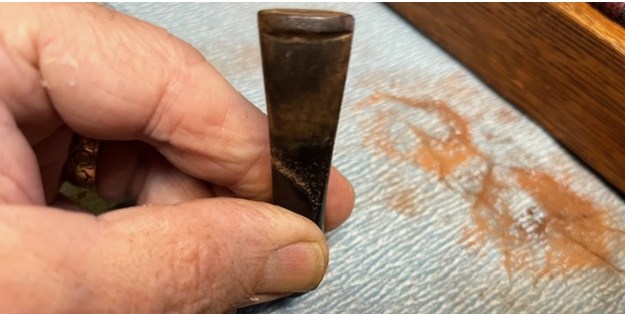
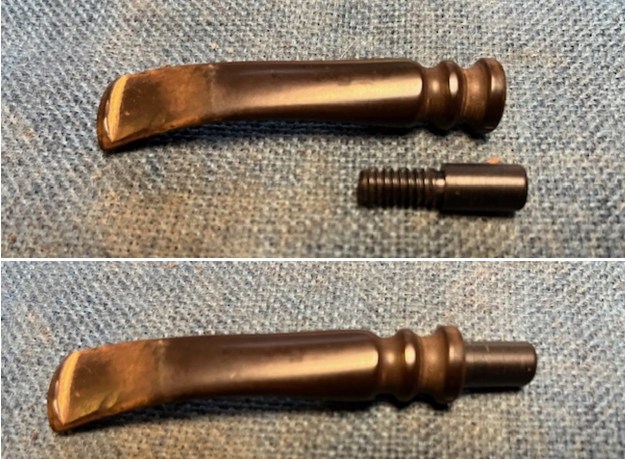
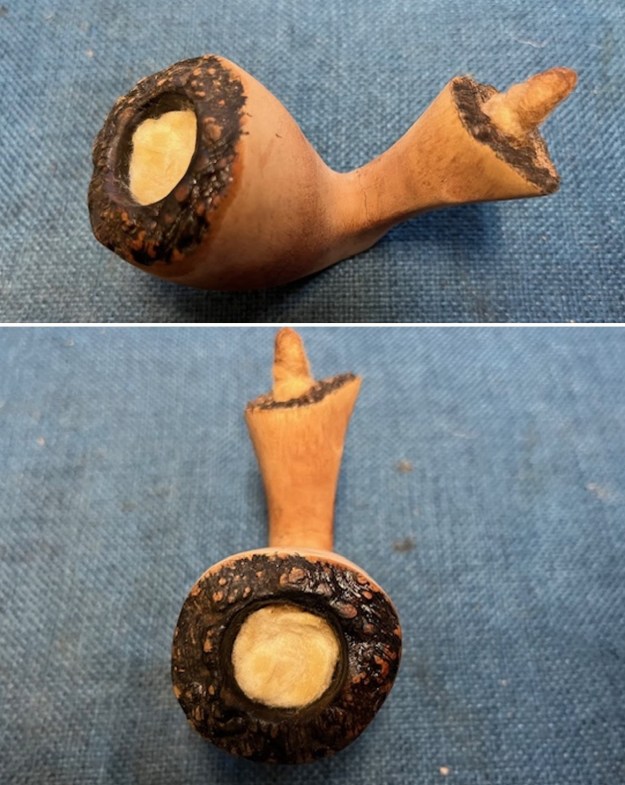
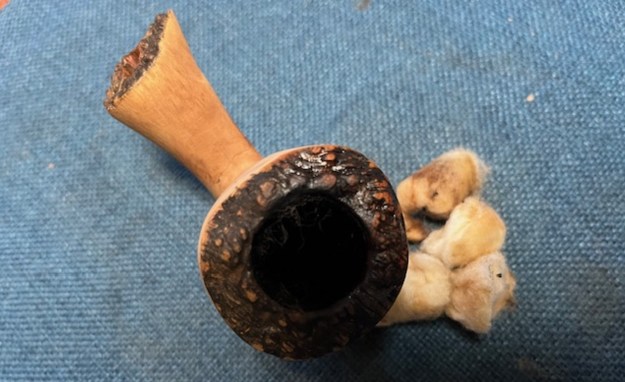
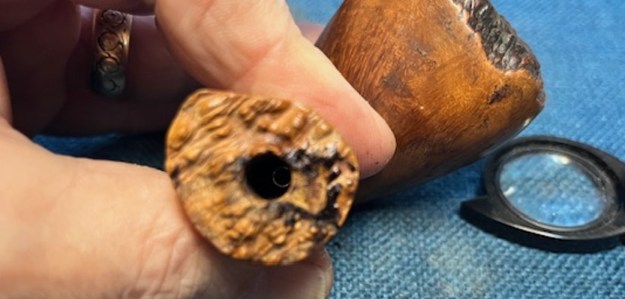
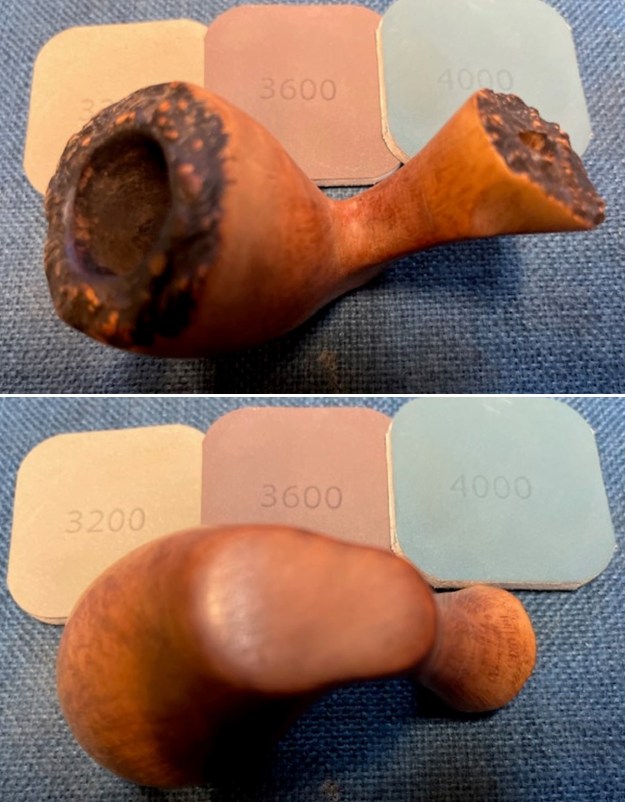
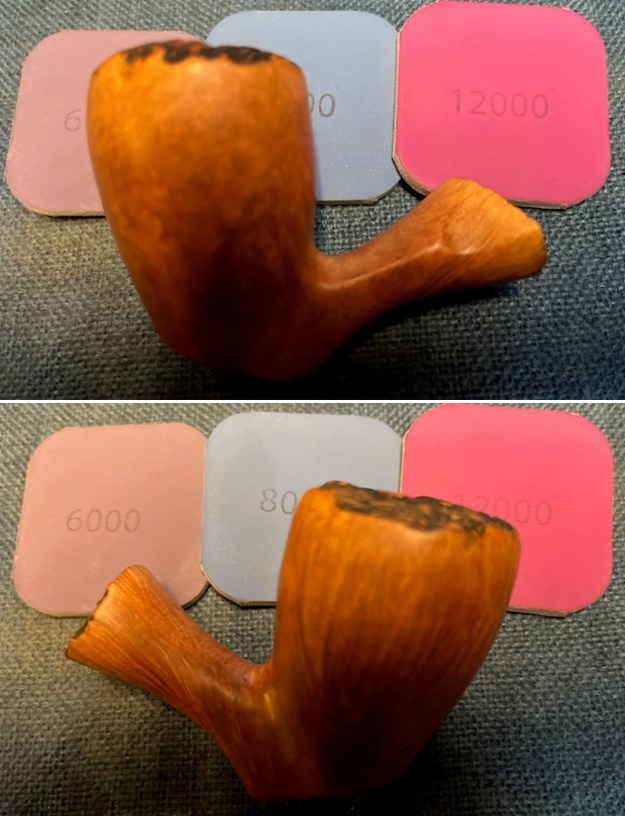
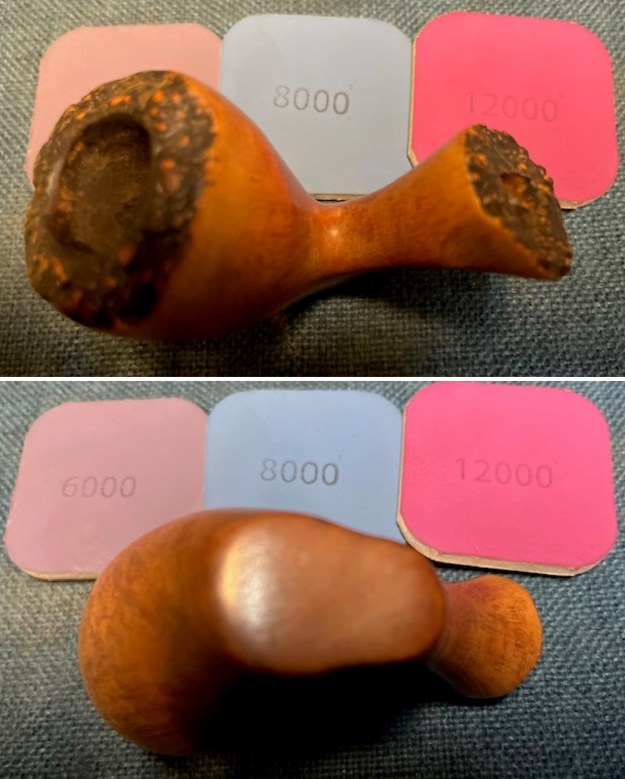
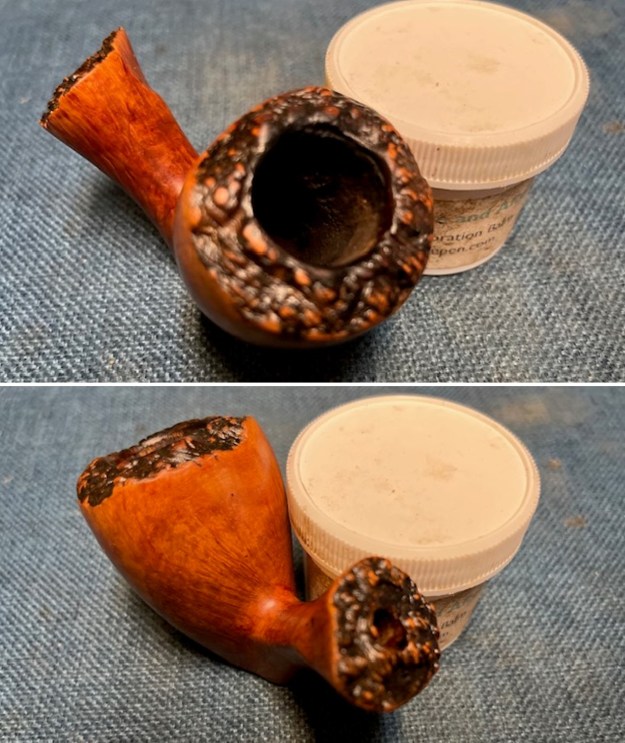
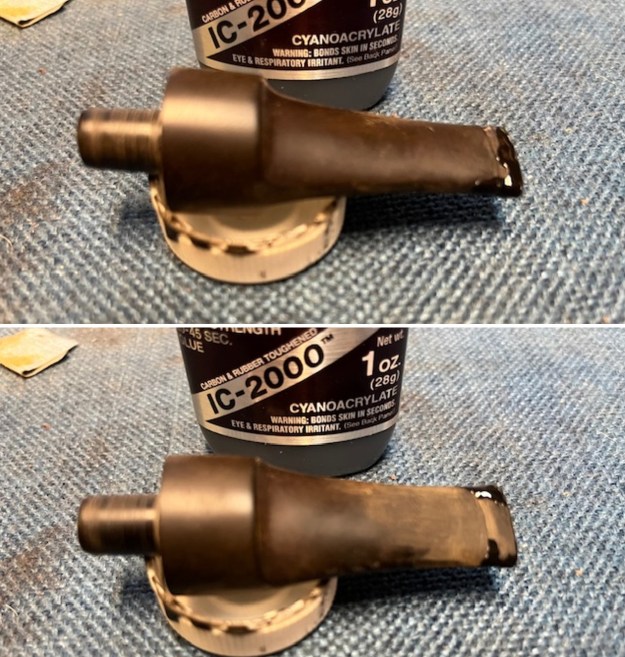
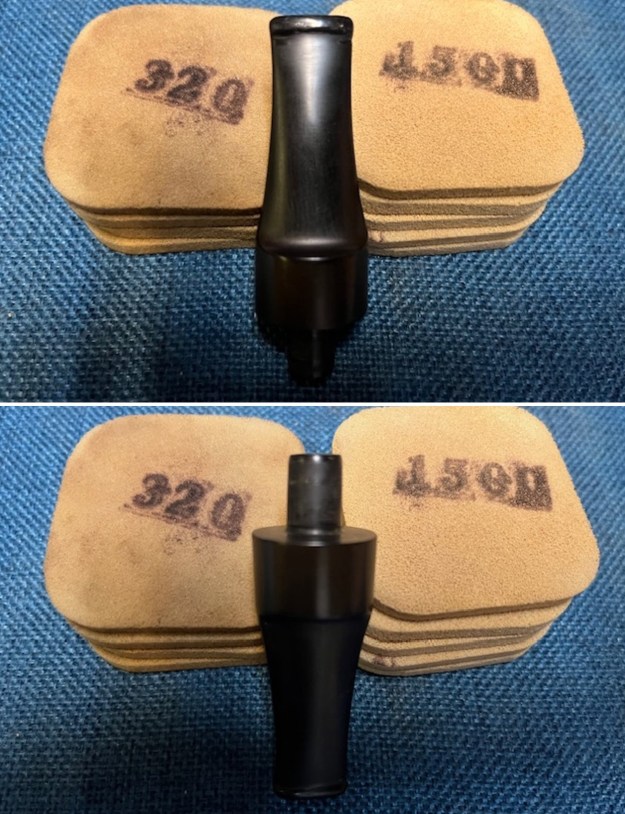
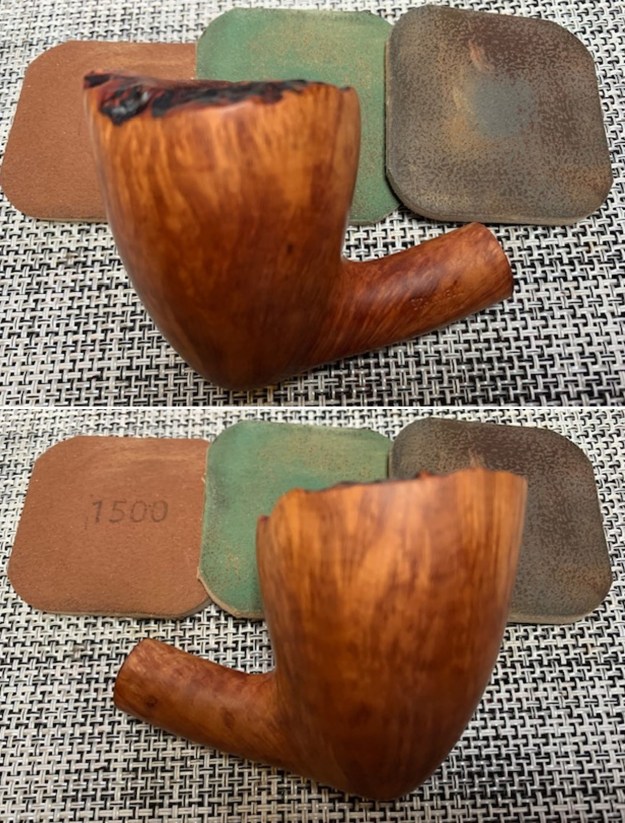
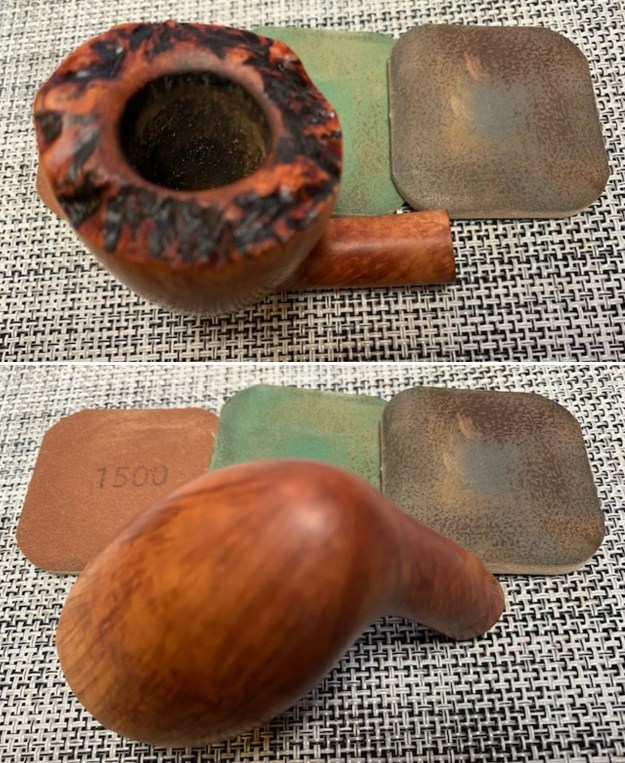
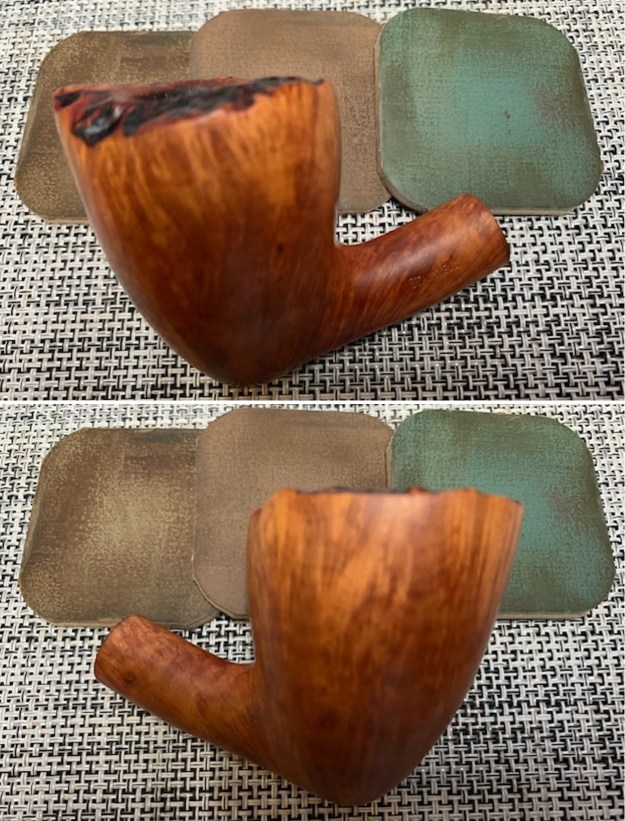
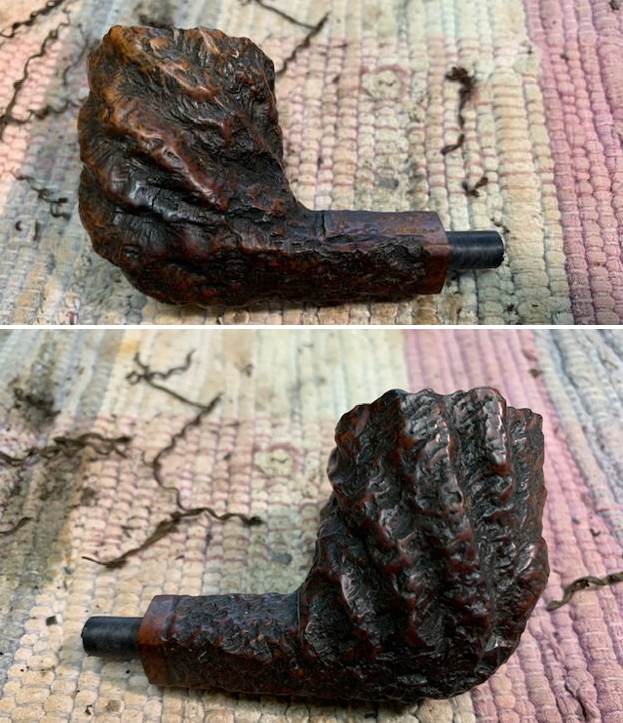
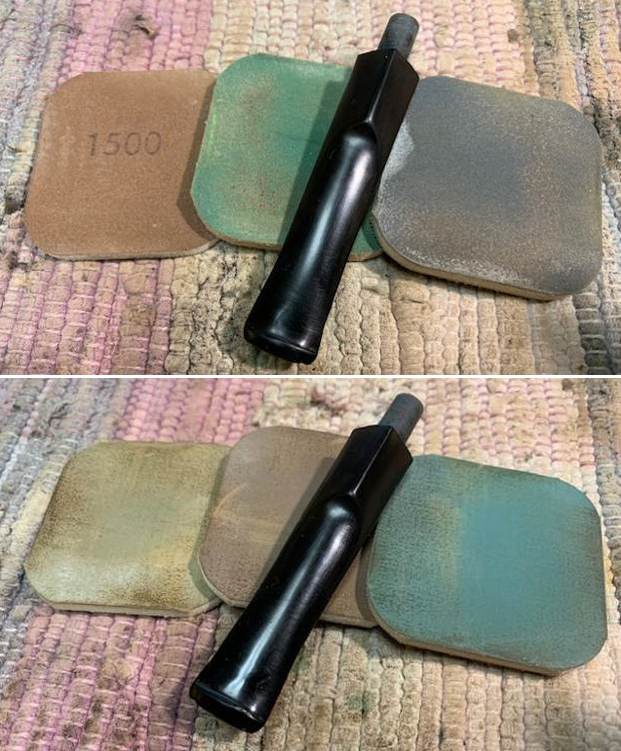
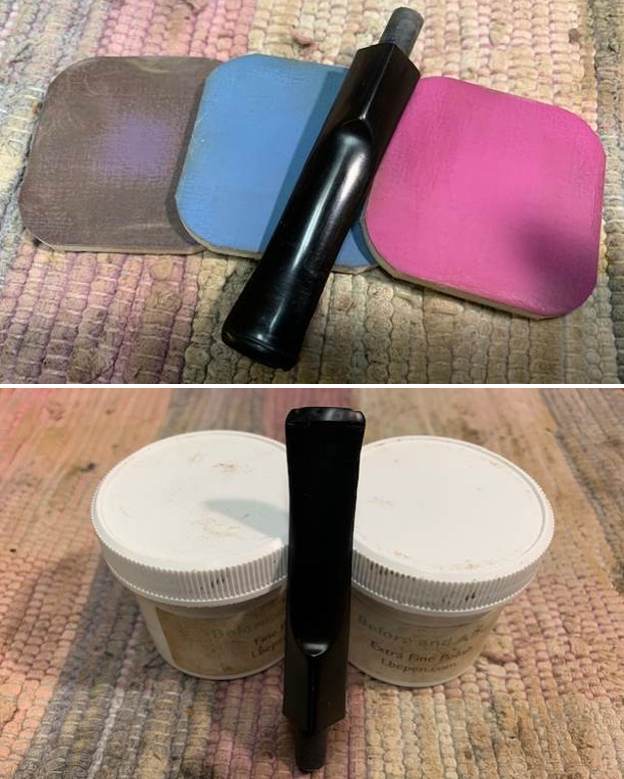
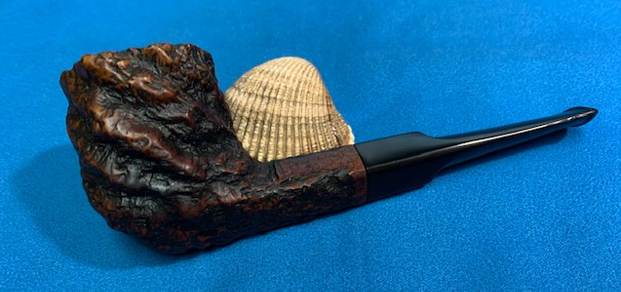
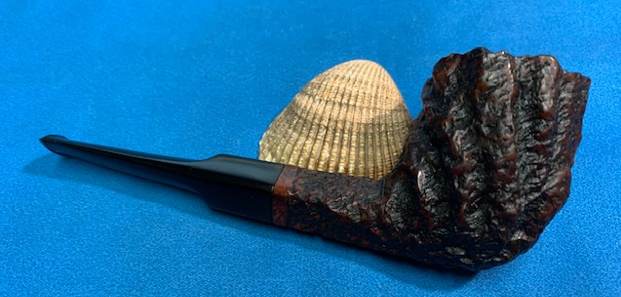
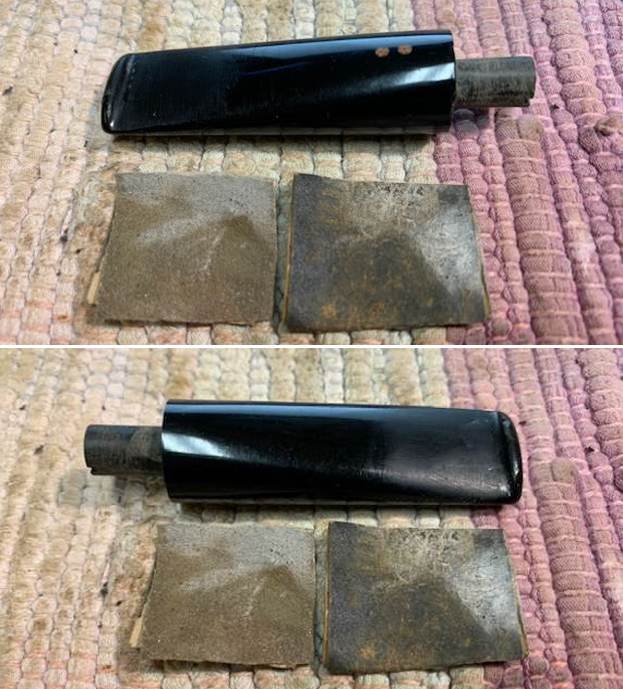
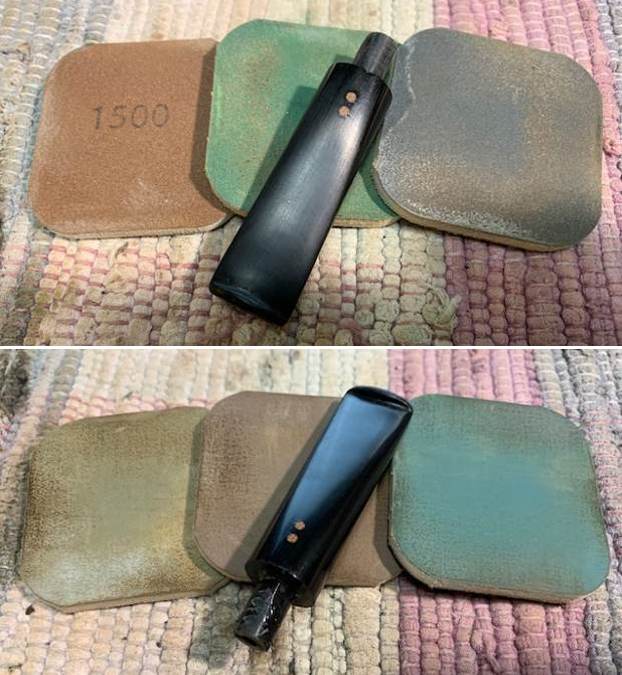
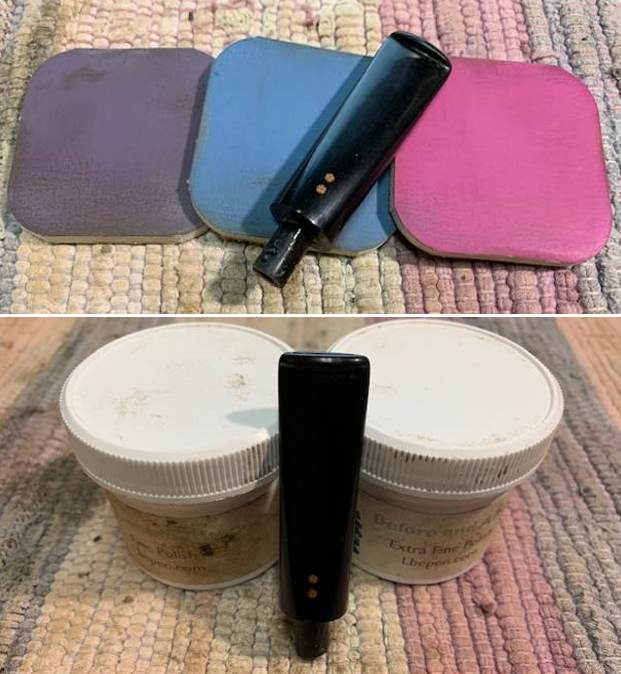
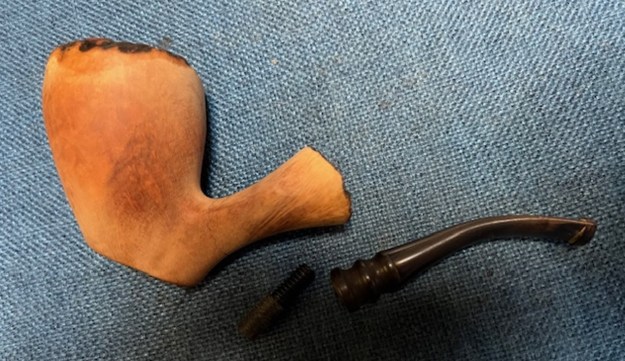
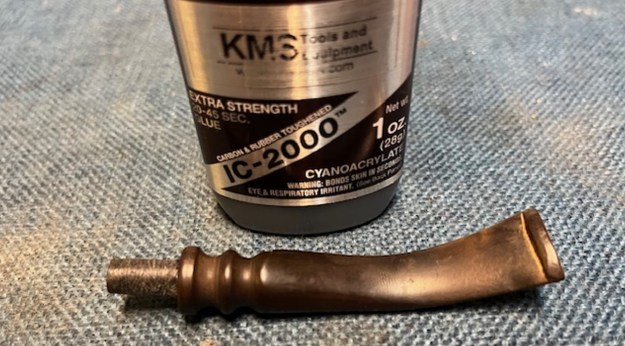
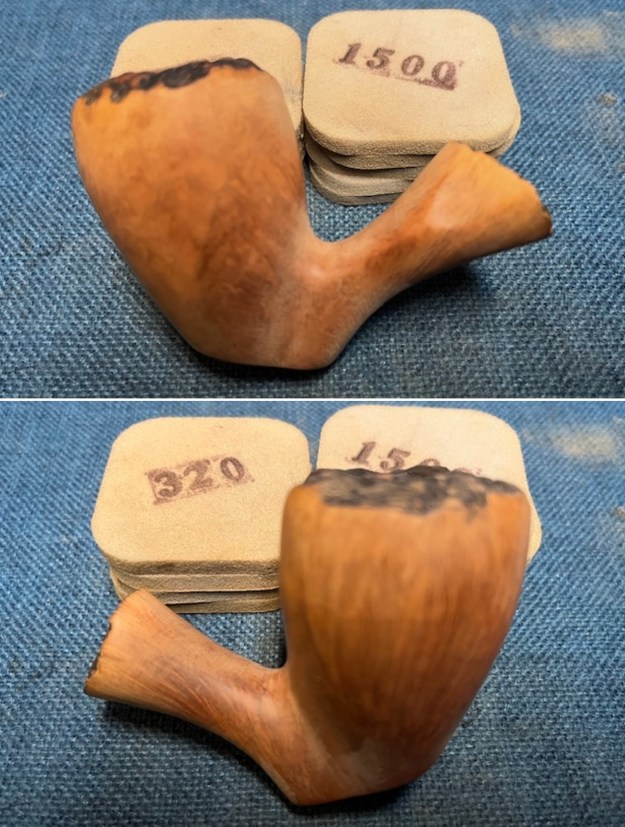
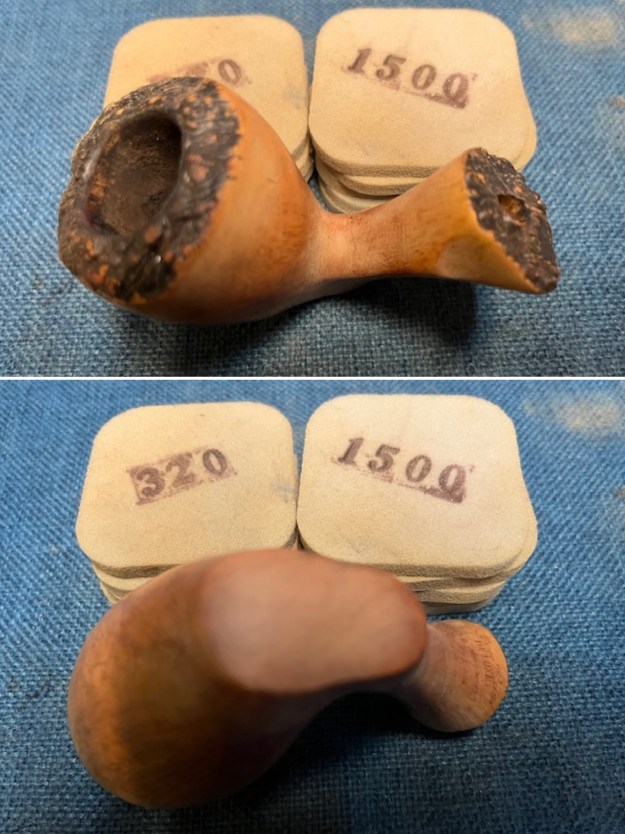
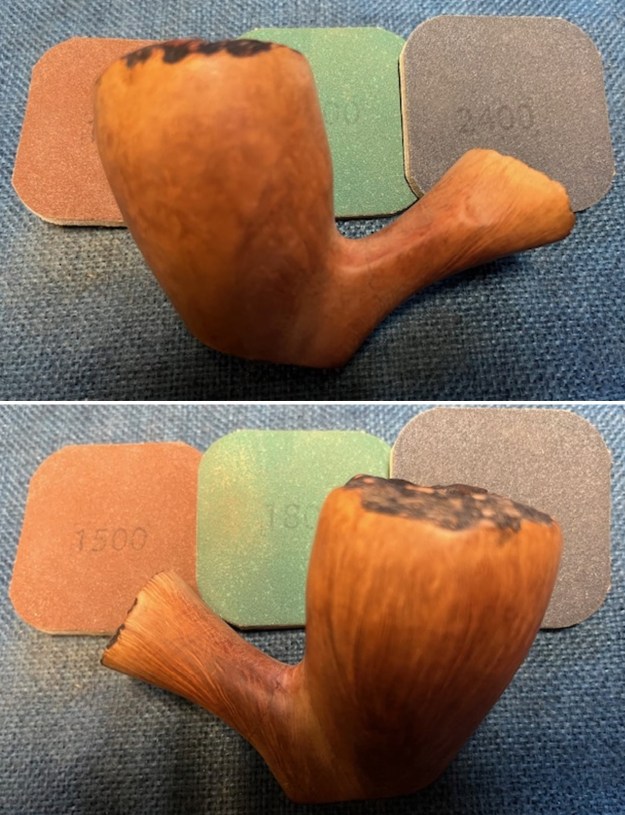
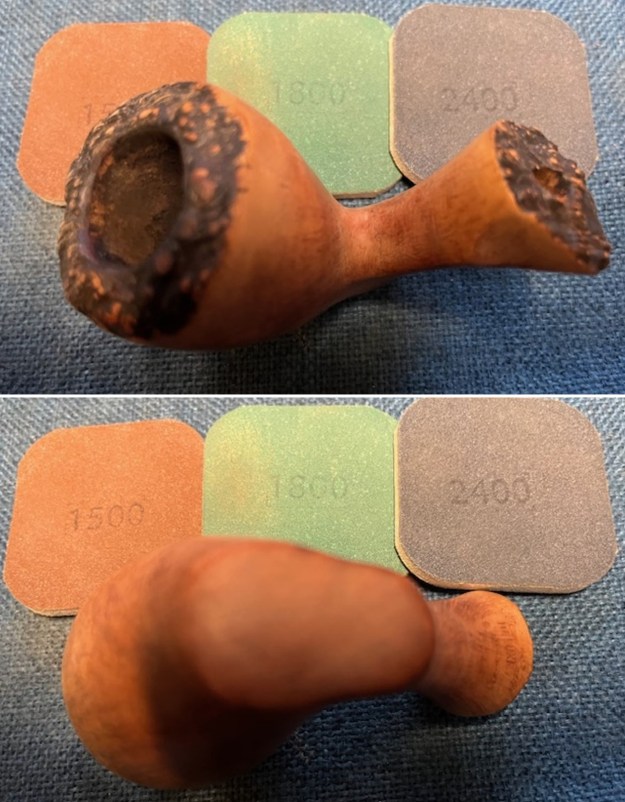
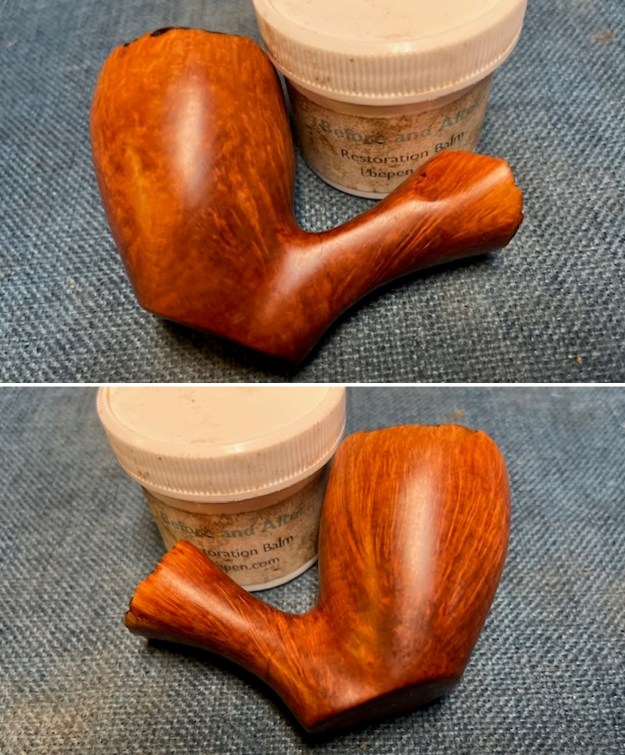
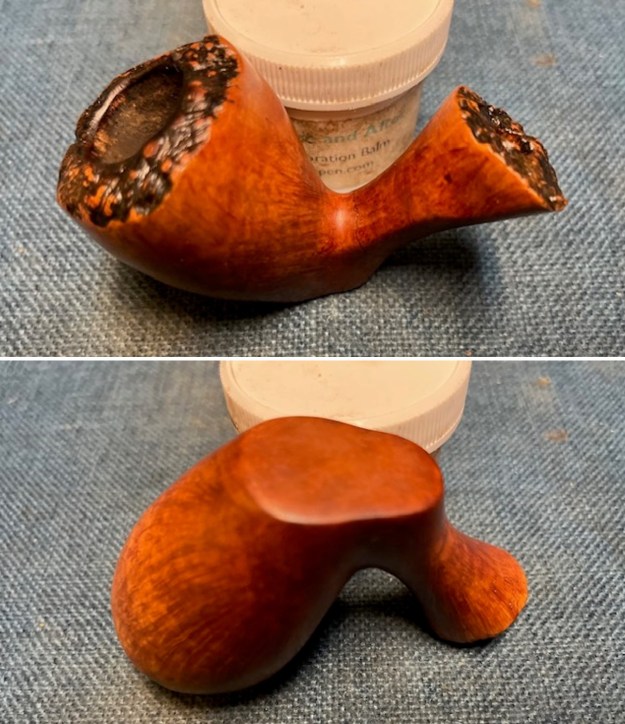
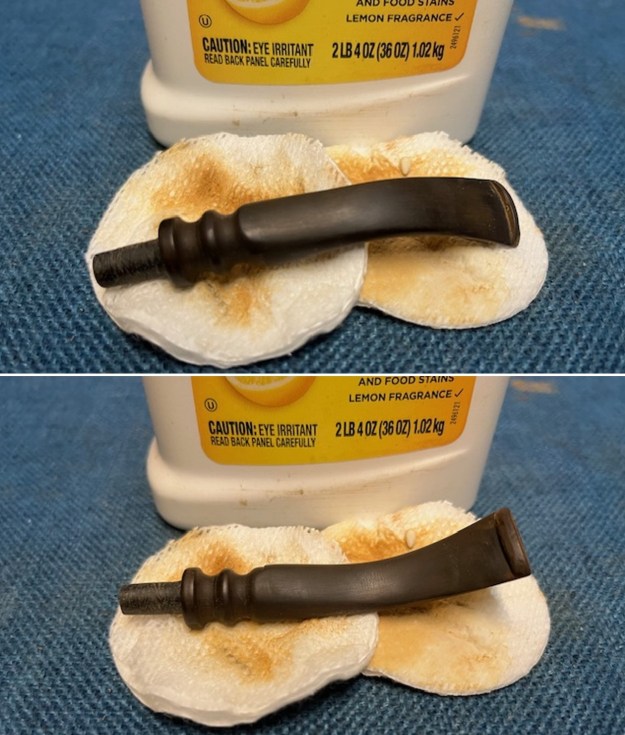
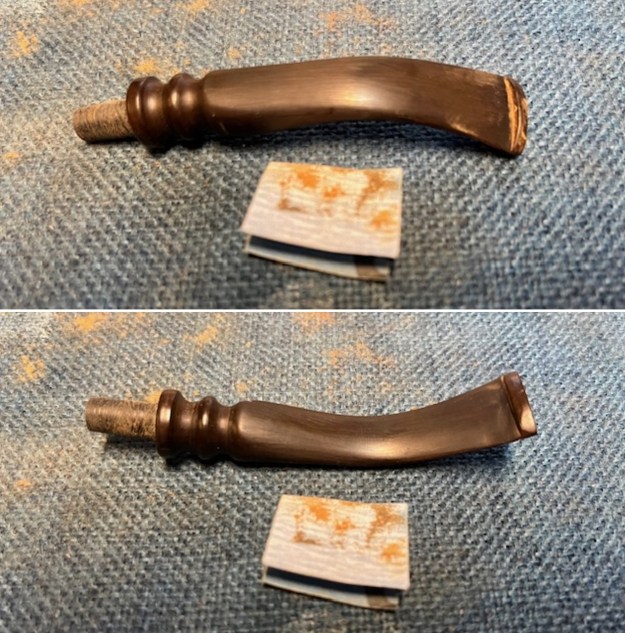
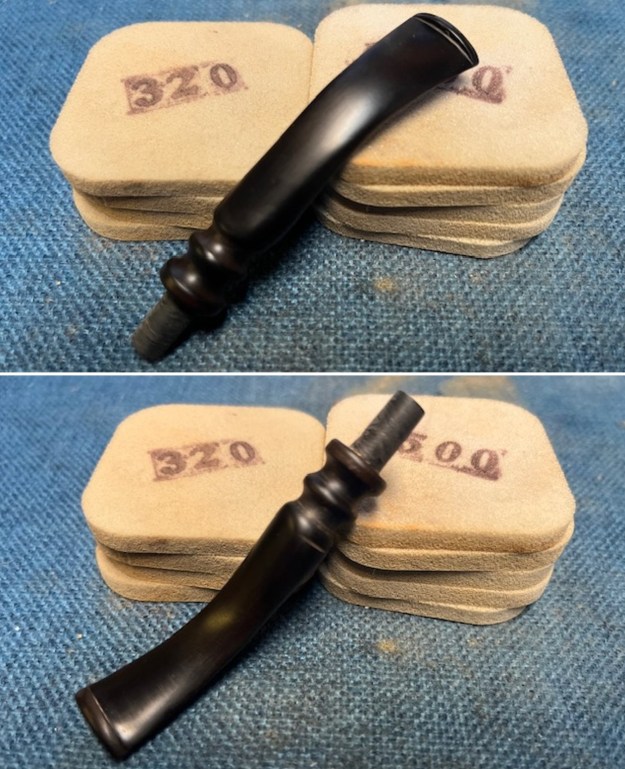
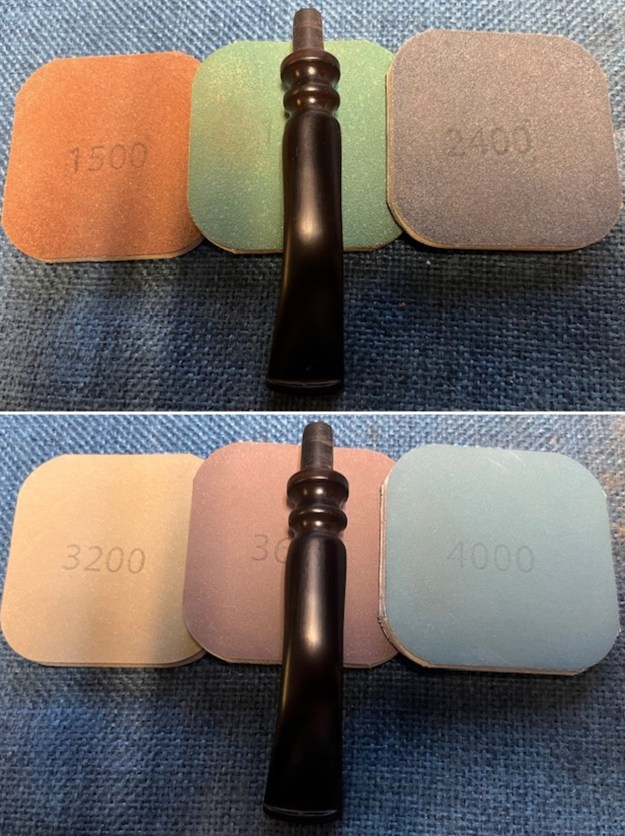
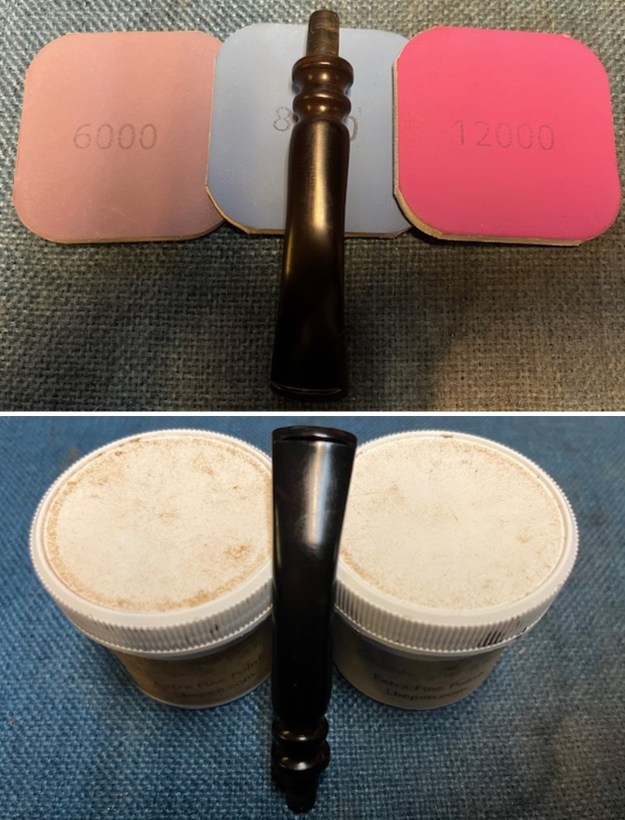
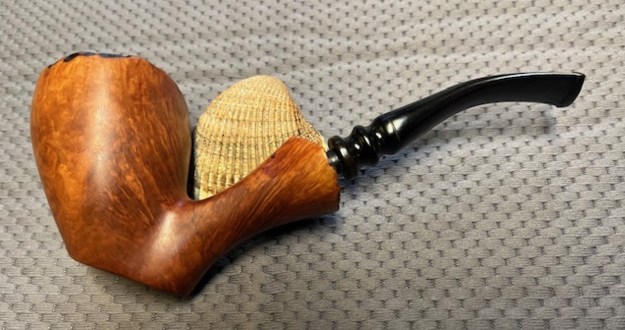
I used the Dremel and sanding drum to reduce the diameter of the new tenon to fit in the mortise. I fit it in the shank to make sure it would work well. I put it in the stem to show the fit as well. I put the tenon in the shank and slipped the stem over it to see what the pipe looked like with the stem fit in place. I liked what I saw and new that it would clean up very well and polish up nicely. Now that everything fit well I glued the tenon in the stem with black CA glue. I set the stem aside to let the glue cure. I sanded the bowl and shank with sanding pads – 320-3500 grit pads. I wiped the bowl down after each sanding pad to remove grime and check the progress. It was looking very good by the time I finished with the final pad. I polished the rim top and bowl with micromesh sanding pads – dry sanding with 1500-12000 grit sanding pads. I wiped it down with a damp cloth after each sanding pad to remove the dust and debris. The grain stood out more with each set of pads. I worked some Before & After Restoration Balm into the finish of the bowl, rim top and shank with my fingertips to clean, enliven and protect it. I find that the balm really makes the briar come alive again. I let the balm sit for 15 minutes and then buffed with a cotton cloth to raise the shine. The bowl really looks good at this point. I set the bowl aside and turned my attention back to the stem. I rubbed the stem down with Soft Scrub and cotton pads to remove the oxidation in the grooves. It looked much better once I had removed the oxidation.I sanded the stem with 220 grit sandpaper to smooth out the tooth marks and remove the stubborn oxidation in the grooves and against the button edge. Once finished it began to look better.I sanded the stem with 320-3500 grit sanding pads and wiped the stem down after each pad with an Obsidian Oil saturated cloth to remove the grime and protect the stem.I polished the stem with micromesh sanding pads – dry sanding it with 1500-12000 grit pads. I polished it further with Before & After Pipe Stem Polish – both fine and extra fine. This once wreck of a pipe turned out to be a beautiful Preben Holm made Ben Wade Deluxe with a fancy, turned, black vulcanite stem. It has a great look and feel. The shape fits well in the hand with the curve of the bowl and shank junction a perfect fit for the thumb around the bowl when held. I polished stem and the bowl with Blue Diamond polish on the buffing wheel. I gave the plateau on the rim top and shank end multiple coats of Conservator’s Wax. I gave the bowl and the stem multiple coats of carnauba wax. I buffed the pipe with a clean buffing pad to raise the shine. I hand buffed it with a microfiber cloth to deepen the shine. The pipe polished up pretty nicely. The rich combination of browns and black in the smooth and plateau finishes took on life with the buffing. The rich colour of the briar works well with the polished stem. I like the grain and finished look of this Preben Holm Ben Wade Deluxe Freehand. Have a look at it with the photos below. The shape, finish and flow of the pipe and stem are very well done. The dimensions are Length: 6 inches, Height: 2 ½ inches, Outside diameter of the bowl: 1 ¾, Chamber diameter: 7/8 of an inch. The weight of the pipe is 2.12 ounces/60 grams.This Danish Freehand is a real beauty. Thanks for walking through the restoration with me as I worked over another beautiful pipe. I will be putting it on the rebornpipes store in the Danish Pipe Makers Section shortly if you would like to add it to your collection. Thanks for your time.
Finishing a Restoration on a Recently Purchased House of Robertson Chunky Apple


By Steve Laug

The next pipe on the work table is a bit of a break for me after working on the last four heavily damaged pipes. That lot of pipes was a lot of work and I still have one hard one to work on. Sometimes I need to take a deep breath and work on something else for a bit. If you have followed rebornpipes for a while you will recognize that we love old House of Robertson pipes. They were made in Boise, Idaho by Thayne Robertson and something about them always intrigues me. Perhaps it is because I spent a lot of my early youth in Idaho and the thought of a pipe made in Idaho catches my attention. I am not sure why but I know that when we see them for sale we always look and often we pick them up.

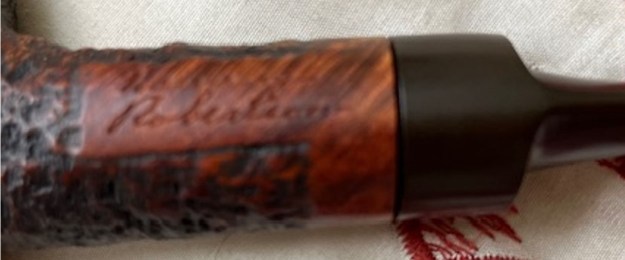
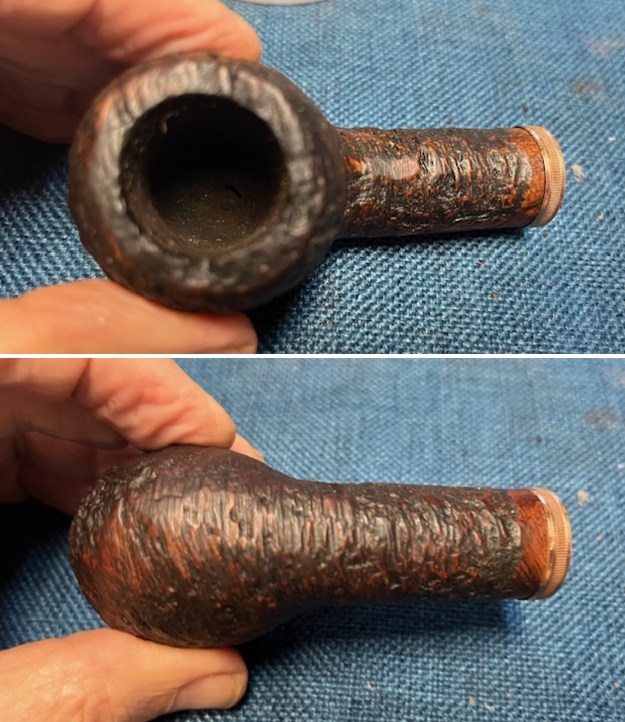
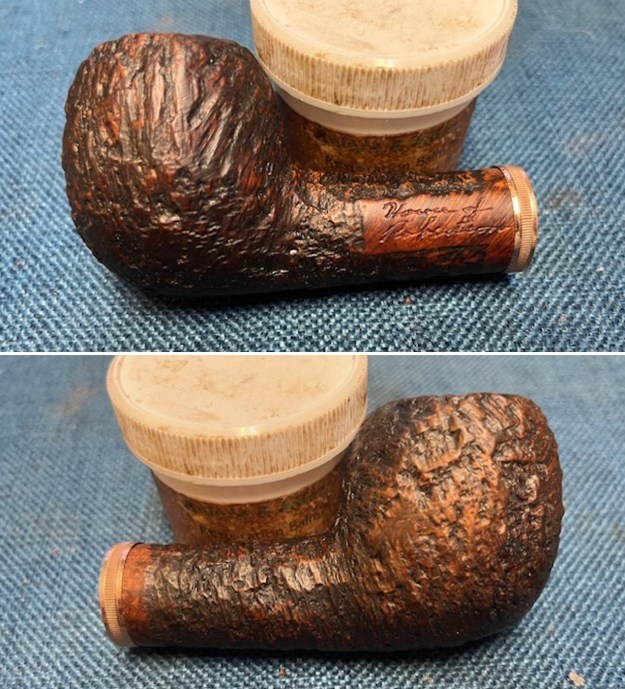
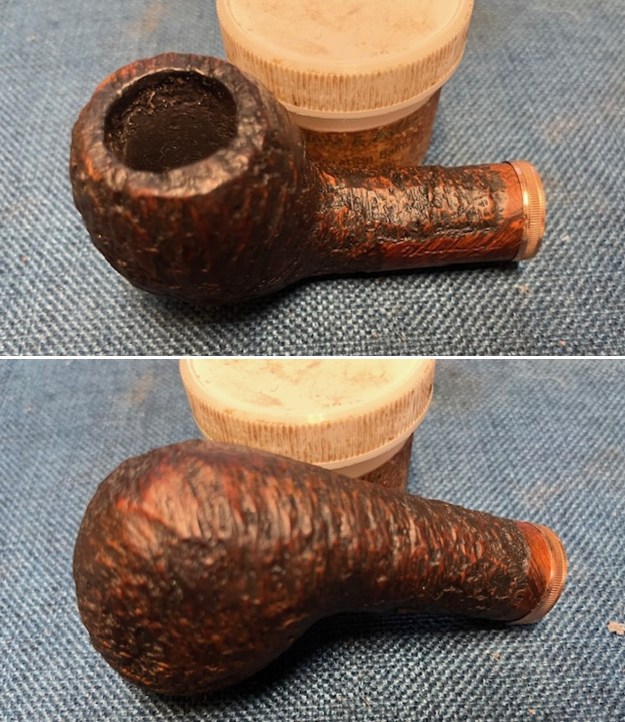
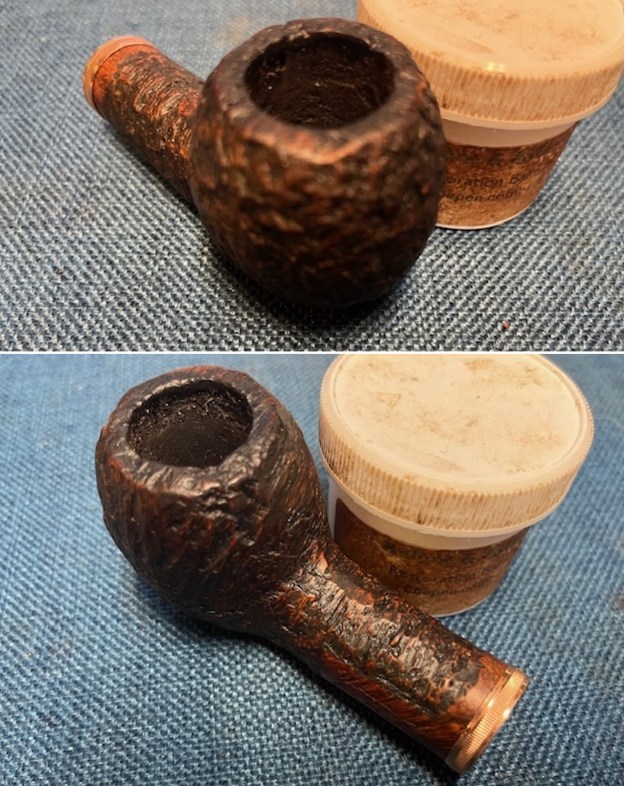
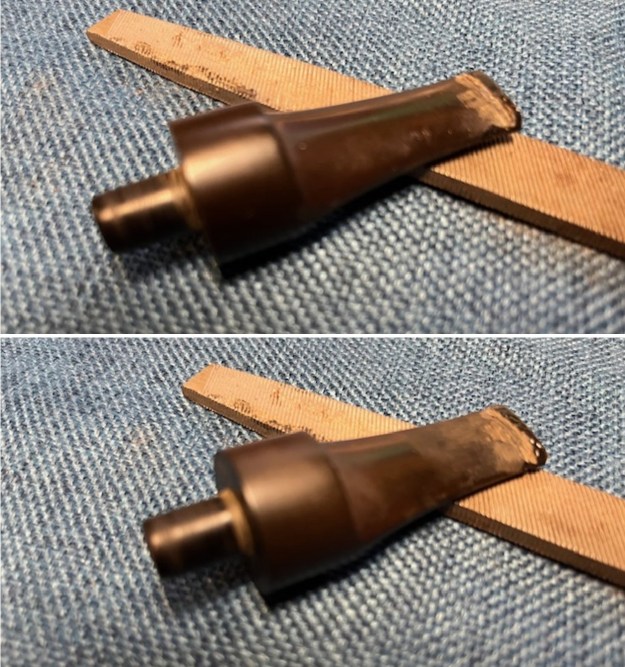
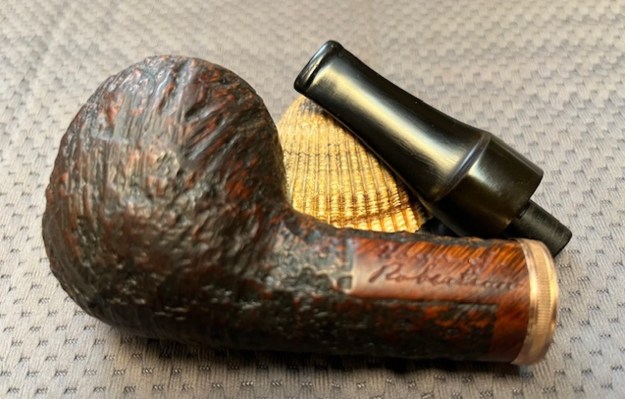
The Robertson that one I have chosen to work on is a beautiful chunky rusticated Apple with a saddle stem. We purchase it on 05/20/24 from a seller in Austin, Texas, USA. The name House of Robertson is roughly hand-etched on the left side of the shank with an engraving tool. This pipe is a huge, thick shank Apple with a saddle stem. The bowl has an interesting bark like rustication on the sides of the bowl and shank. There is a smooth panel for the brand mark on the left side and a band around the shank end. The seller had done a lot of clean up work on the pipe before he sold it. This often makes me leery of purchasing it as it generally inflates the price and rarely meets our standard. The bowl had been reamed but there was still too much cake in it for my liking as I want to know what is underneath. It is important for me to see the bowl walls and check for heat and burn damage. The rim top and edges of the rim were in good condition. The pipe was quite clean and it appears to be in excellent condition. It is definitely an interesting pipe that caught my interest. The fit of the stem to the shank left a gap. The saddle stem had been modified by the seller. The original button had been cut off and a new one imposed on the stem end. It was rough but workable and would take some time to clean and smooth out. I took photos of the pipe while I visited Jeff. Before I started my work on it I have included them below for you to see. I took photos show the condition of the bowl and the stem. The photos of the bowl and rim show the moderated cake remaining in the bowl but the rim top was in excellent condition. The rustication on the top of the bowl and the inner and outer edge of the rim looks really good. The finish was well cleaned. The saddle stem had been recut and a new button formed. It was rough at best and needed a bit of work to make it work for me. The button edge was sharp which was good but there was a trough ahead of it to give it definition. The taper of the stem dropped off at the trough. I would need to redefine the taper of the stem to get rid of the trough and make the flow more seamless between the new button and the slope of the stem. I would also need to shape the button to be more of an ellipse curving to a point on each end of the outer edges and clean up the slot and make it extend across the button surface and taper into the airway like a “Y”. You can also see that the stem does not sit tight against the shank end.The next photo shows the etched name on the left side of shank on the shank. It reads House of Robertson.I am including the information that I found when I received my first of the House of Robertson Pipes. I found a link on Pipedia that gave me the only information I could find on the brand. I include that in total as it is interesting to read (https://pipedia.org/wiki/Robertson).

“House of Robertson” was in business for many years, but alas, closed their doors in 1999. They were located in Boise, Idaho. They are noted for making rather large and interesting pipes. Thayne Robertson was a Master Mason, AF & AM, and started the shop about 1947 and his son Jon started working there in 1970 when he finished college, along with Thayne’s daughter. Thayne and his son started making the big pipes at that time, and made them together until 1987 when Thayne passed away. Jon kept the store and his sister moved on to other things. The House of Robertson appears to have closed around 1999.

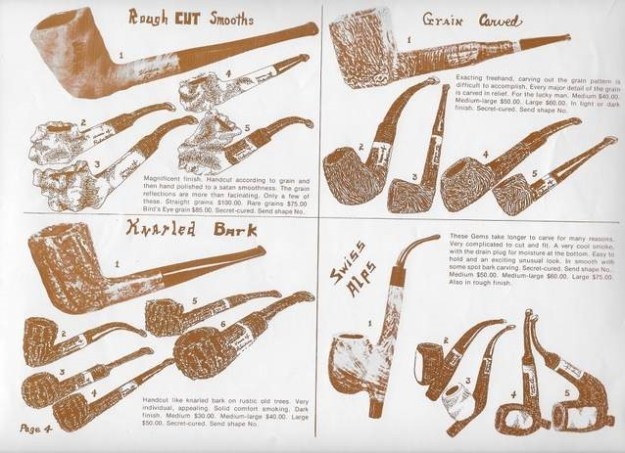
Since then I have worked on a lot of House of Robertson pipes and have been able to track down more information. I am including a link to a Catalogue that I picked up on eBay. Click on the link and have a look at this interesting book of information on the brand and the pipe maker himself (https://rebornpipes.com/2022/12/11/a-house-of-robertson-catalogue-filled-with-great-examples-of-thayne-robertsons-work/). I am including a page below that helps with understanding the shape and finish on this particular pipe. It is clear that it is what he calls a Knarled Bark pipe. The catalogue describes it as follows:

Handcut like knarled bark on rustic old trees. Very individual, appealing. Dark finish. Medium $30.00. Medium-large $40.00. Large $50.00. Secret-cured…I am also including a biography of Thayne Robertson that I found on Facebook from a fellow in Boise, Idaho. It is an interesting glimpse into the mind and life of the pipe maker. Make sure to take time to read it (https://rebornpipes.com/2021/10/31/house-of-robertson-pipes-boise-pipe-carver-thayne-robertson/).

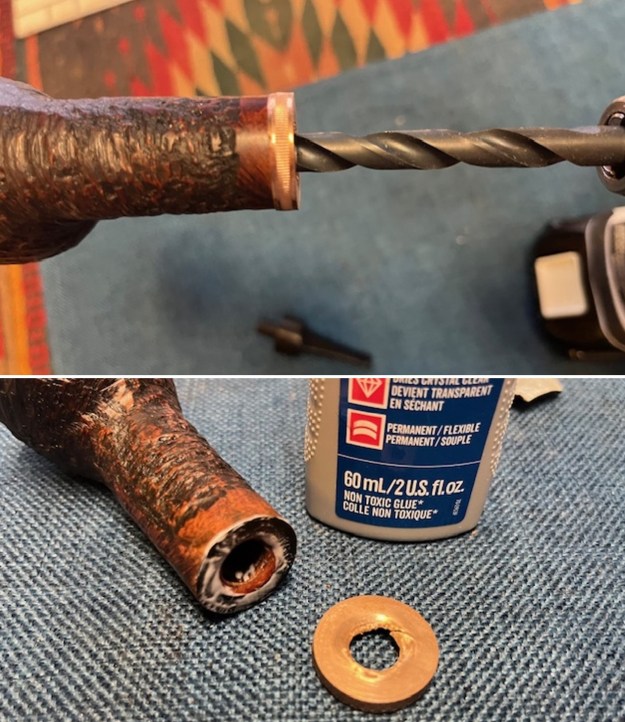
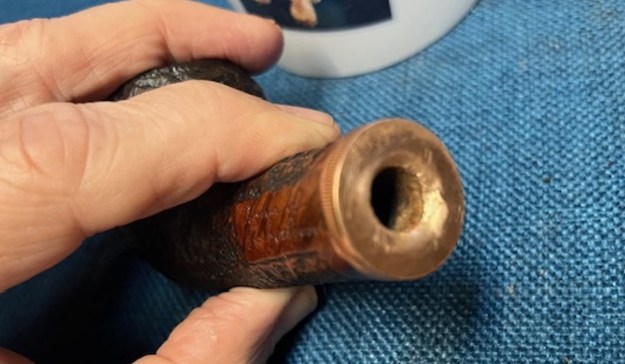
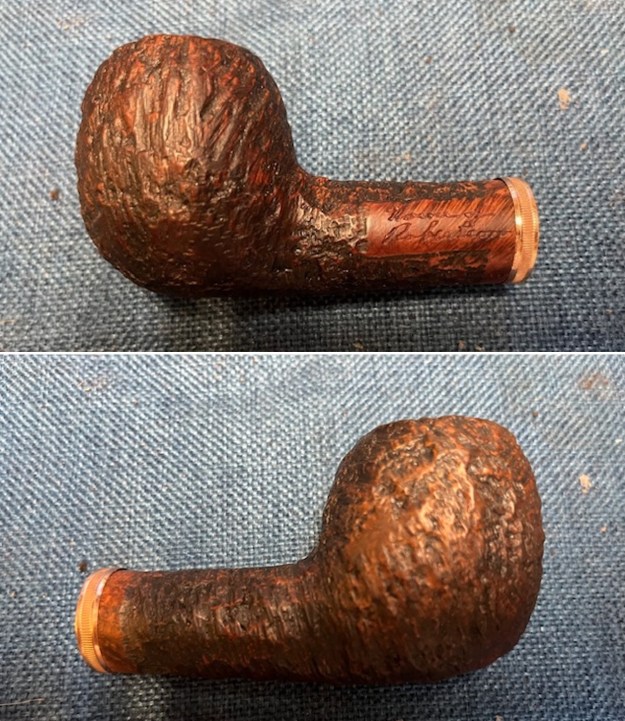
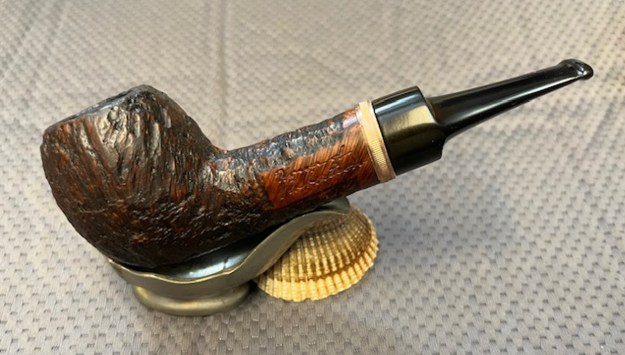
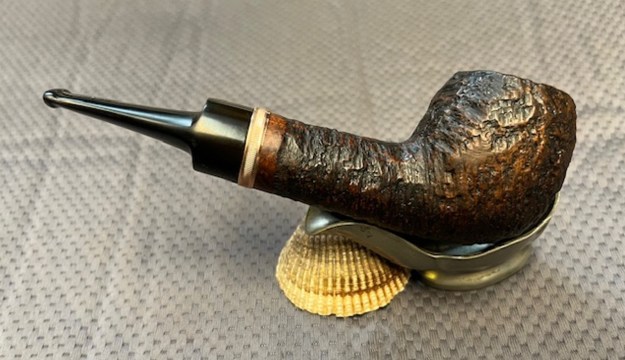
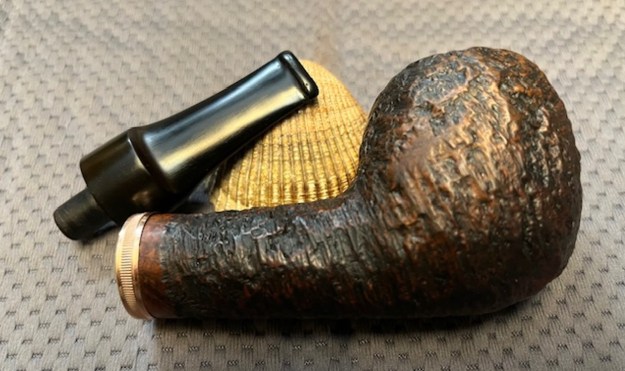
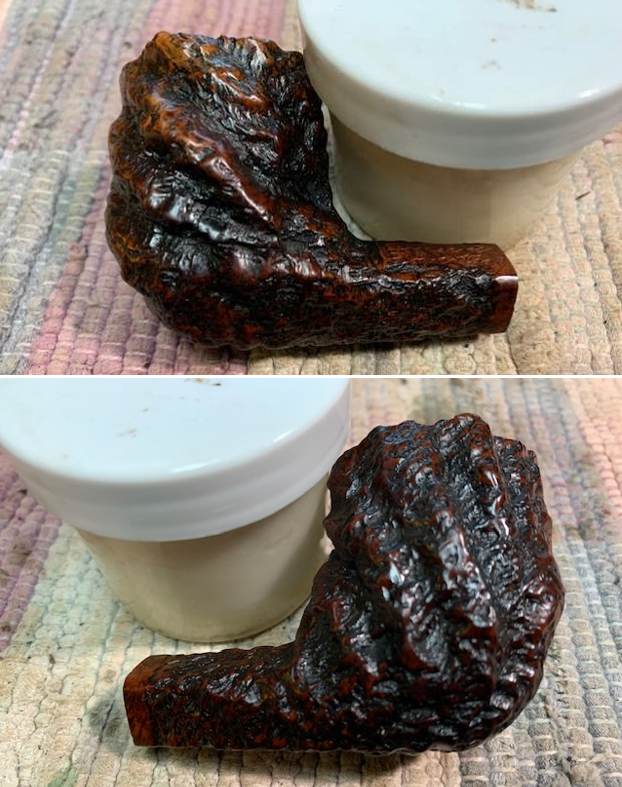
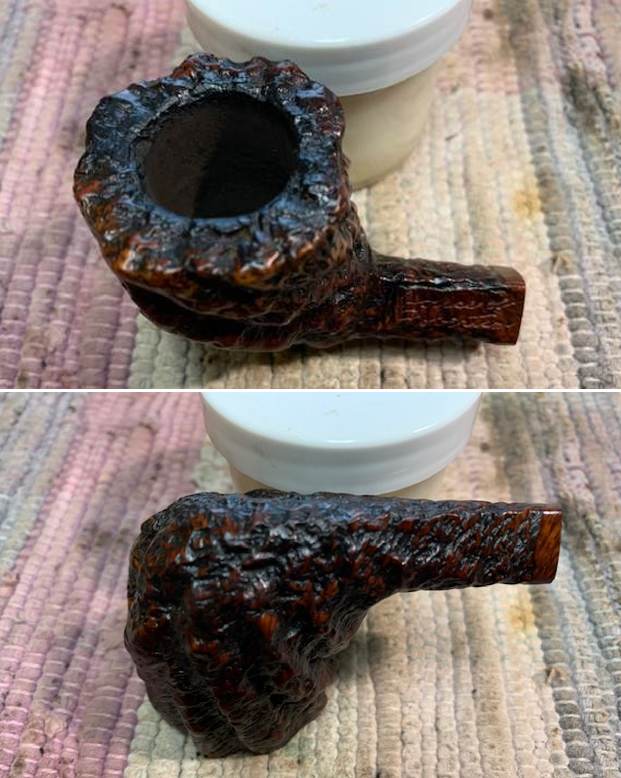
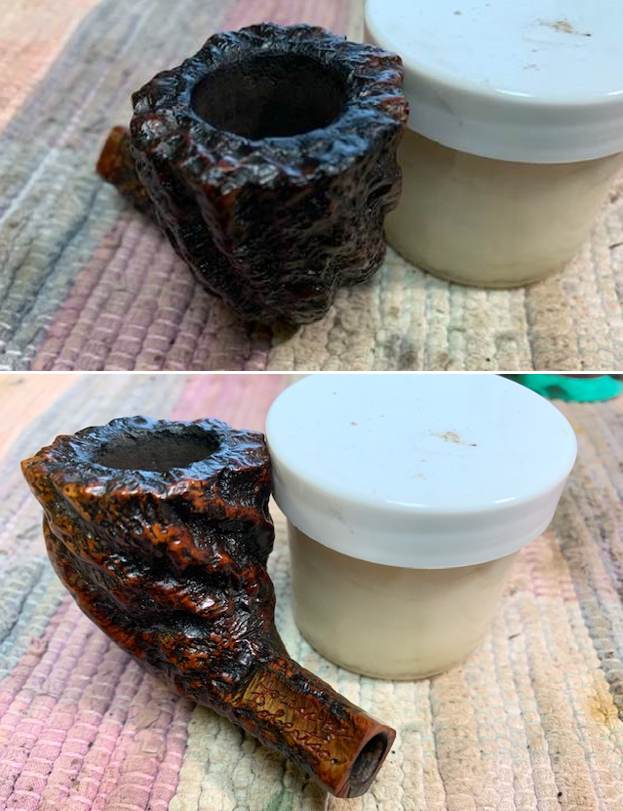
Now it was time to work on the pipe itself. Because the seller had done a fairly good job in his clean up it would not take much on the bowl and shank. I decided to take the cake back to bare briar so I could check out the condition of the walls. I cleaned up the remaining cake in the bowl with a Savinelli Fitsall Pipe Knife. I sanded the bowl walls with 220 grit sandpaper wrapped around a piece of dowel. I wiped down the inside with a damp cloth and checked for damage to the walls. There was no heat or burn damage on the walls which is always a relief for me.I did a quick clean up of the shank and the stem. Both were very clean and by and large I just removed dust and some debris in the shank from the reaming. The stem photo shows the stem after my rework of the button and slope so inevitably debris on the pipe cleaners came from that. It was nicely cleaned up by the seller.I decided to use the least intrusive method of getting the stem to seat well in the shank first. I used a knife to give the inner edge of the shank a bevel and sanded it smooth. I wanted to see if that would help. Unfortunately, it did not seem to make a difference. The fit still wans not snug. (By the way you can see the button shape in the first photo below. It shows the trough and the new button quite clearly.)I looked through the various bands and ferrules I have in a bag here and found an interesting thin brass ferrule that file well and did not cover the signature on the shank. The hole in the center was not quite big enough for the tenon to slip in. I used a cordless drill and drill the hole to fit. I found that doing it on the shank held it firmly in place and kept me from drilling off centre. Oh if I had a drill press it certainly would have been much easier but I have to use what is available to me at the moment. I tried the fit of the stem to the shank and it was perfect. I glued the ferrule in place with all-purpose glue. Once the glue set I gave the edges of the drilled hole a slight inward bevel and started polishing it out. I would need to take it through the regimen of the micromesh pads but it was looking pretty good. I took photos of the newly capped shank end to show the look of the pipe at this point. Once I finished the reshaping of the stem and the button I would put them together and take photos. I put the stem on the shank and looked it over and was happy with what I saw at this point. I worked Before & After Restoration Balm deep into the smooth finish to clean, enliven and protect the briar. I rubbed it in with my fingers and a shoe brush. I worked it into the finish then set it aside to dry for 10-15 minutes. I wiped it off with a soft cloth and buffed the bowl with a cotton cloth to polish it. It really began to have a deep shine in the briar. I took some photos of the bowl at this point to mark the progress in the restoration. The rustication on the bowl stands out with interesting lines moving across the sides of the bowl and the shank. I set the bowl aside and turned my attention to reshaping the stem and the button. I started the process by filling in the notches on each side of the button and stem surface with black CA glue. I also filled in some of the deeper pits in the button surface at the same time that had been left behind when the button had been shaped. This was merely the first step so it is hard to know what it looks like yet. Once the repairs cured I used a rasp to flatten out the stem surface ahead of the trough that had been carved. I want to change the flow of the pipe to a smoother transition from the stem to the button. The trough was ragged and did not work for me.I used a folded piece of 220 grit sandpaper to continue to shape the stem and the button. I wanted to smooth out the transition of the trough and the angle of the stem from the saddle to the button. There was still a ways to go but it was definitely looking better. I started polishing the stem flow and shape of the button with sanding pads – dry sanding with 320-3500 grit pads. I wiped down the stem after each pad with an Obsidian Oil cloth and the stem began to really show the shape of the button and the flow from the saddle to the button.With the stem ready for the final polishing I decided to pause and reshape the slot in the button. The first photo shows where I started. It was basically a rectangular cut. I wanted to make it follow the width and curve of the elliptical button shape. I used some small needle files to accomplish what I was looking for. I used a triangular shaped blade to start the process of taking the cut to the edges of the button. I followed that with an oval and a round needle file to get an elliptical shape. I cleaned up the top and bottom edge of the slot with a round needle file. I think it looks much better and the slot is shaped like a Y thus spreading the smoke into the smoker’s mouth. I polished the vulcanite stem with micromesh sanding pads – dry sanding it with 1500-12000 grit pads. I wiped the stem down after each sanding pad with Obsidian Oil and set it aside to dry. I polished it further with Before & After Pipe Polish – using both the Fine and Extra Fine Polishes. I gave it a rubdown with Obsidian Oil one last time and set it aside. I put the House of Robertson Chunk Bark Finish Apple and reshaped saddle stem back together and worked the pipe over on the buffing wheel using Blue Diamond to lightly polish the stem. I buffed the bowl and stem to raise the gloss on the briar and the vulcanite. I gave the bowl multiple coats of Conservator’s Wax and the stem multiple coats of carnauba wax. I buffed the entire pipe with a clean buffing pad on the wheel to raise the shine. I hand buffed it with a microfiber cloth to deepen the shine. The finished the House of Robertson Chunky Apple is shown in the photos below. The dark brown stains on the Bark finish of the chunky apple bowl works well with the rich black of the vulcanite stem. The dimensions of the pipe are: Length: 6 inches, Height: 2 inches, Outside Diameter: 1 ¼ inches, Diameter of the chamber: ¾ of an inch. The weight of the pipe is 73 grams/2.54 ounces. This is an interesting piece of briar with a rugged old tree bark rustication is unique and looks great. I hope to enjoy this pipe tomorrow afternoon on the front porch with a great bowl of good Virginia. Thanks for walking with me through the restoration process.

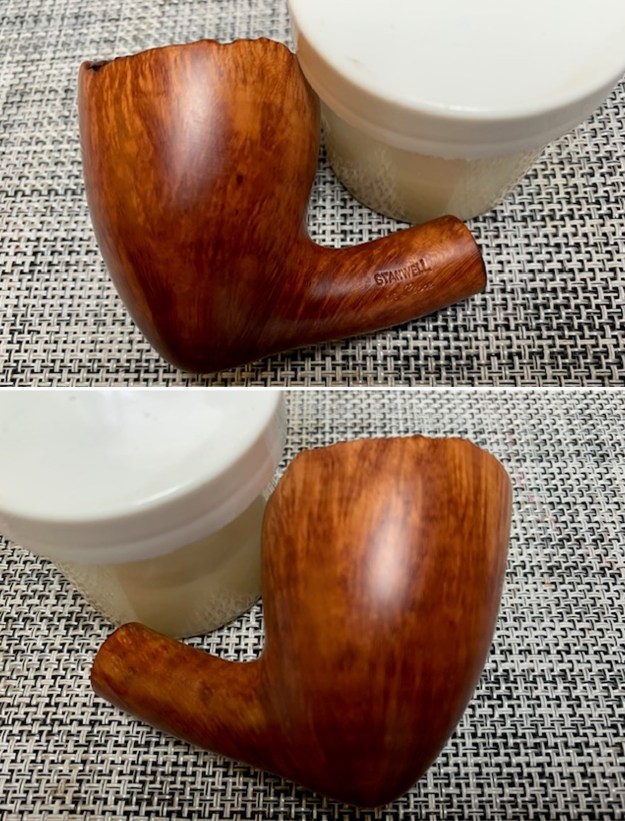
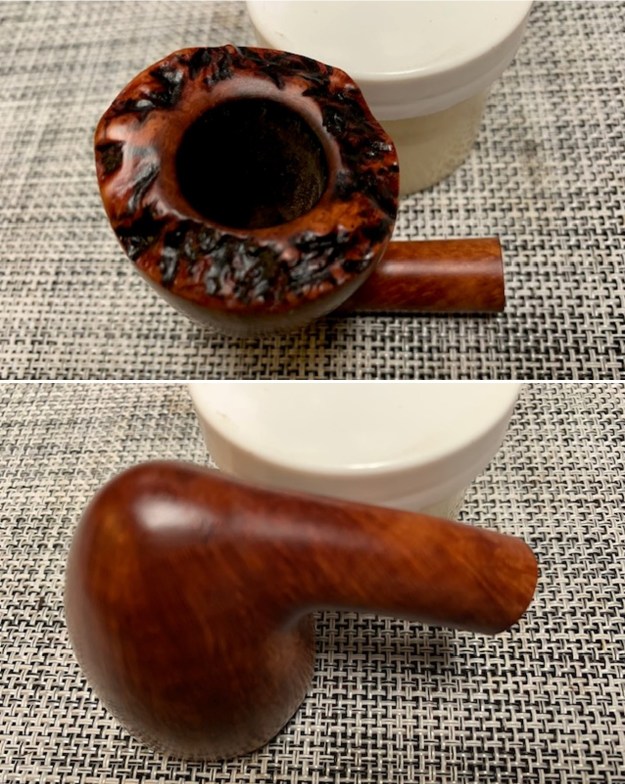
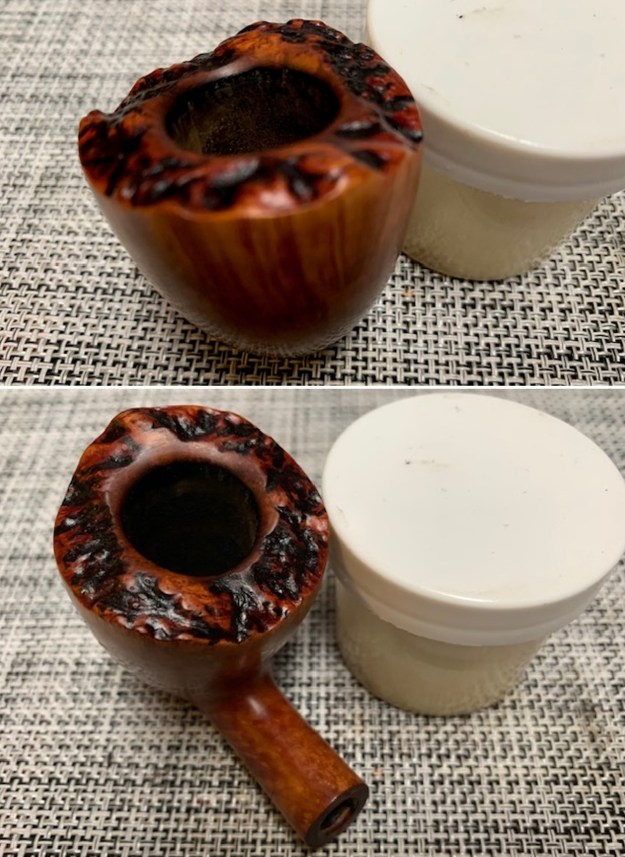
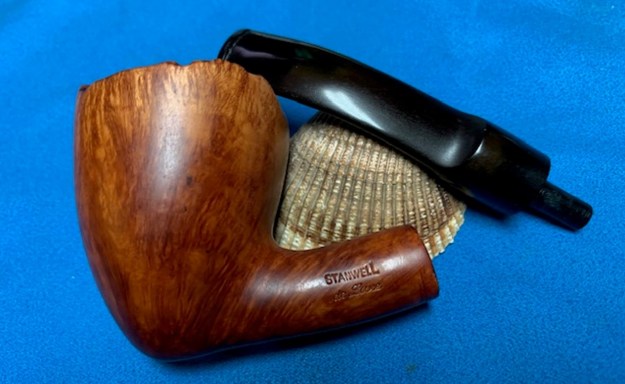
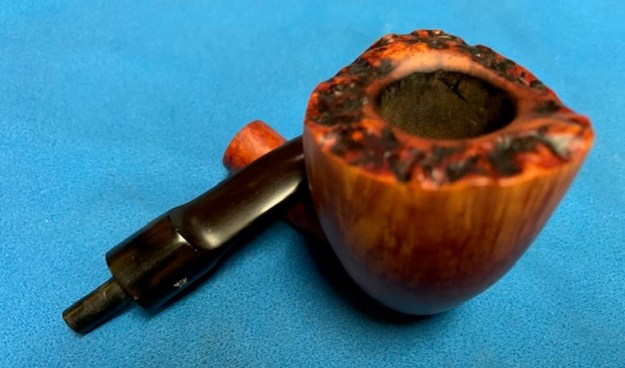
Replacing a broken tenon and restoring a Stanwell de Luxe


Blog by Steve Laug

Earlier in July I received an email from Peter, a fellow in California regarding a pipe repair he needed. He wrote as follows.

Hi, I’m just wondering if you can repair a Stanwell pipe for me? The stem broke off inside the pipe. Thanks for your time, Peter.

I wrote him back asking for photos so I could have a look at it. I figured he meant that the tenon snapped off inside the shank but I wanted to be certain. He replied

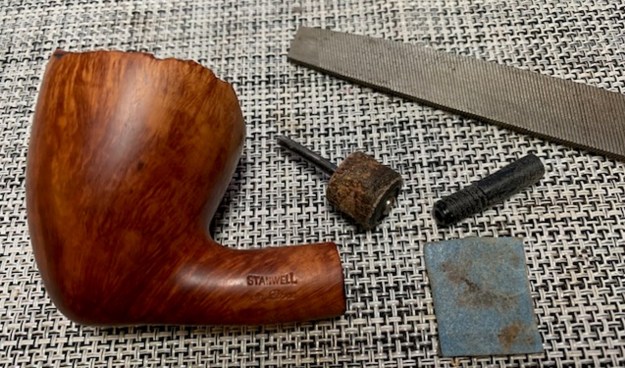
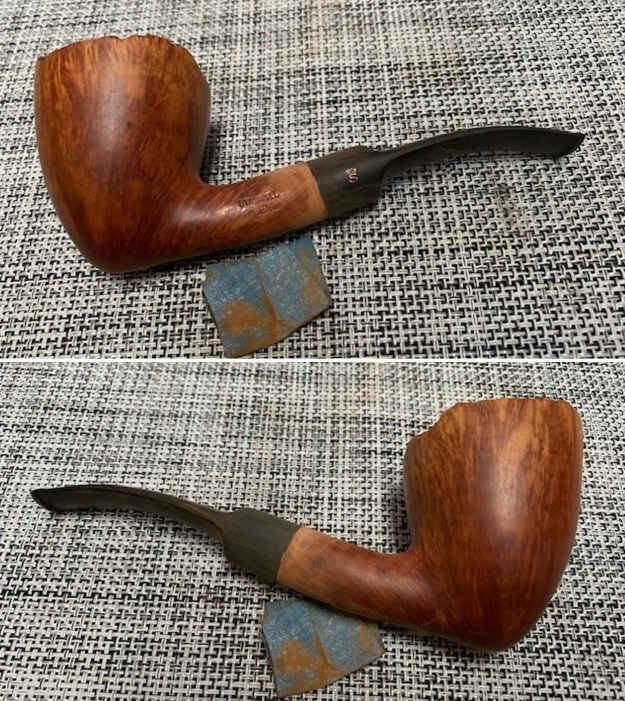
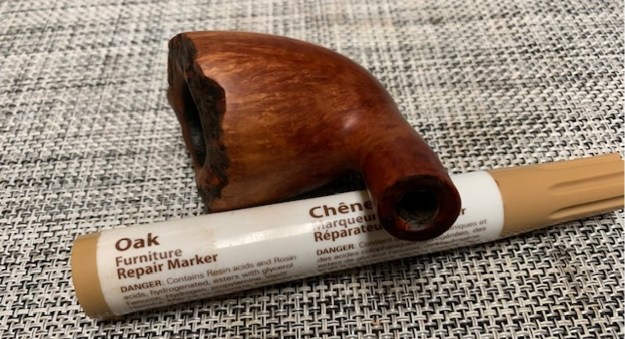
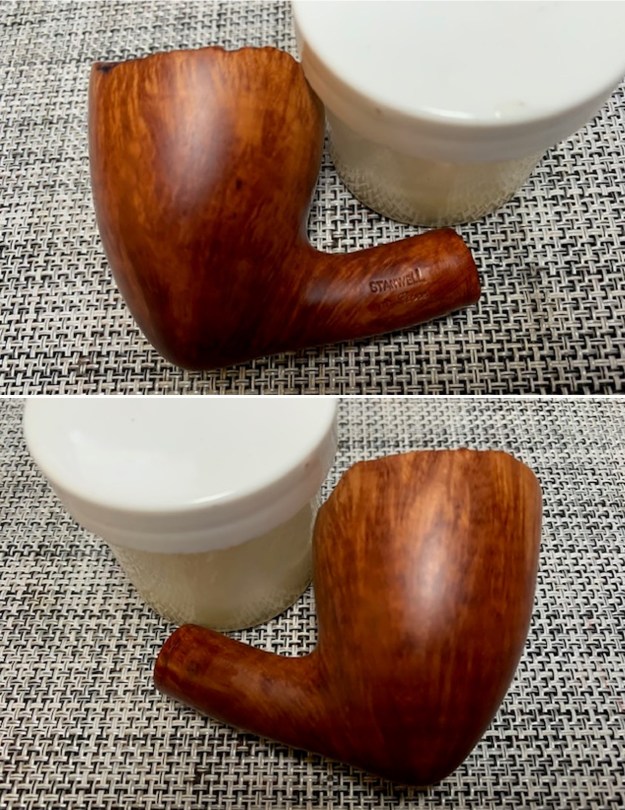
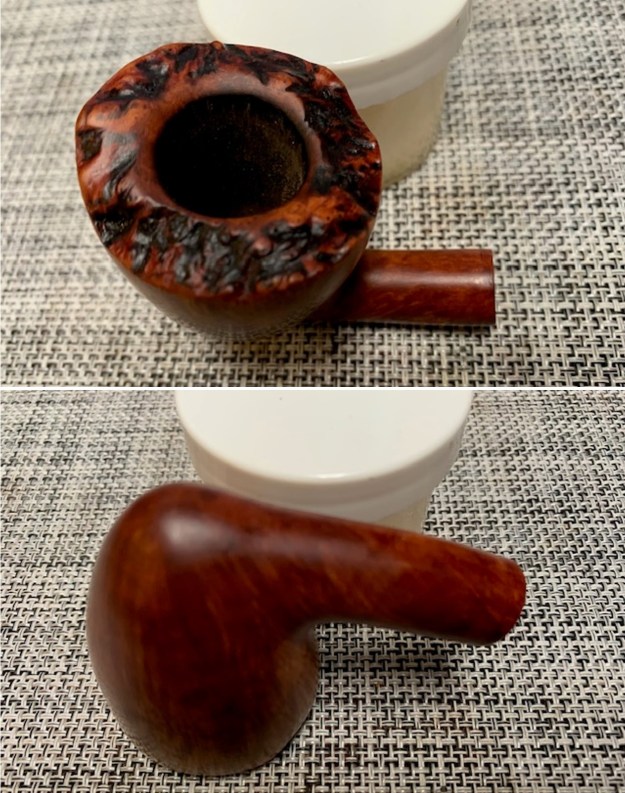
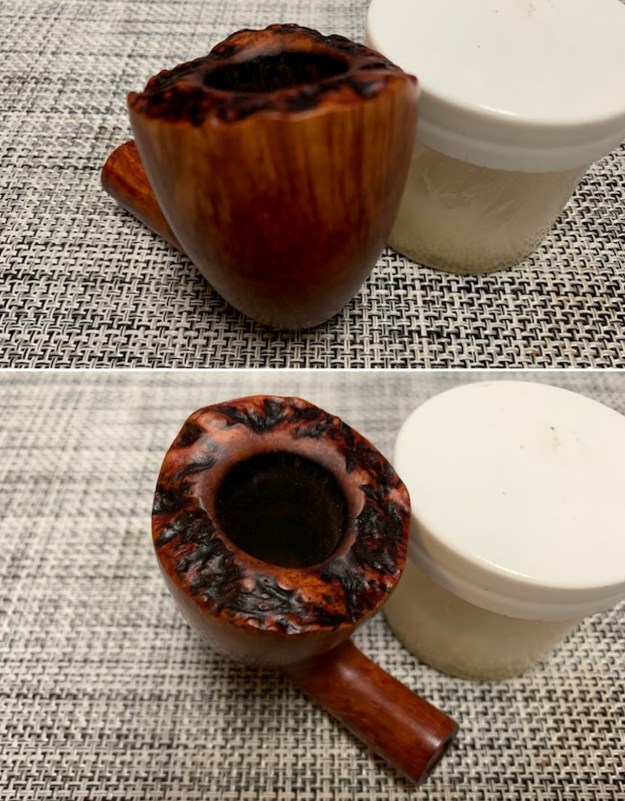
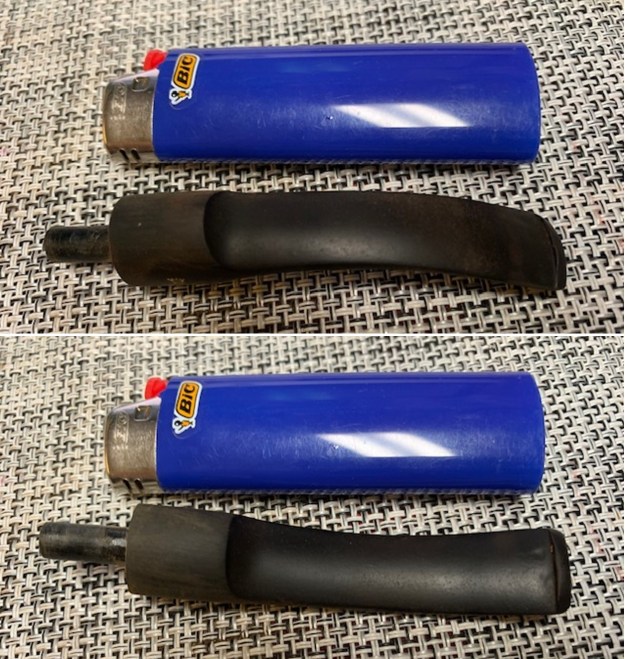
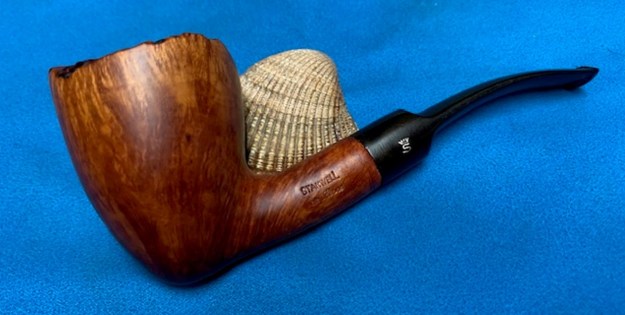
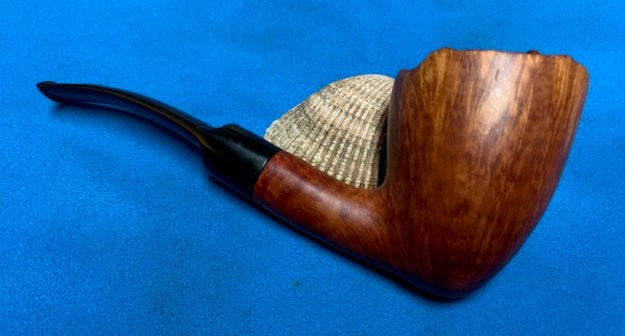
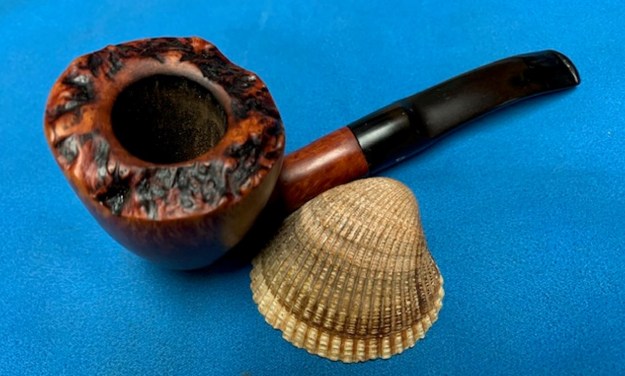
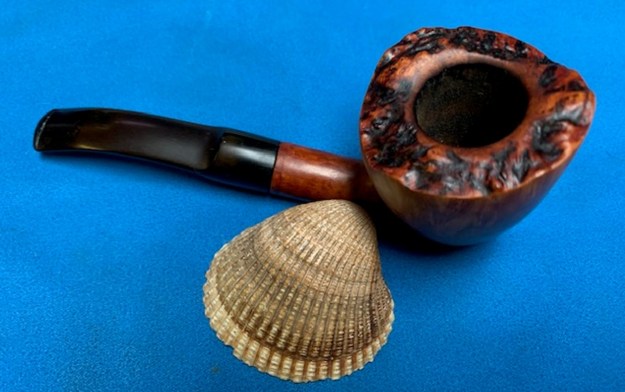
Thanks so much for your very fast response. Pictures are below. Best wishes, Peter We chatted back and forth a bit and Peter decided to send the pipe to me. I received it yesterday and here is what I saw once I unwrapped it. The photos tell the story but here is my review of it. The finish was dirty and worn. The bowl had a thick cake and there was lava buildup flowing along the inner edge and into the plateau on the rim top. The stem was snapped off leaving the tenon in the shank. Fortunately, there was no damage to the shank itself. It did not have any cracks in the sides. The shank end showed a lot of tar buildup. The tenon was still in the shank. The snap at the stem was fairly clean and would just need to be flattened. The stem itself showed a lot of oxidation, calcification and light tooth marks and chatter on both sides ahead of the button. The pipe was stamped on the left side and read Stanwell [over] de Luxe. I could not see any other stamping on the shank. There was a gold crown S on the left side of the saddle stem. This was going to be fun to bring back to life. I decided to begin working on the pipe by trying to pull the broken tenon with my usual methods. I put the bowl in the freezer for 30 minutes, then inserted a screw into the airway in the shank. I wiggled the screw and tried to break it free. It was no use. I used a qtip to dribble alcohol around the edges of the broken tenon in the shank. I repeated that several times and let it sit. I was still unable to remove the broken tenon in the shank. It was stuck and nothing seemed to loosen it. With the tenon being stuck in the shank I stepped up the process and drilled it out. I started with a drill bit slightly larger than the airway. I have had good success in drilling and in the process having the tenon come out on the drill bit. In this case I worked through four drill bits until I used one that was slightly small than the mortise. I then scraped out the remainder of the bits of vulcanite in the shank with a small pen knife until the walls were clear. I took a photo of the pipe at this point in the process – the tenon drilled out, a replacement tenon and the stem. Now it is ready for the next part of my work. I set the stem and tenon aside so that I could work on the bowl and shank. I reamed the bowl with a PipNet pipe reamer. I took the cake back to bare walls so I could check out the walls for damage or checking. It looked very good. I scraped out the remnants of the cake with a Savinelli Fitsall Pipe Knife and then sanded it with a piece of 220 grit sandpaper wrapped around a piece of dowel to smooth out the walls of the bowl. I worked on the buildup in the plateau surface of the rim top with a brass bristle wire brush. I was able to remove the heaviest part of the lava in the grooves of the plateau surface. It looked better but would need to be scrubbed. I scrubbed the exterior of the bowl with a tooth brush and undiluted Murphy’s Oil Soap. I scoured the surface of the briar and rinsed and repeated the process until the bowl was clean and the rim top looking very good. I cleaned up the darkening on the smooth bevelled portion of the inner rim edge next. I used a folded piece of 220 grit sandpaper to remove the damage and also smooth it out. I touched up the deep grooves in the plateau with a black Sharpie pen. The rim top and edge look very good.I polished the smooth rim top portions and the exterior of the pipe with micromesh sanding pads – dry sanding with 1500-12000 grit sanding pads. I wiped the bowl down after each sanding pad with a damp cloth to remove the sanding dust and debris. By the last pad it was looking very good with a shine in the briar that highlights the grain. I cleaned out the shank and mortise with alcohol, cotton swabs and pipe cleaners. I wanted to remove the oils and tars so that I would have a clean surface for the new tenon that I was fitting in the shank. It cleaned up and certainly smelled better once cleaned.I worked some Before & After Restoration Balm into the surface of the briar with my fingertips and a horsehair shoe brush to get into the plateau top. The product works to clean, preserve and protect the briar. I let it sit and work into the briar for 10 minutes then wiped it off with a cotton cloth. I buffed the briar with a clean cloth. The bowl is starting to look beautiful and there is a shine developing. At this point the bowl was finished until I finished with the new tenon insertion. I set the bowl aside and took a photo of the new tenon and the tools for reducing the diameter to fit in the shank. I used the Dremel and a sanding drum to reduce the diameter. I cleaned up the work with a file and then 220 grit sandpaper to get it to a point where the tenon fit in the shank.I put the stem in a bath of Briarville’s Pipe Stem Deoxidizer and set it aside while I worked on the tenon fit. I left it in the bath for three hours and then removed it and rubbed off the bath with a paper towel. The surface of the stem looked significantly better at this point. The oxidation was greatly reduced, the calcification was gone and the stem showed improvement. The tooth marks would still need to be worked on but there was progress.I cleaned out the airway in the stem with pipe cleaners and alcohol the drilled the airway to match the diameter of the new tenon insertion. I started with a drill bit the same size as the airway and gradually increased the bit size until it matched the outside diameter of the tenon. I took a photo of the newly drilled end of the stem. I cleaned up the airway once again in preparation for gluing the new tenon in place. I wiped the tenon end down with black CA glue and then aligned the tenon and the mortise. I pressed the tenon in place in the stem and set it aside to cure. Once it cured I took a photo of the stem and new tenon with the bowl before putting them back together. Once the glue cured I fit the stem in the shank. As seems to be very usual when I do this kind of thing the fit against the shank was not perfect. I would need to shape the stem and shank to make the fit and flow perfect. I took photos of the pipe at this point. The fit is not far off but just enough to be noticeable in the photos on the top and underside and slightly on the right and left sides. I sanded the shank and the stem to match and make the transition smooth all the way around the junction. I used 220 grit sandpaper and sanded it in place on the shank. I had to remove briar and vulcanite on the sides of the shank according to the transition. When finished it looked much better. I polished the sanded areas with micromesh sanding pads to make them smooth. I used an Oak stain pen to touch up the sanded areas and blend them into the rest of the bowl and shank. It blends in very well.I rubbed it down once again with Before & After Restoration Balm. I worked it into the surface of the briar and let it sit for 10 minutes then buffed it off with a soft cloth. I polished the bowl with a cotton cloth and set it aside. I set the bowl aside and turned my attention to finishing the work on the stem. I “painted” the stem surface with the flame of a lighter to lift the tooth marks. I was able to lift them significantly. I filled in what remained with black CA glue. Once the repair cured I used files to smooth out the surface of the repair. I sanded it with 220 grit sandpaper to blend them into the surface of the stem. I started the polishing of the stem with 600 grit wet dry sandpaper. I polished the stem with micromesh sanding pads – dry sanding with 1500-12000 grit pads. I wiped the stem down after each sanding pad with Obsidian Oil. I finished polishing the stem with Before & After Pipe Stem Polish – Fine and Extra Fine. I rubbed it into the surface of the stem and buffed it off with a cloth and buffed it to a shine. I am really happy with the way that this Stanwell Danish Made de Luxe Freehand turned out. It really is a beautiful looking pipe with a great shape and smooth finished bowl and plateau on the rim top. The original vulcanite saddle stem is cleaned up nicely. The polished black of the stem works well with the briar and the plateau portions. The briar really came alive with the buffing. The rich brown stains of the finish gave the pipe a sense of depth with the polishing and waxing. I put the stem back on the bowl and carefully buffed the pipe with Blue Diamond on the buffing wheel using a light touch on the briar. I gave the bowl and the stem multiple coats of carnauba wax on the buffing wheel. I buffed the pipe with a clean buffing pad to raise the shine. I hand buffed the pipe with a microfiber cloth to deepen the shine. The finished Stanwell de Luxe really is a beauty and feels great in the hand and looks very good. Give the finished pipe a look in the photos below. The dimensions of the pipe are Length: 6 inches, Height: 2 ¼ inches, Outside diameter of the bowl: 1 ¾ inches, Chamber diameter: ¾ of an inch. The weight of the pipe is 56 grams/1.98 oz. The pipe will be going back to Peter very soon. I look forward to hearing what he thinks about it. Thanks for reading this blog and my reflections on the pipe while I worked on it. It was a fun one to work on!

As always, I encourage your questions and comments as you read the blog. Thanks to each of you who are reading this blog. Remember we are not pipe owners; we are pipe men and women who hold our pipes in trust until they pass on into the trust of those who follow us.

Replacing a tenon and restoring a House of Robertson Rusticated Dublin


Blog by Steve Laug

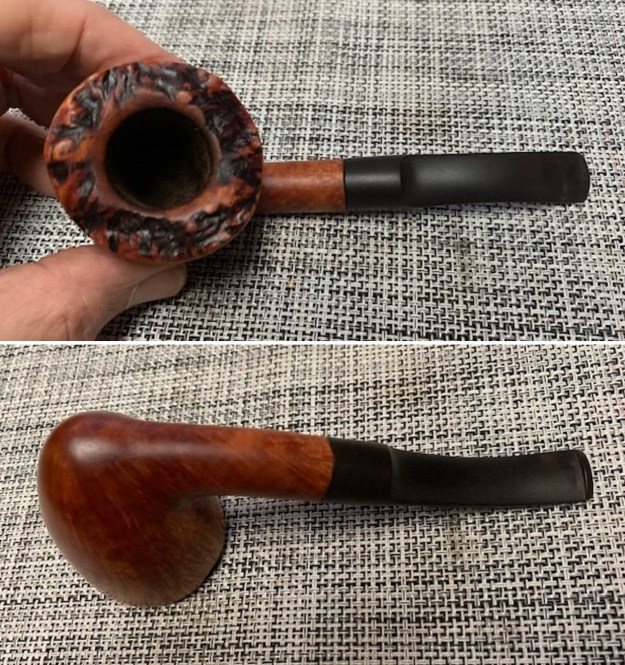
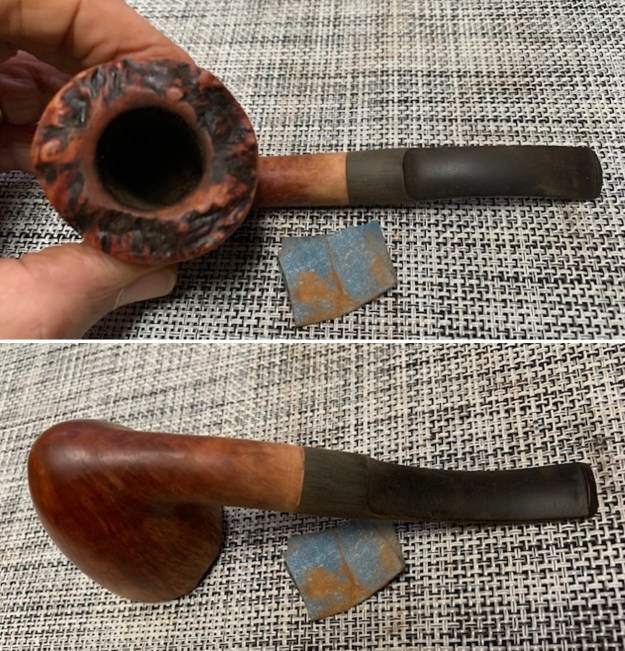
The next pipe on the table is a House of Robertson Rusticated Dublin with a tapered, vulcanite Bite Through stem. The rustication on the briar is very tactile and deep. There are grooves around the bowl and shank and those have been deeply rusticated. The pipe is stamped on the left side of the diamond shank and reads House of [over] Robertson. It really is a beautiful pipe and the rustic finish works very well with the diamond twin bore saddle stem. The fellow who sent it to me is a previous customer and in his box were two pipes with a snapped tenon – the Radice (which I have repaired already) and this House of Robertson. This one was quite dirty with a thick cake in the bowl and overflowing onto the rim top. There was some burn damage on the inner edge of the rim around the bowl and the pipe was dull and dusty. The tenon had snapped off cleanly at the shank end with no damage to the briar. The stem had tooth marks on both the top and underside ahead of the button and was also dirty. I took some photos of the pipe before I started my work on it. I took a close up photo of the rim top to show the condition of the bowl and inner edge. You can see the damage on the inner edge of the rim. It will become more evident once the bowl has been reamed and cleaned. The photos of the stem show the tooth marks and chatter on both sides near the button.I took photos of the stamping on the left side of the diamond shank to capture how the classic House of Robertson signature looked.House of Robertson pipes were made by Thayne Robertson in Boise, Idaho. He did some beautiful work and all had the etched stamp on them. I have worked on many of these pipes over the years and done the research on the brand previously. Here is a link to one of the pipes where I have included background information (https://rebornpipes.wordpress.com/wp-admin/post.php?post=60954&action=edit&classic-editor).

“House of Robertson” was in business for many years, but alas, closed their doors in 1999. They were located in Boise, Idaho. They are noted for making rather large and interesting pipes. Thayne Robertson was a Master Mason, AF & AM, and started the shop about 1947 and his son Jon started working there in 1970 when he finished college, along with Thayne’s daughter. Thayne and his son started making the big pipes at that time, and made them together until 1987 when Thayne passed away. Jon kept the store and his sister moved on to other things. The House of Robertson appears to have closed around 1999. https://pipedia.org/wiki/Robertson

I began my work on this pipe by pulling the broken tenon from the shank. I generally use a dry wall screw and twist it into the airway of the broken tenon and wiggle it free. This one was stuck. I put it in the freezer while I had lunch and afterward it came out quite easily. I went through my replacement tenons and found one that would work on this stem. I sanded the broken end of the tenon remaining on the stem with a sanding drum on my Dremel. I also sanded the diameter of the new tenon at the same time to get a good fit in the shank. I took photos of the tenon in the shank at this point to show the fit. I drilled out the airway on the stem with successively larger drill bits to accommodate the tenon. The last bit was ¼ inch which is perfect for the tenon. I slipped the stem over the tenon and took photos of the pipe at this point. It looks very good. With that done I turned my attention to the bowl. I reamed it with a PipNet reamer and took the cake back to briar. I cleaned up the remnants with a Savinelli Fitsall pipe knife. I sanded the bowl walls with a piece of dowel wrapped with 220 grit sandpaper. I cleaned up the rim top with a brass bristle wire brush to remove the lava in the sandblast and a bit of the burn damage on the inner edge of the bowl.I cleaned out the internals on the stem and shank with pipe cleaners, cotton swabs and alcohol until they were clean.I rubbed down the bowl with Before & After Restoration Balm to clean, enliven and protect the briar. I worked it into the blast with a horsehair shoe brush. I let it sit and do its magic for 10 minutes and then buffed it off with a soft cloth.I set the bowl aside and turned my attention to the vulcanite stem. I glued the new tenon in the shank with black super glue. While it cured, I “painted” the surface of the vulcanite stem with the flame of a lighter to lift the tooth chatter and marks. Many of them lifted significantly with the heat. Those that remained I filled in with black super glue and set the stem aside to cure. Once it had cured I flattened out the repairs with a small flat file. I sanded them with 220 grit sandpaper to further flatten them out and blend them into the surrounding area. I started polishing the stem with 400 grit wet dry sandpaper. I polished the vulcanite bite through stem with micromesh sanding pads – dry sanding with 1500-12000 grit pads. I wiped the stem down after each pad with Obsidian Oil. I finished the polishing with Before & After Stem Polishes – both Fine and Extra Fine. I wiped the stem down with a cloth impregnated with Obsidian Oil to protect and give the deep shine to the stem. I was happy to be finished with this beautiful House of Robertson Rusticated Diamond Shank Dublin. The vulcanite stem fit well and looked good with the rich finish of the rusticated bowl and shank. I lightly buffed the pipe with Blue Diamond on the buffing wheel and gave the bowl and shank multiple coats of Conservator’s Wax. I buffed it with a clean buffing wheel to raise the shine. I hand buffed it with a microfiber cloth to deepen the shine. The House of Robertson’s Dublin is a great looking pipe that has an amazing looking rustication. The dimensions of the pipe are Length: 5 ½ inches, Height: 2 inches, Outer Diameter of the bowl: 1 ½ inches, Diameter of the chamber: ¾ of and inch. The weight of the pipe is 42 grams/1.48 ounces. I will be packing it up to send back to my friend in Idaho along with the first pipe – the Radice Silk Cut Billiard. Thanks for reading the blog.

Replacing a tenon and restoring a Radice Silk Cut Billiard


Blog by Steve Laug

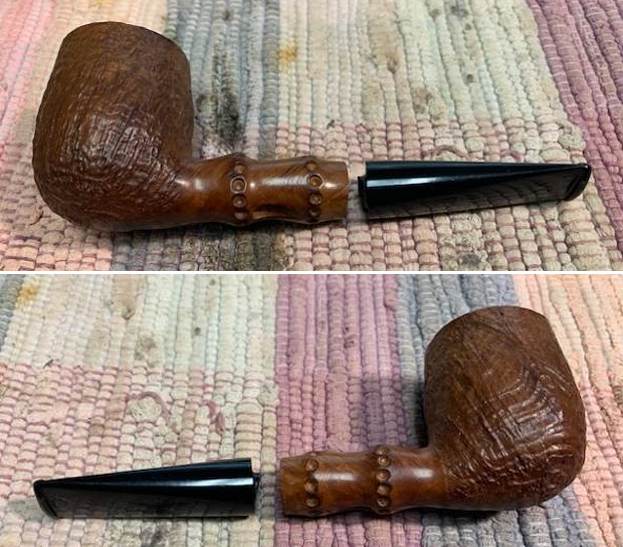
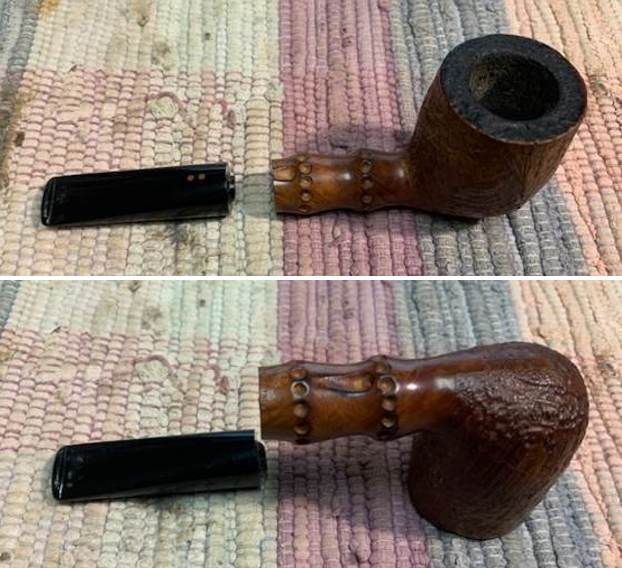
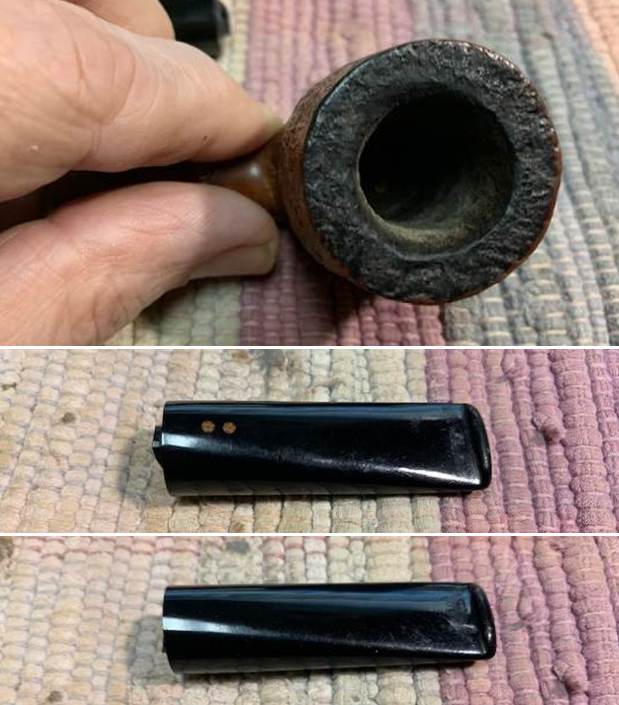
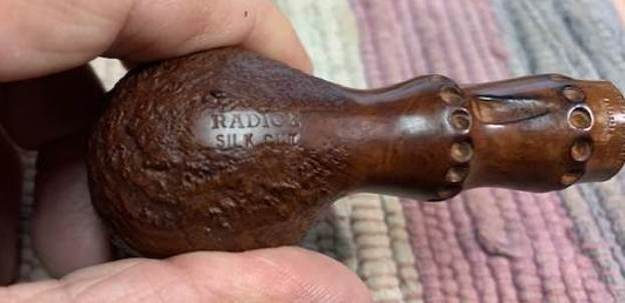
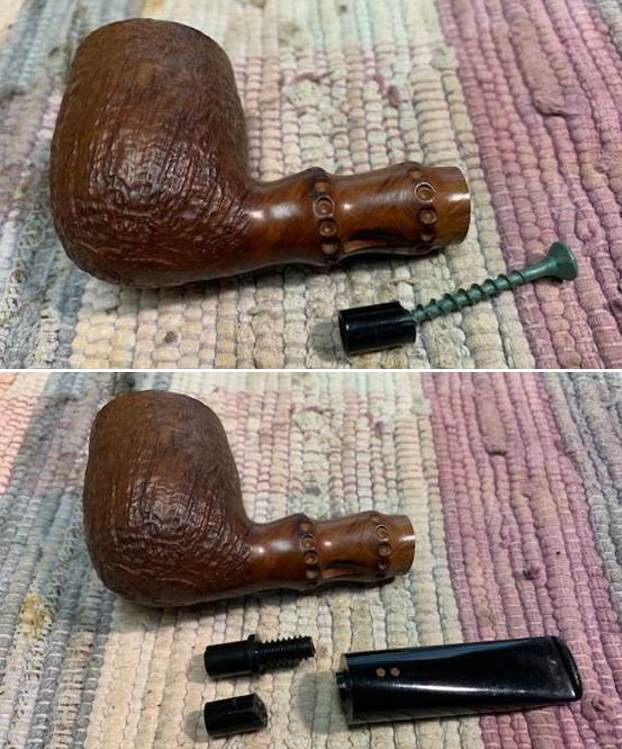
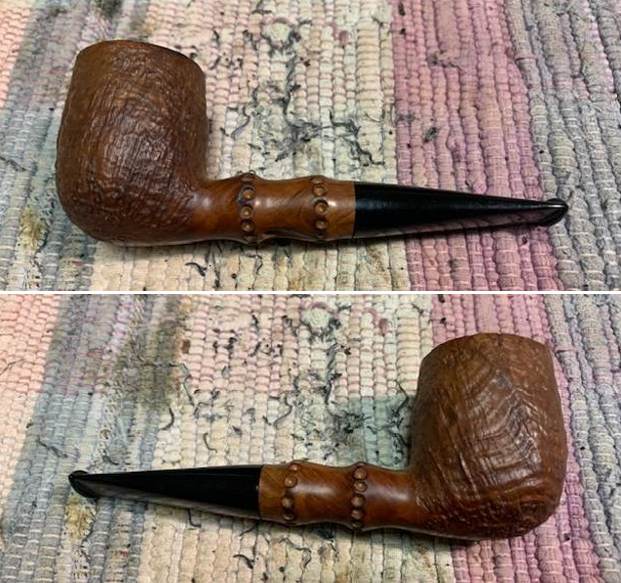
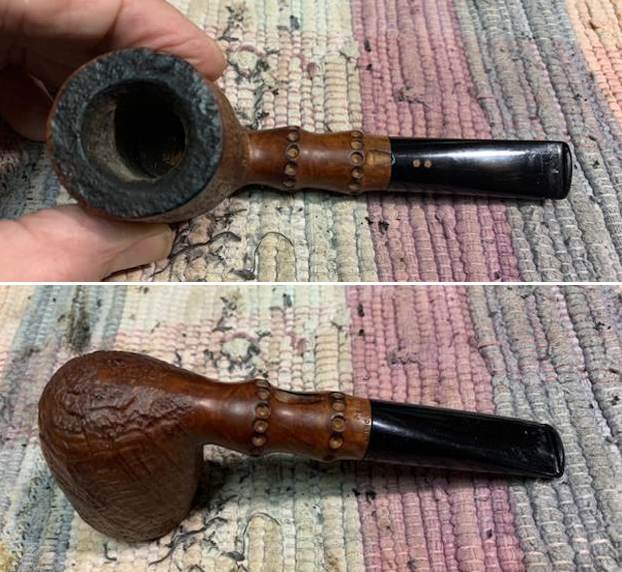
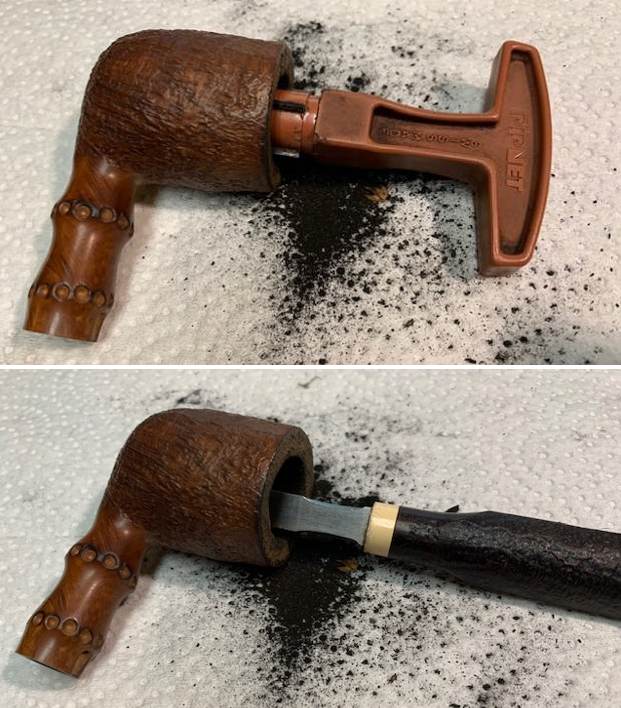
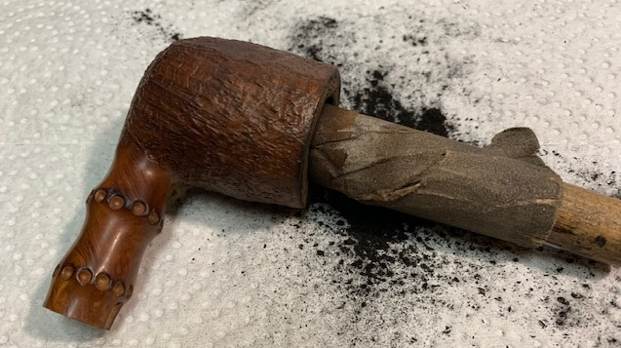
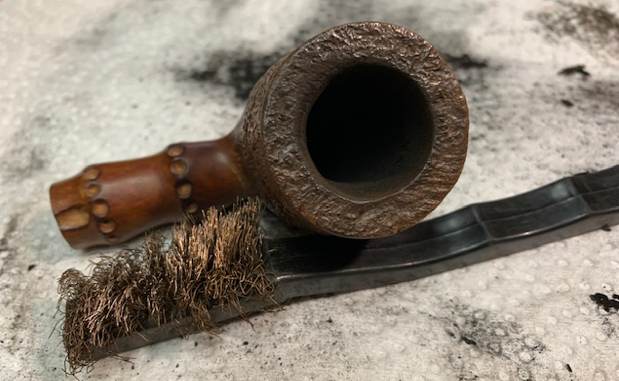
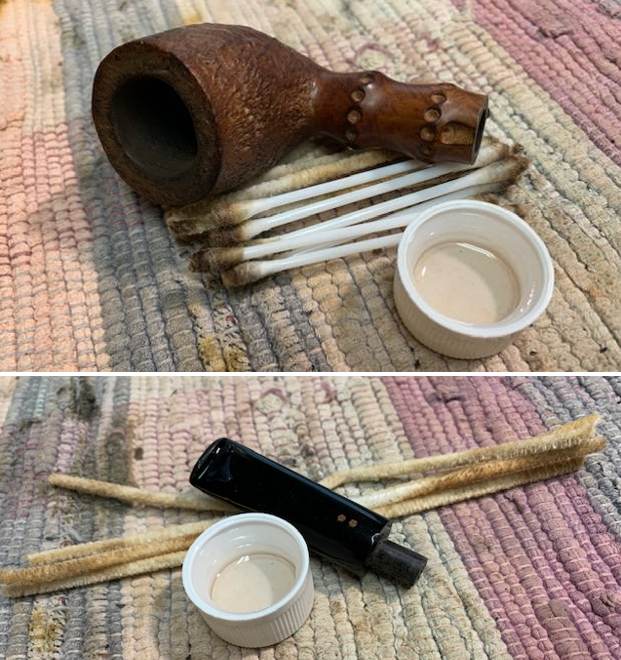
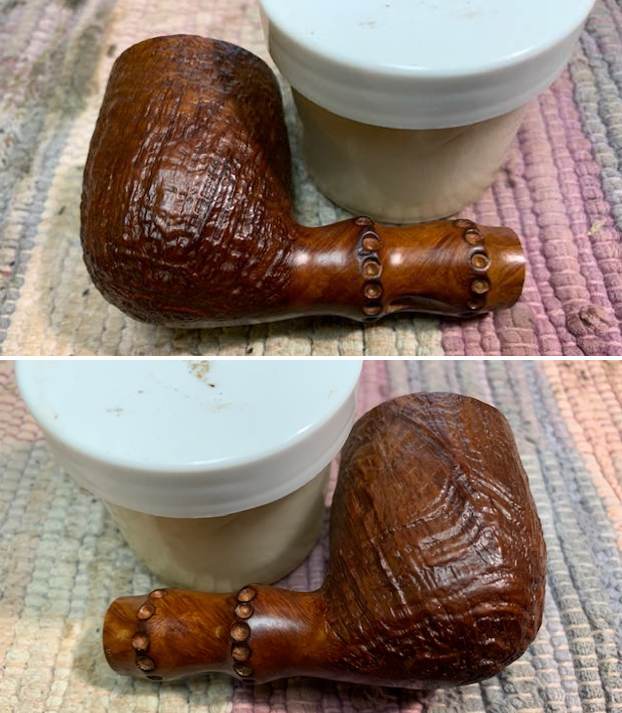
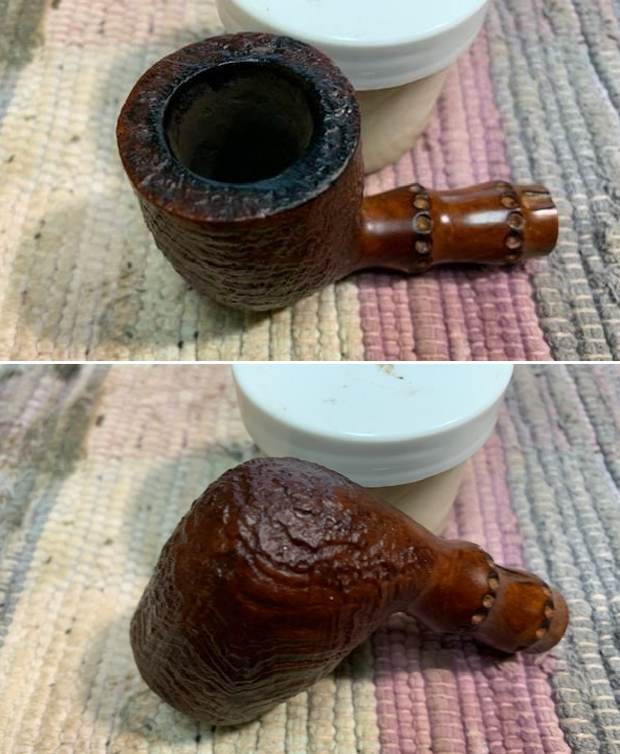
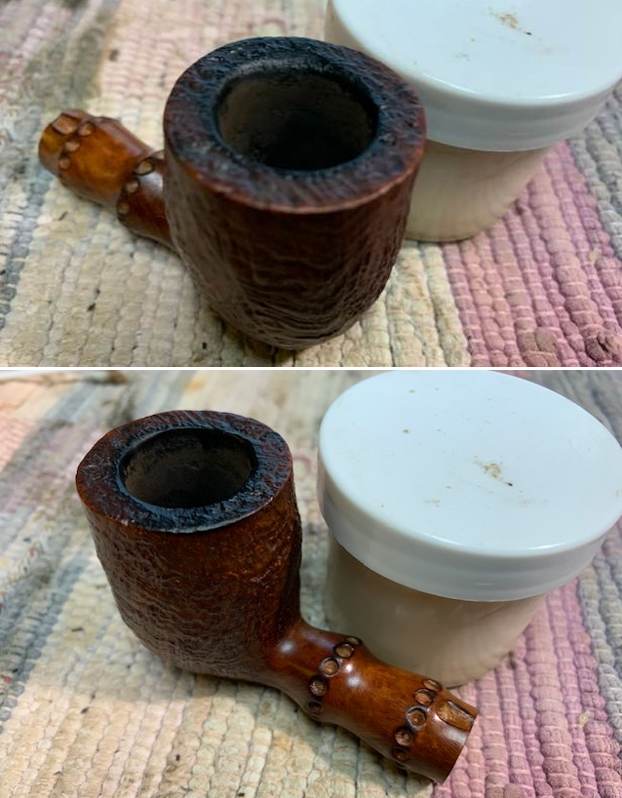
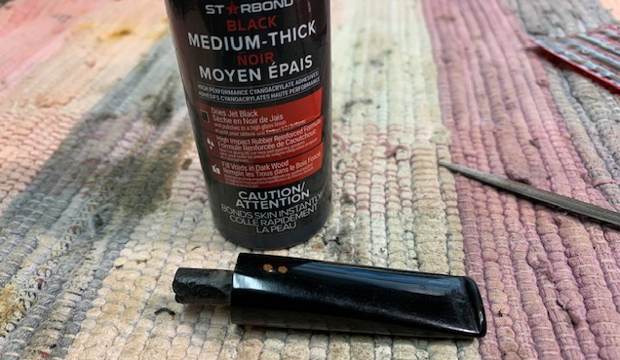
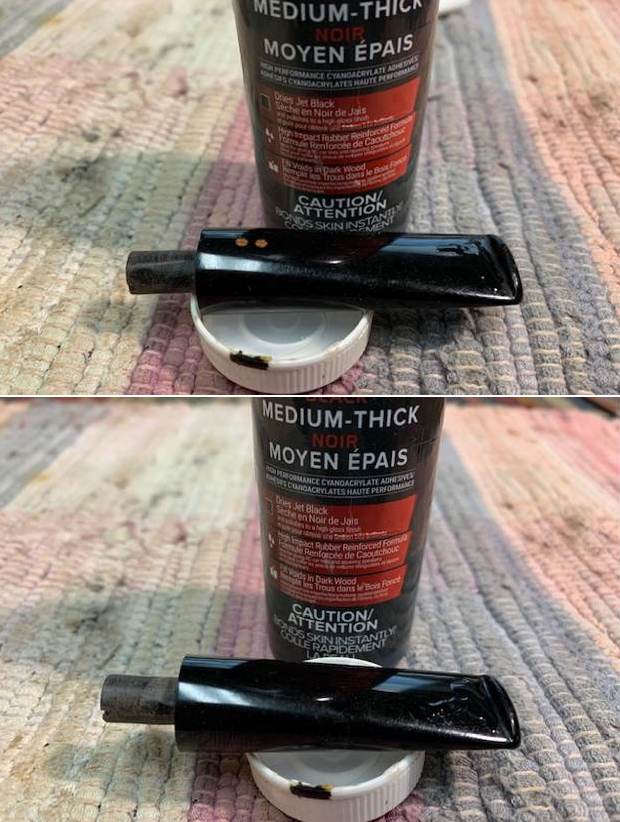
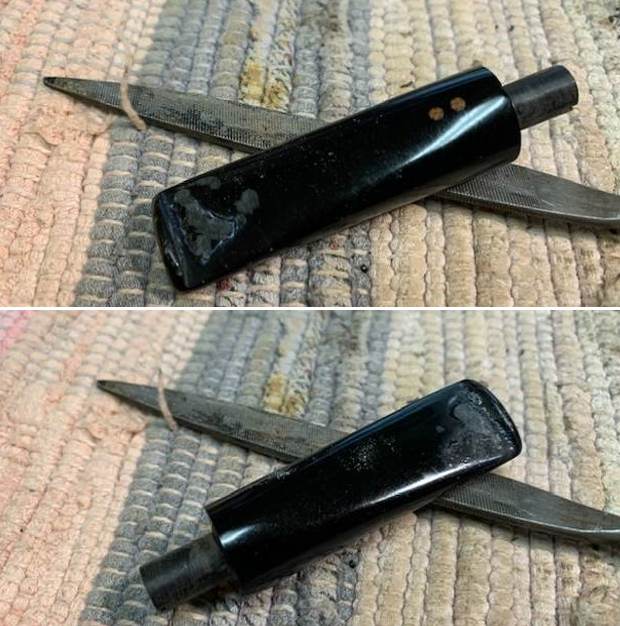
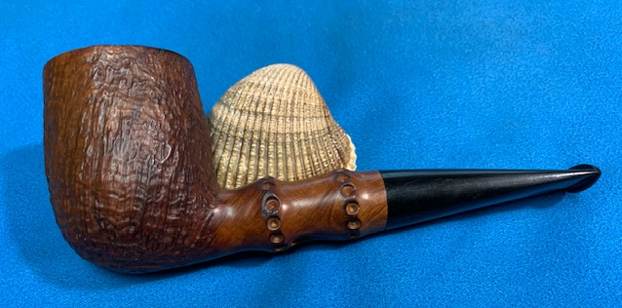
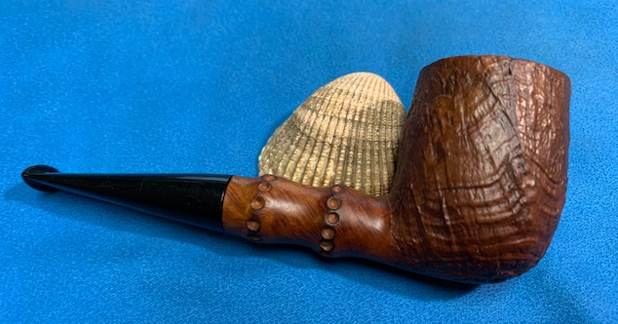
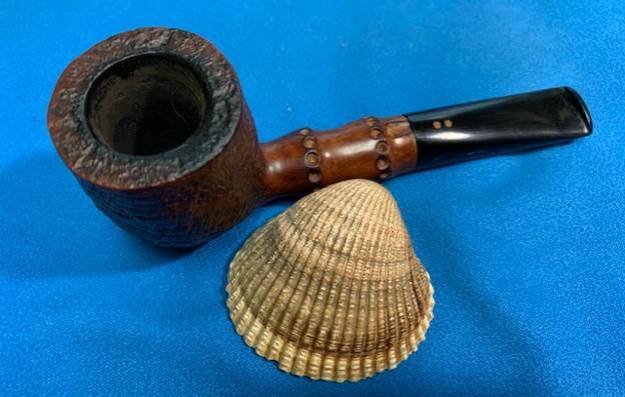
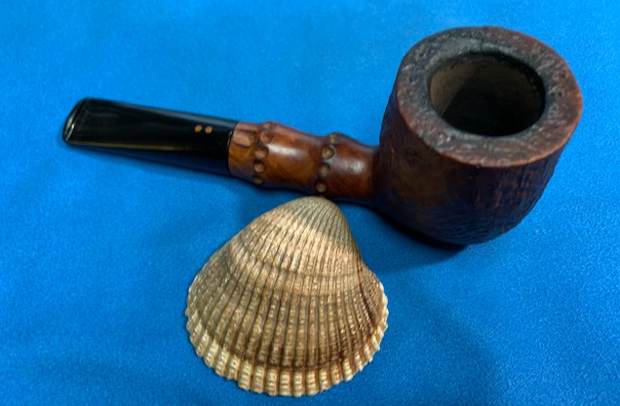
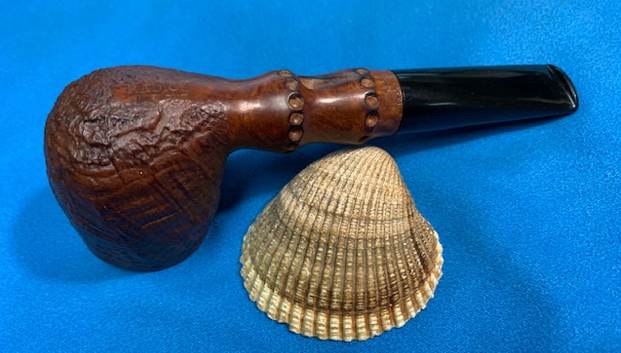
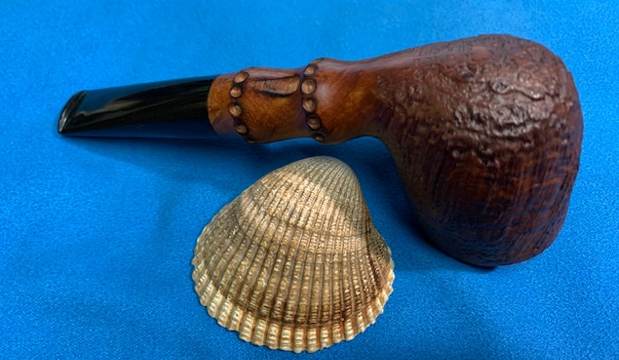
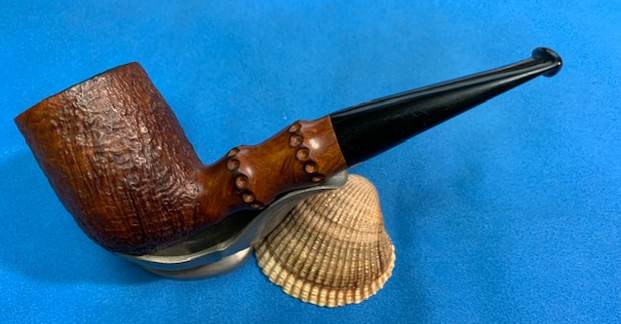
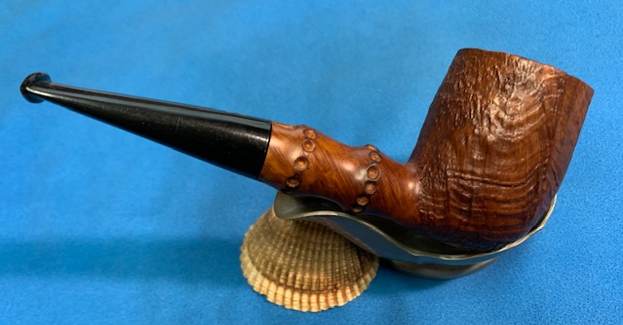
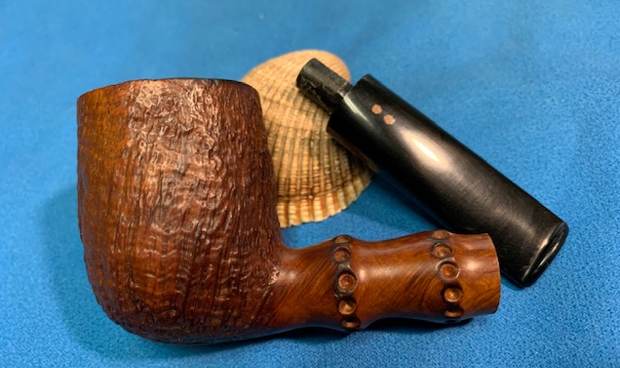
The next pipe on the table is a Radice Sandblast Billiard with a faux Bamboo shank. The briar has been carved to look like a piece of Bamboo but is actually briar. The pipe is stamped on the heel and reads Radice [over] Silk Cut and on the underside of the shank end it reads Hand [over] Made in Italy. It really is a beautiful pipe and the combination of “Bamboo” and the sandblast works really well the tapered acrylic stem. The fellow who sent it to me is a previous customer and in his box were two pipes with a snapped tenon – the Radice and a House of Robertson. This one was quite dirty with a thick cake in the bowl and overflowing onto the rim top. There was some burn damage on the inner edge of the rim at the back of the bowl and the pipe was dull and dusty. The tenon had snapped off cleanly at the shank end with no damage to the briar. The stem had tooth marks on both the top and underside ahead of the button and was also dirty. I took some photos of the pipe before I started my work on it. I took a close up photo of the rim top to show the condition of the bowl and inner edge. You can see the damage on the back inner edge of the rim. It will become more evident once the bowl has been reamed and cleaned. The photos of the stem show the tooth marks and chatter on both sides near the button.I took photos of the stamping on the heel of the bowl and the shank end to capture how it looked.I began my work on this pipe by pulling the broken tenon from the shank. I generally use a dry wall screw and twist it into the airway of the broken tenon and wiggle it free. This one came out quite easily. I went through my replacement tenons and found one that would work on this stem.I sanded the broken end of the tenon remaining on the stem with a sanding drum on my Dremel. I also sanded the diameter of the new tenon at the same time to get a good fit in the shank. I took photos of the tenon in the shank at this point to show the fit. I drilled out the airway on the stem with successively larger drill bits to accommodate the threaded end of the tenon. The last bit was ¼ inch which is perfect for the tenon. I slipped the stem over the tenon and took photos of the pipe at this point. It looks very good. With that done I turned my attention to the bowl. I reamed it with a PipNet reamer and took the cake back to briar. I cleaned up the remnants with a Savinelli Fitsall pipe knife. I sanded the bowl walls with a piece of dowel wrapped with 220 grit sandpaper. I cleaned up the rim top with a brass bristle wire brush to remove the lava in the sandblast and a bit of the burn damage on the back inner edge of the bowl.I cleaned out the internals on the stem and shank with pipe cleaners, cotton swabs and alcohol until they were clean.I rubbed down the bowl with Before & After Restoration Balm to clean, enliven and protect the briar. I worked it into the blast with a horsehair shoe brush. I let it sit and do its magic for 10 minutes and then buffed it off with a soft cloth. I set the bowl aside and turned my attention to the acrylic stem. I glued the tenon in the stem with Black Super Glue. While it cured I worked on the tooth marks in the stem.I cleaned up the tooth marks with alcohol and a cotton swab. I filled them in with black super glue and set it aside to cure.Once it had cured I flattened out the repairs with a small flat file. I sanded them with 220 grit sandpaper to further flatten them out and blend them into the surrounding area. I started polishing the stem with 400 grit wet dry sandpaper. I polished the acrylic stem with micromesh sanding pads – dry sanding with 1500-12000 grit pads. I wiped the stem down after each pad with a damp cloth. I finished the polishing with Before & After Stem Polishes – both Fine and Extra Fine. I wiped the stem down with a cloth impregnated with Obsidian Oil to protect and give the deep shine to the stem. I was happy to be finished with this beautiful Radice Silk Cut Billiard. The stem fit well and looked good with the rich finish of the sandblast bowl and faux bamboo shank. I buffed the pipe with Blue Diamond on the buffing wheel and gave the bowl and shank multiple coats of Conservator’s Wax. I buffed it with a clean buffing wheel to raise the shine. I hand buffed it with a microfiber cloth to deepen the shine. The Radice is a great looking pipe that ticks all of my boxes. The dimensions of the pipe are Length: 5 inches, Height: 2 inches, Outer Diameter of the bowl: 1 ½ inches, Diameter of the chamber: 7/8 of and inch. The weight of the pipe is 48 grams/1.69 ounces. I will be packing it up to send back to my friend in Idaho once I finish the second pipe he sent. Thanks for reading the blog.

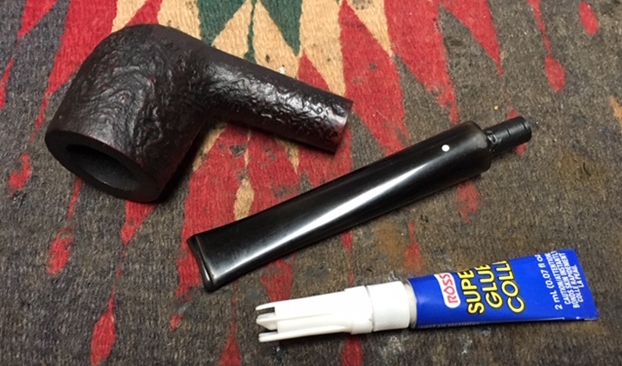
Replacing a Broken Tenon in a Dunhill 196F/T Shell Briar


Blog by Steve Laug

This is one of the Dunhill Shell Briar pipes that I sold earlier this year. It is a 196F/T Shell Billiard. Not too long ago I received an email from Bill the buyer of the pipe saying that there had been an accident and that the stem had broken off the pipe leaving the tenon in the shank. He was a bit forlorn in asking if it was repairable or not. I assured him that it could be fixed and told him to send it up to me in Vancouver. I had to laugh in that when it arrived it was in the original box that I had used to ship it to him – all the packing etc. was the same. Great use of the boxes. It will soon make its second trip to Bill. This is a well-traveled box and pipe – twice to the East Coast of the US from Canada and once back to me for repair. I put the pipe in queue as I have a large backlog of pipes to work on from several estates that the families are waiting on. I figured I would be able to slip into the work somewhere along the way.

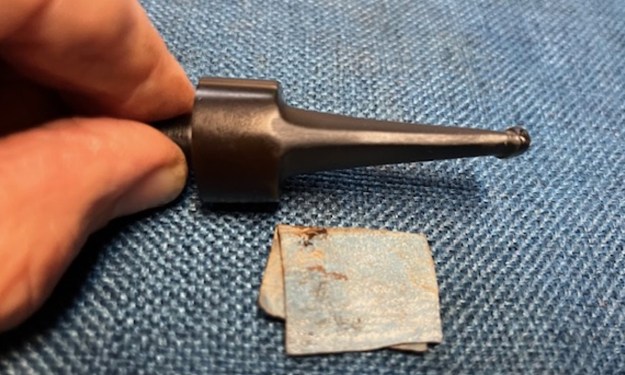
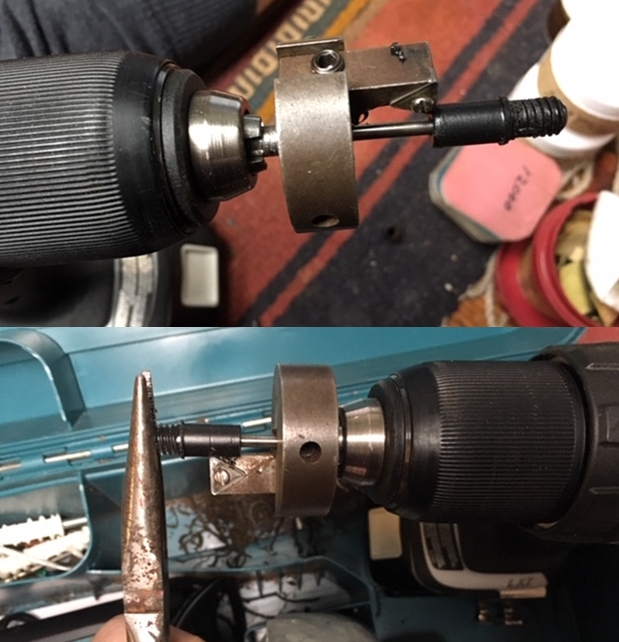
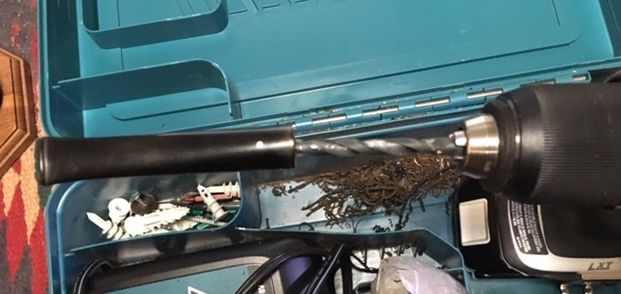
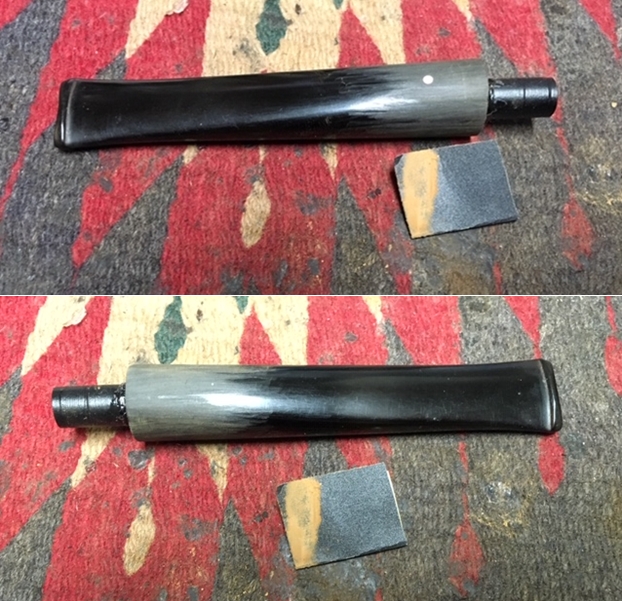
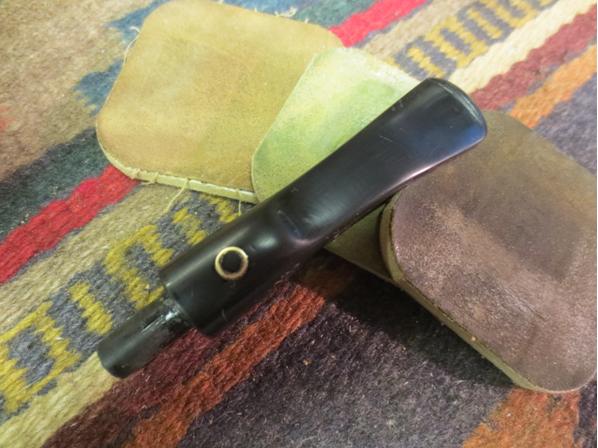
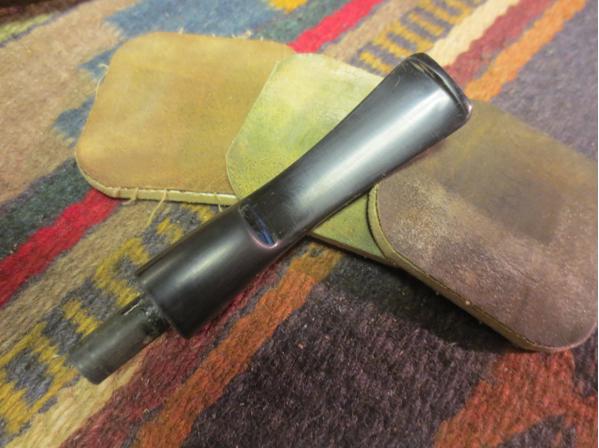
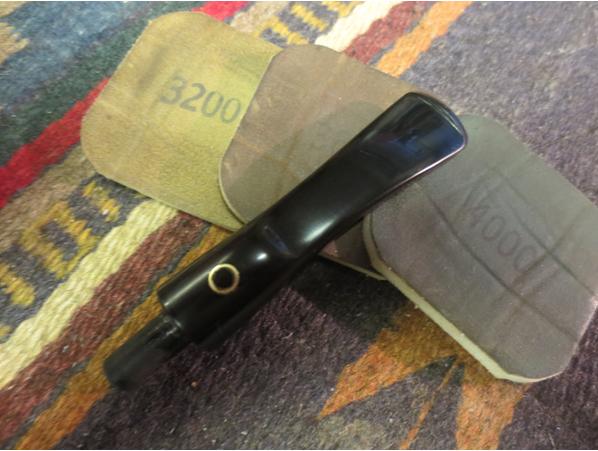
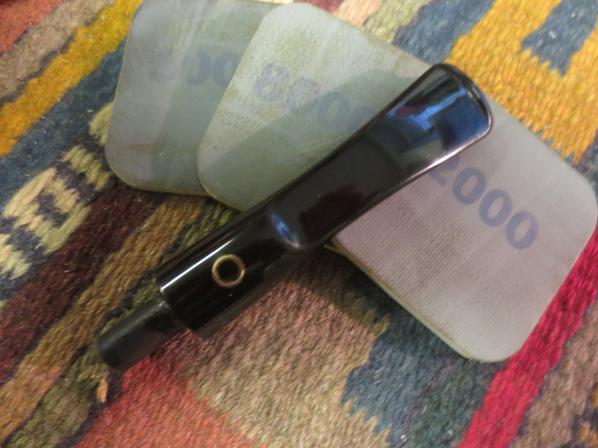
Today was the day. I finished a lot of pipes lately so I felt ok about working on this one. I figured it would be pretty straight forward to pull the broken tenon and replace it. Boy was I wrong. The broken tenon was stuck in the shank. My usual tricks for pulling a broken tenon – a screw in the airway and wiggling it free – did not work. Even a trip to the freezer did not work. I had to resort to more serious tools.I got out my cordless drill and chucked up a series of drill bits to see if I could pull it that way. I have often found that in the process of drilling out the tenon it will stick to the bit and come out as I back out the drill. That did not happen on this pipe! I ended up working through the bits until I finally was finished and the mortise was smooth and clear of the old tenon.With the airway cleared in the mortise I measured it for a new tenon. Yet again another setback. I did not have any tenons that were the right diameter for the mortise! I chucked the PIMO tenon turning tool in my cordless drill and reduced the diameter of a threaded tenon replacement that I had in stock until it was the right diameter to fit the mortise. I tried to hold the tenon by hand and turn it but soon realized that did not work this time. I used a pair of needle nose pliers to hold it until the tenon was finished.When I finished there was a small hip between the threaded portion and the smooth portion of the new tenon. I worked the tool back and forth to remove that. I also held a needle file against the hip while the tenon was spinning on the drill. It did not take too long to remedy that issue. The new tenon was almost ready to use. I would still need to reduce the diameter of the threaded portion before I could use it but it was good for the moment.I drilled out the airway in the stem to receive the new tenon. This is always a little tricky as you need to keep the stem absolutely straight so that you do not angle the airway. I always start with a bit slightly larger than the airway and work my way up to the size of the tenon insert. In this case I also needed to be careful not to drill the stem too deeply as the tape is quite long and it would be easy to ruin the stem. With the airway opened in the stem to take the threaded tenon end I used a tap to thread the airway inside the bowl. I had to open the airway a little more so I used a penknife to widen the diameter to take the tap. I used a Dremel with a sanding drum to reduce the diameter of the threaded portion of the new tenon until it could be screwed into the stem.I coated the threaded end of the tenon with super glue and turned it into the end of the stem. I pressed it completely in place against the table top so there was not a gap. I filled in the slight gap with some clear super glue and laid the stem aside to let the repair cure.When the glue cured I addressed some oxidation at the shank end of the stem. I sanded it with 400 grit wet dry sandpaper until the oxidation was removed from the stem surface. I wiped the stem down with Obsidian Oil and let it dry.I polished the stem surface with micromesh sanding pads to bring back the shine to the vulcanite. I wet sanded it with 1500-2400 grit pads and dry sanded it with 3200-12000 grit pads. I rubbed it down with Obsidian Oil after each pad and a final coat after the 12000 grit pad. I polished the stem with Blue Diamond on the buffing wheel and gave it several coats of carnauba wax. I gave the bowl several coats of Conservator’s Wax. I buffed the finished pipe with a clean buffing pad to raise the shine. The finished pipe is shown in the photos below and I think it came out looking pretty good. I just got back from the Post Office and sent it back to Bill. I look forward to seeing what he thinks once it is in hand once again. Thanks for reading this.
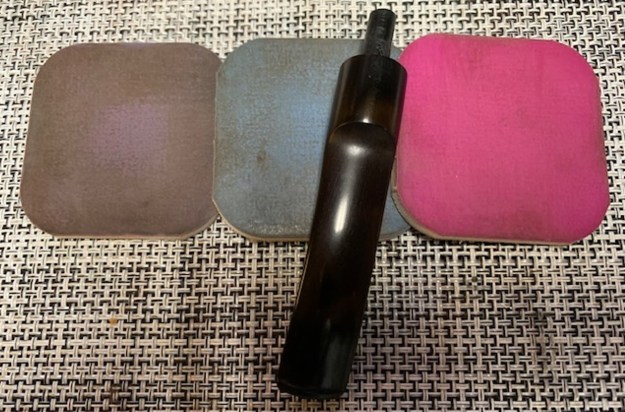
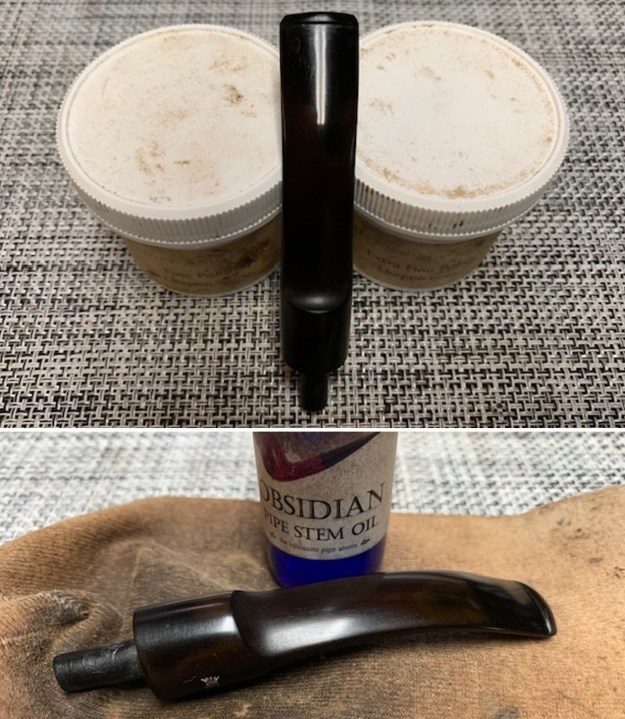
Replacing a Tenon and Doing a Restoration on a Sorrentino Manager 0704


Blog by Steve Laug

I received this one from a fellow who wanted the tenon replaced but being the way I am I could not just replace the tenon and leave the pipe looking tired and worn so I wrote and offered to clean it up for him. It took more work than I had originally thought it would but the added effort made for a beautiful looking pipe. It is stamped on the left side of the shank MANAGER over SORRENTINO. On the right side it says 0704 which is the shape number and Italy. The briar was really in need of some work. The left side was stained with a dark patch that ran from the top to the bottom of the bowl. The finish was also rough to the touch over that section. On the bottom, front and right side of the bowl there was a lot of dents and dings like the pipe had been dropped. The rim had a coat of lava and the bowl had a very uneven cake with more on the left side of the bowl than the right. The finish was basically shot. The stem came with lots of tooth chatter and a broken tenon. The tenon snapped right at the shank and was stuck in the shank. The brass band on the shank was loose. The pipe was tired and needed some TLC. Here is what it looked like when I started.Briar1 Briar2 Briar3In the photos above I had already turned the wood screw into the broken tenon. I use that to pull a broken tenon and it never disappoints in effectiveness. Note the state of the bowl in the photos.Briar4I used a Dremel and sanding drum to flatten out the remnant of the broken tenon on the stem. Once it was flat it was time to drill the stem to take the new tenon. I started with a bit slightly larger than the airway to center the drilling and turned the stem onto the bit by hand. I find that though it is harder to do it by hand, turning it by hand and not drilling it gives me more control of the stem. I worked my way up to a ¼ inch bit and then cleaned it out with a needle file. I had a Delrin tenon I purchased from Tim at JH Lowe and I roughed up the surface of the portion that would go into the stem and gave it a coat of two part slow drying epoxy to hold it in place.Briar5 Briar6 Briar7I lined up the stem in the shank and then set it aside to let the epoxy cure over night. While it dried I worked on the bowl. I stripped off the remaining finish with acetone and cotton pads. I sanded the dark stain mark on the left side of the bowl with 220 grit sandpaper to remove the damaged briar and smooth things out. I scrubbed that side with acetone to finish.Briar8 Briar9I reamed the bowl with a PipNet reamer to even out the cake that had been there. I decided to strip it back to bare wood. I wanted to check out the inside of the bowl walls. The interior was sound and there was no damage on the bowl walls. Briar10 Briar11I sanded the bowl with 1500-2400 grit micromesh sanding pads to clean up the scratches left behind on the briar by the sand paper and by the wear and tear of age. The stripped and sanded bowl was looking pretty good.Briar12 Briar13 Briar14I sanded the inner bevel of the rim to clean it up and prepare the bowl for staining. I wiped it down a final time with isopropyl alcohol. I stained the bowl with a dark brown aniline stain. I flamed it and restained it with a second coat of the stain. I flamed it again.Briar15 Briar16Before setting the bowl aside to dry I wiped it down with alcohol on a cotton pad to smooth out the stain and lighten it slightly. I wanted the grain to show through.Briar17I buffed the bowl with Blue Diamond on the buffing wheel and gave it several coats of carnauba wax to seal and preserve the finish. I buffed it with a clean buffing pad to raise the shine. (Forgive the poor focus on the first photo below. It is blurry but still gives you an idea of how the dark area had been reduced.)Briar18 Briar19 Briar20 Briar21With the bowl finished I set it aside and worked on the stem. I sanded the tooth marks and chatter on the stem with 220 grit sandpaper until they were smoothed out. I was able to easily remove most of the tooth damage to the stem. There was one small tooth dent on the top of the stem that I left as it is minimal and I did not want to thin the stem.Briar22 Briar23I wet sanded the stem with 1500-2400 grit micromesh sanding pads. I dry sanded it with 3200-4000 grit pads. I finished with 6000-12000 grit pads. I buffed the stem with Blue Diamond on the wheel.Briar24 Briar25 Briar26 Briar27I put the pipe together and lightly buffed it with some more carnauba wax to finish it. I hand buffed it with a microfibre cloth for the final buffing. The photos below show the finished pipe. Hopefully when it is returned to the pipeman who owns it he will be pleased with the finished pipe. Thanks for looking.Briar28 Briar29 Briar30 Briar31 Briar32 Briar33 Briar34