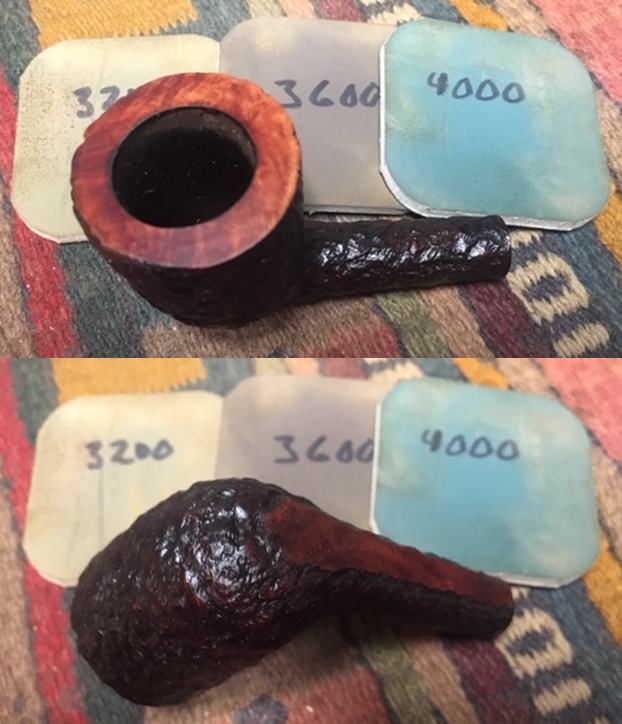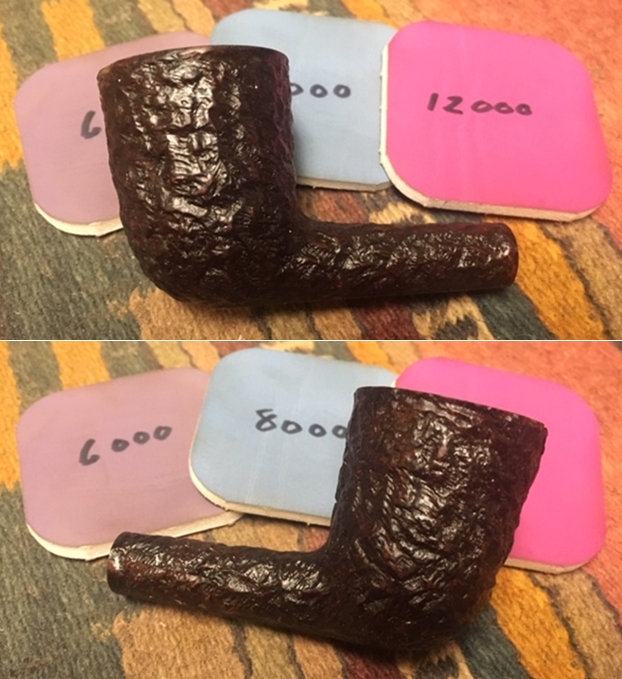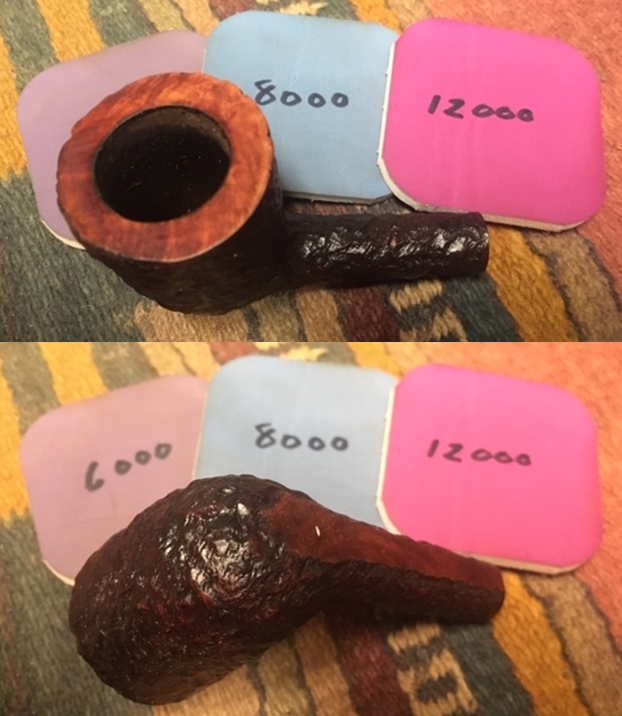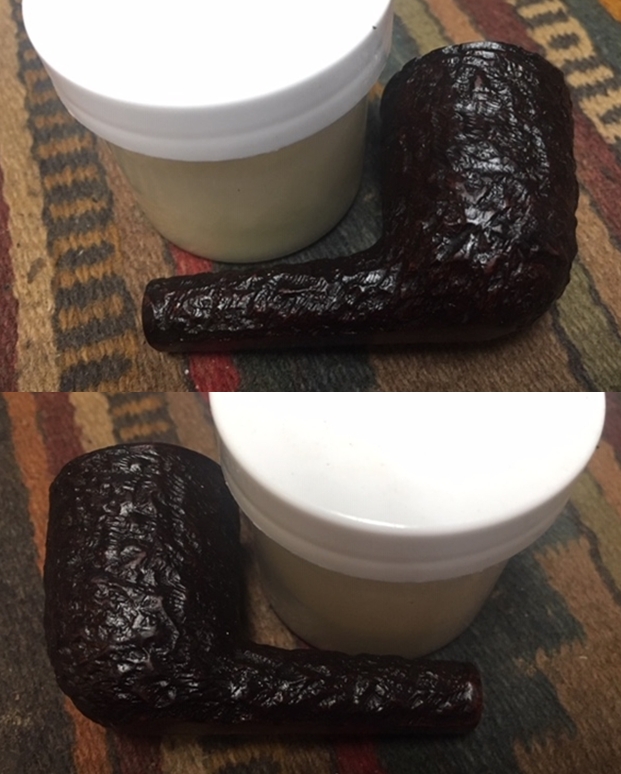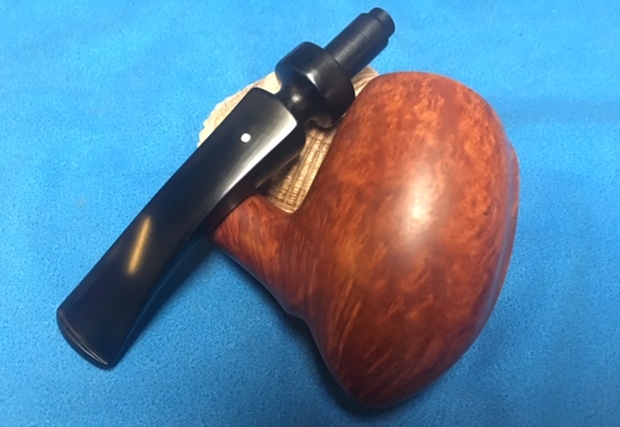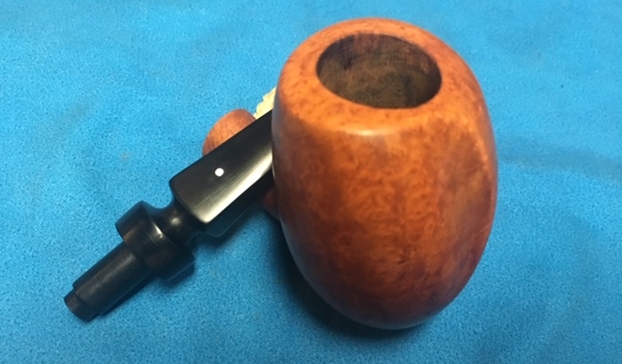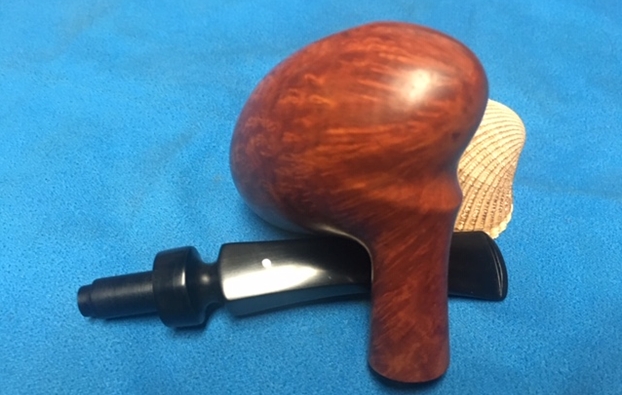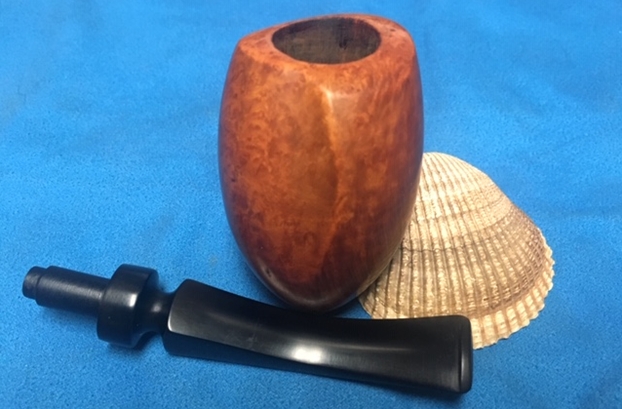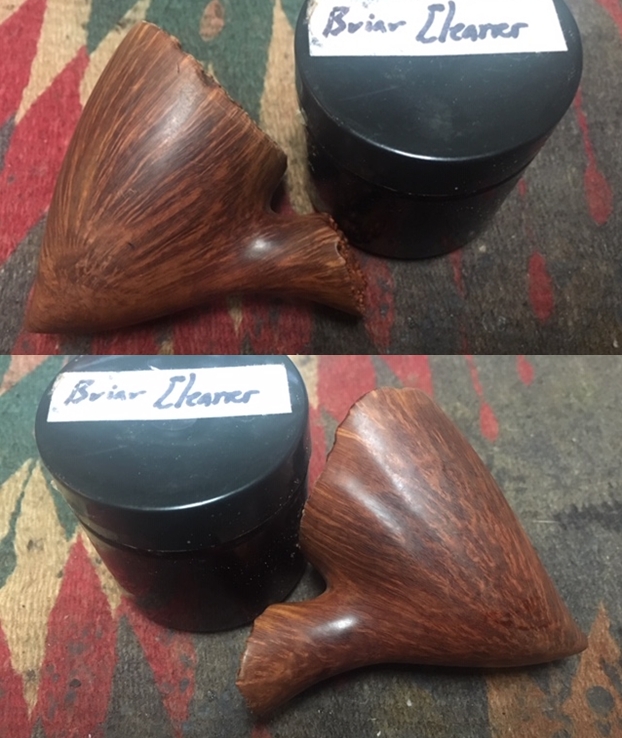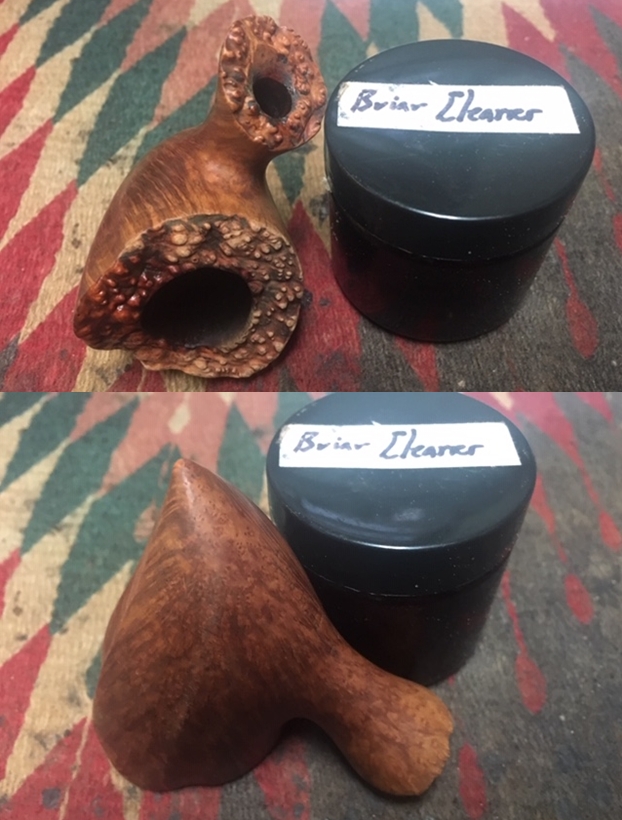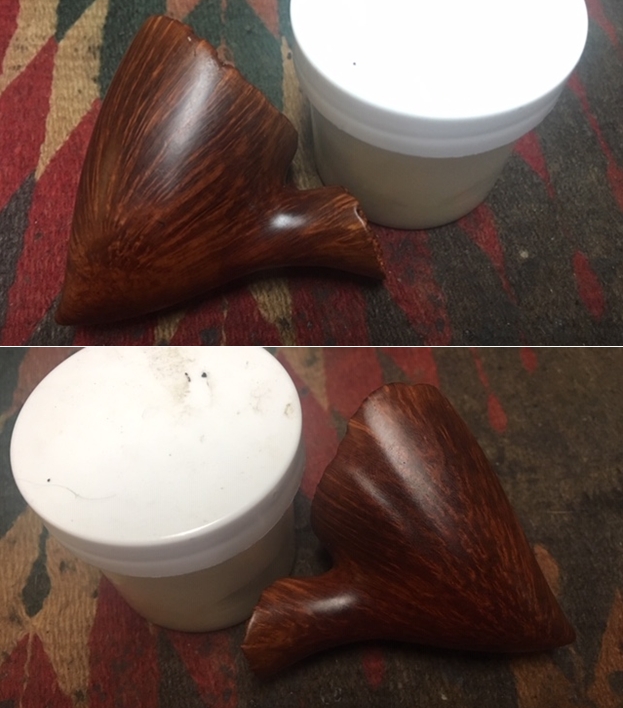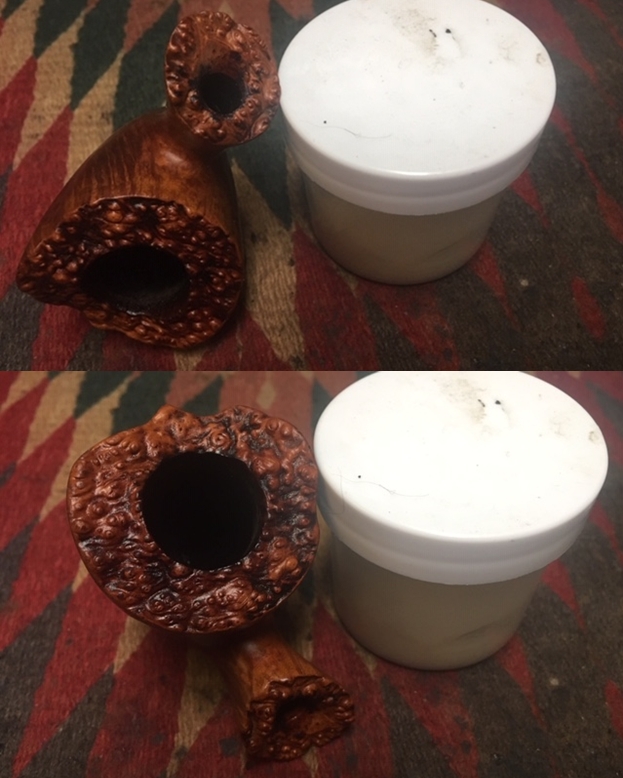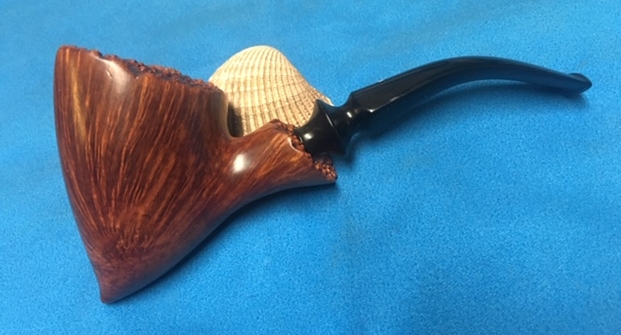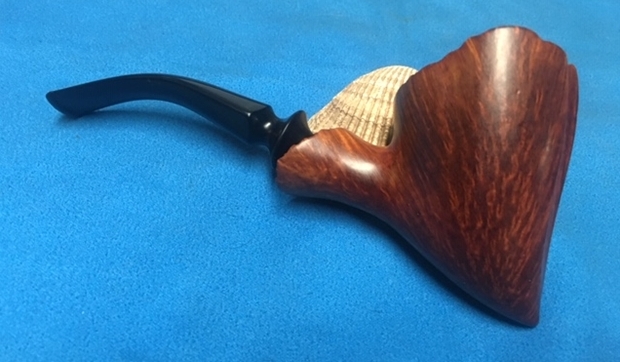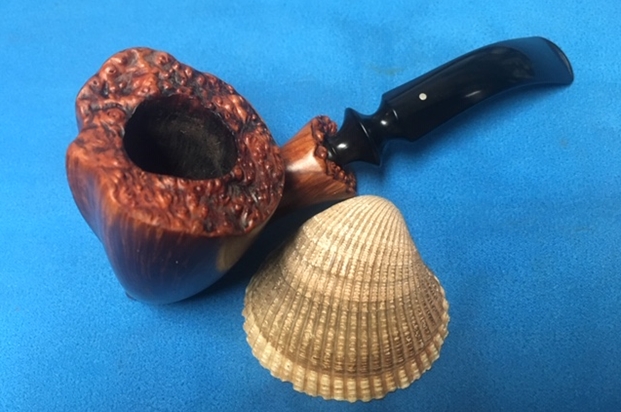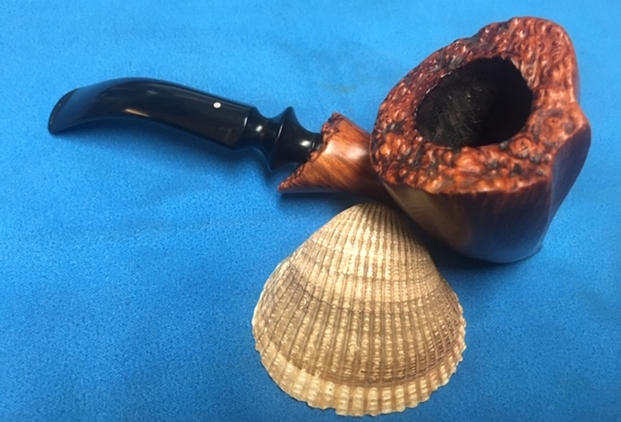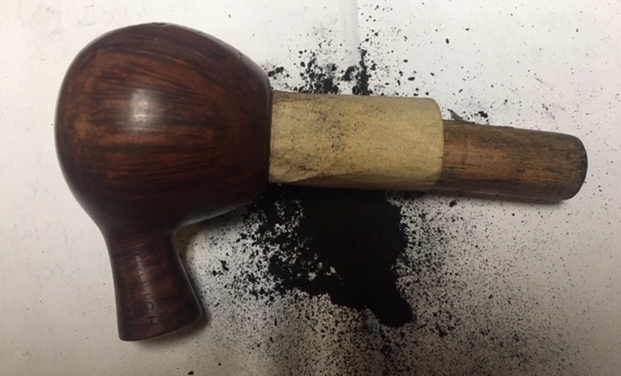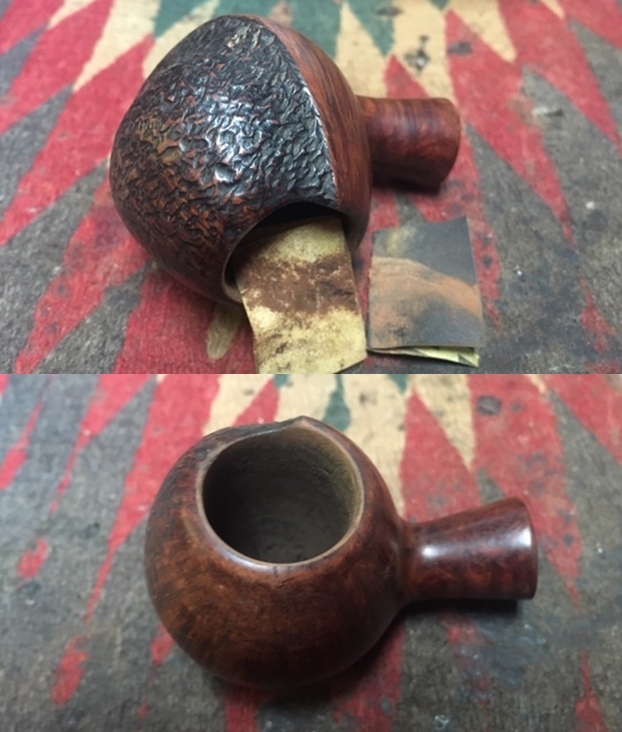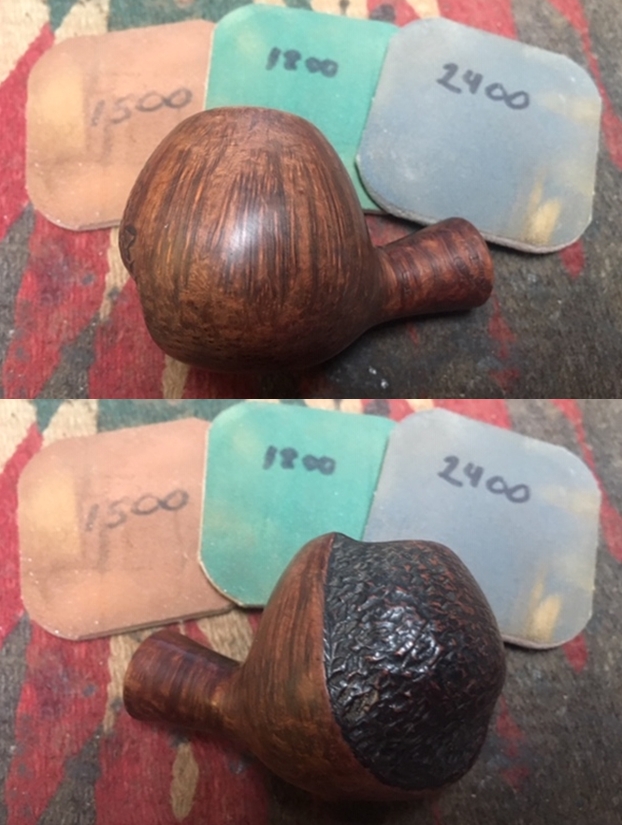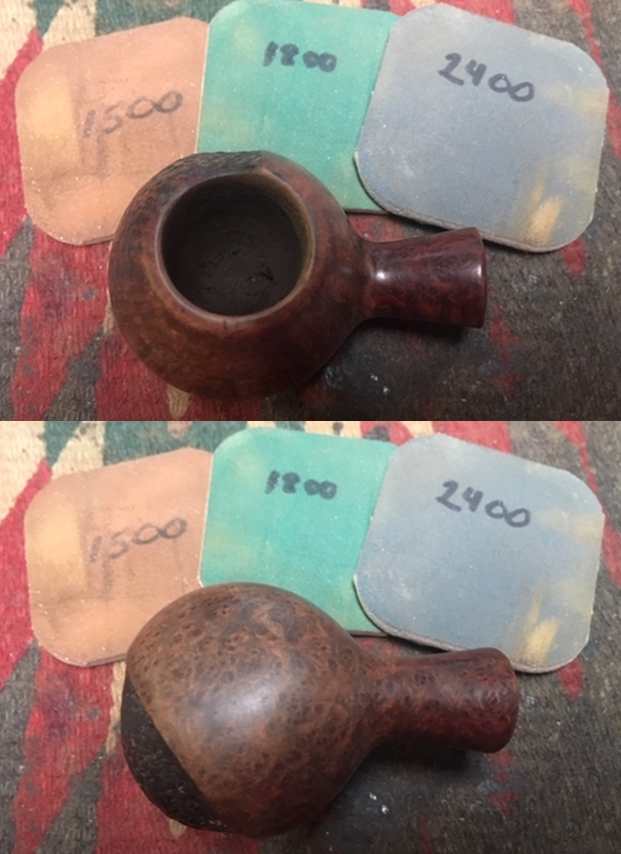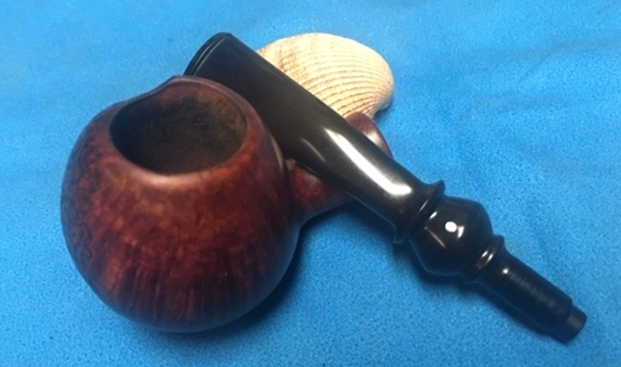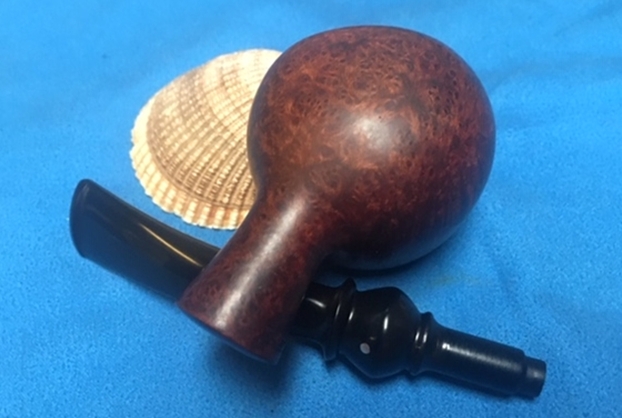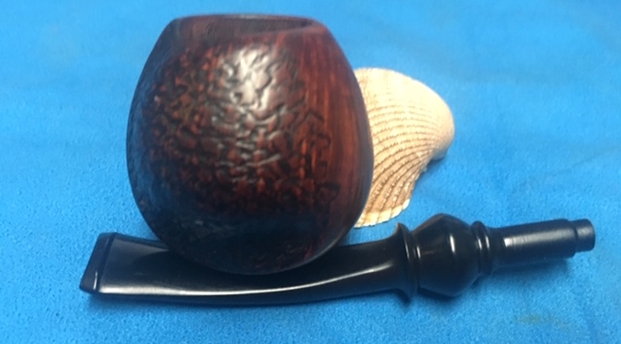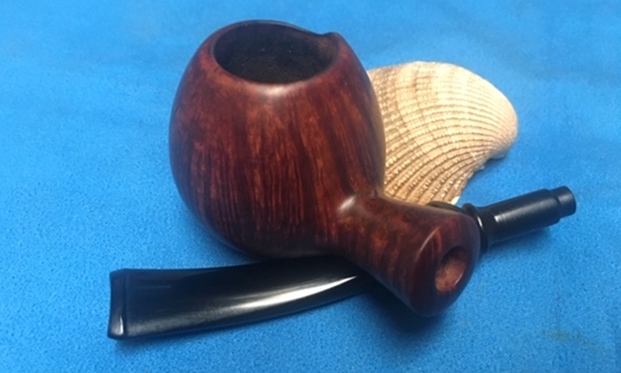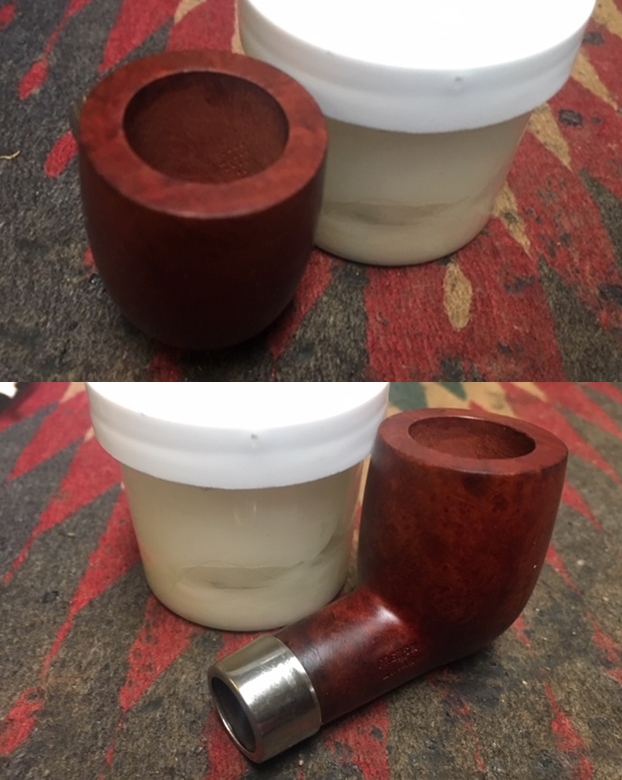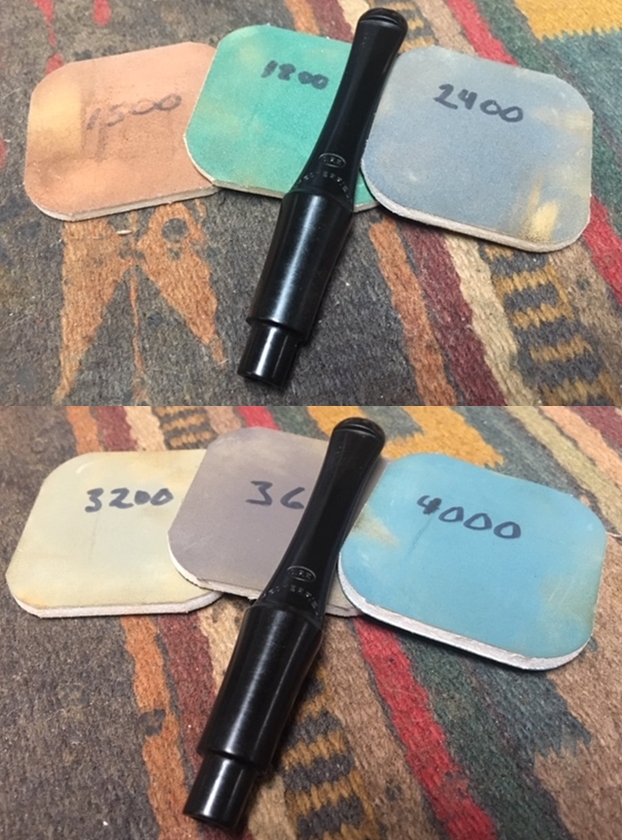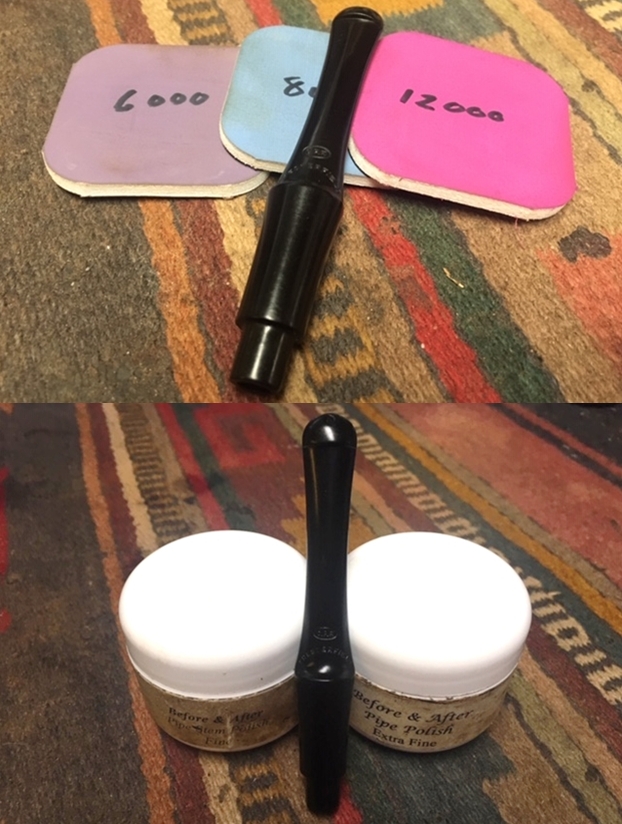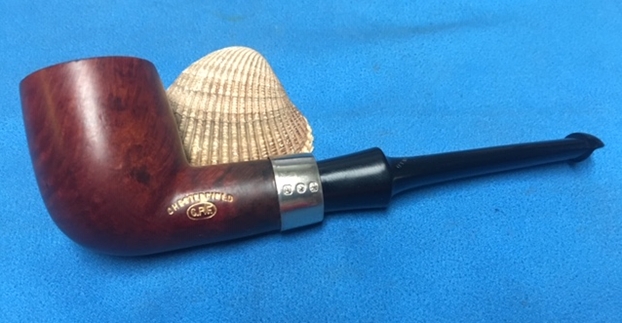
Tag Archives: polishing stems

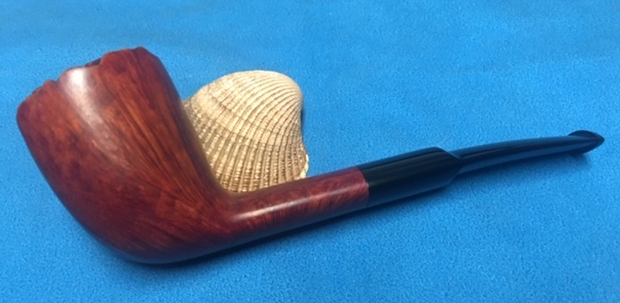
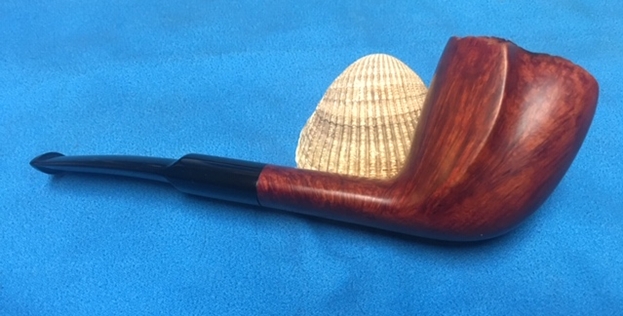
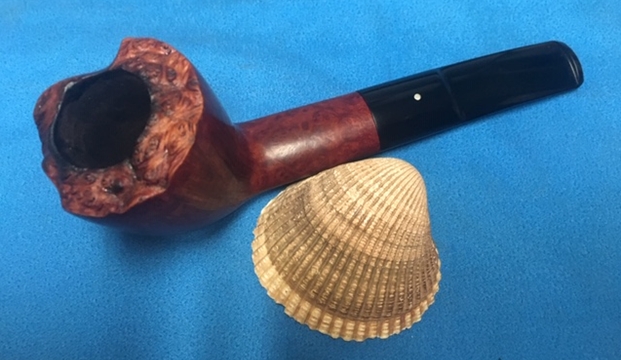
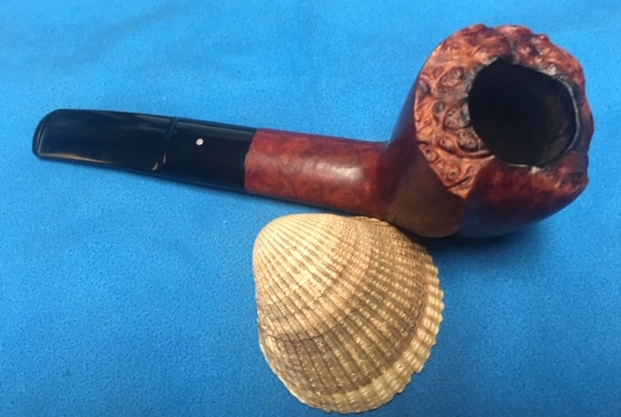
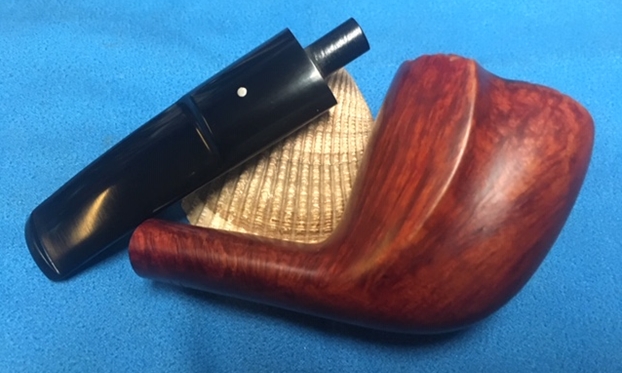
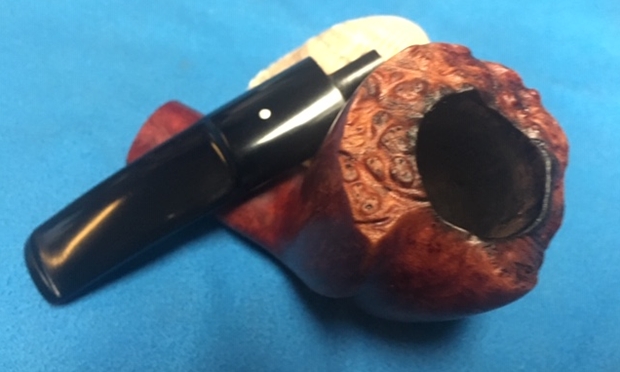
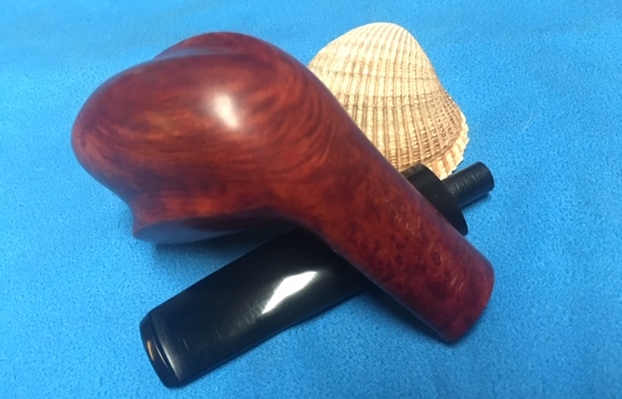
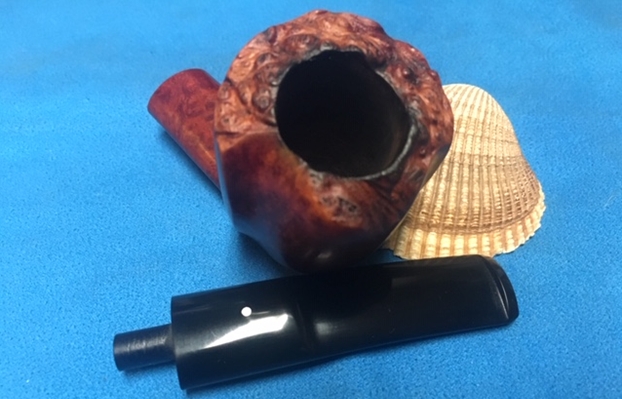
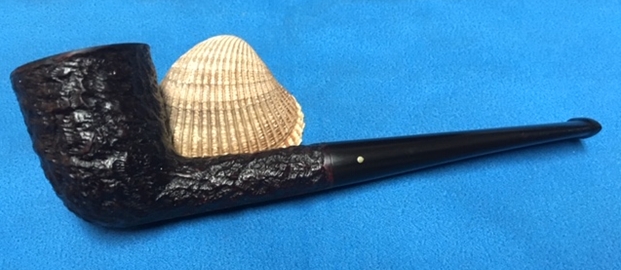
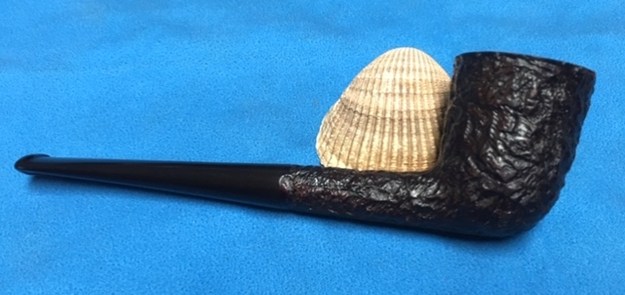
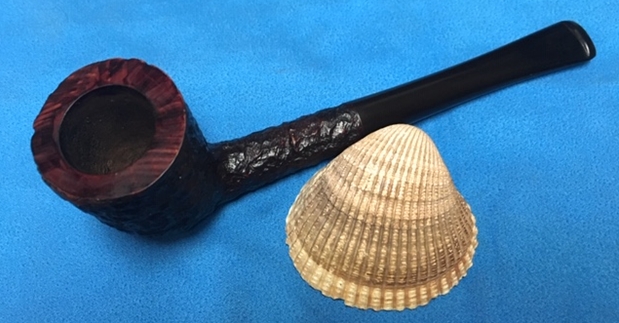
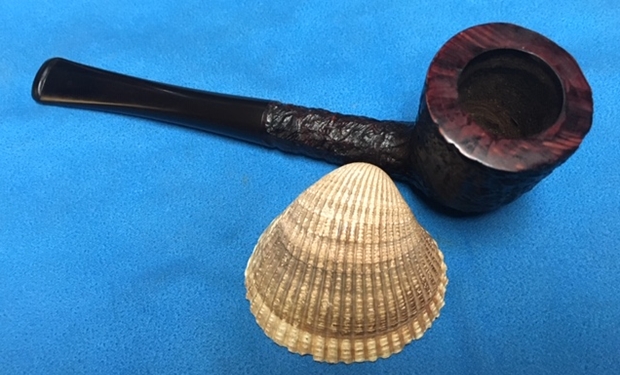
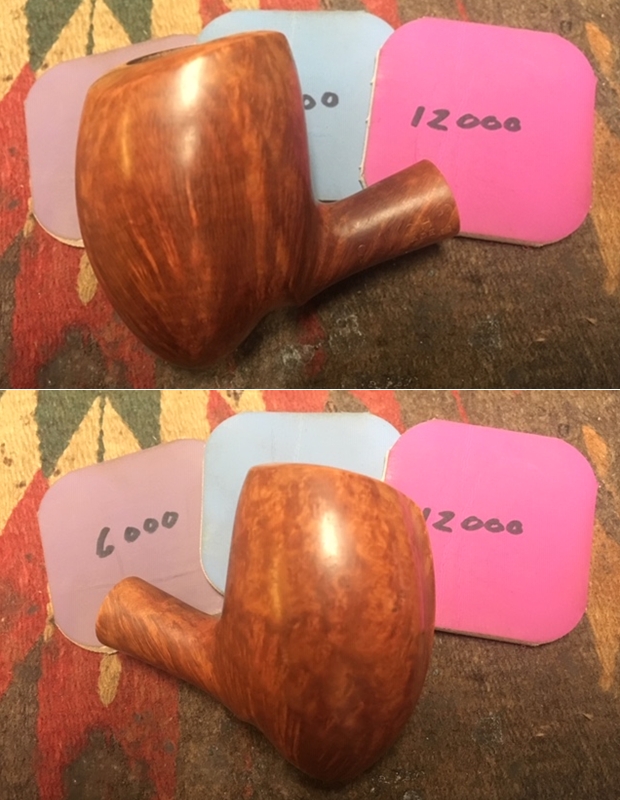
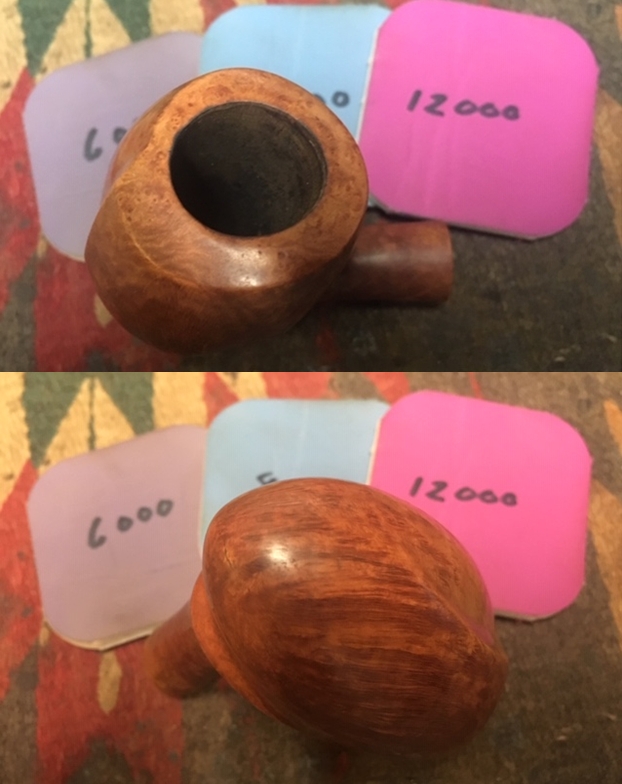
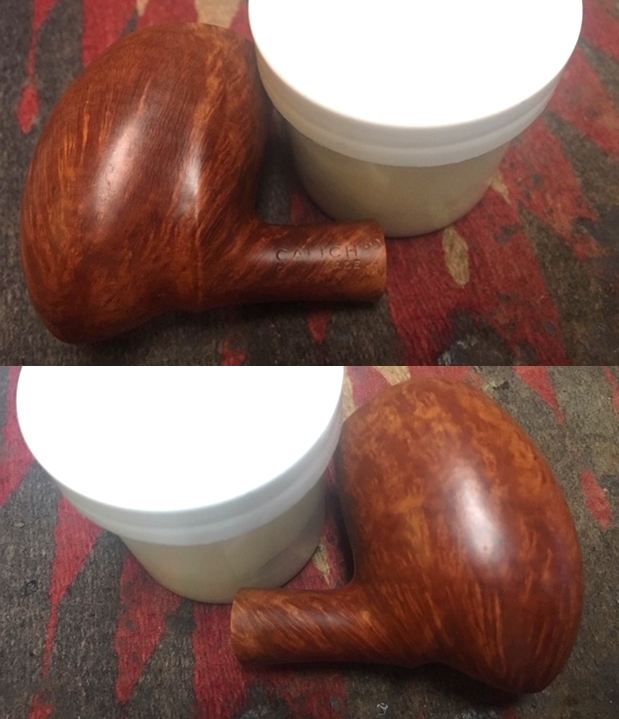
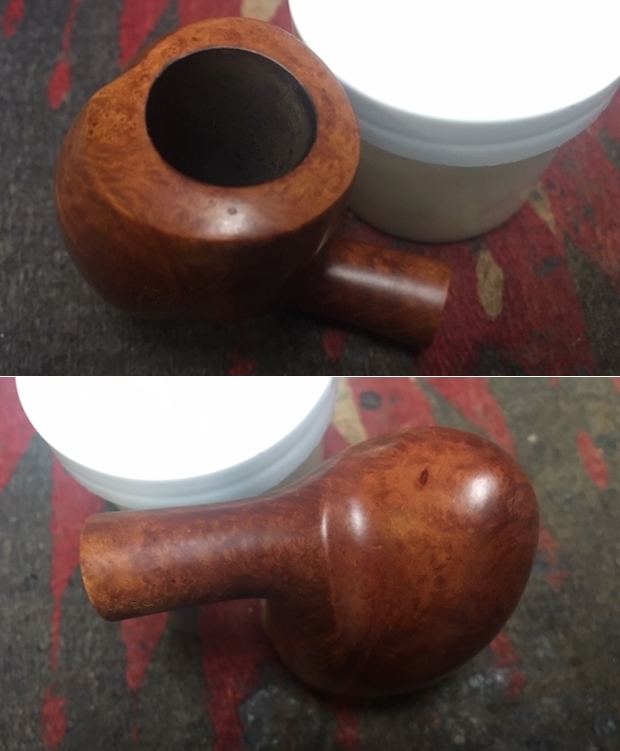
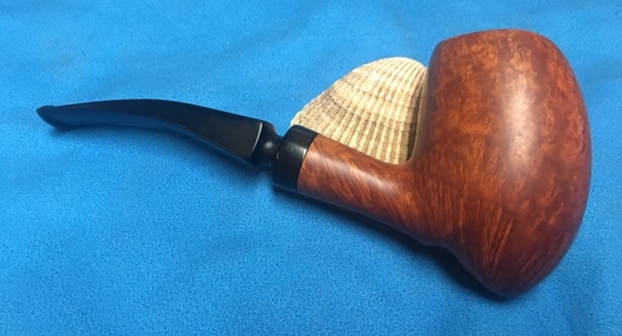
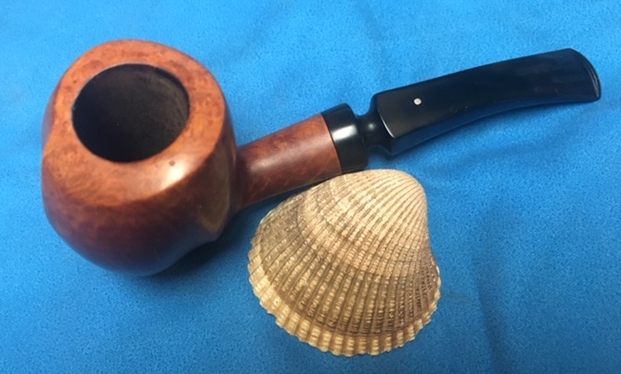
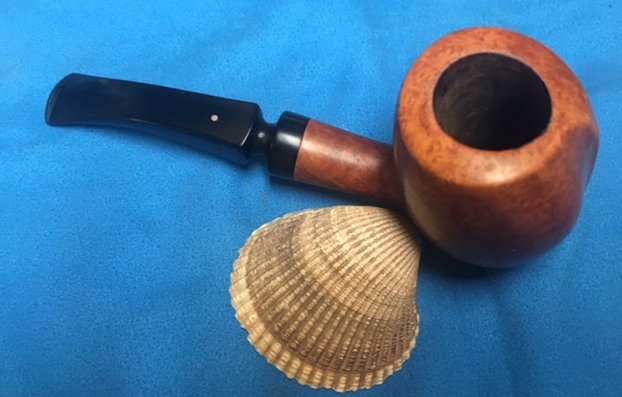
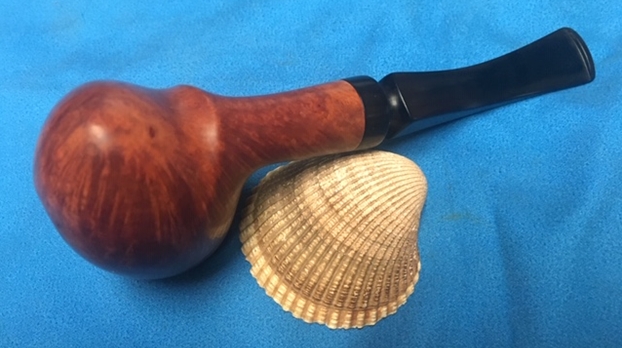
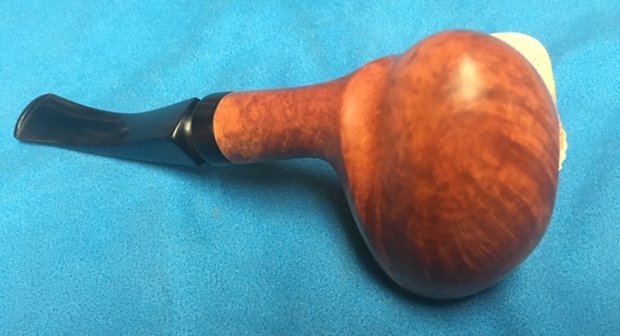
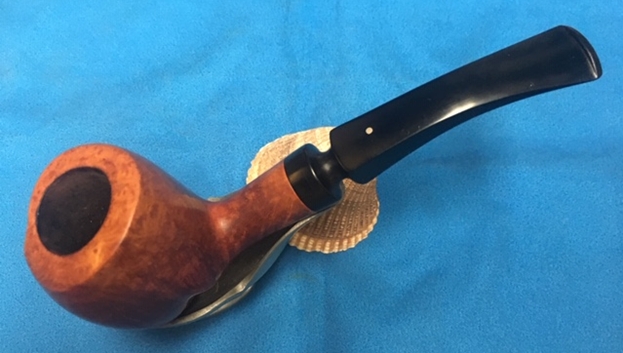
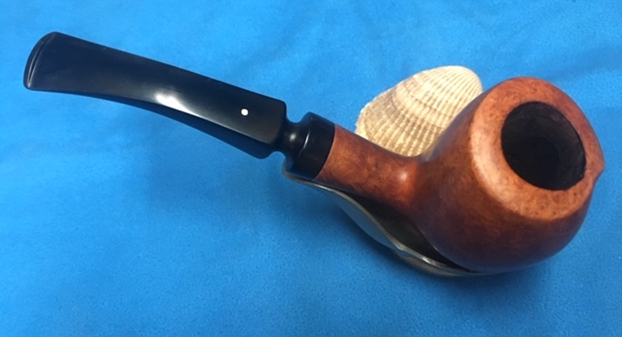
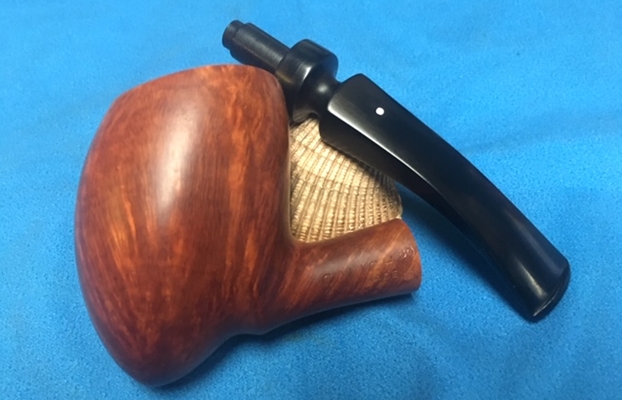
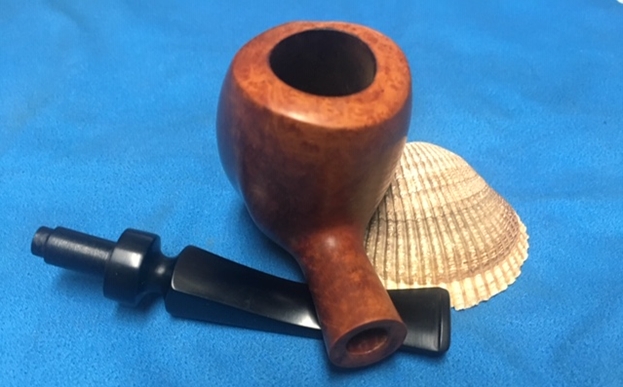
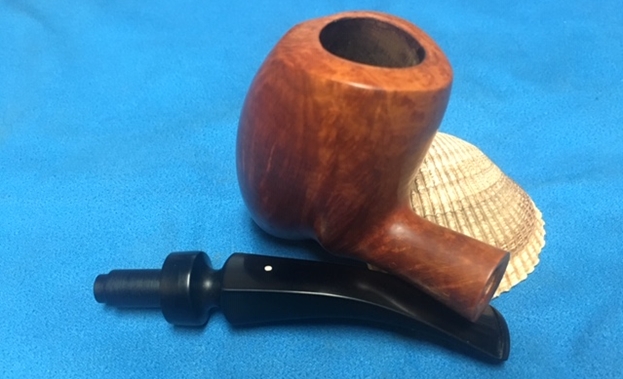
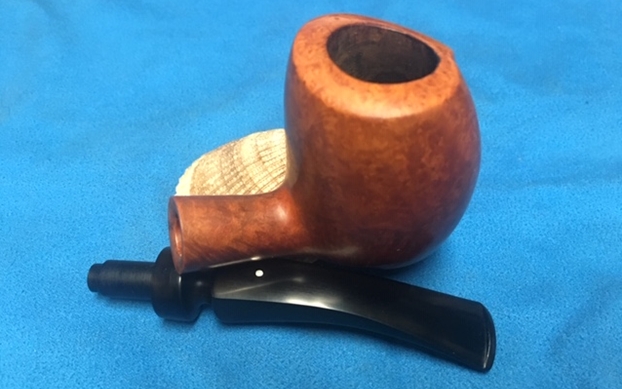
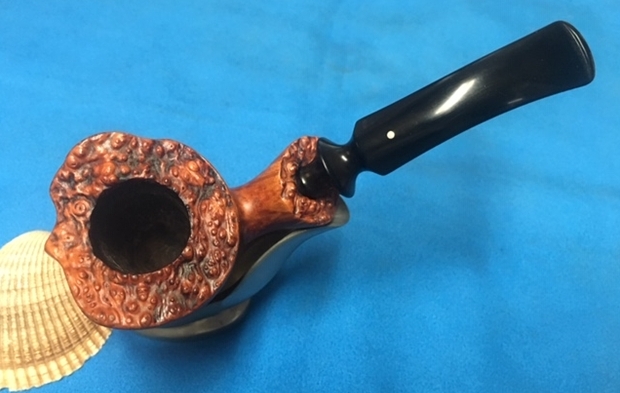
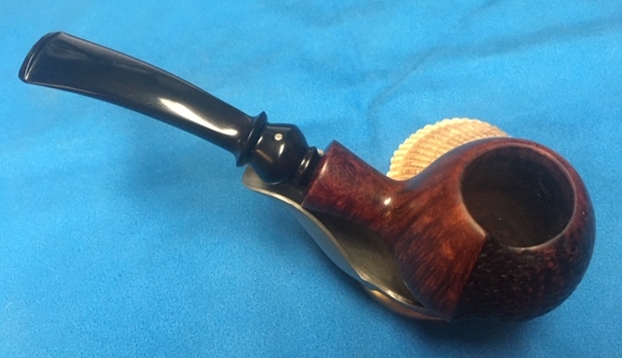
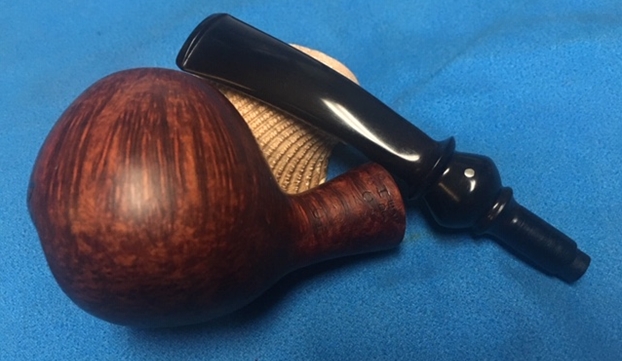
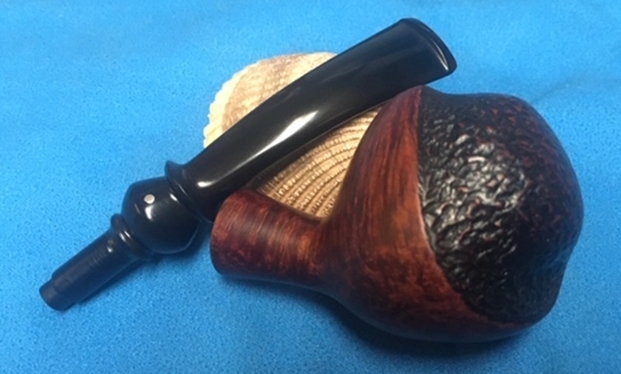
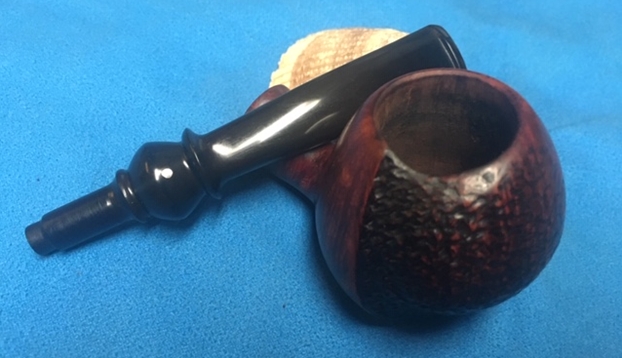
Another Calich on the Worktable – a Grade 11, 1988 Oval Shank Dublin


Blog by Steve Laug

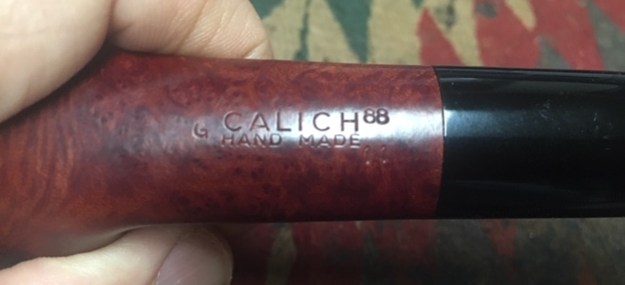
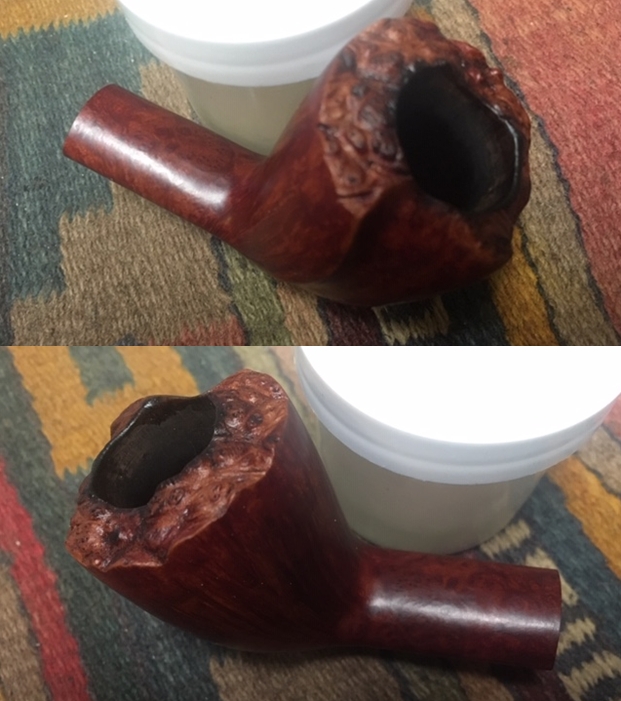
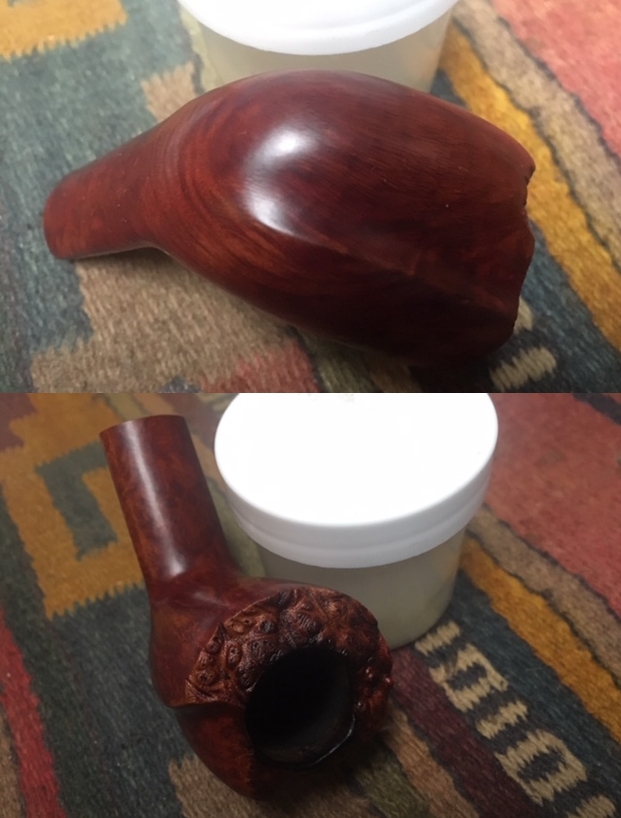
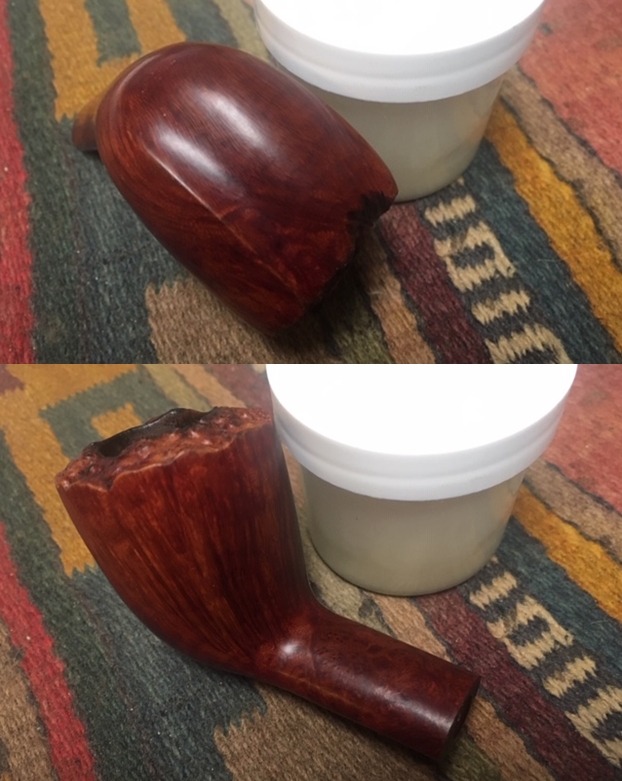
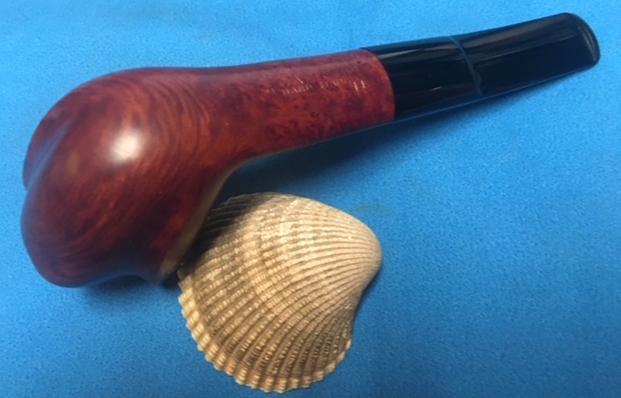
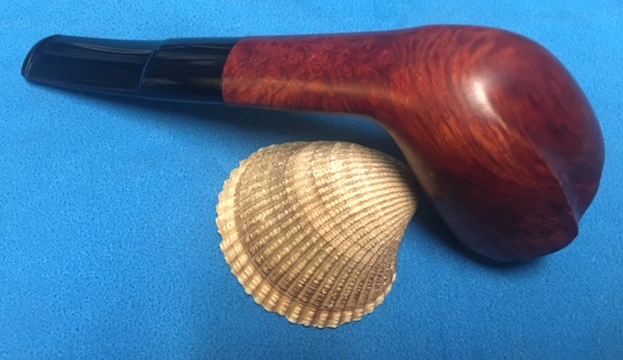
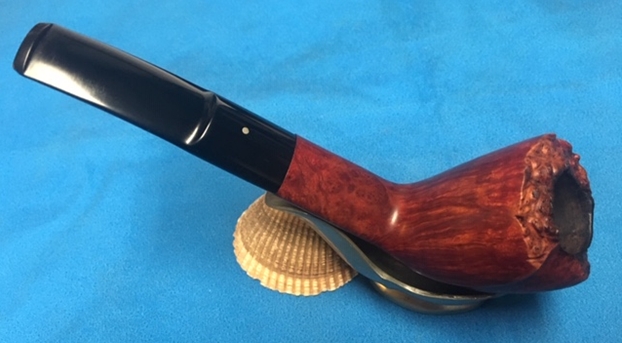
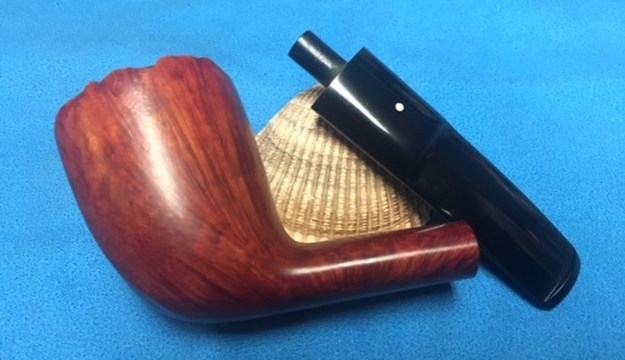
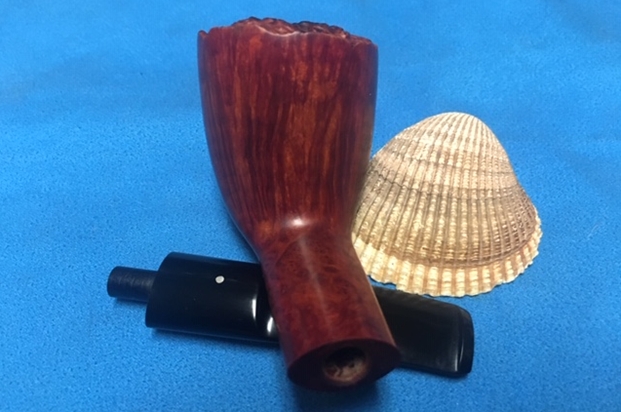
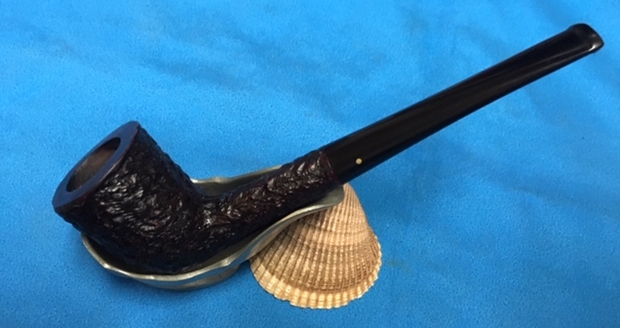
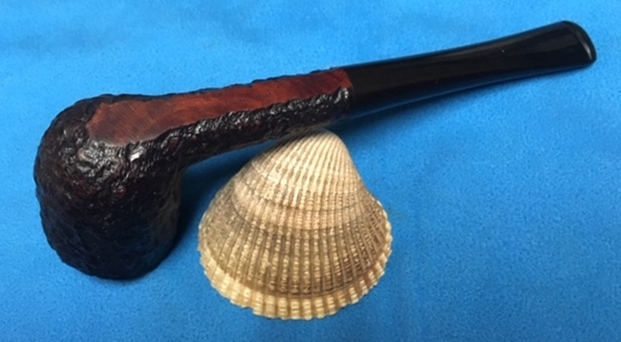
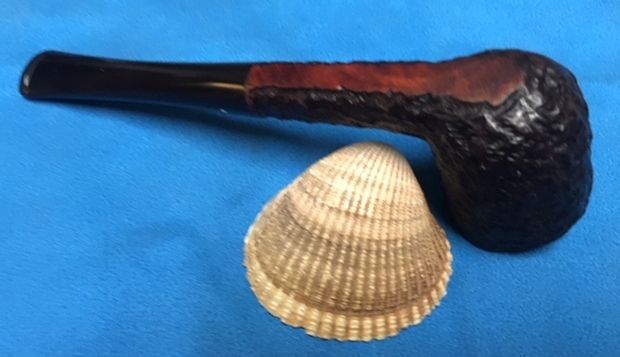
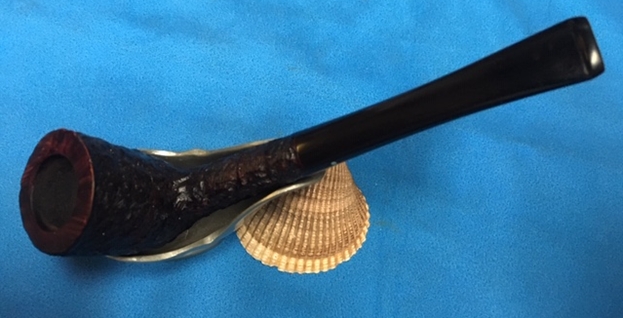
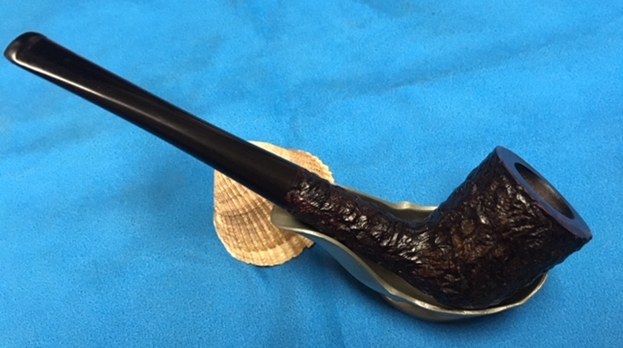
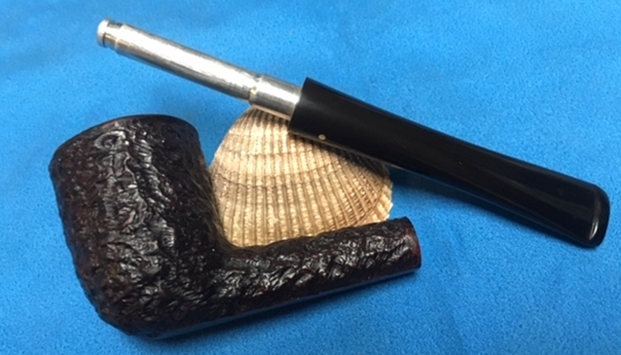
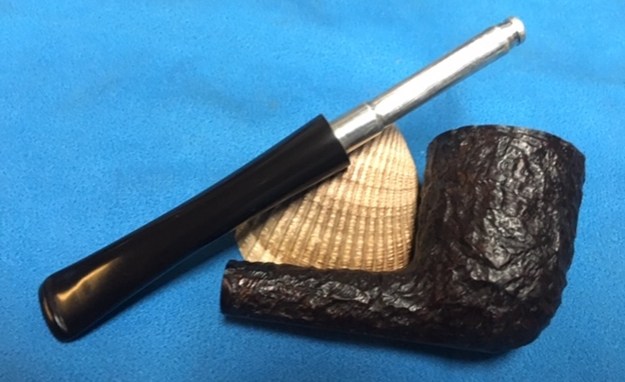
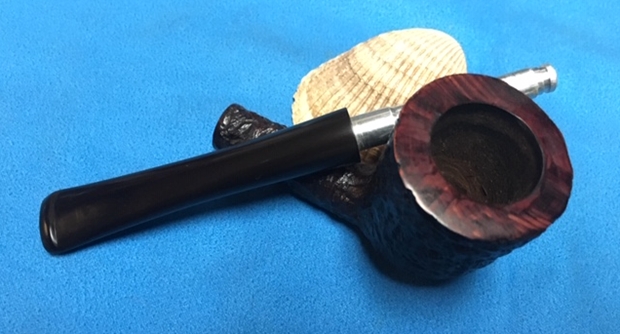
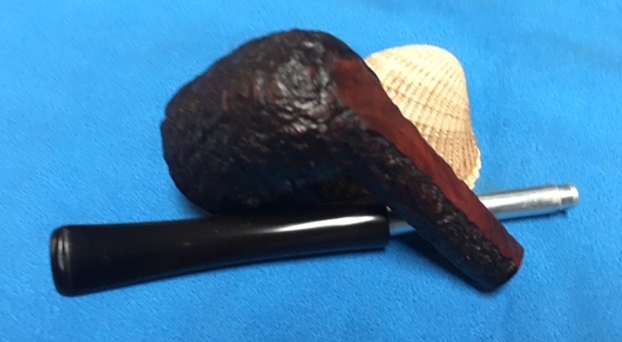
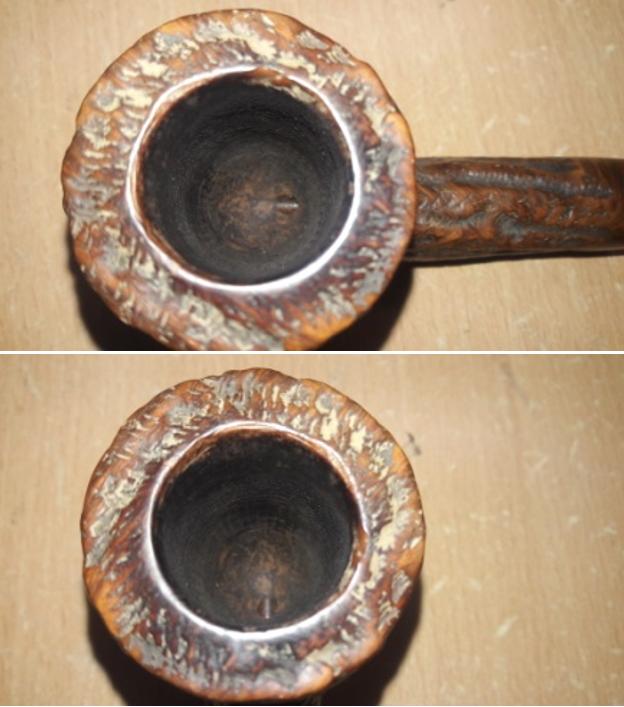
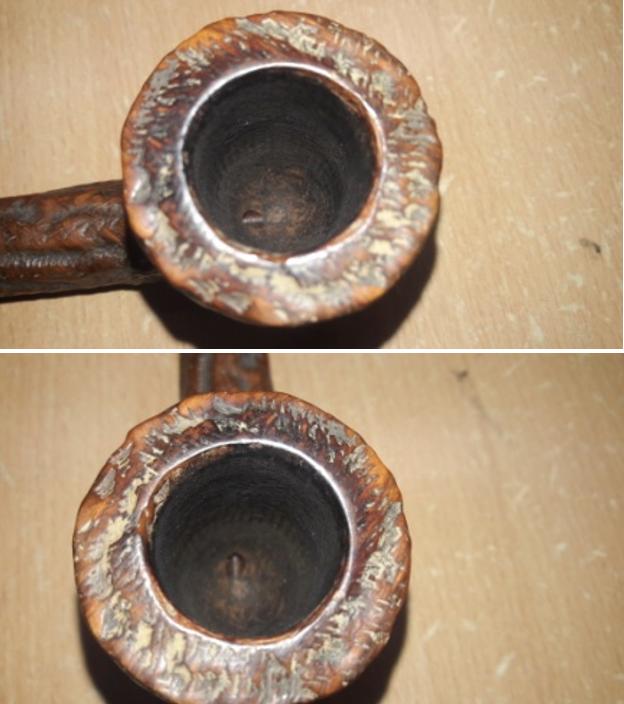
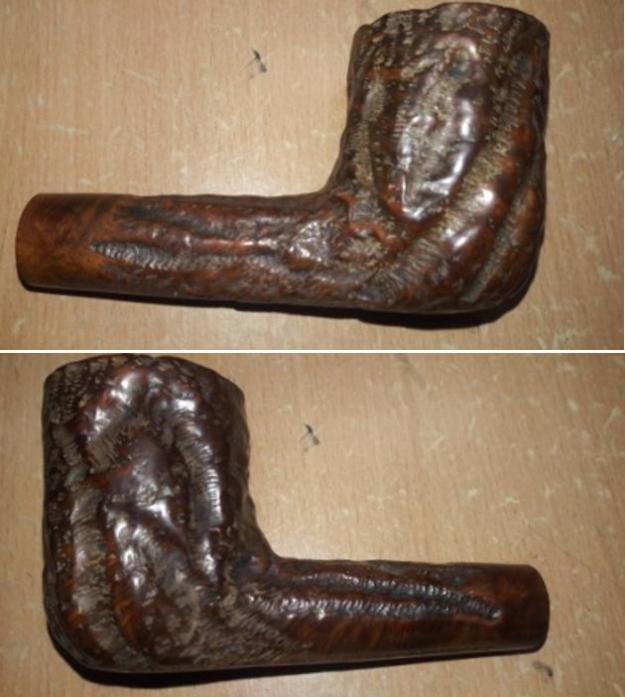
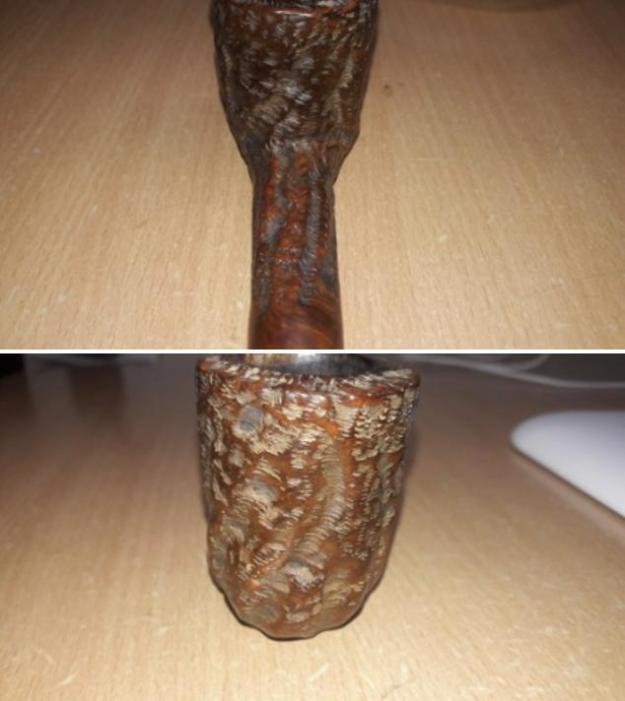
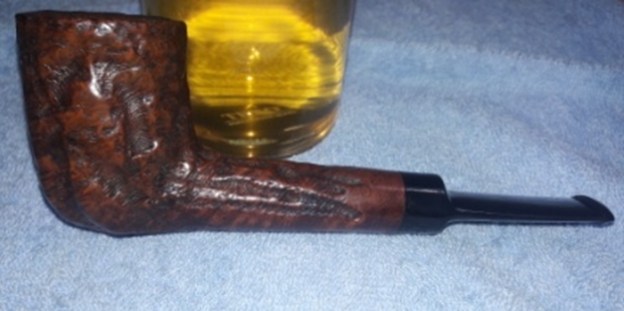
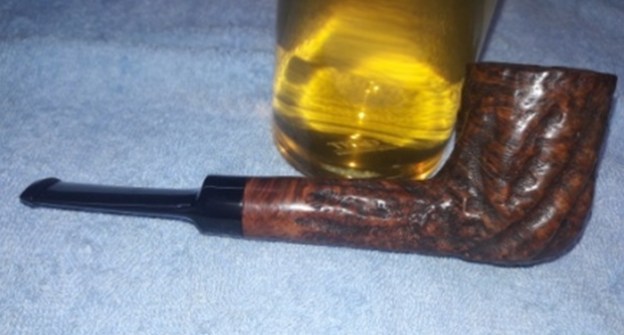
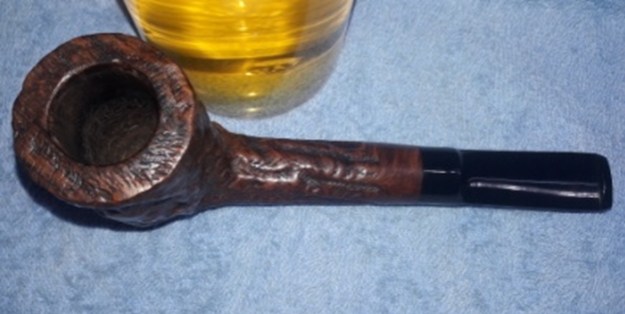
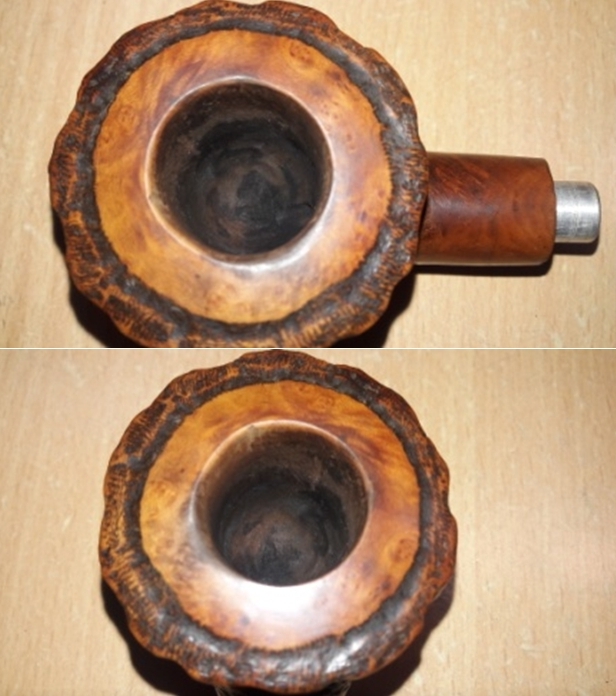
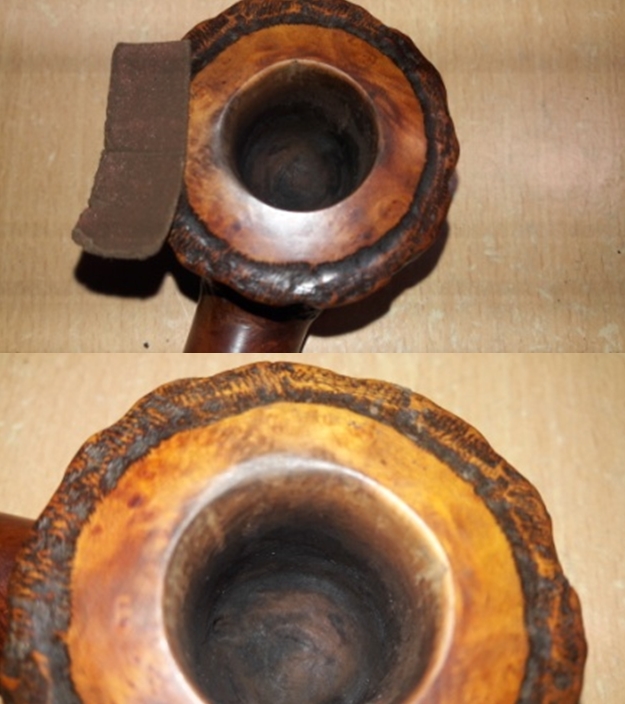
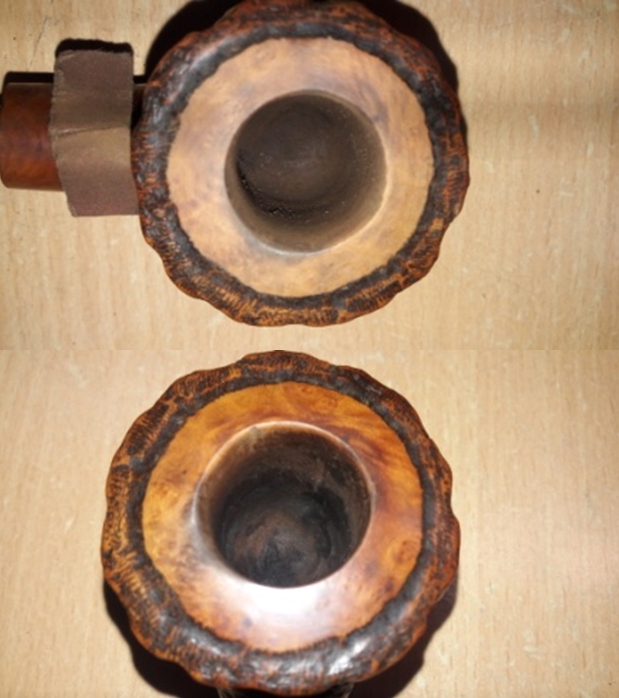
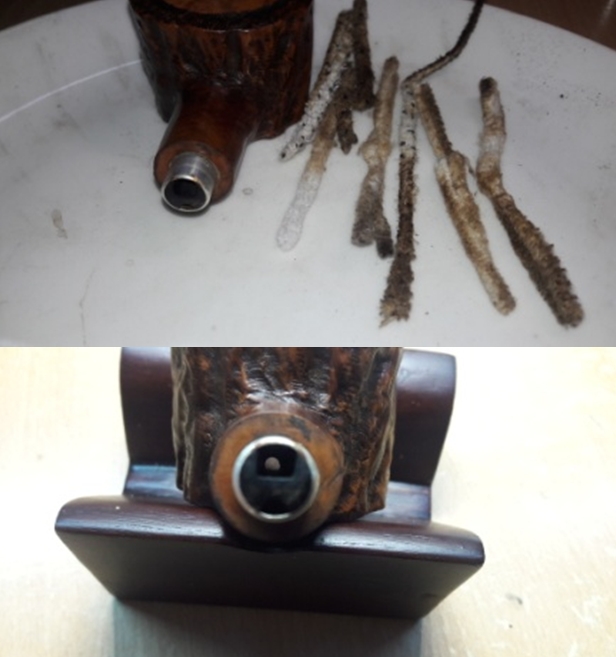
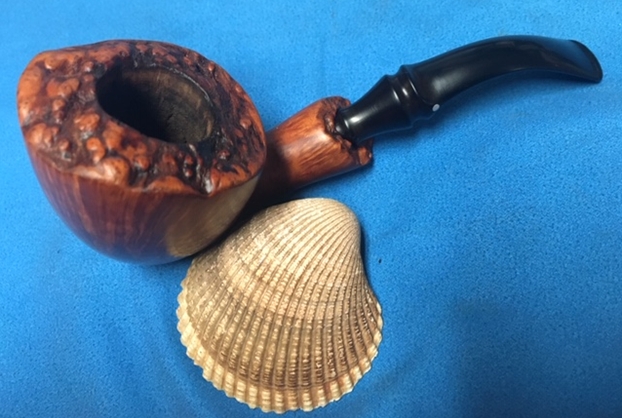
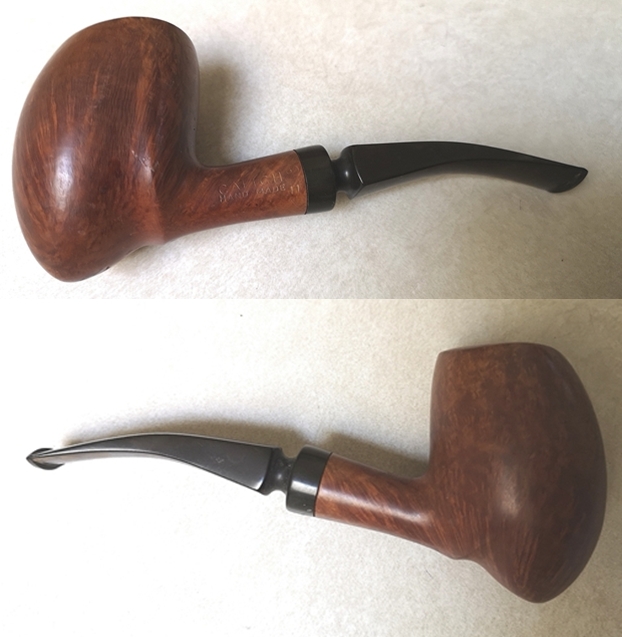
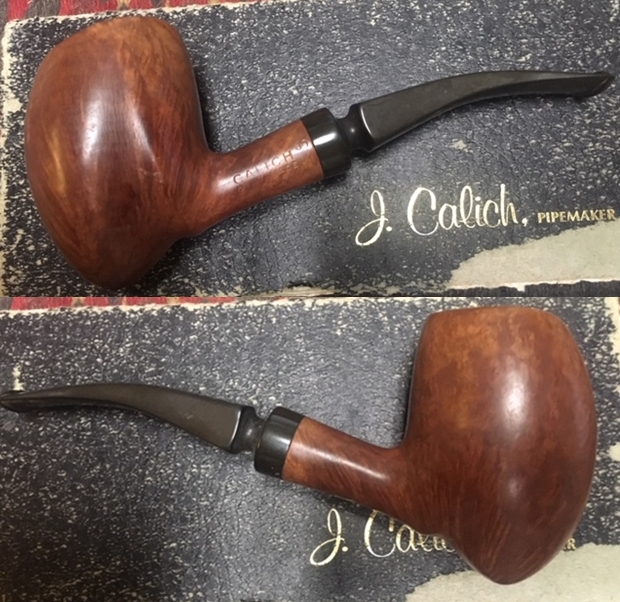
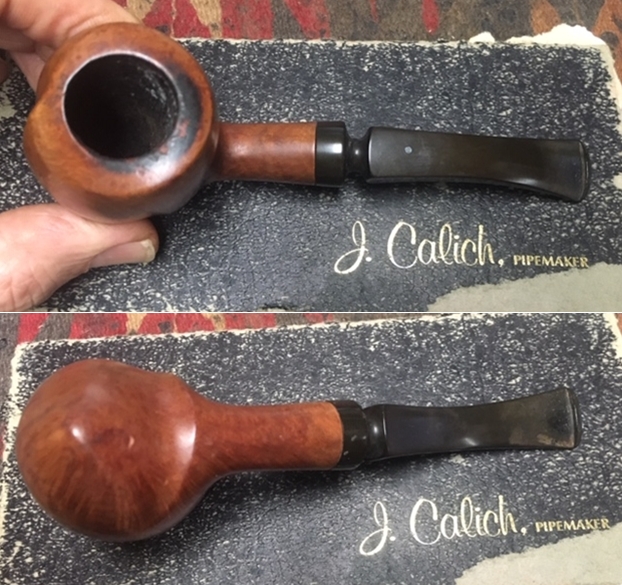
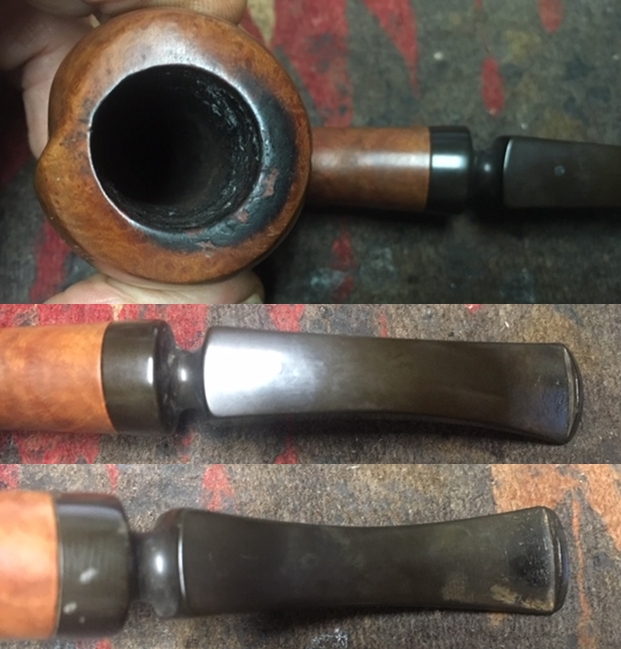
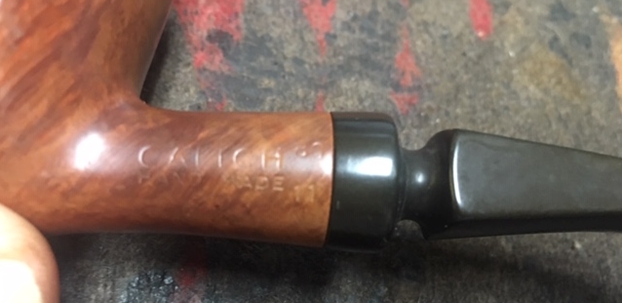
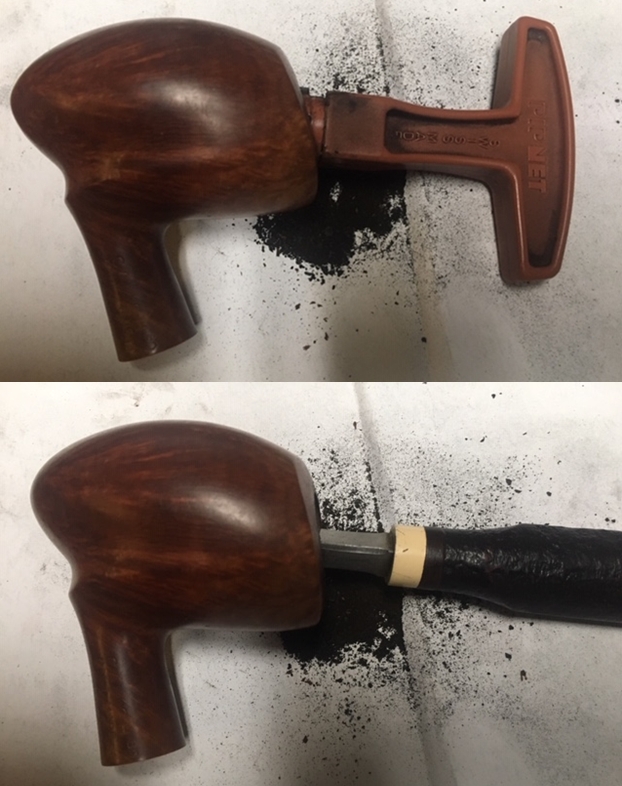
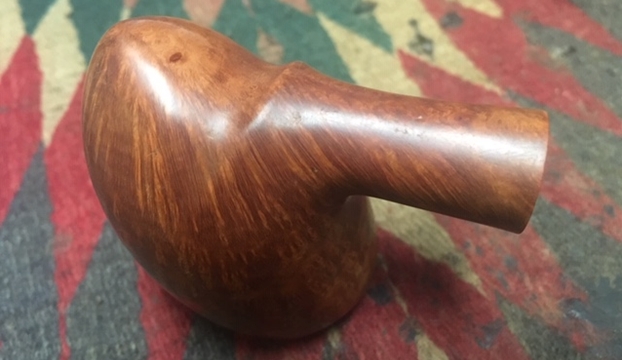
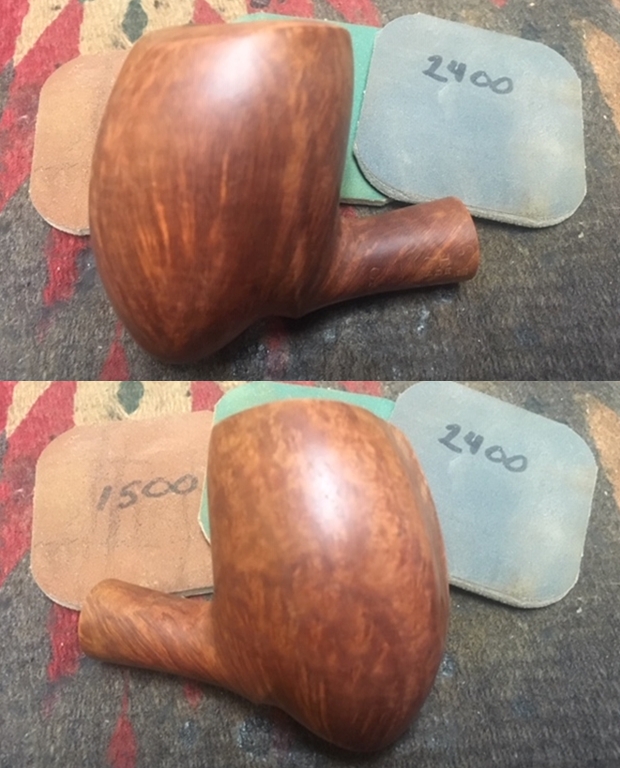
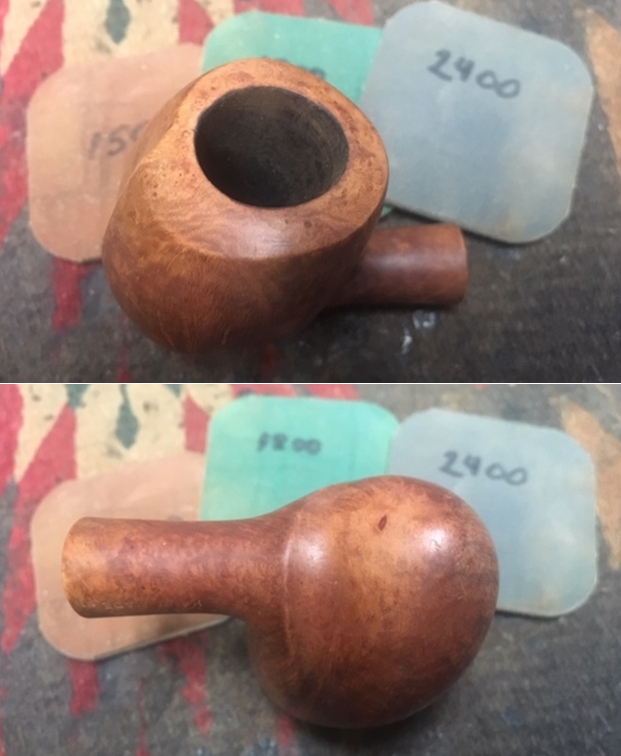
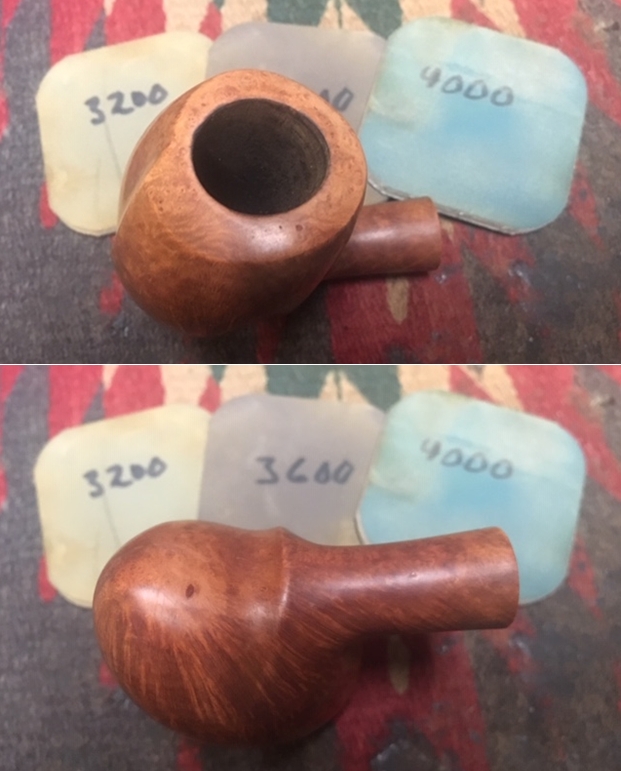
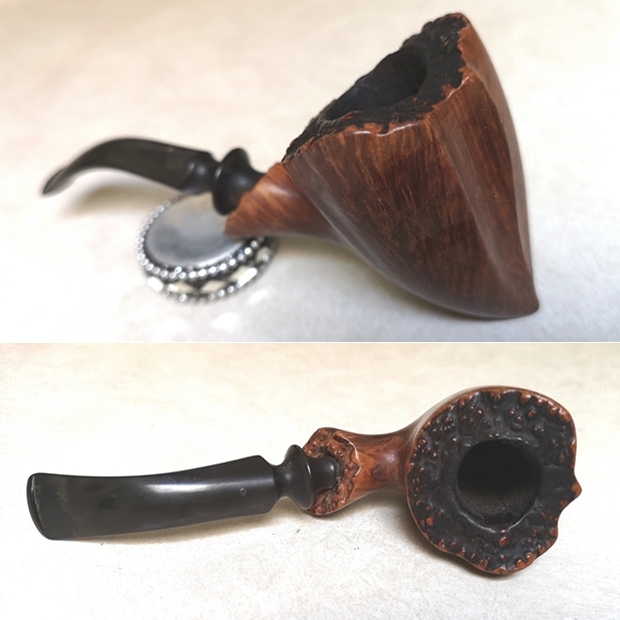
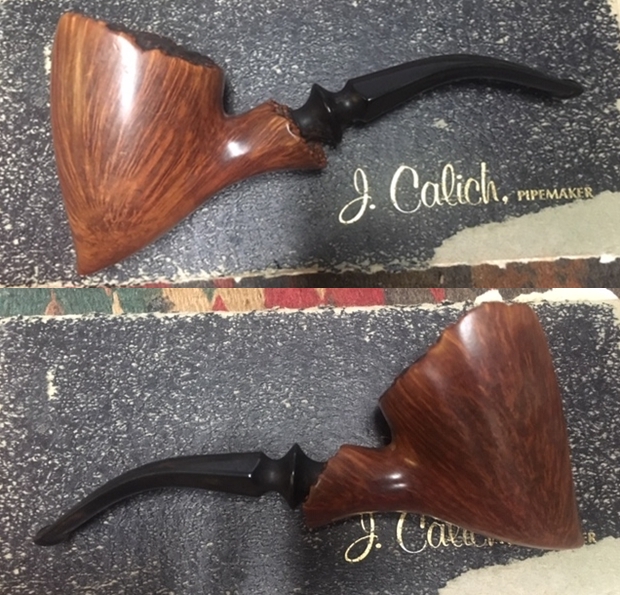
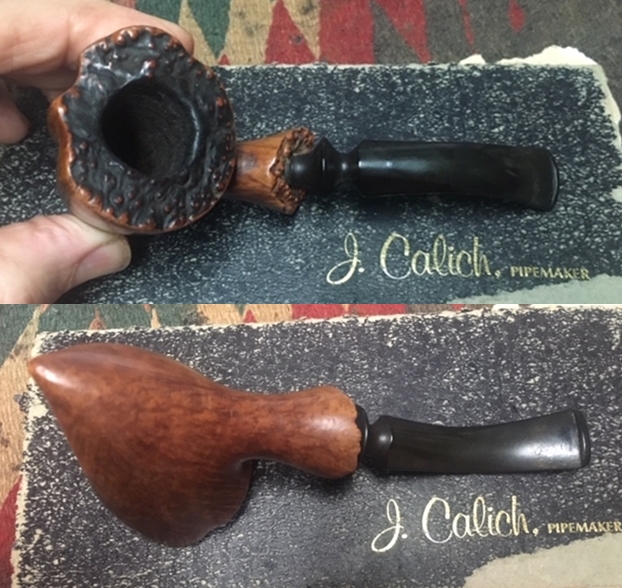
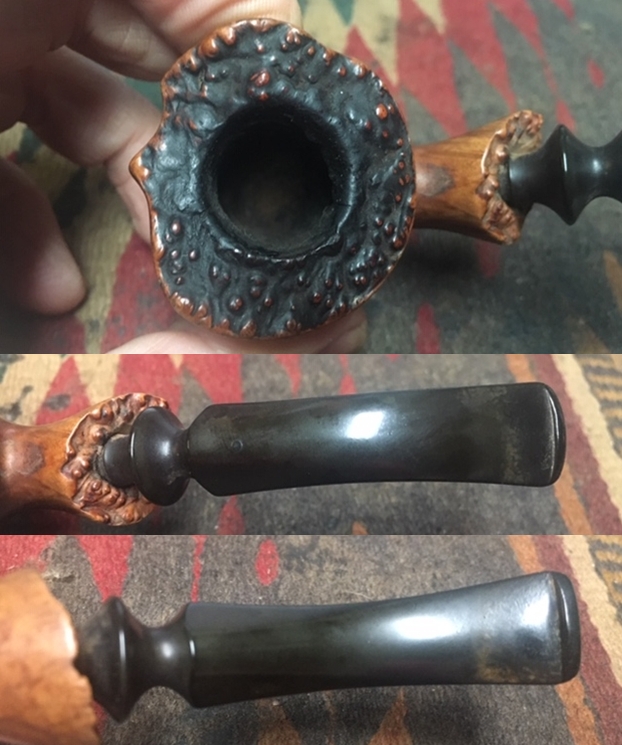
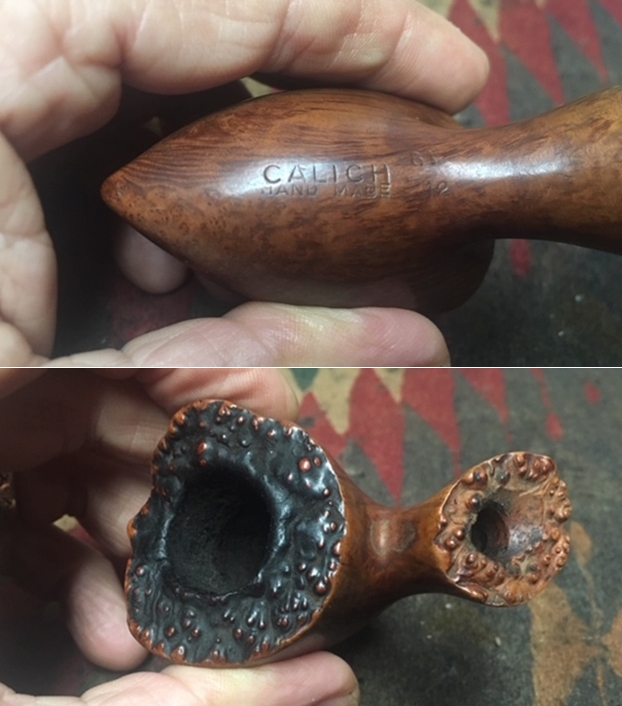
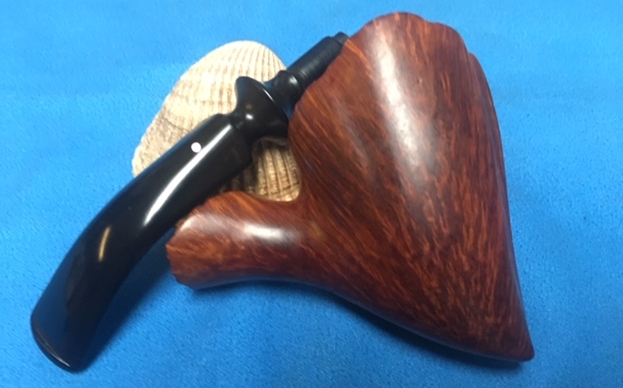
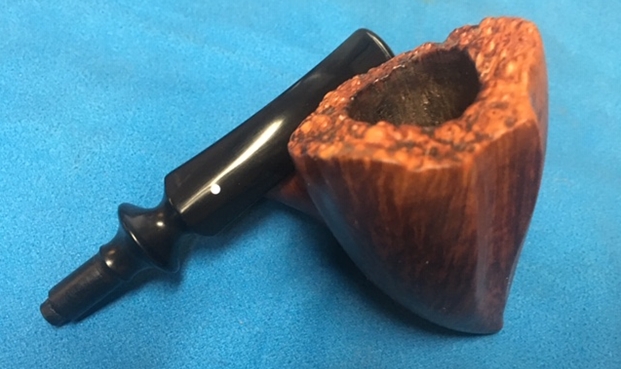
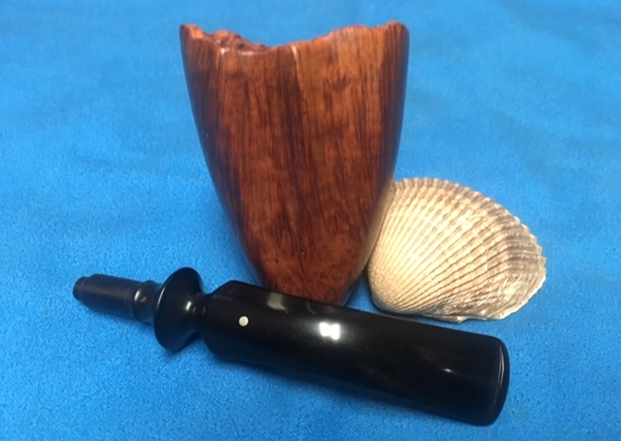
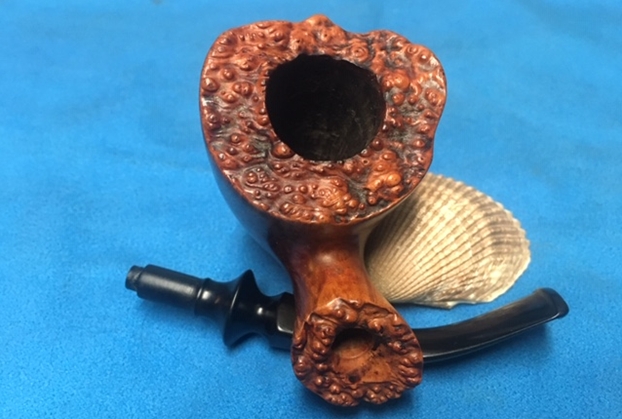
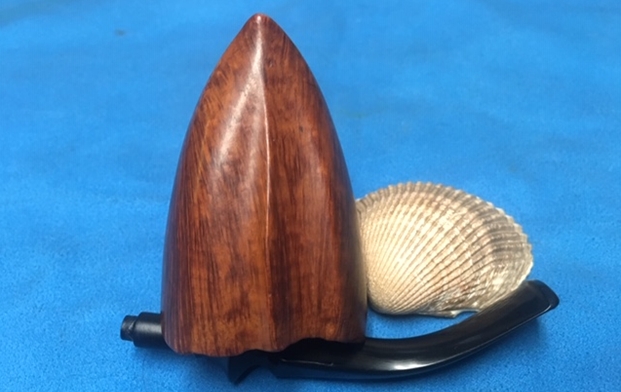
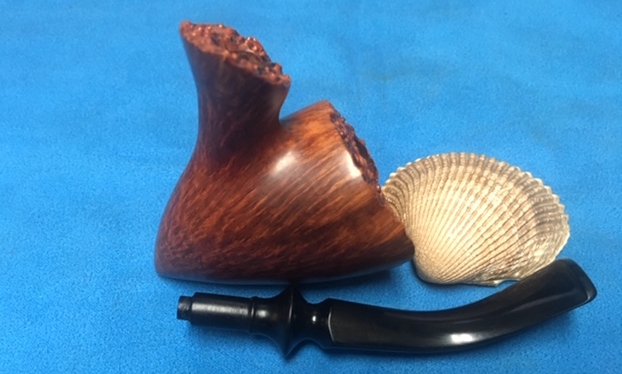
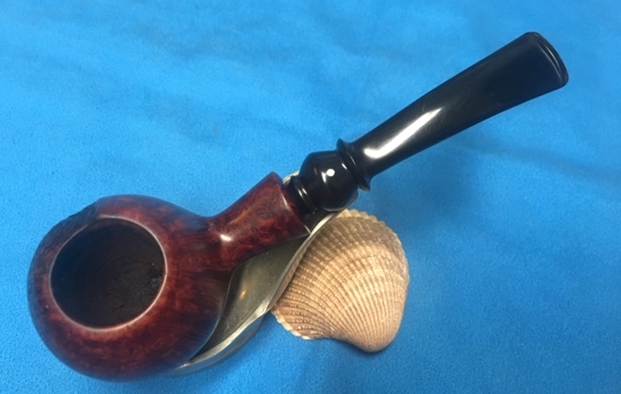
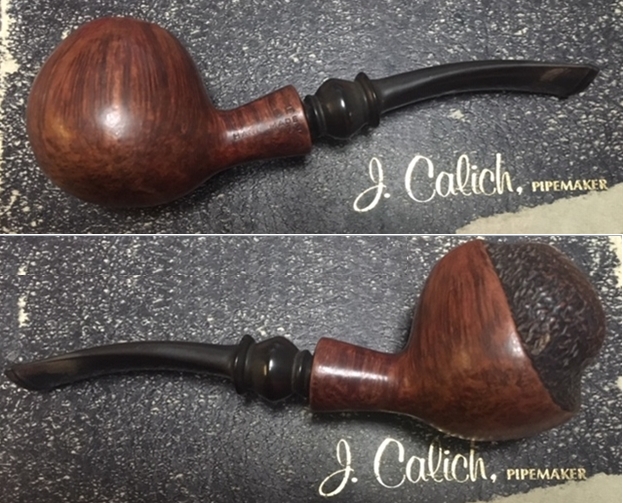
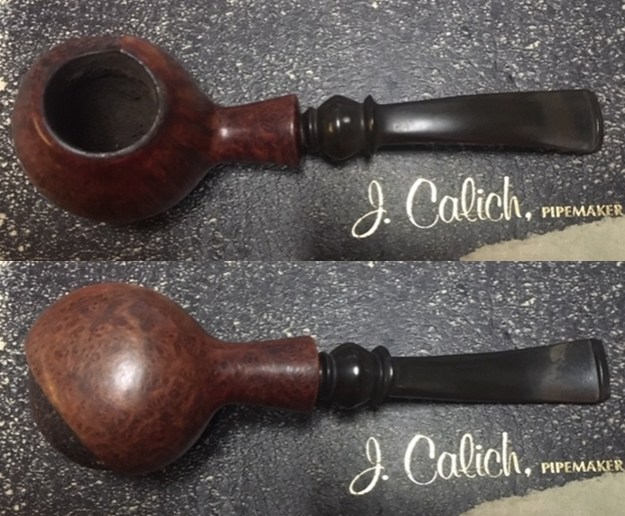
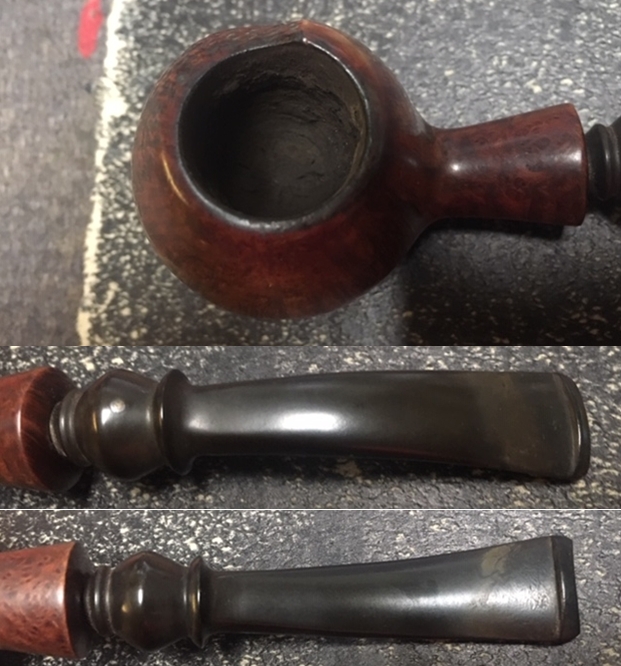
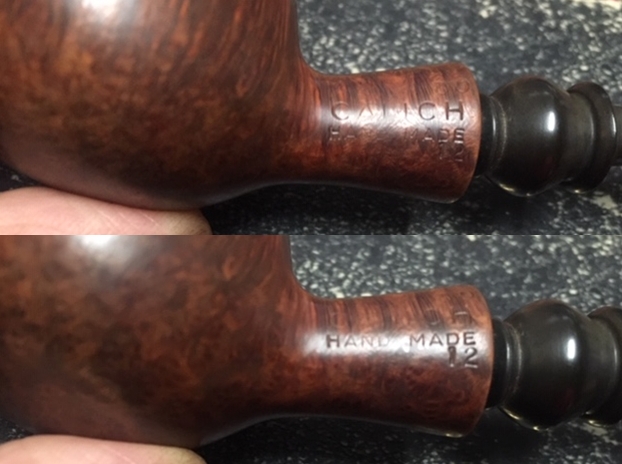
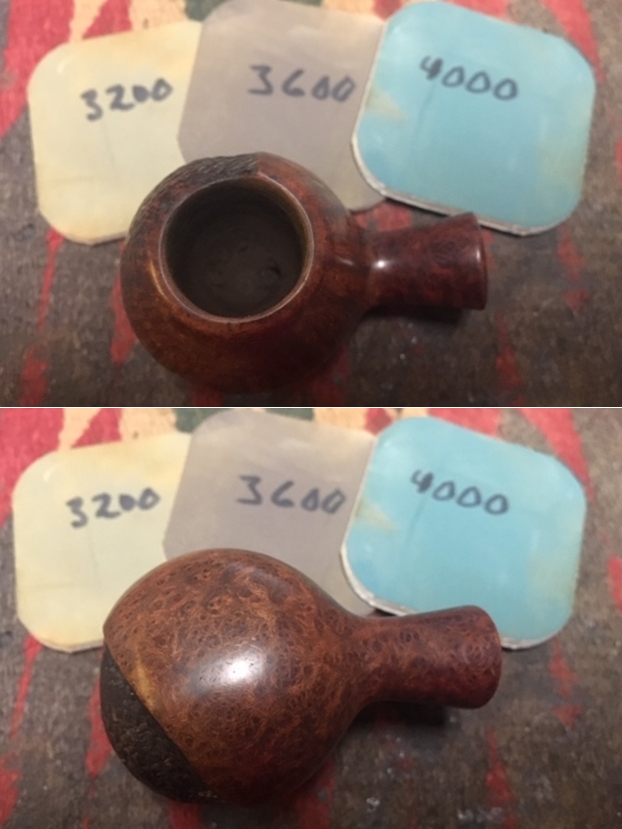
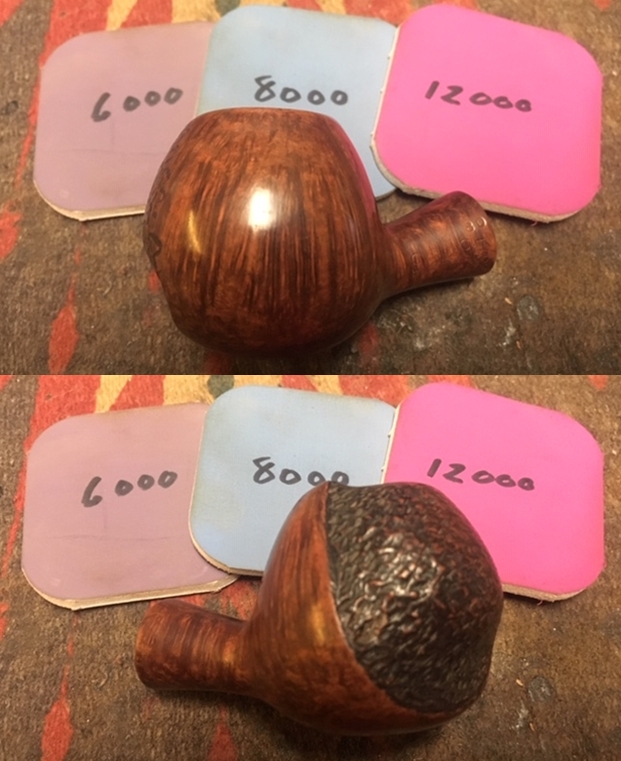
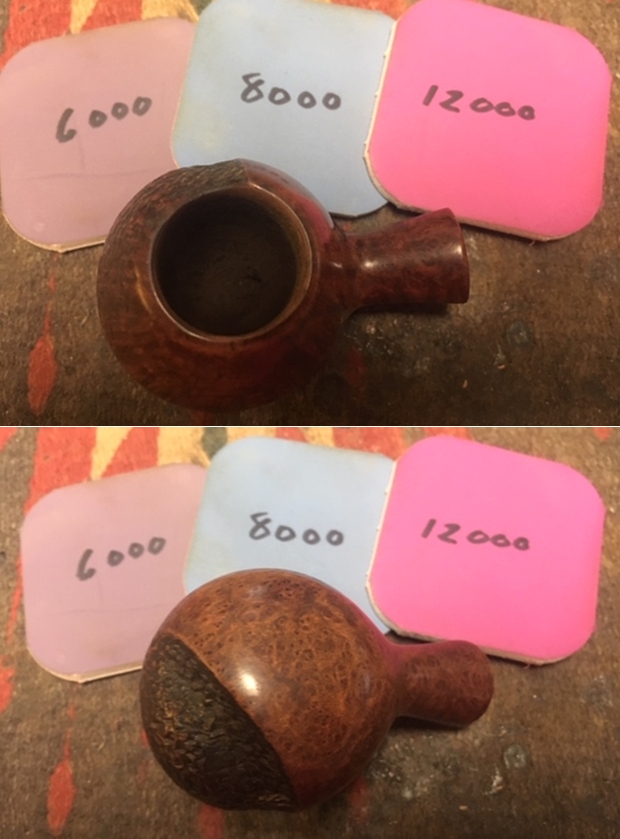
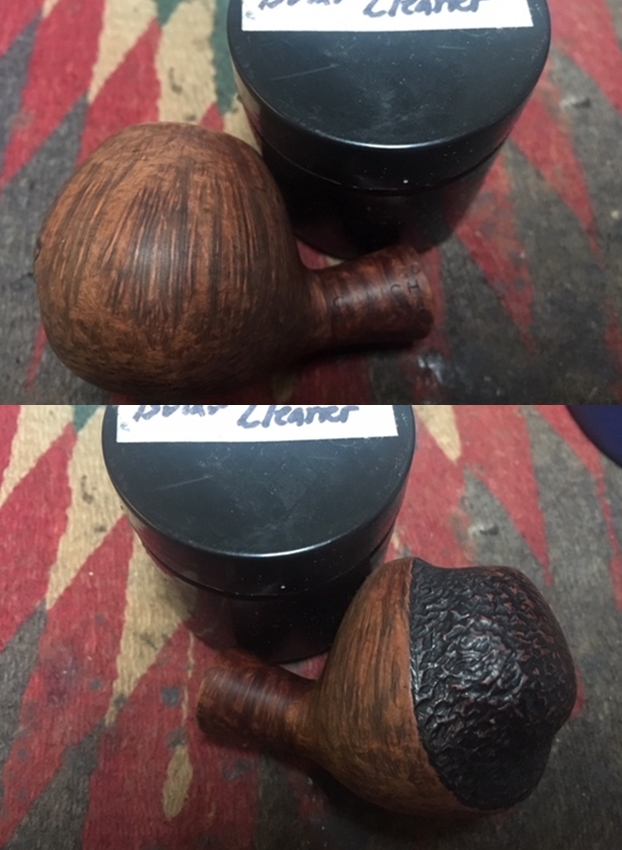
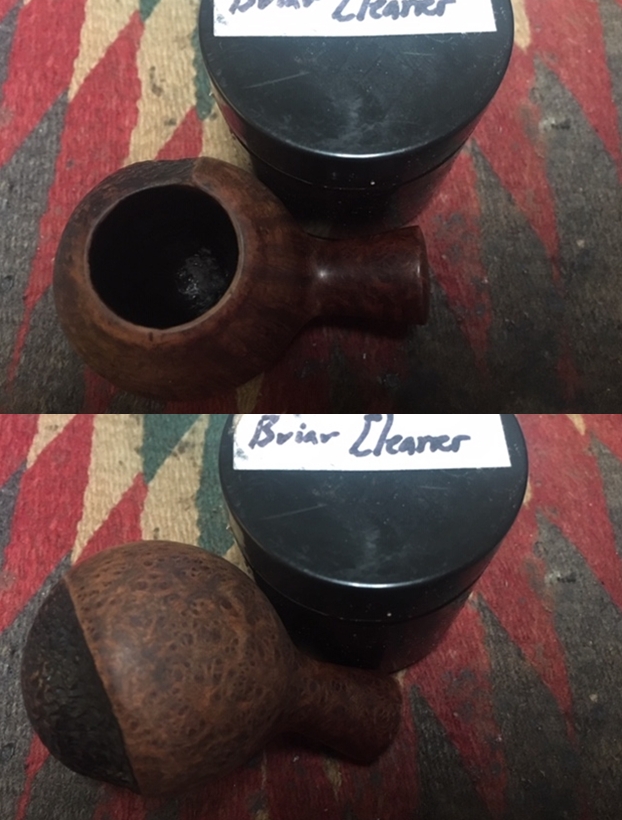
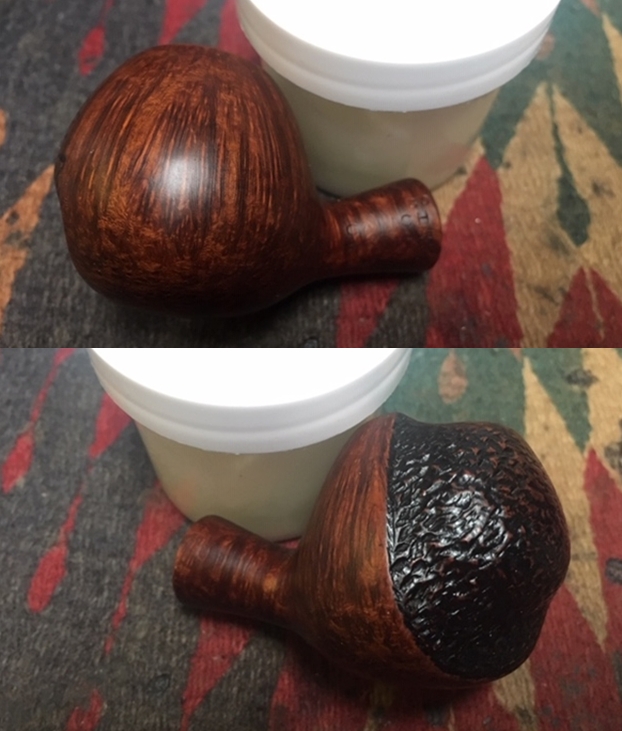
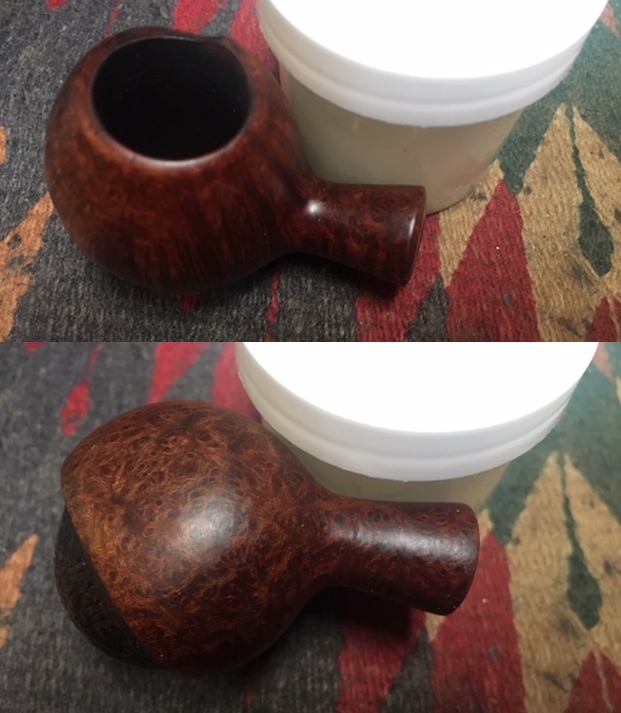
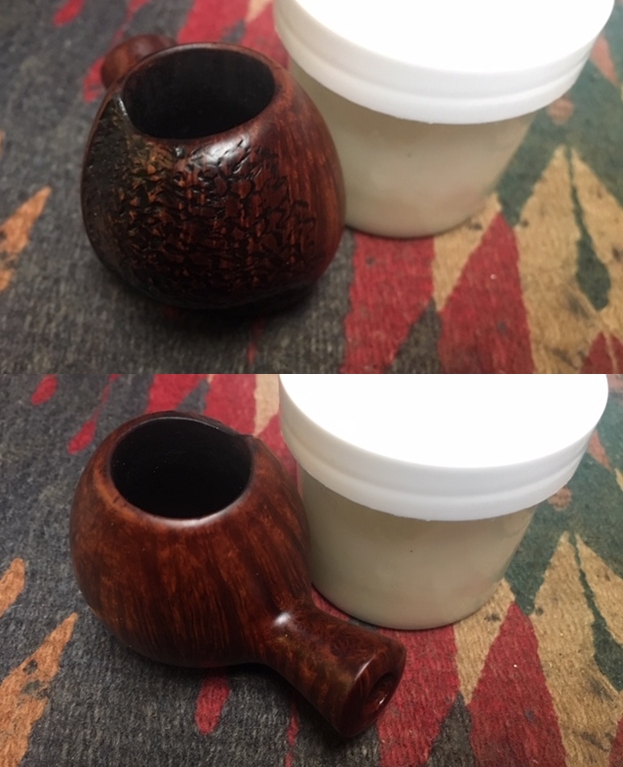
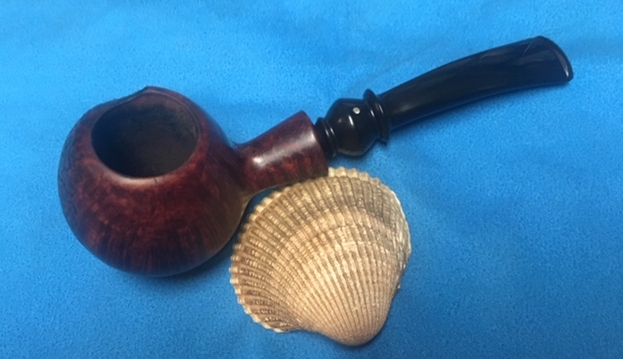
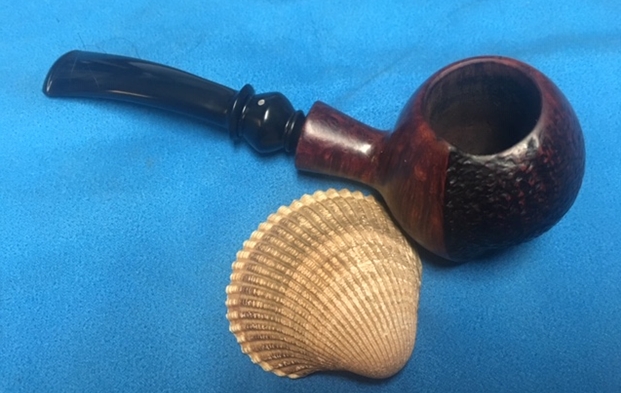
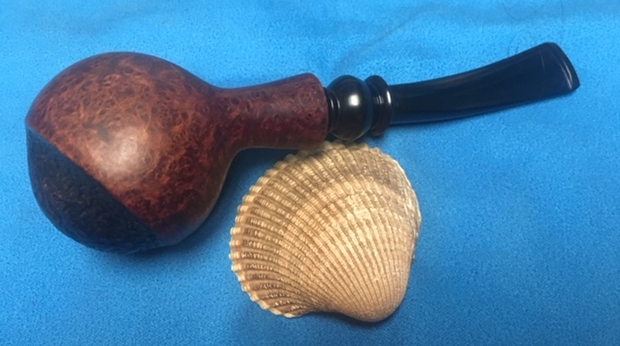
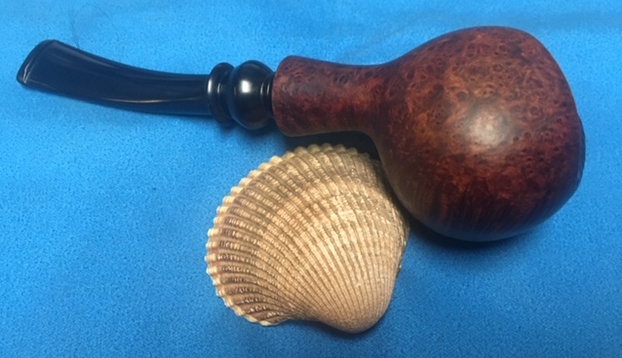
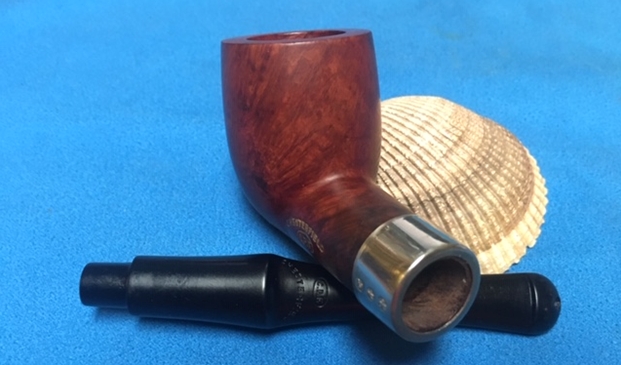
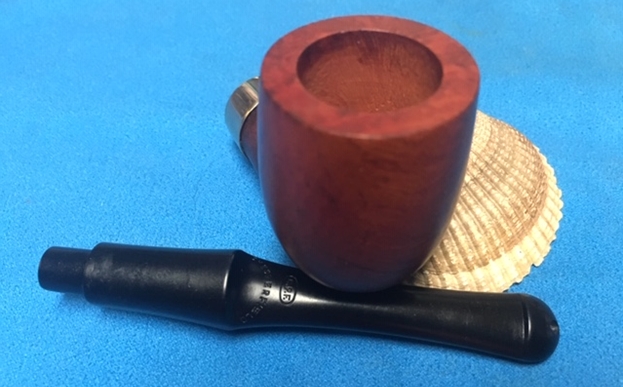
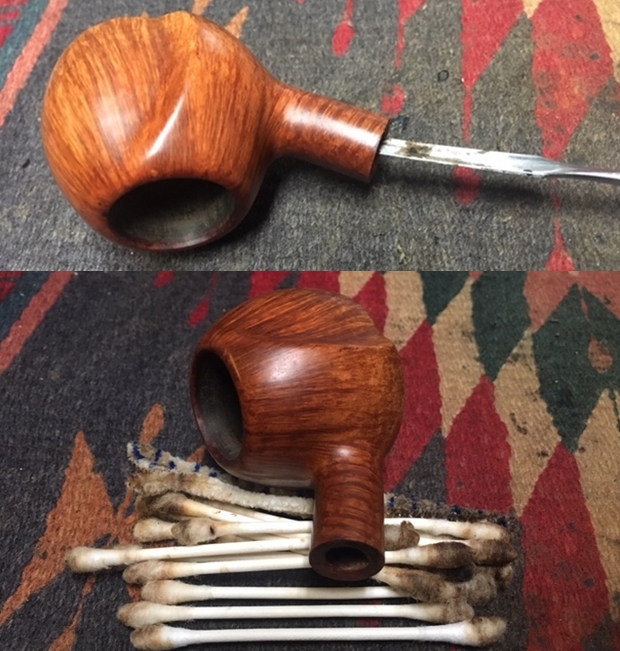
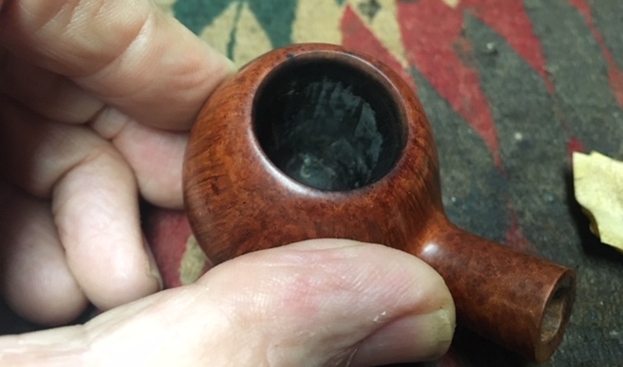
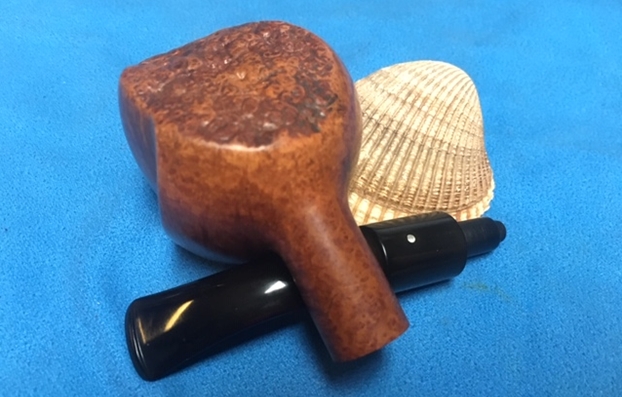
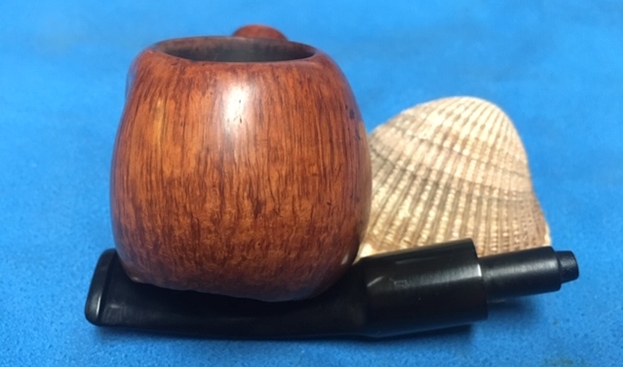
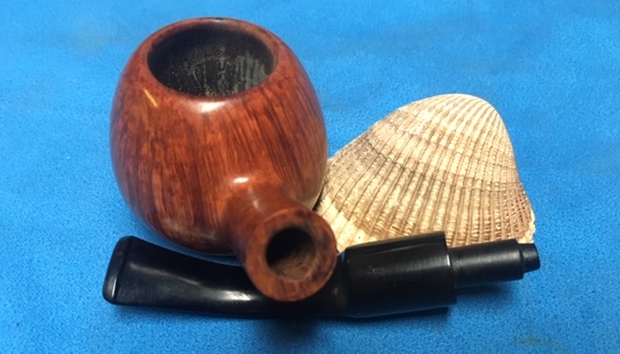
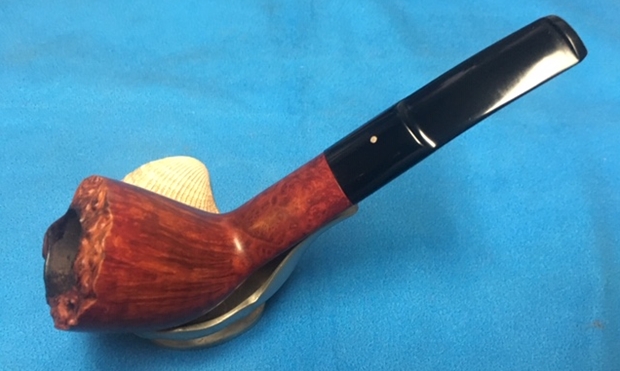
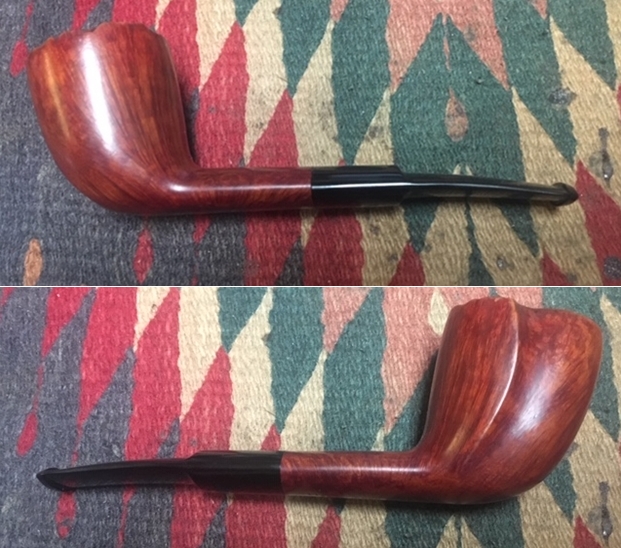
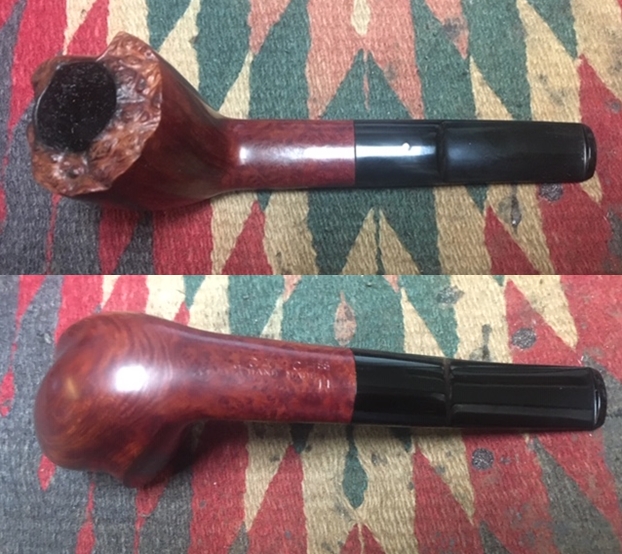
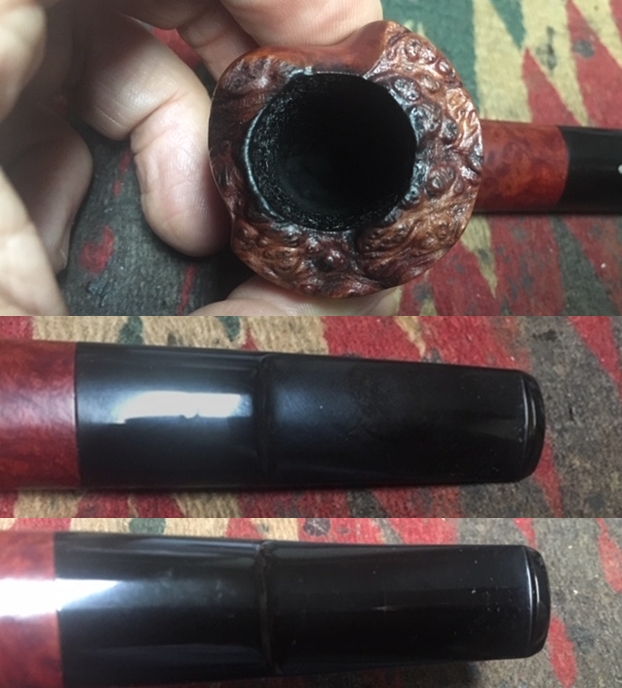
After I had finished the last of Ken Bennett’s estate Calich pipes my friend Alex sent me an email about a Calich oval shank canted Dublin that he thought would be a good match to the Calich pipes from Ken’s estate. Last week we got together for a visit and so that he could drop off some pipes for me to work on and some pipes that he wanted to trade. The Calich was one of them. This pipe had a classic Calich look to it. There was a grooved channel on the front and on the right side of the bowl – kind of a fluted look. The finish was dull and would need to be buffed to polish it. The shape of the bowl followed the beautiful grain of the briar – flame and straight grain around the bowl and some swirls and birdseye as well. The rim top was plateau and canted toward the front. The smooth bowl seemed to have medium brown stain that made the grain pop. Over time John’s pipes take on a rich patina. The bowl had a light cake in it and there was some darkening on front and back side of the plateau rim top. Otherwise the rim top and edges of the bowl looked to be in excellent condition. The stamping on the underside of the shank read G followed by CALICH over Hand Made. After that stamping there was a superscript 88 stamped (year it was carved) with a subscript 11 which was the grade number. The stem has a single metal dot in the top of the saddle. There were some light tooth marks on both sides of the stem on both sides near the button. The shank and stem were dirty inside. I took a photo of the bowl and rim top to show the cake in the bowl and the darkening and light lava on the inner edge of the rim top. The cake was thin along the edges of the bowl but hopefully it had protected the rim and edges from damage. Otherwise it looks pretty good. I also took photos of the stem to show the oxidation on both sides and the light tooth chatter on both sides near the button.  I took a photo of the underside of the shank to show the condition of the stamping. You can see that just ahead of the Calich stamp over Hand Made is the letter G. After the “H” in Calich is a superscript 88 and a subscript 11.Once again I am including some information about John Calich the pipemaker as I have loved John Calich’s pipes for over 25 years now and have collected a few of them. I have restored quite a few of them and written blogs about them that can be read if you are interested in seeing the kind of pipes that John made. They are unique and beautiful. Each one of them is a work of art to me. I have written blogs on all of Ken Bennett’s Calich pipes and several others that I have in my own collection. Do a quick search on the blog if you are interested in reading about them.
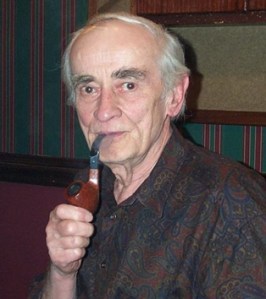
John Calich, courtesy Doug Valitchka

When John was living I spoke with him several times via phone and had him make some new stems for some of his pipes that I picked up off eBay. He was a very kind gentleman and was always helpful when I spoke with him. He was always ready with encouragement and when I needed to know how to do something when I was first learning to repair pipes he was willing to help. He was one of the old guard of Canadian Pipe makers. I miss him. I am including a short piece from Pipedia on John to give details on his work and the grading of his pipes. The second paragraph below is highlighted in blue as it gives some information on the Grade 12 Apple that I am working on with the single silver dot now.

John Calich was one of Canada’s finest carvers. He died in July 2008. John was a full time pipe maker for the last 40 years. Calich pipes were mostly traditional shapes. His signature style is rustication and smooth on the same pipe along with his unique skill to stain a pipe in contrasting colors. He used only top quality Grecian and Calabrian briar. The mouthpieces are hand finished Vulcanite “A”. Each pipe was entirely made by hand. John Calich was featured in the summer 2005 issue of Pipes & Tobacco.

His pipes are graded 3E – 7E. Retail prices range from$ 145.00 to $ 500.00 Each pipe is stamped “CALICH” 3-8E, his earlier pipes were graded from 3-14, and a single, tiny silver dot is applied to the top of the stem (https://pipedia.org/wiki/Calich).

From my other blogs I was able to garner quite a bit of information on John’s grading system. As noted above the newer ones carried a 3E-7E stamp but the earlier ones were graded 3-14. The retail prices for them ranged from $145.00 to $500.00. Each of the earlier pipes was stamped “CALICH” and pipes were graded from 3-14 and had a single, tiny silver dot applied to the top of the stem. More information can be found at the Pipedia article above. All of this information told me as expected that the pipe I had was an earlier one.

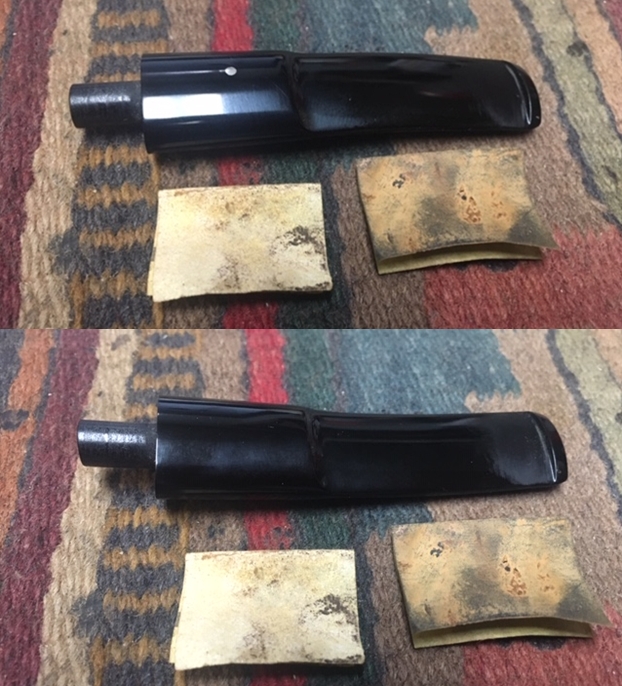
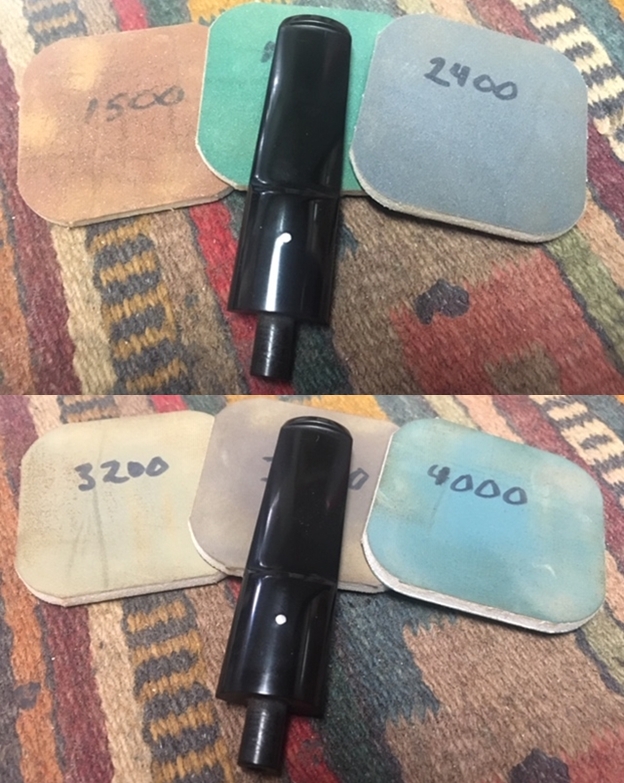
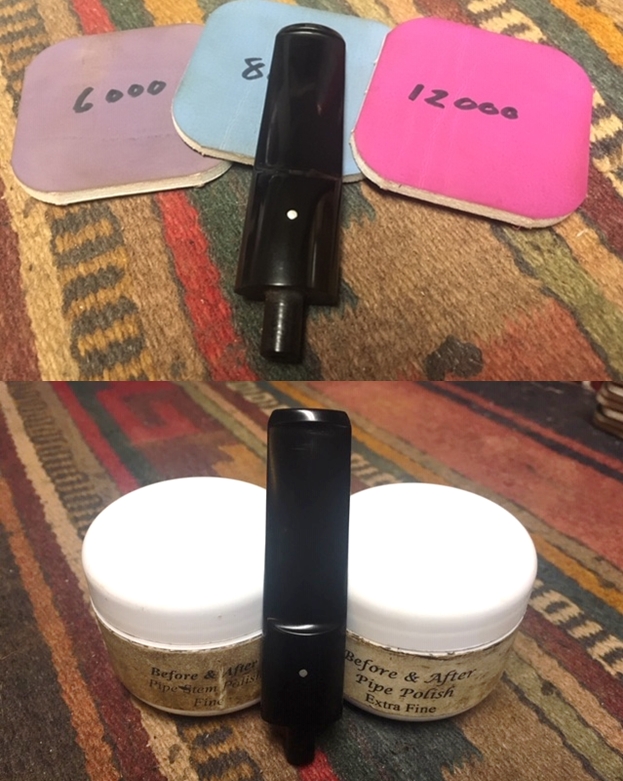
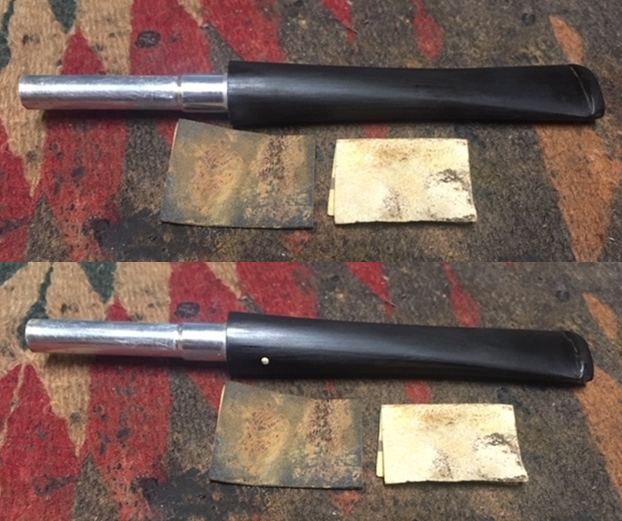
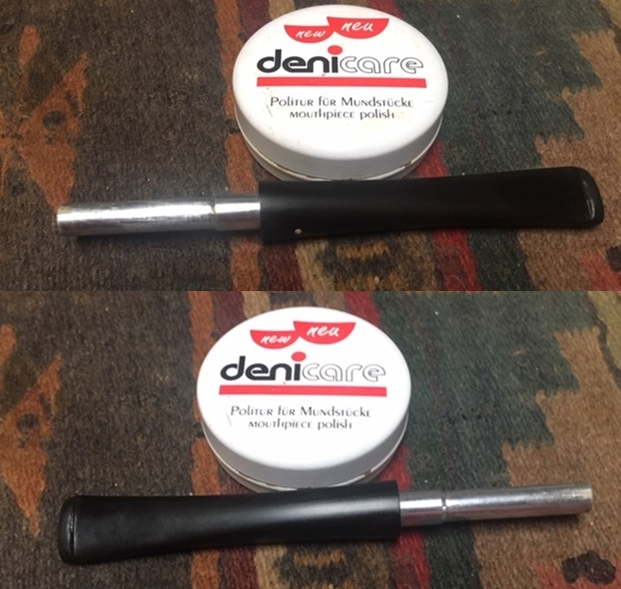
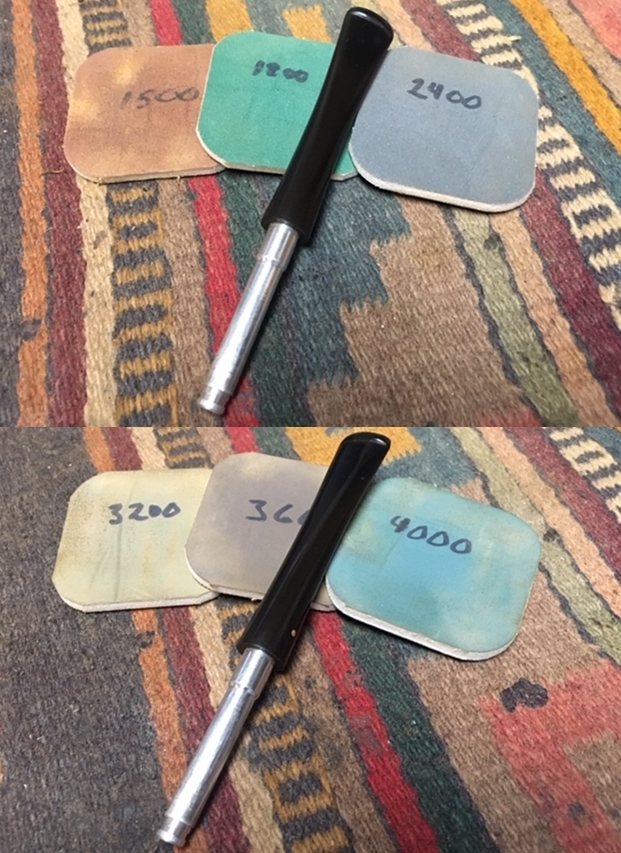
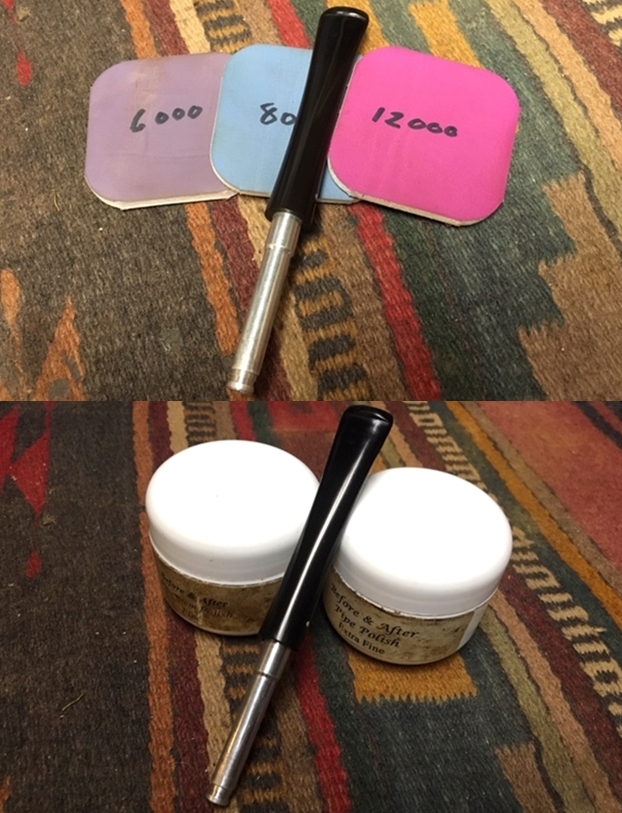
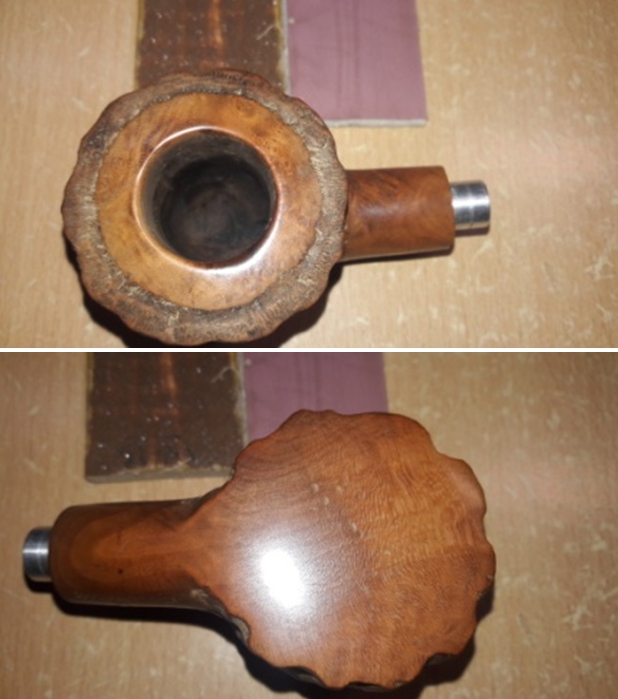
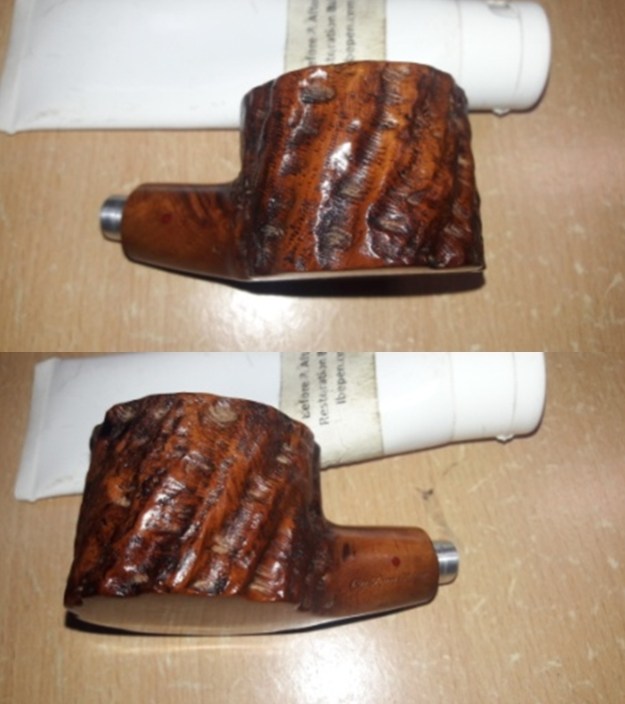
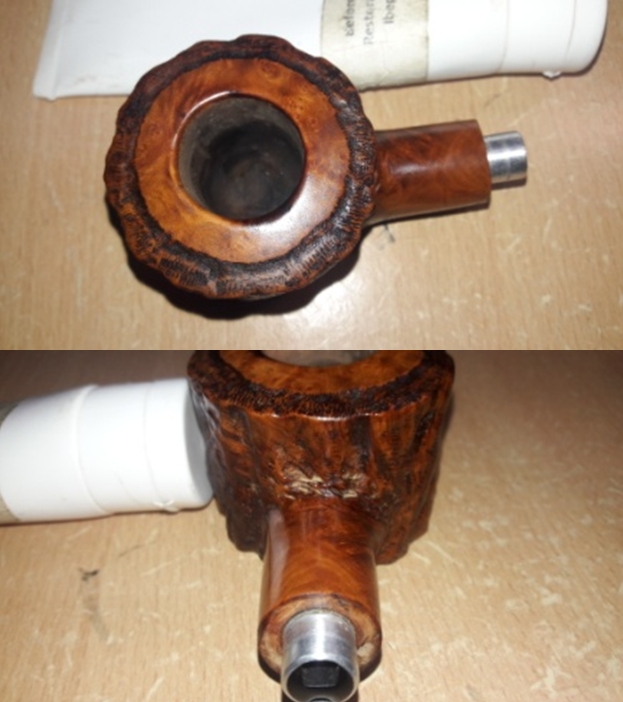
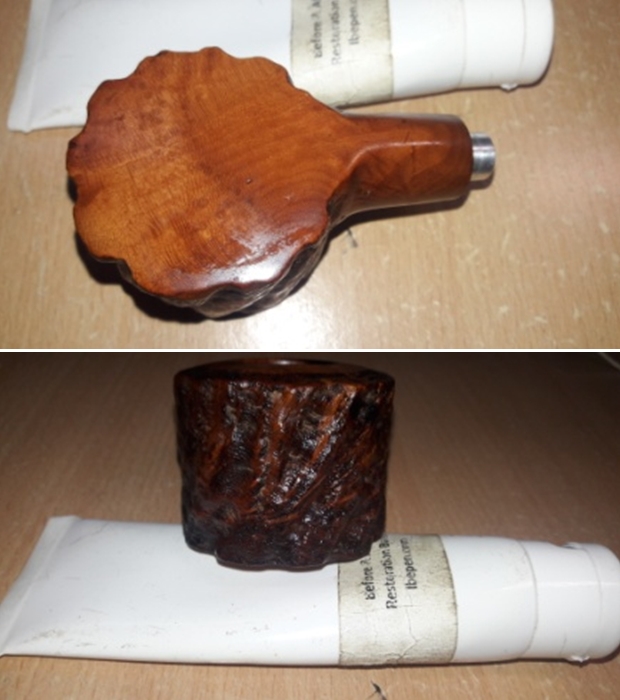
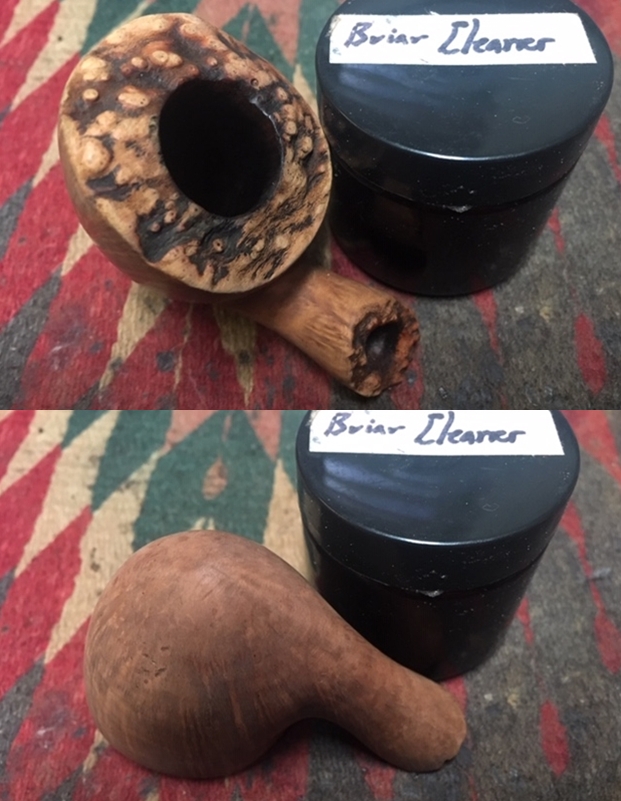
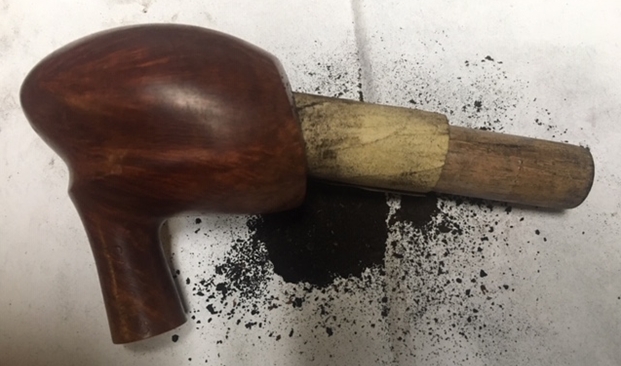
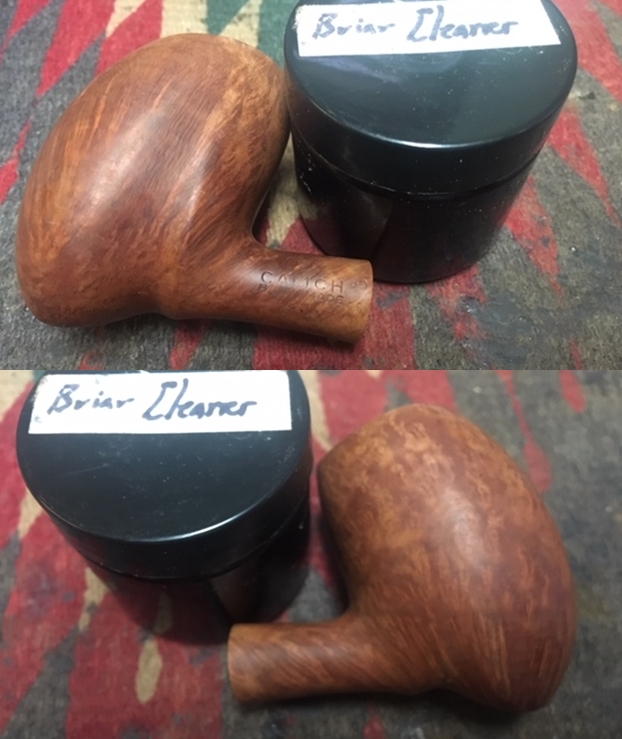
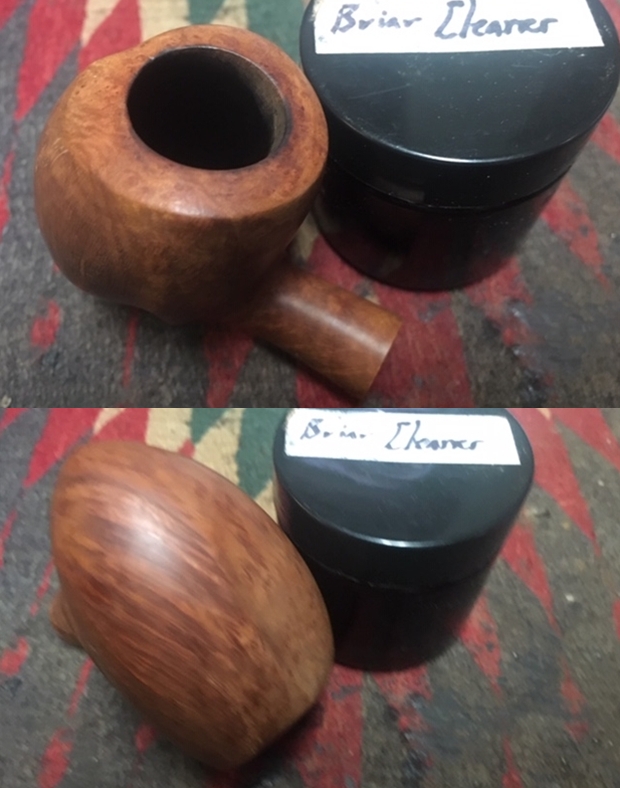
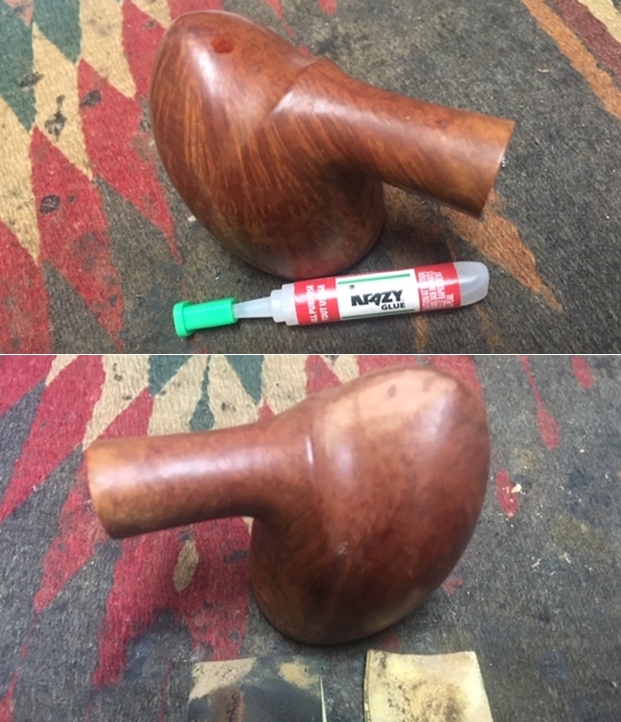
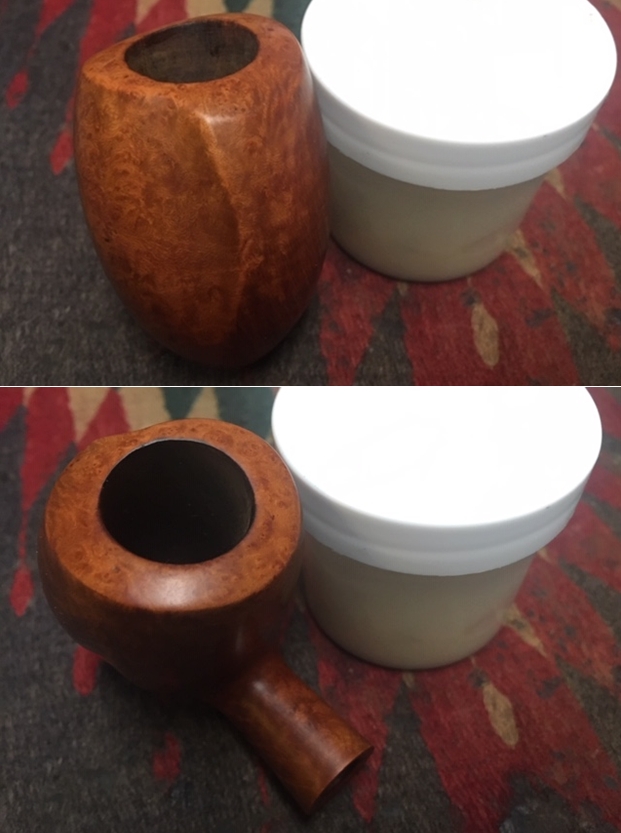
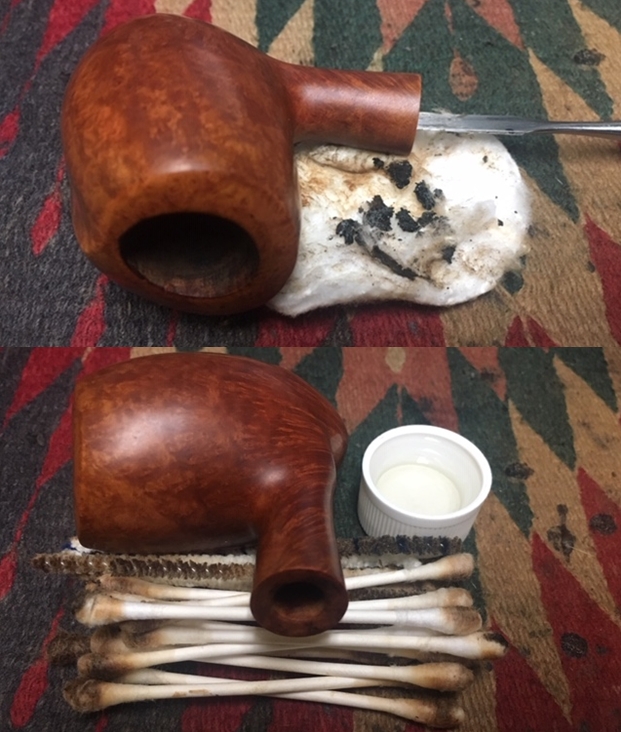
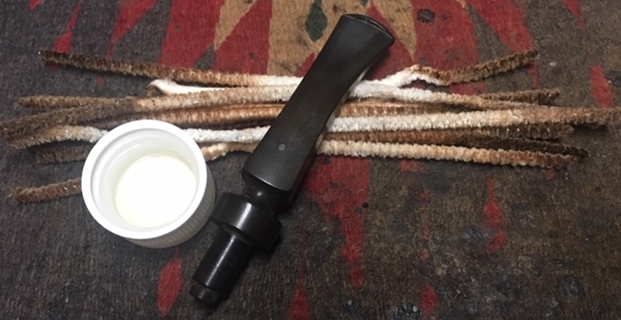
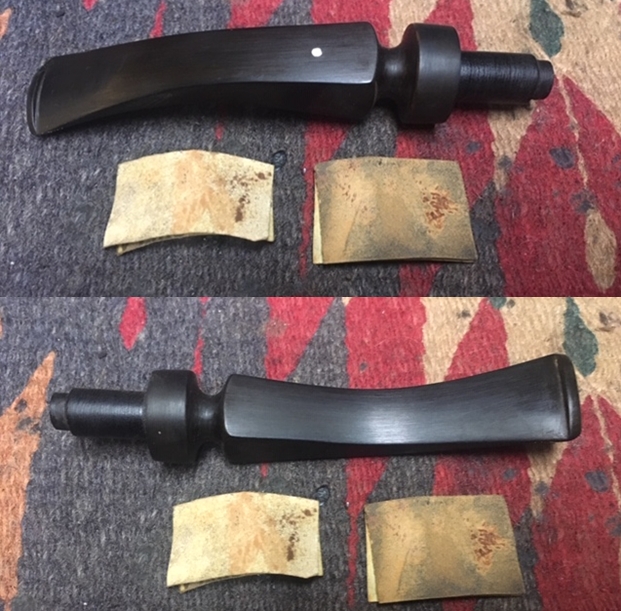
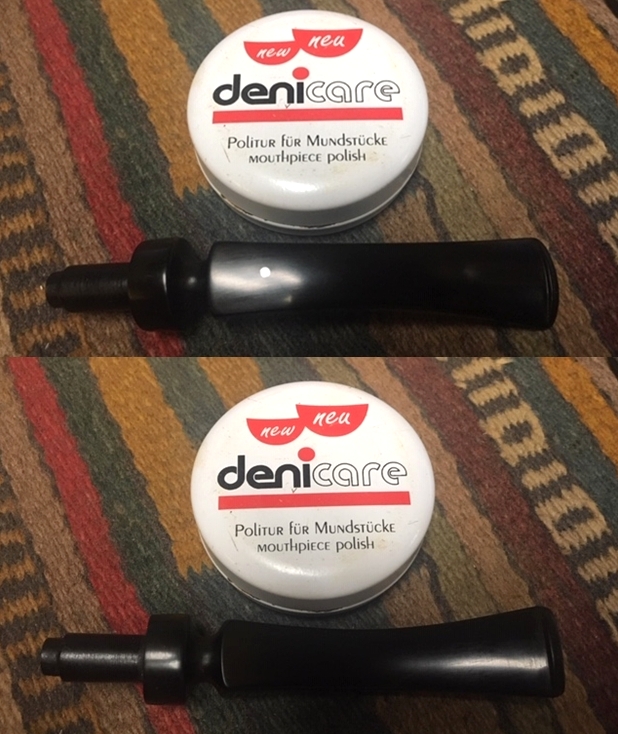
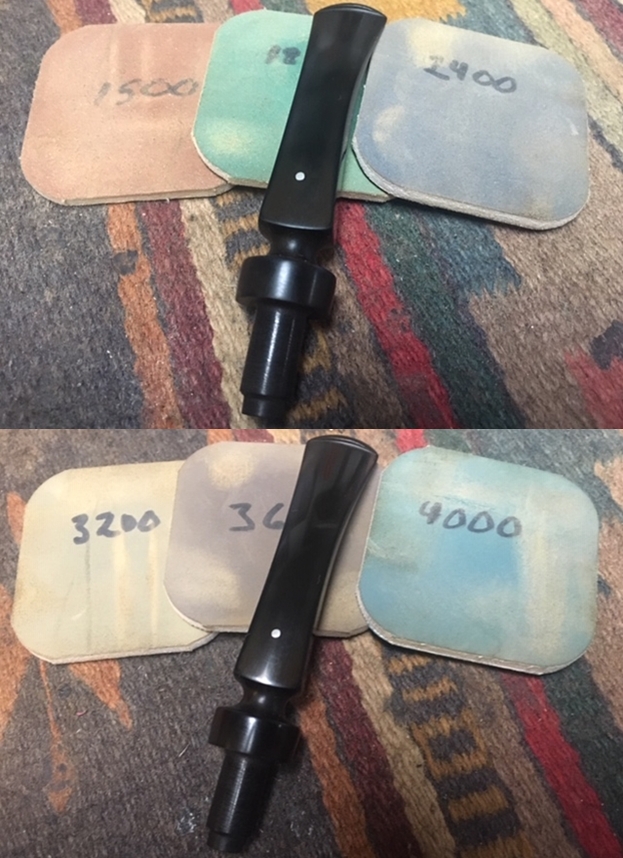
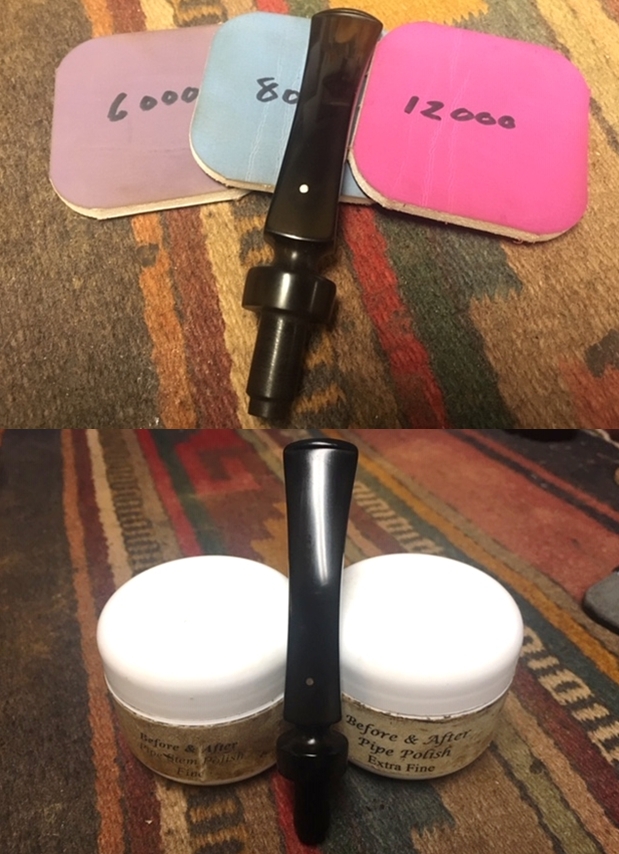
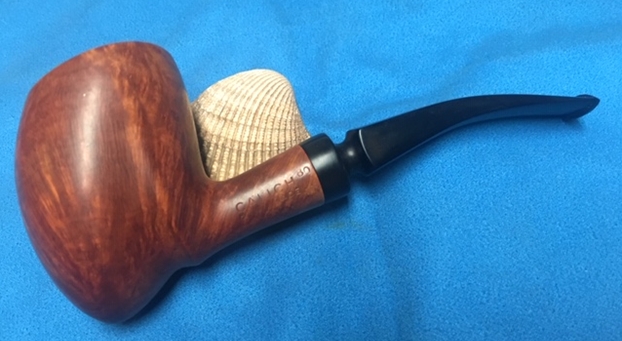
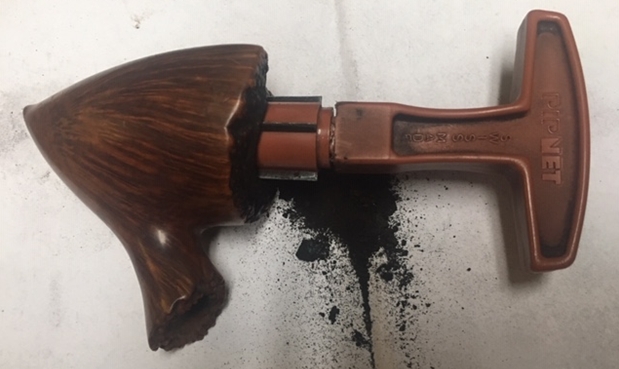
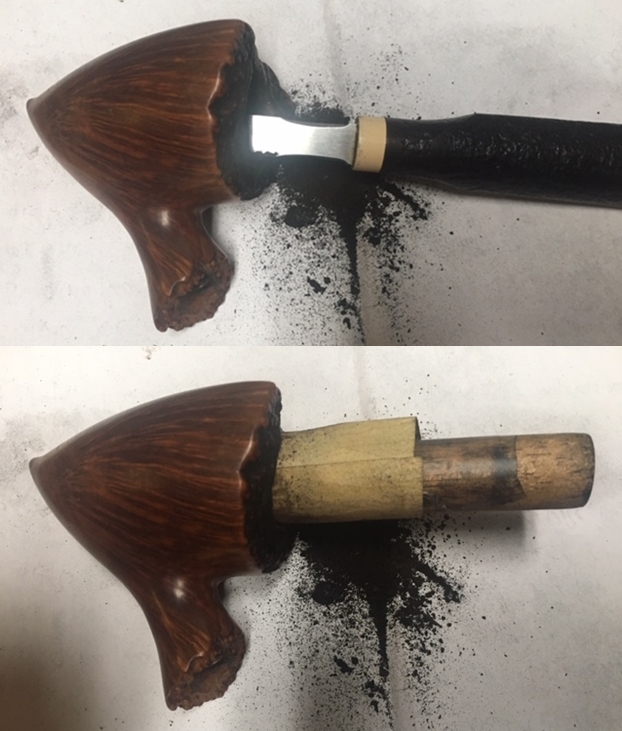
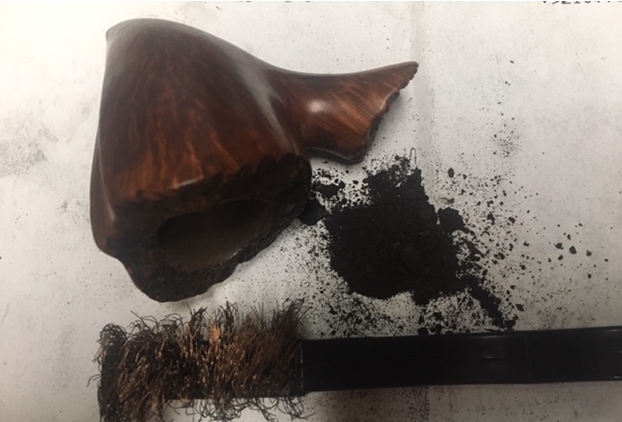
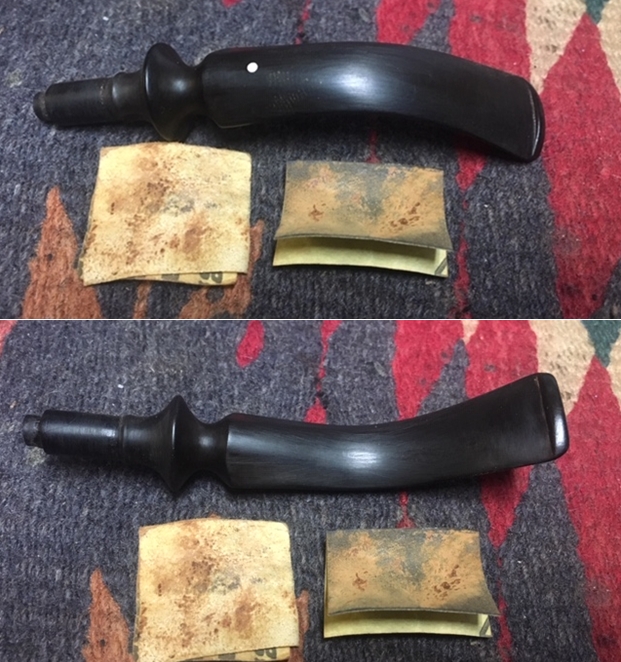
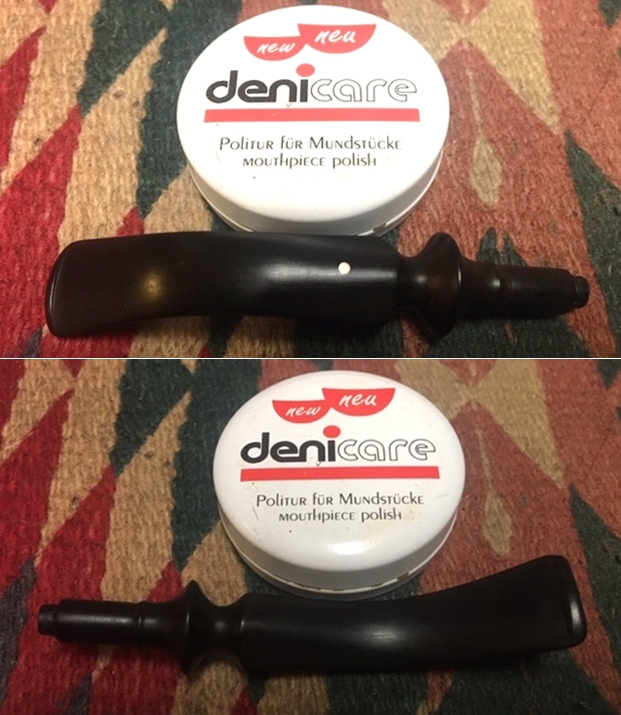
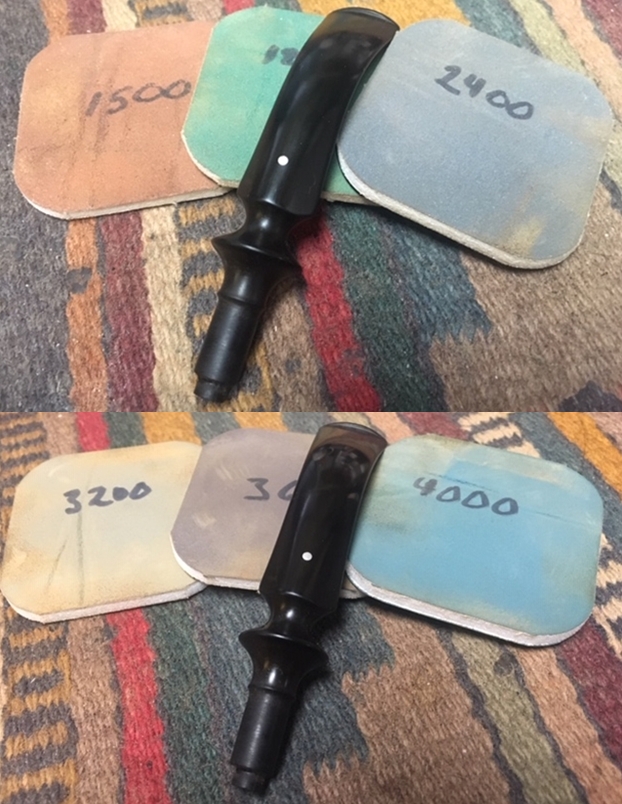
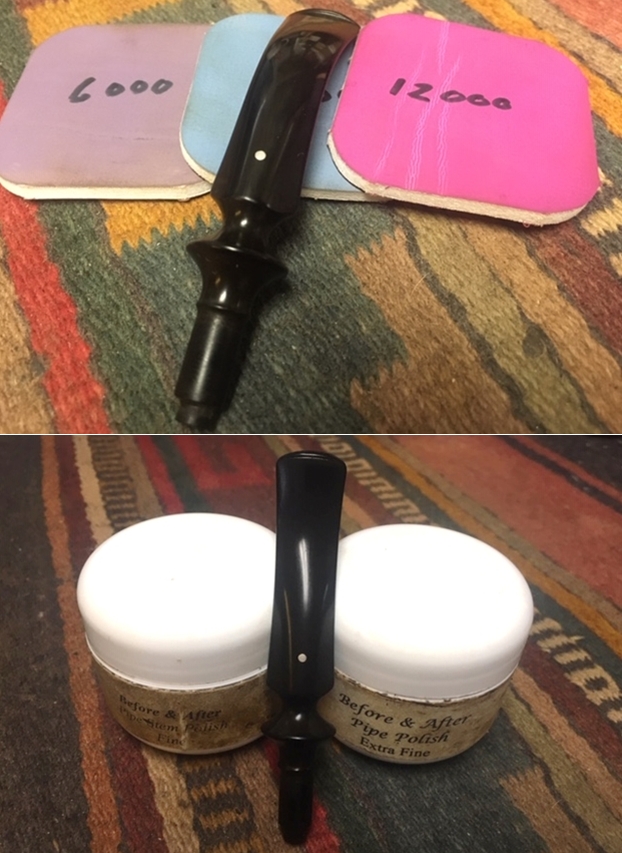
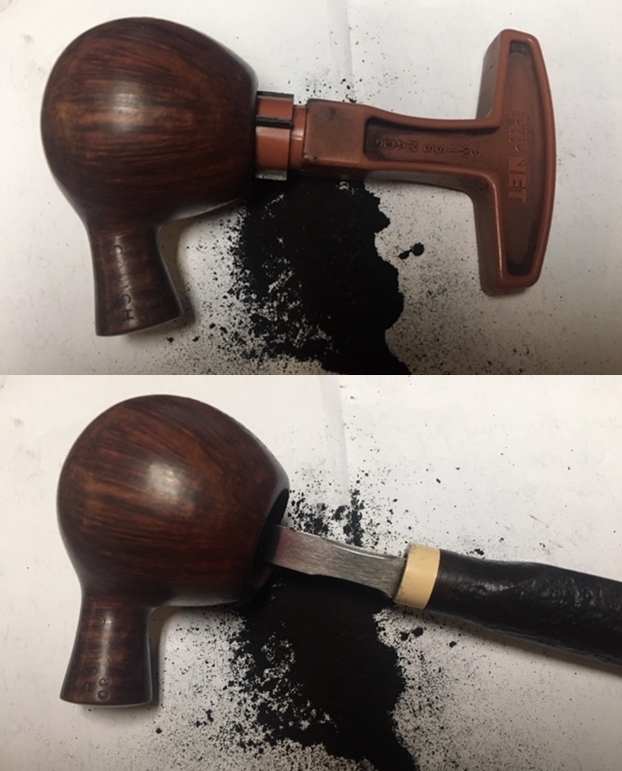
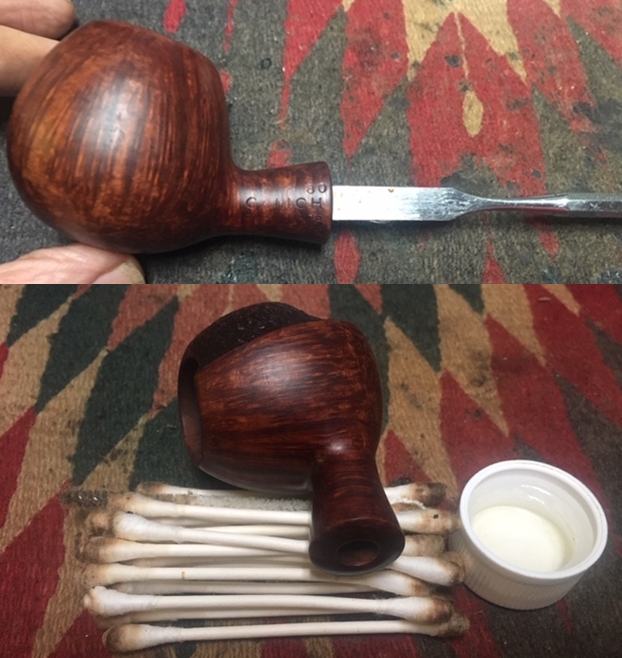
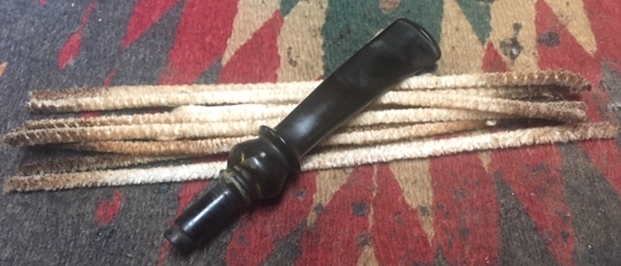
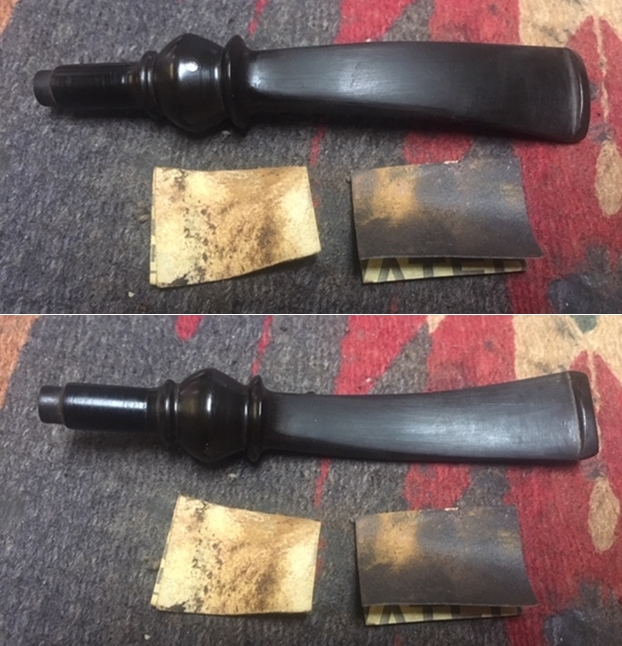
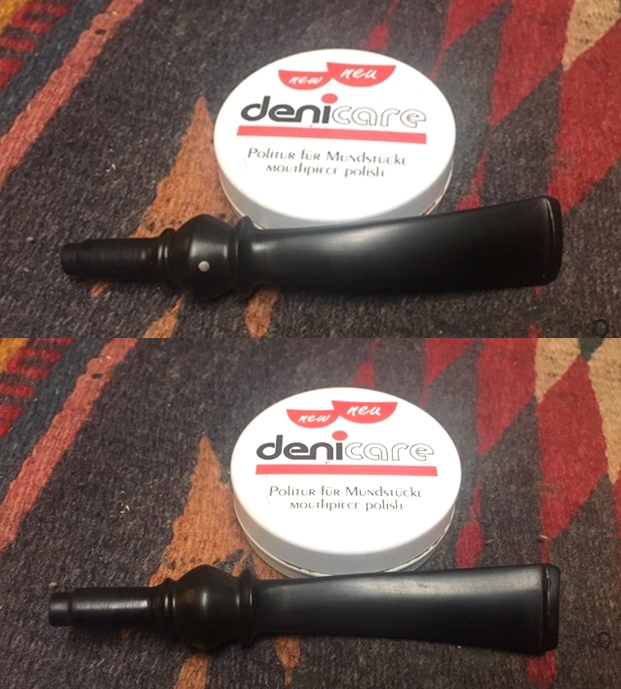
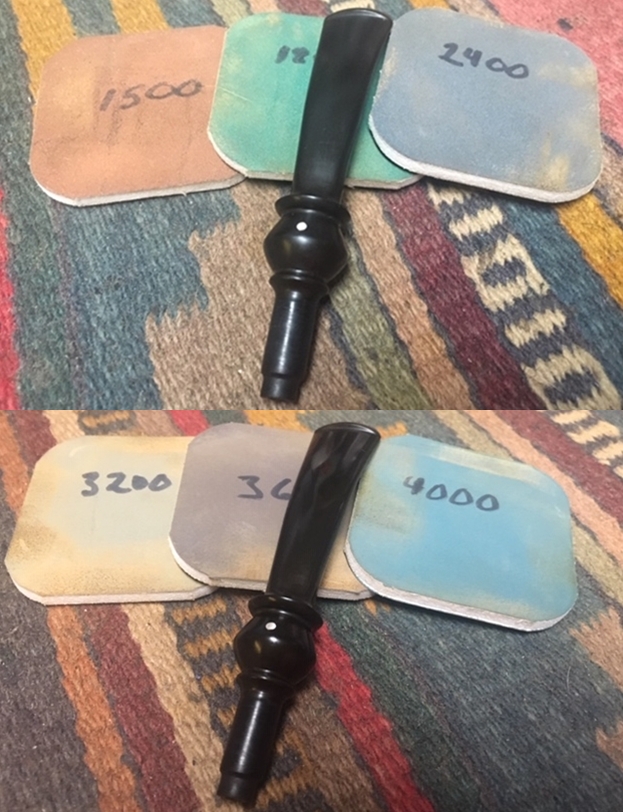
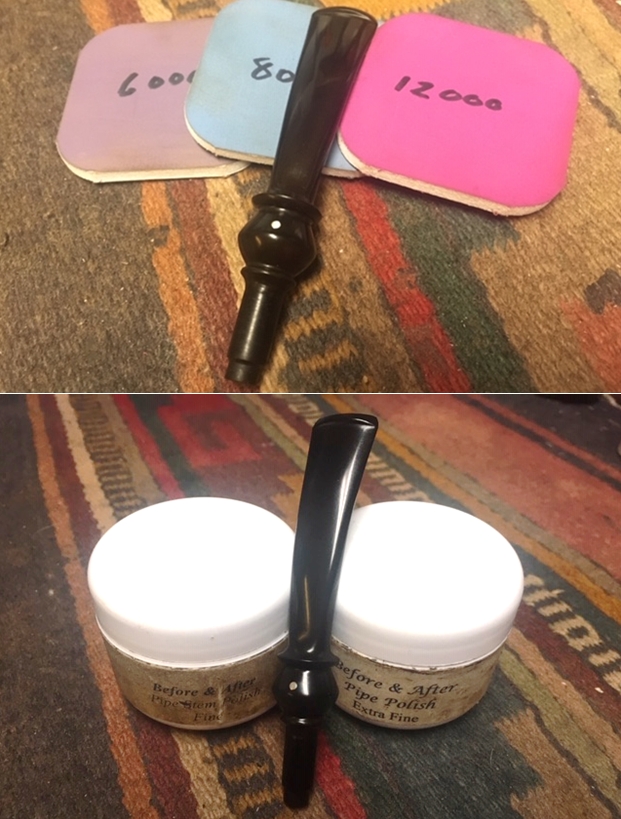
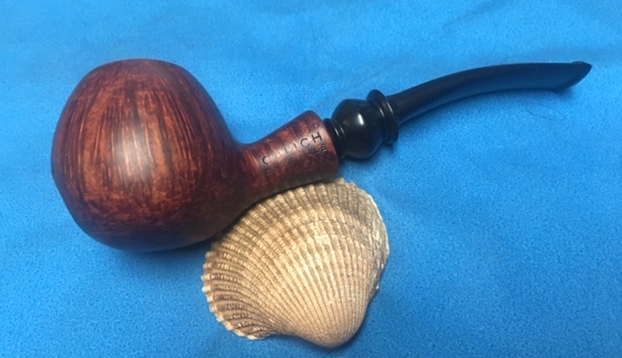
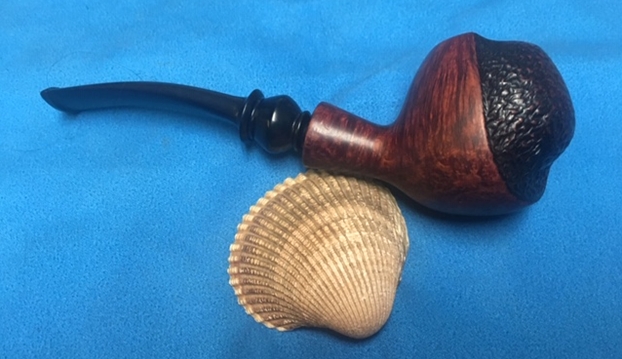
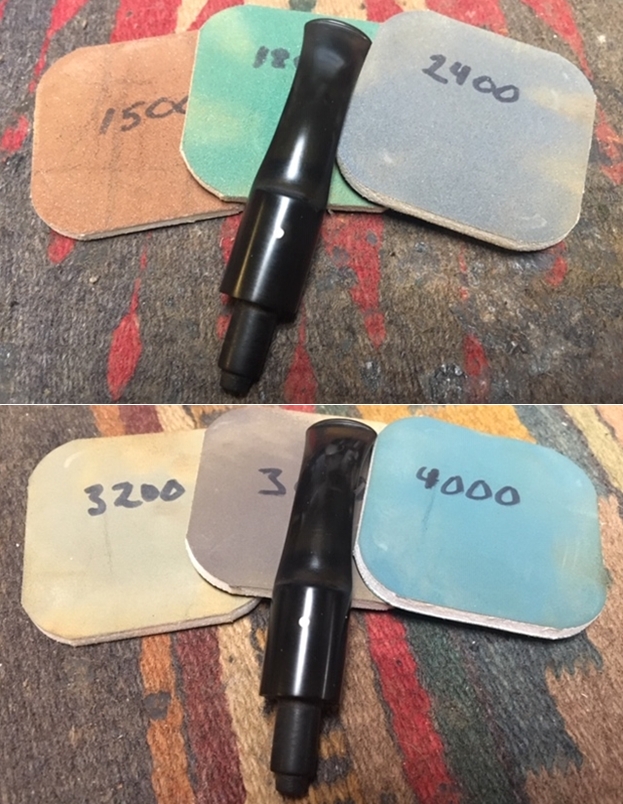
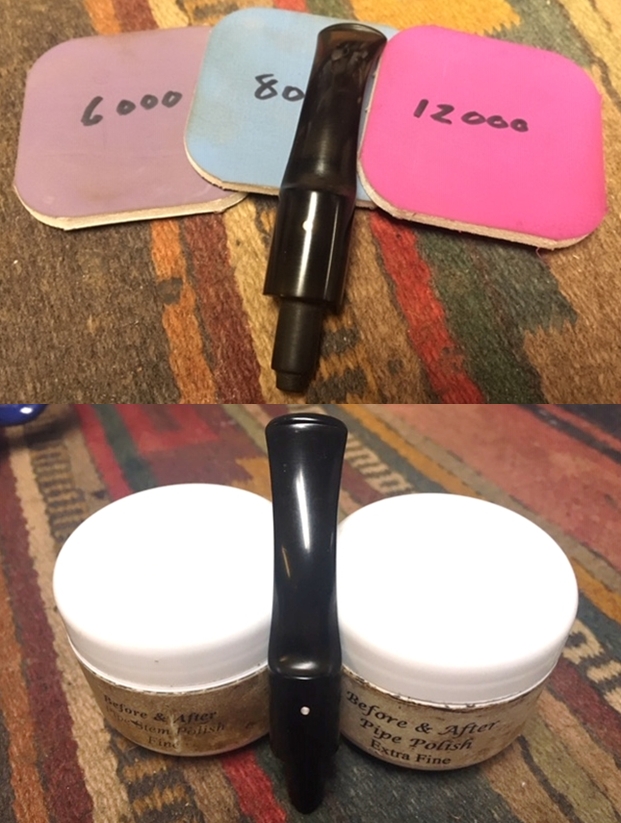
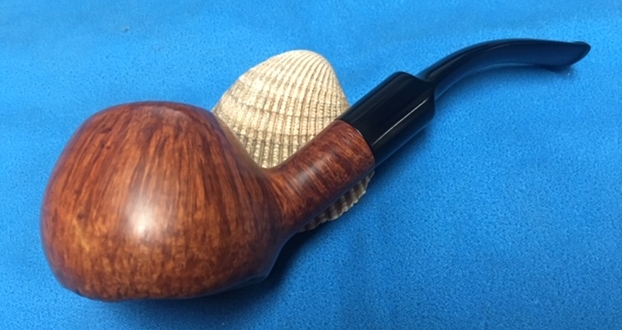
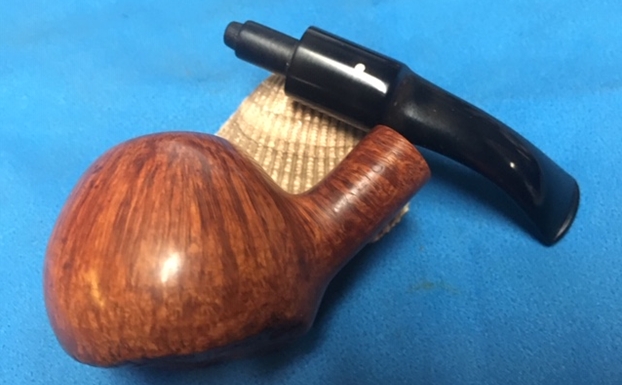
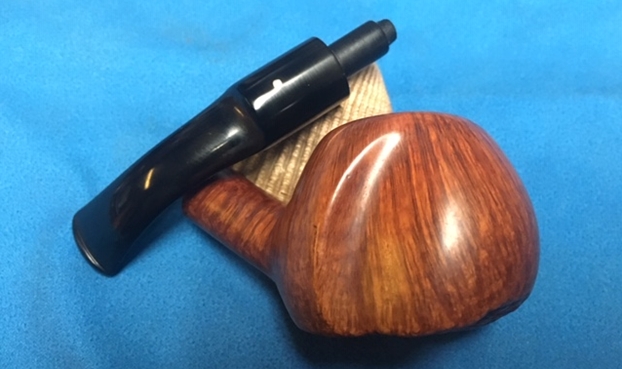
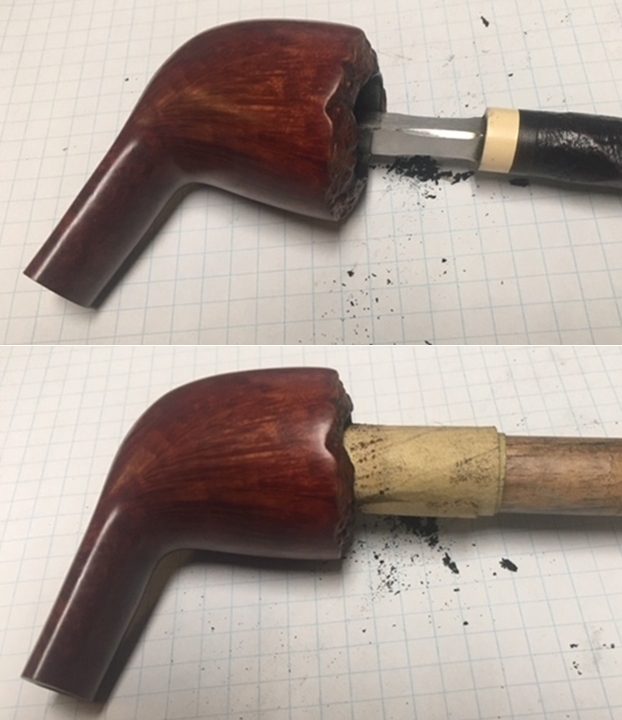
Armed with the facts that I am dealing with a 1988 pipe made by one of my favourite Canadian pipe makers it was time to get back to work on the pipe. I reamed the bowl with a Savinelli Fitsall Pipe Knife to scrape back the cake to briar. I finished my cleanup of the walls by sanding it with 220 grit sandpaper wrapped around a piece of dowel.   I scrubbed the briar with Before & After Briar Cleaner and rinsed it off with warm running water. I scrubbed the rim top with a tooth brush and warm running water at the same time. I dried the bowl off with a soft microfiber cloth and gave it a light buffing. The photos show the cleaned briar and the grain is really beginning to pop. John once again really followed the grain on the shaping of this pipe.  I worked on the internals. I scraped the inside of the mortise with a dental spatula to remove the hardened tars and oils that lined the walls of the shank. Once I had that done I cleaned out the airway to the bowl, the mortise and the airway in the stem with pipe cleaners, cotton swabs and alcohol. When I finished the pipe smelled very clean. I rubbed the bowl down with Before & After Restoration Balm. I worked it into the surface of the briar with my fingertips to clean, enliven and protect it. I let the balm sit for a little while and then buffed with a cotton cloth to raise the shine. Mark Hoover’s Balm is a product that I have come to appreciate and one I use on every pipe I have been working on.   I set the bowl aside and turned my attention to the stem. I sanded the stem with 220 grit sandpaper to smooth out the tooth chatter and marks on both sides at the button. I started the polishing with 400 grit wet dry sandpaper to remove the scratching. It is starting to look good.  I polished the stem with micromesh sanding pads – wet sanding with 1500-12000 grit pads. I wiped the stem down after each sanding pad with Obsidian Oil. I polished it with Before & After Pipe Stem Polish – both Fine and Extra Fine. Once I had finished the polishing I gave it final coat of oil and set it aside to dry.     Alex’s Calich is a similar style to the pipes from Ken’s Estate that I worked on. It is a beautifully grained Canted Dublin Hand Made with an oval shank and saddle stem. It has the kind of beauty I have come to expect from John’s pipes with plateau on the rim top and the fluted front and right side of the bowl. I am excited to be on the homestretch with this. This is the part I look forward to when each pipe comes back together, polished and waxed. I put the bowl and stem back together. I polished the bowl and stem with Blue Diamond to polish out the scratches in the briar and the vulcanite. I gave the bowl and the stem multiple coats of carnauba wax. I buffed the pipe with a clean buffing pad to raise the shine. I hand buffed it with a microfiber cloth to deepen the shine. The pipe polished up pretty nicely. The straight and flame grain on the sides of the bowl and birdseye and swirled grain on the front and back side of the bowl is quite stunning. The plateau on the rim top was originally natural though had been darkened over time. The polished smooth finish look really good with the black vulcanite. This Calich Hand Made was another fun pipe to bring back to life. The medium brown finish and the plateau rim top makes this Canted Dublin pipe look attractive. It is another comfortable pipe to hold in the hand. The finished pipe is shown in the photos below. The dimensions of the pipe are Length: 5 ½ inches, Height: 2 inches, Outside diameter of the bowl: 1 ¾ inch, Chamber diameter: ¾ of an inch. Thanks for reading this blog and my reflections on the pipe while I worked on it. This is entire estate was interesting to bring back to life.

Restoring a Patent Era Brigham 1 Dot Dublin Ken Bennett’s Estate


Blog by Steve Laug

Early in August I received an email from an interesting woman on Vancouver Island regarding some pipes that she had for sale. She was looking to sell the pipes from her late husband Ken and one from her Great Grandfather. Here is her email:

I have 5 John Calich pipes that date from 1979 to 1981. One is graded 11 and the other four are graded 12. I had bought them as Christmas and birthday gifts for my late husband. He was a very light smoker for a 3 year period.

I am a wood sculptor and always admired the grain and shapes of John’s best pipes. John was a friend as well. We exhibited at many exhibitions together for over 25 years.

I am wondering if you can provide any information on how I might be able to sell them.

Thanks you for any help you might be able to provide

I wrote her back and told I was very interested in the pipes that she had for sale and asked her to send me some photos of the lot. She quickly did just that and we struck a deal. I paid her through an e-transfer and the pipes were on their way to me. They arrived quite quickly and when they did I opened the box and found she had added three more pipes – a Brigham, a Dr. Plumb and a WDC Milano.

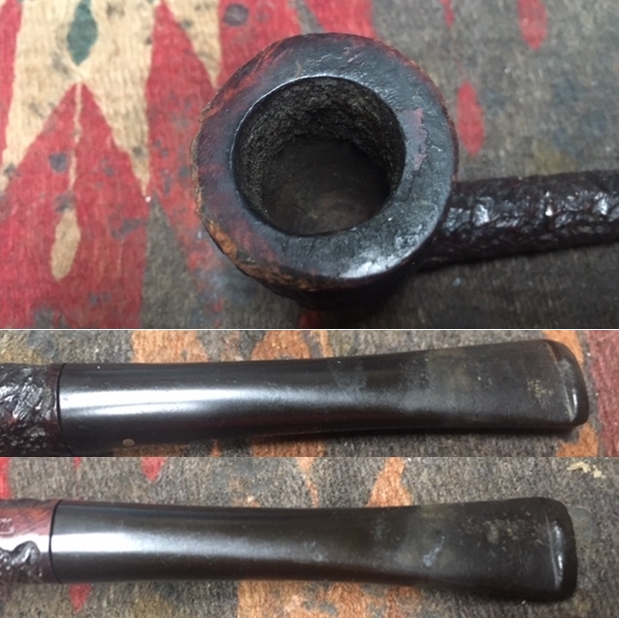
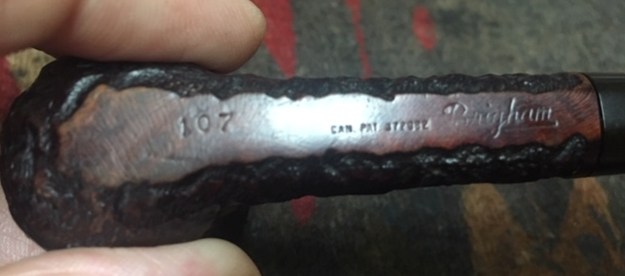
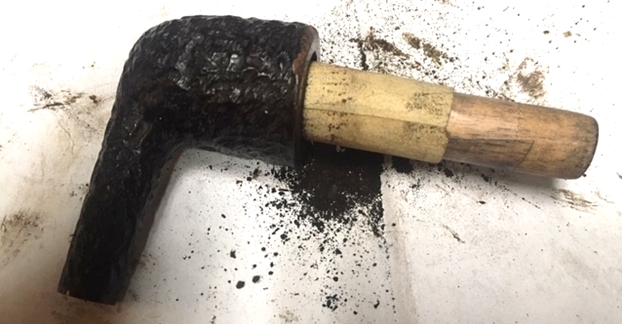
I finished the restoration of all the pipes in the box of Calich pipes and the BBB Calabash that Pat had sent. She had included a Brigham as noted above. This Brigham Dublin one dot pipe was a classic Brigham shape and rusticated finish. The rim top was dirty and pretty beat up. There were nicks out of the outer edge of the rim around the bowl. The front outer edge was rough from knocking the pipe out again hard surfaces. The rusticated finish was in decent condition. The bowl had a cake in it and there was a lava overflow onto the rim top and darkening the finish. The inner edge of the bowl looked to be in excellent condition under the lava. The stamping on the underside of the shank was very clear and read Shape 107 on the heel of the bowl followed by Can. Pat. 372982 on the smooth panel on the shank. That was followed by Brigham. There is a long tail coming from the “m” curving under the Brigham stamp. The stem was lightly oxidized as was the single metal dot on the side of the taper. There was oxidation and light tooth chatter on both sides of the stem on both sides near the button. The shank and stem were dirty inside. The tenon was the Brigham metal system that held the hard rock maple filter. It did not look like it had ever been changed. I took a photo of the bowl and rim top to show the damage on the front left outer edge of the bowl, the cake in the bowl and the lava build up on the rim top and inner edge of the rim top. It is quite thick and darkens the natural finish of the rim top. The cake was thick and hard but hopefully it had protected the rim and edges from damage. Otherwise it looks pretty good. I also took photos of the stem to show the oxidation on both sides, damage to the button and the light tooth chatter on both sides near the button. I took a photo of the underside of the shank to show the condition of the stamping. You can see the clear stamping reading as noted above.I wrote to Pat and asked her if she would be willing to write short remembrance of her late husband and her Great Grandfather. She wrote that she would be happy to write about them both. Here are Pat’s words:
I’d like you know that Ken was an incredibly talented and creative man with a smile and blue eyes that could light up a room. His laugh was pure magic. He could think outside the box and come up with an elegant solution to any problem…

Pat sent me this reflection on her husband Ken’s life. Thanks Pat for taking time to do this. I find that it gives another dimension to the pipes that I restore to know a bit about the previous pipeman. Pat and Ken were artists (Pat still is a Sculptural Weaver) and it was this that connected them to each other and to John Calich. Here are Pat’s words.

Here is the write up for Ken. We meet in University and it was love at first sight. I consider myself blessed to have shared a life together for 37 years.

Ken graduated from Ryerson University with Bachelor of Applied Arts in Design in 1975.

Ken lived his life with joy.  Each day was a leap of faith in the creative process. His smile would light up the room and the hearts of the people he loved.

He combined the skilled hands of a master craftsman, with the problem solving mind of an engineer, and the heart and soul of an artist. He used his talents to create unique and innovative wood sculptures. Using precious hardwoods, he incorporated the techniques of multiple lamination and three dimensional contouring to create sculptural pieces that captivate the eye and entice the hand to explore.

His career was highlighted by numerous corporate commissions, awards and public recognition in Canada and abroad.

A quote from Frank Lloyd Wright sums up Ken’s approach to design.  “Form follows function – that has been misunderstood. Form and function should be joined as one in a spiritual union.” 

A friendship with John Calich developed over years of exhibiting their work at exhibitions. How could a wood sculptor resist some of John’s finest creations…

I wrote Charles Lemon to get some background information on the pipe. Charles knows Brigham pipes like no one else I know besides he is a great guy. Here is his response

Nice find! The stamps are really nice & clear on that one.

Date-wise, this pipe was made between 1938 and 1955 while the patent for the Brigham System was in force, thus the CAN PAT #. The underlined script logo is another indication of age – that logo was phased out sometime in the early 60s.

Shapes 05, 06 & 07 are classic Straight Dublin shapes from the earliest Brigham lineup, with Shape 05 being the smallest and 07 the largest. There are also Bent Dublin shapes but they are much higher shape numbers and presumably were added to the lineup perhaps decades later.

Hope that helps! Ironically, I was looking at the shape chart just today with an eye to doing an update, so most of this was top of mind! — Charles

I summarize the dating information from Charles now: The pipe is an older one with a Canadian Patent Number. That and the underlined script logo date it between 1938 and 1955. The shape 107 refers to the largest of the classic Straight Dublin pipes in the Brigham line up.

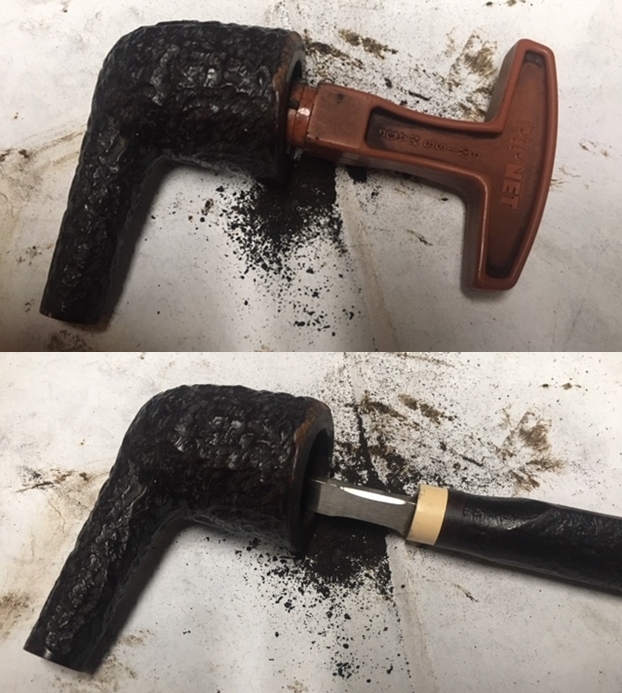
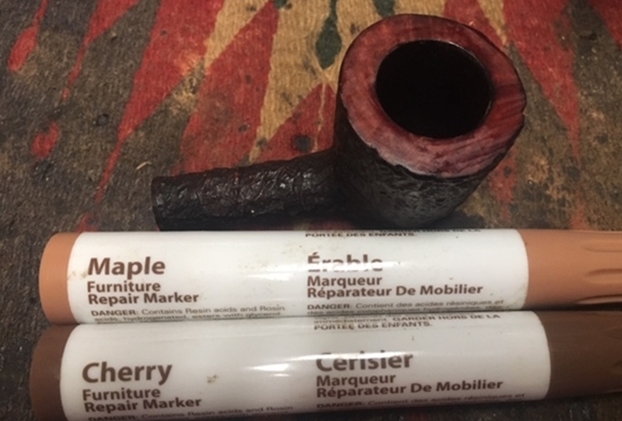
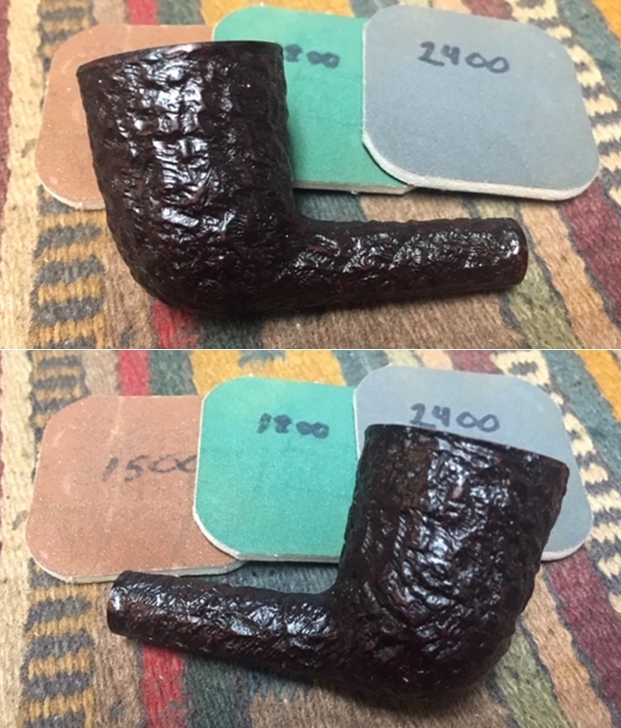
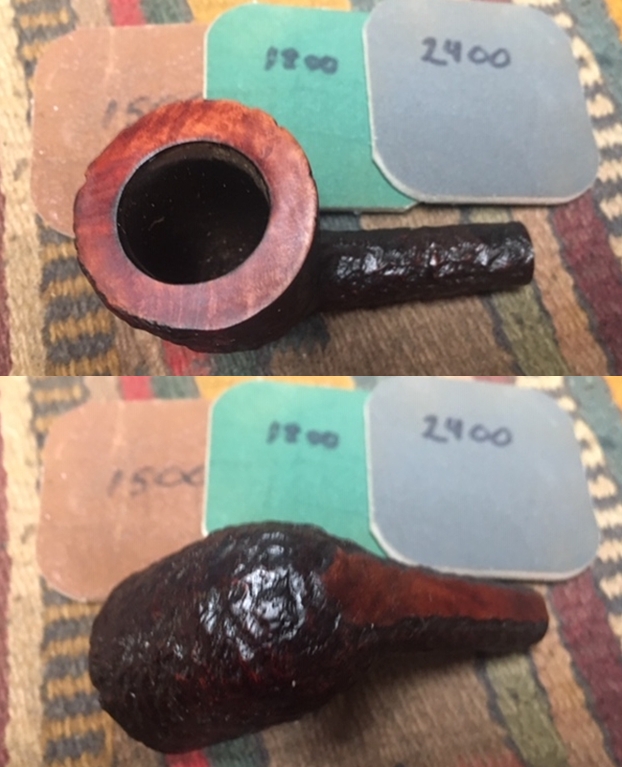
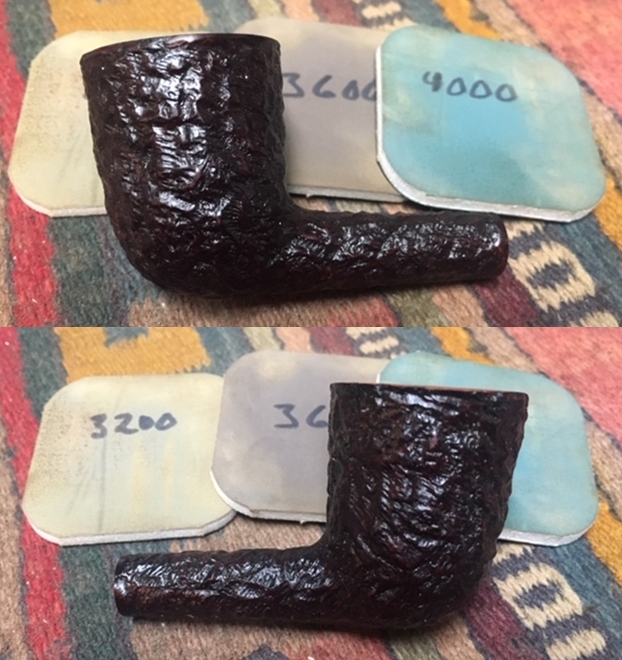
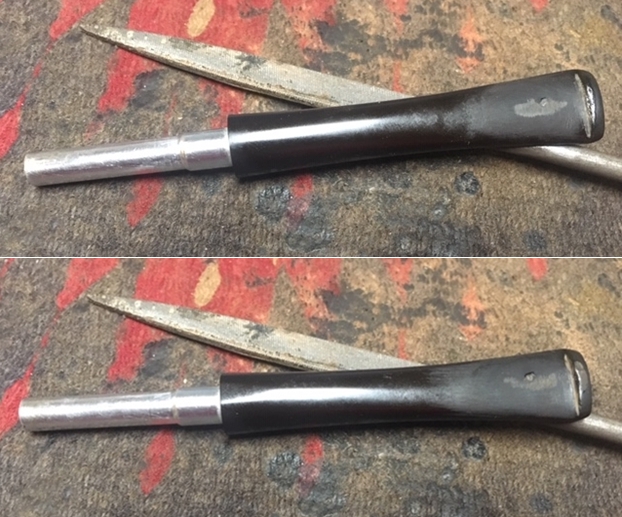
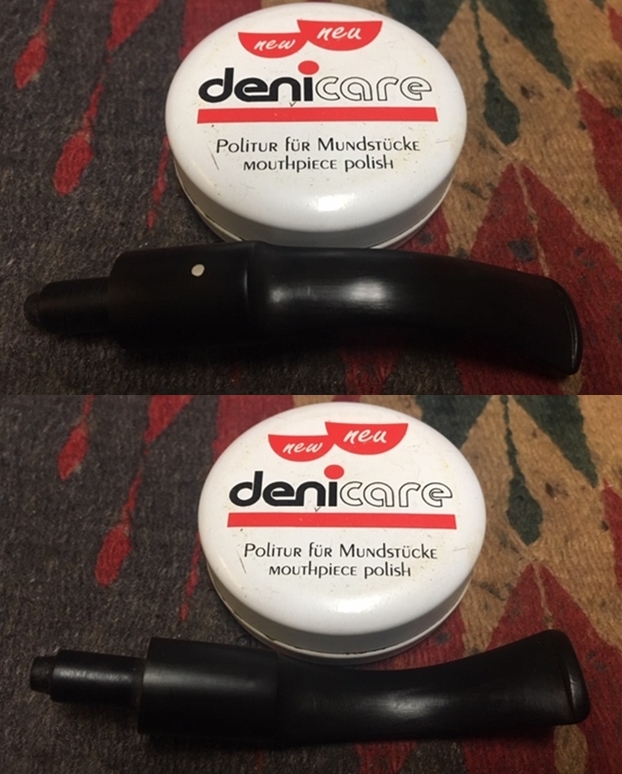
Armed with Pat’s stories of John and her husband Ken and the information from Charles on the background of the pipe it was time to work on the pipe. I reamed the bowl with a PipNet Pipe reamer using the third cutting head. I took the cake back to bare briar so that I could check out the inside walls. I used a Savinelli Fitsall Pipe Knife to scrape back the remaining cake. I finished my cleanup of the walls by sanding it with 220 grit sandpaper wrapped around a piece of dowel.       I scraped the rim top lava with the edge of the Savinelli Fitsall Pipe Knife. I was able to remove much of the lava. It also helped me to see the damage to the front edge better. It really was a mess.I scrubbed the briar with Before & After Briar Cleaner and rinsed it off with warm running water. I scrubbed the rim top with a tooth brush and warm running water at the same time. I dried the bowl off with a soft microfiber cloth and gave it a light buffing. The photos show the cleaned briar and the damaged areas are very clear.   Once the rim top was clean I could see the extent of the damage to the surface of the rim. The damage was quite extensive and gave the rim the appearance of being out of round. There was also a downward slant to the front edge of the bowl. I topped it on a topping board with 220 grit sandpaper. I worked to flatten out the profile of the rim. I polished the rim surface with 1500-2400 grit micromesh sanding pads. I wiped the top down with alcohol on a cotton pad. I restained it to match the rest of the bowl with three different stain pens – Walnut, Maple and Mahogany. I polished the rim top with micromesh sanding pads – wet sanding with 1500-12000 grit sanding pads. I wiped it down with a damp cloth after each pad. I rubbed the bowl and rim top down with Before & After Restoration Balm. I worked it into the surface of the briar with my fingertips and a horsehair shoe brush to clean, enliven and protect it. I let the balm sit for a little while and then buffed with a cotton cloth to raise the shine. Mark Hoover’s Balm is a product that I have come to appreciate and one I use on every pipe I have been working on.     I rubbed the bowl and rim down with Conservator’s Wax and buffed the bowl with a shoe brush. I worked on the internals. I scraped the inside of the mortise with a dental spatula to remove the hardened tars and oils that lined the walls of the metal shank. Once I had that done I cleaned out the airway to the bowl, the mortise and the airway in the stem with pipe cleaners, cotton swabs and alcohol. When I finished the pipe smelled very clean.Before I cleaned the shank I removed the hard rock maple filter. I took a new filter out of the box and set it aside for use once I finished the clean up.I wiped down the surface of the vulcanite stem with alcohol. I filled in the deep tooth marks with clear super glue.Once the repairs had cured I used a needle file to reshape and recut the edge of the button and flatten the repaired area.   I sanded the stem with 220 grit sandpaper to break up the oxidation. I started the polishing with 400 grit wet dry sandpaper to remove the scratching. It is starting to look good.I have one more tin of Denicare Mouthpiece Polish left from a few that I have picked up over the years. It is a coarse red pasted that serves to help remove oxidation. I polished the stem with that to further smooth out the surface of the vulcanite (and to be honest – to use it up).  I polished the stem with micromesh sanding pads – wet sanding with 1500-12000 grit pads. I wiped the stem down after each sanding pad with Obsidian Oil. I polished it with Before & After Pipe Stem Polish – both Fine and Extra Fine. Once I had finished the polishing I gave it final coat of oil and set it aside to dry.     This is the sixth and final pipe that I am restoring from Ken’s Estate. It is another a classic Brigham Patent era Large Dublin shaped 107. With the completion of this Brigham I am on the homestretch with Ken’s estate. This is the part I look forward to when each pipe comes back together, polished and waxed. I put the bowl and stem back together. I polished the bowl and stem with Blue Diamond to polish out the scratches in the briar and the vulcanite. I gave the bowl and the stem multiple coats of carnauba wax. I buffed the pipe with a clean buffing pad to raise the shine. I hand buffed it with a microfiber cloth to deepen the shine. The pipe polished up pretty nicely. The classic Brigham rustication and smooth rim top is very nice. The smooth, refinished the rim top, polished and waxed rustication on the bowl look really good with the black vulcanite. This Brigham Patent Era Dublin was a fun and challenging pipe to bring back to life because of the damaged rim top. It is another comfortable pipe to hold in the hand. The finished pipe is shown in the photos below. The dimensions of the pipe are Length: 6 inches, Height: 1 ¾ inches, Outside diameter of the bowl: 1 3/8 inch, Chamber diameter: ¾ of an inch. Thanks for reading this blog and my reflections on the pipe while I worked on it. This entire estate was interesting to bring back to life.

Restoring a Second Custom-Bilt, a Large Billiard from My Inheritance


Blog by Paresh Deshpande

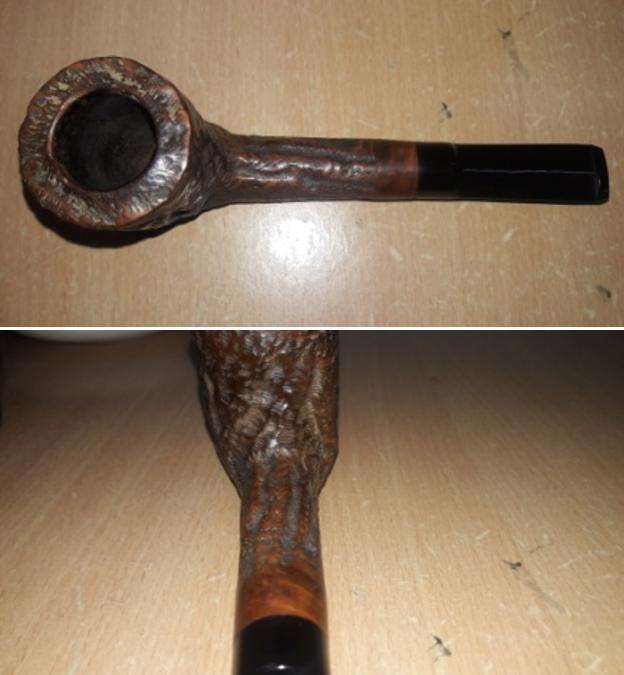
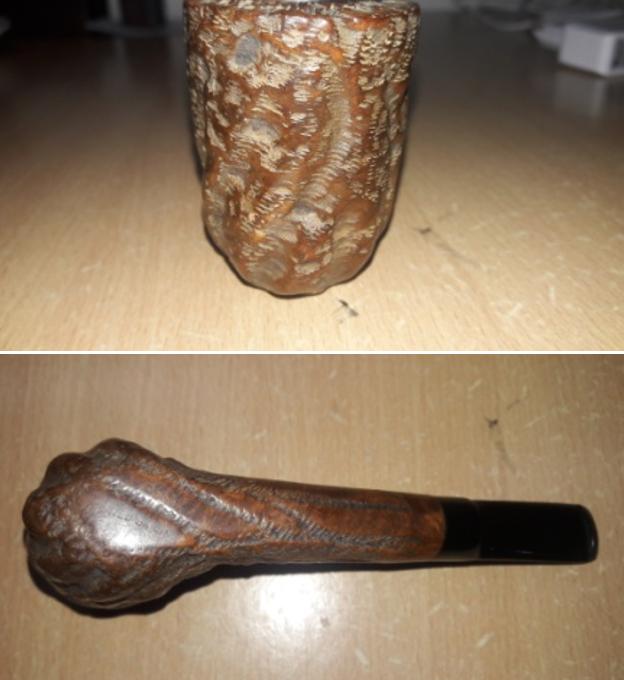
I have decided that I would now first complete all the Custom-Bilt pipes from my inheritance that I had got along with me to my place of work place and the remaining ones at my home town will be done later. I had professed my appreciation and liking for Custom-Bilt pipes for their large size, shape, hand feel and the rustic looks. The next pipe from the collection which I decided to work on was a huge Custom-Bilt briar pipe. The large size of the bowl, thick shank and large saddle stem, lends this pipe a weight which I particularly enjoy holding in my hand.

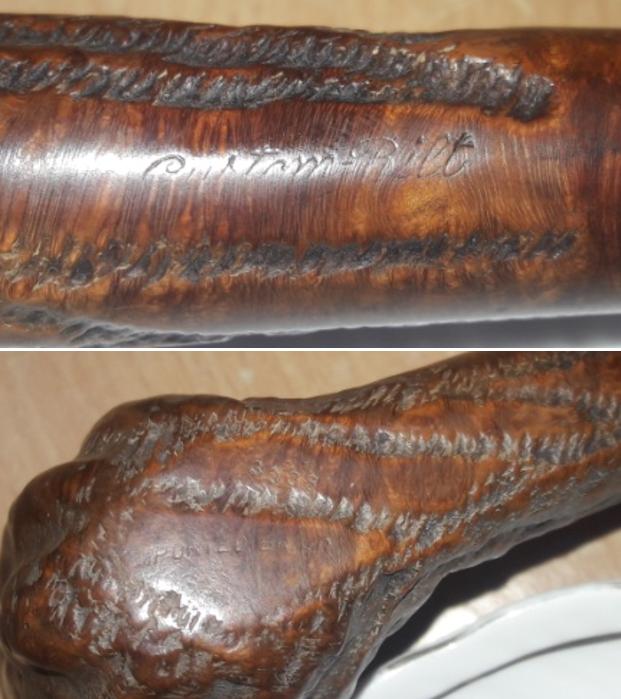
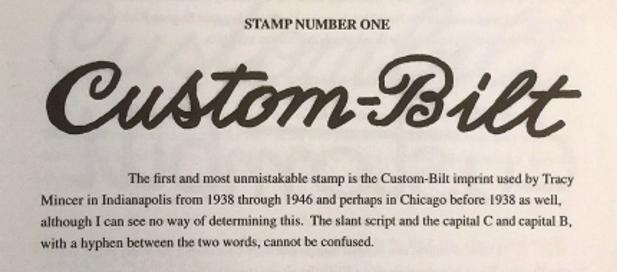
The pipe has deep and large vertical worm rustications along the entire length of the shank and height of the bowl. Within these large vertical rustications are very thin, closely stacked horizontal lines which give this pipe its unique appearance and are its trademark!! I absolutely love these pipes. These large rustications continue right up to the outer rim of the bowl. The thick rim top is covered with the same thin, closely stacked lines as seen between the vertical rustications. The worm rustications on the shank are much thin and precise as compared to the ones on the bowl and end about ¾ inch before the shank end giving a semblance of a shank end ring. These thin worm rustications can be seen at the foot of the stummel with smooth portions in between them. It is stamped on the left side of the shank as “Custom-Bilt” with a hyphen between the two words, in cursive hand. The “IMPORTED BRIAR”, a commonly observed stamp on these pipes, is seen in the smooth surface towards the front on the foot of the stummel followed by the number “3038” in the next portion towards the shank end.Having worked on a few Custom Bilt pipes in the past and researched this brand and based on the stampings seen on this pipe, I can say with an amount of certitude, that this pipe is from the period 1938-46. Here is the proof in determining the vintage based on stampings as researched by William E. Unger, Jr., PhD, which deals with the study of Custom-Bilt pipes.With this confirmation as regards to the vintage of this pipe, I move ahead with the initial visual inspection of this pipe.

INITIAL VISUAL INSPECTION
The pipe, as I received in the box, was carefully wrapped in a soft cotton cloth, stummel and stem separate!!! The condition of the stem and the stummel made me wonder if this pipe had been received after restoration/ repair work; it appears in such great condition. I thoroughly checked the entire pipe for any signs of repairs or damages. Fortunately there were none!! Only the stem appears brand new. Could it be a new replacement stem from an authorized store? No way to determine this as there are neither any receipts or documents nor any person in my family who could have confirmed this aspect.

The chamber has a thin layer of cake and does not appear to have been smoked much, may be a few bowls at the max. The condition of the inner walls of the chamber can be determined only after the cake has been completely reamed out down to the bare briar. The draught hole is dead center and at the bottom of the chamber. This should be a fantastic smoker. The thin worm rusticated rim top surface is covered in dust and grime all these years of storage. The outer and inner edges of the rim are in good condition with no damage. The craggy large vertical worm rustication with its horizontal thin line rustications within makes for a visual treat. The large vertical rustications are filled with dust and grime to such an extent that the horizontal lines lying within are barely visible. Same goes for the rim top. Though covered in dust and grime of all these years of storage, these should clean up nicely. I have seen an aluminum shank/ mortise extension fixed inside of the mortise on another very similarly sized and shaped Custom-Bilt from my Grandfather’s collection which I had restored about a year back!! This aluminum shank/ mortise extension (or should it be called a tenon?), was also seen on the previous Custom-Bilt Pot that I had restored just a couple of days back. However, this pipe has no such extension, just regular mortise and stem tenon construction. The mortise shows slight accumulation of oils and crud which has resulted in a slight gap between the stem and the shank end when seated. A thorough cleaning of the shank should address this issue. The wide straight saddle vulcanite stem is in pristine condition and seats with a slight gap in to the mortise with all the right noises. The tenon and the slot are also very clean. A polish with Blue diamond and coat of carnauba wax should suffice to deepen the shine on the stem. THE PROCESS
I started the restoration of this beautiful pipe by first reaming the chamber with my fabricated knife. I followed this reaming with sanding the chamber walls with a folded piece of 220 grit sand paper to completely remove any residual cake. This also helps to smooth the walls of the chamber. How I miss the help of Abha, my wife and Pavni, my youngest daughter who specializes in sanding the chamber walls to a smooth and even surface. I wiped the chamber with a cotton swab and alcohol to get rid of all the carbon dust and expose the bare briar of the chamber. As expected, the chamber is sans of any heat fissures/ lines. I followed up the cleaning of the chamber with that of the shank internals. With a bent dental spatula, I scrapped out the dried gunk from the mortise. Using hard and regular pipe cleaners and alcohol, I cleaned the mortise and the shank internals. A number of attempts and pipe cleaners later, the shank internals are clean and the draw is nice, smooth and even. I tried the seating of the stem in to the mortise and was pleased to note that the fit is now perfect and without any gaps. The internal cleaning was followed by external cleaning of the stummel surface using Murphy’s Oil soap and a hard bristled tooth brush. I also used a brass wired brush to diligently clean out all the dirt and grime from within the worm rustications. With a shank brush and dish washing soap, I thoroughly cleaned the shank internals and the mortise. I dried the bowl with paper napkins and soft cotton cloth and set it aside to dry out completely. With the stummel set aside to dry out naturally, it was time to move ahead with the stem restoration. I cleaned the stem internals with pipe cleaners and alcohol. With the bent flat end of a dental tool, I scrubbed the dried out oils and tars from the tenon of the stem and cleaned it with a cotton swab and alcohol. I wiped the stem with a small amount of Extra Virgin Olive oil and set it aside to be absorbed by the stem surface.While the stem was set aside to hydrate, I worked the stummel, micromesh polishing of the smooth raised surfaces on the stummel. I polished the stummel by wet sanding with 1500 to 12000 micromesh pads. With a moist cotton swab, I carefully wiped off all the sanding dust from within the worm rustications. I am pretty happy with the results!! Next, I rub a small quantity of “Before and After Restoration Balm” in to the briar with my finger tips and let it rest for a few minutes. The balm almost immediately works its magic and the briar now has a nice vibrant appearance with the beautiful worm rustication patterns on full display. I have been using this balm ever since I embarked on this journey and it is this part of restoration that I always look forward to. I further buff it with a horse hair shoe brush. On to the homestretch!! I mount a cotton cloth buffing wheel on to my hand held rotary tool and apply a coat of Blue Diamond to the stummel and the stem to polish out the minor scratches. With a cotton buffing wheel that I use for carnauba wax, I apply a coat of carnauba wax and continue to work on it till the complete coat of wax had been polished out. I mount a clean cotton cloth buffing wheel and give the entire pipe a once over buff. I finished the restoration by giving the entire pipe a rigorous hand buffing using a microfiber cloth to raise the shine further. The finished pipe looks amazingly beautiful and is now ready for its long second innings with me. I only wish it could share with me its life story of the past 70 plus years… Cheers!! P.S. These old Custom-Bilts may not be as elegant, delicate and quaint looking as most of the British pipes like say, Charatan’s, Barling’s, Comoy’s or an old Ben Wade, but there is a certain rustic charm about these pipes that appeals to me the most and of course, not to mention the size!! I am not sure if there are any serious Custom-Bilt collectors in our pipe world, but if any reader of rebornpipes.com is, I would definitely like to connect and share our common love for these magnificent pipes.

As usual, your comments and advice is requested as these will help me in my learning and improvements in future. I express my sincere gratitude to all readers who have dedicated their time to read through the write up and for being part of this journey.


Back to My Inherited Collection – Restoring a Custom-Bilt Pot


Blog by Paresh Deshpande

It’s been a while that I had worked on my Grandfather’s pipe collection and that is what I decided to work on as my next project. I had professed my appreciation and liking for Custom-Bilt pipes for their large size, shape, hand feel and the rustic looks.

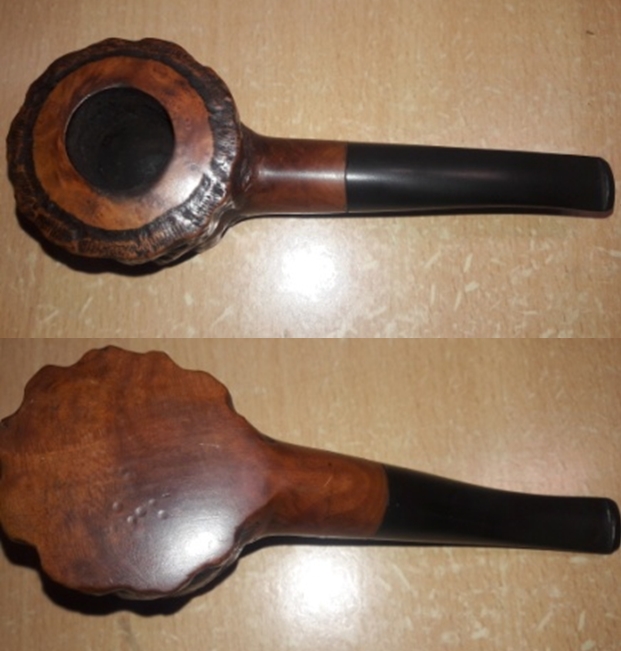
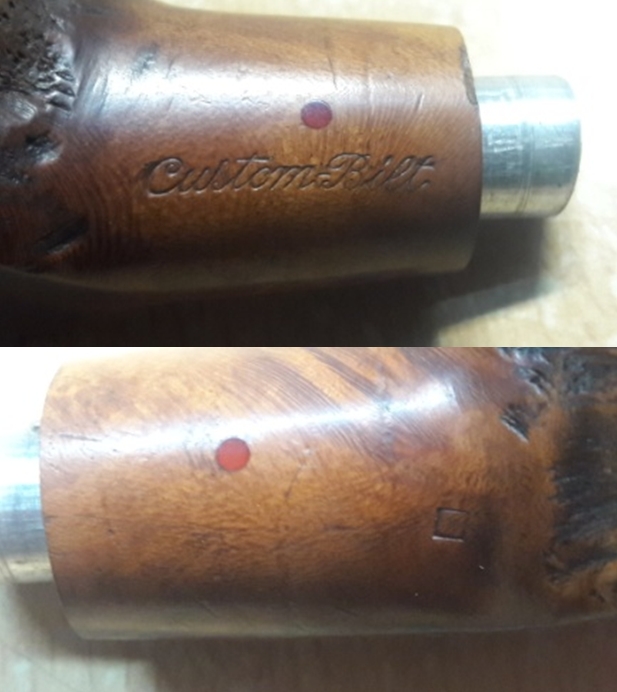
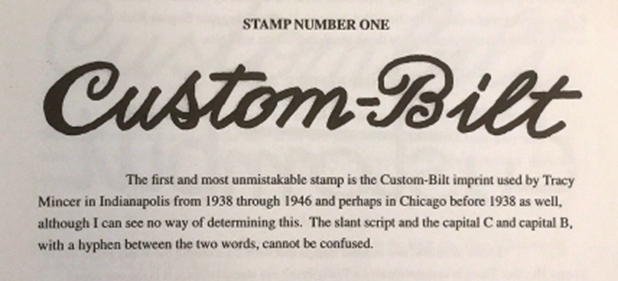
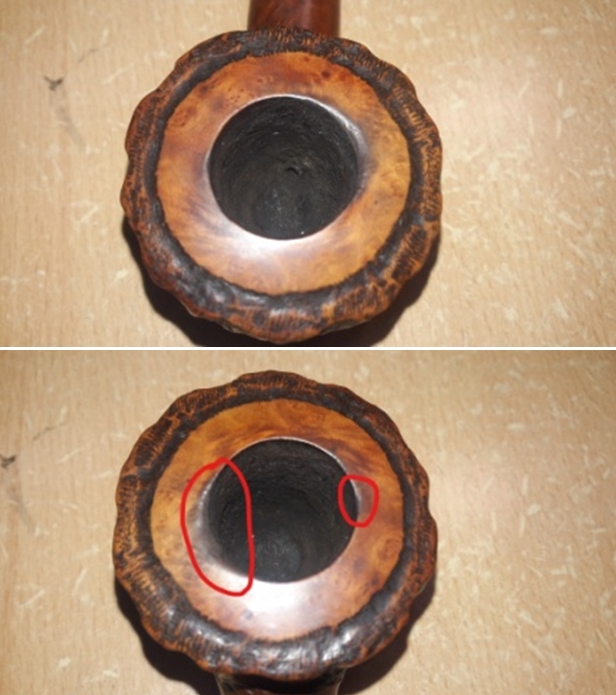
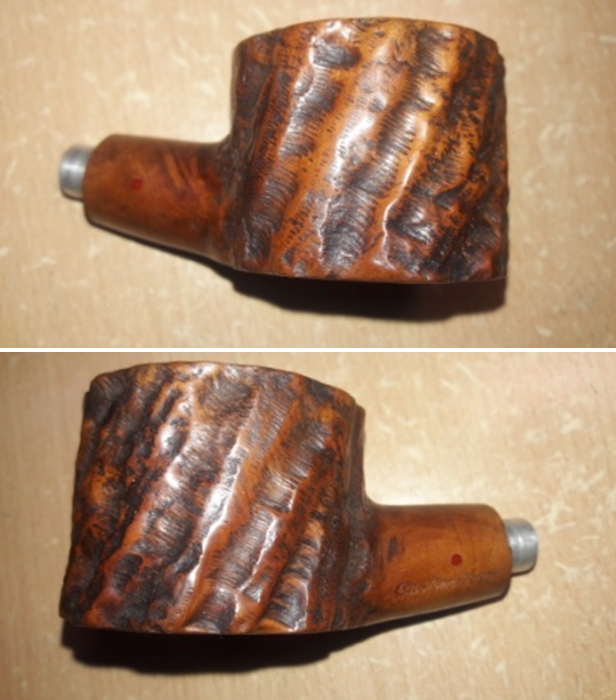
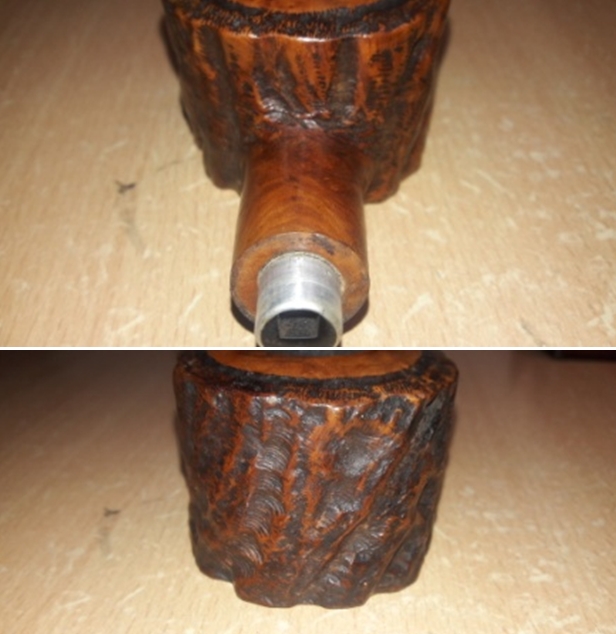
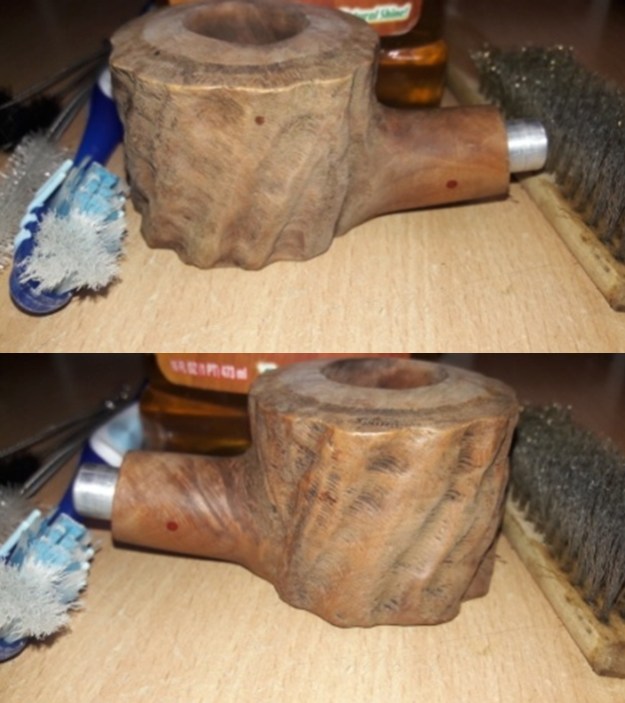
The Custom-Bilt pipe that is now on my work table is a large Pot shaped pipe, having the trademark scraggy large vertical rustications and very fine, thin horizontal linear rustications in between. This is a beautifully carved pipe with a unique construction in that the chamber appears to be placed inside the outer casing of the briar wood. However, the chamber is carved from the same piece of briar with a smooth rim top surface that is slightly raised above the surrounding rim surface with thin rustications. The short shank is smooth and extends in to the large smooth foot of the stummel. It is stamped on the left side of the shank as “Custom-Bilt” with a hyphen between the two words, in cursive hand. There are two prominent red dots on either side of the shank with a square symbol on the right side of the shank towards the stummel joint. The IMPORTED BRIAR, a commonly observed stamp on these pipes, is conspicuous by its absence on this one!!Having worked on a few Custom Bilt pipes in the past and researched this brand and based on the stampings seen on this pipe, I can say with an amount of certitude, that this pipe is from the period 1938- 46. Here is the proof in determining the vintage based on stampings as researched by William E. Unger, Jr., PhD, which deals with the study of Custom-Bilt pipes.With this confirmation as regards to the vintage of this pipe, I move ahead with the initial visual inspection of this pipe.

INITIAL VISUAL INSPECTION
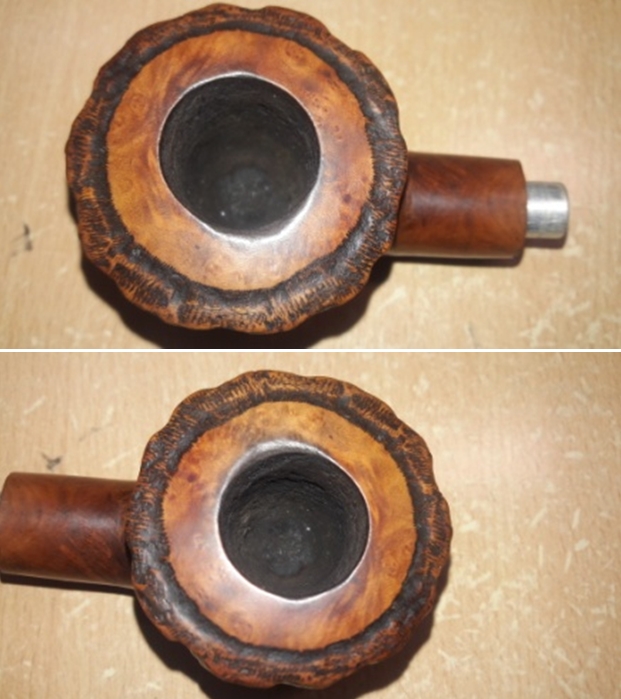
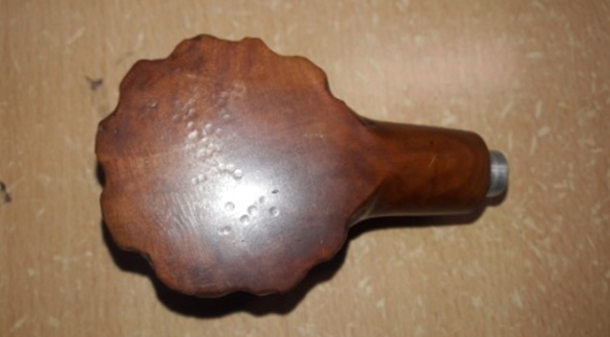
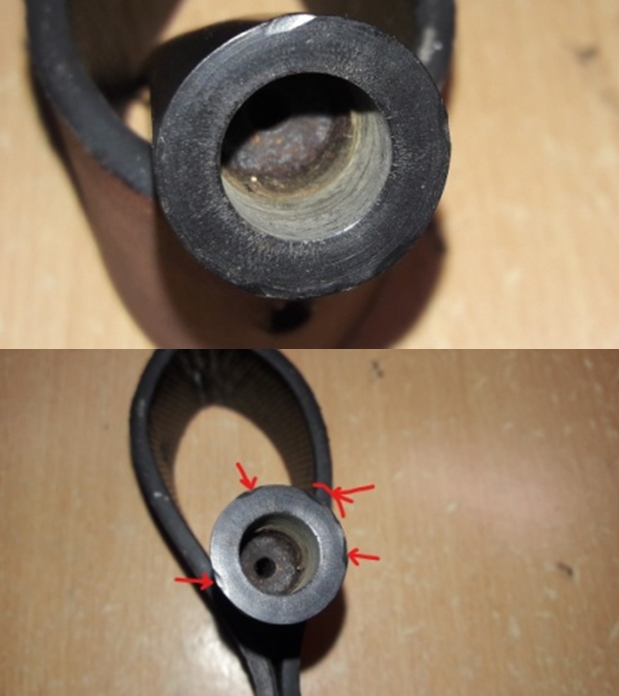
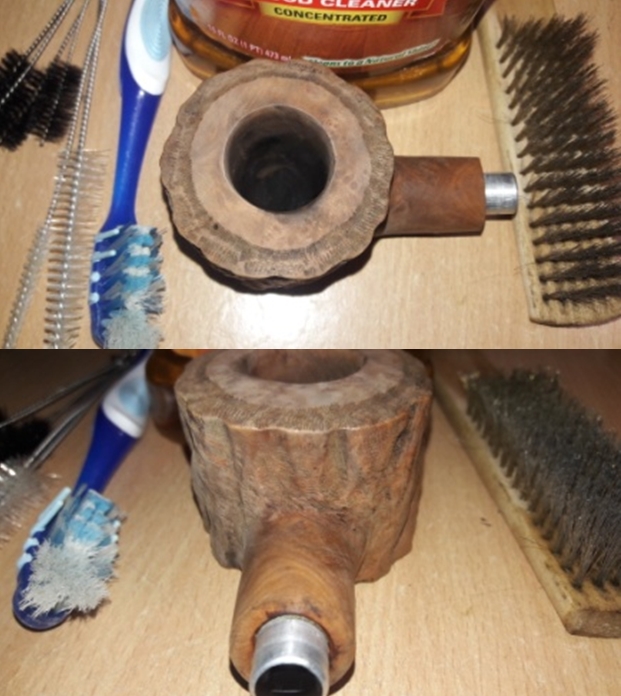
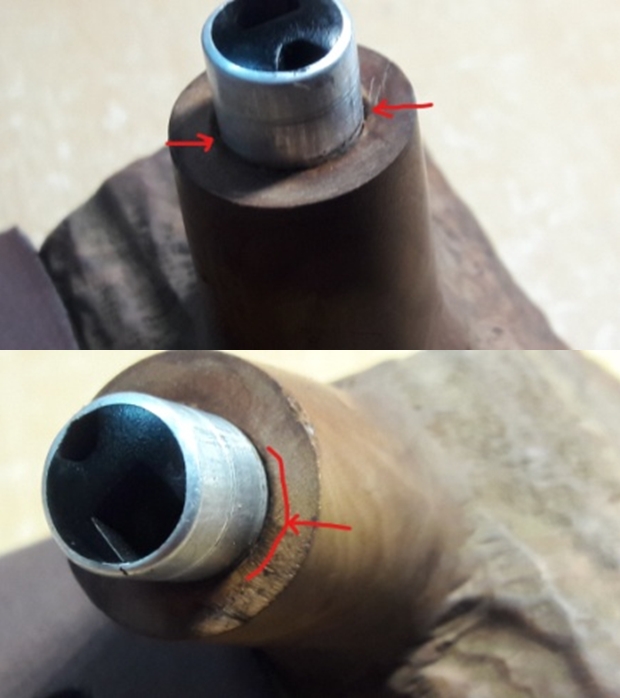
The chamber has an even decent layer of cake. The condition of the inner walls of the chamber can be determined only after the cake has been completely reamed out down to the bare briar. The draught hole is dead center and at the bottom of the chamber. This should be a fantastic smoker. The smooth and slightly raised rim top surface has severely charred inner rim edge on the left in 8 o’clock direction and a minor charring on the right side in the 3 o’clock direction, both marked in red circle causing the bowl to appear out of round. The remaining rusticated rim top surface is covered in dust and grime of overflowing lava. The flat bottomed stummel feels solid to the touch and makes for a nice fit in the hands of the smoker. The vertical worm rustication with its horizontal thin line rustications within makes for a visual treat. Though covered in dust and grime of all these years of uncared for storage, these should clean up nicely. The smooth flat bottom of the stummel has a number of perfectly rounded small dings and will need to be addressed. The short and smooth surfaced shank has an aluminum shank/ mortise extension fixed inside of the mortise. I have seen a similar extension on another Custom-Bilt from my Grandfather’s collection which I had restored about a year back!!! This aluminum shank/ mortise extension (or should it be called a tenon?), has two airways, a larger one above a smaller one, both with the same draught hole at the other end. The purpose of these two airways in the same tenon was shrouded in mystery then and to this day, still remains so. Any inputs on this mystery from the esteemed readers will help all other readers in understanding the functional aspects of this dual airway. Both these airways are clogged with oils and tars and dirt from all these years of smoking and storage, making the draw a bit laborious. This draw should even out once the shank extension and shank has been cleaned out.The slightly bent vulcanite stem sits atop the aluminum shank/ mortise extension and is peppered with tooth chatter on either surface of the stem. The edges of the button are slightly damaged due to tooth marks. These issues are not severe and should be easily addressed by sanding. The tenon end of the stem surface is chipped in at number of places with the edges slightly raised (indicated with red arrows). I shall address this issue first by sanding and if required, will fill it with a mix of superglue and activated charcoal. THE PROCESS
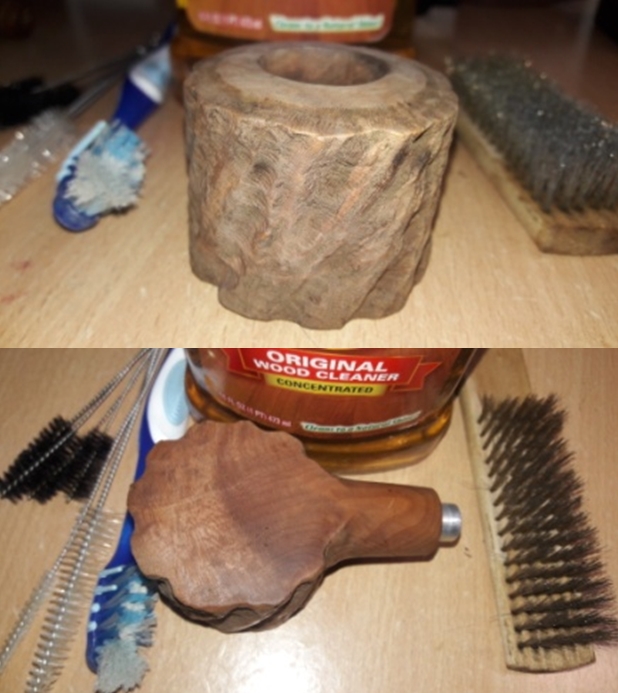
I started the restoration of this beautiful pipe by first reaming the chamber with size 3 followed by size 4 head of the PipNet pipe reamer. The amount of cake dislodged from the chamber points to the fact that this would have been a favorite of my Grandfather!! With my fabricated knife, I removed the cake from areas where the reamer head could not reach. I followed this reaming with sanding the chamber walls with a folded piece of 220 grit sand paper to completely remove any residual cake. This also helps to smooth the walls of the chamber. How I miss the help of Abha, my wife and Pavni, my youngest daughter who specializes in sanding the chamber walls to a smooth and even surface. I wiped the chamber with a cotton swab and alcohol to get rid of all the carbon dust and expose the bare briar of the chamber. It was a relief to note that the chamber is sans of any heat fissures/ lines. The next issue that I addressed was that of the charred inner rim edge. With a folded piece of a 220 grit sand paper, the charred surfaces were sanded down till I reached solid briar wood. A bevel to the inner edge would look out of place on this pipe and so it was decided to keep the edges straight. I sand the entire inner rim edge and the chamber with a folded 180 grit sand paper till it matched with the damaged rim edge. The inner rim edge looked good and also the chamber is now nicely rounded. I further sand the entire smooth rim top surface to remove the blackened surface from the charred area and also to get rid of any minor dents/ dings and grime from the surface. I followed up the cleaning of the chamber with that of the shank internals. Using hard and regular pipe cleaners and alcohol, I cleaned the aluminum mortise extension and the shank internals. It was a bit of an exercise to clean the lower of the two air ways as it sloped upwards and posed difficulties in maneuvering the pipe cleaner towards the draught hole. A number of attempts and pipe cleaners later, the shank internals are clean and the draw is nice, smooth and even.The internal cleaning was followed by external cleaning of the stummel surface using Murphy’s Oil soap and a hard bristled tooth brush. I also used a brass wired brush to diligently clean out all the dirt and grime from within the worm rustications. With a shank brush and dish washing soap, I thoroughly cleaned the shank internals and the mortise. I dried the bowl with paper napkins and soft cotton cloth. To expel all the moisture from the shank and the aluminum extension, I blew air through the draught hole and to my chagrin; there were droplets of water that came out from the joint between the shank end and extension (marked with red arrows). This is definitely a sign of leak from the joint. I wiped the area dry and with my sharp dental tool picked the area clean. With a toothpick, I applied clear superglue all around the joint and held it vertical for the glue to seep in to the joint. I was careful to apply a small quantity as I did not want the glue to enter and harden inside of the mortise. I wiped off the extra glue from the shank end as I would disturb the seating of the stem over the aluminum extension. I set the stummel aside for the glue to cure. With the stummel set aside for the glue to cure, it was time to move ahead with the stem restoration. I cleaned the stem internals with pipe cleaners, q-tips and alcohol. With the bent flat end of a dental tool, I scrubbed the dried out oils and tars from the area of the tenon end of the stem that seats on top of the aluminum shank/ mortise extension.I flamed the bite zone with the flame of a lighter. The heating of the vulcanite raises the tooth chatter to the surface and followed it with a light sanding with a piece of 220 grit sand paper to even out the surface around the bite zone. Using a flat head needle file, I reshaped and sharpened the button and button edges. This was followed by sanding the entire stem surface with 400 followed by 600, 800 and 1000 grit sand papers to remove the oxidation. I also evened out the raised indentations from the tenon end caused due to chipping. I finished the sanding with a 0000 grade steel wool. Using progressively higher grit sand papers helps in a smooth surface while minimizing the sanding marks left behind by the more abrasive sanding papers. I wiped the stem with a small amount of Extra Virgin Olive oil and set it aside to be absorbed by the stem surface. While the stem was set aside to hydrate, I worked the stummel, sanding away excess dried glue from the joint between shank end and the aluminum extension. I polished the extension with a piece of 0000 grade steel wool. The next issue that I addressed was the numerous rounded dings from the perfectly flattened foot of the stummel. I decided to steam out these dings since these dings were slightly deeper. I heated my fabricated knife over the flame of a candle till nice and hot. I covered the dings with a thick wet Turkish hand towel and placed the hot knife over it. The sizzling steam that is generated expands the briar and pulled out the dings. I am pretty happy with the results!! I set the stummel to dry out and went ahead with polishing and completing the stem. I followed up the sanding regime with micromesh polishing to bring a shine on the stem surface. I wet sand the stem with 1500 to 2400 girt micromesh pads. Continuing with my experimentation that I had spelled out in my previous posts, I mount a cotton buffing wheel on my hand held rotary tool and polish the stem with Red Rouge polish. Further, I mount a fresh buffing wheel on the rotary tool and polish the stem with White Diamond polish. I finish the stem polish by wet sanding with 6000 to 12000 grit pads of the micromesh. I rub a small quantity of olive oil in to the stem surface to hydrate it and set it aside again. I am really happy with this process of stem polishing as the results are excellent while saving me huge amounts of time and effort. With the stem polishing now completed, I moved ahead with micromesh polishing of the smooth surfaces on the stummel (part of the rim top surface, the short shank and the foot of the stummel). I polished the stummel by wet sanding with 1500 to 12000 micromesh pads.Next, I rub a small quantity of “Before and After Restoration Balm” in to the briar with my finger tips and let it rest for a few minutes. The balm almost immediately works its magic and the briar now has a nice vibrant appearance with the beautiful worm rustication patterns on full display. I have been using this balm ever since I embarked on this journey and it is this part of restoration that I always look forward to. I further buff it with a horse hair shoe brush. There are a few spots where I had missed out on the application of the balm, as would have been observed by some discerning readers in pictures below, but let me assure you that I had reapplied the balm using a q-tip but missed out on taking pictures. On to the homestretch!! I mount a cotton cloth buffing wheel on to my hand held rotary tool and apply a coat of Blue Diamond to the stummel and the stem to polish out the minor scratches.With a cotton buffing wheel that I use for carnauba wax, I apply a coat of carnauba wax and continue to work on it till the complete coat of wax had been polished out. I mount a clean cotton cloth buffing wheel and give the entire pipe a once over buff. I finished the restoration by giving the entire pipe a rigorous hand buffing using a microfiber cloth to raise the shine further. The finished pipe looks amazingly beautiful and is now ready for its long second innings with me. I only wish it could share with me its life story of the past 70 plus years, if only the pipe could tell some of my grand Old man’s stories and recount incidents it had witnessed while I enjoy smoking my favorite Virginia blend in it!! … Cheers!!

Restoring a Final Calich from Ken Bennett’s Estate – Grade 12 Freehand


Blog by Steve Laug

Early in August I received an email from an interesting woman on Vancouver Island regarding some pipes that she had for sale. She was looking to sell the pipes from her late husband Ken and one from her Great Grandfather. Here is her email:

I have 5 John Calich pipes that date from 1979 to 1981. One is graded 11 and the other four are graded 12. I had bought them as Christmas and birthday gifts for my late husband. He was a very light smoker for a 3 year period.

I am a wood sculptor and always admired the grain and shapes of John’s best pipes. John was a friend as well. We exhibited at many exhibitions together for over 25 years.

I am wondering if you can provide any information on how I might be able to sell them.

Thanks you for any help you might be able to provide

I wrote her back and told I was very interested in the pipes that she had for sale and asked her to send me some photos of the lot. She quickly did just that and we struck a deal. I paid her through an e-transfer and the pipes were on their way to me. They arrived quite quickly and when they did I opened the box and found she had added three more pipes – a Brigham, a Dr. Plumb and a WDC Milano. There was also a wooden cigar box in the package that housed the Calich pipes. They are all lovely looking freehand style shapes – even the two apple shaped pipes had a freehand twist to them. The package also had the BBB Gourd Calabash that I have written about earlier (https://rebornpipes.com/2019/08/27/breathing-new-life-into-a-bbb-gourd-calabash-with-an-amber-stem/). Pat sent me photos of each of the pipes before the deal was struck so I could see the pipes before I made a decision. I kept the photos that she sent me. I have included the two photos of this pipe that she sent me below.I wrote to Pat and asked her if she would be willing to write short remembrance of her late husband and her Great Grandfather. She wrote that she would be happy to write about them both. In her email she included a story about John Calich that I really enjoyed. I decided it was well worth including in this second blog about these Calich pipes.

My best John story is one you won’t likely be able to print.  We were set up beside each other in the late seventies at the Ottawa Tulip Festival in army tents. It was cold and wet. John always had a jar of good tobacco that he shared with past and prospective customers.  One morning a guy that looked like he was dirt poor started chatting with John. He pulled out his cheap pipe and stuffed it too full of the expensive tobacco and then asked John for a light. As he walked away John muttered under his breath to me “I’d like to give him a kick in his pants to get him puffing”

I had to laugh because in conversations I had with John we had some great laughs. He was a real character and this was truly a fitting reminder for me as I was preparing to work on the pipes.

I wrote to Pat again and told her I was thinking of restoring her husband, Ken’s pipes next. She is working on a piece for me but sent along a great story and a photo in case I “need some inspiration while you work”. I have also included that photo and the story below. It indeed was an inspiration and gave me an idea on what pipe to work on first. Here are Pat’s words:

I’d like you know that Ken was an incredibly talented and creative man with a smile and blue eyes that could light up a room. His laugh was pure magic. He could think outside the box and come up with an elegant solution to any problem…

Pat sent me this reflection on her husband Ken’s life. Thanks Pat for taking time to do this. I find that it gives another dimension to the pipes that I restore to know a bit about the previous pipeman. Pat and Ken were artists (Pat still is a Sculptural Weaver) and it was this that connected them to each other and to John Calich. Here are Pat’s words.

Here is the write up for Ken. We meet in University and it was love at first sight. I consider myself blessed to have shared a life together for 37 years.

Ken graduated from Ryerson University with Bachelor of Applied Arts in Design in 1975.

Ken lived his life with joy.  Each day was a leap of faith in the creative process. His smile would light up the room and the hearts of the people he loved.

He combined the skilled hands of a master craftsman, with the problem solving mind of an engineer, and the heart and soul of an artist. He used his talents to create unique and innovative wood sculptures. Using precious hardwoods, he incorporated the techniques of multiple lamination and three dimensional contouring to create sculptural pieces that captivate the eye and entice the hand to explore.

His career was highlighted by numerous corporate commissions, awards and public recognition in Canada and abroad.

A quote from Frank Lloyd Wright sums up Ken’s approach to design.  “Form follows function – that has been misunderstood. Form and function should be joined as one in a spiritual union.” 

A friendship with John Calich developed over years of exhibiting their work at exhibitions. How could a wood sculptor resist some of John’s finest creations…

Pat had included the top of a box that Ken had kept from the pipes he had purchase from John. This fifth Calich pipe also had a very interesting Danish style shape. It is a freehand that I would call a Danish style Dublin Freehand with beautiful grain and a dull finish due to sitting unused in storage. There were some white paint flecks on the sides of the briar. The rim top and the shank end were both plateau. The smooth bowl seemed to have a natural finish almost like oil – I like the way John’s pipes take on a rich patina as they age. The bowl had a cake in it and there was a lava overflow onto the plateau rim top almost filling in the grooves of the plateau and darkening the natural finish. The rim top and edges of the bowl looked to be in excellent condition under the lava. The stamping on the left side of the shank was very faint but under a bright light read CALICH over Hand Made. After that stamping there was a superscript 80 stamped (year it was carved) with a subscript 12 which was the grade number. This was all confirmed by Pat as she had purchased the pipe for her husband Ken. The stem was lightly oxidized as was the single metal dot in the top of the saddle. There was oxidation and light tooth chatter on both sides of the stem on both sides near the button. The shank and stem were dirty inside. I took a photo of the bowl and rim top to show the cake in the bowl and the lava build up in the grooves of the plateau rim top and inner edge of the rim top. It is quite thick and darkens the natural finish of the rim top. The cake was thick and hard but hopefully it had protected the rim and edges from damage. Otherwise it looks pretty good. I also took photos of the stem to show the oxidation on both sides and the light tooth chatter on both sides near the button.    I took a photo of the left side of the shank to show the condition of the stamping. You can see the Calich stamp over Hand Made. Below that is the number 11 with the number 80 above that. The second photo shows the plateau finish on the rim top and shank end. The natural finish of the plateau on the shank end is what clued me to the fact that the rim top probably started that way as well. I decided to include a bit about John Calich the pipemaker as I have loved John Calich’s pipes for over 25 years now and have collected a few of them. I have restored quite a few of them and written blogs about them that can be read if you are interested in seeing the kind of pipes that John made. They are unique and beautiful. Each one of them is a work of art to me. I am including the links to the previous blogs that have written about his pipes.
https://rebornpipes.com/2015/03/03/one-of-my-john-calich-pipes-a-calich-ee-billiard/

https://rebornpipes.com/2019/01/23/i-am-the-happy-owner-of-an-unsmoked-pipe-by-the-late-john-calich/

https://rebornpipes.com/2015/03/03/one-of-my-john-calich-pipes-a-calich-ee-billiard/

https://rebornpipes.com/2014/03/21/reflecting-on-my-collection-of-john-calich-pipes/

Each of the blogs reflects on John’s pipes if you want to get a feel for them take a few minutes and read them.

When John was living I spoke with him several times via phone and had him make some new stems for some of his pipes that I picked up off eBay. He was a very kind gentleman and was always helpful when I spoke with him. He was always ready with encouragement and when I needed to know how to do something when I was first learning to repair pipes he was willing to help. He was one of the old guard of Canadian Pipe makers. I miss him. I am including a short piece from Pipedia on John to give details on his work and the grading of his pipes. The second paragraph below is highlighted in blue as it gives some information on the Grade 12 Apple that I am working on with the single silver dot now.

John Calich, courtesy Doug Valitchka

John Calich was one of Canada’s finest carvers. He died in July 2008. John was a full time pipe maker for the last 40 years. Calich pipes were mostly traditional shapes. His signature style is rustication and smooth on the same pipe along with his unique skill to stain a pipe in contrasting colors. He used only top quality Grecian and Calabrian briar. The mouthpieces are hand finished Vulcanite “A”. Each pipe was entirely made by hand. John Calich was featured in the summer 2005 issue of Pipes & Tobacco.

His pipes are graded 3E – 7E. Retail prices range from$ 145.00 to $ 500.00 Each pipe is stamped “CALICH” 3-8E, his earlier pipes were graded from 3-14, and a single, tiny silver dot is applied to the top of the stem (https://pipedia.org/wiki/Calich).

I summarize the dating information from those blogs now: From my research and conversations I learned that John’s his later pipes were graded 3E – 8E. The retail prices for them ranged from $145.00 to $500.00. Each pipe was stamped “CALICH” and given an E grade. His earlier pipes were graded from 3-14 and had a single, tiny silver dot applied to the top of the stem. More information can be found at the Pipedia article above. All of this information told me as expected that the pipe I had was an earlier one.

Armed with Pat’s stories of John and her husband Ken and the information about John’s grading system it was time to work on the pipe. I reamed the bowl with a PipNet Pipe reamer using the third cutting head. I took the cake back to bare briar so that I could check out the inside walls. I used a Savinelli Fitsall Pipe Knife to scrape back the remaining cake. I finished my cleanup of the walls by sanding it with 220 grit sandpaper wrapped around a piece of dowel.      I scrubbed the briar with Before & After Briar Cleaner and rinsed it off with warm running water. I scrubbed the rim top with a tooth brush and warm running water at the same time. I dried the bowl off with a soft microfiber cloth and gave it a light buffing. The photos show the cleaned briar and the grain is really beginning to pop. John once again really followed the grain on the shaping of this pipe.  I worked on the internals. I scraped the inside of the mortise with a dental spatula to remove the hardened tars and oils that lined the walls of the shank. Once I had that done I cleaned out the airway to the bowl, the mortise and the airway in the stem with pipe cleaners, cotton swabs and alcohol. When I finished the pipe smelled very clean. I polished the briar with micromesh sanding pads – wet sanding with 1500-12000 grit sanding pads. I wiped it down with a damp cloth after each pad. I rubbed the bowl down with Before & After Restoration Balm. I worked it into the surface of the briar with my fingertips to clean, enliven and protect it. I let the balm sit for a little while and then buffed with a cotton cloth to raise the shine. Mark Hoover’s Balm is a product that I have come to appreciate and one I use on every pipe I have been working on.   I set the bowl aside and turned my attention to the stem. I sanded the stem with 220 grit sandpaper to break up the oxidation. I started the polishing with 400 grit wet dry sandpaper to remove the scratching. It is starting to look good.   I have one more tin of Denicare Mouthpiece Polish left from a few that I have picked up over the years. It is a coarse red pasted that serves to help remove oxidation. I polished the stem with that to further smooth out the surface of the vulcanite (and to be honest – to use it up).    I polished the stem with micromesh sanding pads – wet sanding with 1500-12000 grit pads. I wiped the stem down after each sanding pad with Obsidian Oil. I polished it with Before & After Pipe Stem Polish – both Fine and Extra Fine. Once I had finished the polishing I gave it final coat of oil and set it aside to dry. This is the fifth and final Calich from Ken’s Estate that I am working on. It is another beautifully grained Danish style Freehand shaped Hand Made. It has the kind of beauty I have come to expect from John’s pipes with plateau on the rim top and shank end. I am excited to be on the homestretch with Ken’s estate. This is the part I look forward to when each pipe comes back together, polished and waxed. I put the bowl and stem back together. I polished the bowl and stem with Blue Diamond to polish out the scratches in the briar and the vulcanite. I gave the bowl and the stem multiple coats of carnauba wax. I buffed the pipe with a clean buffing pad to raise the shine. I hand buffed it with a microfiber cloth to deepen the shine. The pipe polished up pretty nicely. The straight and flame grain on the sides of the bowl and birdseye grain on the front and back side of the bowl. The grain is really quite stunning. The plateau on the rim top and shank end was also natural though had been darkened over time. The polished smooth finish look really good with the black vulcanite. This Calich Hand Made was another fun pipe to bring back to life because of the story that Pat shared with us. The connection between Ken and Pat and John Calich adds colour. The natural finish and the plateau rim top and shank end makes this Danish style pipe look attractive. It is another comfortable pipe to hold in the hand. The finished pipe is shown in the photos below. The dimensions of the pipe are Length: 5 ½ inches, Height: 2 ¼ inches, Outside diameter of the bowl: 1 ¾ inch, Chamber diameter: ¾ of an inch. Thanks for reading this blog and my reflections on the pipe while I worked on it. This is entire estate was interesting to bring back to life.   
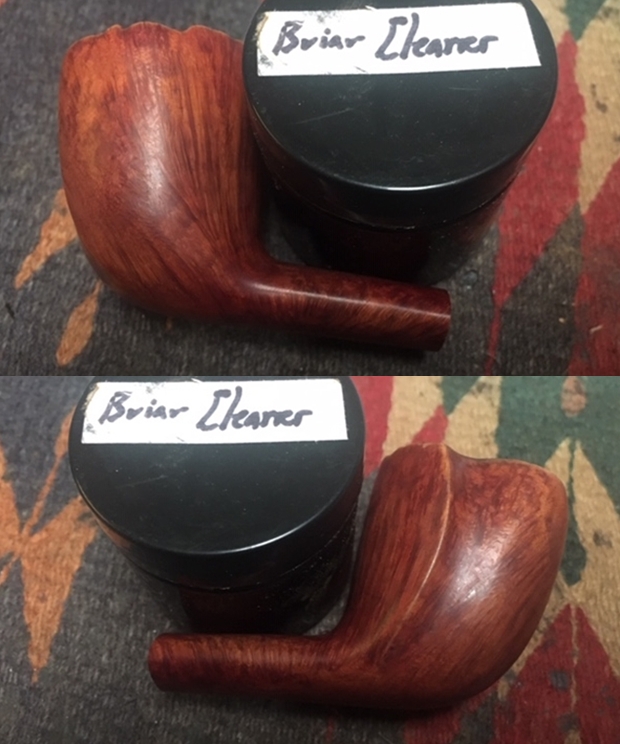
Restoring a Fourth Calich from Ken Bennett’s Estate – Grade 11 (80) Canted Egg


Blog by Steve Laug

Early in August I received an email from an interesting woman on Vancouver Island regarding some pipes that she had for sale. She was looking to sell the pipes from her late husband Ken and one from her Great Grandfather. Here is her email:

I have 5 John Calich pipes that date from 1979 to 1981. One is graded 11 and the other four are graded 12. I had bought them as Christmas and birthday gifts for my late husband. He was a very light smoker for a 3 year period.

I am a wood sculptor and always admired the grain and shapes of John’s best pipes. John was a friend as well. We exhibited at many exhibitions together for over 25 years.

I am wondering if you can provide any information on how I might be able to sell them.

Thanks you for any help you might be able to provide

I wrote her back and told I was very interested in the pipes that she had for sale and asked her to send me some photos of the lot. She quickly did just that and we struck a deal. I paid her through an e-transfer and the pipes were on their way to me. They arrived quite quickly and when they did I opened the box and found she had added three more pipes – a Brigham, a Dr. Plumb and a WDC Milano. There was also a wooden cigar box in the package that housed the Calich pipes. They are all lovely looking freehand style shapes – even the two apple shaped pipes had a freehand twist to them. The package also had the BBB Gourd Calabash that I have written about earlier (https://rebornpipes.com/2019/08/27/breathing-new-life-into-a-bbb-gourd-calabash-with-an-amber-stem/). Pat sent me photos of each of the pipes before the deal was struck so I could see the pipes before I made a decision. I kept the photos that she sent me. I have included the two photos of this pipe that she sent me below.    I wrote to Pat and asked her if she would be willing to write short remembrance of her late husband and her Great Grandfather. She wrote that she would be happy to write about them both. In her email she included a story about John Calich that I really enjoyed. I decided it was well worth including in this second blog about these Calich pipes.

My best John story is one you won’t likely be able to print.  We were set up beside each other in the late seventies at the Ottawa Tulip Festival in army tents. It was cold and wet. John always had a jar of good tobacco that he shared with past and prospective customers.  One morning a guy that looked like he was dirt poor started chatting with John. He pulled out his cheap pipe and stuffed it too full of the expensive tobacco and then asked John for a light. As he walked away John muttered under his breath to me “I’d like to give him a kick in his pants to get him puffing”

I had to laugh because in conversations I had with John we had some great laughs. He was a real character and this was truly a fitting reminder for me as I was preparing to work on the pipes.

I wrote to Pat again and told her I was thinking of restoring her husband, Ken’s pipes next. She is working on a piece for me but sent along a great story and a photo in case I “need some inspiration while you work”. I have also included that photo and the story below. It indeed was an inspiration and gave me an idea on what pipe to work on first. Here are Pat’s words:

I’d like you know that Ken was an incredibly talented and creative man with a smile and blue eyes that could light up a room. His laugh was pure magic. He could think outside the box and come up with an elegant solution to any problem…

Pat sent me this reflection on her husband Ken’s life. Thanks Pat for taking time to do this. I find that it gives another dimension to the pipes that I restore to know a bit about the previous pipeman. Pat and Ken were artists (Pat still is a Sculptural Weaver) and it was this that connected them to each other and to John Calich. Here are Pat’s words.

Here is the write up for Ken. We meet in University and it was love at first sight. I consider myself blessed to have shared a life together for 37 years.

Ken graduated from Ryerson University with Bachelor of Applied Arts in Design in 1975.

Ken lived his life with joy.  Each day was a leap of faith in the creative process. His smile would light up the room and the hearts of the people he loved.

He combined the skilled hands of a master craftsman, with the problem solving mind of an engineer, and the heart and soul of an artist. He used his talents to create unique and innovative wood sculptures. Using precious hardwoods, he incorporated the techniques of multiple lamination and three dimensional contouring to create sculptural pieces that captivate the eye and entice the hand to explore.

His career was highlighted by numerous corporate commissions, awards and public recognition in Canada and abroad.

A quote from Frank Lloyd Wright sums up Ken’s approach to design.  “Form follows function – that has been misunderstood. Form and function should be joined as one in a spiritual union.” 

A friendship with John Calich developed over years of exhibiting their work at exhibitions. How could a wood sculptor resist some of John’s finest creations…

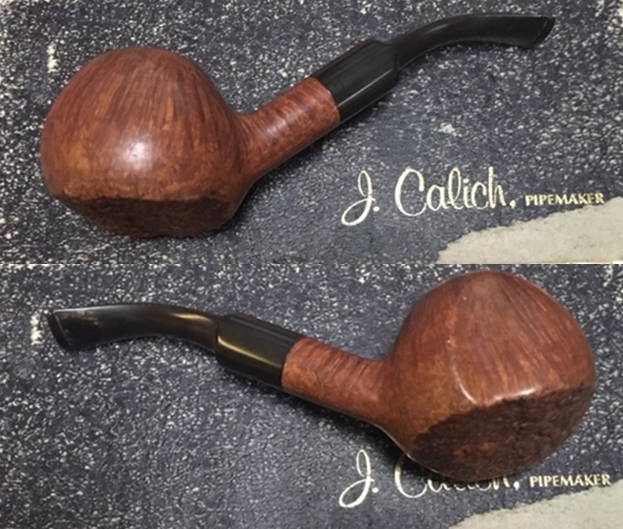
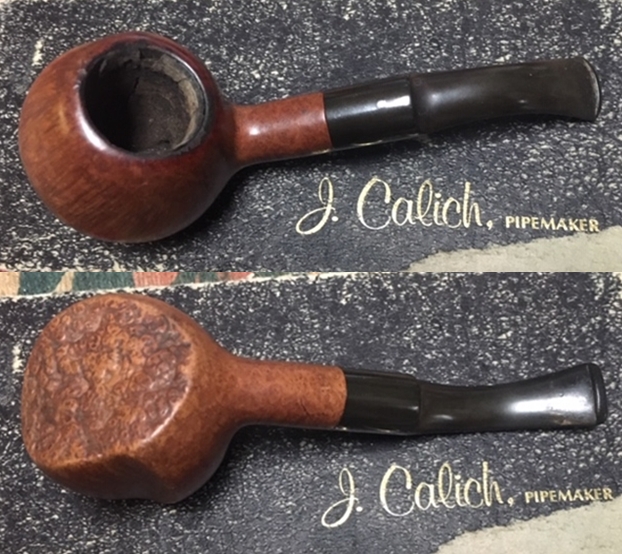
Pat had included the top of a box that Ken had kept from the pipes he had purchase from John. I used the box top as a back drop for the photos of the pipe. This fourth Calich pipe also had a very interesting shape. It is a freehand that I would call a stylized egg with beautiful grain and a dull finish due to sitting unused in storage. The left side and underside of the bowl were sculpted with a groove that ran down the back left and under the shank. There was also a groove sculpted on the front of the bowl. The rim top was smooth. The smooth bowl seemed to have a natural finish almost like oil – I like the way John’s pipes take on a rich patina as they age. The bowl had a cake in it and there was a lava overflow on the rim top on the back side and darkening the natural finish. The rim top and edges of the bowl were in excellent condition under the lava. The stamping on the left side of the shank read CALICH over Hand Made. After that stamping there was a superscript 80 stamped (year it was carved) with a subscript 11 which was the grade number. The stem was lightly oxidized as was the single metal dot in the top of the saddle. There was light tooth chatter on both sides of the stem on both sides near the button. The shank and stem were dirty inside.    I took a photo of the bowl and rim top to show the cake in the bowl and the lava build up on the surface and inner edge of the rim top. It is quite thick and darkens the natural finish of the rim top. The cake was thick and hard but hopefully it had protected the rim and edges from damage. Otherwise it looks pretty good. I also took photos of the stem to show the oxidation on both sides and the light tooth chatter on both sides near the button.      I took a photo of the left side of the shank to show the condition of the stamping. You can see the Calich stamp over Hand Made. Below that is the number 11 with the number 80 above that. The second photo shows the plateau finish on the rim top and shank end. The natural finish of the plateau on the shank end is what clued me to the fact that the rim top probably started that way as well.I decided to include a bit about John Calich the pipemaker as I have loved John Calich’s pipes for over 25 years now and have collected a few of them. I have restored quite a few of them and written blogs about them that can be read if you are interested in seeing the kind of pipes that John made. They are unique and beautiful. Each one of them is a work of art to me. I am including the links to the previous blogs that have written about his pipes.

https://rebornpipes.com/2015/03/03/one-of-my-john-calich-pipes-a-calich-ee-billiard/

https://rebornpipes.com/2019/01/23/i-am-the-happy-owner-of-an-unsmoked-pipe-by-the-late-john-calich/

https://rebornpipes.com/2015/03/03/one-of-my-john-calich-pipes-a-calich-ee-billiard/

https://rebornpipes.com/2014/03/21/reflecting-on-my-collection-of-john-calich-pipes/

Each of the blogs reflects on John’s pipes if you want to get a feel for them take a few minutes and read them.

When John was living I spoke with him several times via phone and had him make some new stems for some of his pipes that I picked up off eBay. He was a very kind gentleman and was always helpful when I spoke with him. He was always ready with encouragement and when I needed to know how to do something when I was first learning to repair pipes he was willing to help. He was one of the old guard of Canadian Pipe makers. I miss him. I am including a short piece from Pipedia on John to give details on his work and the grading of his pipes. The second paragraph below is highlighted in blue as it gives some information on the Grade 12 Apple that I am working on with the single silver dot now.

John Calich, courtesy Doug Valitchka

John Calich was one of Canada’s finest carvers. He died in July 2008. John was a full time pipe maker for the last 40 years. Calich pipes were mostly traditional shapes. His signature style is rustication and smooth on the same pipe along with his unique skill to stain a pipe in contrasting colors. He used only top quality Grecian and Calabrian briar. The mouthpieces are hand finished Vulcanite “A”. Each pipe was entirely made by hand. John Calich was featured in the summer 2005 issue of Pipes & Tobacco.

His pipes are graded 3E – 7E. Retail prices range from$ 145.00 to $ 500.00 Each pipe is stamped “CALICH” 3-8E, his earlier pipes were graded from 3-14, and a single, tiny silver dot is applied to the top of the stem (https://pipedia.org/wiki/Calich).

I summarize the dating information from those blogs now: From my research and conversations I learned that John’s his later pipes were graded 3E – 8E. The retail prices for them ranged from $145.00 to $500.00. Each pipe was stamped “CALICH” and given an E grade. His earlier pipes were graded from 3-14 and had a single, tiny silver dot applied to the top of the stem. More information can be found at the Pipedia article above. All of this information told me as expected that the pipe I had was an earlier one.

Armed with Pat’s stories of John and her husband Ken and the information about John’s grading system it was time to work on the pipe. I reamed the bowl with a PipNet Pipe reamer using the third cutting head. I took the cake back to bare briar so that I could check out the inside walls. I used a Savinelli Fitsall Pipe Knife to scrape back the remaining cake. I finished my cleanup of the walls by sanding it with 220 grit sandpaper wrapped around a piece of dowel.      I scrubbed the briar with Before & After Briar Cleaner and rinsed it off with warm running water. I scrubbed the rim top with a tooth brush and warm running water at the same time. I dried the bowl off with a soft microfiber cloth and gave it a light buffing. The photos show the cleaned briar and the grain is really beginning to pop. John really followed the grain on the shaping of this pipe. There was a deep gouge on the underside of the bowl, in the middle of the heel. It had sharp edges so it was not a gouge that could be raised with steam. I filled it in with a drop of clear super glue and let it cure. Once it had cured I sanded it smooth with 240 grit sandpaper and with 400 grit wet dry sandpaper. I polished it with 1500-2400 grit micromesh sanding pads. I polished the briar with micromesh sanding pads – wet sanding with 1500-12000 grit sanding pads. I wiped it down with a damp cloth after each pad. I rubbed the bowl down with Before & After Restoration Balm. I worked it into the surface of the briar with my fingertips to clean, enliven and protect it. I let the balm sit for a little while and then buffed with a cotton cloth to raise the shine. Mark Hoover’s Balm is a product that I have come to appreciate and one I use on every pipe I have been working on.    With the externals cleaned I worked on the internals. I scraped the inside of the mortise with a dental spatula to remove the hardened tars and oils that lined the walls of the shank. Once I had that done I cleaned out the airway to the bowl, the mortise and the airway in the stem with pipe cleaners, cotton swabs and alcohol. When I finished the pipe smelled very clean. I set the bowl aside and turned my attention to the stem. I sanded the stem with 220 grit sandpaper to break up the oxidation. I started the polishing with 400 grit wet dry sandpaper to remove the scratching. It is starting to look good.    I have one more tin of Denicare Mouthpiece Polish left from a few that I have picked up over the years. It is a coarse red pasted that serves to help remove oxidation. I polished the stem with that to further smooth out the surface of the vulcanite (and to be honest – to use it up).    I polished the stem with micromesh sanding pads – wet sanding with 1500-12000 grit pads. I wiped the stem down after each sanding pad with Obsidian Oil. I polished it with Before & After Pipe Stem Polish – both Fine and Extra Fine. Once I had finished the polishing I gave it final coat of oil and set it aside to dry.     This is the fourth Calich from Ken’s Estate that I am working on. It is another beautifully grained Egg shaped Hand Made freehand. It has the kind of beauty I have come to expect from John’s pipes with a sculpted groove on the front and down the left side of the bowl and under the shank. The rim top is smooth and angled forward. I am excited to be on the homestretch with another one of Ken’s pipes. This is the part I look forward to when it all comes back together, polished and waxed. I put the bowl and stem back together. I polished the bowl and stem with Blue Diamond to polish out the scratches in the briar and the vulcanite. I gave the bowl and the stem multiple coats of carnauba wax. I buffed the pipe with a clean buffing pad to raise the shine. I hand buffed it with a microfiber cloth to deepen the shine. The pipe polished up pretty nicely. The straight and flame grain on the sides of the bowl and birdseye grain on the front and back side of the bowl. The grain is really quite stunning. The smooth rim top also is covered with birdseye grain. The polished smooth finish look really good with the black vulcanite. This Calich Hand Made was another fun pipe to bring back to life because of the story that Pat shared with us. The connection between Ken and Pat and John Calich adds colour. The natural finish and the sculpted grooves on the front  and left side makes the pipe look attractive. It is another comfortable pipe to hold in the hand. The finished pipe is shown in the photos below. The dimensions of the pipe are Length: 6 inches, Height: 2 1/2 inches, Outside diameter of the bowl: 1 ½ inch, Chamber diameter: ¾ of an inch. Thanks for reading this blog and my reflections on the pipe while I worked on it. This is an interesting estate to bring back to life.   
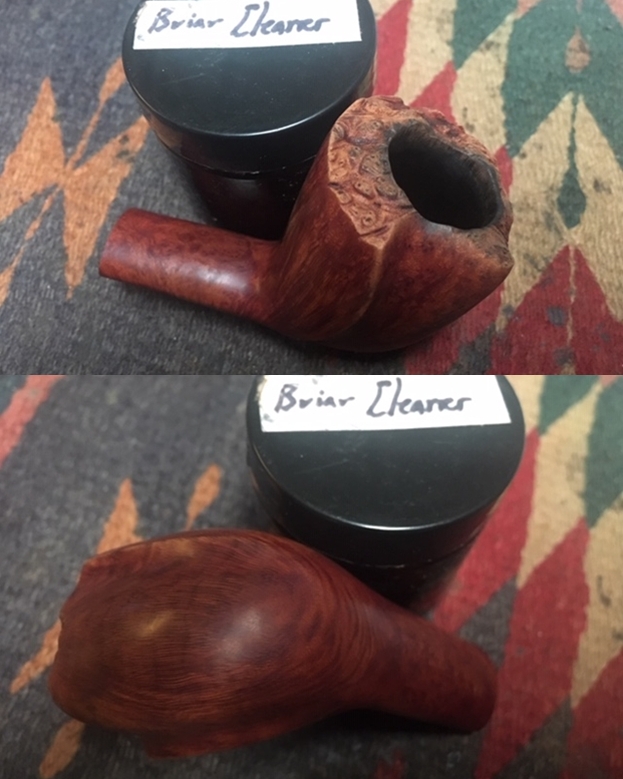
Restoring a Third Calich from Ken Bennett’s Estate – Grade 12 (81) Pickaxe


Blog by Steve Laug

Early in August I received an email from an interesting woman on Vancouver Island regarding some pipes that she had for sale. She was looking to sell the pipes from her late husband Ken and one from her Great Grandfather. Here is her email:

I have 5 John Calich pipes that date from 1979 to 1981. One is graded 11 and the other four are graded 12. I had bought them as Christmas and birthday gifts for my late husband. He was a very light smoker for a 3 year period.

I am a wood sculptor and always admired the grain and shapes of John’s best pipes. John was a friend as well. We exhibited at many exhibitions together for over 25 years.

I am wondering if you can provide any information on how I might be able to sell them.

Thanks you for any help you might be able to provide

I wrote her back and told I was very interested in the pipes that she had for sale and asked her to send me some photos of the lot. She quickly did just that and we struck a deal. I paid her through an e-transfer and the pipes were on their way to me. They arrived quite quickly and when they did I opened the box and found she had added three more pipes – a Brigham, a Dr. Plumb and a WDC Milano. There was also a wooden cigar box in the package that housed the Calich pipes. They are all lovely looking freehand style shapes – even the two apple shaped pipes had a freehand twist to them. The package also had the BBB Gourd Calabash that I have written about earlier (https://rebornpipes.com/2019/08/27/breathing-new-life-into-a-bbb-gourd-calabash-with-an-amber-stem/).Pat sent me photos of each of the pipes before the deal was struck so I could see the pipes before I made a decision. I kept the photos that she sent me. I have included the two photos of this pipe that she sent me below.      I wrote to Pat and asked her if she would be willing to write short remembrance of her late husband and her Great Grandfather. She wrote that she would be happy to write about them both. In her email she included a story about John Calich that I really enjoyed. I decided it was well worth including in this second blog about these Calich pipes.

My best John story is one you won’t likely be able to print.  We were set up beside each other in the late seventies at the Ottawa Tulip Festival in army tents. It was cold and wet. John always had a jar of good tobacco that he shared with past and prospective customers.  One morning a guy that looked like he was dirt poor started chatting with John. He pulled out his cheap pipe and stuffed it too full of the expensive tobacco and then asked John for a light. As he walked away John muttered under his breath to me “I’d like to give him a kick in his pants to get him puffing”

I had to laugh because in conversations I had with John we had some great laughs. He was a real character and this was truly a fitting reminder for me as I was preparing to work on the pipes.

I wrote to Pat again and told her I was thinking of restoring her husband, Ken’s pipes next. She is working on a piece for me but sent along a great story and a photo in case I “need some inspiration while you work”. I have also included that photo and the story below. It indeed was an inspiration and gave me an idea on what pipe to work on first. Here are Pat’s words:

I’d like you know that Ken was an incredibly talented and creative man with a smile and blue eyes that could light up a room. His laugh was pure magic. He could think outside the box and come up with an elegant solution to any problem…

Pat sent me this reflection on her husband Ken’s life. Thanks Pat for taking time to do this. I find that it gives another dimension to the pipes that I restore to know a bit about the previous pipeman. Pat and Ken were artists (Pat still is a Sculptural Weaver) and it was this that connected them to each other and to John Calich. Here are Pat’s words.

Here is the write up for Ken. We meet in University and it was love at first sight. I consider myself blessed to have shared a life together for 37 years.

Ken graduated from Ryerson University with Bachelor of Applied Arts in Design in 1975.

Ken lived his life with joy.  Each day was a leap of faith in the creative process. His smile would light up the room and the hearts of the people he loved.

He combined the skilled hands of a master craftsman, with the problem solving mind of an engineer, and the heart and soul of an artist. He used his talents to create unique and innovative wood sculptures. Using precious hardwoods, he incorporated the techniques of multiple lamination and three dimensional contouring to create sculptural pieces that captivate the eye and entice the hand to explore.

His career was highlighted by numerous corporate commissions, awards and public recognition in Canada and abroad.

A quote from Frank Lloyd Wright sums up Ken’s approach to design.  “Form follows function – that has been misunderstood. Form and function should be joined as one in a spiritual union.” 

A friendship with John Calich developed over years of exhibiting their work at exhibitions. How could a wood sculptor resist some of John’s finest creations…

Pat had included the top of a box that Ken had kept from the pipes he had purchase from John. I used the box top as a back drop for the photos of the pipe. This third Calich pipe also had a very interesting shape. It is an a freehand that I would call a Pickaxe with beautiful grain and a dull finish due to sitting unused in storage. The front side of the bowl was sculpted with two grooves that ran from the top to the pointed heel. The rim top and shank end were plateau briar and were rugged. The smooth bowl seemed to have a natural finish almost like oil – I like the way John’s pipes take on a rich patina as they age. The bowl had a cake in it and there was a lava overflow on the plateau rim top filling in the grooves and darkening the natural finish. The rim top and edges of the bowl were in excellent condition. The stamping on the underside of the shank read CALICH over Hand Made. After that stamping there was a superscript 81 stamped (year it was carved) with a subscript 12 which was the grade number. The stem was lightly oxidized as was the single metal dot in the top of the saddle. There was light tooth chatter on both sides of the stem on both sides near the button. The shank and stem were dirty inside.   I took a photo of the bowl and rim top to show the cake in the bowl and the lava build up in the plateau surface of the rim top. It is quite thick and fills in the grooves and darkens the natural finish of the plateau top. The cake was thick and hard but hopefully it had protected the rim and edges from damage. Otherwise it looks pretty good. I also took photos of the stem to show the oxidation on both sides and the light tooth chatter on both sides near the button. I took a photo of the underside of the shank to show the condition of the stamping. You can see the Calich stamp over Hand Made. Below that is the number 12 with the number 81 above that. The second photo shows the plateau finish on the rim top and shank end. The natural finish of the plateau on the shank end is what clued me to the fact that the rim top probably started that way as well.      I decided to include a bit about John Calich the pipemaker as I have loved John Calich’s pipes for over 25 years now and have collected a few of them. I have restored quite a few of them and written blogs about them that can be read if you are interested in seeing the kind of pipes that John made. They are unique and beautiful. Each one of them is a work of art to me. I am including the links to the previous blogs that have written about his pipes.

https://rebornpipes.com/2015/03/03/one-of-my-john-calich-pipes-a-calich-ee-billiard/

https://rebornpipes.com/2019/01/23/i-am-the-happy-owner-of-an-unsmoked-pipe-by-the-late-john-calich/

https://rebornpipes.com/2015/03/03/one-of-my-john-calich-pipes-a-calich-ee-billiard/

https://rebornpipes.com/2014/03/21/reflecting-on-my-collection-of-john-calich-pipes/

Each of the blogs reflects on John’s pipes if you want to get a feel for them take a few minutes and read them.

When John was living I spoke with him several times via phone and had him make some new stems for some of his pipes that I picked up off eBay. He was a very kind gentleman and was always helpful when I spoke with him. He was always ready with encouragement and when I needed to know how to do something when I was first learning to repair pipes he was willing to help. He was one of the old guard of Canadian Pipe makers. I miss him. I am including a short piece from Pipedia on John to give details on his work and the grading of his pipes. The second paragraph below is highlighted in blue as it gives some information on the Grade 12 Apple that I am working on with the single silver dot now.

John Calich, courtesy Doug Valitchka

John Calich was one of Canada’s finest carvers. He died in July 2008. John was a full time pipe maker for the last 40 years. Calich pipes were mostly traditional shapes. His signature style is rustication and smooth on the same pipe along with his unique skill to stain a pipe in contrasting colors. He used only top quality Grecian and Calabrian briar. The mouthpieces are hand finished Vulcanite “A”. Each pipe was entirely made by hand. John Calich was featured in the summer 2005 issue of Pipes & Tobacco.

His pipes are graded 3E – 7E. Retail prices range from$ 145.00 to $ 500.00 Each pipe is stamped “CALICH” 3-8E, his earlier pipes were graded from 3-14, and a single, tiny silver dot is applied to the top of the stem (https://pipedia.org/wiki/Calich).

I summarize the dating information from those blogs now: From my research and conversations I learned that John’s his later pipes were graded 3E – 8E. The retail prices for them ranged from $145.00 to $500.00. Each pipe was stamped “CALICH” and given an E grade. His earlier pipes were graded from 3-14 and had a single, tiny silver dot applied to the top of the stem. More information can be found at the Pipedia article above. All of this information told me as expected that the pipe I had was an earlier one.

Armed with Pat’s stories of John and her husband Ken and the information about John’s grading system it was time to work on the pipe. I reamed the bowl with a PipNet Pipe reamer using the third cutting head. I took the cake back to bare briar so that I could check out the inside walls. I used a Savinelli Fitsall Pipe Knife to scrape back the remaining cake. I finished my cleanup of the walls by sanding it with 220 grit sandpaper wrapped around a piece of dowel.  I decided to address the heavy lava overflow on the rim top with a brass bristle wire brush to start with. I would follow that up with scrubbing it under running water with the brush afterward.  I scrubbed the briar with Before & After Briar Cleaner and rinsed it off with warm running water. I scrubbed the plateau rim top with the wire brush and warm running water at the same time. I dried the bowl off with a soft microfiber cloth and gave it a light buffing. The photos show the cleaned briar and the grain is really beginning to pop. John really followed the grain on the shaping of this pipe. I rubbed the bowl down with Before & After Restoration Balm. I worked it into the surface of the briar with my fingertips to clean, enliven and protect it. I let the balm sit for a little while and then buffed with a cotton cloth to raise the shine. Mark Hoover’s Balm is a product that I have come to appreciate and one I use on every pipe I have been working on.   With the externals cleaned I worked on the internals. I scraped the inside of the mortise with a dental spatula to remove the hardened tars and oils that lined the walls of the shank. Once I had that done I cleaned out the airway to the bowl, the mortise and the airway in the stem with pipe cleaners, cotton swabs and alcohol. When I finished the pipe smelled very clean.  I set the bowl aside and turned my attention to the stem. I sanded the stem with 220 grit sandpaper to break up the oxidation. I started the polishing with 400 grit wet dry sandpaper to remove the scratching. It is starting to look good.  I have one more tin of Denicare Mouthpiece Polish left from a few that I have picked up over the years. It is a coarse red pasted that serves to help remove oxidation. I polished the stem with that to further smooth out the surface of the vulcanite (and to be honest – to use it up). I polished the stem with micromesh sanding pads – wet sanding with 1500-12000 grit pads. I wiped the stem down after each sanding pad with Obsidian Oil. I polished it with Before & After Pipe Stem Polish – both Fine and Extra Fine. Once I had finished the polishing I gave it final coat of oil and set it aside to dry.   This is the third Calich from Ken’s Estate that I am working on. It is another beautifully grained Pickaxe shaped Hand Made freehand. It has the kind of beauty I have come to expect from John’s pipes with a sculpted groove on the front and the plateau on the rim top and shank end. I am excited to be on the homestretch with another one of Ken’s pipes. This is the part I look forward to when it all comes back together, polished and waxed. I put the bowl and stem back together. I polished the bowl and stem with Blue Diamond to polish out the scratches in the briar and the vulcanite. I gave the bowl and the stem multiple coats of carnauba wax. I buffed the pipe with a clean buffing pad to raise the shine. I hand buffed it with a microfiber cloth to deepen the shine. The pipe polished up pretty nicely. The straight and flame grain around the sides of the bowl and shank is quite stunning. There is plateau on the rim top and shank end. The polished smooth finish look really good with the black vulcanite. This Calich Hand Made was fun to bring back to life because of the story that Pat shared with us. The connection between Ken and Pat and John Calich adds colour. The natural finish and the twin sculpted grooves on the front makes the pipe look attractive. It is another comfortable pipe to hold in the hand. The finished pipe is shown in the photos below. The dimensions of the pipe are Length: 5 ½ inches, Height: 2 1/2 inches, Outside diameter of the bowl: 1 ¾ inch, Chamber diameter: ¾ of an inch. Thanks for reading this blog and my reflections on the pipe while I worked on it. This is an interesting estate to bring back to life.
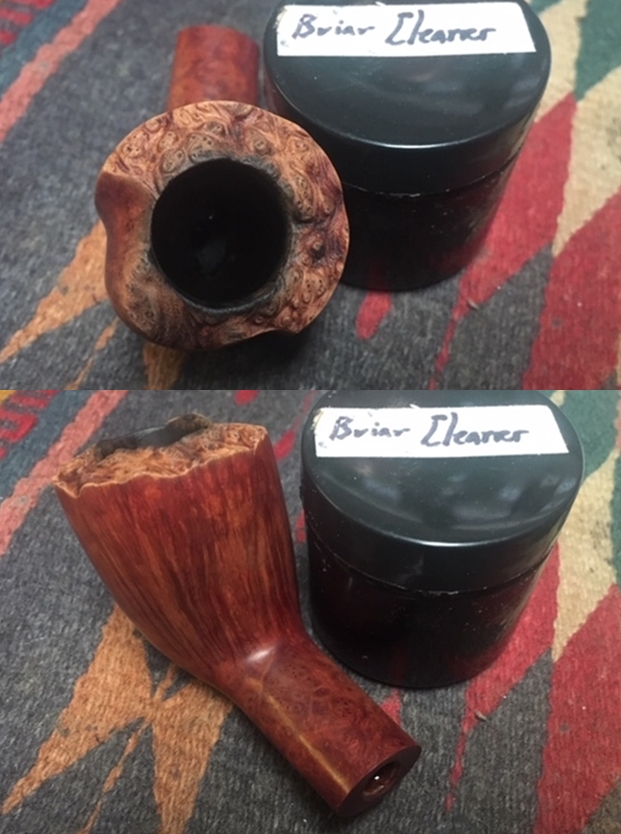
 

Restoring a Second Beautiful Grade 12 Apple by John Calich from Ken Bennett’s Estate


Blog by Steve Laug

Early in August I received an email from an interesting woman on Vancouver Island regarding some pipes that she had for sale. She was looking to sell the pipes from her late husband Ken and one from her Great Grandfather. Here is her email:

I have 5 John Calich pipes that date from 1979 to 1981. One is graded 11 and the other four are graded 12. I had bought them as Christmas and birthday gifts for my late husband. He was a very light smoker for a 3 year period.

I am a wood sculptor and always admired the grain and shapes of John’s best pipes. John was a friend as well. We exhibited at many exhibitions together for over 25 years.

I am wondering if you can provide any information on how I might be able to sell them.

Thanks you for any help you might be able to provide

I wrote her back and told I was very interested in the pipes that she had for sale and asked her to send me some photos of the lot. She quickly did just that and we struck a deal. I paid her through an e-transfer and the pipes were on their way to me. They arrived quite quickly and when they did I opened the box and found she had added three more pipes – a Brigham, a Dr. Plumb and a WDC Milano. There was also a wooden cigar box in the package that housed the Calich pipes. They are all lovely looking freehand style shapes – even the two apple shaped pipes had a freehand twist to them. The package also had the BBB Gourd Calabash that I have written about earlier (https://rebornpipes.com/2019/08/27/breathing-new-life-into-a-bbb-gourd-calabash-with-an-amber-stem/). Pat sent me photos of each of the pipes before the deal was struck so I could see the pipes before I made a decision. I kept the photos that she sent me. I have included the two photos of this pipe that she sent me below.  I wrote to Pat and asked her if she would be willing to write short remembrance of her late husband and her Great Grandfather. She wrote that she would be happy to write about them both. In her email she included a story about John Calich that I really enjoyed. I decided it was well worth including in this second blog about these Calich pipes.

My best John story is one you won’t likely be able to print.  We were set up beside each other in the late seventies at the Ottawa Tulip Festival in army tents. It was cold and wet. John always had a jar of good tobacco that he shared with past and prospective customers.  One morning a guy that looked like he was dirt poor started chatting with John. He pulled out his cheap pipe and stuffed it too full of the expensive tobacco and then asked John for a light. As he walked away John muttered under his breath to me “I’d like to give him a kick in his pants to get him puffing”

I had to laugh because in conversations I had with John we had some great laughs. He was a real character and this was truly a fitting reminder for me as I was preparing to work on the pipes.

I wrote to Pat again and told her I was thinking of restoring her husband, Ken’s pipes next. She is working on a piece for me but sent along a great story and a photo in case I “need some inspiration while you work”. I have also included that photo and the story below. It indeed was an inspiration and gave me an idea on what pipe to work on first. Here are Pat’s words:

I’d like you know that Ken was an incredibly talented and creative man with a smile and blue eyes that could light up a room. His laugh was pure magic. He could think outside the box and come up with an elegant solution to any problem…

Pat sent me this reflection on her husband Ken’s life. Thanks Pat for taking time to do this. I find that it gives another dimension to the pipes that I restore to know a bit about the previous pipeman. Pat and Ken were artists (Pat still is a Sculptural Weaver) and it was this that connected them to each other and to John Calich. Here are Pat’s words.

Here is the write up for Ken. We meet in University and it was love at first sight. I consider myself blessed to have shared a life together for 37 years.

Ken graduated from Ryerson University with Bachelor of Applied Arts in Design in 1975.

Ken lived his life with joy.  Each day was a leap of faith in the creative process. His smile would light up the room and the hearts of the people he loved.

He combined the skilled hands of a master craftsman, with the problem solving mind of an engineer, and the heart and soul of an artist. He used his talents to create unique and innovative wood sculptures. Using precious hardwoods, he incorporated the techniques of multiple lamination and three dimensional contouring to create sculptural pieces that captivate the eye and entice the hand to explore.

His career was highlighted by numerous corporate commissions, awards and public recognition in Canada and abroad.

A quote from Frank Lloyd Wright sums up Ken’s approach to design.  “Form follows function – that has been misunderstood. Form and function should be joined as one in a spiritual union.” 

A friendship with John Calich developed over years of exhibiting their work at exhibitions. How could a wood sculptor resist some of John’s finest creations…

Pat had included the top of a box that Ken had kept from the pipes he had purchase from John. I used the box top as a back drop for the photos of the pipe. This second Calich pipe also had a very interesting shape. It is an apple with beautiful grain and a dull finish due to sitting unused in storage. The right side of the bowl was sculpted and rusticated. It was stained a darker shade of brown and black that made the rustication look almost like a sandblast. The smooth portions of the bowl had been stained with a medium brown stain – I like the way John’s pipes take on a rich patina as they age. The bowl had a cake in it and there was slight lava overflow on the rim top. There were some small nicks in the rim top and inner edge of the bowl on the front side. The stamping on the left side of the shank read CALICH over Hand Made. Below the stamping was the number 12 which was the grade number. The stem was lightly oxidized as was the single metal dot in the top of the saddle. There was light tooth chatter on both sides of the stem on both sides near the button. The shank and stem were dirty inside. I took a photo of the bowl and rim top to show the cake in the bowl and the lava build up on the edges of the bowl. It was thick and hard but hopefully it had protected the rim and edges from damage. There appears to be a little damage on the front and back inner edge and rim top of the bowl. There was some darkening on the back edge and top of the rim top. Otherwise it looks pretty good. I also took photos of the stem to show the oxidation on both sides and the light tooth chatter on both sides near the button.     I took a photo of the left side of the shank to show the condition of the stamping. You can see the faint Calich stamp over Hand Made. Below that is the number 12. The first photo shows the Calich stamp and a little bit of the Hand Made stamp. The second photo shows the Hand Made stamp and the Grade 12 number below that.    I decided to include a bit about John Calich the pipemaker as I have loved John Calich’s pipes for over 25 years now and have collected a few of them. I have restored quite a few of them and written blogs about them that can be read if you are interested in seeing the kind of pipes that John made. They are unique and beautiful. Each one of them is a work of art to me. I am including the links to the previous blogs that have written about his pipes.

https://rebornpipes.com/2015/03/03/one-of-my-john-calich-pipes-a-calich-ee-billiard/

https://rebornpipes.com/2019/01/23/i-am-the-happy-owner-of-an-unsmoked-pipe-by-the-late-john-calich/

https://rebornpipes.com/2015/03/03/one-of-my-john-calich-pipes-a-calich-ee-billiard/

https://rebornpipes.com/2014/03/21/reflecting-on-my-collection-of-john-calich-pipes/

Each of the blogs reflects on John’s pipes if you want to get a feel for them take a few minutes and read them.

When John was living I spoke with him several times via phone and had him make some new stems for some of his pipes that I picked up off eBay. He was a very kind gentleman and was always helpful when I spoke with him. He was always ready with encouragement and when I needed to know how to do something when I was first learning to repair pipes he was willing to help. He was one of the old guard of Canadian Pipe makers. I miss him. I am including a short piece from Pipedia on John to give details on his work and the grading of his pipes. The second paragraph below is highlighted in blue as it gives some information on the Grade 12 Apple that I am working on with the single silver dot now.

John Calich, courtesy Doug Valitchka

John Calich was one of Canada’s finest carvers. He died in July 2008. John was a full time pipe maker for the last 40 years. Calich pipes were mostly traditional shapes. His signature style is rustication and smooth on the same pipe along with his unique skill to stain a pipe in contrasting colors. He used only top quality Grecian and Calabrian briar. The mouthpieces are hand finished Vulcanite “A”. Each pipe was entirely made by hand. John Calich was featured in the summer 2005 issue of Pipes & Tobacco.

His pipes are graded 3E – 7E. Retail prices range from$ 145.00 to $ 500.00 Each pipe is stamped “CALICH” 3-8E, his earlier pipes were graded from 3-14, and a single, tiny silver dot is applied to the top of the stem (https://pipedia.org/wiki/Calich).

I summarize the dating information from those blogs now: From my research and conversations I learned that John’s his later pipes were graded 3E – 8E. The retail prices for them ranged from $145.00 to $500.00. Each pipe was stamped “CALICH” and given an E grade. His earlier pipes were graded from 3-14 and had a single, tiny silver dot applied to the top of the stem. More information can be found at the Pipedia article above. All of this information told me as expected that the pipe I had was an earlier one.

Armed with Pat’s stories of John and her husband Ken and the information about John’s grading system it was time to work on the pipe. I reamed the bowl with a PipNet Pipe reamer using the third cutting head. I took the cake back to bare briar so that I could check out the inside walls. I used a Savinelli Fitsall Pipe Knife to scrape back the remaining cake. I finished my cleanup of the walls by sanding it with 220 grit sandpaper wrapped around a piece of dowel.      There was some darkening and damage on the inner edge of the rim that needed to be addressed. I sanded it with a folded piece of 220 grit sandpaper to remove and minimize the damage to the edge. I polished it with 400 grit wet dry sandpaper. I wiped the rim edge down with a damp cloth to remove the sanding dust on the briar. The finished rim top looked much better than when I started. I took a photo of the sanded rim top and also the inside of the bowl. The rim looks very good.     I polished the bowl with micromesh sanding pads – wet sanding with 1500-12000 grit sanding pads. I wiped the bowl down after each sanding pad with a damp cloth.  I scrubbed the briar with Before & After Briar Cleaner and rinsed it off with warm running water. I dried the bowl off with a soft microfiber cloth and gave it a light buffing. The photos show the cleaned briar and the grain is really beginning to pop. John really followed the grain on the shaping of this pipe. I rubbed the bowl down with Before & After Restoration Balm. I worked it into the surface of the briar with my fingertips to clean, enliven and protect it. I let the balm sit for a little while and then buffed with a cotton cloth to raise the shine. Mark Hoover’s Balm is a product that I have come to appreciate and one I use on every pipe I have been working on.  With the externals cleaned I worked on the internals. I scraped the inside of the mortise with a dental spatula to remove the hardened tars and oils that lined the walls of the shank. Once I had that done I cleaned out the airway to the bowl, the mortise and the airway in the stem with pipe cleaners, cotton swabs and alcohol. When I finished the pipe smelled very clean. I set the bowl aside and turned my attention to the stem. I sanded the stem with 220 grit sandpaper to break up the oxidation. I started the polishing with 400 grit wet dry sandpaper to remove the scratching. It is starting to look good. I have one more tin of Denicare Mouthpiece Polish left from a few that I have picked up over the years. It is a coarse red pasted that serves to help remove oxidation. I polished the stem with that to further smooth out the surface of the vulcanite (and to be honest – to use it up).   I polished the stem with micromesh sanding pads – wet sanding with 1500-12000 grit pads. I wiped the stem down after each sanding pad with Obsidian Oil. I polished it with Before & After Pipe Stem Polish – both Fine and Extra Fine. Once I had finished the polishing I gave it final coat of oil and set it aside to dry. This is the second Calich from Ken’s Estate that I am working on. It is another beautifully grained apple shaped Hand Made. It has the kind of beauty I have come to expect from John’s pipes with a sculpted groove and rusticated patch on the right side of the bowl. I am excited to be on the homestretch with another one of Ken’s pipes. This is the part I look forward to when it all comes back together, polished and waxed. I put the bowl and stem back together. I polished the bowl and stem with Blue Diamond to polish out the scratches in the briar and the vulcanite. I gave the bowl and the stem multiple coats of carnauba wax. I buffed the pipe with a clean buffing pad to raise the shine. I hand buffed it with a microfiber cloth to deepen the shine. The pipe polished up pretty nicely. The straight and flame grain around the sides of the bowl and shank is quite stunning. There is birdseye on the top and underside of the bowl and shank. The polished smooth finish look really good with the black vulcanite. This Calich Hand Made was fun to bring back to life because of the story that Pat shared with us. The connection between Ken and Pat and John Calich adds colour. The darker finish and the rusticated sculpted side really makes the pipe look attractive. It is another comfortable pipe to hold in the hand. The finished pipe is shown in the photos below. The dimensions of the pipe are Length: 5 ½ inches, Height: 1 ¾ inches, Outside diameter of the bowl: 1 ¼ inch, Chamber diameter: ¾ of an inch. Thanks for reading this blog and my reflections on the pipe while I worked on it. This is an interesting estate to bring back to life. 
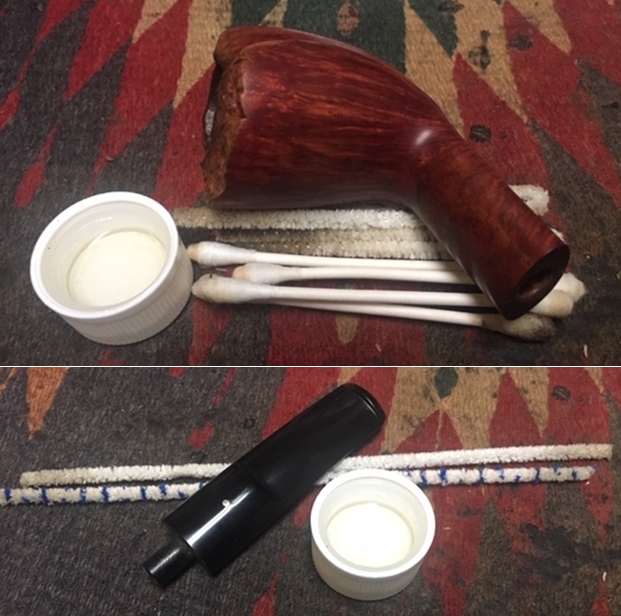
Refreshing another unsmoked 1910-1915 C.P.F. Chesterfield – a Military Mount Billiard


Blog by Steve Laug

This afternoon I was going through my boxes of pipes hunting for a specific stem and came across this old, unsmoked C.P.F. Chesterfield Military Mount Billiard. What made it interesting to me was the fact that though it was unsmoked the brass ferrule was oxidized to the point of disintegration. If you have followed my blog for long you know that I love older C.P.F. pipes and I really am a sucker for them as I have a small collection of them. This one rang all the bells for me with the unsmoked bowl, the gold stamp on the shank, even the disintegrating brass band and the P-lip style stem. I am pretty sure from working on other C.P.F. pipes that the pipe was from the time period of the 1910s and before 1920, which also made it attractive to me. When I brought it to my work table this is what I saw (it did not disappoint). It was a bit shop worn from sitting – nicks and grime on the finish. The brass ferrule was loose and in rough condition. The stamping on the left side of the shank read Chesterfield in an arch over the C.P.F. in an oval logo. On the right side of the shank it read French Briar. The stem read Chesterfield over the C.P.F. oval logo on the topside of the taper. On the underside it read Solid Rubber. The bowl was raw briar and totally looked new and unused. You have to admit this is a beauty – I guess that is subjective but it is to me! I took photos of the pipe as it looked on the table. I took close up photos of the bowl, rim top and stem to show the overall condition of the pipe. The bowl was pristine as noted above. The rim top was very clean and undamaged. There were a few small nicks on the inner edge.  The shank ahead of the band was discoloured from the brass ferrule and the ferrule itself had a lot of cracks in surface all around. The stem was in excellent condition – no oxidation. There were a lot of minute scratches in the surface on both sides. The stamping on the stem top and underside was very readable.     The next photos show the stamping on the shank. You can see that they are all quite clear.   I wrote a piece on the background to the C.P.F. brand earlier on the blog and include the link to that here (https://rebornpipes.com/2013/04/14/some-reflection-on-the-historical-background-on-cpf-pipes/). I quote a pertinent part of the blog below:

From my reading and research it seems to me that C.P.F. brand was discontinued sometime in the 1910-1920 range. Again, turning to Bill Feuerbach I found that he notes the following, which pins down the time frame of the discontinuation of the brand more specifically, “I have a C.P.F. Chesterfield in our office display that has a nametag from way before my time that says 1900 C.P.F. Chesterfield. It looks like most other Chesterfields you’ve seen, including the military type push stem, except this stem is horn and not vulcanite. As far as I have gathered the C.P.F. brand was phased out sometime around 1915.” Interestingly, he noted that the Chesterfield name and style was later introduced in the KB&B, Kaywoodie and Yello-Bole lines. He says that the 1924 KB&B catalog shows KB&B Chesterfields…

… From my research I believe that we can definitively assert that the C.P.F. logo stands for Colossus Pipe Factory. The brand was purchased by KB&B sometime between 1884 and 1898 and that it continued until 1915. That time frame gives help in dating some of the older C.P.F. pipes you or I might find. It can be said that prior to the dual stamping it is fairly certain that the pipe is pre-1884 to 1898. After the dual stamping it can be placed post 1898 until the closure of the brand line in 1915. C.P.F. made beautiful pipes.

From that information I dated this pipe to the peroid metnioned above. I would further refine the 1910s period to a time between 1910-1915. At any rate it is an old pipe to remain unsmoked for this long. How this old timer has been around this long and is still unsmoked is a bit of a mystery to me.

I tried to remove the ferrule and as I touched it the metal disintegrated into a pipe of very fragile pieces of metal. The metal was whitened on the outside and inside. The oxidation had made the metal very brittle.I wiped the bowl down with acetone on a cotton pad to remove the spotty varnish coat and break down the remnants of glue left behind by the crumbled ferrule. I sanded the shank end with 220 grit sandpaper to remove the heavy spots. I polished it with 1500-2400 grit micromesh sanding pads.    I went through my box of bands and ferrules and found a nickel ferrule that was a good fit on the shank end. I put some Weldbond white glue around the shank end and pressed the band onto the shank. I aligned the “hallmarks” with the gold stamping on the left side of the shank.I scrubbed the briar with Before & After Briar Cleaner. I rubbed it into the surface of the briar ahead of the ferrule and around the shank and bowl. I let the cleaner sit on the briar for 10-15 minutes and then rinsed it off to remove the cleaner and the grime that it had picked up. I took photos of the pipe after I had dried it off.  I rubbed the bowl down with Before & After Restoration Balm. I worked it into the surface of the briar with my fingertips to clean, enliven and protect it. I let the balm sit for a little while and then buffed with a cotton cloth to raise the shine. Mark Hoover’s Balm is a product that I have come to appreciate and one I use on every pipe I have been working on.  I polished the stem with micromesh sanding pads – wet sanding with 1500-12000 grit pads. I wiped the stem down after each sanding pad with Obsidian Oil. I polished it with Before & After Pipe Stem Polish – both Fine and Extra Fine. Once I had finished the polishing I gave it final coat of oil and set it aside to dry. I love these old C.P.F. pipes. There is some serious thought that they were carved by European trained craftsman who were skilled pipemakers. They were brought to the US by the C.P.F. Company to make pipes. Many of the shapes, bands and stems have the kind of workmanship involved that I really think there is truth to this story. This is little chubby billiard with a classic shape that reminds me of some of the older Peterson’s Sraight billiards that I have restored. The stem is a Peterson style P-lip with the airway on the top of the stem. I polished stem and the bowl with Blue Diamond polish on the buffing wheel carefully avoiding the stamping on the shank. I gave the bowl and the stem multiple coats of carnauba wax. I buffed the pipe with a clean buffing pad to raise the shine. I hand buffed it with a microfiber cloth to deepen the shine. The pipe polished up pretty nicely. The contrasting grain really began to stand out; it seemed to take on life with the buffing. The rich contrasting brown colour works well with the silver ferrule and the polished black vulcanite stem. The finished pipe has a rich look that is quite catching. Have a look at it with the photos below. The shape, finish and flow of the pipe and stem are very well done. The dimensions are Length: 5 ½ inches, Height: 1 ¾ inches, Outside diameter of the bowl: 1 1/4 inches, Chamber diameter: ¾ of an inch. This one will be joining my collection as it fits in the C.P.F. niche group that I have been building. The shape and feel in the hand is perfect. Now I have to make a hard decision – do I leave it unsmoked or do I load it up with some aged Virginia and break it in. Thanks for walking through the restoration with me as I restored and reworked this old billiard from 1910-1915. It is always a treat for me to work on a piece of pipe history especially when I have learned a bit of the story behind it.
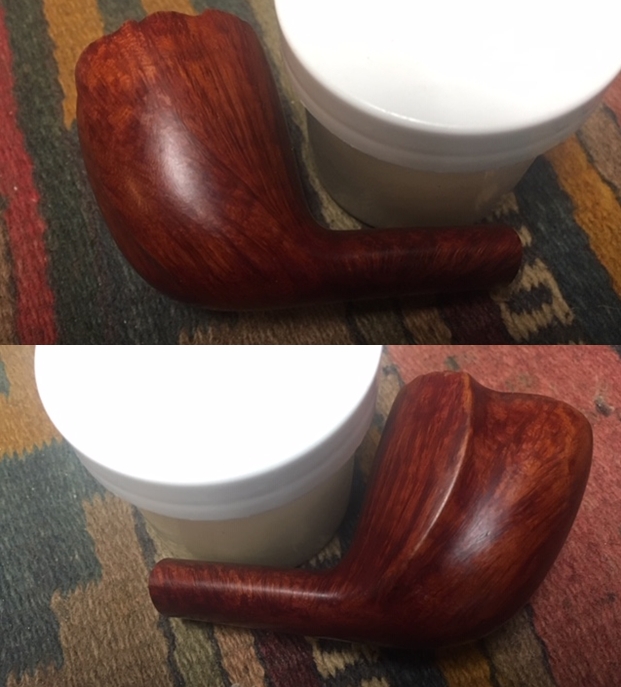
Restoring a Beautiful Grade 12 Apple by John Calich that has a Great Story


Blog by Steve Laug

Early in August I received an email from an interesting woman on Vancouver Island regarding some pipes that she had for sale. She was looking to sell the pipes from her late husband Ken and one from her Great Grandfather. Here is her email:

I have 5 John Calich pipes that date from 1979 to 1981. One is graded 11 and the other four are graded 12. I had bought them as Christmas and birthday gifts for my late husband. He was a very light smoker for a 3 year period.

I am a wood sculptor and always admired the grain and shapes of John’s best pipes. John was a friend as well. We exhibited at many exhibitions together for over 25 years.

I am wondering if you can provide any information on how I might be able to sell them.

Thanks you for any help you might be able to provide

I wrote her back and told I was very interested in the pipes that she had for sale and asked her to send me some photos of the lot. She quickly did just that and we struck a deal. I paid her through an e-transfer and the pipes were on their way to me. They arrived quite quickly and when they did I opened the box and found she had added three more pipes – a Brigham, a Dr. Plumb and a WDC Milano. There was also a wooden cigar box in the package that housed the Calich pipes. They are all lovely looking freehand style shapes – even the two apple shaped pipes had a freehand twist to them. The package also had the BBB Gourd Calabash that I have written about earlier (https://rebornpipes.com/2019/08/27/breathing-new-life-into-a-bbb-gourd-calabash-with-an-amber-stem/).I wrote to Pat and asked her if she would be willing to write short remembrance of her late husband and her Great Grandfather. She wrote that she would be happy to write about them both. In her email she included a story about John Calich that I really enjoyed. I decided it was well worth including in this first blog about these Calich pipes.

My best John story is one you won’t likely be able to print.  We were set up beside each other in the late seventies at the Ottawa Tulip Festival in army tents. It was cold and wet. John always had a jar of good tobacco that he shared with past and prospective customers.  One morning a guy that looked like he was dirt poor started chatting with John. He pulled out his cheap pipe and stuffed it too full of the expensive tobacco and then asked John for a light. As he walked away John muttered under his breath to me “I’d like to give him a kick in his pants to get him puffing”

I had to laugh because in conversations I had with John we had some great laughs. He was a real character and this was truly a fitting reminder for me as I was preparing to work on the pipes.

I wrote to Pat again and told her I was thinking of restoring her husband, Ken’s pipes next. She is working on a piece for me but sent along a great story and a photo in case I “need some inspiration while you work”. I have also included that photo and the story below. It indeed was an inspiration and gave me an idea on what pipe to work on first. Here are Pat’s words:

I’d like you know that Ken was an incredibly talented and creative man with a smile and blue eyes that could light up a room. His laugh was pure magic. He could think outside the box and come up with an elegant solution to any problem.

I remember the day he had to “fess up” about burning a hole through the pocket in his new sports jacket that was bought for an upcoming gallery opening of our work…….of course the “real culprit” was that damn small John Calich pipe that he favoured above all others, because it felt so good in the palm of his hand and tucked neatly into a pocket.

Once again I had to laugh because I have also burned a hole in a pocket and more than few shirts from sparks from a lit pipe. I went through Ken’s pipes and found the pipe I think that she was referring to in the above story. I sent her a picture of the pipe and she confirmed that it was indeed the one she was talking about. Now I knew which one I was going to work on first. I brought the nice little bent apple pipe to my work table and took some photos before I started the clean up on the pipe.

Pat sent me this reflection on her husband Ken’s life. Thanks Pat for taking time to do this. I find that it gives another dimension to the pipes that I restore to know a bit about the previous pipeman. Pat and Ken were artists (Pat still is a Sculptural Weaver) and it was this that connected them to each other and to John Calich. Here are Pat’s words.

Here is the write up for Ken. We meet in University and it was love at first sight. I consider myself blessed to have shared a life together for 37 years.

Ken graduated from Ryerson University with Bachelor of Applied Arts in Design in 1975.

Ken lived his life with joy.  Each day was a leap of faith in the creative process. His smile would light up the room and the hearts of the people he loved.

He combined the skilled hands of a master craftsman, with the problem solving mind of an engineer, and the heart and soul of an artist. He used his talents to create unique and innovative wood sculptures. Using precious hardwoods, he incorporated the techniques of multiple lamination and three dimensional contouring to create sculptural pieces that captivate the eye and entice the hand to explore.

His career was highlighted by numerous corporate commissions,  awards and public recognition in Canada and abroad.

A quote from Frank Lloyd Wright sums up Ken’s approach to design.  “Form follows function – that has been misunderstood. Form and function should be joined as one in a spiritual union.” 

A friendship with John Calich developed over years of exhibiting their work at exhibitions. How could a wood sculptor resist some of John’s finest creations…

Pat had included the top of a box that Ken had kept from the pipes he had purchase from John. I used the box top as a back drop for the photos of the pipe. The pipe had a very interesting shape. It is an apple with beautiful grain and a dull finish due to sitting unused in storage. The bottom of the bowl was plateau that had been sanded down to knock off the high points. It appeared that the finish was oil cured and unstained – I like that about John’s pipes as with age and use they take on colour. The bowl had a cake in it and there was slight lava overflow on the rim top. There were some small nicks in the rim top and inner edge of the bowl on the right front side. The stamping on the left side of the shank read CALICH over Hand Made. Below the stamping was the number 12 which was the grade number. The stem was lightly oxidized as was the single metal dot in the top of the saddle. There was light tooth chatter on both sides of the stem on both sides near the button. The shank and stem were dirty inside.  I took a photo of the bowl and rim top to show the cake in the bowl and the lava build up on the edges of the bowl. It was thick and hard but hopefully it had protected the rim and edges from damage. There appears to be a little damage on the right front inner and rim top of the bowl. There was some darkening on the back edge and top of the rim top. Otherwise it looks pretty good. I also took photos of the stem to show the oxidation on both sides and the light tooth chatter on both sides near the button.   I took a photo of the left side of the shank to show the condition of the stamping. You can see the faint Calich stamp over Hand Made. Below that is the number 12.I decided to include a bit about John Calich the pipemaker as I have loved John Calich’s pipes for over 25 years now and have collected a few of them. I have restored quite a few of them and written blogs about them that can be read if you are interested in seeing the kind of pipes that John made. They are unique and beautiful. Each one of them is a work of art to me. I am including the links to the previous blogs that have written about his pipes.

https://rebornpipes.com/2015/03/03/one-of-my-john-calich-pipes-a-calich-ee-billiard/

https://rebornpipes.com/2019/01/23/i-am-the-happy-owner-of-an-unsmoked-pipe-by-the-late-john-calich/

https://rebornpipes.com/2015/03/03/one-of-my-john-calich-pipes-a-calich-ee-billiard/

https://rebornpipes.com/2014/03/21/reflecting-on-my-collection-of-john-calich-pipes/

Each of the blogs reflect on John’s pipes if you want to get a feel for them take a few minutes and read them.

When John was living I spoke with him several times via phone and had him make some new stems for some of his pipes that I picked up off eBay. He was a very kind gentleman and was always helpful when I spoke with him. He was always ready with encouragement and when I needed to know how to do something when I was first learning to repair pipes he was willing to help. He was one of the old guard of Canadian Pipe makers. I miss him. I am including a short piece from Pipedia on John to give details on his work and the grading of his pipes. The second paragraph below is highlighted in blue as it gives some information on the Grade 12 Apple that I am working on with the single silver dot now.

John Calich, courtesy Doug Valitchka

John Calich was one of Canada’s finest carvers. He died in July 2008. John was a full time pipe maker for the last 40 years. Calich pipes were mostly traditional shapes. His signature style is rustication and smooth on the same pipe along with his unique skill to stain a pipe in contrasting colors. He used only top quality Grecian and Calabrian briar. The mouthpieces are hand finished Vulcanite “A”. Each pipe was entirely made by hand. John Calich was featured in the summer 2005 issue of Pipes & Tobacco.

His pipes are graded 3E – 7E. Retail prices range from$ 145.00 to $ 500.00 Each pipe is stamped “CALICH” 3-8E, his earlier pipes were graded from 3-14, and a single, tiny silver dot is applied to the top of the stem (https://pipedia.org/wiki/Calich).

I summarize the dating information from those blogs now: From my research and conversations I learned that John’s his later pipes were graded 3E – 8E. The retail prices for them ranged from $145.00 to $500.00. Each pipe was stamped “CALICH” and given an E grade. His earlier pipes were graded from 3-14 and had a single, tiny silver dot applied to the top of the stem. More information can be found at the Pipedia article above. All of this information told me as expected that the pipe I had was an earlier one.

Armed with Pat’s story of the pipe and Ken’s coat and information about John’s grading system it was time to work on the pipe. I reamed the bowl with a PipNet Pipe reamer using the third cutting head. I took the cake back to bare briar so that I could check out the inside walls. I used a Savinelli Fitsall Pipe Knife to scrape back the remaining cake. I finished my cleanup of the walls by sanding it with 220 grit sandpaper wrapped around a piece of dowel.  There was some darkening and damage on the inner edge of the rim that needed to be addressed. I sanded it with a folded piece of 220 grit sandpaper to remove and minimize the damage to the edge. I continued by starting to polish it with 400 grit wet dry sandpaper. I wiped the rim edge down with a damp cloth to remove the sanding dust on the briar. The finished rim top looked much better than when I started. I was able to minimize the damage on the front inner edge of the rim. It is still damaged but it looks considerably better. I took a photo of the sanded rim top and also the inside of the bowl. The rim looks very good but there is also a large flaw/split in the right side of the bowl.     I decided to repair that flaw with some JB Weld (steel weld that dries hard and impervious and is heat resistant). I mixed the two parts on an old envelope with a tooth pick and press it into the flaw on the wall of the bowl. I used a dental spatula to spread out the mix across the surface around the flaw. Once it had cured I would need to sanded it smooth and minimize the footprint on the wall of the bowl. I scrubbed the briar with Before & After Briar Cleaner and rinsed it off with warm running water. I dried the bowl off with a soft microfiber cloth and gave it a light buffing. The photos show the cleaned briar and the grain is really beginning to pop. John really followed the grain on the shaping of this pipe.      I polished the bowl with micromesh sanding pads – wet sanding with 1500-12000 grit sanding pads. I wiped the bowl down after each sanding pad with a damp cloth.     I rubbed the bowl down with Before & After Restoration Balm. I worked it into the surface of the briar with my fingertips to clean, enliven and protect it. I let the balm sit for a little while and then buffed with a cotton cloth to raise the shine. Mark Hoover’s Balm is a product that I have come to appreciate and one I use on every pipe I have been working on.   With the externals cleaned I worked on the internals. I scraped the inside of the mortise with a dental spatula to remove the hardened tars and oils that lined the walls of the shank. Once I had that done I cleaned out the airway to the bowl, the mortise and the airway in the stem with pipe cleaners, cotton swabs and alcohol. When I finished the pipe smelled very clean.  I called it a night and set the repaired bowl aside to cure. I turned the lights out and went upstairs. In the morning I sanded the repaired bowl wall with 220 grit sandpaper to remove the excess repair. I wanted to leave only the repair in the crevice in the wall and not on the rest of the wall.I set the bowl aside and turned my attention to the stem. I sanded the stem with 220 grit sandpaper to break up the oxidation. I started the polishing with 400 grit wet dry sandpaper to remove the scratching. It is starting to look good.         I have one more tin of Denicare Mouthpiece Polish left from a few that I have picked up over the years. It is a coarse red pasted that serves to help remove oxidation. I polished the stem with that to further smooth out the surface of the vulcanite (and to be honest – to use it up).       I polished the stem with micromesh sanding pads – wet sanding with 1500-12000 grit pads. I wiped the stem down after each sanding pad with Obsidian Oil. I polished it with Before & After Pipe Stem Polish – both Fine and Extra Fine. Once I had finished the polishing I gave it final coat of oil and set it aside to dry. This is the first Calich from Ken’s Estate that I am working on. It is a beautifully grained apple shaped Hand Made. It has the kind of beauty I have come to expect from John’s pipes with the carved groove on the right side of the bowl and the plateau on the underside of the bowl. I am excited to be on the homestretch with this beauty from Ken’s pipes. This is the part I look forward to when it all comes back together, polished and waxed. I put the bowl and stem back together. I polished the bowl and stem with Blue Diamond to polish out the scratches in the briar and the vulcanite. I gave the bowl and the stem multiple coats of carnauba wax. I buffed the pipe with a clean buffing pad to raise the shine. I hand buffed it with a microfiber cloth to deepen the shine. The pipe polished up pretty nicely. There is straight and flame grain around the sides of the bowl is quite stunning. There is birdseye on the top and underside of the shank and on the rim top. The polished smooth finish look really good with the black vulcanite. This Calich Hand Made was fun to bring back to life because of the story that Pat shared with us. The connection between Ken and Pat and John Calich adds colour. The natural finish really makes the pipe look attractive. It is another comfortable pipe to hold in the hand. The finished pipe is shown in the photos below. The dimensions of the pipe are Length: 5 ½ inches, Height: 1 ½ inches, Outside diameter of the bowl: 1 inch, Chamber diameter: 7/8 of an inch. Thanks for reading this blog and my reflections on the pipe while I worked on it. This is an interesting estate to bring back to life.