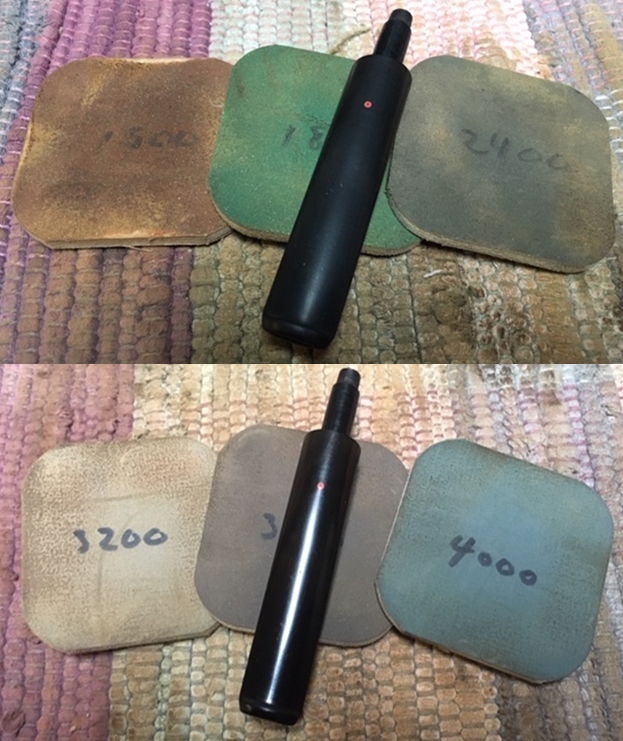
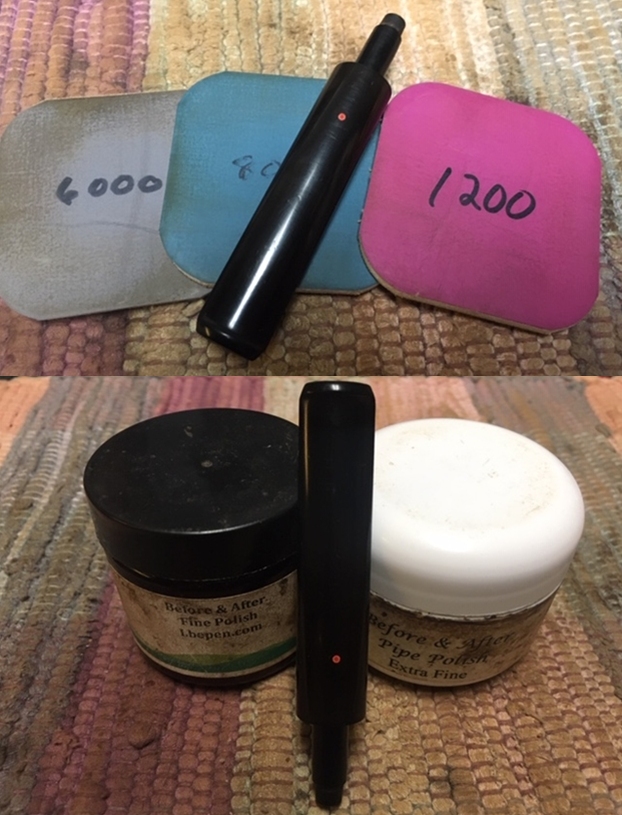
Tag Archives: polishing stems

Rusticating a Bald Spot on the Briar on a Bjarne Bent Apple


Blog by Steve Laug

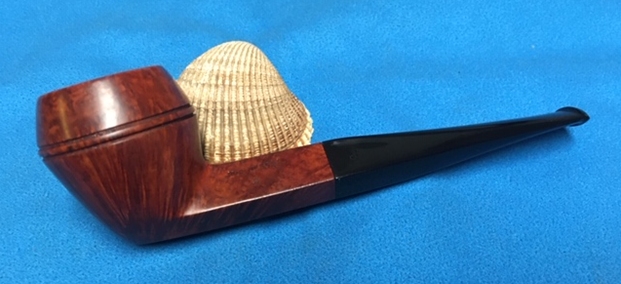
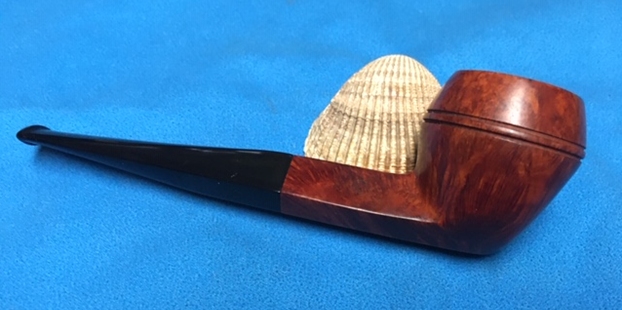
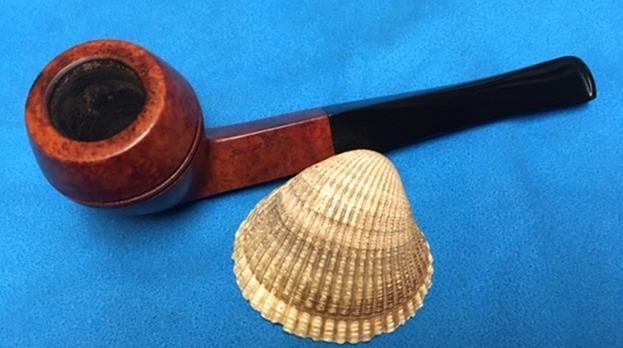
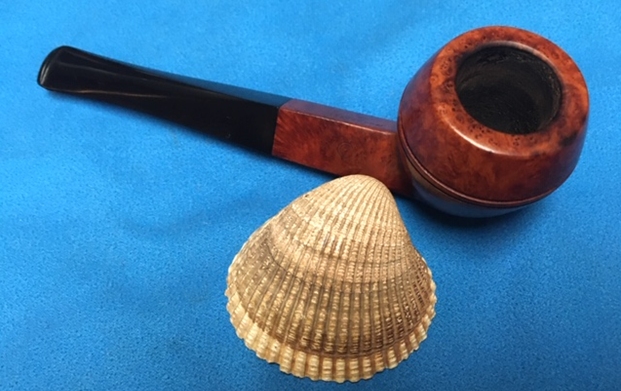
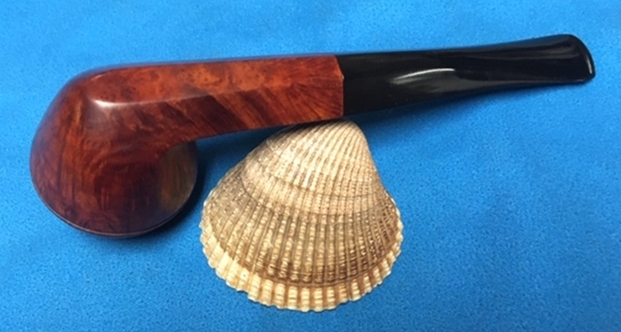
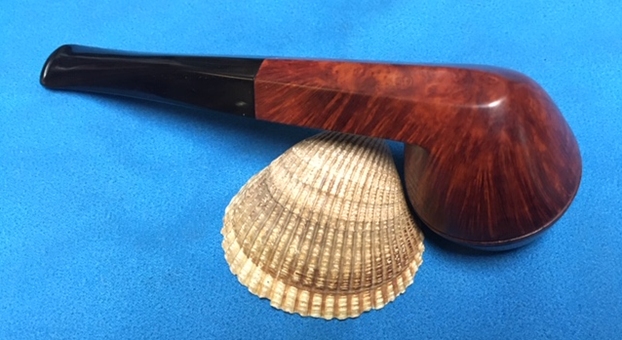
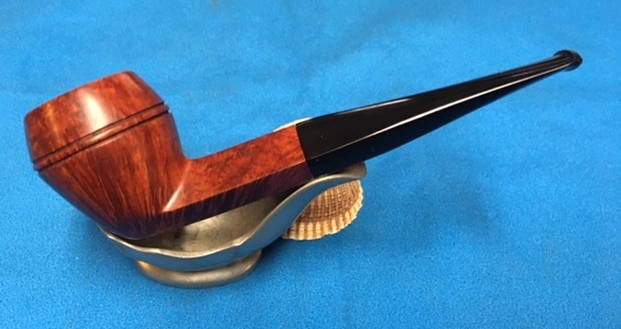
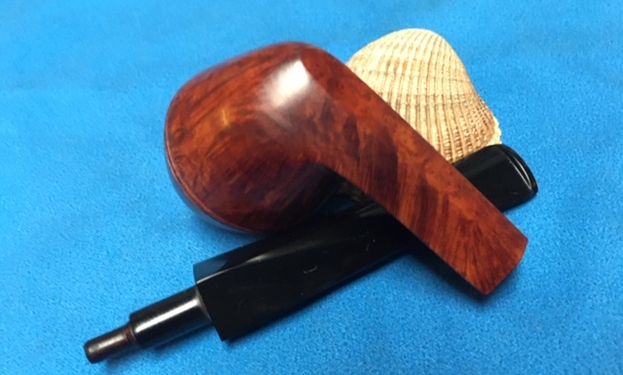
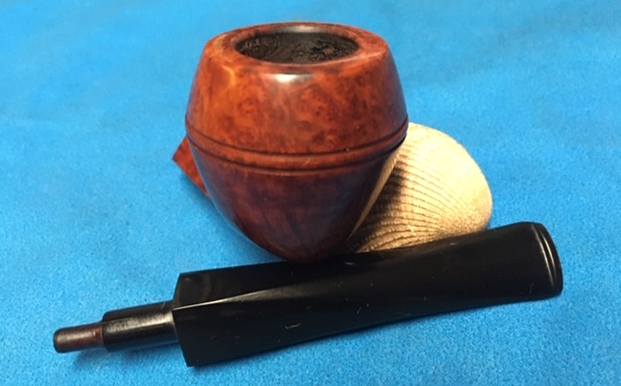
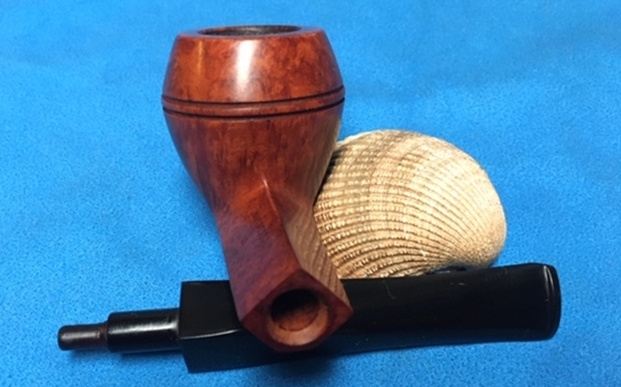
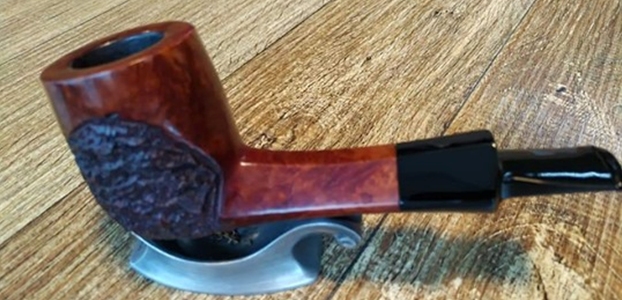
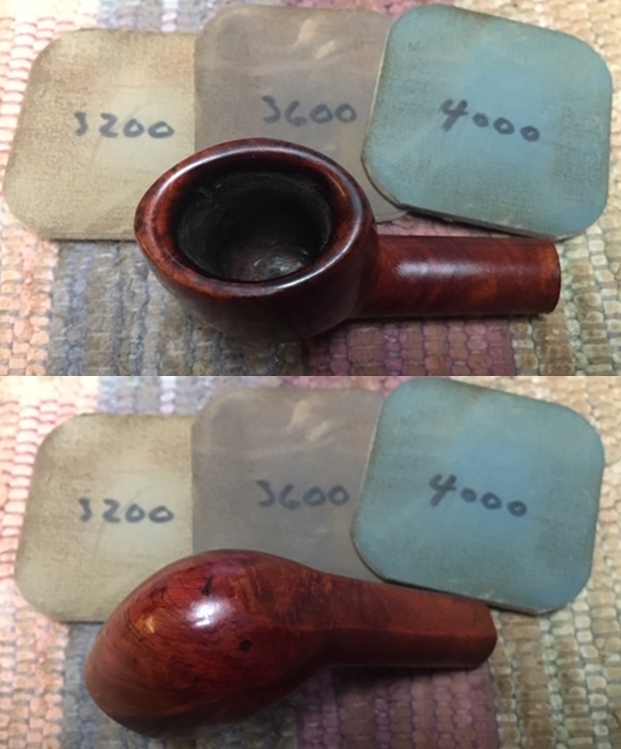
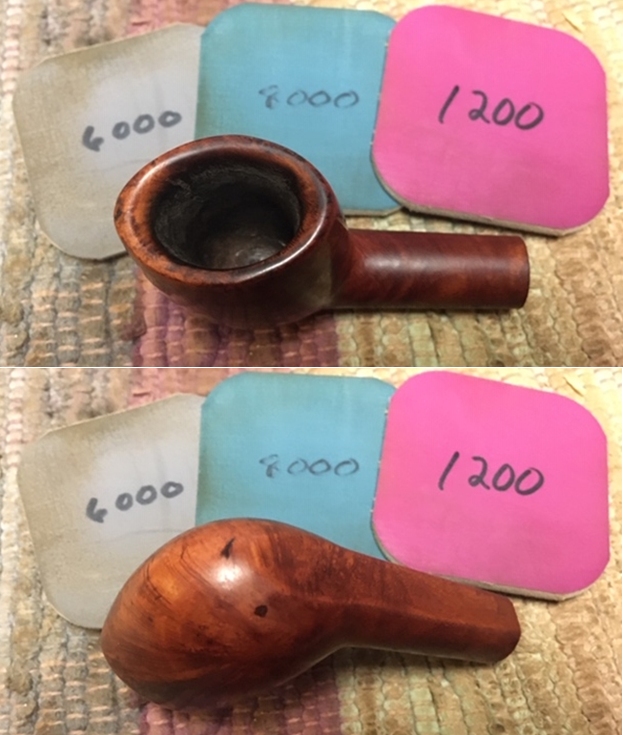
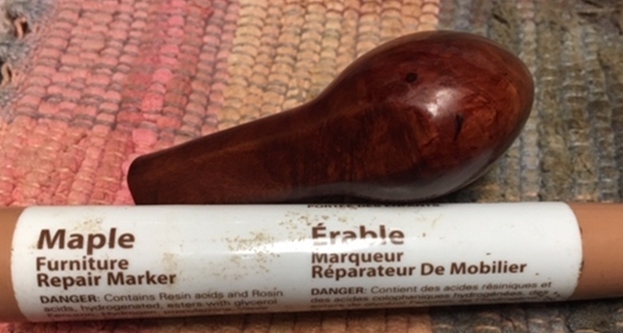
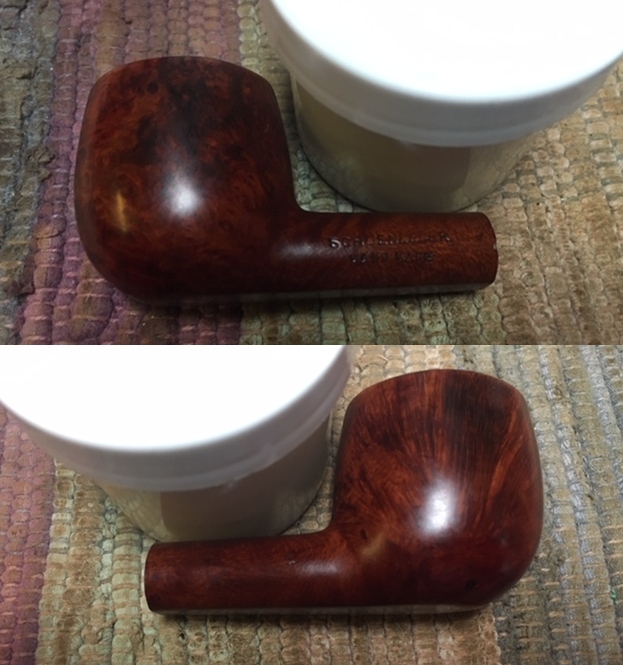
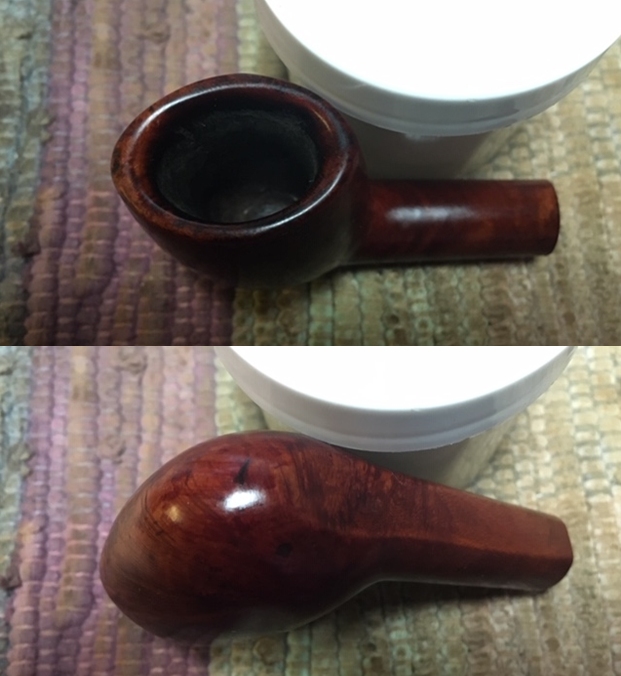
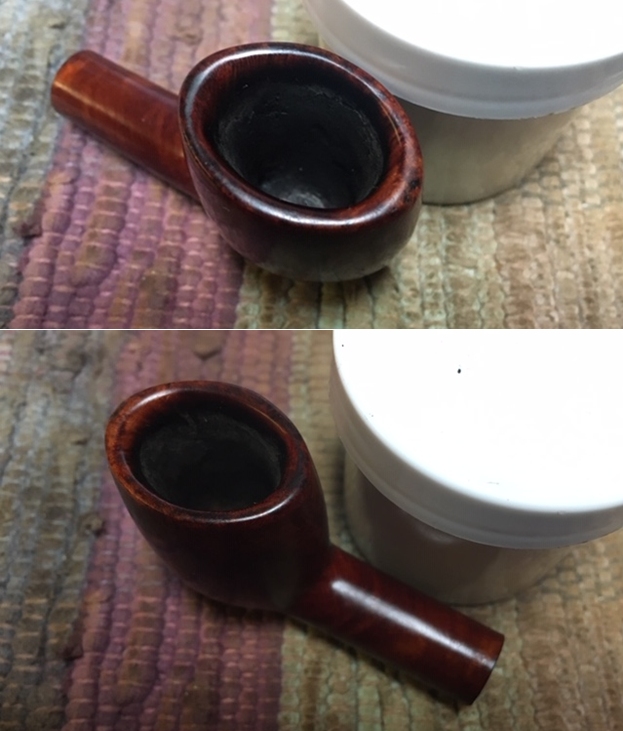
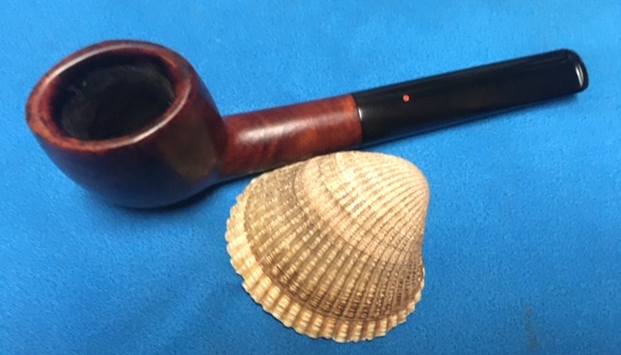
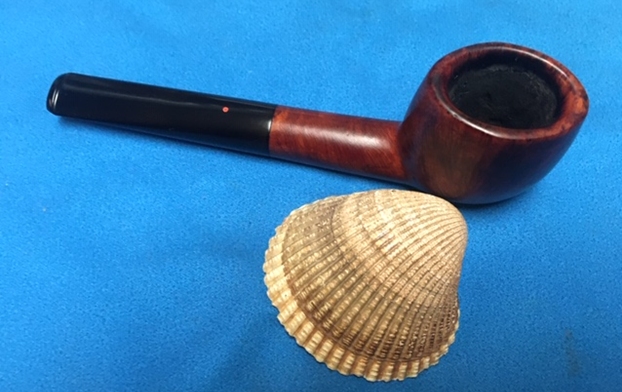
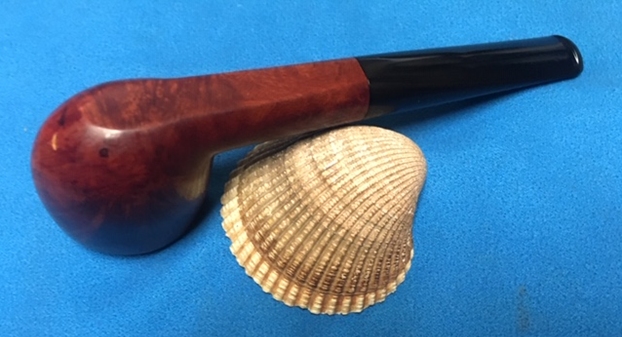
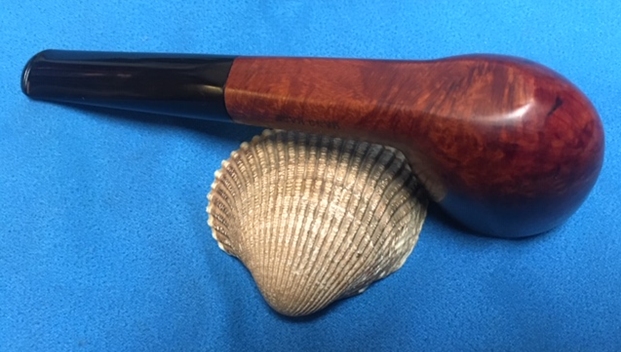
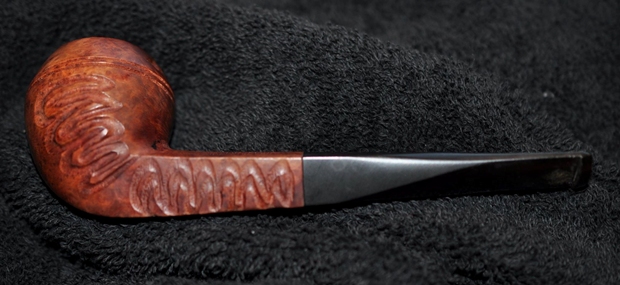
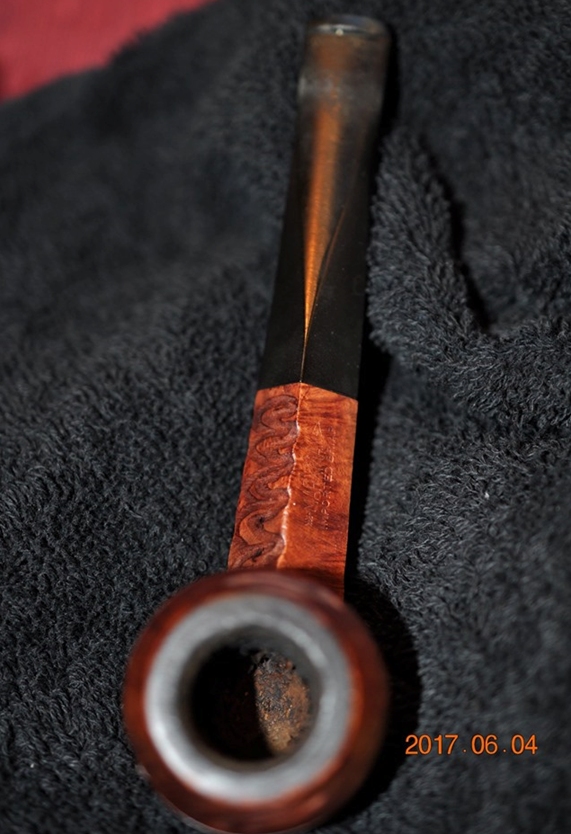
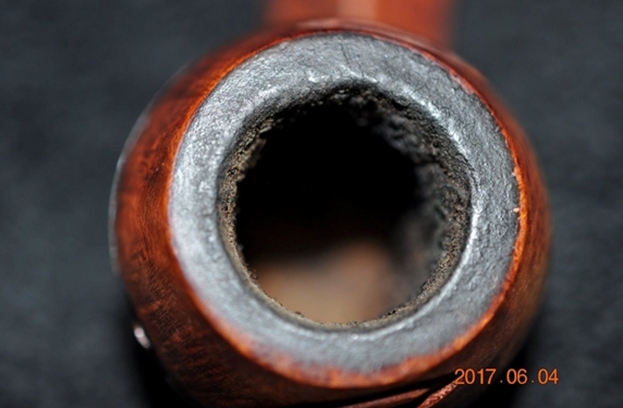
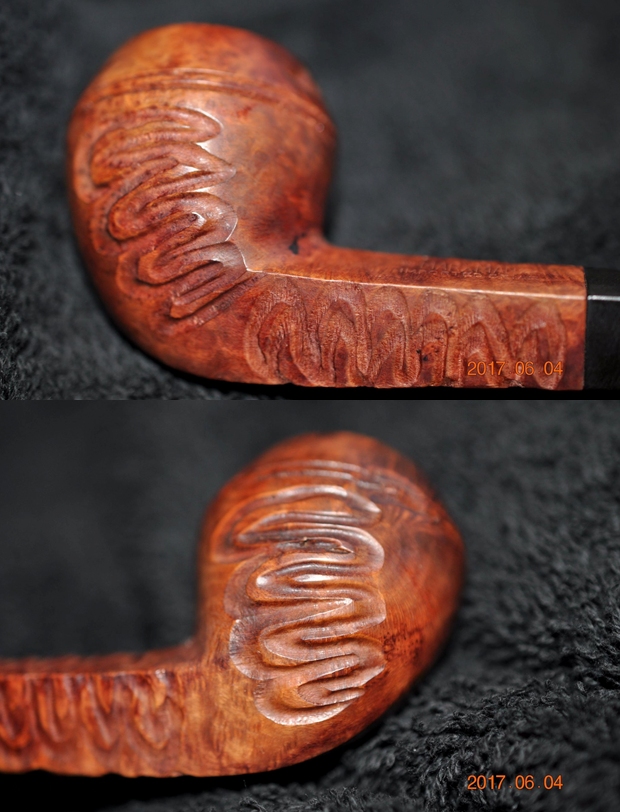
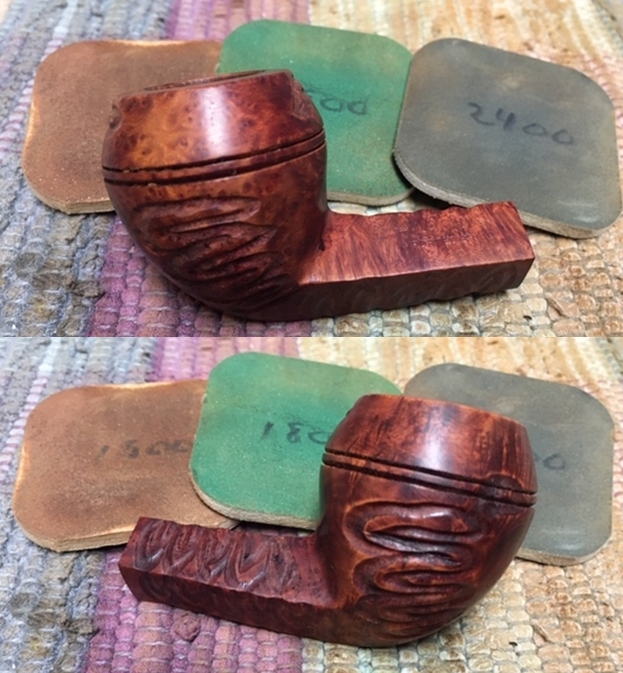
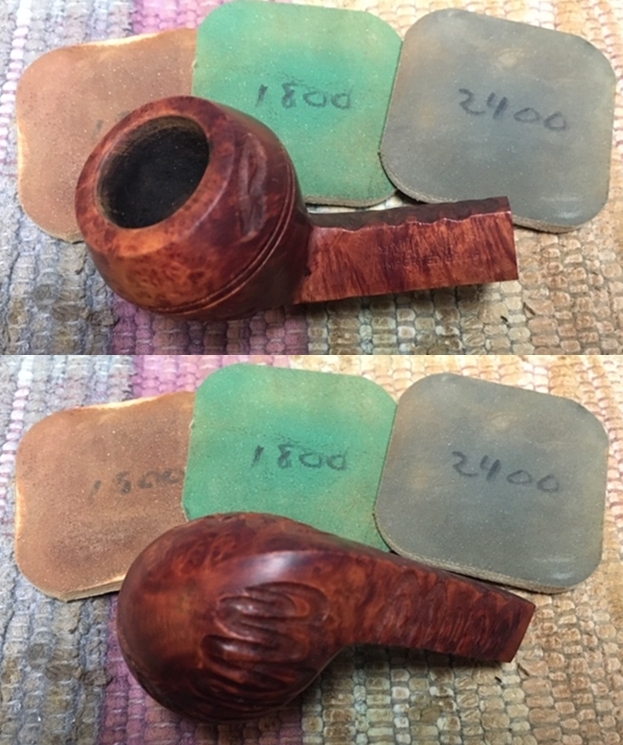
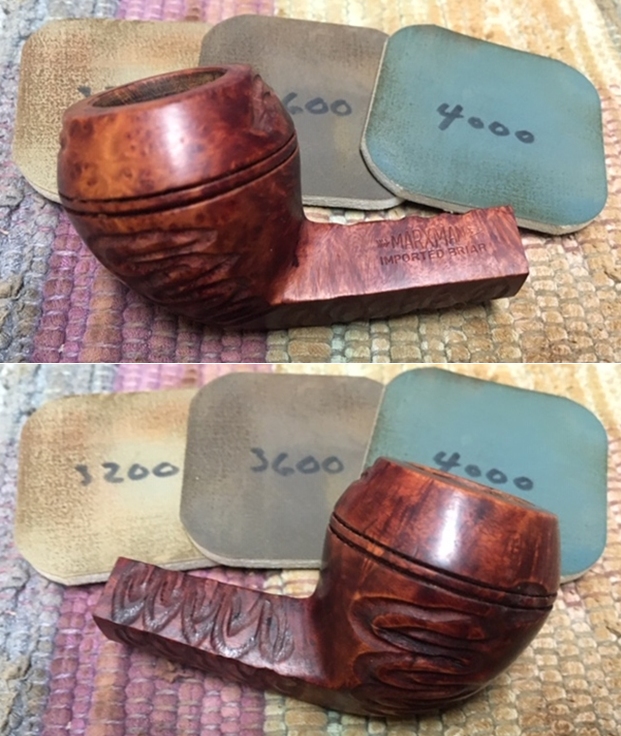
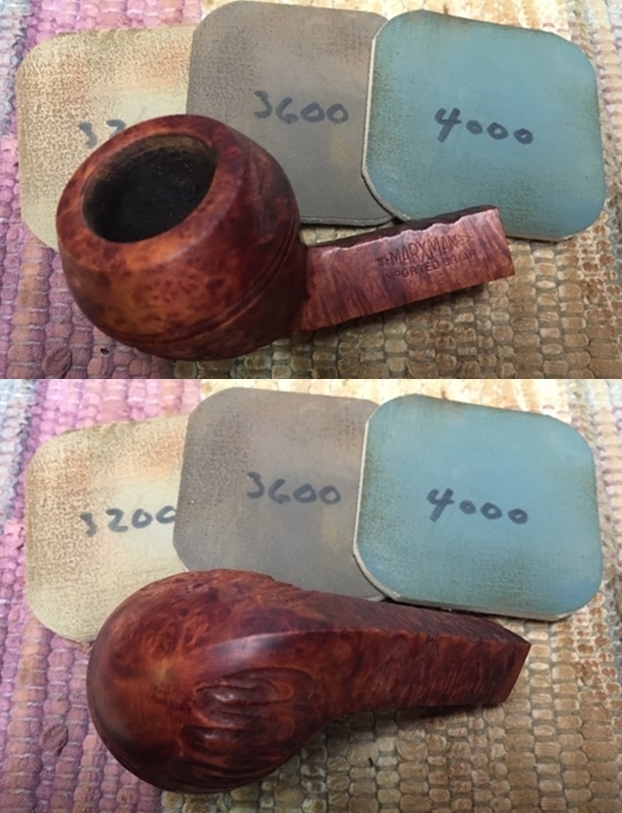
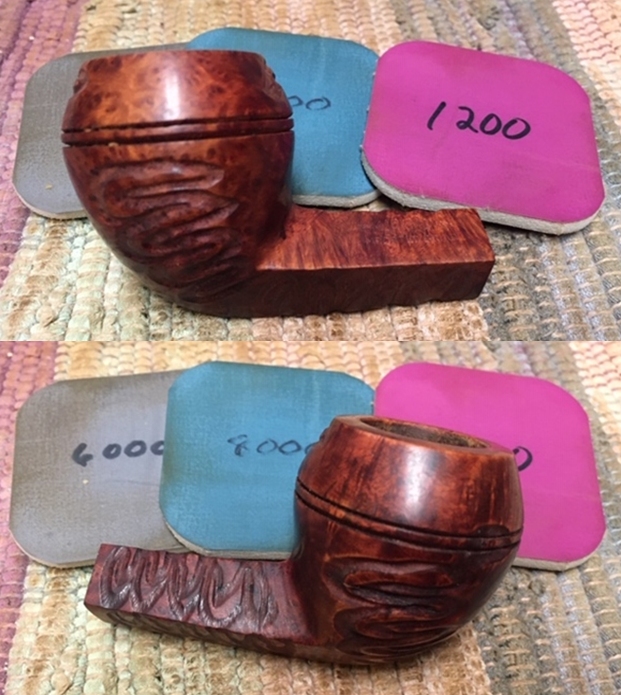
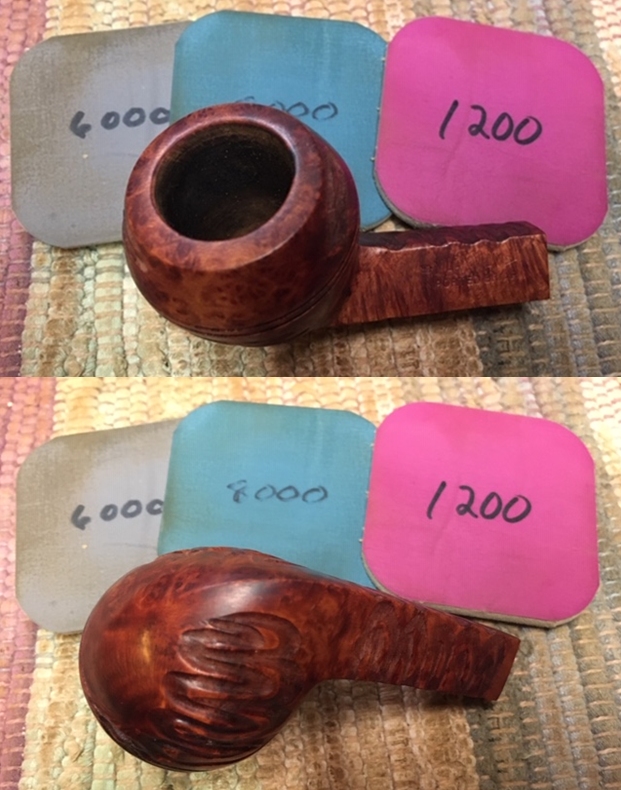
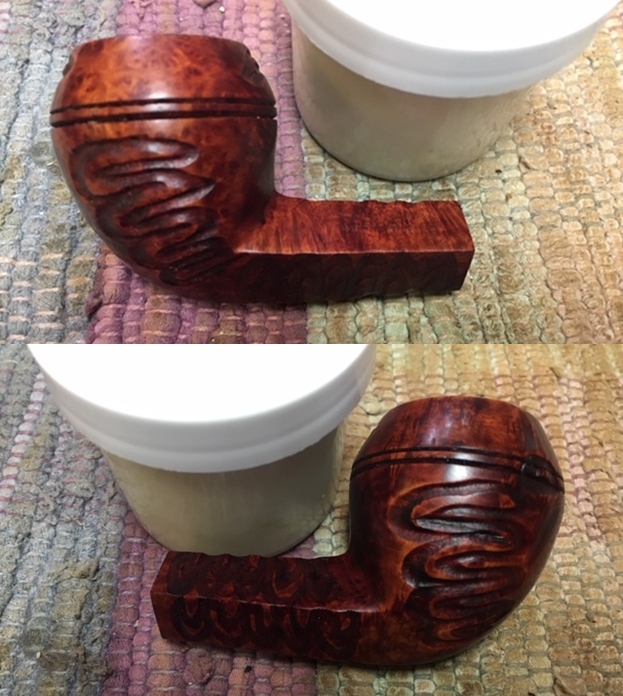
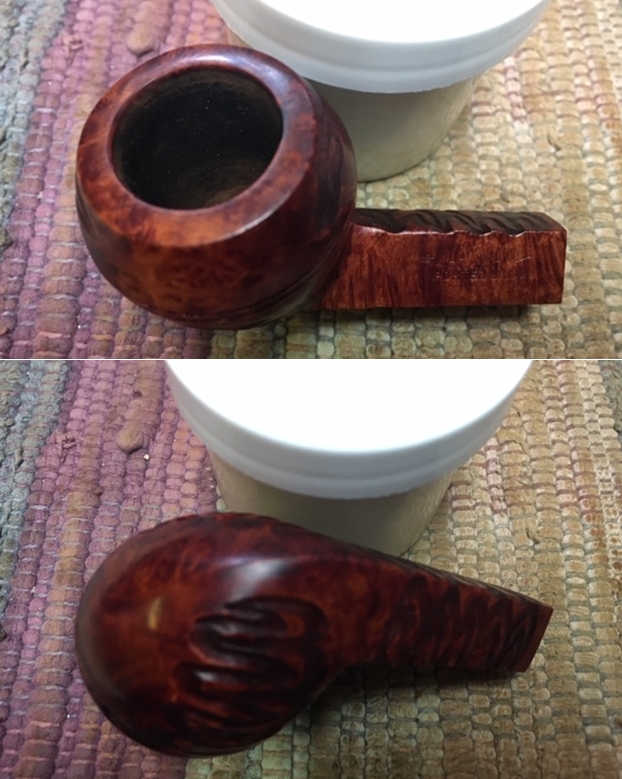
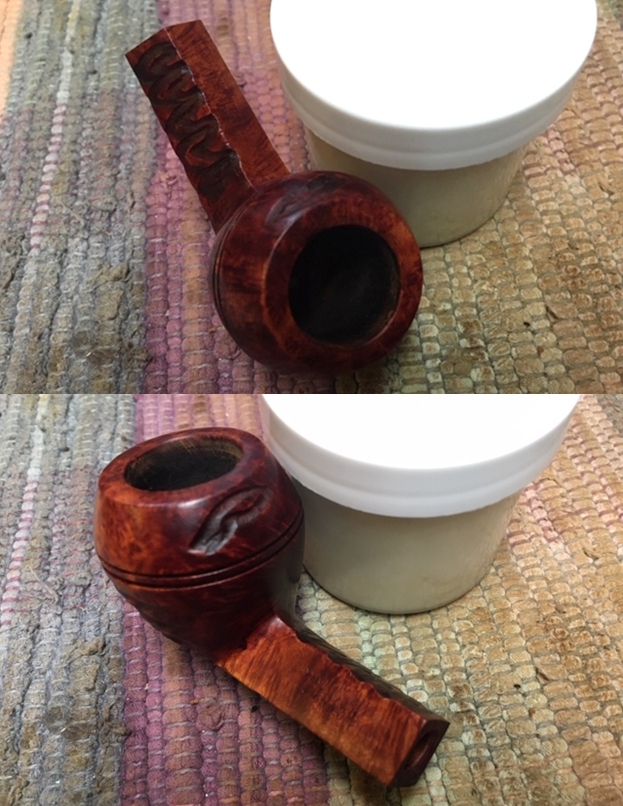
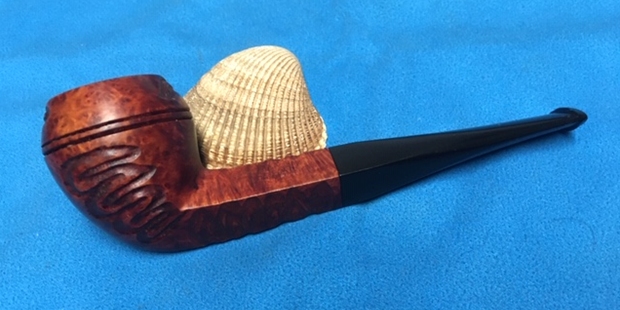
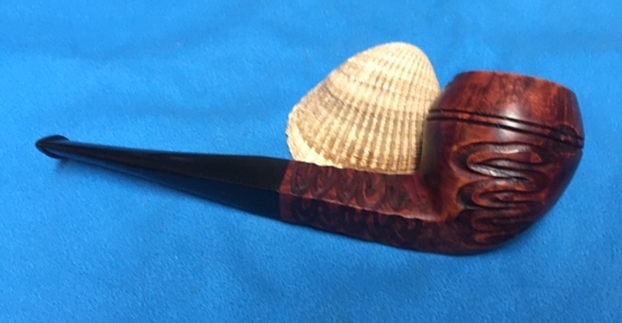
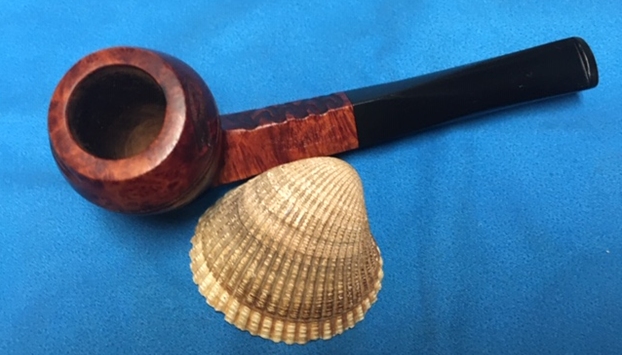
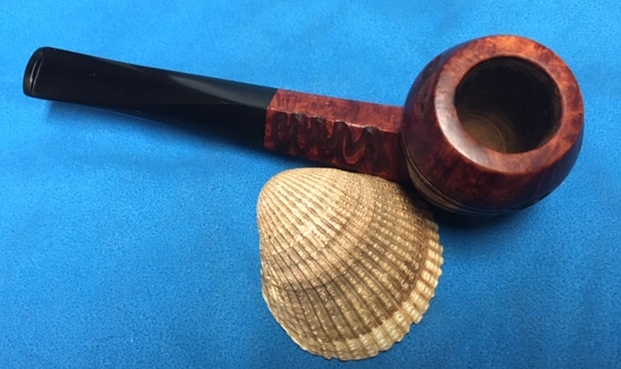
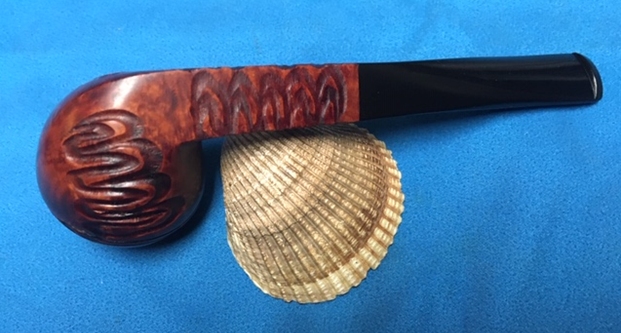
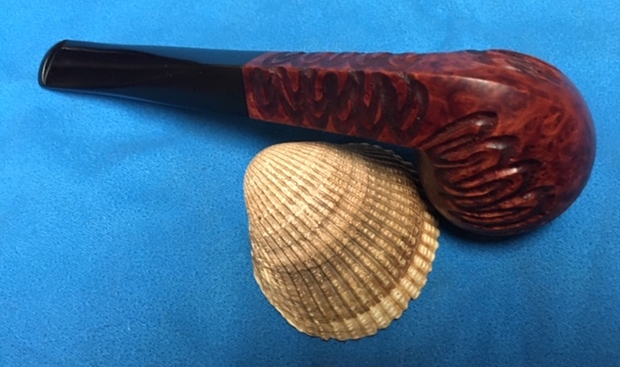
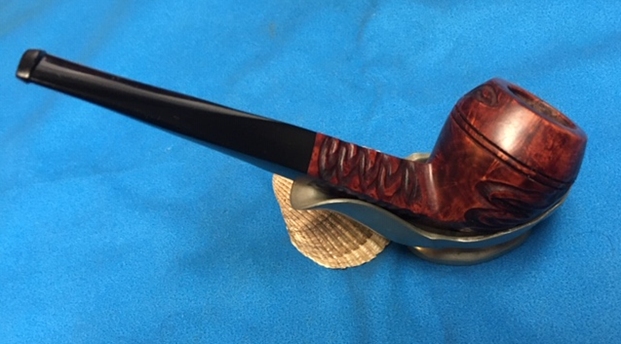
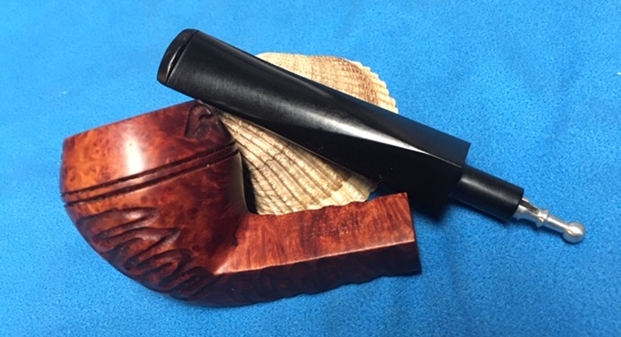
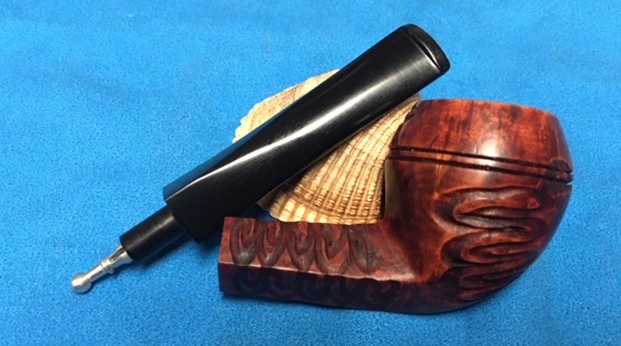
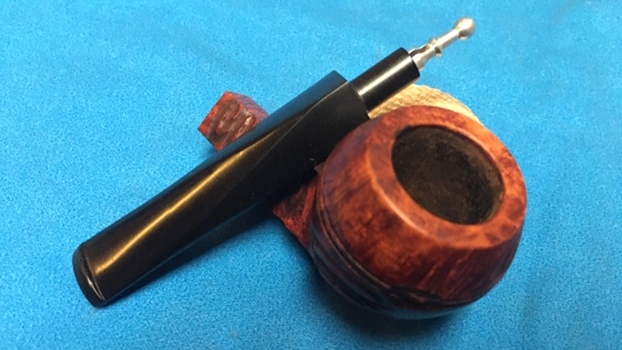
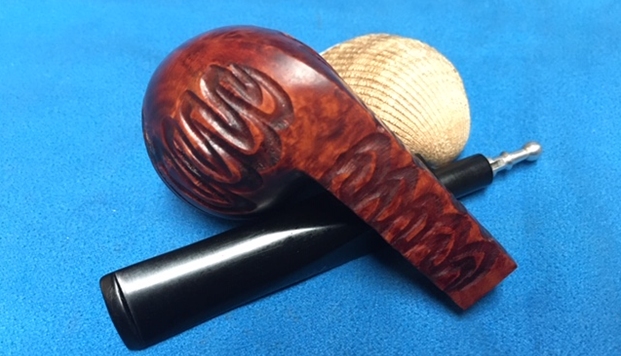
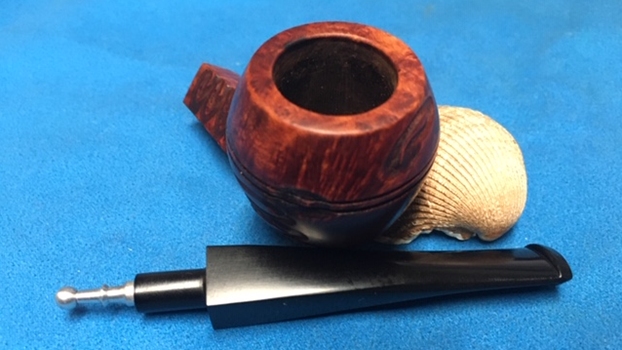
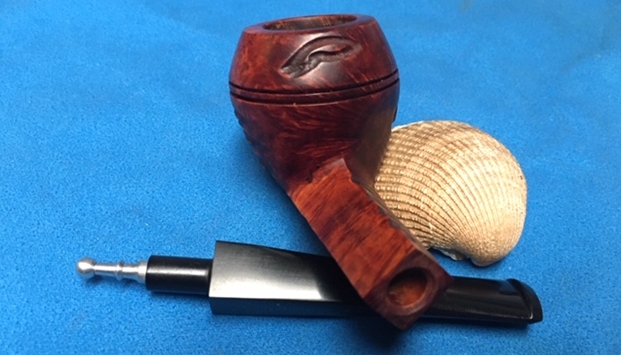
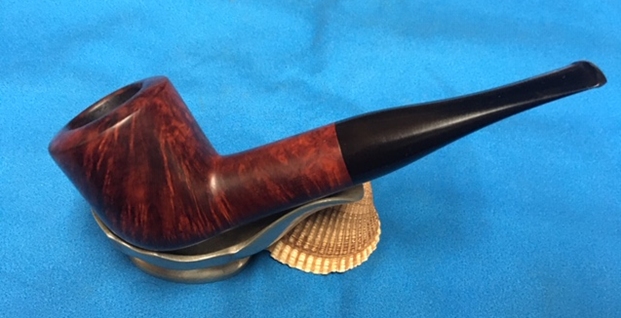
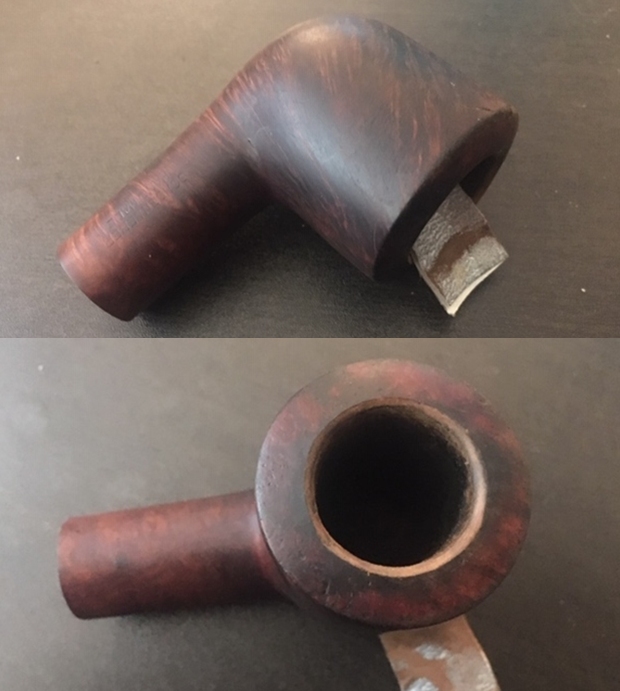
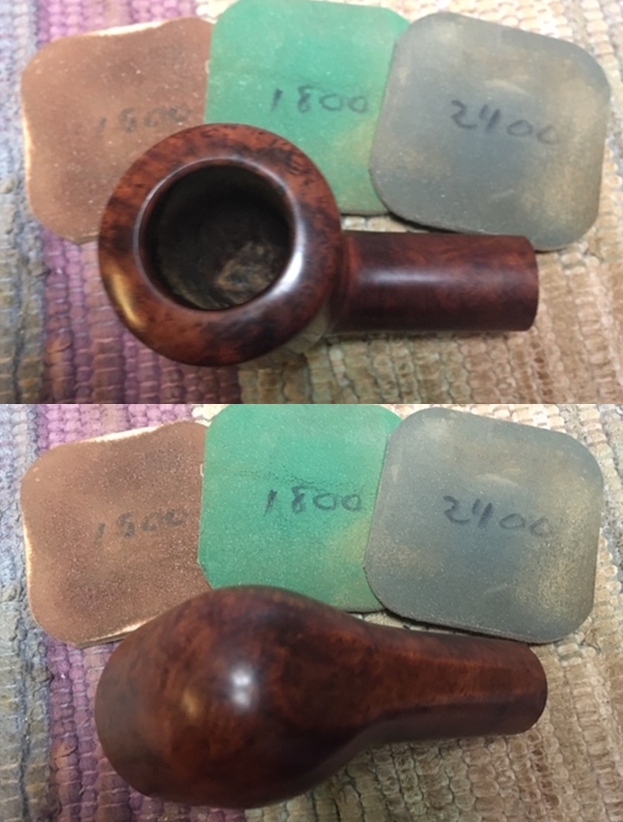
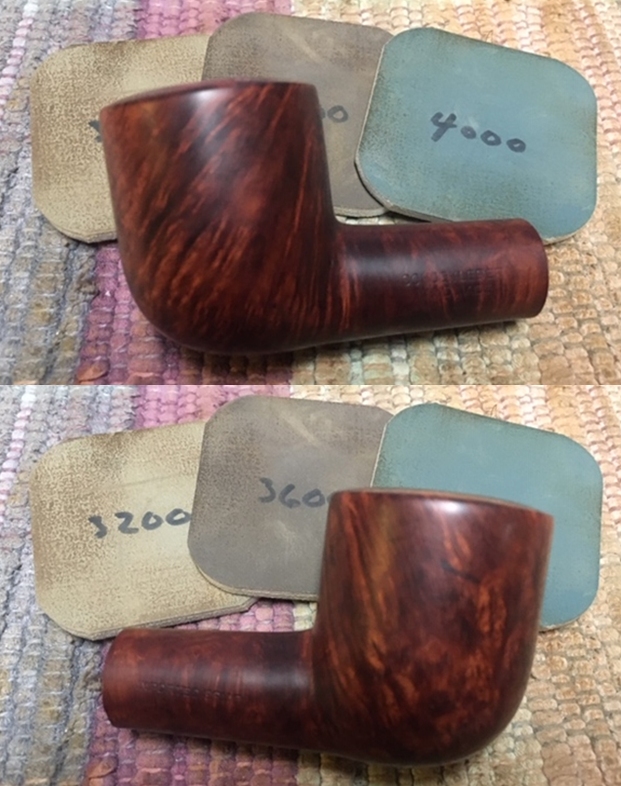
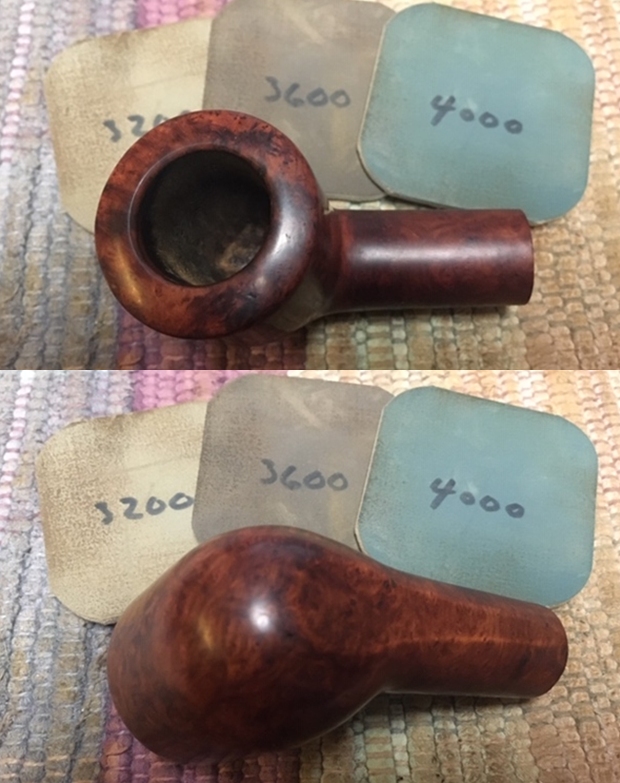
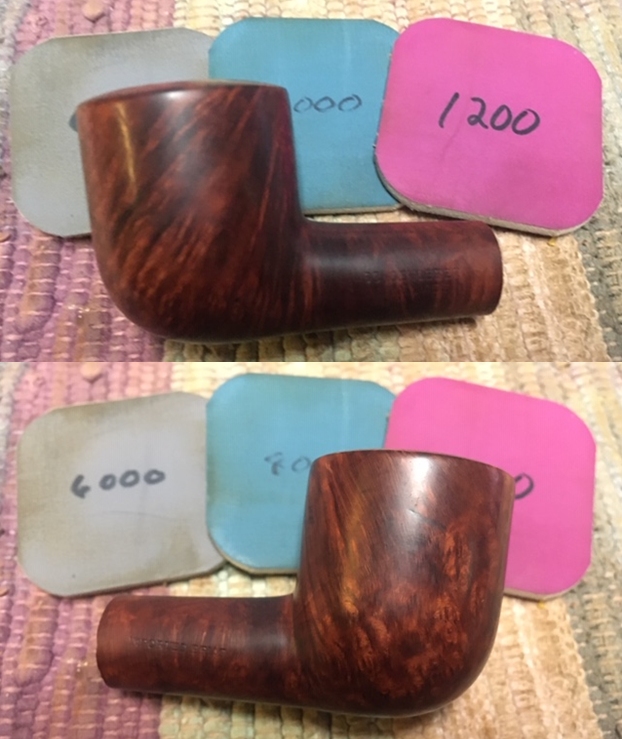
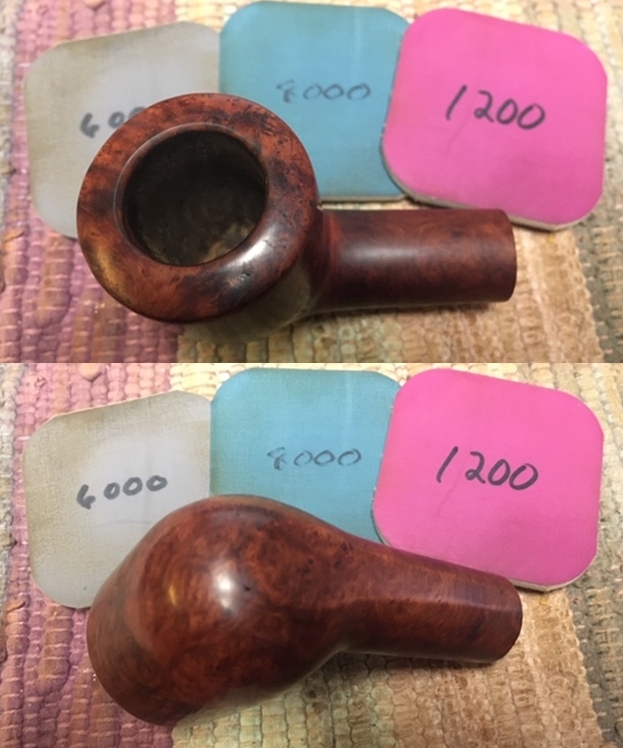
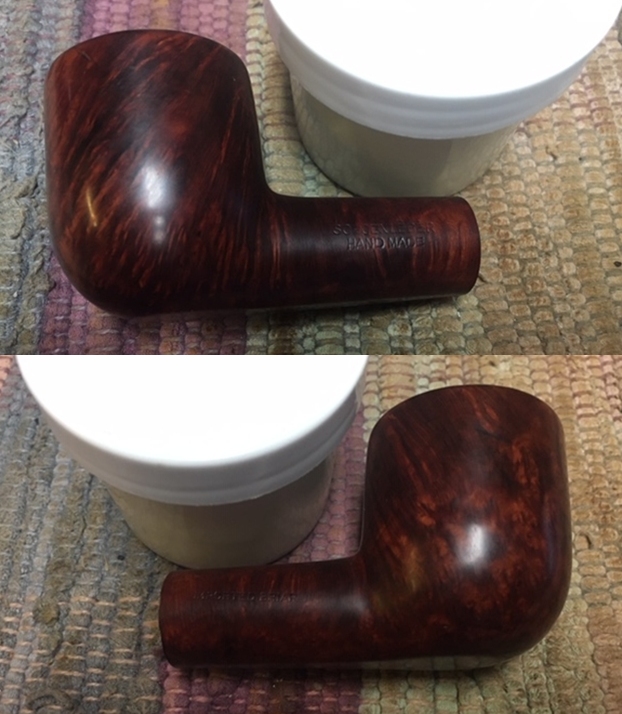
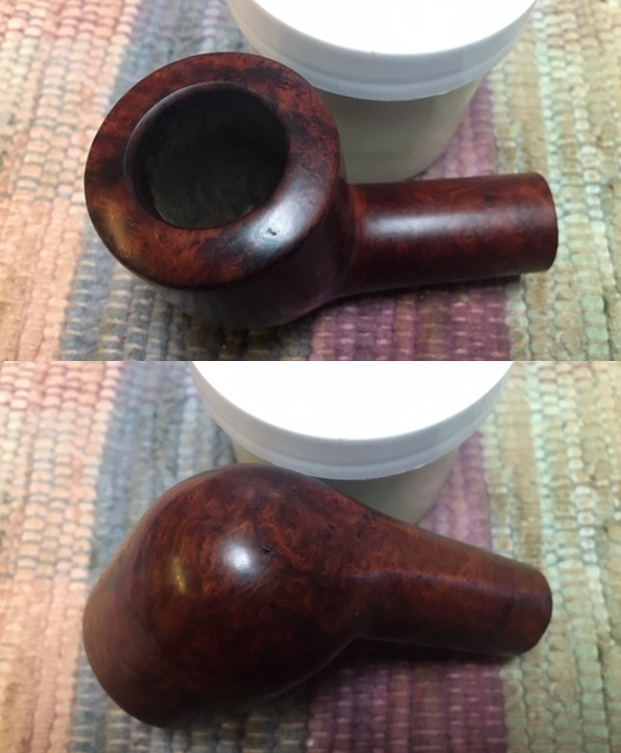
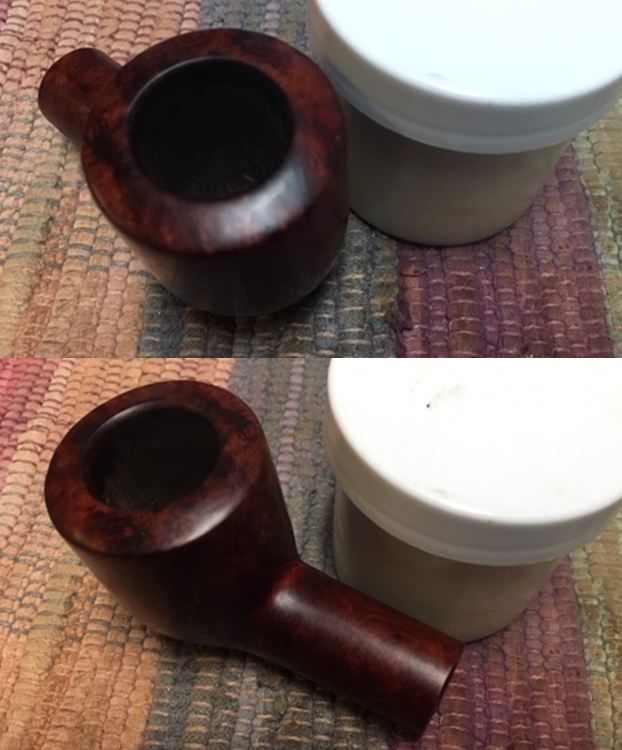
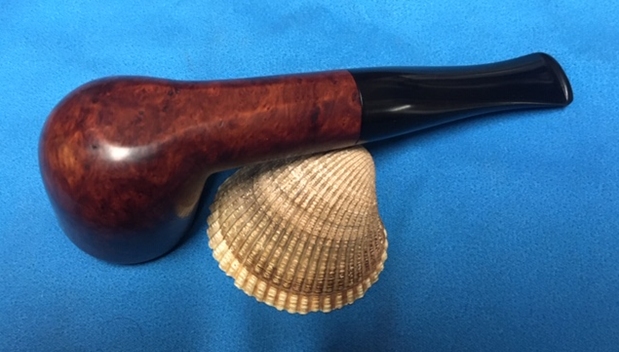
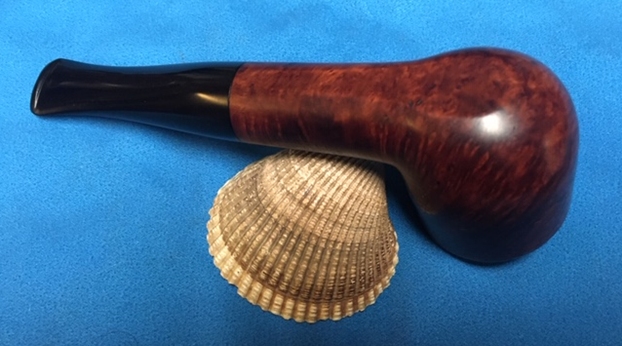
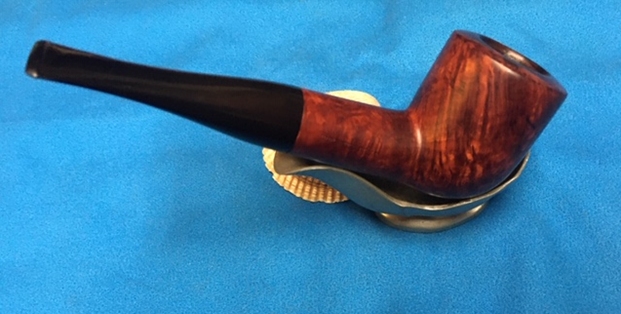
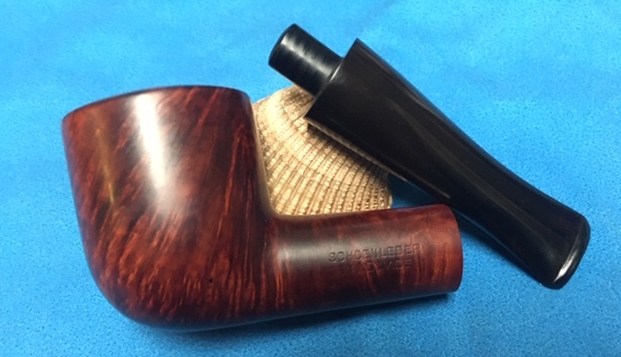
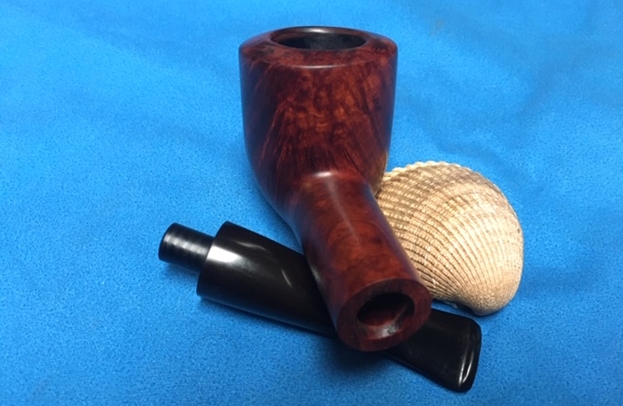
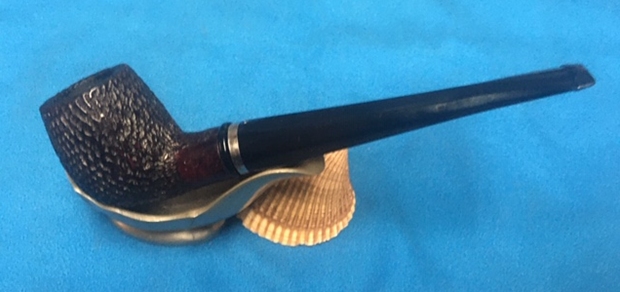
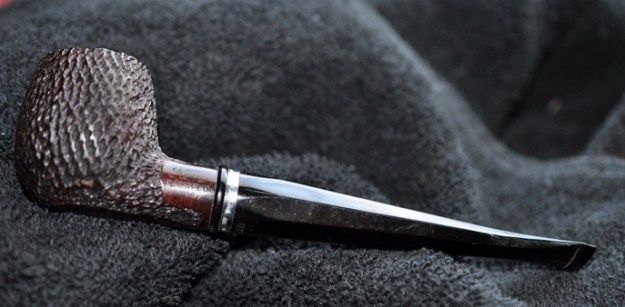
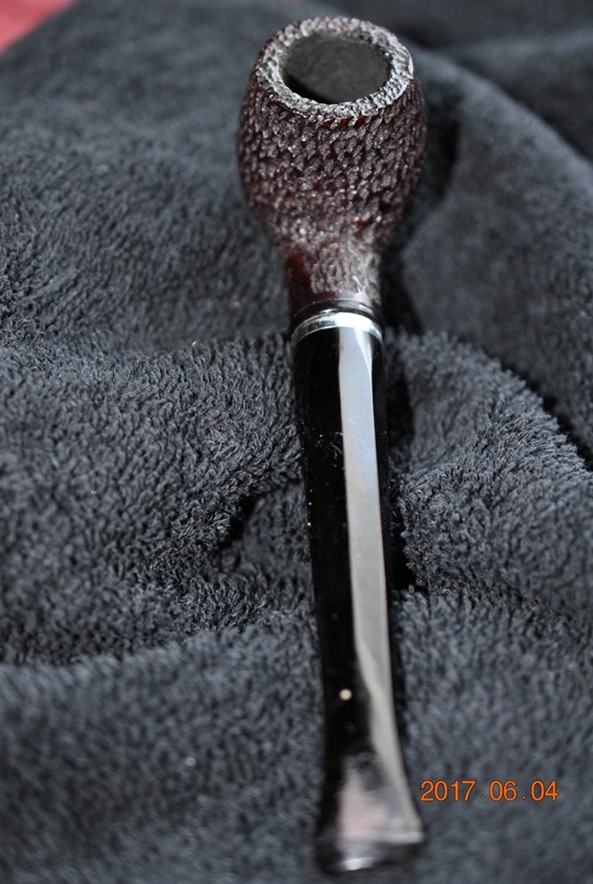
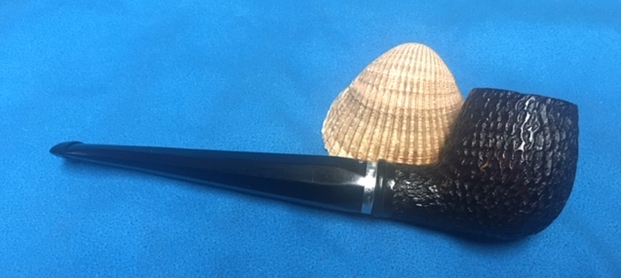
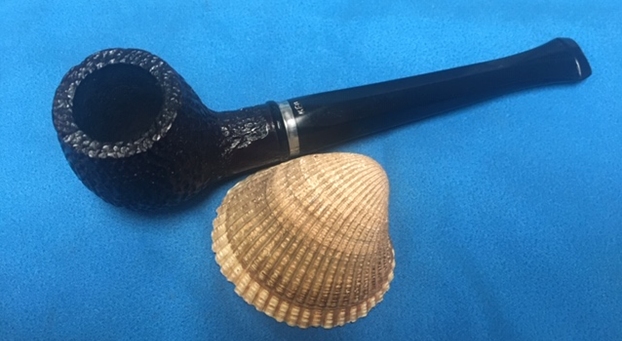
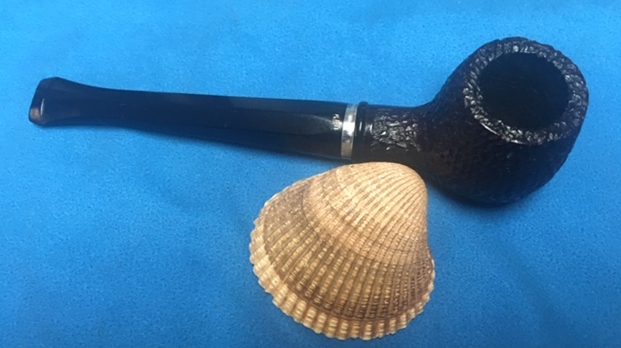
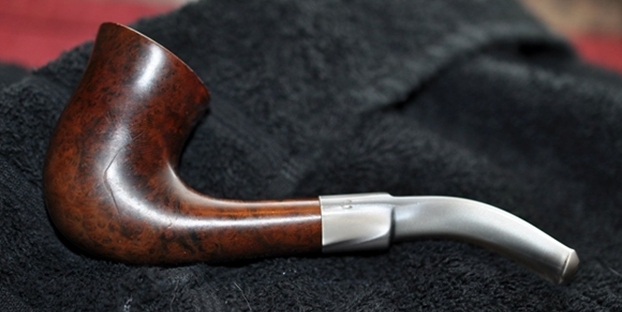
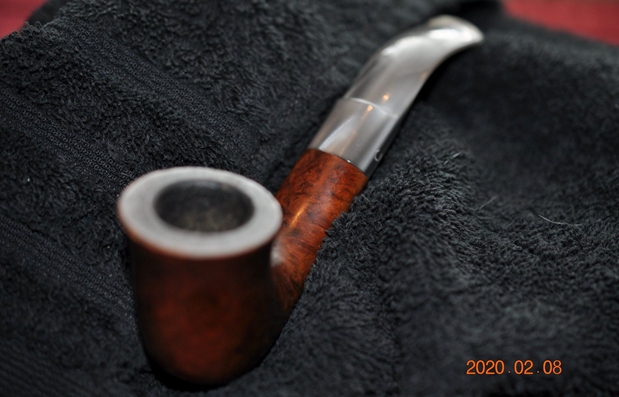
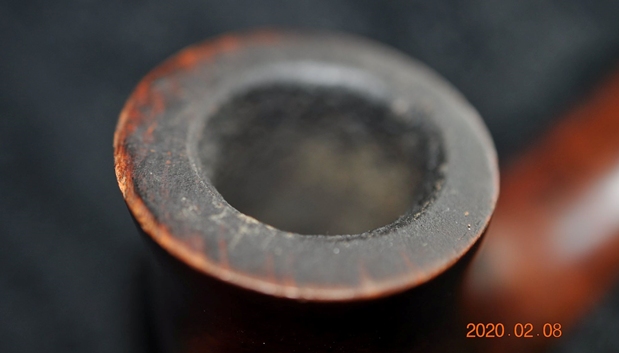
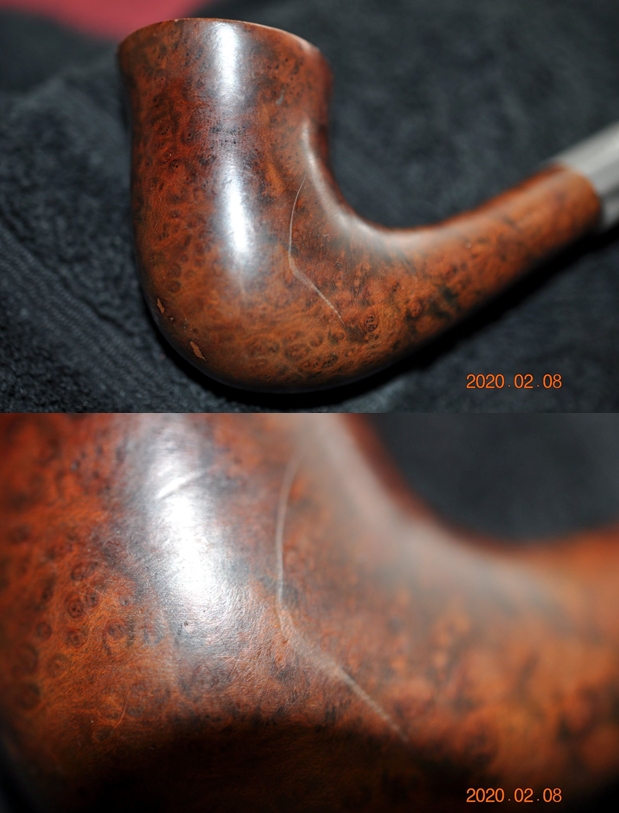
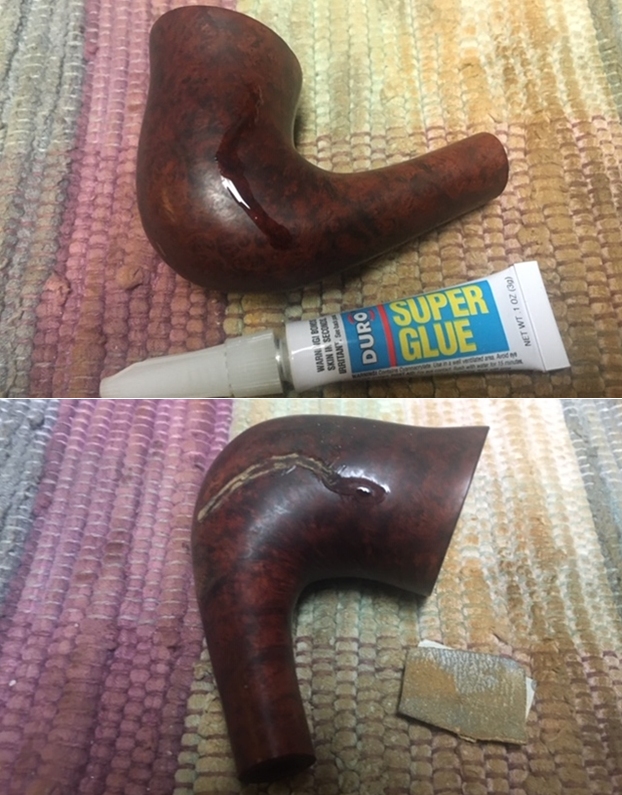
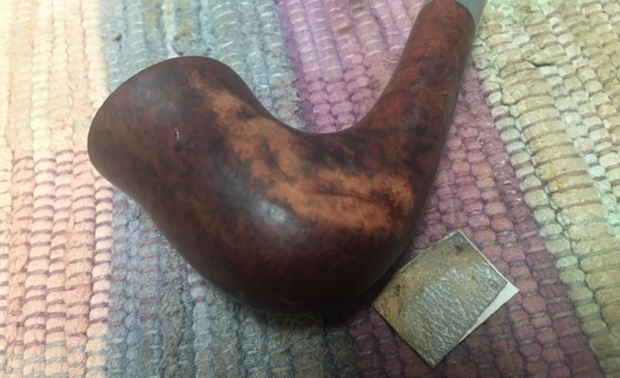
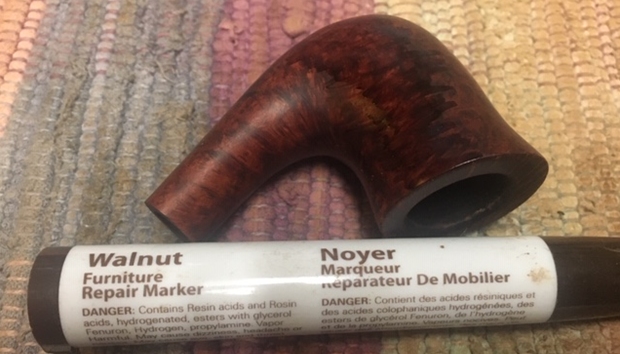
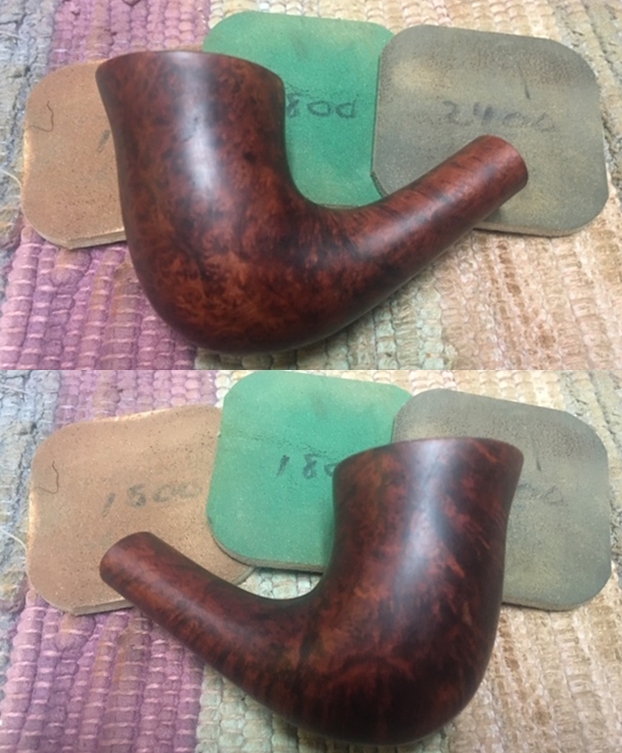
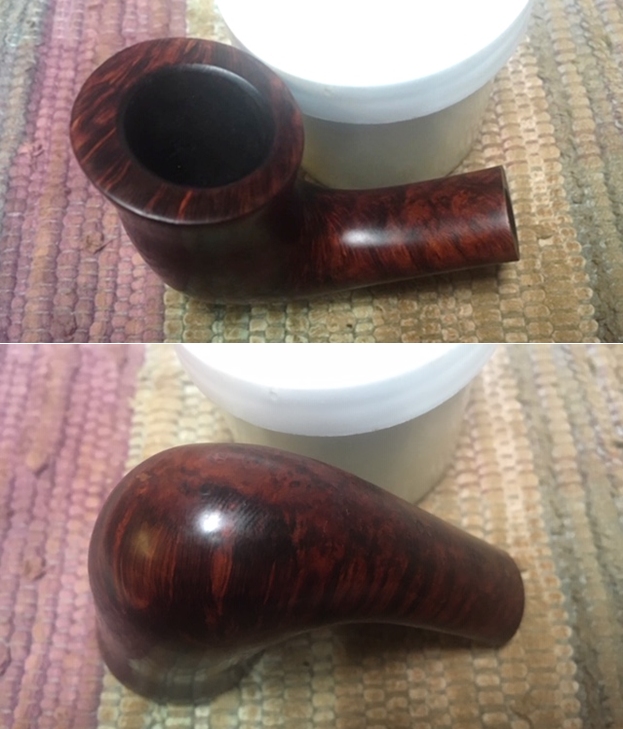
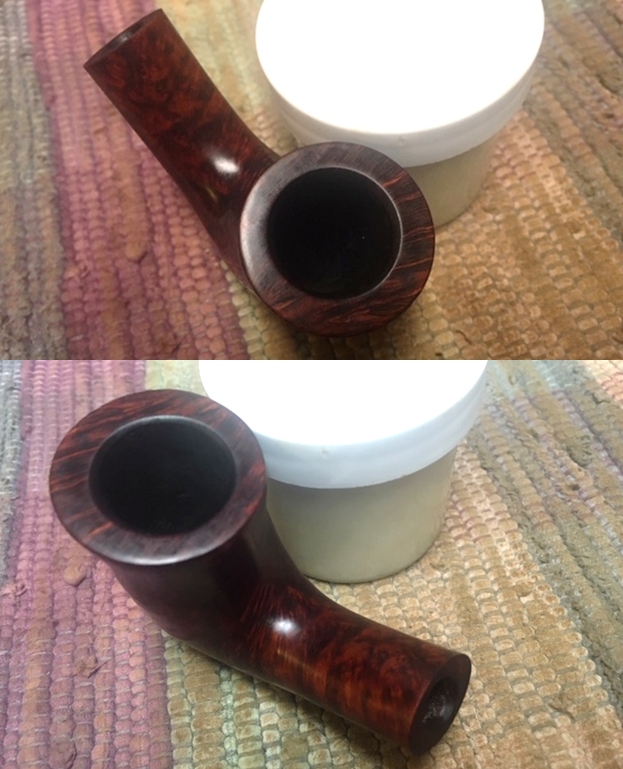
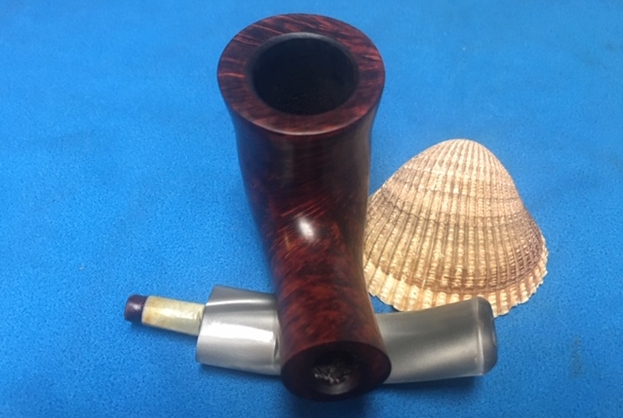
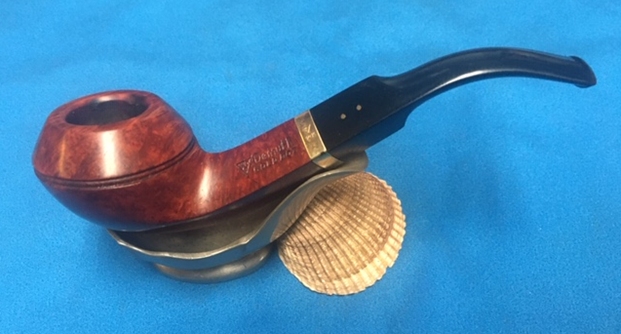
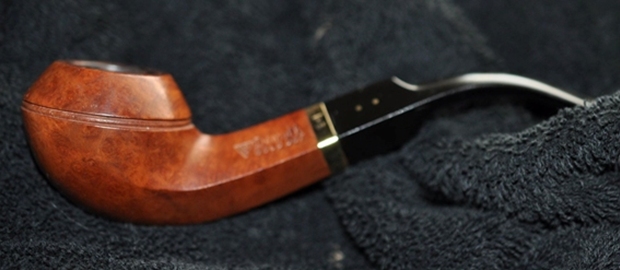
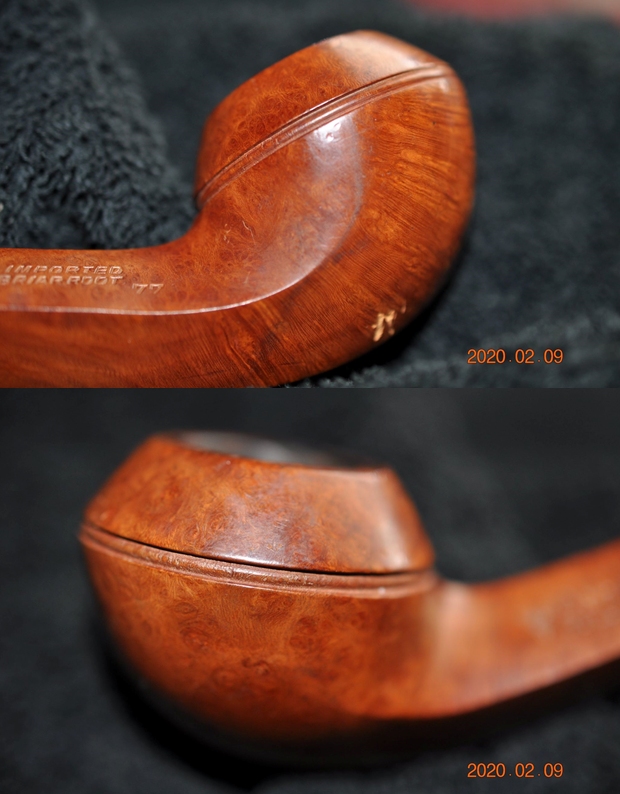
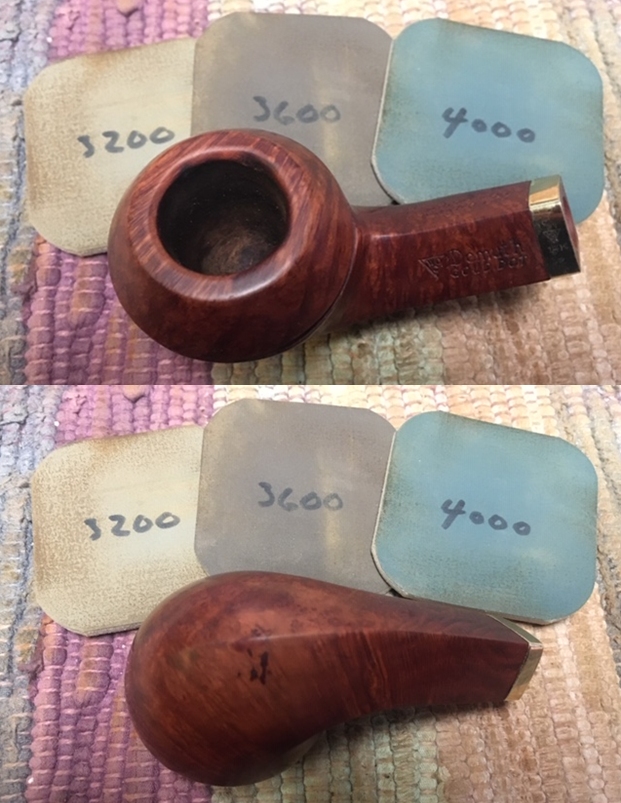
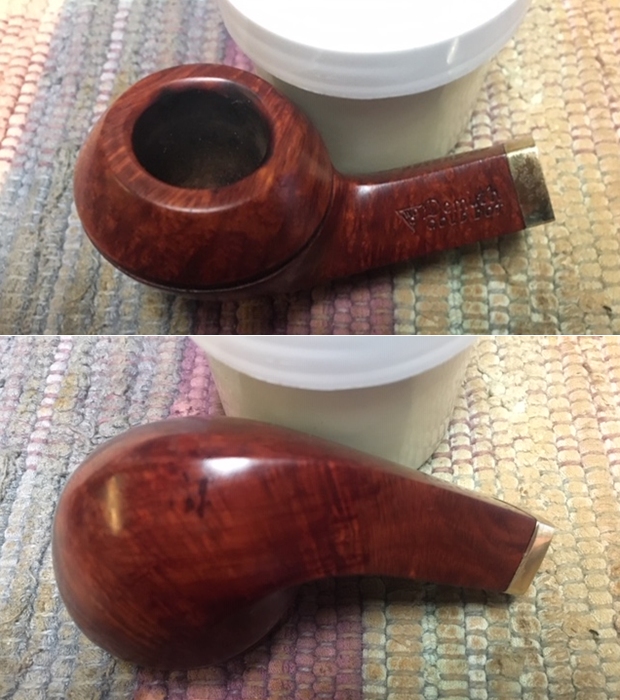
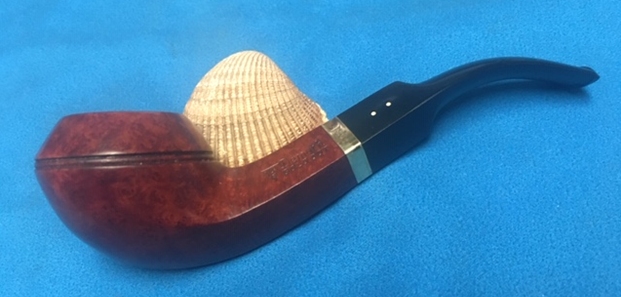
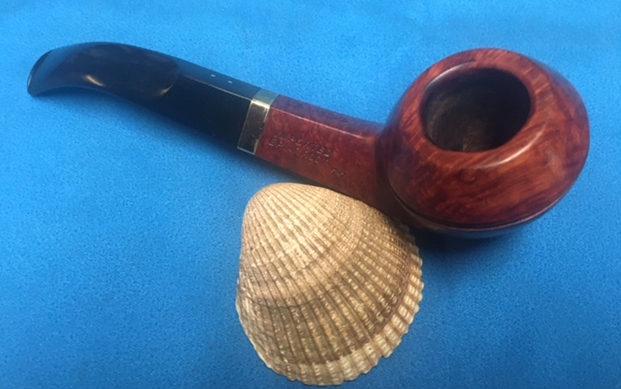
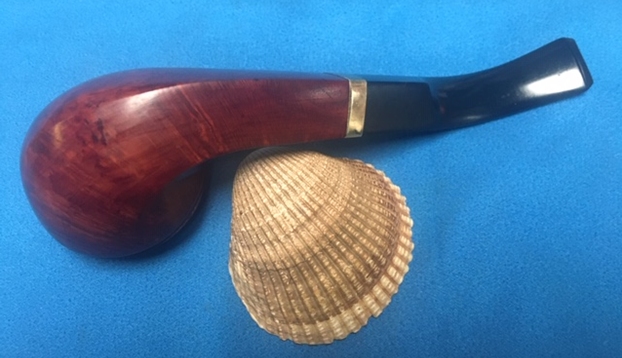
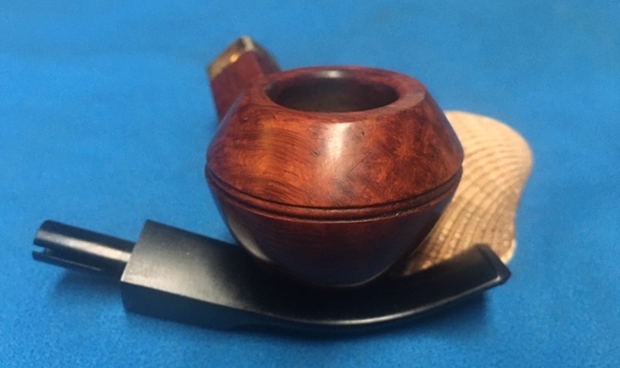
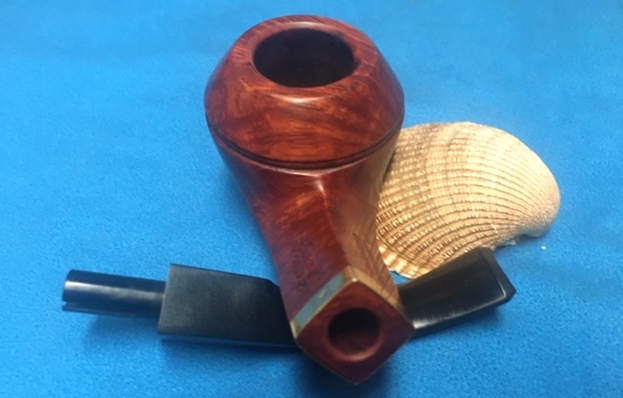
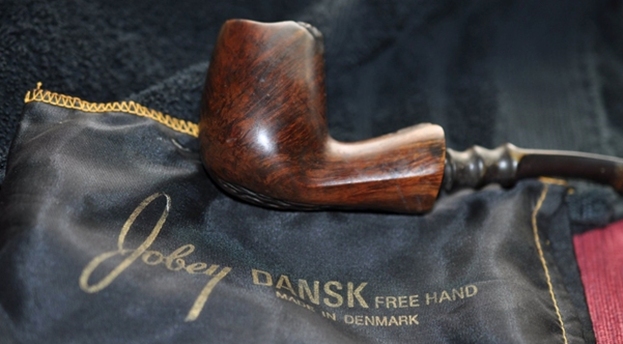
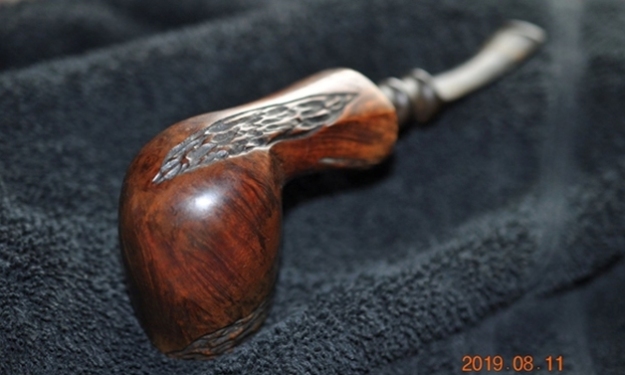
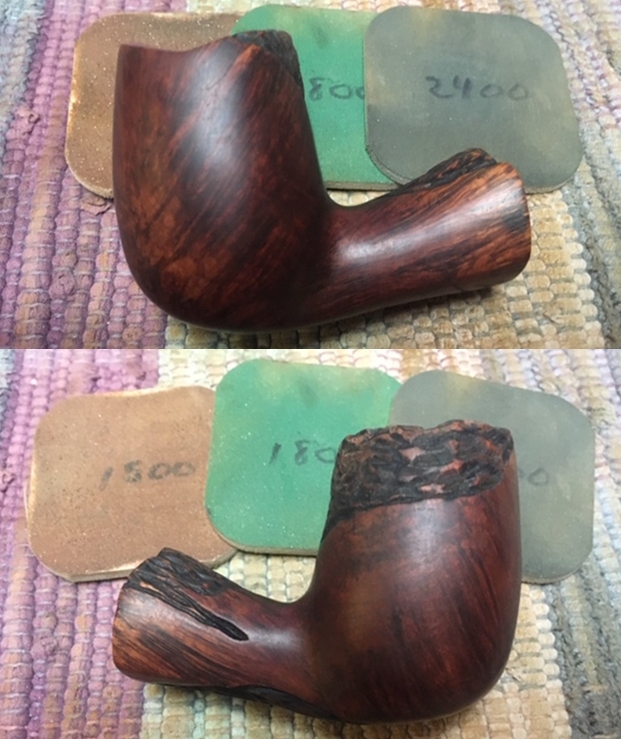
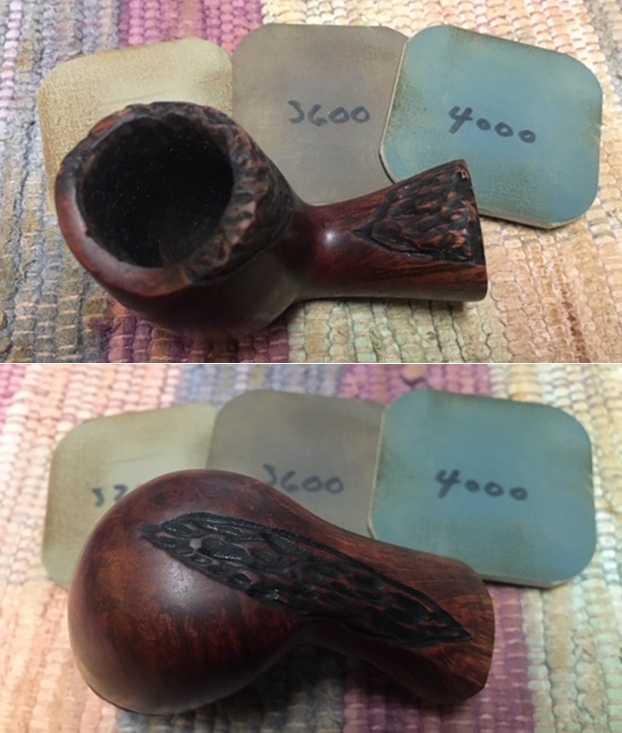
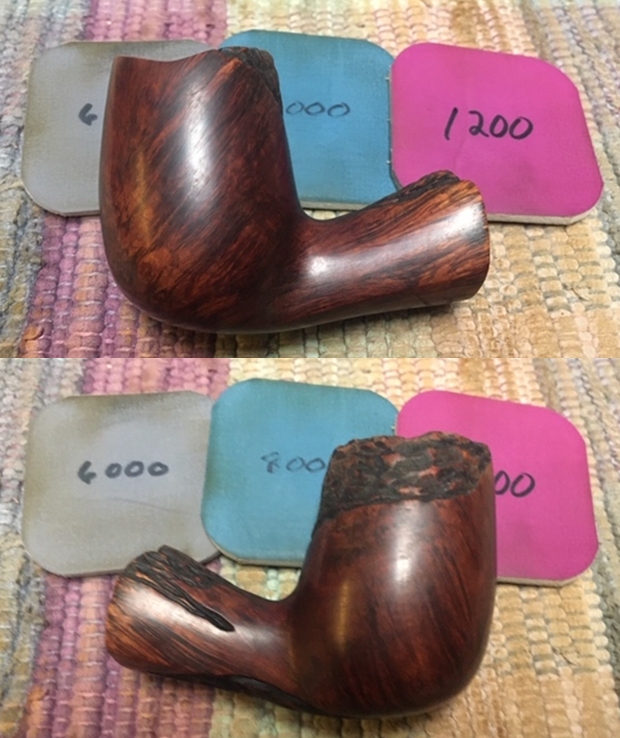
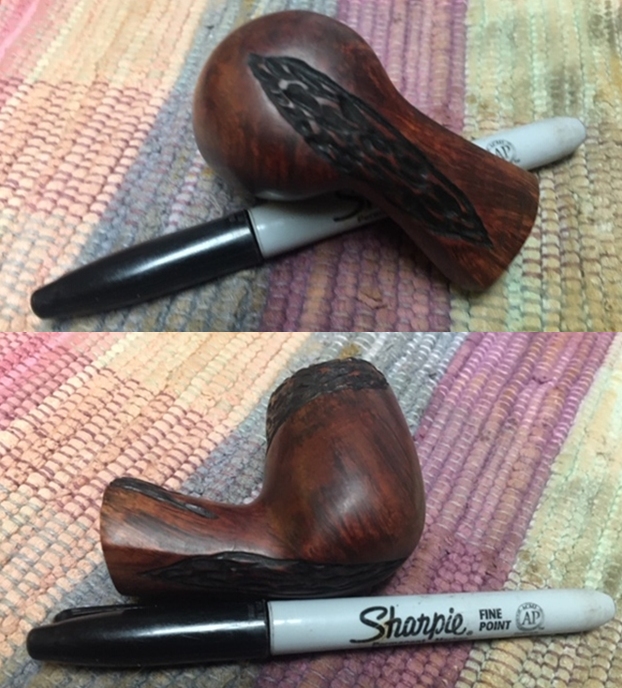
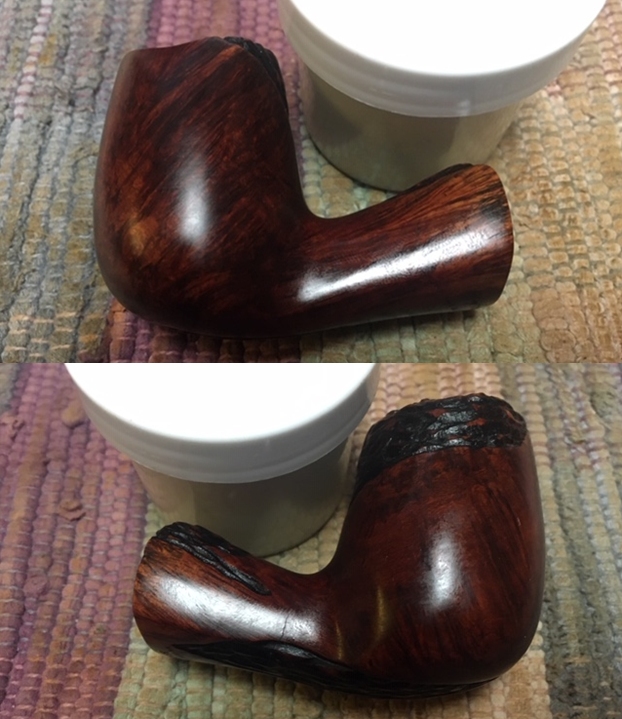
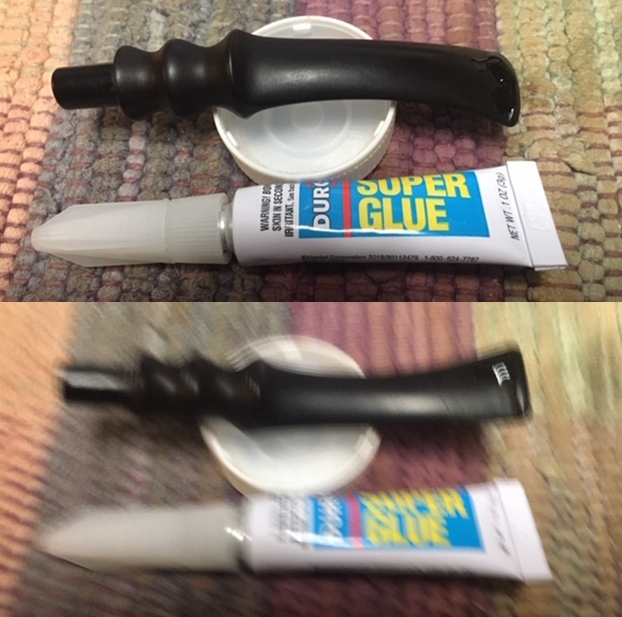
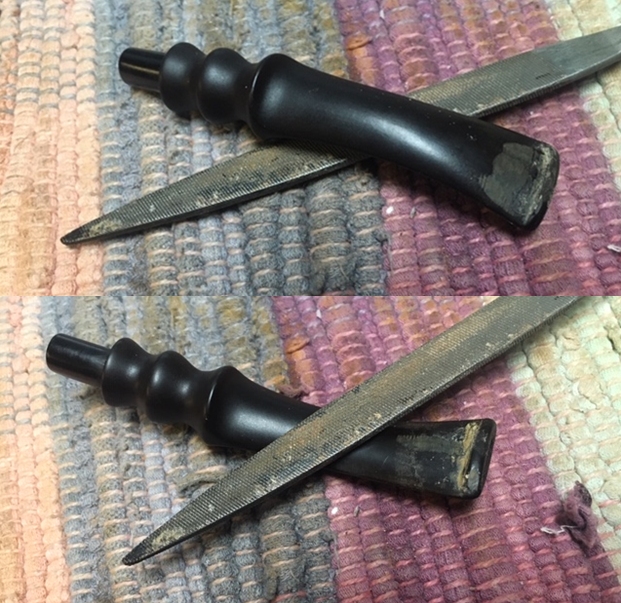
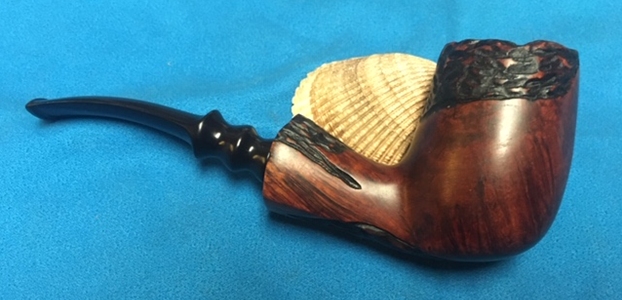
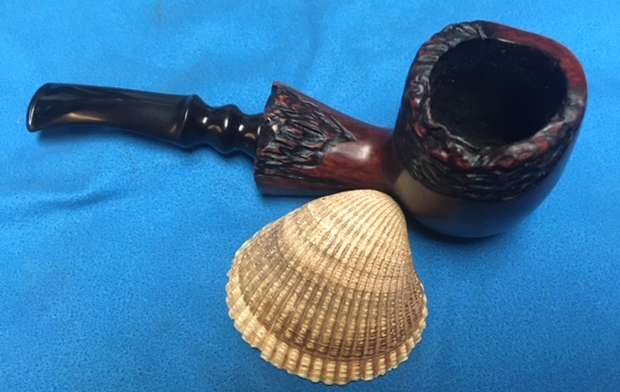
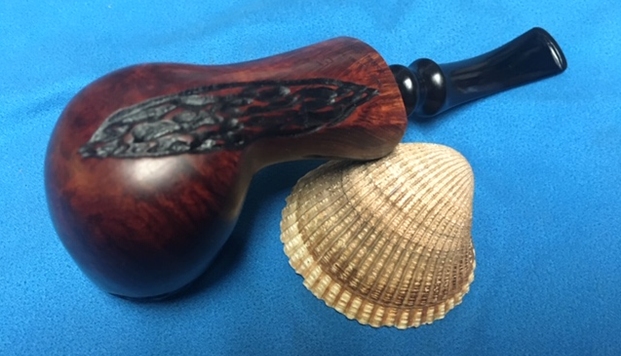
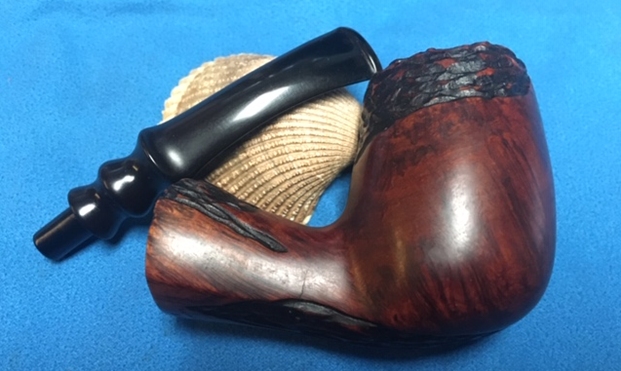
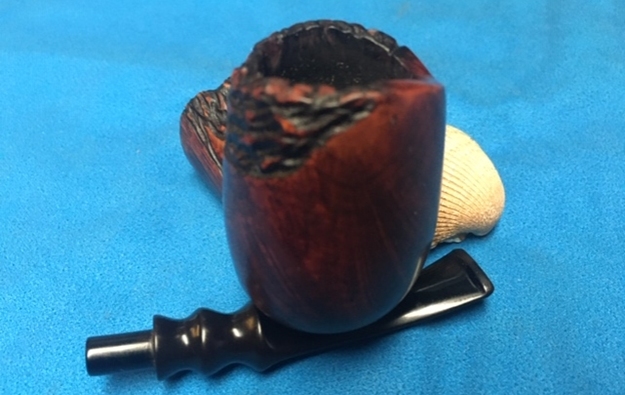
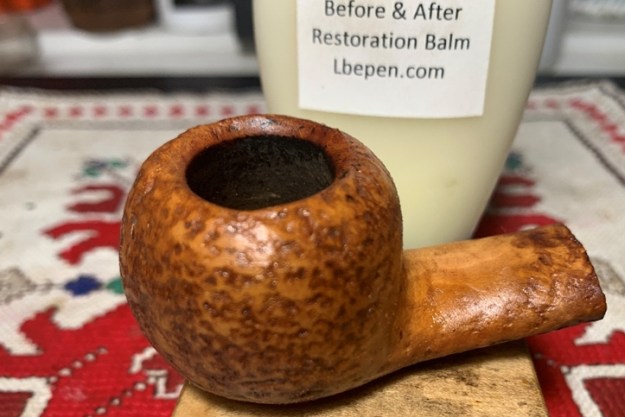
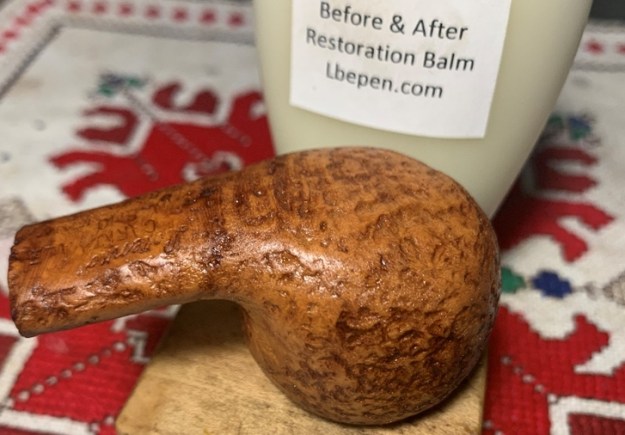
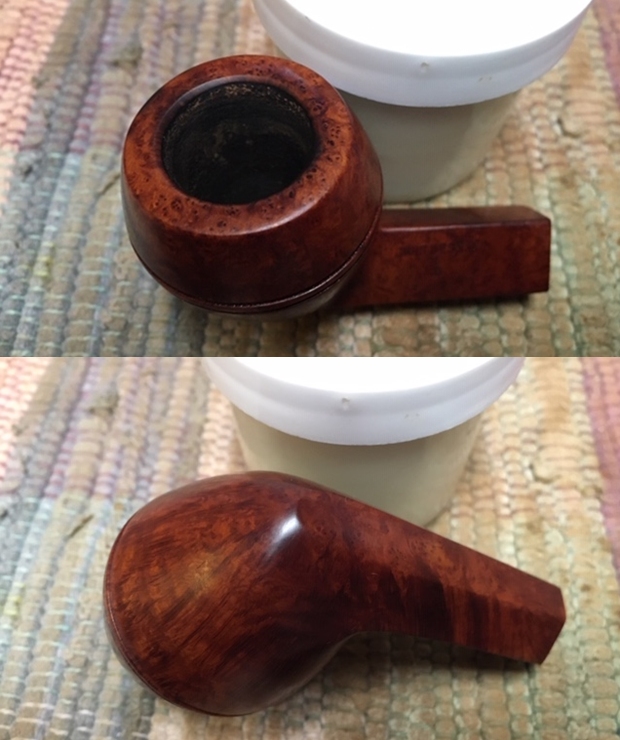
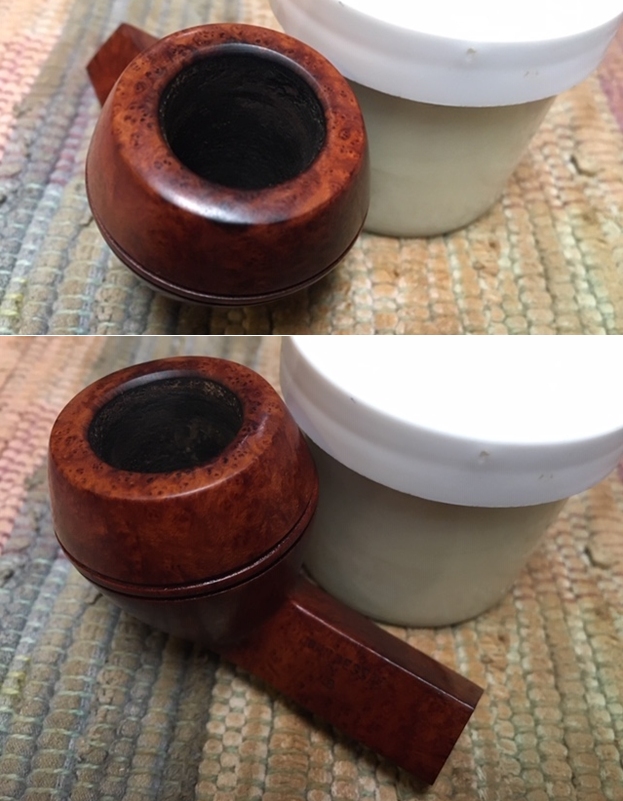
This is one of Alex’s pipes and one that I have admired for a while. Bjarne pipes are well made and a pleasure to smoke. This particular pipe has some amazing grain on the right side, shank and front and back. The left side has a large bald spot with no grain to speak of that pretty much covered the entirety of the left side. Alex wanted me to try to come up with some kind of rustication pattern that would highlight the character of the bowl and add to that rather than change it. I took photos of the pipe from around the sides and the top and bottom of the bowl. It is a short pipe with a full sized bowl. The shank looks long and the stem is short and stubby but very comfortable. Have a look. I did a bit of research on some of the other carvers and how they used spot rustication to give character to a bowl. I found a great looking pipe by Winslow that used the same idea as I was thinking and sent it to Alex. He was good with the concept so I was good to go. However, I am always very slow to change someone’s pipe as it is generally not possible to make it like it was before! I spent a few months really thinking about it and looking at the Winslow and looking at the Bjarne and then putting the pipe aside and doing other things. I have included the photo of the Winslow below for comparison sake so you can see where I was heading with the rustication.I finally decided to give it a go this afternoon before supper. Sometimes I mark the portion of the pipe with a line or tape to give definition to the area I want to rusticate. But today I decided just to go with the flow and chase the grain around the edges of the bald spot. I have a rustication tool that a friend of rebornpipes made for me. It has a great ball handle and a cluster of hardened nails set in the head and kept from flexing by a hose clamp. I worked over the area of the bowl with that to get the rustication started. I used a Dremel and some burrs to cut a groove around the rusticated portion of the bowl similar to the way that Winslow did. I also knocked off the high spots on the rustication with both burrs and reworked areas that were not even. I used a medium grit sanding sponge to smooth out the high spots a bit and then stained the rusticated portion with black aniline stain. I applied it and flamed it with a lighter to set is in the stain. I buffed the bowl with red Tripoli to smooth out the high spots on the surface. I took photos of the pipe at this point in the process. I still had some more sanding and polishing the surface of the rustication but the basic form is taking shape. I used a sanding sponge to smooth out the high spots a bit more. I worked some Before & After Restoration Balm into the surface of the briar with my fingertips to clean, enliven and protect it. I let the balm sit for a little while and then buffed with a cotton cloth to raise the shine. I buffed the bowl with Blue Diamond on the buffing wheel and rubbed some Conservator’s Wax into the rustication of the left side of the bowl. I buffed the rest of the pipe with carnauba wax and gave the pipe a clean buff. I hand buffed it with a clean cotton pad to raise the shine. The finished rustication on the pipe is shown in the photo below. It is a nice looking pipe. Thanks for your time.


Rebirthing a Schoenleber Hand Made – #4 Opera Pipe


Blog by Steve Laug

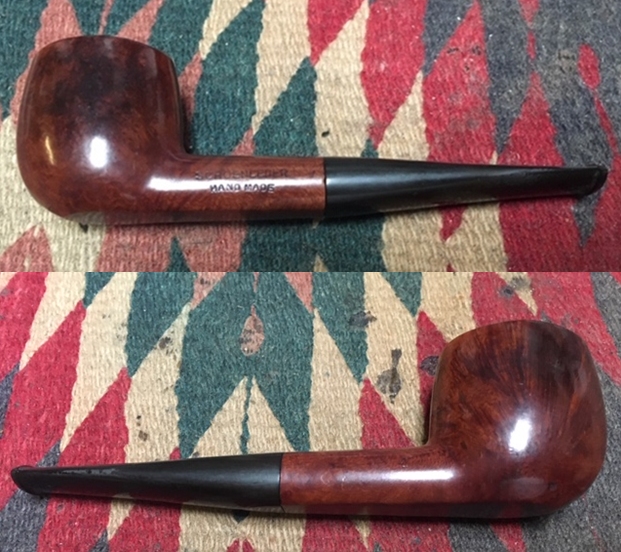
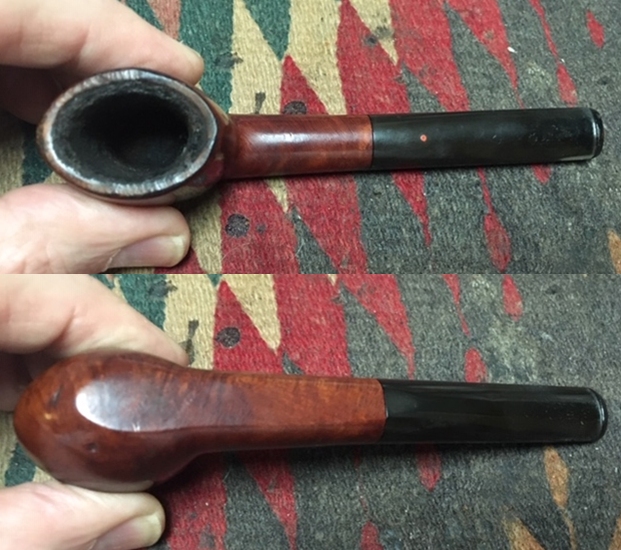
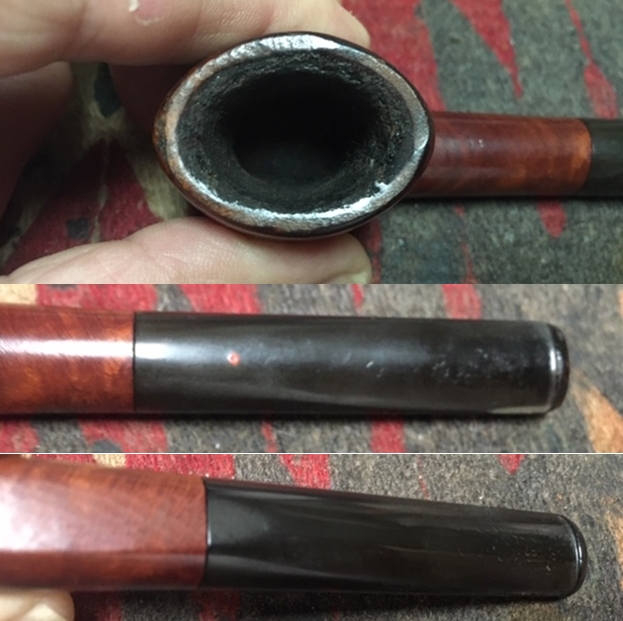
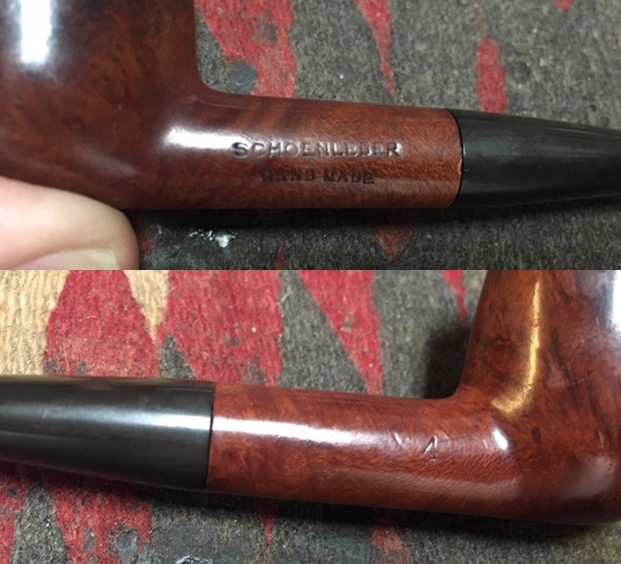
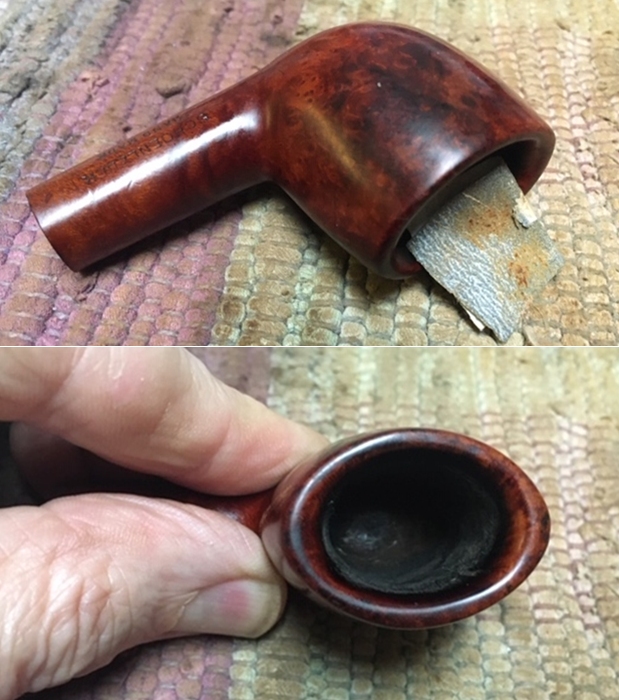
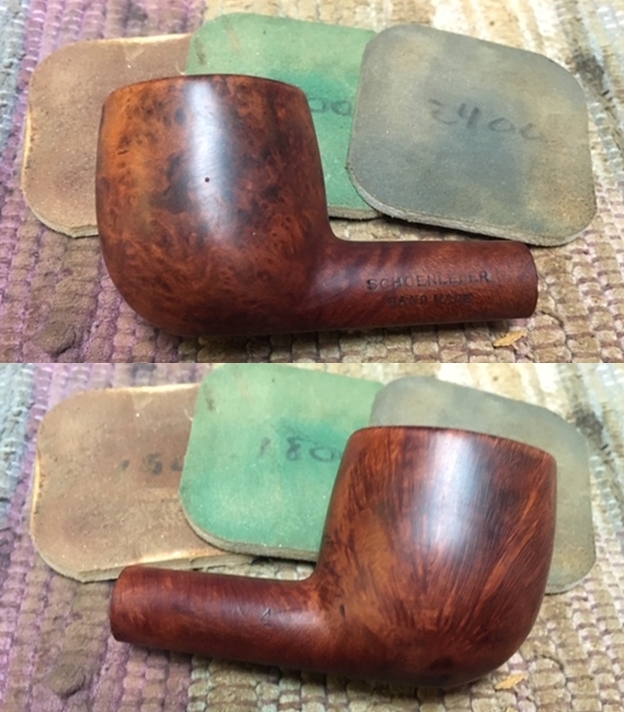
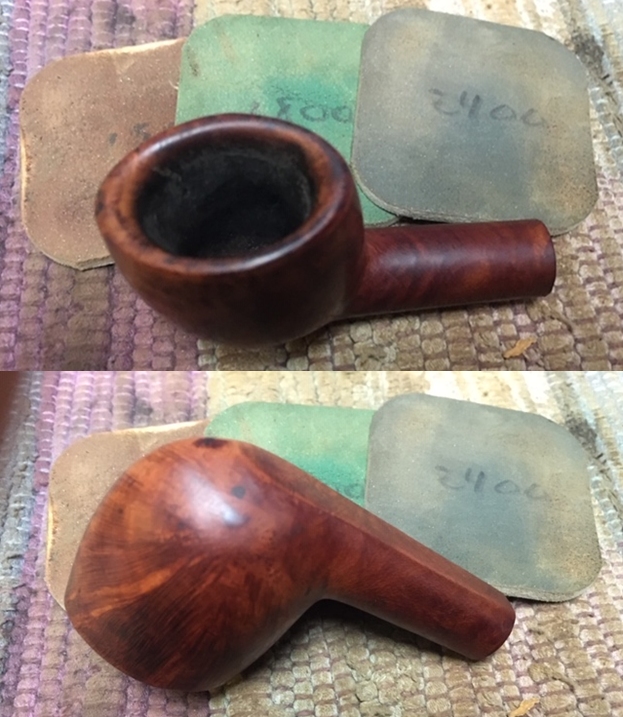
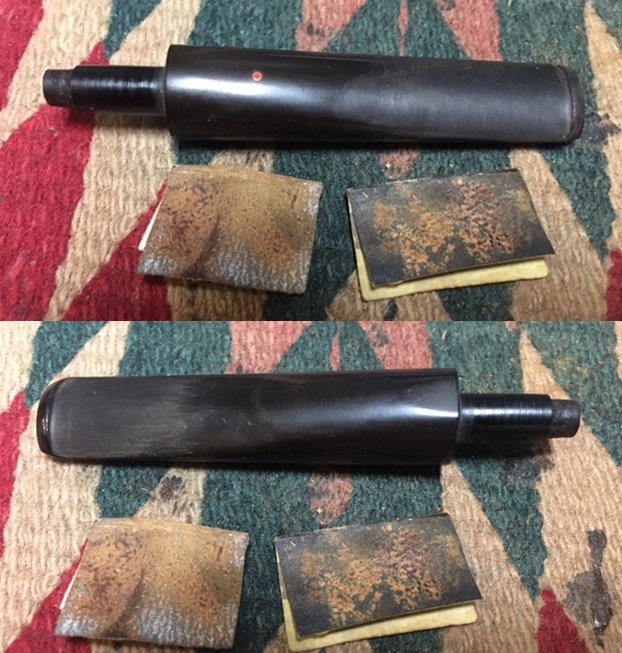
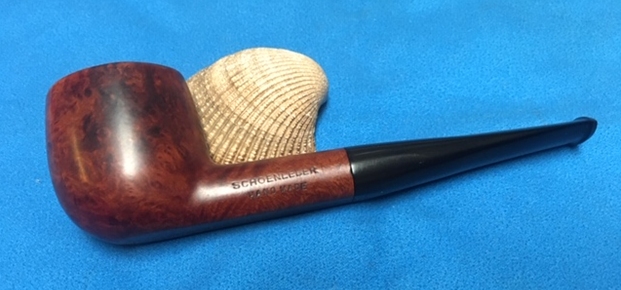
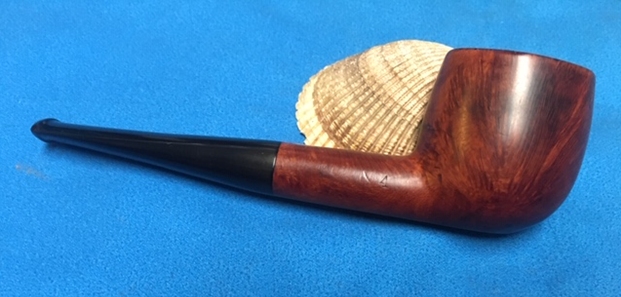
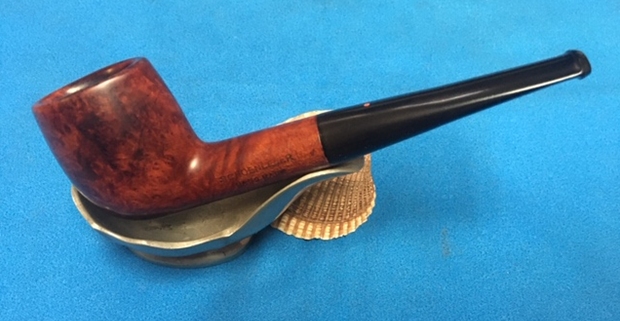
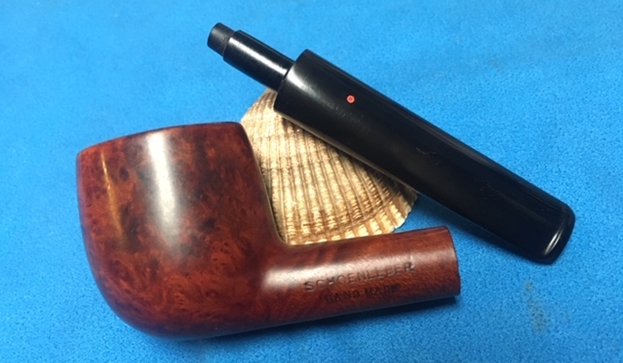
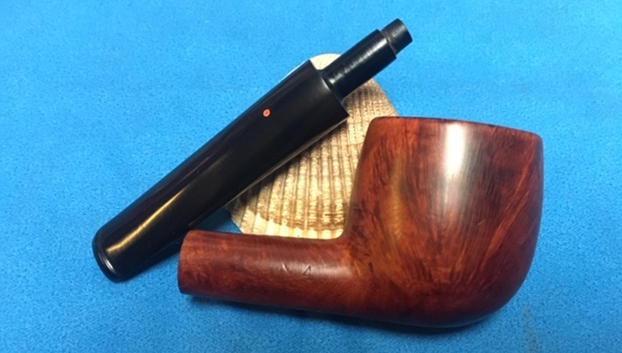
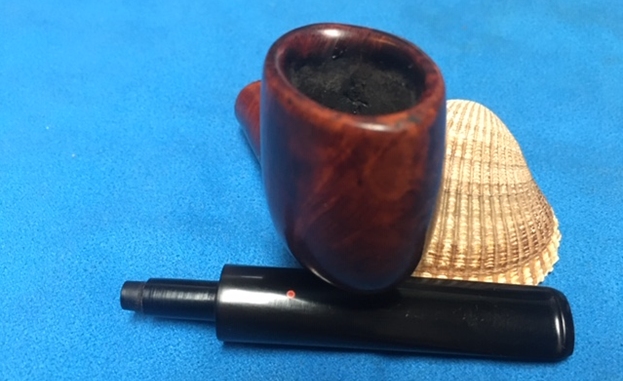
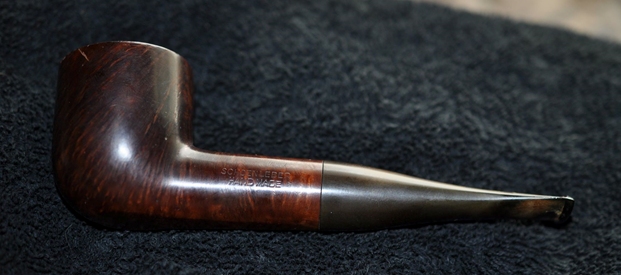
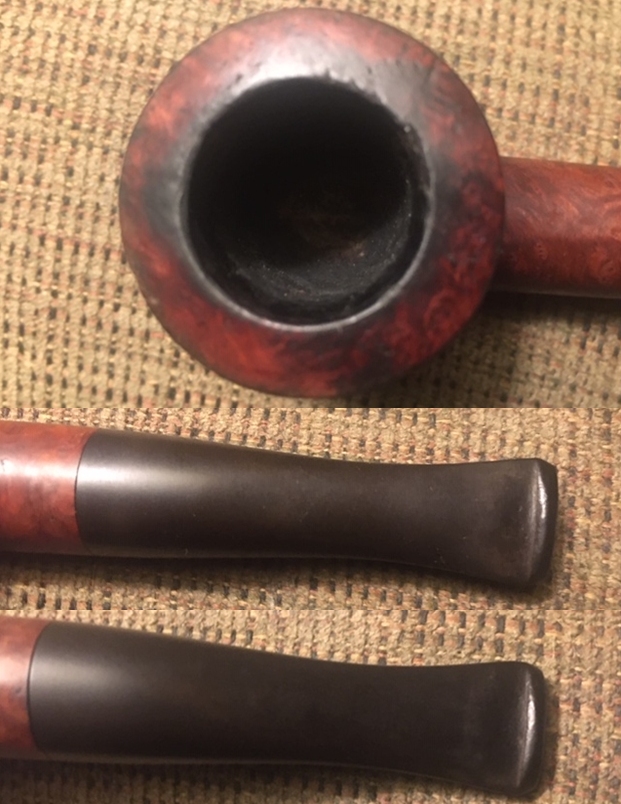
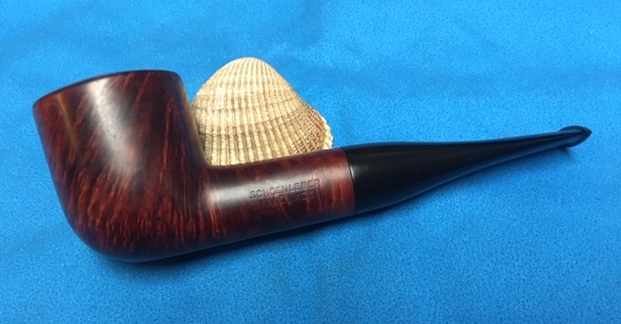
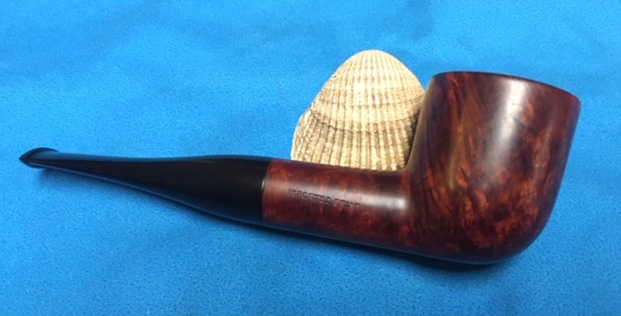
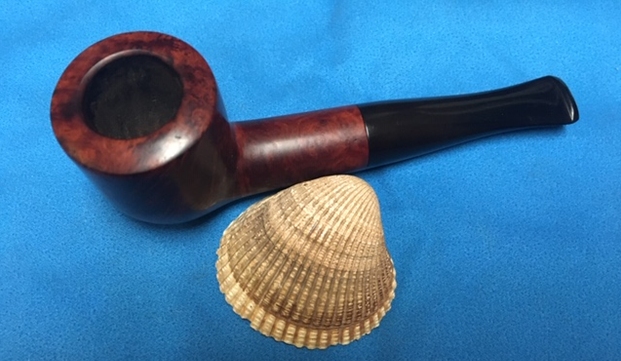
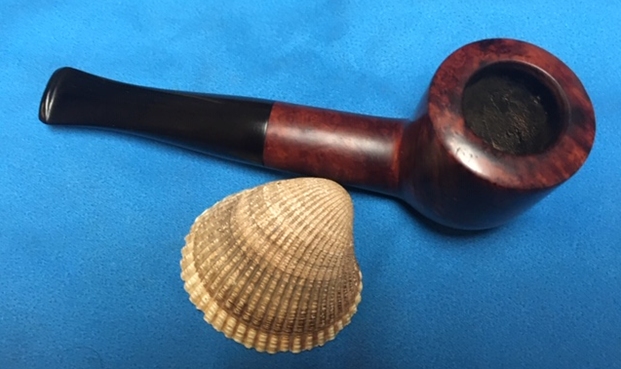
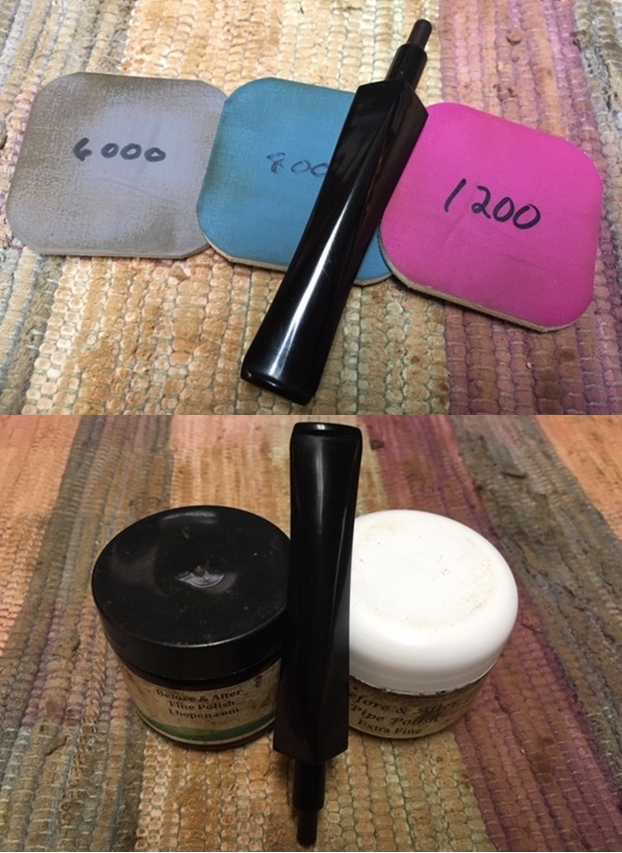
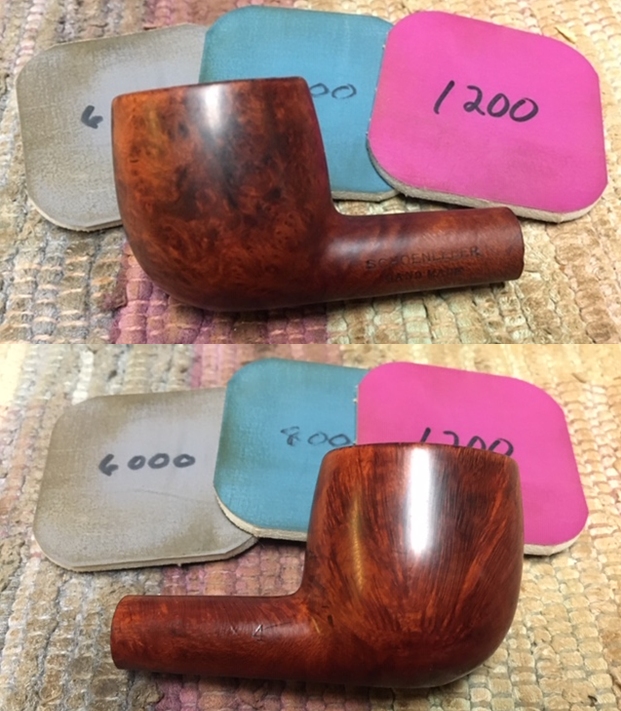
The next pipe in the queue is another one that Alex dropped off for me to work on for him – another Schoenleber Hand Made. This one is a straight shank Opera pipe with an oval bowl and a mix of different grain around the sides and shank. Someone had given the dirty pipe a coat of varnish or shellac to give it a shine but in doing so put the coating over the grim on the rim and the bowl sides. The carver once again did a great job utilizing the block of briar to maximize the grain. The pipe is stamped on the left side of the shank and reads Schoenleber over Hand Made. On the right side of the shank it is stamped with a number 4 which is either a shape number or size designation. The taper stem is vulcanite and has a single small coral dot on the top side. I think that this will be another nice looking piece once it is cleaned up. The bowl is thickly caked with a thick overflow of lava on the rim top. The top and edges of the bowl are damaged and chipped and what was once a bevel has been almost ruined. The exterior of the briar was dirty with grime and dust. The stem has light tooth marks and chatter on both sides. It is lightly oxidized and dirty. I took photos of the pipe before my cleanup work They tell the story and give a glimpse of the promise that I see in this pipe. I took a photo of the rim top to show the thick cake in the bowl, the damage to the rim top and inner edge.  The stem was a very good fit to the shank. It was oxidized, calcified and had debris stuck to the surface of the vulcanite. It also shows the tooth marks on the stem and on the button surface.  I took photos of the sides of the shank to show the stamping. The stamping is faint but readable in the photos below and is as noted above – on the left side it reads Schoenleber Hand Made and on the right side it is stamped with the number 4 at the shank/bowl junction. The stem has a coral dot on the top of the taper.When I worked on a Schoenleber pipe for Alex in the past I had done the research on the brand. I knew that the pipe had been made for a shop in New Jersey but went back and reread the previous blog I had written on the brand. I have included the information from Pipedia that I included before. I quote the article in full (https://pipedia.org/wiki/Schoenleber).

Louis Schoenleber lived in North Arlington N.J. and was an Austrian immigrant and skilled artisan in pipe making. His hand carved pipes were available in his shop, ‘Schoenleber’s Newark Pipe Shop’, at 26 Branford Pl., Newark NJ, thought to open in the 1920’s. Schoenleber’s carried a full line of tobaccos as well as related pipe smoking accessories. It’s thought the shop operated until the late 1960’s, and Louis Schoenleber died in 1976. It’s also fairly certain they may have sold to other brands such as Jelling, also in Newark and are very similar in design and finish.

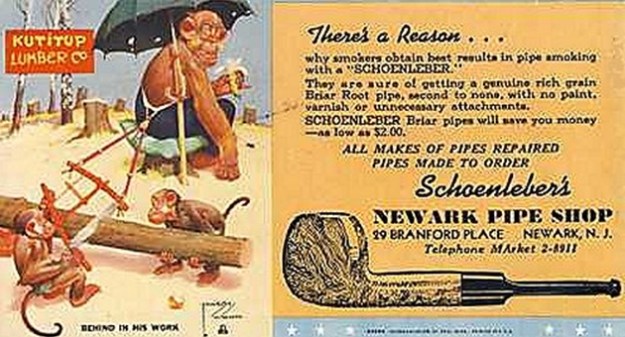
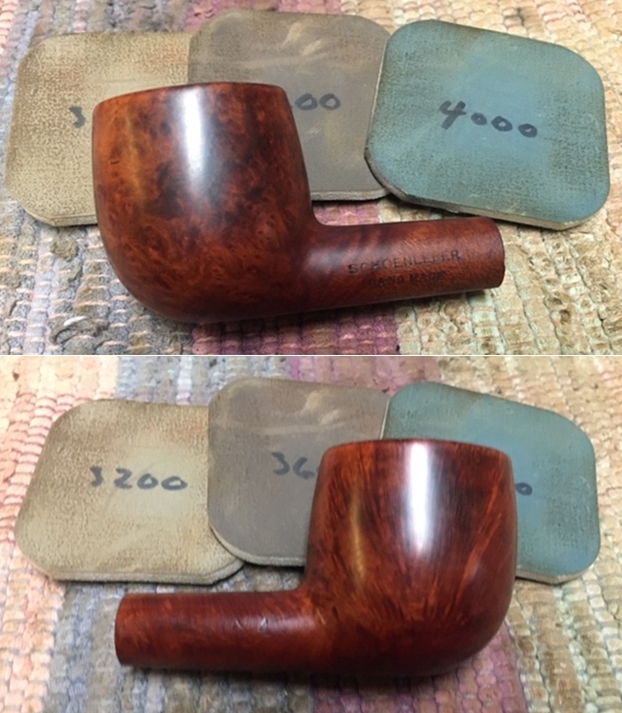
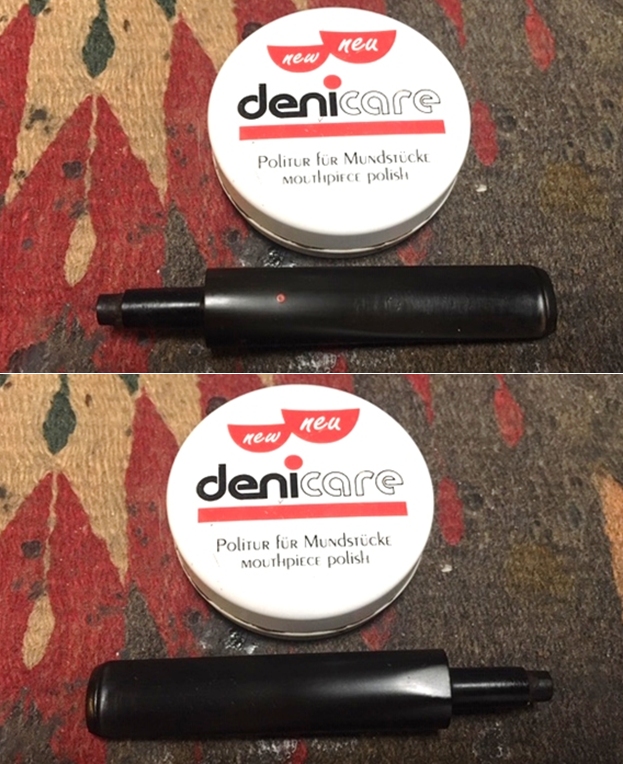
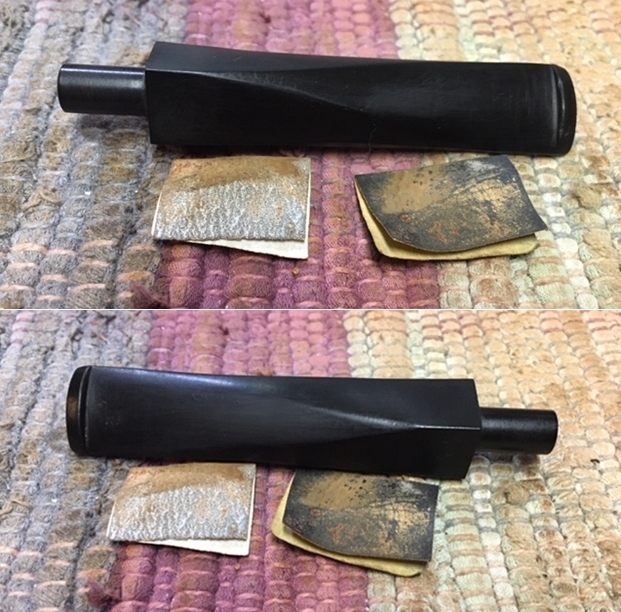
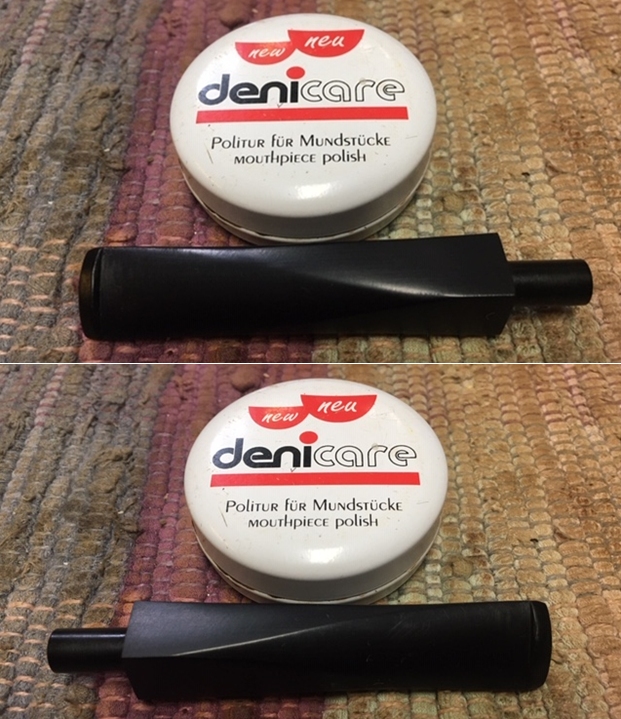
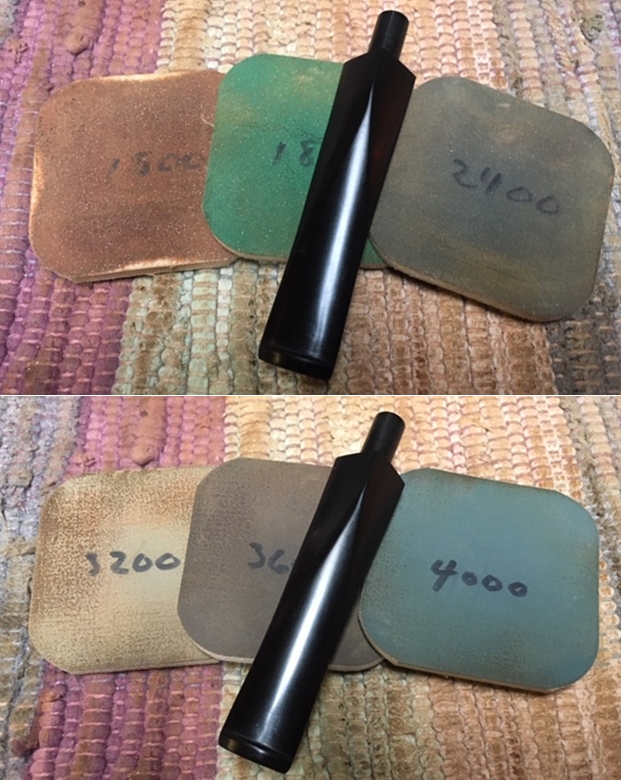
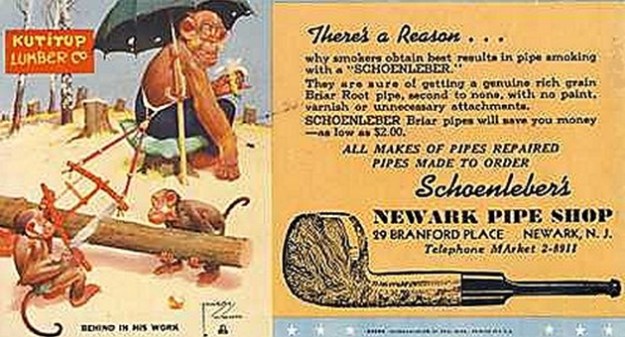
There was also an advertising card on the site that I have included below. It speaks to my assumptions about the curing process and the finishing process on the pipe. It also connects the pipe to Schoenleber’s Newark Pipe Shop in Newark, N.J. It also has a comment on the fact that pipes were made to order.I have to tell you I am spoiled with having Jeff do all the heavy clean up work on pipes. I almost forgot that on this one and started to work on the finish. I stopped myself when I realized I was working with a dirty pipe. I reamed the pipe with a Savinelli Fitsall Pipe Knife because of the oval bowl. It is a difficult reaming because of that so it takes more time to take the cake back to bare briar.I wiped the bowl exterior down with alcohol on paper towels to remove the grime and then scrubbed the interior of the bowl shank and stem with pipe cleaners, cotton swabs and alcohol to remove the tars and oils.I turned my attention to the deep gouges on the heel of the bowl. I filled them in with clear super glue and when that repairs cured I sanded them smooth with 220 grit sandpaper and started polishing the areas with 400 grit wet dry sandpaper.I dealt with the damage to the rim top with a folded piece of 220 grit sandpaper to clean up the damages and reshape the top and inner edge bevel. I forgot to take a photo of it after the clean up so I have included a photo from after I polished it with micromesh.I polished the briar with micromesh sanding pads – wet sanding with 1500-12000 grit pads. I worked over the rim top and edge of the bowl with the pads. I wiped the bowl down with a damp cloth after each pad to remove the sanding debris. I used a Maple Stain pen to touch up the area around the repair on the left side, heel and the inner edge of the rim.I worked some Before & After Restoration Balm into the surface of the briar with my fingertips to clean, enliven and protect it. I let the balm sit for a little while and then buffed with a cotton cloth to raise the shine. I set the bowl aside and turned my attention to the stem. I sanded it with 220 grit sandpaper to remove the oxidation and tooth chatter on both sides of the stem. I started the polishing of the surface with 400 grit wet dry sandpaper. I rubbed the stem down with Denicare Mouthpiece Polish – a red, gritty Tripoli like substance that is a paste. I rubbed it into the surface of the stem and polished it off with a cotton pad. I have found that is a great intermediary step before polishing with micromesh pads. I am not sure what I will use once the final tin I have is gone! I polished the vulcanite with micromesh sanding pads – 1500-12000 grit pads. I wiped it down with Obsidian Oil after each sanding pad. I used Before & After Pipe Polish – both Fine and Extra Fine to further polish the stem.   With both parts of the Schoenleber Opera Pipe finished, I polished the bowl and the stem with Blue Diamond polish on the buffing wheel. I gave the bowl and the stem multiple coats of carnauba wax. I buffed the pipe with a clean buffing pad to raise the shine. I hand buffed it with a microfiber cloth to deepen the shine. The pipe polished up pretty nicely. The rich oil cured finish and the grain came alive with the buffing. The finish on the briar works well with the polished black vulcanite stem. The finished pipe is a well-proportioned, nicely grained Schoenleber Opera. Have a look at it with the photos below. The dimensions are Length: 5 ¼ inches, Height: 1 ½ inches, Outside diameter of the bowl: 1 inch wide x 1 ¼ inches, Chamber diameter: 5/8 of an inch wide x 1inch long. This Schoenleber Hand Made Straight Opera will be going back to Alex shortly. I cannot wait to hear what he thinks of it. Thanks for walking through the restoration with me on this older American Made pipe.

Repairing and Restoring a John Bessai Flat Bottom Rhodesian


Blog by Steve Laug

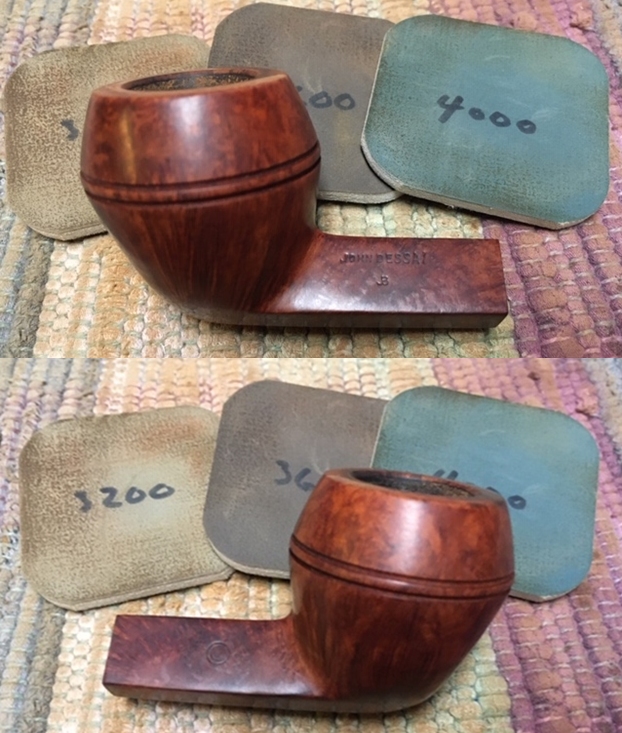
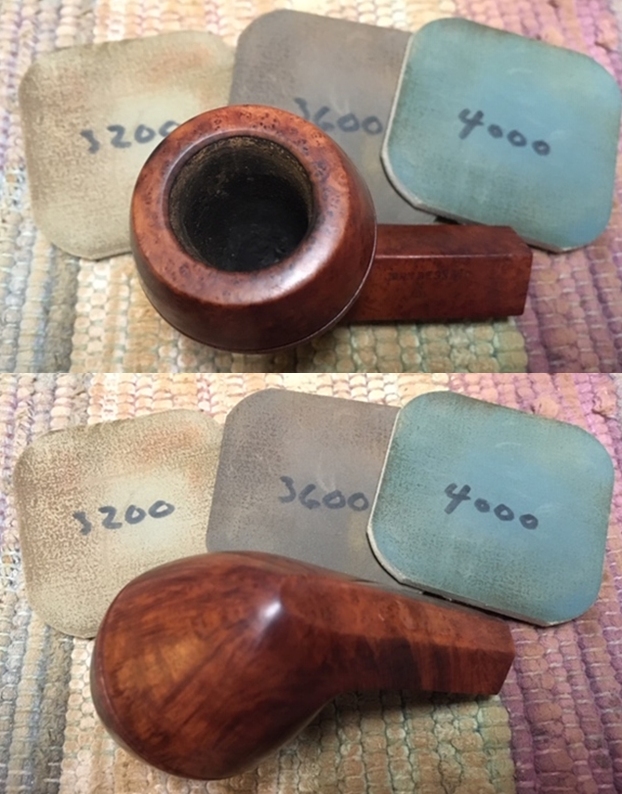
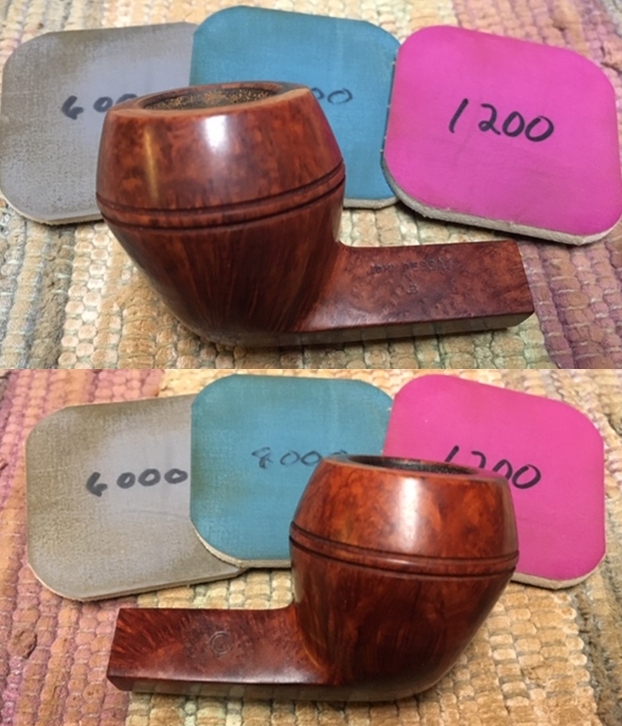
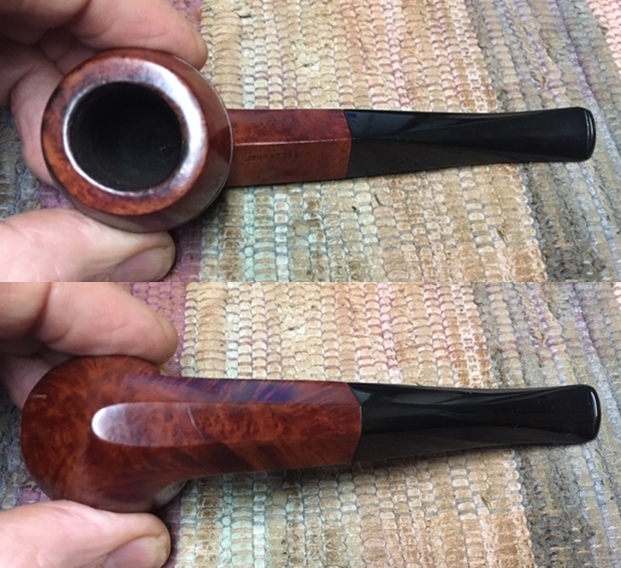
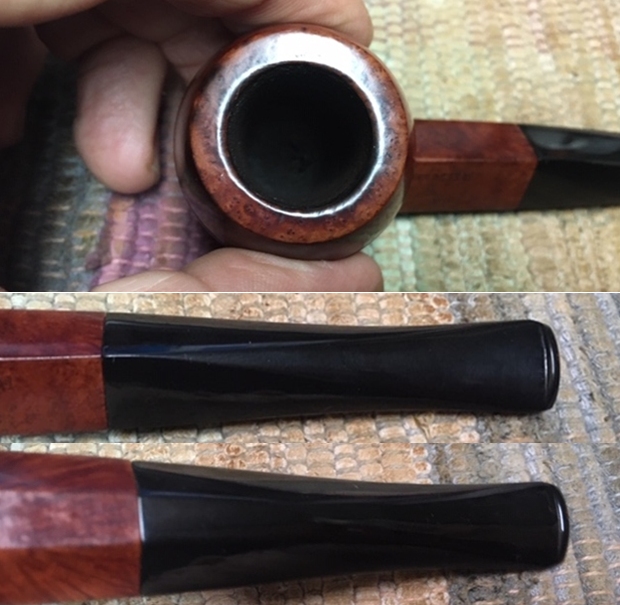
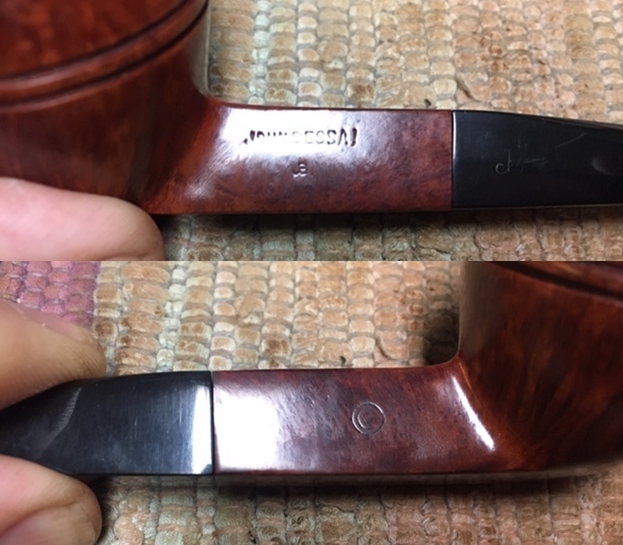
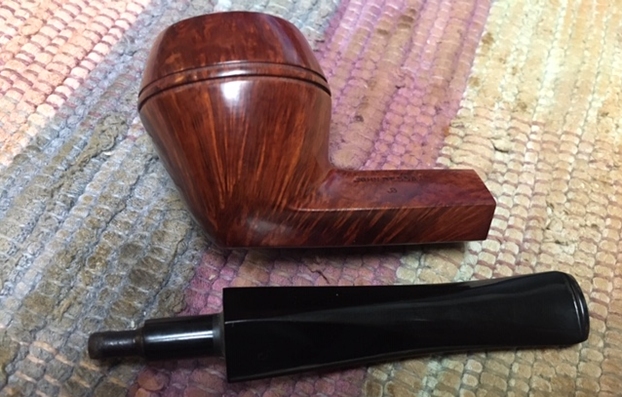
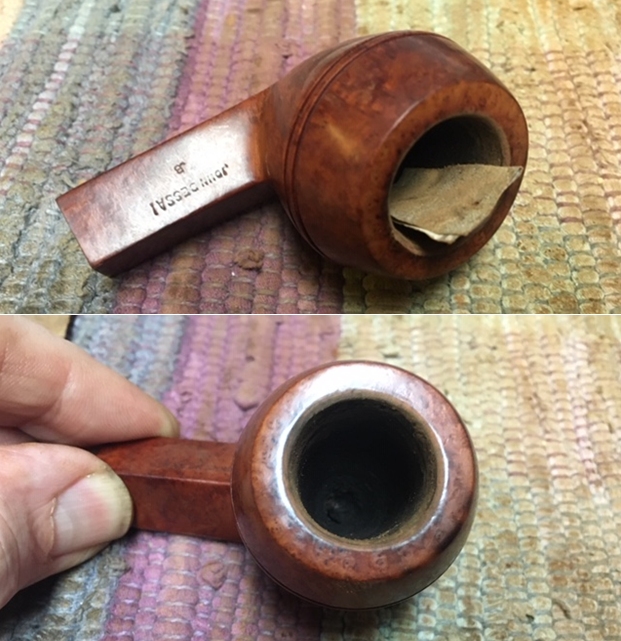
The next pipe on the worktable comes from Alex’s box of pipes. It is nicely shaped John Bessai pipe in a shape I would call a Rhodesian sitter. Looking at the photos below you might wonder what Alex wants to have done with this pipe. I have learned to not be fooled by appearance. The pipe had a top coat of shellac or varnish to give it a stellar shine – probably done by the seller. The rim top was dirty and had the shine coat on top of that. The bowl was out of round and the edges were dirty. The pipe reeked of stale tobacco which told me that the internals had not been cleaned. The airway was very tight and there was little airflow. The shank had no obstruction but the stem had a nozzle tip that was closed off but for a pin hole. The stem looked good from a distance but under the shine was tooth chatter and marks – things I don’t like on a restored pipe. On the underside of the shank was a small hairline crack. It went across the flat base about mid shank. It did not go up the sides it was like a small flaw in the briar. So you can see there was more to work on with this pipe than initially meets the eye. It was a polished dirty pipe! I took some photos of it before I started my work. I took close up photos of the rim top, bowl and stem to show the condition. You can see the damaged areas on the inner edge of the bowl and the bits of debris in the shellac coat on the rim top. The tooth damage is hardly visible in the photos but it is on both sides next to the button edge.I took a photo of the over buffed stamping on the shank sides. The left side reads John Bessai with a JB stamped underneath. The right side has the remnants of what looks like two circles. The rest is unreadable. There is also a JB on the left topside of the stem that is very faint.I took the stem off the shank and took a photo of the pipe to show the overall look. You can also see the buildup of tars and oils on the nozzle end of the stem.I have worked on quite a few Bessai pipes over the years and back in 2014 I restemmed a bowl. I wrote a blog on the pipe and did quite an extensive amount of research on the brand (https://rebornpipes.com/2014/07/14/restemming-and-restoring-a-john-bessai-special-diamond-shank-bent-brandy/). I am including that information here for ease of reference.
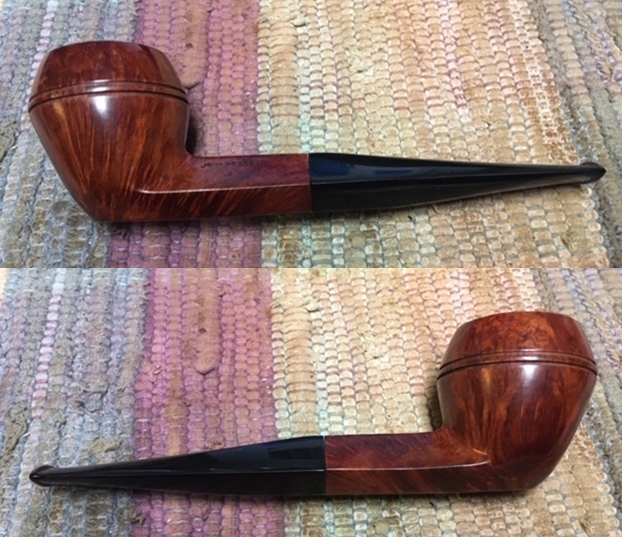
HISTORY & BACKGROUND

I started out with what I had found previously and written about on the blog. I quote the following paragraph from Pipedia http://pipedia.org/index.php?title=Bessai

 John Bessai was a long time pipemaker, repairman and tobacco shop owner who operated his pipe shop at the “Old Arcade” in Cleveland, Ohio. The shop was opened in approximately 1898. It was a small 2-room shop where he hand-crafted his own pipes in the back room and could work when customers were not there. Like so many other shop made brand, John Bessai’s limited production was quickly acquired by regular customers and thus his craftsmanship remained little known outside of Ohio and the Midwest. While his name is known by pipe collectors in the Midwest, his work is seldom seen elsewhere! He died before 1969. Nevertheless, John Bessai left behind a small number of classic shaped pipes; all were made on-site. They are praised worthy of collecting and reflecting skills well beyond most American pipe makers. John Bessai’s logo “JB” appeared as one letter as the “back” of the “J” and the “back” of the “B” share a single line. The logo was stamped on the stem and on the left side of the shank. His son Herb Bessai took over the business and also continued making pipes. He closed the shop in about 1978.

I suspected that there would be more information three years later. I did some further research and came across the information found in the paragraph below on one of the pipe forums.

John Bessai was located in the Colonial Arcade at least into the late 1980s. After his death, his son Herb ran the shop. It was taken over after Herb’s retirement by a male and then name was changed to “Old Erie Pipes”. This was then located in the Erieview Plaza and when that mall closed, taken over by Cousin’s Cigars which has a store on Euclid Avenue near CSU, and a store on Chagrin Boulevard in Woodmere Village.

That small quotation gave me a bit more information of the state of the store after John’s death and Herb’s retirement. But I still wanted more information. I wanted to know about the history of the brand and if there was any information on the various grades in the brand and the stamping on the pipes. I wanted to know a bit of a timeline for the brands. Finally my digging paid off. ON one of the pipe forums I came across a link that led me to a gold mine of information gathered by a man after my own heart, Andrew Hross. He has a blog called Classic Pipe Shop on Blogspot. I have included the link below for those who want more information. Andrew has done an amazing job of gathering information on the Bessai Brand so rather than rewrite the history I am quoting portions of Andrew’s work on The John Bessai Pipe Clinic. (http://classicpipeshop.blogspot.ca/2014/04/the-john-bessai-pipe-clinic-information.html)

The John Bessai Pipe Clinic, 35 Colonial Arcade, Cleveland, OH 44115 – by Andrew Hross

Owner(s): **John Bessai 1920s until his passing in 1969, **Herb Bessai ~1962-1983, **Daniel Gottschall 1984-~1993, **Purchased by Dad’s Smoke Shop / Cousin’s Smoke Shop and rolled into the Old Erie Smoke Shop about 1993. Cousin’s Cigars purchased the remaining stock of Bessai pipes near after Herb Bessai passed away in 2002.

Years of Operation: 1920s (unkown specific date at this time) – 1983. After 1983 the business was sold to Daniel Gottschall who later sold it to Cousin’s Cigar (Euclid Ave) around 1993. The name was changed to “Old Erie Tobacco Company”. They were forced to move to the Galleria when all the tenants of the Old Arcade were cleared out to make room for renovations. Their new address was The Galleria at Erieview, 1301 East 9th Street in Cleveland.

After this move the location wasn’t as busy as they had hoped and Cousin’s moved all the Old Erie Tobacco assets to their Euclid Avenue Store. The store has since moved to a St. Clair location after Cleveland State forced them out due to anti-smoking regulations on campus. Their St. Clair location offers many of John Bessai Pipe Clinic’s old tobacco blends.

Their new store opened in the Merriman Valley area in Akron, Ohio where the store manager John Coleman oversees the day to day operations. John was instrumental in helping me piece together a lot of loose ends during Bessai Pipe Clinic’s transition years.

My father visited their shop several times in the early 60s as he attended Fenn College (now Cleveland State University) as an undergrad before moving on to Ohio State University for his Masters. He’s way smarter than I am so I just go with the flow…

He mentioned meeting John at that time who quickly gave my father some pointers on smoking a pipe and how to take samples from the shop’s expansive sample jar collection. His pipes were on display in the shop although I don’t believe he had a lot of pipes on display at any given time due to production in-shop.

John’s son Herb took over the shop in the early 60s after he graduated from Cleveland State University / Fenn College (unclear) as he is listed as having played Basketball for CSU. Herb was also a helpful, informative and friendly individual. Articles exist from the Herald in 1962 where they interviewed Herb (with photograph) about the state of smoking in the new age of the early 60s. I visited the shop in the late 70s / early 80s with my father during a trip to Cleveland and couldn’t tell you much about the shop other than the guy working was very friendly. Back then it wasn’t unusual to be a kid and walk into a smoke shop with your father. Clearly I didn’t purchase anything but my father probably picked up some tobacco but I remember him looking at pipes displayed on a back wall. The shop was small but impressive.

If anyone has any pictures of the shop or old catalogs, I would love any additional information as it’s tough to come by 30+ years later!

Pipes offered by John Bessai Pipe Clinic: Most of the pipes that were offered by the John Bessai Pipe Clinic were fairly standard in shape… I would say most of the pipes Bessai offered were smooth pipes. My assessment would be 90% smooth and 10% rusticated / sandblasted…

…The story is that John crafted pipes in the back room or off site and finished them in house while the store wasn’t busy. Very little information is available on the accuracy of this statement. Some of his pipes from the late 1960s through the 1970s (John passed away in 1969) I feel were left over stock from previous turnings and sometimes showed fills or sand pits. Some of these pipes even carry Herb’s markings (see below). These pipes still smoke very well but are not as eye-appealing as other earlier pipes from the store’s career.

Stampings and rough dating of John Bessai Pipe Clinic Pipes: Which pipes did John make and which ones did Herb make/finish? All Bessai pipes carry his standard large JB stamp either on the stem or shank or both. Typically the JB on the stem is within a circle.

All pipes created by John Bessai’s hands reportedly contain the miniscule ‘jb’ stamp on the shank or body of the pipe. I have older pipes in my possession that do not contain this stamp (condenser, old stamps, etc) that were clearly shop made pipes. I feel he started using the tiny ‘jb’ stamp in the 50s to early 60s.

An interesting note about John Bessai’s stems – they always clean very nicely and aren’t prone to as much oxidation (that brownish / green color) as most dunhill and Charatan pipes tend to oxidize. His cuts to his stems were very impressive and often transitioned from diamond-shaped shanks almost architecturally. Very comfortable to smoke.

John Bessai Special Pipes:

… I have a couple Bessai Special pipes. These stand out either by large size, graining or possibly shape. Most Specials are unique pipes and are rare to find in comparison to his regular issue pipes.

John Bessai Special X pipes:

I only have one of these and it’s a beauty. This one is a larger bowl (around a group 4 dunhill) with deep colored grain and a hefty substantial shank. Special X pipes are probably the rarest of John Bessai pipes and should be sought out if possible. I’ve smoke mine roughly 4 or 5 times and it performs with the best of my pipes…

Herb Bessai Pipes:

Unfortunately none of these pipes that I’ve seen have astounded me with grain or general appearance. Having said this, these pipes smoke nicely and are a great value if you can find them. I have one that my father found at an Antique Show in the South. There’s another author shape on reborn pipe’s blog that someone refinished because of the amount of fills in the pipe. He also states it’s a wonderful smoker (Editor’s note: This is my pipe and the write up I did on the blog). These pipes are likely from the late 60s through the early 70s. I believe many pipes after this period were created en masse at a factory in the US. It is unclear what stamp was used on these later pipes…

Dating / Circa era Bessai Pipes: If the pipe carries a stamp stating Cleveland, O U.S.A. it’s considered an older production pipe (pre1960s). I’ve not seen any newer pipes with that stamp.

Bullseye stamping usually indicates an earlier pipe as that stamp seems to have been abandoned pre1960 as well.

Most of the earlier Bessai pipes have an unusual ‘stinger’ or condenser at the end of the tenon which is unique to Bessai pipes. They are either a hard plastic or created out of wood. They are typically easy to remove and could have been easily lost if misplaced. These pipes I would consider pre-1960 and possibly 1940s-early 1950s production based on their stamps and patina of the pipes.

1970s 1980s and beyond: My feeling on these pipes after John’s passing is that they purchased finished pipes from a large manufacturer and stamped them with the John Bessai or Bessai stamp (on shank and/or stem). Most of these shapes are standard among many stores from that period and offer less than spectacular grain (and sometimes fills). Stamps on these pipes are probably fairly plain and don’t have the tiny ‘jb’ stamp on the shank indicating it was produced by John Bessai.

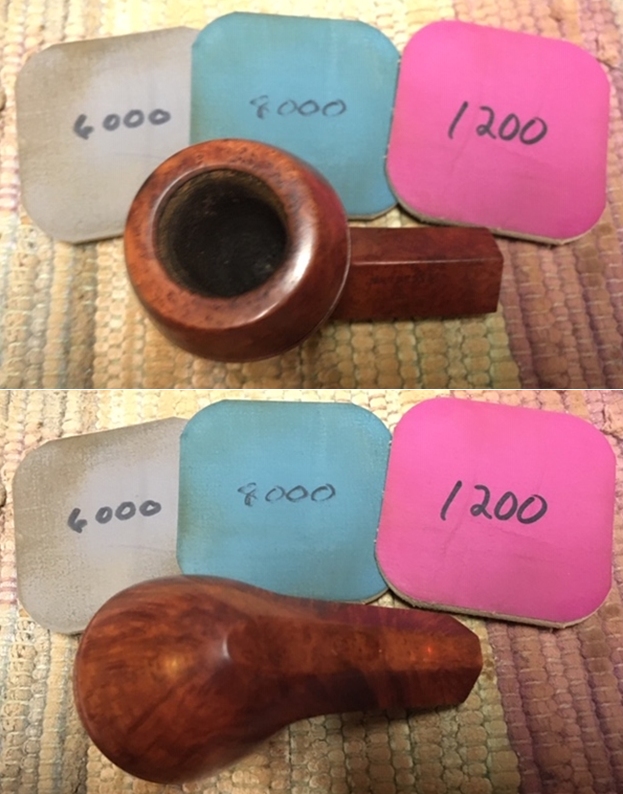
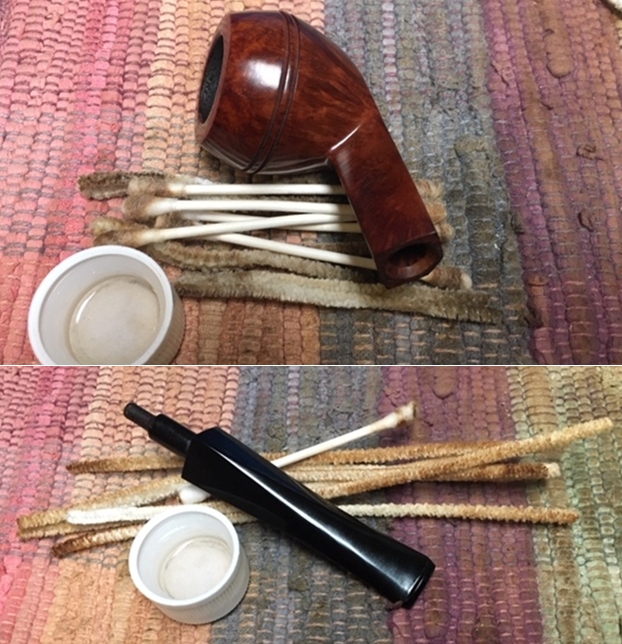
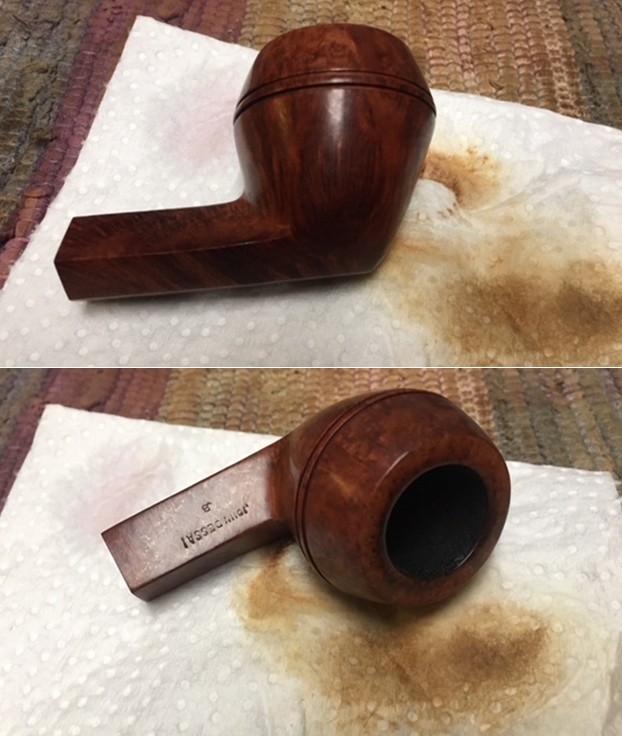
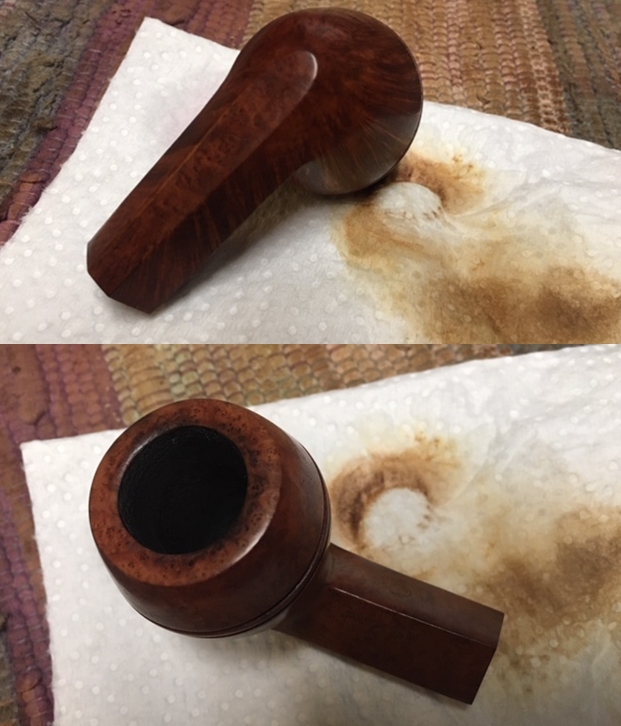
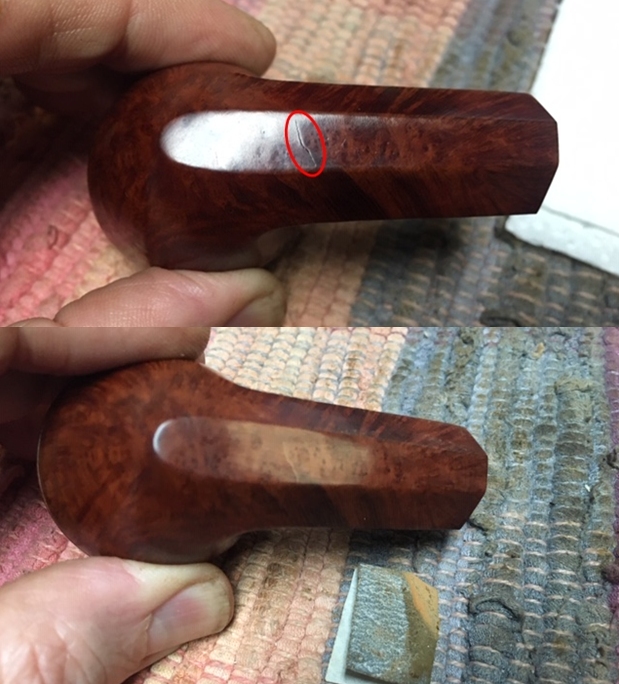
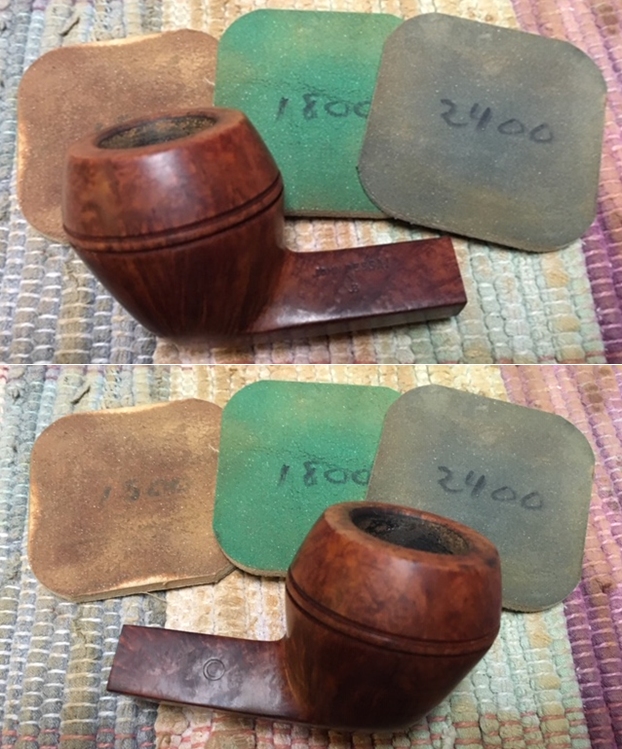
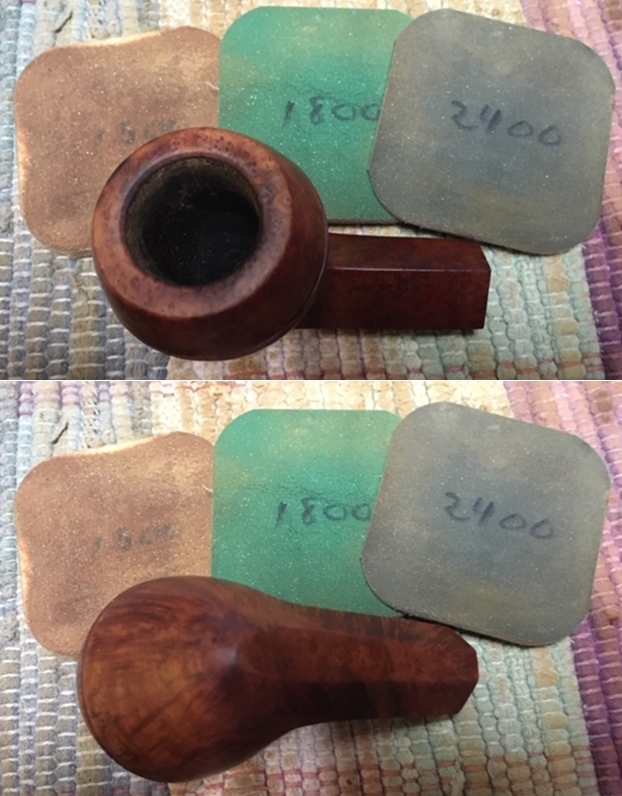
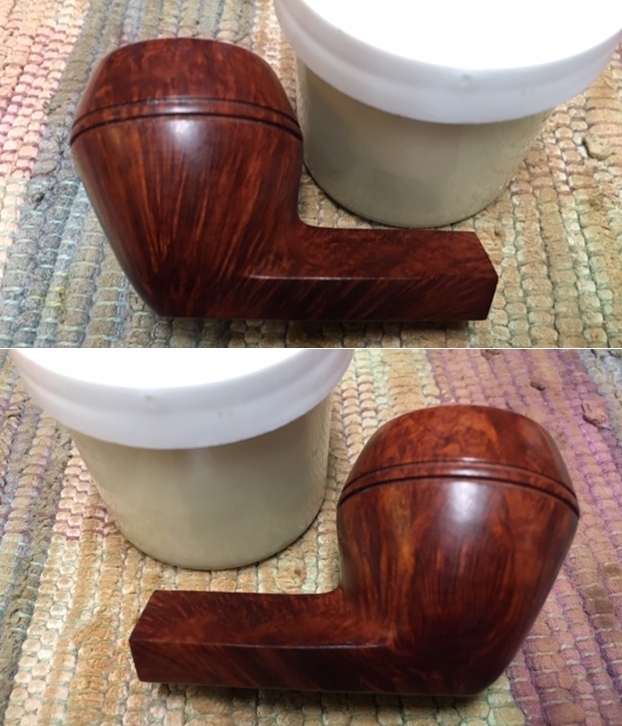
I know that is a lot of information and if you want to you can skip ahead to read about the restoration. I started my restoration with cleaning the internals and the externals of the pipe. I cleaned out the inside of the pipe with pipe cleaners, cotton swabs and alcohol. It was a filthy pipe on the inside.I scrubbed off shellac coat with acetone on paper towel. It came off really well and left the bowl dull but removed the shine coat and let me get the grime off the briar. I decided to address the flaw in the bottom side of the shank. I have circled the area in red. Under a lens the flaw does not go up the sides of the shank but rather stops just before each edge. I scrubbed that area with acetone to clean up the shellac or varnish that was in the crack or flaw. Once it was clean I put a spot of clear super glue on the crack and worked it into the crack with a tooth pick. I let it harden/cured the sanded it smooth with a folded piece of 220 grit sandpaper. While it is still present it is less visible and smooth. I cleaned up the damages to the inner edge of the rim and the beveled area. I used a folded piece of 220 grit sandpaper to smooth it out and improve the look of the edge and the top. The finished work looks a lot better.I polished the bowl, rim top and repaired shank with micromesh sanding pads – wet sanding with 1500-12000 pads. I wiped it down with a damp cloth. The photos of the process shows the developing shine. I rubbed the briar down with Before & After Restoration Balm. I worked it into the surface of the briar with my fingertips. The product works to clean, enliven and preserve the even that material. The balm is absorbed by the briar and gives it real life. I buffed it with a cotton cloth to deepen the shine. I used a folded piece of 220 grit sandpaper to minimize the tooth damage next to the button and up the stem. It did not take a lot of work to clean it up as most of it was not too deep. I also cleaned up the buildup on the nozzle end of the tenon.I polished the vulcanite with micromesh sanding pads – 1500-12000 grit pads. I wiped it down with Obsidian Oil after each sanding pad. I used Before & After Pipe Polish – both Fine and Extra Fine to further polish the stem.  With both parts of the pipe finished, I polished the bowl and the stem with Blue Diamond polish on the buffing wheel. I gave the bowl and the stem multiple coats of carnauba wax. I buffed the pipe with a clean buffing pad to raise the shine. I hand buffed it with a microfiber cloth to deepen the shine. The pentagon shank Rhodesian by John Bessai polished up pretty nicely. The rich browns of the finish and the grain came alive with the buffing. The finish on the briar works well with the polished black vulcanite stem. The finished pipe is a well-proportioned, well-made Rhodesian that is a functional sitter. Have a look at it with the photos below. The dimensions are Length: 5 ¾ inches, Height: 1 ¾ inches, Outside diameter of the bowl: 1 ½ inches, Chamber diameter: ¾ of an inch. This Bessai Rhodesian will be going back in the box of Alex’s pipes awaiting the opening of restrictions so we can enjoy a pipe and go through the lot. Thanks for walking through the restoration with me on this American Made pipe. 
 

Cleaning up a piece of Pipe History – a Marxman Imported Briar Rusticated Bulldog


Blog by Steve Laug

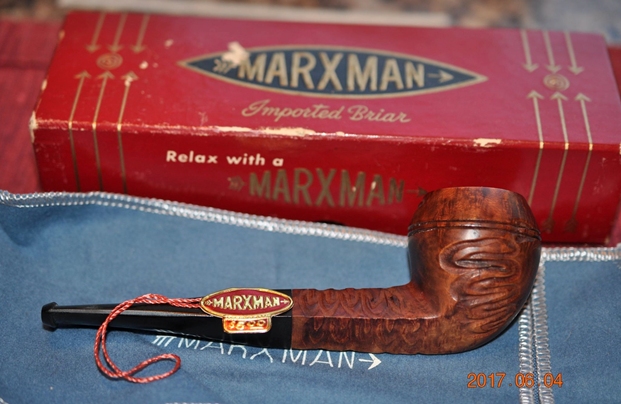
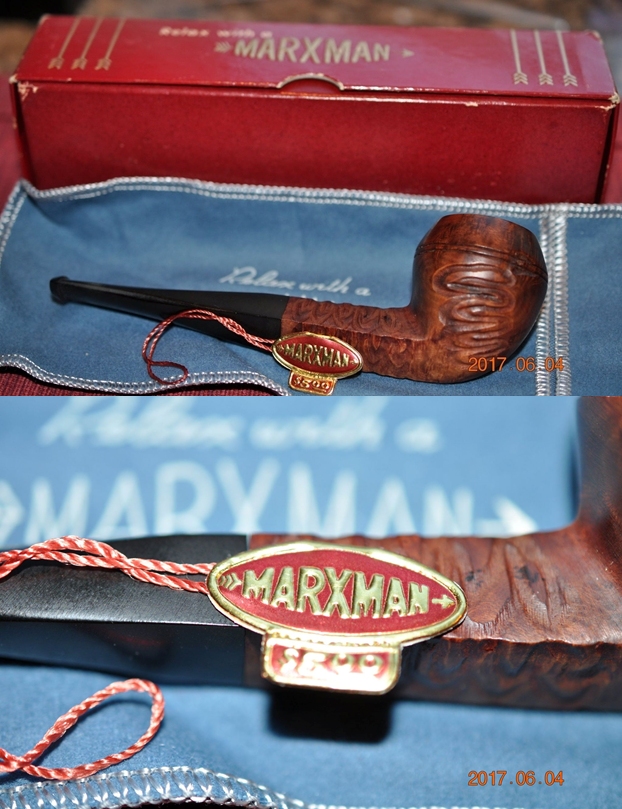
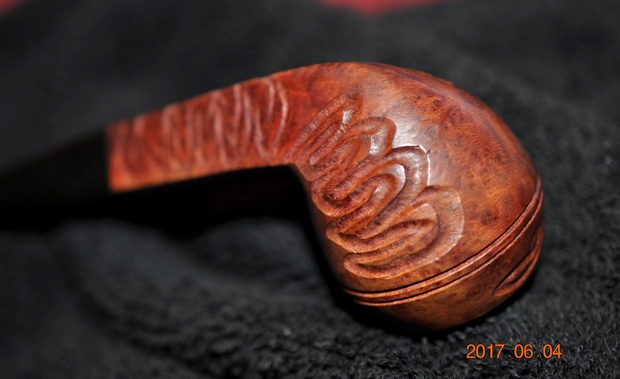
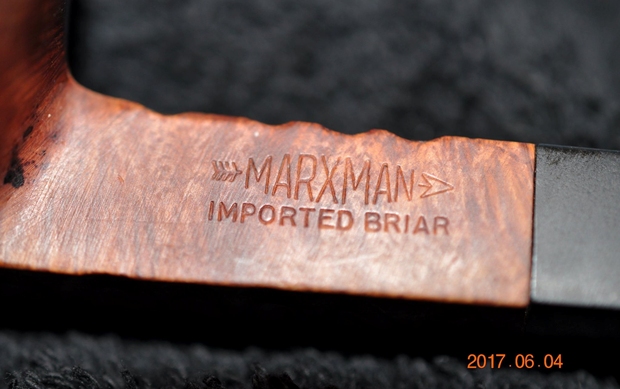
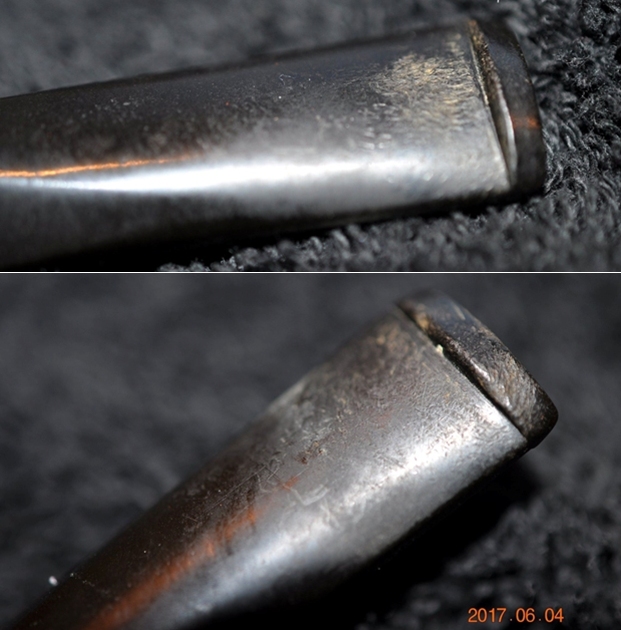
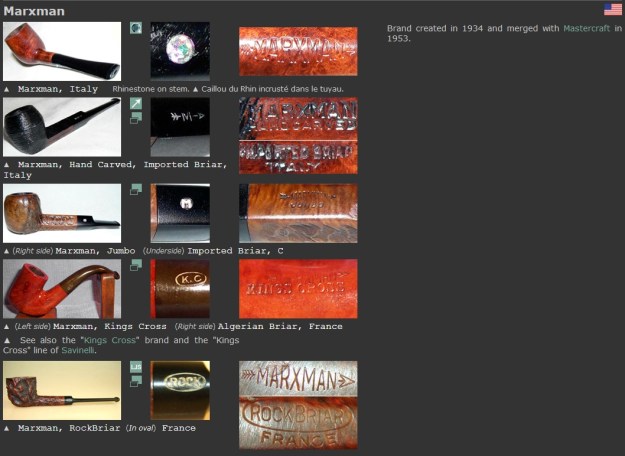
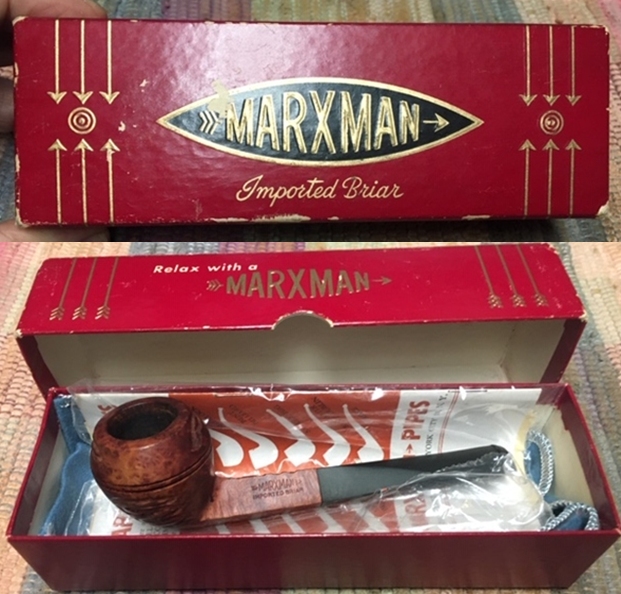
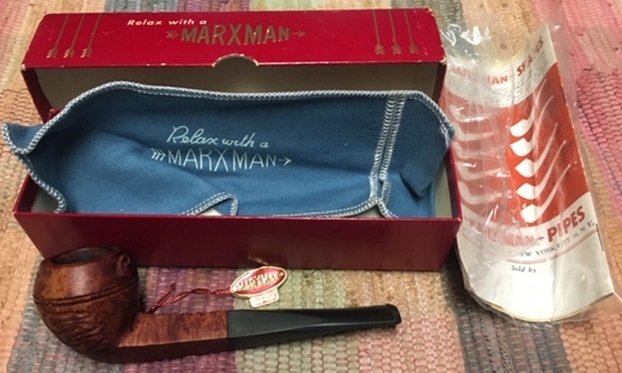
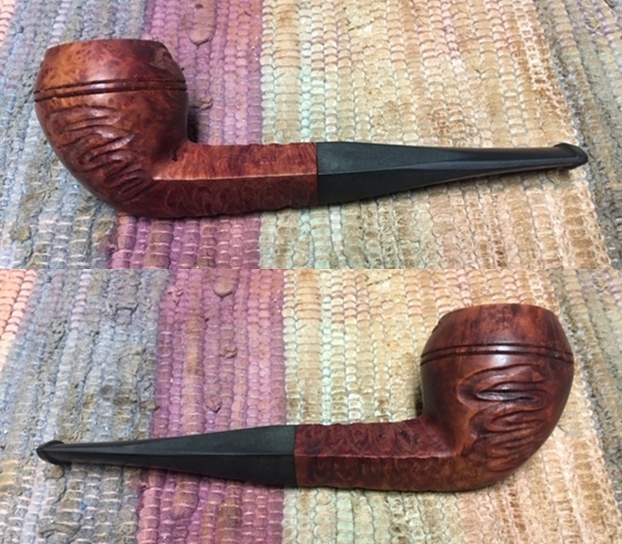
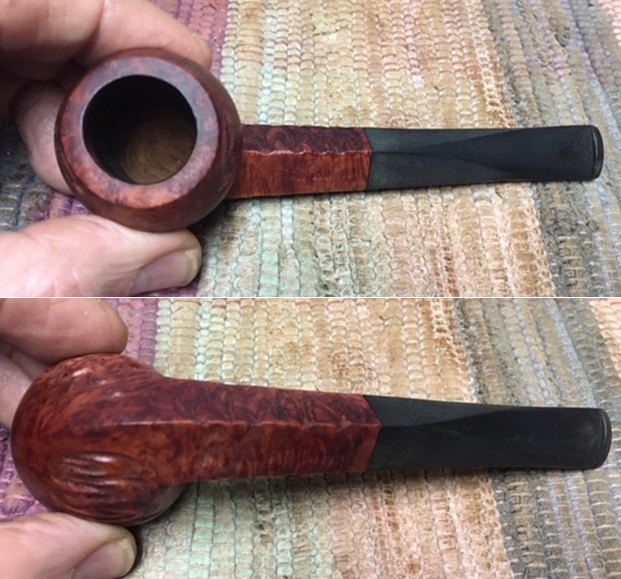
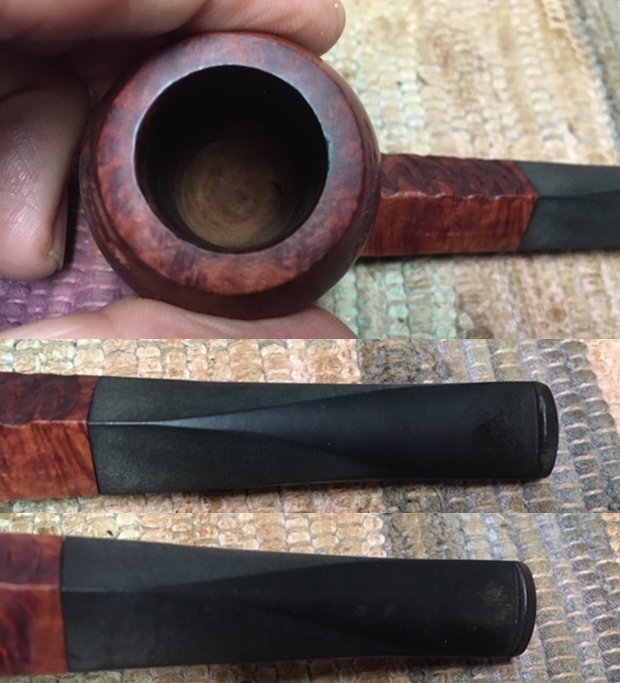
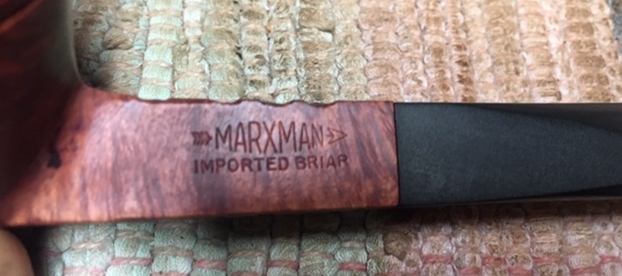
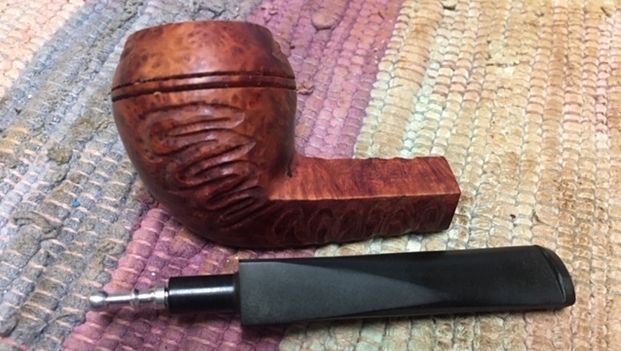
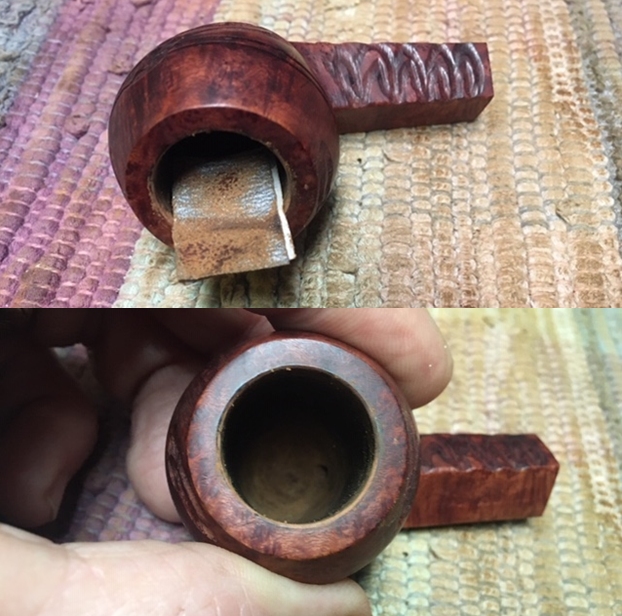
The next pipe on the table is a piece of American Pipe History. It is a well smoked Marxman Bulldog that came with the box, pipe sock and literature that was in the original package. The previous pipeman had even kept the $5 price tag that had come with the pipe. I don’t know it I would call it a pretty pipe but it is an interestingly rusticated classic Bulldog with worm trails around the bowl and shank and large spot of smooth briar as well. The pipe was very dirty with a thick cake in the bowl and some tobacco remnants from the last bowl smoked. There was some darkening and lava around the rim top and inner edge of the bowl. The rusticated areas have a lot of grime and debris ground into them but should clean up nicely. There are no visible fills around the bowl which is also a nice bonus. The finish looks good under the grime. The taper vulcanite stem is in good shape with some small tooth marks and chatter on both sides. It is lightly oxidized as well. Jeff took some great photos of the pipe, the box and sock as well as the price tag that came with the original pipe. He took it out of the box and took pictures of the pipe itself to show its general condition before he started his cleanup. Jeff took a photo of the rim top to show the thick cake in the bowl and the lava overflow all over the rim top. It is quite thick toward the back of the bowl. It is hard to know what the inner edge of the rim looks like until we remove the cake and the lava. While the bowl has a thick cake it interestingly does not go all the way to the bottom of the bowl. The last third of the bowl is raw, clean briar with no darkening. This means that the previous pipesmoker did not smoke the pipe to the bottom of any of his bowls.He took photos around the sides and heel of the bowl to show the condition. You can see the grime in the finish and the worm trail rustication all over the bowl sides. He took a photo of the stamping on the left topside of the shank. You can see that it is clear and readable. It has the classic Marxman arrow logo over Imported Briar. There is no other stamping on the pipe.The next two photos show the condition of the stem. You can see that it is lightly oxidized and has some tooth chatter and marks on both sides near the button. There is also some wear on the button surfaces on both sides.I turned to the listing on Pipephil on the Marxman brand (http://www.pipephil.eu/logos/en/logo-m2.html) to gain some insight. The side bar noted that the brand was created in 1934 and merged with Mastercraft in 1953. I did a screen capture of the section and have included it below.I turned next to Pipedia to gather a more detailed history of the brand and see if I could find any information on this particular pipe (https://pipedia.org/wiki/Marxman). The brief article there was taken from Pipes, Artisans and Trademarks, by José Manuel Lopes. I quote a portion of that article below.

Marxman (Marxman Pipe Company) was created by Robert (Bob) L. Marx in 1934, when he was 29, and after he had worked for the William Demuth Company. His pipes were not outstanding because of the quality of their wood (probably Algerian), but Bob started making unique sculpted pieces, which brought the brand fame in the World of Hollywood cinema. Actors like Zachery Scott, Dennis Morgan, Jack Carson, Alan Hale, Joel McRae, and Ronald Reagan were some of the faces that appeared on the bowls. Bob knew how to innovate and took full advantage of marketing and press advertising in order to sell the brand–one of his slogans being “Relax with a Marxman”.

Bob also produced other brands, such as the “Bench Made”. The company lasted until 1953, the year in which it merged with Mastercraft, then the USA’s biggest pipe importer. Marxman Pipes Inc., was located at 27 West 24th St. New York 10, NY.

It is definitely an interesting piece of pipe history. It was also a pipe that had been sitting here since 2017 so it was high time to work on it. Armed with the brand information I turned to work on it. I opened the Marxman box and unpacked the pipe and the other things in the box. The photos below show what I found as I went through the box. Jeff had done a great job cleaning up the pipe as usual. He reamed the pipe with a PipNet reamer and cake from the walls of the bowl. He cleaned up any remnants of cake with a Savinelli Fitsall Pipe Knife. He scrubbed the interior of the bowl and shank with pipe cleaners, cotton swabs and alcohol to remove the tars and oils. He scrubbed the exterior of the pipe with Murphy’s Oil Soap and a tooth brush to remove the grime from the rim top. He worked on the rim edge lava and darkening with the soap and tooth brush. He scrubbed the inside of the stem with alcohol and pipe cleaners. He scrubbed the exterior with Soft Scrub and washed it off with warm water to remove the cleanser. The pipe looked far better. I took photos of the pipe when I received it before I started working on it. I took photos of the bowl and rim top as well as the stem to show how clean they were. You can the roughness on the inner edge of the rim on the backside of the bowl. The bowl and rim looks much better without the thick lava and cake. The stem looked better. There was light oxidation and the tooth chatter and marks were very visible.  I took a photo of the stamping on the left side of the shank. The stamping is clear and readable and it reads as noted above.I took a photo of the pipe with the stem removed to show the overall look of stem, tenon and profile of the pipe. I noted that there was a small stinger apparatus that is removable in the tenon.I decided to start my work on the pipe by dealing with the damaged inner edge of the bowl. I used a folded piece of 220 grit sandpaper to smooth out the damaged area bring the bowl back into round. It came out really well.I polished the bowl and base unit with micromesh sanding pads – wet sanding with 1500-12000 grit pads. I worked over the rim top and edge of the bowl with the pads. I wiped the bowl down with a damp cloth after each pad to remove the sanding debris.    I rubbed the briar down with Before & After Restoration Balm. I worked it into the surface of the briar with my fingertips and a horse hair shoe brush. The product works to clean, enliven and preserve the even that material. The balm is absorbed by the briar and gives it real life. I buffed it with a cotton cloth to deepen the shine. I set the bowl aside and turned my attention to the stem. I sanded it with 220 grit sandpaper to remove the oxidation and tooth chatter on both sides of the stem. I started the polishing of the surface with 400 grit wet dry sandpaper.  I rubbed the stem down with Denicare Mouthpiece Polish – a red, gritty Tripoli like substance that is a paste. I rubbed it into the surface of the stem and polished it off with a cotton pad. I have found that is a great intermediary step before polishing with micromesh pads. I am not sure what I will use once the final tin I have is gone! I polished the vulcanite with micromesh sanding pads – 1500-12000 grit pads. I wiped it down with Obsidian Oil after each sanding pad. I used Before & After Pipe Polish – both Fine and Extra Fine to further polish the stem.  With both parts of the pipe finished, I polished the bowl and the stem with Blue Diamond polish on the buffing wheel. I gave the bowl and the stem multiple coats of carnauba wax. I buffed the pipe with a clean buffing pad to raise the shine. I hand buffed it with a microfiber cloth to deepen the shine. The old Marxman Bulldog polished up pretty nicely. The rich browns of the finish and the grain came alive with the buffing. The finish on the briar works well with the polished black vulcanite stem. The finished pipe is a well-proportioned, well-made Marxman Imported Briar Bulldog. Have a look at it with the photos below. The dimensions are Length: 5 ½ inches, Height: 1 ¾ inches, Outside diameter of the bowl: 1 ½ inches, Chamber diameter: ¾ of an inch. This Marxman Bulldog will be going on the rebornpipes store in the American Pipe Makers shortly. Thanks for walking through the restoration with me on this older American Made pipe.
Rebirthing a Schoenleber Hand Made Crowned Billiard


Blog by Steve Laug

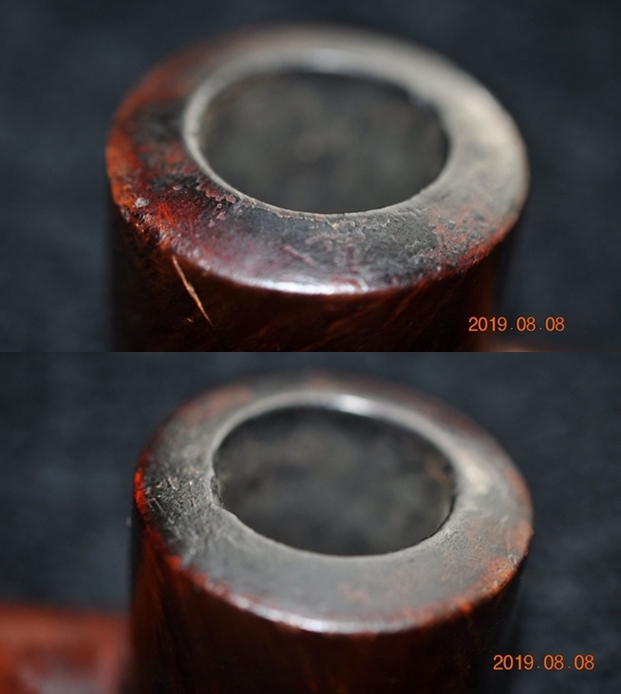
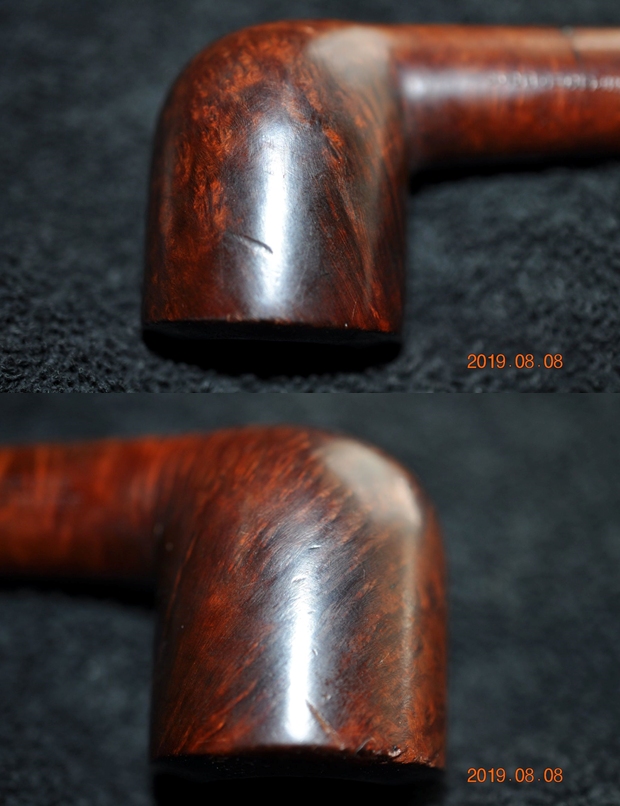
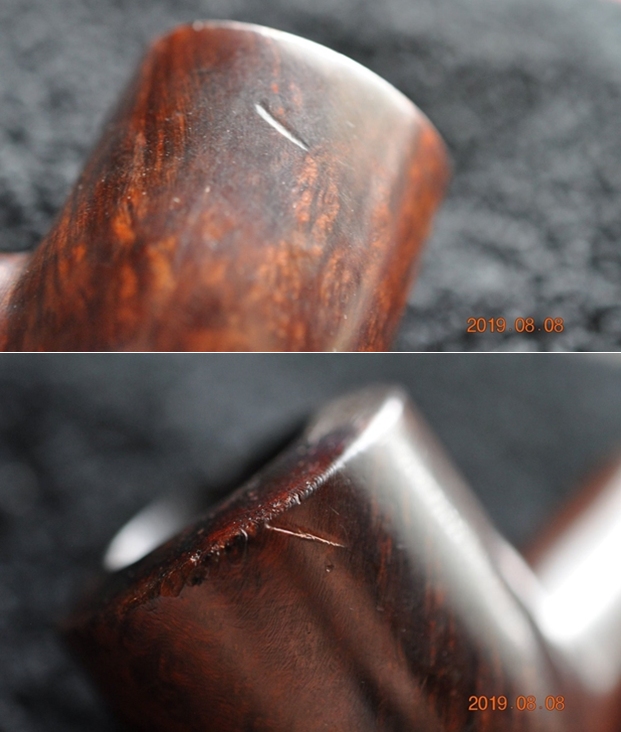
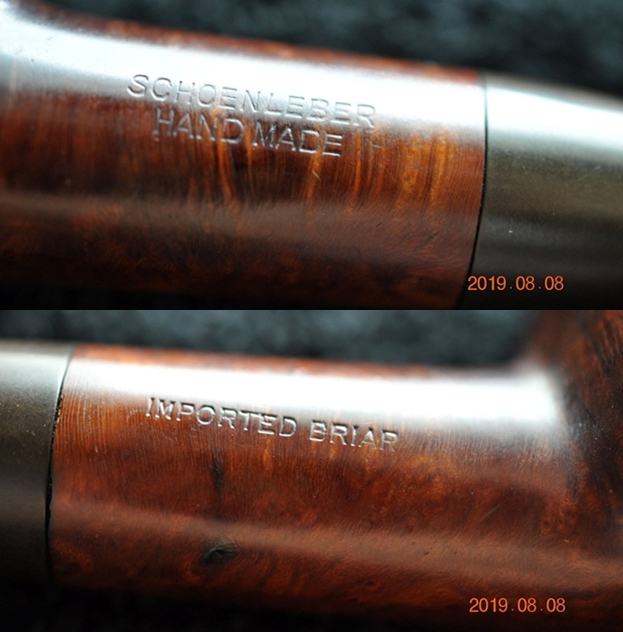
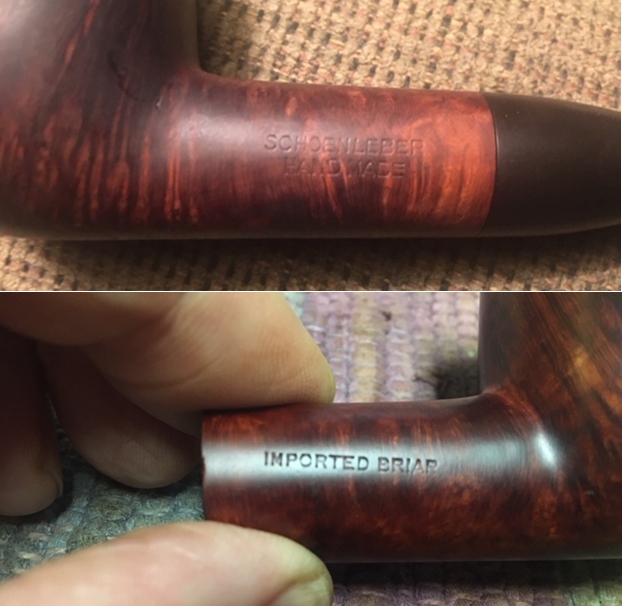
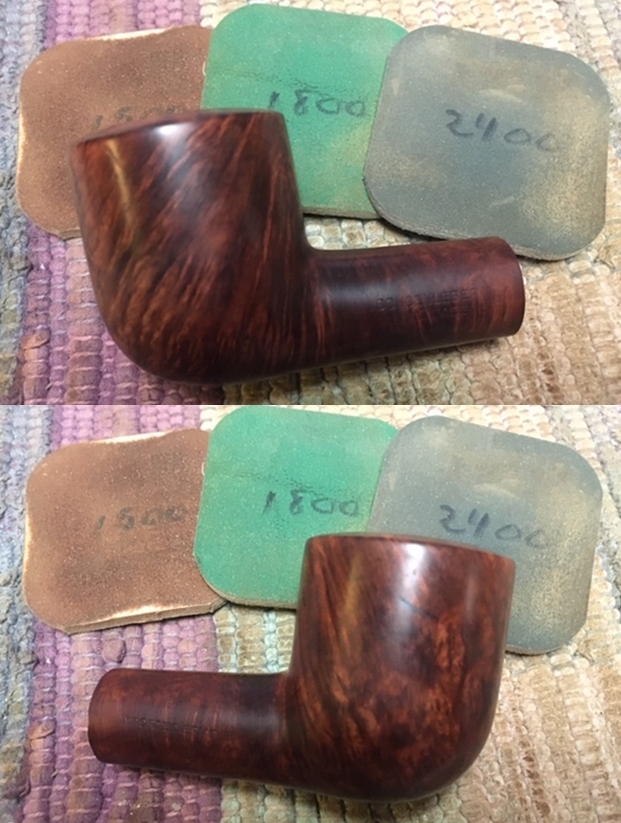
The next pipe in the queue is another one that Jeff picked up – this one is a Schoenleber Hand Made – a straight shank Crowned Rim Billiard with some beautiful grain around what appears to be an oil cured bowl and shank. The entire pipe has some beautiful mixed birdseye, flame, cross and swirled grain around the bowl and shank. But it is under a thick coat of oils, grime and dirt. The carver did a great job utilizing the block of briar to maximize the grain. The pipe is stamped on the left side of the shank. It reads Schoenleber over Hand Made. On the right side of the shank it is stamped Imported Briar. The thick taper stem is vulcanite and is unmarked. I think that this will be another nice looking piece once it is cleaned up. The bowl is thickly caked with a thick overflow of lava on the crowned rim top. The exterior of the briar was dirty with grime and dust. The stem has light tooth marks and chatter on both sides. It is lightly oxidized and has some calcification. Jeff took photos of the pipe before his cleanup work. They tell the story and give a glimpse of the promise that we see in this pipe. Jeff took some close up photos of the rim top to show the thick cake in the bowl and the lava overflow on the crowned rim top and inner edge.  It appears that there is some damage on the inner edge of the rim at the back of the bowl.He took some photos of the bowl sides and heel to show grain that was around this bowl. In the photos you can also see some of the dents in briar that will need to be dealt with. It is a nice looking pipe. He took photos of the sides of the shank to show the stamping. The stamping is clear and readable in the photos below and is as noted above. On the left side it reads Schoenleber Hand Made and on the right it reads Imported Briar.The stem was a very good fit to the shank. It was oxidized, calcified and had debris stuck to the surface of the vulcanite. It also shows the tooth marks on the stem and on the button surface. When I worked on a Schoenleber pipe for Alex in the past I had done the research on the brand. I knew that the pipe had been made for a shop in New Jersey but went back and reread the previous blog I had written on the brand. I have included the information from Pipedia that I included before. I quote the article in full (https://pipedia.org/wiki/Schoenleber).

Louis Schoenleber lived in North Arlington N.J. and was an Austrian immigrant and skilled artisan in pipe making. His hand carved pipes were available in his shop, ‘Schoenleber’s Newark Pipe Shop’, at 26 Branford Pl., Newark NJ, thought to open in the 1920’s. Schoenleber’s carried a full line of tobaccos as well as related pipe smoking accessories. It’s thought the shop operated until the late 1960’s, and Louis Schoenleber died in 1976. It’s also fairly certain they may have sold to other brands such as Jelling, also in Newark and are very similar in design and finish.

There was also an advertising card on the site that I have included below. It speaks to my assumptions about the curing process and the finishing process on the pipe. It also connects the pipe to Schoenleber’s Newark Pipe Shop in Newark, N.J. It also has a comment on the fact that pipes were made to order.Armed with those reminders about the brand I turned to work on the pipe itself. Jeff had done a great job cleaning up the pipe as usual. He reamed the pipe with a PipNet reamer and cut back the cake back to the bare briar. He cleaned up the walls with a Savinelli Fitsall Pipe Knife. He scrubbed the interior of the bowl and shank with pipe cleaners, cotton swabs and alcohol to remove the tars and oils. He scrubbed the exterior of the pipe with Murphy’s Oil Soap and a tooth brush to remove the grime from the finish. He worked on the rim top lava and darkening with the soap and tooth brush. He scrubbed the inside of the stem with alcohol and pipe cleaners. He scrubbed the exterior with Soft Scrub and then soaked it in Before & After Deoxidizer. He washed it off with warm water to remove the Deoxidizer. The pipe looked far better. I took photos of the bowl and rim top as well as the stem to show how clean they were. You can see some damage and darkening on the inner edge and crown of the bowl.  The stem looks clean of oxidation and the tooth marks and chatter are almost invisible in the photos.I took photos of the stamping on the sides of the shank. The stamping is faint but readable as noted above. I started my part of the restoration by working over the inner edge of the rim with a folded piece of 220 grit sandpaper. I worked on it until the chamber was round again. I sand out the damage on the outer edge and the rim top at the same time.I polished the bowl and rim with micromesh sanding pads – wet sanding with 1500-12000 grit pads. I worked over the rim top and edge of the bowl with the pads. I wiped the bowl down with a damp cloth after each pad to remove the sanding debris. I worked some Before & After Restoration Balm into the surface of the briar with my fingertips to clean, enliven and protect it. I let the balm sit for a little while and then buffed with a cotton cloth to raise the shine. I set the bowl aside and turned my attention to the stem. I sanded it with 220 grit sandpaper to remove the oxidation and tooth chatter on both sides of the stem. I started the polishing of the surface with 400 grit wet dry sandpaper. I rubbed the stem down with Denicare Mouthpiece Polish – a red, gritty Tripoli like substance that is a paste. I rubbed it into the surface of the stem and polished it off with a cotton pad. I have found that is a great intermediary step before polishing with micromesh pads. I am not sure what I will use once the final tin I have is gone! I polished the vulcanite with micromesh sanding pads – 1500-12000 grit pads. I wiped it down with Obsidian Oil after each sanding pad. I used Before & After Pipe Polish – both Fine and Extra Fine to further polish the stem.   With both parts of the pipe finished, I polished the bowl and the stem with Blue Diamond polish on the buffing wheel. I gave the bowl and the stem multiple coats of carnauba wax. I buffed the pipe with a clean buffing pad to raise the shine. I hand buffed it with a microfiber cloth to deepen the shine. The pipe polished up pretty nicely. The rich oil cured finish and the grain came alive with the buffing. The finish on the briar works well with the polished black vulcanite stem. The finished pipe is a well-proportioned, nicely grained Schoenleber Crowned Billiard. Have a look at it with the photos below. The dimensions are Length: 5 ¼ inches, Height: 1 ½ inches, Outside diameter of the bowl: 1 ¼ inches, Chamber diameter: ¾ of an inch. This Schoenleber Hand Made Crowned Billiard will be going on the rebornpipes store in the American Pipe Makers shortly. Thanks for walking through the restoration with me on this older American Made pipe.
 

A Pipe from the Illusive Hunt for the Perfect Smoke – A Ken Patent Applied For Apple


Blog by Steve Laug

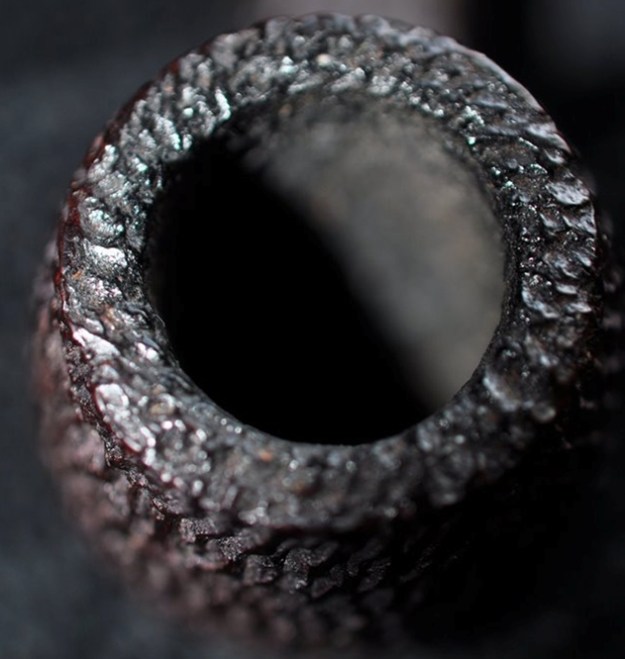
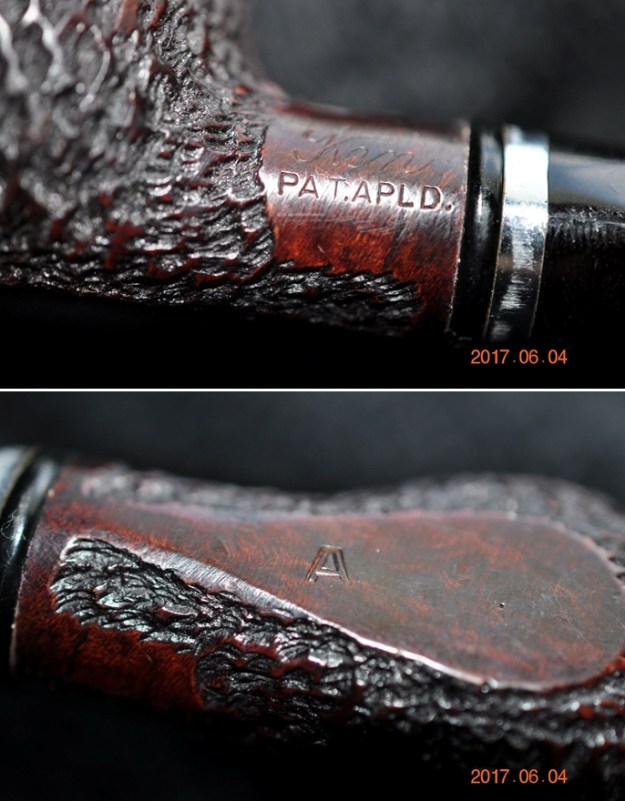
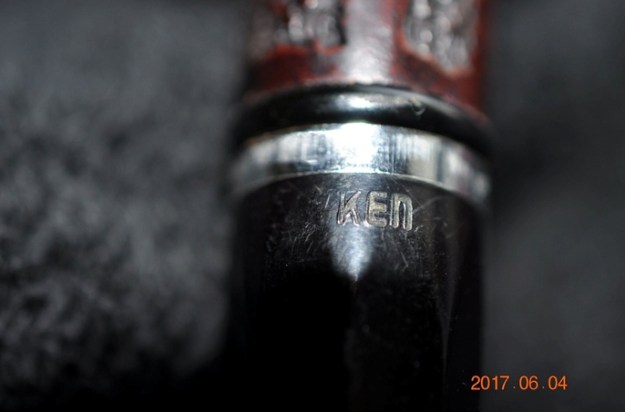
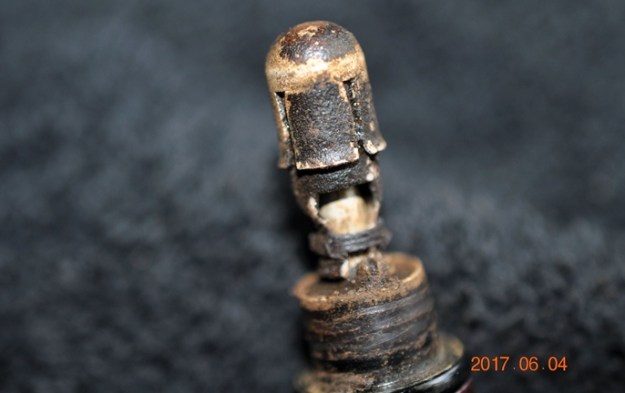
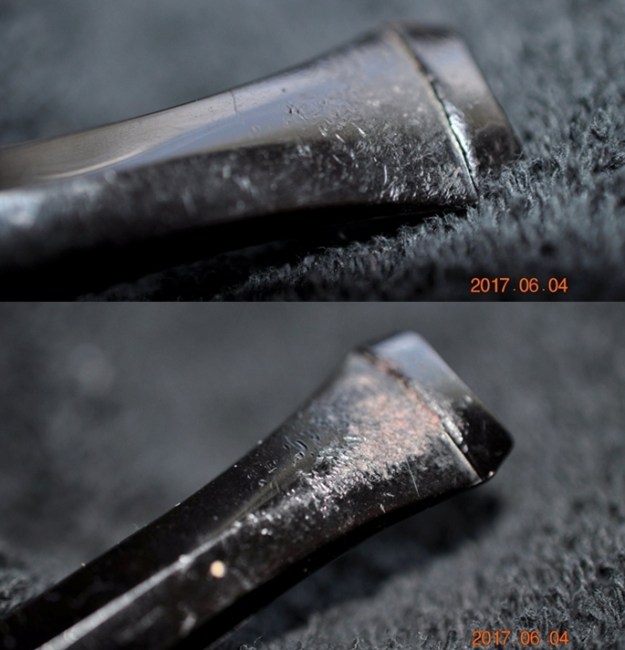
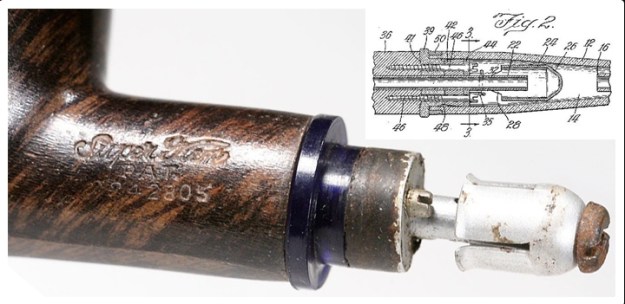
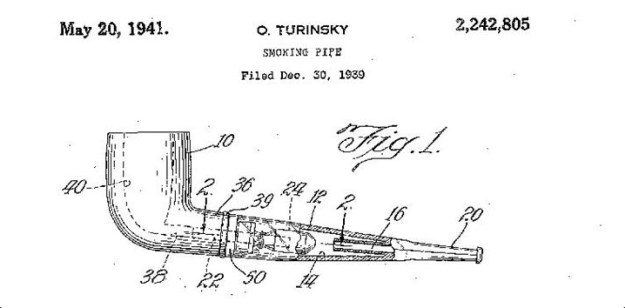
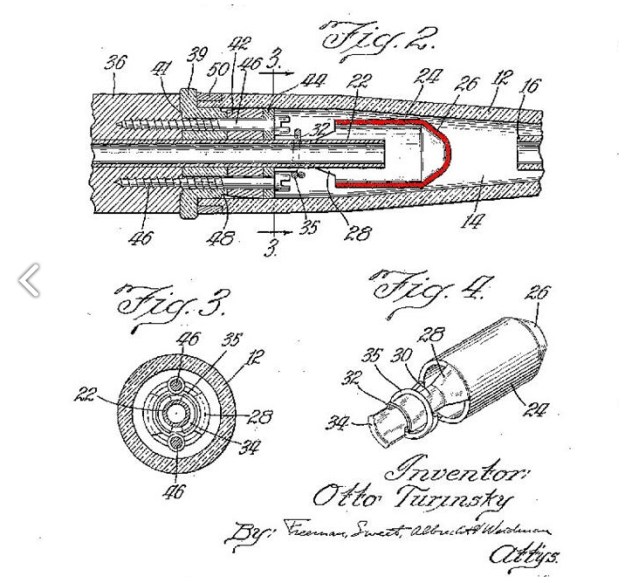
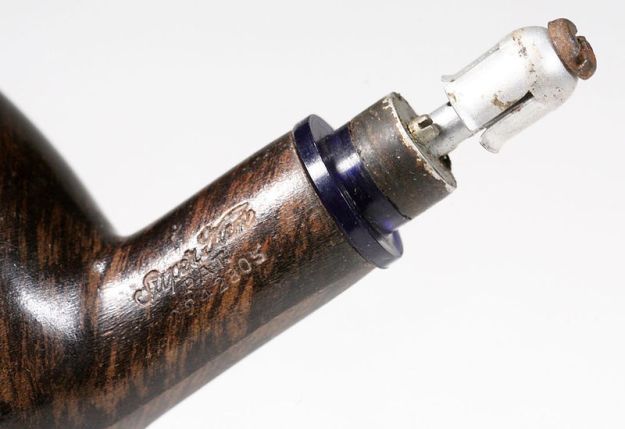
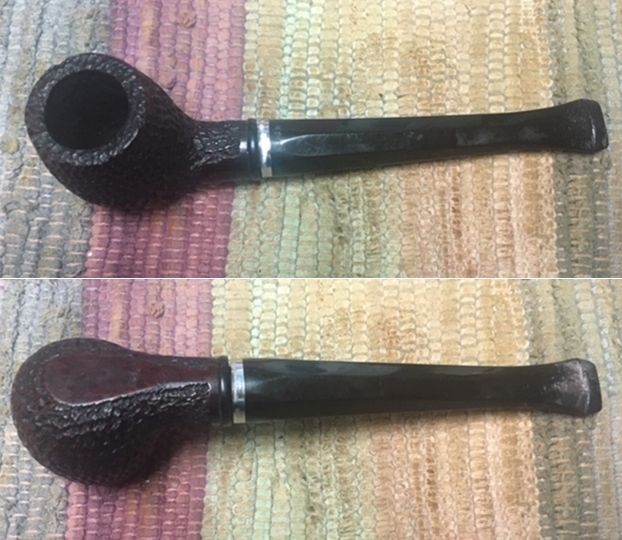
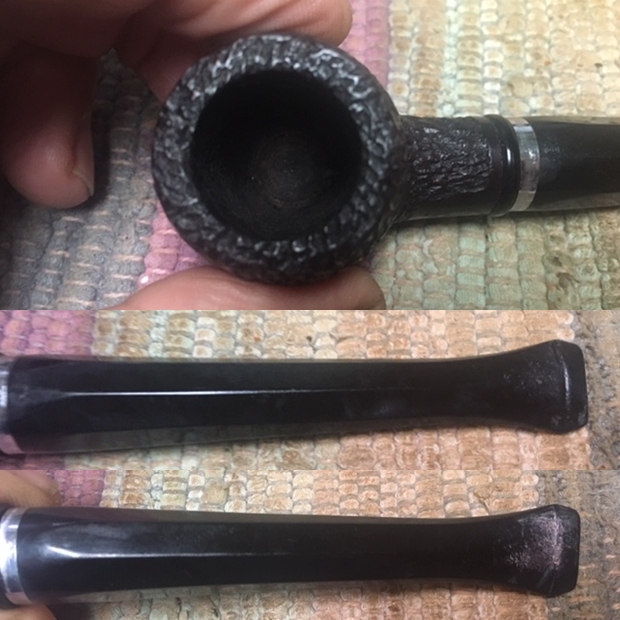
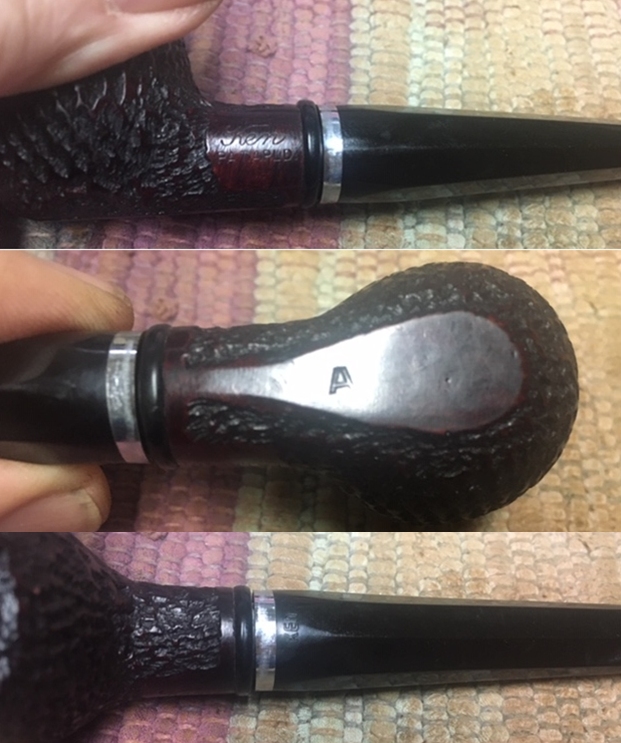
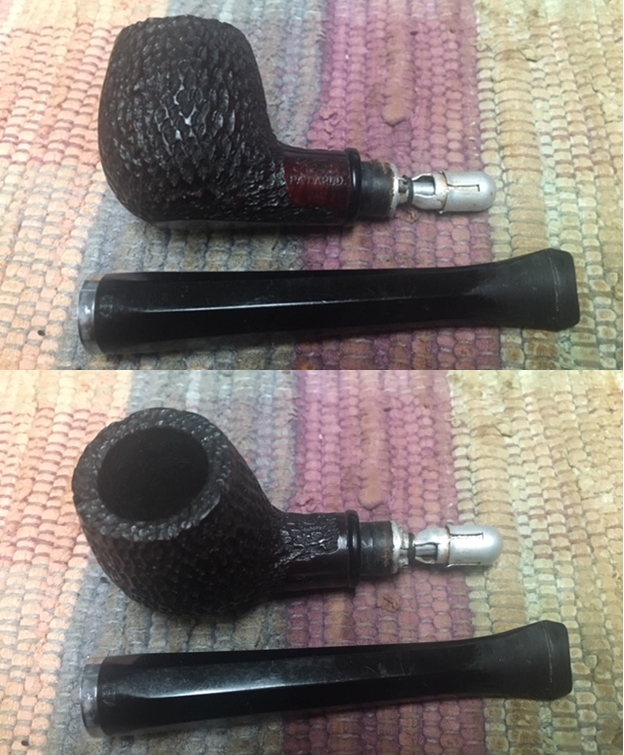
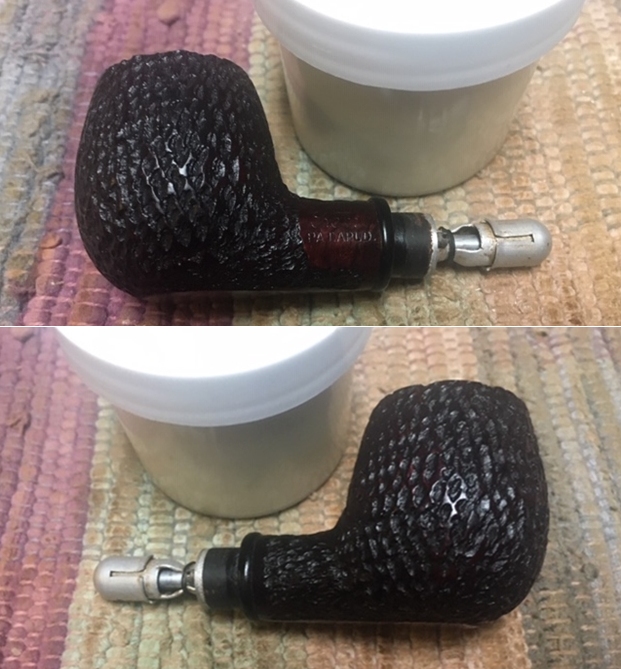
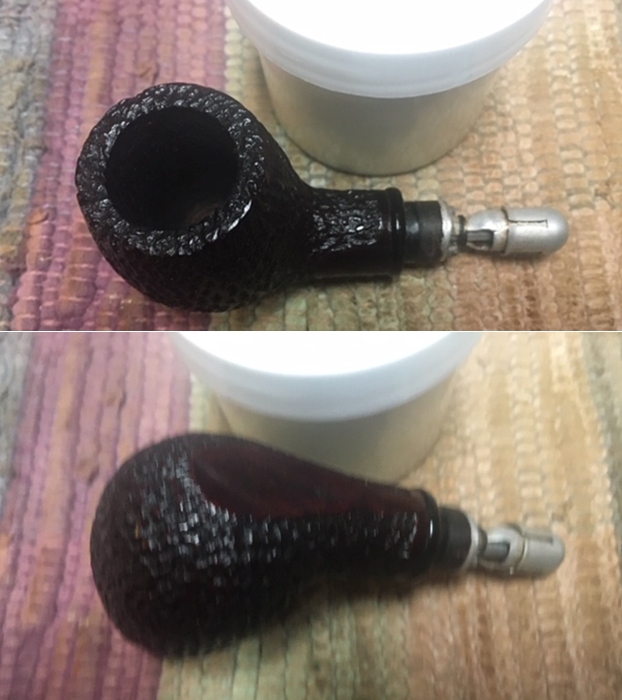
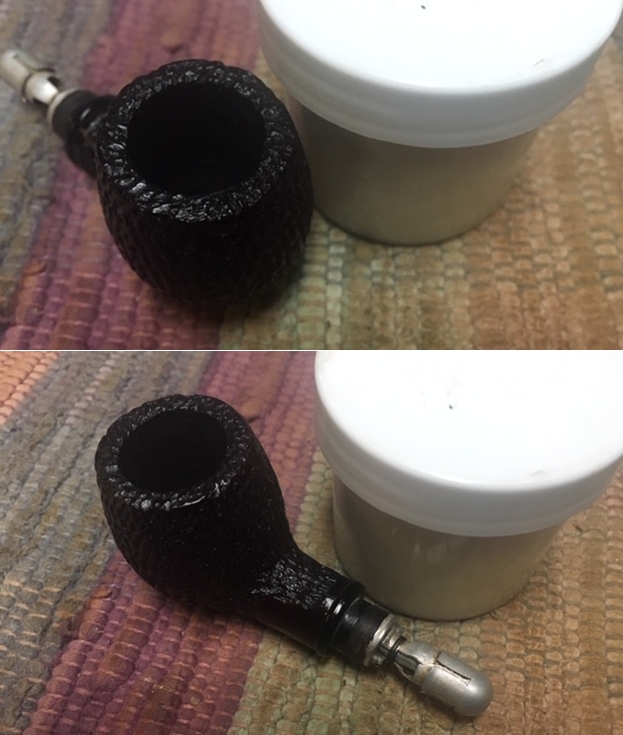
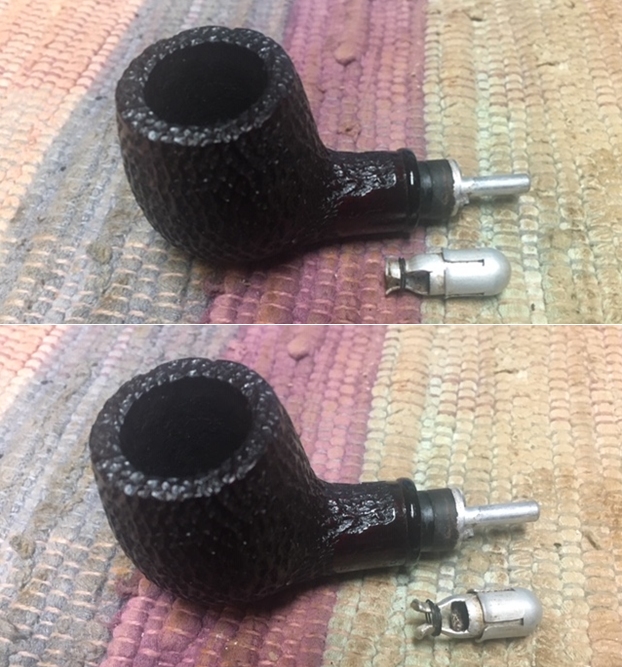
I have a small but growing sub-collection of Patent and Patent Applied For pipes. All of them have the same purpose – to provide a perfect smoke. All of them have a variety of internal plumbing to filter and cool a smoke. The concept was that the moisture and heat of the smoke was collected on various surfaces and contraptions in the stem or shank and a cooler smoke flows through the mouthpiece to the smoker. This is yet another of those interesting pieces that came out made a small splash and soon disappeared into the shadows of the past. This pipe is stamped KEN on the top of the hexagon shaped stem (which in this case is an opaque red plastic). There is a smooth panel on the left side of the shank that read Ken in script over PAT. APLD. On the underside of the shank it is stamped with a large upper case hollow point A. The finish on the pipe is rusticated with a tight rustication pattern that covers the bowl, rim and shank. There is a black ring at the shank end. There was a thick cake in the bowl and lava had overflowed onto the rim top filling in the rustication. The mouthpiece was oxidized and had a lot of tooth chatter and marks on both sides that showed that the stem itself was made of red acrylic. Jeff took photos of the pipe before he cleaned it. He took a photo of the rim top to show the cake in the bowl and the lava on the rim top filling in the rustication.         He took some photos of the stamping on the left side of the shank and the underside. He also took a photo of the stamp on the topside of the stem – KEN. Jeff removed the stem from the shank and took a photo of the end of the stem. The photo shows the build up of grime on the stem end and inside. The metal plumbing on the end of the shank is filthy with tars and oils. There is a cap and a tube inside of it. There is a small elastic holding the end of the cap closed. There is a rubber grommet on the shank end that holds the stem in place on the shank. The next two photos of the stem show the tooth marks and chatter on both sides in front of the button. There is also some wear on the edge of the button as well.I turned to Pipephils’ site to see if there was any information on the site that could give me the background on the brand. I knew I was dealing with an early version of the design because of the Patent Applied for stamp on the shank (http://www.pipephil.eu/logos/en/logo-k1.html). I did a screen capture of the section of the page.The section on Pipephil had some additional pages that gave more information on the brand. The first of these shows the system after the modification of the patent. There are now screws holding parts together rather than the pipe I was working on that was pre-patent.The other additional pages showed the Patent drawings. They were filed on December 30, 1939 and the patent granted on May 20, 1941. The last page that came up was the one below showing the pipe with a blue acrylic or Bakelite stem and a different rustication pattern.From there I turned to Pipedia (https://pipedia.org/wiki/KEN) and looked up the brand. I was surprised to find the following short description of the pipe and the maker. I quote in full below. I also included the advertisement that was in the article as well as another photo of the system.

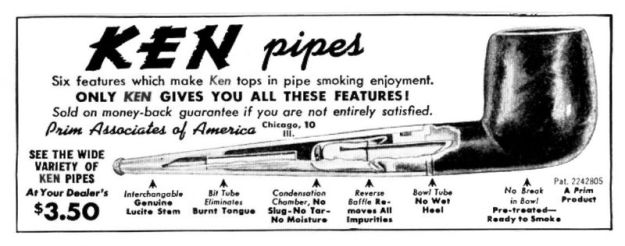
KEN Brand Pipes are made by Prim Associates of America out of Chicago, Ill. The design is unique and somewhat complex and has a patent by Otto Turinsky. This patent was applied for in Dec. 1939 and granted in May 1941, Pat No 2,242,805. An ad in Popular Mechanics from 1946 shows the pipe costing $3.50 and shows Six Key features of the Ken Pipe along with a Money Back Guarantee! Stem is Lucite and the interior chamber contains various technical features to remove tar, moisture, burnt tongue and remove impurities. Armed with the information above I was excited to work on this system pipe that fascinated me. I turned to work on the pipe on my work table. Jeff had done a great job cleaning up the pipe as usual. He reamed the pipe with a PipNet reamer and cut back the cake back to the bare briar. He cleaned up the walls with a Savinelli Fitsall Pipe Knife. He scrubbed the interior of the bowl and shank with pipe cleaners, cotton swabs and alcohol to remove the tars and oils. He scrubbed the exterior of the pipe with Murphy’s Oil Soap and a tooth brush to remove the grime from the finish. He worked on the rim edge lava and darkening with the soap and tooth brush. He scrubbed the inside of the stem with alcohol and pipe cleaners. He scrubbed the exterior with Soft Scrub. He washed it off with warm water to remove the cleaner. The pipe looked far better. I took photos of the pipe when I received it before I started working on it. I took photos of the bowl and rim top as well as the stem to show how clean they were. The bowl top and rim are absolutely clean and there is no damage to the edges of the bowl. The stem looks clean and there are light tooth marks and heavy tooth chatter. I took photos of the stamping on the sides of the shank. They are clean and readable and read as noted above.   I took photos of the pipe with the stem removed to show the overall look of stem, tenon and the system plumbing. They also give a clear picture of the pipe.I rubbed the briar down with Before & After Restoration Balm. I worked it into the briar with my fingertips and a horsehair shoe brush. The product works to clean, enliven and preserve the briar. I let it sit for 10 minutes while I worked on the stem. After the time passed I buffed it with a cotton cloth to deepen the shine. The briar really comes alive with the balm.   I took the cap off the end of the tube and took photos of the pipe to show this part of the system. It is truly quite a contraption.I set the bowl aside and worked over the tooth marks and blended them into the stem surface with 220 grit sandpaper. I started polishing the stem with 400 grit wet dry sandpaper. At this point it is starting to look much better.  I touched up the Ken stamp on the topside of the stem with some Rub’n Buff Antique Gold and a toothpick. It was not too deeply stamped so the coverage was uneven.I polished the acrylic with micromesh sanding pads – 1500-12000 grit pads. I wiped it down with a damp cloth after each sanding pad. I used Before & After Pipe Polish – both Fine and Extra Fine to further polish the stem.    This Ken System Pipe was an interesting pipe to work on. The mix of brown stains on the rustication around the bowl sides, top and bottom made the rusticated patterns sparkle. The finish on the pipe is in excellent condition and the contrasting stains work well with the polished red acrylic taper hexagonal stem. I put the stem back on the bowl and carefully buffed the pipe with Blue Diamond on the buffing wheel using a light touch on the briar. I gave the bowl multiple coats of Conservator’s Wax by hand and the stem multiple coats of carnauba wax on the buffing wheel and followed that by buffing the entire pipe with a clean buffing pad. I hand buffed the pipe with a microfiber cloth to deepen the shine. The finished Ken System pipe fits nicely in the hand and feels great. Give the finished pipe a look in the photos below. The dimensions of the pipe are Length: 5 ¾ inches, Height: 1 ½ inches, Outside diameter of the bowl: 1 ¼ inches, Chamber diameter: ¾ of an inch. Thanks for walking through the restoration with me as I worked over another beautiful pipe. This pipe will be added to my collection of odd and unusual system pipes. It is a great addition. Thanks for your time.


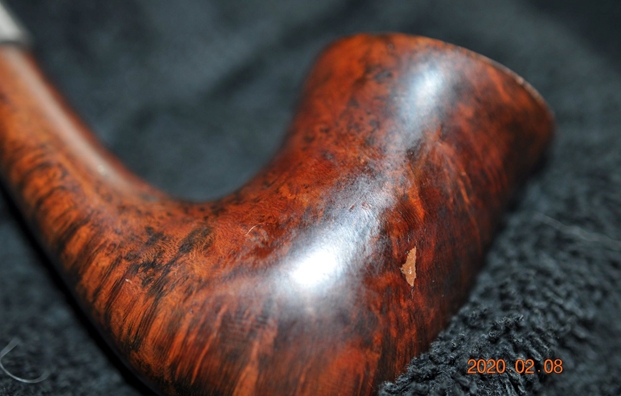
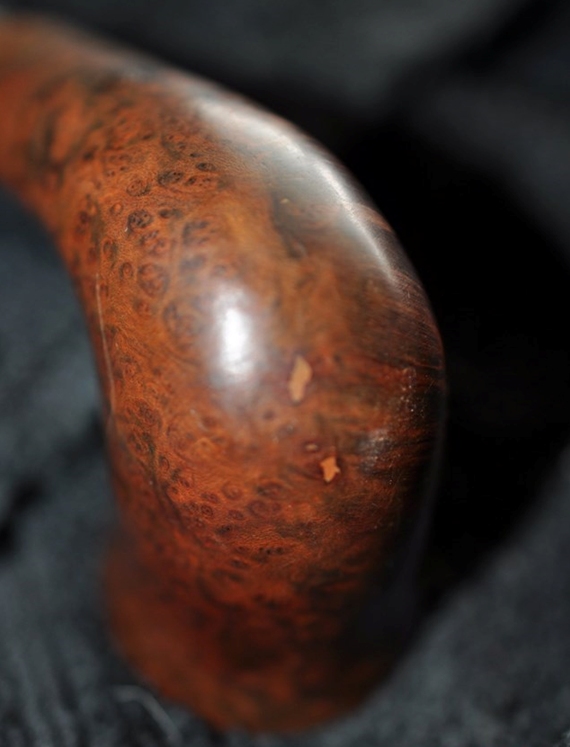
Renewed Life for a Comoy’s Silver Shadow 745 Tulip


Blog by Steve Laug

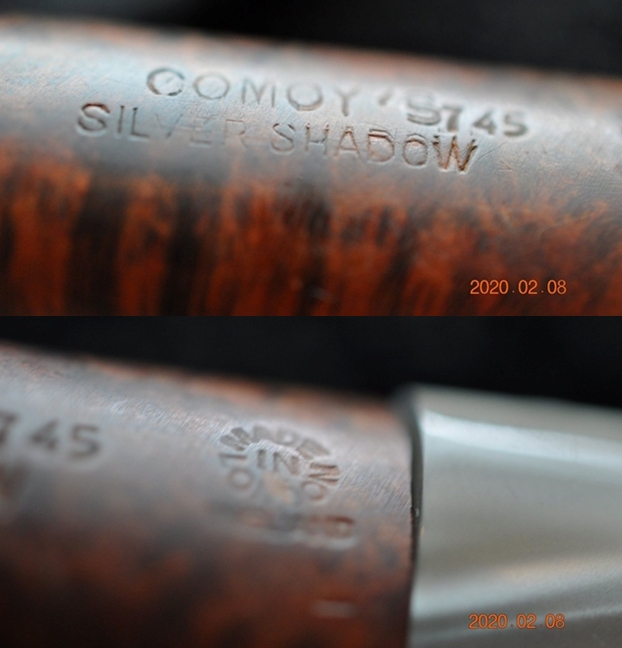
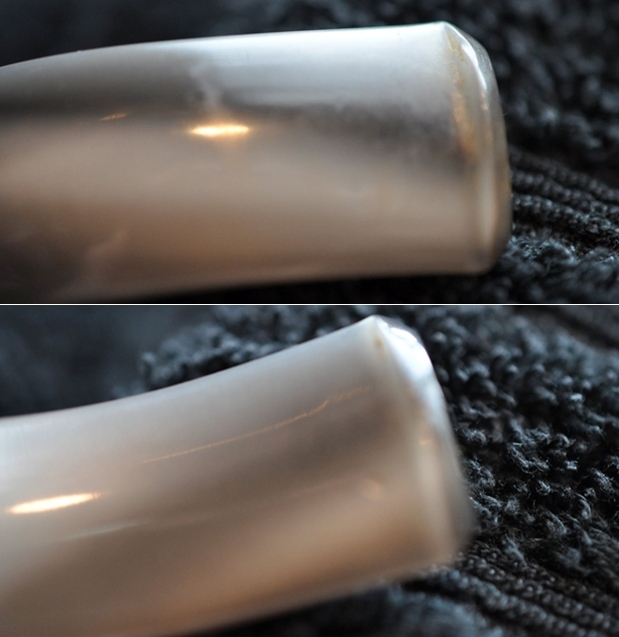
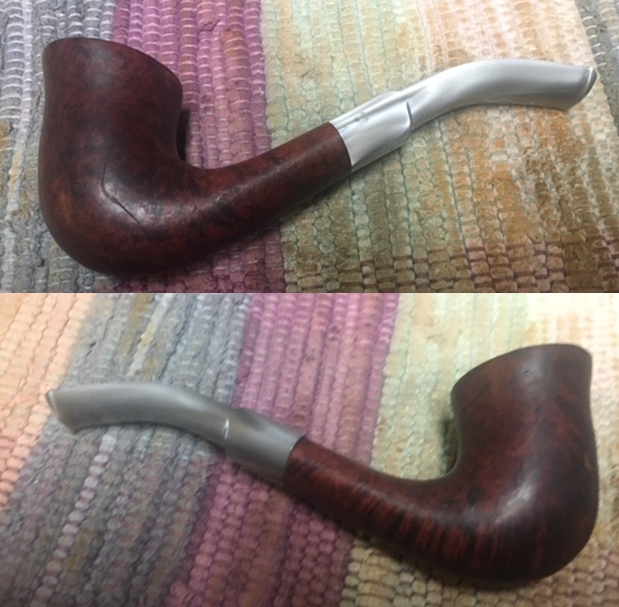
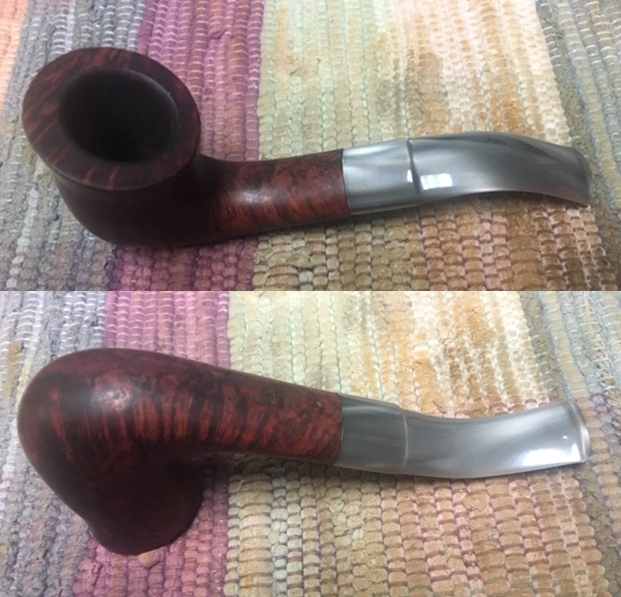
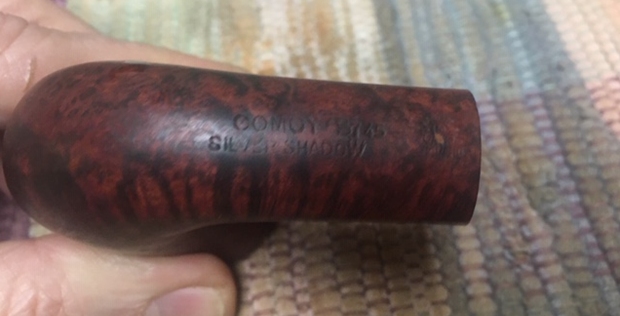
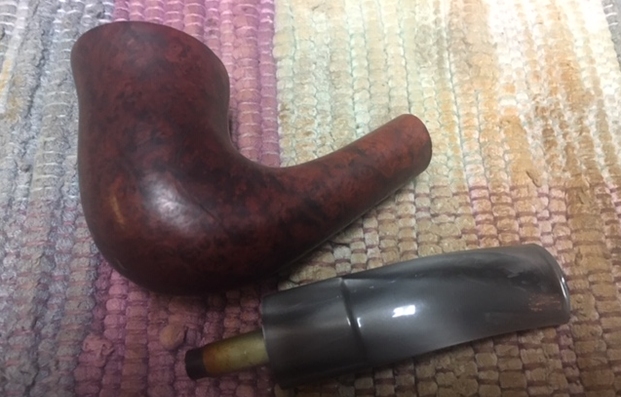
The next pipe on the table is an interestingly shaped Comoy’s pipe. It is almost a tulip shape – at least to me. It is a Cadogan period Comoy’s as the “C” is stamped and painted on the acrylic stem. It is a pretty pipe with a nice looking shape. The condition is very dirty with a thick cake in the bowl and some darkening around the beveled inner edge of the rim. It is well smoked and the finish is dusty and grimy. There are some deep scratches in the briar around the bowl sides and top. The pipe is stamped on the underside of the shank and reads Comoy’s over Silver Shadow followed by the shape number 745 and the Made in London England COM stamp circle. The variegated silver acrylic bent saddle stem has a stamped C on the left side of the saddle. Jeff took photos of the pipe before he started his clean up work on the pipe. He took photos of the rim top to show the condition of the bowl, rim top and edges. The cake is quite thick and there are a few spots of grime on the edges and around the cap on the bowl. He took photos around the sides and heel of the bowl to show the condition. You can see the grime in the finish and the scratches in the briar around the bowl. He took photos of the stamping on the underside of the shank. You can see that it is clear and readable.The next photos show the condition of the stem. The first though blurry gives an idea of the flow of the stem. The remaining photos show that the stem is in good condition other than some tooth chatter on both sides near the button. The “C” stem logo on Comoy’s pipes was the “three-piece C” insert until the Cadogan era in the 1980s. That helped me with a potential date on this pipe – 1980s or later. Knowing that this was a newer Comoy’s pipe from the Cadogan time period did not deter me as the shape on this one fascinated me. I turned to work on the pipe on my work table. Jeff had done a great job cleaning up the pipe as usual. He reamed the pipe with a PipNet reamer and cut back the cake back to the bare briar. He cleaned up the walls with a Savinelli Fitsall Pipe Knife. He scrubbed the interior of the bowl and shank with pipe cleaners, cotton swabs and alcohol to remove the tars and oils. He scrubbed the exterior of the pipe with Murphy’s Oil Soap and a tooth brush to remove the grime from the finish. He worked on the rim edge lava and darkening with the soap and tooth brush. He scrubbed the inside of the stem with alcohol and pipe cleaners. He scrubbed the exterior with Soft Scrub. He washed it off with warm water to remove the cleaner. The pipe looked far better. I took photos of the pipe when I received it before I started working on it. (Note the deep scratch on the left side of the bowl.) I took photos of the bowl and rim top as well as the stem to show how clean they were. You can see the darkening on the top and inner edges of the bowl. Otherwise the rim and edges look very good. The stem looks clean and the tooth marks and chatter are fairly light. I took photos of the stamping on the sides of the shank. They are clean and readable and read as noted above.    I took a photo of the pipe with the stem removed to show the overall look of stem, tenon and profile of the pipe. Jeff had scoured the tenon but it was heavily stained with the tars of use.I decided to start my work on the pipe by addressing the deep gouge in the left side of the bowl. It extended from the heel to mid bowl. I tried steaming it out and had very limited success. I decided to fill in the damaged area with clear super glue. Once the repairs cured I sanded them smooth with 220 grit sandpaper and also began the polishing with 40o grit wet dry sandpaper. I used a Walnut Coloured stain pen to blend the repaired area on the side of the bowl into the colour of the rest of the bowl. The match worked very well. Once I sanded it with the micromesh pads in the polishing process it would look even better.I polished the bowl and rim with micromesh sanding pads – wet sanding with 1500-12000 grit pads. I worked over the rim top and edge of the bowl with the pads. I wiped the bowl down with a damp cloth after each pad to remove the sanding debris. The repair on the right side of the bowl all but disappeared. The pipe looks very good. I rubbed the briar down with Before & After Restoration Balm. I worked it into the briar with my fingertips. The product works to clean, enliven and preserve the briar. I let it sit for 10 minutes while I worked on the stem. After the time passed I buffed it with a cotton cloth to deepen the shine. The briar really comes alive with the balm.  I touched up the C stamp in the side of the stem with a Paper Mate Liquid Paper and a toothpick. It was not too deeply stamped so the coverage was uneven.I worked over the light tooth marks and blended them into the stem surface with 220 grit sandpaper. I started polishing the stem with 400 grit wet dry sandpaper. At this point it is starting to look much better.   I polished the acrylic with micromesh sanding pads – 1500-12000 grit pads. I wiped it down with a damp cloth after each sanding pad. I used Before & After Pipe Polish – both Fine and Extra Fine to further polish the stem.   This Comoy’s Silver Shadow 745 Tulip turned out to be a great looking pipe. The mix of brown stains highlights the mix of grain around the bowl sides, top and bottom. The finish on the pipe is in excellent condition and the contrasting stains work well with the polished variegated silver acrylic saddle stem. I put the stem back on the bowl and carefully buffed the pipe with Blue Diamond on the buffing wheel using a light touch on the briar. I gave the bowl and stem multiple coats of carnauba wax on the buffing wheel and followed that by buffing the entire pipe with a clean buffing pad. I hand buffed the pipe with a microfiber cloth to deepen the shine. The finished Comoy’s Silver Shadow fits nicely in the hand and feels great. There is something about the shape that provides a great curve for the thumb on the back of the bowl. Give the finished pipe a look in the photos below. The dimensions of the pipe are Length: 5 ½ inches, Height: 2 inches, Outside diameter of the bowl: 1 3/8 inches, Chamber diameter: ¾ of an inch. Thanks for walking through the restoration with me as I worked over another beautiful pipe. This pipe will be added to the English Pipe Makers section of the rebornpipes store soon. If you want to add it to your collection send me an email or a message! Thanks for your time.

Bringing Life to a WDC Demuth Gold Dot 77 Bulldog


Blog by Steve Laug

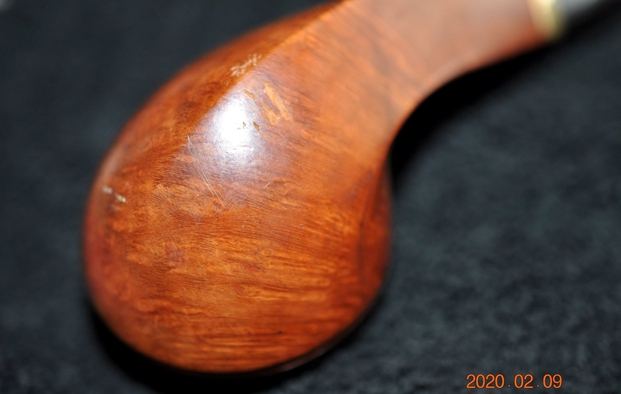
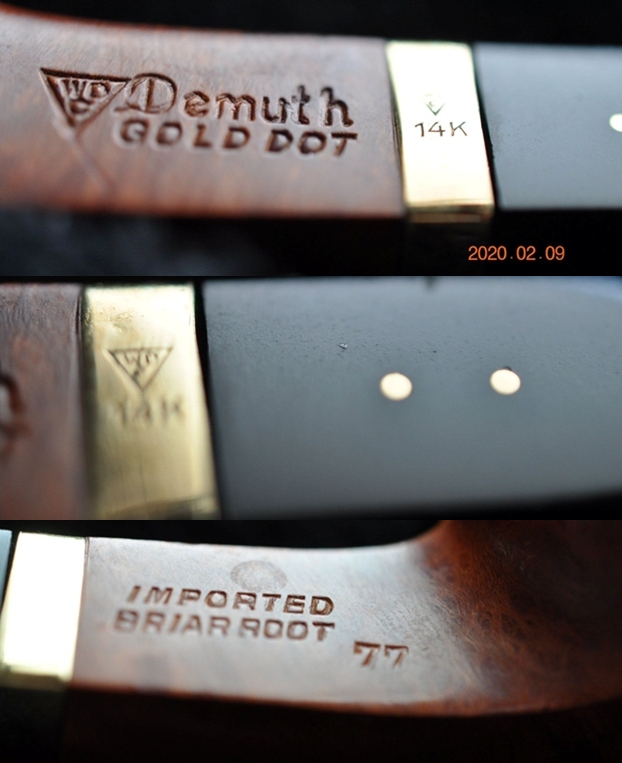
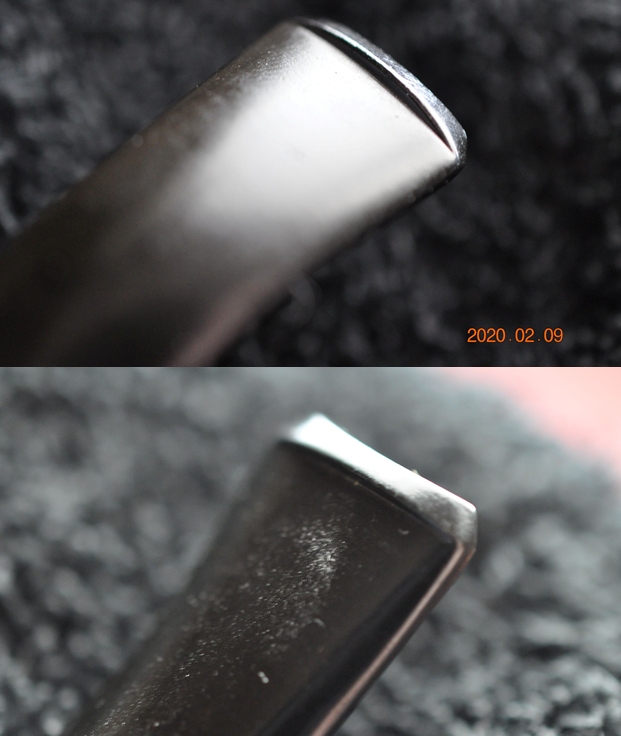
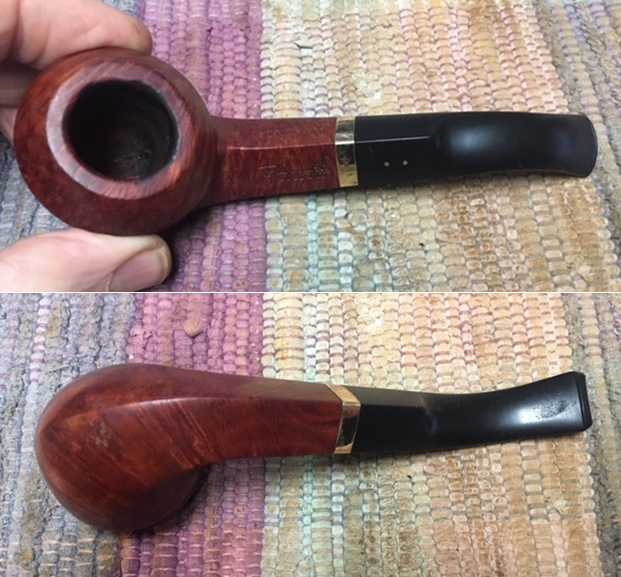
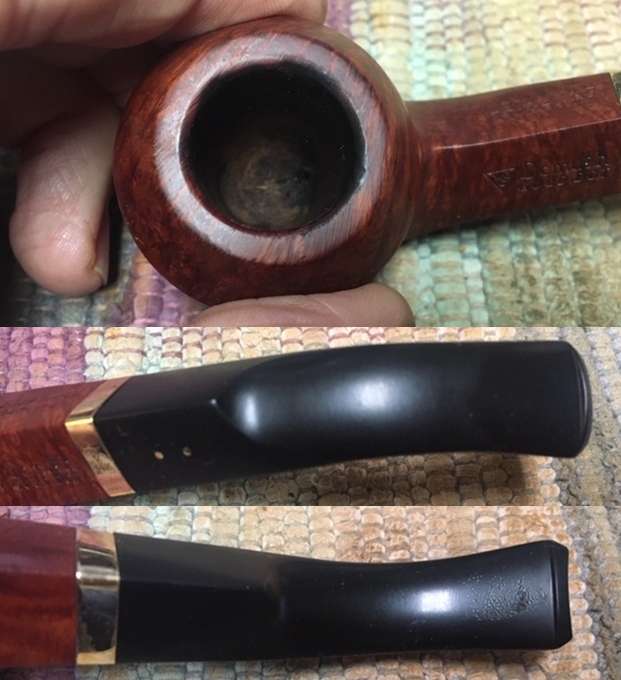
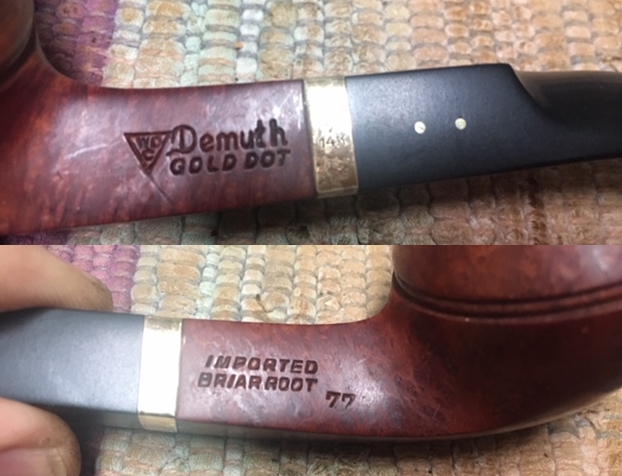
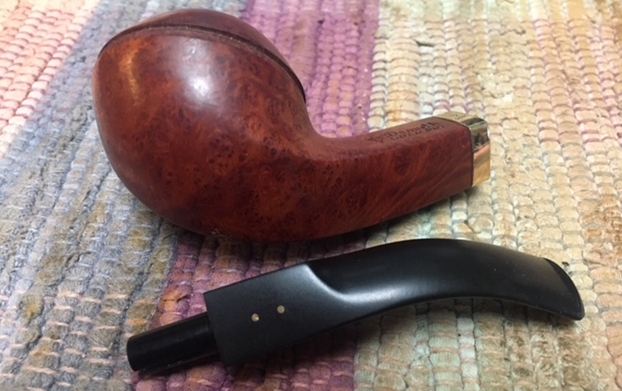
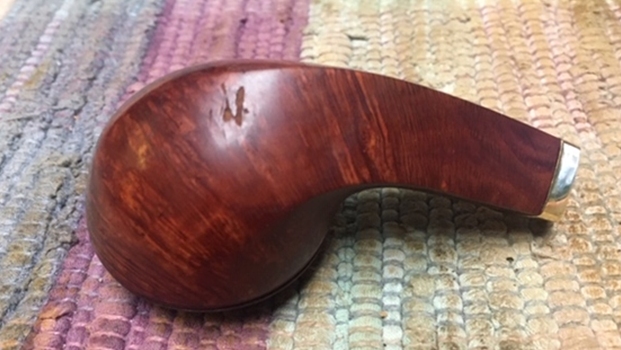
The next pipe on the table is a WDC Demuth Gold Dot Bulldog. It is a pretty pipe with a great shape. The condition is very dirty with a thick cake in the bowl and some darkening around the beveled inner edge of the rim. The previous pipeman took good care of this one. It is well smoked and other than dusty and grimy it is in decent shape. The pipe is stamped on the left side of the shank with the logo inverted equilateral triangle with letters “WDC” enclosed in it. This is followed by “Demuth” over “GOLD DOT” in block capital letters. On the right side of the shank is stamped “IMPORTED” over “BRIAR ROOT” followed by the shape number “77” towards the bowl and shank joint. A quarter inch wide gold band is on the shank end and is stamped on the left with the trademark WDC triangle over “14 K”, indicating the purity of the gold band. The ¾ bent saddle stem has two gold dots on the left side of the saddle stem. Jeff took photos of the rim top to show the condition of the bowl, rim top and edges. The cake is quite thick and there are a few spots of grime on the edges and around the cap on the bowl.He took photos around the sides and heel of the bowl to show the condition. You can see the grime in the finish and the damage on the heel. It is primarily on the right side but goes across the ridge. He included a close up photo of the damaged areas on the heel it has some deep gouges in the briar that look like it has been dropped.He took photos of the stamping on the sides of the shank and the band. You can see that it is clear and readable. You can see the 14K stamp on the band and the two dots on the stem side.The next two photos show the condition of the stem. You can see that it is lightly oxidized and has some tooth chatter on the underside. Otherwise the stem is in very good condition.I was going to do a bit of research on the brand and line but then I remembered that Paresh had worked on an identical pipe from his grandfather’s estate. I turned to the blog on rebornpipes to read what he had discovered (https://rebornpipes.com/2019/01/18/sprucing-up-the-first-of-my-wdc-a-demuth-gold-dot-77-bulldog/). I quote:

I searched pipedia.com for more information on this pipe and attempt at estimating the vintage of this pipe. Here is what I have found on pipedia.

William Demuth. (Wilhelm C. Demuth, 1835-1911), a native of Germany, entered the United States at the age of 16 as a penniless immigrant. After a series of odd jobs he found work as a clerk in the import business of a tobacco tradesman in New York City. In 1862 William established his own company. The William Demuth Company specialized in pipes, smoker’s requisites, cigar-store figures, canes and other carved objects.

The Demuth Company is probably well known for the famous trademark, WDC in an inverted equilateral triangle. William commissioned the figurative meerschaum Presidential series, 29 precision-carved likenesses of John Adams, the second president of the United States (1797-1801) to Herbert Hoover, the 30th president (1929-1933), and “Columbus Landing in America,” a 32-inch-long centennial meerschaum masterpiece that took two years to complete and was exhibited at the World’s Columbian Exposition in Chicago in 1893.

The Presidential series was the result of Demuth’s friendship with President James A. Garfield, a connoisseur of meerschaum pipes. Demuth presented two pipes to Garfield at his inauguration in 1881, one in his likeness, the other in the likeness of the President’s wife. Later, Demuth arranged for another figurative matching the others to be added to the collection as each new president acceded to the White House, terminating with President Hoover.

In early 1937, the City of New York notified S.M. Frank & Co. of their intent to take by eminent domain, part of the land on which the companies pipe factory was located. This was being done to widen two of the adjacent streets. As a result of this, Frank entered into negotiations to purchase the Wm. Demuth Co.’s pipe factory in the Richmond Hill section of Queens. It was agreed upon that Demuth would become a subsidiary of S.M. Frank and all pipe production of the two companies would be moved to DeMuth factory. New Corporate offices were located at 133 Fifth Avenue, NYC.

Demuth pipes continued to be made at the Richmond Hill plant till December 31. 1972. Then the Wm. Demuth Company met its official end as a subsidiary company by liquidation.

I came across an interesting advertisement on the same page on pipedia.com which shows the exact same pipe that I am now working on. It is the same pipe as the first pipe on the left. A close scrutiny of the picture confirms the following:

(a) The Gold Dot line of WDC pipes was offered sometime before 1941 as inferred from the bottom line of this flyer which encourages readers to “WRITE FOR NEW 1941 STYLE BOOKLET”, implying that this flyer was published prior to 1941!!

(b) The Gold Dot line of WDC pipes was at the time their top of the line product as it is the most expensive of all the pipes advertised in the flyer, retailing at $10!!Pipephil.eu too has the same pipe shown with shape # 77. Here is the link; http://www.pipephil.eu/logos/en/logo-w1.html

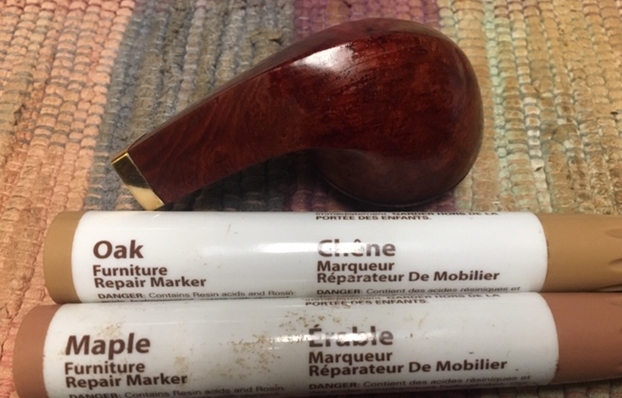
From Paresh’s research I confirmed that this WDC Gold Dot was WDC’s top tier of pipes and was made in 1940s. It is definitely a good looking pipe. Armed with that information and a clearer picture of the original pipe I turned to work on the pipe on my work table. Jeff had done a great job cleaning up the pipe as usual. He reamed the pipe with a PipNet reamer and cut back the cake back to the bare briar. He cleaned up the walls with a Savinelli Fitsall Pipe Knife. He scrubbed the interior of the bowl and shank with pipe cleaners, cotton swabs and alcohol to remove the tars and oils. He scrubbed the exterior of the pipe with Murphy’s Oil Soap and a tooth brush to remove the grime from the finish. He worked on the rim edge lava and darkening with the soap and tooth brush. He scrubbed the inside of the stem with alcohol and pipe cleaners. He scrubbed the exterior with Soft Scrub and then soaked it in Before & After Deoxidizer. He washed it off with warm water to remove the Deoxidizer. The pipe looked far better. I took photos of the pipe when I received it before I started working on it. I took photos of the bowl and rim top as well as the stem to show how clean they were. You can see the damage on the inner edge on the rear of the bowl. The stem looks clean of oxidation and the tooth marks and chatter are fairly light. I took photos of the stamping on the sides of the shank. They are clean and readable and read as noted above.    I took a photo of the pipe with the stem removed to show the overall look of stem, tenon and profile of the pipe. I noted that the tenon is metal and is made for a paper filter. I think it would fit a Medico paper filter.I decided to start my work on the pipe by addressing the damage to the heel of the bowl. I filled in the damaged areas with clear super glue. Once the repairs cured I sanded them smooth with 220 grit sandpaper and also began the polishing with 40o grit wet dry sandpaper. I turned to work on the rim top and the inner edge. I used a folded piece of 220 grit sandpaper to work on the inner edge to remove the darkening and bring it back into round. I cleaned up the beveled edge. It took a bit of work but I was able to remove the majority of it and the end product looked much better.I polished the bowl and rim with micromesh sanding pads – wet sanding with 1500-12000 grit pads. I worked over the rim top and edge of the bowl with the pads. I wiped the bowl down with a damp cloth after each pad to remove the sanding debris.       I used an Oak and a Maple stain pen to blend the repaired area on the heel of the bowl into the colour of the rest of the bowl. The match worked very well.I rubbed the briar down with Before & After Restoration Balm. I worked it into the briar with my fingertips. The product works to clean, enliven and preserve the briar. I let it sit for 10 minutes while I worked on the stem. After the time passed I buffed it with a cotton cloth to deepen the shine. The briar really comes alive with the balm.  I worked over the light oxidation on the stem and blended the tooth marks into the stem surface with 220 grit sandpaper. I started polishing the stem with 400 grit wet dry sandpaper. At this point it is starting to look much better.  I polished the vulcanite with micromesh sanding pads – 1500-12000 grit pads. I wiped it down with Obsidian Oil after each sanding pad. I used Before & After Pipe Polish – both Fine and Extra Fine to further polish the stem.   This beautiful WDC Gold Dot 77 Bulldog is a great looking pipe. The mix of brown stains highlights the mix of grain around the bowl sides, top and bottom. The finish on the pipe is in excellent condition and the contrasting stains work well with the polished black vulcanite saddle stem. I put the stem back on the bowl and carefully buffed the pipe with Blue Diamond on the buffing wheel using a light touch on the briar. I gave the bowl and stem multiple coats of carnauba wax on the buffing wheel and followed that by buffing the entire pipe with a clean buffing pad. I hand buffed the pipe with a microfiber cloth to deepen the shine. The finished WDC Gold Dot Bulldog is quite nice and feels great in the hand. Give the finished pipe a look in the photos below. The dimensions of the pipe are Length: 5 ½ inches, Height: 1 ¾ inches, Outside diameter of the bowl: 1 ¾ inches, Chamber diameter: ¾ of an inch. Thanks for walking through the restoration with me as I worked over another beautiful pipe. This pipe will be added to the American Pipe Makers section of the rebornpipes store soon. If you want to add it to your collection send me an email or a message! Thanks for your time.

Restoring another Jobey Dansk 3 Freehand


Blog by Steve Laug

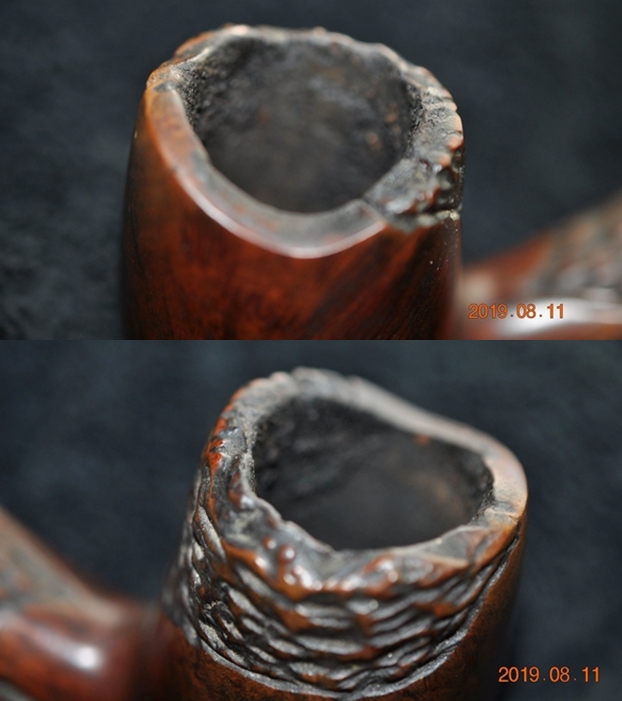
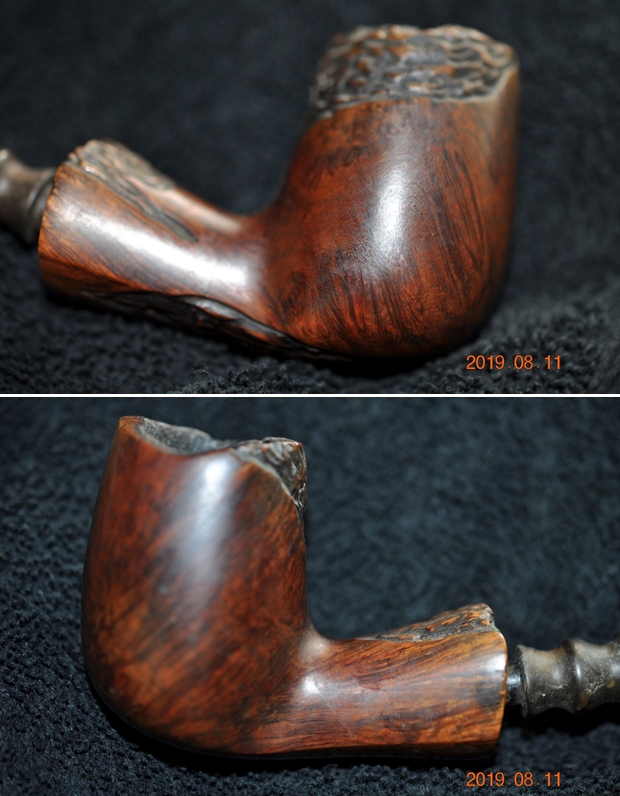
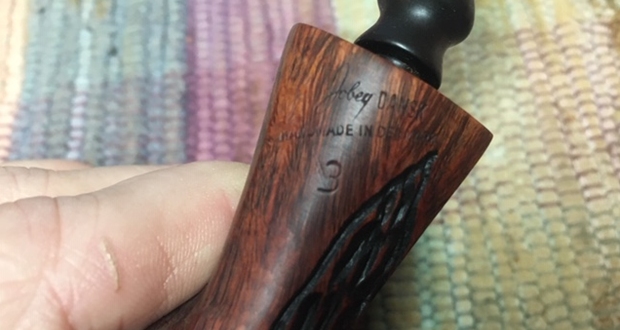
My brother Jeff picked up another Jobey Dansk 3 freehand pipe on one of his adventures pipe hunting. It had really nice grain and plateau on the top of the rim and on the end of the shank. It came with a Jobey Dansk Pipe Sock. There were rusticated spots on the right side and back of the bowl and top of the shank as well as the heel of the bowl. There was something familiar about the style of carving that reminded me of other Danish Freehand pipes I have worked on. I seemed to remember that Jobey Dansk pipes were carved by Karl Erik. The finish on this pipe was dirty with dust and lava on the plateau top. The bowl was lined with a thick cake. There was thick dust in the rustication around the bowl and shank as well as the plateau on the shank end. The smooth finish was also dirty and dull looking. The stem is a turned fancy turned vulcanite stem. The fit of the stem to the shank was snug. There were tooth marks on both sides of the stem at the button and on the smooth parts of the button on both sides. Otherwise it was a very clean stem. Jeff took of the pipe to show the overall condition of the bowl and stem. He took close up photos of the bowl and rim top from different angles to show the condition of the plateau finish. You can see the lava and build up on the rim top and the lava flowing over the inner edge of the bowl onto the plateau. It is hard to know if there is damage or if the lava protected it. The bowl has a thick cake that lining the walls and overflowing into lava.He took photos of the sides and heel of the bowl to show the lay of the grain and the rustication around the pipe. It is a nice piece of briar. The top of the bowl is craggy and rugged looking. Unique!Jeff took a photo of the stamping on the underside of the shank to capture it. It was clear and read Jobey Dansk at the top. Under that it read Handmade in Denmark followed by a large number 3.The next photos show the condition of the vulcanite stem. The first photo shows flow of the stem as a whole. You can see the tooth marks and damage both on the surface of both sides. I wanted to look at who had carved the Jobey Dansk line to confirm some suspicions I had about it. I had a feeling that the pipes were carved by a Danish carver known as Karl Erik. I looked up the Jobey listing on Pipedia (https://pipedia.org/wiki/Jobey) and found the following information. I quote a portion of the article that is pertinent as follows.

English – American – Danish – French… Information about the brand Jobey are only to be found in form of smithereens…

Probably established in England around 1920(?) the brand hiked into the USA later. In the course of time owner, distributor and manufacturer changed repeatedly. As far as known:

George Yale Pipes & Tobacco, New York (1942)

Norwalk Pipe Co., New York (1949)

Arlington Briar Pipes Corp., Brooklyn (when?)

Hollco International, New York (1969).

Weber Pipe Co., Jersey City, NJ (1970’s)

The Tinder Box, (1970’s – 80’s).

Throughout decades Jobey pipes were mainly sold in the USA, Canada and England but remained almost unknown in continental Europe. The bulk of Jobeys was predominantly made according to classical patterns and mainly in the lower to middle price range. The predominant judgment of the pipe smokers reads: “A well-made pipe for the price.” So there is hardly anything very special or exciting about Jobey pipes although a flyer from ca. 1970 assures: “The briar root Jobey insists upon for its peer of pipes is left untouched to grow, harden and sweeten for 100 years. […]Jobey uses only the heart of this century old briar and only one out of 500 bowls turned measures up to the rigid Jobey specifications.” 99.80% of cull… that makes the layman marveling!

From that information, my suspicions were confirmed. The pipe that I was working on was carved by Karl Erik Ottendahl. There were some similarities to the Karl Erik pipes that I have worked on in the past. The dating of the pipe line in the 70s fits well with the pipe I have in hand. I took some photos of the pipe before I started my part of the restoration.

Now that I was reminded about the Karl Erik Ottendahl connection it was time to work on the pipe on my end. When I received it Jeff had once again done an amazing job cleaning the pipe. He reamed it with a PipNet pipe reamer and got rid of the cake. He cleaned up the reaming with a Savinelli Fitsall Pipe Knife so that we could see the walls of the bowl and assess for damage. He cleaned the internals of the shank and stem with alcohol, pipe cleaners and alcohol. He scrubbed the exterior with undiluted Murphy’s Oil Soap and a tooth brush. He rinsed the pipe under warm water. He dried it off with a cloth and then let it air dry. The stem was scrubbed with Soft Scrub and soaked in Before & After Deoxidizer. It came out looking very good. The finish on the bowl and the rim top cleaned up nicely. I took pictures of the pipe to show how it looked when I unpacked it. I took some photos of the rim top and stem to show the condition of them both when the pipe arrived. Overall it looked good. There is some darkening and damage to the inner edge of the bowl. The stem had some deep tooth marks ahead of the button and on the button surface on both sides.I took a photo of the stamping on the underside of the shank. It is readable and in great condition.I removed the stem from the shank and took a photo of the pipe to show the look of the pipe.I polished the bowl with micromesh sanding pads – wet sanding with 1500-12000 grit pads. I wiped the briar down after each pad with a damp cloth. The bowl is starting to look very good. With the polishing finished I used a Black stain pen to fill in the crevices of the plateau top and give some contrast to the smooth high spots. I like this look as it give the pipe a sense of dimensionality. I worked some Before & After Restoration Balm into the surface of the briar with my fingertips and into the plateau rim top and shank end with a horsehair shoe brush to clean, enliven and protect it. I let the balm sit for a little while and then buffed with a cotton cloth to raise the shine. The photos show the bowl at this point in the restoration process. I set the bowl aside and turned my attention to the stem. The stem was very clean so I filled in the tooth marks and built up the button with clear super glue and set it aside to cure. The second photo is blurry but still is clear enough to see the filled in area. Once it had cured I flattened out the repairs and sharpened the edge of the button with a needle file. I sanded out the tooth chatter and blended in the repairs with 220 grit sandpaper and started to polish it with a folded piece of 400 wet dry sandpaper. Once it was finished it began to shine.I polished the stem with micromesh sanding pads – wet sanding with 1500-12000 grit sanding pads. I wiped it down after each sanding pad with some Obsidian Oil. I finished polishing it with Before & After Pipe Stem Polish – both Fine and Extra Fine and buffed it off with a cotton cloth. This is a beautiful Jobey Dansk Hand Made by Karl Erik with a fancy, turned, black vulcanite stem. It has a great look and feel. The shape fits well in the hand with the curve of the bowl and shank junction a perfect fit for the thumb around the bowl when held. I polished stem and the bowl with Blue Diamond polish on the buffing wheel. I gave the plateau on the rim top and shank end multiple coats of Conservator’s Wax. I gave the bowl and the stem multiple coats of carnauba wax. I buffed the pipe with a clean buffing pad to raise the shine. I hand buffed it with a microfiber cloth to deepen the shine. The pipe polished up pretty nicely. The rich combination of browns and black in the smooth finishes and the plateau areas took on life with the buffing. The rich colour of the briar works well with the polished vulcanite stem. I like the grain and finished look of this Jobey Dansk pipe. Have a look at it with the photos below. The shape, finish and flow of the pipe and stem are very well done. The dimensions are Length: 5 ½ inches, Height: 2 inches, Outside diameter of the bowl: 1 ¼ wide, Chamber diameter: ¾ of an inch. This Danish Freehand is a real beauty. Thanks for walking through the restoration with me as I worked over another beautiful pipe. This one will be going on the rebornpipes store in the Danish Pipe Making Section shortly if you would like to add it to your collection. Thanks for your time.
My Final Restoration from Bulgaria – A Find in Athens: Refreshing a Fun Lorenzo Carnevale San Remo Italy 8672 Apple


Blog by Dal Stanton

A personal note:  After living over 25 years in Europe and the past 14 in Sofia, Bulgaria, this restoration marks my final offering from Bulgaria as my wife and I transition to the US and will be basing in Denver, Colorado.  We will miss Bulgaria deeply and the work we have devoted our lives to.  Yet, after a hiatus for the move, I will continue to collect and restore pipes benefiting the Daughters of Bulgaria – women and girls who have been trafficked and sexually exploited.   

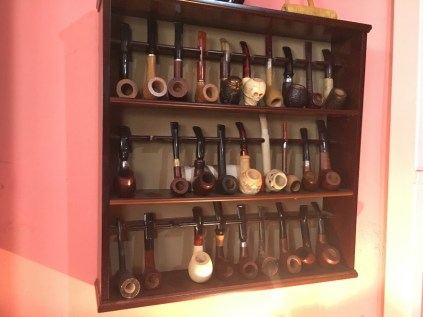
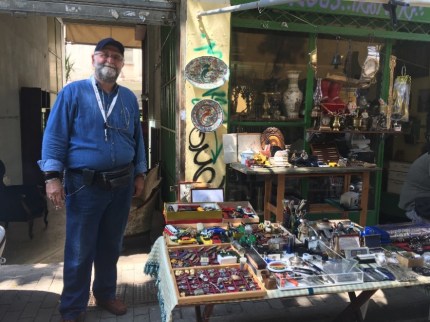
While living in Bulgaria, I’ve had the opportunity on several occasions to visit our neighbor to the south, Greece.  I was in Athens, Greece, a few years ago, and this story unfolded which I repeat here.  I was tooling through the Monastirski Market area at the foot of the Acropolis, next door to the Forum.  As I explored, I found one shop nestled on a tree-covered side street with a table set on the front sidewalk with all kinds of paraphernalia. It drew me like a bee to pollen!  Two congenial men were sitting behind the table conversing in Greek. I assumed they chatted about all manner of life, family, politics…, and what is usually the case, as I drew near, their conversation stopped, and the English began.  As I perused the table with strategic disinterest, I saw one pipe on the table that did not grab me too much.  The shop owner asked me if I was interested in pipes?  I said yes, and he said that he had many more that he didn’t know what to do with…. “Oh, my…” – my heart skipped a beat!  In his wonderfully, friendly, thick Greek accent and manner of hospitality, he said, ‘Come with me.”  As he pulled a chain out of this pocket a full ring of keys followed. He led me down a narrow, alley walkway along the side of the shop.  We stopped and he unlocked a side door that led immediately up the stairs to an ‘upper room’ where, as he explained with a subdued, secretive flourish, he seldom brought customers.  When we entered the room, I saw why.  It was his special place – family pictures were arrayed everywhere; icons of the Greek Orthodox Church were given special deference as they hung from places of honor. Many shelves full of his collections.  He pulled my attention away from the array to a slew of pipes displayed in a case hanging on the wall and arranged beneath on a cluttered table.

I took it all in.  He explained that his good friend, from Armenia, asked him to sell off his collection of pipes and he gave me a price for everything, including the wall-hanging display case.  With gratitude to him for his generous offer, I had to decline as I was flying back to Sofia and would have no room in my luggage for all of it.  I suggested to him that his friend could possibly make more money if he sold the pipes and case separately and he confided that he knew little about pricing pipes individually.  As we talked, I discovered that he was a board member of a foundation that assisted orphaned children Armenia – the home of his friend.  That opened the door for me to share that I too, was a board member of the Daughters of Bulgaria Foundation and I shared with him why I collected pipes – to restore and sell them to benefit the Daughters and their children.  He encouraged me to go through the collection and pull out pipes that interested me and make him an offer.  In Mediterranean culture, very much like Bulgarian culture – relationship is supreme, and we had talked of things near and dear to our hearts.  Pipes became the doorway to a deeper fellowship that we both understood and appreciated.   I left the shop owner with a firm handshake, a parting picture, and an appreciation for him and his journey.

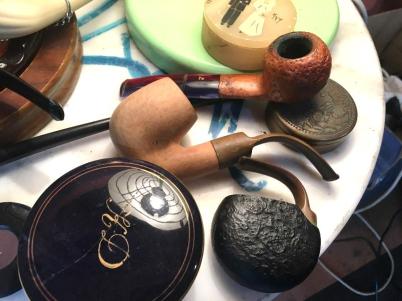
I also left his shop with some special pipes and friendly prices 😊.  The Lorenzo Carnevale Sanremo of Italy (above), now on my worktable, a Savinelli Roley Pocket Pipe (below), and a sorry looking Bent Billiard (center) that appeared to have no name – at least in the dim light of the upper room, I could not see any, but later I discovered it was a Savinelli Oscar.

The Lorenzo Carnevale along with the other pipes, traveled back to Sofia with me and were posted in the For “Pipe Dreamers” Only! online collection where Nathan saw it and commissioned it along with 3 other pipes – Comoy’s Sunrise Volcano, Savinelli Dry System 3621 Blasted, and a French Pipstar Standard 06 026 Dublin Sitter.

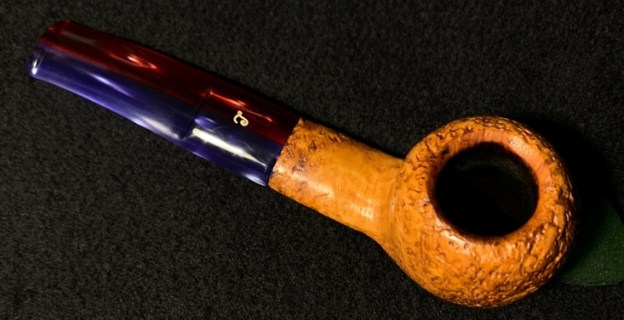
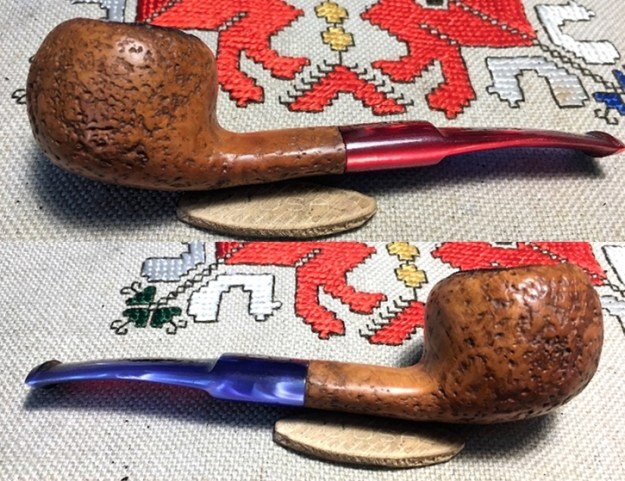
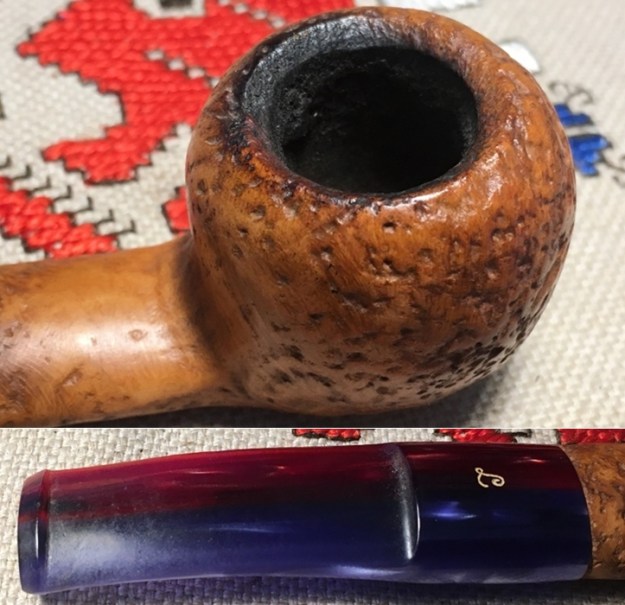
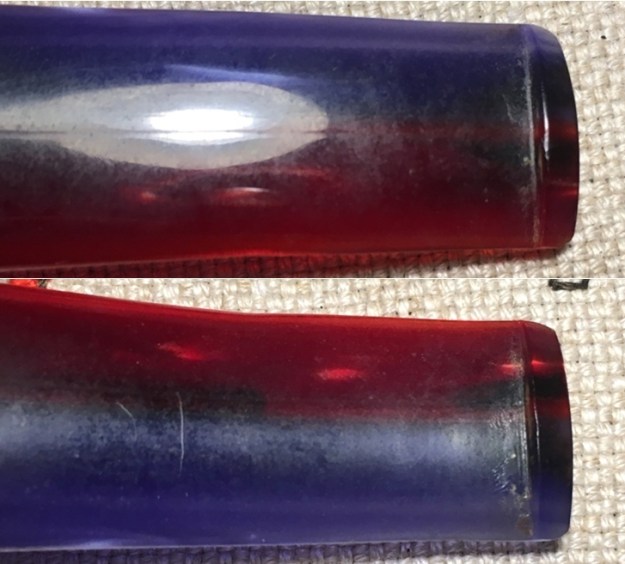
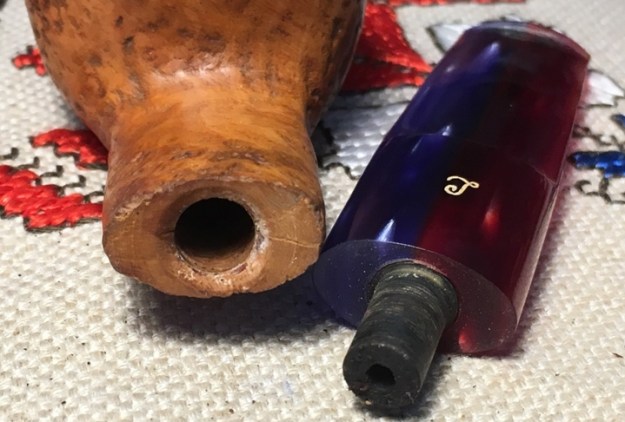
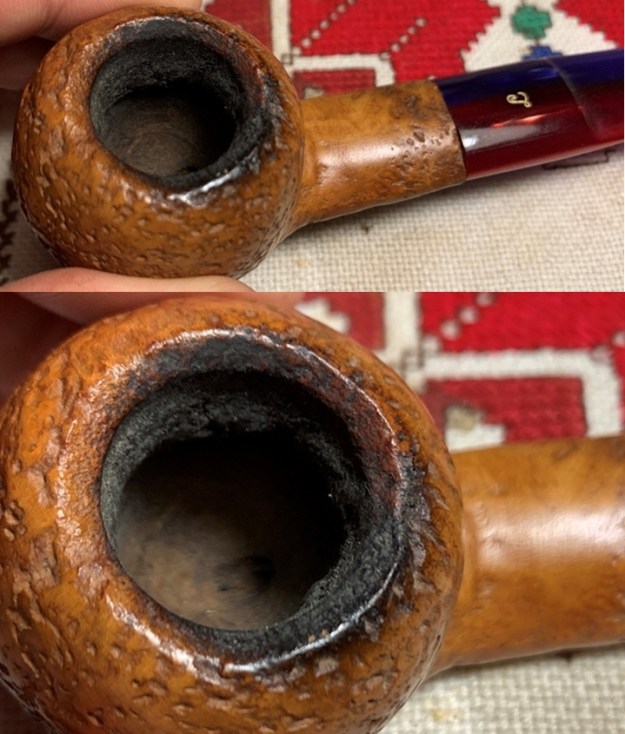
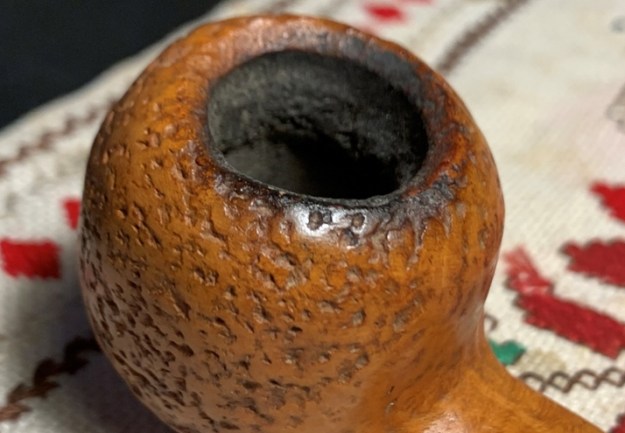
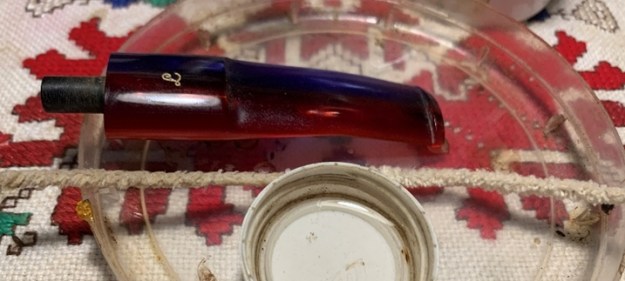
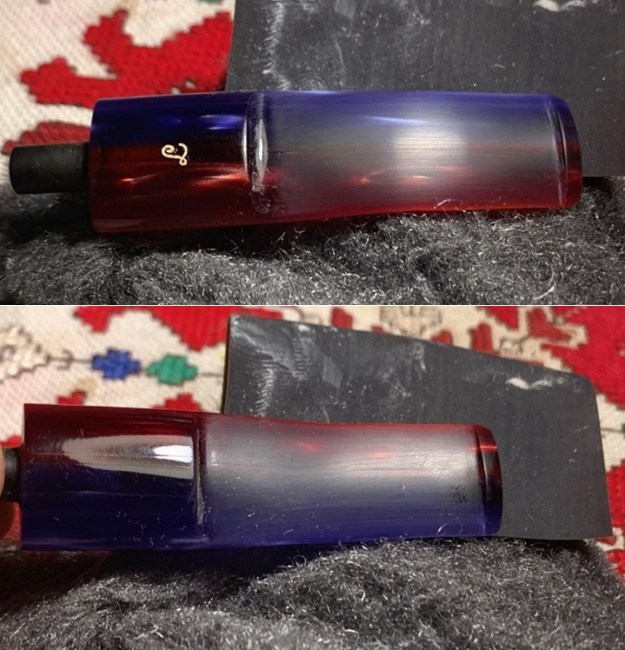
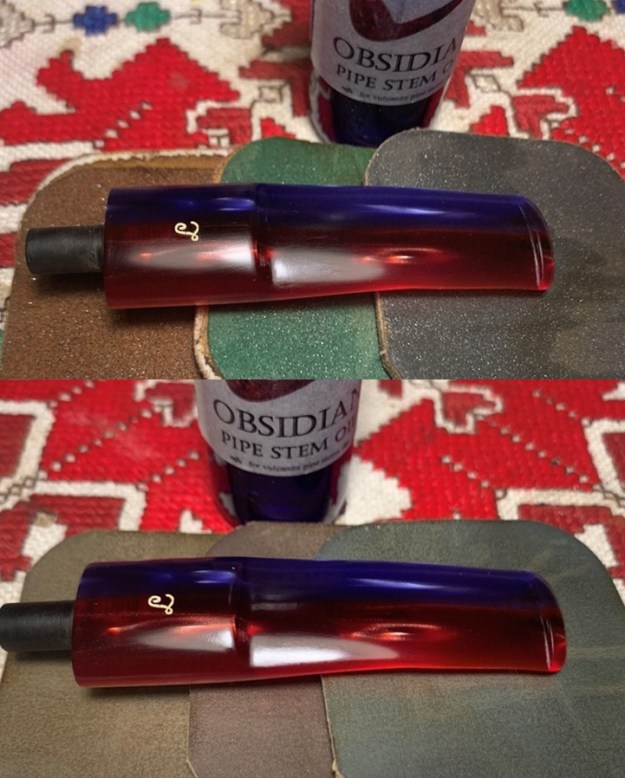
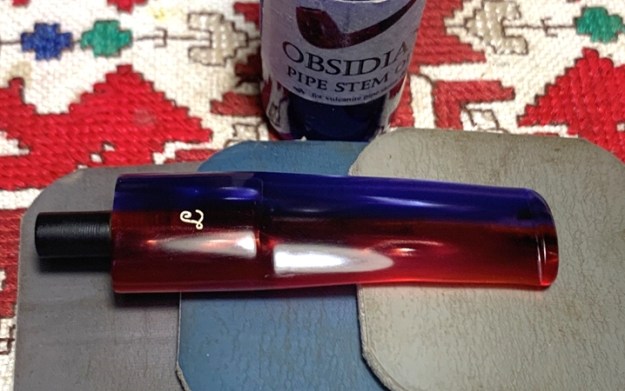
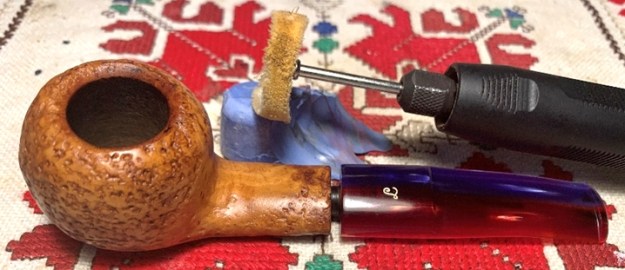
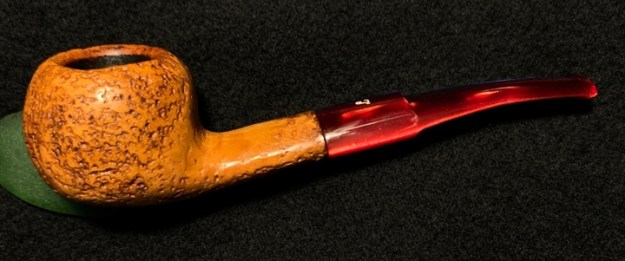
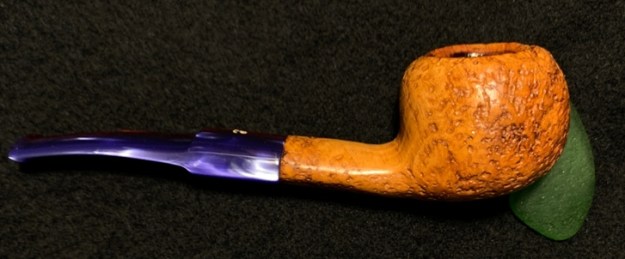
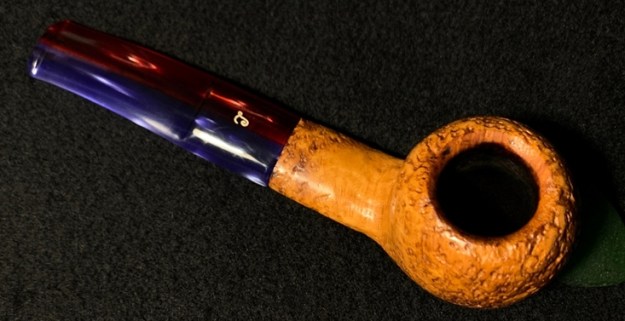
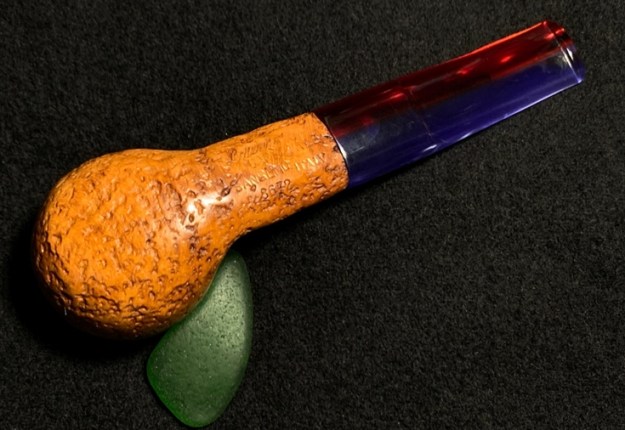
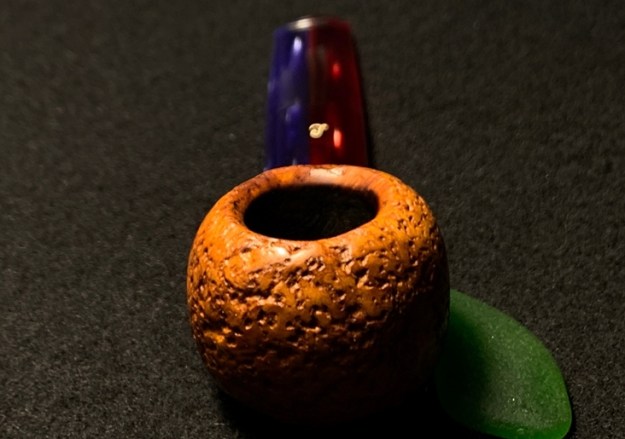
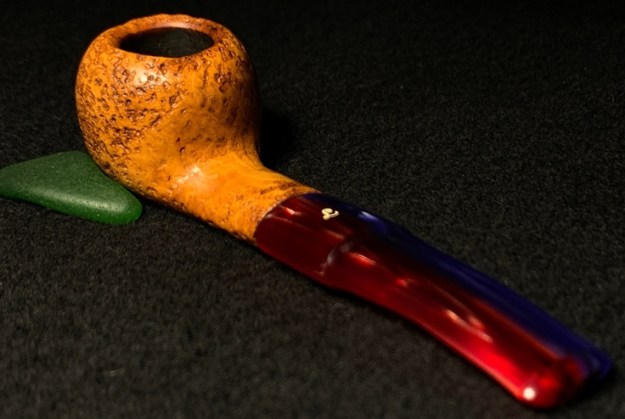
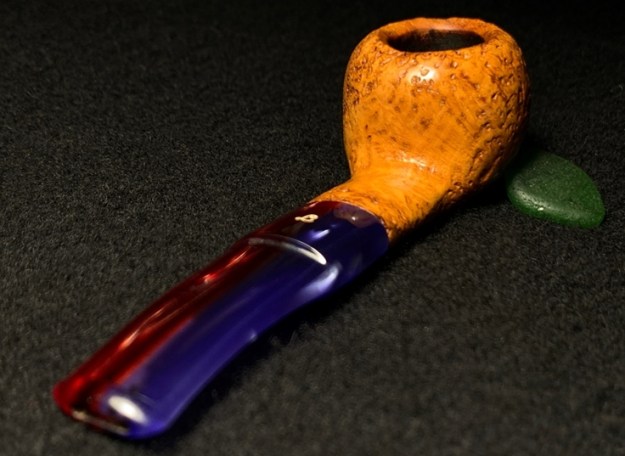
The ‘fun’ Lorenzo Carnevale is the last of the four pipes commissioned by Nathan benefiting the Daughters of Bulgaria.  I call it ‘fun’ because it shows some entertaining attitude!  And here are pictures that got Nathan’s attention. The nomenclature is stamped on the underside of the shank amid the rusticated surface.  It is stamped with a fancy cursive ‘Lorenzo’ [over] CARNEVALE [over] SANREMO with ITALY offset to the right below.  The Lorenzo stem stamp is a classic cursive ‘L’ which appears to be gold lettering.“Carnevale” is the obvious Italian word for ‘carnival’ which sets the tempo for this rusticated Apple shaped pipe with a festive split two-toned slightly bent acrylic stem showing blues and reds. The pipe challenges you to smile!  Its diminutive size is length: 5 1/4 inches, height 1 1/4 inches, bowl width: 1 1/4 inches, chamber width: 7/8 inches, and chamber depth: 1 1/8 inches.

Not as familiar with Lorenzo as I am with other prominent Italian pipe makers, I was interested to read Pipedia’s Lorenzo article:

Following Rossi (1886 in Barasso) and Ceresa (1897 in Cassano Magnano) the third pipe manufacture in the Lombardian province of Varese was established in 1900 in the picturesque city of Gallarate by two brothers. Fratelli Lana (Lana Bros.) produced briar pipes for the Italian market under their own brand name.

In 1922 Fratelli Lana went into a close co-operation with the merchant’s family Tagliabue from Milano. Sales outside of Italy began immediately and the demand throughout Europe steadily increased. By 1939 the manufacture had grown to factory size with 120 persons employed – a considerable number for the time. The program remained unchanged for decades: cheap, unpretentious budget pipes for the mass markets. Most of them didn’t even have any stampings besides “Genuine Bruyere” or similar. A large share of the production emerged as fabrications for other firms so that an own style of the Lana pipes was hardly recognizable.
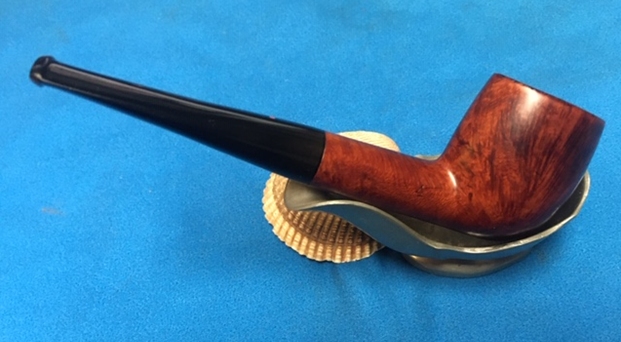
From 1969 on Lorenzo Tagliabue changed the brand’s name to Lorenzo Pipes. The reason currently qouted is another pipemaking firm named Tagliabue.

This next excerpt I found especially interesting because I had known that Lorenzo pipes tended to be on the ‘edgy’ side of things:

Lorenzo Pipes became cult throughout the 1970s and 1980s. In order to strive another cliche than the gentleman with the stronger statue: the pipesmoking university student of these years, clothed in turtleneck pullover and NATO-parka, can actually not be conceived without a Lorenzo! Well, to be sure he had to select his Lorenzo very carefully from the show-cases in order to find one with less than six blinking fills. Lorenzo dealt very generously with putty. All the same, the pipes smoked very good-natured, they were considered to be hypermodern and flamboyant and, perhaps best of all, they gave you the indispensable highbrow touch!

the Pipedia article describes also that after a family crisis in 1983, Lorenzo Tagliabue lost all interest in the company and it was acquired for a time by Comoy’s of London, but today it is under the ownership of the Aliverti family when in 1988 all rights were purchased to the Lorenzo trademark from the Tagliabue family and production of the renown Lorenzo Pipes resumed.

The nomenclature of the Carnevale mentions a city: Sanremo.  Not sure why a city was mentioned whether it had to do with the history of Lorenzo pipes or some other reason, but I did a quick search on the internet to find out.  It didn’t take long to understand the Carnevale name.  Sanremo is known in Italy for its annual ‘Carnival of Flowers’.    The Wikipedia article was very helpful.  This history of this annual festival in March goes back to 1904.  As a celebration of flowers, the main event is a parade made up primarily of ‘floral carriages’ or floats very reminiscent to me of California’s Rose Parade. (Picture: LINK)
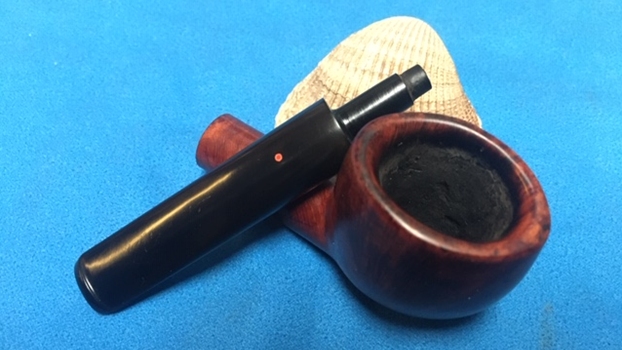
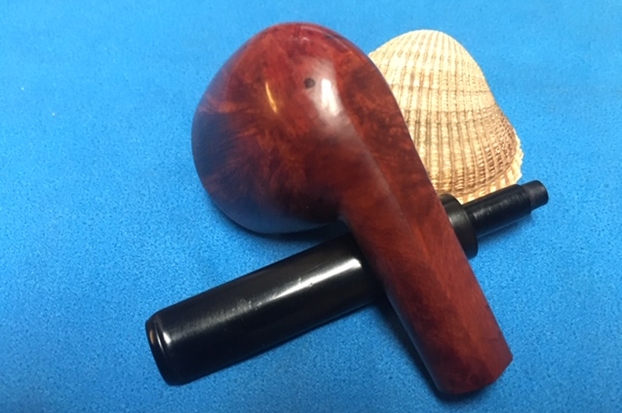
With a better understanding of the pipe now on my worktable, the pipe itself seems to be in good shape.  It needs cleaning.  There is a shelf of cake in the upper chamber but then it seems to widen out going toward the floor.  The aft side of the rim is darkened from lighting the chamber.  The acrylic stem has little chatter but is rough.  Sanding should smooth it out.  Here are few pictures of the issues. I begin the refreshing by giving the pipe a general cleaning.  Starting with the stem, I clean the acrylic stem’s airway using pipe cleaners wetted with isopropyl 95%.  It takes one pipe cleaner to confirm a clean airway.Next, the chamber is cleaned using the Pipnet Reaming Kit.  I use 2 of the 4 blades available.  The cake is light.  I transition to the Savinelli Fitsall Tool to give the chamber walls a quick scraping.  Finally, the chamber is sanded with 240 grade paper wrapped around a Sharpie Pen.  After wiping out the chamber, an inspection confirms no heating problems. To begin the cleaning of the external rusticated surface of the Apple shaped bowl, undiluted Murphy’s Oil Soap is used with a cotton pad.  A bristled toothbrush also helps to clean the rusticated surface.  The brass bristled brush helps also to clean the darkened area on the rim. After a time of scrubbing, the stummel is transferred to the kitchen sink to start cleaning the internals. Using the shank brushes and anti-oil liquid dish soap I scrub the internal mortise and airway.  After a thorough rinsing, the stummel is back on the worktable.Next, to continue the internal cleaning, one cotton bud and one pipe cleaner wetted with isopropyl 95% confirm the internals are clean!  Nice for a change.With the rusticated surface, to clean the internal rim edge I use a roll 240 grade paper to address the darker area on the backside of the rim.  That is much better. Next, with the surface cleaned and the rim freshened, I apply Mark Hoover’s product, Before & After Restoration Balm to the rusticated Apple bowl.  I put a little on my fingers and I work it into the briar surface well.  It starts as a cream and then thickens to a wax-like consistency as it’s worked into the briar.  After applying the Balm, I put the stummel aside for 15 or so minutes for the Balm to be absorbed.  The picture shows this period.  Afterwards, I buff the bowl with a microfiber cloth to clear the excess and raise the buffed shine of the stummel.  I like what the Balm does.  The style of the rustication, more of a pitting, does not show a lot of grain but the Balm deepens the entire surface presentation. Turning to the stem, there is little tooth chatter but more of a roughness on the bit where there has been gentle use.I use 240 grade paper to sand out the bit. A flat needle file also refreshes the lines of the button.  The sanding is expanded with 240 paper to the edge of the saddle to address random scratches and to have a uniform treatment of the lower stem. From the 240 sanding paper, I now wet sand with 600 grade paper up to the saddle and then follow with an application of 000 steel wool.Moving now to the full regimen of micromesh pads, I wet sand the entire stem with pads 1500 to 2400.  Following this, I dry sand with pads 3200 to 4000 and 6000 to 12000.  Between each set of 3 pads, Obsidian Oil is applied.  I’m not sure it does anything for the acrylic, but I apply it anyway.  The micromesh process does a great job bringing out the acrylic ‘pop’! Now on the home stretch.  After reuniting the stem and stummel, a cotton cloth buffing wheel is mounted to the Dremel with the speed set at the lowest speed, Blue Diamond compound is applied to the stem only.  I set the Dremel to the lowest speed because I don’t want to risk overheating and having melted the acrylic with too much friction with the abrasive compound.  I keep the wheel rotating and don’t sit on one spot for long. I also don’t apply the compound to the rusticated stummel because I don’t want to fill all the rustication pits with compound dust!  That would not be easy to clean.After the compound, another cotton cloth wheel is mounted on the Dremel with the speed set at 40% full power.  Carnauba wax is then applied to both stem and stummel.  I’m not concerned about the wax on the stummel.  I keep the application light and I’m careful to spread and dissolve the wax into the briar with the buffing action of the Dremel.  After applying the wax, the pipe receives a hearty hand buffing to dispense wax that wasn’t assimilated and to raise the shine.This was an easy but fun restoration.  The Lorenzo Carnevale Sanremo Apple lives up to the Lorenzo reputation of producing pipes that are ‘edgy’.  The saddle tan rusticated Apple bowl is expressive and when tied to the two-toned red and blue acrylic stem, the pipe truly expresses the carnival theme of colors and flowers commemorating the well-known festival in Sanremo, Italy.  This fun pipe was a good conclusion to the 4 pipes Nathan commissioned from the For “Pipe Dreamers” Only offerings.  Nathan has the first opportunity to acquire the Lorenzo Carnavale Sanremo Apple from The Pipe Steward Store benefiting the Daughters of Bulgaria – women and girls who have been trafficked and sexually exploited.  Thanks for joining me!