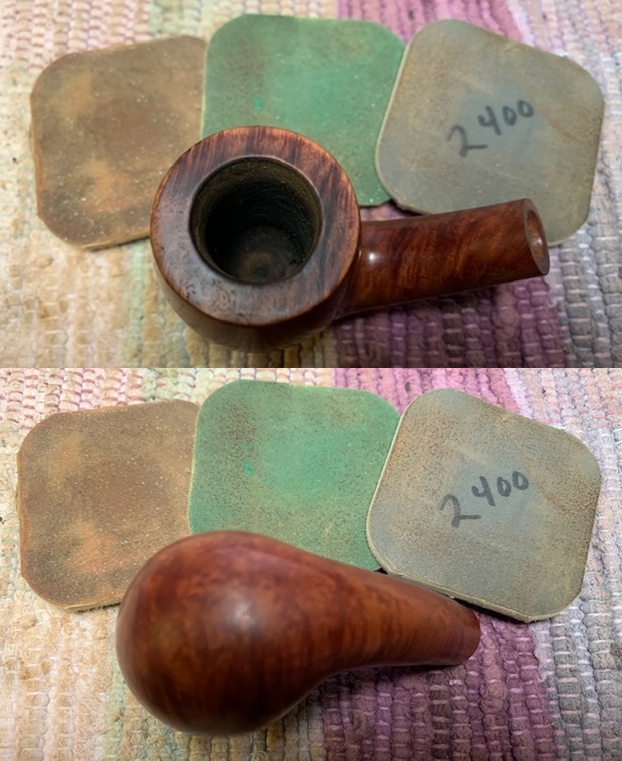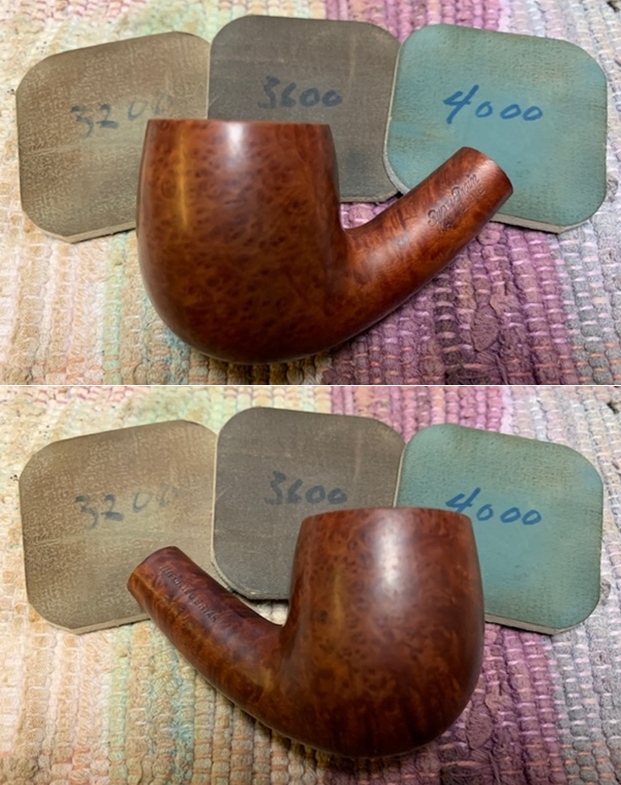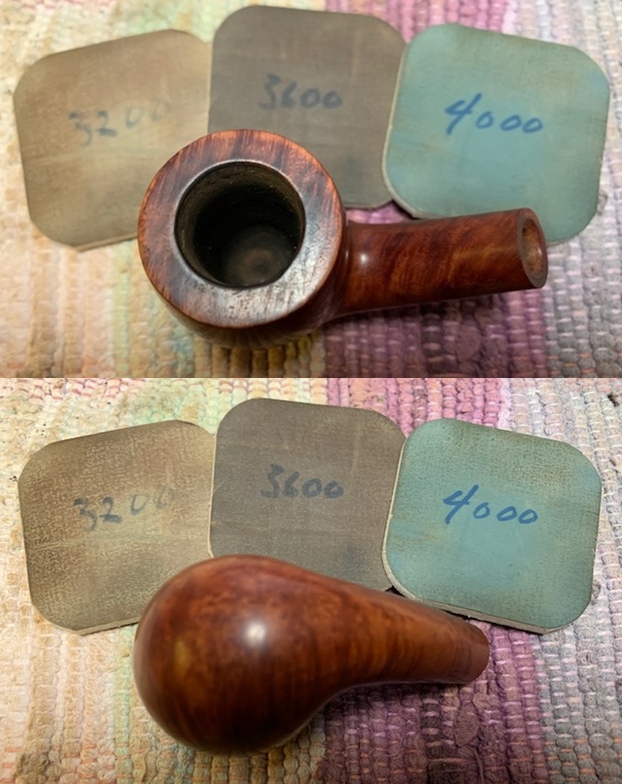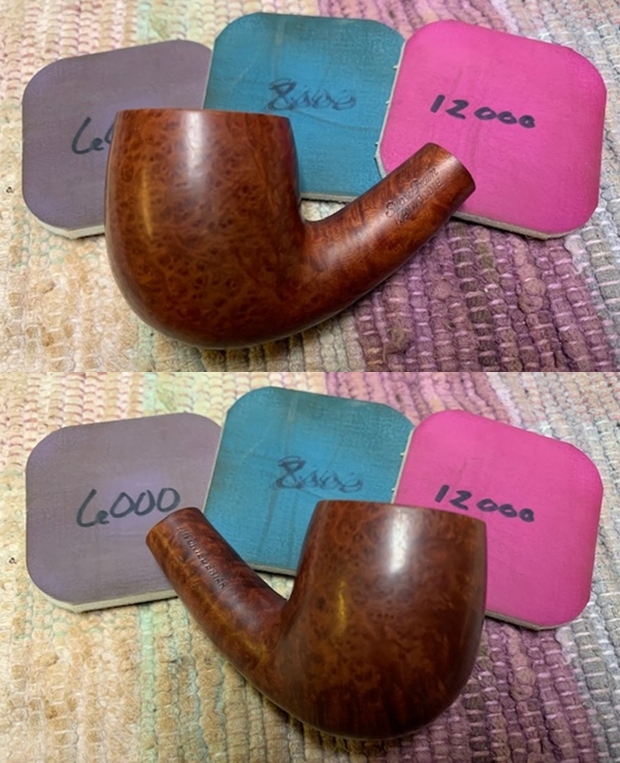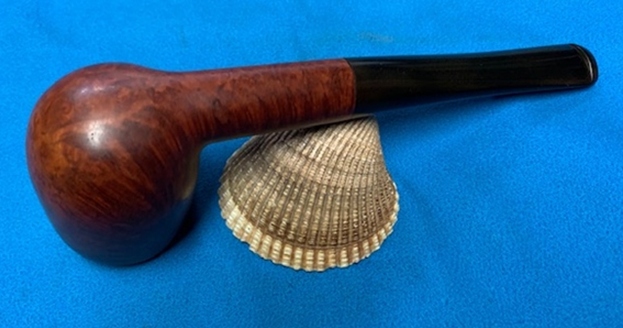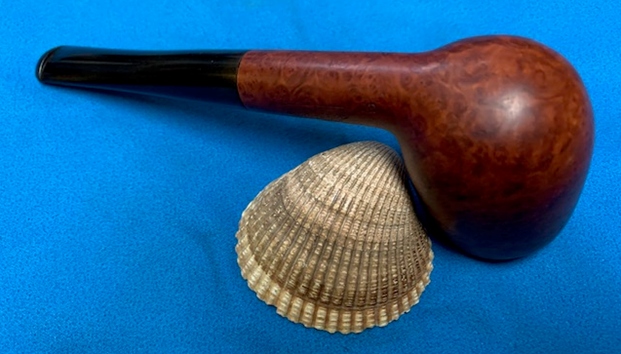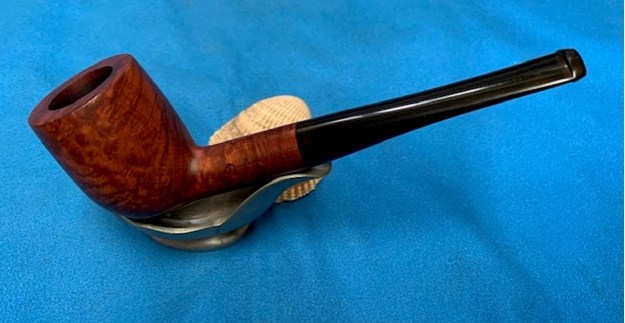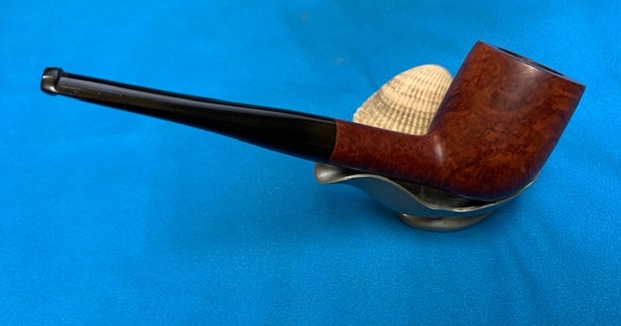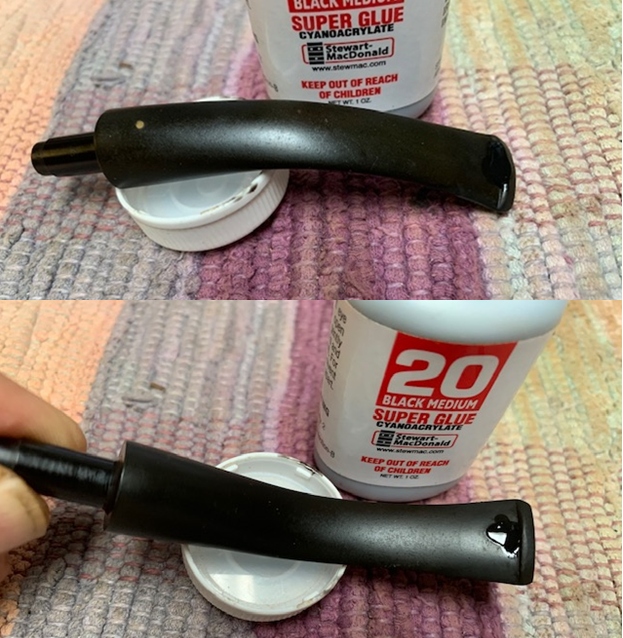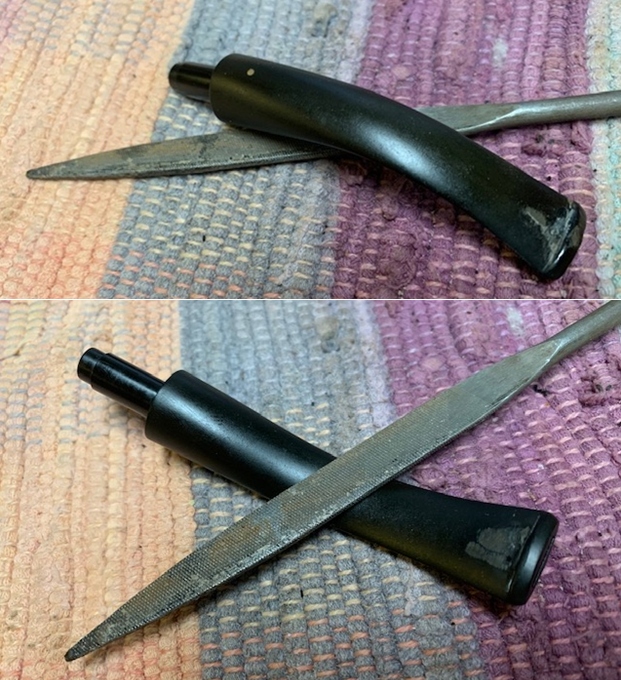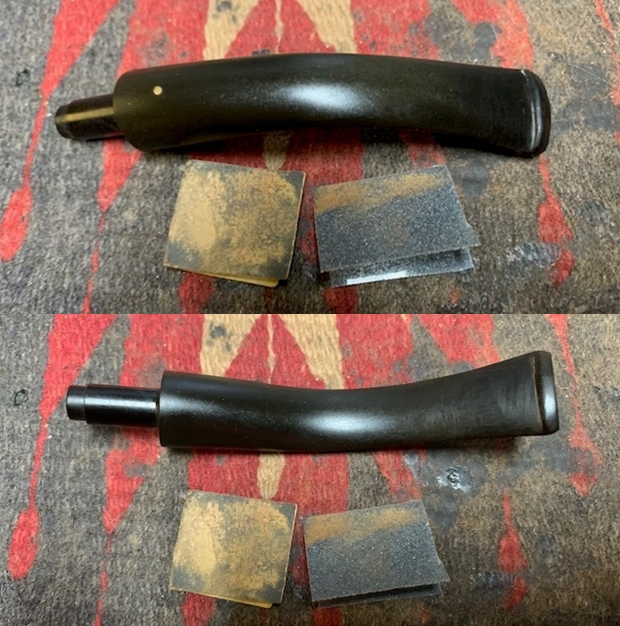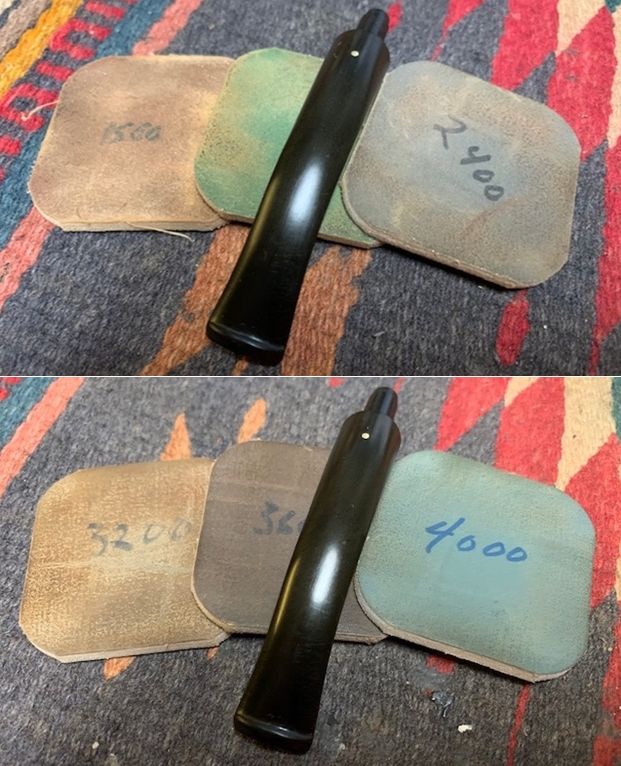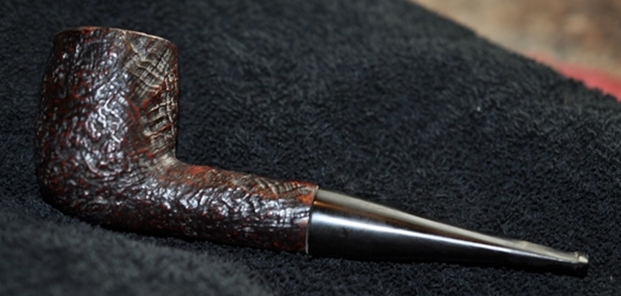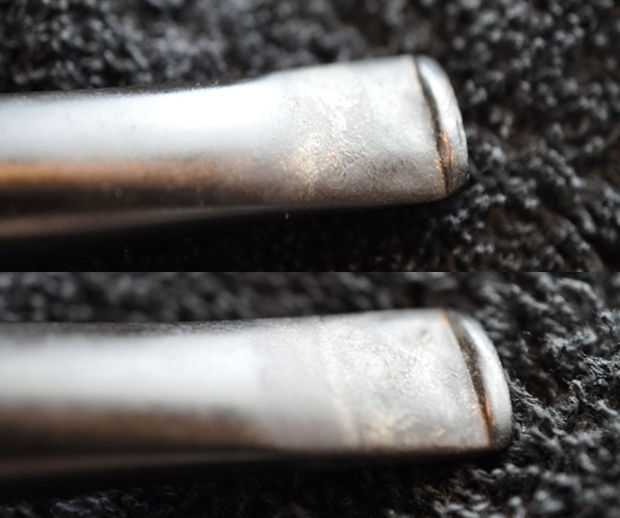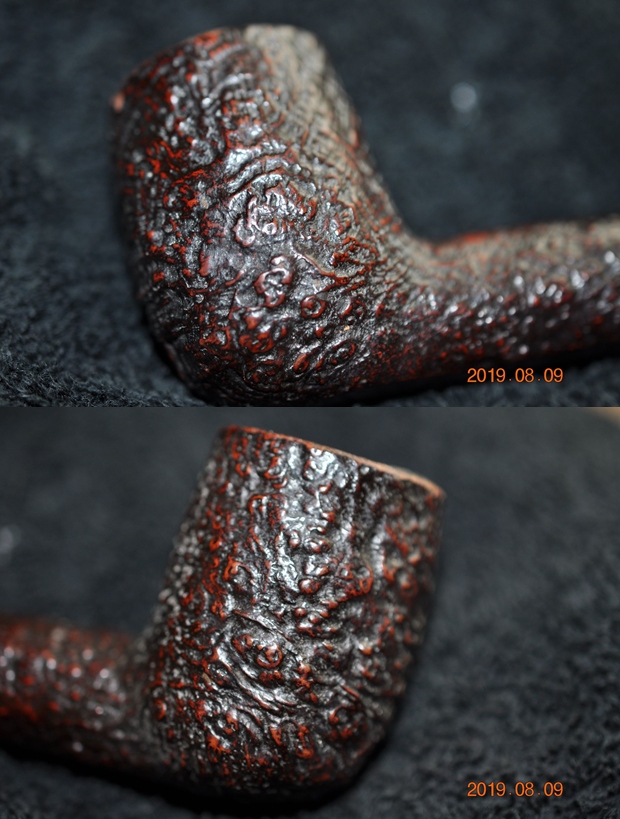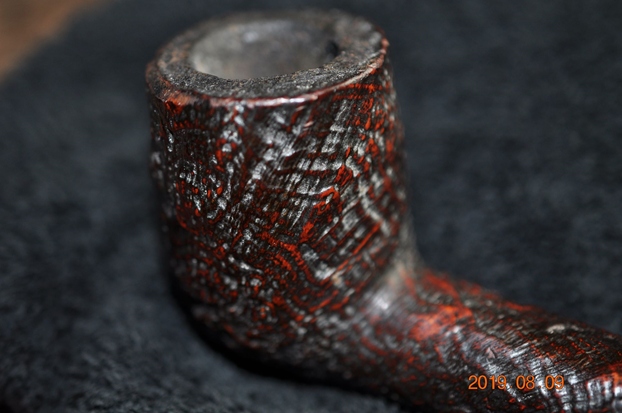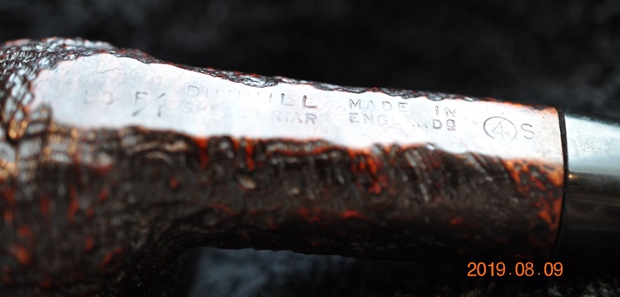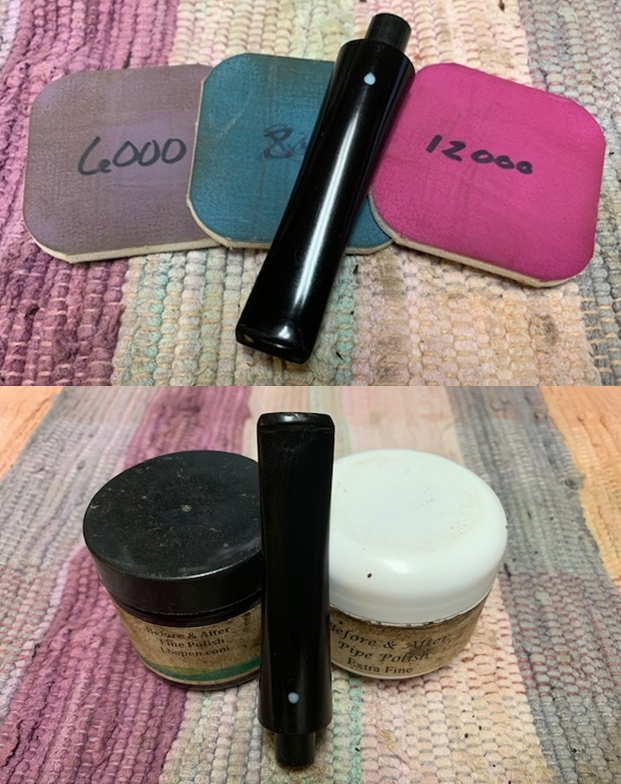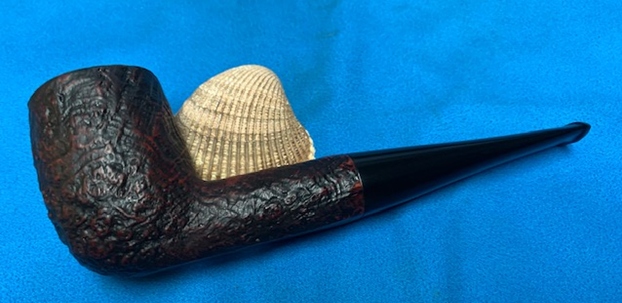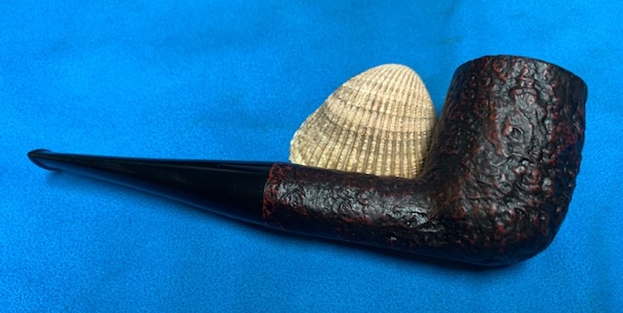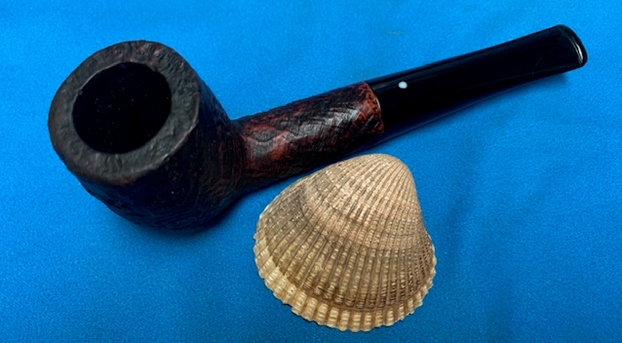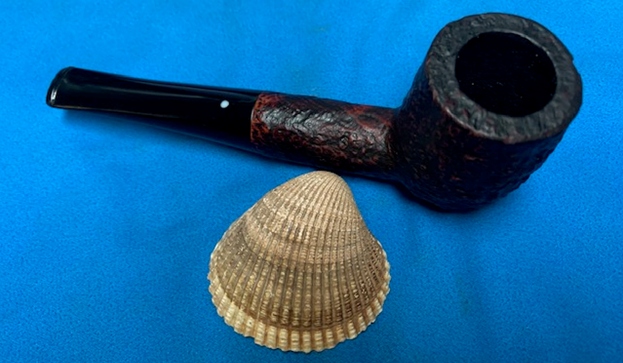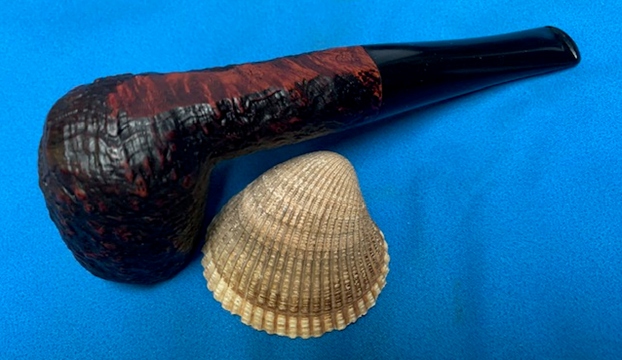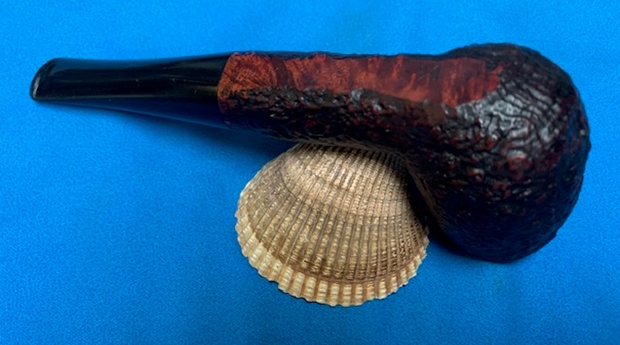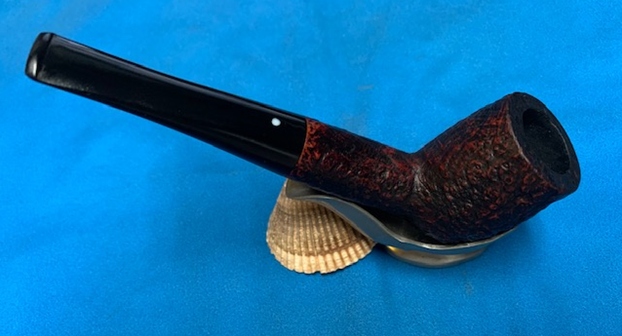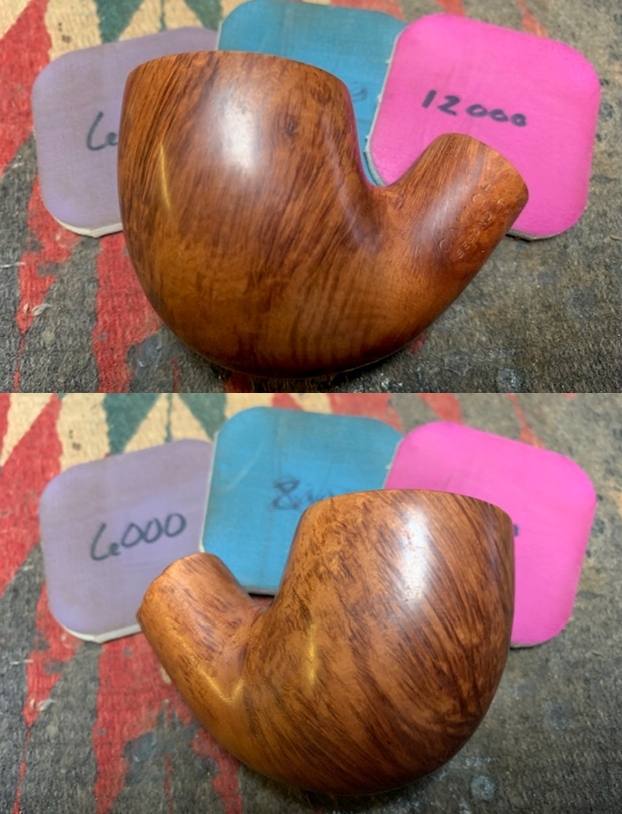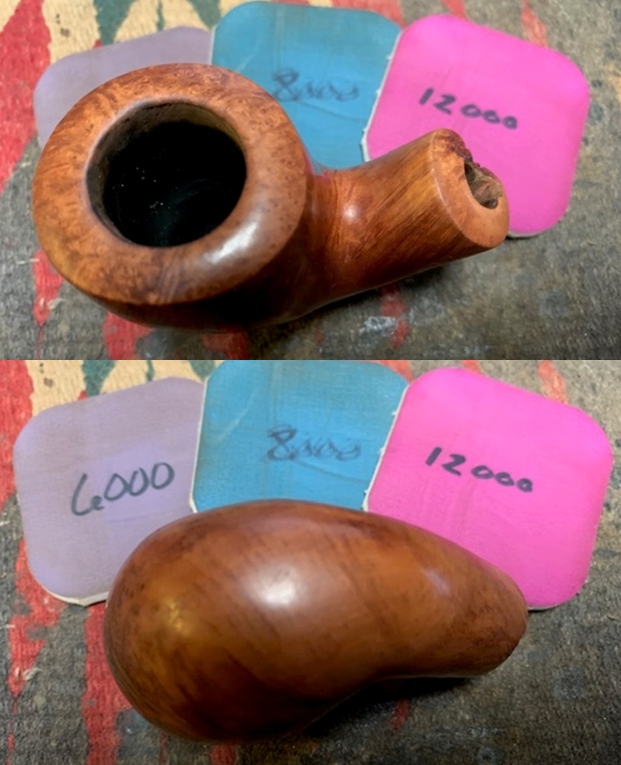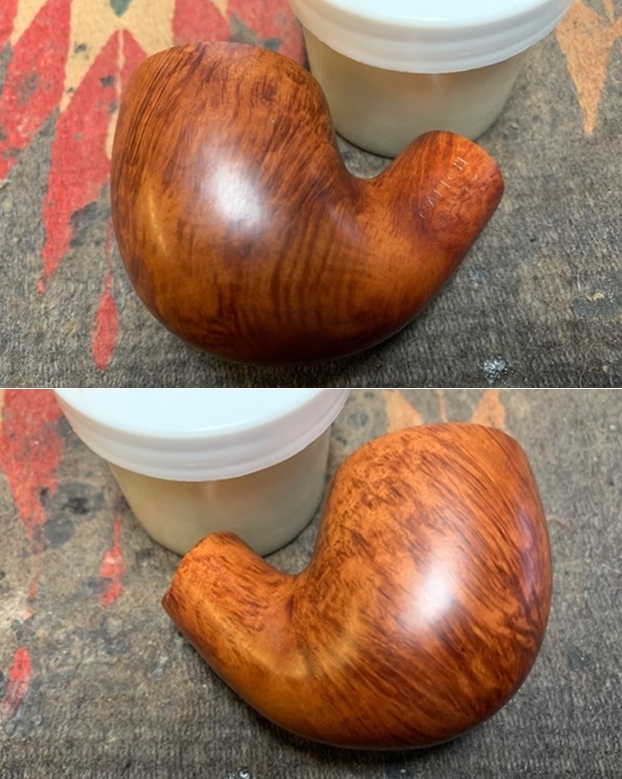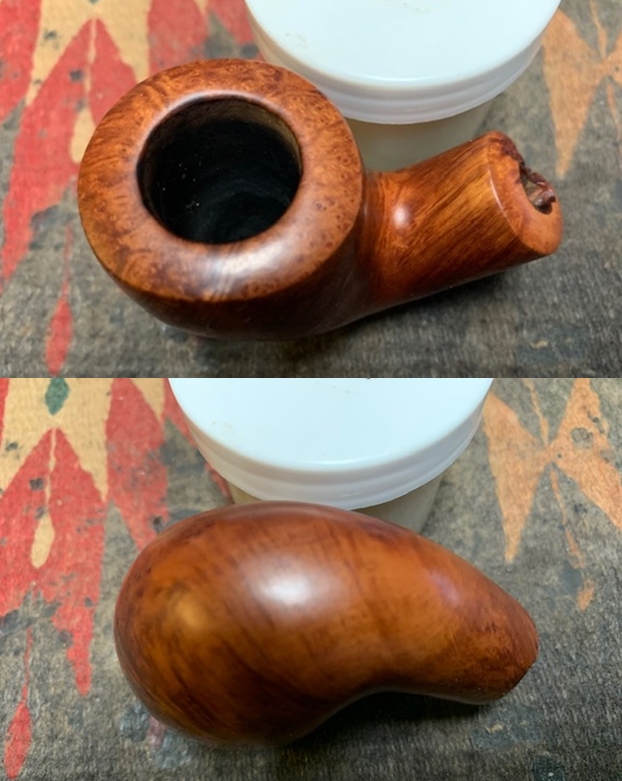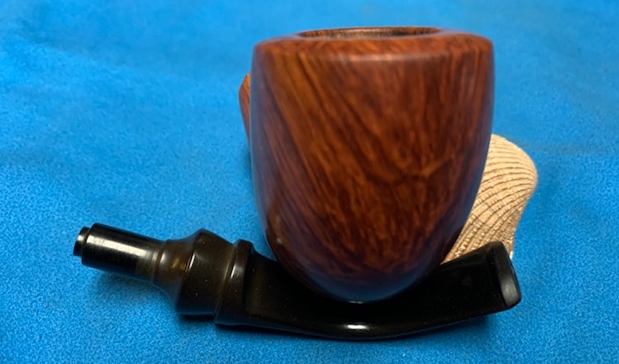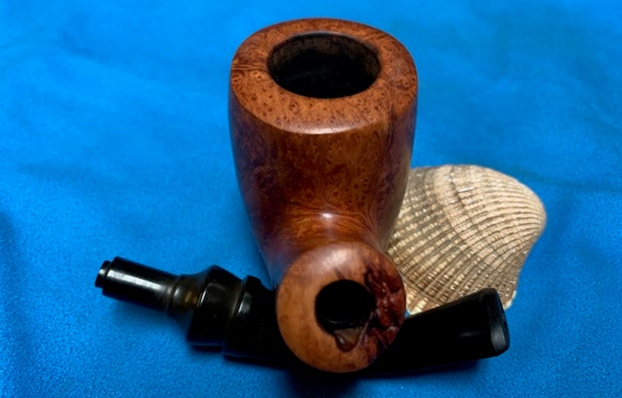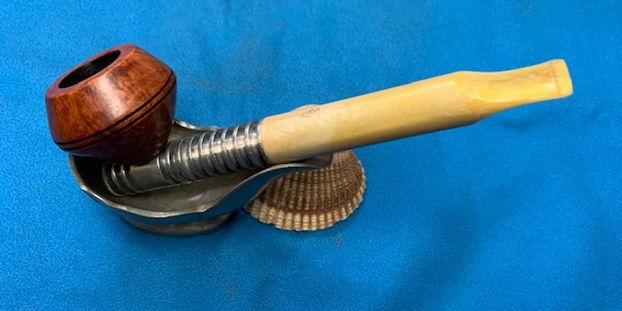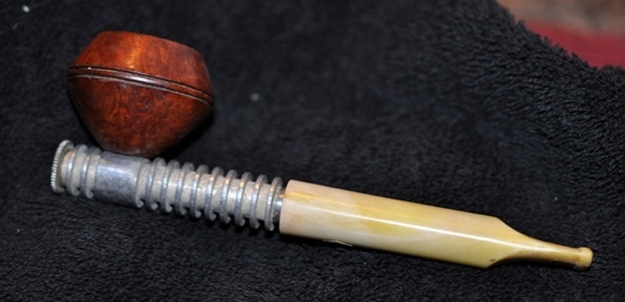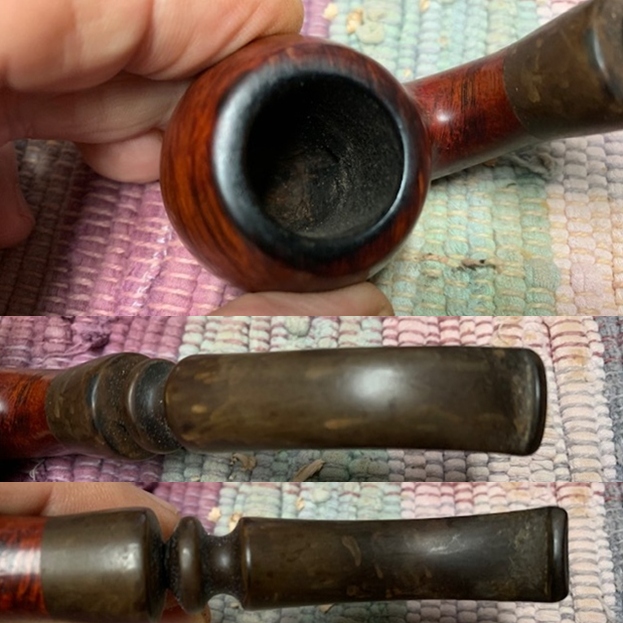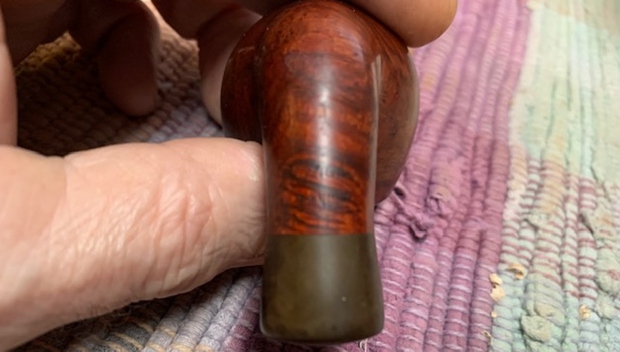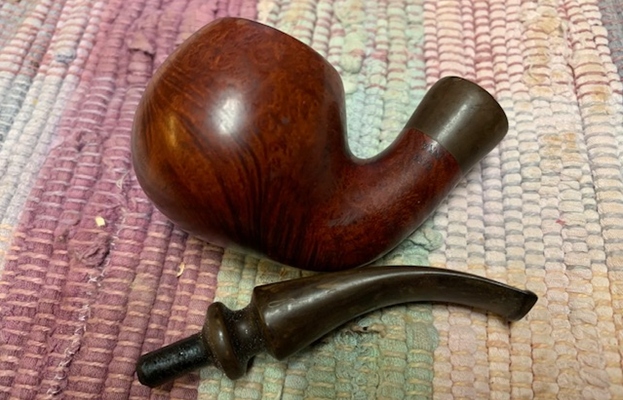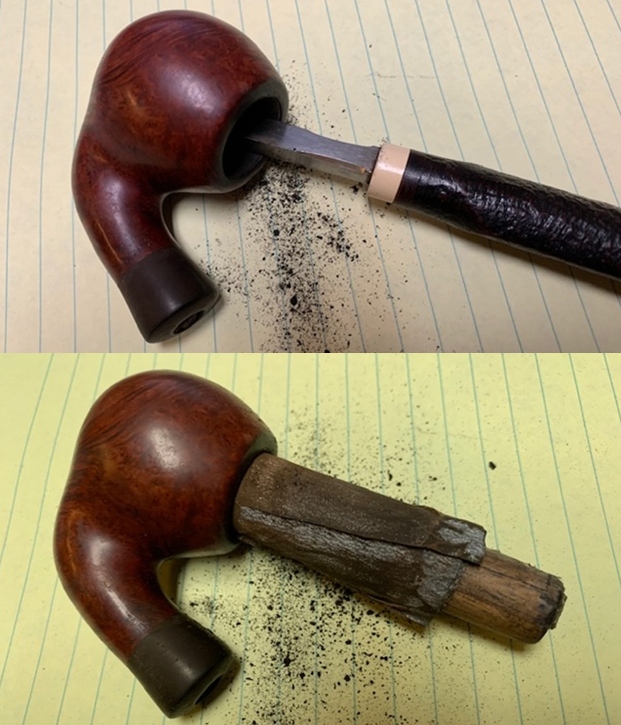
Tag Archives: polishing stems

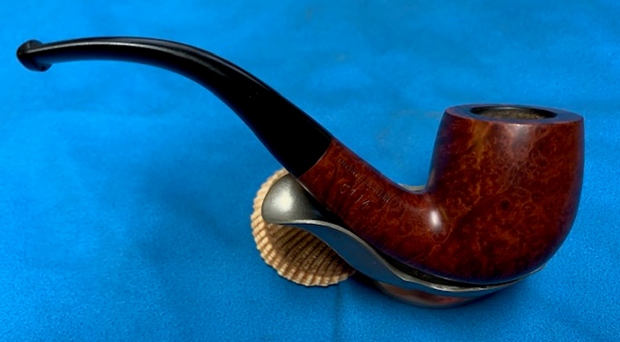
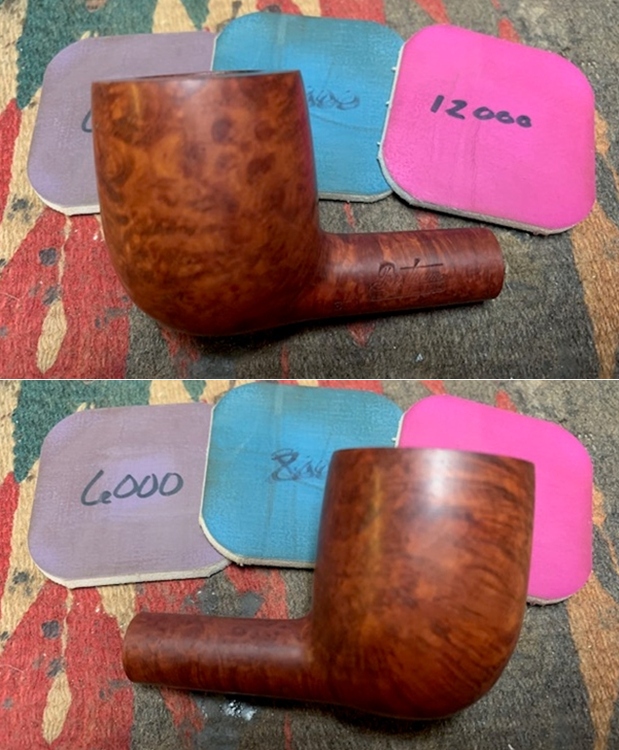
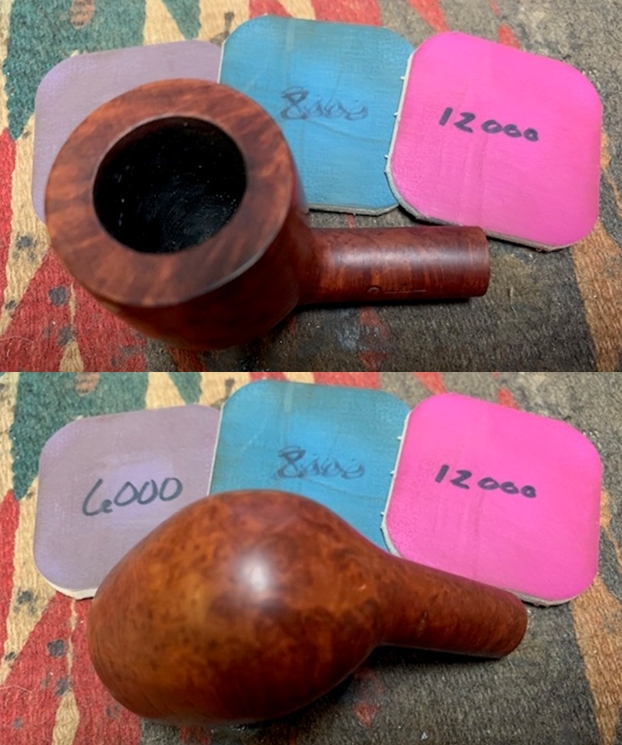
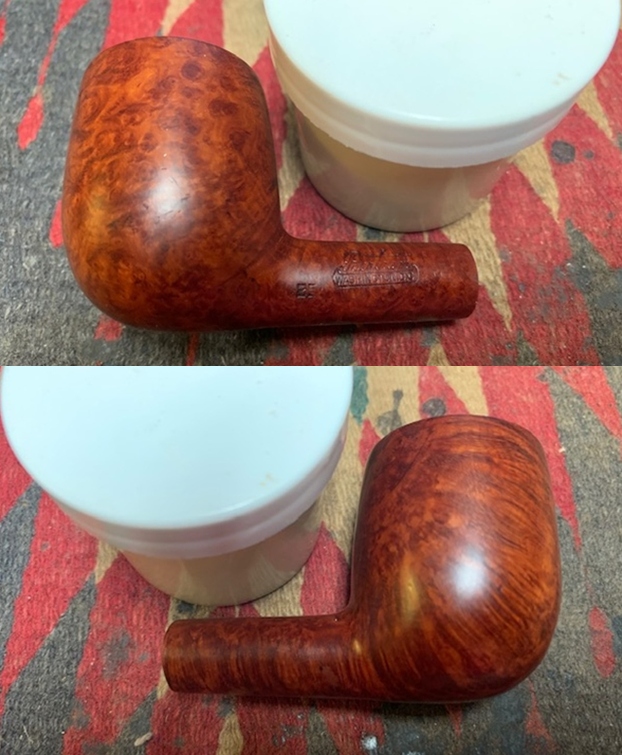
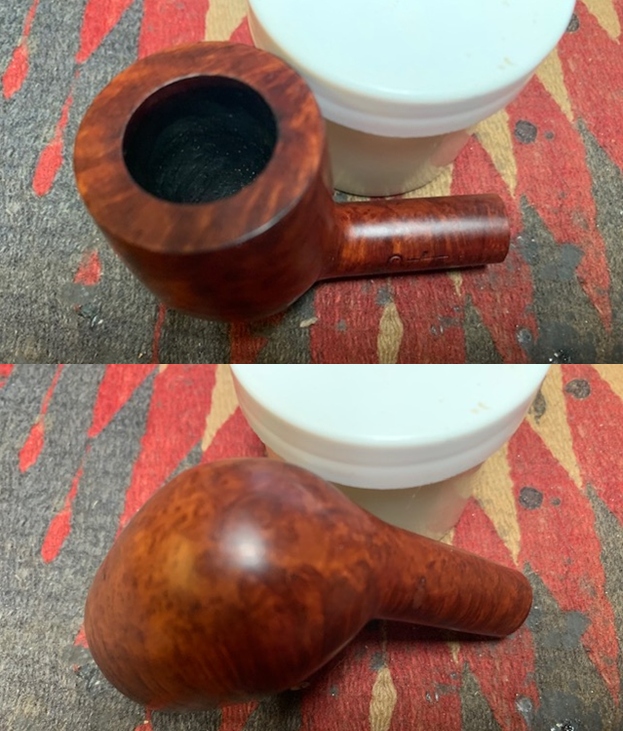
Breathing Life into a Super Grain Kaywoodie 5114 Bent Billiard


Blog by Steve Laug

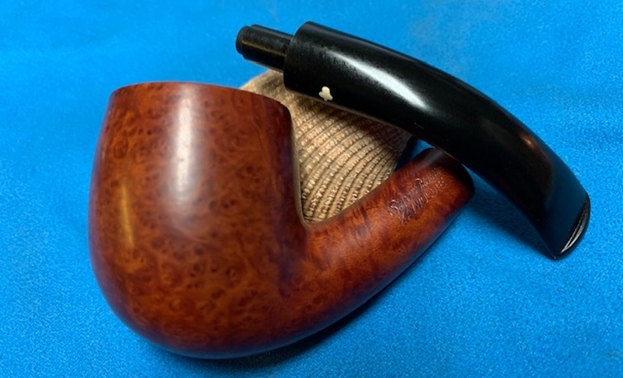
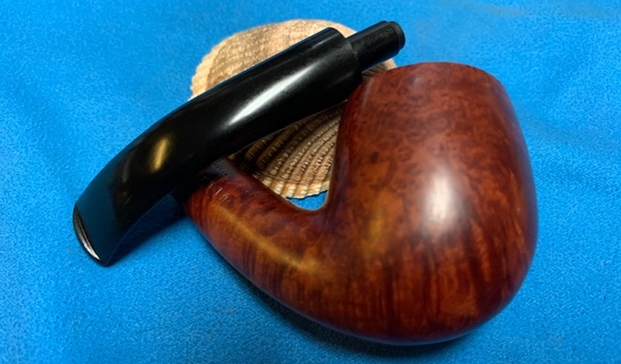
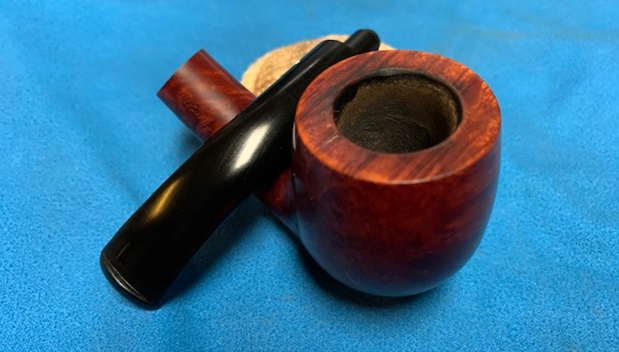
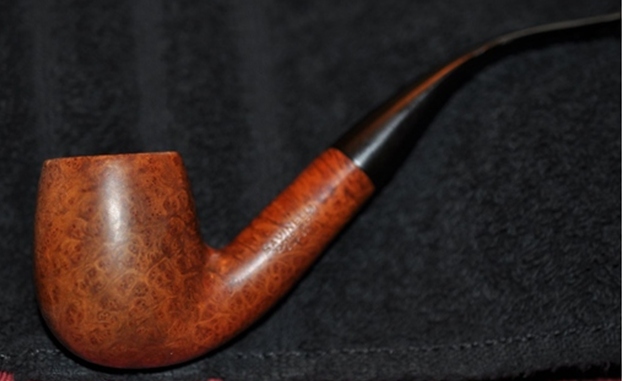
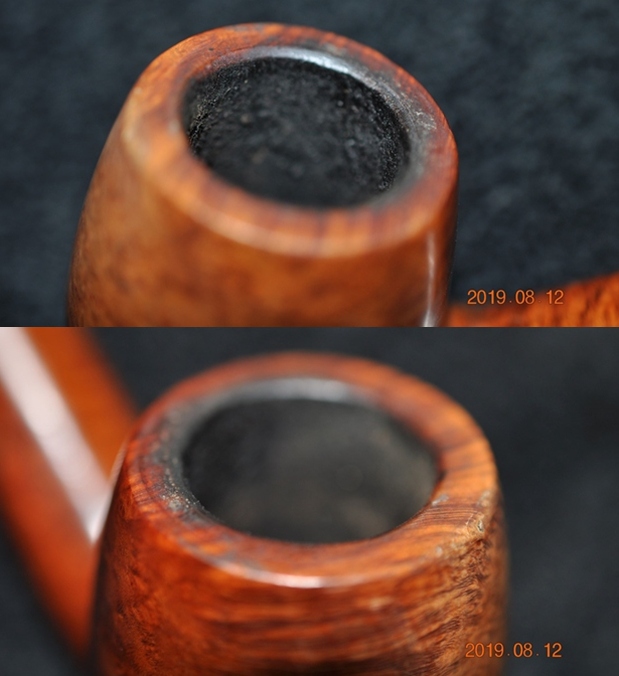
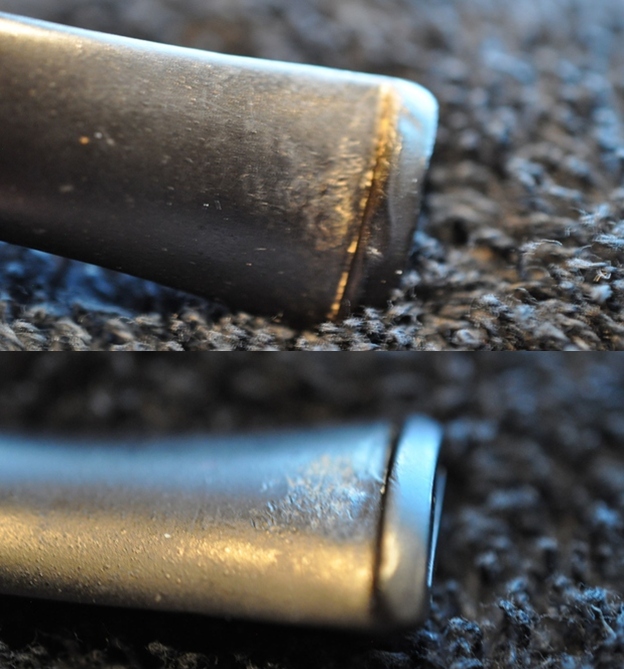
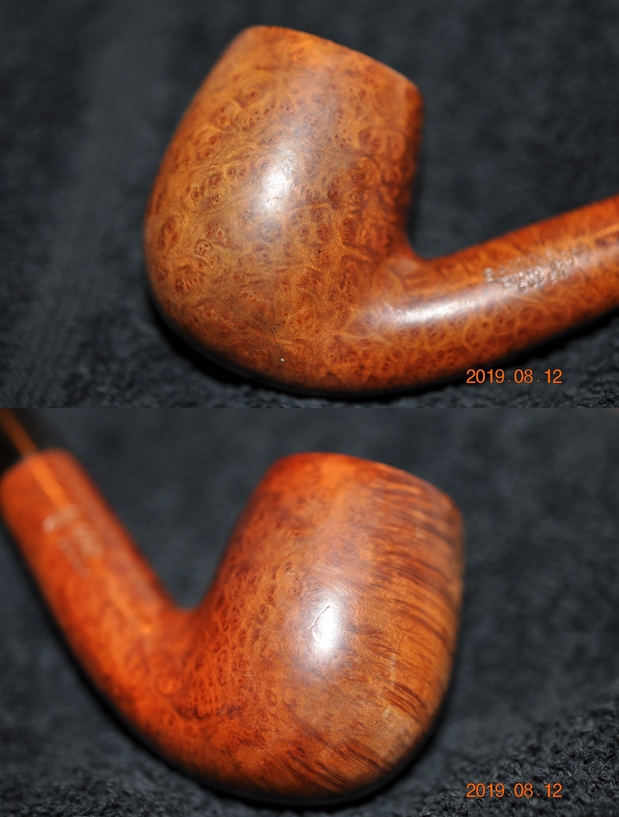
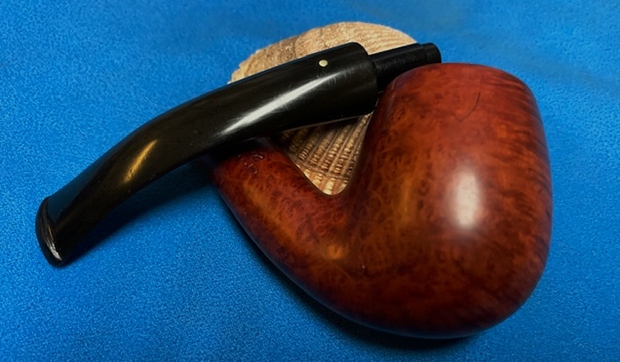
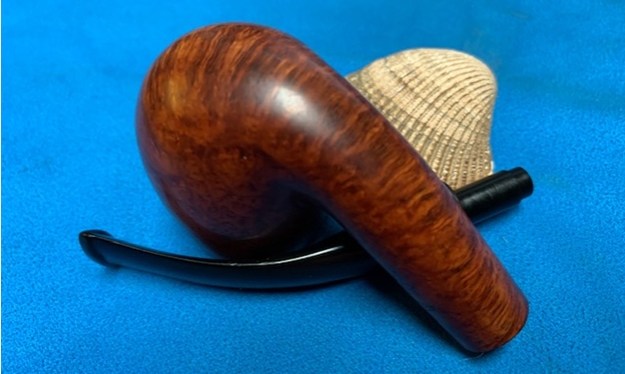
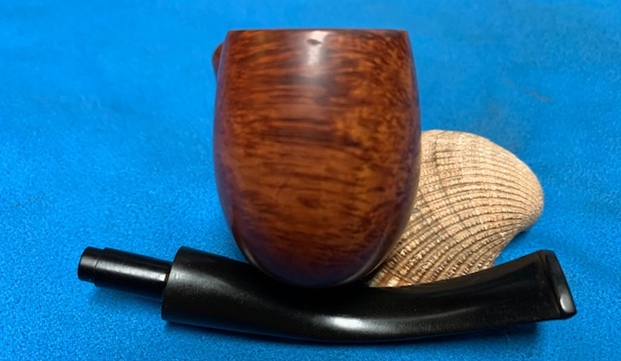
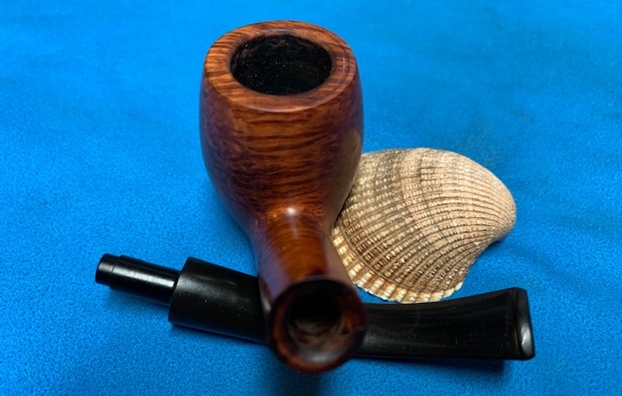
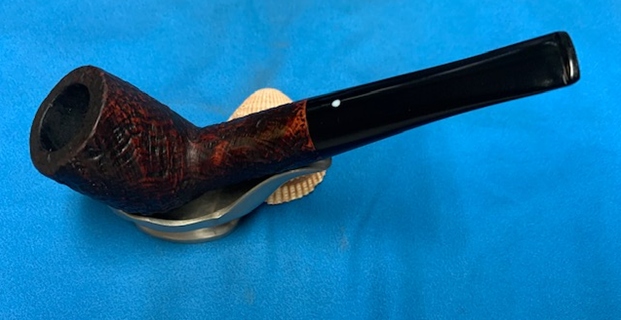
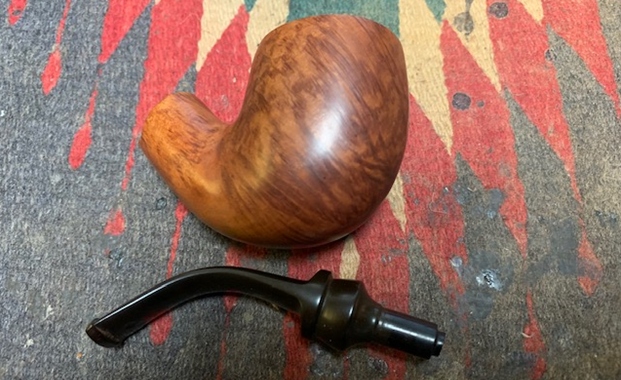
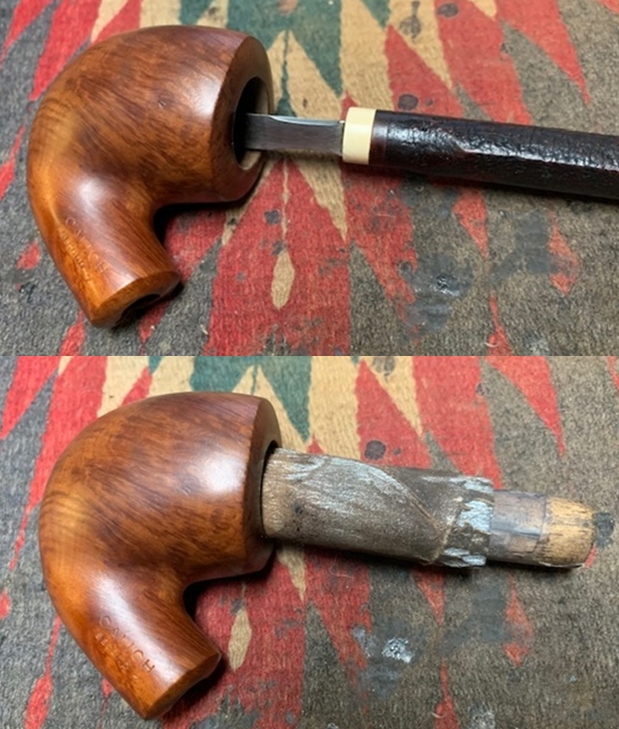
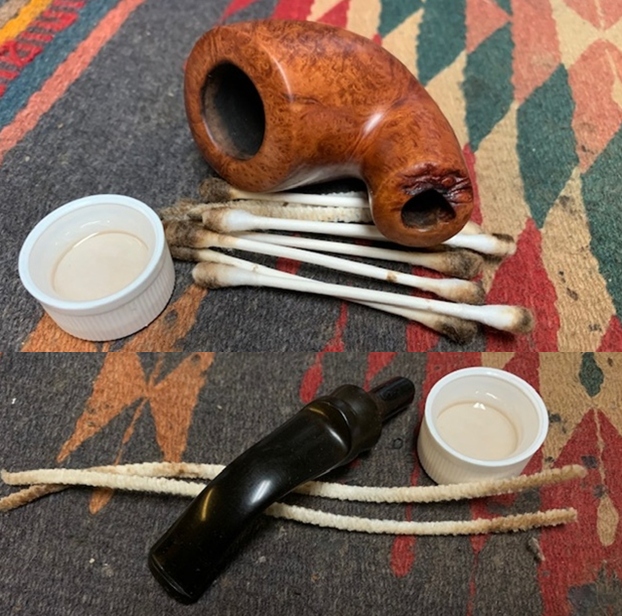
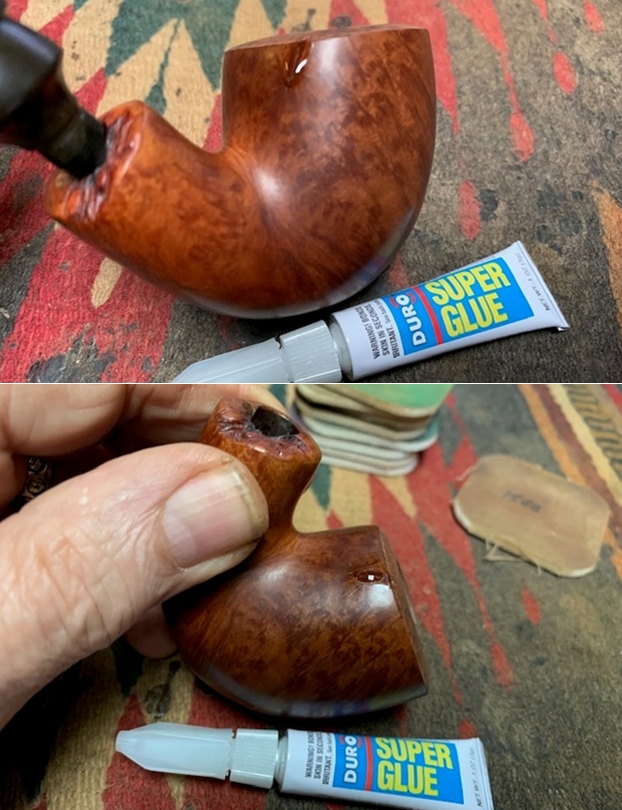
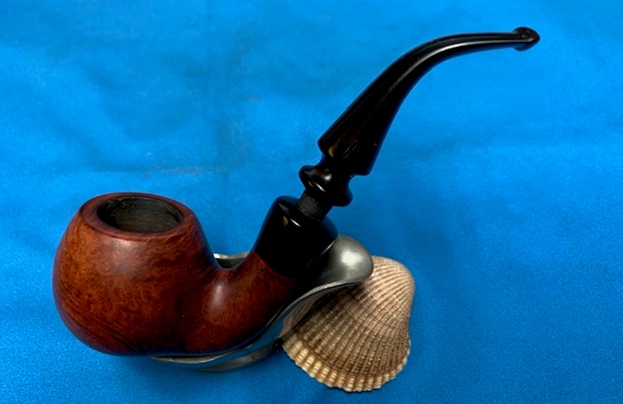
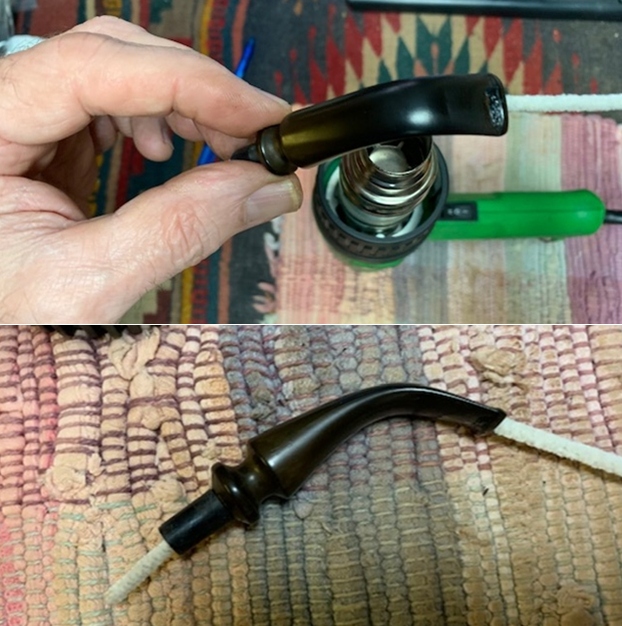
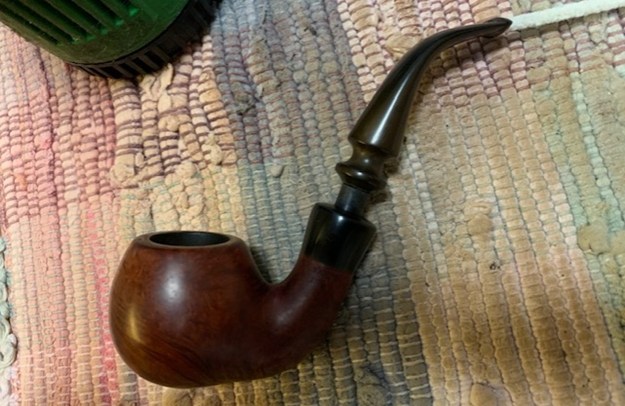
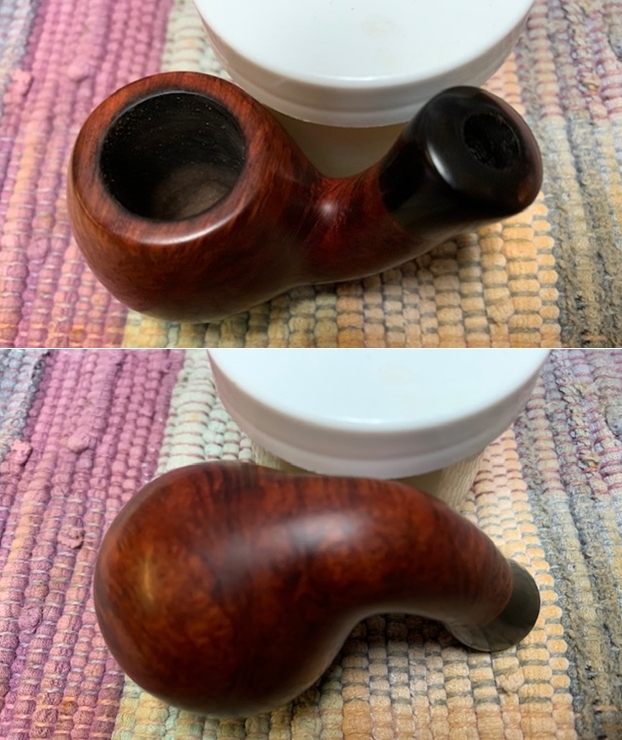
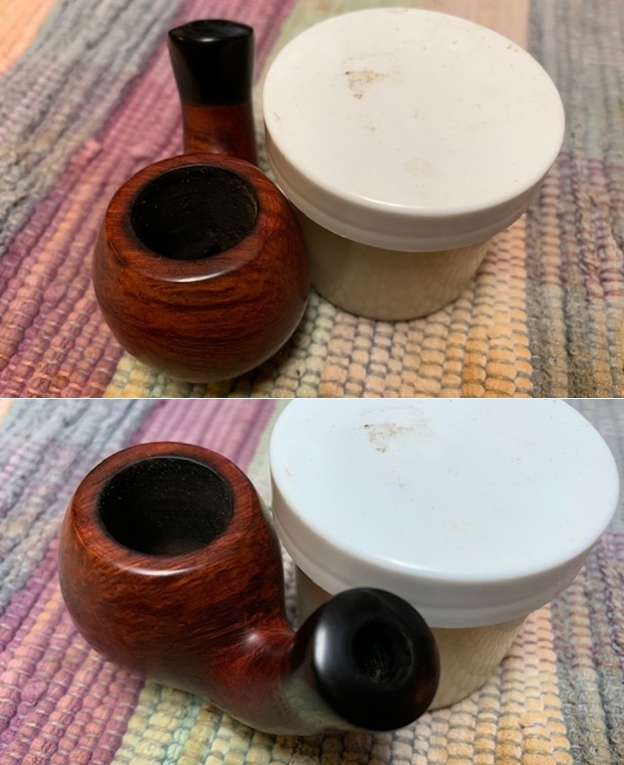
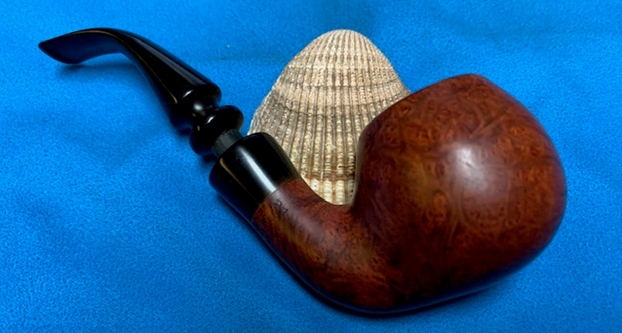
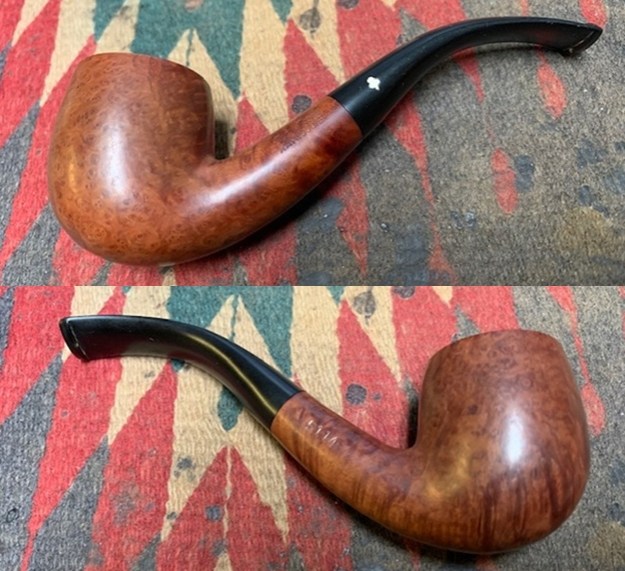
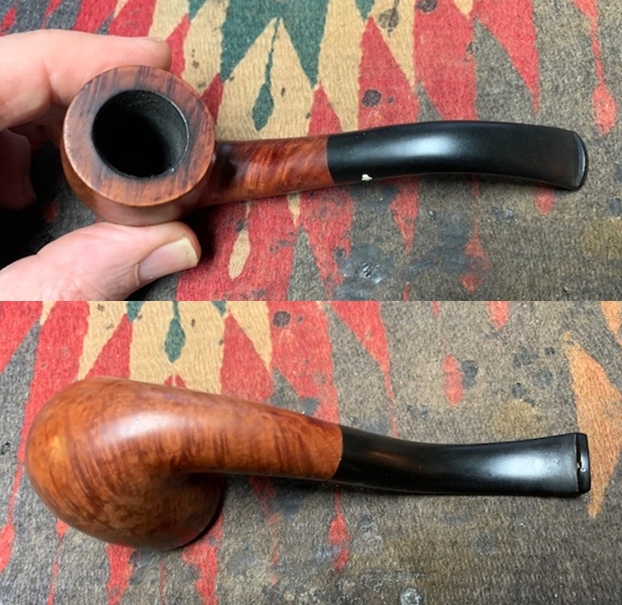
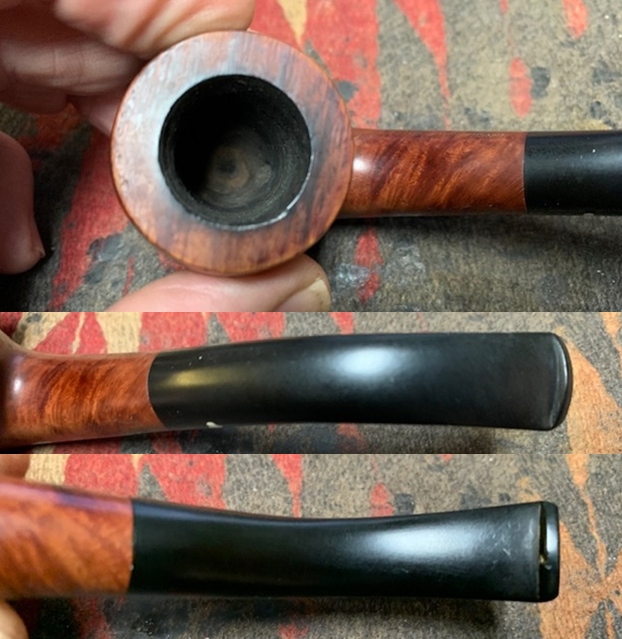
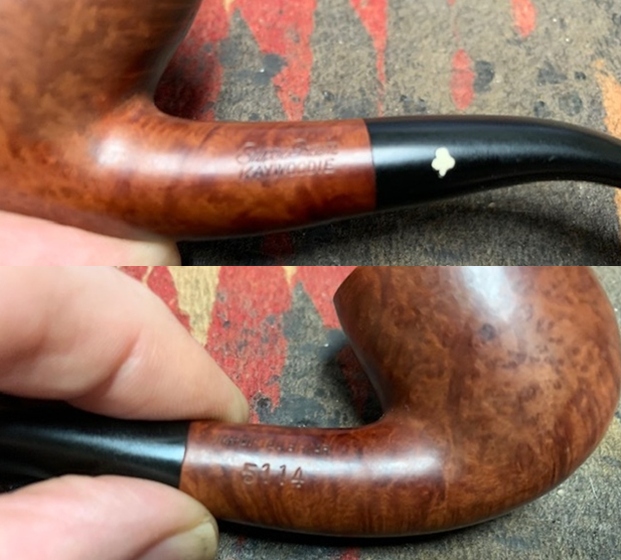
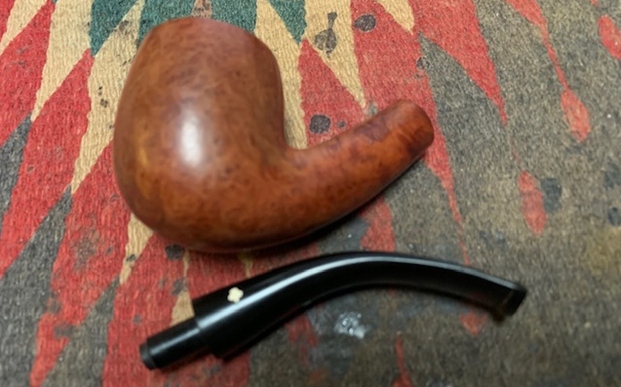
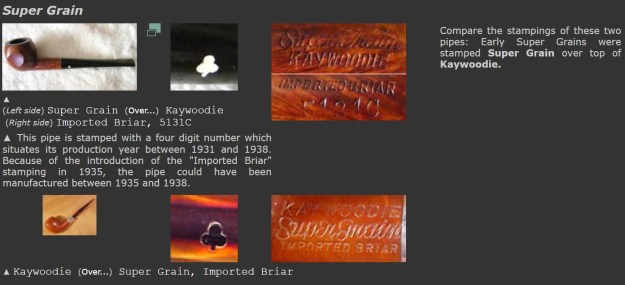
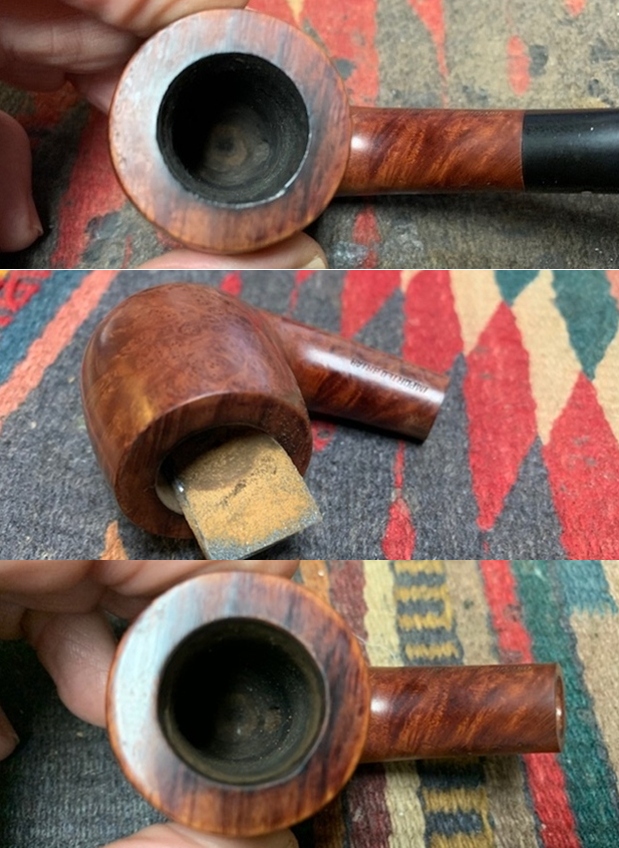
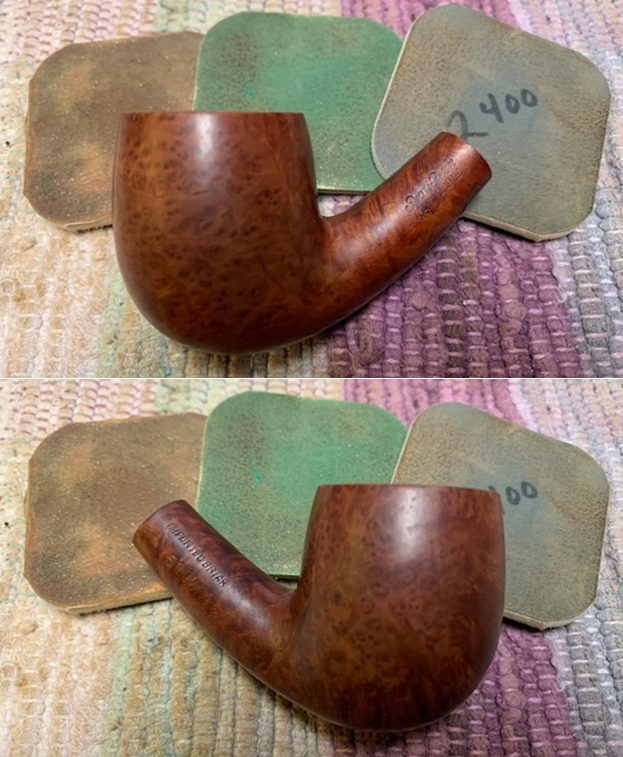
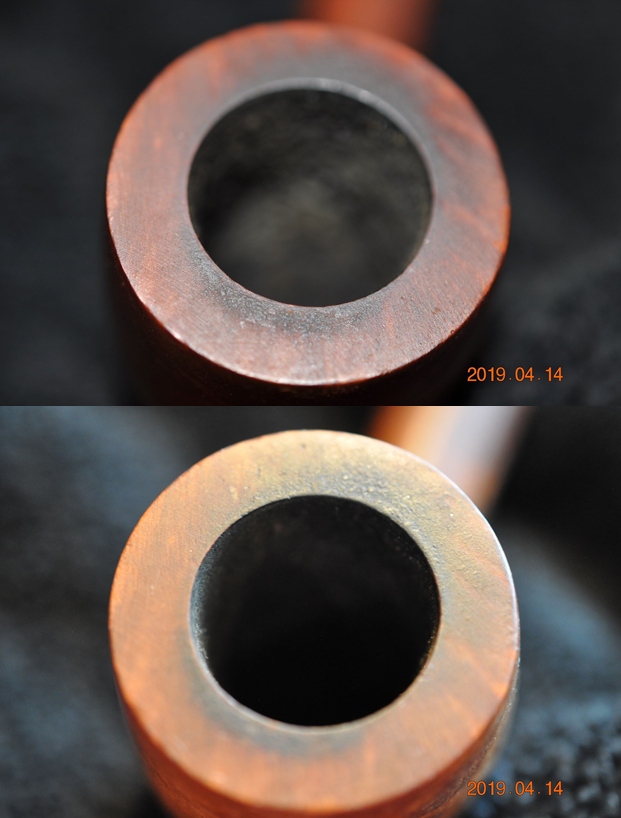
The next pipe on the table came to us from one of our pipe hunts or a trade I just cannot remember. It is a very nice Kaywoodie Super Grain Bent Billiard with a push stem. The finish is quite nice with a classic Kaywoodie smooth finish. The pipe was pretty clean with the exterior polished and dust free. The bowl had been reamed somewhere along the way and the bowl was pretty clean. There was darkening on the rim top and a bit of damage on the inner edge of the rim. The pipe is stamped on the sides of the shank and reads Super Grain [over] Kaywoodie on the left side of the shank. On the right side it reads Imported Briar [over] the shape number 5114. The stamping is clear and readable on the pipe. The stem was dirty and lightly oxidized. There were light tooth marks and chatter on the stem near the button on both sides and some on the surface of the button as well. There was the Kaywoodie White Club/Clover logo on the left side of the taper stem. I took photos of the pipe before I worked on it. I took photos of the rim top to show the cake in the bowl and the relatively clean rim top and damaged inner edge. The stem was also in decent condition other than light tooth chatter and marks.The stamping on the sides of the shank read as noted above. The photo shows that they are very clear and readable. The Clover/Club on the left side of the stem is in good condition.I took a photo of the pipe with the stem removed to show the overall look of stem, tenon and profile of the pipe. It is a great looking pipe.I knew that I was dealing with an early Super Grain because of the four digit shape number and the push stem but I wanted to know a bit more. I turned first to Pipephil’s site as it is always a quick sources of information (http://pipephil.eu/logos/en/logo-kaywoodie-2.html). I have included a screen capture of the section on the Super Grain Below.From that section I learned that indeed the pipe was older and because of the 4 digit number it was produced between 1931 and 1938. I also could narrow it down further because it also included the Imported Briar stamp which was added in 1935. So now I knew that the time frame was 1935-1938. The fact that it is stamped Super Grain above Kaywoodie also points to the early date for this pipe.
I then turned to Pipedia’s article on Grades of Kaywoodie pipes. It is helpful in placing the Super Grain in the hierarchy of Kaywoodie pipes. Here is the link to the site.  (https://pipedia.org/wiki/Collector%27s_Guide_to_Kaywoodie_Pipes#ANNOTATED_CHRONOLOGY_OF_KAYWOODIE_PIPES_.281936-1969.29).  I have included a section from the 1936 line of Kaywoodie pipe because of the time frame of this pipe noted above.

THE 1936 KAYWOODIE LINE OF PIPES

The 1936 Kaywoodie catalog lists only four grades of pipes (Table 1). These four grades, however, were available in 140 shapes (see Appendix). These 140 shapes included many that differed only in size (small, medium, large). For example, the “In-Between”, “Colt” and “Freshman” shapes listed in the Appendix were merely smaller versions of the standard shapes, and the “E-Z-Set” shapes were “flat-bottom” versions of the standard shapes.

Table 1: Kaywoodie Pipe Grades and Prices (1936)

Straight Grain: $10.00

Super Grain: $5.00

Carburetor: $4.00

Drinkless: $4.00

As shown in Table 1, the Straight-Grain pipe was Kaywoodies’ top-of-the­-line, selling for $10.00 in 1936. The Straight Grain pipe did not appear again in the catalogs reviewed in this research until 1968-69 (see Section 3.4).

The 1936 catalog shows 3 Super Grain models, selling for $5.00 each. One model is introduced as the “New Banded” Super Grain. The banded Super Grain had the white Kaywoodie cloverleaf logo in the bit and a wide metal band. The non-banded (“original”) Super Grain had the white Kaywoodie cloverleaf logo in the shank of the pipe and was offered in two finishes, virgin and miami (slightly darker than virgin). Due to the gap in catalogs used in this research, it is not known precisely when the practice of putting the cloverleaf in the shank of the Super Grains was discontinued (the 1947 catalog shows the cloverleaf on the bit). The Super Grain was later downgraded and many new grades appeared above it (see subsequent sections of this Chapter). The early (original) Super Grains are particularly interesting not only because they were high quality briars, but because they were the only Kaywoodies (in the author’s knowledge) to have the logo inlaid in the shank of the pipe.

In terms of the Kaywoodie Hierarchy the pipe fit near the top of the Grades in 1936. It sold for $5.00. That was the end of the information for me at this point so it was time to work on the pipe itself.

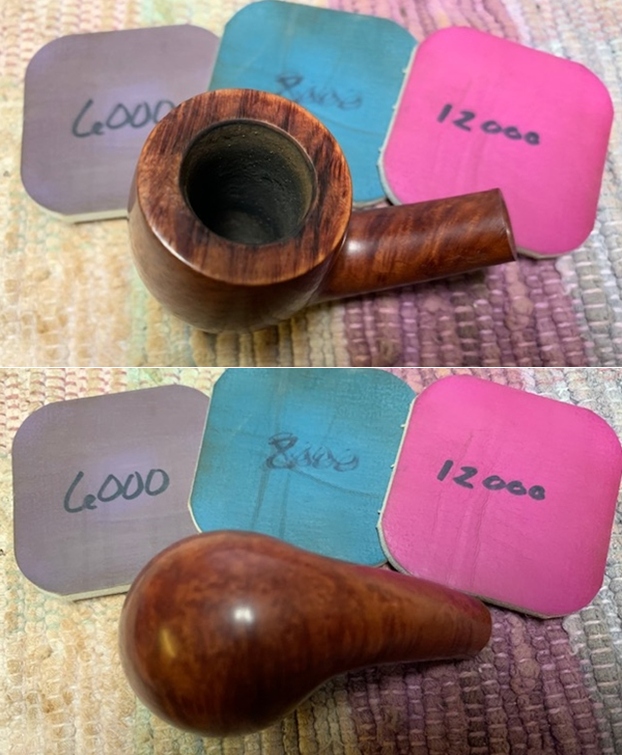
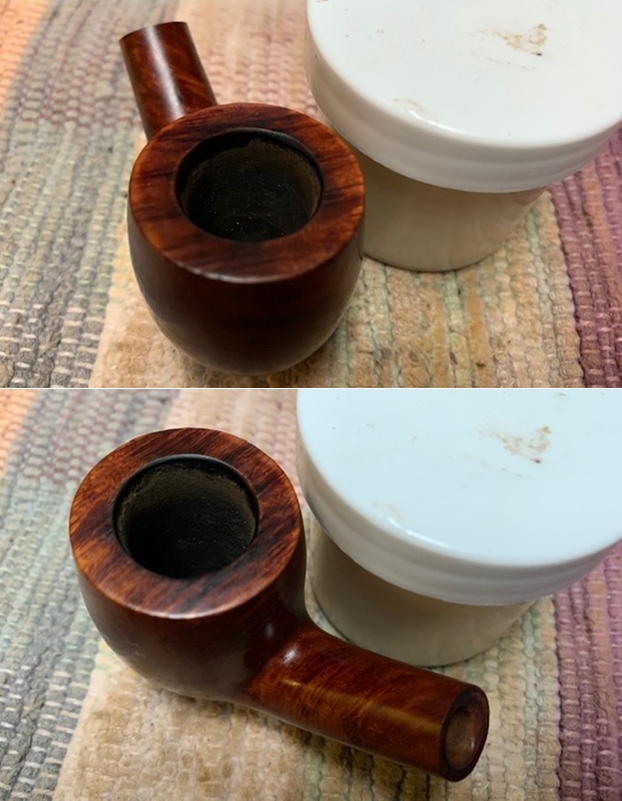
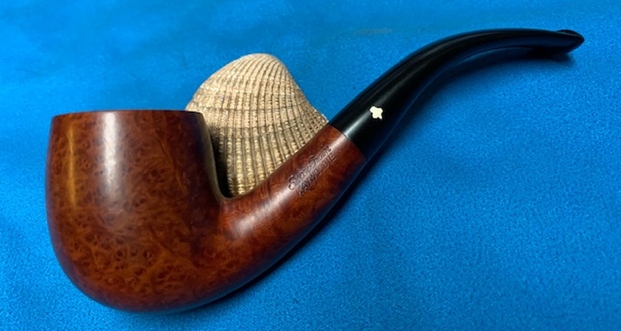
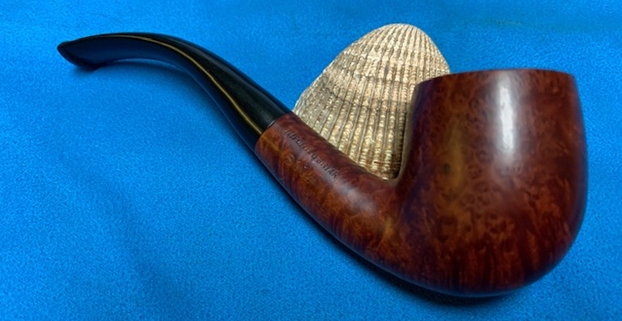
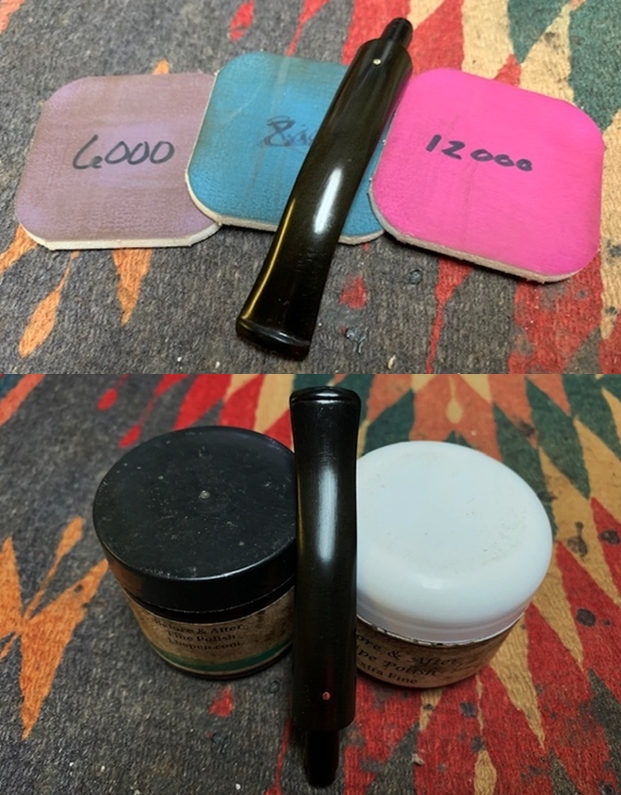
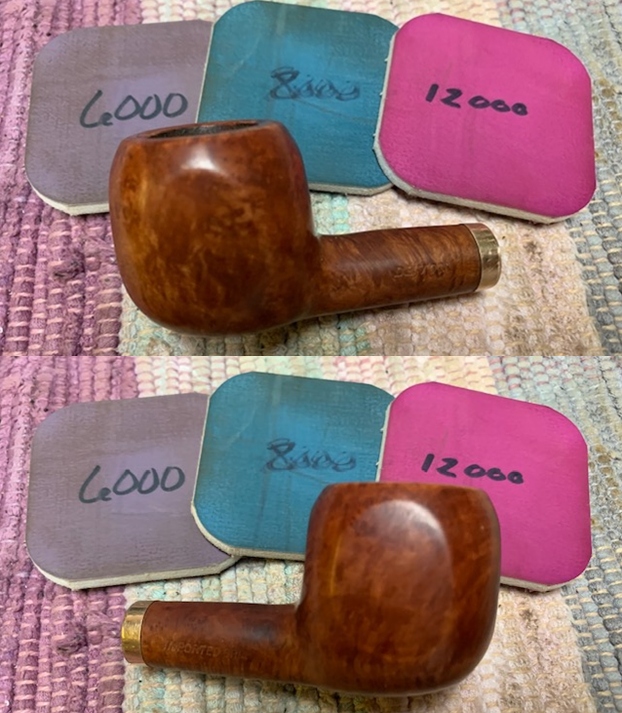
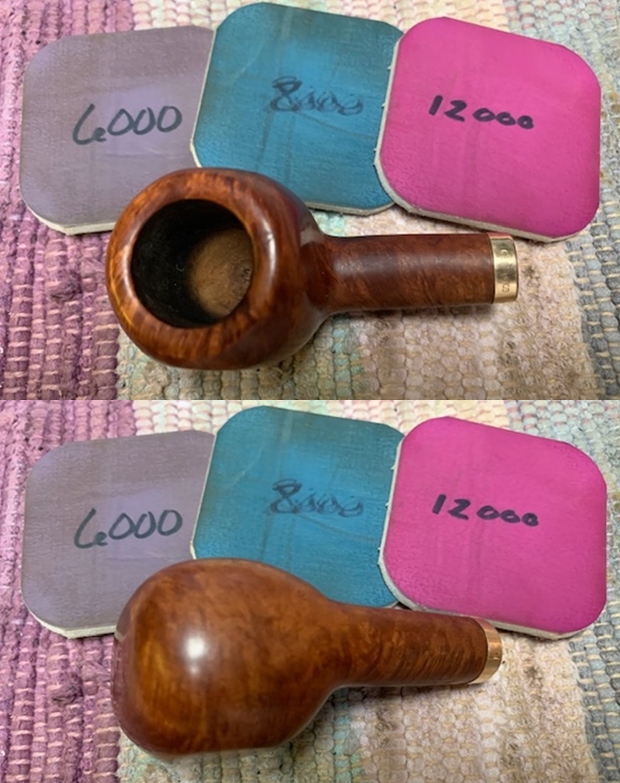
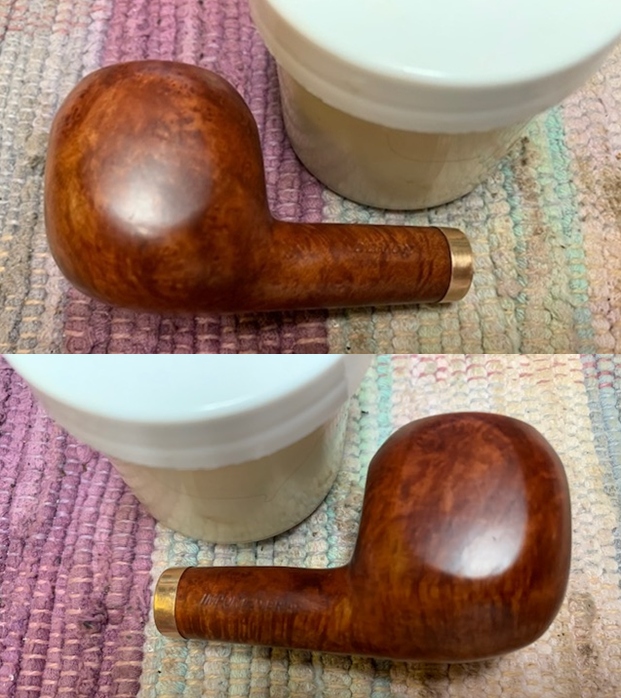
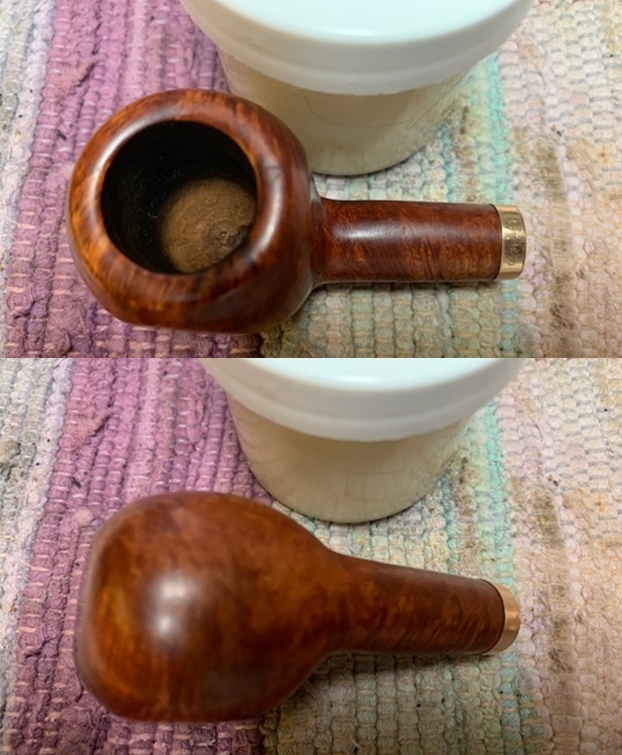
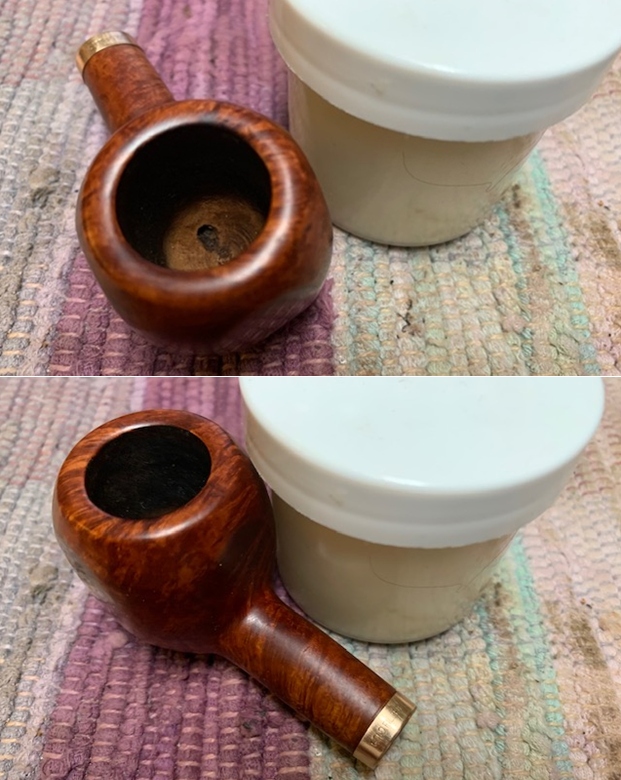
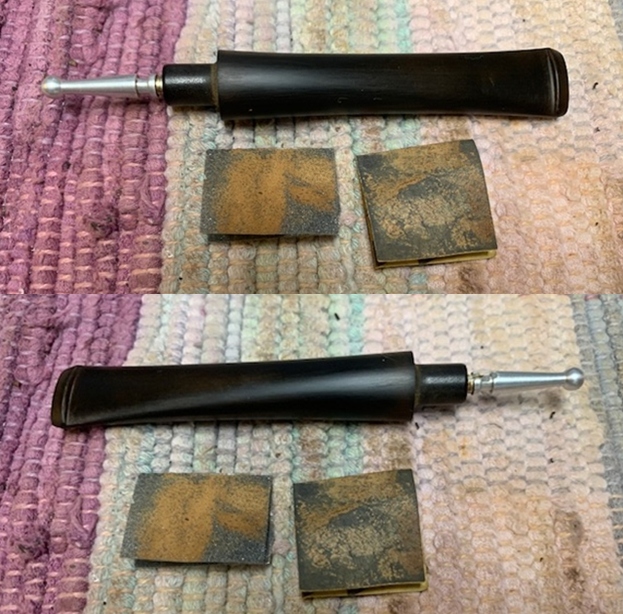
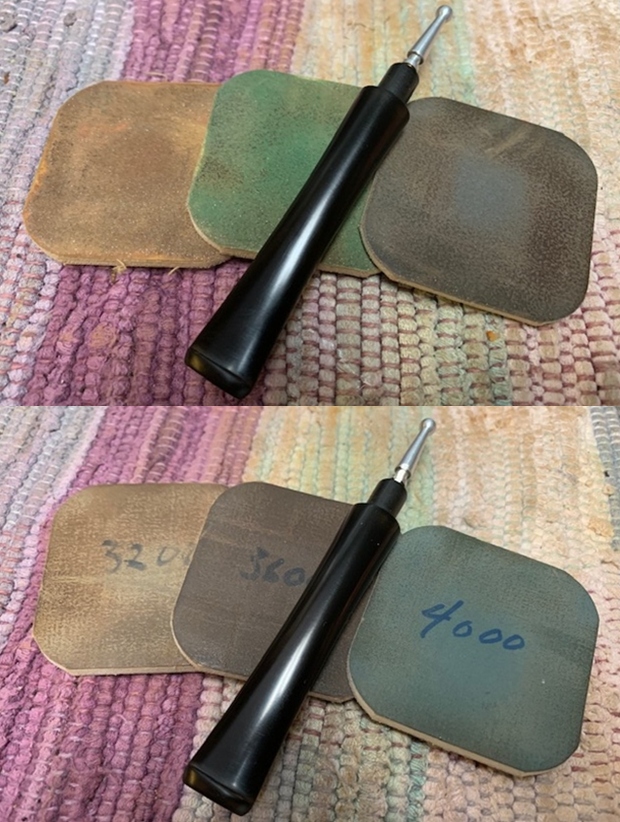
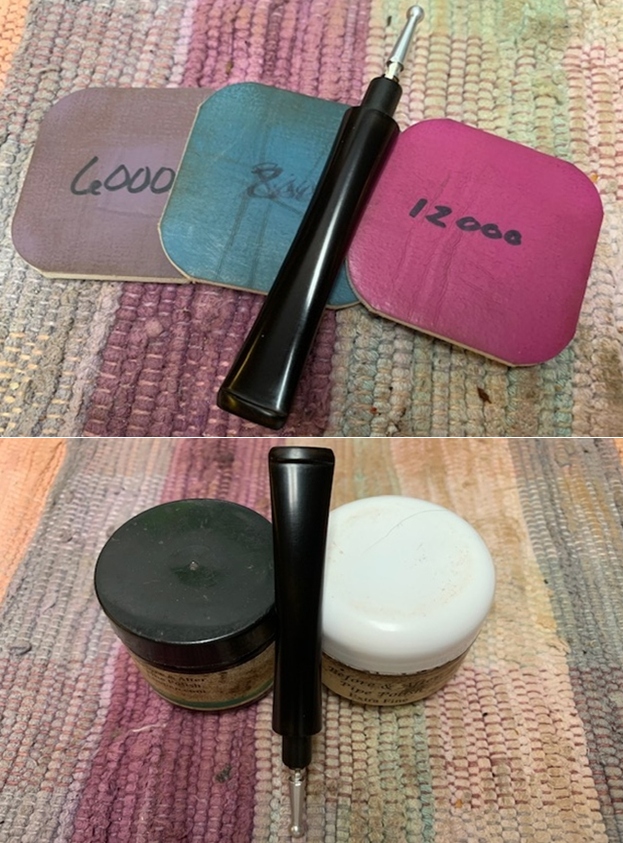
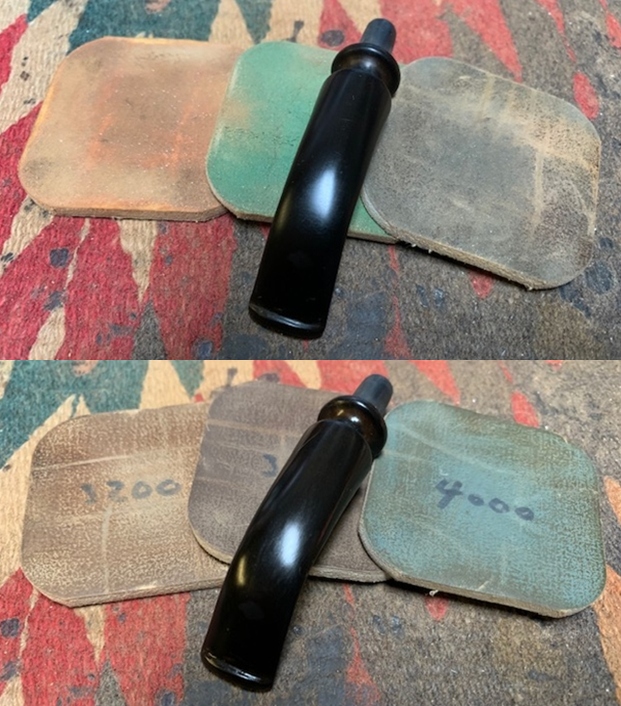
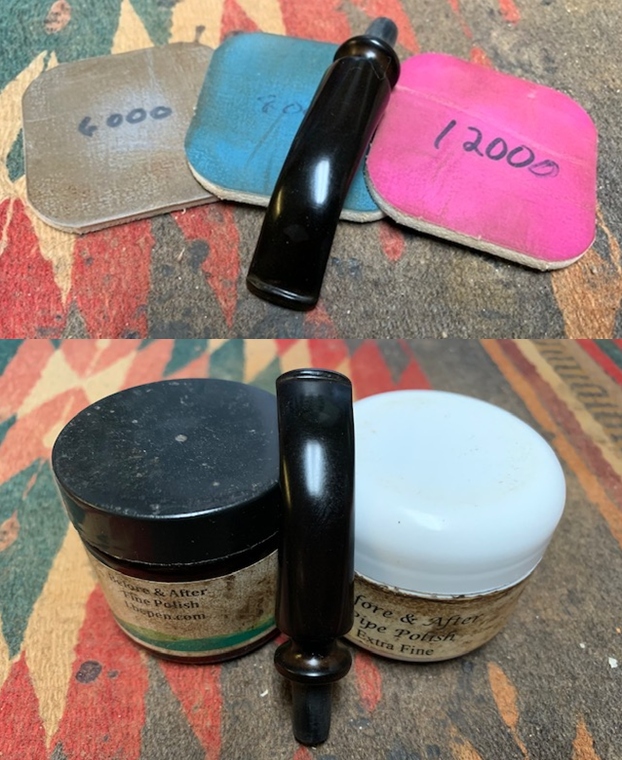
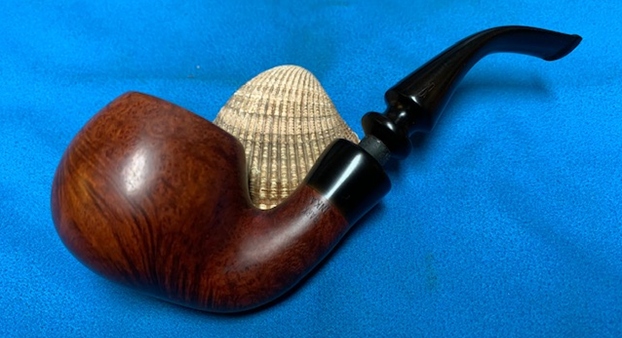
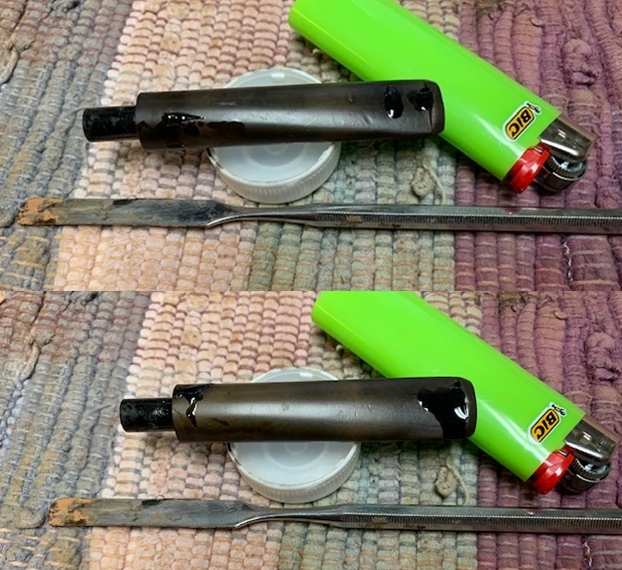
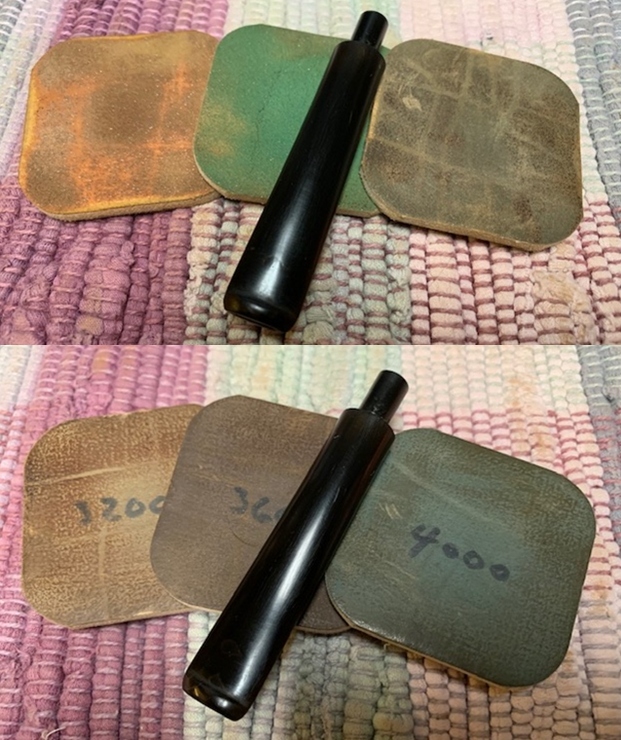
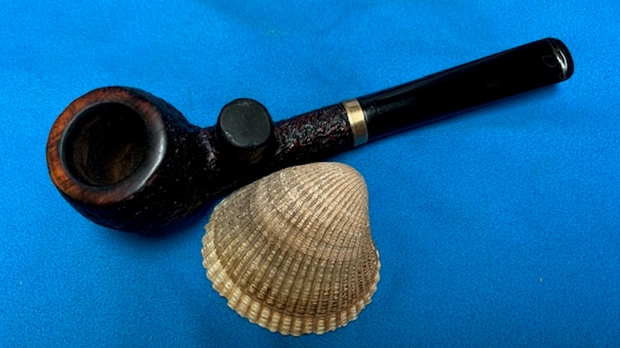
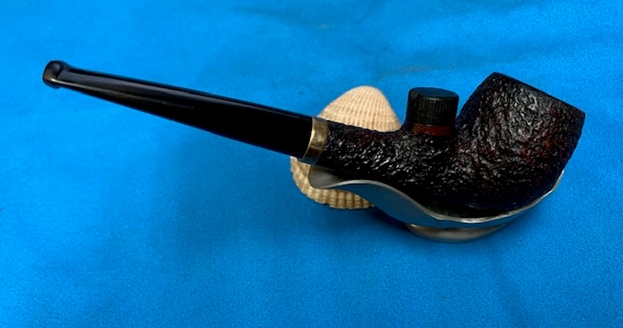
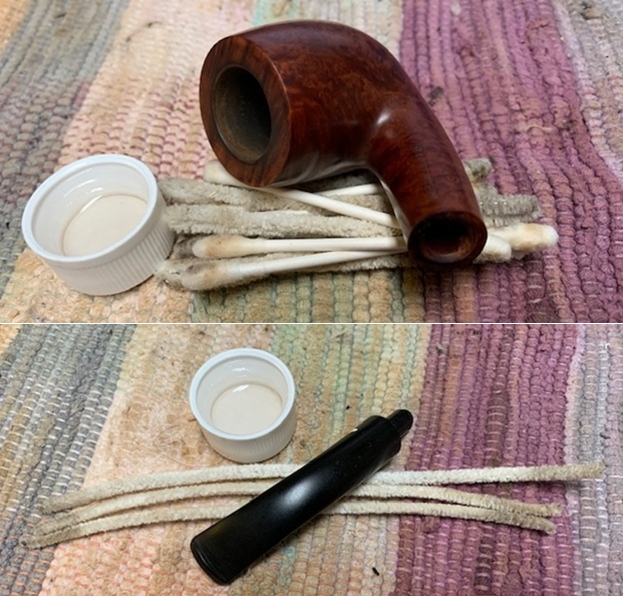
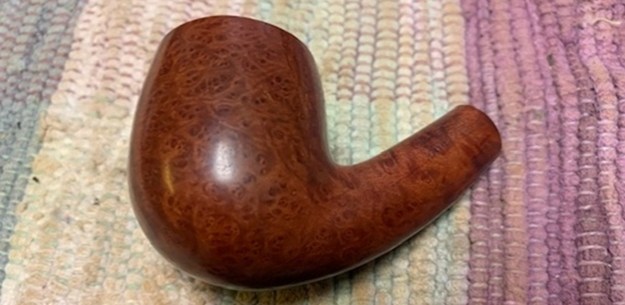
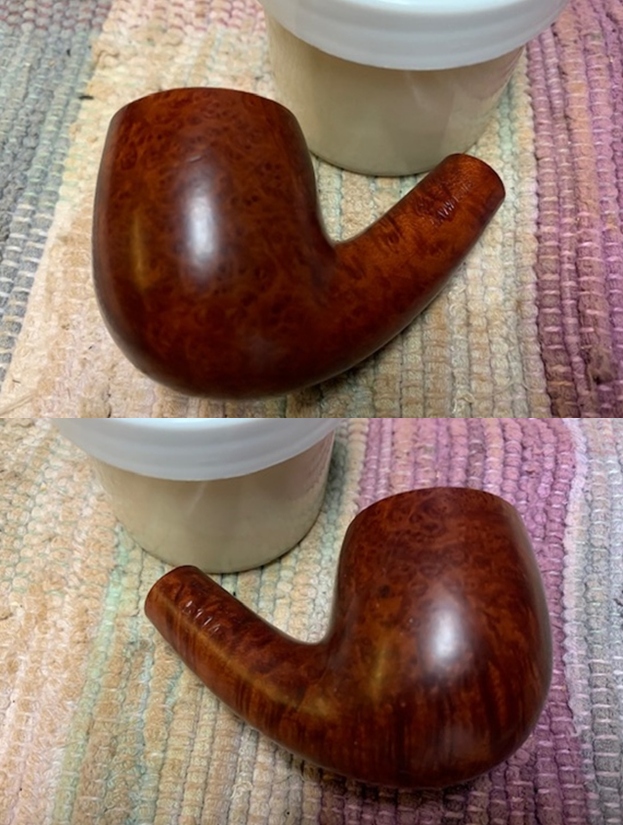
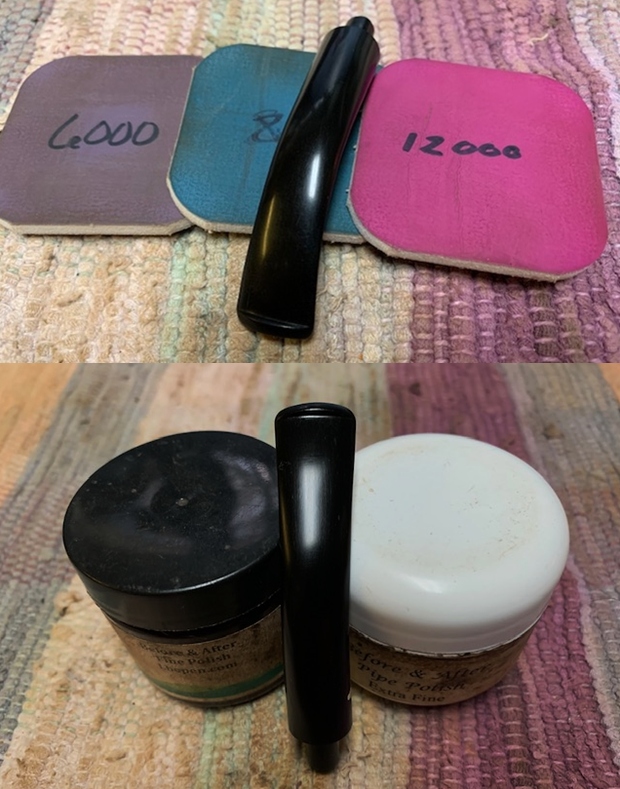
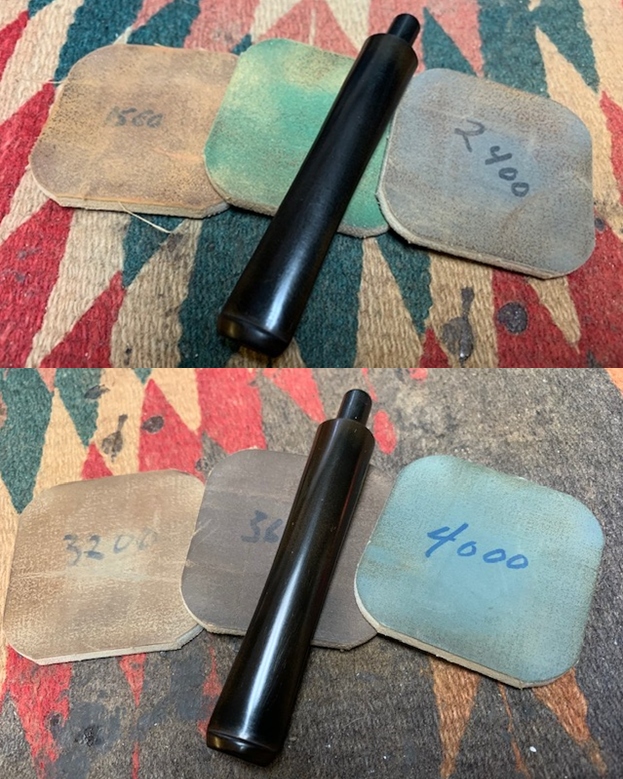
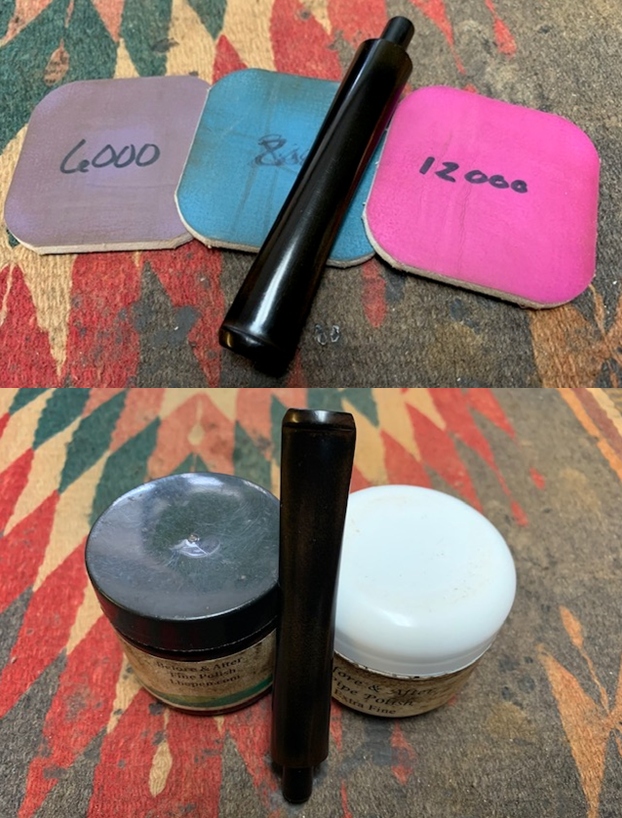
I started my work on the by cleaning out the inside of the shank. The bowl had been reamed somewhere along the way before I received it but it needed to be cleaned. I cleaned it out with alcohol, cotton swabs and pipe cleaners. I cleaned out the airway in the stem at the same time with alcohol and pipe cleaners. To bring the inner edge of the rim back into round and clean up the darkening and damage I used a folded piece of 220 grit sandpaper. I worked over the rim edge until it was smooth and clean.I polished the briar with micromesh sanding pads – wet sanding with 1500-12000 grit pads and wiping the briar down with a damp cloth after each pad. The briar began to take on a rich glow.  At this point, the bowl was clean and the briar looked very good. The rich birdseye and cross grain stood out clearly.I rubbed the briar down with Before & After Restoration Balm. I worked it into the briar with my fingertips and a horse hair shoe brush to get it into the deep crevices of the rustication. The product works to clean, enliven and preserve the briar. I let it sit for 10 minutes while I worked on the stem. After the time passed I buffed it with a cotton cloth to deepen the shine. The rustication came alive with the balm.   I set the bowl aside and turned my attention to the stem. I sanded out the tooth marks and chatter on the button surface and the stem just ahead of the button with 220 grit sandpaper. I started the polishing of the stem with 400 grit wet dry sandpaper.I polished the stem with micromesh sanding pads – 1500-12000 grit pads. I wiped it down with Obsidian Oil after each sanding pad. I used Before & After Pipe Polish – both Fine and Extra Fine to further polish the stem. This 1935-38 Super Grain Kaywoodie 5114 Bent Billiard is a great looking pipe. The smooth finish and brown stain around the bowl sides and shank make the grain just pop. The finish on the pipe is in excellent condition and the contrasting stains work well to give some contrast to the polished black vulcanite taper stem. The pipe is really quite eye-catching. I put the stem back on the bowl and buffed the pipe with Blue Diamond on the buffing wheel, carefully avoiding the stamping on the shank. I gave the bowl and the stem multiple coats of carnauba wax on the buffing wheel and followed that by buffing it with a clean buffing pad. I hand buffed the pipe with a microfiber cloth to deepen the shine. The finished Bent Billiard is quite nice and feels great in the hand. Give the finished pipe a look in the photos below. I can only tell you that like the other pipes I am working that it is much prettier in person than the photos capture. The dimensions of the pipe are Length: 5 inches, Height: 1 ¾ inches, Outside diameter of the bowl: 1 ¼ inches, Chamber diameter: ¾ of an inch. Thanks for walking through the restoration with me as I worked over another interesting pipe. This Super Grain Kaywoodie will be added to the American Pipe Makers section of the rebornpipes store soon. If you want to add it to your collection send me an email or a message! Thanks for your time.
 

Life for an American Made Pipe – A Bertram Washington DC 85 Billiard


Blog by Steve Laug

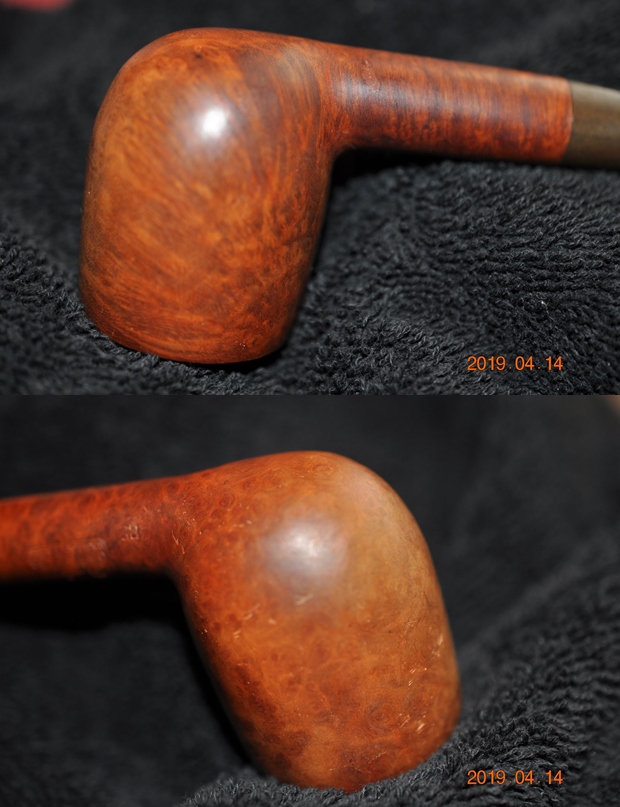
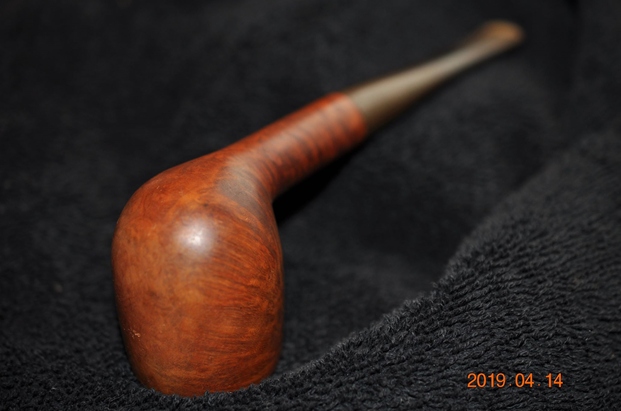
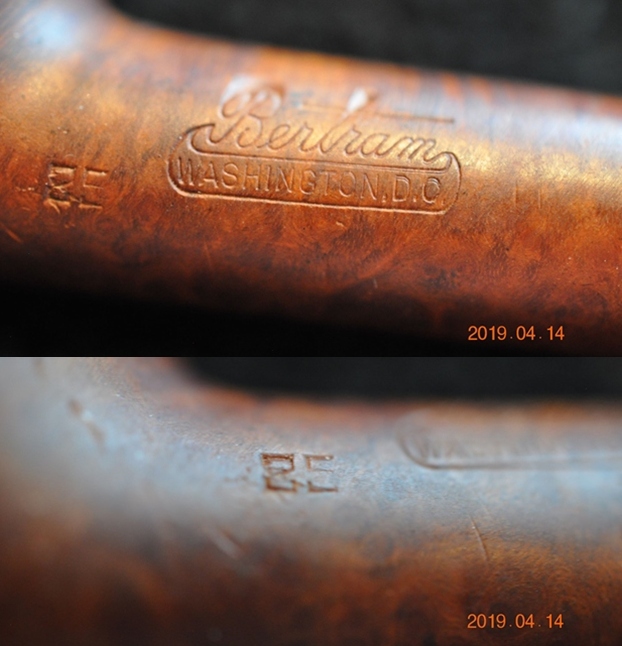
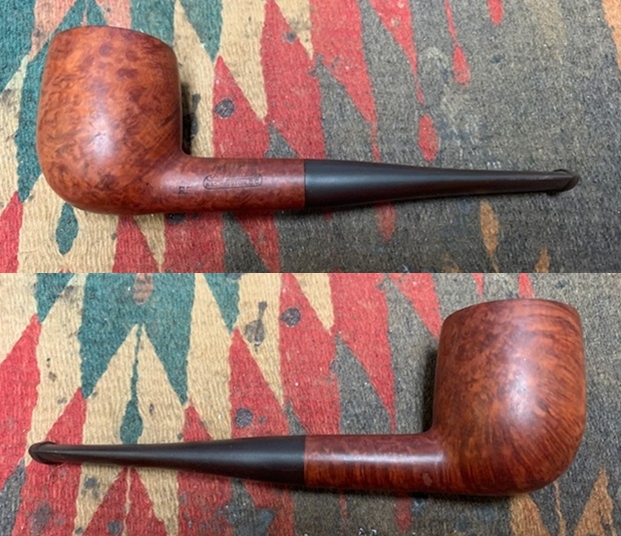
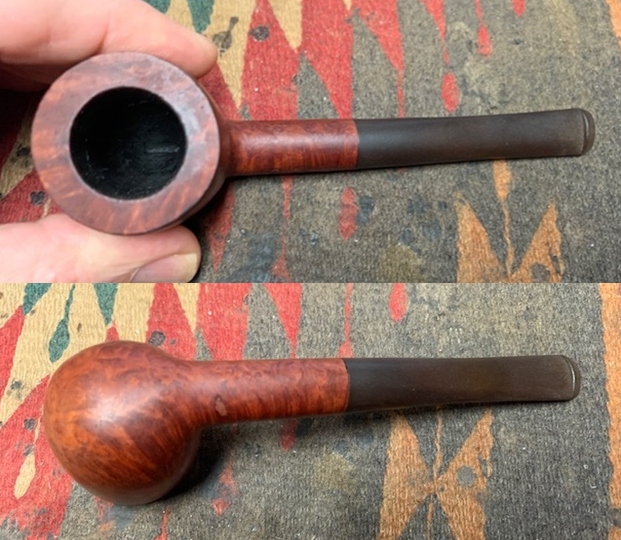
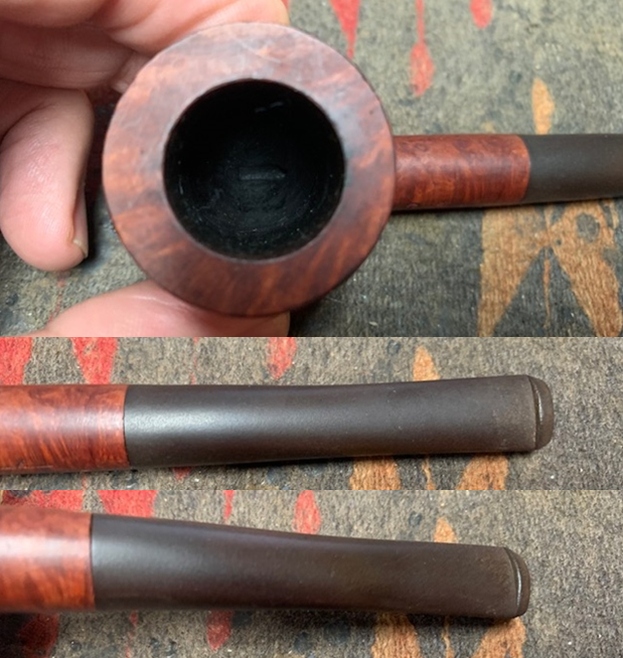
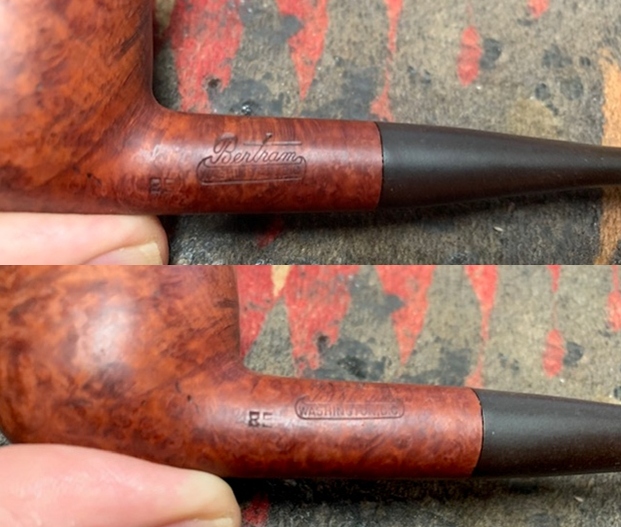
The next pipe on the work table came to me from one of our estate purchases. Between us we pick up quite a few pipes for restoration. I try to work them into the restoration queue so that I can keep them moving. We picked up over 120 Bertram pipes from an estate that a fellow on the east coast of the US was selling. This next one is from that estate – a beautifully grained Billiard 85 Grade Bertram with a tapered vulcanite stem. The pipe is stamped on the left side near the bow with the Grade 85 number followed by Bertram [over] Washington D.C. centered on the shank. The finish had a lot of grime ground into the smooth finish on the bowl and some darkening around the sides of the bowl. The bowl was thickly caked with an overflowing lava coat on the top of the rim toward the back of the bowl. The edges looked to be in good condition. The stem was oxidized, calcified, dirty and had tooth chatter and marks on the top and underside near the button. There were not markings or a logo on the taper stem. Like the rest of the Bertrams in this lot the pipes had promise but it was very dirty. Jeff took some photos of the pipe before he started his cleanup work.   He took photos of the rim top and bowl to give a clear picture of the thickness of the cake and the overflow of lava on the rim top. He also took photos of the top and underside of the stem to show the chatter and tooth marks. Otherwise the stem is quite clean.      Jeff took photos of the sides and heel of the bowl to give a picture of what the briar around the pipe looked like. There is some stunning grain under the grime.     He took photos of the stamping on the left side of the shank. It reads as noted above and is clear and readable. The grade number looks like a 25 that has been made into an 85.      As I have worked on Bertrams I have written on the brand and have included the following information. If you have read it in past blogs, you can skip over it. If you have not, I have included the link to Bertram history and information. I would recommend that if you don’t know much about them take some time to read the background. I include a link to the write up on Pipedia (http://pipedia.org/wiki/Bertram). Bertram pipes were based out of Washington DC. They were popular among famous politicians and celebrities of the time. They made many products for them from FDR’s cigarette holders to Joseph Stalin’s favorite pipe. They were considered some of the best America had to offer till they finally closed their doors in the 70s. Bertram graded their pipes by 10s and sometimes with a 5 added (15, 25, 55 etc.), the higher the grade the better. Above 60s are uncommon and 80-90s are quite rare. I have worked on one 120 Grade billiard. I have several blogs that I have written on rebornpipes that give some history and background to Bertram pipes. (https://rebornpipes.com/2015/06/16/an-easy-restoration-of-a-bertram-grade-60-217-poker/).

I have included the following link to give a bit of historical information on the pipe company. It is a well written article that gives a glimpse of the heart of the company. http://www.streetsofwashington.com/2012/01/bertrams-pipe-shop-on-14th-street.html#

From this information I learned that all of these Bertrams were made before the closure of the shop in the 1970s. This Bertram Billiard with stunning grain has one fill on the shank. This pipe has a 85 Grade stamp on it which I am sure explains the quality of the briar.

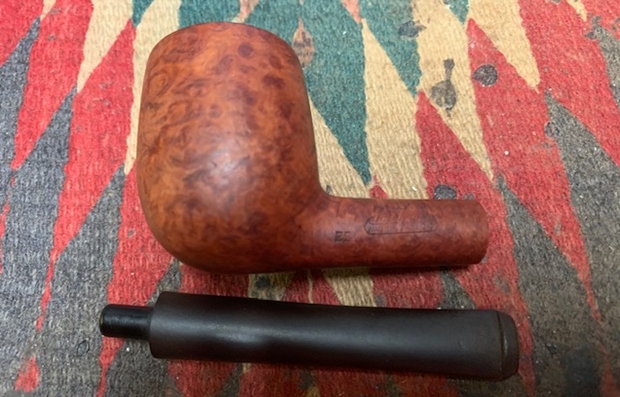
Jeff had cleaned up the pipe with his usual penchant for thoroughness. He reamed the pipe with a PipNet Pipe Reamaer and cleaned up the remnants with a Savinelli Fitsall Pipe Knife.  He scrubbed the bowl with undiluted Murphy’s Oil Soap with a tooth brush. He rinsed it under running warm water to remove the soap and grime. He cleaned out the inside of the shank and the airway in the stem with alcohol, cotton swabs and pipe cleaners. He soaked the stem in Before & After Deoxidizer and rinsed it off with warm water. I took photos of the pipe once I received it.  The rim top cleaned up really well with the lava coat removed. The inner and outer edge of the rim looked good.  The stem surface looked very good with a few small tooth marks and chatter on both sides near the button.  There was also some residual oxidation to be addressed.     I took photos of the stamping on the shank. The Bertram Washington DC is on the left side of the shank toward the top. Lower on the shank it is stamped with the Grade 85 number.   I removed the stem and took a photo of the pipe to give a sense of the whole. The stem is tapered and narrow. Now it was time to do my work on the pipe. I polished the bowl and the rim top, sides and shank with micromesh sanding pads – wet sanding with 1500-12000 grit pads and wiping it down after each pad with a damp cloth. I rubbed the bowl and shank down with Before & After Restoration Balm. I worked it into the surface of the bowl sides and shank with my fingertips to clean, enliven and protect the briar. I let the balm sit for a little while and then buffed with a cotton cloth to raise the shine.     I set the bowl aside and turned to work on the stem. I sanded it with 220 grit sandpaper to clean up the pitted, oxidized surface and to remove the tooth marks and chatter. I started polishing it with 400 grit wet dry sandpaper.   I polished the vulcanite stem with micromesh sanding pads – 1500-12000 grit pads. I wiped it down with a damp cloth after each sanding pad. I used Before & After Pipe Polish – both Fine and Extra Fine to further polish the stem.       This Bertram Washington DC 85 Billiard with a vulcanite stem is a great looking pipe now that it has been restored. I put the stem back on the bowl and carefully buffed the pipe with Blue Diamond on the buffing wheel using a light touch on the briar. I gave the bowl and the stem multiple coats of carnauba wax on the buffing wheel and followed that by buffing the entire pipe with a clean buffing pad. I hand buffed the pipe with a microfiber cloth to deepen the shine. The finished Bertram 85 Billiard fits nicely in the hand and feels great. Give the finished pipe a look in the photos below. The dimensions of the pipe are Length: 6 inches, Height: 2 inches, Outside diameter of the bowl: 1 ½ inches, Chamber diameter: ¾ of an inch. If you are interested in adding this pipe to your collection send me a message or an email. Thanks for reading this blog and my reflections on the pipe while I worked on it. There are many more to come!

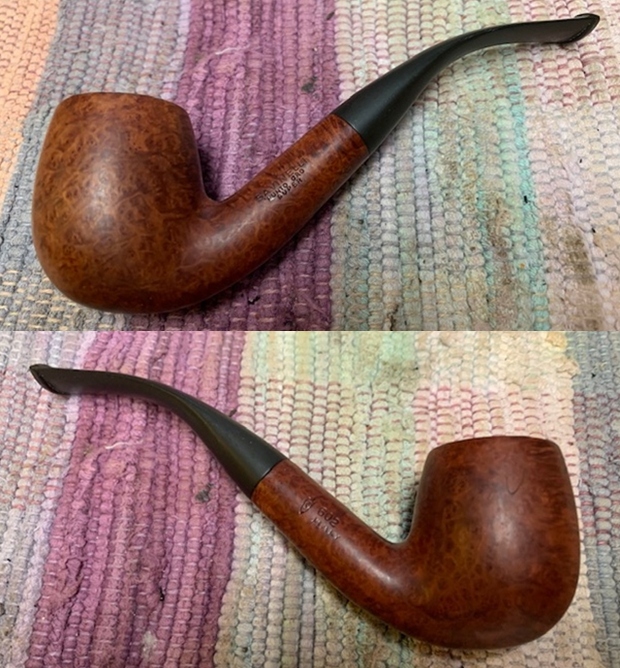
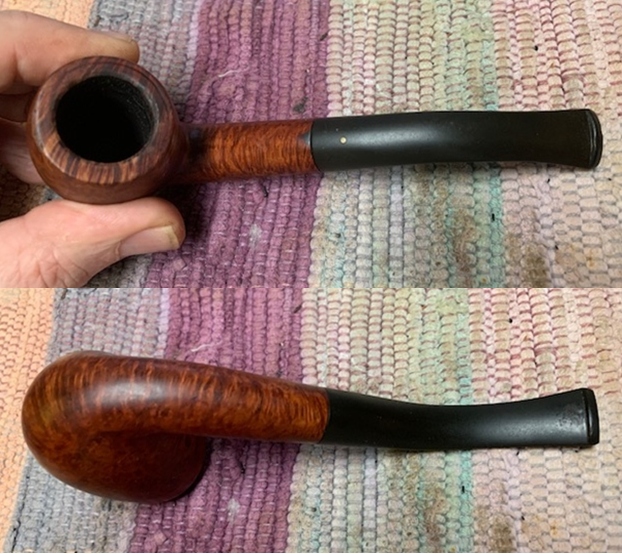
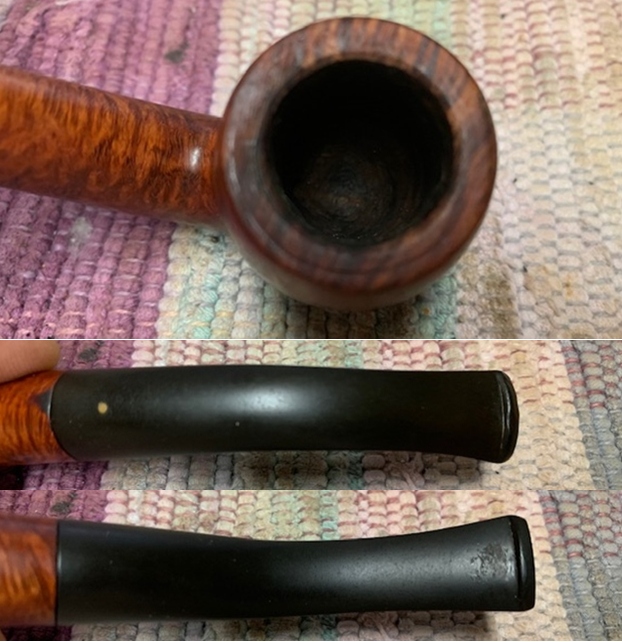
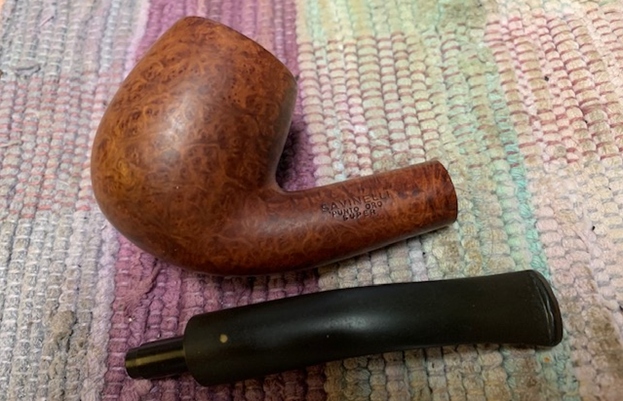
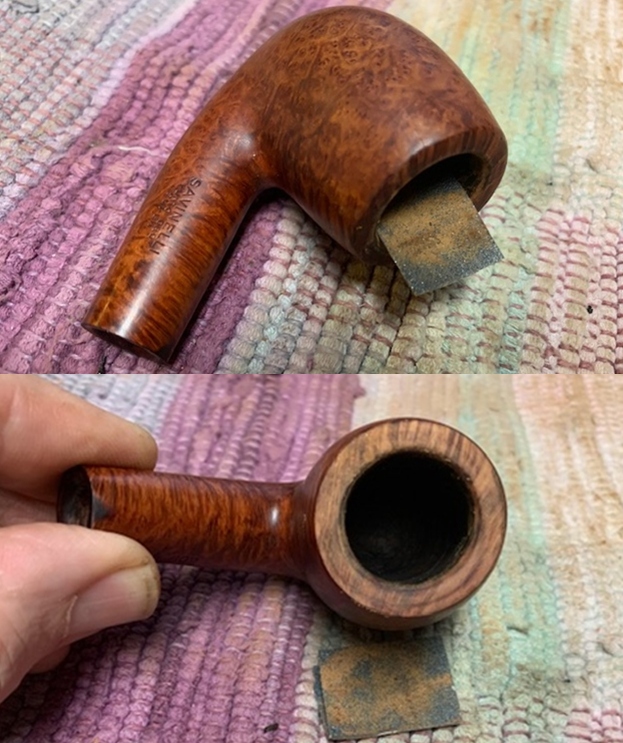
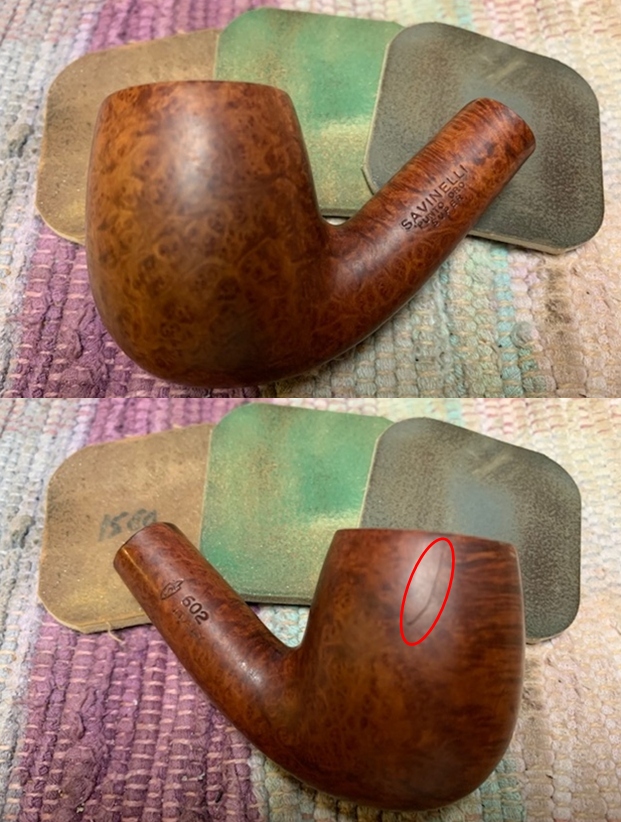
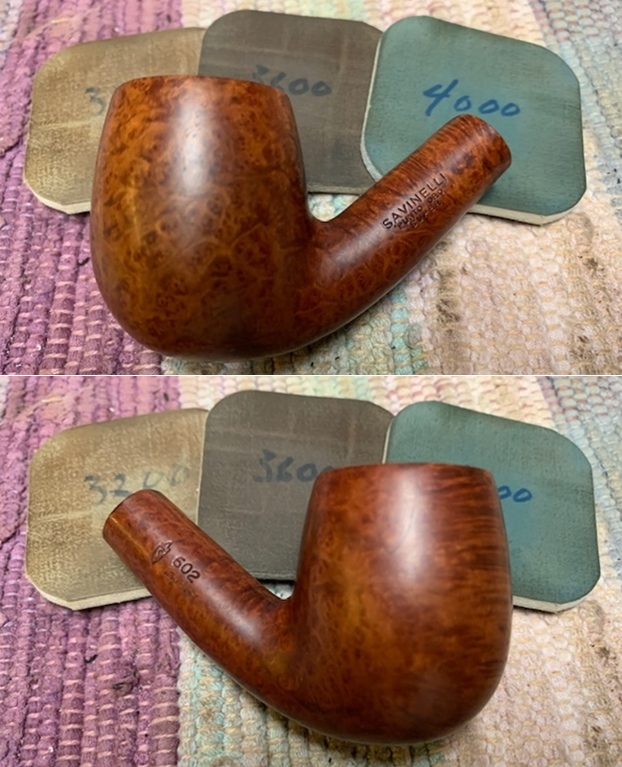
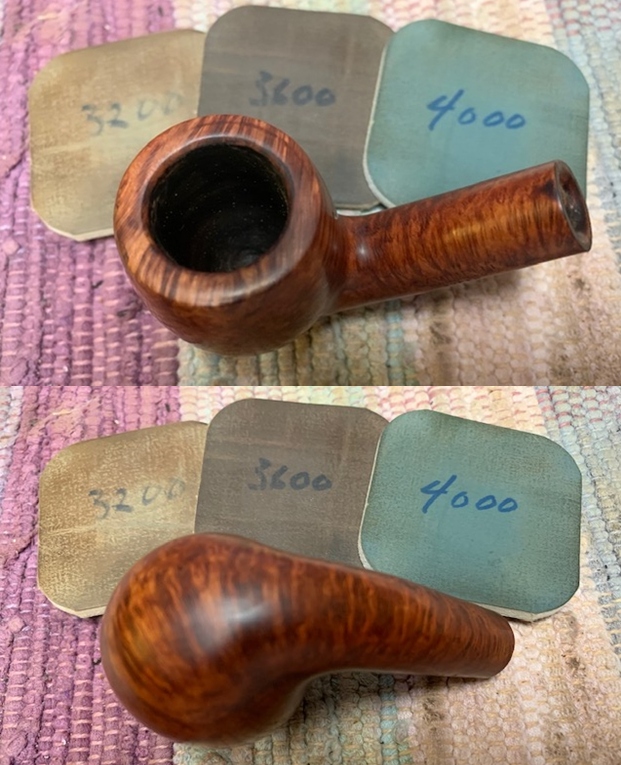
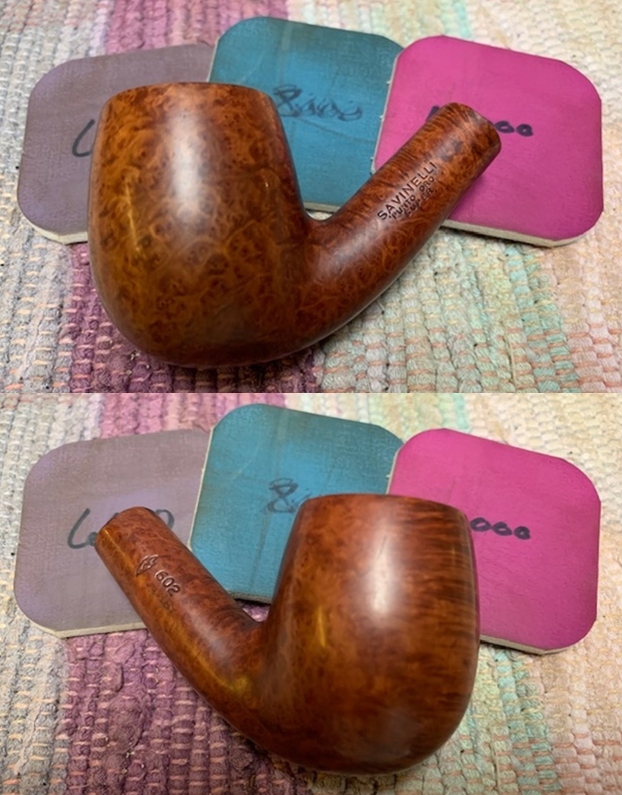
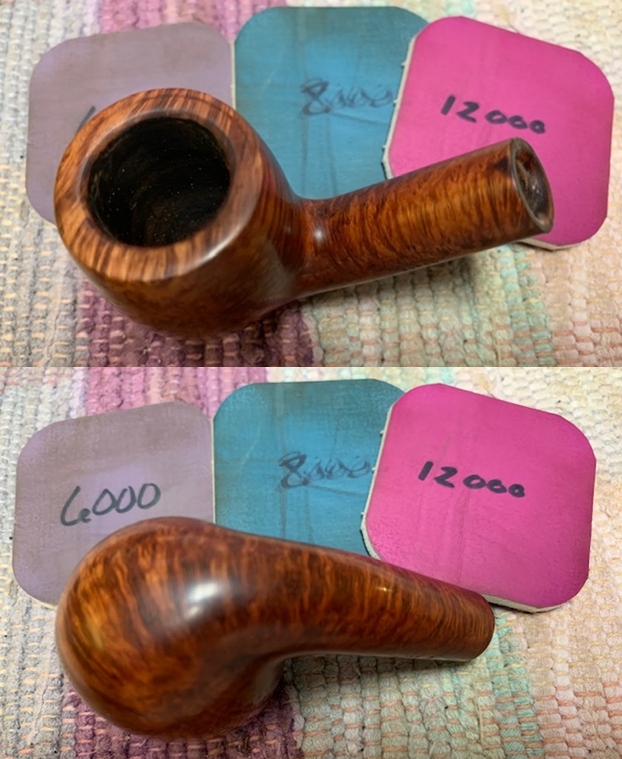
Life for a Stunning Savinelli Punto Oro Super 602 Bent Billiard


Blog by Steve Laug

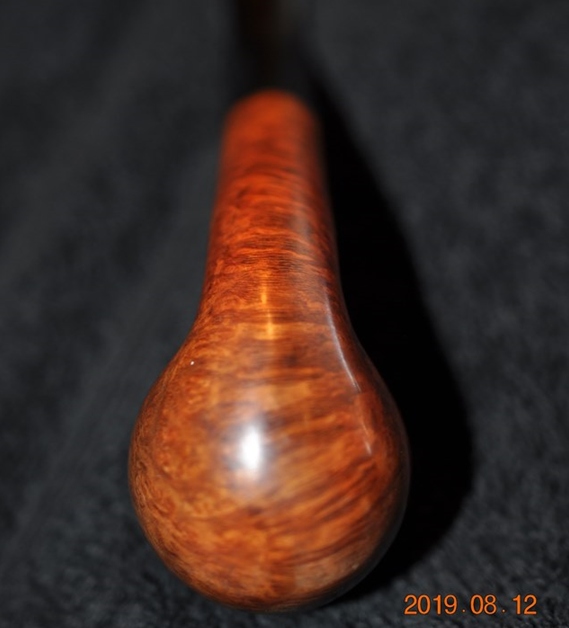
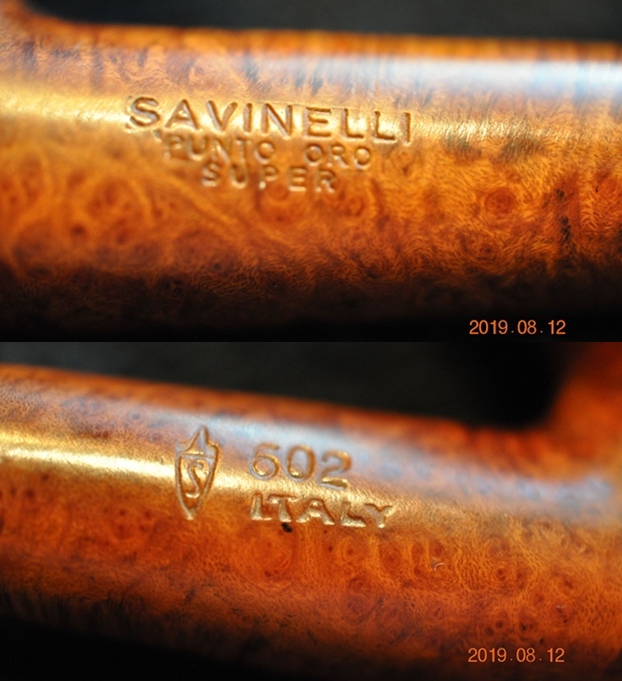
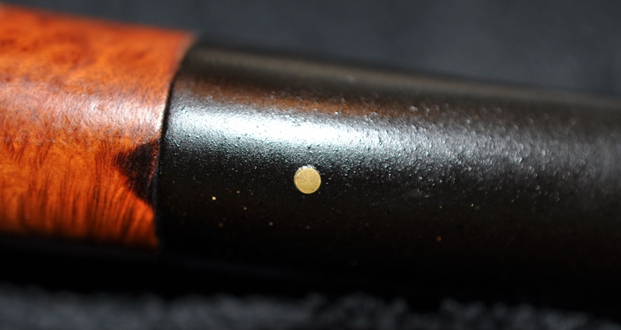
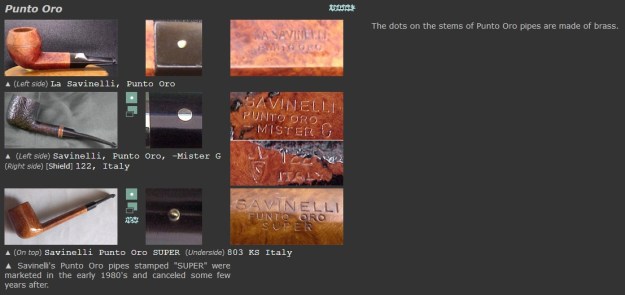
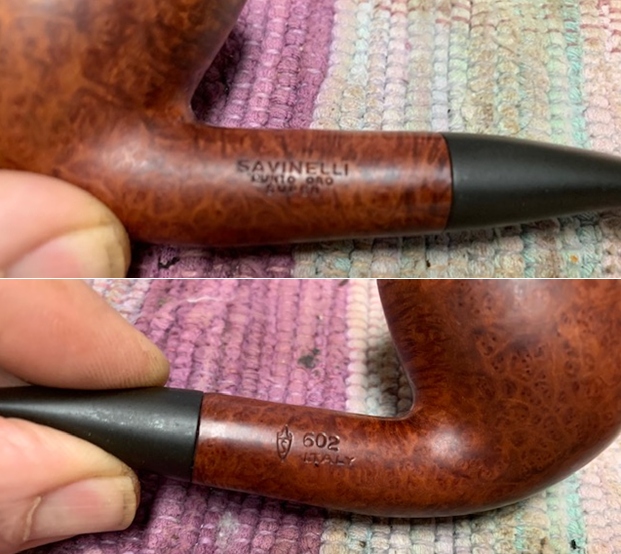
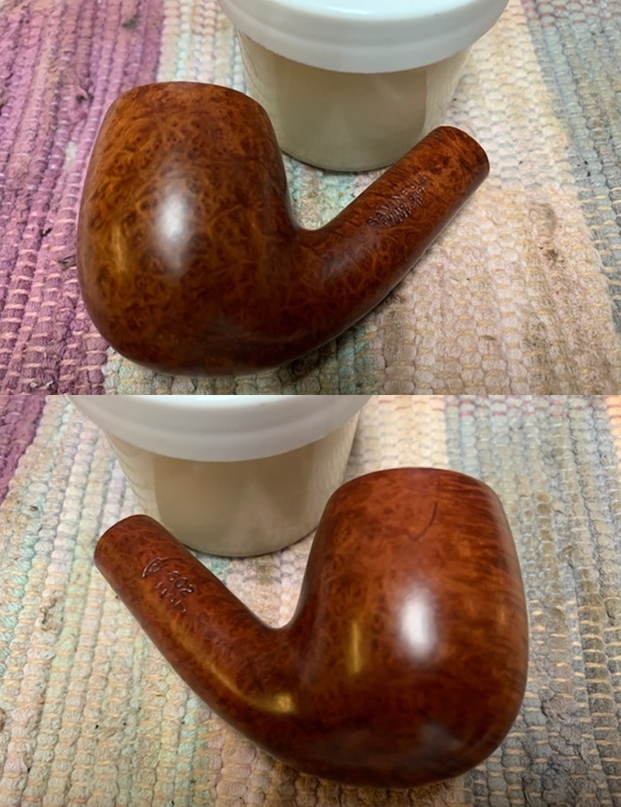
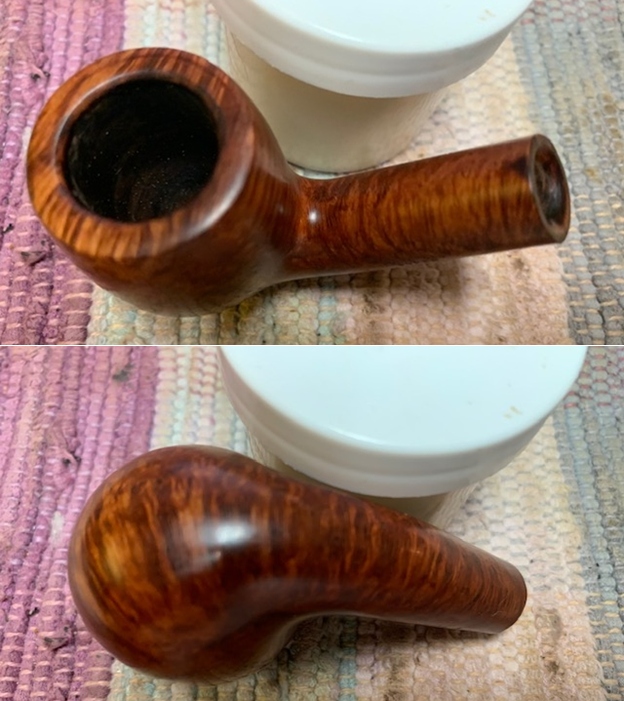
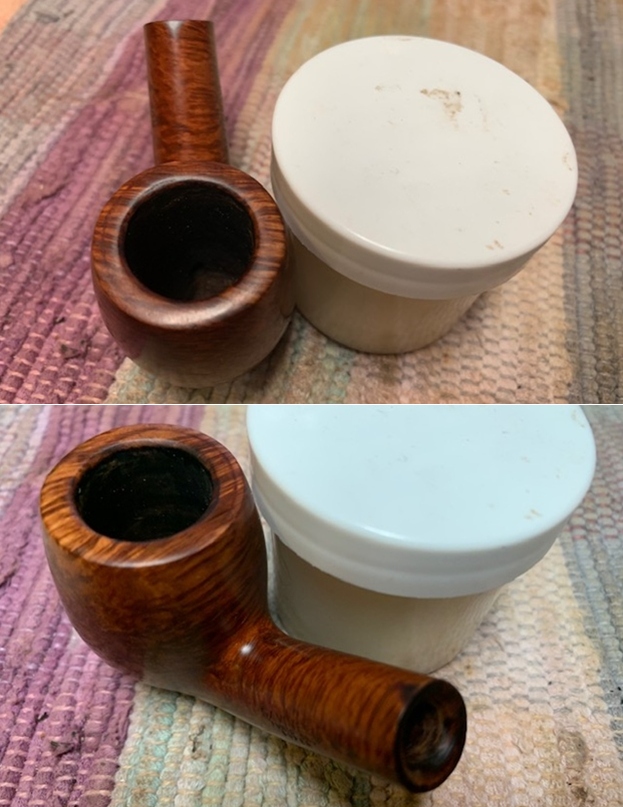
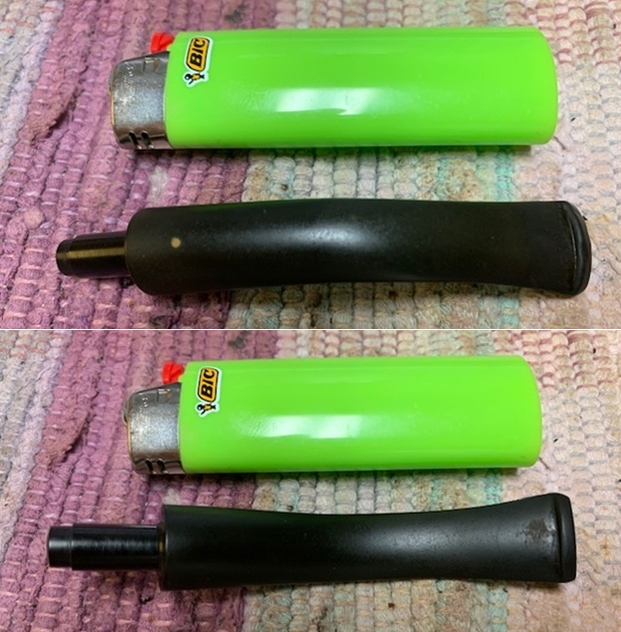
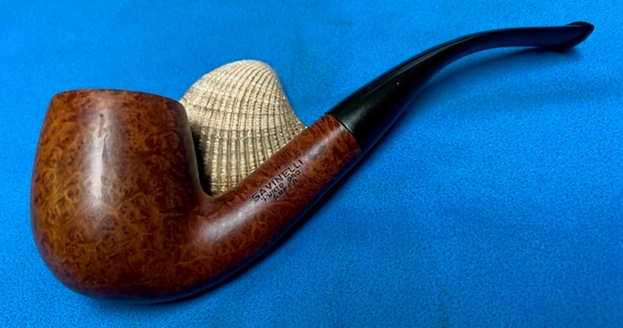
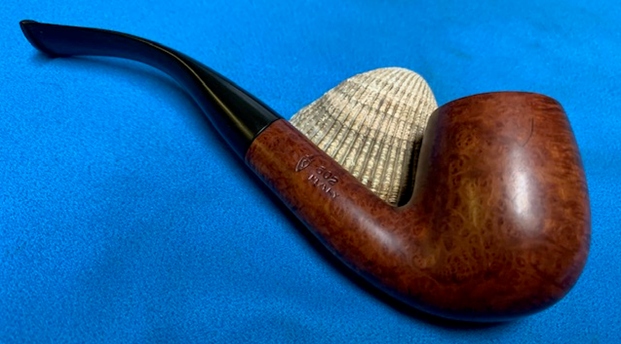
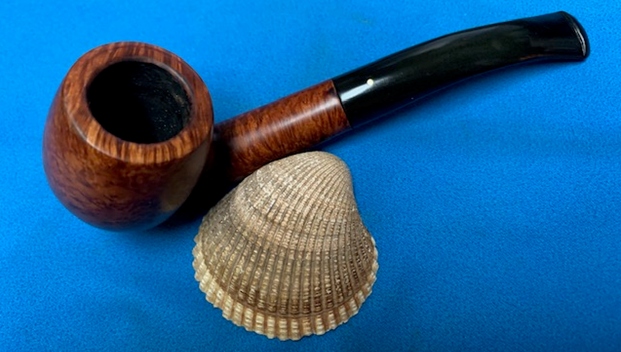
The next pipe on the work table came to us from a fellow in West Virginia. We pick up quite a few pipes for restoration from all over the world actually so it is nice to try to remember at least where we got them. You can tell if you have been reading lately I am not always good at that! Wherever we get them, I try to work them into the restoration queue so that I can keep them moving. This next one is a beautifully grained bent billiard pipe with a tapered vulcanite stem with a gold dot on top. It has been here since the summer of 2018. The pipe is stamped on the left side and reads Savinelli [over] Punto Oro [over] Super. On the right side it has a Savinelli S shield logo followed by the shape number 602 [over] Italy. The finish had a lot of grime ground into the smooth finish on the bowl and some darkening around the sides of the bowl. There were some scratches in the briar on the right side. The bowl was thickly caked with overflowing lava coat on the top of the rim. There were some scratches in the rim top but the edges looked to be in good condition. The stem was dirty, oxidized and had light tooth chatter and marks on the top and underside near the button. There was a brass dot on the top of taper stem. It had promise but it was very dirty. Jeff took some photos of the pipe before he started his cleanup work.   He took photos of the rim top and bowl to give a clear picture of the thickness of the cake and the overflow of lava on the rim top. He also took photos of the top and underside of the stem to show the chatter and tooth marks. There was damage on the surface of the button on both sides.    Jeff took photos of the sides and heel of the bowl to give a picture of what the briar around the pipe looked like. There is some stunning grain under the grime. He took photos of the stamping on the sides of the shank and band. They read as noted above and are clear and readable. He also took a photo of the “punto oro” brass dot on the top of the stem.I have worked on quite a few Punto Oro pipes over the years but this is the first that was marked Punto Oro Super. I turned to Pipephil’s site to see if he had any information that could help with the additional SUPER stamp (http://www.pipephil.eu/logos/en/logo-savinelli3.html). The last entry under the Punto Oro line fit the bill. I have included a screen capture of the section below.The last note under the pipes read as follows: Savinelli’s Punto Oro pipes stamped “SUPER” were marketed in the early 1980’s and canceled some few years after. It seems that the Super pipes were short lived.

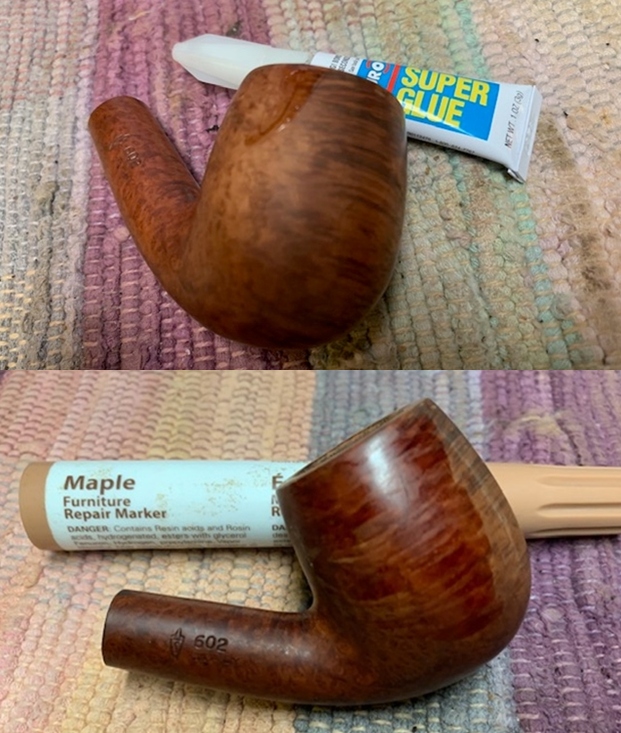
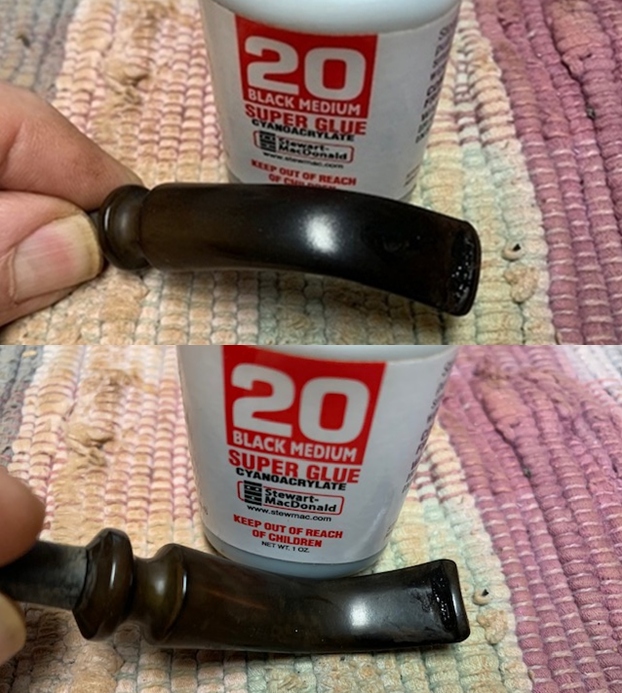
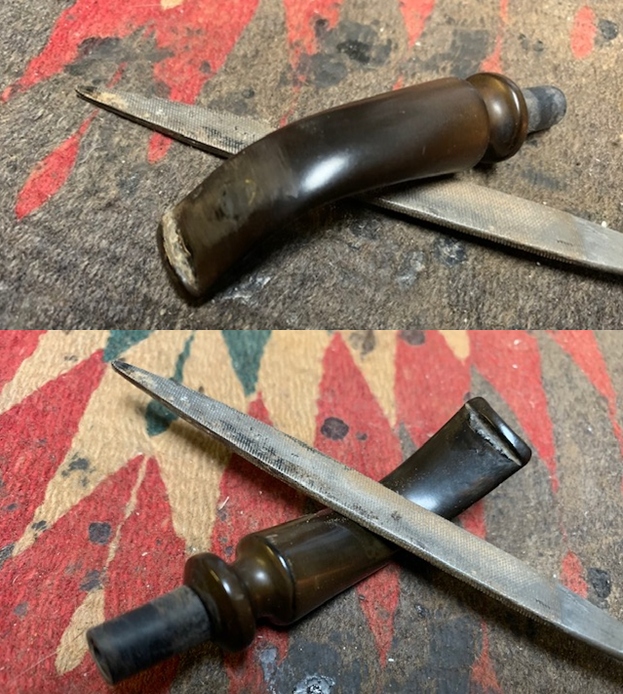
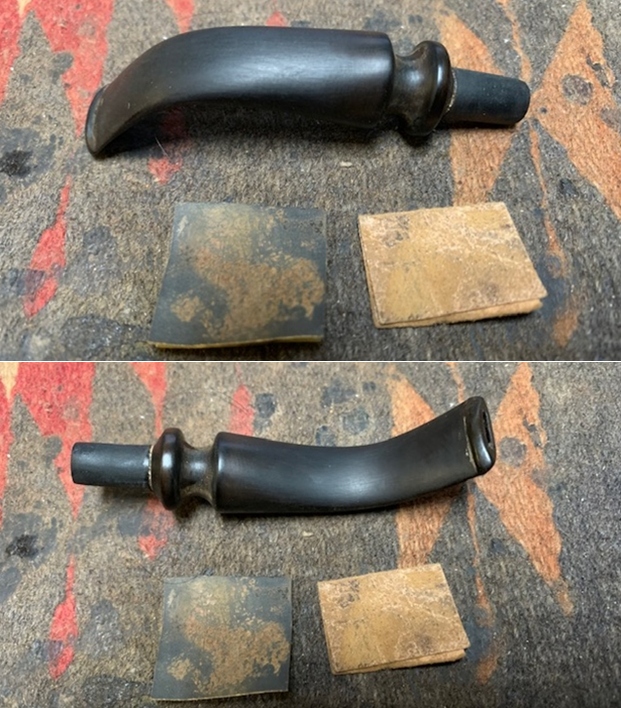
Since Jeff follows the same pattern of work in his cleanup we do not include photos but rather just a simple summary. Jeff reamed the bowl with a PipNet pipe reamer and followed up with a Savinelli Fitsall pipe knife to remove the cake. He scrubbed out the mortise and the airway in the shank and the stem with alcohol, cotton swabs and pipe cleaners. He scrubbed the exterior of the bowl, rim, shank and stem with a tooth brush and Murphy’s Oil Soap to remove the oils and tars on the rim and the grime on the finish of the bowl. He rinsed it under running water. He dried it off with a soft cloth. He was able to remove the light lava build up on the rim top and you could see the great condition of the bowl top and edges of the rim. The rim top and the edges of the bowl were in good condition other than some scratching and darkening. He soaked the stem in Before & After Deoxidizer to remove the oxidation. I took photos of the pipe before I began my part of the work. The rim top cleaned up really well with the light lava coat removed. The inner and outer edge of the rim looked good. There is some darkening and scratching on the rim top and inner edge but nothing too problematic. The stem had tooth marks and chatter on both sides near the button and damage to the button surface.  There was also a dark spot on the top of the shank at the junction of the stem and shank.  I took photos of the stamping on the shank sides. You can see that the stamping is clear and readable.    I removed the stem and took a photo of the pipe to give a sense of the whole. It really has some great birdseye on the left side of the bowl and shank.I worked on the inner edge of the rim with a folded piece of 220 grit sandpaper to smooth out the damage and clean up the bevel. I sanded the rim top at the same time to remove the scratches, nicks and damage there.  The dark spot on the top of the shank at the end appears to be a stain rather than a burn mark.I polished the bowl and the rim top, sides and shank with micromesh sanding pads – wet sanding with 1500-12000 grit pads and wiping it down after each pad with a damp cloth.  As I polished it with the first three pads (1500-2400) I found a deep scratch on the right side of the bowl. I examined it with a light and lens and it is just a gouge in the briar. I had drawn an oval around it in red in the second photo below.   I tried to steam out the scratch with limited success. I filled it in with clear super glue. Once it cured I sanded it smooth with 220 grit sandpaper. I restained the area with a Maple Stain pen to begin to blend it into the surrounding briar. I continued the polishing with the next grades of micromesh – 3200-12000 grit pads. I wiped the bowl down with a damp cloth between each pad.   I rubbed the bowl and shank down with Before & After Restoration Balm. I worked it into the surface of the bowl sides and shank with my fingertips to clean, enliven and protect the briar. I let the balm sit for a little while and then buffed with a cotton cloth to raise the shine. I set the bowl aside and turned my attention to the stem. I “painted” the tooth marks with the flame of a Bic lighter to lift them. The heat raised the dents in the vulcanite significantly. I filled in the remaining dents with black super glue. Once the repairs had cured I used a needle file to recut and reshape the button edge and flatten the repairs to begin blending them into the stem surface.  I sanded out the scratching and repairs with 220 grit sandpaper to blend them into the vulcanite and started polishing the stem with 400 grit wet dry sandpaper.  I polished the vulcanite stem with micromesh sanding pads – 1500-12000 grit pads. I wiped it down with a damp cloth after each sanding pad. I used Before & After Pipe Polish – both Fine and Extra Fine to further polish the stem.     This Savinelli Punto Oro Super 602 Bent Billiard with a taper vulcanite stem is a great looking pipe now that it has been restored. I put the stem back on the bowl and carefully buffed the pipe with Blue Diamond on the buffing wheel using a light touch on the briar. I gave the bowl and the stem multiple coats of carnauba wax on the buffing wheel and followed that by buffing the entire pipe with a clean buffing pad. I hand buffed the pipe with a microfiber cloth to deepen the shine. The finished Savinelli Punto Oro Bent Billiard fits nicely in the hand and looks very good. Give the finished pipe a look in the photos below. The dimensions of the pipe are Length: 5 ¾ inches, Height: 2 inches, Outside diameter of the bowl: 1 ¼ inches, Chamber diameter: ¾ of an inch. If you are interested in adding this pipe to your collection send me a message or an email. Thanks for reading this blog and my reflections on the pipe while I worked on it. There are many more to come!


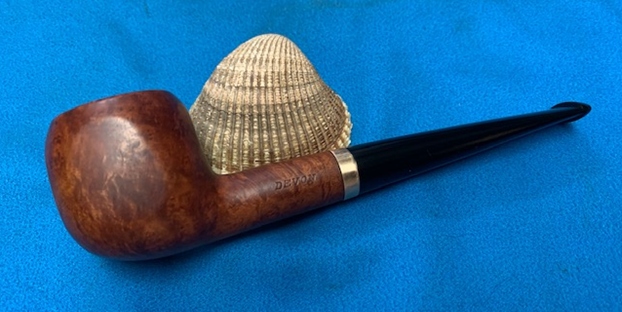
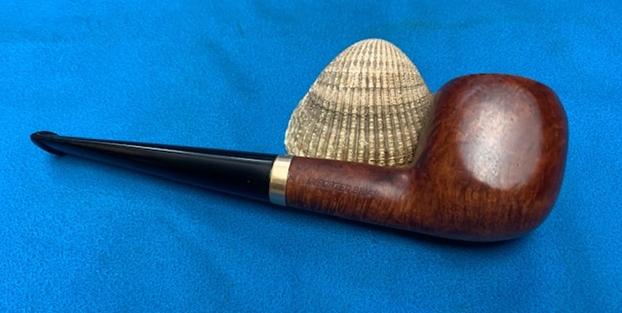
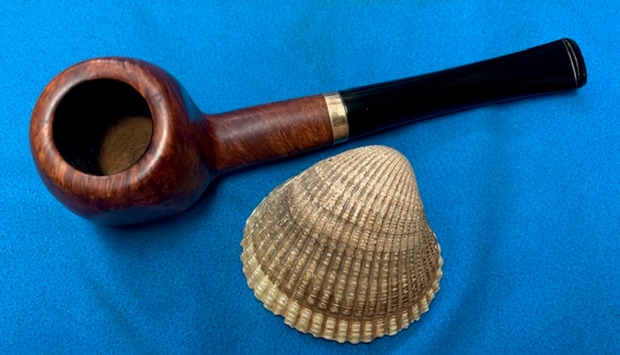
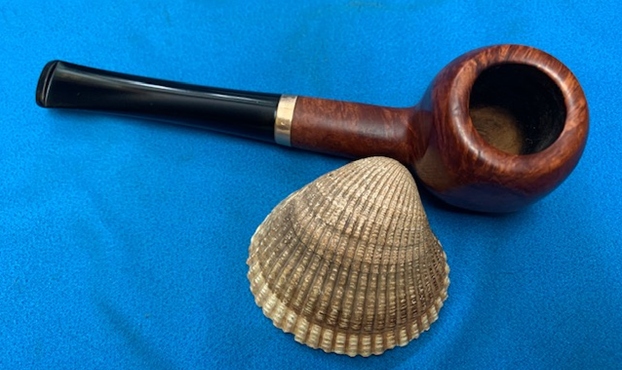
Life for an American Made Pipe – A Devon Paneled Apple


Blog by Steve Laug

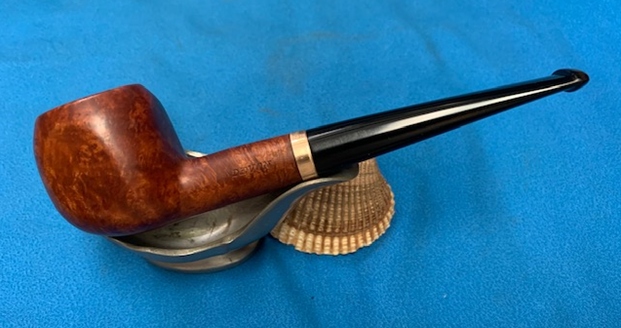
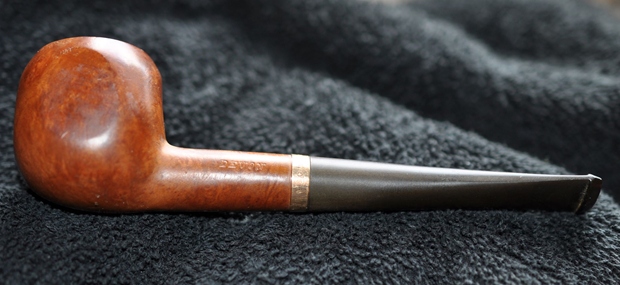
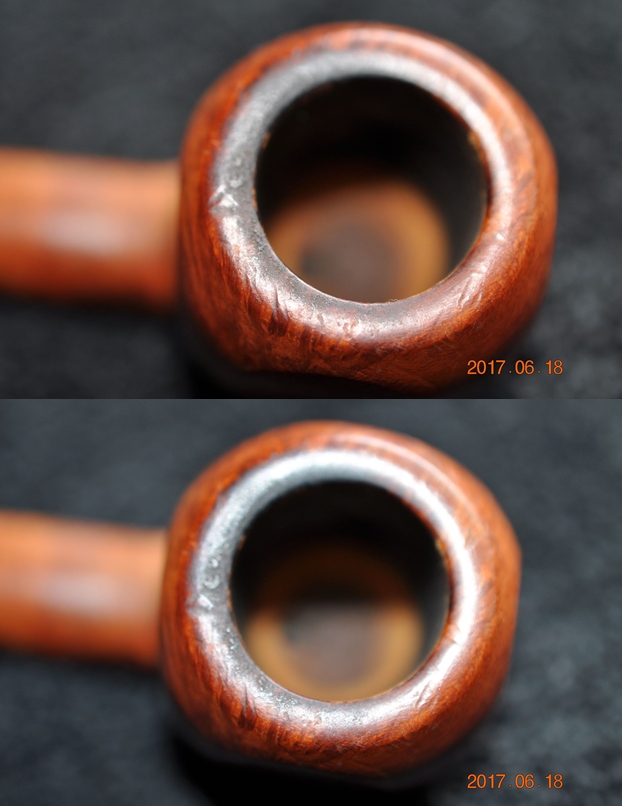
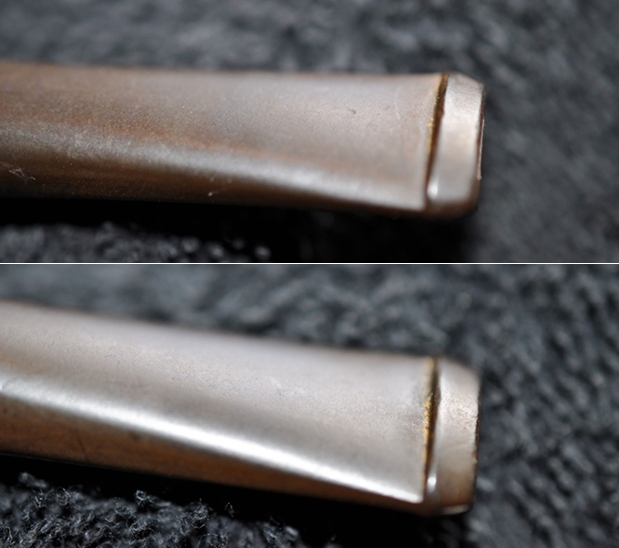
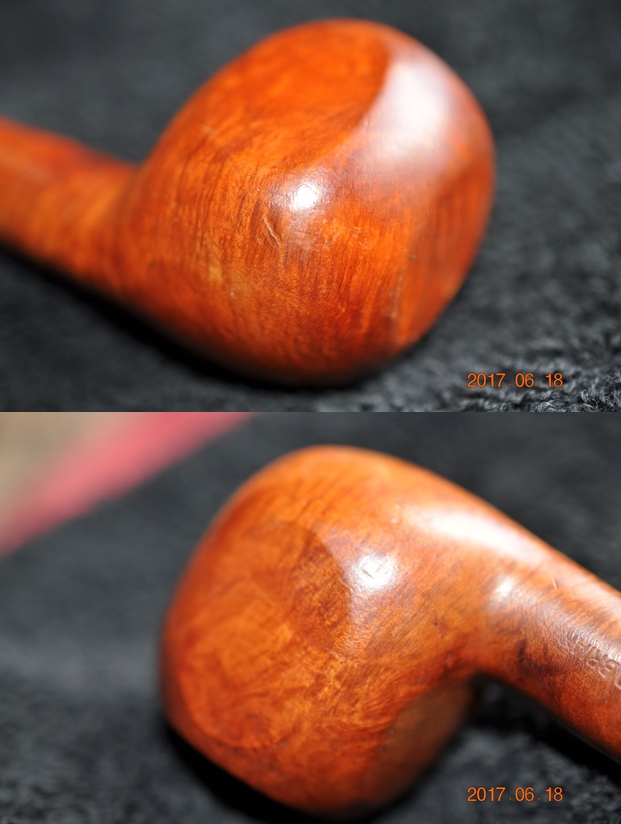
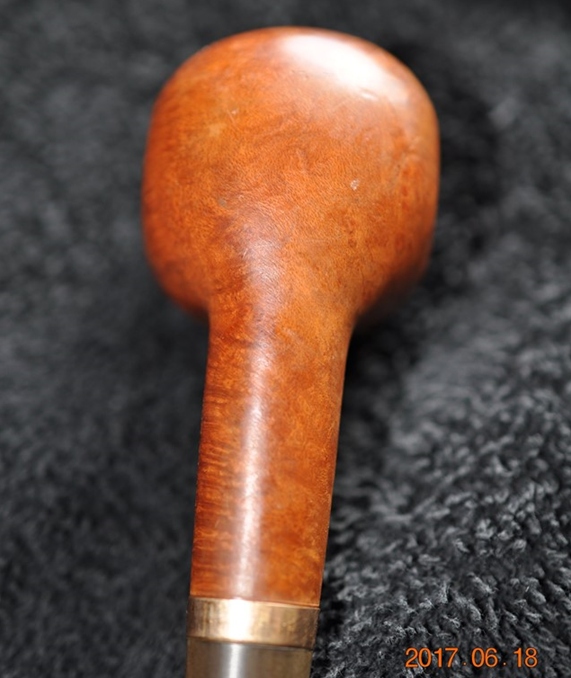
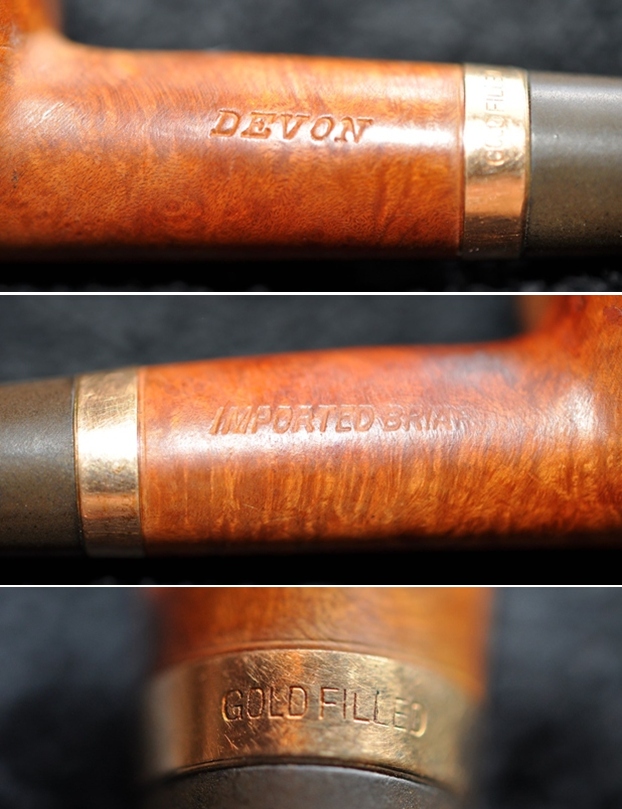
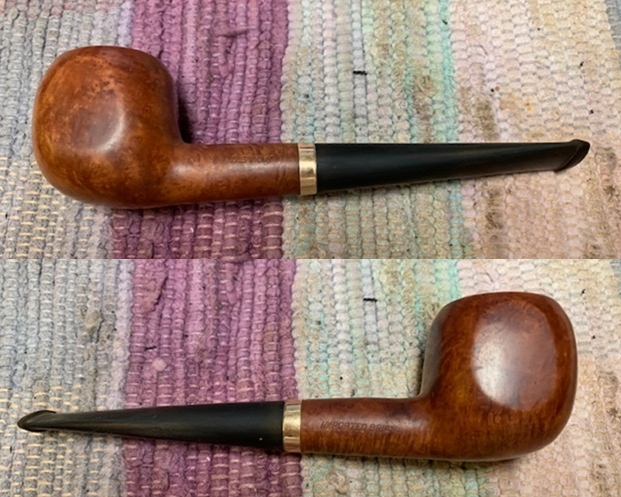
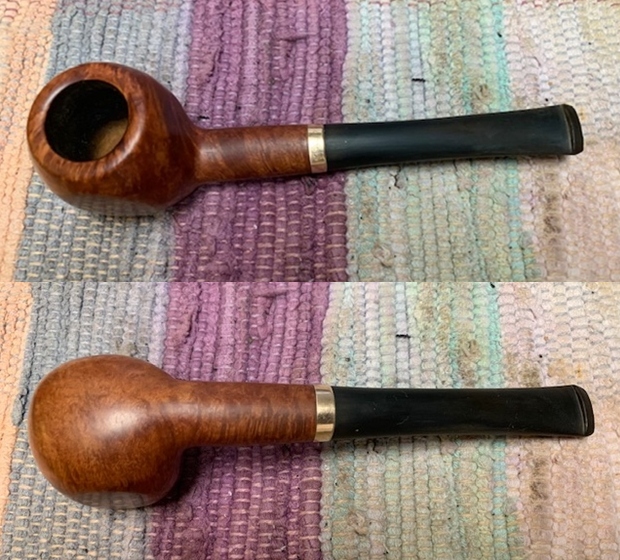
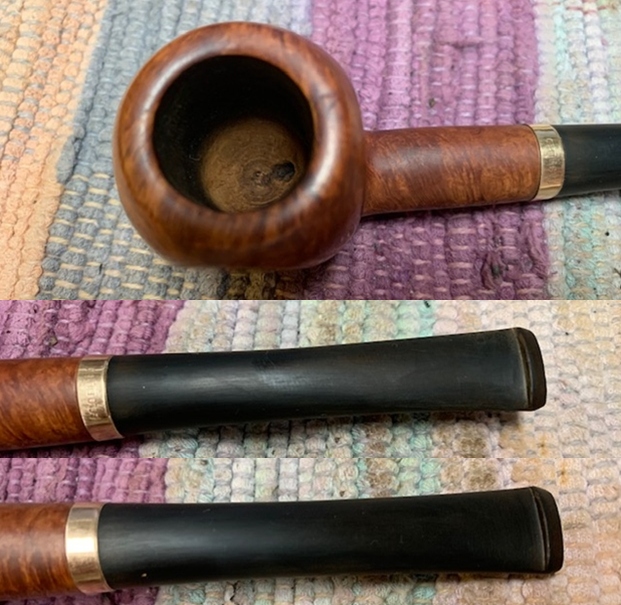
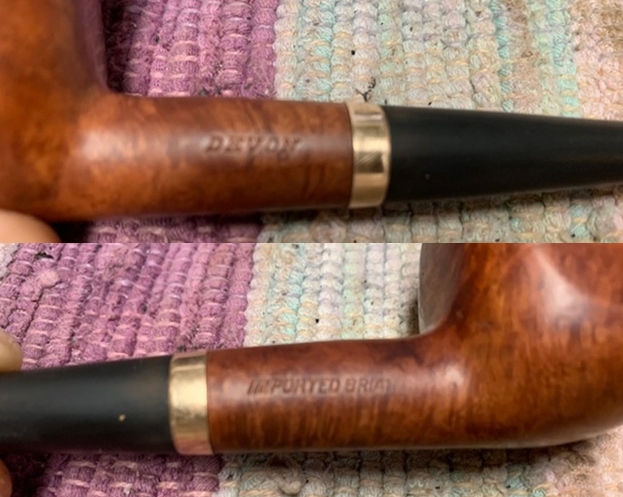
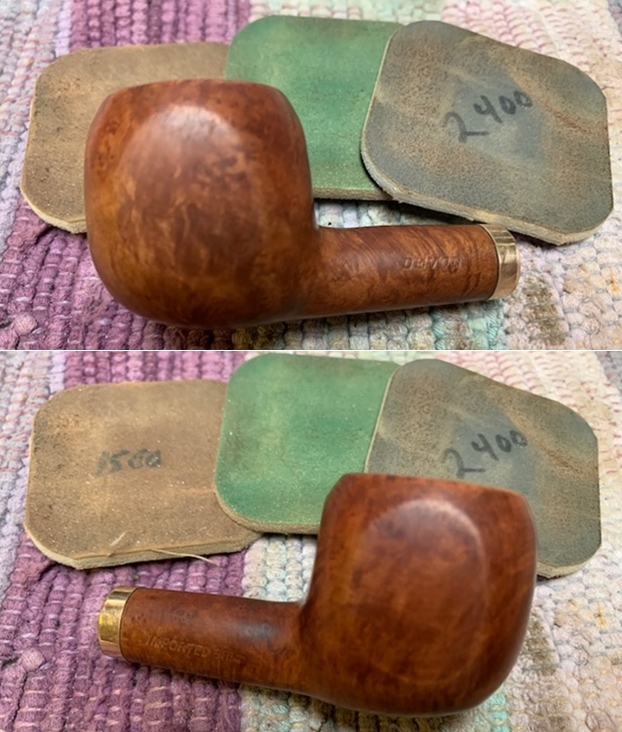
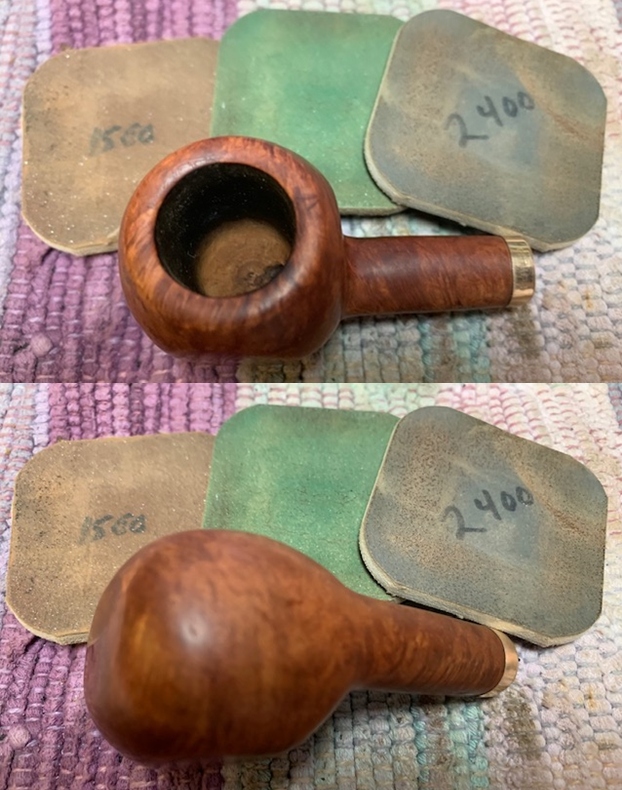
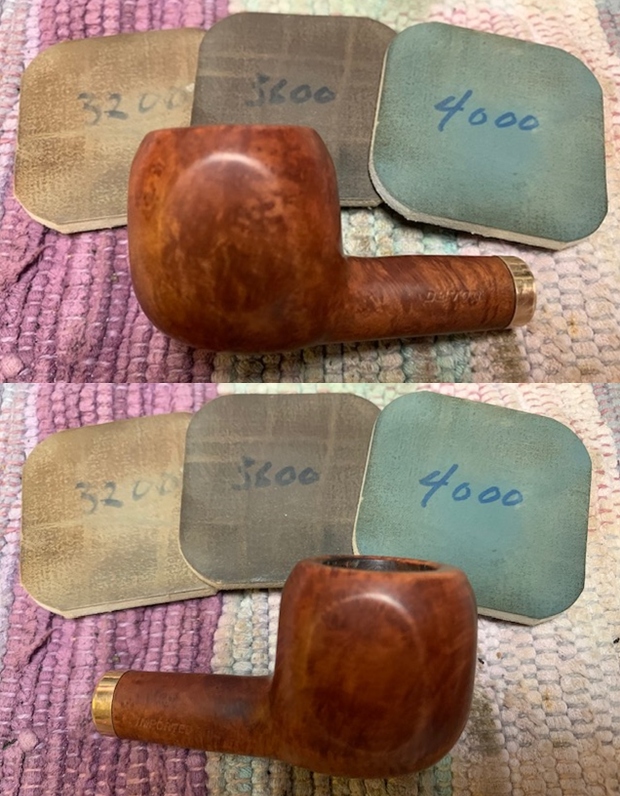
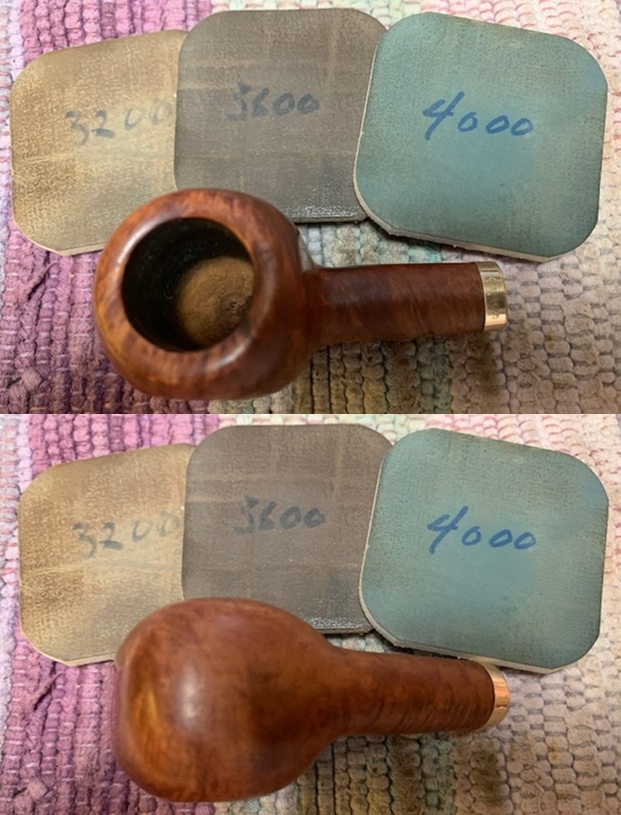
The next pipe on the work table came to me from one of our estate purchases. Between us we pick up quite a few pipes for restoration. I try to work them into the restoration queue so that I can keep them moving. This next one is a beautifully grained, paneled apple shaped pipe with a gold band and a tapered vulcanite stem. It has been here since the summer of 2017. The pipe is stamped on the left side and read DEVON. On the right side it reads IMPORTED BRIAR. The finish had a lot of grime ground into the smooth finish on the bowl and some darkening around the sides of the bowl. The bowl was actually quite clean of cake though there was a light overflowing lava coat on the top of the rim. There were some scratches in the rim top but the edges looked to be in good condition. The stem was dirty, oxidized and had light tooth chatter and marks on the top and underside near the button. There were not markings or a logo on the taper stem. It had promise but it was very dirty. Jeff took some photos of the pipe before he started his cleanup work.   He took photos of the rim top and bowl to give a clear picture of the thickness of the cake and the overflow of lava on the rim top. He also took photos of the top and underside of the stem to show the chatter and tooth marks. Otherwise the stem is quite clean.  Jeff took photos of the sides and heel of the bowl to give a picture of what the briar around the pipe looked like. There is some stunning grain under the grime.     He took photos of the stamping on the sides of the shank and band. They read as noted above and are clear and readable.     I looked on Pipedia and on Pipephil’s site for information on the brand and found nothing listed. I also checked out Who Made that Pipe but it attributed the brand to several English Pipe Making Companies but this one is obviously and American Made pipe with the Imported Briar stamp on the shank. The maker shall remain a mystery to me. It is now time to get working on the pipe.

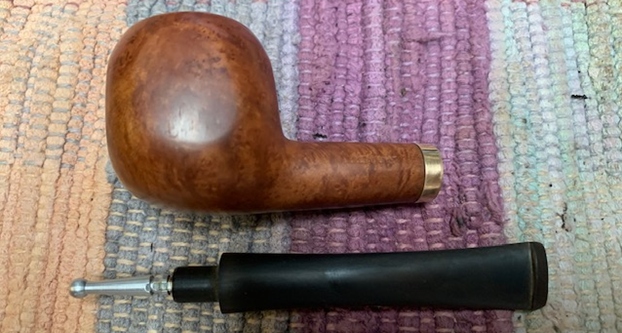
Since Jeff follows the same pattern of work in his cleanup we do not include photos but rather just a simple summary. Jeff reamed the bowl with a PipNet pipe reamer and followed up with a Savinelli Fitsall pipe knife to remove the cake. He scrubbed out the mortise and the airway in the shank and the stem with alcohol, cotton swabs and pipe cleaners. He scrubbed the exterior of the bowl, rim, shank and stem with a tooth brush and Murphy’s Oil Soap to remove the oils and tars on the rim and the grime on the finish of the bowl. He rinsed it under running water. He dried it off with a soft cloth. He was able to remove the light lava build up on the rim top and you could see the great condition of the bowl top and edges of the rim. The rim top and the edges of the bowl were in good condition. He soaked the stem in Before & After Deoxidizer to remove the oxidation. I forgot to take photos of the pipe before I started my work. What I have included is after the initial work on the stem. It gives a clear picture of the pipe at this point in the process. The rim top cleaned up really well with the light lava coat removed. The inner and outer edge of the rim looked good. The stem surface looked very good with a few light tooth marks and chatter on both sides near the button.    I took photos of the stamping on the shank sides – even though my photos are a little fuzzy the stamping is clear and readable.    I removed the stem and took a photo of the pipe to give a sense of the whole. There is a stinger in the tenon that is very clean. It is removable.Now it was time to do my work on the pipe. I polished the bowl and the rim top, sides and shank with micromesh sanding pads – wet sanding with 1500-12000 grit pads and wiping it down after each pad with a damp cloth.  I rubbed the bowl and shank down with Before & After Restoration Balm. I worked it into the surface of the bowl sides and shank with my fingertips to clean, enliven and protect the briar. I let the balm sit for a little while and then buffed with a cotton cloth to raise the shine.   I sanded out the remaining oxidation and the light tooth chatter with 220 grit sandpaper and started polishing the stem with 400 grit wet dry sandpaper.   I polished the vulcanite stem with micromesh sanding pads – 1500-12000 grit pads. I wiped it down with a damp cloth after each sanding pad. I used Before & After Pipe Polish – both Fine and Extra Fine to further polish the stem.              This US Made Devon Imported Briar Paneled Apple with a taper vulcanite stem is a great looking pipe now that it has been restored. I put the stem back on the bowl and carefully buffed the pipe with Blue Diamond on the buffing wheel using a light touch on the briar. I gave the bowl and the stem multiple coats of carnauba wax on the buffing wheel and followed that by buffing the entire pipe with a clean buffing pad. I hand buffed the pipe with a microfiber cloth to deepen the shine. The finished Devon Paneled Apple fits nicely in the hand and looks very good. Give the finished pipe a look in the photos below. The dimensions of the pipe are Length: 5 ½ inches, Height: 1 ½ inches, Outside diameter of the bowl: 1 ¼ inches, Chamber diameter: ¾ of an inch. If you are interested in adding this pipe to your collection send me a message or an email. Thanks for reading this blog and my reflections on the pipe while I worked on it. There are many more to come!


New Life for a Peterson’s Republic Era “Donegal” Rocky Bent Billiard 338


Blog by Steve Laug

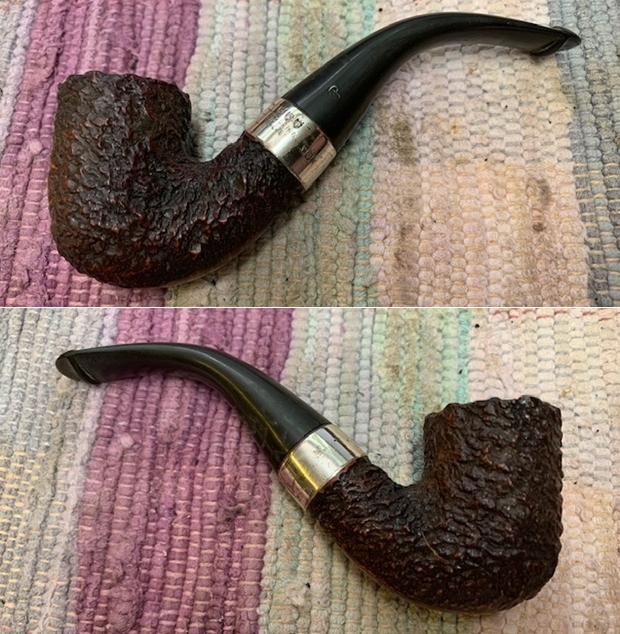
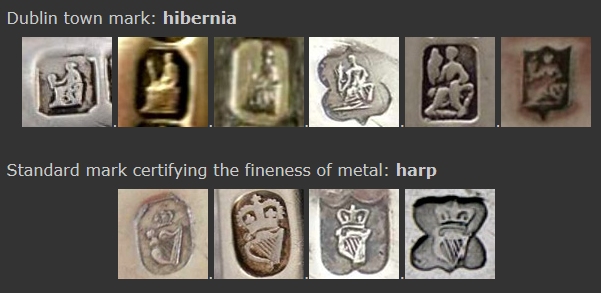
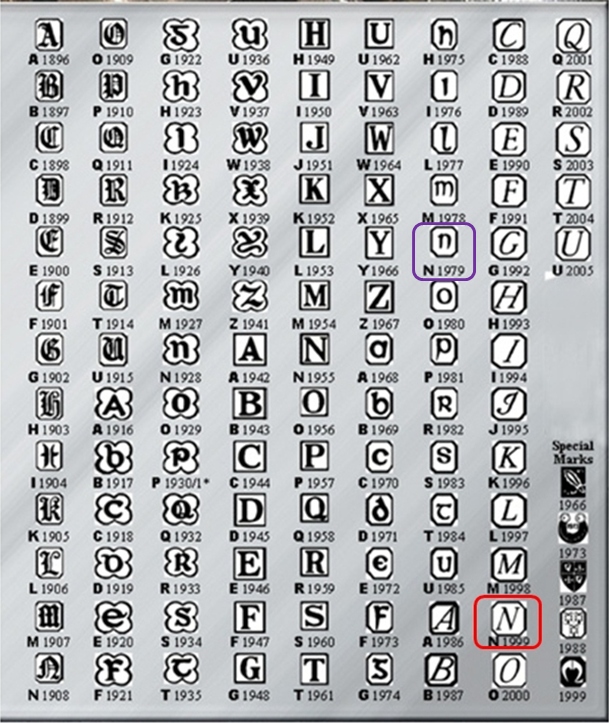
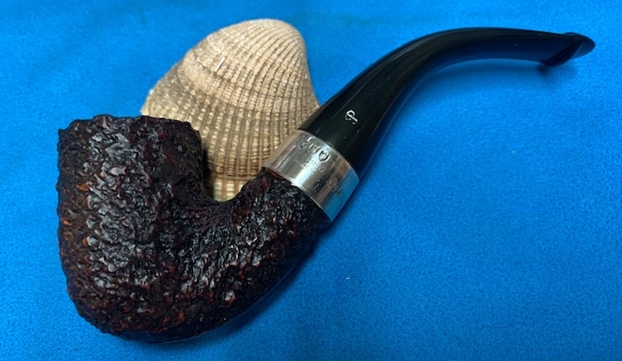
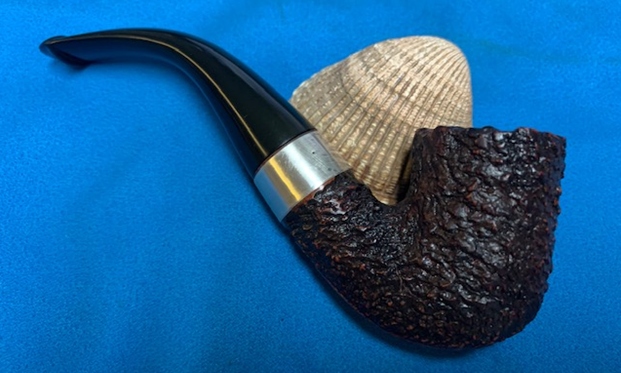
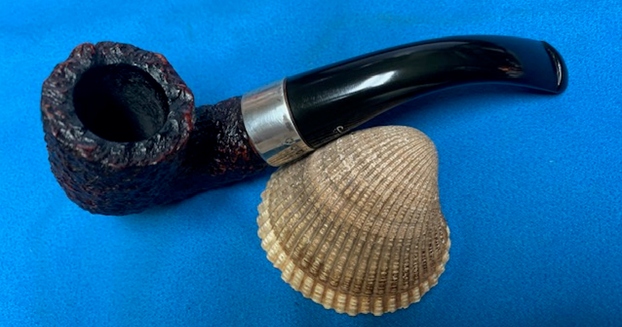
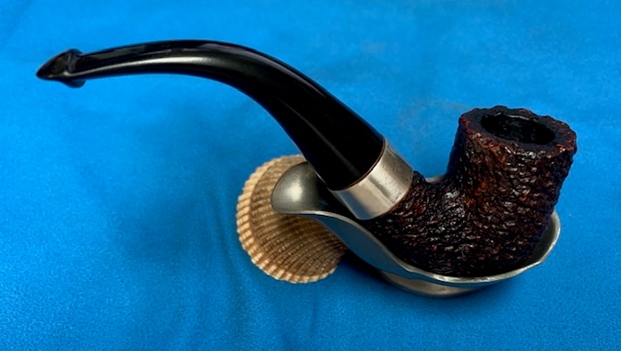
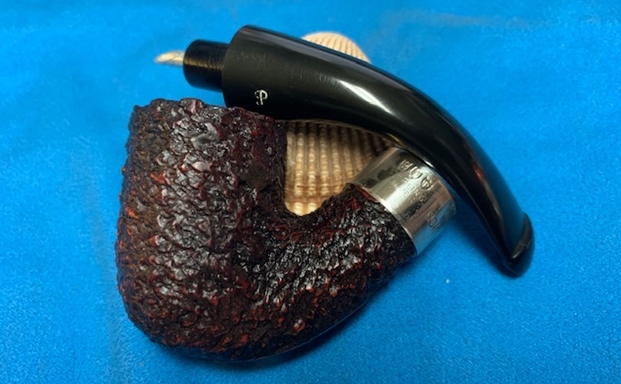
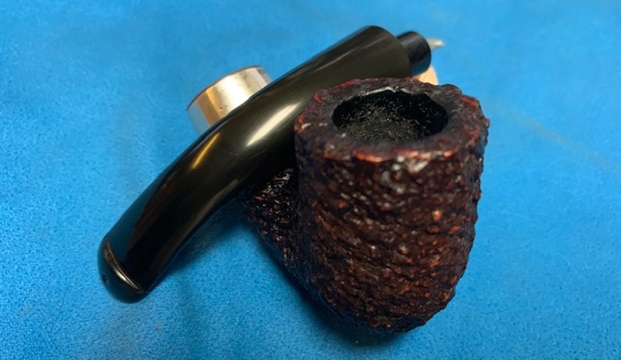
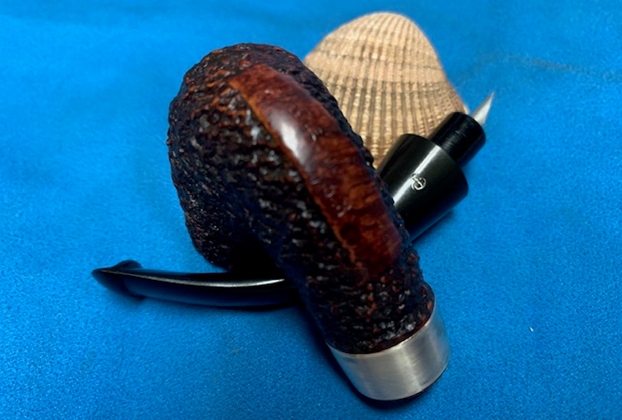
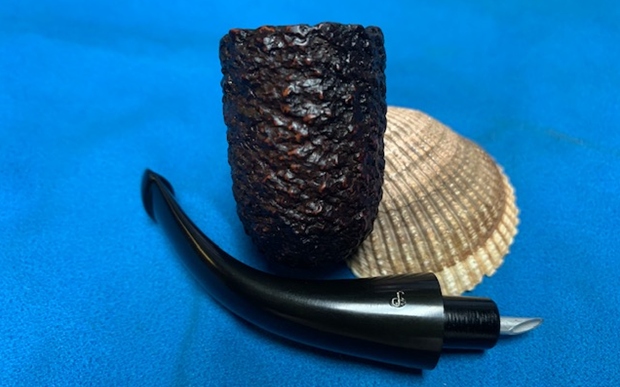
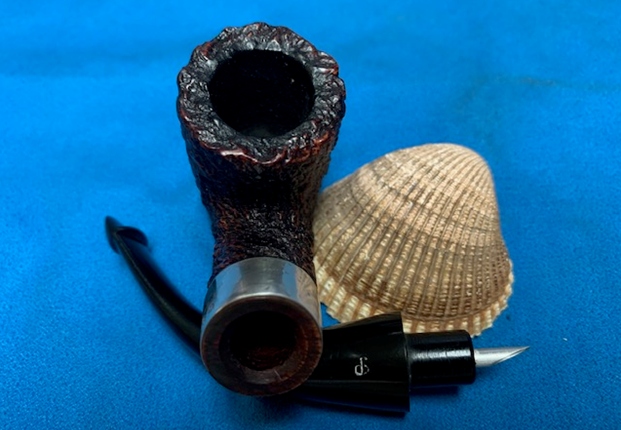
The next pipe on the table came to us from one of our pipe hunts or a trade I just cannot remember. It is a rusticated Peterson’s “Donegal” Rocky 338 Bent Billiard. The finish is quite nice with at that classic Peterson’s rustication pattern. The pipe pretty clean with the exterior polished and dust free. The bowl had been reamed somewhere along the way and the bowl was pretty clean. There was darkening on the rim top but otherwise it looked really good. The pipe is stamped on a smooth panel on the underside of the shank and reads Peterson’s “Donegal” Rocky with the shape number 338 ahead of that. It is also stamped Made in the Republic of Ireland. On the oxidized Sterling Silver band it is stamped K&P in shields over Sterling Silver there are three hallmarks below and to the left of that. The hallmarks are: 1. a seated woman (Hibernia) – the city stamp for Dublin, 2. Harp – the mark for the quality of the silver, 3. a slanted lower case “n” – the date identification of the pipe. The stamping is clear and readable on the pipe and band. The stem was dirty and lightly oxidized. There were light tooth marks and chatter on the stem near the button on both sides and some on the surface of the button as well. There was the Peterson’s “P” on the left side of the taper stem. I took photos of the pipe before I worked on it. I took photos of the rim top to show the cake in the bowl and the relatively clean rim top and edge. The stem was also in decent condition other than light tooth chatter and marks.The stamping on the underside of the shank read as noted above. The photo shows that they are faint but clear and readable. The stamping on the silver is also readable. The P on the left side of the stem is faint but in good condition.I took a photo of the pipe with the stem removed to show the overall look of stem, tenon and profile of the pipe. It is a great looking pipe.I am including the information from Pipedia’s article on Peterson pipes. It is a great read in terms of the history of the brand (https://pipedia.org/wiki/Peterson). I have included a bit of the pertinent history here.

1950 – 1989 The Republic Era  – From 1950 to the present time, the stamp for this era is “Made in the Republic of Ireland” in a block format generally in three lines but two lines have been used with or without Republic being abbreviated.

During the 1950’s and 60’s the Kapp & Peterson company was still in the ownership of the Kapp family. However 1964 saw the retiral of the company Managing Director Frederick Henry(Harry) Kapp.

I turned then to deal with the Hallmarks. I turned to Pipephil’s site for his quick reference charts on the Peterson’s Hallmarks (http://www.pipephil.eu/logos/en/infos/hallmark-dublin.html). I have included the pertinent charts below. The first chart defines the first two hallmarks on the Sterling Silver Band. The Hibernia/Lady is the Dublin Town Mark. The Harp identifies the fineness of the metal.The second chart pins down the date that this particular pipe was made. The lower case “n” mark identifies the pipe as being made in 1979. I have drawn a purple box around the “n” on the chart below.

With that information in hand I knew what I was dealing with in terms of the stamping and the age of this pipe. I knew from the information that the pipe was made during the Republic Era between 1950 and 1989. Pipedia then qualifies the dating as follows: From 1950 to the present time, the stamp for this era is “Made in the Republic of Ireland”. The “n” hallmark sets the date at 1979 in the center of the time period. Now it was time to work on the pipe.

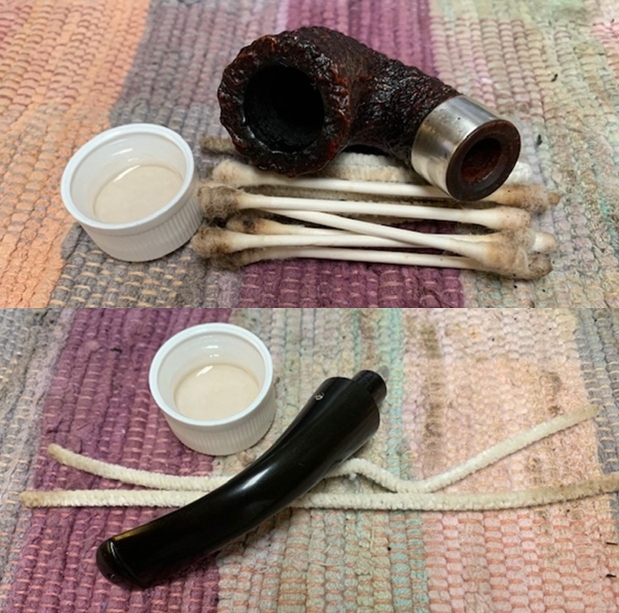
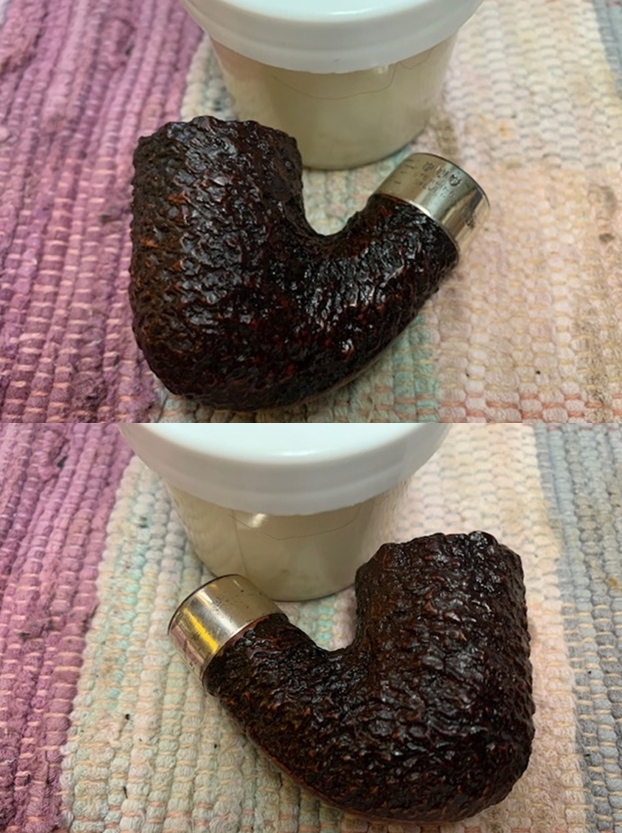
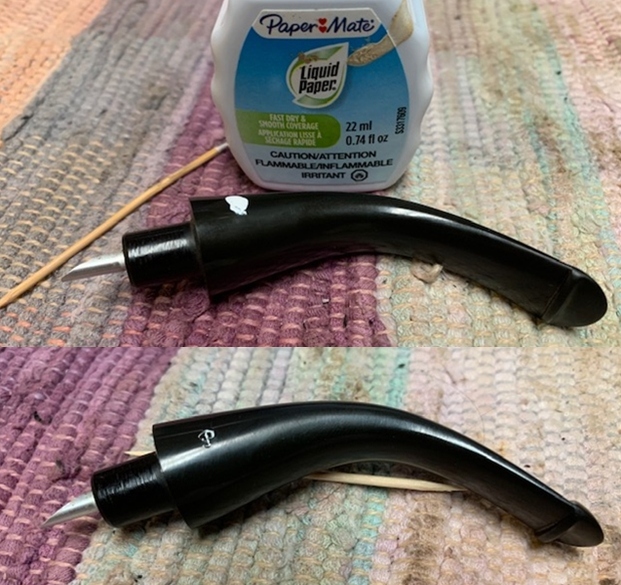
Since the pipe was in very good shape I started my work on it by cleaning out the inside of the shank. The sump was quite clean and the airway had some debris. The pipe had an aroma of English tobacco that was quite nice. I cleaned it out with alcohol, cotton swabs and pipe cleaners. Once the shank and airway were clean it smelled good. I cleaned out the airway in the stem at the same time with alcohol and pipe cleaners. The bowl was clean the briar looked very good so I rubbed the briar down with Before & After Restoration Balm. I worked it into the briar with my fingertips and a horse hair shoe brush to get it into the deep crevices of the rustication. The product works to clean, enliven and preserve the briar. I let it sit for 10 minutes while I worked on the stem. After the time passed I buffed it with a cotton cloth to deepen the shine. The rustication came alive with the balm. I polished the stem with micromesh sanding pads – 1500-12000 grit pads. I wiped it down with Obsidian Oil after each sanding pad. I used Before & After Pipe Polish – both Fine and Extra Fine to further polish the stem. I touched up the P stamp on the left side of the stem with Paper Mate Liquid Paper and once it dried I scraped off the excess. The P stamp definitely looks better at this point.    This Republic Era 1979 Peterson “Donegal” Rocky 338 Bent Billiard is a nice looking pipe. The rustication and mixed stain around the bowl sides and shank really stand out with the polishing. The finish on the pipe is in excellent condition and the contrasting stains work well to give some contrast to the rusticated finish of the pipe. The polished black vulcanite P-lip taper stem adds to the mix. The pipe is really quite eye-catching. I put the stem back on the bowl and buffed the pipe with Blue Diamond on the buffing wheel, carefully avoiding the stamping on the shank and using a light touch on the rusticated portions. I gave the bowl multiple coats of Conservator’s Wax by hand and the stem multiple coats of carnauba wax on the buffing wheel and followed that by buffing it with a clean buffing pad. I hand buffed the pipe with a microfiber cloth to deepen the shine. The finished Bent Billiard is quite nice and feels great in the hand. Give the finished pipe a look in the photos below. I can only tell you that like the other pipes I am working that it is much prettier in person than the photos capture. The dimensions of the pipe are Length: 5 inches, Height: 1 ¾ inches, Outside diameter of the bowl: 1 ¼ inches, Chamber diameter: 5/8 of an inch. Thanks for walking through the restoration with me as I worked over another interesting pipe. This Peterson’s “Donegal” Rocky will be added to the Irish Pipe Makers section of the rebornpipes store soon. If you want to add it to your collection send me an email or a message! Thanks for your time.
Breathing Life into a 1968 Dunhill Shell Briar LB F/T Group 4 Billiard


Blog by Steve Laug

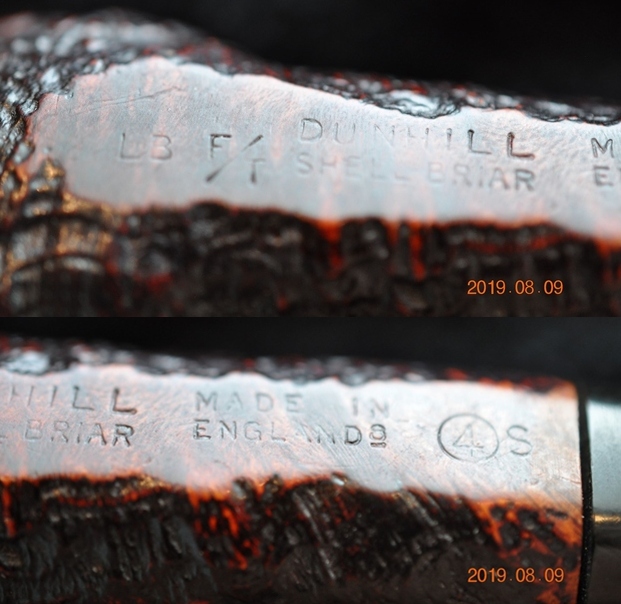
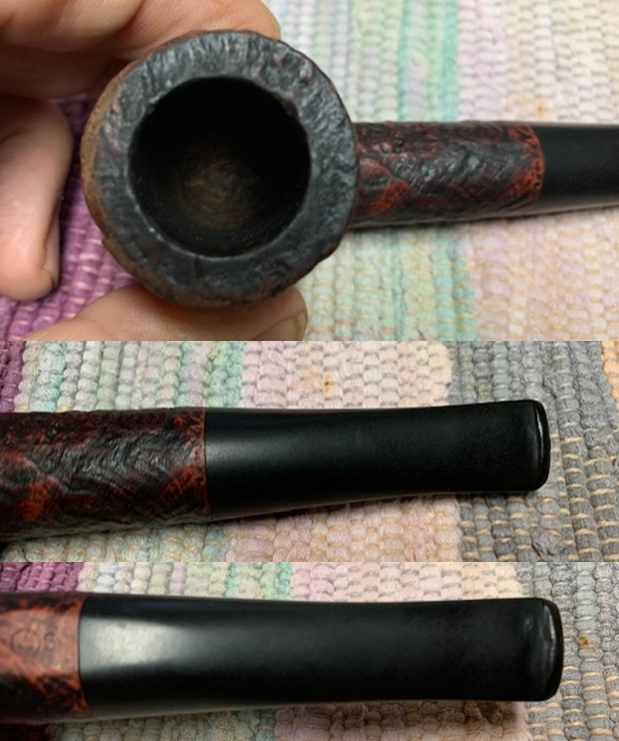
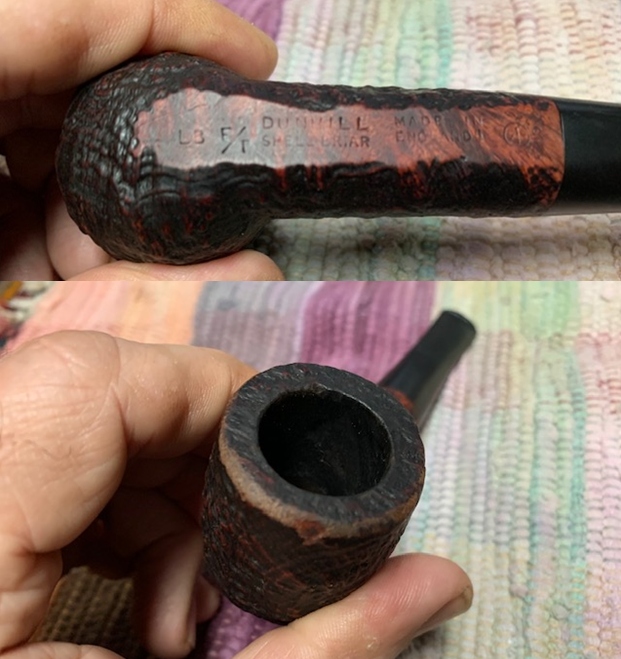
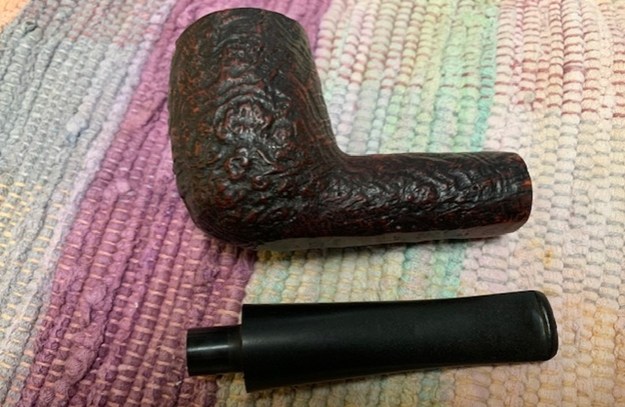
The next pipe on the table came to us from a group of pipes that Jeff and I purchased from a pipeman in late 2018. It is a Dunhill Shell Briar Billiard that is in decent condition. The stem is a replacement and I need to find an original stem for it but it works. It is stamped on a smooth panel on the underside of the shank. On the heel of the bowl it is stamped with the shape number LB F/T followed by Dunhill [over] Shell Briar followed by Made in England 8. That is followed by 4 in a circle followed by S for shell. Interpreting that stamp it is as follows: The LB is the shape for a larger thick shank billiard and the F/T is the stem shape – a Fish Tail stem. The Dunhill Shell Briar is the finish which is corroborated the S at the end of the stamping. The 8 following the D of England gives the date the pipe was made and identifies it as 1968. The stamping is clear and readable. The pipe has a mix of black, cordovan and brown stains on a sandblast finish and some amazing grain that the shape follows well. The finish was dirty with dust around the nooks and crannies of the sandblast. There was a cake in the bowl and lava on the rim top. There was damage on the front outer edge of the rim from tapping against something hard. The replacement taper stem was oxidized and had tooth marks and chatter ahead of the button.  Jeff took photos of the pipe to show what it looked like before he started working on it. He took photos of the bowl and rim top to show how clean they were and of the stem to show the oxidation, calcification and tooth marks and chatter on both sides of the stem. The photos of the sides and heel of the bowl show the deep sandblast grain on the pipe. It is a beauty under the grime and dust.    The stamping on the underside of the shank is shown in the photo below. It looks very good and readable. It reads as noted and explained above. Jeff captured the overall look in the first photo followed by some closer photos of sections of the stamp so you can read it. I turned to Pipedia’s section on Dunhill Root Briar to get a bit of background on the Duhill finishes (https://pipedia.org/wiki/Dunhill#Root_Briar). I quote:

Shell
A deep craggy sandblast with a black stain finish (usually made using Algerian briar) – the color of the stain used has varied over the years. Although there is some doubt as to them being the first to sandblast pipes, Dunhill’s Shell pipes, and the sandblasting techniques developed to create them are considered one of Dunhill’s greatest and most lasting contributions to the art of pipe making.

The documented history of Dunhill’s inception of the Shell is largely limited to patent applications — there are no catalog pages or advertisements promoting blasted pipes at the time. The preliminary work on the English patent (No. 1484/17) was submitted on October 13, 1917. The patent submission was completed half a year later, on April 12, 1918, followed by the granting of the English patent on October 14, 1918. This was less than a month before the end of The Great War on November 11th.

In 1986 Dunhill released a line of premium Shell finish pipes – “RING GRAIN”. These are high-quality straight grain pipes which are sandblasted. Initially only Ring Grain, but now in two different finishes. In 1995 the “Shilling” was introduced with Cumberland finish – it is an extremely rare series. These pipes exhibit a deeper blast characteristic of that of the 1930’s – mid-1960’s (and the limited ‘deep blast’ pipes of the early 1980s) and show a fine graining pattern. These are considered the best new Dunhills by many enthusiasts today and are very rare. The finish is sometimes described as tasting like vanilla at first, with the taste becoming more normal or good as the pipe breaks in.

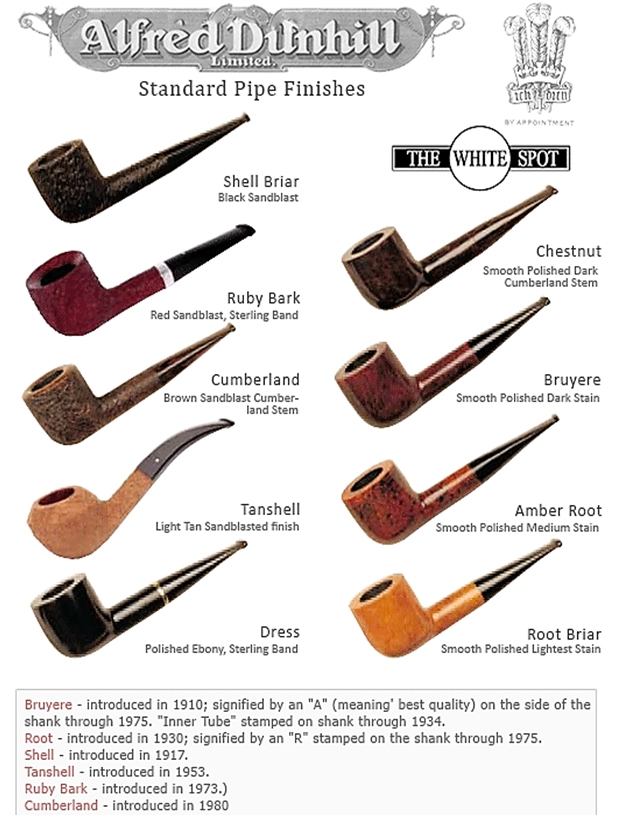
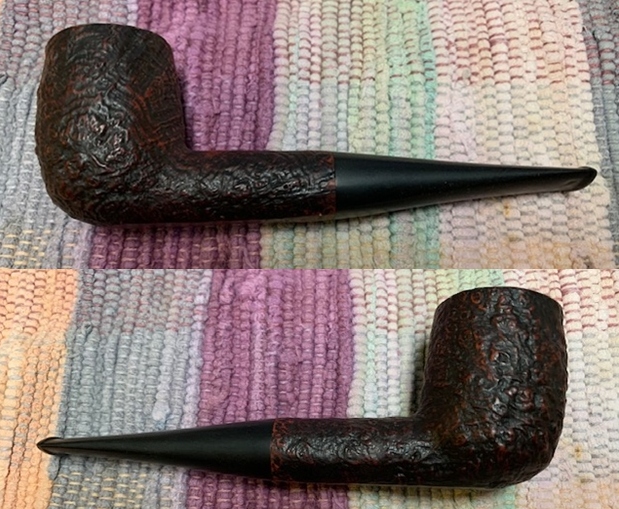
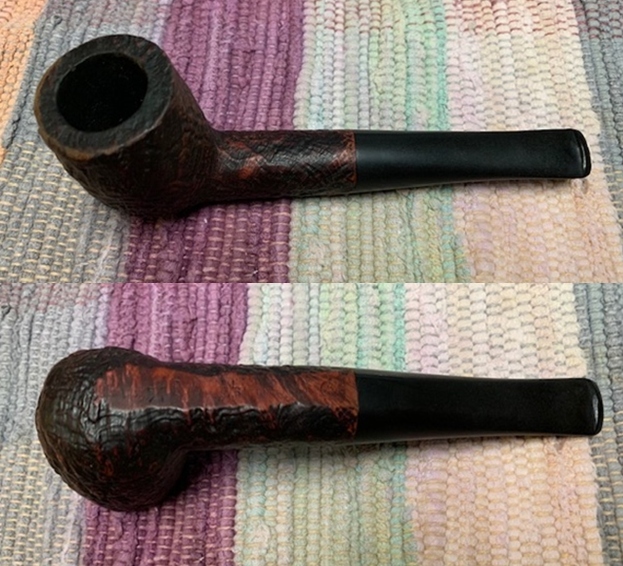
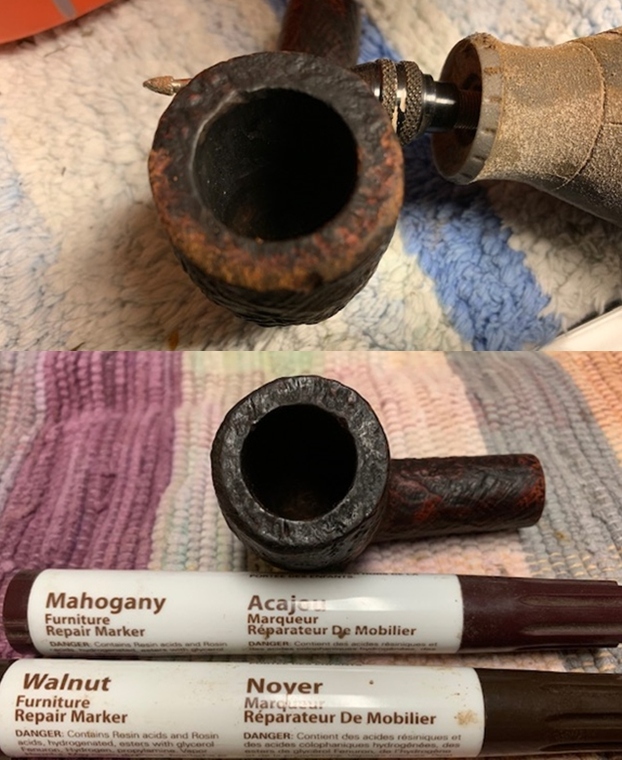
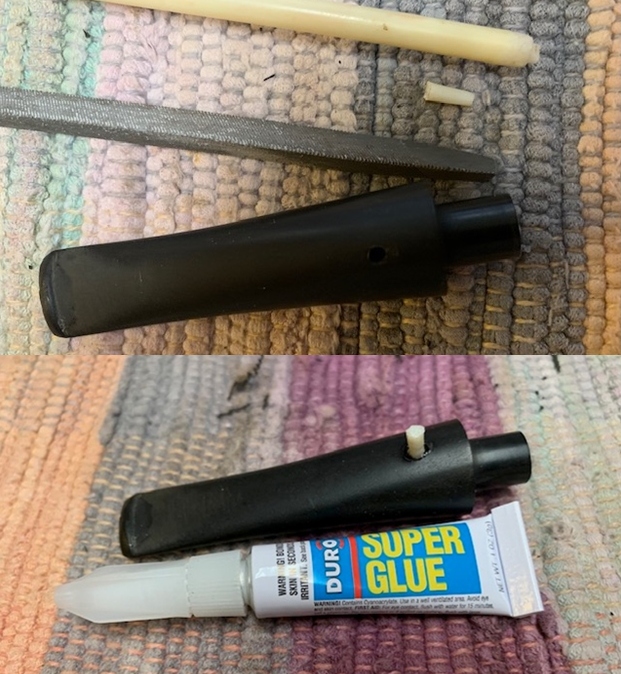
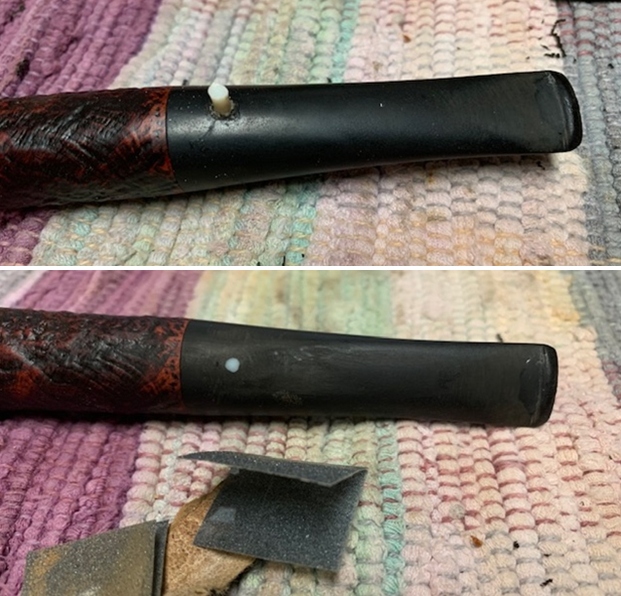
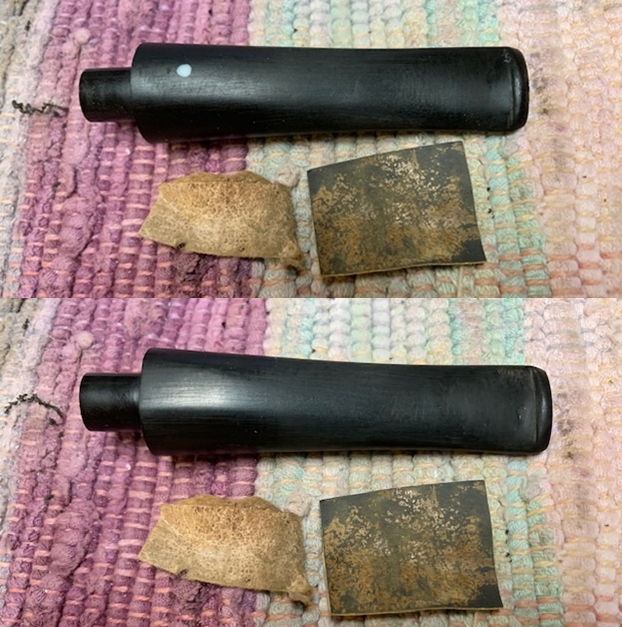
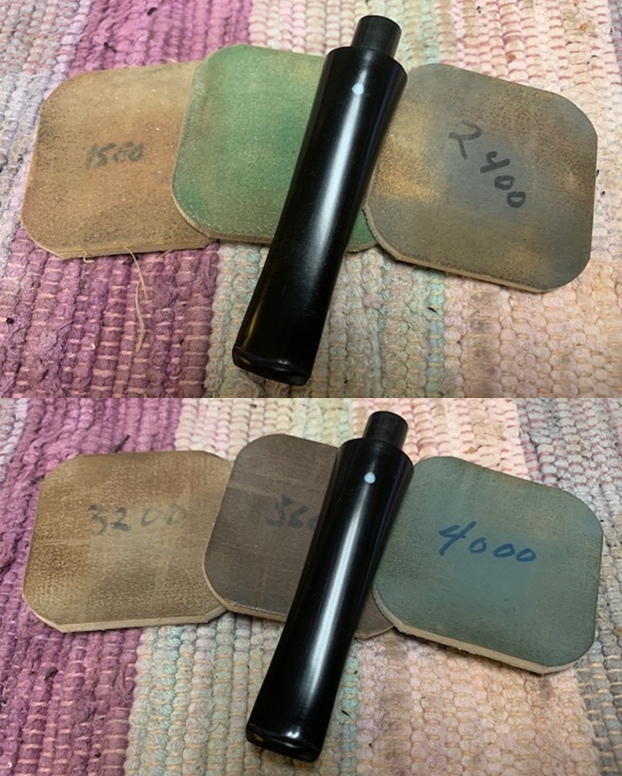
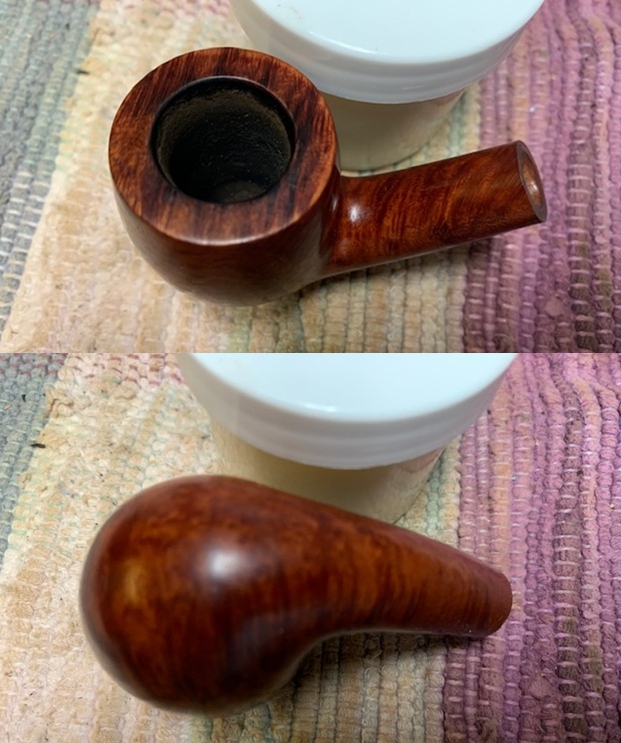
I have also included a chart from the site from Dunhill spelling out the Standard Pipe Finishes and giving short information and a timeline.I turned to work on the pipe itself. Jeff had carried out his usual thorough cleanup of the pipe. He had reamed it with a PipNet reamer to remove the cake and cleaned the reaming up with a Savinelli Fitsall Pipe Knife. He scrubbed the internals of the bowl and stem with alcohol, cotton swabs and pipe cleaners. He scrubbed the externals with undiluted Murphy’s Oil Soap and rinsed the bowl off with running water. He soaked the stem in Before & After Deoxidizer and once it had soaked rinsed it off with warm water to remove the residual solution. He dried it off and rubbed it down to remove any oxidation that was still on the stem. The pipe looked very good when I received it. I took a photo of the rim top to show the condition. You can see the damage on the front outer edge of the bowl in the photo. It is roughened and chipped. The replacement stem came out looking quite good. There are some tooth marks and chatter on both sides with deeper marks on the underside near the button.    I took a photo of the underside of the shank to show the stamping. It is clear and readable with some faint spots. I also took a photo of the damage to the front outer edge of the rim top to show the damaged areas.   I removed the stem from the shank and took a photo of the pipe parts to show what I was working with. It is a nice looking pipe.I decided to start the restoration on this one a little differently. In examining the outer edge damage to the bowl it appeared that I could work it over with a burr on my Dremel and minimize the damage by patterning the reworked surface to match the rest of the rim top. Once I worked it over I used a Mahogany and Walnut stain pen to blend the newly carved areas into the rest of the bowl finish.   With the repair completed I rubbed the briar down with Before & After Restoration Balm. I worked it into the briar with my fingertips and a horsehair shoe brush to work it into the nooks and crannies of the sandblast finish. The product works to clean, enliven and preserve the briar. I let it sit for 10 minutes while I worked on the stem. After the time passed I buffed it with a cotton cloth to deepen the shine. The briar really comes alive with the balm. I set the bowl aside and turned my attention to the stem. I “painted” the tooth marks on the stem to lift them up. I was able to lift them significantly. I filled in the remaining tooth marks with black super glue and set the stem aside to let the repairs cure. Once the repairs cured I used a needle file to recut and redefine the button edges and to smooth them out and blend them into the stem surface.  I sanded the repairs smooth and then decided to drill a spot on the top of the stem and put in a white dot. I did not do this to fool anyone just so I could get a feel of the stem looking almost right until I picked up a Dunhill stem. I used a piece of a white acrylic crochet needle to make the dot. I used a Dremel and sanding drum to take the end down to a spot. I then used a triangular shaped file to continue to take the top down to make it small enough to work for a white dot. I made the dot a little larger than normal and off just enough to give clue to the fact that it is a fake! But I am going to enjoy it anyway!    I used an awl to start a hole on the top of the stem to serve as a guide for drilling the hole to put the white spot in.    I cut off the piece of acrylic and used a file to reduce the diameter a little more with a file while I held it in a pair of vise grips. Once I had the end small enough I put a drop of super glue in the hole and pressed the piece of acrylic in the hole.     Once the repair cured I used the Dremel and sanding drum to take the pin back to the surface of the vulcanite. Once it was close to the top of the stem I used 220 grit sandpaper to smooth it out.   I sanded the repaired areas and the inserted acrylic white spot with 220 grit sandpaper to further blend them into the stem surface. I started the polishing of the stem with 400 grit wet dry sandpaper.     I polished the vulcanite with micromesh sanding pads – 1500-12000 grit pads. I wiped it down with Obsidian Oil after each sanding pad. I used Before & After Pipe Polish – both Fine and Extra Fine to further polish the stem.       This Dunhill Shell Briar LB F/T Chunky Billiard is a beautiful sandblast with the unique Dunhill Sandblast finish made in 1968. It is a great looking pipe that is in almost new condition. The dark finish that is identified as a black stain highlights some great grain around the bowl sides and the heel. It has some great rugged sandblast that Dunhill specialized in making. The finish on the pipe is in excellent condition and the repaired area on the front outer edge of the rim top looks very good. The mix of stains works well to highlight the grain. The polished black vulcanite taper replacement stem adds to the mix. With the dust gone from the finish and the bowl it was a beauty and is eye-catching. I put the stem back on the bowl and buffed the pipe with Blue Diamond on the buffing wheel being careful to not buff the stamping. I gave the bowl multiple coats of Conservator’s Wax and the stem multiple coats of carnauba wax on the buffing wheel and followed that by buffing it with a clean buffing pad. I hand buffed the pipe with a microfiber cloth to deepen the shine. The finished LB F/T Shell Briar Billiard is quite nice and feels great in the hand. Give the finished pipe a look in the photos below. I can only tell you that like the other pipes I am working that it is much prettier in person than the photos capture. The dimensions of the pipe are Length: 5 ¾ inches, Height: 2 inches, Outside diameter of the bowl: 1 ¼ inches, Chamber diameter: ¾ of an inch. Thanks for walking through the restoration with me as I worked over another beautiful pipe. If any of you have an LB stem for sale or trade let me know. Thanks for your time.
 

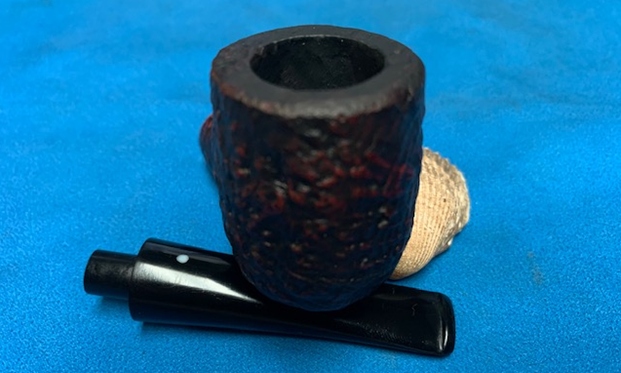
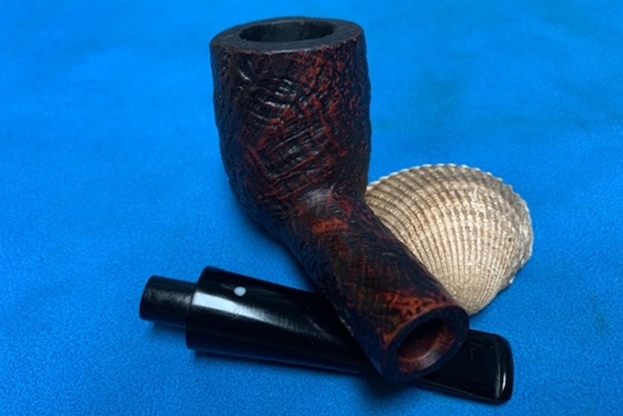
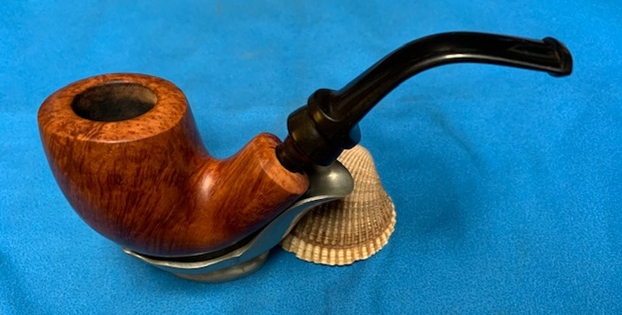
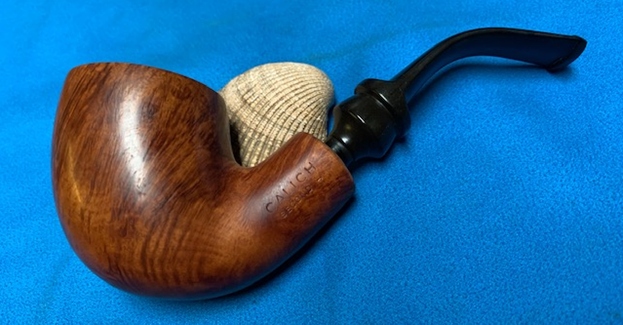
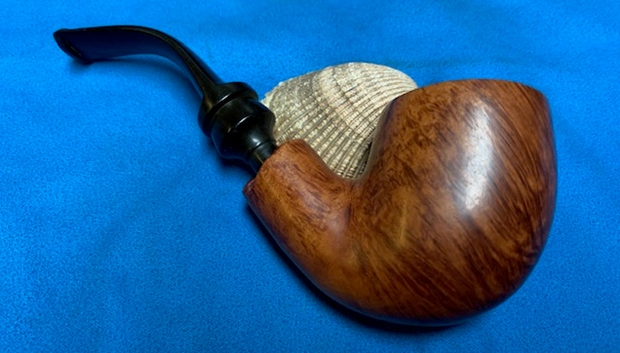
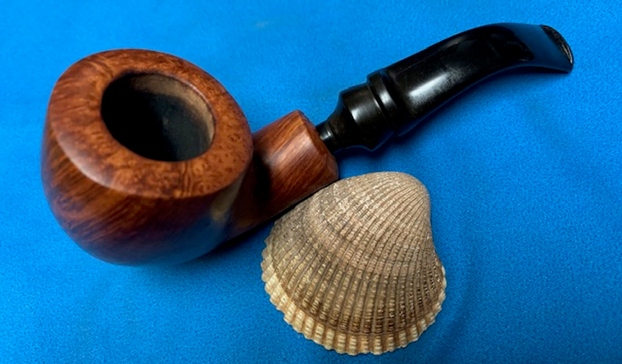
Restoring Calich  Second #7 Freehand


Blog by Steve Laug

John Calich

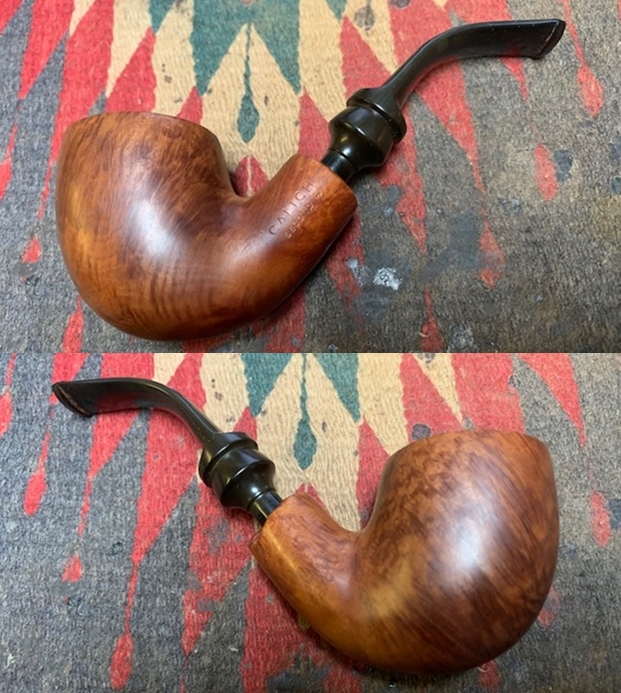
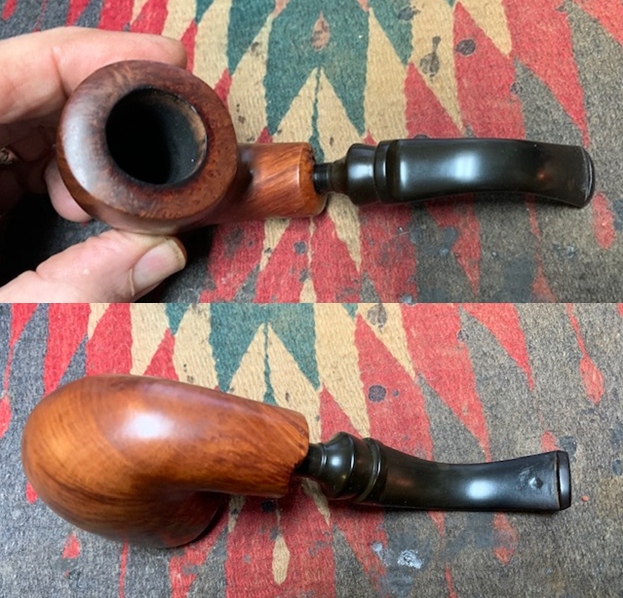
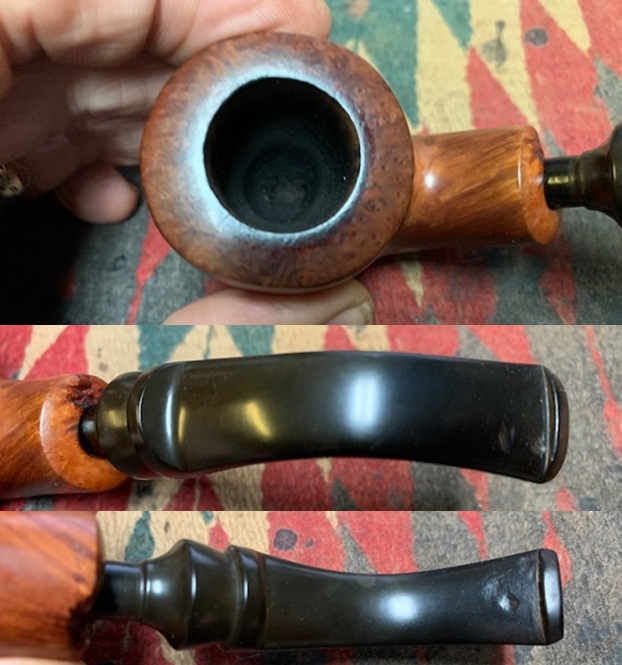
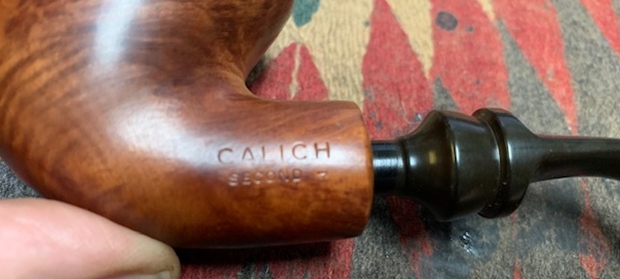
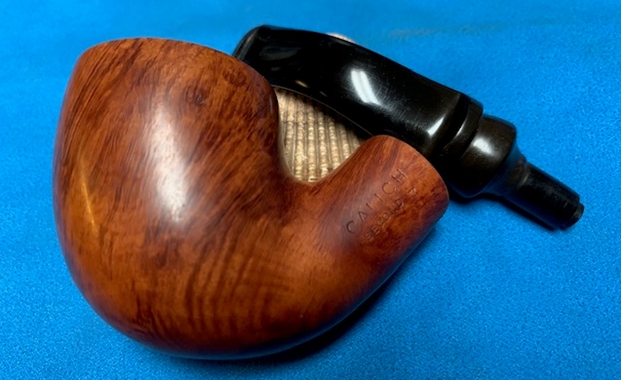
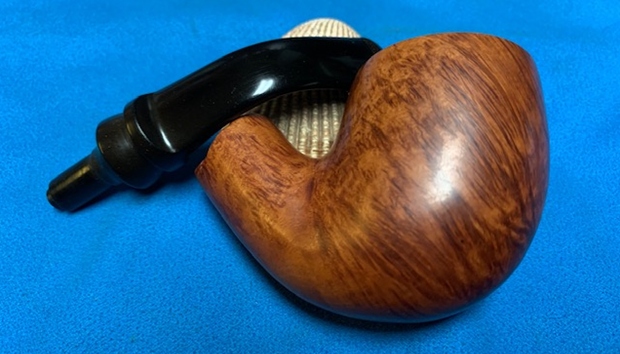
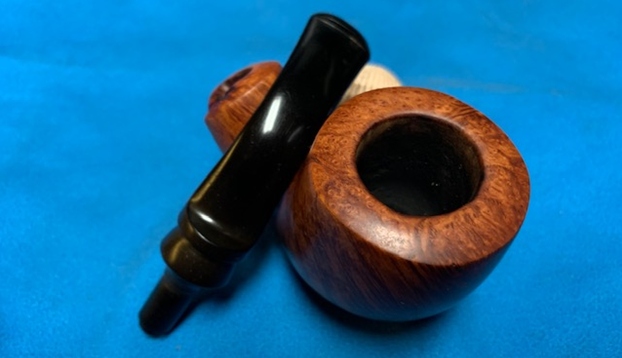
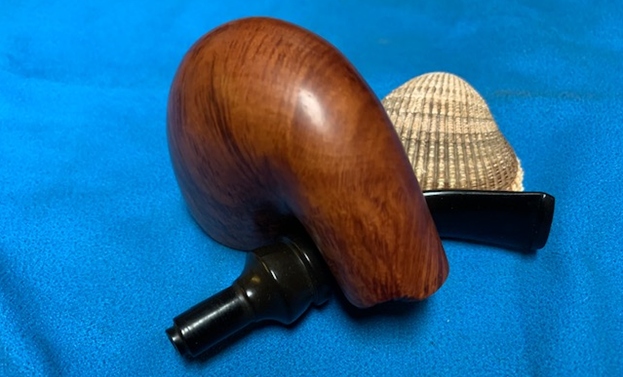
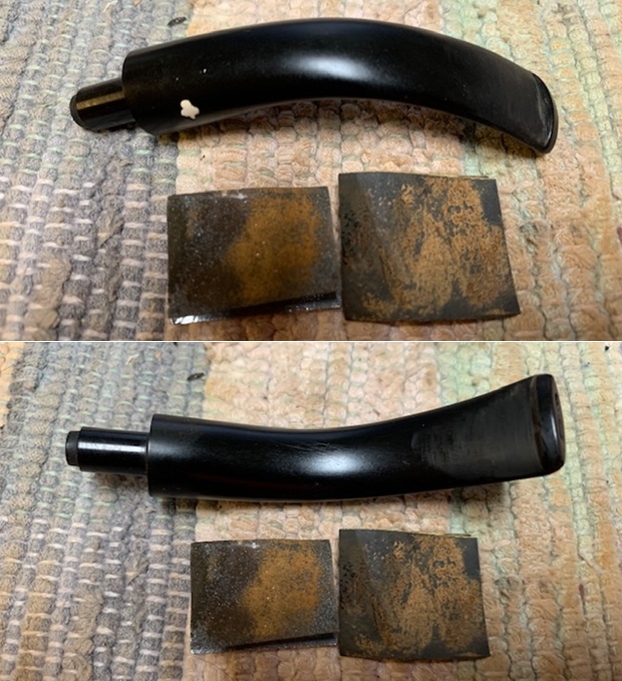
The next pipe on the work table is a pipe I traded for in a recent Boxpass here in Canada. A Boxpass is made up of samples as well as tins of tobacco that are sent around to various pipe folk to sample, take out and put back tins of tobacco or pipes. It is a great way to try tobaccos you have not had as well as to trade pipes that you want to pass on to others and take out one that you want to try out. This particular pipe came to the box from Eric who say it is a great smoking pipe that his pipe mentor picked up from John Calich himself. This one is a bent Freehand shaped pipe. It has some nice mixed grain around the bowl and shank with a vulcanite stem. It was stamped on the left side of the shank and reads Calich [over] Second followed by the number 7. The rim top is smooth and the shank end is also smooth with a patch of plateau on the right surface of the shank end. The finish was clean but was a flaw on the top back edge of the bowl on the right. There was a light cake in the bowl and some darkening and lava around the inner edge. The fancy turned vulcanite stem lightly oxidized and there was some deep tooth marks and chatter ahead of the button on both sides.

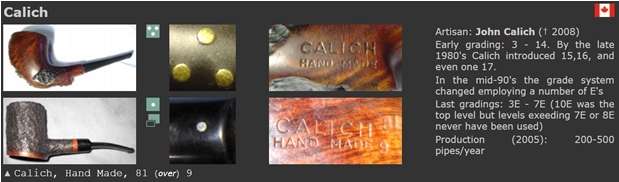
Before I started working on it I did a bit of reading about the brand to remind myself of what I knew of the maker. I turned to Pipephil’s site first (http://www.pipephil.eu/logos/en/logo-c1.html). I did a screen capture of the information on the site. I did a screen capture of the pertinent information and have included it below. I quote the side bar: Artisan: John Calich († 2008) Early grading: 3 – 14. By the late 1980’s Calich introduced 15,16, and even one 17. In the mid-90’s the grade system changed employing a number of E’s. Last gradings: 3E – 7E (10E was the top level but levels exeeding 7E or 8E never have been used) Production (2005): 200-500 pipes/year

I then turned to Pipedia and read the article on the Calich brand to remind myself of the maker (https://pipedia.org/wiki/Calich). I have included it in full below.

John Calich was one of Canada’s finest carvers. He died in July 2008.

John was a full time pipe maker for the last 40 years. Calich pipes were mostly traditional shapes. His signature style is rustication and smooth on the same pipe along with his unique skill to stain a pipe in contrasting colors. He used only top quality Grecian and Calabrian briar. The mouthpieces are hand finished Vulcanite “A”. Each pipe was entirely made by hand. John Calich was featured in the summer 2005 issue of Pipes & Tobacco.

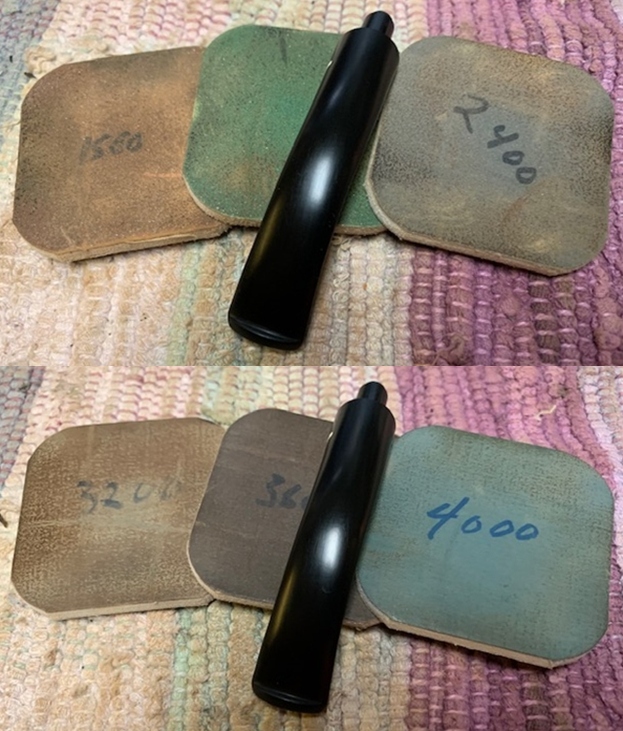
I have always appreciated John’s pipes and have quite a few in my collection. This is the first Second that I have seen and it comes with the story attached from Eric. Now it was time to clean up this pipe and get it restored. I cleaned the pipe with the methodology that Jeff and I have developed. The pipe was in decent condition when I took it out of my box so the cleanup would be straight forward. I took some photos of the pipe before I started my work on it. You can see that it is classic shaped bent billiard with a mix of grain around the bowl. The finish was surprisingly clean and quite pretty. I took some close up photos of the rim top and the stem surface. I wanted to show the condition of the cake in the bowl and look of the rim top. I also took close up photos of the stem to show the deep tooth marks, light oxidation and general condition of the stem surface.  There were deep tooth marks on the top and under side of the stem near the button.    I took a photo of the stamping on the side of the shank. It is readable as noted above. I removed the stem for the shank and took a photo of the bowl and stem to give a picture of what it looked like. I reamed the bowl to deal with a light buildup of cake around the bottom third of the bowl. The rest of the bowl was quite clean. I chose to use a Savinelli Fitsall Pipe Knife. I sanded the inside of the bowl with 220 grit sandpaper wrapped around a piece of dowel. Once I finished the bowl was smooth and clean.  I scrubbed out the internals of the shank and the airway in the stem with alcohol, pipe cleaners and cotton swabs until the pipe was clean.    The flaw on the right rear top edge needed to be dealt with.  This is probably what made the pipe a second. It was not deep but it was bothersome to my touch as I held the bowl. I filled in the flaw with clear super glue.   Once the repair cured is sanded it with 220 grit sandpaper to blend it into the surrounding surface. There was some darkening and nicks on the inner edge of the rim and the rim top. I used a folded to piece of 220 grit sandpaper to give it a slight bevel and smooth out the damage.   I scrubbed the exterior of the bowl with Murphy’s Oil Soap and a tooth brush to remove the grime on the briar. The finish looks very good with good looking grain around the bowl and shank. Once it is polished it will come to life.   I polished the briar with micromesh sanding pads – wet sanding it with 1500-12000 grit sanding pads. I wiped the bowl off after each pad with a damp cloth.   I rubbed the bowl down with Before & After Restoration Balm. I worked it into the surface of the briar with my fingertips to clean, enliven and protect it. I let the balm sit for a little while and then buffed with a cotton cloth and shoe brush to raise the shine.      I set the bowl aside and turned my attention to the stem. I filled in the tooth dents next to the button on both sides of the stem with Black Super Glue and set the stem aside to let the glue cure.   I sanded the stem surface with 220 grit sandpaper to blend in the repairs and remove the light oxidation and to blend the repairs into the surface of the stem. I started the polishing with 400 grit wet dry sandpaper.     I polished the vulcanite with micromesh sanding pads – 1500-12000 grit pads. I wiped it down with a damp cloth after each sanding pad.     This restored Calich Second 7 turned out to be a nice looking pipe. The rich medium brown stain on the pipe worked really well with the polished vulcanite fancy stem. I put the stem back on the bowl and carefully buffed the pipe with Blue Diamond on the buffing wheel. I gave the bowl and stem multiple coats of carnauba wax on the buffing wheel keeping a light touch on the buffing wheel for the bowl. I followed that by buffing the entire pipe with a clean buffing pad. I hand buffed the pipe with a microfiber cloth to deepen the shine. The finished Calich Bent Freehand is shaped to sit comfortably in the hand. Give the finished pipe a look in the photos below. The dimensions of the pipe are Length: 5 ½ inches, Height: 2 inches, Outside diameter of the bowl: 1 ½ inches, Chamber diameter: ¾ of an inch. Now that it is cleaned up it is time to load it up and enjoy a bowl. Thanks for reading this blog and my reflections on the pipe while I worked on it.

Restoring a Odd LH Stern Filtrex Air Cooled Filter Pipe


Blog by Steve Laug

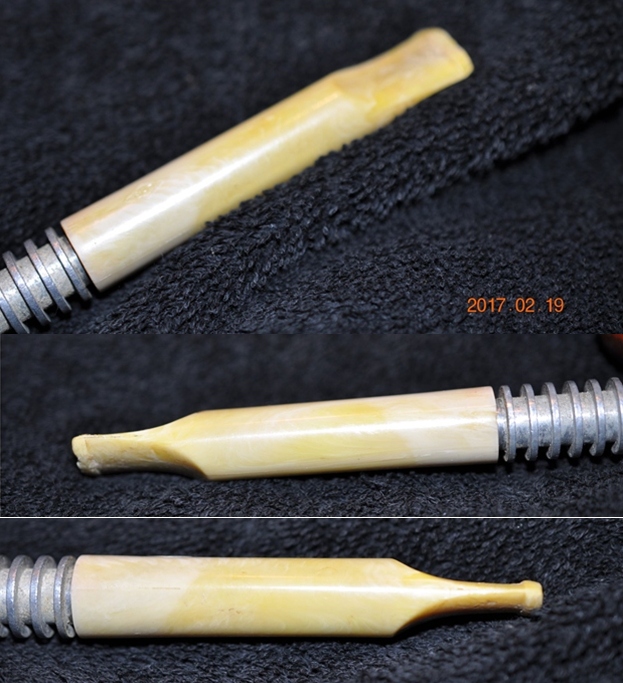
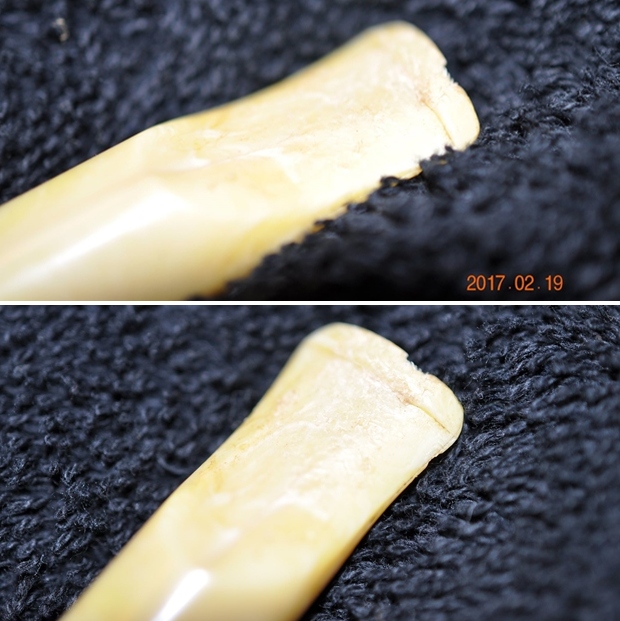
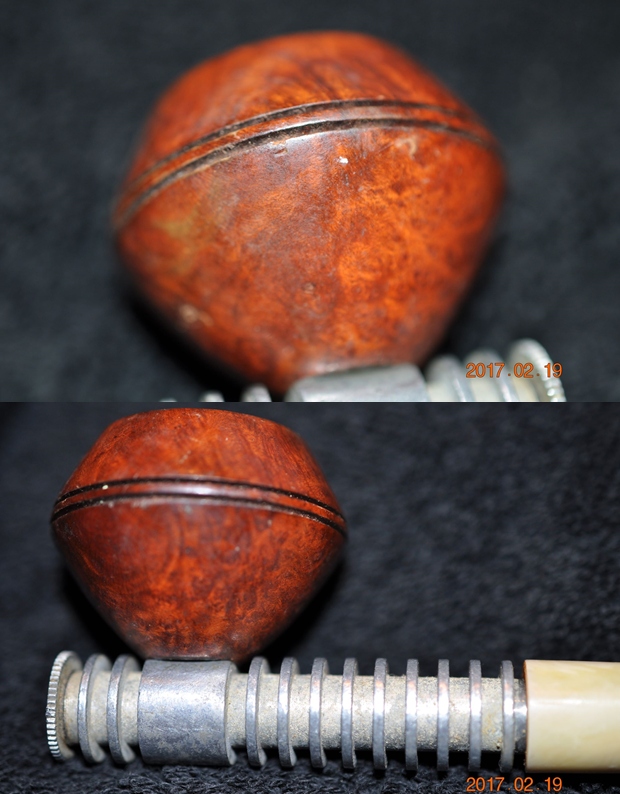
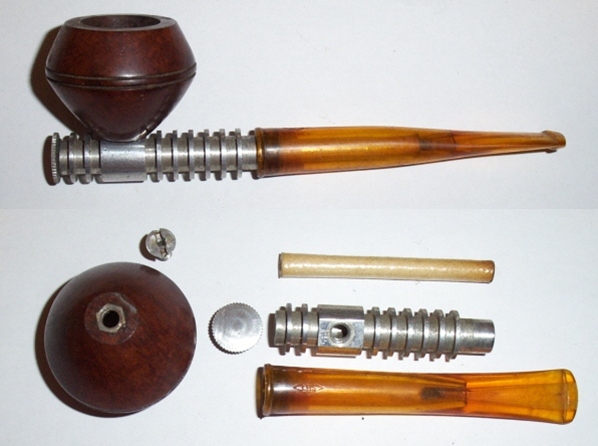
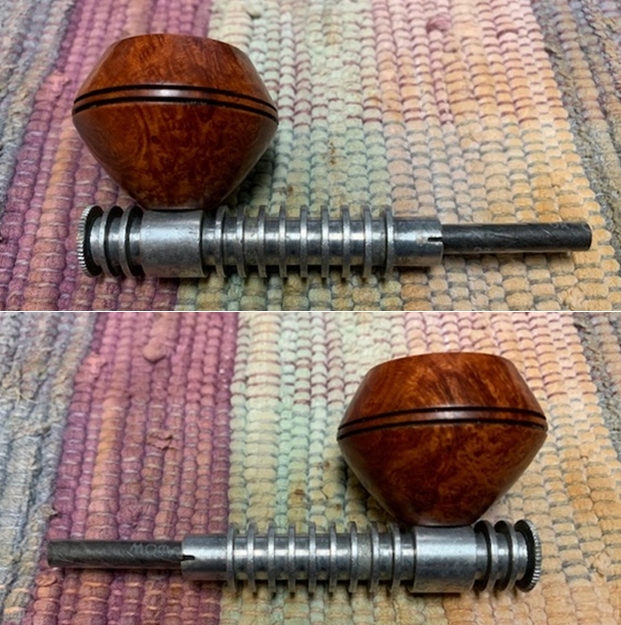
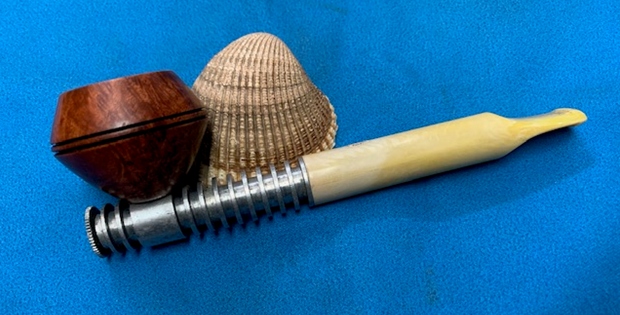
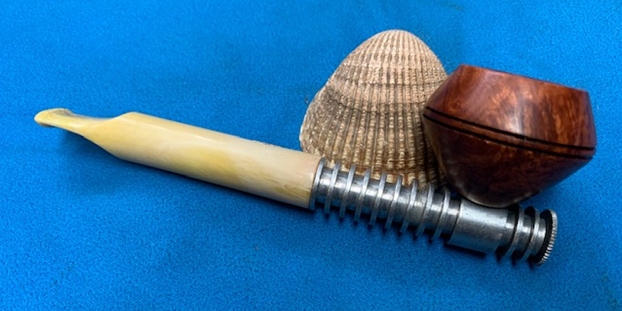
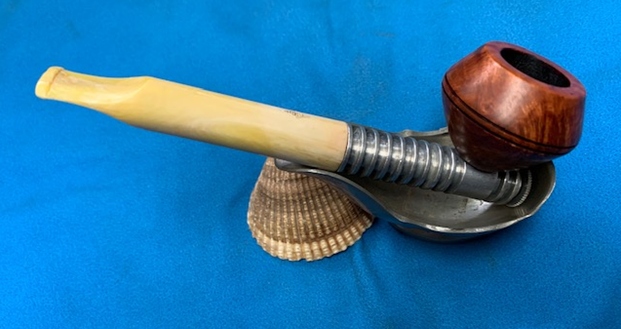
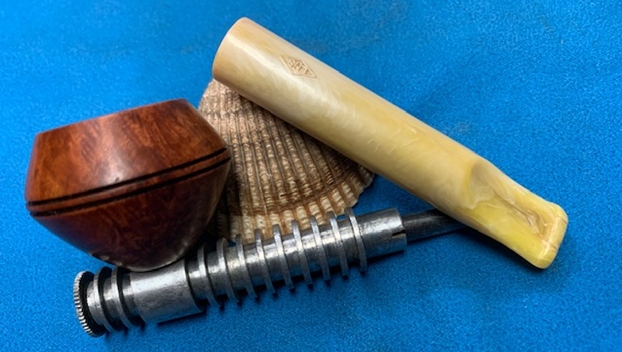
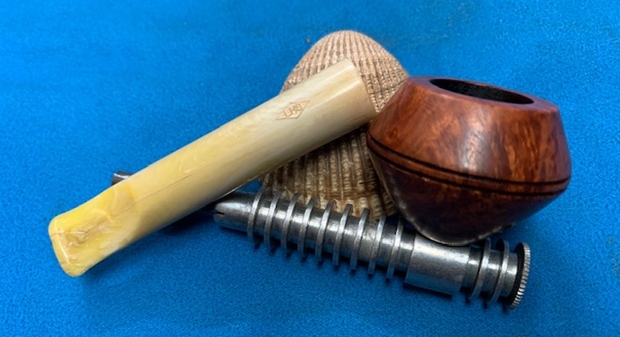
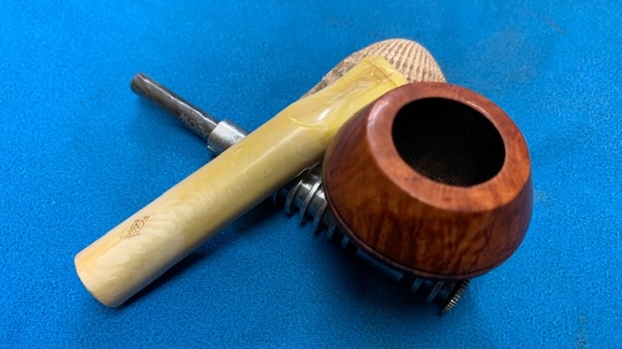
The next pipe on the work table is another odd one that I have looked at several times over the years and then put back in the box of pipes to be restored. We picked it up on EBay in 2017 out of Illinois and it has been sitting here since then. To me it is another pipe that characterizes the perpetual hunt for the perfect flavourful and cool smoke. Today I decided to bring it to the table and work on it. This one is an oddity made by LHS. It has a briar bowl with the screw holding it to the top of the metal tube that forms the shank. The smooth finished bowl is either a bulldog or Rhodesian bowl with the twin rings around the cap. The shank piece is oxidized aluminum with cooling fins and a threaded end cap that is removable for cleaning. The stem is plastic (perhaps nylon or an early acrylic). It was stamped on the stem with the LHS in a Diamond logo. There is no other information on the shank in terms of a line of pipes or a shape number. The pipe was dirty with grime ground into the finish. There was a cake in the bowl and lava overflow and bubbling of the finish on the rim top. The inner edge of the rim appeared to be in okay condition but we would know once it was cleaned. The stem was dirty and deep tooth marks and chatter ahead of the button on both sides. Jeff took photos of the pipe as it was when he received it from the EBay seller. Jeff took photos of the bowl and rim top to give an idea of the thickness of the cake in the bowl and the condition of the rim top. The pipe was a mess and it would take a lot of work. He also took photos of the condition of the stem to give a picture of the shank. He ends with photos of the stem surface. You can see the tooth marks in the stem material on both sides of the stem.   He took a photo of the stamping on the topside of the stem. It is reads as noted above.Jeff took photos of the sides of the bowl and the condition of the exterior of the bowl and the aluminum shank that the bowl is screwed into. It really is an odd looking pipe. I am anxious to see it looks like when I take it apart. The shank end cap has knurled edges and I am wondering if it would be stuck in the shank and unmovable. There appears to be a shellac or varnish coat on the bowl to give it the shine that shows through the grime.    You can see that Jeff was able to remove the cap. The threads appear to be in excellent condition. The stem also came of the metal shank quite easily. Inside was a disintegrating paper filter that was really just a pile of debris. It was a mess.  He also included photos of the shank and stem. Before I started working on it I did a bit of research on the brand to see if I could find anything mentioned in the two sites I regularly check for background information. I turned first to Pipephil’s site (http://www.pipephil.eu/logos/en/logo-lhs.html). There was a great summary of the history of the brand but nothing on this particular unique pipe. I include that summary below:
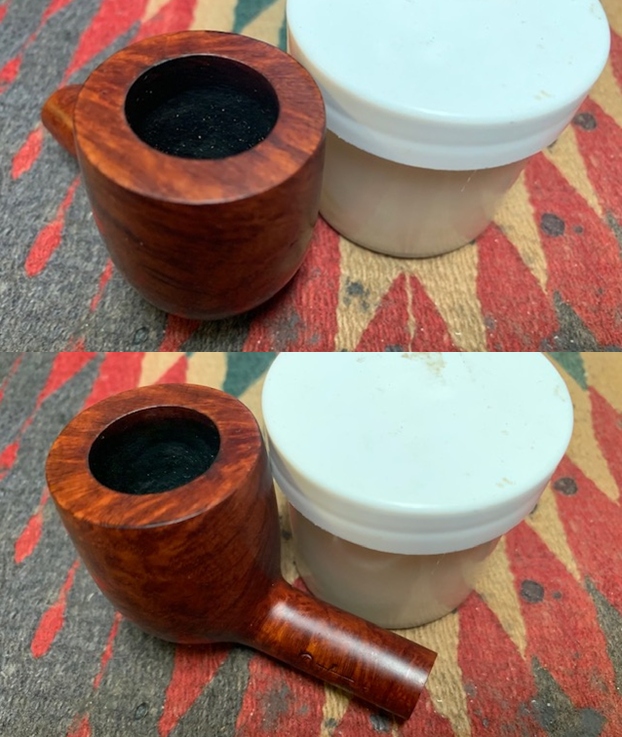
The L&H Stern Inc. was established by Ludwig Stern (1877-1942) in 1911. His brother Hugo (1872-?) acted as vice-president & secretary. The firm moved to 56 Pearl St. Brooklyn in 1920. It closed down in the 1960s. LHS was one of the main pipe suppliers for US soldiers during WWII.

I did a quick look at Pipedia (https://pipedia.org/wiki/LHS) and there was a longer version of the same information as well as lot of photos of the wide range of LHS produced pipes. It is well worth a visit however there was no information on this particular odd pipe. The one thing that was included that proved a gold mine was an LHS Catalogue from 1946. I have included the link as well as a screen capture of the FILTREX pipe and information included from the catalogue (https://pipedia.org/images/b/b8/LHS_Catalog_1946.pdf).

The page contained this information: The Filtrex pipe is probably the coolest smoking pipe yet made. The aluminum cooling coils with highly absorbent filter keeps the pipe cool and dry at all times. A package of 20 Filtrex absorbent filters free with each pipe. The Filtrex pipe can be had with solid rubber bits or “easy grip” plastic bits.

From there I turned to the Smoking metal collectors website to check out the possible information that it would provide (http://www.smokingmetal.co.uk/pipe.php?page=224). It included two listing for the LHS Filtrex pipe stating that it came in two different sizes. I have included that information and photos below.

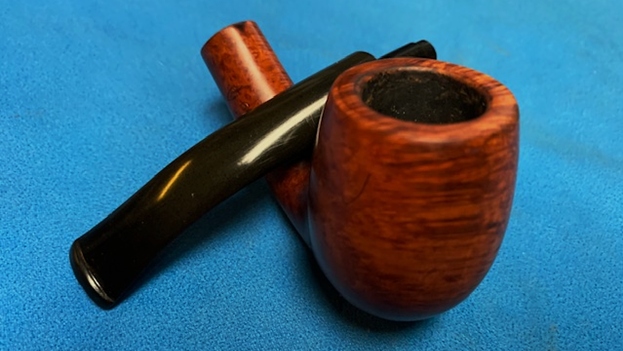
The diameter of this pipe is smaller than the normal Stern. Carries the LHS in a diamond logo on the plastic mouthpiece.  The larger of the two L H Stern pipes, identical except for size.    Now it was time to work on the pipe. Given the horrible condition of the pipe shown above I was wondering what it would look like after the cleanup. Jeff did an amazing job on this one. With odd design combining briar, aluminum and plastic it was a lot of detail work to get it clean. The pipe is similar in design Kirstens. He reamed the bowl with a PipNet Reamer and cleaned it up with a Savinelli Fitsall pipe knife. He cleaned out the internals of the shank and airway in the stem with alcohol, cotton swabs and pipe cleaners. He scrubbed the externals of the pipe with undiluted Murphy’s Oil Soap and rinsed with running water. The pipe looked a lot better than when he started. Internally it was spotless and smelled clean. I took some photos of the pipe before I started my work on it.      I took some close up photos of the rim top and the stem surface. I wanted to show the condition of the rim top and edges of the bowl. The outer edges were in okay condition. The inner edges had nick toward the front of the bowl. There was still some peeling varnish on the rim top. There were nicks and gouges in the top of the rim toward the front. I also took close up photos of the stem to show the deep tooth marks and chatter on the top and underside near the button.    I took photos of the stamping on the top of the stem. It is faint but readable. It is stamped as noted above.   I took a photo of the pipe with the stem removed to give and idea of the proportions of the bowl and shank unit and the stem.I took the pipe apart and took photos of the parts.     I decided to start my restoration on this old timer by addressing the varnish or shellac on the bowl by wiping it down with acetone to remove it. Once the finish was gone the briar looked very good.    I moved on to deal with the damage to the inner edge and the rim top. I sanded the inner edge with a folded piece of 220 sandpaper to bring it back into round.  I filled in the flaws on the rim top with clear super glue. I let it cure and sanded them smooth with a folded piece of 220 grit sandpaper.   I topped the bowl on a topping board with 220 grit sandpaper to remove the repair and blend it into the surface of the rim.   I polished the bowl with micromesh sanding pads. I wet sanded with 1500-12000 grit pads and wiped the rim top off after each pad with a damp cloth. The shine began to look very good. I rubbed the bowl down with Before & After Restoration Balm. I worked it into the surface of the rusticated briar with my fingertips and a horsehair shoe brush to clean, enliven and protect it. I let the balm sit for a little while and then buffed with a cotton cloth and shoe brush to raise the shine.      I set the bowl aside and turned my attention to the aluminum shank. I buffed it with Blue Diamond polish on the buffing wheel to raise a shine. I put a Dr. Grabow Charcoal Filter in the shank. The second half of the filter extends into the stem attachment once I have it done.  I screwed the bowl back on to the shank and took photos of what the pipe look like so far. It is looking pretty good at this point in the process. All that is left is the stem to clean up and polish.   Now it was time to work on the stem. There was a chip out of the outer edge of the button. I filled it in with clear super glue. Once the repair cured I sanded it smooth with 220 grit sandpaper and topped the edge on the topping board to flatten out the outer edge of the button.    I sanded the tooth marks and chatter on the stem surface with 220 grit sandpaper to blend them into the surface of the surrounding vulcanite. I started polishing process with 400 grit wet dry sandpaper.        I used some Rub’n Buff Antique Gold to touch up the LHS Diamond on the top of the stem. I polished the stem with micromesh sanding pads – 1500-12000 grit pads. I wiped it down with a damp cloth after each sanding pad. This restored LHS (LH Stern) Filtrex Air Cooled Filter pipe turned out to be a good looking pipe (I think I can call this oddity good looking). The unique set up of the pipe is still a part of the hunt for the dry, cool smoke. That is what makes it interesting to me. The contrasting brown stains on the bowl worked really well with the polished aluminum shank and polished yellow plastic stem. I put the stem back on the bowl and carefully buffed the pipe without the stem with Blue Diamond on the buffing wheel. I gave the bowl multiple coats of Carnauba Wax. I gave the stem multiple coats of Conservator’s Wax. I followed that by buffing the entire pipe with a clean buffing pad. I hand buffed the pipe with a microfiber cloth to deepen the shine. The finished LHS Filtrex Air Cooled Filter Pipe sits well in the hand and feels great. Give the finished pipe a look in the photos below. The dimensions of the pipe are Length: 5 ½ inches, Height: 1 ¾ inches, Outside diameter of the bowl: 1 ¼ inches, Chamber diameter: ¾ of an inch. This unique piece of American pipe history will be joining my collection of oddities that all were a part of the search for the perfect smoke. Thanks for reading this blog and my reflections on the pipe while I worked on it.
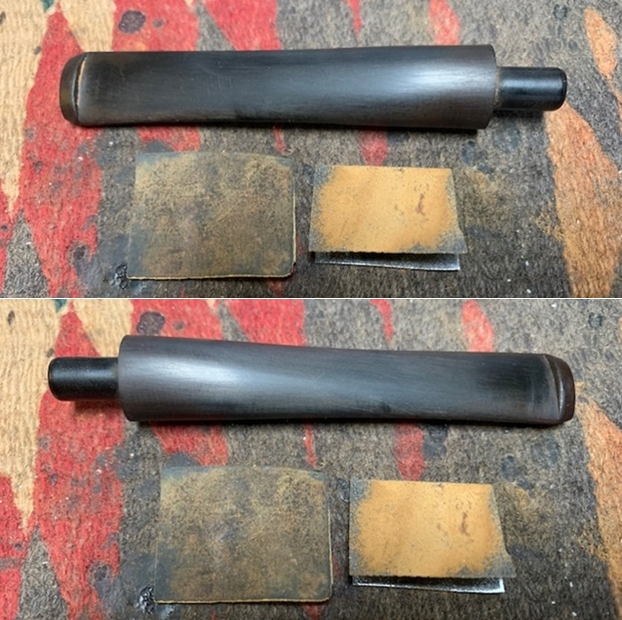
 

Cleaning up a Svendborg Danish Handmade Bark Inka Bent Apple 21


Blog by Steve Laug

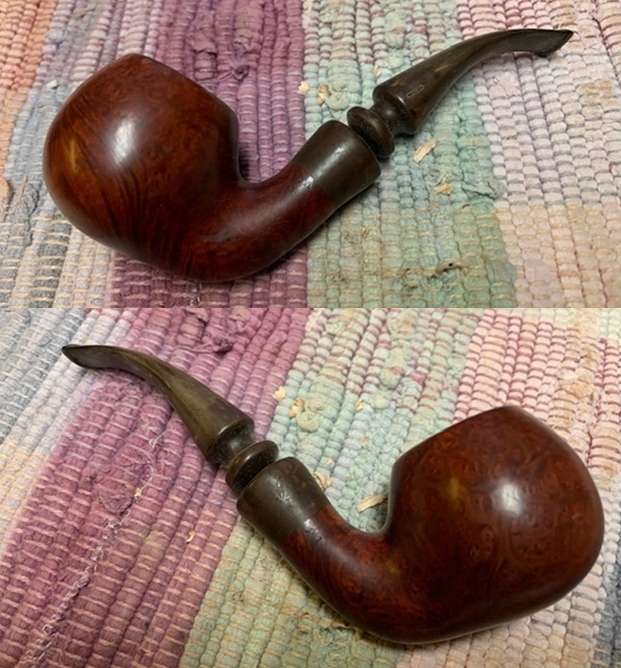
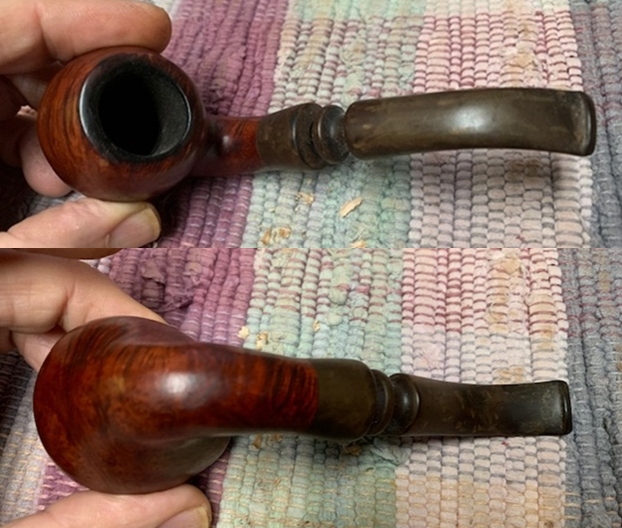
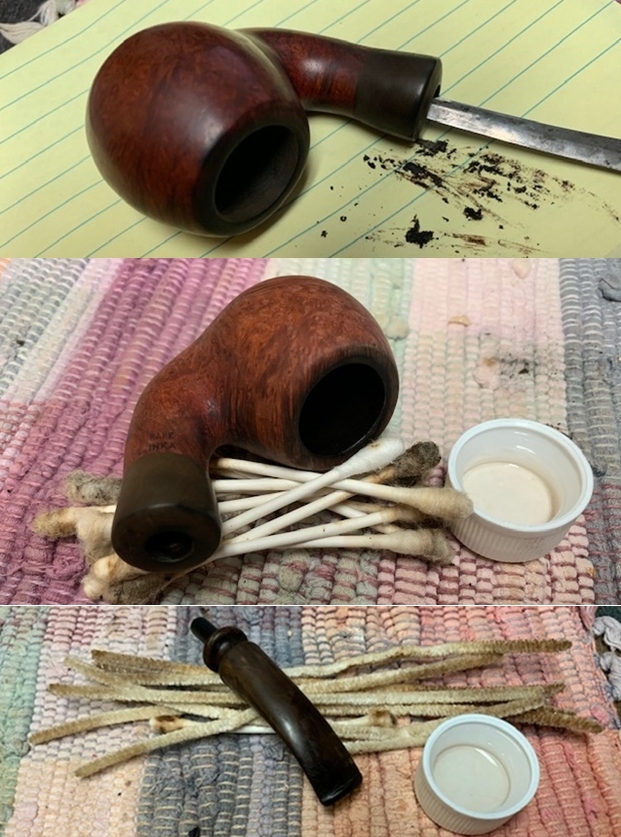
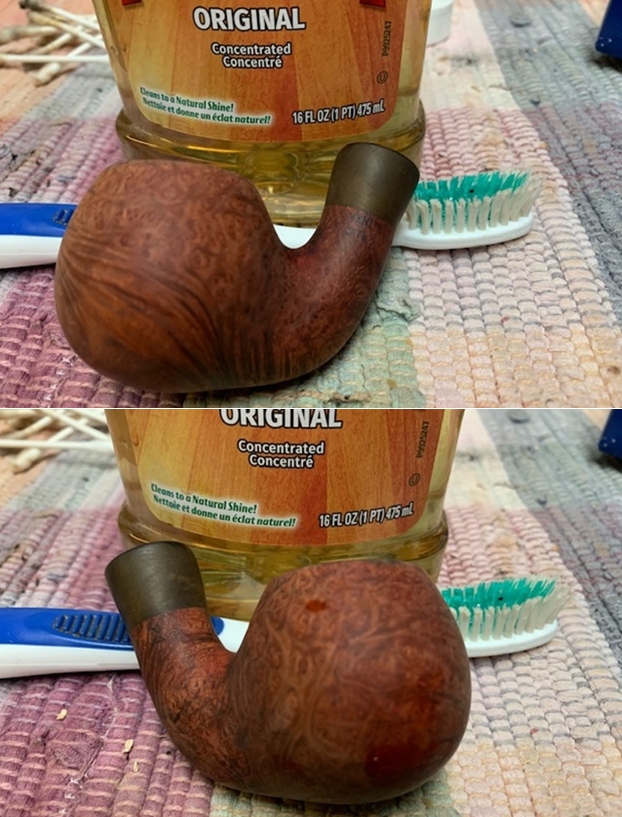
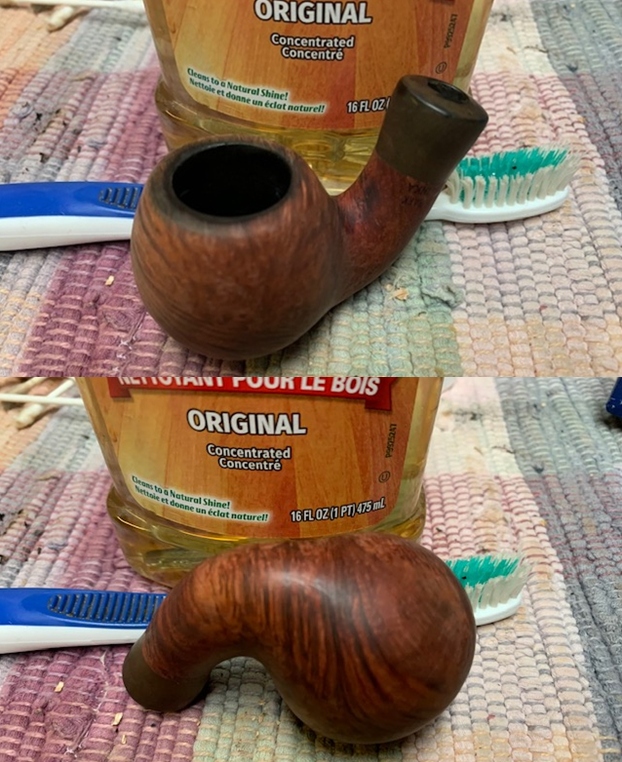
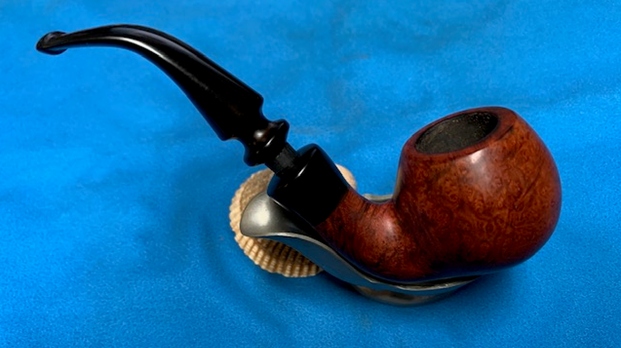
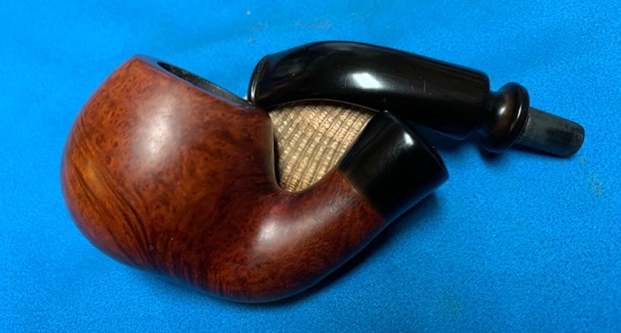
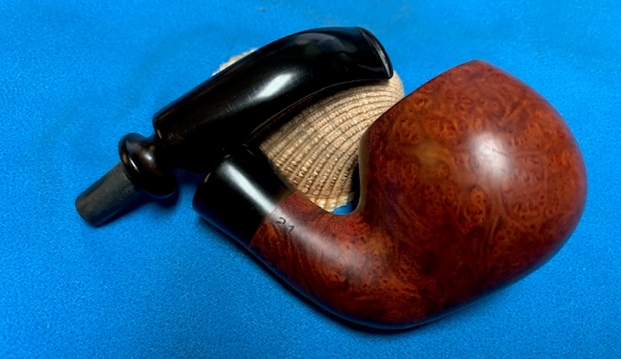
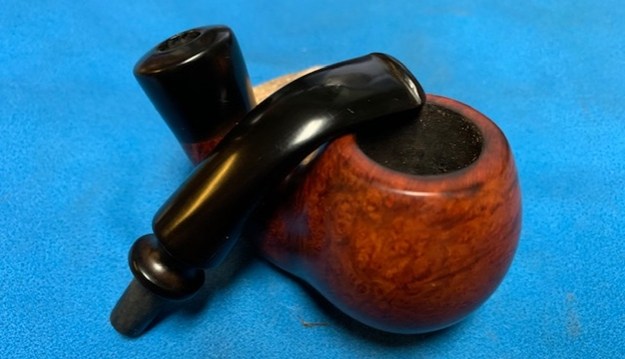
The next pipe on the work table is another one that is a bit of a mystery to me. It is obviously one that I picked up on one of my hunts or in a trade as it has not been cleaned at all. The mystery is that I have no recollection of finding the pipe so I have no way to connect it to a time period. I do know that it has been here for quite a while and I am just now getting to it. I try to eventually work the pipes we find into the restoration queue so that I can keep them moving. This one is a full bent apple shaped pipe. It has some nice mixed grain around the bowl and shank with a vulcanite shank extension. It was stamped on the underside of the shank and reads Svendborg [over] Danish Handmade. On the left side of the shank it is stamped Bark [over] Inka and on the right side is the shape number 21. The finish was dirty with dust and grime ground into finish. There was a cake in the bowl and some lava overflow on the rim top. The inner edge of the rim did not look too bad as far as I could tell. The vulcanite shank extension and stem were both oxidized. The stem was a mess of oxidation, calcification and grime with tooth marks and chatter ahead of the button on both sides. There was very faint Svenborg ∞ (infinity sign) logo on the left side of the fancy saddle stem.

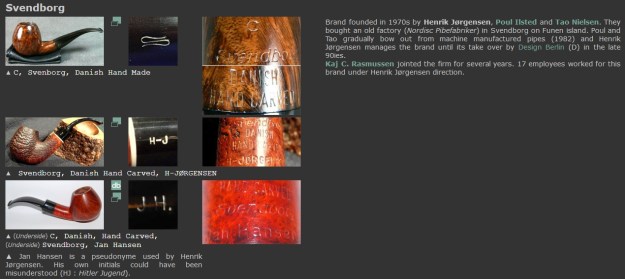
Before I started working on it I did a bit of research on the brand to remind myself of what I knew of the maker. I turned to Pipephil’s site first (http://www.pipephil.eu/logos/en/logo-s14.html). I did a screen capture of the information on the site. I did a screen capture of the pertinent information and have included it below. I copied and pasted the side bar information below:

Brand founded in 1970s by Henrik Jørgensen, Poul Ilsted and Tao Nielsen. They bought an old factory (Nordisc Pibefabriker) in Svendborg on Funen Island. Poul and Tao gradually bow out from machine manufactured pipes (1982) and Henrik Jørgensen manages the brand until its takeover by Design Berlin (D) in the late 90ies. Kaj C. Rasmussen jointed the firm for several years. 17 employees worked for this brand under Henrik Jørgensen direction.

I then turned to Pipedia and found that an article on the brand that was helpful and interesting to read (https://pipedia.org/wiki/Svendborg). I have included the first part of the article below.

Jens Tao Nielsen and Poul Ilsted Bech met each other when working together for Erik Nørding and soon became close friends. Both felt a bit tired to make nothing but bizarre fancy shapes and agreed they wanted to produce pipes of more style and more classicism. They decided to establish their own brand “Tao & Ilsted” – But how to do it?

A good fortune brought them in contact with Henrik Jørgensen, a passionate pipe lover and a wealthy Copenhagen banker who was willing to retire from bank business and change his career to become a pipemaker. The trio joined in 1969 and decided to start a new pipe brand together. Nielsen and Ilsted started to search for a suitable workshop while Jørgensen took care of the finances. In early 1970 the partners found an old, closed down pipe factory in Svendborg on Funen, and bought it shortly after for a mere 16.500 Danish Kroner. It was the earlier Nordic Pipe Factory – Nordisc Pibefabriker – maybe the oldest Danish pipe factory. And now it became the home of Svendborg Piber.

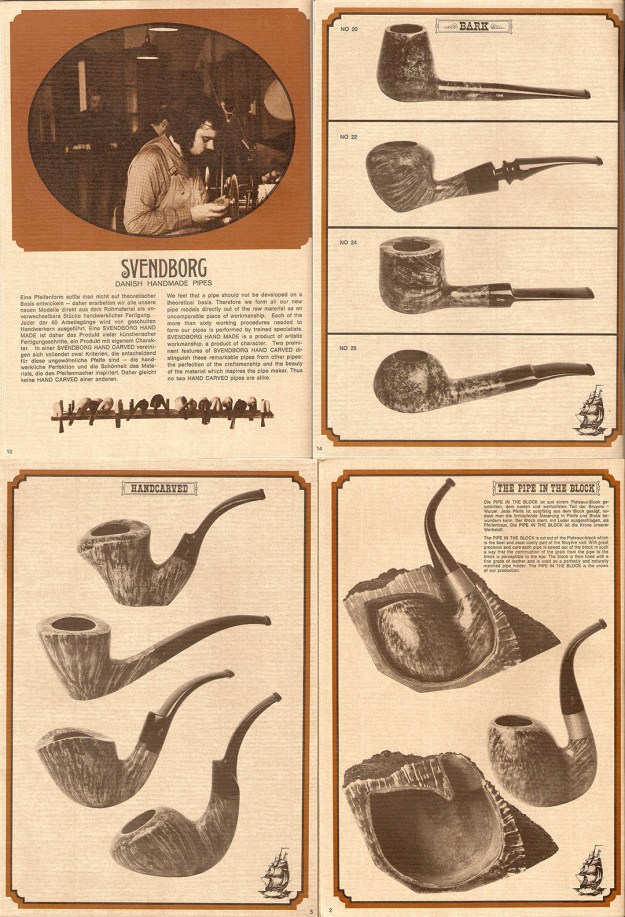
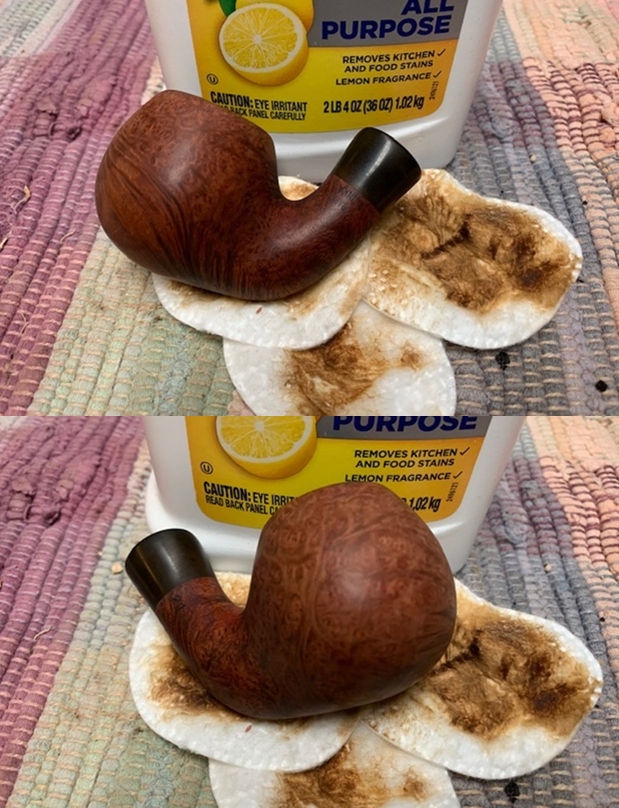
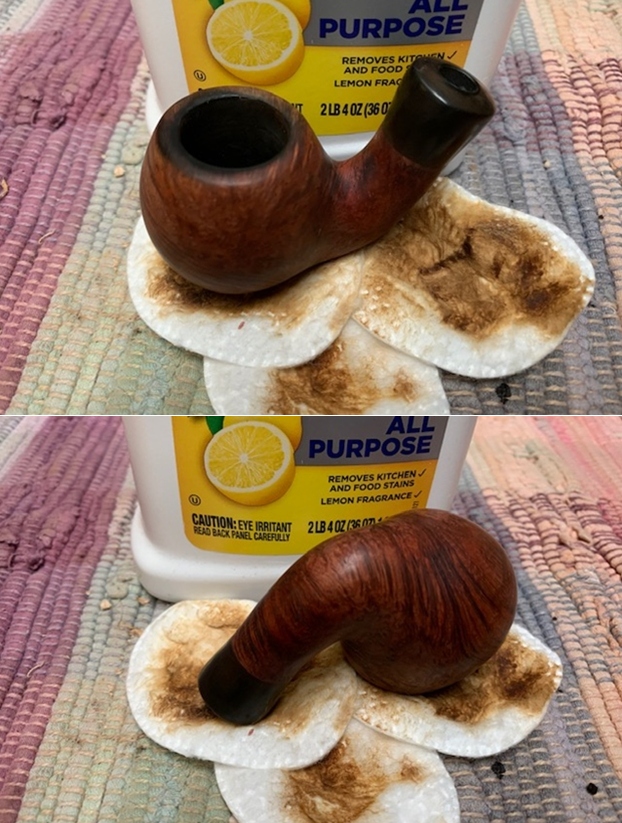
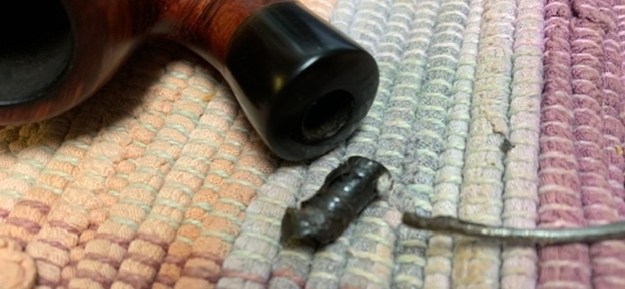
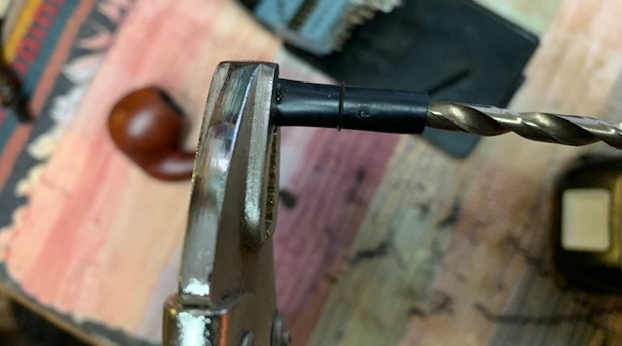
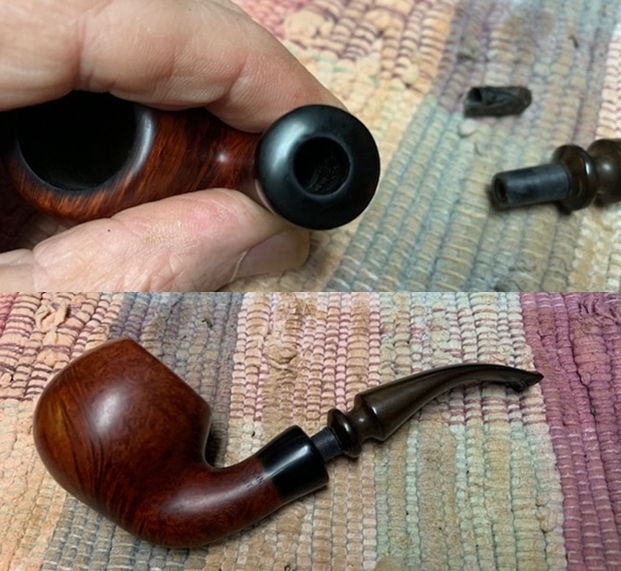
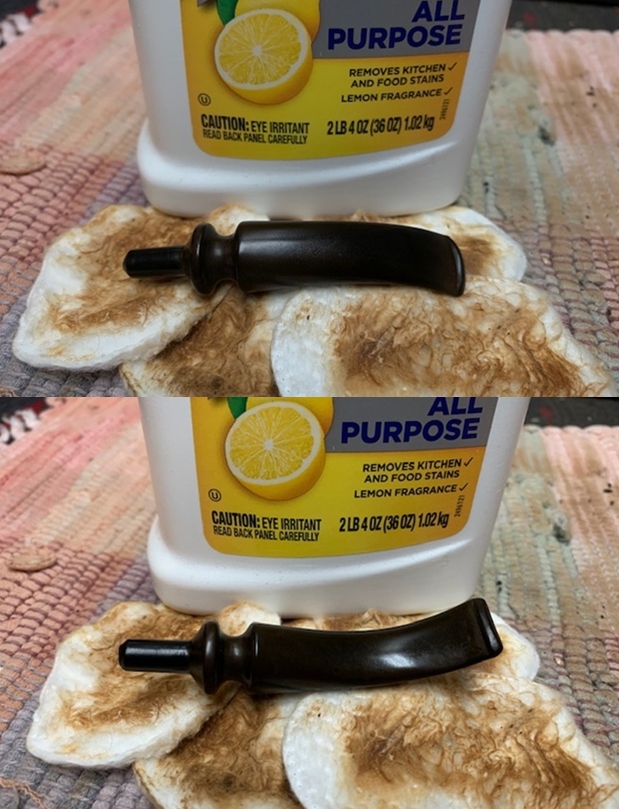
The article also included this set of pages from a catalogue that were interesting as they included the Bark line. The philosophy that drove the brand is also there to read.Now it was time to clean up this pipe and get it restored. I cleaned the pipe with the methodology that Jeff and I have developed. The pipe was a mess when I took it out of my box here so I was curious to see how well it would cleanup. I took some photos of the pipe before I started my work on it. You can see that it is filthy but has some great grain in the blast and on the smooth portions. It has a really nice sandblast that is deep and rugged. I took some close up photos of the rim top and the stem surface. I wanted to show the condition of the cake in the bowl and look of the rim top and lava overflow. I also took close up photos of the stem to show the tooth marks and the calcification, oxidation and generally condition of the stem surface.    I took a photo of the stamping on the underside of the shank and it is faint but readable under the grime. It is stamped as noted above. It is also stamped on both sides of the shank.I removed the stem for the shank and took a photo of the bowl and stem to give a picture of what it looked like. It is a great looking pipe under the grime.I decided to start my restoration by getting rid of the cake in the bowl and cleaning up the rim top. I reamed it with a Savinelli Fitsall Pipe Knife. I sanded the inside of the bowl with 220 grit sandpaper wrapped around a piece of dowel. Once I finished the bowl was smooth and clean. I was glad to see that there was no internal damage.  I scraped the inside of the tenon with a pen knife to remove the buildup of tars. I followed that by scrubbing out the internals of the shank and the airway in the stem with alcohol, pipe cleaners and cotton swabs until the pipe was clean.  I was not able to push a pipe cleaner through the shank to the bowl. There was some obstruction in the way that impeded the airflow.      I scrubbed the exterior of the bowl with Murphy’s Oil Soap and a tooth brush to remove the grime and grit on the briar and the lava on the rim top. The finish looks very good with good looking grain around the bowl and shank. Once it is polished it will come to life. I scrubbed the oxidized shank extension with Soft Scrub All Purpose scrub and cotton pads to remove the oxidization. It took a bit of elbow grease and hard scrubbing to remove the oxidation but it looked very good.      I decided to pause and try to clean out the shank and try to remove what was clogging the airway in the shank. I could not push a pipe cleaner through the shank it was blocked and when I blew air through it and it was very constricted. I probed the shank with a dental pick and was surprised when this piece of plastic wrap came out of the shank. It explained the buildup I took off the tenon when I first clean it. It appeared that something had been glue to the tenon and now I knew what it was.  Without it the airway and flow was unobstructed.With the obstruction out of the airway the tenon was far too loose in the shank. Something would need to be done to make the tenon fit snug in the shank. I decided to make a Delrin sleeve for the tenon. I thought about making Delrin insert for the vulcanite shank extension but decided to do it this way. I drilled out a replacement tenon with a variety of drill bits. I held it in a set of vise grips and opened the tenon.Once it was open I pressed it onto the existing tenon.  The fit on the tenon was perfect and the fit in the shank was much better than originally. I would clean up the new tenon adapter so that the fit in the shank would be snug but smooth.  The tenon was wide open and excellent airflow. I put the newly sleeved tenon in the shank and took a photo of the pipe at this point.   The stem needed to be bent to fit the profile of the bowl and to hang well in the mouth. I put a pipe cleaner in the stem and heated it with a heat gun until the vulcanite had softened. Once it had softened I bent it to the correct angle. I put the stem on the pipe and took a photo of the new bend. I rubbed the bowl down with Before & After Restoration Balm. I worked it into the surface of the briar with my fingertips and a horsehair shoe brush to clean, enliven and protect it. I let the balm sit for a little while and then buffed with a cotton cloth and shoe brush to raise the shine.    I set the bowl aside and turned my attention to the stem. I scrubbed the stem with Soft Scrub polish to remove the oxidation. While it did not take it all out it removed much of the oxidation. I filled in the small tooth dents next to the button with Black Super Glue and set the stem aside to let the glue cure. Once it cured I smoothed it out with a needle file and sharpened the edges of the button.   I sanded the stem surface with 220 grit sandpaper to remove the remaining oxidation and to blend the repairs into the surface of the stem. I started the polishing with 400 grit wet dry sandpaper.I polished the vulcanite with micromesh sanding pads – 1500-12000 grit pads. I wiped it down with a damp cloth after each sanding pad. I used Before & After Pipe Polish – both Fine and Extra Fine to further polish the stem.  I left a little oxidation around the stamp so as not to damage it more. This restored Svendborg Handmade Bark Inka 21 Bent Apple is a nice looking pipe. The contrasting brown stains on the pipe worked really well with the polished vulcanite shank extension and fancy turned vulcanite stem. I put the stem back on the bowl and carefully buffed the pipe with Blue Diamond on the buffing wheel. I gave the bowl and stem multiple coats of carnauba wax on the buffing wheel keeping a light touch on the buffing wheel for the bowl. I followed that by buffing the entire pipe with a clean buffing pad. I hand buffed the pipe with a microfiber cloth to deepen the shine. The finished Svendborg Bent Apple fits nicely in the hand and feels great. Give the finished pipe a look in the photos below. The dimensions of the pipe are Length: 5 ½ inches, Height: 1 ½ inches, Outside diameter of the bowl: 1 ¼ inches, Chamber diameter: ¾ of an inch. If you are interested in carrying on the previous pipe man’s legacy with this pipe send me a message or an email. I have more to work on of various brands. Perhaps one of those will catch your attention. Thanks for reading this blog and my reflections on the pipe while I worked on it.
Restoring a Odd LH Stern System Pipe with a Sump and a Cleanout


Blog by Steve Laug

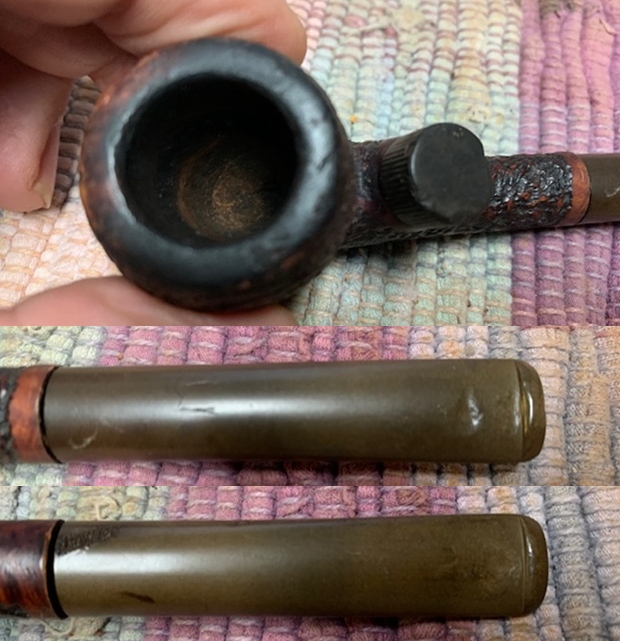
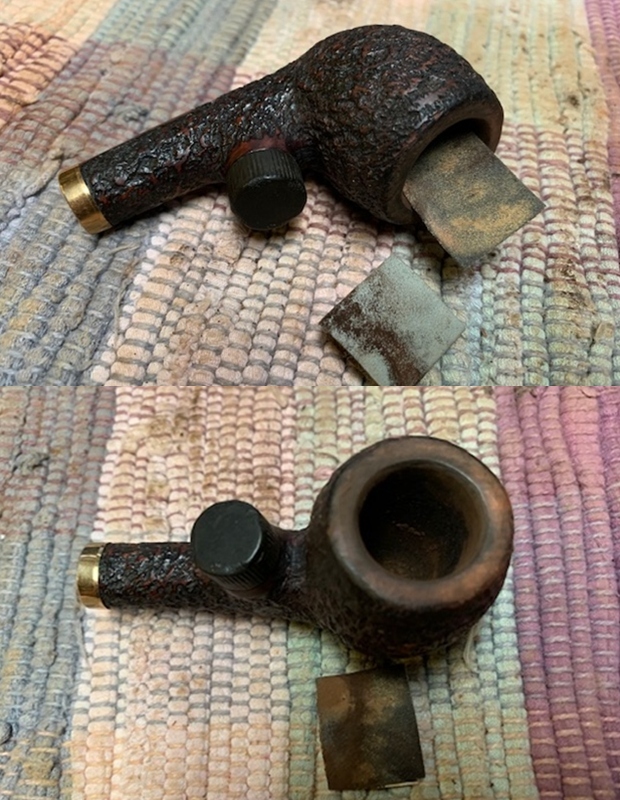
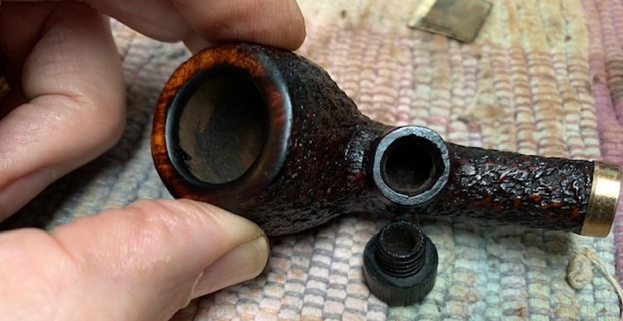
The next pipe on the work table is an odd one that I have looked at several times over the years and then put back in the box or pipes to be restored. We picked it up on EBay in 2016 and it has been sitting here since then. To me it is a pipe that characterizes the perpetual hunt for the perfect flavourful and cool smoke. Today I decided to bring it to the table and work on it. This one is an oddity made by LHS. It has a smooth rim, shank band and panel on the underside of the shank. The rest of the pipe is very nice tight rustication that almost looks like a sandblast. The top of the shank has opening with a threaded vulcanite cap that forms an entry into the airway. It is just ahead of the bowl shank junction. There was a crack in the shank on the right side that had spread enough that the stem no longer fit in the shank. It was stamped on the smooth underside of the shank. It reads Italian Briar [over] LHS in a Diamond (the LHS logo). There is no other information on the shank in terms of a line of pipes or a shape number. The pipe was dirty with grime ground into the finish. There was a thick cake in the bowl and lava overflow on the rim top. The inner edge of the rim was covered so thickly in lava it was hard to know what was underneath. The vulcanite stem was oxidized and had a burn mark on the right underside and deep tooth marks and chatter ahead of the button on both sides. Jeff took photos of the pipe as it was when he received it from the EBay seller. Jeff took photos of the bowl and rim top to give an idea of the thickness of the cake in the bowl and the lava overflow on the rim top. The pipe was a mess and it would take a lot of work. He also took photos of the condition of the stem surface. You can see the oxidation and tooth marks in the stem on both sides as well as the burn mark in the third photo of the stem. He took a photo of the stamping on the underside of the shank. It is clear and readable as noted above.Jeff took photos of the sides of the bowl and the condition of the exterior of the bowl and the vulcanite cap that was on top of the shank. It really is an odd looking pipe. I am anxious to see what the drilling is like once I receive it in Vancouver. The edges on the cap are worn and damaged and I was wondering if it would be stuck in the shank and unmovable. But it seems that with a little work Jeff was able to unscrew it and took some photos of the shank with the cap removed to show me what it looked like.    You can see the threads in the opening and on the cap itself. They are in great condition. What is not visible in the photos to me is critical. What did the airway do with the opening? Did it go straight through or how did enter or leave the opening? I would learn. There was a lot of debris on the cap and in the opening. It was a mess.Before I started working on it I did a bit of research on the brand to see if I could find anything mentioned in the two sites I regularly check for background information. I turned first to Pipephil’s site (http://www.pipephil.eu/logos/en/logo-lhs.html). There was a great summary of the history of the brand but nothing on this particular unique pipe. I include that summary below:

The L&H Stern Inc. was established by Ludwig Stern (1877-1942) in 1911. His brother Hugo (1872-?) acted as vice-president & secretary. The firm moved to 56 Pearl St. Brooklyn in 1920. It closed down in the 1960s. LHS was one of the main pipe suppliers for US soldiers during WWII.

I did a quick look at Pipedia (https://pipedia.org/wiki/LHS) and there was a longer version of the same information as well as lot of photos of the wide range of LHS produced pipes. It is well worth a visit however there was no information on this particular odd pipe.

Now it was time to work on the pipe. Given the horrible condition of the pipe shown above I was wondering what it would look like after the cleanup. Jeff did an amazing job on this one. With odd airway and capped sump it was a lot of detail work to get it clean. He reamed the bowl with a PipNet Reamer and cleaned it up with a Savinelli Fitsall pipe knife. He cleaned out the internals of the shank and airway in the stem with alcohol, cotton swabs and pipe cleaners. He soaked the stem in Before and After Deoxidizer and rinsed off the remnants of the product and cleaned out the airway once more. The pipe looked a lot better than when he started. Internally it was spotless and smelled clean. I took some photos of the pipe before I started my work on it. I took some close up photos of the rim top and the stem surface. I wanted to show the condition of the rim top and edges of the bowl. The outer edges were in okay condition. The inner edges had burn marks on the back half of the bowl and nicks and chipping on the front half. There were nicks and gouges in the top of the rim and it was slightly crowned. I also took close up photos of the stem to show the deep tooth marks, burn mark on the underside as well as the calcification, and oxidation on the stem surface. I took a photo of the stamping on the smooth panel on the underside of the shank is faint but readable. It is stamped as noted above.   I took a photo of the right side of the shank to show the crack in the shank at the stem shank joint. It is ragged and goes into the rustication for about ½ inch.I decided to start my restoration on this old timer by addressing the cracked shank. I went through my thin brass bands and found one that would work well and not interfere with the stamping. I wanted it to be tight enough that it would pull together the cracked surface. I ran a line of clear super glue in the crack and squeezed it together and lined up the band. I pressed the band in place on the shank and the crack disappeared.     I moved on to deal with the damage to the inner edge and the rim top. I sanded the edge with a folded piece of 220 sandpaper to bring it back into round. I gave it a light bevel to take care of the burn damage. Because the rim top had a slight crown I could not top it on the topping board to I sanded the rim top carefully with the same piece of folded sandpaper to remove the damage to the surface.  I polished the rim top and edges with micromesh sanding pads. I wet sanded with 1500-12000 grit pads and wiped the rim top off after each pad with a damp cloth. The shine began to look very good.     I wanted to get a sense of the airflow from the bowl to the shank so I unscrewed the cap from the top of the shank. It turns out that the shank has a sump under the cap for capturing tars and liquid much like a Peterson System pipe. The airway enters the top of the sump at the bottom of the threads toward the bowl and leaves at the top just below the threads on the shank end. It is ½ inch deep from the top of the opening to the bottom of the shank. With the cap on the shank is a little over an inch thick at that point from the top of the cap to underside of the shank. I inserted a pipe cleaner into the airway on each side of the sump to show the flow. If you can picture it the shape is like a U. The system is in essence a sump and a clean out. I rubbed the bowl down with Before & After Restoration Balm. I worked it into the surface of the rusticated briar with my fingertips and a horsehair shoe brush to clean, enliven and protect it. I let the balm sit for a little while and then buffed with a cotton cloth and shoe brush to raise the shine.         I set the bowl aside and turned my attention to the stem. I “painted” the surface of the stem to lift the tooth marks on both sides of the stem. I filled in the remaining tooth marks and the burn mark on the underside of the stem with black super glue.    Once the repairs cured I used a needle file to flatten the repaired areas and to recut and shape the edge of the button on both sides.    I sanded the repair with 220 grit sandpaper to blend them into the surface of the surrounding vulcanite. I started polishing process with 400 grit wet dry sandpaper.      I polished the vulcanite with micromesh sanding pads – 1500-12000 grit pads. I wiped it down with a damp cloth after each sanding pad. I used Before & After Pipe Polish – both Fine and Extra Fine to further polish the stem.      This restored LHS (LH Stern) Italian Briar System Pipe is a good looking pipe (I think I can call this oddity good looking). The unique sump and clean out system makes it interesting to me. The contrasting brown stains on the pipe worked really well with the polished vulcanite stem. The brass band I put on the cracked shank was a great contrast with the briar and the black vulcanite. I put the stem back on the bowl and carefully buffed the pipe with Blue Diamond on the buffing wheel. I gave the bowl multiple coats of Conservator’s Wax and the stem multiple coats of carnauba wax on the buffing wheel keeping a light touch on the buffing wheel for the bowl. I followed that by buffing the entire pipe with a clean buffing pad. I hand buffed the pipe with a microfiber cloth to deepen the shine. The finished LHS Italian Briar sits well in the hand and should be an interesting smoke. Give the finished pipe a look in the photos below. The dimensions of the pipe are Length: 5 ½ inches, Height: 1 ½ inches, Outside diameter of the bowl: 1 ¼ inches, Chamber diameter: ¾ of an inch. This unique piece of American pipe history will be joining my collection of oddities that all were a part of the search for the perfect smoke. Thanks for reading this blog and my reflections on the pipe while I worked on it.