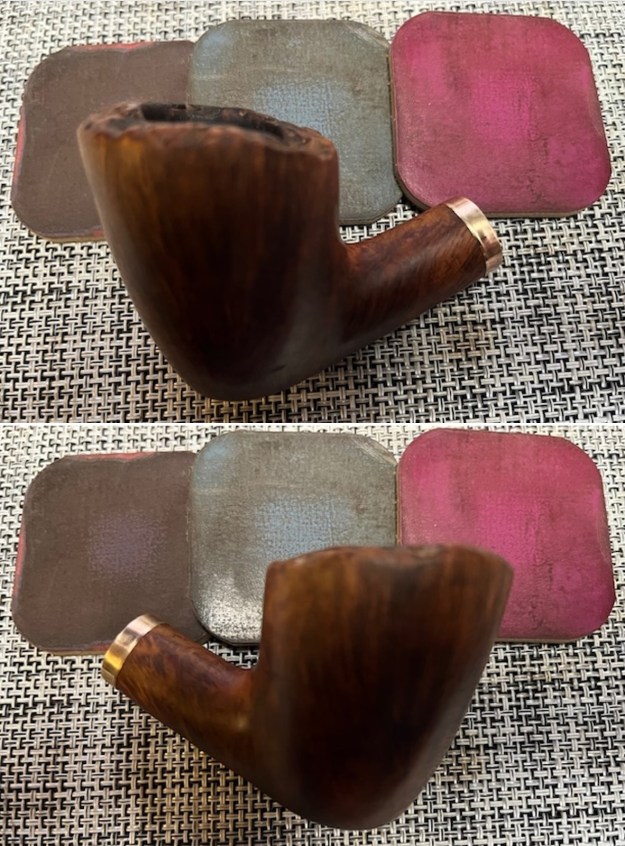
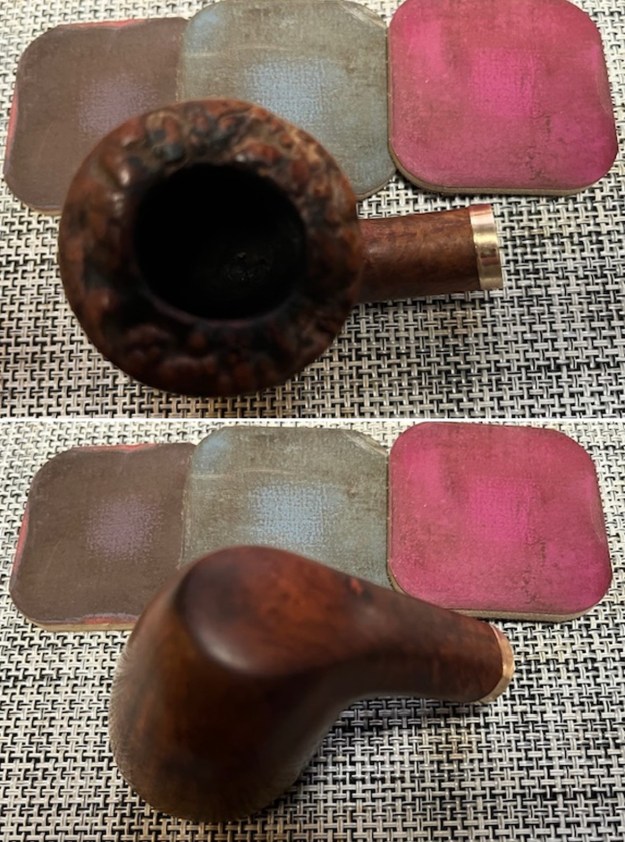
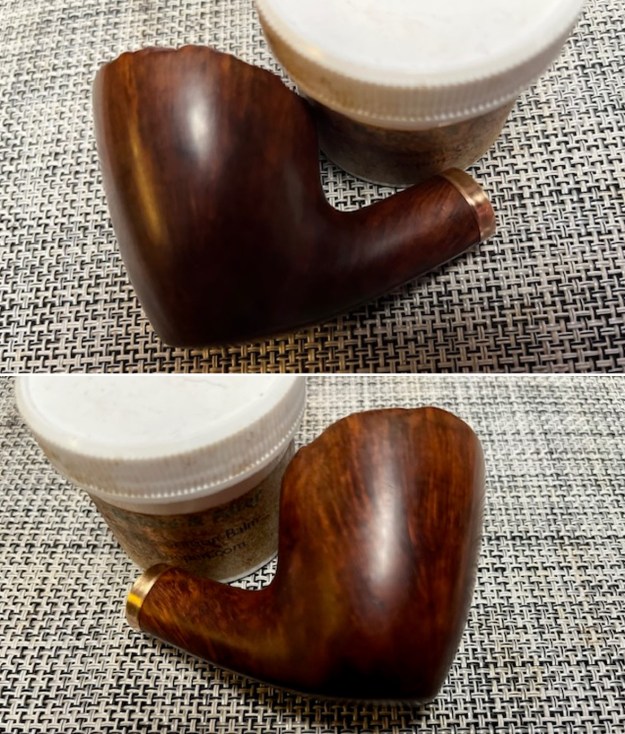
Tag Archives: polishing a vulcanite stem

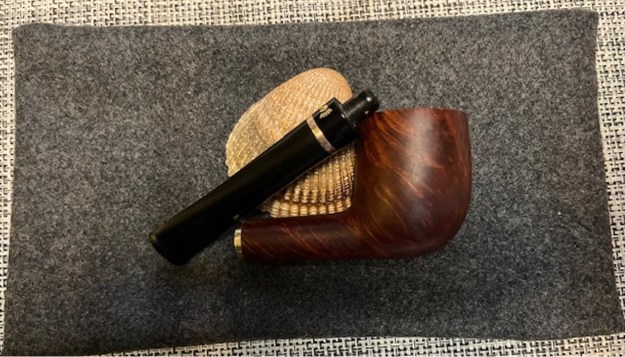
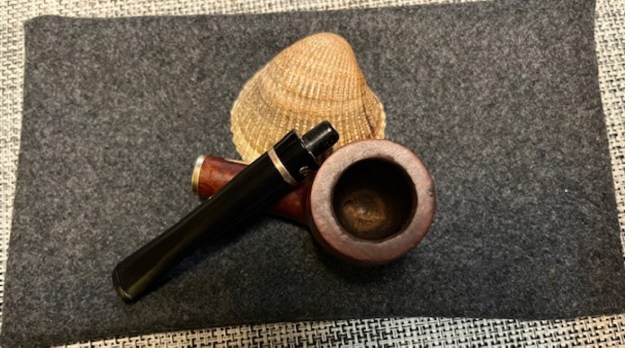
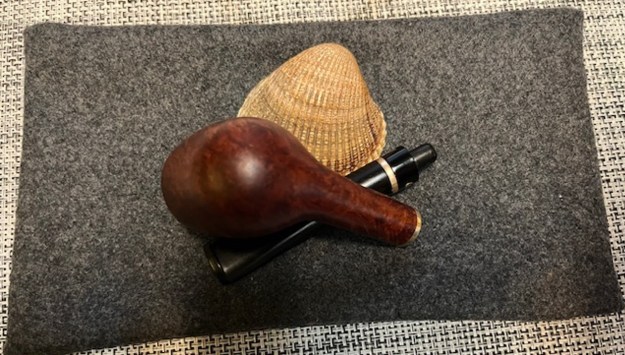
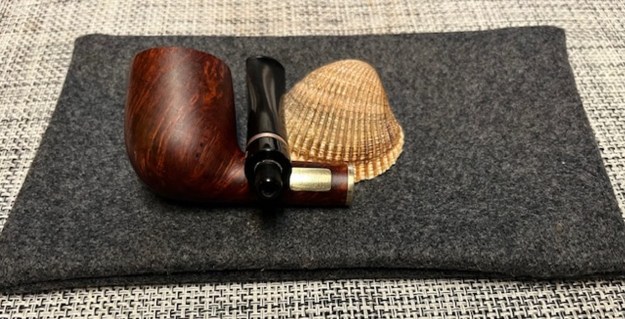
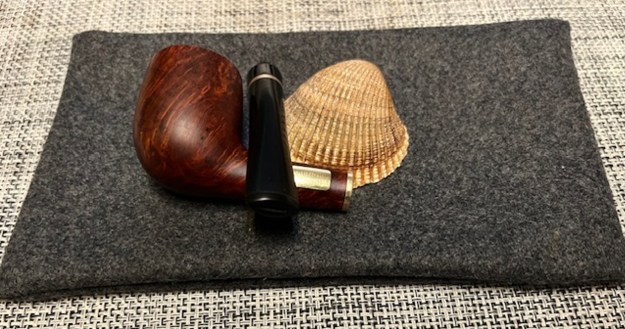
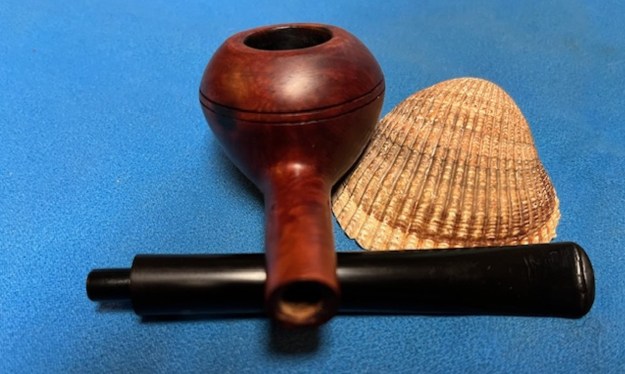
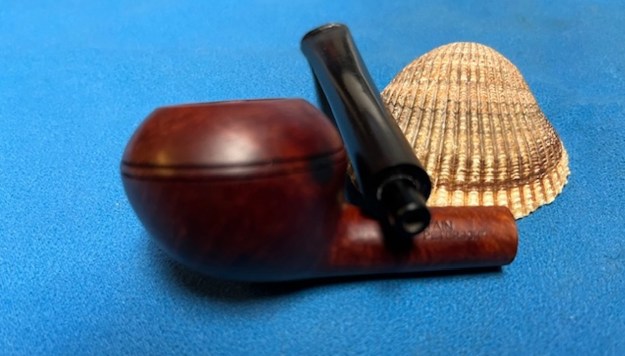
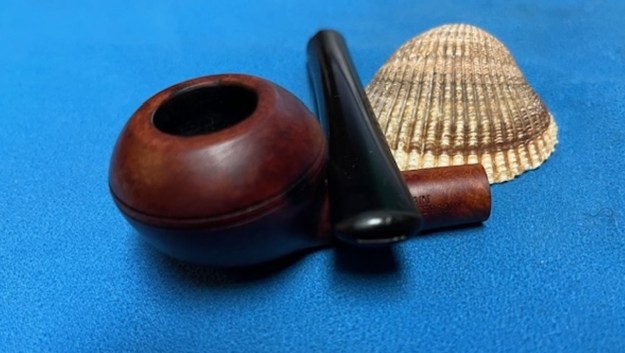
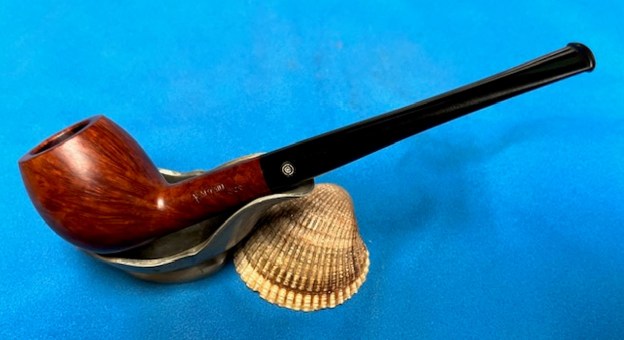
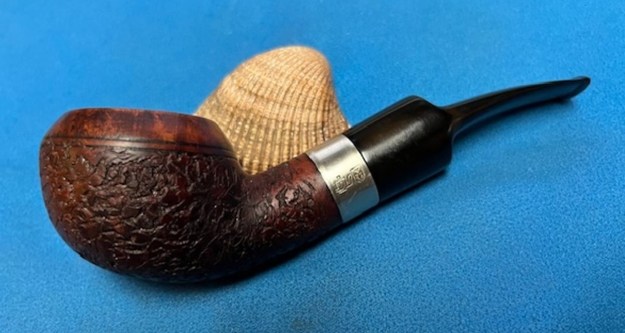
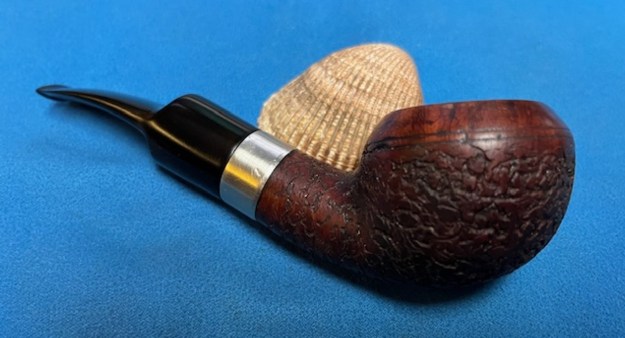
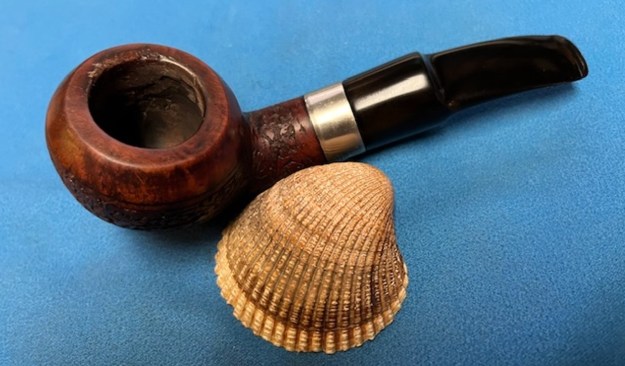
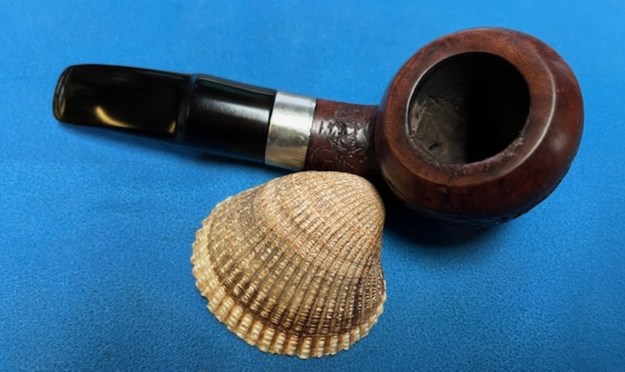
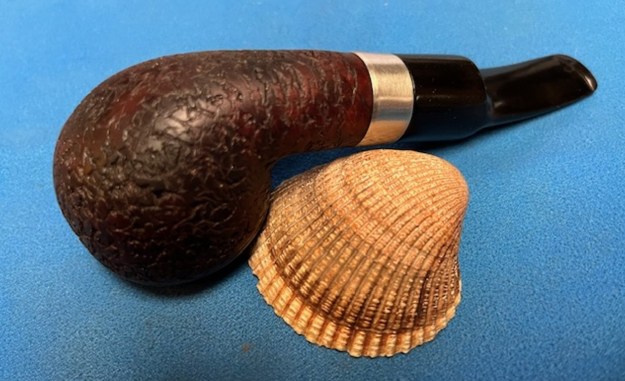
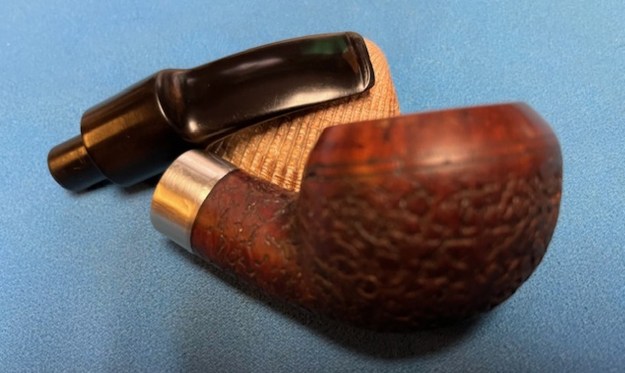
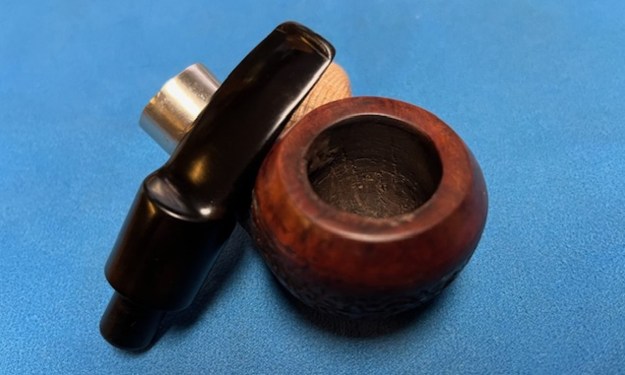
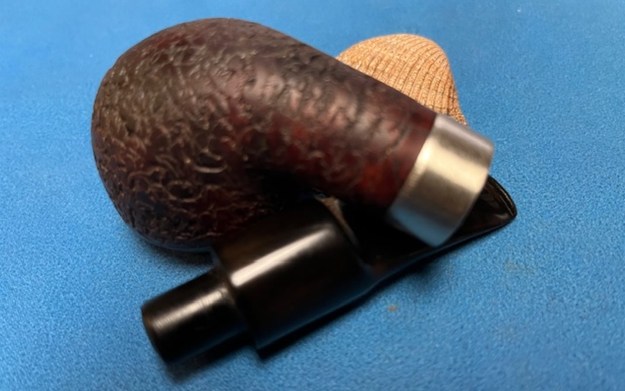
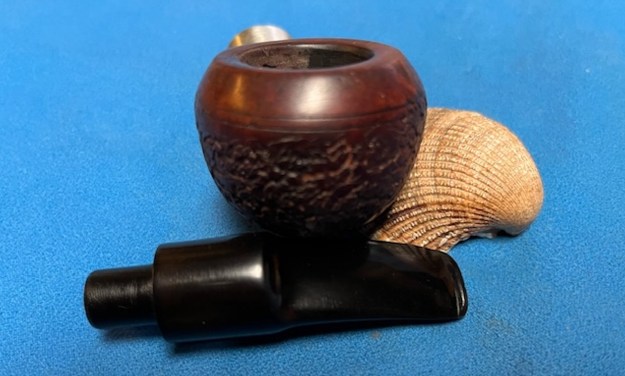
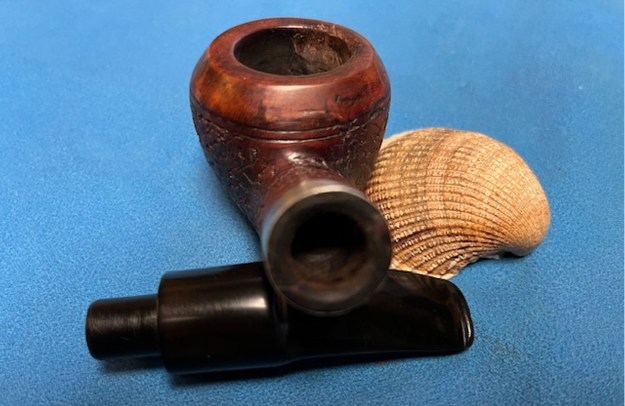
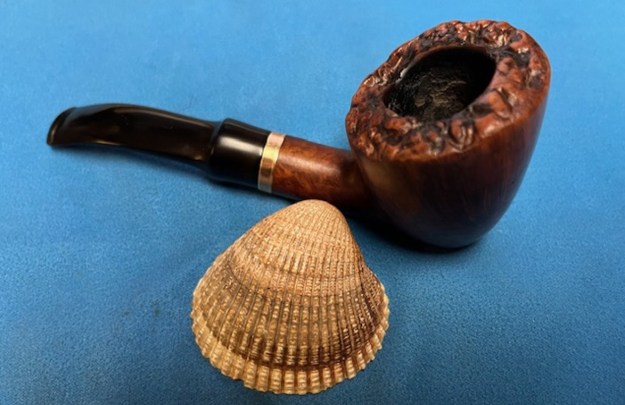
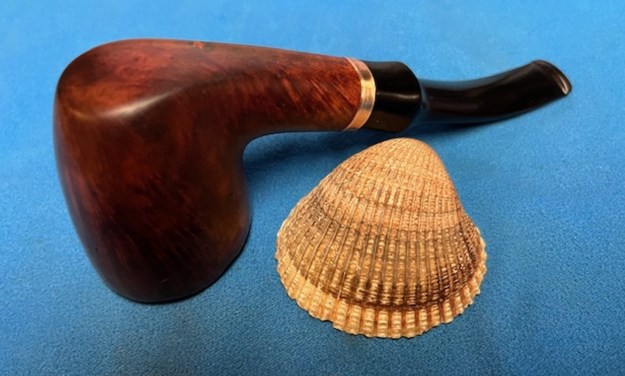
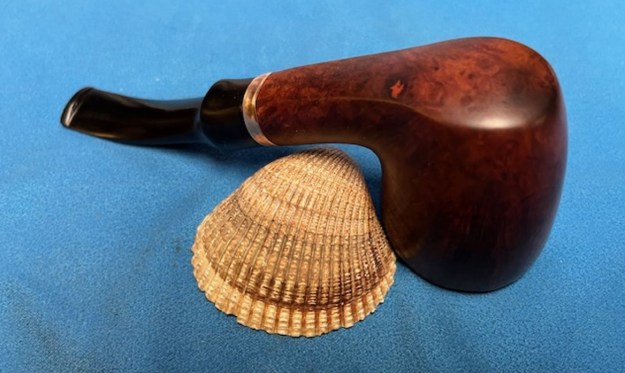
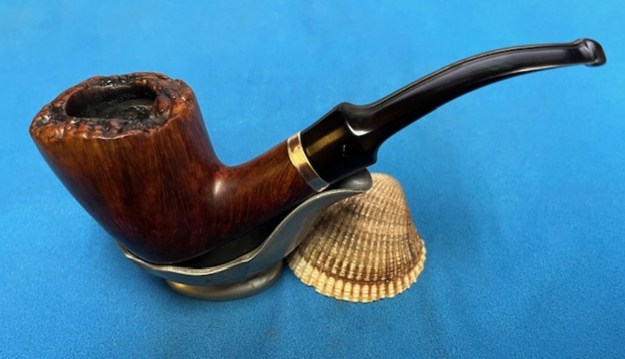
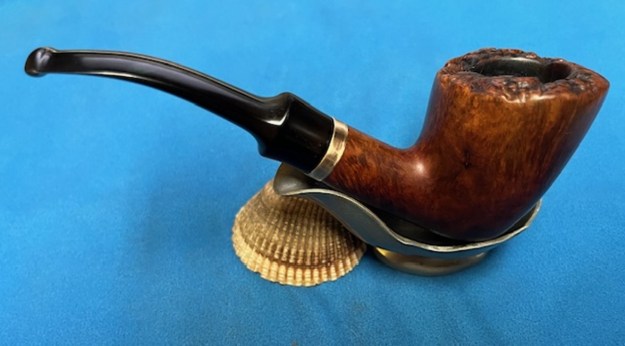
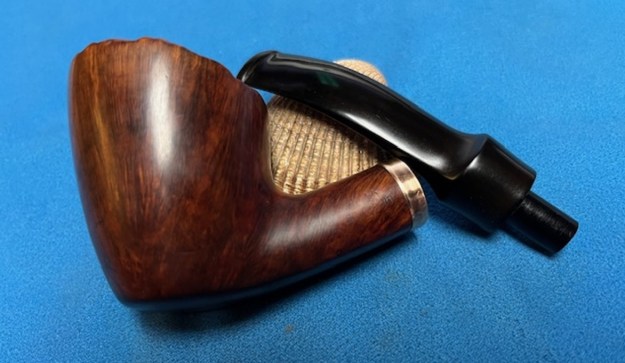
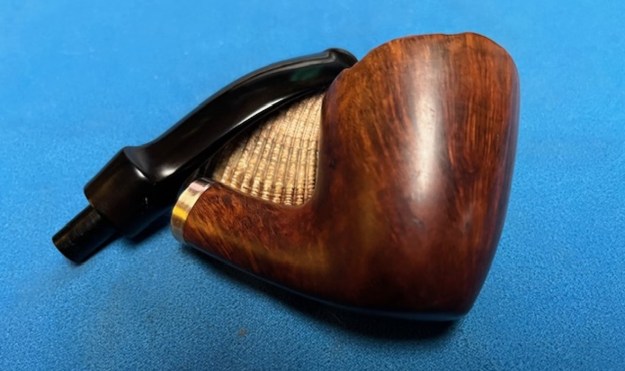
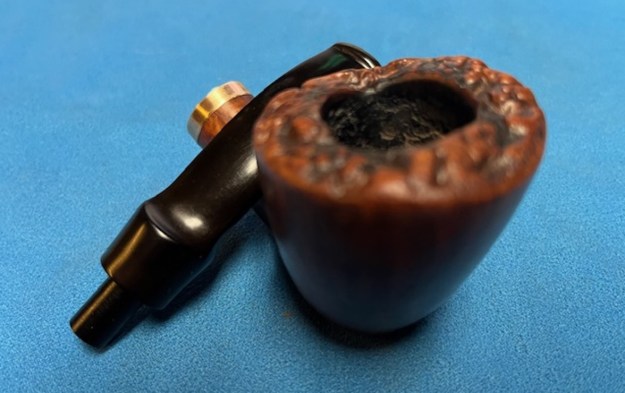
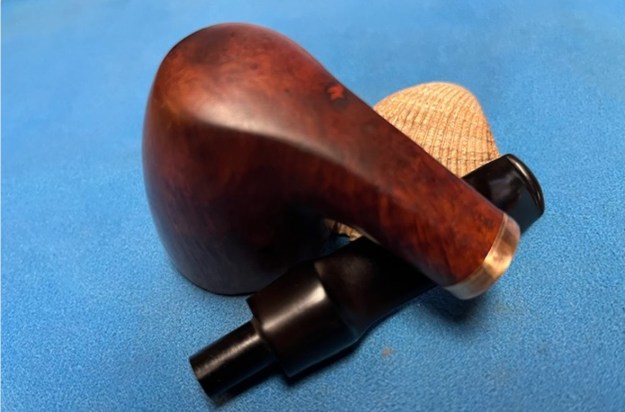
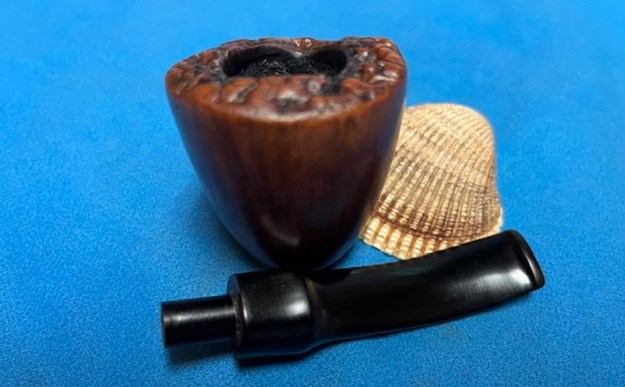
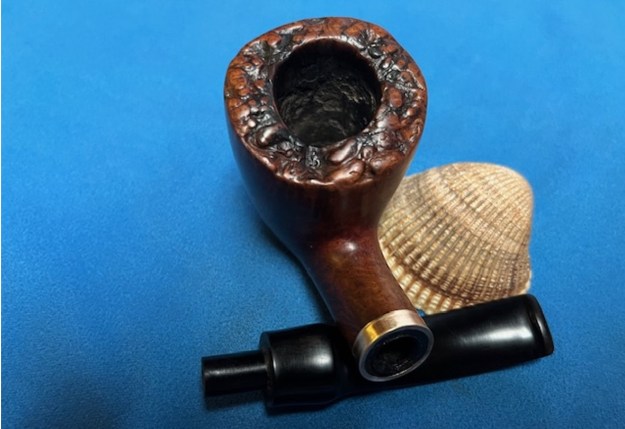
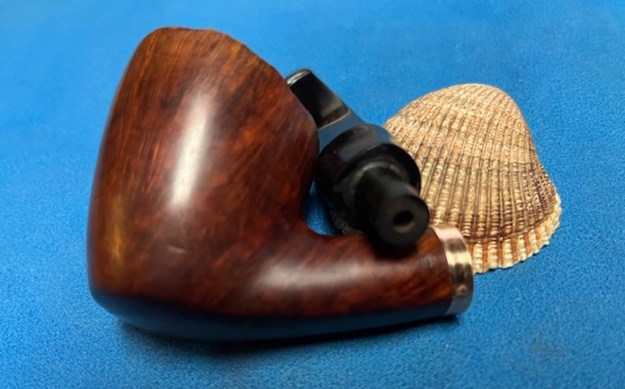
Another Dominik Sandblast Bamboo with a smooth rim top with spots of Plateau


Blog by Steve Laug

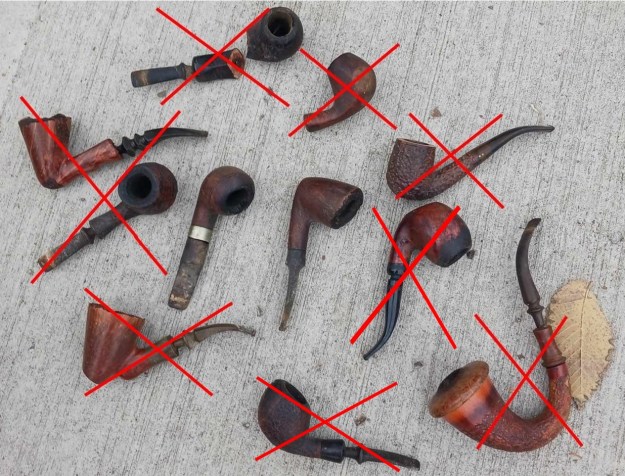
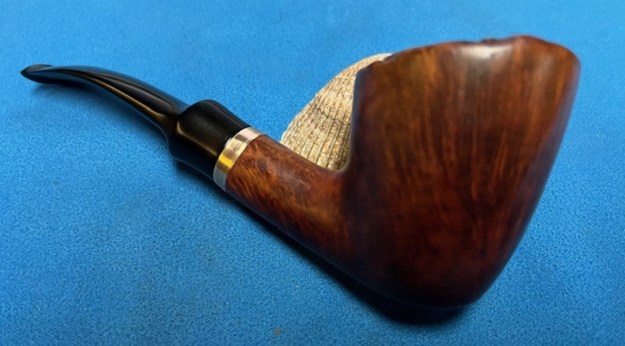
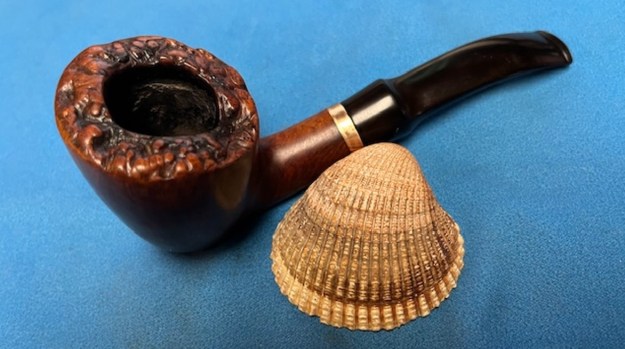
The pipes that I will be posting over the next few days from this lot that Jeff and I purchased are fascinating pipes. They were quite stunning but altogether unknown to me. I did not recognize the name of the maker. All the pipes were unsmoked other than the Stanwell Pipe of the Year. We purchased them from a fellow in Kalundborg, Denmark on 02/03/2024. He said that they were all unsmoked and when they arrived they were. They were relatively clean and merely dusty with a little light debris on the stem surfaces. The shapes, sandblasts, shank extensions, and stems were all unique and very well done. The pipes were very beautiful and I could not wait for Jeff to refresh them a bit and get them up to me to do my part. Here are some of the photos of the pipes that we purchased provided by the seller.Here is a photo of the pipe that was sent to us by the seller. It is the one that I chose to work on next. It is a beautiful sandblast Dublin with a smooth rim top with spots of plateau. It has a bamboo shank with white acrylic spacers on each end. It was lightweight with a vulcanite saddle stem. The blast is very well done. The stem is also well cut and other than dusty and lightly oxidized is in great condition. The bowl is unsmoked. The bowls all have a carbon bowl coating that is well done on the walls of the bowl. The pipe is stamped on the underside of the bamboo shank with the etched name of Dominik. I am looking forward to working on it as it will take very little work and will be a fun break. I am including what I learned when I worked on the first pipe of this brand. When I started I knew nothing about the carver other than he did beautiful work so I turned to Pipedia to see what I could find (https://pipedia.org/wiki/Dominik_Pipes). There was a listing for Dominik Pipes. He is a Polish Carver and I have included the short article in its entirety below.
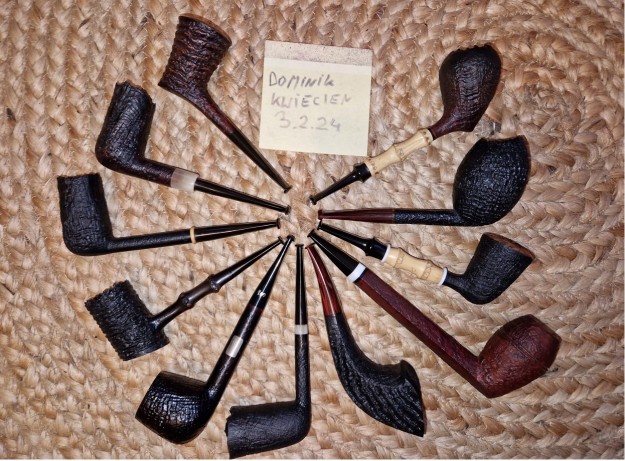
Dominik pipes are made by Dominik Kobryń. His journey with pipes began in 1993 at a flea market, where he bought his first pipe. From that time his collection has grown a lot. He made his first pipe in December 2016. Dominik credits Wojtek Pastuch as his mentor, and is very grateful for that!

Dominik uses briar from Mimmo Romeo. He makes his stems by hand, mainly from Ebonite and Cumberland rods, but occasionally acrylic. He focuses on unique pipes that are well done technically.

From there I clicked on a link at the bottom of the page that took me to his Pipe sales website (http://www.dominikpipes.com/). Interestingly the site contained almost word for word the information that I had found on Pipedia.

My name is Dominik Kobryń. My journey with pipes began in 1993 on a flea market, where I bought my first pipe. From that time my collection has grown a lot.

I made my first pipe in December 2016. Wojtek Pastuch has taught me a lot about pipemaking and I am very grateful for that!

I use briar from Domenico Romero (Mimmo). I make stems by hand, mainly from ebonite rods and cumberland, sporadically acrylic. I pay much attention to create unique pipes, well done technically.

If you are interested in my work do not hesitate to contact me.

I have been following Wojtek Pastuch for some time now and really like what he is doing. It is fascinating that Dominik considers him his mentor. In chatting with Jeff, he sent me a link to Dominik’s Facebook page (https://www.facebook.com/dominikpipes). It is worth a look to see his current pipes.

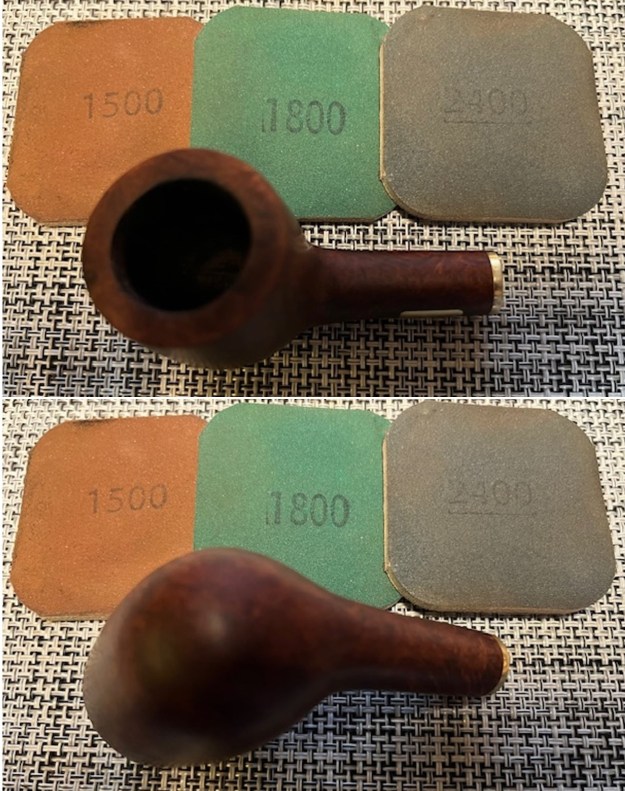
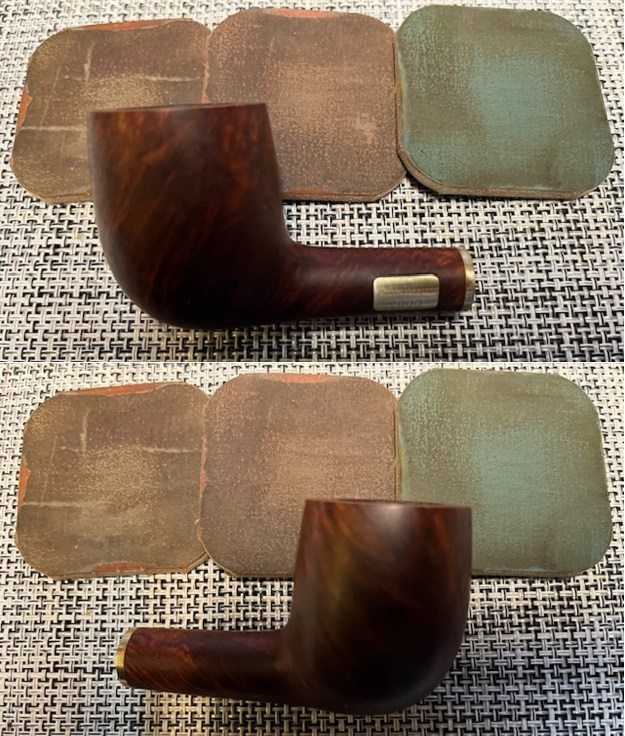
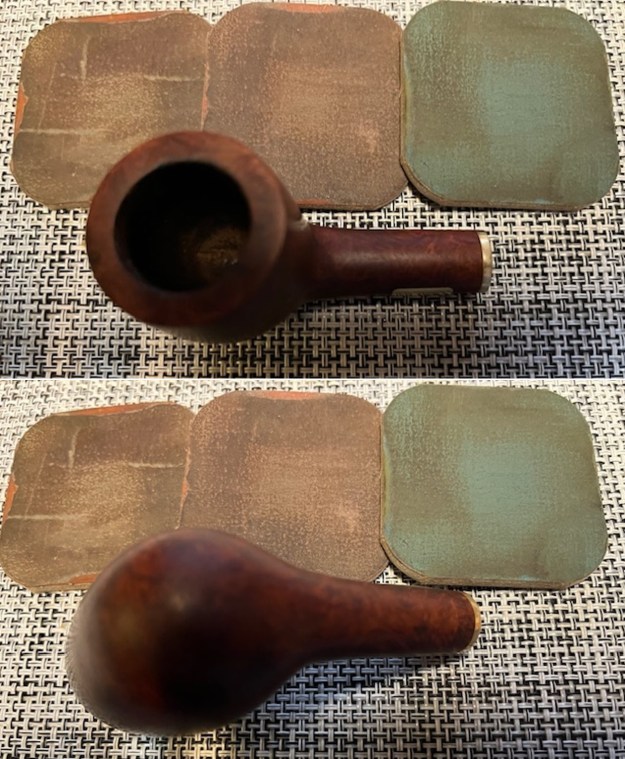
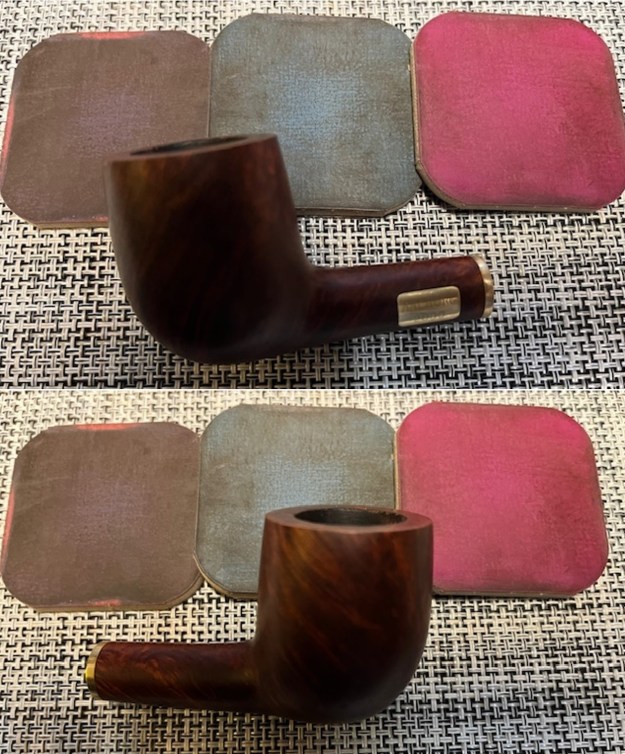
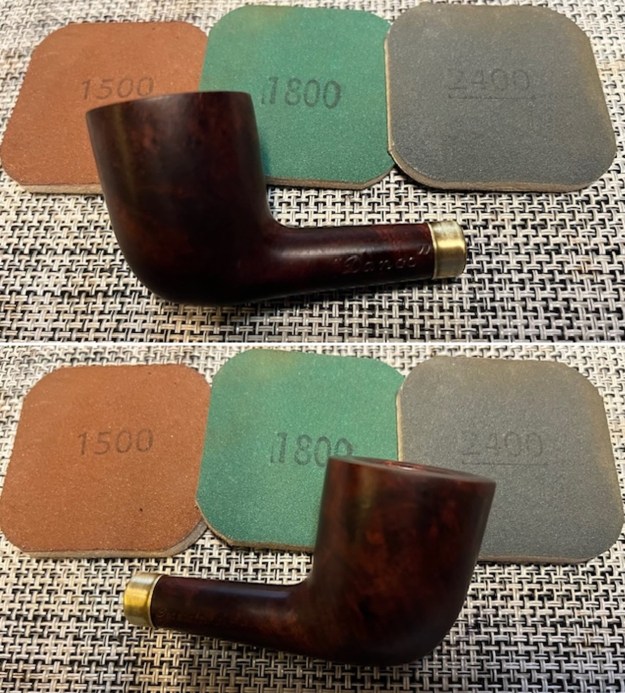
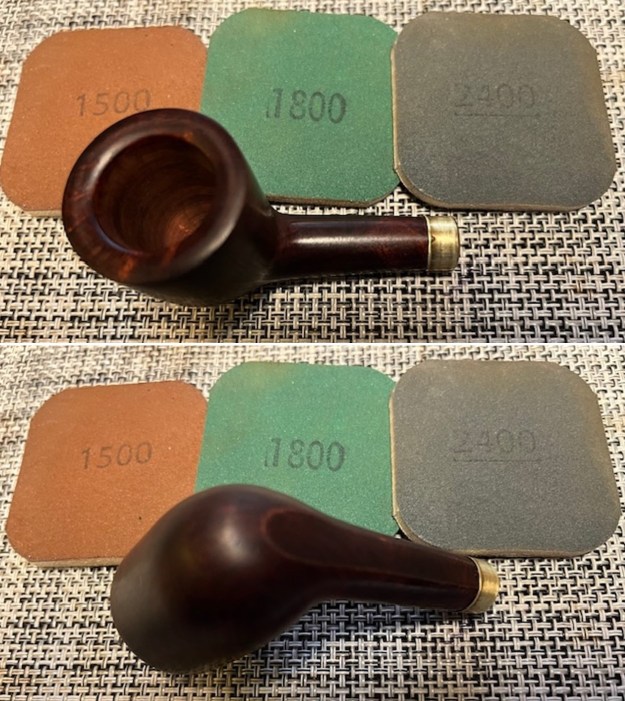
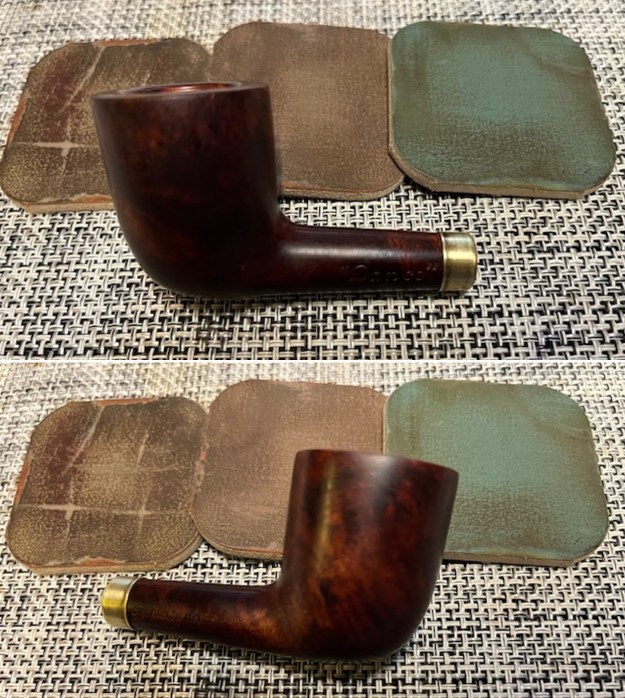
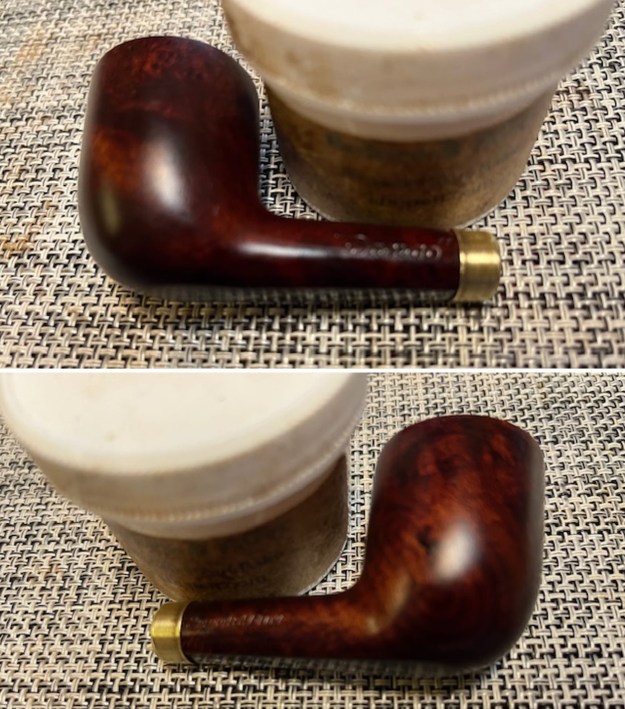
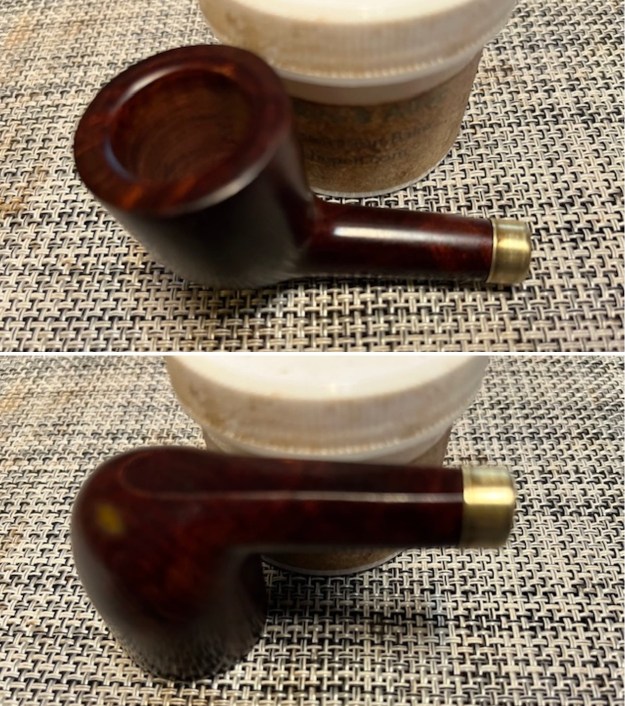
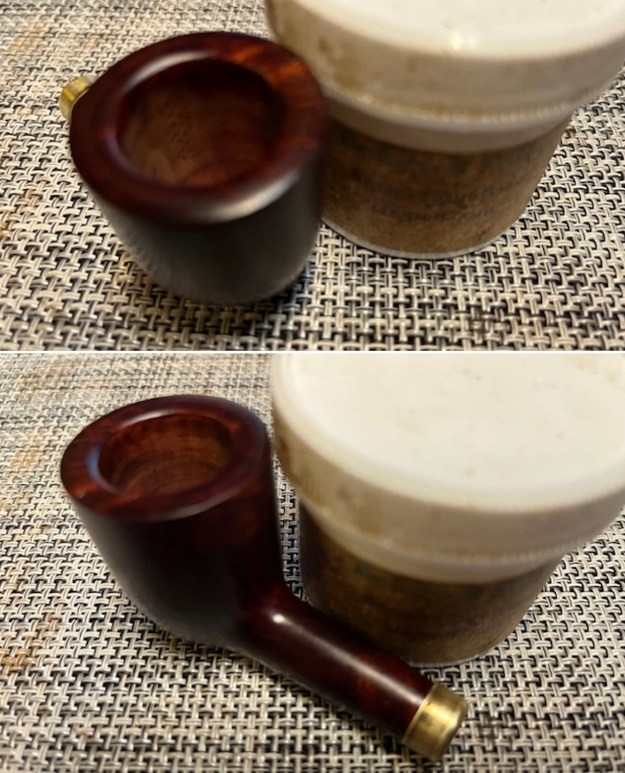
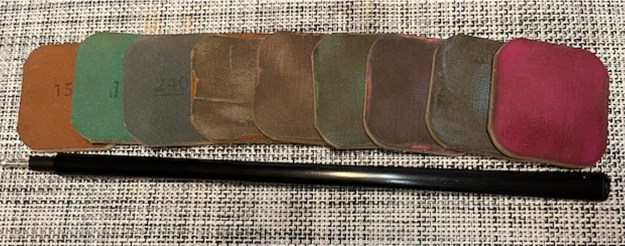
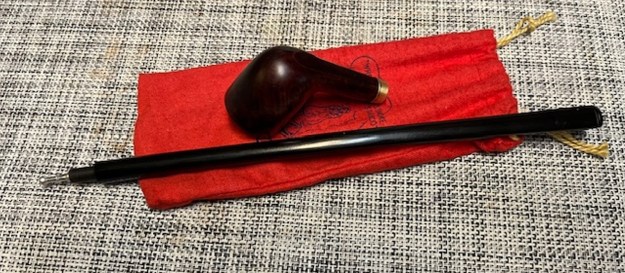
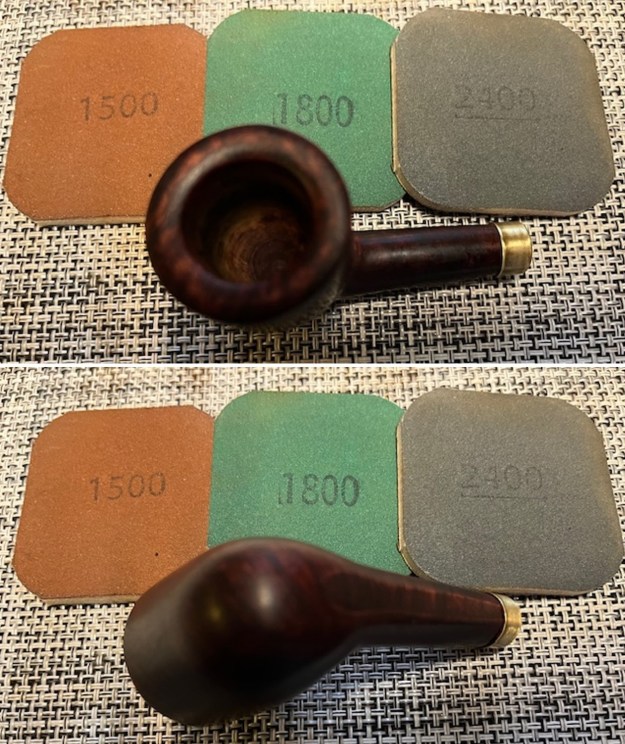
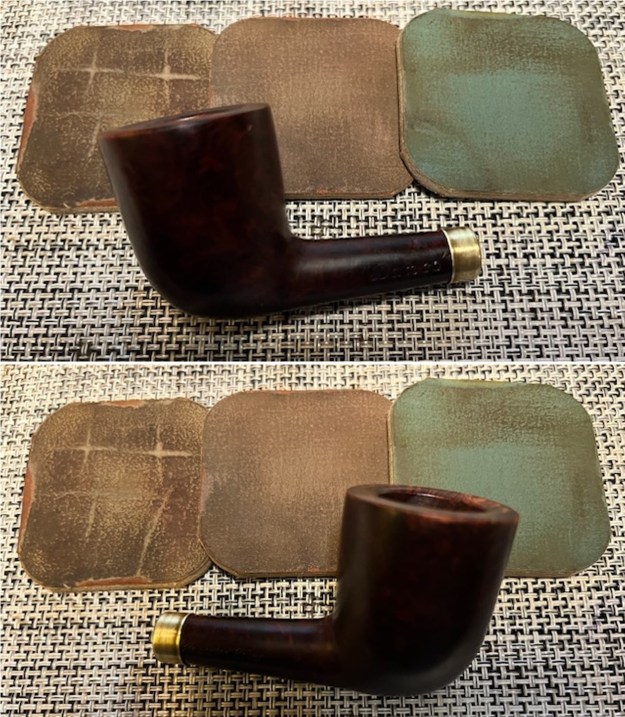
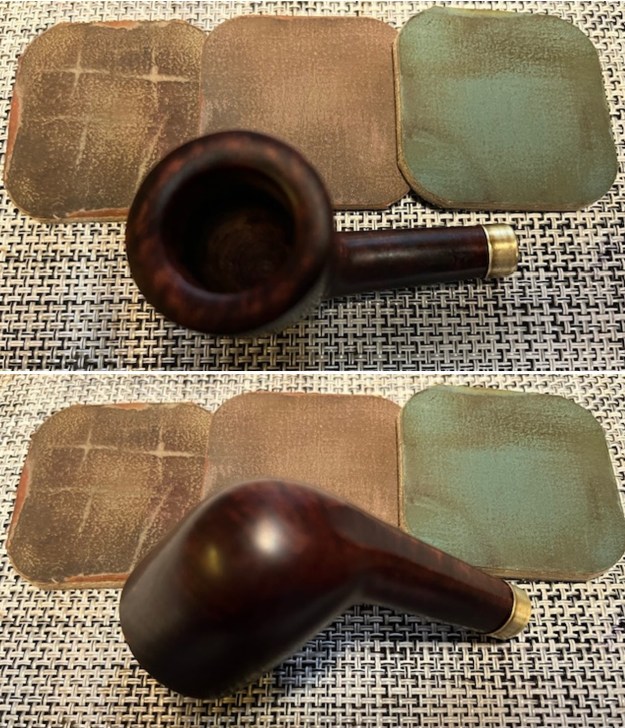
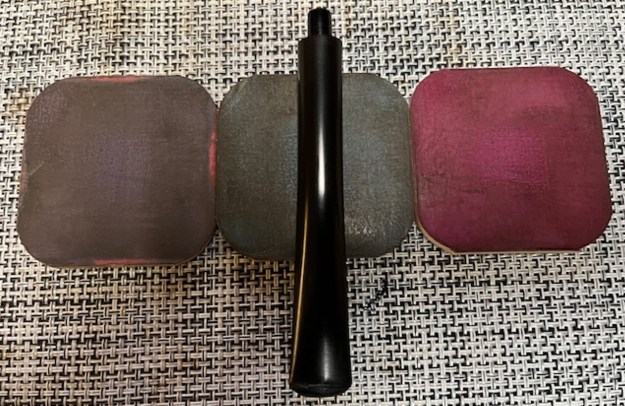
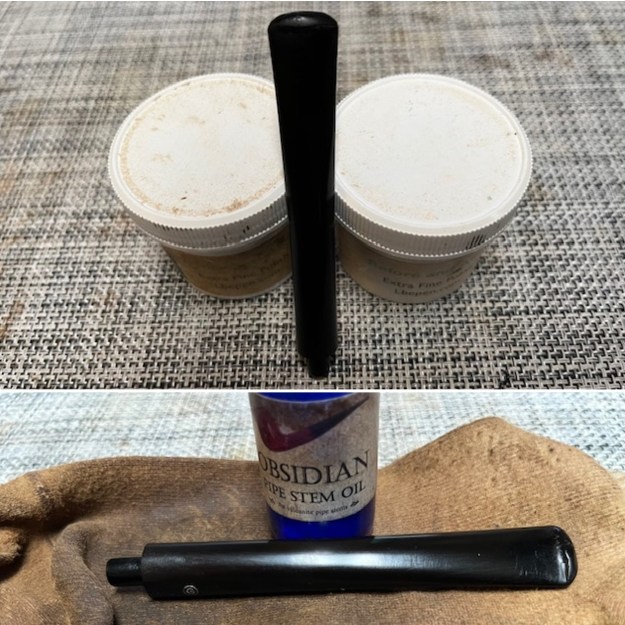
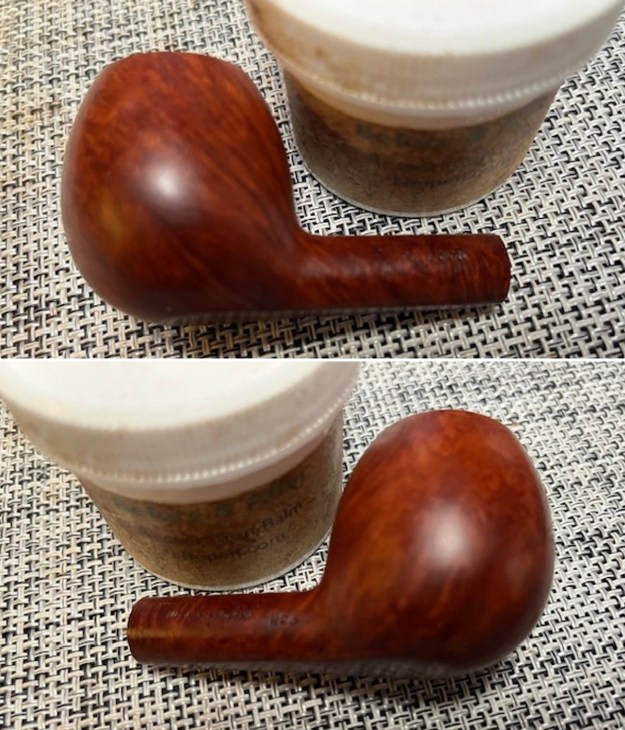
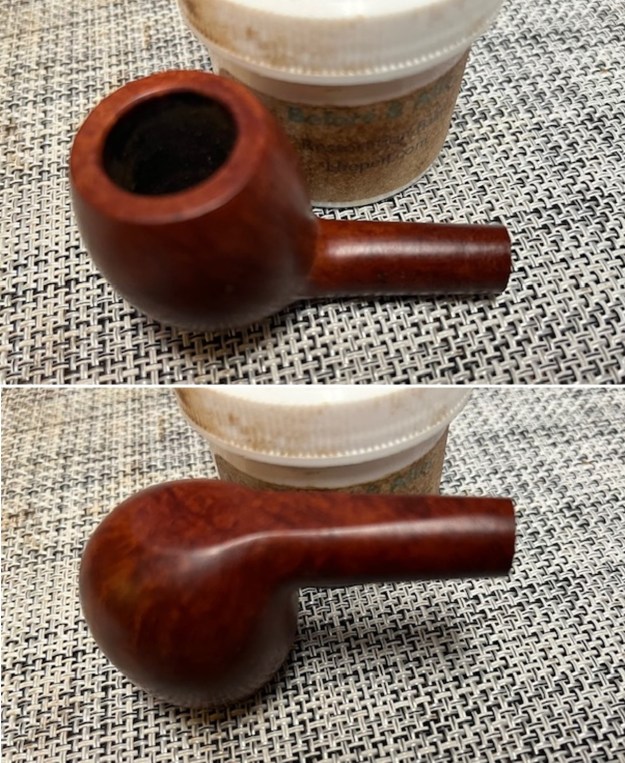
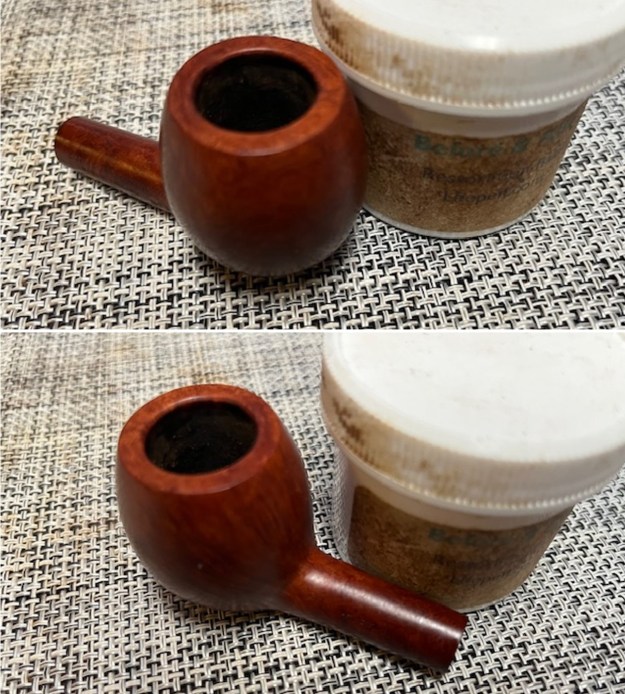
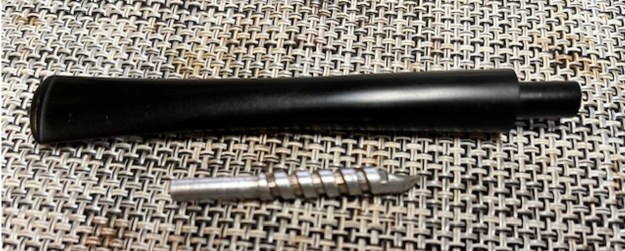
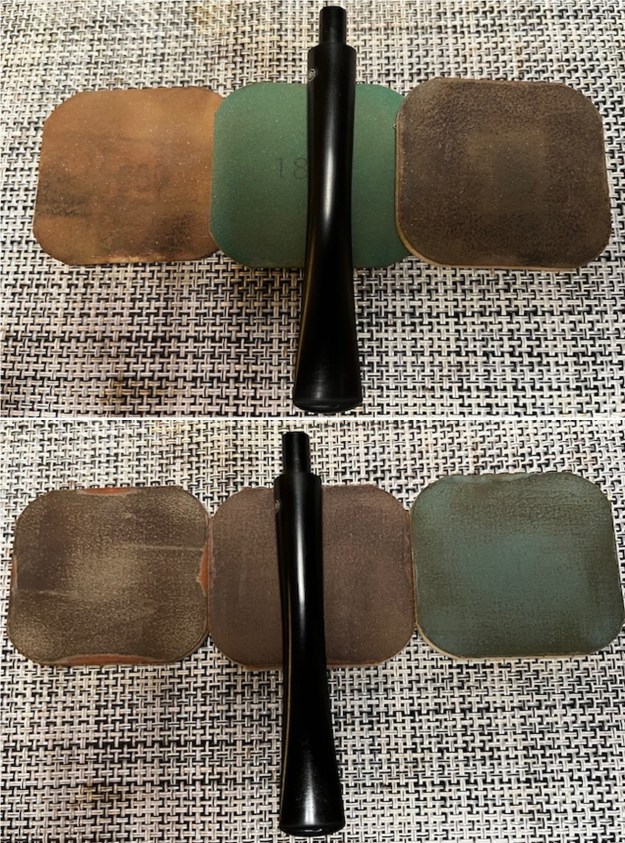
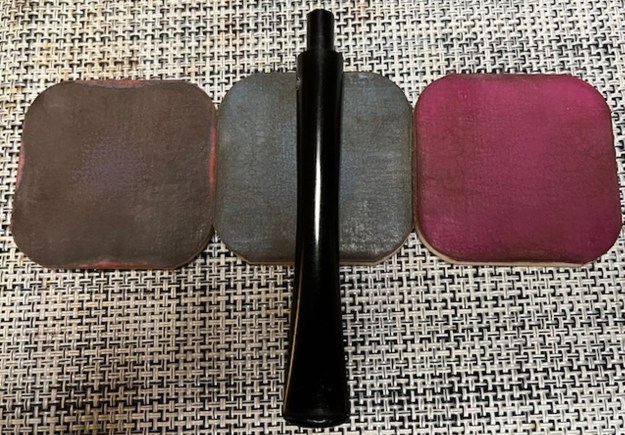
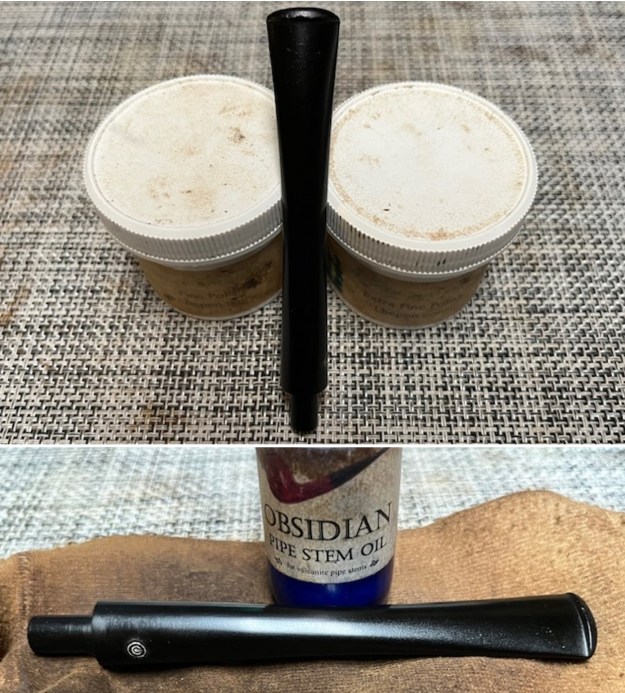
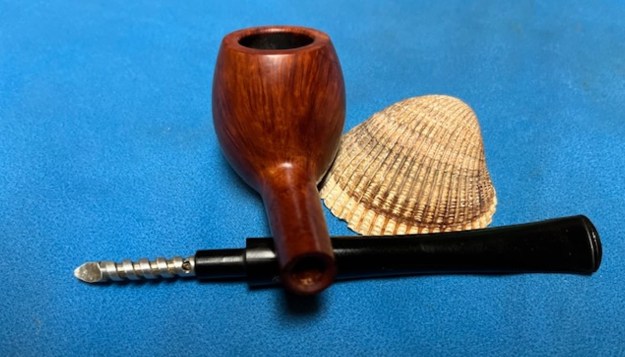
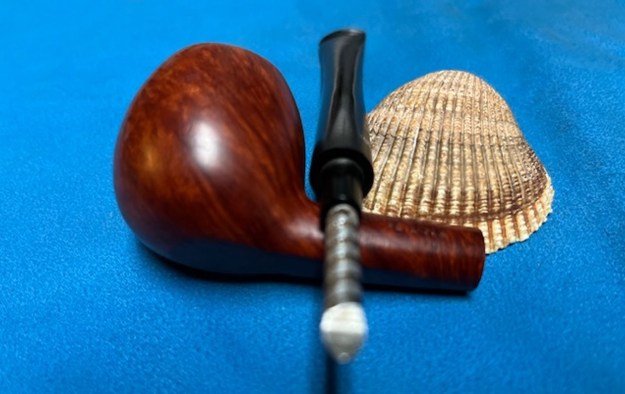
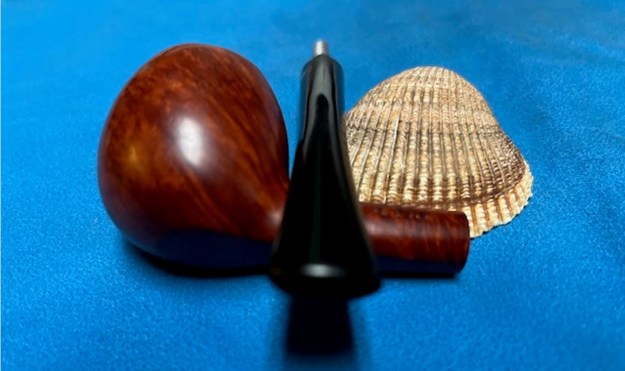
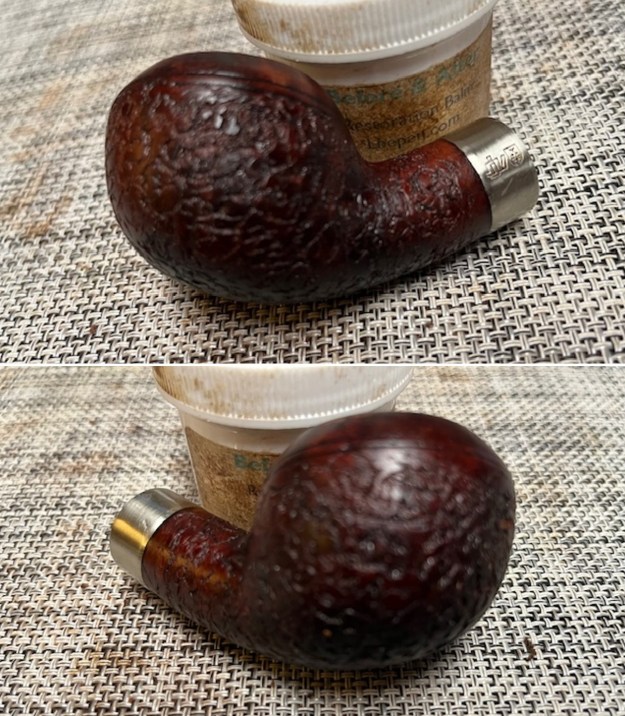
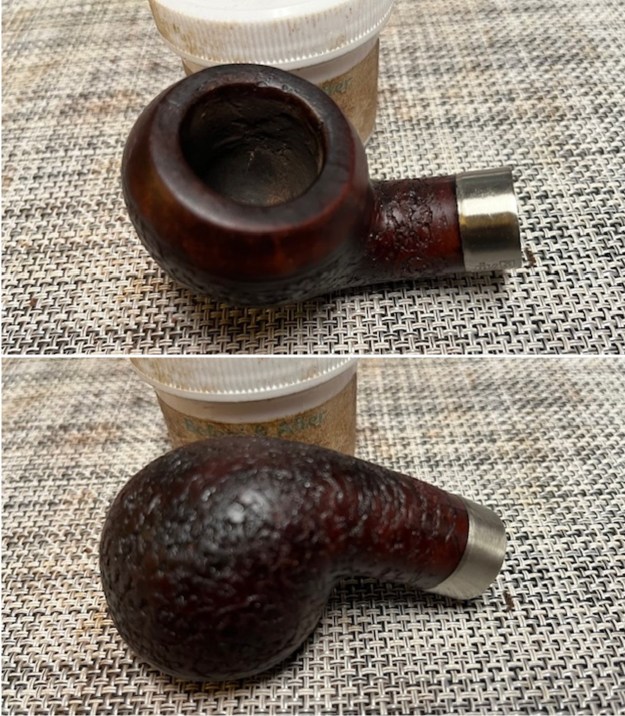
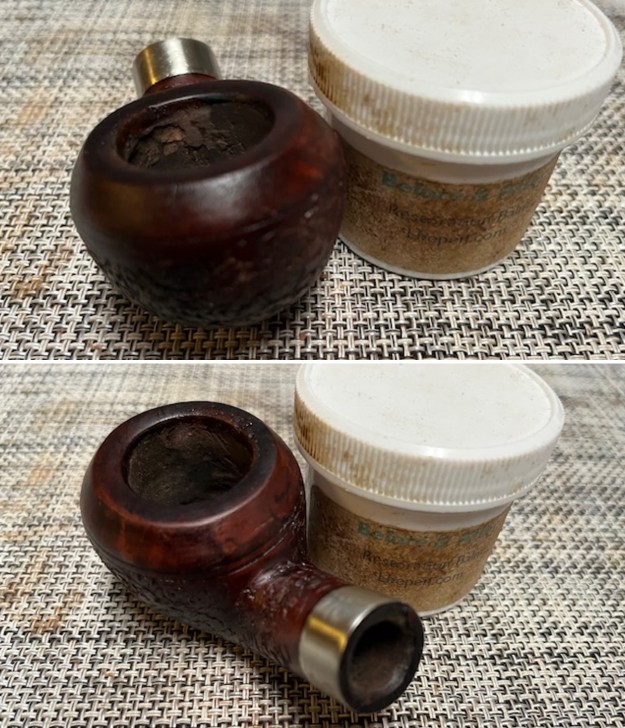
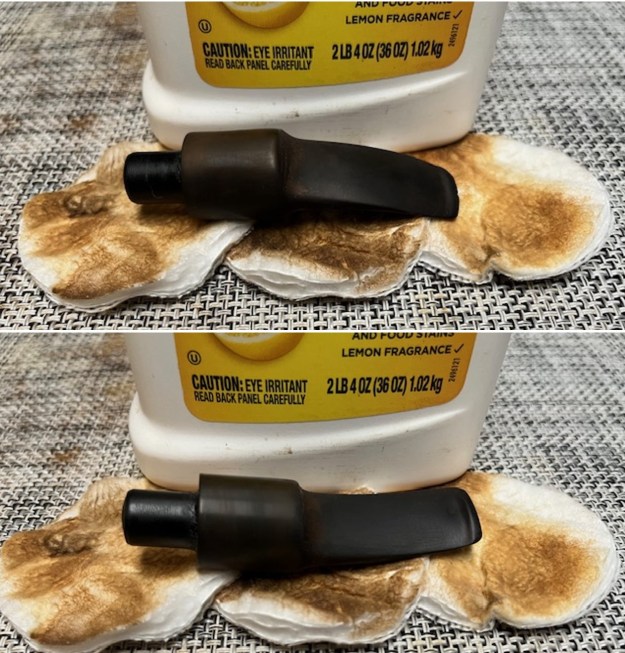
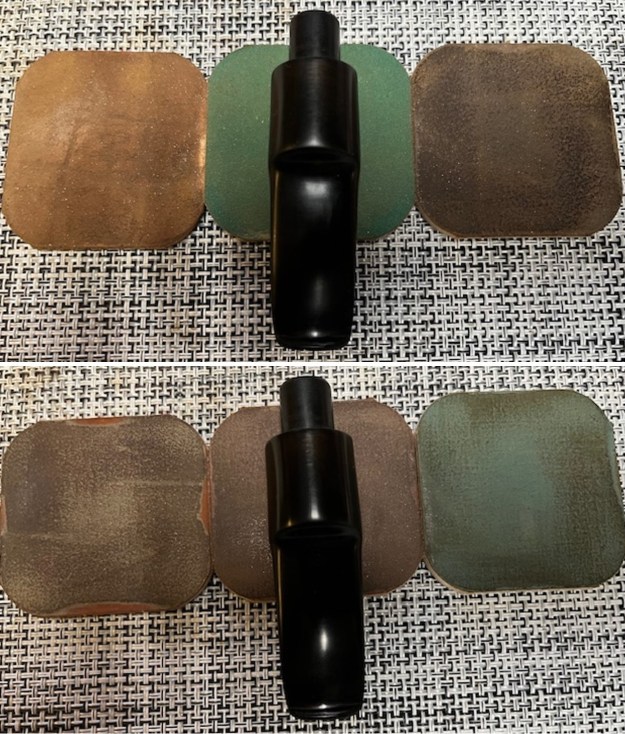
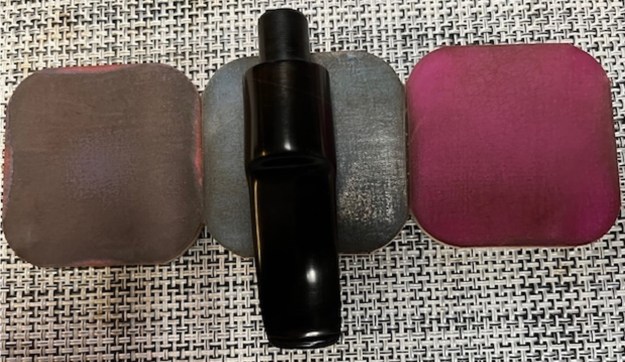
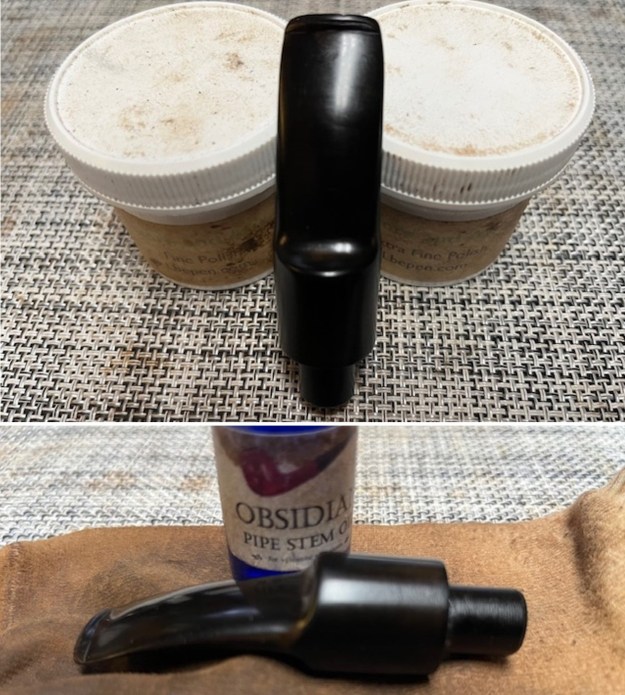
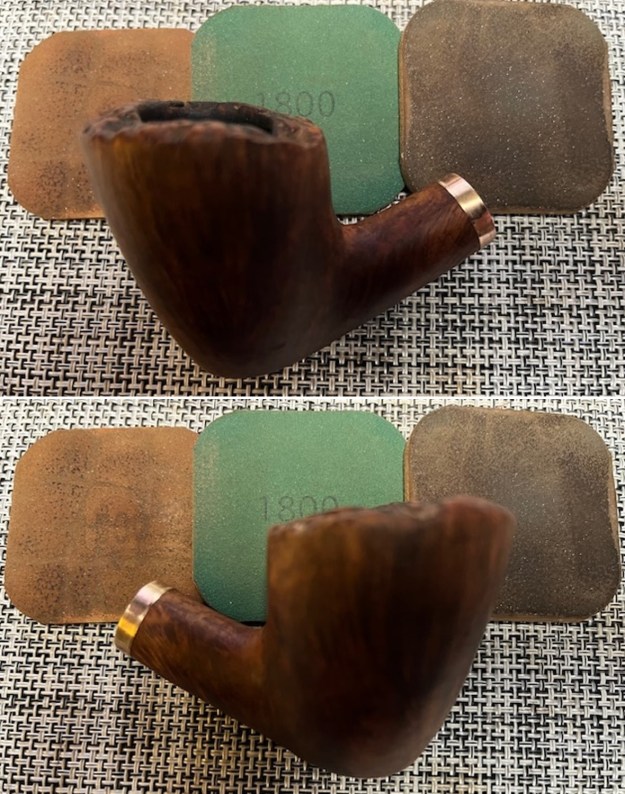
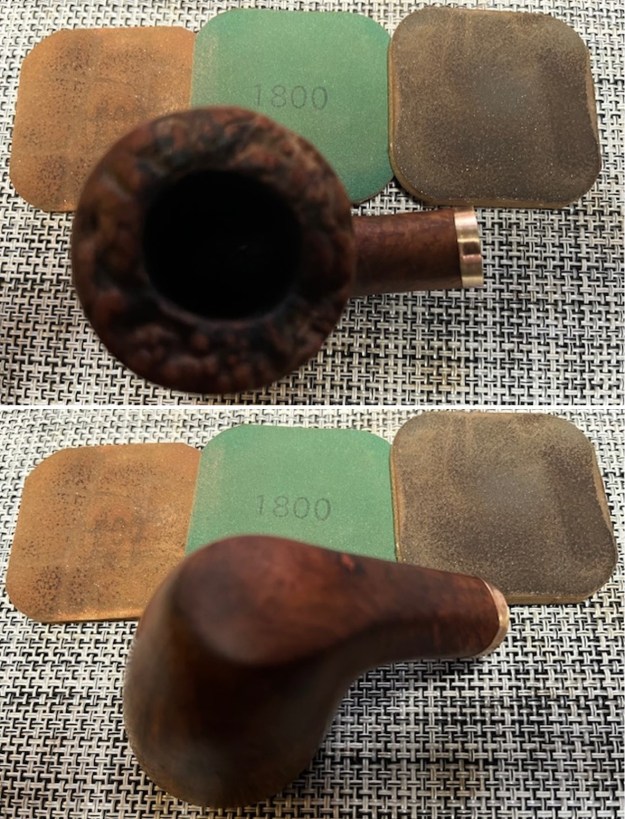
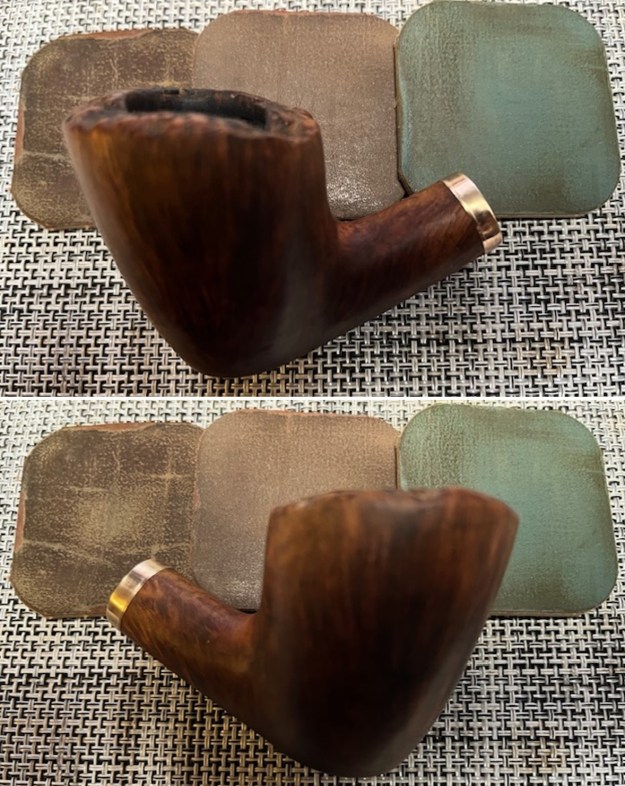
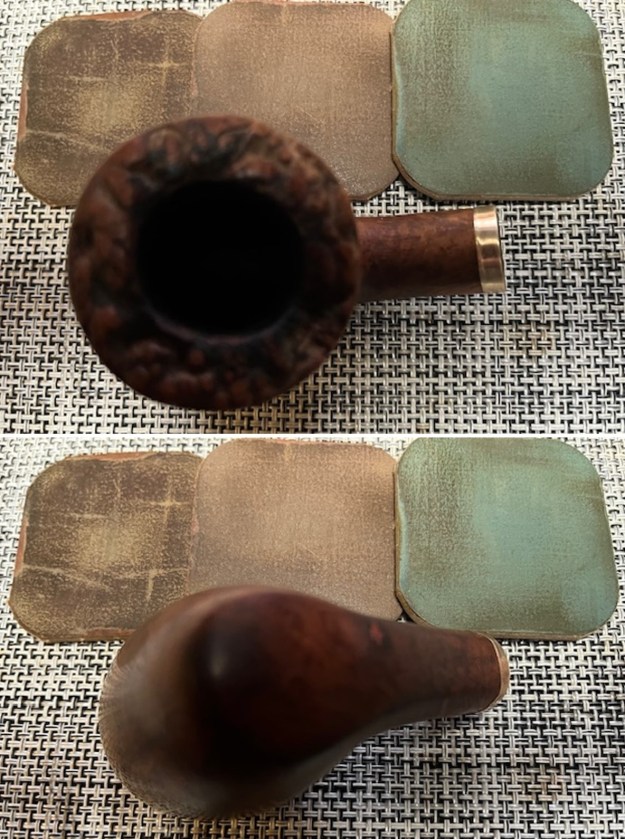
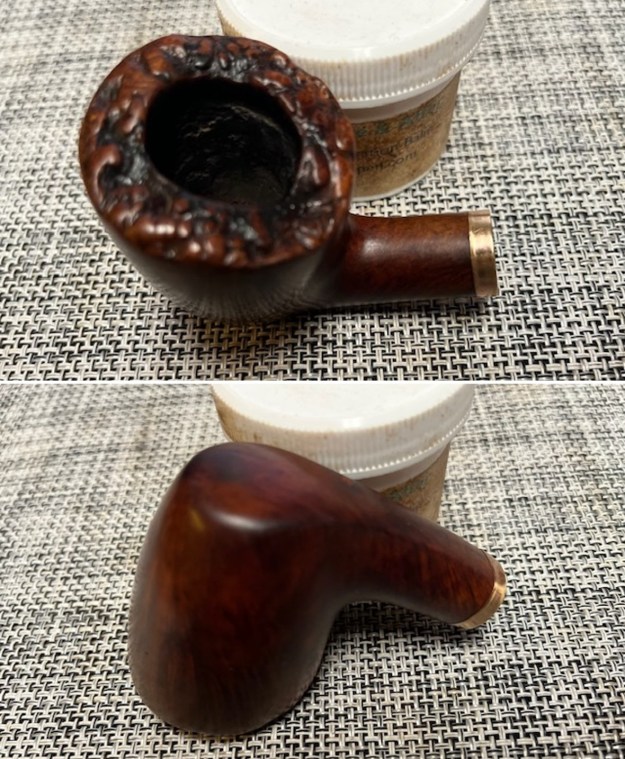
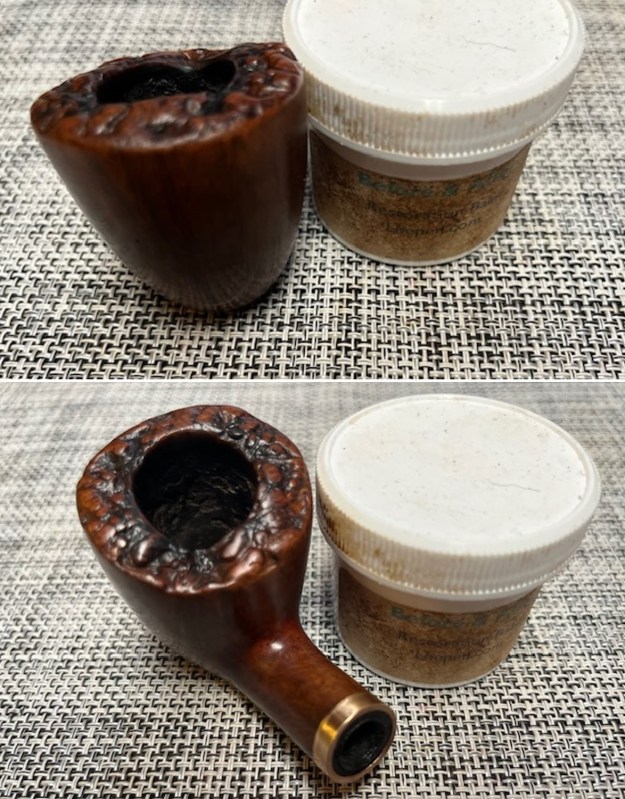
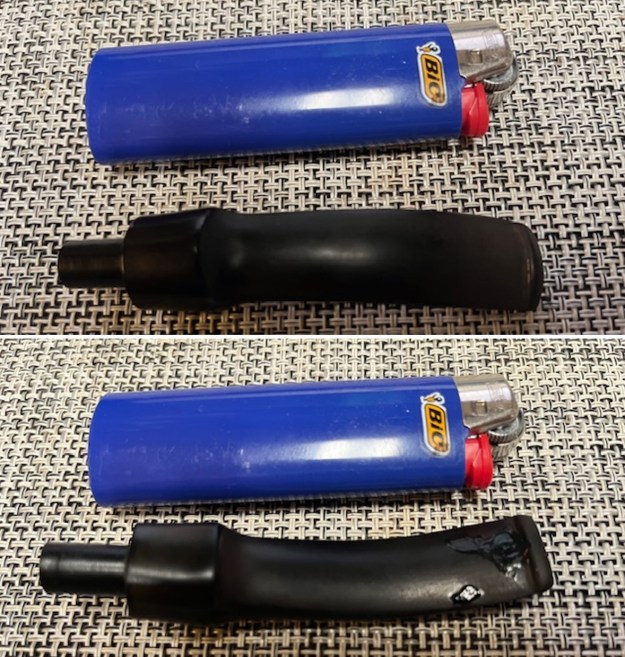
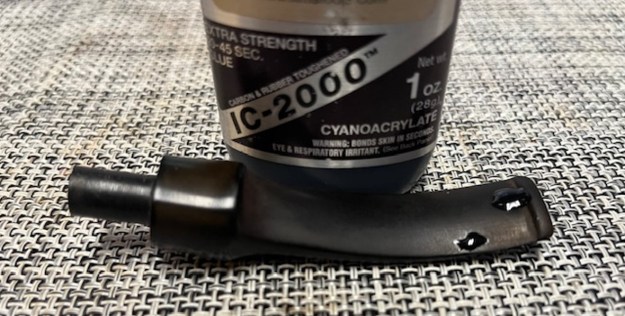
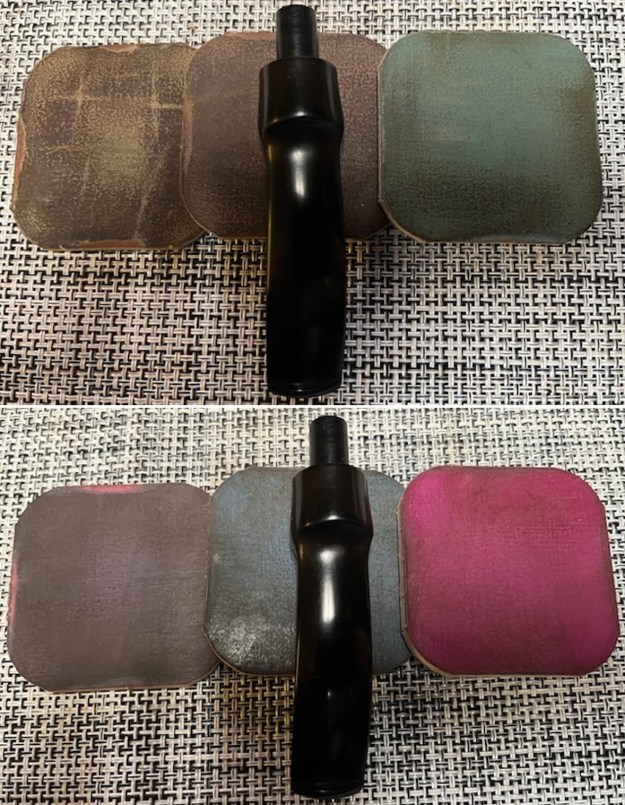
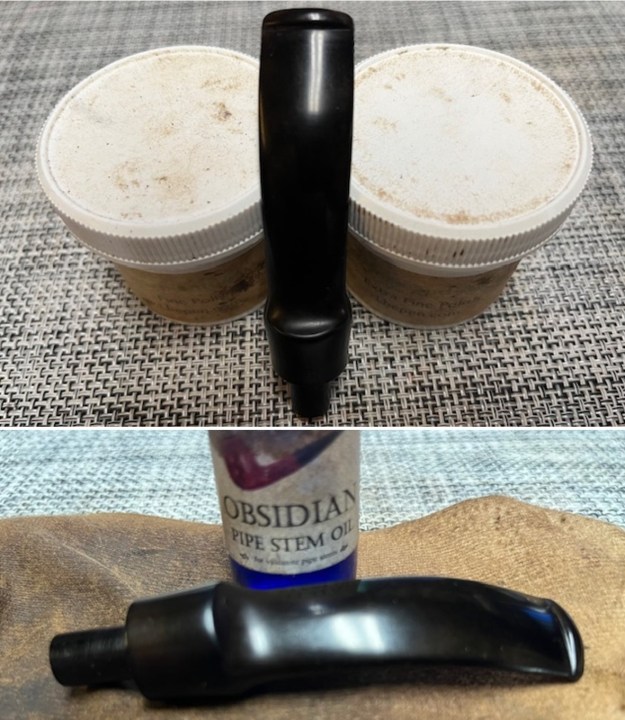
Now it was time to “work” on the pipe. For his part, Jeff had simply rinsed the pipe off with warm water and dried it. He soaked the stem in deoxidizer to remove the grime and the light oxidation near the shank joint. The pipe came here a few days ago and it is beautiful. The Dublin bowl shows the blast on mixed grain, while the rim top is smooth with spots of plateau peering through. The two-knuckle bamboo shank looks very good. The bamboo is joined to the briar bowl and the shank end and there was a white acrylic spacer at each end of the bamboo shank. The vulcanite stem has a vulcanite tenon. I tried to capture the beauty in the photos that follow. I took photos of the smooth rim top with spots of plateau peering through and bowl along with both sides of the vulcanite stem to show the condition of the pipe. It is clearly unsmoked and new.I took a photo to try to capture the etching of Dominik on the underside of the bamboo shankl. It is very readable in person but is curved around the shank and it hard to capture fully in a photo. I also removed the stem from the shank and took a photo of the parts of the pipe.The bowl was in excellent condition so skipped ahead to applying the Balm to the briar and the bamboo. I rubbed the briar and bamboo down with Before & After Restoration Balm. I worked it into the briar and the knuckles of the bamboo with my fingertips and a horsehair shoe brush to work it into the nooks and crannies of the sandblast finish. The product works to clean, enliven and preserve the briar and other wood. I let it sit for 10 minutes then I buffed it with a cotton cloth to deepen the shine. The pipe really comes alive with the balm. I polished the short vulcanite saddle stem with micromesh sanding pads – 1500-12000 grit pads. I wiped it down with Obsidian Oil after each sanding pad. I used Before & After Pipe Polish – both Fine and Extra Fine to further polish the stem. This Sandblast Dominik Dublin with a smooth rim top with spots of plateau and a Bamboo shank and vulcanite saddle stem has a beautiful, unique Sandblast finish that is deep and craggy. The rich dark finish highlights some great grain around the bowl and the light colour of the bamboo shank. There are white acrylic spacers on each end of the bamboo. It has some great rugged sandblast that I am enjoying looking at on the Dominik pipes I have picked up. The polished smooth rim with small patches of plateau. The sand blast, the bamboo shank and the vulcanite saddle stem add to the mix. I put the stem back on the bowl and lightly buffed the pipe with Blue Diamond on the buffing wheel being careful to not buff the stamping and have a lighter touch on the briar. I gave the bowl and bamboo shank multiple coats of Conservator’s Wax and the stem multiple coats of carnauba wax on the buffing wheel and followed that by buffing it with a clean buffing pad. I hand buffed the pipe with a microfiber cloth to deepen the shine. The finished Sandblast Dominik Bamboo shank Dublin with a Smooth Rim Top is quite stunning and feels great in my hand. Give the finished pipe a look in the photos below. The dimensions of the pipe are Length: 5 ½ inches, Height: 1 ¾ inches, Outside diameter of the bowl: 1 3/8 inches, Chamber diameter: ¾ of an inch. The weight of the pipe is .74 ounces/21 grams. Thanks for walking through the restoration with me as I worked over another beautiful pipe. I will be adding to the rebornpipes store in a new section for Polish Pipe Makers. If you wish to add it to your collection let me know. Thanks for your time.

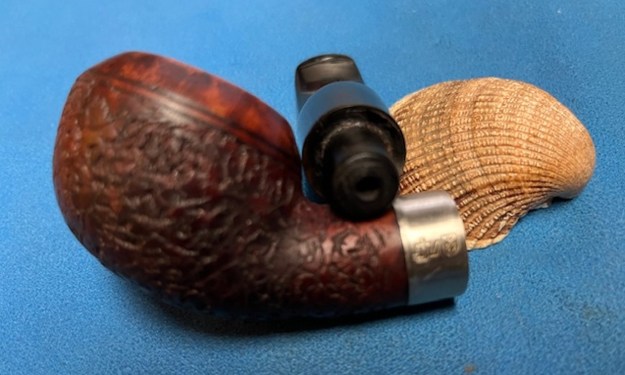
Refreshing a Dominik Sandblast Plateau Top Bamboo Acorn with a Vulcanite Stem


Blog by Steve Laug

The pipes that I will be posting over the next few days from this lot that Jeff and I purchased are fascinating pipes. They were quite stunning but altogether unknown to me. I did not recognize the name of the maker. All the pipes were unsmoked other than the Stanwell Pipe of the Year. We purchased them from a fellow in Kalundborg, Denmark on 02/03/2024. He said that they were all unsmoked and when they arrived they were. They were relatively clean and merely dusty with a little light debris on the stem surfaces. The shapes, sandblasts, shank extensions, and stems were all unique and very well done. The pipes were very beautiful and I could not wait for Jeff to refresh them a bit and get them up to me to do my part. Here are some of the photos of the pipes that we purchased provided by the seller.Here is a photo of the pipe that was sent to us by the seller. It is the one that I chose to work on next. It is a beautiful sandblast plateau rim top Acorn with a Bamboo Shank and fancy vulcanite saddle stem. The plateau rim top is thin and the bowl sides and culminate on the thin edge. The blast is very well done. The stem is also well cut and other than dusty and lightly oxidized is in great condition. The bowl is unsmoked. The bowls all have a carbon bowl coating that is well done on the walls of the bowl. The pipe is stamped on the underside of the Bamboo shank with the etched name of Dominik. I am looking forward to working on it as it will take very little work and will be a fun break.I am including what I learned when I worked on the first pipe of this brand. When I started I knew nothing about the carver other than he did beautiful work so I turned to Pipedia to see what I could find (https://pipedia.org/wiki/Dominik_Pipes). There was a listing for Dominik Pipes. He is a Polish Carver and I have included the short article in its entirety below.

Dominik pipes are made by Dominik Kobryń. His journey with pipes began in 1993 at a flea market, where he bought his first pipe. From that time his collection has grown a lot. He made his first pipe in December 2016. Dominik credits Wojtek Pastuch as his mentor, and is very grateful for that!

Dominik uses briar from Mimmo Romeo. He makes his stems by hand, mainly from Ebonite and Cumberland rods, but occasionally acrylic. He focuses on unique pipes that are well done technically.

From there I clicked on a link at the bottom of the page that took me to his Pipe sales website (http://www.dominikpipes.com/). Interestingly the site contained almost word for word the information that I had found on Pipedia.

My name is Dominik Kobryń. My journey with pipes began in 1993 on a flea market, where I bought my first pipe. From that time my collection has grown a lot.

I made my first pipe in December 2016. Wojtek Pastuch has taught me a lot about pipemaking and I am very grateful for that!

I use briar from Domenico Romero (Mimmo). I make stems by hand, mainly from ebonite rods and cumberland, sporadically acrylic. I pay much attention to create unique pipes, well done technically.

If you are interested in my work do not hesitate to contact me.

I have been following Wojtek Pastuch for some time now and really like what he is doing. It is fascinating that Dominik considers him his mentor. In chatting with Jeff, he sent me a link to Dominik’s Facebook page (https://www.facebook.com/dominikpipes). It is worth a look to see his current pipes.

Now it was time to “work” on the pipe. For his part, Jeff had simply rinsed the pipe off with warm water and dried it. He soaked the stem in deoxidizer to remove the grime and the light oxidation near the shank joint. The pipe came here a few days ago and it is beautiful. The bowl shows the blast on mixed grain, while the rim top is plateau briar. The three-knuckle bamboo looks very good. The bamboo is joined to the briar bowl and the shank end is capped with a black acrylic spacer. The stem has a vulcanite tenon. I tried to capture the beauty in the photos that follow. I took photos of the plateau rim top and bowl along with both sides of the vulcanite stem to show the condition of the pipe. It is clearly unsmoked and new. I took a photo to try to capture the etching of Dominik on the underside of the shank in an oval. It is very readable in person but is curved around the shank bottom and it hard to capture in a photo. I also removed the stem from the shank and took a photo of the parts of the pipe.The bowl was in excellent condition so skipped ahead to applying the Balm to the briar. I rubbed the briar and the bamboo down with Before & After Restoration Balm. I worked it into the briar with my fingertips and a horsehair shoe brush to work it into the nooks and crannies of the sandblast finish. The product works to clean, enliven and preserve the briar. I let it sit for 10 minutes then I buffed it with a cotton cloth to deepen the shine. The briar really comes alive with the balm. I polished the short vulcanite saddle stem with micromesh sanding pads – 1500-12000 grit pads. I wiped it down with Obsidian Oil after each sanding pad. I used Before & After Pipe Polish – both Fine and Extra Fine to further polish the stem. This Sandblast Dominik Plateau Rim Top Acorn with a Bamboo Shank and Short Saddle Stem has a beautiful, unique Sandblast finish that is deep and craggy. The rich dark finish highlights some great grain around the bowl and shank. It has some great rugged sandblast that I am enjoying looking at on the Dominik pipes I have picked up. The polished bamboo and the short vulcanite stem add to the mix. I put the stem back on the bowl and lightly buffed the pipe with Blue Diamond on the buffing wheel being careful to not buff the stamping and have a lighter touch on the briar. I gave the bowl multiple coats of Conservator’s Wax and the stem multiple coats of carnauba wax on the buffing wheel and followed that by buffing it with a clean buffing pad. I hand buffed the pipe with a microfiber cloth to deepen the shine. The finished Dominik Plateau Rim Top Acorn with Bamboo Shank is quite stunning and feels great in my hand. Give the finished pipe a look in the photos below. The dimensions of the pipe are Length: 6 inches, Height: 2 inches, Outside diameter of the bowl: 1 ½ inches, Chamber diameter: ¾ of an inch. The weight of the pipe is 1.02 ounces/28 grams. Thanks for walking through the restoration with me as I worked over another beautiful pipe. I will be adding to the rebornpipes store in a new section for Polish Pipe Makers. If you wish to add it to your collection let me know. Thanks for your time.

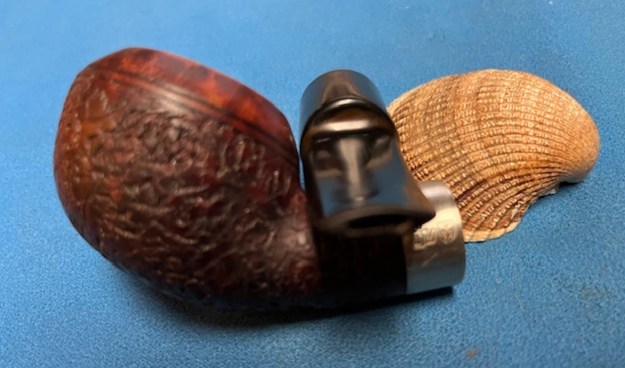
Refreshing a Dominik Sandblast Plateau Stack with an acrylic shank extension and vulcanite stem


Blog by Steve Laug

The pipes that I will be posting over the next few days from this lot that Jeff and I purchased are fascinating pipes. They were quite stunning but altogether unknown to me. I did not recognize the name of the maker. All the pipes were unsmoked other than the Stanwell Pipe of the Year. We purchased them from a fellow in Kalundborg, Denmark on 02/03/2024. He said that they were all unsmoked and when they arrived they were. They were relatively clean and merely dusty with a little light debris on the stem surfaces. The shapes, sandblasts, shank extensions, and stems were all unique and very well done. The pipes were very beautiful and I could not wait for Jeff to refresh them a bit and get them up to me to do my part. Here are some of the photos of the pipes that we purchased provided by the seller.Here is a photo of the pipe that was sent to us by the seller. It is the one that I chose to work on next. It is a beautiful sandblast plateau rim top Stack with a vulcanite stem. The plateau rim top is thin and the bowl sides and culminate on the thin edge. The blast is very well done. The military stem is also well cut and other than dusty and lightly oxidized is in great condition. The bowl is unsmoked. The bowls all have a carbon bowl coating that is well done on the walls of the bowl. The pipe is stamped on the underside of the shank with the etched name of Dominik. I am looking forward to working on it as it will take very little work and will be a great relief from some of the complicated ones I have been doing lately.I knew nothing about the brand or the carver other than he did beautiful work so I turned to Pipedia to see what I could find (https://pipedia.org/wiki/Dominik_Pipes). There was a listing for Dominik Pipes. He is a Polish Carver and I have included the short article in its entirety below.

Dominik pipes are made by Dominik Kobryń. His journey with pipes began in 1993 at a flea market, where he bought his first pipe. From that time his collection has grown a lot. He made his first pipe in December 2016. Dominik credits Wojtek Pastuch as his mentor, and is very grateful for that!

Dominik uses briar from Mimmo Romeo. He makes his stems by hand, mainly from Ebonite and Cumberland rods, but occasionally acrylic. He focuses on unique pipes that are well done technically.

From there I clicked on a link at the bottom of the page that took me to his Pipe sales website (http://www.dominikpipes.com/). Interestingly the site contained almost word for word the information that I had found on Pipedia.

My name is Dominik Kobryń.

My journey with pipes began in 1993 on a flea market, where I bought my first pipe. From that time my collection has grown a lot.

I made my first pipe in December 2016. Wojtek Pastuch has taught me a lot about pipemaking and I am very grateful for that!

I use briar from Domenico Romero (Mimmo). I make stems by hand, mainly from ebonite rods and cumberland, sporadically acrylic. I pay much attention to create unique pipes, well done technically.

If you are interested in my work do not hesitate to contact me.

I have been following Wojtek Pastuch for some time now and really like what he is doing. It is fascinating that Dominik considers him his mentor. In chatting with Jeff, he sent me a link to Dominik’s Facebook page (https://www.facebook.com/dominikpipes). It is worth a look to see his current pipes.

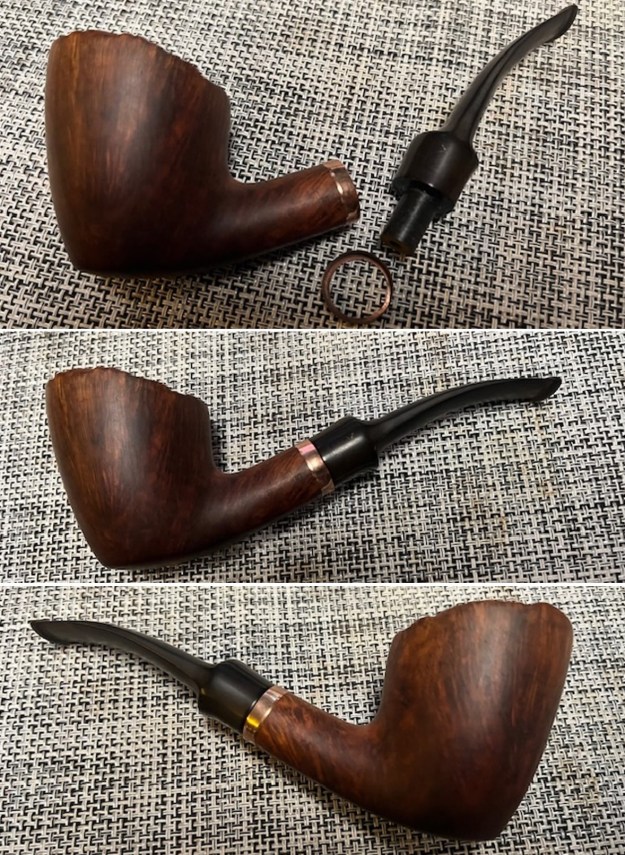
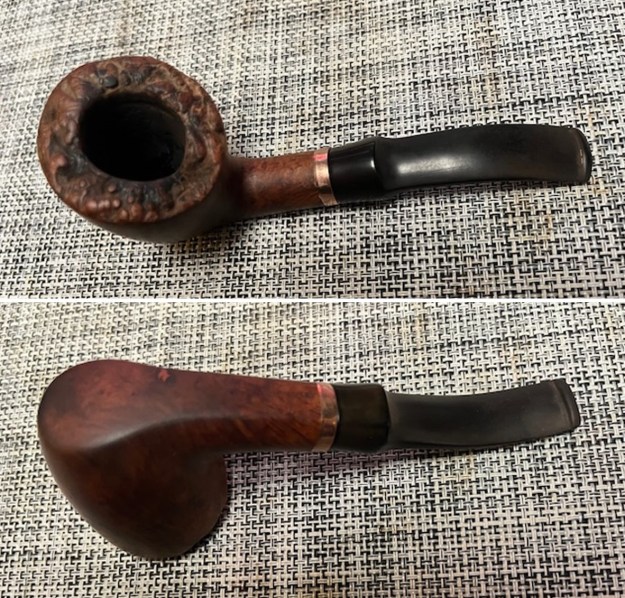
Now it was time to “work” on the pipe. For his part, Jeff had simply rinsed the pipe off with warm water and dried it. He soaked the stem in deoxidizer to remove the grime and the light oxidation near the shank joint. The pipe came here a few days ago and it is beautiful. The bowl shows the blast on mixed grain, while the rim top is smooth and very smooth. I tried to capture that a bit in the photos that follow. I took photos of the plateau rim top and bowl along with both sides of the vulcanite stem to show the condition of the pipe. It is clearly unsmoked and new.I took a photo to try to capture the etching of Dominik on the underside of the shank in an oval. It is very readable in person but is curved around the shank bottom and it hard to capture in a photo. I also removed the stem from the shank and took a photo of the parts of the pipe.The bowl was in excellent condition so skipped ahead to applying the Balm to the briar. I rubbed the briar down with Before & After Restoration Balm. I worked it into the briar with my fingertips and a horsehair shoe brush to work it into the nooks and crannies of the sandblast finish. The product works to clean, enliven and preserve the briar. I let it sit for 10 minutes then I buffed it with a cotton cloth to deepen the shine. The briar really comes alive with the balm. I polished the vulcanite stem with micromesh sanding pads – 1500-12000 grit pads. I wiped it down with Obsidian Oil after each sanding pad. I used Before & After Pipe Polish – both Fine and Extra Fine to further polish the stem. This Sandblast Dominik Plateau Rim Top Stack with a vulcanite stem has a beautiful, unique Sandblast finish that is deep and craggy. The rich dark finish highlights some great grain around the bowl and shank. It has some great rugged sandblast that I am enjoying looking at on the Dominik pipes I have picked up. The polished military bit taper vulcanite stem adds to the mix. I put the stem back on the bowl and lightly buffed the pipe with Blue Diamond on the buffing wheel being careful to not buff the stamping and have a lighter touch on the briar. I gave the bowl multiple coats of Conservator’s Wax and the stem multiple coats of carnauba wax on the buffing wheel and followed that by buffing it with a clean buffing pad. I hand buffed the pipe with a microfiber cloth to deepen the shine. The finished Dominik Plateau Rim Top Stack is quite stunning and feels great in my hand. Give the finished pipe a look in the photos below. The dimensions of the pipe are Length: 5 inches, Height: 2 inches, Outside diameter of the bowl: 1 inch, Chamber diameter: ¾ of an inch. The weight of the pipe is .78 ounces/22 grams. Thanks for walking through the restoration with me as I worked over another beautiful pipe. I will be adding to the rebornpipes store in a new section for Polish Pipe Makers. If you wish to add it to your collection let me know. Thanks for your time.

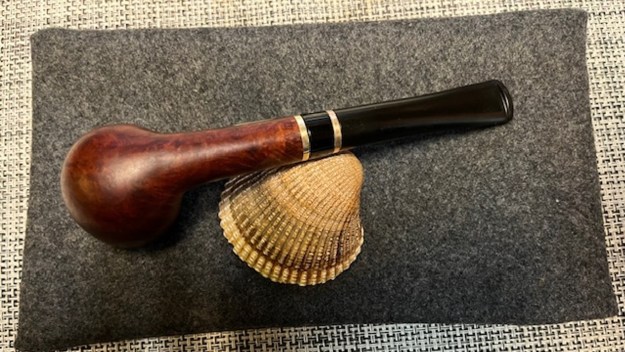
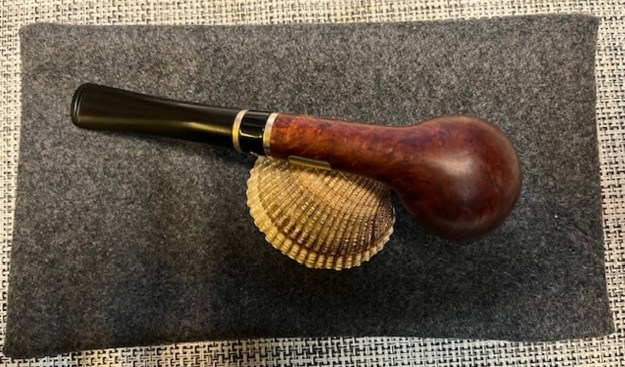
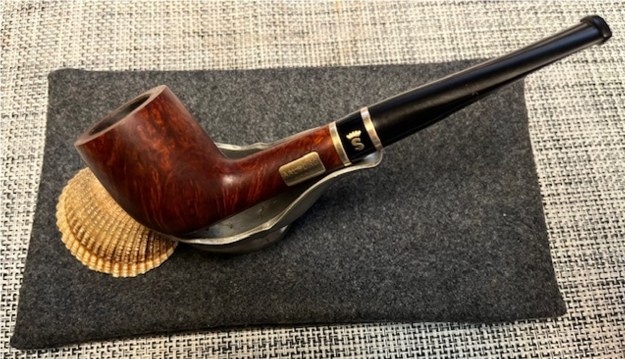
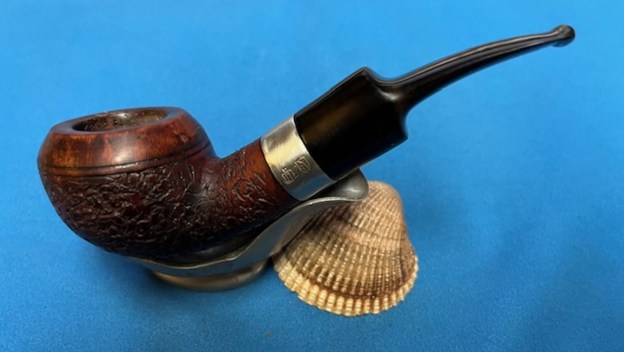
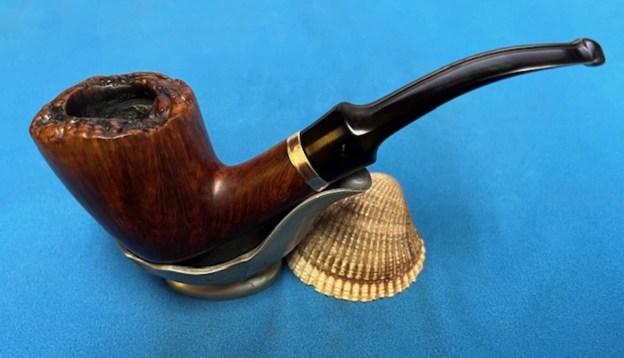
Restoring another City Pipe, a Stanwell Aalborg 2000 Billiard 54


Blog by Steve Laug

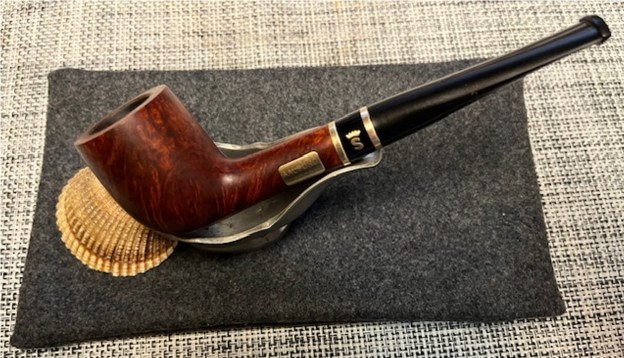
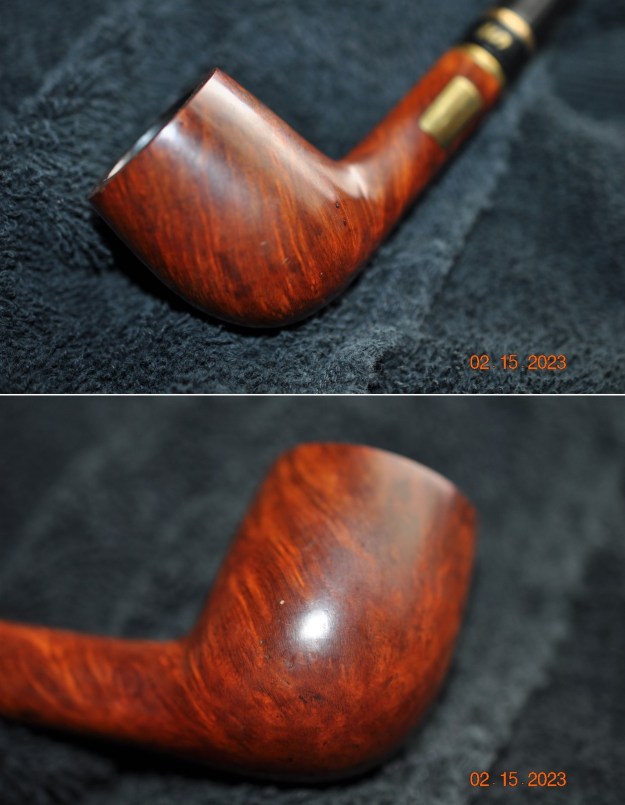
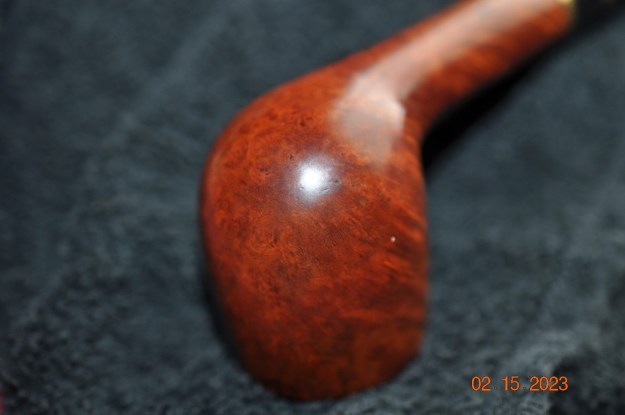
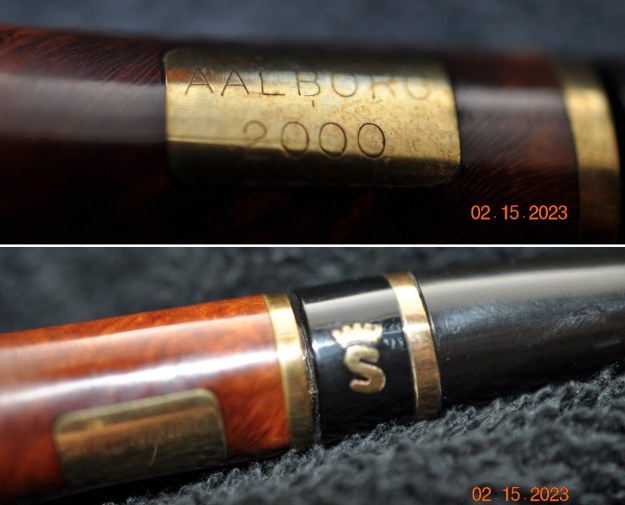
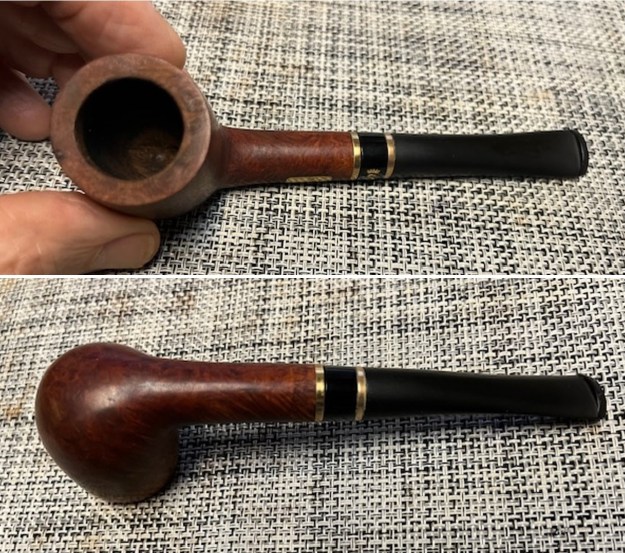
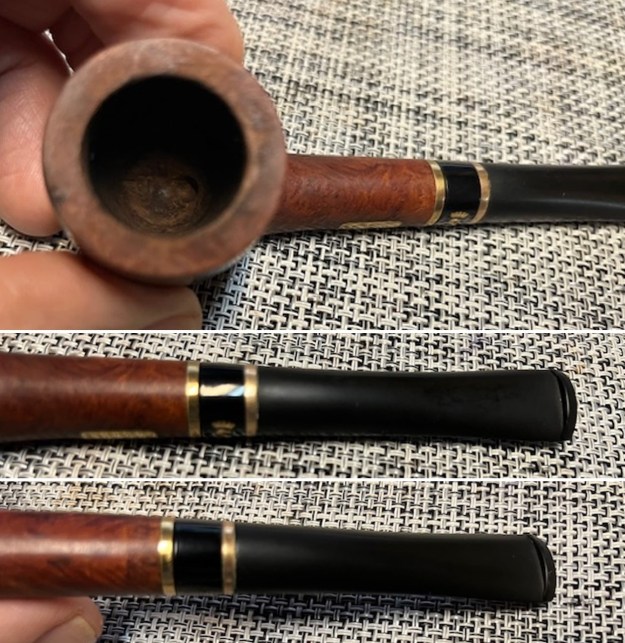
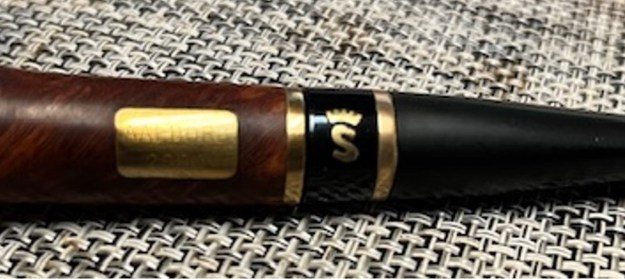
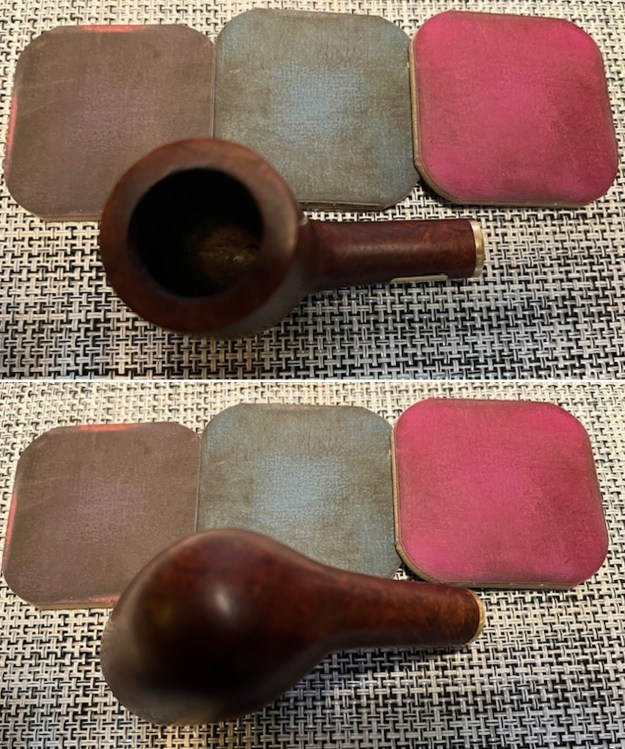
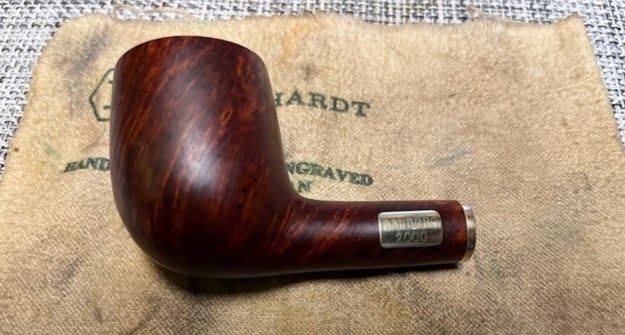
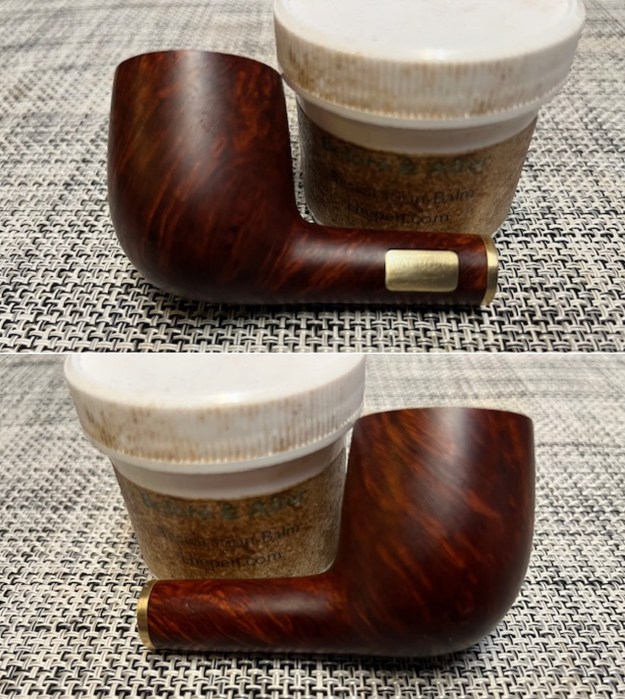
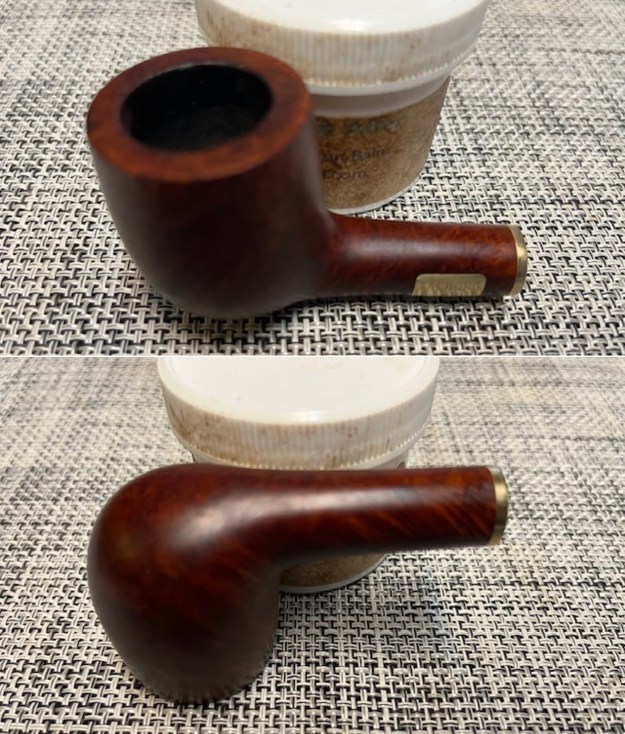
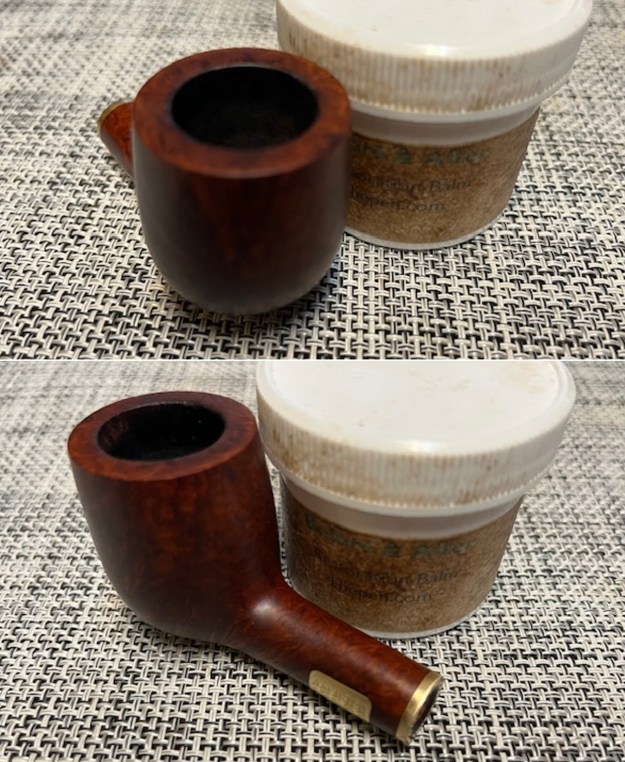
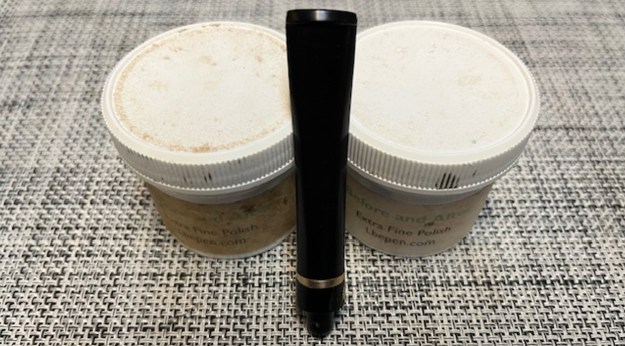
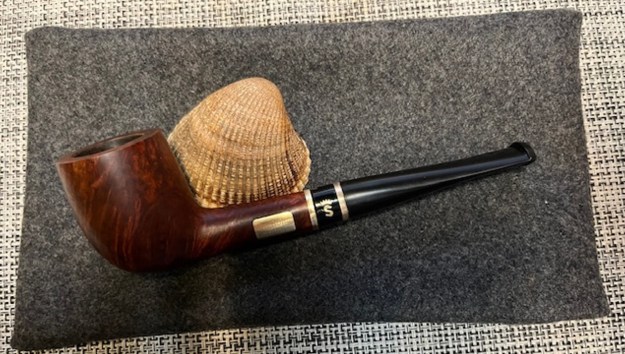
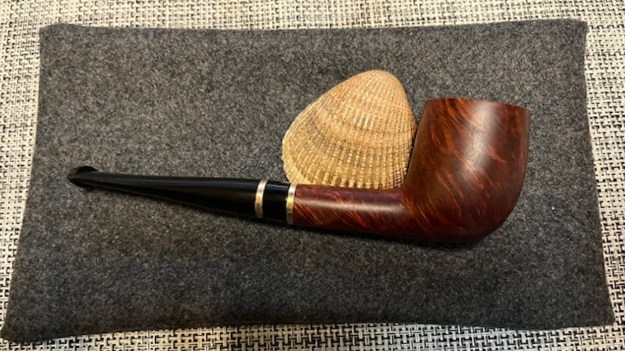
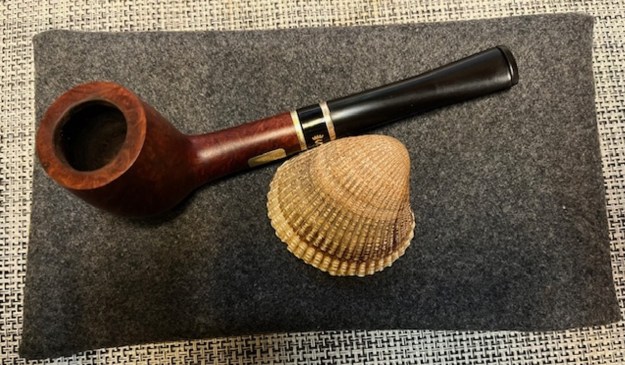
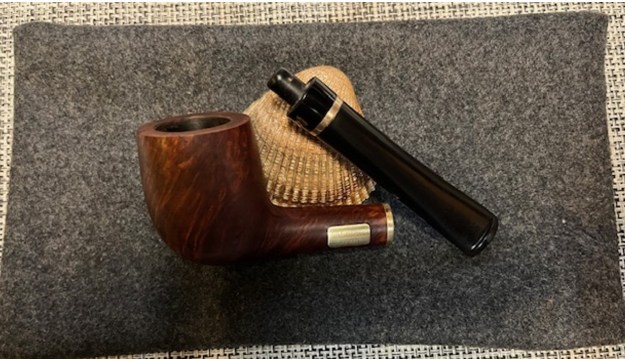
I moved on to work on another pipe. The next one I chose was another Stanwell in a Pipe Sock that came to us from our connection in Copenhagen, Denmark 01/26/2023. This is another one that might be your birth year pipe is you were born in 2001 when this Danish City Pipe was made. The stamping on the pipe was very clear and readable. On the topside of the shank is an engraved brass plate that reads Aalborg [over] 2000. On the right side of the shank it is stamped with a shape number 54 mid-shank. The stem had a brass Crowned “S” Stanwell logo inlaid on left side of the taper stem. The stem also has single brass band and an acrylic extension. There is also a band on the shank end. Together these bands sandwich the black acrylic space on the stem. The bowl had a moderate cake and there was some lava, dust and debris on the rim top and inner edges. The finish was in okay condition with oils and grime ground into the briar around the bowl sides. The vulcanite stem has light tooth marks on the top and underside next to the button. It showed a lot of promise through the grime. Jeff took photos of the pipe as he saw it at this stage of his clean up. The next photos of the rim and the shank show the condition of the pipe at its arrival in Idaho. You can see the cake in the bowl and the thick lava on the rim top and inner edge. The stem looked good with light marks on the top and underside at the button edge. Jeff took photos of the rich stain highlighting the grain on the sides and heel of the bowl. It really is a stunning piece of briar. The contrast stain really makes it stand out clearly. In the last photo of the heel of the bowl you can see the fill. It is solid and undamaged. The next photos show the stamping on the shank top and bottom. It is clear and readable as noted above. The stamping on the brass insert is clear and readable. He also captured the Brass Crown “S” Stanwell logo on the left side of the taper stem.I had spent a fair bit of time trying to figure out the Stanwell City pipes when I was working on the Esbjerg Canadian. I did a quick check and found nothing more. The best I can find is that they were made for a pipe show or a slow smoking competition in those particular cities. I have several of them here that I have to work on. I do know that Rødovre is another city in Denmark. Aalborg is another city there as well.

I had an idea about how to gather some information on the pipes. I thought that Jesper (a friend and blog reader) in Randers, Denmark perhaps would have information on the city pipes. I wrote him a message on FaceBook. That morning I read his reply. As usual he was extremely helpful. Thank you Jesper!

Hi Steve,

The city POY pipes were made (rather customized) for individual tobacco shows all over Denmark. The tobacconist chose a model and Stanwell would make them and do the engravings. So a Viborg 1995 might be a Bulldog while the Vejle 1995 is a Lovat.

I have no idea about how many tobacconists/cities did that but they were quite popular 20-30 years ago. When I worked at FF Pipes here in Randers around 200 we usually bought 3-4 dozens each year and they sold well for Christmas.

Cheers, Jesper

Thanks to Jesper, I now knew that the City POY pipes were customized for individual tobacco shows all over Denmark. The tobacconist would choose the model and Stanwell would to the do the engraving on them. I also learned that they were quite popular 20-30 year ago so I was dealing with a pipe at least that old.

I turned to Pipedia and looked at the Shape Numbers and Designers article to see if there were any specifics (https://pipedia.org/wiki/Stanwell_Shape_Numbers_and_Designers) that could help. I found that the shape number listed two shapes there – a Freehand and a Lovat. This did not describe this shape at all. There was nothing on a Billiard. Now it was time to work on this interesting pipe with a great designer attached and a unique and fascinating pipe history also attached.

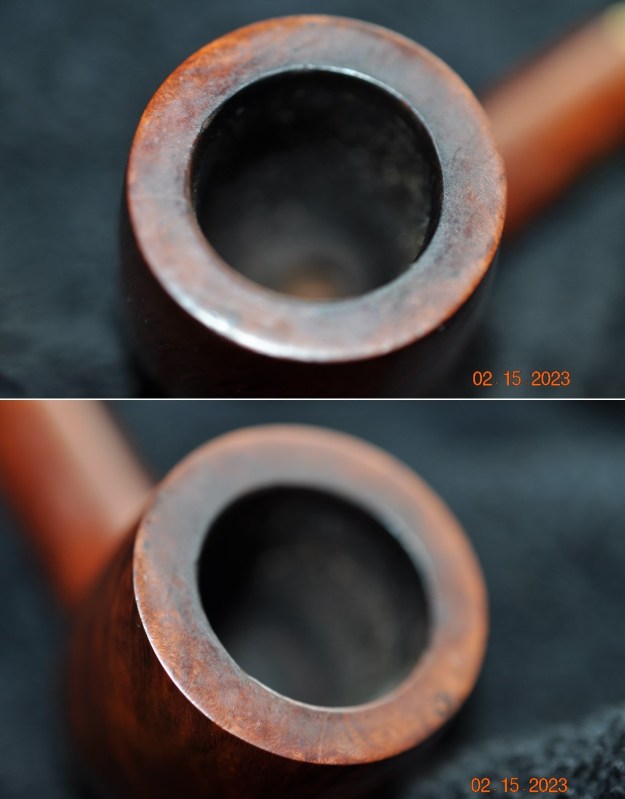
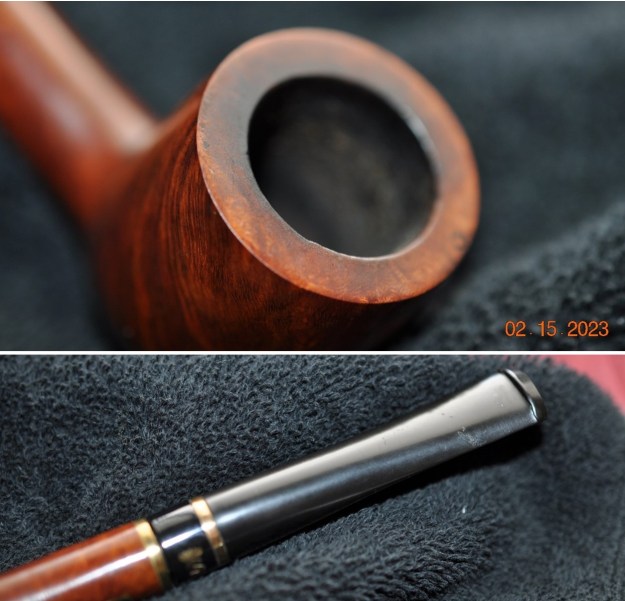
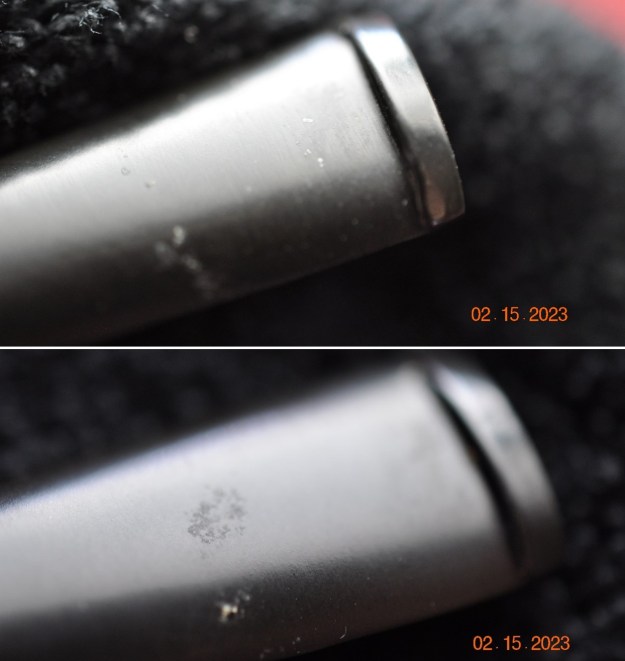
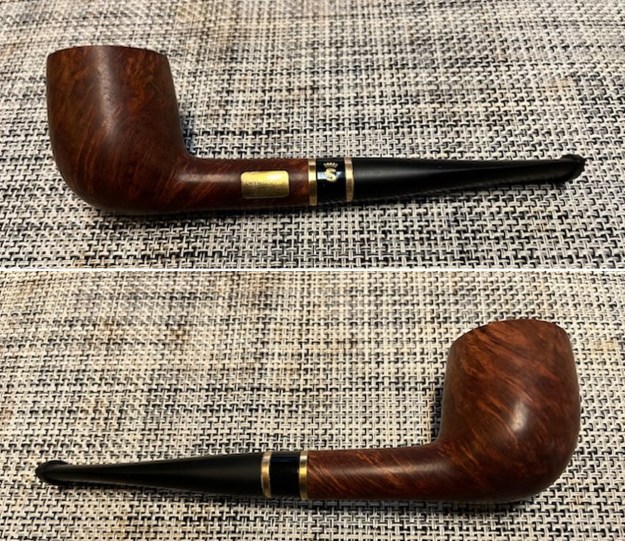
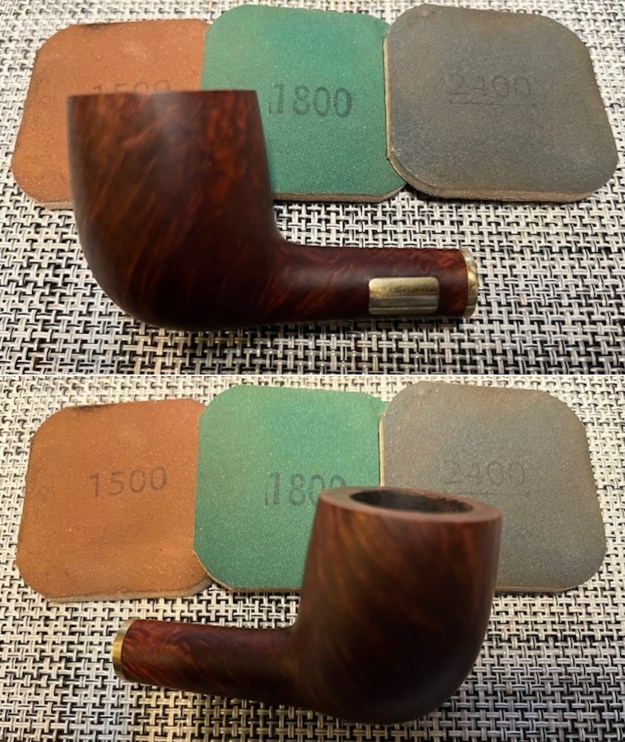
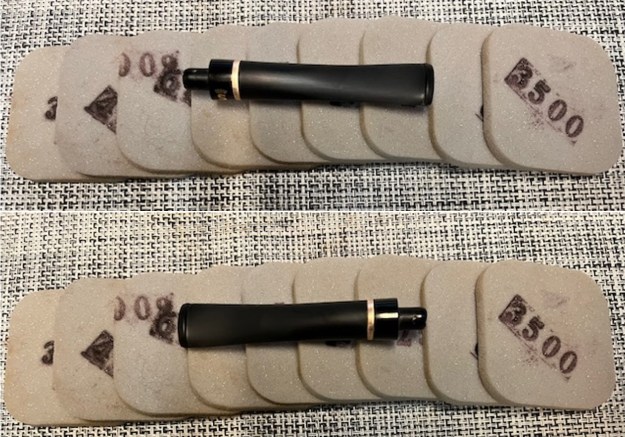
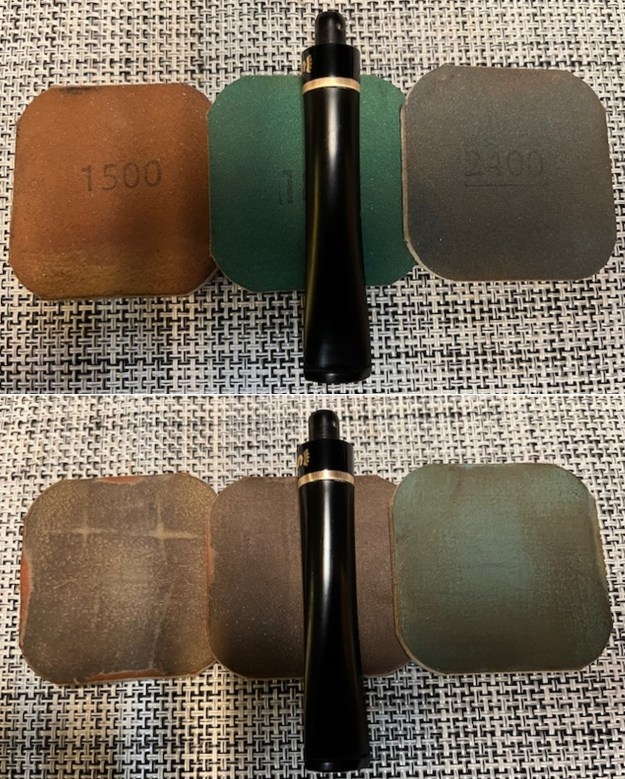
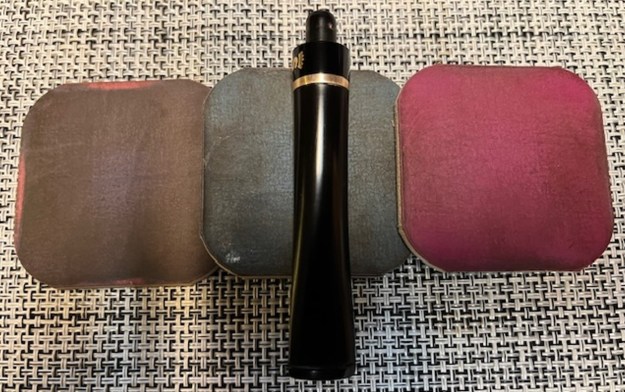
Jeff had done a great job cleaning up the pipe as usual. He reamed the pipe with a PipNet reamer and cut back the cake back to the bare briar. He cleaned up the walls with a Savinelli Fitsall Pipe Knife. He scrubbed the interior of the bowl and shank with pipe cleaners, cotton swabs and alcohol to remove the tars and oils. He scrubbed the exterior of the pipe with Murphy’s Oil Soap and a tooth brush to remove the grime from the finish. He worked on the rim top lava and darkening with the soap and tooth brush. He scrubbed the inside of the stem with alcohol and pipe cleaners. He scrubbed the exterior with Soft Scrub and then soaked it in Briarville’s Pipe Stem Deoxidizer. He washed it off with warm water to remove the Deoxidizer. The pipe looked far better when it arrived. I took photos of the bowl and rim top as well as the stem to show how clean they were. You can see that rim top and edges look very good. There is some darker spots on the rim top that should come off with polishing. The stem is clean and the tooth and chatter on both sides ahead of the button is very light.I took photos of the stamping on the sides of the shank and on the brass plaquette. The stamping is clear and readable though hard to capture with the reflection. The stamping on the right side of the shank is a bit faint but readable. With the stem removed the pipe looked quite nice and you can see the band and stem extension.I started my work on the pipe by polishing the briar with 1500-12000 grit micromesh sanding pads. I wiped the bowl down after each sanding pad with a damp cloth. I polished the brass plaquette with a jewellers cloth to restore the shine and remove the tarnish. It really glows now.I rubbed the briar down with Before & After Restoration Balm. I worked it into the briar with my fingertips. The product works to clean, enliven and preserve the briar. I let it sit for 10 minutes while I worked on the stem. After the time passed I buffed it with a cotton cloth to deepen the shine. The briar really comes alive with the balm. I set the bowl aside and turned my attention to the stem. I sanded out the tooth marks and chatter on the vulcanite stem surface near the button with a new product I am using. I ordered a set of 2 inch sanding pads for 320-3500 grit sanding pads. They work amazingly well and are easy to manage and sand close to the sharp edge of the button.I polished the stem with micromesh sanding pads – dry sanding with 1500-12000 grit pads. I wiped the stem down after each sanding pad with Obsidian Oil. I polished it with Before & After Pipe Stem Polish – both Fine and Extra Fine. I gave it a coat of Obsidian Pipe Stem Oil. I am excited to put the finishing touches on this 2000 Stanwell City Pipe Aalborg Made in Denmark Billiard as it is a beauty. I put the pipe back together and buffed it with Blue Diamond on the buffing wheel. I gave the bowl and the stem multiple coats of carnauba wax. I buffed the pipe with a clean buffing pad to raise the shine and hand buffed it with microfiber cloth to deepen the shine. It is fun to see what the polished bowl looks like with the brass plaquette and the polished vulcanite stem. This Stanwell Made in Denmark Aalborg 2000 Billiard 54 is nice looking and the pipe feels great in my hand. It is light and well balanced. Have a look at it with the photos below. The dimensions are Length: 5 ¾ inches, Height: 1 ½ inches, Outside diameter of the bowl: 1 ¼ inches, Chamber diameter: ¾ of an inch. The weight of the pipe is 1.20 ounces/34 grams. It is a beautiful pipe and one that I will be putting in the Danish Pipemaker Section on the rebornpipes store. Thanks for walking through the cleanup with me as I worked over this pipe.

As always, I encourage your questions and comments as you read the blog. Thanks to each of you who are reading this blog. Remember we are not pipe owners; we are pipe men and women who hold our pipes in trust until they pass on into the trust of those who follow us. 

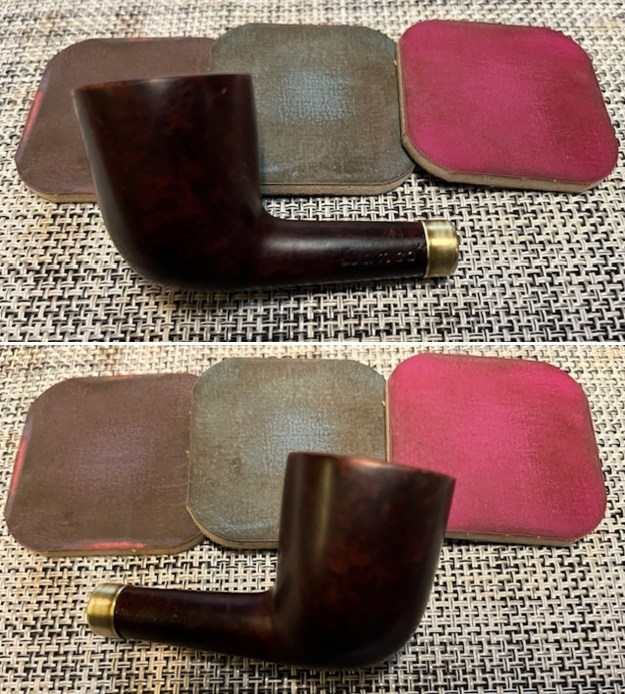
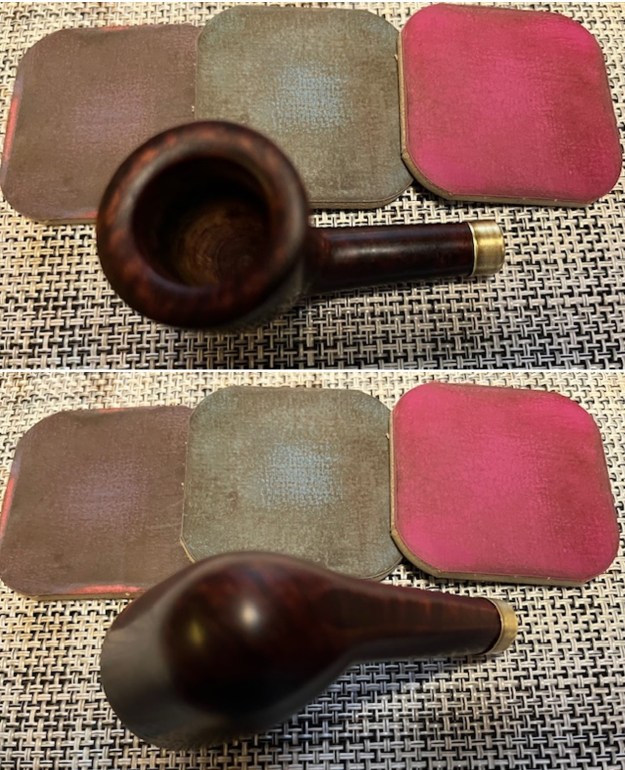
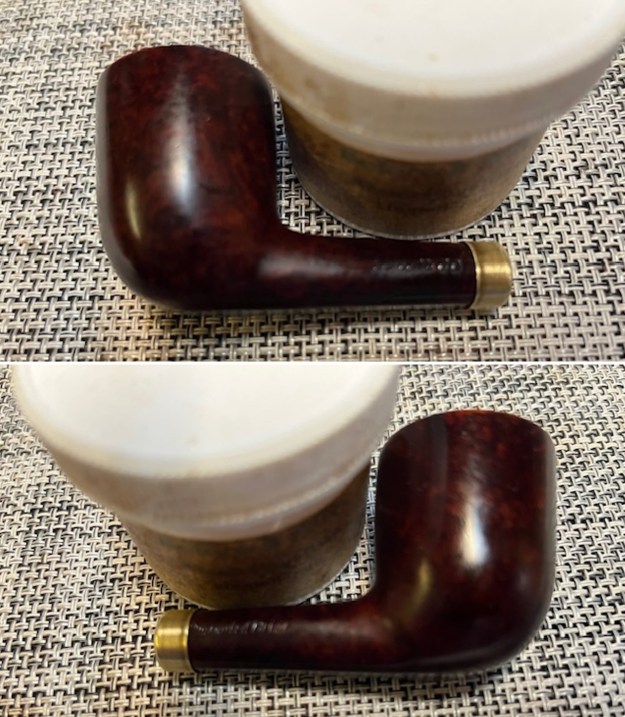
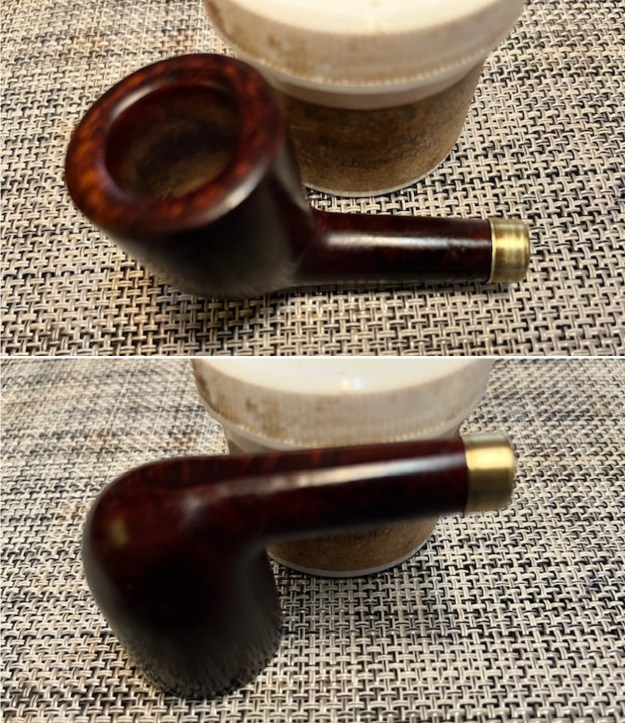
Picked up a pair of NOS UNSMOKED Pair of “Danco” Churchwardens at an auction


Blog by Steve Laug

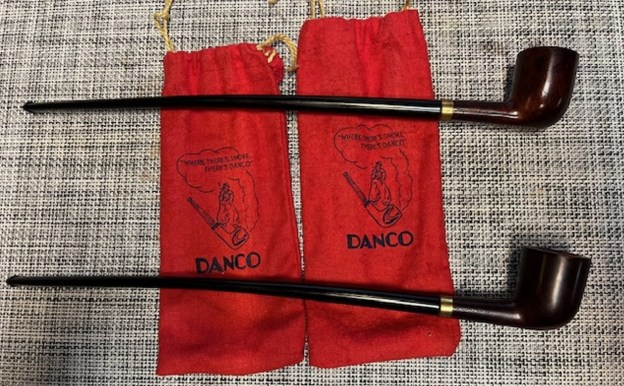
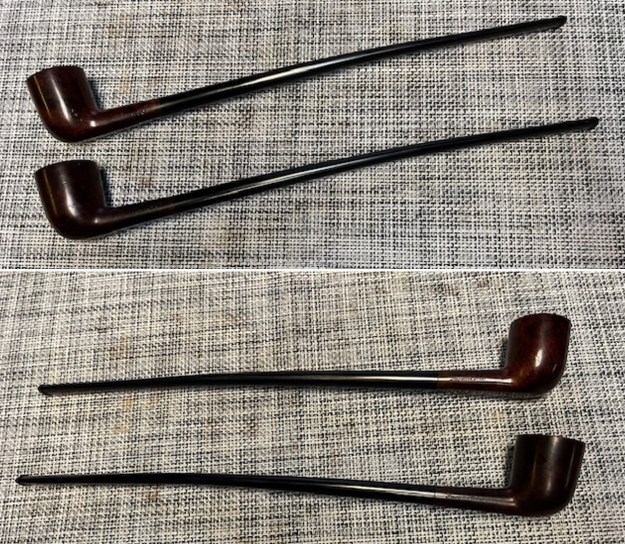
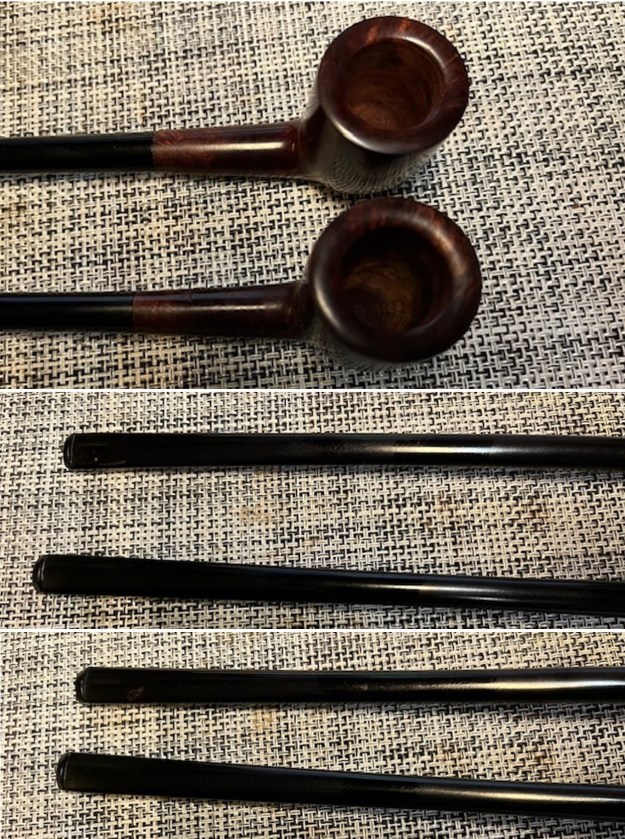
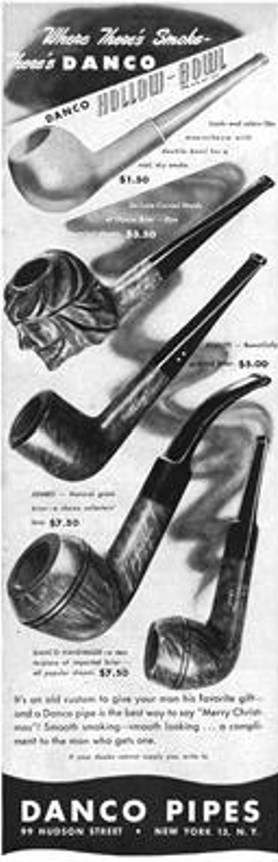
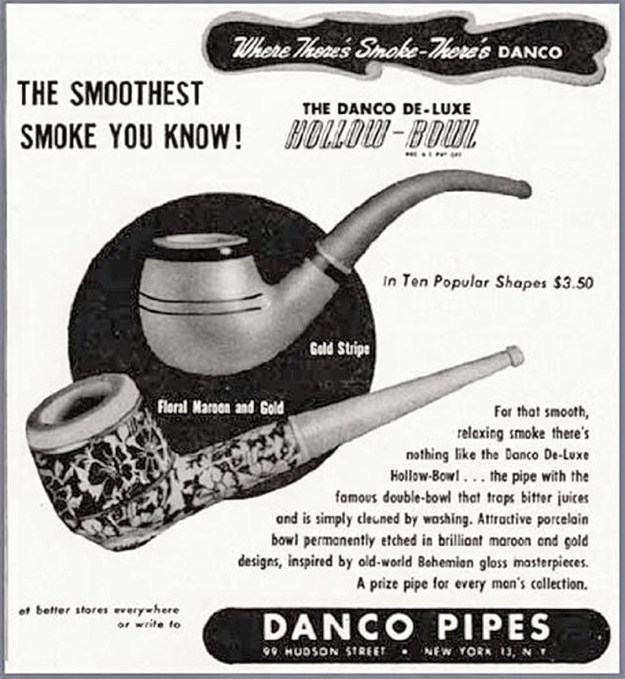
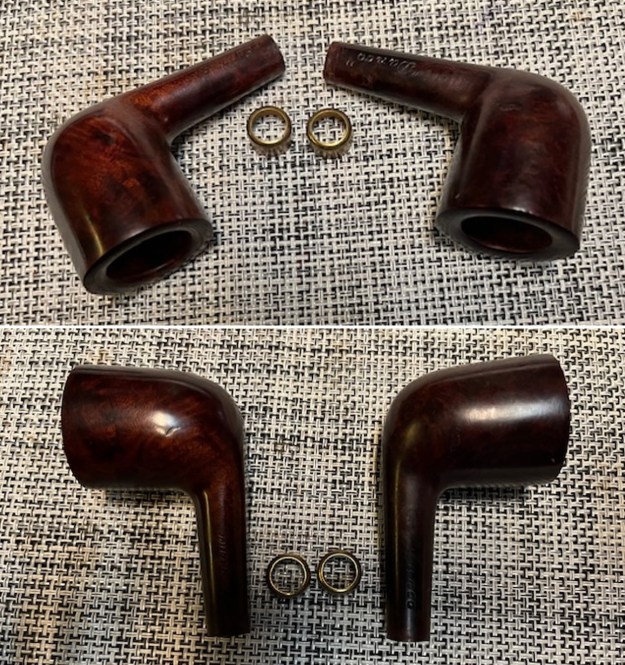
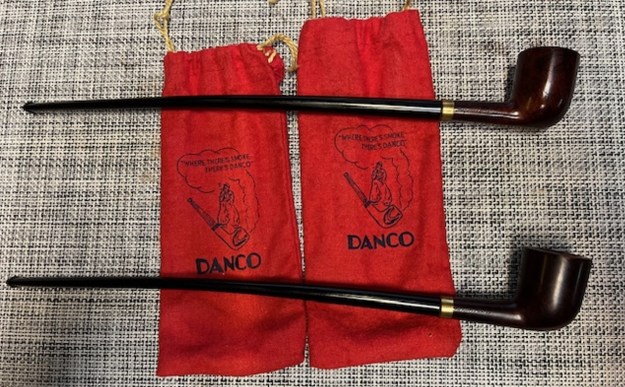
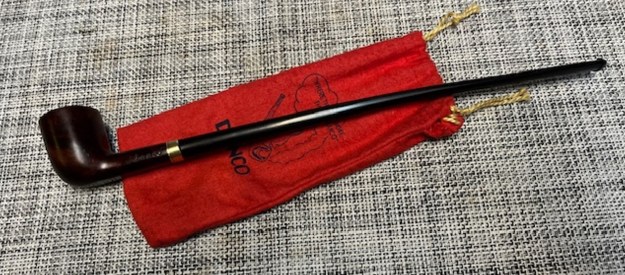
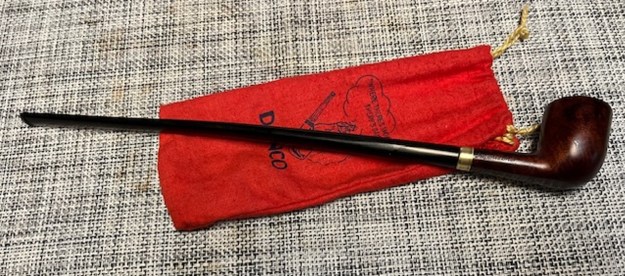
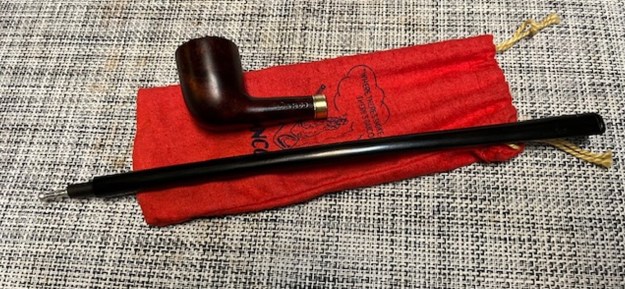
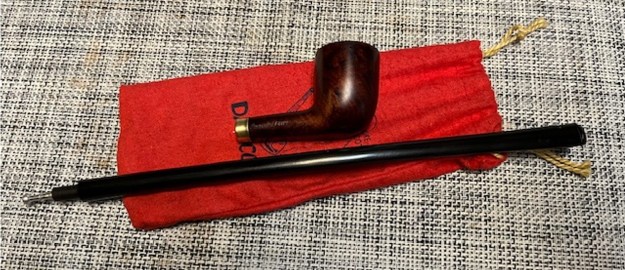
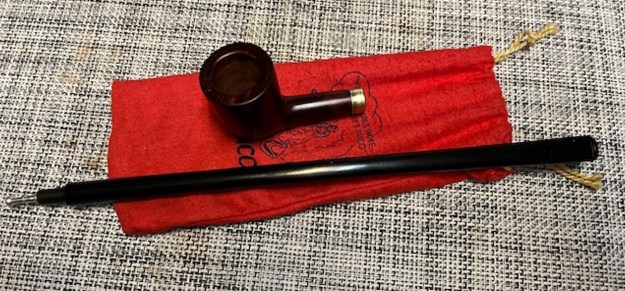
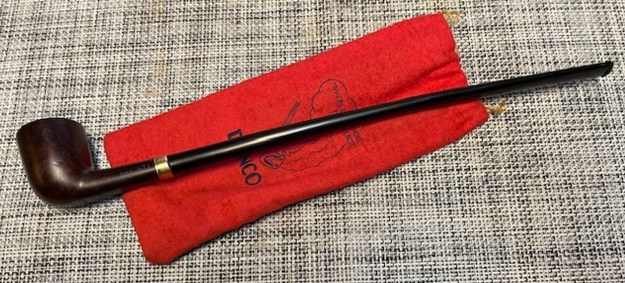
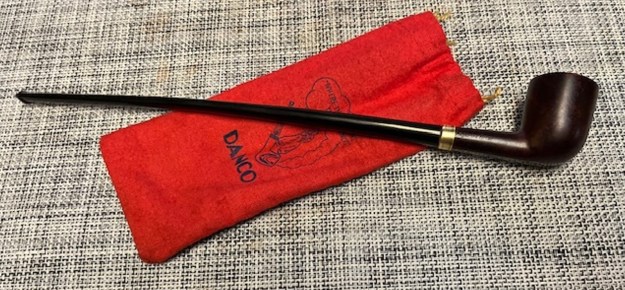
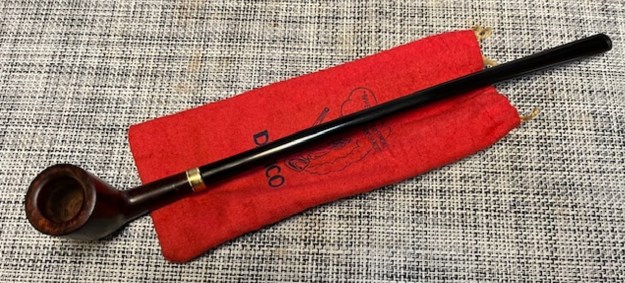
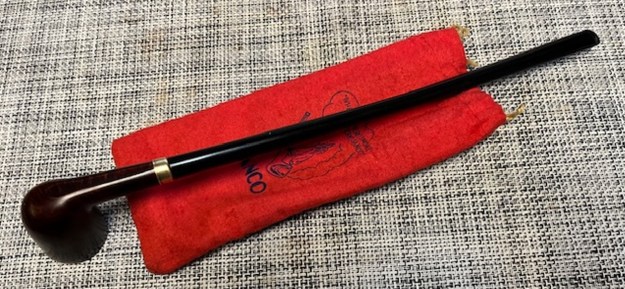
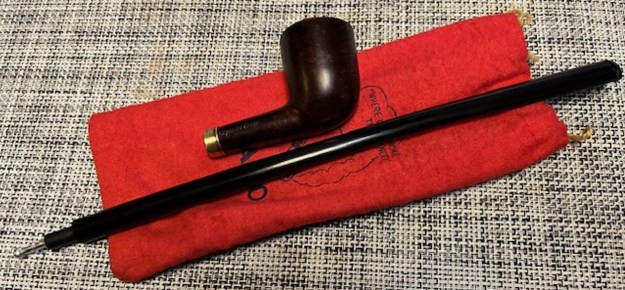
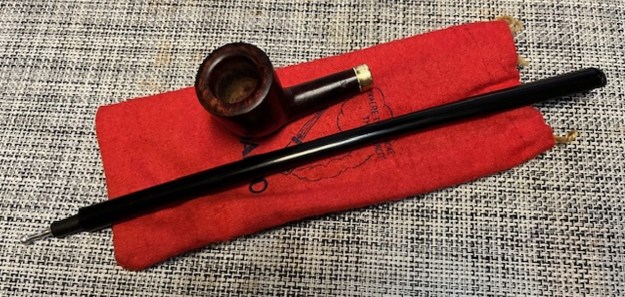
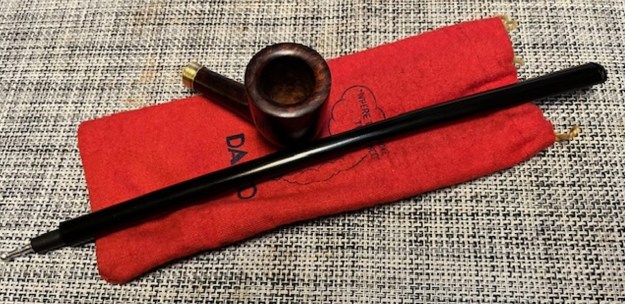
The next two pipes on the table are a pair of churchwardens that we picked on 01/16/2021 from an online auction in Gastonia, North Carolina, USA. They are almost identical in terms of the stummels and the stems. They both are stamped “DANCO” on the left side of each pipe. On the right side each are stamped Imported Briar. Both are NEW OLD STOCK (NOS) and UNSMOKED. The finishes are clean but dusty but are otherwise in good condition. On both pipes there was a hairline crack on the right side running through the Imported Briar stamp. It was not wide open but rather a small almost invisible hairline crack. The stems are both vulcanite and older style straight line from the shank to the button. Neither has tooth marks or chatter on them but both have light scratching. I took photos of the pair to show their condition when I took them out of the red Danco pipe socks. The socks were stamped with a smoking pipe and plume of smoke reading, “Where there’s smoke there’s Danco”. I took photos of the bowl and the rim top of each pipe. You can see that the bowl is unsmoked on both pipes. I also took photos of the stems on both to show their unsmoked and unmarked condition.I took photos of the stamping on both sides of the shanks. The “Danco” stamp on the left side and the Imported Briar stamp on the right side. I removed the stems from the shank and both had the same stinger apparatus – an aluminum spear head to capture and wick the tars from the smoke as it entered the long airway in the stem. I tried to capture the crack on each pipe in the photos below. I have circled them with red in each photo.I paused at this point before I cleaned up and repaired the pipe and did some reading on the Danco brand. I found a link to an article on Pipedia (https://pipedia.org/wiki/Danco). It is short but very clear and I quote from it below. I also included to advertisements from the article below as they give some background to this pair of Churchwardens.

There were some references to Danco pipes from the book “Who Made That Pipe?” and they put the manufacture of them in both Denmark and the US but do not attribute it to any specific maker. There are included that indicate the location of the firm was on Hudson St., in New York.

Some Danco pipes are marked “Imported Briar” and that would suggest they are American made.

Some Danco pipes that are marked “Italy” so the US Danco distributor/seller must have had some of the briar pipes they sold made in Italy.

Danish Dancos should be stamped “Denmark.”

The pipes I had in hand were both stamp DANCO on the left side and Imported Briar on the right side. From the above information it is clear that these two pipes were American or US made pipes. They would have come from the firm on Hudson Street in New York, New York.

Read the information on the two advertisement to get a sense of what the pipes were like and their values when they sold originally – varying between $1.50 and $7.00. The advertisements also have the same saying on them as the pipe socks that I have here with each pipe. It reads:

“Where there’s smoke there’s a Danco.”

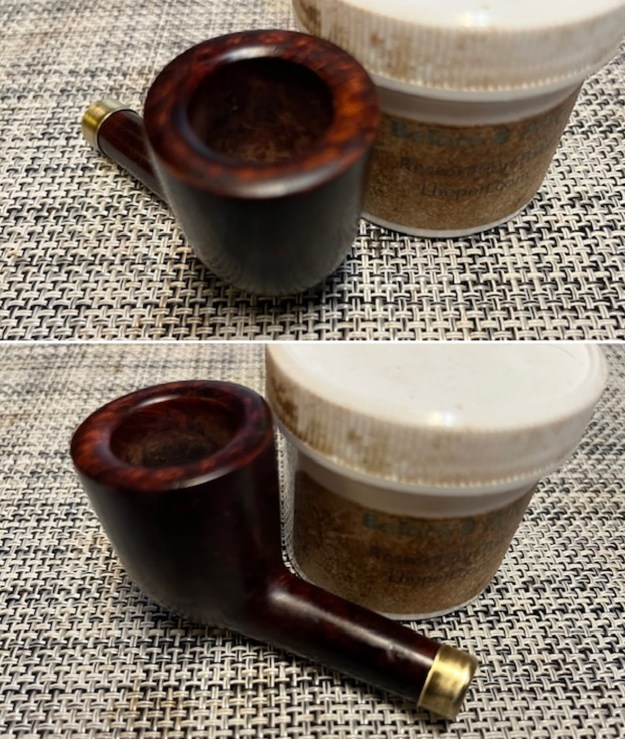
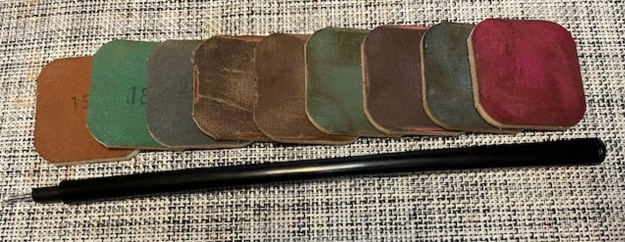
Now it was time to work on the hairline cracks in both shanks. I went through my bands and found a band that fit on each of the shank.I heated the bands with a lighter and pressed them onto the shank end of each pipe. I sanded the tenon slightly with a folded piece of 220 grit sandpaper to reduce the diameter of the mortise now that the band squeezed the cracks shut. It was a snug fit and I liked the overall look of the repaired pipes. The pictures below show the two pipes after banding.I took a photo of the pipes on top of the pipe socks. They are a nice looking pair of pipes. Now it was time to work on the pipes individually. I started with the first one above. I removed the stem and worked over the briar with micromesh sanding pads. I polished it with 1500-12000 grit micromesh sanding pads. I sanded with each pad and wiped the bowl down with a damp cloth between each pad. The grain began to show through the way I was hoping. It is a great looking pipe. I rubbed the bowl down with Before & After Restoration Balm. I worked it into the briar with my finger tips. I let it sit for 10 minutes and the Balm did its magic. It enlivens, cleans and preserves the briar. It certainly brought this bowl back to life. I buffed it off with a clean cloth and took the following photos. I polished the stem with micromesh sanding pads – dry sanding with 1500-12000 grit pads and then wiping the stem down with Obsidian Oil on a cloth to clean and protect the vulcanite surface.This Danco Imported Briar Church Warden with a vulcanite taper stem is a great looking pipe. The mix of stains once cleaned up really highlights the grain and the polished finish is stunning. The brass band on the shank is not just a repair but is also a nice addition of bling. I put the stem back on the bowl and carefully buffed the pipe with Blue Diamond on the buffing wheel. I gave the bowl and the stem multiple coats of carnauba wax on the buffing wheel and followed that by buffing the entire pipe with a clean buffing pad. I hand buffed the pipe with a microfiber cloth to deepen the shine. The finished first Danco Church Warden fits nicely in the hand and feels great. Give the finished pipe a look in the photos below. The dimensions of the pipe are Length: 12 inches, Height: 1 ½ inches, Outside diameter of the bowl: 1 ¼ inches, Chamber diameter: ¾ of an inch. The weight of the pipe is 35 grams /1.23 ounces. I will be adding the pipe to the American Pipe Makers Section of the rebornpipes store. If you are interested in purchasing this pipe send me a message or an email. Thanks for reading this blog and my reflections on the pipe while I worked on it. I turned to the second Church Warden. I removed the stem and worked over the briar with micromesh sanding pads. I polished it with 1500-12000 grit micromesh sanding pads. I sanded with each pad and wiped the bowl down with a damp cloth between each pad. The grain began to show through the way I was hoping. It is a great looking pipe. I rubbed the bowl down with Before & After Restoration Balm. I worked it into the briar with my finger tips. I let it sit for 10 minutes and the Balm did its magic. It enlivens, cleans and preserves the briar. It certainly brought this bowl back to life. I buffed it off with a clean cloth and took the following photos. I polished the stem with micromesh sanding pads – dry sanding with 1500-12000 grit pads and then wiping the stem down with Obsidian Oil on a cloth to clean and protect the vulcanite surface. This second Danco Imported Briar Church Warden with a vulcanite taper stem is a great looking pipe. The mix of stains once cleaned up really highlights the grain and the polished finish is stunning. The brass band on the shank is not just a repair but is also a nice addition of bling. I put the stem back on the bowl and carefully buffed the pipe with Blue Diamond on the buffing wheel. I gave the bowl and the stem multiple coats of carnauba wax on the buffing wheel and followed that by buffing the entire pipe with a clean buffing pad. I hand buffed the pipe with a microfiber cloth to deepen the shine. The finished first Danco Church Warden fits nicely in the hand and feels great. Give the finished pipe a look in the photos below. The dimensions of the pipe are Length: 12 inches, Height: 1 ½ inches, Outside diameter of the bowl: 1 ¼ inches, Chamber diameter: ¾ of an inch. The weight of the pipe is 35 grams /1.23 ounces. I will be adding the pipe to the American Pipe Makers Section of the rebornpipes store. If you are interested in purchasing this pipe send me a message or an email. Thanks for reading this blog and my reflections on the pipe while I worked on it.

As always, I encourage your questions and comments as you read the blog. Thanks to each of you who are reading this blog. Remember we are not pipe owners; we are pipe men and women who hold our pipes in trust until they pass on into the trust of those who follow us. 

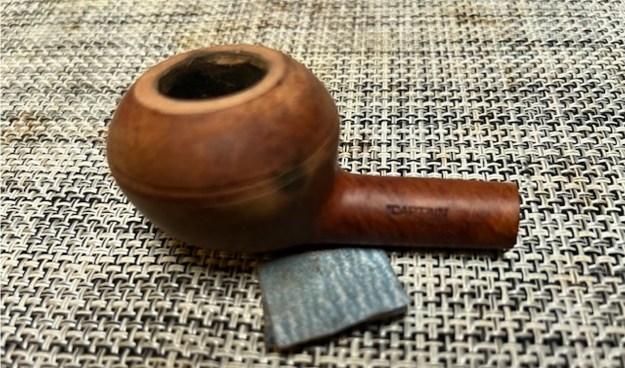
Fresh Life for a “Captain Peterson” Made in England N24 Rhodesian


Blog by Steve Laug

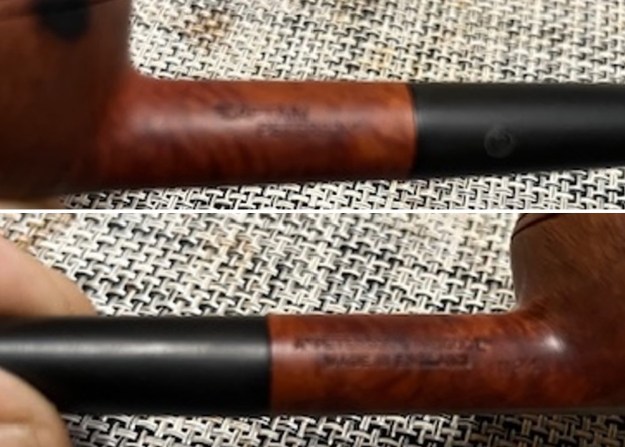
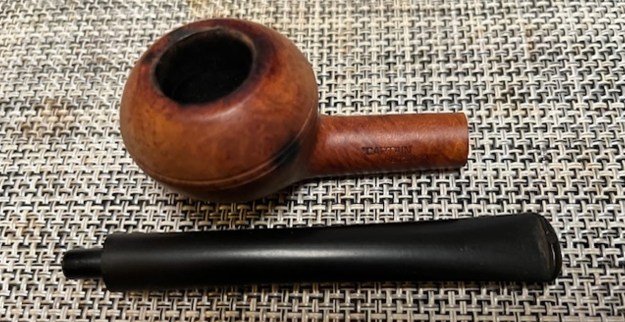
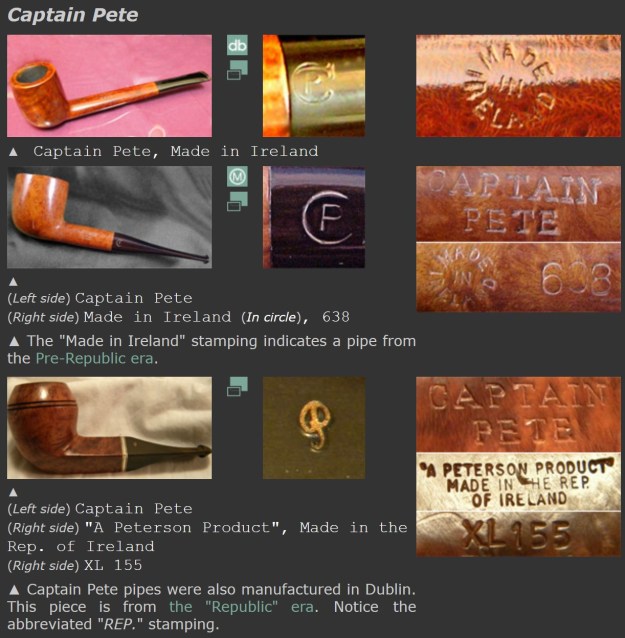
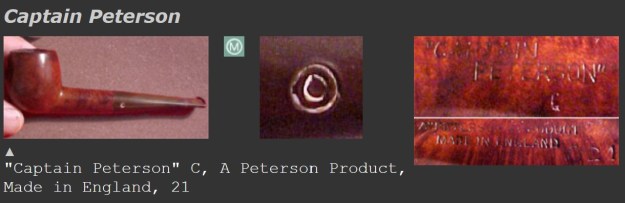
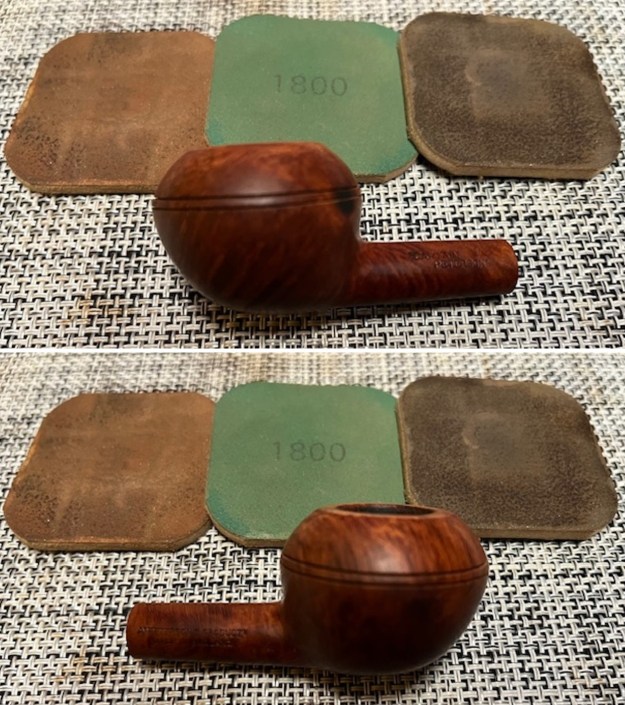
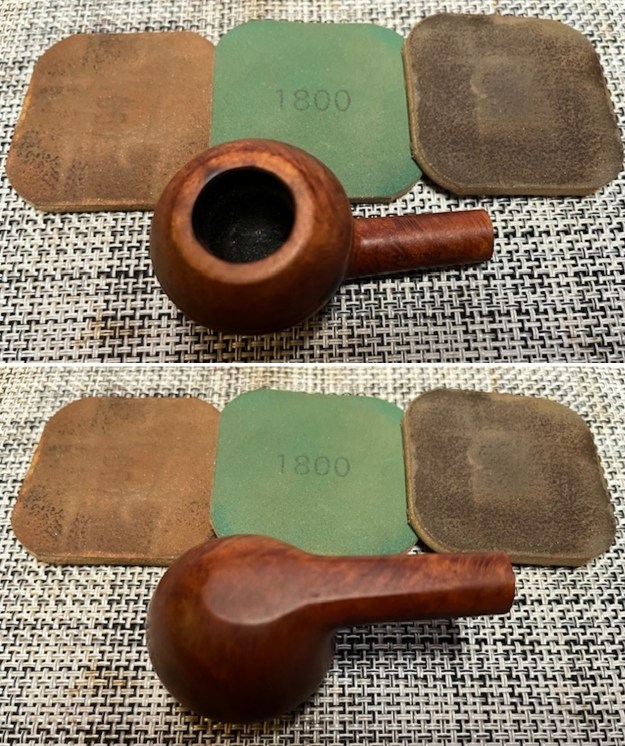
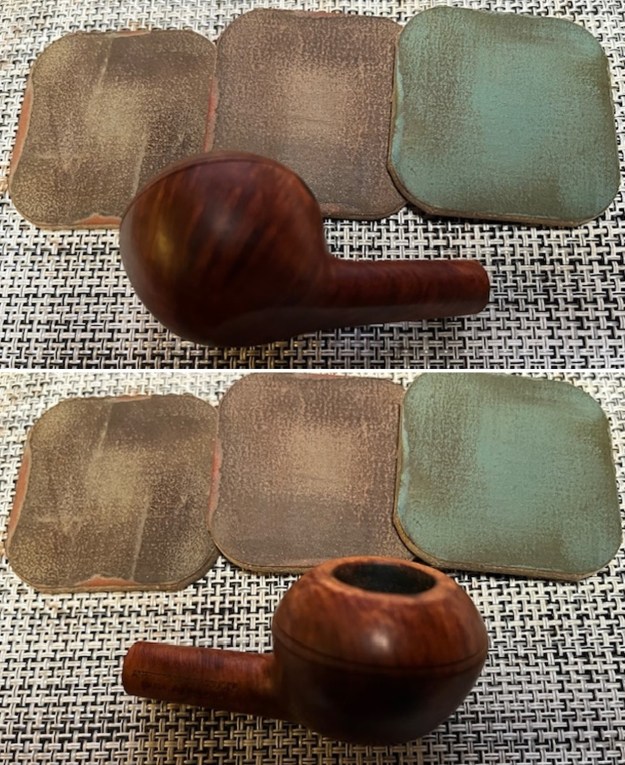
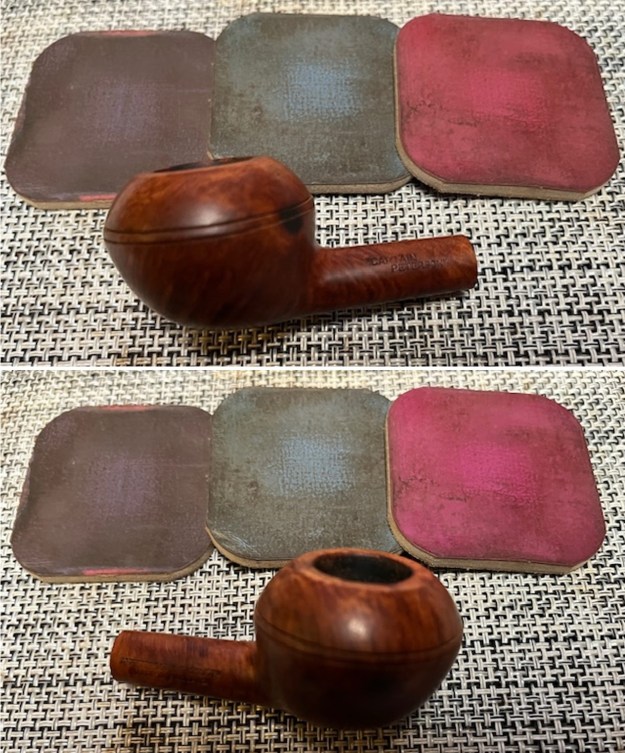
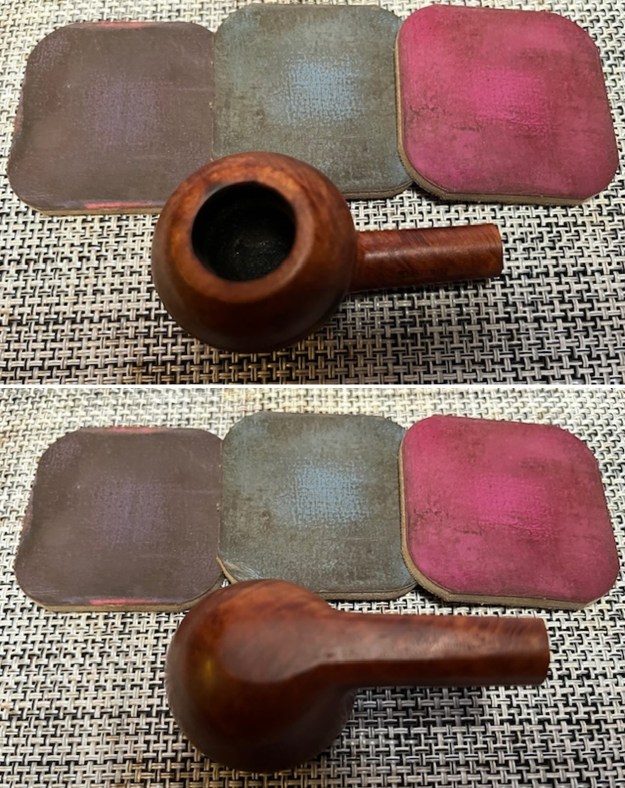
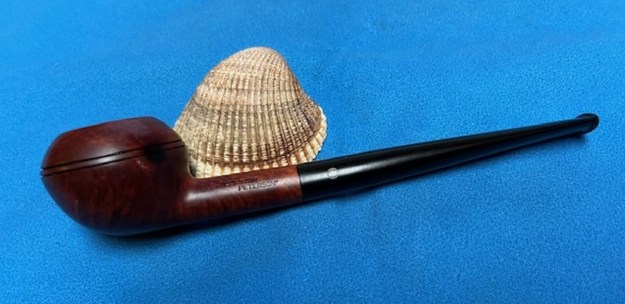
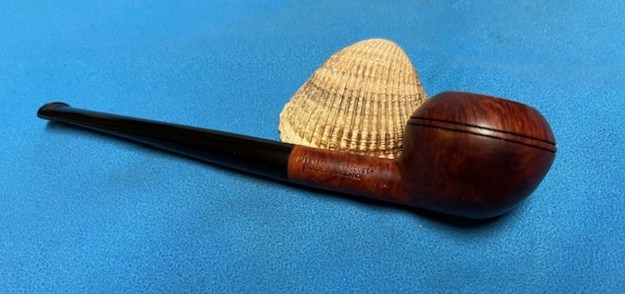
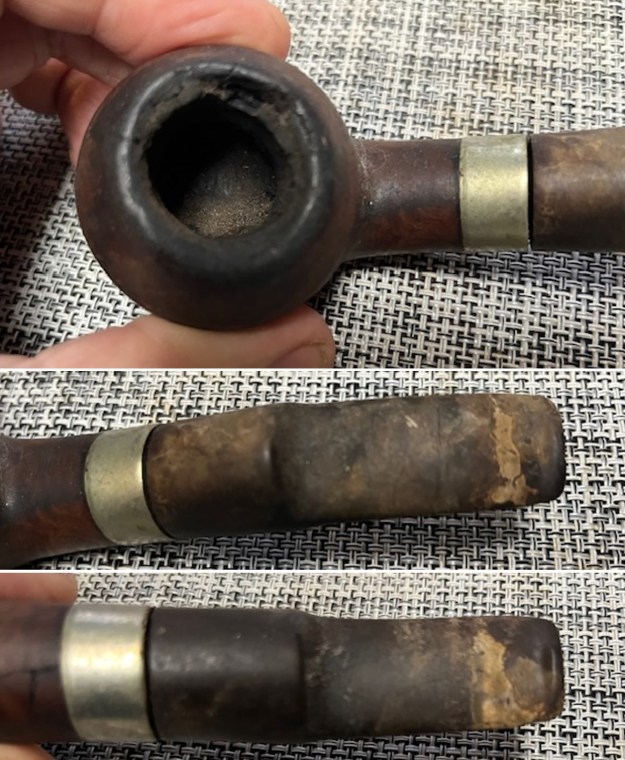
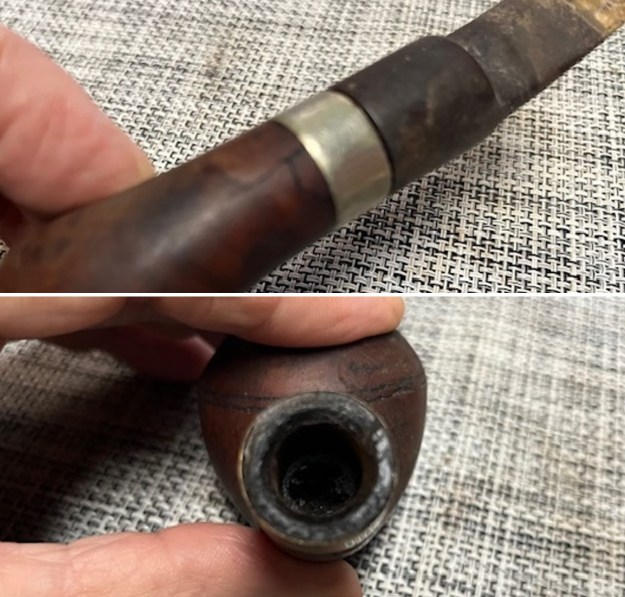
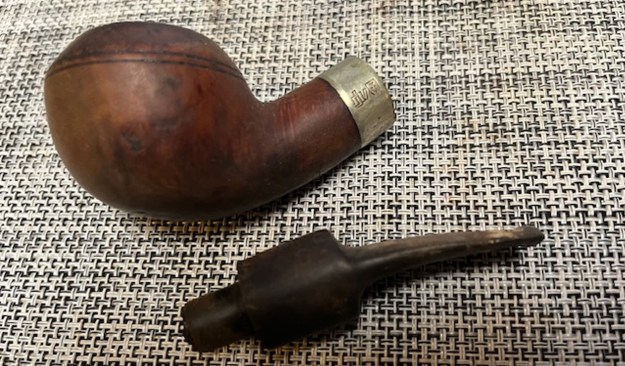
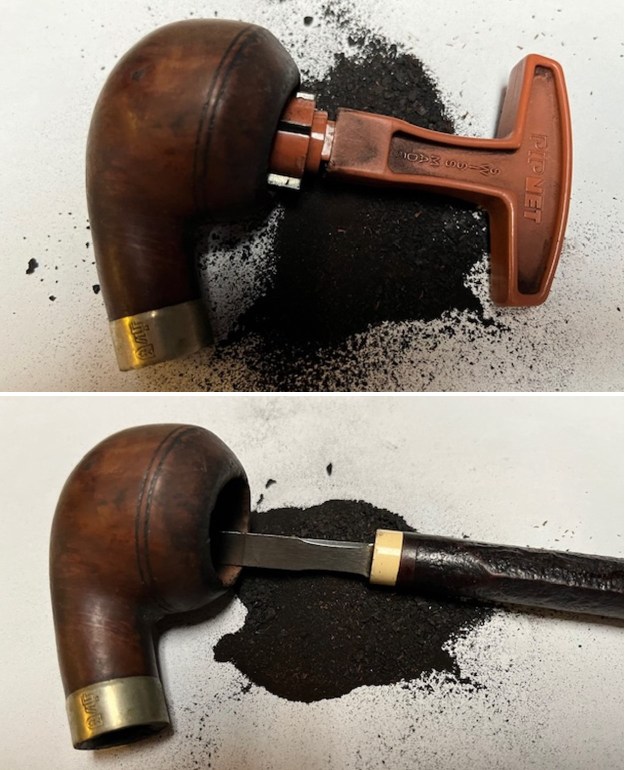
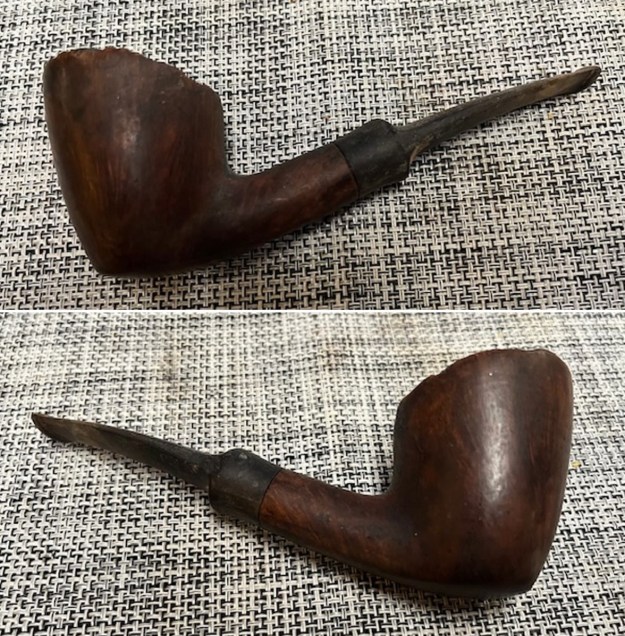
The next pipe on my work table is another one that I have no idea where or when we picked it up. I know that it has been here for a long time. I figure that it probably came in the same lot as the Captain Peterson N23 Apple. The pipe is stamped on the left side and read “Captain Peterson” (upper case letters in two lines). On the right side it was stamped A “Peterson’s Product” [over] Made in England. That is followed by the shape number N24 near the shank/bowl union. There is a C in a Circle logo on the left side of the taper stem. The pipe had been reamed and cleaned somewhere along its journey which told me that it had come to me from Jeff after he had done is work. He also has no idea of the provenance of the pipe. The finish on the bowl was dull but very clean. There were burn marks on the right and left side toward the cap and on the rim top and edges. It appeared that the pipe had been laid in an ashtray. The bowl was reamed and the rim top was also clean. The inner edge of the bowl looked quite good. The taper stem was also very clean. It had no oxidation on the finish but there were tooth marks and chatter on the surface of the stem. There was a bite through on the underside next to the button edge. This one lacked a stinger. I took photos of the pipe before I started my work on it. I took a photo of the bowl and rim top to show how well it had cleaned up. There was no lava on top and no cake in the bowl. You can see the burn marks or darkening on the rim top and edges – both the inner and outer.I took photos of the stamping on the sides of the shank. It is clear and readable as noted above. The stamped white logo on the side of the taper stem is also clear and readable.I removed the stem from the shank to give a sense of proportion to the pipe and to also show the unique stinger apparatus in the tenon end of the other Captain Peterson was missing on this one.I have included the information from the previous Captain Peterson restoration. For me this is a part of the restoration. I turned first to Pipephil’s site where I found both Captain Pete and Captain Peterson (http://www.pipephil.eu/logos/en/logo-peterson-rep.html#captainpete). I have included a screen capture of the Captain Pete information and also one of the Captain Peterson information. I also included the sidebar information as well.Captain Pete was a brand of Peterson’s English branch (1899-1960). Dublin continued to produce Captain Petes a couple of years after 1960. At the end of the eighties just as the Sherlock Holmes range was being issued, Peterson reintroduced the modern Captain Pete series.Captain Peterson was a brand of Peterson’s English branch. This English made pipe was crafted prior to 1960.

From there I turned to the “Peterson Pipe The Story of Kapp & Peterson” by Mark Irwin and Gary Malmberg, page 295 to see what information I could find there. I quote:

Captain Pete – This line’s name was derived from the nickname of Charles Peterson, known affectionately by friends and employees as “Captain Peterson.” The first issue. C. 1940-62, was in a smooth finish produced for Rogers Imports with a white stamped P inside C or a circled P on the mouthpiece. CAPTAIN over PETE on shank, and MADE IN IRELAND in a circle. English made versions show CAPTAIN over PETE on the shank or “CAPTAIN PETERSON” and a PETERSON’S PRODUCT over MADE IN ENGLAND or LONDON MADE over ENGLAND. The second issue (1998-), features an XL bowl with Sherlock Holmes shapes and compact stems, in rustic or combination of smooth and rustic finish, with a nickel band between two narrow brass bands.

I knew that I was working on a pipe made before 1960 in London, England. Thus, the pipe was a first issue C. 1940-62. It is a beautiful pipe that will need some work but overall was in very good condition for a pipe made before 1960. It was time to start my work on the pipe.

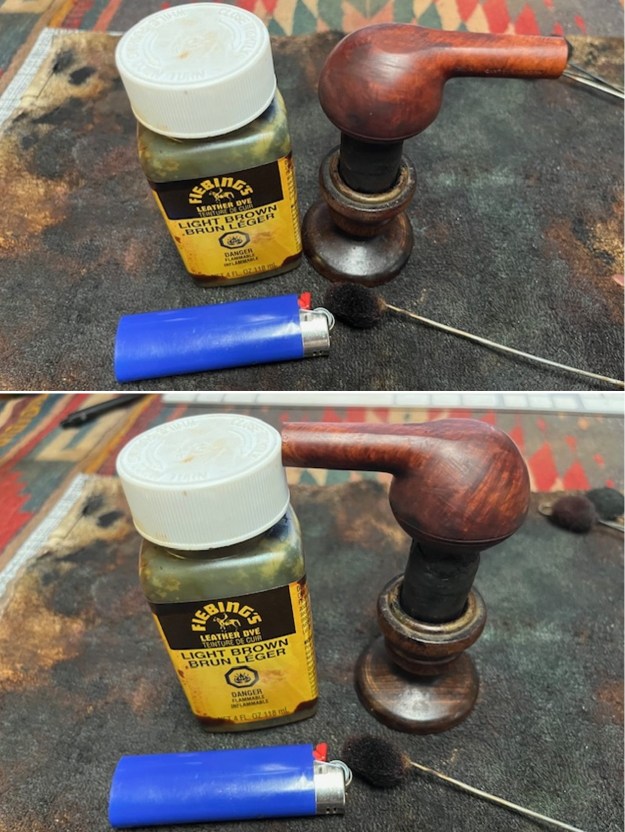
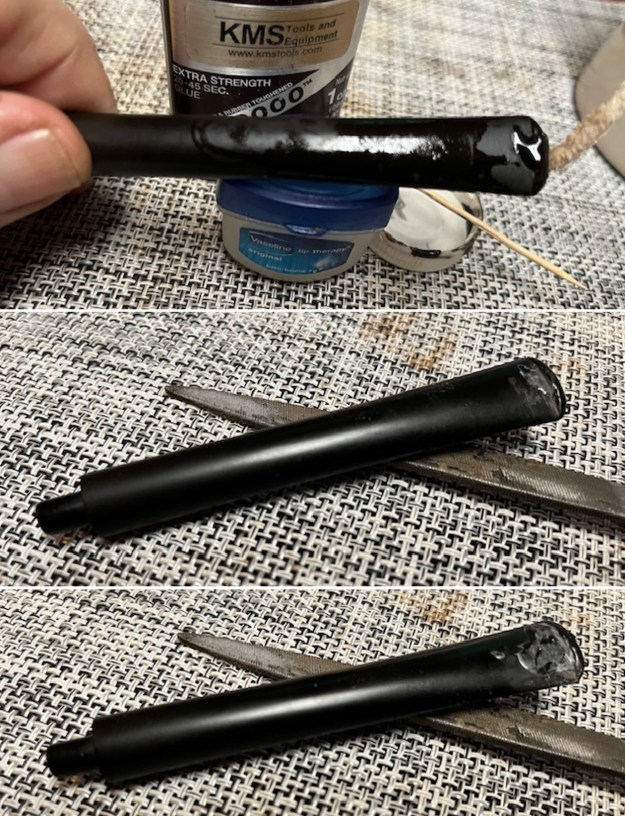
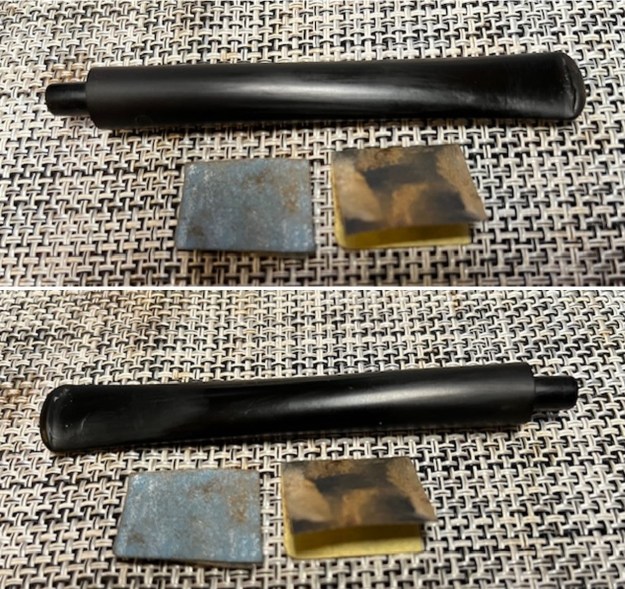
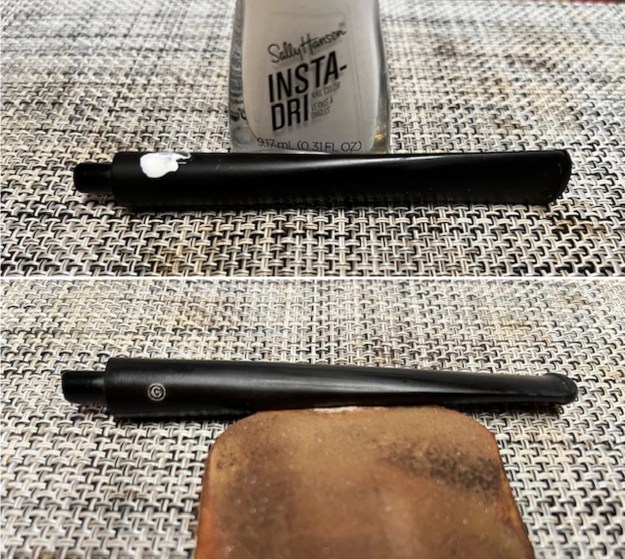
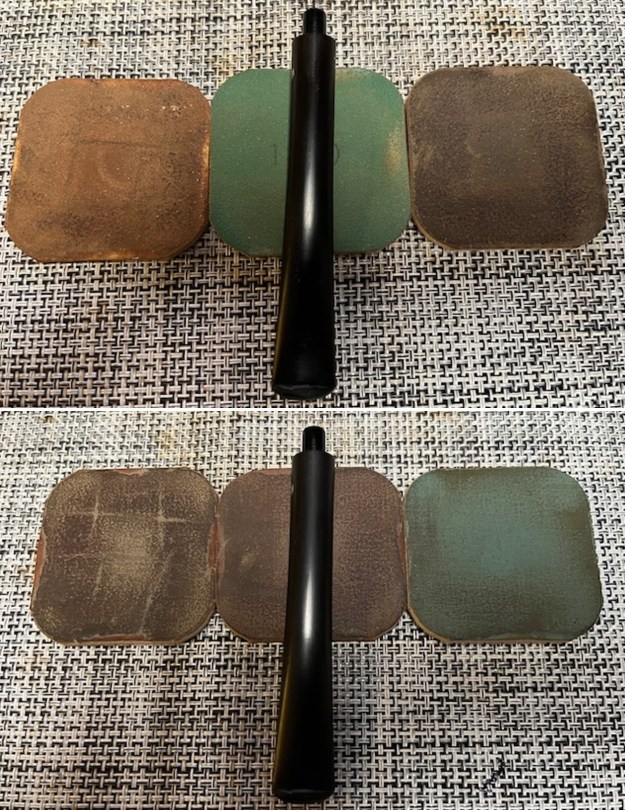
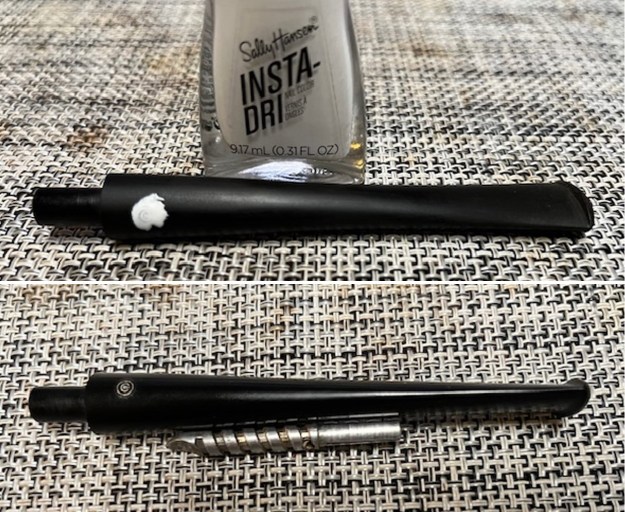
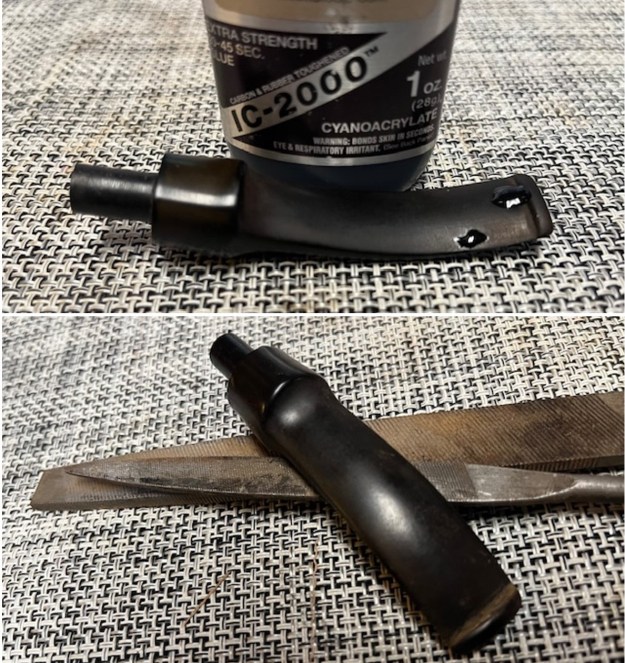
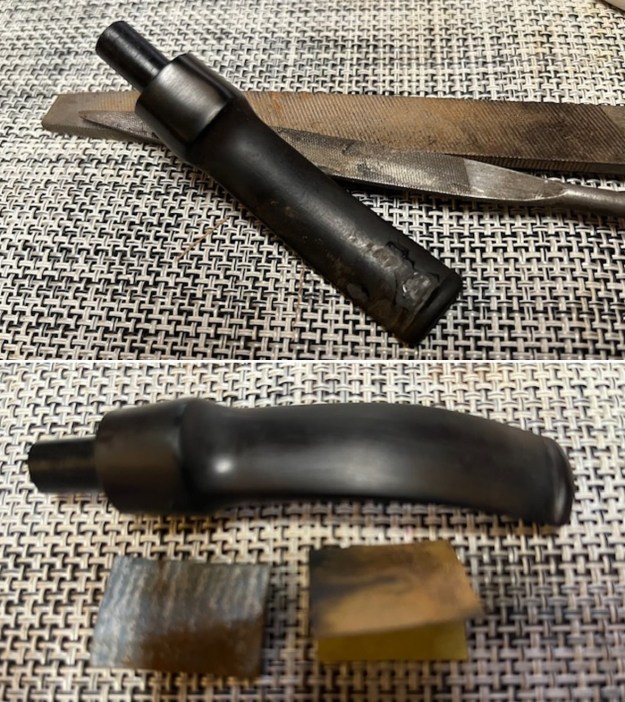
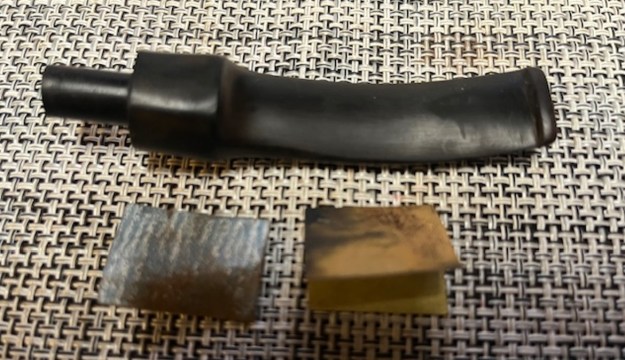
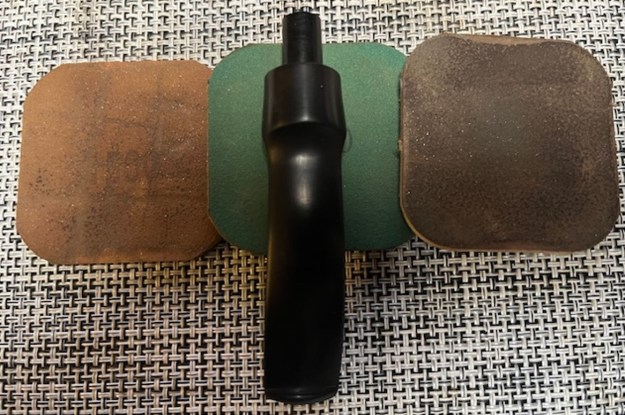
I began by cleaning up the inner edge of the bowl and gently topped the rim top with a folded piece of 220 grit sandpaper. I sanded the edge to give it very slight bevel and minimize the damage. I also sanded the burnt spots on the sides of the bowl to blend them into the surface. I polished the briar with micromesh sanding pads – dry sanding the bowl and shank with 1500-12000 grit pads and wiping it down with a damp cloth between each sanding pad. The bowl took on more of a shine with the completion of each sanding pad. I gave the bowl and shank a wash of Light Brown aniline stain and alcohol. I applied it with a wool dauber and flamed it to set it in the briar. Once it cured I buffed it with Blue Diamond on the buffing wheel. After buffing I worked some Before & After Restoration Balm into the briar with my fingertips. I let it sit on the bowl for 15 minutes. I buffed it off with a soft cotton cloth to raise the shine. It was a beautiful piece of briar. With the bowl finished other than the final buffing I set it aside and turned my attention to the stem. I greased a pipe cleaner with Vaseline and inserted it in the button below the bite through. I filled in the bite through on the underside with black super glue and the tooth marks on the top side with you. I removed the pipe cleaner from the stem and then used a small file to flatten the repair. I sanded it with 220 grit sandpaper and then started polishing it with 600 grit wet dry sandpaper. I touched up the Circle C logo the left side of the stem with some white acrylic fingernail polish. Once it dried I sanded off the excess and the logo looked very good.I polished it with micromesh sanding pads. I wiped the stem down between each pad with a cloth impregnated with Obsidian Oil. By the final pad the pipe stem looked very good. I finished polishing the stem with Before & After Pipe Stem polish (both Fine and Extra Fine) then wiped the stem down with another coat of Obsidian Oil. I am excited to finish the easy restoration of this “Captain Peterson” Made in England N24 Rhodesian. I put the pipe back together and buffed it with Blue Diamond on the buffing wheel. I gave the bowl and the stem multiple coats of carnauba wax. I buffed the pipe with a clean buffing pad to raise the shine and hand buffed it with microfiber cloth to deepen the shine. It is fun to see what the polished bowl looks like with the polished black, taper vulcanite stem was beautiful. This “Captain Peterson” N24 Rhodesian turned out very well and feels great in my hand. It is light and well balanced. Have a look at it with the photos below. The dimensions are Length: 6 inches, Height: 1 ¼ inches, Outside diameter of the bowl: 1 ¼ inch, Chamber diameter: ¾ of an inch. The weight of the pipe is .99 ounces/28 grams. It is a beautiful pipe and one that I will be putting on the rebornpipes store in the Irish Pipe Makers Section. If you are interested in carrying on the trust of this let me know through a message or an email to slaug@unserve.com . Thanks for walking through the cleanup with me as I worked over this pipe.

As always, I encourage your questions and comments as you read the blog. Thanks to each of you who are reading this blog. Remember we are not pipe owners; we are pipe men and women who hold our pipes in trust until they pass on into the trust of those who follow us.

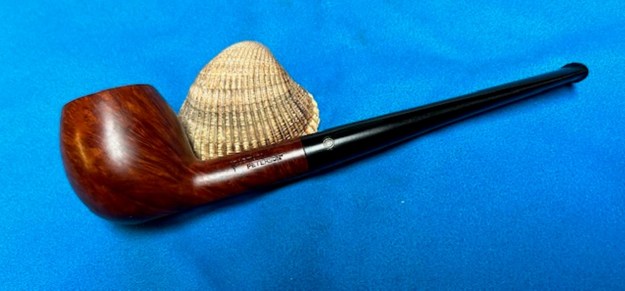
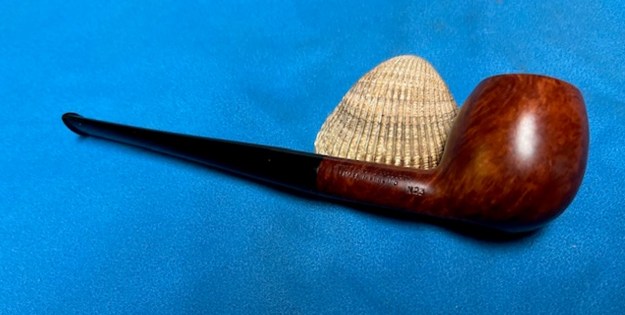
Fresh Life for a “Captain Peterson” Made in England N23 Apple


Blog by Steve Laug

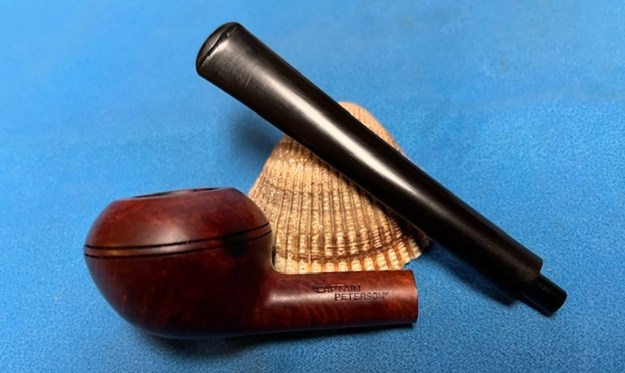
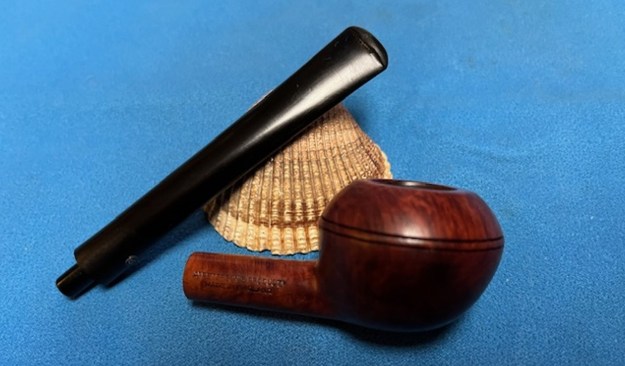
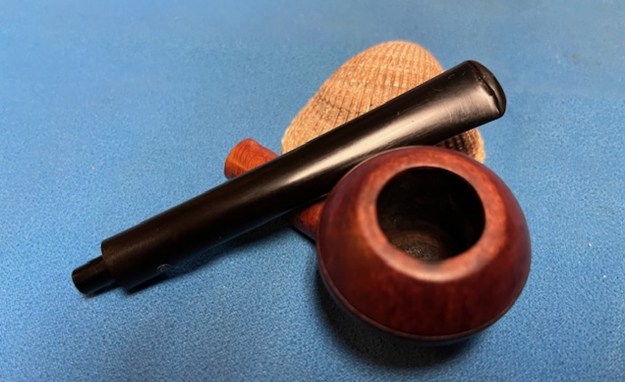
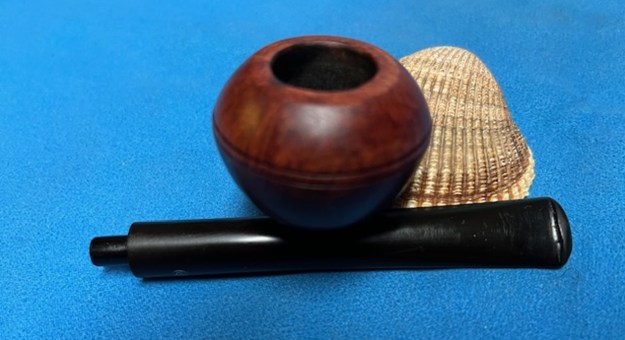
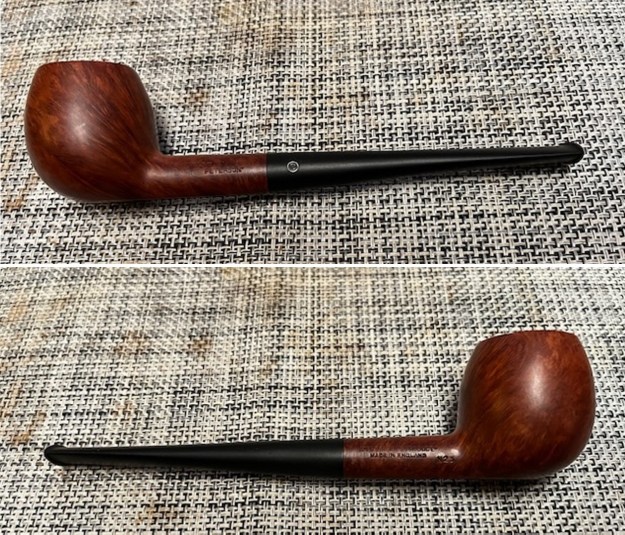
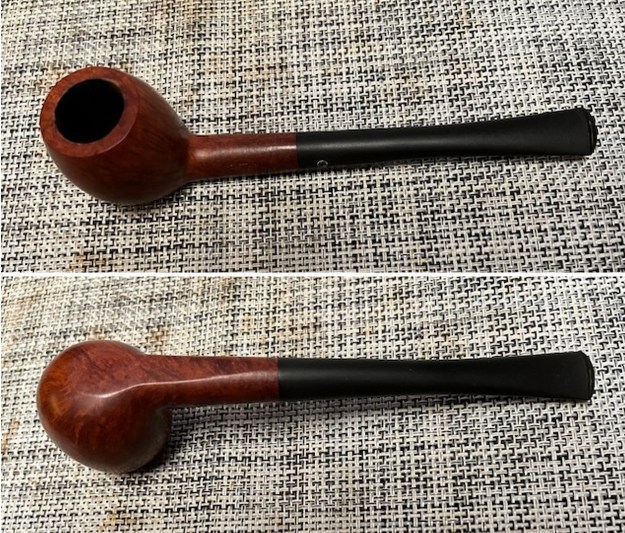
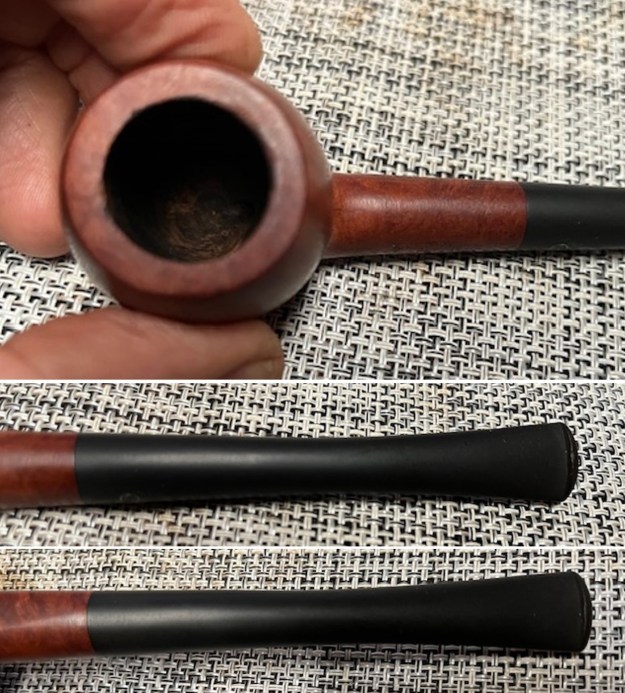
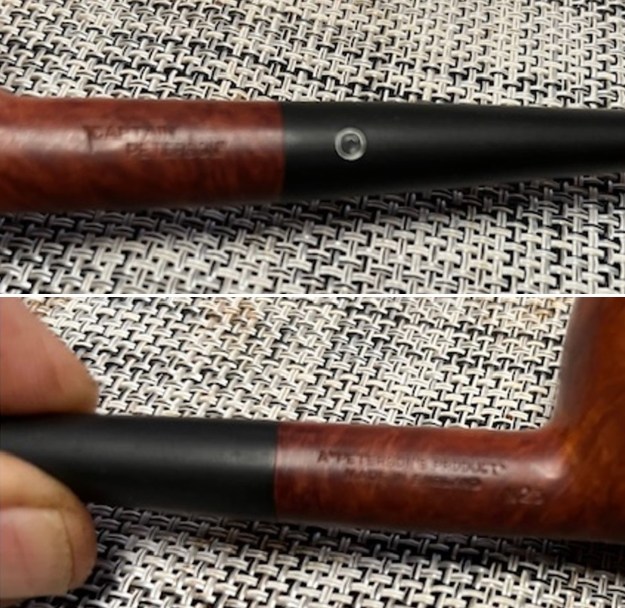
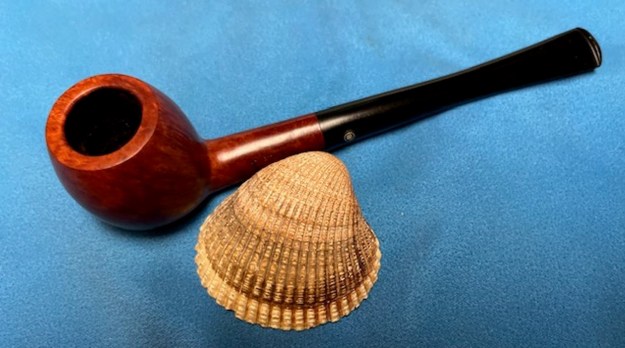
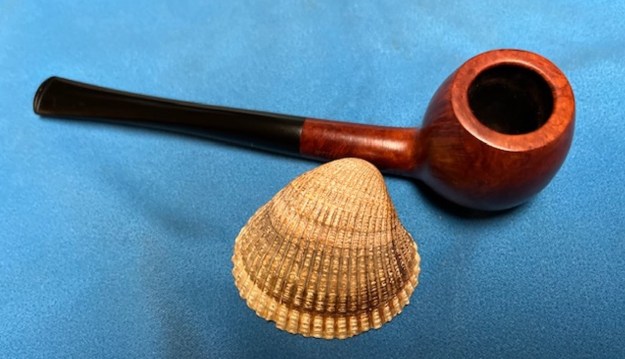
The next pipe on my work table is another one that I have no idea where or when we picked it up. I know that it has been here for a long time. The pipe is stamped on the left side and read “Captain Peterson” (upper case letters in two lines). On the right side it was stamped A “Peterson’s Product” [over] Made in England. That is followed by the shape number N23 near the shank/bowl union. There is a C in a Circle logo on the left side of the tape stem. The pipe had been reamed and cleaned somewhere along its journey which told me that it had come to me from Jeff after he had done is work. He also has no idea of the provenance of the pipe. The finish on the bowl was dull but very clean. The bowl was reamed and the rim top was also clean. The inner edge of the bowl was nicked and sometime it had been reamed with a knife that damaged the edge. The taper stem was also very clean. It had no oxidation on the finish and there were no tooth marks or chatter on the surface of the stem. When I removed the stem there was a unique stinger apparatus in the tenon end. I took photos of the pipe before I started my work on it. I took a photo of the bowl and rim top to show how well it had cleaned up. There was no lava on top and no cake in the bowl. You can see the damage to the inner edge of the rim. It was nicked but still relatively round.I took photos of the stamping on the sides of the shank. It is clear and readable as noted above. The stamped white logo on the side of the taper stem is also clear and readable.I removed the stem from the shank to give a sense of proportion to the pipe and to also show the unique stinger apparatus in the tenon end.Before working on the pipe, I decided to do a bit of work on the background information. For me this is a part of the restoration. I turned first to Pipephil’s site where I found both Captain Pete and Captain Peterson (http://www.pipephil.eu/logos/en/logo-peterson-rep.html#captainpete). I have included a screen capture of the Captain Pete information and also one of the Captain Peterson information. I also included the sidebar information as well.Captain Pete was a brand of Peterson’s English branch (1899-1960). Dublin continued to produce Captain Petes a couple of years after 1960. At the end of the eighties just as the Sherlock Holmes range was being issued, Peterson reintroduced the modern Captain Pete series.Captain Peterson was a brand of Peterson’s English branch. This English made pipe was crafted prior to 1960.

From there I turned to the “Peterson Pipe The Story of Kapp & Peterson” by Mark Irwin and Gary Malmberg, page 295 to see what information I could find there. I quote:

Captain Pete – This line’s name was derived from the nickname of Charles Peterson, known affectionately by friends and employees as “Captain Peterson.” The first issue. C. 1940-62, was in a smooth finish produced for Rogers Imports with a white stamped P inside C or a circled P on the mouthpiece. CAPTAIN over PETE on shank, and MADE IN IRELAND in a circle. English made versions show CAPTAIN over PETE on the shank or “CAPTAIN PETERSON” and a PETERSON’S PRODUCT over MADE IN ENGLAND or LONDON MADE over ENGLAND. The second issue (1998-), features an XL bowl with Sherlock Holmes shapes and compact stems, in rustic or combination of smooth and rustic finish, with a nickel band between two narrow brass bands.

I knew that I was working on a pipe made before 1960 in London, England. Thus, the pipe was a first issue C.1940-62. It is a beautiful pipe that will need some work but overall was in very good condition for a pipe made before 1960. It was time to start my work on the pipe.

I began by cleaning up the inner edge of the bowl with a folded piece of 220 grit sandpaper. I sanded the edge to give it very slight bevel and minimize the damage.I polished the briar with micromesh sanding pads – dry sanding the bowl and shank with 1500-12000 grit pads and wiping it down with a damp cloth between each sanding pad. The bowl took on more of a shine with the completion of each sanding pad. I worked some Before & After Restoration Balm into the briar with my fingertips. I let it sit on the bowl for 15 minutes. I buffed it off with a soft cotton cloth to raise the shine. It was a beautiful piece of briar. With the bowl finished other than the final buffing I set it aside and turned my attention to the stem. I touched up the logo the left side of the stem with some white acrylic fingernail polish. Once it dried I sanded off the excess and the logo looked very good.The stinger in the shank end was removable. I took it out and cleaned it with a brass bristle wire brush to remove any remaining tars or oils on the metals twists of the stinger. I polished it with micromesh sanding pads. I wiped the stem down between each pad with a cloth impregnated with Obsidian Oil. By the final pad the pipe stem looked very good. I finished polishing the stem with Before & After Pipe Stem polish (both Fine and Extra Fine) then wiped the stem down with another coat of Obsidian Oil. I am excited to finish the easy restoration of this “Captain Peterson” Made in England N23 Apple. I put the pipe back together and buffed it with Blue Diamond on the buffing wheel. I gave the bowl and the stem multiple coats of carnauba wax. I buffed the pipe with a clean buffing pad to raise the shine and hand buffed it with microfiber cloth to deepen the shine. It is fun to see what the polished bowl looks like with the polished black, taper vulcanite stem was beautiful. This “Captain Peterson” N23 Apple turned out very well and feels great in my hand. It is light and well balanced. Have a look at it with the photos below. The dimensions are Length: 6 inches, Height: 1 ½ inches, Outside diameter of the bowl: 1 inch, Chamber diameter: ¾ of an inch. The weight of the pipe is 1.13 ounces/32 grams. It is a beautiful pipe and one that I will be putting on the rebornpipes store in the Irish Pipe Makers Section. If you are interested in carrying on the trust of this let me know through a message or an email to slaug@unserve.com . Thanks for walking through the cleanup with me as I worked over this pipe.

As always, I encourage your questions and comments as you read the blog. Thanks to each of you who are reading this blog. Remember we are not pipe owners; we are pipe men and women who hold our pipes in trust until they pass on into the trust of those who follow us.  

The Last Filthy and Messy Pipe – a Worn and Repaired No Name Rhodesian


Blog by Steve Laug

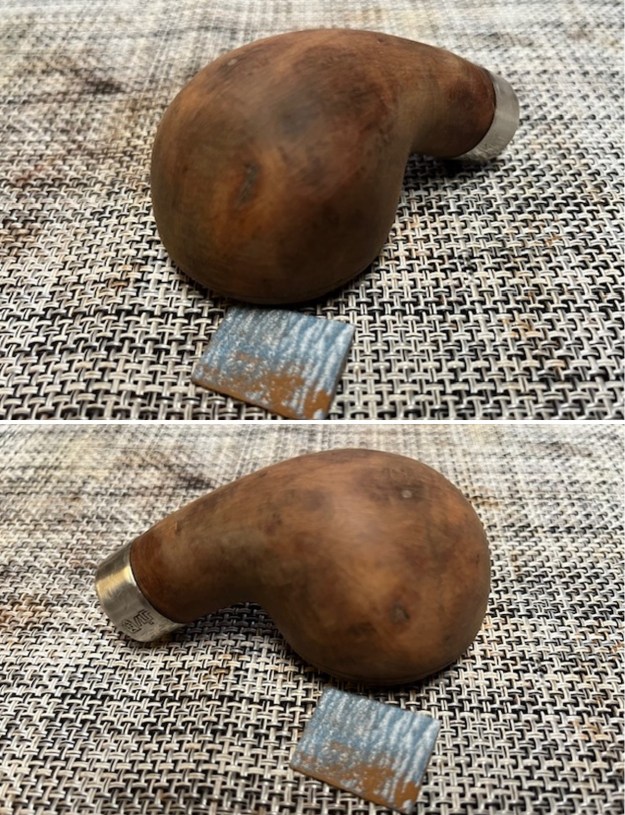
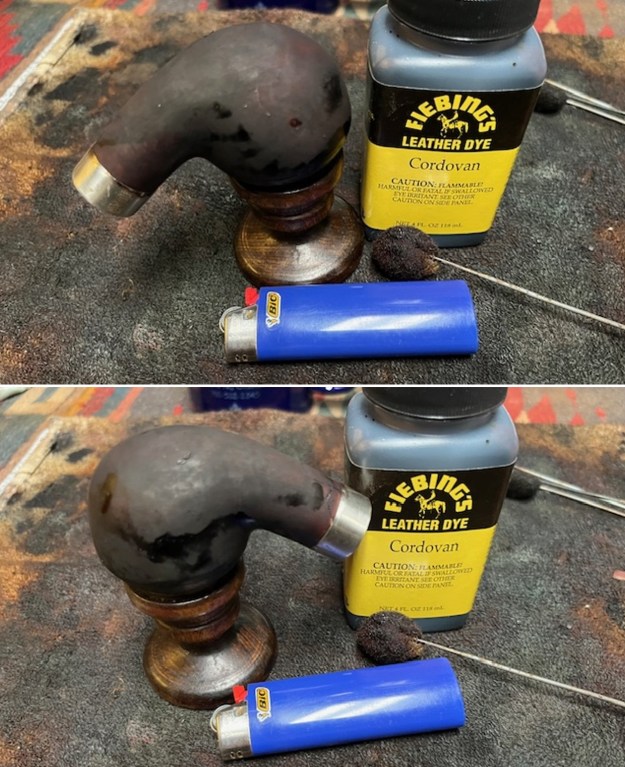
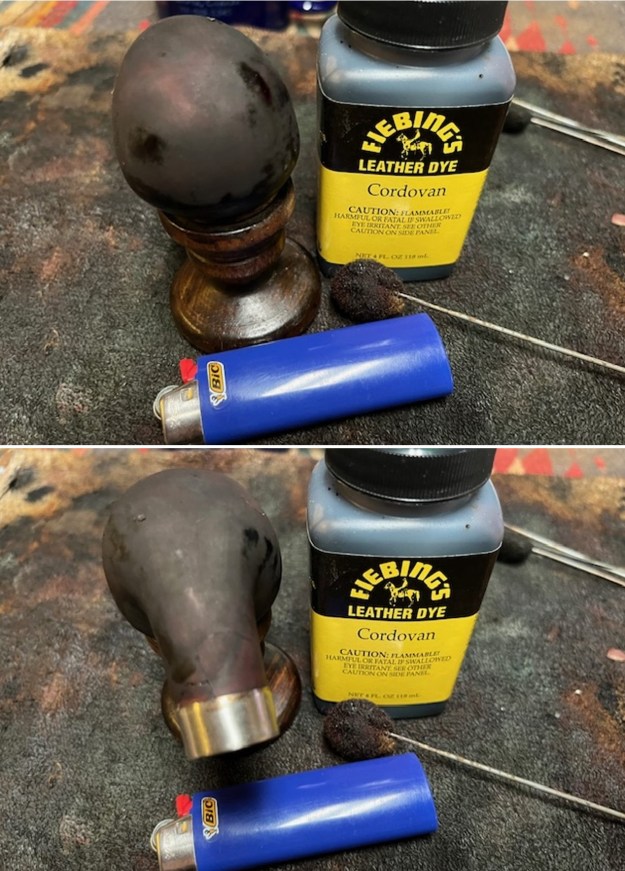
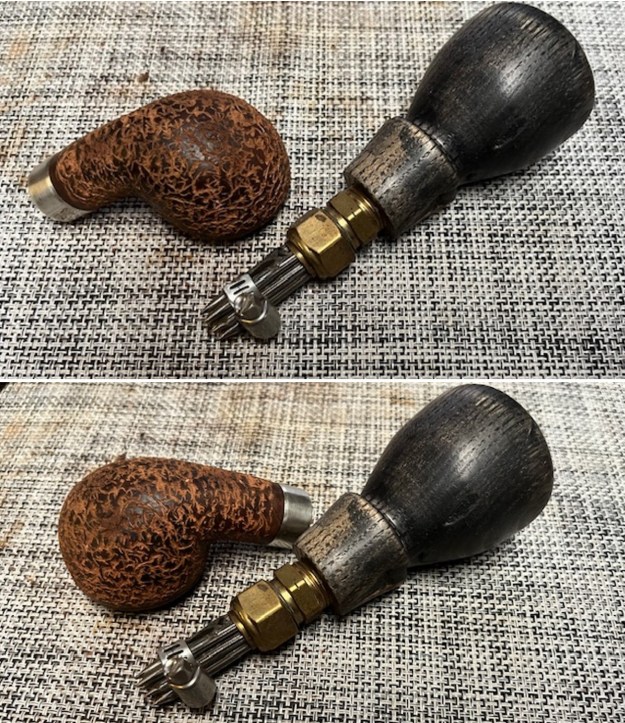
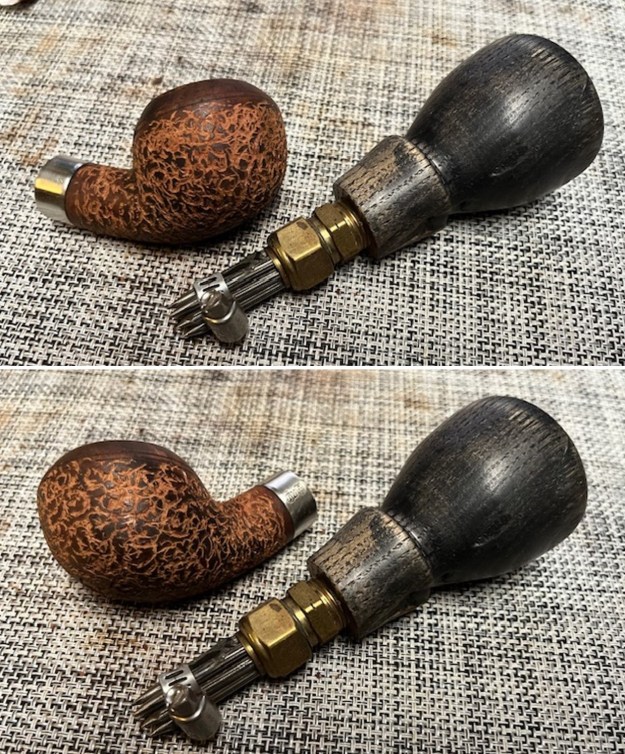
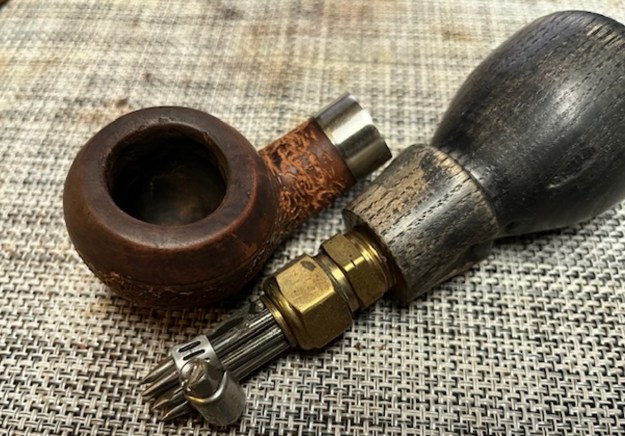
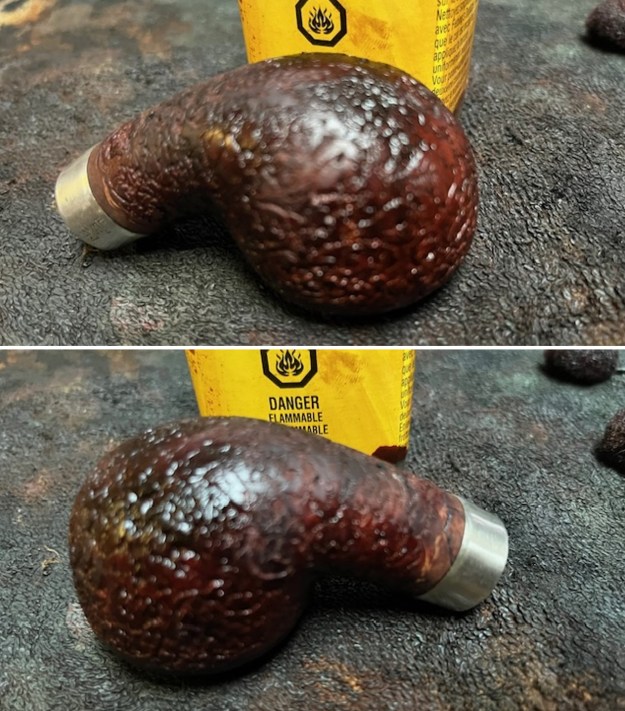
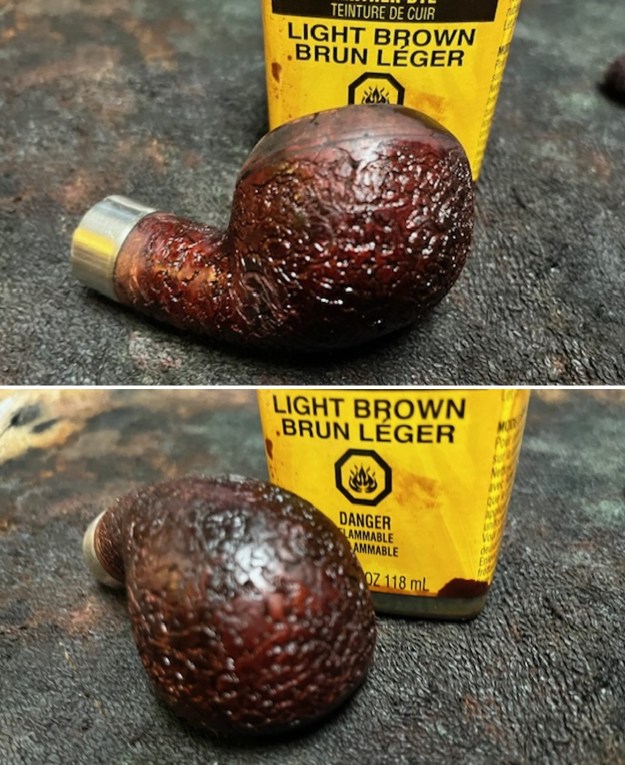
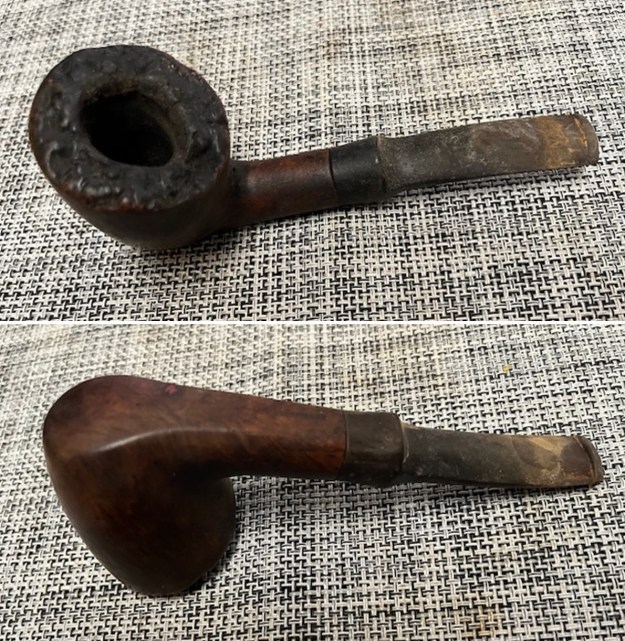
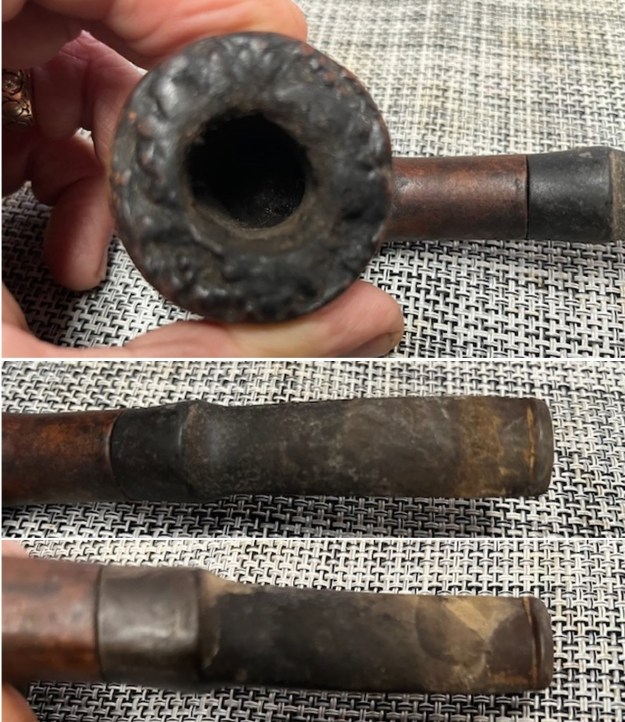
The next pipe I chose to work on came is another one from the lot of 11 pipes I purchased from a lady in Regina, Saskatchewan. She had found them in a house she bought and wanted to know if I wanted them. We struck a deal, I paid for the pipes and shipping and the box arrived while I was traveling in Europe. In the box were 4 Stanwells, 1 Danmore Bowl, 1 Soren Freehand, 1 Calabash with a Briar Bowl, 1 Nording Freehand, 1 Italian Made Bertenetti, 1 Rhodesian with a banded cracked shank, and 1 Brigham. I have restored the Nording, the snapped Stanwell, the Brigham, the Gourd Calabash with the briar bowl, restemmed the Danmore bowl, cleaned the Lorenzetti, restored the Stanwell Made in Denmark 11 Pot, the Stanwell Antique 25 Scoop and the Danish Sovereign Stanwell Second 64 Dublin. There are blogs on each restoration available. I now am down to one remaining pipe. The next pipe on the table is the last of the dirty pipes in a box full of very dirty pipes. There appears to be some stamping on the shank sides but it is so worn that it is utterly unreadable. The pipe was obviously someone’s favourite. The Rhodesian is one of my favourite pipe shapes. This one had not only been smoked to a point of heavy damage on the rim top and inner edge but the band on the shank held together a repair of three branched cracks on the shank. The stem fit well but there was a lot of grit and grime built up in the shank. There was a thick cake in the bowl, debris in the bottom and on the bowl walls and some remnants of tobacco. The airway was plugged and there was no draught on the pipe. There was a heavy lava overflow on the rim top and down the sides of the bowl and shank. The inner edges of the bowl were heavily damage, particularly on the right front side. The outer edge actually looked quite good under the grime. The rim cap was worn at an angle with more briar at the back of the bowl and on the left side than on the front side and the right side. The finish was dirty and there was lava on the sides and heel of the bowl. The stem was in rough shape in appearance but underneath the calcification and oxidation the tooth marks and chatter looked minimal. I took photos of the pipe before I started my cleanup work on it. I took a close-up photo of the bowl and rim top to show the thick cake in the bowl. The rim top shows the thick lava on it and the edges. The inner edge of the bowl is so thickly coated lava that it is hard to know the condition. The outer edges of the bowl were very worn. You can also see how poorly the stem seats against the end of the mortise. There is a gap between the shank end and the saddle stem. I took photos of the top and underside of the stem surface and button to show its general condition. It looked very good under the calcification and oxidation.I took a photo of the underside of the shank to show the cracks in the shank. There is one long crack with two branches off of it. It had been repaired and banded. I also took a photo of the shank end to show the crack and the gummy tars in the shank. It was a mess. I took the stem off the pipe and took a photo to give a sense of the proportion of the pipe. Now it was time to work on the pipe. I removed the stem and turned my attention to the bowl clean up. I reamed the bowl with a PipNet pipe reamer using the fourth (and largest) cutting head to take the cake back to bare briar. I cleaned up the reaming with a Savinelli Fitsall Pipe Knife. I sanded the walls with a piece of 180 grit sandpaper wrapped around a dowel to smooth them out.  I scrubbed the exterior of the briar with a tooth brush and undiluted Murphy’s Oil Soap. I rinsed it off with warm water to remove the grime and soap. It looked much better and the dust and debris was gone. I dried it with a cotton towel. I scrubbed out the internals of the shank, mortise and the airway in the stem with 99% isopropyl alcohol, pipe cleaners and cotton swabs. There was a lot of tar and oil in the shank and airway. It was a mess.Once I had cleaned the shank with alcohol, pipe cleaners and cotton swabs I topped the bowl on a topping board with 220 grit sandpaper. You can see the repaired cracks in the shank under the band. Once the rim was topped the right side or the rim top and inner edge were very thin and work. The bowl was out of round and a real mess. What was I going to do with the mess? Leave it be or fuss with it? I chose to fuss and rebuilt the inner edge with clear CA glue and briar dust until the bowl was back in round. I cleaned up the inner edge of the rebuilt portion of the rim top with a folded piece of 220 grit sandpaper and my Dremel and sanding drum. I was actually pretty happy with the finish… it seems I made a good choice.I filled in the deep flaws in the briar with clear CA glue and briar dust. Once they cured I sanded the repaired areas smooth with 220 grit sandpaper. I used a dark Cordovan aniline stain to give the bowl an undercoat. I applied it with a wool dauber and flamed it to set it in the grain. I rusticated the finish with a home made rustication tools. I wanted to dig deep enough in the briar to mask the many fills in the wood and the repaired cracks in the shank. It would also give the pipe a tactile finish. I rusticated the bowl and shank but left the bull cap and rim top smooth. The twin rings around the cap are clean and still very visible. I used a light brown aniline wash to restain the bowl. I applied it to the briar and flamed it with a lighter. That set the brown on the top of the rustication. I worked some Before & After Restoration Balm into the finish with a horsehair shoe brush and my finger tips to clean and enliven the briar. If you have read my blogs for a while you know that I do this religiously every time as it really works magic! With that done, the bowl was finished other than the final buffing. I set it aside and turned my attention to the stem. I wiped it down with some Soft Scrub on cotton pads to remove the oxidation and calcification. I was able to remove most of the oxidation and the calcification. It looked much better when I finished.I “painted” the stem surface with the flame of a Bic lighter to lift the tooth marks. I was able to lift all of the marks on the top surface and all but three small deeper marks. I filled in those with black CA glue. I flattened the repair with a small file and further blended it into the surface with 220 grit sandpaper and started polishing it with 600 grit wet dry sandpaper. It really was taking on a shine. I polished the stem with micromesh sanding pads – wet sanding with 1500-12000 grit sanding pads. I wiped it down after each sanding pad with Obsidian Oil. I finished polishing the stem with Before & After Pipe Stem polish (both Fine and Extra Fine) then wiped the stem down with another coat of Obsidian Oil. I am excited to finish the reconstruction of this No Name Rhodesian. I put the pipe back together and buffed it with Blue Diamond on the buffing wheel. I gave the bowl multiple coats of Conservator’s Wax and the stem multiple coats of carnauba wax. I buffed the pipe with a clean buffing pad to raise the shine and hand buffed it with microfiber cloth to deepen the shine. It is fun to see what the polished reworked bowl looks like with the polished black, saddle vulcanite stem was beautiful. This No Name Rhodesian turned out very well and feels great in my hand. It is light and well balanced. Have a look at it with the photos below. The dimensions are Length: 5 inches, Height: 1 ½ inches, Outside diameter of the bowl: 1 ½ inches long, Chamber diameter: 7/8 of an inch. The weight of the pipe is 1.80 ounces/51 grams. It is a beautiful pipe and one that I am not sure what I am going to do with at the moment. It is unique and rebuilt but looks like new. Thanks for walking through the cleanup with me as I worked over this pipe.

As always, I encourage your questions and comments as you read the blog. Thanks to each of you who are reading this blog. Remember we are not pipe owners; we are pipe men and women who hold our pipes in trust until they pass on into the trust of those who follow us.

Yet Another Filthy and Messy Pipe – a Danish Sovereign Made in Denmark 64 Freehand Dublin


Blog by Steve Laug

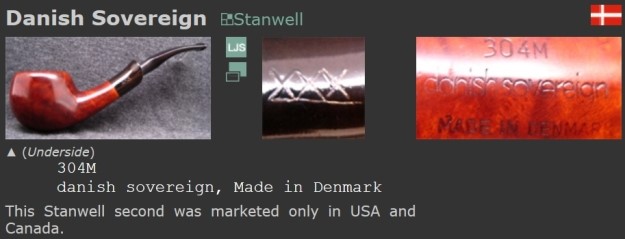
The next pipe I chose to work on came is another one from the lot of 11 pipes I purchased from a lady in Regina, Saskatchewan. She had found them in a house she bought and wanted to know if I wanted them. We struck a deal, I paid for the pipes and shipping and the box arrived while I was traveling in Europe. In the box were 4 Stanwells, 1 Danmore Bowl, 1 Soren Freehand, 1 Calabash with a Briar Bowl, 1 Nording Freehand, 1 Italian Made Bertenetti, 1 Rhodesian with a banded cracked shank, and 1 Brigham. I have restored the Nording, the snapped Stanwell, the Brigham, the Gourd Calabash with the briar bowl, restemmed the Danmore bowl, cleaned the Lorenzetti, restored the Stanwell Made in Denmark 11 Pot, and the Stanwell Antique 25 Scoop. There are blogs on each restoration available. I now am down to two remaining pipes. The next pipe on the table is another one of the dirtiest pipes in a box full of very dirty pipes. It is stamped on the left side of the shank and reads Danish [over] Sovereign (a Stanwell second). There is a shape number 64 on the right side of the shank. On the underside of the shank and reads Made in Denmark. There is a fill in the shank underside which confirms the Danish Sovereign stamping on the shank. It is a great shape for a pipe – a freehand style Dublin that is another Ivarsson design. There was a thick cake in the bowl, debris in the bottom and on the bowl walls and some remnants of tobacco. The airway was plugged and there was no draught on the pipe. There was a heavy lava overflow on the plateau rim top and down the sides of the bowl and shank. It was hard to know the condition of the inner edges of the bowl because of the cake. The outer edge actually looked quite good under the grime. The finish was dirty and dusty and there was lava on the sides and heel of the bowl. The stem was in rough shape in appearance but underneath the calcification and oxidation the tooth marks and chatter looked minimal. I took photos of the pipe before I started my cleanup work on it. I took a close-up photo of the bowl and rim top to show the thick cake in the bowl. The rim top shows some thin lava filling in the plateau. The inner edge of the bowl is so thickly coated lava that it is hard to know the condition. The outer edges of the bowl look quite good. You can also see what appears to be damage to the edge of the shank. The stem seats against the end of the mortise but there is still a gap between the shank end and the saddle stem. I took photos of the top and underside of the stem surface and button to show its general condition. It looked very good under the calcification and oxidation.The stamping on the sides of the shank are faint but readable as noted above. It was very hard to capture them in the light for the photos but they are present. I took the stem off the pipe and took a photo to give a sense of the proportion of the pipe. I turned first to Pipephil’s site (http://www.pipephil.eu/logos/en/logo-d2.html) to see what information I could find there. On the site was a pipe similarly stamped to the one that I am working on. It is clearly identified as a Stanwell second that was marketed only in the USA and Canada. I turned to Pipedia to read more about the brand (https://pipedia.org/wiki/Danish_Sovereign). There was nothing definitive there only a statement that it may be a Stanwell second line. It looks I am dealing with a pipe made especially for the American and Canadian market by Stanwell.

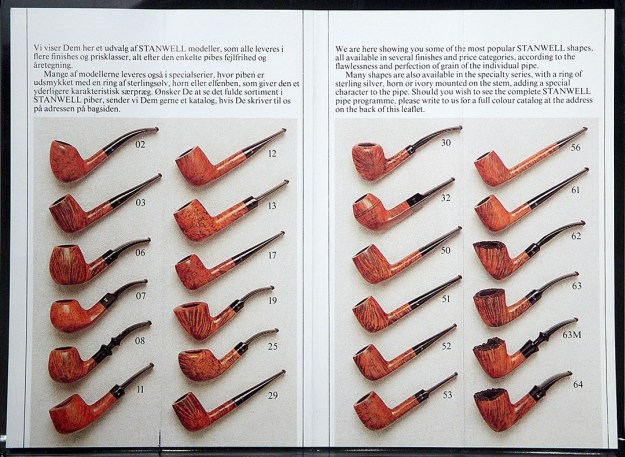
I recognized the shape as being a Sixten Ivarsson design but Icould not remember the shape number associated with it. I turned to Pipedia’s article on shapes that Bas Stevens originally worked on to check it out (https://pipedia.org/wiki/Stanwell_Shape_Numbers_and_Designers). I am including a shape chart below. It identifies the shape as a 64 (bottom right side of the fourth column in the photo below).I also have included information the site regarding the shape 64. The pipe I am working on is 64a in the list below. Stanwell’s “64” shape number actually corresponds to two different designs. The first is a larger version of the “64,” a Freehand, plateau top, saddle stem and designed by Sixten Ivarsson. This vintage “64” is of the first type, really showcasing flowing Dublin shape and the plateau rim top.

  • 64. Two versions of this shape number
  1. a) Freehand, Plateau top, saddle mouthpiece, by Sixten Ivarsson.
  2. b) Bent billiard, medium size, full mouthpiece.

List by designer

  • Sixten Ivarsson: 01 (Nefertiti), 01 (Pick Ax), 02, 06, 07, 09, 10, 11, 13, 15, 17, 19, 20 (Boat), 20 (Bent Dublin), 21, 22, 23, 24, 25, 30, 32 (Free Hand), 33, 34, 35 (Bent Free Hand), 37, 38, 41, 43, 48, 55, 59, 62, 63, 64, 70 (Free Hand Volcano/Sitter), 75 (Billiard w/oval shank), 79, 82, 85 (Bent e), 86, 87, 90, 91R, 95, 96, 105, 110, 119, 124, 2606, POY 1993.

Now I knew it was an Ivarsson Design shape 64 with a saddle stem. Now it was time to work on the pipe. I removed the stem and turned my attention to the bowl clean up. I reamed the bowl with a PipNet pipe reamer using the fourth (and largest) cutting head to take the cake back to bare briar. I cleaned up the reaming with a Savinelli Fitsall Pipe Knife. I sanded the walls with a piece of 180 grit sandpaper wrapped around a dowel to smooth them out.  I scrubbed the exterior of the briar with a brass bristle wire brush, a tooth brush and undiluted Murphy’s Oil Soap. I rinsed it off with warm water to remove the grime and soap. It looked much better and the dust and debris was gone. I dried it with a cotton towel. I worked over the plateau rim top and the bowl some more with a brass bristle wire brush to further knock off the debris in the valleys of the finish.I scrubbed out the internals of the shank, mortise and the airway in the stem with 99% isopropyl alcohol, pipe cleaners and cotton swabs. There was a lot of tar and oil in the shank and airway. It was a mess.Once I had cleaned the shank with alcohol, pipe cleaners and cotton swabs I tried the fit of the stem in the shank. It fit tightly against the mortise end but the gap between the shank end and the stem saddle was still open. I examined the fit and found that the shank end was not even – in fact it was slightly wavy. I heated the brass band and pressed it onto the end of the shank and then checked the fit of the stem and it was perfect. The band created a smooth shank end for the saddle stem. I also really like the look of the thin band. I decided to deghost the bowl so I stuffed it with cotton bolls and rolled one into the shank end. I used a ear syringe to fill the bowl with isopropyl alcohol. I set the bowl aside overnight to let it leech out the tars and oils from the bowl and shank. I polished the briar with micromesh sanding pads – dry sanding it with 1500-12000 git sanding pads. I worked on the high spots on the plateau top along with the bowl and shank. As I finished the last of the micromesh it looked much better. With the briar polished smooth I decided to stain the bowl with a Light Brown aniline wash. I used a wool dauber to apply the stain. I lit it with a lighter to set the stain in the grain. I repeated the process several time until I was happy with the coverage. I buffed the bowl with Blue Diamond on the buffing wheel to polish the newly stained briar. I like the way the wash made the grain stand out and blended in some of the darkened spots. It looked very good.

I worked some Before & After Restoration Balm into the surface of the briar with my fingertips to clean, enliven and protect the briar. I let the balm sit for 15 minutes and then buffed with a cotton cloth to raise the shine. The photos show the bowl at this point in the restoration process. With that done, the bowl was finished other than the final buffing. I set it aside and turned my attention to the stem. I wiped it down with some Soft Scrub on cotton pads to remove the oxidation and calcification. I was able to remove most of the oxidation and the calcification. It looked much better when I finished.I “painted” the stem surface with the flame of a Bic lighter to lift the tooth marks. I was able to lift all of the marks on the top surface and all but three small deeper marks. I filled in those with black CA glue. I flattened the repair with a small file and further blended it into the surface with 220 grit sandpaper and started polishing it with 600 grit wet dry sandpaper. It really was taking on a shine. I polished the stem with micromesh sanding pads – wet sanding with 1500-12000 grit sanding pads. I wiped it down after each sanding pad with Obsidian Oil. I finished polishing the stem with Before & After Pipe Stem polish (both Fine and Extra Fine) then wiped the stem down with another coat of Obsidian Oil.I am excited to finish this Ivarsson Design Danish Sovereign Made in Denmark 64 Freehand. I put the pipe back together and buffed it with Blue Diamond on the buffing wheel. I gave the bowl and the stem multiple coats of carnauba wax. I buffed the pipe with a clean buffing pad to raise the shine and hand buffed it with microfiber cloth to deepen the shine. It is fun to see what the polished bowl looks like with the polished black, saddle vulcanite stem was beautiful. This Danish Sovereign Made in Denmark 64 Freehand is nice looking and the pipe feels great in my hand. It is light and well balanced. Have a look at it with the photos below. The dimensions are Length: 5 ½ inches, Height: 2 inches, Outside diameter of the bowl: 1 ¾ inches long, Chamber diameter: 7/8 of an inch. The weight of the pipe is 1.83 ounces/52 grams. It is a beautiful pipe and one that I will be putting in the Danish Pipemaker Section on the rebornpipes store. Thanks for walking through the cleanup with me as I worked over this pipe.

As always, I encourage your questions and comments as you read the blog. Thanks to each of you who are reading this blog. Remember we are not pipe owners; we are pipe men and women who hold our pipes in trust until they pass on into the trust of those who follow us.

Yet Another Filthy and Messy Stanwell Antique Made in Denmark 25 Scoop


Blog by Steve Laug

The next pipe I chose to work on came is another one from the lot of 11 pipes I purchased from a lady in Regina, Saskatchewan. She had found them in a house she bought and wanted to know if I wanted them. We struck a deal, I paid for the pipes and shipping and the box arrived while I was traveling in Europe. In the box were 4 Stanwells, I Danmore Bowl, 1 Soren Freehand, 1 Calabash with a Briar Bowl, 1 Nording Freehand, 1 Italian Made Bertenetti, 1 Rhodesian with a banded cracked shank, and 1 Brigham. I have restored the Nording, the snapped Stanwell, the Brigham, the Gourd Calabash with the briar bowl, restemmed the Danmore bowl and cleaned the Lorenzetti. There are blogs on each restoration available. The next pipe on the table is another one of the dirtiest pipes in a box full of very dirty pipes. It is stamped on the underside of the shank and reads Stanwell [over] Antique [over] Made in Denmark. There is no visible shape number stamped on the pipe. There was a thick cake in the bowl, debris in the bottom and on the bowl walls and some remnants of tobacco. The airway was plugged and there was no draught on the pipe. There was a heavy lava overflow on the rim top and down the sides of the bowl and shank. It was hard to know the condition of the inner edges of the bowl because of the cake. The outer edge actually looked quite good under the grime. The finish was dirty and dusty and there was lava on the sides and heel of the bowl. The ruby coloured acrylic shank extension was filthy and loose on the shank. The stem was in rough shape in appearance but underneath the calcification and oxidation the tooth marks and chatter looked minimal. I took photos of the pipe before I started my cleanup work on it. I took a close-up photo of the bowl and rim top to show the cake in the bowl. The rim top shows some thin lava spots on the smooth finish. The inner edge of the bowl is pretty rough with some nicks and lava buildup. The outer edges of the bowl are worn. I took photos of the top and underside of the stem surface and button to show its general condition. It looked very good under the spotty oxidation.The stamping on the underside of the shank is faint but readable as noted above. You can barely make out the Stanwell stamp on the smooth panel near the shank extension but it is present. There appears to be a burn mark on the shank in the flat spot. I took the stem and the shank extension off the pipe and took a photo to give a sense of the proportion of the pipe.I recognized the shape as being a Sixten Ivarsson design but Icould not remember the shape number associated with it. I turned to Pipedia’s article on shapes that Bas Stevens originally worked on to check it out (https://pipedia.org/wiki/Stanwell_Shape_Numbers_and_Designers). I am including a shape chart below. It identifies the shape as an 25 (second from the bottom of the second column in the photo below).I also have included information the site regarding the shape 25. The pipe I am working on is 25b in the list below. Stanwell’s “25” shape number actually corresponds to two different designs. The first is a larger version of the “24,” a Freehand with an oval shank; the second is a rather gestural Danish Scoop of sorts with an oval bowl and a slight saddle-like bevel to the rim. Designed by Sixten Ivarsson. This vintage “25” is of the latter type, really showcasing its cupping gesture in profile and is seen here as part of the Antique series. It wears a dark sandblast and is accented by a ruby-hued ferrule, which matches the smoothly polished patch of briar along the bowl’s fore. (typically saddle, but can also be military mount, tapered, faux spigot saddle etc.), by Sixten Ivarsson.
  • 25. Three versions of this shape number:
  1. a) Footed cutty with a long tapered stem (early 1950s – see catalog)
  2. b) Same as 24(a) but larger, by Sixten Ivarsson.
  3. c) Bent squat-apple with a rounded rim and a saddle stem, by Sixten Ivarsson.

List by designer

  • Sixten Ivarsson: 01 (Nefertiti), 01 (Pick Ax), 02, 06, 07, 09, 10, 11, 13, 15, 17, 19, 20 (Boat), 20 (Bent Dublin), 21, 22, 23, 24, 25, 30, 32 (Free Hand), 33, 34, 35 (Bent Free Hand), 37, 38, 41, 43, 48, 55, 59, 62, 63, 64, 70 (Free Hand Volcano/Sitter), 75 (Billiard w/oval shank), 79, 82, 85 (Bent e), 86, 87, 90, 91R, 95, 96, 105, 110, 119, 124, 2606, POY 1993.

Now I knew it was an Ivarsson Design shape 25 with a military style saddle stem. Now it was time to work on the pipe. I removed the stem and turned my attention to the bowl clean up. I reamed the bowl with a PipNet pipe reamer using the fourth (and largest) cutting head to take the cake back to bare briar. I cleaned up the reaming with a Savinelli Fitsall Pipe Knife. I sanded the walls with a piece of 180 grit sandpaper wrapped around a dowel to smooth them out.  I scrubbed the exterior of the briar with a brass bristle wire brush, a tooth brush and undiluted Murphy’s Oil Soap. I rinsed it off with warm water to remove the grime and soap. It looked much better and the dust and debris was gone. I dried it with a cotton towel. I worked over the sandblast rim top and the bowl and shank sides with a brass bristle wire brush to further knock off the debris in the valleys of the blast. I worked over the damage on the inner edge of the bowl and the rim top. I also smoothed out the damage on the outer edge with a folded piece of 220 grit sandpaper. It looked much better after I sanded the damaged areas smooth.  I worked over the rim top and the heel of the bowl with a dry brass bristle brush to remove some of the darkening. It is looking better.

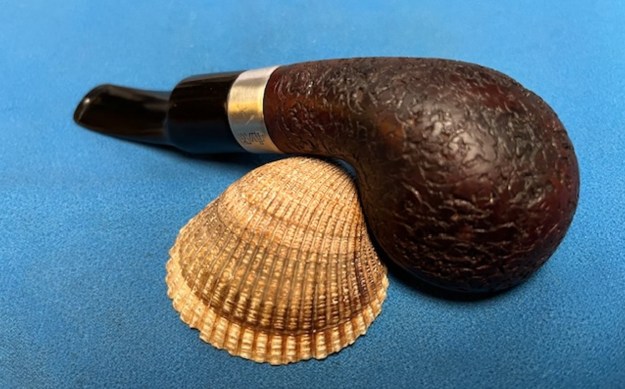
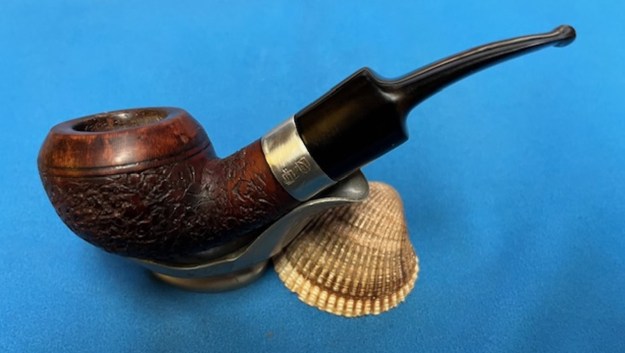
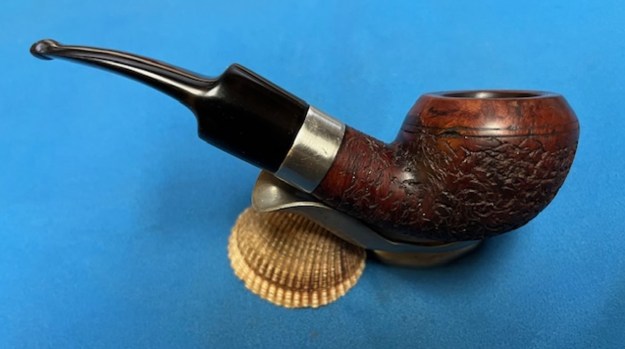
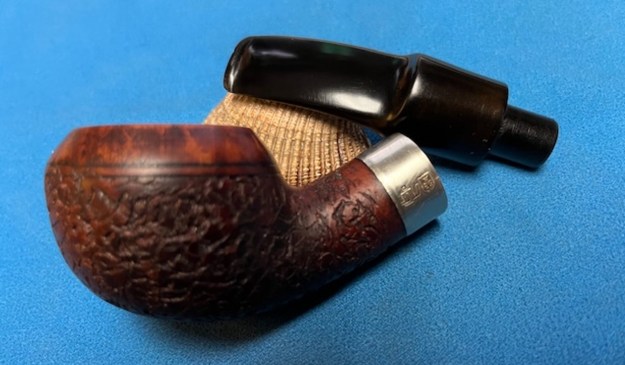
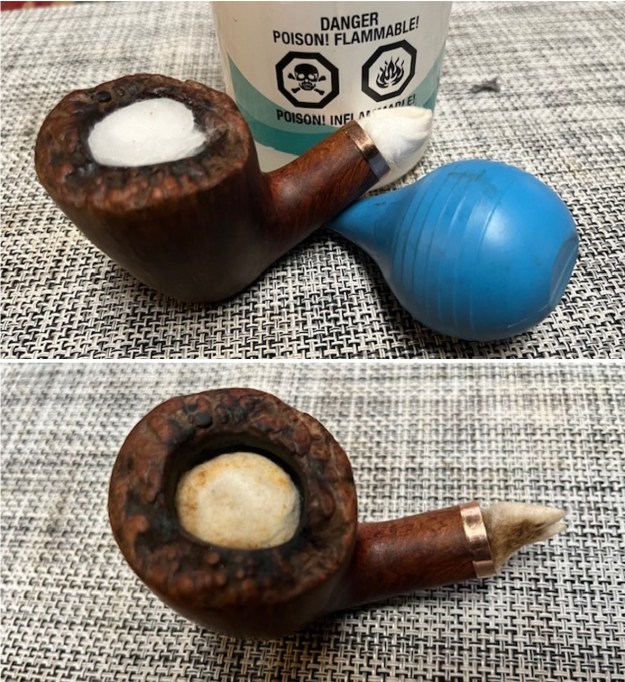
I scrubbed out the internals of the shank extension with 99% isopropyl alcohol, pipe cleaners and cotton swabs. I wiped down the tenon on the shank extension with some white all purpose glue and the shank end and extension end with the glue and pressed it onto the shank. I aligned the shank and extension and held it in place until the glue set. I used my Dremel and a dental burr to retrace the lines of the sandblast on the sides of the bowl and the heel. I also used it to recut the lines of the blast on the rim top as well. I stained the bowl and shank with a light brown stain wash. I applied it to the surface of the briar with a wool dauber. I flamed it with a lighter flame to set it in the grain. I repeated the process until I was satisfied with the coverage. I polished the acrylic shank extension and the briar with micromesh sanding pads – dry sanding it with 1500-12000 git sanding pads. I worked on the smooth front of the bowl and on the high spots on the sandblast. I wanted to make the new stain coat a bit more transparent. As I finished the last of the micromesh it looked much better. I cleaned out the shank now that the extension was attached with alcohol and pipe cleaners. It was not too bad in the shank end but the short briar to the from there to the bowl was dirty. I probably should have done the clean up earlier but I did not do so until now. I worked some Before & After Restoration Balm into the surface of the briar with my fingertips to clean, enliven and protect the briar. I let the balm sit for 15 minutes and then buffed with a cotton cloth to raise the shine. The photos show the bowl at this point in the restoration process. With that done, the bowl was finished other than the final buffing. I set it aside and turned my attention to the stem. I cleaned out the airway in the stem with pipe cleaners and isopropyl alcohol.I wiped it down with some Soft Scrub on cotton pads to remove the oxidation and calcification. I was able to remove most of the oxidation and the calcification. It looked much better when I finished.I sanded out the light tooth marks and chatter along with the remaining oxidation with 220 grit sandpaper and started polishing the stem with 600 grit wet dry sandpaper.I polished the stem with micromesh sanding pads – wet sanding with 1500-12000 grit sanding pads. I wiped it down after each sanding pad with Obsidian Oil. I finished polishing the stem with Before & After Pipe Stem polish (both Fine and Extra Fine) then wiped the stem down with another coat of Obsidian Oil.I am excited to finish this Ivarsson Design Stanwell Antique Made in Denmark 25. I put the pipe back together and buffed it with Blue Diamond on the buffing wheel. I gave the bowl and the stem multiple coats of carnauba wax. I buffed the pipe with a clean buffing pad to raise the shine and hand buffed it with microfiber cloth to deepen the shine. It is fun to see what the polished bowl looks like with the polished black, fancy turned vulcanite stem was beautiful. This Stanwell Antique 25 Made in Denmark Scoop is nice looking and the pipe feels great in my hand. It is light and well balanced. Have a look at it with the photos below. The dimensions are Length: 5 ½ inches, Height: 1 ¾ inches, Outside diameter of the bowl: 1 ½ inches wide x 1 ¾ inches long, Chamber diameter: 7/8 of an inch. The weight of the pipe is 1.66 ounces/47 grams. It is a beautiful pipe and one that I will be putting in the Danish Pipemaker Section on the rebornpipes store. Thanks for walking through the cleanup with me as I worked over this pipe.

As always, I encourage your questions and comments as you read the blog. Thanks to each of you who are reading this blog. Remember we are not pipe owners; we are pipe men and women who hold our pipes in trust until they pass on into the trust of those who follow us.