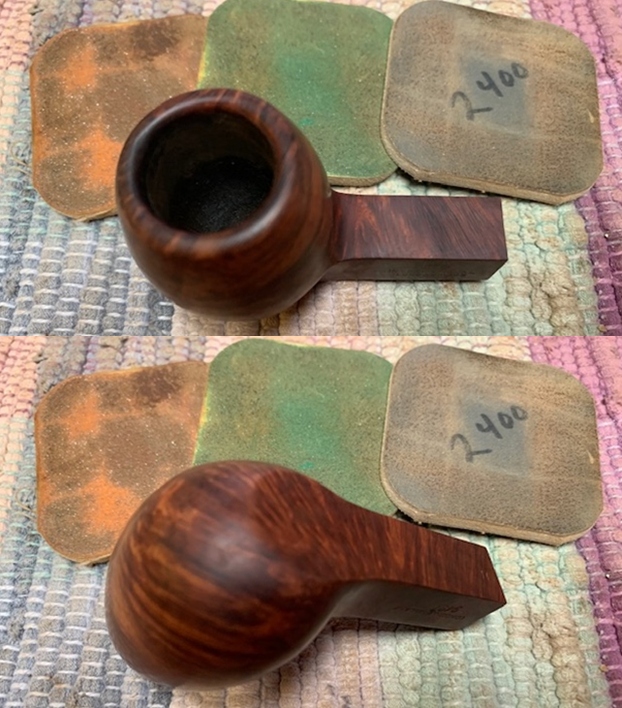
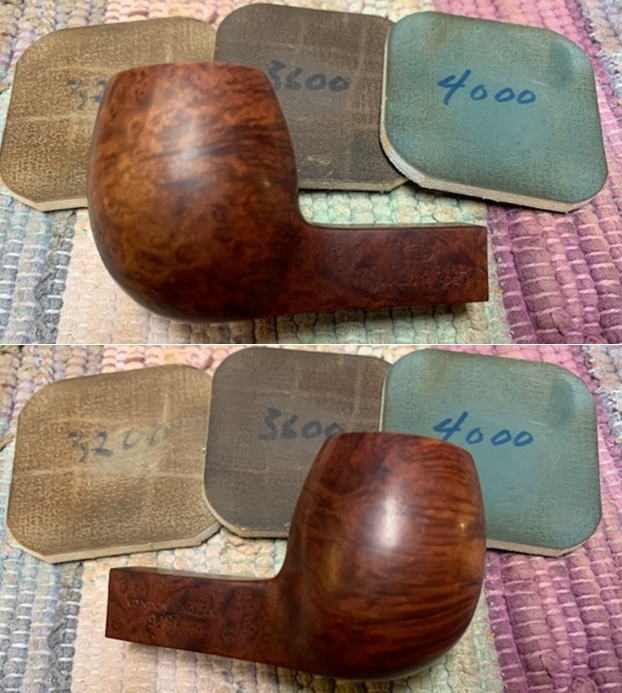
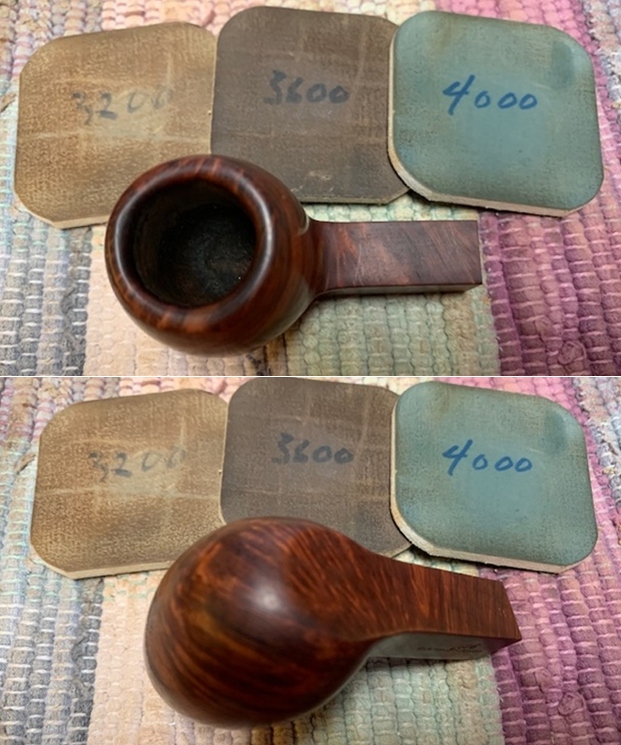
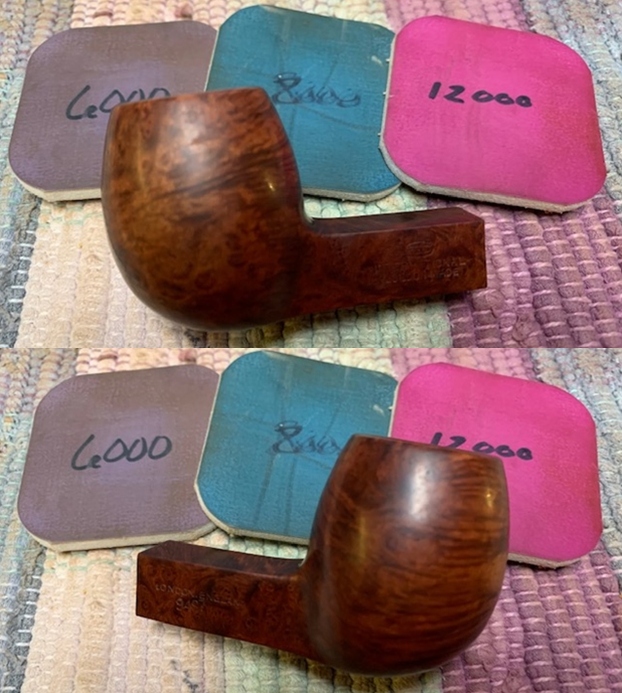
Tag Archives: polishing a stem

Adding a Bit Of Dazzle While Restoring An Italian “Empire State” Pickaxe Pipe.


Blog by Paresh

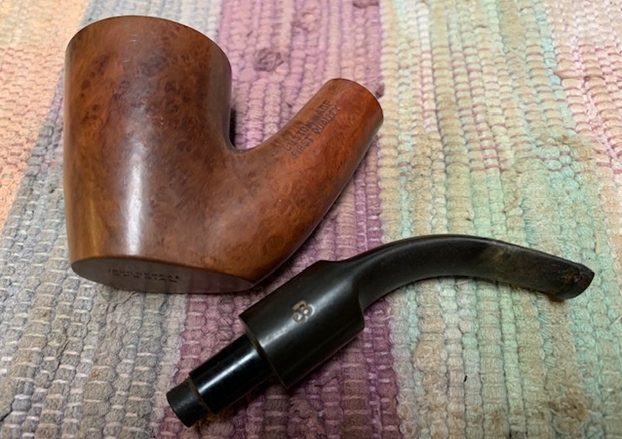
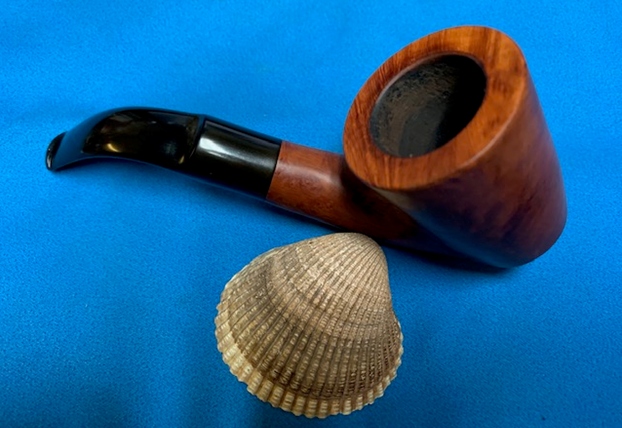
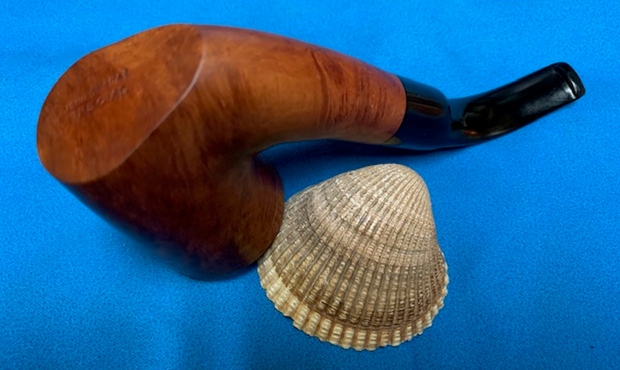
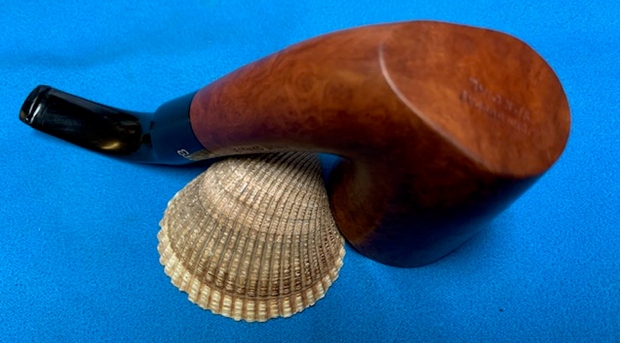
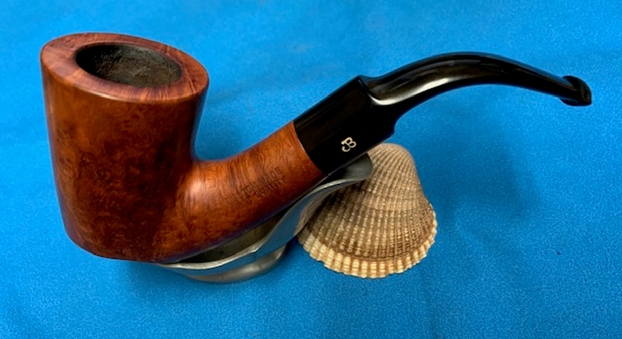
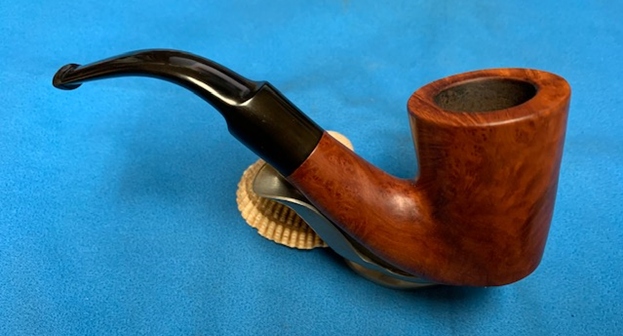
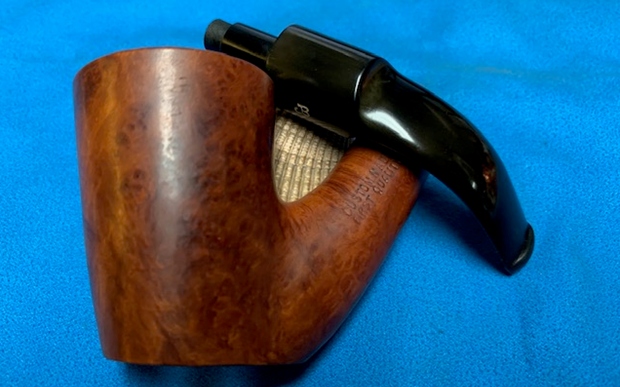
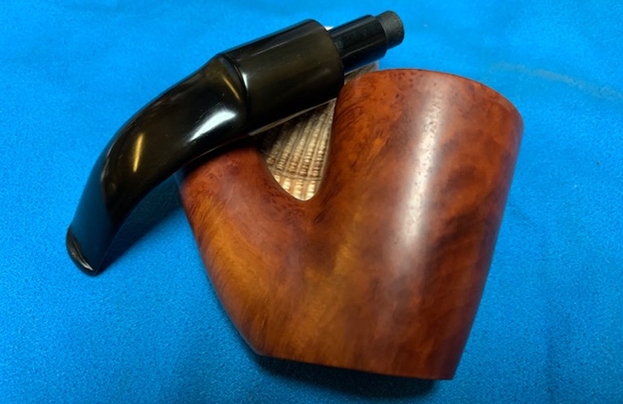
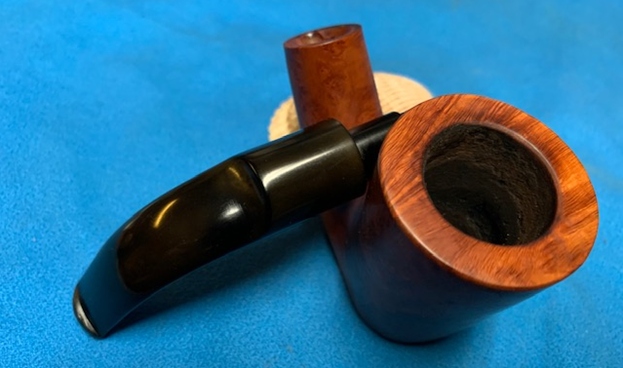
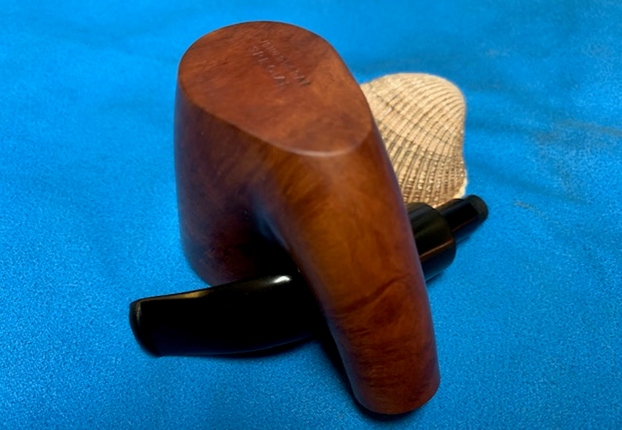
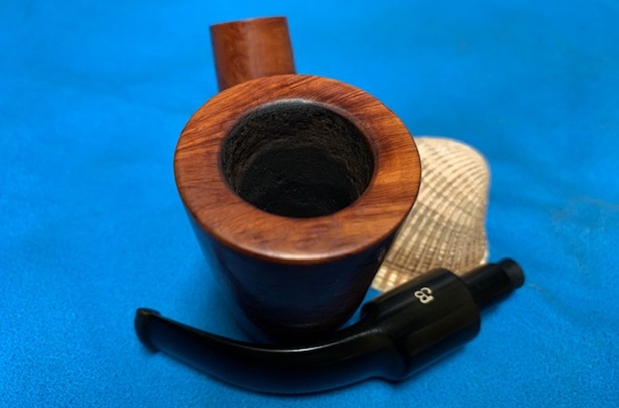
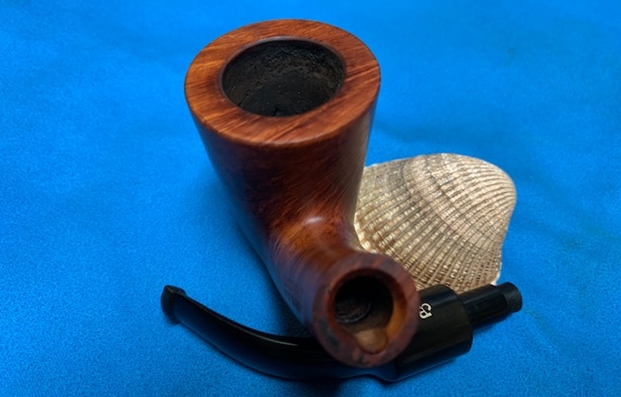
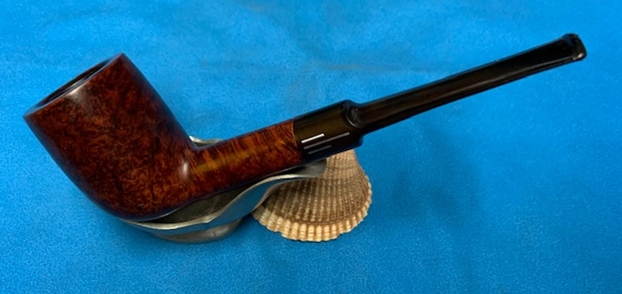
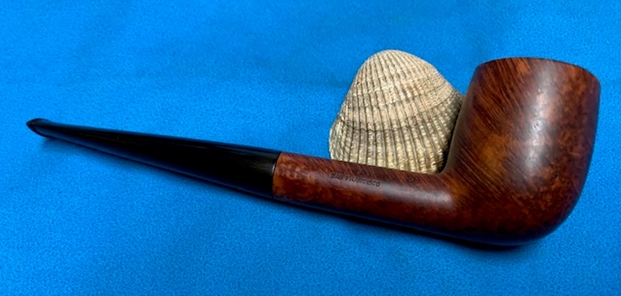
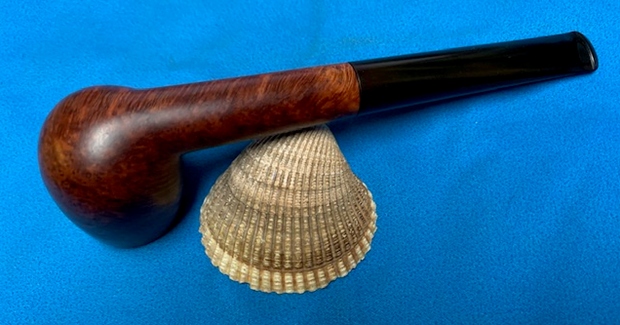
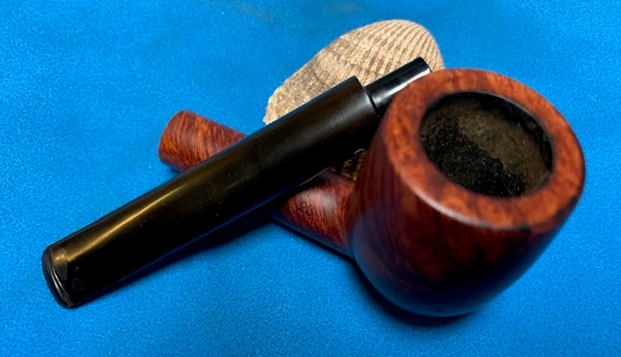
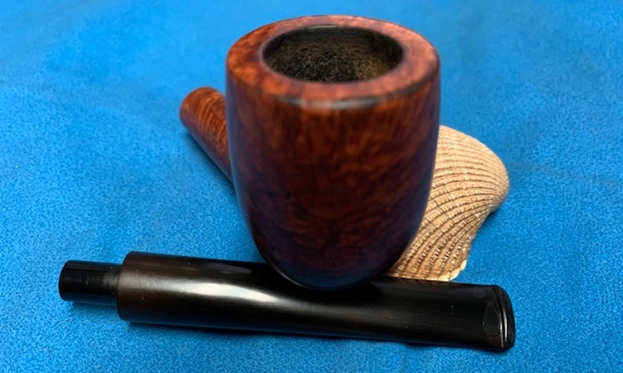
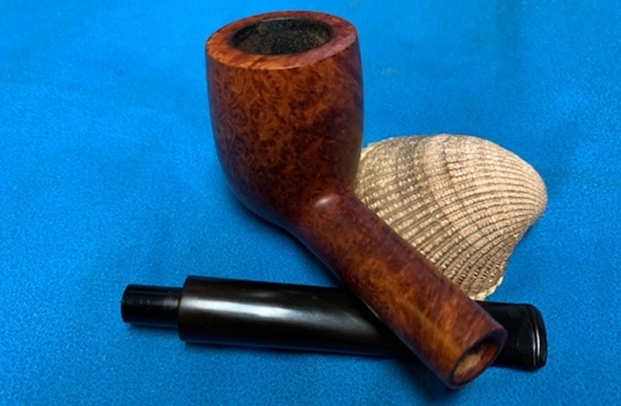
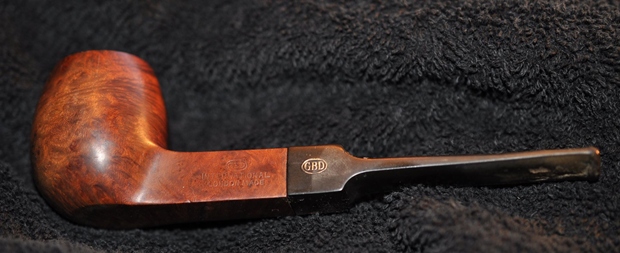
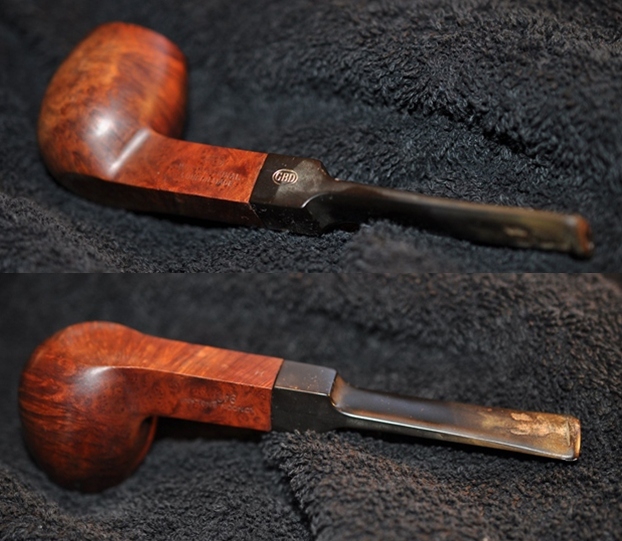
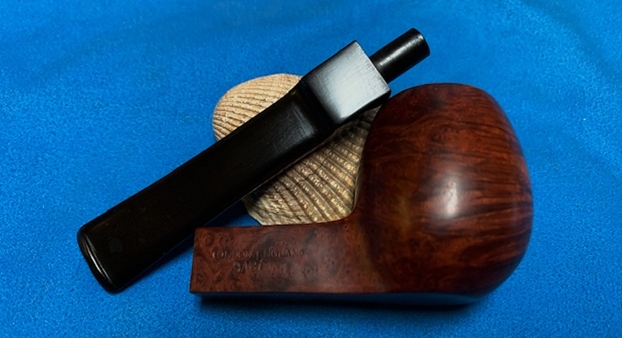
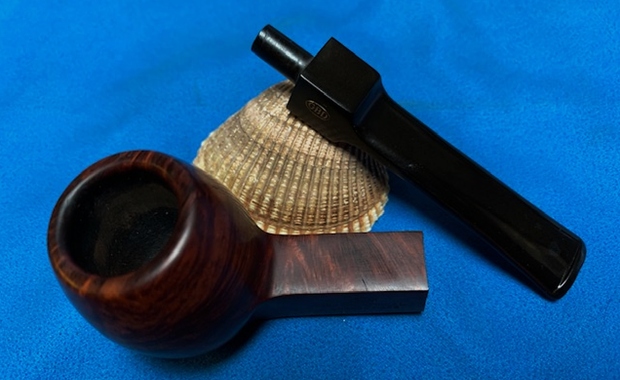
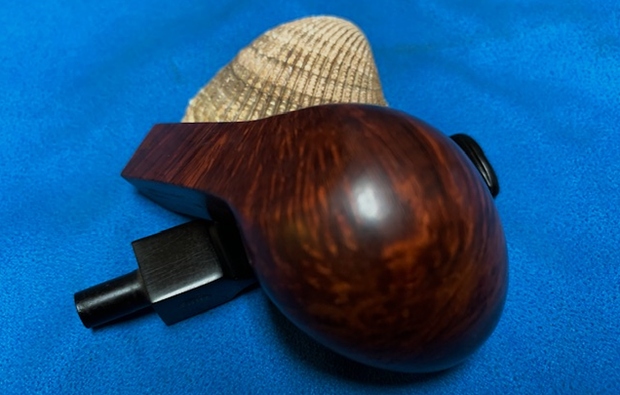
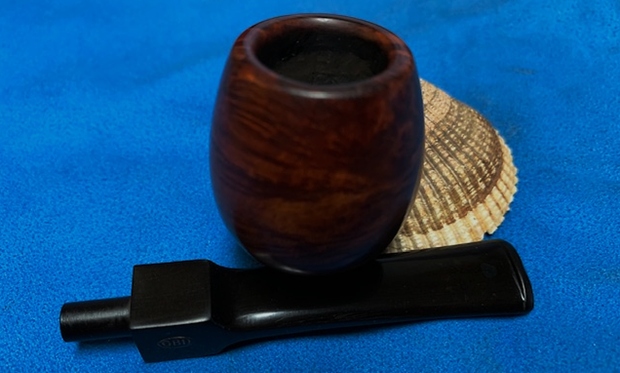
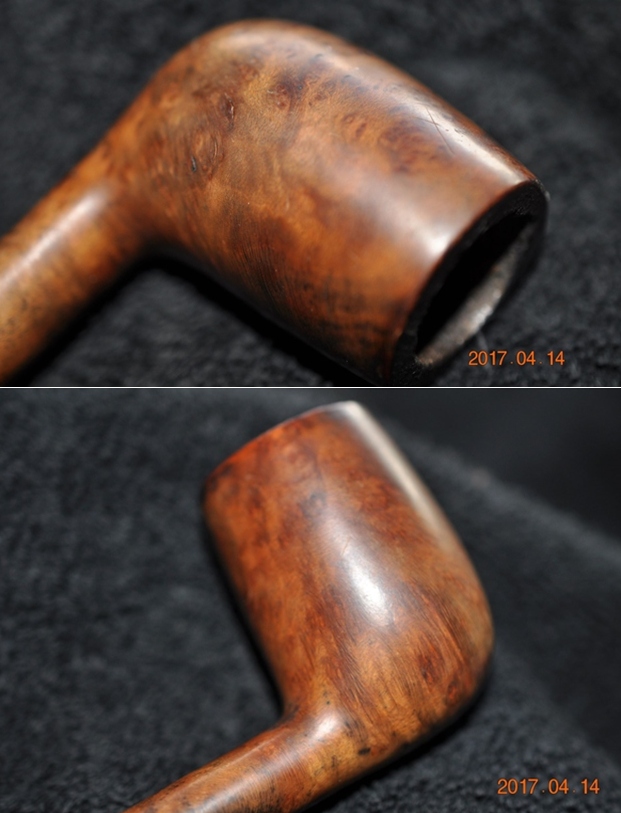
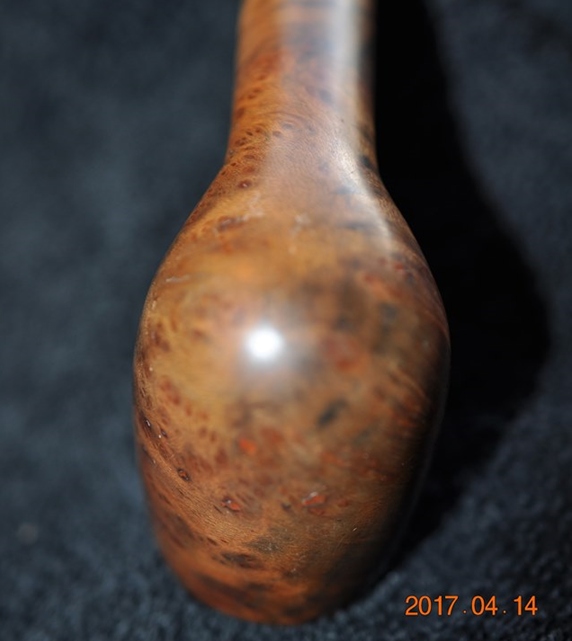
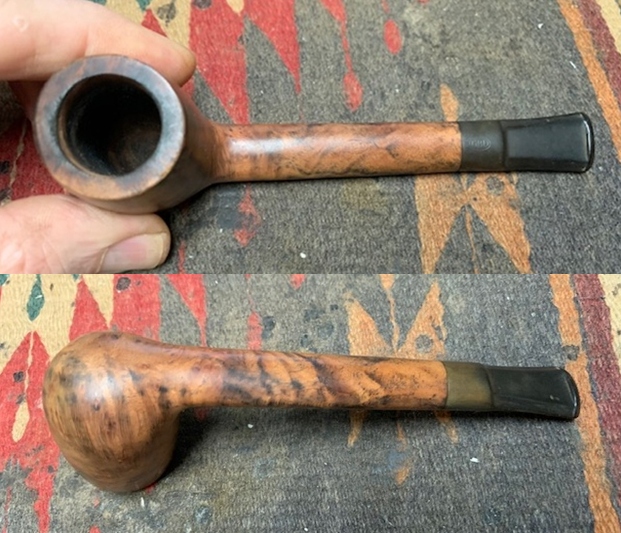
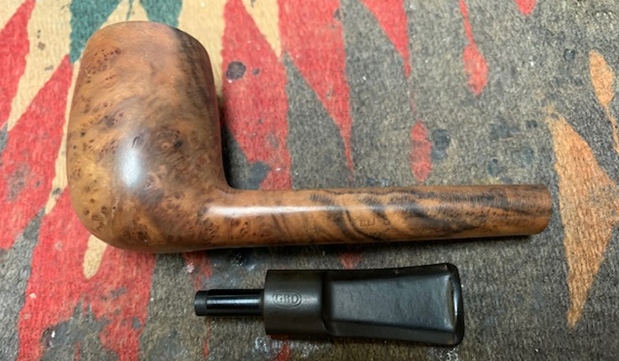
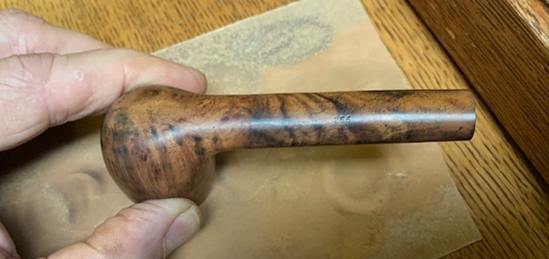
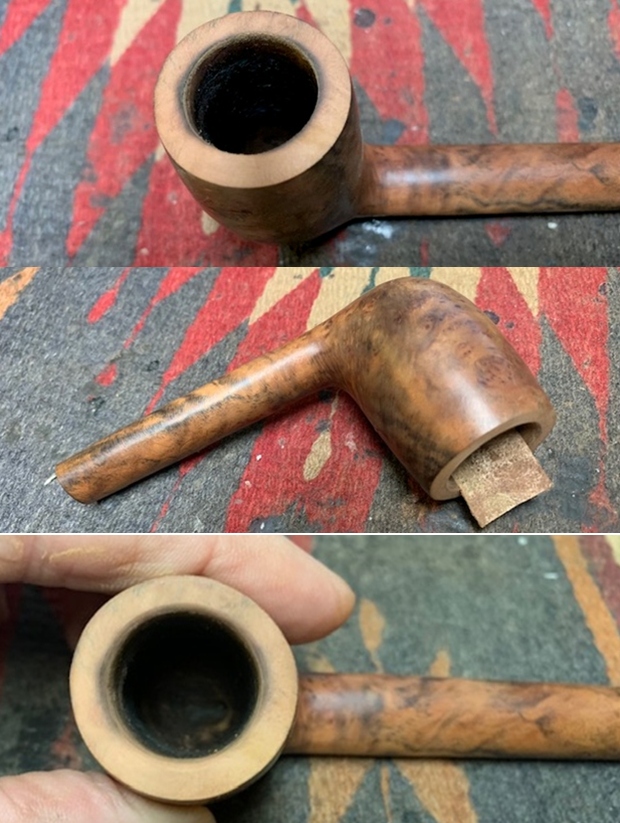
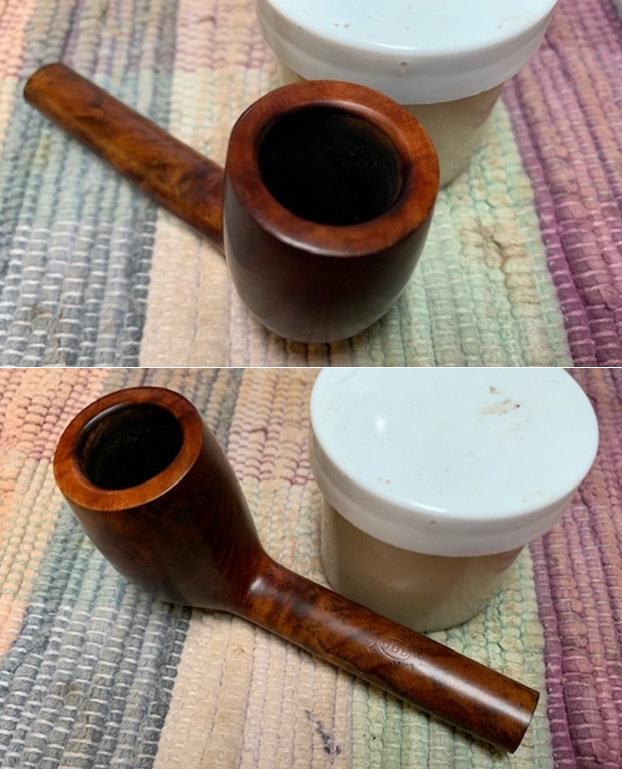
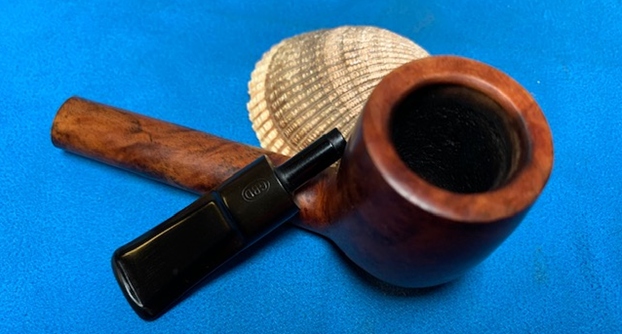
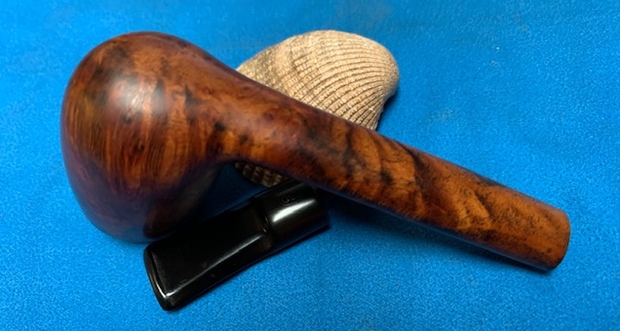
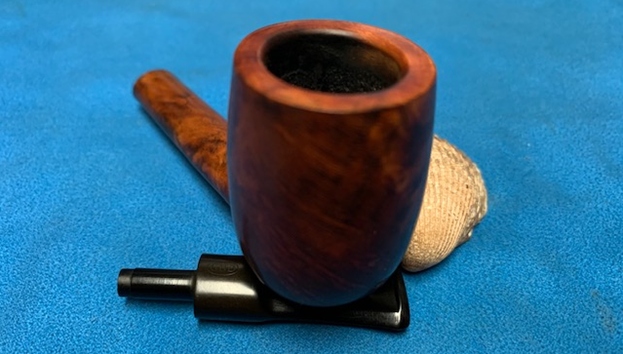
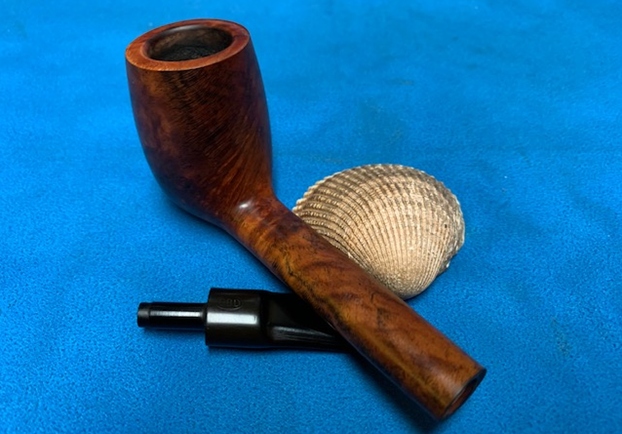
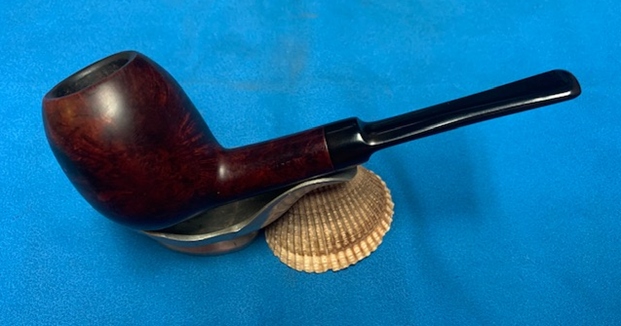
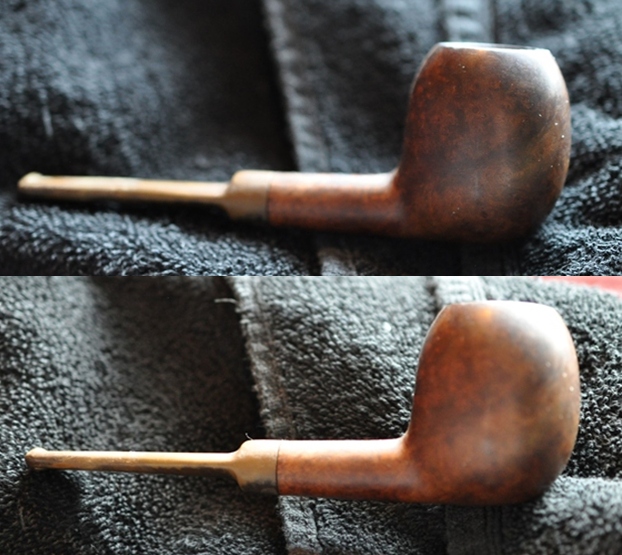
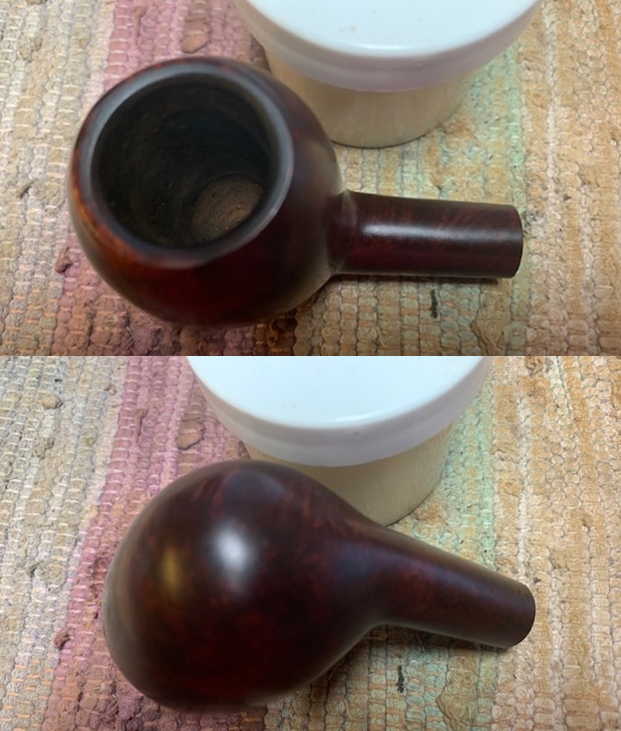
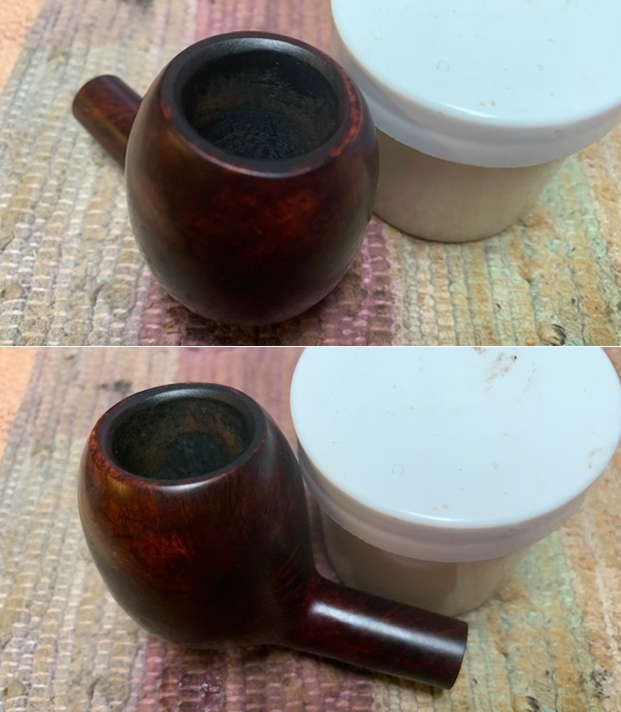
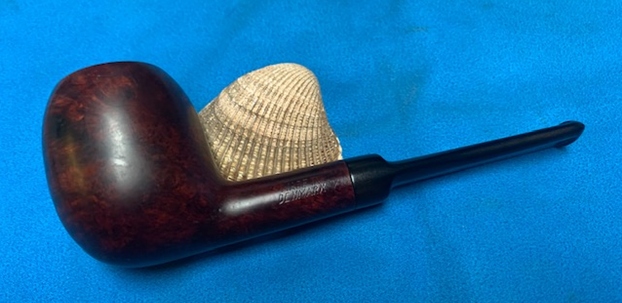
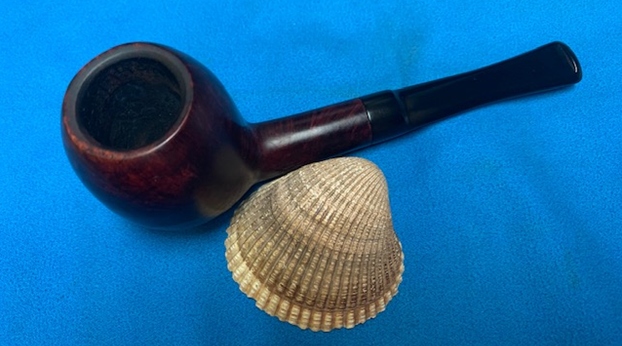
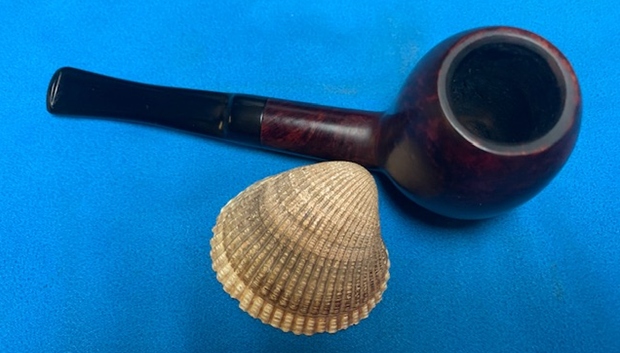
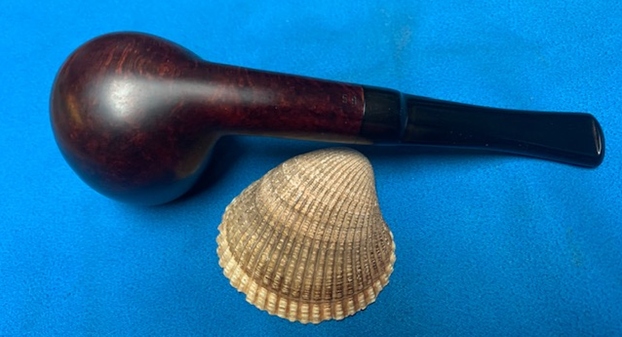
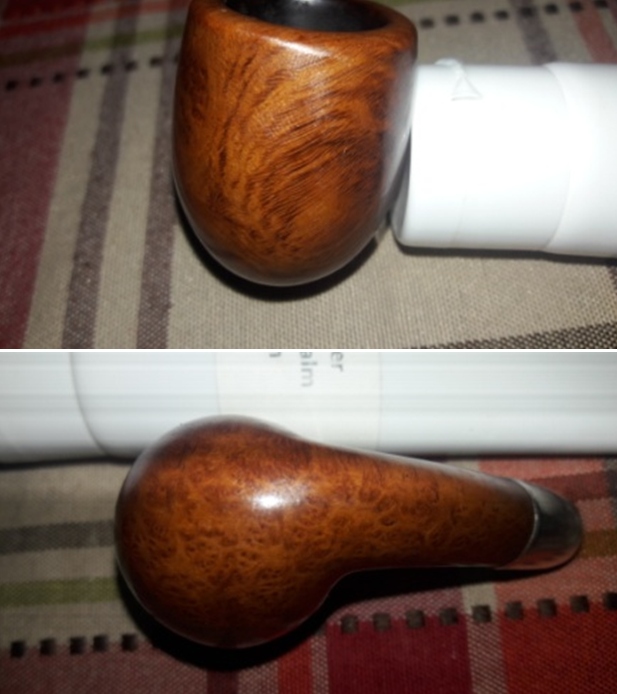
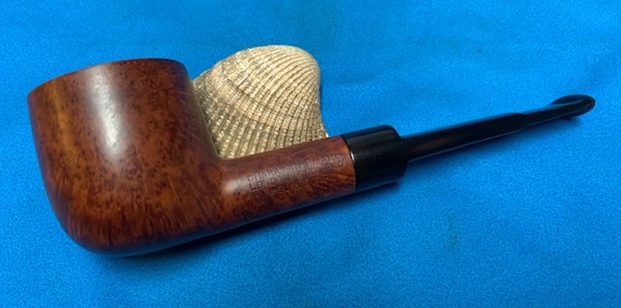
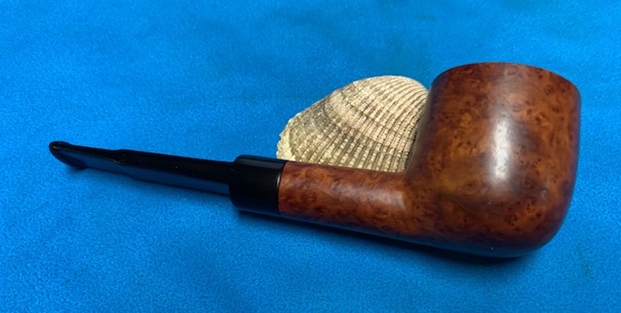
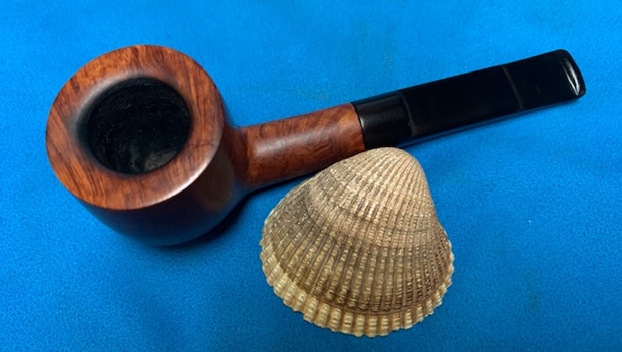
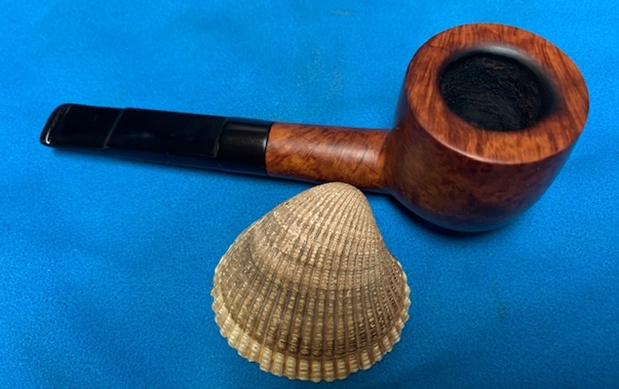
The next pipe selected for refurbishing is a beautifully shaped pickaxe pipe. The stummel has a slender tall chamber with a subtle flare about ½ inch below the outer rim edge. It’s a shape that I have, generally speaking, come to associate predominantly with Danish carvers; however, this one has its links with either USA or Italy!! This pipe has a smooth surface with a nice hand feel as it comfortably fills my entire palm. For a pipe with a length of 5 ½ inches and bowl height of 3 ½ inches, it’s pretty much ultra light weight, making it a perfect to clench. The vulcanite tapered stem is thin and delicate with a slight bend that matches the curve from the foot of the stummel to the shank end. The pipe as it sits on my work table is shown below. The pipe is stamped on the left side of the shank as “EMPIRE STATE” in caps over “BRIAR ITALY”, also in capital letters. The thin vulcanite tapered stem is stamped on the left side with an equilateral triangle as stem logo.This brand of pipe was completely new to me and had not even heard about this brand. It was, thus, natural that I had to first know about the pipe that I was working on. I turned to pipephil.eu to know more of this brand. I referred to the stem logos “triangle” to narrow down my search parameters to save on time. True enough, there on the screen staring at me was an exact same pipe with exact same shape and stampings!! The only difference being that the site says that “Italy” is stamped on the stem’s underside whereas the pipe on my table has “BRIAR ITALY” stamped on the shank itself. Also there is a band at the shank end which was conspicuous by its absence on my pipe. Given below is the link to the site and a screen shot of the relevant portion with the pipe. http://www.pipephil.eu/logos/en/motifs/mo-triangle.htmlSadly, there was no information about the brand on this site. Next I visited rebornpipes.com and pipedia.org to seek information on this brand. However, my search was futile as neither site had any information on this pipe.Home

Has this brand got to do anything or related in any which way to the famous EMPIRE STATE BUILDING of New York which housed many famous pipe companies like S M Frank & Co, KBB etc? I am not aware and would request readers to shed some light and share their knowledge with our fraternity.

With the provenance of the pipe a mystery, I proceeded to carry out a visual inspection of the condition of the pipe in my hand. This helps me map the road to restoring the pipe by identifying the issues involved and identifying methods/ options to address the same beforehand.

Initial Visual Inspection
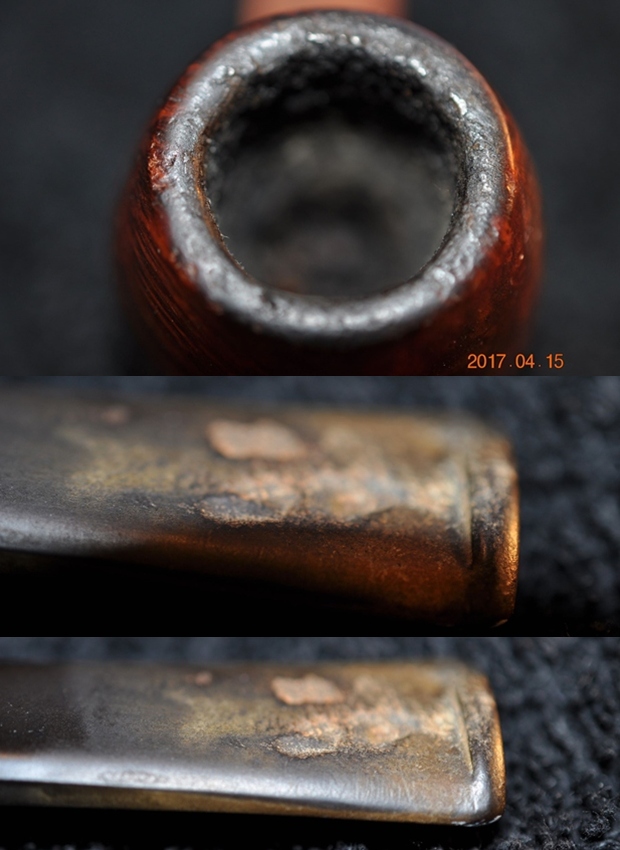
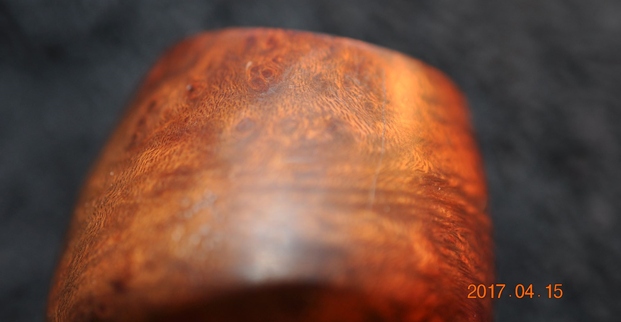
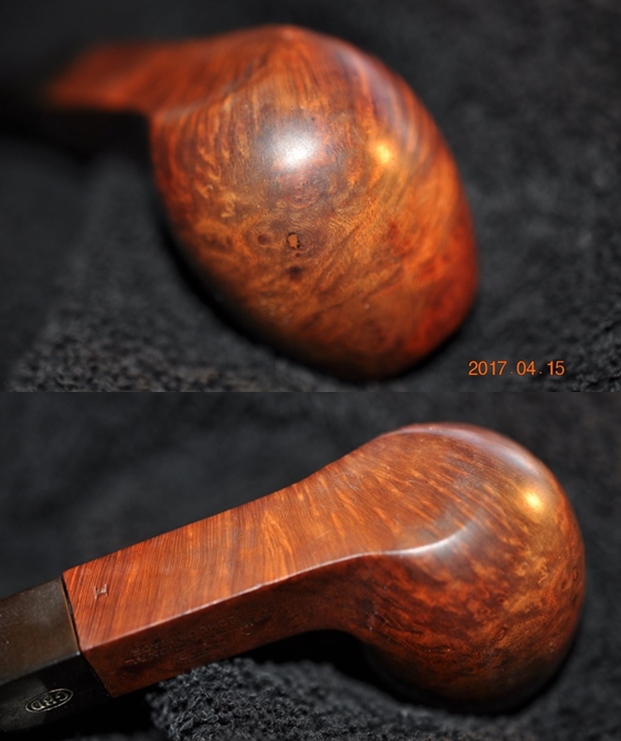
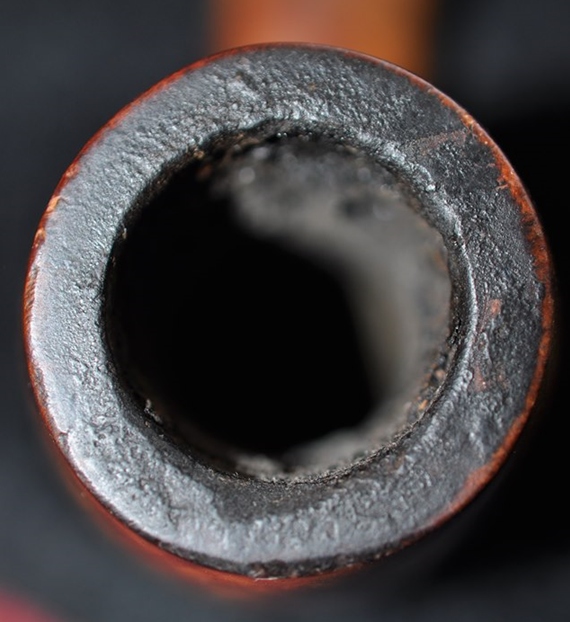
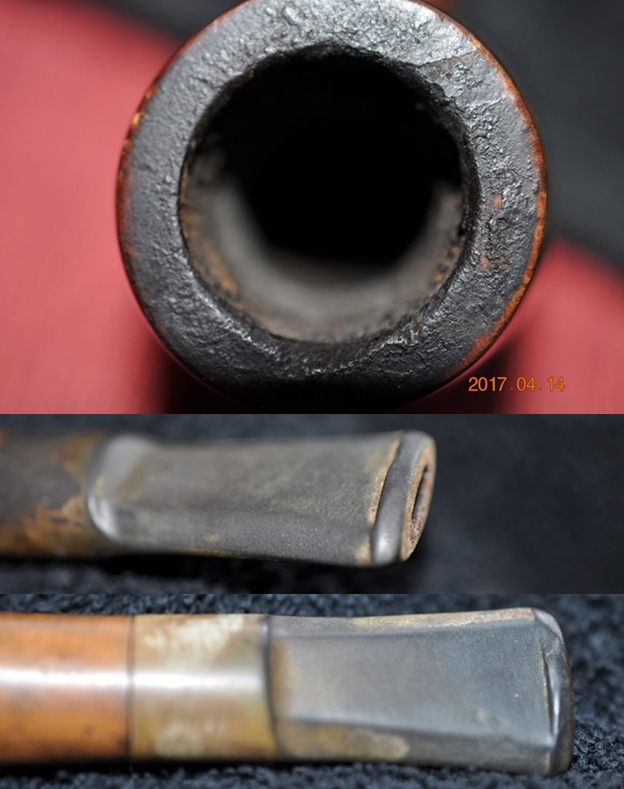
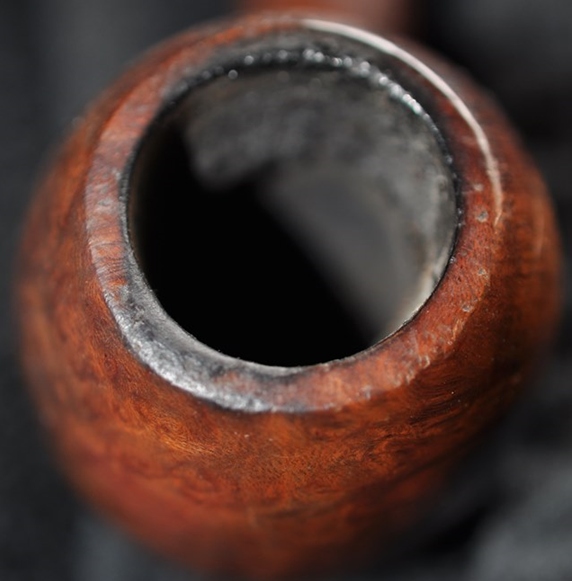
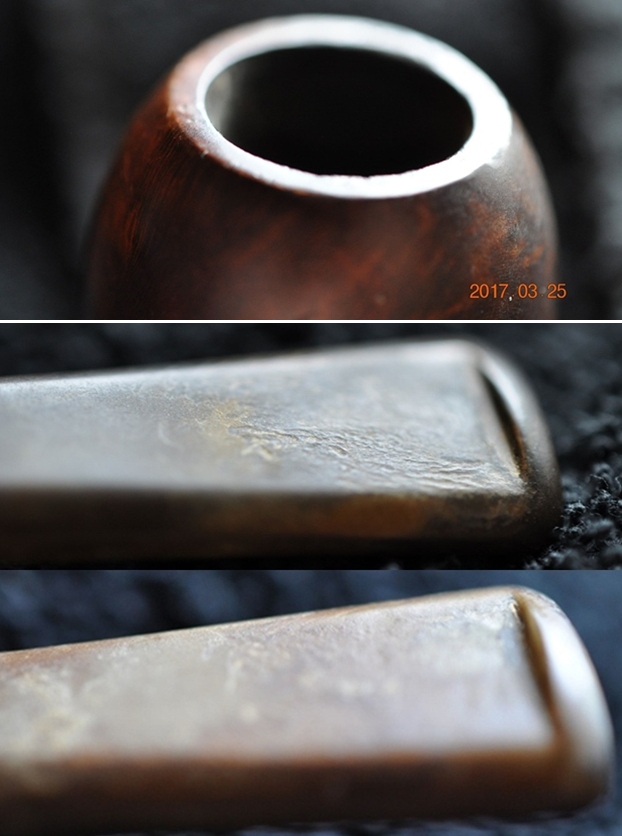
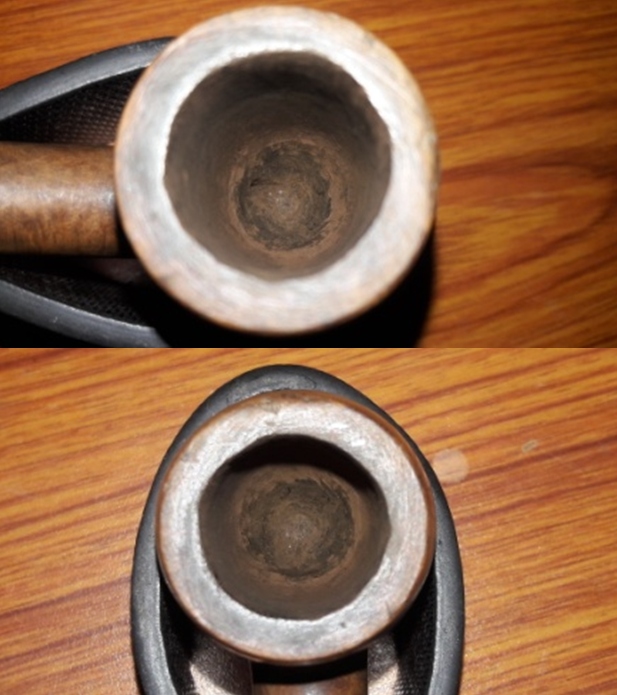
The chamber has a decent build up of cake. The build-up of the cake is heavier on the middle half of the bowl, but overall well maintained. The condition of the inner walls of the chamber can be commented upon after the cake has been taken down to the bare briar. The draught hole is right at the bottom of the chamber with a nice wide opening. The rim top is clean and a couple of minor dings are visible over the rim top surface. The chamber odors are not very strong and should be completely eliminated once the cake has been removed and the shank has been thoroughly cleaned. The pipe does not seem to have seen much use or possibly it has been used but nicely taken care of as is apparent from the condition of the pipe. The chamber has a nice thickness to it and should provide a nice cool smoke. The stummel surface appears dull and lackluster due to the accumulated dirt, dust and grime. I could identify a couple of fills over the stummel surface and the same are indicated with pastel blue arrows. There are few scratch marks over the bottom surface of the shank. The mortise is relatively clean with small amount of oils and tars accumulated on the walls of the mortise. Thorough cleaning and rising under warm water of the stummel surface will confirm if these fills are required to be refreshed or otherwise and should also highlight the grain patterns. I shall need to sand the stummel surface with sand papers to remove and minimize the scratches, dents and dings. Micromesh polishing will further help minimize these dents and scratches to some extent. The delicate vulcanite tapered stem is heavily oxidized and has taken on a dirty brown coloration. The lip has some minor bite marks on both surfaces and will need to be rebuilt and reshaped. There is some minor tooth chatter seen in the bite zone on both the surfaces. The stem airway appears to be relatively clean. Further internal cleaning of the stem should make the draw full and open. The tenon and horizontal slot is nice and clean. The removal of deep and heavy oxidation from the stem surface is going to be the most tedious and time consuming part of this restoration. The Process
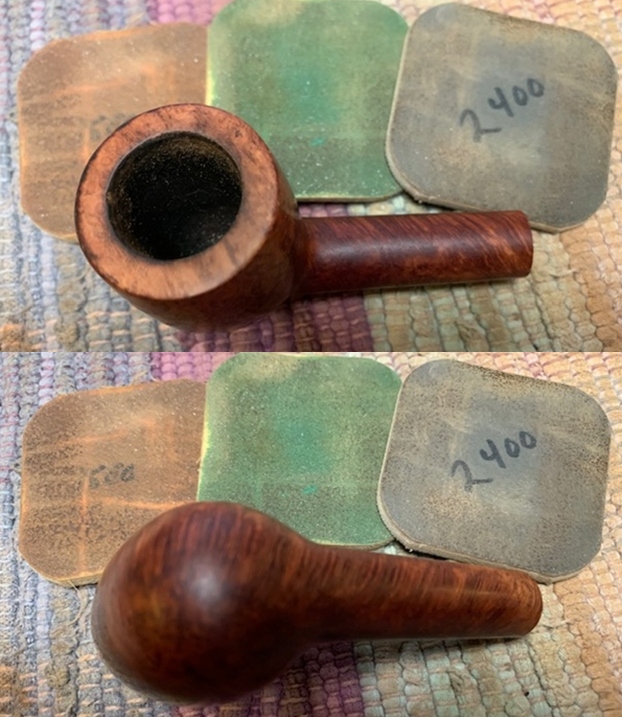
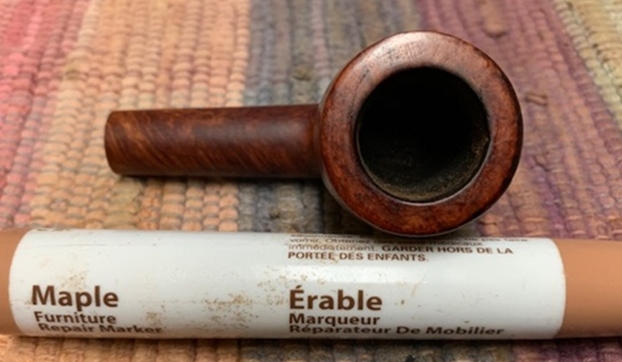
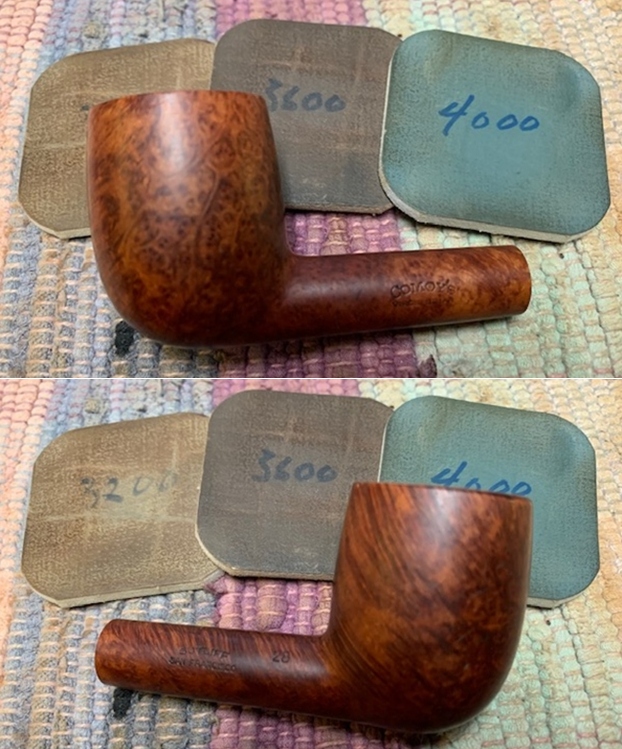
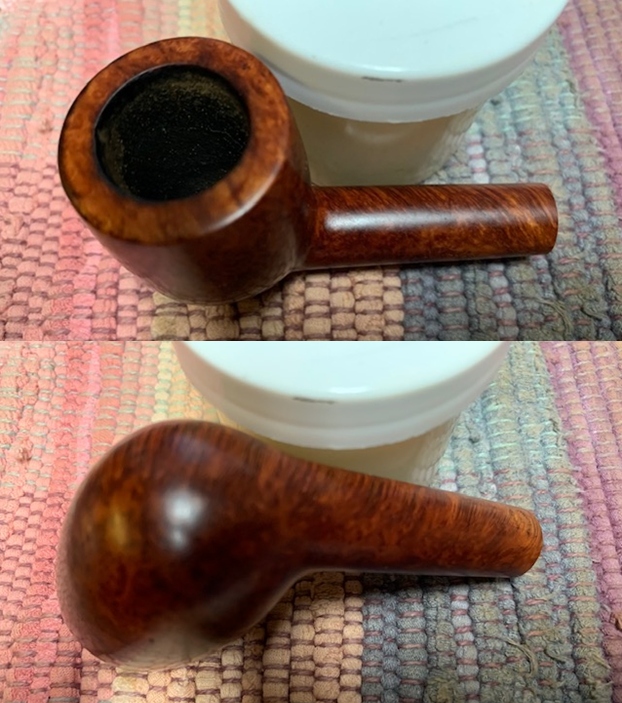
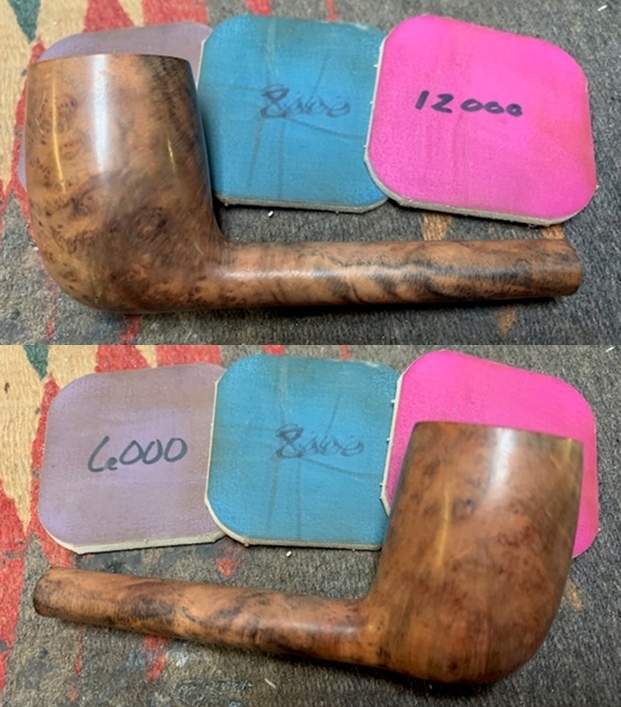
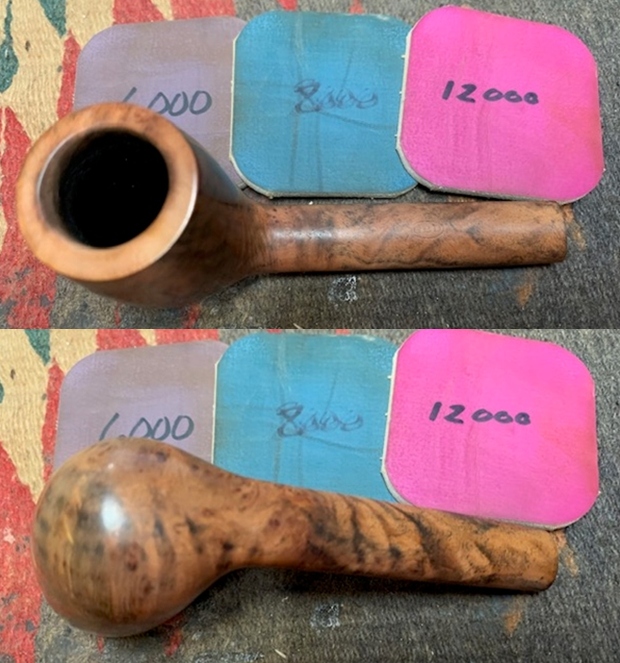
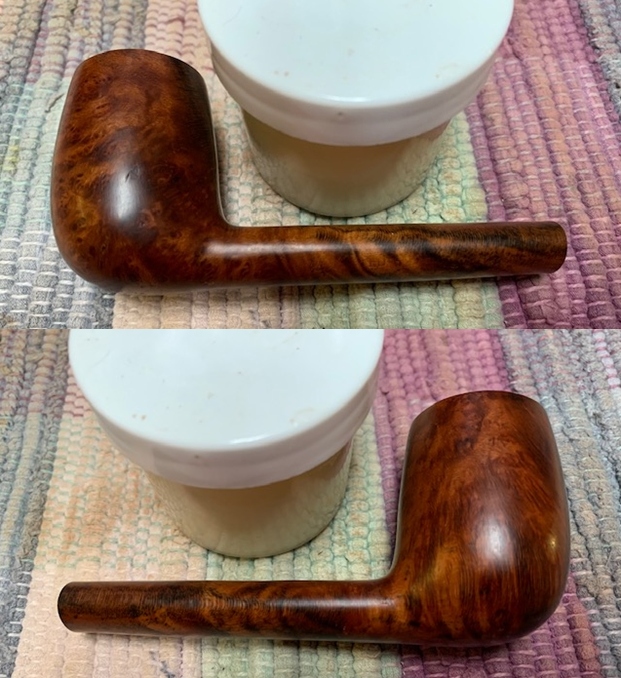
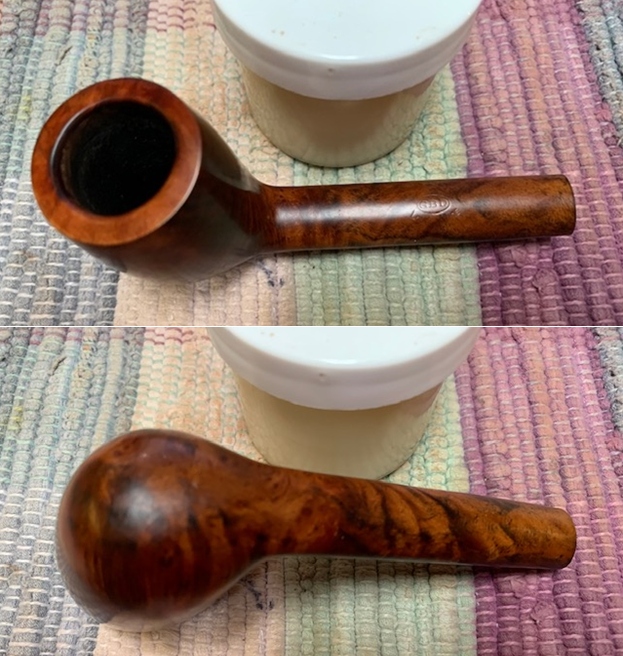
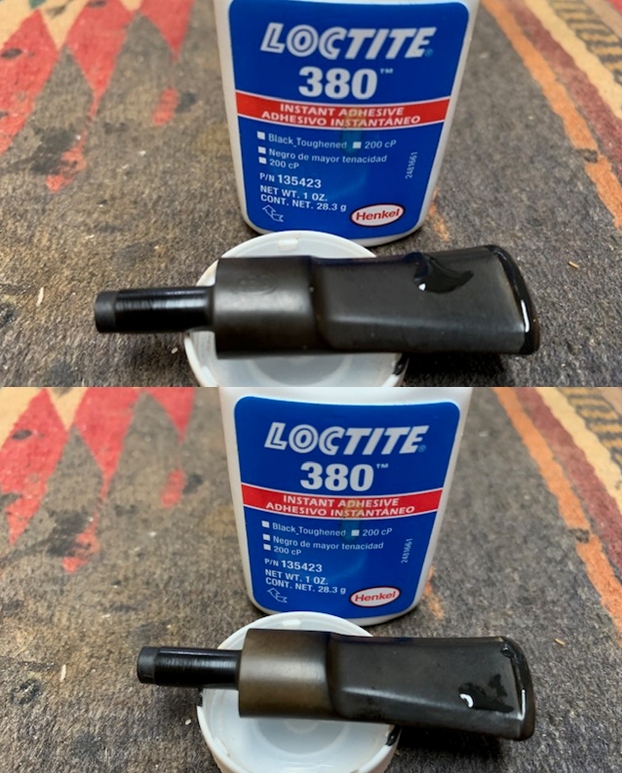
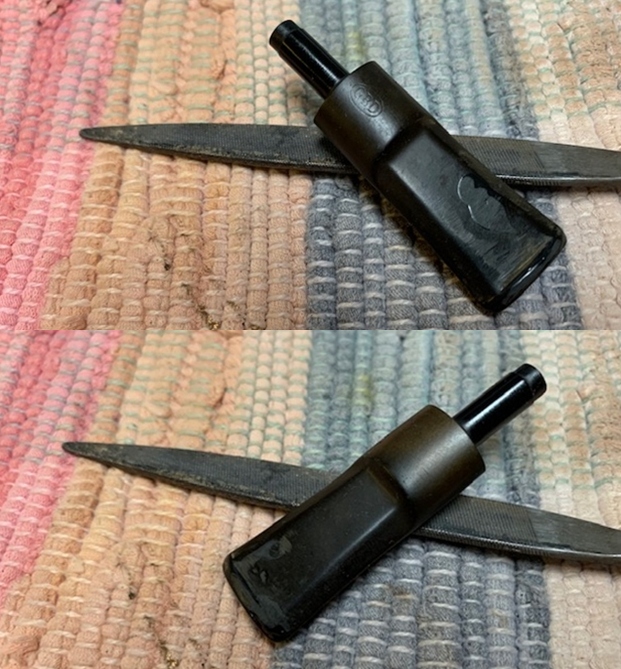
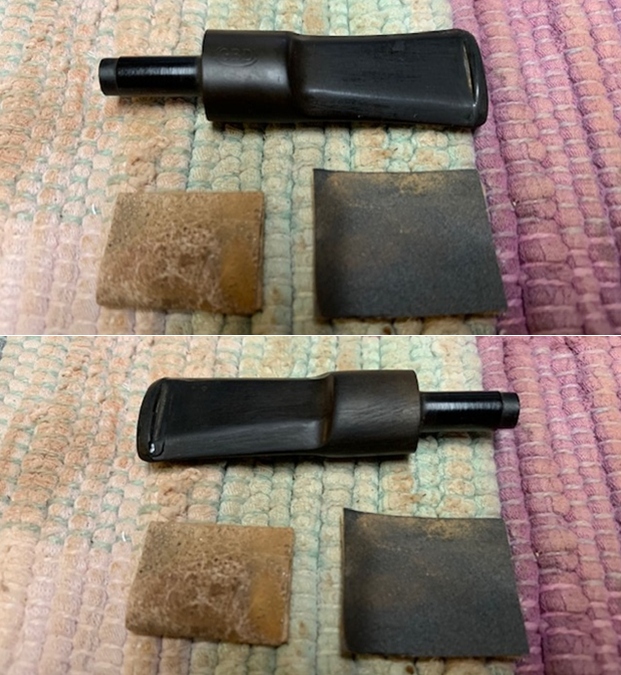
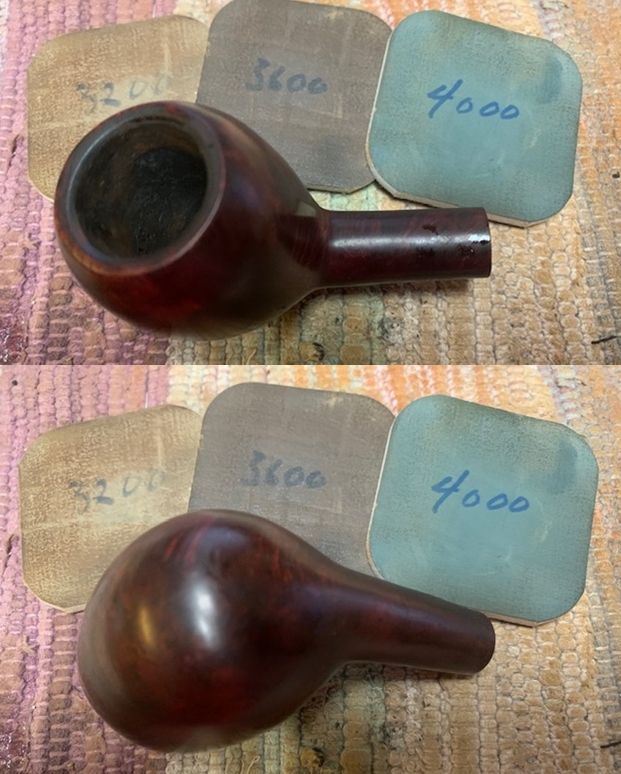
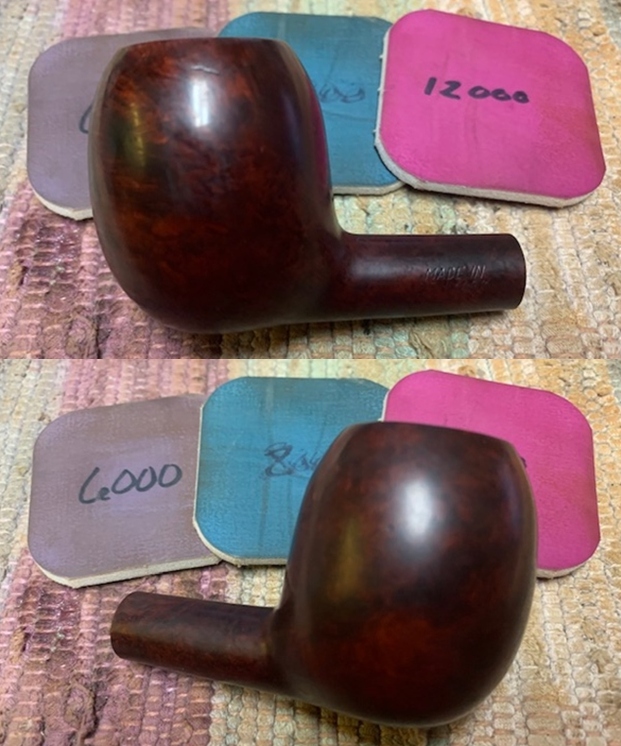
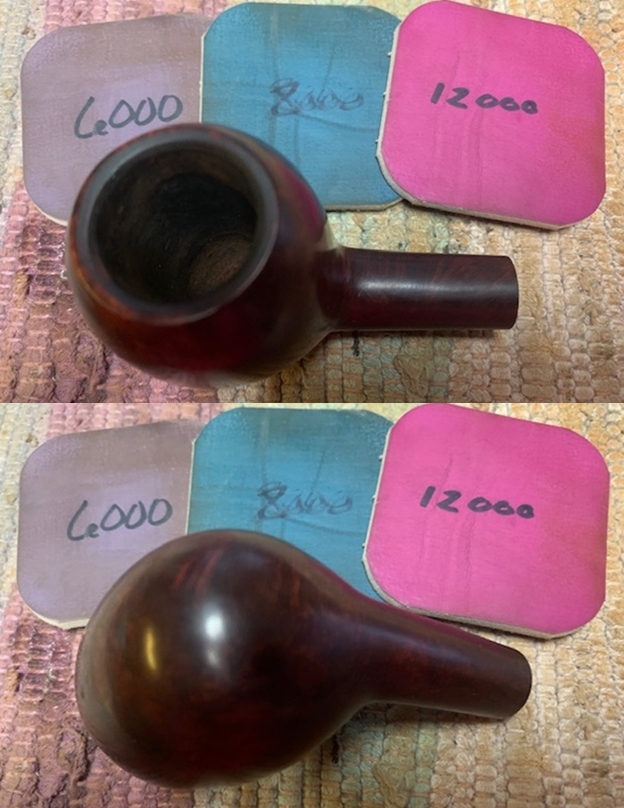
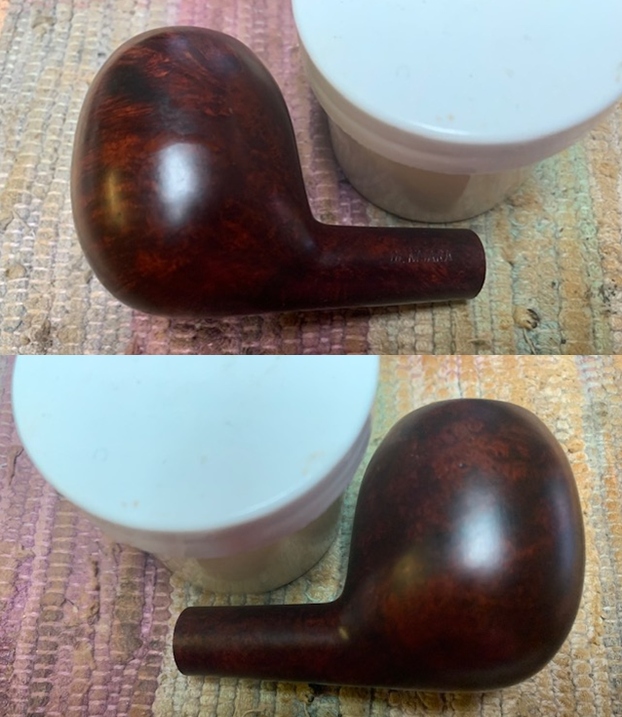
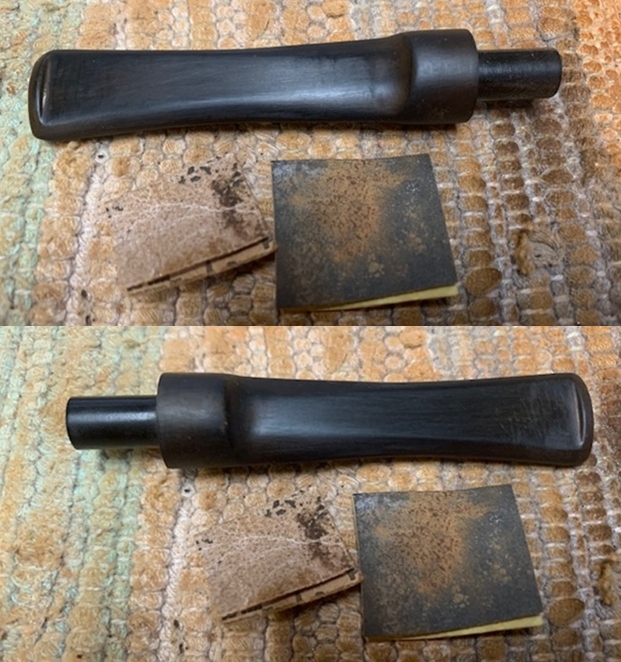
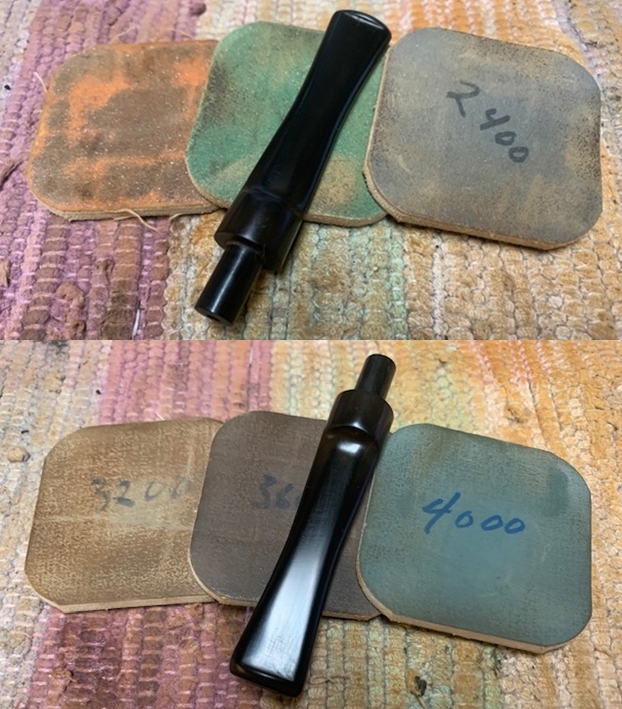
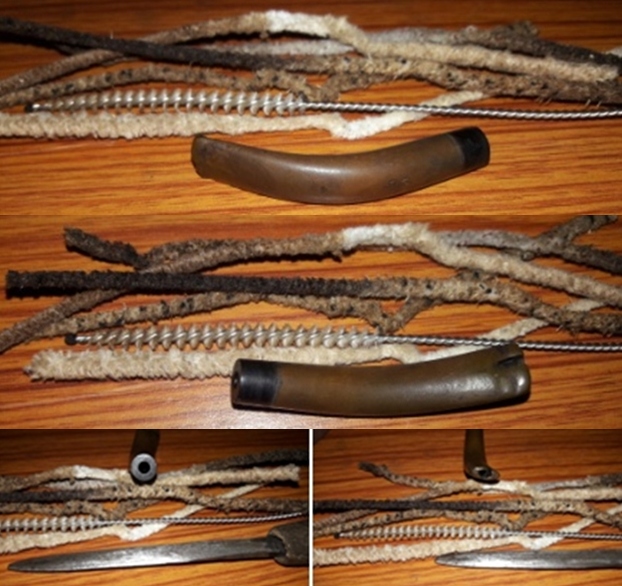
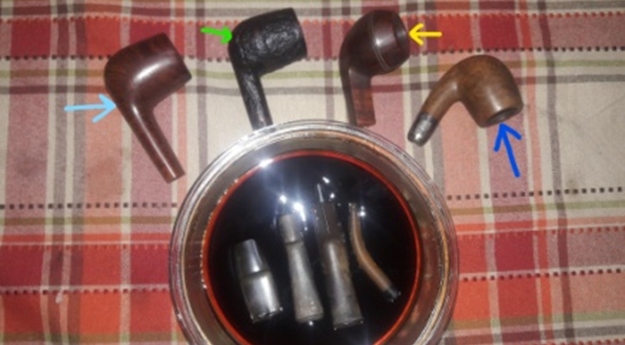
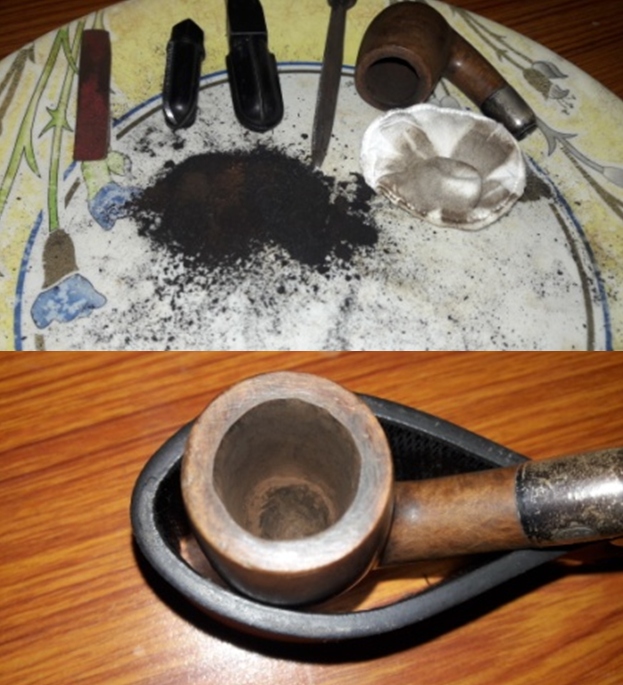
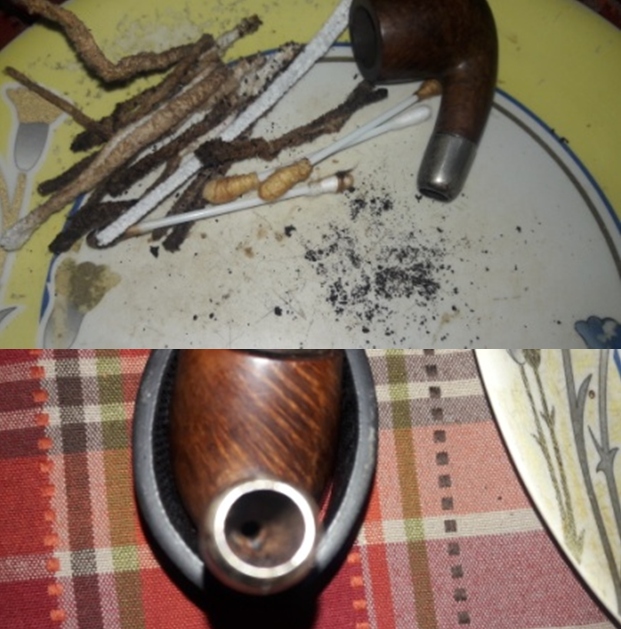
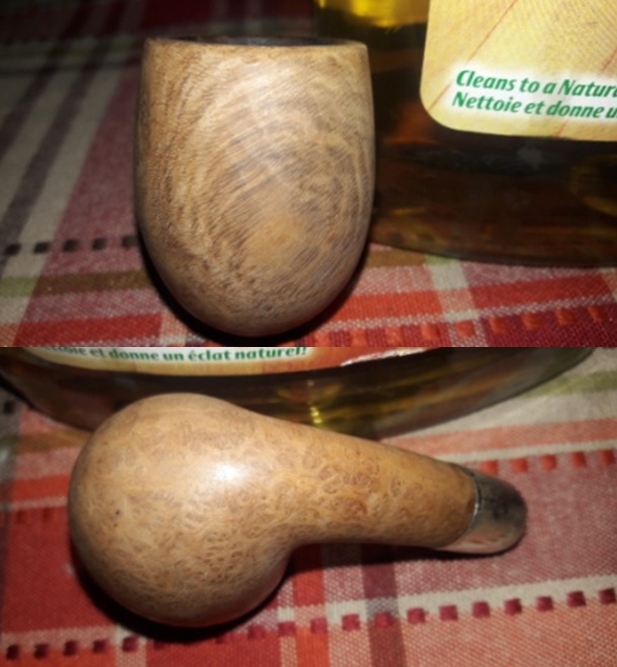
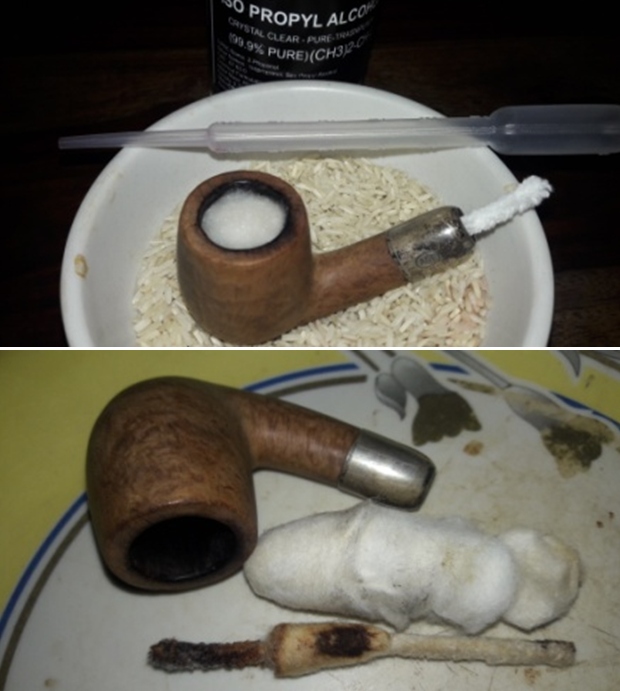
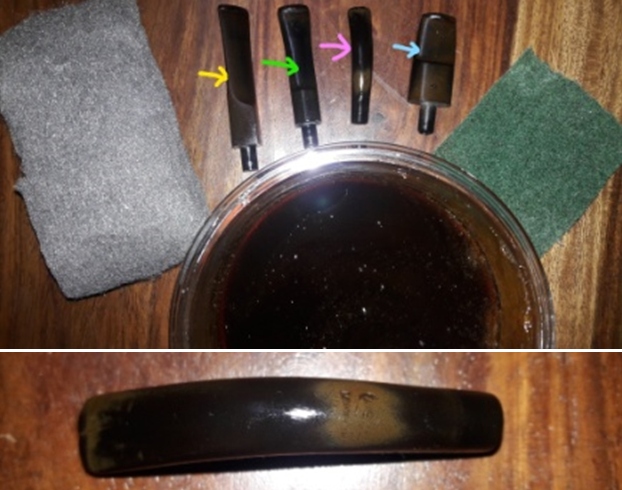
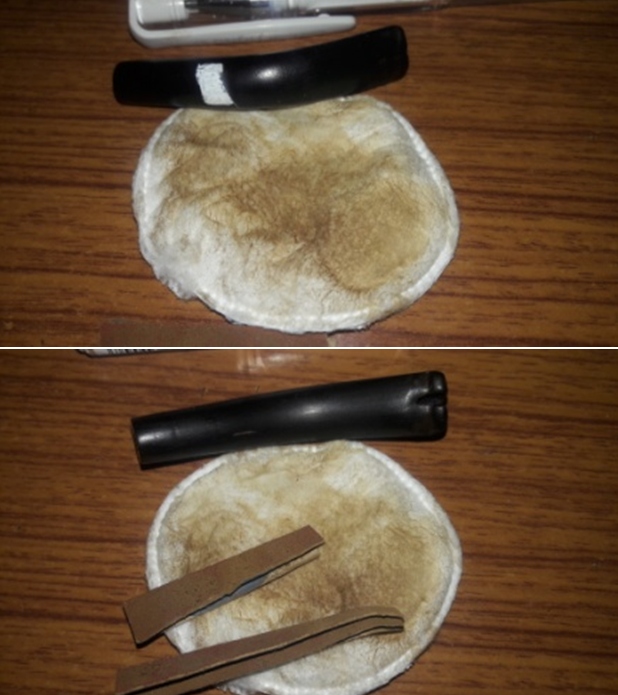
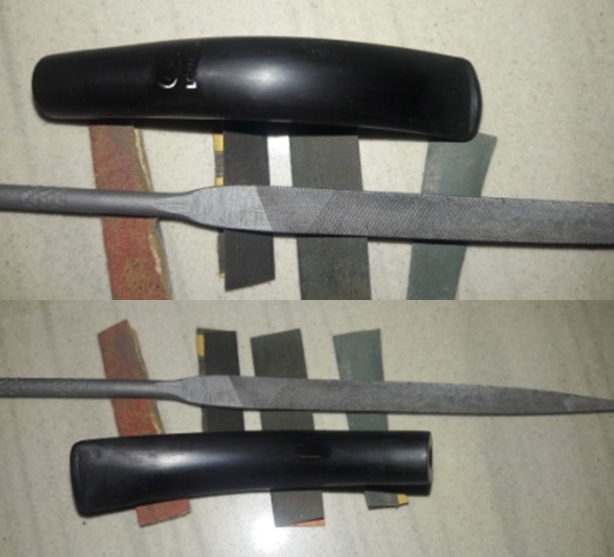
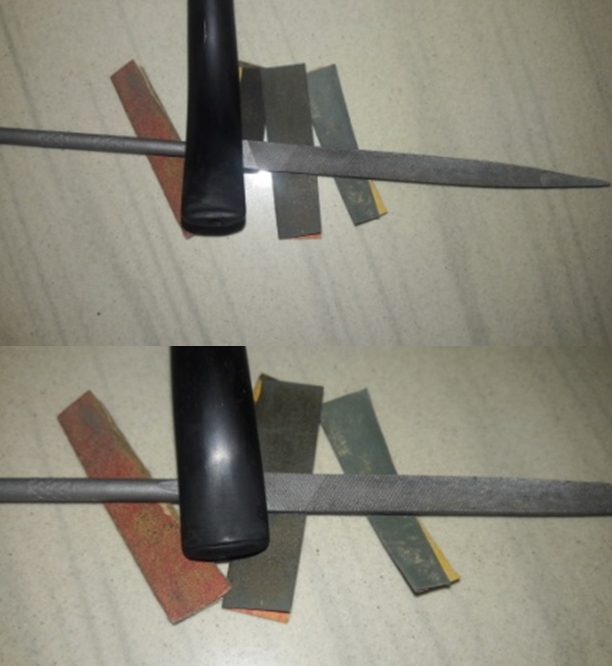
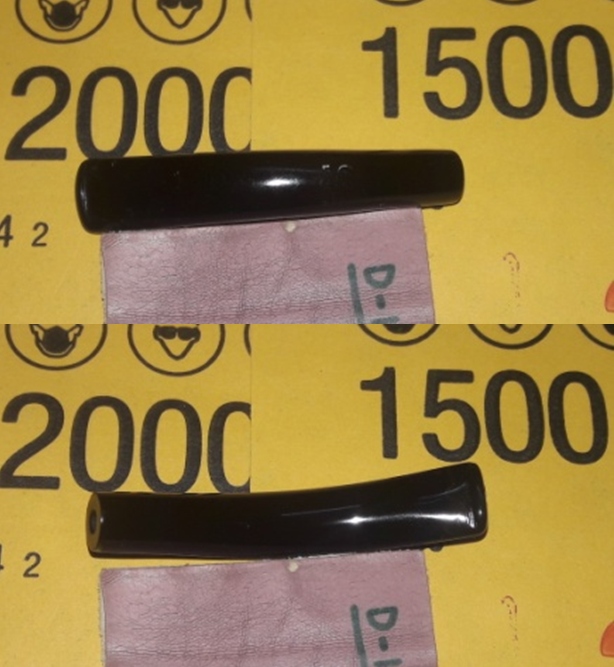
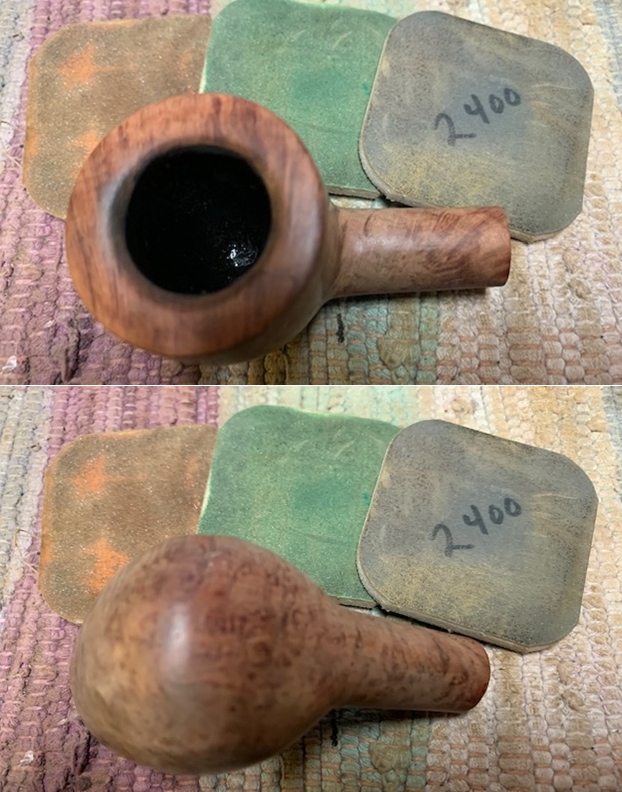
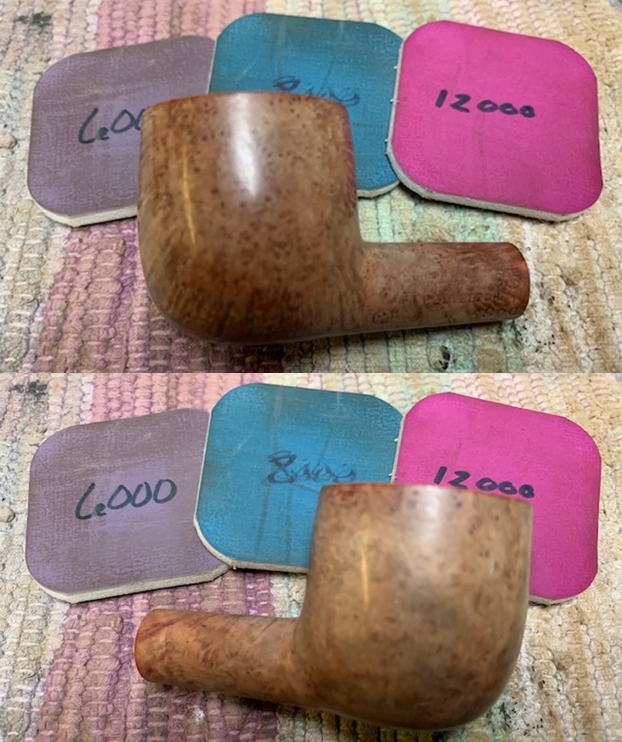
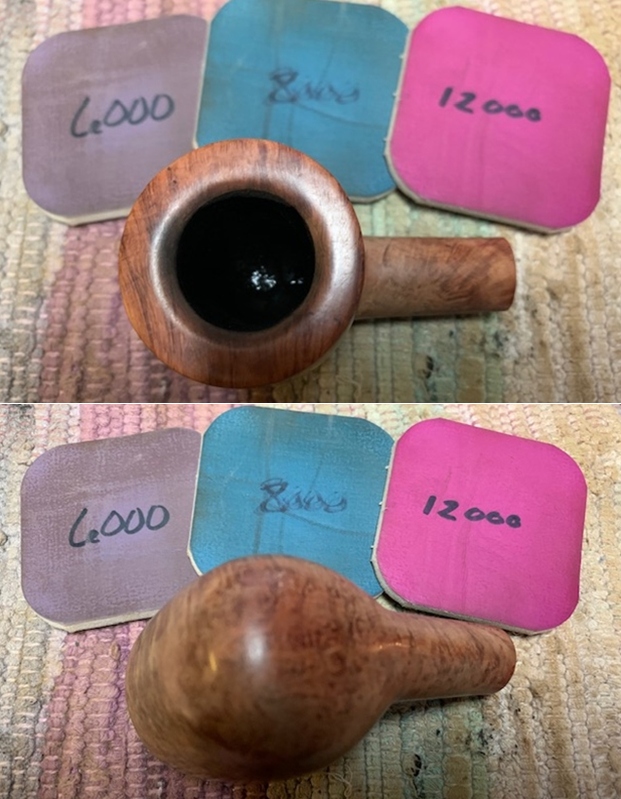
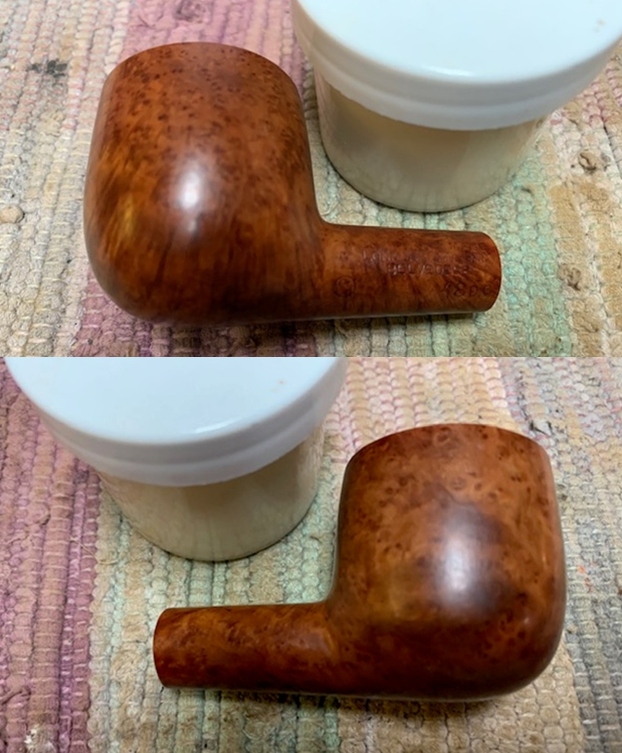
The process of refurbishing this pipe started with the cleaning of the stem. Abha cleaned the stem air way with regular and bristled pipe cleaners dipped in 99.9% pure isopropyl alcohol. She further cleaned the stem internals with thin shank brushes and dish soap to remove the stubborn and thick gunk from within the airway. The heap of pipe cleaners and their appearance tells a sordid story. With a sharp fabricated knife, she scraped off the little gunk and dried tars from the tenon and slot end. Since this stem did not have any issues to address and I wanted Abha, my wife, to progress beyond just initial cleaning to stem polishing, I requested her to complete this stem. She agreed though with great reluctance!!The stem surface was sanded down with a worn out piece of 180 grit sand paper by Abha. We have realized that following this step prior to immersion into the “Before and After Stem Deoxidizer” solution has two advantages, firstly, the stem surface oxidation gets loosened and the solution works deeper and more efficiently in pulling the deep seated oxidation from the stem surface. Secondly, the minor tooth chatter and calcium depositions are taken care of prior to the immersion. She immersed it in “Before and After Deoxidizer” solution along with the stem of other pipes in line for restoration. This solution has been developed by Mark Hoover and works to draw out all the deep seated oxidation from the surface making its subsequent cleaning and polishing a breeze. I would definitely recommend this product as it saves on to time and efforts. The pipe has been marked with a yellow arrow for easy identification.  With the stem in the deoxidizer solution, Abha, my wife, dealt with the cake by reaming the chamber with a fabricated knife as the narrow chamber opening was small even for size 1 head of the reamer. She further scraped the cake from the bottom of the bowl and also the walls of the chamber. She was especially very careful while reaming with the knife so as not to damage the inner edge of the rim. Once the solid briar was exposed, she further smoothed the walls and removed remaining cake by sanding with a 180 followed by 220 grit sand paper. Another advantage of this process is the elimination of traces of ghosting to a great extent. She wiped the chamber with a cotton swab wetted with 99.9% isopropyl alcohol. The chamber walls are pristine and solid with no heat fissures or pits. Simultaneously she cleaned out the internals of the shank/ mortise and airway using q- tips, pipe cleaners and isopropyl alcohol. She scraped the walls of the mortise with a fabricated knife till the accumulated gunk was removed. Further cleaning of the shank internals will be carried during the external cleaning of the stummel.Thereafter, she generously rubbed “Briar Cleaner”, a product that has been developed by my friend Mark Hoover, into the external surface of the bowl and the rim top surface. It works similar to Murphy’s oil soap and needs to be applied to the stummel surface and set aside for 5- 10 minutes. The product pulls out all the dirt and grime to the surface making further cleaning easy. We are quite happy with this product. She used a hard bristled tooth brush to scrub the stummel and rim top with the solution. After the scrub with Briar cleaner solution, she washed the stummel under running warm water with anti oil dish washing detergent till clean and dried it using paper towels and soft cotton cloth. She simultaneously cleaned the shank internals with the detergent and hard bristled shank brush. The stummel surface has cleaned up nicely with the mixed grains on full display. The stummel now looks and smells fresh and the old smells are all gone. She set the stummel aside to dry out naturally. I checked the fills for solidity and realized that all the fills had gone soft and would need to be refreshed. Otherwise the stummel had cleaned up nicely and the rim top surface was in pristine condition. The next morning, Abha removed the stems that had been soaking in the deoxidizer solution overnight. She cleaned the stem and the stem airway under running warm water and scrubbed the raised oxidation from the stem surface using a Scotch Brite pad and the airway with thin shank brush. She further removed the oxidation by scrubbing the stem with 0000 grade steel wool and applied a little olive oil to rehydrate the stem.While Abha was busy with the stem cleaning and sanding, I removed the old fills from the stummel surface with a thin edged sharp knife. I cleaned the gouged out spots with cotton swab and alcohol in preparation for a fresh fill. Using the layering method, I filled the gouged out spots with CA superglue and briar dust. I always ensure that the fill is above the rest of the stummel surface. This helps in subsequent sanding and blending in of the fills with rest of the surrounding surface. I set the stummel aside for the fills to cure. I had run out of medium CA superglue and had only the thin superglue. This glue is not ideal for a fill as it spread all over the stummel surface. It sure does look messed up, however, since I was to sand the entire stummel to achieve a perfect blending of the fill with the rest of the surface, I was not very perturbed with the spreading of the superglue. With me working on the stummel repairs, Abha had continued her work of polishing the stem. She further sanded the stem surface with a folded piece of 220 and 320 grit sand papers to completely remove the remaining traces of oxidation and reduce the sanding marks and followed it with wet sanding the entire stem with 1500 to 12000 grade micromesh pads (1500 to 2400 grit micromesh pads had completely worn out and we were unable to order a set due to lockdown. The use 1500 and 2000 grit wet or dry sand paper is the nearest option that we had). She wiped the stem with a moist cloth to remove the dust and monitored the progress being made after every three grit pads. The stem polished up nicely and had a rich deep black shine to it. She applied a little Extra Virgin Olive oil to rehydrate the vulcanite and set the stem aside.Once the fills had sufficiently cured, with a flat head needle file she sanded the fills and achieved a rough match with the rest of the stummel surface. To achieve a perfect blending in of the fills and to remove the excess spread of the thin superglue, She sanded the entire stummel surface with a folded piece of 220 grit sand paper. The minor scratches that were observed at the bottom surface of the shank were also addressed by this sanding. The fills have blended in nicely and further polishing with micromesh pads should further mask these fills and sanding marks left behind by the abrasive 220 grit sand paper. Abha polished the stummel by wet sanding with 1500 to 2000 grit wet or dry sand paper and followed it up with further wet sanding with 3200 to 12000 grit micromesh pads. The stummel has taken on a nice deep and dark brown color, nicely masking the refreshed fills to naked eyes. I was prepared to satin the stummel if need be to mask the fills, however, that does not seem necessary at this stage. We are very happy with the appearance of the stummel at this point in restoration. Next, I rubbed a small quantity of “Before and After Restoration Balm” in to the briar with my finger tips, working it deep in to the briar and let it rest for a few minutes. The balm almost immediately works its magic and the briar now has a nice vibrant appearance with the beautiful grain patterns displayed in their complete splendor. The contrast of the dark brown of the stummel interspersed with darker cross grains and Bird’s eye, adds an interesting dimension to the appearance of the stummel. I further buffed it with a horse hair brush. On to the home stretch!! I attach the stem to the stummel to first polish it with Blue Diamond. This helps in addressing the minor scratches that are left behind. It was at this point in restoration that I noticed that the stem was inadvertently rounded at the shoulder, causing what is called “shouldering” (indicated with yellow arrows). Abha felt very guilty for having caused it, however, I showed her the picture of the pipe on pipephil.eu and suggested that when I reach back at my place of work I shall band it and that it will look very nice and original.Now that I have reached my place of work, I rummaged through the various bands that I have and found one that matched perfectly with the size of the shank end. It was an ornately designed brass band with embossed floral design. I tried a rough fit and realized that the stamping was being covered when the brass band was completely seated on the shank face. The letter “E” of the word “STATE” was getting masked under the band. I shall address this issue by sanding down the band to a size that would not cover the stamping at all. I have had a terrible experience of using a sanding drum on my hand held rotary tool once and since then I have been doing such band modifications by manually sanding it on a piece of 150 grit sand paper. The aesthetics of the pipe has been transformed completely by this addition of the band. Abha, my wife, too liked the appearance of this pipe with this addition of the brass band. I attach the stem to the stummel to first polish it with Blue Diamond. This helps in addressing the minor scratches that are left behind. The fills that were refreshed have merged beautifully with surrounding briar. I mounted a cotton cloth buffing wheel on to my hand held rotary tool and applied several coats of carnauba wax. I finished the restoration by giving the entire pipe a rigorous hand buffing using a microfiber cloth to raise the shine further and remove any residual wax from in between the sandblasts. The finished pipe looks amazingly beautiful and is now ready for its long second innings with me. I tweaked the seating of the stem in to the mortise a bit and now it seats flush with the shank band. P.S. This pipe shall always remain special to me and will find a place of pride in my modest collection…reason? Well, this is the first pipe that was worked on by Abha and it has turned out to be the most beautiful pipe, just like her!!

I wish to thank each one for sparing their valuable time to read through this write up and praying for the health and safety of entire mankind. Stay home…stay safe!!

Life for an American Made Pipe – A Bertram Washington DC 60 Canadian


Blog by Steve Laug

The next pipe on the work table came to me from one of our estate purchases. Between us we pick up quite a few pipes for restoration. I try to work them into the restoration queue so that I can keep them moving. We picked up over 120 Bertram pipes from an estate that a fellow on the east coast of the US was selling. This next one is from that estate – a beautifully grained short Canadian 60 Grade Bertram with a tapered vulcanite stem. The pipe is stamped on the left side with the Grade 60 number and on the top of the shank it is stamped Bertram [over] Washington D.C. The finish had a lot of grime ground into the smooth finish on the bowl and some darkening around the sides of the bowl. The bowl was thickly caked with an overflowing lava coat on the top of the rim. The edges looked to be in good condition. The stem was oxidized, calcified, dirty and had tooth chatter and marks on the top and underside near the button. There were not markings or a logo on the taper stem. It had promise but it was very dirty. Jeff took some photos of the pipe before he started his cleanup work.  He took photos of the rim top and bowl to give a clear picture of the thickness of the cake and the overflow of lava on the rim top. He also took photos of the top and underside of the stem to show the chatter and tooth marks. Otherwise the stem is quite clean.     Jeff took photos of the sides and heel of the bowl to give a picture of what the briar around the pipe looked like. There is some stunning grain under the grime.  He took photos of the stamping on the left side of the shank. It reads as noted above and is clear and readable. As I have worked on Bertrams I have written on the brand and have included the following information. If you have read it in past blogs, you can skip over it. If you have not, I have included the link to Bertram history and information. I would recommend that if you don’t know much about them take some time to read the background. I include a link to the write up on Pipedia (http://pipedia.org/wiki/Bertram). Bertram pipes were based out of Washington DC. They were popular among famous politicians and celebrities of the time. They made many products for them from FDR’s cigarette holders to Joseph Stalin’s favorite pipe. They were considered some of the best America had to offer till they finally closed their doors in the 70s. Bertram graded their pipes by 10s and sometimes with a 5 added (15, 25, 55 etc.), the higher the grade the better. Above 60s are uncommon and 80-90s are quite rare. I have worked on one 120 Grade billiard. I have several blogs that I have written on rebornpipes that give some history and background to Bertram pipes. (https://rebornpipes.com/2015/06/16/an-easy-restoration-of-a-bertram-grade-60-217-poker/).

I have included the following link to give a bit of historical information on the pipe company. It is a well written article that gives a glimpse of the heart of the company. http://www.streetsofwashington.com/2012/01/bertrams-pipe-shop-on-14th-street.html#

From this information I learned that all of these Bertrams were made before the closure of the shop in the 1970s. This Bertram Pot with stunning grain has no fills around the bowl or shank. This pipe has a 60 Grade stamp on it which I am sure explains the quality of the briar.

Jeff had cleaned up the pipe with his usual penchant for thoroughness. He reamed the pipe with a PipNet Pipe Reamer and cleaned up the remnants with a Savinelli Fitsall Pipe Knife.  He scrubbed the bowl with undiluted Murphy’s Oil Soap with a tooth brush. He rinsed it under running warm water to remove the soap and grime. He cleaned out the inside of the shank and the airway in the stem with alcohol, cotton swabs and pipe cleaners. He soaked the stem in Before & After Deoxidizer and rinsed it off with warm water. I took photos of the pipe once I received it.  The rim top cleaned up really well with the lava coat removed. The inner and outer edge of the rim looked good. There was a little darkening on the back inner edge of the rim.  The stem surface looked very good with a few small tooth marks and chatter on both sides near the button.    I took photos of the stamping on the shank. The Bertram Washington DC is on the left side of the shank toward the top. Lower on the shank it is stamped with the Grade 60 number.   I removed the stem and took a photo of the pipe to give a sense of the whole. The stem is tapered and narrow.Now it was time to do my work on the pipe. I cleaned up the darkened inner edge on the back side of the bowl with a folded piece of 220 grit sandpaper.    I polished the bowl and the rim top, sides and shank with micromesh sanding pads – wet sanding with 1500-12000 grit pads and wiping it down after each pad with a damp cloth.    I rubbed the bowl and shank down with Before & After Restoration Balm. I worked it into the surface of the bowl sides and shank with my fingertips to clean, enliven and protect the briar. I let the balm sit for a little while and then buffed with a cotton cloth to raise the shine.     I set the bowl aside and turned to work on the stem. I “painted” the stem with the flame of a Bic lighter to lift the tooth marks. I was able to lift the majority of them. There were a few remaining tooth marks next to the button. I filled them in with clear super glue. Once the repair cured I smoothed it out with a needle file. I finished shaping it with 220 grit sandpaper to smooth it into the button and sharpen the edge.    I polished the vulcanite stem with micromesh sanding pads – 1500-12000 grit pads. I wiped it down with a damp cloth after each sanding pad. I used Before & After Pipe Polish – both Fine and Extra Fine to further polish the stem.         This Bertram Washingto DC 60 Canadian with a vulcanite stem is a great looking pipe now that it has been restored. I put the stem back on the bowl and carefully buffed the pipe with Blue Diamond on the buffing wheel using a light touch on the briar. I gave the bowl and the stem multiple coats of carnauba wax on the buffing wheel and followed that by buffing the entire pipe with a clean buffing pad. I hand buffed the pipe with a microfiber cloth to deepen the shine. The finished Bertram 60 Canadian fits nicely in the hand and feels great. Give the finished pipe a look in the photos below. The dimensions of the pipe are Length: 5 inches, Height: 1 ¾ inches, Outside diameter of the bowl: 1 ¼ inches, Chamber diameter: ¾ of an inch. If you are interested in adding this pipe to your collection send me a message or an email. Thanks for reading this blog and my reflections on the pipe while I worked on it. There are many more to come!


Restoring a Sasieni Fantail Smooth 62 London Made Patent Billiard


Blog by Steve Laug

Jeff and I picked up this pipe from a contact in Florida. It is a smooth finished Sasieni Billiard with a unique shape and smooth finish. It has a Fantail stem that is unique to the Sasieni Fantail line. It is stamped on the left side of the shank and the stamping reads Sasieni [over] Fantail. On the right side of the shank it is stamped London Made and the shape number 62. The stamping around the shank end near the stem reads PATD-170067. The pipe is very dirty with grime ground into the finish of the bowl. The bowl was thickly caked with an overflowing lava coat on the top of the rim. The edges looked to be in good condition though I would not know for sure until the bowl and rim had been reamed and cleaned. The stem was oxidized, dirty and had light tooth chatter and marks on the top and underside near the button. The stem had an “F” stamped on the left side of the fantail stem. The fit of the stem in the shank was tight and clean. The pipe had promise under all of the grime and dirt. Jeff took some photos of the pipe before he started the cleanup work. He took photos of the rim top and bowl to give a clear picture of the condition of the bowl and rim top. He also took photos of the top and underside of the stem to show the oxidation and the chatter and tooth marks.   Jeff took photos of the sides and heel of the bowl to give a picture of what the briar around the pipe looked like. There is some stunning grain under the grime. He took photos of the stamping on the sides of the shank. It reads as noted above and is clear and readable. He also took a photo of the “F” on the left side of the stem. I have included a screen capture of the pertinent section of the Sasieni section of PipePhil’s Logos and Stamping website and included the link should you want to look at on the site. (http://www.pipephil.eu/logos/en/logo-sasieni2.html). The second pipe in the photo below shows a pipe with the same stamping as the one that I am working on. It reads Sasieni Fantail, London Made, PAT D -170067. The difference is the location of the Patent stamp. On the one that I am working on is around the shank end.I turned to Pipedia and found a patent diagram for the Fishtail stem that Doug Valitchka posted (https://pipedia.org/wiki/Sasieni). I have included that document below. It was filed in 1953 and received the patent July 21, 1953. Which helps to date this pipe as post patent.That helps to cinch the dating of this pipe as Family Era pipe made somewhere between 1946–1979. The change of “Sasieni” script without the fish-tail initiated by Alfred Sasieni occurred after Second World War. This puts the date of the pipe between 1946 and 1979 – a large spread.

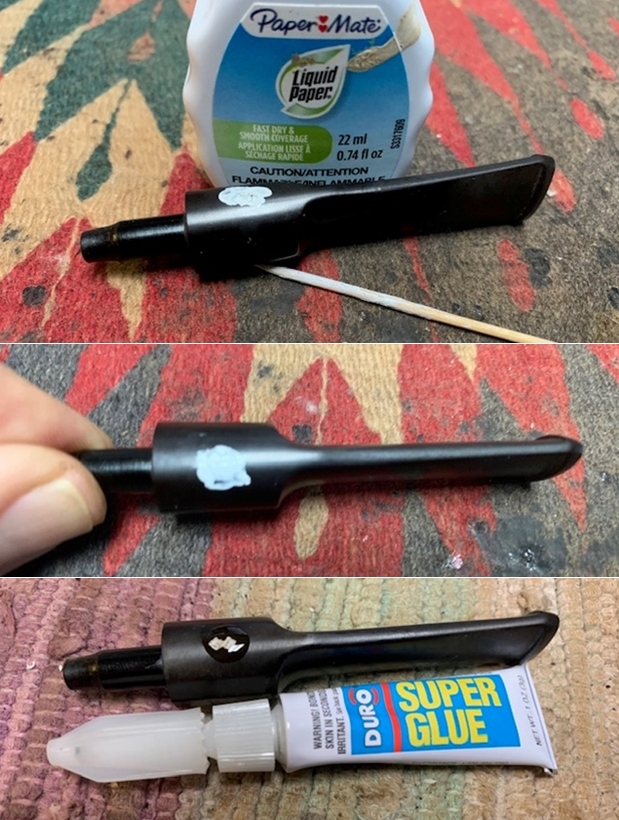
Jeff had cleaned up the pipe with his usual penchant for thoroughness. He reamed the pipe with a PipNet Pipe Reamaer and cleaned up the remnants with a Savinelli Fitsall Pipe Knife.  He scrubbed the bowl with undiluted Murphy’s Oil Soap with a tooth brush. He rinsed it under running warm water to remove the soap and grime. He cleaned out the inside of the shank and the airway in the stem with alcohol, cotton swabs and pipe cleaners. He soaked the stem in Before & After Deoxidizer and rinsed it off with warm water. I took photos of the pipe once I received it.      The bowl and the inwardly beveled rim top cleaned up really well with the lava coat removed. The inner edge of the rim was in good condition. The stem surface had some light oxidation and some light tooth marks and chatter on both sides near the button.   I took photos of the stamping are clear and read the same as noted above.  I took the stem off the pipe and took a photo of the pipe as a whole. You can get a clear picture of the pipe from the photo below.Now it was time to do my work on the pipe. I polished the bowl and rim top with micromesh sanding pads using 1500-12000 grit sanding pads and wiping it down after each sanding pad with a damp cloth to remove the sanding dust and debris. I rubbed the bowl and shank down with Before & After Restoration Balm. I worked it into the surface of the bowl sides and shank with my fingertips to clean, enliven and protect the briar. I let the balm sit for a little while and then buffed with a cotton cloth to raise the shine and brings the grain alive. It is a nice looking pipe. I set the bowl aside and turned to work on the stem. I I used a folded piece of 220 grit sandpaper to sand out the tooth marks and chatter on the stem surface. I started the polishing with 400 grit wet dry sandpaper.     I used a tooth pick and Liquid Paper to touch up the “F” stamp on the left side of the Fantail stem. The “F” stamp was not deep but it is visible.I polished the vulcanite stem with micromesh sanding pads – 1500-12000 grit pads. I wiped it down with a damp cloth after each sanding pad. I used Before & After Pipe Polish – both Fine and Extra Fine to further polish the stem.   This Sasieni Fantail 62 Billiard is a beautiful looking pipe. I put the stem back in place in the shank and buffed the bowl and stem lightly with Blue Diamond on the buffing wheel. I gave the bowl and stem multiple coats of carnauba wax on the buffing wheel. I buffed the pipe and stem with a clean buffing pad to raise the shine. I hand buffed the bowl with a microfibre cloth to deepen the shine. The finished pipe is shown in the photos below. The dimensions of the pipe are Length: 6 inches, Height: 1 ¾ inches, Outer diameter of the bowl: 1 ¼ inches, Chamber diameter: ¾ inches. The contrast of the dark brown and a medium brown that shines through give the finish a rich patina. The Sasieni Fantail London Made 62 Billiard has some amazing grain around the bowl sides and shank. The bowl has been cleaned and the entire pipe is ready to smoke. The stem is in great shape with a few small nicks in the surface of the top and underside. It is a beautiful pipe, just a little big for my liking or I would hang on to it. I will be putting it on the rebornpipes store soon. If you are interested in adding it to your collection email me at slaug@uniserve.com or send me a message on Facebook. Thanks for looking.
Restemming and Rejuvenating a NOS Unsmoked Calabria Billiard Made by W&R Diehl Munchen, Germany


Blog by Steve Laug

The next pipe on the work table came to me from one of the estates that Jeff and I purchased in 2019. Jeff and I pick up many together at estates and on pipe hunts. Between us we pick up quite a few pipes for restoration. I try to work them into the restoration queue so that I can keep them moving. This next one is an interesting unsmoked NOS Billard bowl without a stem. The pipe is stamped on the left side of the bowl and reads Calabria in a gold stamped oval. On the right side of the bowl it is stamped Bruyere [over] Garantie. On the underside of the shank it reads W&R Diehl in an oval over Munchen. The stamping was readable and clear. The bowl was dusty and dirty but unsmoked. The rim top and edges of the bowl looked to be in good condition. When Jeff sent me photos before he purchased it I was interested in it. The bowl showed promise once it had a new stem. Jeff took some photos of the pipe before he started the cleanup work. He took a photo of the rim top and bowl to give a clear picture of the condition of the bowl and rim top. The top is beveled inward but it is very clean.Jeff took photos of the sides and heel of the bowl to give a picture of what the briar looked like around the pipe. The grain is mixed and there are a few fills in the bowl around the sides.    He took photos of the stamping around the shank sides. It is clear and reads as noted above.  I had not heard of the brand before so I did a bit of research to see what I could find. I googled the pipe assuming the brand was W&R Diehl from Munchen, Germany. I found the following listing on Google that took me to a bagged pipe from the Wilh and Rich Diehl Company. Here is the link to the site: (https://www.sportscards.com/item/superb-rare-hand-made-wr-diehl-vintage-naturell-estate-pipe-pipa-pfeife-tuyau/163334880617/). I am including the information on the site as well as a copy of a photo with the pipe bag included.

Here we have a superb and rare vintage “Naturell” briar estate pipe in the ‘bent billiard’ style, with an excellent grain to the briar. The pipe is branded “W&R Diehl” over “Munchen” on one side of the shank, with “Made by Hand”on the reverse, and “Naturell” on the underside. It comes complete in its original “Diehl” branded pipe pouch. I believe this pipe would have been custom made for W&R Diehl (a famous Munich pipe retailer)The second site it took me to was the company website of Pfeifen Diehl in Munich, Germany (http://www.pfeifen-diehl.de/pfeifen-diehl_english/philosophy.htm). I am including a picture of the Company workshop and a few screen shots of information on the site. Jeff had cleaned up the pipe to remove the dust grit. The bowl had a coat of varnish that gave it a shine. The bowl was raw briar on the inside and was clean. Jeff polished the band on the shank and it took on rich shine.  I went through my collection of assorted stem to see what I could find that would work with the bowl. It had a slightly bigger diameter than the shank but it would work with a bit of adjustment. It was unused but the tenon had been turned previously and would still need to be turned down a bit more for a snug fit. I used a PIMO tenon turning tool to take the stem down. I did the first pass to get closer to the adjustment. The second pass cleaned it up for snug fit.   The tenon fit perfectly in the shank of the pipe. The stem was not round with decidedly more vulcanite on the top and right side of the stem. I took the top and the right side down with a Dremel and sanding drum to match the underside and the left side. Once I was finished it was round again. The fit against the shank end was perfect. It was going to look really good once I finished sanding out the scratches left behind by the Dremel.    I sanded the tooth marks and scratches out of the stem with 220 grit sandpaper. I started the polishing with 400 grit wet dry sandpaper.   I polished the newly fitted vulcanite stem with micromesh sanding pads – 1500-12000 grit pads. I wiped it down with a damp cloth after each sanding pad. I used Before & After Pipe Polish – both Fine and Extra Fine to further polish the stem.  This beautifully grained German Made W&R Diehl gold banded billiard with the newly fit taper stem is a great looking pipe. I buffed the bowl and the stem with Blue Diamond on the wheel. I gave the bowl and the stem multiple coats of carnauba wax on the buffing wheel and followed that by buffing the entire pipe with a clean buffing pad. I hand buffed the pipe with a microfiber cloth to deepen the shine. The finished W&R Diehl Calabria Billiard fits nicely in the hand and feels great. Give the finished pipe a look in the photos below. The dimensions of the pipe are Length: 6 inches, Height: 1 ¾ inches, Outside diameter of the bowl: 1 ¼   inches, Chamber diameter: ¾ of an inch. If you are interested in adding this pipe to your collection send me a message or an email. Thanks for reading this blog and my reflections on the pipe while I worked on it. There are many more to come!

New Birth for a Paul Fischer Lace Meerschaum Billiard


Blog by Steve Laug

The next pipe on the work table came to me from one of the estates that Jeff and I purchased back in 2017. Jeff and I pick up many together but this was one I traded for. Between us we pick up quite a few pipes for restoration. I try to work them into the restoration queue so that I can keep them moving. This next one is a cased Meerschaum. The case is stamped on the inside and reads Paul Fischer Genuine Block Meerschaum. The stamping on the satin lining was readable and clear. The exterior of the case was covered in red leather (vinyl?) and in great condition with just a few nicks in the material. The meerschaum was dirty but underneath the grime was a nicely developing patina on the lace carving. The bowl was caked with an overflowing lava coat on the back side of the rimtop. The edges looked to be in good condition. The olive green acrylic stem was dirty and had light tooth chatter and marks on the top and underside near the button. There were also scratches in the surface of the stem. It did not have any identifying stamps. The alignment and fit to the shank is very good. It had promise but it was very dirty. Jeff took some photos of the case and the pipe before he started the cleanup work. Jeff took photos of the pipe after he removed it from the case to give a clearer picture of what it looked like. It was actually in very good condition compared to many of the pipes that we work on together. He took a photo of the rim top and bowl to give a clear picture of the condition of the bowl and rim top. He also took photos of the top and underside of the stem to show the nicks, scratching, chatter and tooth marks. Jeff took photos of the sides and heel of the bowl to give a picture of what the meerschaum looked like around the pipe. The lace carving is very well done. He unscrewed the stem from the shank to show the threaded nylon tenon. I turned to Pipedia and looked up the information on the site (https://pipedia.org/wiki/Fisher). I quote from there.

From Pipes, Artisans and Trademarks, by José Manuel Lopes’ – Paul Fisher was a well-known Austrian meerschaum pipe artisan who settled in downtown Manhattan, New York, and took American citizenship. Symbol: F. See Ed Burak who worked with Paul for 6 years in the 1960s.

On Smokingpipes.com there was a Paul Fischer meerschaum for sale and Bear Graves did the write up (https://www.smokingpipes.com/pipes/estate/italy/moreinfo.cfm?product_id=52153). I have included it below for the information it gives.

I know that it’s not all that often that we see a carved meerschaum in the American estate section, but there was a time when Turkey had little issue with exporting the material, nor carvers from other countries working with the same. Paul Fischer made meerschaums for Kaywoodie and (if memory serves) Ed Burak did some work for Mr. Fisher, early in his career.

Paresh Deshpande did some work on a Kaywoodie Meerschaum and included some helpful information on dating this pipe (https://rebornpipes.com/tag/kaywoodie-meerschaum-pipes/). I include the pertinent section below.

Kaywoodie Block Meerschaums were made from 1938 to the mid 1960’s. The meerschaum pipe business by Kaywoodie was revitalized when Paul Fischer was hired and emigrated from Austria to run the meerschaum pipe department. Kaywoodie meerschaums were available in earlier years but not as prominently as when Paul Fischer came on board. He left in 1960 to make meerschaums under his own name. We continued to make them for several years after he left until we could no longer import meerschaum from Turkey”. (http://www.brothersofbriar.com/t21079-kaywoodie-block-meerschaum)

Given that information I knew that the pipe was made by Paul Fischer and Austrian immigrant to the US. When he first came he worked for Kaywoodie and then in 1960 left to make pipes under his own name. So I know that the pipe I am working on is at least post 1960 made.

Jeff had cleaned up the pipe with his usual penchant for thoroughness. He reamed the pipe with a PipNet Pipe Reamer and cleaned up the remnants with a Savinelli Fitsall Pipe Knife.  He scrubbed the bowl with undiluted Murphy’s Oil Soap with a tooth brush. He rinsed it under running warm water to remove the soap and grime. He cleaned out the inside of the shank and the airway in the stem with alcohol, cotton swabs and pipe cleaners. He scrubbed the stem with the Murphy’s Oil Soap and rinsed it under running water. I took photos of the pipe once I received it. It looked pretty good.  The bowl and rim top cleaned up really well with the lava coat removed from the back rim top. The edges looked very good and there was slight darkening on the back top side. The stem surface had some light tooth marks and chatter on both sides near the button.      I took photos of the sides of the bowl and heel to give a feel for the cleaned up lace work and carving. It is a pretty pipe.     I took the stem off the pipe and took a photo of the pipe as a whole. You can get a clear picture of the pipe from the photo below.  I polished the bowl and shank with 1500-12000 grit micromesh sanding pads and wiping it down after each sanding pad with a damp cloth to remove the sanding dust and debris.      I rubbed the bowl and shank down with a coat of Clapham’s Beeswax Polish. I heated the meerschaum and worked it into the surface of the bowl, shank and rim. I let the wax sit for a little while and then buffed with a cotton cloth to raise the shine and bring a shine to meerschaum. It is a nice looking pipe.     I set the bowl aside and turned to work on the stem. I sanded the tooth marks and scratches out of the stem with 220 grit sandpaper. I started the polishing with 400 grit wet dry sandpaper.     I polished the olive green acrylic stem with micromesh sanding pads – 1500-12000 grit pads. I wiped it down with a damp cloth after each sanding pad. I used Before & After Pipe Polish – both Fine and Extra Fine to further polish the stem.     This Lattice or Lace carved Meerschaum, carved by Paul Fischer with a fancy turned acrylic saddle stem is a great looking pipe. I buffed the pipe with Blue Diamond on the buffing wheel. I buffed the stem with Blue Diamond separately. I gave the bowl several coats of Beeswax and the stem multiple coats of carnauba wax on the buffing wheel and followed that by buffing the entire pipe with a clean buffing pad. I hand buffed the pipe with a microfiber cloth to deepen the shine. The finished Paul Fischer Meerschaum fits nicely in the hand and feels great. Give the finished pipe a look in the photos below. The dimensions of the pipe are Length: 5 ½ inches, Height: 2 inches, Outside diameter of the bowl: 1 ¼   inches, Chamber diameter: ¾ of an inch. If you are interested in adding this pipe to your collection send me a message or an email. Thanks for reading this blog and my reflections on the pipe while I worked on it. There are many more to come!
New Life for Inderwick Founded 1797 Oom Paul 


Blog by Steve Laug

The next pipe on the work table came to me from one of my pickups. Jeff and I pick up many together but this was one I traded for. Between us we pick up quite a few pipes for restoration. I try to work them into the restoration queue so that I can keep them moving. This next one is an Inderwick’s Oom Paul. The pipe is stamped on the left side and reads Inderwick [over] Founded —-. On the right side it is stamped —-naby Street [over] London [over] Made in England. The stamping was readable and clear though on the shank end someone had sanded the shank down and removed the 1797 from the left side and the Carn… from the right side. The shank end was slightly conical and pinched looking. The finish had a lot of grime ground into the smooth finish on the bowl and some darkening around the sides of the bowl. There were fills on both sides that were damaged. The bowl was thickly caked with an overflowing lava coat on the top of the rim. The edges looked to be in good condition though there was some damage on the back inner edge of the bowl. The stem was oxidized, dirty and had light tooth chatter and marks on the top and underside near the button. The stem did not have any identifying stamps. I think from the fact that the fit is not good with the stem that it is a replacement. It had promise but it was very dirty. Jeff took some photos of the pipe before he started the cleanup work. He took photos of the rim top and bowl to give a clear picture of the condition of the bowl and rim top. He also took photos of the top and underside of the stem to show the oxidation and the chatter and tooth marks.     Jeff took a photo of the side and heel of the bowl to give a picture of what the briar around the pipe looked like. There is some stunning grain under the grime. He took photos of the stamping on the sides of the shank. It reads as noted above and is clear and readable.I turned to Pipephil to see if there was any information on the line that gives me the background info that I enjoy as I work on a pipe (http://www.pipephil.eu/logos/en/logo-stanwell.html). I am including a screen capture of the line that I found there.From that link I found the rest of the stamping on the left side of the shank and was able to fill in the missing information. The stamping read Inderwick [over] Founded 1797.

I turned to the listing for the Inderwick brand on Pipedia to see if I could find any further information on the brand (https://pipedia.org/wiki/Inderwick_%26_Co). It confirmed the information on the brand from Pipephil. It added some information regarding some of the pipes being made by Comoy’s. I quote in full the article and include a photo of the Carnaby Street stamp.

Inderwick & Co was founded in the early 19th century by John Inderwick. He was one of the first tobacconist of London. Some pipes were made ​by ​Comoy’s. From the two sites I found information on the stamping on the right and left side of the shank. I was able to fill the gaps on both sides stamp and knew that the —-naby stamp on the right side was Carnaby.

Jeff had cleaned up the pipe with his usual penchant for thoroughness. He reamed the pipe with a PipNet Pipe Reamer and cleaned up the remnants with a Savinelli Fitsall Pipe Knife.  He scrubbed the bowl with undiluted Murphy’s Oil Soap with a tooth brush. He rinsed it under running warm water to remove the soap and grime. He cleaned out the inside of the shank and the airway in the stem with alcohol, cotton swabs and pipe cleaners. He soaked the stem in Before & After Deoxidizer and rinsed it off with warm water. I took photos of the pipe once I received it.      The bowl and rim top cleaned up really well with the lava coat removed. The inner edge of the rim was out of round and showed a lot of damage all the way around the rim. The stem surface had some light oxidation and some light tooth marks and chatter on both sides near the button.    I took photos of the stamping (though a little faint) are clear and read the same as noted above.    I took the stem off the pipe and took a photo of the pipe as a whole. You can get a clear picture of the pipe from the photo below. Now it was time to do my work on the pipe. You can see the pinched and reduced diameter of the shank in the photo below. I measured the diameter and figured that a brass band on the shank end that did not go too deep on the shank could take care of that pinched look.I pressed the narrow band on the shank – it is pressure fit and it not easily removed. I pressed it in place and took some photos of the look and shape of the repaired shank. Now it was time  to work on the inner edges of the rim and the top. I used a piece of dowel wrapped in 220 grit sandpaper to smooth out the internals of the bowl. I topped the bowl with 220 grit sandpaper on a topping board to remove the damage to the rim top and prepare for the beveling of the rim edge.   I gave the inner edge of the bowl a slight bevel with a folded piece of 220 grit sandpaper. I wanted bring the bowl back into round and clean up the edge.   I filled in the damaged fills on the left side of the bowl with clear super glue and once the repairs cured I sanded it smooth with a worn piece of 220 grit sandpaper.I polished the bowl and rim top with micromesh sanding pads using 1500-12000 grit sanding pads and wiping it down after each sanding pad with a damp cloth to remove the sanding dust and debris.     I rubbed the bowl and shank down with Before & After Restoration Balm. I worked it into the surface of the bowl sides and shank with my fingertips to clean, enliven and protect the briar. I let the balm sit for a little while and then buffed with a cotton cloth to raise the shine and brings the grain alive. The band serves as a good contrast. It is a nice looking pipe.       I set the bowl aside and turned to work on the stem. I scrubbed the stem with Soft Scrubb All Purpose cleanser to remove the oxidation. It did not take as much work as others had in the past and it looks very good.     I polished the vulcanite stem with micromesh sanding pads – 1500-12000 grit pads. I wiped it down with a damp cloth after each sanding pad. I used Before & After Pipe Polish – both Fine and Extra Fine to further polish the stem.      This Inderwick Founded 1797 Oom Paul with a vulcanite saddle stem and a new brass band is a great looking pipe. I put the stem back on the bowl and buffed the pipe with Blue Diamond on the buffing wheel. I gave the bowl and the stem multiple coats of carnauba wax on the buffing wheel and followed that by buffing the entire pipe with a clean buffing pad. I hand buffed the pipe with a microfiber cloth to deepen the shine. The finished Inderwick Oom Paul fits nicely in the hand and feels great. Give the finished pipe a look in the photos below. The dimensions of the pipe are Length: 5 ½ inches, Height: 2 ¼ inches, Outside diameter of the bowl: 1 ¼   inches, Chamber diameter: ¾ of an inch. If you are interested in adding this pipe to your collection send me a message or an email. Thanks for reading this blog and my reflections on the pipe while I worked on it. There are many more to come! Inderwick
Breathing Fresh Life into a Stanwell Royal Briar 301 Pick Axe


Blog by Steve Laug

The next pipe on the work table came to me from one of my pickups. Jeff and I pick up many together but this was one I traded for. Between us we pick up quite a few pipes for restoration. I try to work them into the restoration queue so that I can keep them moving. This next one a Stanwell 301 shape that came in a red Stanwell pipe bag. The pipe is stamped on the left side with the shape number 301. On the underside it is stamped Stanwell Regd. No. 969-48 [over] Royal Briar [over] Made in Denmark. The finish had a lot of grime ground into the smooth finish on the bowl and some darkening around the sides of the bowl. The bowl was thickly caked with an overflowing lava coat on the top of the rim. The edges looked to be in good condition. The shank is lined with a Delrin insert. The stem was oxidized, dirty and had light tooth chatter and marks on the top and underside near the button. The stem bore the Stanwell Crown “S” on the top of the fancy saddle stem. It had promise but it was very dirty. I took some photos of the pipe before I started the cleanup work. This was one of those that I picked up and did the cleanup and restoration work.    I took photo of the rim top and bowl to give a clear picture of the thickness of the cake and the overflow of lava on the rim top. There were also nicks on the front outer edge of the bowl. I took photos of the top and underside of the stem to show the oxidation, light chatter and tooth marks. Otherwise the stem is quite clean.     I took a photo of the left side and heel of the bowl to give a picture of what the briar around the pipe looked like. There is some stunning grain under the thick ground in grime.   I took a photo of the stamping on the underside of the shank. It reads as noted above and is clear and readable.  Later photos will give a clearer picture of the stamping.I turned to Pipephil to see if there was any information on the line that gives me the background info that I enjoy as I work on a pipe (http://www.pipephil.eu/logos/en/logo-stanwell.html). I am including a screen capture of the line that I found there. The crown stamp on the stem is the normal Stanwell shaped crown that differs from the one in the photo below.From this information I knew that I was working on an older Danish model that still had the Regd. No 969-48 on the shank that means it was made post 1948. It is an interesting shape that I could not find on Pipedia’s great history article.
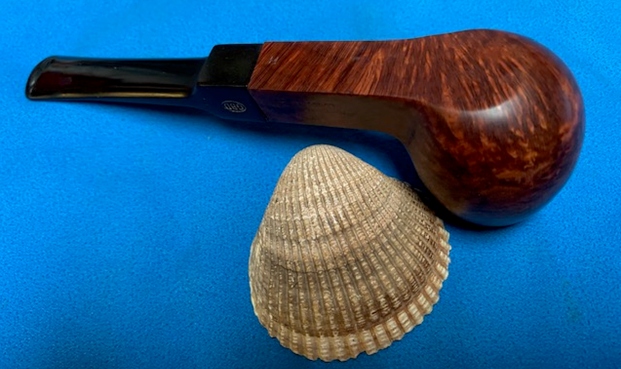
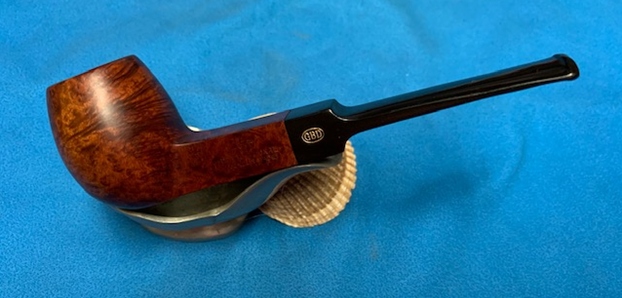
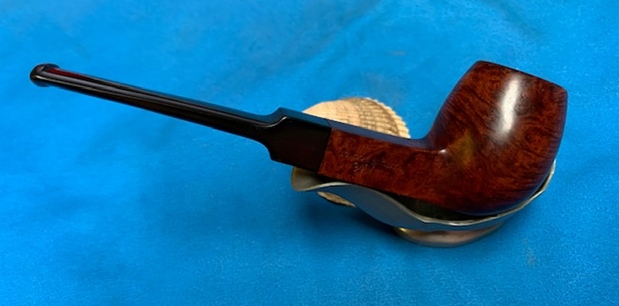
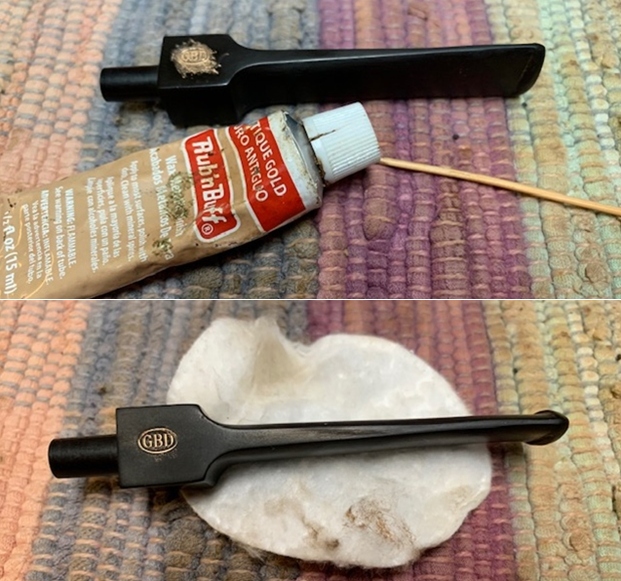
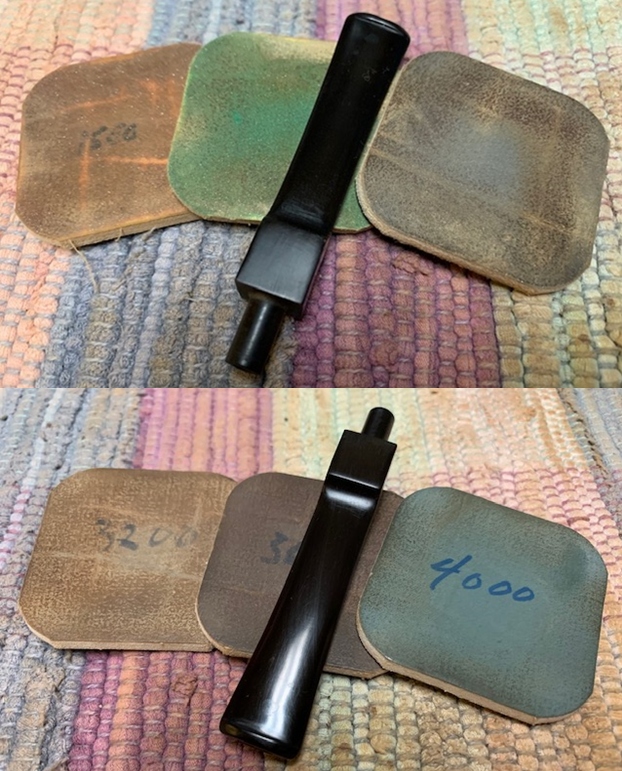
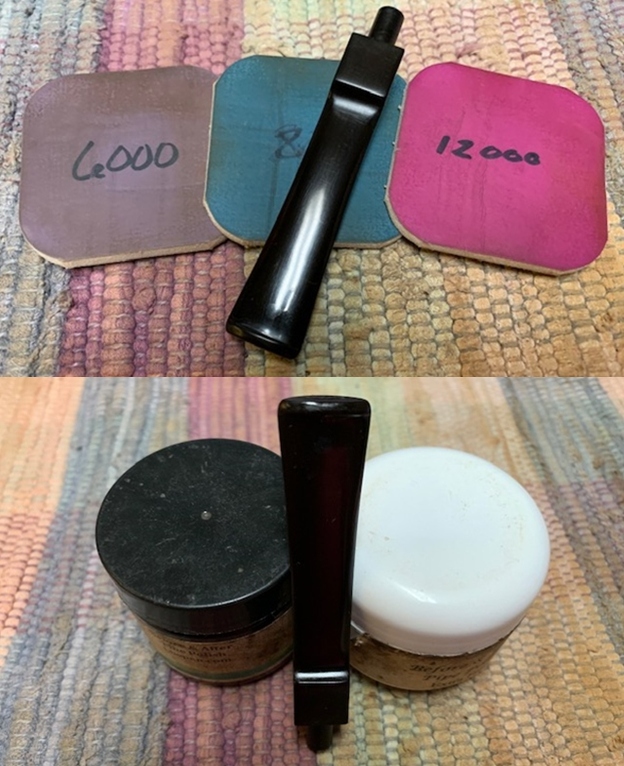
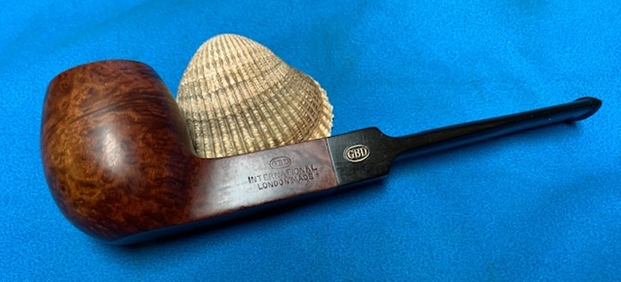
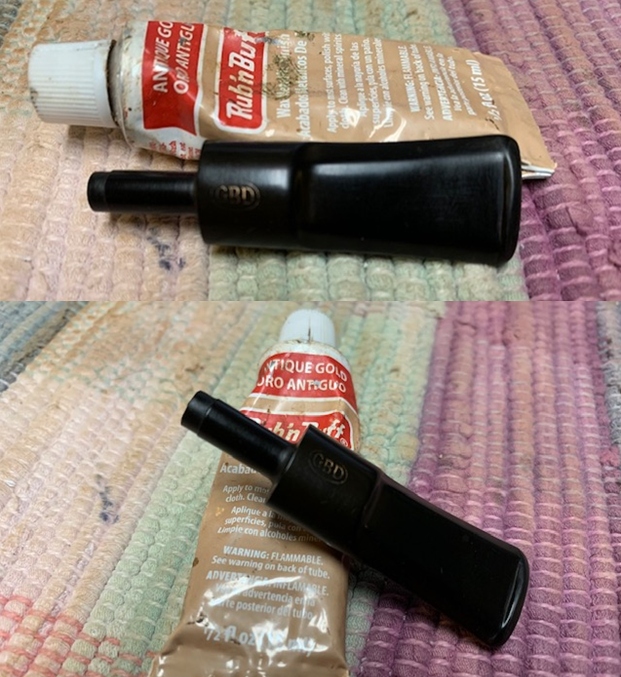
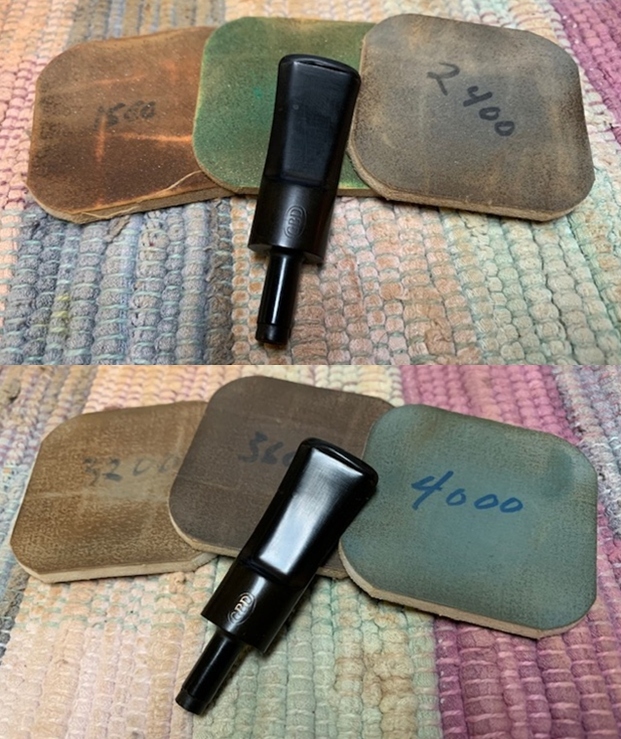
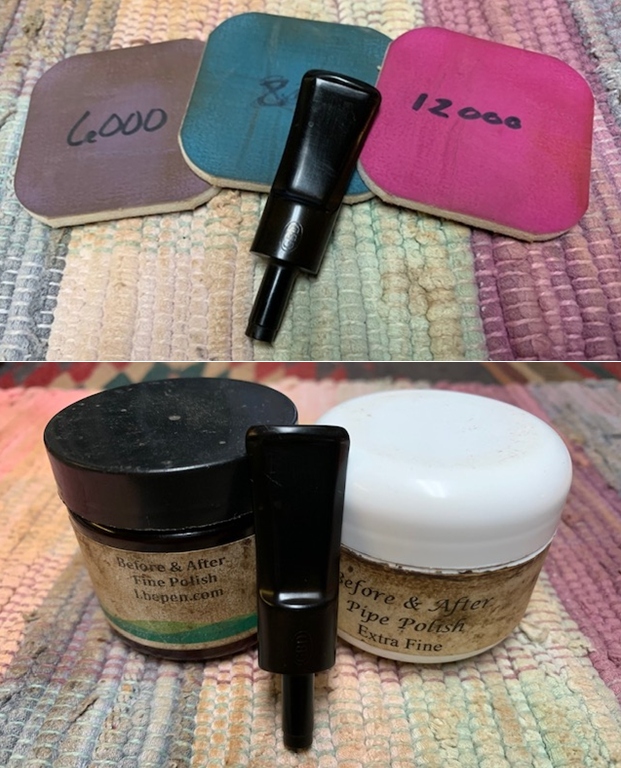
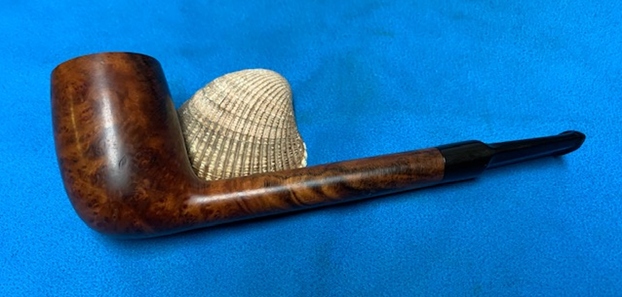
Jeff and I follow the same process in our cleanup of pipes. I started my work on the pipe by reaming it with a Savinelli Fitsall Pipe Knife and followed up sanding the bowl with a piece of dowel wrapped with 220 grit sandpaper.  I scraped the rim top with the sharp edge of the knife to clean off the lava build up.I scrubbed the externals bowl with undiluted Murphy’s Oil Soap with a tooth brush. I rinsed it under running warm water to remove the soap and grime.   I cleaned out the inside of the shank and the airway in the stem with alcohol, cotton swabs and pipe cleaners.      I took some photos of the stamping to show the clarity of it after the clean up. It reads as noted above.   I polished the bowl and the rim top, sides and shank with micromesh sanding pads – wet sanding with 1500-12000 grit pads and wiping it down after each pad with a damp cloth.    I rubbed the bowl and shank down with Before & After Restoration Balm. I worked it into the surface of the bowl sides and shank with my fingertips to clean, enliven and protect the briar. I let the balm sit for a little while and then buffed with a cotton cloth to raise the shine.    I set the bowl aside and turned to work on the stem. I redefined the button edges with a needle file. Once I had it finished it looked clean and well defined.  I scrubbed the stem with Soft Scrub to remove the oxidation on the surface of the vulcanite. It took a lot of scrubbing and you can see from the pile of pads below in the photos the amount of oxidation that came off during the scrubbing.    I touched up the gold stamp on the stem surface with Rub’n Buff Antique Gold. I rubbed it onto the stamping and buffed it off with a cotton pad.I polished the vulcanite stem with micromesh sanding pads – 1500-12000 grit pads. I wiped it down with a damp cloth after each sanding pad. I used Before & After Pipe Polish – both Fine and Extra Fine to further polish the stem.    This Stanwell Royal Briar 301 Pick Axe with a fancy vulcanite saddle stem is a great looking pipe now that it has been restored. I put the stem back on the bowl and buffed the pipe with Blue Diamond on the buffing wheel. I gave the bowl and the stem multiple coats of carnauba wax on the buffing wheel and followed that by buffing the entire pipe with a clean buffing pad. I hand buffed the pipe with a microfiber cloth to deepen the shine. The finished Stanwell Pickaxe fits nicely in the hand and feels great. Give the finished pipe a look in the photos below. The dimensions of the pipe are Length: 5 inches, Height: 2 inches, Outside diameter of the bowl: 1 ½ inches, Chamber diameter: ¾ of an inch. If you are interested in adding this pipe to your collection send me a message or an email. Thanks for reading this blog and my reflections on the pipe while I worked on it. There are many more to come!

Life for an American Made Pipe – An Ansell’s Wash. D.C. Imported Briar Billiard


Blog by Steve Laug

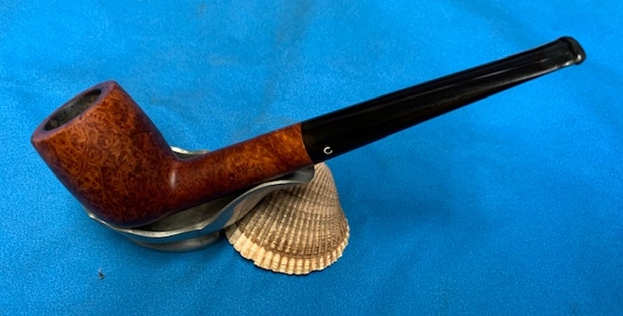
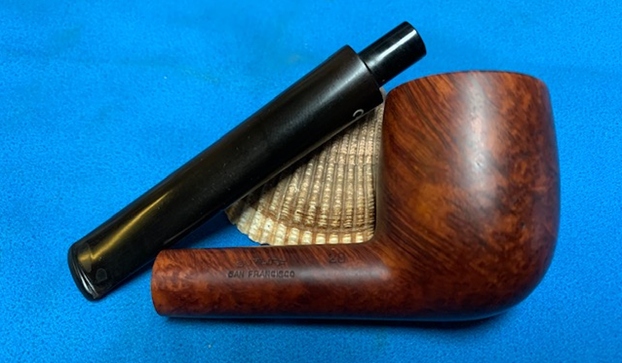
The next pipe on the work table came to me from one of our estate purchases. Between us we pick up quite a few pipes for restoration. I try to work them into the restoration queue so that I can keep them moving. We picked up over 120 Bertram pipes along with a few Ansell’s and A. Garfinkel pipes from an estate that a fellow on the east coast of the US was selling. This next one is from that estate – a beautifully grained Billiard with a vulcanite saddle stem. The pipe is stamped on the left side with the letter C followed by Ansell’s [over] Wash. On the right side of the shank it reads Imported Briar. The finish had a lot of grime ground into the smooth finish on the bowl and some darkening around the sides of the bowl. The bowl was thickly caked with an overflowing lava coat on the top of the rim. The edges looked to be in good condition. The stem was lightly oxidized, dirty and had tooth chatter and marks on the top and underside near the button. There were not markings or a logo on the taper stem. It had promise but it was very dirty. Jeff took some photos of the pipe before he started his cleanup work.  He took photos of the rim top and bowl to give a clear picture of the thickness of the cake and the overflow of lava on the rim top. He also took photos of the top and underside of the stem to show the chatter and tooth marks. Otherwise the stem is quite clean.  Jeff took photos of the sides and heel of the bowl to give a picture of what the briar around the pipe looked like. There is some stunning grain under the grime.  He took photos of the stamping on the left side of the shank. It reads as noted above and is clear and readable.   I turned to Pipedia to see if there was any information on the brand that gives me the background info that I enjoy as I work on a pipe (https://pipedia.org/wiki/Ansell%27s). I found a brief article and I quote it below in full.

Ansell’s Pipe and Tobacco store was at 820 14th St. NW in Washington D.C. It was one of three pipe brands I know of which are marked with Wash. D.C. The others are Bertram pipes and A. Garfinkel.

There was also a photo of a label and matchbook. Thanks to Doug Valitchka for his photos.

Label and matchbook, courtesy Doug ValitchkaFrom this information I learned that Ansell’s was a Pipe and Tobacco Shop in Washington DC and along with Bertrams and Garfinkel made and sold their own pipes. Since Jeff and I picked it up in a lot of pipes that were bought at the closing auction of the Bertram’s Pipe Shop in 1970 I think that it is safe to assume that the pipe was made prior to that.

Jeff had cleaned up the pipe with his usual penchant for thoroughness. He reamed the pipe with a PipNet Pipe Reamer and cleaned up the remnants with a Savinelli Fitsall Pipe Knife.  He scrubbed the bowl with undiluted Murphy’s Oil Soap with a tooth brush. He rinsed it under running warm water to remove the soap and grime. He cleaned out the inside of the shank and the airway in the stem with alcohol, cotton swabs and pipe cleaners. He soaked the stem in Before & After Deoxidizer and rinsed it off with warm water. I took photos of the pipe once I received it.      The rim top cleaned up really well with the lava coat removed. The inner edge of the rim had some light damage but the outer edge looked to be in excellent condition.  The stem surface looked very good with a few small tooth marks and chatter on both sides near the button.      I took photos of the stamping on the shank. There is a C stamp next to the shank/bowl junction followed by Ansell’s Wash. D.C. on the left side of the shank and on the right side it is stamped Imported Briar.      I removed the stem and took a photo of the pipe to give a sense of the whole. The saddle stem billiard is a nice looking pipe. You can see a few fills around the bowl and shank.Now it was time to do my work on the pipe. The inner edge of the rim was slightly damaged so I used a folded piece of 220 grit sandpaper to clean it up and remove the damage.     I polished the bowl and the rim top, sides and shank with micromesh sanding pads – wet sanding with 1500-12000 grit pads and wiping it down after each pad with a damp cloth.    I rubbed the bowl and shank down with Before & After Restoration Balm. I worked it into the surface of the bowl sides and shank with my fingertips to clean, enliven and protect the briar. I let the balm sit for a little while and then buffed with a cotton cloth to raise the shine.    I set the bowl aside and turned to work on the stem. I “painted” the stem with the flame of a Bic lighter to lift the tooth marks. I was able to lift the majority of them. I finished smoothing out the surface of the stem with 220 grit sandpaper to smooth it into the button and sharpen the edge. I  started polishing it with 400 grit wet dry sandpaper.     I polished the vulcanite stem with micromesh sanding pads – 1500-12000 grit pads. I wiped it down with a damp cloth after each sanding pad. I used Before & After Pipe Polish – both Fine and Extra Fine to further polish the stem.   This Ansell’s Wash.D.C. Imported Briar Billiard with a vulcanite saddle stem is a great looking pipe now that it has been restored. I put the stem back on the bowl and buffed the pipe with Blue Diamond on the buffing wheel. I gave the bowl and the stem multiple coats of carnauba wax on the buffing wheel and followed that by buffing the entire pipe with a clean buffing pad. I hand buffed the pipe with a microfiber cloth to deepen the shine. The finished Ansell’s Saddle Stem Billiard fits nicely in the hand and feels great. Give the finished pipe a look in the photos below. The dimensions of the pipe are Length: 5 ¼ inches, Height: 1 ¾ inches, Outside diameter of the bowl: 1 ¼ inches, Chamber diameter: ¾ of an inch. If you are interested in adding this pipe to your collection send me a message or an email. Thanks for reading this blog and my reflections on the pipe while I worked on it. There are many more to come!

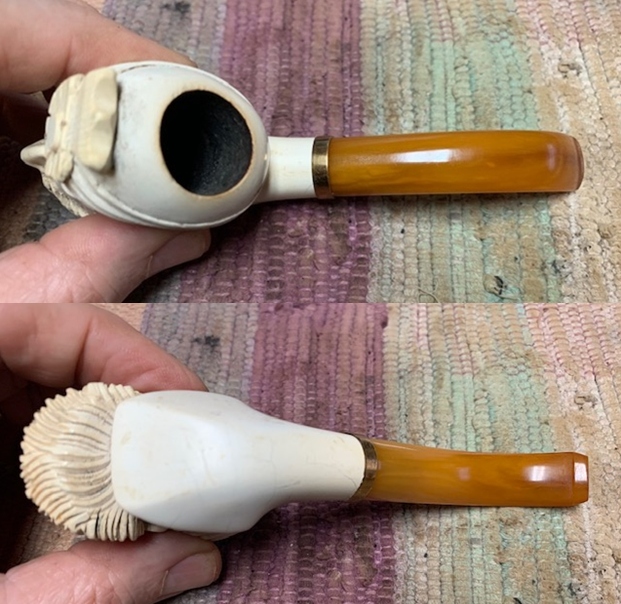
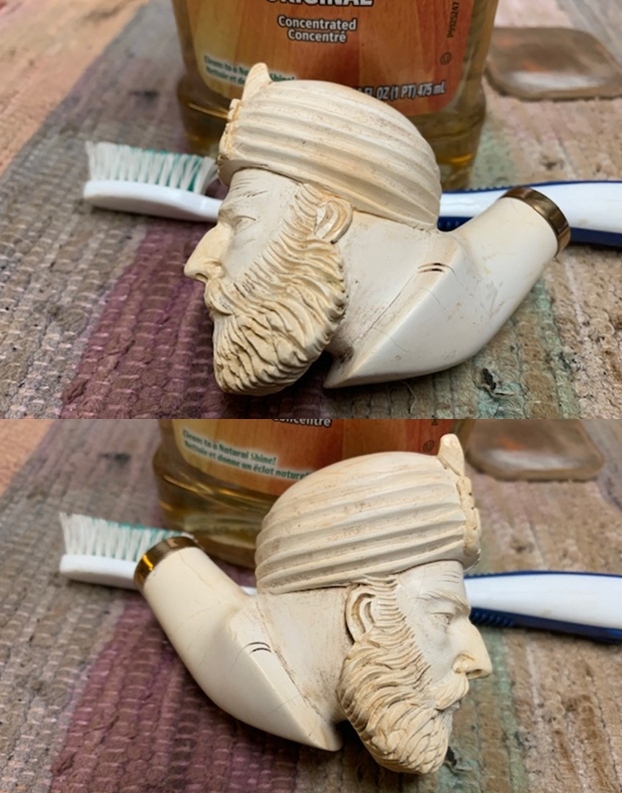
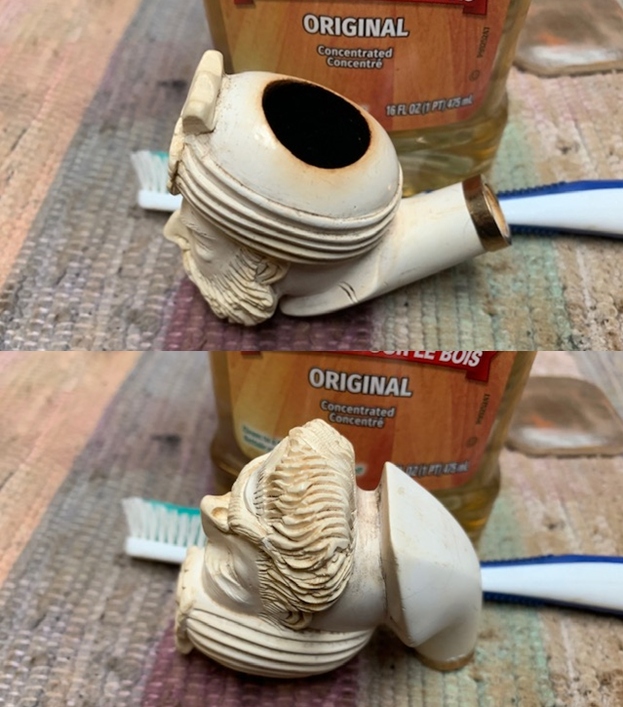
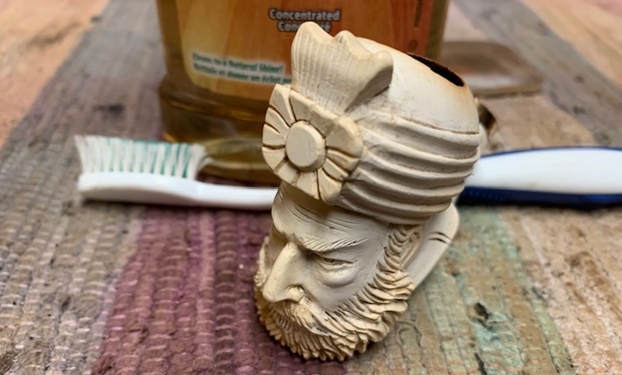
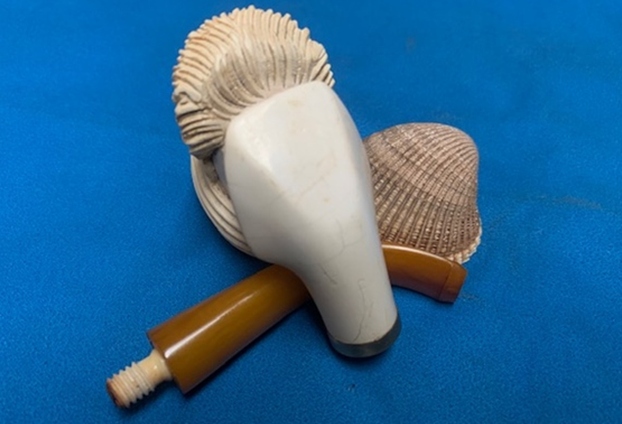
A Change of Pace Restoration – an Unsmoked Turkish Made Hayim Pinhas Figural


Blog by Steve Laug

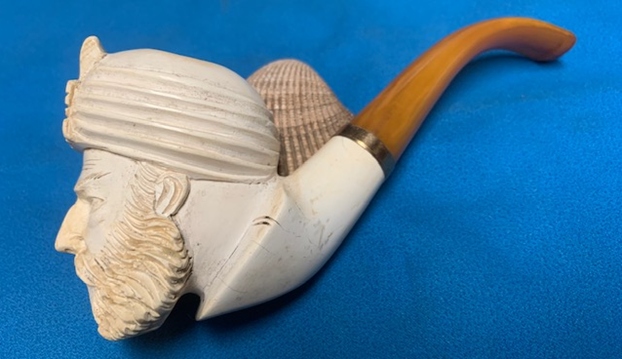
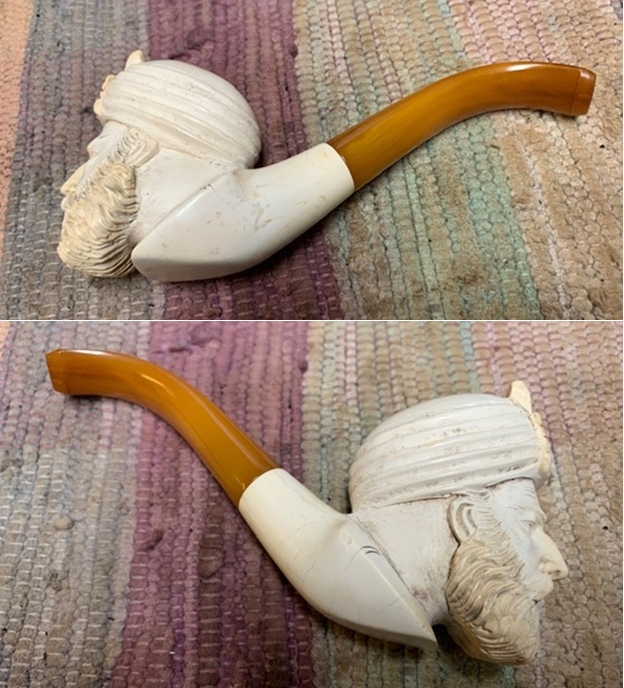
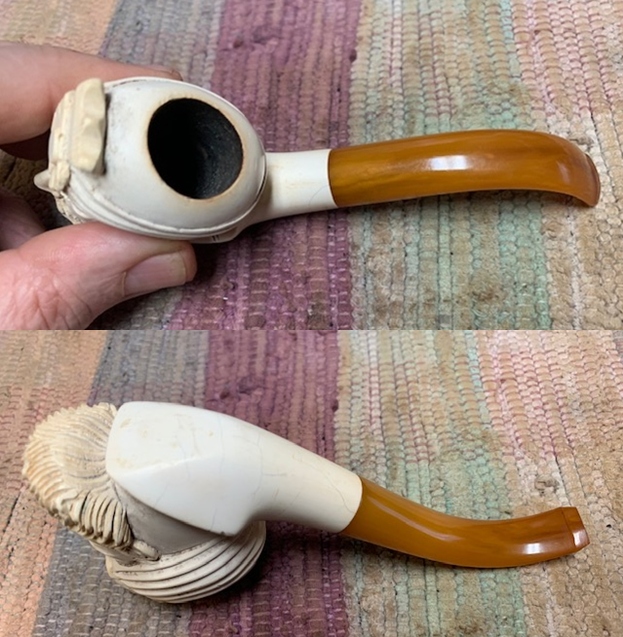
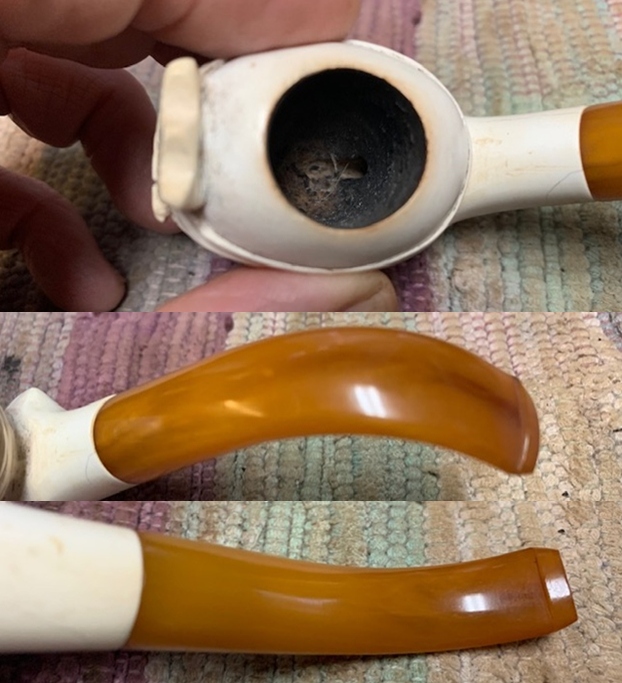
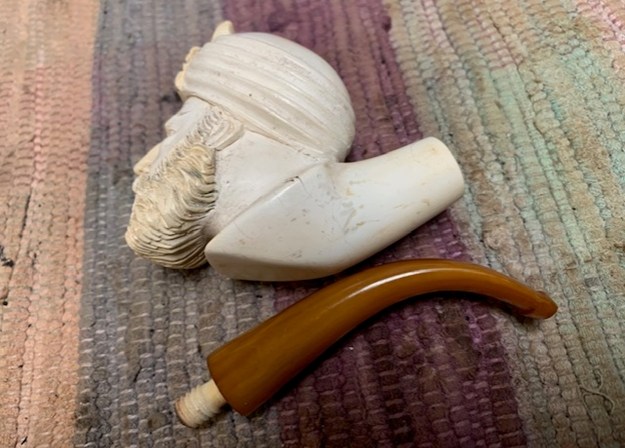
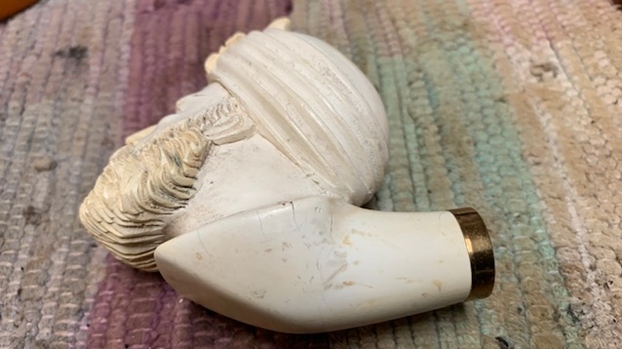
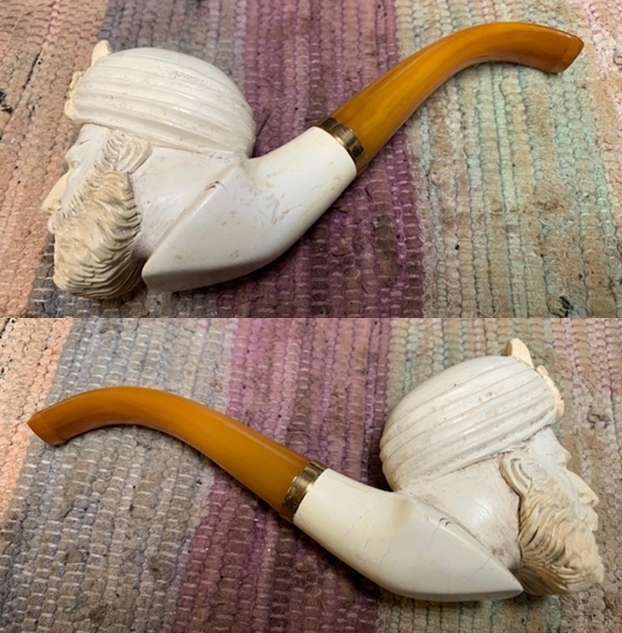
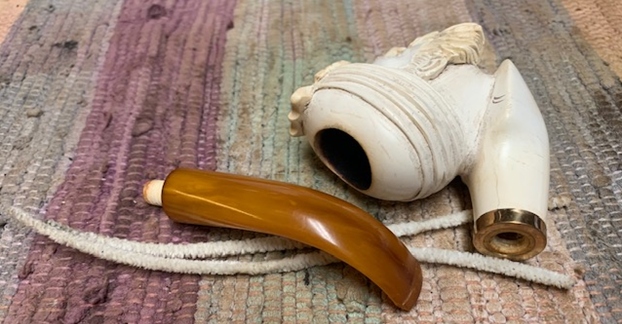
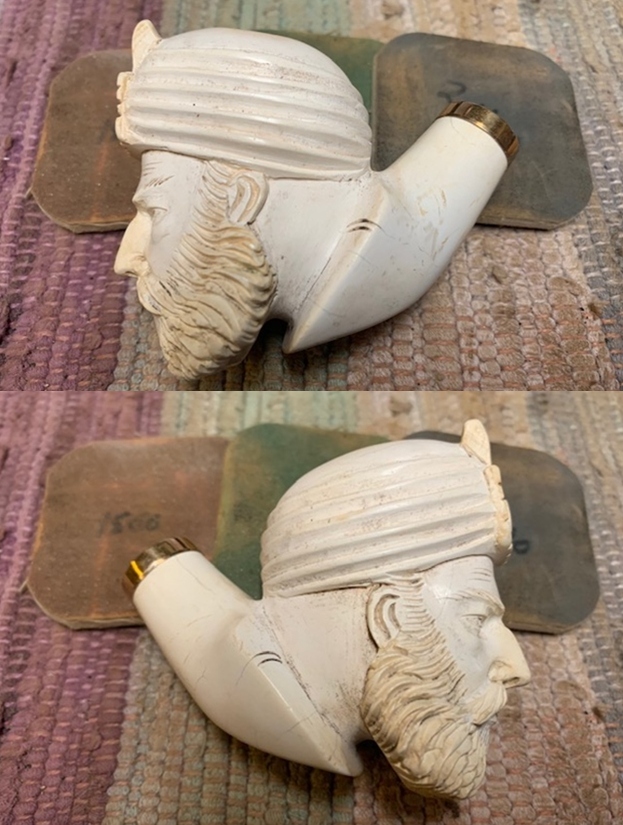
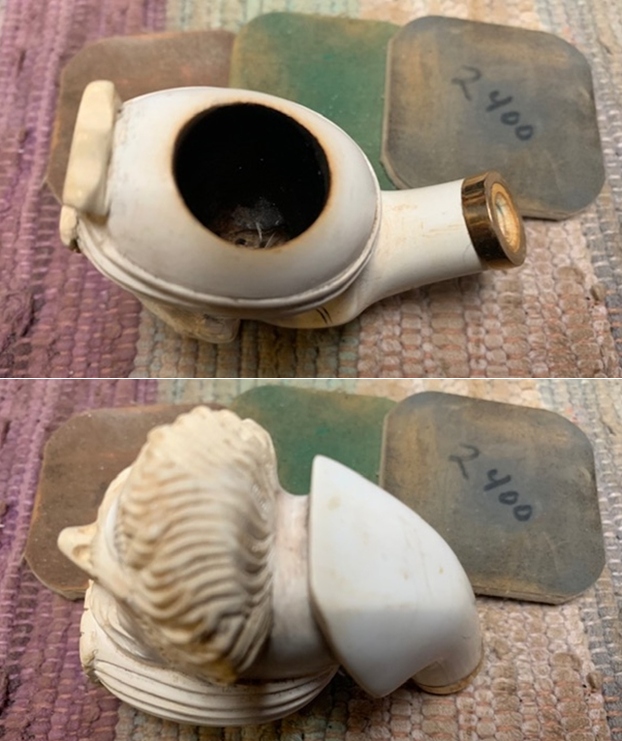
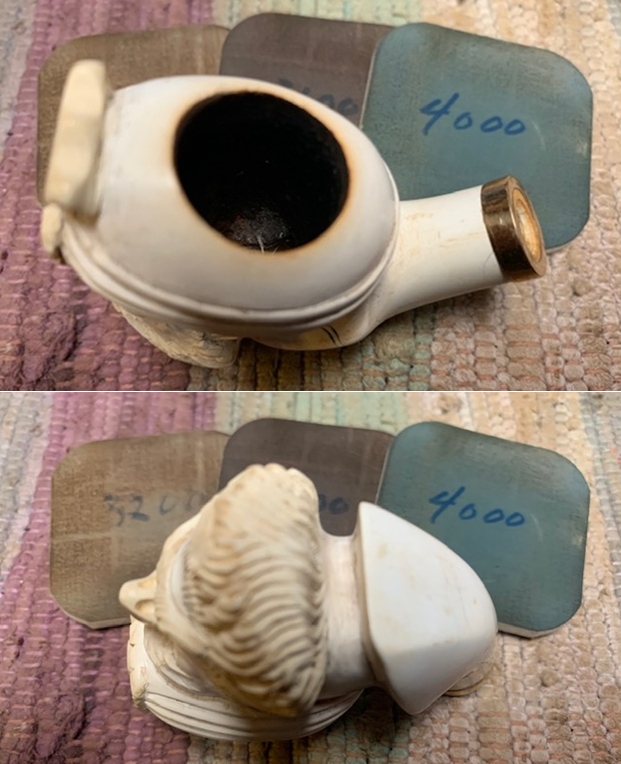
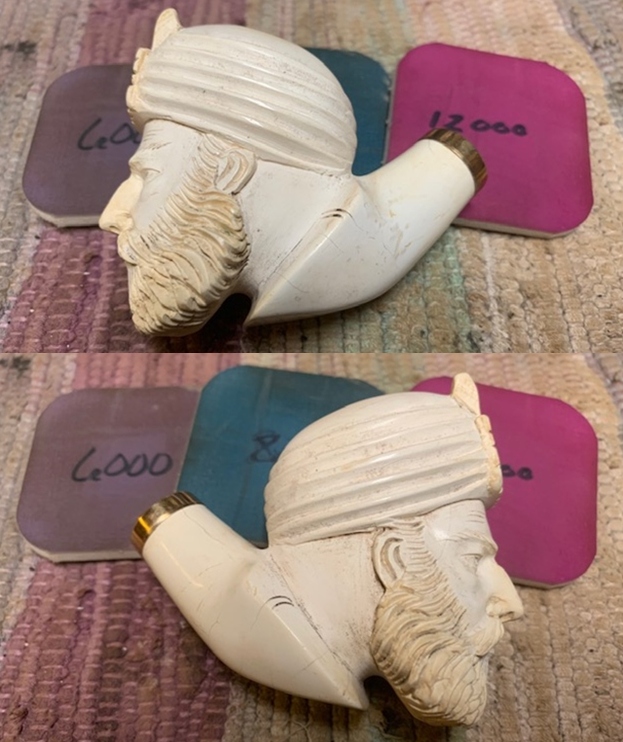
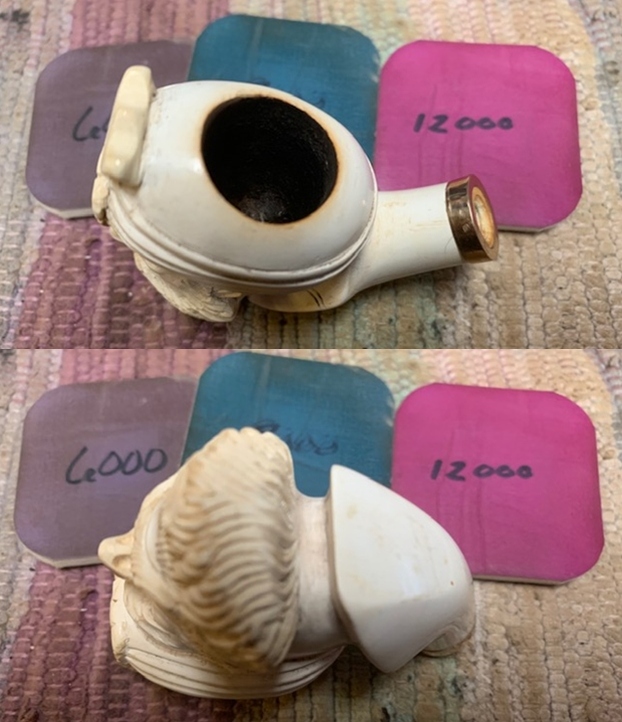
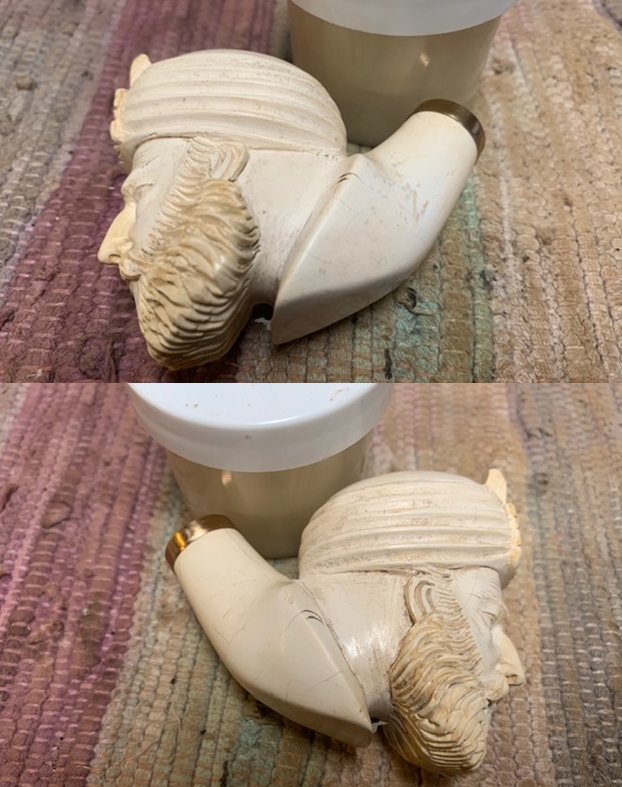
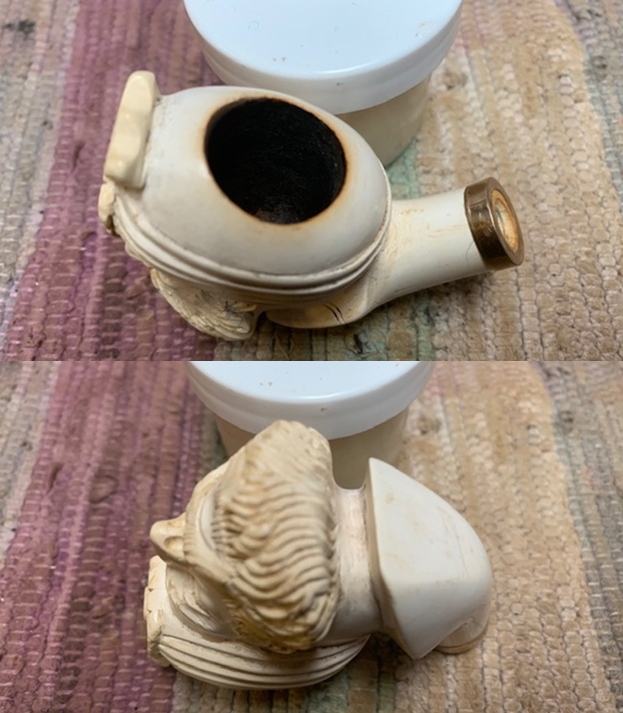
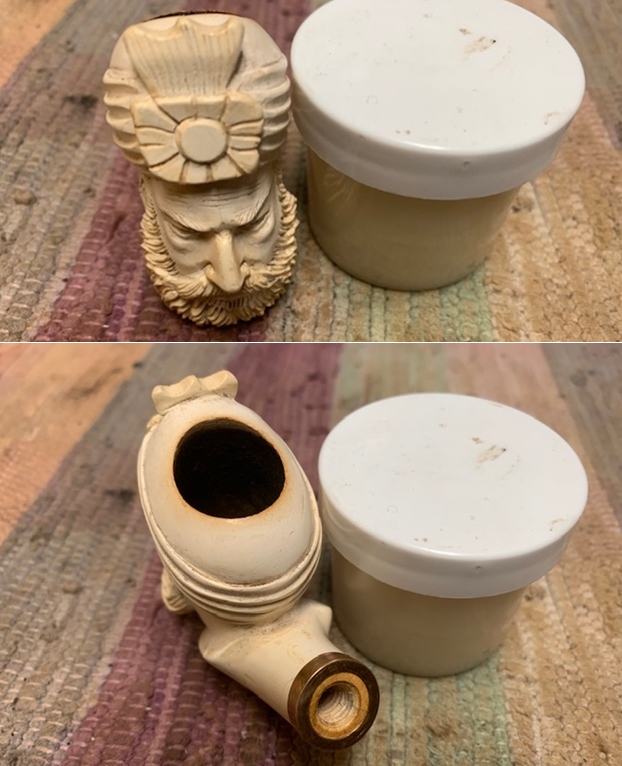
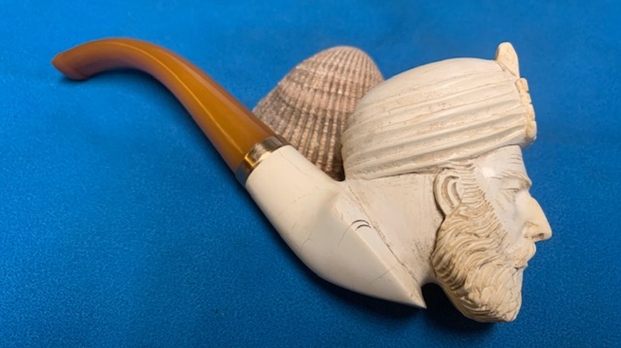
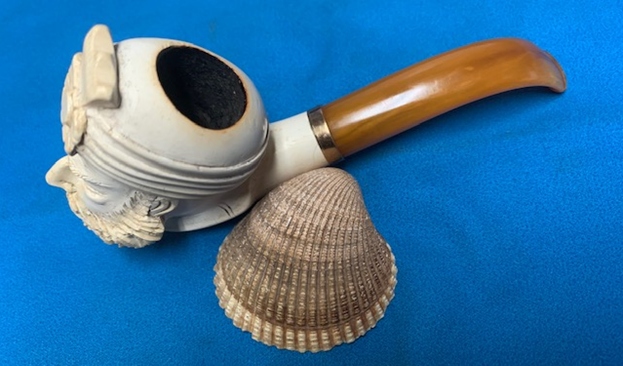
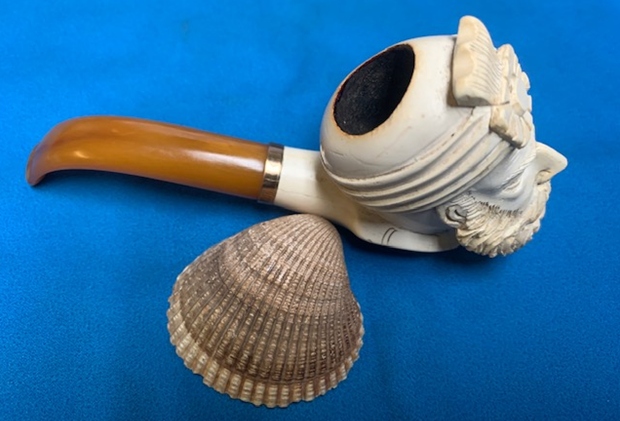
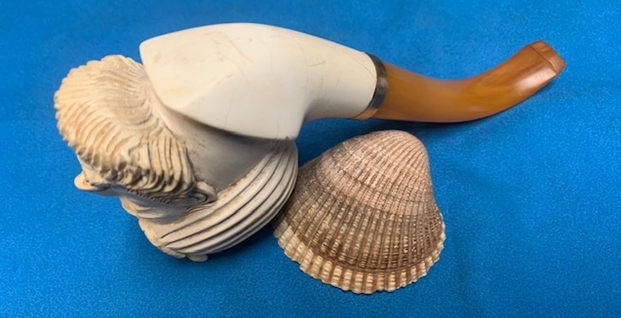
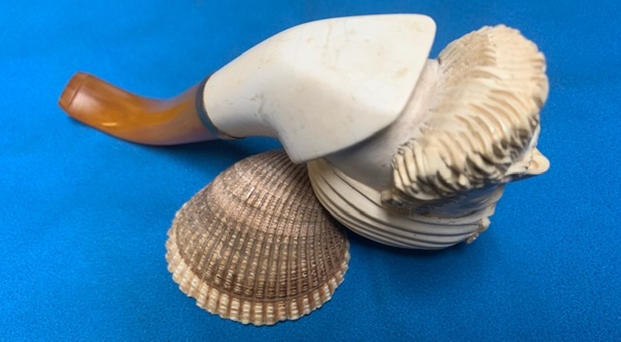
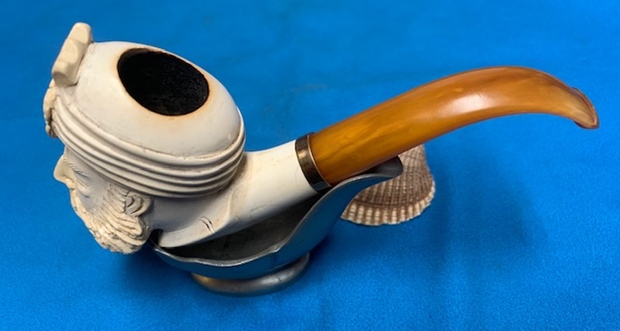
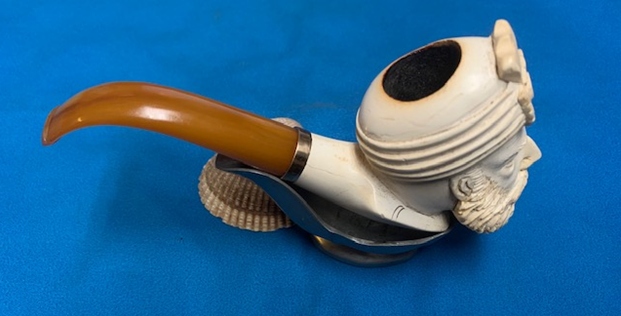
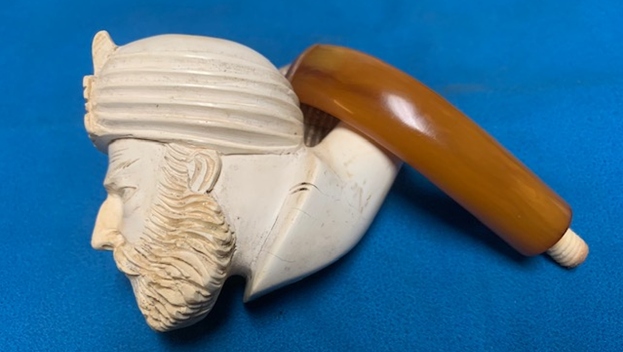
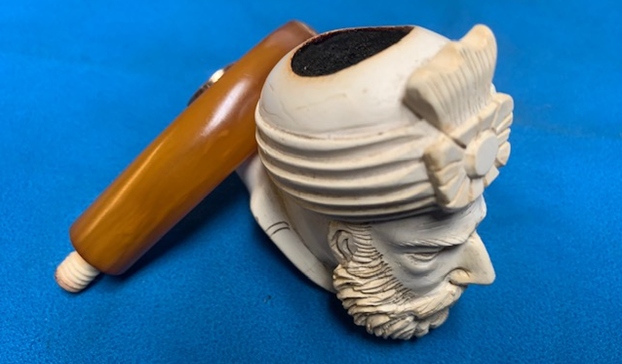
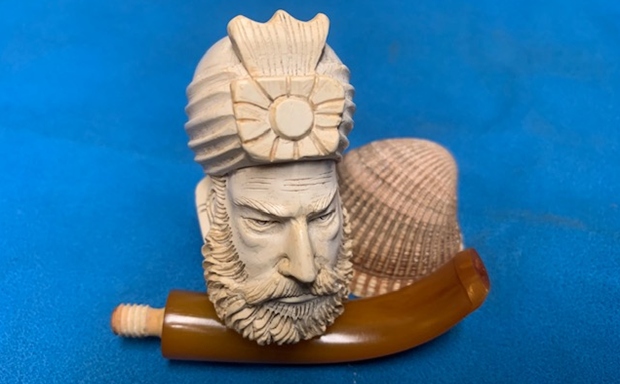
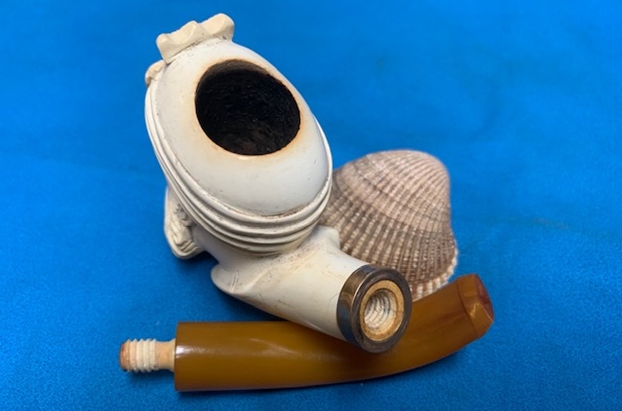
I have worked on a lot of fine old briars over the past weeks and I decided this evening that I needed a change of pace. A good meerschaum would be the perfect change. I looked through the various cased figurals that I have to work and on and rejected each one as just not what I was looking for at this moment. I went back to some older pipes I have boxed here in the queue and found this unsmoked carved face of a nobleman or a Sultan – you decide when you see it. It was not in a case but it had the original documentation from Hayim Pinhas the Turkish carver who had crafted pipe. It was exactly what I was looking for to work on next. It is a Hayim Pinhas Figural Meerschaum with an amber coloured acrylic stem. Overall the pipe looked to be in excellent NOS condition. Since it was unsmoked any patina around the bowl sides and shank were age related rather than smoke related. The meer was well carved with some piercing eyes that seem to follow you as you turn the pipe. It is very well made. The stem was and undamaged and was stamped on the left side of the taper. It read Made in Turkey. It had a threaded metal stinger tenon that held in the shank. I took photos of the pipe before I started my cleanup work.   I took a photo of the bowl and rim top to show the unsmoked condition. The bowl is spotless and the drilling is centered in the bottom. The stem is in excellent condition and will only need to be polished and waxed.  I took some photos of the heel and sides of the bowl to show carver’s handiwork. It is a well carved figural meer that has some real character captured in the facial expressions.     I took the stem off the bowl and took photos of the pipe and stem side by side.  I had some faint recall of the make but could not remember much about the maker other than his name so I turned to a previous blog I have written on the brand that was included in a paper that came with the pipes (https://rebornpipes.com/2018/05/14/papers-included-in-a-hayim-pinhas-meerschaum/). The post included some of the items in the booklet with the pipe. I quote it in part.

Meerschaum Pipes Chain of Good Luck. Gratitude is man’s noblest sentiment. If you are satisfied with this Pipe, do not interrupt this Chain of Good Luck, pass on our address to five of your acquaintances. It will bring also Good Luck to them. Thank you.  Hayim Pinhas – P.O.B. 500 – Istanbul – Turkey

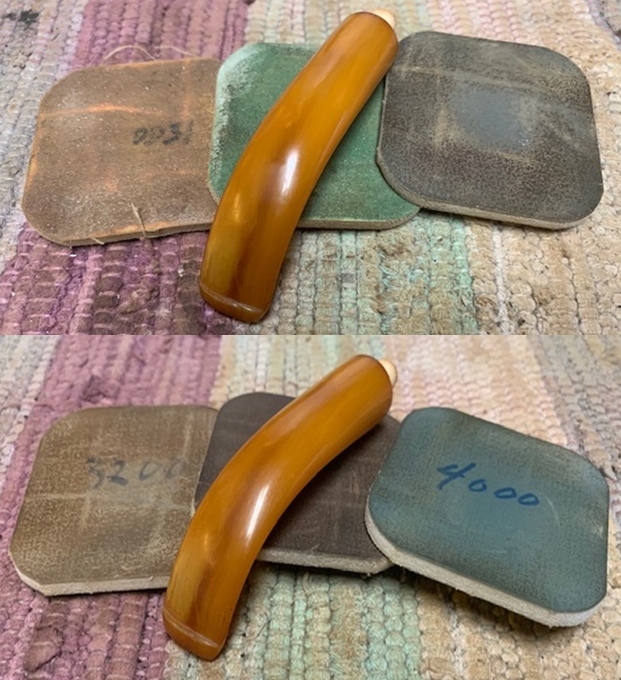
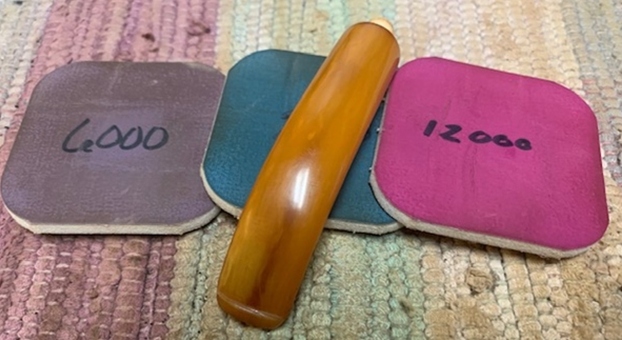
I scrubbed the exterior of the bowl with Murphy’s Oil Soap and a tooth brush to remove the grime and dust in the carving. I rinsed it off with running warm water to remove the soap and the grime. The carving looks very good and the dust and debris is gone from the grooves and the curls of the beard. It is a great looking pipe. I took photos of the cleaned pipe.   I polished the all of the smooth portions of the meerschaum with micromesh sanding pads – dry sanding it with 1500-12000 grit pads. I wiped the bowl down with a damp cloth after each grit of sanding pad. It is starting to really have a shine by the last sanding pads.     I rubbed the meerschaum down with Before & After Restoration Balm using my fingertips and a horse hair shoe brush to work it into the grooves of the carving to clean, enliven and protect the meer. I let the balm sit for 10 minutes then buffed it off with a soft cloth to raise the shine. The meerschaum came alive.          I set the bowl aside and turned my attention to the stem. It was dull but otherwise in great condition. I polished the stem with micromesh sanding pads to remove the scratching in the acrylic stem. I wet sanded it with 1500-12000 grit pads and then gave it a buff with Before & After Pipe Stem polish – both Fine and Extra Fine. I buffed that off with a cotton pad. After each sanding pad and each polish I wiped the stem down with Obsidian Oil to preserve and protect the stem.    I put the pipe back together and gave it a buff by hand with a shoe brush and a cotton cloth. I did not want to risk damaging the meerschaum or the Bakelite stem. I gave the stem multiple coats of carnauba wax and buffed the pipe with a clean buffing pad to raise the shine. I hand buffed it with a soft cloth to deepen the shine. I took photos of the finished pipe to show the shine and the patina around the bowl. The amber acrylic stem looks very good with the light patina on the beard and the shank. With time the contrast will grow richer and deeper to a thing of beauty. The finished Hayim Pinhas Figural fits nicely in the hand and I think it will feel great as it heats up with a good tobacco. Give the finished pipe a look in the photos below. The dimensions of the pipe are Length: 6 ½ inches, Height: 3 inches, Outside diameter of the bowl: 1 ½ inches, Chamber diameter: ¾ of an inch. If you are interested in being the one to start the legacy of this pipe it will be going on the rebornpipes store shortly. You can send me a message or an email to let know you are interested. Thanks for reading this blog and my reflections on the pipe while I worked on it.

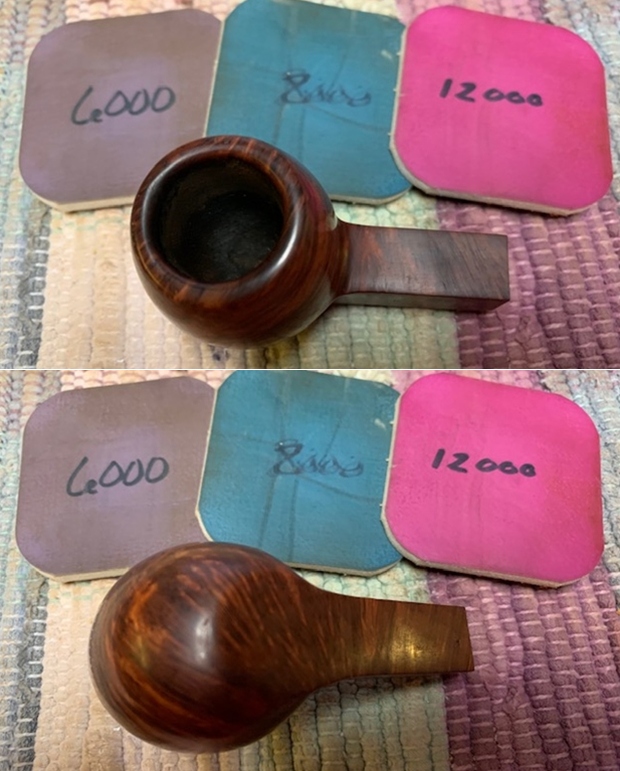
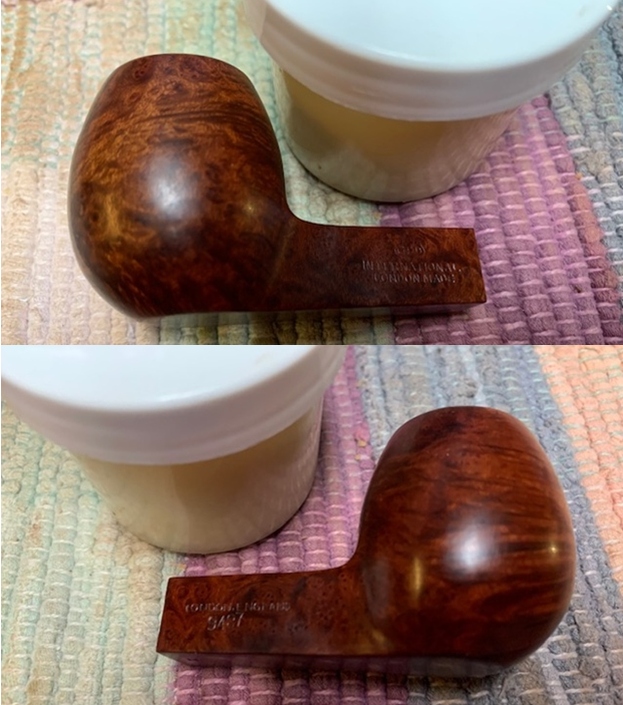
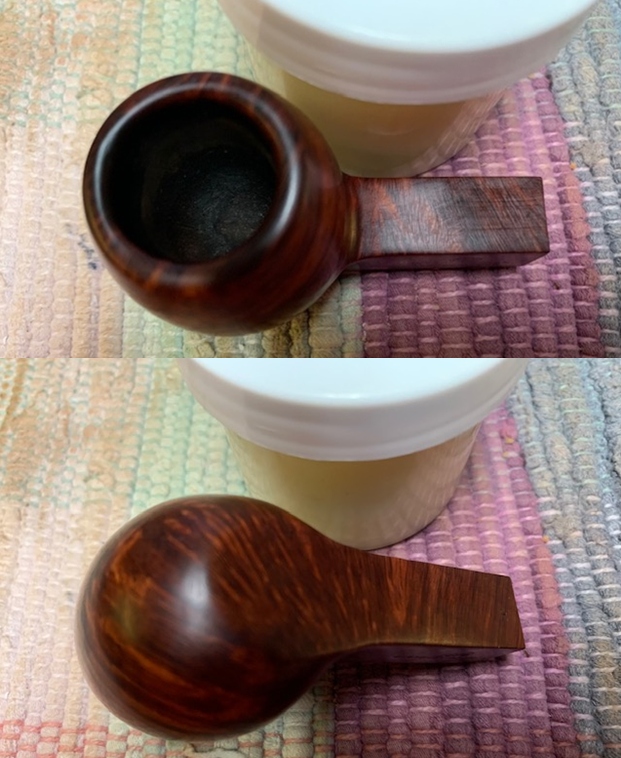
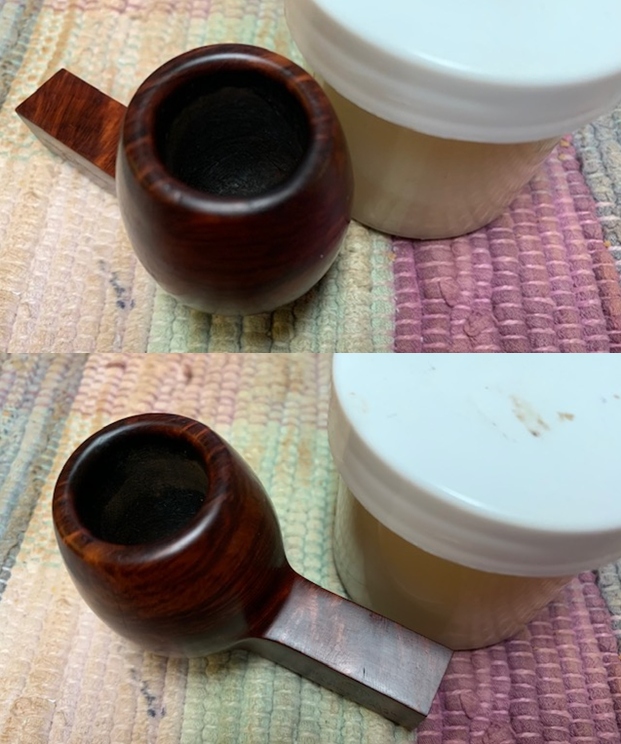
A Fresh Look for a Comoy’s Made Royal Coachman 497 Square Shank Pot


Blog by Steve Laug

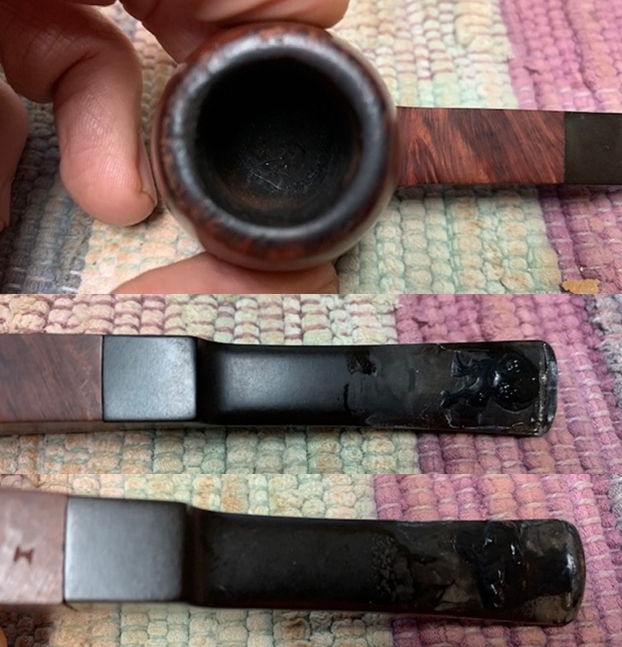
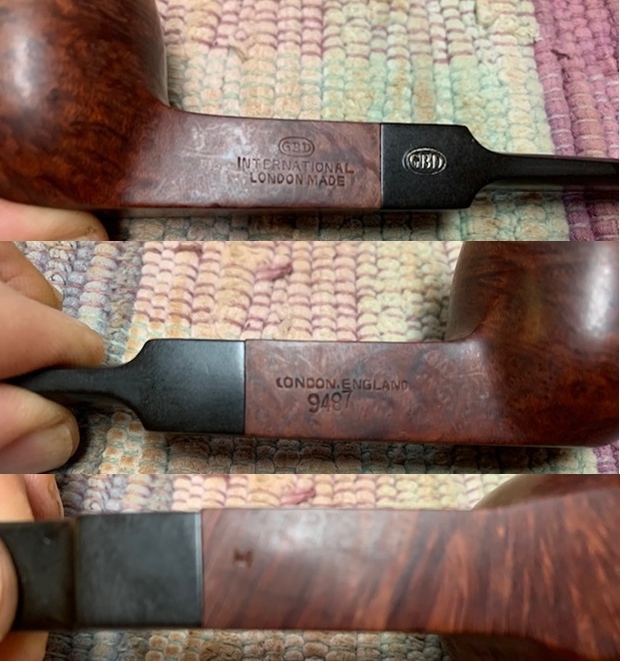
The next pipe on the work table came to me from one of our estate purchases. Between us we pick up quite a few pipes for restoration. I try to work them into the restoration queue so that I can keep them moving. This next one is from our ongoing hunt – a beautifully grained square shank Pot with a saddle vulcanite stem. The pipe is stamped on the left side of the shank and reads Royal Coachman in a Germanic Script and on the right side has the shape number 497 and the typical round Comoy’s style COM Stamp Made in London in a circle [over] England. The stamping is identical to many of the pipes that I have restored from various lines of Comoy’s pipes. The finish had a lot of grime ground into the surface of the briar. The bowl was thickly caked with an overflowing lava coat on the rim top. The edges looked to be in good condition though there is some possible damage under the lava. The stem was oxidized, calcified, dirty and had tooth chatter and marks on the top and underside near the button. There were not markings or a logo on the taper stem. It had promise but it was very dirty. Jeff took some photos of the pipe before he started his cleanup work.  He took photos of the rim top and bowl to give a clear picture of the thickness of the cake and the overflow of lava on the rim top. He also took photos of the top and underside of the stem to show the oxidation and the chatter and tooth marks. There was also damage on the button surface itself.       Jeff took photos of the sides and heel of the bowl to give a picture of what the briar around the pipe looked like. There is some stunning grain under the grime.  He took photos of the stamping on the left and underside of the shank. It reads as noted above and is clear and readable.   I turned to Pipephil to read the article on the Royal Coachman brand to see the connections (http://www.pipephil.eu/logos/en/logo-r6.html). I have included a screen capture of the section below.I turned to Pipedia’s article on Comoy’s Seconds and have included a list of the various pipes that they make (https://pipedia.org/wiki/Comoy%27s). I have highlighted the Royal Coachman in red in the list below.

Seconds made by Comoy’s

Ace of spades, Ancestor, Astor, Ayres, Britannia, Carlyle, Charles Cross, Claridge, Coronet?, Cromwell, Dorchester, Dunbar, Drury Lane, Emerson, Everyman, Festival of Britain, Golden Arrow, Grand Master, Gresham, Guildhall, Hamilton (according to Who Made That Pipe), Kingsway, Lion’s Head, Lord Clive, Lumberman, Hyde Park, Lloyds, Mc Gahey, Moorgate, Newcastle, Oxford, O’Gorman, Rosebery Extra, Royal Falcon, Royal Guard, Royal Lane, Scotland Yard, St James, Sunrise, Super Sports, Sussex, The Academy Award, The Golden Arrow, The Mansion House, The Exmoor Pipe, Throgmorton, Tinder Box Royal Coachman, Townhall, Trident, Trocadero, Westminster, Wilshire

From the two sites I knew that the pipe I was working on was  a Comoy’s Second. The shape number confirmed that as it was a Comoy’s Shape number. The COM stamp on the right side of the shank was also a typical Comoy’s COM stamp. Now it was time to work on the pipe.

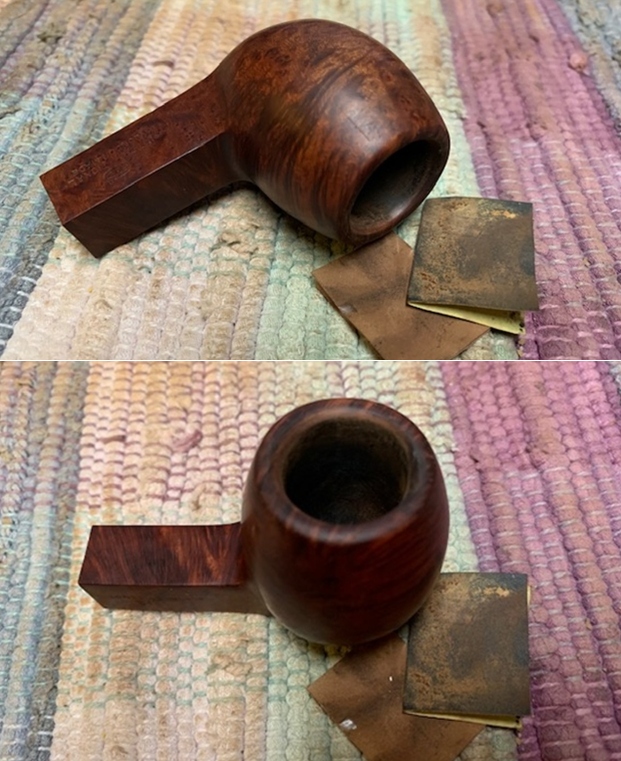
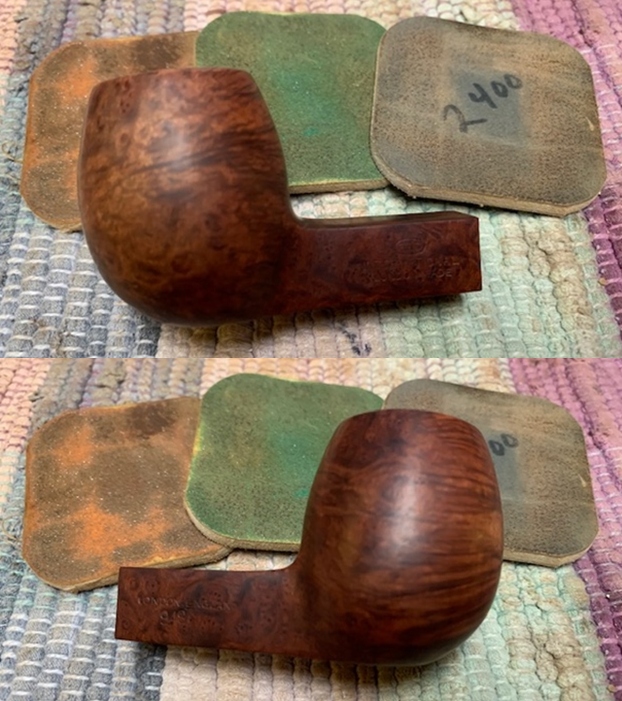
Jeff had cleaned up the pipe with his usual penchant for thoroughness. He reamed the pipe with a PipNet Pipe Reamer and cleaned up the remnants with a Savinelli Fitsall Pipe Knife.  He scrubbed the bowl with undiluted Murphy’s Oil Soap with a tooth brush. He rinsed it under running warm water to remove the soap and grime. He cleaned out the inside of the shank and the airway in the stem with alcohol, cotton swabs and pipe cleaners. He soaked the stem in Before & After Deoxidizer and rinsed it off with warm water. I took photos of the pipe once I received it.    The bowl and rim top cleaned up really well with the lava coat removed. The inner edge of the rim was in good condition.  The plateau was clean but had some darkening. It looked very good. The stem surface had some oxidation and some tooth marks and chatter on both sides near the button.  There was damage to the button surface on both sides.I took photos of the stamping are clear and read the same as noted above.    Now it was time to do my work on the pipe I polished it with micromesh sanding pads using 1500-12000 grit sanding pads and wiping it down after each sanding pad with a damp cloth to remove the sanding dust and debris.   I rubbed the bowl and shank down with Before & After Restoration Balm. I worked it into the surface of the bowl sides and shank with my fingertips to clean, enliven and protect the briar. I let the balm sit for a little while and then buffed with a cotton cloth to raise the shine. The stain brings the rich reddish brown tone to life. It is a nice looking pipe.       I set the bowl aside and turned to work on the stem. I cleaned up the area around the button edges with alcohol and then filled in the damaged button edge and top with black super glue. Once the repair had cured I shaped it with a needle file. I sanded the repaired areas, the button edges and the oxidation on the stem with 220 grit sandpaper and started the polishing with 400 grit wet dry sandpaper. The stem is starting to look very good.   I polished the vulcanite with micromesh sanding pads – 1500-12000 grit pads. I wiped it down with a damp cloth after each sanding pad. I used Before & After Pipe Polish – both Fine and Extra Fine to further polish the stem.   This Comoy’s Made Square Shank Royal Coachman 497 Pot with a vulcanite saddle stem turned out to be a great looking pipe now that it has been restored. I put the stem back on the bowl and carefully buffed the pipe with Blue Diamond on the buffing wheel using a light touch on the briar. I gave the bowl and the stem multiple coats of carnauba wax on the buffing wheel. I buffed the entire pipe with a clean buffing pad to raise the shine. I hand buffed the pipe with a microfiber cloth to deepen the shine. The finished Royal Coachman Pot fits nicely in the hand and feels great. Give the finished pipe a look in the photos below. The dimensions of the pipe are Length: 5 ½ inches, Height: 1 ¾ inches, Outside diameter of the bowl: 1 ½ inches, Chamber diameter: 1 inch. If you are interested in adding this pipe to your collection send me a message or an email. Thanks for reading this blog and my reflections on the pipe while I worked on it. There are many more to come!