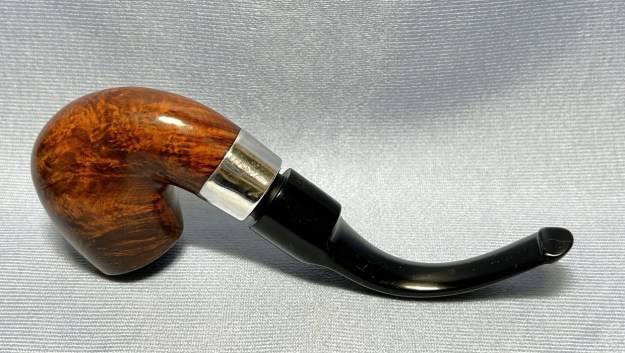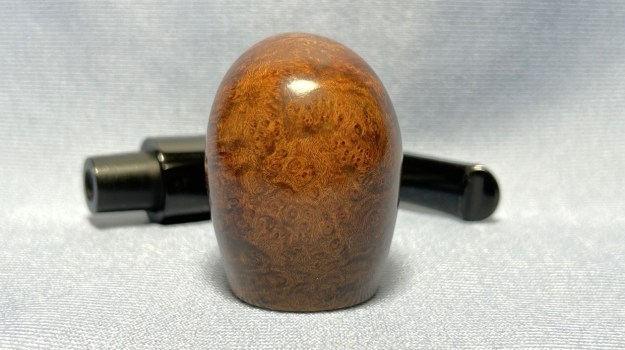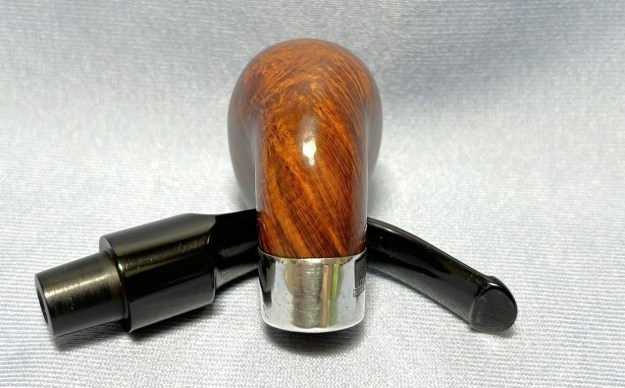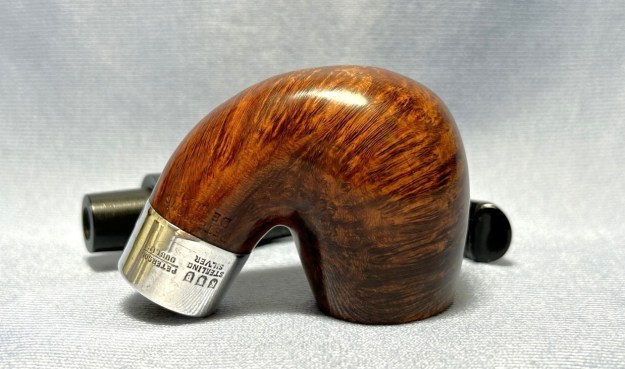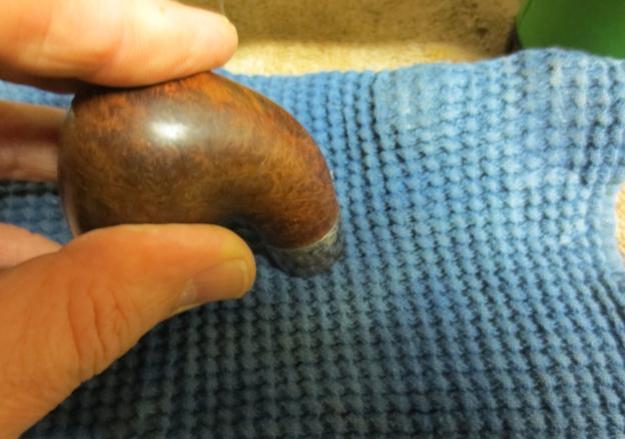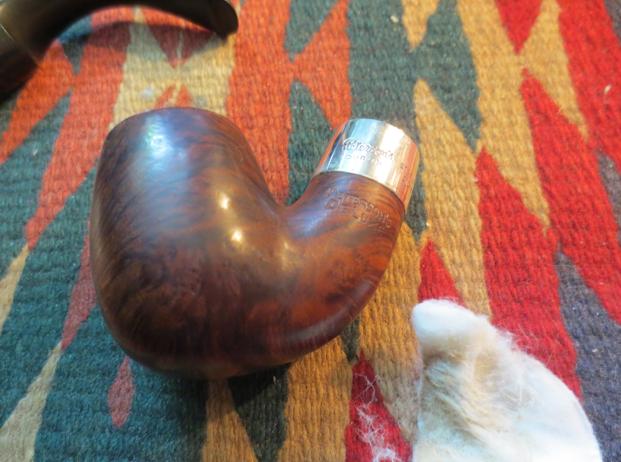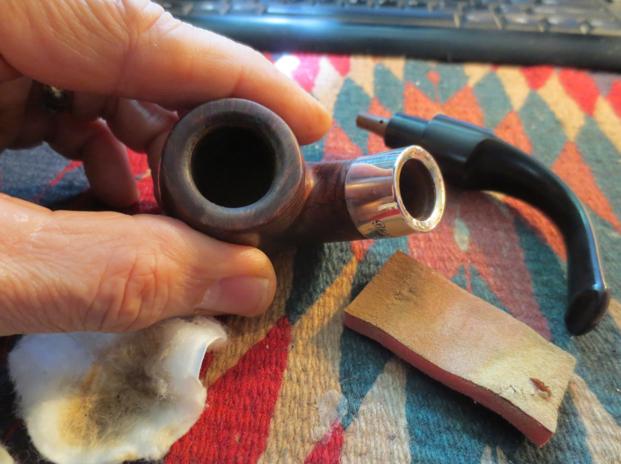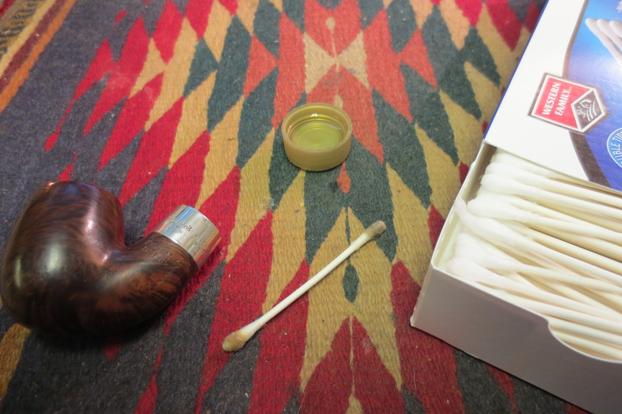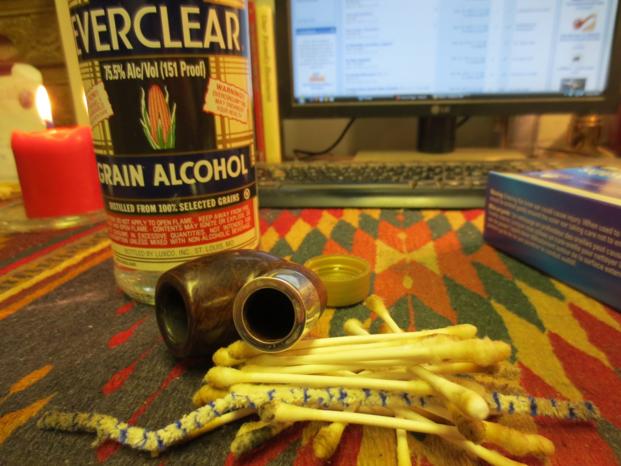
Tag Archives: Peterson’s Deluxe 11S Bent billiard

Restoring a Peterson Sterling Silver Deluxe System 11S Pipe


by Kenneth Lieblich

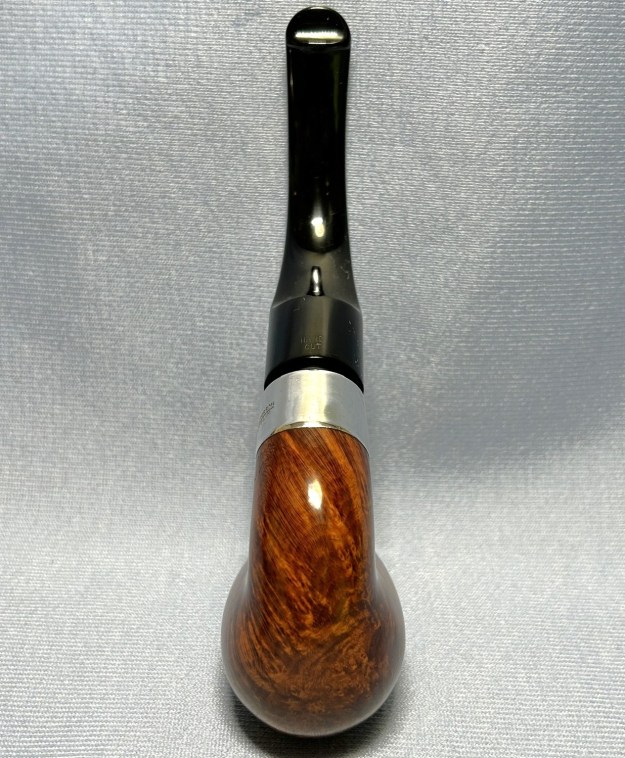
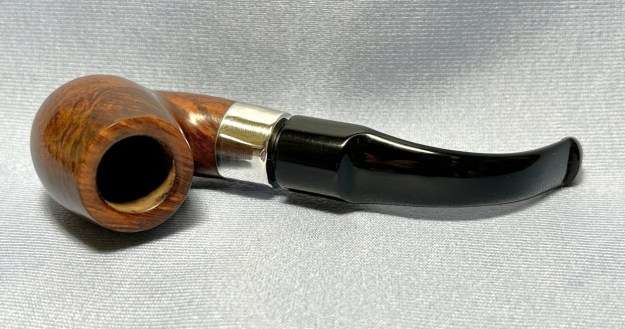
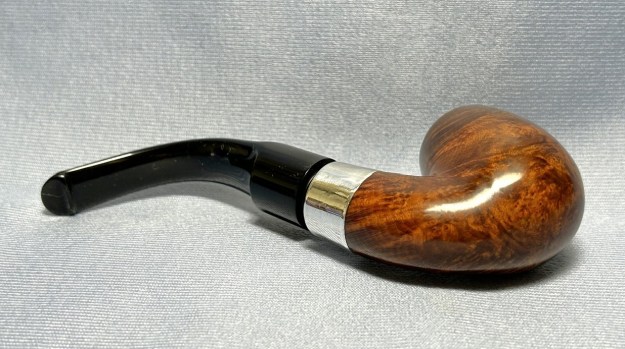
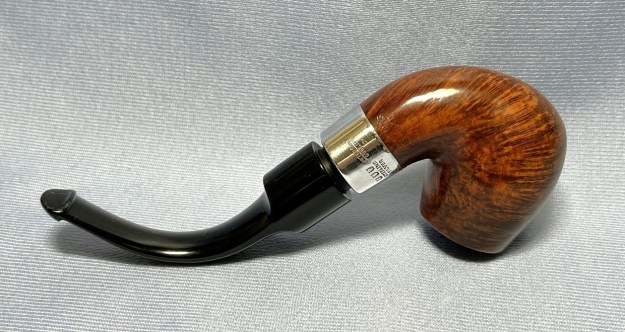
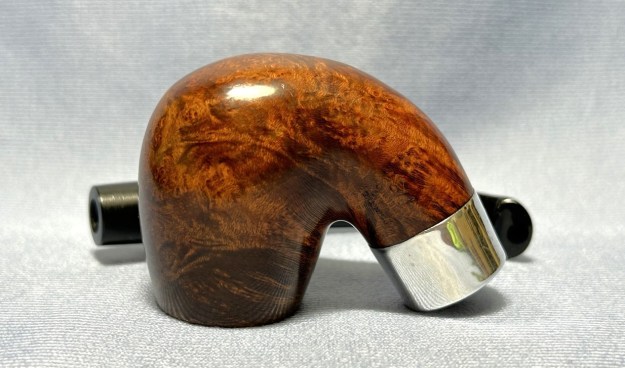
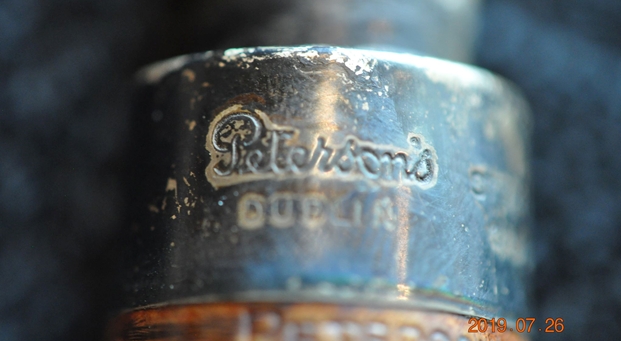
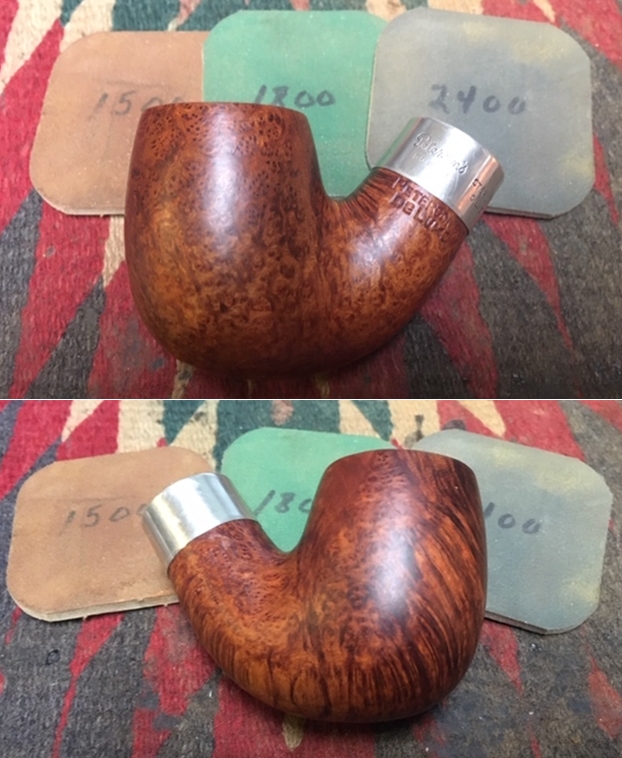
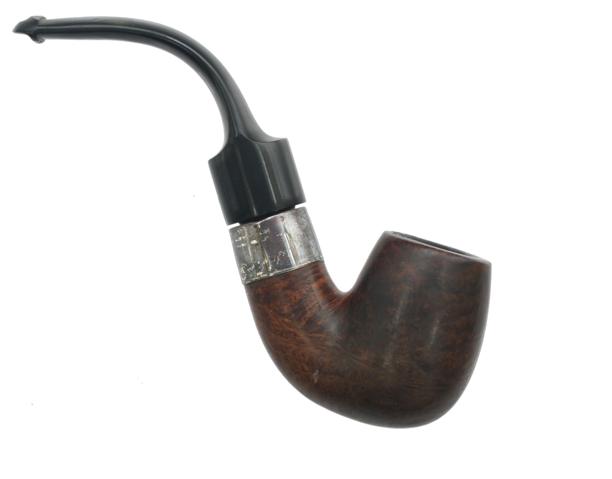
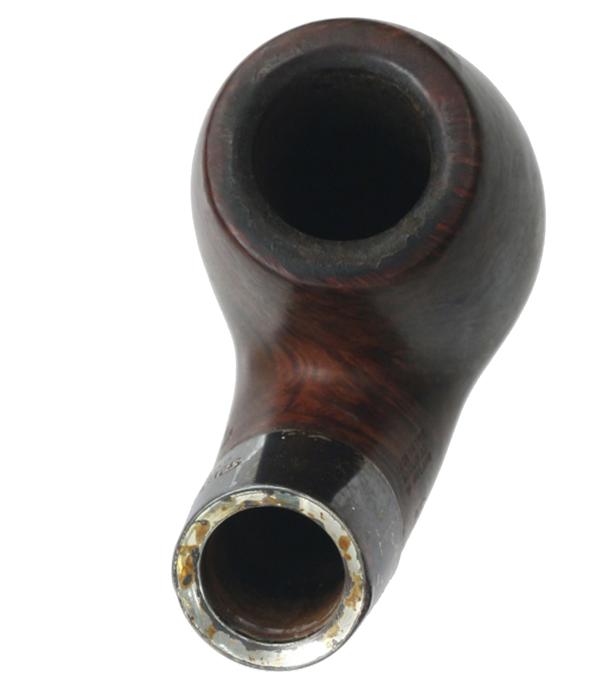
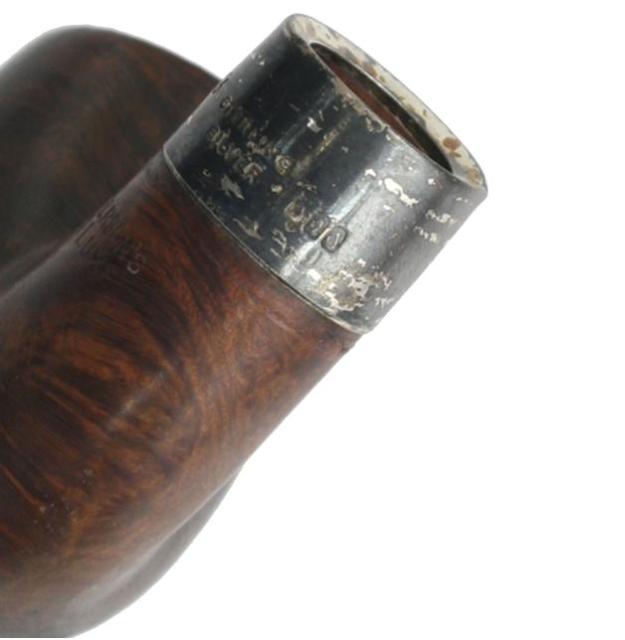
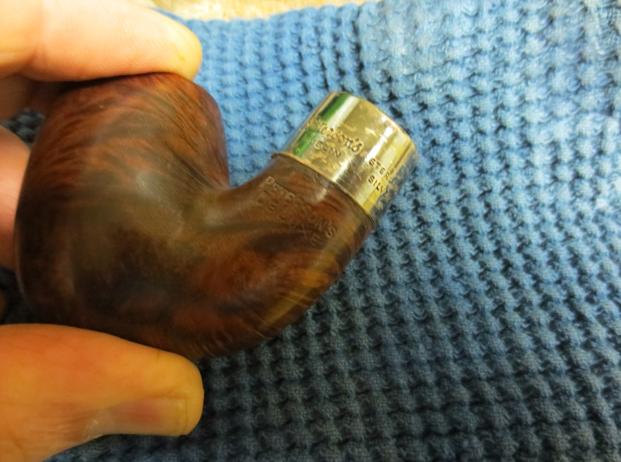
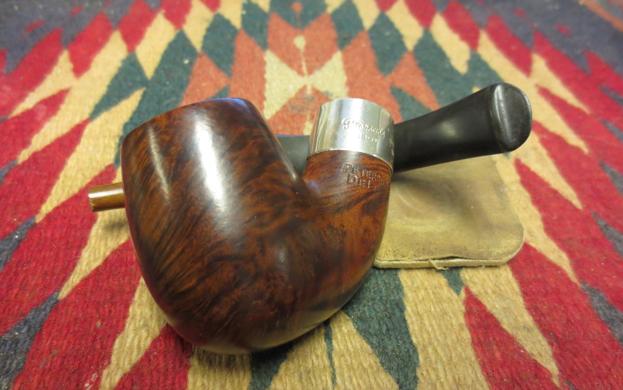
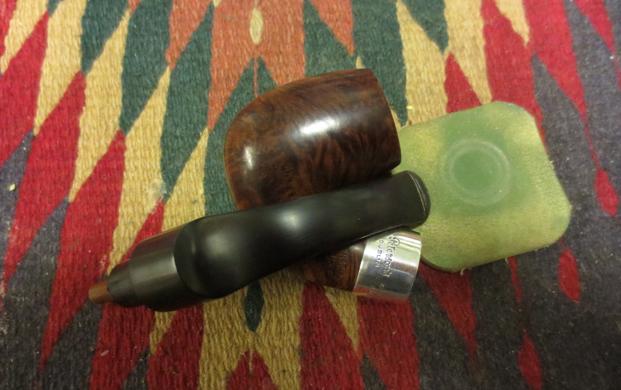
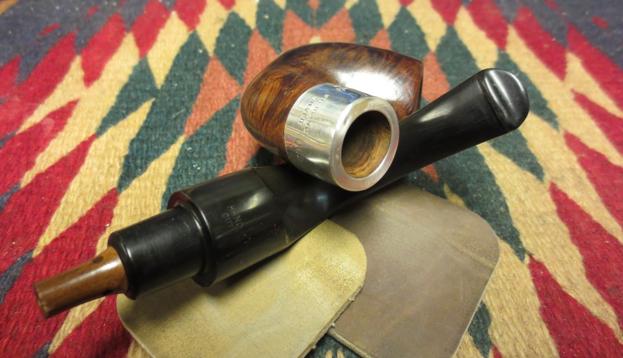
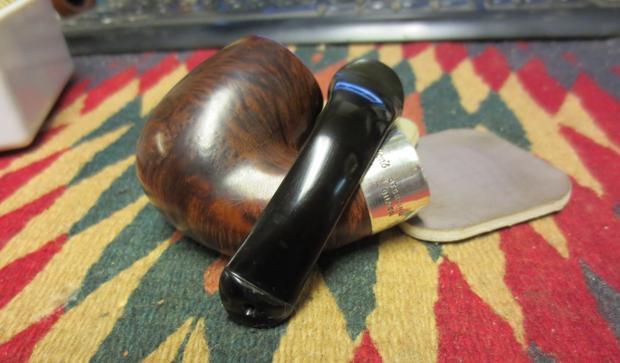
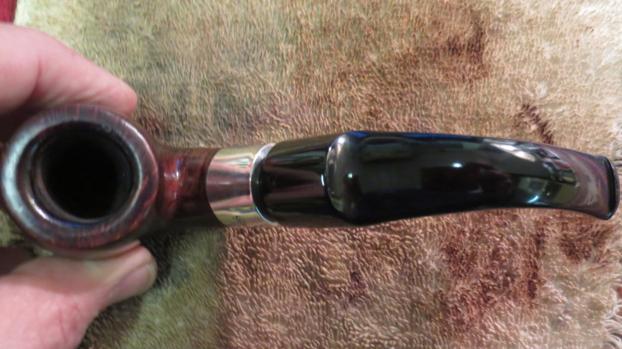
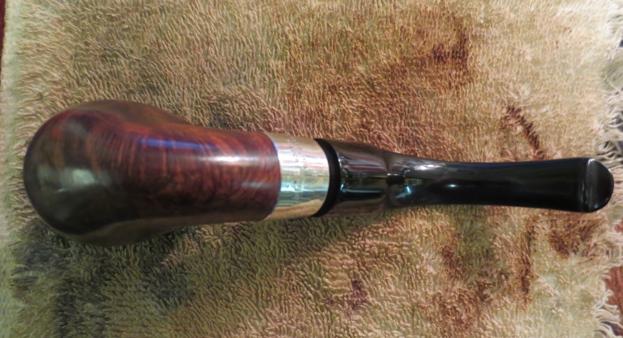
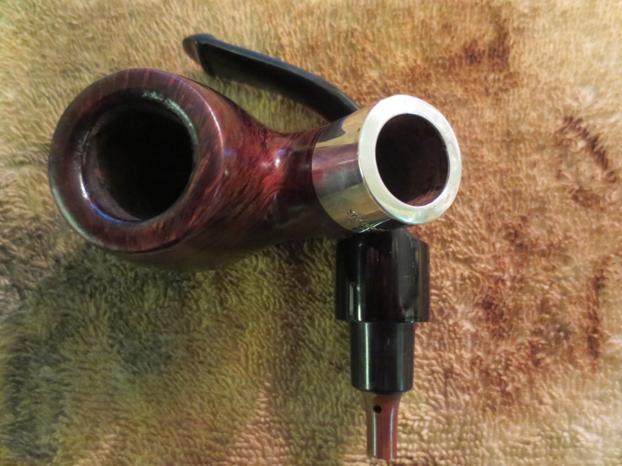
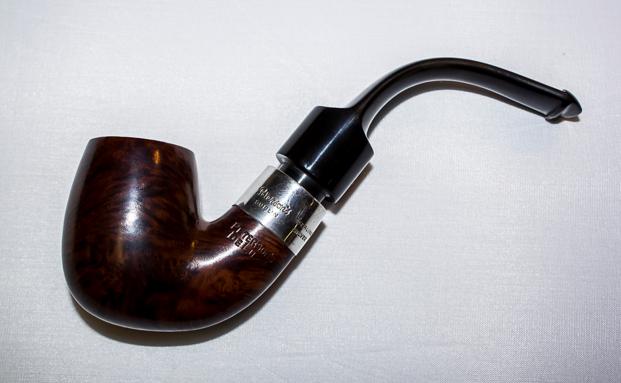
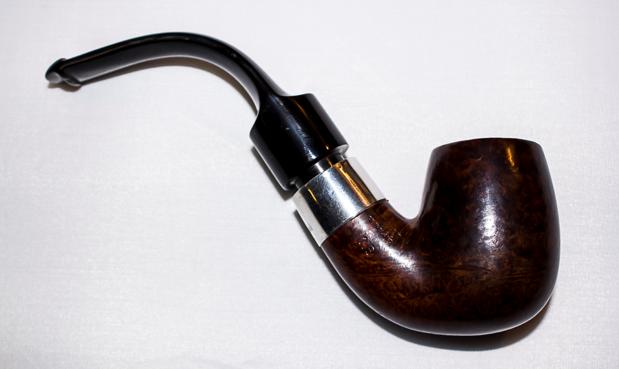
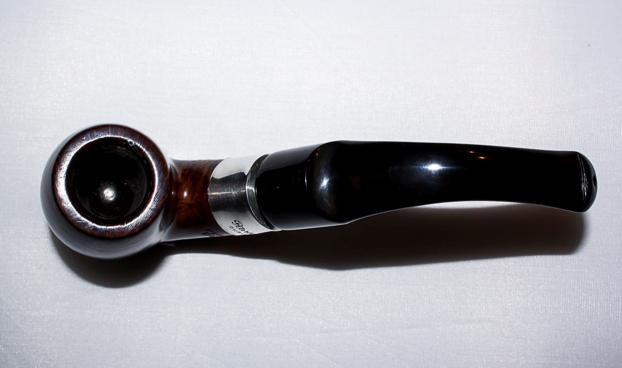
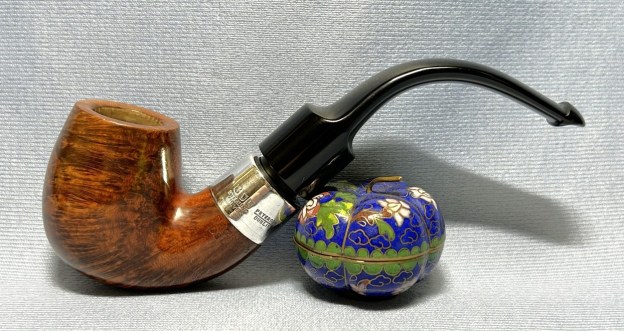
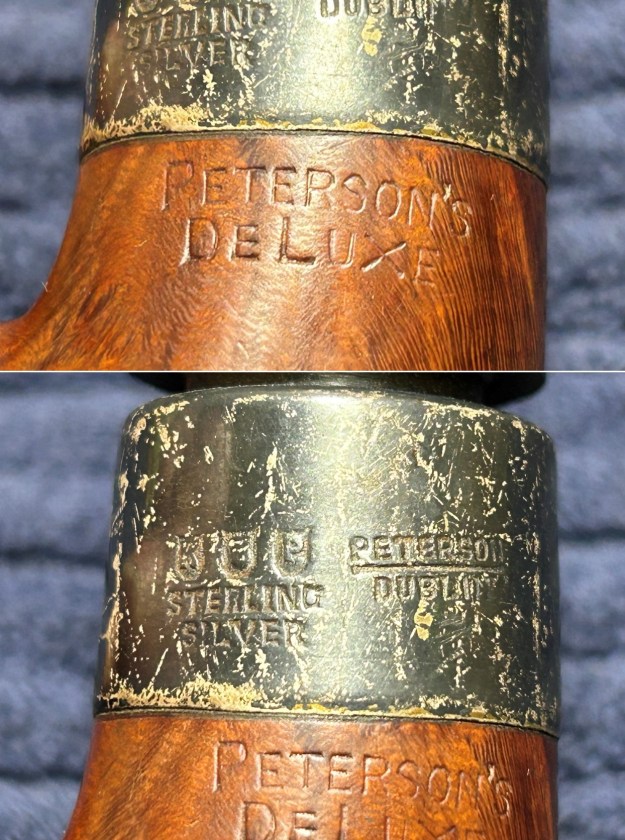
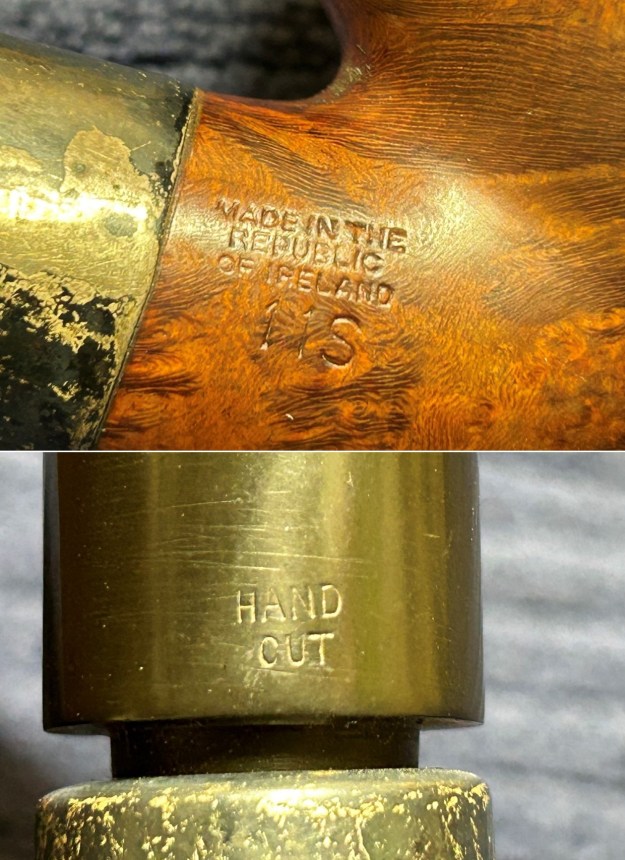
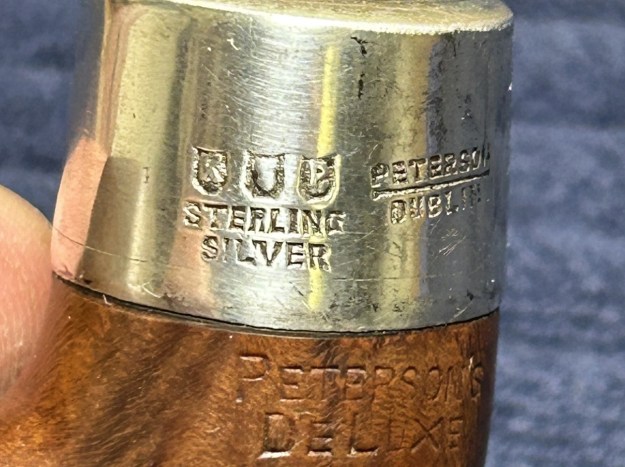
Ah, the Peterson Deluxe System – such a lovely pipe. Good fortune has provided two such pipes for me. First is the one you’re about to see restored and the second in a few days time. The two pipes didn’t come into my possession together, but they are being restored together. Despite both being Deluxe Systems, they have different finishes, come from different eras, and had different challenges in restoration. This 11S is really a fantastic pipe with wonderful grain. I am delighted with the way it cleaned up and I hope you are too! Our first Pete is this handsome fellow. It’s an 11S shape, has a smooth-finish, comes from the Republic era, and has the classic Peterson P-lip. Let’s have a look at the markings on this pipe. The left side of the stummel reads, Peterson’s [over] DeLuxe. The right side of the stummel reads, Made in the [over] Republic [over] of Ireland [over] 11S. The band has markings too. It has a set of faux hallmarks which read K&P. Over that are the words Sterling [over] Silver. To the right, are the words Peterson [over] Dublin. Finally, the stem reads Hand [over] Cut. In order to find out a bit more about the Deluxe System, I looked at Peterson’s own website and they furnished this information:
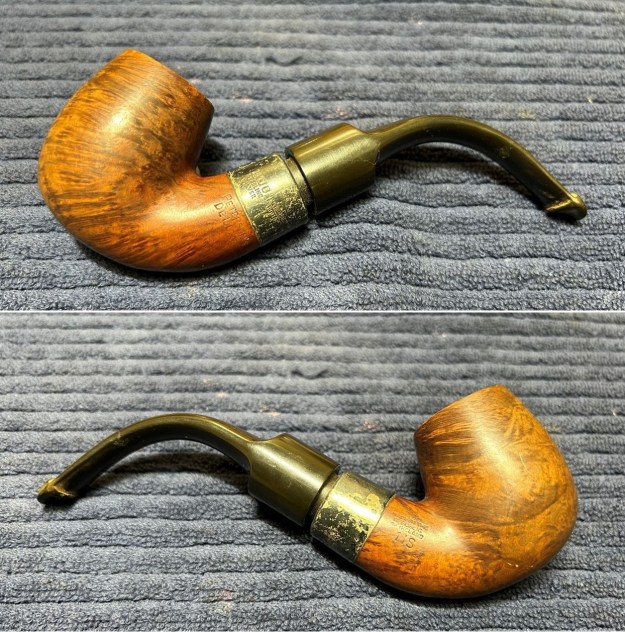
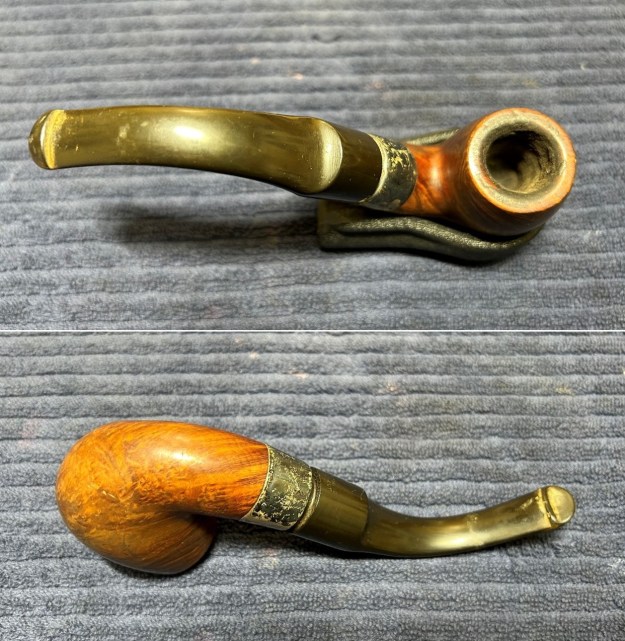
While the Deluxe stamp first appeared on our System pipes in 1940, the design itself dates to our 1896 and 1906 catalogues and, with the exception of the Supreme, has always marked our highest tier of System pipe. Like the System Standard and System Spigot lines, the Deluxe System pipe incorporates Charles Peterson’s patented System design, including a deep reservoir to collect excess moisture from the smoke; a graduated-bore mouthpiece that funnels the smoke and allows moisture to collect within the reservoir; a sturdy sterling silver military mount, which allows the pipe to be broken down and cleaned without damage or warping; and our patented P-Lip bit, which draws the smoke upward, thus reducing tongue bite. The Deluxe differs from those aforementioned lines, comprised of bowls with only the finest grain patterns and featuring a sterling silver mount and a push-gap stem, which was never designed to be flush-fitting, the space between the mount and stem base gradually decreasing with prolonged use. The Deluxe also elevates the System pipe by fixing each stem with a traditional chimney, an aluminum fitment that extends the tenon past the chamber’s airway for optimal System performance. Created for Peterson enthusiasts interested in acquiring the finest System pipe on the market, the Deluxe System will serve as the crown of any collection.

Then, over at Pipedia, there is the following commentary:

The handsome and very distinctive Deluxe system pipes, include the Darwin, Mark Twain and the Charles Peterson 140 year anniversary Pipe. These pipes are at the top of the ‘system’ series in terms of quality and finish. Each Peterson Deluxe is made from carefully selected, age mellowed root briar. In matt finish with hallmarked sterling silver mounts and a unique space fitting mouthpiece to allow for years of wear. They are available in a wide range of shapes numbered, as follows: 1s, 2s, 3s, 4s, 5s, 8s, 9s, 11s, 12.5s, 20s, XL5s, 20FB and 11FB. The pipes are well carved and construction, engineering and workmanship, is outstanding. The stems are well drilled and aligned. Silver work is excellent, finish very good, and the often maligned briar is of outstanding quality. The design is a very typically Peterson classic shape. Apart from the Darwin, the balance can be stem heavy, the bit is thick and chunky, especially in the larger versions. I also enjoy the sense of presence they give to the pipe, particularly if smoking in company with friends or strangers. They have a sophistication about them. The smoking qualities are excellent, dry and cool. The draw is good, and the flavour is particularly great in new pipes. The Mark Twains are outstanding in this department. As for the aesthetics and ergonomics, I find some shapes much more attractive than others. Favourites for me are the 1s, 2s, 3s, the Mark Twains and the Darwin deluxe. As a clencher most are very good to hang, except the beautiful Darwin which is more of a ‘hand holder.’ The one weakness I find is the modern orange/golden colour, (the so called natural) it is, in my opinion, less attractive than that found in the older Walnut finish of the eighties. As far as value and cost is concerned, for the excellent quality finish, these are competitively priced at around $135 to $250 depending on size and briar grade. For what it is worth, I reckon the Deluxes are probably the best value range of pipes that Peterson produce, both in terms of functionality and value. There is not a thing wrong with these pipes. Those who malign the brand because they’re made by the hundreds using machines, are very wrong, in my opinion. I like them a lot and the bang for the buck is the best I’ve ever seen for new pipes of this quality.The Deluxes are all excellent smokers. The Darwin, of course, is a truly outstanding pipe, its only “flaw” being that it’s not a clencher. One particular aspect of this pipe that appeals to me most is its physical beauty and presence. They are a pipe like no other. For me, they also offer a bowl capacity that I like and a balance in the hand that I appreciate. They are well named Deluxe s for giving that special experience.

These Petes with the faux-marks are a bit tricky to nail down in date. Mark Irwin, who runs the great Peterson Pipe Notes blog, has a whole page here on this topic. He writes:

Pipe smokers new to Peterson sometimes wonder what the “K&P” stamp is all about, not realizing the company was known as “Kapp & Peterson” until the 1970s and is still referred to as “Kapps” by the old hands who work in the shop. Most Peterson pipes with metal mounts (and all nickel-mount Systems) have a “K & P” Maker’s Mark, also called a Sponsor’s Hallmark, which is used by The Company of Goldsmiths of Dublin (est. 1637) to identify the silversmith or goldsmith responsible for making the article. The “K & P” maker’s mark was registered at the assay office shortly after Kapp & Peterson’s incorporation and appears either in capital letters (on early sterling and later nickel mounts) or capital letters in shields (on sterling). The maker’s mark was later placed in shields, which may be flat or pointed at the top. After 1938, the K&P maker’s mark became a stand-in for the Company of Goldsmiths (aka Dublin Assay Office) date letter and was usually accompanied nearby by the STERLING over SILVER stamp. The practice of stamping sterling with the date letter wasn’t resumed at Peterson until 1969, for rather humorous reasons explained in the Peterson book.

Sadly, I don’t have the Peterson book, so I cannot enlighten you on the humorous reasons. It would seem from Mark’s words that this pipe falls into the period between 1938 and 1968. However, we can refine that a bit, as the pipe’s markings clearly indicate that it’s a republic-era pipe. Ireland became a republic in 1949, so a date range of 1950-1968 seems suitable for this pipe.

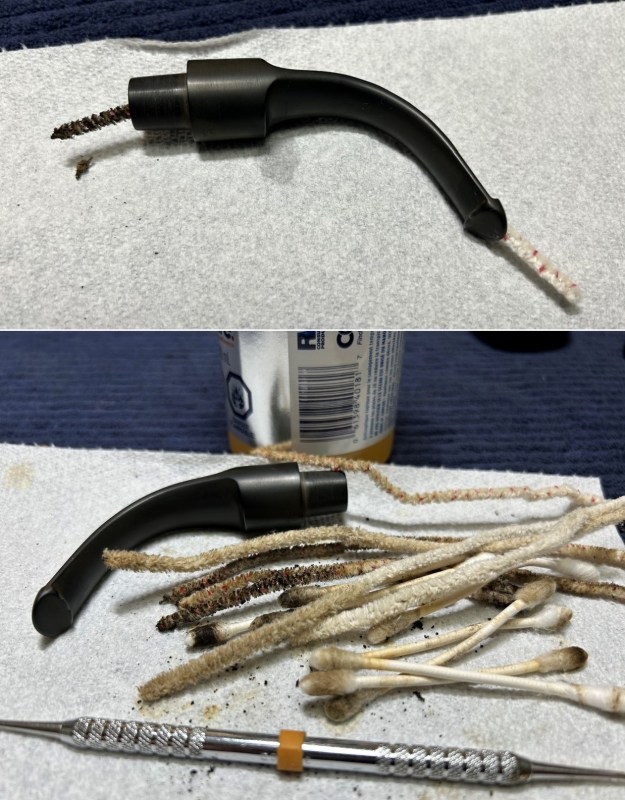
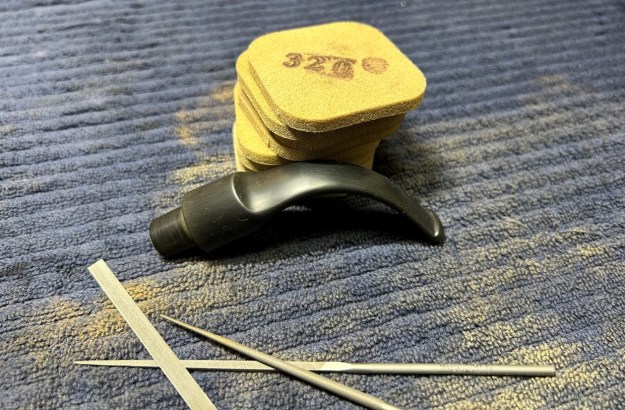
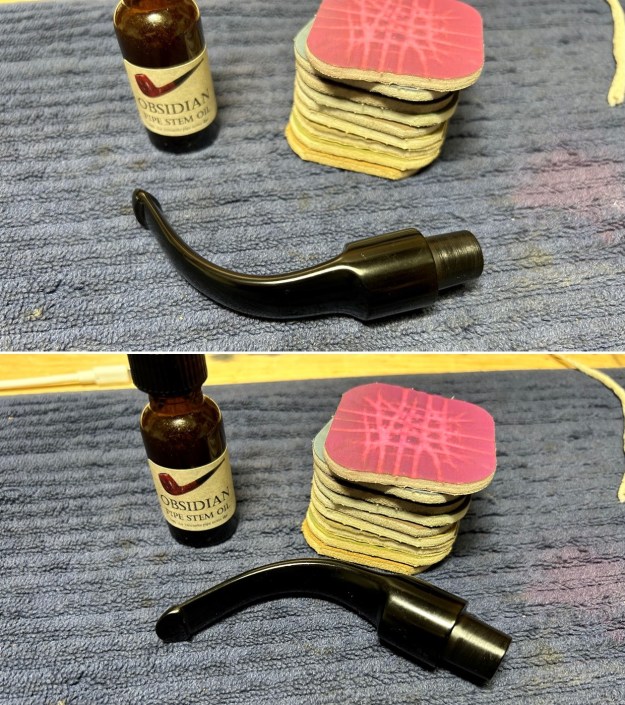
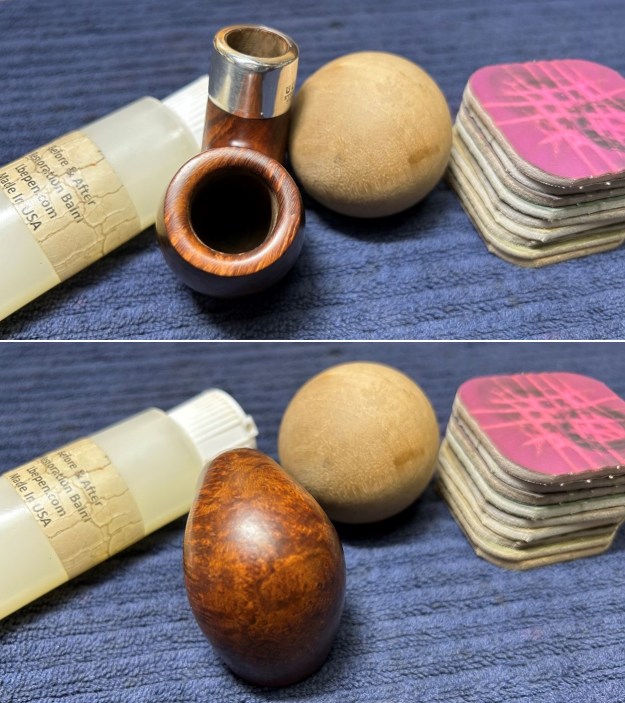
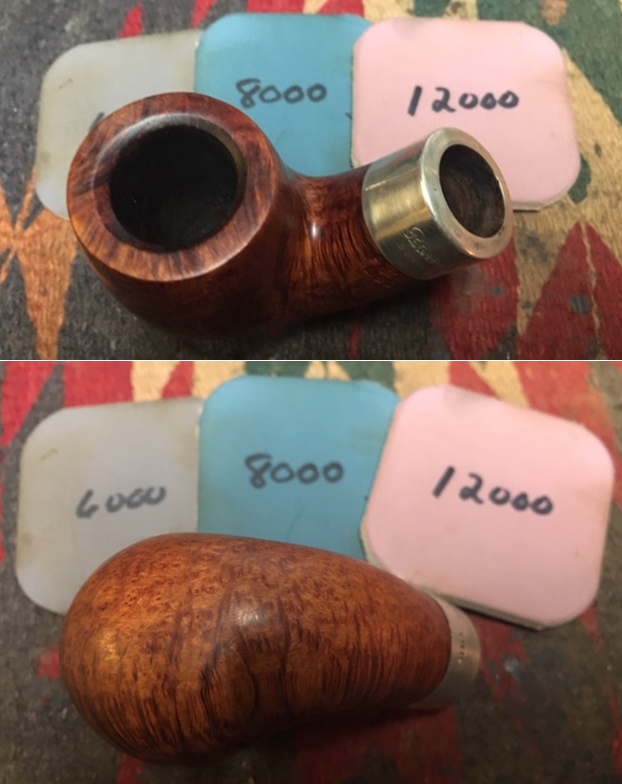
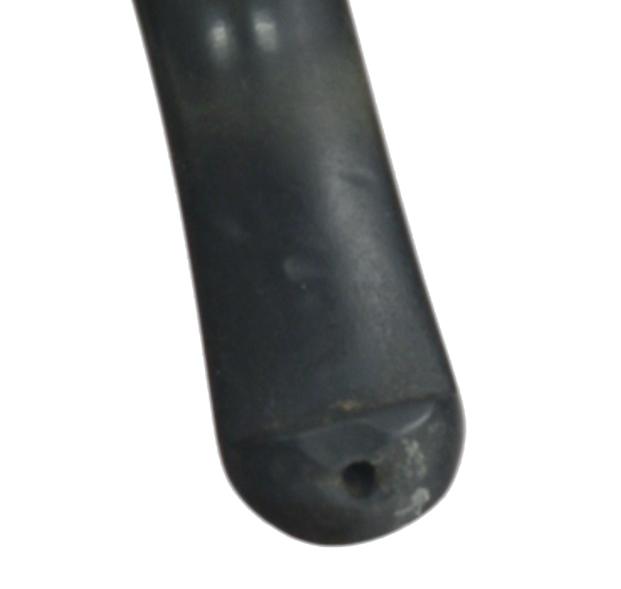
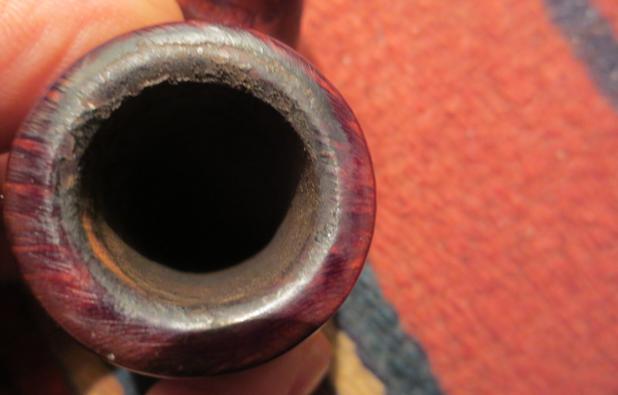
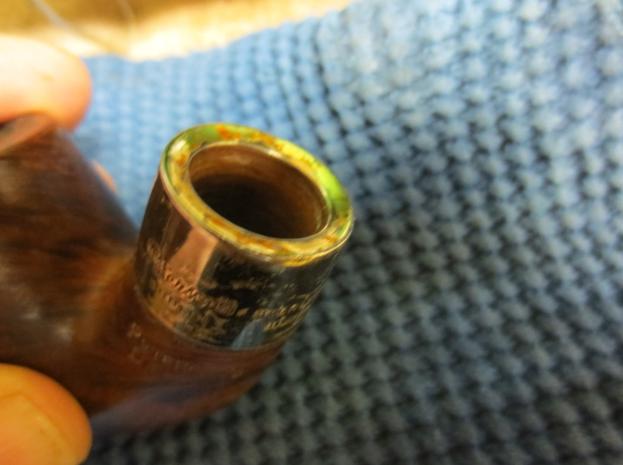
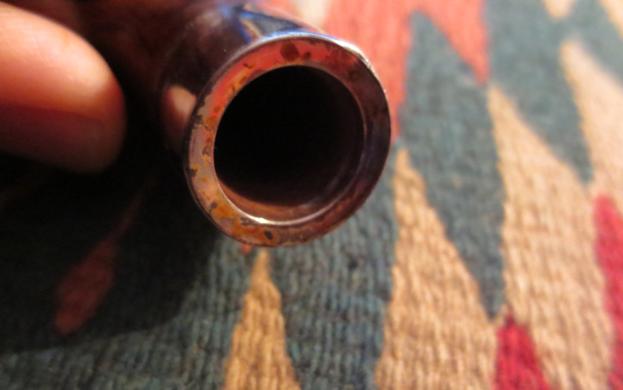
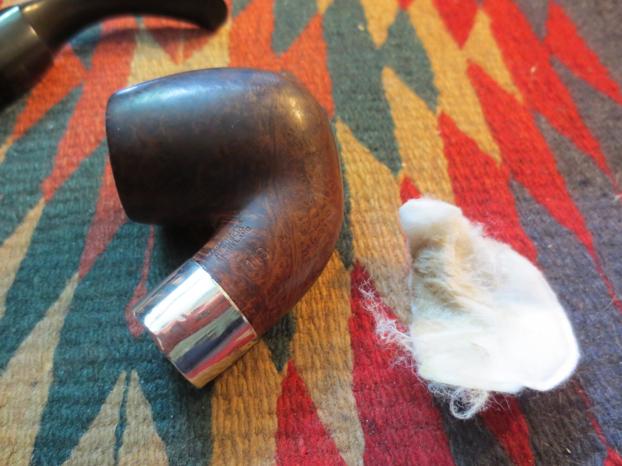
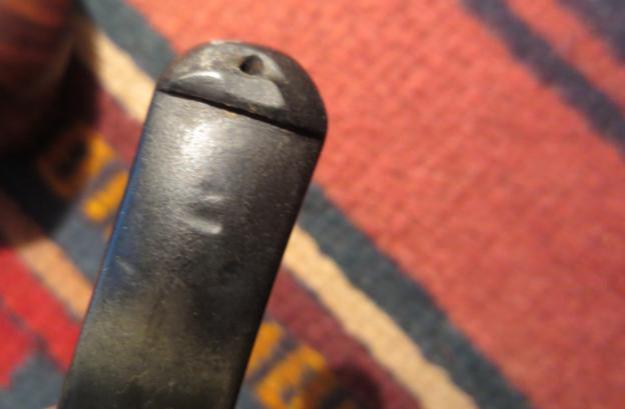
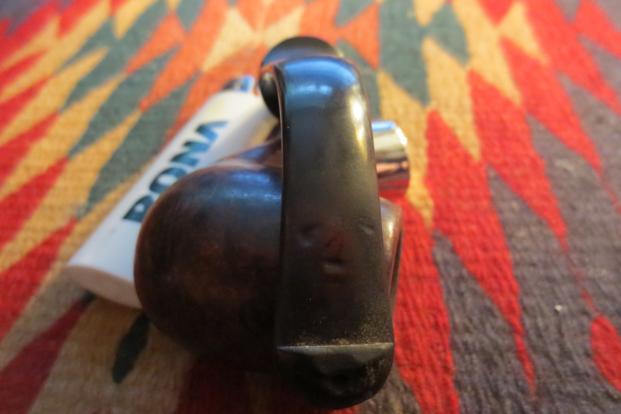
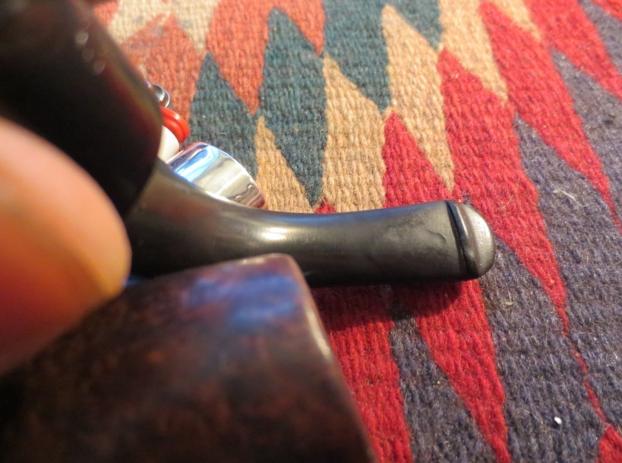
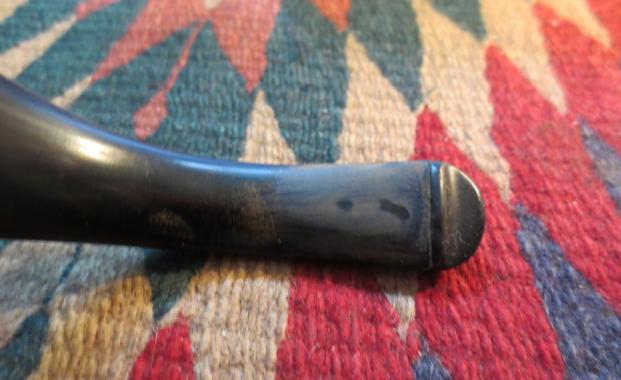
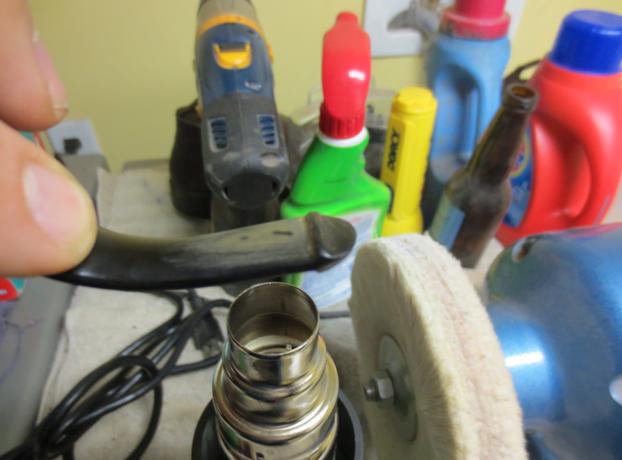
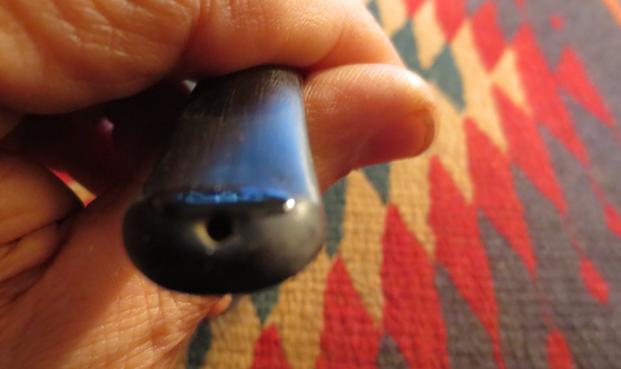
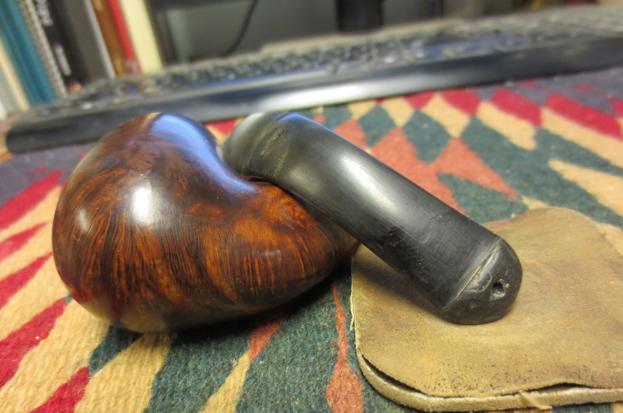
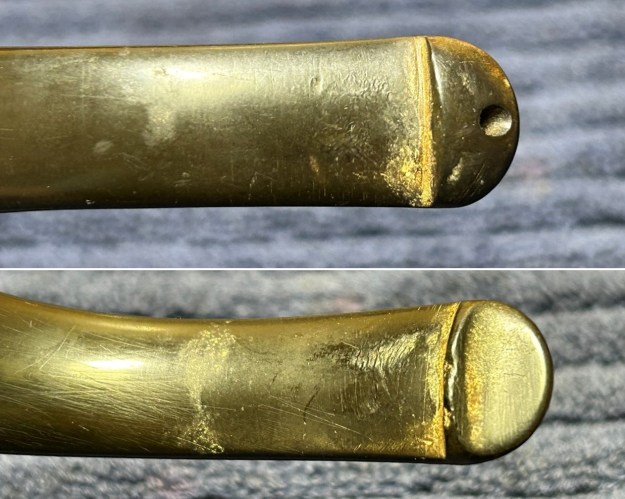
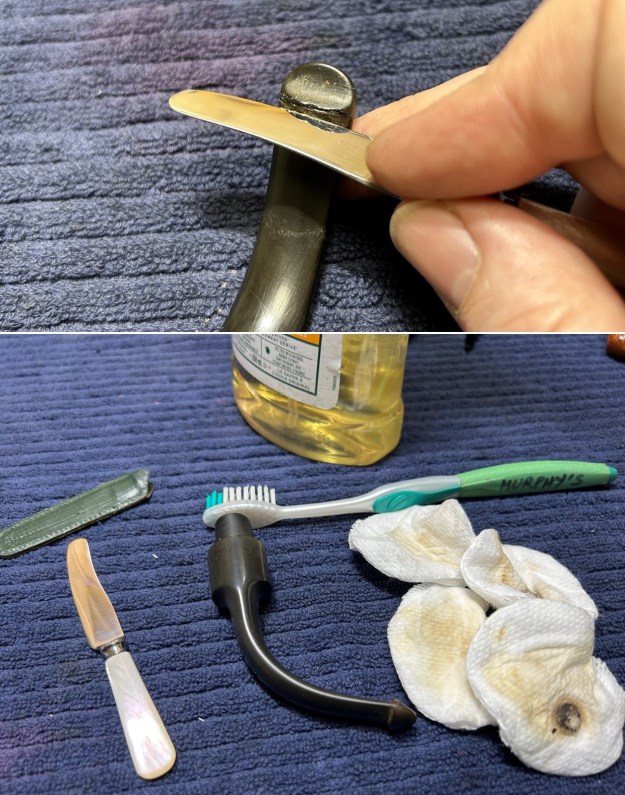
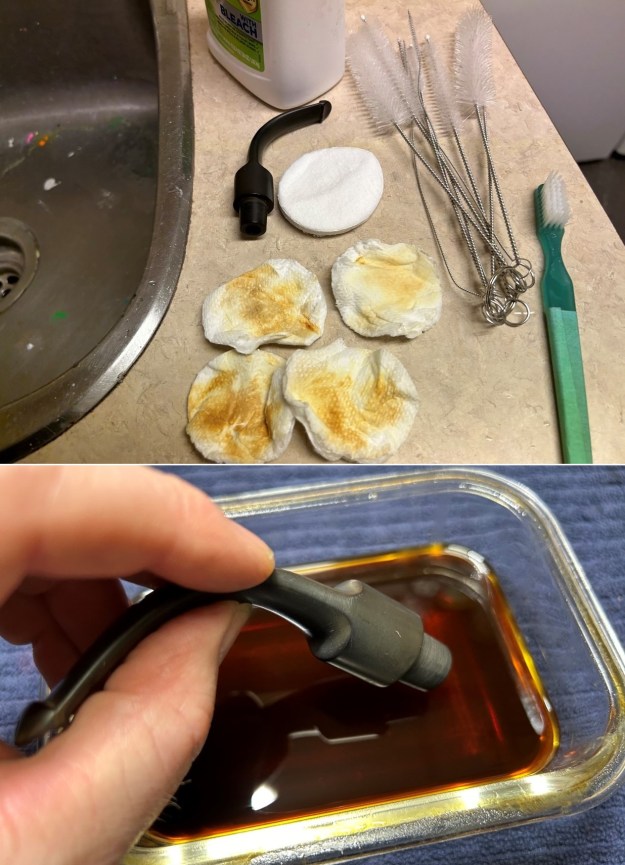
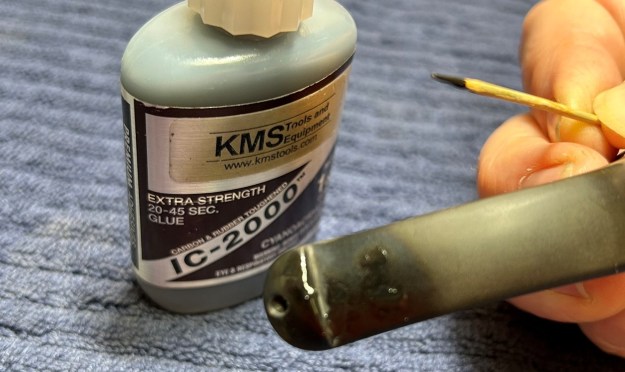
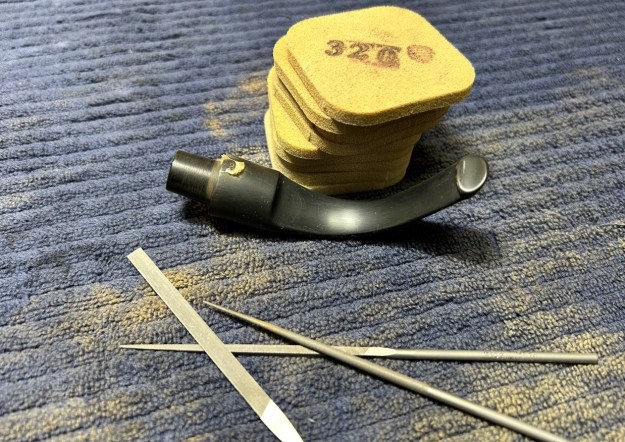
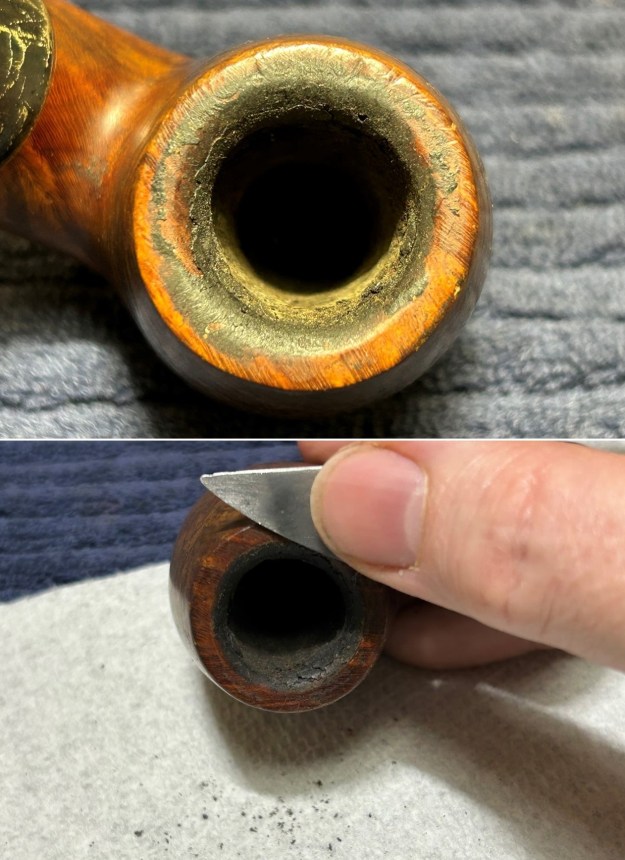
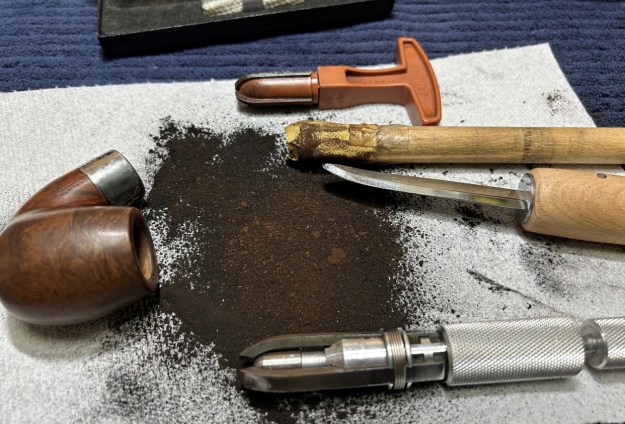
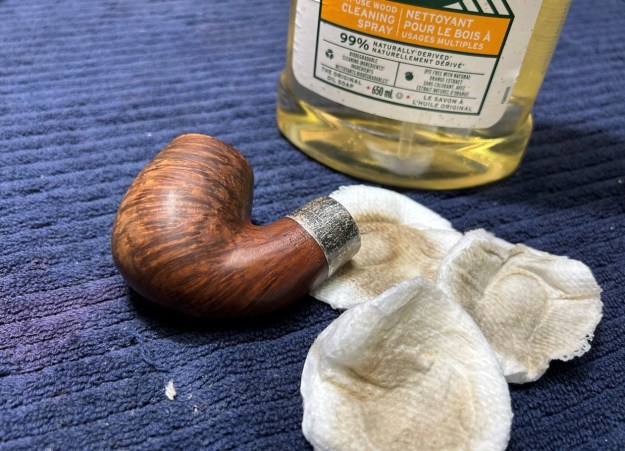
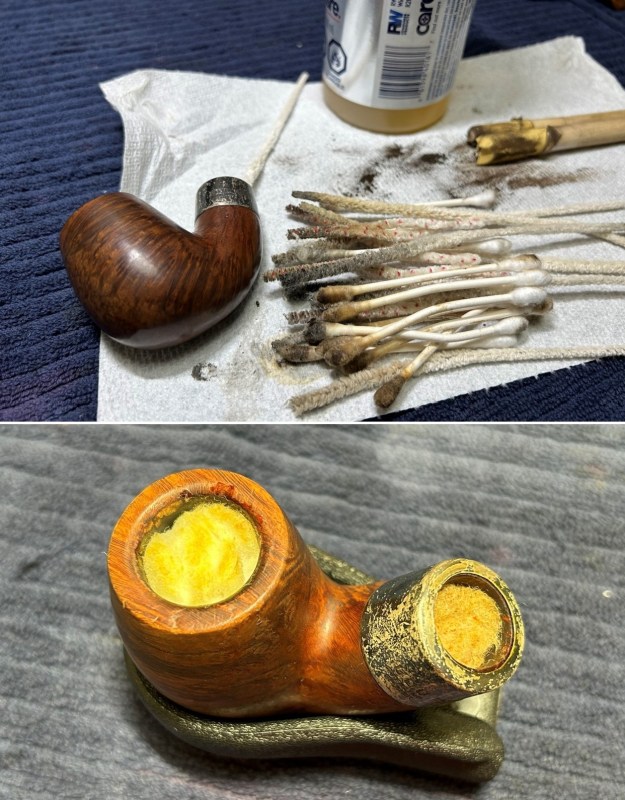
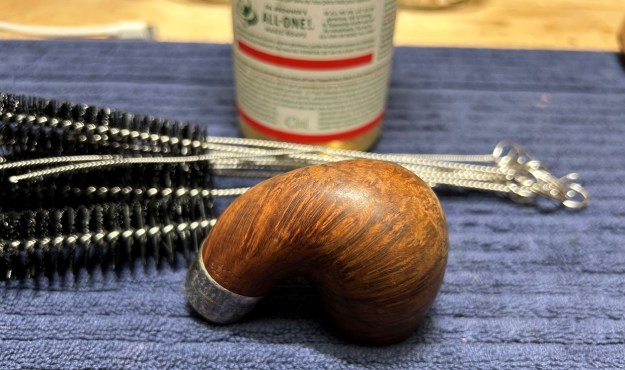
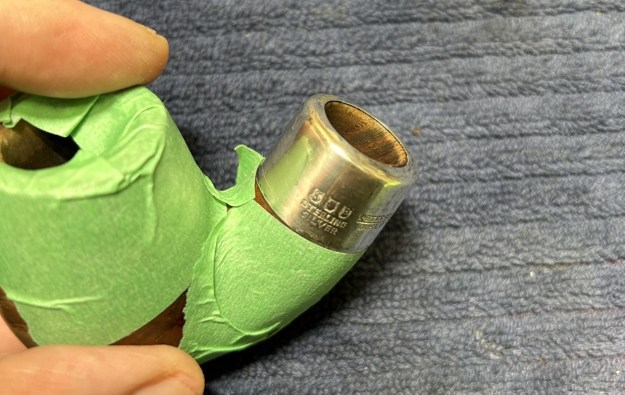
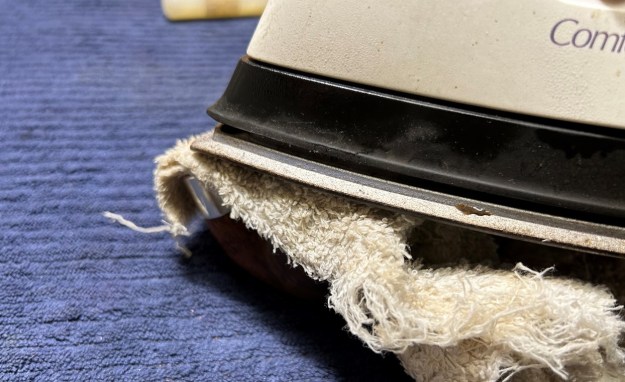
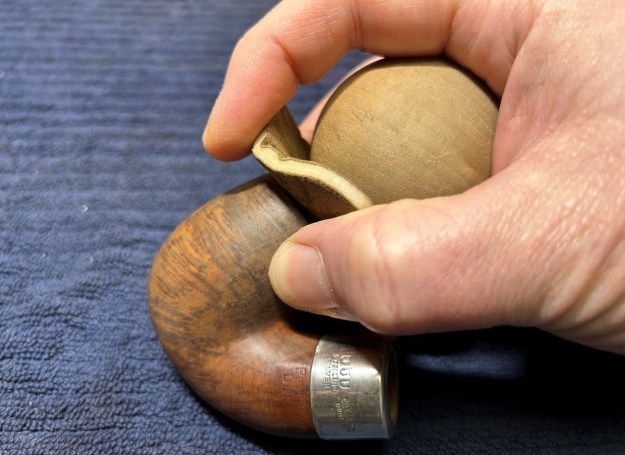
Time to get on with it! The stem was pretty dirty. It had some calcification on it and I used a sharp edge to carefully scrape that off. Once done, I scrubbed the stem with oil soap on some cotton pads. I also took a BIC lighter and ‘painted’ the stem with its flame in order to lift the few bite marks and dents. Then I cleaned out the inside with pipe cleaners and lemon-infused isopropyl alcohol. You can see just how filthy it was inside. Also, it’s worth noting that the aluminum chimney that often goes with these pipes is missing – but a replacement could be sought from Peterson’s. I wiped down the stem with cleanser to remove surface oxidation. Then the stem went for an overnight soak in the Pipe Stem Oxidation Remover. The next day, I used the cleanser again with some cotton rounds. I built up the small tooth marks on the stem with black cyanoacrylate adhesive and let them fully cure. I put a tiny piece of hockey tape over the “Hand Cut” words, so I wouldn’t accidentally sand them. I then used my needle files, Micromesh pads and Obsidian Pipe Stem Oil to make it look great. Onto the stummel, and the first thing I did was to clean up the rim a bit. I took a piece of machine metal and meticulously scraped away the cake without affecting the finish of the wood.Then I reamed out the stummel and removed all the cake. I used a bit of everything to get it all out: PipNet, KleenReem, knife, sandpaper, etc. Fortunately, there was no damage to the interior walls. I used cotton rounds and some oil soap to scrub the outside of the stummel and a toothbrush with oil soap for the lava on the rim of the pipe. I then proceeded to clean out the insides of the shank with Q-tips, pipe cleaners, and lemon-infused isopropyl alcohol. I followed that up by de-ghosting the pipe and the bowl was nice and clean after this. I then cleaned the insides with some dish soap and tube brushes. I then worked on cleaning up the sterling silver band. I taped it off, as I didn’t want to damage the wood. This worked well and I was pleased. There were a couple of very small knocks in the wood and I opted to use a damp cotton cloth and an iron to help. By laying the wet cloth over the affected area of wood and applying the hot iron, steam is generated in a way that can often swell the wood back into place.Next, I sanded all of the wood down with my Micromesh pads and made it lovely and smooth. I followed that up with some Before & After Restoration Balm. I let it sit on the wood for 20 minutes or so, then buffed it off with a microfibre cloth. I took the pipe to the buffer. I gave it a good application of White Diamond and a few coats of carnauba wax. This made all the difference. It really sparkled after that. I also polished the silver with my jewellery cloth.
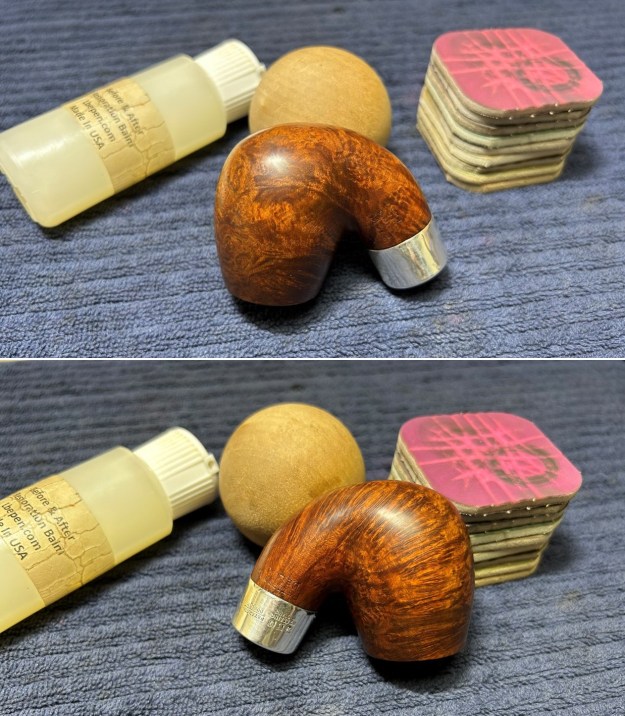
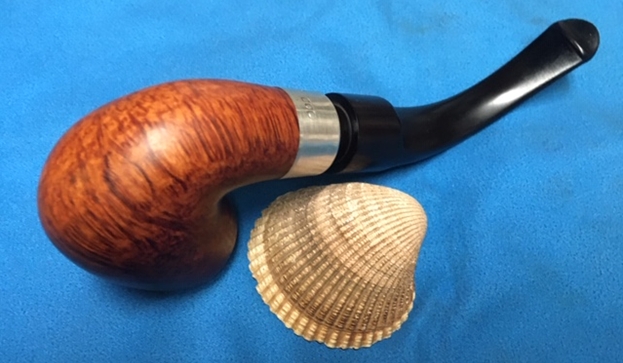
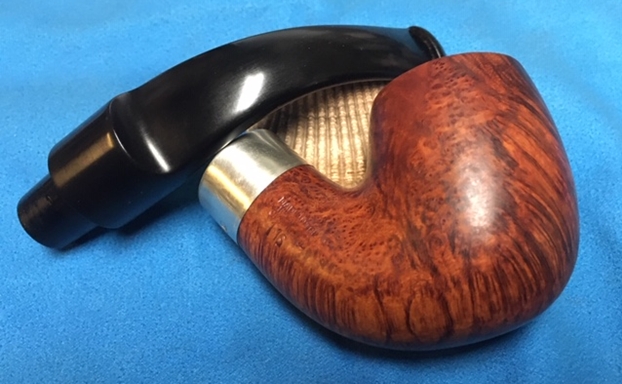
This Peterson Deluxe System 11S pipe looks amazing now. It’s really a beautiful pipe and it is ready to be enjoyed by the next owner! I am pleased to announce that this pipe is for sale! If you are interested in acquiring it for your collection, please have a look in the ‘Irish’ Pipemakers Section of the store here on Steve’s website. You can also email me directly at kenneth@knightsofthepipe.com. The approximate dimensions of the pipe are as follows: length 6 in. (152 mm); height 3⅔ in. (93 mm); bowl diameter 1½ in. (37 mm); chamber diameter ⅔ in. (17 mm). The weight of the pipe is 2¼ oz. (67 g). I hope you enjoyed reading the story of this pipe’s restoration as much as I did restoring it. If you are interested in more of my work, please follow me here on Steve’s website or send me an email. Thank you very much for reading and, as always, I welcome and encourage your comments.
Life for a Republic of Ireland Peterson’s DeLuxe 11S Bent Billiard from Bob Kerr’s Estate


Blog by Steve Laug

I am working on another pipe from Bob Kerr’s estate, another one of his Petersons. It is the first of the system pipes that I have in his estate and the first Deluxe. It is a large pipe which came with a stem from one of his other pipes. I have restored eight of his Peterson pipes and two of these were Peterson’s pipes made specifically for import into the Canadian market – one was a Kapruf 54 sandblast bent billiard (https://rebornpipes.com/2019/08/09/back-to-bob-kerrs-estate-another-canadian-import-petersons-kapruf-a-54/) and the other was a Kapruf 9BC 56 (https://rebornpipes.com/2019/08/09/back-to-bob-kerrs-estate-linking-petersons-kapruf-9bc-with-the-56-shape-number/). These were interesting that they had a unique numbering system designed for Petersons pipes that were specifically brought to Canada by the Canadian importer, Genin, Trudeau & Co. of Montreal, Quebec. I have included the links on that company below. (https://rebornpipes.com/2016/09/13/petersons-pipes-brochure-from-genin-trudeau-co-montreal-quebec/). I restored an English Made Peterson’s System ‘0’ 1307 bent billiard a  (https://rebornpipes.com/2019/08/17/an-english-made-petersons-system-0-1307-bent-billiard-from-bob-kerrs-estate/) and a Republic Era Peterson’s Flame Grain Bent billiard with a fishtail stem (https://rebornpipes.com/2019/08/16/a-petersons-flame-grain-x220s-bent-billiard-from-bob-kerrs-estate/).

I have been enjoying working on these Peterson’s particularly because Jeff has done such a thorough cleanup of them before I receive them. When I took it out of the box of the pipes that Jeff had cleaned up and sent back to me, I could see that it was stamped Peterson’s DeLuxe vertically on the left side of the shank next to the band. The right side of the shank was stamped Made in the Republic of Ireland over the shape number 11S. It has some stunning grain around the bowl and shank under the thick grime. There was a thick cake in the bowl with remnants of tobacco stuck on the walls. There was a fair lava overflow on the rim. The top and edges of the rim looked very good under the grime. I think that there was a beautiful pipe underneath all of the buildup of years of use. The band is stamped Peterson’s over Dublin followed by Sterling Silver on the left side. On the underside are three hallmarks – The Hibernia stamp, the Crowned Harp stamp and finally the letter “O”. The wrong stem was in the shank when I sent it to Jeff so that is the one shown in the photos. It was oxidized and calcified toward the end with some tooth chatter but surprisingly it did not have the deep tooth marks that I have come to expect from Bob’s pipes but the button edges were worn. Jeff took photos of the pipe before he started his cleanup work on it. Jeff took photos of the bowl and rim top to show the thick, hard cake in the bowl and the lava build up on the top of the rim and the edges of the bowl. The rim top, with the inner bevel appeared to be in good condition with no burn marks or chips. The outer edges of the rim also appeared to be in good condition. Jeff took photos of the sides and heel of the bowl to show the condition of the finish. You can see the beautiful birdseye grain on the sides and cross grain on the front, back and underside of the bowl and shank. Even under the dirt and debris of the years it looked very good. The cross grain on the heel was beautiful.   Jeff took photos of the stamping on both sides of the bowl and shank. The vertical stamping on the left side was readable as you can see from the photos. It read Peterson’s DeLuxe. The stamp on the right side read Made in the Republic of Ireland with the shape number 11S underneath. The band was also stamped in the silver. Jeff took photos of the stamping. On the left side of the band/ferrule it is stamped Peterson’s Dublin (photo 1). As the pipe is turned it reads Sterling Silver (photo 2). Finally on the underside it is stamped with three hallmarks -1. Hibernia, 2. Crowned Harp and 3. The letter “O”. I will need to look that up during the restoration. Jeff took photos of the top and underside of the stem showing the tooth chatter, scratching and oxidation on the stem surface and wear on the edges of the button. I turned to a Peterson Catalogue that I have on rebornpipes and looked up the System Deluxe pipes (https://rebornpipes.com/tag/peterson-hallmark-chart/). I have put a red box around the 11S pipe shown in the catalogue page shown below.   I turned first to Pipephil’s site to reacquaint myself with the DeLuxe. Unfortunately there was no information to be found on this specific line. I then turned to Pipedia’s article on Peterson pipes to see what I could garner from that information. It is a great read in terms of the history of the brand (https://pipedia.org/wiki/Peterson). I have included a bit of the pertinent history here.

1950 – 1989 The Republic Era  – From 1950 to the present time, the stamp for this era is “Made in the Republic of Ireland” in a block format generally in three lines but two lines have been used with or without Republic being abbreviated.

During the 1950’s and 60’s the Kapp & Peterson company was still in the ownership of the Kapp family. However 1964 saw the retrial of the company Managing Director Frederick Henry(Harry) Kapp.

In the 1960’s Peterson hallmarked all gold mounted pipes but apparently they used their own marks on silver. This practice stopped at the end of that decade when they started to have all silver bands hallmarked.

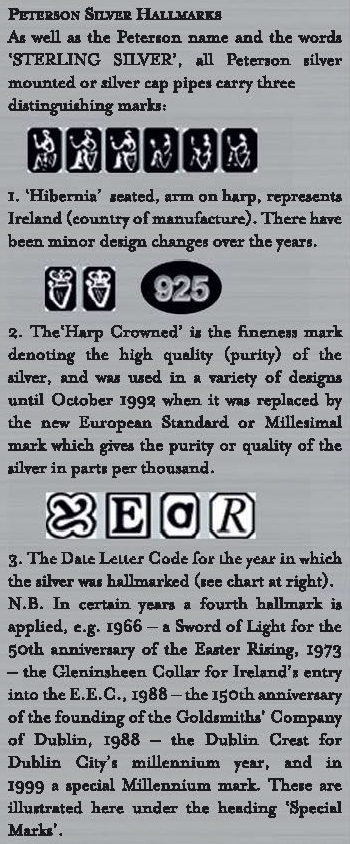
With that information in hand I knew what I was dealing with in terms of the stamping on the pipe. It is a 1980  Republic Period pipe. I also wanted to be able to interpret the hallmarks on the silver band. I have captured a portion of the chart that include below that helps to clarify the meaning of each of the three hallmarks. I like the Hallmark feature on the higher end Peterson pipes with Sterling silver bands. It helps to pin down the date even further.

  • “Hibernia” seated, arm on harp represents Ireland (country of manufacture). There have been minor design changes over the years.
  • The “Harp Crowned” is the fineness mark denoting the high quality (purity) of the silver, and was used in a variety of designs until October 1992 when it was replaced by the new European Standard or Millesimal mark which gives the purity or quality of the silver in parts per thousand.
  • The Date Letter Code for the year in which the silver was hallmarked (see the chart below). In certain years a fourth hallmark is applied – for example 1966 – a Sword of Light for the 50th anniversary of the Easter Rising 1973. There were also other marks used for the fourth hallmark.

The pipe on my table had the Hibernia seated mark (Ireland) followed by the Harp Crowned signifying Sterling Silver percentage and finally in this case a lower case “o”. Each of the hallmarks was in an octagonal cartouche. The chart below helps me identify the date mark to 1980. I have highlighted the 1980 mark with a red arrow in the chart below.

I have included the entire Hallmark chart for ease of reference show any of you be looking to date the pipes that you are working on at present.

From this information and the catalogue page I wanted to see what the original stem looked like then I could go through the other pipes in the estate and see if somehow it had been used on the wrong pipe. I found a pipe that is very similar – an 11S with a thick P-lip stem that did not have the P logo on the side on the Smokingpipes.com online store. I have included both the link and the photo below.

https://www.smokingpipes.com/pipes/new/peterson/moreinfo.cfm?product_id=167772#fullscreenI also found a description of the 11S Deluxe System online on another site:

The 11s Deluxe system is a bent billiard with broad, continuous curves and an extra-stout shank. The high quality briar is carefully selected and incorporates the signature system functionality. The shape is fitted with a black acrylic Peterson-Lip mouthpiece, containing an inner metal ‘condenser’ which facilitates a cooler smoking experience. The aluminum Peterson ‘P’ and large hall marked sterling silver band both signature elements of Peterson craftsmanship, combine wonderfully to create a high quality Peterson pipe.

The description includes the aluminum Peterson “P” on the stem which the example I show above and the pipe I am working is lacking. It seemed to have come out both ways. I went through the other Peterson pipes that Jeff had cleaned up and sent back to me. I found one that had the stem switched with the Deluxe. Here are some photos of the two pipes with the wrong stems. The thicker stem shown at the top of both photos is the proper one for the Deluxe. I removed the stems and took photos of the stems.I put the correct stem in the Deluxe and turned my attention to the pipe. I took photos of the pipe with the right stem. With over 125 pipes to clean from Bob’s estate I am very glad for Jeff’s help cleaning them. He remembers this pipe as one of the really dirty ones in Bob’s estate. He cleaned this filthy pipe with his usual penchant for thoroughness that I really appreciate. This one was a real mess and I did not know what to expect when I unwrapped it from his box. He reamed it with a PipNet pipe reamer and cleaned up the reaming with a Savinelli Fitsall Pipe Knife. He scrubbed out the internals with alcohol, pipe cleaners and cotton swabs until the pipe was clean. He scrubbed the exterior of the bowl with Murphy’s Oil Soap and a tooth brush to remove the grime and grit on the briar and the lava on the rim top. The finish looks very good with great looking grain around the bowl and shank. Jeff soaked the stem in Before & After Deoxidizer to remove the oxidation on the rubber. When the pipe arrived here in Vancouver for the second stop of its restoration tour I was amazed it looked so good. I took some close up photos of the rim top and also of the stem surface. I wanted to show what an amazing job Jeff did in the cleanup of the rim top. The rim top was burned and darkened with nicks and notches around the top and inner edge. I also took close up photos of the stem to show the lack of tooth marks and chatter on the stem surface. It was very clean.   One of the things I appreciate about Jeff’s cleanup is that he works to protect and preserve the nomenclature on the shank of the pipes that he works on. The stamping on this one was very faint to start with so I was worried that it would disappear altogether with the cleanup. He was not only able to preserve it but it is clearer than shown in the earlier photos. I took some photos to show the clarity of the stamping. I have noticed that many restorers are not careful to protect the stamping in their cleaning process and often by the end of the restoration the nomenclature is almost destroyed. I would like to encourage all of us to be careful in our work to preserve this as it is a critical piece of pipe restoration!   I also have included a photo of the cleaned up hallmarks that were noted above. Since this is another pipe Bob’s estate I am sure that some of you have read at least some of the other restoration work that has been done on the previous pipes. You have also read what I have included about Bob Kerr, the pipeman who held these pipes in trust before I came to work on them (see photo to the left). Also, if you have followed the blog for long you will already know that I like to include background information on the pipeman whose pipes I am restoring. For me, when I am working on an estate I really like to have a sense of the person who held the pipes in trust before I worked on them. It gives me another dimension of the restoration work. I asked Brian if he or his wife would like to write a brief biographical tribute to her father, Bob. His daughter worked on it and I received the following short write up on him and some pictures to go along with the words including one of Bob’s carvings. Once again I thank you Brian and tell your wife thank you as well.

I am delighted to pass on these beloved pipes of my father’s. I hope each user gets many hours of contemplative pleasure as he did. I remember the aroma of tobacco in the rec room, as he put up his feet on his lazy boy. He’d be first at the paper then, no one could touch it before him. Maybe there would be a movie on with an actor smoking a pipe. He would have very definite opinions on whether the performer was a ‘real’ smoker or not, a distinction which I could never see but it would be very clear to him. He worked by day as a sales manager of a paper products company, a job he hated. What he longed for was the life of an artist, so on the weekends and sometimes mid-week evenings he would journey to his workshop and come out with wood sculptures, all of which he declared as crap but every one of them treasured by my sister and myself. Enjoy the pipes, and maybe a little of his creative spirit will enter you!

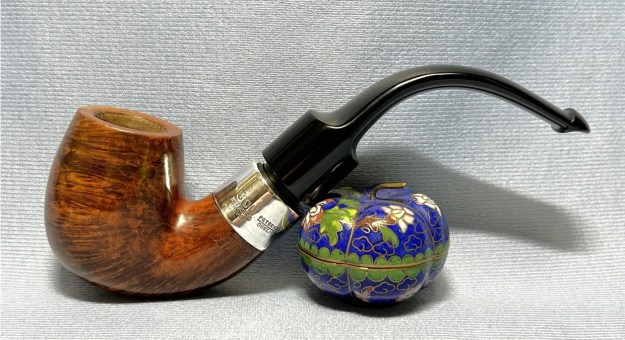
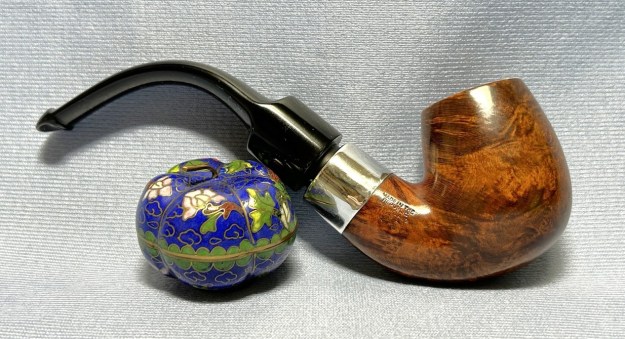
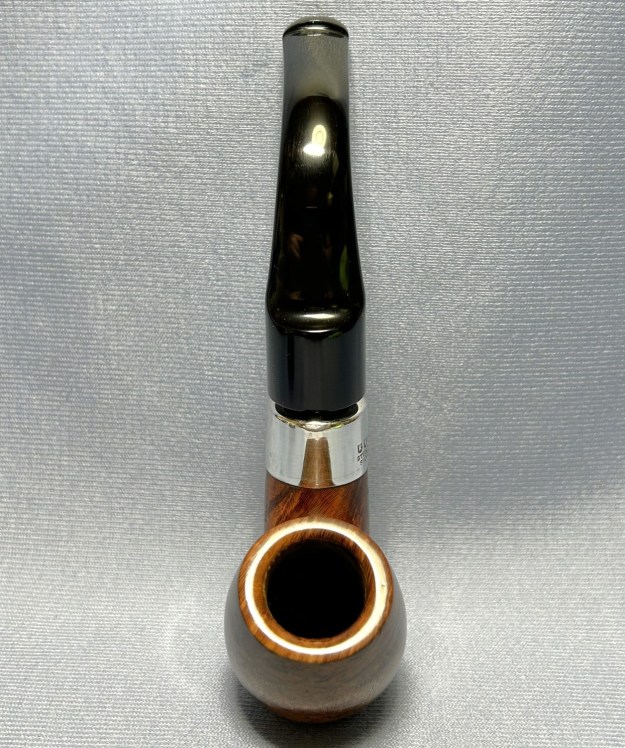
Now with all of the background on the line and the background on Bob Kerr it was time to get on with the restoration of this beautifully grained Peterson’s DeLuxe llS Bent Billiard. I am really coming to appreciate the hard cleanup work that Jeff did on these pipes. They were a real mess when I sent them to Jeff and I have to tell you it was great that I did not need to clean this pipe. I decided to start the process by polishing the briar with micromesh sanding pads – wet sanding it with 1500-12000 grit pads and I wiped the bowl down after each sanding pad with a damp cloth. The bowl began to take on a finished shine.  The stem was in such good condition that I could skip working on it with sandpaper and went directly to polishing it with micromesh sanding pads – wet sanding with 1500-12000 grit pads. I wiped the stem down after each sanding pad with Obsidian Oil. I polished it with Before & After Pipe Stem Polish – both Fine and Extra Fine. Once I had finished the polishing I gave it a coat of a new product I am experimenting with from Briarville Pipe Repair. It is called “No Oxy Oil” and it is made to protect the stem from oxidizing. I set it aside to dry. As usual at this point in the restoration process I am excited to be on the homestretch. I look forward to the final look when it is put back together, polished and waxed. I put the bowl and stem back together. I polished the bowl and stem with Blue Diamond to polish out the scratches in the briar and the vulcanite. I gave the bowl and the stem multiple coats of carnauba wax. I buffed the pipe with a clean buffing pad to raise the shine. I hand buffed it with a microfiber cloth to deepen the shine. The pipe polished up pretty nicely. The grain really pops with the wax and polish. The shiny black vulcanite stem is a beautiful contrast to the browns of the bowl and thick shank. This Peterson’s DeLuxe 11S Bent Billiard was another fun pipe to work on thanks to Jeff’s cleanup work. The pipe almost looks unsmoked. The original Sterling Silver Band/Ferrule works as a contrast between the stem and the briar and binds it all together. It really is a quite stunning piece of briar whose shape follows the flow of the briar. The pipe is comfortable pipe to hold in the hand. The finished pipe is shown in the photos below. The dimensions of the pipe are Length: 6 ½ inches, Height: 2 inches, Outside diameter of the bowl: 1 ¼ inches, Chamber diameter: ¾ of an inch. This beautiful pipe will be going on the rebornpipes store if you would like to add it to your collection and carry on Bob’s legacy. If not, I have a lot more of Bob’s estate to work on of various brands. Perhaps one of those will catch your attention. Thanks for reading this blog and my reflections on the pipe while I worked on it. This is an interesting estate to bring back to life.


Restoring your own Peterson Pipe – Part 2


Blog by Steve Laug

I originally wrote this blog for the Peterson’s Pipe book that Mark Irwin and Gary Malmberg coauthored and just published. Parts of it have been included in the Peterson book but I am including it here so that it can be kept with the blogs of other pipes that I have restored. Part of the reason for rebornpipes is a repository for my learning of this restoration art. It is a beautiful pipe that I am enjoying today after my work on it. Thanks Mark for including it in the book. – Steve

The second Peterson pipe that is up for restoration is a Deluxe 11S. As I did with the first pipe, I detail Mark’s comments below in italics and follow that with my own observations once the pipe arrived on my work table. Before I begin any restoration or refurbishing of a pipe I take time to look it over and get an idea of what the work will entail. I do a thorough analysis of the pipe to determine both the time it will take to restore it and what challenges I will face in the process. This old Peterson came with some interesting challenges on the stem and very few on the bowl.

Preliminary Observations:
Pipe #2. An 11S System billiard from 1973, hand cut stem, really tired. Interesting stem and button problems—none too severe. The sterling band has been removed and reglued (old glue marks still plainly visible) slightly higher; band top bent down all around mortise to allow stem to appear closer to stummel—a bit of “retro” nostalgia, perhaps. Carbon build up on rim and in bowl commensurate with pipe’s age. Bowl dark from long use and little care.

Pipe #2.The pipe is stamped on the left side of the shank Peterson’s Deluxe. On the right side it is stamped Made in the Republic of Ireland and the shape number 11S. The silver band is stamped Peterson’s over Dublin on the left side. Next to that is the stamp Sterling over Silver. On the underside it bears the three hallmarks, the last of which is a lower case “d” which dates the pipe as having been made in 1971 as opposed to the date of 1973 Mark noted above. A first pass over the pipe showed that the finish was in quite good shape. I was dirty and a thin coat of grime and oily dirt had dulled the finish of the bowl. The stain looked to be in excellent shape under the grime. There were no serious dents or scratches on the bowl or rim (Photos 1 – 2). As Mark noted the silver band had been removed and reglued. Not only the old glue marks showed that but also the spillage of over filled glue and the gap between the folded shank end of the silver and the briar inside the band. The gap accounted for the difference between the old glue and the new. In examining the band it appears to be beveled inward rather than bent inward to appear closer to the stummel. The band had also been put on incorrectly in terms of the alignment of the stamping. It was turned to the right about a 1/8 turn so that the Peterson’s stamp was not aligned as it was in the pictures that I looked at for comparison. The silver had one significant dent in it on the right top edge – a slight pucker outward on the side and inward on the top of the shank. I was also very tarnished, a blue black in colour making it hard to read the hallmarks. Moving to the rim I was pleased to see that it had been well cared for. The inner and the outer edge of the rim were both undamaged. The slight chamfer on the inner rim was also undamaged. The cake was broken and full of pits and holes. The back edge of the rim had a build up on it that was not too thick and would quite easily be remedied.

Photo 1 Left Side View

Photo 2 Right Side View

Removing the stem I could see a gap between the top of the shank and the folded top edge of the silver band. It matched the distance between the bottom of the band and the glue line on the shank. That explained the gap. The band had been reglued higher on the shank, possibly to accomplish what Mark noted above – to bring the stem closer to the shank. The interior of the mortise and the sump was actually pretty clean. There was no grime or tarry buildup in the shank or sump. I was quite surprised. It looked as if it had been recently cleaned. The bowl smelled of latakia and strong English tobacco (Photo 3 – 4). The stem itself was good at the insert end. The screw in plastic tip that is on the Deluxe Peterson pipes was in place and in good shape. There was one flattened spot on it but it easily unscrewed from the tenon. The top side and underside of the stem near the button were dented with tooth marks. The ones on the underside were quite shallow. On the top surface there were 6 dents and several were quite deep, several actually had broken the surface of the vulcanite rather than denting it. The 90 degree top edge of the button had been flattened by tooth marks. There was a large piece missing. It was no longer sharp and distinct. There were also several tooth marks cutting into the edges of the air hole in the button. The stem was not too badly oxidized and should clean up quite easily (Photo 5 – 6). The underside of the stem is stamped Hand Cut. The photos below highlight the areas of concern that would need to be addressed in a restoration/refurbishment.

Photo 3 Top view of the bowl and the metal cap/band

Photo 4 Bottom view showing the inner chamfering of the end of the band/cap

Photo 5 Top view of stem damage

Photo 6 Underside view of the stem

I began the restoration, as has become a natural rhythm, by cleaning the internals of the pipe. I reamed the bowl with a PipNet reamer. It is pictured in Photo 7 as a T handle and 4 different cutting heads. I generally start with the smallest head or the one that fits most easily into the bowl. I am careful to hold the head straight up and down while I am working on the bowl as it is easy to misalign the reamer and cut the bowl out of round. I work from the smallest head that fits until I get to the one that takes the cake back until the briar is bare. When I am working on a pipe that I intend to keep for myself I like to remove the cake and start over. Photos 8 – 10 show the process of the reaming with the PipNet and the finished bowl after reaming.

Photo 7 Pip Net set and Peterson 11S before reaming

Photo 8 Peterson Bowl with #1 Pip Net head inserted

Photo 9 Peterson Bowl with #2 Pip Net head inserted

Photo 10 Peterson Bowl after reaming

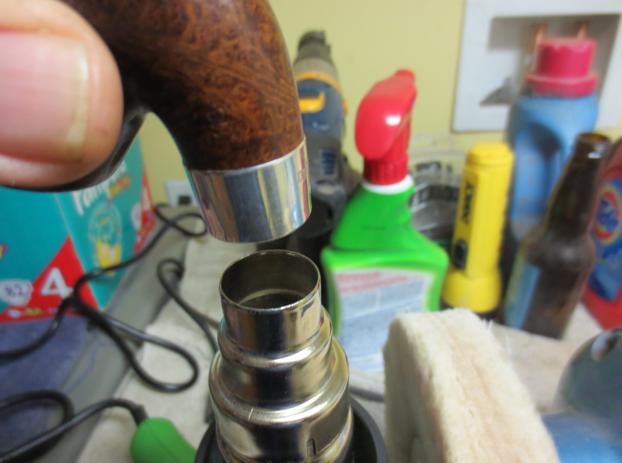
Sometimes at this point I will clean the internals but the band bothered me so I decided to address that issue next. It was not only lifted about a 1/8 inch leaving a gap between the end of the shank and the end of the cap, it was also turned in such a way that the stamping was not aligned as it originally had been (Photos 11 – 12). The band was turned about a 1/8 turn to the right. I found photos of the 11S on the internet that showed the original position of the band and I wanted to bring this band back to match the position shown in the photos.  I heated the band with my heat gun to soften the glue so that I could turn the band to the correct position and also press it back into place on the end of the shank (Photos 13 – 17). Eventually I wanted to flatten he beveled edge of the band to make the surface flush once again but would do that a little later in the process.

Photo 11 Gap between end cap/band and the end of the shank

Photo 12 Heating the band to adjust and reset it

Photo 13 Heating the band

Photo 14 pressing the band into place

Photo 15 Adjusting the stamping on the band – putting it in place

Photo 16 The gap is closed

Photo 17 End view of the closed gap

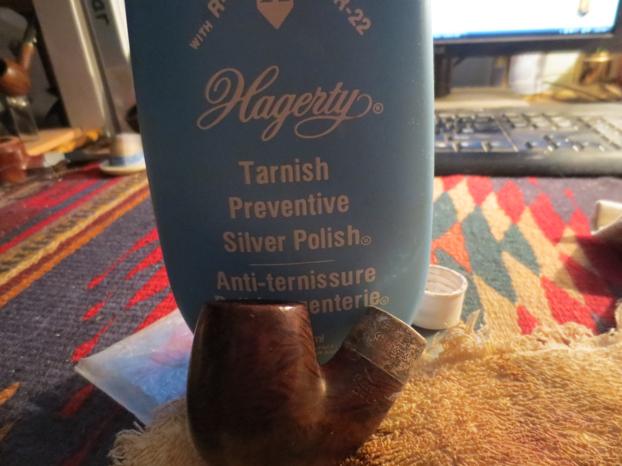
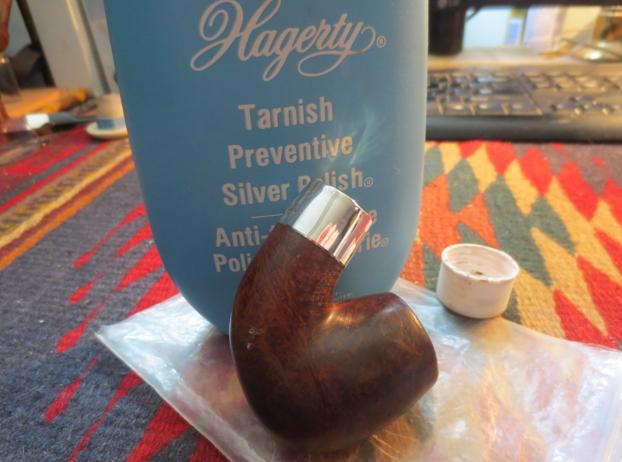
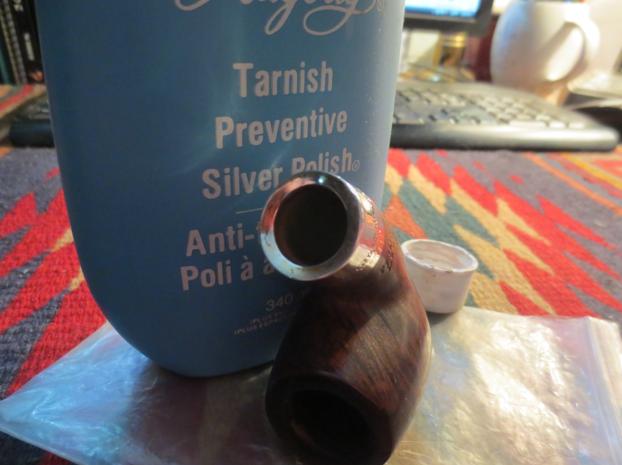
I decided to clean up the band with silver polish and remove the tarnish from the surface. All of this was preparatory for the work I would do later to flatten the end of the band against the shank. In order to do that correctly I needed to clean off any of the build up so that as I flattened the band it would not have ripples or added dents in the surface (Photos 18 – 21). I use Hagerty Tarnish Preventive and Silver Polish to clean up a band as badly tarnished as this one. The jeweler’s cloth is far more labour intensive and this polish really cuts the tarnish and raises a shine. I apply it with a finer and rub it into the surface and then scrub it off with a cotton pad. Once I have removed the tarnish I finish by wiping down the band with the jeweler’s cloth.

Photo 18 Polishing the silver

Photo 19 Polishing the silver

Photo 20 Polishing the silver

Photo 21 Polishing the silver

To clean up the exterior of the bowl I use Everclear on a cotton pad. I wetted the pad with Everclear and wiped down the exterior of the bowl to remove the grime and build up. I have found that the alcohol removes the grit and grime as well as the wax that has been used on the bowl but does not damage the stain like an acetone wipe would. For the rim I scrubbed it down with the Everclear and then used a fine grit sanding sponge to loosen the hard tars that remained. I scrubbed, sanded and scrubbed until the rim was smooth and clean. This scrub down gives a clean surface to work with when doing the repair on the band (Photos 22 –27). When I had finished the cleaning both the bowl and the band the dents in the band were very visible and I knew clearly what I was working with in the upcoming repair.

Photo 22 Wiping down the rim with Everclear

Photo 23 Wiping down the rim with Everclear

Photo 24 Bowl after cleaning with Everclear

Photo 25 Bowl after cleaning with Everclear

Photo 26 Rim after cleaning with Everclear

Photo 27 Rim after cleaning with Everclear

I then cleaned out the shank and sump area to remove the tars and oils. I wanted to do this prior to heating the end of the band/cap with the heat gun. I have found that if I do not clean it prior to heating the oils and tars melt with the heat and make a huge mess of the work area. I used Everclear and cotton swabs to clean the shank and sump. It generally takes many swabs before the shank is clean (Photos 28 – 29).

Photo 28 Cleaning the shank and reservoir prior to heating

Photo 29 Shank and reservoir cleaned and ready

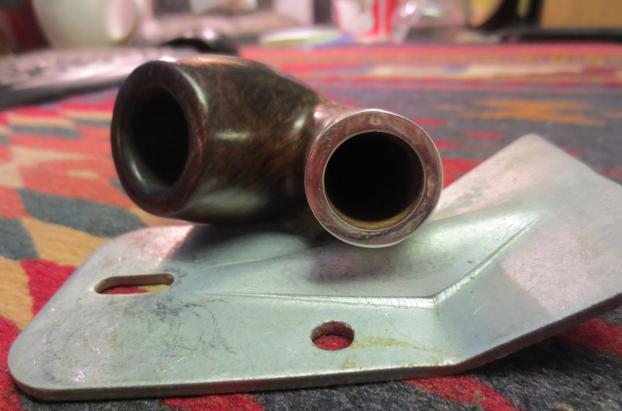
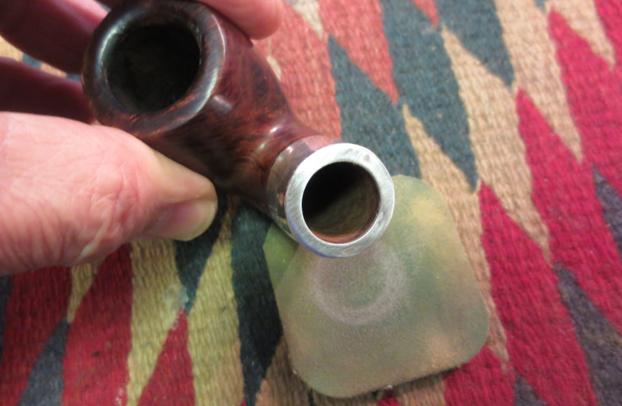
I took the pipe bowl to my heat gun and held the bowl shank down over the heat source. At this point I wanted to both soften the glue a second time and also soften the silver in order to be able to press it flat (Photo 30). I held it in position as long as I was able, took a break to cool the fingers and then did it a second and third time. I wanted silver very pliable. Once it was heated I pressed hard against a steel plate that I use for pressure fitting bands into place (Photo 31). I repeated the heating and the pressing until the end of the band was once again flat against the end of the shank. Photos 32 and 33 show the end of the band/cap after pressing it flat the first time.

Photo 30 Heating the end of the cap

Photo 31 pressing the cap on a steel plate to flatten it

Photo 32 After pressing it flat the first time

Photo 33 End view after pressing it flat

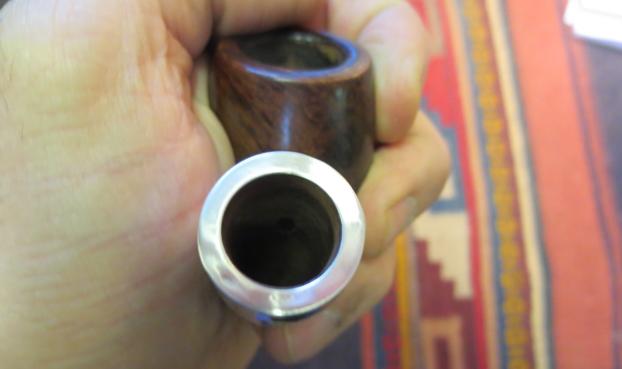
I then sanded the band surface with micromesh sanding pads. I started with 1800 grit and then polished the end with each successive grit of micromesh from 2400-12,000 (Photos 34 – 35). By the end of the sanding and polishing process the surface of the band is flat and relatively smooth. I was able to remove many of the dents with the repeated heating and pressing against the steel surface. In Photo 35 you can still see the few remaining dents that I was not able to remove. The overall look is greatly improved and with the stem in place the pipe looks as it supposed to in terms of the gap between the end cap and the stem.

Photo 34 Polishing the silver end cap with micromesh

Photo 35 End view after polishing

With the work on the bowl finished to this point, I gave the silver band a quick polish with the jeweler’s cloth and rubbed down the bowl with some Conservator’s Wax and hand buffed it. I set it aside and turned my attention to the stem. The condition of the stem would make it necessary to use several of the tricks I have learned over the years to deal with dents, tooth marks and bite marks. Dents are always relatively easy and can be dealt with by heating the stem surface with either a Bic lighter or a heat gun to lift the vulcanite back into place. Vulcanite has memory so heat causes the surface to expand back to fill the dents and some of the shallow tooth marks. Bite marks are another problem all together. The surface of the stem has actually been cut and no amount of heat will lift the surface. A different method needs to be used to repair this kind of damage. This stem had both problems (Photos 36 – 37). There were also some divots or missing parts of vulcanite on the top edge of the button and around the opening into the airway on the button. This would need to be addressed in a different way.

Photo 36 View of the tooth mark on the underside of the stem

Photo 37 View of the tooth damage on the top side of the stem

I heated the top and underside of the stem with a Bic lighter. The key in this process is moving the flame of the lighter quickly across the surface of the vulcanite. Never leave it in one place as it will burn the vulcanite and cause more damage. Move the flame across the surface until it is heated. The lesser damaged areas will lift with this kind of heat very easily and then will need to be lightly sanded to remove the damage (Photos 38 – 39). A heat gun will be used to lift the larger dents.

Photo 38 Tooth marks after heating with a Bic lighter to lift the dents

Photo 39 Underside of the stem after heating with a Bic lighter to lift the dents

I followed up the heating with the lighter by sanding the surface of the stem with 220 grit sandpaper. Sanding has a dual purpose – it removes the signs of the small dents and at the same time highlights the areas that will need to be addressed with other methods. Photo 40 shows the top of the stem after sanding. There are three large spots that are actually both dents and cuts in the surface. The divot on the button is also very clear in this photo. Photo 41 shows the underside of the stem and the two remaining shallow dents that more heat will lift and remove.

Photo 40 Tooth marks after sanding with 220 grit sandpaper

Photo 41 Tooth marks on the underside of the stem after sanding with 220 grit sandpaper

To further work on the tooth marks I took the stem to the heat gun. I held the stem surface1-2 inches above the tip of the gun (Photo 42). Again the idea is to keep the stem moving over the heat. If it is held still in one place too long the vulcanite burns and the damage that occurs is worse than the dents. The heat lifted the remaining small dents on the underside of the stem and they were invisible after sanding. The dents on the top of the stem lifted considerably but not totally. The smaller ones only needed a little sanding to disappear. The large cut area I filled in with black super glue. I used black super glue to also build up the divot area on the button and the deeper dents and divots around the airhole (Photos 43 – 44). Once the glue was in place I set the stem aside in an upright position so that the super glue would dry and not run off the surface. Drying generally takes 6-8 hours to dry to touch. Once it is dry to touch I sand the excess away and add a second coat in the places that need more building up (Photos 45 – 46). Photo 47 shows the side profile of the button after the superglue has dried and the surface has been sanded.
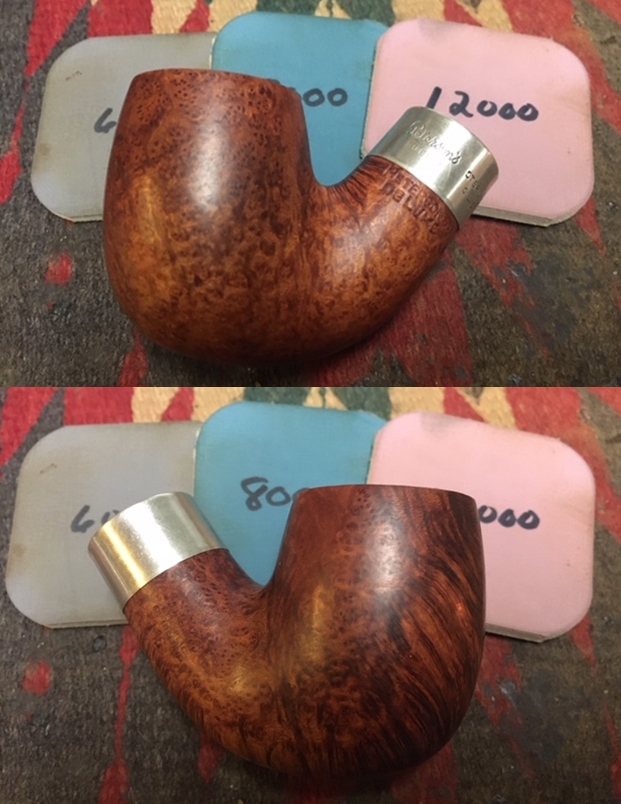
Photo 42 Heating the dents with a heat gun

Photo 43 Building up the divot on the button with black superglue

Photo 44 Black super glue build up on the button

Photo 45 Super glue cleaned up with sand paper. Second coat applied to the divot area

Photo 46 second coat of superglue on the divot on the button

Photo 47 Stem profile after building up with black super glue

After I have reshaped the button and repaired the divots and cut areas on the stem it was time to sand the whole stem with the micromesh sanding pads. The sanding process blends in the repaired areas with the rest of the stem surface. I started sanding the stem with 1500 grit micromesh and worked on the edges of the button on the top side and also the ridge on the underside. I wanted these sharp edges to be clearly defined so I spent extra time with the coarser grit in order to sharpen these edges (Photos 48 – 49). I sanded with 1800 grit micromesh and further defined the edges and blended the patches into the stem surface (Photos 50 – 51).

Photo 48 Superglue repair after sanding with 220 grit sandpaper and 1500 grit micromesh. Tooth marks are also gone

Photo 49 the underside of the stem – sans tooth marks

Photo 50 – sanding the top of the stem with 1800 grit micromesh

Photo 51 sanding the underside of the stem with 1800 grit micromesh

The next series of photos (Photos 52 – 58) shows the progressive shine that the micromesh sanding pads bring to the surface of the vulcanite. Each of the successive grits of micromesh gives a deeper polish and a higher sheen. It always is amazing to me to see the difference in shine between the last four grits – 4000, 6000, 8000 and 12,000. Each one takes the shine to another level. When the sanding is completed all that remains is to buff the stem with White Diamond on the buffing wheel and then give it multiple coats of wax to protect the shine and prevent oxidation.

Photo 52 Sanding with 3200 and 3600 grit micromesh

Photo 53 sanding with 3200 and 3600 grit micromesh

Photo 54 sanding with 4000 and 6000 grit micromesh

Photo 55 sanding with 4000 and 6000 grit micromesh

Photo 56 sanding with 8000 and 12,000 grit micromesh

Photo 57 sanding with 8000 and 12,000 grit micromesh

Photo 58 End view of the button after sanding

I rubbed down the pipe with the Conservationist’s Wax and set it aside to dry for a few moments while I cleaned up the sanding pads. Once it was dry I hand buffed it with a soft cotton cloth to give it an initial shine and to highlight any areas that had scratches that I needed to sand some more before buffing it on the buffer (Photo 59).

Photo 59 Coated with Conservationist’s Wax

After hand buffing, I took the pipe to the buffing wheel and buffed it with White Diamond. The next series of photos shows the pipe after buffing with White Diamond (Photos 60 –65).

Photo 60 right side after buffing with White Diamond

Photo 61 left side after buffing with White Diamond

Photo 62 top view after buffing with White Diamond. Note how the patch on the stem surface is blended into the shine

Photo 63 bottom view after buffing with White Diamond

Photo 64 pipe in pieces after buffing with White Diamond

Photo 65 pipe in pieces after buffing with White Diamond

The next five photos show the finished pipe after several coats of carnauba wax and a buff with a clean flannel buffing pad on the buffer. The stem looks new and the shine is deep and rich. The silver has a warm glow and the briar is clean and fresh looking. The top of the band on the shank is smooth with just a few small dents that could not be removed. The rim has been cleaned and restored. It is polished but it is not flawless, it does show its age but it shows it well.

Photo 66 The finished view of the left side of the pipe

Photo 67 The finished view of the right side of the pipe

Photo 68 Bottom side view of the finished pipe. The stem is undented and looks new

Photo 69 Top side view of the finished pipe

Photo 70 Another top side view of the finished pipe