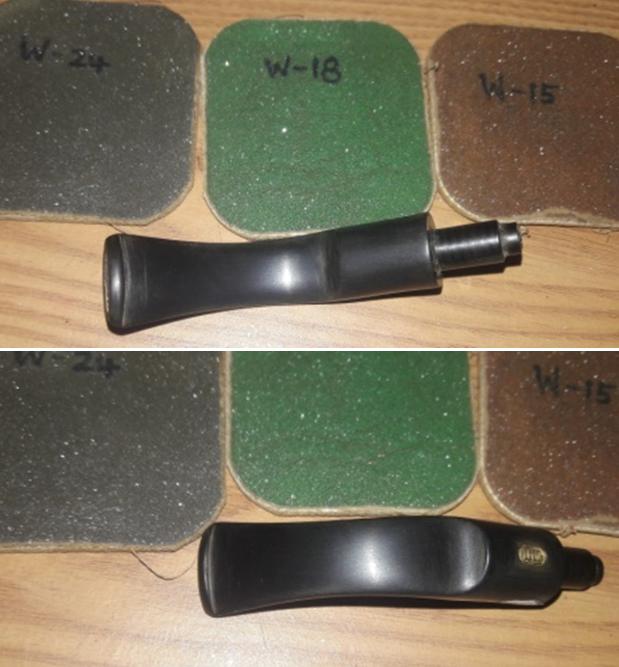
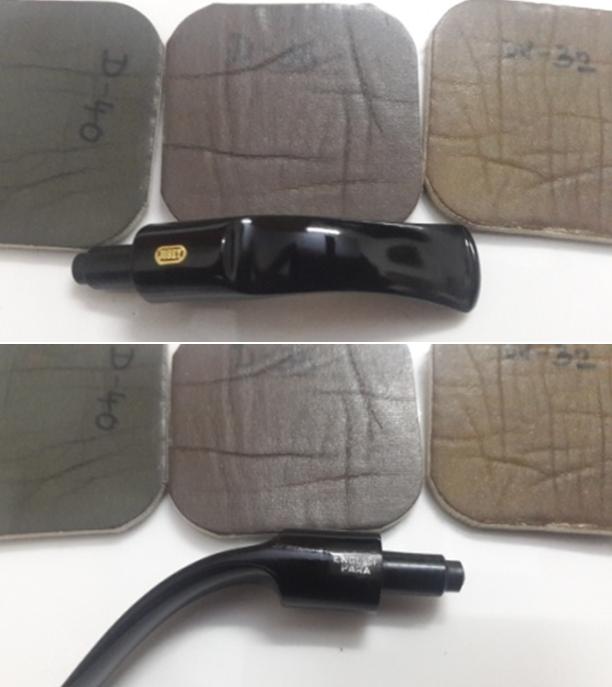
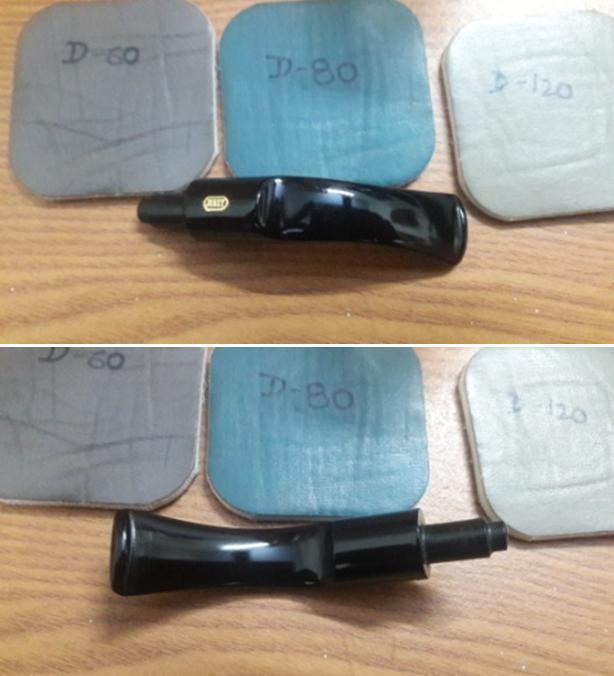
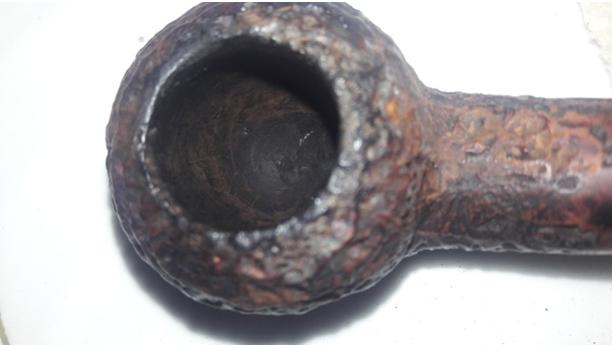
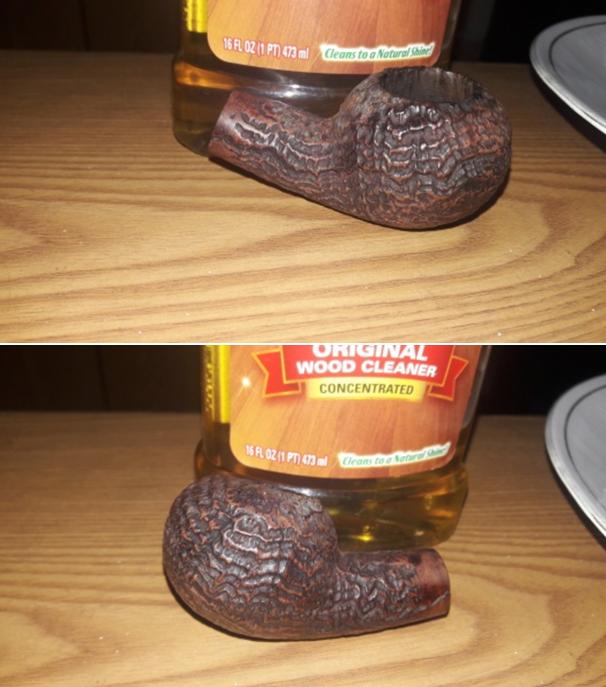
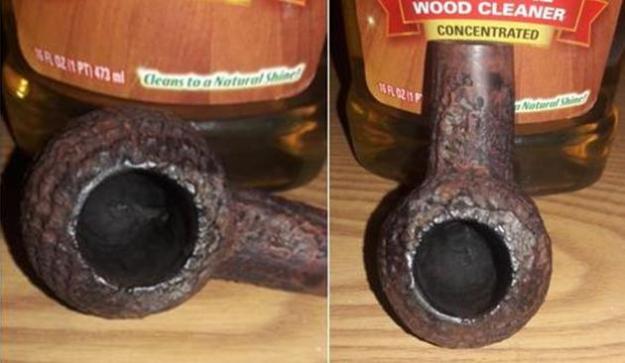
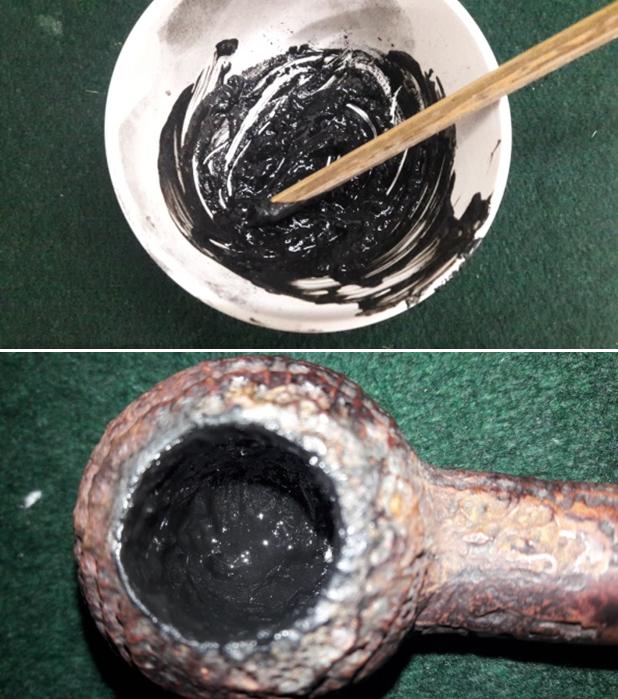
Tag Archives: Paresh Deshpande article

Restoring a Soren Hand- Carved Sitter Pipe


Blog by Paresh Deshpande

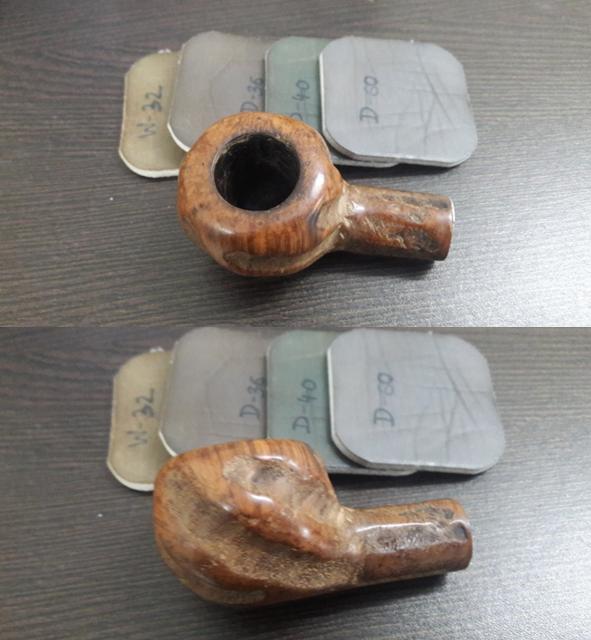
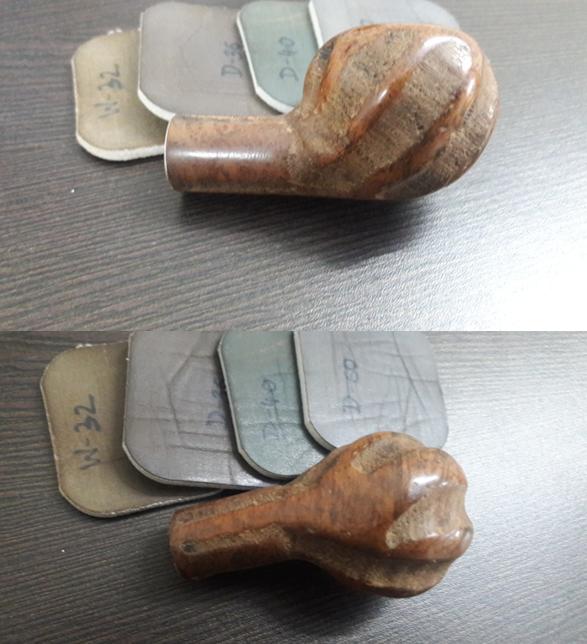
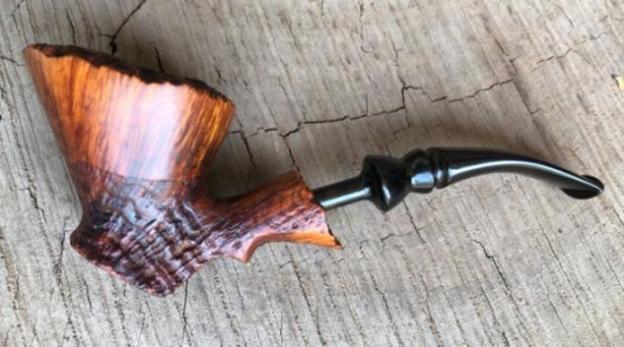
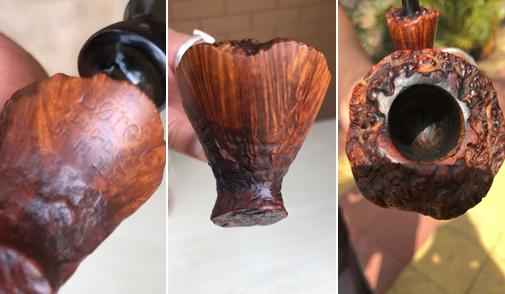
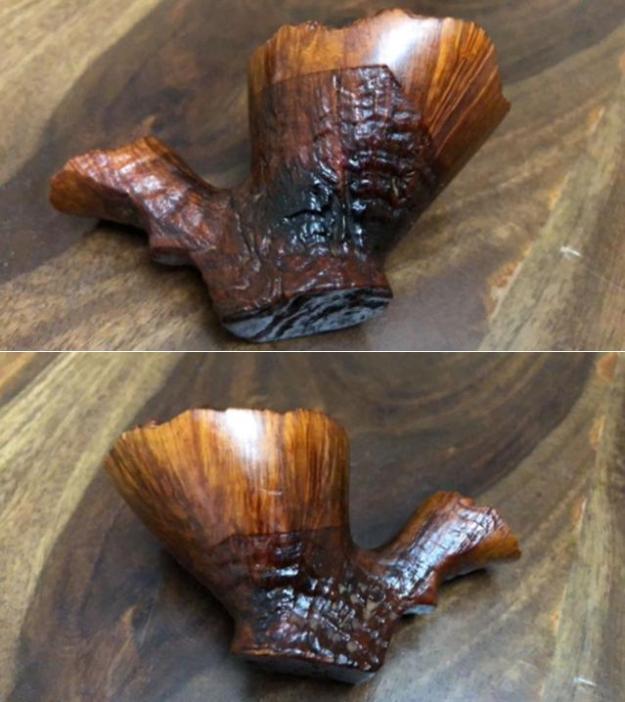
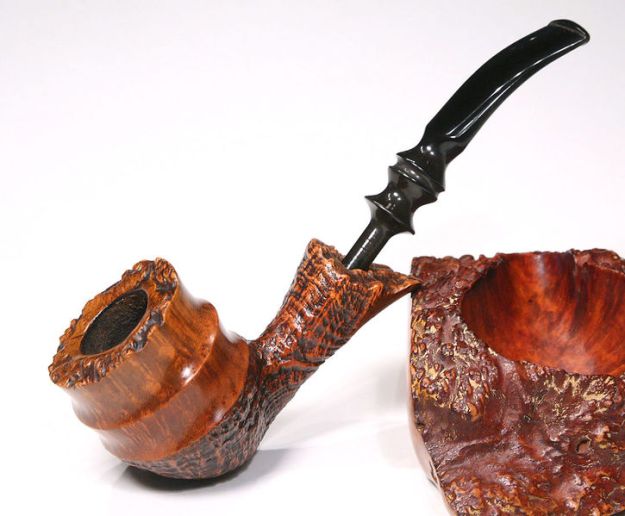
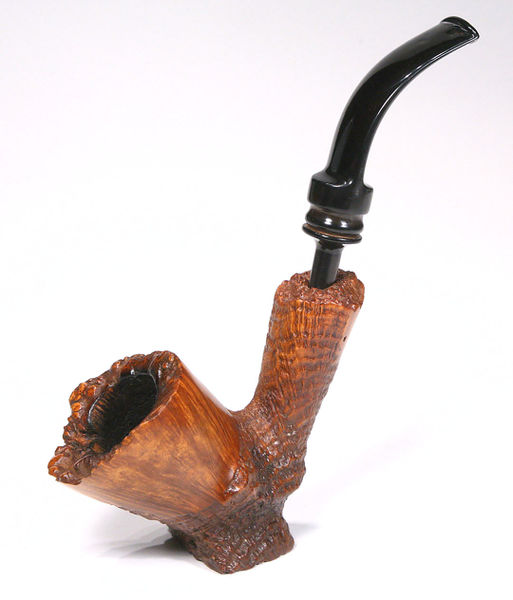
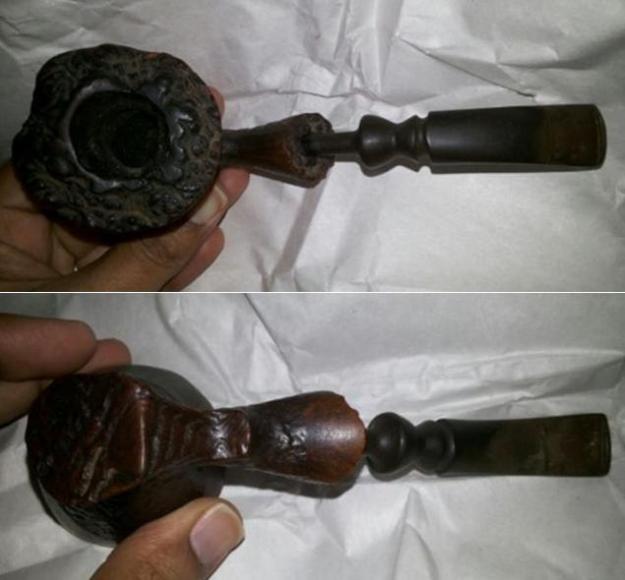
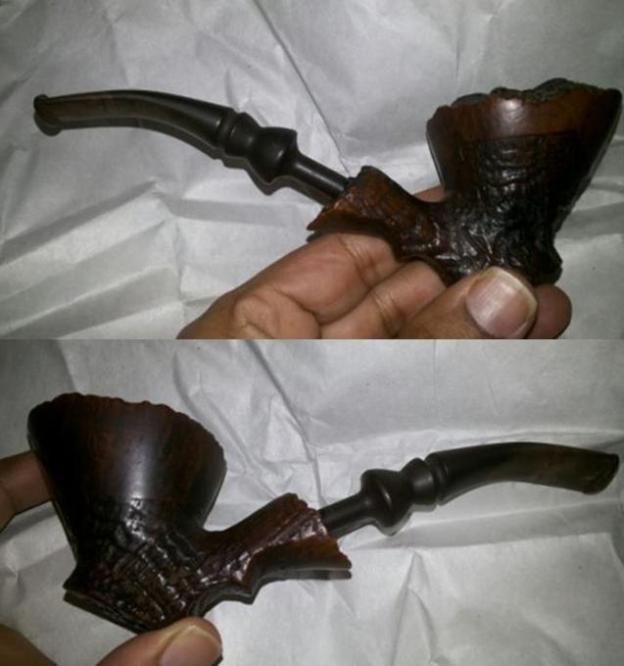
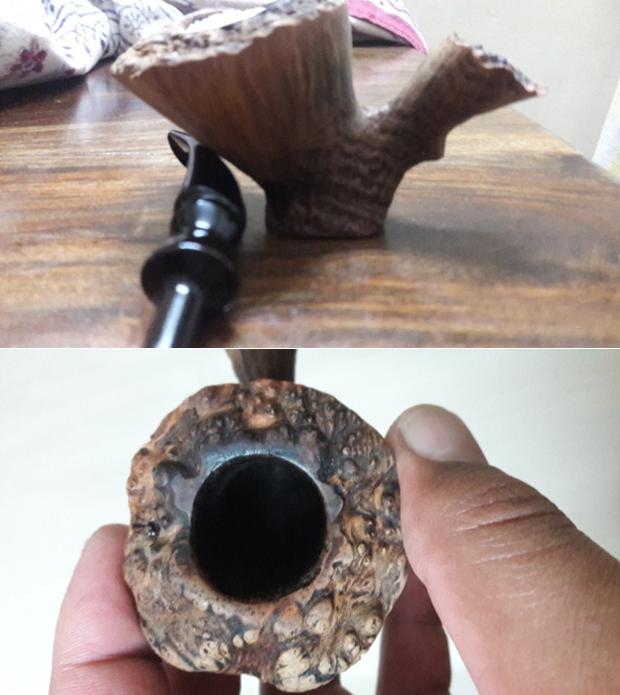
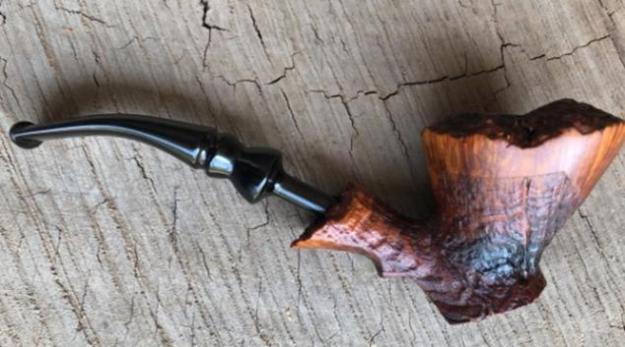
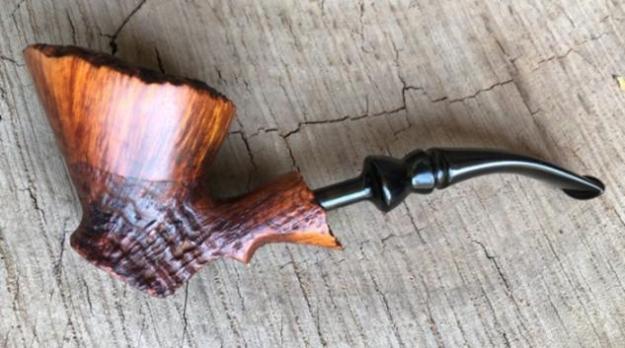
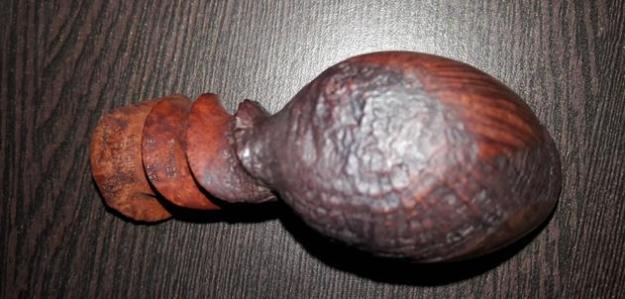
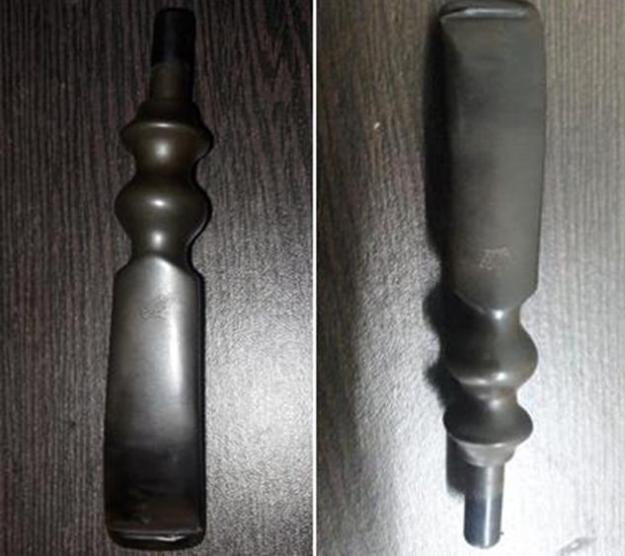
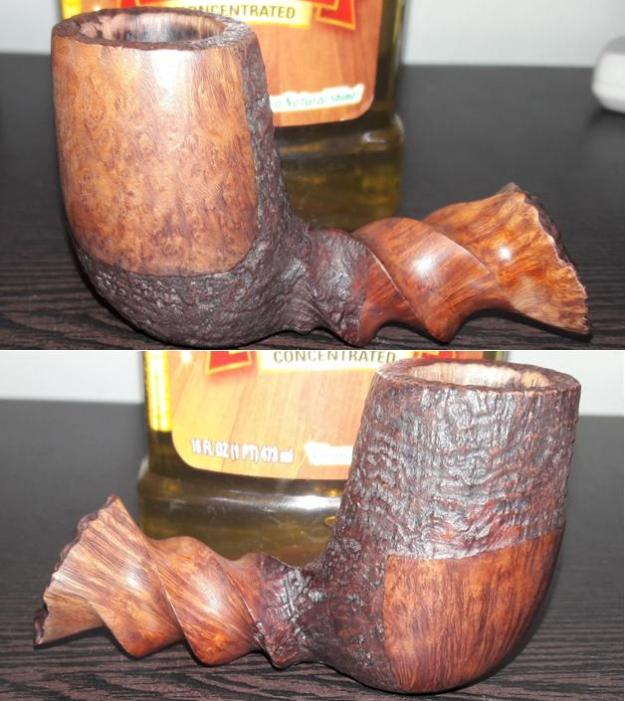
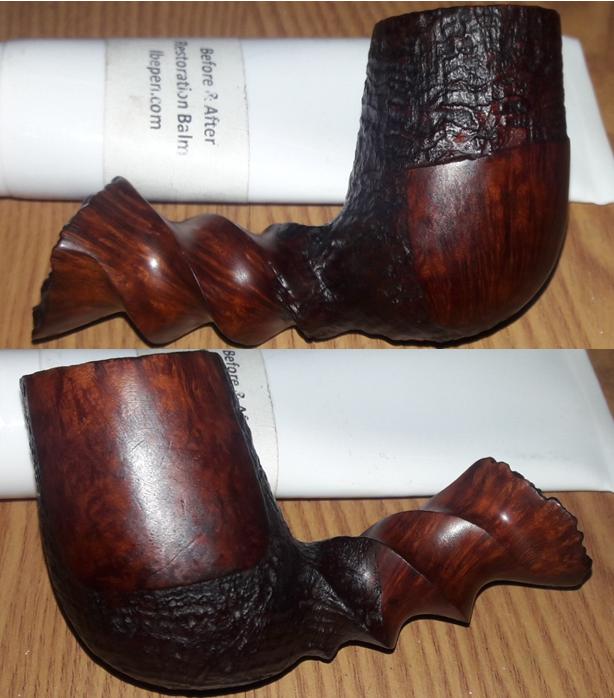
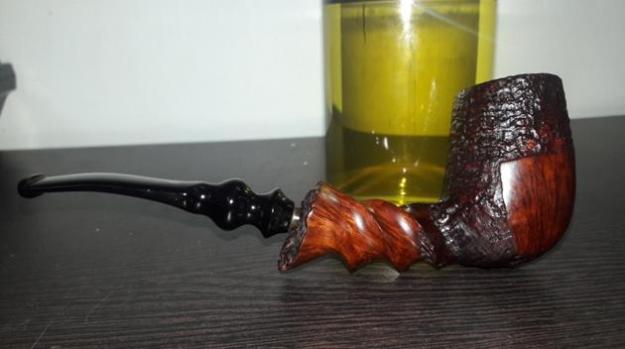
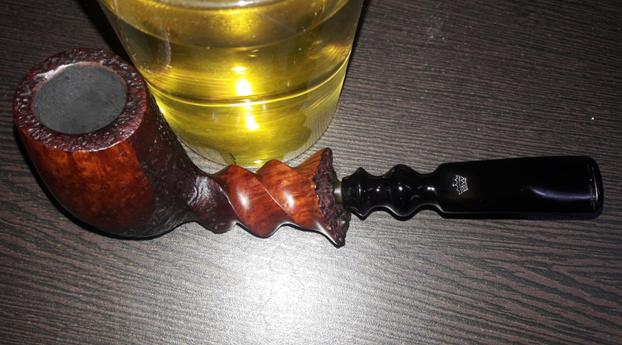
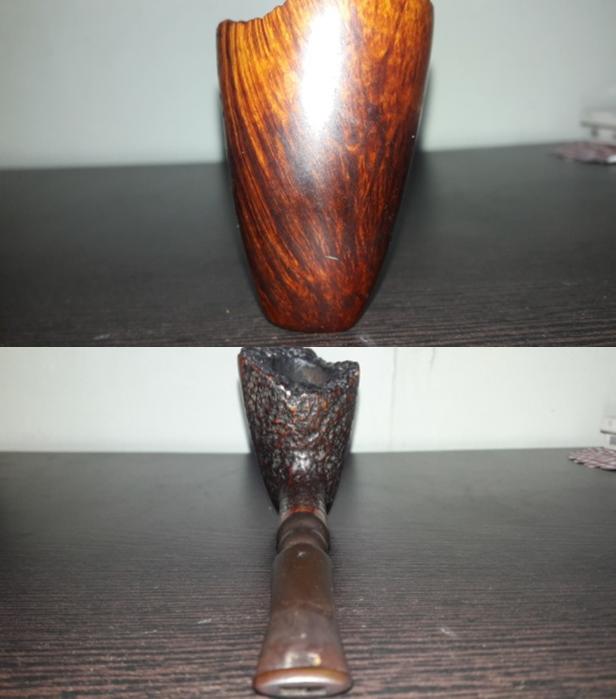
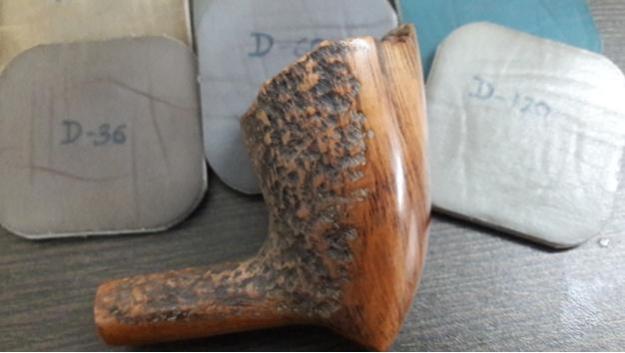
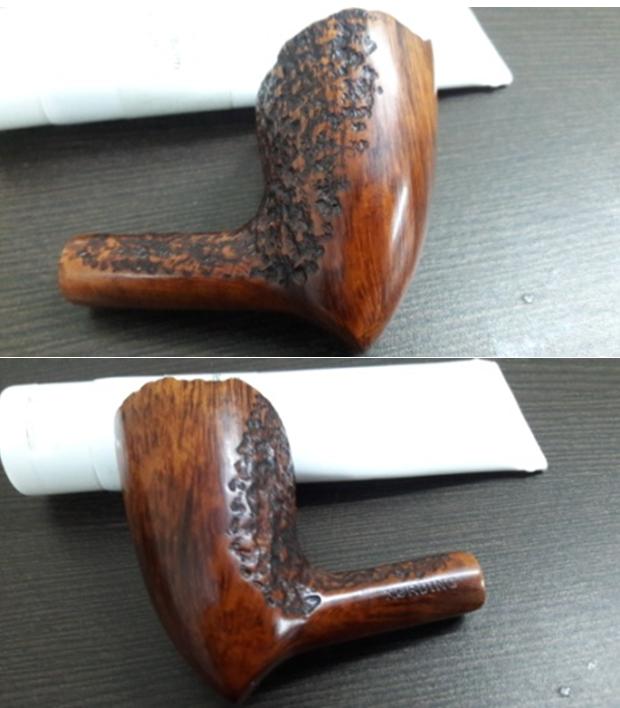
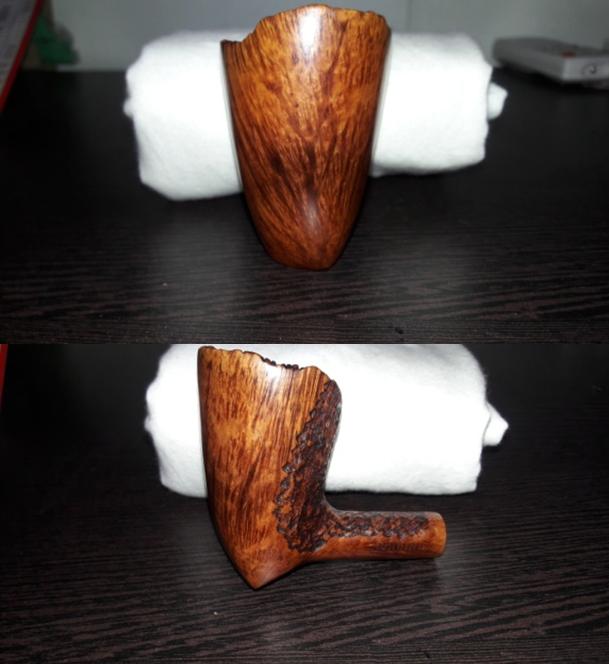
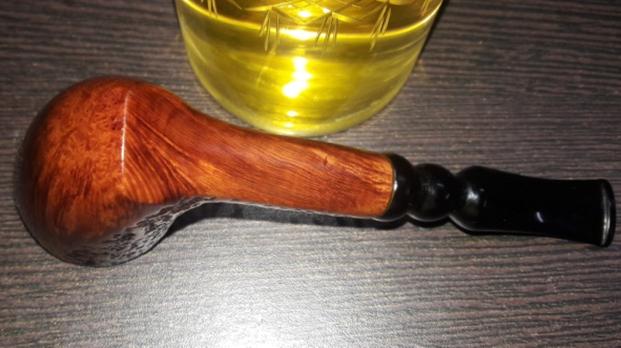
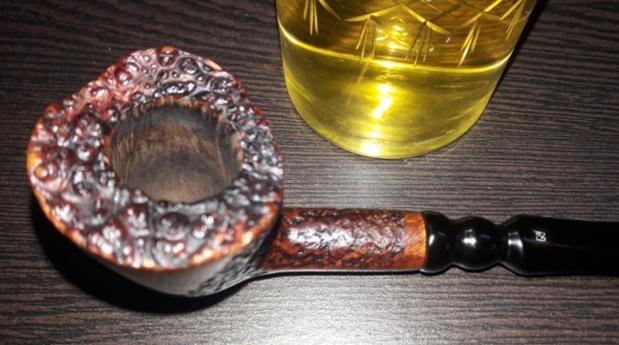
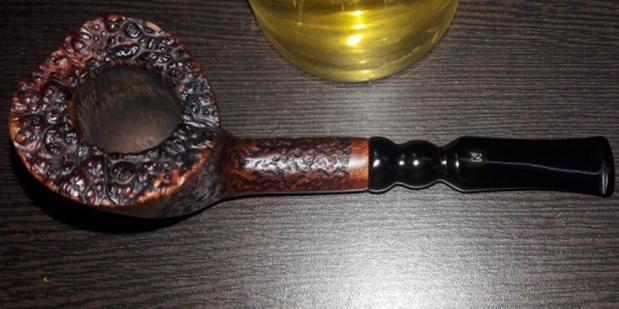
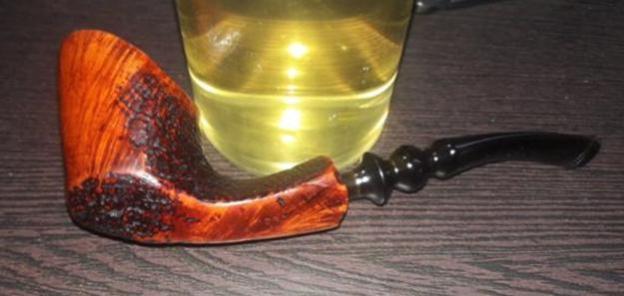
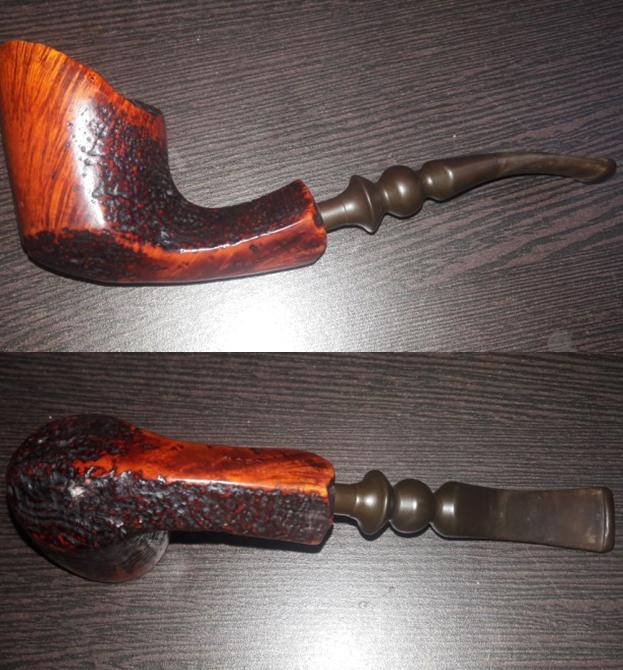
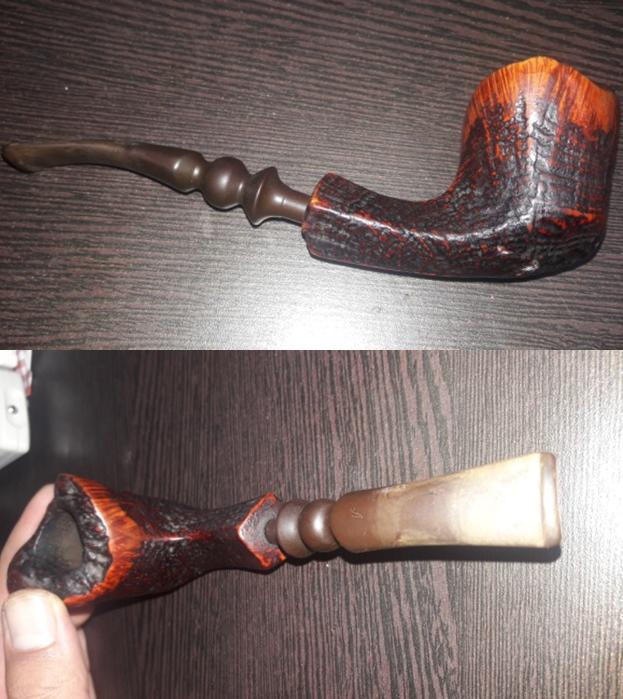
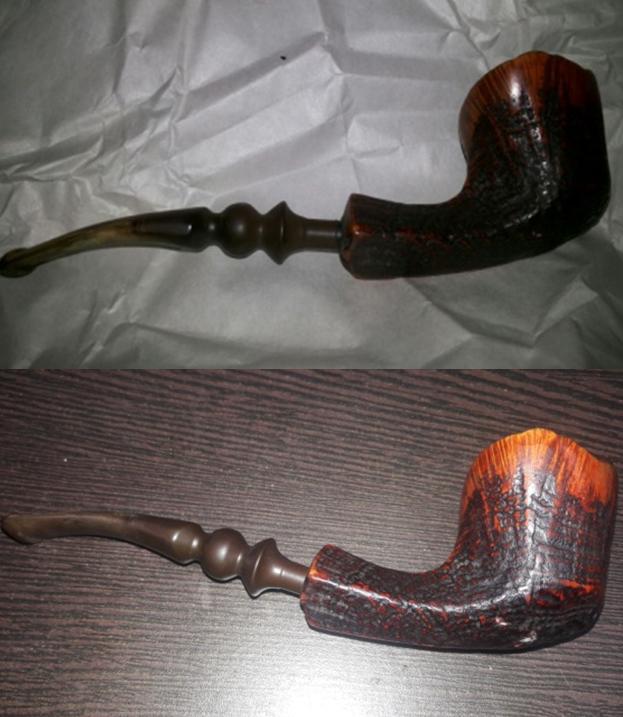
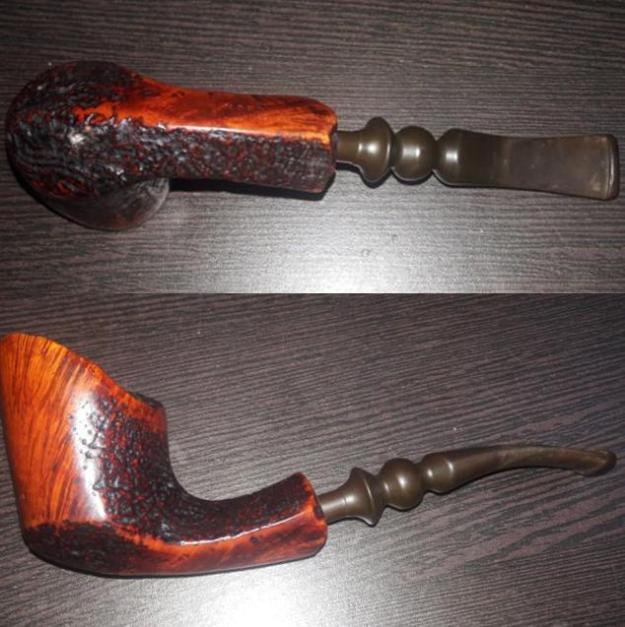
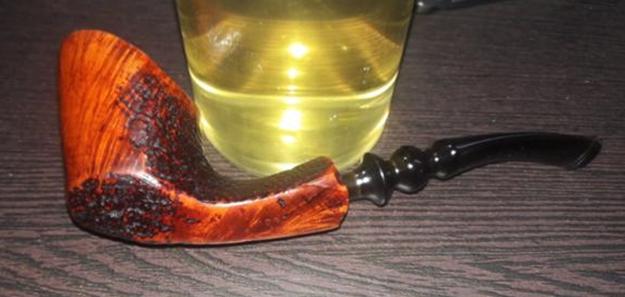
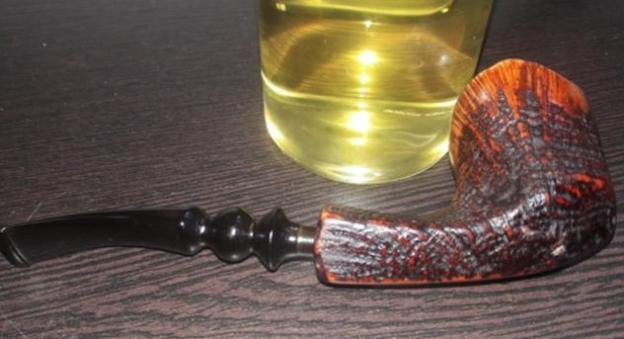
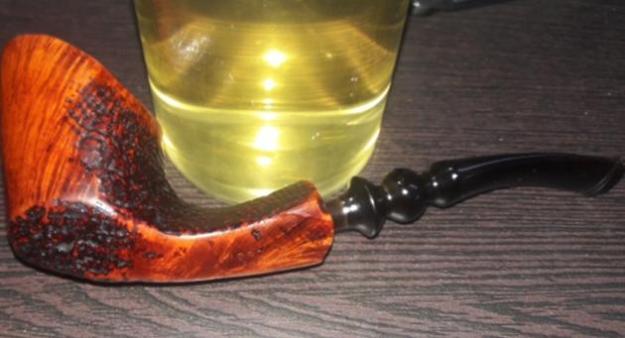
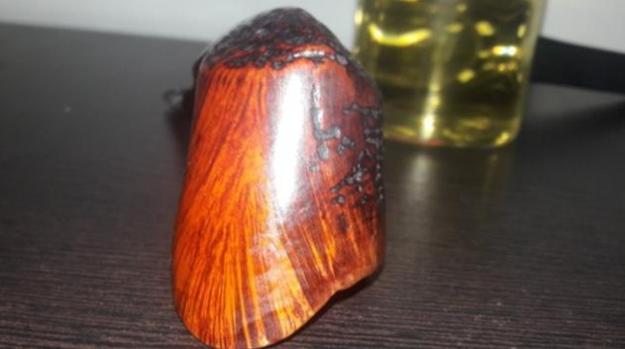
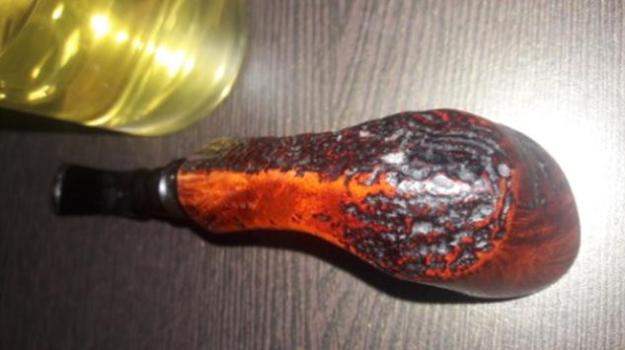
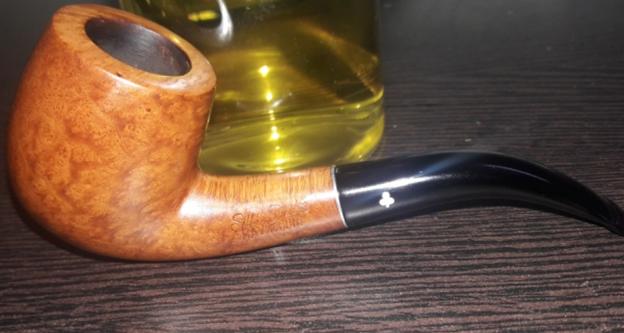
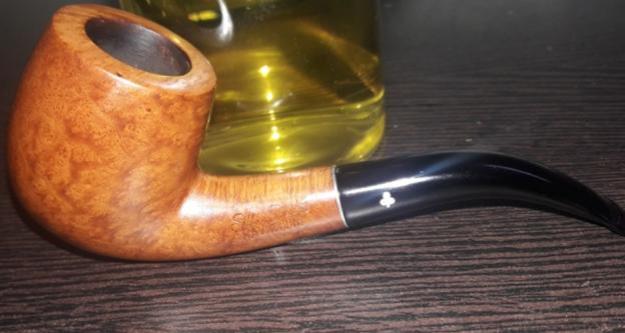
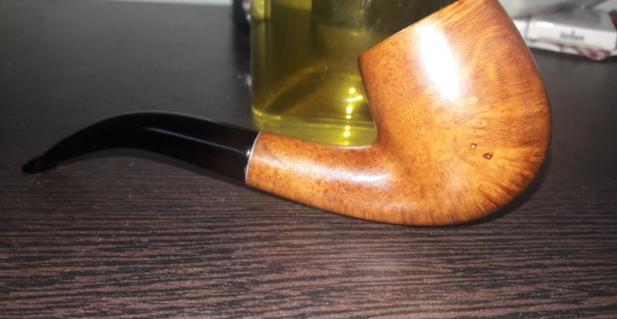
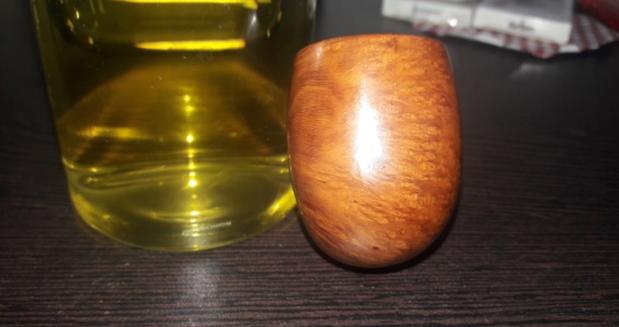
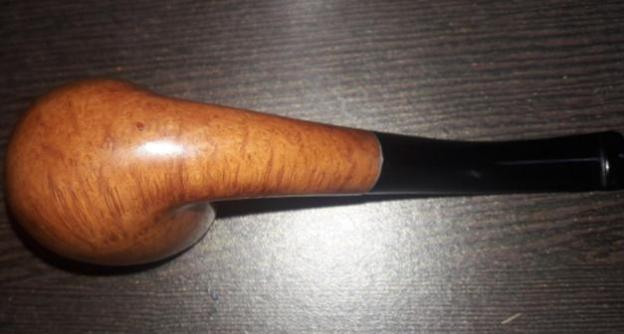
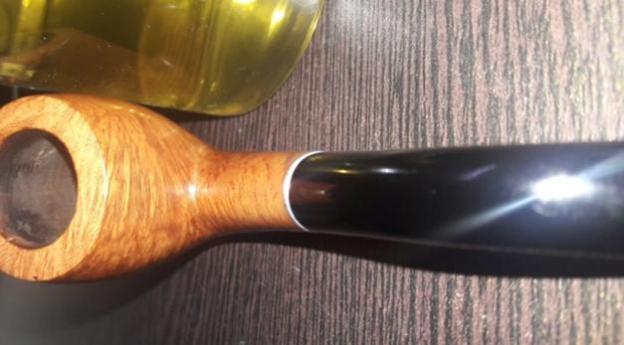
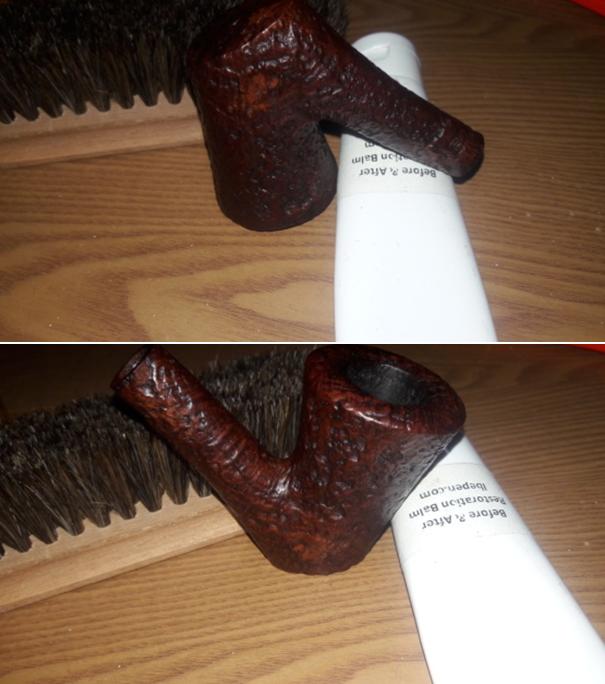
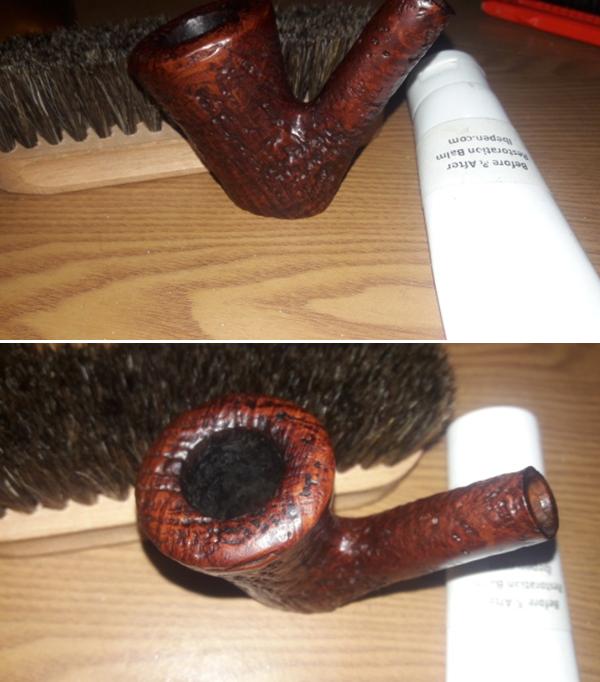
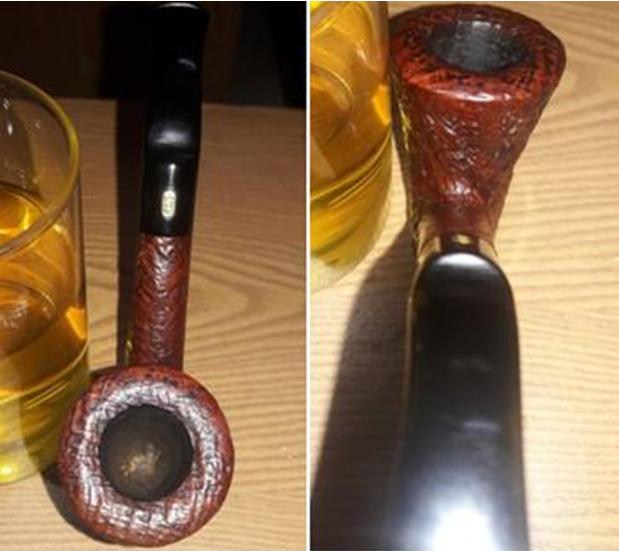
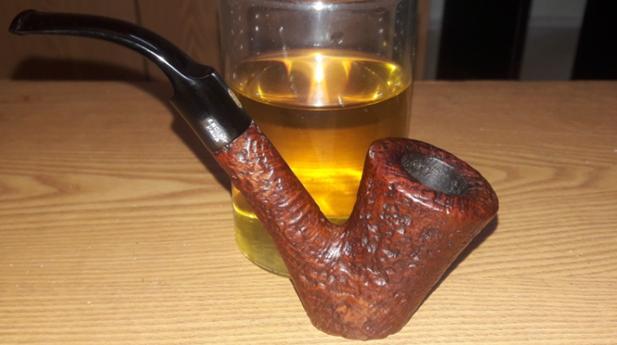
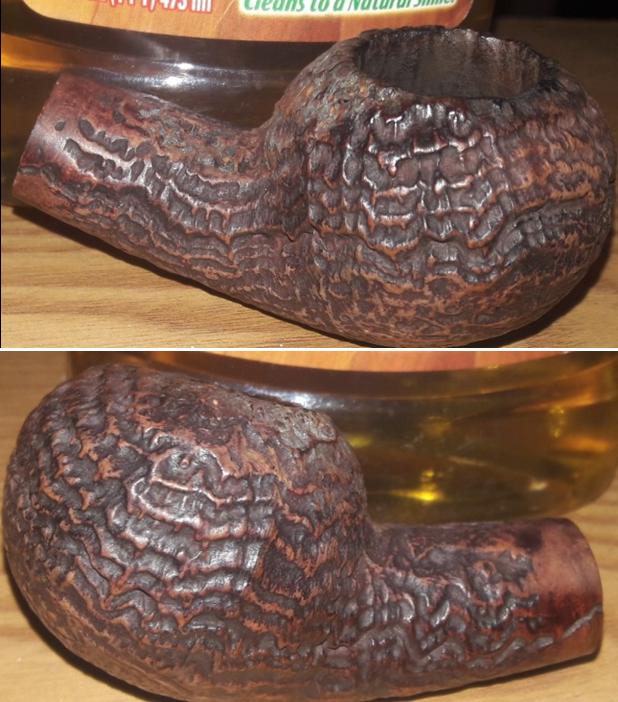
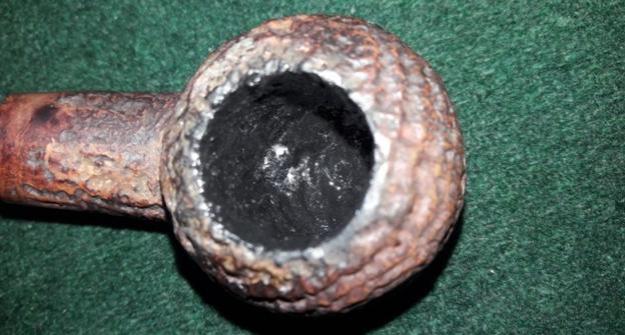
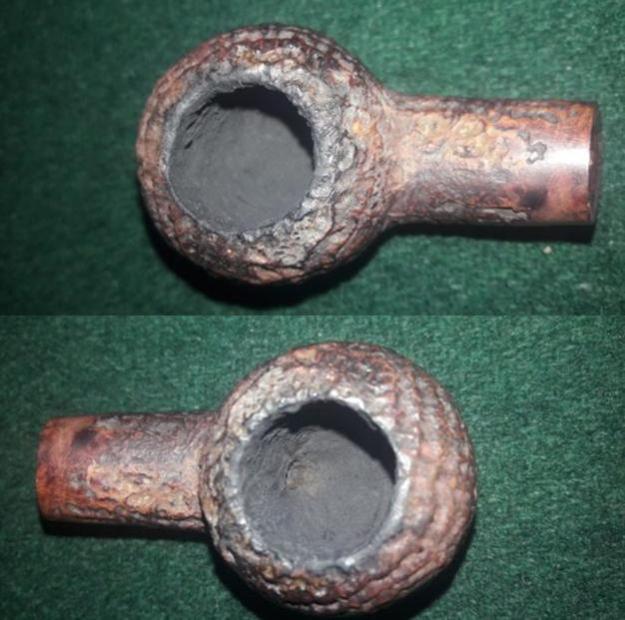
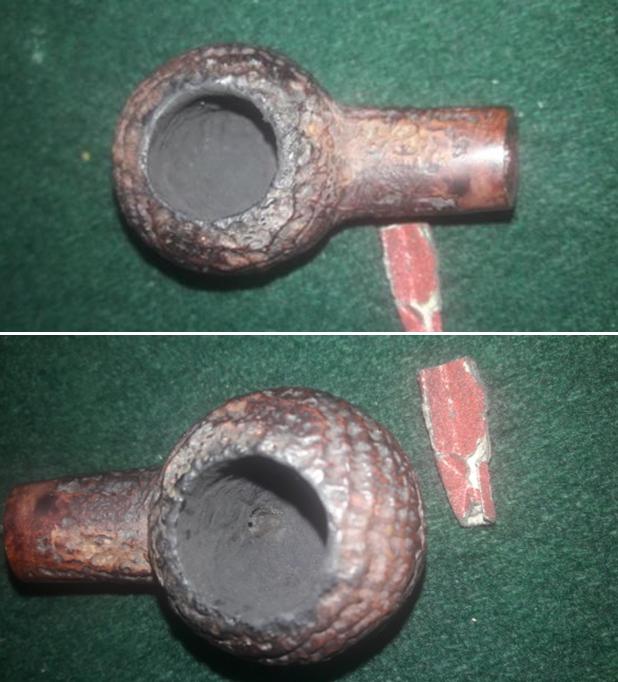
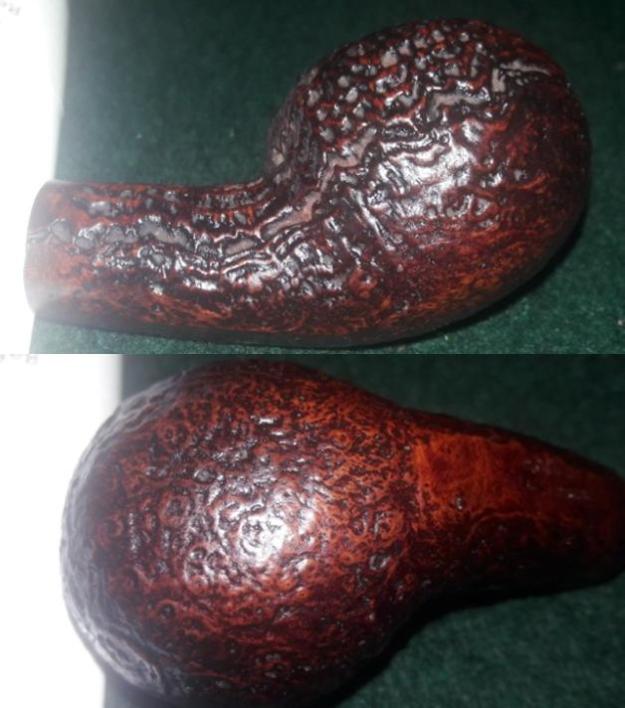
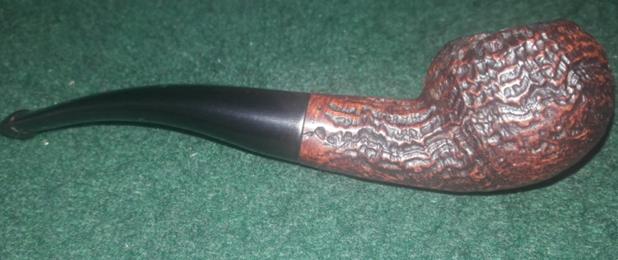
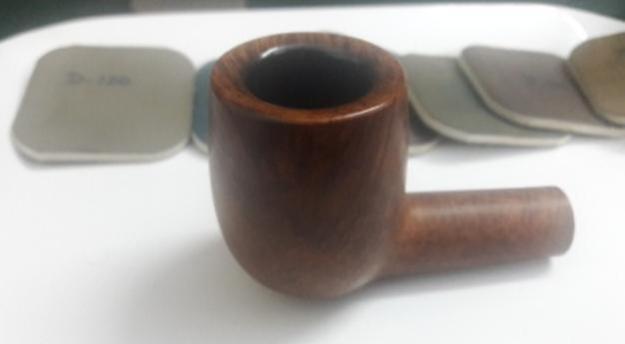
This Soren is the last of the freehand pipes that I had purchased on eBay. Well, this pipe is definitely the smallest of all the four, but it is also the only sitter of this lot!!!!! The medium size of the bowl, angle between the stummel and shank with a fancy stem, lends this pipe a look which is both very attractive and functional at the same time.

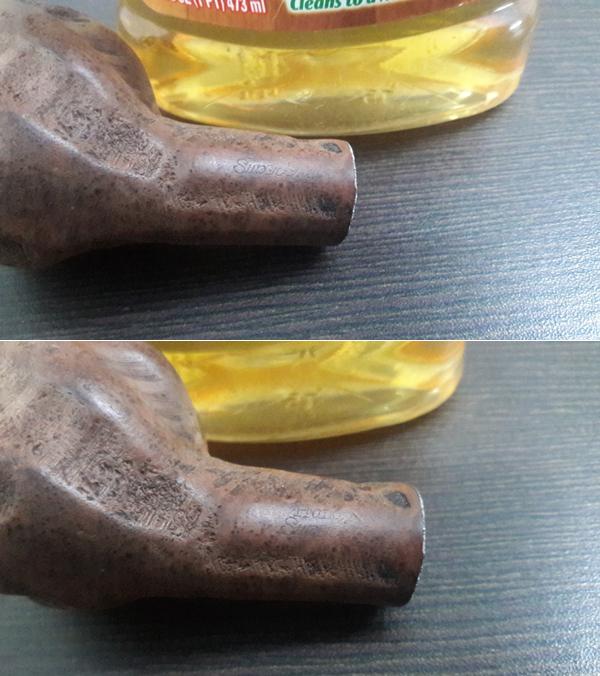
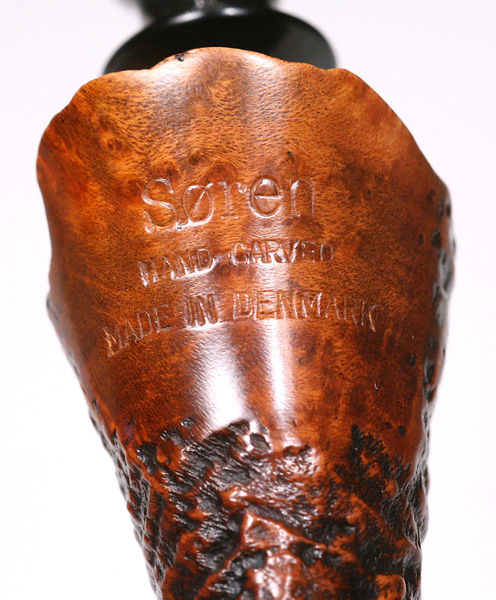
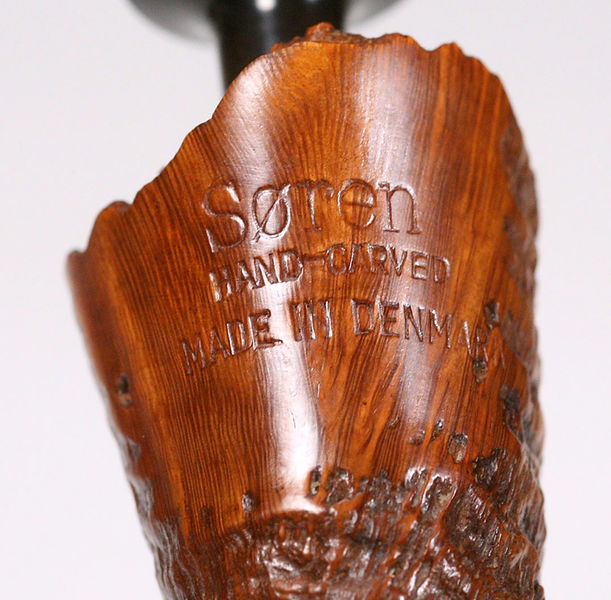
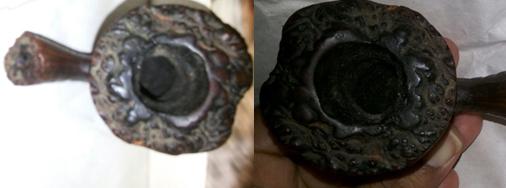
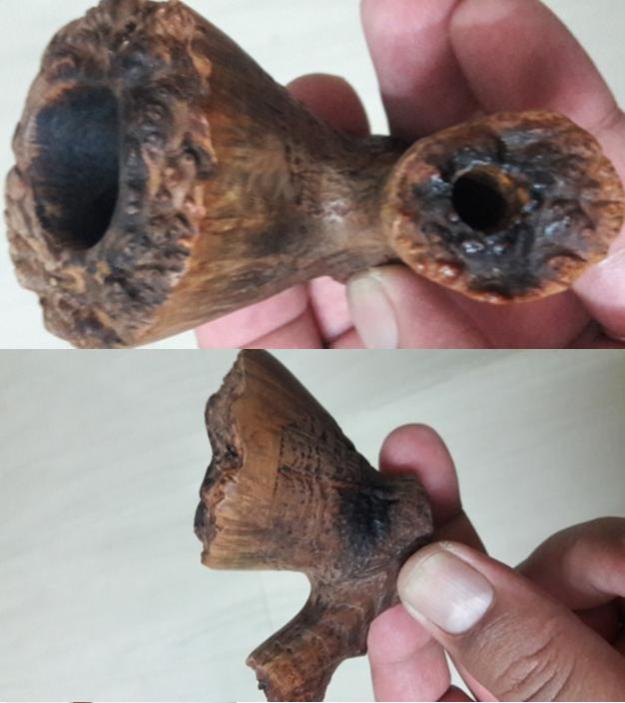
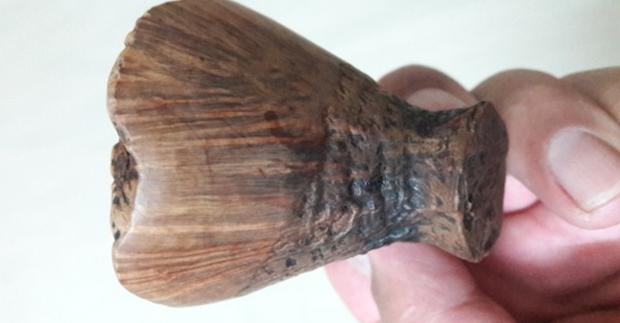
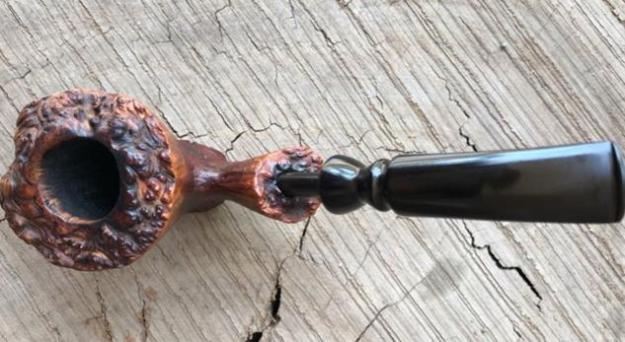
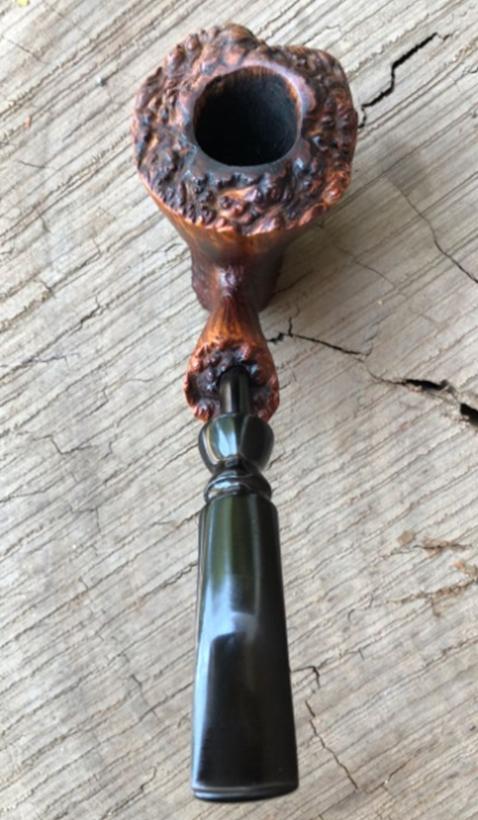
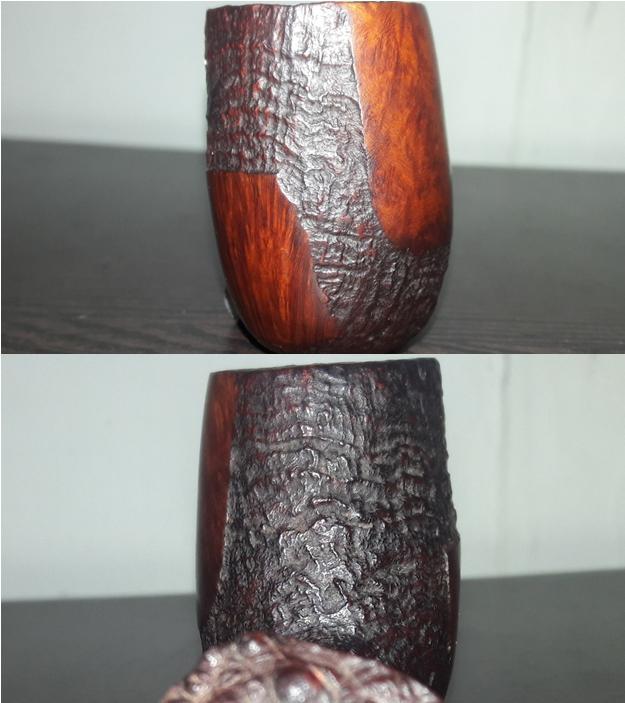
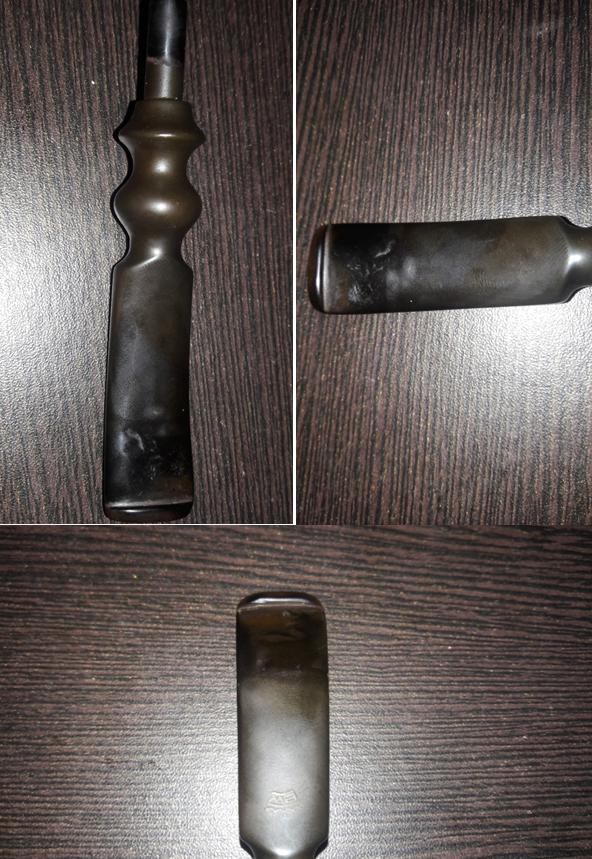
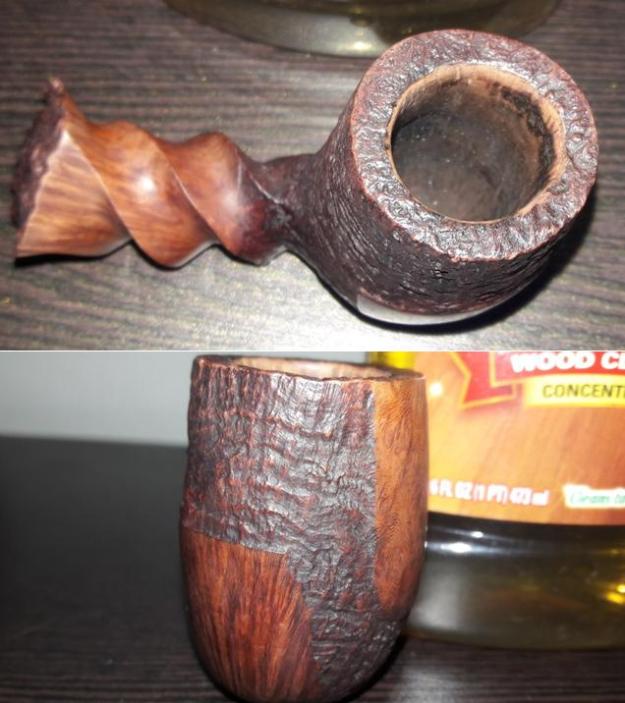
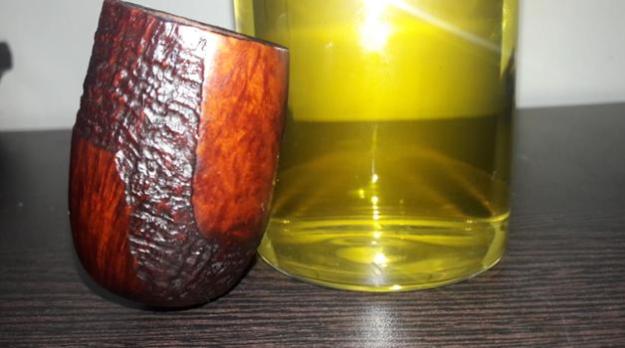
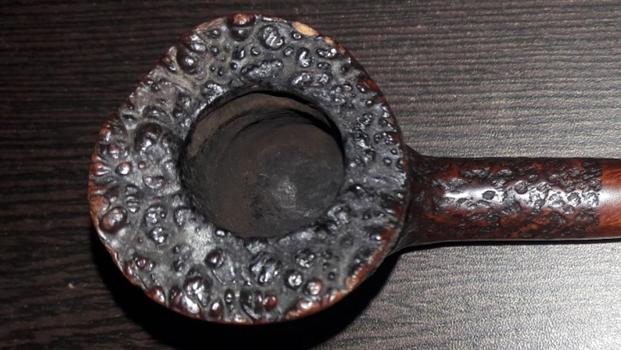
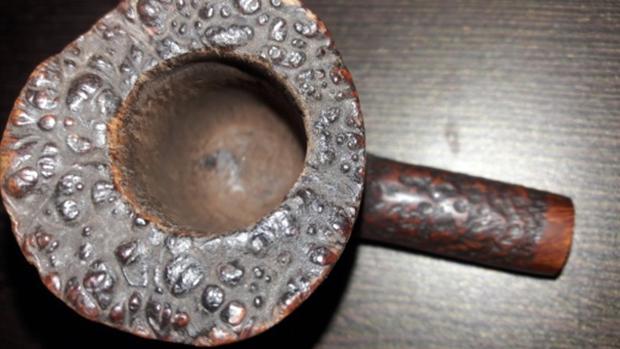
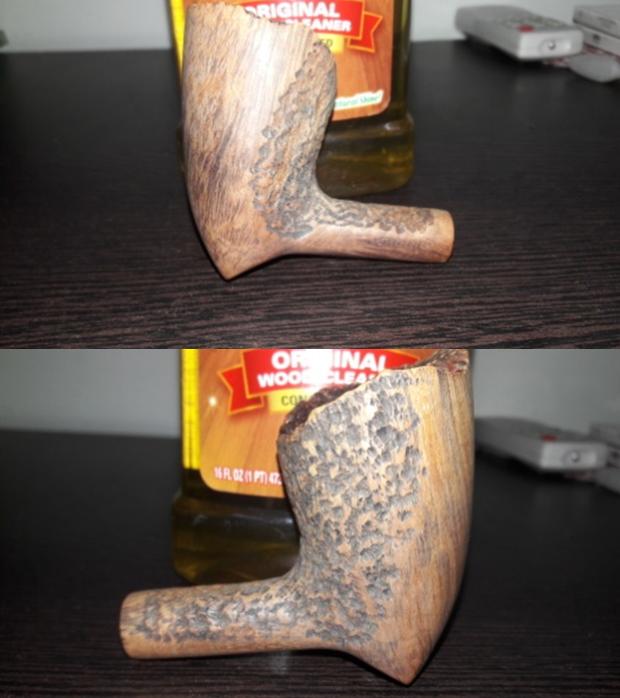
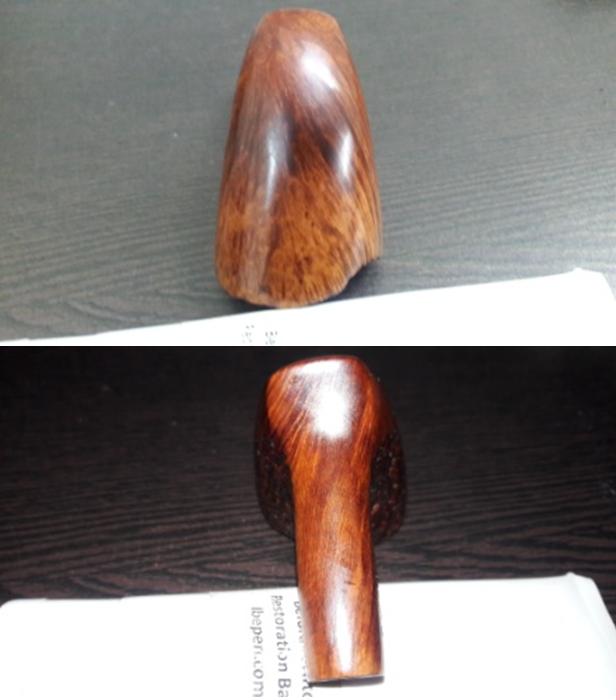
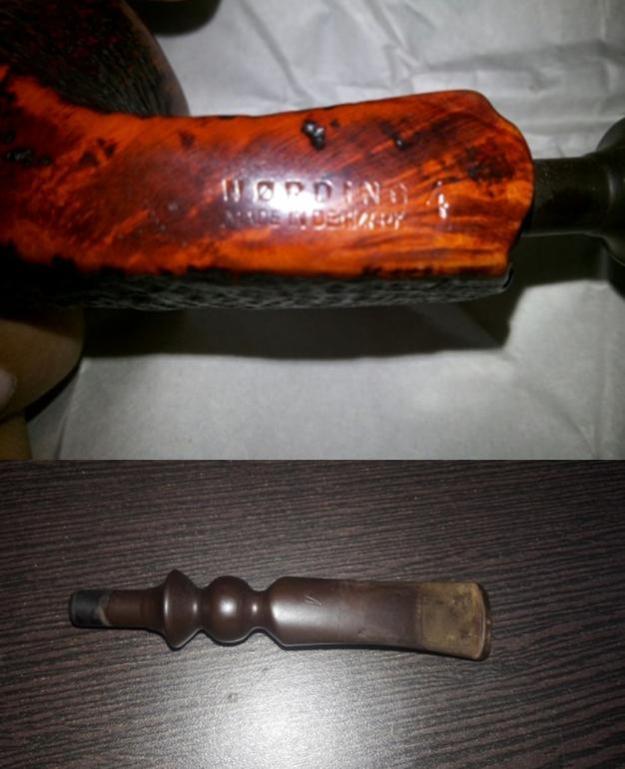
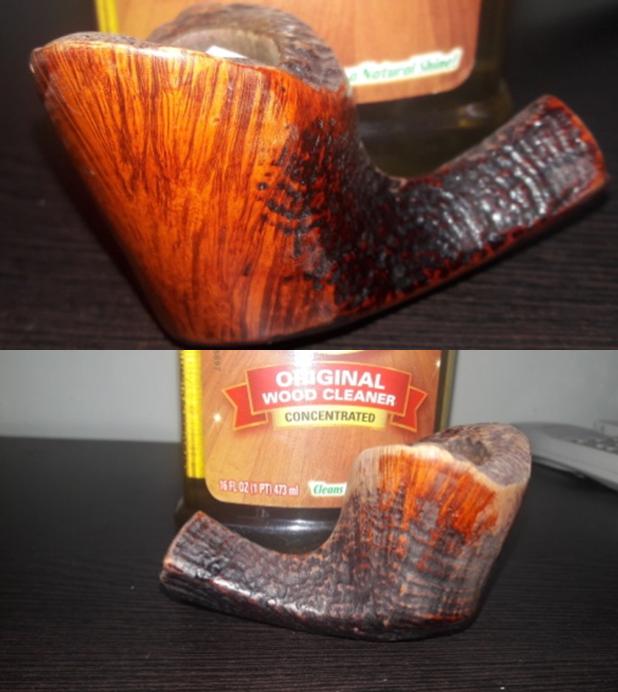
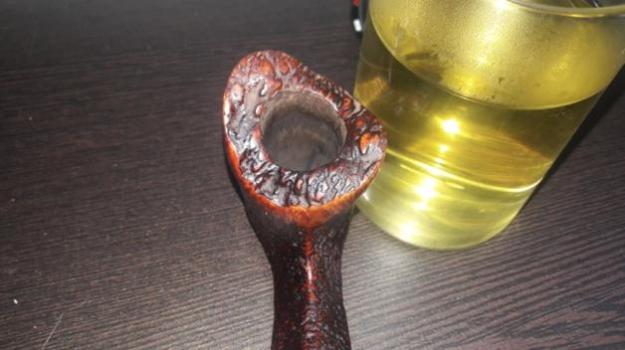
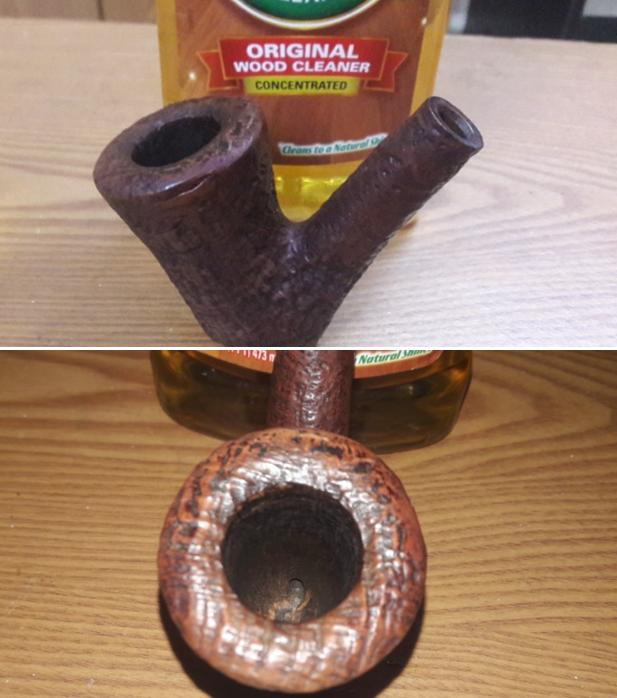
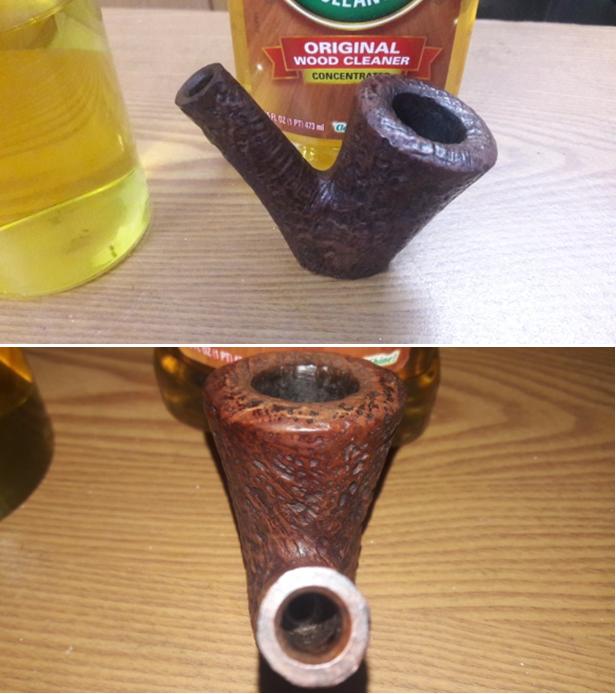
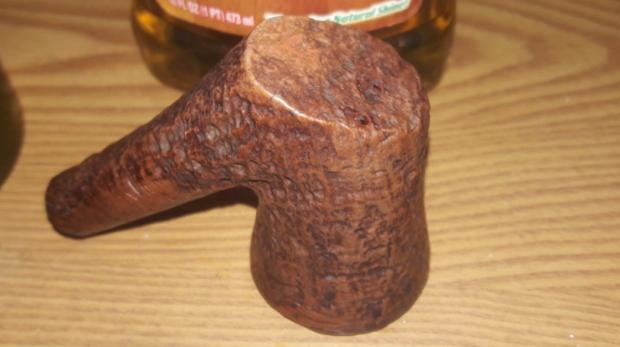
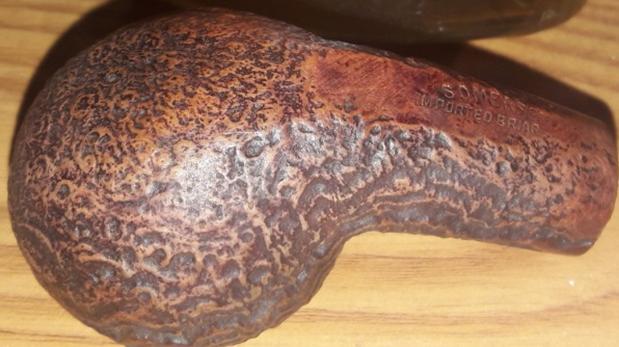
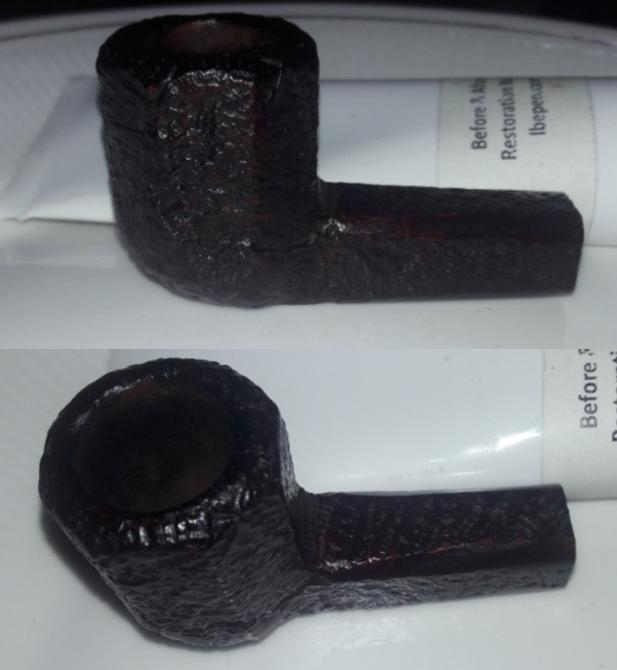
The pipe has a combination of smooth surface and sandblast finishes.  These sandblast portions are seen along the entire length of the shank, save for a small smooth portion on the lower surface at the shank end. This smooth portion bears the only stamping seen on this pipe, “Soren” over “HAND-CARVED” over “MADE IN DENMARK”. The upper portion of the stummel shows irregularly designed straight grained smooth surface while the lower portion and the shank, less the stamped portion,  is sandblasted which give this pipe its unique appearance!!! The plateau rim top has a smooth thin surface very close to the inner edge. I absolutely loved this pipe. I searched the internet for information on this pipe. Pipedia has some interesting snippet of information on the carver of this pipe, which I have reproduced below:

“Søren Refbjerg Rasmussen founded a company in 1969, which employed an average of 8 – 12 craftsmen in the 1970’s. The semi-freehands they produced were traded under his prename Søren. Rasmussen himself finished only the very best pipes. So his way of pipemaking closely resembled the ways of Preben Holm, Karl Erik Ottendahl or Erik Nørding. Altogether more than 1,000,000 pipes were sold.

Today he works alone as Refbjerg and manufactures only a small number of pipes in his workshop in DK-2860 Søborg, which are considered to be tremendously precisely executed. The dimensions mostly range from small to medium sized, corresponding to his personal preferences. The shapes adhere to the classical models, but often he gives them a touch of Danish flair. Refbjerg accepts minor faults but never uses any fillings. “Straight Grain” is the only grading, used for his very best pieces. He likes stem decorations made of exotic woods or metal rings.

As Rainer Barbi once stated “Refbjerg uses only briar from Corsica and more than that, he’s the one and only to import it from there, at least in Europe. He’s supplier to the vast majority of the Danish makers”.

Examples and nomenclature, courtesy Doug Valitchka Initial inspection of the pipe revealed the following
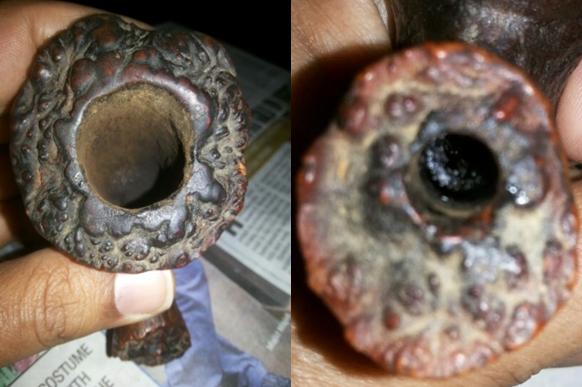
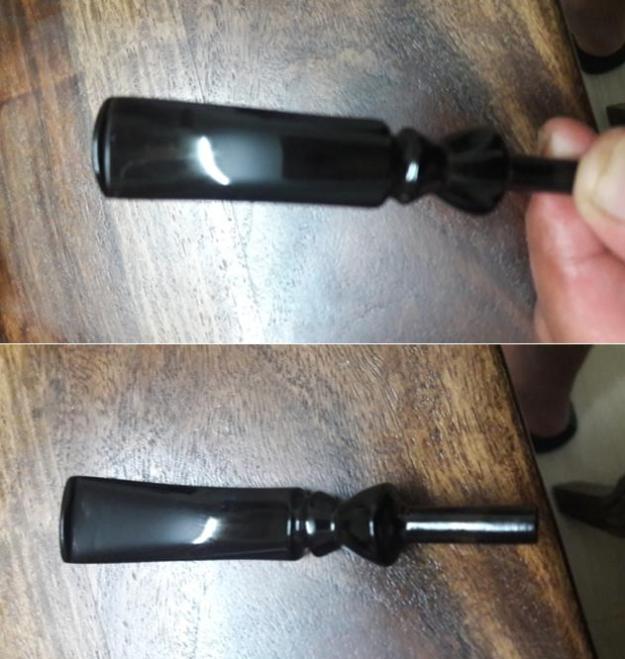
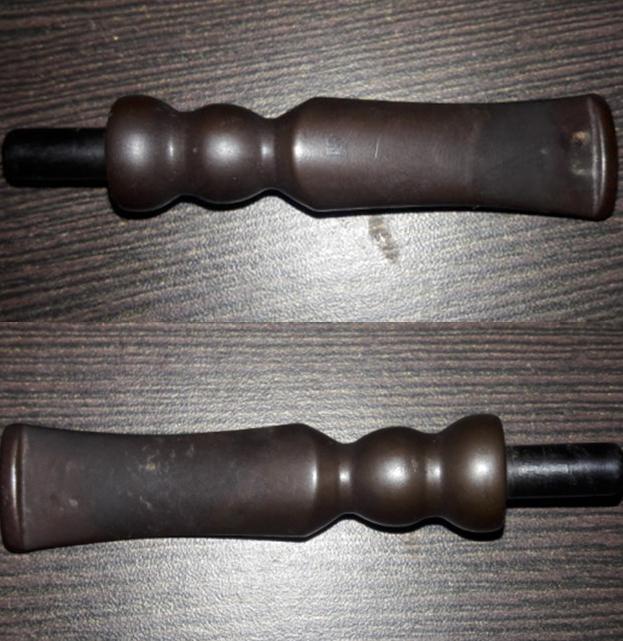
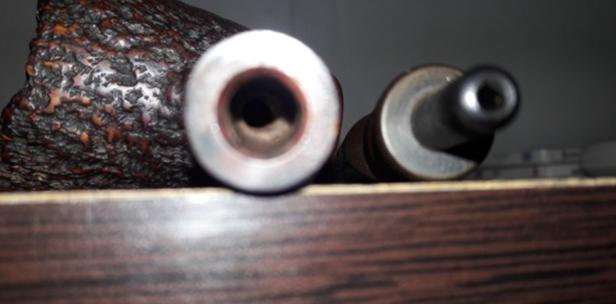
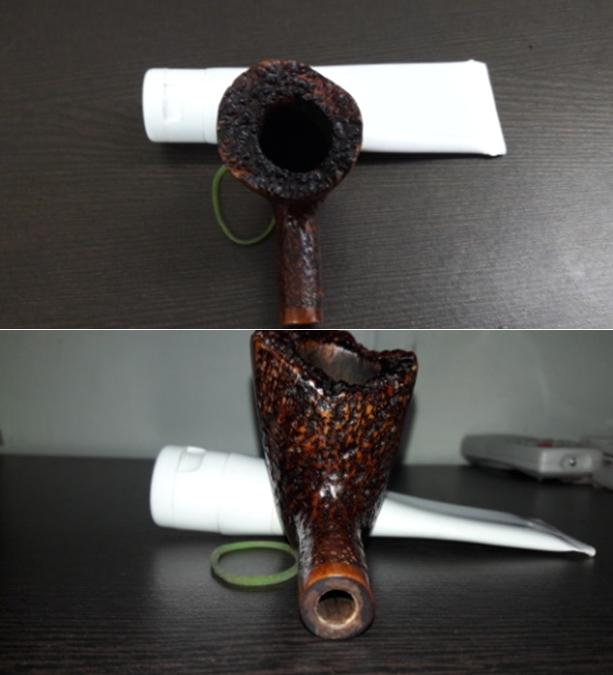
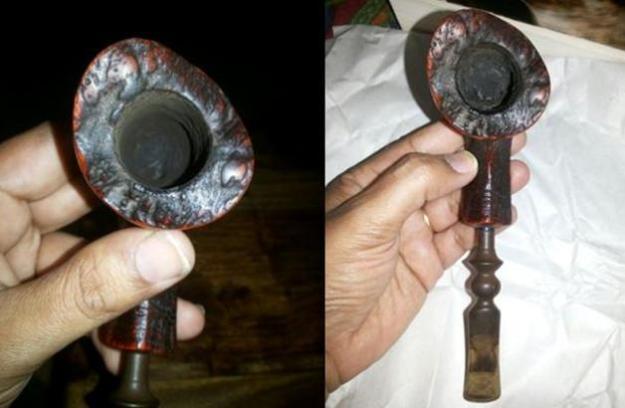
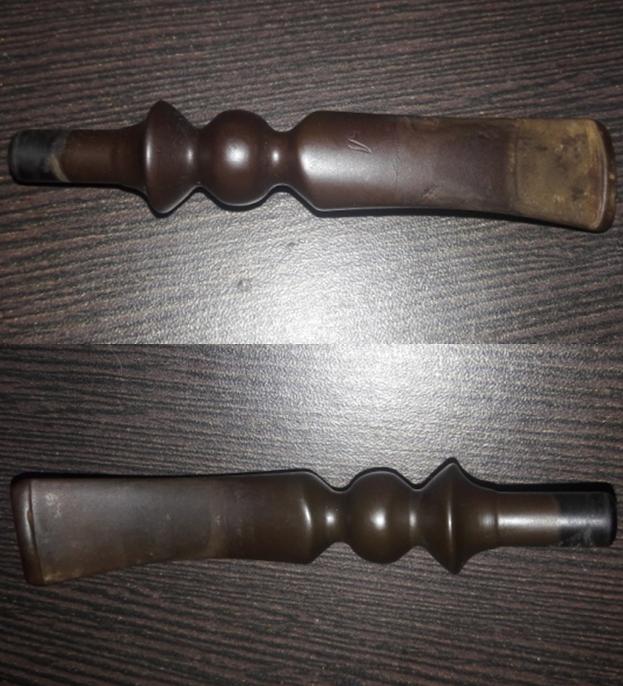
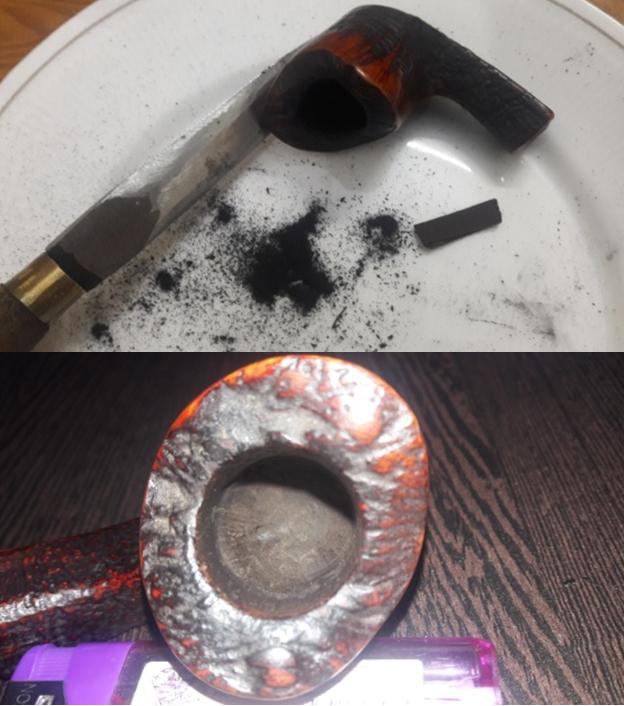
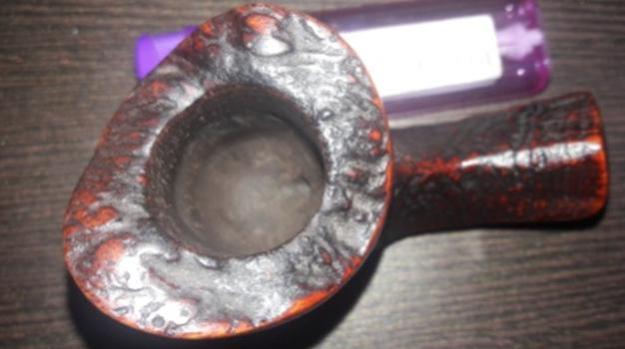
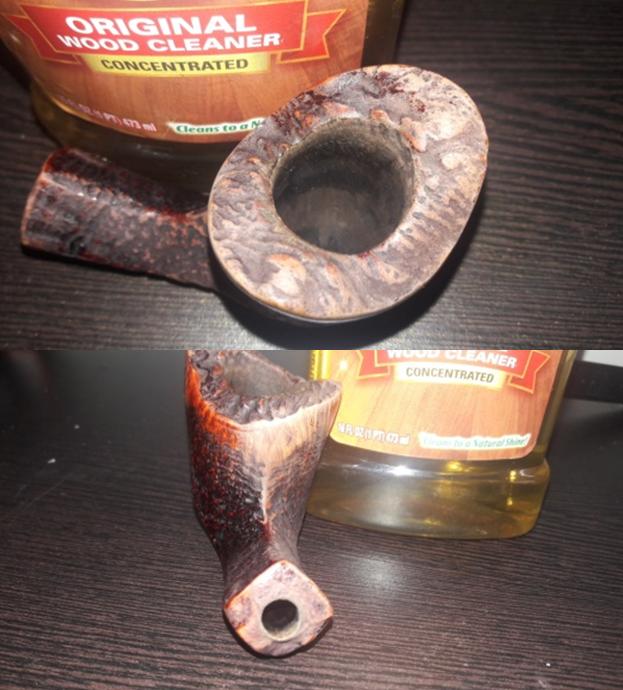
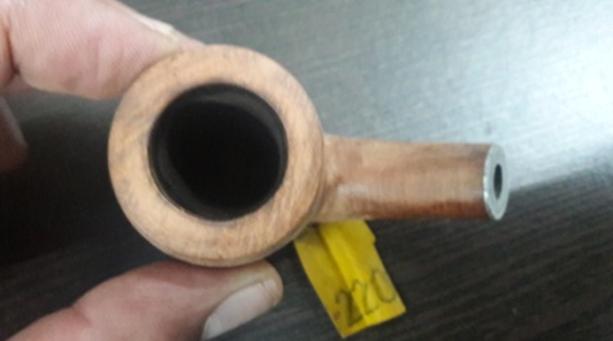
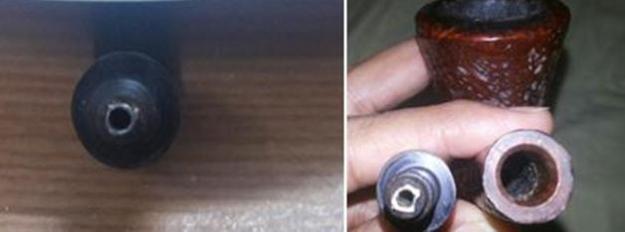
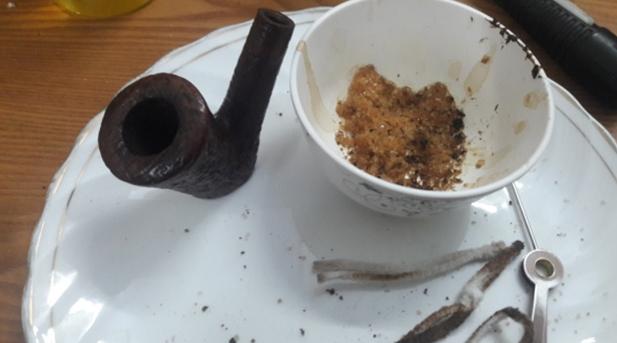
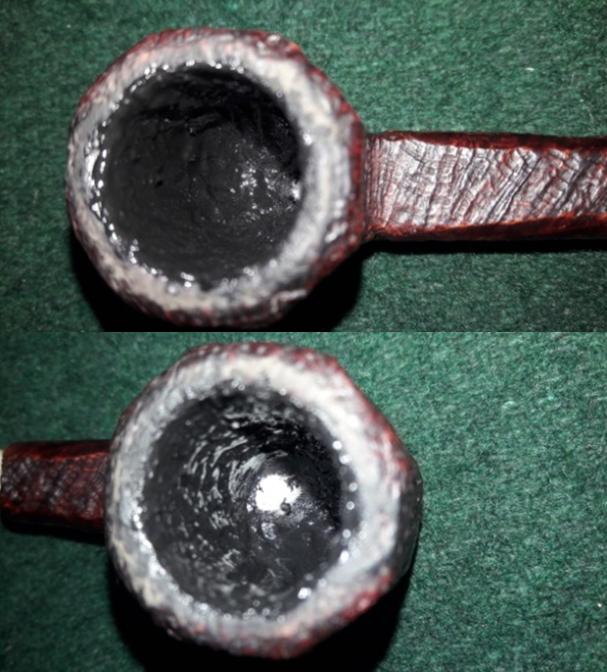
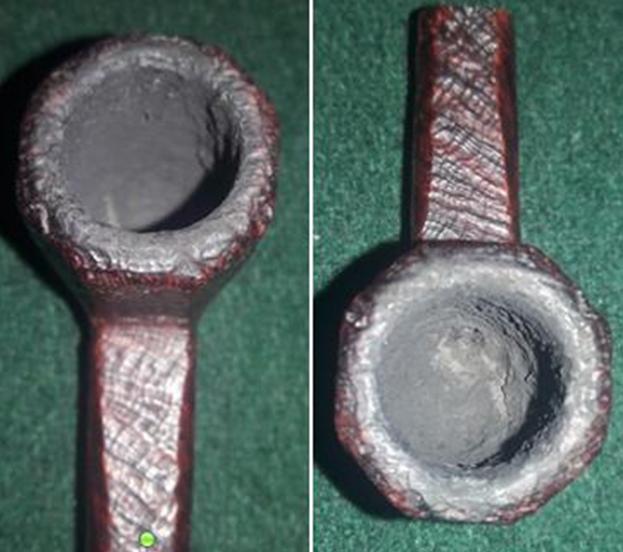
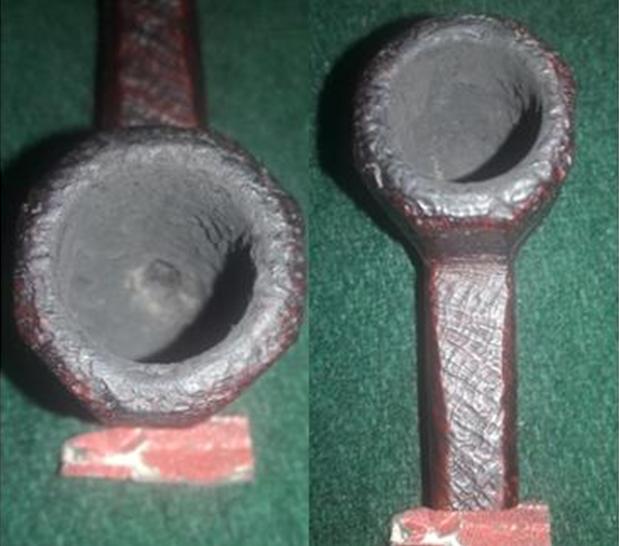
There is a thick layer of cake in the bowl. The external surface of the stummel feels solid to the touch and I think there are no issues with the condition of the chamber. However, there are always surprises when you least expect them!!! I have learnt my lessons!!! Thus, condition of the inner walls of the chamber will be ascertained once the chamber has been reamed and the cake is taken back to the bare briar. The plateau rim top and shank end is covered in the overflow of lava, dirt and grime. This will have to be cleaned. The condition of the inner edge will be determined only after removing the cake. The air way in the shank is clogged with oils and tars and will require a thorough cleaning.The stem is firmly stuck to the shank and will not budge. However, other than heavy oxidation, there are no other issues noticed on the stem. The stummel is covered in dust, dirt, oils and grime. The stummel looks dull and lackluster. The grains on the smooth surface and the sandblast are all covered in tars, oils and grime. To be able to appreciate these grains and sandblast, the stummel will have to be cleaned. THE PROCESS
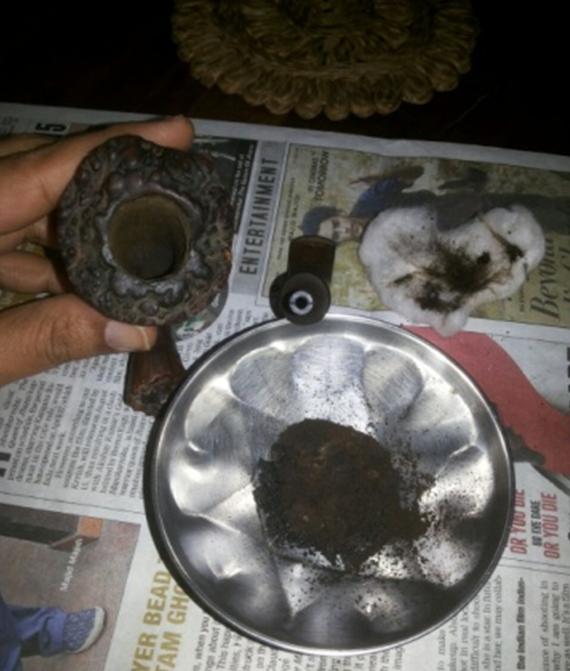
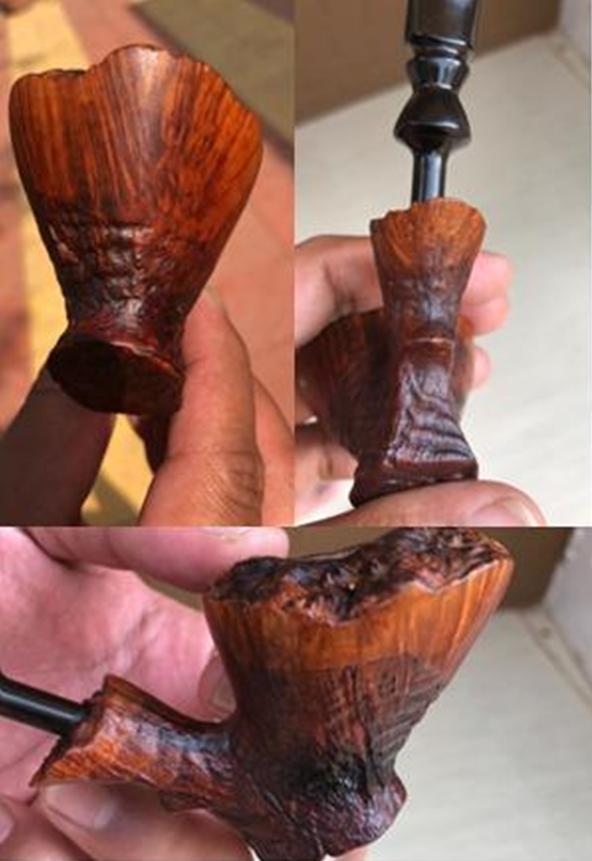
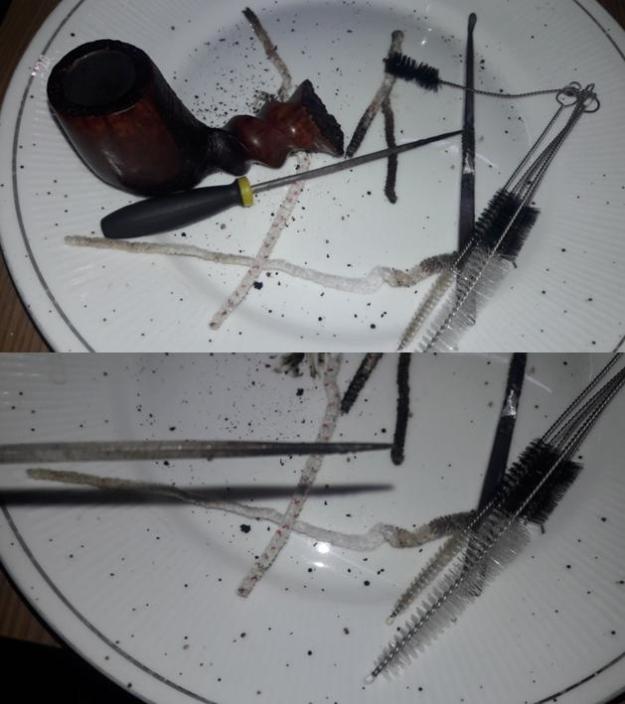
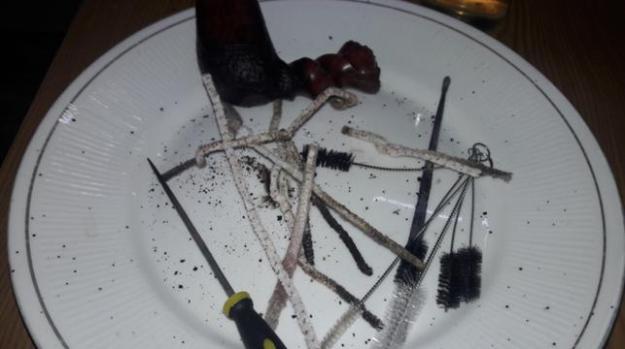
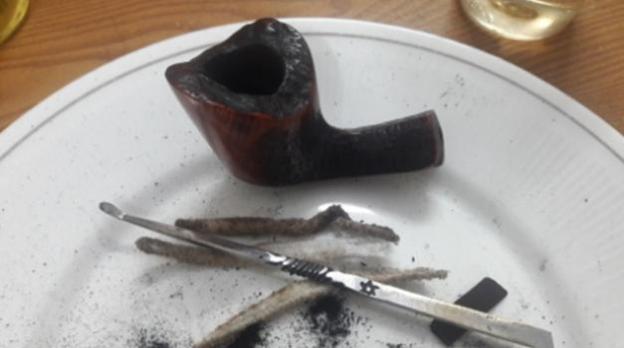
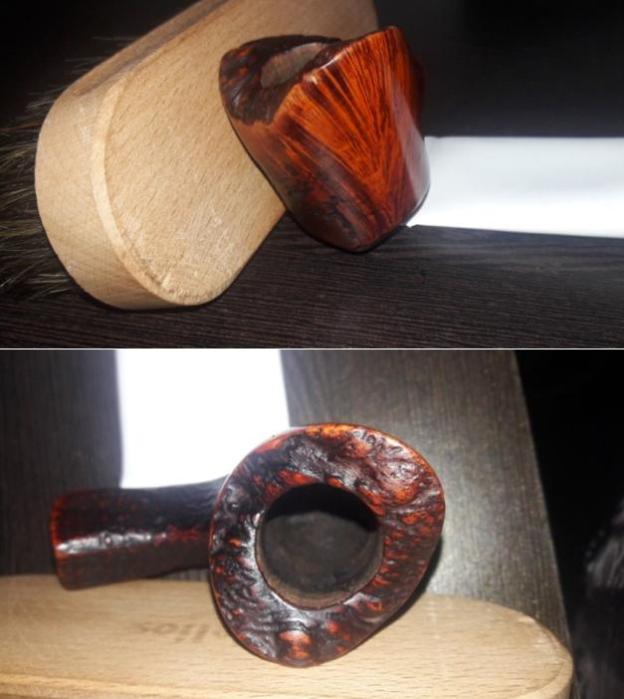
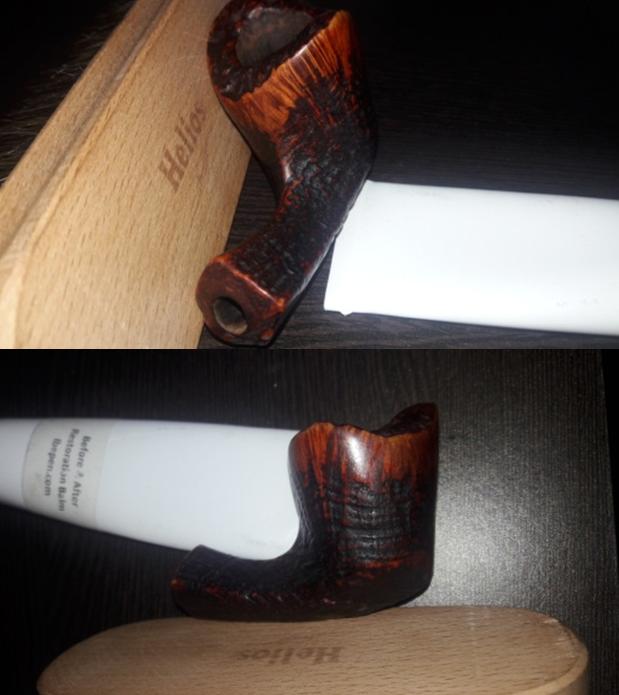
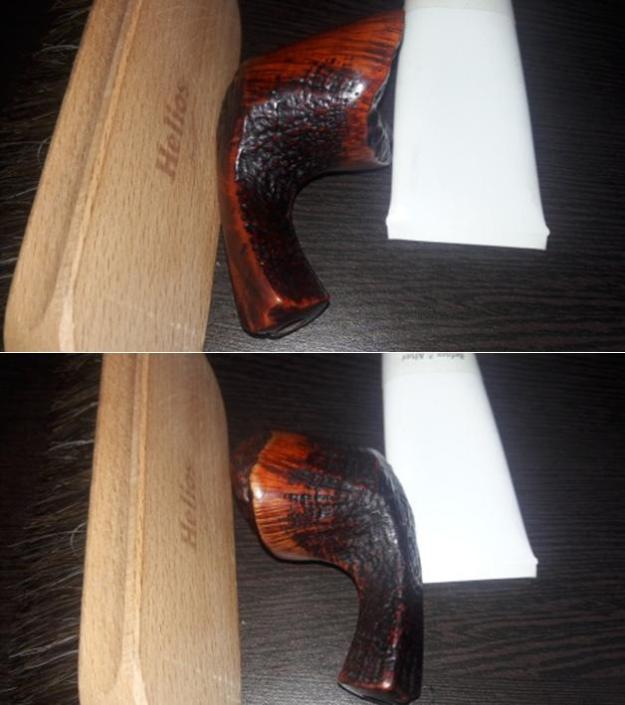
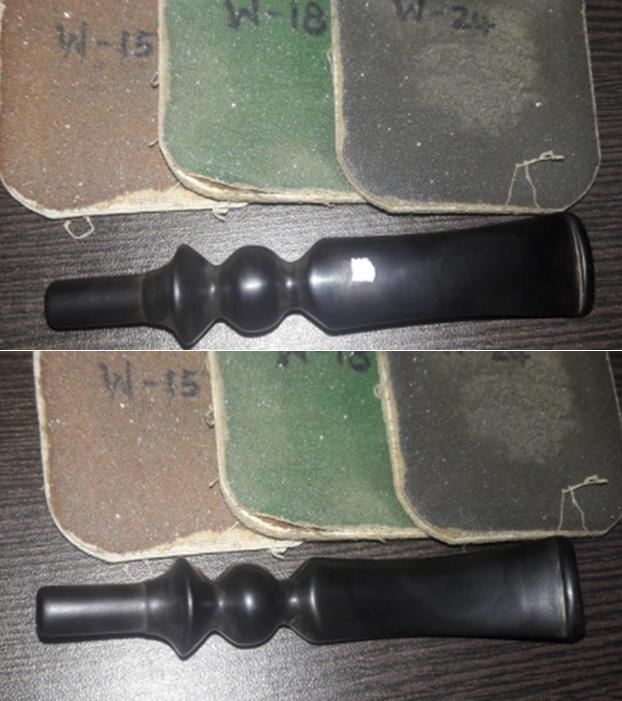
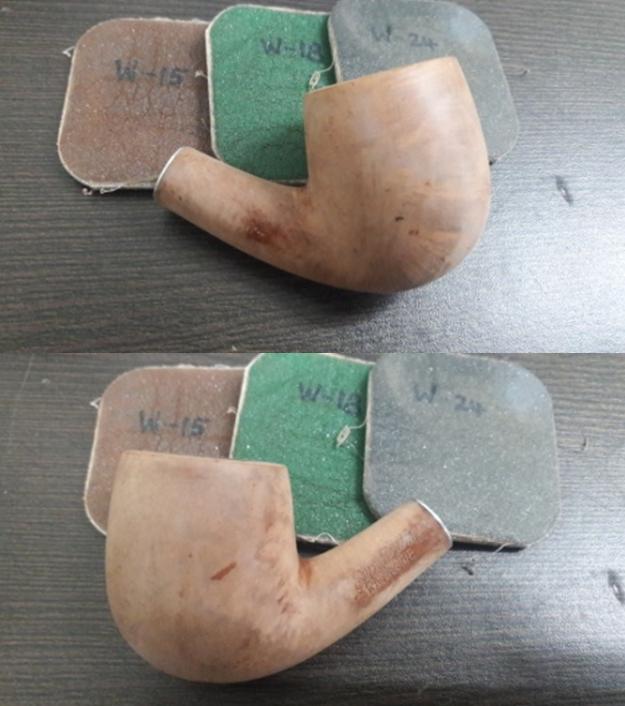
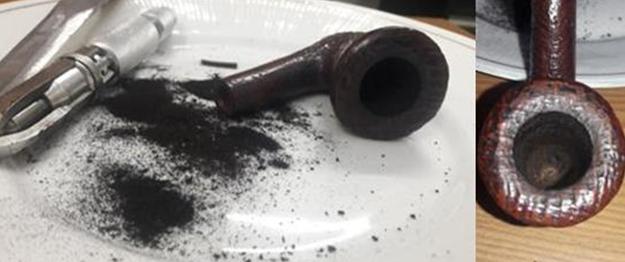
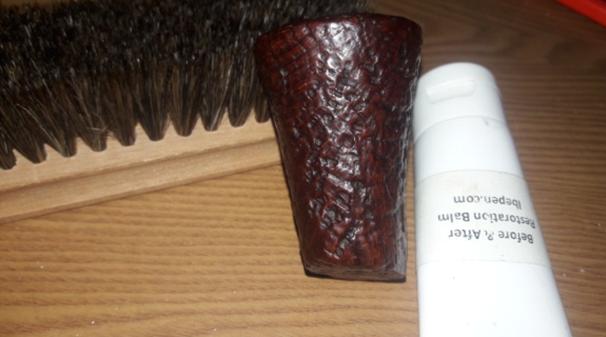
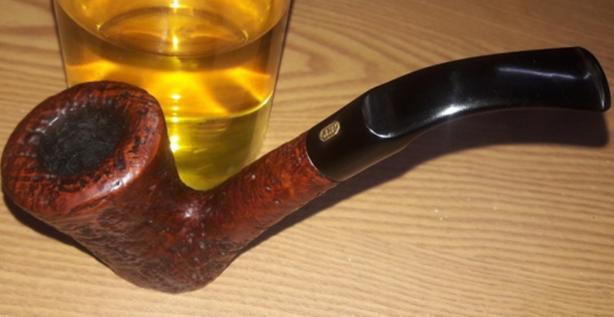
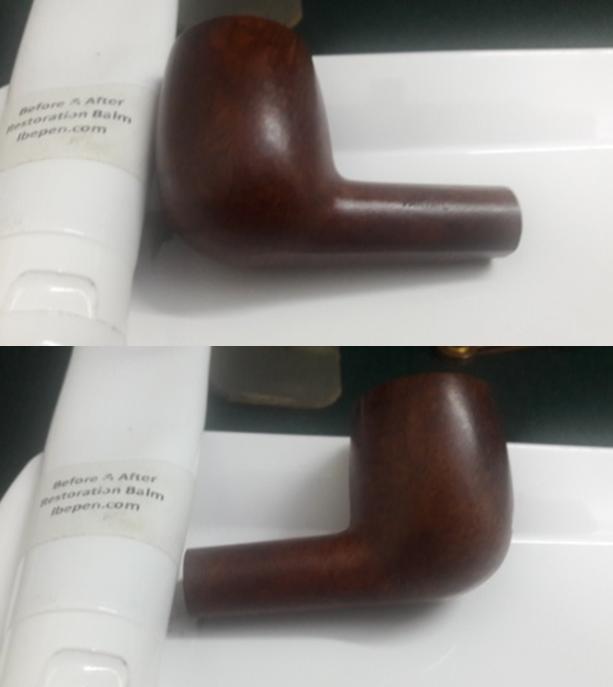
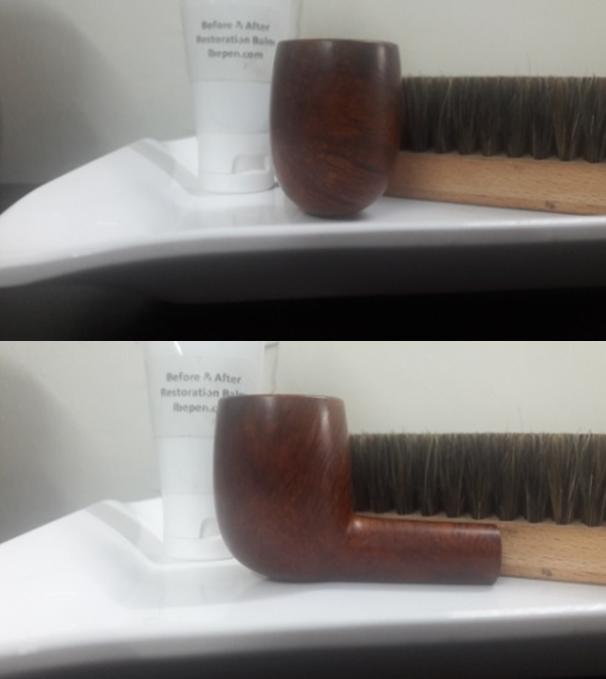
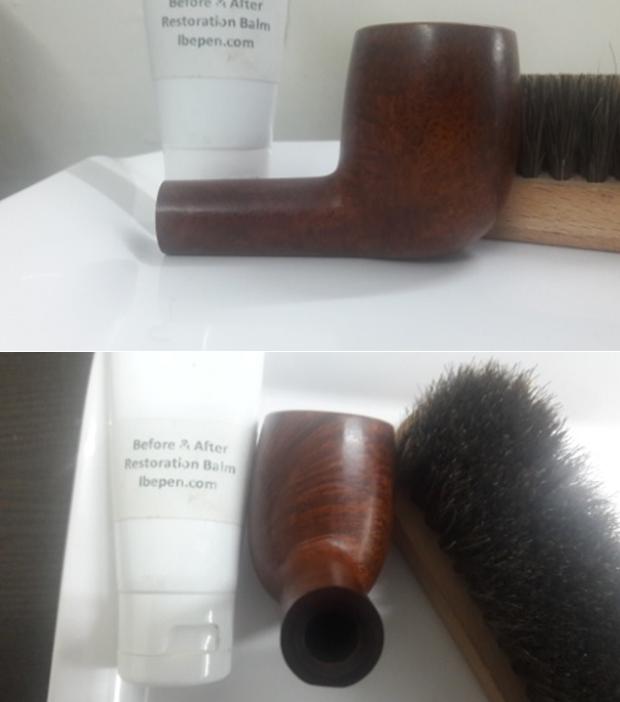
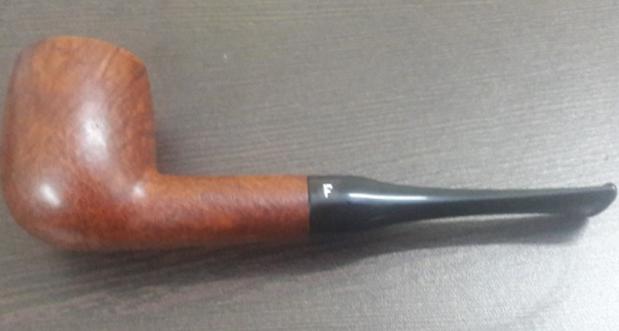
Before I could start the work of cleaning the pipe, I kept it in the freezer for a couple of hours so as to separate the stem from the shank. I removed the pipe from the freezer and tried to remove the stem, but it still did not budge! I let it rest outside for an hour and after applying considerable force, the stem came free. I had followed a YouTube video where the stem was soaked in a solution of hot water and Hydrogen Peroxide in the ratio of 2:1. The stem oxidation had risen to the surface and was much easier to remove. I cleaned the insides of the stem with pipe cleaners and hard bristled pipe cleaners dipped in alcohol. Once the internals were clean and dry, I wiped the stem surface with magic clean sponge and followed it with polishing with micromesh pads. I applied extra virgin olive oil on the stem surface and set it aside to be absorbed by the stem. I am afraid, in my enthusiasm to try out new technique of using Hydrogen Peroxide; I just missed out on taking pictures of each step. Using a Kleen Reem pipe reamer, I removed all the carbon cake from the chamber. This was followed by sanding the inner walls of the chamber with 220 grit sand paper. The internal walls of the chamber were flawless and solid. Thereafter, using Murphy’s oil soap ( undiluted ) and a hard bristled toothbrush on the exterior of the bowl, shank and rim, the pipe was thoroughly cleaned and rinsed under running tap water. I immediately wiped it down with a soft cloth. The sandblast and the smooth surface were now clean and the briar looked clean and solid. I then left the briar to dry out. Once the briar had dried out completely, I rubbed in Before and After Restoration Balm deep into the sandblast as well as the rim top. The bowl was then wiped vigorously with a soft cloth and buffed with a horse hair shoe brush. The result is very pleasing and satisfying to the eyes! I am happy with this progress. This balm is a fantastic product for infusing a nice shine into the briar and giving it a new lease of life.The finished pipe is as shown below. I enjoyed working on this lot of four freehand pipes and each of these pipes has its own individuality and each is beautiful in its own way. I hope you too enjoyed joining me on this wondrous journey of exploring the freehand pipes!!!!!  Thank you for your patience and as always, any suggestions and/ or improvements will help me in learning this art of restoration.

RESTORING A BEN WADE “SPIRAL”


Blog by Paresh Deshpande

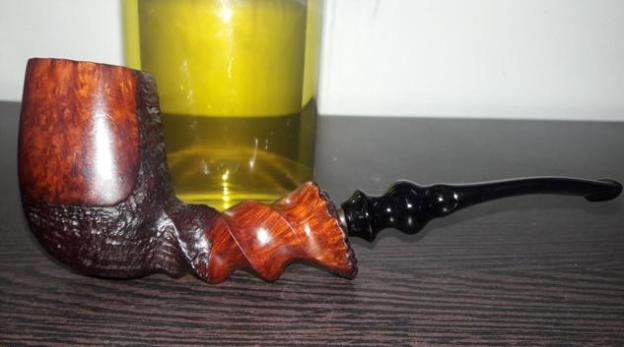
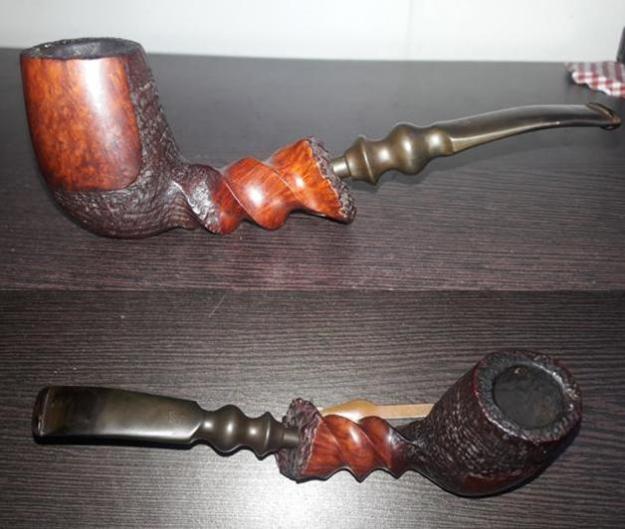
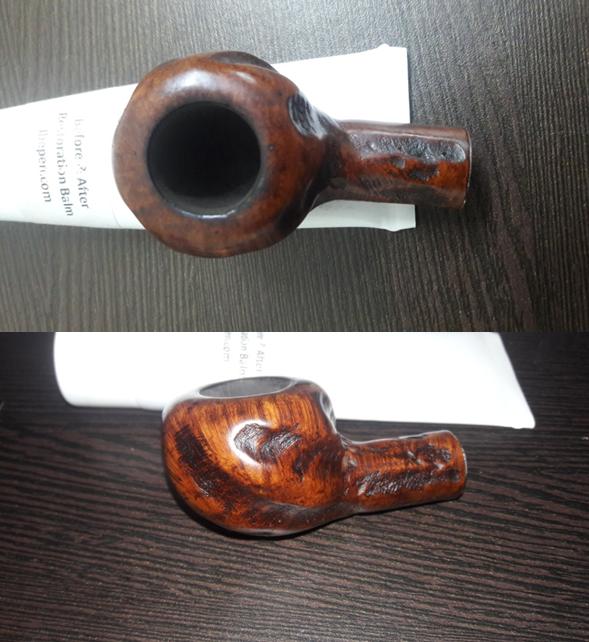
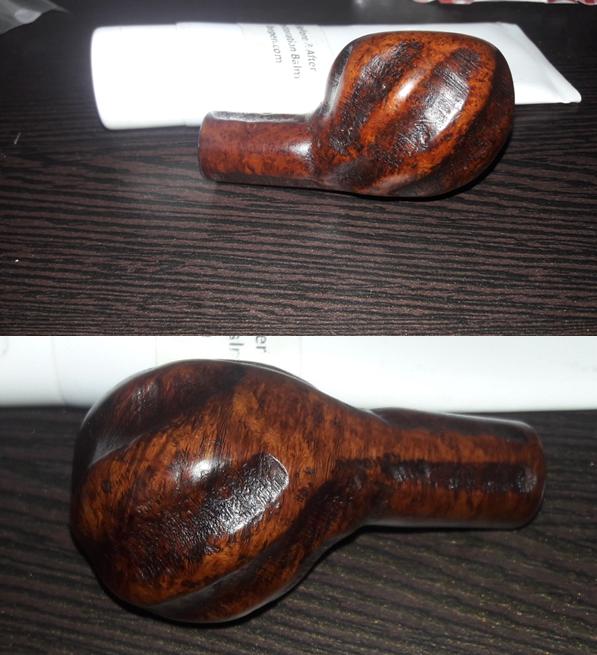
The third of the four freehand pipes purchased on eBay and currently on my work table is the BEN WADE “SPIRAL”. This is a huge sized pipe and fills the hand nicely with its size, weight and heft. I was attracted to this pipe because of its size and the unique spiraled shank. Another factor was the fact that my inherited collection had quite a few numbers of Danish pipes like the Stanwells, Amphoras, Kriswells and SONs. Thus, when I first saw the pipe on eBay, the name Ben Wade sounded so British and when I read the description and the stampings of Made In Denmark, I was immediately interested and intrigued at the same time!!! I got this pipe fairly cheap and the excellent condition it was in when it arrived, further sweetened the deal. This appears to be a simple and straight forward cleaning job from the looks of it.

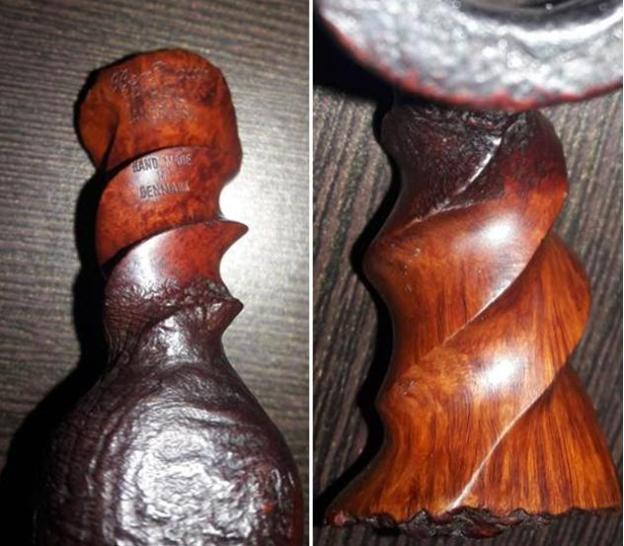
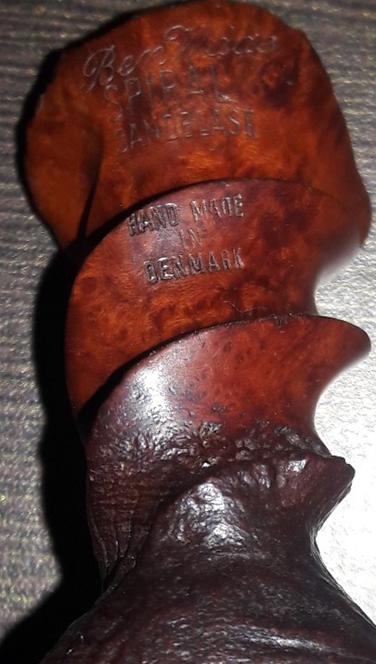
The stummel shows a combination of sandblasted and smooth surfaces. It shows smooth surface on the left side extending 2/3 way down from rim top towards the heel of the bowl and on the right side it extends from the base of the bowl to 1/3 way upwards towards the rim top.The shank has beautiful and evenly spaced 5 spirals, first half from the bowl end is sandblasted while the remaining half towards the shank end is smooth and bears the stampings “Ben Wade” over “SPIRAL” over “SANDBLAST” over “HAND MADE” over “IN” over “DENMARK”. These stampings are seen in the first and third spiral of the shank. The stem bears the Ben Wade logo of the initials in capital letters ensconced within a crown on the top surface of the stem near the tenon end. All the stampings are clear and crisp. There is some very interesting history on Ben Wade pipes which I got from pipedia.org. Some interesting snippets of information are reproduced below:-

The company was founded by Benjamin Wade in 1860 in Leeds, Yorkshire, where it was located for over a century. Ben Wade started as a pipe trader, but  in the 1860’s he established a workshop to produce briar pipes. The pipes were made in very many standard shapes – always extensively classic and “very British”. Many models tended to be of smaller dimensions. Ben Wade offered a very high standard of craftsmanship and quality without any fills. Thus the pipes were considered to be high grade and a major competitor to other famous English brands.

In the second World War the factory was destroyed by German air raids on Leeds. But the Ben Wade family decided to re-build it immediately after the war and pipe production was re-started soon and successfully linked to the fame from the pre-war years.

Before the second war Ben Wade clustered their offerings into three price points: “Ben Wade” included the higher end pipes (eg the Larnix, Super Grain, Selected Grain, etc), “BW” included the mid-level pipes (eg Statesman, Natural Grain, County, etc), and “BWL” were the least expensive (eg Hurlingham, Adelphi, Tense Grain). Champion was in the last group, and in the 1930s at least retailed for 2/6.

Ben Wade turns Danish

Young Copenhagen master pipemaker Preben Holm had made a meteoric career heading a pipe manufacture employing 45 people at the age of 22! But around the turn of 1970/71 he was in major financial difficulties. His US distributor, Snug Harbour Ltd. in New York City, left him in the lurch. Holm had three unpaid invoices on his desk and another large shipment was ready for the USA, when Snug Harbour’s manager told him on the phone that there was no money at all on the account to pay him.

So the Dane went to New York for an almost desparate search for a new distribution partner. He made contacts with Lane Ltd. and met Herman G. Lane in February 1971. Lane Ltd. had no interest in Holm’s serial pipes produced at that time but so much the more in the hand-carved freehands because the hype for Danish freehands and fancies in the States was still on its way to the climax then. The meeting resulted in an agreement to start cooperation. Lane insisted to improve the quality considerably and in return he assured to be able to sell essentially larger quantities.

Holm went back home to work on new samples with all-new designs and altered finishes for Lane. Both, Lane and Holm, agreed that it would be unwise to sell the pipes under Preben Holm’s name as long as Snug Harbour had a considerable stock of Preben Holm pipes and might sell them pipes at very low prices just to bring in some money.

So on Mr. Lane’s proposal it was determined to use the name Ben Wade belonging to Lane Ltd. Lane spend considerable amounts of money for advertising the new brand in the big magazines– the centerpiece being whole-page ads showing a very exclusive Seven Day’s Set.

The cooperation with Lane Ltd. proved to be an eminent business success for both partners. Within a very short time Ben Wade Handmade Denmark sold in much larger quantities and at higher prices than they had ever dreamed of. And the hype these freehands and fancy pipes caused went on unbroken long after Herman G. Lane deceased. Preben Holm – obviously much more brilliant in pipe making than in pipe business – was in major troubles again in 1986 and had to sack most of his staff. The Ben Wade production was significantly lowered but continued until his untimely death in June of 1989. Up to now Preben Holm made Ben Wade pipes are cult and highly sought for on the estate markets.

From the above information, I can say with some certainty that this line of pipes was made between the years 1971 to 1986.

INITIAL VISUAL INSPECTION
This Ben Wade has a huge size and fills the hand nicely and has a combination of smooth and sandblasted surfaces. The sandblasted areas are filled with dust and grime which can be easily seen in the crevices of the blast. The smooth surface is also covered in the tobacco oils and oils secreted by sweating palms giving it a dull and lackluster appearance. There are no blemishes in the briar of the stummel or the shank that can be seen. I surmise that a nice scrub with Murphy’s oil soap and a hard bristled toothbrush should suffice to clean the stummel and the shank. The rim top is sandblasted and is covered in overflow of lava, tars and grime. There is no apparent damage to the inner and outer edge of the rim that can be seen, like a charred rim or an out of round bowl or chips and dents. However, the condition will be ascertained once the chamber has been reamed and the overflow of lava is removed from the rim surface. The chamber shows uneven cake build up with a thicker build up at the bottom and progressively reducing towards the rim top. The condition of the walls will be ascertained once the chamber has been reamed and the cake has been taken down to the bare briar. However, the stummel feels solid to the touch with no soft briar anywhere which is indicative of the likelihood of a burnout or major heat fissures.The beautiful and unique spiral shank has crisp edges to the spirals and just needs to be cleaned for the straight grains to pop out in their complete splendor. The plateau shank end is filled with dirt, grime and will need to be cleaned. The airway in the shank shows a blockage during the blow test and should be an easy clean up.The high quality vulcanite fancy stem is oxidized and the “BW WITH CROWN” logo appears faded as it is covered in oxidation. This needs to be addressed and the preservation of the stem logo attempted.Deeper tooth chatter peppers both the upper and lower surfaces of the stem. However, the bite marks are more pronounced and numerous on the lower surface. I shall try to raise these to the surface by flaming with Bic lighter and the deeper ones will be filled with CA superglue. Buttons show light deformation due to bite marks and will need to be sharpened. It is interesting to observe that these tooth indentations are slightly more forward towards the tenon end rather than the button end!!! Probably, the huge size and the front heavy bowl necessitate clenching it forward for better balance.THE PROCESS
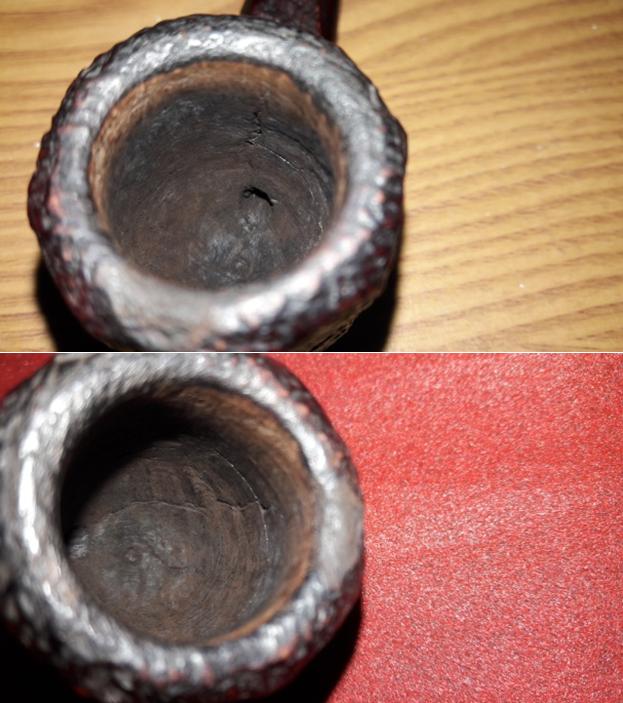
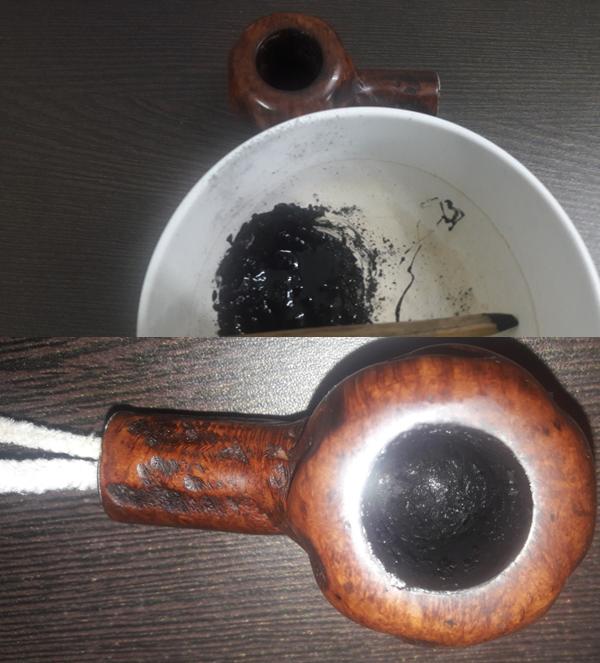
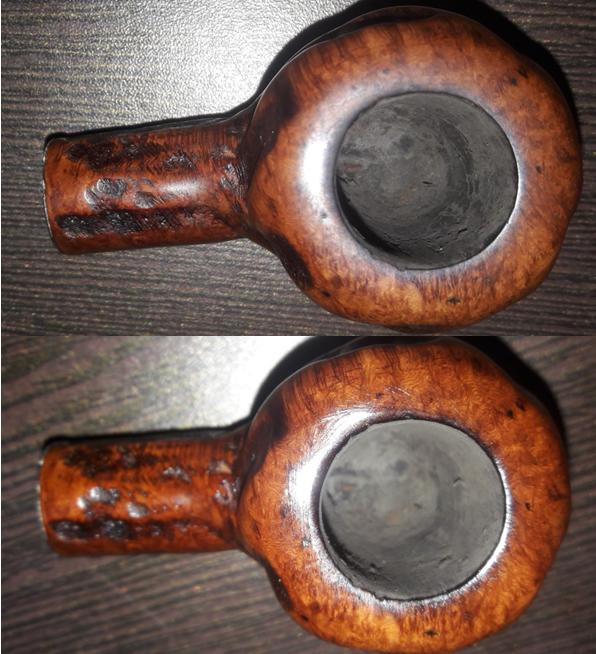
I started the restoration process by reaming the chamber with a Kleen Reem pipe reamer followed by scrapping the remaining cake from the chamber with my fabricated knife. The cake was hard and dry. I further removed the cake using a 220 grit sand paper and sanded the walls till the solid bare briar was reached. I wiped down the interiors of the chamber with a cotton swab dipped in alcohol to clean the chamber of all the carbon dust and inspect the inner wall condition. And there it was, a sight which every restorer, experienced or a novice silently prays is not seen…… the beginnings of a crack/ heat fissures!!!!! The following pictures show the extent of these fissures. I shall address this issue later after I have cleaned the stummel and the stem, both internally and externally. This was followed by cleaning the internals of the shank and the airway. I attempted to insert a hard bristled pipe cleaner dipped in isopropyl alcohol through the airway in the shank and realized that there was no give for the pipe cleaner half way through the mortise. The blockage called for a more aggressive method of cleaning!!! Using a fabricated (again…. I have modified and fabricated a number of tools which I find useful in my restoration processes as the sophisticated and designated tools are not easily available to me and those available are too expensive!!!) Dental spatula, I scraped all the grunge, oils and tars from the mortise. However, a pipe cleaner would still not pass through!! I shone a torch light in to the chamber and looking through the shank, I realized that the blockage was nearer to the draught hole as the light did not pass through. I addressed this issue by inserting a rounded needle file and dislodging the blockage. I further scrubbed the walls of the draught hole and the mortise with the rounded needle file. Once I was satisfied with the filing, I thoroughly cleaned the mortise and the airway using a shank brush, q-tips and pipe cleaners, all dipped in isopropyl alcohol, till the pipe cleaners and q-tips came out clean. I checked the draw and it was nice, smooth and full. With the insides of the stummel and shank cleaned and freshened up, I turned my attention to the exterior of the bowl. Using Murphy’s oil soap and a toothbrush, I cleaned the exterior of the bowl. I gave a very deliberate scrub to the bowl and into the rustications to remove all the dust, dirt and grime that had accumulated over the years. I purposefully avoided brass brush/ steel wool while cleaning so as not to damage the sandblast. Once the cleaning with the oil soap was done, I rinsed it under running tap water and wiped it dry with a soft cotton cloth. I took care that the water does not enter into the chamber and the shank. I wiped and dried the stummel with a paper napkin and a soft cotton cloth. The bowl now has a nice, beautiful, clean and robust look to it. I kept the bowl aside to dry out and turned my attention to the stem. Turning my attention to the stem, I cleaned the stem surface with Magic Clean sponge and followed it up by flaming the surface of the stem with the flame of a Bic lighter to raise the minor tooth chatter and bite marks to the surface. This was followed by the sanding with a 220 grit sand paper. This serves two purposes; firstly, it reduces the size of the fills as well as evens out the surface of the stem for the fill and secondly, it has been my experience that if the stem oxidation is removed before the fill, the end result is a nice black and shining finish and not the dirty brown spots wherever the stem has been filled. I followed it up with sanding the stem surface with a 600 grit sand paper. I spot filled the deeper bite marks with clear CA superglue and set it aside to cure overnight. I had covered the stem logo with a whitener in order to highlight the stem logo. The extent of highlight will depend on the depth remaining in the stamping. While the fills in the stem were curing, I decided to address the beginnings of the very minor issues of heat fissures in the chamber. I mixed an adequate quantity of pipe ash, activated charcoal with yogurt to form a thick slurry and applied it as evenly as possible all along the inner walls of the chamber. This too, was set aside to cure/ dry along with the stem.  The next day, once I was satisfied with the cure, using a flat head needle file, I sanded the fill to match it with the stem surface and also to sharpen the edges of the buttons on either surface. I further matched the fills and sharpened the buttons by sanding with 220, 600 and 800 grit sand paper. The stem was polished with micromesh pads, wet sanding with 1500 to 2400 grit pads followed by dry sanding with 3200 to 12000 grit pads. I rubbed a little extra virgin olive oil with my fingers in to the stem. After I was through with the last grit pad, I gave a final rub of extra virgin olive oil and set it aside to be absorbed by the stem. It had taken a couple of days for the coating of pipe mud to completely cure and dry out. I very lightly sanded the chamber coating with a 600 grit sand paper to even and smooth out the surface of the chamber.Once I was done with the chamber, I gave the external surface of the stummel a good clean up with a dry soft cloth to remove any dust/dirt that might have settled on the bowl overnight. Thereafter, I rubbed a small quantity of “Before and After Restoration Balm” into the bowl ensuring that it reaches the rustication also. I am truly amazed at the spread of this balm!  Just a small quantity quickly spreads and is sufficient to coat the entire bowl when rubbed with the fingers. The product was further rubbed into the rustication when buffed, using a horsehair shoe brush. I let it rest for a few minutes to let the balm work its magic on the briar. The transformation is amazing!! Once this was done, it was back to using muscle power to enhance the shine and beauty of the sandblast and the smooth surfaces by prolonged rubbing with a soft cloth followed by a microfiber cloth. I finished the pipe restoration by attaching the stem with the stummel and giving it a nice rub with a microfiber cloth. The pipe now has a nice and deep shine to it. The finished pipe is shown below. Thank you for sparing your valuable time in going through this write up.

Restoring a Nording “Pick Axe” Freehand Pipe


Blog by Paresh Deshpande

I had just finished restoring a 1940s-1960s Kaywoodie Bent Billiard with a 4 holed stinger, also from my grandfather’s collection. I am always fascinated by “Free Hand” pipes. I feel these freehand shapes let the creativity and imaginations of a carver run riot without the bindings of the exacting demands of a classical shapes and finish.

Over a period of time, I have collected a number of freehand pipes during my not-so-long journey in to the pipe world and have realized that these freehand pipes invariably have a nice hand fit, sitting snugly in to the hands of the smoker with a nice heft to them. The most fascinating aspect of a freehand, I feel, is the carver’s desire to highlight the grains in the briar block and shape the pipe accordingly to highlight these grains.

I was fortunate to come across four estate freehand pipes, one Soren, one Ben Wade Spiral, one Nording #4 and one Nording Pick Axe shaped pipe. I discussed with my mentor and guide, Mr. Steve Laug, and after his approval on the aspects of collectability and the price point at which they were available, I purchased them about a year back!!!! Since then, these were waiting for me to work on and now that I feel slightly more confident in doing justice to these lovely pipes, I decided to work on them. The first of these pipes that is now on my work table is the Nording Pick Axe shaped freehand.

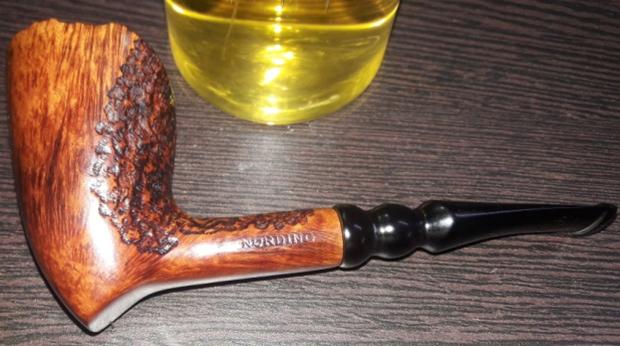
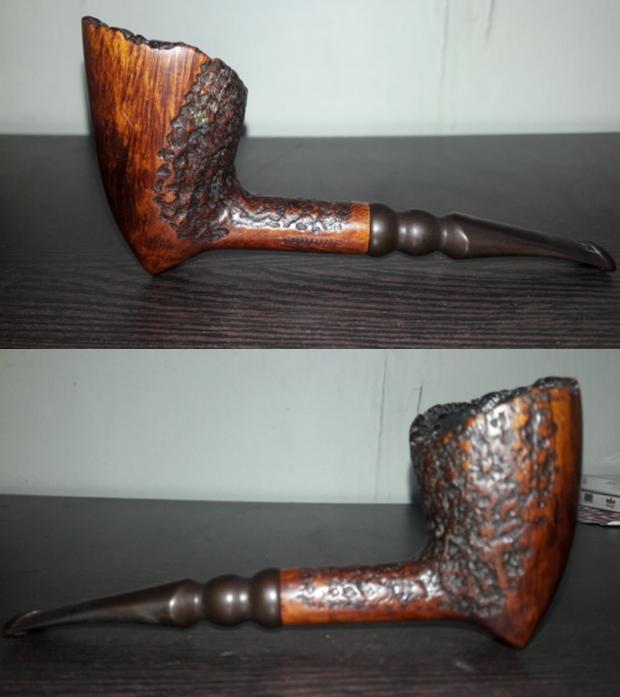
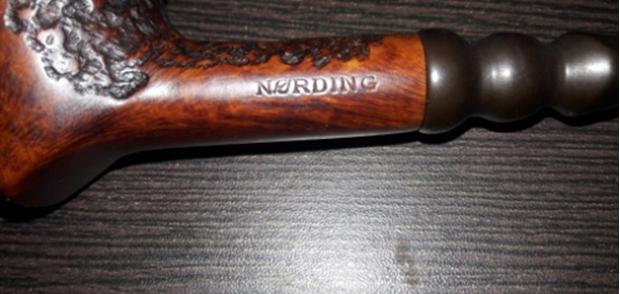
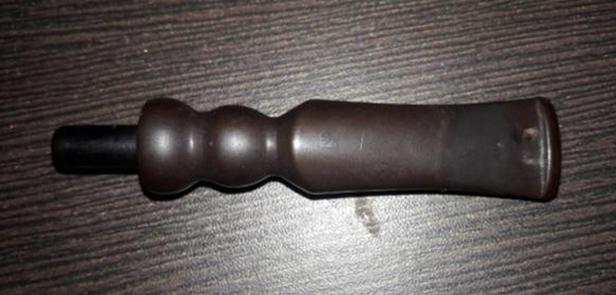
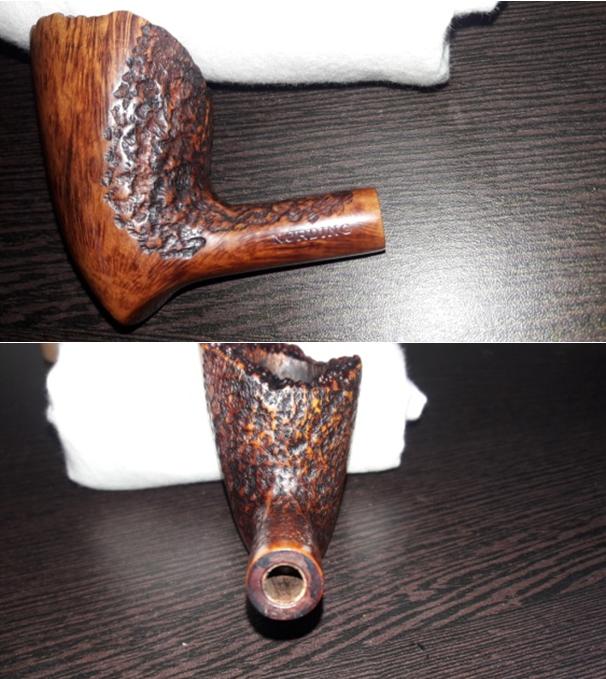
This beautiful pipe has the classical pick-axe shape with a plateau rim top. The stummel has a smooth surface with densely flame grains extending from the mid way on right side and extending mid way on left side while the remaining surface on the stummel has beautiful rustication. The smooth portions extend to the sides such that when held in the palm, all the fingers are holding the stummel along the smooth surface and one can admire the fine delicate rustications on the back while sipping your favorite tobacco. Blissful!!!!!!!!! Similarly, the top surface of the shank is rusticated extending half way through on either side while the bottom is smooth with straight grains extending from the tip of the axe towards the end of the shank.  The only stamping, “NORDING” in block capital letters, is seen on the smooth portion of the shank. The stamping is clear, crisp and easily readable. The fancy stem has a slight bent towards the lip and helps the pipe to balance straight on a table. There is the letter “N” in block capital letter, stamped on the top surface. But it is faint and hidden under the heavy oxidation.I searched the internet for detailed information on Nording pipes and this pipe shape in particular shape. Though I did not find anything particularly about this pipe, it was interesting to read how young Mr. Nording got in to the business of pipe making. It makes for a very interesting read. We must not forget to thank one Mr. Skovbo, who had a major contribution in introducing Mr. Nording in to this business!!!!!!  I have a couple of SON pipes in my grandfather’s collection which I will restore at a later date since I now know about the historical importance of these pipes!!!!!!!!!!! Here is the link for easy reference of those interested: https://pipedia.org/wiki/Nørding 

INITIAL VISUAL INSPECTION
The stummel is covered in dust, oils and grime giving a dull and lackluster appearance to the bowl. The rustications on the back of the stummel are, likewise, filled with dust, dirt and grime. This will need to be thoroughly cleaned. On close scrutiny, I saw some minor superficial dents and dings on the smooth surface. Will I address it or keep it as it is as a characteristic feature of this pipe’s past life? Hell yes, I will address it!!!!! I want it to be as perfect as I can make it for its next innings with me!!!!!! The chamber is clean with a very uneven and thin layer of cake. The plateau rim top is covered with overflow of lava. The inner rim edge is crisp, even and intact. The chamber is odorless and dry to the touch. The inner wall condition of the chamber will be ascertained once the chamber has been completely reamed. However, I foresee no issues at all as the bowl feels solid to the touch.The fancy stem is heavily oxidized with tooth chatter and bite marks on both surfaces and some calcification can be seen towards the lip. There is a significant damage to the lip end in the form of a bite through hole on the upper surface and some deep bite marks on both upper and lower surface of the stem. The airway in the stem is slightly blocked. These issues will have to be addressed. On close observation, the upper surface of the stem bears the stamp “N” in block capital letter. However, this stamp is very faint and covered in thick layer of oxidation. I will attempt to restore and save this stamp.The shank, mortise and the airway is relatively clean and will only need to be sanitized.THE PROCESS
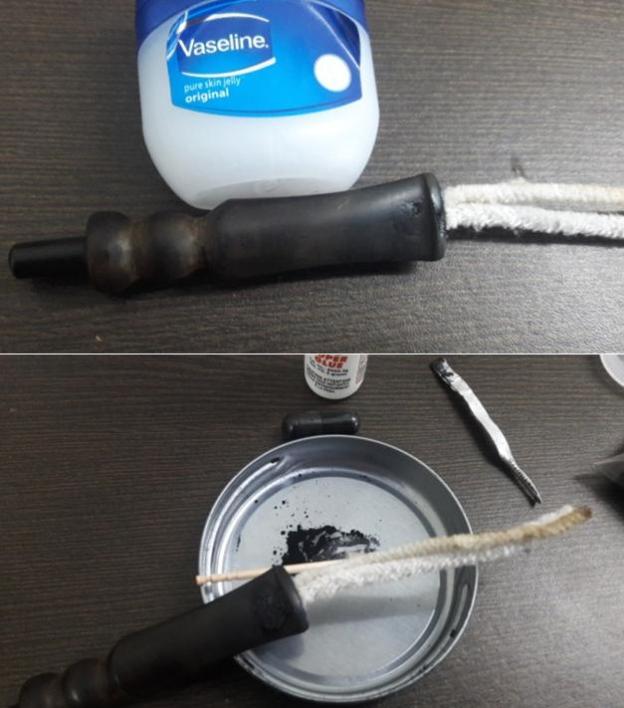
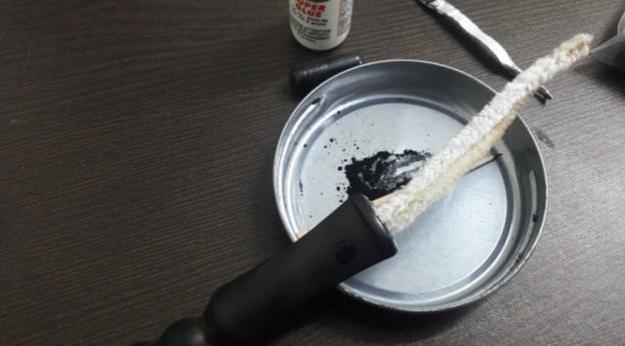
The first step that I usually follow is the reaming of the bowl. However, in this project, since the only significant damage appreciated is to the stem and would be a time consuming process to repair, I started this restoration by addressing the stem first by sanding the stem surface with a 220 grit sand paper followed by 1500 grit micromesh pad. This serves two purposes. Firstly, it evens out the surface for a fresh fill during stem repairs and secondly, I have experienced that any fill in a stem repair turns distinctly brown after micromesh sanding if the oxidation from the stem surface was not removed prior to the application of the fill. Once I was through with the sanding, I wiped the stem clean with cotton pad dipped in isopropyl alcohol. This was followed by flaming both the surfaces of the stem with a Bic lighter, concentrating more around the hole on the upper surface and the deeper bite marks on the lower surface. This helps in raising all the tooth chatter and dents to the surface.I inserted a pipe cleaner coated with Vaseline in to the stem airway before applying the fill. This helps in preventing the fill from entering and blocking the airway. I prepared a mixture of superglue and activated charcoal and applied it as evenly as possible over the hole and deep bite marks and set it aside to cure for 48 hours since the climate here is very wet and humid. While the glue was curing, I worked on the stummel, reaming out the cake with a Kleen Reem reamer, followed by a pipe reaming knife that I had fabricated. I brought the cake down to the bare briar. To further remove any traces of old cake and smooth the inner walls of the chamber, I sanded the inner wall surface with a 220 grit sand paper. As observed during initial visual inspection, I had decided to remove all the dents and dings in the stummel. I cleaned the stummel with Murphy’s oil soap, paying special attention to the plateau rim which was scrubbed with 000 grade steel wool to remove all the overflow of lava. Thereafter I sanded the smooth surfaces of the bowl with a 220 grit sand paper. Once all the dings and dents were evened out and the surface made smooth, this was followed by micromesh polishing pads, wet sanding with 1500 to 2400 grit pads. Again, I wiped the bowl with a moist cotton cloth after each pad. Thankfully there were no fills in the stummel. Once I was through with the wet sanding pads, I used the 3200 to 12000 grit pads to dry sand the stummel to a nice shine. I set the stummel aside to let it dry out naturally. I rubbed some “Before and After Restoration” balm deeply in to the stummel with my fingers. This balm helps in rejuvenating and protecting the briar wood. The immediate and incredible transformation that takes place is a worthy reward for all the efforts!!! The mixed grain can now be clearly appreciated. I let the balm be absorbed by the briar for about 15-20 minutes and then polished it with a soft cotton cloth. The bowl now looks fresh and attractive with the grains popping out any which way you look at the briar. Turning my attention to the stem, using a flat head needle file I sanded out all the fills to match the surface of the stem. I further matched the fills by sanding it with a 220 grit sand paper. I had to spot fill clear superglue into small fills which were exposed during the sanding and repeat the entire process twice. To finish the stem I went through the complete set of micromesh pads, wet sanding with 1500 to 2400 pads and dry sanding with 3200 to 12000 grit pads. I wiped the stem with a cotton swab dipped in alcohol after each pad and rubbed olive oil into the stem after every three pads. The stem looks crisp, shiny and like new. Having addressed the “appearance” aspects of this beauty, I turned my attention to the “performance” aspects to ensure that this beauty smokes as well as it looks. I thoroughly cleaned the shank internals using shank brush, pipe cleaners, qtips and isopropyl alcohol. The stem airway was cleaned using regular pipe cleaners and also bristled ones dipped in alcohol. The airway is now clean and the draw is full and open.To complete the restoration, I rubbed a minute quantity of PARAGON WAX on the smooth stummel and the stem and HALCYON WAX II on the rusticated surface. After a few seconds, using muscle power and a microfiber cloth, I polished the entire pipe to a lovely shine. The finished pipe is shown below. This one shall soon find a place in my rotation. Thank you for your valuable time spent in reading this chronicle of my journey.

Restoring a Nording # 4 Freehand


Blog by Paresh Deshpande

I had purchased four freehand pipes about a year back, and now after having worked on 30 plus pipes, and restored them to acceptable standards, I feel confident of tackling restoration of these pipes. Along the way, I learned a few techniques and honed and practiced my skills in these processes, made a few good friends and acquaintances and most importantly, have been able to preserve and restore memories of my Grand Old Man, which I cherish the most.

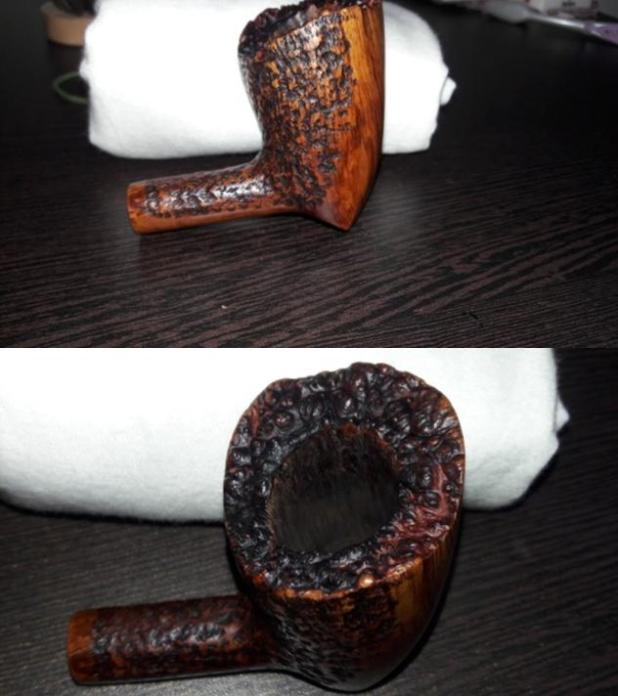
This Nording #4 now on my table is a large pipe with beautiful straight grains extending from the base of the bowl to the rim top on left 1/3 portion of the stummel and the rest 2/3 is sandblasted. The rim top curves upwards in 11 ‘O’ clock and 5 ‘O’ clock direction and forms plateau on the rim top. There is a smooth ring of briar on the bowl just below the rim top. The ring is asymmetrical and follows the shape of the rim top. The square shank is rusticated on three sides and smooth on the left side. This smooth surface bears the stamp “NORDING” over “MADE IN DENMARK” followed by a prominent number “4”. The fancy stem bears the stamp “N” in a fancy decorative and cursive hand.I was surfing the net for some additional information on this particular Nording and found that this piece closely resembles the NORDING’S RUSTIC pipe. Here is the link to Nording shapes and finishes on Tobacco Pipes. (https://www.tobaccopipes.com/nording-history/)  

INITIAL VISUAL INSPECTION
The plateau on the rim was dirty with dust and tars in the grooves of the plateau. The grooves of the sandblast were also dusty and dirty. The inside of the bowl appeared to be in good condition under the thin cake. There is an uneven build up of cake with bottom half having more cake as compared to the upper half of the bowl.The rustications on the shank and stummel is also dusty and filled with dirt and grime. The smooth portion of the stummel appears dull and lackluster due to dust and grime coating the stummel. The plateau shank end was also dirty with tars and dirt. Air does not flow freely through the shank and the mortise appears to be clogged. The stem does not seat completely in to the mortise. This will have to be cleaned.The stem is vulcanite and was oxidized and had some calcification on each side of the stem for the first inch ahead of the button. Apparently at some point in its life, it had a rubber Softee bit on the stem to protect it from tooth marks and chatter. It had done its job and there were no tooth marks or chatter on the surface of the stem. The stamping on the stem, though faded and covered under heavy oxidation, is visible and it will be my attempt to restore and highlight it to the extent possible.All in all, this appears to be a simple and straight forward clean up and polishing project, unless some gremlins and demons are unearthed during the process!!!!

THE PROCESS
I reamed the bowl with a Kleen Reem pipe reamer to take the cake back to bare briar. I cleaned up the remnants of cake in the bowl with my fabricated knife. I was careful not to be over zealous using the knife in order to prevent the walls from being gouged. I finished the cleaning of the inside of the bowl with 220 grit sandpaper wrapped around my finger. I turned it in the bowl until the bowl was smooth and clean.I scrubbed the exterior of the bowl with a tooth brush and Murphy’s Oil Soap. I scrubbed the plateau rim top with a brass bristle brush to remove the tars and oil in the grooves. I rinsed the bowl with water in the sink while scrubbing the finish with the tooth brush to remove the dust and grime. I scrubbed out the mortise with a dental spatula. I cleaned the airway in the shank and stem with pipe cleaners, cotton swabs dipped in alcohol. Once the grime was removed the pipe smelled good and looked good.I rubbed some Before & After Restoration Balm into the surface of the briar to enliven, clean and preserve it. I rubbed it in with my fingertips working it into the briar. I worked it into the plateau rim, shank end, smooth portion of the stummel and the sandblast on the sides of the shank and the bowl. I buffed it into the finish with a horsehair shoe brush. I set it aside for a little while to let the balm do its work. I buffed it off with a cotton cloth and a shoe brush. I set the bowl aside and turned my attention to the stem. I flamed the surfaces of the stem with a Bic lighter to raise very minor tooth chatter to the surface as well loosen the oxidation from the stem surface. This was followed by sanding the oxidation and the calcification on the stem with 220 grit sandpaper. I was able to remove the oxidation and the calcification.

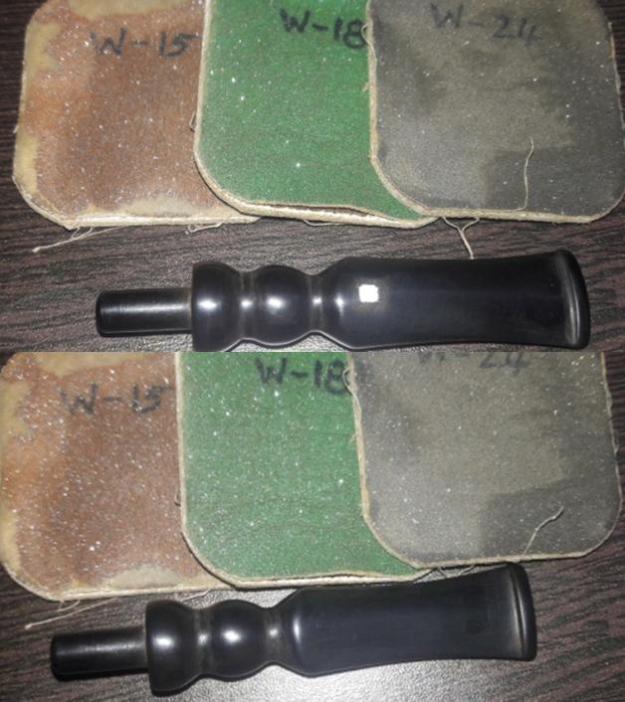
I polished the stem using micromesh sanding pads – wet sanding with 1500-2400 grit pads and then dry sanded the stem with 3200-12000 grit pads to further polish it. After each pad I wiped it down with Extra Virgin Olive Oil to protect and enliven the stem. When I finished with the final pad I gave it the stem another coat of oil and set it aside to dry. These fancy stems, though looks fabulous and helps in accentuating overall look and shape of a freehand, are a pain to clean up and remove all the oxidation!!!! I finished this restoration by applying a small quantity of PARAGON Wax on the stem and smooth briar surface and HALCYON II wax on the rusticated surface. I let it set for a few seconds and thereafter polished it with a soft cotton cloth. The finished pipe looks nice and with the shiny black fancy vulcanite stem, the red and dark hues of the pipe are further accentuated. The finished pipe is shown below.

Restoring my Grandfather’s…what the…A Kaywoodie?????


Blog by Paresh Deshpande

Yes!! That is what exactly my thought was, when I looked closely at the small pipe in my hand that I had selected as my next project for restoration. Those who have read my previous write ups on pipe restoration would know that I have inherited a large number of pipes from my grandfather dating between the periods from 1940s to 1970s. I had not come across a single Kaywoodie pipe in the two boxes I had opened, one box still remaining unopened!!!

I have restored two Custom-Bilt pipes from this collection to date, one from 1938-41 era (https://rebornpipes.com/2018/06/02/restoring-my-grandfathers-custom-bilt-pipe/) and second from the Wally Frank era(https://rebornpipes.com/2018/07/20/restoring-a-wally-frank-era-custombilt-sitter-633/), the third Custom-Bilt billiard from 1938-41 era was sent to Mr. Steve of rebornpipes fame to sort out tenon issues and have fallen in love with Custom-Bilt pipes since thereafter!!!! I had picked this pipe assuming it to be a Custom-Bilt and it was only on close scrutiny was it reveled that this was a Kaywoodie!!!!! I deliberately rummaged through the pile again and sure enough, there was another Kaywoodie Bent Billiard with 4 holed stinger in relatively unsmoked condition. It seems my grandfather never took a liking for these Kaywoodie pipes!!!!!

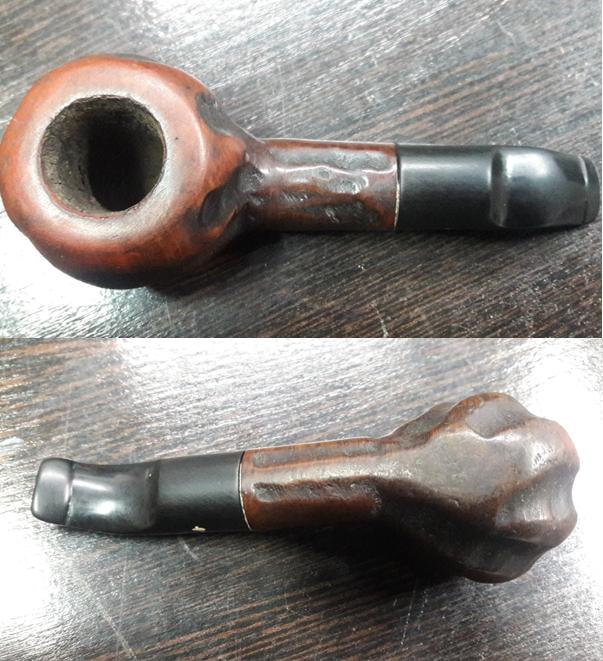
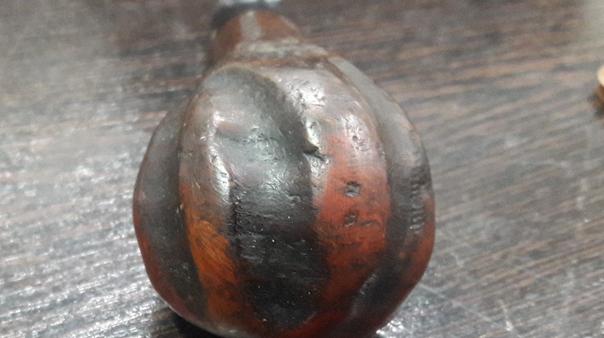
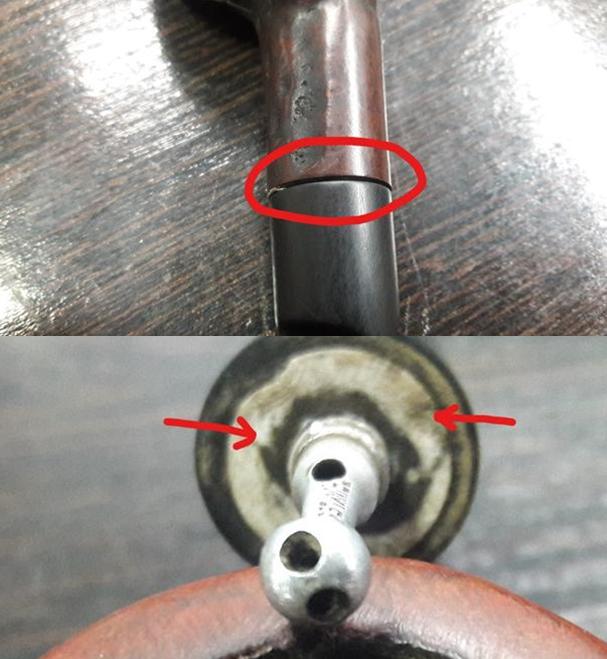
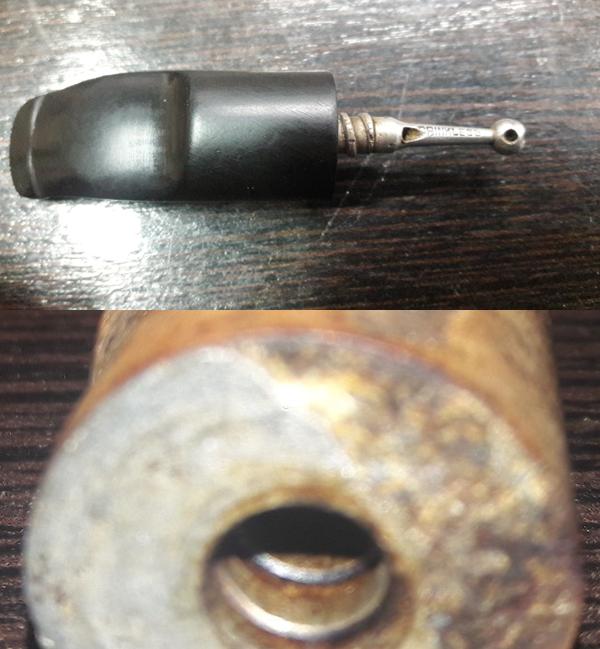
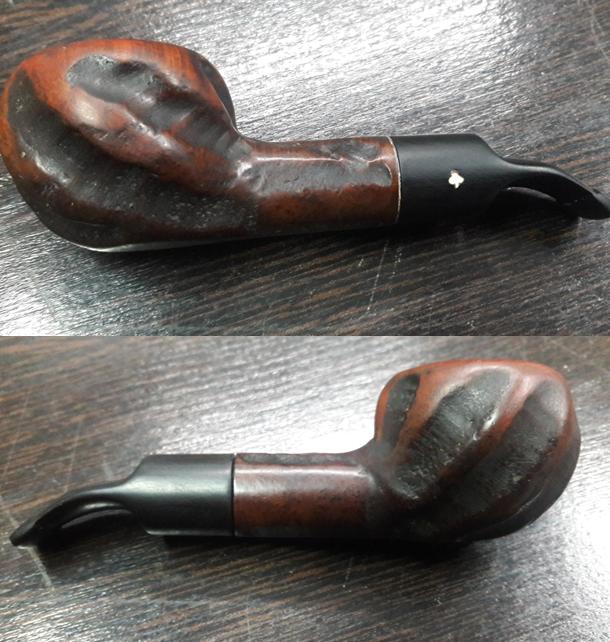
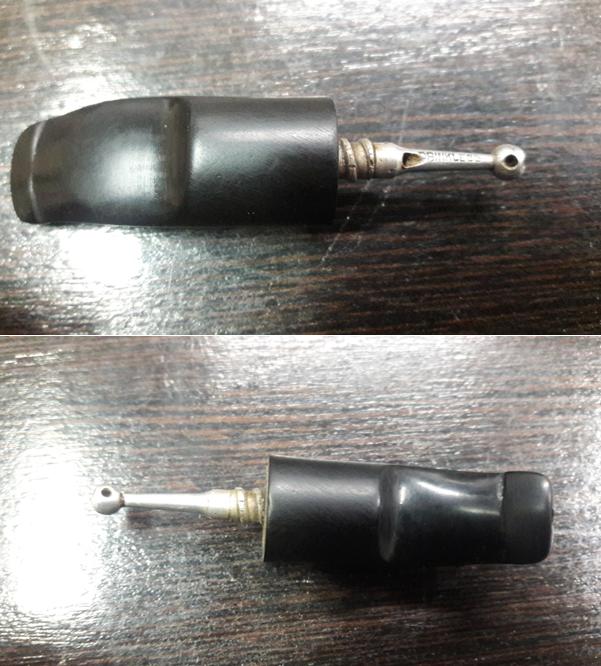
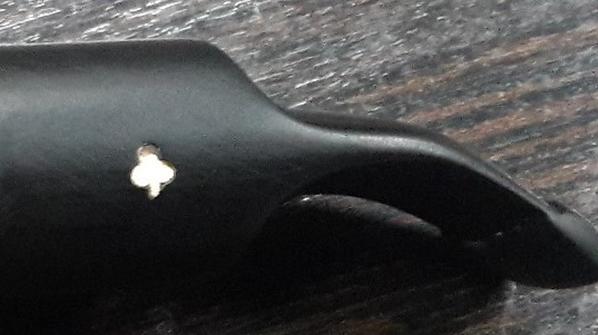
This Kaywoodie Pocket Pipe, now on my work table, has similar large finger like vertical rustications with very thin horizontal lines ensconced within these large vertical rustications. These thick vertical rustications extend upwards and end short of the rim top, giving the rim top a flat smooth surface. These rustications can be seen extending all around the shank on top and bottom, save for smooth surfaces on either sides of the shank. The smooth surface on the left side of the shank bears the stamping “Handmade” over “Super Grain” in cursive hand, over “KAYWOODIE” in block capital letters. The right side of the shank bears the stamp “IMPORTED BRIAR”. All these stampings are thin, worn out but readable under bright light with a magnifying glass. The ¾ bent saddle stem bears the trade mark “Clover leaf” symbol.This pipe comes with a four-holed threaded stinger which screws into the shank. This stinger is stamped with “DRINKLESS”. There is an aluminum spacer ring separating the shank end from the stem end when threaded in. On closer observation, it can be seen that a portion of this spacer, closer to the mortise opening, extends into the mortise and is threaded which matches with the stinger threads.I took all these observation and searched pipedia.com for history of this brand, models and attempt at dating this pipe. This site has detailed information on Kaywoodie pipes, including the history of origin, about the owners of the brand and also various important links to “Collector’s Guide to Kaywoodie Pipes” and “Kaywoodie’s Logos and Markings: Clover variations since 1919”. Here is what was revealed as extracted from pipedia.com:-
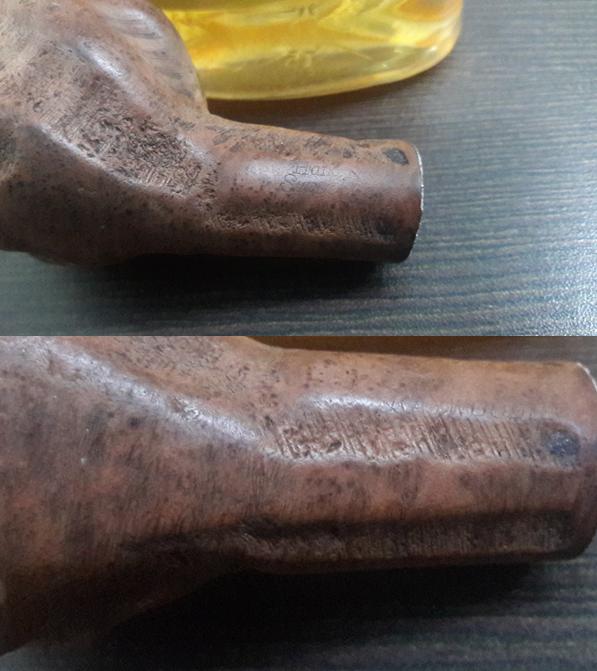
Kaywoodie was the name a pipe offered by Kaufman Brothers & Bondy Company (KBB), first appearing in February of 1919. The Dinwoodie pipe, also by KBB, appeared in November of 1919. Sometime before 1924, the Dinwoodie had been discontinued and the Kaywoodie name was beginning to be used on an extensive line of pipes that ultimately would be the name of the company. The origin of the name Kaywoodie is a combination of the K from Kaufman and wood, as in briar. Not much is known of the original KBB company other than it was started in 1851 by the German born Kaufman brothers when they opened a small pipe shop in the Bowery section of New York City. In the back room of this shop, they made their first pipes. From this meager beginning, the Kaywoodie name and organization was to emerge.

When one of the men from the New York office got “gold fever”, he carried a large supply of pipes with him to California that he sold along the way. This early “national distribution” did much to build the reputation of KBB. By the late 1800’s, branches of KBB were opened in Chicago, Atlanta, San Francisco and St. Louis with family and friends acting as agents. The trademarks, for the inlaid cloverleaf and the cloverleaf with the KBB initials inside, were issued in 1881. KBB’s pipes became more popular and were in constant demand by the end of the century. Orders were streaming back east and KBB needed to move to larger manufacturing facilities. By 1915 the move was made to larger facilities in the old Union Hill section of Union City, New Jersey. The salesroom offices were located at 33 East 17th. Street, New York. When the Kaywoodie pipe was first introduced by KBB it came with a hand cut rubber mouthpiece fitted with an aluminum Inbore Tube. This device was to “assure a clean, cool smoke.” Other KBB pipes such as Ambassador, Heatherby and Melrose also had the Inbore tube. The early Drinkless Kaywoodies from 1924 through 1931 had push bit stems. In 1931, after three years of research, the new Drinkless Kaywoodies with the synchro-stem, (threaded drinkless screw-in mouthpiece) were introduced. The drinkless attachment was advertised as cooling the smoke from 850 degrees in the bowl to 82 degrees when it entered the mouth. By the mid 1930’s, all Kaywoodie’s came with the screw mounted Drinkless attachment. (Export Kaywoodies, available briefly from 1950-1955, had push bit stems and were available in all the same shapes and finishes as the drinkless versions.)

Throughout much of the 1940’s, 50’s and 60’s, the Kaywoodie family of pipes consisted of 11 basic grades of briar pipes; though new grades were frequently added to the line and some older grades were discontinued or downgraded. These 11 basic grades of pipes, listed in ascending order of quality, were:

  1. Drinkless
  2. Hand-made Super Grain
  3. Super Grain
  4. Relief Grain
  5. Flame Grain
  6. Silhouette
  7. Oversize Kaywoodies
  8. Meerschaum Inlaid Kaywoodies
  9. Connoisseur
  10. Ninety-fiver
  11. Centennial

Thus from the above, I can safely infer that this pipe was a higher grade Kaywoodie from the 1940s to 1960s.

INITIAL VISUAL INSPECTION
The finish looked a lot like the classic Kaywoodie take on Tracy Mincer’s Custom-Bilt pipes. The carved worm trails seen on the stummel and shank is filled with dust, dirt and grime of years of smoking and thereafter years of uncared for storage. The grime and dirt is so strongly entrenched in to these carved worm trails that it appears black and solidly smooth to the touch. I could see 3-4 small dings and dents on one of the fingers of the raised portion of the stummel. This will need to be addressed. There is a decent layer of cake inside the bowl which is dry and hard to the touch. The smooth rim top is clean and devoid of any apparent damage. The condition of the inner walls of the chamber can be ascertained after the cake has been reamed out. The inner edge of the rim shows minor uneven surface, however, the outer edge of the rim is clean and without dents or dings. The short ¾ bent saddle stem has smooth upper and lower surfaces without any tooth chatter or bite marks. This is unlike any other pipe stem I have seen that had belonged to my grand old man. The four holed stinger is clean, however, the holes appear to be clogged. This was confirmed as air did not flow when I tried to blow through the stem. May be that has been the reason that this pipe was not as extensively used by him. The inlaid white clover leaf is clean and prominent with a tiny portion of the top of the leaf missing!! But it is so tiny chip that it is not immediately visible. The lips are worn out and may need to be reconstructed; again I am not sure about this as there is no damage as such. There is an aluminum spacer between the stem and the shank which breaks the monotony of the pipe. However, it is broken on the right side leaving an ugly gap between the shank and stem. The remaining portion of the aluminum spacer was crumbling and breaks merely to the touch. This needs to be addressed. There is a circular band of white tape or some such material at the end of the stinger where it meets the stem. This is something which is not correct and the reason for it having been placed needs to be checked. THE PROCESS
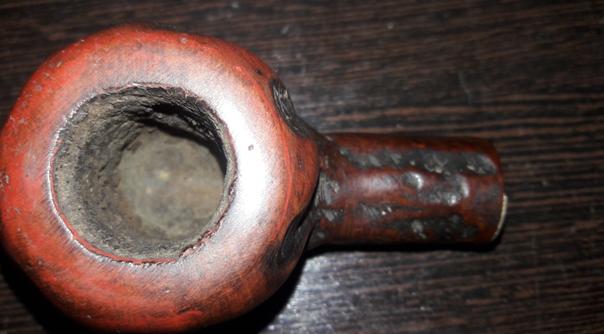
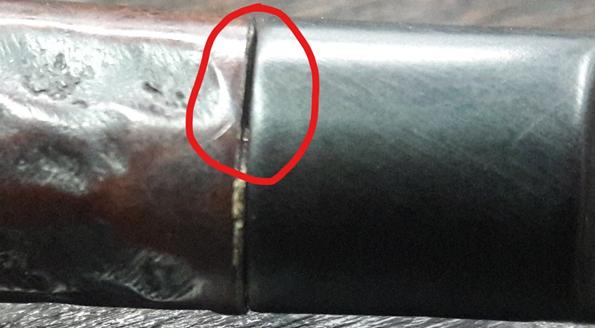
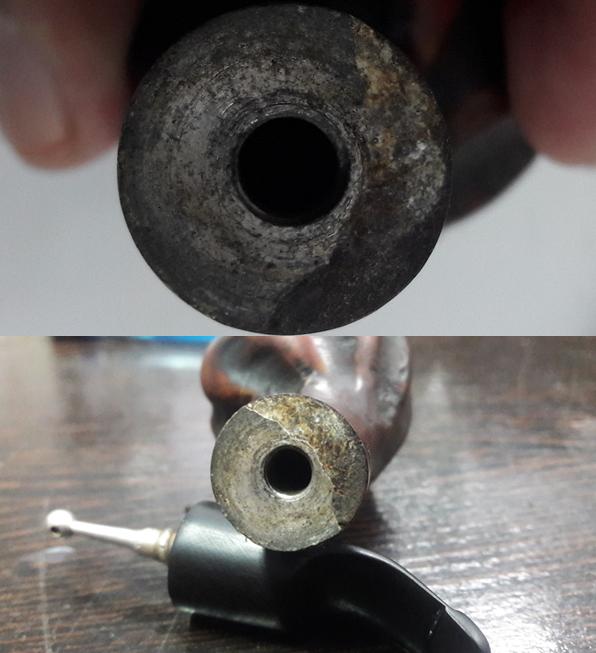
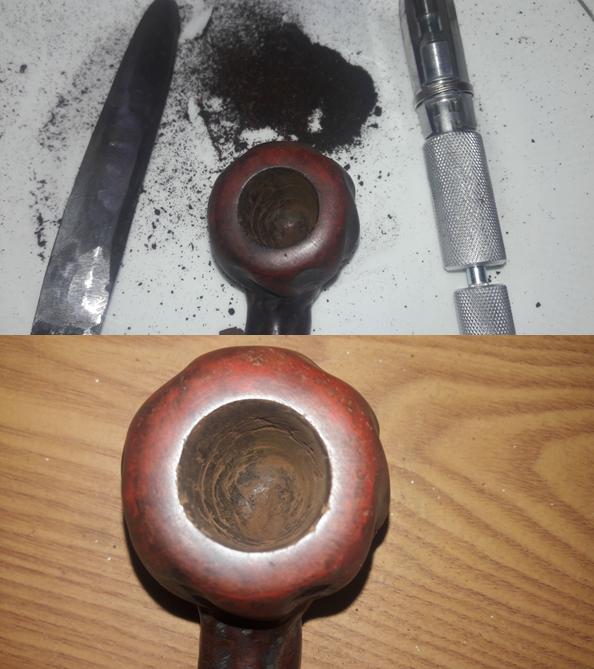
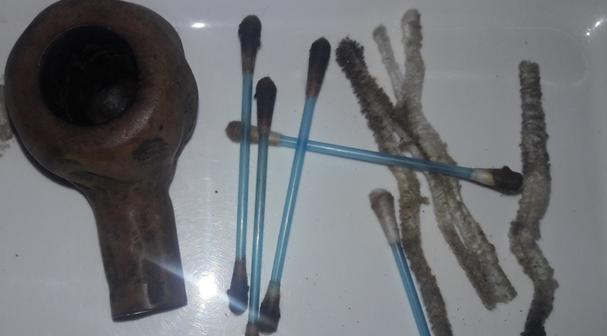
First and foremost in any restoration of pipe, I start with reaming the chamber with a Kleen Reem pipe reamer. However, in this instance, the cake was dry, tightly packed and very hard. I feared breaking the reamer and resorted to the use of my fabricated knife. After a struggle, I was able to take the cake down to the bare briar. I sanded the inner walls of the chamber with 150, 220 and 600 grit sand paper to completely remove the remaining cake and smooth out the walls. Alas, I observed some superficial gouges on the wall surface due to the use of knife. I would need to address this by coating the chamber walls with pipe mud at a later stage. I cleaned the mortise and internals of the shank with cue tips, pipe cleaners and alcohol. Since the major challenge appreciated in this restoration project was the construction of a new aluminum spacer, I decided that is where I would start!!!! To address this issue, I identified three options, as under, which were available to me:
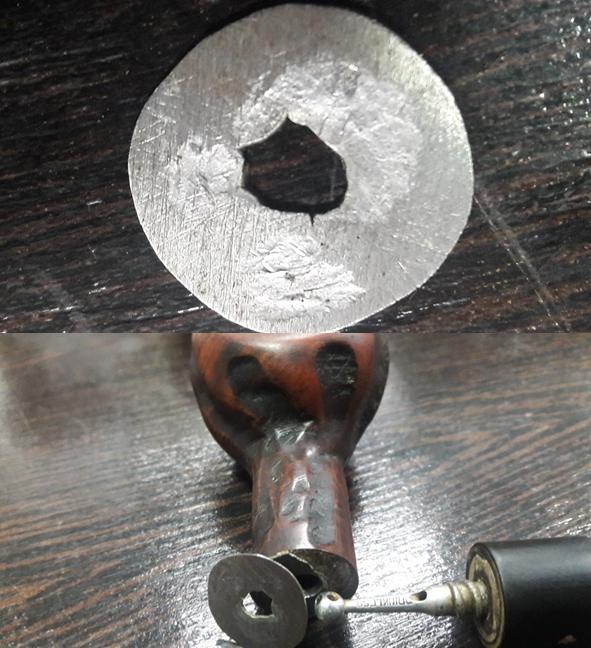
(a) Coat the entire spacer, including the broken portion, with superglue, building it up in layers and then sanding it to flatten it on a topping board. This coat of superglue will also stabilize the remaining original spacer.

(b) Fabricate an aluminum spacer out of a regular aluminum washer and replace only the broken portion of the spacer.

(c) Replace the entire spacer with the new fabricated aluminum spacer.

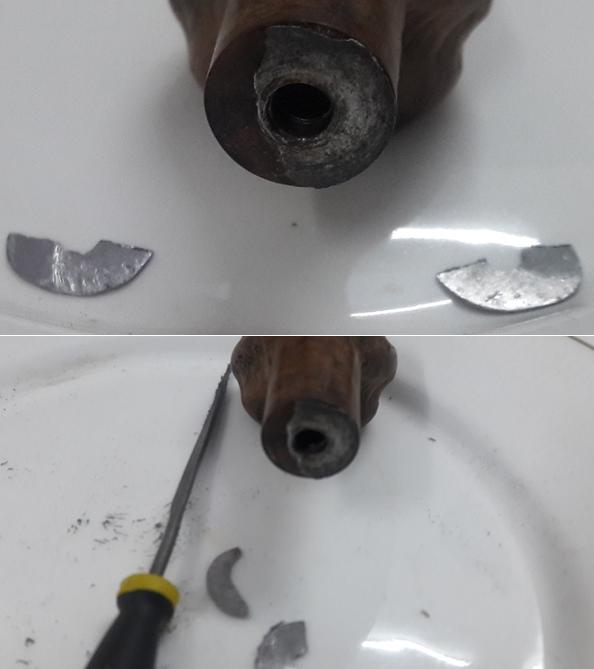
I discussed these options with my mentor, Mr. Steve Laug. As is his trademark style of tutoring, his suggestion was, “I would go with the first option”!!!!! He further clarified that the spacer also enters the mortise and has threads for the “synchro-stem” (threaded drinkless screw-in mouthpiece). Thus, I concluded that exercising the third option was best avoided if I wished to avoid ruining the pipe!!! That left me with following either first option or the second option. Any other sane student would have followed the advice of his mentor (which I had been doing up to this point!!!). However, I, for some reason, was convinced that the end result of exercising the second option would result in a better finish and thus embarked on the arduous journey of replacing only the broken portion of the original spacer with the fabricated aluminum washer.

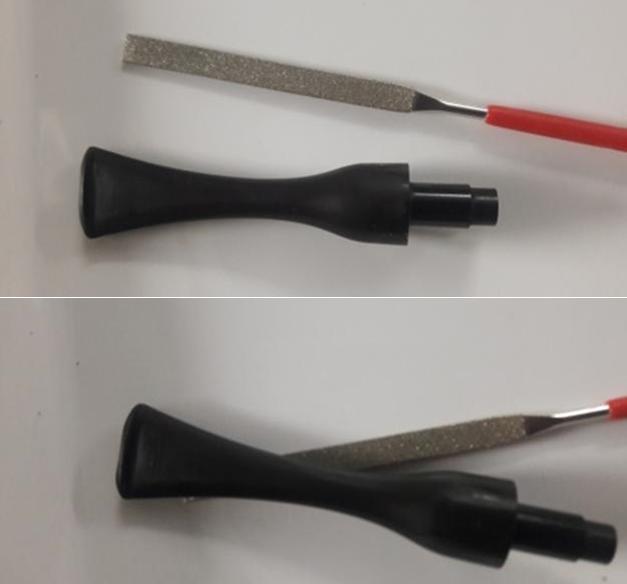
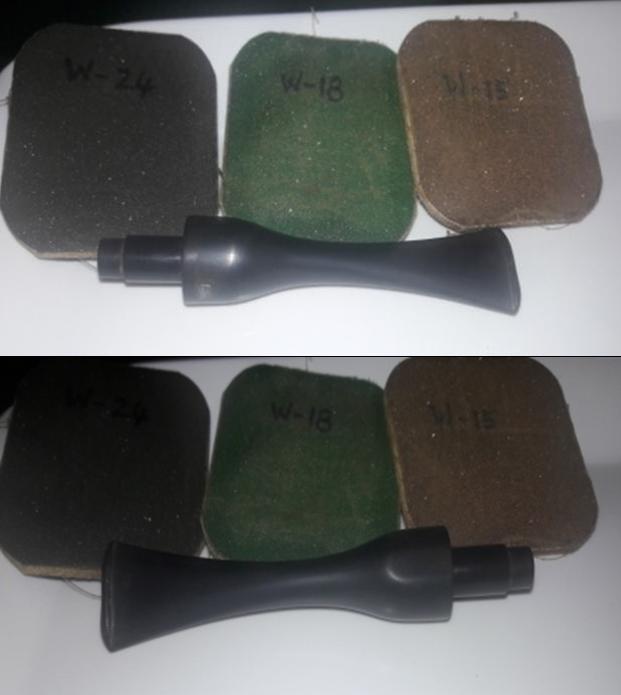
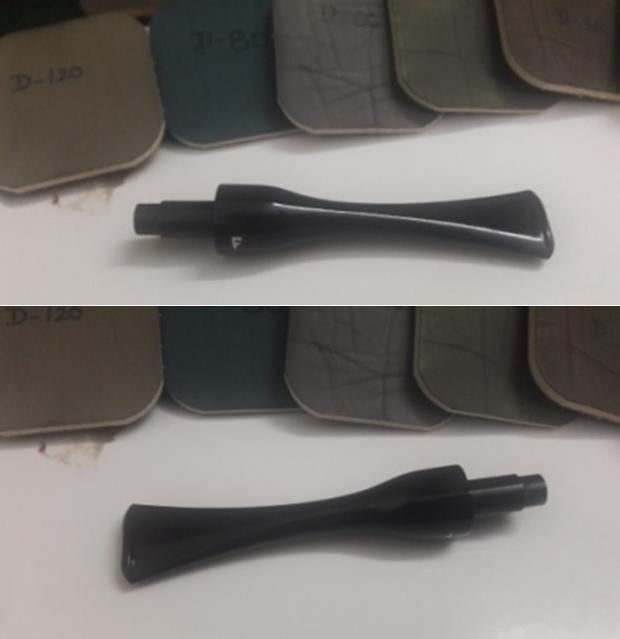
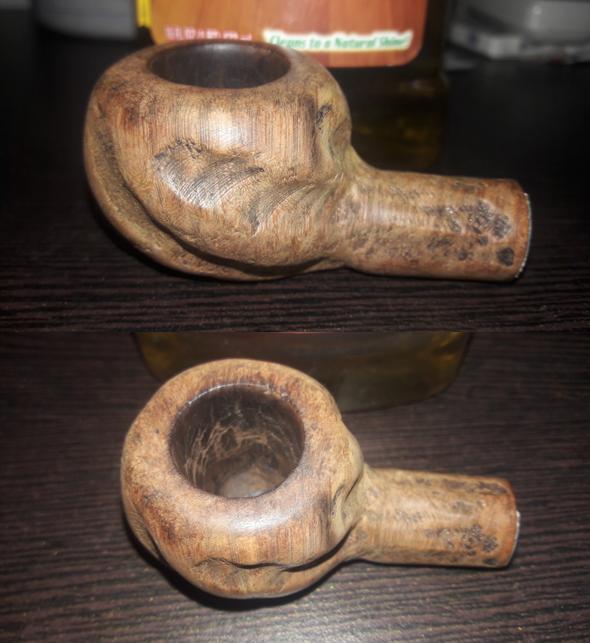
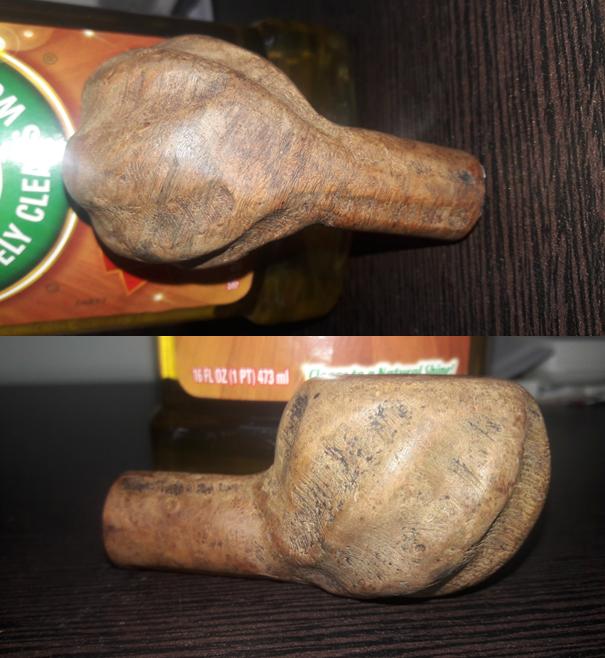
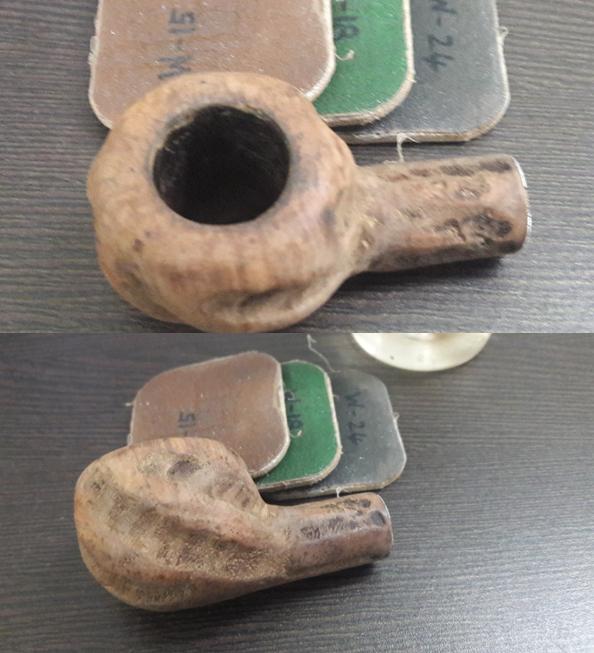
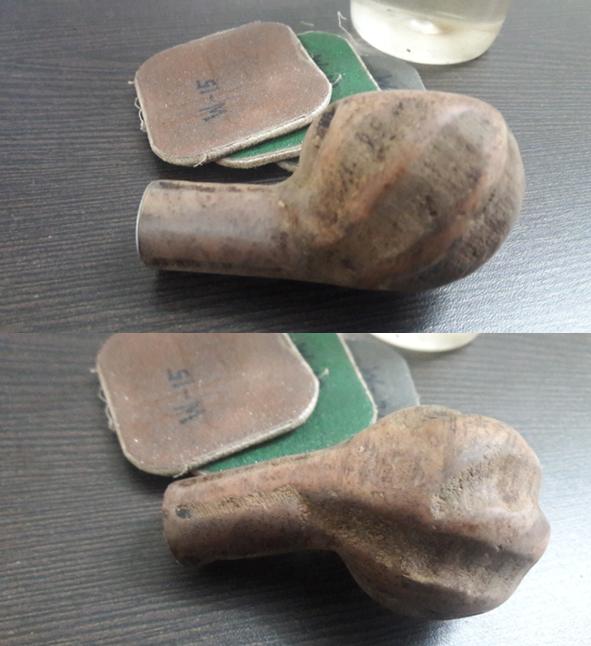
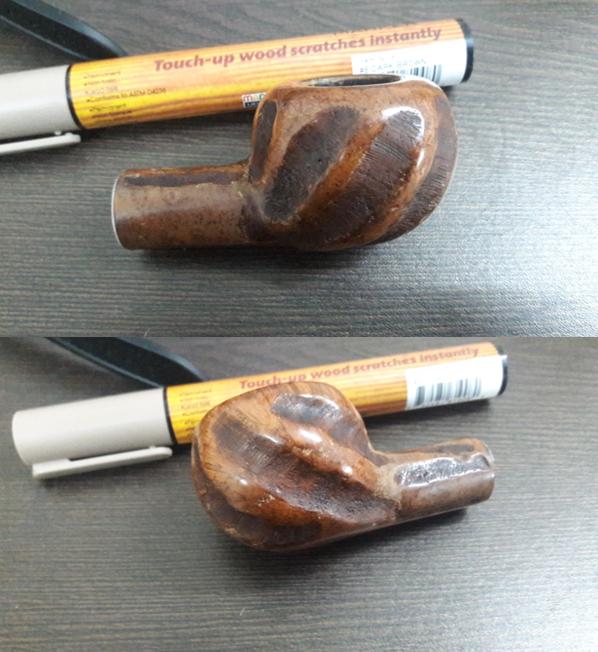
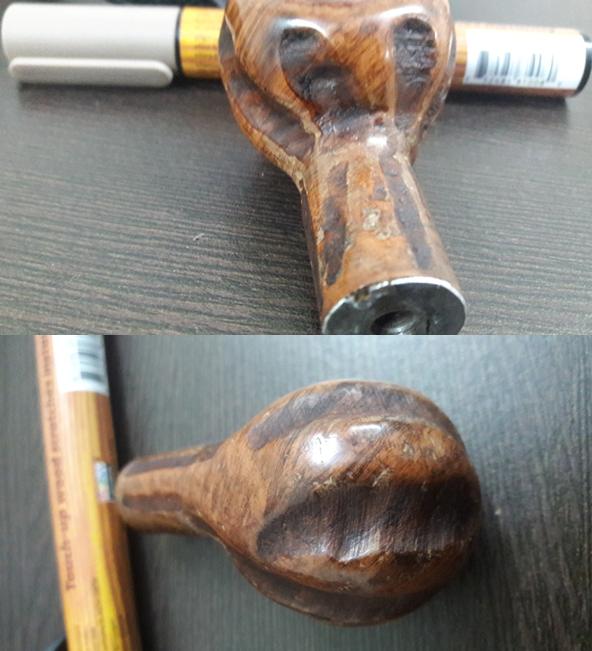
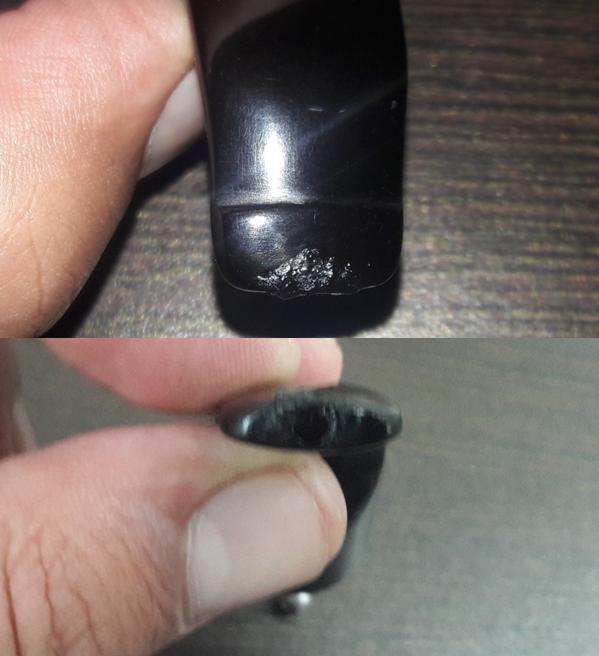
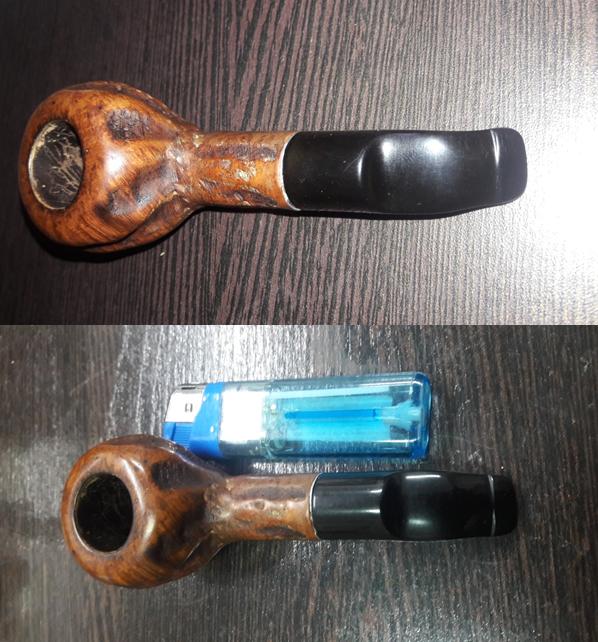
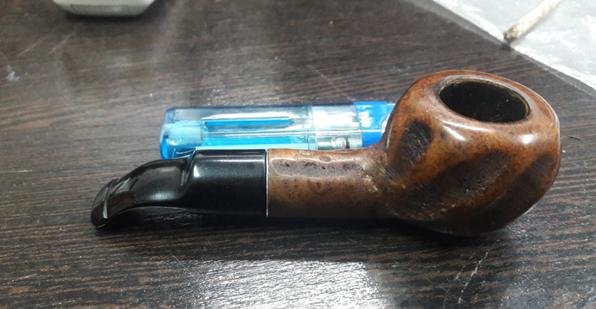
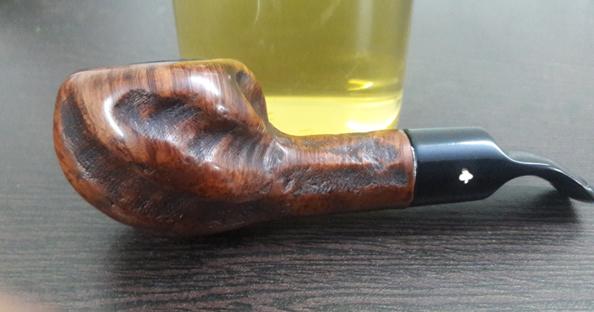
I began the process by shaping the new aluminum washer to match the size, shape and thickness of the original spacer. I was not very meticulous about the size and thickness as the same would, in any case, have to be perfectly matched by sanding it down with needle files. The following pictures will tell the story of the entire process of constructing this spacer. However, what these pictures do not tell you is the long back breaking hours involved, the strain to which eyes were subjected, precise and controlled movements of the needle files and agony experienced whenever the needle file inadvertently scraped the crumbling original spacer, causing it to chip. When I was satisfied with the fit and finish of the new spacer, I applied an even coat of superglue over the entire surface and very painstakingly re-aligned all the broken pieces of the original spacer and also the new fabricated spacer over the coat of the superglue and set it aside to cure overnight. Next day I evenly applied another coat of superglue over the entire spacer and again set it aside to cure so as to stabilize the spacer repairs and even out the surface. Once the glue had sufficiently cured, I topped the surface on a topping board to even out the glue. To further smooth out the surface and ensure a transparent, even and smooth surface, I polished the surface with micromesh pads, wet sanding with 1500 to 2400 grit pads and dry sanding with 3200 to 12000 grit pads. I frequently wiped the surface with a moist cloth to remove the glue dust. I was able to maintain just sufficient thickness of the coat so as not to disturb the alignment of the stem with the shank while stabilizing and protecting the spacer. I was very satisfied with the results. Now with the spacer taken care of, I start working on the stummel. I thoroughly clean the stummel with undiluted Murphy’s oil soap and a hard bristled tooth brush scrubbing the rustications clean of all the lodged dirt, dust and grime. I had seen a few dents and dings on one of the fingers of the stummel rustication and wanted to address it. I began by sanding the stummel and raised portion of the rustications with a 600 grit sand paper followed by 800 grit sand paper. I had used very light hand so as not to lose too much briar (though at the end I realized that I should have used a bit more force since at the end of the process, these dents and dings were still very much visible!!!!!!). This sanding was followed by polishing with micromesh pads, wet sanding with 1500 to 2400 grit pads and dry sanding with 3200 to 12000 grit pads. I wiped the bowl down with a moist cloth after each pad to remove all the sanding dust. As I was going through the micromesh pads, I was thinking of adding some twist to the finish and remembered that Mr. Dal Stanton, a gentleman I often turn to for some interesting pipe related conversations and advice, had refurbished a Tom Howard rusticated tomato pipe for me. He had darkened the crevices of the rustications with a dark stain pen and the contrast was eye catching, to say the least. I wanted to have a pair of pipes with this finish and decided to give this Kaywoodie the same treatment. I discussed with Mr. Dal Stanton who wholeheartedly explained the technique of achieving this finish and also gave me some very fine and pragmatic advice which I shall cherish on this journey. I stained the crevices in the rustications with a dark brown stain pen and set it aside for the stain to set in to the crevices. After the stain had set, I rubbed a small quantity of “Before and After” restoration balm in to stummel and set it aside for a few minutes to let the balm work its magic on the briar wood. The balm works to bring back the shine and pours life in to the briar. I buff the stummel with a horse hair shoe brush followed by a nice hand polish with a soft cotton cloth. I liked the way the stummel has finished. To address the superficial gouges in the chamber created by use of knife during reaming, I prepared a mixture of pipe ash and yogurt of putty consistency and applied a coat to the inner walls of the chamber. Once the coating had cured, I gently sand the walls with a 220 grit sand paper to a smooth and even surface. With this, the stummel is all completed. Once the stummel had been finished and set aside, I turned my attention to the stem. There was not much work on this stem since it was sparingly used with only light signs of oxidation and no bite marks or tooth chatter. I start by sanding with micromesh pads, wet sanding with 1500 to 2400 grit pads and dry sanding with 3200 to 12000 grit pads. I wiped the stem with a cotton swab dipped in alcohol to remove the sand dust and rub a small quantity of Extra Virgin olive oil and allow it to be absorbed in to the stem. The stem is now nice and shiny. The next thing to address was the blocked stem. I tried cleaning the airway in the stem with pipe cleaners dipped in alcohol, but the pipe cleaner would not go in the complete distance. There was gunk and tars which had accumulated inside the airway and in the holes too!!!! Using a straightened paper clip, I probed and cleaned all the holes on the stinger. I tried to blow through the stem, but I realized that it was still blocked. I tried pushing the paper clip through the airway and then there was this small sound of a crack!!!!!! Aargh……..the upper lip now has a chip!!!!! Undaunted by this temporary setback, I continue with the clearing of the blocked stem. Finally, I am able to dislodge the block and now the air flows freely through the stem.To address this chip, I firstly insert a regular pipe cleaner coated with Vaseline in to the air way. This prevents the charcoal and glue mix from dribbling in to the air way blocking it. I mix a small quantity of activated charcoal and CA superglue and spot apply it over the chipped surface. Once I have ensured that the complete surface is coated with the mix, I set it aside to cure overnight. The next evening, I file the filling with a needle file and match it to the surface of the stem. To further match the filling with the rest of the stem surface, I sand the fill with a 220 grit sand paper followed by micromesh polish pads. The stem is now nice and shiny again with a free flow of air through the airway. I finished this restoration by applying a small quantity of Halcyon II wax and rubbed it deeply in to the stummel with my fingers. A few minutes later, I polished it with a soft cotton cloth using muscle power. The stummel now has a nice deep shine to it and the grains on the rim top and raise portion of the rustication can be seen in its full glory. I re-attach the stem and then relies that the stem is off center to the shank!!!! My God, this one was giving me a hard time. I removed the white sticky tape that was stuck around the stinger at the stem end and tried the fit. The fit had improved but it was still off centre. Again, to address this issue, I was presented with two options of either sanding the coating of superglue over the spacer till the off center was corrected or heat the stinger till the glue fixing the stinger in the stem was loosened and turn the stinger in to the mortise till the issue was addressed. I decided to go with the second option as I feared losing the coating of superglue over the spacer and thus exposing the brittle original to further chipping. I heated the stinger with the flame of a Bic lighter so that the glue holding the stinger would loosen a bit and fitted the stem in to the mortise, tightening it till the stem and shank were perfectly aligned. I let the stinger sit in this position till it had cooled down and the glue had hardened again. Now the fit of the stem and the shank is perfectly aligned. Here are the pictures of the finished pipe and hope that this long write up has been an enjoyable read. Thank you for walking with me through this restoration as I attempt to preserve the legacy of my beloved grand old man!!!!!
 

Restoring My Grandfather’s Kaywoodie “Super Grain” Bent Billiard


Blog by Paresh Deshpande

I had just finished restoring a Kaywoodie Handmade ¾ bent Apple pocket pipe that I had found in the pile of pipes inherited from my Grandfather. The next pipe that I have selected for restoration is again a Kaywoodie, but a Bent Billiard with a 4 holed stinger, also from my grandfather’s collection. To date, these are the only two Kaywoodies that I have come across in my large inherited pipe collection.

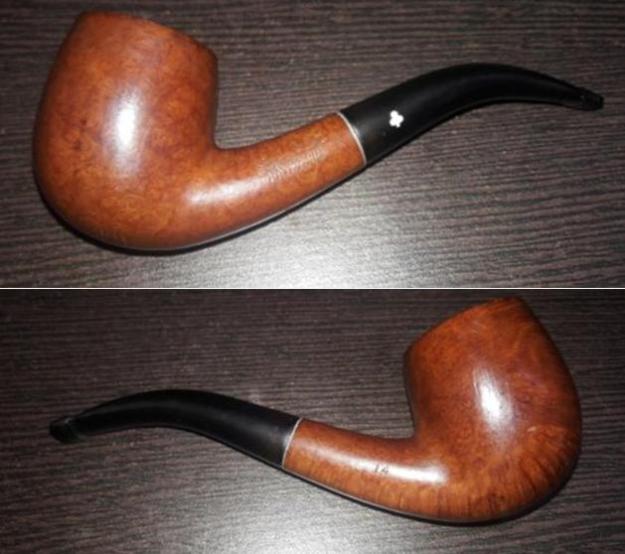
This Kaywoodie is in immaculate condition and appears to have been smoked maybe only 3 to 4 times. This pipe has a medium sized bowl and the stummel has some beautiful mixed grains that can be seen through the dull and lifeless finish on the stummel and the shank. It fills the hand nicely and is light weight, making it comfortable to hang from the lips.

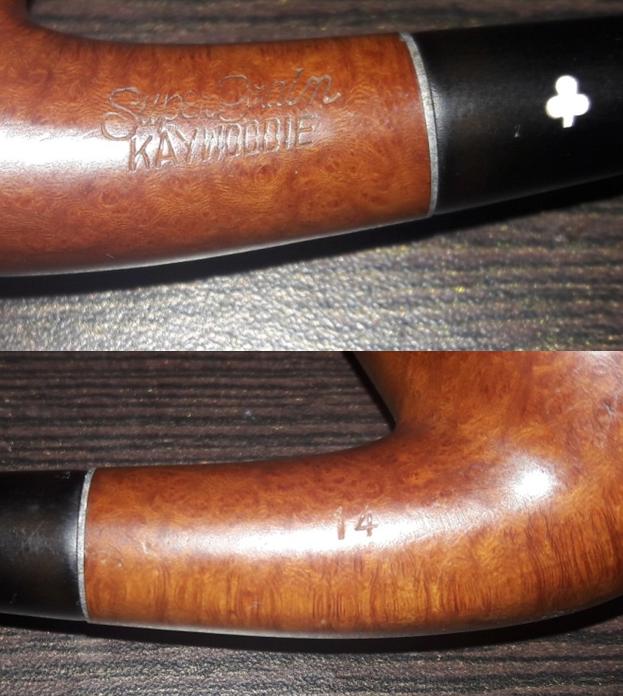
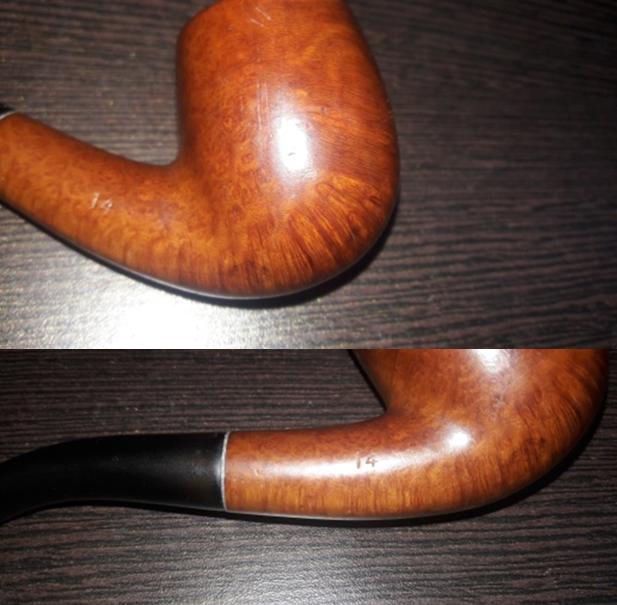
This beauty is stamped on the left side of the shank as “Super Grain” in cursive hand over “KAYWOODIE” in block capital letters and the right side of the shank bears the shape number “14”. The stem bears the inlaid Clover leaf on left side in white. All the stampings are clear, crisp and easily readable.I searched the net for information on this brand in general and this pipe in particular. The first site I always visit is Pipedia. I gathered a lot of information about the brand and some important snippets of information are reproduced below:

Kaywoodie was the name a pipe offered by Kaufman Brothers & Bondy Company (KBB), first appearing in February of 1919. The Dinwoodie pipe, also by KBB, appeared in November of 1919. Sometime before 1924, the Dinwoodie had been discontinued and the Kaywoodie name was beginning to be used on an extensive line of pipes that ultimately would be the name of the company. The origin of the name Kaywoodie is a combination of the K from Kaufman and wood, as in briar. Not much is known of the original KBB company other than it was started in 1851 by the German born Kaufman brothers when they opened a small pipe shop in the Bowery section of New York City. In the back room of this shop, they made their first pipes. From this meager beginning, the Kaywoodie name and organization was to emerge.

When one of the men from the New York office got “gold fever”, he carried a large supply of pipes with him to California that he sold along the way. This early “national distribution” did much to build the reputation of KBB. By the late 1800’s, branches of KBB were opened in Chicago, Atlanta, San Francisco and St. Louis with family and friends acting as agents. The trademarks, for the inlaid cloverleaf and the cloverleaf with the KBB initials inside, were issued in 1881. KBB’s pipes became more popular and were in constant demand by the end of the century. Orders were streaming back east and KBB needed to move to larger manufacturing facilities. By 1915 the move was made to larger facilities in the old Union Hill section of Union City, New Jersey. The salesroom offices were located at 33 East 17th. Street, New York. When the Kaywoodie pipe was first introduced by KBB it came with a hand cut rubber mouthpiece fitted with an aluminum Inbore Tube. This device was to “assure a clean, cool smoke.” Other KBB pipes such as Ambassador, Heatherby and Melrose also had the Inbore tube. The early Drinkless Kaywoodies from 1924 through 1931 had push bit stems. In 1931, after three years of research, the new Drinkless Kaywoodies with the synchro-stem, (threaded drinkless screw-in mouthpiece) were introduced. The drinkless attachment was advertised as cooling the smoke from 850 degrees in the bowl to 82 degrees when it entered the mouth. By the mid 1930’s, all Kaywoodie’s came with the screw mounted Drinkless attachment. (Export Kaywoodies, available briefly from 1950-1955, had push bit stems and were available in all the same shapes and finishes as the drinkless versions.)

Throughout much of the 1940’s, 50’s and 60’s, the Kaywoodie family of pipes consisted of 11 basic grades of briar pipes; though new grades were frequently added to the line and some older grades were discontinued or downgraded. These 11 basic grades of pipes, listed in ascending order of quality, were:

  1. Drinkless
  2. Hand-made Super Grain
  3. Super Grain
  4. Relief Grain
  5. Flame Grain
  6. Silhouette
  7. Oversize Kaywoodies
  8. Meerschaum Inlaid Kaywoodies
  9. Connoisseur
  10. Ninety-fiver
  11. Centennial

Thus from the above, I can safely infer that this pipe was a higher grade Kaywoodie from the 1940s to 1960s.

Armed with this information, I carried out my detailed initial visual inspection of the entire pipe. This assessment helps me in identifying the issues that are seen as well as understand likely issues that may present themselves subsequently while making a mental map of the entire restoration process.

INITIAL VISUAL INSPECTION
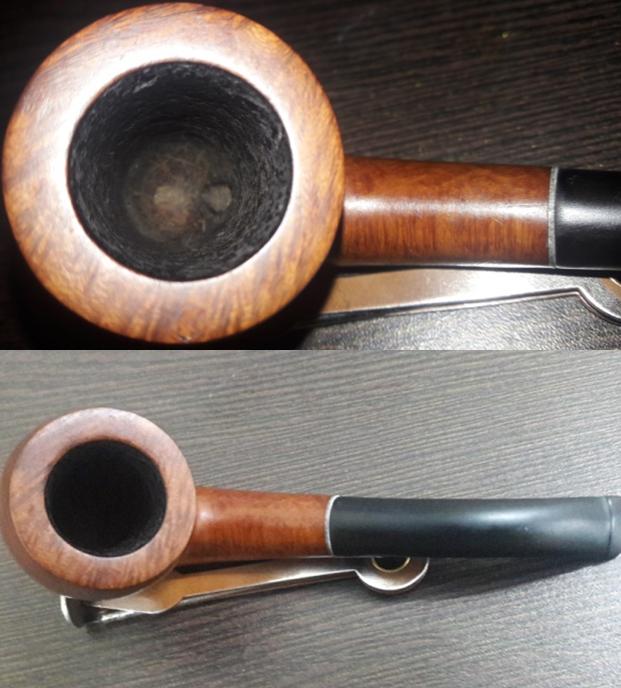
The stummel is clean with a dull appearance due to all these years of storage. There are a few dings and dents seen all around due to careless storage and will have to be addressed. The bowl is clean with a very thin layer of cake. The rim top is clean with no dents or chips and no overflow of lava. Both the inner and outer rim edges are crisp, even and intact. The chamber is odorless and dry to the touch.The stem is lightly oxidized with no tooth chatter or bite marks on both surfaces. The lips on both sides is crisp, however, as seen on the earlier Kaywoodie, the surface of the lip is flattened. The inlaid clover leaf stamp is intact and prominently visible. The only issue with the stem is that it is off centre and not perfectly aligned with the shank and the stummel. This will have to be addressed. The biggest relief is that unlike the other Kaywoodie Apple pocket pipe, the aluminum spacer in this pipe is completely intact. As expected, the airway is clogged and a test draw revealed that the air does not pass through the airway in the stem. This will have to be cleaned.

THE PROCESS
The first step that I usually follow is the reaming of the bowl. Since I had appreciated the cake to be thin, I started the process of reaming the chamber with my fabricated knife. I was very careful during the reaming so as not to create deep gouges in the inner walls of the chamber. Contrary to my appreciation, the amount of cake that was reamed out from the chamber was quite substantial. To smooth out the inner surface of the chamber and completely remove the last traces of remaining cake, I sanded the inner surface with a 220 grit sand paper. Once the chamber was cleaned, I decided to address the dings and dents on the stummel by sanding the bowl with a 150 grit sand paper followed by 220 and 340 grit sand papers. I wiped the stummel with a moist cotton cloth after each sanding. This helps in removing all the briar dust and shows the progress of the sanding. This was followed by micromesh polishing pads, wet sanding with 1500 to 2400 grit pads. Again, I wiped the bowl with a moist cotton cloth after each pad. As I finished sanding with 2400 grit pad, I observed three fills in the stummel which were exposed after the last wet sanding pad. These were spot filled with CA superglue and set aside to dry overnight. I sanded the cured superglue fill with a flat head needle file and further matched it with the rest of the stummel surface by sanding these fills with a 220 grit sand paper. This was again followed by sanding with 1500 to 2400 grit micromesh pads.Once I was through with the wet sanding pads, I used the 3200 to 12000 grit pads to dry sand the stummel to a nice shine. I rubbed some “Before and After Restoration” balm deeply in to the stummel with my fingers. This balm helps in rejuvenating and protecting the briar wood. The immediate and incredible transformation that takes place is a worthy reward for all the efforts!!! The mixed grain can now be clearly appreciated. I let the balm be absorbed by the briar for about 15-20 minutes and then polished it with a soft cotton cloth. The bowl now looks fresh and attractive with the grains popping out any which way you look at the briar.

Turning my attention to the stem, there were three issues which needed to be addressed; one was the oxidation, second was the flattened lips and third was the off center stinger. I started by creating a crisp edge by careful sanding the area around the edges with a flat head needle file. Once I was satisfied with the created edge, I began with sanding the stem with a 220 grit sand paper. I was especially careful around the edges and the stampings. Using the crisp edge of the folded sand paper, I reshaped the buttons and sanded it to even out the surface. Thereafter, I sanded the stem with 320 and 440 grit sand paper. To finish the stem I went through the complete set of micromesh pads, wet sanding with 1500 to 2400 pads and dry sanding with 3200 to 12000 grit pads. I wiped the stem with a cotton swab dipped in alcohol after each pad and rubbed olive oil into the stem after every three pads. The stem looks crisp, shiny and like new. I addressed the issue of the stinger being off center with the shank by carefully heating the stinger with the flame of a Bic lighter. The heating done should be just enough to loosen the glue around the stinger. I inserted the threaded stinger in to the mortise and turned the threads till the stem was perfectly aligned with the shank. Thereafter, I set it aside to let the stinger cool down and the glue to harden again.Having addressed the “appearance” aspects of this beauty, I turned my attention to the “performance” aspect to ensure that this beauty smokes as well as it looks. I thoroughly cleaned the shank internals using shank brush, pipe cleaners, cue tips and isopropyl alcohol. The stem airway was cleaned using regular pipe cleaners and also bristled ones dipped in alcohol. The airway is now clean and the draw is full and open.To complete the restoration, I rubbed a minute quantity of PARAGON WAX on the stummel and the stem. After a few seconds, using muscle power and a microfiber cloth, I polished the entire pipe to a lovely shine. The finished pipe is shown below. Thank you for your valuable time spent in reading this chronicle of my journey.

Jobey Original T1


Blog by Paresh Deshpande

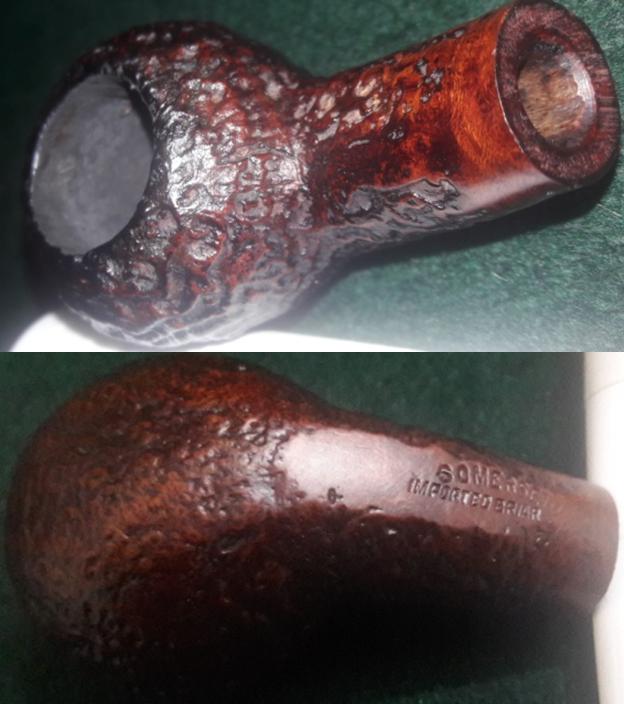
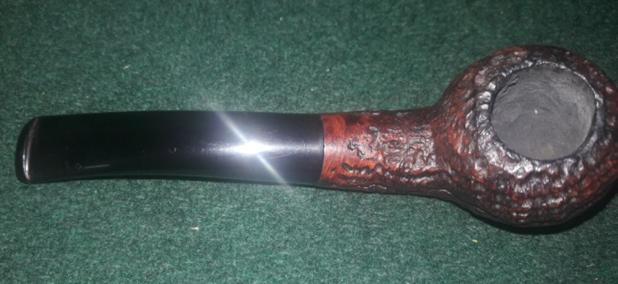
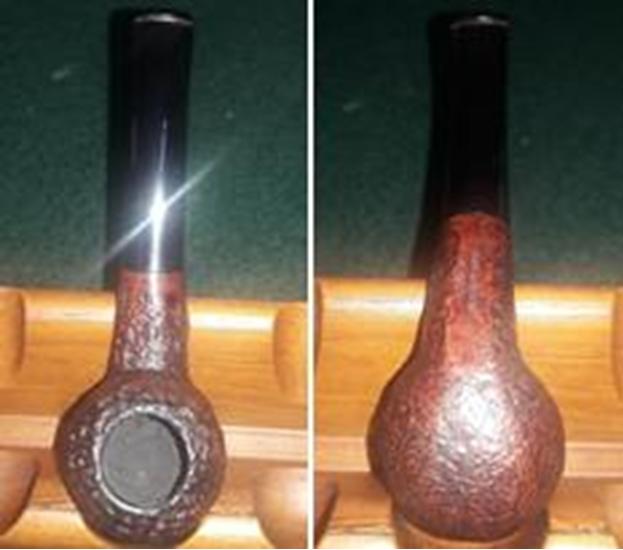
I had started work on a Somerset Paneled Billiard when, after reaming the chamber, a few cracks had revealed themselves. This is one issue that I always wish is not seen on any pipe in my hand. But there it was, and here I am, addressing it. The process is quite time consuming and requires a lot of curing time. Thus, while the billiard was curing, I started work on its far more beautiful (and my favorite!!!) sibling, the Somerset Rhodesian. And lo and behold!!!!!!!! Cracks were seen on the bottom and above the draught hole in more or less the same place as the billiard. Thus, I am now dealing with two pipes with cracked chamber. I was so put off with this that for next two days I did not touch any other project. The next few days, I was very busy with some important assignment and was away from my pipes.

Well, returned back and went through my pipes for restoration. I picked up this Jobey for its unique shape and the size of the bowl. I was thinking this to be an Oom Paul when Mr. Steve, very gently reminded me that the bowl is more of a Dublin and that he would rather call it as a “Bent Dublin Sitter”. He does have a unique way of mentoring, I must say. And so, working on this Jobey Original bent Dublin sitter!!!!!!!!!
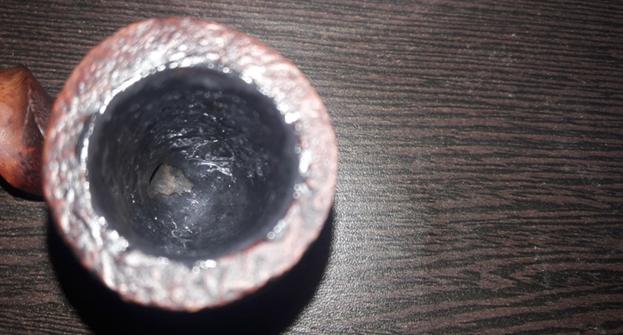
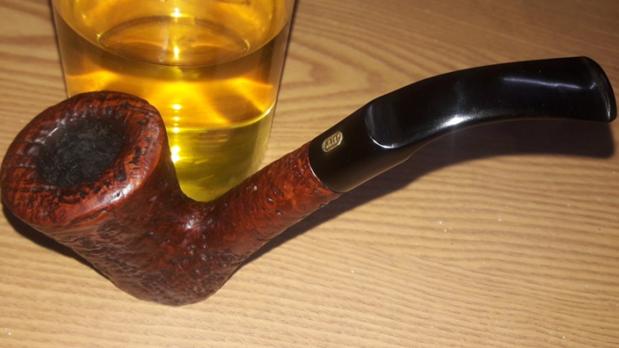
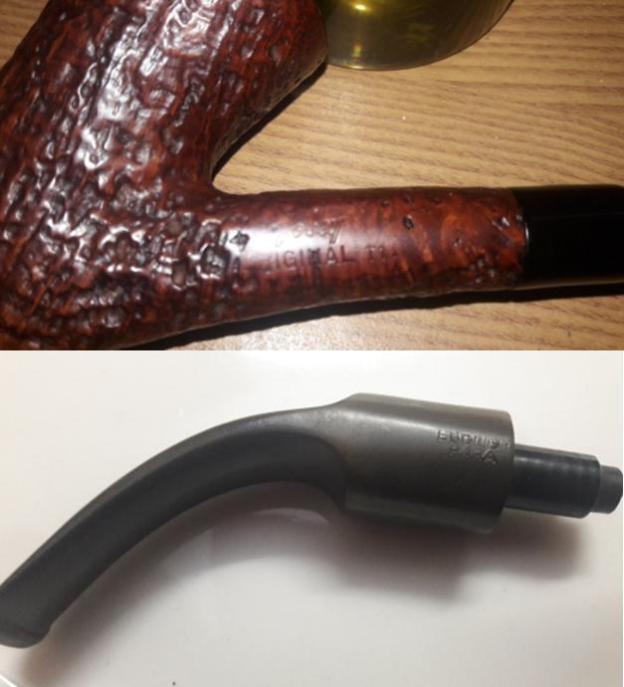
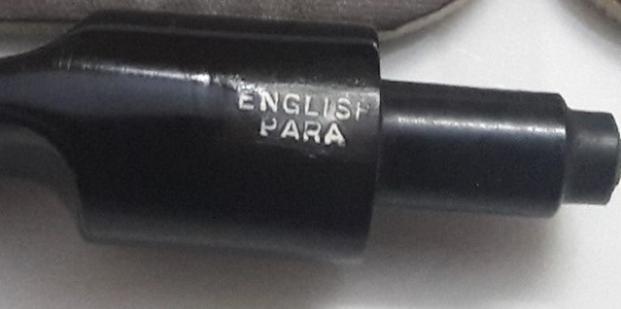
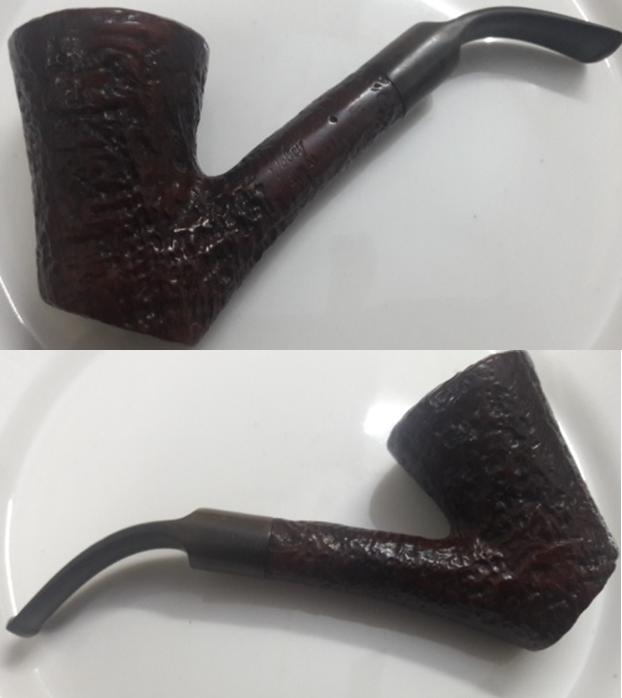
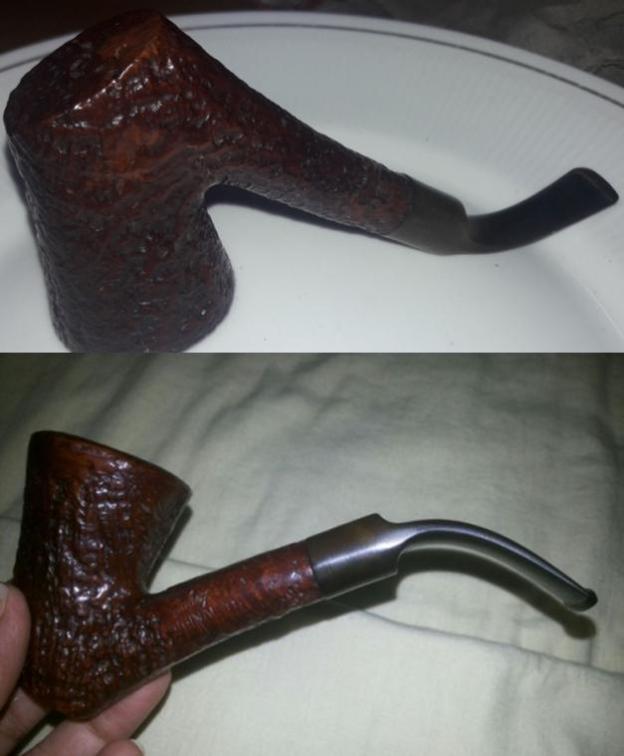
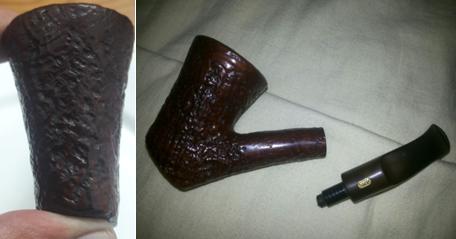
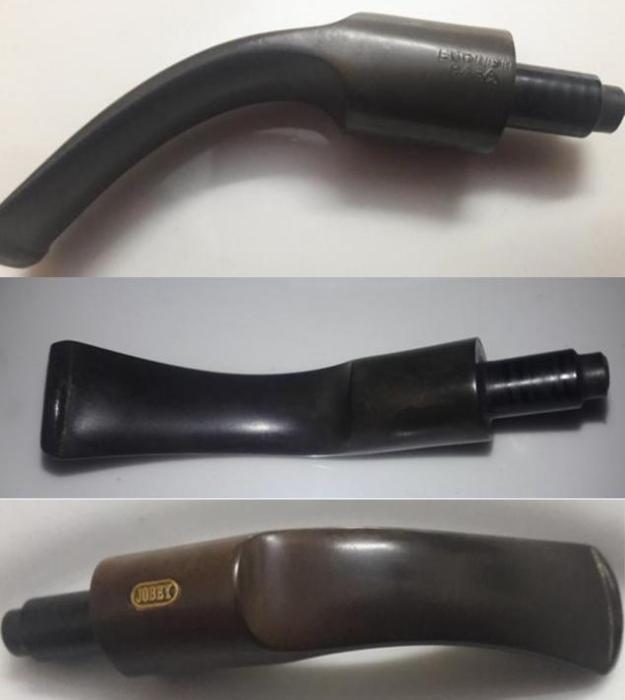
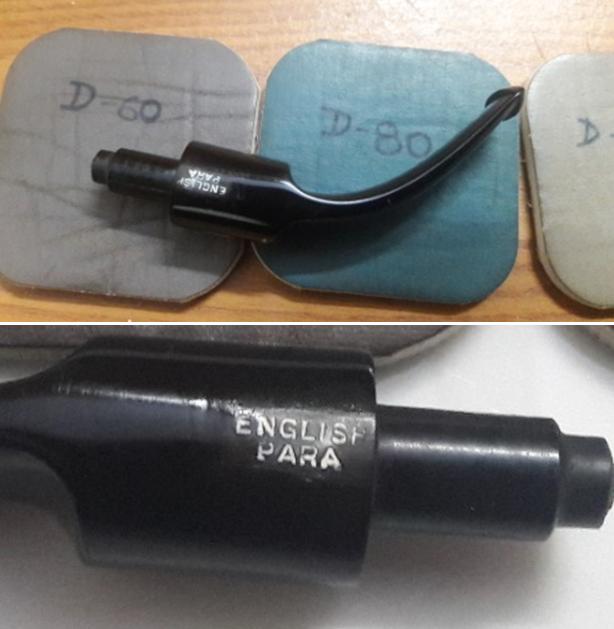
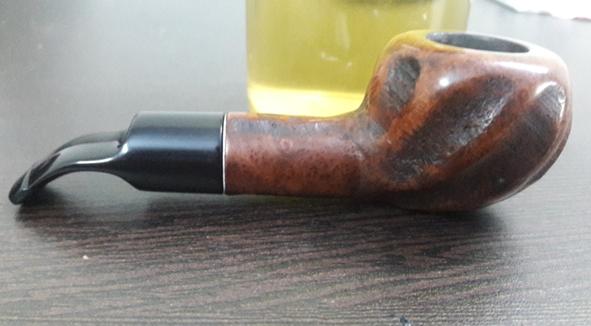
This sandblasted Jobey has a nice deep bowl with a steeply raking shank and a flat bottom, making it a perfect sitter. For its size, it is pretty light weighing at less than 50 grams and easy to dangle, making it a nice clincher. It is stamped on the left side of the shank, on a plain surface as “Jobey” over “ORIGINAL” followed by “T 1”. The saddle stem has the brass roundel with “JOBEY” in block capital letters on the top surface of the saddle while the right side is stamped on the stem saddle with “ENGLISH” over “PARA”. This stamping is something which I have not seen before on any Jobey pipes!!!! Does it have any significance, I could not find out. So all the learned readers, may I request you to fill in the details on this stamping and benefit us all. All the stampings are clear, robust and easily readable.From the information gleaned from the rebornpipes, Pipedia and pipephil and various other sites, the only relevant facts that emerged were:-

(a) This shape is not mentioned anywhere or seen in any catalogue.

(b) “ORIGINAL T 1” stamp has not been mentioned anywhere.

(c) This does not have the famed “Jobey Link” – the tenon system that is popular for its ease of cleaning and replacing.

(d) The stem is stamped, in addition to its TM Jobey in a brass roundel, as “ENGLISH PARA” which does not find any mention.

Thus, either this pipe is ultra rare or it’s a GHOST!!!!!! CAN ANYONE HELP?

INITIAL VISUAL INSPECTION
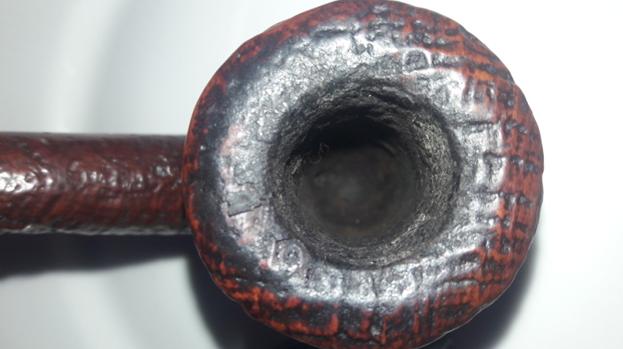
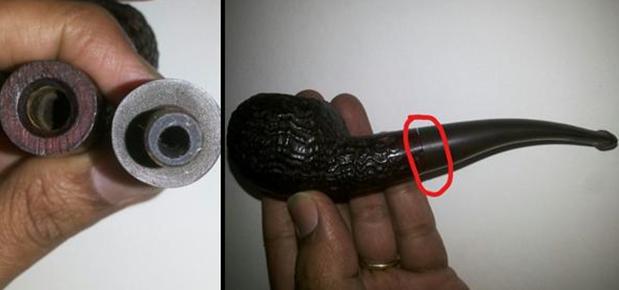
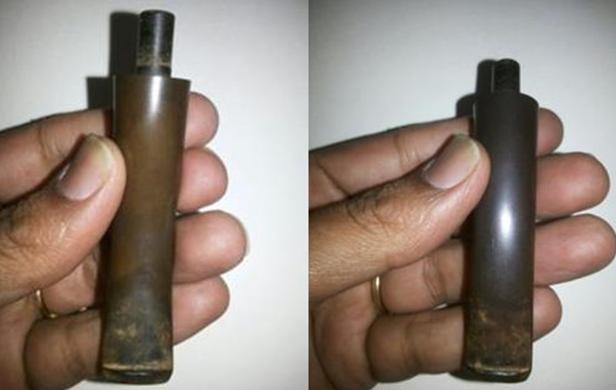
The Jobey Original, now on the worktable is in good shape. The stummel is covered in a thick layer of dust and grime. I wouldn’t call the sandblast seen on this pipe as beautiful, but rather different in that no definite grain pattern discernible and this is what makes it worthy of admiration. The dark reddish/ maroon stained finish is dull and lackluster. I only hope that there isn’t an acrylic finish which is a bear to remove (Dr. Grabow Omega being fresh in my mind!!).  This restoration may be more of a refresher if the finish isn’t a problem. The bowl is heavily caked with a thick overflow of lava on the rim top. The round inner and outer edges of the rim appear to be intact with no signs of damage. The deep and tapering down chamber will pose difficulties during the reaming process. The pipe chamber has a strong and spicy smell to it which will have to be addressed. Removing the dust, oils, tars and grime from the rim top will be time consuming. I only hope and pray that the inner walls of the chamber are without any surprises. It will be too much of a coincidence to have three pipes in a row to have beginnings of a burn out or a through crack.The stem is heavily oxidized but with minimal of tooth chatter and no bite marks on either surfaces. The brass roundel is dull looking and will need to be polished. It appears that this stem had a stinger attached to it, which either had accidentally broken or could be that while attempting to remove, it was broken. The jagged remnants of the aluminum can be distinctly seen. The mortise is clogged and blowing air through it is very laborious. THE PROCESS
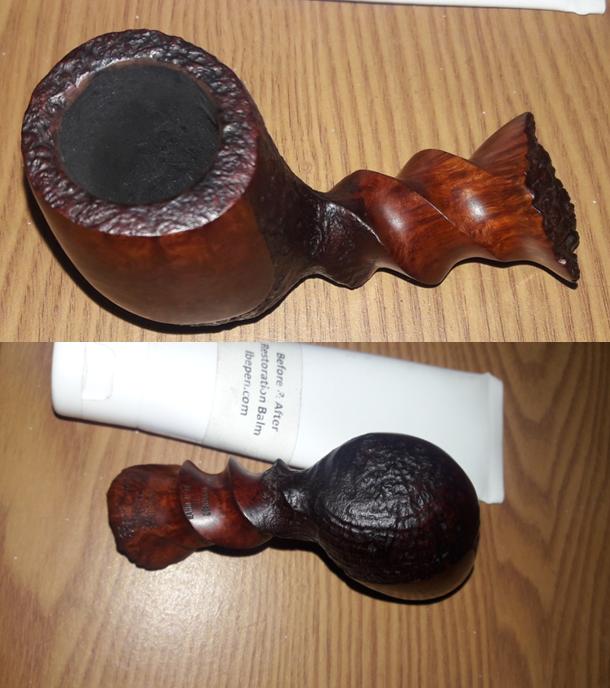
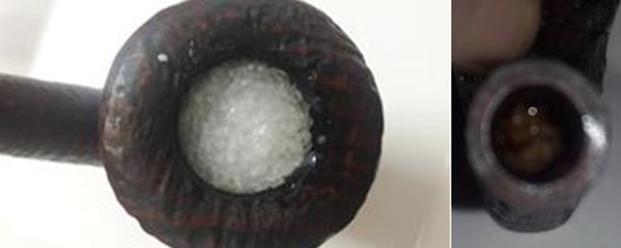
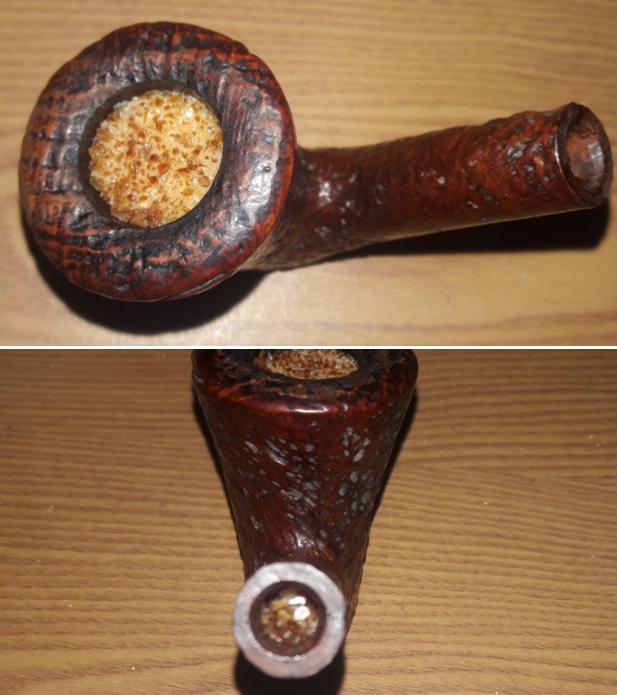
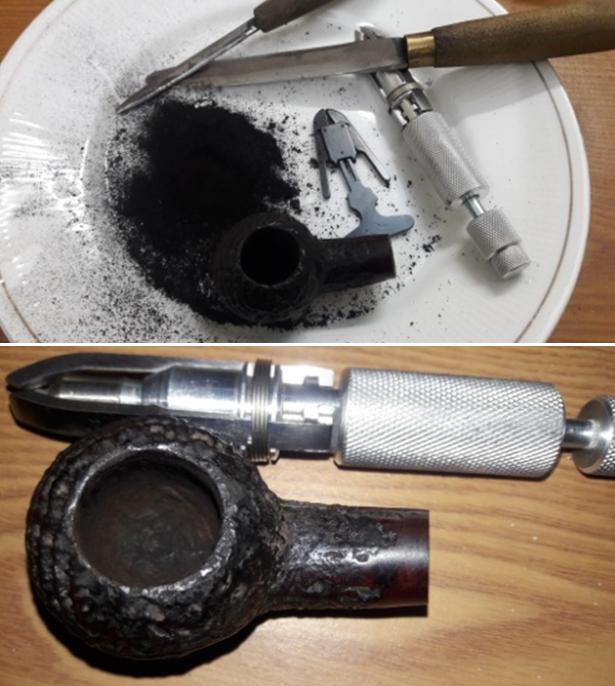
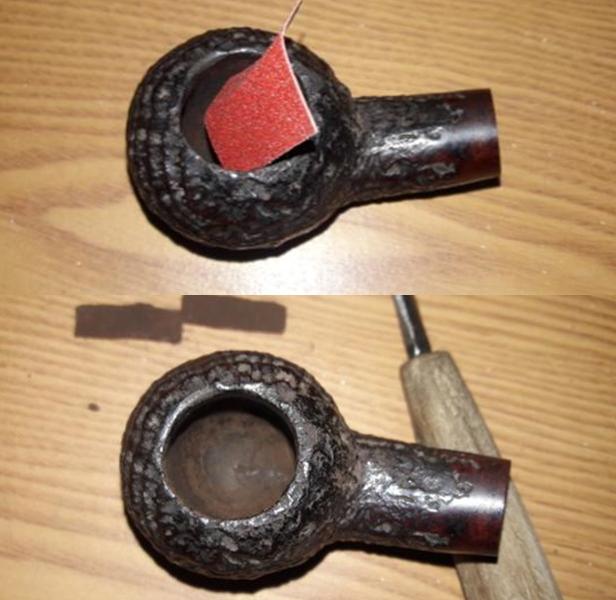
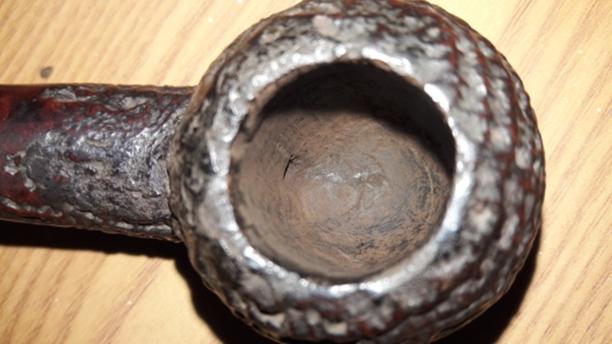
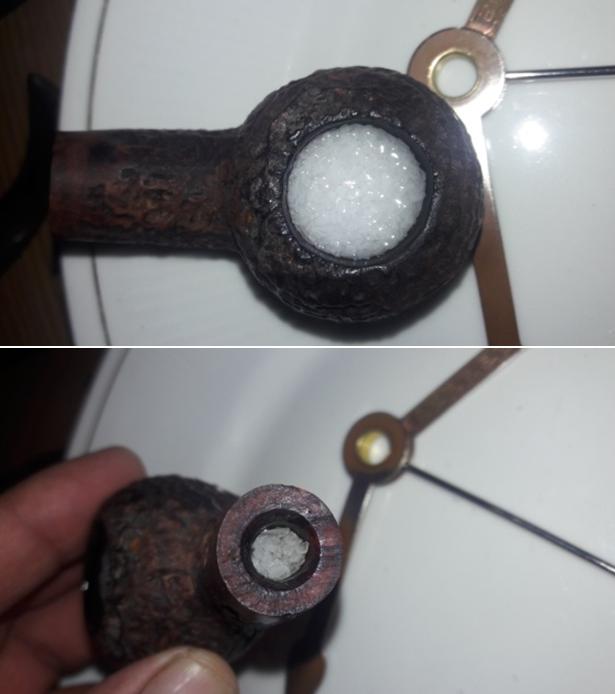
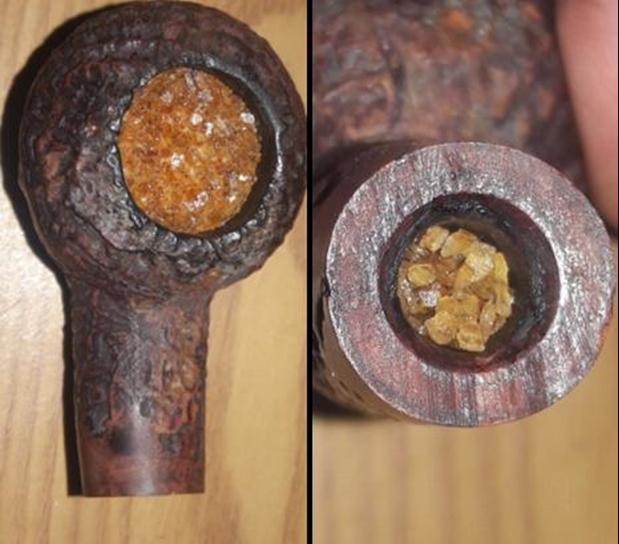
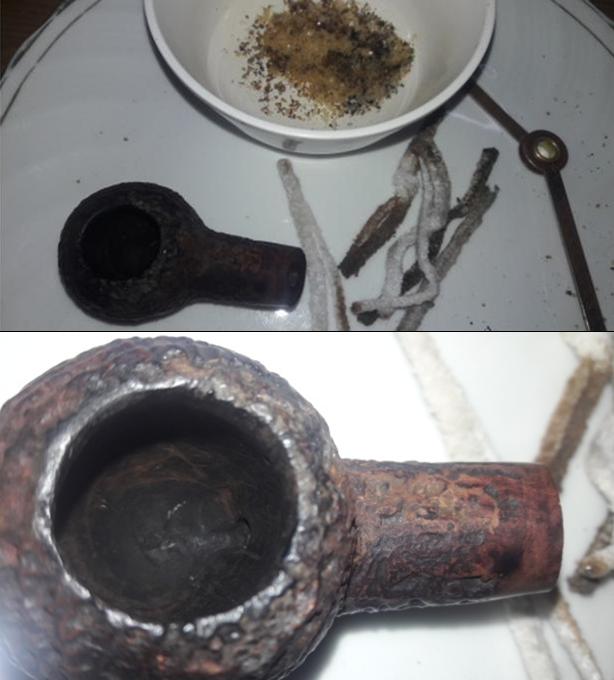
I always start my pipe restorations by getting rid of all the cake in the stummel. This provides me with a map of any other issues which may have to be addressed subsequently. Usually these processes is undertaken by my wife and believe you me, she has achieved expertise in this process!!!!!! But now that I have joined my duty station and she having to stay behind for children’s education, this is being done by yours truly!!!! I start the reaming process with a Kleen Reem pipe reamer followed by scrapping with my trusted fabricated knife till I have managed to take the cake back to the bare briar. The crusted lava overflow was gently scrapped off from the rim top with the knife. I finish this stage by sanding the inner walls of the chamber with a folded 220 grit sand paper. This helps to remove any remnants of the cake and smooth the walls of the chamber. I wiped the chamber with cotton pads dipped in alcohol to remove any cake dust. I further cleaned the shank with hard bristled, regular pipe cleaners and isopropyl alcohol. Oh my….  The grunge continues unabated!  This is one of the nastiest pipes I’ve tackled!Usually, deep cleaning of the chamber also rids the pipe of any old smells, but in this instance, that was not the case. The strong spicy sweet smell was still prevalent. To get rid of this smell, and clean the mortise, I decided to give it a salt and alcohol treatment. I filled the bowl and shank with kosher salt keeping it slightly below the rim level. I filled it with isopropyl alcohol and left it overnight to do its magic. I usually seal the shank end with a plastic sheet tightly wrapped around a cue tip to avoid the alcohol from oozing out, but in this case since the shank is upturned, there was no need to do so. By next morning the salt is dark colored, more so the salt in the shank. I removed all the salt and with a pipe cleaner cleaned the bowl and shank of any residual salts. I blew through the draught hole to dislodge the trapped salts. I wiped the bowl clean and dried the shank and bowl with paper napkins and pipe cleaners and set it aside to dry for an entire day. By evening, the pipe chamber was nice and dry and all the smells were history. Now that the internals were addressed, it was time to clean the externals. I cleaned the exteriors of the stummel and the rim top with undiluted Murphy’s oil soap and a hard bristled tooth brush. With a 000 grade steel wool, I scrubbed the rim top to remove the stubborn overflow of lava. I dried the stummel with paper towels and a soft, absorbent cotton cloth and set it aside to dry naturally. I was elated when I realized that there is no acrylic finish applied to the stummel as can be seen from the following pictures!!!! While the stummel was drying, I decided to clean up the stem. I started by flaming the surface of the stem with a Bic lighter. This helps to raise the minor tooth chatter marks to the surface to a great extent. I followed it up with sanding it down with a 220 grit sand paper. I took special care and efforts to enhance the lip and lip edges on both surfaces with the folded sand paper. I had applied a smear of whitener to the stamping of ENGLISH PARA to enhance it and also to demarcate it during the sanding process. To finish the stem restoration, I sand it with micromesh pads, wet sanding with 1500 to 2400 pads and dry sanding it with 3200 to 12000 grit pads. I wiped it down with Extra Virgin Olive oil in between the pads. The stem is now nice, shining and glossy black. After cleaning the internals of the stem with pipe cleaners dipped in isopropyl alcohol, I applied a final rub of Extra Virgin Olive oil to the stem and set it aside to be absorbed. Returning to the stummel refurbishing, I rubbed some “Before and After Restoration” balm in to the surface. The transformation is almost immediate. The bowl now has a nice lively sheen to it. I left it to rest for a few moments and then buffed it with a horse hair shoe brush to ensure that the balm cleans and protects within the sandblast. To finish, I polished it with a soft cotton cloth. To finish, I rubbed a small quantity of HALCYON II WAX in to the stummel and polished it by hand using a soft cotton cloth and reattached the stem. It was while reattaching the stem that I realized that I had not addressed the issue of broken stinger protruding from the tenon!!!!! Using a rounded needle file, I sanded the jagged edges inside the tenon and thereafter with a flat head needle file; I matched the broken edges of the stinger with that of the tenon surface. That was all I could do as I was not sure of the extent to which the stinger was embedded into the airway of the stem. The finished pipe is shown below. I hope this pipe appeals to you as much as it did to me. And, as I always mean and request, your comments are a great source of encouragement and learning for me. Thank you for being an important companion on my journey in to the beautiful, challenging and SATISFYING world of pipers.


Tale of Two Somerset Brothers – Part 2


BENT RHODESIAN

Blog by Paresh Deshpande

I had finished the work on Somerset 8 Paneled Billiard and I was very pleased with the way it turned out. I have smoked this pipe and have to concede that it was one of the better smoking pipes in my current rotation, the draw is open and full and very smooth right up to the last morsel of tobacco. This is due to the perfect alignment of the draught hole, mortise and stem tenon. Very happy with this one, I must say!!!!!!

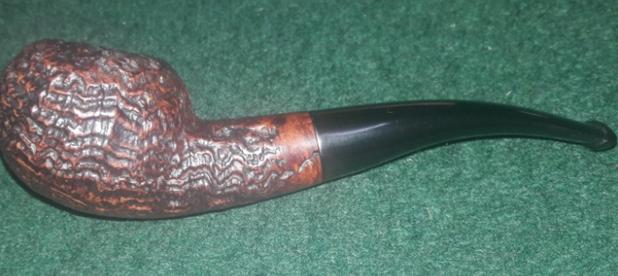
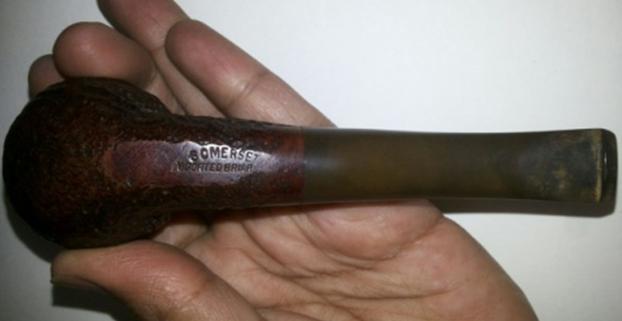
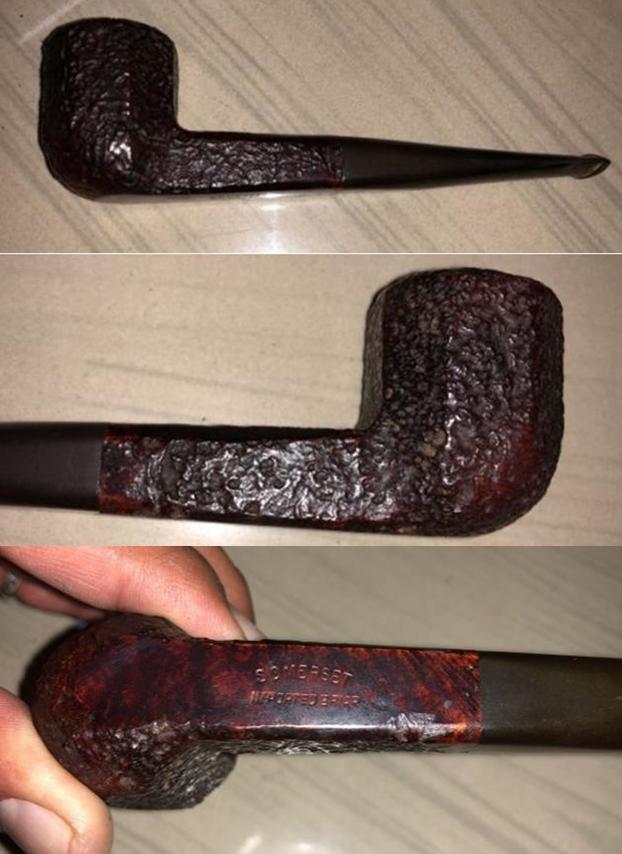
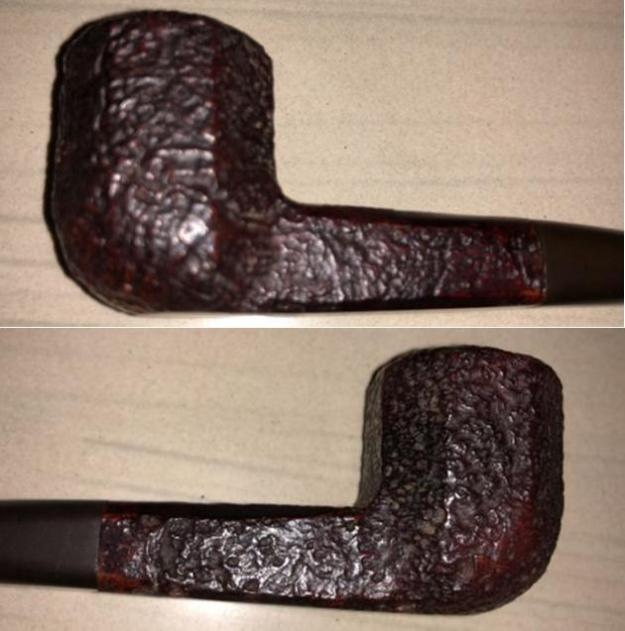
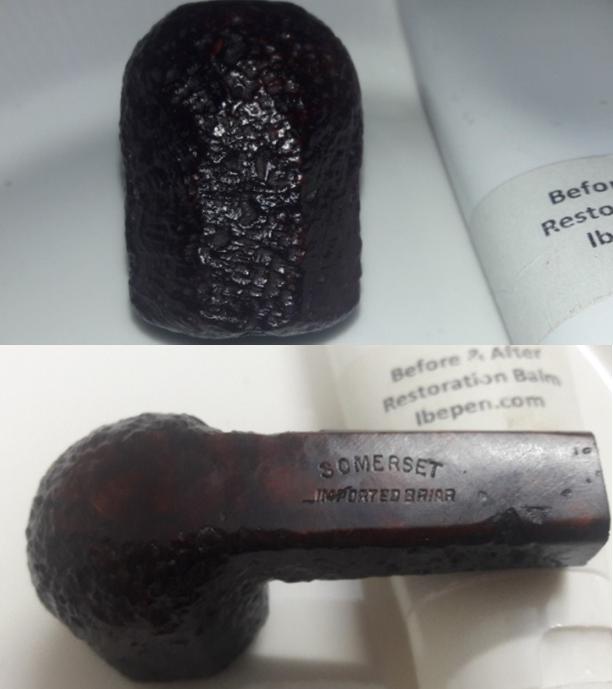
The sibling of the first Somerset Brother, now in my hand, is the Bent Rhodesian, and my favorite shape. The upper half of the bowl has beautiful wavy circular sandblast all round which extend to the round shank, while the bottom of the bowl has densely packed birdseye which is seen in the sandblast. Overall, this is one pipe with a beautiful sandblast patterns and as I have come to expect, the quality of the finish and vulcanite stem is par excellence. Like its paneled billiard sibling, this pipe too has a smooth and flat bottom surface and bears the only stampings seen on the pipe. It is stamped on the bottom as “SOMERSET” in a mild arch over “IMPORTED BRIAR” in straight line, all in capital letters. There is no other stamp on either shank or on the stem. The stummel and shank is stained with a very dark reddish/ maroon hue. The stem is high quality vulcanite without any stampings. As conceded in my write up on the Somerset Paneled Billiard, I have been unsuccessful in unearthing information about this brand and still remain a blind spot in my quest for knowledge on pipes. I sincerely request you to share any information you may have on this pipe.

INITIAL VISUAL INSPECTION
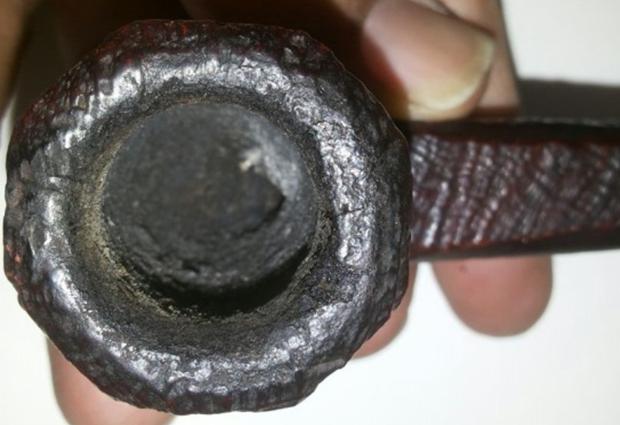
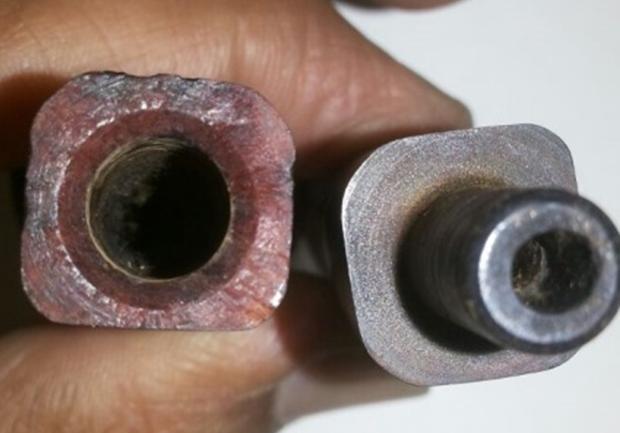
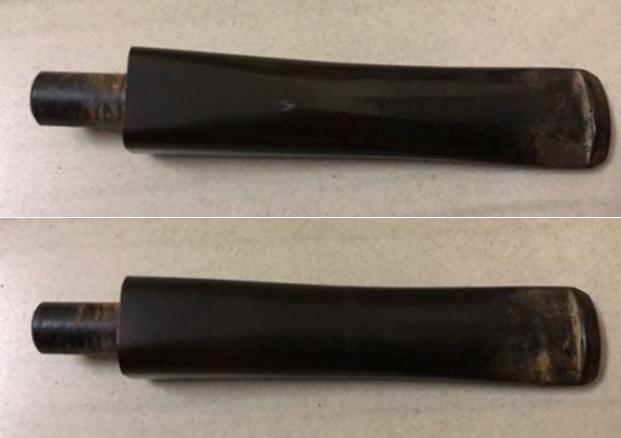
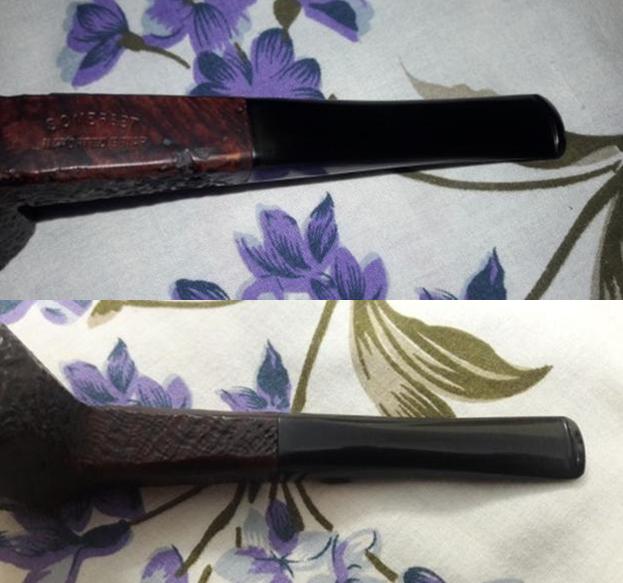
The sandblast on this pipe is covered in dirt, dust and grime and appears dull and lackluster. The bowl is heavily caked and there is overflow of lava on to the rim. This will have to be removed in order to ascertain the condition of the chamber walls. From my experience working on the paneled billiard, I won’t be surprised to find cracks and heat fissures on the walls of the chamber. There is a very strong sweet smell to the cake, which perhaps may vanish after the chamber has been cleaned.The mortise is filled with oils and tars and appears to be clogged. There is no free flow of air through the mortise. This will have to be cleaned. There is also a slight gap in the fitting between the stem and the shank. Maybe this will be resolved after a good cleaning of the mortise. The fitting of the stem in to the shank is very loose and just drops of when turned upside down.The stem is heavily oxidized and the edge of the lip on the top surface has been bitten out of shape. There is a bite mark close to the disfigured edge of the lip. These issues will have to be addressed.THE PROCESS
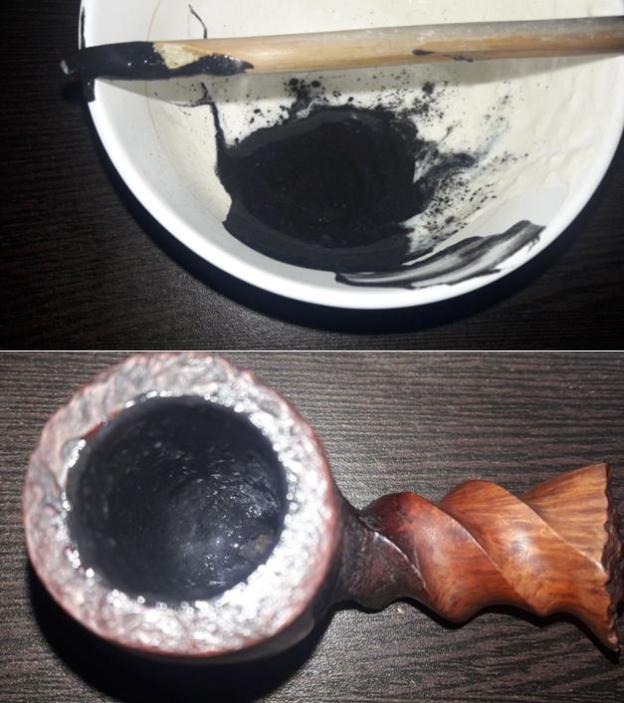
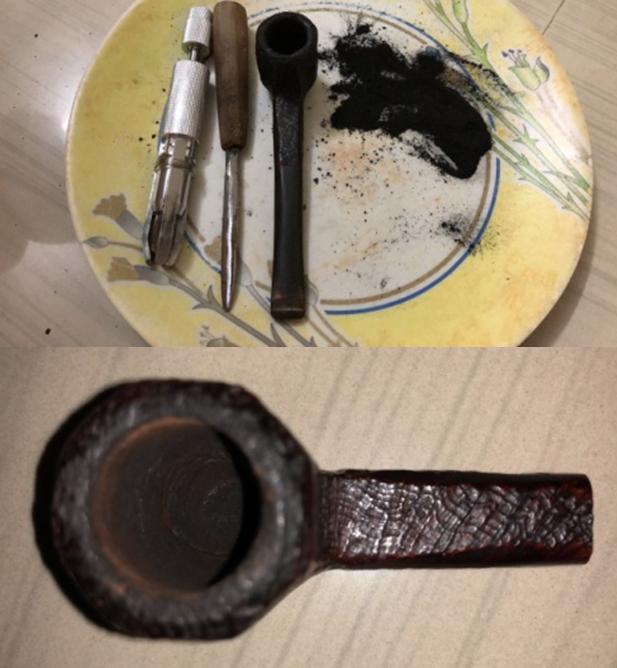
I reamed the bowl with a Kleen Reem pipe tool and with a knife; I further took the cake down to the briar. I have realized that the knife is best suited to remove the cake from the bottom of the chamber. As anticipated, the chamber walls did show the beginnings of a burn out!!!! With a 150 grit sand paper, the walls of the chamber were rid of all the remnants of the cake, presenting a clear picture of the extent of the damage. This pipe too had cracks at exactly same location as its sibling, though not as alarming. Since the pipe ash was still being collected, I cleaned the internals of this pipe with bristled and regular pipe cleaners dipped in isopropyl alcohol. Since the strong sweet smell did not diminish even after the cake had been removed, I decided to give it a salt and alcohol bath. I filled the bowl and shank with kosher salt up to just below the rim top and end of the shank respectively. I filled it up with isopropyl alcohol and set it aside over night to allow it to extract all the residual oils from the chamber and the shank. Next day, the salt and alcohol had done its job. I remove the darkened salts and clean the mortise with bristled pipe cleaners. I set it aside to dry. Once the internals were cleaned, I scrubbed the externals of the bowl with undiluted Murphy’s oil soap and dried it using paper towels and soft cotton cloth. I set it aside to dry. I cleaned the walls of the chamber with cotton pads dipped in isopropyl alcohol (since I was simultaneously working on the repair to the chamber of the Paneled Billiard, there is inescapable repetition of the process). Once cleaned, I inserted a folded pipe cleaner into the shank and up to the draught hole to prevent it from clogging. I made putty like paste of pipe ash and water. This paste was evenly applied to the entire inner surface of the chamber with a thin bamboo frond with shaved end to form a spatula, a bigger one at that, as compared to a regular one. I set it aside to dry out. The climate here being very wet and humid, it will take a long time to dry out.

The coating dried completely after about a week and I just gently scrapped the chamber with very light hands to check the layer. Alas, the complete coating just crumbled out leaving a very dry coat of ash through which all the cracks were easily discernible.

Fortunately, I had started collecting pipe ash and mixed it with yogurt. Using the same earlier method, I applied an even coat of pipe ash, yogurt and also added two capsules of activated charcoal. I set it aside to dry out, praying that the mixture bonds well and sticks to the walls of the chamber. A few days later, the mixture had completely cured and it did not crumble. The bonding appeared to be strong and durable. With a 400 grit sand paper, I sanded the inner walls very lightly to smooth the walls. Now the internal walls are looking solid and ready for duty again!!!! Once the issue of cracked chamber wall was addressed, I turned my attention back to the exterior of the stummel. I rubbed a small quantity of “Before and After Restoration Balm” in to briar and let it rest for a few minutes. The balm almost immediately works its magic and the briar now has a nice vibrant appearance. I further buff it with a horse hair shoe brush. Working the stem, with a Bic lighter, I flamed the surfaces of the stem to raise the tooth chatter and minor bite marks. To address the bite mark and repair the edge of the lip, I spot apply a drop of CA superglue and leave it over night to cure. The next evening, I shape the fill using flat head needle file and carve a crisp edge. To further blend in the fill, I sand the stem with a 220 grit sand paper. I sanded it down with 220, 400 and 800 grit sand paper. I wiped the stem with cotton pad dipped in alcohol to remove the resultant dust. I rubbed some extra virgin olive oil in to the stem and set it aside to be absorbed in to stem. I polished the stem with micromesh pads, wet sanding with 1500 to 2400 grit pads and dry sanding with 3200 to 12000. I rub a little extra virgin olive oil in to the stem after every three pads. I finish the polishing of the stem by rubbing a small quantity of Paragon wax and giving it a final polish with a soft cotton cloth. The stem is now nice, smooth and shiny. I cleaned the airway in the stem with pipe cleaners and alcohol. Here, I realized that the issue of loose stem was yet to be addressed. This issue was addressed by heating the tenon with a Bic lighter, constantly rotating the stem, till the tenon was slightly pliable. I gently pushed a rounded needle file in to the tenon to enlarge it and set it aside to cool down. Once cooled down, I wiped it clean with a cotton cloth soaked in cold water. I tried the fit, and the stem sat in the shank snugly, making all the right kind of noises. I was very pleased with the fit.To finish the pipe, I rubbed a small quantity of HALCYON II wax which is used for rusticated/ sandblasted surfaces and set it aside for a few moments. Thereafter I polished it with a horse hair shoe brush and a soft cotton cloth. These Somerset pipe are very well made and smoke fantastic. The quality of the vulcanite is high grade and feels good to clench. The finished pipe is shown below. Since the completion of this restoration, I have smoked this pipe and included it in my rotation. Believe you me, this pipe, like its sibling, smokes perfect with a nice, smooth draw right to the end. This leads me to think, is it only necessary to have Dunhill, Barling, Comoy’s etc, as fantastic smokers? Well, my personal experience with these two Somersets, is that while the above mentioned brands are excellent pipes, the lesser known ones do need to be looked at and not discarded outright!!!!!!!!!! Thanks for your patience and looking forward to inputs about this brand and the write up. Cheers…………
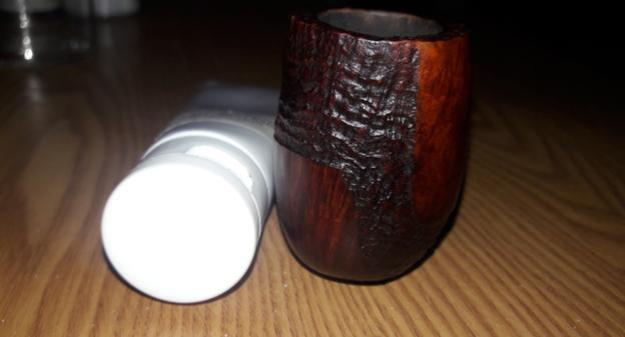
 

Tale of Two Somerset Brothers – Part 1


PANELED BILLIARD

Blog by Paresh Deshpande

There are two SOMERSET pipes in my inherited pipe collection; one is a Paneled Billiards and other is a Rhodesian (which is my favorite shape). If there was a pipe/ pipes amongst the large number of inherited pipes that I am not attracted to, this Paneled Billiard ranks right there at the top. The reason for this lack of attraction is primarily two fold; firstly, this eight paneled billiard is a shape which I do not like. I prefer pipes with an even shape either smooth or rusticated or sandblasted, but panels, definitely not my taste. Secondly, the SOMERSET brand, which I had never heard of and neither had I bothered to know more about due to shape!!!!! However, once while discussing pipes on a video call with Mr. Steve, I showed him this pipe and suggested that I would like to discard it as I did not like the shape and also it’s an unknown brand. Mr. Steve, in his wisdom and experience suggested that I should reconsider as SOMERSET is quite possibly a brand of Comoy’s seconds!!!!!! With this suggestion, I decide to work on this pipe.

This square shank, eight paneled billiard has a smallish bowl size with a chamber depth of about 1.1 inches with somewhat thin walls. Beautiful sandblast is seen on the bowl, rim and on three sides of the shank. The bottom surface is smooth, flat without any sandblast and bears the only stampings seen on the pipe. It is stamped on the bottom as “SOMERSET” in a mild arch over “IMPORTED BRIAR” in straight line, all in capital letters. There is no other stamp on either stummel or on the stem. The stummel and shank is stained with a very dark reddish/ maroon hue. The stem is high quality vulcanite without any stampings.I have tried in vain to unearth information on this brand in general and this pipe in particular. Alas!!! I haven’t been able to garner any information from the internet, apart for the input provided by Mr. Steve!!!!! I would love to receive any information that may be available with you on this pipe.

INITIAL VISUAL INSPECTION
This pipe has been well used (and subsequently, I realized ABUSED!!!!!!!) as is evident from the thick cake in the chamber and damage to the inner edge of the rim in 12 ‘O’ clock direction. The sandblast is deeply filled with dust, tars and grime of all the yesteryears of smoking and subsequent disuse for last 35-40 years. The rim top is also sandblasted and there is overflow of lava on to the rim top. As mentioned above, there appears some minor charring to the inner edge of the rim. This needs to be looked into after the bowl has been reamed of all the cake.
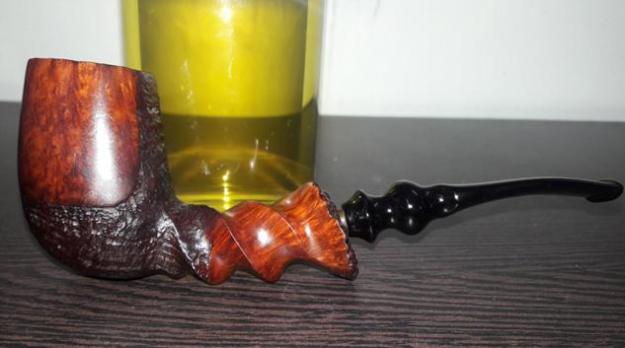
The mortise is clogged and air does not flow through it. This condition is consistent with that I have seen on my grand old man’s other pipes!!!! The mortise had clogged, adversely affecting the performance of the pipe and hence had been conveniently set aside and replaced by another one. Such was his habit, it appears.The stem is oxidized but more heavily towards the lips. There is minor tooth chatter with a couple of slightly deeper bite marks on both surfaces of the stem. The fitting of the tenon in to the mortise is very loose and will have to be addressed.THE PROCESS
I start the restoration process by reaming the chamber to get rid of all the cake, using a Kleen Reem pipe tool. I further scrapped the walls of the chamber with a fabricated knife and took the cake down to the bare briar. This is the time when I observed a damage which every restorer of pipes fears the most. With a cringe, I observed a distinct line emanating from a point about mid way of the chamber, above the draught hole extending upwards and downwards. To explore further and also to smooth and remove the last remnants of the cake, I sand the walls of the chamber with a folded piece of 150 followed by a 220 grit sand paper. To my horror, I observed that from the point where I had first observed the crack, there were other cracks which extended around the walls in a circular pattern along the middle of the bowl. I checked the exterior of the stummel and was relieved to find it was solid and that the crack did not extend to the outer surface. Here are the pictures of the process and the damage observed. I was wondering as to how I should address this issue as I did not have J B Weld, when I remembered that Mr. Steve had repaired my inherited Barling Ye Olde Wood by coating the chamber with a mixture of sour cream and activated charcoal. I searched my tool and material box and realized that I was only carrying a few capsules of activated charcoal. The jar of activated charcoal, along with bulk of my pipes, was left behind when I moved to my place of work. I shared the pictures of the damage and predicament with Mr. Steve. He confirmed that this appeared like the beginning of a “burn through” or a “crack”. He also suggested an easier and practical solution; a coating of pipe mud made using pipe ash and water!!! Only a person of his knowledge and experience can share such simple and easy-to-do solutions to complex problems. Thanks again, Sir. The next couple of days were spent in collecting pipe ash!!! Lol…… All readers and first time restorers are advised to collect and keep a jar of pipe ash handy!!!!! Or collect Cigar ash which works just fine.

While collecting ash over the last couple of days, I undertook the restoration of the Somerset Rhodesian and soon realized that this one too had cracks in the bowl. Thus I was now tackling this issue on two pipes simultaneously!!!!! More detailed write up on the Rhodesian will be posted separately. Meanwhile I addressed the stem of the Paneled Billiard. Using a Bic lighter, I flamed the surfaces of the stem to raise the tooth chatter and minor bite marks. I was surprised to find that this process had raised all the bite marks and tooth chatter to the surface. All I was left to do was sand the surfaces with sand paper followed by the micromesh pads. I sanded it with 220, 400 and 800 grit sand paper. I wiped the stem with cotton pad dipped in alcohol to remove the resultant dust. I rubbed some extra virgin olive oil in to the stem and set it aside to be absorbed in to stem. I polished the stem with micromesh pads, wet sanding with 1500 to 2400 grit pads and dry sanding with 3200 to 12000. I rub a little extra virgin olive oil in to the stem after every three pads. I finish the polishing of the stem by rubbing a small quantity of Paragon wax and giving it a final polish with a soft cotton cloth. The stem is now nice, smooth and shiny. I cleaned the airway in the stem with pipe cleaners and alcohol. The issue of a loose-fit between tenon and mortise was addressed by heating the tenon with a Bic lighter, constantly rotating the stem, till the tenon was slightly pliable. I gently pushed a rounded needle file in to the tenon to enlarge it and set it aside to cool down. Once cooled down, I wiped it clean with a cotton cloth soaked in cold water. I tried the fit, and the stem sat in the shank snugly, making all the right kind of noises. I was very pleased with the fit.I cleaned the internals of the mortise and the airway with hard bristled and regular pipe cleaners and isopropyl alcohol. I scrubbed the mortise with shank brush dipped in alcohol. The internals of the shank are now clean and the pipe smells fresh and new. There are no traces of ghost smells from the stummel.Having addressed the internals, I turn to address the exteriors. I gently scrapped the charred rim down to the bare solid briar. Though this has resulted in a slight undulation to the rim surface, it is very minor and hence, I left it alone. Another reason to let it be was that if I had a Dremel machine, I would have topped the bowl and then carved out very small rustications to match the sandblasted stummel. But I do not have a Dremel machine!!!! That issue settled, I wash the dirty stummel with Murphy’s oil soap and a tooth brush. I thoroughly scrub the sandblast with the hard bristled toothbrush to remove the oils, tars, dirt and grime lodged in the surface. I rinse it under tap water, dried it with paper towels and set it aside to completely dry out. Having collected sufficient quantity of pipe ash, I decided to address the chamber cracks. I cleaned the interiors of the chamber with a cotton ball dipped in isopropyl alcohol. Once cleaned, I inserted a folded pipe cleaner into the shank and up to the draught hole to prevent it from clogging. I made putty like paste of pipe ash and water. This paste was evenly applied to the entire inner surface of the chamber with a thin bamboo frond with shaved end to form a spatula, a bigger one at that, as compared to a regular one. I set it aside to dry out. The climate here being very wet and humid, it will take a long time to dry out.The coating dried completely after about a week and I just gently scrapped the chamber with very light hands to check the layer. Alas, the complete coating just crumbled out leaving a very dry coat of ash through which all the cracks were easily discernible.So, it’s back to square one and all the efforts and waiting has come to a naught!!!! I shared the above pictures with Mr. Steve with a suggestion of using HONEY as a bonding agent rather than water. When he replied that he had never used honey but, uses YOGURT if water mix fails, I dropped the idea and decided to go ahead with yogurt!!!!Fortunately, I had started collecting pipe ash and mixed it with yogurt. Using the same earlier method, I applied an even coat of pipe ash, yogurt and also added two capsules of activated charcoal. I set it aside to dry out, praying that the mixture bonds well and sticks to the walls of the chamber. A few days later, the mixture had completely cured and it did not crumble. The bonding appeared to be strong and durable. With a 400 grit sand paper, I sanded the inner walls very lightly to a smooth surface. Now the internal walls are looking solid and I can’t wait to load my King of England tobacco and enjoy my fruits of labor. Once the stummel had dried out completely, I rubbed a small quantity of “Before and After Restoration Balm” in to the briar and let it rest for a few minutes. The balm almost immediately works its magic and the briar now has a nice vibrant appearance. I further buff it with a horse hair shoe brush. To finish the pipe, I rubbed a small quantity of HALCYON II wax which is used for rusticated/ sandblasted surfaces and set it aside for a few moments. Thereafter I polish it with a horse hair shoe brush and a soft cotton cloth. Though, the pipe feels small in my hands, the chamber is decent sized. Notwithstanding the size, this is a beautiful looking pipe with some great sandblast patterns. The pipe is very well made and of high quality craftsmanship as evidenced by the perfectly aligned and matching edges of the stem and shank as well as the quality of the vulcanite stem. The finished pipe is shown below.

Restoring a Sasieni Fantail


Blog by Paresh Despande

This large sized Sasieni was always on my mind to work on and I wanted to work on it at leisure as I wanted to do justice to this solid large piece of briar. What intrigued me was the shape of the stem towards the bore end where it flared out to a large extent which was made more pronounced due to pinching of the stem between the saddle and button end.

The pipe has beautiful, densely packed small sized birdseye grain on the right side of the stummel while the left side has a mix of straight and birdseye grains. The front and back of the stummel has densely packed cross grains. The shank has a flat bottom in the middle making it a sitter and has cross grains running across the top and bottom surface. Right and left side of the shank shows small, beautiful and densely packed birdseye. The shank, on the left side, bears the stamp of Sasieni” over “FANTAIL” and football COM stamp of “MADE IN” over “ENGLAND” towards the bowl. At the edge of the shank where it meets the stem, it is stamped “PATD- 170067”, which has been circled in red. On the right side, it is stamped “LONDON MADE” with numeral “55” towards the bowl. The stem bears the stamp “F” on the left side of the saddle. Except for the PATD number, the stampings are crisp and clear. I wanted to gain some background information about this brand and unravel some detailed information and period it was made in, about this particular pipe that I have been working on. There are three sites I frequent for information, first being Pipedia.com, second is pipephil.eu and the third being rebornpipes.com. Over a period of time, I have realized that Mr. Steve Laug has been working on pipes for such a long time that there are hardly any brands and models that he has not worked on and so, instead of reinventing the wheel, I first visit rebornpipes to eke out necessary information I seek. Luckily for me, Mr. Steve had indeed worked on a Sasieni Fantail wire rusticated and has researched this pipe. Here is the link to the blog written by him for necessary information and is a highly recommended read, https://rebornpipes.com/2017/06/07/sasieni-fantail-wire-rusticated-patent-billiard/.
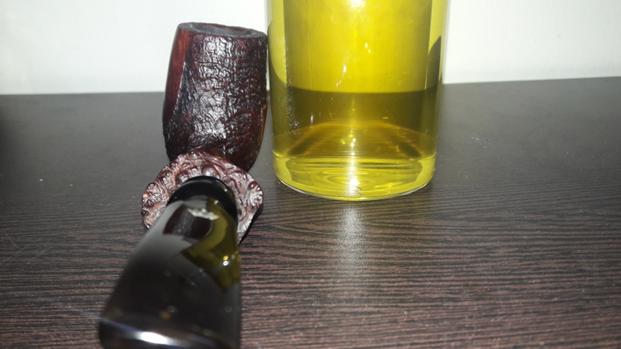
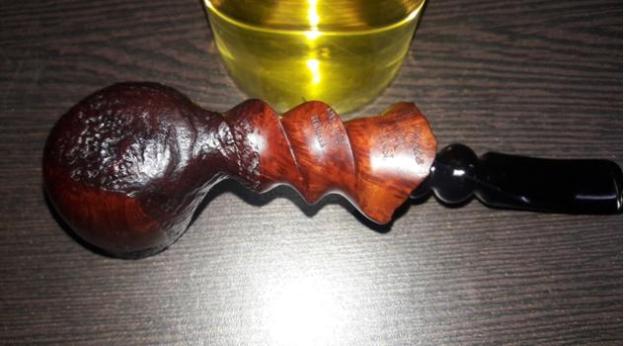
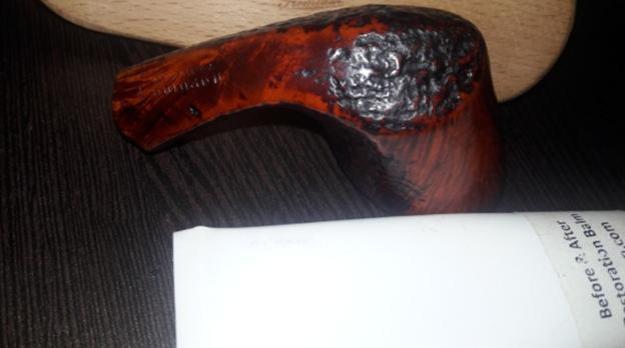
I now know that “FANTAIL” is a Sasieni second line pipe and is from the “Family Era” from the period 1946 to 1979. Mr. Steve, thank you Sir for allowing me to reproduce your work in my write up. Now, that my curiosity has been satiated, I progress to my visual inspection of the pipe.

INITIAL VISUAL INSPECTION

This large sized straight billiard has its stummel covered in dust, oils and grime giving it a dull and sad appearance. The front of the stummel has two chips and will need to be addressed. The chamber has a thick cake which has been evenly reamed to a nice thickness of a dime!!!!! Either my grand old man had learned to care for his pipe during later years or this one belonged to his friend!!!! The rim top is clean but shows some darkening along the entire surface. The inner and outer edges of the rim are intact. It has a faint sweet smelling cake. The mortise and shank is clogged and will require a thorough cleaning.It is the stem which has, comparatively, the most damage on this pipe. Both the surfaces have tooth chatter and a couple of deep bite marks. This needs to be addressed.

THE PROCESS

Now that I have moved out of my hometown for work, I sorely miss Abha’s help in cleaning the chamber and the stummel. I cleaned the chamber of all the cake by reaming it with a Kleen Reem pipe cleaner. With my fabricated knife, I scrap the bottom and the walls of the chamber of all the remaining cake taking it down to solid bare briar. To smooth out the surface and get rid of last remnant cake, I sand it down with a 220 grit sand paper. I cleaned the internals of the shank and mortise with pipe cleaners and cue tips dipped in isopropyl alcohol (99.9%). I use this alcohol as it evaporates rapidly and leaves no odor behind. The chamber is now clean, smooth and fresh smelling. The internal walls of the chamber are solid with no signs of burn out or heat fissures, which is definitely a big relief. I resorted to light sanding of the rim edges with 220 grit sand papers to remove the very minor dents and chips on the inner edges. The rim surface does show darkening all along. I address this issue and the issue of a dirty stummel by cleaning it with Murphy’s oil soap and a tooth brush. I rinse it under tap water and dried it with paper towels. Thereafter I sand the rim surface with micromesh pads, wet sanding with 1500 to 2400 grit pads and dry sanding with 3200 to 12000. I wipe down the rim surface with a moist cloth to get rid of the sanding dust.  I address the two chips in the front of the stummel by spot filling each chip with clear CA super glue. I let it cure overnight. Next day, with flat head needle file, I sand down these fills and further match these fills with the stummel surface using 400 and 800 grit sand papers. I am satisfied with the end result. Turning my attention to the stem, I clean the surfaces of the stem with alcohol and cotton pads. I sand the stem with a 220 grit sand paper to even out the minor tooth chatter and fill the deeper tooth bite marks with CA super glue and set it aside to cure for about a day. After the glue had cured, I sanded the fills with a flat head needle file. To further match the fills with the surface of the stem, I sanded it with 220, 400 and 800 grit sand paper. I wiped the stem with cotton pad dipped in alcohol to remove the resultant dust. I rubbed some extra virgin olive oil in to the stem and set it aside to be absorbed in to stem. I polished the stem with micromesh pads, wet sanding with 1500 to 2400 grit pads and dry sanding with 3200 to 12000. I rub a little extra virgin olive oil in to the stem after every three pads. I finish the polishing of the stem by rubbing a small quantity of Paragon wax and giving it a final polish with a soft cotton cloth. The stem is now nice, smooth and shiny. I fill the “F” stamp on the stem with whitener and carefully remove the extra smear, revealing a clear and bold stamp. Once I was satisfied with the stem repair, I started work on the stummel which has dried by now. I rub a small quantity of “Before and After Restoration Balm” in to briar and let it rest for a few minutes. The balm almost immediately works its magic and the briar now has a nice vibrant appearance. I further buff it with a horse hair shoe brush. To finish, using a cotton cloth and brute muscle power, I gave it a final polish. I re-attach the stem with the stummel. The completed pipe looks lovely, fresh and vibrant; the photographs speak for themselves. Thank you for having the patience to reach this far while reading the write up. Your comments are of utmost importance to me for improving my skills in restoration process as well as writing about it. Cheers!!!!!

PS: Apologies for poor quality of pictures. I will definitely try to work on it.