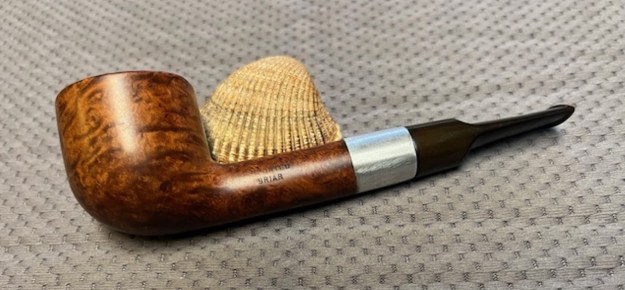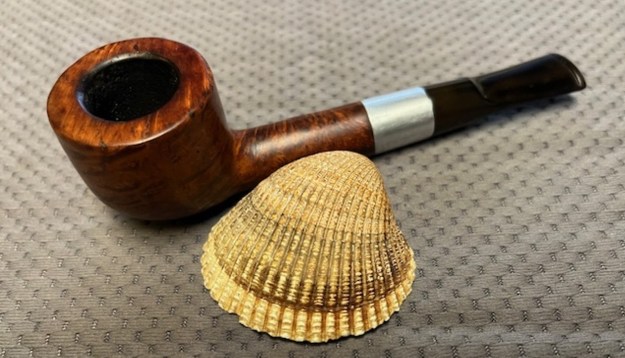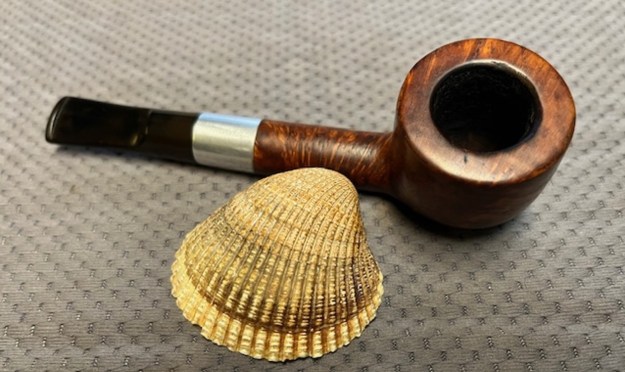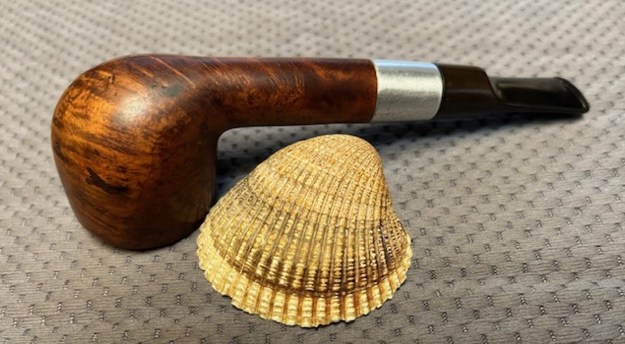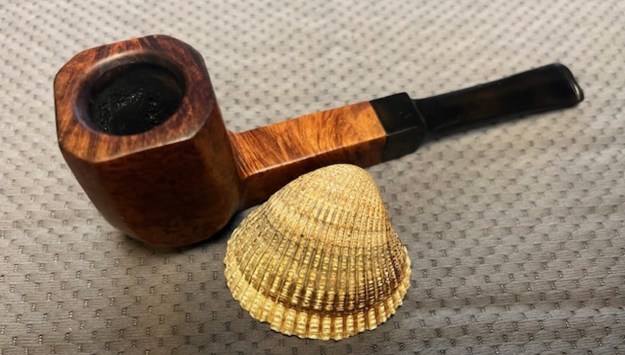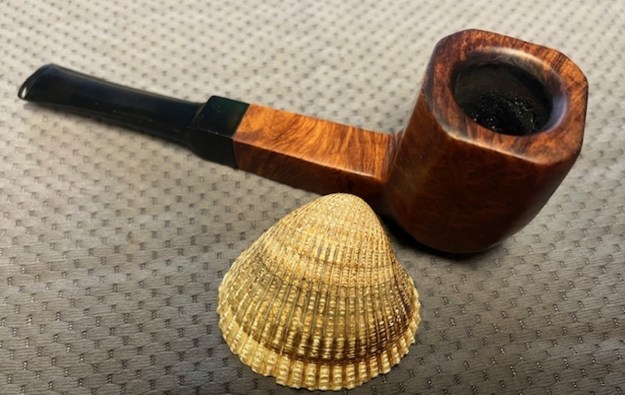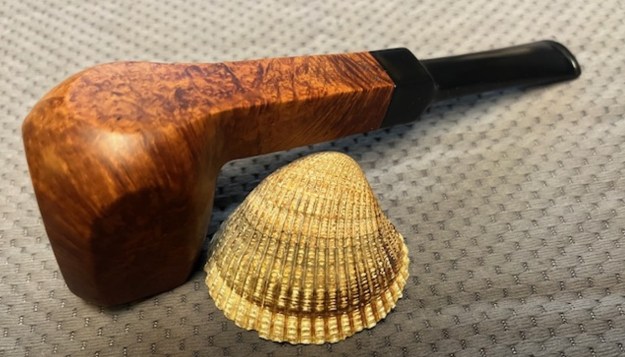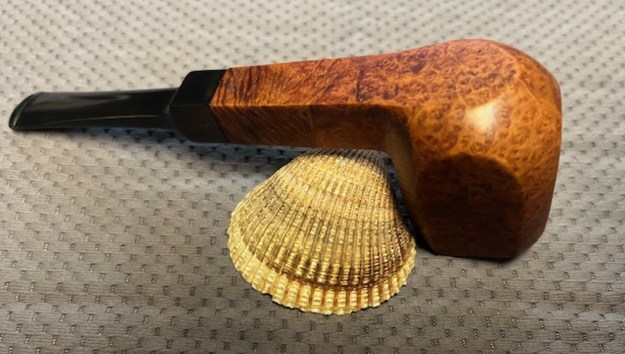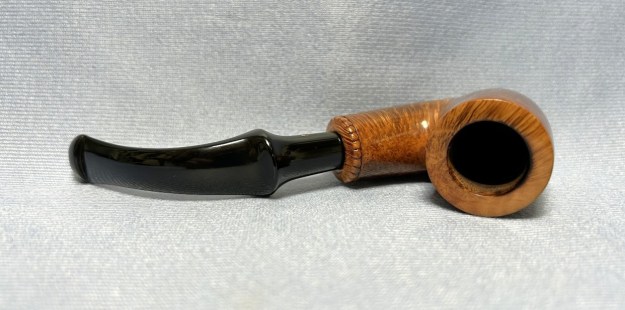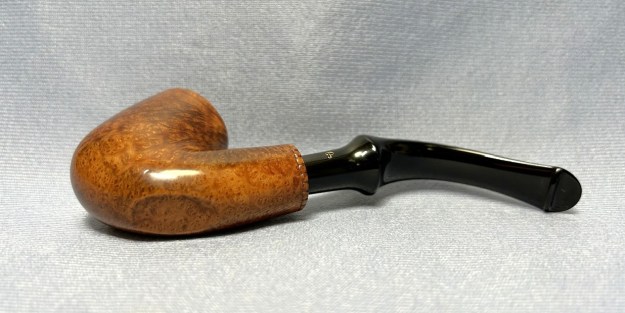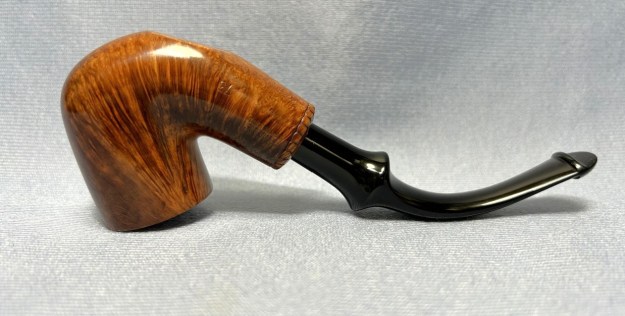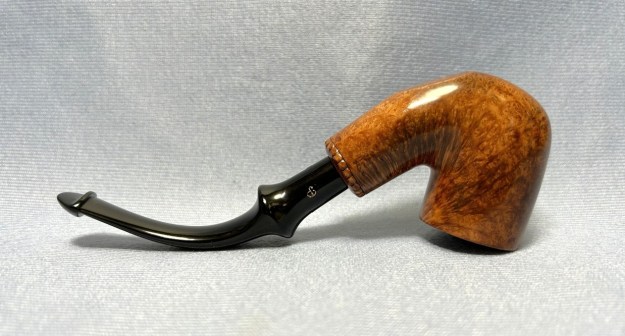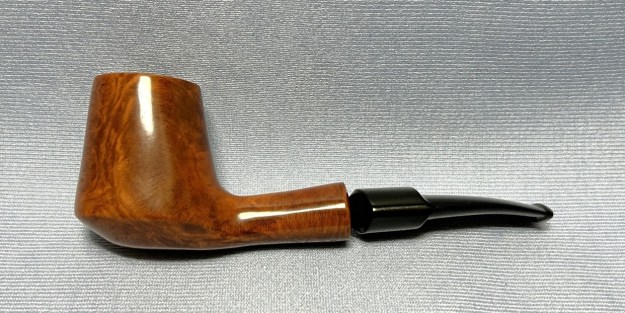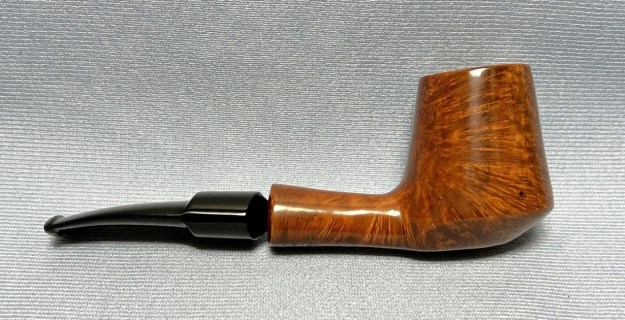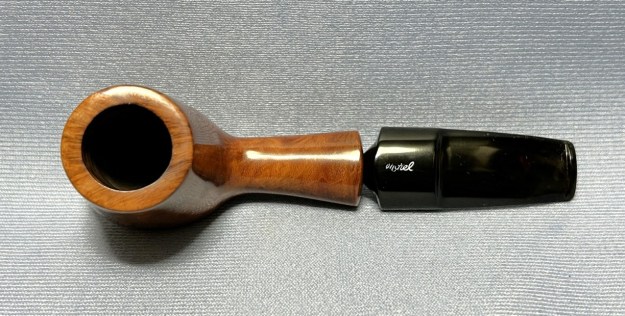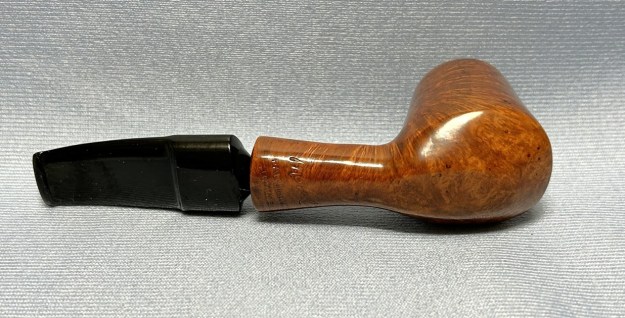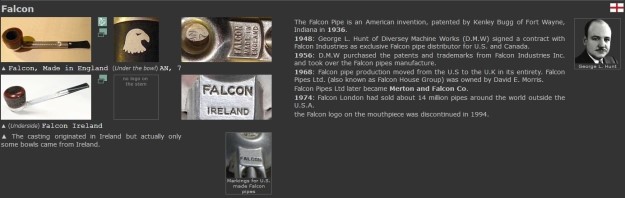
Tag Archives: Oxidation

A Lovely Custombilt 17 Squat Diamond Shank Bulldog


by Steve Laug

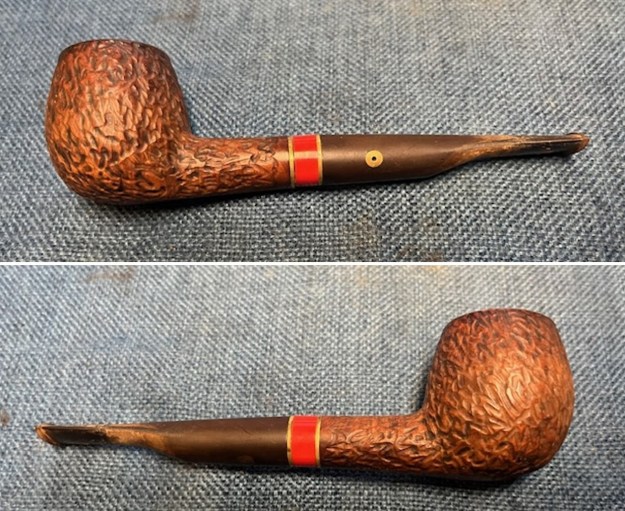
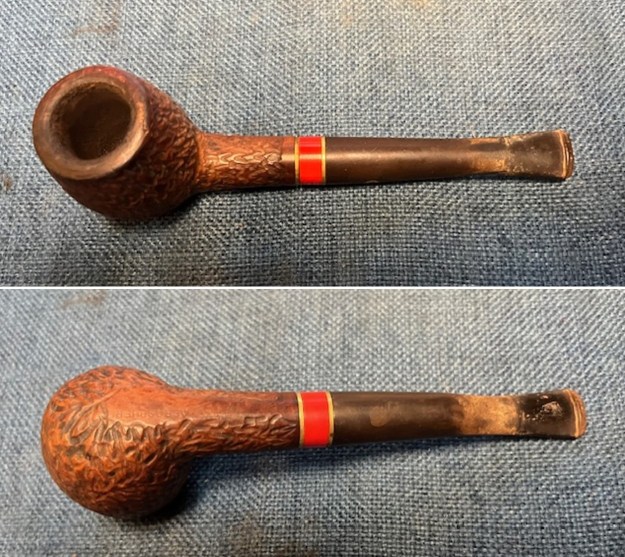
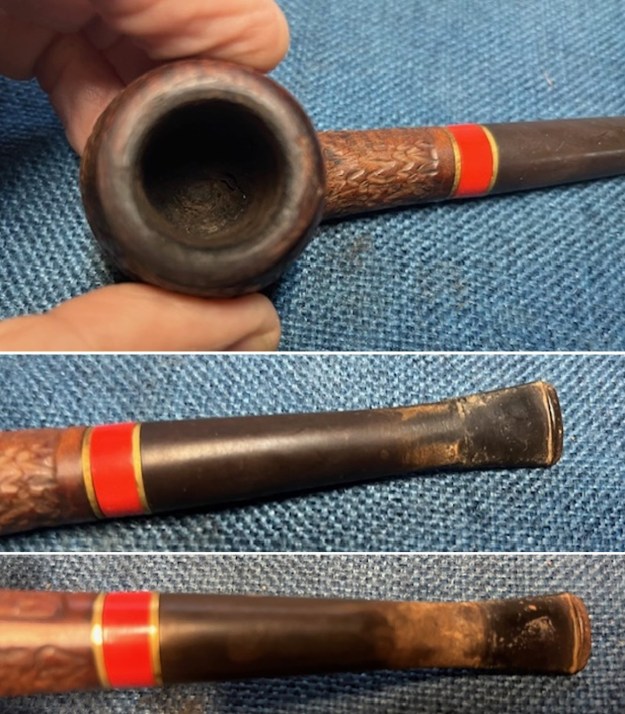
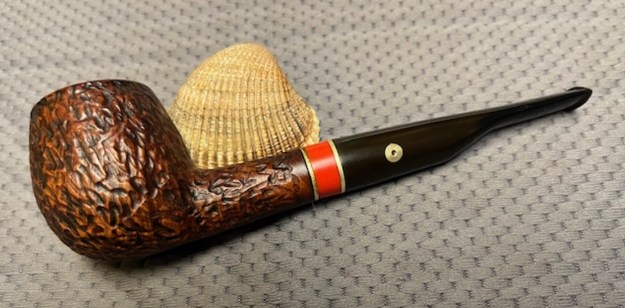
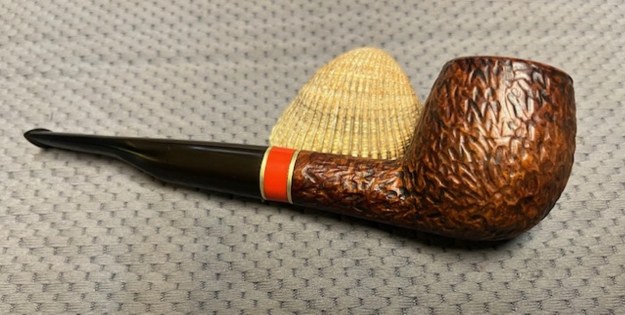
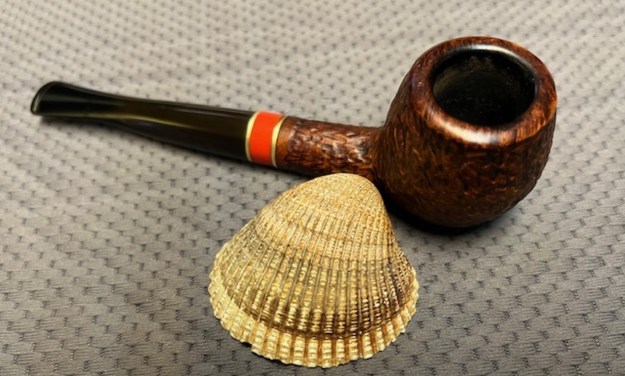
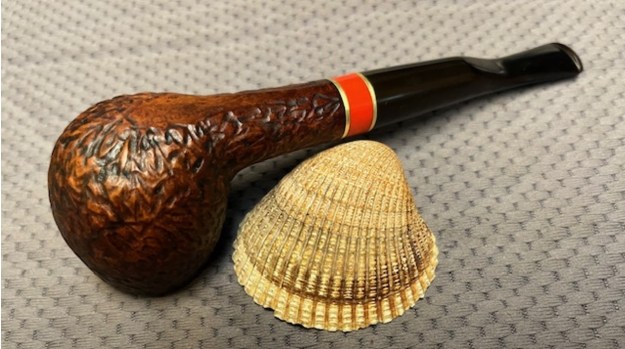
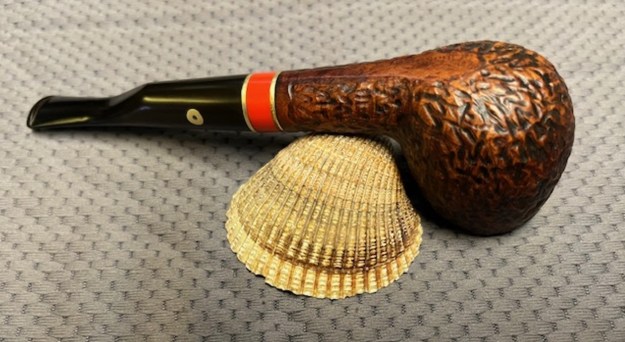
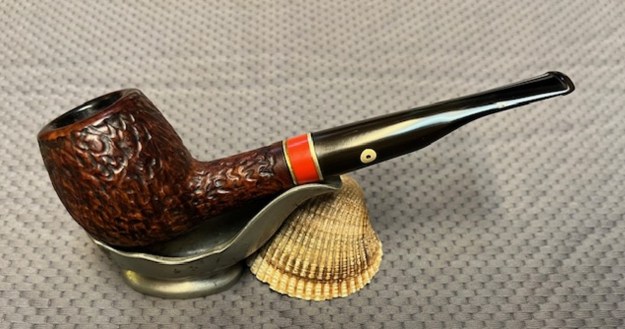
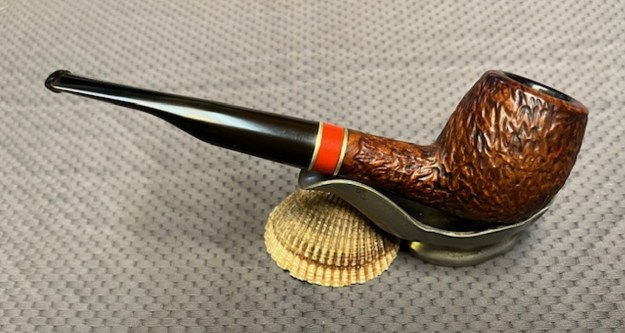
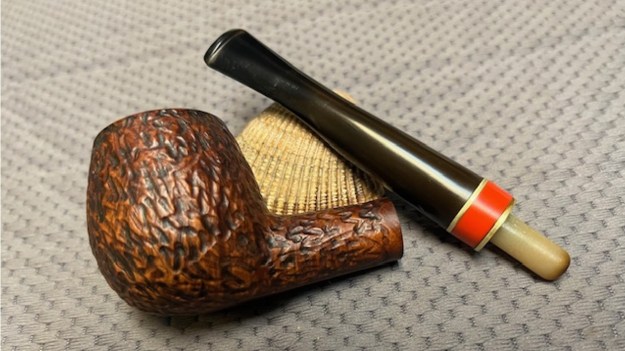
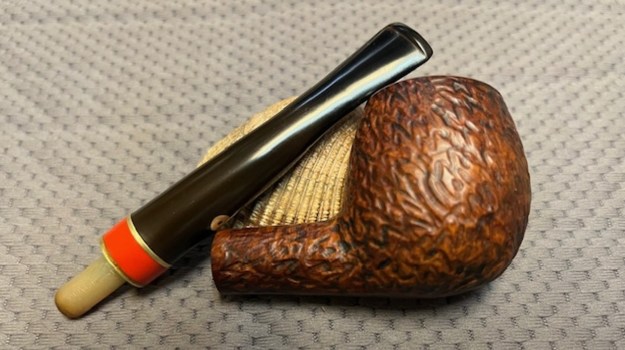
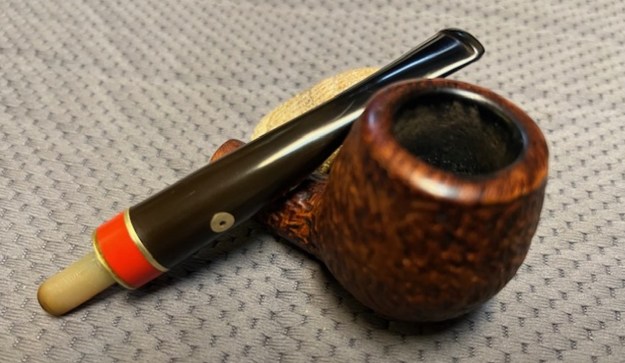
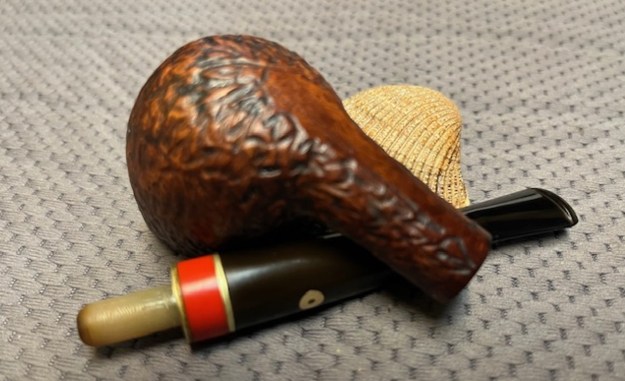
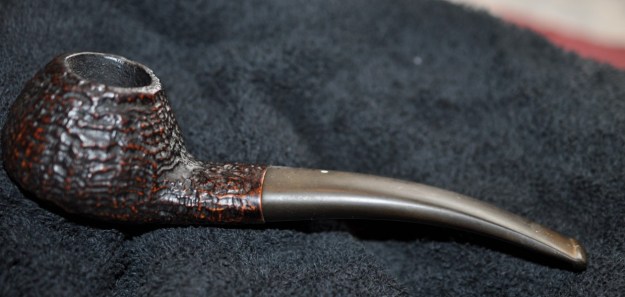
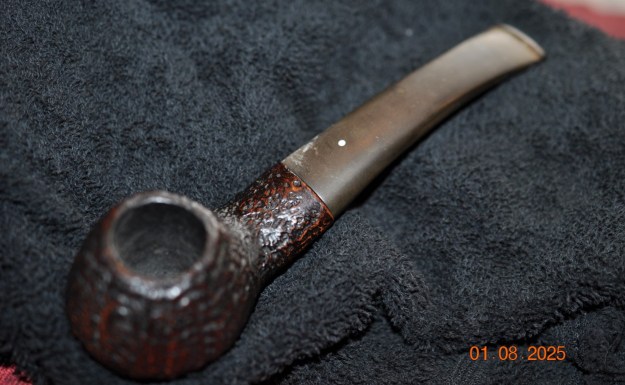
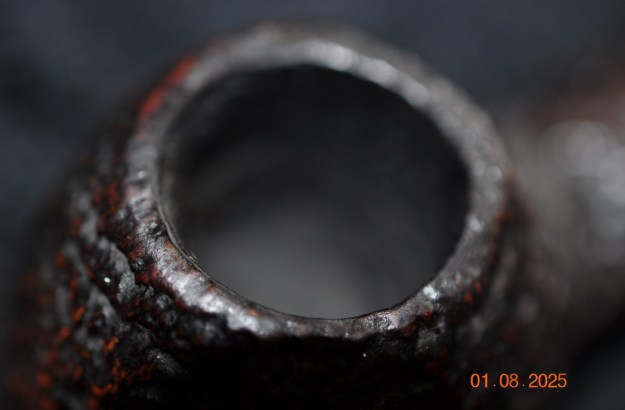
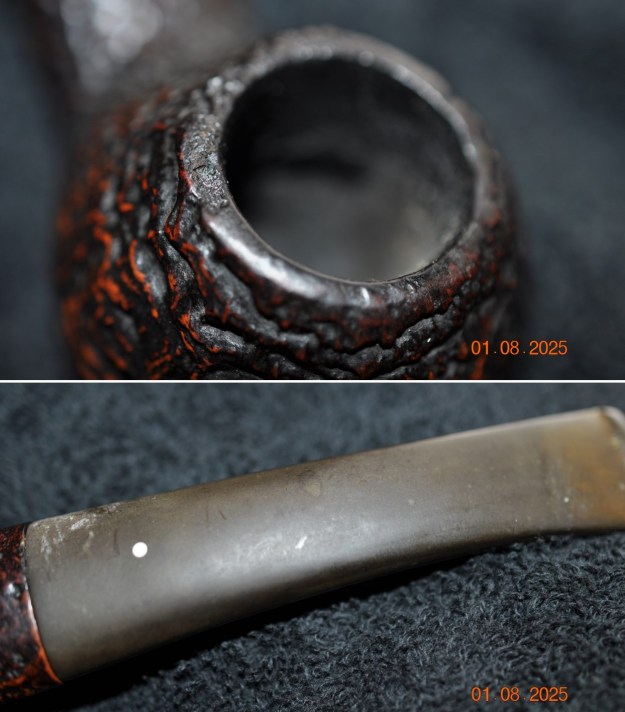
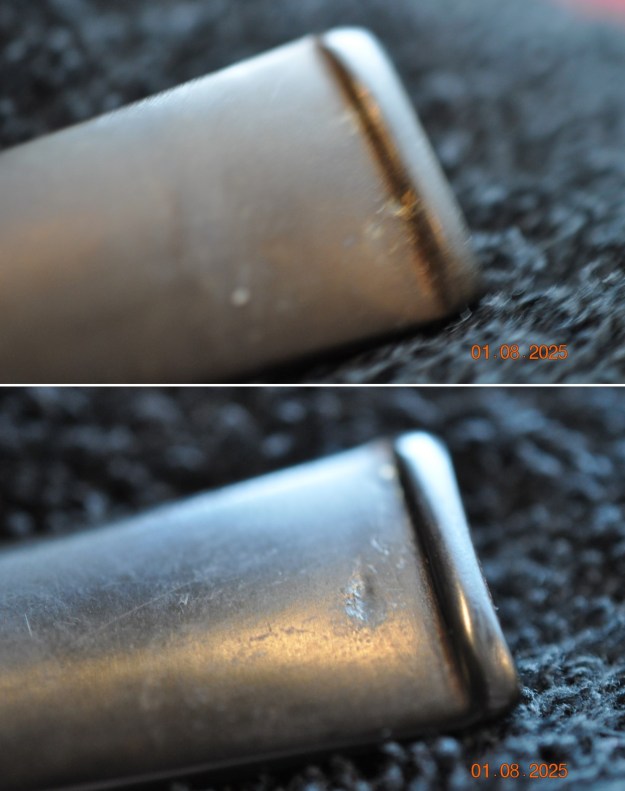
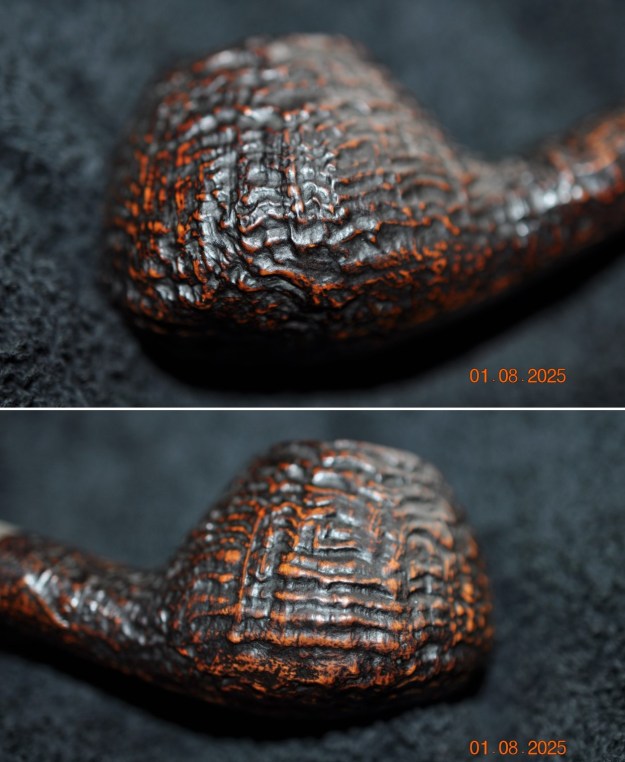
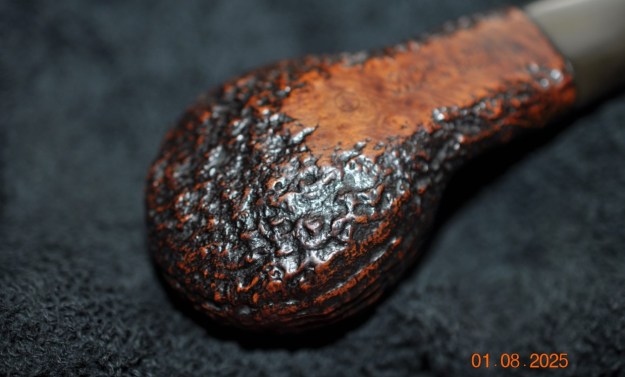
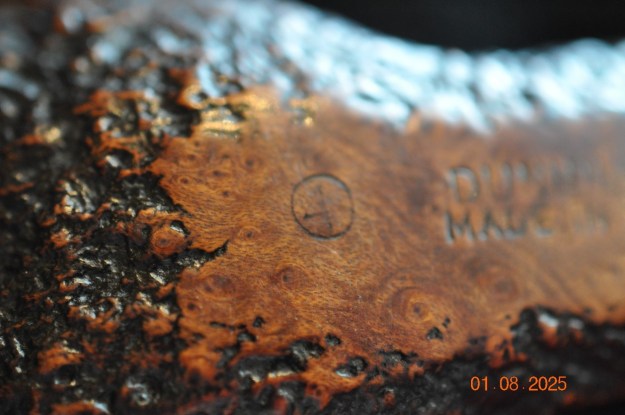
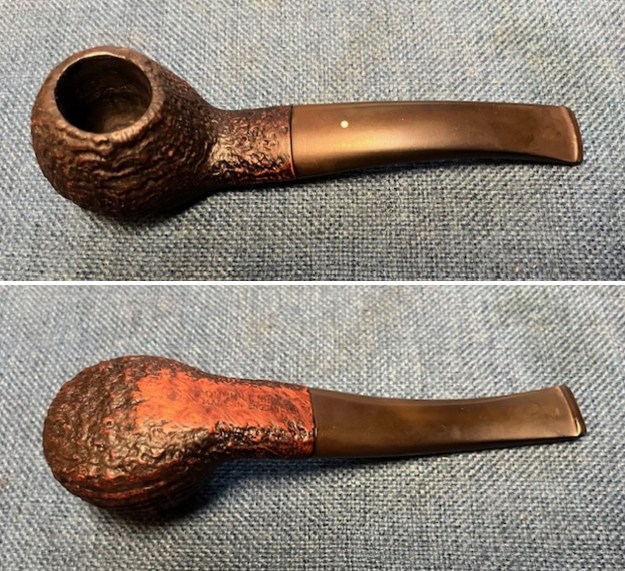
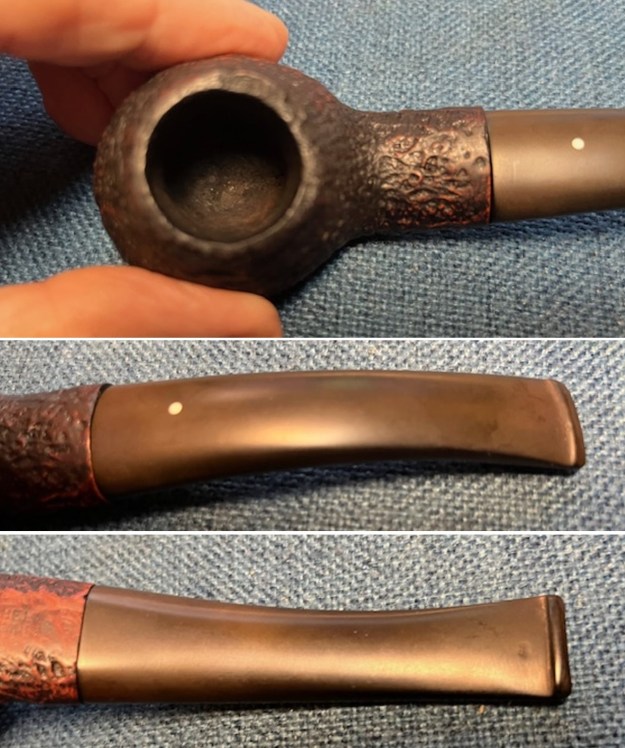
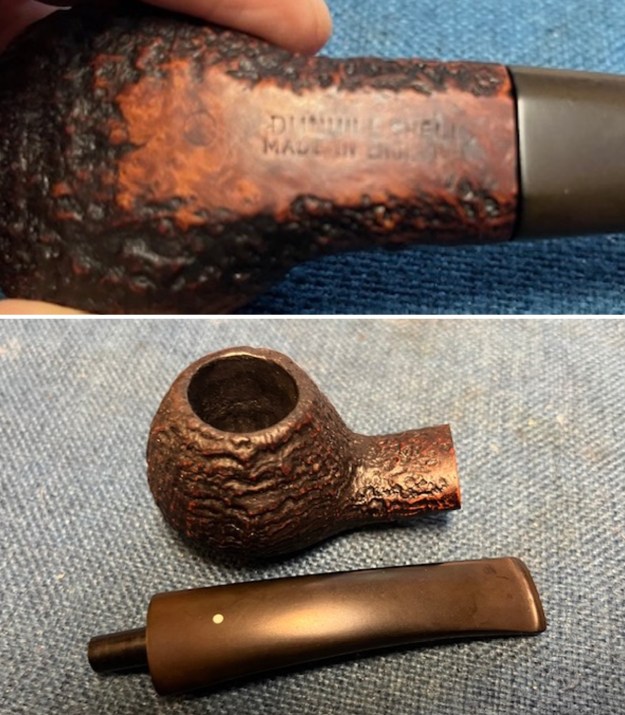
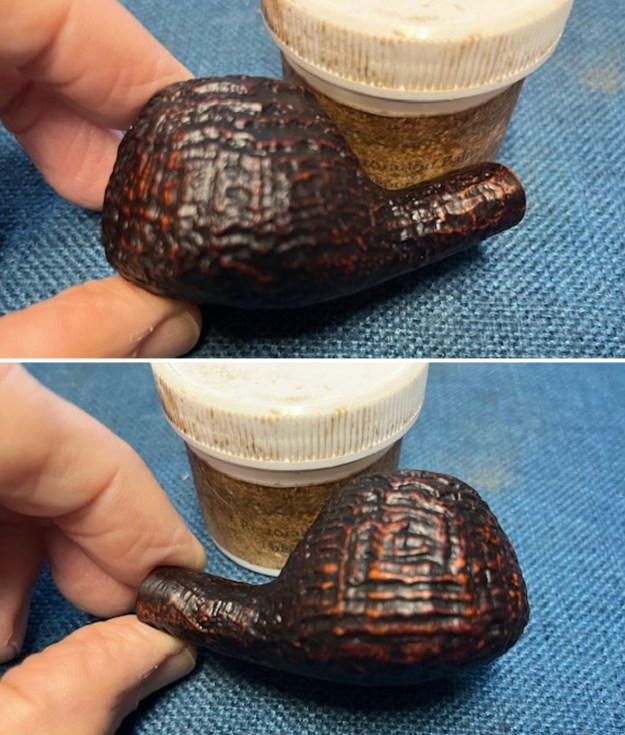
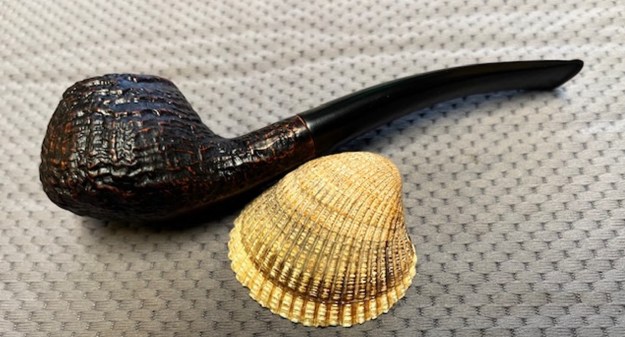
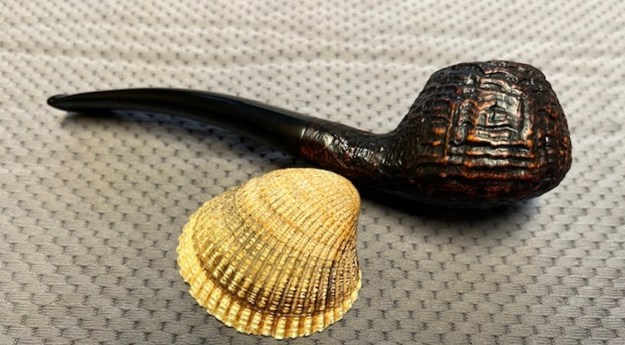
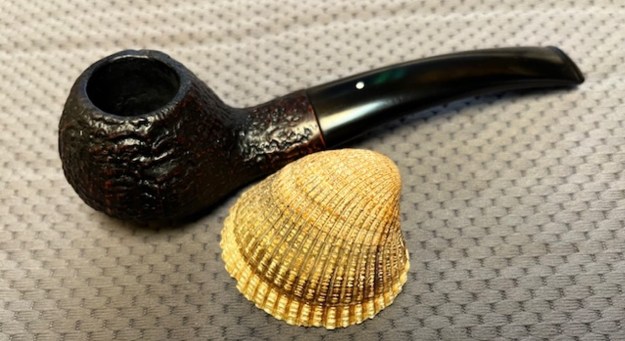
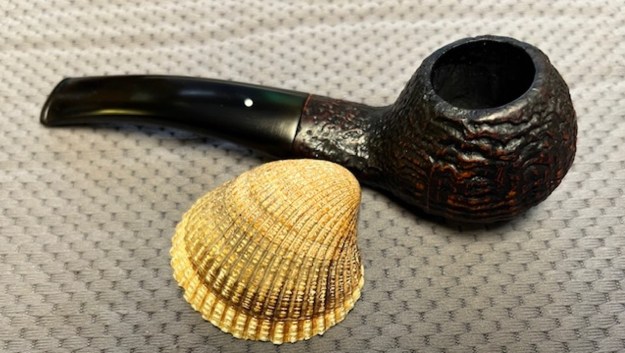
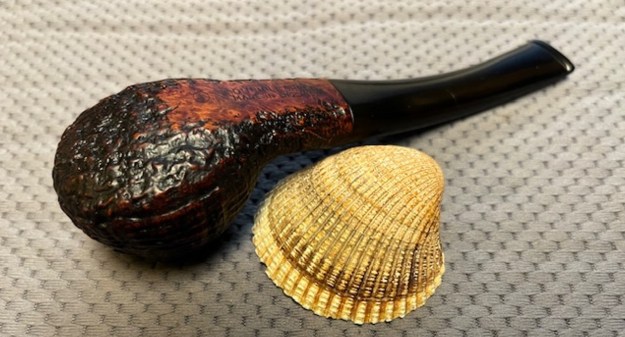
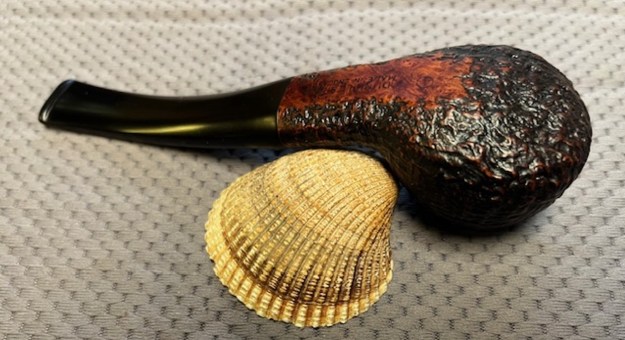
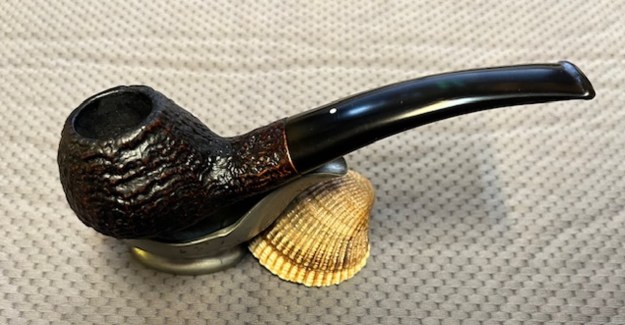
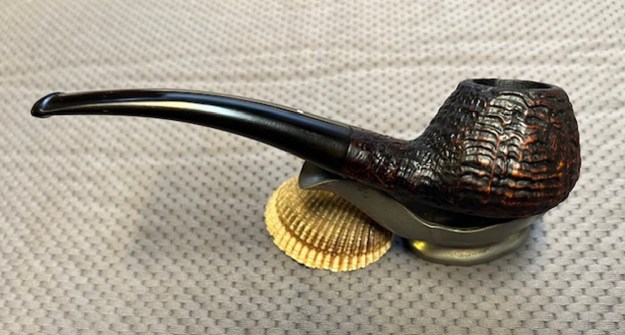
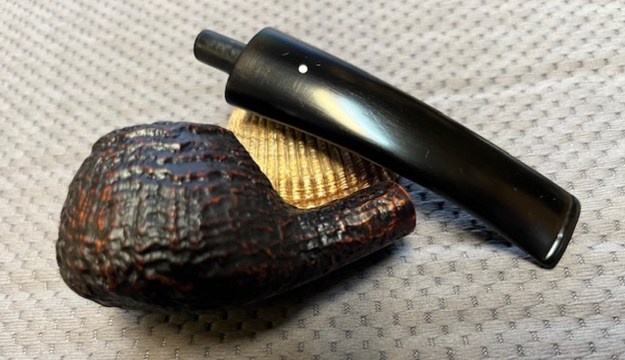
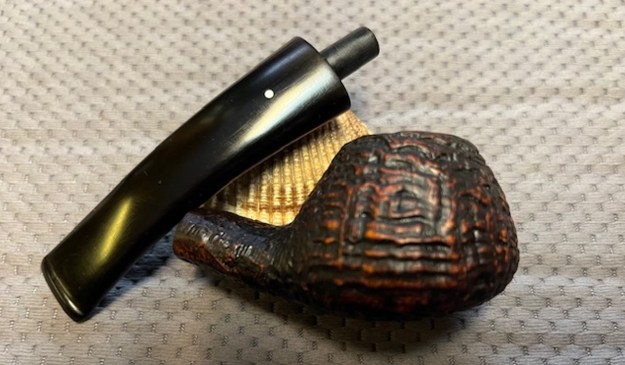
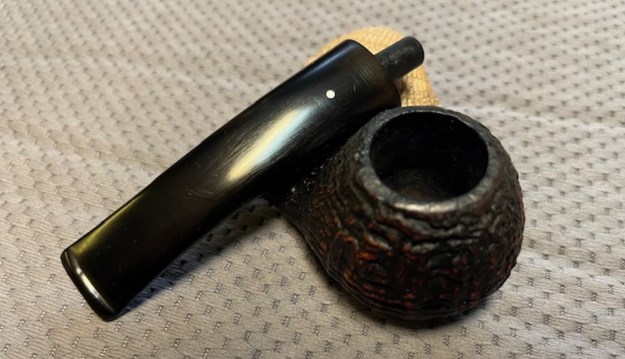
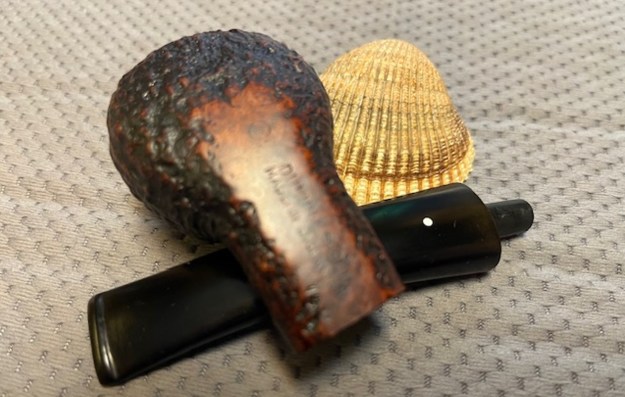
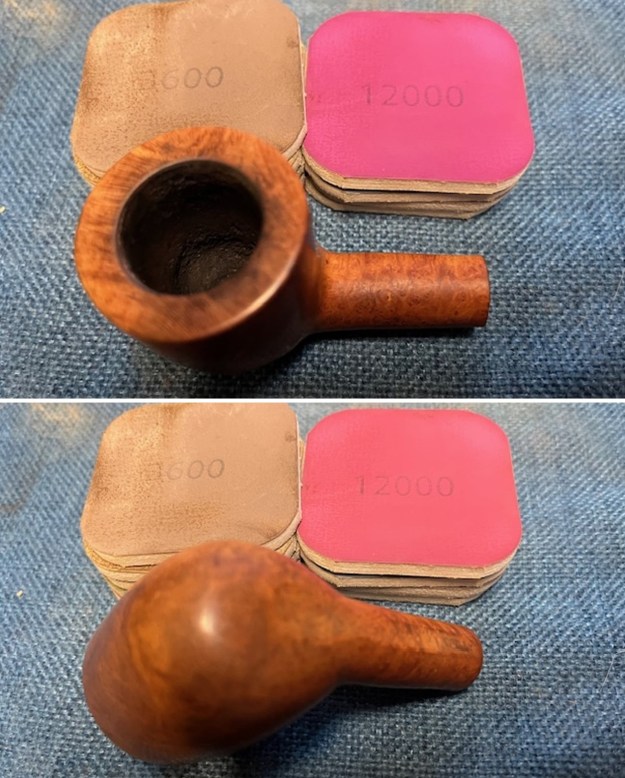
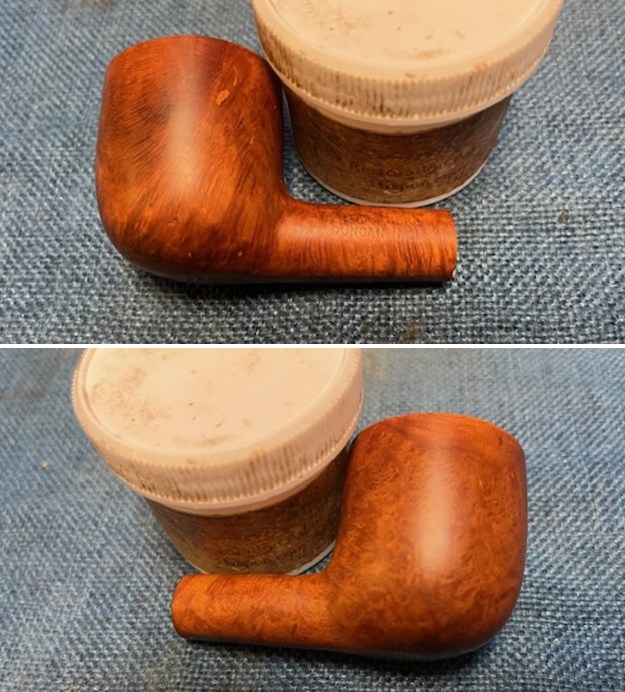
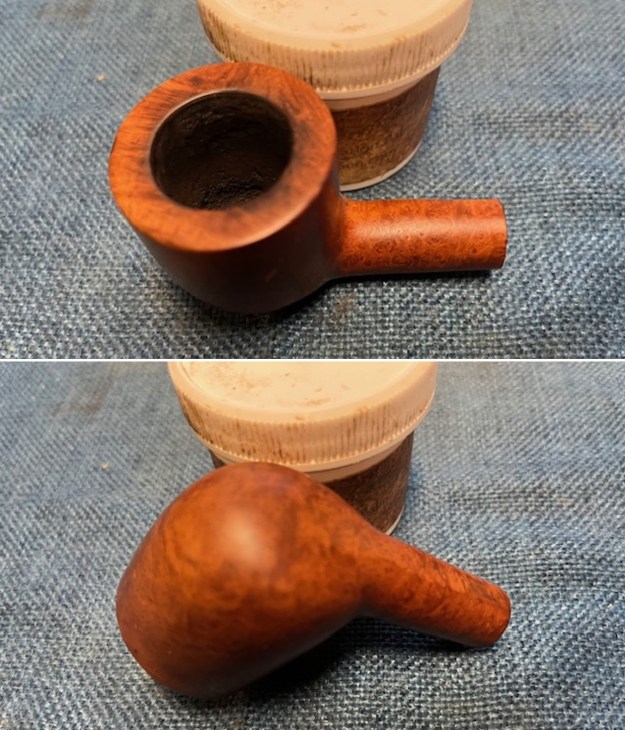
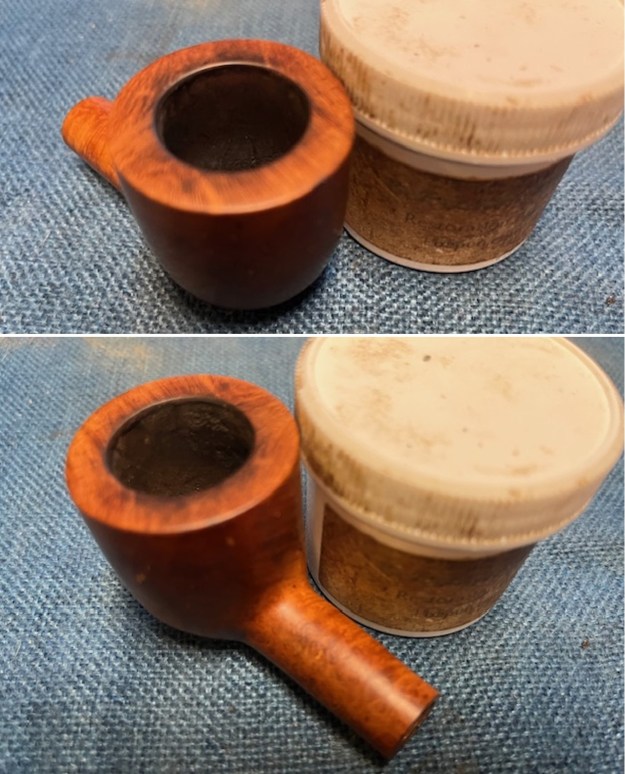
I picked some older pipes to work on next. The first of these is a Custombilt Squat Bulldog with the classic CB style rustication. We purchased this one on 01/22/2024 from Jordan, Minnesota, USA as part of a lot on eBay. Just one more piece of evidence that, contrary to my own opinion, there are still some good finds at good prices to be found on that site. The is a Squat Bulldog that is stamped on the top left side of the shank and reads Custombilt [over] Imported Briar and on the left underside of the diamond shank it stamped 17. The pipe was well used. The finish was dirty with dust and debris in the rustication and in the twin rings around the rim cap. The bowl had a thick cake in it and some lava on the rim top and the inner edge. There was also some roughening to the inner edge of the bowl. The vulcanite stem was lightly oxidized and had some tooth marks on the surface ahead of the button. It looked like the stem had sported a Softee Bit Guard and there was debris and calcification where it had been. Jeff took photos of the pipe before he started his cleanup work. He took some closer photos of the rim top and bowl to show the condition. You can see the thick cake in the bowl and the lava on the rim top and inner edge. It is hard to know for certain but it looks like there is some roughening on the back inner edge. He also took photos of the stem to show its condition. You can see the oxidation, calcification and tooth marks. Jeff took some photos of the sides and heel of the bowl to show the rustication – both the surface grooves and the hash marks inside the grooves. The twin rings and bowl cap are quite well done. He captured the stamping on the left top and underside of the left side of the diamond shank It reads a noted above. It is interesting to see it stamped in the rustication on the topside.I turned to Pipephil (http://www.pipephil.eu/logos/en/logo-c8.html) to get a quick view of the brand once again. I knew that I was working with one of the older pipes and probably made by Tracy Mincer himself. He stopped making the Custom-Bilt pipes in the early 1950s. The screen capture I included below shows a brief history of the brand. I quote from the side bar in the above screen capture and have highlighted in red the pertinent part of the article.

Chunky bowls with rough carving or gouges.

Tracy Mincer stopped making Custom-Bilt pipes in the early 1950s. The trademark was successively bought by Leonard Rodgers (1953), Consolidated Cigars (1968) and Wally Frank Co. (early 1970s). The later began to produce again his version of the pipe in 1974 or 1975 at Weber pipe factory (NJ). In 1987, the pipes were made out of the Butz-Choquin factory (France) and then Mexico until the late 1990s. Currently (2010), the Custombilt name is owned by Tobacalera of Spain which is part of Altadis.

It is generally admitted (but not proved) pipes stamped “Custom – Bilt” (with the hyphen) are from the Mincer era. The name might have changed from Custom-Bilt to Custombilt (without the hyphen) in 1946.

I turned to Pipedia and found the following advertisement for the Custombilt line that I am working on (https://pipedia.org/wiki/File:Custombilt_Shapes.jpg). The logo on the advertisement is the same and the shape I have circled in red in the advert below is the same shape number as the one that I am working on.  The majority of the information on the rest of the site was two book reviews of the Custom-Bilt Story by Bill Unger. I did a screen capture of the stamping that matched the stamping on the pipe that I am working on. The stamping on the one I have might be example of Stamp #2 of the Wally Frank Era pipes (shown in the screen capture below). This stamp has the top arch of “C” extend to the top of “t”. The bottom arch of the “C” also curves into the leg of the “u” as in a cursive signature. I have also included the information on Stamp 3 as it mentions two stamps from this Wally Frank Era.In the early 1970s, Wally Frank Co. bought the Custombilt trademark and began to produce their version of the pipe in 1974 or 1975. Hollco Rohr owned the Weber pipe factory, located in New Jersey, and produced the Custombilt pipes there. From all of the above information I am fairly certain that I am dealing with a Wally Frank-era Custombilt made between 1974-75.

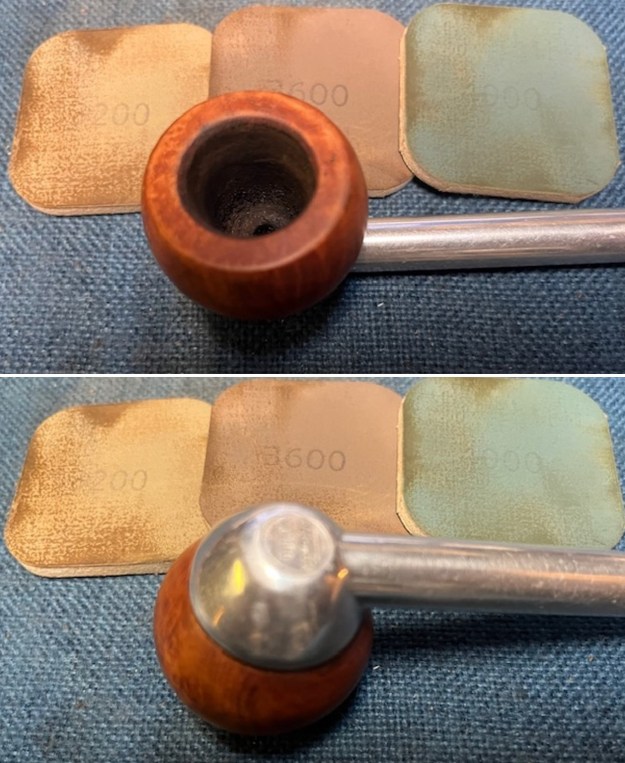
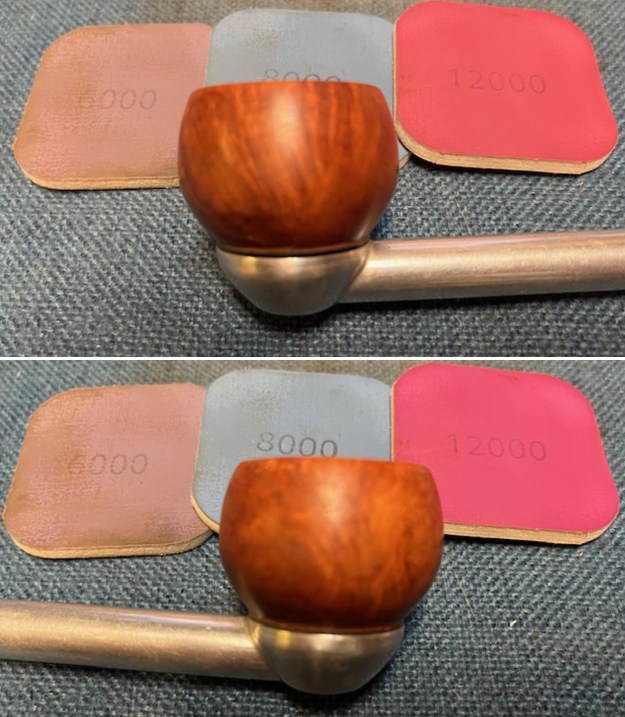
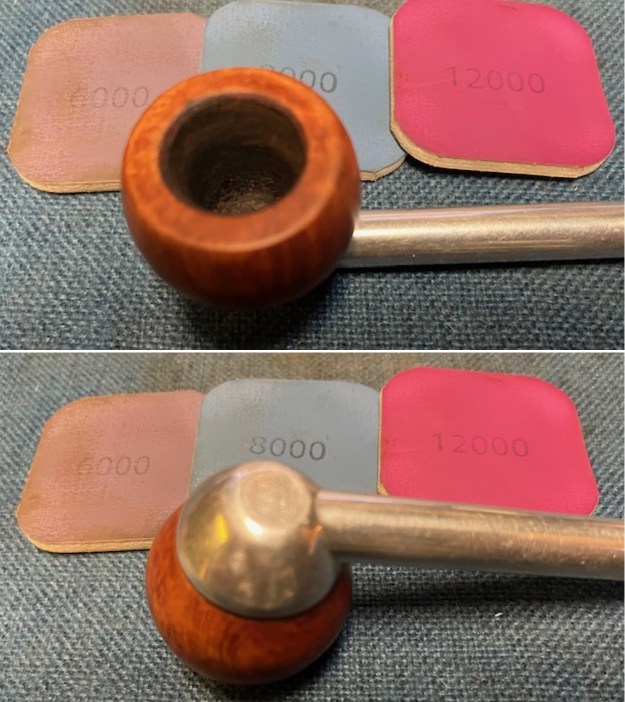
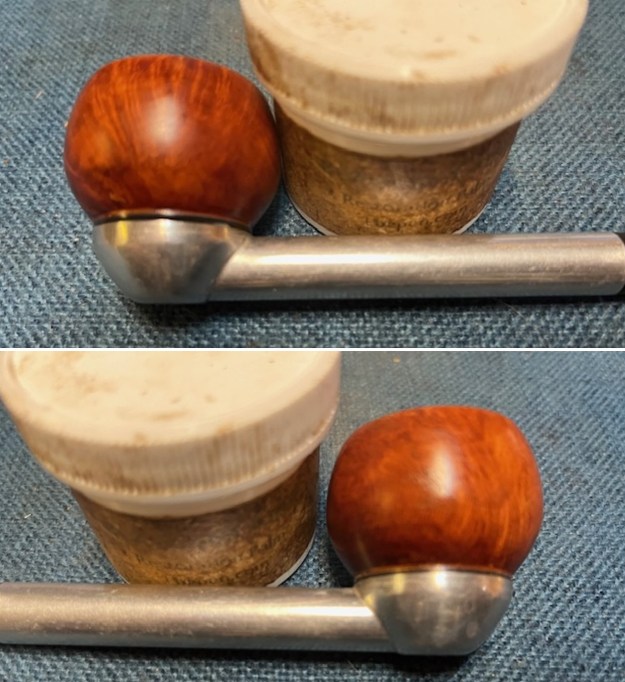
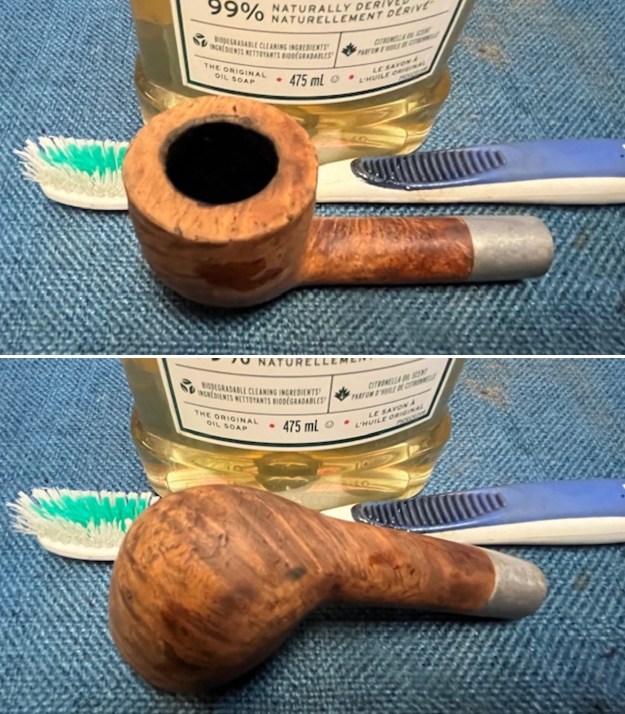
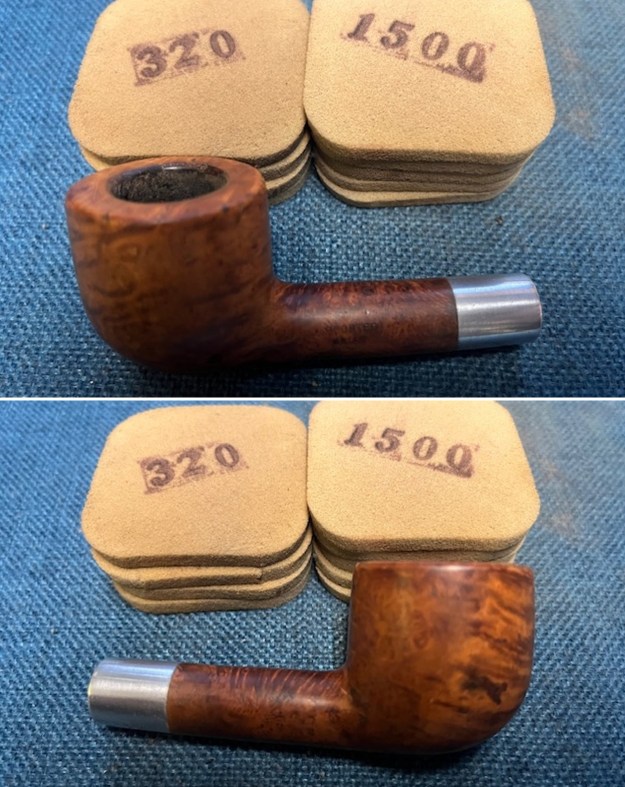
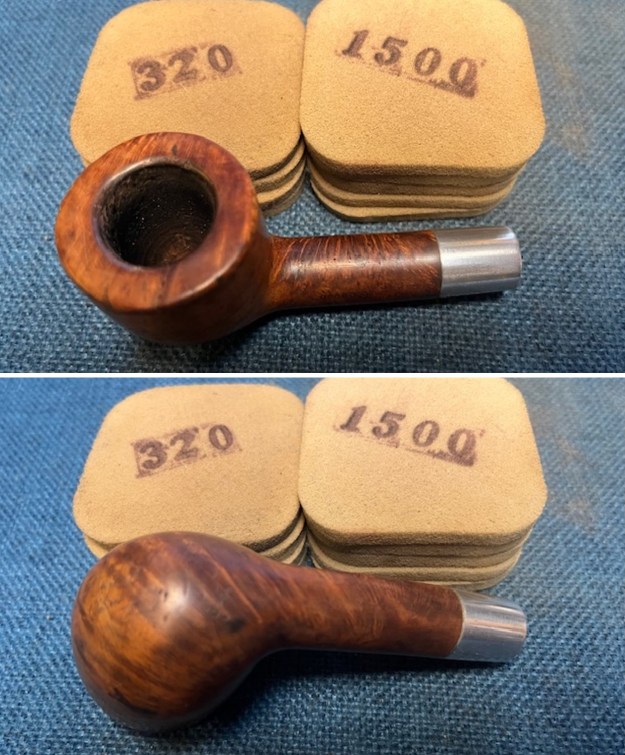
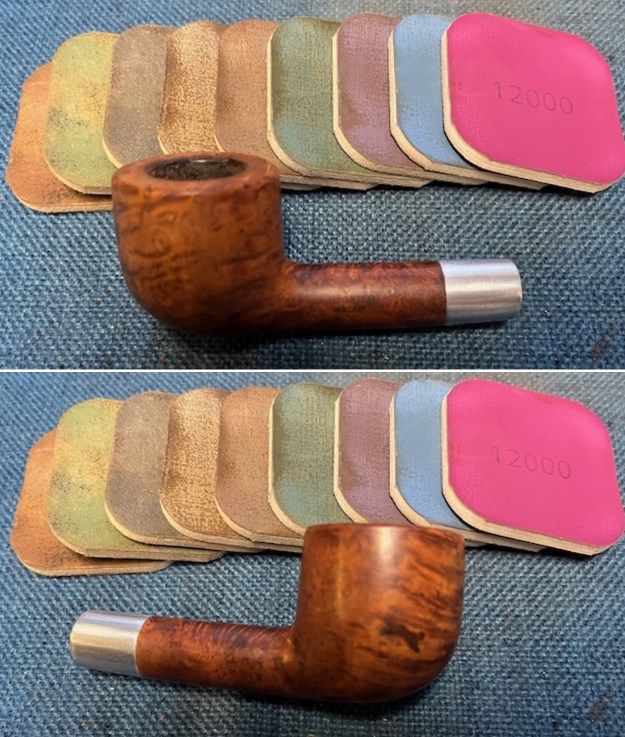
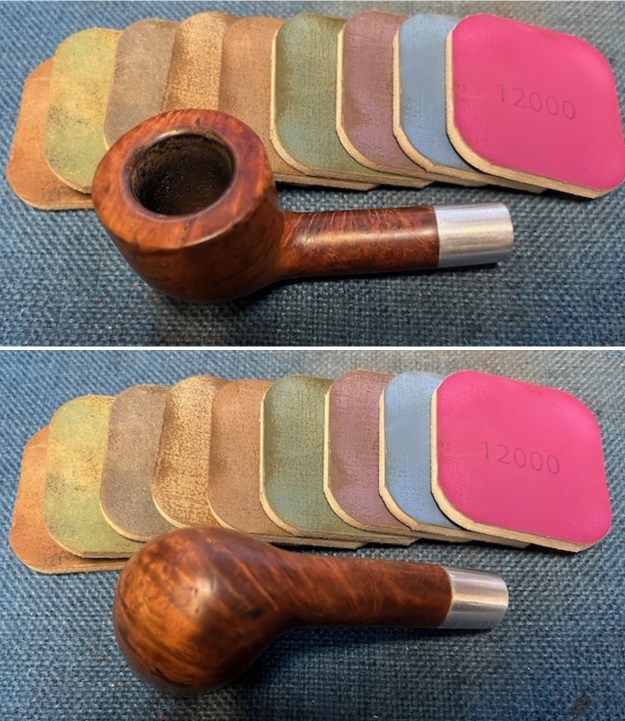
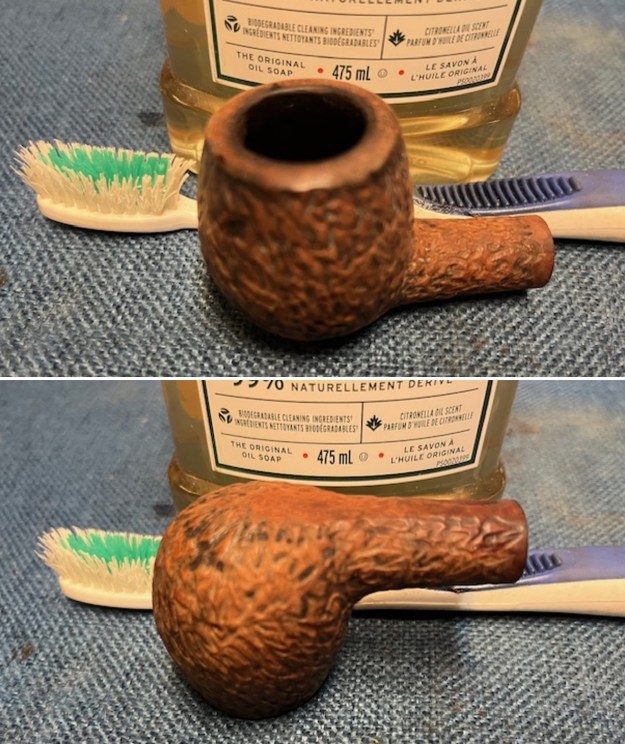
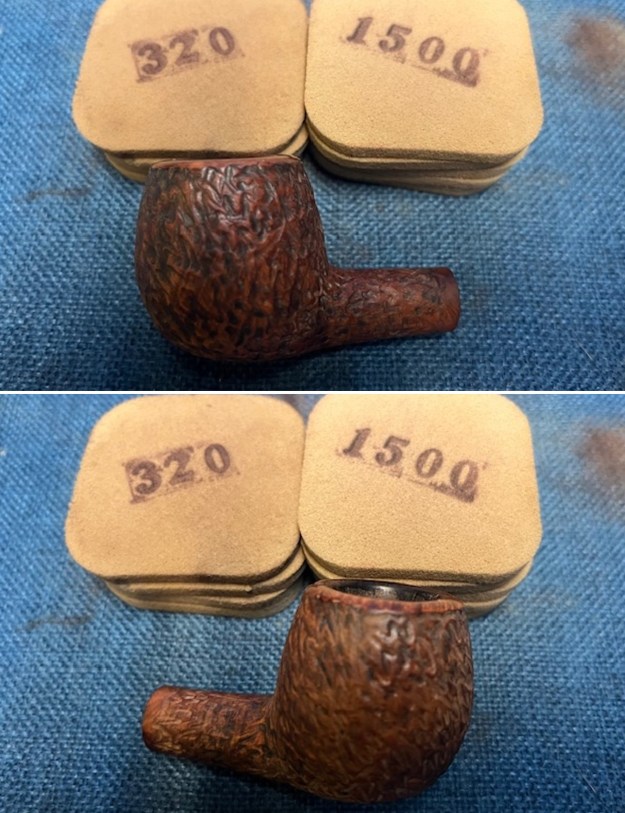
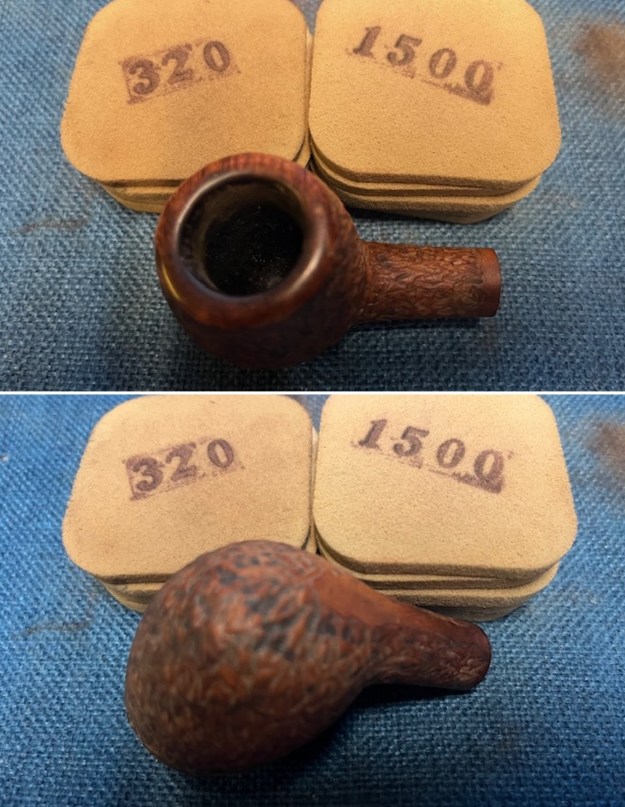
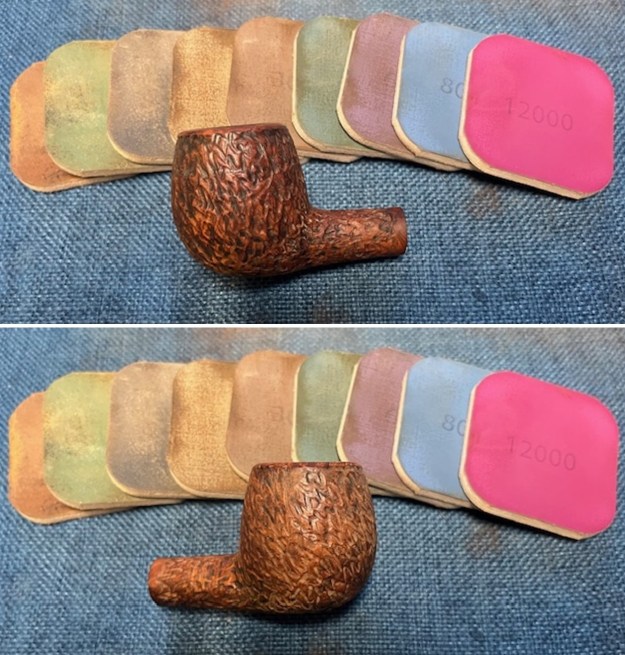
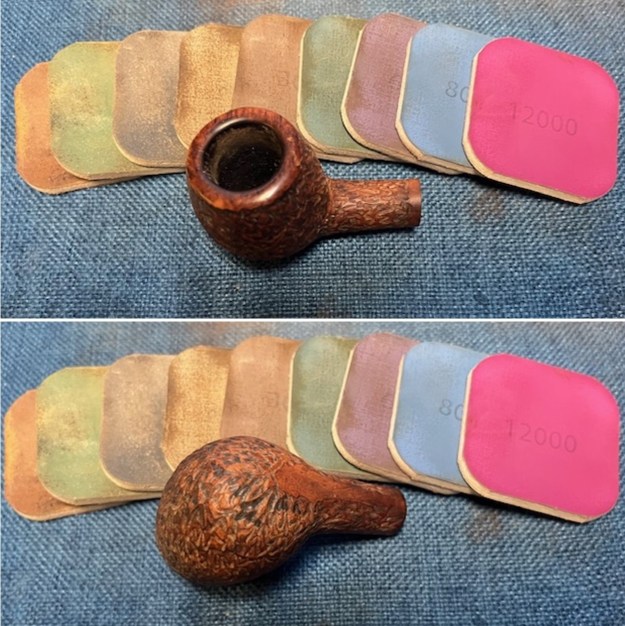
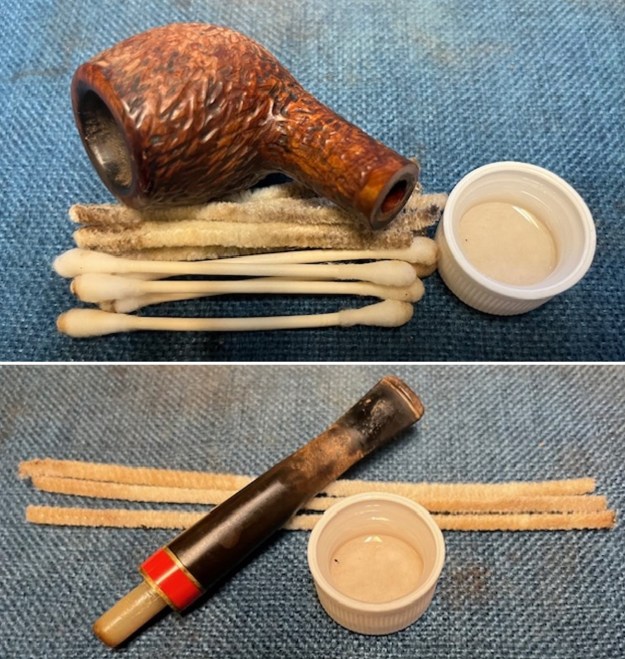
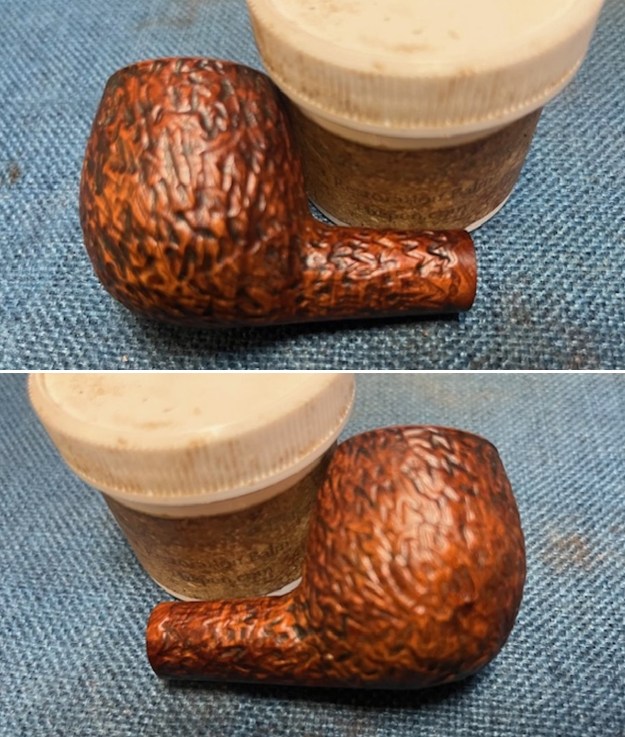
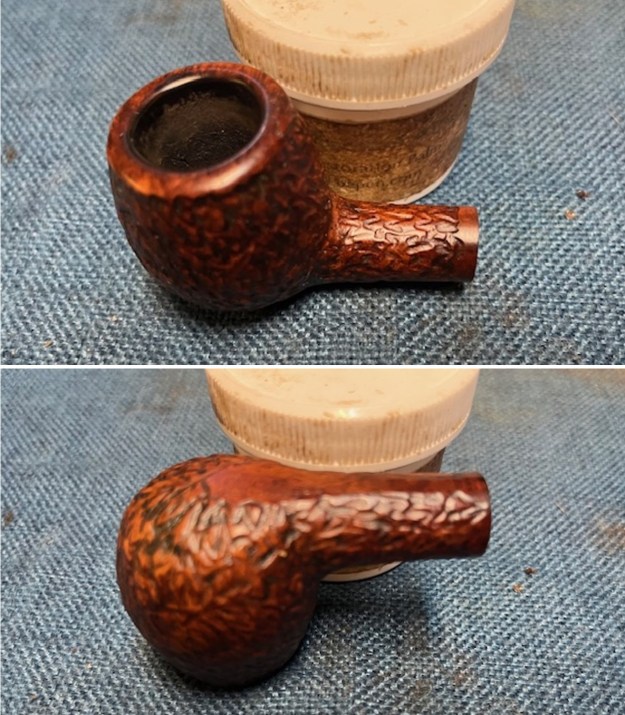
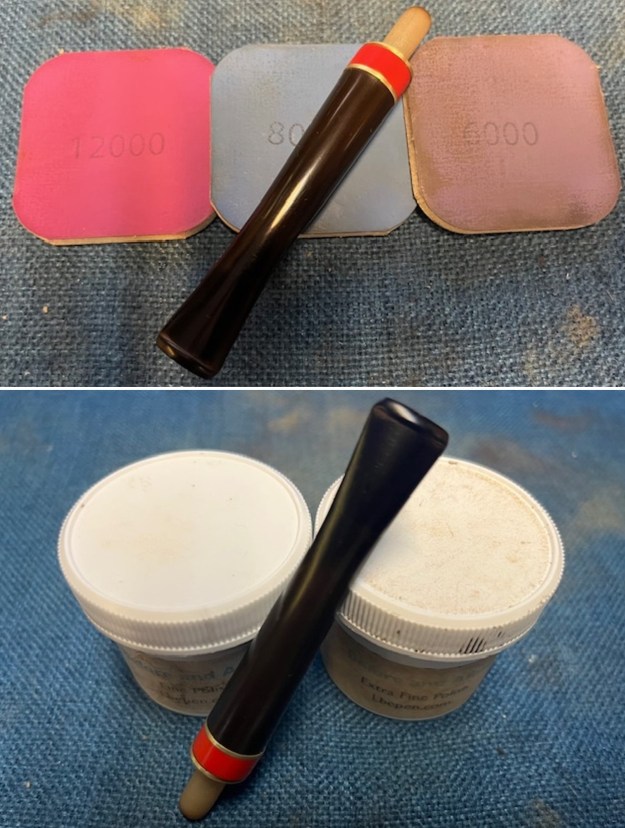
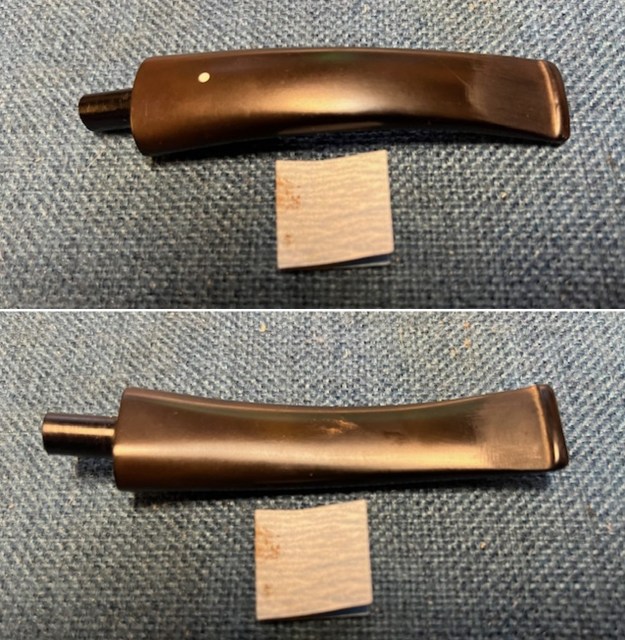
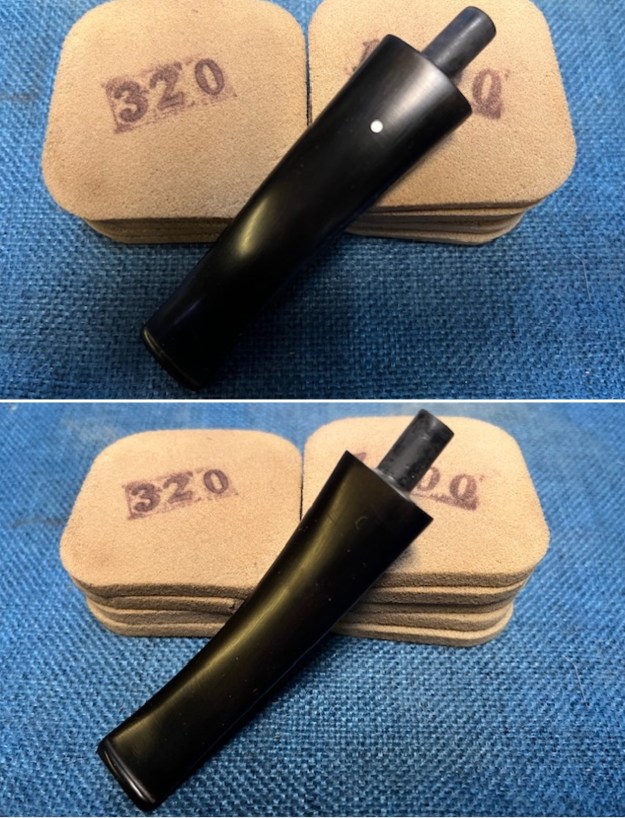
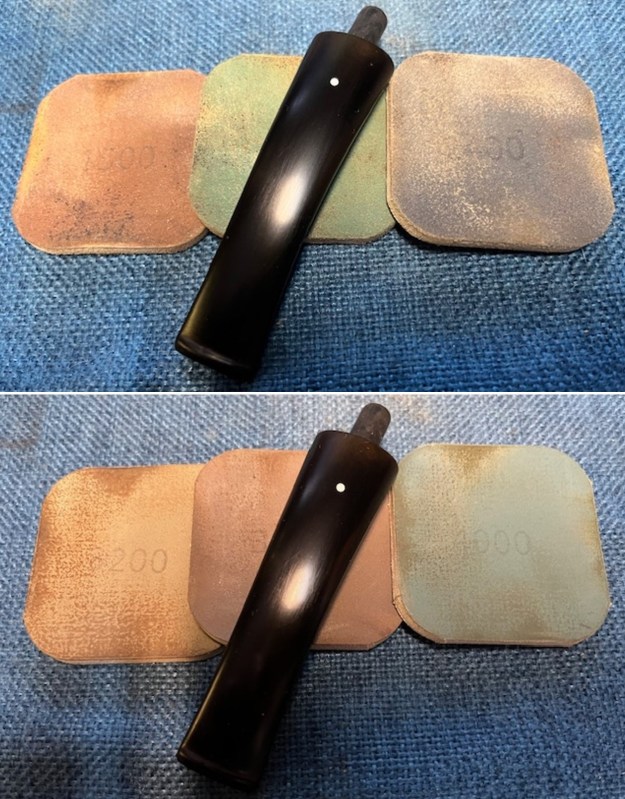
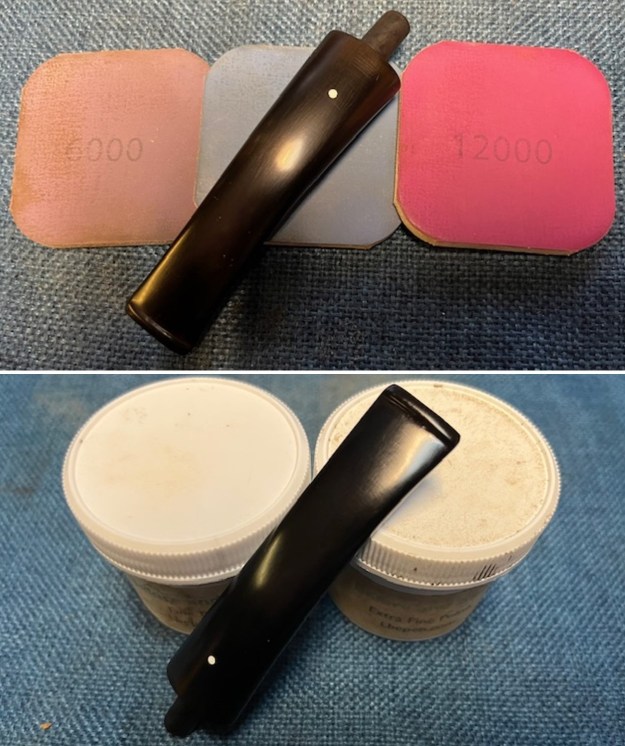
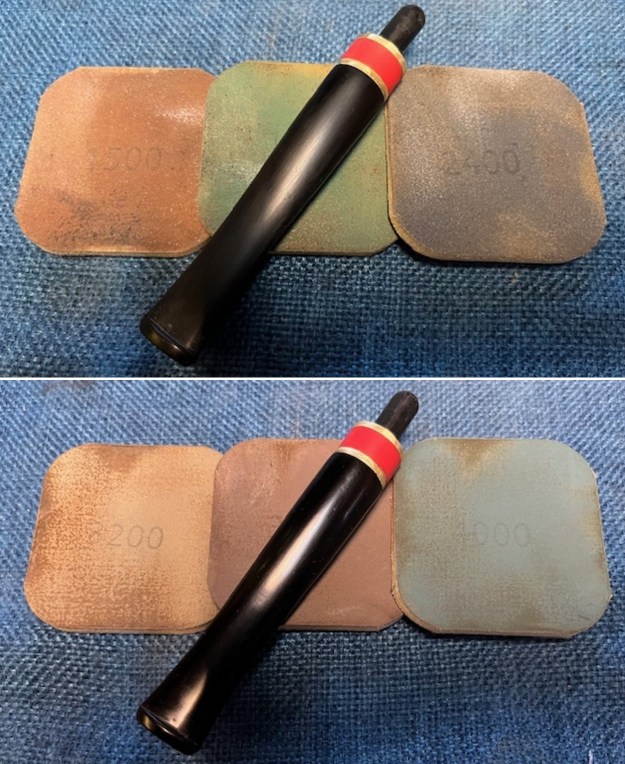
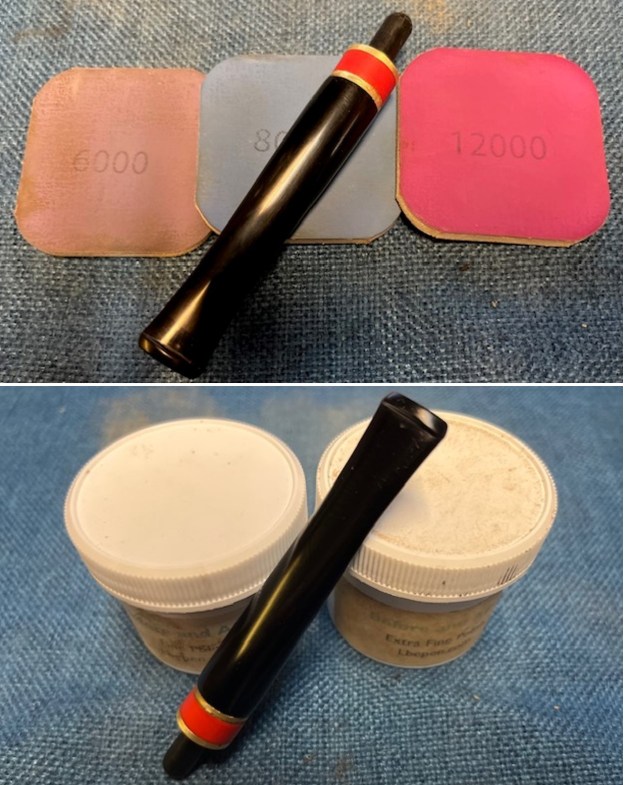
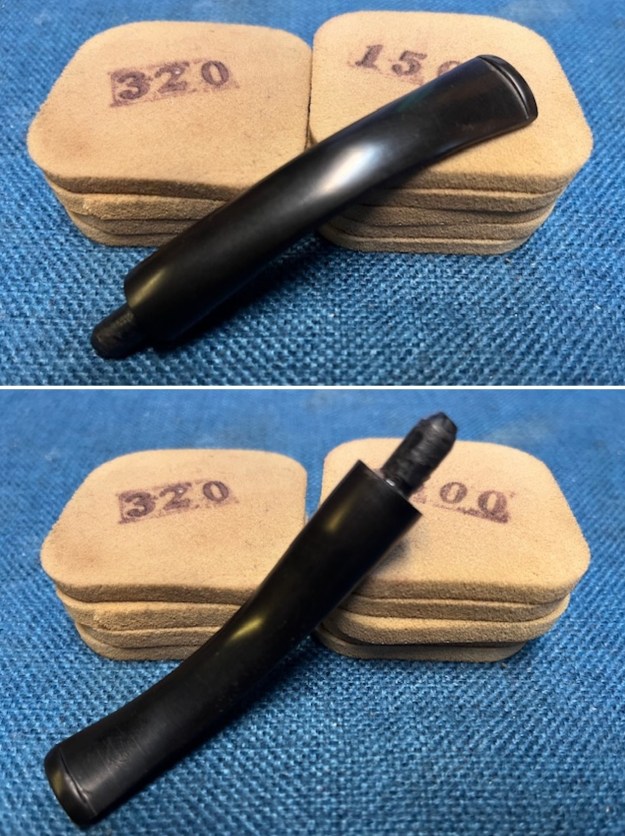
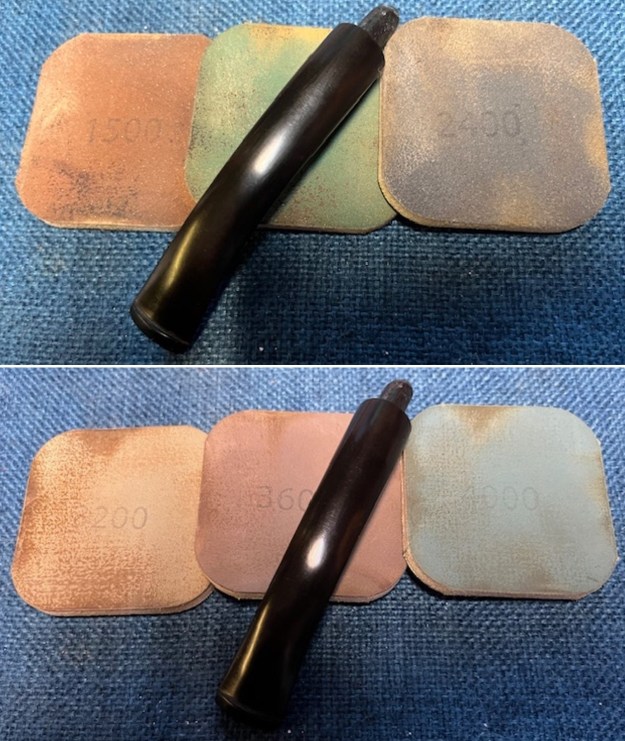
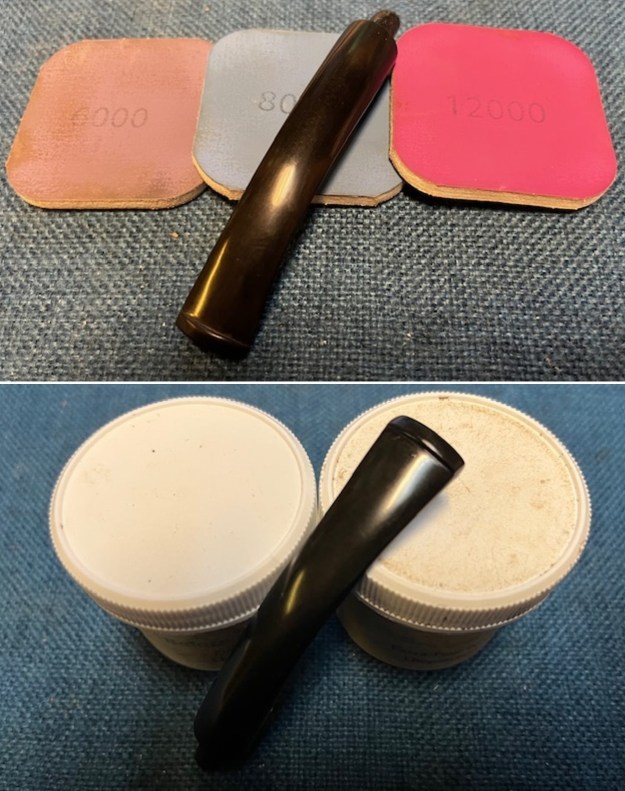
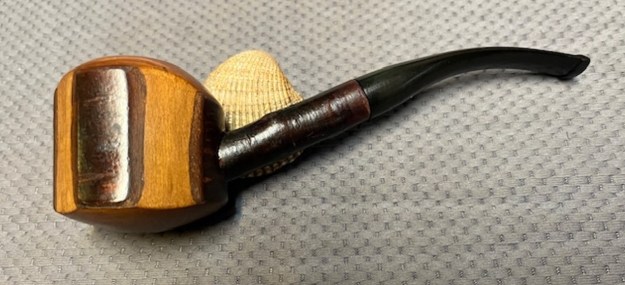
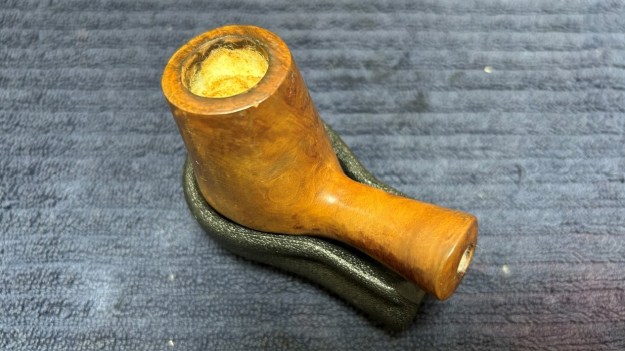
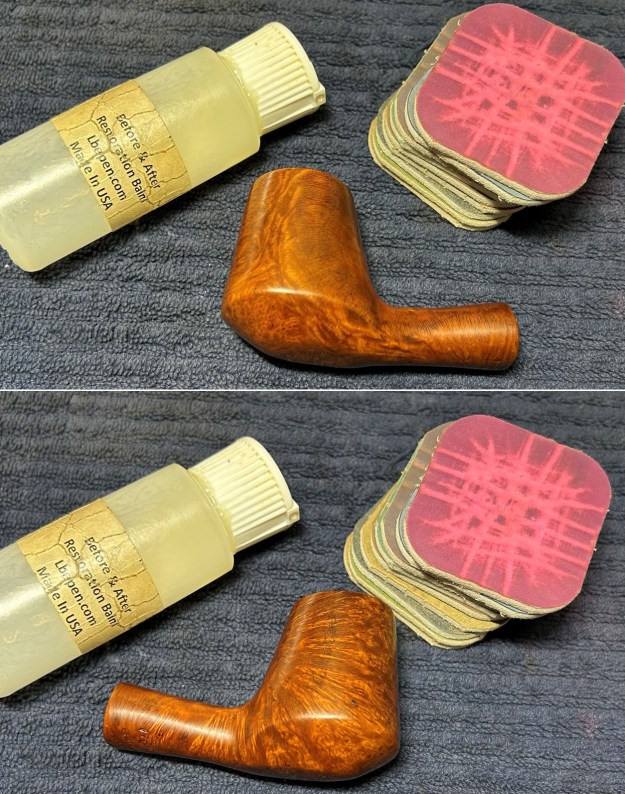
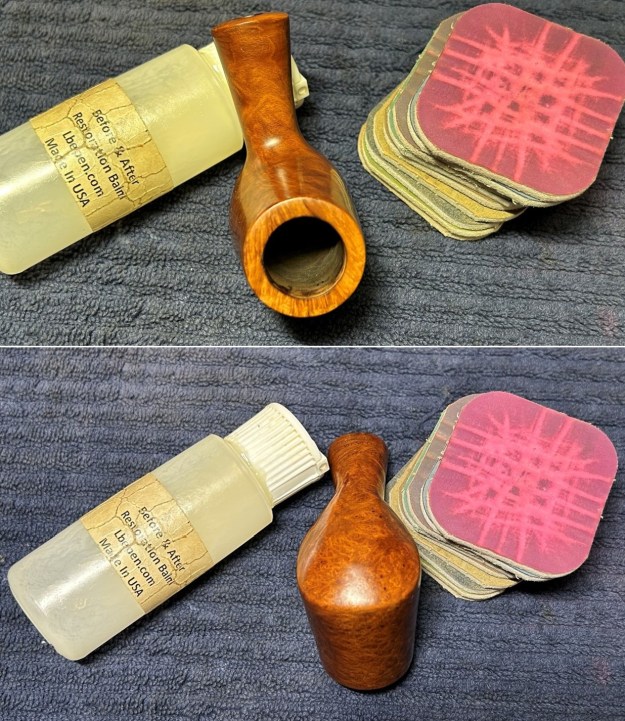
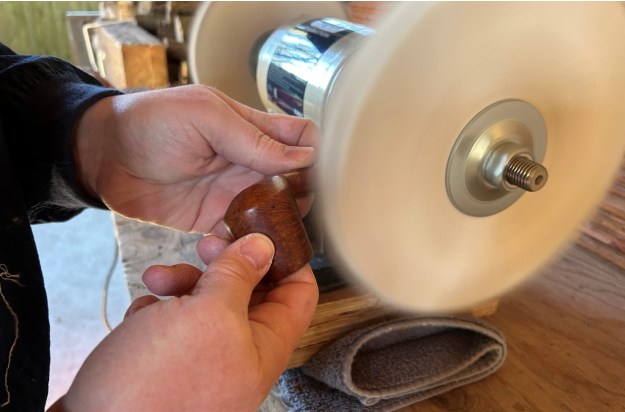
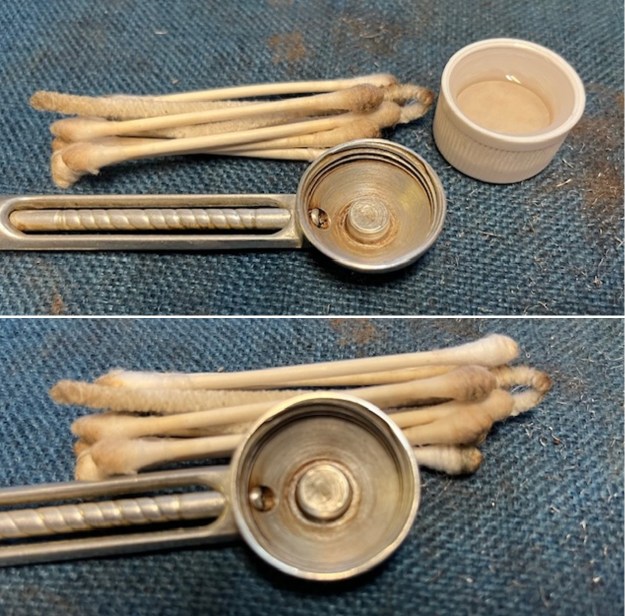
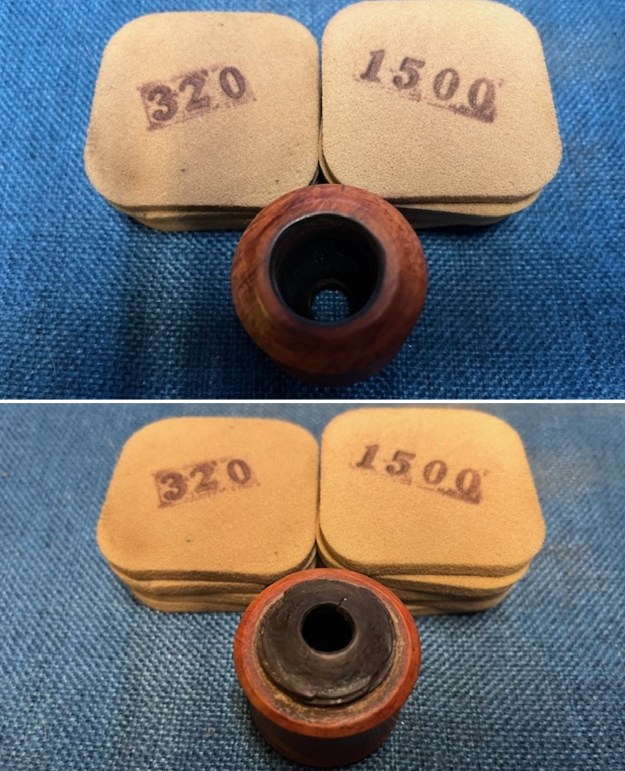
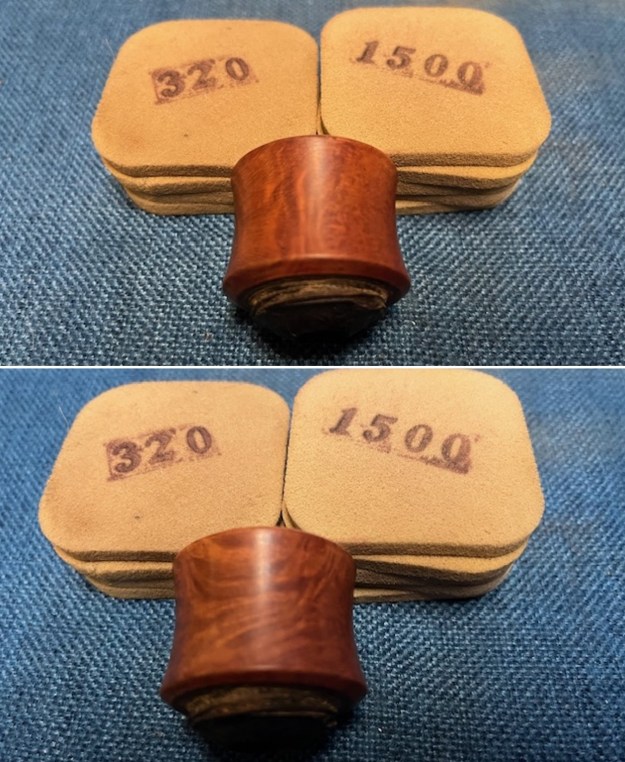
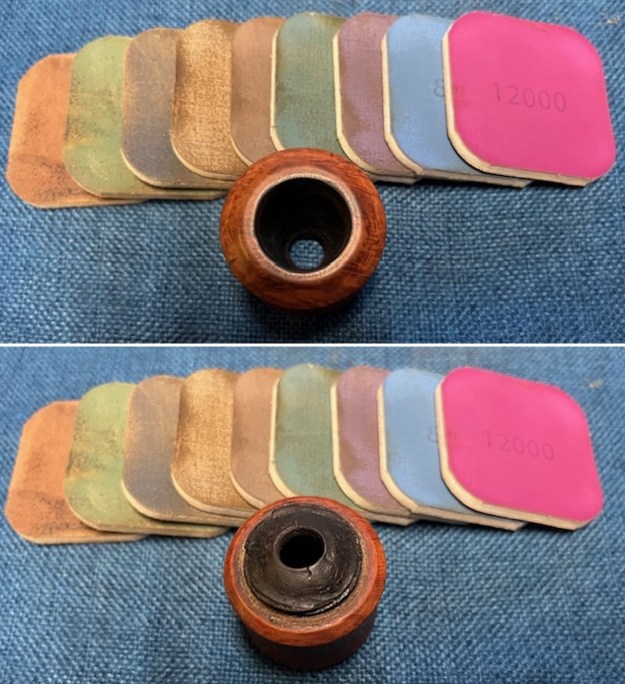
Armed with that information I turned to work on the pipe itself.  Jeff had cleaned up the pipe and it looked very good. He reamed the pipe with a PipNet pipe reamer and removed the rest of it with a Savinelli Fitsall Pipe Knife.  He scrubbed the bowl with undiluted Murphy’s Oil Soap with a tooth brush. He rinsed it under running warm water to remove the soap and grime. He cleaned out the inside of the shank and the airway in the stem with alcohol, cotton swabs, shank brushes and pipe cleaners. He soaked the stem in Briarville’s Stem Deoxidizer and rinsed it off with warm water. I took photos of the pipe before I started my part of the restoration work. The rim top cleaned up really well. The rim top and outer edge of the bowl look very good. The inner edge has some damage. The stem surface was rough but the oxidation and calcification was gone. Overall it looked very good with a few tooth marks and chatter on both sides near the button.The stamping on top left and underside of the shank is clear and readable. It is stamped as noted above. I removed the stem and took a photo of the pipe to give a sense of the whole. The wide taper stem is nice and the photo shows the step down tenon.I cleaned up the inner edge of the bowl with a folded piece of 220 grit sandpaper to smooth out the damage. Once I had smoothed out the edge the bowl was ready.I polished the smooth briar around outside of the bowl and the rim top with micromesh sanding pads. I sanded it with 1500-12000 grit pads and wiped the bowl down with a damp cloth to remove the sanding dust. I rubbed the bowl and shank down with Before & After Restoration Balm. I worked it into the surface of the bowl sides and shank with my fingertips and a horsehair shoe brush to get it into the rings and rustication. It works to clean, enliven and protect the briar. I let the balm sit for 15 minutes and buffed with a cotton cloth to raise the shine. The grain and the rustication came alive. I set the bowl aside and turned my attention to the stem. I “painted” the tooth marks with the flame of a lighter to lift them. The heat did a great job lifting all of them. The marks and chatter that remained I was able to remove with a light sanding with 220 grit sandpaper. I polished the roughness, scratch marks and smoothed the stem with 320-3500 grit sanding pads. I wiped the stem down after each sanding pad with an Obsidian Oil impregnated cloth. It removes the dust and also gives the sanding pads some bite. By the final pad it was looking quite good. I polished the vulcanite stem with micromesh sanding pads – 1500-12000 grit pads. I wiped it down with Obsidian Oil after each sanding pad. I used Before & After Pipe Polish – both Fine and Extra Fine to further polish the stem. I rubbed it down with a final coat of Obsidian Oil and let it dry. This Custombilt Imported Briar Squat Bulldog is a great looking pipe now that it has been restored. The style of rustication that is used around the bowl is quite beautiful and works well with both the shape and the polished vulcanite taper stem. I put the stem back on the bowl and carefully buffed the pipe with Blue Diamond on the buffing wheel using a light touch on the briar. I gave the bowl multiple coats of Conservator’s Wax and the stem multiple coats of carnauba wax on the wheel and followed by buffing the pipe with a clean buffing pad. I hand buffed the pipe with a microfiber cloth to deepen the shine. The finished Custombilt Squat Straight 17 Bulldog fits nicely in the hand and feels great. Give the finished pipe a look in the photos below. The dimensions of the pipe are Length: 5 ¾ inches, Height: 1 ½ inches, Outside diameter of the bowl: 1 ¾ inches, Chamber diameter: 7/8 of an inch. The weight of the pipe is 55 grams/1.90 ounces. I will be putting it on the rebornpipes store in the American Pipemakers Section shortly. If you are interested in adding this pipe to your collection send me a message or an email. Thanks for reading this blog and my reflections on the pipe while I worked on it. I appreciate your support and time!

This Odd Looking Pipe Has Fins or maybe Feet – a Soren Hand-Carved Made in Denmark


by Steve Laug

This particular Freehand pipe was purchased as part of a lot from seller in Santa Cruz, California, USA on 05/28/24. It really is an odd Freehand pipe that combines a plateau rim top and shank end with feet like the fins of a rocket on the bottom making it a sitter. There is also a rusticated leaf on the left side of the shank toward the stem end. It is stamped on a smooth panel on underside of the shank and reads Soren [over] Hand-Carved [over] Made in Denmark. The finish is dirty but does not hide the beautiful grain around the bowl and shank. The pipe had a thick cake in the bowl and lava overflow on the rim top and inner edge of the bowl filling in some of the plateau. It is heavier toward the back half of the bowl. There was grime ground into the smooth finish and dust and debris in the plateau valleys on the shank end. The fancy vulcanite saddle was oxidized and had light tooth marks and chatter on both sides near the button. The pipe must have been a great smoker judging from the condition it came it. Jeff took photos of the pipe before he started his work on it. Jeff took photos of the rim top and the stem to show the condition of the pipe when we received it. You can see the cake in the bowl and the lava on the plateau rim top and inner edge of the bowl. The turned vulcanite stem was dirty and had light chatter and tooth marks on both sides near the button. He took photos of the sides and the heel to give an idea of the shape and the condition of the briar around the bowl. It really is a uniquely shaped pipe with the feet or fins on the bottom half of the bowl and the rusticated leaf on the left side of the shank. The next photos Jeff took shows the stamping on the underside of the shank. It is clear but faint and read as noted above. I needed to refresh my memory on the history and background of the Soren pipes so I went to a previous blog and reread what I had written. https://rebornpipes.com/2016/09/12/repairing-and-rejuvenating-a-soren-danish-freehand/. I quote from that blog post: I looked up the brand on Pipephil (http://www.pipephil.eu/logos/en/logo-s10.html) and found that the brand was carved by Søren Refbjerg Rasmussen. Pipes that he made for the European market were mostly stamped “Refbjerg” while those made for the US market were stamped “Soren”. Thus, I knew that one I was working on was imported into the US market.

I was once again working on a pipe made by Soren Refbjerg Rasmussen for the US market as it was stamped Soren. I continued to do reading on another of my go to websites, Pipedia. Here is the link for the article there. https://pipedia.org/wiki/Refbjerg. I quote some of the more pertinent information.

Søren Refbjerg Rasmussen founded a company in 1969, which employed an average of 8 – 12 craftsmen in the 1970’s. The semi-freehands they produced were traded under his prename Søren. Rasmussen himself finished only the very best pipes. So his way of pipemaking closely resembled the ways of Preben Holm, Karl Erik Ottendahl or Erik Nørding. Altogether more than 1,000,000 pipes were sold.

From that I knew that the pipe in my hands came from the 1970s. It bears the Soren signature stamp which also says that it was made for sale in the American pipe market. Armed with that information I turned my attention to restoring the pipe.

Jeff had cleaned up the pipe following his normal cleaning process. In short, he cleaned up the reaming with a Savinelli Fitsall Pipe Knife.  He scrubbed the bowl with undiluted Murphy’s Oil Soap with a tooth brush. He worked over the lava and debris on the plateau rim top and shank end and was able to remove it. He rinsed it under running warm water to remove the soap and grime. He cleaned out the inside of the shank and the airway in the stem with alcohol, cotton swabs, shank brushes and pipe cleaners. He scrubbed the stem with Soft Scrub and cotton pads to remove the debris and oils on the stem. He soaked it in Briarville’s Pipe Stem Deoxidizer. He rinsed it with warm water and dried it off. I took photos of the pipe once I received it. It really looked good. I took close up photos of the stem and the rim top to show both how clean they were and what needed to be addressed with both. The rim top and bowl still had some minor darkening on the plateau top and edges edge. The stem looked better and the tooth marks and chatter were still present. I would need to remove those to bring the stem back.I took a photo of the stamping on the underside of the shank. You can see from the photo that it is faint but readable. It is clearer on the top half of the stamp than the lower but it is still readable. I removed the stem from the bowl and took a photo of the parts to give a sense of the beauty of the pipe.I started my work on the pipe by polishing the briar with micromesh sanding pads – 1500-12000 grit pads. I wiped the bowl down between pads to remove the sanding debris. By the final pad it was looking very good. The bowl was in such good condition after the clean up that I worked some Before & After Restoration Balm into the surface of the briar with my finger tips and a horse hair shoe brush to get into the crevices of the plateau and sandblast portions. The product is incredible and the way it brings the grain to the fore is unique. It works to clean, protect and invigorate the wood. I set the bowl aside and turned my attention to the stem. I sanded the stem with 320-3500 grit sanding pads to further smooth out the repairs. I wiped it down after each pad with an Obsidian Oil cloth. It was looking much better. I polished the stem with micromesh sanding pads – wet sanding it 1500-12000 pads. I wiped it down with a damp cloth after each pad to remove the dust and polishing debris. I polished it with Before & After Pipe Polish – both Fine and Extra Fine. I wiped it down with Obsidian Oil and let it sit and absorb. I polished stem and bowl with Blue Diamond to polish out the remaining small scratches. I gave the bowl and the stem multiple coats of carnauba wax and buffed the pipe with a clean buffing pad to raise the shine. I hand buffed it with a microfiber cloth to deepen the shine. The pipe polished up pretty nicely. The plateau on the rim top and shank end and the smooth Dark and Medium brown contrast finish work very well with the black vulcanite stem. The finished pipe is shown in the photos below. I have worked on several Soren pipes by Soren Refbjerg Rasmussen and several Refbjerg pipes over the years and I have always been impressed by his craftsmanship and ability to work a pipe to follow the grain of the briar. He does great work and is quite innovative in terms of shapes, flow and finishes on his pipes. The dimensions of this one are quite large but delicate at the same time. The Length: 7 inches, Height: 3 inches, Outside diameter of the bowl: 1 ½ inches wide and 2 inches long, Chamber diameter: 7/8 inches. The weight of the pipe is 79 grams/2.79 ounces. This one will be going on the Danish Pipemakers Section on the rebornpipes store. If you wish to add it to your collection let me know. It is a beauty! Thanks for walking through the restoration with me as I worked over this Soren Freehand.

A Gold Star Diplomat 9486 from my Grandfather


by Kenneth Lieblich

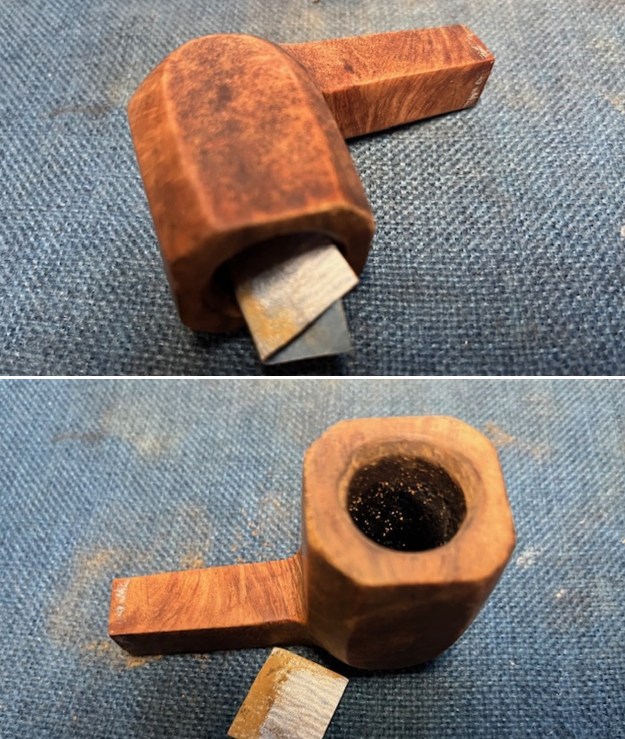
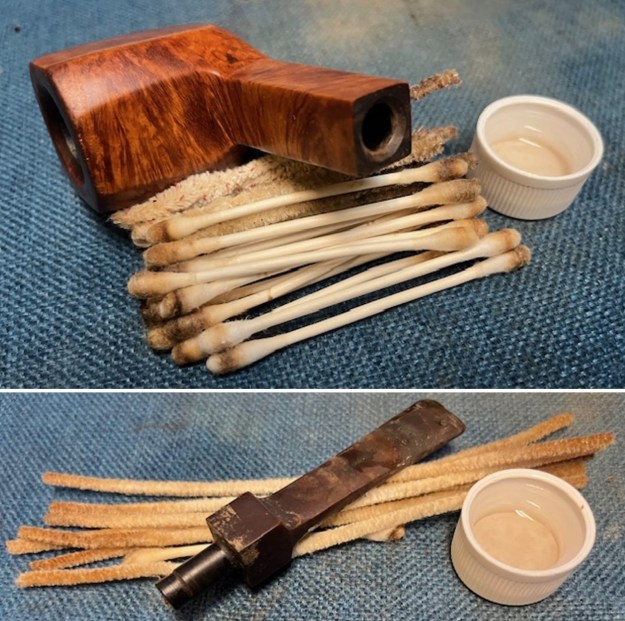
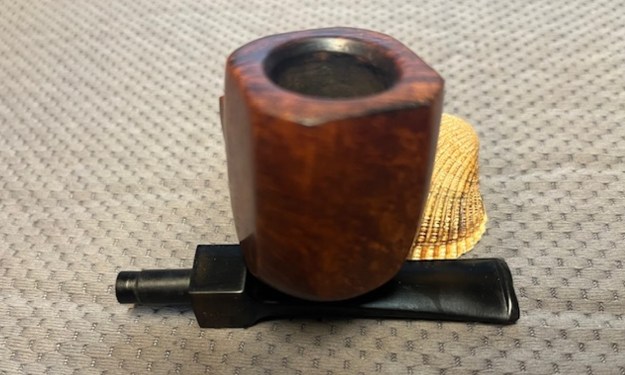
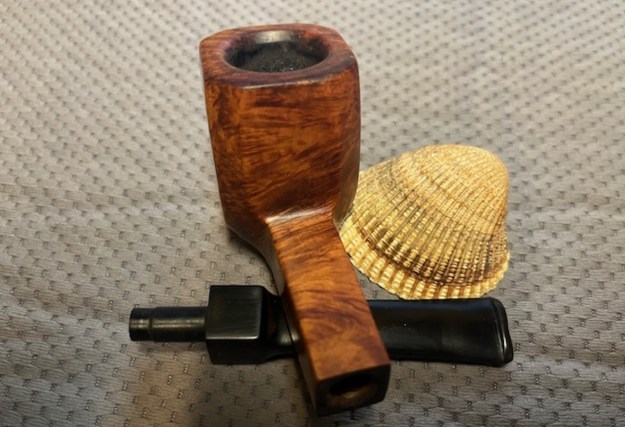
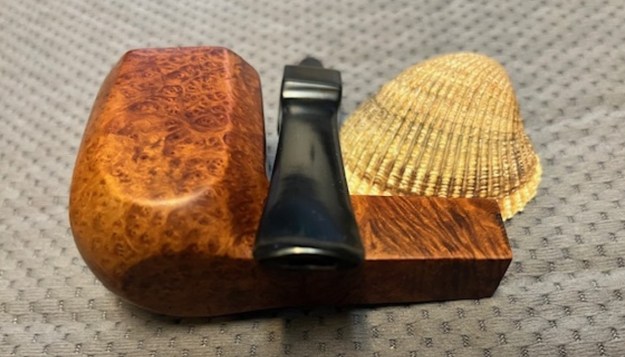
This pipe has a bit of a story to it. Every once in a while, I pull out a pipe from my late grandfather and clean it up. The pipe today is a charming hexagonal panelled billiard, with a square shank, and a straight square stem. I do not know where my grandfather acquired it (or under what circumstances), so I asked my father but he didn’t know either. It doesn’t really seem like the sort of pipe he would have selected, so I wonder if it was given to him. After my grandfather died, his pipes ended up wrapped in newspaper, in a cardboard box, in a basement – as so many grandfather’s pipes do. In this case, it was the basement of my parents’ home. About fifteen years ago, my parents had a small flood and this box (along with several others) got wet and stayed wet for a long time. This had ramifications… The pipe’s markings on the left side of the shank read Gold Star [over] Diplomat. On the right side, they read London England [over] 9486. Also, on the stem, there is a star enclosing the letters GS.Very little information turned up about the brand, Gold Star. Nothing from Pipedia. Over at Pipephil, they had the following:This suggested to me that the pipe was a Sasieni sub-brand. Crucially, however, Pipephil also included this line:

The pipes temporarily gathered under the “Gold Star” label obviously aren’t from the same maker.

This was important to me, because the shape number, 9486, didn’t seem to correspond to anything that Sasieni made. So, I did some sleuthing and figured out that, in fact, the name Gold Star was also produced by GBD. This did fit, and I found some examples of GBD 9486 online, including this one (among others) from Iwan Ries’ website:Clearly, my grandfather’s pipe was one of these and I can confirm that both Sasieni and GBD (at least) made the Gold Star name. I am pleased to say that this post has added that small tidbit to the collective knowledge of pipe making in the twentieth century.

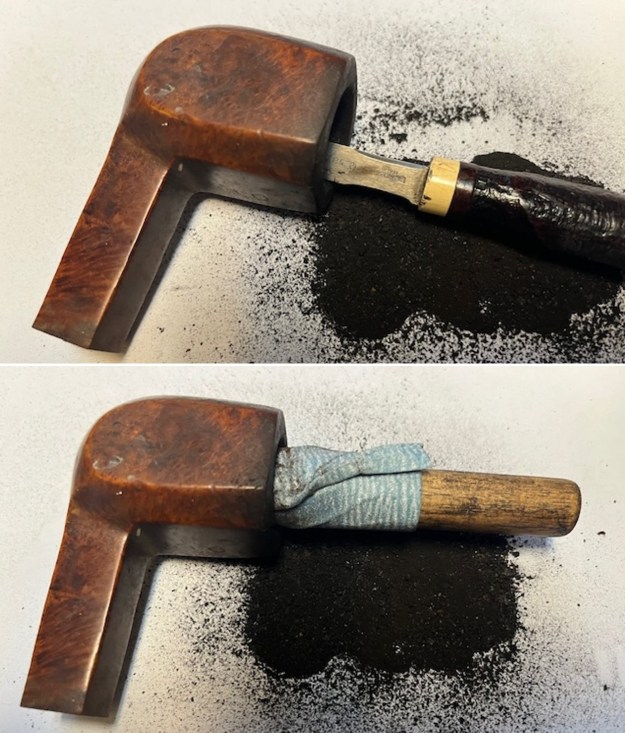
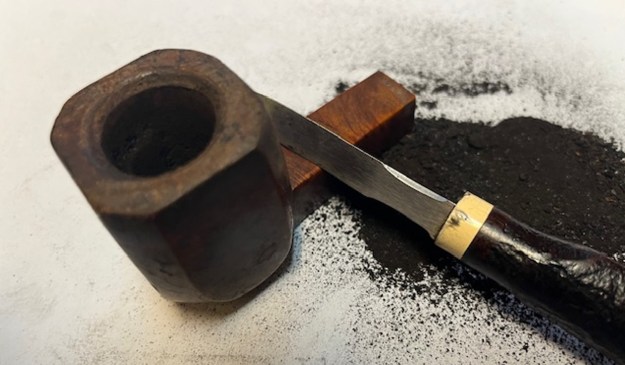
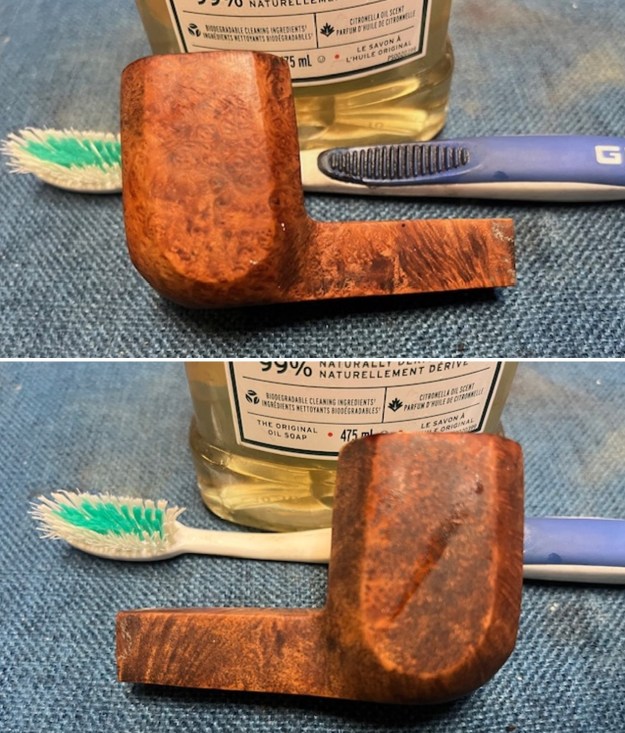
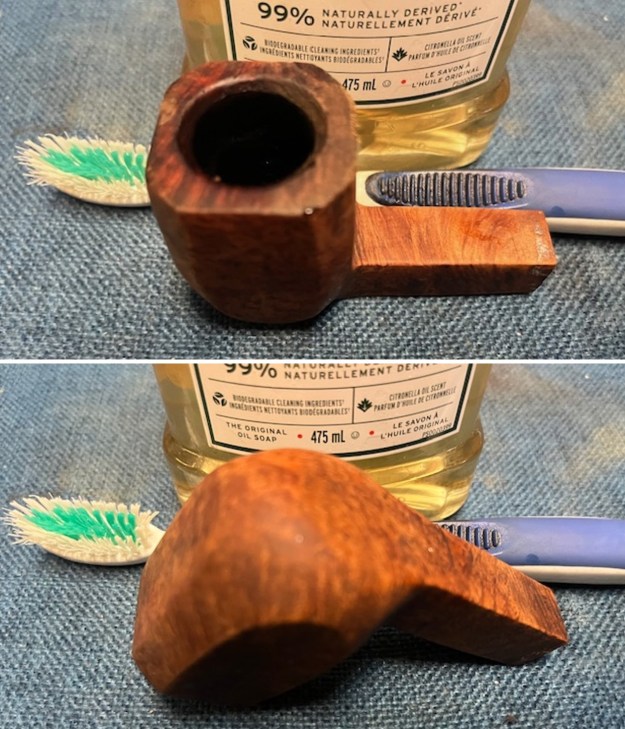
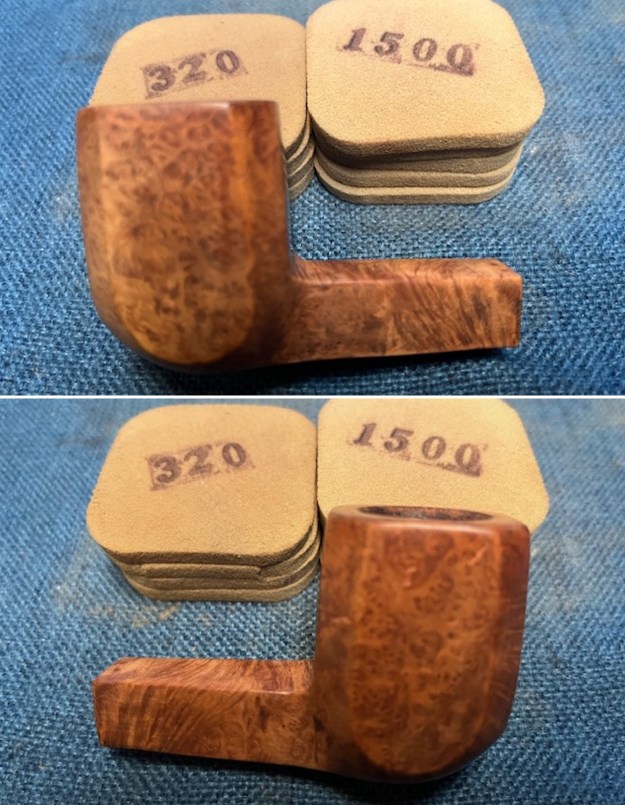
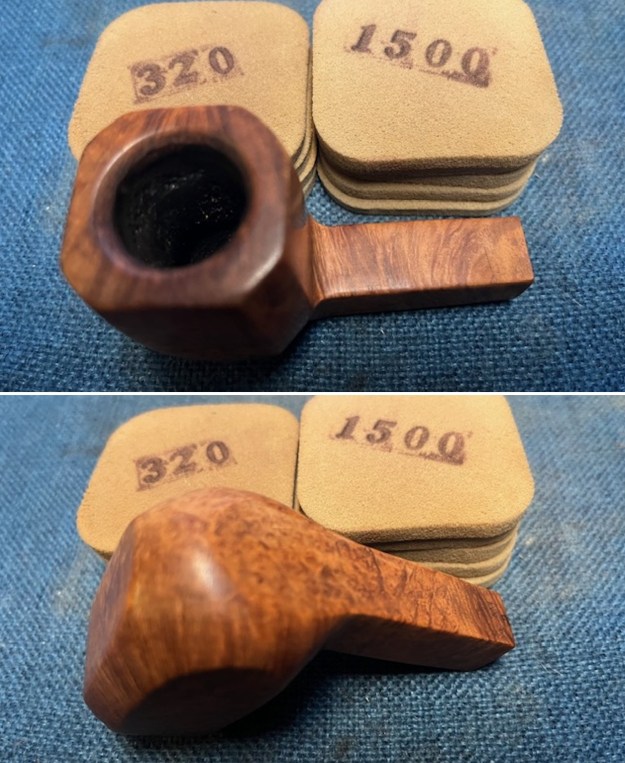
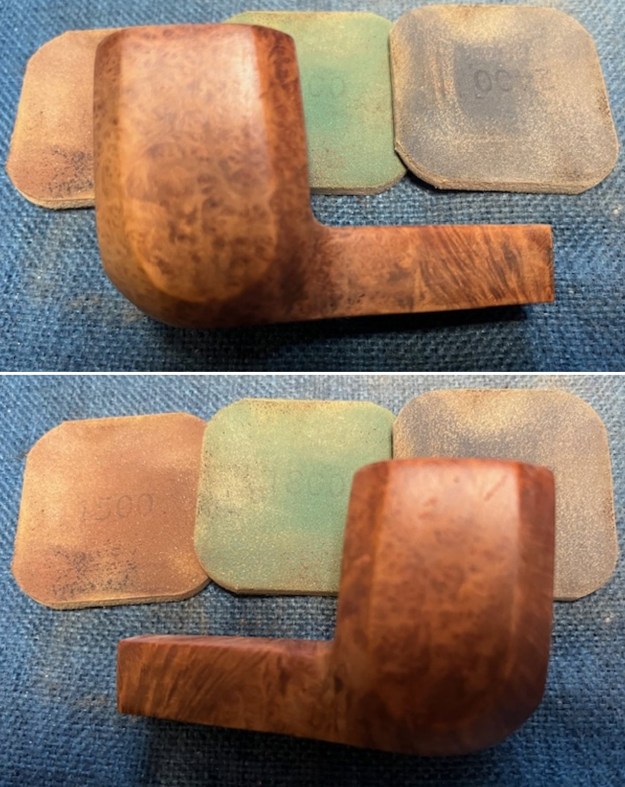
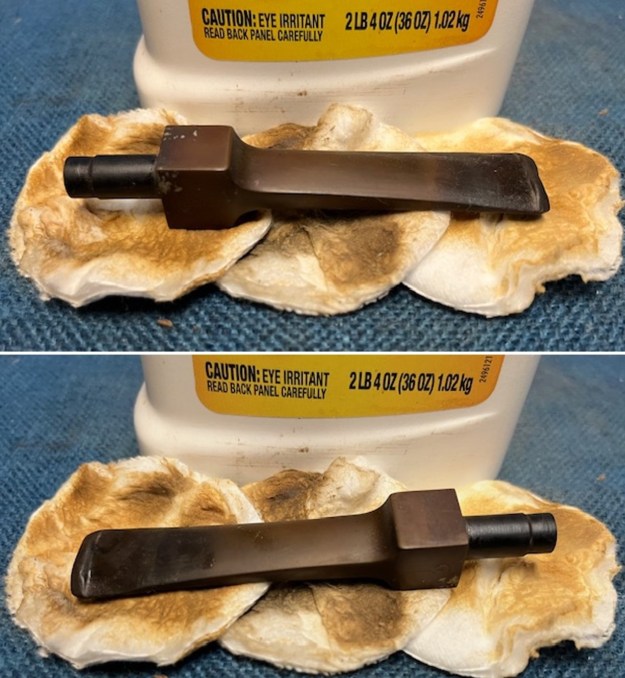
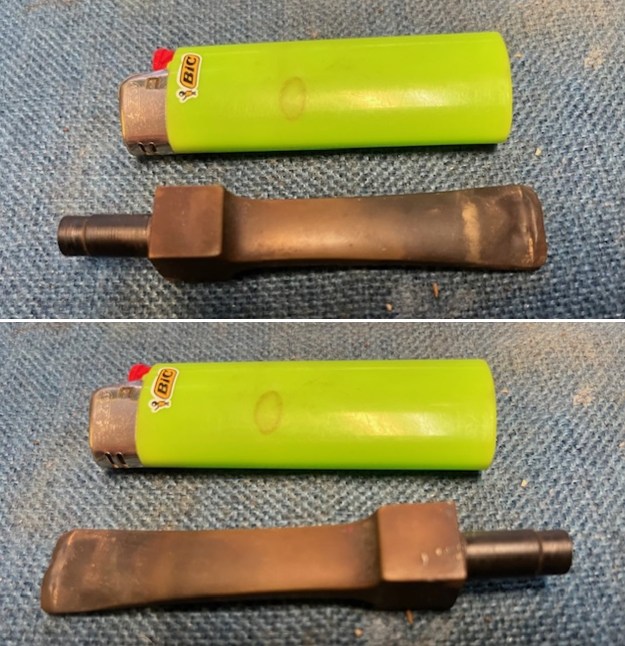
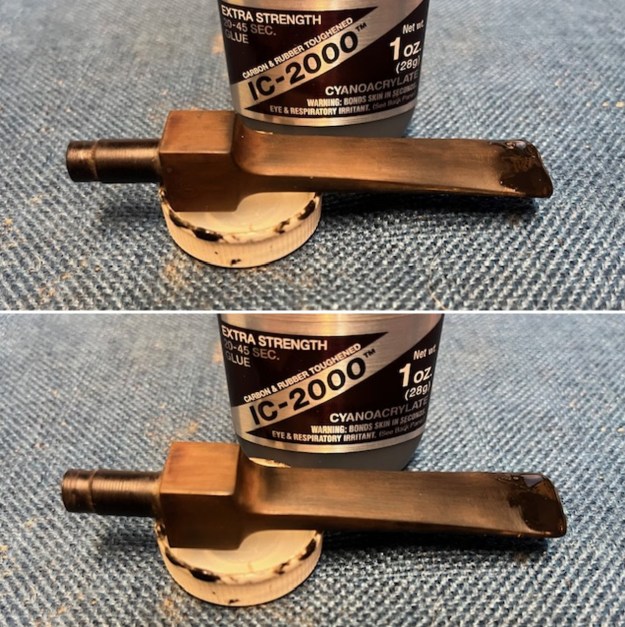
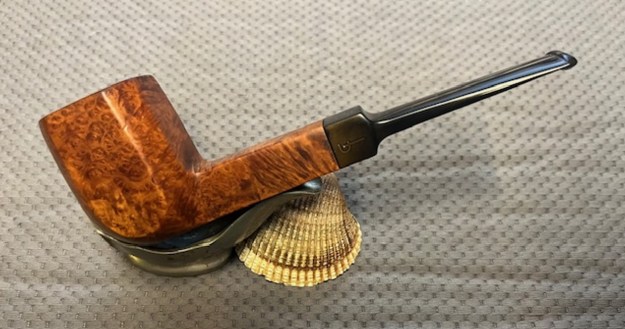
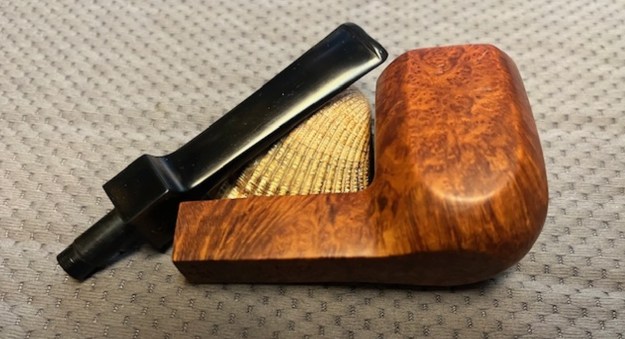
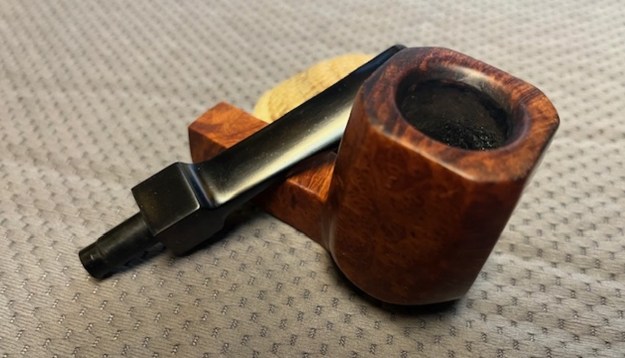
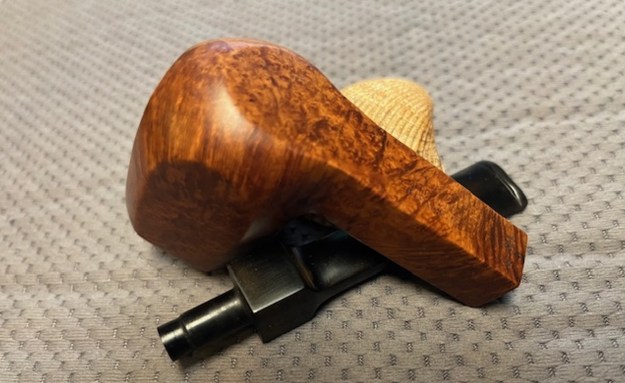
Anyway, on to the pipe – and this poor pipe had some issues. Sitting in moist newspaper for as long as it did had some very negative effects. I don’t remember the crack on the shank being there in the past and I wonder if the water induced stresses in the wood that caused the crack. There were other small fissures in the bowl, I don’t think they were flood-related. Another problem related to the water was the colour of the wood – any staining this pipe had was long gone. Finally, as I was examining the pipe, I didn’t realize it in the moment, but the yellow stem would prove to be the biggest problem of them all. The effect of water on vulcanite stems is well known, but stems don’t normally sit in water for an extended period of time. Aside from the above, the stummel had the following problems: lava on the rim, charring to the rim, some cake in the bowl, and a few substantial fills. Meanwhile, the stem had its own set of problems (besides its colour): tooth marks and scratches, and a filthy stinger. The stinger was first on my list. It went for a soak in some lemon-infused isopropyl alcohol. I let it set for several hours and then cleaned it off and it looked much improved. I then finished it with some 0000-grit steel wool and moved on.I wiped down the outside of the stem with oil soap on some cotton pads. That did next to nothing. I took my BIC lighter and painted the stem with its flame. This helped a bit, but not much. Then, I cleaned out the insides with pipe cleaners and isopropyl alcohol.Now it was time to remove the horrific yellow on the stem. I used some cream cleanser on the outside to remove the oxidation. I scrubbed and scrubbed and scrubbed. Then, the stem went for an overnight soak in the Pipe Stem Oxidation Remover. The following day, I cleaned the de-oxidizing mess off with alcohol, pipe cleaners, et cetera. I scrubbed again with cream cleanser on some cotton pads to remove the leftover oxidation. This worked only so well. I put the stem down, thought about it for a while, and decided to repeat that entire procedure: scrub with cream cleanser, soak overnight, and scrub with cream cleanser. This made the stem so much better than before, but still not great. Steve reminded me of an additional technique to try: soaking in Oxyclean. Again, this helped a bit, but it was just not going to be enough. This stem was definitely improved, but would always show the signs of its time in the water.I then used all nine Micromesh pads (1,500 through 12,000 grit) on the stem to make it look as good as possible. I also used Obsidian Pipe Stem Oil in between each pad scrubbing.On to the stummel. I used the KleenReem to remove the built-up cake, and followed that with 220-grit sandpaper to remove as much as I could. I wanted to take the bowl down to bare briar to ensure there were no hidden flaws in the walls of the bowl. Fortunately, there were none. I then proceeded to clean out the insides of the shank with cotton swabs, pipe cleaners, and isopropyl alcohol. There was quite a bit of filth inside this stummel – it took many pipe cleaners et cetera to clean it out.I decided that a de-ghosting session would be a good idea. I thrust cotton balls into the bowl and the shank and saturated them with 99% isopropyl alcohol. I let the stummel sit overnight. This caused the oils, tars and smells to leach out into the cotton. I followed that up by cleaning the insides with some Castile soap and tube brushes. I then moved on to cleaning the outside of the stummel with oil soap and some cotton pads. That removed any remaining dirt. The bowl was nice and clean after this. Having completed that, I was able to address the crack on the shank and the nicks on the bowl. This took some careful work. I filled the crack and the tiny divots with cyanoacrylate adhesive then let them cure. Now, with the nicks and crack filled, it was time to sand down the stummel. I used all nine Micromesh pads (1,500 through 12,000 grit) to sand everything smooth. Much improved. I felt that this pipe really needed a bit of colour – it had lost it during the flood. However, I only wanted a light stain. So I made a very dilute mixture of leather dye and alcohol. This didn’t really work well, so, instead, I simply put a drop (literally) at a time on my dauber and gently coated the wood with theat. I flamed it with my Bic lighter and let it sit overnight. Upon the morrow, I used isopropyl alcohol to wipe down the pipe and remove excess stain. I am very happy with the results.After that, a light application of Before & After Restoration Balm brought out the best in the stummel’s grain. What a difference that made! Then it was off for a trip to the buffer. A dose of White Diamond and a few coats of carnauba wax were just what this pipe needed. The lovely shine made the wood look great. This Gold Star Diplomat 9486 panelled billiard has an elegant feel to it. It took a lot of work – and the results were not exactly what I had hoped for – but I am proud of it and the final product is (hopefully) worthy of my beloved grandfather’s memory. Obviously, this is one pipe that I am keeping for myself and adding to my collection. I hope you enjoyed reading the story of this pipe as much I as I did restoring it. The approximate dimensions of the pipe are as follows: length 5⅛ in. (130 mm); height 1½ in. (39 mm); bowl diameter 1¼ in. (32 mm); chamber diameter ¾ in. (19 mm). The weight of the pipe is 1 oz. (31 g). If you are interested in more of my work, please follow me here on Steve’s website or email me directly at kenneth@knightsofthepipe.com. Thank you very much for reading and, as always, I welcome and encourage your comments.

Restoring a Rare Preben Holm Private Collection Circle B Hand Made in Denmark Freehand


by Steve Laug

This particular Freehand pipe was purchased from an auction seller in Sylacauga, Alabama, USA on 04/08/2024. It really is a very Preben Holm style Freehand pipe that is almost flower like in its shape. It has a twisted shank and a twisted vulcanite shank extension. It is stamped on a heel of the bowl and the lower backside of the bowl and reads Preben Holm on the bottom edge at the back of the bowl. On the heel it is stamped Private [over] Collection [over] B enclosed in a circle [over] Hand Made [over]In [over] Denmark. The smooth floral shaped pipe is dirty but the grime does not hide the beautiful looking combination around the bowl and shank. The stain is a black understain that brings out the grain highlighted by a top coat of walnut stain. The pipe had a moderate cake in the bowl and a thick lava overflow on the backside of the smooth rim top and inner edge of the bowl. There was grime ground into the smooth and sandblast finish and dust and debris in the valleys and turns on the flower petal shaped carving around the bowl and the shank end. The top edge of the petal on the left front of the bowl had a chip. There was also a darkened spot mid bowl on the right mid bowl toward the back of the bowl. The fancy vulcanite saddle stem and the vulcanite shank extension were oxidized. Added to that the stem surface was also calcified and had light tooth marks and chatter on both sides near the button. The pipe must have been a great smoker judging from the condition it came it. Jeff took photos of the pipe before he started his work on it. Jeff took photos of the rim top and the stem to show the condition of the pipe when we received it. You can see the moderate cake in the bowl and the lava on the rim top and inner edge of the bowl. The turned and twisted vulcanite shank extension and stem were dirty and had light chatter and tooth marks on both sides near the button. He took photos of the sides of the bowl and the heel to give an idea of the shape and the condition of the briar around the bowl. You can see the chip on the top of the front flower petal in the first photo. You can also see the darkened spots on the right side of the bowl in the second photo. It really is a nicely shaped pipe that has the classic look of a Freehand carved by Preben Holm.The next photos Jeff took shows the stamping on the back side of the bowl and the underside of the shank. It is clear and readable as noted above. I took the stem off the shank and took a photo to give a sense of the proportion of the pipe.
I had vague memories about the Private Collection line being a unique and special line of pipes made by Preben Holm but I had no idea what it meant and how it came to be so designated. It would take a bit of digging to ferret our that information on the web. I turned first to Pipephil’s site and there was an additional page on the Private Collection line that gave me a lot of detailed information on the line (http://www.pipephil.eu/logos/en/infos/prebenholm-pc1.html). I quote the extra page in full below with the inserted graphics.

The “Private Collection” pipes are Preben Holm’s most coveted pieces. They were crafted by the artisan himself from the late 1970’s to the end of his career in 1986.

The stampings on the shanks are always displayed in the same order (see right). Information in white is systematically stamped, the one in grey is optional.

“Additional stampings” may sometimes occur under the carver’s name (ie: “Traditional”, “Fancy”, “9m/m”, …)

The “C5” stamping appears on pipes distributed in the USA by CAO who took over distribution from Lane Ltd. in 1985. This distinguishing stamping was to avoid warranty issues with pipes that were not of CAO’s distribution.

Gradings: The early Private Collection series were graded with 4 letters (ascending): A, B, C and D. Those letters may be encircled (older markings) or not.

Later, a “x0x” 5 tiers grading system was introduced (ascending): 101, 202, 404, 606 and 808. Letter and x0x systems may coexist on the same pipe.

Signature stem logo

Nearly all pipes of Preben Holm’s Private Collection sport the carver’s signature on their stem. It may sometimes be worn and in a very few cases it may be missing (replacement stem?). But Preben Holm’s logos with the PH initials do not originally occur on Private Collection pipes.

So now I knew that the pipe was a part of the unique Private Collection that were crafted by Preben Holm himself. I learned that the pipe was made between the late 1970s and the end of his career in 1986. Now it was time to work on the pipe.

Jeff had cleaned up the pipe following his normal cleaning process. In short, he cleaned up the reaming with a Savinelli Fitsall Pipe Knife.  He scrubbed the bowl with undiluted Murphy’s Oil Soap with a tooth brush. He worked over the lava and debris on the plateau rim top and shank end and was able to remove it. He rinsed it under running warm water to remove the soap and grime. He cleaned out the inside of the shank and the airway in the stem with alcohol, cotton swabs and pipe cleaners. He scrubbed the stem with Soft Scrub and cotton pads to remove the debris and oils on the stem. He rinsed it with warm water and dried it off. I took photos of the pipe once I received it. You can see the burn marks on the right side of the bowl. It is very visible in the second photo below at midbowl. The one toward the back of the bowl had a very fine micro crack in the bowl. The second one was just darkened not damaged. The stem was still oxidized in the grooves after Jeff’s work but it was definitely better. The pipe really looked good. I took close up photos of the stem and the rim top to show both how clean they were and what needed to be addressed with both. The rim top and bowl still had some darkening and what looked like some hard lava in the plateau inner edge. The stem looked better and the tooth marks and chatter though light were still present. I would need to remove those to bring the stem back.I took photos of the stamping on the back bottom of the bowl and the heel of the bowl. You can see from the photos that it is clear and readable. I removed the stem from the bowl and took a photo of the parts to give a sense of the beauty of the pipe.I started my work on the pipe by using clear CA glue to fill in the burn areas on the bowl. The one toward the back of the bowl had a tiny micro crack in it. The one toward to front of the bowl was merely darkened. I shined a light in the inside of the bowl and checked it out for burn damage or cracks in the bowl sides. That would help explain if there were flaws on the inside or potential burn out or pointed to that potential in the bowl. Thankfully there was not any burn damage on the inside of the bowl. There were no burned areas behind the damage on the outside of the bowl. Once the glue cured on the bowl side I sanded it smooth with a folded piece of 220 grit sandpaper.I scrubbed the oxidized vulcanite shank extension with Soft Scrub on cotton pads. I was able to remove a lot of the oxidation with the product but there was still work to do on it.I sanded the bowl sides, reshaped the chipped petal edge on the left front outer edge and sanded the vulcanite extension with 320-3500 grit sanding pads. It worked very well. I wiped the bowl down with a damp cloth after each pad to get a sense of the progress in the process. To minimize the burn marks on the side I decided to stain the bowl with a Cordovan stain. I applied it with a wool dauber, flamed it with a lighter and repeated until I was happy with the coverage around the bowl and rim. Once the stain had cured I wiped the bowl down with cotton pads and acetone to make the stain on the bowl more transparent. It looked better but sanding and buffing would take off the remainder and leave it like I was aiming for. I set aside for the evening. In the morning I buffed the pipe with Blue Diamond to work toward more transparency in the stain coat. I wanted to see grain showing through but still disguise the burn marks a bit. It worked. I then sanded it with micromesh sanding pads – dry sanding with 1500-12000 grit pads. I wiped it down after each pad with a damp cloth. I finished by another trip to the buffer and finally I had it where I wanted it! Note: the stamping is untouched. I carefully avoided both buffing and sanding it. The stamp is on a curve so it is out of focus. I rubbed down the briar Before & After Restoration Balm. I worked it into the surface with my fingertips. The product works to clean, enliven and preserve the briar. I let it sit for 15 minutes then I buffed it with a cotton cloth to deepen the shine. The briar really comes alive with the balm. I set the bowl aside and turned my attention stem. I scrubbed the surface of the stem with Soft Scrub cleanser to begin to break through the remaining oxidation on the stem.I sanded out the scratches in the horn with 320-3500 grit sanding pads. I wiped the stem down after each sanding pad with a cloth impregnated with Obsidian Oil. It started to take on a deep shine.I polished the stem with micromesh sanding pads – 1500-12000 grit pads to remove them. I wiped the stem down with Obsidian Oil after each sanding pad. I used Before & After Pipe Polish – both Fine and Extra Fine to further polish the stem. I rubbed it down with a final coat of Obsidian Oil and let it dry. I am really happy with the way that this Preben Holm Private Collection Circle B Hand Made in Denmark Freehand turned out. It really is a beautiful looking pipe with a great shape and smooth finished bowl and rim and vulcanite shank end. The fancy original acrylic saddle stem is really nice. The black vulcanite colour of the stem works well with the briar. The briar really came alive with the buffing. The rich cordovan and brown stains of the finish gave the pipe a sense of depth with the polishing and waxing. I put the stem back on the bowl and carefully buffed the pipe with Blue Diamond on the buffing wheel using a light touch on the briar. I gave the bowl and the stem multiple coats of carnauba wax on the buffing wheel. I buffed the pipe with a clean buffing pad to raise the shine. I hand buffed the pipe with a microfiber cloth to deepen the shine. The finished Preben Holm Private Collection B Grade really is a beauty and feels great in the hand and looks very good. Give the finished pipe a look in the photos below. The dimensions of the pipe are Length: 7 inches, Height: 3 inches, Outside diameter of the bowl: 2 inches long x 2 inches wide, Chamber diameter: 7/8 of an inch. The weight of the pipe is 48 grams/1.76 ounces. In all my years of working on pipes I have never seen a Preben Holm Private Collection pipe and this one is a beauty. I intend to hold onto it for my own enjoyment. Thanks for reading this blog and my reflections on the pipe while I worked on it. It was a fun one to work on!

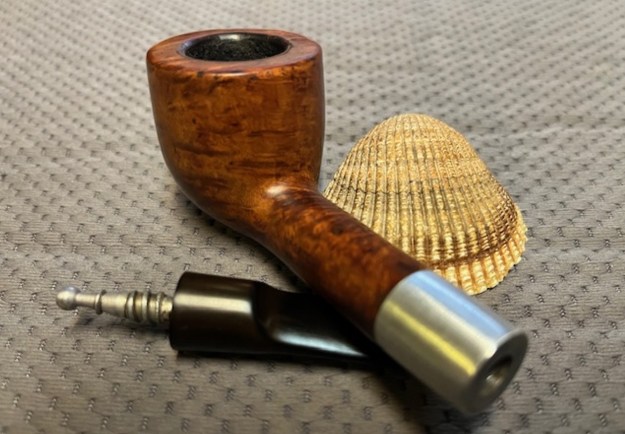
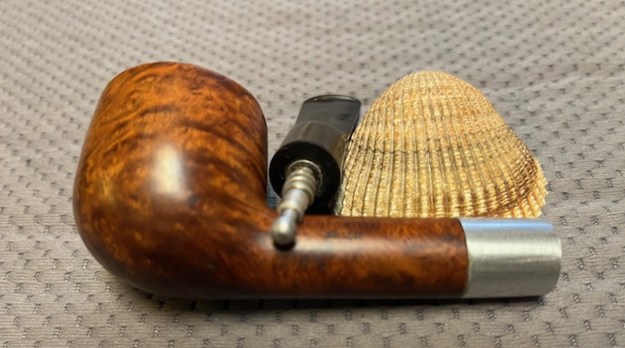
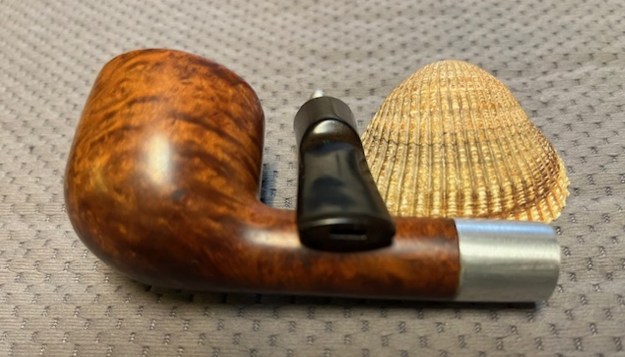
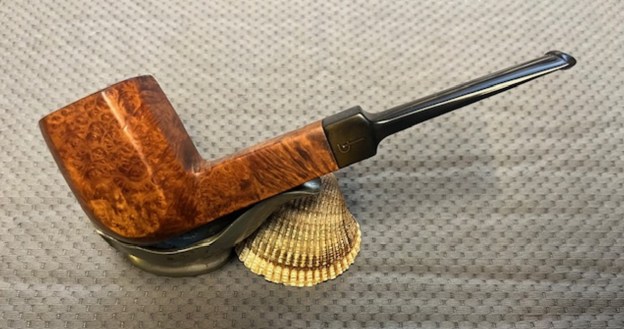
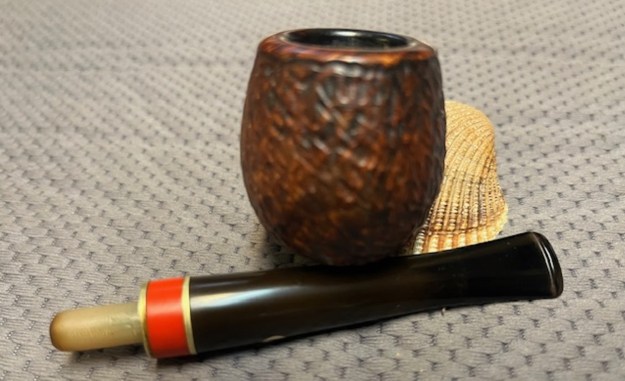
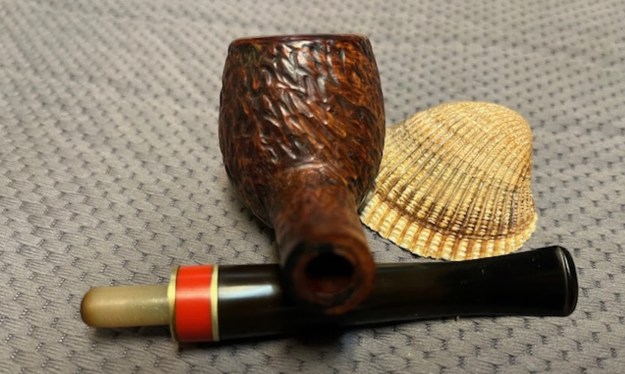
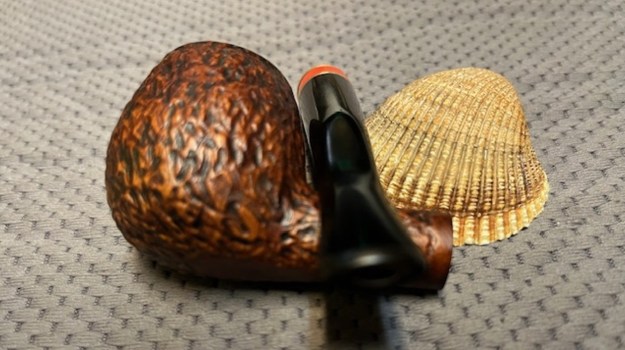
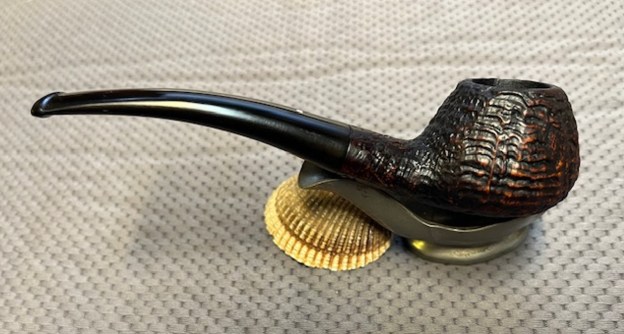
Getting Creative with this Weber Golden Walnut Imported Briar Apple


by Steve Laug

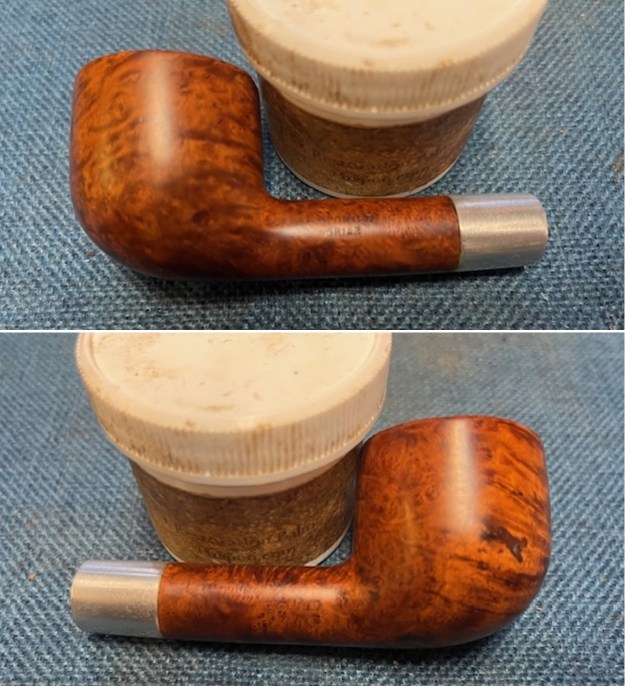
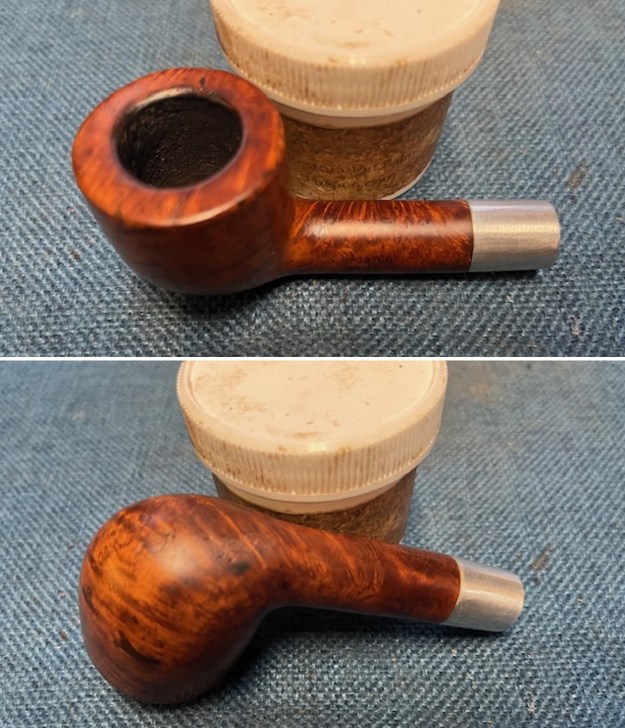
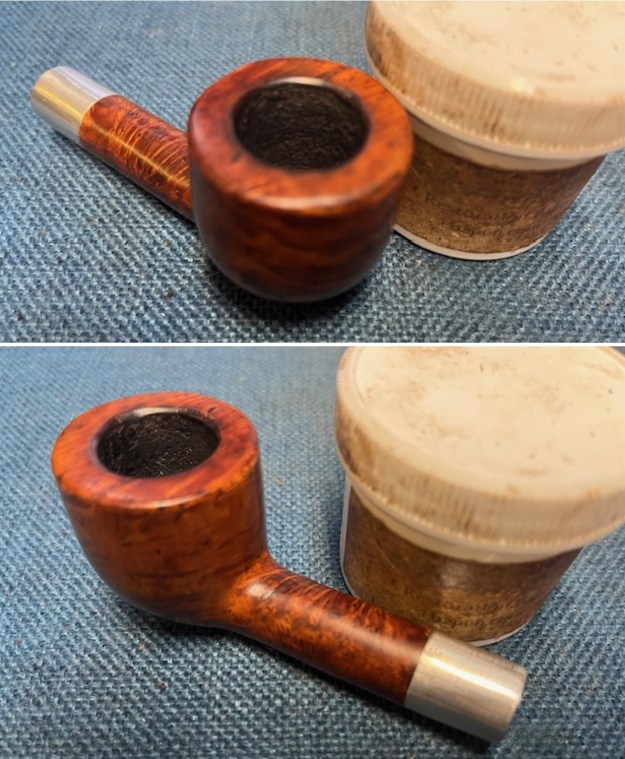
The next bowl on the table is a classic shaped Apple. It has been sitting here and I have looked at it over and over again and today I decided to restem it. I wanted to try something a little different with this restem and see if I could come up with an interesting restem. I think when you see it you will either love it or hate it! But there you go. Here is what I did! I cleaned up the bowl and matched a stem with briar bowl. It is a cleanup and restore and is a break from my work on the Freehand pipes. The bowl is dirty and somewhere in its life before it came to us the stem was lost. The finish was coated with varnish that left it shiny even under the grime. It showed promise under the grit and grime of the years. It was stamped on the left side of the shank and read Weber in an oval [over] Golden Walnut. The right side of the shank it is stamped Imported Briar. The bowl had a thick cake and a thick lava overflow on the rim top. There was some lava and tars coming down the bowl sides from the top. It is a pretty pipe with some great grain under the grime. I am hoping to match a nice stem to it. I took some photos of the bowl before I started my work on it. I took a close up photo of the rim top and bowl to give more of a sense of what I see and noted above. It is a dirty pipe but seems to have no damage on the rim top or edges.I took a photo of the snapped tenon in the shank end. The end of the tenon is quite smooth so it was a clean snap. I will need to pull it before I can fit a new stem to it.I took a photo of the stamping on the left and right side of the shank. The stamping looks blurry and double stamped in the photos but in person it is clear and readable. Recently I picked up some unused acrylic stems. There was an acrylic amber/orange variegated saddle stem in the lot. It was drilled for a new tenon and was clean. This stem had a close diameter to the shank end of the Weber and would work well I think.I put the bowl in the freezer for 30 minutes then used a drywall screw to pull out the broken tenon. I screwed it into the tenon and wiggled it free from the shank. I used the tenon piece to fit a new tenon in the shank end.I fit the new tenon in the shank end and it was a little tight. I used a Dremel and sanding drum to reduce the diameter just enough for a snug fit. I painted the threaded tenon with black CA glue and turned it into the end of the new stem. The fit was good. I set it aside and let the glue cure. I put it in the shank and the fit against the shank end was slightly off. I used a file to make the transition between the shank and the saddle portion of the stem very smooth. I liked the look of the variegated orange acrylic stem with the browns of the briar bowl. I cleaned up the file marks on the shank and avoided the stamping on both sides with a folded piece of 220 grit sandpaper. Once finished the transition and both the briar and the acrylic were smooth. I set aside the stem and turned my attention to reaming the pipe. I used a PipNet Reamer with the first and second cutting heads to take back the heavy cake to bare briar. I cleaned up the reaming with a Savinelli Fitsall Pipe Knife and finally sanded the bowl walls with 220 grit sandpaper wrapped around a dowel. I like to remove all the cake to examine the walls for damage and checking. Great news is that this one is free of any damage. With the bowl reamed it was time to work on the rim top. The lava was hard and thick. I started the process with a topping board and 220 grit sandpaper. Once I had smoothed off the top outer edges it was clear that the inner edge of the rim top was slightly bevelled inward. I used a wooden half sphere and 220 grit sandpaper to clean up the bevel and remove the damage to that portion of the rim top and edges. I cleaned up a few spots with a folded piece of 220 grit sandpaper. To remove the shiny varnish coat on the bowl and to use the stain on the bowl to colour the rim top and sanded shank end I wiped the bowl and shank down with acetone. I used cotton pads with the acetone and was able to easily remove the varnish and move some of the stain to the sanded portions of the shank and rim. I would need to restain but it definitely looked much better. I matched the stain on the bowl and shank with a Maple Stain Pen. I put it on the smooth sanded rim top and shank end. I wanted it to start matched before I started sanding the bowl and shank with sanding pads. I was very happy with the match. I worked on polishing out the sanding marks with 320-3500 grit sanding pads. I worked particularly on the transition between the shank and the stem surface. I also worked over the briar of the bowl and rim top at the same time. The bowl and stem looked very good once I finished. I took the stem off the shank and turned to the bowl first. I polished the briar with micromesh sanding pads – dry sanding with 1500-12000 grit pads. After each sanding pad I wiped the bowl down with a damp cloth to remove the sanding debris and dust. It began to take on a deep shine. I rubbed down the briar Before & After Restoration Balm. I worked it into the surface with my fingertips. The product works to clean, enliven and preserve the briar. I let it sit for 15 minutes then I buffed it with a cotton cloth to deepen the shine. The briar really comes alive with the balm. I polished the stem with micromesh sanding pads – 1500-12000 grit pads to remove them. I wiped the stem down with Obsidian Oil after each sanding pad. I used Before & After Pipe Polish – both Fine and Extra Fine to further polish the stem. I rubbed it down with a final coat of Obsidian Oil and let it dry. This is another pipe that I am really happy about the finished restoration. This reborn Weber Golden Walnut with a newly fitted golden acrylic variegated stem turned out really well to my eye. After restemming I think that it is unique and beautiful looking classic apple with a twist. The bowl is a classic Bent Billiard and the “new” horn stem is a great match. The polished horn stem works well with the briar and the nickel ferrule. The briar really came alive with the buffing. The rich reddish brown stains of the finish make the grain really pop with the polishing and waxing. I put the stem back on the bowl and buffed the pipe with Blue Diamond on the buffing wheel. I gave the bowl and the stem multiple coats of carnauba wax on the buffing wheel. I buffed the pipe with a clean buffing pad to raise the shine. I hand buffed the pipe with a microfiber cloth to deepen the shine. The finished Weber Golden Walnut Apple really has a unique beauty and feels great in the hand. It looks very good. Give the finished pipe a look in the photos below. The dimensions of the pipe are Length: 6 inches, Height: 1 ½ inches, Outside diameter of the bowl: 1 ½ inches, Chamber diameter: ¾ of an inch. The weight of the pipe is 45 grams/1.62 ounces. The pipe will be going on the rebornpipes store soon. It will be in the American Pipemakers Section if you would like to add it to your collection. Thanks for reading this blog and my reflections on the pipe while I worked on it. It was a fun one to work on!

Refreshing a Nording F Danmark Corkscrew Freehand


by Steve Laug

It was time to work on another of the pipes that Jeff and I purchased. We bought some pipes from a contact in Copenhagen, Denmark 02/16/2023. There were some nice pipes in the assortment from a variety of ranges. The next pipe on my worktable comes from that collection. This one is a straight, corkscrew shank Freehand with a plateau rim top and shank end. It had a diamond saddle vulcanite stem. The rim top is plateau and is stained black and the rest is stained with rich red and black stain. The shape follows the grain of the block of briar very well. The twisted shank with fins is lovely. The pipe is stamped on the underside of the shank on one of the fins with an F [over] DANMARK [over] NORDING. There is no other stamping on the pipe. The stem does not have the expected Nording N anywhere on the sides or top. The pipe was very dirty with a thick cake in the bowl and some debris and lava overflowing on to the plateau rim top. The plateau on the shank end was also dirty. The finish appeared to be in good condition. The stem was lightly oxidized and had some light tooth chatter and marks on both sides ahead of the button. Jeff took some photos of the pipe before he started his work on it. He took a photo of the rim top to show the thick cake in the bowl and the overflow of lava in the surface of the plateau. The bowl is dirty but it must have been a great smoking pipe. There was also dust and debris in the plateau finish on the shank end. The stem looked dirty and oxidized with bite marks and tooth chatter on the stem was light and should not take too much work to remedy. The light oxidation was another issue that would need to be addressed. The next photos show the sides and heel of the bowl to give a clear picture of the beauty of the grain around the bowl of the pipe. Under the grime there is some great grain peeking through. Jeff took photos of the stamping to capture the clarity of it even under the grime. The stamping is faint but readable. Holding the pipe stem down the stamping is F [over] DANMARK [over] NORDING.Before I started my work on the pipe I wanted to learn more about where this pipe fit into the Nording lines so I turned to the first of two sites that I always check to gather information on a brand. I turned first to Pipedia (https://pipedia.org/wiki/N%C3%B8rding). Nording’s were exclusively freehand shapes, graded from A, B, C, D, up to its highest grade, extra. Later an “F” grade was added—less expensive than the “A.”

I did find a great collage of photos of Erik Nording.I turned to the second information site – Pipephil’s (http://www.pipephil.eu/logos/en/logo-n2.html) did not find any more helpful information on the Nording Danmark stamp.

Armed with the information on the F stamp being added at a later time I knew a bit about the pipe at hand. I turned to address the pipe itself. Jeff cleaned up the pipe for me. He reamed the bowl with a PipNet pipe reamer and cleaned it up with a Savinelli Fitsall Pipe Knife. He scrubbed the exterior with Murphy’s Oil Soap and a tooth brush to clean off the grime off the finish and the heavy overflow of lava on the rim top. He cleaned up the internals of the shank, mortise and stem with pipe cleaners, cotton swabs and alcohol to remove all of the oils and tars in the pipe. He soaked the stem in Briarville’s Pipe Stem Deoxidizer and was able to remove much of the oxidation. When it arrived here in Vancouver it was a clean pipe and I knew what I had to work with. I took photos of it before I started my part of the restoration. I took photos of the rim top and the stem to show their condition once it arrived in Canada. Jeff was able to clean up the incredibly thick cake and lava overflow that was shown in the rim and bowl photos above. He was also able to get rid of the grime and grit in the surface of the briar. The inner edge of the bowl was in very good condition and was smooth to the touch. The rim top and edges looked very good. The stem looked very good and was much cleaner. There were light tooth marks and chatter on both sides near the button.I took a photo to try and capture the stamping on the shank side. It was faint but readable. I also removed the stem and took a photo of the pipe sans stem to show the proportions of this unique beauty.I decided to start with polishing the briar with micromesh sanding pads. I dry sanded it with 1500-12000 grit pads. I wiped the bowl down after each pad with a damp cloth. The bowl began to take on a rich shine and grain was beginning to stand out. I rubbed the bowl and shank down with Before & After Restoration Balm to deep clean the finish on the bowl and shank. The product works to clean, enliven and protect the briar. I worked it in with my fingers to get it into the briar. I used a horsehair shoe brush to work it into the plateau top.  After it sat for a little while I wiped it off and buffed it with a soft cloth. The briar really began to have a rich shine. I took some photos of the bowl at this point to mark the progress in the restoration. It is a beautiful bowl and the corkscrew shank is remarkable. I set the bowl aside and worked on the stem at this point in the process. The tooth chatter was light enough that I figured micromesh would do the trick. I polished the stem with micromesh sanding pads – dry sanding with 1500-12000 grit pads. I wiped the stem down after each pad with a damp cloth to remove the sanding dust. I used the Before & After Pipe Polish to remove the small minute scratches left in the vulcanite even after the micromesh regimen. I finished by wiping the stem down with a final coat of Obsidian Oil and set it aside to dry. I put the stem back on the Nording F Danmark Corkscrew Freehand and took the pipe to the buffer. I carefully buffed the bowl and stem with Blue Diamond to polish the briar and the vulcanite. Blue Diamond does a great job on the smaller scratches that remain in both. I gave the bowl and the stem several coats of carnauba wax and buffed the pipe with a clean buffing pad to raise the shine. I hand buffed it with a microfiber cloth to deepen the shine. The pipe polished up really nicely with a great contrasting stain look to the briar. The finished pipe is shown in the photos below. This is a unique Nording F Corkscrew Freehand for me – the diamond saddle stem gives the pipe a great look. The polished black vulcanite stem looks really good with the reds and blacks standing out in the grain. The dimensions of the pipe are Length: 7 ½ inches, Height: 2 inches, Outside diameter of the bowl: 1 5/8 inches, Chamber diameter: ¾ of an inch. This is another pipe that I will be putting it on the rebornpipes online store in the Danish Pipe Makers Section shortly, if you are interested in adding it to your collection. Thanks for walking through the restoration with me on this beauty!
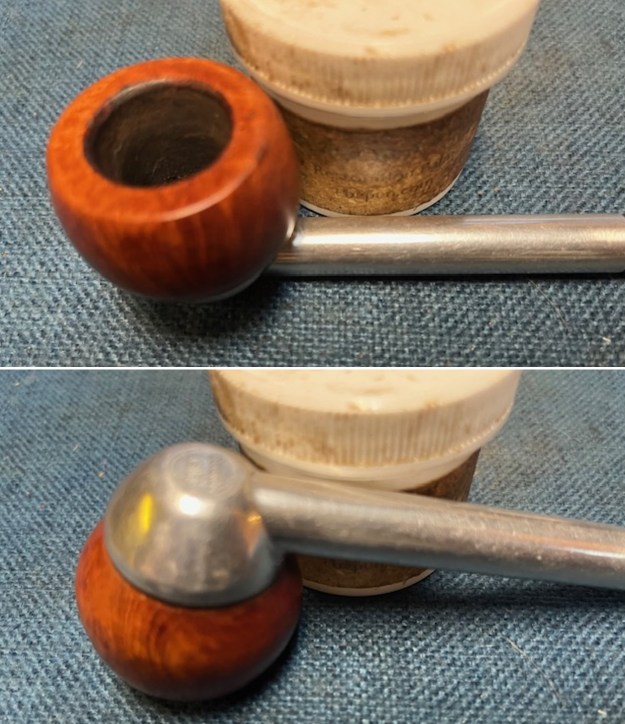
Restoring a JHW (Jack H. Weinberger) Fluted Tulip freehand with a saddle stem


By Steve Laug

When Jeff and I were contacted about an estate in Santa Cruz, California, USA for sale I was excited to see what was in the lot. There were several with no other stamping on the shank than JHW. I have to say that I have seen very few JHW pipes and my heart skipped a beat when I saw not just one but 7 pipes with that stamping. All were Freehands and all were very unique – maybe even odd you might say! We purchased the estate on 05/28/2024.I am working on the last of the seven pipes. By now you know who JHW is. But maybe not so I ask again why so excited about three initials? Well I have to tell you right up front that JHW is Jack H. Weinberger. Who is that? That does not help either? Jack H. Weinberger was a pipe maker in West Caldwell, New Jersey. Still not helping? He hired young lads from the local high school to help him out as he carved 10-12 hours a day. Two of these are none other than Curt Rollar and Mark Tinsky went on to become the American Pipe Company. There was a long list of pipe carving luminaries who came through Jack’s shop and JHW pipes but these two you probably have heard of. So JHW or Jack H. Weinberger was an important part of the American Pipemaking scene and gave many carvers a start and they have continued to this day. Now maybe you understand my excitement – being able to work on a few of Jack’s pipes and bring them back to their former glory.

This pipe I chose to work on was another unusual one. It is a great piece of briar with a mix of grain all the way around the bowl and shank and a tulip shaped incorporated into the fluted and smooth portions of the bowl. It is a beautiful piece of briar! He made a carved, fluted style Tulip Billiard shaped pipe. The front, back and sides of the bowl have some nice straight grain. The rim top has the points of the petals around a thin flat rim top edge. Very unusual but something just calls out to you. When the pipe came to us it was dirty with grime ground into the finish. There was a thick cake in the bowl and lava on the rim top and inner edge. There appeared to be some darkening around the inner edge of the rim, the top and on the sides of the bowl. It was dirty but that did not hide the beauty of the briar. The stem is a saddle made out of vulcanite. There was light chatter on both sides just ahead of the button. Jeff took photos of the pipe as a whole before he started his cleanup work. I include them below. Jeff took some close up shots of the rim top to show the bowl and cake. You can see the lava on the rim top and the inner edge. The stem photos also show the condition it was in when we received it. Lots of promise with the pipe but some work too! Jeff took some photos of the sides – top, bottom, left and right to give a sense of the lay of the pipe on the block of briar. It is certainly unusual and unique. Here are some photos of the stamping on the left side of the shank. I think this must be an older stamp of JHW as the J is a part of the uppercase HW. It is the only one I have that has this stamping. Otherwise the J is a stylized pipe followed by the HW.Take some time to read the great writeup on Pipedia and JHW pipes and influence they had on the American pipe making scene. It is a well written and enjoyable read. Here is the link: (https://pipedia.org/wiki/JHW_Pipes).

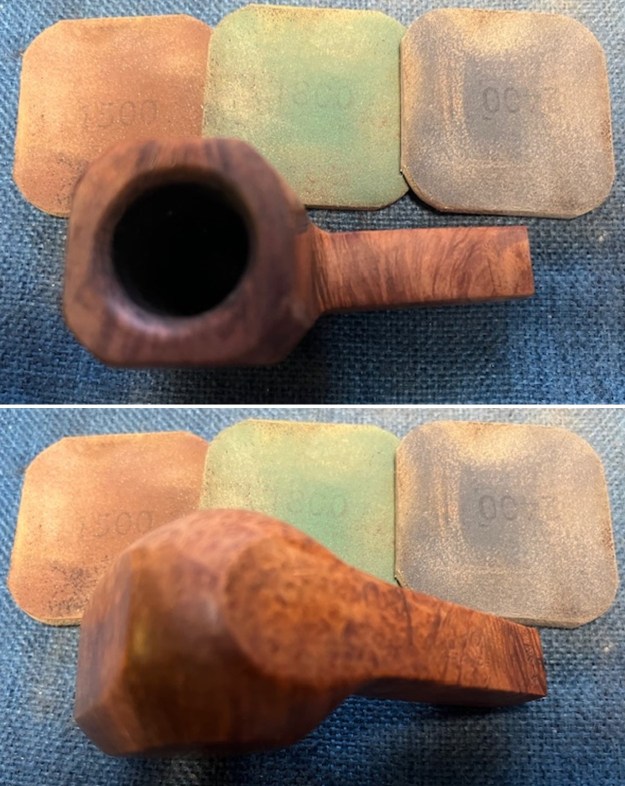
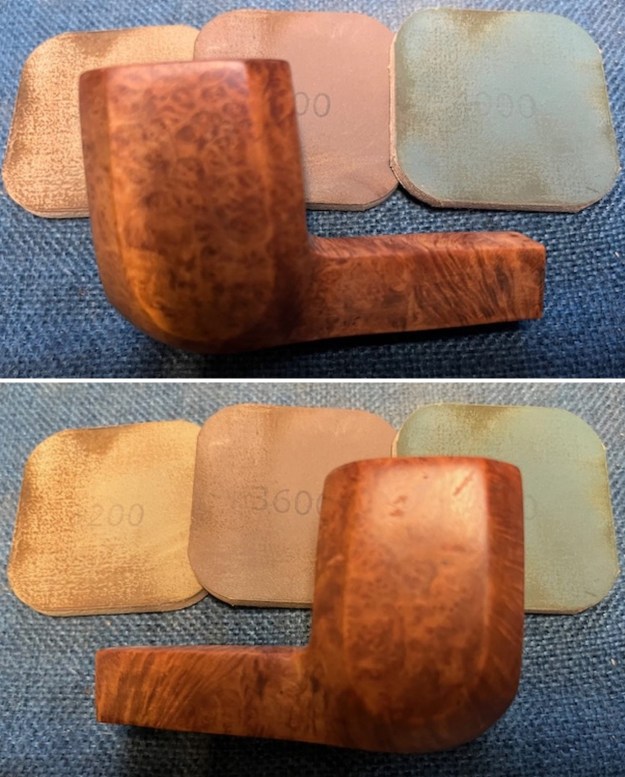
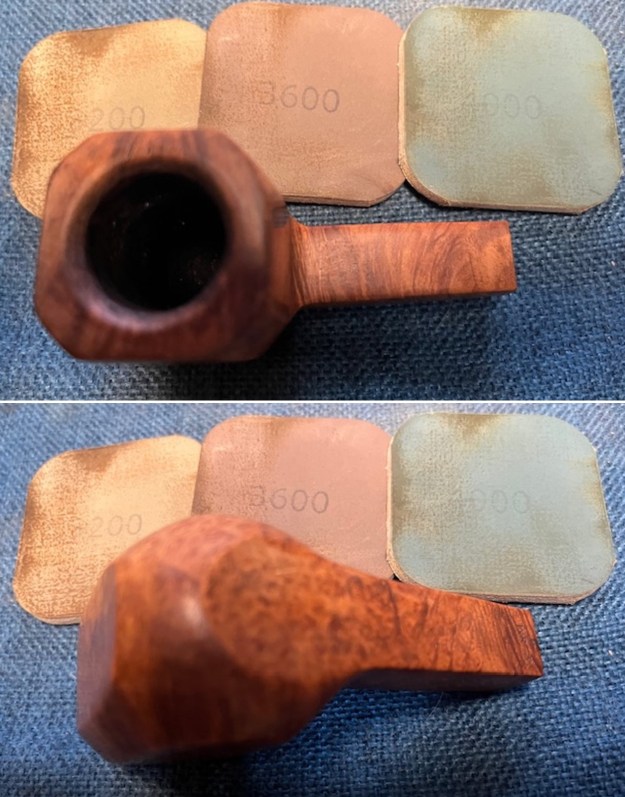
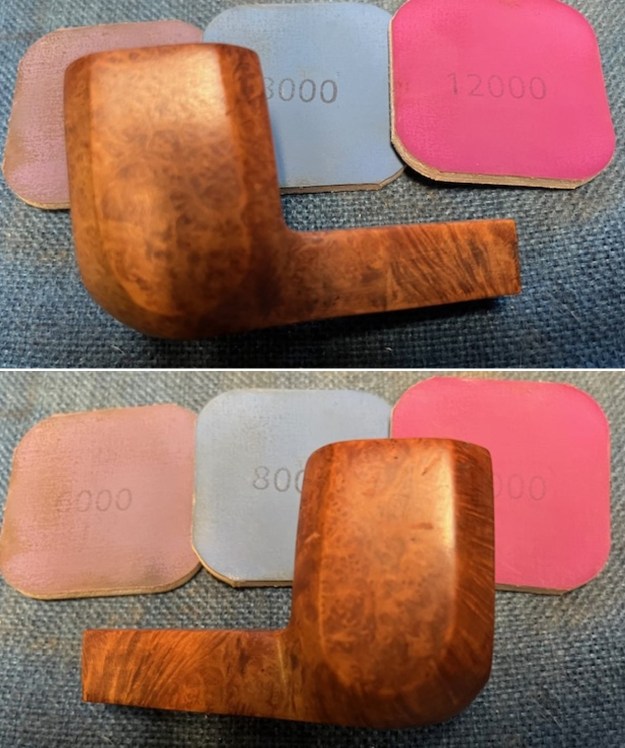
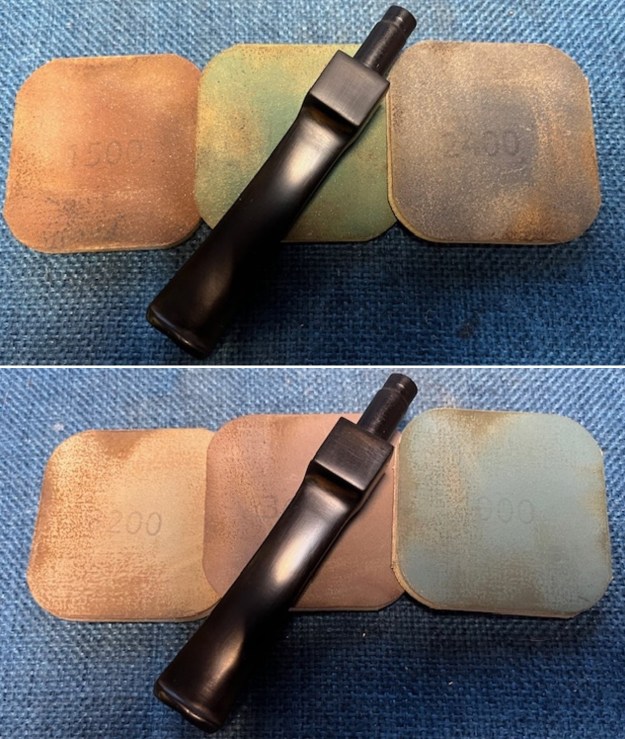
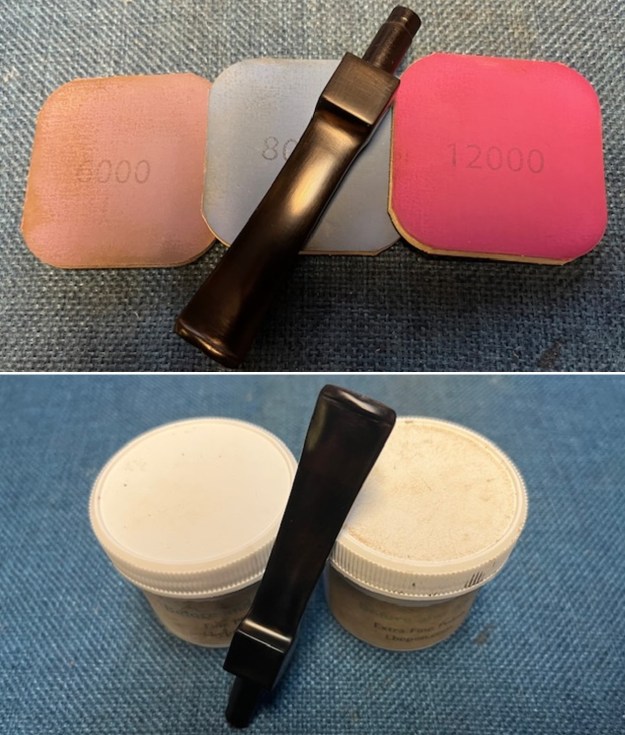
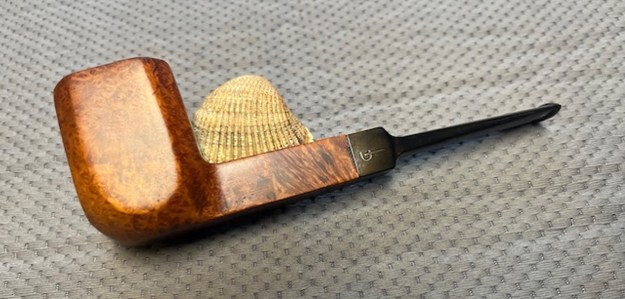
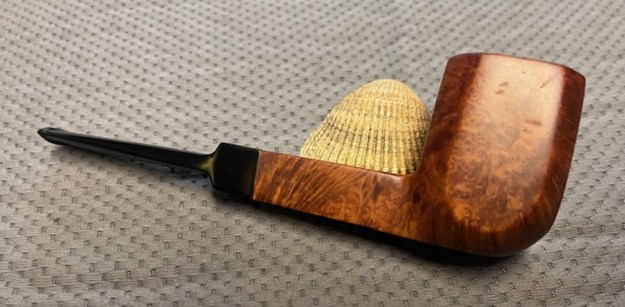
Armed with that information I turned to work on the pipe itself. Jeff had cleaned up the pipe with his usual thoroughness. He reamed the pipe with a PipNet pipe reamer and removed the rest of it with a Savinelli Fitsall Pipe Knife. He scrubbed the bowl with undiluted Murphy’s Oil Soap with a tooth brush. He rinsed it under running warm water to remove the soap and grime. He cleaned out the inside of the shank and the airway in the stem with alcohol, cotton swabs and pipe cleaners and shank brushes. He soaked the stem in Briarville’s Pipe Stem Deoxidizer and rinsed it off with warm water. I took photos of the pipe before I started my part of the restoration work. The rim top cleaned up really well. The rim top and inner edge of the bowl look good. There is some darkening on the inner edge and the top as well as on the insides of the points on the tulip petals. The bowl itself was very clean and the pipe smelled fresh. The stem surface had light tooth chatter on both sides near the button.The stamping on the left side of the shank is faint but still readable. It is stamped as noted above. I removed the stem and took a photo of the pipe to give a sense of the whole.I wiped the bowl down with some acetone to see if I could lighten the darkening around the bowl sides and on the rim top and inside edge of the petals at the top. It worked quite well. I wonder as I am doing this if the top and inside edge of the petals was stained black. I sanded the briar flutes and smooth surface with 320-3500 grit sanding pads. There was still some darkening on the bowl sides and rim edges. There were also some scratches in the briar on the sides, but nothing to deep so this process would take care of the issues. I polished the briar with micromesh sanding pads – dry sanding with 1500-12000 grit sanding pads. I wiped the bowl down with a damp cloth after each pad. I take photos of the three groups of pads for my own viewing primarily as I am looking for progress in polishing. Once again, by the end of the process it looked quite good.  I rubbed the bowl and shank down with Before & After Restoration Balm. I worked it into the surface of the bowl sides and shank with my fingertips. It works to clean, enliven and protect the briar. I let the balm sit for 15 minutes and buffed with a cotton cloth to raise the shine. The grain came alive. I set the bowl aside and turned my attention to the stem. I “painted” the surface of the stem to raise the tooth marks on the vulcanite. I filled in what remained in the surface with black CA glue and set it aside to cure. Once the repair cured I used a flat needle file to smooth out the repairs on the stem surface. I followed that up with a folded piece of 220 grit sandpaper to blend them into the surface of the stem. I sanded the stem with 320-3500 grit sanding pads. I wiped the stem down after each pad with an Obsidian Oil soaked cloth. The process helped remove the lingering oxidation.I polished the stem with micromesh sanding pads – 1500-12000 grit pads to remove them. I wiped the stem down with Obsidian Oil after each sanding pad. I used Before & After Pipe Polish – both Fine and Extra Fine to further polish the stem. I rubbed it down with a final coat of Obsidian Oil and let it dry. This Jack H. Weinberger (JHW) Tulip Billiard with a vulcanite saddle stem is a great looking pipe with some beautiful grain around the front and sides of the bowl. The grain around the bowl is quite stunning and works well with both the shape and the polished vulcanite saddle stem. I put the stem back on the bowl and carefully buffed the pipe with Blue Diamond on the buffing wheel using a light touch on the briar. I gave the bowl and the stem multiple coats of carnauba wax on the wheel and followed by buffing the pipe with a clean buffing pad. I hand buffed the pipe with a microfiber cloth to deepen the shine. The finished Jack H. Weinberger (JHW) Tulip Billiard fits nicely in the hand and feels great. Give the finished pipe a look in the photos below. The dimensions of the pipe are Length: 5 ¾ inches, Height: 2 ½ inches, Outside diameter of the bowl: 1 ½ inches, Chamber diameter: ¾ of an inch. The weight of the pipe is 1.90 ounces/54 grams. I will be putting it on the rebornpipes store in the American Pipemakers Section shortly. If you are interested in adding this pipe to your collection send me a message or an email. Thanks for reading this blog and my reflections on the pipe while I worked on it. I appreciate your support and time!

Restoring a Knute of Denmark Sandblast Freehand with Plateau Rim Top


by Steve Laug

Jeff and I purchased this pipe on 05/28/2024 from a fellow in Santa Cruz, California, USA. It is well used freehand with a sandblast finish and a plateau rim top. The pipe is stamped on the underside of the shank and reads Knute [over] of Denmark. The stem has no stamp on it and is a fancy turned vulcanite one that fits the shank well. There was a heavy cake in the bowl and lava and debris overflowing onto the plateau rim top filling in the valleys. The finish showed some nice grain around the bowl and shank even through the grime that was ground into it. The stem was oxidized and there were tooth marks and chatter on both sides of the stem ahead of the button. It was a beautiful looking, well carved pipe. Jeff took photos of the pipe before he started his clean up work. He took photos of the rim and bowl to give a sense of what he was dealing with. It is heavily caked and the rim top is filled in with lava and debris. Judging from the condition it is a fine smoking pipe. He also took photos of the stem surfaces to show the condition of the stem when it arrived. The photos of the sides and heel of the bowl show beautiful shape and the way the sandblast flows with that around the bowl and shank sides. The combination of stains adds depth to the finish on the pipe. Even under the grime it is a unique piece. He also took a photo of the stamped name on the underside of shank. It reads as noted above. Before I started my work on the pipe I wanted to remind myself of the provenance of the pipe. I remembered that it was linked to Karl Erik as I have worked on quite a few Knute Freehands. I wanted to know where this pipe fit into the Karl Erik lines so I turned to the first of two sites that I always check to gather information on a brand.  I turned to the first source of information site – Pipephil’s (http://www.pipephil.eu/logos/en/logo-k3.html) got a quick overview on the brand once again connecting it to Karl Erik.I turned to Pipedia (https://pipedia.org/wiki/Karl_Erik). Pipedia had this great picture of Karl Erik Ottendahl and I decided to include it here as a reminder of the artisan who first carved and released this pipe. Reminded of the tie to Karl Erik, I knew a bit about the pipe at hand. I turned to address the pipe itself. There it is clearly identified and linked to Karl Erik Ottendahl. It is designated as a second and frequently having rustication. The interesting thing is that his pipe does not look like a second at all and I wonder if the Knute is a line of Karl Erik’s rather than a second. Who knows? This one is a very well done sandblast and shaped pipe.

Jeff cleaned up the pipe for me. He reamed the bowl with a PipNet pipe reamer and cleaned it up with a Savinelli Fitsall Pipe Knife. He scrubbed the exterior with Murphy’s Oil Soap and a tooth brush to clean off the grime off the finish and the heavy overflow of lava on the rim top. The cleaning had removed some of the black stain on the rim top. He cleaned up the internals of the shank, mortise and stem with pipe cleaners, cotton swabs and alcohol to remove all of the oils and tars in the pipe. He soaked the stem in Before & After Deoxidizer and was able to remove much of the oxidation. When it arrived here in Vancouver it was a clean pipe and I knew what I had to work with. I took photos of it before I started my part of the restoration. I took photos of the rim top and the stem to show their condition once it arrived in Canada. Jeff was able to clean up the incredibly thick cake and lava overflow that was shown in the rim and bowl photos above. The plateau and the inner edge of the rim look quite good. He was also able to get rid of the grime and grit in the surface of the briar. The stem looked better, though there were tooth marks and chatter on both sides near the button.I have noticed sometimes newer refurbishers don’t seem to pay much attention to the stamping when they are restoring a pipe. To me this is a critical part of the restoration to leave it undamaged as it is the only link we have to who made the pipe. I took a photo of the stamping on the underside of the shank to show that it was readable and undamaged by the cleanup work.I removed the stem from the shank and took a photo of the parts to give a sense of what the pipe looks like. The bowl looked so good at this point, I rubbed it down with Before & After Restoration Balm to deep clean the finish on the bowl and shank. The product works to clean, enliven and protect the briar. I worked it in with my fingers to get it into the briar. I used a horsehair shoe brush to work it into the plateau top and shank end.  I let it sit for 10 minutes then I wiped it off and buffed it with a soft cloth. The briar really began to have a rich shine. I took some photos of the bowl at this point to mark the progress in the restoration. It is a beautiful bowl. I set the bowl aside and worked on the stem at this point in the process. I “painted” the stem surface with the flame of a lighter to lift the tooth marks as much as possible. I filled in the small marks that remained with black CA glue. Once it cured I used a small file to flatten the repairs and reshape the button edge. I sanded the repairs with a folded piece of 220 to start the process of blending them into the surface. I wiped it down with Obsidian Oil. I sanded the stem surface with 320-3500 grit sanding pads to smooth the repairs out further and work out the remnants of oxidation. It is also a way I start polishing the stem. Between each sanding pad I wipe the stem down with an Obsidian Oil cloth.I polished the stem with micromesh sanding pads – dry sanding with 1500-12000 grit pads. I wiped the stem down after each pad with a damp cloth to remove the sanding dust. I polished the stem with Before & After Pipe Stem Polish – both fine and extra fine. I finished by wiping the stem down with a final coat of Obsidian Oil and set it aside to dry. I put the stem back on the Knute of Denmark Sandblast Freehand pipe and took the pipe to the buffer. I buffed the bowl and stem with Blue Diamond to polish the briar and the vulcanite. Blue Diamond does a great job on the smaller scratches that remain in the vulcanite. I gave the bowl multiple coats of Conservator’s Wax and the stem several coats of carnauba wax and buffed the pipe with a clean buffing pad to raise the shine. I hand buffed it with a microfiber cloth to deepen the shine. The pipe polished up really nicely with a great contrasting stain look to the briar. The finished pipe is shown in the photos below. This is a beautiful Karl Eric Made Knute of Denmark Freehand – the fancy turned stem and plateau rim top give the pipe a great look. The dimensions of the pipe are Length: 7 inches, Height: 2 ¾ inches, Outside diameter of the bowl: 2 inches, Chamber diameter: 1 inch. The weight of the pipe is 2.75 ounces/76 grams. This is another pipe that I will be putting on the rebornpipes online store in the Danish Pipemaking Companies Section shortly, if you are interested in adding it to your collection. Thanks for walking through the restoration with me on this beauty!
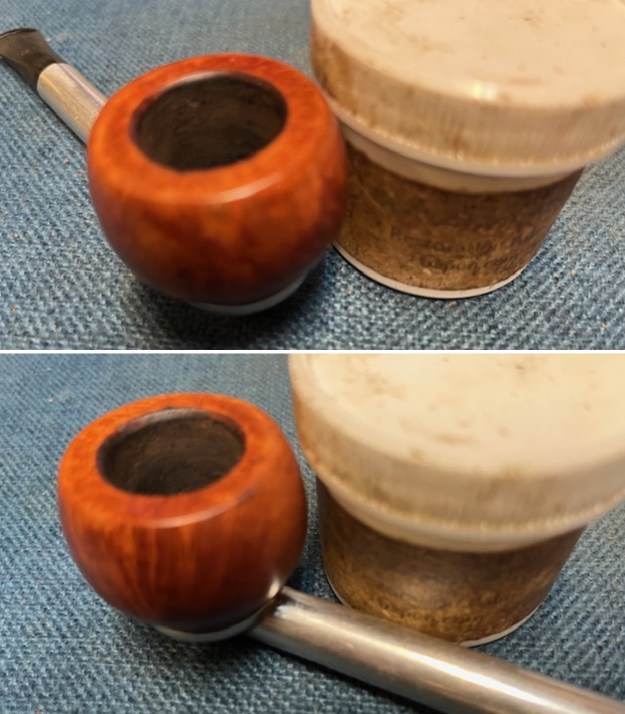
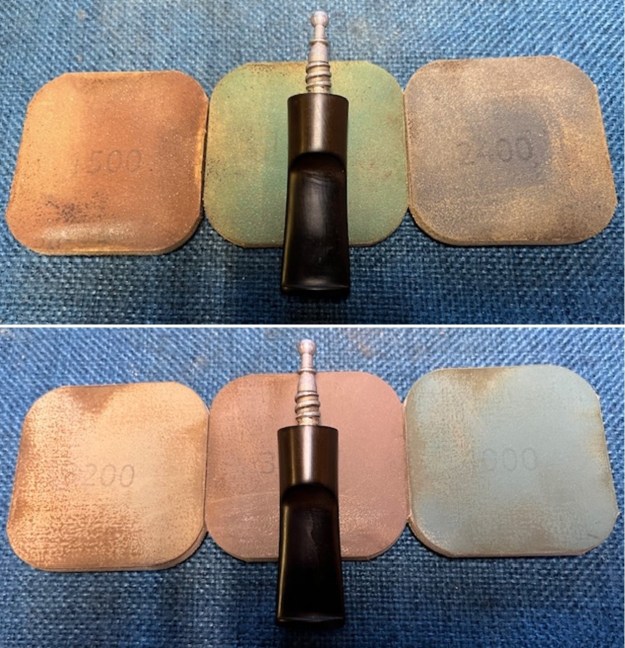
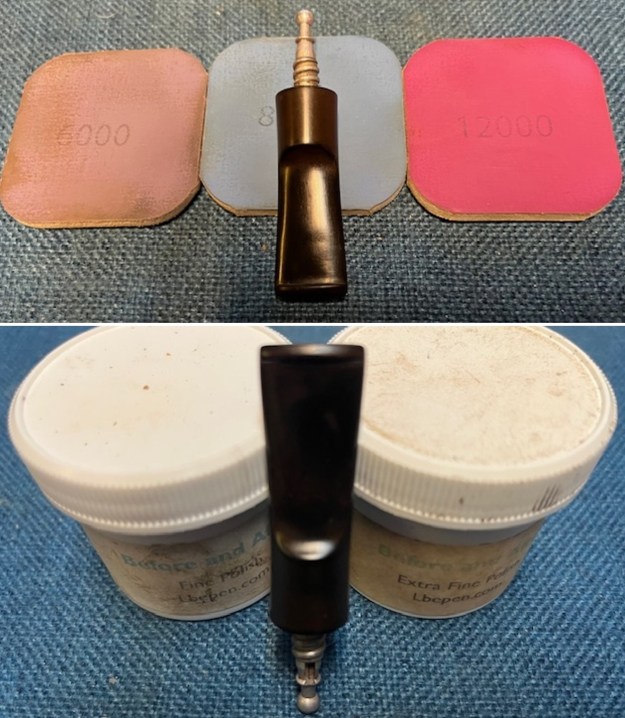
Nording “N” Handcrafted Made in Denmark Freehand with fancy turned vulcanite stem


by Steve Laug

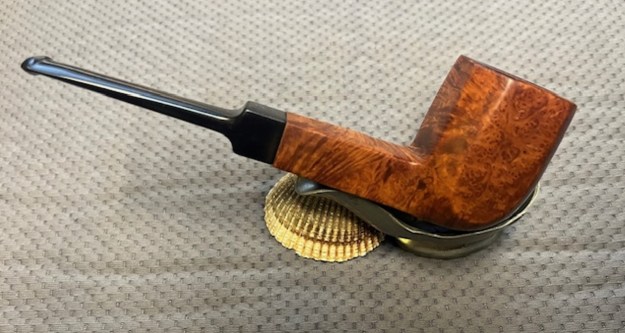
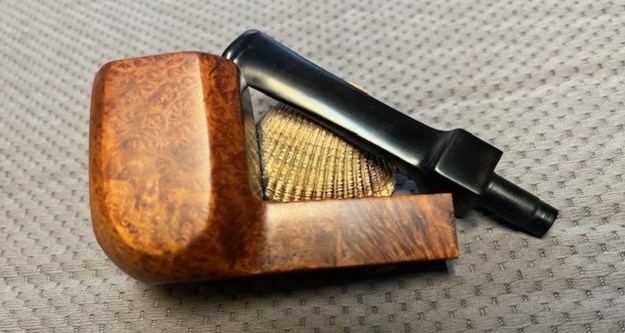
It was time to turn back to one of the pipes that Jeff and I picked up. This pipe was purchased from an auction on 10/03/21 in Lacon, Illinois, USA. The pipe is Freehand take on a Rhodesian. The grain around the bowl sides, the plateau on the rim top and the rusticated almost leaf pattern on the underside of the bowl. The shank end has a vulcanite shank extension. You can see the flow of straight and flame grain around the bowl and shank. It is stamped on the underside of the shank with a hollow letter N [over] Handcrafted [over] Made in Denmark. There is no other stamping on the pipe. The stem does not have the expected Nording N anywhere on the sides or top. The pipe was very dirty with a thick cake in the bowl and some lava overflowing on to the plateau rim top. It was hard to know what the inner edge of the rim looked like because of the lava and cake. Other than being dirty the finish appeared to be in good condition. The fancy, turned stem was lightly oxidized and had come calcification ahead of the button. There was some tooth chatter and marks on both sides of the stem ahead of the button and on the button surface. Jeff took the following photos of the pipe before he started his clean up work on it. He took a photo of the rim top to show the thick cake in the bowl and the overflow of lava. The cake is thick and hard and the lava overflow is in the plateau. The bowl is dirty but it must have been a great smoking pipe. The stem looked dirty and oxidized with the calcification. The bite marks and tooth chatter on the stem were not too bad and the edge of the button was worn down. The mark on the back side of the bowl is actually more of the plateau running down the side rather than a flaw in the briar. The next photos show the sides and heel of the bowl to give a clear picture of the beauty of the grain around the bowl of the pipe. Under the grime there is some great grain peeking through. Jeff took photos of the stamping to capture the clarity of it even under the grime. The stamping is faint in spots but still readable. It reads as noted above.Before I started my work on the pipe I wanted to learn more about where this pipe fit into the Nording lines so I turned to the first of two sites that I always check to gather information on a brand. I turned first to Pipedia (https://pipedia.org/wiki/N%C3%B8rding). Nording’s were exclusively freehand shapes, graded from A, B, C, D, up to its highest grade, extra. Later an “F” grade was added—less expensive than the “A.” I could find no other information on the rest of the stamping on the pipe.

I did find a great collage of photos of Erik Nording that I have included below.I turned to the second information site – Pipephil’s (http://www.pipephil.eu/logos/en/logo-n2.html) did not find any more helpful information on the Nording N stamp.

Armed with that information I actually knew no more about this Freehand. I turned to address the pipe itself. Jeff cleaned up the pipe for me. He reamed the bowl with a PipNet pipe reamer and cleaned it up with a Savinelli Fitsall Pipe Knife. He scrubbed the exterior with Murphy’s Oil Soap and a tooth brush to clean off the grime off the finish and the heavy overflow of lava on the rim top. The cleaning had removed some of the black stain on the rim top. He cleaned up the internals of the shank, mortise and stem with pipe cleaners, cotton swabs and alcohol to remove all of the oils and tars in the pipe. He soaked the stem in Before & After Deoxidizer and was able to remove much of the oxidation. When it arrived here in Vancouver it was a clean pipe and I knew what I had to work with. I took photos of it before I started my part of the restoration. I took photos of the rim top and the stem to show their condition once it arrived in Canada. Jeff was able to clean up the incredibly thick cake and lava overflow that was shown in the rim and bowl photos above. You can see the spots where the black stain had been removed from parts of the plateau top. He was also able to get rid of the grime and grit in the surface of the briar. The inner edge of the bowl was in very good condition and was smooth to the touch. The rim top and edges looked very good. The stem looked much cleaner. There was tooth marks and chatter on both sides on and near the button.I took a photo of the stamping on the underside of the shank. It was clear and readable as noted above.I removed the stem from the shank and took a photo of the appearance of the parts. You can see how large the pipe is in the photos.I decided to start with polishing the briar and the vulcanite shank extension with micromesh sanding pads. I wet sanded it with 1500-12000 grit pads. I wiped the bowl down after each pad with a damp cloth. The bowl began to take on a rich shine and grain was beginning to stand out.  I paused the polishing to touch up the stain on the plateau rim top and shank end. I used a black stain pen and was able to match the black perfectly. It looks much better.I rubbed the bowl and shank down with Before & After Restoration Balm to deep clean the finish on the bowl and shank. The product works to clean, enliven and protect the briar. I worked it in with my fingers to get it into the briar. I used a horsehair shoe brush to work it into the plateau top.  After it sat for a little while I wiped it off and buffed it with a soft cloth. The briar really began to have a rich shine. I took some photos of the bowl at this point to mark the progress in the restoration. It is a beautiful bowl. I set the bowl aside and worked on the stem at this point in the process. I “painted” the tooth marks in the stem with the flame of a Bic lighter to lift them. I filled in the remaining tooth marks on the stem surface and button edge with black CA glue (forgot to take photos). I set the stem aside to let the repairs cure. I used a small file to flatten the repairs and recut the button edge. I sanded the repairs with 220 grit sandpaper to blend them into the stem surface. I sanded out the scratches in the vulcanite with 320-3500 grit sanding pads. I wiped the stem down after each sanding pad with a cloth impregnated with Obsidian Oil. It started to take on a deep shine.I polished the stem with micromesh sanding pads – wet sanding with 1500-2400 grit pads and dry sanding with 3200-12000 grit pads. I wiped the stem down after each pad with a damp cloth to remove the sanding dust. I used the Before & After Pipe Polish to remove the small minute scratches left in the vulcanite even after the micromesh regimen. I finished by wiping the stem down with a final coat of Obsidian Oil and set it aside to dry. I put the stem back on the Nording Made N Handcrafted Made in Denmark Large Freehand and took the pipe to the buffer. I buffed the bowl and stem with Blue Diamond to polish the briar and the vulcanite. Blue Diamond does a great job on the smaller scratches that remain in both. I gave the bowl and the stem several coats of carnauba wax and buffed the pipe with a clean buffing pad to raise the shine. I hand buffed it with a microfiber cloth to deepen the shine. The pipe polished up really nicely with a great contrasting stain look to the briar. The finished pipe is shown in the photos below. This is another unique Nording for me – the combination of plateau, rustication and smooth finish along with a vulcanite shank extension. The polished black vulcanite extension and stem looks really good with the reds and blacks standing out in the grain. The dimensions of the pipe are Length: 6 inches, Height: 2 ½ inches, Outside diameter of the bowl: 1 ½ inches wide x 2 long, Chamber diameter: 7/8 of an inch. The weight of the pipe is 77 grams/2.79 ounces. This is another pipe that I will be putting it on the rebornpipes online store shortly, if you are interested in adding it to your collection. Thanks for walking through the restoration with me on this beauty!

Cleaning up and Restemming a Sandy London Made Sandblast Billiard


by Steve Laug

Once again, I dipped into my box of bowls to restem and came out with this interesting sandblast straight billiard. It is stained with a rich combination of brown stains that highlight the highs and lows of the blast. The finish is scratched and dirty but still interesting. The pipe is stamped on a smooth panel on the underside of the shank and reads 2 [followed by] Sandy [over] London Made. The bowl has a thick cake with some lava overflow on the rim top. There is something interesting about this little billiard bowl that makes me choose it next. Here are some photos for you to have a look. I took a close up photo of the rim top and bowl to give a sense of the thickness of the cake and the lava in the sandblast on the rim. It was a mess but obviously a well loved pipe. I took a photo of the stamping on the underside of the shank. There is a numeral 2 toward the heel of the bowl and the rest is centered in the shank in two lines as noted above.I took a photo of the stem I had chosen for the pipe next to the bowl so you can see the overall look of the stem and shank. It is slightly larger in diameter than the shank so that will need to be adjusted. The tenon is also slightly larger.I used a flat needle file to reduce the diameter of the tenon so that it would fit the shank of the pipe. It did not take too much to do and once it was removed it looked very good.I heated the stem with the flame of a Bic lighter to soften the vulcanite. Once it was soft enough I was able to straighten the stem to the angle that I wanted.I fit the stem to the shank and used a rasp to reduce the diameter of the stem. I wanted it to be a smooth transition from the shank to the stem. It was looking much better. I sanded the reduced stem diameter with 200 grit sandpaper to remove the file marks and smooth out the scratches. The transition began to really look good and it was smooth to the touch.I sanded out the scratches in the vulcanite with 320-3500 grit sanding pads. I wiped the stem down after each sanding pad with a cloth impregnated with Obsidian Oil. It started to take on a deep shine.I polished the stem with micromesh sanding pads – 1500-12000 grit pads to remove them. I wiped the stem down with Obsidian Oil after each sanding pad. I used Before & After Pipe Polish – both Fine and Extra Fine to further polish the stem. I rubbed it down with a final coat of Obsidian Oil and let it dry. I turned my attention to the bowl. I used a PipNet Reamer with the first and second cutting heads to take back the heavy cake to bare briar. I cleaned up the reaming with a Savinelli Fitsall Pipe Knife and finally sanded the bowl walls with 220 grit sandpaper wrapped around a dowel. I like to remove all the cake to examine the walls for damage and checking. Great news is that this one is free of any damage! I used a brass bristle wire brush to work over the sandblast rim top and edges. The inner edge and the top looked to be undamaged.I used alcohol, cotton swabs and pipe cleaners to clean out the internals of the shank and the new stem. Once finished the pipe smelled as clean as it looked.I scrubbed the bowl with a tooth brush and undiluted Murphy’s Oil Soap to remove the debris from the sandblast finish. I rinsed the bowl off with warm running water and dried it with a soft towel. It looked much better at this point. I restained the faded spots on the bowl sides and heel with a Mahogany and a Cherry stain pen to blend the colours into the sandblast finish. It looked much better at this point. I rubbed down the briar Before & After Restoration Balm. I worked it into the surface with my fingertips. I used a shoe brush to work the balm into crevices of the sandblast. The product works to clean, enliven and preserve the briar. I let it sit for 15 minutes then I buffed it with a cotton cloth to deepen the shine. The briar really comes alive with the balm. This is another pipe that I am really happy about the finished restoration. This reborn Sandy 2 London Made Sandblast Billiard turned out really well. I used a vulcanite stem I had here to fit the pipe with a new stem. After restemming I think that it really is a great looking pipe with a great shape and grain. The bowl is a classic English Billiard that looks excellent with the new vulcanite stem. The polished black of the stem works well with the briar. The briar really came alive with the buffing. The rich brown and mahogany stains of the finish make the blast really pop with the polishing and waxing. I put the stem back on the bowl and buffed the pipe with Blue Diamond on the buffing wheel. I gave the bowl and the stem multiple coats of carnauba wax on the buffing wheel. I buffed the pipe with a clean buffing pad to raise the shine. I hand buffed the pipe with a microfiber cloth to deepen the shine. The finished Sandy 2 London Made Billiard really has a unique beauty and feels great in the hand. It looks very good. Give the finished pipe a look in the photos below. The dimensions of the pipe are Length: 5 ½ inches, Height: 1 ½ inches, Outside diameter of the bowl: 1 ¼ inches, Chamber diameter: ¾ of an inch. The weight of the pipe is 28 grams/.99 ounces. The pipe will be going on the rebornpipes store soon. It will be in the British Pipemakers Section if you would like to add it to your collection. Thanks for reading this blog and my reflections on the pipe while I worked on it. It was a fun one to work on!