
Blog by Steve Laug
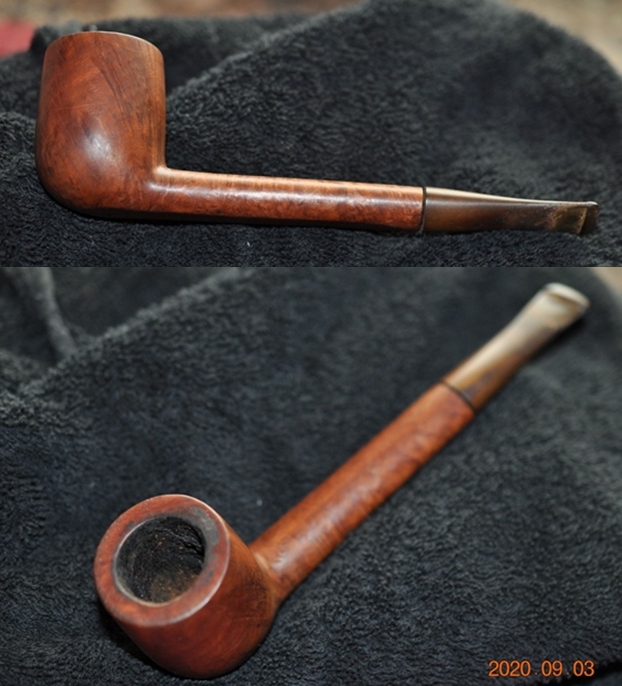
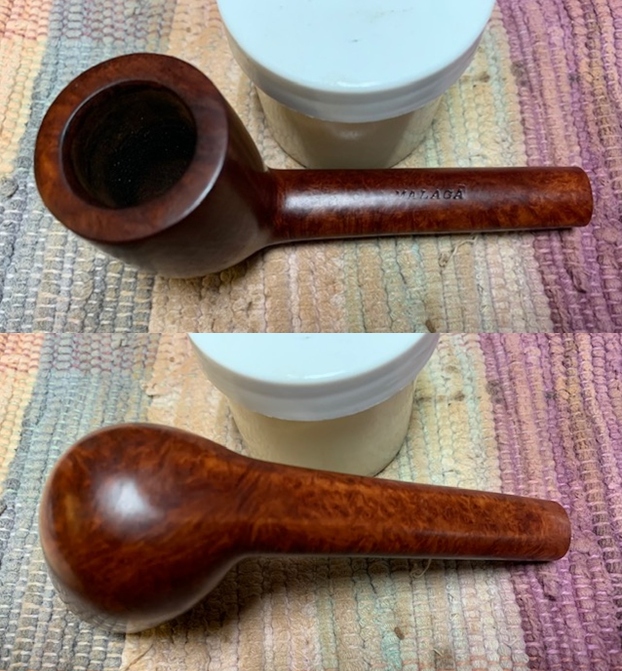
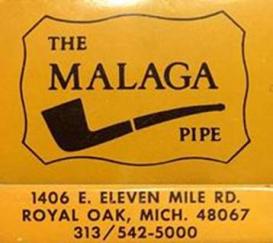 The next pipe on the table is a “Malaga” pipe that Jeff picked up from an online auction from Alden, Michigan, USA. It is a nice looking Canadian with an oil cured finish and some great looking grain around the bowl and shank. The pipe is stamped on top of the shank and reads MALAGA. The carver did a great job of carving the pipe to capture the grain around the bowl and shank. The bowl had a heavy cake with an overflow of lava on the rim top with heavier overflow on the back side of the rim top. The sides of the bowl and shank are very dirty with grime and oils ground into the finish from prolonged use. The vulcanite stem was heavily oxidized and had tooth dents and chatter on the top and the underside of the stem. Jeff took photos of the pipe before he started the cleanup work. Jeff showed me the pipe on Facetime and it was quite a beauty. With some work it will be a real beauty. I looked forward to seeing it in person.
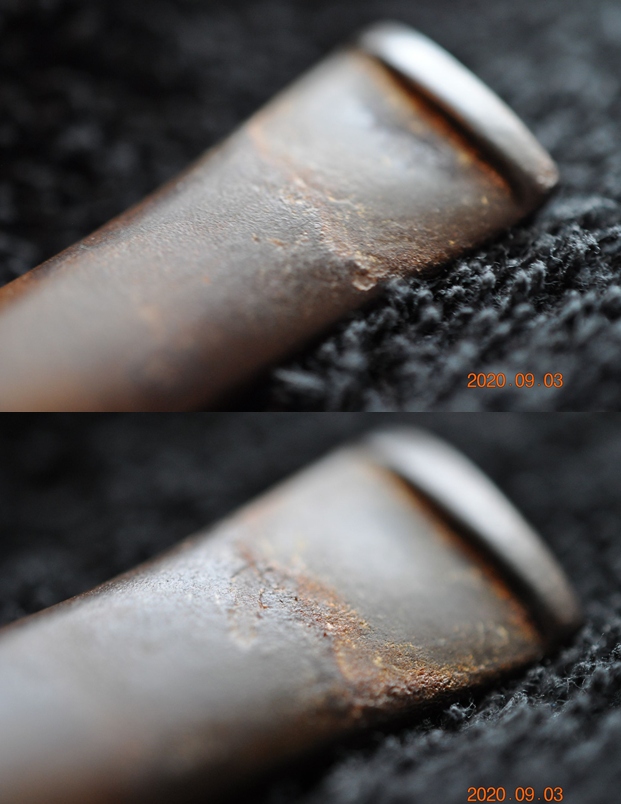
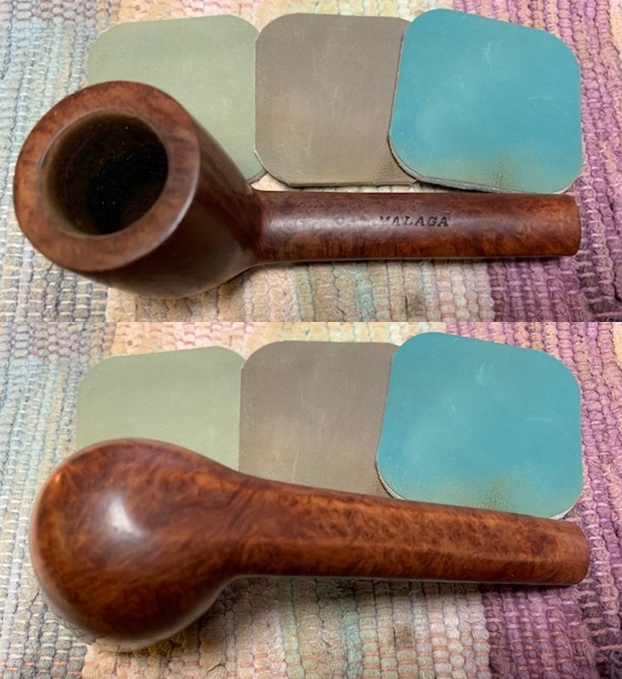
  Jeff took a close up photo of the bowl and rim to capture the condition of the pipe before he started the cleanup work. The bowl has a thick cake and the uneven overflow of lava on the rim top is quite thick toward the front. The inside edge of the rim could be damaged but it quite hidden under the lava coat. The stem is deeply oxidized, calcified and dirty and there is tooth chatter and marks on both sides of the stem ahead of the button.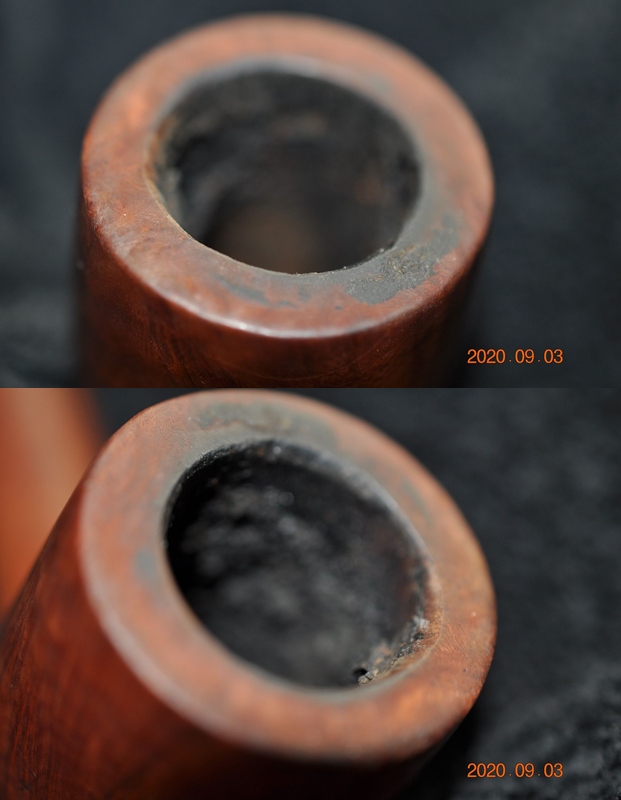
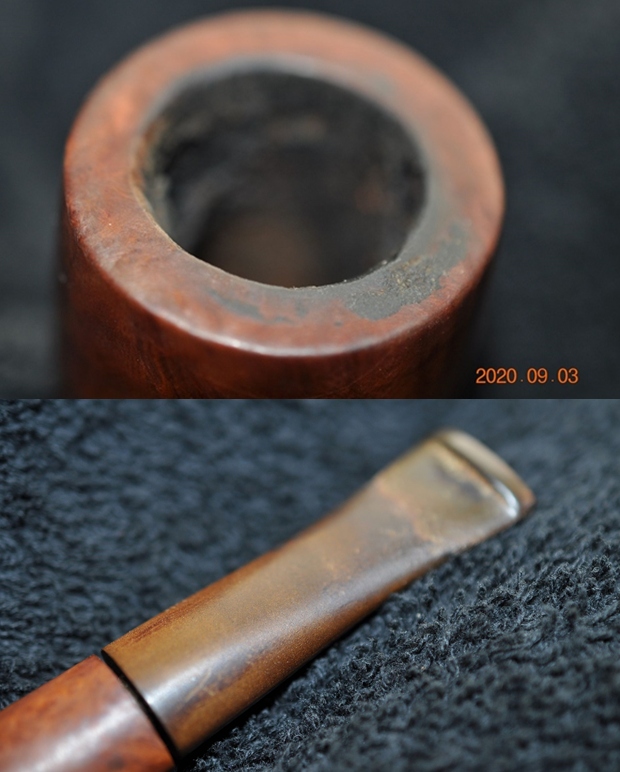
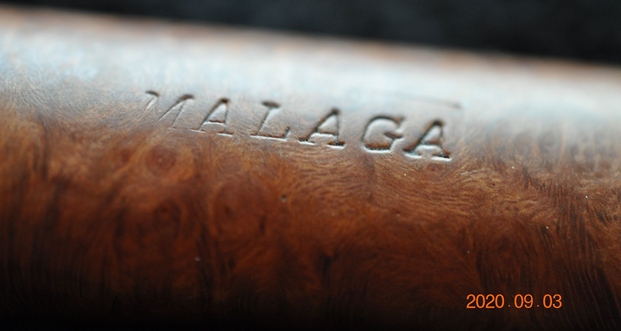
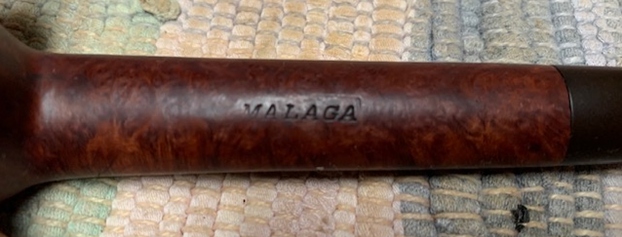
 He took a photo of the stamping on the topside of the shank. It read as noted above.
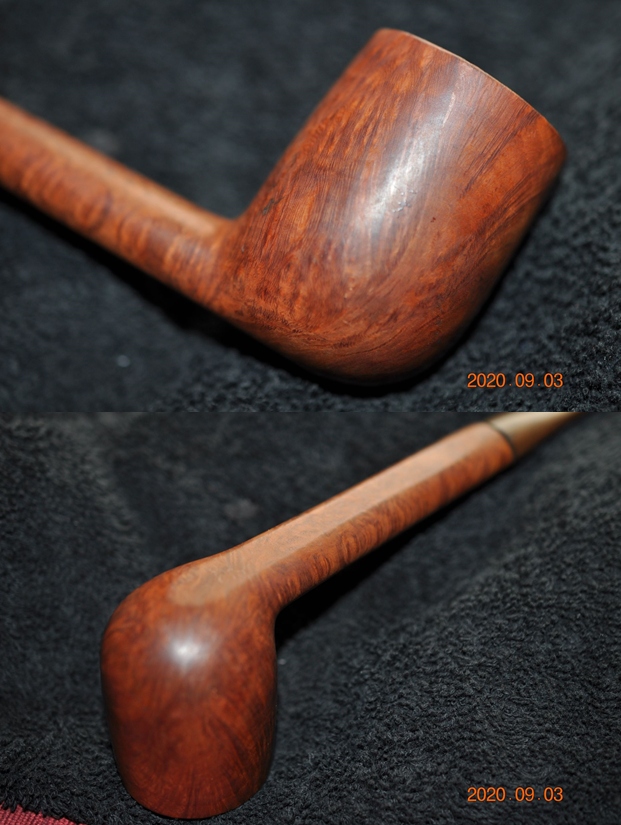
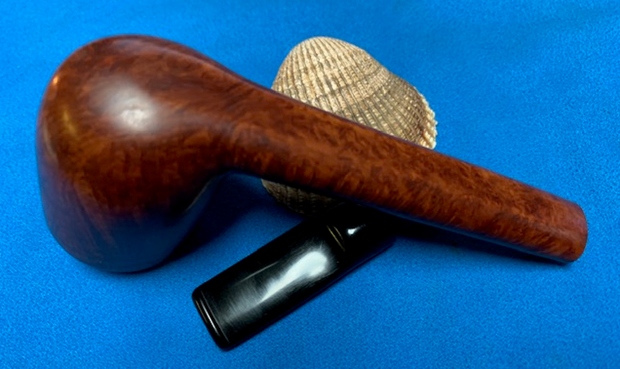
 Jeff took photos of the sides and heel of the bowl to give a picture of what the briar looked like. There is some nice grain around the sides. You can also see the damage to the rim edges and the heel of the bowl in the photos below.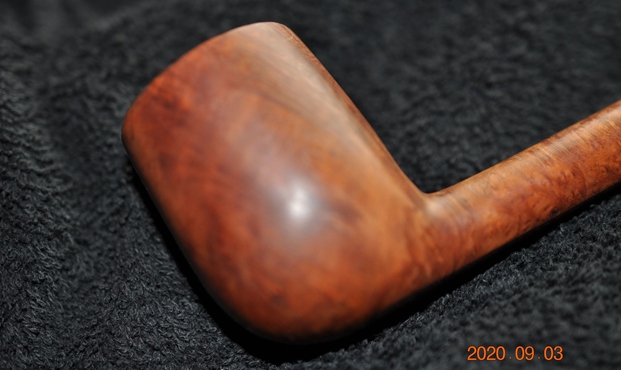
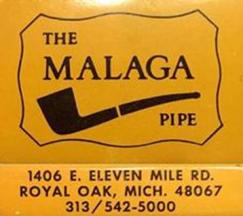
 I am including the link to a blog that I wrote that gives some of the history of the Malaga brand and the Malaga Pipe Shop in Royal Oak, Michigan in the USA. I have written an earlier blog to give a little history of the Malaga Brand and the pipemaker, George Khoubesser. Here is the link – https://rebornpipes.com/tag/malaga-pipes/.That blog also includes links to a catalogue and the history of the pipemaker George Khoubesser. Follow the link to get a feel for the brand and the pipemaker.
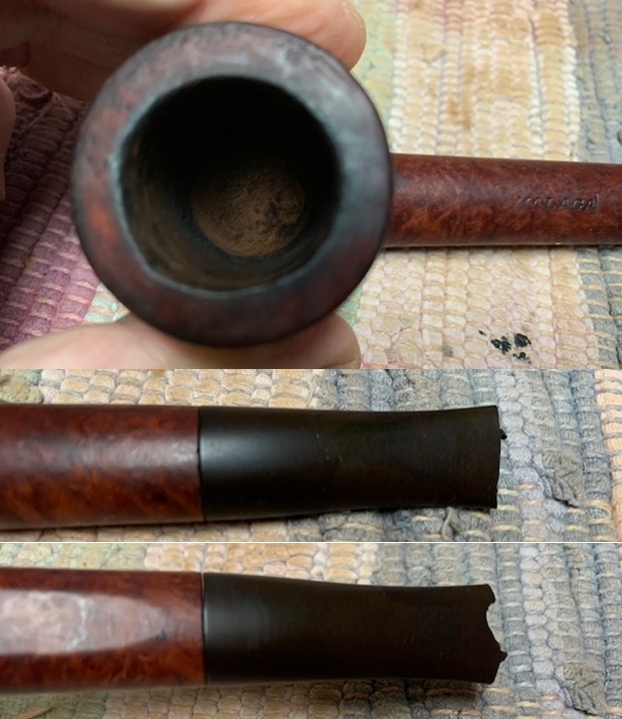
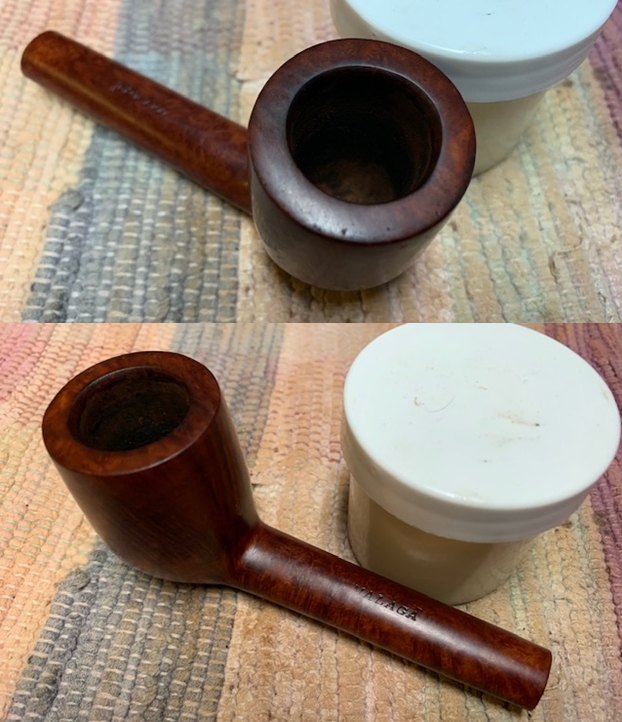
Jeff had cleaned up the pipe with his usual penchant for thoroughness. He reamed the pipe with a PipNet pipe reamer and removed the rest of it with a Savinelli Fitsall Pipe Knife. He scrubbed the bowl with undiluted Murphy’s Oil Soap with a tooth brush. He rinsed it under running warm water to remove the soap and grime. He cleaned out the inside of the shank and the airway in the stem with alcohol, cotton swabs and pipe cleaners. He soaked the stem in Before & After Deoxidizer and rinsed it off with warm water. When the pipe arrived and I unpacked it the stem was broken off at the end. There was about a ¼ inch of the stem and the entire button was in the bottom of the bag that the pipe was packed in. I took photos of the pipe once I received it. 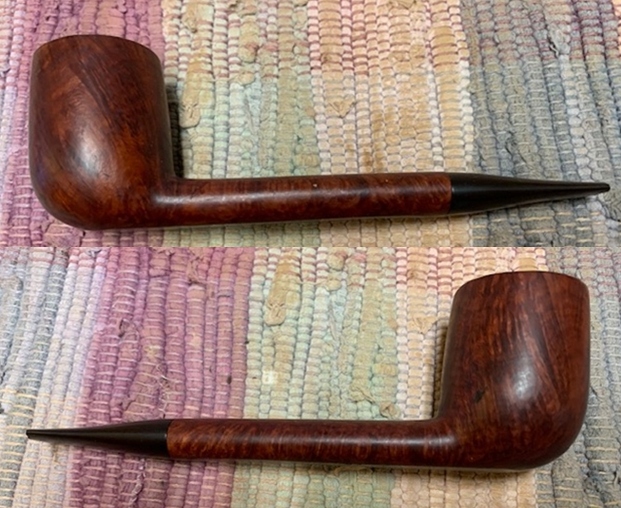
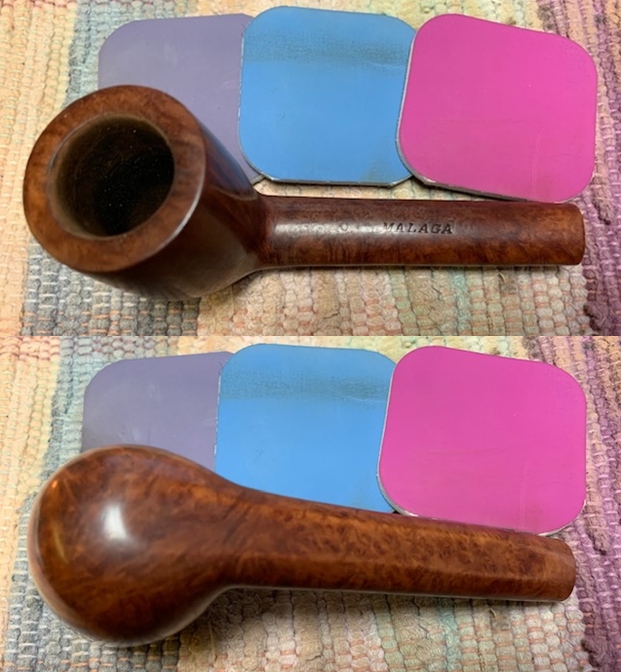
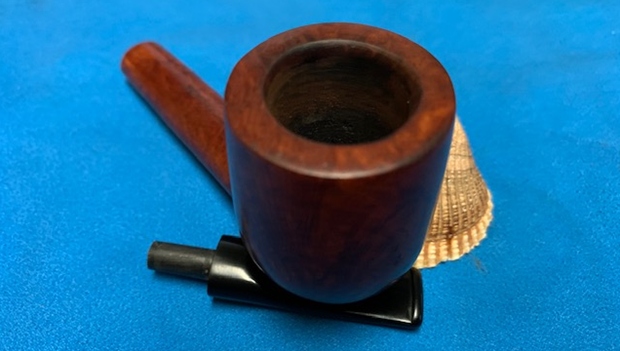
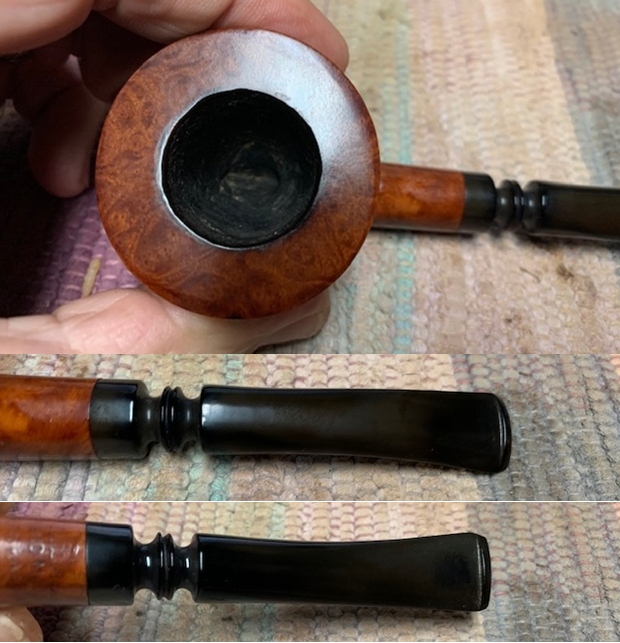
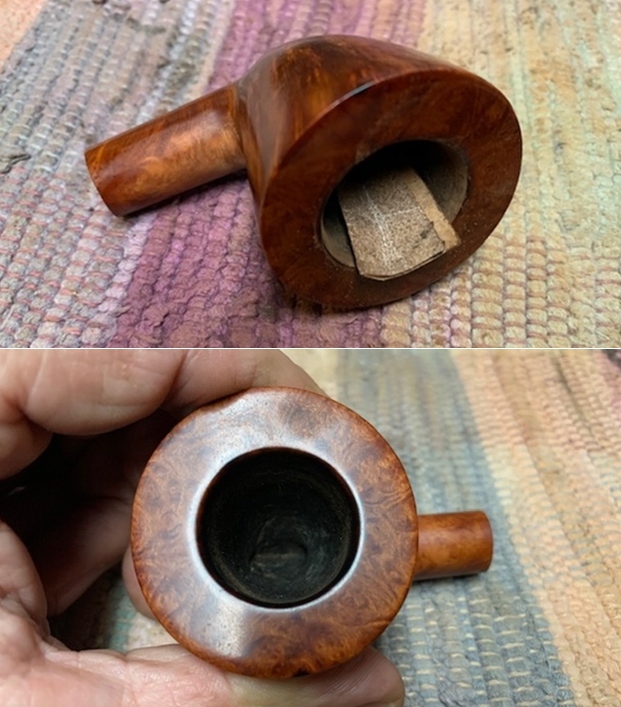
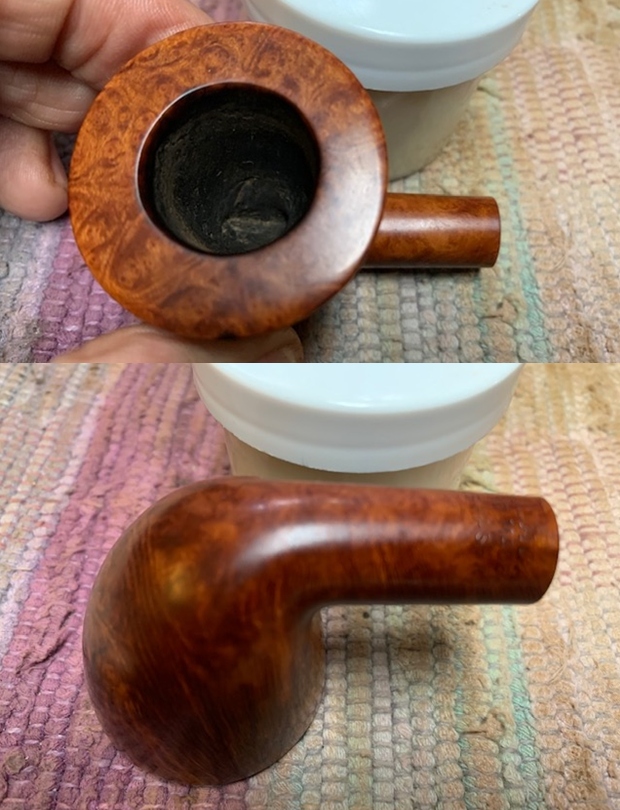
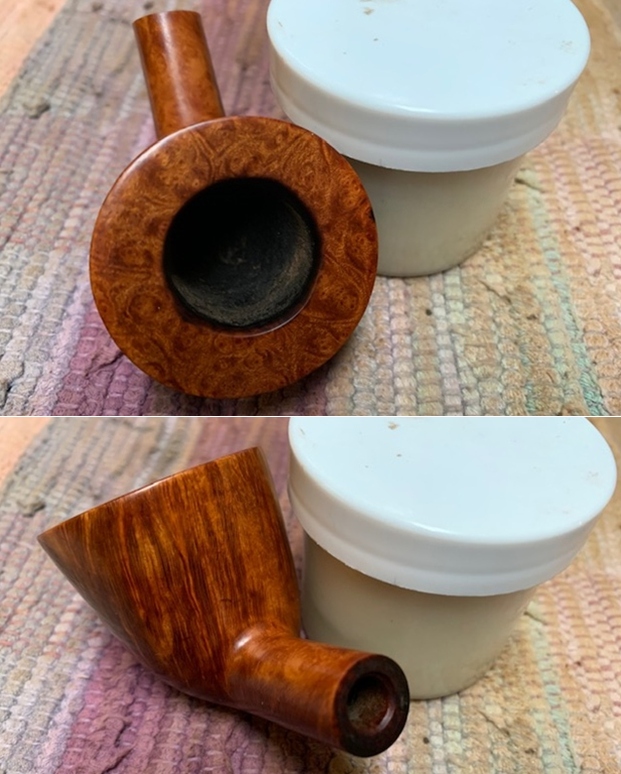
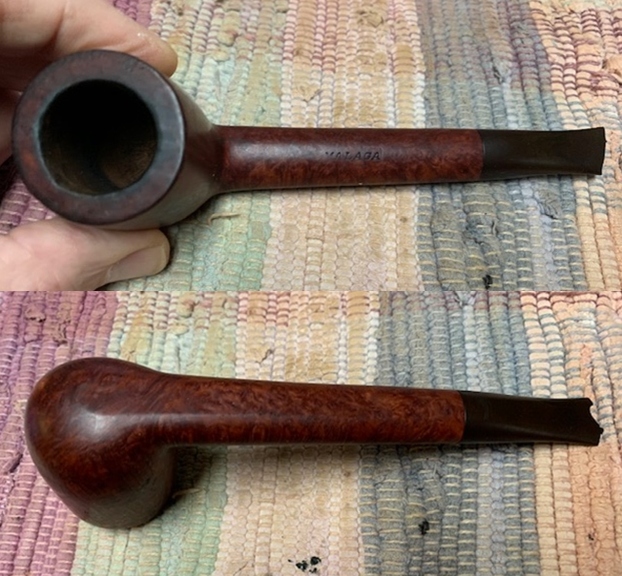 The rim top cleaned up really well. The rim top and outer edge of the bowl show some darkening over most of the surface. There is damage to the inner edge of the bowl and bowl is out of round. The stem surface looked very good with tooth marks and chatter on the top side and the underside near the button.
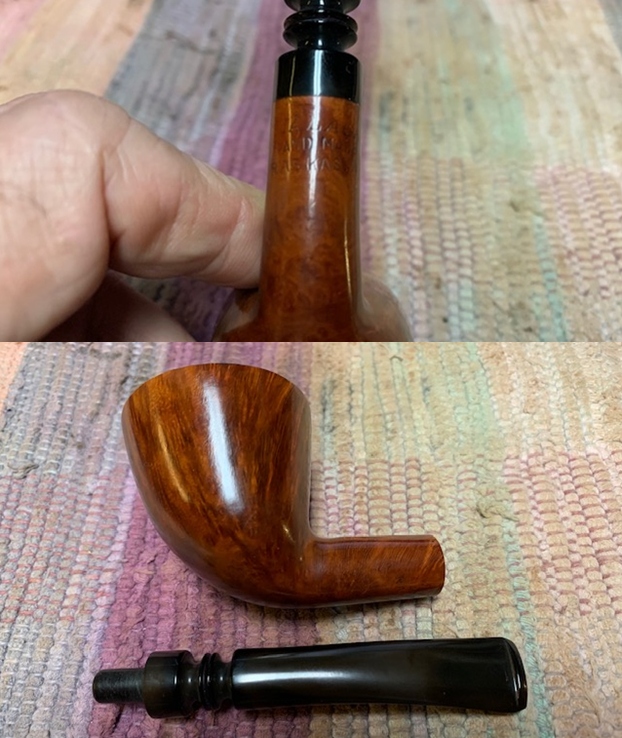
  The stamping on the topside of the shank is clear and readable. It reads as noted above.
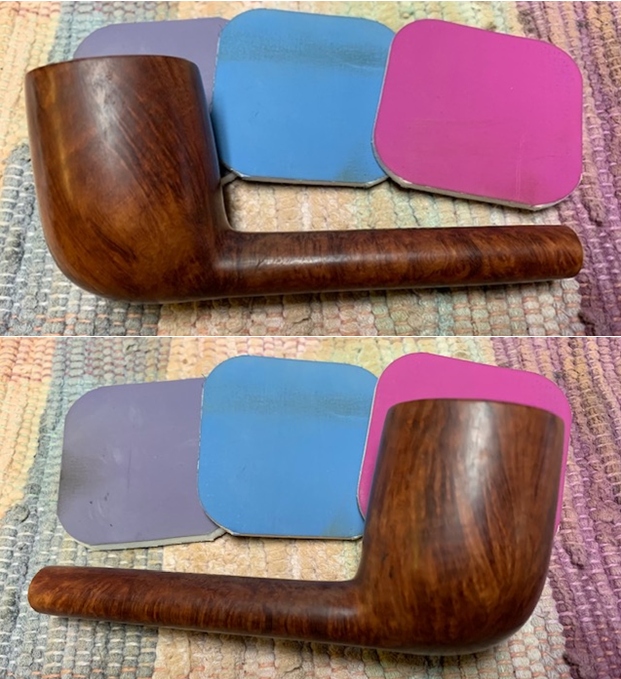
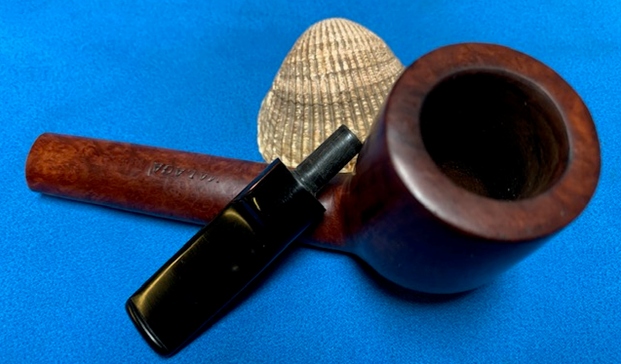
  I removed the taper stem and took a photo of the pipe to give a sense of the whole.
 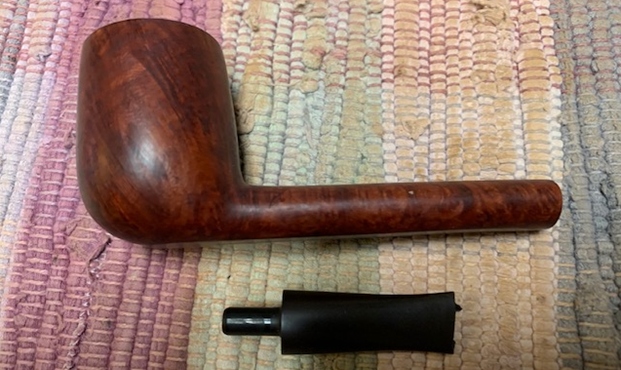 Now it was time to work on the pipe. I decided to work on it by fitting a new stem on the shank. I went through my can of stems and found an acrylic slight saddle stem that was the perfect length and the tenon fit well. The width of the stem was slightly bigger than the shank. The fit on the upper and lower side was perfect.
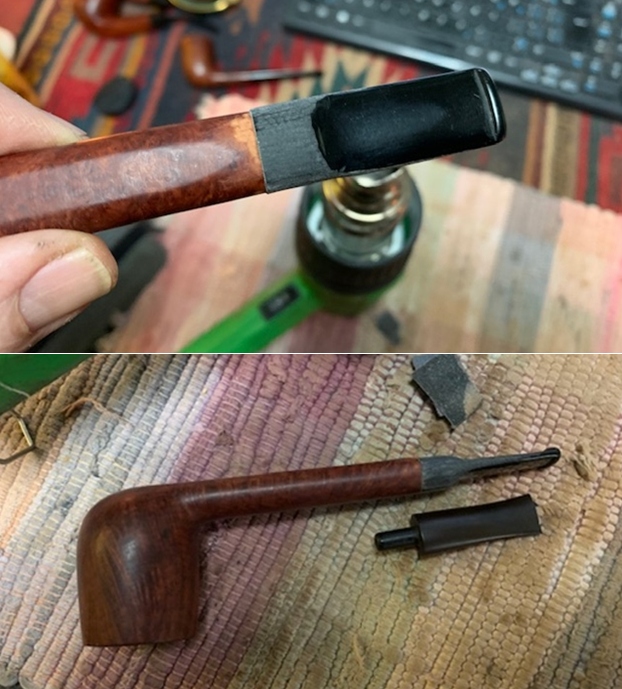
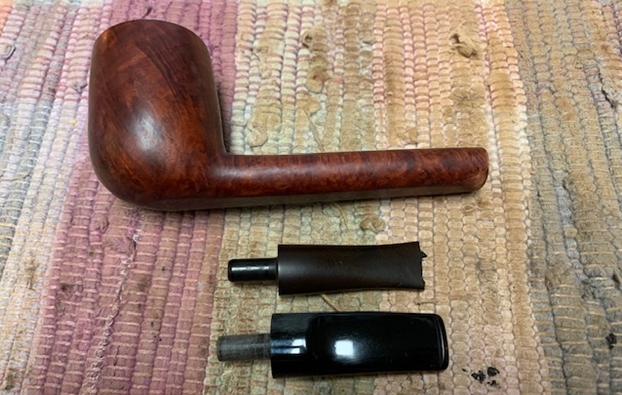 I sanded the tenon slightly so that fit would be snug in the shank. Once I had removed a little bit of the diameter with 220 grit sandpaper I put it on the shank and took a photo.
 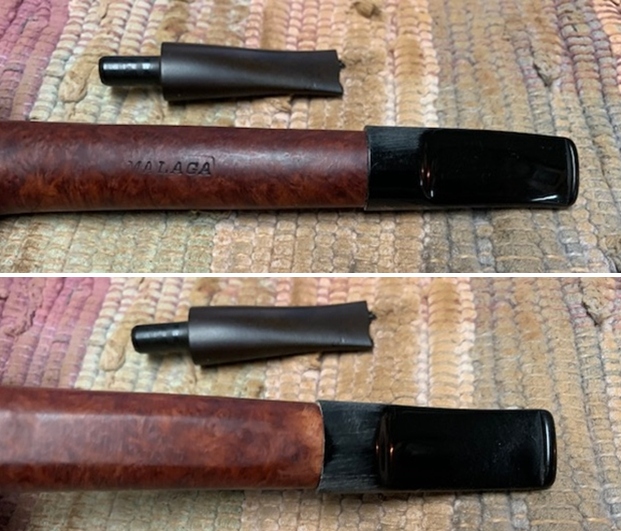 I started sanding it with 220 grit sandpaper to start reshaping the stem to fit the shank. I took photos of fit of the stem at this point.
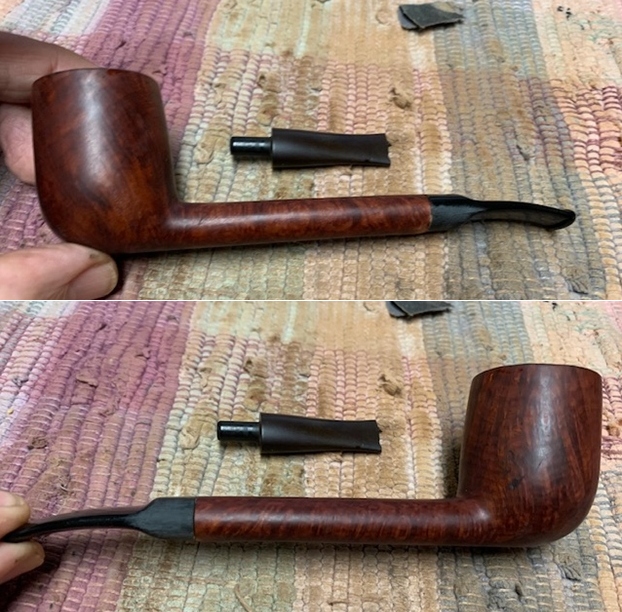 I heated the stem with a heat gun to remove the bend in the stem. I heated it until it had softened and then carefully straightened it out.
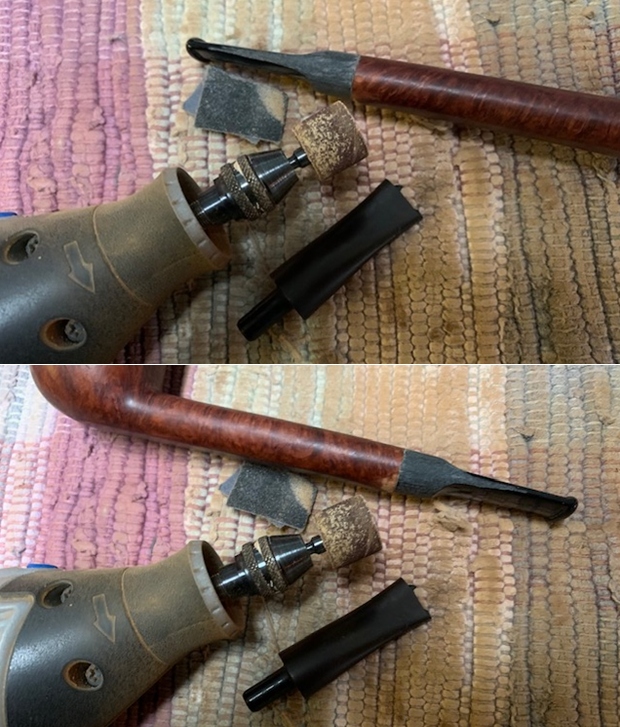
  I continued to sand the excess diameter of the stem to fit it to the shank. I took photos of the stem once I had finished with the Dremel and sanding drum. It is very close to fitting and sanding it with 220 grit sandpaper will clean up the fit.
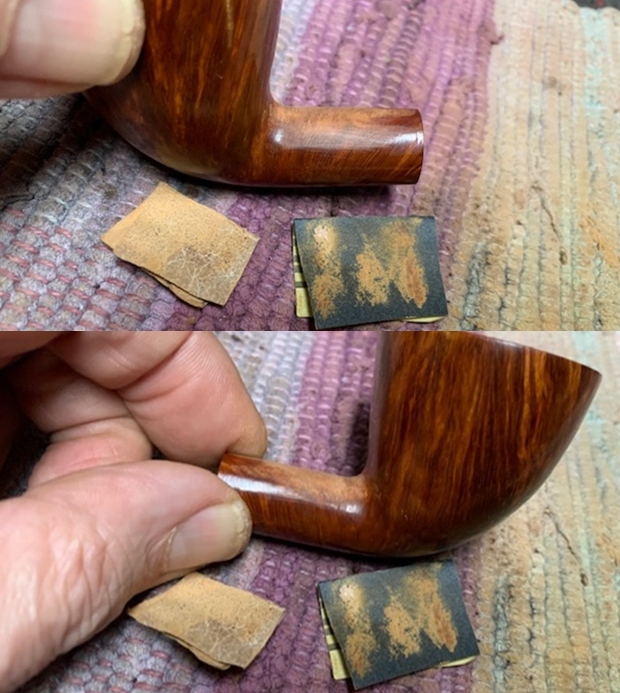
  I sanded it with a folded piece of 220 grit sandpaper to fit it to the shank. I sanded the briar and the stem to get a smooth transition between the stem and the shank.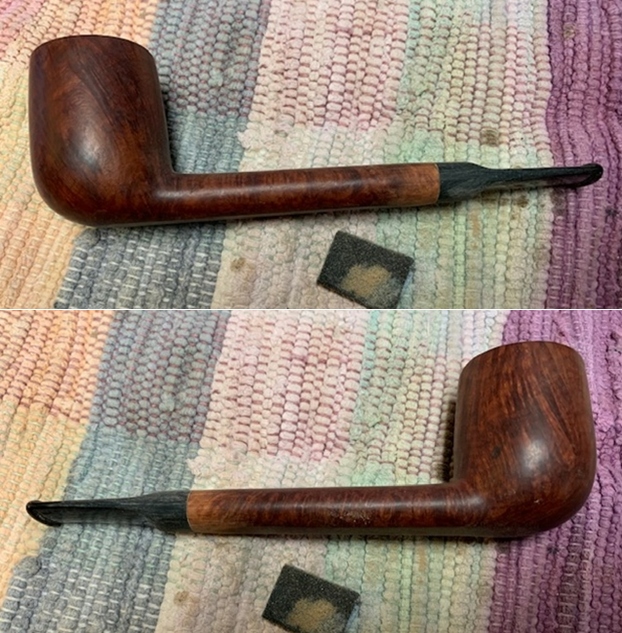
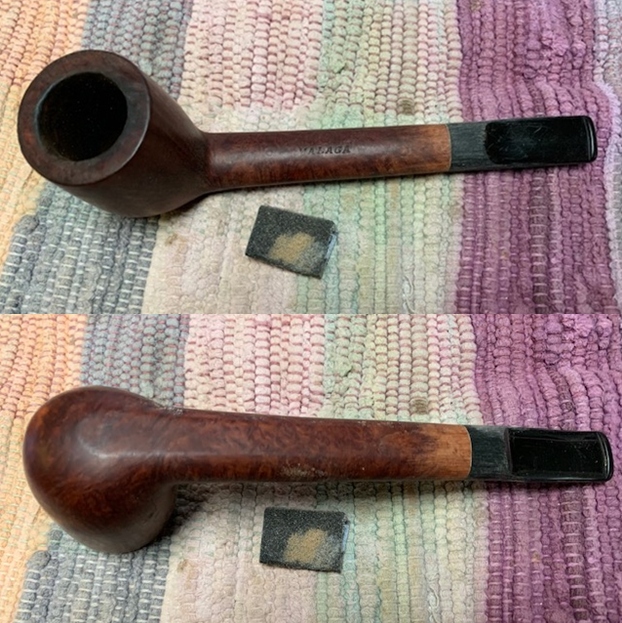 I took some closeup photos of the fit of the stem to the shank after I sanded it with some more 220 grit sandpaper and started the polishing with 400 grit wet dry sandpaper.
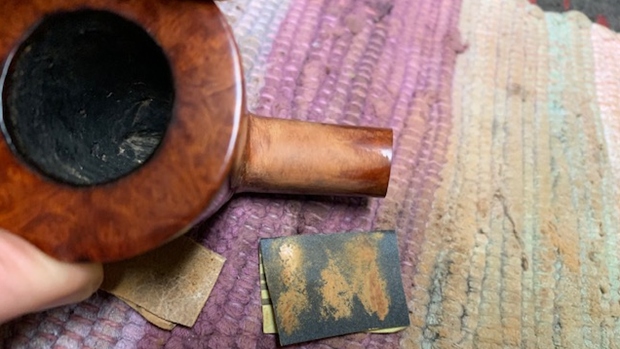
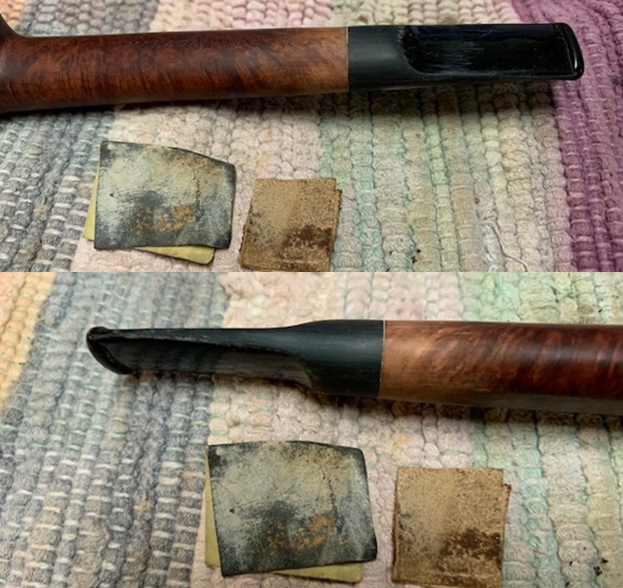 I removed stem from the shank and turned my attention to the inner edge of the bowl. I worked on cleaning up the darkening and the damage on the edge and the rim top with a folded piece of 220 grit sandpaper.
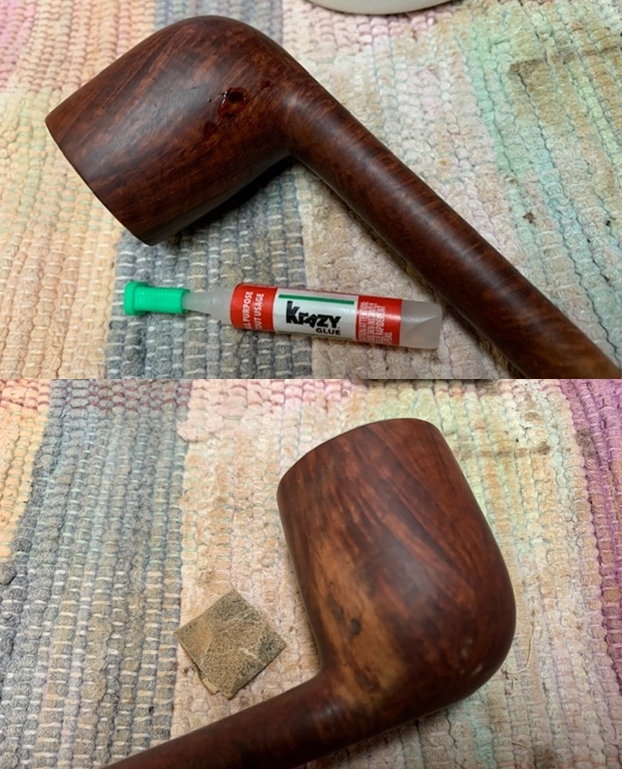
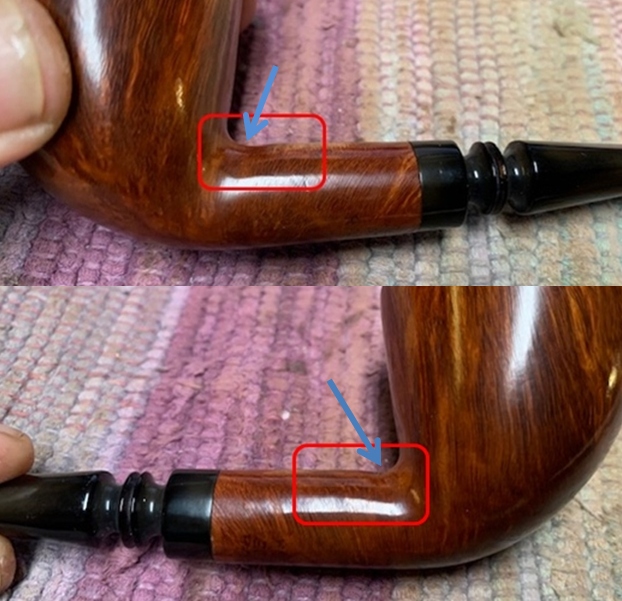
 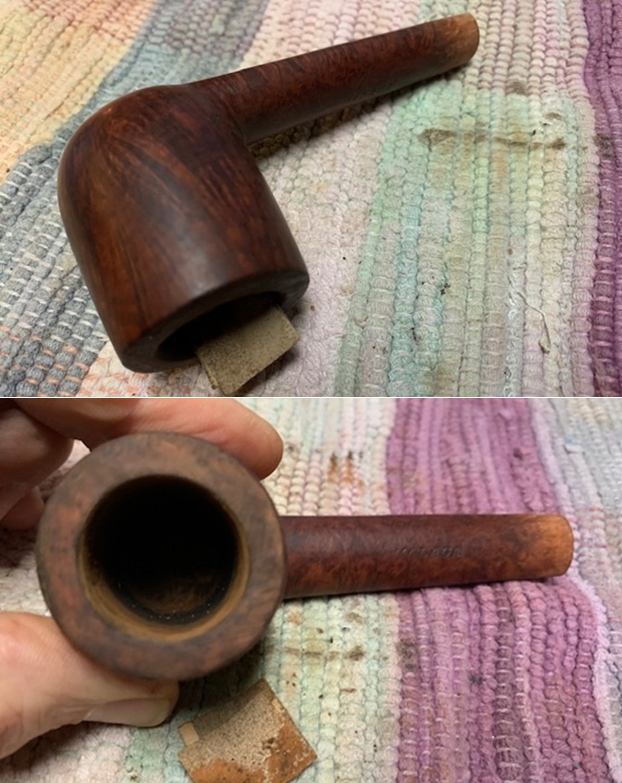 There were two large nicks/chips in the right side of the bowl toward the lower backside of the bowl. I filled them in with clear super glue. Once the glue cured I sanded it smooth with 220 grit sandpaper and blended it into the surrounding briar.
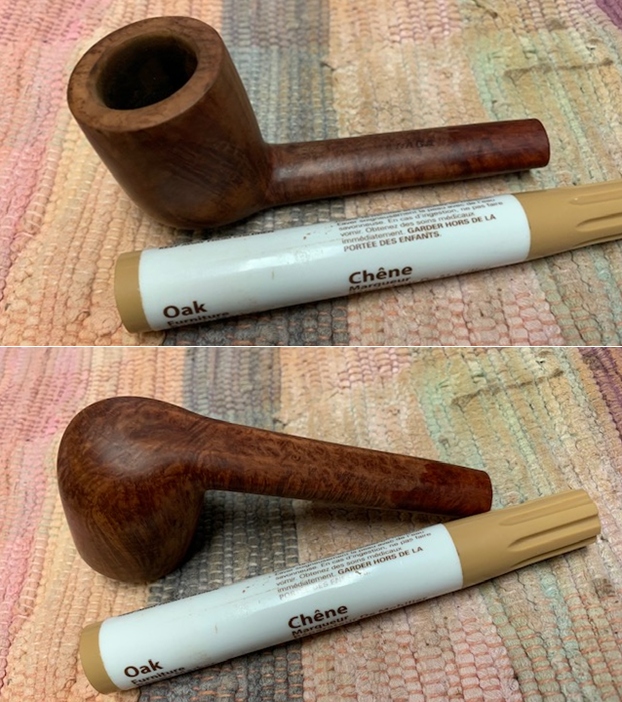
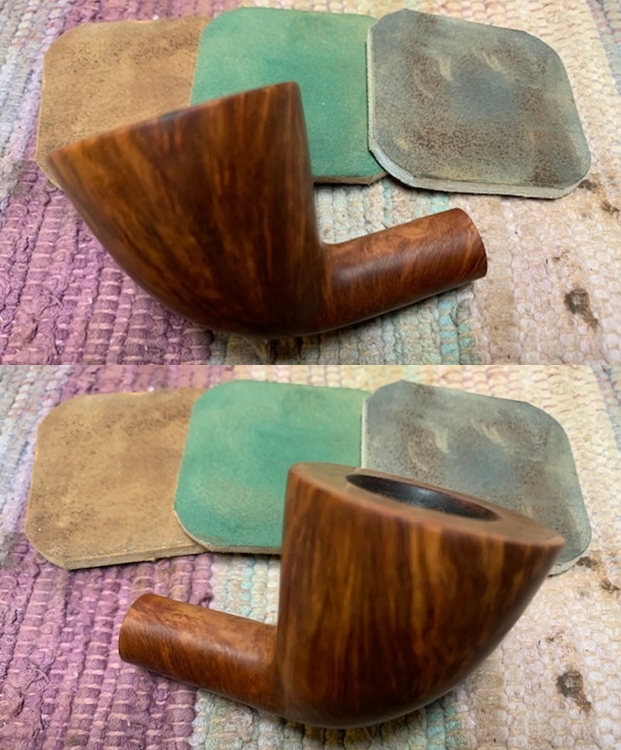
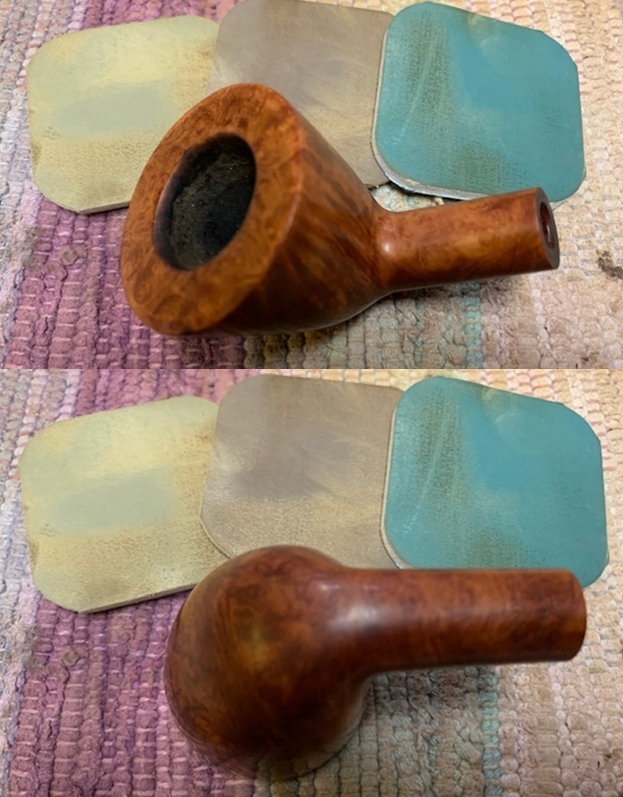
  I used an Oak Stain Pen to touch up the sanded area of the bowl repair and the work fitting the stem to the shank.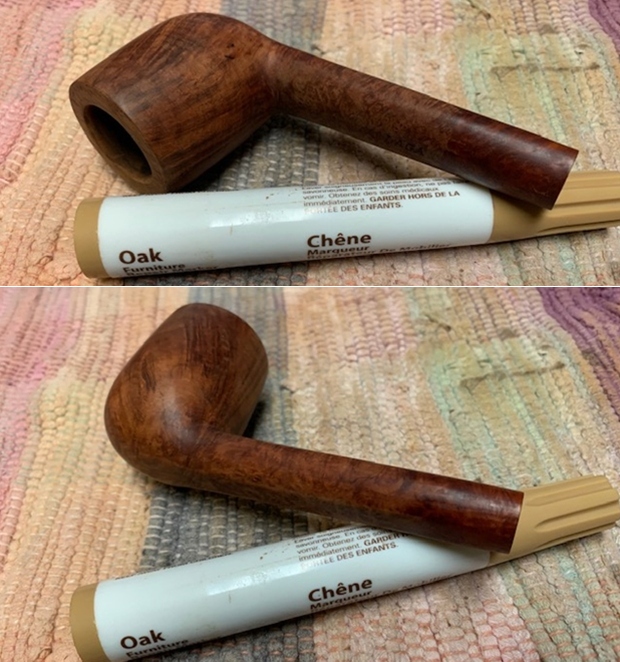
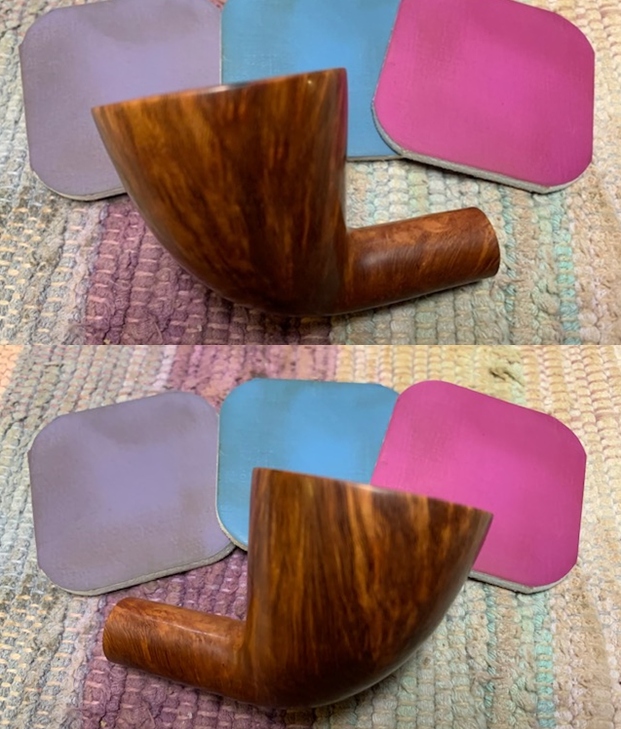
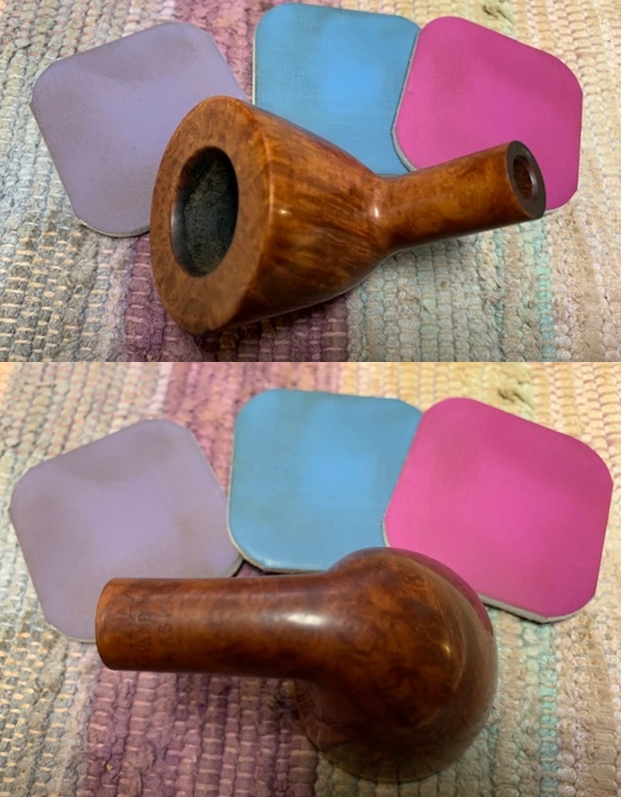
 I polished the briar with micromesh sanding pads – wet sanding with 1500-12000 grit pads and wiping it down after each pad with a damp cloth.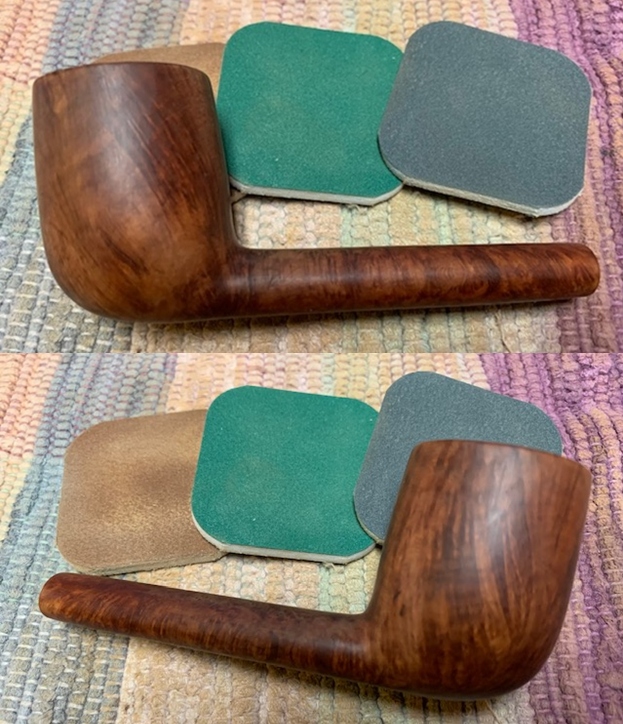
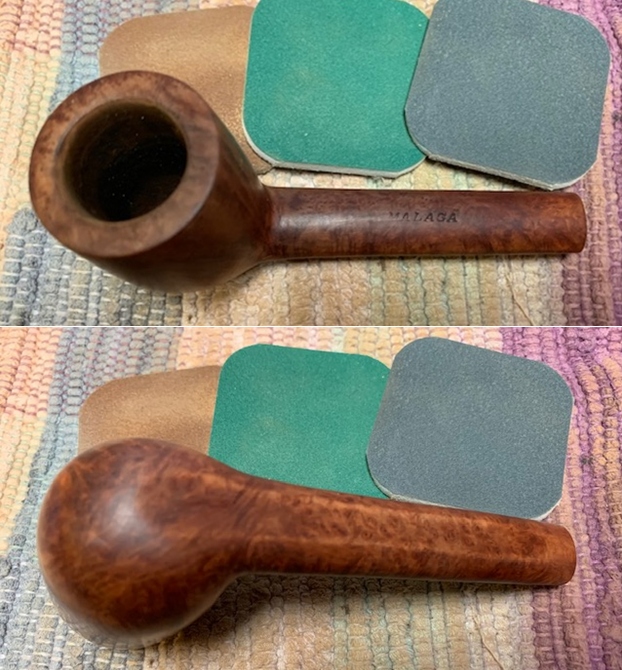
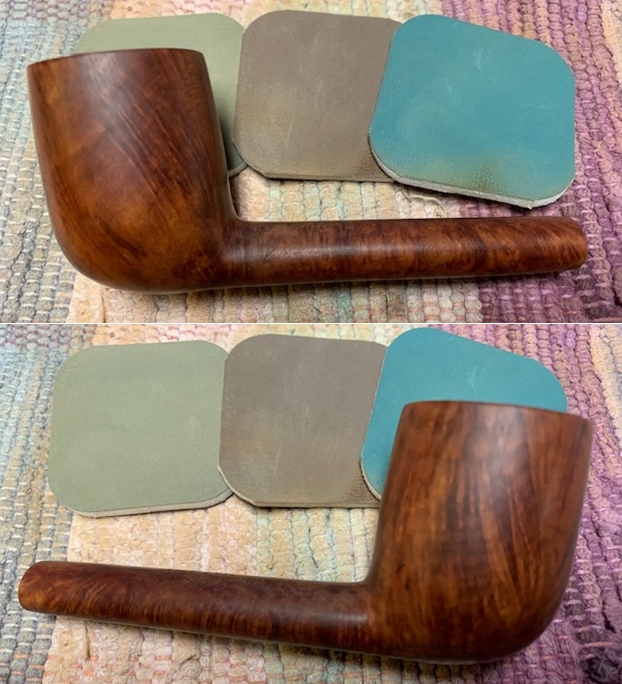
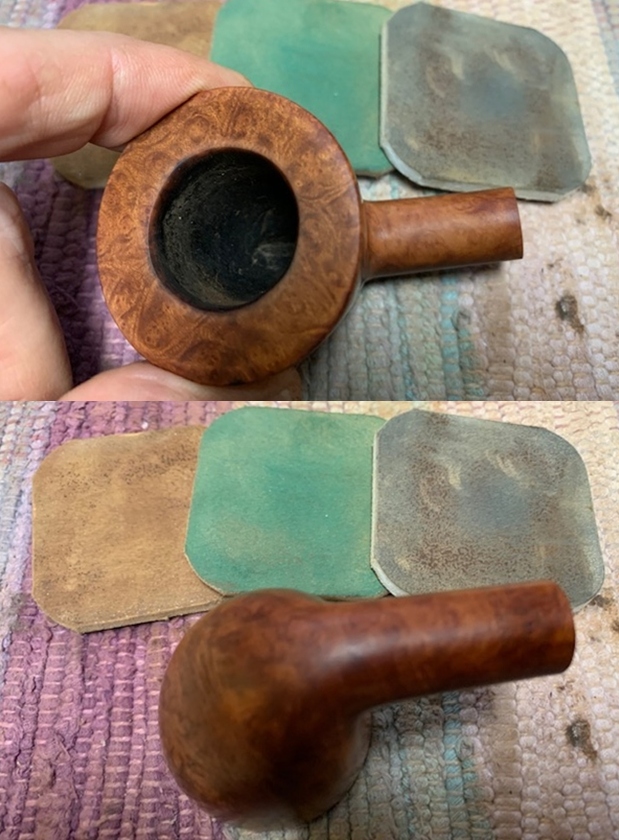
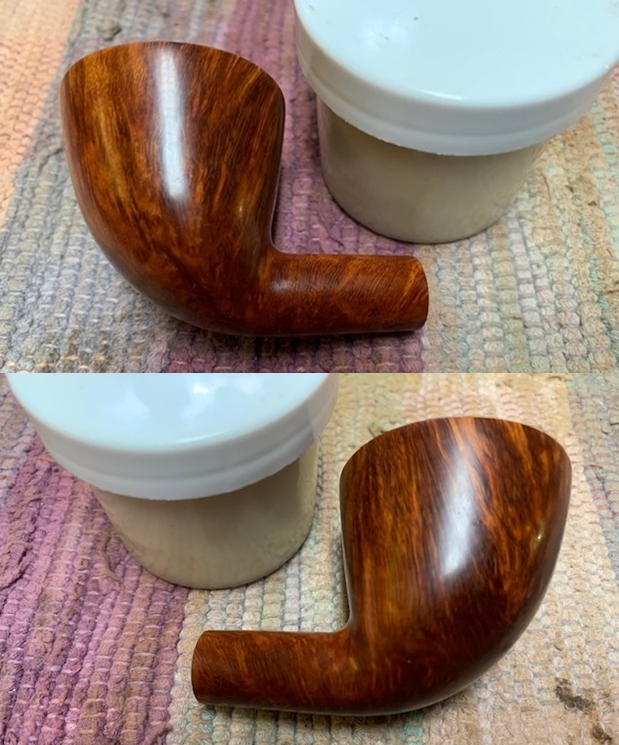
 I rubbed the bowl and shank down with Before & After Restoration Balm. I worked it into the surface of the bowl sides and shank with my fingertips to clean, enliven and protect the briar. I let the balm sit for a little while and then buffed with a cotton cloth to raise the shine. The grain came alive and the finish looked rich.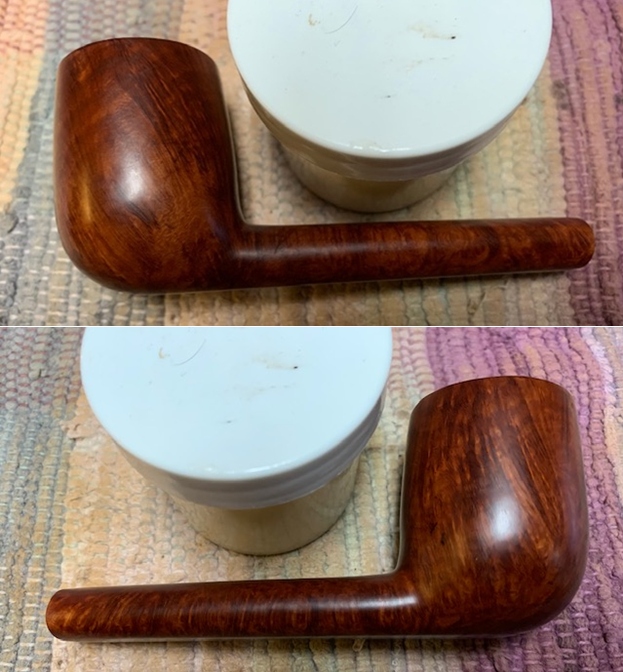
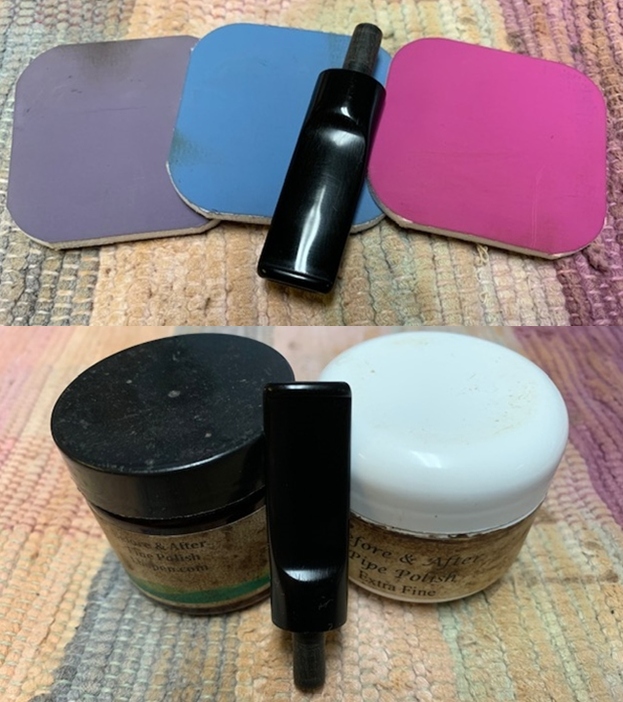
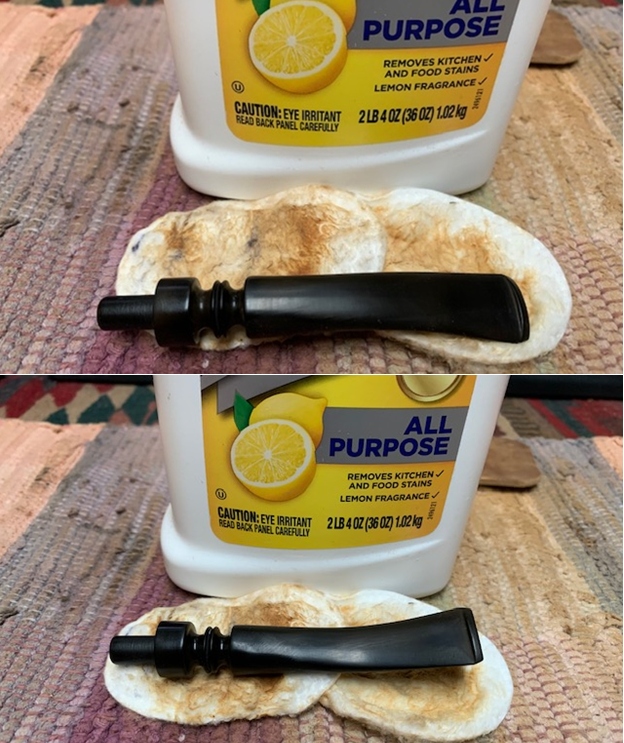
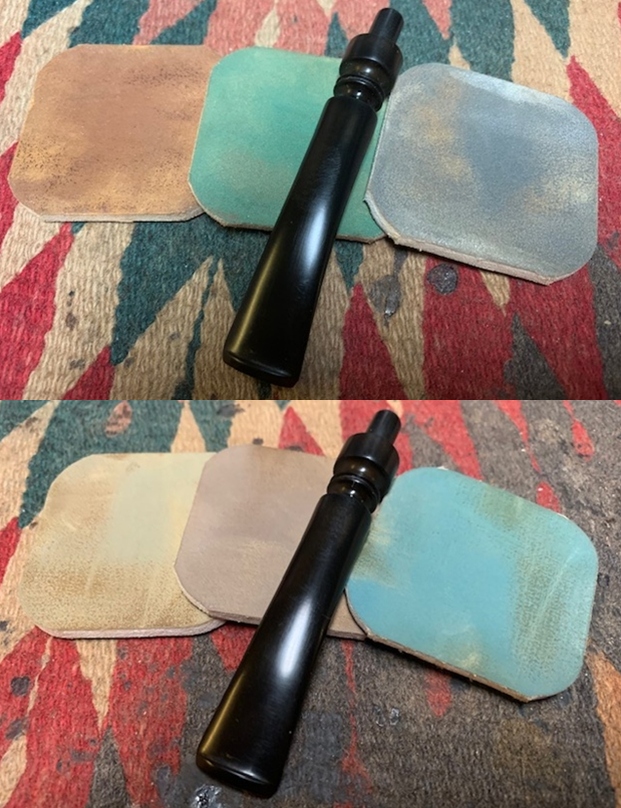
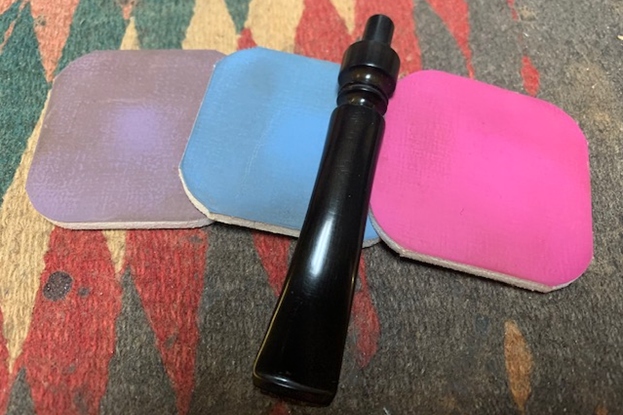
 I polished the acrylic stem with micromesh sanding pads – 1500-12000 grit pads. I wiped it down with Obsidian Oil after each sanding pad (Obsidian Oil does not usually work with acrylic but I used it anyway as it gives traction to sanding with the next pad). I used Before & After Pipe Polish – both Fine and Extra Fine to further polish the stem.
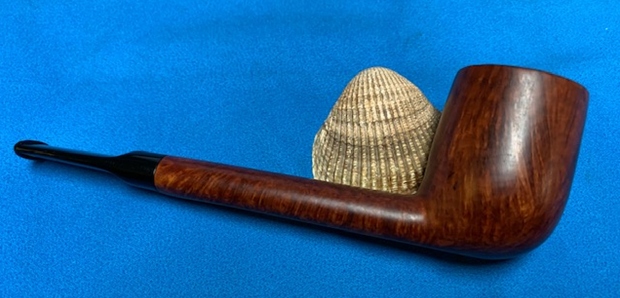
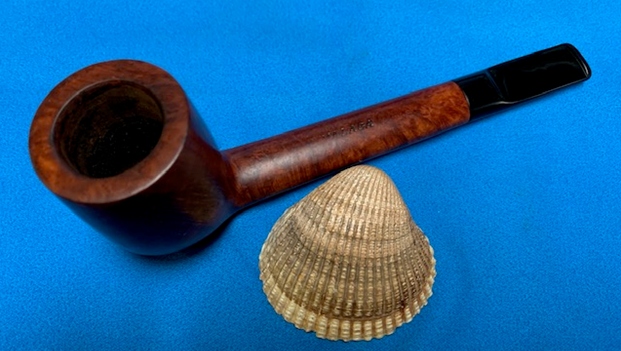
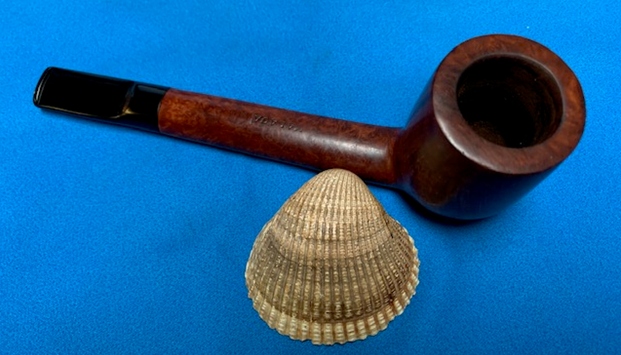
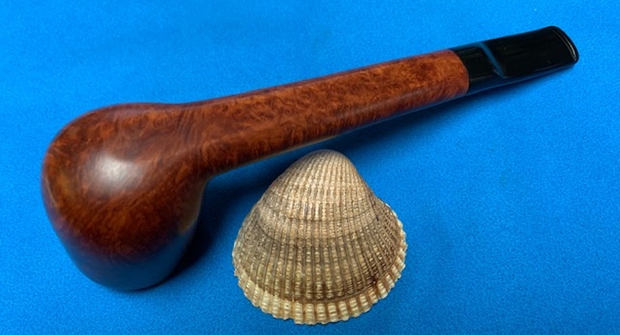
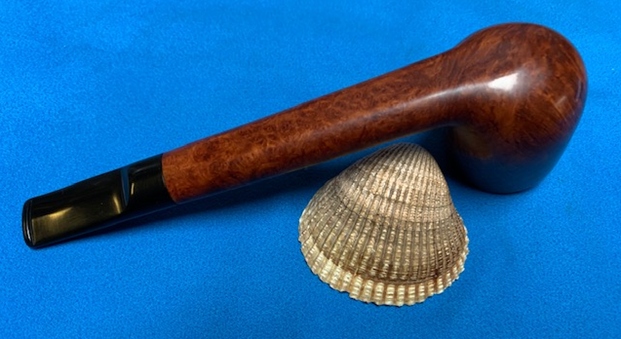
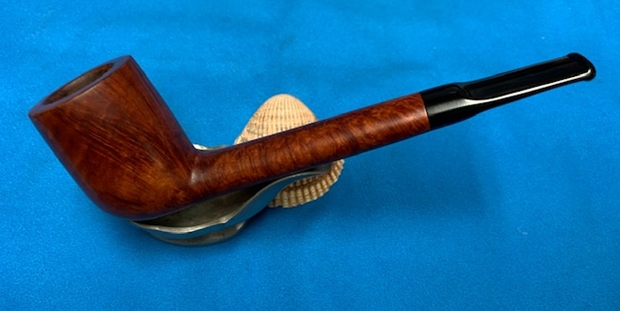
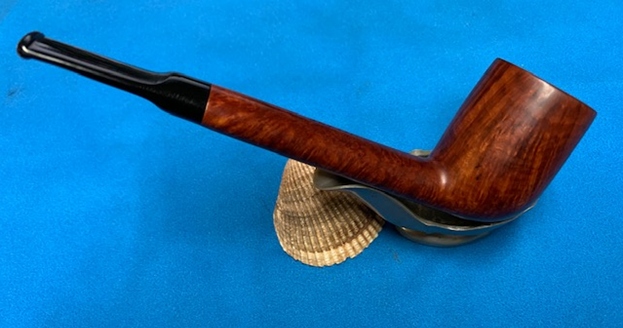
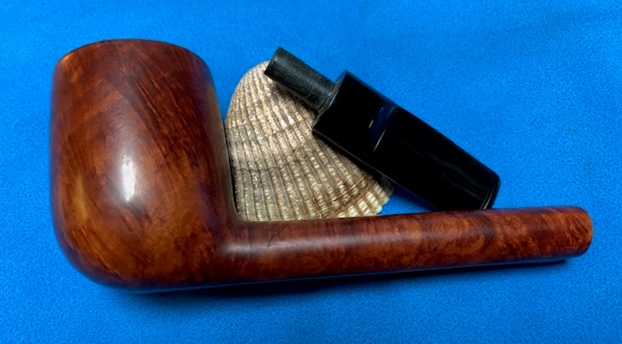
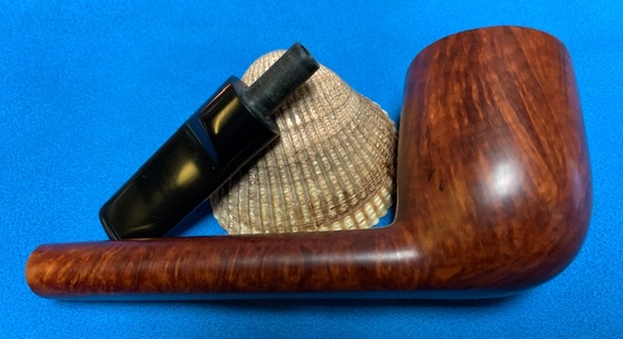
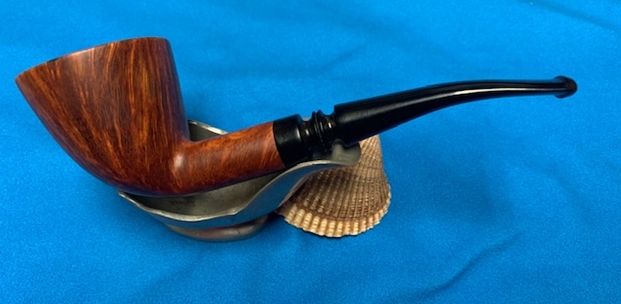
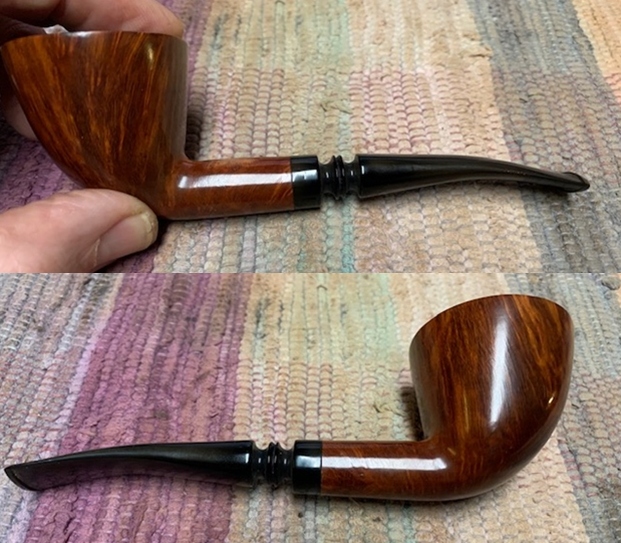
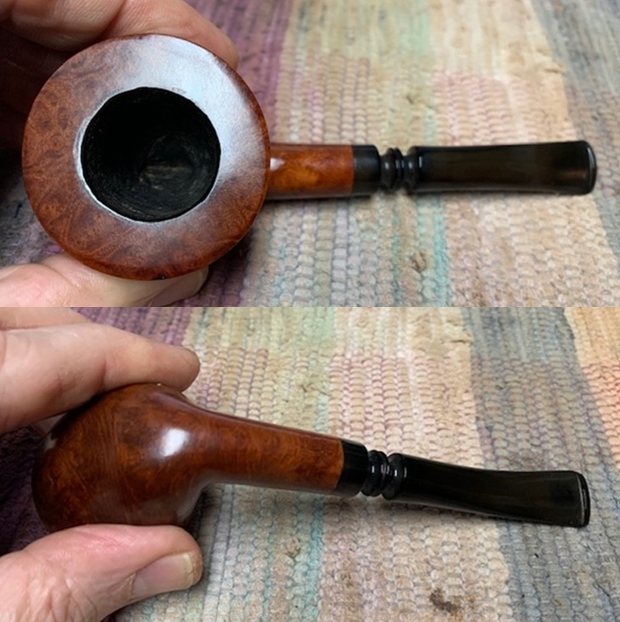
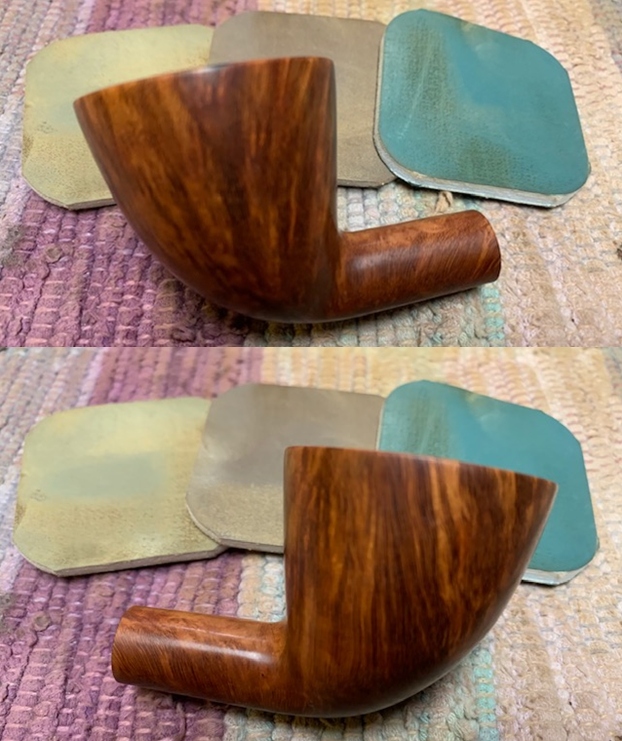
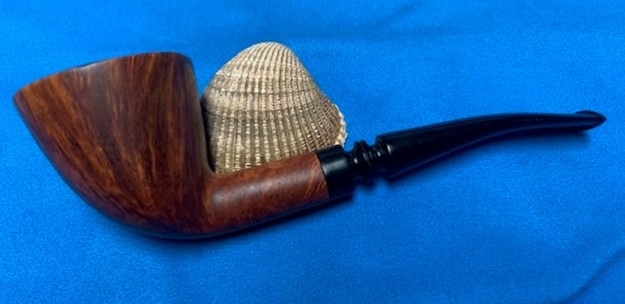
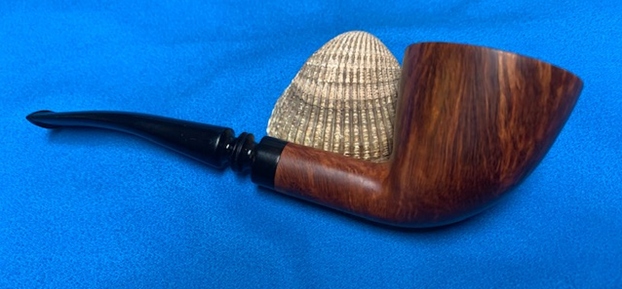
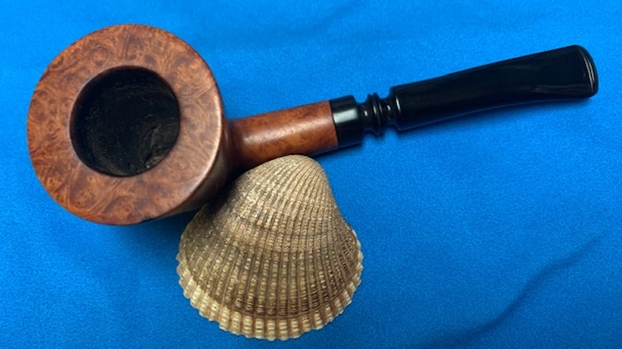
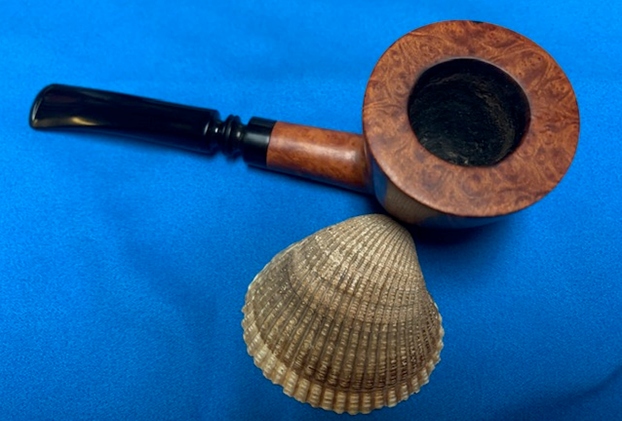
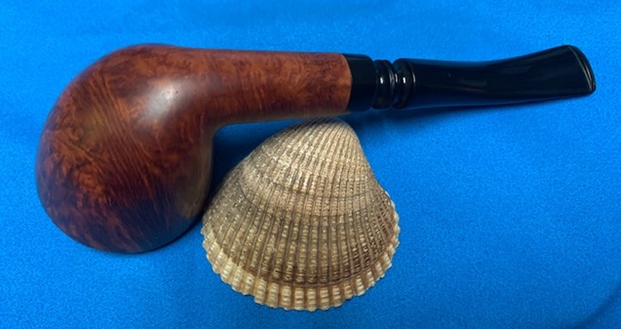
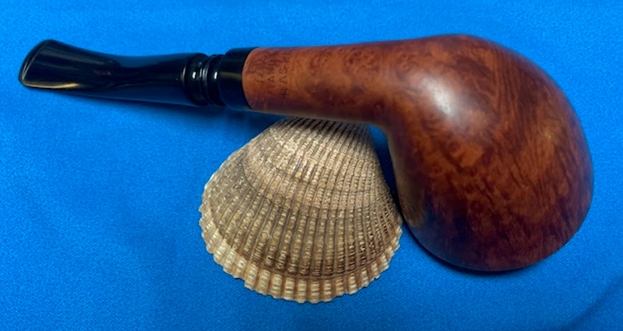
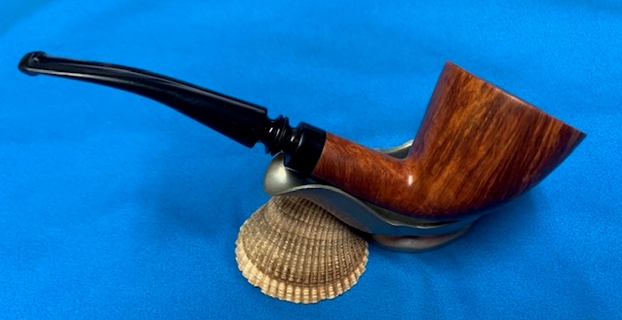
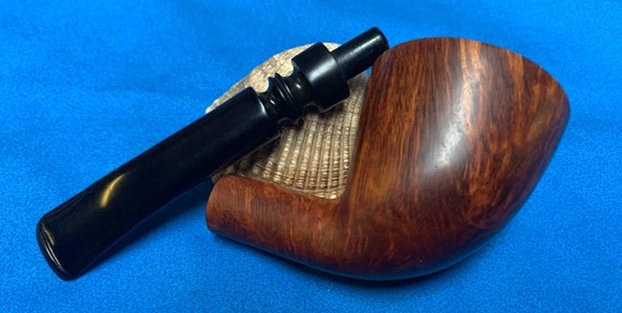
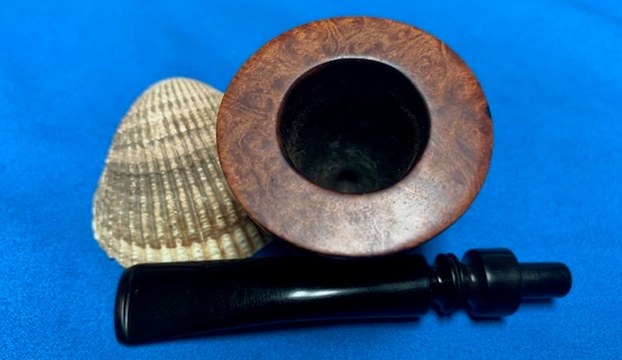
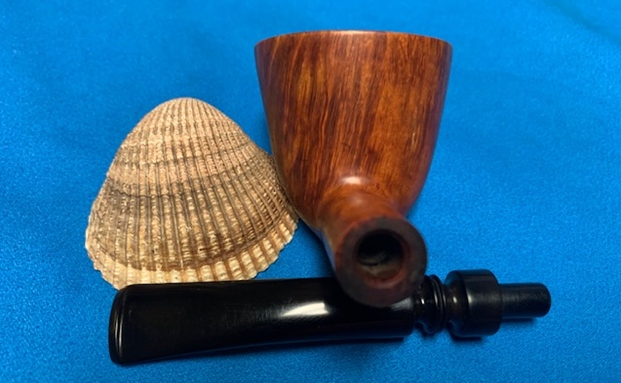
 This restemmed Malaga Canadian with a acrylic saddle stem turned out to be a real beauty. The carver really maximized the grain with the shape of the pipe. I polished stem and the bowl with Blue Diamond polish on the buffing wheel and the finish just popped and came alive. I gave the bowl and the stem multiple coats of carnauba wax. I buffed the pipe with a clean buffing pad to raise the shine. I hand buffed it with a microfiber cloth to deepen the shine. The pipe polished up pretty nicely. The pipe took on life with the buffing. The rich oil cured colour works well with the polished acrylic stem. The finished pipe has a rich look that is quite catching. Have a look at it with the photos below. The shape, finish and flow of the pipe and stem are very well done. The dimensions are Length: 6 inches, Height: 2 inches, Outside diameter of the bowl: 1 ½ inches, Chamber diameter: 7/8 of an inch. The weight of the pipe was 47g/1.66oz. I will be putting it on the rebornpipes store shortly. Thanks for reading this blog and my reflections on the pipe while I worked on it. There are many more to come!




 rebornpipes