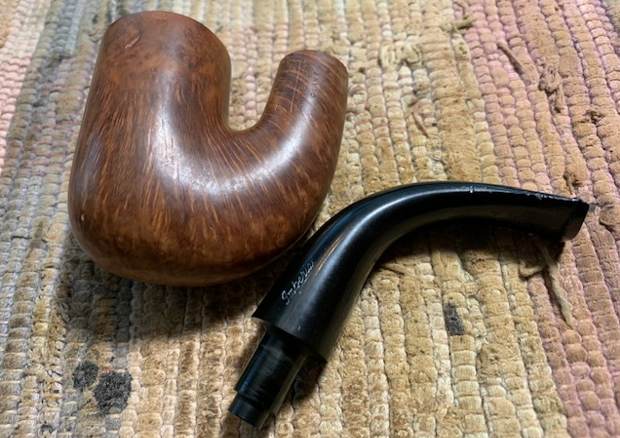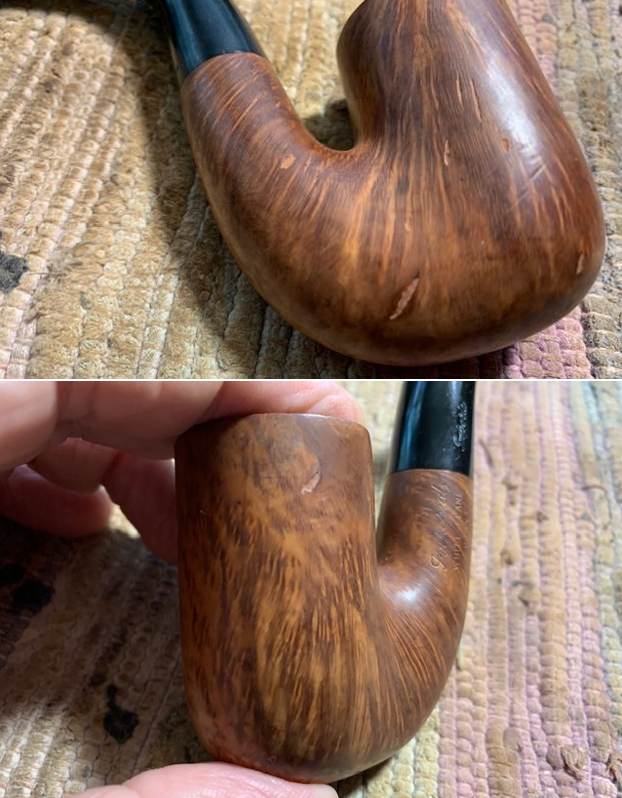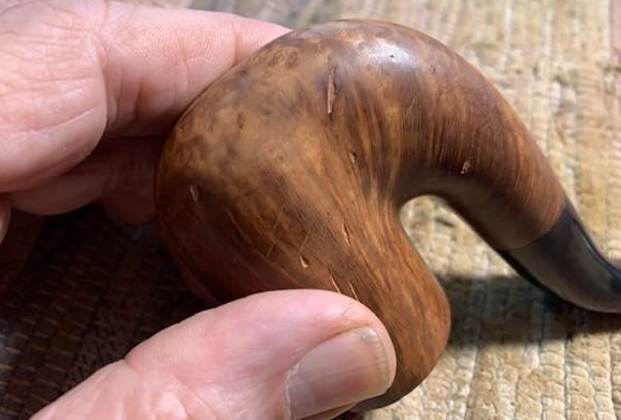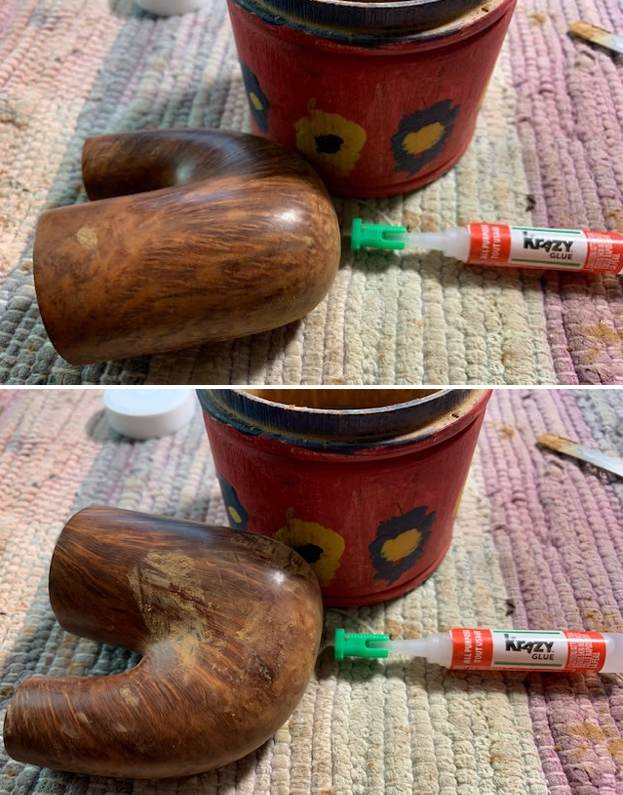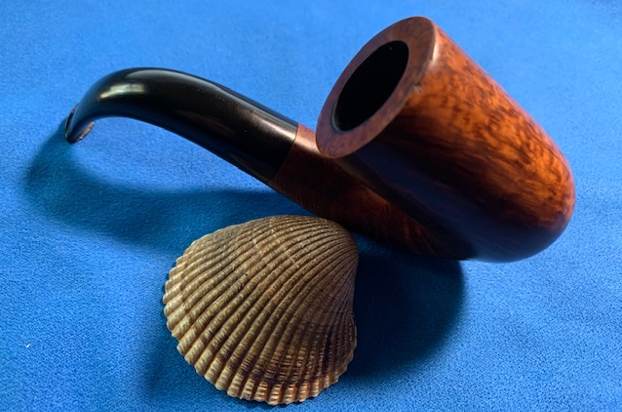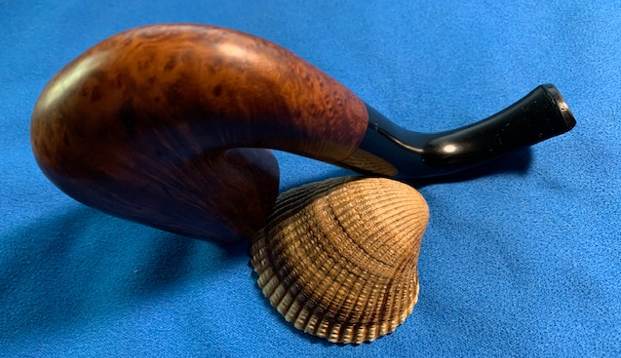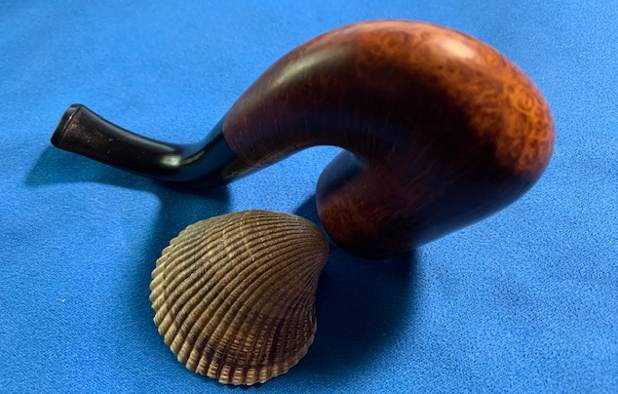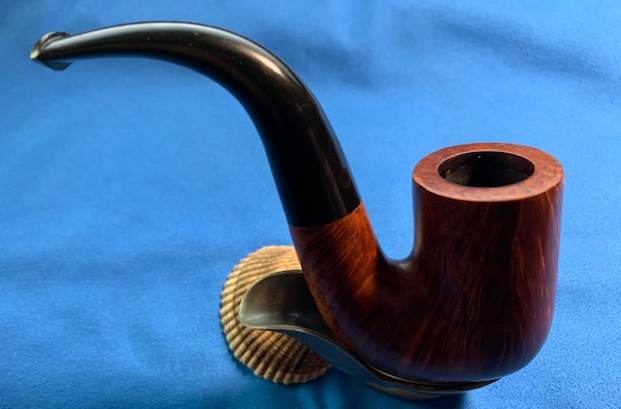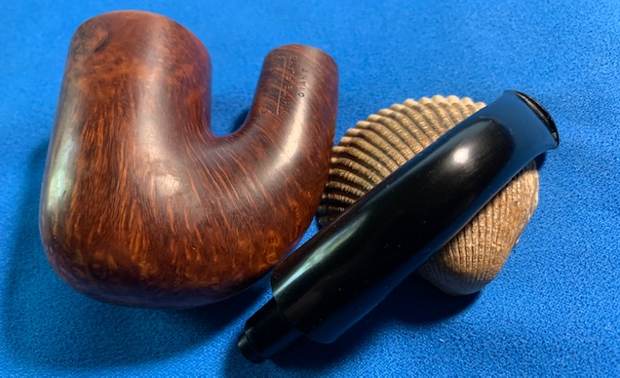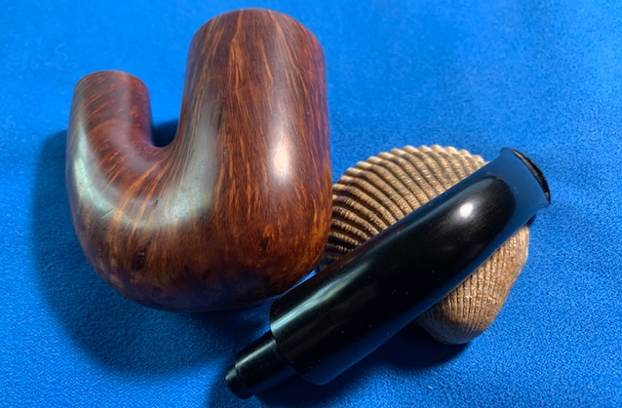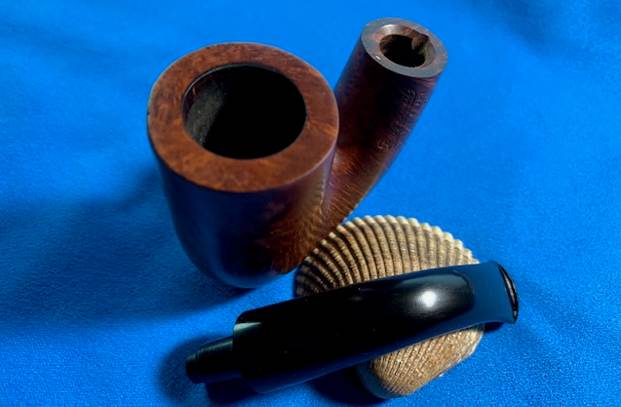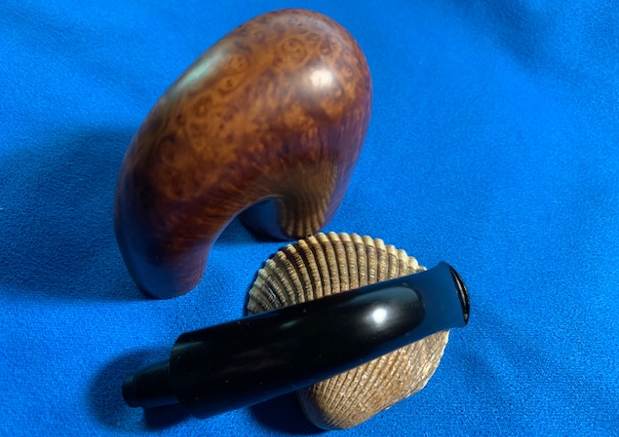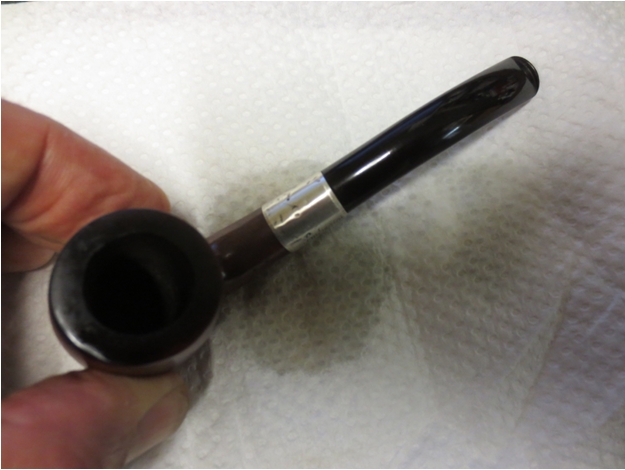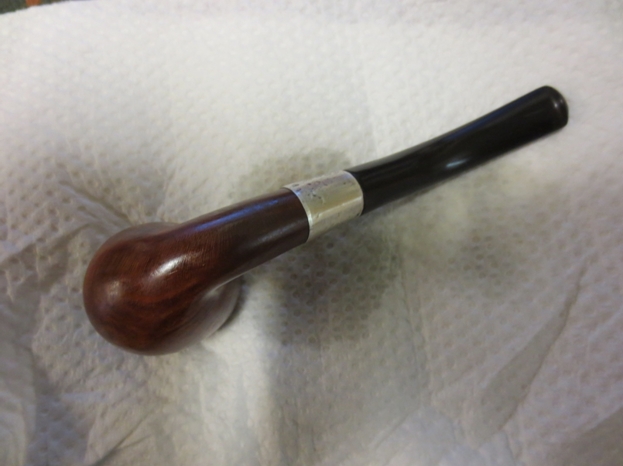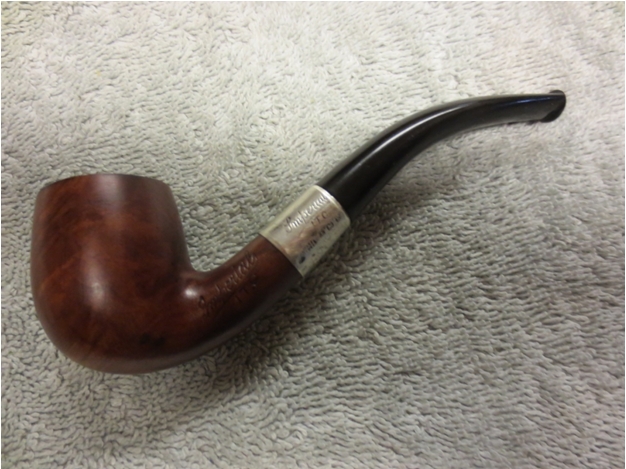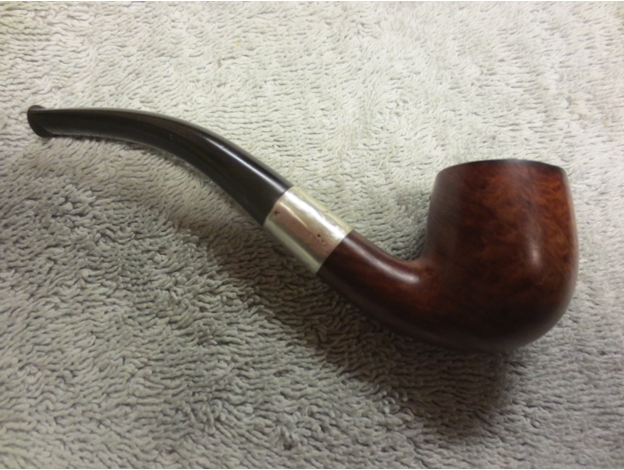
Tag Archives: Imperial Pipes

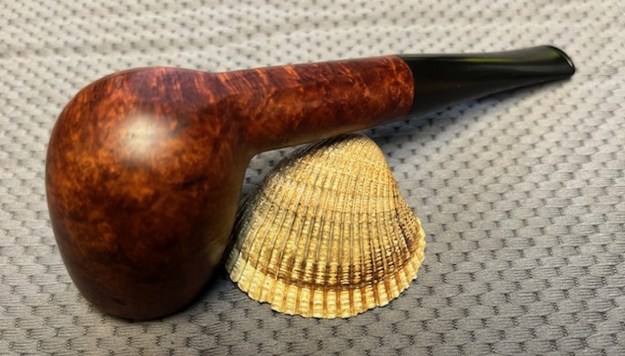
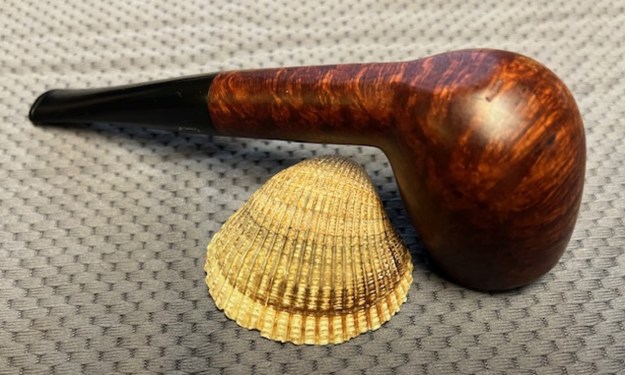
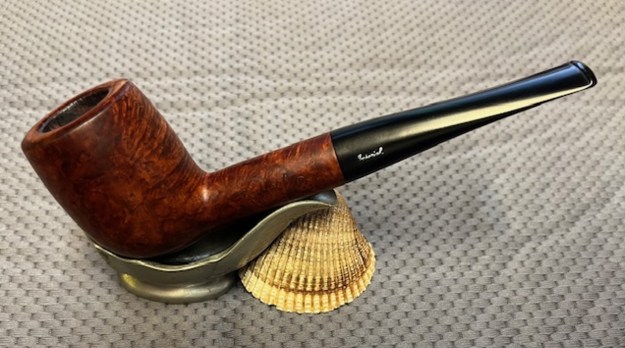
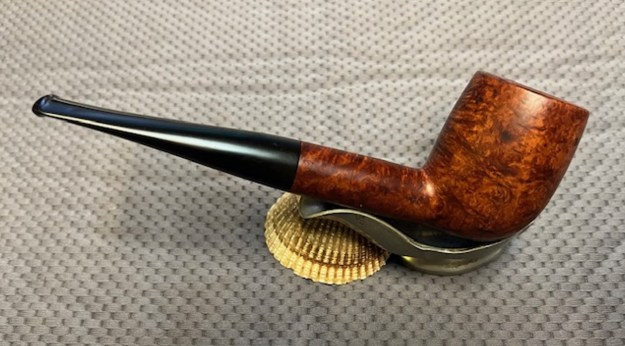
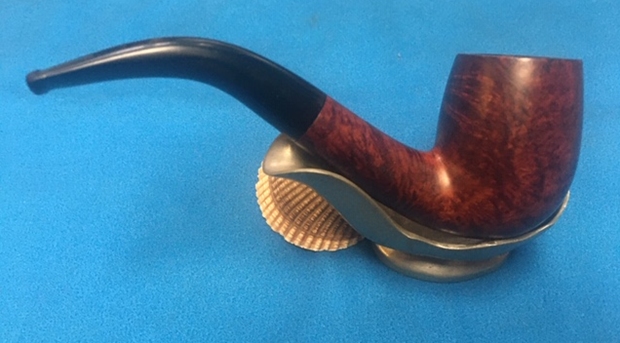
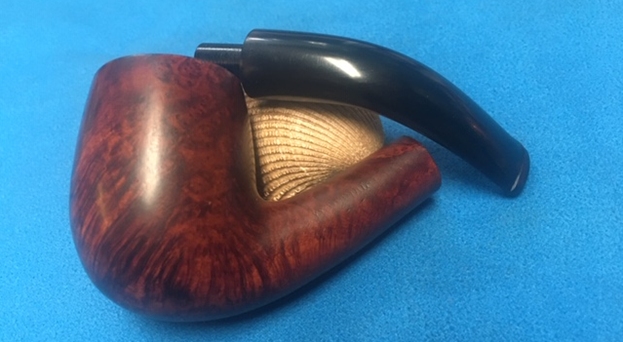
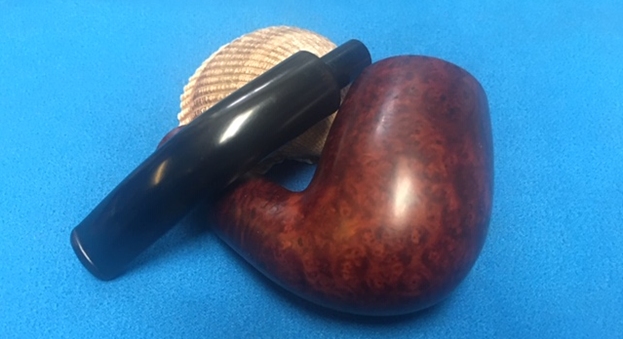
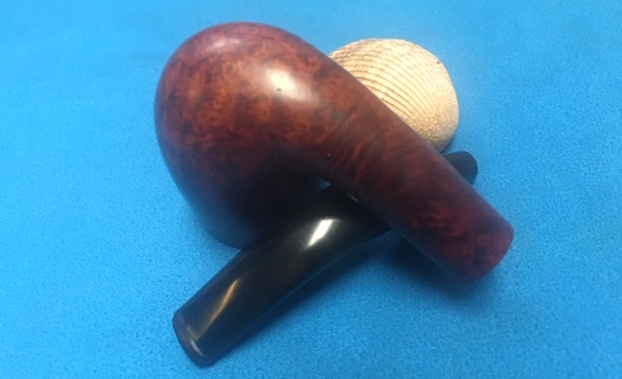
Restoring a Beautiful Imperial Old Bruyere 188 Chunky Billiard


By Steve Laug

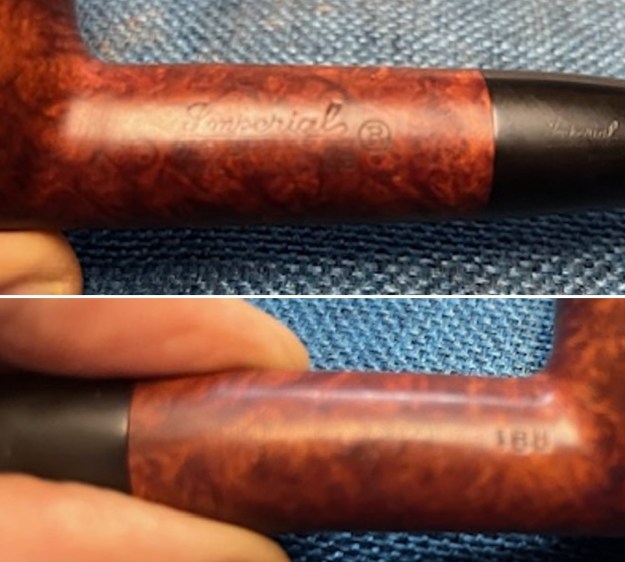
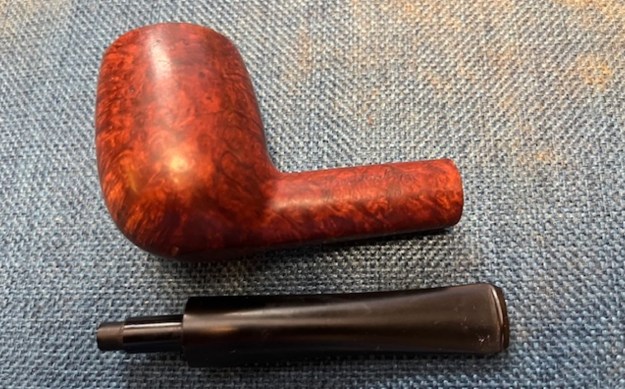
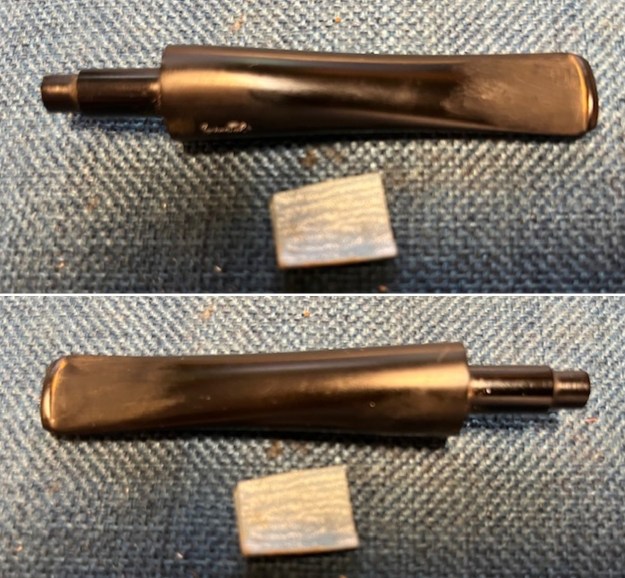
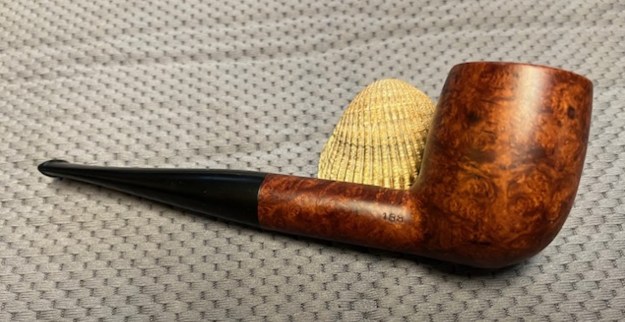
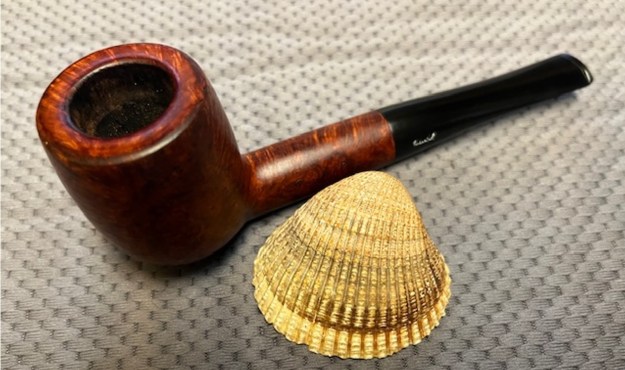
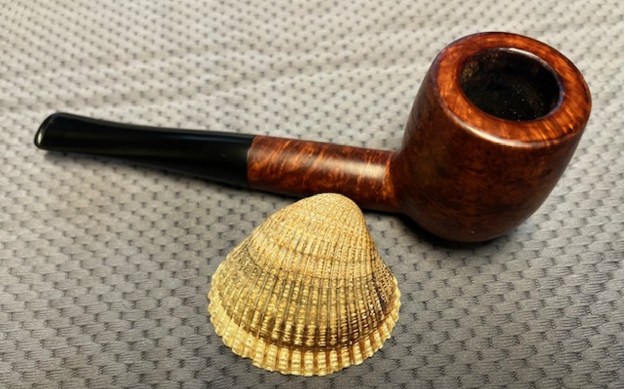
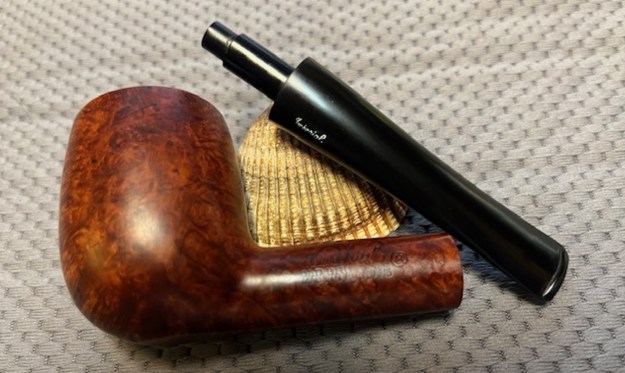
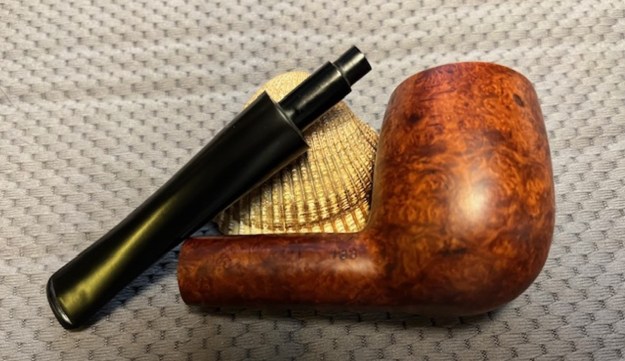
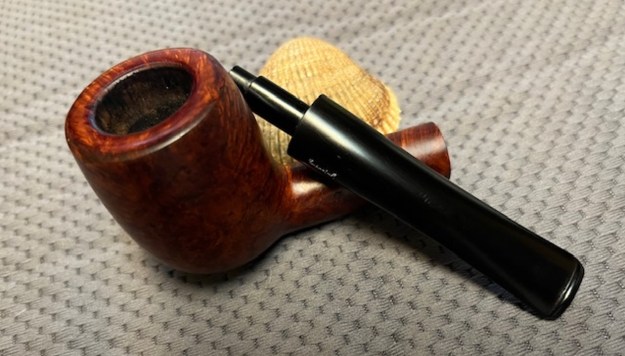
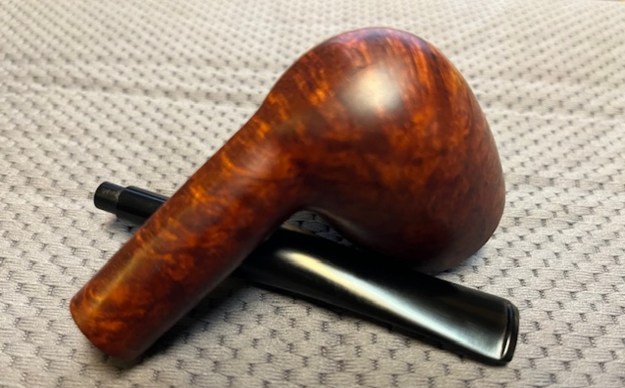
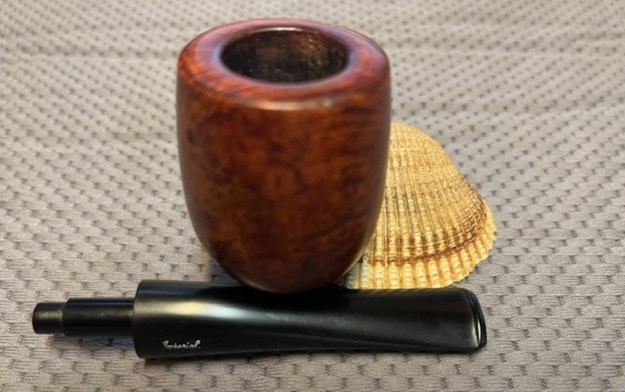
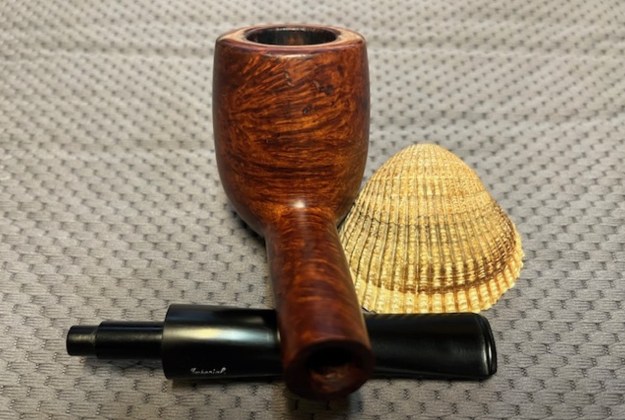
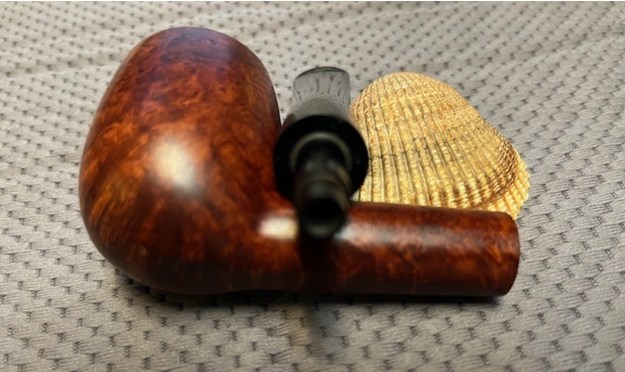
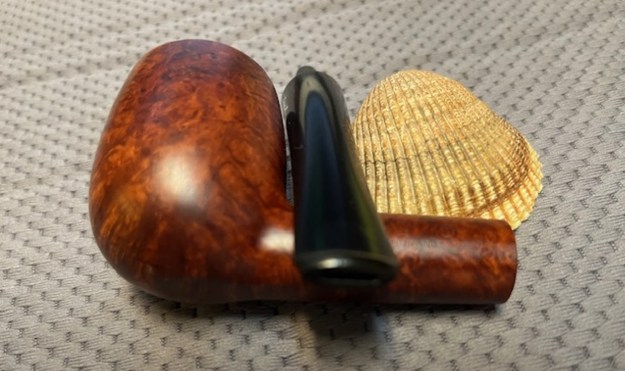
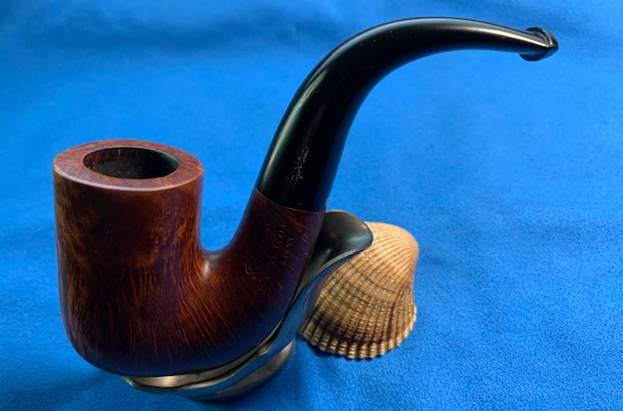
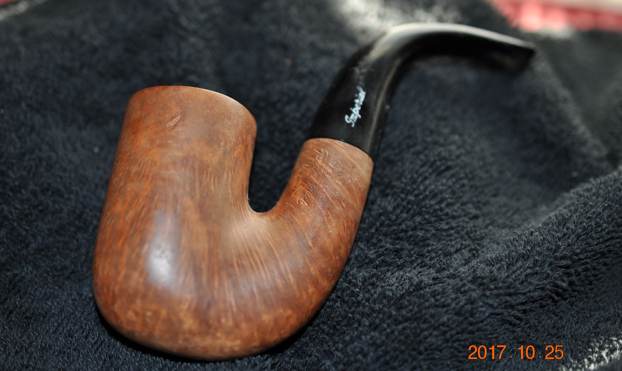
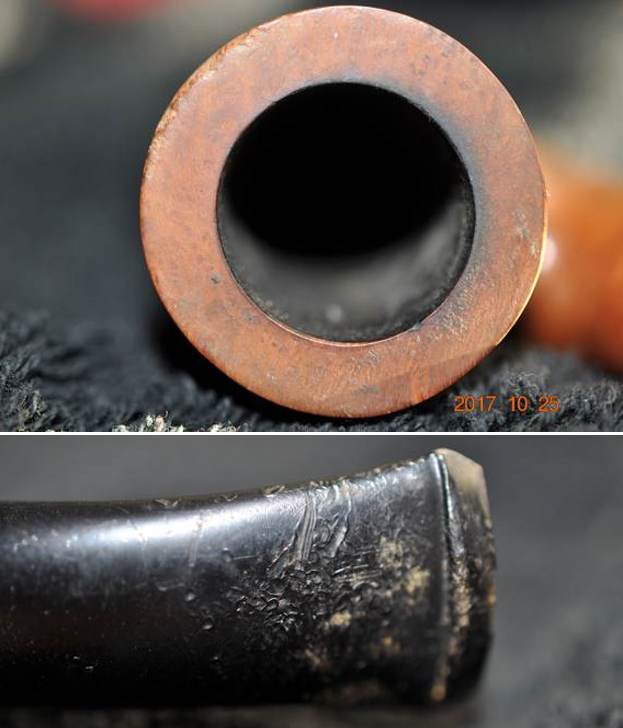
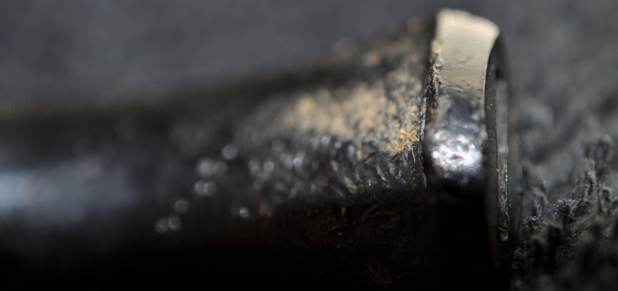
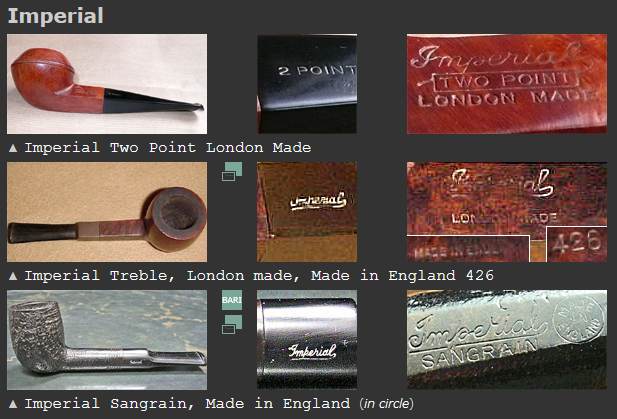
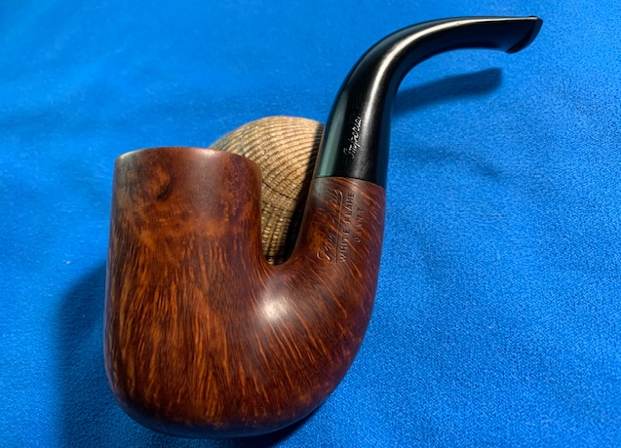
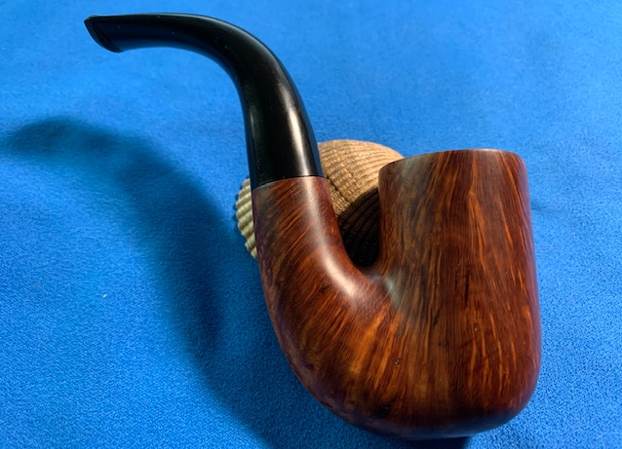
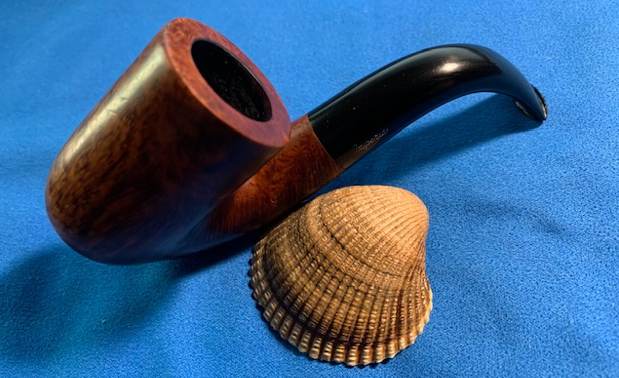
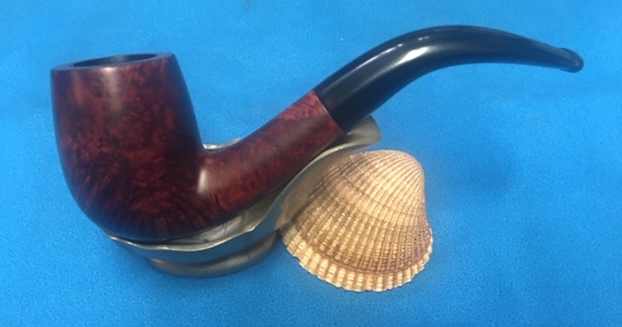
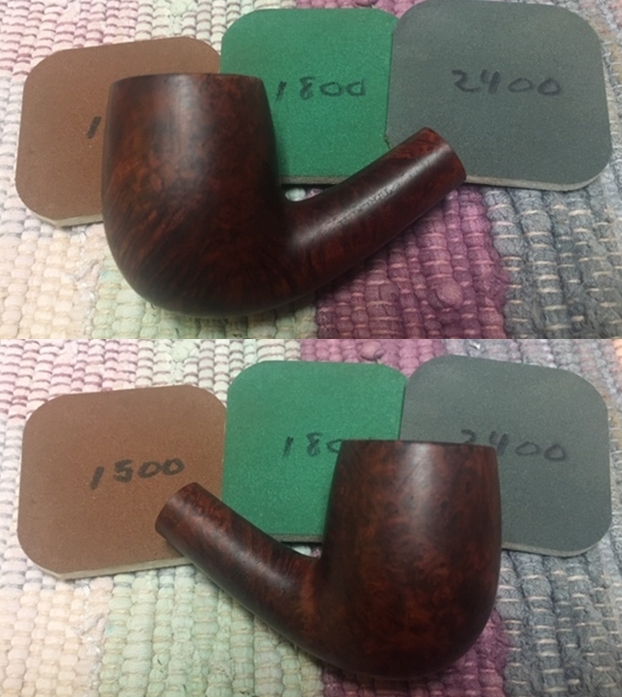
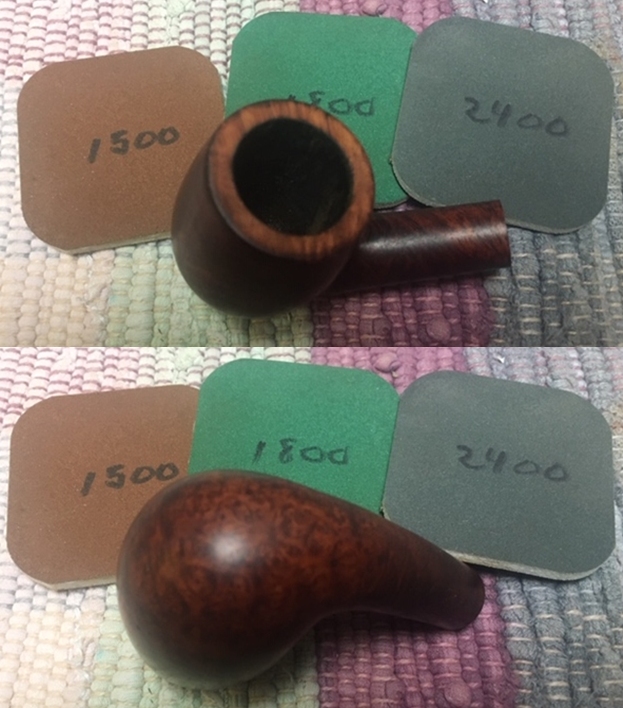
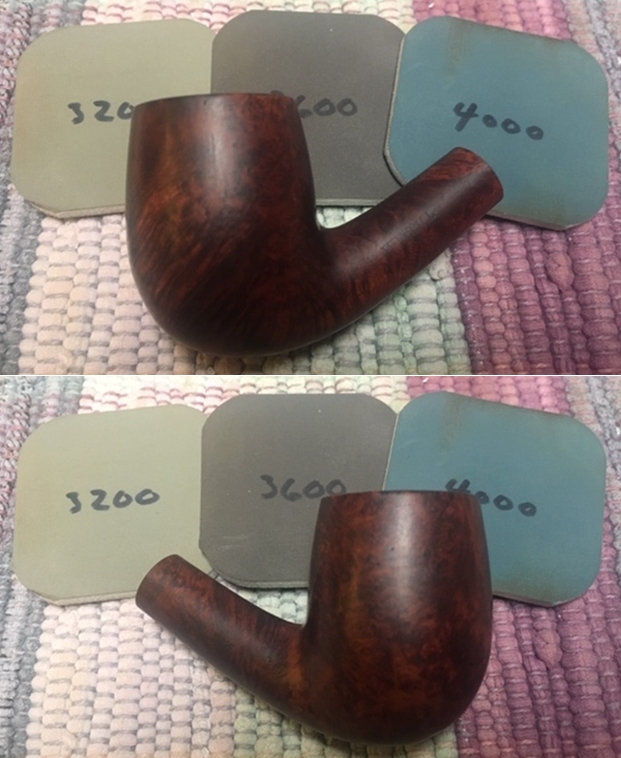
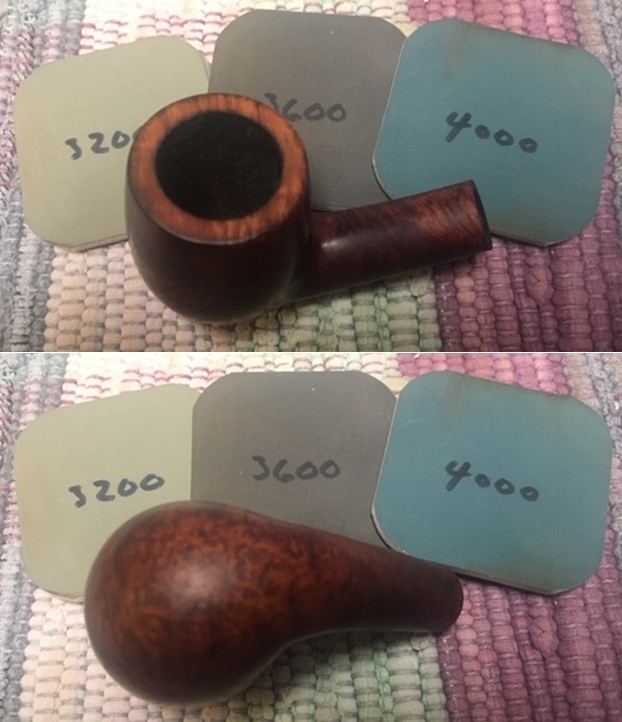
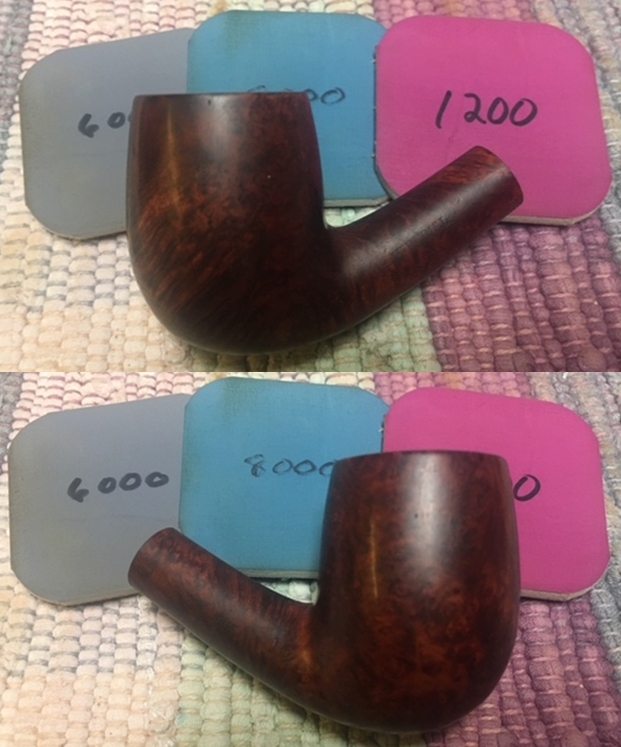
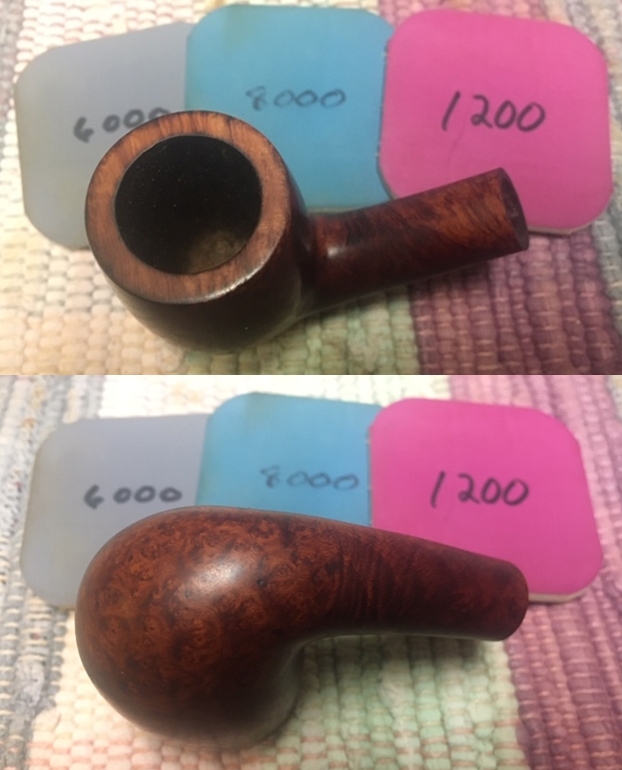
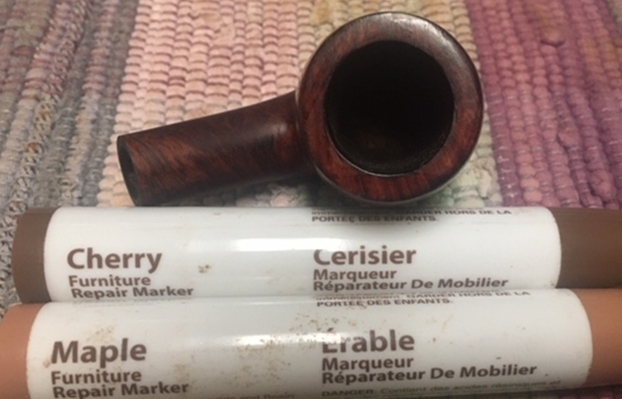
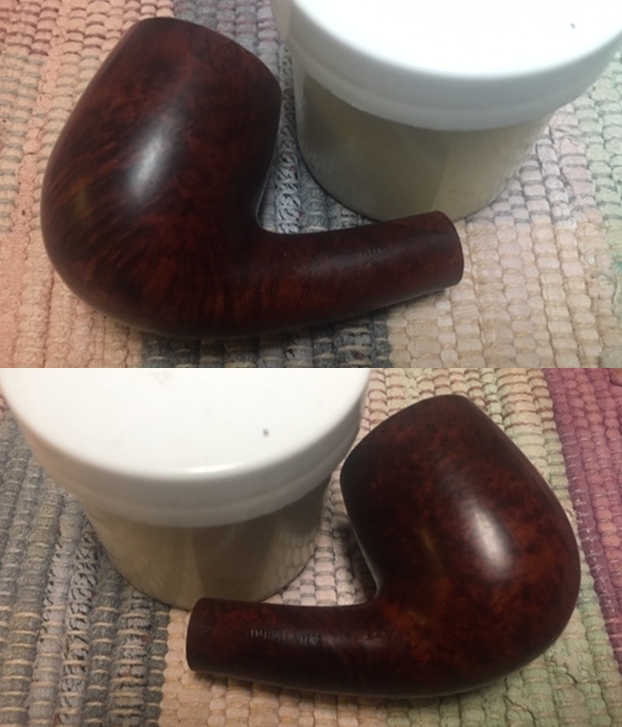
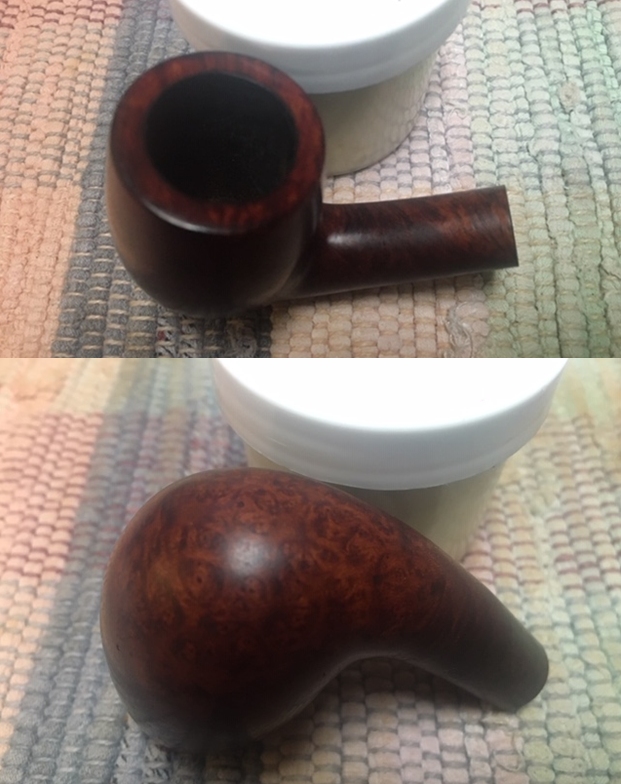
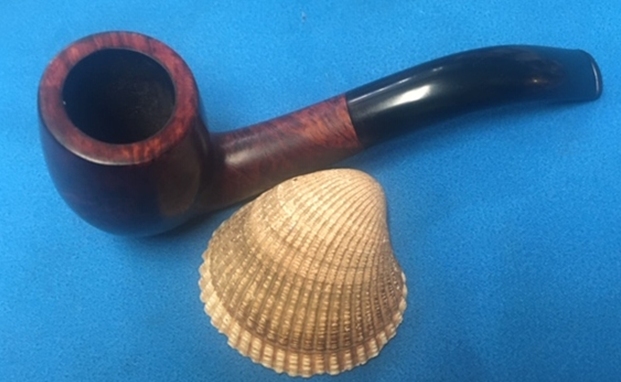
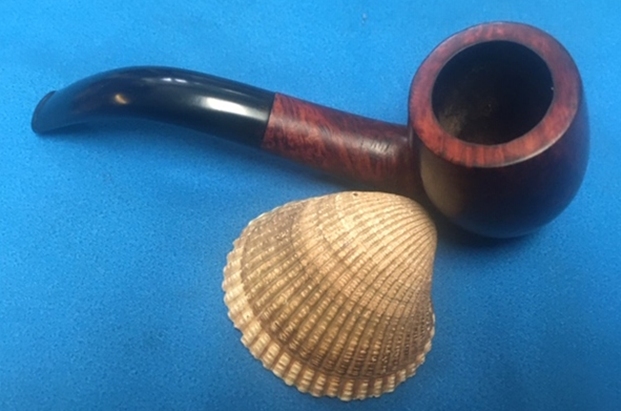
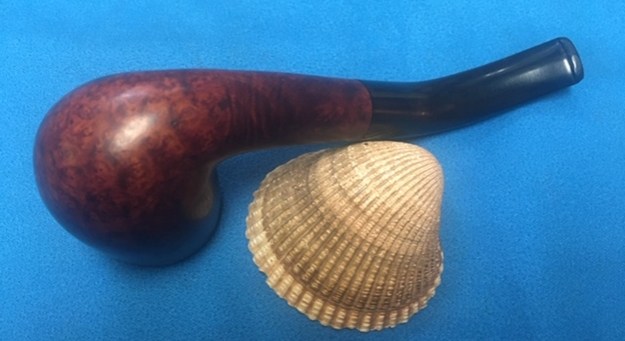
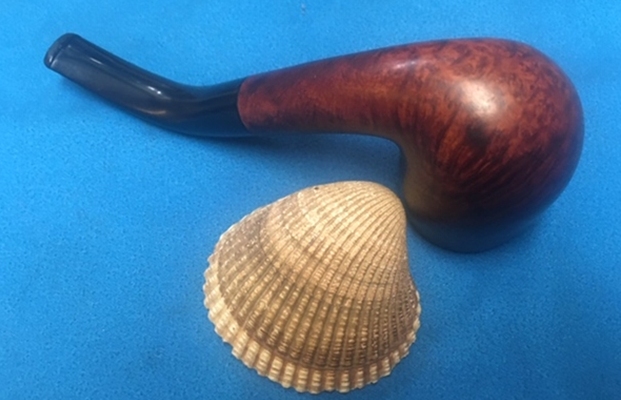
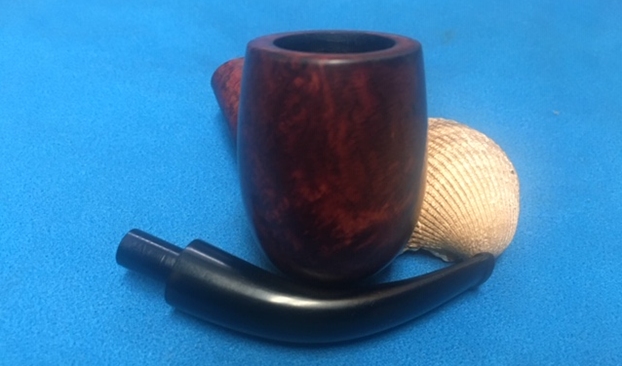
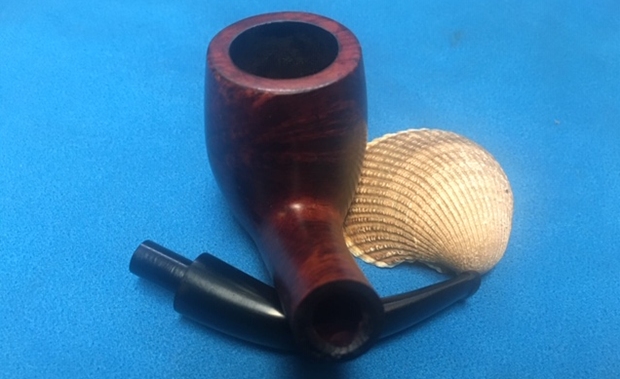
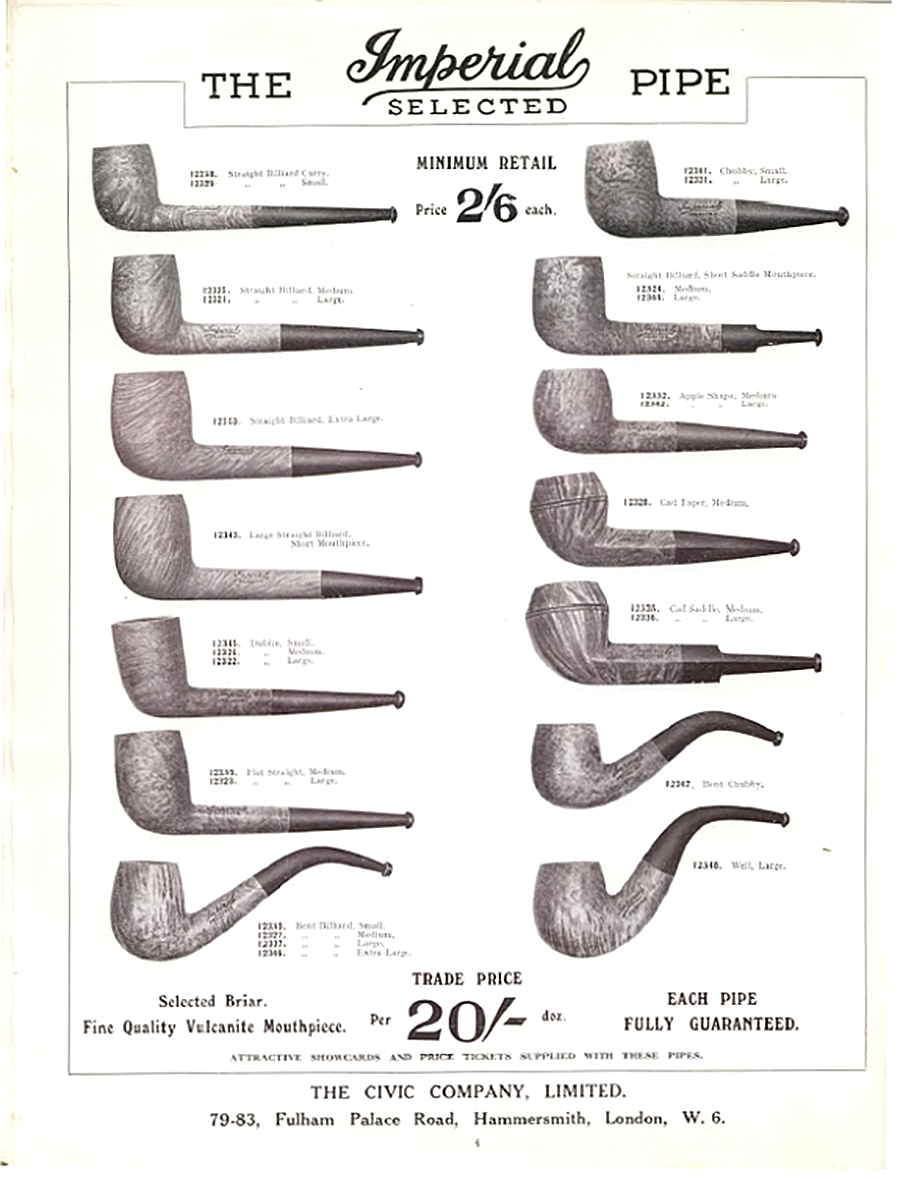
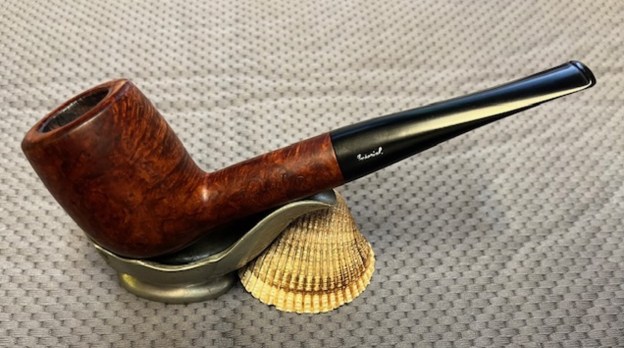
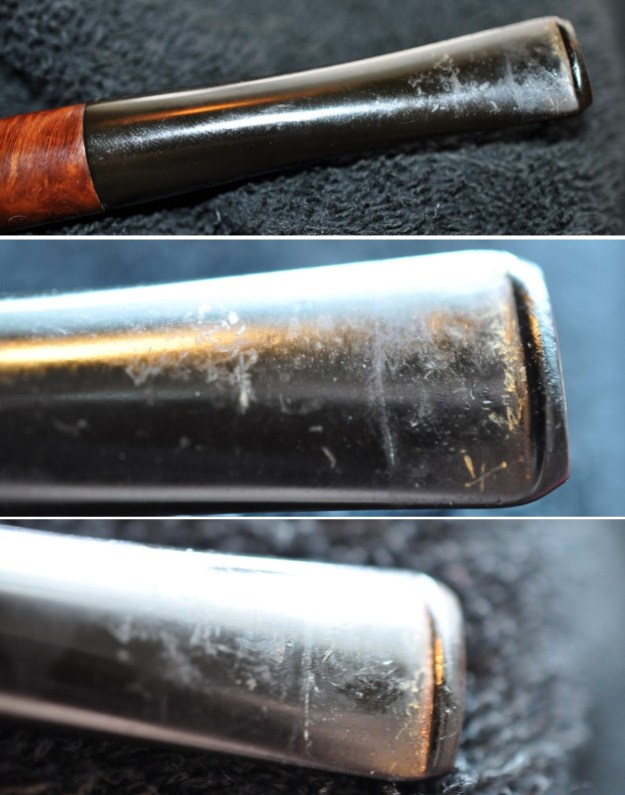
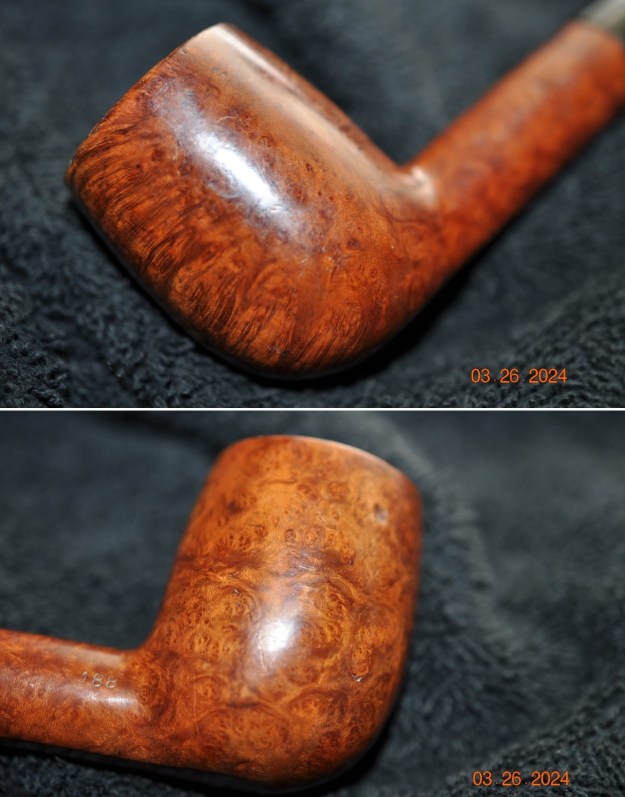
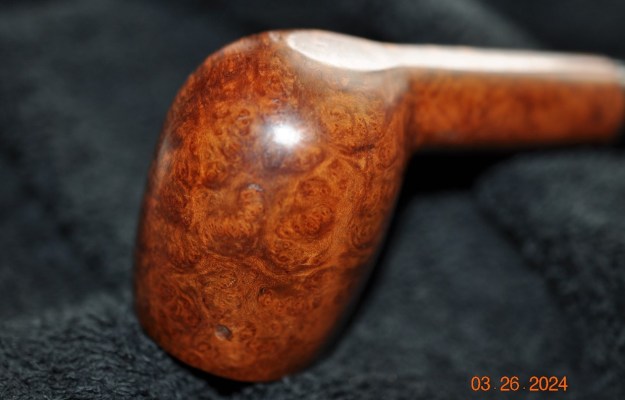
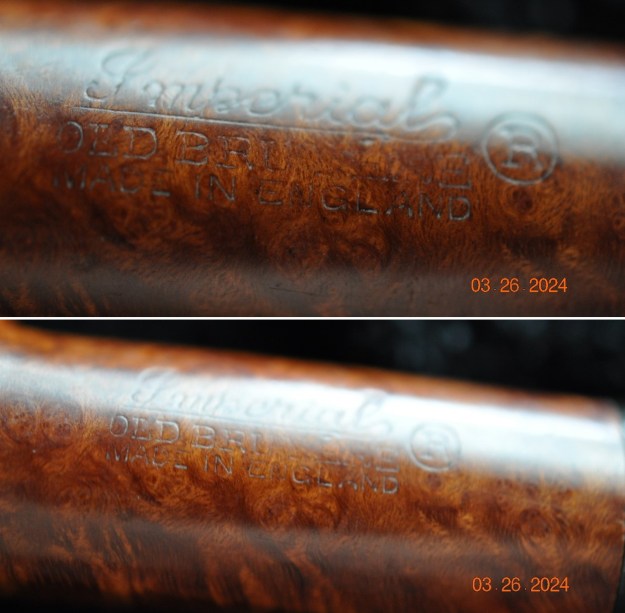
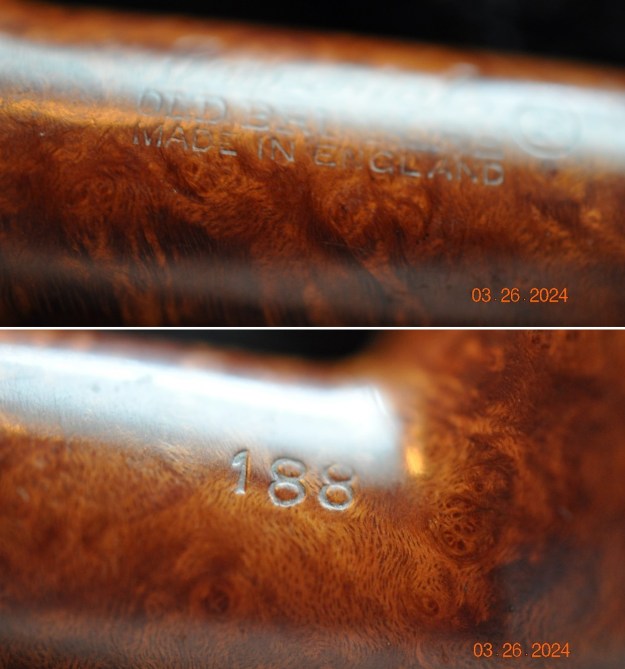
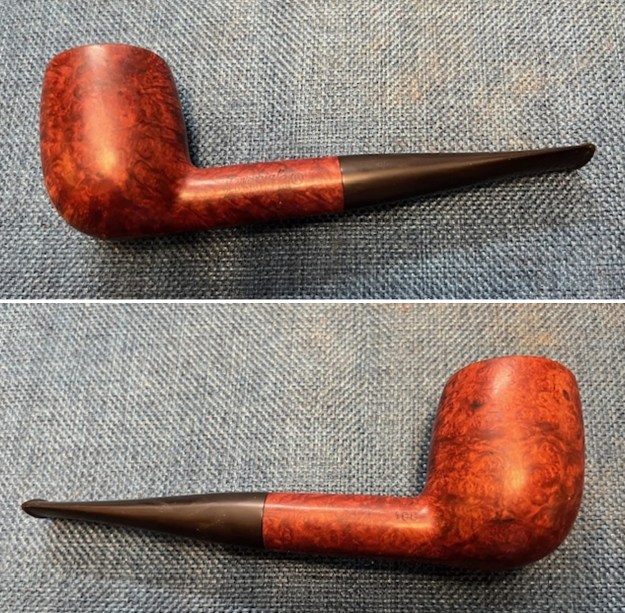
The next pipe on the work table is another pipe is another pipe that we picked up from the estate in Oregon City, Oregon, USA on 03/21/2024. This one was a nice looking thick shanked Billard that reminds me of Dunhill LB pipes. It has some nice grain patterns. It is stamped on the left side of the shank and reads Imperial in script [over] Old Bruyere [over] Made in England. To the right of that is stamped the  which is the symbol for a Registered Trademark. On the right side of the shank it is stamped next to the bowl with the shape number 188. The smooth finish had some very nice grain but there was a lot of grime and oils ground into the finish around the bowl and the shank. The pipe was dirty but is quite nice natural tones of the briar. There was a moderate cake in the lower portion of the bowl. The inner edge looked quite good. The outer edge was rounded and damaged giving the rim top a crowned look. The stem seems to be hard rubber rather than vulcanite that leads me to think it is an older pipe. It has a stamp on the left side of the taper that reads Imperial with the tail of the “l” curving under the rest of the stamp in the same script as the stamp on the shank. It had some light oxidized and had some tooth chatter and tooth marks on the top and underside ahead of the button. The pipe showed a lot of promise but it was a mess. Jeff took pictures of the pipe before he did his clean up work. He took photos of the rim top and bowl as well as the stem surfaces to show the condition of the well smoked pipe. You can see the light cake in the bowl and the light lava on the inner edge and rim top. There is also some roughening on the outer edge at the front and back of the bowl. It appears to have been rounded over giving the rim top a bit of an artificial crown. The stem was lightly oxidized, calcified and had scratches, tooth chatter and marks on both sides ahead of the button. Jeff took some photos of the sides and heel of the bowl to give a sense of the grain and the shiny varnish or shellac coat on the exterior of the bowl. It is definitely an addition that will need to be removed. He captured the stamping on the sides of the shank and stem. On the left side it reads as noted above. On the right side it is stamped with the shape number 188. To capture the stamping on the left side Jeff had to take a few extra photos. I turned to Pipephil to get a quick overview of the background information on the Imperial brand (http://pipephil.eu/logos/en/logo-i.html). There was no background information on the site this time but the photos below are helpful in terms of the stamping on the shank and the stem.I turned to Pipedia for more information (https://pipedia.org/wiki/Imperial_Tobacco_Co.). I quote the article below.
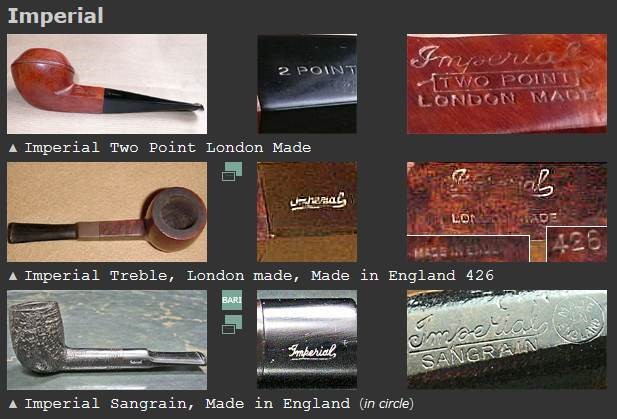
From Pipes, Artisans and Trademarks, by Jose Manuel Lopés’

The Imperial Tobacco Co. (Imperial Tobacco Ltd.) was founded in 1901 through the merger of several British tobacco companies. In 1902 it went into partnership with the American Tobacco Company to found the British American Tobacco Company.

See also: Civic. Brands involved: Comoy’s, Bewlay, Nording, Ogden’s, Salmon & Gluckstein, and Steel’s

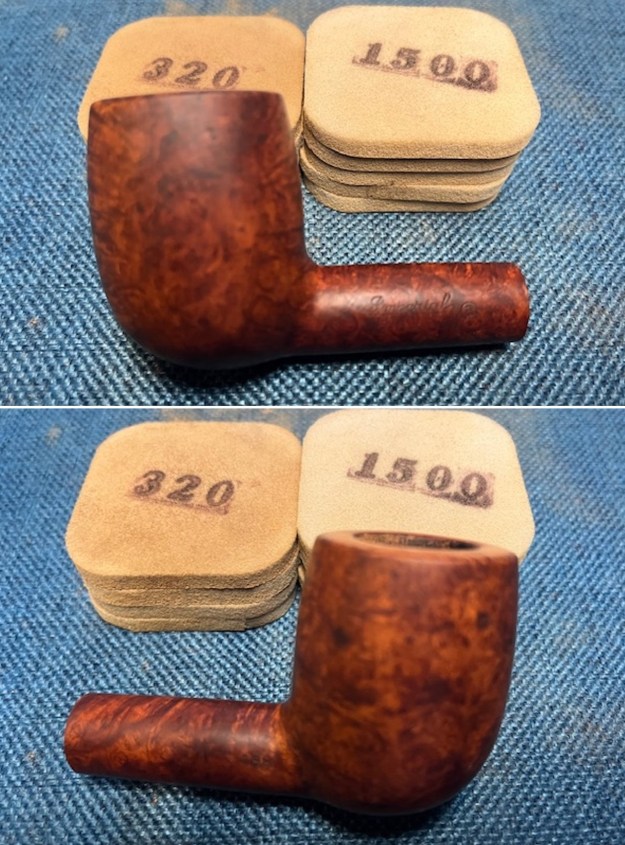
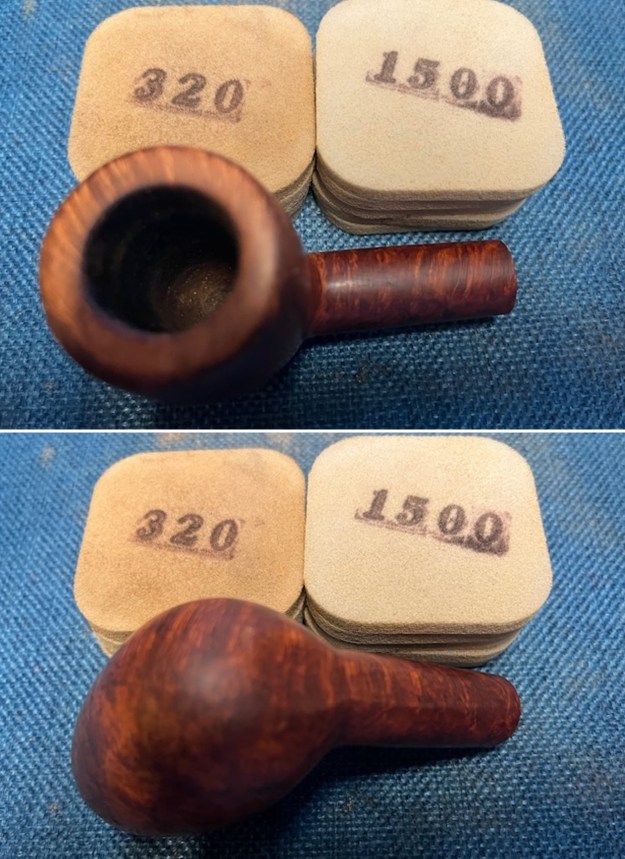
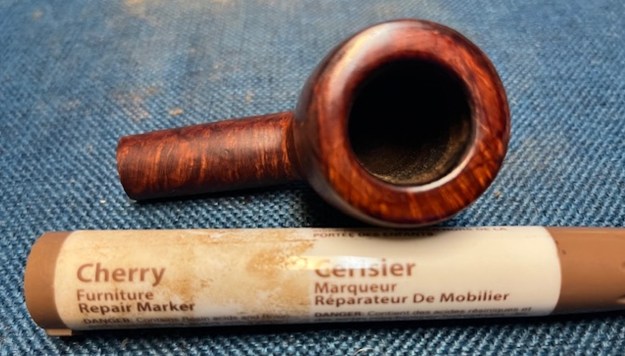
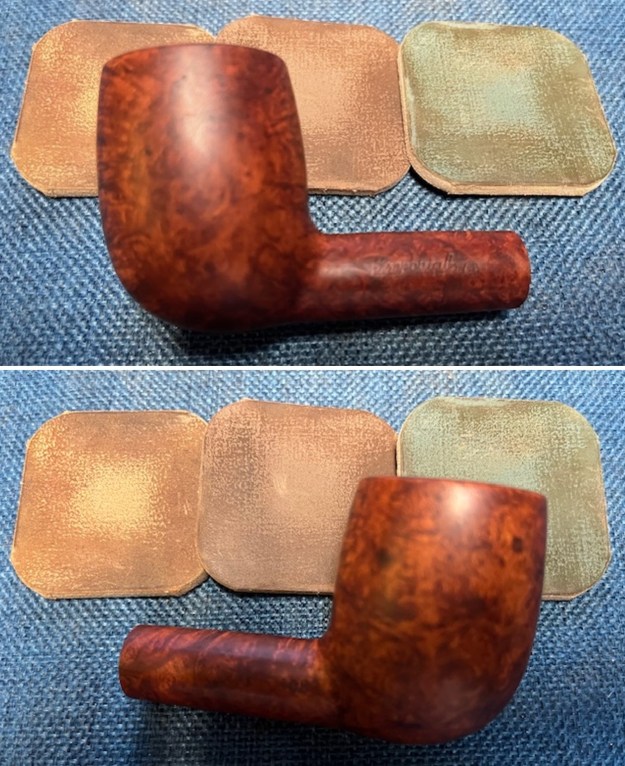
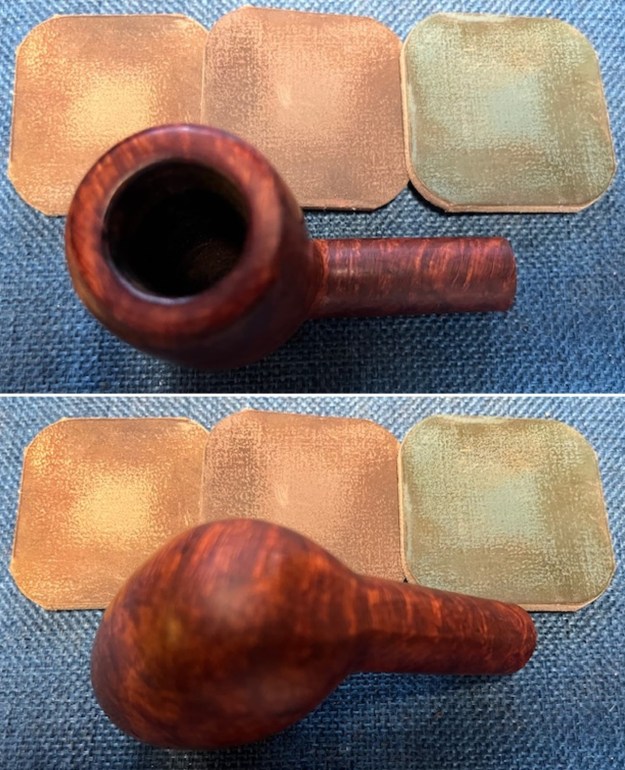
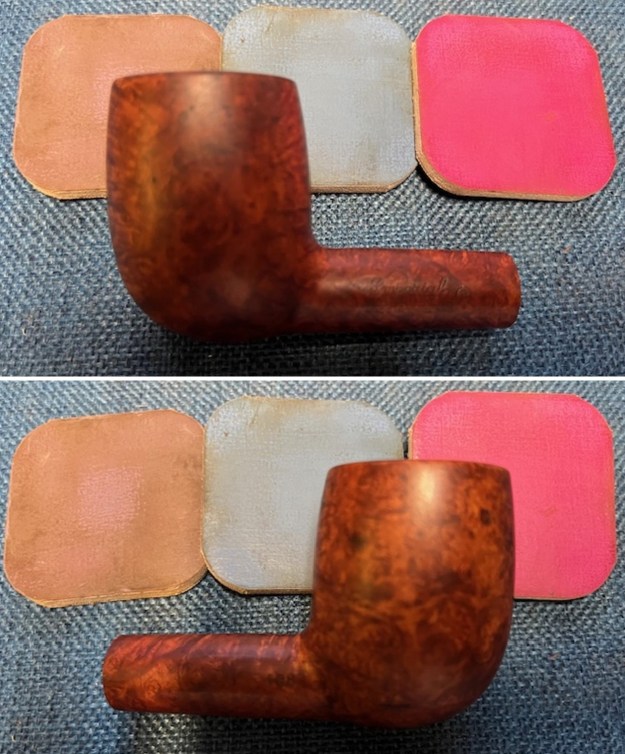
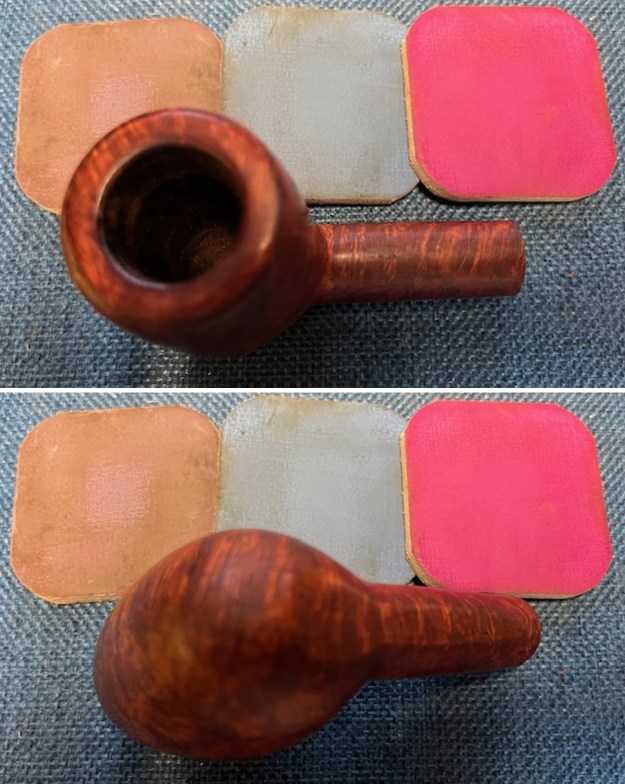
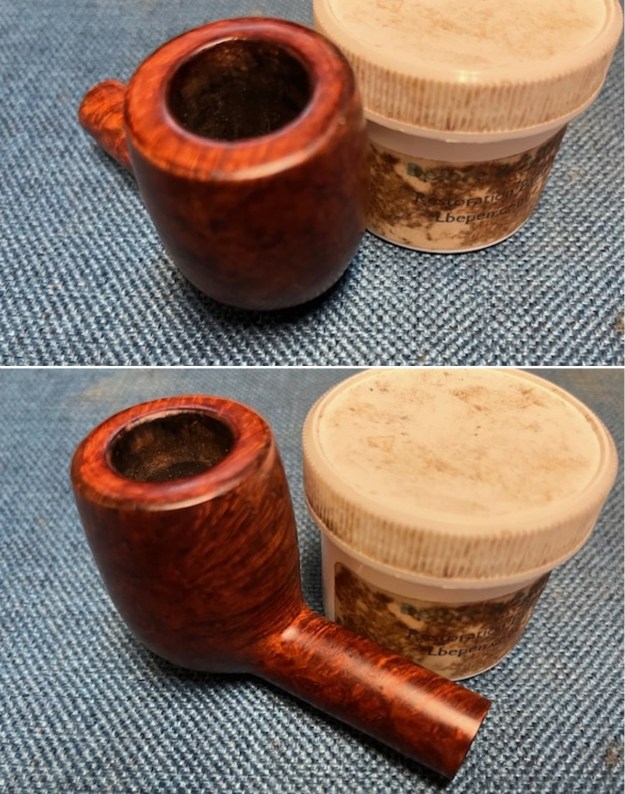
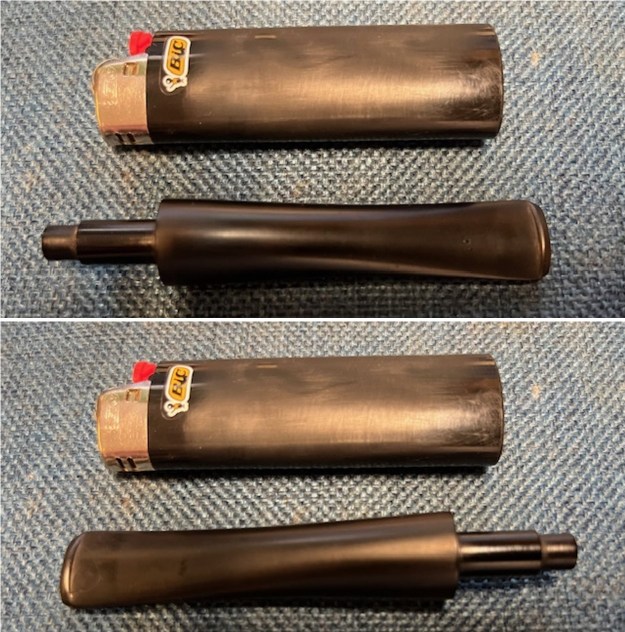
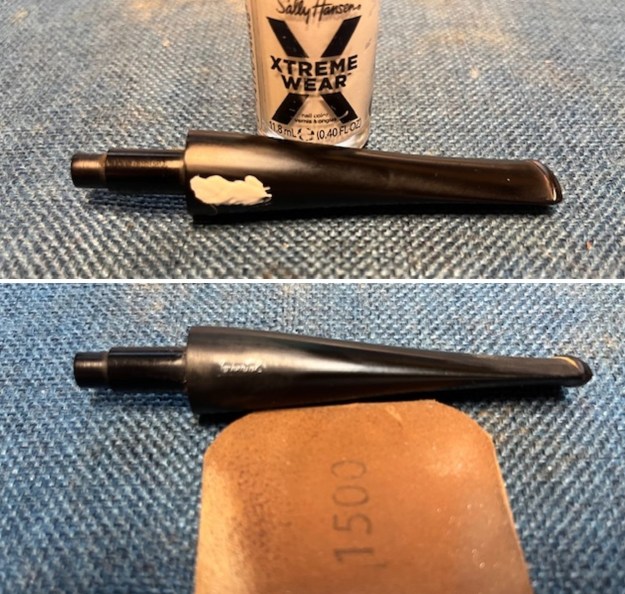
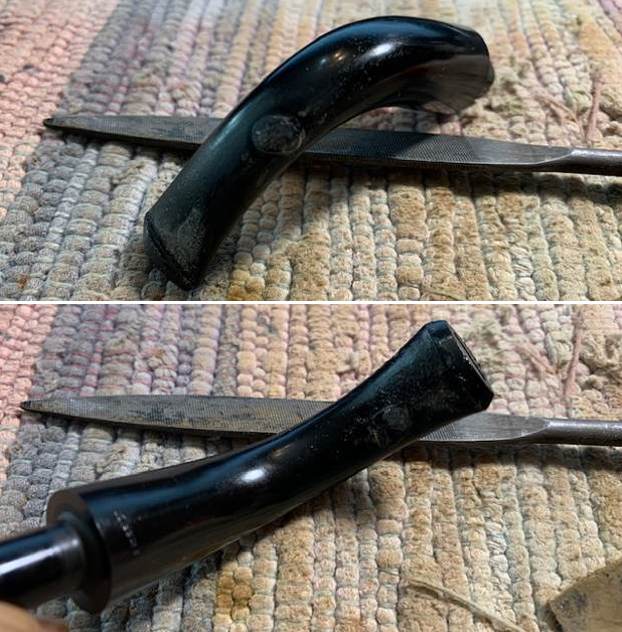
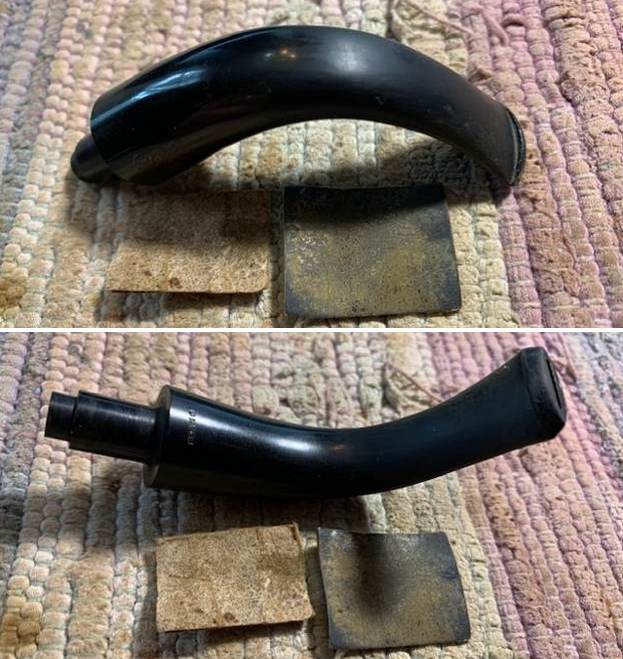
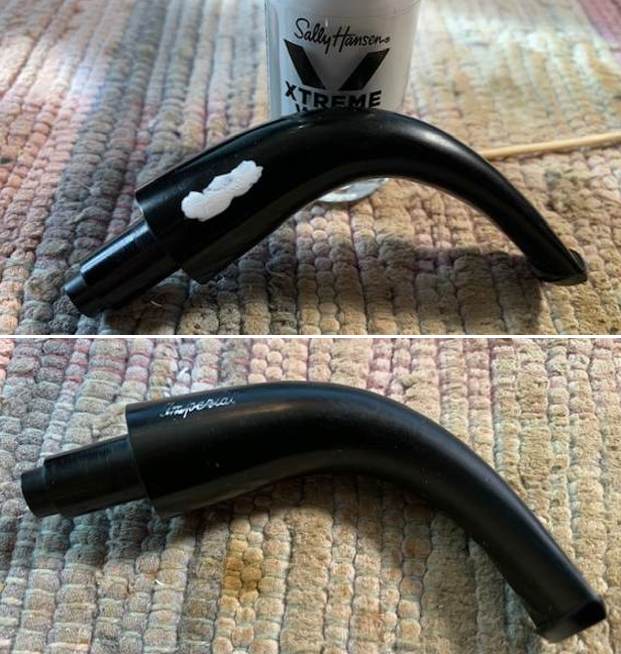
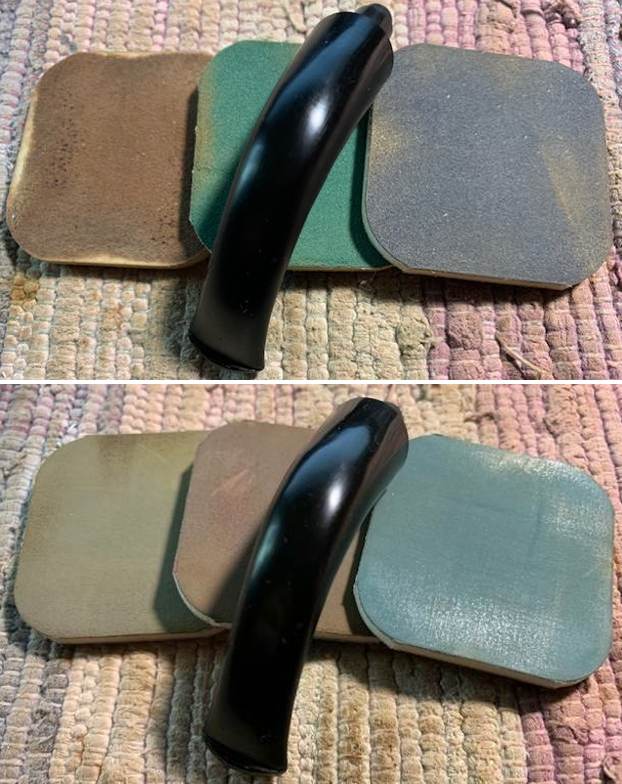
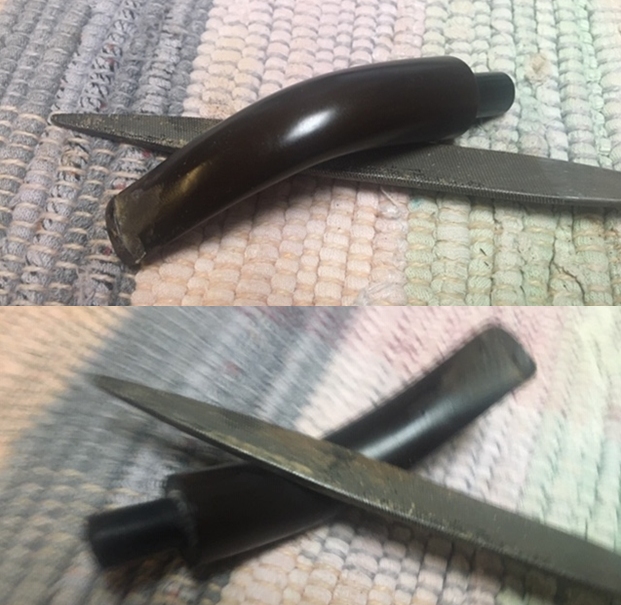
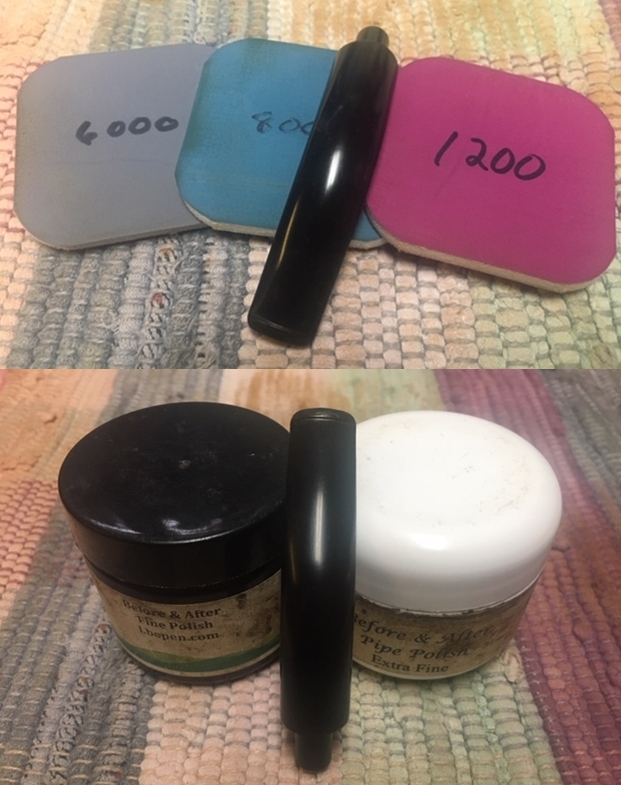
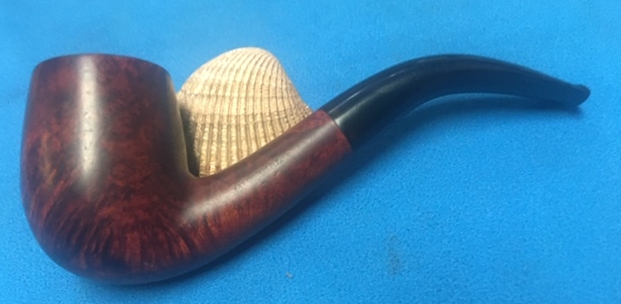
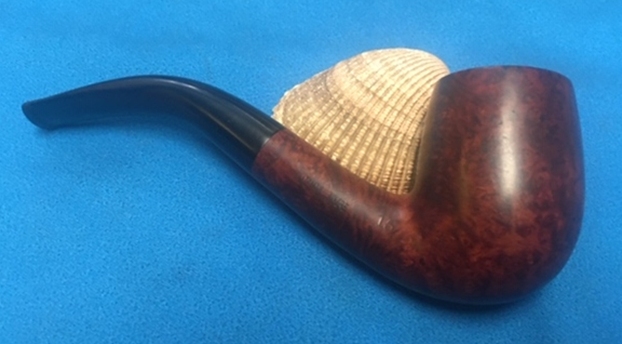
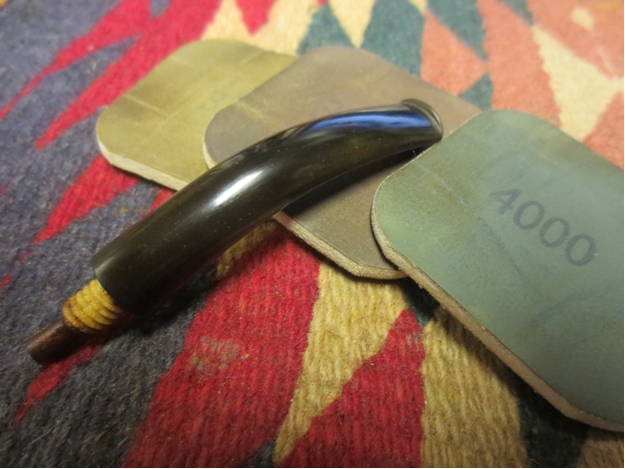
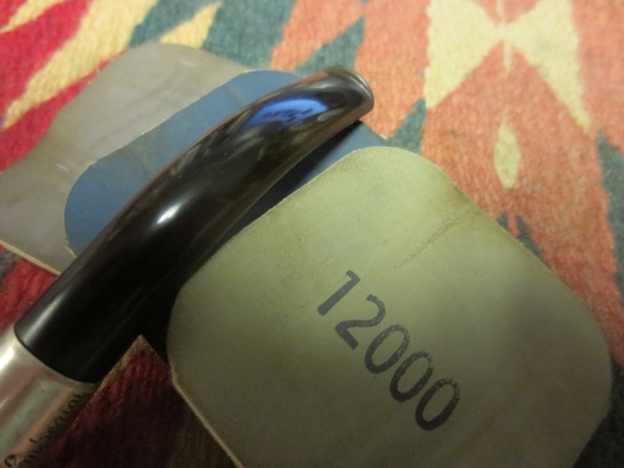
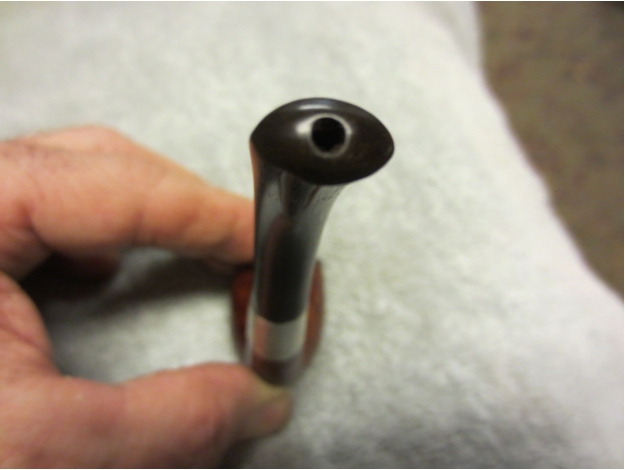
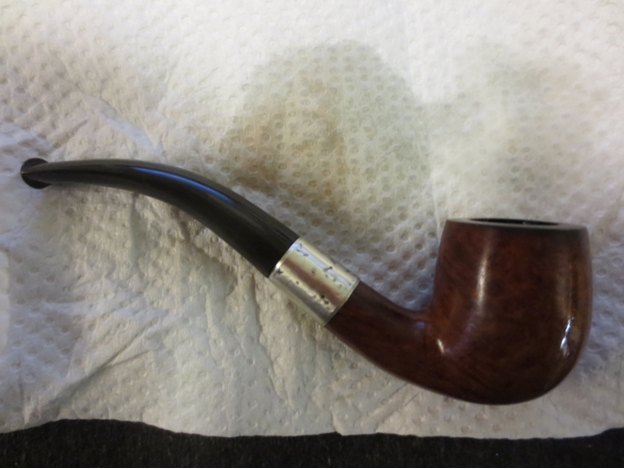
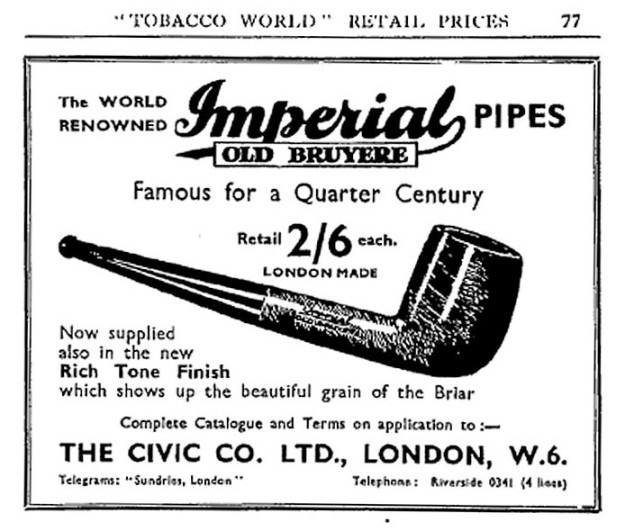
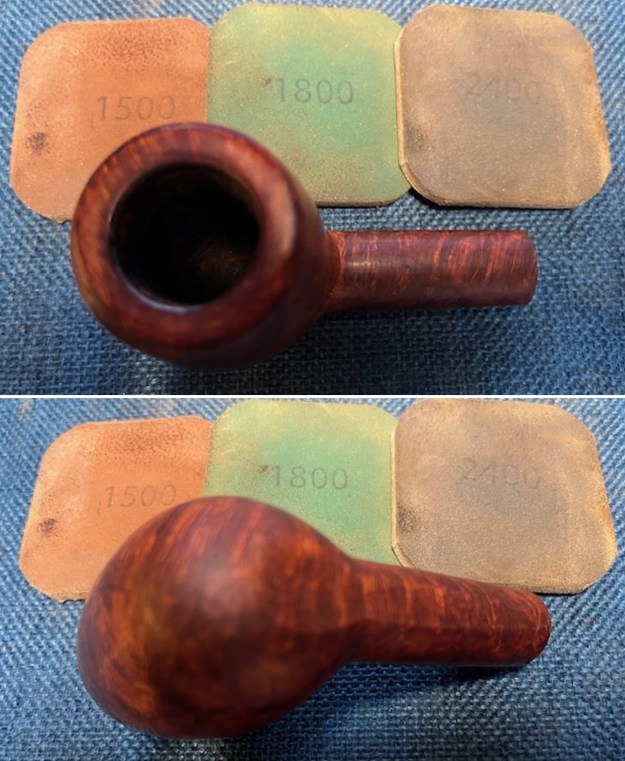
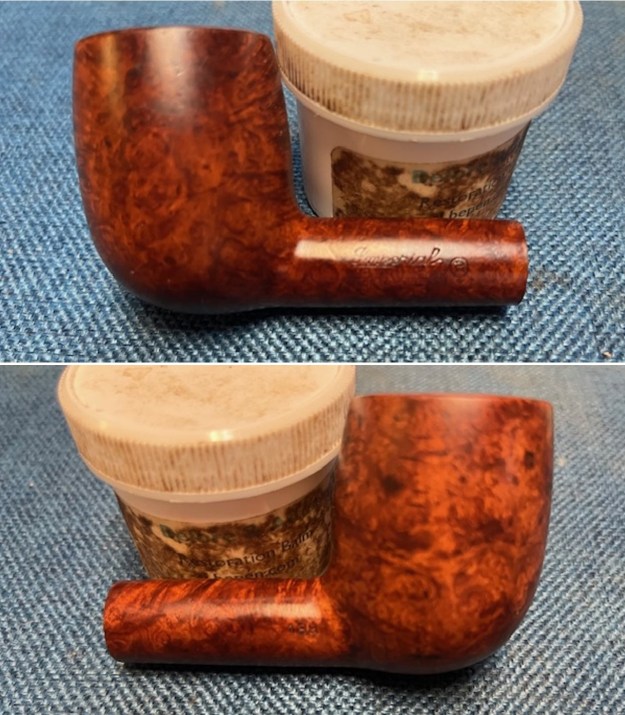
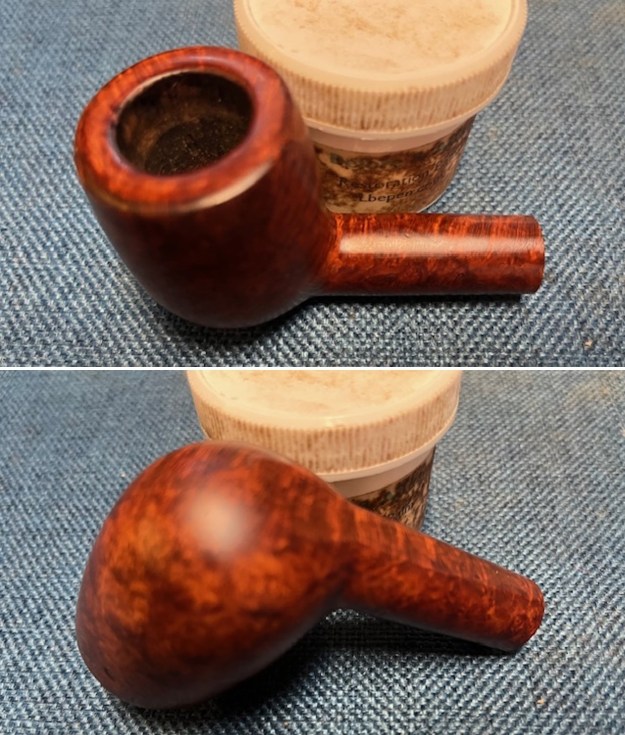
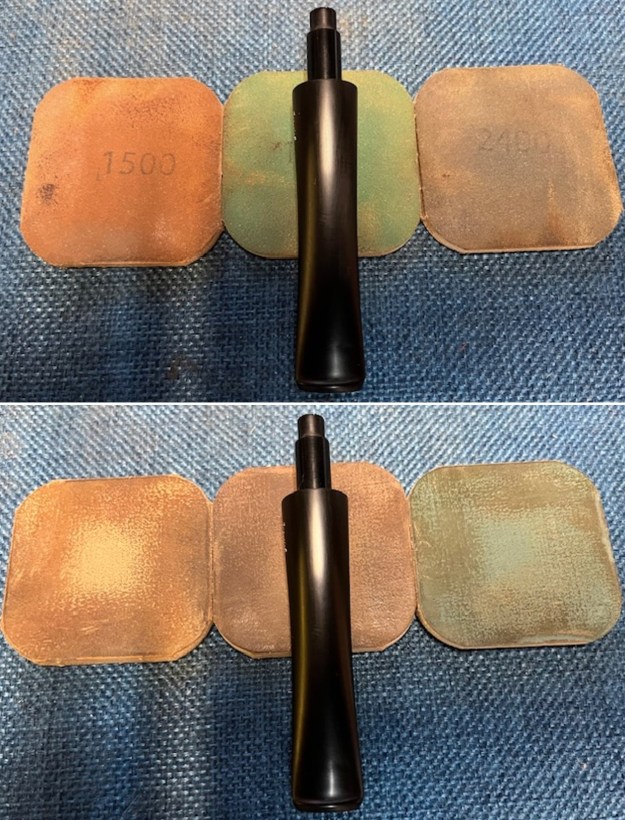
There was a great older advertisement on the link as well that highlighted the age of the brand. I have included that below.Now it was time to look at it up close and personal. Jeff had removed the cake and the lava on the rim top. He had reamed the bowl with a PipNet Pipe Reamer and cleaned up the remnants with a Savinelli Fitsall Pipe Knife. He took the cake back to bare briar so we could check the walls for damage. He scrubbed the exterior of the bowl with Murphy’s Oil Soap and a tooth brush to remove the grime on the bowl and rim and was able to remove the lava and dirt. He cleaned out the interior of the bowl and shank with shank brushes, pipe cleaners, cotton swabs and alcohol until they came out clean. He cleaned the stem with Soft Scrub to remove the grime on the exterior. He cleaned out the airway with alcohol, cotton swabs and pipe cleaners. I took some photos of the pipe before I started my work on it today. I took a close up photo of the cleaned up rim top. The rim top and the inner edge look good. The damage on the outer edge of the bowl shows up as rounding on the front and the back of the bowl. The bowl is clean and the walls are undamaged. The stem looks good with some tooth chatter and marks along the top and underside ahead of the button. The stem is hard rubber which makes the work more difficult on the tooth marks.I took a photo of the stamping on the shank side. It is clear and readable as noted above. I took the stem off the pipe and took a photo. The thick shank billiard is an attractive looking pipe with nice lines. The taper stem shows tooth damage on the top and undersides of the stem. I started my work on the pipe by working over the rim top and the bowl and shank with 320-3500 grit sanding pads. I wiped the bowl down after each sanding pad. The bowl began to take on a shine. I used a Cherry stain pen to restain the rim top and edges to match the colour of the rest of the bowl. The match will be perfect once I finish the next stage of polishing.I polished the smooth rim top and areas on the bowl and shank with micromesh sanding pads – dry sanding with 1500-12000 grit pads. After each pad I wiped the bowl down with a damp cloth to remove the sanding debris. It really took on a shine and the fills were less noticeable by the last three sanding pads. I rubbed the bowl down with Before & After Restoration Balm. I worked it into the surface of the briar with my fingertips where it works to clean, restore and preserve the briar. I let it do its magic for 15 minutes then buffed it off with a cotton cloth. The pipe looks incredibly good at this point in the process. I set aside the bowl and turned my attention to the stem. I “painted” the tooth marks and chatter on both sides of the stem with the flame of a Bic lighter. I was able to lift all of them to the point where sanding the stem with 220 grit sandpaper should smooth the rest of them out.I touched up the faint stamping on the left side of the taper stem with white acrylic fingernail polish. I pointed it on with the applicator and scraped off the excess and lightly sanded it with a 1500 grit micromesh pad. I sanded out the remnants of the tooth marks with a folded piece of 220 grit sandpaper and was able to remove all of the remaining marks. Once finished the stem looked very good.I sanded the stem surface with 320-3500 grit sanding pads. I wiped down the stem after each pad using a cloth impregnated with Obsidian Oil. It started looking better as each step took it closer to the finished look.I continued to polish the stem with micromesh sanding pads – wet sanding with 1500-12000 grit sanding pads. I wiped it down after each sanding pad with Obsidian Oil. I polished it further with Before & After Stem Polish – both Fine and Extra Fine. I gave it a final coat of Obsidian Oil and set it aside to cure. I am excited to finish this Imperial Old Bruyere  Made in England 188 Billiard. I put the pipe back together and buffed it with Blue Diamond on the buffing wheel. I gave the bowl and the stem multiple coats of carnauba wax. I buffed the pipe with a clean buffing pad to raise the shine and then by hand with a microfibre cloth to deepen it. It is fun to see what the polished bowl looks like with beautiful straight grain all around it. The polished grain on the pipe looks great with the black hard rubber stem. This Imperial Old Bruyere Billiard is great looking and the pipe feels great in my hand. It is light and well balanced. Have a look at it with the photos below. The dimensions are Length: 6 inches, Height: 1 ¾ inches, Outside diameter of the bowl: 1 ¼ inches, Chamber diameter: ¾ of an inch. The weight of the pipe is 53 grams/1.87 ounces. It turned out to be a beautiful pipe. I will soon be putting it on the rebornpipes store in the British Pipemakers Section. If you are interested in adding it to your collection let me know. Remember we are the next in a long line of pipe men and women who will carry on the trust of our pipes until we pass them on to the next trustee. Thanks for your time reading this blog.
New Life for a Nicely Grained Imperial White Flame Giant Oom Paul


Blog by Steve Laug

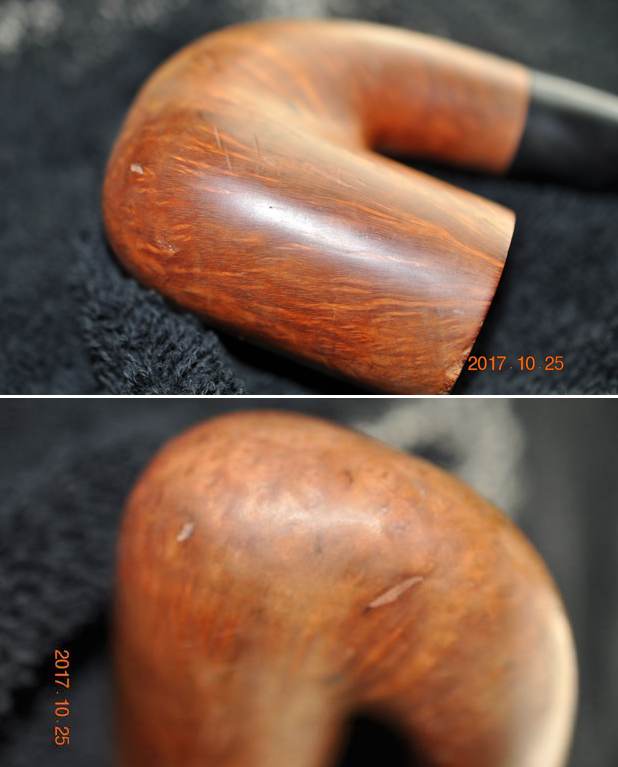
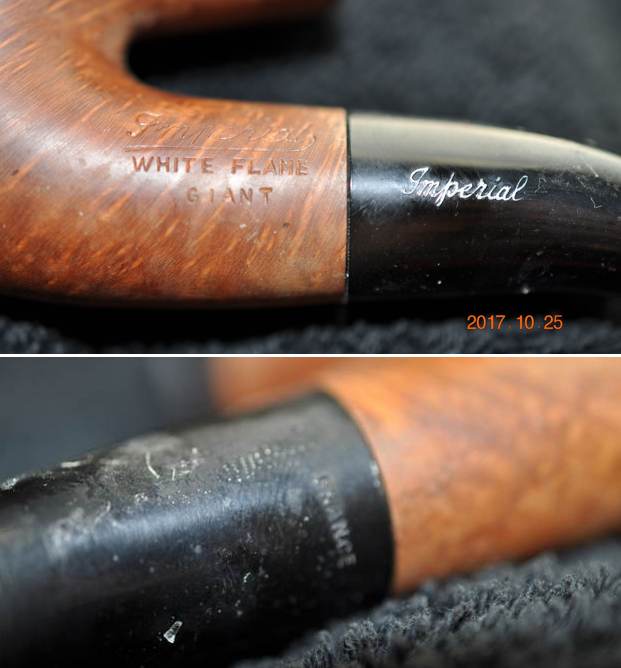
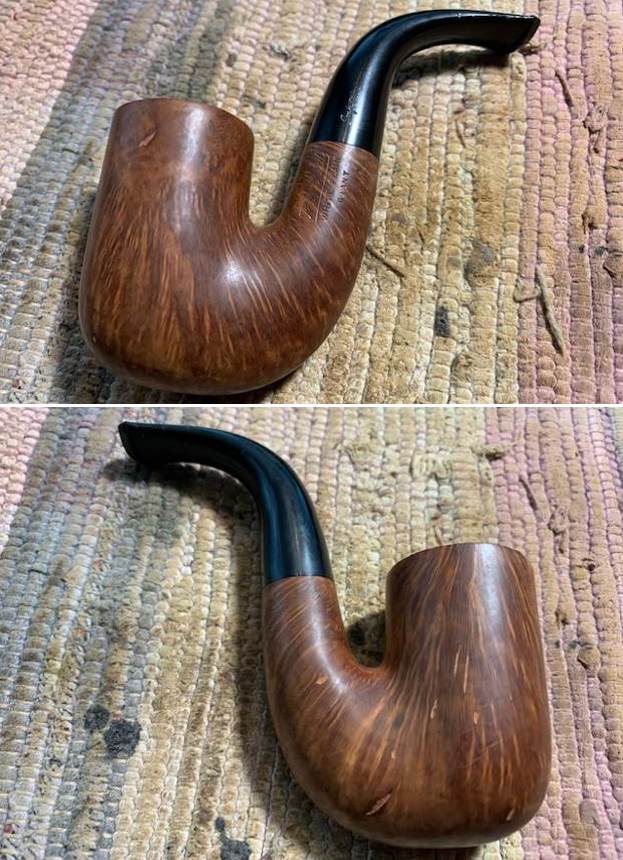
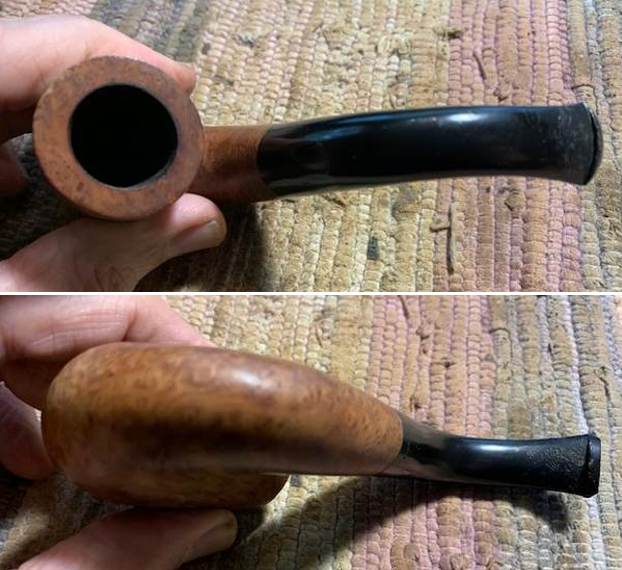
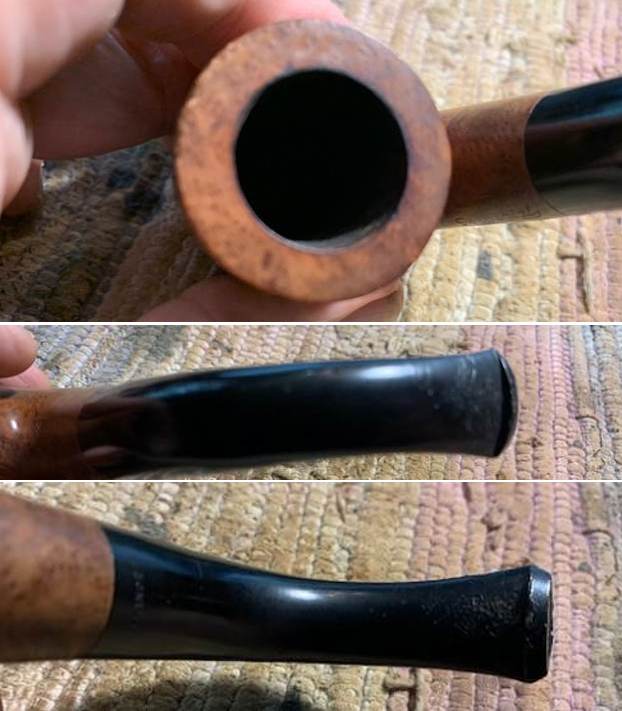
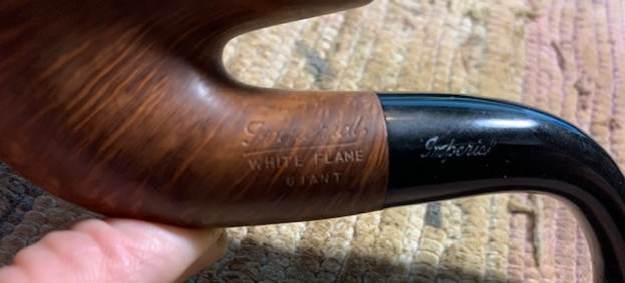
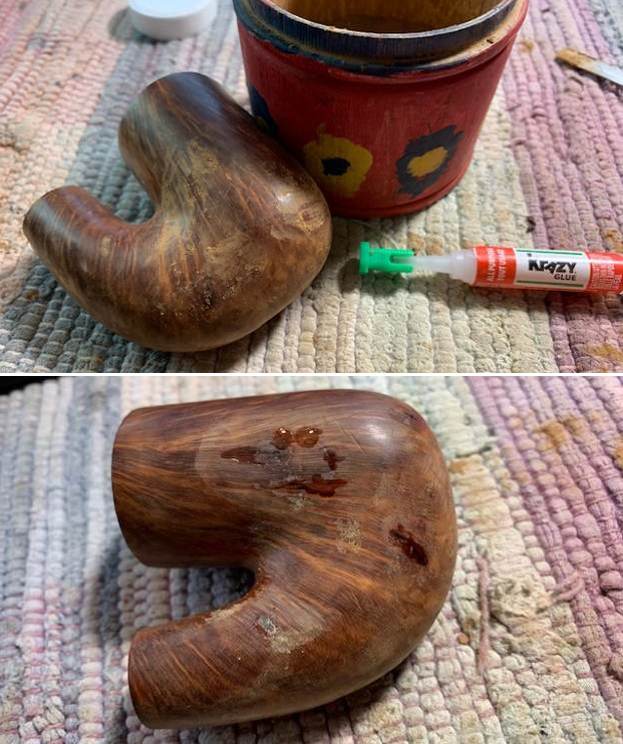
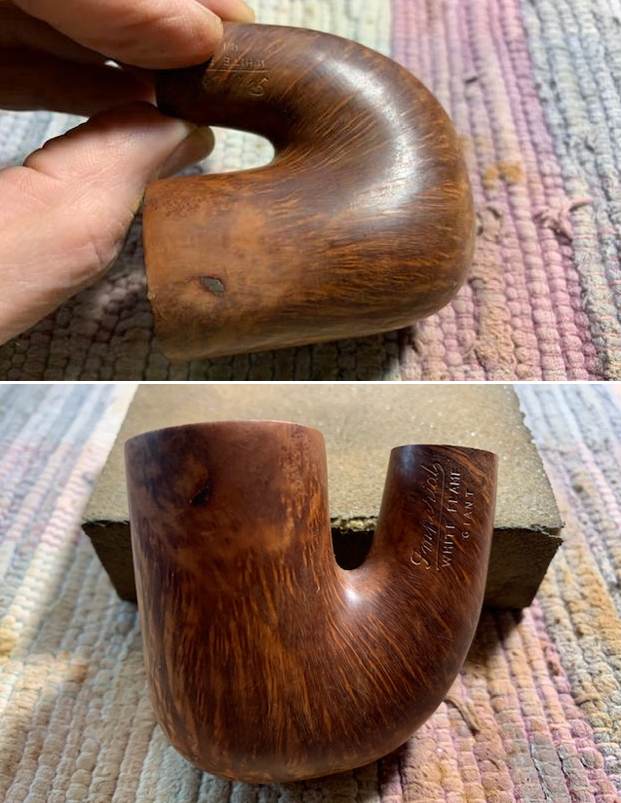
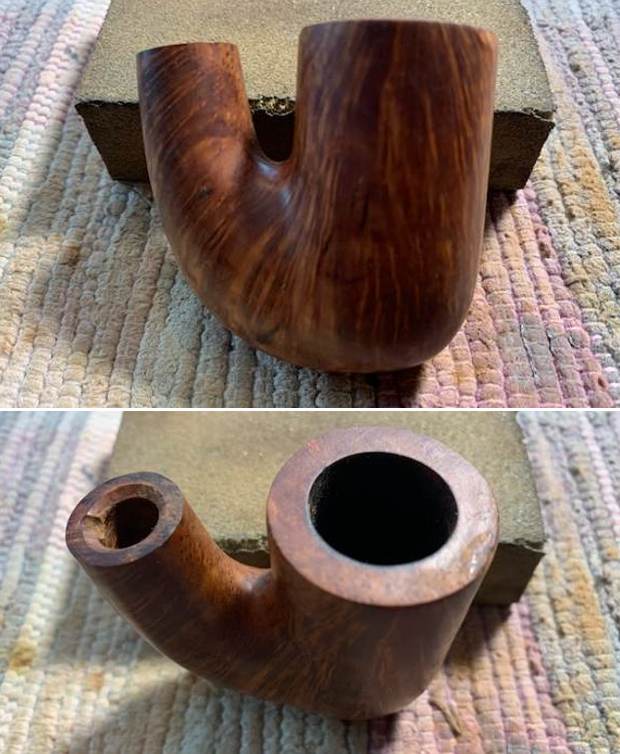
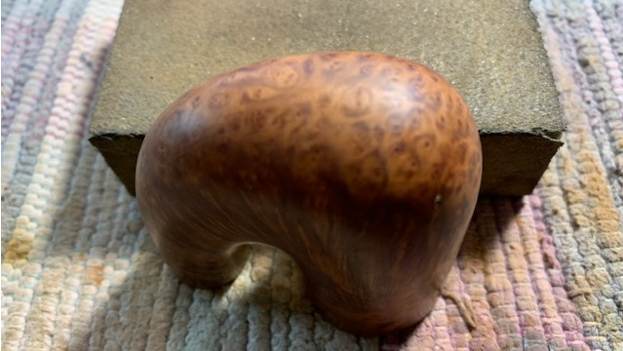
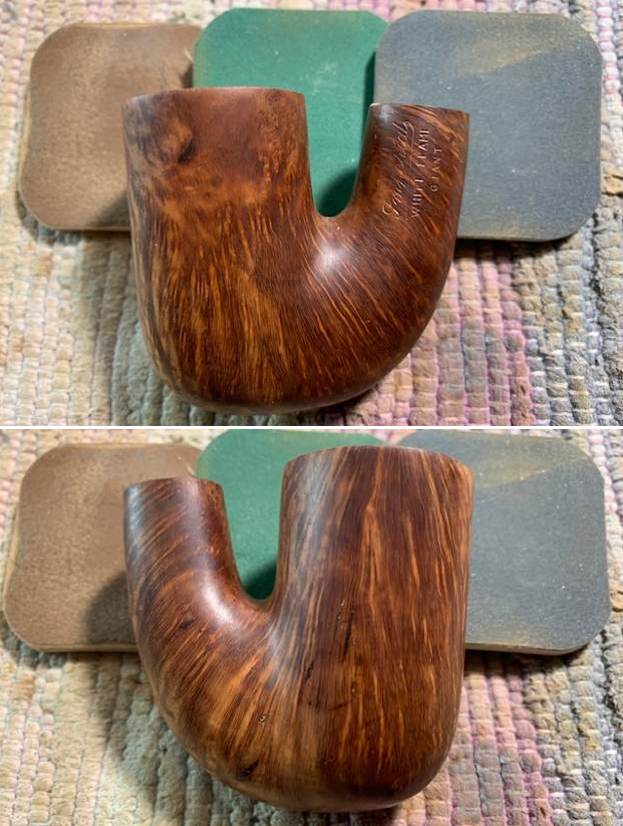
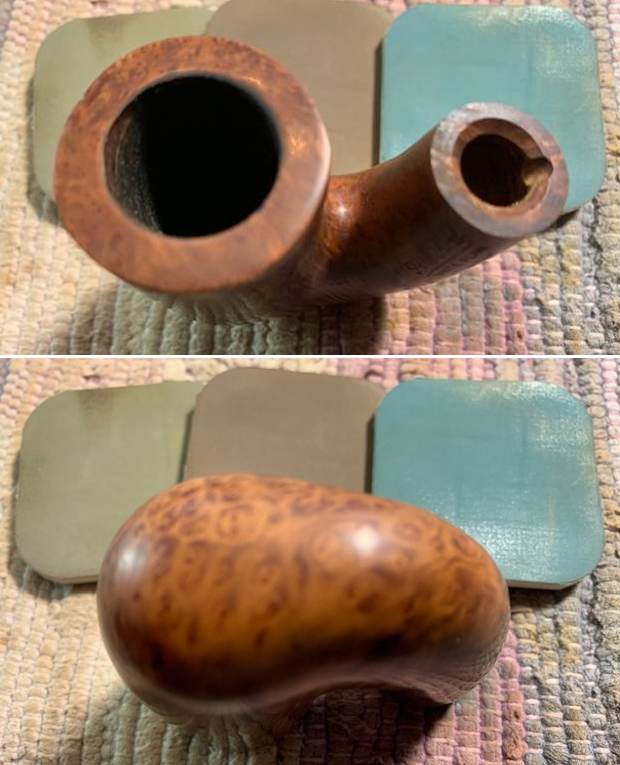
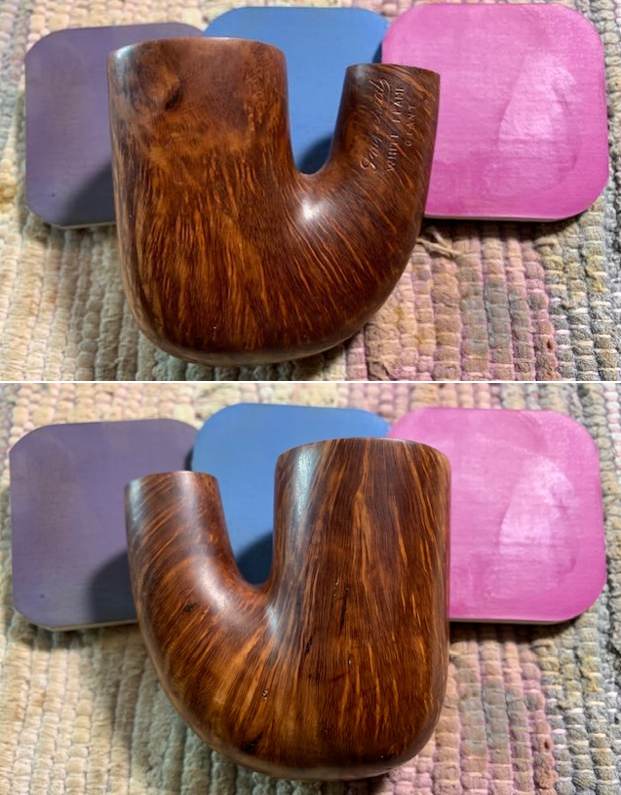
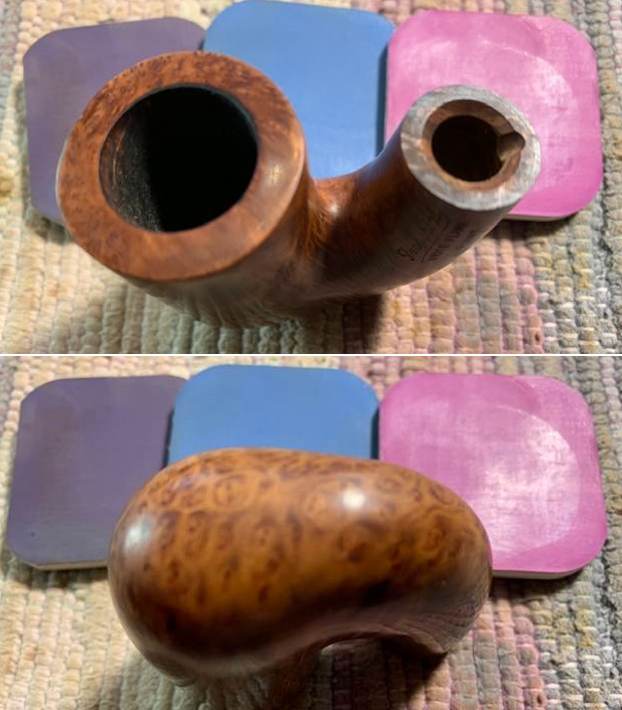
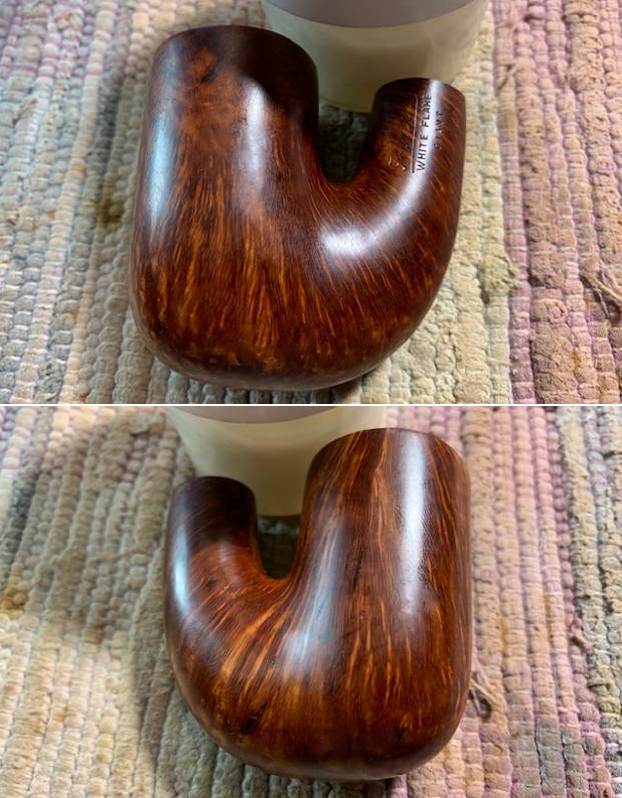
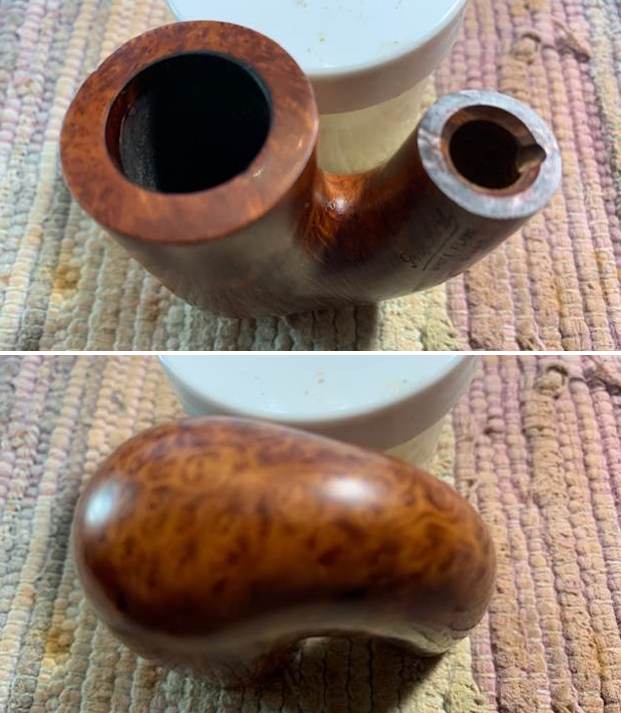
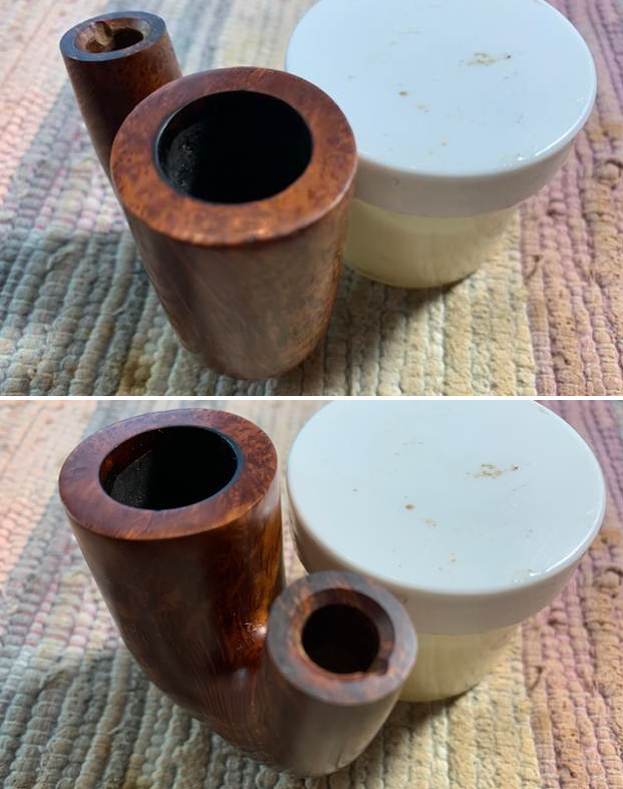
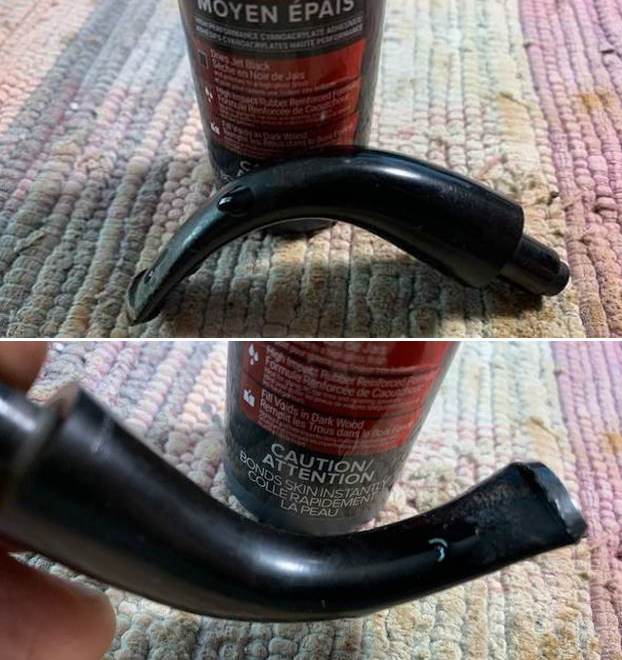
The next pipe on the work table is another pipe that has been here for almost 5 years. Sad that there are some that have sat this long or longer before I got to them. But on the other hand I get to look through my boxes and pick out what turns my crank at the moment. This one was a nice looking Oom Paul with nice grain patterns. We picked it up back in May, 2017 on EBay  from Lewisburg, Ohio, USA. It is stamped on the left side of the shank and reads Imperial in script [over] White Flame [over] Giant. On the stem it is also stamped Imperial on the left side and on the underside it is stamped FRANCE. It looks like an older pipe by the shape of the stem and button and the hard rubber stem itself. The smooth finish had some very nice grain but there were also a lot of fills some on the left near the top but more particularly on the right side of the bowl and shank. They were narrow and small so they were not too annoying. The pipe was dirty but is quite nice natural tones of the briar and the black hard rubber taper stem. The bowl was moderately caked with a lava overflow on the rim top, heavier toward the back. The inner edge looked quite good. The stem is lightly oxidized and had some tooth chatter and tooth marks on the top and underside ahead of the button. The pipe showed a lot of promise but it was a mess. Jeff took pictures of the pipe before he did his clean up work.He took photos of the rim top and bowl as well as the stem surfaces to show the condition of the well smoked pipe. You can see the cake in the bowl and the lava on the inner edge and rim top. There is also some roughening on the front outer edge. The stem was oxidized, calcified and had heavy tooth chatter and marks on both sides ahead of the button. Jeff took some photos of the heel of the bowl and the side to give a sense of the grain and the location of the fills around this pipe.He captured the stamping on the left side of the shank and stem. It is readable as noted above.I turned to Pipephil to get a quick overview of the background information on the Imperial brand (http://pipephil.eu/logos/en/logo-i.html). There was no background information on the site this time but the photos below are helpful in terms of the stamping on the shank and the stem.I turned to Pipedia for more information (https://pipedia.org/wiki/Imperial_Tobacco_Co.). I quote the article below.

From Pipes, Artisans and Trademarks, by Jose Manuel Lopés’

The Imperial Tobacco Co. (Imperial Tobacco Ltd.) was founded in 1901 through the merger of several British tobacco companies. In 1902 it went into partnership with the American Tobacco Company to found the British American Tobacco Company.

See also: Civic. Brands involved: Comoy’s, Bewlay, Nording, Ogden’s, Salmon & Gluckstein, and Steel’s

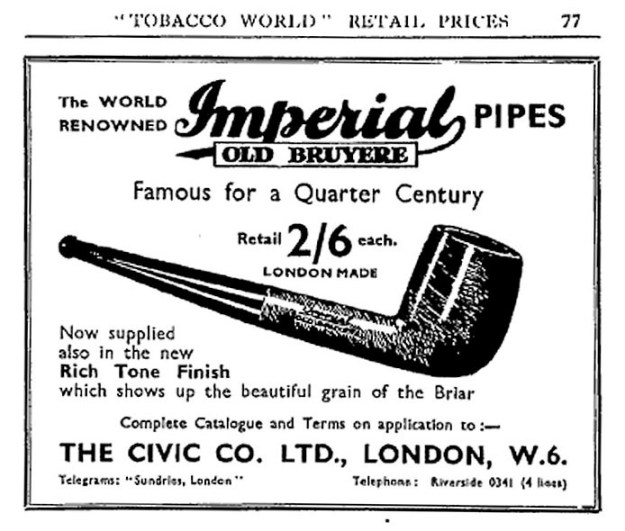
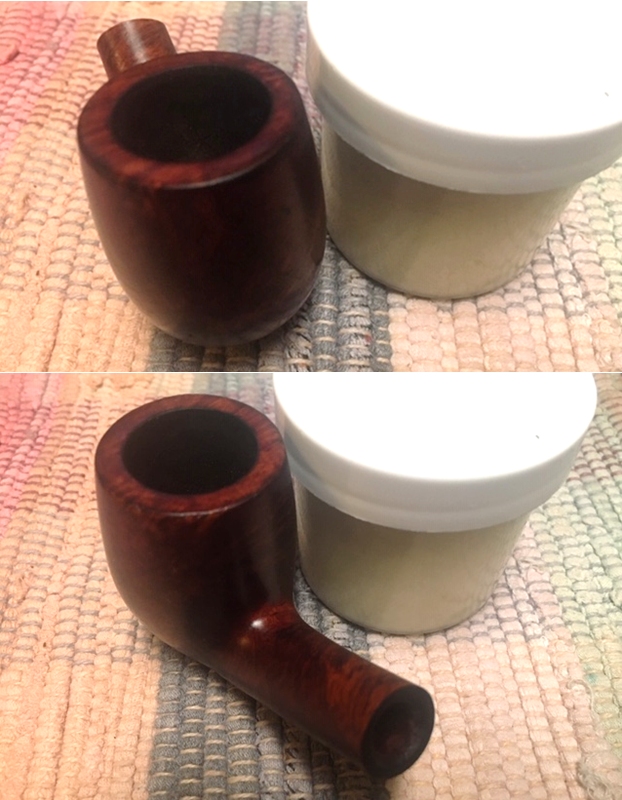
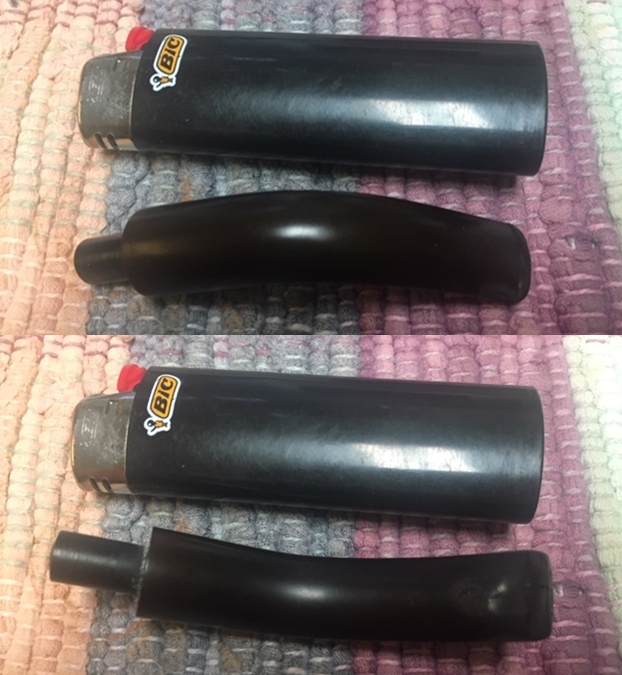
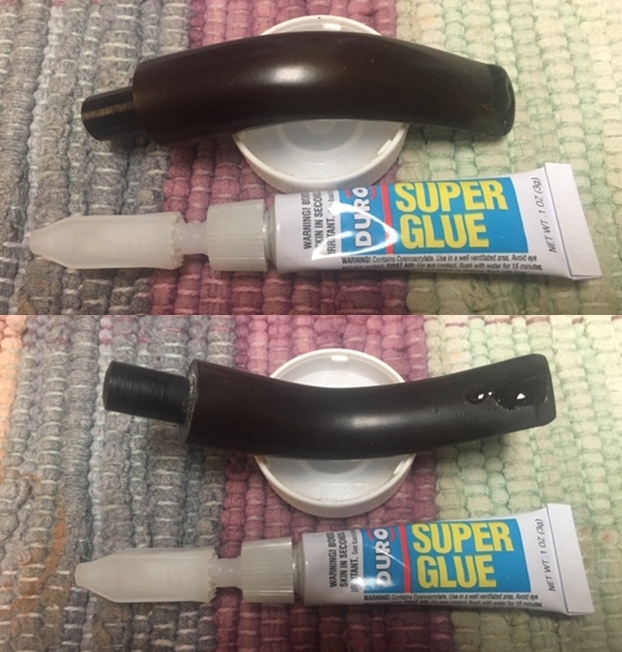
There was a great older advertizement on the link as well that highlighted the age of the brand. I have included that below.Now it was time to look at it up close and personal. Jeff had done an amazing job in removing all of the cake and the lava on the rim top. He had reamed the bowl with a PipNet Pipe Reamer and cleaned up the remnants with a Savinelli Fitsall Pipe Knife. He took the cake back to bare briar so we could check the walls for damage. He scrubbed the exterior of the bowl with Murphy’s Oil Soap and a tooth brush to remove the grime on the bowl and rim and was able to remove the lava and dirt. He cleaned out the interior of the bowl and shank with pipe cleaners, cotton swabs and alcohol until they came out clean. He cleaned the stem with Soft Scrub to remove the grime on the exterior. He cleaned out the airway with alcohol, cotton swabs and pipe cleaners. I took some photos of the pipe before I started my work on it today. I took a close up photo of the cleaned up rim top. The rim top and the inner edge look good. The damage on the outer edge of the bowl shows up on the front of the bowl. The bowl is clean and the walls are undamaged. The stem looks good with lots of tooth chatter and marks along the top and underside ahead of the button. The stem is hard rubber which makes the work more difficult on the tooth marks.I took a photo of the stamping on the shank side. It is clear and readable as noted above.I took the stem off the pipe and took a photo. The Oom Paul is an attractive looking pipe with nice lines. The taper stem shows damage on the sides of the stem.I took photos of the fills on the sides of the bowl. You can see from the photos that they are predominantly on the rights side of the bowl but there are some on the heel of the bowl and on the front and right side as well. I decided to start my work on the pipe by addressing all of the loose and damaged fills around the bowl and heel. I filled in the hole with some clear super glue and pressed some briar dust onto the glue repair. I repeated the process until the fills were solid. This took some time as there were many to work on as I turned the bowl. I went over the bowl a second time and topped up the fills with clear super glue as necessary. I sanded the repaired areas with a folded piece of 220 grit sandpaper to smooth them out and make them flush with the bowl surface. I then sanded the entire pipe with a medium and a fine grit sanding sponge to further smooth them out and blend them into the briar. It was beginning to look quite good. I polished the smooth rim top and areas on the bowl and shank with micromesh sanding pads – dry sanding with 1500-12000 grit pads. After each pad I wiped the bowl down with a damp cloth to remove the sanding debris. It really took on a shine and the fills were less noticeable by the last three sanding pads. I rubbed the bowl down with Before & After Restoration Balm. I worked it into the surface of the briar with my fingertips where it works to clean, restore and preserve the briar. I let it do its magic for 15 minutes then buffed it off with a cotton cloth. The pipe looks incredibly good at this point in the process. I set aside the bowl and turned my attention to the stem. I wiped down the stem with some alcohol to remove the dust from the pits and tooth marks. I filled them in with black super glue and set it aside to cure.Once the repairs cured I smoothed them out with a small file. I flattened them against the surface of the hard rubber. I sanded the repairs and the tooth chatter with 220 grit sandpaper and started polishing it with 400 grit wet dry sandpaper. Each step took it closer to the finished look. I touched up the stamping on the left side of the stem with white acrylic fingernail polish and worked it into the stamp with a tooth pick. Once the acrylic had cured I scraped off the excess acrylic with the tooth pick.I continued to polish the stem with micromesh sanding pads – wet sanding with 1500-12000 grit sanding pads. I wiped it down after each sanding pad with Obsidian Oil. I polished it further with Before & After Stem Polish – both Fine and Extra Fine. I gave it a final coat of Obsidian Oil and set it aside to cure. I am excited to finish this Imperial White Flame Giant Oom Paul. I put the pipe back together and buffed it with Blue Diamond on the buffing wheel. I gave the bowl and the stem multiple coats of carnauba wax. I buffed the pipe with a clean buffing pad to raise the shine and then by hand with a microfibre cloth to deepen it. It is fun to see what the polished bowl looks like with beautiful straight grain all around it. The polished grain on the pipe looks great with the black hard rubber stem. This Imperial Oom Paul is great looking and the pipe feels great in my hand. It is light and well balanced. Have a look at it with the photos below. The dimensions are Length: 4 ½ inches, Height: 2 ¼ inches, Outside diameter of the bowl: 1 ¼ inches, Chamber diameter: ¾ of an inch. The weight of the pipe is 65 grams/2.29 ounces. It turned out to be a beautiful pipe. I will soon be putting it on the rebornpipes store in the British Pipemakers Section. If you are interested in adding it to your collection let me know. Remember we are the next in a long line of pipe men and women who will carry on the trust of our pipes until we pass them on to the next trustee. Thanks for your time reading this blog.
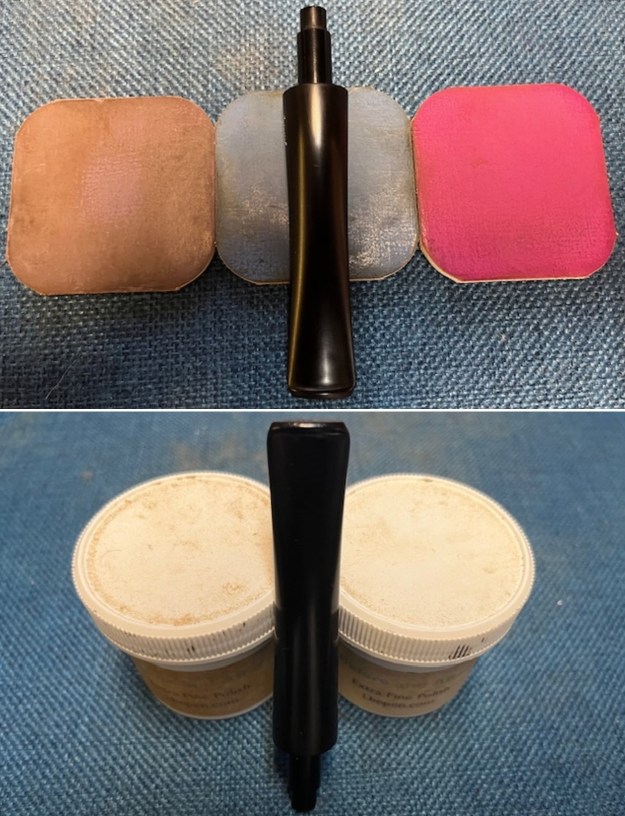
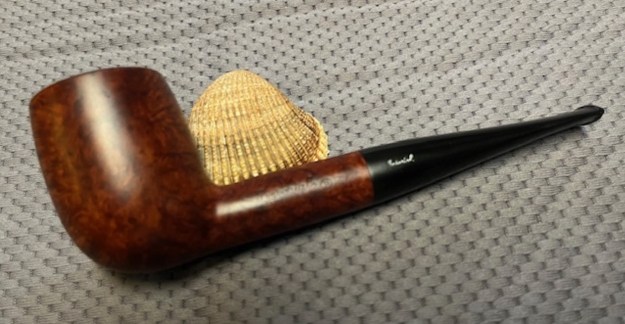
Cleaning up a messy Bent Billiard that appeared to be old…


Blog by Steve Laug

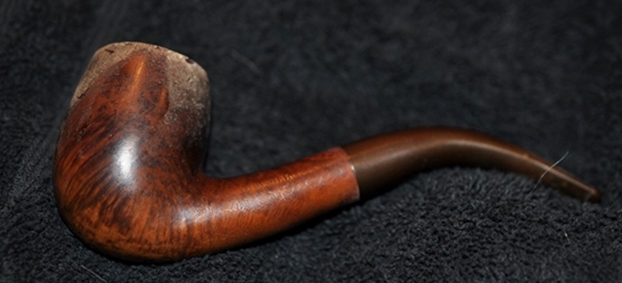
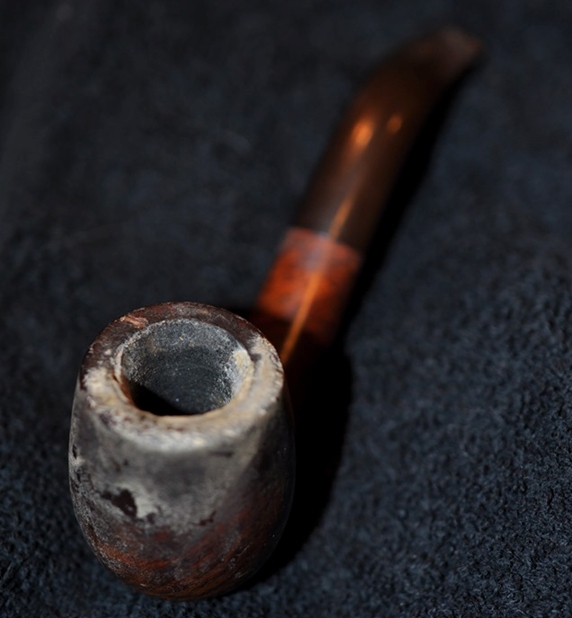
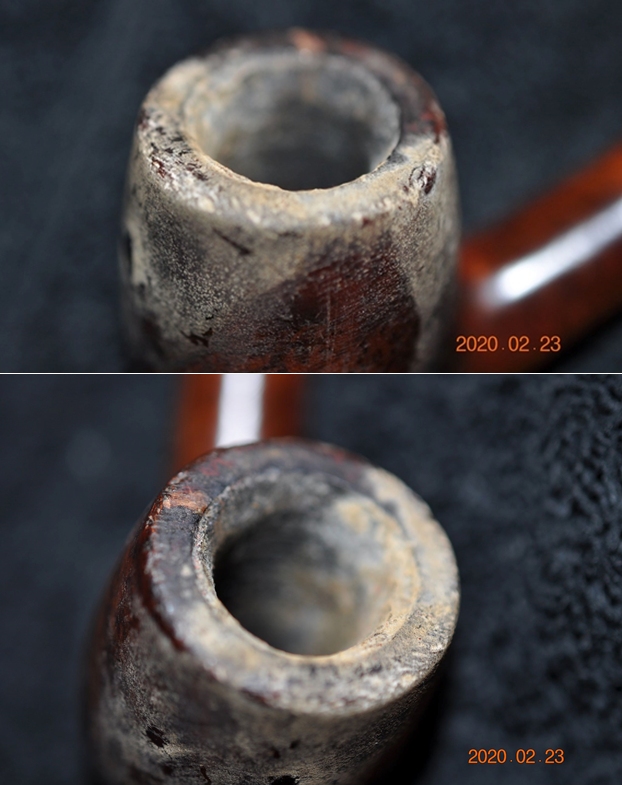
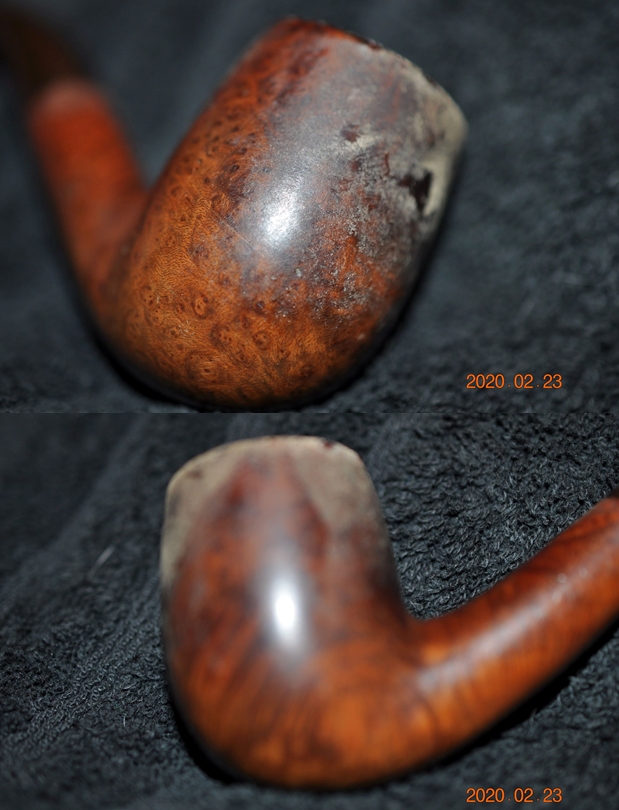
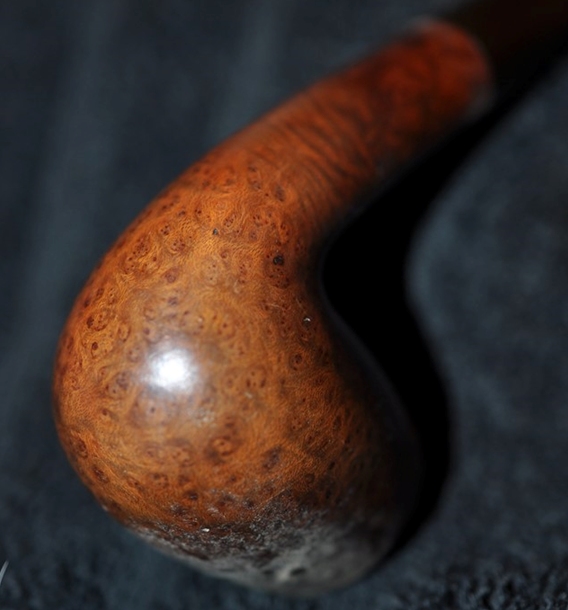
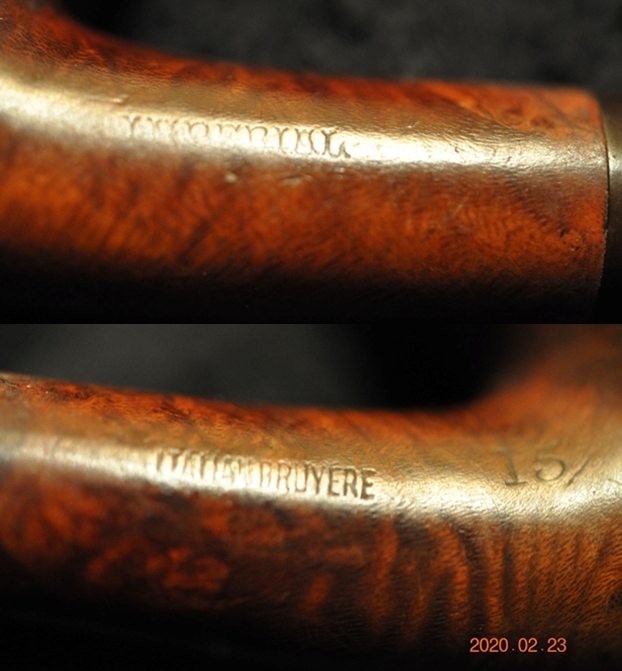
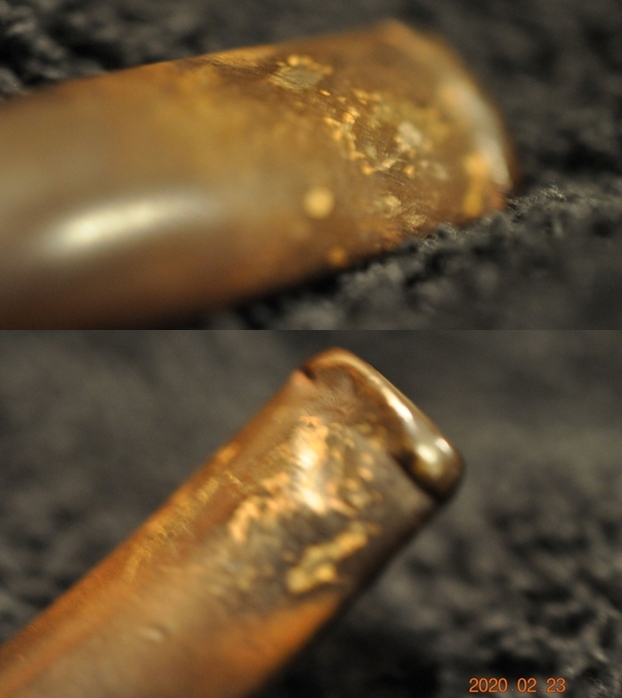
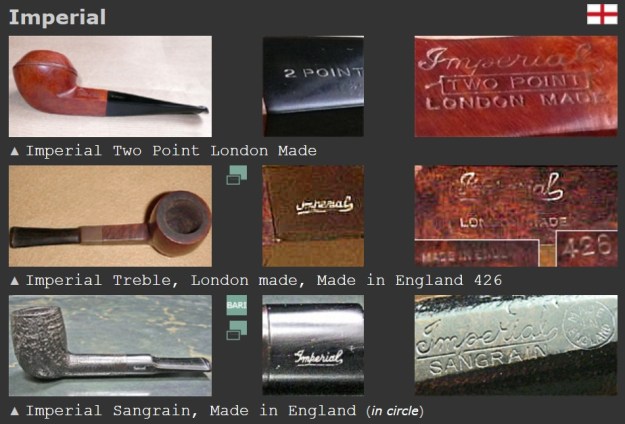
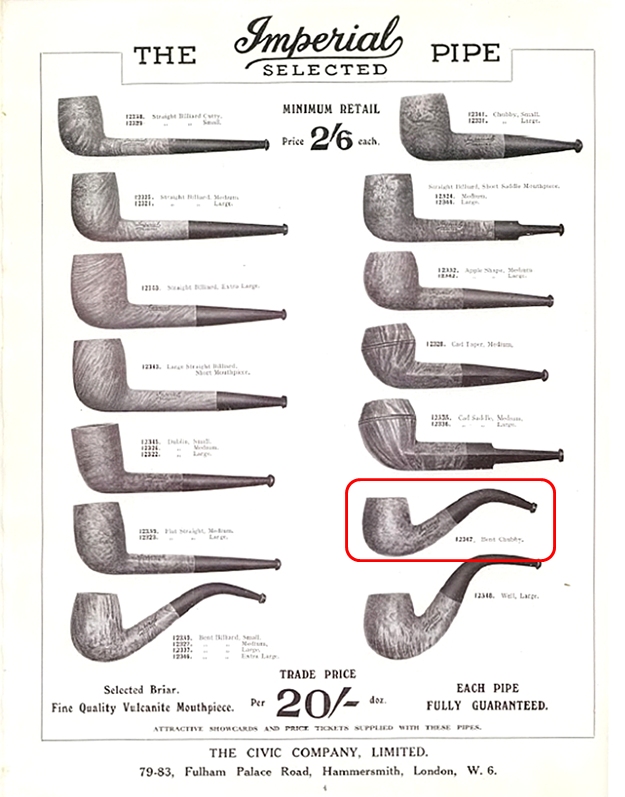
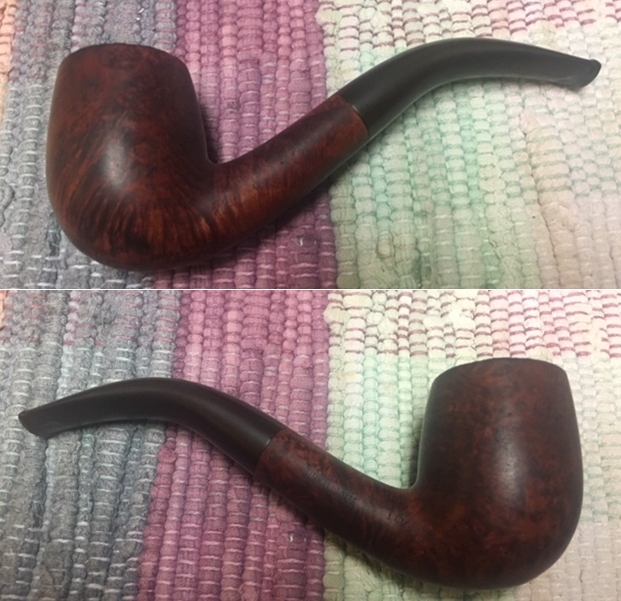
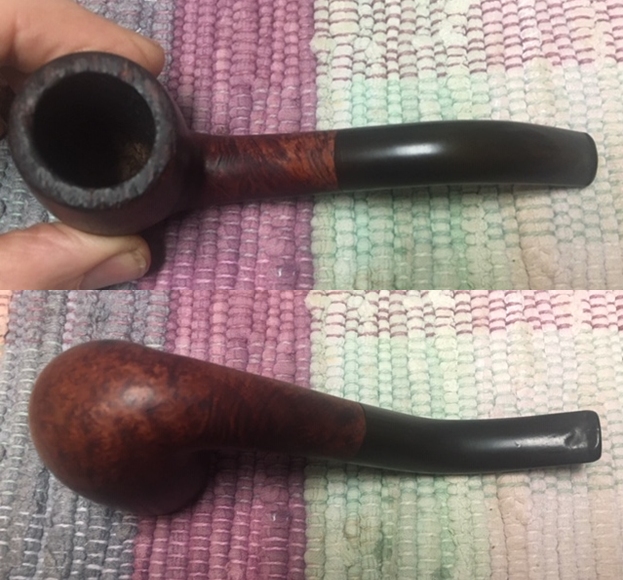
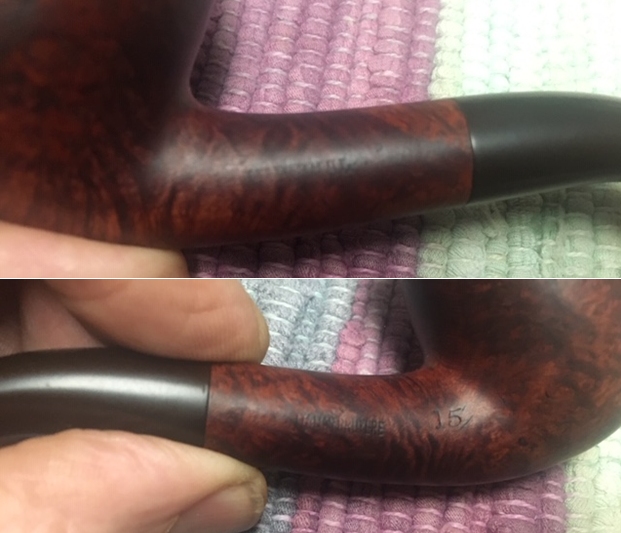
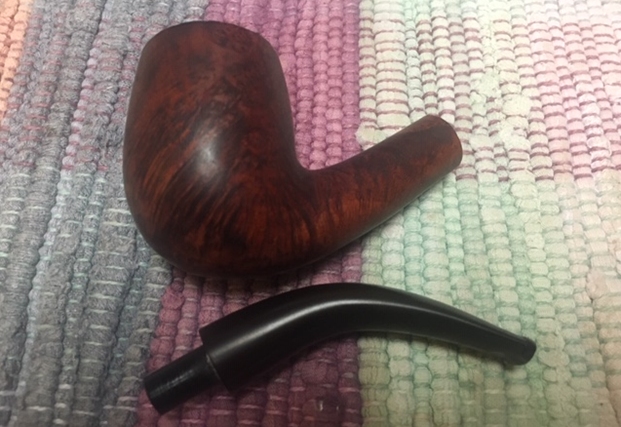
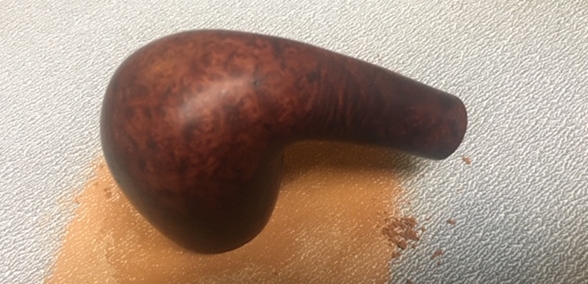
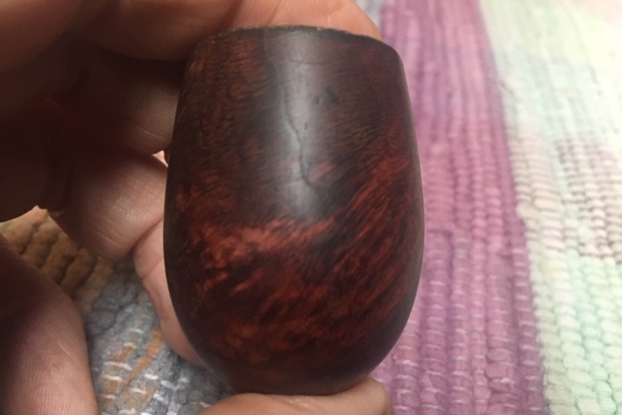
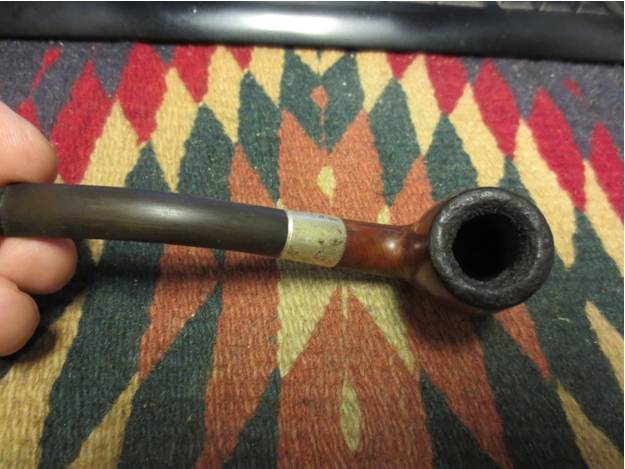
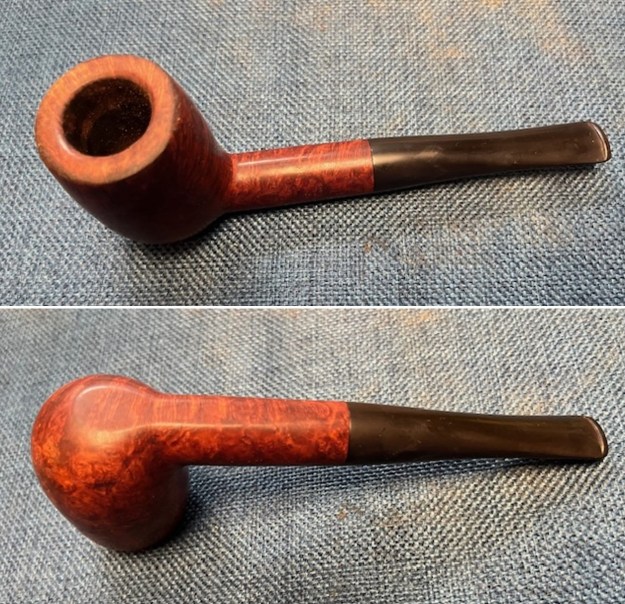
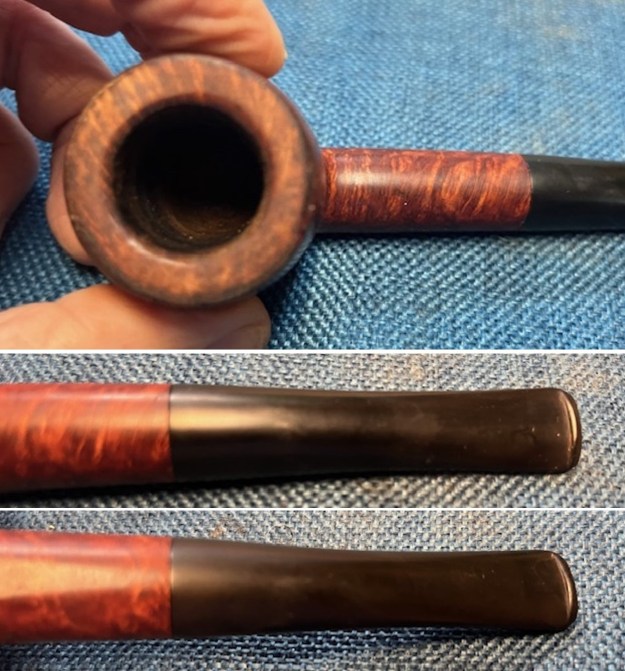
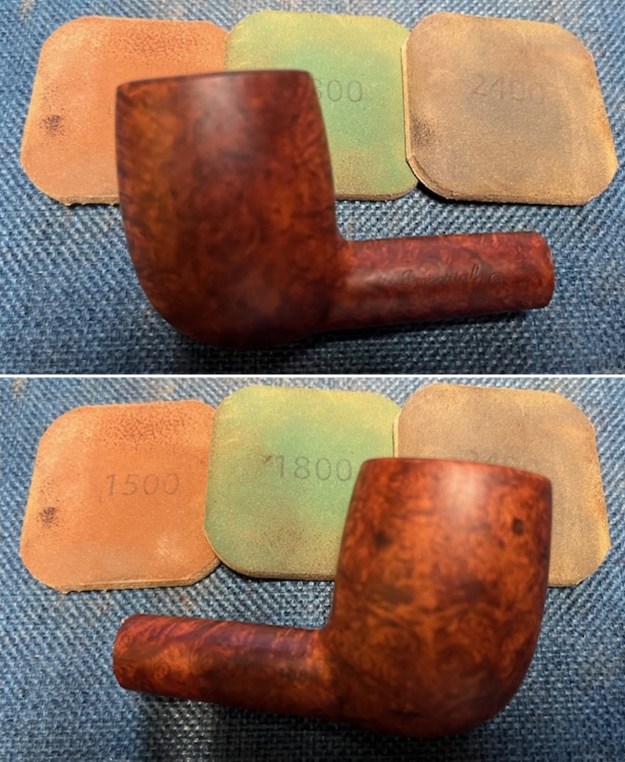
Jeff and I found the next pipe on our Oregon Coast Pipe Hunt. I saw it in a display cabinet and there was something about it spoke to me even through the thick coat of what looked like some kind of moldy dust. It did not smell like mold it really was more like old dust. It made me wonder if the seller had found it in the wall of a house that was being renovated. It is a well-shaped Bent Billiard that had some nice grain poking through the grime. Under the outdoor light and using a lens I could see that it was stamped on the left side of the shank and read IMPERIAL over what appeared to read London Made. The stamping on the right side of the shank reads Italian Bruyere and the number is 15 is at bowl shank junction. The briar that showed has a combination of brown stains that highlights the grain. The finish was very dirty with a heavy coat of grime ground into the bowl and rim top as can be seen in the photos. The bowl had a thick cake with a heavy lava overflow on the inner edge of the top around the bowl. There was too much dust and debris to know what the rim edges looked like but more would be revealed once it was cleaned. The stem was oxidized and there were deep tooth marks and chatter on both sides and on the top and bottom edges of the button. The underside of the stem was badly dented and worn. Jeff took photos of the pipe before he cleaned it up so you could see what we saw. It was a disastrous mess! Jeff took photos of the rim top to show dusty build up around the rim and bowl. It almost obscures the thick cake in the bowl and the lava overflow on the rim top and the inner edge of the rim.    Jeff took some photos of the bowl sides and heel to show debris on the bowl but also the grain that showed beneath that. I think that this will be a beautiful pipe once we are finished. The stamping on each side of the shank is shown in the photos below. They faint but still readable. It reads as noted above.  The Imperial stamping is not in the expected script but it is clear and the London Made beneath is readable under a light. The Italian Briar makes me wonder a bit concerning the provenance of the pipe. The stem was a very good fit to the shank. It was oxidized, calcified and had debris stuck to the surface of the vulcanite. It also shows the deep tooth marks on the stem and on the button surface.  The button is in very bad condition on both the top and underside.    I turned to Pipephil (http://www.pipephil.eu/logos/en/logo-i.html) to read about the Imperial Pipes. The screen capture also helps to clarify the stamping on the left side of the shank. There was also a difference in the IMPERIAL Stamp. This one is script and the one I have is more Germanic script upper case letters.I turned to Pipedia to check out the brand (https://pipedia.org/images/5/52/Imperial_Page.png). There was an interesting catalogue page that shows the shape of the pipe that I am working on. I have drawn a box around it in the photo below. The bend in the stem, the stem style and the shape of the shank and bend look to be the same.Armed with that information and a clearer picture of the original pipe I turned to work on the pipe on my work table. I was really looking forward to what the pipe would look like once Jeff had worked his magic. Would it live up to my expectations? Would there be new issues that I had not expected? I had no idea. When I took it out of the box I was struck great job cleaning up the pipe Jeff had done. It was impressive! He reamed the pipe with a PipNet reamer and cut back the cake back to the bare briar. He cleaned up the walls with a Savinelli Fitsall Pipe Knife. He scrubbed the interior of the bowl and shank with pipe cleaners, cotton swabs and alcohol to remove the tars and oils. He scrubbed the exterior of the pipe with Murphy’s Oil Soap and a tooth brush to remove the grime from the finish. He worked on the rim top lava and darkening with the soap and tooth brush. He scrubbed the inside of the stem with alcohol and pipe cleaners. He scrubbed the exterior with Soft Scrub and then soaked it in Before & After Deoxidizer. He washed it off with warm water to remove the deoxidizer. The pipe looked far better. I took photos of the pipe when I received it before I started working on it. I took photos of the bowl and rim top as well as the stem to show how clean they were. You can see the heavy damage to the rim top and edges of the bowl. The rim top is rough to touch with chips and gouges. The inner edge is also rough and the outer edge is also damaged. It almost looks like the bowl was used as a hammer! The stem is clean and the tooth damage on both sides is very clear in the photos. Lots of work to do on this pipe.I took a photo of the stamping on the sides of the shank. The stamping is faint but readable as noted above.    I took a photo of the pipe with the stem removed to show the overall look of stem, tenon and profile of the pipe. It really is a beautifully shaped pipe.I decided to start my work on the pipe by addressing the damage on the rim top. I topped it lightly with 220 grit sandpaper on a topping board. I was able to remove the damage to the top while at the same time removing the damage on the inner edge and minimizing the outer edge damage. I would polish the rim top with micromesh when I polished the bowl.In handling the bowl it appeared that there was a crack in the front side. I examined with a bright light and lens and was not sure. It almost looked like a scratch in the finish. Polishing the bowl would make it clear one way or another exactly what I was dealing with.I polished the bowl and rim with micromesh sanding pads – wet sanding with 1500-12000 grit pads. I worked over the rim top and edge of the bowl with the pads. I wiped the bowl down with a damp cloth after each pad to remove the sanding debris. I touched up the stain on the rim top using a Cherry and Maple stain pen to blend in the rim top with the rest of the bowl colour.I rubbed the briar down with Before & After Restoration Balm. I worked it into the briar with my fingertips to get it into the crevices. The product works to clean, enliven and preserve the briar. I let it sit for 10 minutes while I worked on the stem. After the time passed I buffed it with a cotton cloth to deepen the shine. The briar really comes alive with the balm. I set the bowl aside and turned my attention to the stem. I “painted” the tooth marks on the top and underside to lift the vulcanite. It actually worked quite well. I filled in the remaining dents and built up the edges and top of the button on both sides as well using clear super glue. Once the repairs had cured I used a needle file to shape the button surface and recut the edge of the button on both sides of the stem. I flatted out the repairs to the stem surface at the same time. Once I had done the rough shaping work I sanded the stem with 220 grit sandpaper to finish the shaping and to remove the remaining oxidation. I started polishing the stem with 400 grit wet dry sandpaper. I wiped the stem down with Obsidian Oil before further polishing it. (Please forgive the fuzziness of the photo of the underside of the stem.) I polished the vulcanite with micromesh sanding pads – 1500-12000 grit pads. I wiped it down with Obsidian Oil after each sanding pad. I used Before & After Pipe Polish – both Fine and Extra Fine to further polish the stem.   This older Imperial London Made 15 Bent Billiard turned out far better than I expected when we found it. I really had no idea what would happen when we cleaned it up. I think Jeff probably thought I was crazy paying for this worn out looking piece of “debris” but I saw something that caught my eye and after the restoration you can see what I saw! It is a great looking pipe. The mix of brown stains highlights the beautiful mixed grain around the bowl sides, top and bottom. The finish on the pipe is in excellent condition and the contrasting stains work well with the polished black vulcanite saddle stem. I put the stem back on the bowl and carefully buffed the pipe with Blue Diamond on the buffing wheel. I gave the bowl and stem multiple coats of carnauba wax on the buffing wheel and followed that by buffing the entire pipe with a clean buffing pad. I hand buffed the pipe with a microfiber cloth to deepen the shine. The finished Bent Billiard is very nice and feels great in the hand. Give the finished pipe a look in the photos below. It is a petite pipe whose dimensions are Length: 5 inches, Height: 1 ¾ inches, Outside diameter of the bowl: 1 ¼ inches, Chamber diameter: ¾ of an inch. Thanks for walking through the restoration with me as I worked over another beautiful pipe. This pipe will stay with me for a while but who knows it could end up on the store one day! Thanks for your time.

Carrying on the story of a 1905 Imperial ITC Bent Billiard


Blog by Steve Laug

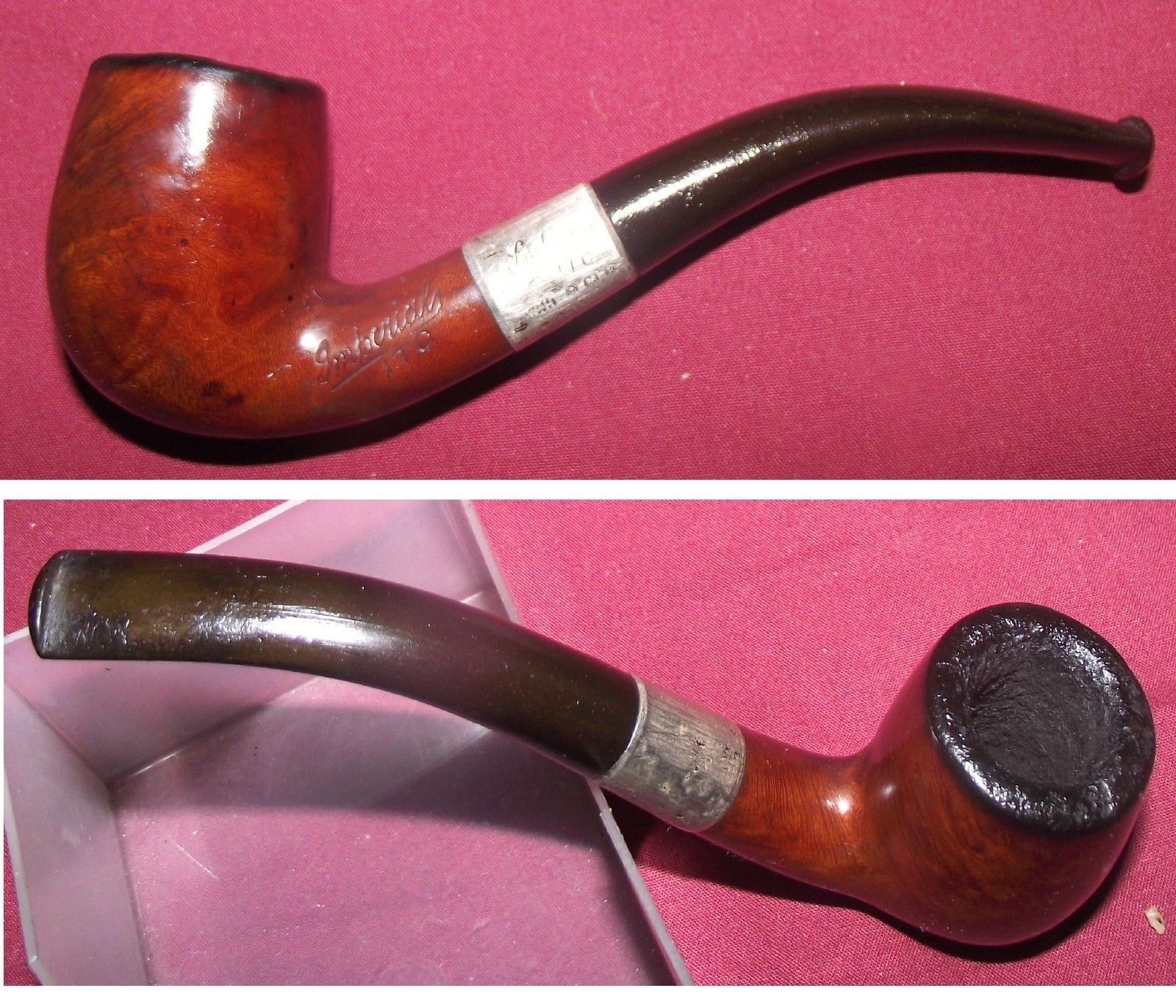
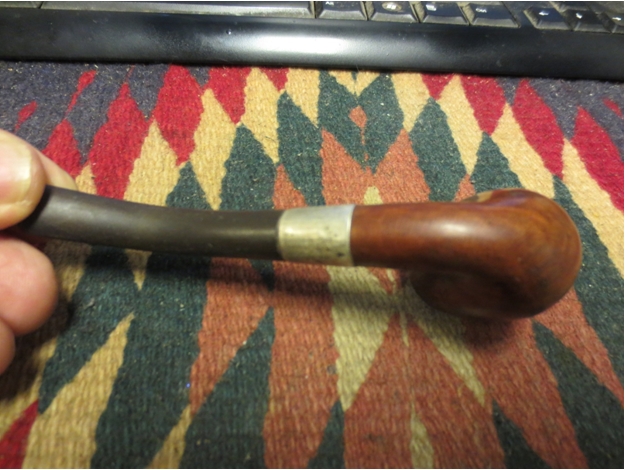
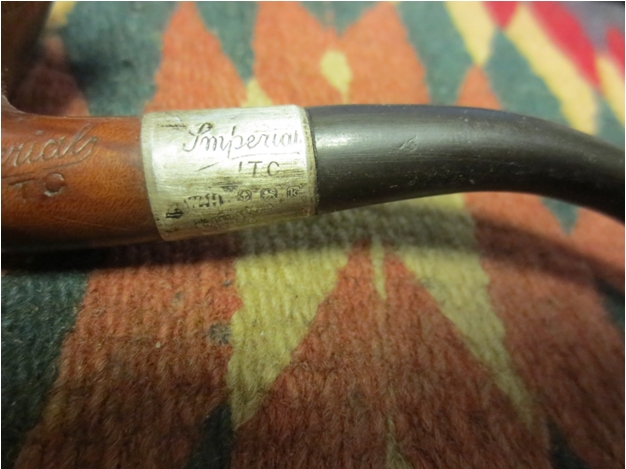
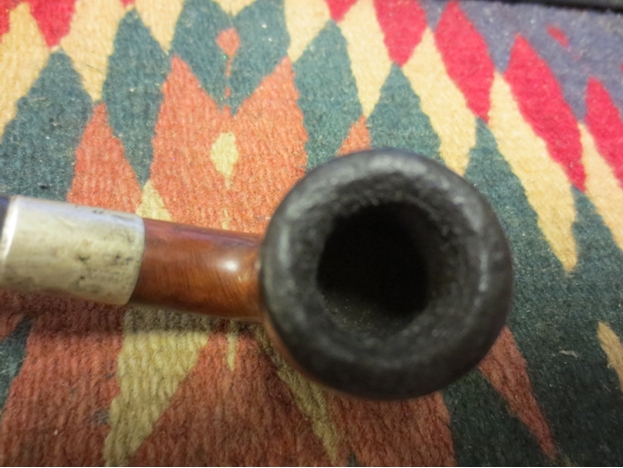
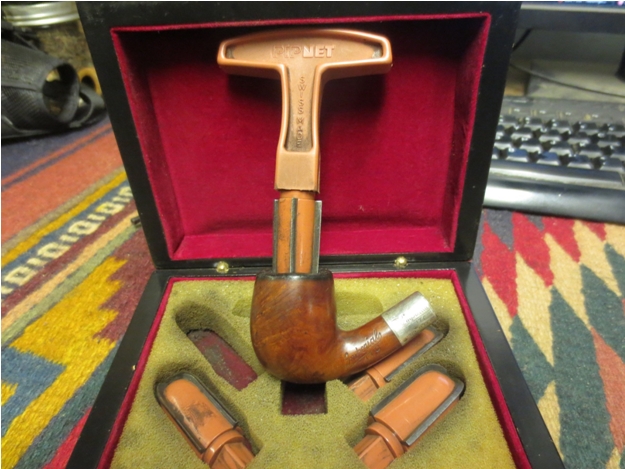
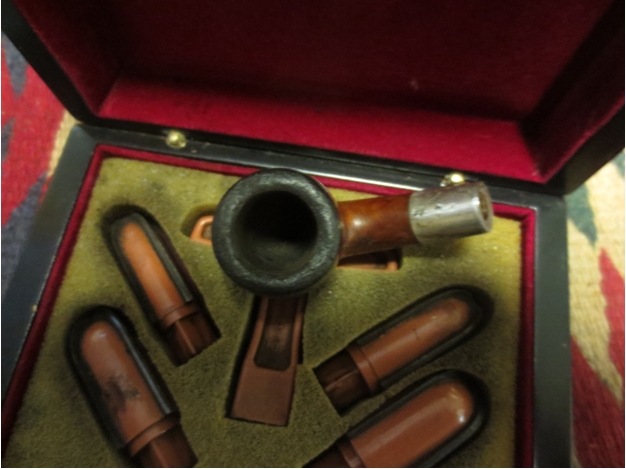
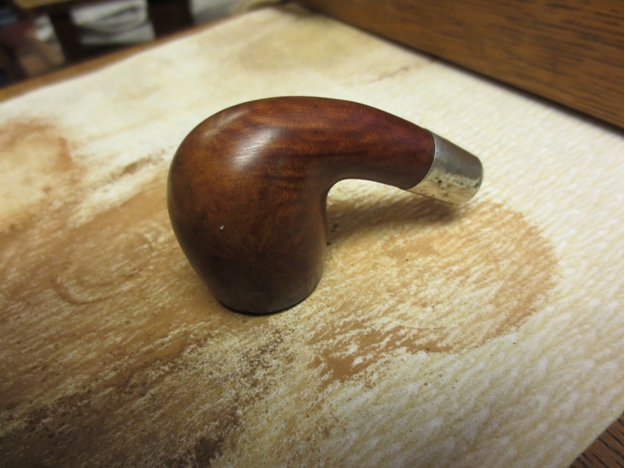
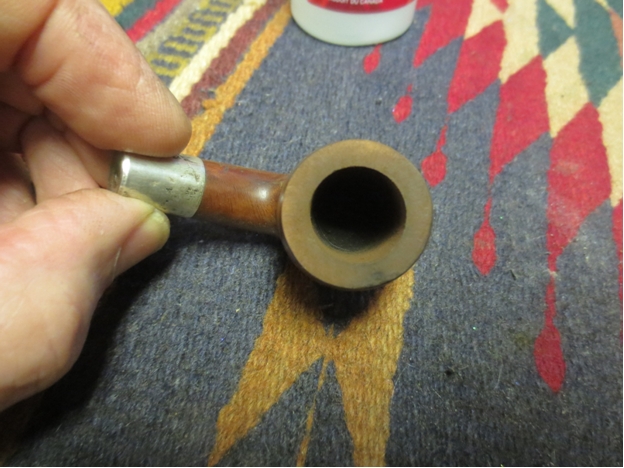
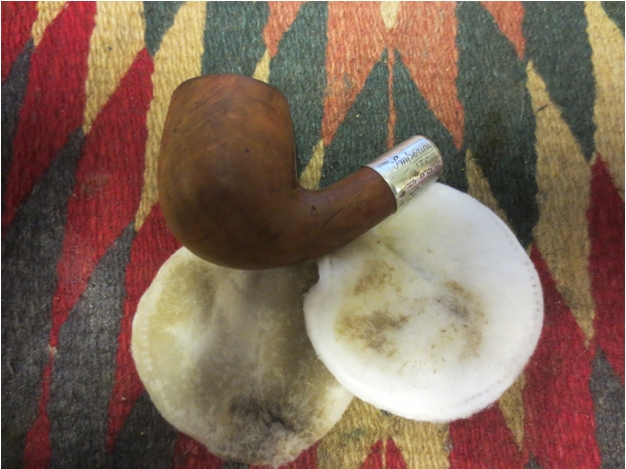
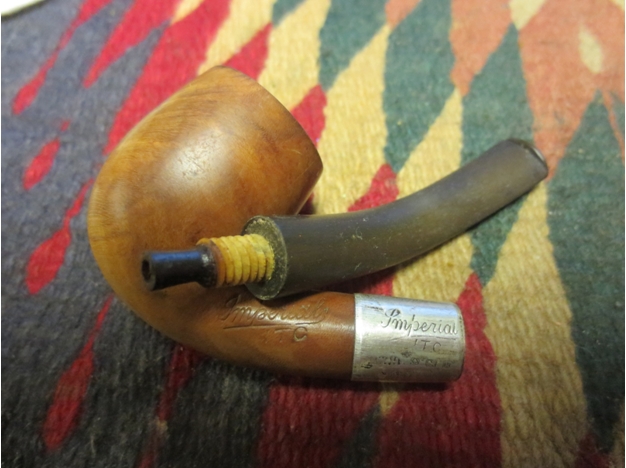
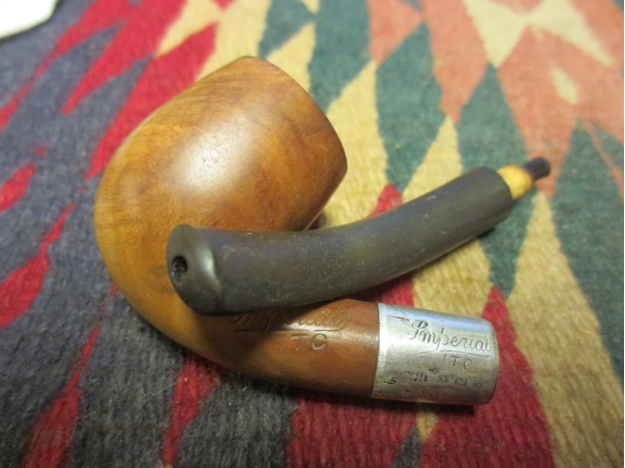
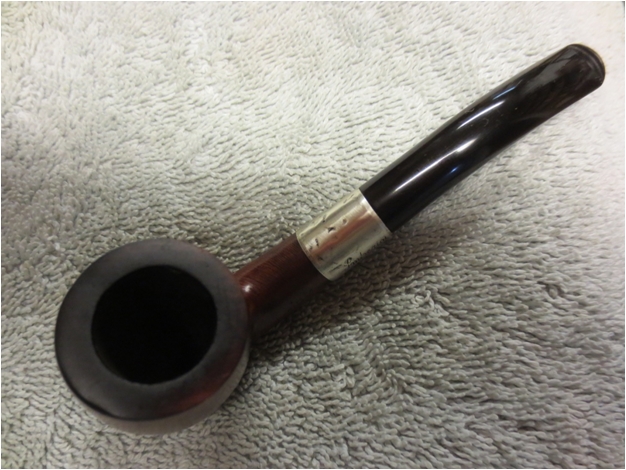
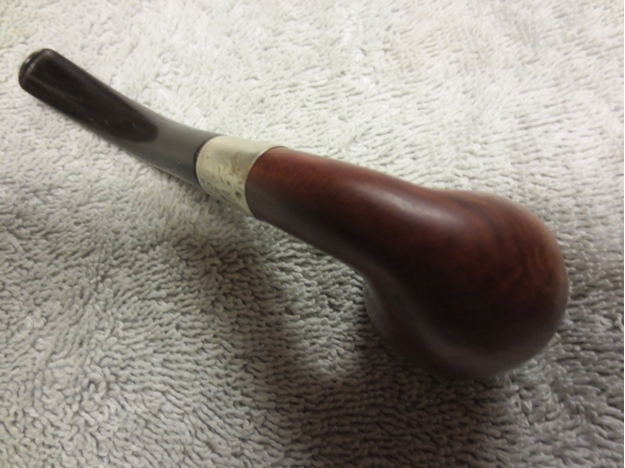
The seller had marked this little pipe an Imperial ITC Silver Mount Birmingham 1934. Something about the gentle bend of the stem and shank, the shape and wear on the bowl made me want to have this diminutive pipe as my own. I bid on it and was the only bidder picking it up for about $22 Canadian. I think the seller wet down the stem and bowl for the photos because it is far too shiny looking. When I see an old pipe like this I immediately begin to wonder about the gent who owned the pipe. What was he like? What did he smoke in it? When did he purchase it and what did he smoke in it? Many of those questions can of course be answered by the pipe itself. The date in this case was suspect and would be formalized once I had it here. The vulcanite stem appeared to have an older rounded button that let me to surmise that it has an orifice button – a single round hole in the end of the button rather than a flared airway. The bowl was obviously well smoked telling me that it was a good smoking pipe. The stem unchewed telling me that the owner had cared for it well. Other than that I was left wondering about the last owner, was he the purchaser? How had the seller come into possession of the pipe? Questions for which I will not have an answer.Imperial ITC When the pipe arrived I opened the box and excitedly cut through the layers of tape that held the pipe captive in the bubble wrap that protected it. I was proven correct in my assumption regarding the state of the pipe. The finish was indeed wetted for the photos of the seller as the pipe did not glisten like the photos. The bowl was in decent shape, the finish worn and tired. The rim was shot with built up tars and damage from tapping the bowl out. The silver had multitudes of dents and pock marks in it that showed its carriage in a coat or vest pocket and was tarnished. The stem was clean a lightly oxidized but showed no tooth damage. The bowl was caked with a thick build up of carbons but did not have a sweet or smokey smell so it was likely a Virginia pipe. The curve of the stem matched the curve of the bowl. The stamping was clear and readable – Imperial in script at an angle with ITC underneath the underline of Imperial. There was no other stamping on the briar.Imp1
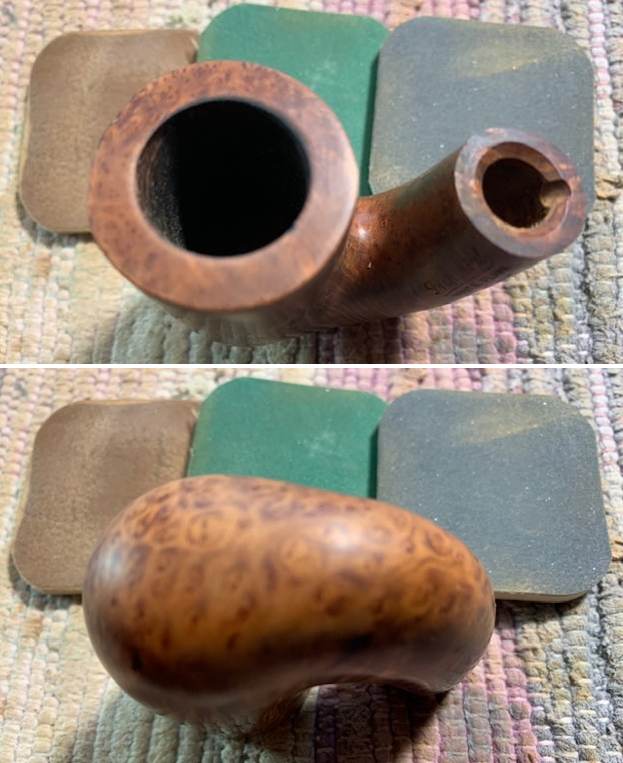
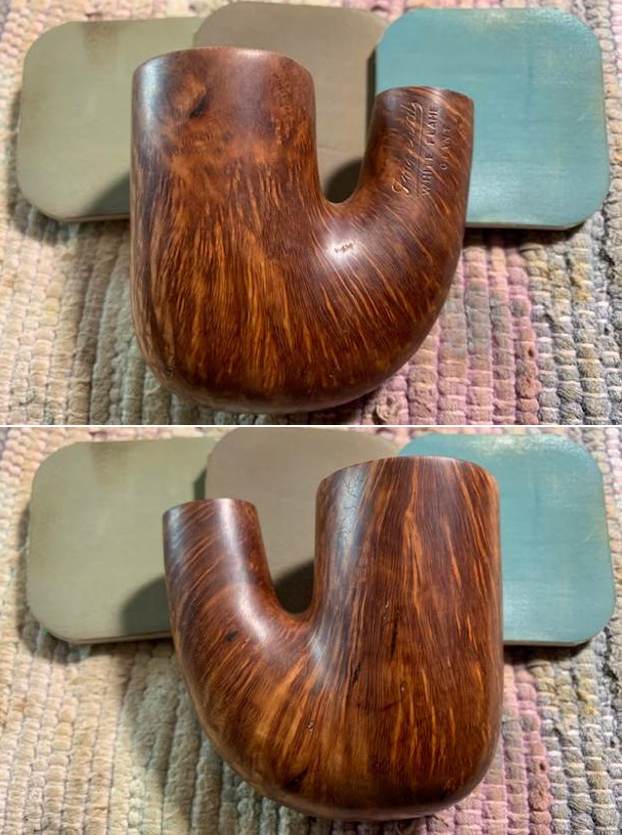
Imp2

Imp3

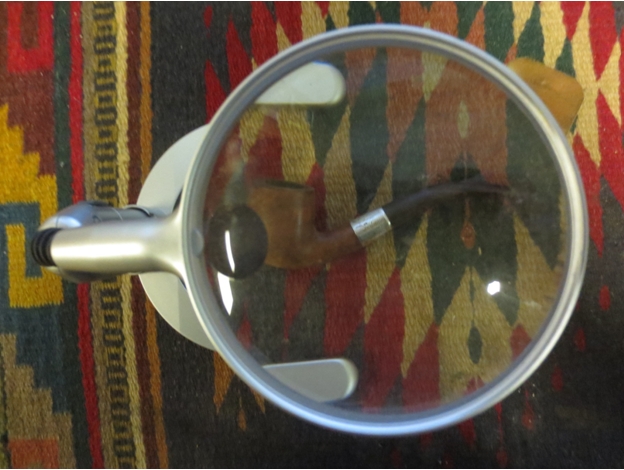
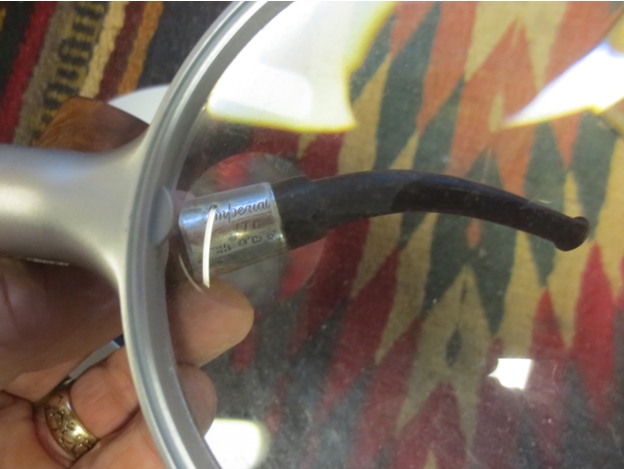
Imp4 I wanted to check out the date given by the seller as I suspected it was somewhat earlier than the 1934 date given by the seller. The stem and button shape and the threaded bone tenon all pointed to an earlier date in my opinion. The hallmarks on the silver band would allow me to do that with some precision as they were not badly worn. I wiped down the band with a silver polishing cloth to remove the tarnish enough that I could read the stamping. To the naked eye it appeared to have a W.H. in an oval followed by an anchor, a lion and a lower case k.Imp5 I brought home a magnifying glass from work that had a built in light. I put the pipe under the lens and turned on the light. I lifted it to get the clearest magnification I could get on the silver hallmarks and what I had seen was indeed correct. It was a WH in two interlocking circles and the three hallmarks were correct.Imp6
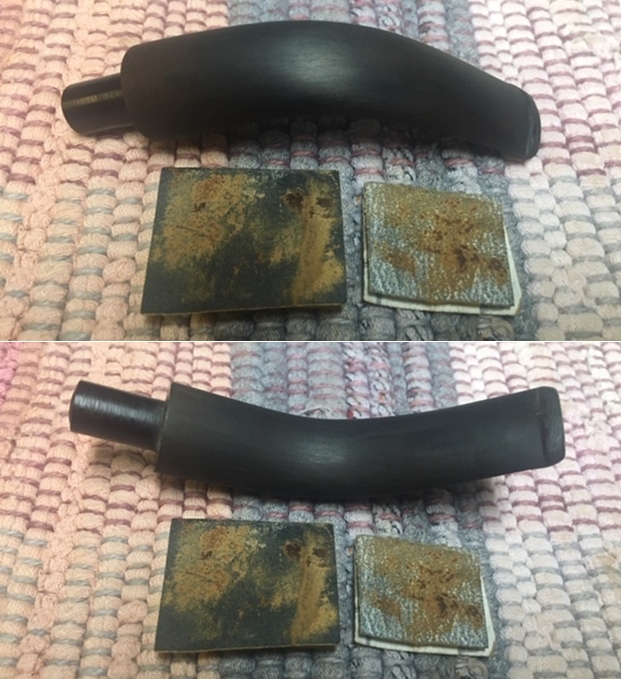
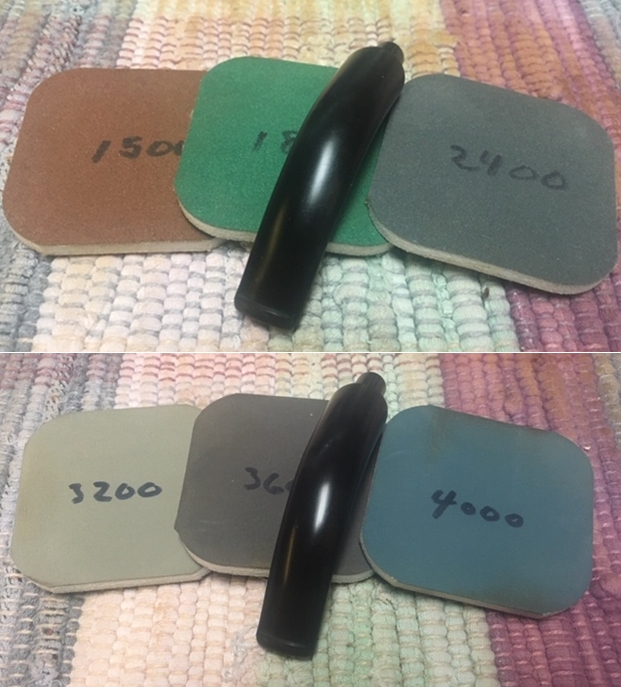
Imp7 I took this information to one of my favourite websites to process the information and gather what I could from the stamping http://www.silvercollection.it/englishsilverhallmarks.html. There I found the following data. The anchor stamp told me that the pipe or at least the silver band came from Birmingham, England. The lion told me I was dealing with sterling silver. And the k told me the date – 1905 not 1934. The pipe was significantly older than the seller had noted. That excited me as I love these older briar pipes.Imp8 I also wanted to know what the W.H. in the oval could tell me about the pipe. I dug a little deeper on the English silver marks page and found more information.Imp9 The maker of the silver band was a William Harrison who was active in London. Various copies of Harrison’s marks in Chester Assay Office were registered by Imperial Tobacco Co between 1907 and 1916. The mark above shows a Birmingham 1908 hallmark. From that information I gathered that the W.H. was William Harrison and that the Birmingham Assay Office had stamped the band in 1905.

I unscrewed the stem from the shank in order to work on the bowl. The cake was thick and crumbling in the bowl so I reamed it back to bare wood with a PipNet reamer.Imp10

Imp11

Imp12 The rim would take some serious work to get it back to workable condition. I set up a topping board and carefully worked the top of the bowl against the sandpaper. The surface of the rim was not even so this took some care so as not to angle the rim. I sanded the rim until the surface was flat and the damage was removed. There was still some darkening to the briar but I chose to leave that rather than to remove more of the briar from the rim.Imp13

Imp14 To remove the spotty and damaged finish on the bowl I wiped it down with acetone on cotton pads and was able to take it back to the unfinished briar. The brown patina of the briar was not removed in the process and once finished would clean up well and still show some age.Imp15 I wanted to take photos of the stem and tenon so that you could see the age and shape it was in. It was a bone tenon, threaded to match the threads in the shank. The end of the tenon has a funnel or tube that is part of the tenon to capture the smoke and bring it into the airway. The other end of the stem is the rounded orific button that I have come to expect on pipes from this time period.Imp16

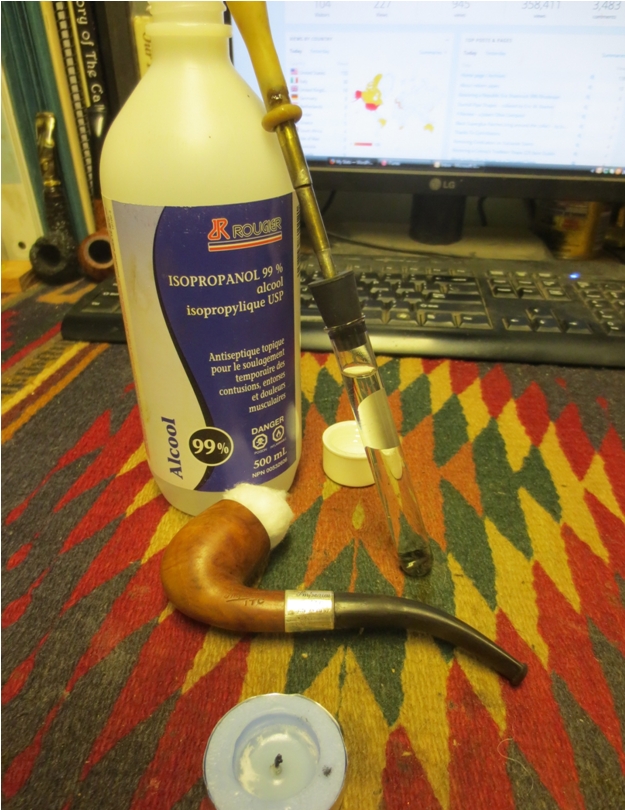
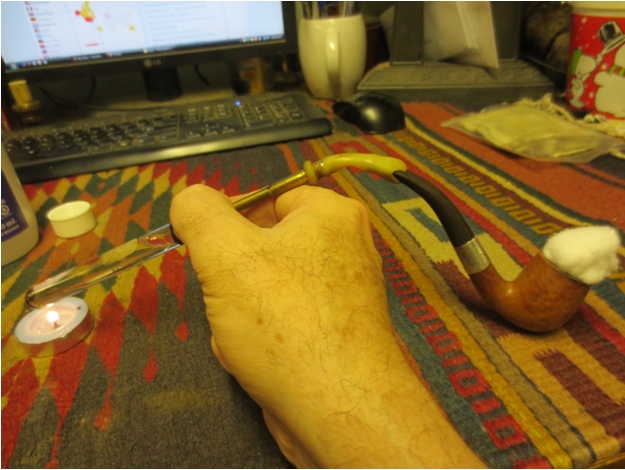
Imp17 Once the exterior surfaces were clean it was time to work on the interior of the shank and stem. I put the pipe back together and set up a retort. I filled the test tube with 99% isopropyl alcohol and put the stopper and apparatus in place. I stuffed a cotton ball in the bowl to keep the alcohol that was boiled through the pipe in the pipe and not all over the desk top. I use a small tea light candle to heat the alcohol and boil it through the pipe. I repeat the process twice, changing the alcohol between procedures to remove the tars and oils from the shank and stem. Once I removed the retort I cleaned out the shank and stem with pipe cleaners, cotton swabs and isopropyl alcohol. It takes far less pipe cleaners once the retort has finished its work.Imp18

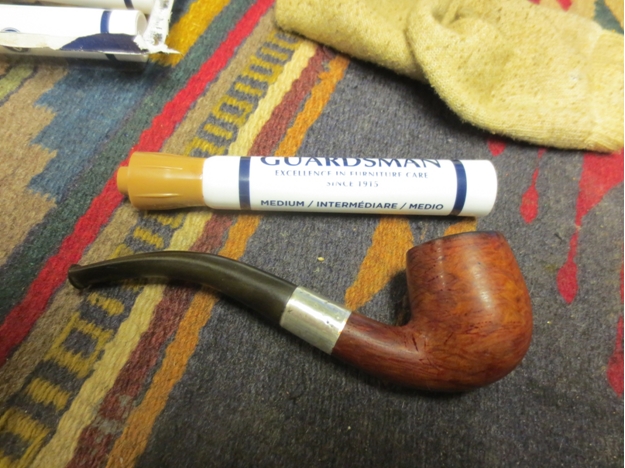
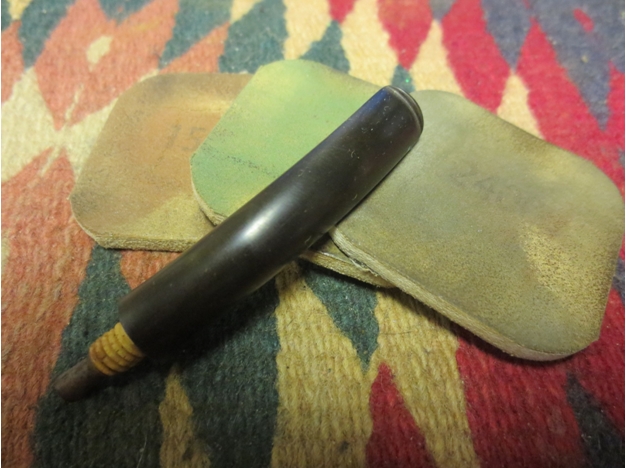
Imp19 I decided to stain the briar using the stain pens instead of the usual aniline stains. I wiped down the surface of the bowl with alcohol and then used the stain the medium brown stain pen to stain the bowl. When applied the stain is streaked but that is easily taken care of with a quick buff with a cotton cloth. I also cleaned the silver with a silver polish and a jeweler’s polishing cloth to remove the tarnish and bring up the shine.Imp20 I removed the stem and sanded it with a medium and a fine grit sanding sponge to address the light oxidation. I then sanded it with micromesh sanding pads – wet sanding with 1500-2400 grit pads and dry sanding with 3200-12000 grit pads. I rubbed down the stem between each set of three pads with Obsidian Oil. When I finished sanding with the 12000 grit pad I also gave it a final coat of Obsidian Oil and when dry took it to the buffer and buffed it with White Diamond and then carnauba wax to protect the stem.Imp21

Imp22

Imp23

Imp24 I decided to rub down the bowl with a light coat of olive oil. I find that on these older pipes it brings out the patina nicely. I put some oil on a paper towel and then rub down the pipe, wipe off the excess and repeat the process until it shines.Imp25

Imp26

Imp27

Imp28 When the olive oil was absorbed and the bowl was dry to touch I took the pipe to the buffer and lightly buffed it with White Diamond. I gave the entire pipe several coats of carnauba wax, buffing the silver with a very light touch so as not to damage the hallmarks and stamping. I finished by buffing it lightly with a soft flannel buffing pad to raise the shine. The finished pipe is shown below. It is ready to go back into service. I intend to enjoy it for many more years. I always enjoy smoking these old timers and only wish they could tell their stories. It is amazing to be able to load a bowl and smoke a pipe that is almost 110 years old. Speak to me, I am listening I want to hear your stories… and add my own to the saga you could tell.Imp29

Imp30

Imp31

Imp32

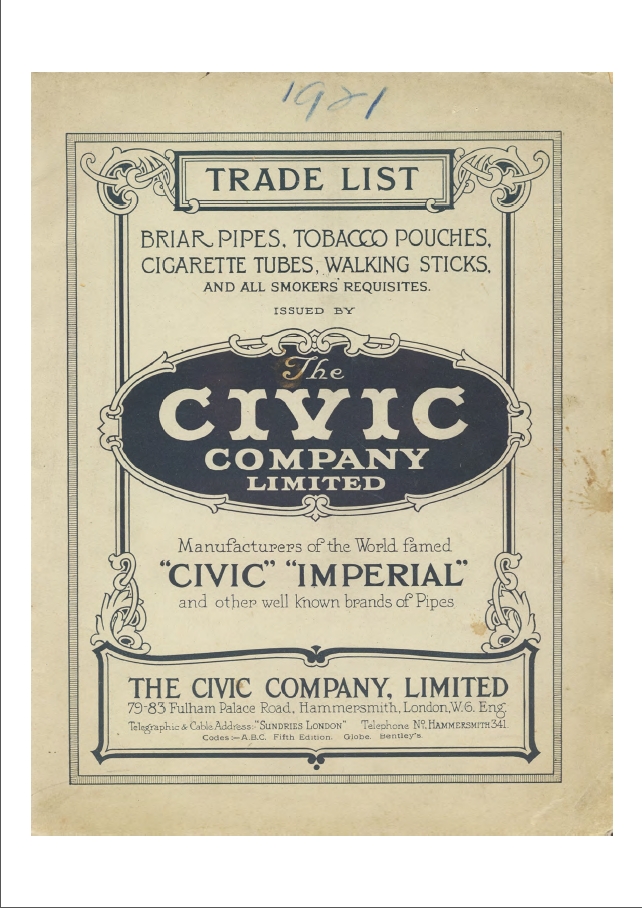
Civic Company 1921 Trade List


Blog by Steve Laug

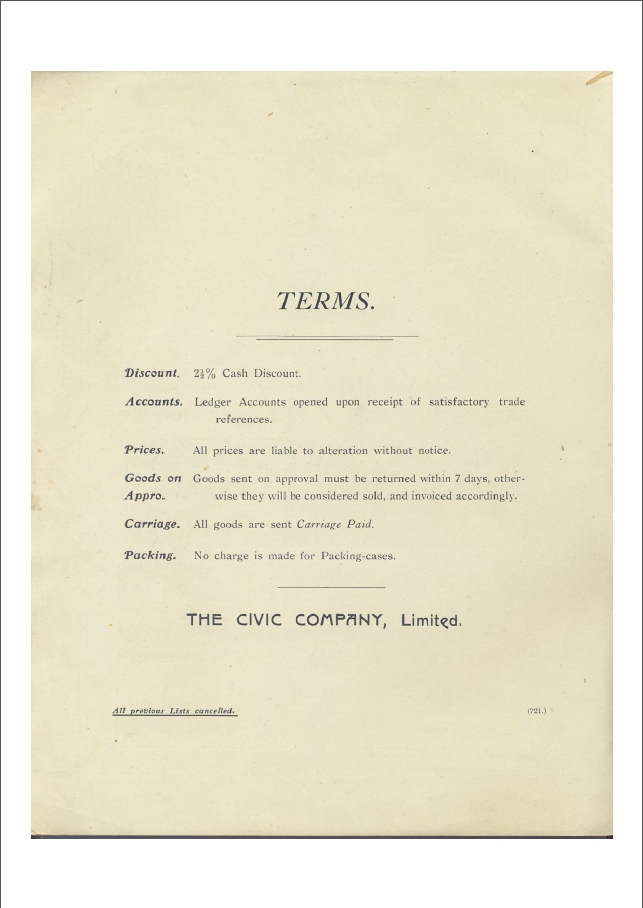
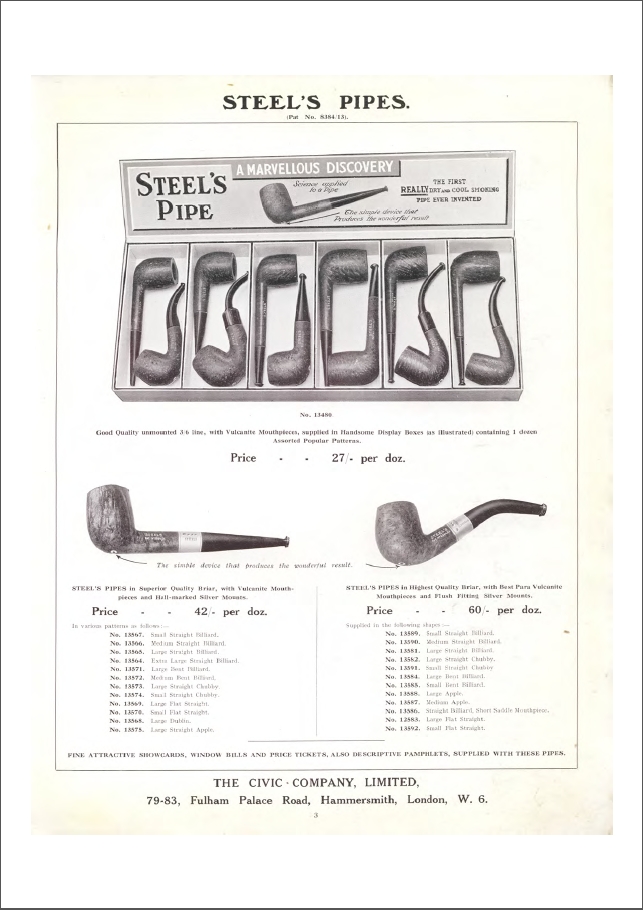
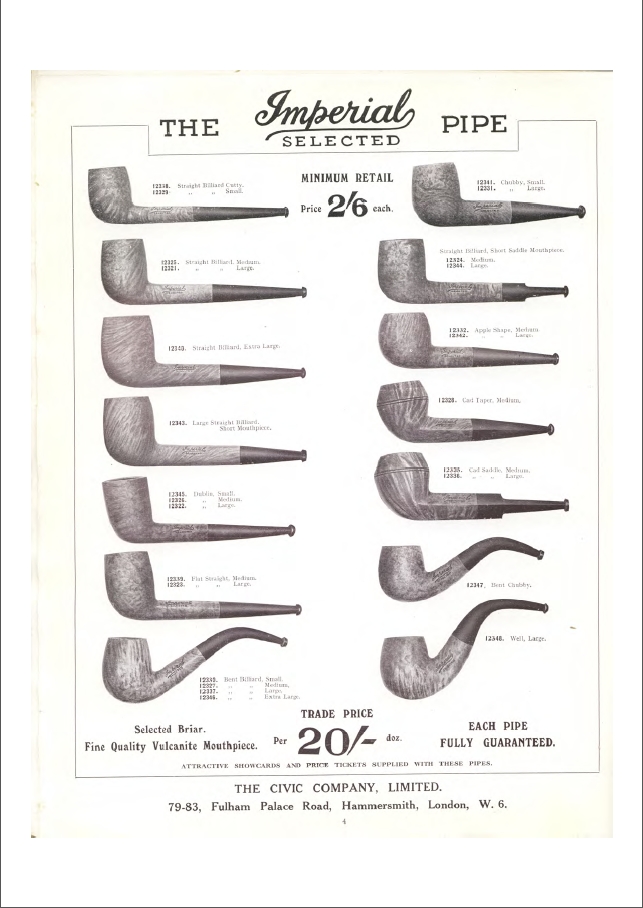
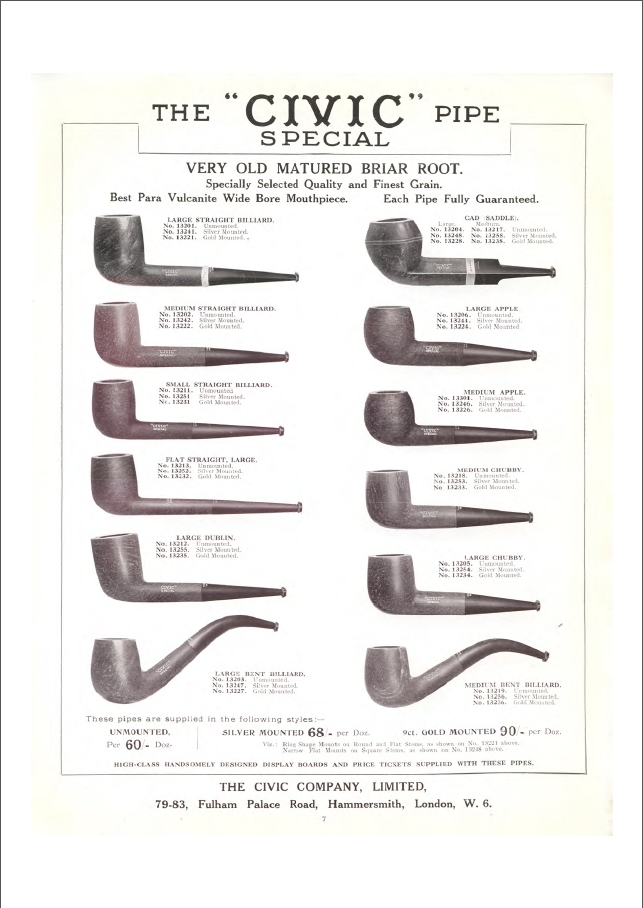
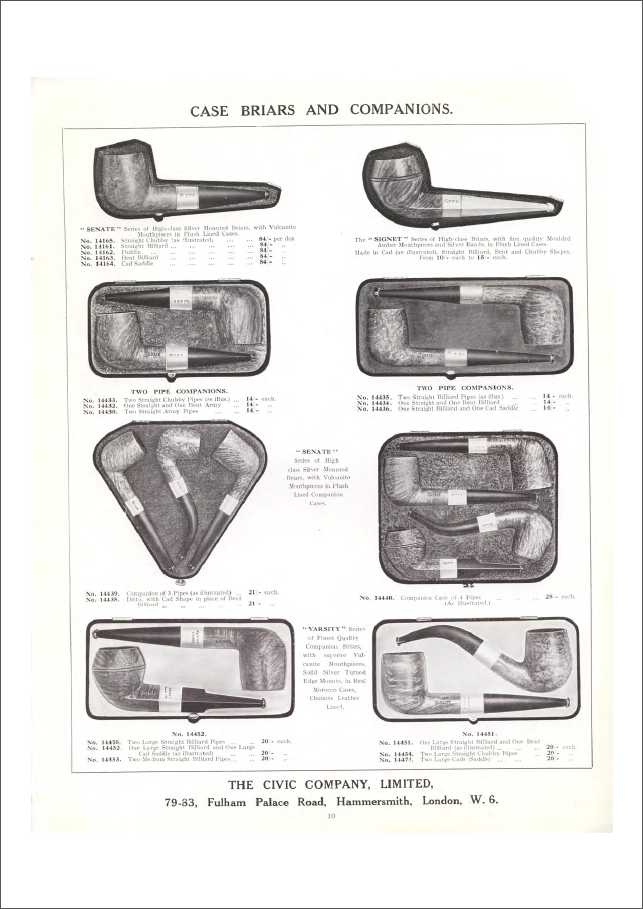
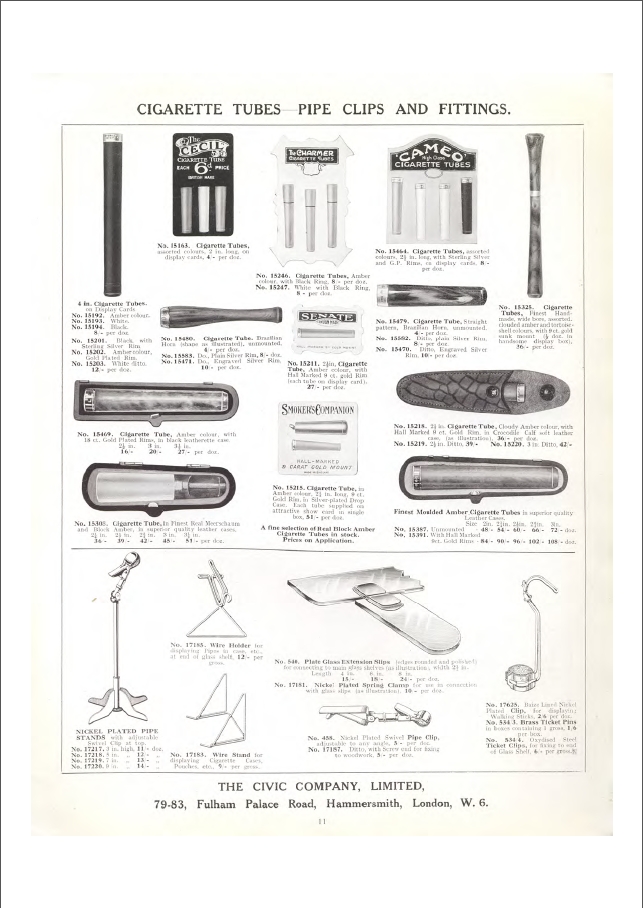
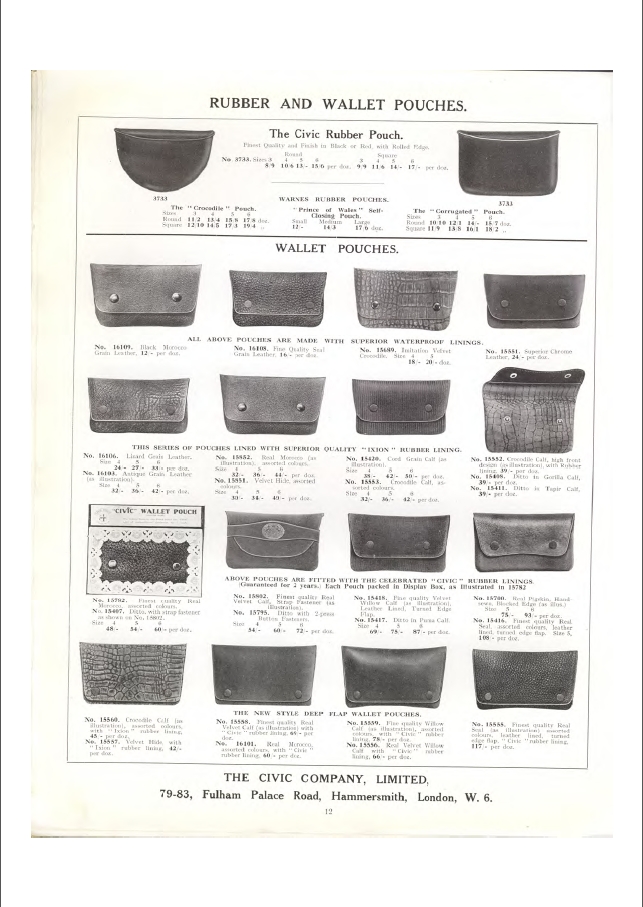
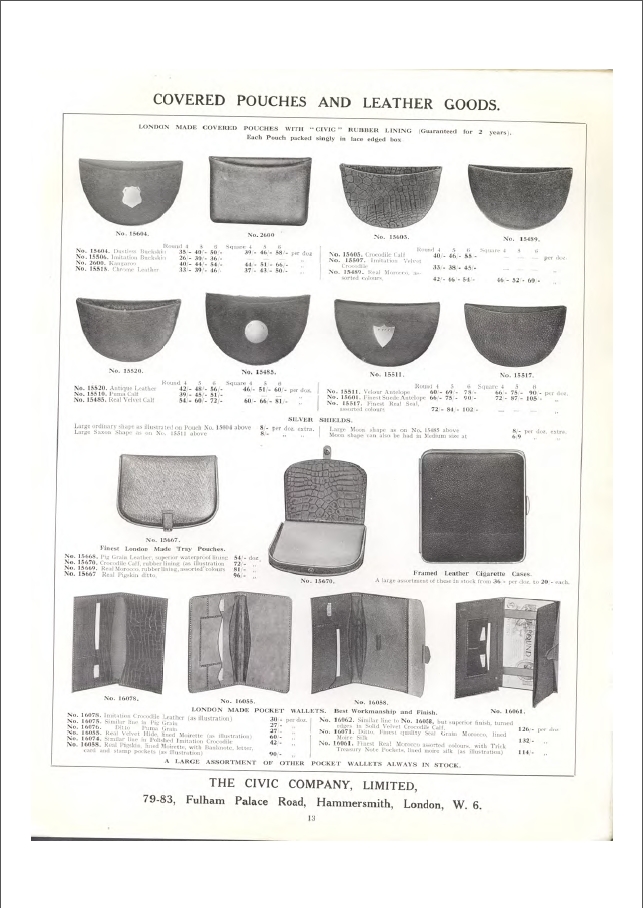
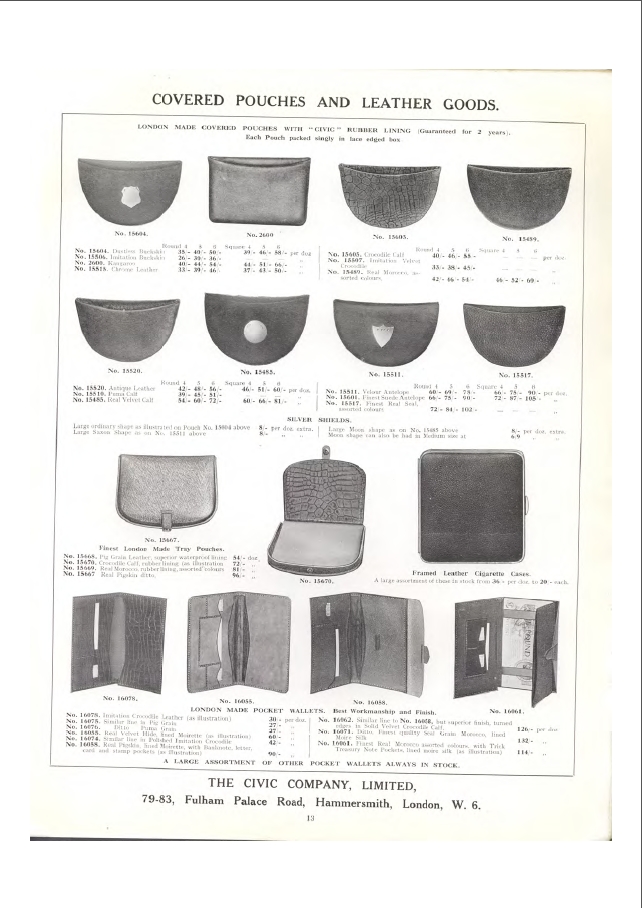
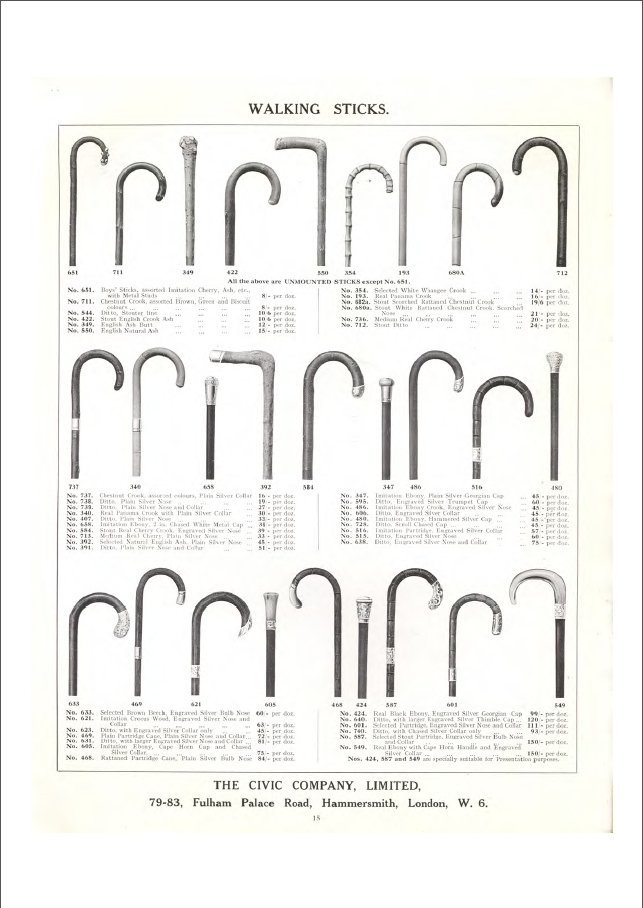
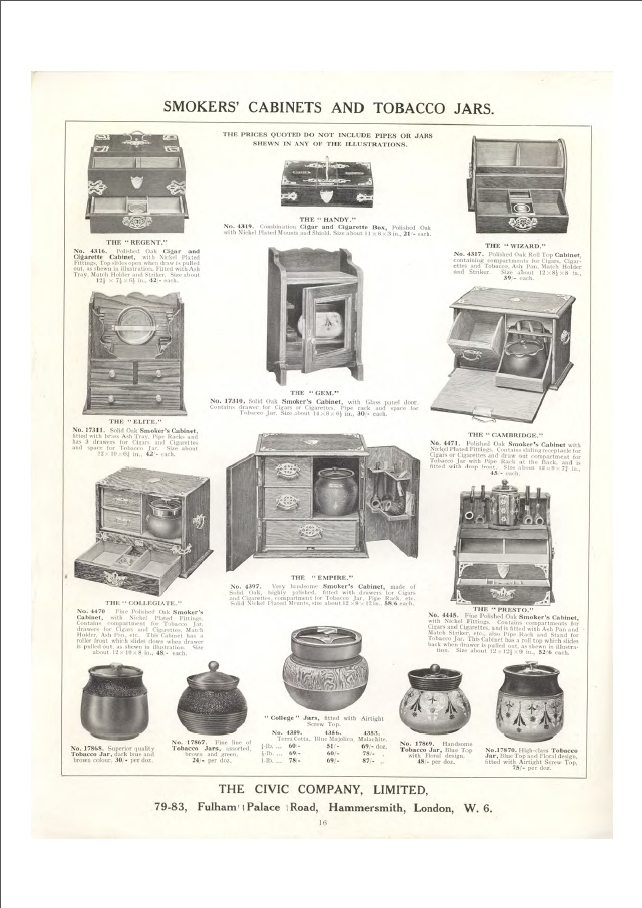
In the course of refurbishing some Imperial Pipes and some French Briar pipes my research unearthed this document. It is a 1921 Trade List or catalogue of Civic Pipes. The introductory page from the scan says the following:

The 1921 Price List is owned by John Adler.
All of these pages, including both sides of the cover and the flyer have been scanned as JPEG and
PDF files and lodged in the National Pipe Archive in Liverpool.
P J Davey/21 April 2010

I found the scanned document on the Academie Internationale de la Pipe website. http://pipeacademy.org/ They have a large repository of old pipe materials that I have found invaluable. I saved the document to my hard drive as a pdf and have included the pages here for others to use.
Civic 1

Civic 2

Civic 3

Civic 4

Civic 5

Civic 6

Civic 7

Civic 8

Civic 9

Civic 10

Civic 11

Civic 12

Civic 13

Civic 14

Civic 15

Civic 16

Civic 17

Civic 18

Civic 19

Civic 20

Civic 21

Civic 22