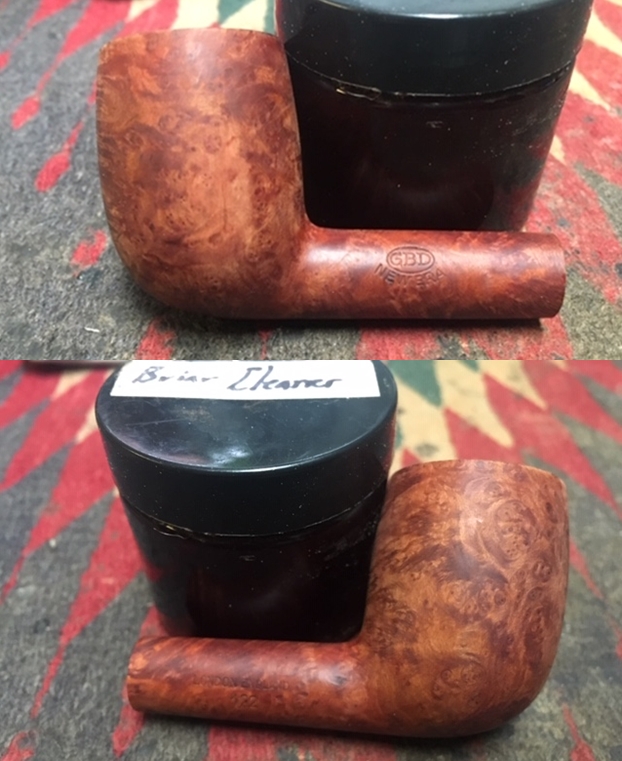
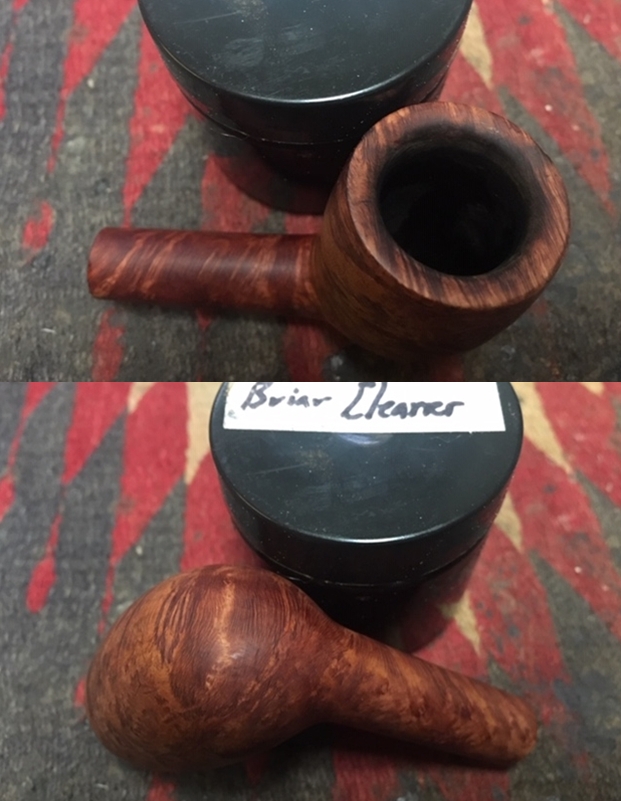
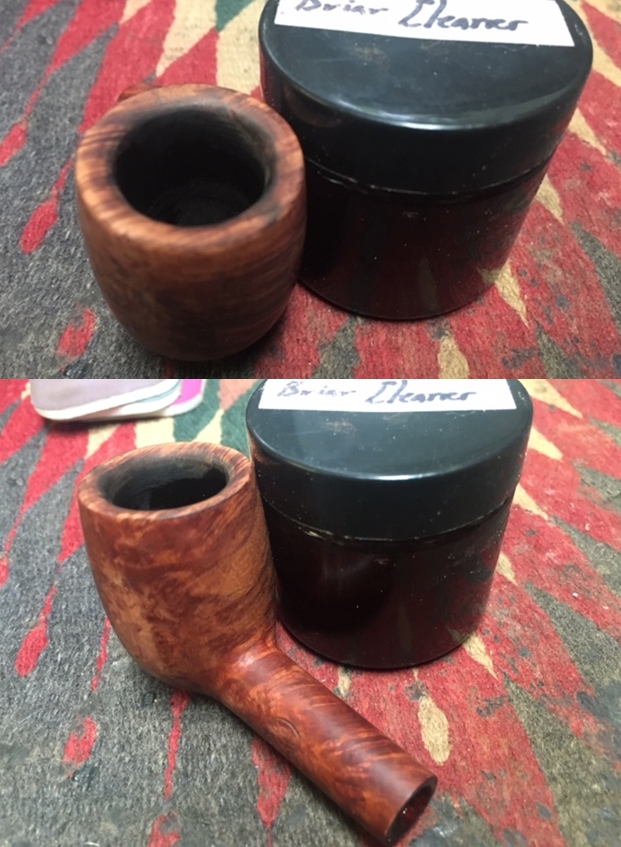
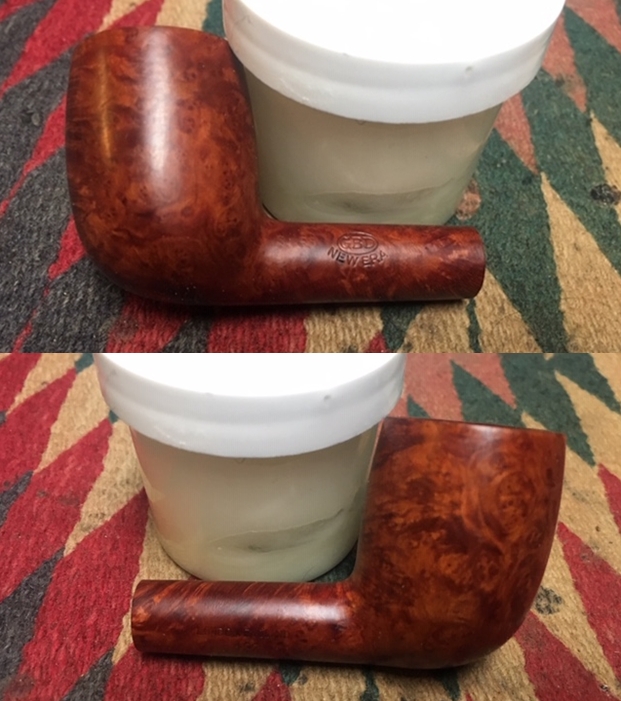
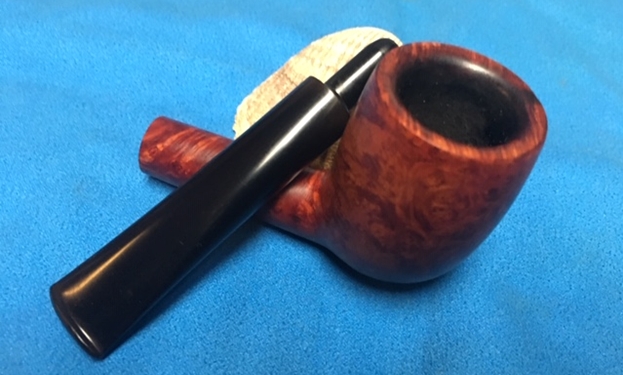
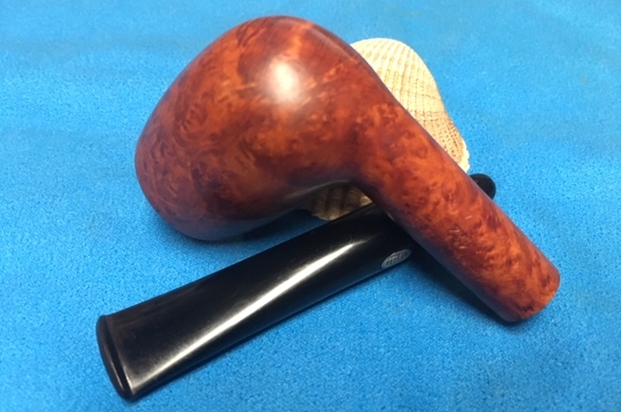
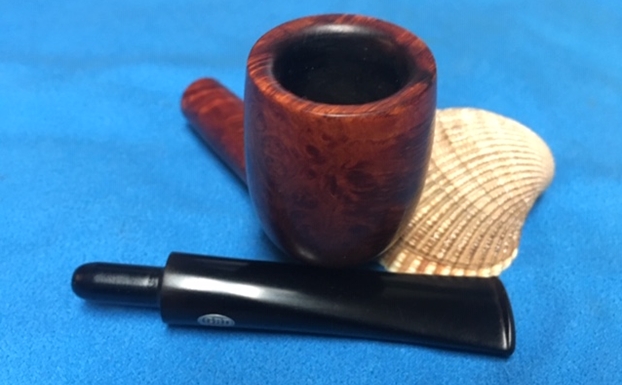
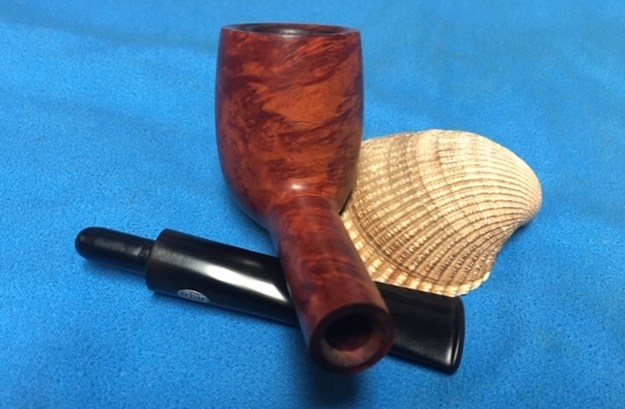
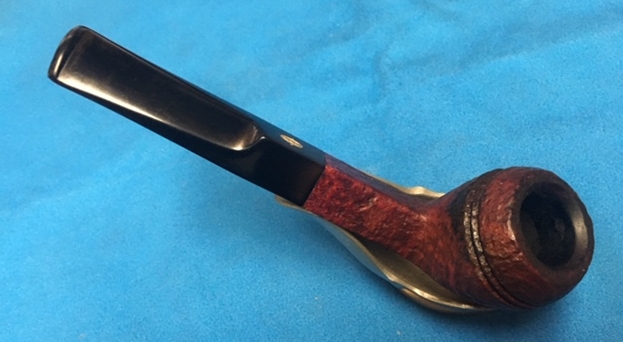
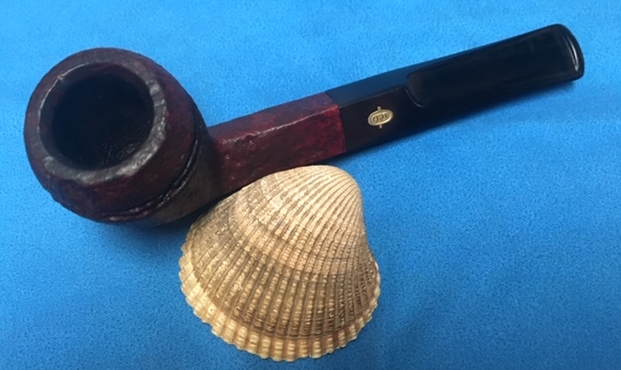
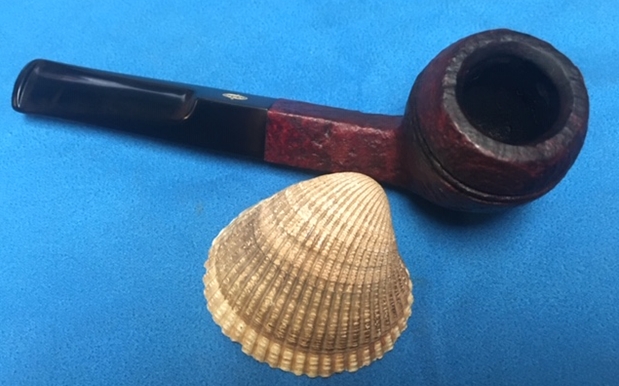
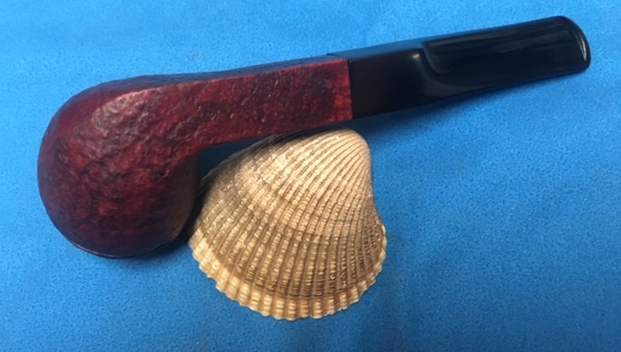
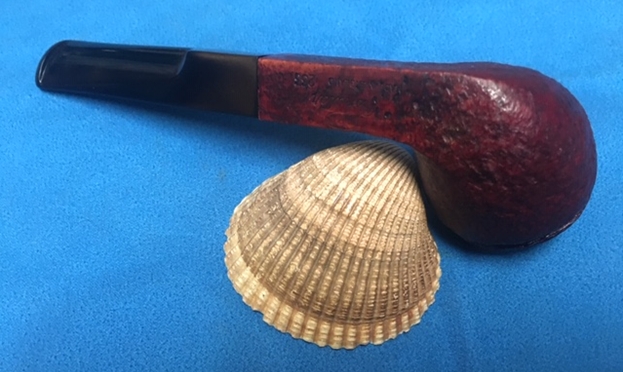
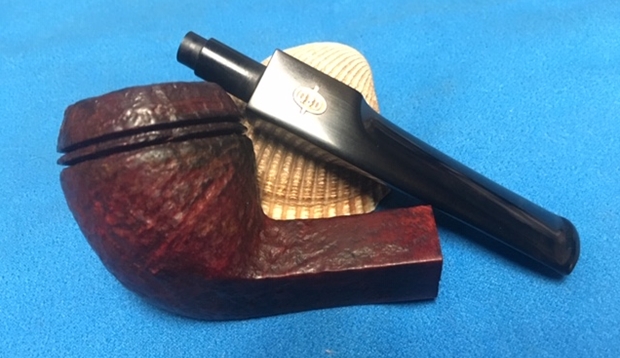
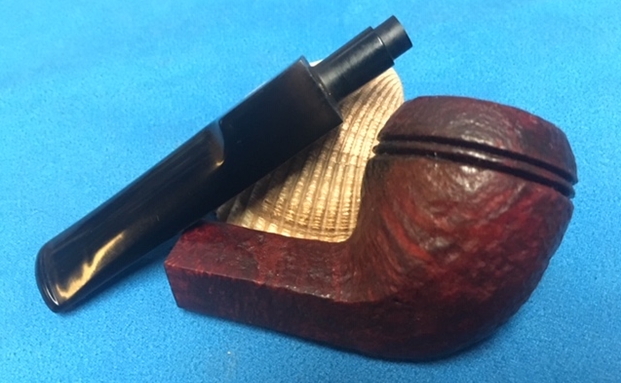
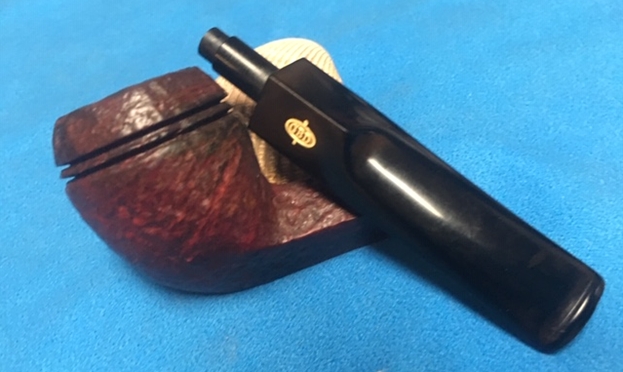
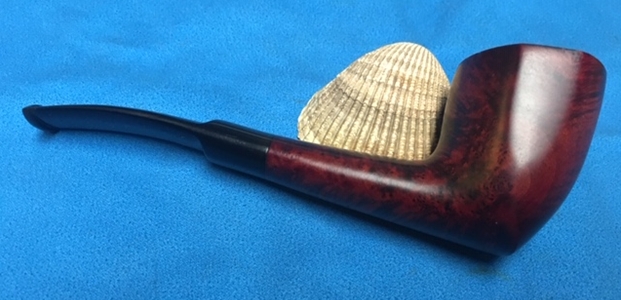
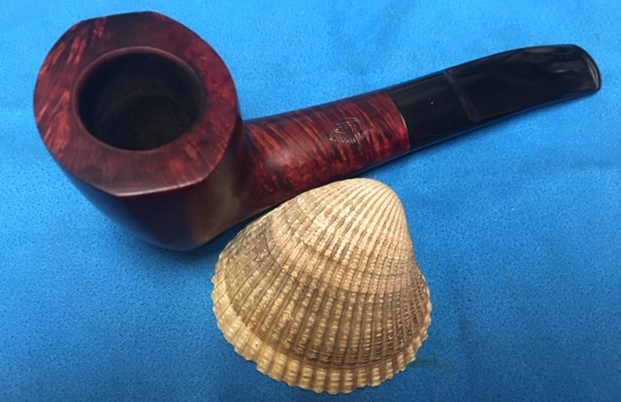
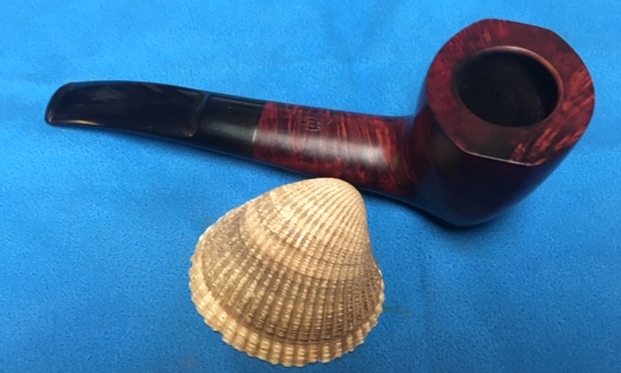
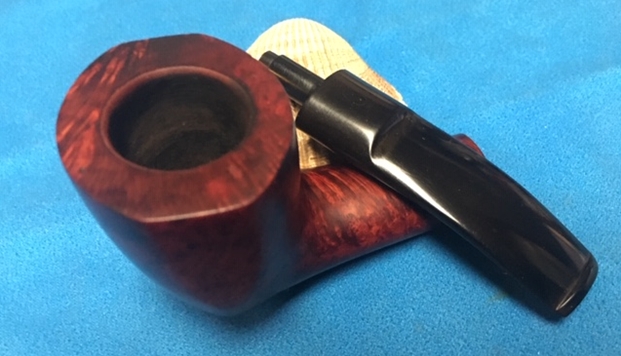
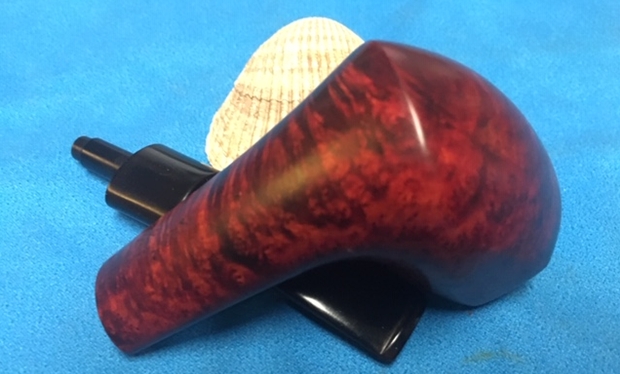
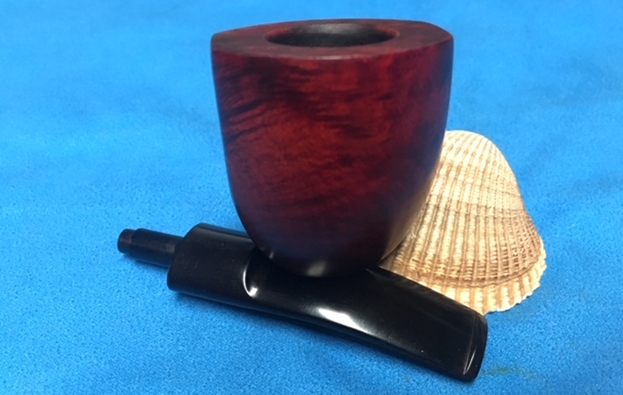
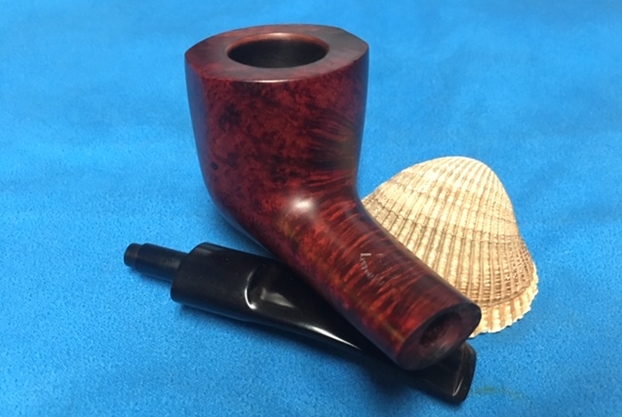
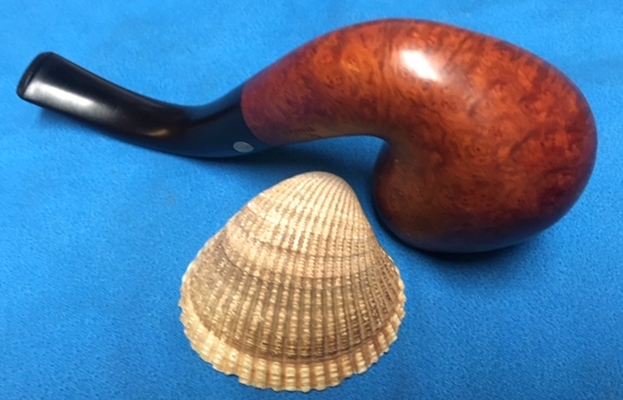
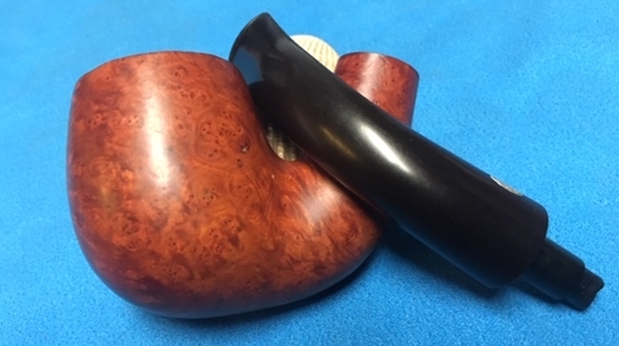
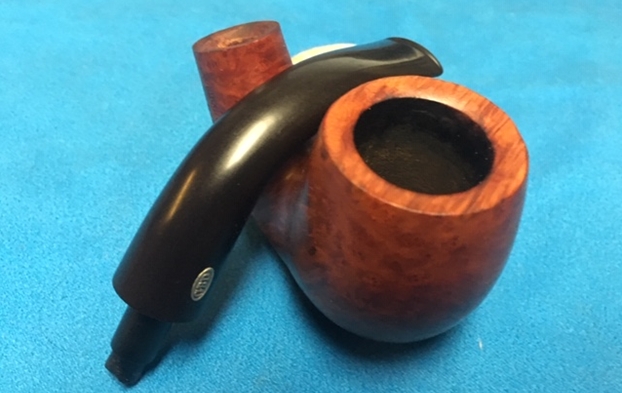
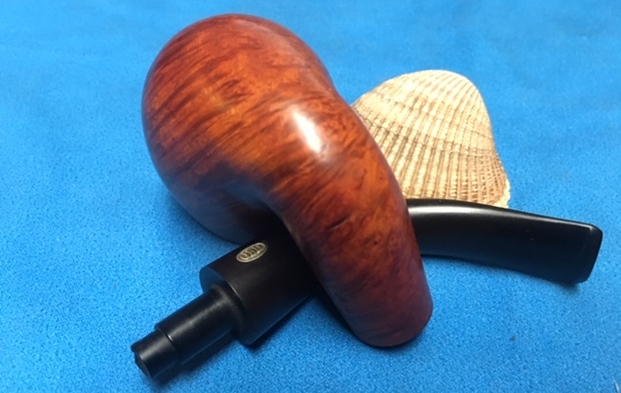
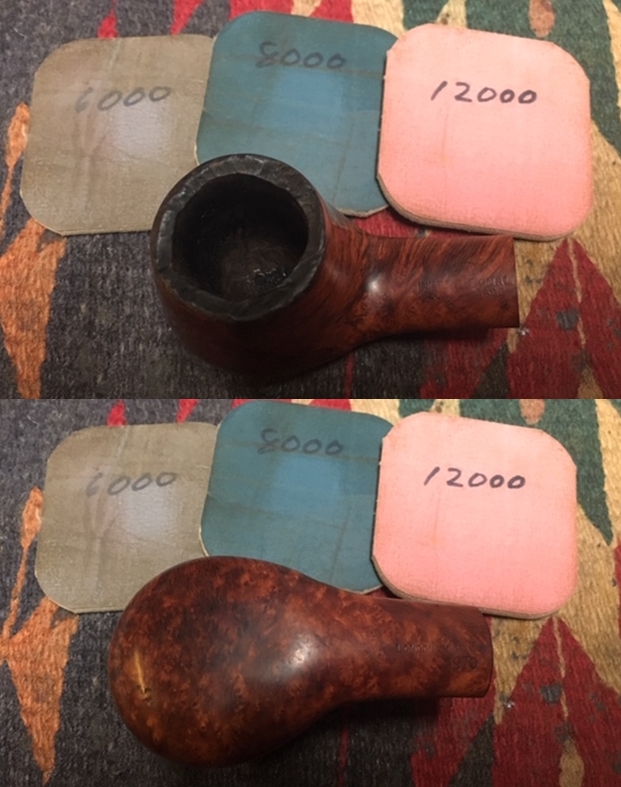
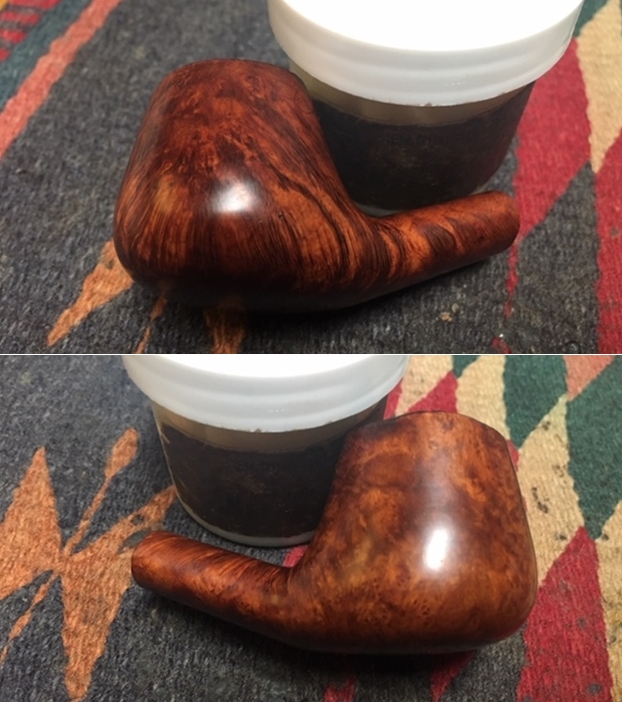
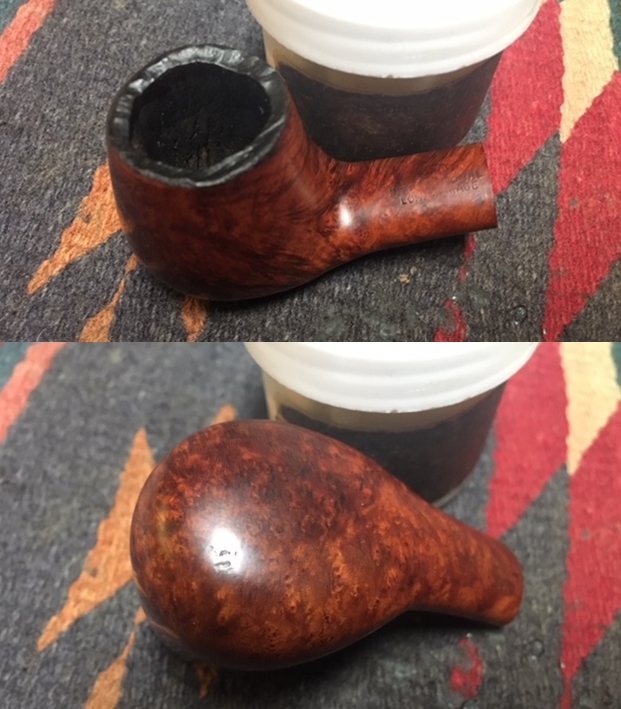
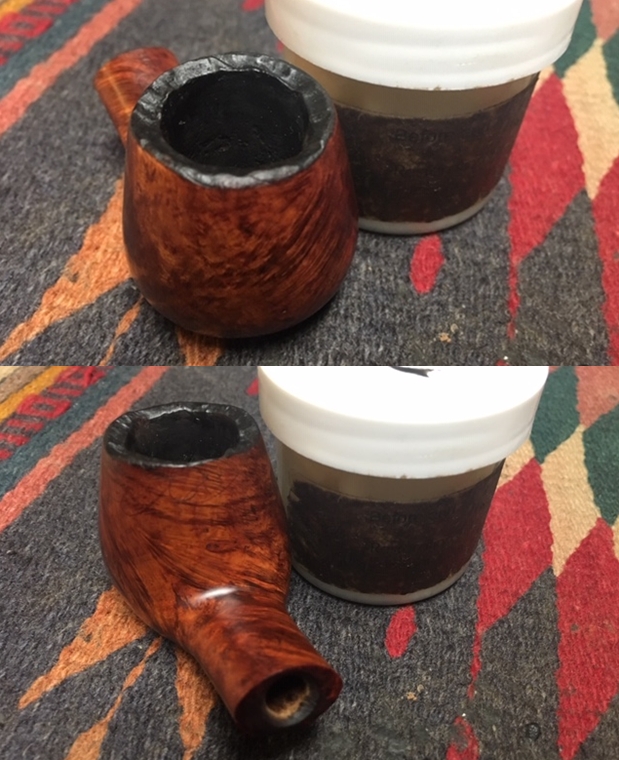
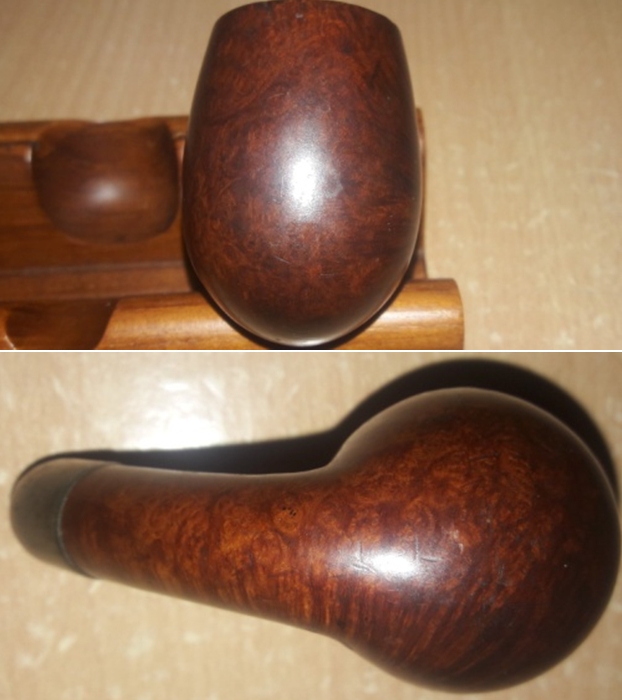
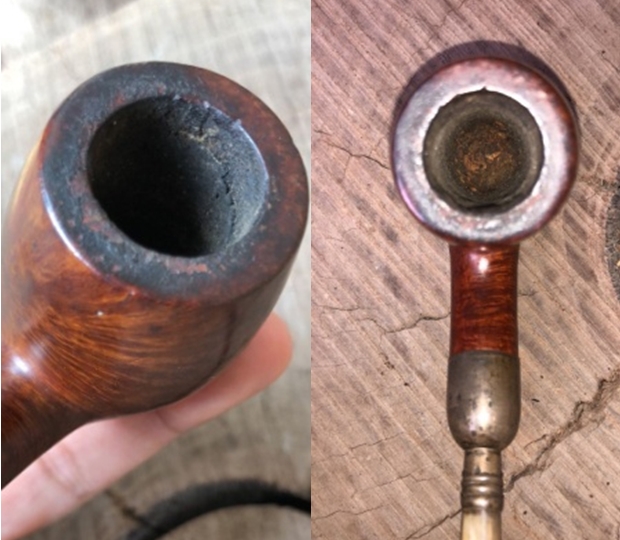
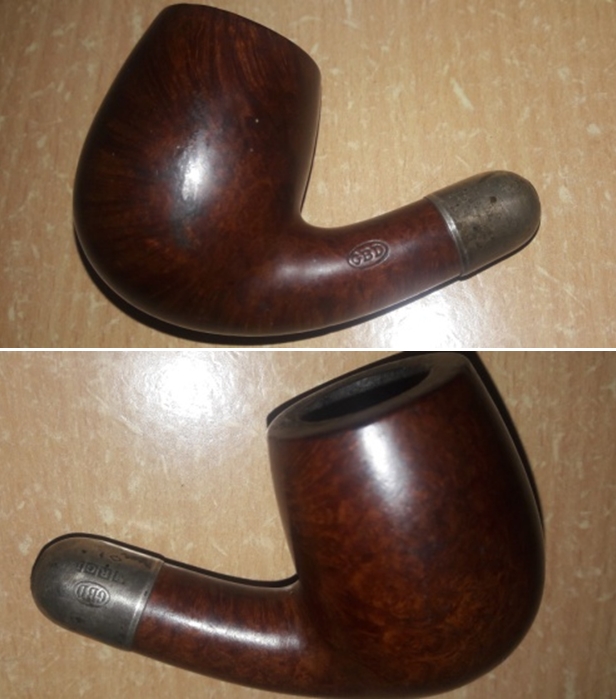
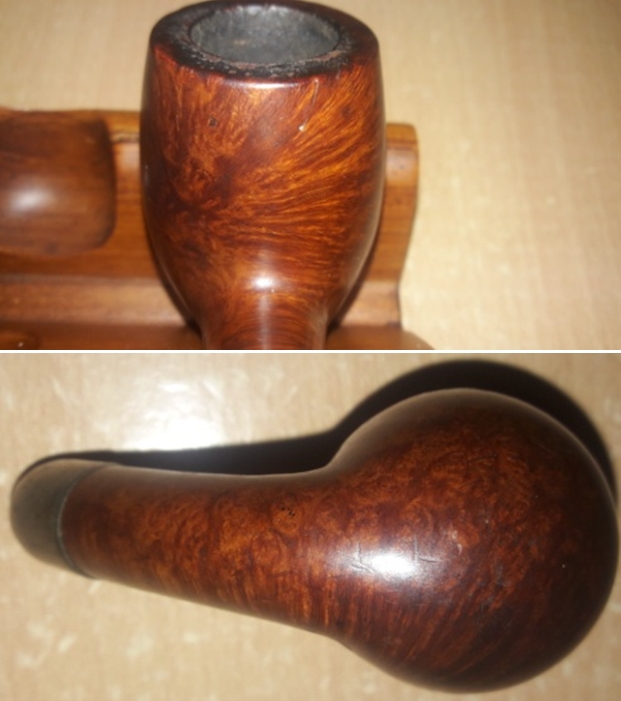
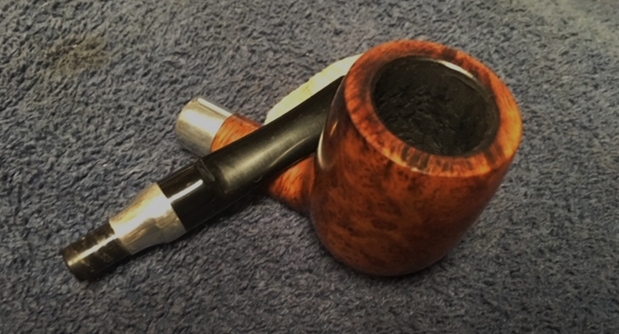
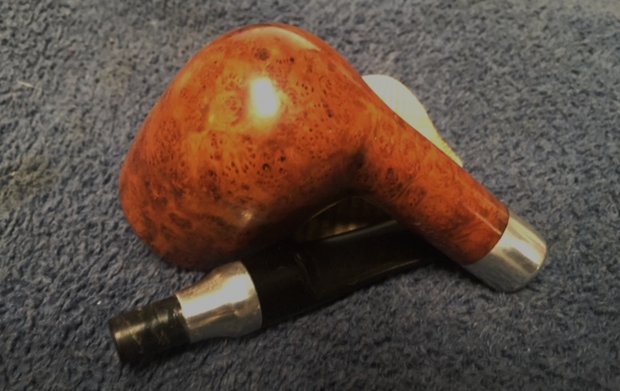
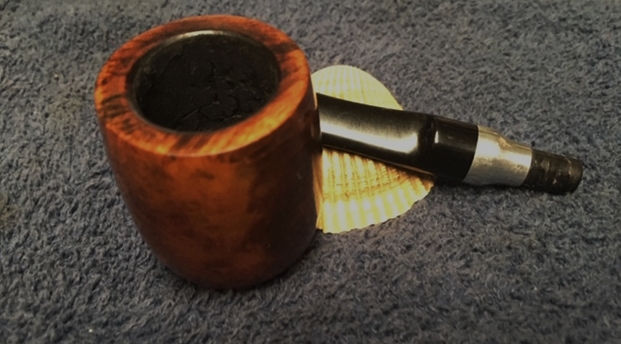
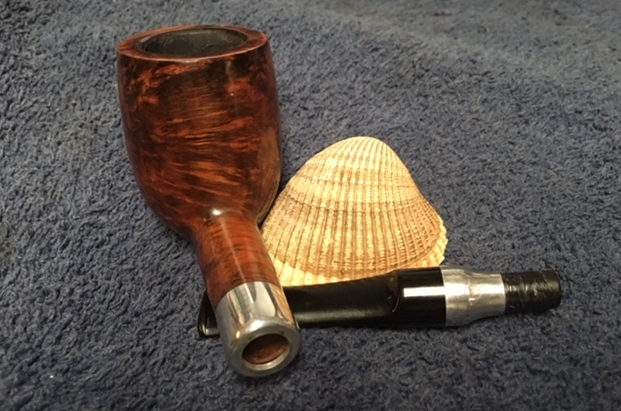
Tag Archives: GBD pipes

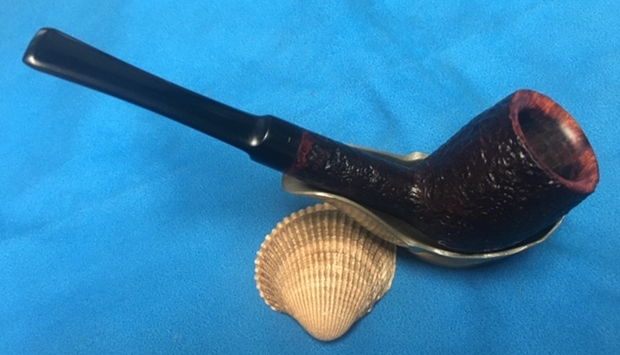
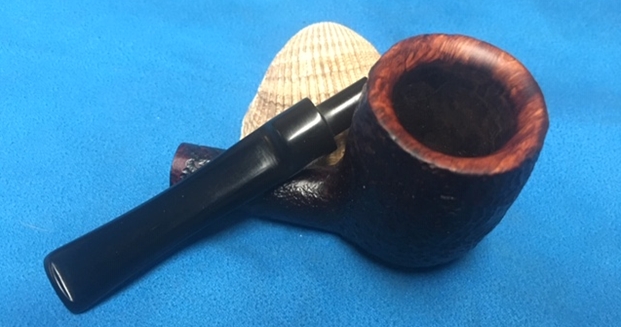
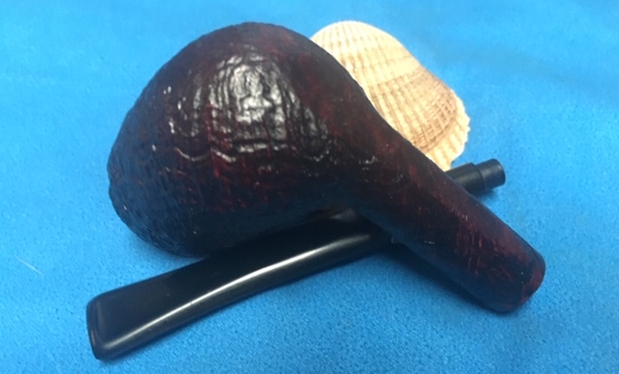
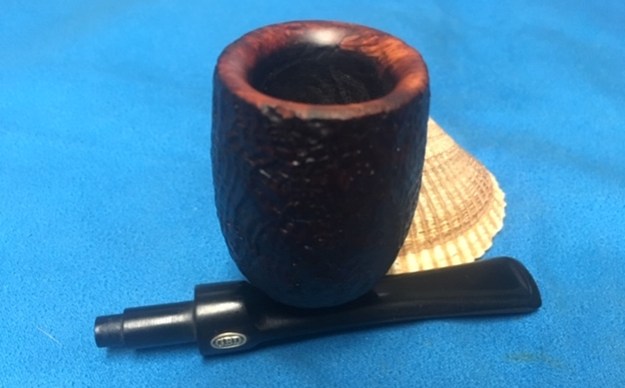
Working on a GBD Historic 115 Sandblast Billiard from Bob Kerr’s Estate


Blog by Steve Laug

I am continuing to work through Bob Kerr’s estate. The next pipe on the table is a GBD Historic Billiard, sandblasted bowl and shank and a smooth panel on the underside of the shank with the stamping. It is a Prehistoric with a black vulcanite stem. I am continuing to cleanup Bob’s estate for his family and moving them out into the hands of pipemen and women who will carry on the trust that began with Bob and in some pipes was carried on by Bob. In the collection there were a total of 125 pipes along with a box of parts. This is the largest estate that I have had the opportunity to work on. I put together a spread sheet of the pipes and stampings to create an invoice. I was taking on what would take me a fair amount of time to clean up. I could not pass up the opportunity to work on these pipes though. They were just too tempting.

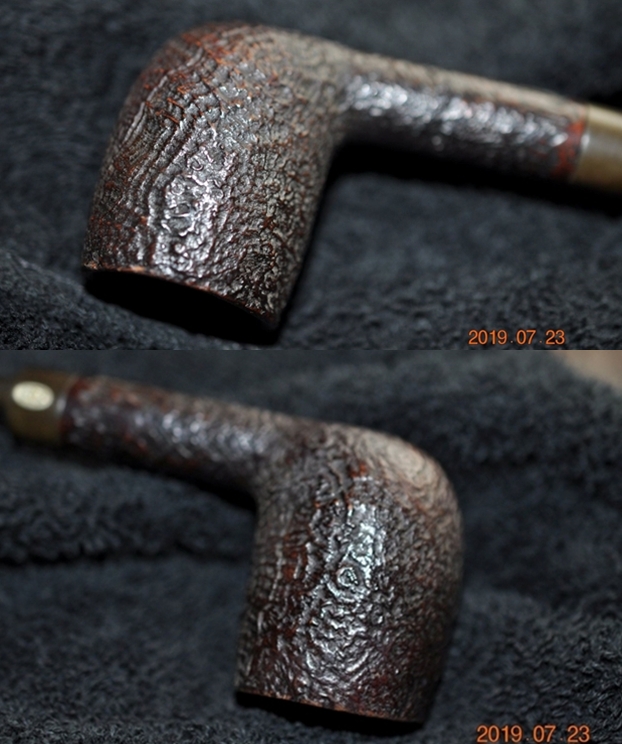
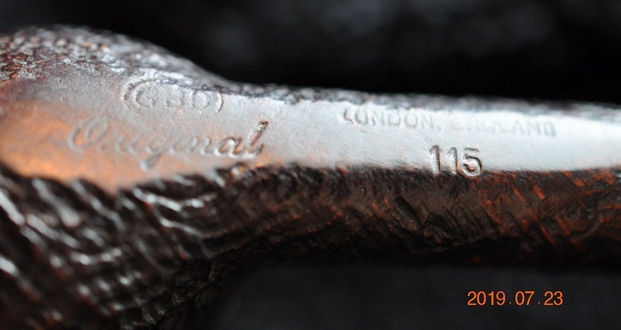
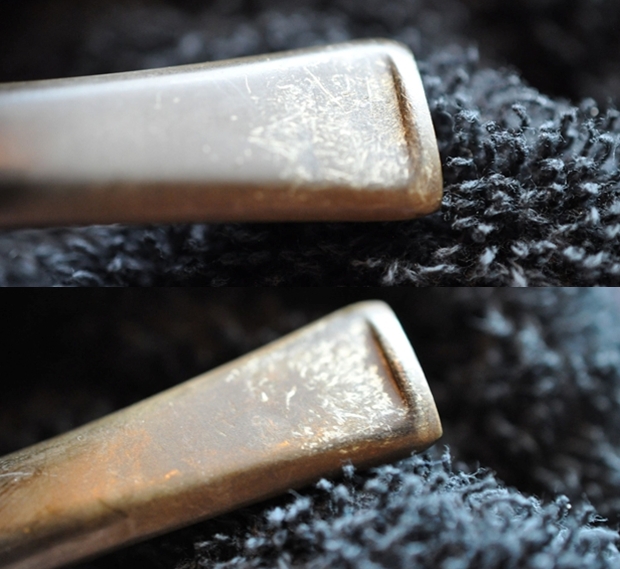
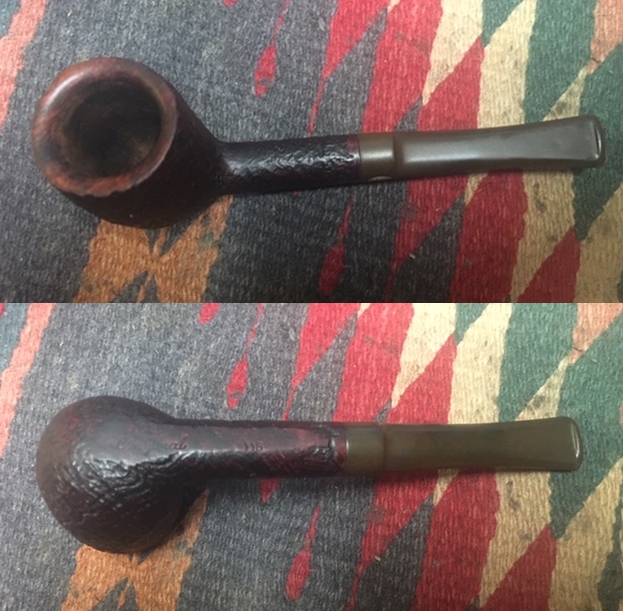
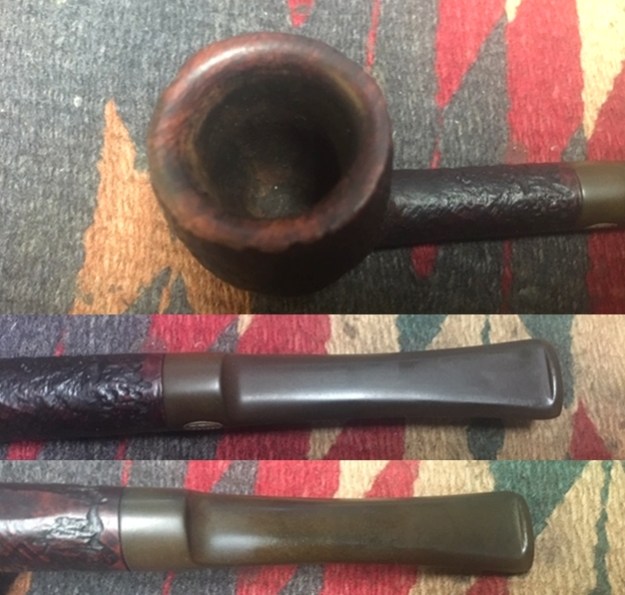
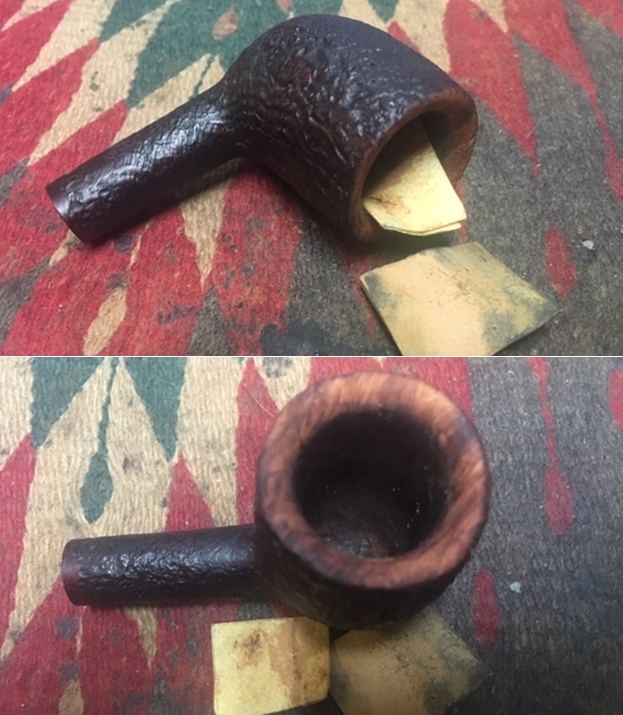
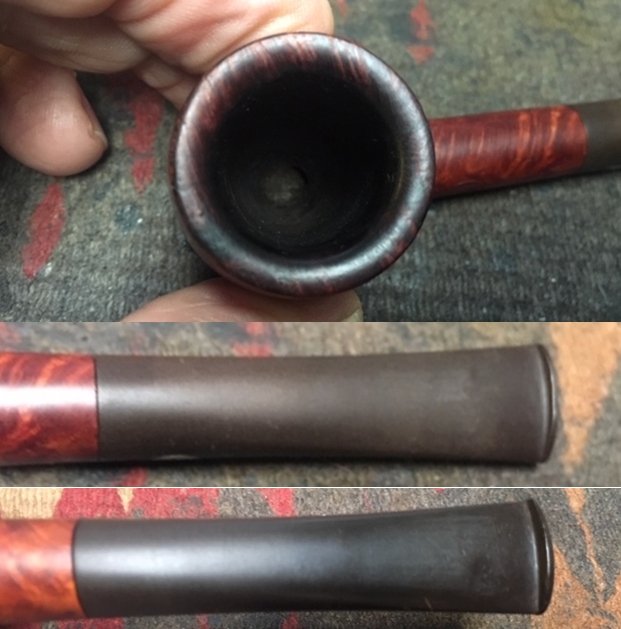
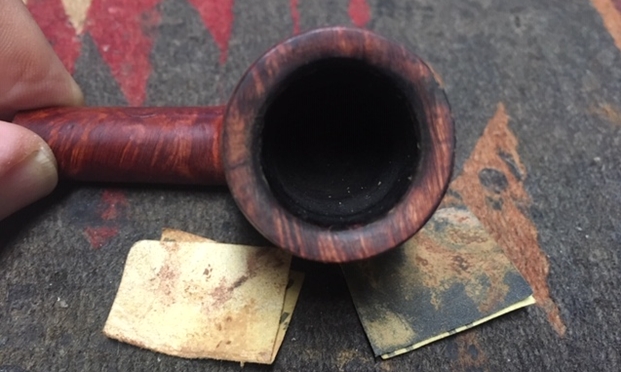
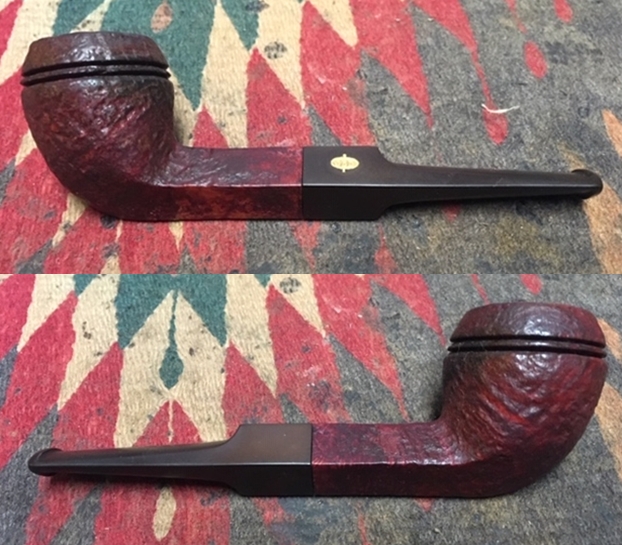
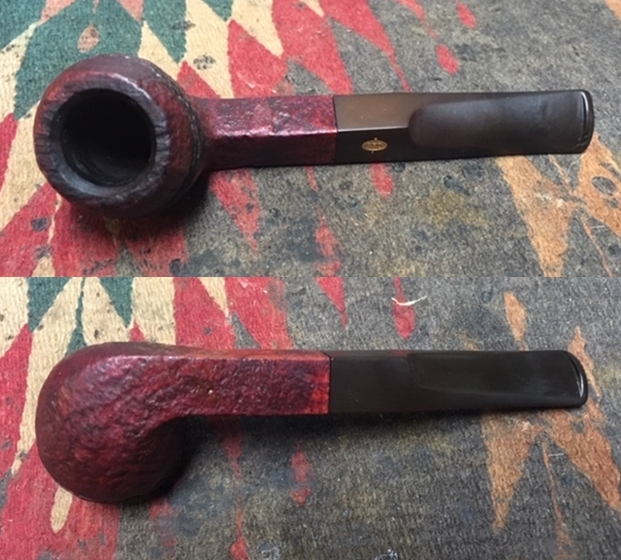
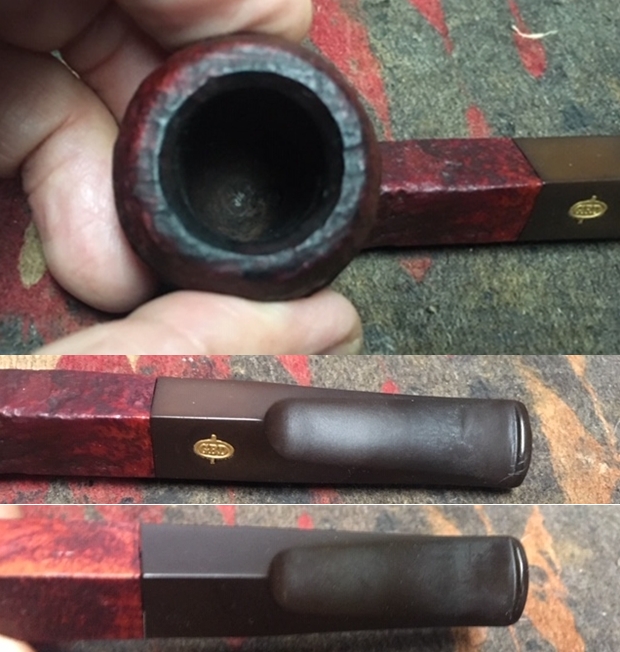
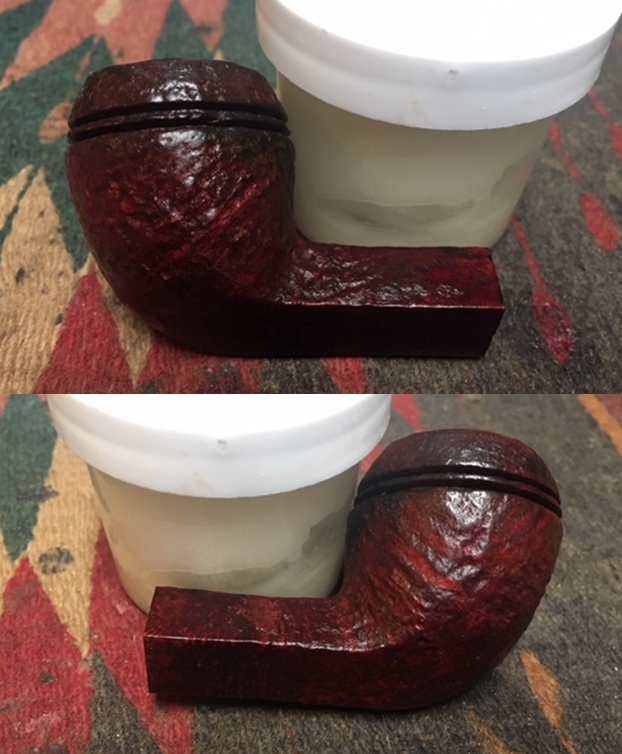
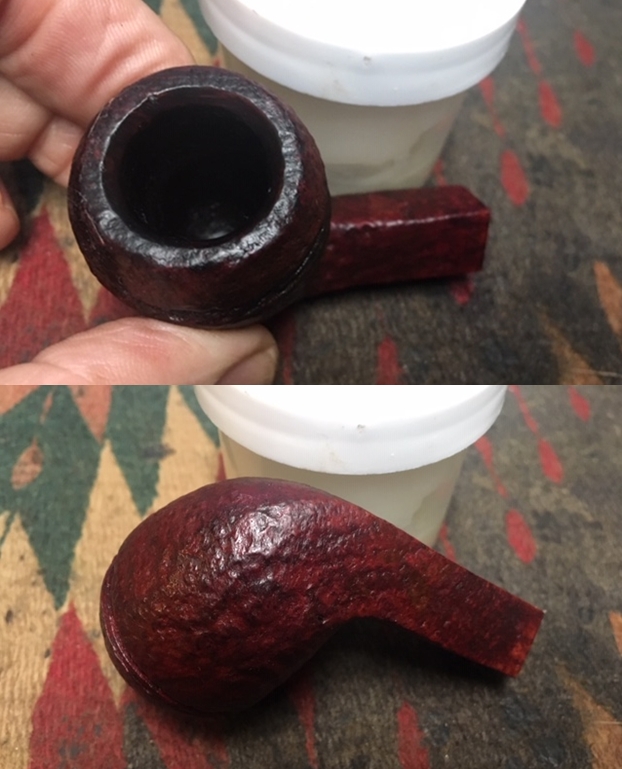
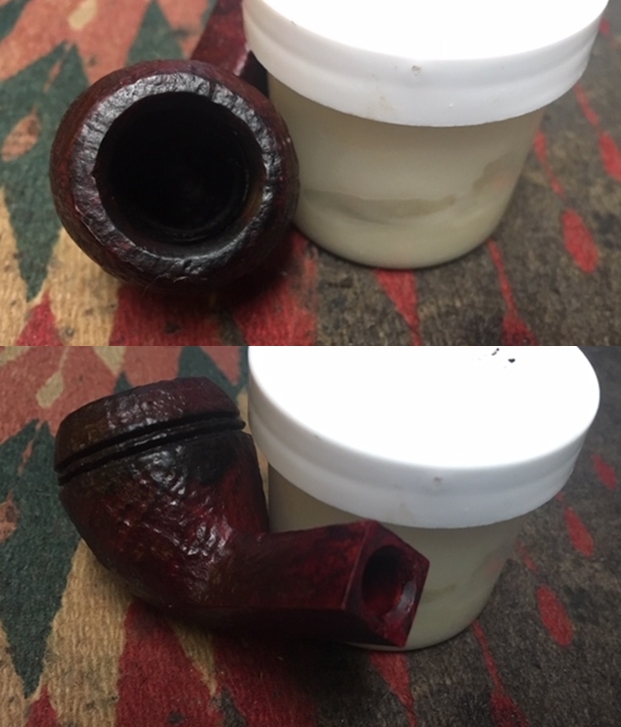
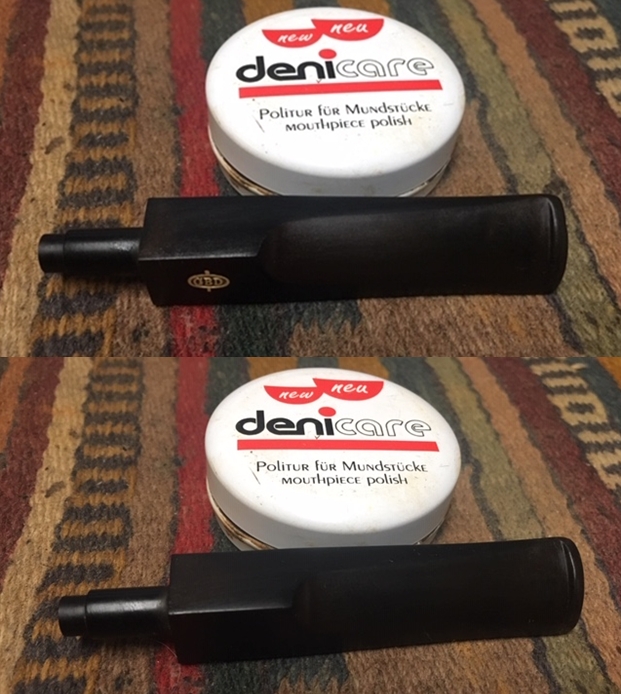
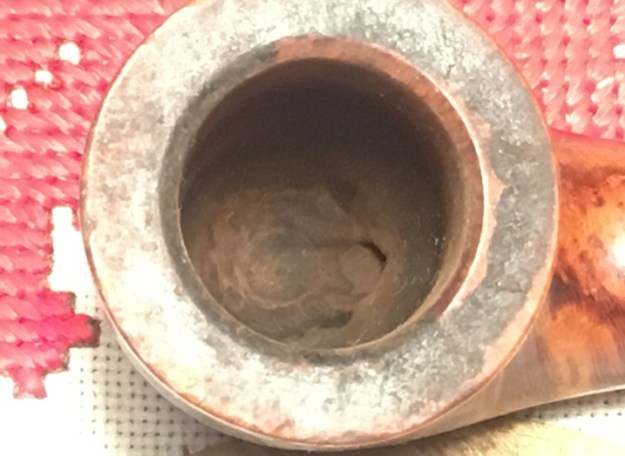
I have been collecting and restoring GBD pipes for as long as I have worked on pipes. This one also has a beautiful mix of grain under the grime on the sandblast finish. It is quite beautiful! The pipe is stamped GBD in an oval over Historic on the underside of the shank. That is followed by stamping London, England and the shape number 115. It had a rich mix of black and dark brown stain that does not look too bad. There was a thick cake in the bowl with remnants of tobacco stuck on the walls. There was a lava overflow on the rim. The inner edge of the rim and top are dirty and had a thick lava coat. The edges appear to have a bit of burn damage on the front inner edge and the front outer edge has a bit of wear damage. It was a beautiful pipe that was dirty and tired looking. The stem was oxidized and calcified toward the end. Again, surprisingly did not have the tooth marks that I have come to expect from Bob’s pipes. Jeff took photos of the pipe before he started his cleanup work on it. Jeff took photos of the bowl and rim top to show the cake in the bowl and the lava build up on the edges of the bowl. It was thick and hard but hopefully it had protected the rim and edges from damage. There appears to be a little damage on the left front inner and outer edges of the bowl. Otherwise it looks pretty good. Jeff took photos of the sides and heel of the bowl to show the condition of the finish. You can see the beautiful grain through the sandblast – both birdseye and cross grain. The finish was very dirty.   Jeff took photos of the stamping on the smooth panel on the underside of the shank. The stamping was readable as you can see from the photos. On the underside it read GBD in an oval over Historic. That was followed by London, England over the shape number 115. On the left side of the saddle stem was an inlaid GBD rondel.Jeff took photos of the top and underside of the stem showing the tooth chatter, scratching and oxidation on the stem surface and wear on the edges of the button.       I turned to Pipedia’s article on GBD to see if I could find any information on the Historic line. I have heard of Prehistoric pipes but I have never seen one stamped Historic. It is another one that is a mystery in terms of the line. The article gives a lot in terms of the history of the brand (https://pipedia.org/wiki/GBD). There is nothing specific on the Historic line.

I also turned to the reference page on the site for GBD shapes and numbers and found the one for the 115 shape but it called it a Prince of Wales and said that the saddle stem had a 1/8 bend. To me a Prince of Wales is a Prince shape pipe and the one that I was working on is definitely a billiard (https://pipedia.org/wiki/GBD_Shapes/Numbers). The vagaries of clearly pinning down GBD Shapes is evident in this seeming contradiction. I also did a screen capture of the section and from the various Model information. That also was an interesting conundrum in that the pipe in my hand was not smooth but had a sandblast finish like the Prehistoric with a smooth beveled rim top. I combined the screen captures in one picture below (https://pipedia.org/wiki/GBD_Model_Information).  All of my research did not really help pin anything down. The shape number was a dead end contradiction as was the line description. I was dealing with a bit of anomaly – a Sandblast Billiard stamped Historic not Prehistoric with a straight thin bit stem. In terms of dating the pipe I can only guess that it fits in with the late 50s to late 60s of Bob’s other pipes but I cannot know for sure. Now it was time to work on the pipe.

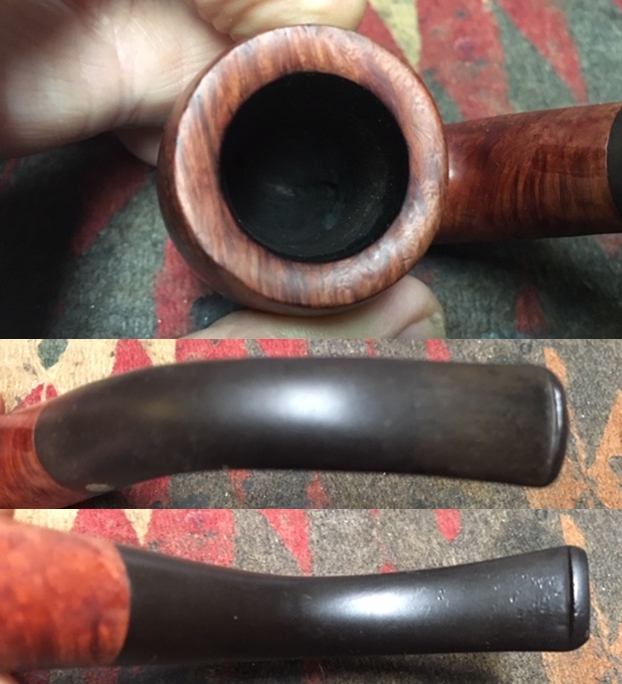
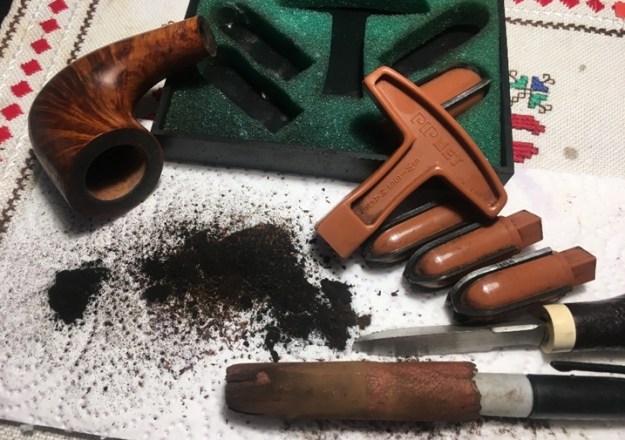
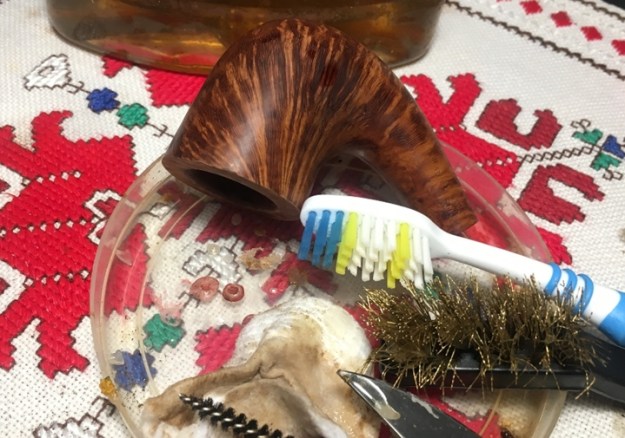
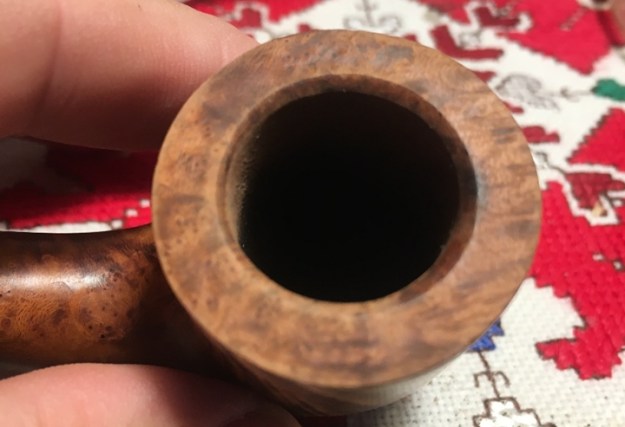
With over 125 pipes to clean from Bob’s estate I took a batch of them to the states with me on a recent visit and left them with Jeff so he could help me out. Jeff cleaned the pipe with his usual penchant for thoroughness that I really appreciate. This one was a real mess and I did not know what to expect when I unwrapped it from his box. He reamed it with a PipNet pipe reamer and cleaned up the reaming with a Savinelli Fitsall Pipe Knife. He scrubbed out the internals with alcohol, pipe cleaners and cotton swabs until the pipe was clean. He scrubbed the exterior of the bowl with Murphy’s Oil Soap and a tooth brush to remove the grime and grit on the briar and the lava on the rim top. The finish looks very good with good looking grain around the bowl and shank. Jeff soaked the stem in Before & After Deoxidizer to remove the oxidation on the rubber. When the pipe arrived here in Vancouver for the second stop of its restoration tour it looked good. The stem still sported some deep oxidation but otherwise it was clean. I took photos before I started my part of the work. I took some close up photos of the rim top and also of the stem surface. I wanted to show what an amazing job Jeff did in the cleanup of the rim top. The rim top looks pretty good. There is some darkening on the top edge and a burn mark on the inner edge at the front. There is also some damage on the outer rim on the rim. The photos show a few small dents on the surface of the stem. You can also see the remaining oxidation on the stem surface.    I am going to keep posting the next paragraph because of the importance of protecting the stamping/nomenclature.

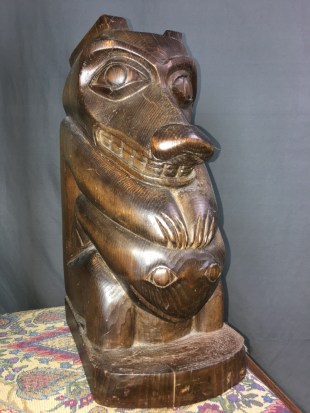
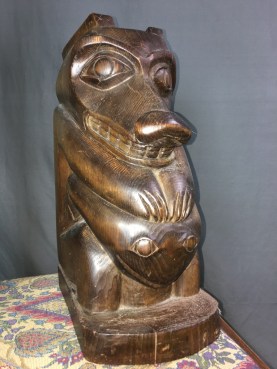
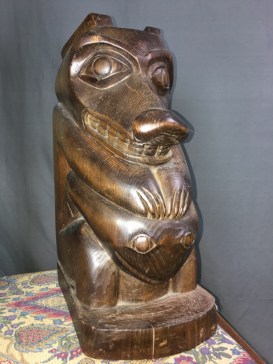
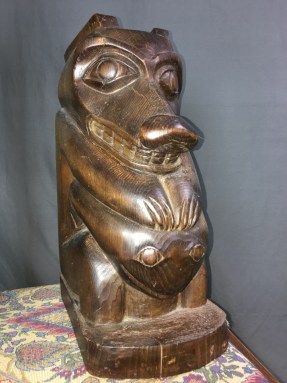
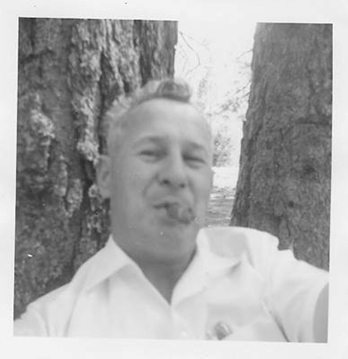
One of the things I appreciate about Jeff’s cleanup is that he works to protect and preserve the nomenclature on the shank of the pipes that he works on. The stamping on this one was very faint to start with so I was worried that it would disappear altogether with the cleanup. He was not only able to preserve it but it is clearer than shown in the earlier photos. I took some photos to show the clarity of the stamping. I have noticed that many restorers are not careful to protect the stamping in their cleaning process and often by the end of the restoration the nomenclature is almost destroyed. I would like to encourage all of us to be careful in our work to preserve this as it is a critical piece of pipe restoration!   Since this is another pipe Bob’s estate I am sure that some of you have read at least some of the other restoration work that has been done on the previous pipes. You have also read what I have included about Bob Kerr, the pipeman who held these pipes in trust before I came to work on them (see photo to the left). Also, if you have followed the blog for long you will already know that I like to include background information on the pipeman whose pipes I am restoring. For me, when I am working on an estate I really like to have a sense of the person who held the pipes in trust before I worked on them. It gives me another dimension of the restoration work. I asked Brian if he or his wife would like to write a brief biographical tribute to her father, Bob. His daughter worked on it and I received the following short write up on him and some pictures to go along with the words including one of Bob’s carvings. Once again I thank you Brian and tell your wife thank you as well.

I am delighted to pass on these beloved pipes of my father’s. I hope each user gets many hours of contemplative pleasure as he did. I remember the aroma of tobacco in the rec room, as he put up his feet on his lazy boy. He’d be first at the paper then, no one could touch it before him. Maybe there would be a movie on with an actor smoking a pipe. He would have very definite opinions on whether the performer was a ‘real’ smoker or not, a distinction which I could never see but it would be very clear to him. He worked by day as a sales manager of a paper products company, a job he hated. What he longed for was the life of an artist, so on the weekends and sometimes mid-week evenings he would journey to his workshop and come out with wood sculptures, all of which he declared as crap but every one of them treasured by my sister and myself. Enjoy the pipes, and maybe a little of his creative spirit will enter you!

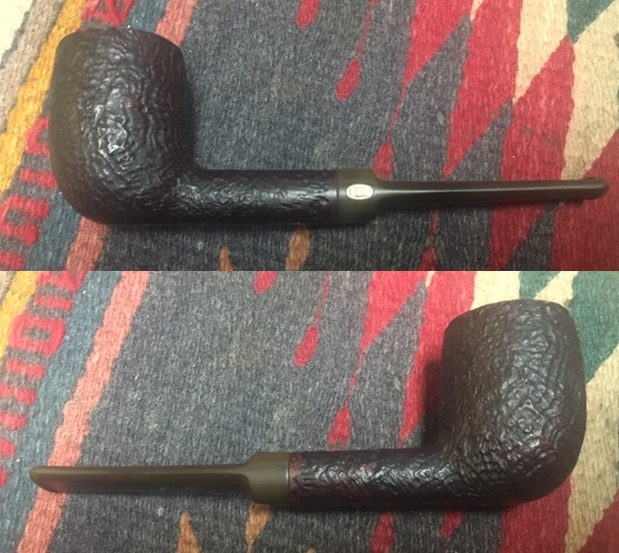
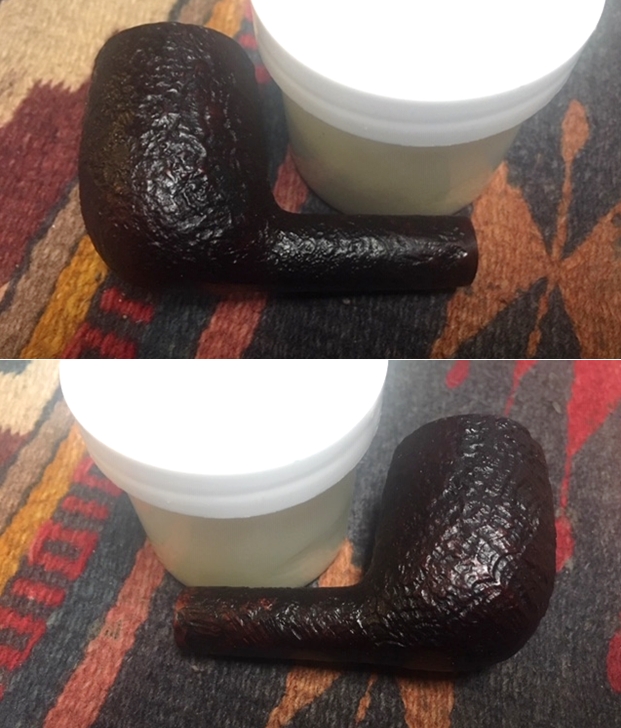
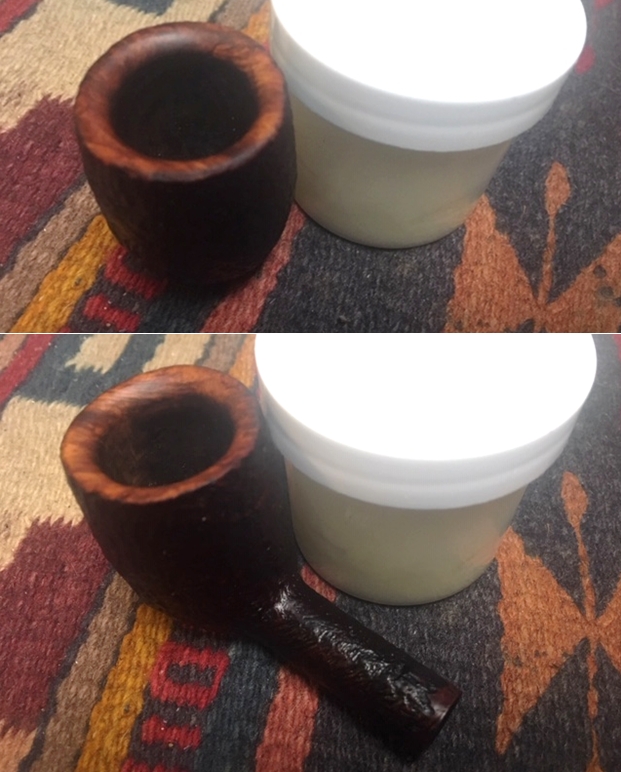
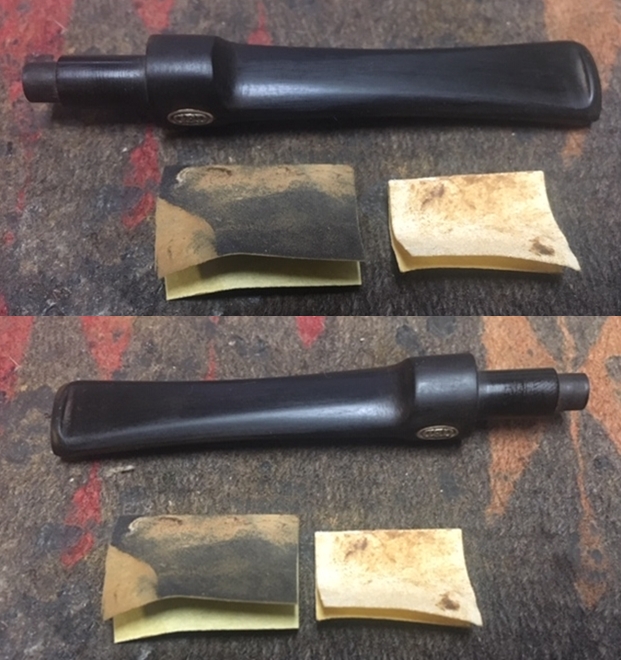
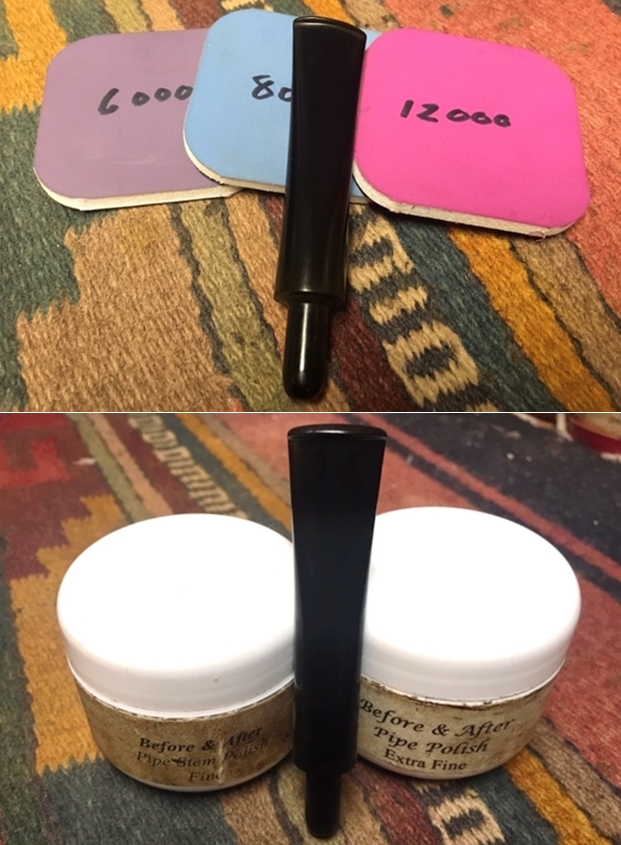
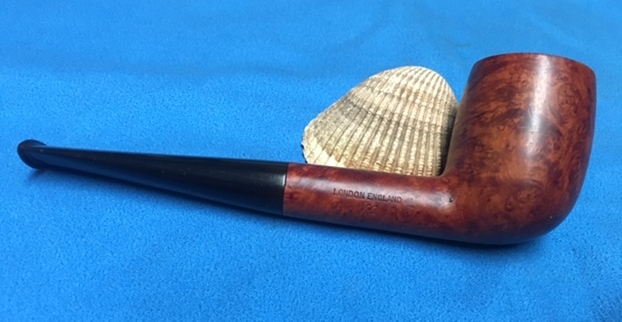
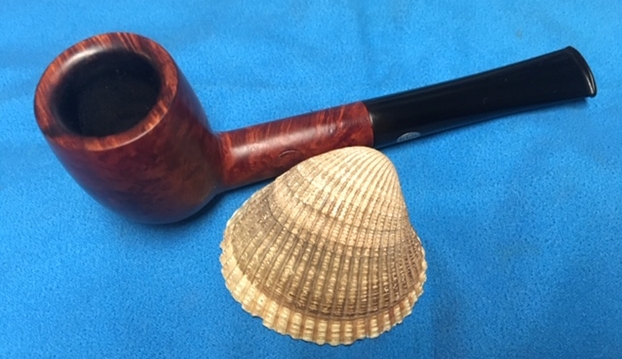
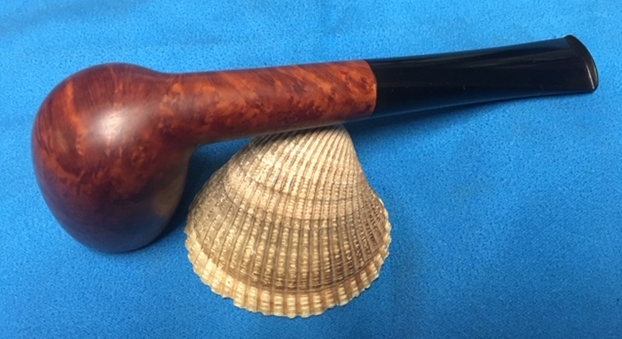
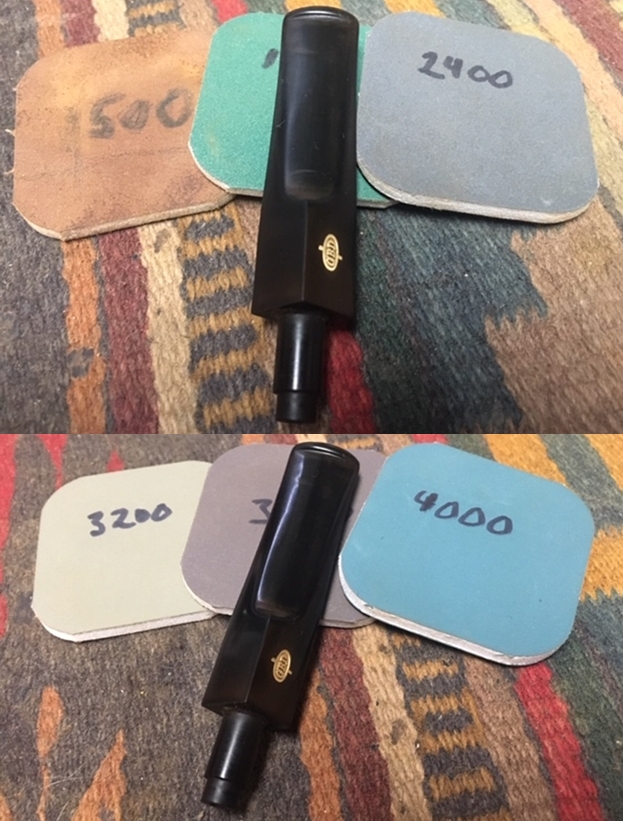
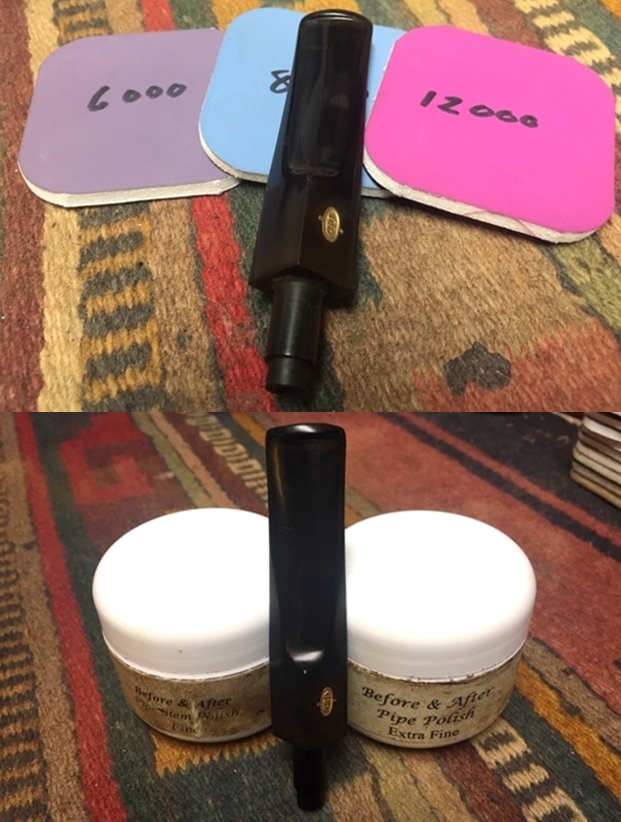
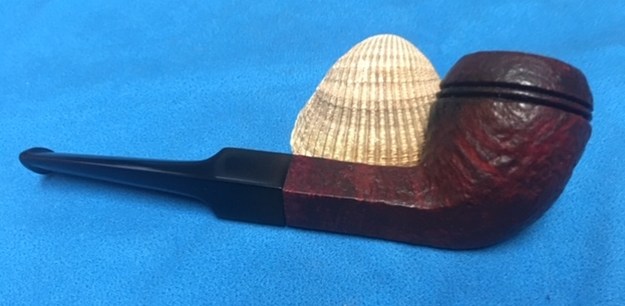
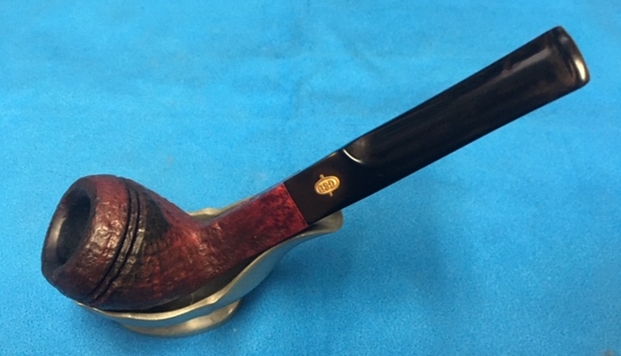
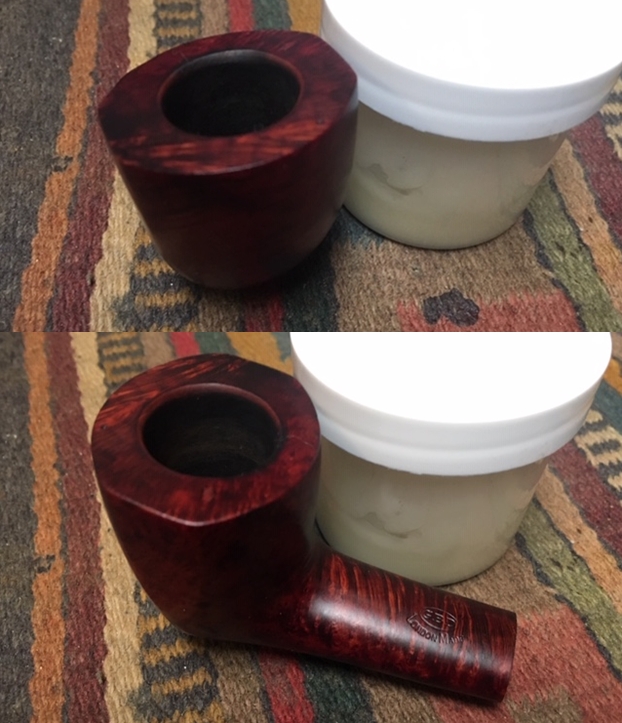
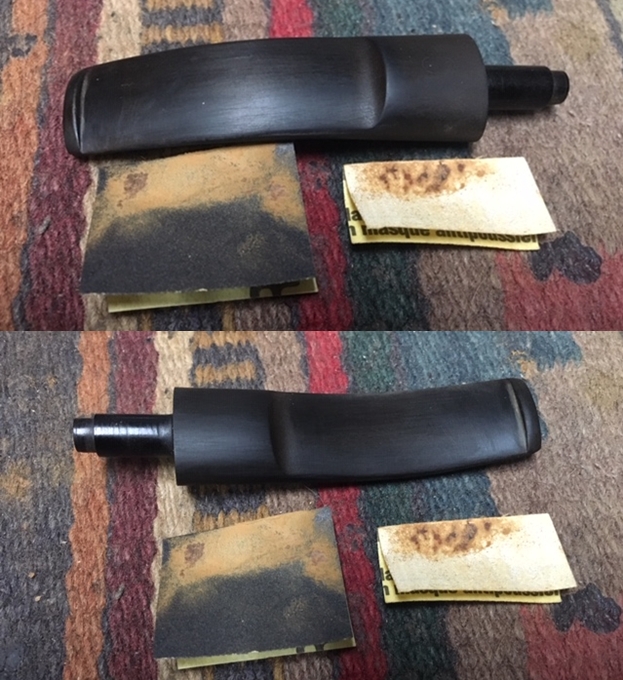
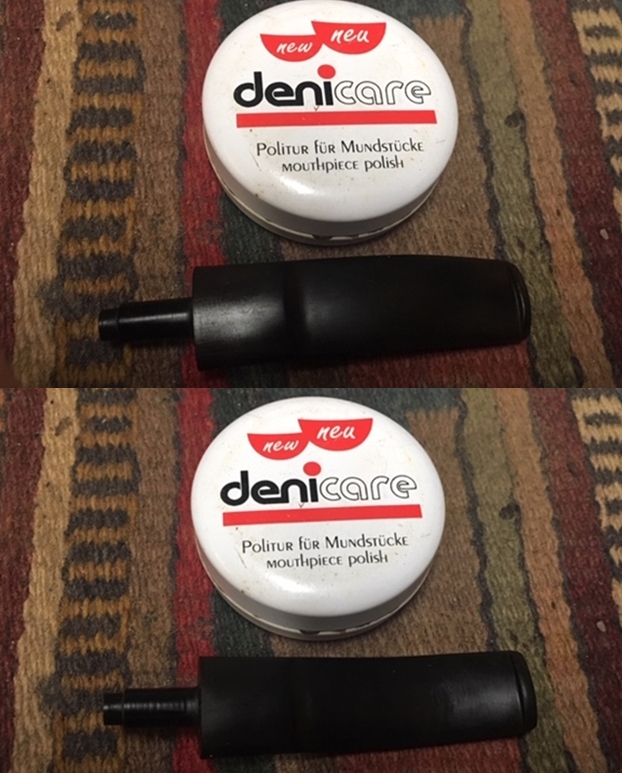
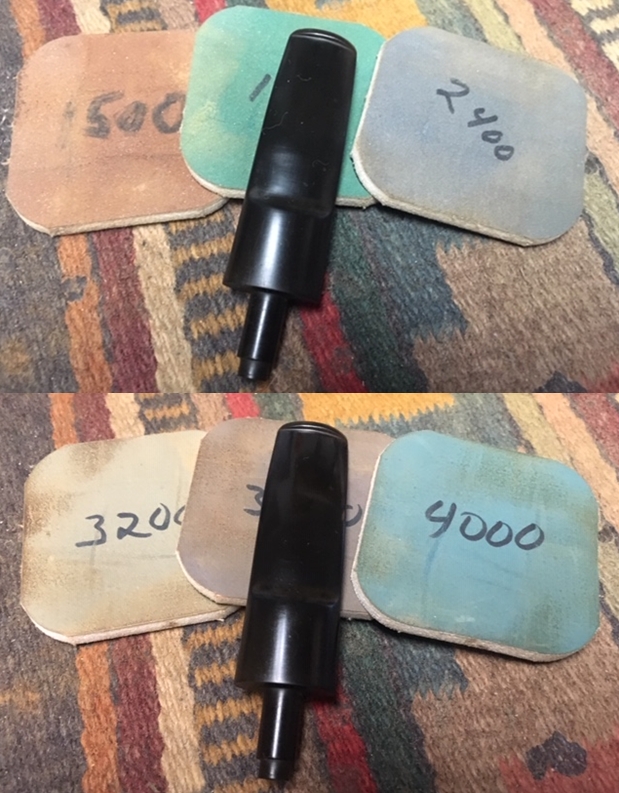
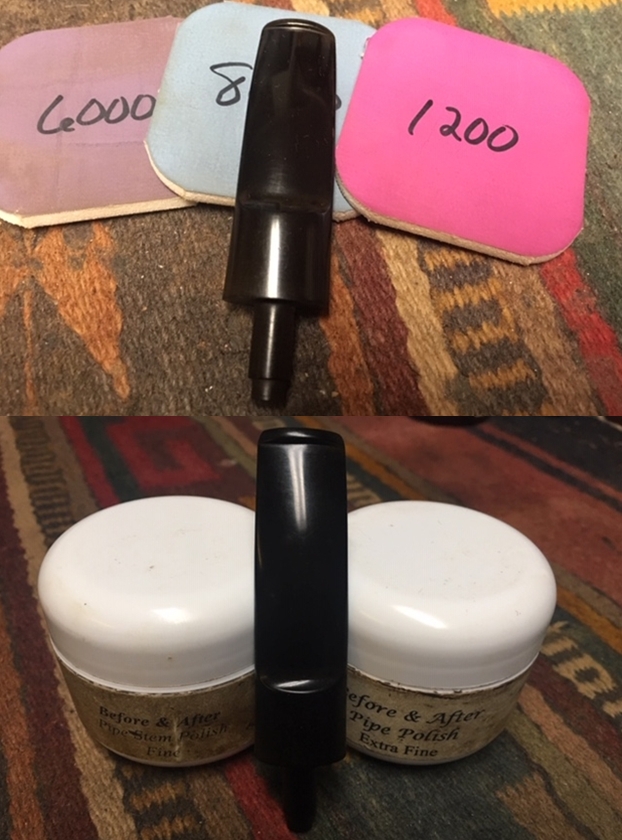
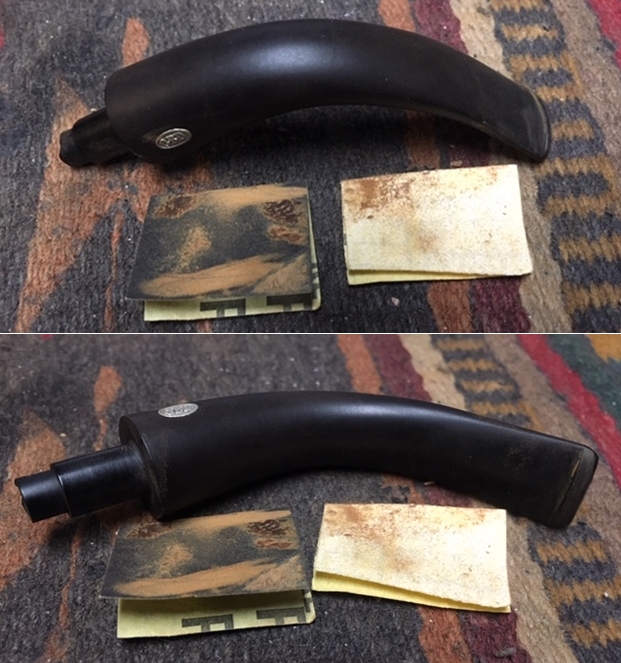
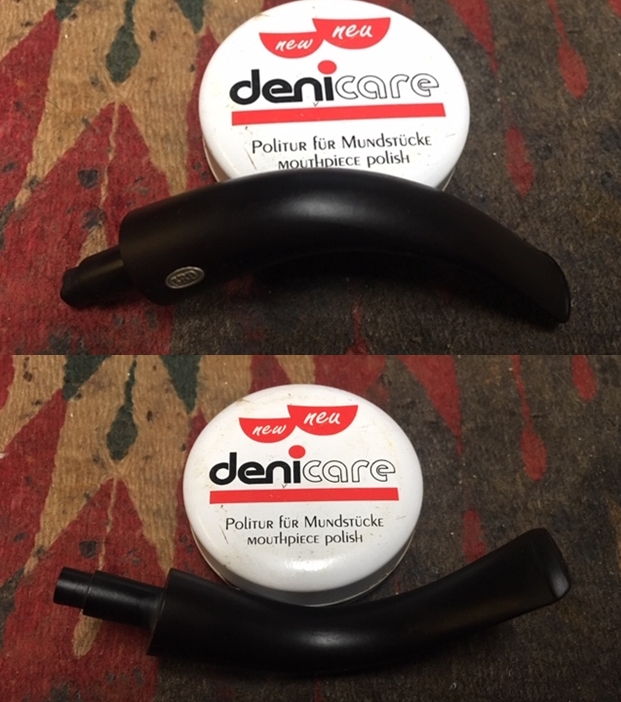
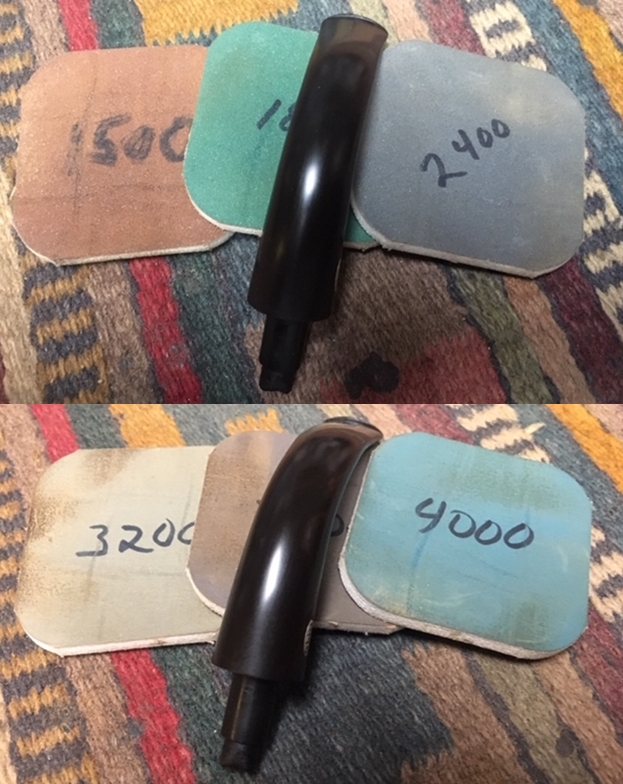
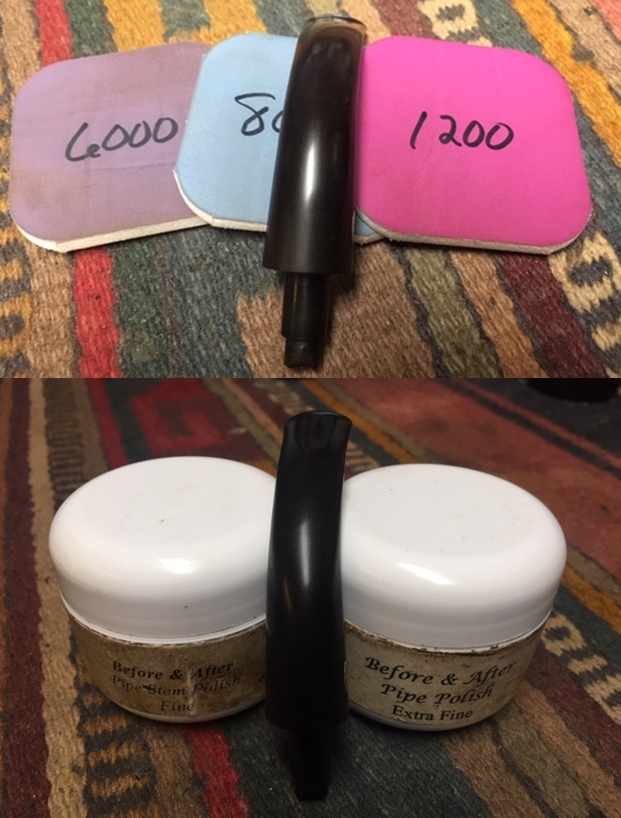
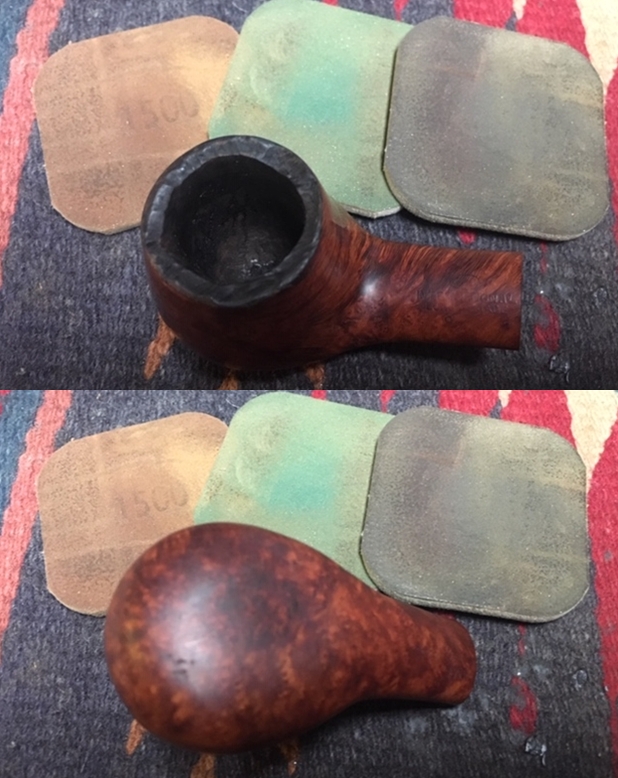
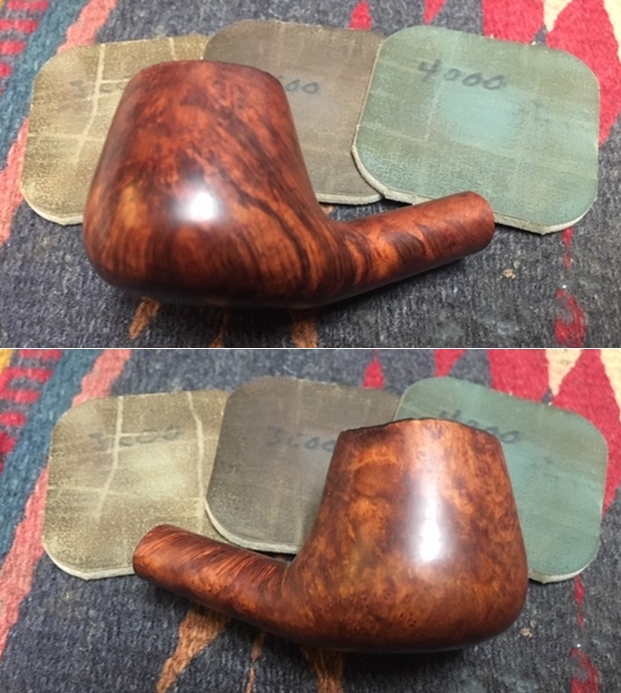
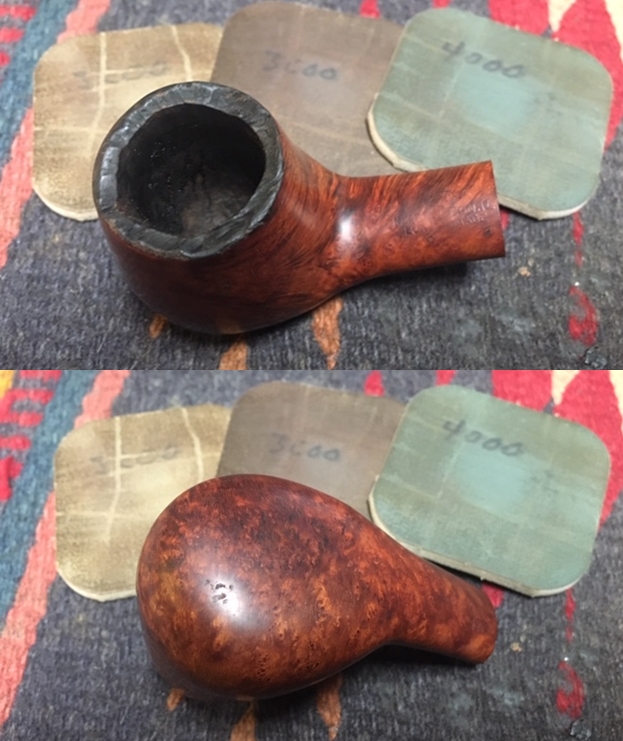
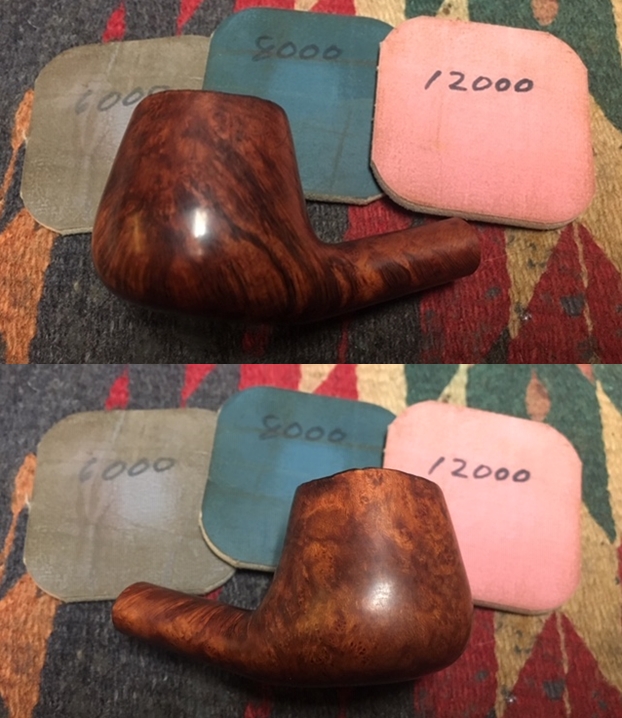
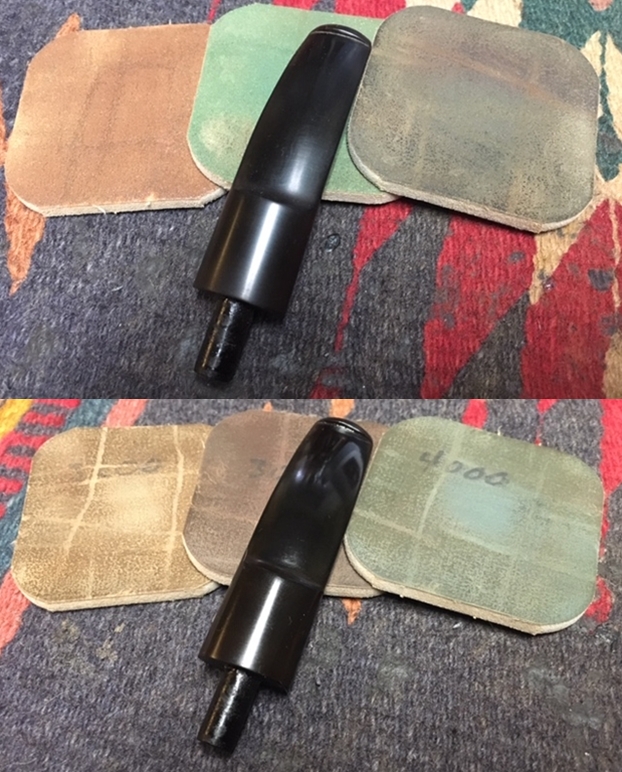
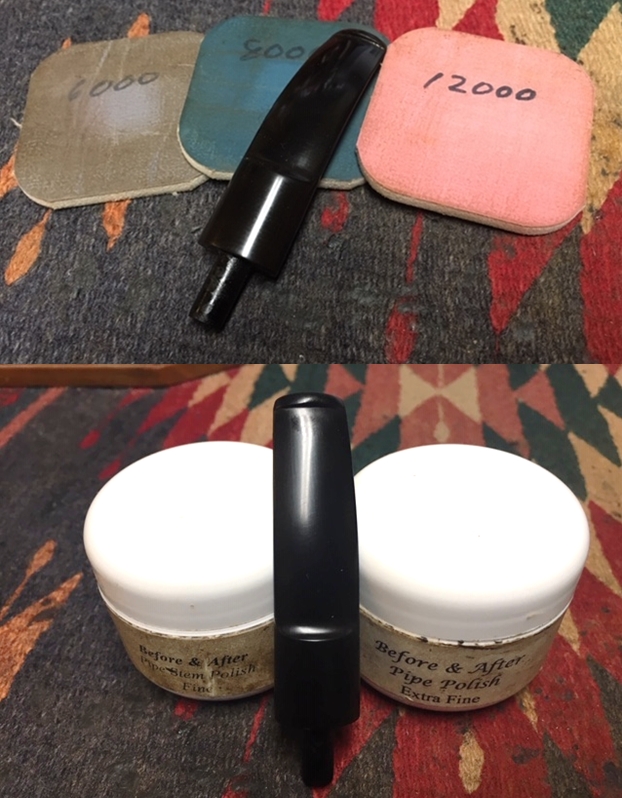
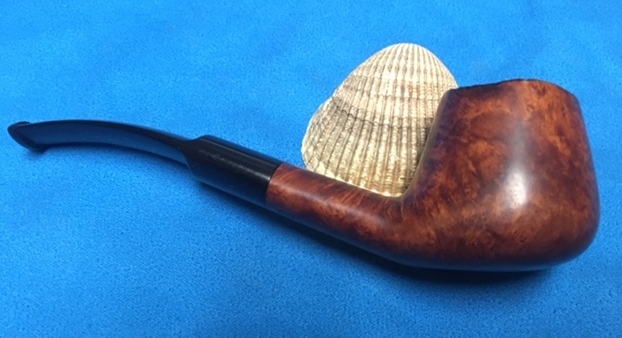
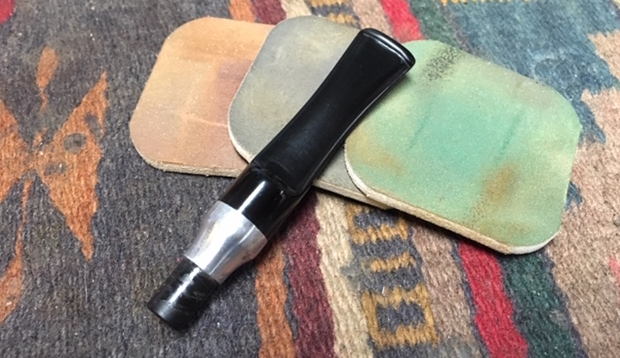
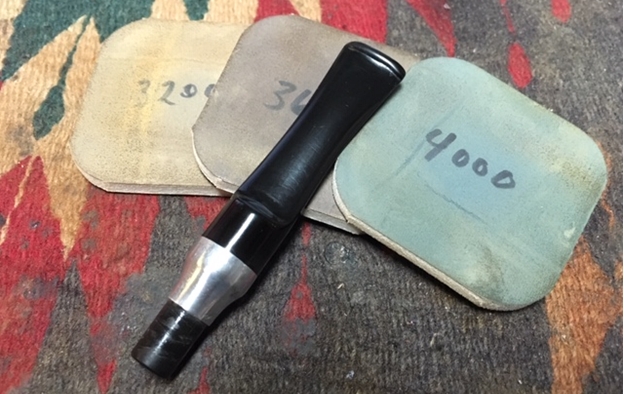
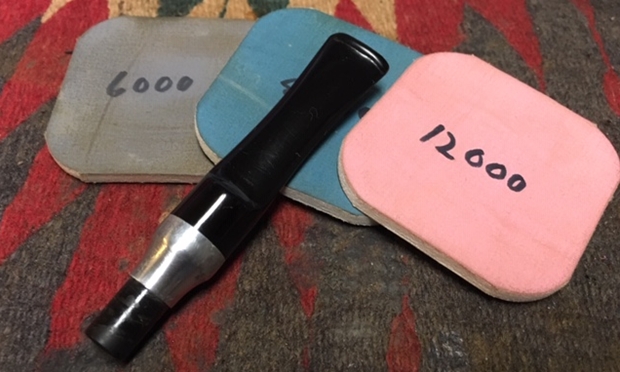
Now, on to the rest of the restoration on this GBD Historic 115 Billiard. Since Jeff had done such an amazing clean up job on the bowl it was going to be a very easy job for me. There was some darkening and damage on the inner edge of the rim that needed to be addressed. I sanded it with a folded piece of 220 grit sandpaper to remove and minimize the damage to the edge. I continued by starting to polish it with 400 grit wet dry sandpaper. I wiped the rim edge down with a damp cloth to remove the sanding dust on the briar. The finished rim top looked much better than when I started. I was able to minimize the damage on the front inner edge of the rim. It is still damaged but it looks considerably better. Once I clean it and stain it the rim edge will look better.  I stained the rim top and edges with a Walnut and Black stain pen. I blended the colours to match the rest of the bowl colour. I also stained the shank end with the two pens to blend them into the flow of the colour on the shank and bowl.     I rubbed the bowl down with Before & After Restoration Balm. I worked it into the surface of the briar with my fingertips and a horsehair shoe brush to clean, enliven and protect it. I let the balm sit for a little while and then buffed with a cotton cloth and shoe brush to raise the shine. Mark Hoover’s Balm is a product that I have come to appreciate and one I use on every pipe I have been working on.      I set the bowl aside and turned my attention to the stem. I sanded the stem with 220 grit sandpaper to break up the oxidation. I started the polishing with 400 grit wet dry sandpaper to remove the scratching. It is starting to look good.       I have one more tin of Denicare Mouthpiece Polish left from a few that I have picked up over the years. It is a coarse red pasted that serves to help remove oxidation. I polished the stem with that to further smooth out the surface of the vulcanite (and to be honest – to use it up).      I polished the stem with micromesh sanding pads – wet sanding with 1500-12000 grit pads. I wiped the stem down after each sanding pad with Obsidian Oil. I polished it with Before & After Pipe Stem Polish – both Fine and Extra Fine. Once I had finished the polishing I gave it final coat of oil and set it aside to dry.    I can’t tell you how great it feels to be moving through these 125 pipes – about 35 done so far! It seemed like an overwhelming task that can only be achieved one pipe at a time. So each time I finish one of the pipes from Bob Kerr’s Estate I look forward to what it will look like when it is put back together, polished and waxed. I put the bowl and stem back together. I polished the bowl and stem with Blue Diamond to polish out the scratches in the briar and the vulcanite. I gave the bowl and stem multiple coats of carnauba wax. I buffed the pipe with a clean buffing pad to raise the shine. I hand buffed it with a microfiber cloth to deepen the shine. The pipe polished up pretty nicely. The rich dark brown and black sandblast finish really popped with buffing showing the contrast colours of stain on the pipe. The polished thin black vulcanite stem went really well with the colours of the bowl. The sandblast rim top, though slightly damaged looked very good. This old GBD Historic Sandblast 115 Billiard was another fun pipe to work on thanks to Jeff’s cleanup work. It really has the classic GBD Billiard shape that is very recognizable. The combination of various stains really makes the pipe look attractive. It is another comfortable pipe to hold in the hand. The finished pipe is shown in the photos below. The dimensions of the pipe are Length: 5 ½ inches, Height: 1 ¾ inches, Outside diameter of the bowl: 1 ¼ inches, Chamber diameter: ¾ of an inch. If you are interested in carrying on Bob’s legacy with this pipe send me a message or an email. I have a lot more to work on of various brands. Perhaps one of those will catch your attention. Thanks for reading this blog and my reflections on the pipe while I worked on it. This is an interesting estate to bring back to life.

Working on a GBD Original 115 Beveled Rim Billiard from Bob Kerr’s Estate


Blog by Steve Laug

I am continuing to work through Bob Kerr’s estate. The next pipe on the table is a GBD Original Billiard, sandblasted bowl and shank with a smooth beveled rim and a smooth panel on the underside of the shank with the stamping. I am continuing to cleanup Bob’s estate for his family and moving them out into the hands of pipemen and women who will carry on the trust that began with Bob and in some pipes was carried on by Bob. In the collection there were a total of 125 pipes along with a box of parts. This is the largest estate that I have had the opportunity to work on. I put together a spread sheet of the pipes and stampings to create an invoice. I was taking on what would take me a fair amount of time to clean up. I could not pass up the opportunity to work on these pipes though. They were just too tempting.

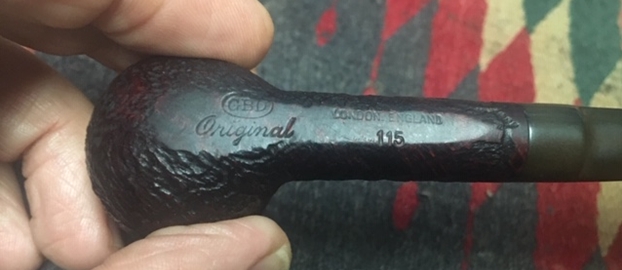
I have been collecting and restoring GBD pipes for as long as I have worked on pipes. This one also has a beautiful mix of grain under the grime on the sandblast finish. It is quite beautiful! The pipe is stamped GBD in an oval over Original on the underside of the shank. That is followed by stamping London, England and the shape number 115. It had a rich mix of black and dark brown stain that does not look too bad. There was a thick cake in the bowl with remnants of tobacco stuck on the walls. There was a lava overflow on the rim. The inner beveled edge of the rim and top are dirty and had a thick lava coat. The edges look pretty pristine under the grime. It was a beautiful pipe that was dirty and tired looking. The stem was oxidized and calcified toward the end. Again, surprisingly did not have the tooth marks that I have come to expect from Bob’s pipes. Jeff took photos of the pipe before he started his cleanup work on it. Jeff took photos of the bowl and rim top to show the cake in the bowl and the lava build up on the edges of the bowl. It was thick and hard but hopefully it had protected the rim and edges from damage. The edges look pretty good.     Jeff took photos of the sides and heel of the bowl to show the condition of the finish. You can see the beautiful grain through the sandblast – both birdseye and cross grain. The finish was very dirty.     Jeff took photos of the stamping on the smooth panel on the underside of the shank. The stamping was readable as you can see from the photos. On the underside it read GBD in an oval over Original. That was followed by London, England over the shape number 115. On the left side of the saddle stem was an inlaid GBD rondel.  Jeff took photos of the top and underside of the stem showing the tooth chatter, scratching and oxidation on the stem surface and wear on the edges of the button. I turned to Pipedia’s article on GBD to see if I could find any information on the Original. It was a line of GBD pipes that was new to me. The article gives a lot in terms of the history of the brand (https://pipedia.org/wiki/GBD). There is nothing specific on the Original line.

I also turned to the reference page on the site for GBD shapes and numbers and found the one for the 115 shape but it called it a Prince of Wales and said that the saddle stem had a 1/8 bend. To me a Prince of Wales is a Prince shape pipe and the one that I was working on is definitely a billiard (https://pipedia.org/wiki/GBD_Shapes/Numbers). The vagaries of clearly pinning down GBD Shapes is evident in this seeming contradiction. I also did a screen capture of the section and from the various Model information. That also was an interesting conundrum in that the pipe in my hand was not smooth but had a sandblast finish like the Prehistoric with a smooth beveled rim top. I combined the screen captures in one picture below (https://pipedia.org/wiki/GBD_Model_Information).     All of my research did not really help pin anything down. The shape number was a dead end contradiction as was the line description. I was dealing with a bit of anomaly – a Sandblast Original Billiard with a straight thin bit stem. In terms of dating the pipe I can only guess that it fits in with the late 50s to late 60s of Bob’s other pipes but I cannot know for sure. Now it was time to work on the pipe.

With over 125 pipes to clean from Bob’s estate I took a batch of them to the states with me on a recent visit and left them with Jeff so he could help me out. Jeff cleaned the pipe with his usual penchant for thoroughness that I really appreciate. This one was a real mess and I did not know what to expect when I unwrapped it from his box. He reamed it with a PipNet pipe reamer and cleaned up the reaming with a Savinelli Fitsall Pipe Knife. He scrubbed out the internals with alcohol, pipe cleaners and cotton swabs until the pipe was clean. He scrubbed the exterior of the bowl with Murphy’s Oil Soap and a tooth brush to remove the grime and grit on the briar and the lava on the rim top. The finish looks very good with good looking grain around the bowl and shank. Jeff soaked the stem in Before & After Deoxidizer to remove the oxidation on the rubber. When the pipe arrived here in Vancouver for the second stop of its restoration tour it looked good. The stem still sported some deep oxidation but otherwise it was clean. I took photos before I started my part of the work.    I took some close up photos of the rim top and also of the stem surface. I wanted to show what an amazing job Jeff did in the cleanup of the rim top. The rim top looks good. There is some darkening on the top edge and a few light nicks and scratches on the surface. The bowl looked very good. I also took close up photos of the stem to show the few small dents on the surface of the stem. You can also see the remaining oxidation on the stem surface.       I am going to keep posting the next paragraph because of the importance of protecting the stamping/nomenclature.

One of the things I appreciate about Jeff’s cleanup is that he works to protect and preserve the nomenclature on the shank of the pipes that he works on. The stamping on this one was very faint to start with so I was worried that it would disappear altogether with the cleanup. He was not only able to preserve it but it is clearer than shown in the earlier photos. I took some photos to show the clarity of the stamping. I have noticed that many restorers are not careful to protect the stamping in their cleaning process and often by the end of the restoration the nomenclature is almost destroyed. I would like to encourage all of us to be careful in our work to preserve this as it is a critical piece of pipe restoration!Since this is another pipe Bob’s estate I am sure that some of you have read at least some of the other restoration work that has been done on the previous pipes. You have also read what I have included about Bob Kerr, the pipeman who held these pipes in trust before I came to work on them (see photo to the left). Also, if you have followed the blog for long you will already know that I like to include background information on the pipeman whose pipes I am restoring. For me, when I am working on an estate I really like to have a sense of the person who held the pipes in trust before I worked on them. It gives me another dimension of the restoration work. I asked Brian if he or his wife would like to write a brief biographical tribute to her father, Bob. His daughter worked on it and I received the following short write up on him and some pictures to go along with the words including one of Bob’s carvings. Once again I thank you Brian and tell your wife thank you as well.

I am delighted to pass on these beloved pipes of my father’s. I hope each user gets many hours of contemplative pleasure as he did. I remember the aroma of tobacco in the rec room, as he put up his feet on his lazy boy. He’d be first at the paper then, no one could touch it before him. Maybe there would be a movie on with an actor smoking a pipe. He would have very definite opinions on whether the performer was a ‘real’ smoker or not, a distinction which I could never see but it would be very clear to him. He worked by day as a sales manager of a paper products company, a job he hated. What he longed for was the life of an artist, so on the weekends and sometimes mid-week evenings he would journey to his workshop and come out with wood sculptures, all of which he declared as crap but every one of them treasured by my sister and myself. Enjoy the pipes, and maybe a little of his creative spirit will enter you!

Now, on to the rest of the restoration on this GBD Original 115 Billiard. Since Jeff had done such an amazing clean up job on the bowl it was going to be a very easy job for me. There was some darkening on the inner beveled edge of the rim that needed to be addressed. I sanded it with a folded piece of 220 grit sandpaper to remove and minimize the damage to the bevel. I continued by starting to polish it with 400 grit wet dry sandpaper. I wiped the rim edge down with a damp cloth to remove the sanding dust on the briar. The finished rim top looked much better than when I started.I rubbed the bowl down with Before & After Restoration Balm. I worked it into the surface of the briar with my fingertips and a horsehair shoe brush to clean, enliven and protect it. I let the balm sit for a little while and then buffed with a cotton cloth and shoe brush to raise the shine. Mark Hoover’s Balm is a product that I have come to appreciate and one I use on every pipe I have been working on.     I set the bowl aside and turned my attention to the stem. I sanded the stem with 220 grit sandpaper to break up the oxidation. I started the polishing with 400 grit wet dry sandpaper to remove the scratching. It is starting to look good.    I have one more tin of Denicare Mouthpiece Polish left from a few that I have picked up over the years. It is a coarse red pasted that serves to help remove oxidation. I polished the stem with that to further smooth out the surface of the vulcanite (and to be honest – to use it up).    I polished the stem with micromesh sanding pads – wet sanding with 1500-12000 grit pads. I wiped the stem down after each sanding pad with Obsidian Oil. I polished it with Before & After Pipe Stem Polish – both Fine and Extra Fine. Once I had finished the polishing I gave it final coat of oil and set it aside to dry.   I can’t tell you how great it feels to be moving through these 125 pipes – about 35 done so far! It seemed like an overwhelming task that can only be achieved one pipe at a time. So each time I finish one of the pipes from Bob Kerr’s Estate I look forward to what it will look like when it is put back together, polished and waxed. I put the bowl and stem back together. I polished the bowl and stem with Blue Diamond to polish out the scratches in the briar and the vulcanite. I gave the bowl and stem multiple coats of carnauba wax. I buffed the pipe with a clean buffing pad to raise the shine. I hand buffed it with a microfiber cloth to deepen the shine. The pipe polished up pretty nicely. The rich dark brown and black sandblast finish really popped with buffing showing the contrast colours of stain on the pipe. The polished thin black vulcanite stem went really well with the colours of the bowl. The smooth beveled rim top really stood out and gave the pipe a bit of class. This old GBD Original Sandblast 115 Billiard was another fun pipe to work on thanks to Jeff’s cleanup work. It really has the classic GBD Billiard shape that is very recognizable. The combination of various stains really makes the pipe look attractive. It is another comfortable pipe to hold in the hand. The finished pipe is shown in the photos below. The dimensions of the pipe are Length: 5 ½ inches, Height: 1 ¾ inches, Outside diameter of the bowl: 1 ¼ inches, Chamber diameter: ¾ of an inch. If you are interested in carrying on Bob’s legacy with this pipe send me a message or an email. I have a lot more to work on of various brands. Perhaps one of those will catch your attention. Thanks for reading this blog and my reflections on the pipe while I worked on it. This is an interesting estate to bring back to life.

Working on a GBD New Era 122 Beveled Rim Billiard from Bob Kerr’s Estate


Blog by Steve Laug

I am continuing to work through Bob Kerr’s estate. The next pipe on the table is a GBD New Era Billiard. I am continuing to cleanup Bob’s estate for his family and moving them out into the hands of pipemen and women who will carry on the trust that began with Bob and in some pipes was carried on by Bob. In the collection there were a total of 125 pipes along with a box of parts. This is the largest estate that I have had the opportunity to work on. I put together a spread sheet of the pipes and stampings to create an invoice. I was taking on what would take me a fair amount of time to clean up. I could not pass up the opportunity to work on these pipes though. They were just too tempting.

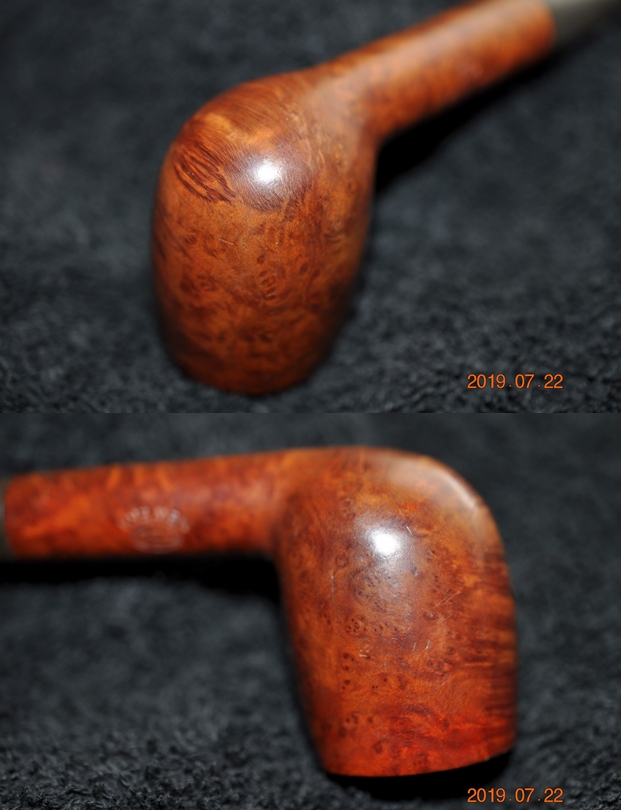
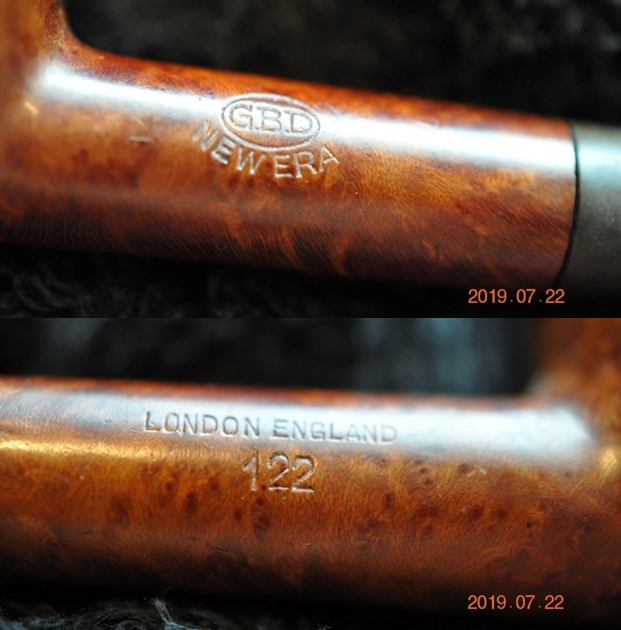
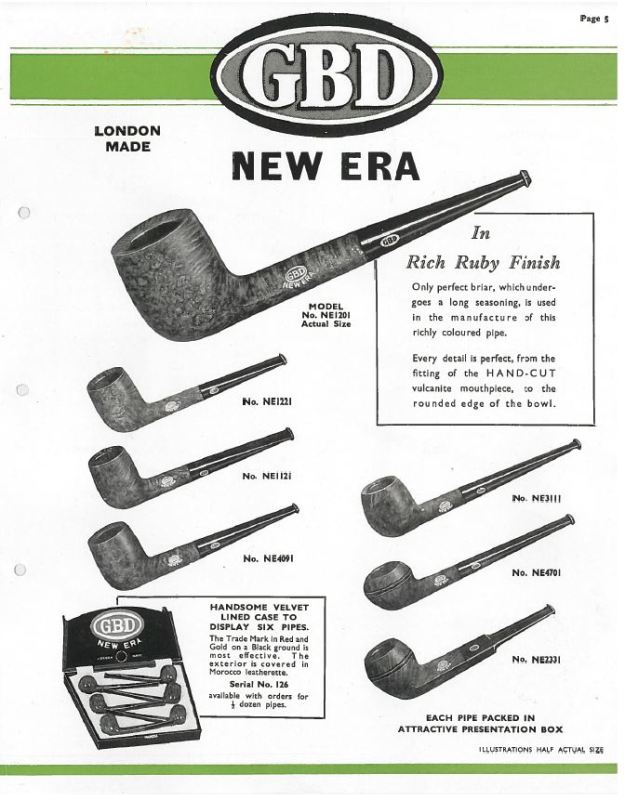
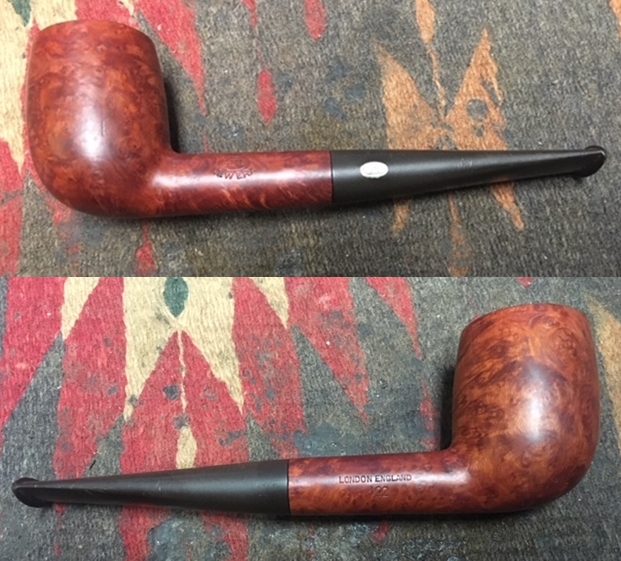
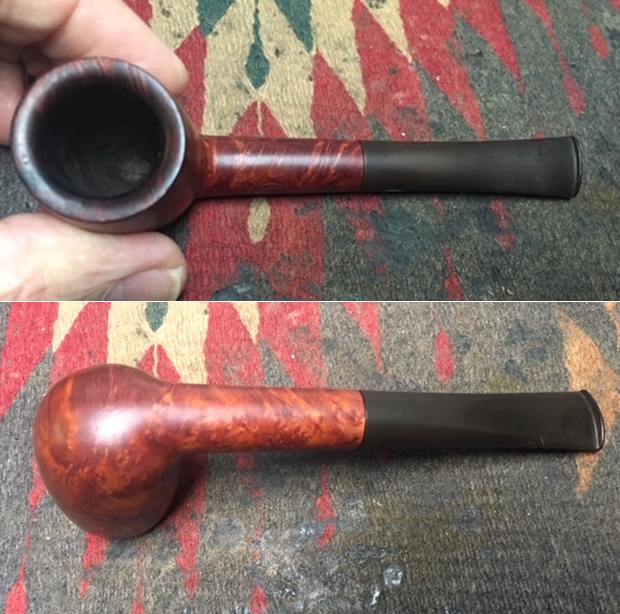
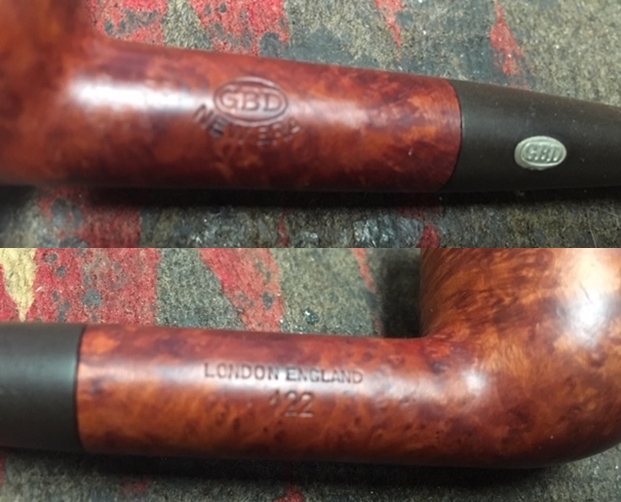
I have been collecting and restoring GBD pipes for as long as I have worked on pipes. This one also has some beautiful mixed grain underneath the grime. It is quite beautiful! The pipe is stamped GBD in an oval over New Era on the left side of the shank. On the right side it is stamped London, England over the shape number 122. It had a rich medium brown stain that does not look too bad. There was a thick cake in the bowl with remnants of tobacco stuck on the walls. There was a lava overflow on the rim. The inner beveled edge of the rim and top are dirty and had a thick lava coat. The edges look pretty pristine under the grime. It was a beautiful pipe that was dirty and tired looking. The stem was oxidized and calcified toward the end. Again, surprisingly did not have the tooth marks that I have come to expect from Bob’s pipes. Jeff took photos of the pipe before he started his cleanup work on it.Jeff took photos of the bowl and rim top to show the cake in the bowl and the lava build up on the edges of the bowl. It was thick and hard but hopefully it had protected the rim and edges from damage. The edges look pretty good.      Jeff took photos of the side and heel of the bowl to show the condition of the finish. You can see the beautiful grain – both birdseye and cross grain. The finish was very dirty.    Jeff took photos of the stamping on the smooth panel on the underside of the shank. The stamping was readable as you can see from the photos. On the left side it read GBD in an oval over New Era. On the right side it is stamped London, England over the shape number 122. On the left side of the tapered stem was an inlaid GBD roundel. Jeff took photos of the top and underside of the stem showing the tooth chatter, scratching and oxidation on the stem surface and wear on the edges of the button.    I turned to Pipedia’s article on GBD to see if I could find any information on the Popular. It was a line of GBD pipes that was new to me. The article gives a lot in terms of the history of the brand (https://pipedia.org/wiki/GBD). I have included a paragraph from the site below as well as a page from a catalogue.

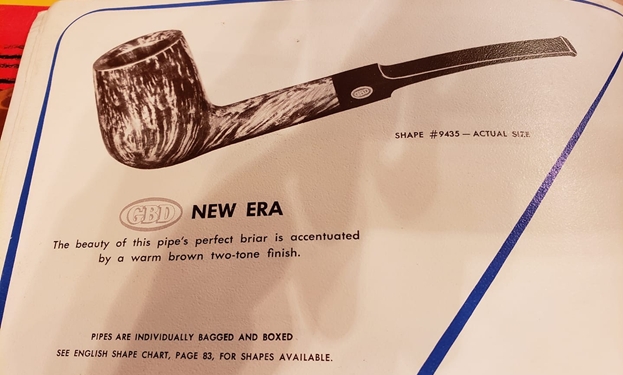
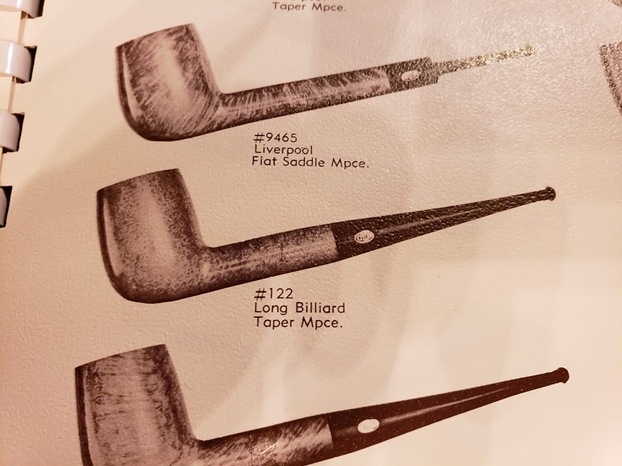
The claims after the 1st World War demanded further distinctions. First of all was the London Made, which became the Standard London Made, followed by the New Era– in 1931 the top model asking 12½ Shilling. The Pedigree, although sketched around 1926, was not produced until the later 1930s. The New Standard was introduced in order to give the popular Standard of the 20s a higher rank in value. The Prehistoric, a deeply sandblasted black pipe, that still carried the small GBD Xtra stamp, was entirely new and unusual.There was a fellow on Facebook Tobacco Pipe Restorers Group who picked up some booklets and pamphlets on GBD pipes. I messaged him and asked him to send me info on the New Era line. This photo gives a pretty good description. Combined with the one above it is an interesting mystery. The first document above says that the pipe has “a rich ruby finish” while the one below says it is “accentuated by a warm brown two-tone finish.” The pipe I am working on definitely sits somewhere between these two descriptions – it has a reddish brown finish.I also turned to the reference page on the site for GBD shapes and numbers and found the one for the straight bulldog that I was working on (https://pipedia.org/wiki/GBD_Shapes/Numbers). I did a screen capture of the section and from the various Model information. I combined them below (https://pipedia.org/wiki/GBD_Model_Information).   The fellow on Facebook also included the next photo that shows the shape and description of the 122. GBD calls it a Long Billiard with a Taper Mouthpiece.I now knew I was dealing with a well-made hand chosen piece of briar that had gone through a period of long seasoning. In terms of dating the pipe I figure that it fits in with the late 50s to late 60s of Bob’s other pipes but I cannot know for sure. Now it was time to work on the pipe.

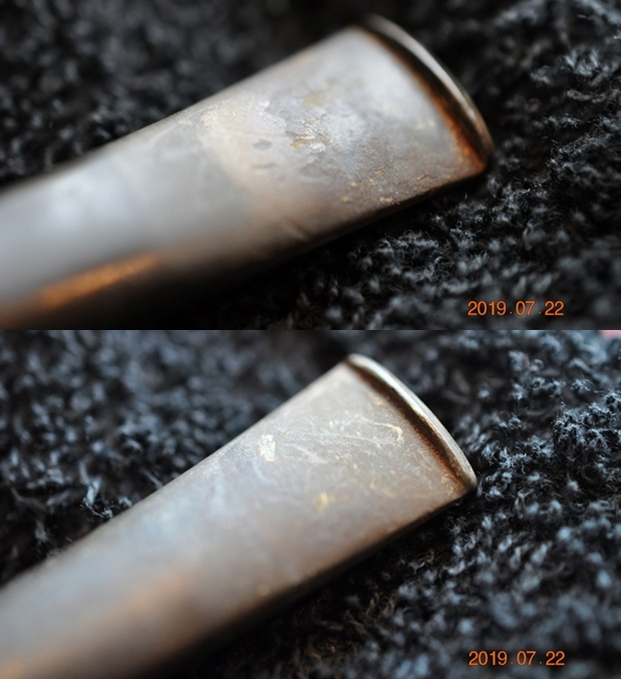
With over 125 pipes to clean from Bob’s estate I took a batch of them to the states with me on a recent visit and left them with Jeff so he could help me out. Jeff cleaned the pipe with his usual penchant for thoroughness that I really appreciate. This one was a real mess and I did not know what to expect when I unwrapped it from his box. He reamed it with a PipNet pipe reamer and cleaned up the reaming with a Savinelli Fitsall Pipe Knife. He scrubbed out the internals with alcohol, pipe cleaners and cotton swabs until the pipe was clean. He scrubbed the exterior of the bowl with Murphy’s Oil Soap and a tooth brush to remove the grime and grit on the briar and the lava on the rim top. The finish looks very good with good looking grain around the bowl and shank. Jeff soaked the stem in Before & After Deoxidizer to remove the oxidation on the rubber. When the pipe arrived here in Vancouver for the second stop of its restoration tour it looked very good. I took photos before I started my part of the work.     I took some close up photos of the rim top and also of the stem surface. I wanted to show what an amazing job Jeff did in the cleanup of the rim top. The rim top looks good. There is some darkening on the top edge and a few light nicks and scratches on the surface. The bowl looked very good. I also took close up photos of the stem to show the scratches and lack of tooth marks on the stem. You can also see the remaining oxidation on the stem surface.     I am going to keep posting the next paragraph because of the importance of protecting the stamping/nomenclature.

One of the things I appreciate about Jeff’s cleanup is that he works to protect and preserve the nomenclature on the shank of the pipes that he works on. The stamping on this one was very faint to start with so I was worried that it would disappear altogether with the cleanup. He was not only able to preserve it but it is clearer than shown in the earlier photos. I took some photos to show the clarity of the stamping. I have noticed that many restorers are not careful to protect the stamping in their cleaning process and often by the end of the restoration the nomenclature is almost destroyed. I would like to encourage all of us to be careful in our work to preserve this as it is a critical piece of pipe restoration!Since this is another pipe Bob’s estate I am sure that some of you have read at least some of the other restoration work that has been done on the previous pipes. You have also read what I have included about Bob Kerr, the pipeman who held these pipes in trust before I came to work on them (see photo to the left). Also, if you have followed the blog for long you will already know that I like to include background information on the pipeman whose pipes I am restoring. For me, when I am working on an estate I really like to have a sense of the person who held the pipes in trust before I worked on them. It gives me another dimension of the restoration work. I asked Brian if he or his wife would like to write a brief biographical tribute to her father, Bob. His daughter worked on it and I received the following short write up on him and some pictures to go along with the words including one of Bob’s carvings. Once again I thank you Brian and tell your wife thank you as well.

I am delighted to pass on these beloved pipes of my father’s. I hope each user gets many hours of contemplative pleasure as he did. I remember the aroma of tobacco in the rec room, as he put up his feet on his lazy boy. He’d be first at the paper then, no one could touch it before him. Maybe there would be a movie on with an actor smoking a pipe. He would have very definite opinions on whether the performer was a ‘real’ smoker or not, a distinction which I could never see but it would be very clear to him. He worked by day as a sales manager of a paper products company, a job he hated. What he longed for was the life of an artist, so on the weekends and sometimes mid-week evenings he would journey to his workshop and come out with wood sculptures, all of which he declared as crap but every one of them treasured by my sister and myself. Enjoy the pipes, and maybe a little of his creative spirit will enter you!

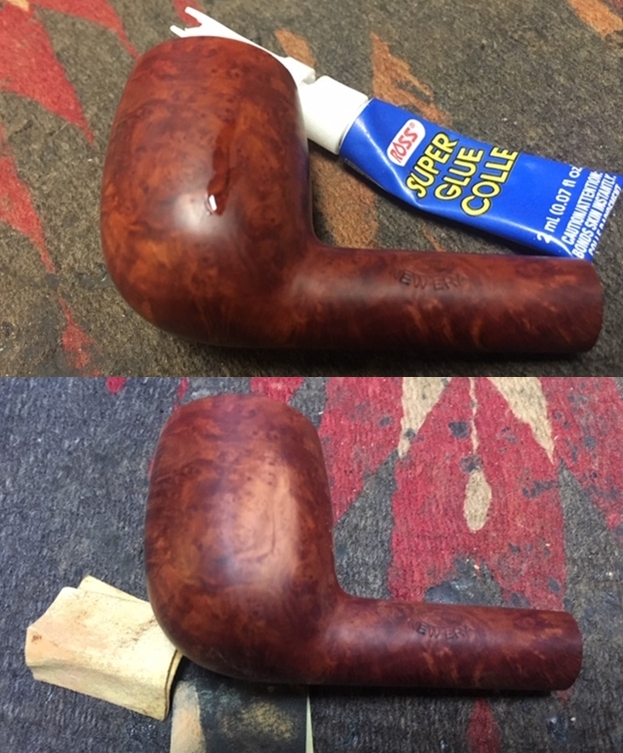
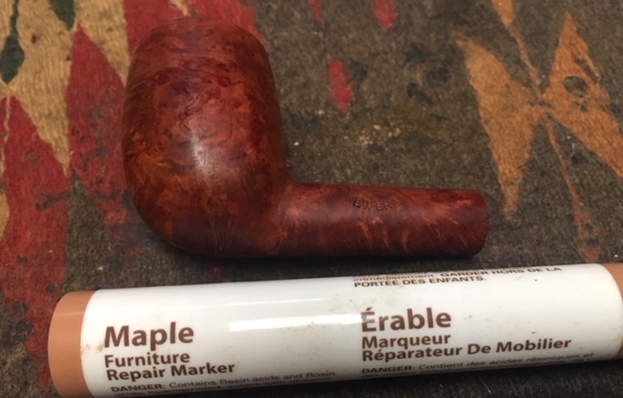
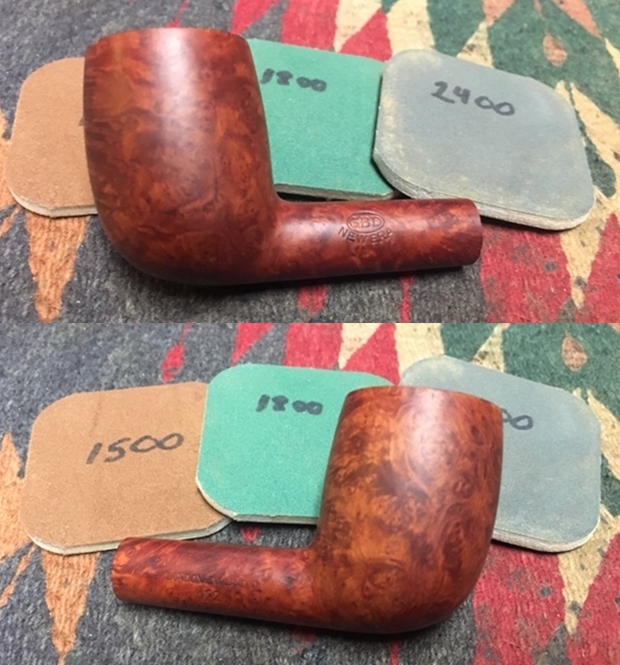
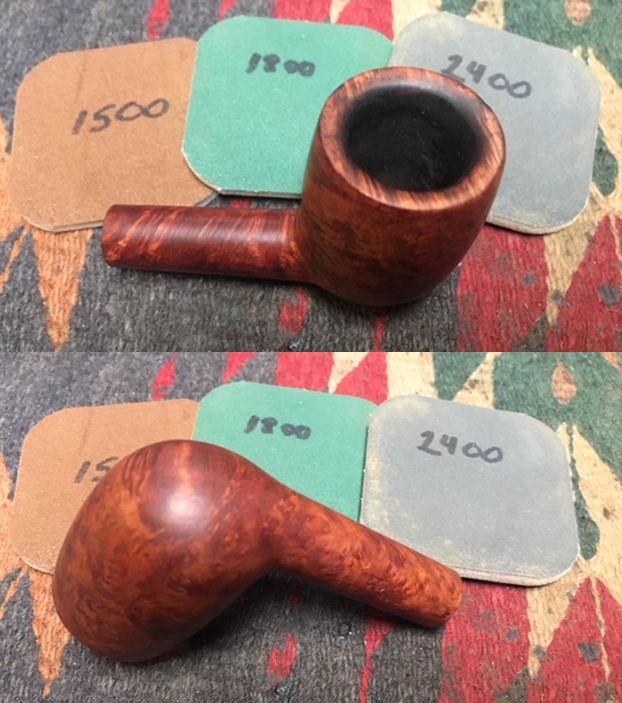
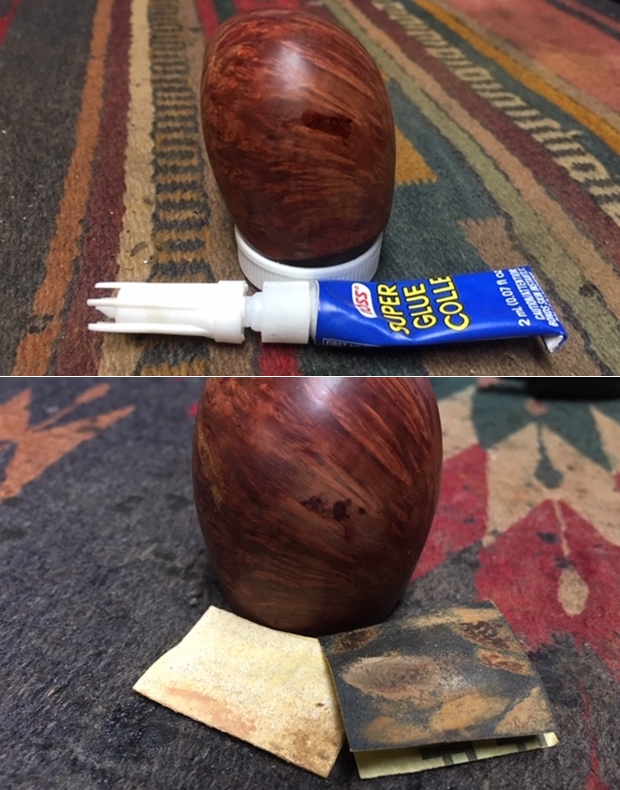
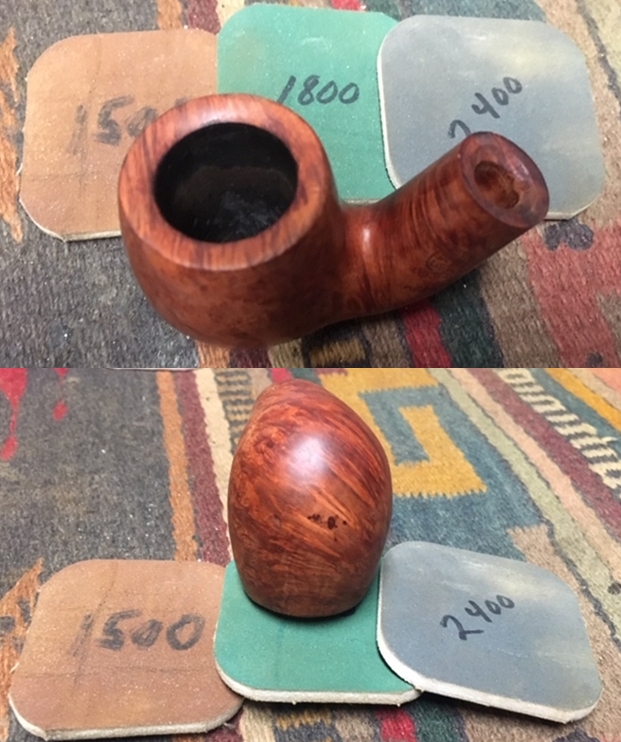
Now on to the rest of the restoration on this GBD New Era Billiard. Since Jeff had done such an amazing clean up job on the bowl it was very easy for me. There was some darkening on the inner beveled edge of the rim that needed to be addressed. I sanded it with a folded piece of 220 grit sandpaper to remove and minimize the damage to the bevel. I continued by starting to polish it with 400 grit wet dry sandpaper. I wiped the rim edge down with a damp cloth to remove the sanding dust on the briar. The finished rim top looked much better than when I started.There was a deep cut or groove in the briar on the left side of the bowl. It looked like someone had scratched it against hard surface leaving a deep gouge. I filled in the gouge with clear super glue. Once the glue had dried I sanded it smooth with 220 grit sandpaper and blended it with 400 grit wet dry sandpaper.  I used a Maple stain pen to touch up the sanded area to match the rest of the bowl. It looked very good and would completely blend once the bowl was polished with micromesh.I polished the briar with micromesh sanding pads to blend in the stain and to polish the briar and remove the scratches in the surface of the bowl, heel and shank. I wet sanded with 1500-12000 grit pads and wiped the bowl down between each pad with a damp cloth.   I decided to clean the briar with Mark Hoover’s Before & After Briar Cleaner to clean up the sanded surface of the briar and blend sanded rim edge. I rubbed it into the surface of the briar and let it sit for 10 minutes. I rinsed the bowl off with warm running water to remove the product and the grime.       I rubbed the bowl down with Before & After Restoration Balm. I worked it into the surface of the briar with my fingertips to clean, enliven and protect it. I let the balm sit for a little while and then buffed with a cotton cloth and shoe brush to raise the shine. Mark Hoover’s Balm is a product that I have come to appreciate and one I use on every pipe I have been working on.     I set the bowl aside and turned my attention to the stem. I sanded the stem with 220 grit sandpaper to break up the oxidation. I started the polishing with 400 grit wet dry sandpaper to remove the scratching. It is starting to look good.    I have one more tin of Denicare Mouthpiece Polish left from a few that I have picked up over the years. It is a coarse red pasted that serves to help remove oxidation. I polished the stem with that to further smooth out the surface of the vulcanite (and to be honest – to use it up).   I polished the stem with micromesh sanding pads – wet sanding with 1500-12000 grit pads. I wiped the stem down after each sanding pad with Obsidian Oil. I polished it with Before & After Pipe Stem Polish – both Fine and Extra Fine. Once I had finished the polishing I gave it final coat of oil and set it aside to dry.       I am excited to be finishing another one of Bob Kerr’s Estate pipes and as usual I look forward to what it will look like when it is put back together, polished and waxed. I put the bowl and stem back together. I polished the bowl and stem with Blue Diamond to polish out the scratches in the briar and the vulcanite. I gave the bowl and stem multiple coats of carnauba wax. I buffed the pipe with a clean buffing pad to raise the shine. I hand buffed it with a microfiber cloth to deepen the shine. The pipe polished up pretty nicely. The rich reddish brown finish really popped with buffing showing the contrast colours of stain on the pipe. The polished black vulcanite stem went really well with the colours of the bowl. This old GBD New Era 122 Billiard was another fun pipe to work on thanks to Jeff’s cleanup work. It really has the classic GBD Billiard shape that is very recognizable. The combination of various stains really makes the pipe look attractive. It is a comfortable pipe to hold in the hand. The finished pipe is shown in the photos below. The dimensions of the pipe are Length: 5 ¼ inches, Height: 1 ¾ inches, Outside diameter of the bowl: 1 ¼ inches, Chamber diameter: ¾ of an inch. If you are interested in carrying on Bob’s legacy with this pipe send me a message or an email. I have a lot more to work on of various brands. Perhaps one of those will catch your attention. Thanks for reading this blog and my reflections on the pipe while I worked on it. This is an interesting estate to bring back to life.

Working on a GBD Popular 233 Straight Bulldog from Bob Kerr’s Estate


Blog by Steve Laug

I am continuing to work through Bob Kerr’s estate. The next pipe on the table is a GBD Popular 233 sand blast bulldog. I am cleaning up Bob’s estate for his family and moving them out into the hands of pipemen and women who will carry on the trust that began with Bob and in some pipes was carried on by Bob. In the collection there were 19 Peterson’s pipes along with a bevy of Dunhills, some Comoy’s and Barlings as well as a lot of other pipes – a total of 125 pipes along with a box of parts. This is the largest estate that I have had the opportunity to work on. I put together a spread sheet of the pipes and stampings to create an invoice. I was taking on what would take me a fair amount of time to clean up. I could not pass up the opportunity to work on these pipes though. They were just too tempting.

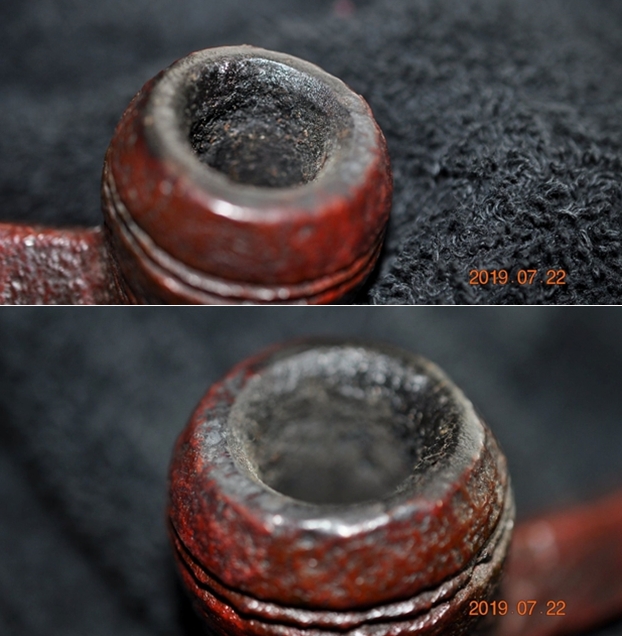
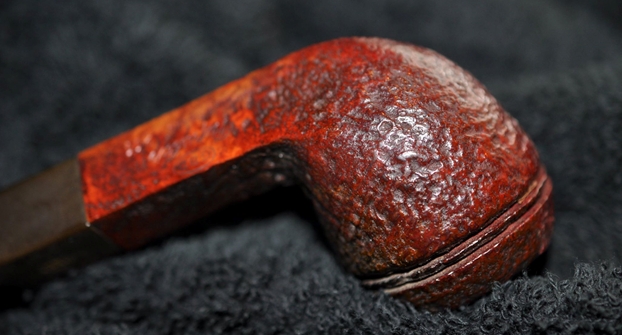
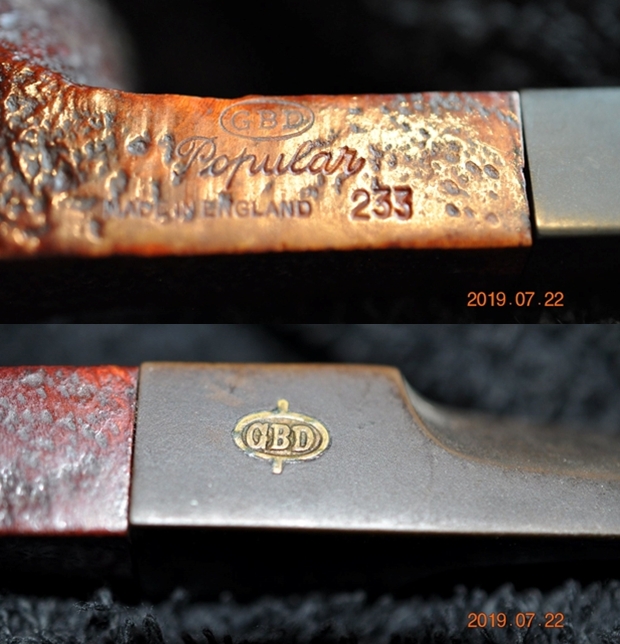
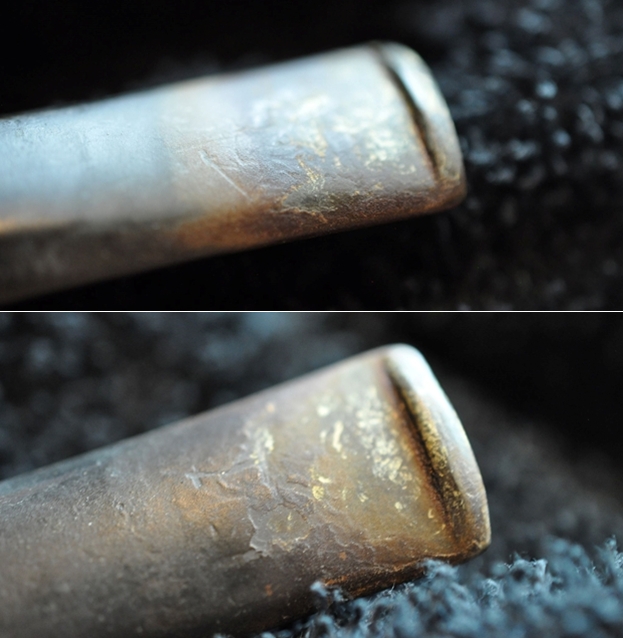
I have been collecting and restoring GBD pipes for as long as I have worked on pipes. This one also has some beautiful mixed grain underneath the sandblast finish. It is quite beautiful! The pipe is stamped GBD over Popular on the left underside of the shank. It is stamped with GBD in an oval over Popular. Underneath that it is stamped Made in England followed by the shape number 233. It had a rich oxblood stain that does not look too bad. There was a thick cake in the bowl with remnants of tobacco stuck on the walls. There was a light lava overflow on the rim. The inner beveled edge of the rim and top are dirty and had a thick lava coat. The edges look pretty pristine under the grime. It was a beautiful pipe that was dirty and tired looking. The stem was oxidized and calcified toward the end. Again, surprisingly did not have the tooth marks that I have come to expect from Bob’s pipes. Jeff took photos of the pipe before he started his cleanup work on it.   Jeff took photos of the bowl and rim top to show the cake in the bowl and the lava build up on the edges of the bowl. It was thick and hard but hopefully it had protected the rim and edges from damage. The edges look pretty good.    Jeff took a photo of the side and heel of the bowl to show the condition of the finish. You can see the beautiful grain. The finish was very dirty. Jeff took photos of the stamping on the smooth panel on the underside of the shank. The stamping was readable as you can see from the photos. On the left underside it read GBD in an oval over Popular. Under that it read Made In England over the shape number 233. On the left side of the saddle stem was an inlaid GBD roundel.  Jeff took photos of the top and underside of the stem showing the tooth chatter, scratching and oxidation on the stem surface and wear on the edges of the button.   I turned to Pipedia’s article on GBD to see if I could find any information on the Popular. It was a line of GBD pipes that was new to me. The article gives a lot in terms of the history of the brand (https://pipedia.org/wiki/GBD).

I also turned to the reference page on the site for GBD shapes and numbers and found the one for the straight bulldog that I was working on (https://pipedia.org/wiki/GBD_Shapes/Numbers). I did a screen capture of the section.I had also worked on a similar pipe (2331) that was a smooth bulldog. I went back and reread the blog I had written on that restoration (https://rebornpipes.com/tag/gbd-popular-pipes/). I read about the pipe there but I had not found any information in that blog that helped to date the line.

I had exhausted the information available to me on the Popular line and was no closer to a date or time period for this pipe. I am guessing that it fits in with the late 50s to late 60s of Bob’s other pipes but I cannot know for sure. Now it was time to work on the pipe.

With over 125 pipes to clean from Bob’s estate I took a batch of them to the states with me on a recent visit and left them with Jeff so he could help me out. Jeff cleaned the pipe with his usual penchant for thoroughness that I really appreciate. This one was a real mess and I did not know what to expect when I unwrapped it from his box. He reamed it with a PipNet pipe reamer and cleaned up the reaming with a Savinelli Fitsall Pipe Knife. He scrubbed out the internals with alcohol, pipe cleaners and cotton swabs until the pipe was clean. He scrubbed the exterior of the bowl with Murphy’s Oil Soap and a tooth brush to remove the grime and grit on the briar and the lava on the rim top. The finish looks very good with good looking grain around the bowl and shank. Jeff soaked the stem in Before & After Deoxidizer to remove the oxidation on the rubber. When the pipe arrived here in Vancouver for the second stop of its restoration tour it looked very good. I took photos before I started my part of the work. I took some close up photos of the rim top and also of the stem surface. I wanted to show what an amazing job Jeff did in the cleanup of the rim top. The rim top looks very good. The sandblast finish is very nice. The bowl looked very good. I also took close up photos of the stem to show the scratches and lack of tooth marks on the stem. You can also see the remaining oxidation on the stem surface.Since this is another pipe Bob’s estate I am sure that some of you have read at least some of the other restoration work that has been done on the previous pipes. You have also read what I have included about Bob Kerr, the pipeman who held these pipes in trust before I came to work on them (see photo to the left). Also, if you have followed the blog for long you will already know that I like to include background information on the pipeman whose pipes I am restoring. For me, when I am working on an estate I really like to have a sense of the person who held the pipes in trust before I worked on them. It gives me another dimension of the restoration work. I asked Brian if he or his wife would like to write a brief biographical tribute to her father, Bob. His daughter worked on it and I received the following short write up on him and some pictures to go along with the words including one of Bob’s carvings. Once again I thank you Brian and tell your wife thank you as well.

I am delighted to pass on these beloved pipes of my father’s. I hope each user gets many hours of contemplative pleasure as he did. I remember the aroma of tobacco in the rec room, as he put up his feet on his lazy boy. He’d be first at the paper then, no one could touch it before him. Maybe there would be a movie on with an actor smoking a pipe. He would have very definite opinions on whether the performer was a ‘real’ smoker or not, a distinction which I could never see but it would be very clear to him. He worked by day as a sales manager of a paper products company, a job he hated. What he longed for was the life of an artist, so on the weekends and sometimes mid-week evenings he would journey to his workshop and come out with wood sculptures, all of which he declared as crap but every one of them treasured by my sister and myself. Enjoy the pipes, and maybe a little of his creative spirit will enter you!

Now on to the rest of the restoration on this GBD Popular Straight Bulldog. Since Jeff had done such an amazing clean up job on the bowl it was very easy for me. There was some darkening on the inner beveled edge of the rim that needed to be addressed. I sanded it with a folded piece of 220 grit sandpaper to remove and minimize the damage to the bevel. I continued by starting to polish it with 400 grit wet dry sandpaper. I wiped the rim edge down with a damp cloth to remove the sanding dust on the briar. The finished rim top looked much better than when I started.I decided to clean the briar with Mark Hoover’s Before & After Briar Cleaner to clean up the sanded surface of the briar and blend sanded rim edge. I rubbed it into the surface of the briar and let it sit for 10 minutes. I rinsed the bowl off with warm running water to remove the product and the grime.   I rubbed the bowl down with Before & After Restoration Balm. I worked it into the surface of the briar with my fingertips and a horsehair shoe brush to clean, enliven and protect it. I let the balm sit for a little while and then buffed with a cotton cloth and shoe brush to raise the shine. Mark Hoover’s Balm is a product that I have come to appreciate and one I use on every pipe I have been working on.    I set the bowl aside and turned my attention to the stem. I sanded the stem with 220 grit sandpaper to break up the oxidation. I started the polishing with 400 grit wet dry sandpaper to remove the scratching. It is starting to look good.   I have one more tin of Denicare Mouthpiece Polish left from a few that I have picked up over the years. It is a coarse red pasted that serves to help remove oxidation. I polished the stem with that to further smooth out the surface of the vulcanite (and to be honest – to use it up). I polished the stem with micromesh sanding pads – wet sanding with 1500-12000 grit pads. I wiped the stem down after each sanding pad with Obsidian Oil. I polished it with Before & After Pipe Stem Polish – both Fine and Extra Fine. Once I had finished the polishing I gave it final coat of oil and set it aside to dry.    I am excited to be on the homestretch of another one of Bob Kerr’s Estate pipes and I look forward to the final look when it is put back together, polished and waxed. I put the bowl and stem back together. I polished the bowl and stem with Blue Diamond to polish out the scratches in the briar and the vulcanite. I gave the bowl and stem multiple coats of carnauba wax. I buffed the pipe with a clean buffing pad to raise the shine. I hand buffed it with a microfiber cloth to deepen the shine. The pipe polished up pretty nicely. The sand blast finish really popped with buffing showing the contrast colours of reds and black stain on the finish. The polished black vulcanite stem went really well with the multi-faceted colours of the sand blast on the bowl. This old GBD Popular straight Bulldog was another fun pipe to work on thanks to Jeff’s cleanup work. It really has a shape that catches the eye. The combination of various stains really makes the pipe look attractive. It is a comfortable pipe to hold in the hand. The finished pipe is shown in the photos below. The dimensions of the pipe are Length: 5 ½ inches, Height: 1 ¾ inches, Outside diameter of the bowl: 1 ¼ inches, Chamber diameter: ¾ of an inch. If you are interested in carrying on Bob’s legacy with this pipe send me a message or an email. I have a lot more to work on of various brands. Perhaps one of those will catch your attention. Thanks for reading this blog and my reflections on the pipe while I worked on it. This is an interesting estate to bring back to life.


Cleaning up a GBD London Made 9664


Blog by Steve Laug

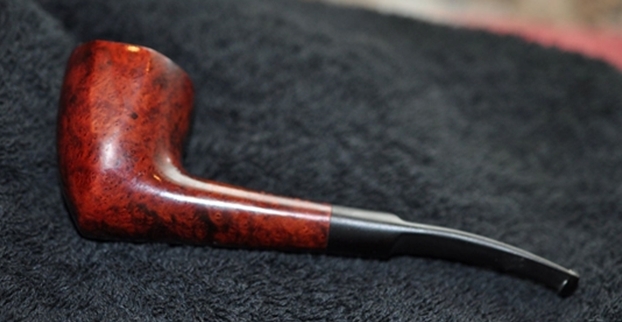
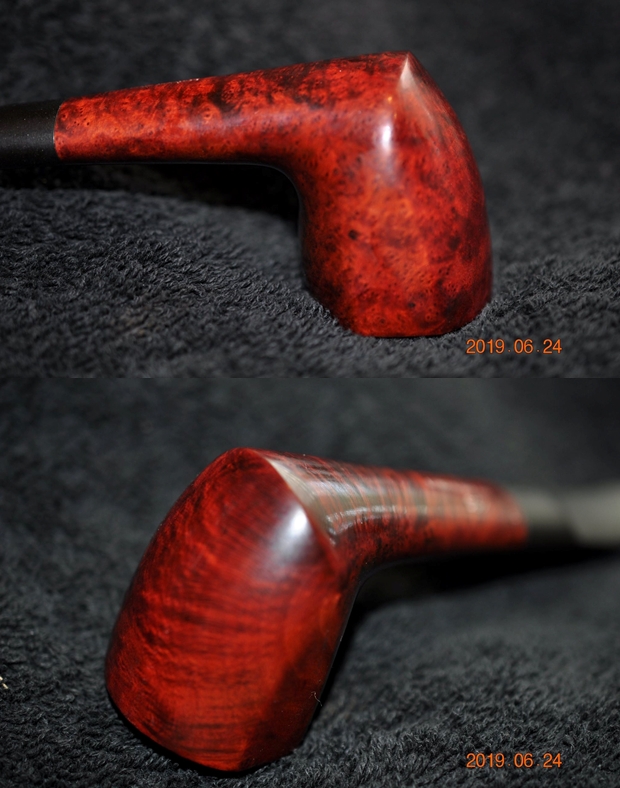
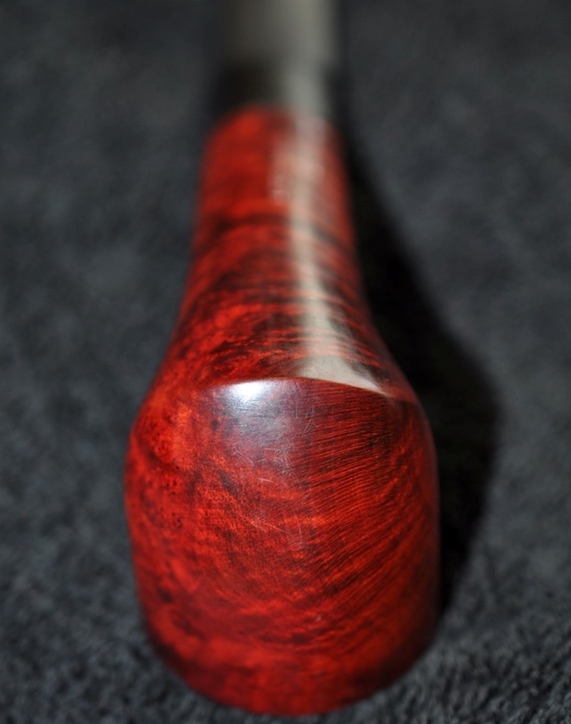
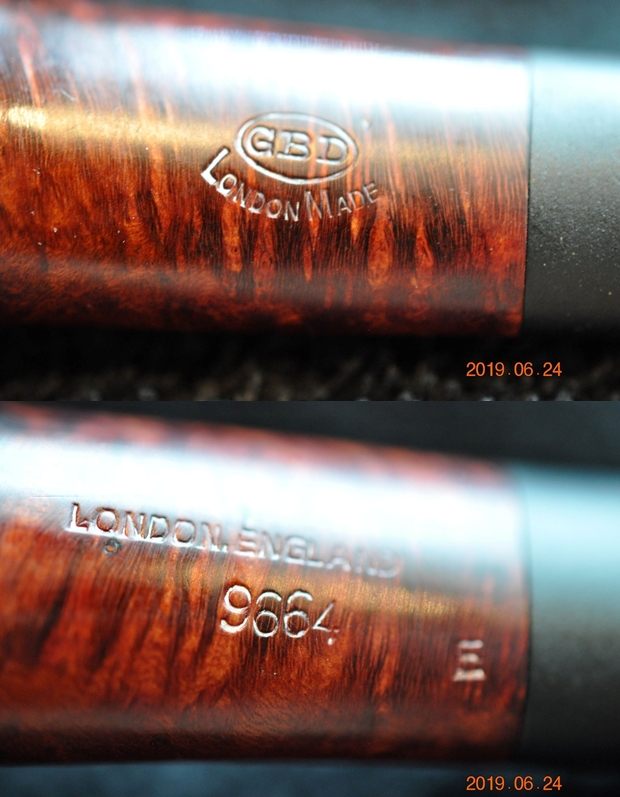
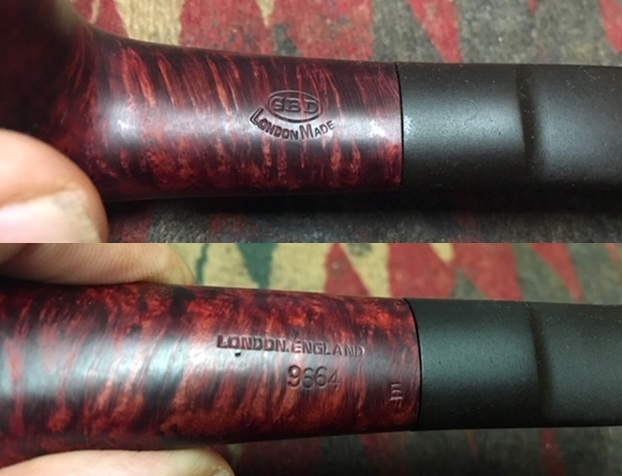
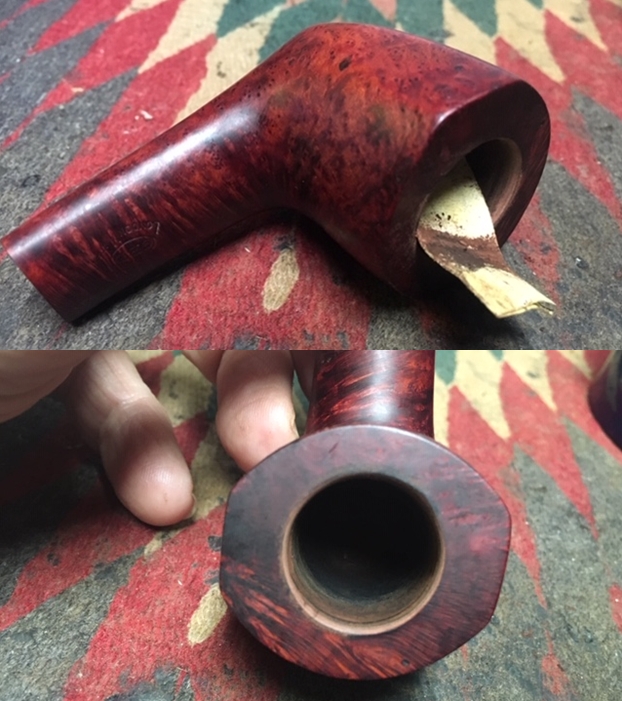
The next pipe I chose to work on has been sitting on my desk for a few weeks and since I just finished an older GBD Standard I decided to pick this GBD London Made up and work on it. It came in a recent box from my brother Jeff. He picked it up in one of the online auctions he frequents. It is interestingly shaped GBD – not even sure what I would call the shape as it is a bit of a Dublin and a bit of a pick axe. Very unique. The pipe is stamped on the top of the oval shank GBD in and oval London Made. On the underside of the shank it is stamped London, England over 9664 with a letter “E” stamped near the stem shank junction. The grain showing through the grime is a mix of swirls, cross grain and birdseye around the bowl sides and shank. It had a rich reddish brown stain but the finish was dirty and hard to see the colour well. There was a thick cake in the bowl and a light overflow of lava on the rim top. There was some darkening around the inner edge of the bowl and what looked like some damage toward the back edge. The stem was oxidized with light tooth marks and chatter on the top and underside near the button. The button was in excellent condition. Jeff took photos of the pipe before he started his cleanup work on it. Jeff took photos of the bowl and rim top to show the cake in the bowl and the lava build up on the edges of the bowl. The cake and edge speak to this being a good smoking pipe.Jeff took photos of the sides and heel of the bowl to show the condition of the finish – the pipe was dirty but the finish appeared to be in very good condition.  Jeff took photos of the stamping on the topside of the oval shank. The stamping was very readable – it read GBD in an oval over London Made. On the underside it read London, England over the shape number 9664 with the letter “E” near the shank/stem union.  Jeff took photos of the top and underside of the stem showing the scratching, oxidation and light tooth damage to the stem surface and slight wear to the edges of the button. I turned to Pipedia’s article on GBD to see if I could find any information on the London Made. The article gives a lot in terms of the history of the brand and a list of various lines of GBD pipes (https://pipedia.org/wiki/GBD_Model_Information). I quote the section where I found the reference to the London Made.

London Made — Factory unknown: Some might not be marked with GBD logo and some with additional “house” stampings. Introduced in 1978(?) plain wax finished branded pipes” available in at least six stains. – catalog (1981)

With that information in hand I knew what I was dealing with in terms of the stamping and the age of this pipe. I knew from the information from the section quoted that the London Made originally came out in 1978 in a variety of colours. Now I had an idea of the age of the pipe and it was time to work on the pipe.

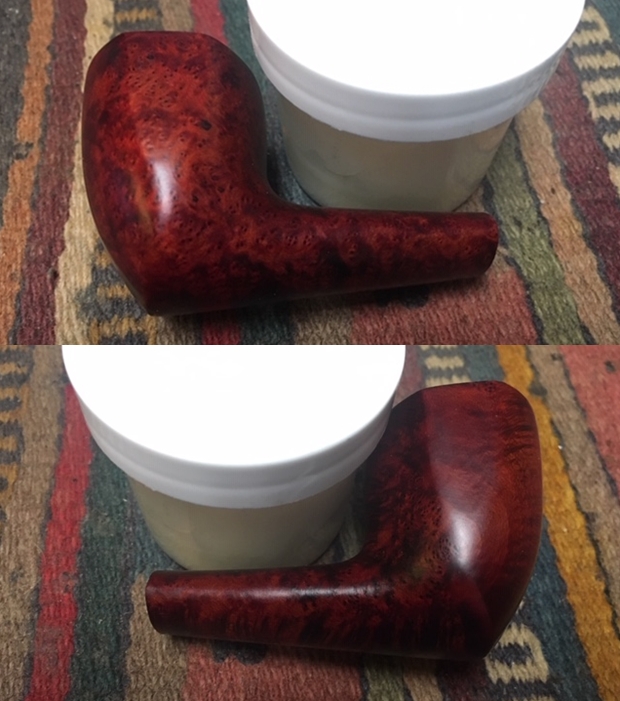
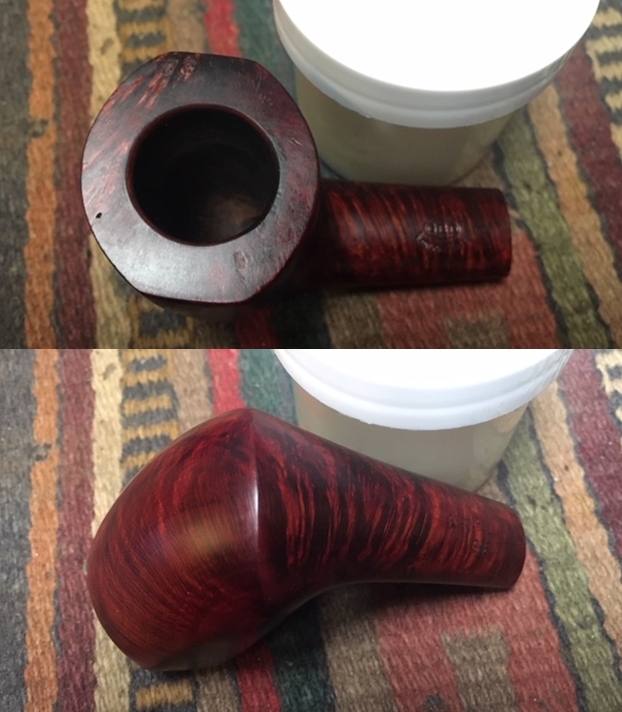
Jeff cleaned the pipe with his usual penchant for thoroughness that I really appreciate. This one was a real mess and I did not know what to expect when I unwrapped it from his box. He reamed it with a PipNet pipe reamer and cleaned up the reaming with a Savinelli Fitsall Pipe Knife. He scrubbed out the internals with alcohol, pipe cleaners and cotton swabs until the pipe was clean. He scrubbed the exterior of the bowl with Murphy’s Oil Soap and a tooth brush to remove the grime and grit on the briar and the lava on the rim top. The finish looks very good with good looking grain around the bowl and shank. Jeff soaked the stem in Before & After Deoxidizer to remove the oxidation on the rubber. When the pipe arrived here in Vancouver for the second stop of its restoration tour it looked very good. I took photos before I started my part of the work. I took some close up photos of the rim top and also of the stem surface. I wanted to show the clean top and the damage to the inner edge. The back of the bowl had been charred and there was some roughening and darkening around the rest of the inner edge of the bowl. The inside of the bowl looked very good. I also took close up photos of the stem to show the remaining oxidation and the lack of tooth marks and chatter in front of the button on both sides. There is also a faint remnant of the GBD oval stamp on the top of the saddle.I also took photos of the stamping on the pipe on the top underside of the shank. It read as noted above.  I started my work on the pipe by addressing the burned area on the inner edge of the rim. I used a folded piece of 220 grit sandpaper to smooth out the damage and give the edge a very slight bevel to remove the damage.I worked some Before & After Restoration Balm into the finish of the bowl and the rim top with my fingertips to clean, enliven and protect it. I find that the balm really makes the briar come alive again. The contrasts in the layers of stain really made the grain stand out. I let the balm sit for a little while and then buffed with a cotton cloth to raise the shine. The pipe really looks good at this point. I am very happy with the results.  I set the bowl aside and started working on the stem. I sanded the stem with 220 grit sandpaper to blend the chatter and remaining marks into the surface of the stem. I started the polishing with 400 grit wet dry sandpaper. I wiped the stem off with Obsidian Oil to remove the dust and see where I was at with the stem. I rubbed the stem down with Denicare Mouthpiece Polish. I have a few tins of this laying around so I am trying to use them up. It does a pretty good job polishing the stem. I polished the stem with micromesh sanding pads – wet sanding it with 1500-12000 grit pads and wiped it down with Obsidian Oil. I polished it further with Before & After Pipe Stem Polish – both fine and extra fine. I finished by wiping it down with Obsidian Oil and set it aside to dry. I put the stem back on the bowl and polished the bowl and stem with Blue Diamond polish on the buffing wheel. I gave the bowl and the stem multiple coats of carnauba wax. I buffed the pipe with a clean buffing pad to raise the shine. I hand buffed it with a microfiber cloth to deepen the shine. The shine on it makes the variations of colour really pop. The pipe polished up really well. The polished black vulcanite stem seemed to truly come alive with the buffing. This uniquely shaped pipe feels great in my hand and when it warms with smoking I think it will be about perfect. It must have been a fine smoking pipe judging from the condition it was when we received it. There should be a lot of life left in this GBD London Made 9664E.  Have a look at it in the photos below. The dimensions are Length: 5 ½ inches, Height: 1 ¾ inches, Outside diameter of the bowl: 1 ½ inches, Chamber diameter: ¾ of an inch. This is one that will go on the rebornpipes online store shortly. If you want to carry on the pipe trust of this unique GBD London Made let me know. Thanks to each of you who are reading this blog. Remember we are not pipe owners, we are pipemen and women who hold our pipes in trust until they pass on into the trust of the next pipeman or woman.

Back to Bob Kerr’s Estate – Working on a GBD Standard 9136 Bent Billiard


Blog by Steve Laug

I am changing up my work on Bob Kerr’s estate again by taking on this GBD Standard 9136 bent billiard. This is the first of his GBD pipes that I am working on. I am cleaning them for the family and moving them out into the hands of pipemen and women who will carry on the trust that began with Bob and in some pipes was carried on by Bob. In the collection there were 19 Peterson’s pipes along with a bevy of Dunhills, some Comoy’s and Barlings as well as a lot of other pipes – a total of 125 pipes along with a box of parts. This is the largest estate that I have had the opportunity to work on. I put together a spread sheet of the pipes and stampings to create an invoice. I was taking on what would take me a fair amount of time to clean up. I could not pass up the opportunity to work on these pipes though. They were just too tempting. This lovely GBD Standard is a great break. It is a shape that is interesting and unique. It will go on the rebornpipes store.

I have been collecting and restoring GBD pipes for as long as I have worked on pipes. This one also has some beautiful mixed grain – birdseye, cross and flame grain. It is a beauty! The pipe is stamped GBD over Standard on the left side of the shank. On the right side it is stamped London, England followed by the shape number, 9136. The swirls of grain poking through the grime and dirt are a mixture that leaves a rich look and feel. It had a rich brown stain that does not look too bad. There are nicks in the briar on the sides and heel of the bowl. There was a thick cake in the bowl with remnants of tobacco stuck on the walls. There was a light lava overflow on the rim. The edges of the rim and top are dirty but look pretty pristine under the grime. It was a beautiful pipe that was dirty and tired looking. The stem was oxidized and calcified toward the end. Again, surprisingly did not have the tooth marks that I have come to expect from Bob’s pipes. Jeff took photos of the pipe before he started his cleanup work on it. Jeff took photos of the bowl and rim top to show the cake in the bowl and the lava build up on the edges of the bowl. It was thick and hard but hopefully it had protected the rim and edges from damage. The edges look pretty good. Jeff took photos of the sides and heel of the bowl to show the condition of the finish. You can see the beautiful grain. The front of the bowl had some deep nicks toward the bottom of the bowl as seen in the first photo. The finish was very dirty.   Jeff took photos of the stamping on the smooth panel on the underside of the bowl and shank. The stamping was readable as you can see from the photos. On the left side it read GBD in an oval over Standard. On the right side it read London, England over 9136. On the left side of the stem was an inlaid GBD roundel.  Jeff took photos of the top and underside of the stem showing the tooth chatter, scratching and oxidation on the stem surface and wear on the edges of the button.I turned to Pipedia’s article on GBD to see if I could find any information on the Standard. I was familiar with the New Standard but not the Standard. The article gives a lot in terms of the history of the brand (https://pipedia.org/wiki/GBD). I quote the section where I found the reference to the Standard.

The claims after the 1st World War demanded further distinctions. First of all was the London Made, which became the Standard London Made, followed by the New Era– in 1931 the top model asking 12½ Shilling. The Pedigree, although sketched around 1926, was not produced until the later 1930s. The New Standard was introduced in order to give the popular Standard of the 20s a higher rank in value. The Prehistoric, a deeply sandblasted black pipe, that still carried the small GBD Xtra stamp, was entirely new and unusual.

With that information in hand I knew what I was dealing with in terms of the stamping and the age of this pipe. I knew from the information from the section quoted that the Standard originally came out in the 20s. In the late 1930s the New Standard was introduced after the war. So this is one of Bob’s older pipes – late 1920s to early 30s. Now it was time to work on the pipe.

With over 125 pipes to clean from Bob’s estate I took a batch of them to the states with me on a recent visit and left them with Jeff so he could help me out. Jeff cleaned the pipe with his usual penchant for thoroughness that I really appreciate. This one was a real mess and I did not know what to expect when I unwrapped it from his box. He reamed it with a PipNet pipe reamer and cleaned up the reaming with a Savinelli Fitsall Pipe Knife. He scrubbed out the internals with alcohol, pipe cleaners and cotton swabs until the pipe was clean. He scrubbed the exterior of the bowl with Murphy’s Oil Soap and a tooth brush to remove the grime and grit on the briar and the lava on the rim top. The finish looks very good with good looking grain around the bowl and shank. Jeff soaked the stem in Before & After Deoxidizer to remove the oxidation on the rubber. When the pipe arrived here in Vancouver for the second stop of its restoration tour it looked very good. I took photos before I started my part of the work. I took some close up photos of the rim top and also of the stem surface. I wanted to show what an amazing job Jeff did in the cleanup of the rim top. The rim top looks very good. The sandblast finish is very nice. The bowl looked very good. I also took close up photos of the stem to show the lack of tooth marks and the remaining oxidation on the stem surface. Since this is another pipe Bob’s estate I am sure that some of you have read at least some of the other restoration work that has been done on the previous pipes. You have also read what I have included about Bob Kerr, the pipeman who held these pipes in trust before I came to work on them (see photo to the left). Also, if you have followed the blog for long you will already know that I like to include background information on the pipeman whose pipes I am restoring. For me, when I am working on an estate I really like to have a sense of the person who held the pipes in trust before I worked on them. It gives me another dimension of the restoration work. I asked Brian if he or his wife would like to write a brief biographical tribute to her father, Bob. His daughter worked on it and I received the following short write up on him and some pictures to go along with the words including one of Bob’s carvings. Once again I thank you Brian and tell your wife thank you as well.

I am delighted to pass on these beloved pipes of my father’s. I hope each user gets many hours of contemplative pleasure as he did. I remember the aroma of tobacco in the rec room, as he put up his feet on his lazy boy. He’d be first at the paper then, no one could touch it before him. Maybe there would be a movie on with an actor smoking a pipe. He would have very definite opinions on whether the performer was a ‘real’ smoker or not, a distinction which I could never see but it would be very clear to him. He worked by day as a sales manager of a paper products company, a job he hated. What he longed for was the life of an artist, so on the weekends and sometimes mid-week evenings he would journey to his workshop and come out with wood sculptures, all of which he declared as crap but every one of them treasured by my sister and myself. Enjoy the pipes, and maybe a little of his creative spirit will enter you!

Now on to the rest of the restoration on this GBD Standard Bent Billiard. Since Jeff had done such an amazing clean up job on the bowl it was very easy for me. There was some small damage on the front of the bowl that needed to be address. It was surrounded by a shiny ring that looked like someone had tried to repair it before. I wiped it down with acetone and filled in the damaged area with clear super glue. When the glue dried I sanded the repaired area down with 220 grit sandpaper and polished it with 400 grit wet dry sandpaper.I polished the briar with micromesh sanding pads – wet sanding with 1500-12000 grit pads and wiped the bowl down after each pad with a damp cloth to remove the sanding dust. I touched up the sanded area with an oak stain pen. I carefully blended it into the surrounding surface of the briar.I rubbed the bowl down with Before & After Restoration Balm. I worked it into the surface of the briar with my fingertips and a horsehair shoe brush to clean, enliven and protect it. I let the balm sit for a little while and then buffed with a cotton cloth and shoe brush to raise the shine. Mark Hoover’s Balm is a product that I have come to appreciate and one I use on every pipe I have been working on. I set the bowl aside and turned my attention to the stem. I sanded the stem with 220 grit sandpaper to break up the oxidation. I started the polishing with 400 grit wet dry sandpaper to remove the scratching. It is starting to look good. I rubbed the stem down with Denicare Mouthpiece Polish. I have a few tins of this laying around so I am trying to use them up. It does a pretty good job polishing the stem. I polished the stem with micromesh sanding pads – wet sanding with 1500-12000 grit pads. I wiped the stem down after each sanding pad with Obsidian Oil. I polished it with Before & After Pipe Stem Polish – both Fine and Extra Fine. Once I had finished the polishing I gave it final coat of oil and set it aside to dry. I am excited to be on the homestretch with this pipe and I look forward to the final look when it is put back together, polished and waxed. I put the bowl and stem back together. I polished the bowl and stem with Blue Diamond to polish out the scratches in the briar and the vulcanite. I gave the bowl and stem multiple coats of carnauba wax. I buffed the pipe with a clean buffing pad to raise the shine. I hand buffed it with a microfiber cloth to deepen the shine. The pipe polished up pretty nicely. The grain really popped with the polished black vulcanite. This old GBD Standard bent billiard was another fun pipe to work on thanks to Jeff’s cleanup work. It really has a shape that catches the eye. The combination of various brown stains really makes the pipe look attractive. It is a comfortable pipe to hold in the hand. The finished pipe is shown in the photos below. The dimensions of the pipe are Length: 6 inches, Height: 1 ¾ inches, Outside diameter of the bowl: 1 3/8 inches, Chamber diameter: ¾ of an inch. If you are interested in carrying on Bob’s legacy with this pipe send me a message or an email. I have a lot more to work on of various brands. Perhaps one of those will catch your attention. Thanks for reading this blog and my reflections on the pipe while I worked on it. This is an interesting estate to bring back to life.

Cleaning up a Striking GBD Constitution Made in London England, 1978 Calabash


Blog by Dal Stanton

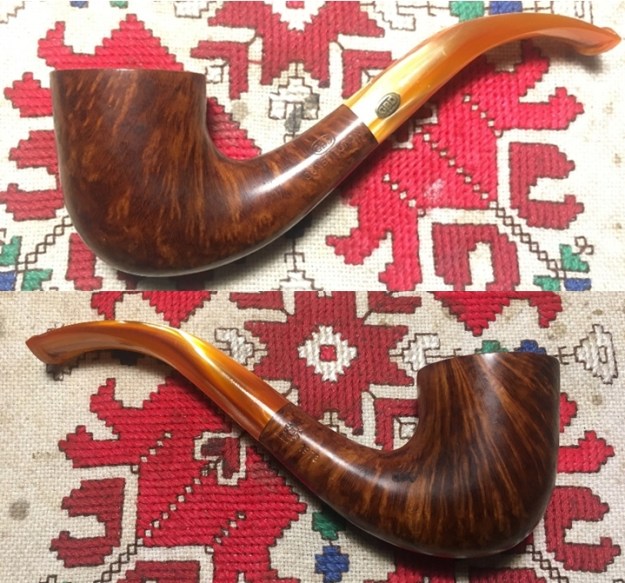
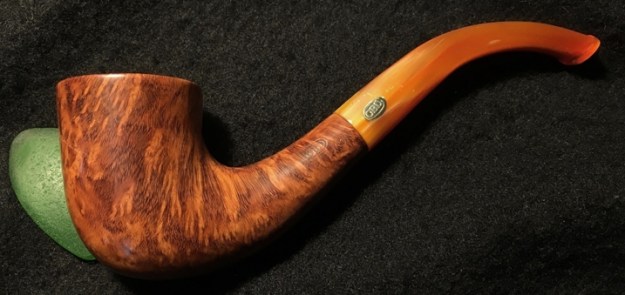
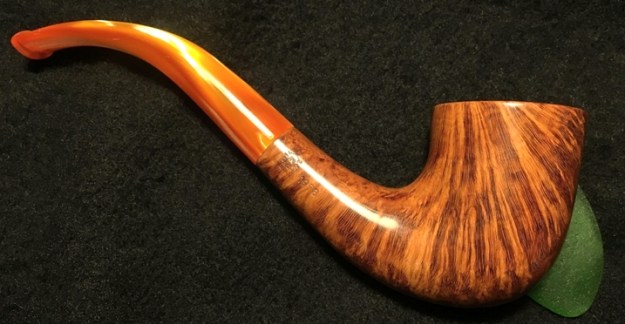
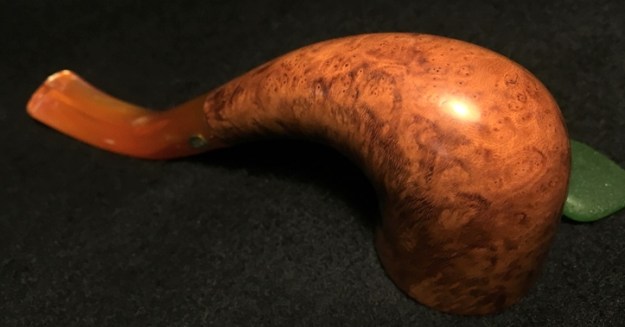
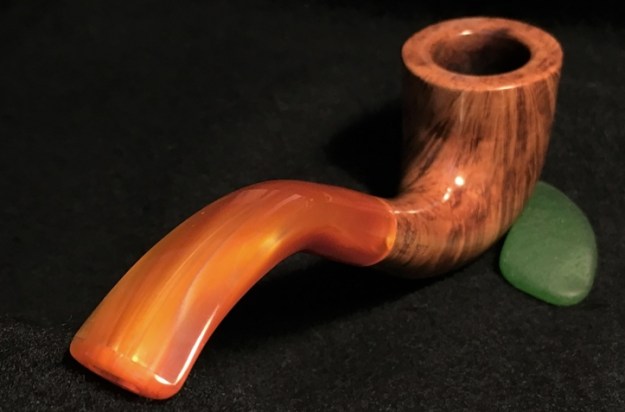
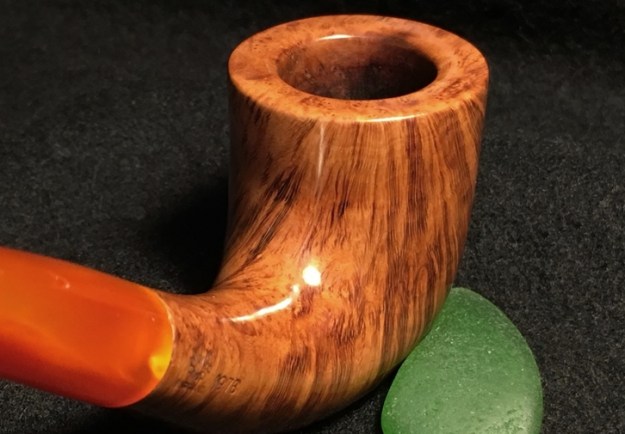
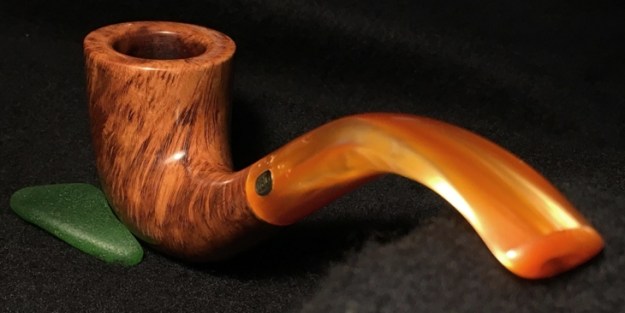
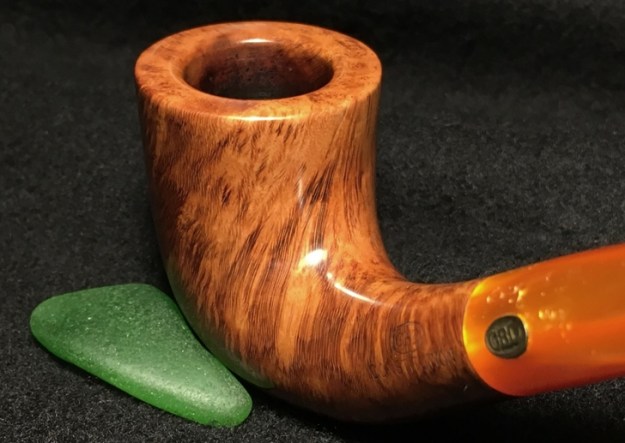
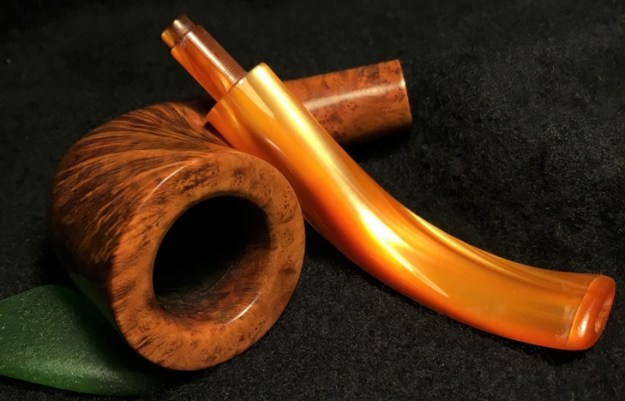
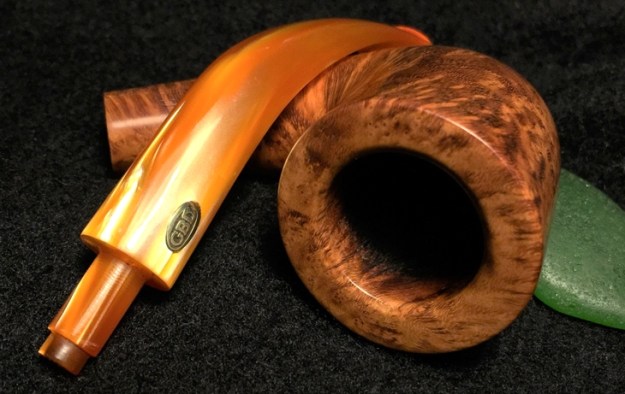
This beautiful GBD came into my collection from the eBay auction block from a seller located in Cocoa, Florida, USA.  When I saw it, I decided I wanted it, thinking I would add it to my own personal collection, but in the end I added it to the ‘For “Pipe Dreamers” Only!’ collection where Lowell saw it.  Lowell became the very happy steward of a striking Poker, what I called, Refreshing a ‘Faux’ Mastro de Paja Poker in the write-up.  It was not actually a Mastro de Paja, but the Poker was absolutely striking and Lowell has expressed his appreciation for this addition to his collection on several occasions.I’ve communicated with Lowell now and again on various FaceBook pipe man groups and when he messaged me about the GBD Constitution, it didn’t surprise me that it got his attention!  He commissioned it and I’m thankful for his patience as the GBD worked its way up the queue and now is on my worktable, and it benefits the Daughters of Bulgaria – our work here in Bulgaria helping women and girls who have been trafficked and sexually exploited.  Here are pictures of the GBD Constitution now on my worktable which I would call a briar Calabash shape. A very short history of GBD by Jerry Hannah is in a PDF file that Rebornpipes contributor, Al Jones, shared with me.  The PDF is entitled ‘GBD Pipe Shape & Model Listings’.

The company was founded in Paris France in the 19th century by Ganeval, Boundier and Donninger who were no longer associated with the company by the turn of the century. By the time they left the GBD name was well established and thus retained. In 1903 an additional factory was built in England and ran by Oppenheimer. The Paris factory moved to Saint-Claude in 1952. Since 1981 the majority of GBD pipes come from the English factory. At about that same time GBD merged with Comoys, since then all production for both GBD and Comoy comes from a single factory.

Based upon information I’ve gleaned from communications with Al, this GBD is like others that I’ve restored that straddle the transition when the Cadogan takeover happened.  From a previous communication I had with Al discussing the GBD Americana I previously restored (See LINK), he wrote:

Typically, the stamping used on pre-Cadogan pipes is the straight line COM, “London, England” stamp (see attached) combine with the brass rondell stem logo. Cadogan era pipes (made after 1981) have the round “Made in London” (with England under) COM, as shown on your pipe.  But, they typically have stamped stem logos. I see these pipes occasionally, and my assumption is they were made after the merger, until the brass rondell inventory was exhausted.  One common denominator on these pipes is a single letter.  I have no idea as to what it may mean, but M is frequently used.

These pipes also had many more finish names, like your Americana, that were not scene before. Comoy’s started doing the same thing, adding lines and letters just after the merger. I’ll look forward to seeing the restored pipe, it looks like a good candidate.

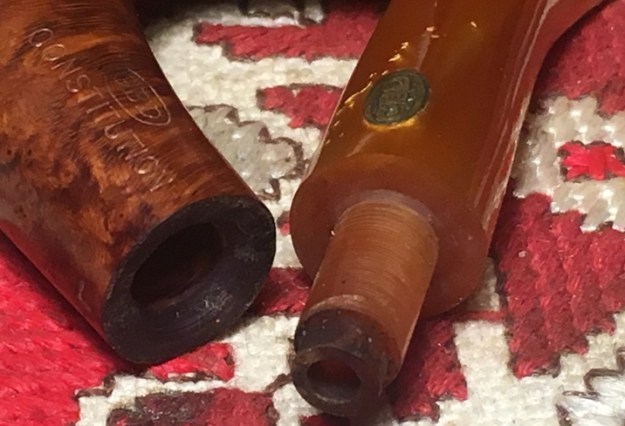
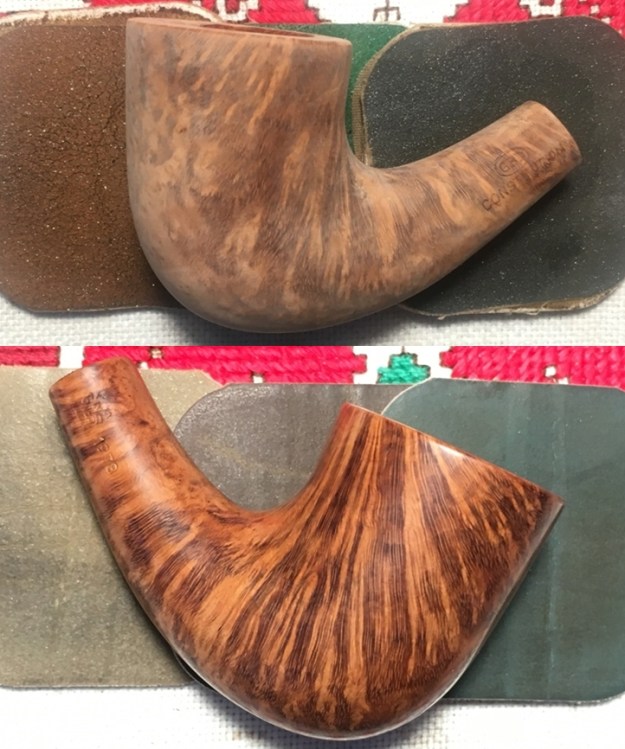
The GBD Constitution falls into the early 80s most likely since it still carries the brass rondel on the stem, which was used pre-Cadogan, but shows the post-Cadogan rounded MADE IN LONDON over ENGLAND.  Al’s guess is that they used the brass rondels until the inventory was eventually exhausted after 1981.  As Al said, GBD had many line names after 1981 and ‘Constitution’ is one of them.  The one on my worktable doesn’t have the rogue ‘M’ but a rogue ‘L’ – I’m not sure what it signifies either.  I’m open to input on this!  I could not find the shape number 1978 in any of the random lists of GBD shape charts that I have.  Even so, I’m calling this GBD a briar Calabash.

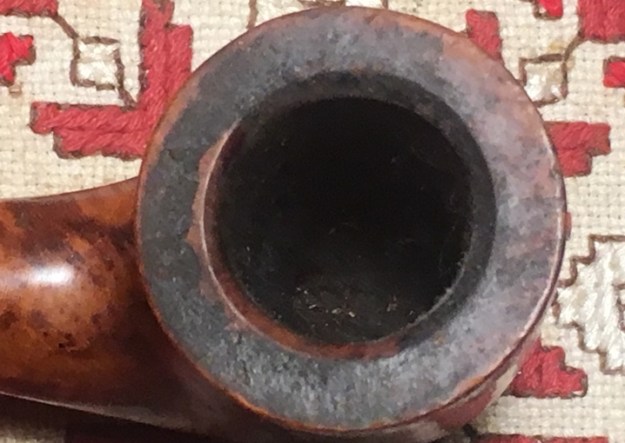
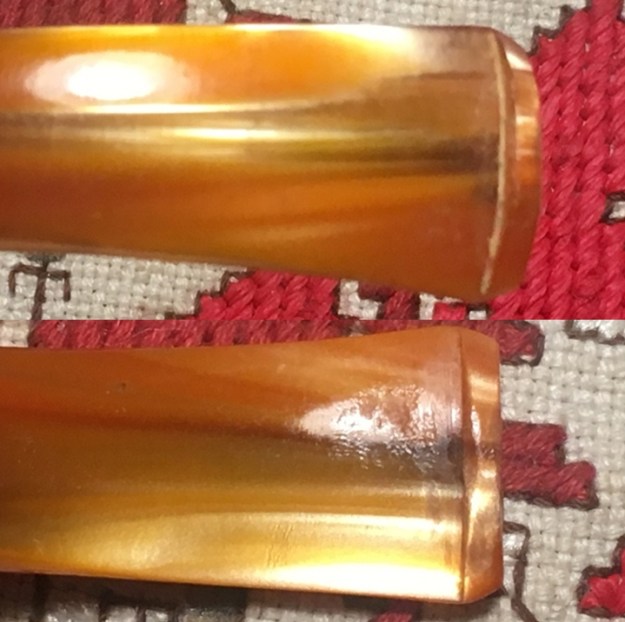
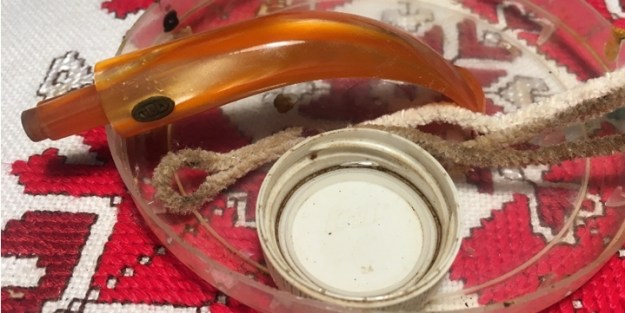
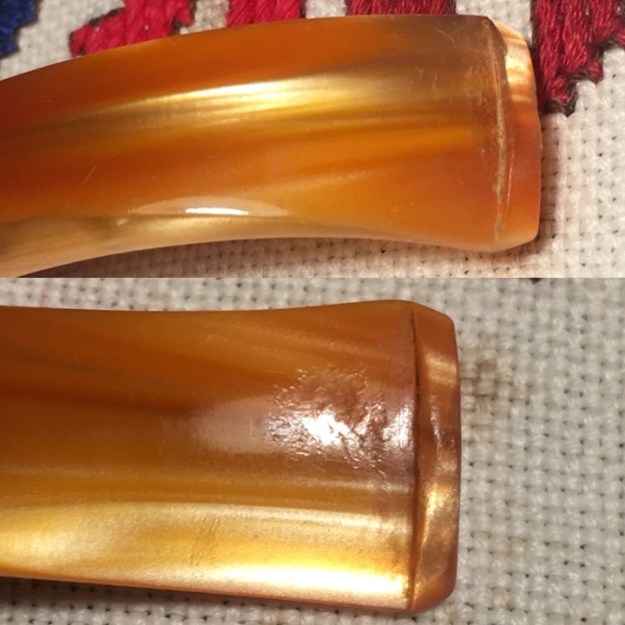
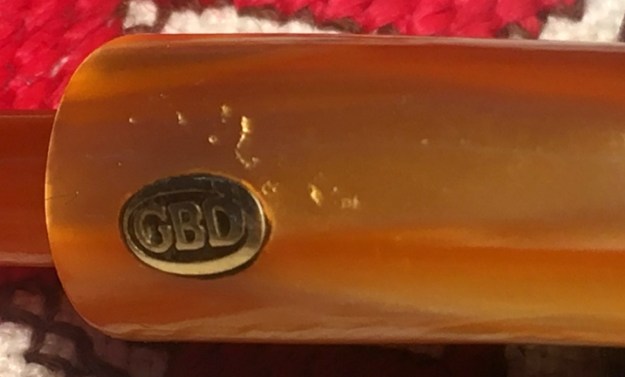
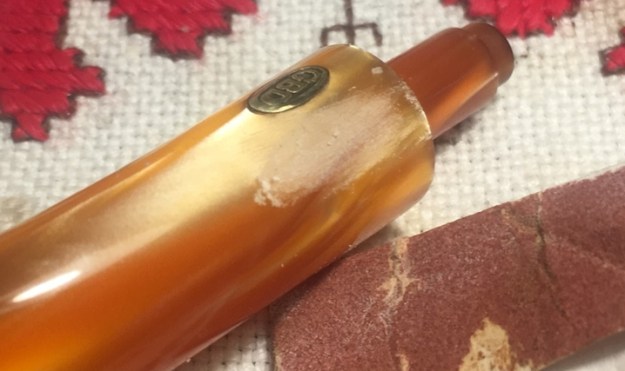
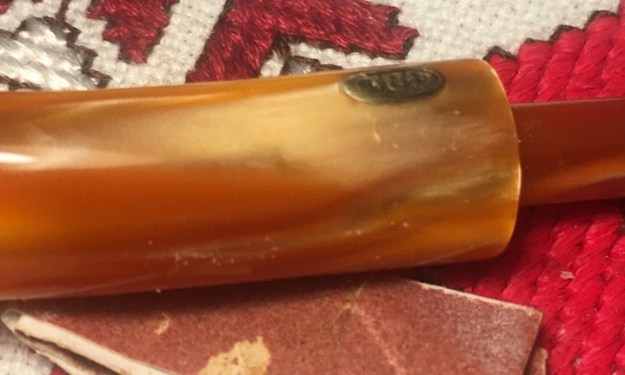
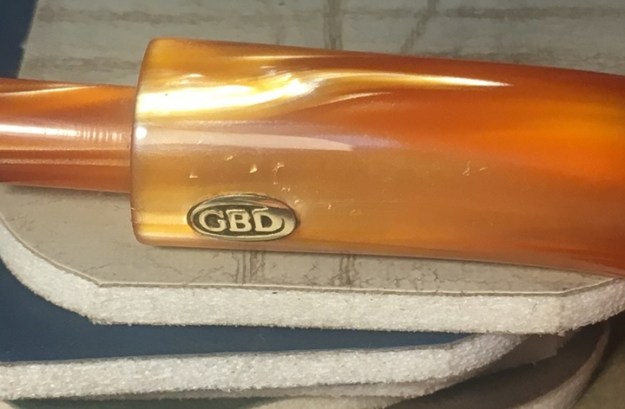
Looking at the pipe itself, the chamber has a light cake build-up with lava covering the rim.  The briar on this stummel is beautiful and needs cleaning from usual wear.  The acrylic stem is beautiful but has been scuffed up with some with minor tooth chatter.  It also shows interesting looking sub-surface imperfections just above the GBD brass rondell.  I call them imperfections – they look like cracks or bubbles.  Perhaps sanding will address these….

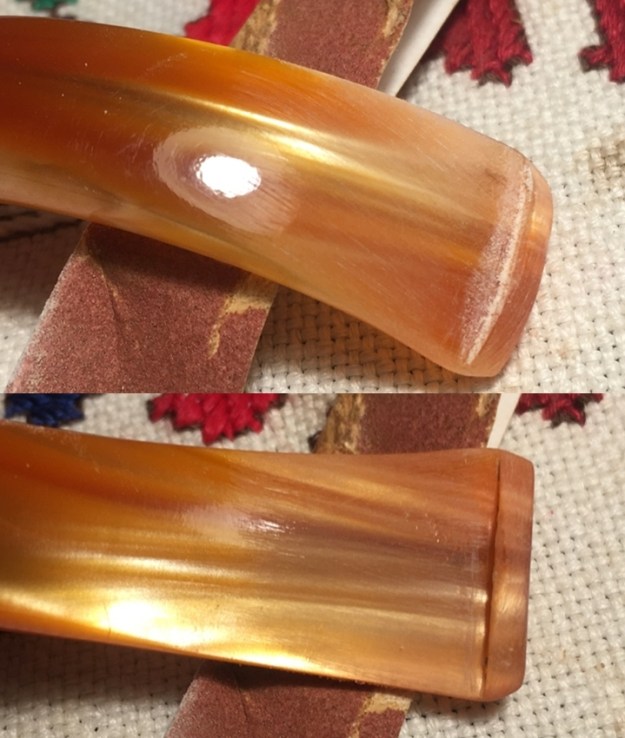
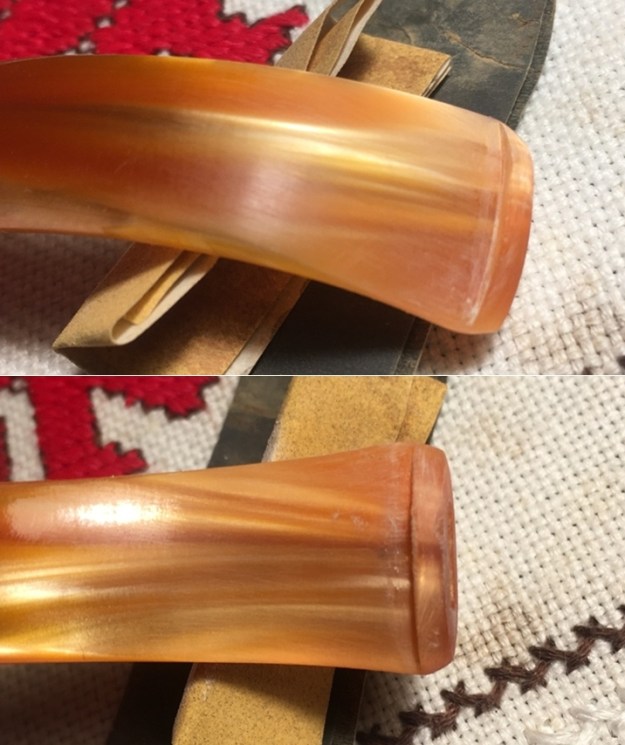
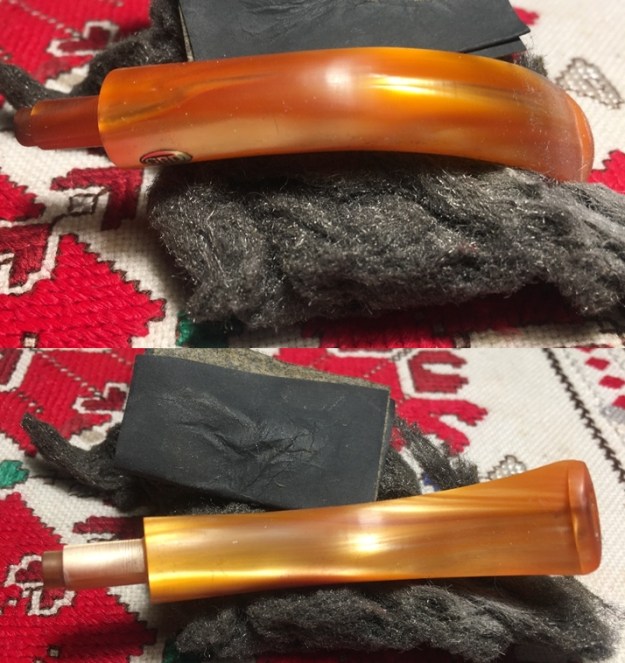
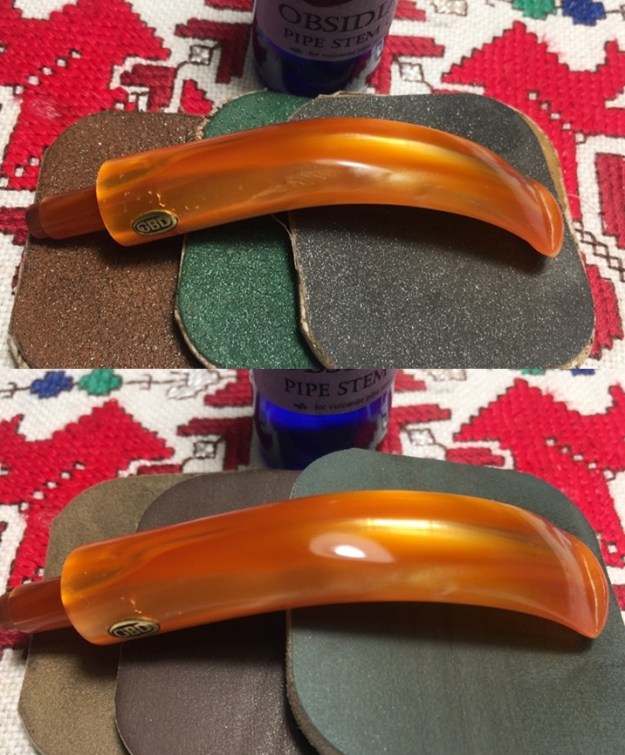
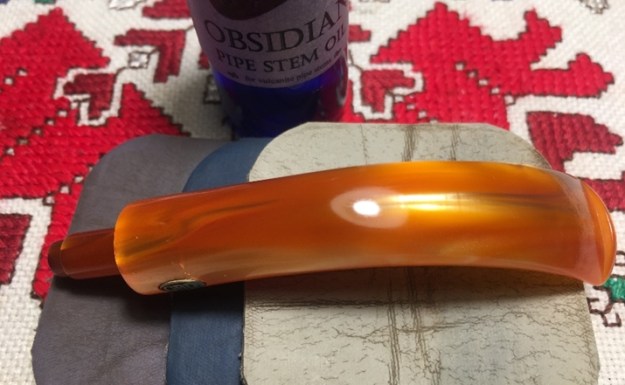
I begin the cleanup of the GBD by reaming the chamber using the Pipnet Reaming Kit.  I use 3 of the 4 blade heads available and then switch to using the Savinelli Fitsall Tool.  I scrape the chamber walls further and then finish the chamber cake removal by sanding using 240 grade paper wrapped around a Sharpie Pen.  Finally, I wipe the chamber with a cotton pad wetted with isopropyl 95% to remove the remaining carbon dust.  After inspection of the chamber, I see no heating problems.  I move on. Moving directly to cleaning the external surface, using undiluted Murphy’s Oil Soap with a cotton pad, I begin work on the stummel surface as well as the thick lava on the rim.  I also use a bristled toothbrush and a brass bristled brush on the rim.  I then take the stummel to the sink and continue to clean using anti-oil dish liquid soap with the bristled toothbrush to scrub the rim and shank brushes through the mortise and airway.  After rinsing I go back to the table and take some pictures.  The rim cleaned up beautifully. Next, to further clean the mortise, I use isopropyl 95% with cotton buds and pipe cleaners.  It doesn’t take much and the buds and pipe cleaners are coming out clean.Looking now at the rim, it has a tight, classy internal bevel that looks good.  I use both 470 and 600 grade papers to freshen it with crisper lines.  I also lightly sand the rim with both grades of paper to freshen it.  It’s in good shape and the grain will be looking good over the rim. The stummel is generally in good shape, but inspecting it closely, as expected with normal wear, there are fine scratches scattered over the surface.  I take a picture of one such scratch below to understand what I see.To address these light scratches and to clean up the surface, I like using sanding sponges which are great for cleaning the surface but not very invasive.  I use 3 sponges, from a coarser and medium grade to a light grade to sponge sand the surface.  The results are good.Working now on the acrylic stem, I had a question about the kind of acrylic this GBD stem was.  Being in the early 80s I didn’t think it was Perspex, the earlier clear acrylic that GBD utilized.  If this is the earlier Perspex, then I would not use alcohol or isopropyl 95% to clean the airway which can craze or shatter the acrylic.  After shooting a quick question to Steve, I was confirmed by him in my use of isopropyl 95% to work on this 80s vintage acrylic stem.  It didn’t take a lot of work and pipe cleaners emerged clean.The bit has very mild tooth chatter, mainly on the lower side.I use 240 grade sanding paper first to sand out the tooth chatter on the upper and lower bit.I then use 470 and 600 grade papers to smooth the acrylic bit further.  I expand the sanding by wet sanding the entire stem with 600 grade paper followed by applying 000 grade steel wool.I press forward using the full regimen of 9 micromesh pads on the acrylic stem.  First, I wet sand using pads 1500 to 2400 then follow by dry sanding with pads 3200 to 4000 and then with pads 6000 to 12000.  After each set of 3, as with vulcanite stems, I apply a coat of Obsidian Oil.  The rich, swirling honey colored acrylic looks great, but something is bothering me. I saw this acrylic imperfection around the brass rondel previously but decided to let it go because I thought the sanding I applied would work it out.  True, the coarser 240 grade sanding paper was only applied to the bit, not to this area.  The problem with these imperfections is that it’s not clear that they are on the surface of the acrylic.  I look at the area with a magnifying glass and probe lightly with a sharp dental probe to see if I can feel a surface disturbance and I don’t.  The reality is that I could detour here and sand and be left with the same problems because they are deeper in the acrylic.  How much sanding would it take and what is sacrificed in the rounding of the stem around the GBD roundel?  Sometimes being somewhat of a perfectionist is a problem – not being able to let go of an imperfection!  The following pictures shows the source of my consternation.I decide to do a compromise detour.  I suspect that the bubbling or cracking in the acrylic is deeper than sanding can address, but I will test the impact of sanding with a light strategic sanding of this area above the rondell using 240 grade paper.  I want to see if it makes a difference.  If not, I will move on.  The first picture shows some strategic sanding with 240 grade paper.Using the spittle approach to clean the area, I can see residual imperfections.  After sanding a little more, I come to the quick decision that sanding will not fully address these imperfections.  To remove them would require more sanding than this stem can muster.I’ll spare you the pictures,  that resulted in the final picture below after again applying 600 grade paper, 000 steel wool and 9 micromesh pads 1500 to 12000 and Obsidian Oil.  The result is that the detoured sanding may have reduced the presentation of the imperfections in the acrylic, but they are not fully removed.  As with life and our imperfections, they go with us!  I move on.The GBD Constitution stummel is waiting for attention.  To further clean the briar surface and coax out the beautiful vertical flame grain, I take the stummel through the full regimen of micromesh pads.  Sanding with pads 1500 to 2400 the process begins with wet sanding.  This is followed by dry sanding with pads 3200 to 4000 and then with pads 6000 to 12000.  The pictures show the progression – I like what I see!  There is no doubt in my mind that this GBD Constitution Calabash comes off an upper shelf.  The grain emerges through the micromesh process with no shyness! Next, to bring out the subtle natural briar hues in this already striking grain, I apply Before & After Restoration Balm to the stummel.  I apply it on my fingers and work the Balm into the briar grain.  It starts off having a thinner viscosity, like cream then gradually thickens into a waxier texture as it’s worked in.  After applying it thoroughly, I set it aside to allow the Balm to absorb and do its thing – the picture below captures this. I let it set for 20 minutes or so and then wipe the excess Balm off with a cloth and then buff up the stummel with a micromesh cloth.After reuniting the stem and stummel, I apply Blue Diamond to the pipe.  I mount a cotton cloth buffing wheel to the Dremel, set the speed to 40% full power and apply the compound.After finishing with the compound, I wipe the pipe with a felt cloth to remove the compound dust in preparation for applying the wax.  I change to another cotton cloth buffing wheel and keeping the speed the same, I apply Carnauba wax to the GBD Constitution Calabash.  After applying the wax, I hand buff the pipe with a microfiber cloth to raise the shine.My, oh my!  This GBD Constitution Made in London England was eye catching before I began the restoration, now its simply amazing.  I can’t get over the grain on this stummel.  The flame of the grain is beautiful as it rises vertically toward the rim.  The gentle sweep of the Calabash as it transitions from bowl, to shank, to stem, and to button, is very nice and cradles well in the hand.  The only imperfection in this pipe are the small specks in the acrylic stem next to the rondell.  Notwithstanding, a very nice pipe to add to the collection!  Lowell commissioned the GBD Constitution Calabash benefiting the Daughters of Bulgaria – women and girls who have been trafficked and sexually exploited.  As the ‘commissioner’, Lowell will have the first opportunity to acquire the pipe from ThePipeSteward Store.  Thanks for joining me!

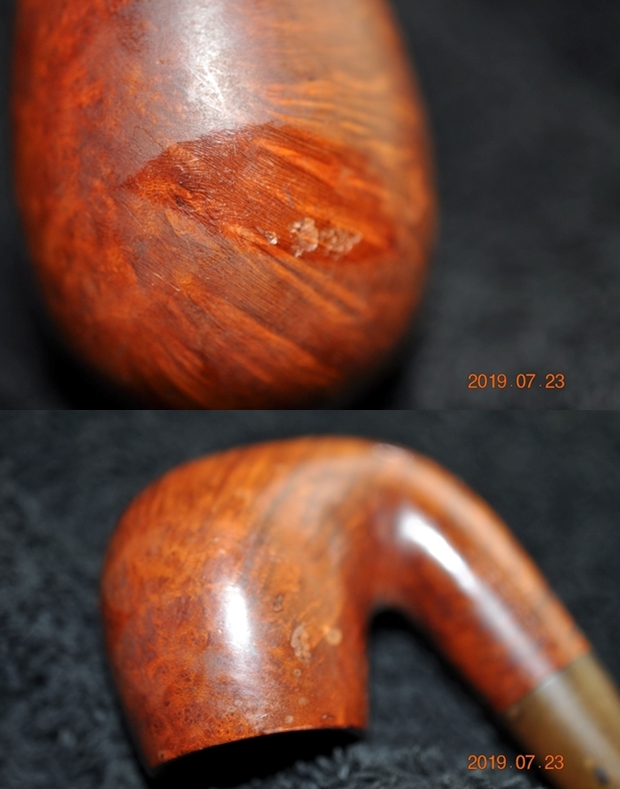
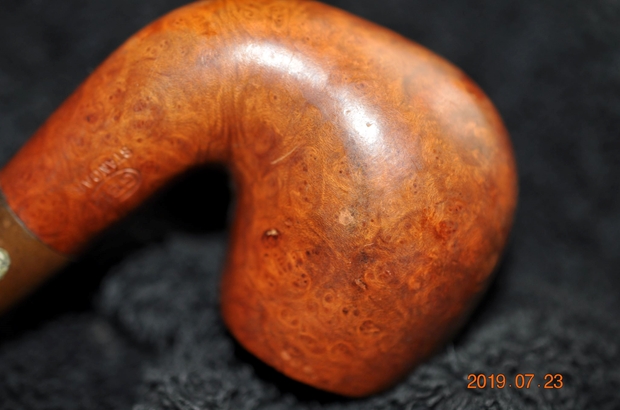
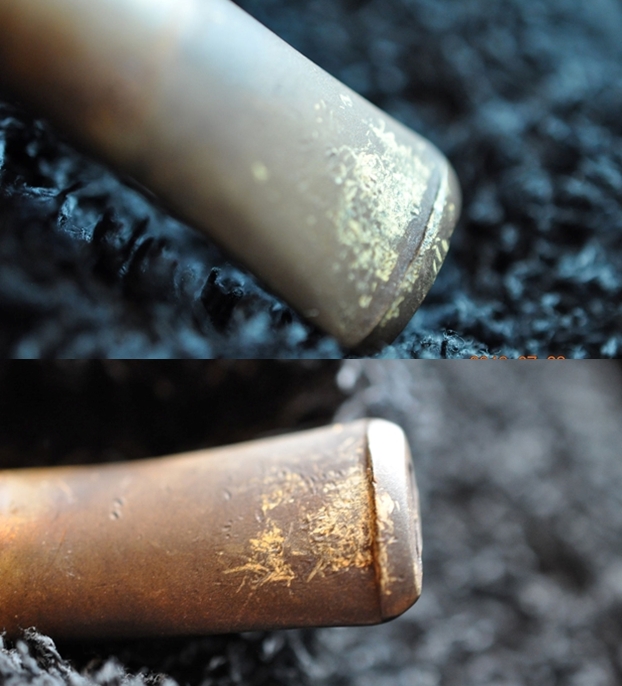
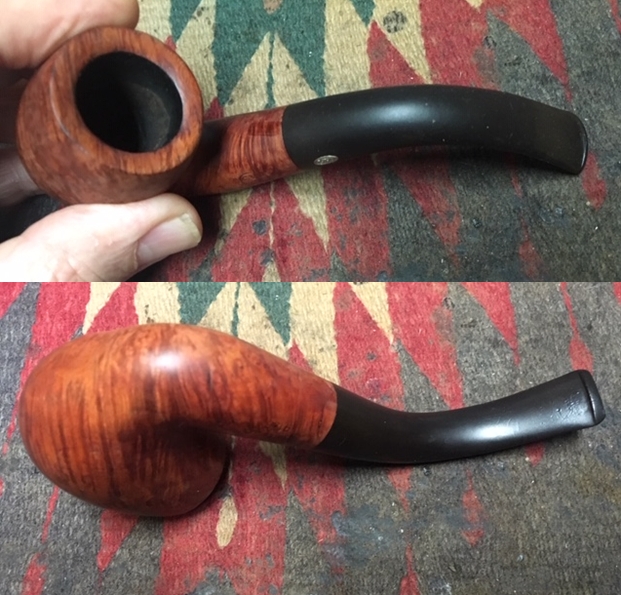
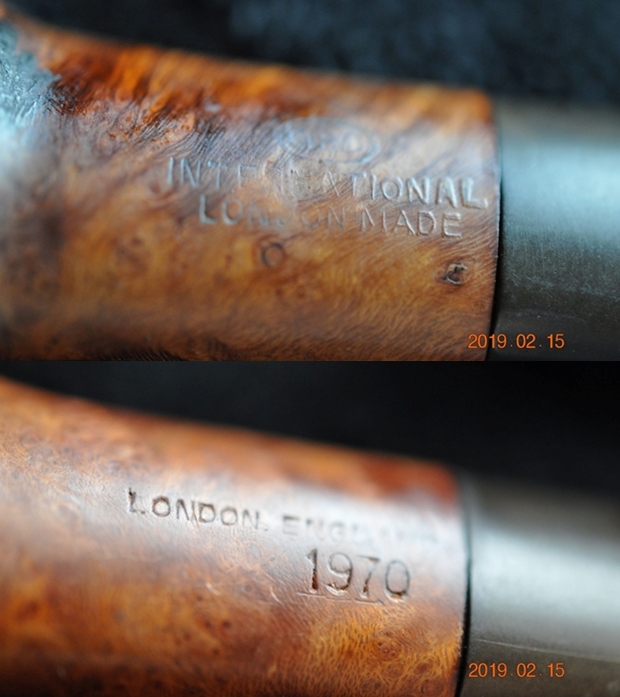
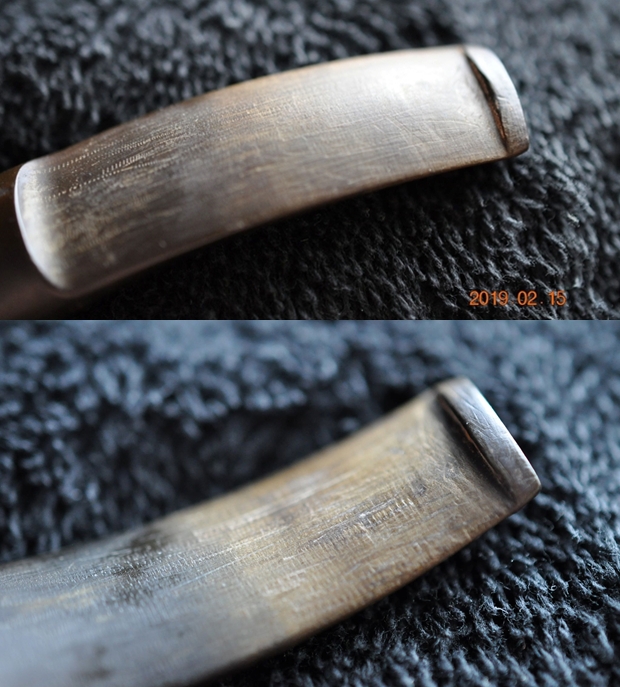
Restoring #4 of Jennifer’s Dad’s Pipes – A GBD International Brandy


Blog by Steve Laug

Once again time to get back to Jennifer’s Dad’s pipes. The next pipe on the worktable is from the estate of George Rex Leghorn. You may not have read this so I will retell the story. I received an email from Jennifer who is a little older than my 64+ years about whether I would be interested in her Dad’s pipes. My brother Jeff and I have been picking up a few estates here and there, so I was interested. Here is the catch – she did not want to sell them to me but to give them to me to clean up, restore and resell. The only requirement she had was that we give a portion of the sales of the pipes to a charity serving women and children. We talked about the organization I work for that deals with trafficking and sexual exploitation of women and their children and she decided that would be a great way to carry on the charitable aspect of her Dad’s character. With some great conversation back and forth she sent the pipes to Jeff and he started the cleanup process on them. Once he had finished cleaning them all he sent them to me to do my work on them.

The fourth pipe I chose to work on from the lot was an interesting Brandy shaped GBD International with a carved and black stained rim top. It had some beautiful mixed grain on the bowl sides and shank. It had a rich reddish brown stain but it was dirty and hard to see the colour well. The stem was badly oxidized with tooth marks and chatter on the top and underside near the button. The button was in excellent condition. There was a thick cake in the bowl and it had overflowed with lava was dirty and tired looking. It had been sitting in boxes for a lot of years and it was time to move ahead with the restoration. Jennifer took photos of the pipes she was sending. I have included two she included from this pipe.When the box arrived from Jennifer, Jeff opened it and took photos of each pipe before he started his cleanup work on them. This petite looking GBD International with a Plateau rim top appeared to be in good condition underneath the grime and oxidation on the bowl and stem. The finish looked intact under the grime. The bowl had a thick cake that had hardened with time. The lava overflow on the rim filled in the carving that was a hallmark of the International line but it could very well have protected the rim from damage. We won’t know what is under it until Jeff had cleaned it off. The stem was worn looking with a lot of deep oxidation and scratches in the vulcanite on both surfaces. There was some tooth chatter and bite marks on both sides at the button. The stem did not have the GBD brass medallion on the top of the saddle nor did have the later stamped and painted logo. Jeff took photos of the bowl and rim top to show the cake in the bowl and the lava build up on the edges of the bowl. It was thick and hard but hopefully it had protected the rim and edges from damage. The third photo shows the lava flowing down the outside of the bowl leaving a thick dark ring around the outside of the bowl. Jeff took photos of the stamping on the underside of the shank. The stamping was still readable even though it was faint. On the topside of the shank it read GBD in an oval (GBD Logo) over International over London Made. On the underside London, England over the shape number 1970. The shank was very dirty as you can see in the photos. The GBD International Line came out in the 1970’s (not to be confused with the shape number stamped on the underside of the shank. I looked up the line on Pipedia to get a good description (https://pipedia.org/wiki/GBD_Model_Information). I quote from there:

International — France, unknown if also made in England: medium brown smooth, carved top rim, rim stained black. -TH: Matt take off finish “with just a hint of surface waxing” -catalog (1976).

Jeff took photos of the top and underside of the stem showing the scratching, oxidation and light tooth damage to the stem surface and slight wear to the edge and top of the button.I am once again including the tribute that Jennifer consented to her Dad for the blog. She also sent some photos and an article that her Dad wrote for Jeff and me to be able to get a feel for him. I have included those below. Note in each of them that he is holding a pipe in his left hand. I asked her to also send me an email with a brief tribute to her Dad. Here is her tribute from an email to me.

Steve, I want to thank you again for accepting my dad’s pipes.  They were so much a part of my dad’s life that I could not simply discard them. But as his daughter, I was not about to take up smoking them either. *laughing* I think my dad would like knowing that they will bring pleasure to others.  I know that I do.

I’m not sure what to say about his pipes. I always remember Daddy smoking pipes and cigars.

First a bit about my dad. Though my father, George Rex Leghorn, was American (growing up in Alaska), he managed to join the Canadian Army at the beginning of WWII, but in doing so lost his American citizenship.  He was fortunate to meet a Canadian recruiting officer who told him the alphabet began with “A” and ended with “Zed” not “Zee”, and also told him to say that he was born in a specific town that had all its records destroyed in a fire.  When the US joined the war my dad, and thousands of other Americans who had made the same choice*(see the link below for the article), were given the opportunity to transfer to the US military, and regain their citizenship.

After WWII, my dad, earned his degree at the University of California Berkeley and became a metallurgist. There is even a bit about him on the internet.

He loved taking the family out for a drive, and he smoked his cigars on those trips. (As a child, those were troubling times for my stomach.)

I most remember my father relaxing in his favorite chair with a science fiction book in one hand and a pipe in the other… Sir Walter Raleigh being his favorite tobacco… and the pipes themselves remind me of him in that contented way.  If I interrupted his repose, he’d look up, with a smile on his face, to answer me.

It seemed he smoked his Briarwood pipes the most, though he had others.  At the time, it was only the Briarwood I knew by name because of its distinctive rough shaped bowl.  And it was the Anderson Free Hand Burl Briar, made in Israel, which I chose for his birthday one year, because I thought he might like that particular texture in his hand.

At least two of his pipes, he inherited from his son-in-law, Joe Marino, a retired medical laboratory researcher (my sister Lesley’s late husband)… the long stemmed Jarl (made in Denmark), and the large, white-bowled, Sherlock Holmes style pipe.  I believe Joe had others that went to my dad, but Lesley was only sure about those two.

The Buescher, corncob pipe my older sister Lesley bought for Daddy while on one of her travels around the States.

A note on the spelling of my sister’s name…

My dad met my mother, Regina, during WWII and they married in Omagh, Ireland.  My mother was English and in the military herself.  The English spelling of Lesley is feminine, and Leslie masculine, in the UK… just the opposite of here in the United States.  I guess my mom won out when it came to the spelling of the name.

I’ll send you photos of my dad soon, along with his WWII experience story.

Jennifer

*https://www.thestar.com/news/world/2013/10/22/the_americans_who_died_for_canada_in_wwii.html

Once again Jeff cleaned the pipe with his usual penchant for thoroughness that I really appreciate. This one was a real mess and I did not know what to expect when I unwrapped it from his box. He reamed it with a PipNet pipe reamer and cleaned up the reaming with a Savinelli Fitsall Pipe Knife. He scrubbed out the internals with alcohol, pipe cleaners and cotton swabs until the pipe was clean. He scrubbed the exterior of the bowl with Murphy’s Oil Soap and a tooth brush to remove the grime and grit on the briar and the lava on the rim top. The finish looks very good with mixed grain around the bowl and shank. There was still some darkening on the right side of the outer edge of the rim toward the back of the bowl (I have circled the spot in red in the second photo below). He soaked the stem in Before & After Deoxidizer to remove the oxidation on the rubber. When the pipe arrived here in Vancouver for the second stop of its restoration tour it looked very good. I took photos before I started my part of the work. I took some close up photos of the carved blackened rim top and stem surface. I wanted to show what an amazing job Jeff did in the cleanup of the rim top. It looked almost flawless. I also took close up photos of the stem to show the light tooth marks and chatter in front of the button on both sides.I also took photos of the stamping on the pipe on both the top and underside of the shank. It read as noted above.I polished the outside of the bowl with micromesh sanding pads – wet sanding with 1500-2400 grit pads and dry sanding with 3200-12000 grit pads. I wiped the bowl down after each pad to remove the sanding debris. I worked on the darkened area on the rear right side of the outer edge of the rim. I was able to remove much of the damage with the sanding. The photos tell the story. I worked some Before & After Restoration Balm into the briar of the bowl and the carved rim top with my fingertips to clean, enliven and protect it. I worked it deep into the carved finish with a horsehair shoe brush. I find that the balm really makes the briar come alive again. The contrasts in the layers of stain really made the grain stand out. I let the balm sit for a little while and then buffed with a cotton cloth to raise the shine. The pipe really looks good at this point. I am very happy with the results. I sanded the stem with 220 grit sandpaper to blend the tooth marks and chatter in and to remove some of the oxidation. I followed that by sanding with 400 grit sandpaper to start the polishing process.I shaped the button and polished the stem with micromesh sanding pads – wet sanding it with 1500-2400 grit pads and dry sanding it with 3200-12000 grit pads. I wiped the stem down with Obsidian Oil after each pad and set it aside to dry. I put the stem back on the bowl and polished the bowl and stem with Blue Diamond polish on the buffing wheel. I gave the bowl and the stem multiple coats of carnauba wax. I buffed the pipe with a clean buffing pad to raise the shine. I hand buffed it with a microfiber cloth to deepen the shine. The multi coloured stained finish on this briar is quite beautiful and the shine on it makes the variations of colour really pop. The pipe polished up really well. The wax and the contrasting stain on the bowl made the grain just pop on the briar. The polished black vulcanite seemed to truly come alive with the buffing. The petite pipe feels great in my hand and when it warms with smoking I think it will be about perfect. It must have been a fine smoking pipe judging from the condition it was when we received it from Jennifer. There should be a lot of life left in this old timer. Have a look at it with the photos below. The dimensions are Length: 5 inches, Height: 1 1/2 inches, Outside diameter of the bowl: 1 1/4 inches, Chamber diameter: ¾ of an inch. This is one that will go on the rebornpipes online store shortly. If you want to carry on the pipe trust of George Leghorn let me know. Thank you Jennifer for trusting us with his pipes. Thanks to each of you who are reading this blog. Remember we are not pipe owners, we are pipemen and women who hold our pipes in trust until they pass on into the trust of the next pipeman or woman.
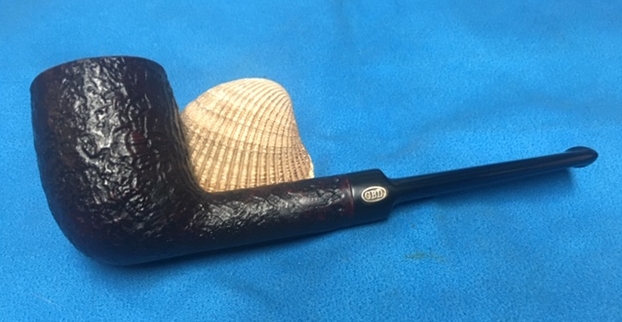


The Challenge Continues… Restoring a Vintage Era GBD


Blog by Paresh Deshpande

As I had remarked earlier in my write up on the late 1850s era FIRST CHOQUIN, A METZ (https://rebornpipes.com/2018/11/17/a-challenging-restoration-of-vintage-era-first-choquin-a-metz/),I could not contain my curiosity to open the third, and the last, box of my inherited pipes. In addition to the regular collection of Barlings, Charatans,Comoys and other assorted collection, I came across two pipes which caught my fancy!!!!!

The pipe on the left bears a football stamp that reads “CHOQUIN” over “A METZ” and the one on the right side simply reads “GBD”  (there are other stampings on the silver ferrule, details of which will be highlighted when it comes up for restoration). Both of these pipes looked vintage and unique enough that I immediately Facetimed with Mr. Steve of rebornpipes. His admission that he is willing for a trade off with me for these two pipes was an indication enough for me to know and understand their uniqueness!!! Thus these two pipes moved to the top of my unorganized and chaotic list of restoration. 

Having now restored the CHOQUIN and experienced the challenges that these vintage pipes pose, I was faced with a dilemma of whether I should consider restoring the GBD or take a break and restore another unique and interesting pipe. Mr. Steve suggested the latter and hence I decided to undertake the restoration of the GBD amidst my hectic schedule.  

This GBD is a long and large pipe with a fairly large and deep smooth briar bowl and a steeply raking shank, the end of which is adorned by a sterling silver ferrule.The horn stem is connected with the shank by a long and hollow Albatross wing bone extension having sterling silver end caps at either end, most probably to strengthen it. The stem attaches itself to the wing bone extension by screw-in type tenon which is attached to this extension. The bowl is stamped on the left side of the shank as “GBD” in an oval encirclement and is the only stamping seen on the stummel. The Sterling silver ferrule at the shank end bears the oval stamp of “GBD” over “M R C LTD”,all in separate squares, over a rhombus which in all likelihood, enclosed the faded number “925” for Sterling silver. For its age, the stamping is crisp and clear.

The large bowl shows beautiful, densely packed birdseye grain on the right side and extending to the front of the bowl,while a combination of tightly packed straight and cross grain adorns the left side and back of the bowl. The shank on the bottom surface appears to be divided into two exact halves, the right side with closely packed birdseye while the left side has tight straight grains. These grains on either side of the shank extend neatly in a straight line to the front of the bowl dividing the grains in symmetrical equal halves.

I searched Pipedia for information on this brand and this model in particular. Even though I could neither find any pictures or mention of this particular pipe that I was working on, I did find some important snippets of information which helped me making an intelligent guess as to the vintage of the pipe. I have reproduced the information that I had gleaned from Pipedia:

A HISTORY OF GBD

In 1850 three gentlemen got together in Paristo establish a firm dedicated to the fabrication of Meerschaum pipes – a courageous step in politically restless times. Ganneval probably came from the area of Saint-Claude where he had learned making wooden pipes. Bondier’s family obviously came from Paris and had immigrated in 1789 to Geneva. He himself had worked as a wood turner in the clay and china pipe industry in and around Saint-Claude making stem extensions etc. Donninger was an Austrian or Swiss and had worked in Vienna, the world’s center of the Meerschaum pipe. They agreed on the acronym GBD selecting the initials of their surnames.

There is a very simple explanation for GBD’s program to turn more”British”: GBD became a British company soon after the turn of the century! In 1902 Marechal and Ruchon sold GBD to A. Oppenheimer & Co.in London.

The business relation to GBD in Paris began as early as 1870. Being the most important customer in the English speaking world, Oppenheimer & Co. were designated as sole distributor for Great Britain, the USA and Canada in 1897.Especially Adolphe Oppenheimer had a burning interest in the pipe business, and Louis’ son James Adler shared that. He should play the most important role in the amicable merger of GBD. A. Marechal, Ruchon and Cie. in Paris was now Marechal, Ruchon & Co. Ltd. (see Marechal Ruchon & Cie. page) – a British firm with four directors: Adolphe Oppenheimer and James Adler had their seat in the head office in London while Auguste Marechal and Ferdinand Ruchon went on leading the GBD factory in the Rue des Balkan in Paris, which was considerably extended and modernised. Ruchon acted as CEO.

Marechal Ruchon & Cie. was a company owned by Auguste Marechal and Ferdinand Ruchon (“& Cie” is the french equivalent of “& Co”) which owned the GBD brand from the end of the 19th century until 1902 when they sold Marechal, Ruchon & Cie. to Oppenheimer Pipe,which in turn changed the name of the company to Marechal, Ruchon & Co., Ltd. Upon the creation of Cadogan, however, the brand was no more, remembered only in the name of the GBD Marcee pipes made until just after the Second World War.

Cadogan Investments Limited is a subsidiary of A. Oppenheimer& Co. Limited. It was formed by Oppenheimer Pipe in 1920 as a holding company for its many recent acquisitions, including BBB,Loewe & Co.,two pipe factories in St. Claude and others. It continued to acquire pipe brands and makers for decades, adding GBD and others to their marquee.

It is from the last two paragraphs above, that I can judge that this pipe was made somewhere between 1902 and 1920!!!!!!

INITIAL VISUAL INSPECTION

The large, deep chamber shows a decent amount of cake build up with overflow of tars and tobacco oils on the surface of the rim top. The condition of the inner walls of the chamber will be ascertained once the cake has been reamed back to the bare briar. The inner and outer edges of the rim show a few odd minute dings. Once I have scraped the lava overflow from the rim top, I shall decide on the method to tackle them and may even decide to let them be. I do not envisage any major surprises inside the chamber as the bowl feels solid to the touch from outside.Air flow is laborious and constricted through the shank and will improve once the internals are cleaned.

The surface of the stummel is covered in oils and tars from the overflowing lava and is sticky to the touch. There are a few dings to the surface of the stummel, more particularly near heel of the bowl and bottom surface of the shank. Should I address them by sanding, I am not sure, as I fear losing the patina during the abrasive process of sanding with sandpaper.

While I was handling the stummel, I realized that the sterling silver ferrule at the shank end had come loose. I removed the ferrule and what was revealed turned my stomach inside out. The glue was hard and dry and the briar had totally dried out and the shank end opening was uneven. I could even make out one small crack running down from the lip of the shank opening. Talk about challenges!!!! This will have to be addressed without fail.

The Albatross wing bone extension is dirty and covered in dirt and grime. There are two superficial cracks on either side near the shank end. I        know these cracks are superficial as the bone surface around it is solid and without any give. These cracks will have to be addressed. The sterling silver end cap towards the tenon end has a flared out rim which is uneven. This causes the bone stem to sit unevenly on the rim. Air flow through the shank extension is clean and full.

The horn stem shows some minor tooth chatter on both the top and underside, but more prominently on the top surface. This should be taken care of by sanding with a 220 or higher grade sand paper. All in all, the stem appears to be pretty solid. The edge of the lip on both upper and lower surface is slightly damaged and will need to be sharpened. Air flow through the stem is open and full.

The sterling silver ferrule and bone shank end caps are deeply oxidized and show the patina normal for its age. Once they are cleaned and shining they will add a class to this pipe.

THE PROCESS

I started the process of restoration by reaming the chamber with size two of the PipNet reamer head and progressing through to size three. I followed up the reaming with scraping the remnants of the cake from the walls of the chamber and the rim top surface with my fabricated knife.Once the cake was reamed back to the bare briar, I used a 150 grit sand paper followed by 220 grit sand paper to remove all the traces of remaining cake and also to smooth the inner walls of the chamber surface. Finally, to remove the carbon dust, I wiped the chamber with a cotton pad wetted with isopropyl 99%. I gently scraped the rim top surface with a sharp knife. Removing all the cake from the chamber and rim top revealed that firstly, the rim was well rounded with no charring and only a minor chip and secondly, as I had anticipated,there was no damage to the inner walls of the chamber.
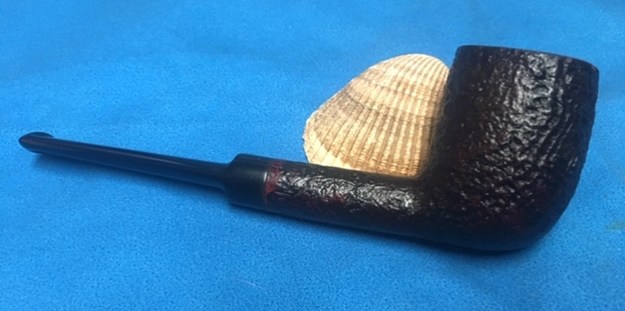
With 220 grit sand paper, I cleaned the internal and the external surfaces of the shank end opening, which until now was covered by the sterling silver ferrule, to remove all the carbon build-up, oils, tars,grime, dried briar wood and the dried glue. This process results in even more dried briar crumbling off, leaving behind a gaping hole. This needed to be restored as the damage is to that portion which supports the Albatross wing bone extension where it sits in to the shank. I conferred with Mr. Steve and it was decided to reconstruct the damaged portion by layering the gap with superglue and briar dust as the glue hardened immediately on coming in contact with the briar dust.
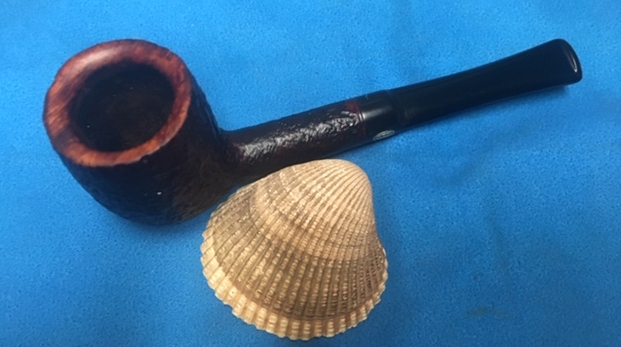
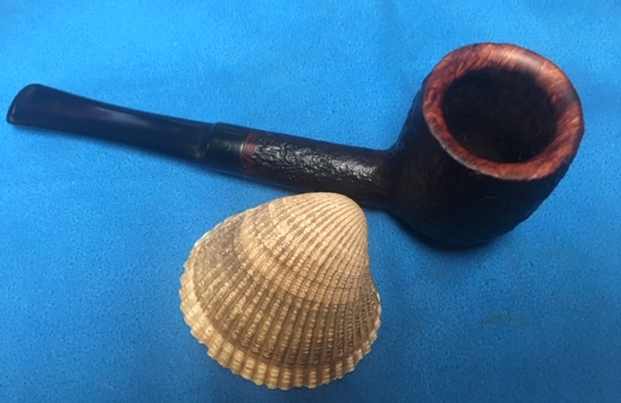
Before beginning the reconstruction of the broken shank end, I cleaned the internals of the shank, using hard bristled and regular pipe cleaners, q-tips, shank brushes, all generously dipped in isopropyl alcohol. The pipe cleaners would not pass through the mortise airway and the draught hole and so had to resort to more invasive methods. I straightened a paper clip and curving it, probed the insides of the mortise and the airway. After some efforts, I was able to dislodge the block. I scraped the inner walls of the mortise with a fabricated dental spatula. I gave a final cleaning with pipe cleaners dipped in isopropyl alcohol till the pipe cleaners came out, well, clean!!!  The heap of pipe cleaners and q-tips that are seen in these pictures are just the proverbial tip of the iceberg. I must have gone through an entire packet of 50 of both types of pipe cleaners, in addition to the q-tips and brush cleaning!!!!!

I, thereafter, began the process of reconstructing the broken portion of the shank end. I folded a pipe cleaner to fit snugly in to the opening of the shank end. Once I was satisfied with the fit, I smeared the pipe cleaner with Vaseline jelly and inserted it in to the opening.I applied first layer of superglue and pressed a little briar dust over it and let it set for a few minutes. This is followed by another layering and continued this process till I was satisfied with the reconstruction. I set the stummel aside overnight for the reconstruction to cure.
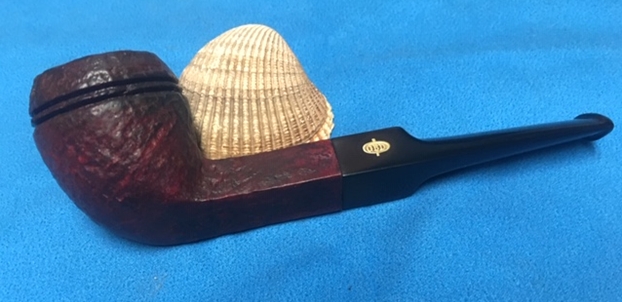
As the shank end reconstruction was curing, I initiated the repair and clean up of the Albatross wing bone extension and the horn bone stem. I cleaned the internals of the wing bone extension and the horn stem with bristled and normal pipe cleaners dipped in isopropyl alcohol.Once the internals were clean, I cleaned the external surface of the extension with cotton swabs dipped in Acetone and finely applied superglue over the superficial crack. This was done primarily to stabilize, strengthen and prevent further spreading of the superficial crack and obviate any chances of air escaping from these cracks in future. I set the wing bone extension to cure overnight along with the shank end repair.

As I had remarked during my initial visual inspection, I felt that the tooth chatter on the lower and upper surface of the horn bone stem should be taken care with sanding it down with a 220 grit sandpaper. How wrong was I! After sanding the upper and lower surfaces of the horn stem, I realized that the tooth chatter was deeper than I had anticipated and would have to be addressed with a fill of clear superglue. And so I filled these tooth chatters with superglue and the stem too joined the ranks of the shank end repair and wing bone extension on the rack for curing overnight.

The next evening, after a hectic and tiring day in office, I decided to work on the shank end reconstruction. I filed the external repaired area with a flat head needle file and carefully matched the profile of the fill with that of the surrounding area so as not to adversely affect the fit of the ferrule at a later stage. I frequently checked the progress by fitting the ferrule over the shank end. I achieved a perfect profile match by sanding the shank end with a used 150 grit sand paper. Once the external profile was matched, I worked on the internal adjustment of the reconstruction to match the seating of the wing bone extension in to the mortise using a round needle file. I frequently checked the seating of the extension in to the mortise and making necessary adjustments by filing till I was able to achieve a perfect fit. To be honest, it was not as easy as it appears while reading it.The amount of time and concentration required cannot be described in words.

Staying on the stummel restoration, I cleaned the external surface of the stummel and the rim top surface with undiluted Murphy’s oil soap and a hard bristled toothbrush and rinsed it under running tap water, taking care that water does not enter the chamber and the mortise. I dried the stummel using paper towels and soft, absorbent cotton cloth and set it aside to dry out naturally. The beautiful grain really stands out at this stage with the symmetrical division of grains on the lower surface of the shank, more distinct and clear. It is easily one of the best grained pipes that I have in my collection. Somehow, I was not satisfied with the way the rim top surface had cleaned up and I again sought the advice of my mentor, Mr. Steve, and received his reply, in his peculiar style, as “I would”, that’s all he had remarked!!!!!!

And so my initial plan for not topping the rim top was shelved and I decided to carefully top the rim surface. This would also help to address the one single chip on the rim’s top surface and also to remove traces of lava overflow. I topped the rim surface with 220 grit sand paper.Though it is recommended to have a wooden board with the 220 grit sand paper firmly fixed over it, I just keep the sand paper on a flat table top, holding it firmly with my left hand and rotating the stummel rim top over it with my right hand. I have come to realize that this set up gives me lot more freedom of movement, better control and convenience of storage. The single chip was addressed to a great extent, but was still an eye sore. Using a folded 150 grits and paper pinched between my thumb and forefinger, I created a very light bevel to mask the chip. Though the bevel is not easily discernible, it helped address the issue of the chipped rim inner edge.

I followed it up by micromesh polishing pads,wet sanding with 1500 to 2400 grit pads. Again, I wiped the bowl with a moist cotton cloth after each pad. I used the 3200 to 12000 grit pads to dry sand the stummel to a nice shine. It was at this stage that DISASTER struck!!!!! The stummel slipped from hands and crashed to the ground, shattering the reconstructed shank end and sustain a big ding to the heel of the stummel. Oh my!!! What agony it would be to reconstruct,re-profile the exterior and readjust the seating of the extension in to the mortise. But at this stage of restoration, I was left with no recourse but to reconstruct.

 This time around, I slightly tweaked the process. I wound a cotton rag around the complete stummel, less area to be repaired, so that the glue and briar dust does not spill over rest of the stummel and create more work for me. I completely sanded the earlier reconstructed portion and applied a layer of superglue and let it cure for a few minutes. Once the glue had hardened, I applied second layer of super glue and pressed some briar dust over it. I repeated this process of layering till I had achieved a matching top surface. I applied a final layer of superglue over the complete reconstruction and set it aside to cure overnight.

The next evening, I worked on the wing bone extension and the horn stem. I sanded the fills on the shank extension and the stem with a 220 grit sand paper. I sharpened the edges on the lip with the help of a flat head needle file and a folded piece of 220 grit sand paper. When the fills were matched with rest of the surface, I progressed to micromesh polishing, wet sanding with 1500 to 2400 grit pads and dry sanding with 3200 to 12000 grit pads. I wiped the shank extension and the stem with a moist cloth after every pad and rubbed a little extra virgin olive oil on the surface after every three pads. The Albatross wing bone extension and the horn stem is nice, smooth and clean. The wing bone extension has retained its natural coloration and there is nothing one can do anything about it. I finished the restoration of the wing bone extension by polishing the sterling silver end caps with cigar ash. At this stage, the entire assembly of the extension and screw-in type of bone stem looks beautiful, smooth, shiny and classic. I call it a day and decide to work on the stummel the next evening.

I start work on the stummel by filing the external surface with a flat head needle file and go through the entire process described earlier to match the exterior and internal surface with the sterling silver ferrule and seating of the Albatross wing bone extension respectively. I was extra careful this time around while working the stummel. You may find it amusing, but I sat on my double bed while I worked on the stummel!!!! Such a fright this incident had caused.

Then there was the issue of a dent near the heel in the stummel surface. Mr. Steve suggested adopting the steaming method to address this dent. Though theoretically I was well conversed with this method, I had never attempted it before and now to attempt it on a pipe of such vintage, beauty and value, had me in doubts. Added to this, I did not have any electric iron in my room as all the laundry, including ironing, is done by the washer man (I do enjoy certain privileges that come at my seniority in my organization). But seeing no other way out, I decided to give it a go. I improvised a bit and heated my trusted fabricated knife on a candle flame, soaked a thick Turkish hand towel and placed it on the dent. When I felt that the knife was sufficiently hot (well, I got it nicely hot!!!), placed it over the hand towel and over the dent. When there was a nice sizzling sound and a thick whiff of steam, I immediately removed the knife away from the surface and with a thumping heart, removed the hand towel to inspect the results, and boy was I pleased!!! The dent was reduced to nothing with the briar expanding nicely to lift the dent due to the steam, but it did leave behind a stark discoloration around the area. After a brief discussion with Mr. Steve and exchange of pictures, he suggested to rub some ‘Before and After’ balm in to the affected area to see if this would help in addressing the issue. Fortunately, it did!!!!Since I had attempted this steaming method for the first time, I was too preoccupied and missed out on taking pictures, my sincere apology to all those who were looking forward to these pictures.

To match the repaired surface with the rest of the stummel, I went through the complete micromesh polish cycle again.

At the end of 12000 grit pad, I rubbed a little quantity of ‘Before and After’ restoration balm in to the stummel with my fingers and set it aside for 10-15 minutes while I polished the sterling silver ferrule. The transformation in the briar is amazing to say the least!!!!! I buffed the stummel with a soft cotton cloth. I finish this stage of restoration by re-attaching the nicely polished and shining sterling silver ferrule over the shank end using super glue.

To finish the restoration, I mounted a cotton cloth buffing wheel to the Dremel (actually it is not the brand machine, but a local machine which is similar).  I set the speed at about 40% full power and applied White Diamond compound to the entire pipe.  Afterwards, I wiped/buffed the pipe with a soft cotton cloth to clear it of any leftover compound dust. I then mounted another cotton cloth wheel to the polishing machine,maintaining 40% speed and applied several coats of carnauba wax.

I finished the restoration by giving the entire pipe a rigorous hand buffing using a microfiber cloth to raise the shine further. The completed pipe looks lovely, fresh and vibrant. Thank you for having the patience to reach this far while reading the write up. Your comments are of utmost importance to me for improving my skills in restoration process as well as writing about it. Cheers!!!

PS. During the journey of restoring this beauty, my Guru and mentor, Mr. Steve was always around with his words of wisdom and encouragement to egg me on towards completing this project. It felt like he was holding my hand and helping me take my first baby steps around towards completing this restoration. Thank you once again, Mr. Steve.

Redoing a Poorly Restored EBay GBD Super ‘Q’ 9436


Blog by Steve Laug

Probably one of the most irritating parts of the art of pipe restoration is when a pipe comes to me from an EBay seller who sold it as fully restored and ready to smoke and it was not. The story of this pipe started with that description. On the weekend I received a call from a fellow here in Vancouver who had a pipe that had a very loosely fitting stem. He asked if he could drop by to show it to me and see if I could fix it. From past experience I never jump to conclusions about what sounded like an easy repair. When he arrived he showed me this GBD Faux Spigot. It had a nickel ferrule and a nickel adornment just above the Delrin tenon. The tenon was drilled out for a 6mm filter. The stamping on the bowl reads on the left side GBD in an oval over Super ‘Q’. On the right side it had a Made in London over England COM stamp with the shape number 9436 next to that. On the underside of the shank it has an M stamped next to the ferrule. I asked him where he had picked up the pipe and he said that he had picked it up on EBay. Knowing that, I began to look more carefully at the pipe.

Here is what I saw. Starting with externals. The rim and exterior of the pipe had been coated with a shiny varnish coat with some significant grime on the rim top under the varnish. The nickel had also been coated with the varnish and had run on the stem adornment. The stem also had some deep bite marks on the surface ahead of a very worn and ill-defined button on both sides. Moving to the internals. The end of the tenon had a lot of tarry buildup in it from smoking the filter pipe without a filter. Not much effort seems to have been made to remove it. The inside of the shank was also covered with a tobacco juice lacquer that was also gumming up the airway. When I blew through it, the draught was constricted. The inside of the bowl was another story. The bowl had been lightly reamed leaving behind a fairly thick cake that was checked and cracked giving the bowl interior a very fractured look. The bottom half of the bowl had not seen the blade of the reamer and was dirty. There was debris in the airway as it entered the bowl. I have to say that the pipe was a mess and the work that had been done would make my job harder.

To say that it was restored and ready to smoke was an outright lie. If it had been cleaned and the only issue was the cake I would have been good with that. If the rim top had been cleaned before the shiny coat I would have been good with that. But to cover it up and make it shiny to hide a poor job is deceptive at worst and shoddy craftsmanship at best. I pointed out the issues with the pipe to the fellow who had stopped by and suggested that he have me clean it up for him the way I think that it should have been cleaned. He was game so the pipe stayed with me when he left. I took some photos of the pipe before I started my work to show the general condition. I took a close up photo of the rim top to show the condition. It is hard to see but the rim top is not smooth. There are chunks of grime/lava under the shiny top coat. The close up photos of the stem reveal the scratches in the vulcanite, the tooth marks and the worn and ill-defined button.  There is also some sagging shiny coat on the nickel stem adornment that is visible.I cleaned the internals of the shank and stem with pipe cleaners, cotton swabs and alcohol. The debris that came out was astonishing for a “restored” pipe. I scraped the walls of the mortise with a sharp pen knife to remove the lacquer build up there. When I finished the pipe smelled cleaner.I reamed the bowl back to bare briar with a PipNet pipe reamer. I cleaned up the debris with a Savinelli Fitsall Pipe Knife and sanded the walls with a piece of dowel wrapped in 220 grit sandpaper. I wanted to see behind all the cake what the walls looked like. Sadly they were as I expected – very checked with spidery cracks. I took a few photos of the damage to the inside of the bowl to give an idea of the extent of the checking and fissures on interior walls. This is typically caused by smoking too hot.To protect the bowl wall I mixed up a batch of charcoal powder and sour cream to make a paste. I pressed the mixture into the crevices and fissures on the walls of the bowl and painted a top coat of the mixture with a folded pipe cleaner. I set the bowl aside to cure and turned my attention to the damaged stem.I used a needle file to redefine the button on both sides of the stem and sanded the tooth marks out the surface of the stem with 220 grit sandpaper. I filled in the remaining deeper tooth mark with super glue and when it cured sanded it smooth to match the surface of the stem.I polished the stem, tenon and metal work with micromesh sanding pads – wet sanding with 1500-2400 and dry sanding with 3200-12000 grit pads. I wiped the stem down with Obsidian Oil after each sanding pad. I was able to remove the damage on the tenon and polish out the dripping varnish on the metal adornment. The stem looked much better at this point in the process. Once the bowl coating cured I worked on the rim top with micromesh sanding pads – 3200-12000 to remove the tarry deposits around the surface. I scrubbed the bowl down with Before & After Restoration Balm and after it sat for a short time I buffed it off with a cotton cloth. Here is what it looked like at that point. I the polished stem and bowl with Blue Diamond to polish out the remaining small scratches and raise the shine. I gave the bowl and the stem several coats of carnauba wax and buffed the pipe with a clean buffing pad to raise the shine. I hand buffed it with a microfiber cloth to deepen the shine. The pipe polished up pretty nicely. This turned out to be a beautiful pipe in terms of shape and finish. I am looking forward to hearing what the fellow who dropped it off for repair thinks of it once he has it in hand and is smoking it. The finished pipe is shown in the photos below. The dimensions are Length: 5 3/4 inches, Height: 2 inches, Outside diameter of the bowl: 1 1/2 inches, Chamber diameter: 7/8 of an inch. Thanks for walking through the restoration with me. Thanks for tolerating my rant at the beginning about redoing EBay “restored” pipes. Also if any of you have ever heard of the GDB Super ‘Q’ line let me know. Thanks for looking and thanks for any help you might give.