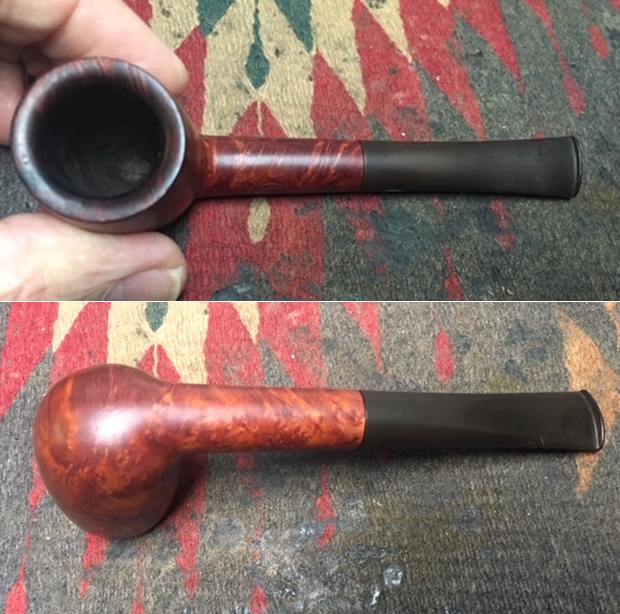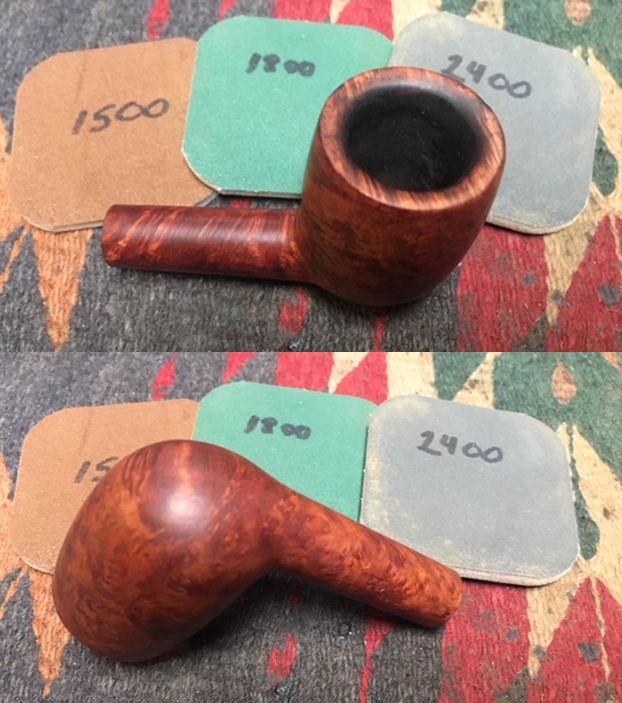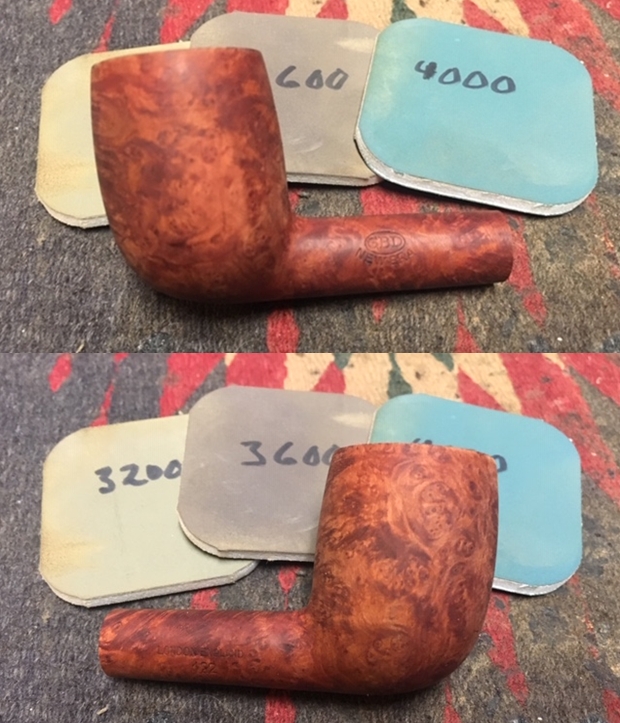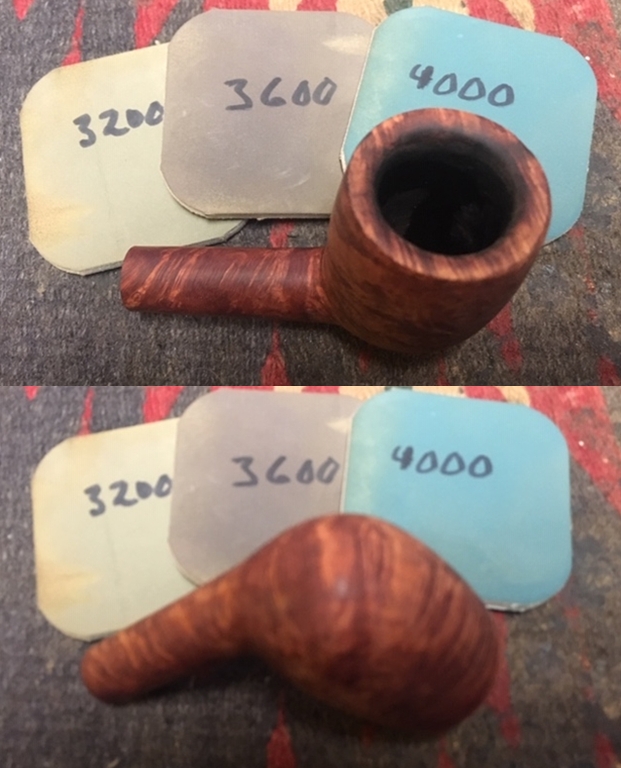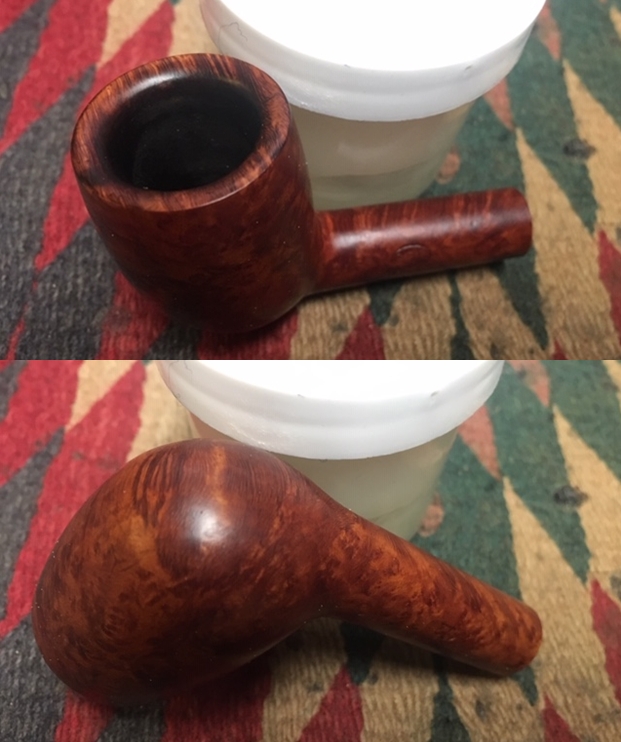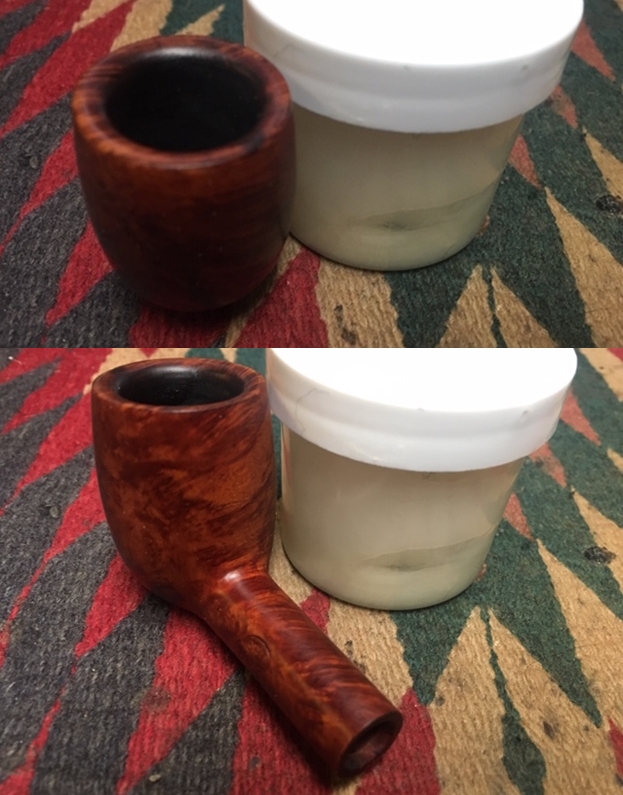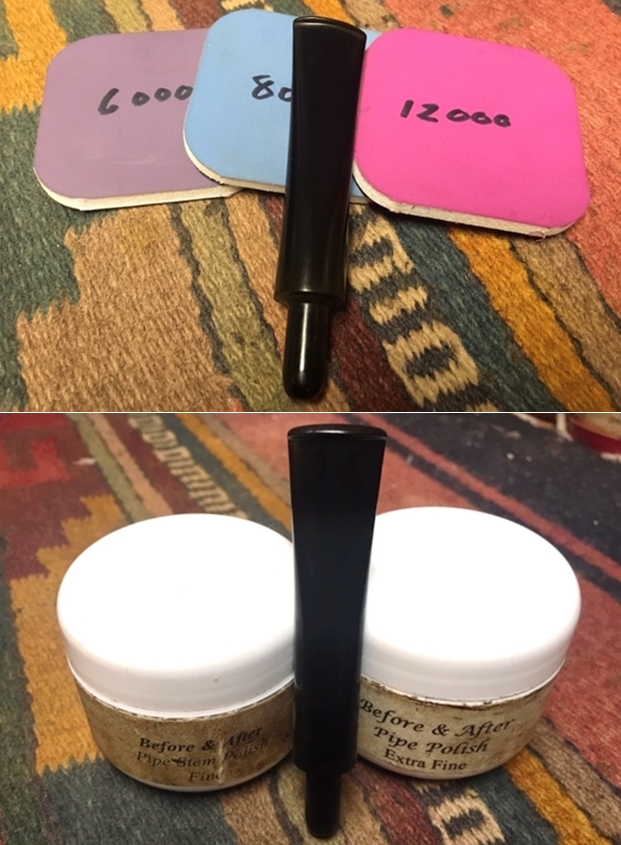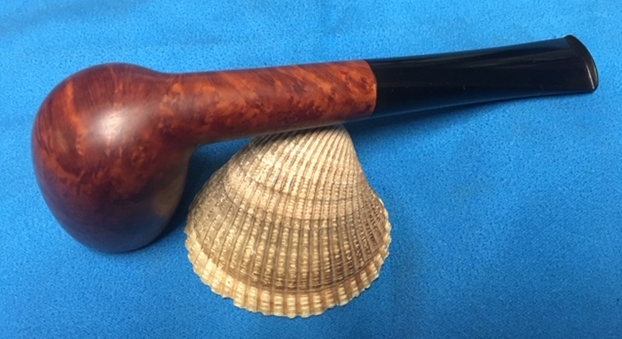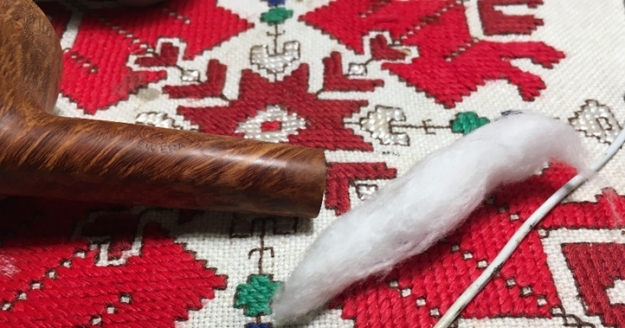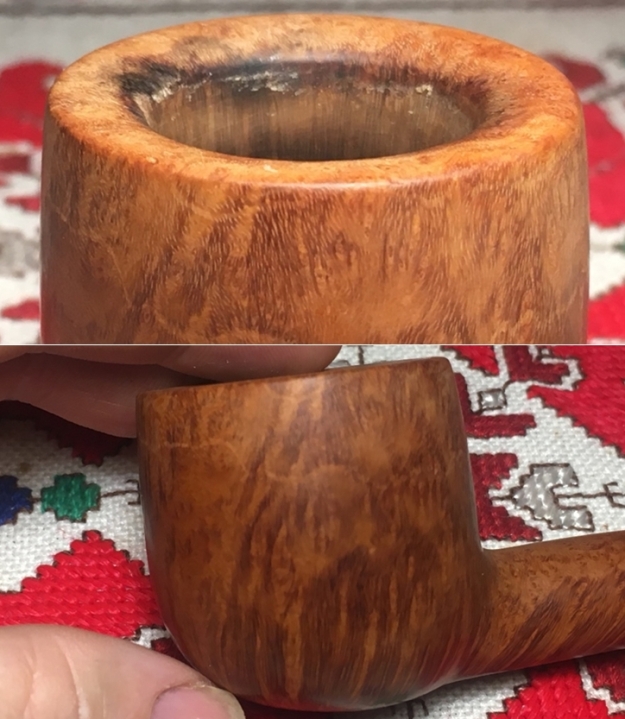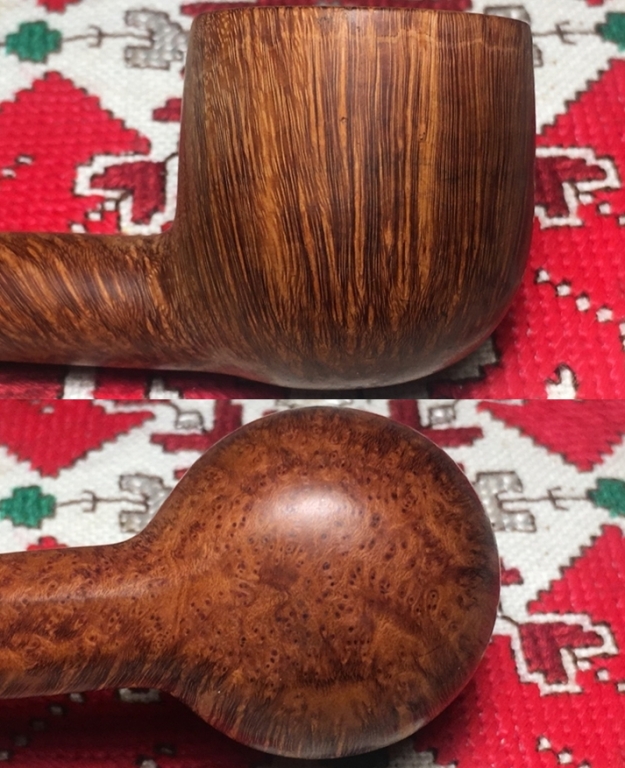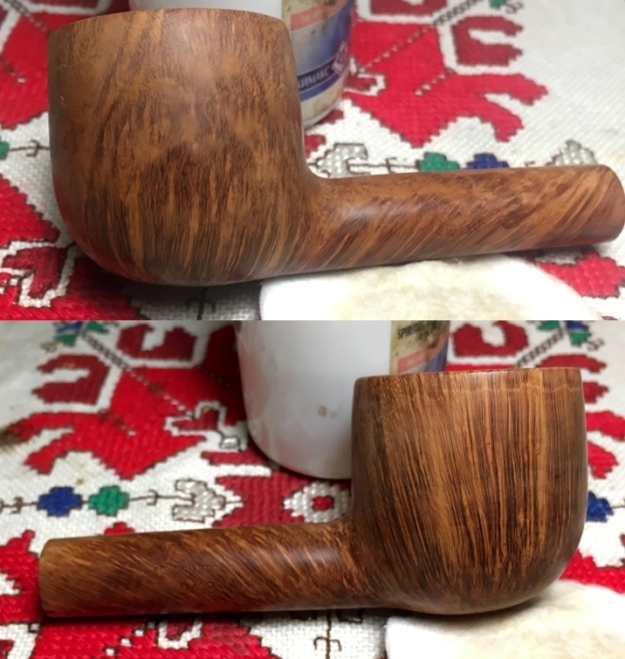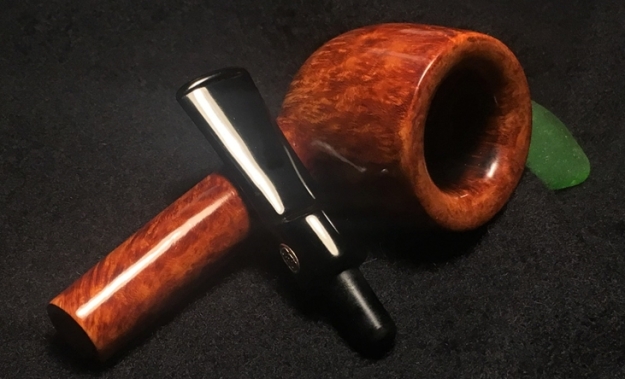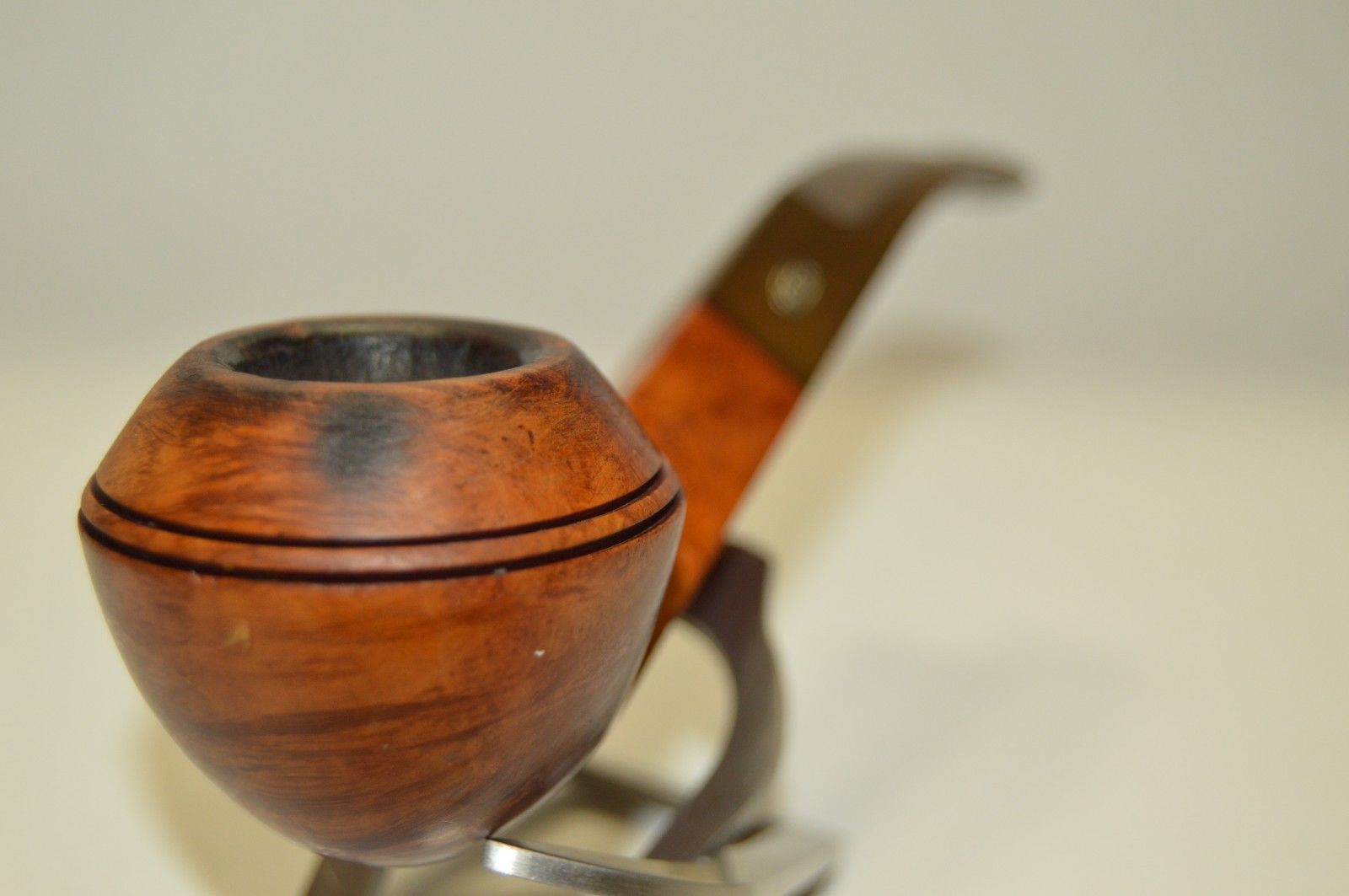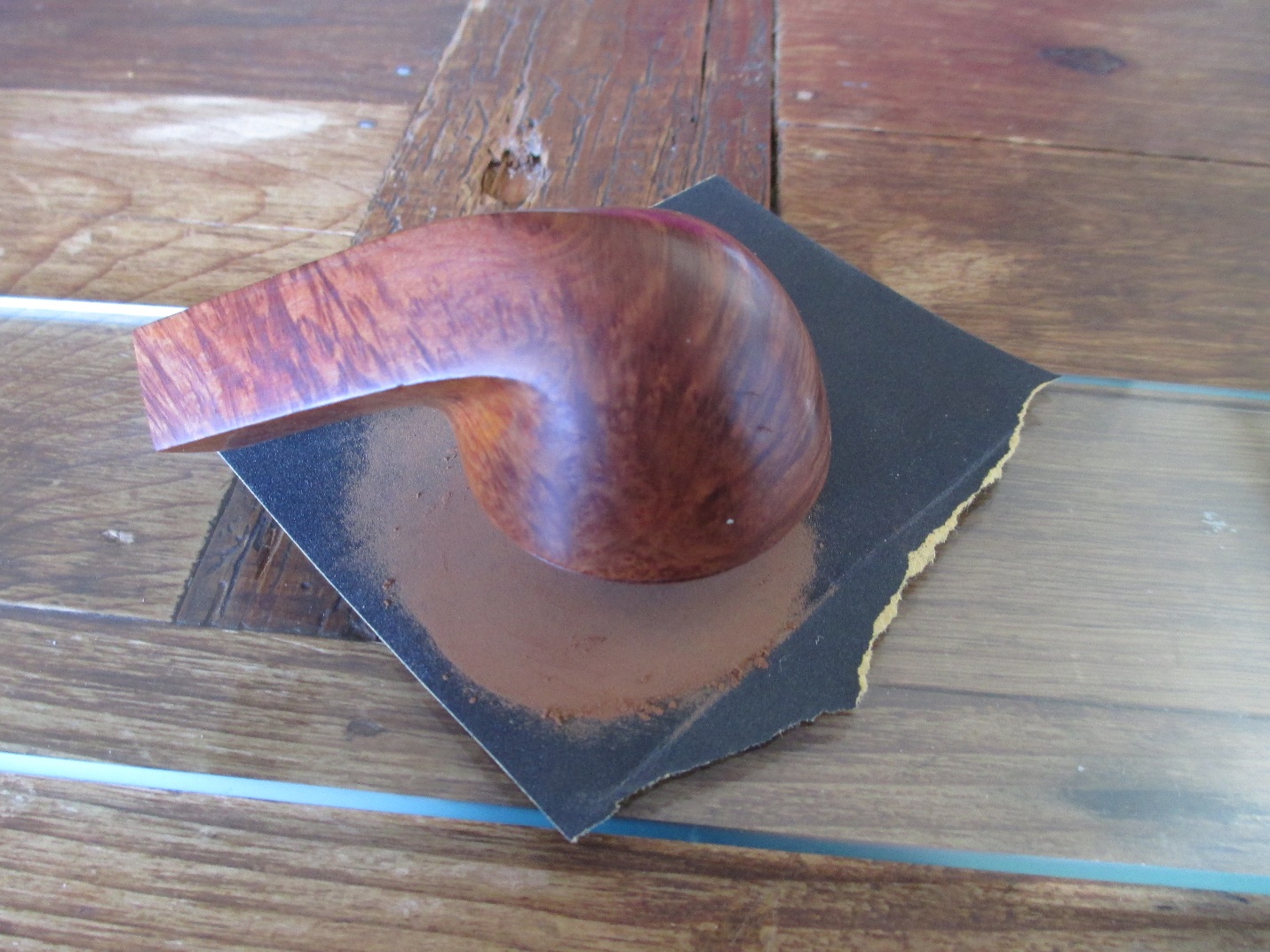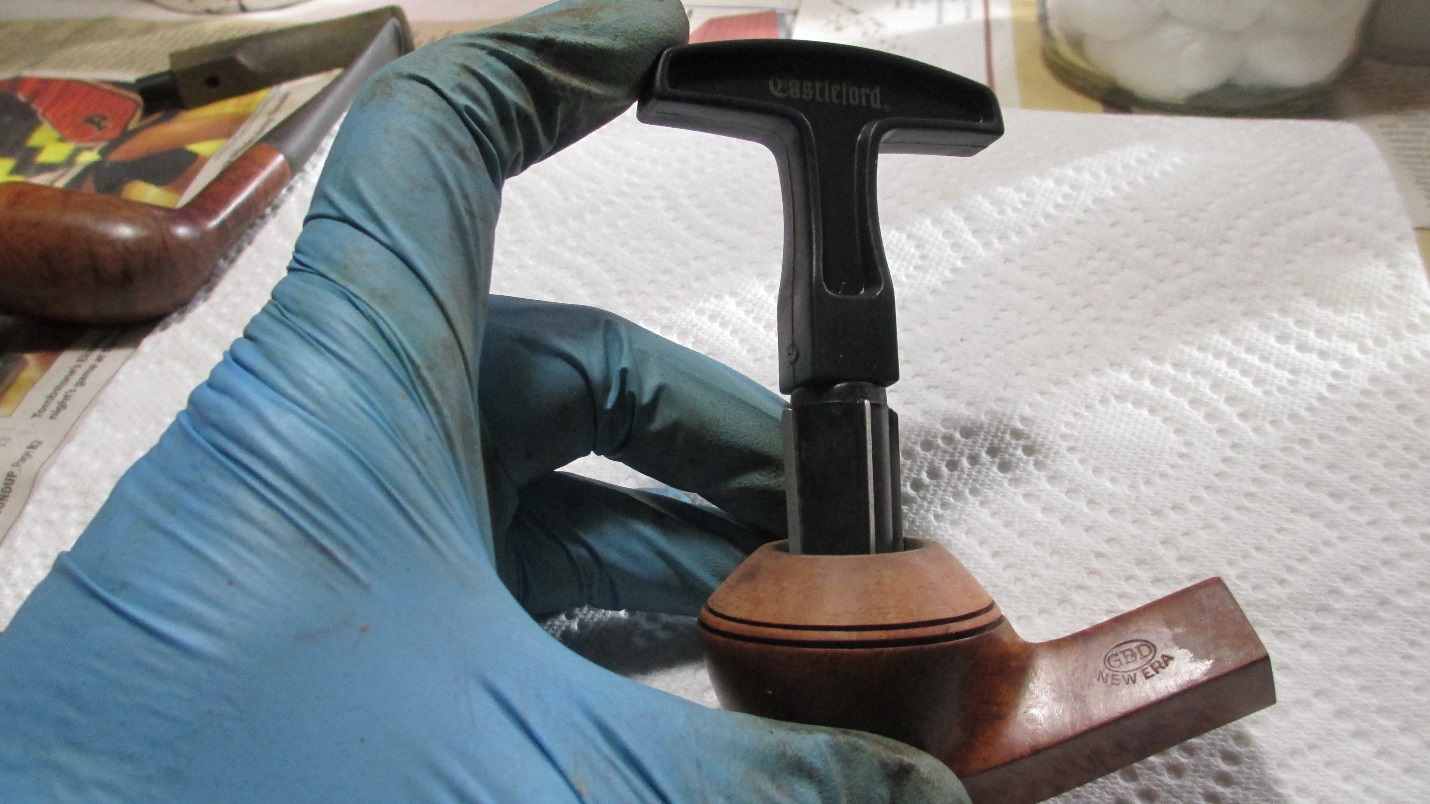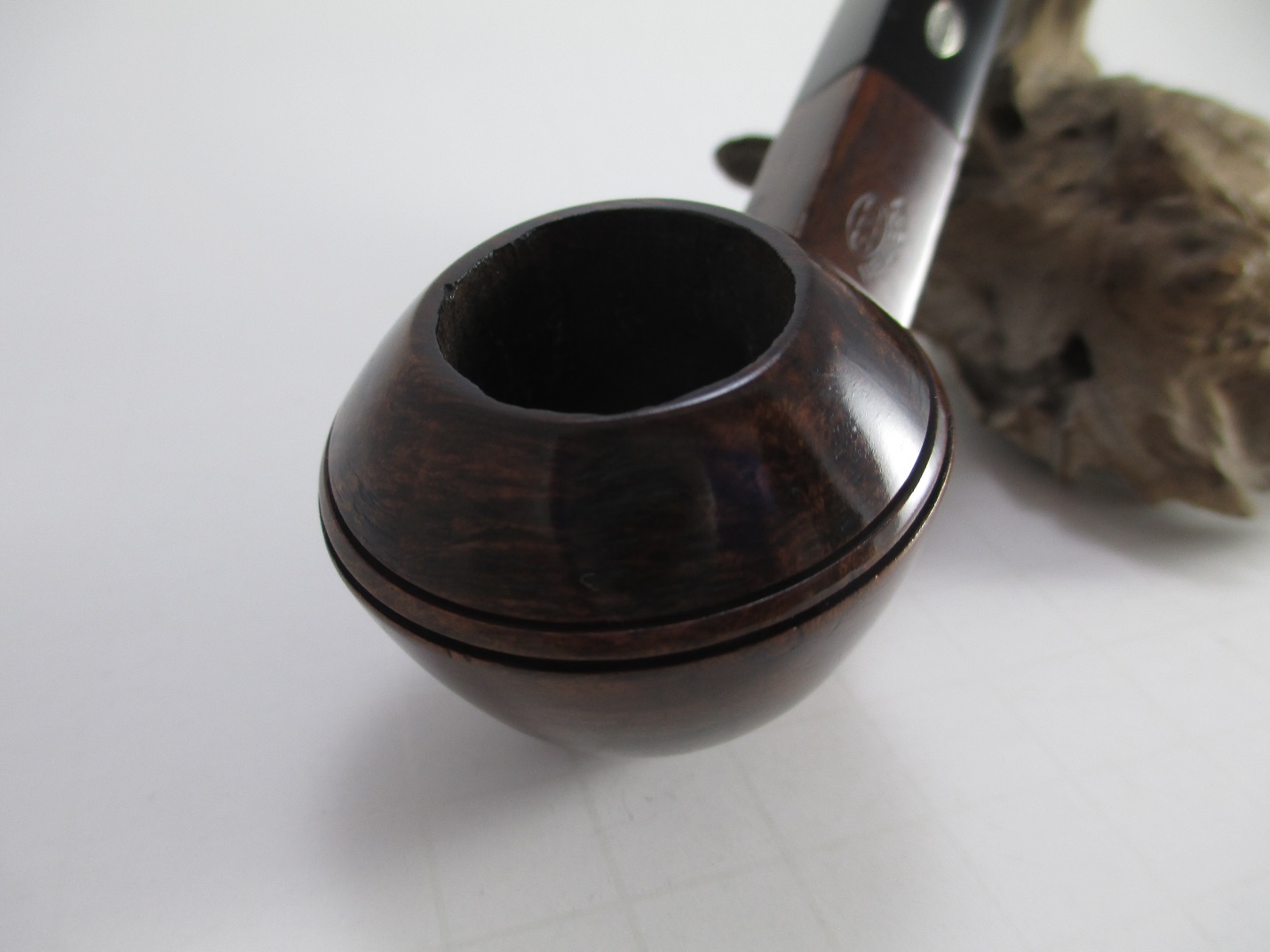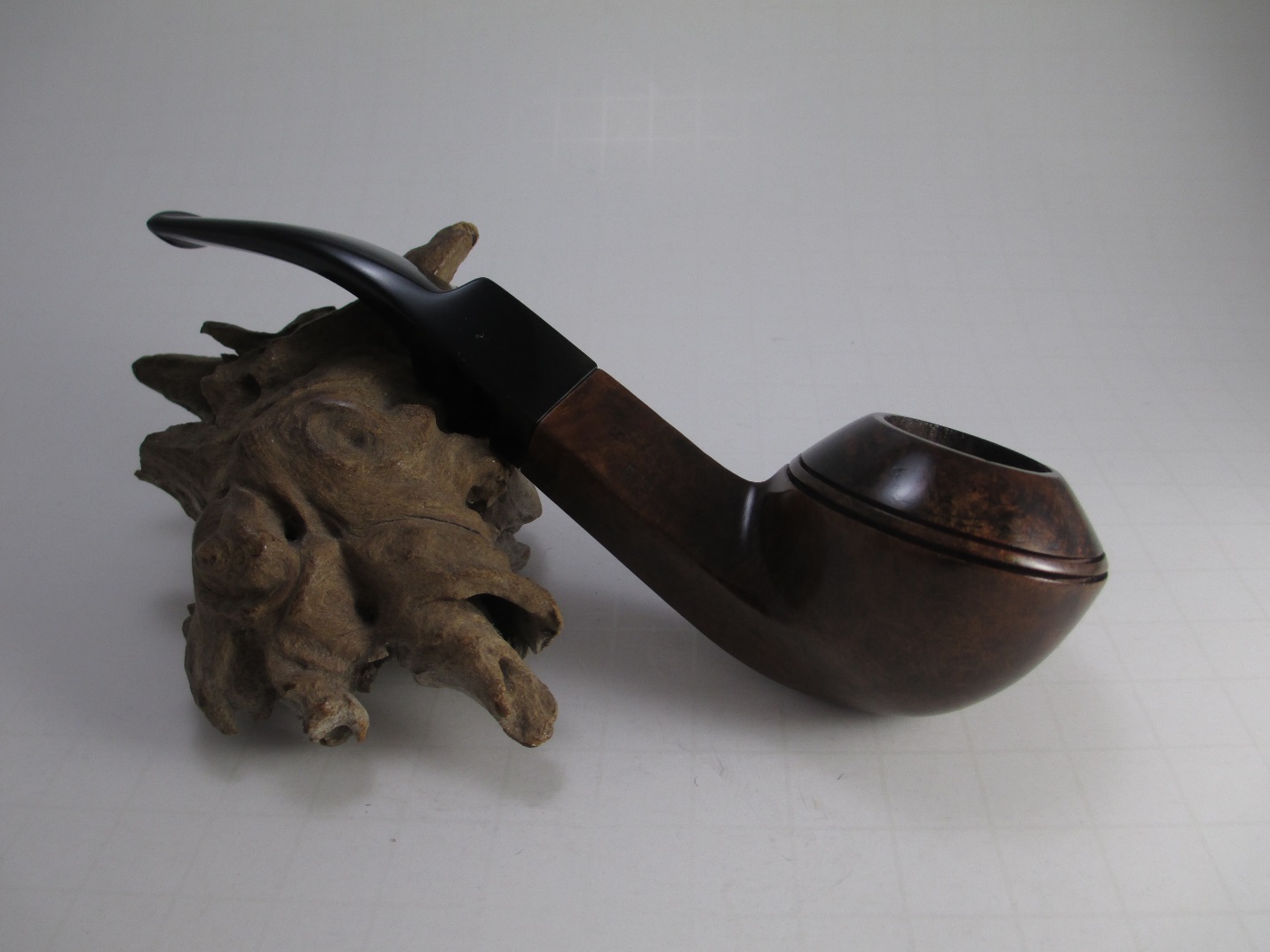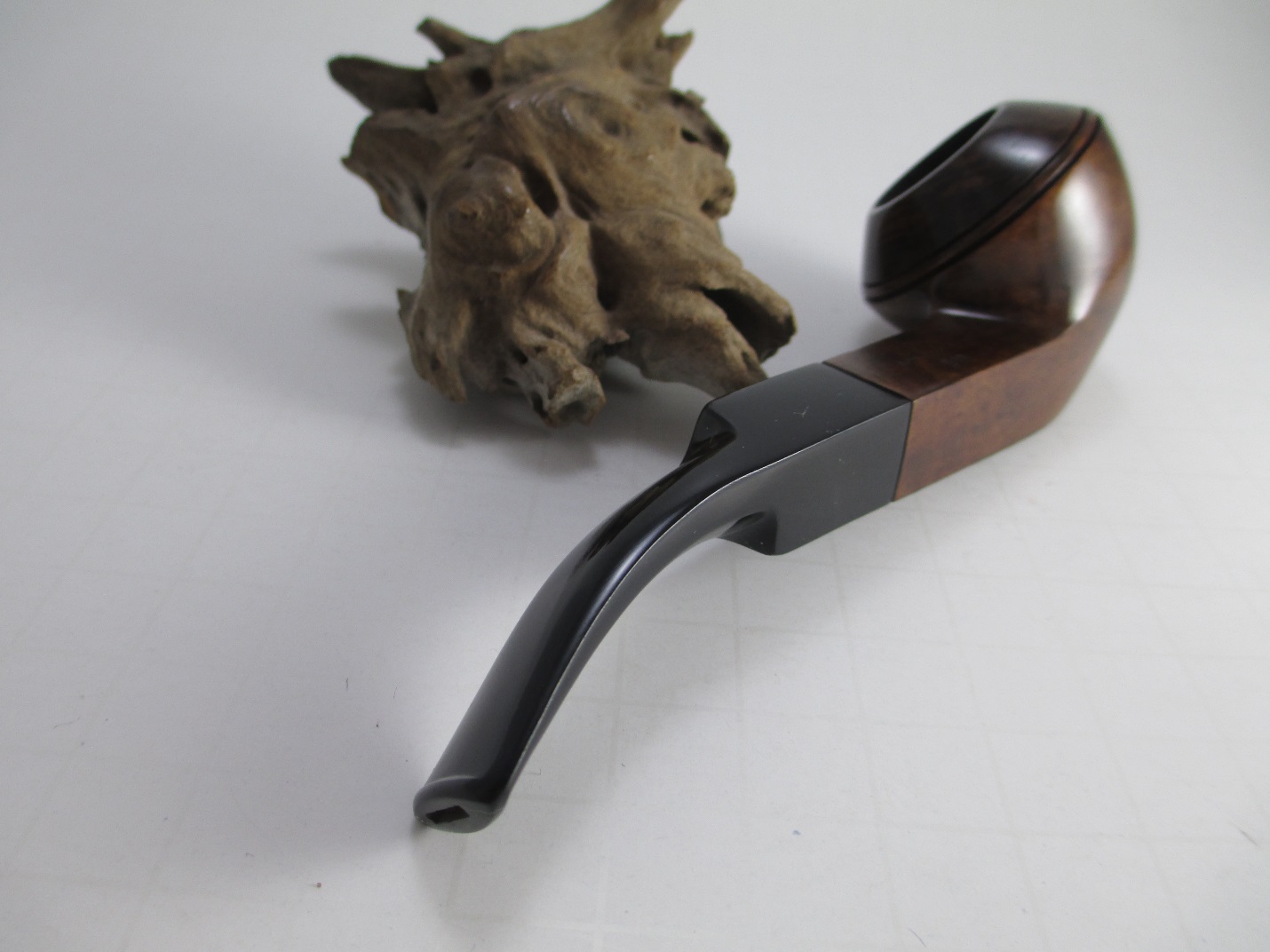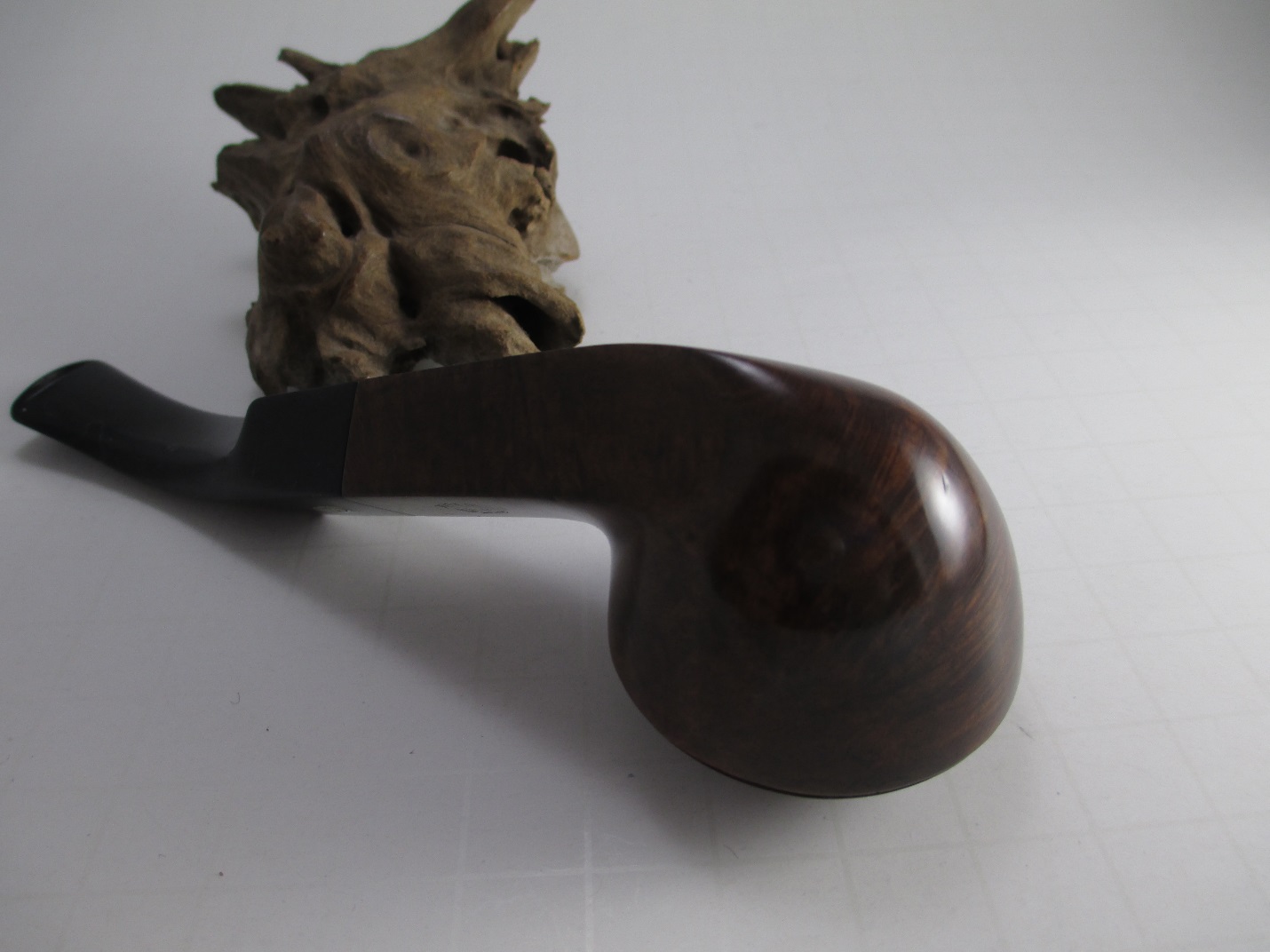
Tag Archives: GBD New Era Pipes

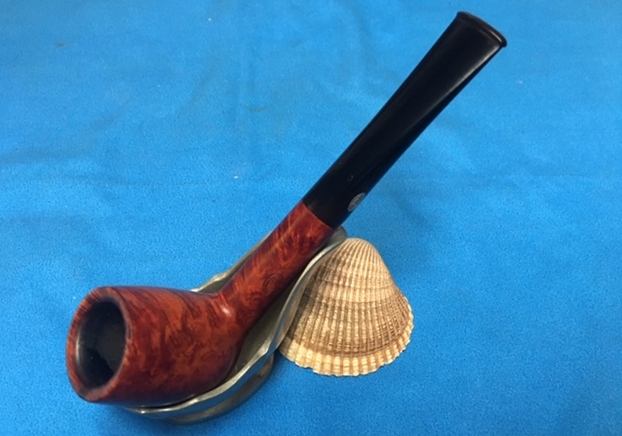
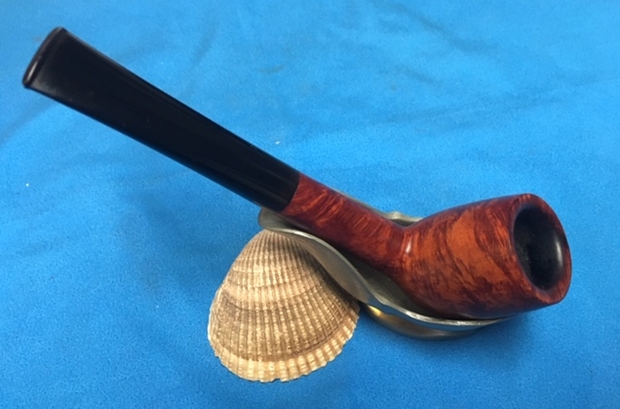
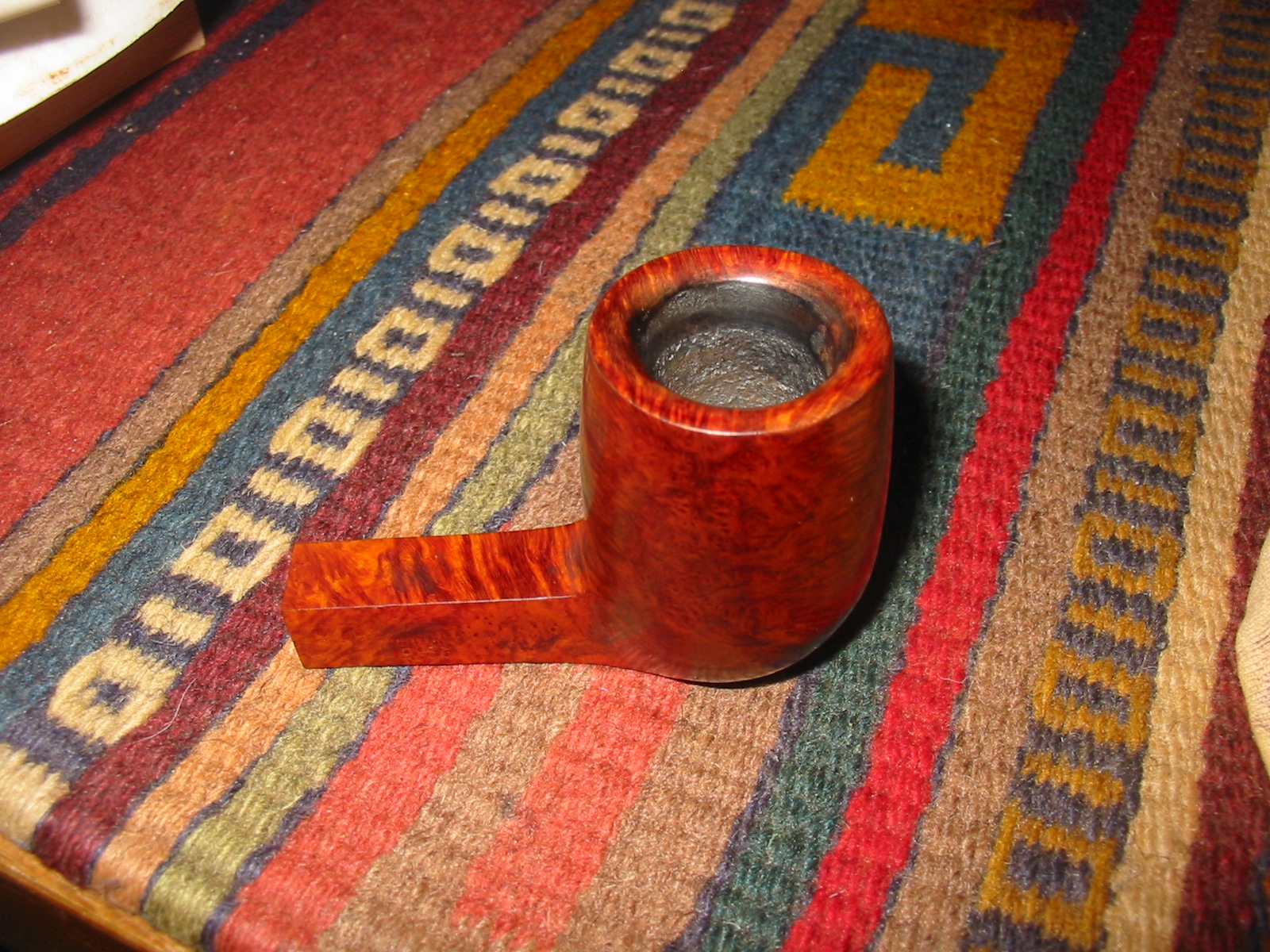
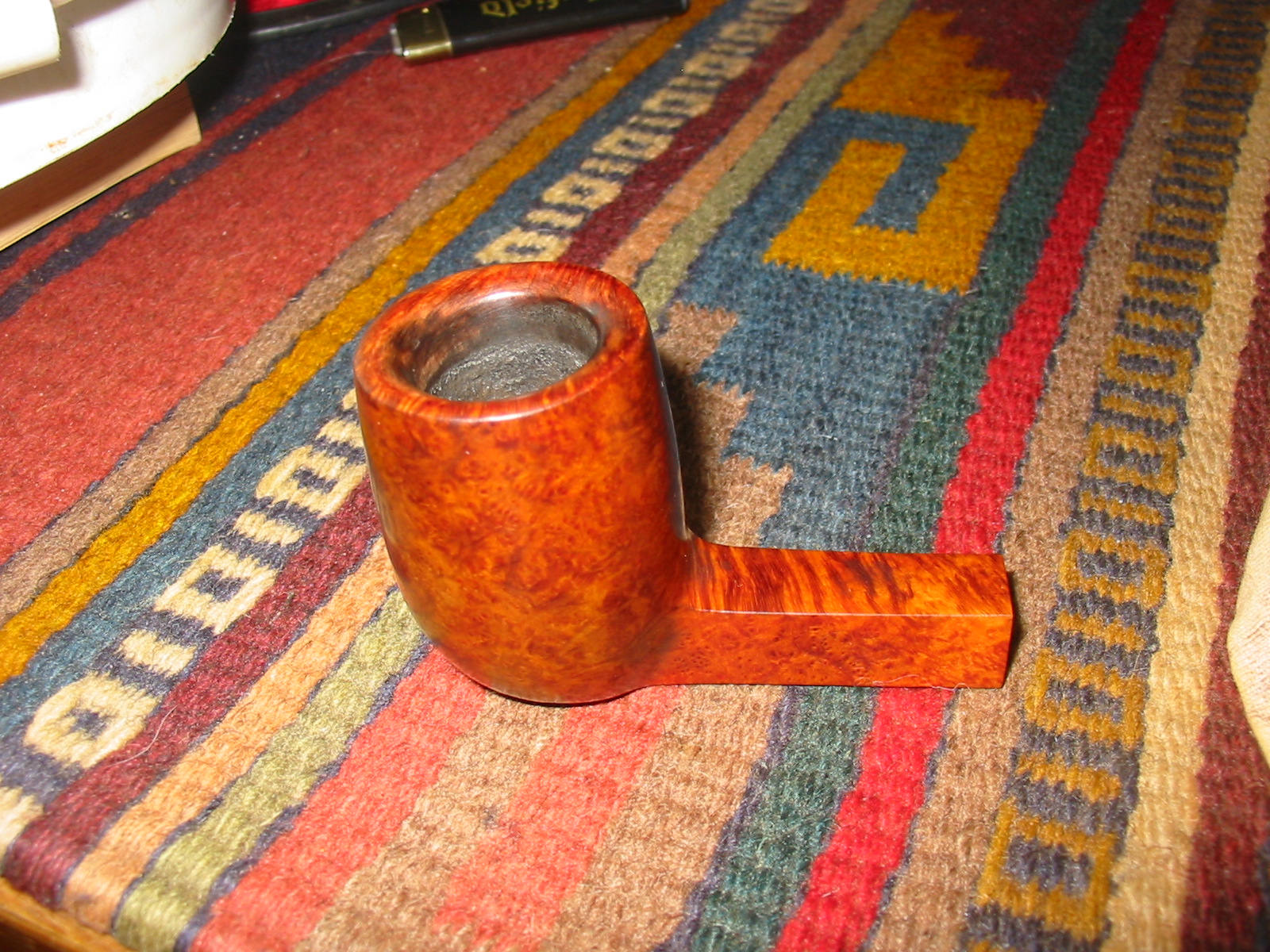
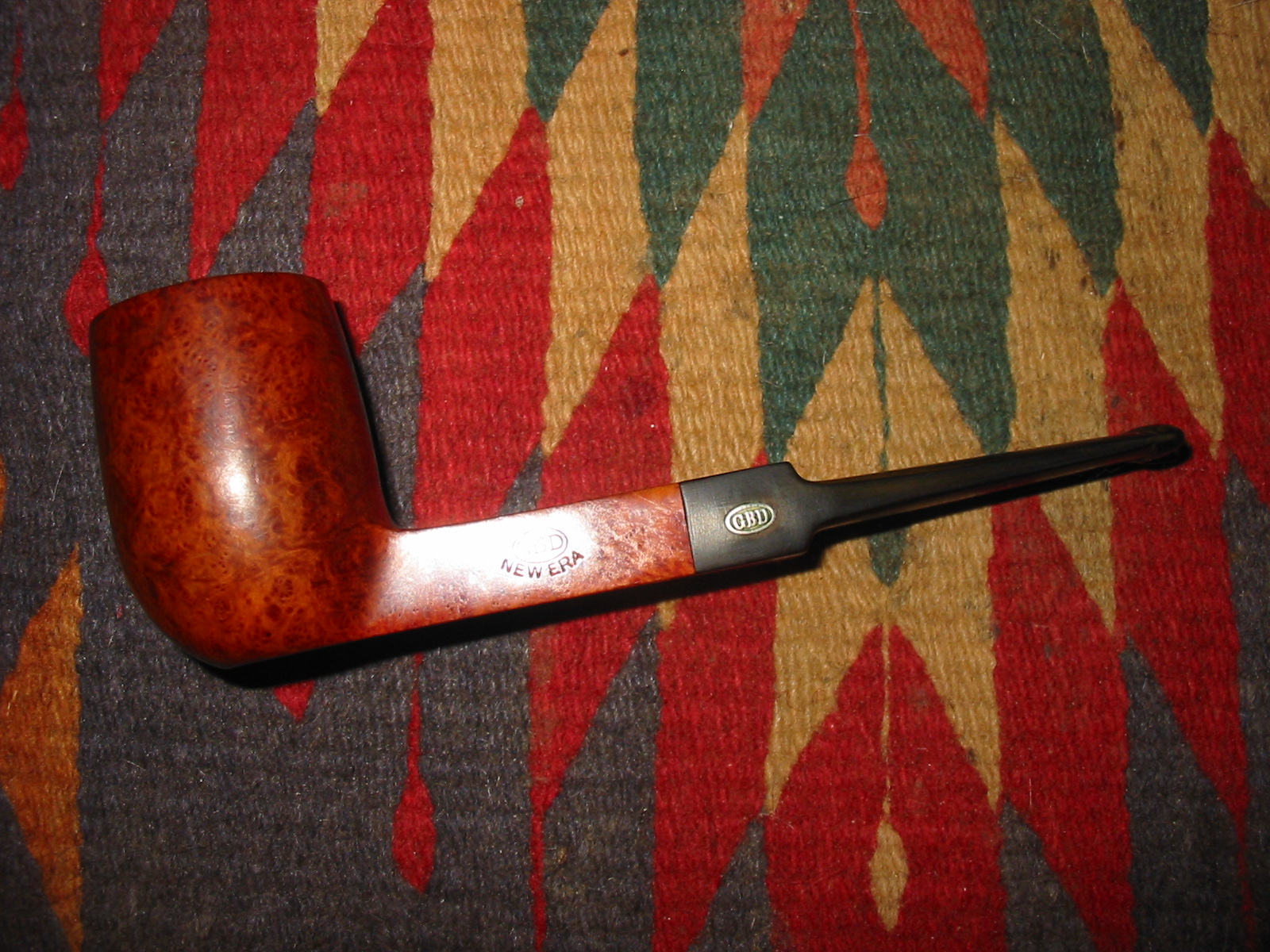
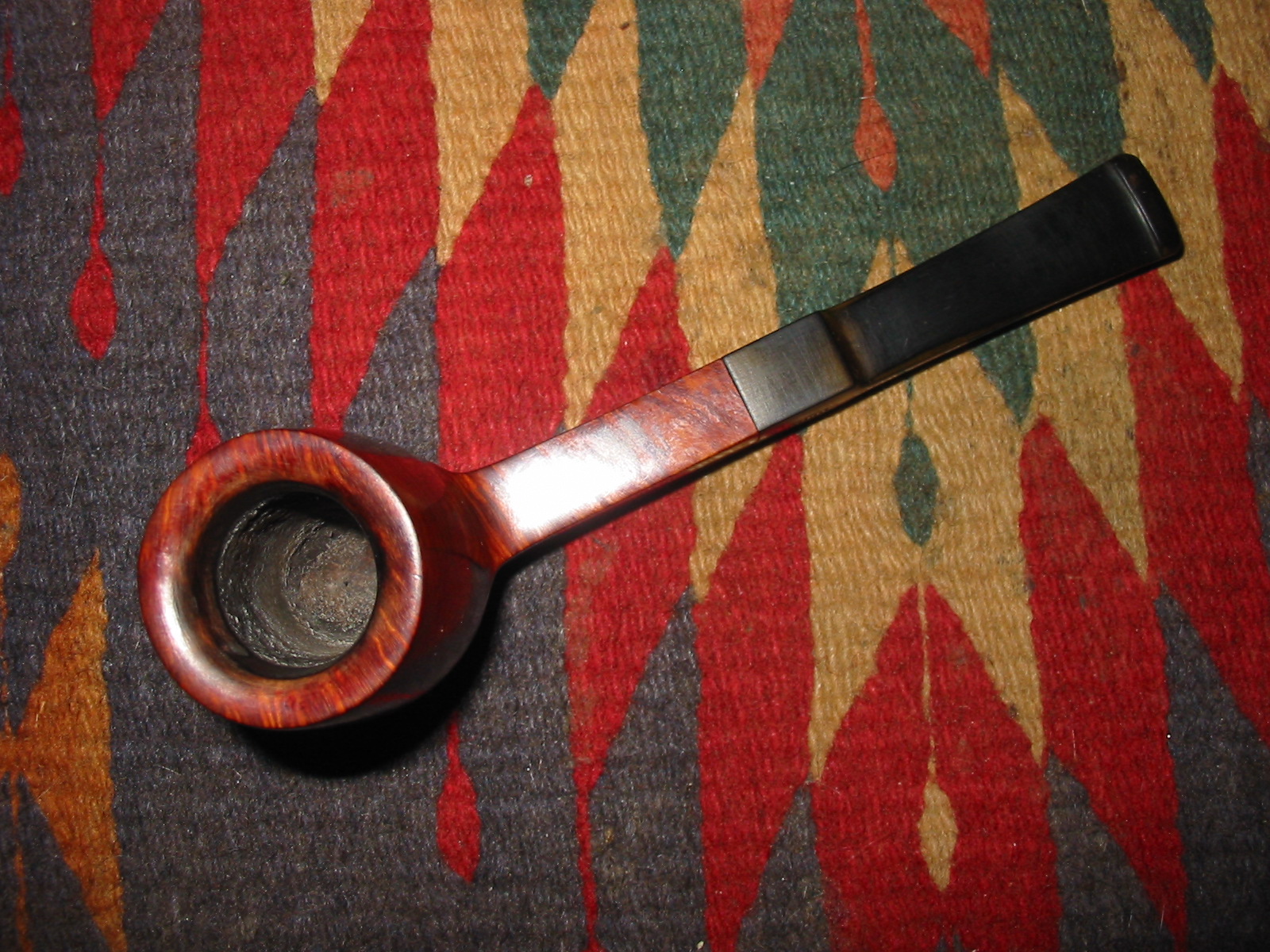
Working on a GBD New Era 122 Beveled Rim Billiard from Bob Kerr’s Estate


Blog by Steve Laug

I am continuing to work through Bob Kerr’s estate. The next pipe on the table is a GBD New Era Billiard. I am continuing to cleanup Bob’s estate for his family and moving them out into the hands of pipemen and women who will carry on the trust that began with Bob and in some pipes was carried on by Bob. In the collection there were a total of 125 pipes along with a box of parts. This is the largest estate that I have had the opportunity to work on. I put together a spread sheet of the pipes and stampings to create an invoice. I was taking on what would take me a fair amount of time to clean up. I could not pass up the opportunity to work on these pipes though. They were just too tempting.

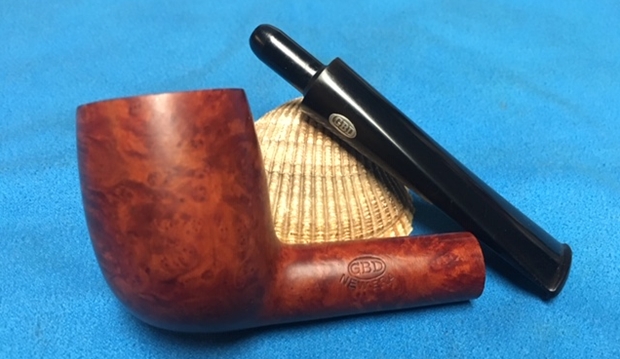
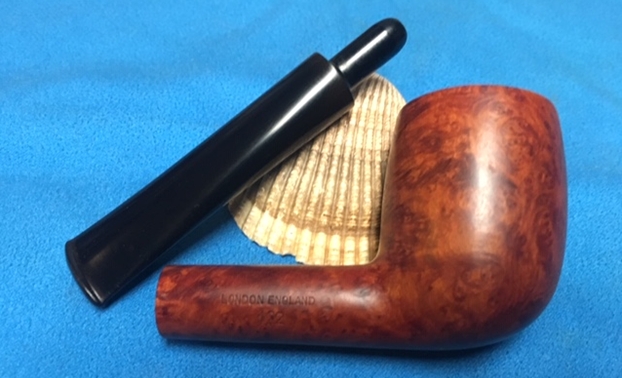
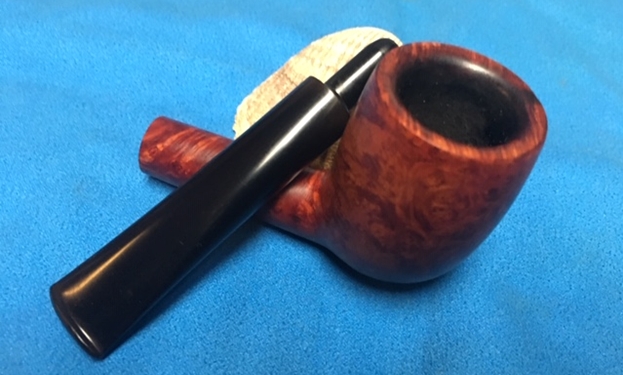
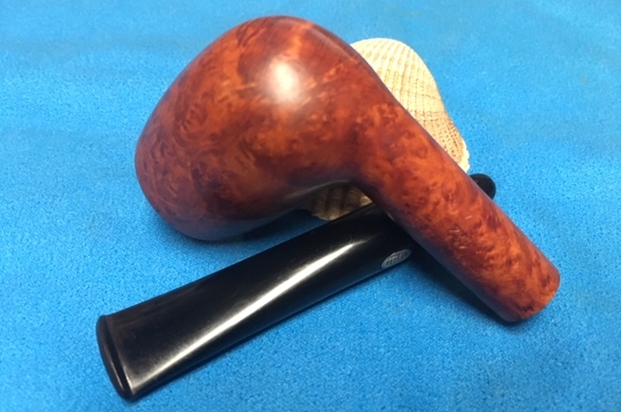
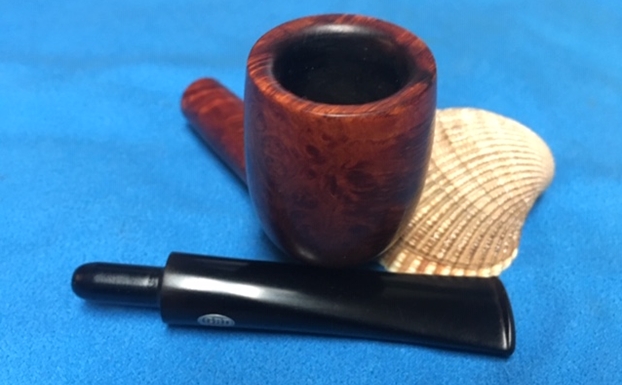
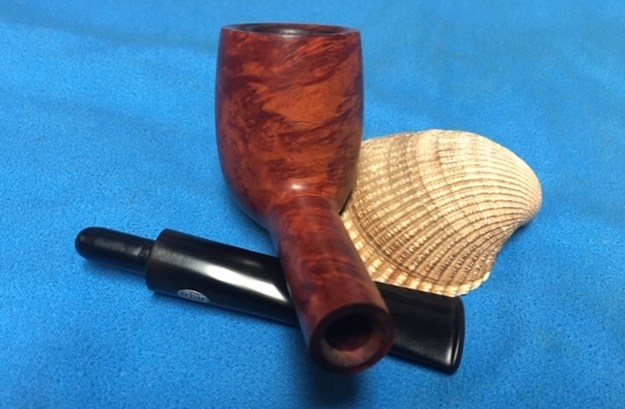
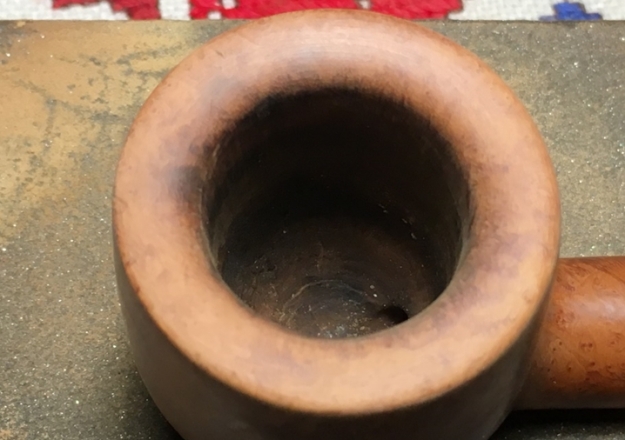
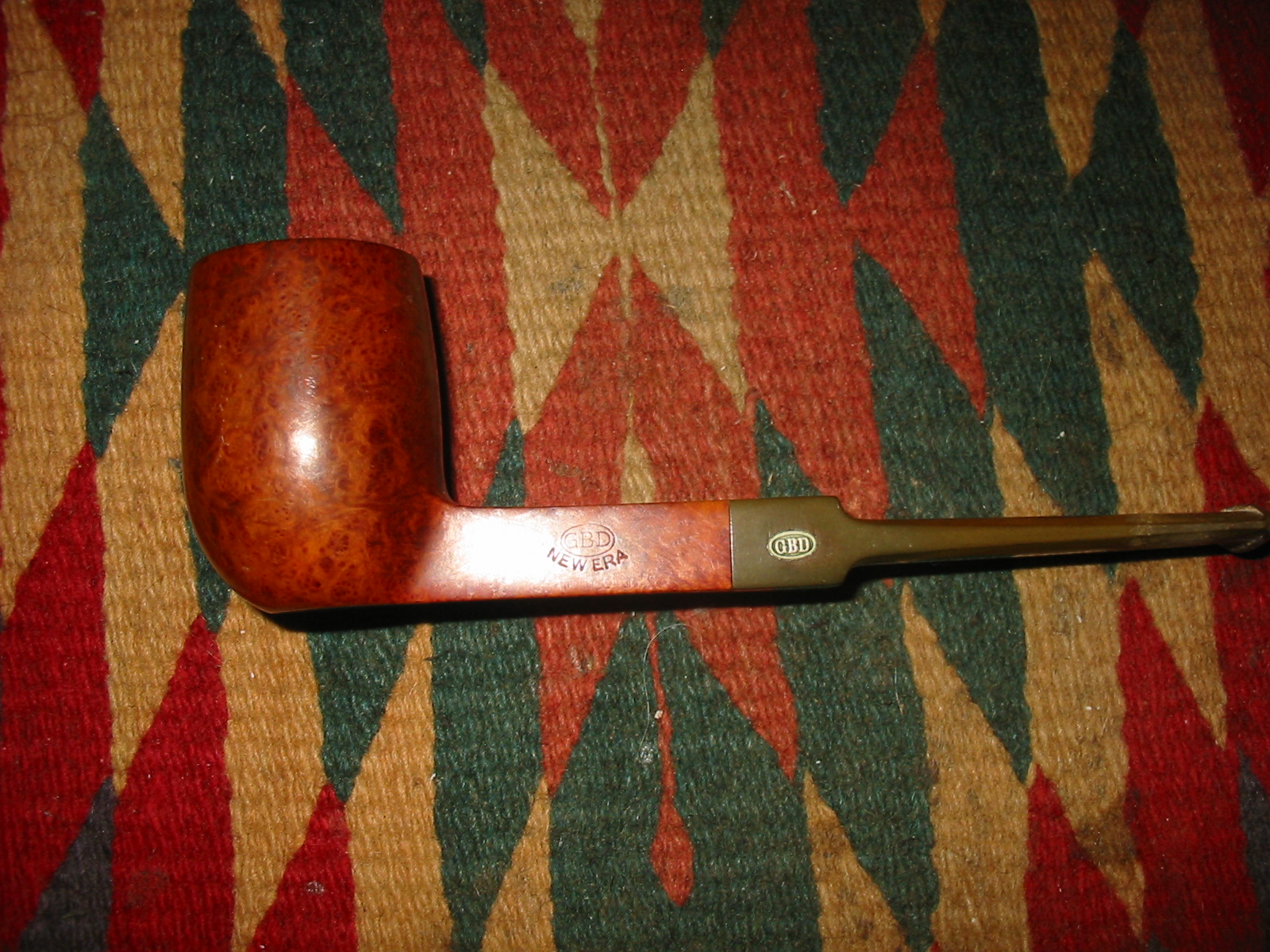
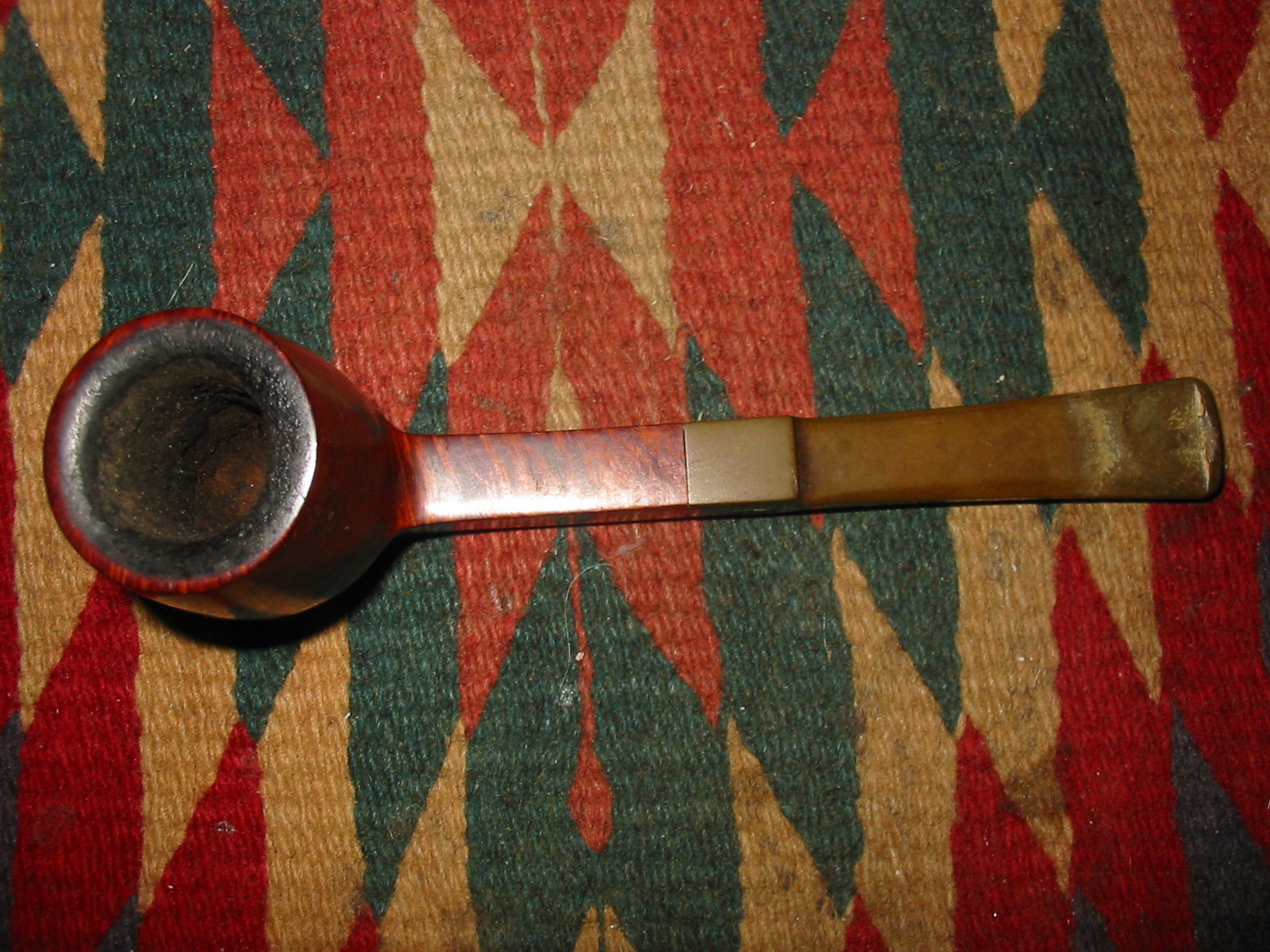
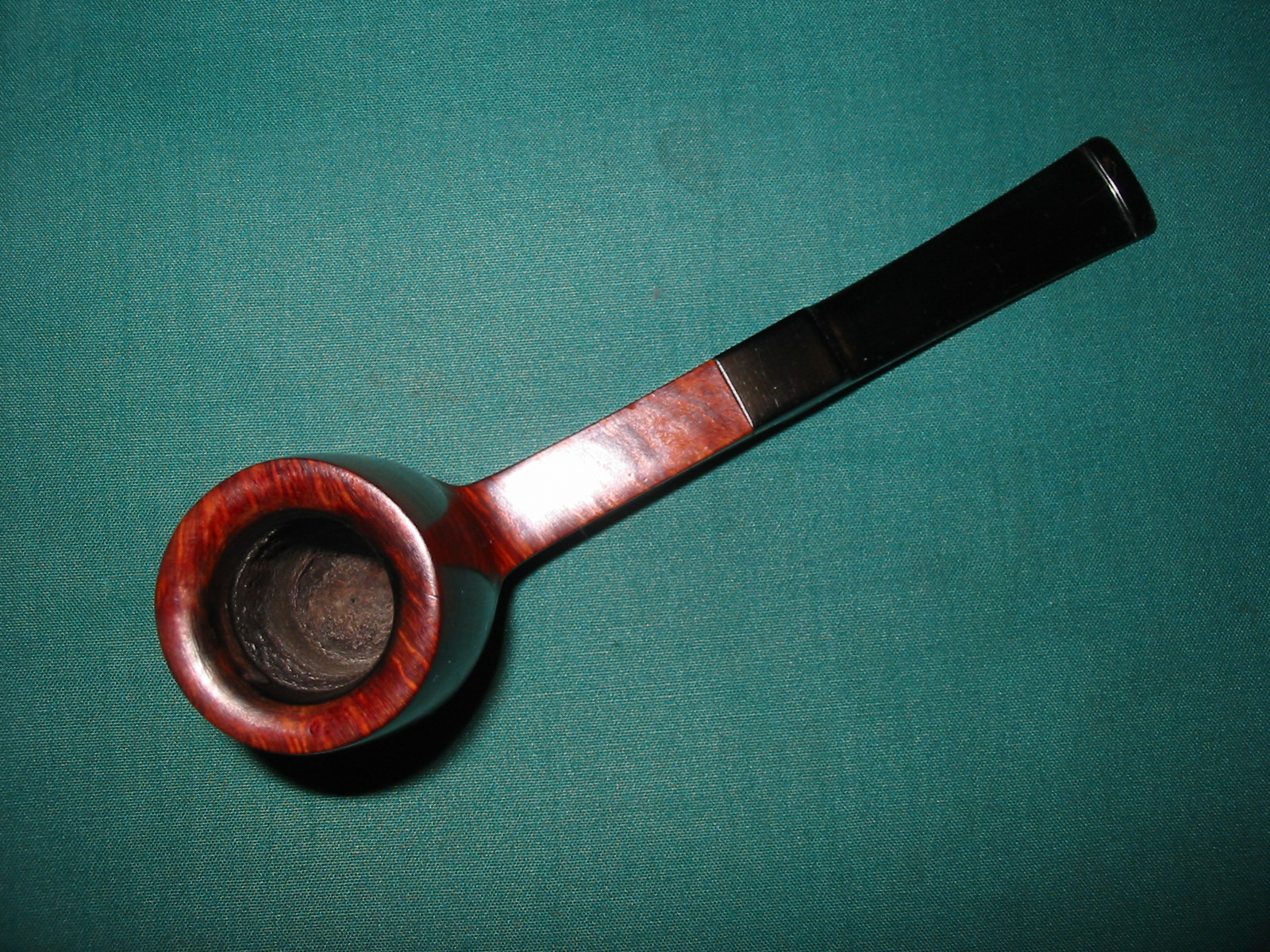
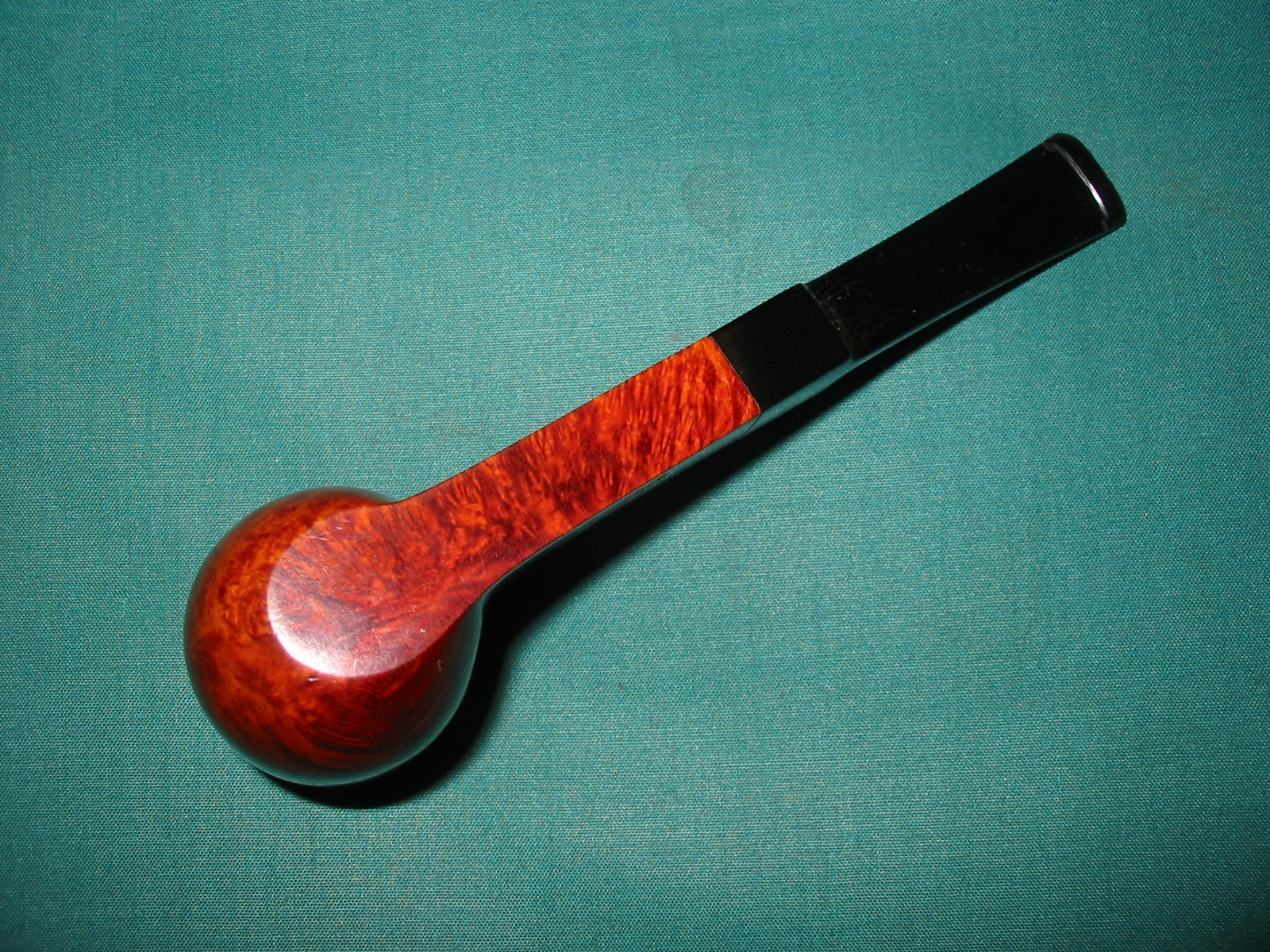
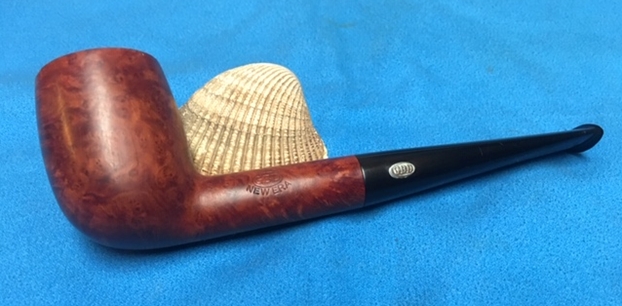
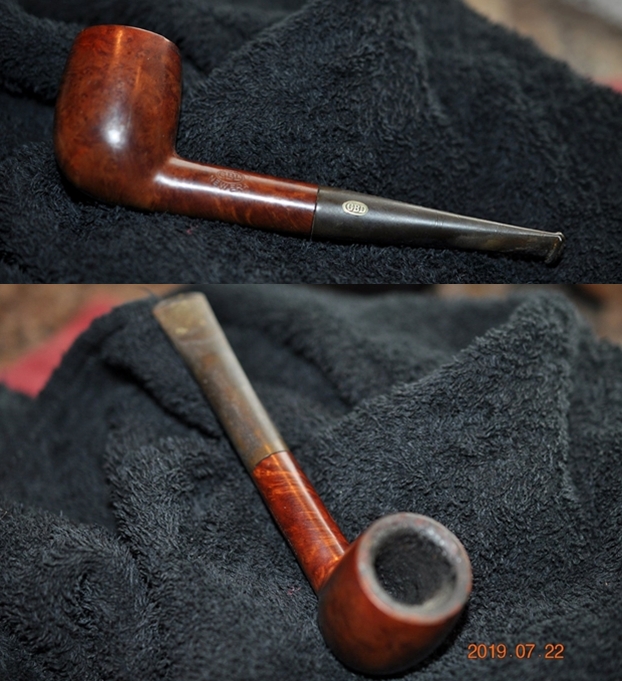
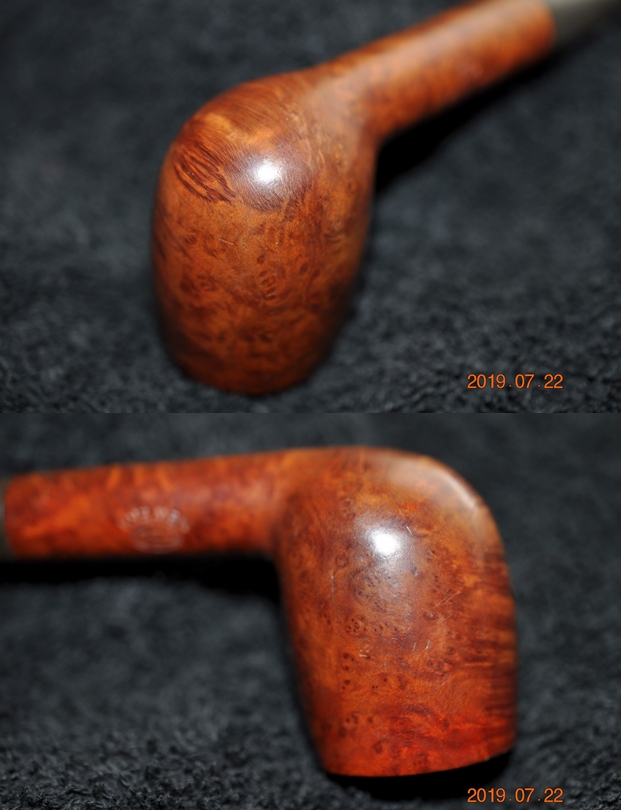
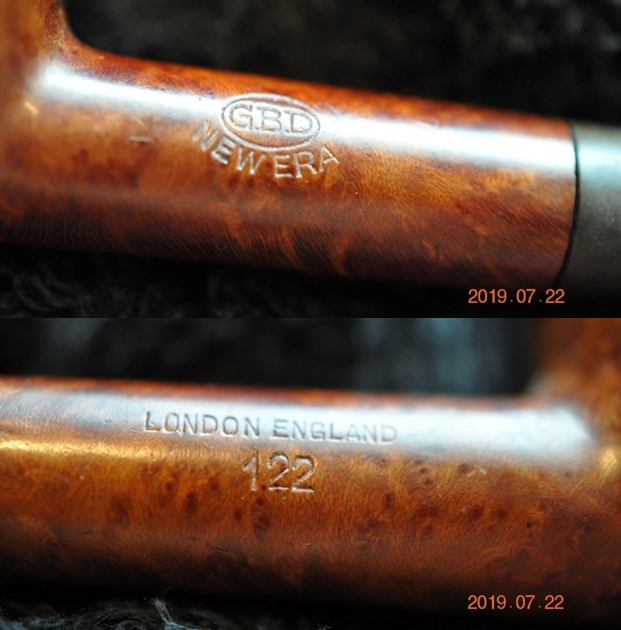
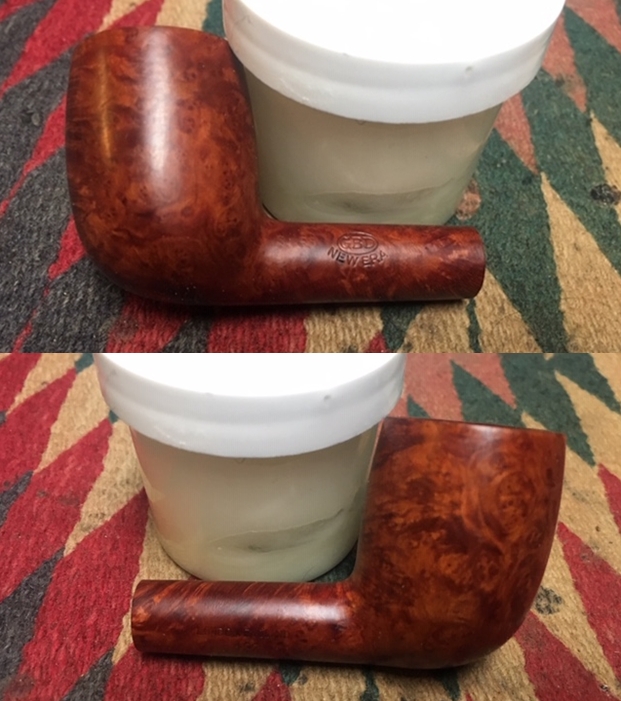
I have been collecting and restoring GBD pipes for as long as I have worked on pipes. This one also has some beautiful mixed grain underneath the grime. It is quite beautiful! The pipe is stamped GBD in an oval over New Era on the left side of the shank. On the right side it is stamped London, England over the shape number 122. It had a rich medium brown stain that does not look too bad. There was a thick cake in the bowl with remnants of tobacco stuck on the walls. There was a lava overflow on the rim. The inner beveled edge of the rim and top are dirty and had a thick lava coat. The edges look pretty pristine under the grime. It was a beautiful pipe that was dirty and tired looking. The stem was oxidized and calcified toward the end. Again, surprisingly did not have the tooth marks that I have come to expect from Bob’s pipes. Jeff took photos of the pipe before he started his cleanup work on it.Jeff took photos of the bowl and rim top to show the cake in the bowl and the lava build up on the edges of the bowl. It was thick and hard but hopefully it had protected the rim and edges from damage. The edges look pretty good.      Jeff took photos of the side and heel of the bowl to show the condition of the finish. You can see the beautiful grain – both birdseye and cross grain. The finish was very dirty.    Jeff took photos of the stamping on the smooth panel on the underside of the shank. The stamping was readable as you can see from the photos. On the left side it read GBD in an oval over New Era. On the right side it is stamped London, England over the shape number 122. On the left side of the tapered stem was an inlaid GBD roundel. Jeff took photos of the top and underside of the stem showing the tooth chatter, scratching and oxidation on the stem surface and wear on the edges of the button.    I turned to Pipedia’s article on GBD to see if I could find any information on the Popular. It was a line of GBD pipes that was new to me. The article gives a lot in terms of the history of the brand (https://pipedia.org/wiki/GBD). I have included a paragraph from the site below as well as a page from a catalogue.
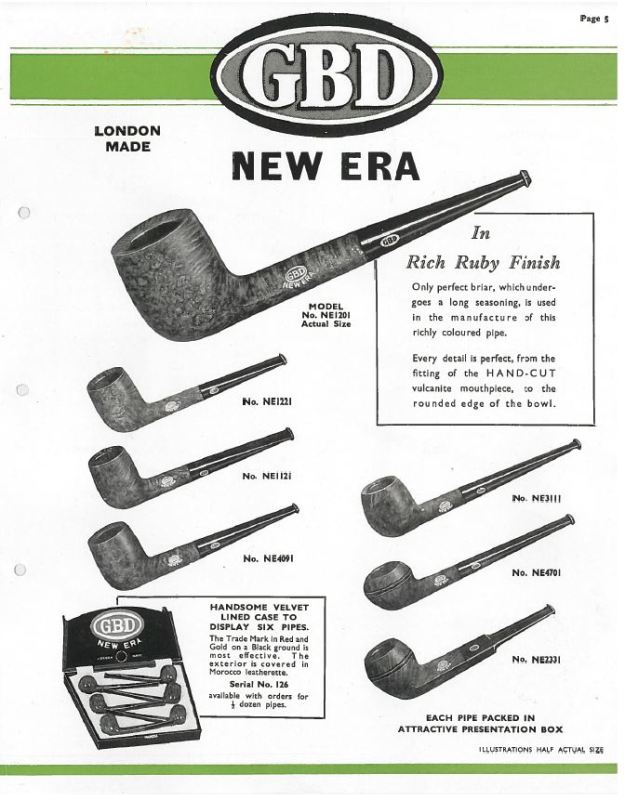
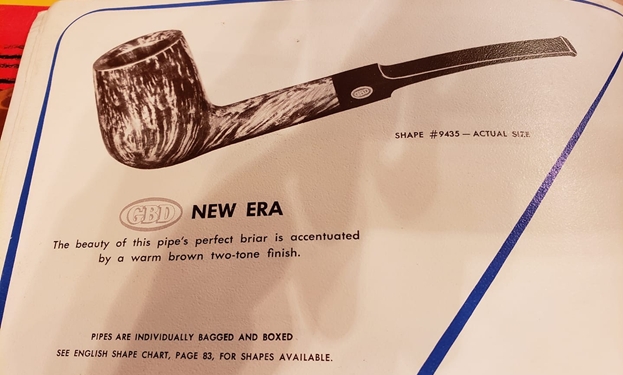
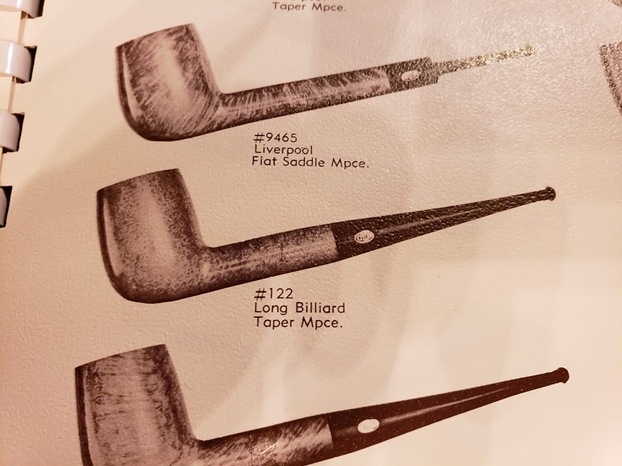
The claims after the 1st World War demanded further distinctions. First of all was the London Made, which became the Standard London Made, followed by the New Era– in 1931 the top model asking 12½ Shilling. The Pedigree, although sketched around 1926, was not produced until the later 1930s. The New Standard was introduced in order to give the popular Standard of the 20s a higher rank in value. The Prehistoric, a deeply sandblasted black pipe, that still carried the small GBD Xtra stamp, was entirely new and unusual.There was a fellow on Facebook Tobacco Pipe Restorers Group who picked up some booklets and pamphlets on GBD pipes. I messaged him and asked him to send me info on the New Era line. This photo gives a pretty good description. Combined with the one above it is an interesting mystery. The first document above says that the pipe has “a rich ruby finish” while the one below says it is “accentuated by a warm brown two-tone finish.” The pipe I am working on definitely sits somewhere between these two descriptions – it has a reddish brown finish.I also turned to the reference page on the site for GBD shapes and numbers and found the one for the straight bulldog that I was working on (https://pipedia.org/wiki/GBD_Shapes/Numbers). I did a screen capture of the section and from the various Model information. I combined them below (https://pipedia.org/wiki/GBD_Model_Information).   The fellow on Facebook also included the next photo that shows the shape and description of the 122. GBD calls it a Long Billiard with a Taper Mouthpiece.I now knew I was dealing with a well-made hand chosen piece of briar that had gone through a period of long seasoning. In terms of dating the pipe I figure that it fits in with the late 50s to late 60s of Bob’s other pipes but I cannot know for sure. Now it was time to work on the pipe.

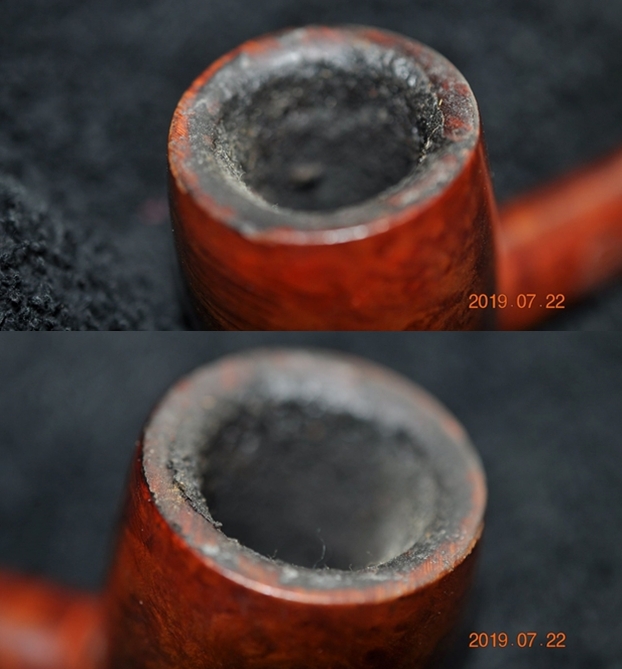
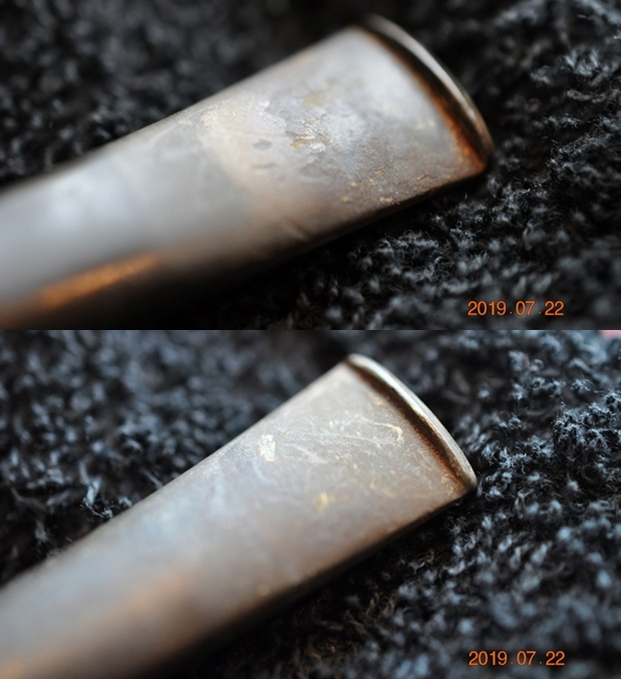
With over 125 pipes to clean from Bob’s estate I took a batch of them to the states with me on a recent visit and left them with Jeff so he could help me out. Jeff cleaned the pipe with his usual penchant for thoroughness that I really appreciate. This one was a real mess and I did not know what to expect when I unwrapped it from his box. He reamed it with a PipNet pipe reamer and cleaned up the reaming with a Savinelli Fitsall Pipe Knife. He scrubbed out the internals with alcohol, pipe cleaners and cotton swabs until the pipe was clean. He scrubbed the exterior of the bowl with Murphy’s Oil Soap and a tooth brush to remove the grime and grit on the briar and the lava on the rim top. The finish looks very good with good looking grain around the bowl and shank. Jeff soaked the stem in Before & After Deoxidizer to remove the oxidation on the rubber. When the pipe arrived here in Vancouver for the second stop of its restoration tour it looked very good. I took photos before I started my part of the work.     I took some close up photos of the rim top and also of the stem surface. I wanted to show what an amazing job Jeff did in the cleanup of the rim top. The rim top looks good. There is some darkening on the top edge and a few light nicks and scratches on the surface. The bowl looked very good. I also took close up photos of the stem to show the scratches and lack of tooth marks on the stem. You can also see the remaining oxidation on the stem surface.     I am going to keep posting the next paragraph because of the importance of protecting the stamping/nomenclature.
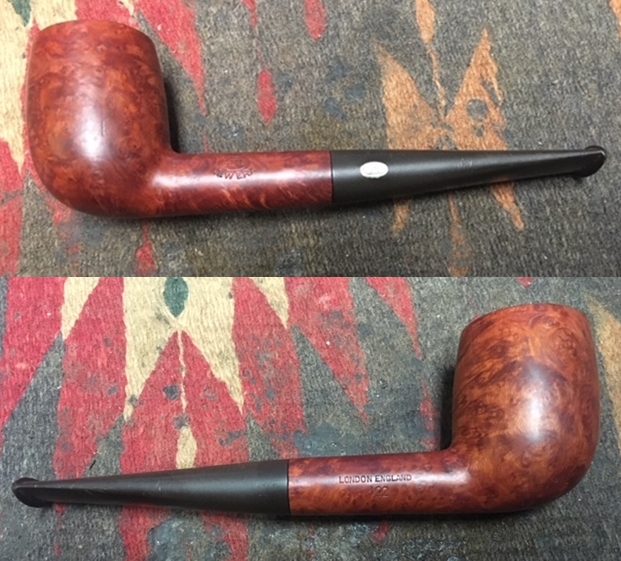
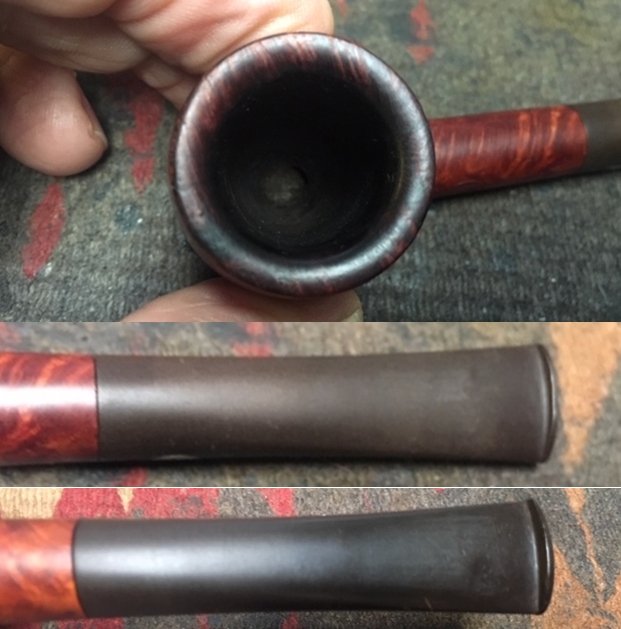
One of the things I appreciate about Jeff’s cleanup is that he works to protect and preserve the nomenclature on the shank of the pipes that he works on. The stamping on this one was very faint to start with so I was worried that it would disappear altogether with the cleanup. He was not only able to preserve it but it is clearer than shown in the earlier photos. I took some photos to show the clarity of the stamping. I have noticed that many restorers are not careful to protect the stamping in their cleaning process and often by the end of the restoration the nomenclature is almost destroyed. I would like to encourage all of us to be careful in our work to preserve this as it is a critical piece of pipe restoration!Since this is another pipe Bob’s estate I am sure that some of you have read at least some of the other restoration work that has been done on the previous pipes. You have also read what I have included about Bob Kerr, the pipeman who held these pipes in trust before I came to work on them (see photo to the left). Also, if you have followed the blog for long you will already know that I like to include background information on the pipeman whose pipes I am restoring. For me, when I am working on an estate I really like to have a sense of the person who held the pipes in trust before I worked on them. It gives me another dimension of the restoration work. I asked Brian if he or his wife would like to write a brief biographical tribute to her father, Bob. His daughter worked on it and I received the following short write up on him and some pictures to go along with the words including one of Bob’s carvings. Once again I thank you Brian and tell your wife thank you as well.
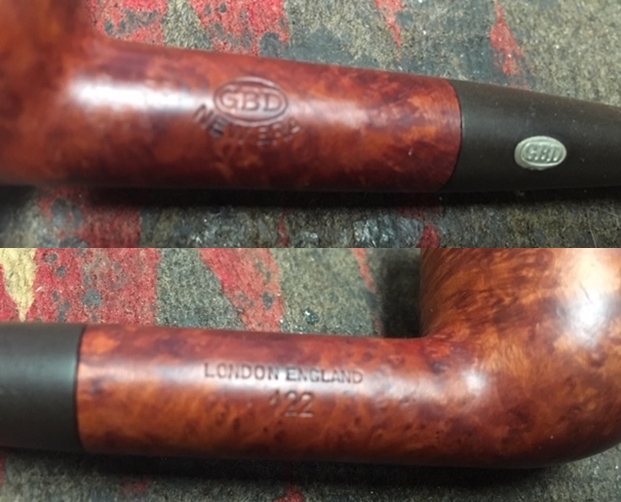
I am delighted to pass on these beloved pipes of my father’s. I hope each user gets many hours of contemplative pleasure as he did. I remember the aroma of tobacco in the rec room, as he put up his feet on his lazy boy. He’d be first at the paper then, no one could touch it before him. Maybe there would be a movie on with an actor smoking a pipe. He would have very definite opinions on whether the performer was a ‘real’ smoker or not, a distinction which I could never see but it would be very clear to him. He worked by day as a sales manager of a paper products company, a job he hated. What he longed for was the life of an artist, so on the weekends and sometimes mid-week evenings he would journey to his workshop and come out with wood sculptures, all of which he declared as crap but every one of them treasured by my sister and myself. Enjoy the pipes, and maybe a little of his creative spirit will enter you!
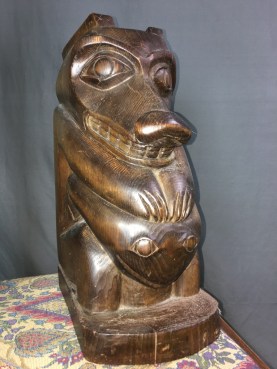
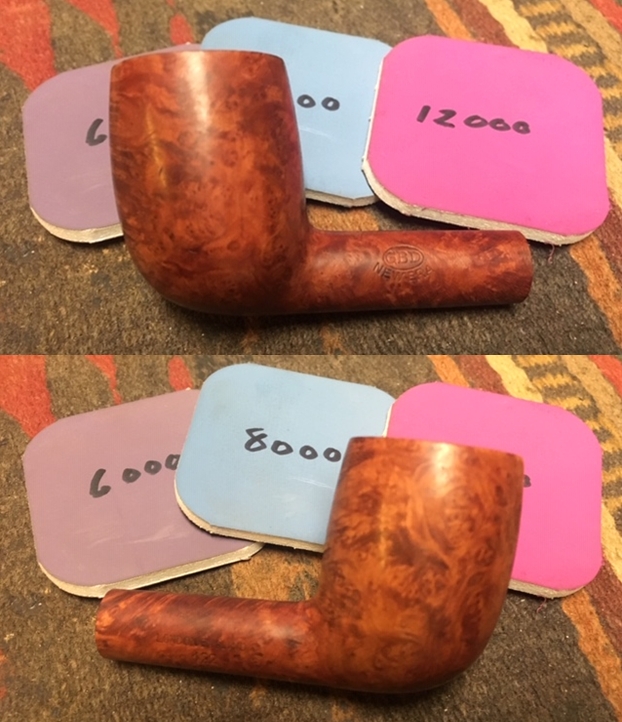
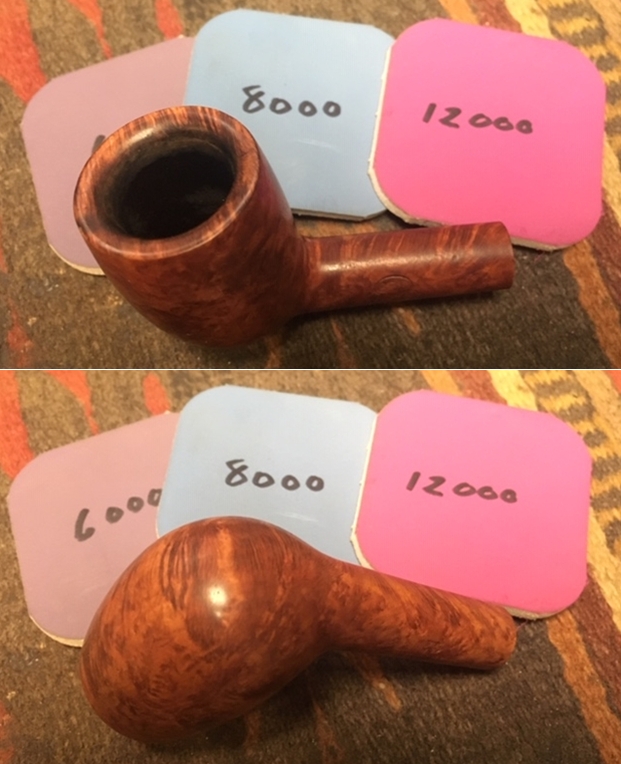
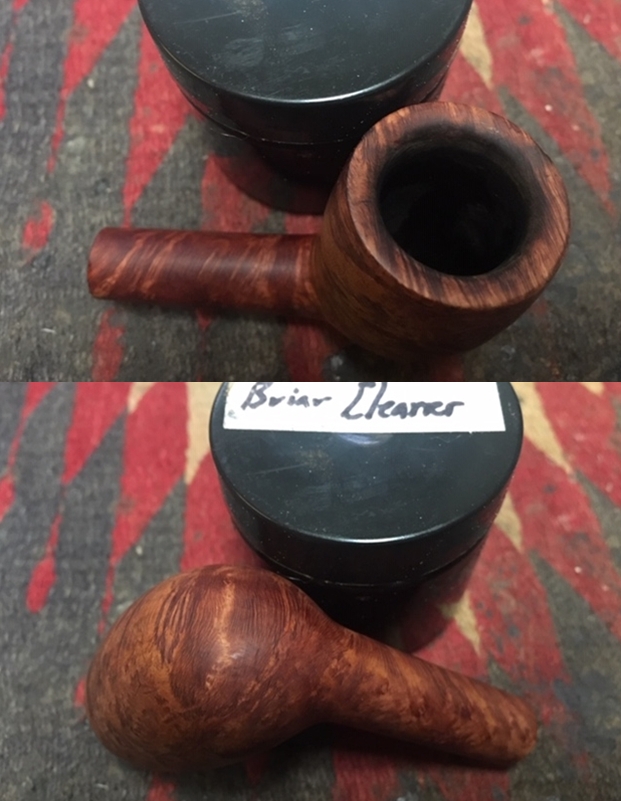
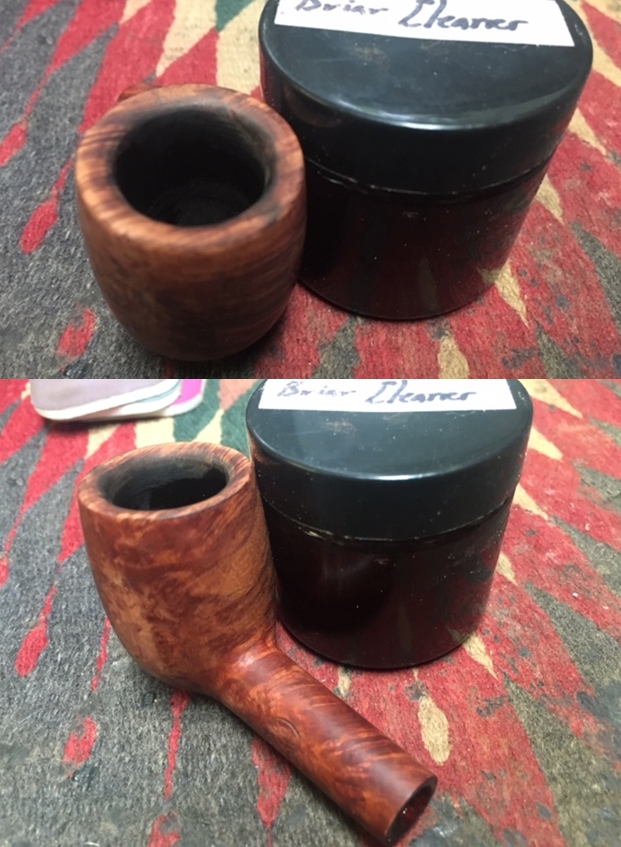
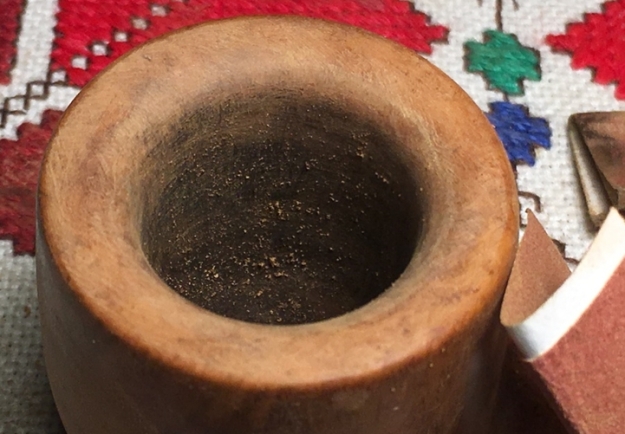
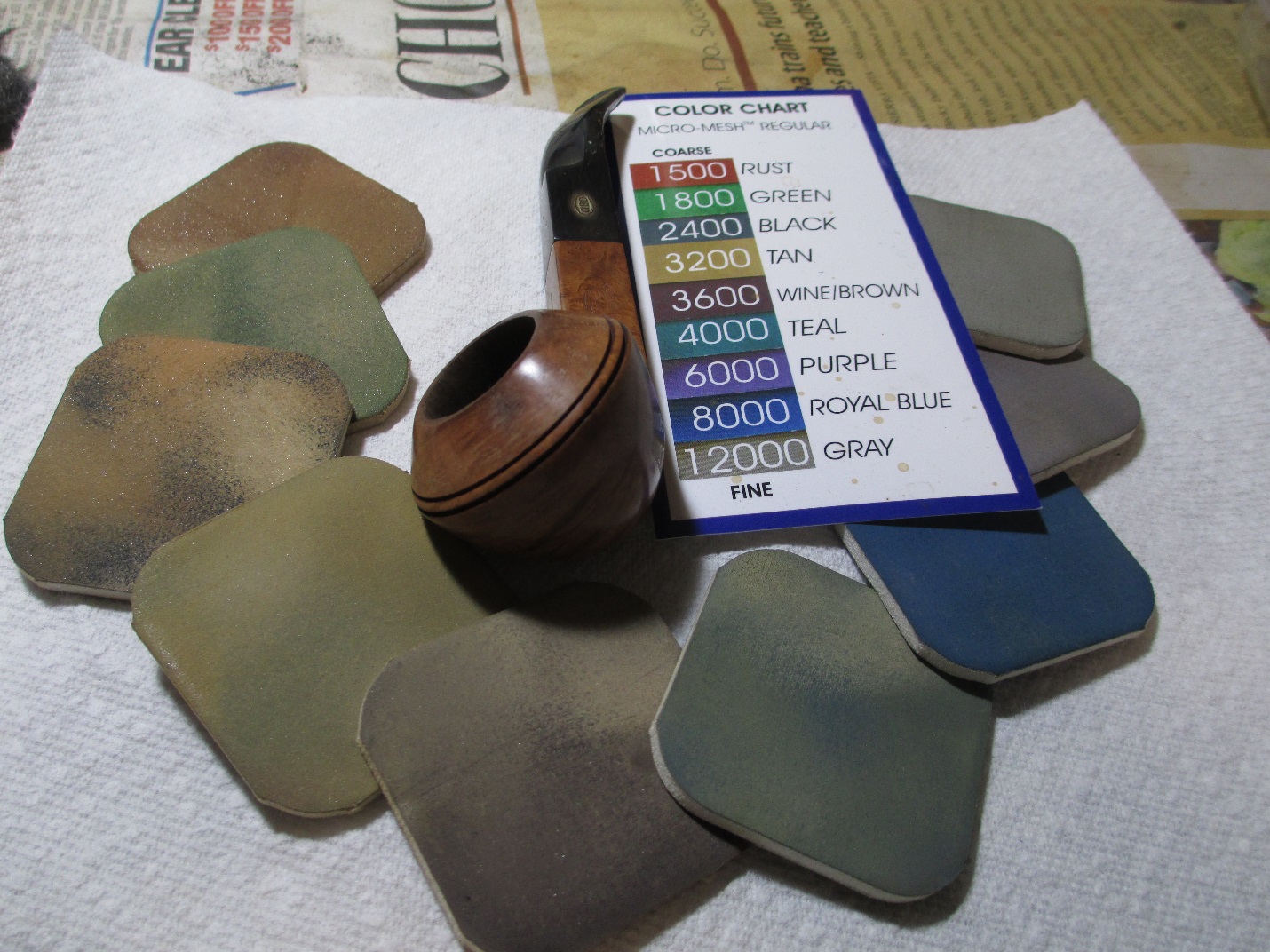
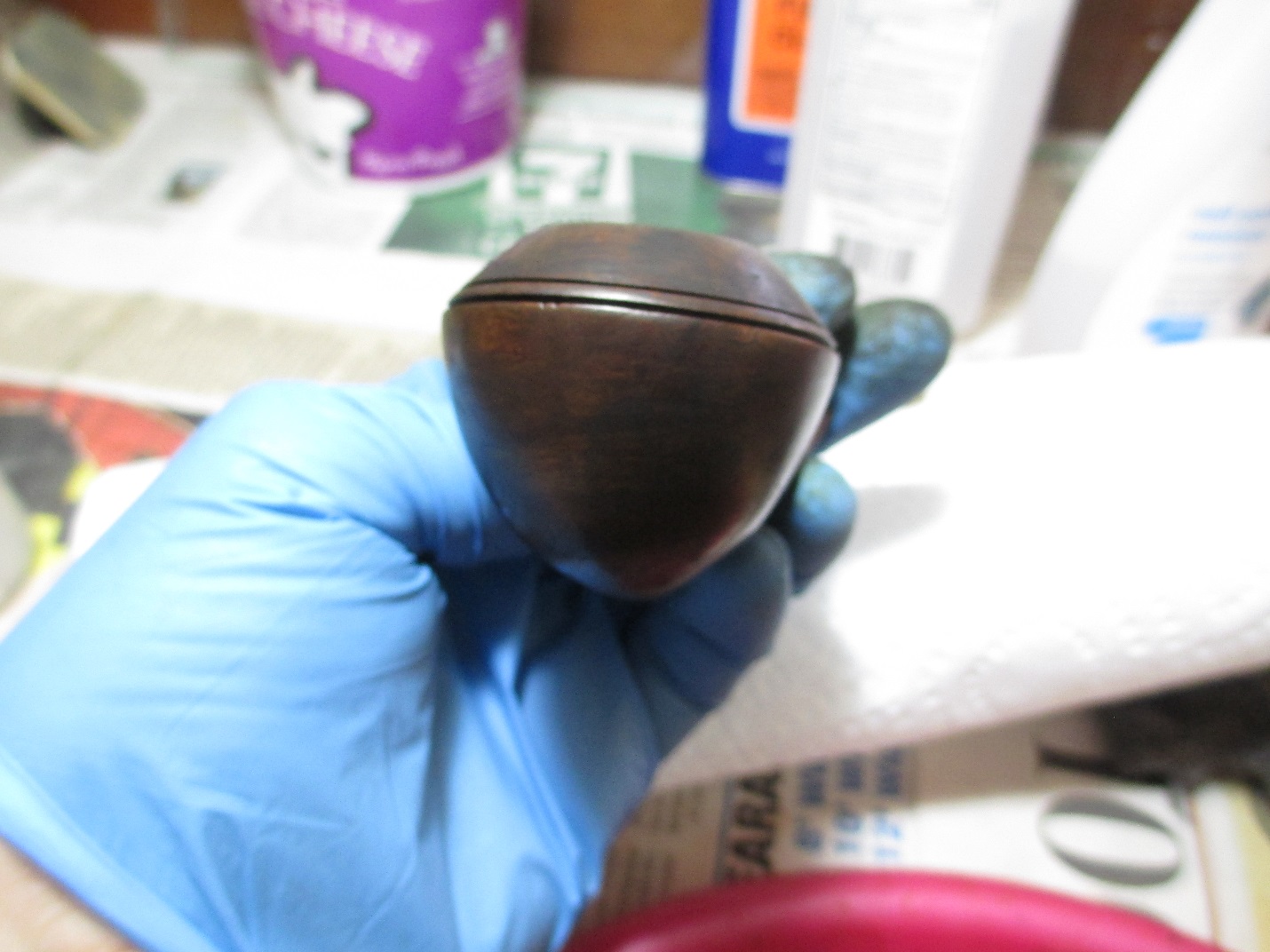
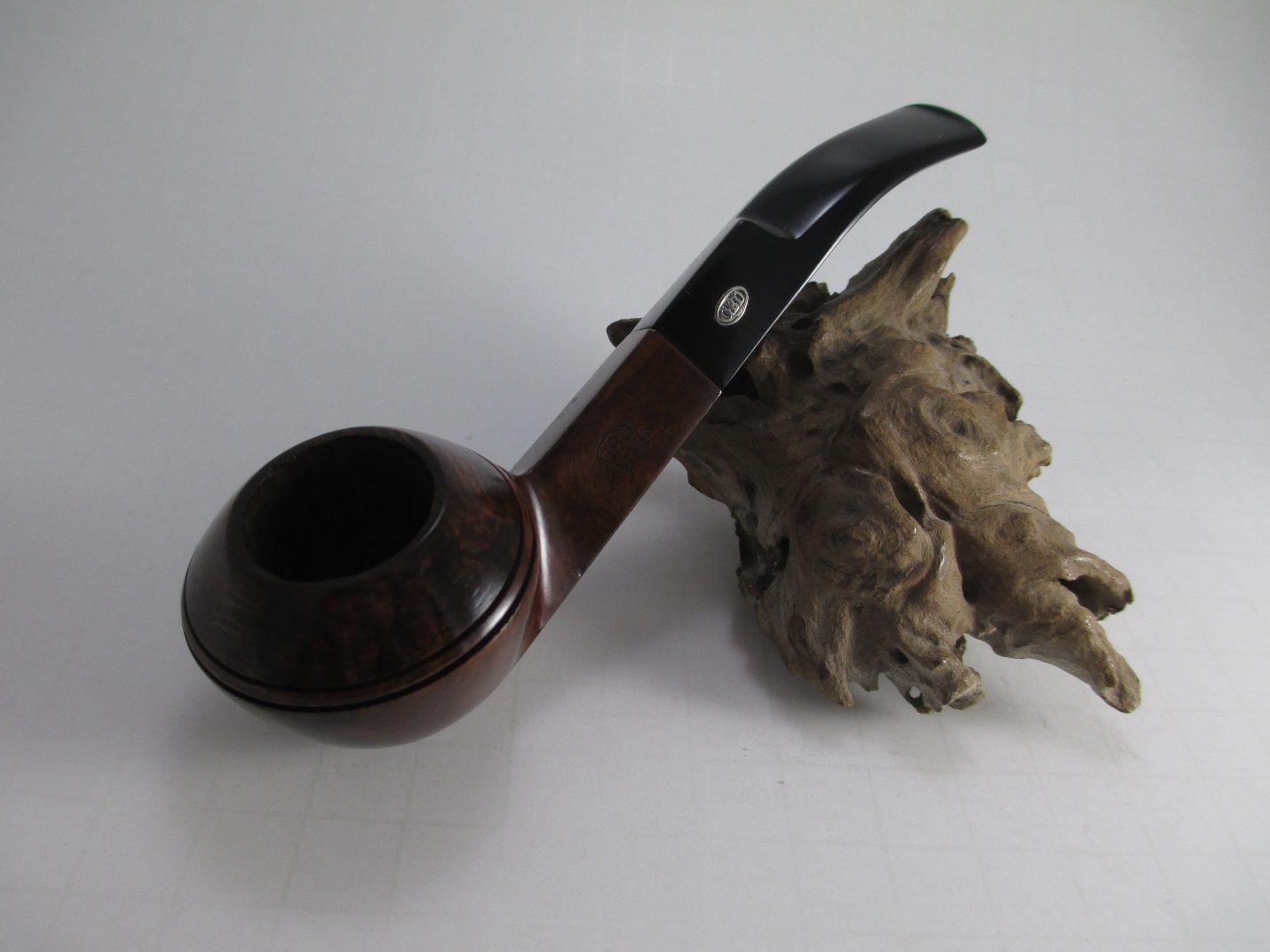
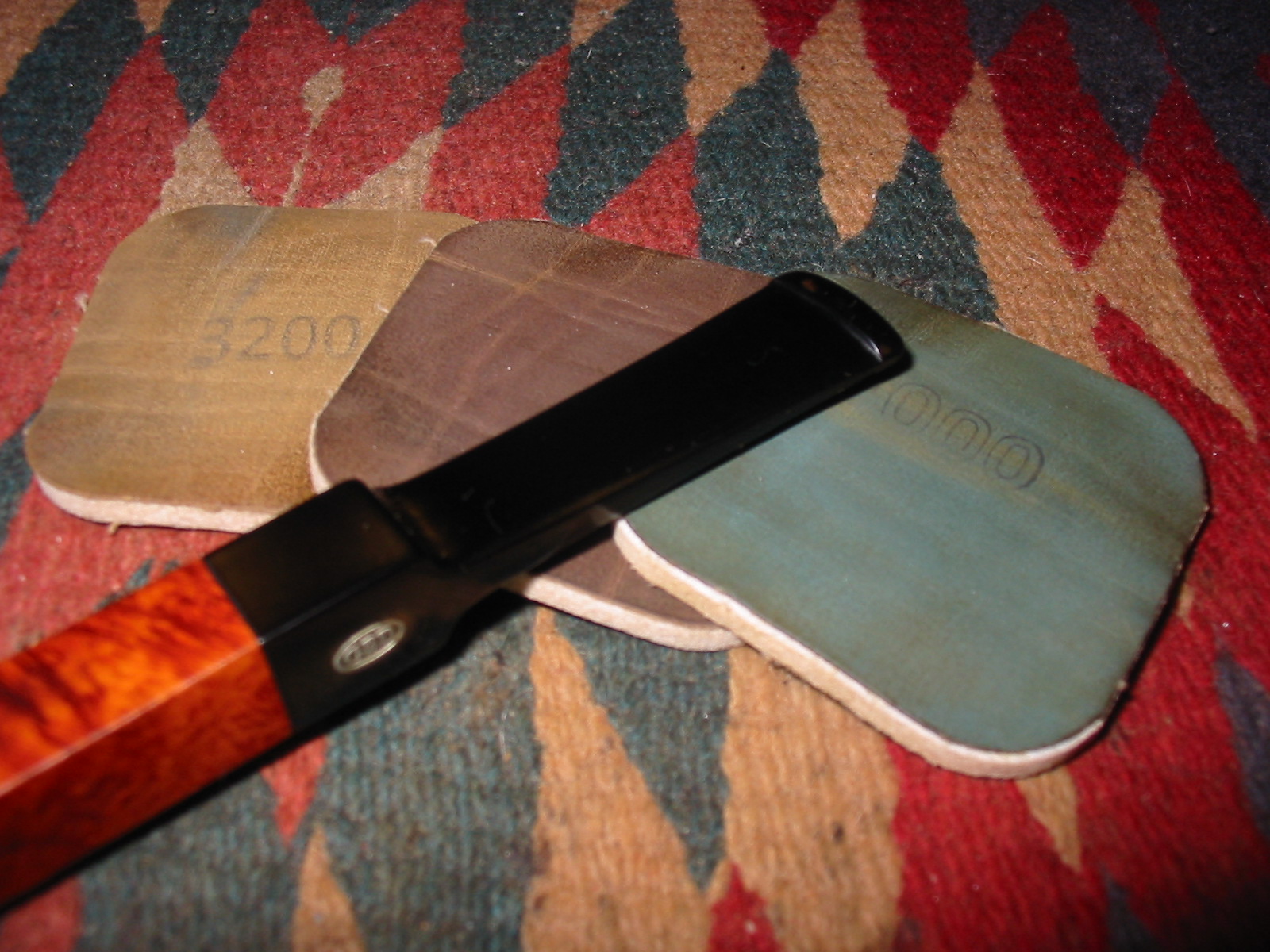
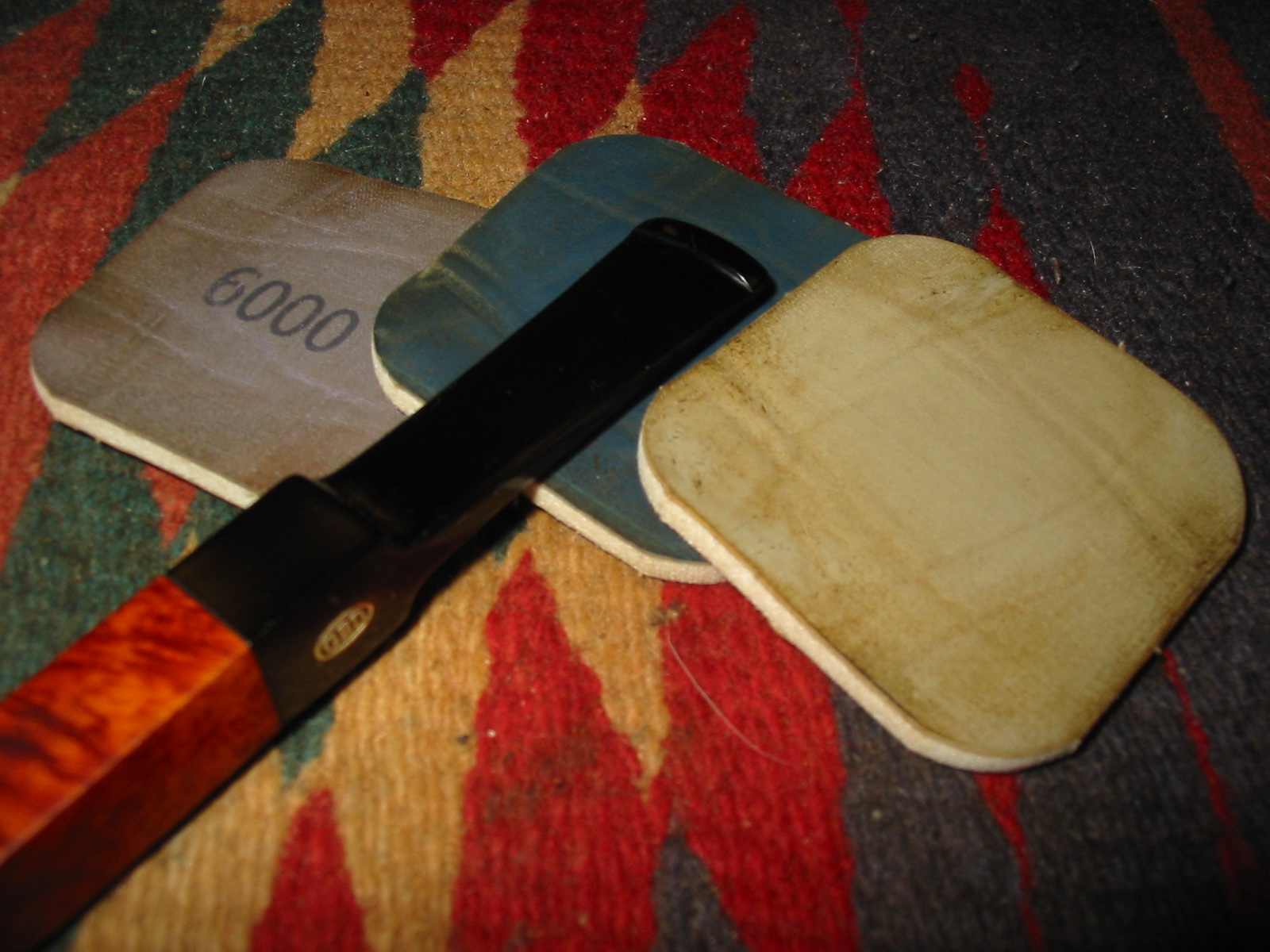
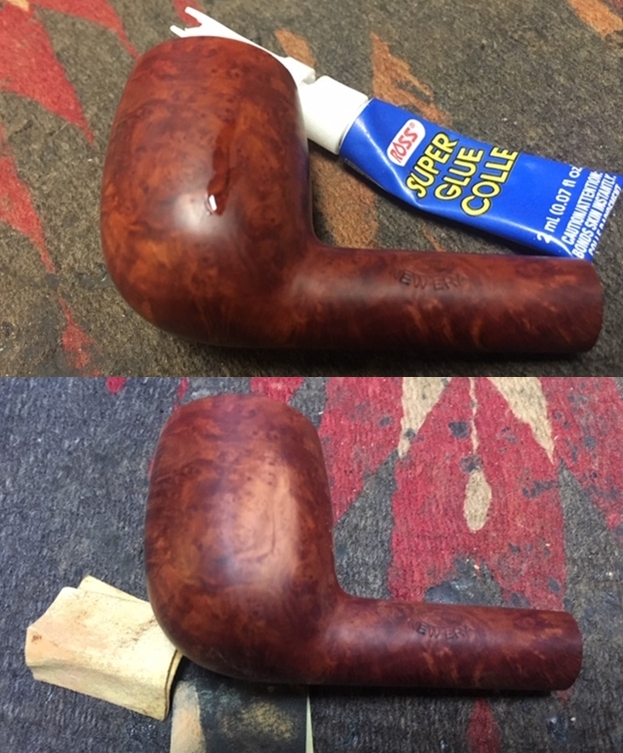
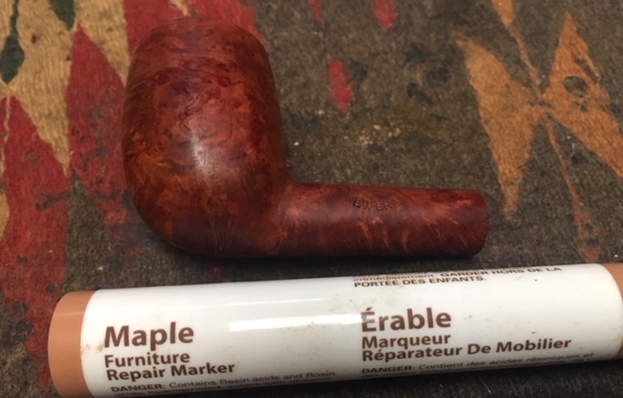
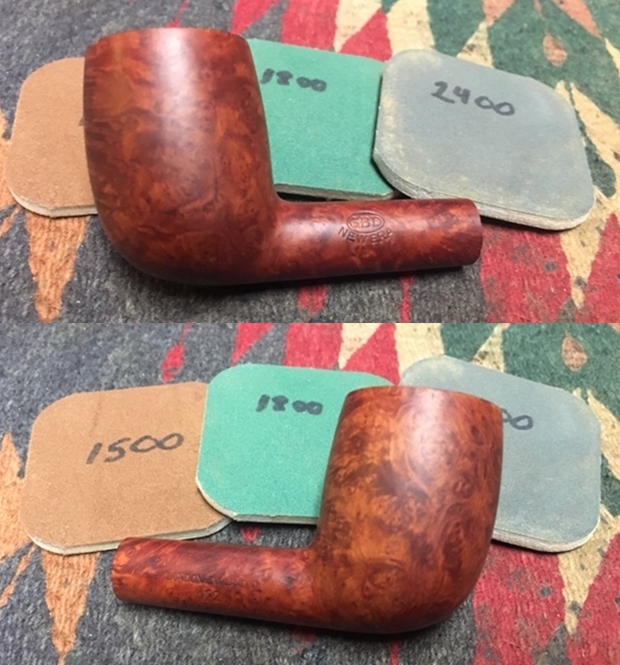
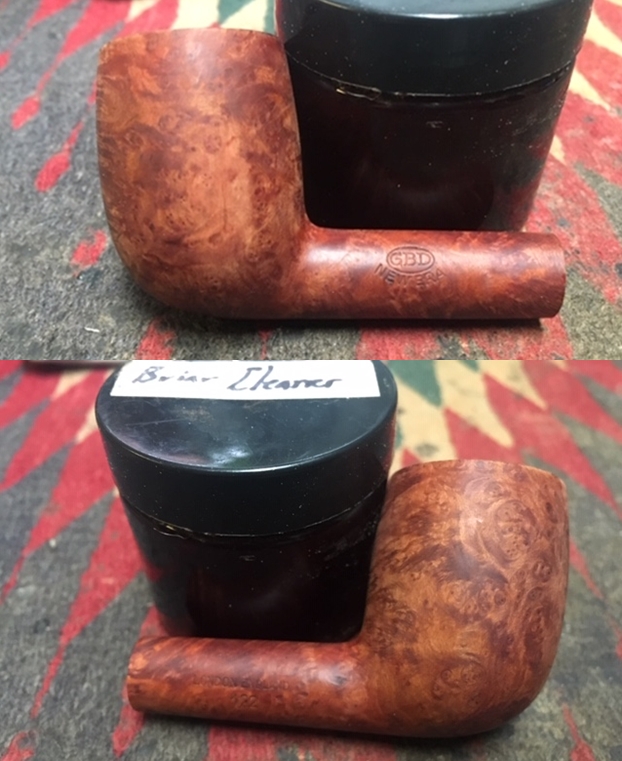
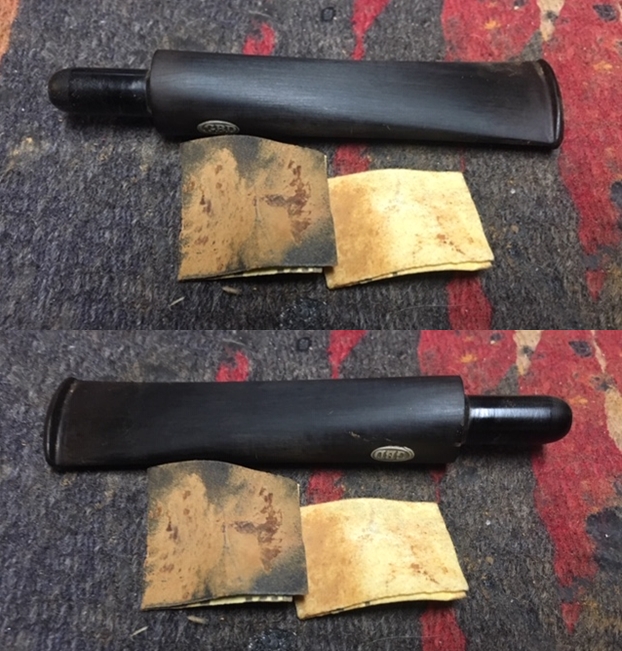
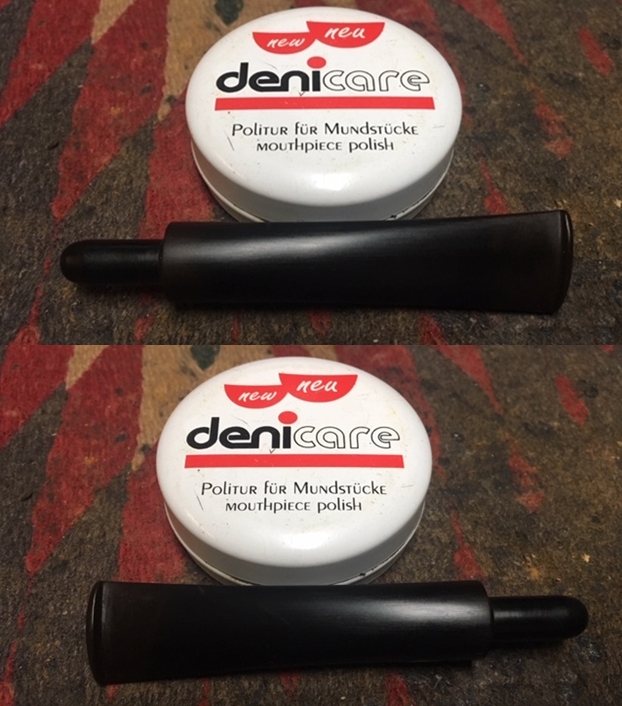
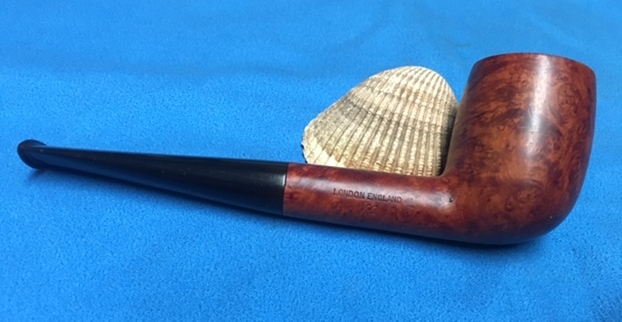
Now on to the rest of the restoration on this GBD New Era Billiard. Since Jeff had done such an amazing clean up job on the bowl it was very easy for me. There was some darkening on the inner beveled edge of the rim that needed to be addressed. I sanded it with a folded piece of 220 grit sandpaper to remove and minimize the damage to the bevel. I continued by starting to polish it with 400 grit wet dry sandpaper. I wiped the rim edge down with a damp cloth to remove the sanding dust on the briar. The finished rim top looked much better than when I started.There was a deep cut or groove in the briar on the left side of the bowl. It looked like someone had scratched it against hard surface leaving a deep gouge. I filled in the gouge with clear super glue. Once the glue had dried I sanded it smooth with 220 grit sandpaper and blended it with 400 grit wet dry sandpaper.  I used a Maple stain pen to touch up the sanded area to match the rest of the bowl. It looked very good and would completely blend once the bowl was polished with micromesh.I polished the briar with micromesh sanding pads to blend in the stain and to polish the briar and remove the scratches in the surface of the bowl, heel and shank. I wet sanded with 1500-12000 grit pads and wiped the bowl down between each pad with a damp cloth.   I decided to clean the briar with Mark Hoover’s Before & After Briar Cleaner to clean up the sanded surface of the briar and blend sanded rim edge. I rubbed it into the surface of the briar and let it sit for 10 minutes. I rinsed the bowl off with warm running water to remove the product and the grime.       I rubbed the bowl down with Before & After Restoration Balm. I worked it into the surface of the briar with my fingertips to clean, enliven and protect it. I let the balm sit for a little while and then buffed with a cotton cloth and shoe brush to raise the shine. Mark Hoover’s Balm is a product that I have come to appreciate and one I use on every pipe I have been working on.     I set the bowl aside and turned my attention to the stem. I sanded the stem with 220 grit sandpaper to break up the oxidation. I started the polishing with 400 grit wet dry sandpaper to remove the scratching. It is starting to look good.    I have one more tin of Denicare Mouthpiece Polish left from a few that I have picked up over the years. It is a coarse red pasted that serves to help remove oxidation. I polished the stem with that to further smooth out the surface of the vulcanite (and to be honest – to use it up).   I polished the stem with micromesh sanding pads – wet sanding with 1500-12000 grit pads. I wiped the stem down after each sanding pad with Obsidian Oil. I polished it with Before & After Pipe Stem Polish – both Fine and Extra Fine. Once I had finished the polishing I gave it final coat of oil and set it aside to dry.       I am excited to be finishing another one of Bob Kerr’s Estate pipes and as usual I look forward to what it will look like when it is put back together, polished and waxed. I put the bowl and stem back together. I polished the bowl and stem with Blue Diamond to polish out the scratches in the briar and the vulcanite. I gave the bowl and stem multiple coats of carnauba wax. I buffed the pipe with a clean buffing pad to raise the shine. I hand buffed it with a microfiber cloth to deepen the shine. The pipe polished up pretty nicely. The rich reddish brown finish really popped with buffing showing the contrast colours of stain on the pipe. The polished black vulcanite stem went really well with the colours of the bowl. This old GBD New Era 122 Billiard was another fun pipe to work on thanks to Jeff’s cleanup work. It really has the classic GBD Billiard shape that is very recognizable. The combination of various stains really makes the pipe look attractive. It is a comfortable pipe to hold in the hand. The finished pipe is shown in the photos below. The dimensions of the pipe are Length: 5 ¼ inches, Height: 1 ¾ inches, Outside diameter of the bowl: 1 ¼ inches, Chamber diameter: ¾ of an inch. If you are interested in carrying on Bob’s legacy with this pipe send me a message or an email. I have a lot more to work on of various brands. Perhaps one of those will catch your attention. Thanks for reading this blog and my reflections on the pipe while I worked on it. This is an interesting estate to bring back to life.
Todd’s Second Commission: A GBD New Era London England 9493 Pot with Distinction


Blog by Dal Stanton

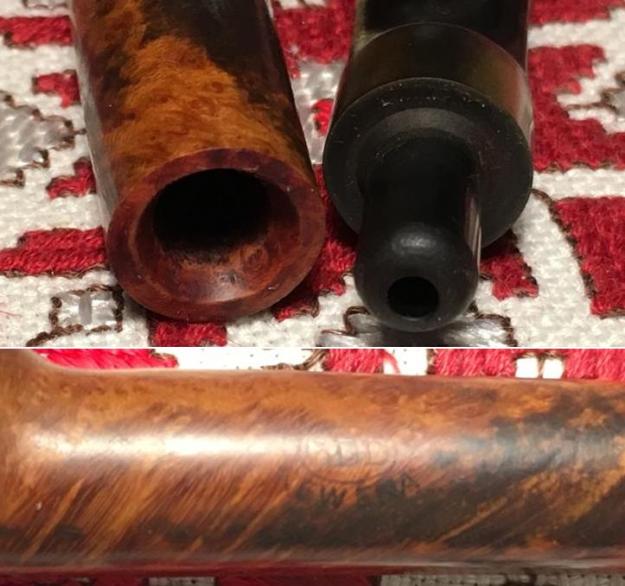
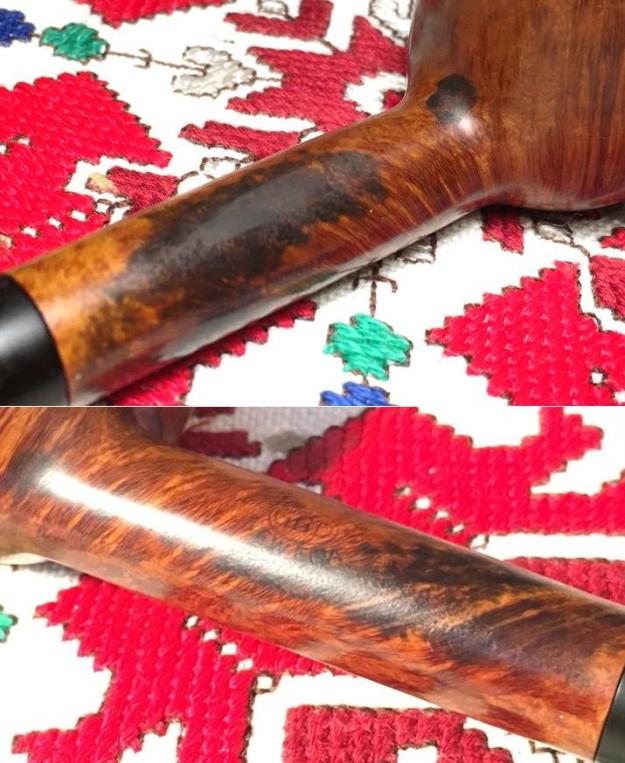
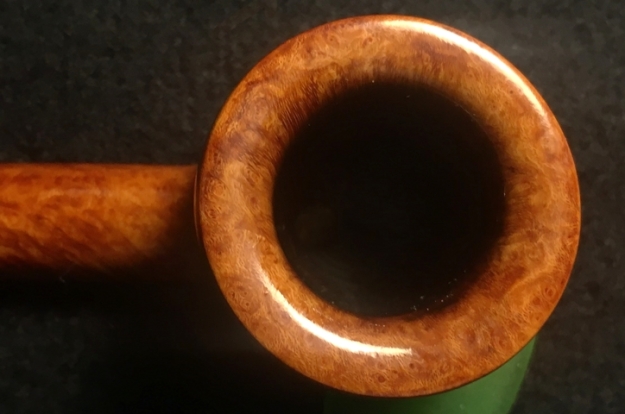
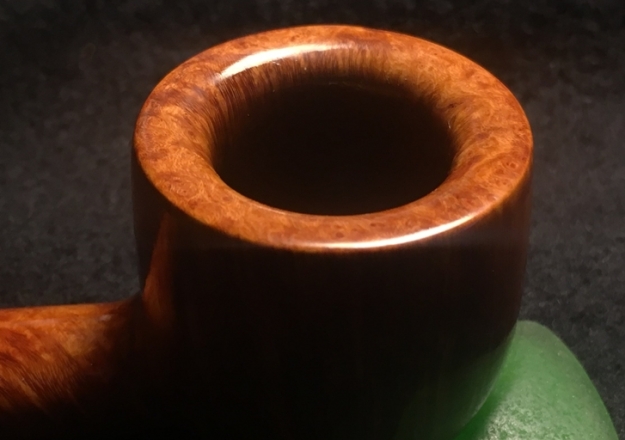
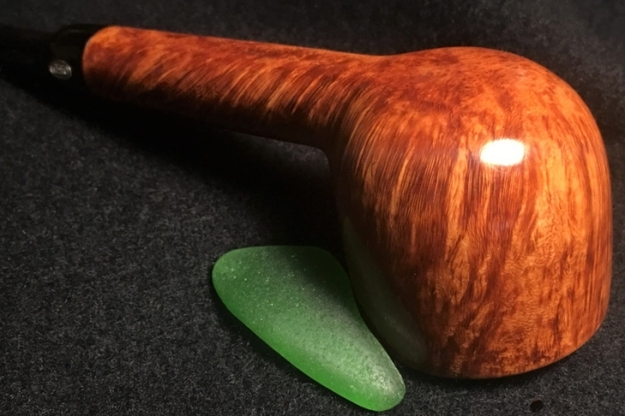
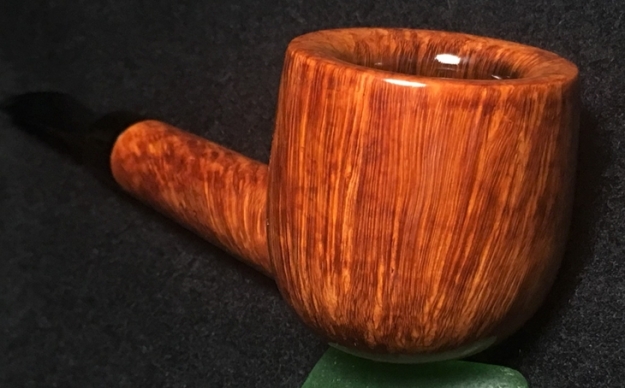
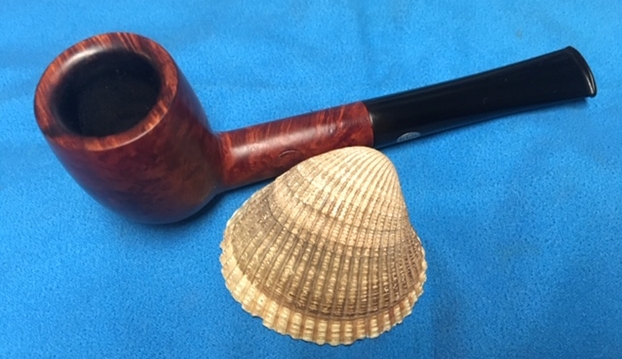
This is the second of 3 pipes that Todd commissioned.  I saw this GBD New Era long shank Pot or possibly a wide bowled Lovat, on the eBay block and liked it immediately.  It has seen some serious wear and tear, but he is obviously well loved, and the grain….  Oh my, the vertical grain on the bowl of the Pot shape it distinctive and when cleaned up….  Dream!  Well, my bid was enough when the bell rang, and it didn’t remain in my collection, and Todd saw the potential in the For “Pipe Dreamers” Only! collection and now this GBD New Era is on my worktable.  These pictures take a closer look at the GBD New Era: The nomenclature on both sides of the shank are thin but legible.  On the left flank of the shank is ‘GBD’ encircled in the oval [over] ‘NEW ERA’.  The right side of the shank is stamped ‘LONDON ENGLAND’ [over] 9493, the shape number.  The stem bears the classic brass GBD rondel.
I like this A Brief History of GBD from Pipedia to remind me of the origins.

The company was founded in Paris France in the 19th century by Ganeval, Boundier and Donninger who were no longer associated with the company by the turn of the century. By the time they left the GBD name was well established and thus retained. In 1903 an additional factory was built in England and ran by Oppenheimer. The Paris factory moved to Saint-Claude in 1952. Since 1981 the majority of GBD pipes come from the English factory. At about that same time GBD merged with Comoys, since then all production for both GBD and Comoy comes from a single factory.

The dating of this New Era can be determined with certainty to be before the 1980s. The brass rondel on the stem and straight line “LONDON, ENGLAND” stamping of the nomenclature identify it as being made prior to the merger with Comoy’s in 1982 (or 1981). 

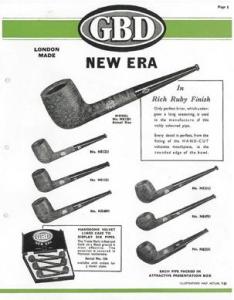
The GBD line, New Era, can be found in catalogs going back to the 1950s.  The example I found on Pipedia’s article on GBD are pages from Circa 1950s Oppenheimer Pipes Catalog, courtesy Václav Blahovec, which I’ve included.

The add to the right is from Pipedia’s discussion on GBD Model Information is credited to the 1961 GBD Flyer, courtesy  Chris Keene’s Pipe Pages, unfortunately now a defunct website.  So, the spread of possible dating for the GBD New Era Pot on my table could span from the 50 through the 70s.
The quality of the New Era line is toward the upper third of GBD lines, from what I read in the Pipedia article.  This last quote from Pipedia’s reprint of Pieces From My GBD Collection, by G.L. Pease (re-published here by permission), sums up well GBD pipes and what I believe is true of the GBD New ERA before me:

Since then, many GBDs have come, many have gone. I’ve tried to select exquisite examples for my collection – pipes that are exemplary in every regard. Not all old GBDs smoke wonderfully, but when they do, they sing. The French made ones, for some reason, seem particularly suited to Virginias. GBDs are not exactly hip. They’re not trendy. They’re not the high-grade pipes du jour. But, they are solid, classic pipes with a long history, and they can be subtly and sublimely beautiful. They can also often be had without sacrificing too much coin.

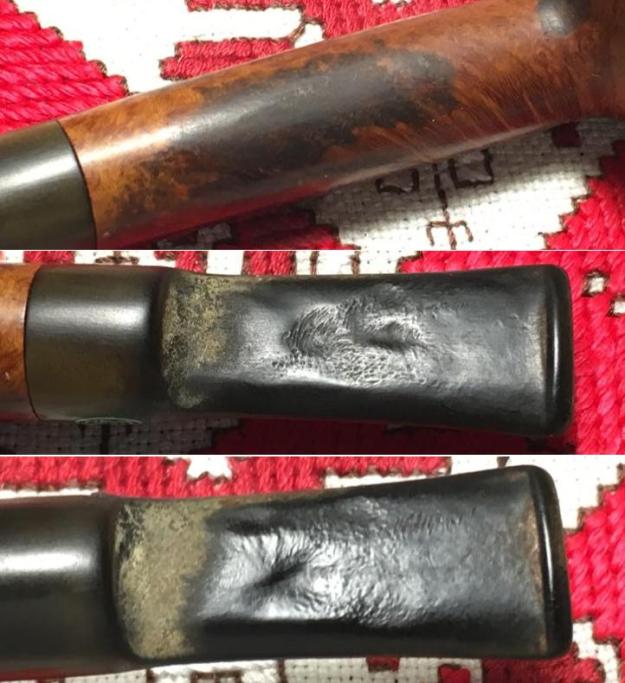
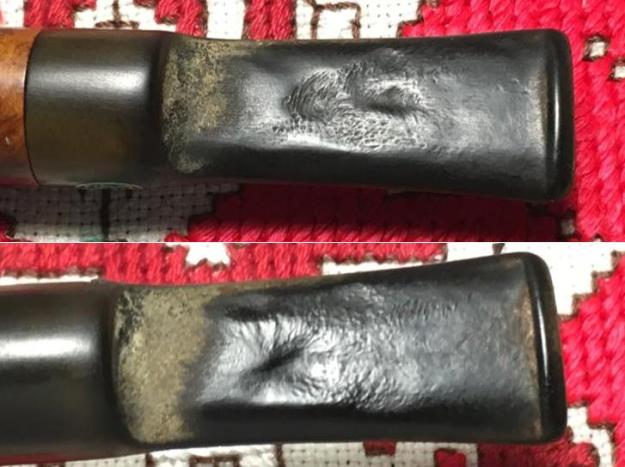
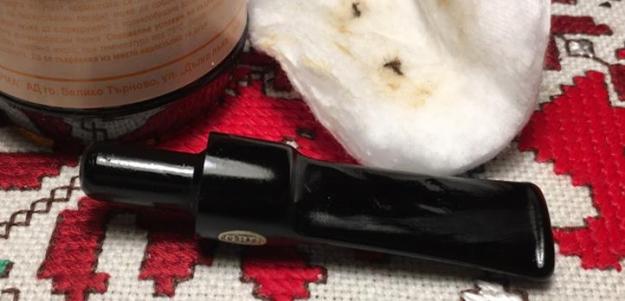
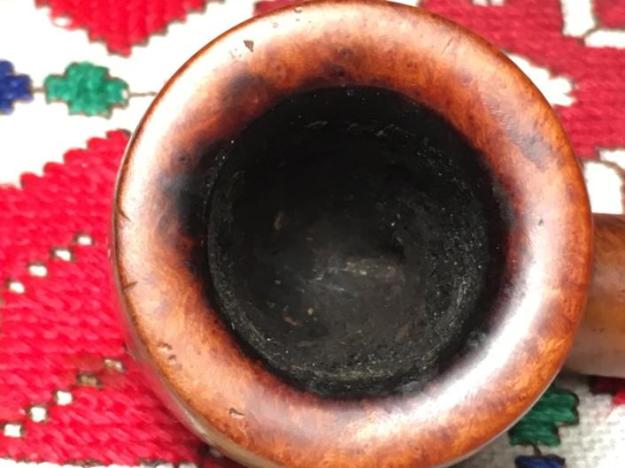
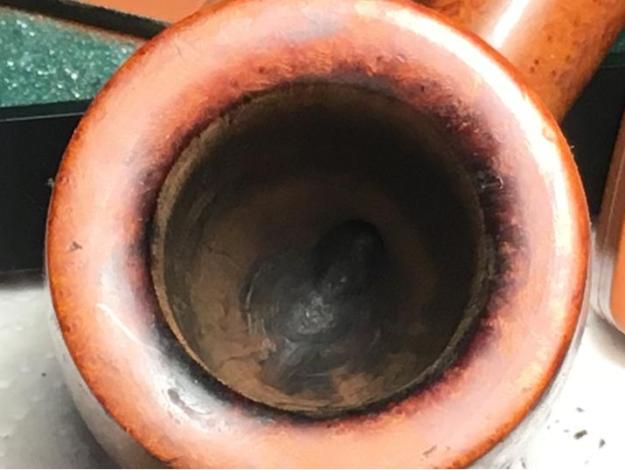
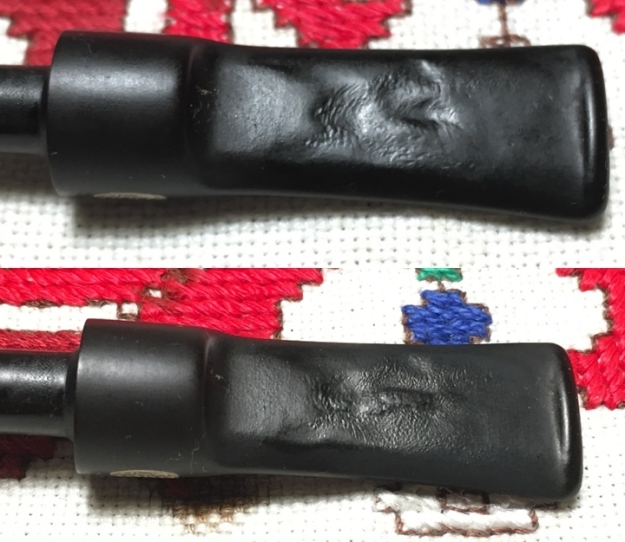
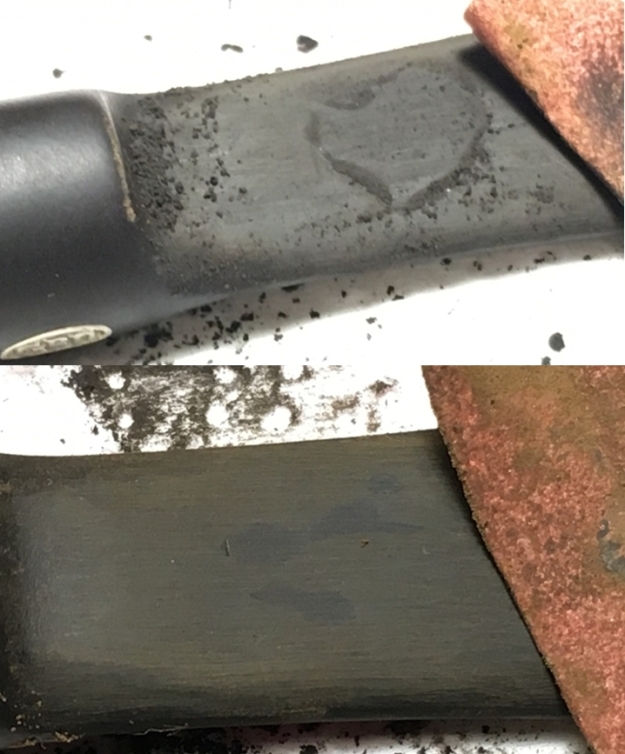
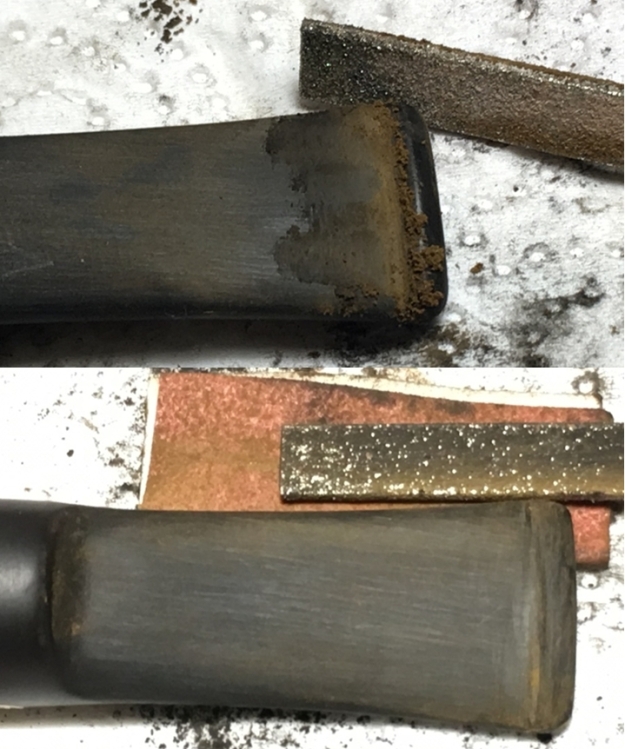
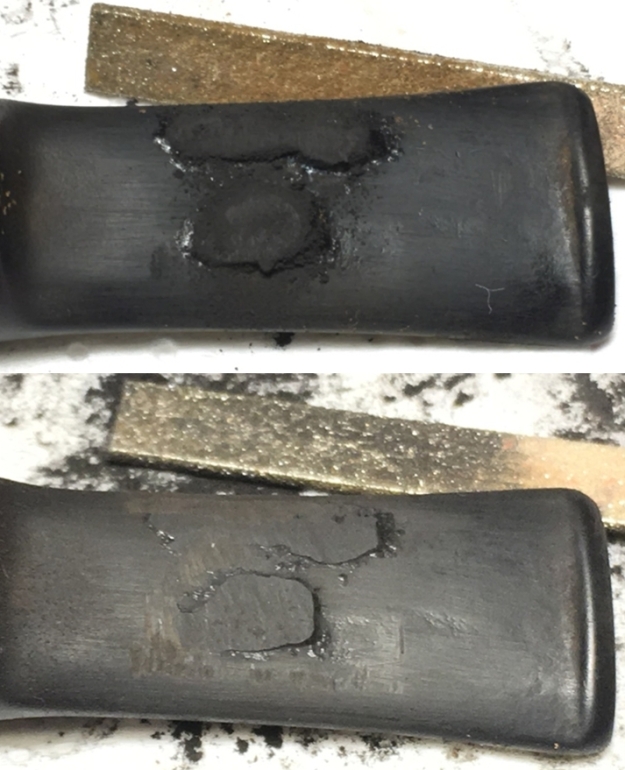
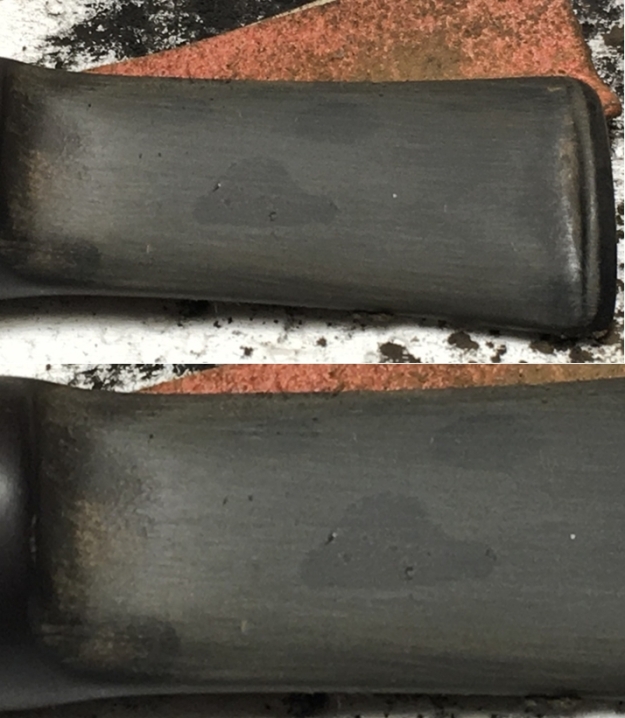
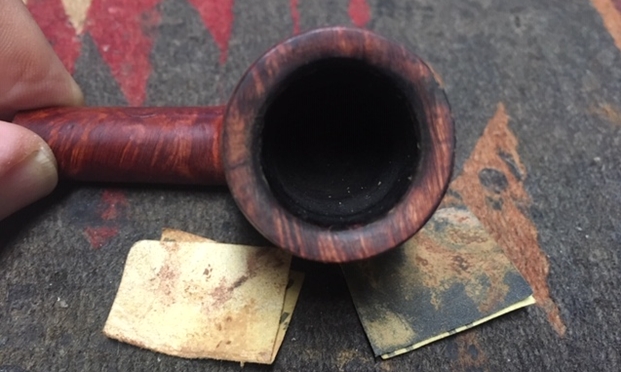
As I look at the GBD New Era Pot on my worktable, what stands out immediately are the dark blotches on the briar surface, especially on the long shank.  If these were on the bowl or the heel, I would be concerned about heating damage.  But on the shank, the issue is on the briar surface and hopefully cleaning will address it. The chamber has moderate cake build up and the rim shows some lava flow and scorching on the forward part of the rim, yet there is darkening around the entire inner circumference.Oh my, the short saddle stem is oxidized and mauled!  Looking at the bit (upper and lower below) the forensics are not difficult to decipher. One can discern the eye or canine tooth imprinted followed by the first premolar – especially on the upper side.  The lower side is not as distinct, yet the practice is revealed.  The former steward’s ‘hands free’ approach was to insert the entire flat part of the stem on the right side in his (or her?) mouth and clamp down using the stem as a palate to hold the pipe in place.  Hmmmm, deep breath.  Moving on.With a good understanding of the pipe on my worktable, I begin the restoration by cleaning the internal airway of the stem with several pipe cleaners wetted with isopropyl 95% and then I add the GBD’s mangled short saddle stem to a bath of Before & After Deoxidizer along with other pipes in the queue. After the stem soaks for several hours, I fish the GBD stem out of the Deoxidizer and after draining the Deoxidizer, I wipe the stem with cotton pads wetted with alcohol.  A good amount of oxidation is removed, and the stem looks good after cleaning it.To begin the revitalization of the vulcanite, I then hydrate the stem by applying paraffin oil (a mineral oil) to the stem – it absorbs it well.  I put the stem aside for the time.To begin the cleaning regimen of the GBD Pot stummel, I ream the chamber using the Pipnet Reaming Kit. The dimensions of the chamber live up to a grand Pot image – the chamber is 1 inch wide and 1 3/8 inches deep, plenty of room for a bit of tobacco!  After putting down paper towel to minimize cleanup, the width of the chamber causes me to skip the smallest blade head and I use the remaining 3 larger blade heads.  I then transition to scraping the walls further with the Savinelli Fitsall tool and finish the reaming by sanding the chamber with 240 grit paper wrapped around a sharpie pen to give leverage.  After wiping the chamber with a cotton pad and alcohol, I inspect the chamber, and everything looks great – no signs of heat damage.  Now a fresh start for the chamber. Now, turning to cleaning the external briar, I hope that the cleaning will address the large dark blotches on the surface.  I use undiluted Murphy’s Oil Soap and a cotton pad to do the job – and what a job it does! As I scrub with the cotton pad the grunge starts breaking up and eventually the black spots on the shank are removed!  I love Murphy’s Soap!  I work further on the inwardly sloped rim also using a brass wire brush.  This helps, but the rim still has some scorching darkness left.  The pictures show the great progress. Remaining on the cleaning regimen, I now address the internals of the stummel using cotton buds, pipe cleaners wetted with isopropyl 95%.  I also use shank brushes which are perfect for the longer shank of this GBD.  To quicken the process, I also scrape the mortise with a dental spatula.  In time, cotton buds started emerging much cleaner.  Later, I plan to also clean the internal further with a kosher salt and alcohol soak.With some fear and trembling, I study again the mauled saddle stem.  The Before & After Deoxidizer did a good job removing the oxidation.  My first assault on the stem damage will be to expand the stem’s surface to regain the multitude of compressions on the upper and lower bit. I take pictures to mark the starting point for comparison.  Then, using a Bic lighter I paint the vulcanite surface.  As it heats, it expands and hopefully reducing the severity of the compressions.  After one round of heating upper and lower bit several times, I take a picture for comparison.

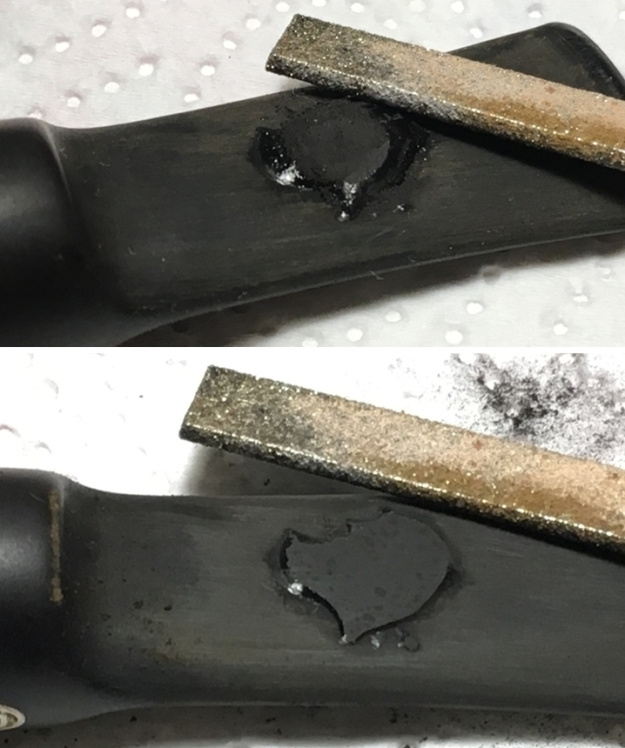
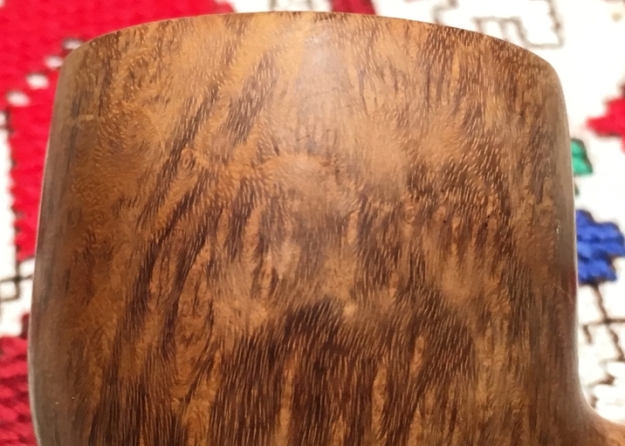
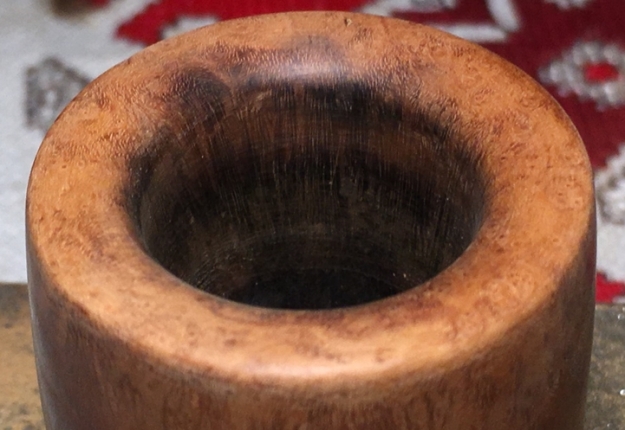
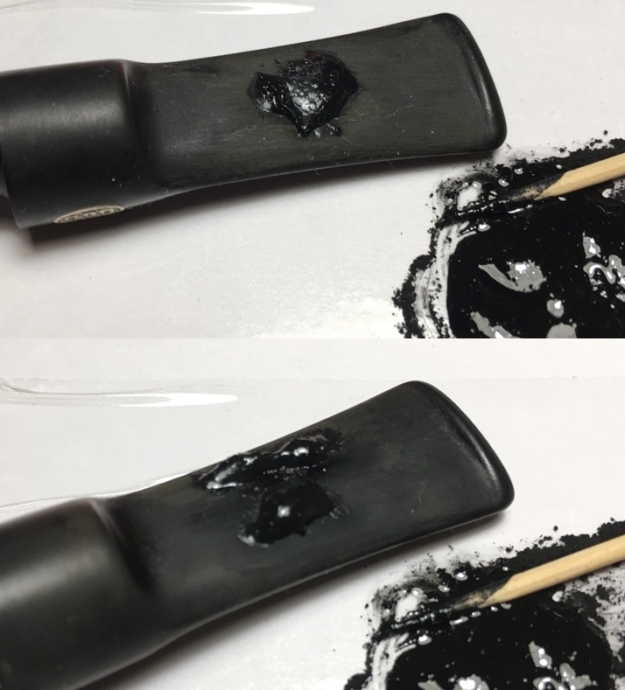
Upper, before and after:Lower, before and after:Next, using 240 grit sanding paper, I sand the upper and lower bit to get a better understanding of the contours of the remaining damage after using the heating method.  As you can see in the pictures I take after sanding some, the compression areas are revealed more clearly.  I have found from experience is that using charcoal/CA glue as a patch on the vulcanite stem, the patch material needs to have enough depth in the compression to get a good hold.  I have found that patching a compression that is too shallow will not hold, but sometimes these compressions are too deep to sand!  For instance, I debate whether it is better to sand the two lesser upper compressions on the lower bit (second picture) and risk sanding and taking too much of the stem?  And going partially and changing your mind with the view to applying patch material, and then it’s too shallow!  I decide to apply patch material at this point and then sand and see how it comes out.I first wipe the stem with alcohol to clean the area. To form the patch material, I mix CA glue with activated charcoal.  I start with the upper stem side.  I put a small pile of charcoal on an index card and put a blob of thick CA glue next to it.  Then, using a toothpick I pull charcoal into the CA glue mixing it as more is added.  When it thickens to that of molasses, I use the toothpick to trowel the mixture to the compressions needing filling.  I use an accelerator to speed the curing time.  I do the same for the lower bit compressions.  To now begin removing the excess patch material to the upper bit, I use a flat needle file.  The pictures show the progression.After bringing the patch mound down to the surface, I then switch to sanding with 240 grit paper to remove the excess patch material totally.  In the second picture you still see the patches, but the patch is now flush with the stem surface.Remaining on the upper bit, I refresh the button using the flat needle file and follow with 240 grit paper erasing the file marks and fine tuning the button restoration.  The upper bit repair looks great.Now, starting on the lower bit, I do the same using the flat needle file to bring the patch mounds down close to the briar surface.Then, taking over with the 240 paper I sand away the excess patch material totally bring the patch flush with the vulcanite surface.  The second picture looks closer showing pitting in the patch.  This happens when air bubbles are trapped in the patch material and when they are sanded, they are exposed as pits.  I’ll address this later.Moving again to freshen the button lip I use the flat needle file and transition to 240 grade paper to erase the filing scratches and to smooth the stem.  I like the progress!To address the air pockets in the lower patch I first wipe the areas with a cotton pad and alcohol to clean it.  I then paint a fine layer of thin CA glue over the patch area with the CA glue filling the pockets.  After the glue cures, I then sand it with 240 paper.  The patch is patched, and I move on! Now addressing the entire stem, I wet sand using 600 grade paper followed by applying 0000 steel wool.To complete this phase of the stem restoration, I use Magic Eraser on the stem to cleanse it further and then I apply paraffin oil (a mineral oil) with a cotton pad to rejuvenate the vulcanite.  From where we started with this stem, its been through a lot! I put the stem aside.  This work day is ending and the last thing I do is to continue the cleaning of the stummel giving it a kosher salt and alcohol soak through the night.  I first fashion a ‘mortise wick’ by pulling and twisting a cotton ball.  I then stuff it into the mortise and airway with the aid of a stiff straight wire.  I then fill the bowl with kosher salt.  I use kosher salt because it doesn’t leave an aftertaste and the whole process, with the salt and alcohol, freshens the briar and it is much more pleasant for the new steward!  After putting the stummel in an egg crate for stability, I then fill the bowl with isopropyl 95% until it surfaces over the salt.  After a few minutes the alcohol recedes, and I follow by topping off the alcohol once more.  I then turn out the lights. The next morning, the kosher/alcohol soak had done the job.  Both salt and wick were discolored from the process of drawing out the residual tars and oils from the mortise and airway.  After tossing the expended salt I wipe the chamber with a paper towel, push shank brushes through the mortise and blow through the mortise.  To make sure all was cleaned, I utilized a few more cotton buds and a pipe cleaner wetted with isopropyl 95% to finish the cleaning.  Moving on.With the cleaning completed, I study the bowl and the grade of this block of briar is pushing up the New Era reputation stamped on its shank.  Who ever the pipe crafter was in the GBD factory in London was, cut the block beautifully.  The main orientation of the distinct straight grain is astonishingly vertical around most of the bowl.  Predictably, the heel and the rim show the striking results of the horizontal cuts that formed them – bird’s eye grain, the end or cross-section views of the vertical straight grain.  This presentation of bird’s eye carries through the shank as well.   After the cleaning of the surface, the heel already displays beautifully its patch of bird’s eye grain.  The rim’s damaged state at this point, masks the bird’s eye that I see faintly.  The challenge of the rim, but what also makes it attractive, is the tapered cant toward the chamber, so topping is out of the question.  The taper is also gently rounded.  The other thing I see is the thin finish.  The cleaning around the rim created a discoloration so that the upper bowl is lighter – and there’s a water line circling.  The pictures show the things I’m describing. The first thing I do is to wipe the stummel with isopropyl 95% to clean the older finish off so that I’m starting with a clean slate – as much as possible!  The alcohol did a great job, just what I wanted.  Interestingly, what I thought were water lines running around the circumference of the bowl were not caused by cleaning.  I discover that it is also part of the grain structure – fascinating.  With curiosity, I looked back at pictures from the eBay seller and yes, the line pattern was there!  The pictures below look at it again after the cleaning with alcohol. Next, I start addressing the rim damage and sanding.  My goal overall, is to remove the damage and tease out the bird’s eye on the rim so that it is more distinct.  The picture below shows that the bird’s eye is hidden for the most part.  To start conservatively, I use a coarse sanding sponge that will hug the contours of the rim and gently sand.  Let’s see what this does.  The first picture below shows the cleaning of the rim in general and you can still see a scorch mark on the forward rim (at 9 o’clock in the pictures).  The second picture is focusing more into this area and you can better see that the lower area is still darkened from burning.  I’m not satisfied with the results.  Becoming less conservative out of need, I use 240 grit paper and sand the rim – approaching it more like a bevel with the paper rolled and I press the paper with my thumb, conforming to the contours of the rim.  I leverage the fact that the rim is already canted and I simply go with it.  I do the hard work with the 240 sanding the entire rim and focusing on the lower circumference more to remove the charged, discolored briar. I follow the 240 with the same approach but with 600 grit paper.  Now I’m seeing what I want to see!  The briar is cleaner and more responsive.  We’re on the right track.After examining the briar surface of the entire bowl again, I see no fills needing attention, but I detect very small scratches and pitting through normal wear and tear of the years on this GBD.  To address this, I use a medium grade sanding sponge and work on the small imperfections on the briar surface.  After this, I utilize a light grade sanding sponge on the entire surface.  I’m very careful to avoid the thin nomenclature stamping on the shank flanks. I like working with sanding sponges and the results look good.The micromesh regimen is next.  First, I wet sand with pads 1500 to 2400, then dry sand with pads 3200 to 4000 and 6000 to 12000.  Throughout, I’m uber cautious to avoid the thin nomenclature stampings on the shank flanks until the last couple of pads, which I run lightly over the stampings to clean it.  I love the pop of the grain after the micromesh regimen.  This GBD New Era is a very nice pipe. I put the stummel aside for the time and turn now to the waiting, short GBD saddle stem.  I run through the normal micromesh regiment wet sanding with pads 1500 to 2400 and dry sanding with pads 3200 to 4000 and 6000 to 12000, applying Obsidian Oil after each set of 3, when it strikes me that this stem had looked like it was mauled by a dog…and now.  If one works hard enough putting the glare at the right angle, like I did in the pictures below, you can see the residual scaring on the vulcanite stem where the patches were applied, yet these for restored pipes are marks revealing that they’ve had rough spots, but this one will wear his scars proudly. While working on the stem, my mind considers the next steps of the restoration process.  The question is which direction to go with the finishing of the GBD New Era Pot stummel – or bowl – it truly can pack a lot of one’s favorite blend!   Leave the natural briar as it is now or apply a dye.  The guiding principle when restoring vintage pipes with distinctive nomenclature and age is to try as much as one can match the original color motif.  So, I looked for examples of New Era pipes.

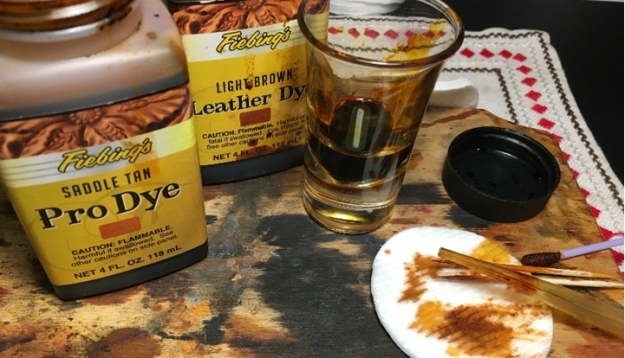
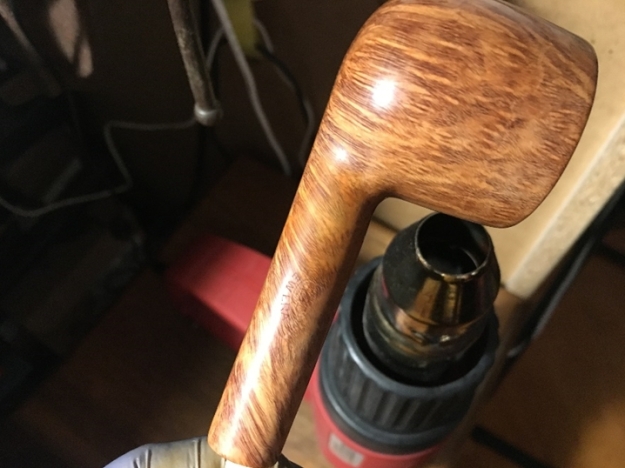
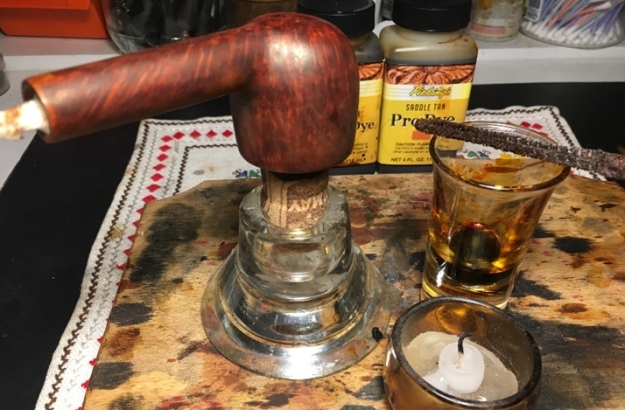
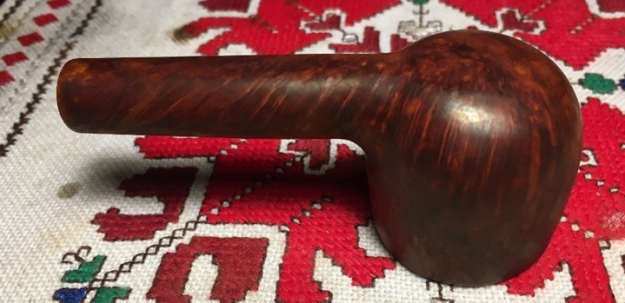
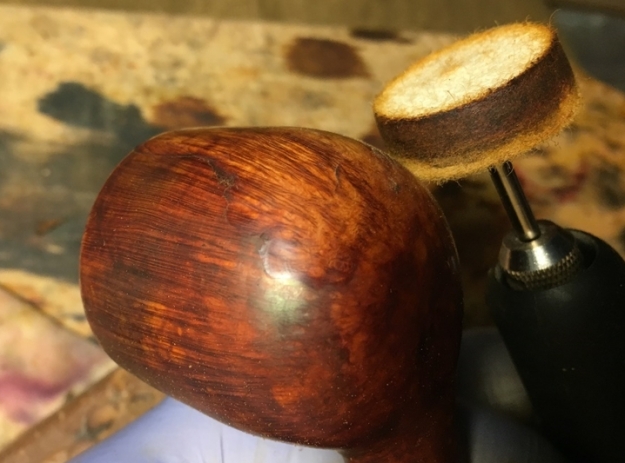
While doing research on GBD New Era, I read the very interesting and helpful article reposted in Pipedia: Pieces From My GBD Collection, by G.L. Pease (re-published here by permission).  It’s a good read, I enjoyed it.  What was most helpful was the listing by GBD groups or lines of pipes that were part of G.L. Pease’s collection.  I eagerly looked and found his offerings for New Era.  Not only did he have New Era, but 4 beautiful long, round shank Pot shapes, shape number 9493 like the GBD that Todd has commissioned.  I cropped the picture below to focus on the patina of the 4 Pots and on mainly the smooth briars.  To me, all the pipes leverage toward a reddish hue even though in different shades.  The lower smooth Pot is redder, leaning toward Oxblood or burgundy.  The Pot on the top, is reddish but leaning more toward the browns.  After studying these New Era pipes, I remembered reading about the red leanings of the New Era line from Pipedia’s GBD Model Information. I clipped this description about New Era:This confirmed what I had observed.  The question remains, how to mix dyes and hit the right hue, or as close as one can manage?  As I’ve done before many times with Steve Laug (Rebornpipes) and Charles Lemon (DadsPipes) I reached out to Charles because I recently read one of his blogs, Stem Repairs and a General Freshening for a “Made by Millville” Full Bent, where he discussed his approach to staining.  It was helpful information, well worth reading.  My question to Charles was how he might approach the reddish hues and mixing dyes.  His answer was straightforward and helpful – trial and error!  Yep, I know how to do the latter part of that well.  He did say that he had had success mixing Fiebing’s Saddle Tan and Browns to achieve that general direction, and to mix and test to see how it looks. So, armed with Charles’ input, I went to work mixing the dyes. I ended up with what Charles calls a ‘wash’ – being more diluted (with alcohol with aniline dyes and water with water-based) it can be applied more times as needed to acquire an increasingly darker result.  This approach would necessitate that I improvise my usual approach to staining.  After mixing Saddle Tan and Light Brown, I diluted it with alcohol to lighten the wash.  I assemble my desktop dying components, and I am ready.  I first wipe the bowl down with alcohol to clean the surface.  Following this, I heat the stummel with a hot air gun to expand the briar resulting in it more effectively absorbing the dyes.  After heated, I apply the dye mixture to a portion of the stummel surface with a pipe cleaner that I had folded in half.  After applying the dye to a portion, I fired that portion by placing it quickly over the lit candle.  The flame immediately combusts the alcohol in dye and sets the dye pigment.  I do this several times to cover thoroughly the stummel surface.  After repeating the washing and firing process many times, the bowl has the right look, sufficiently dark that I think will hopefully point in the right direction! It’s time to turn out the lights letting the newly dyed stummel to rest and to set the dye.The new dye set through the night and has settled in.  Allowing this ‘rest’ time helps guard against new dye coming off on the hands during the first uses of the pipe when the bowl heats.  To unwrap the fired dye shell around the stummel I mount a felt cloth buffing wheel in the Dremel, setting the speed to the slowest to avoid scorching the wood.  Felt cloth is more abrasive than cotton.  Added to this, I apply Tripoli compound to ‘plow through’ the thick dye residue.  While applying the more abrasive compound, I purge the wheel often on the edge of the chopping block which is my work station.  Not pictured is that I follow the application of Tripoli with the felt buffing wheel with a cotton cloth buffing wheel and go around the stummel one more time applying Tripoli compound at an increased Dremel speed of about 40%.  This is to fine tune and make sure no dye clumps are left behind. Next, after rejoining the stem and stummel, I apply Blue Diamond compound using a cotton cloth buffing wheel at a 40% speed.  I apply compound to the entire pipe.  When finished I buff the pipe with a felt cloth to remove the residue compound dust.The final step is applying carnauba wax by mounting another cotton cloth wheel onto the Dremel, maintaining the same 40% speed and I apply the wax.  Following this, I use a microfiber cloth and give the pipe a final hand buffing.

This GBD New Era Pot has come a long way.  The stem was mauled and now it looks great.  The patches can be seen in the glare but from where we started….  The grain on this New Era is striking.  I love studying the vertical grain that is distinct and certainly a feast for the eyes.  There is no disappointment with the bird’s eye grain that was teased out so well by the compounds on the rim.  The bird’s eye is small, tight and subtle.  The heel view is equally a cornucopia of bird’s eye.  I think what makes this GBD shape so classically appealing is the (‘Lovat’) long shank stretching the look of the large Pot bowl, which has plenty of space for a slow enjoyable time of fellowship with one’s favorite blend.  Todd resides in the Big Apple as he practices law and this second pipe in the list of three he commissioned will fit well.  He has the first opportunity to acquire this GBD New Era Pot from The Pipe Steward Store.  As with all my pipes, this pipe benefits the work we do here in Bulgaria with the Daughters of Bulgaria – women and girls who have been trafficked and sexually exploited.  Thanks for joining me!

Rescuing a Scorched GBD New Era 549


Blog by Andrew Selking

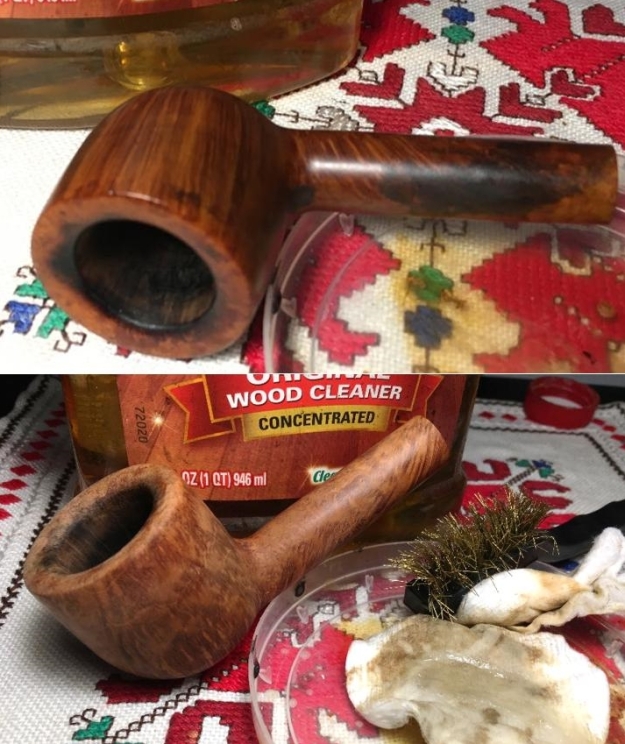
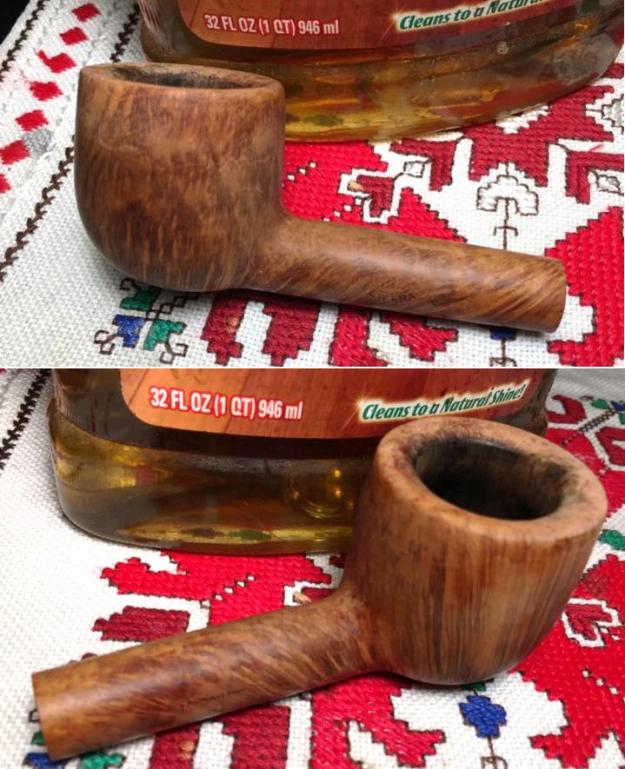
After reading Al’s posts about his GBD pipes, I had to have one. I saw this pipe listed on eBay with a low buy it now price, obviously based on the scorch mark on the front of the bowl.GBD1 I’m not sure whether it was a sense of overconfidence in my ability or naivety about the extent of the damage, but I bought the pipe. I realized when it arrived that if I couldn’t fix the scorch mark the pipe probably wouldn’t be worth my time. I nearly despaired when normal procedures failed to even lighten the mark. I put the pipe aside several times before finally deciding to take drastic measures and use a hand sander with 150 grit sand paper. I figured at this point there was nothing to lose and I knew I could still maintain the original shape if I was careful. After spending about a half an hour with the sander, I found myself at about an 80% solution. The mark was still too dark, so I took it to the next level of desperation: the rotary tool (that’s the generic name for a dremel that you buy at Harbor Freight Tools) with a sanding attachment.

I do not recommend the use of either a hand sander or the rotary tool except as a last resort. By this point I had accepted the fact that this pipe was beyond hope for a perfect restoration, so I lowered my expectations to a good restoration.

The sanding on the top portion of the bowl changed the contour of the rim, so I used 400 grit sand paper and a piece of glass to top it.GBD2 Normally I have a set order for restoring a pipe, but dealing with the scorch mark threw it all off. I don’t like to work on a pipe that has a dirty bowl, so I went ahead and reamed it. As you can see from this picture the scorch mark is fairly light.GBD3 Next I retorted the shank.GBD4 She was a dirty girl.GBD5

GBD6 I retorted the stem after that, but did it four times. On a dirty pipe you can either spend time with lots of q-tips and fuzzy sticks, or do the retort multiple times.GBD7 Now that I had the internals of the pipe cleaned, I turned my attention to the removing the oxidation from the stem. This stem was all angles and had some serious oxidation. I’ve felt for a long time that my stem work needed improvement. It’s especially difficult to clean the crease under the button and in the case of this stem the curved area where it meets the diamond portion. I know that when I work with wood I use a sanding block or wrap the sand paper around an object that would fit into the area to be sanded. With that in mind, I “borrowed” a small plastic scraper from the kitchen. You will notice that it has a beveled edge and fits the underside of the button perfectly.GBD8

GBD9 Using the scraper wrapped with 400 grit wet/dry and water, the oxidation was soon gone. I followed with 1500-2400 grit micro mesh pads and water.GBD10 The bowl had a couple of dents so I decided to steam them out.GBD11 One of my essential tools for this type of work is an old butter knife.GBD12 I used my heat gun to get the tip of the knife very hot, then applied it to a wet cloth directly over the dents. Here is what it looked like after several applications of steam.GBD13 The dents still needed some work, so I sanded them smooth with 400 grit sand paper.GBD14 By this point the finish was completely uneven, with bare wood on the rim and side of the bowl, so I used acetone and 0000 steel wool to remove the remaining finish. I find that if I’m careful with the stampings, that grade of steel wool cleans the wood without damaging the stampings.GBD15 This is what the pipe looked like after I took the bowl and stem through a progression of micro mesh pads, 1500-12,000.GBD16 I decided to use a dark walnut stain from Pimo Pipe Supply to help cover the remaining scorch mark. Here is the bowl after the application of stain.GBD17 I used white diamond buffing compound on the buffing wheel to bring out a shine. Let me digress a bit about buffers. There are three things that a buffer loves, angles, stem inserts, and nice pipes. When spinning at 3450 rpm’s the buffer will catch anything with an angle and fling it at a high rate of speed onto the nearest hard surface. Alternately it will catch any type of stem insert and rip it out of the stem. Finally if you have a nice pipe that you’ve invested time in, the buffer has a tendency to shatter it just as you finish. This pipe had all of those elements, so I decided to try something different; my rotary tool.

I took a felt buffing pad and loaded it with white diamond buffing compound. The results were spectacular. The rotary tool gave me more control, I didn’t have to worry about the stem flying out of my hand, and I was able to achieve a more consistent shine in the areas that are hard to get with a buffer. Not bad when you consider that I paid $19.99 for this thing at Harbor Freight Tools.GBD18 I finished the bowl on the buffing wheel and here is the final result.GBD19

GBD20

GBD21

GBD22

GBD23

GBD24

GBD25

GBD26

GBD27

A Great Piece of Briar – Restored Square Shanked GBD New Era 9489 Billiard


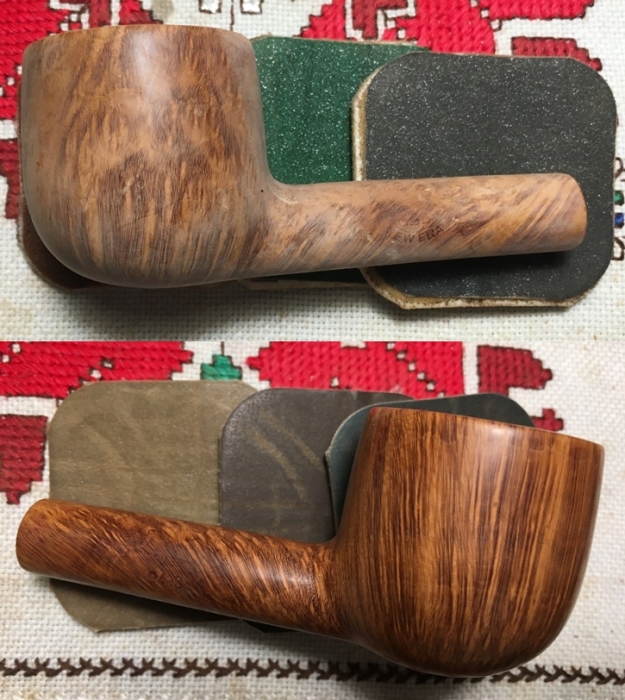
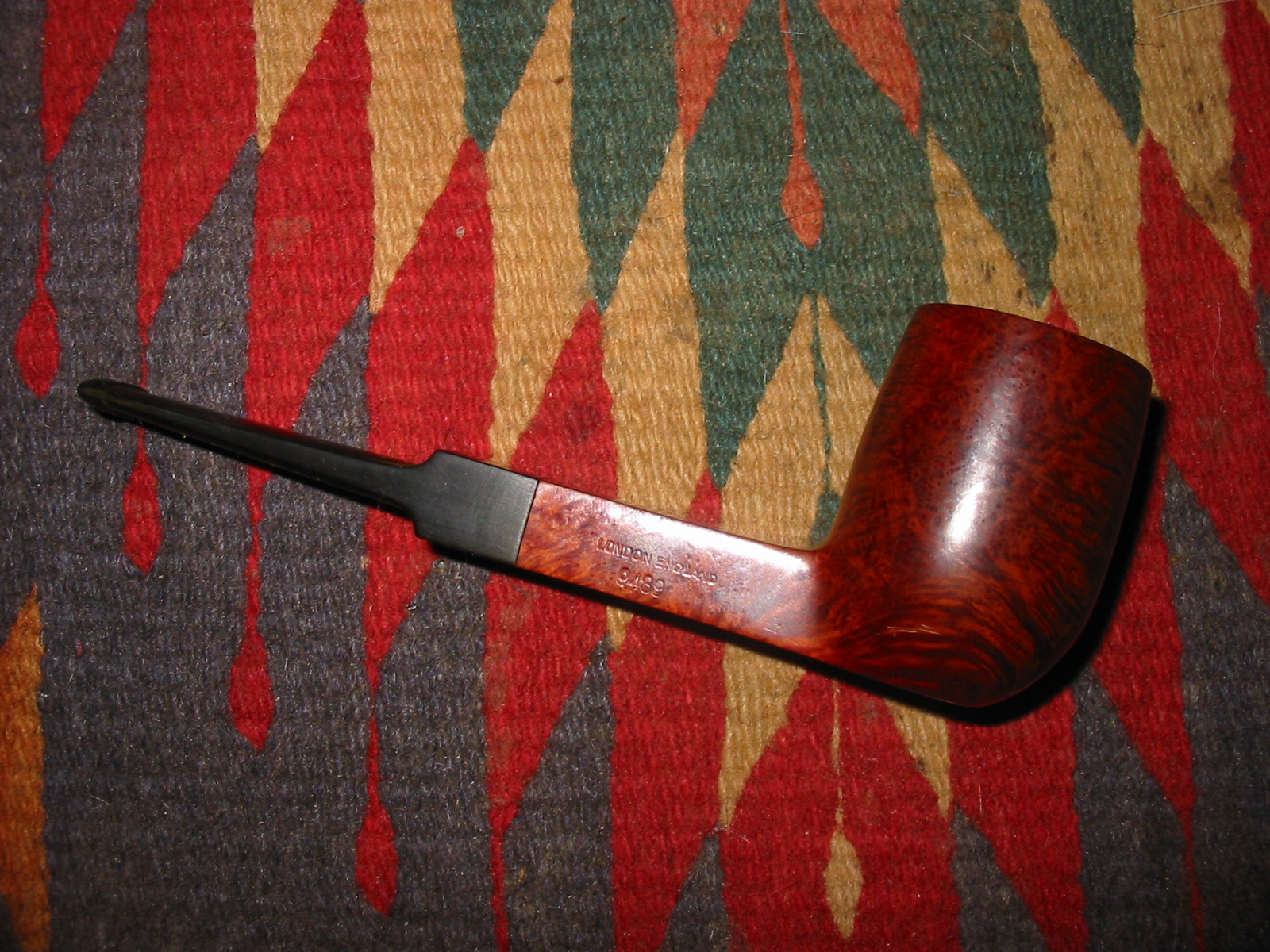
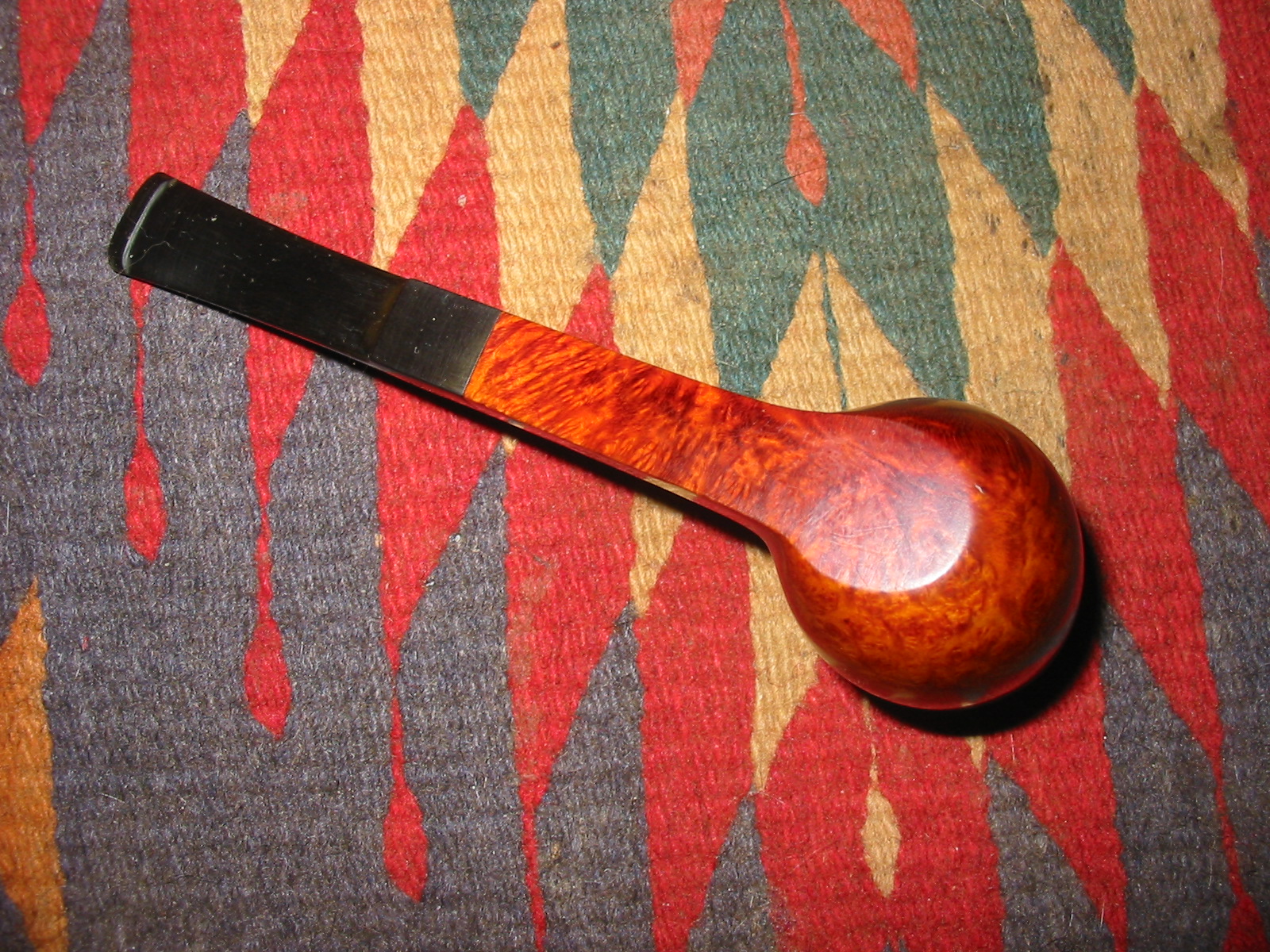
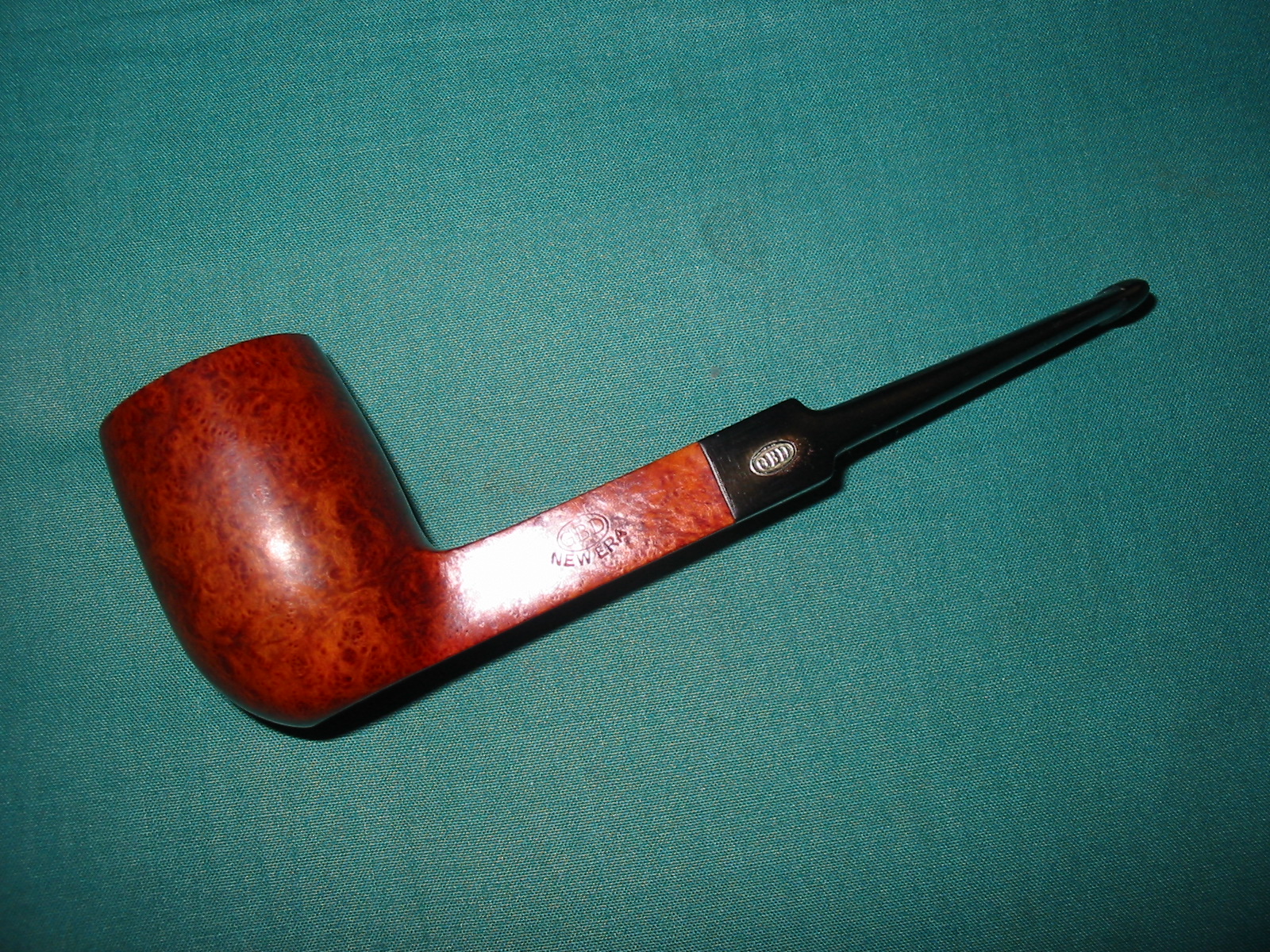
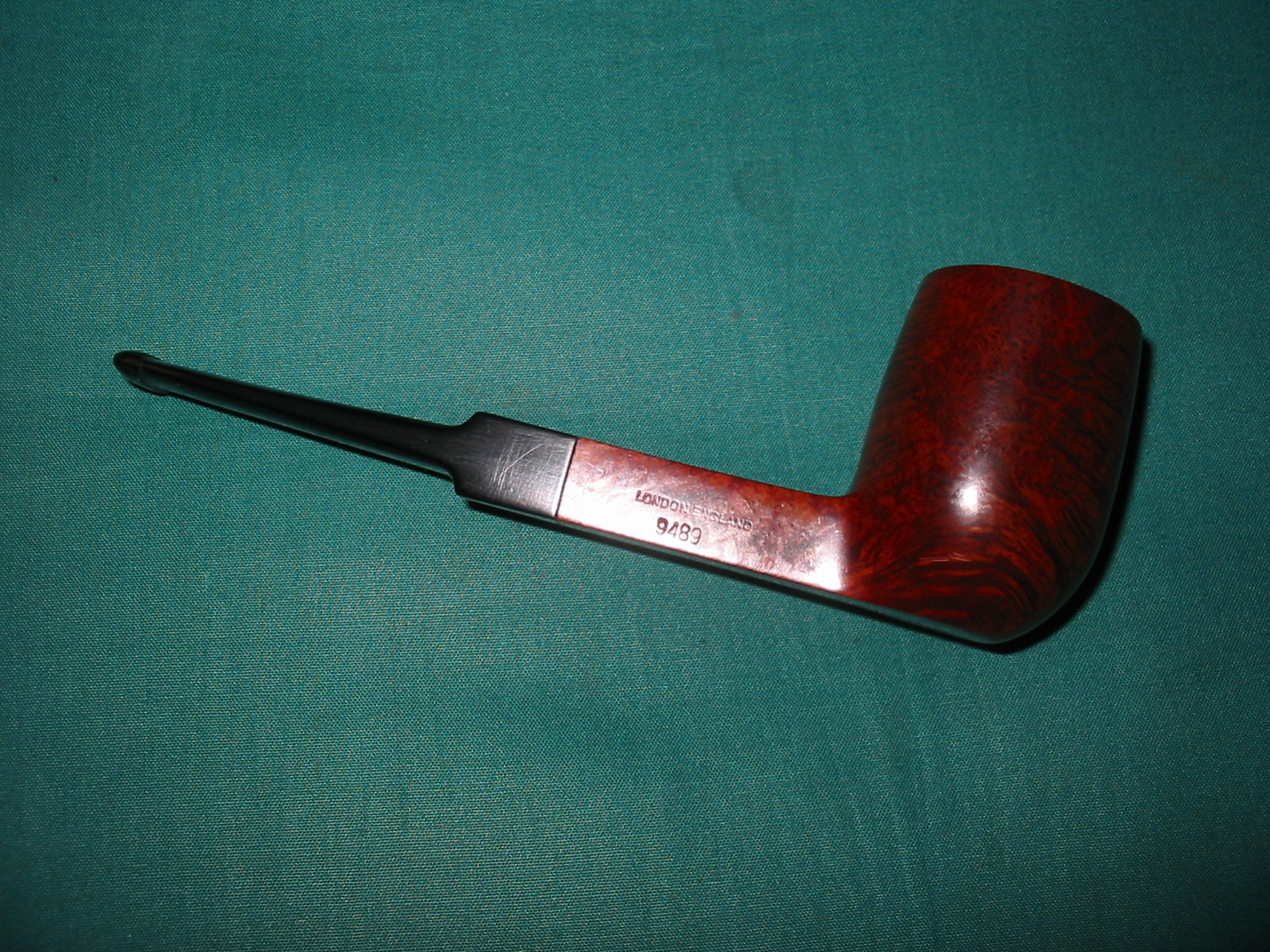
I am generally not a fan of square shanked pipes. I am not sure why but there is just something about them that has never caught my eye… that is until I saw this GBD New Era Billiard. It has stunning grain – cross grain on the back of the bowl and the top and bottom of the shank and the bowl. There is also some cross grain off centre on the front of the bowl. The left side has stunning birdseye and the same is also true on the right side of the bowl. The rim of the bowl is beveled inward and is also cross grain. The finish on the bowl was in excellent shape other than a heavy build up on the rim of tars and carbon. The stem was long, oxidized and had a huge bite through on the underside of the stem. It is stamped GBD in an oval over an arced New Era on the left side of the shank and London England over 9489 on the right side.
IMG_3455

IMG_3456

IMG_3458

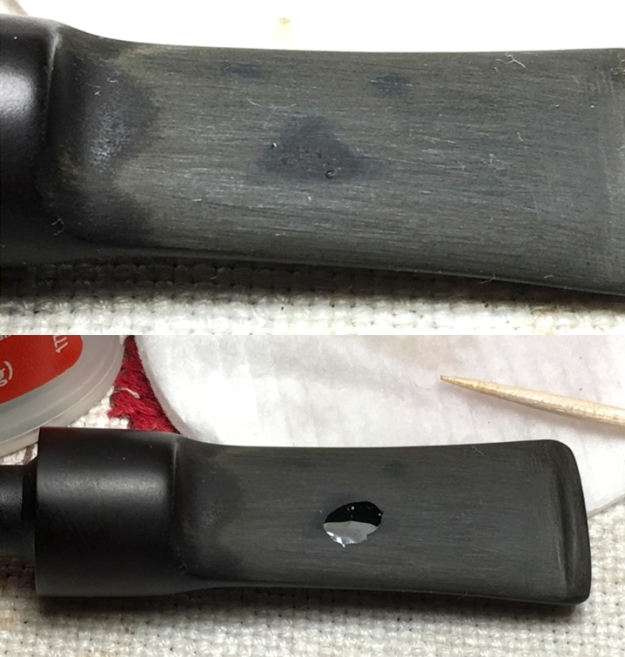
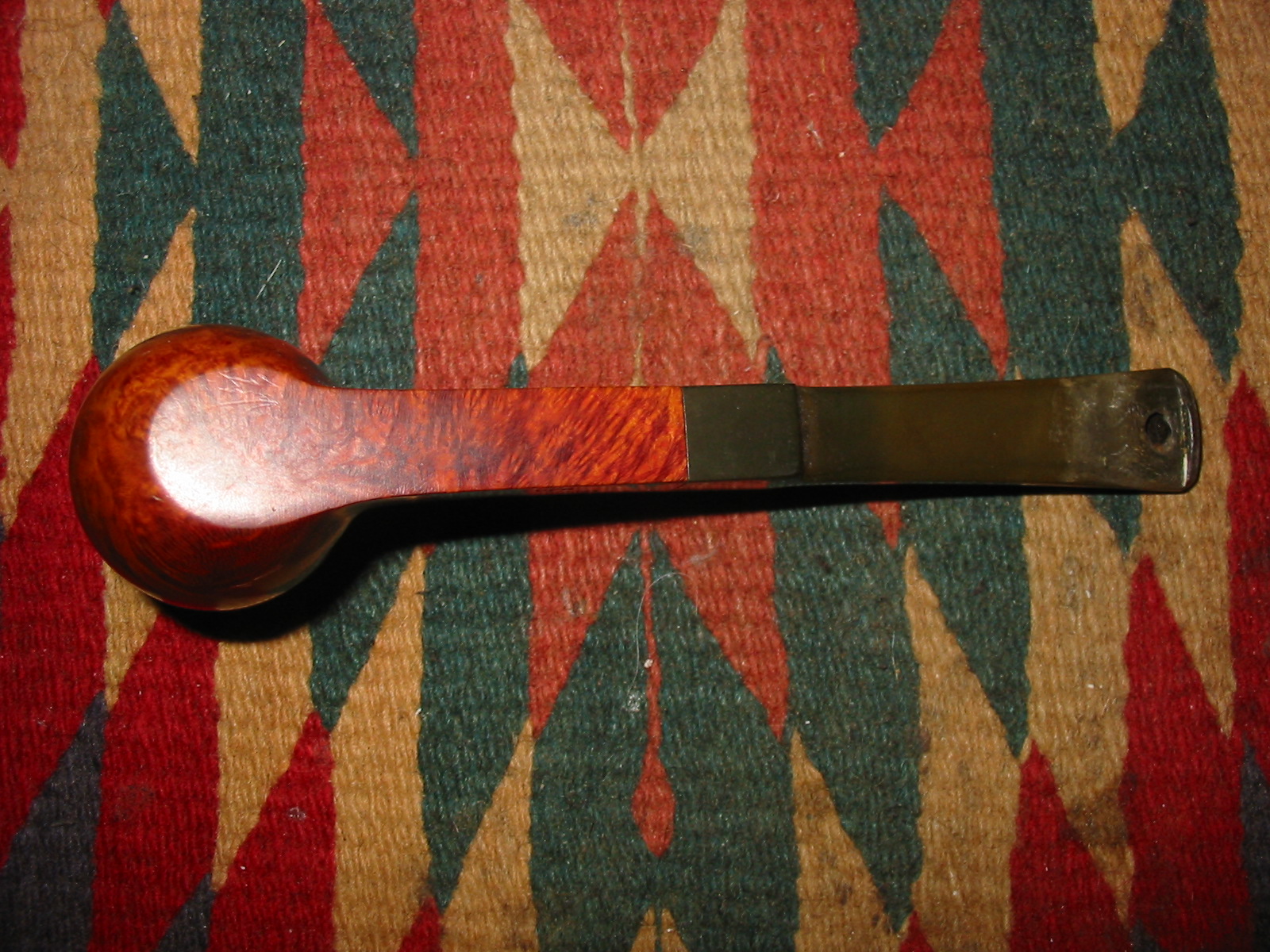
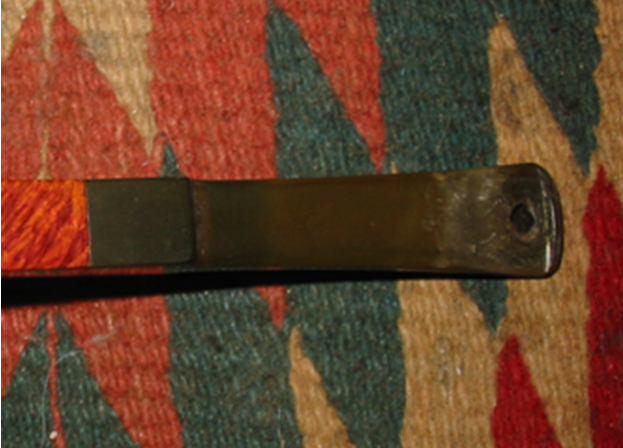
I have included the photo below of the underside of the stem. The size of the hole made it unpatchable with my usual methods.
Hole in stem

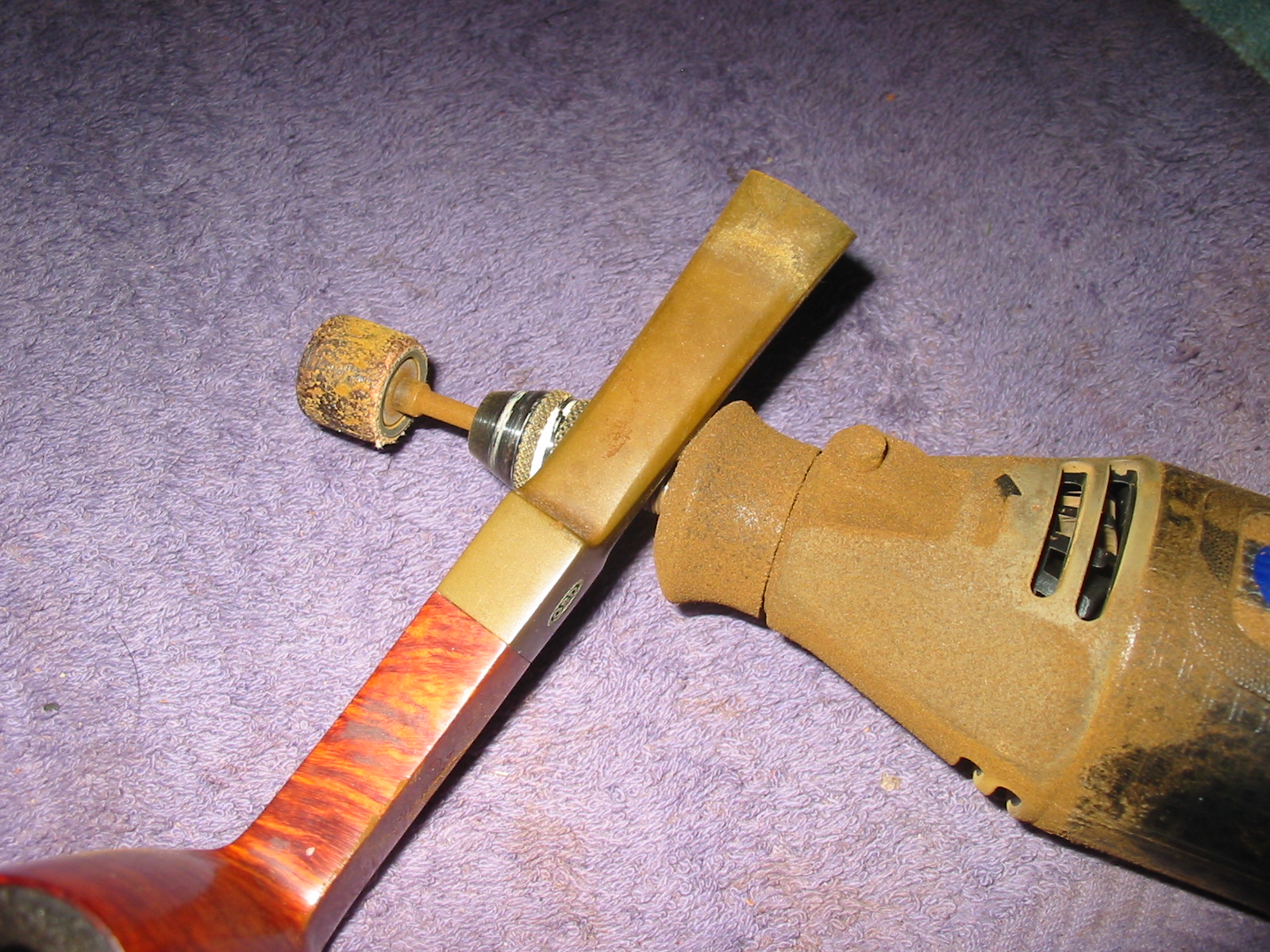
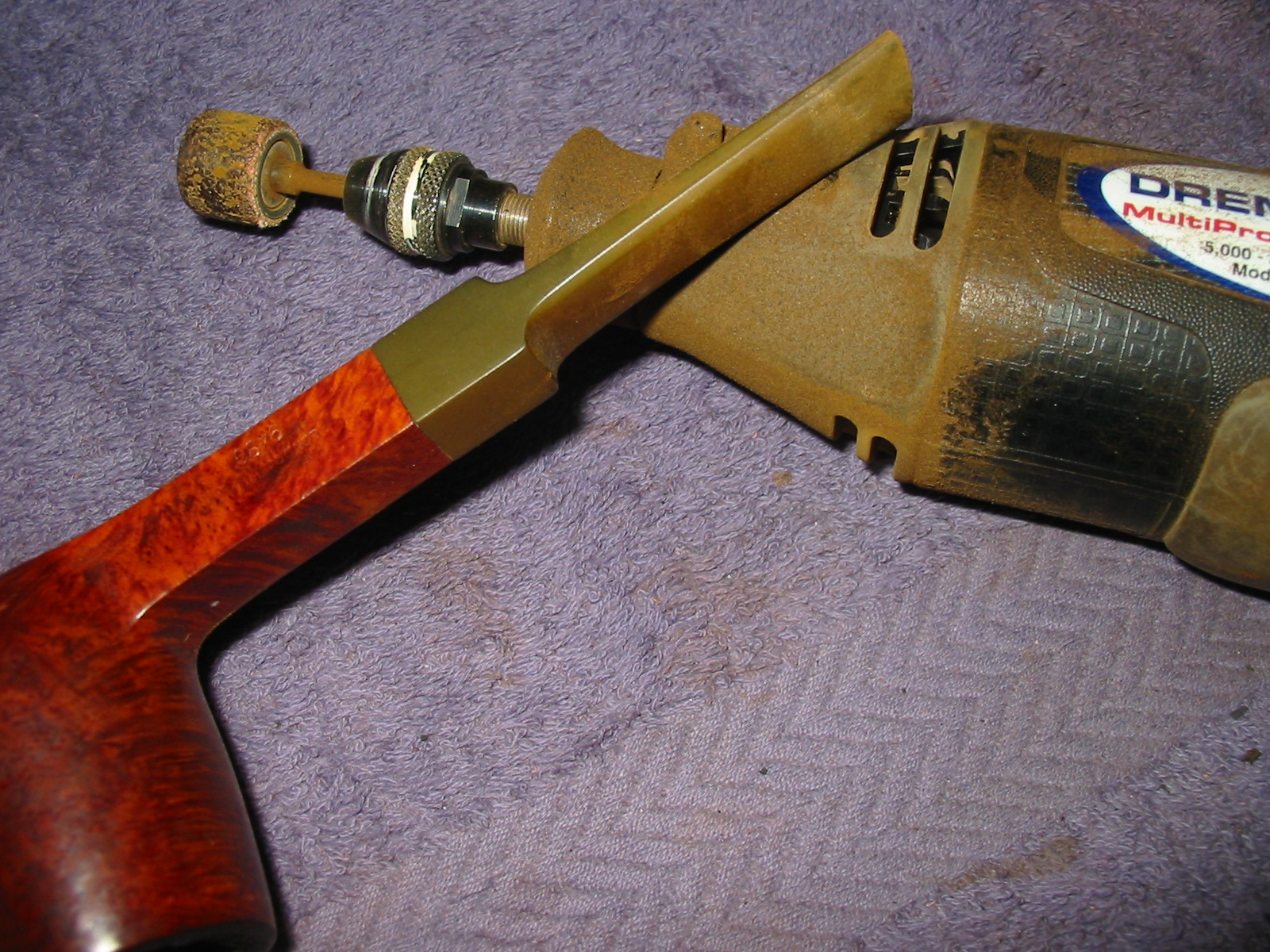
I used the Dremel and sanding drum to cut off the end of the stem and remove the damaged portion of the stem. I would then recut a button on the end of the stem and rework the airway opening in the slot.
IMG_3842

IMG_3843

IMG_3844

IMG_3845

I took the pipe back to my work table and used a file to cut the line for the button. For this initial part of shaping the new button I leave the stem on the shank as the bowl provides a good “handle” to hold on to when reworking the stem.
IMG_3847

I used a flat needle file to carve down the slope of the stem toward the button. I find that reworking the slope of the stem gives a smoother transition between the new button and the blade of the stem. I think we have all seen poorly cut buttons where the button looks pinched on the end – almost like someone squeezed the button out of the stem. I want the transition to move gently toward the new button and then have clean angles on the button.
IMG_3848

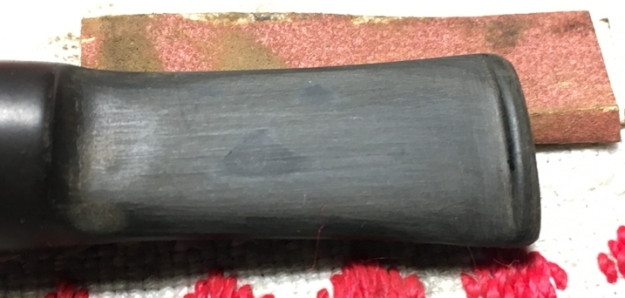
At this point I usually remove it from the shank as I have much more carving to do on the stem with needle files and I want to be able to turn it at various angles to get things the way I want them. I continued to work on the stem with various needle files and 220 grit sandpaper to shape and contour the stem. I sanded the rest of the stem as well carefully working around the GBD roundel to make sure not to damage it. When I had finished the shaping of the button I sanded the entirety with a medium grit sanding sponge to smooth out the scratches and further remove the oxidation. I probably could have soaked it in Oxyclean but since I was working the button over with sandpaper and files anyway I just sanded the stem.

I set the stem aside for a bit and scrubbed the bowl rim down with saliva on cotton pads scraping and rubbing until I got to the clean surface of the rim. I did not intend to restain this pipe so I was careful not to remove the finish in the process.
IMG_3849

I took it to the buffer after I had it cleaned up as shown above. I buffed the edge with White Diamond to remove the last of the detritus of the carbon on the rim. The first photo below shows the clean bowl rim. The three photos following that one show the bowl after it had been buffed with carnauba wax to polish it and protect it.
IMG_3852

IMG_3853

IMG_3854

IMG_3856

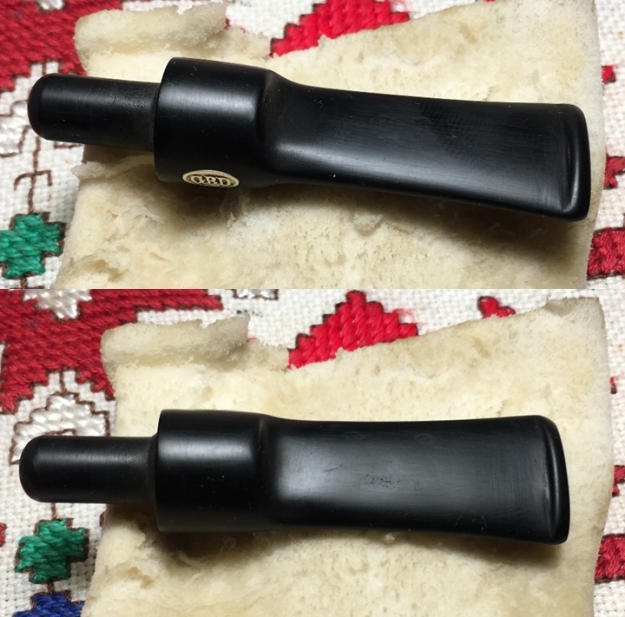
I put the stem back on just to have a look at the work so far. Sometimes I need to get a bit of perspective on the stem work so I will stop and put things back together, take a few photos and study them to see what I need to do. Somehow the photos show things that my eye does not pick up as I work on the pipe.
IMG_3857

IMG_3858

IMG_3859

IMG_3860

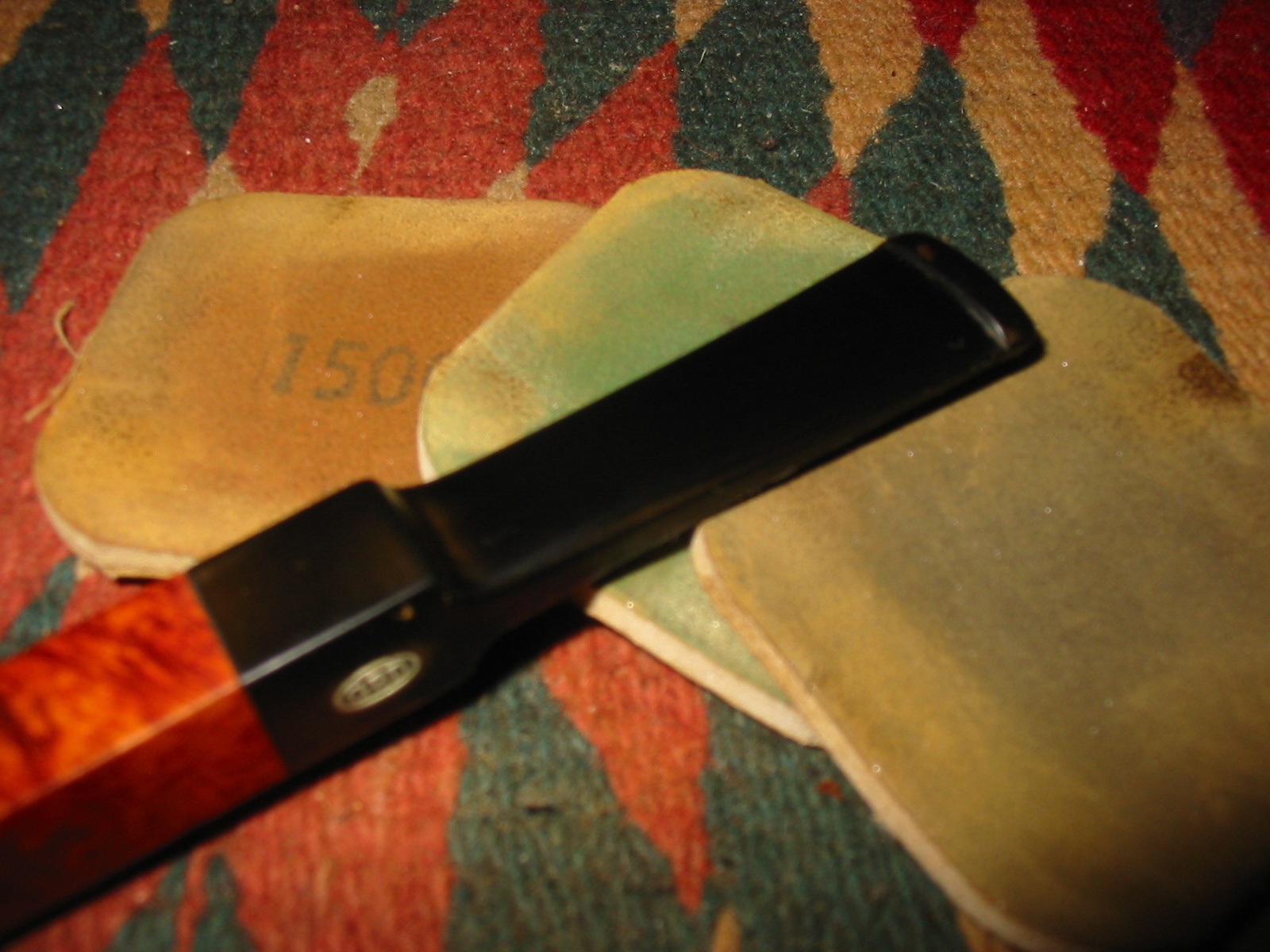
The pipe was looking good and the areas that needed work on the oxidation and scratches showed up clearly in the flash. I used micromesh sanding pads to work on the finish. I wet sanded with 1500-2400 grit pads and dry sanded with 3200-12,000 grit pads.
IMG_3861

IMG_3862

IMG_3864

IMG_3866

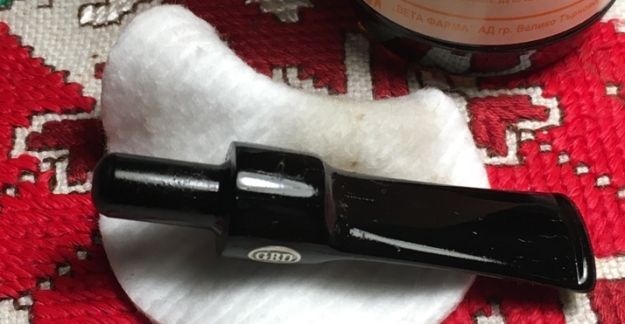
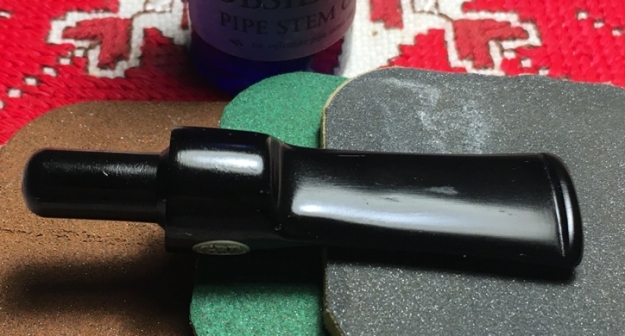
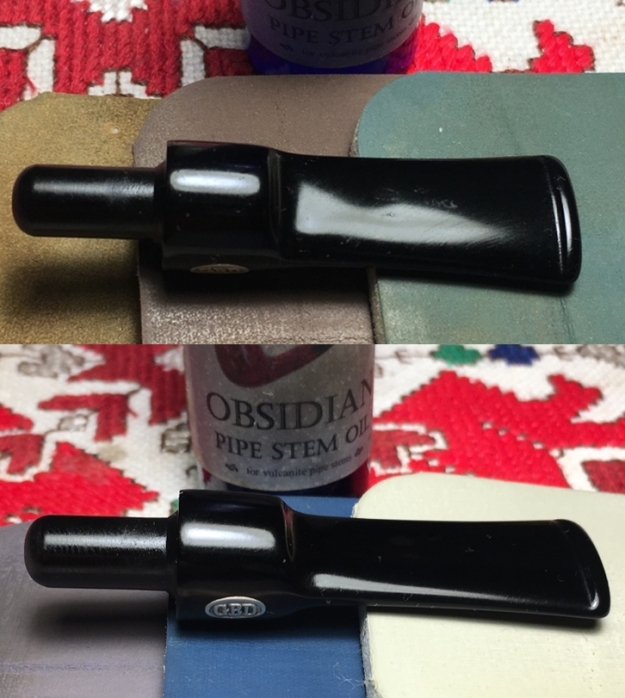
When I finished sanding I rubbed the stem down with Obsidian Oil and when it as dry buffed it with White Diamond once again. I gave the bowl and stem multiple coats of carnauba wax and buffed it with a clean flannel buffing pad to give it a shine. It is important when buffing to not press to hard around the nomenclature. I generally use a very light touch in those areas and then hand polish them with a soft cotton cloth. The finished pipe is pictured below. The stem came out quite nicely There is a bit of oxidation around the roundel that still remains. I will continue to work on that with the micromesh pads and see what I can do but it is ready to load a bowl and smoke.
IMG_3868

IMG_3869

IMG_3870

IMG_3871