Tag Archives: GBD International pipes

Restemming and Restoring a GBD International London Made Colossus 264


Blog by Steve Laug

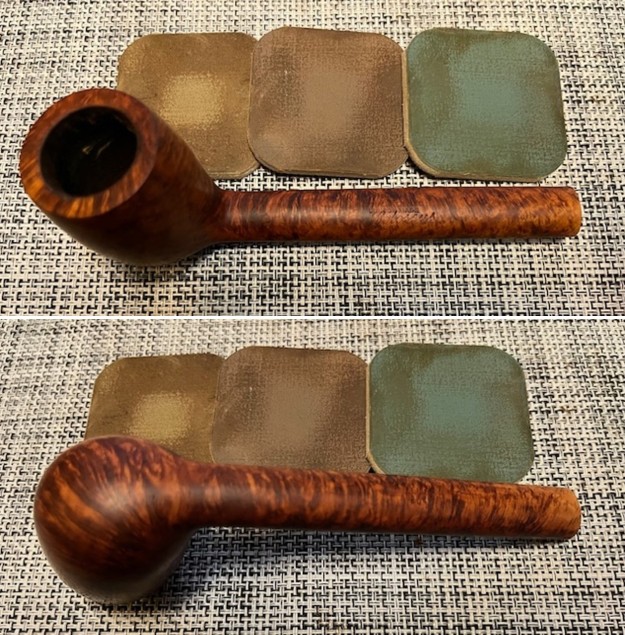
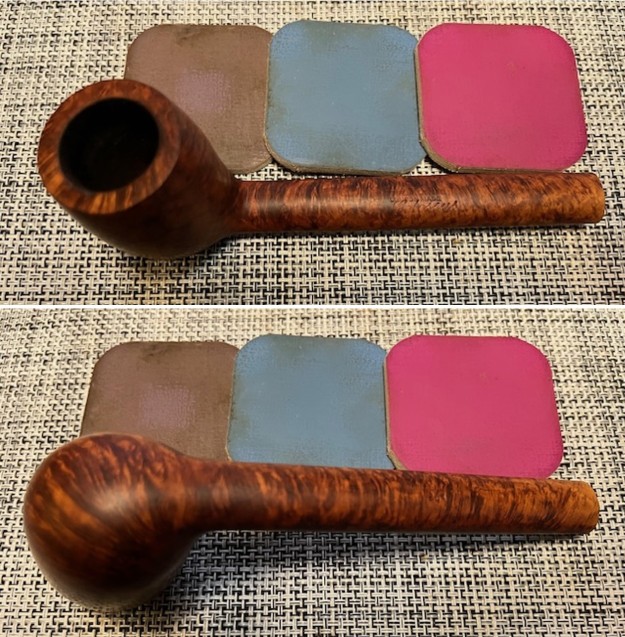
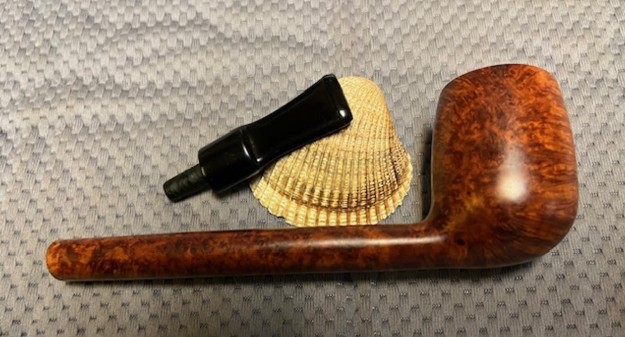
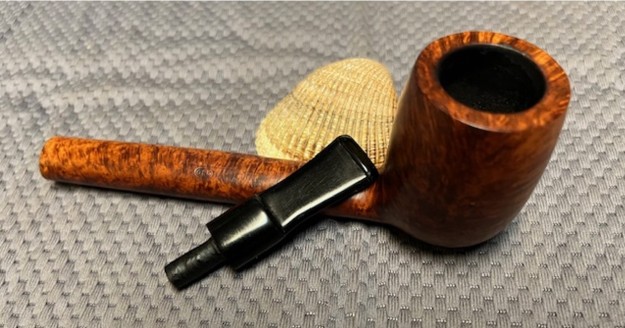
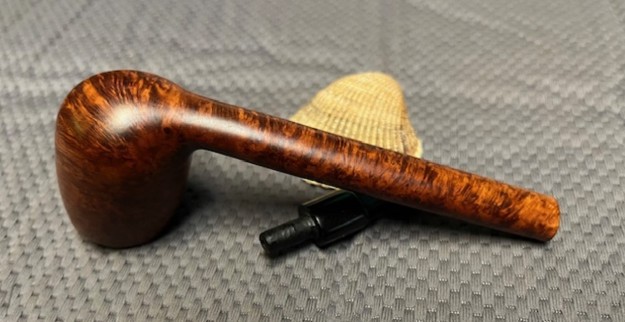
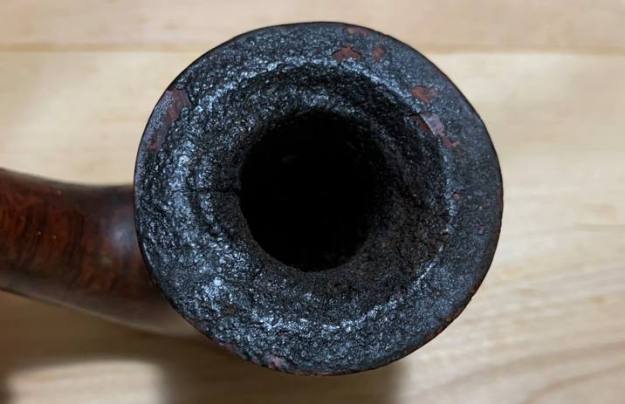
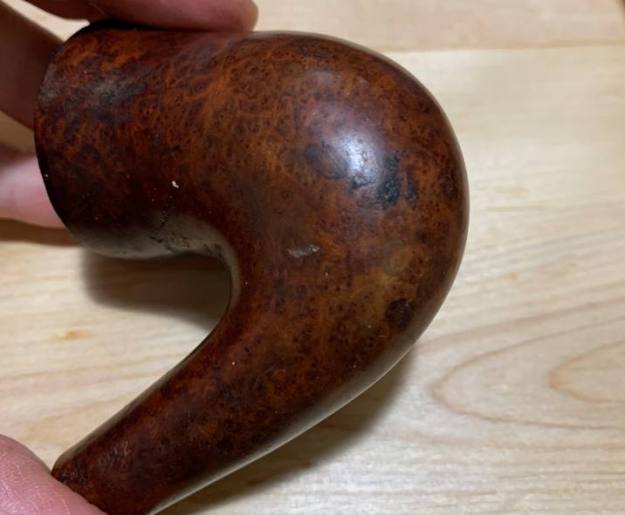
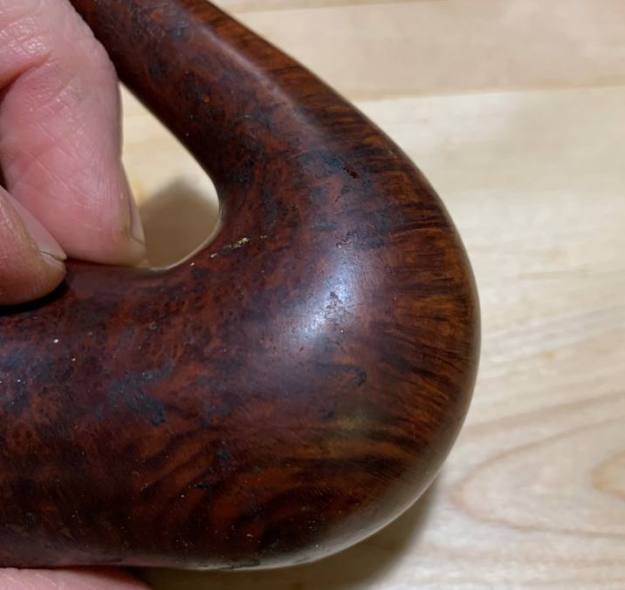
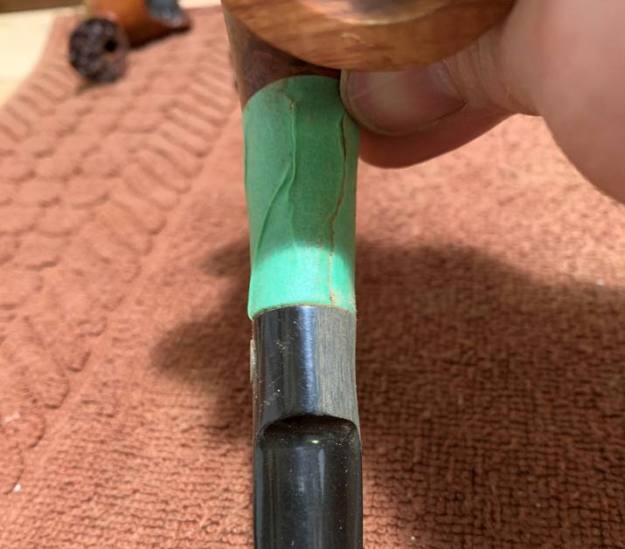
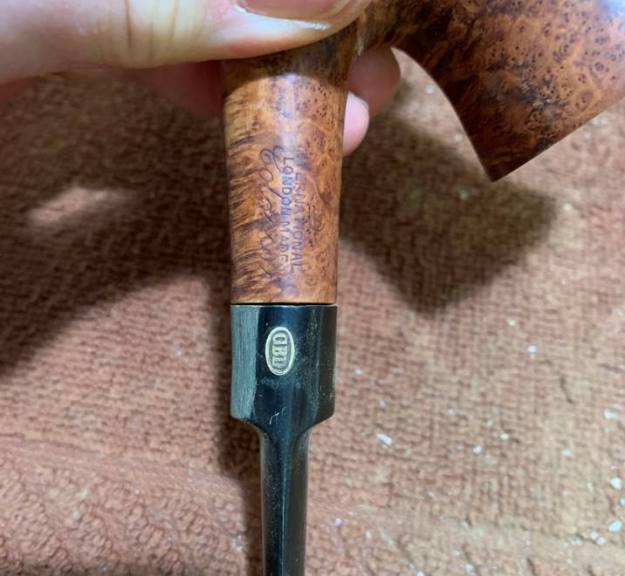
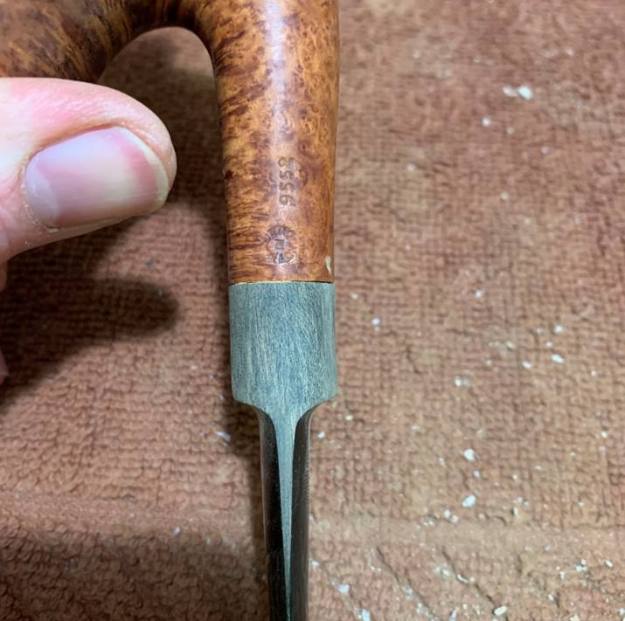
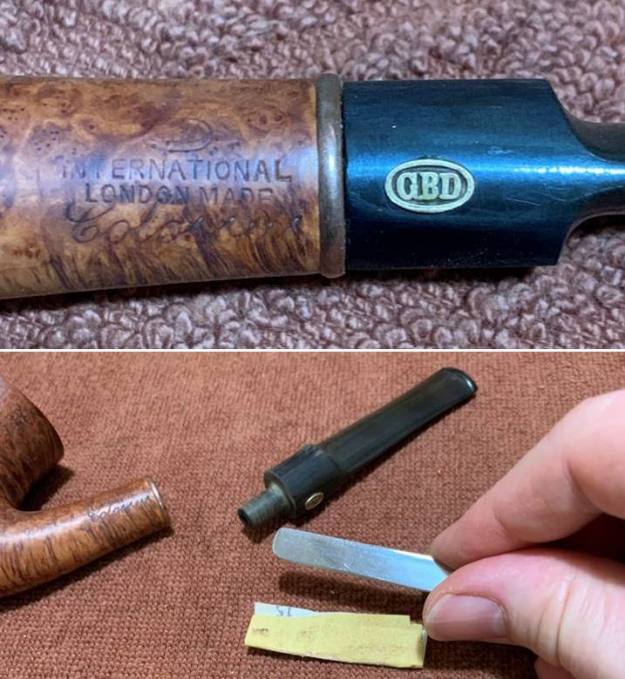
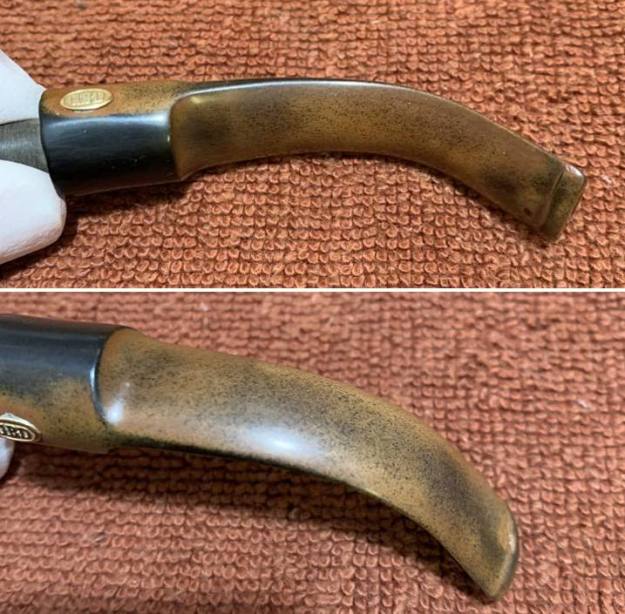
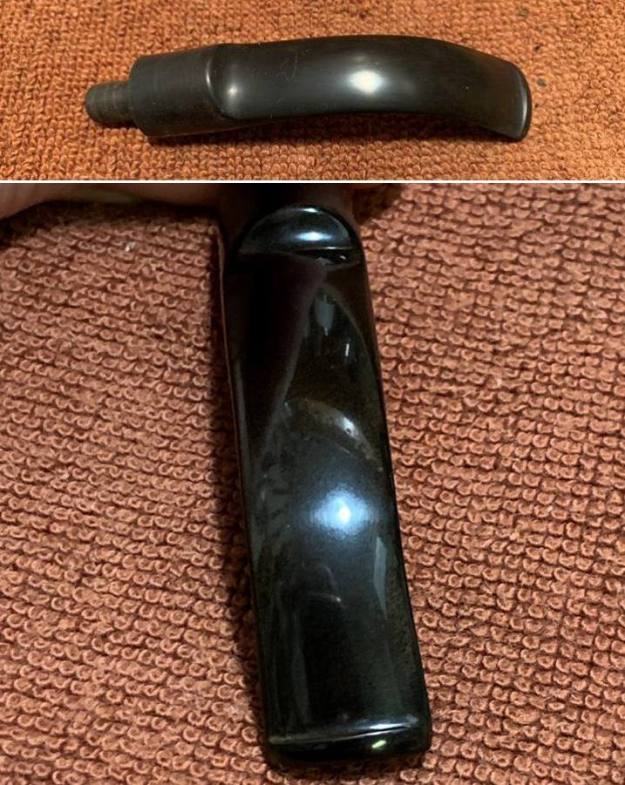
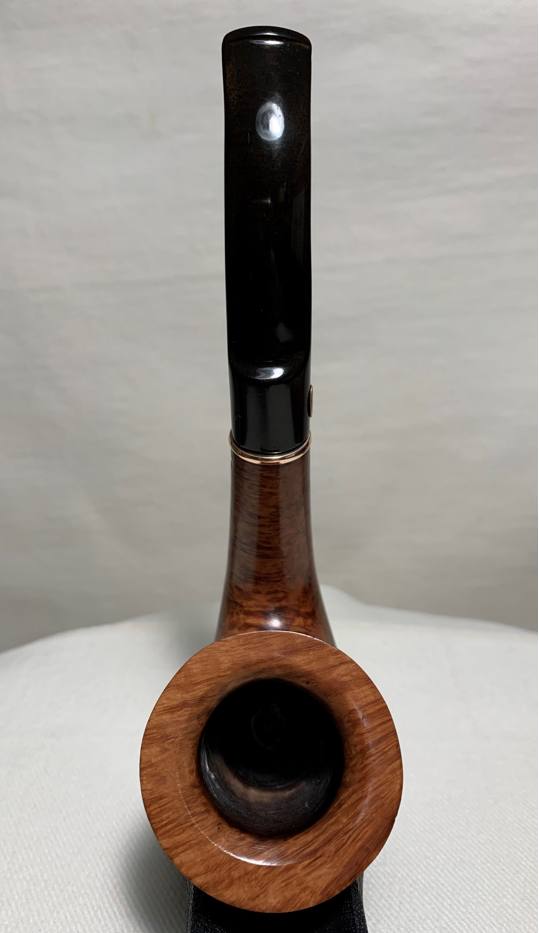
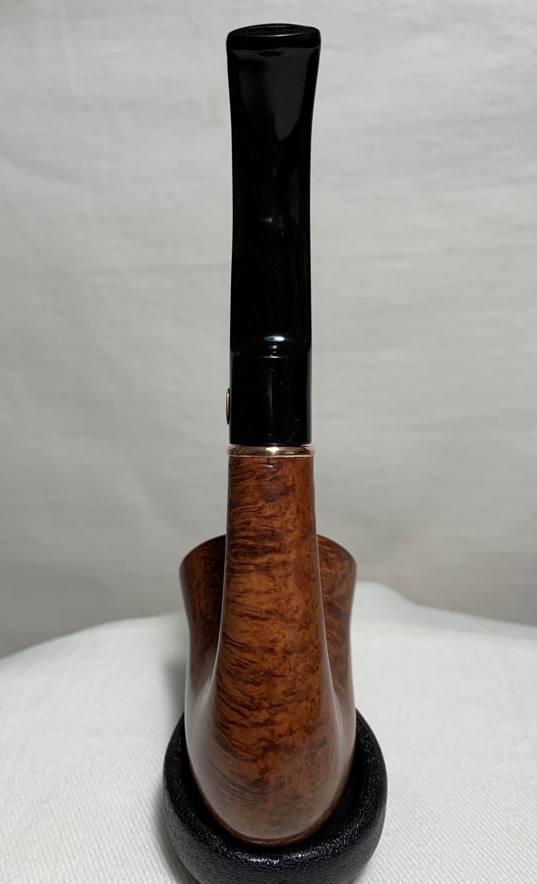
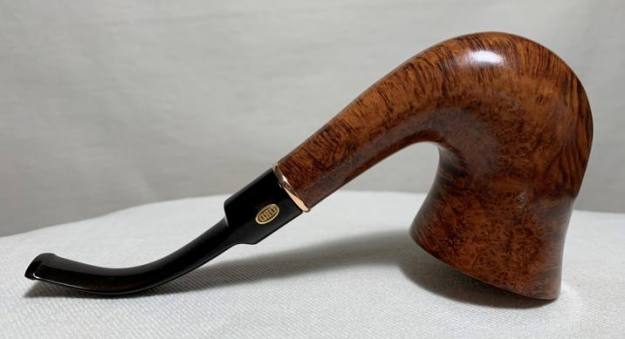
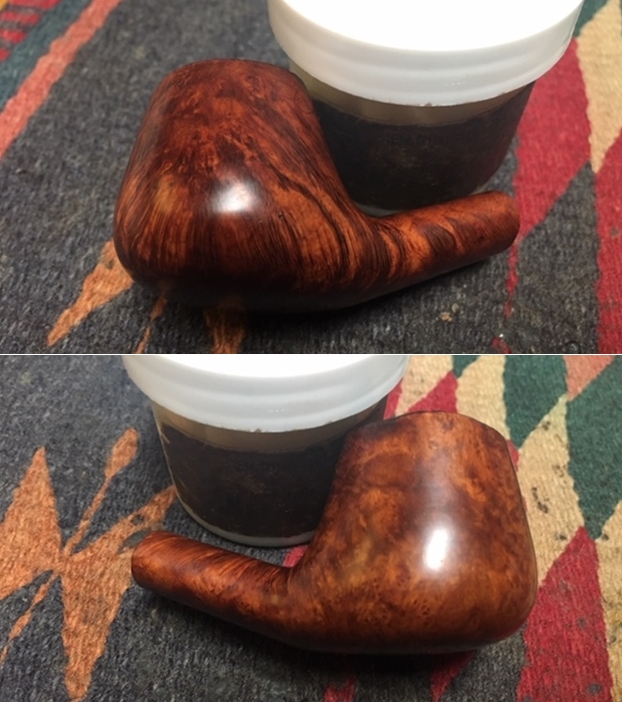
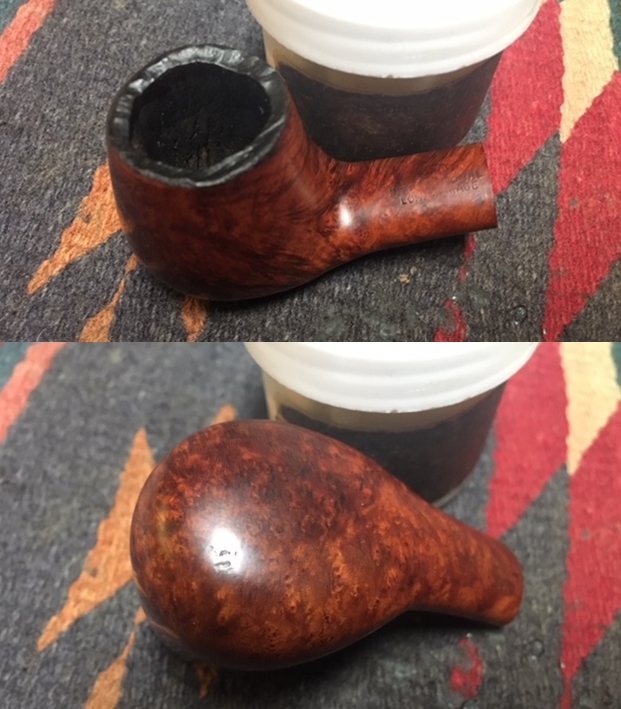
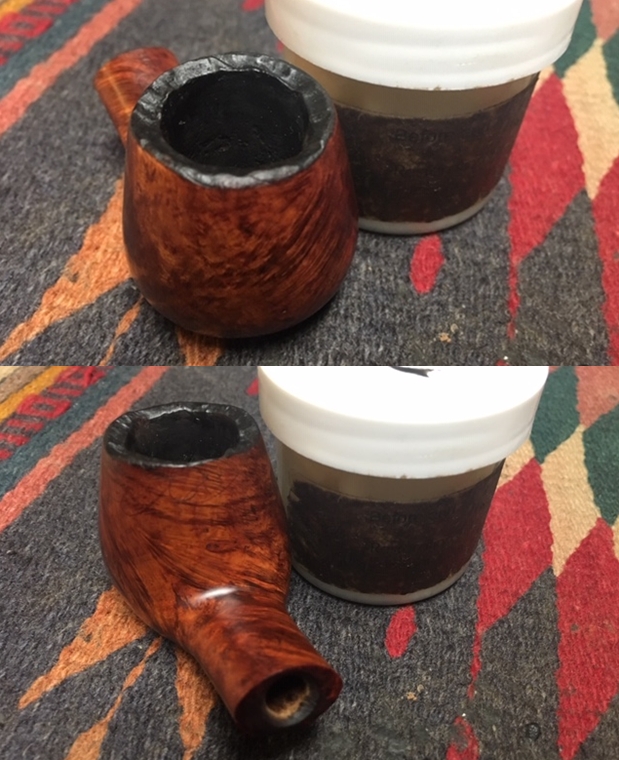
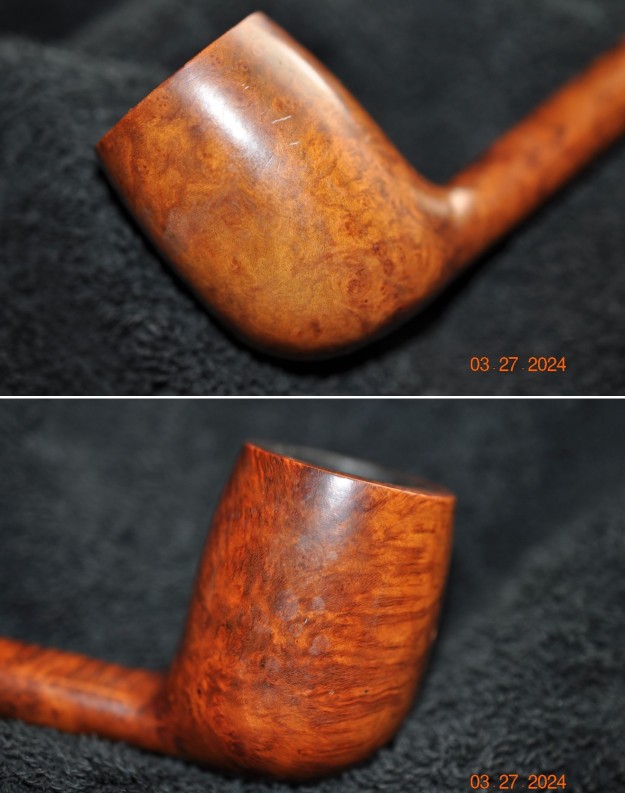
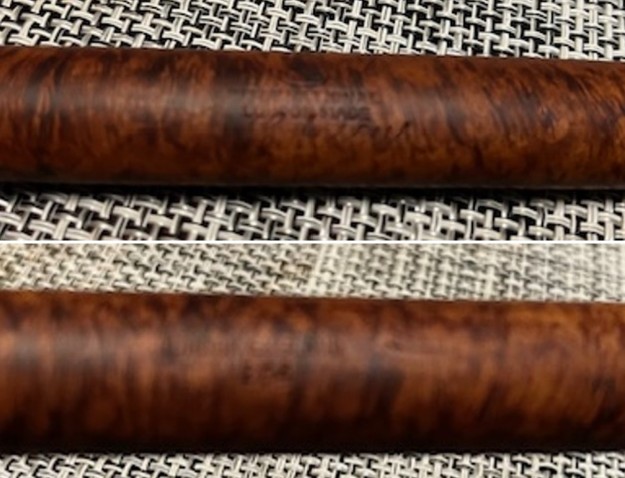
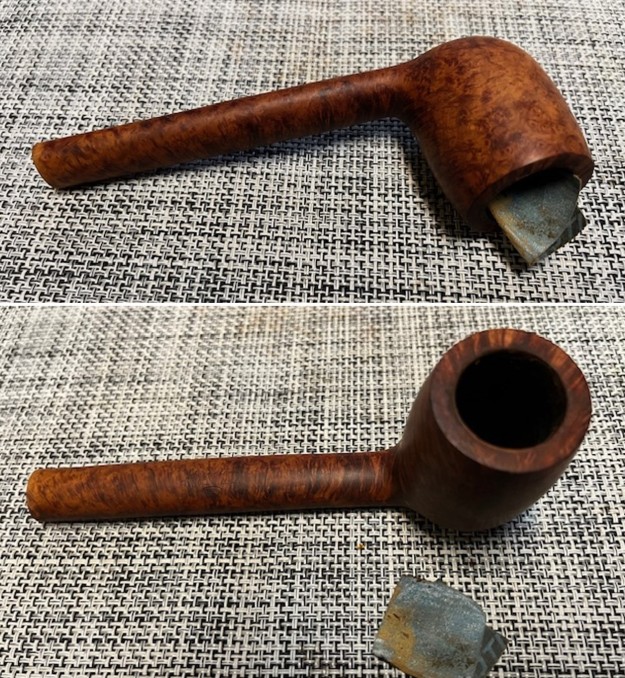
The next pipe on the work table is long and classic looking smooth finish long shank possible Canadian. It is stamped on the topside of the shank and clearly reads GBD in an oval [over] International [over] London Made [over] Colossus in script. On the underside of the shank it is stamped London England [over] the shape number 264. It came from a lot we purchased on 03/21/2024 from an estate in Oregon City, Oregon, USA. It is Canadian/Lumberman shaped pipe with some great grain and only lacking the original vulcanite stem. The shape of the new stem would be determined by the what I could find out about the shape 264. If a Canadian then it would have a new taper stem. If it was a Lumberman then it would have a short saddle stem.The bowl has a thick cake and some lava overflow in the finish on the rim top and inner edge. The finish looked quite good in terms of wear and tear but there was dirt and hand oils in the finish. But under the grime the finish looked very good and highlights some beautiful grain. Jeff took photos of the pipe before he started his cleanup. He took photos of the pipe’s bowl and rim top to show the cake in the bowl and the lava coat overflowing onto the top and over the edges. It is another dirty pipe. He took photos of the sides and the heel of the bowl to give a sense of the condition of the pipe and the interesting grain around the sides and heel. It really is a beautiful pipe bowl. Jeff took photos of the stamping on the top and underside of the shank and it is clear and readable as noted above. It is a bit faint on the top edges of the stamp and the lower edges on both the top and bottom shank.I remembered that Kenneth had restemmed a GBD International London Made Colossus and generally he does some work on the brand to understand the background of the pipe that he is working on. I googled and found the link to the blog he had written on rebornpipes about his Calabash pipe (https://rebornpipes.com/tag/gbd-international-london-made-pipes/). I followed the link to his blog and reread his work on it. I quote the interesting info on the line that he had included. I quote below:
This pipe is a calabash-shaped GBD Colossus. As the photos show, it is stamped on the left side of the shank with GBD [over] International [over] London Made [over] Colossus. On the right side it is stamped Made in London [over] England [next to] 9552 – this, of course, is the shape number. There is quite a bit of information on GBD on the Internet – they have a long and storied history in pipemaking. In this case, I was curious about International and Colossus. The main Pipepedia article on GBD tells us about their origins:

In 1850 three gentlemen got together in Paris to establish a firm dedicated to the fabrication of Meerschaum pipes – a courageous step in politically restless times. Ganneval probably came from the area of Saint-Claude where he had learned making wooden pipes. Bondier’s family obviously came from Paris and had emigrated in 1789 to Geneva. He himself had worked as a wood turner in the clay and china pipe industry in and around Saint-Claude making stem extensions etc. Donninger was an Austrian or Swiss and had worked in Vienna, the world’s center of the Meerschaum pipe. They agreed on the acronym GBD selecting the initials of their surnames.

The Pipedia article provides a lot more information on their interesting history. I would encourage you to read on here. The shape number 9552 corresponds correctly with GBD’s identification of this pipe as a calabash. The page on GBD models states the following concerning the International line and the Colossus size:

International – France and England made: medium brown smooth, carved top rim, rim stained black. In addition to the pipe line and shape information stamped on the pipe, GBD also had codes for plus sized pipes. These codes in ascending order of size were Conquest, Collector, Colossus.

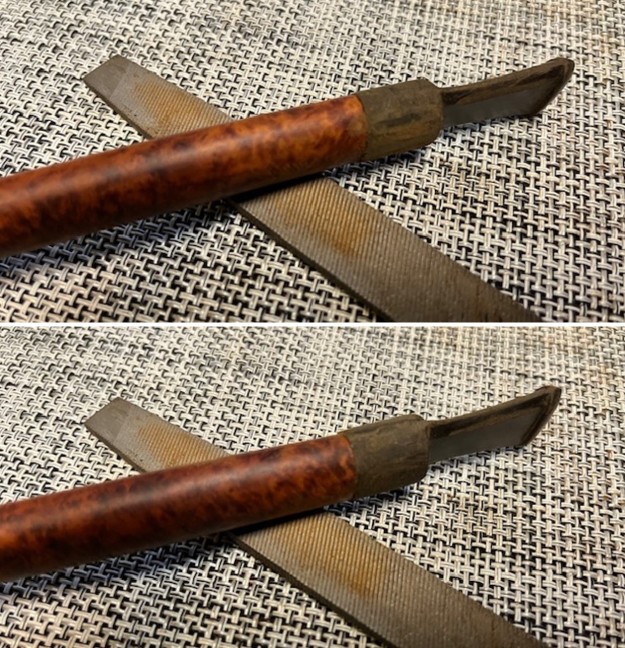
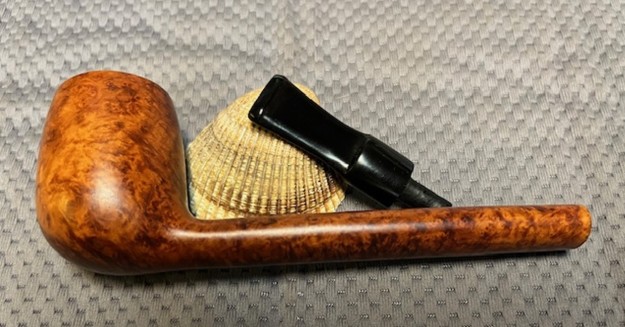
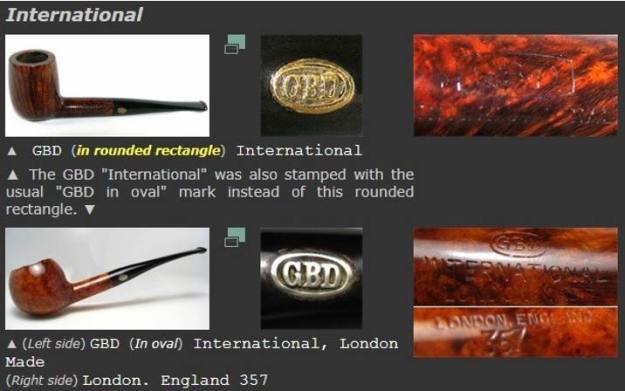
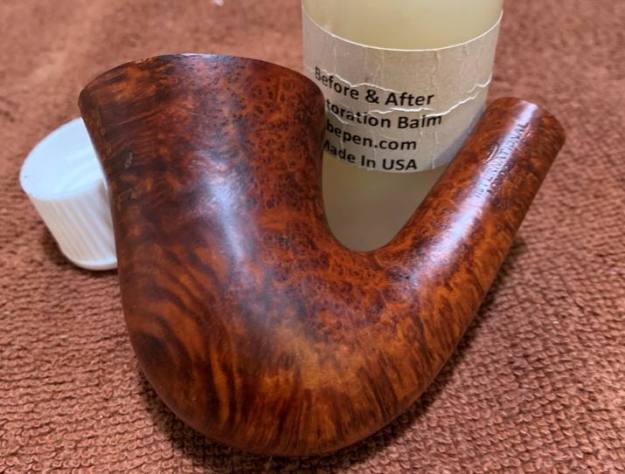
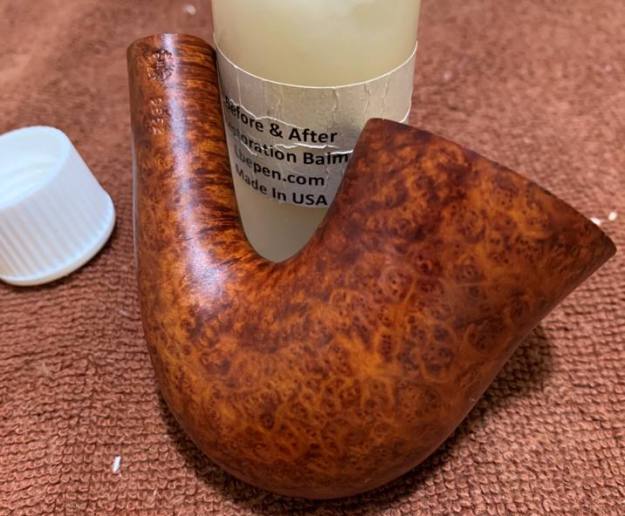
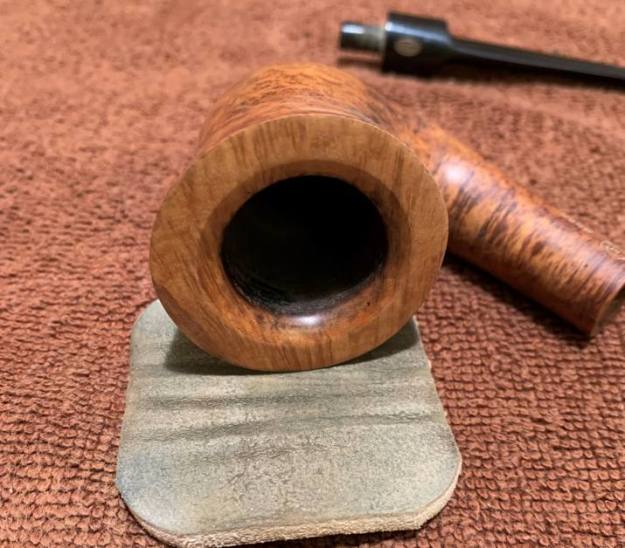
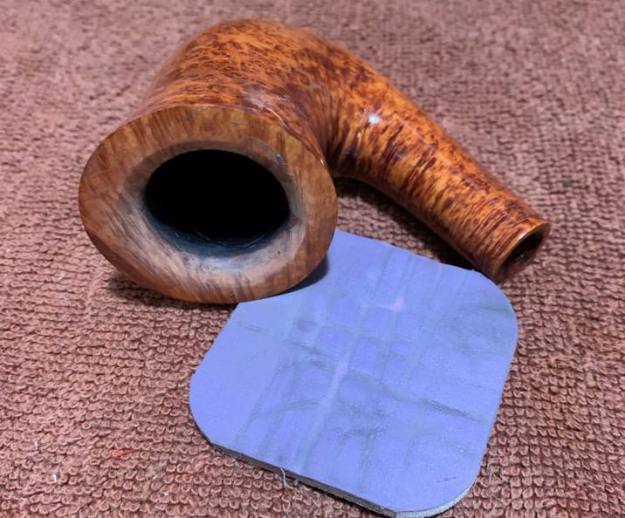
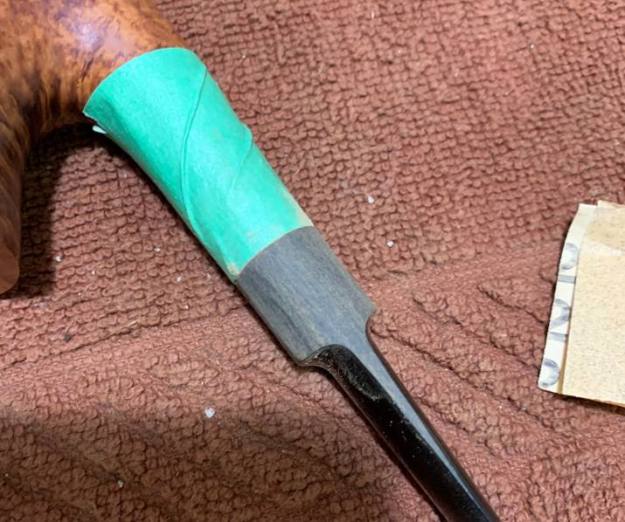
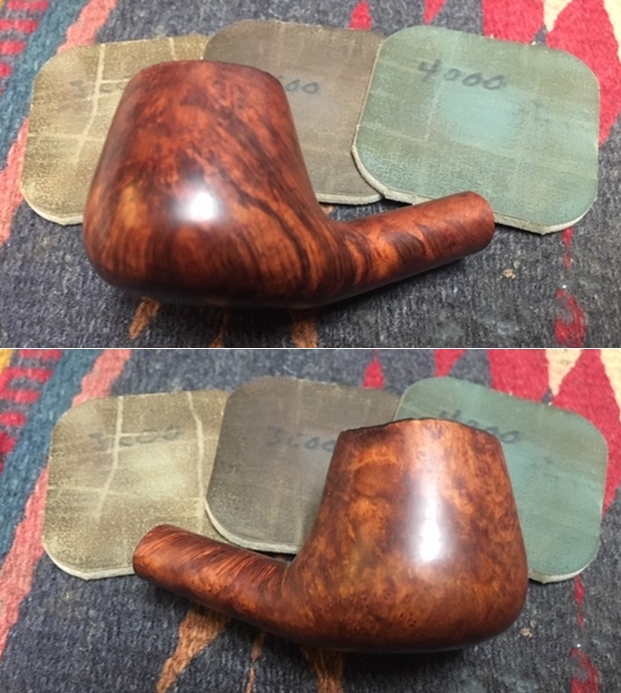
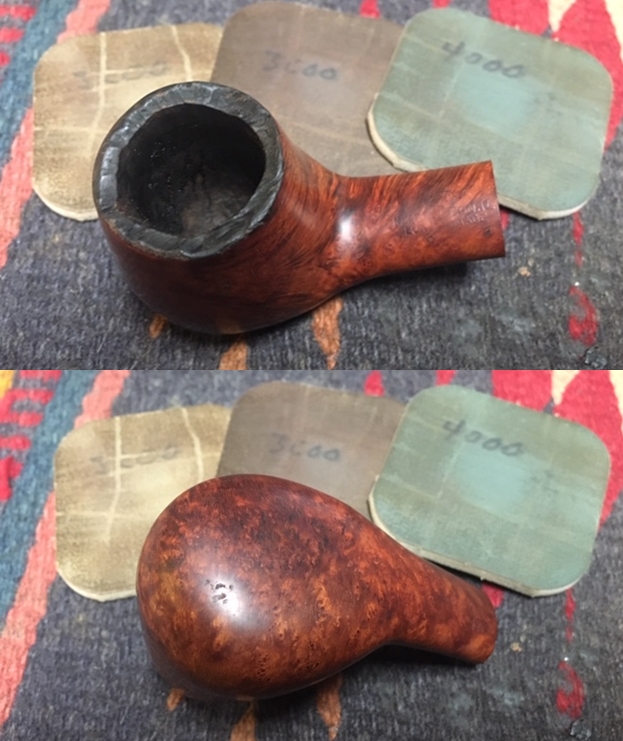
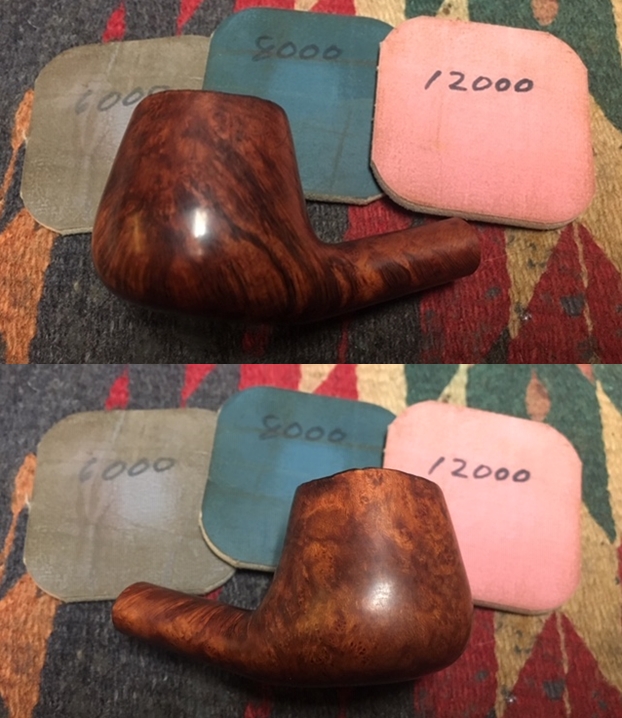
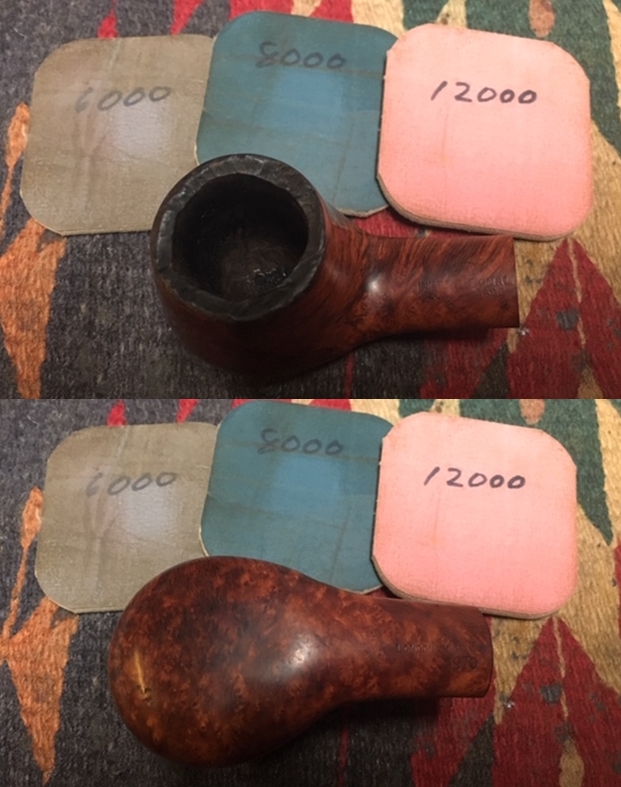
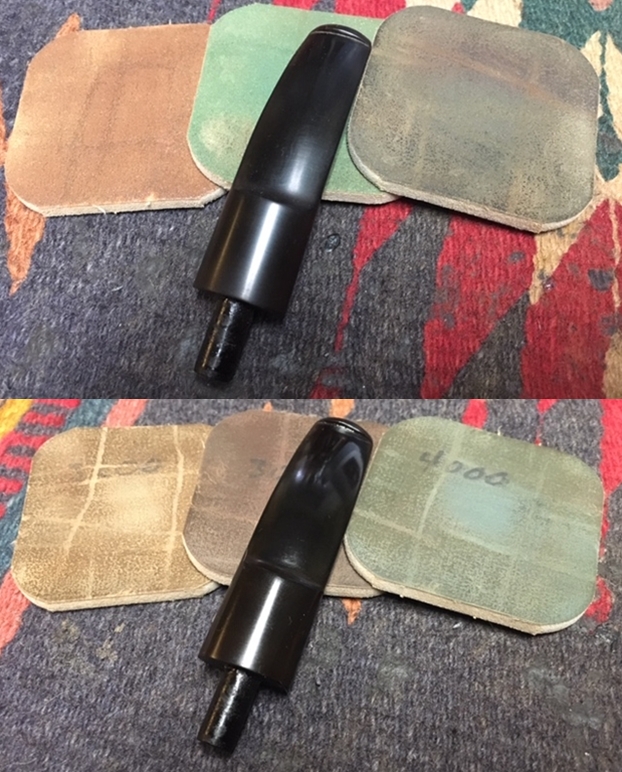
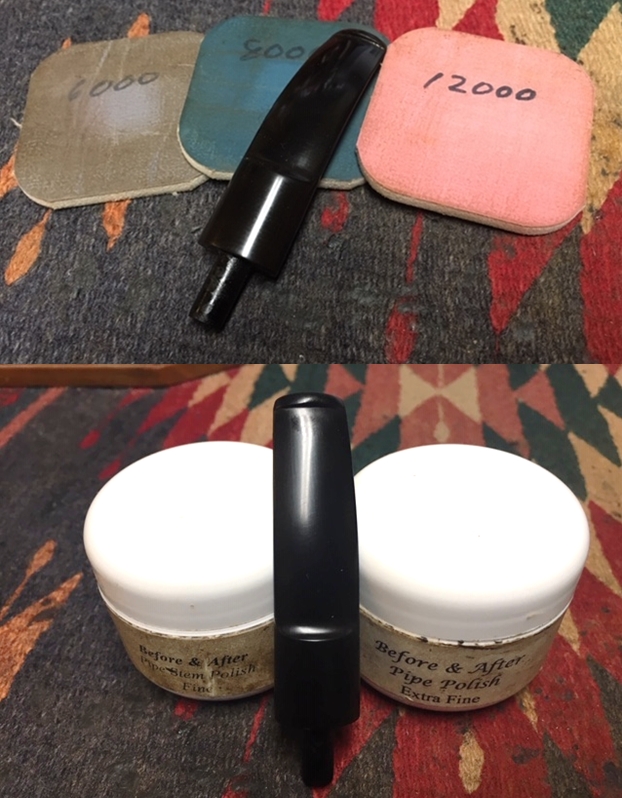
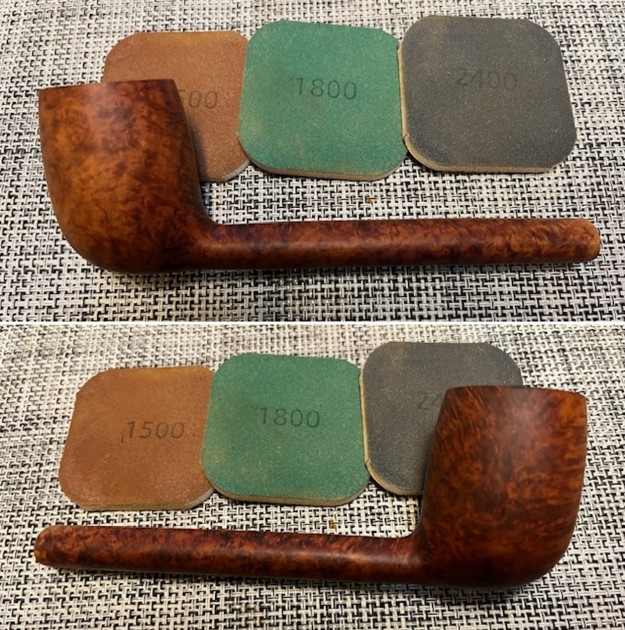
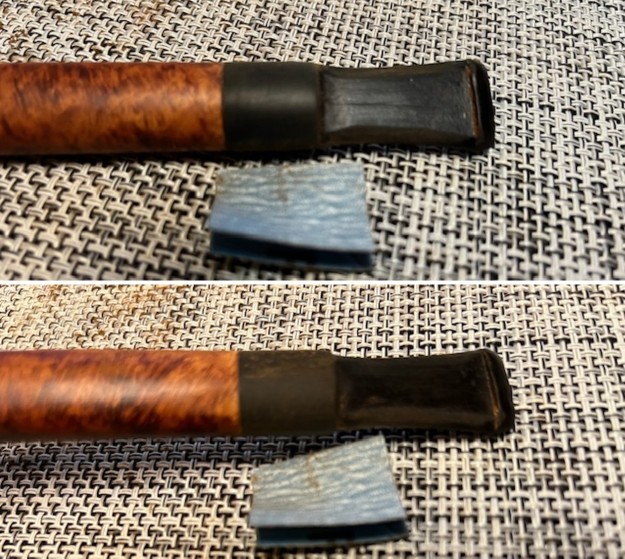
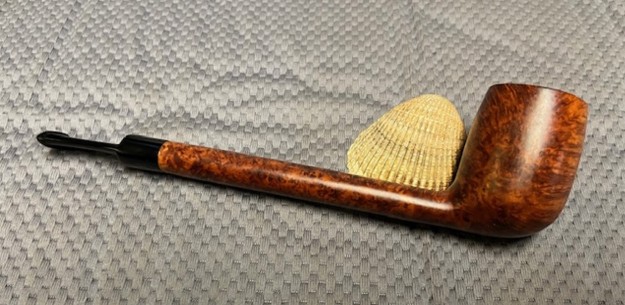
He also included a screenshot from Pipephil:I did some more work on the shape 264. Without the stem I was not sure I was dealing with a Canadian or a Lumberman – same family different stem. I did a Google search on the GBD shape number 264. I did not find the shape number on the shape list so I did a bit more digging. I found a link on Smokingpipes.eu to a GBD Premier Colossus Lumberman (264) (O) (pre-1980)(https://www.smokingpipes.eu/pipes/estate/england/moreinfo.cfm?product_id=168478). The one I am working on is an International while this one is a Premier but the shape number is identical. The pipe is identified as a Lumberman 264 and the photo below (from that site) tells me that the pipe had a saddle stem. Now I knew what I needed for a new stem on the pipe.I turned to work on the pipe itself. Jeff had done an amazing cleanup of the pipe. He reamed the cake with a PipNet reamer and cleaned up that with a Savinelli Fitsall Pipe Knife. He scrubbed the internals of the bowl and stem with alcohol, cotton swabs, pipe cleaners and shank brushes. He scrubbed the externals with undiluted Murphy’s Oil Soap and rinsed the bowl off with running water. He was able to remove the lava on the rim top and edges and the grime from the bowl. The pipe looked better when I received it. I took photos of the pipe before I started my work on the restoration and restemming. I took a photo of the rim top to show the condition. It looks good with the tars and oils removed from the rim top. The condition of the bowl and rim top were very good. There was some damage on the inner edge at the back of the bowl. I took photos of the top and underside of the shank to show the stamping. The stamping is very clear and reads as noted above. It was hard to capture in the photos.I used a folded piece of 220 grit sandpaper to smooth out the inner edge of the rim. I gave the rim a slight bevel to minimize the burn damage. It looked much better once it was smoothed out.I polished the briar on the bowl and shank with micromesh sanding pads – dry sanding it with 1500-12000 grit sanding pads. I wiped the briar down after each pad with a damp cloth to remove the sanding dust. I rubbed the bowl and shank down with Before & After Restoration Balm. I worked it into the surface of the briar with my fingertips to clean, enliven and protect it. I let the balm sit for a little while and then buffed with a cotton cloth to raise the shine. Mark Hoover’s Balm is a product that I have come to appreciate and one I use on every pipe I have been working on. With the bowl finished it was time to find a stem. Earlier today I assumed the pipe was a Canadian so I fit a taper stem to the shank. I liked the look of the pipe with the taper stem. Then on a whim I looked up the information I quoted above on the shape 264. It made it immediately clear to me that the pipe was not a Canadian but was a Lumberman. I started over to find one like that in the photo of the GBD 264 from Smokingpipes above. I would completely need to start over. Oh well! I went through my stem bins and found an oval saddle style stem that would work for this one. I needed to fit the stem to shank. With a little adjustment the tenon fit perfectly to the shank end. It was a snug fit. The diameter of the stem is slightly larger all the way around and would need to be reduced. I used my Dremel and sanding drum to start the process of shaping the saddle portion of the stem to fit the shank. Once I had it close I continued the fitting with a file. I also smoothed out the ridges and casting marks on the blade of the stem to round them out and shape them to be similar to the one on the photo that I found. I put it back on the shank and continue to shape the saddle portion of the stem. It is starting to look much better. I fine tuned the fit with 220 grit sandpaper. I removed all of the remaining excess with the sandpaper. Once I finished the transition between the stem and the shank it was smooth and the fit was snug in the shank. I put the stem and took photos of the pipe with the fit. It looks very good. I touched up the stain on the shank end to cover the lighter areas and match it to the rest of the shank. I used a Cherry Stain Pen to match it. The stain was a perfect match. It looked good.I sanded the stem with 320-1500 grit sanding pads. I dry sanded and after each pad wiped the stem down with a cloth impregnated with Obsidian Oil. By the final pad the stem looked very good and the fit was perfect.I polished the stem with micromesh sanding pads – wet sanding it with 1500-12000 grit pads. I polished it further with Before & After Pipe Stem Polish – both fine and extra fine. I finished by wiping it down with Obsidian Oil and buffing it to a shine. I always look forward to this part of the restoration when all the pieces are put back together. I put the GBD International London Made Colossus 264 Lumberman back together and carefully buffed the stem with Blue Diamond on the buffing wheel. I gave the bowl and the stem multiple coats of carnauba wax. I hand buffed the pipe with a soft cloth to raise the shine. It is fun to see what the polished bowl looks like with the new black vulcanite saddle stem almost glowing. This GBD International London Made Colossus Lumberman is nice looking and feels great in my hand. It is one that could be clenched and smoked while doing other things as it is very light weight and well balanced. It must have been a fine smoking pipe judging from the condition it was when I received it. Have a look at it in the photos below. The dimensions are Length: 7 inches, Height: 1 ¾ inches, Outside diameter of the bowl: 1 ¼ inches, Chamber diameter: ¾ of an inch. The weight of the pipe is 1.52 ounces/43 grams. I will be putting it in the English Pipemakers Section of the rebornpipes store soon. This will make a great addition to someone’s pipe collection. Thanks to each of you who are reading this blog. Remember we are not pipe owners; we are pipemen and women who hold our pipes in trust until they pass on into the trust of the next pipeman or woman.
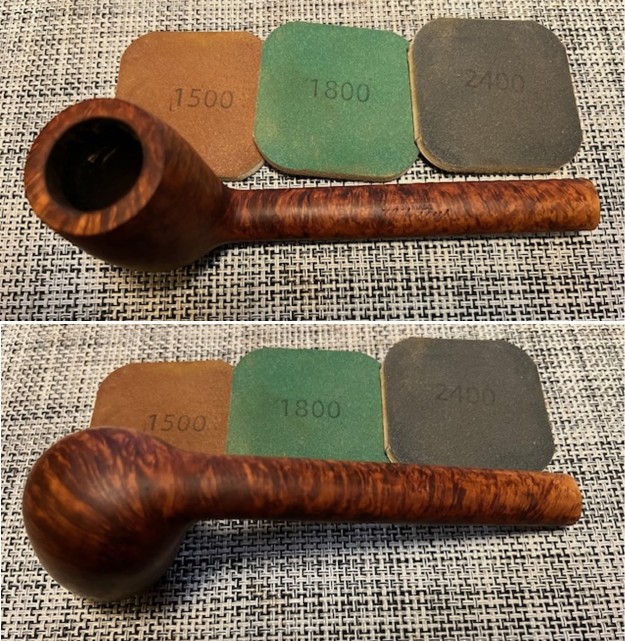
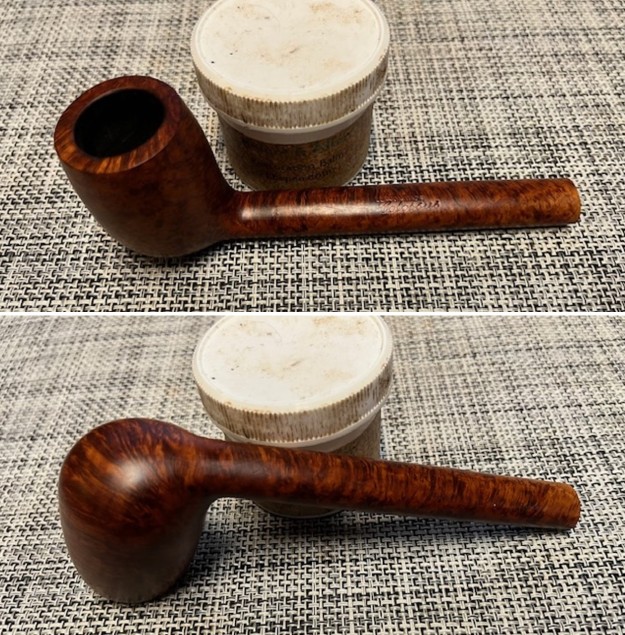
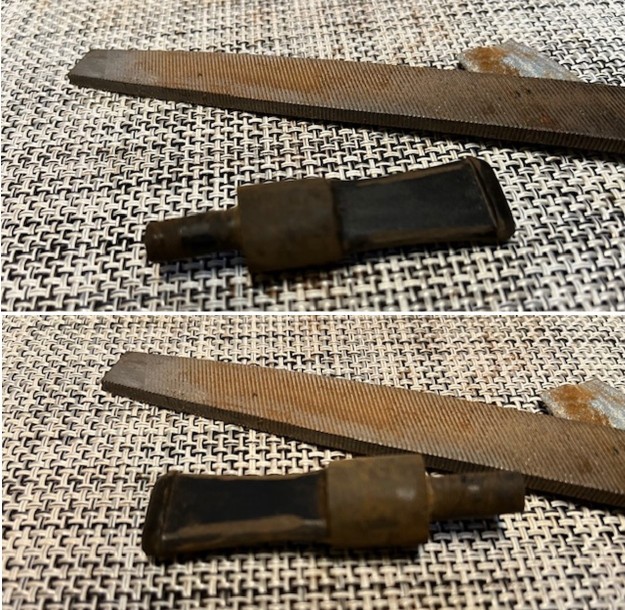
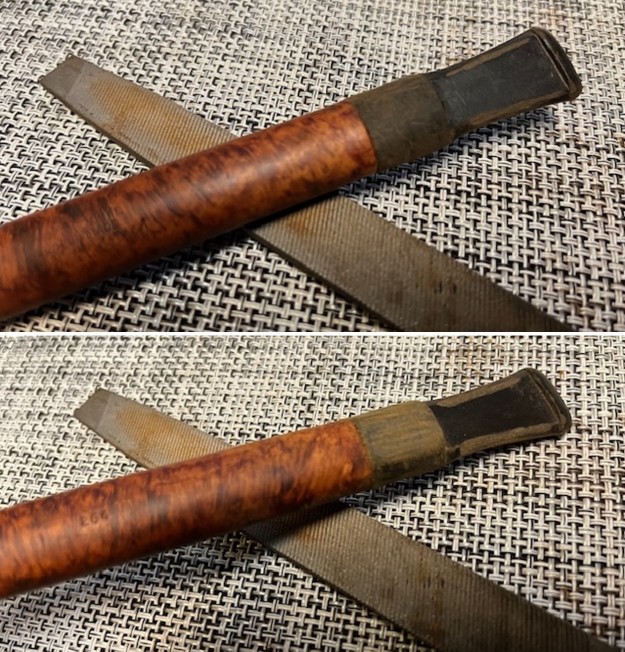
A Labour of Love


Blog by Kenneth Lieblich

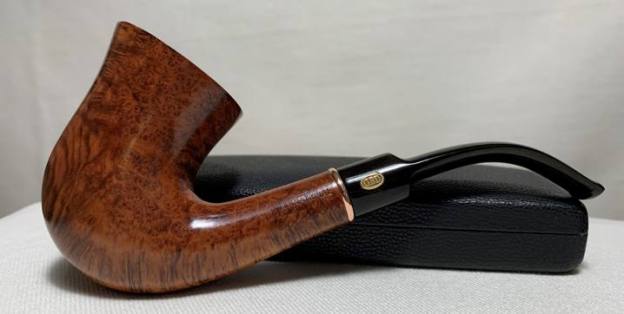
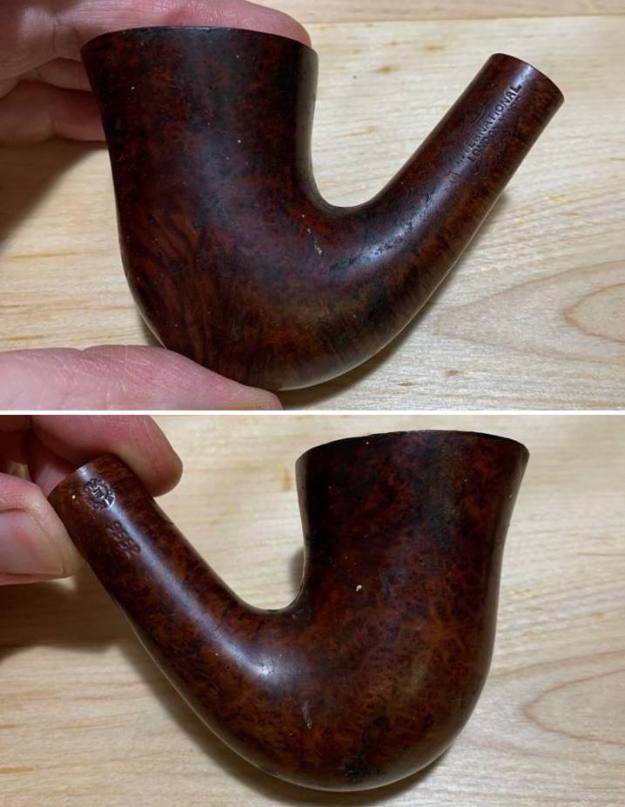
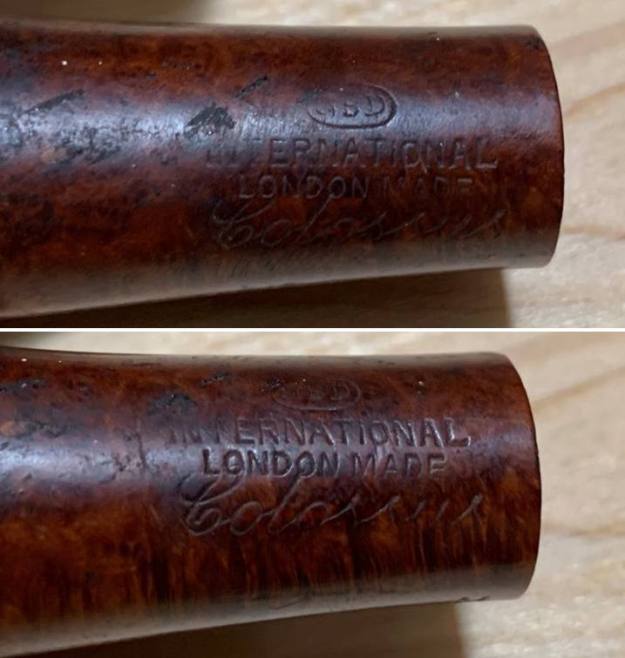
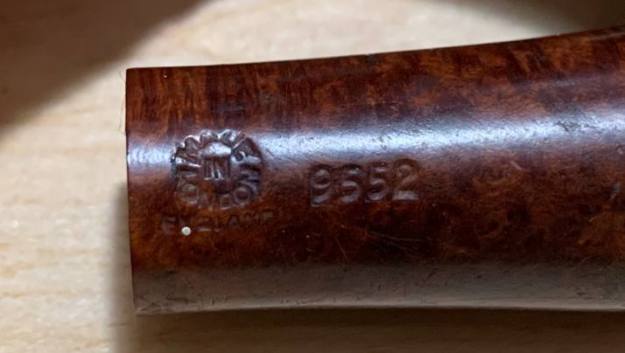
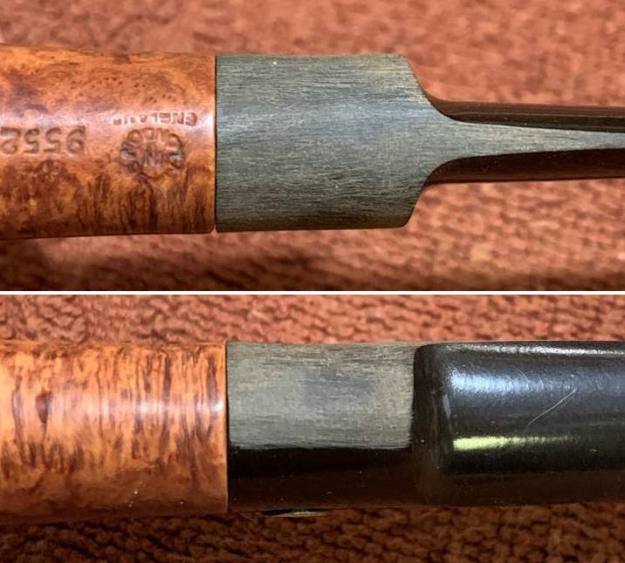
Next on the chopping block is the very first GBD I have had the pleasure of restoring. I titled this story A Labour of Love because the work involved was far more than I could have imagined for such a beautiful pipe. The pipe is a GBD Colossus and I acquired it in a group of pipes I purchased from a fellow in the Eastern US. It was definitely a mixed bag of very good and very bad. Some pipes were destroyed beyond repair, some pipes were filthy but repairable, some stems were missing their stummels, and some stummels were missing their stems. This was one of those – a stummel without a stem. Makes it a bit tricky to smoke, methinks. This pipe is a calabash-shaped GBD Colossus. As the photos show, it is stamped on the left side of the shank with GBD [over] International [over] London Made [over] Colossus. On the right side it is stamped Made in London [over] England [next to] 9552 – this, of course, is the shape number. There is quite a bit of information on GBD on the Internet – they have a long and storied history in pipemaking. In this case, I was curious about International and Colossus. The main Pipepedia article on GBD tells us about their origins:

In 1850 three gentlemen got together in Paris to establish a firm dedicated to the fabrication of Meerschaum pipes – a courageous step in politically restless times. Ganneval probably came from the area of Saint-Claude where he had learned making wooden pipes. Bondier’s family obviously came from Paris and had emigrated in 1789 to Geneva. He himself had worked as a wood turner in the clay and china pipe industry in and around Saint-Claude making stem extensions etc. Donninger was an Austrian or Swiss and had worked in Vienna, the world’s center of the Meerschaum pipe. They agreed on the acronym GBD selecting the initials of their surnames.

The Pipedia article provides a lot more information on their interesting history. I would encourage you to read on here. The shape number 9552 corresponds correctly with GBD’s identification of this pipe as a calabash. The page on GBD models states the following concerning the International line and the Colossus size:

International – France and England made: medium brown smooth, carved top rim, rim stained black. In addition to the pipe line and shape information stamped on the pipe, GBD also had codes for plus sized pipes. These codes in ascending order of size were Conquest, Collector, Colossus.

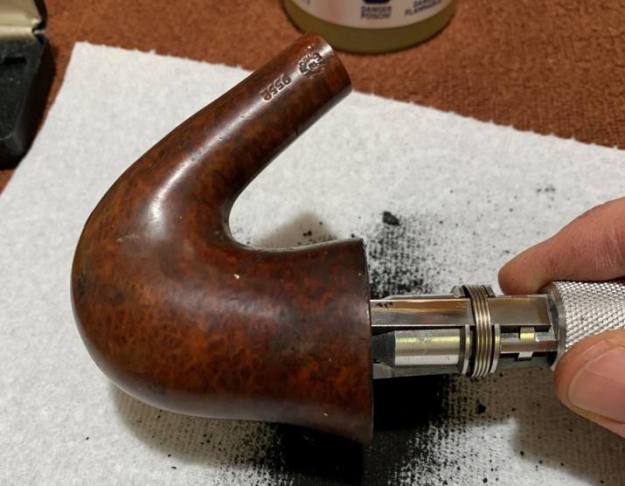
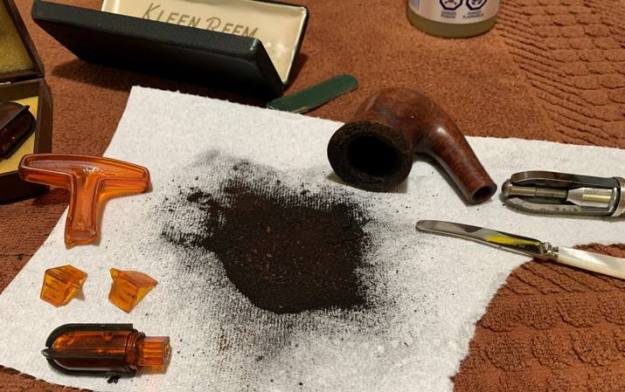
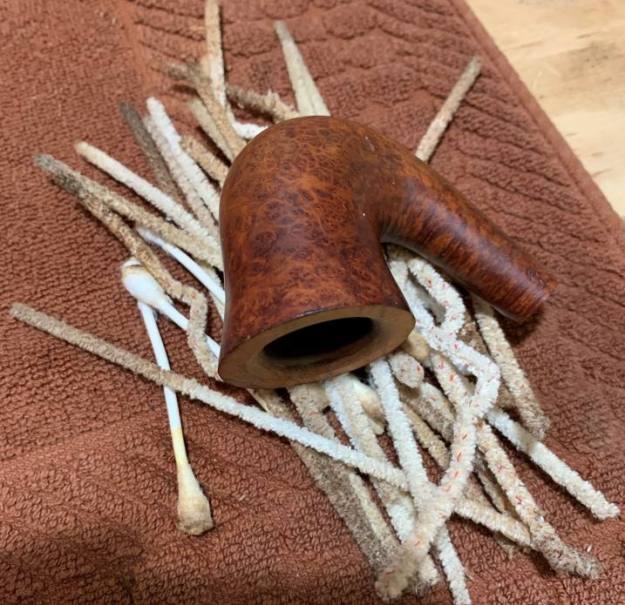
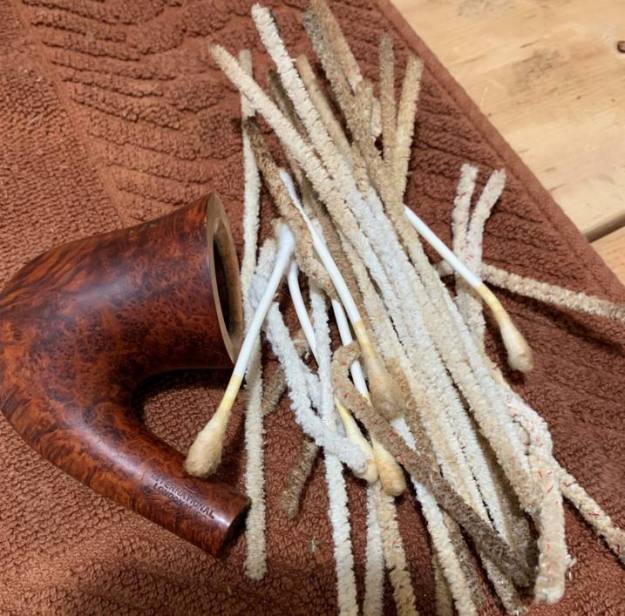
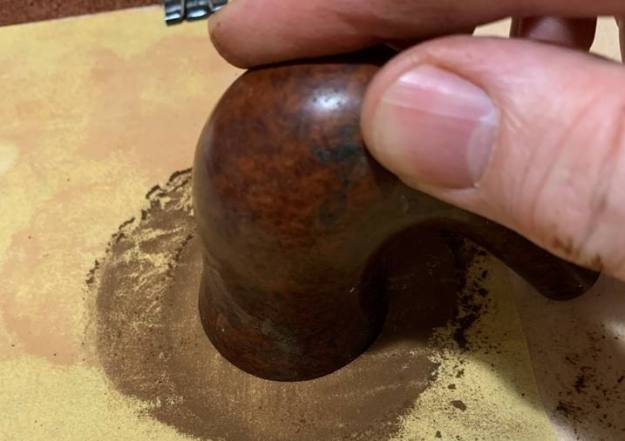
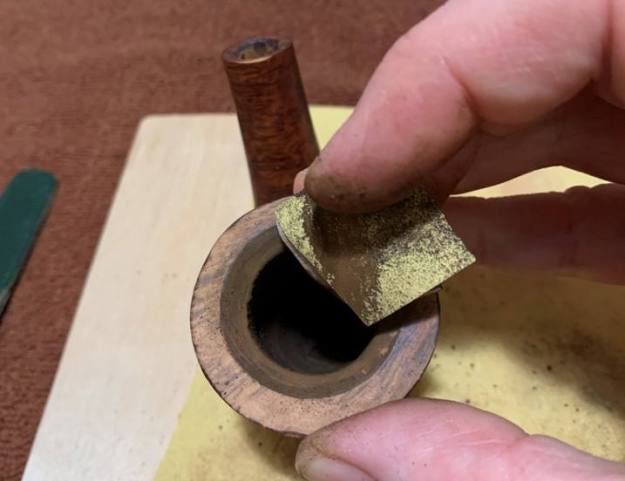
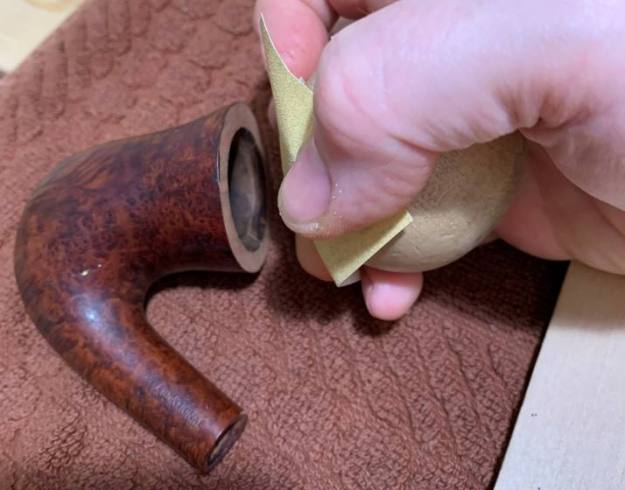
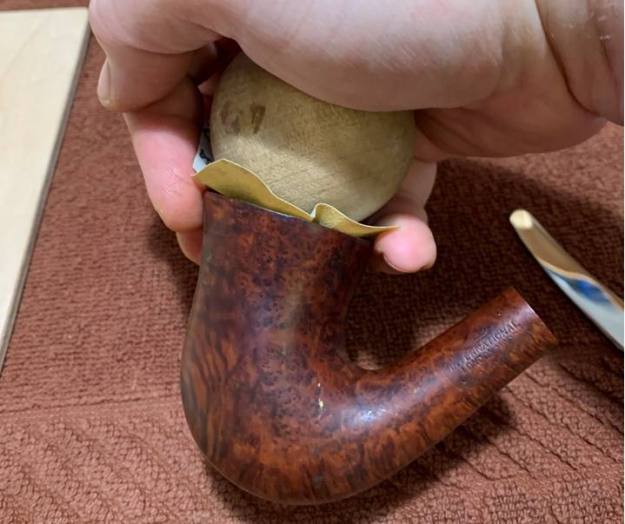
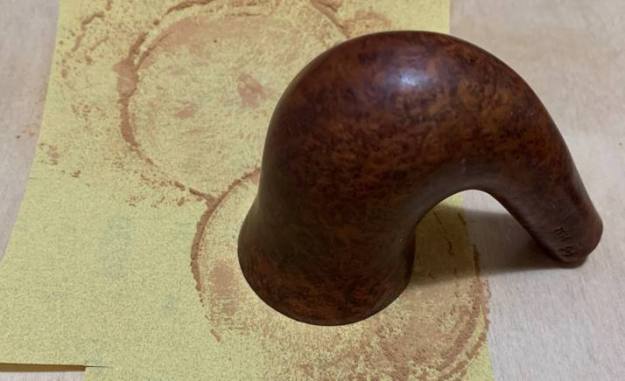
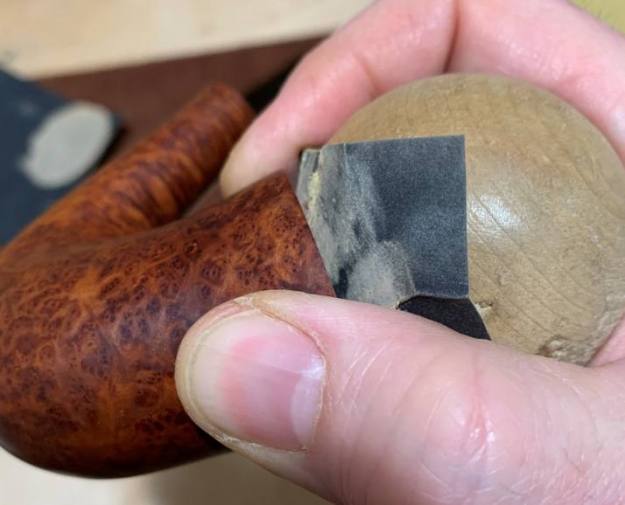
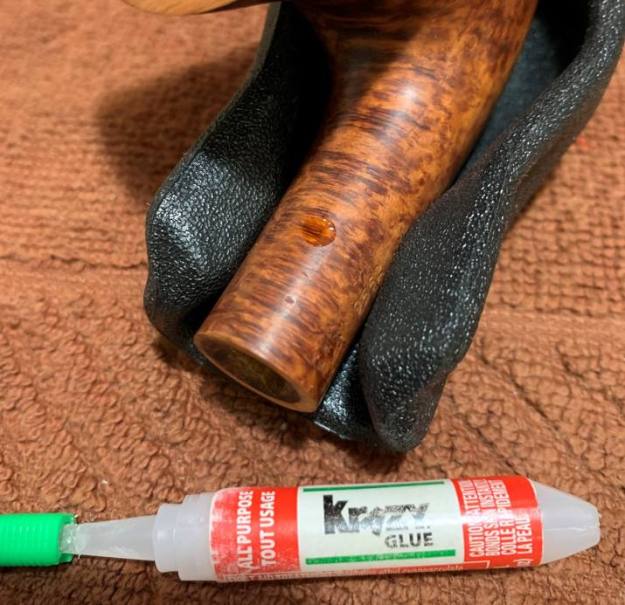
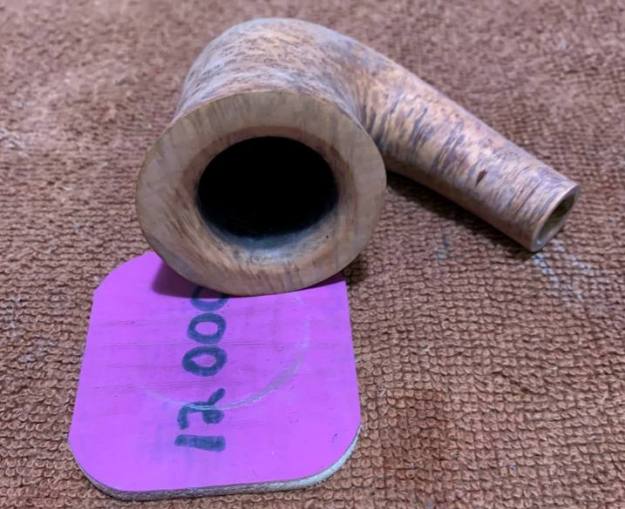
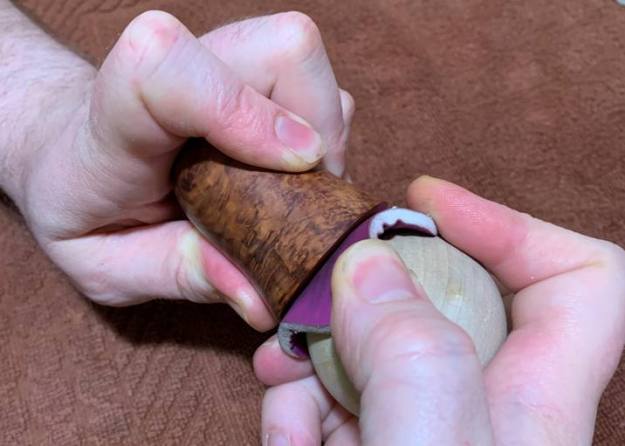
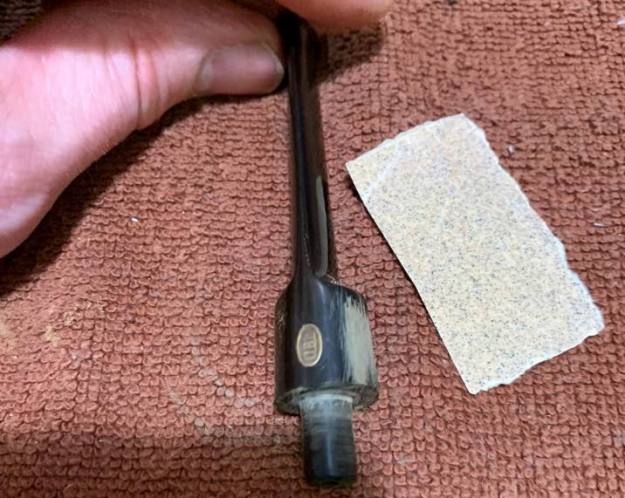
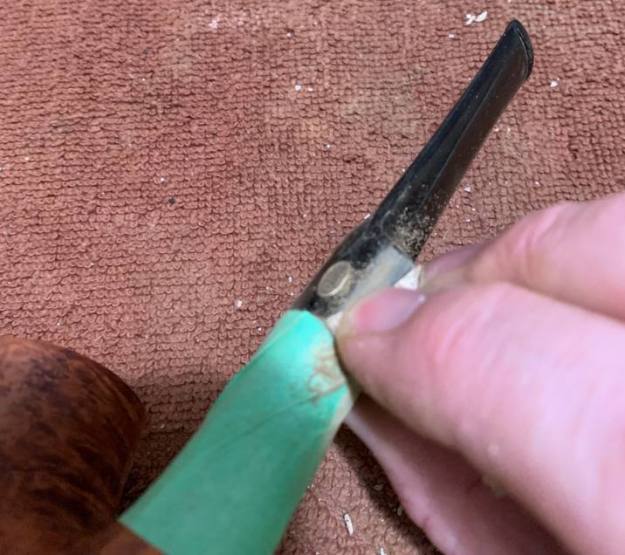
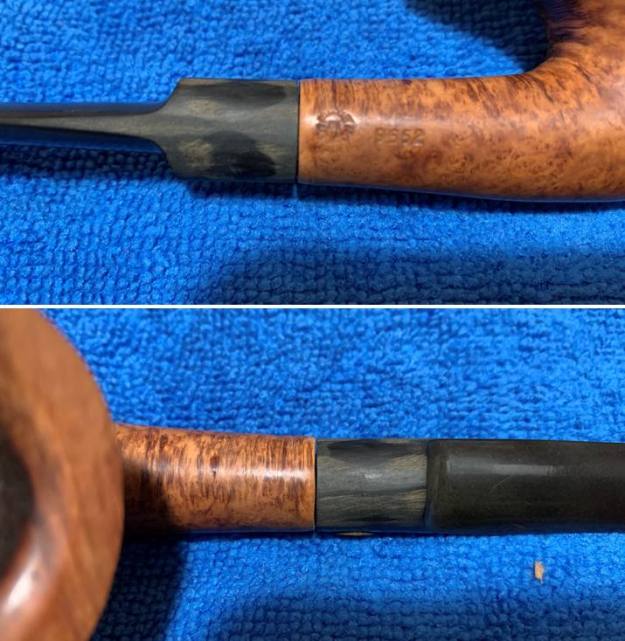
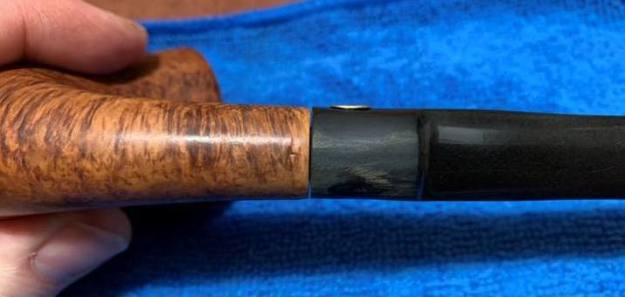
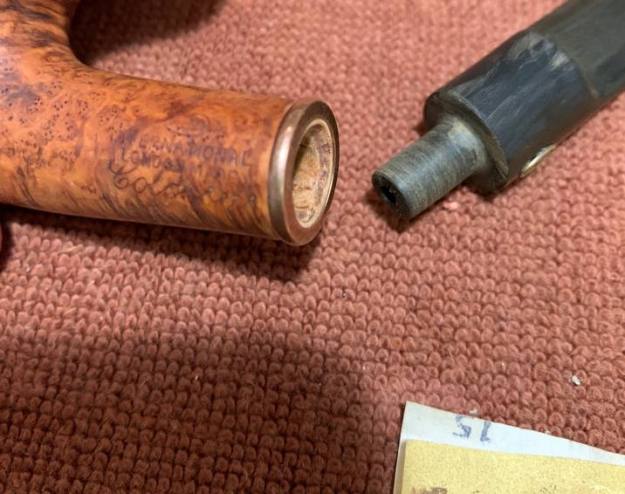
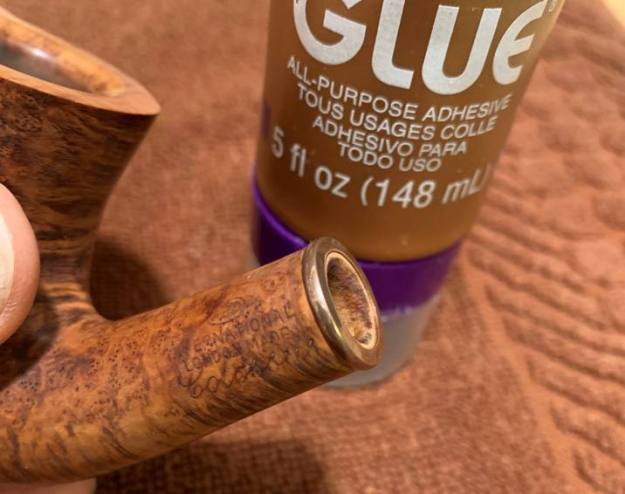
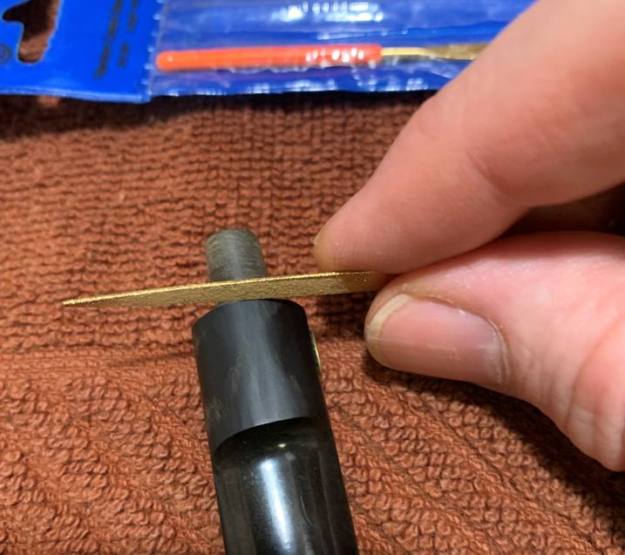
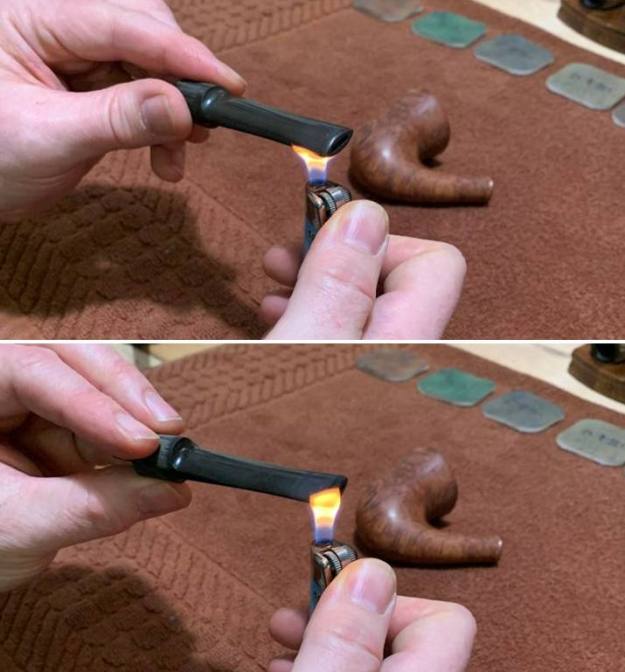
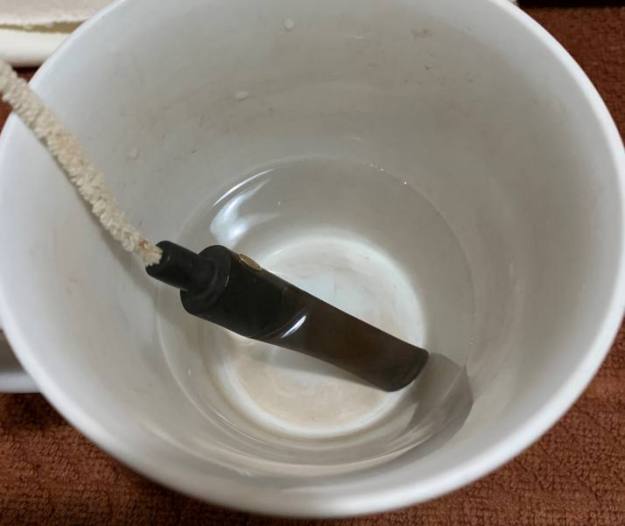
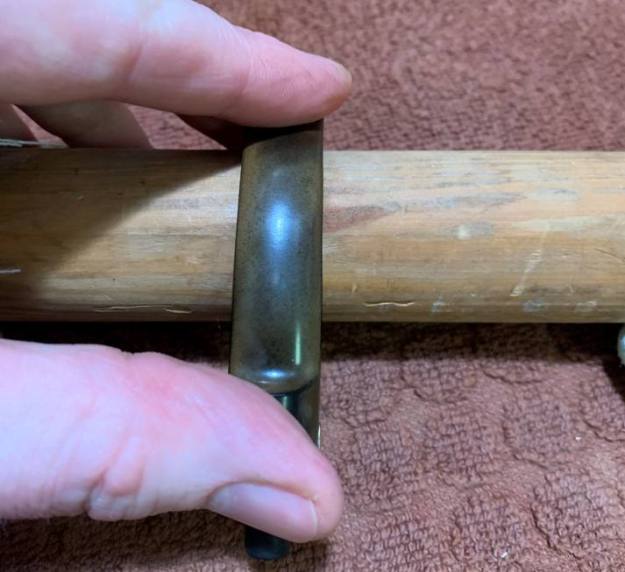
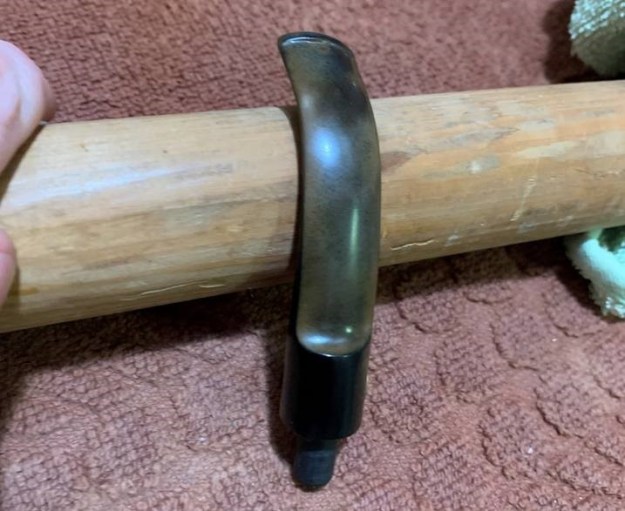
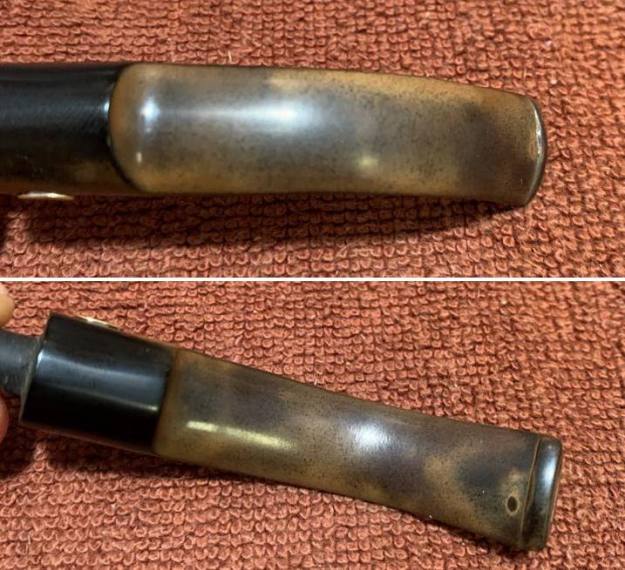
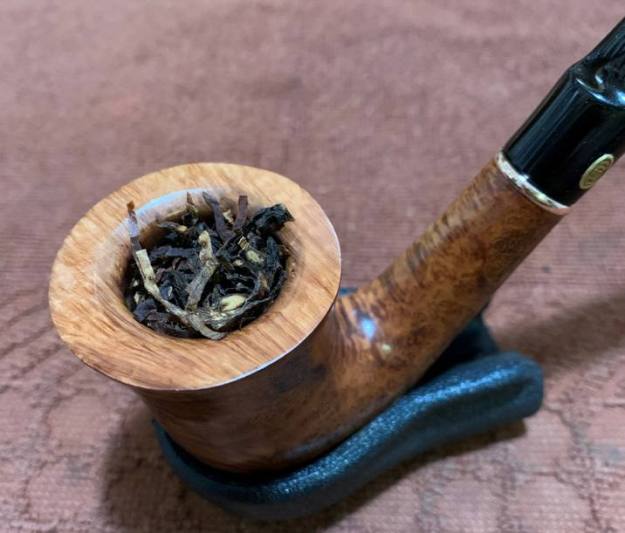
I also took this screenshot from Pipephil:Anyway, on to the pipe – and what a gorgeous pipe it was (and such a big bowl)! However, it was absolutely filthy and had a few issues. The stummel had the following problems: tons of lava on the rim, notable greasy/sticky stains to the bowl and shank, plenty of cake in the bowl, a few scratches here-and-there, and a few small burns on the rim. Meanwhile, the stem had a few problems of its own. Oh wait. No stem. Umm, yeah, that is going to be an issue. This pipe was going to require some considerable work, but I was really looking forward to restoring this one. Well, suffice it to say that first on my list of tasks was to find a stem for this beauty. However, GBD stems are not just lying around, sad to say. In this case, Superman Steve came to my rescue. He had a spare GBD stem that suited my pipe very well. I was (and still am) deeply grateful to him for getting that stem for me. I will come back to the story of how I fit the stem a bit later. By the way, here is a photo of Superman Steve:This stummel was quite a mess. I first decided to ream out the bowl. I used both the PipNet Reamer (which I broke in the process) and the KleenReem to remove the built-up cake and followed that with 220-grit sandpaper to eliminate as much as I could. I took it down to bare briar, as I wanted to ensure there were no hidden flaws in the walls of the bowl. Fortunately, there were none. I then proceeded to clean out the insides of the shank with cotton swabs, pipe cleaners, and lemon isopropyl alcohol. There was a lot of nastiness inside this stummel and – boy-oh-boy – it took a lot of cotton to get this thing clean! As I mentioned earlier, the rim of the stummel was pretty ugly and also needed to be addressed. A combination of techniques was used to sort this out. In order to remove the lingering bits of lava and fix the nicks, I “topped” the pipe – that is to say, I gently and evenly sanded down the rim on a piece of 220-grit sandpaper. This effectively removed the lava and the damage, without altering the look of the pipe. I then took a solid wooden sphere, wrapped sandpaper around it, and sanded the inner bevel thoroughly. This was to achieve on the inner part of the rim the same thing that I achieved by “topping” the rim on sandpaper. A de-ghosting session seemed in order, so I thrust cotton balls in the bowl and the shank, and saturated them with 99% isopropyl alcohol. I let the stummel sit for 24 hours. This caused the oils, tars and smells to leech out into the cotton. Finally, a relatively clean and fresh-smelling bowl emerged. I followed that up by cleaning the insides with some dish soap and tube brushes. I then moved on to cleaning the outside of the stummel with Murphy’s Oil Soap and some cotton pads. Some stains were pretty stubborn and I had to scrub hard, but this did eventually remove the remaining dirt. After that, a light application of Before & After Restoration Balm brought out the best in the stummel’s grain. Having completed that, I was able to address a small nick on the shank. I dug out my iron and a damp cloth to try and raise the nicks. The hot and moist steam created can often cause the wood to swell slightly and return to shape. There was some movement – not a lot, but it was better than doing nothing. I filled the remaining divot with cyanoacrylate adhesive and let it cure. Now, with the nick filled, it was time to sand down the stummel. I used all nine Micromesh pads (1,500 through 12,000 grit) to wet/dry sand everything smooth. Then I added a bit more Before & After Restoration Balm. On to the stem, and what a trial it was. As mentioned, Superman Steve got me a GBD stem and that was terrific: the stem was clean and in nice shape. So what is the problem? Well, its width did not quite match the width of the shank. The stem was slightly wider. So, with 200-grit sandpaper in hand, I began removing the excess vulcanite. As silly as it sounds, this took a couple of hours of work to get this right. The photos below detail the lengthy process to both remove the excess and ensure evenness all around the stem face. At long last, I managed to get the size and shape just right, but the faces of both the shank and stem were not matching in the way that one would want. I took the decision that this pipe would benefit from a thin – emphasis on thin – band around the end of the shank. My jar of bands proffered a lovely, thin band that perfectly suited this pipe. With a quick application of glue, the band was on and things were looking much improved. I used some of my Micromesh pads to give that extra shine. In order to finish up the stem, I took a BIC lighter and ‘painted’ it with its flame in order to lift the slight tooth marks. This was reasonably successful in raising the dents. Before I moved on to the Micromesh pads, I built up the small dents on the stem with cyanoacrylate adhesive and let them fully cure. I then sanded it down with 220-, 400-, and 600-grit sandpapers to meld the repair seamlessly into the stem. This ensures that it keeps its shape and looks like it should. I then used all nine Micromesh pads (1,500 through 12,000 grit) to bring out the lovely black lustre on the stem. I also used Obsidian Pipe Stem Oil in between each pad scrubbing. Of course, since the stem was straight, it did not suit the pipe and needed to be bent. The end of the stem needed to be parallel with the rim of the bowl. I did not have a heat gun at the time, so I brought out a hair drier and heated the vulcanite stem in order to make it malleable. After heating it for 90 minutes (yes, you read that correctly), it became obvious that the hair drier just did not generate enough heat to bend the stem. I then realized that I was going to have to use the nuclear option: dipping the stem in boiling hot water. This is a nuclear option because the water added an horrific oxidation to the stem – the worst I have ever seen. When it was finally soft, I gently curved the stem over a wooden dowel. The dowel provided a firm surface and a proper curve. Once I had the bend I wanted, I left the stem to cool and set itself in place. I then had to go back and use all nine Micromesh pads (and the Obsidian Pipe Stem Oil) again to restore the black lustre. A few four-letter words might have been silently uttered in the process, but I digress… Then it was off for a trip to the buffer. A dose of White Diamond and a few coats of carnauba wax were just what this pipe needed. The lovely shine made the wood look absolutely beautiful.

This is a wonderfully crafted pipe and has a very elegant feel to it. Steve told me from the beginning that this was a pipe I should keep for myself. So, this one is being added to my collection – and I am pleased to say that it smokes beautifully. I am sure that I will be enjoying this one for many years to come. I hope you enjoyed reading the story of these pipes as much I as I did restoring them. If you are interested in more of my work, please follow me here on Steve’s website or email me directly at kenneth@knightsofthepipe.com. Thank you very much for reading and, as always, I welcome and encourage your comments.

Restoring #4 of Jennifer’s Dad’s Pipes – A GBD International Brandy


Blog by Steve Laug

Once again time to get back to Jennifer’s Dad’s pipes. The next pipe on the worktable is from the estate of George Rex Leghorn. You may not have read this so I will retell the story. I received an email from Jennifer who is a little older than my 64+ years about whether I would be interested in her Dad’s pipes. My brother Jeff and I have been picking up a few estates here and there, so I was interested. Here is the catch – she did not want to sell them to me but to give them to me to clean up, restore and resell. The only requirement she had was that we give a portion of the sales of the pipes to a charity serving women and children. We talked about the organization I work for that deals with trafficking and sexual exploitation of women and their children and she decided that would be a great way to carry on the charitable aspect of her Dad’s character. With some great conversation back and forth she sent the pipes to Jeff and he started the cleanup process on them. Once he had finished cleaning them all he sent them to me to do my work on them.

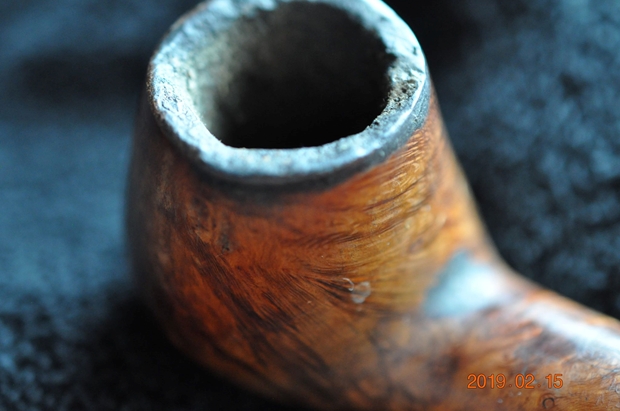
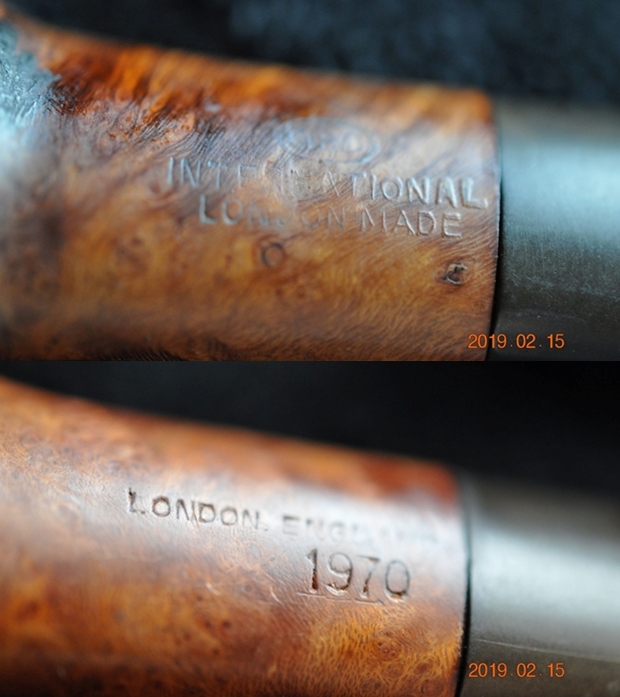
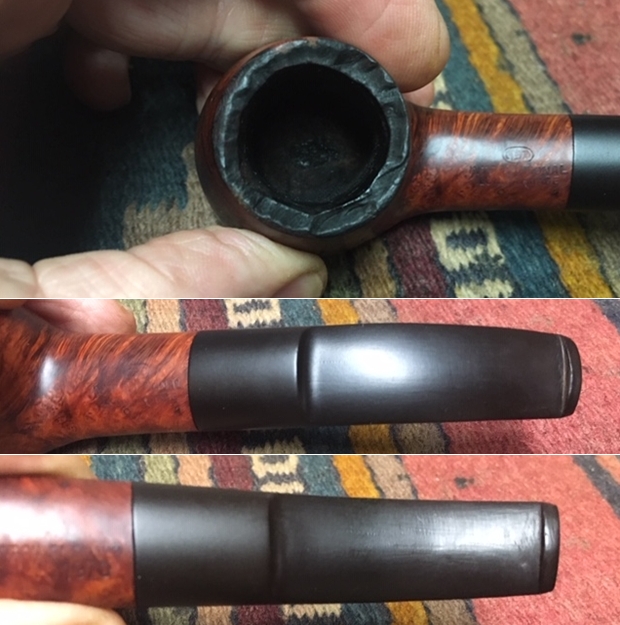
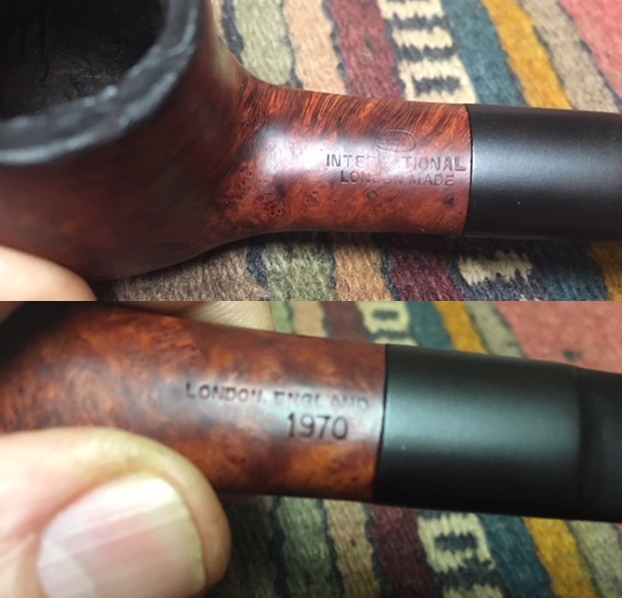
The fourth pipe I chose to work on from the lot was an interesting Brandy shaped GBD International with a carved and black stained rim top. It had some beautiful mixed grain on the bowl sides and shank. It had a rich reddish brown stain but it was dirty and hard to see the colour well. The stem was badly oxidized with tooth marks and chatter on the top and underside near the button. The button was in excellent condition. There was a thick cake in the bowl and it had overflowed with lava was dirty and tired looking. It had been sitting in boxes for a lot of years and it was time to move ahead with the restoration. Jennifer took photos of the pipes she was sending. I have included two she included from this pipe.When the box arrived from Jennifer, Jeff opened it and took photos of each pipe before he started his cleanup work on them. This petite looking GBD International with a Plateau rim top appeared to be in good condition underneath the grime and oxidation on the bowl and stem. The finish looked intact under the grime. The bowl had a thick cake that had hardened with time. The lava overflow on the rim filled in the carving that was a hallmark of the International line but it could very well have protected the rim from damage. We won’t know what is under it until Jeff had cleaned it off. The stem was worn looking with a lot of deep oxidation and scratches in the vulcanite on both surfaces. There was some tooth chatter and bite marks on both sides at the button. The stem did not have the GBD brass medallion on the top of the saddle nor did have the later stamped and painted logo. Jeff took photos of the bowl and rim top to show the cake in the bowl and the lava build up on the edges of the bowl. It was thick and hard but hopefully it had protected the rim and edges from damage. The third photo shows the lava flowing down the outside of the bowl leaving a thick dark ring around the outside of the bowl. Jeff took photos of the stamping on the underside of the shank. The stamping was still readable even though it was faint. On the topside of the shank it read GBD in an oval (GBD Logo) over International over London Made. On the underside London, England over the shape number 1970. The shank was very dirty as you can see in the photos. The GBD International Line came out in the 1970’s (not to be confused with the shape number stamped on the underside of the shank. I looked up the line on Pipedia to get a good description (https://pipedia.org/wiki/GBD_Model_Information). I quote from there:

International — France, unknown if also made in England: medium brown smooth, carved top rim, rim stained black. -TH: Matt take off finish “with just a hint of surface waxing” -catalog (1976).

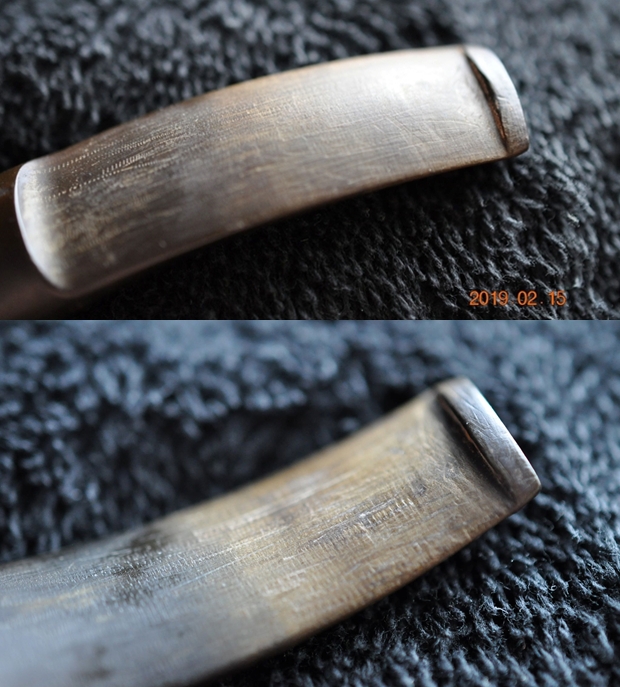
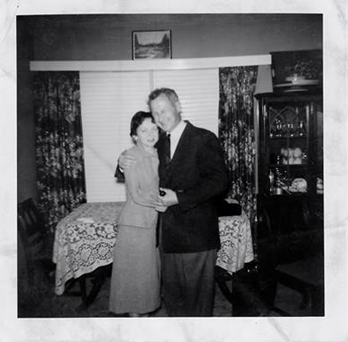
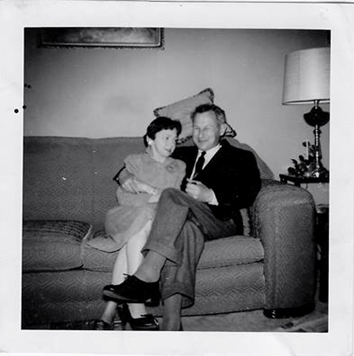
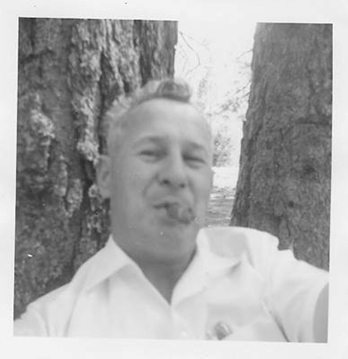
Jeff took photos of the top and underside of the stem showing the scratching, oxidation and light tooth damage to the stem surface and slight wear to the edge and top of the button.I am once again including the tribute that Jennifer consented to her Dad for the blog. She also sent some photos and an article that her Dad wrote for Jeff and me to be able to get a feel for him. I have included those below. Note in each of them that he is holding a pipe in his left hand. I asked her to also send me an email with a brief tribute to her Dad. Here is her tribute from an email to me.

Steve, I want to thank you again for accepting my dad’s pipes.  They were so much a part of my dad’s life that I could not simply discard them. But as his daughter, I was not about to take up smoking them either. *laughing* I think my dad would like knowing that they will bring pleasure to others.  I know that I do.

I’m not sure what to say about his pipes. I always remember Daddy smoking pipes and cigars.

First a bit about my dad. Though my father, George Rex Leghorn, was American (growing up in Alaska), he managed to join the Canadian Army at the beginning of WWII, but in doing so lost his American citizenship.  He was fortunate to meet a Canadian recruiting officer who told him the alphabet began with “A” and ended with “Zed” not “Zee”, and also told him to say that he was born in a specific town that had all its records destroyed in a fire.  When the US joined the war my dad, and thousands of other Americans who had made the same choice*(see the link below for the article), were given the opportunity to transfer to the US military, and regain their citizenship.

After WWII, my dad, earned his degree at the University of California Berkeley and became a metallurgist. There is even a bit about him on the internet.

He loved taking the family out for a drive, and he smoked his cigars on those trips. (As a child, those were troubling times for my stomach.)

I most remember my father relaxing in his favorite chair with a science fiction book in one hand and a pipe in the other… Sir Walter Raleigh being his favorite tobacco… and the pipes themselves remind me of him in that contented way.  If I interrupted his repose, he’d look up, with a smile on his face, to answer me.

It seemed he smoked his Briarwood pipes the most, though he had others.  At the time, it was only the Briarwood I knew by name because of its distinctive rough shaped bowl.  And it was the Anderson Free Hand Burl Briar, made in Israel, which I chose for his birthday one year, because I thought he might like that particular texture in his hand.

At least two of his pipes, he inherited from his son-in-law, Joe Marino, a retired medical laboratory researcher (my sister Lesley’s late husband)… the long stemmed Jarl (made in Denmark), and the large, white-bowled, Sherlock Holmes style pipe.  I believe Joe had others that went to my dad, but Lesley was only sure about those two.

The Buescher, corncob pipe my older sister Lesley bought for Daddy while on one of her travels around the States.

A note on the spelling of my sister’s name…

My dad met my mother, Regina, during WWII and they married in Omagh, Ireland.  My mother was English and in the military herself.  The English spelling of Lesley is feminine, and Leslie masculine, in the UK… just the opposite of here in the United States.  I guess my mom won out when it came to the spelling of the name.

I’ll send you photos of my dad soon, along with his WWII experience story.

Jennifer

*https://www.thestar.com/news/world/2013/10/22/the_americans_who_died_for_canada_in_wwii.html

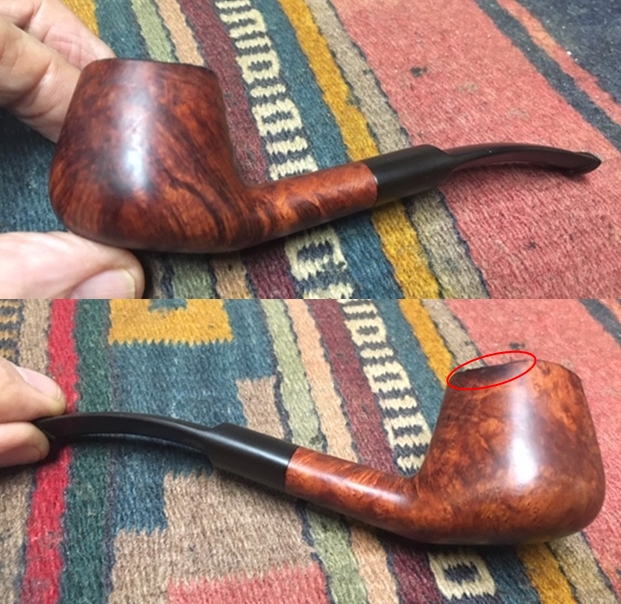
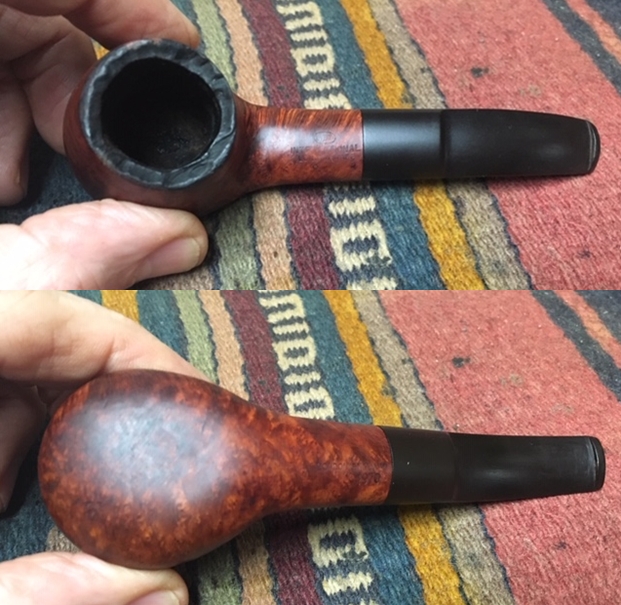
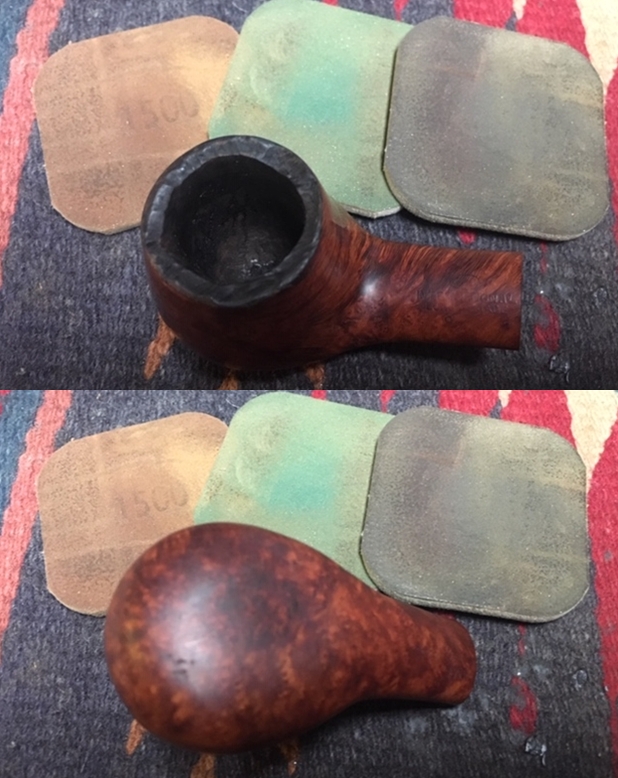
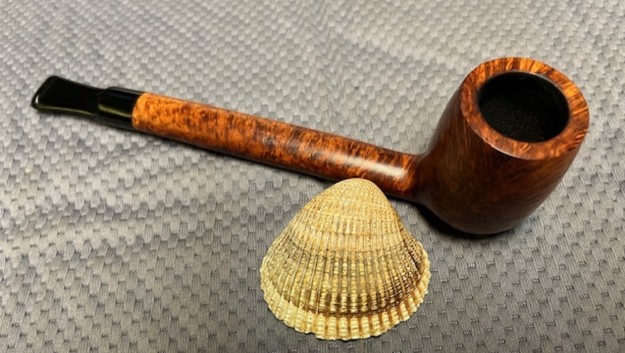
Once again Jeff cleaned the pipe with his usual penchant for thoroughness that I really appreciate. This one was a real mess and I did not know what to expect when I unwrapped it from his box. He reamed it with a PipNet pipe reamer and cleaned up the reaming with a Savinelli Fitsall Pipe Knife. He scrubbed out the internals with alcohol, pipe cleaners and cotton swabs until the pipe was clean. He scrubbed the exterior of the bowl with Murphy’s Oil Soap and a tooth brush to remove the grime and grit on the briar and the lava on the rim top. The finish looks very good with mixed grain around the bowl and shank. There was still some darkening on the right side of the outer edge of the rim toward the back of the bowl (I have circled the spot in red in the second photo below). He soaked the stem in Before & After Deoxidizer to remove the oxidation on the rubber. When the pipe arrived here in Vancouver for the second stop of its restoration tour it looked very good. I took photos before I started my part of the work. I took some close up photos of the carved blackened rim top and stem surface. I wanted to show what an amazing job Jeff did in the cleanup of the rim top. It looked almost flawless. I also took close up photos of the stem to show the light tooth marks and chatter in front of the button on both sides.I also took photos of the stamping on the pipe on both the top and underside of the shank. It read as noted above.I polished the outside of the bowl with micromesh sanding pads – wet sanding with 1500-2400 grit pads and dry sanding with 3200-12000 grit pads. I wiped the bowl down after each pad to remove the sanding debris. I worked on the darkened area on the rear right side of the outer edge of the rim. I was able to remove much of the damage with the sanding. The photos tell the story. I worked some Before & After Restoration Balm into the briar of the bowl and the carved rim top with my fingertips to clean, enliven and protect it. I worked it deep into the carved finish with a horsehair shoe brush. I find that the balm really makes the briar come alive again. The contrasts in the layers of stain really made the grain stand out. I let the balm sit for a little while and then buffed with a cotton cloth to raise the shine. The pipe really looks good at this point. I am very happy with the results. I sanded the stem with 220 grit sandpaper to blend the tooth marks and chatter in and to remove some of the oxidation. I followed that by sanding with 400 grit sandpaper to start the polishing process.I shaped the button and polished the stem with micromesh sanding pads – wet sanding it with 1500-2400 grit pads and dry sanding it with 3200-12000 grit pads. I wiped the stem down with Obsidian Oil after each pad and set it aside to dry. I put the stem back on the bowl and polished the bowl and stem with Blue Diamond polish on the buffing wheel. I gave the bowl and the stem multiple coats of carnauba wax. I buffed the pipe with a clean buffing pad to raise the shine. I hand buffed it with a microfiber cloth to deepen the shine. The multi coloured stained finish on this briar is quite beautiful and the shine on it makes the variations of colour really pop. The pipe polished up really well. The wax and the contrasting stain on the bowl made the grain just pop on the briar. The polished black vulcanite seemed to truly come alive with the buffing. The petite pipe feels great in my hand and when it warms with smoking I think it will be about perfect. It must have been a fine smoking pipe judging from the condition it was when we received it from Jennifer. There should be a lot of life left in this old timer. Have a look at it with the photos below. The dimensions are Length: 5 inches, Height: 1 1/2 inches, Outside diameter of the bowl: 1 1/4 inches, Chamber diameter: ¾ of an inch. This is one that will go on the rebornpipes online store shortly. If you want to carry on the pipe trust of George Leghorn let me know. Thank you Jennifer for trusting us with his pipes. Thanks to each of you who are reading this blog. Remember we are not pipe owners, we are pipemen and women who hold our pipes in trust until they pass on into the trust of the next pipeman or woman.


Recommissioning a GBD International Carved Rim Bent Bulldog London Made


Blog by Dal Stanton

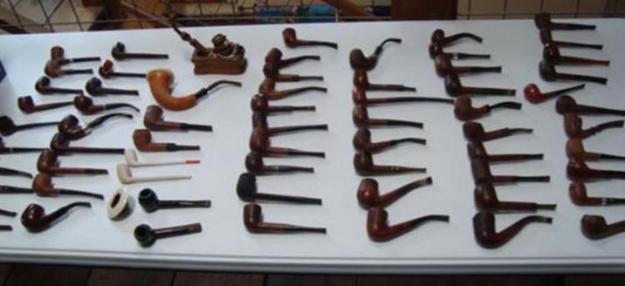
This Bulldog is simply cool.  It was one of those wonderful surprises one hopes for when you buy many pipes in one fell swoop on eBay.  In many of my restoration blogs I’ve mentioned the Lot of 66 which I landed last year while back in the US.  What can I say – God knew that I was restoring pipes to benefit the Daughters of Bulgaria and this Lot of 66 has been a gift that keeps on giving.  It isn’t possible to see all the pipes in the landscape pictures provided and one hopes in the percentages – there has to be some good pipes in the Lot!  Here is the Lot of 66 that I saw then and have pictured several times before.  I’m not positive, but the GBD Rustified Rim Bulldog is on the extreme lower right below – only his bowl showing.Many of my restorations for the Daughters come from people seeing a pipe in my “For ‘Pipe Dreamers’ Only” section on The Pipe Steward blog.  I came up with the idea of this ‘before restoration offerings’ when I found that when people visited us here in Bulgaria, they would know about our work with the Daughters of Bulgaria and that I restored pipes that benefited that cause.  Almost always they wanted to see what pipes I had in the “Help Me! Basket” and they would choose one to be restored.  The interesting thing I discovered was that people live in hope for what something can become.  Estate pipes can be pretty nasty, but people know the amazing wonders of what the restorative processes can produce and so they see the potential and trust me to realize that hope as I bring a pipe to The Pipe Steward worktable on the 10th floor of a former Communist apartment block in Sofia, Bulgaria!  What a story!  I’m living the dream 😊.

Chris, a dedicated pipe man and regular contributor on the Facebook group, ‘The Gentlemen’s Pipe Smoking Society’ was ‘Pipe Dreaming’ while tooling around looking at the offerings and saw the GBD International Bulldog.  What attracted him to the Bulldog was the unique rustified rim with hearty agreement from me.  It adds a flair that you don’t often see on a London Made Bulldog.  The bent stem is cool, too, adding a bit more flare.  Here are some of the pictures Chris saw in the “For ‘Pipe Dreamers’ Only” page: Chris commissioned the GBD Bulldog, which put it in the queue for restoration.  After the restoration is completed and published, I then place a value on the pipe resulting from my research.  The commissioner has the first opportunity to claim the pipe from The Pipe Steward Store.  Chris will have first dibs on this Bulldog when completed.
GBD (Pipedia’s article on GBD), was the handshake enterprise started by three French ‘Master Pipemakers’, Ganneval, Bondier and Donninger in Paris in 1850 to manufacture Meerschaum pipes, which was the primary material used in manufacturing pipes along with clay.  This was true until the discovery of briar in Saint Claude, France, a discovery that changed the pipe manufacturing world.  In 1902 Marechal and Ruchon sold GBD to A. Oppenheimer & Co. in London, which began the shift of GBD to being primarily a British enterprise, even though GBD pipes continued to be produced in Paris and Saint Claude, until 1981, with the closing of the French operation when the name, GBD, was merged with the Cadogan Group.  I enjoy rehearsing the historical developments of pipe names and companies because they add to the enjoyment and appreciation of restoring pipes.

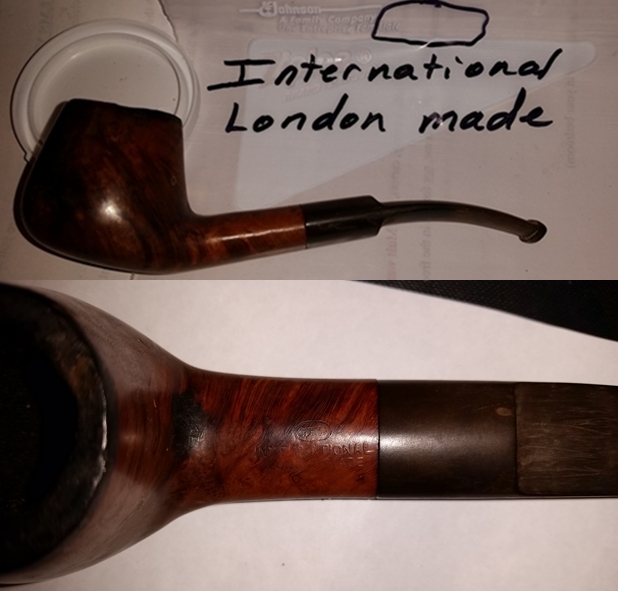
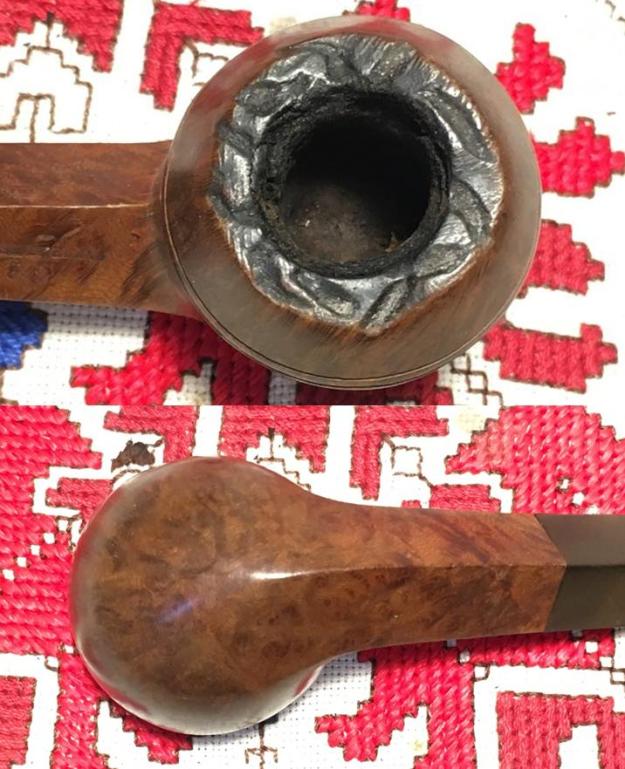
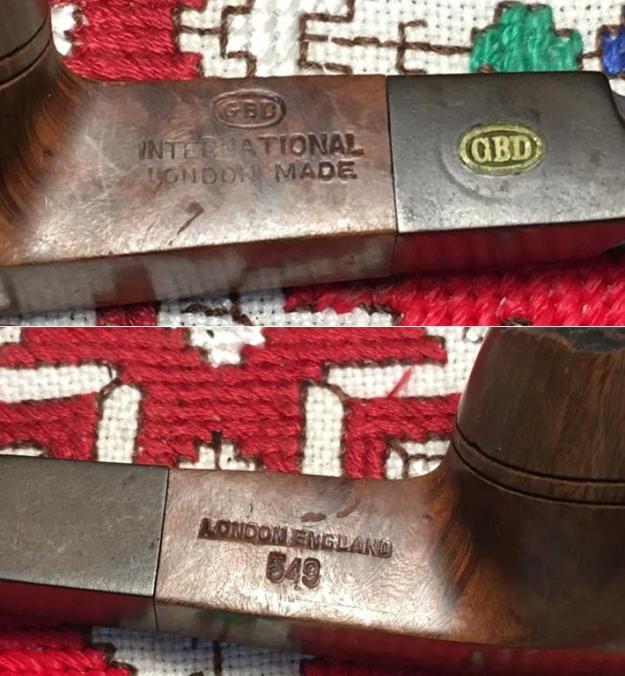
I take some additional pictures of the GBD International Bulldog on my worktable. The nomenclature has on the left side of the shank, a GBD circled with an oval over INTERNATIONAL over LONDON MADE.  The right side has LONDON ENGLAND over 546, the shape number.  The shape number lines up as a Bulldog, ¼ bent, Diamond shank according to Jerry Hanna’s GBD shapes chart listings in Pipedia.  The dating of the pipe is pre-1980s.  The stem’s brass rondel along with the “London, England” stamp indicates a pre-Cadogan era GBD.  The merger was 1981.  This information is clear.

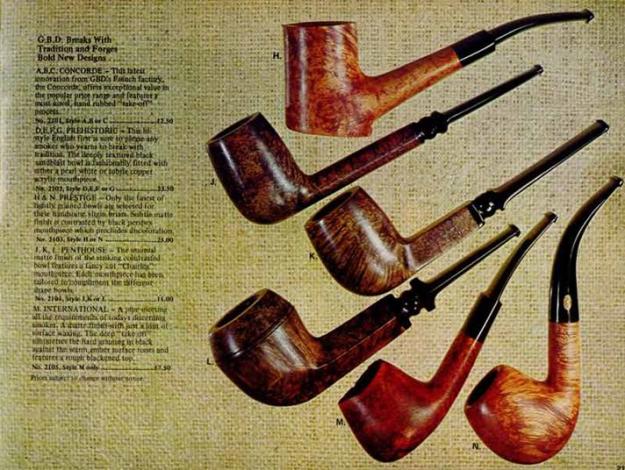
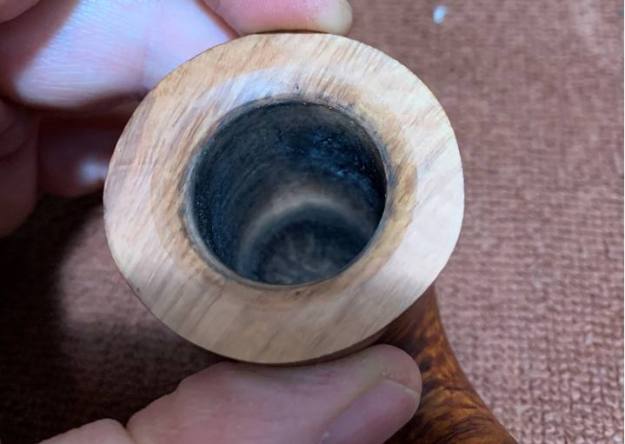
There’s some information that is proving to be a bit more difficult to mine in my research.  I’ve contacted Al Jones (Upshallfan), a regular contributor to rebornpipes, on a few GBDs I’ve restored in the past.  Al is a gold mine of information about GBDs and I appreciate his help.  Previously, he had sent me a PDF he had gleaned from now defunct www.perardua.net/ entitled ‘GBD Model Information’.  From that PDF I found this reference regarding the ‘International’ line of GBD.  I clipped it:I was excited to get a lead on what appears to be a GBD pipe line of “carved top rims” that were stained black.  The reference in the second line is to a 1976 catalog where I could hopefully find more about the International line.  Hopeful of finding this catalog, I went to the internet.  Unfortunately, I could find nothing.  Also disheartening, the usual go to page for catalogs, Chris’ Pipe Pages, I discovered some time ago, now seems to be defunct.  Sad.  So, again I sent Al a note with some questions.  His reply came very quickly with this picture of at least one ‘GBD International’ from the 1977 Tinderbox catalog.  The writing is not easy to make out but the “M.” example of the International line is a nice looking oval shank Volcano shape which I can make out has a carved rim like the Bulldog.  With this information, my thinking is that the GBD Bulldog I have is dated from 1976 but earlier than 1981.  Again, much thanks to Al Jones!Looking at the GBD International Bulldog itself, it is in decent condition.  There is some cake build up in the chamber and the carved rim shows some expected grime but not too much.  The twin dome grooves are full of debris and need to be cleaned.  The bowl itself looks very good – it has some expected grime, but the briar looks exceptional underneath.  It will look good when cleaned up.  The stem has some deep oxidation and the bit shows some dents and tooth chatter that will need correcting.
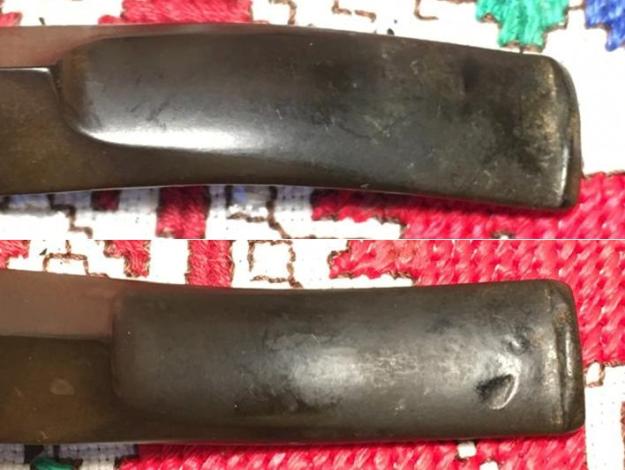
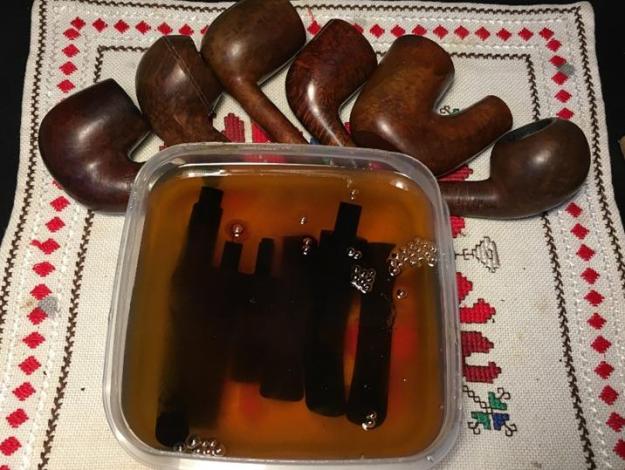
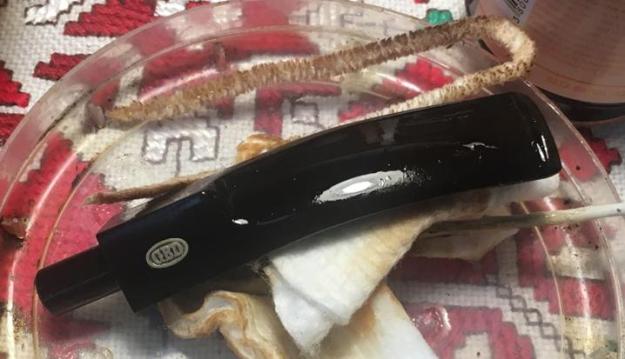
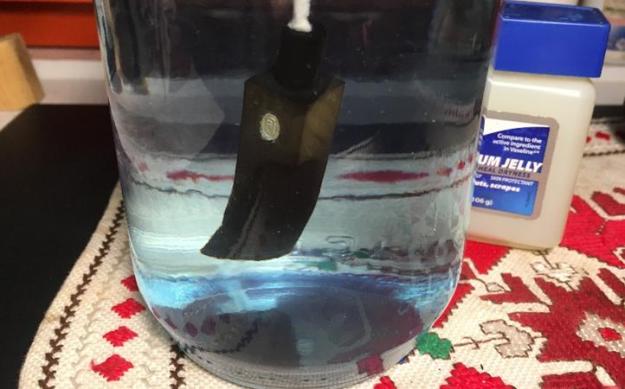
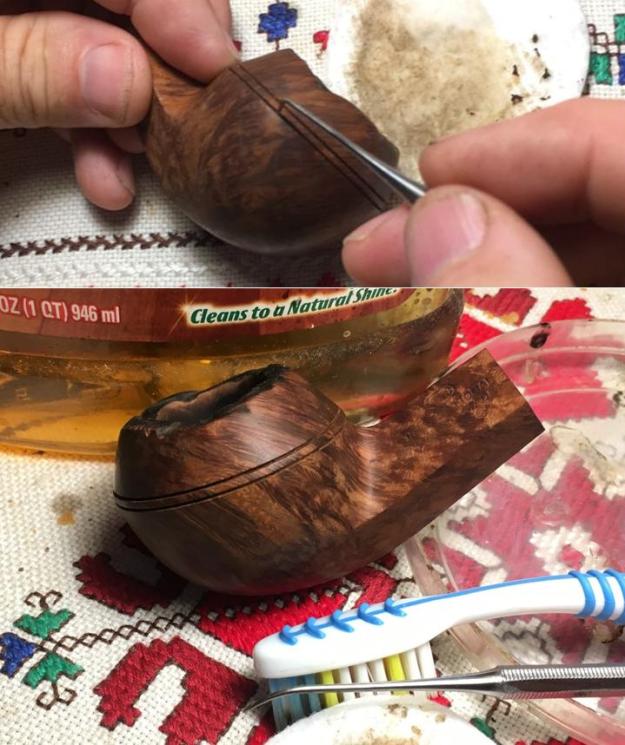
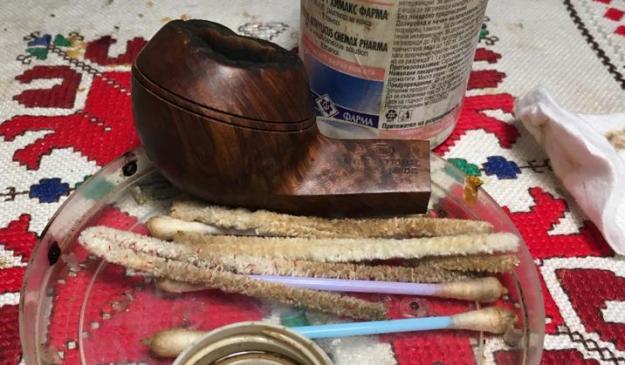
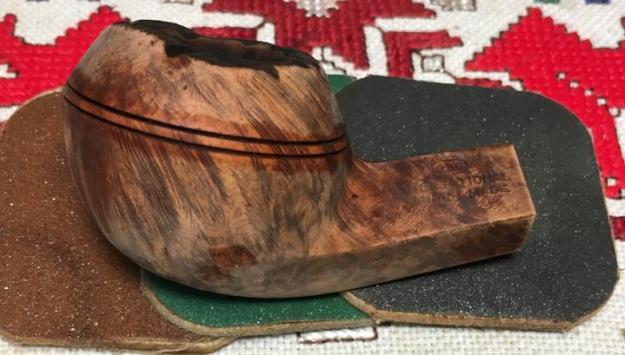
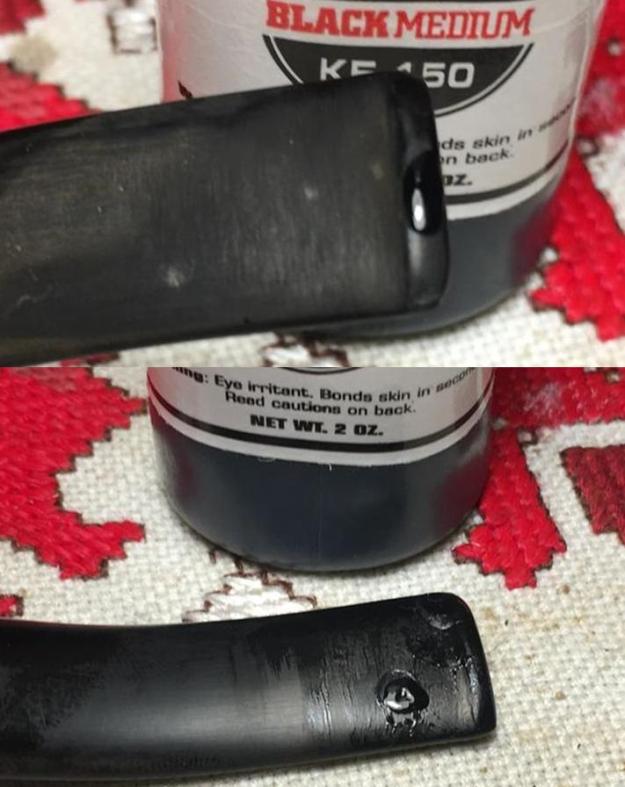
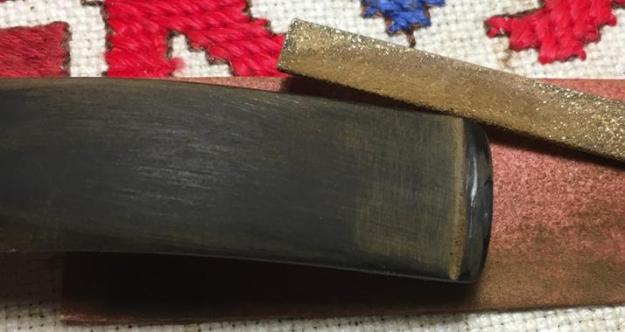
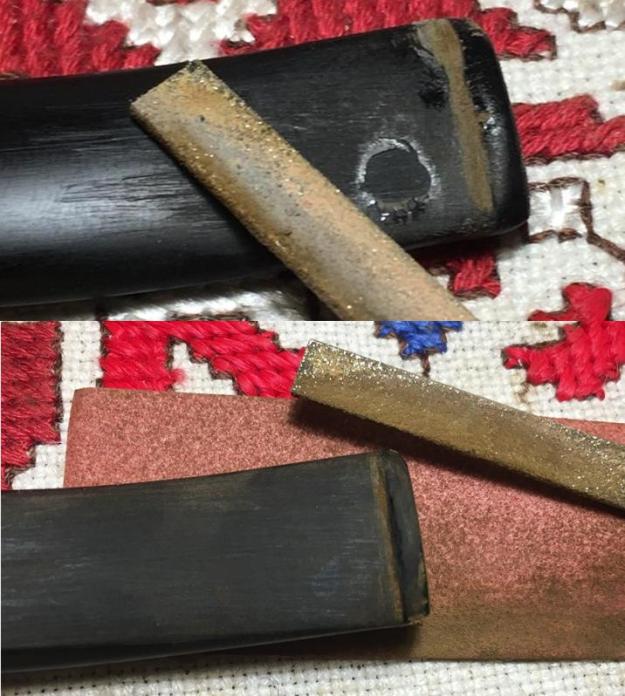
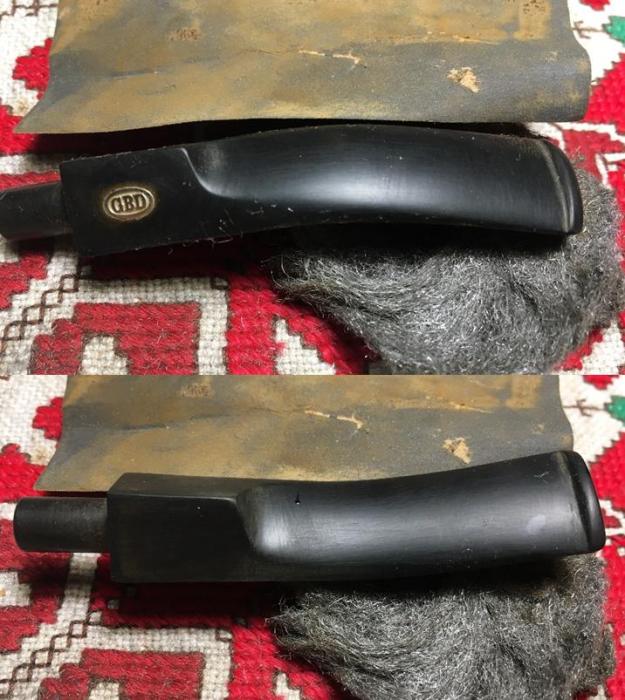
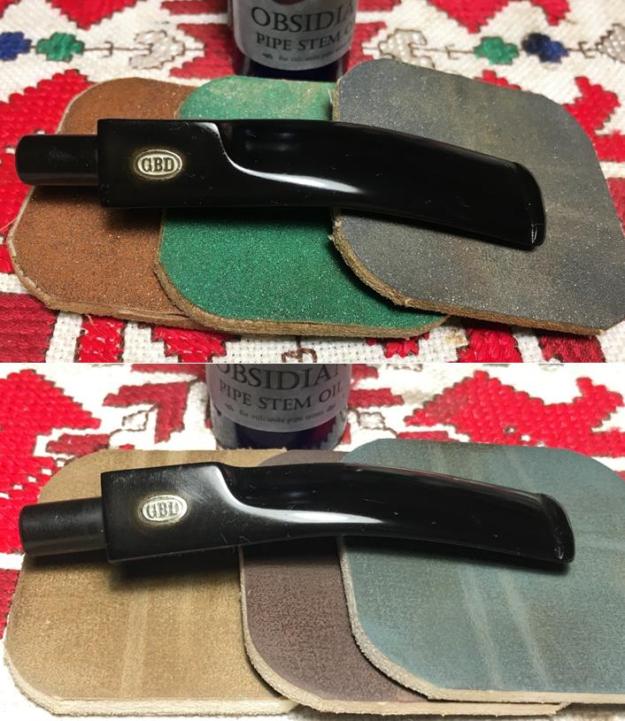
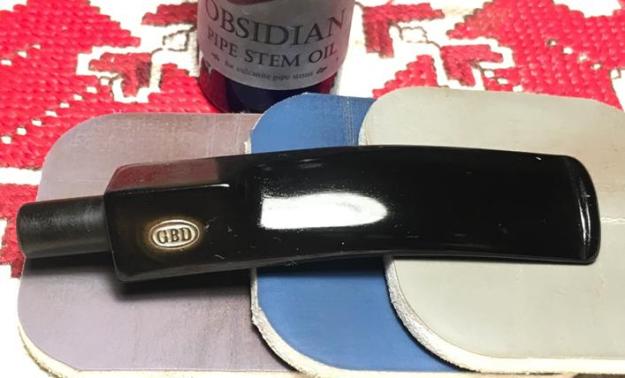
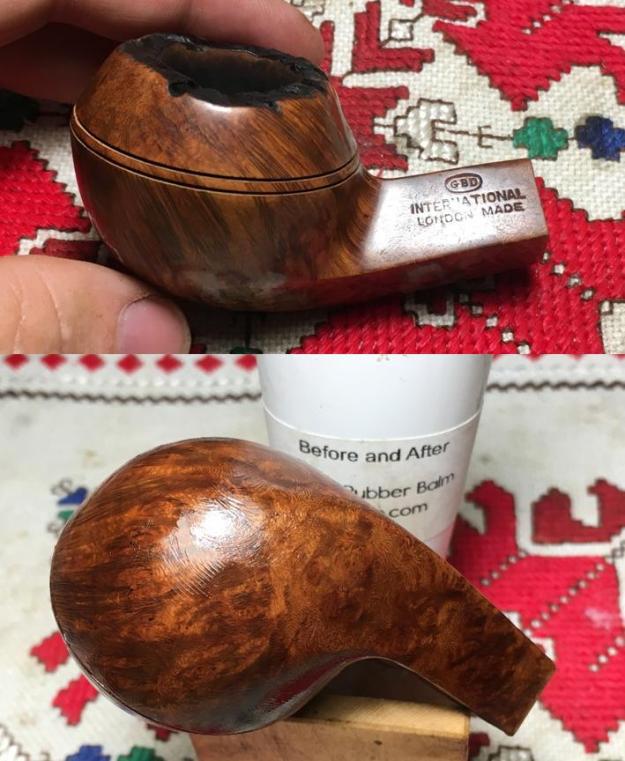
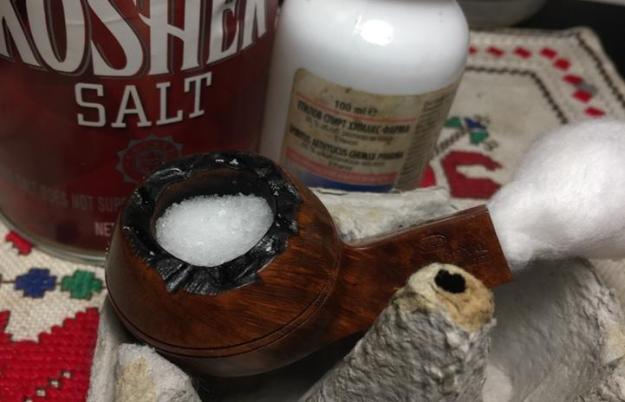
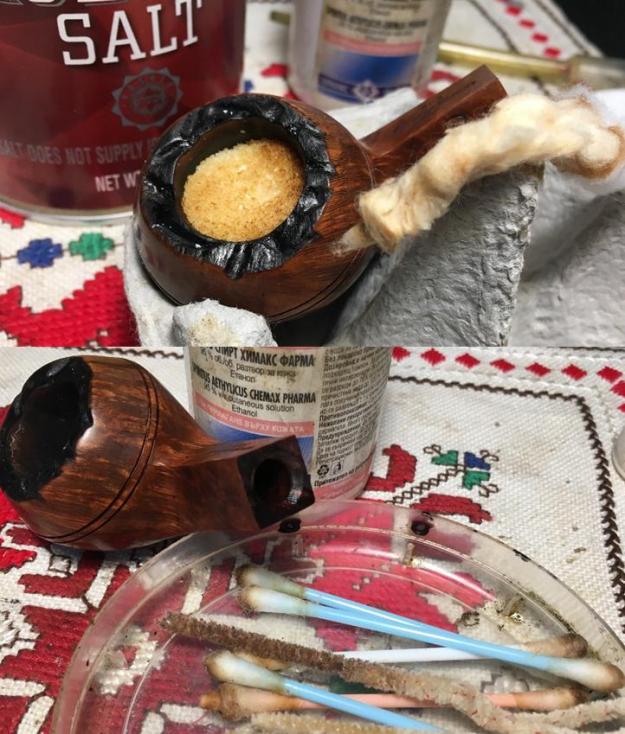
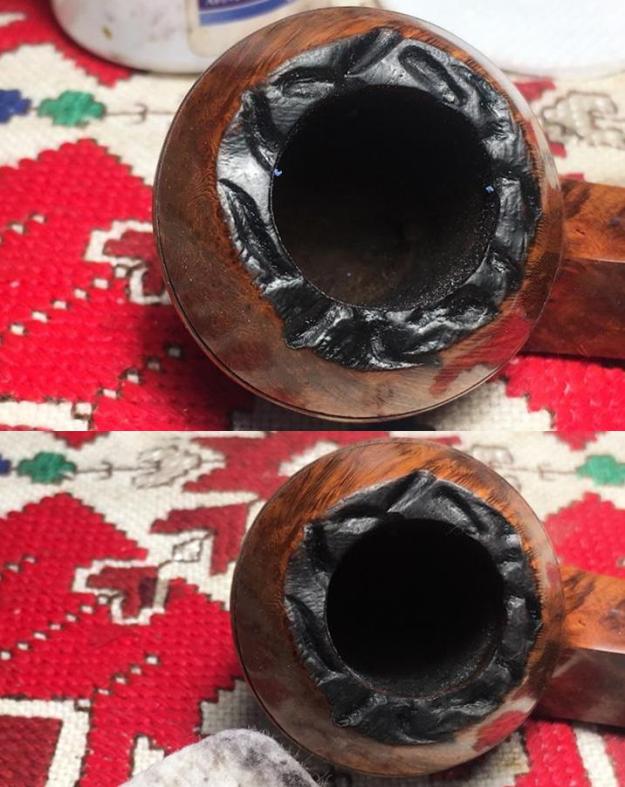
I begin the restoration of this GBD International Bulldog by adding the stem to a soak using Before & After Deoxidizer.  After running pipe cleaners dipped in isopropyl 95% through the internals of the stem, it joins 5 other pipe stems in queue for restoration.  I leave the stem in the soak for a few hours then fishing the GBD stem out, I wipe it off with a cotton pad wetted with light paraffin oil.  I also put a pipe cleaner through the stem to push the fluid out and follow with a pipe cleaner dipped in isopropyl 95% to assure that the airway is clear. After cleaning the stem of the Deoxidizer, I can still detect oxidation in the vulcanite.  I take another picture of the stem with the aperture open more to show what I’m seeing.I decide to give the stem another soak in an OxiClean solution.  After covering the rondel with petroleum jelly, I put it in the soak. I’m not sure if the brass rondel will react or not to the OxiClean, but I take no chances.While the stem is in the OxiClean cooker, I turn to the stummel.  First, I use the Pipnet Reaming Kit to remove the carbon cake from the Bulldog’s chamber.  It takes 2 of the 4 blade heads available in the kit.  I follow this using the Savinelli Fitsall Tool to fine tune more by scraping the chamber walls removing more carbon.  To get down to fresh briar, I then wrap a 240 grit piece of sanding paper around a Sharpie Pen and sand the chamber.  To clean up, I wipe out the carbon dust with a cotton pad wetted with isopropyl 95%.  The pictures show the progress. Moving along with the stummel, I use undiluted Murphy’s Oil Soap with a cotton pad to scrub the surface of the briar.  To clean the rim, I use a bristled tooth brush with Murphy’s to clean the carved angles and valleys.  I then rinse the bowl with cool tap water.  The last thing I do is take a sharp dental probe and run it through the twin dome grooves to remove the small debris that had lodged in the grooves.  With my wife’s help, I record a picture of this surgery.Since I like working on clean pipes and I know new stewards like smoking with clean pipes, I turn to the internals of the stummel.  Using cotton buds and pipe cleaners with isopropyl 95%, I go to work.  I’m thankful to discover that there is little resistance.  Later, at the end of the day, I’ll clean the internals further by using a kosher salt and alcohol soak.With the internals clean, I turn again to the briar surface.  To enliven the tired finish and to remove the small nicks and cuts that come from wear, I wet sand with micromesh pads 1500 to 2400, then dry sand with pads 3200 to 4000 and 6000 to 12000.  With each cycle, I enjoyed watching the grain emerge.  This GBD International Bulldog has nice grain – nice vertical flames rising to the carved plateau.  I’m liking this. I also want to freshen the carved black plateau – rim.  I use a black furniture dye stick to apply to the rim.  Later, when I apply compound, I’ll blend the black more, so it has more textured matte depth. Now, back to the stem.  The GBD stem has been soaking in OxiClean as a second salvo against the oxidation in the vulcanite.  After taking it out of the OxiClean bath, I use 600 grade paper and I wet sand the stem.  I work on the areas that show the deeper oxidation.  I then use 0000 steel wool and work over the entire stem, paying close attention to the area around the rondel.  I’m not 100% satisfied, but I may do more after I work on the bit. I take a picture of the upper bit and the lower bit to show the tooth dents.  The upper is not bad but the lower has two significant clinch bites and some damage to the button lip.To lessen the severity of the dents I heat the vulcanite using a Bic lighter by painting the dented areas with a flame.  As the vulcanite heats, it naturally expands and retakes some of the original ‘foot print’ of the dent.  I heat both upper and lower.  The upper will easily sand out but the lower still has work to do.To fill the dents and rebuild a little of the button, I use Starbond Black Medium CA glue.  I spot drop the black CA glue on the dents and then I use an accelerator to quicken the curing time.I then use a flat needle file and 240 grade sanding paper to sand down the patches.  I use the file to freshen the button – to reestablish crisp button edges.The following two pictures show the lower bit/button work – first in progress then completed with filing and 240 paper.I continue the smoothing and erasing of the 240 scratches by using 600 grade paper and then finishing with 0000 grade steel wool.  The patches look good, oxidation seems to be abated and the button shaping will be greatly appreciated by a new steward!I now turn to micromesh pads by first wet sanding with pads 1500 to 2400, then dry sanding with pads 3200 to 4000 then 6000 to 12000.  After each set of three I apply Obsidian Oil to revitalize the vulcanite.  The stem looks good. Turning now to the stummel, to enrich the briar grain I apply Before & After Restoration Balm.  I put a little on my finger and work it into the briar surface.  As I work it in, the liquid thickens into a wax-like substance.  After some minutes, I wipe off the Balm using a clean cloth.  As the Balm comes off, the surface buffs up nicely.With my day ending, I continue cleaning the internals of the stummel.  I use a kosher salt and alcohol soak.  I fashion a wick by stretching and twisting a cotton ball. I insert the ‘wick’ down the mortise into the airway.  I then fill the chamber with Kosher salt which, unlike iodized salt, leaves no aftertaste.  I then situate the stummel in an egg crate giving it stability and then add isopropyl 95% with a large eye dropper until it surfaces over the salt.  After a few minutes I top the alcohol once again and then turn out the lights.The next morning the soak had produced results with soiled salt and the wick absorbed more oils and tars.  I remove the expended salt to the waste and wipe the chamber with paper towel.  I also blow through the mortise to remove any remaining salt particles.  I then expend a few more pipe cleaners and cotton buds to clean up left overs from the soak.  The internals are as fresh as I can make them.I reunite stem and stummel and mount a cotton cloth buffing wheel to the Dremel, setting the speed at the slowest.  I then apply Blue Diamond compound to the entire pipe.  I also work on blending the black matte plateaued rim.  What I discover regarding the rim is that when I simply buff it with the Blue Diamond compound, is shines it up!  The exact opposite than dulling it down to a matte, charcoal look.  Then I came up with the idea of simply wetting a cotton pad with alcohol and dabbing it over the rim to dull the finish.  It worked like I was hoping.  I take a picture of before and after.  It’s difficult to see different shades of black in a photo!  But it does look good – the effect is striking. After completing the compound application and blending the rim, I wipe the pipe with a felt cloth to remove residue compound dust in preparation for the wax.  I then switch to another cotton cloth wheel on the Dremel, increase the speed to about 40% full power and apply a few coats of carnauba wax to both stummel and stem.  After application of the carnauba, I give the pipe a rigorous hand buffing to raise the shine.

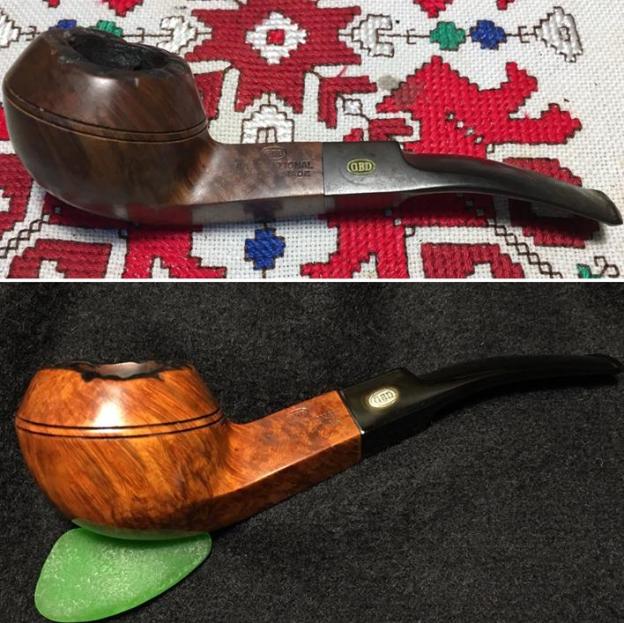
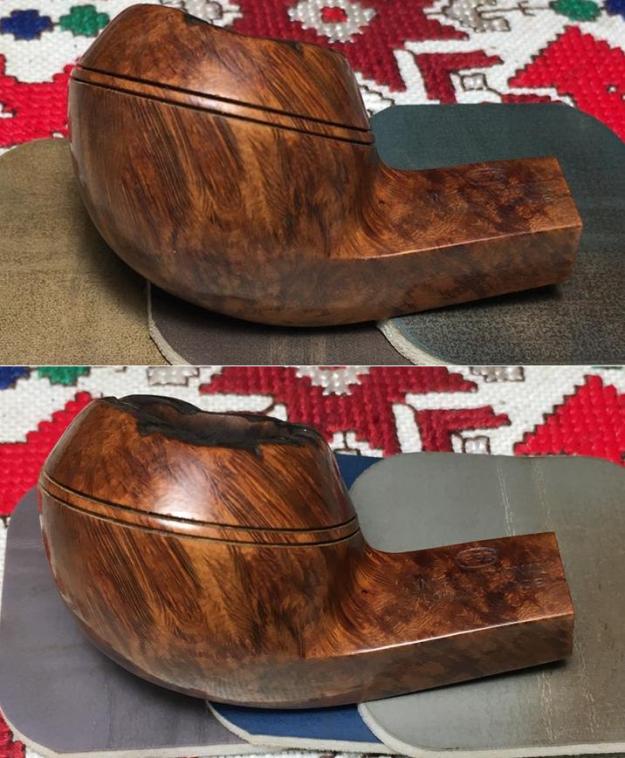
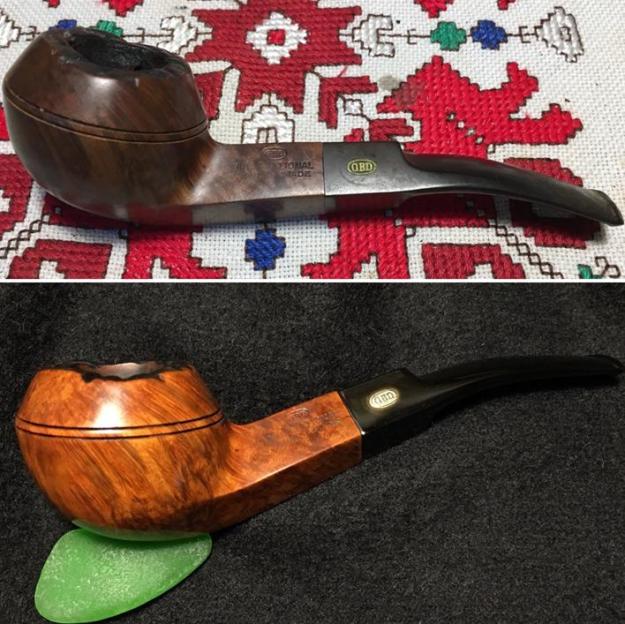
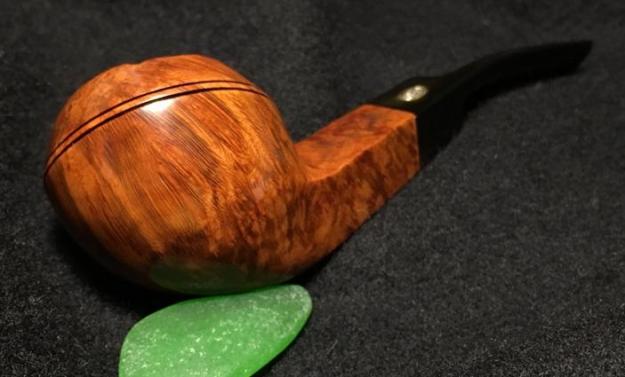
Oh my.  The grain on this GBD International London Made shouts for attention!  I’m pleased with the results.  The flame grain emerges from the heel of the bowl – out of densely populated bird’s eye and swirls to reach toward the dome of the stummel, culminating in the craggy plateau of the rim.  There’s a lot going on with this bent Bulldog. It is headed to The Pipe Steward Store and since Chris saw the potential of this GBD International, he will have first dibs on bringing the Bulldog home.  The sale of this pipe benefits the Daughters of Bulgaria – helping women and girls (and their children) who have been trafficked and sexually exploited.  Thank you for joining me!  I can’t resist starting off with a before and after picture lest we forget!

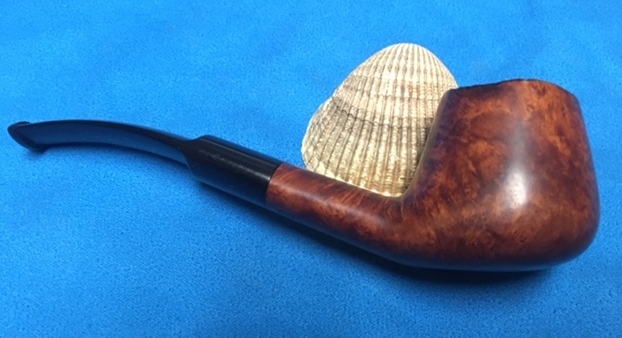
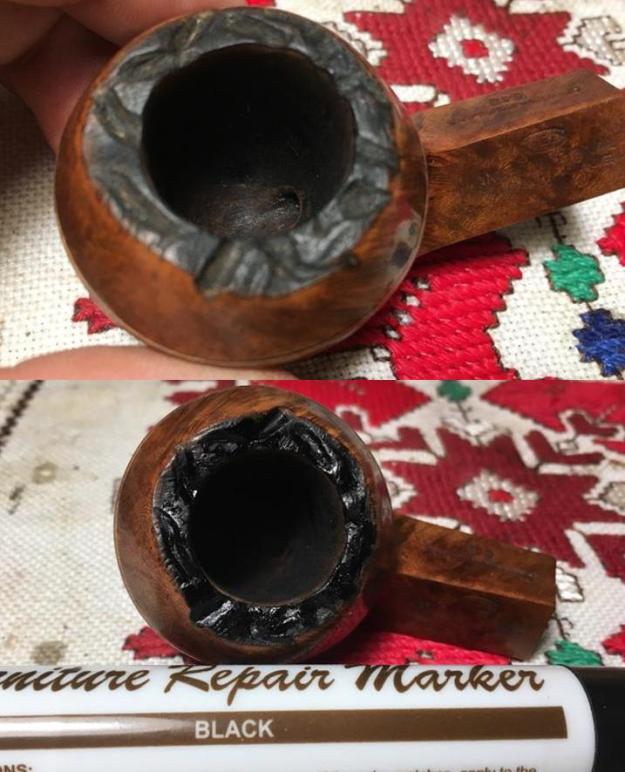
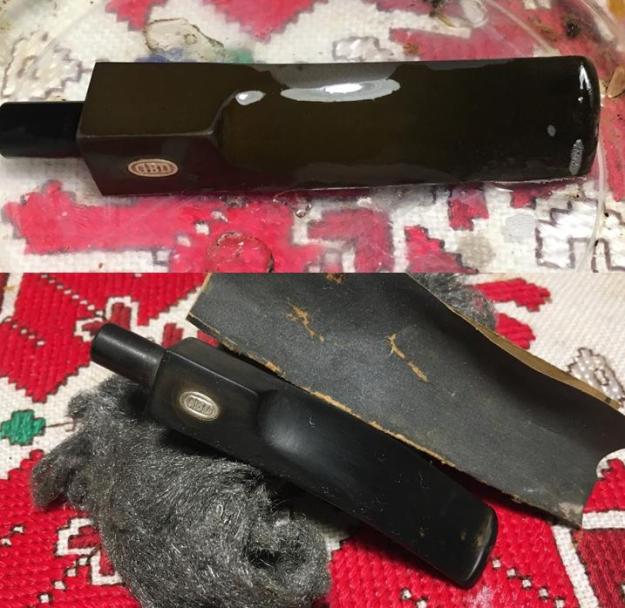
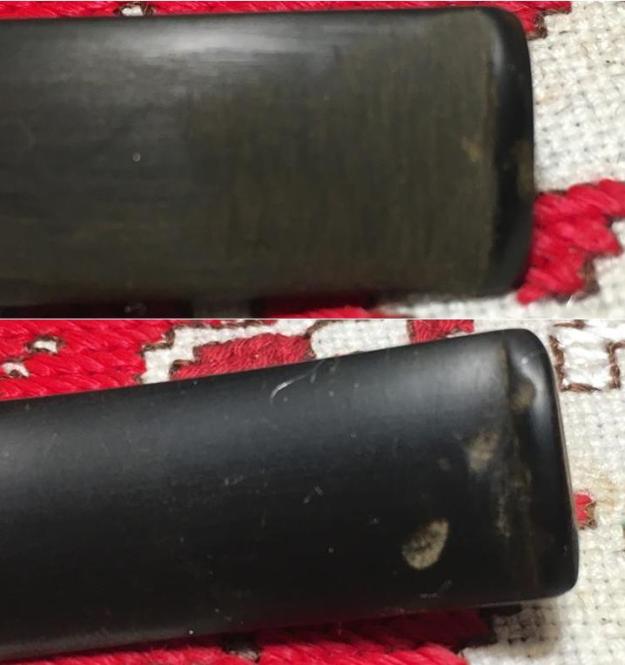
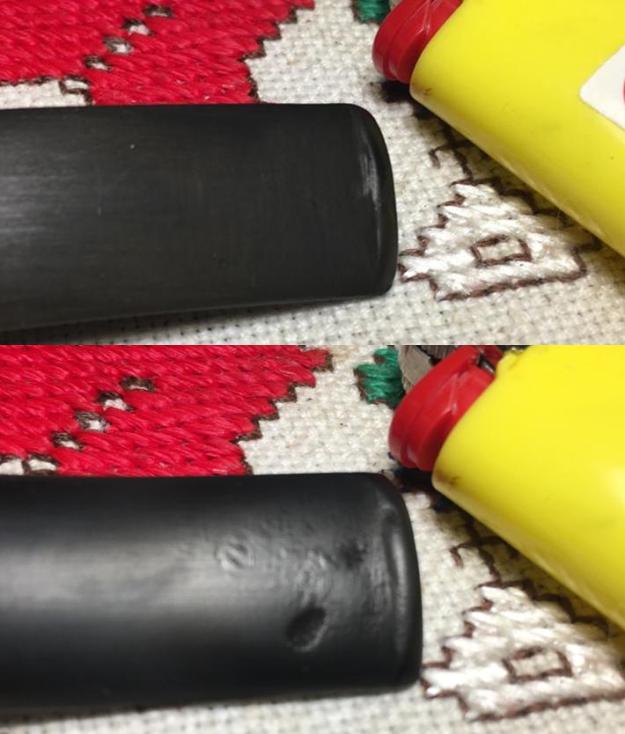
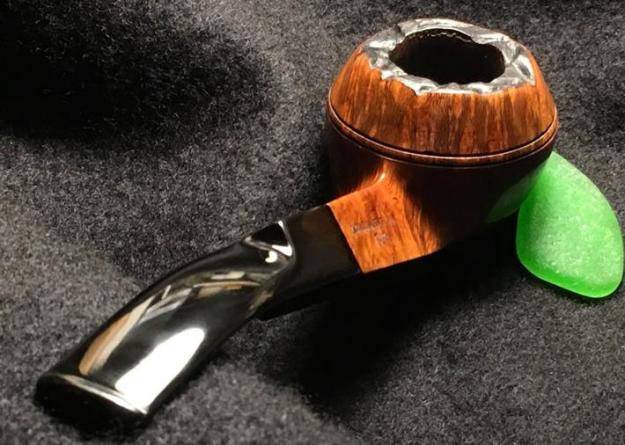
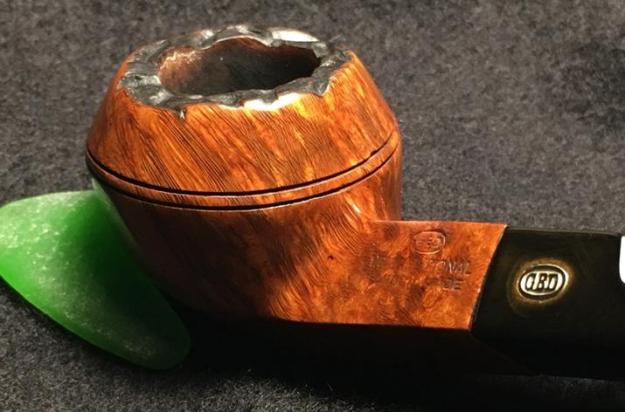
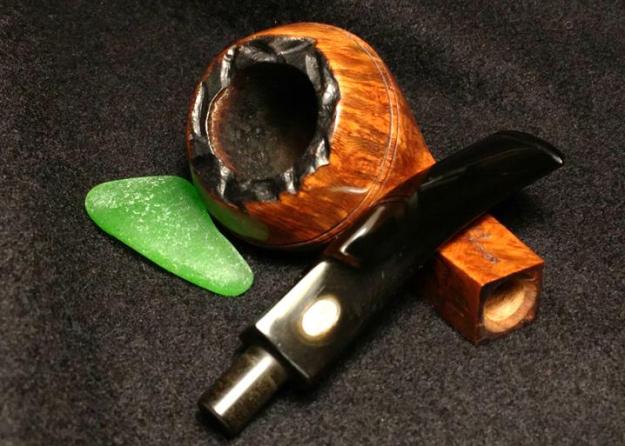
Had fun with this one – GBD International


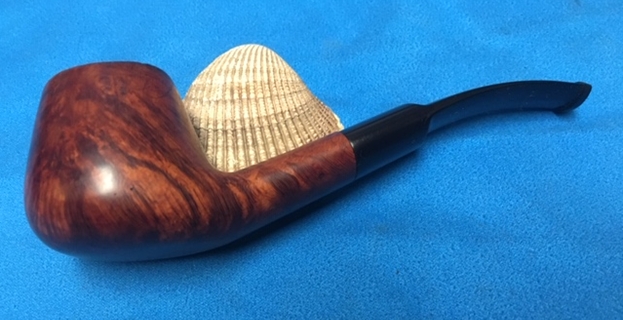
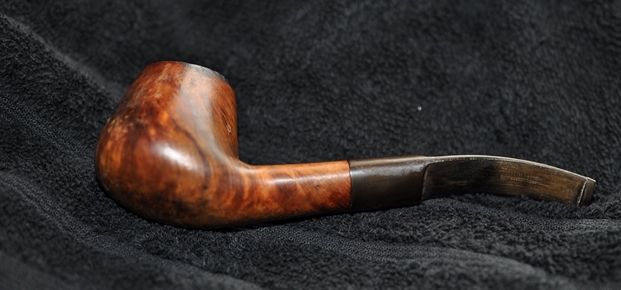
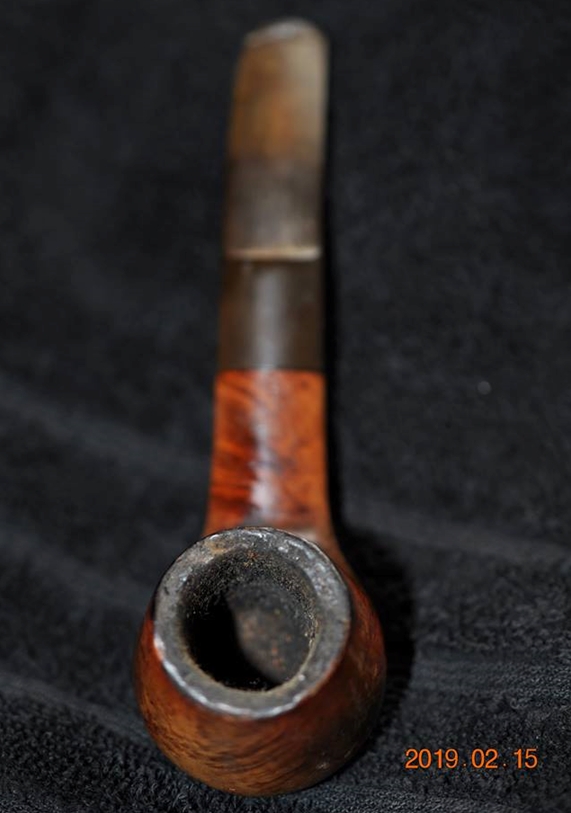
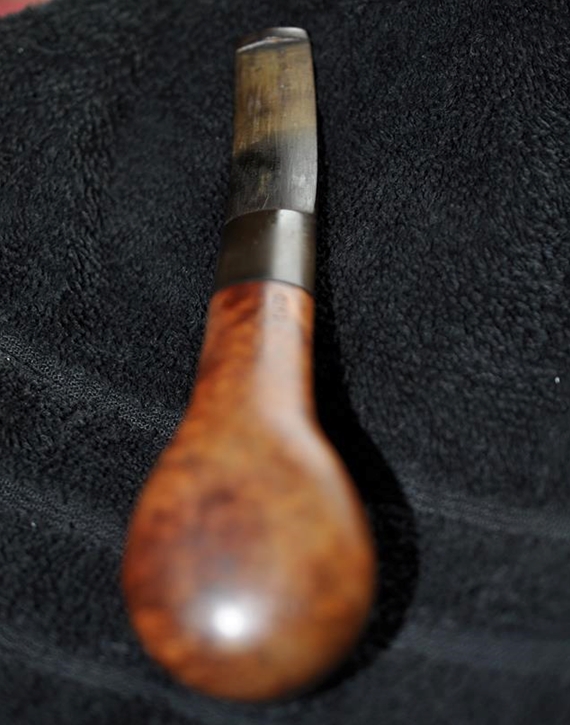
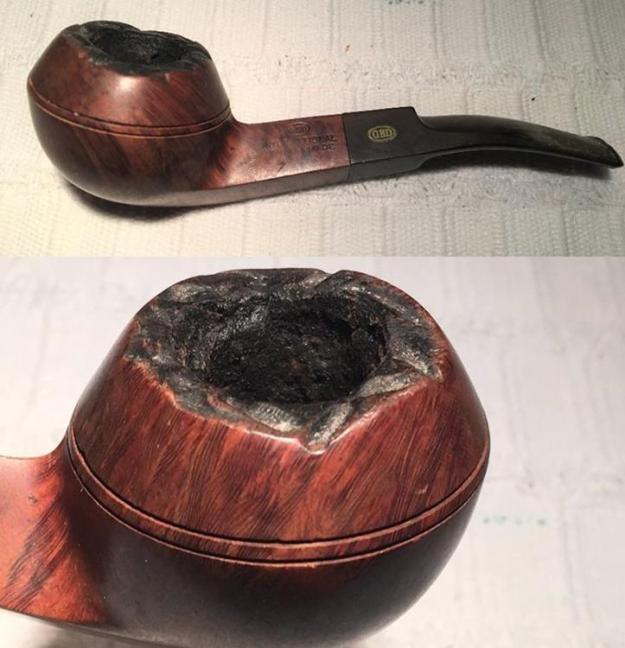
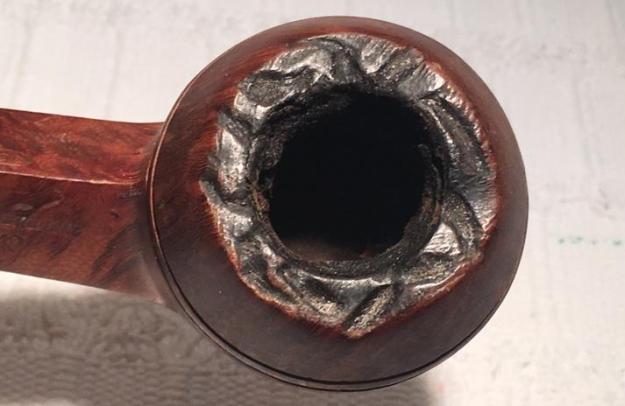
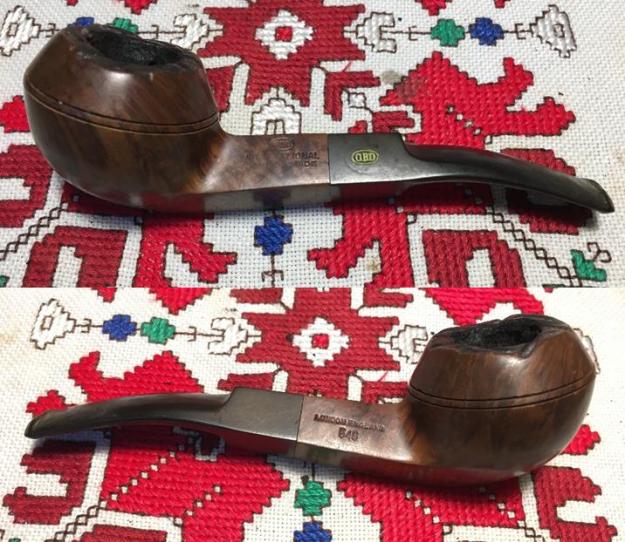
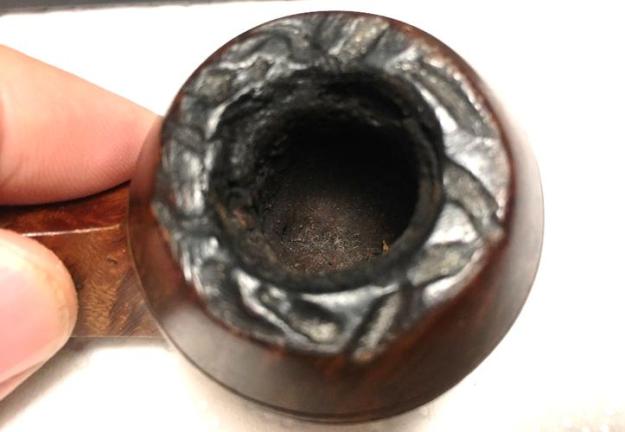
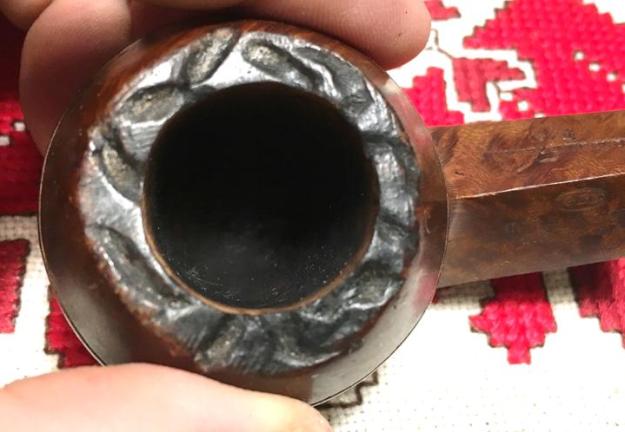
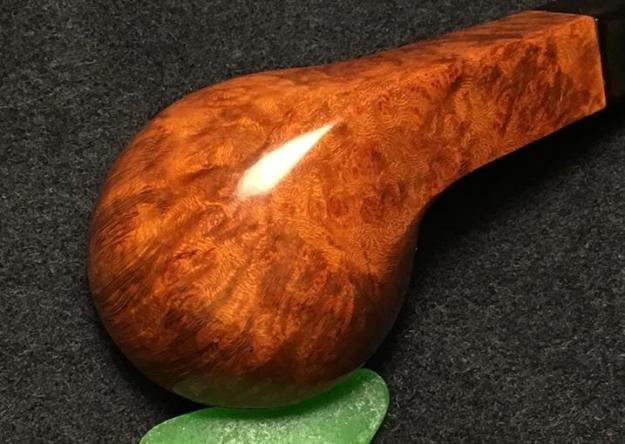
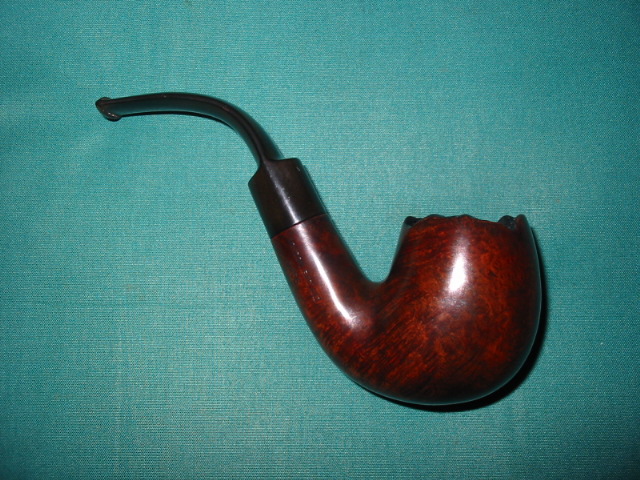
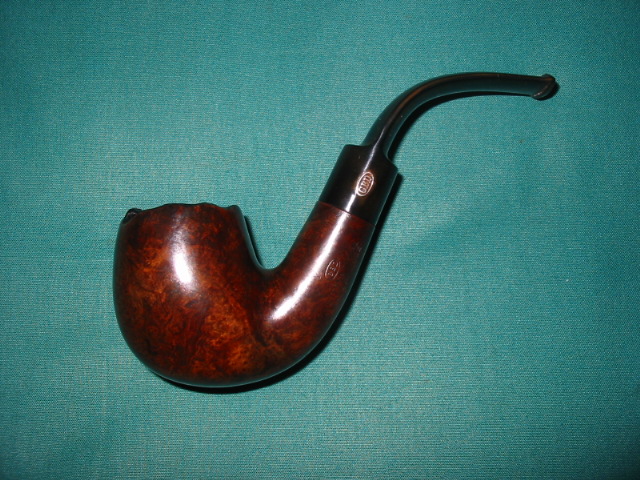
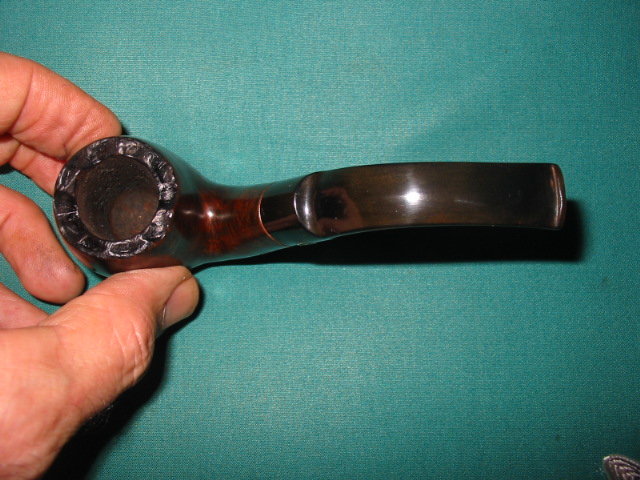
I just finished this beauty – a GBD International. It is a beautiful little pipe. The shape #9456 says it is a bent apple – I suppose that is so. I did some work on what they originally looked like. They had a plateau (Faux?? not sure) top that was stained black and the bowl was a medium warm brown.

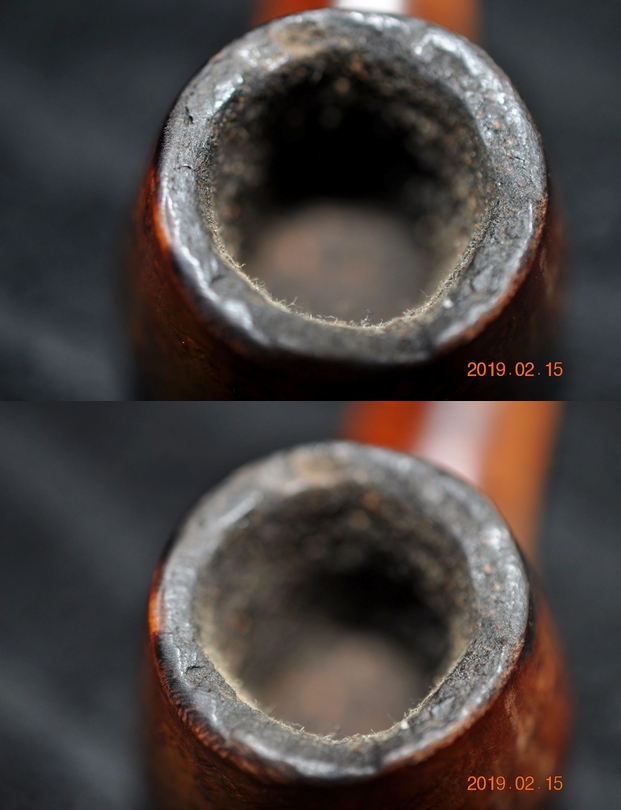
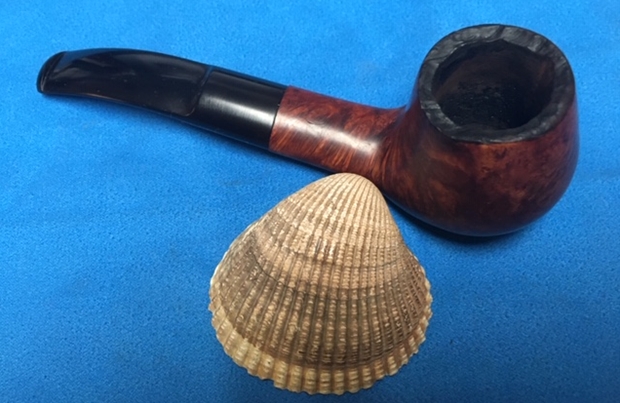
This one was pretty well stained with dirt and grit. The finish was blown and the bowl was caked and dirty. The stem was brown and it was a pretty gross mess. It was one I was going to put off but today I decided to work on it. I am glad I did as it was actually quite fun to work on.

I cleaned the stem as usual. It was tough and still shows some oxidation under the flash of the camera. I will do a bit more in brighter light. But it looks good to the natural eye. The bowl was reamed and cleaned and put in the alcohol bath. I removed any of the bits of left over stain left. Then I used a pipe cleaner and stained the plateau black. Once I did that I had the notion to stain the whole pipe black as well. I then wiped off the stain on the bowl and washed it with a damp alcohol rag to get it to the tone of brown I was looking for. I am really pleased with the stain and how it came out. I love the contrasts of the brown undertones and the black overstain. The wipe and then sanding with micromesh really worked to highlight the birdseye and grain in it.

Thanks for looking.

ImageImageImage

Image

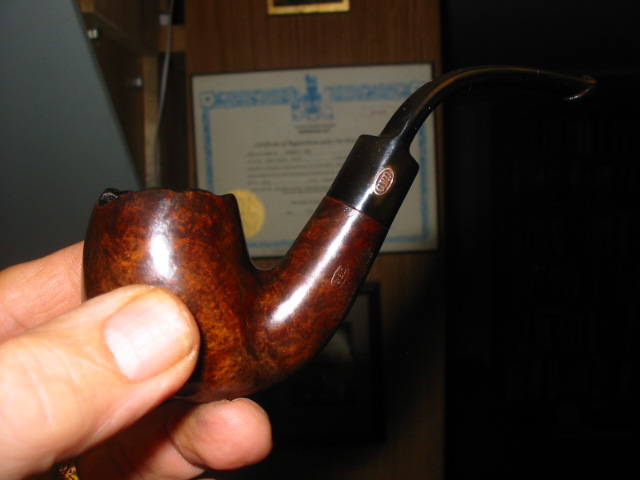
Here is a final picture to give you an idea of the size.