Tag Archives: fitting a stem

A Bleak Looking Royal Danish with an indistinguishable shape number


Blog by Steve Laug

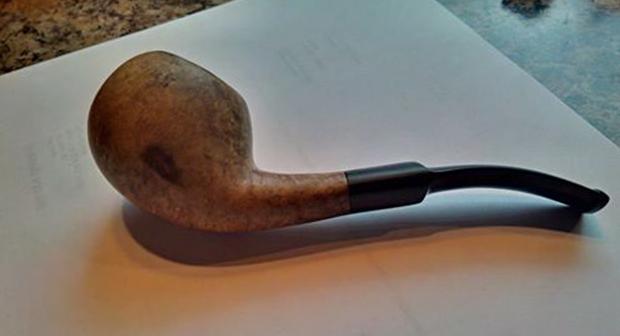
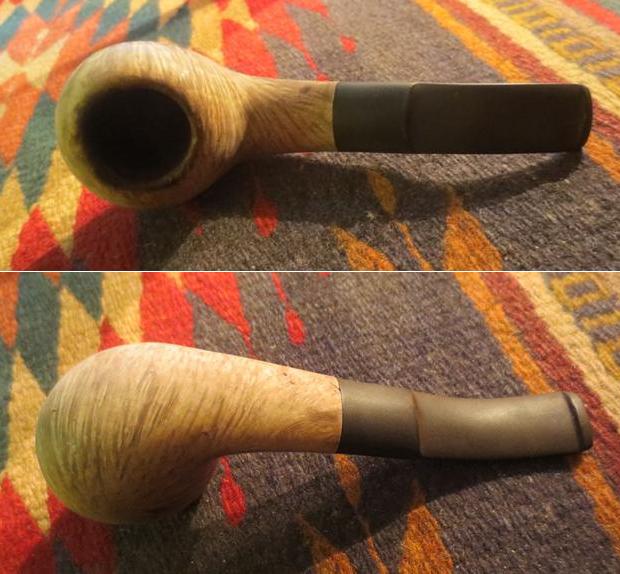
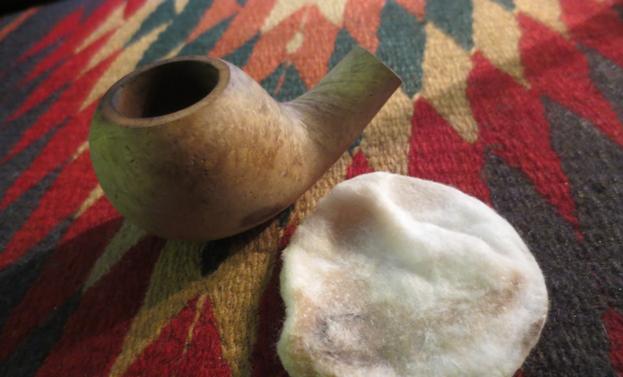
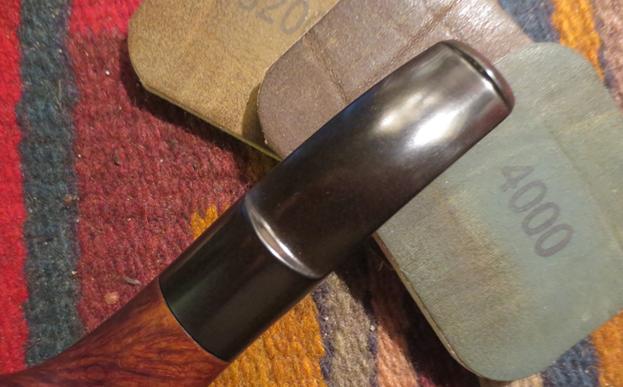
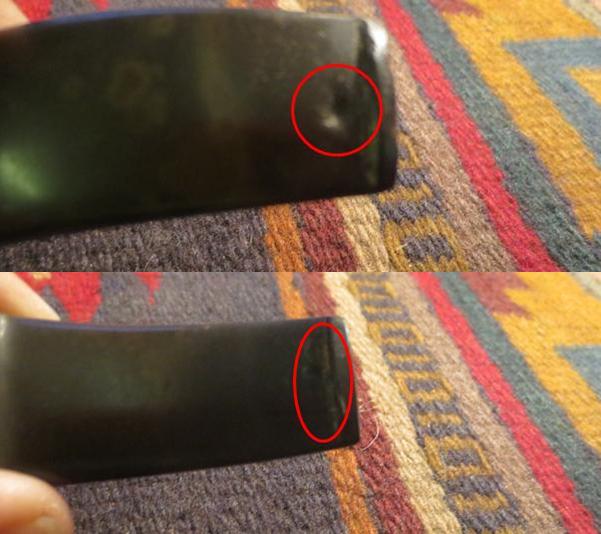
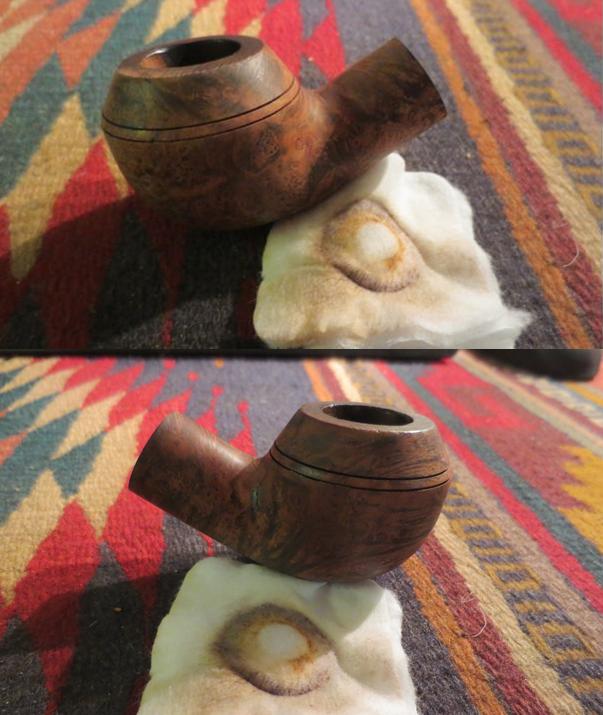
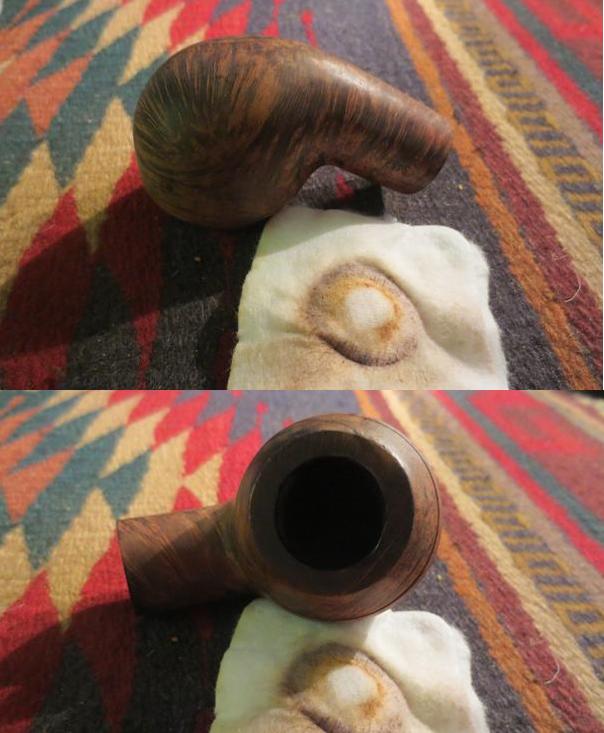
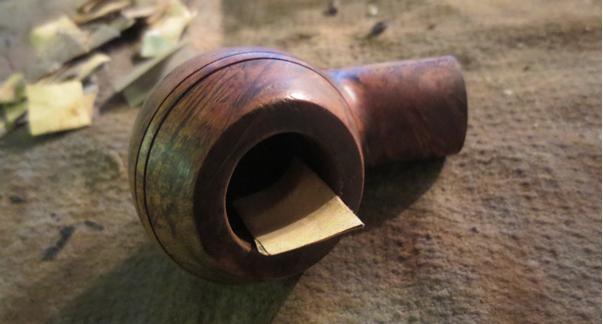
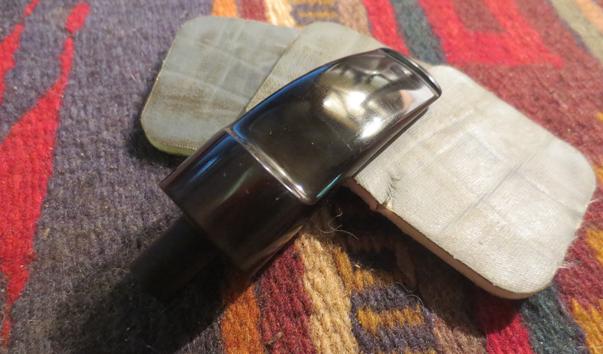
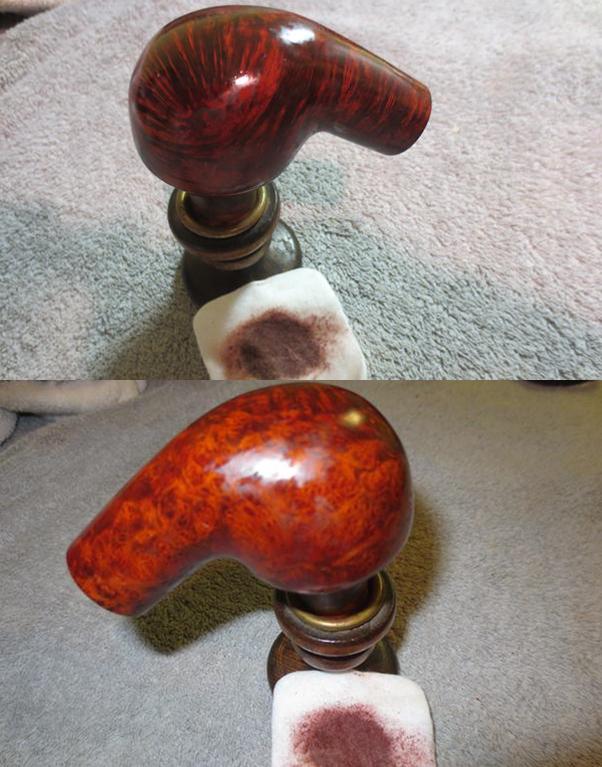
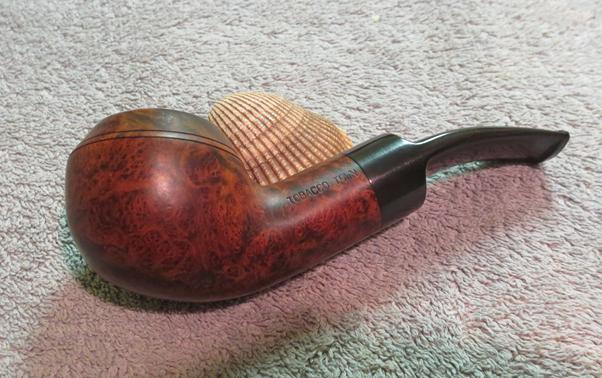
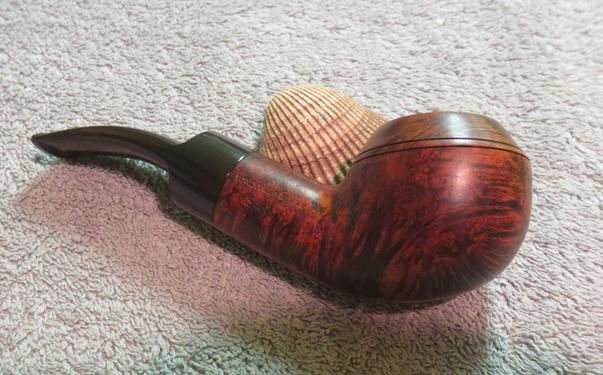
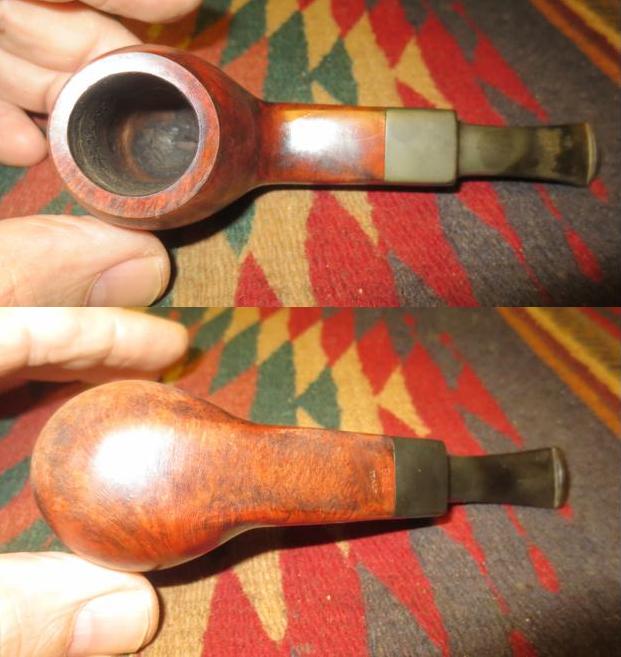
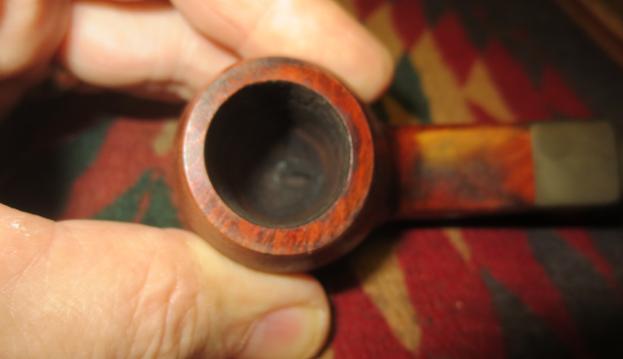
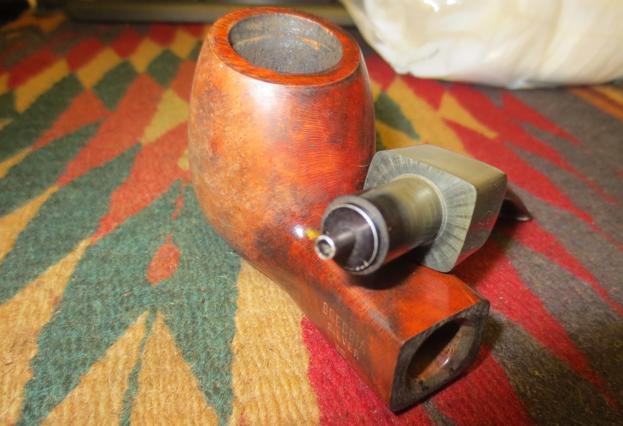
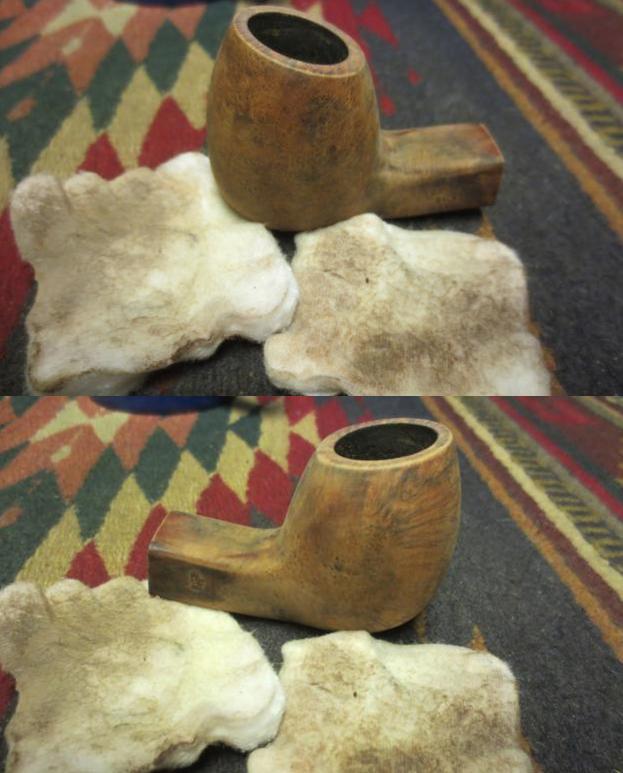
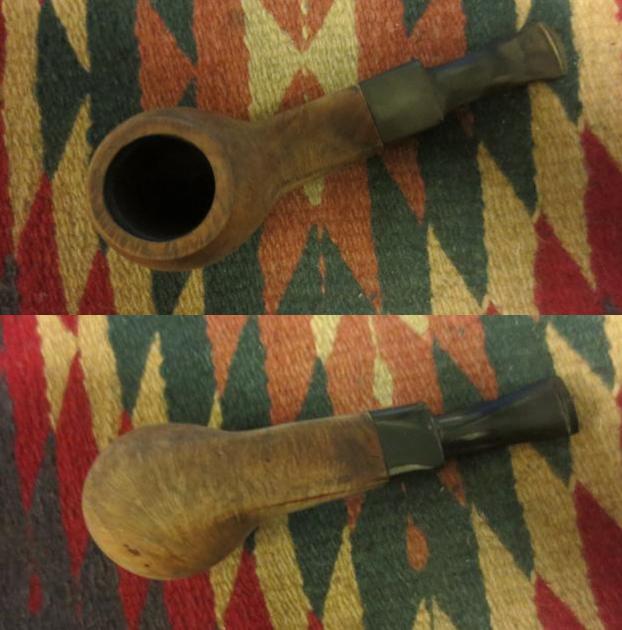
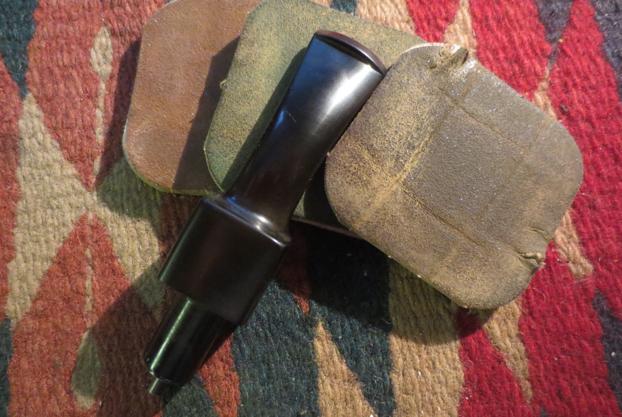
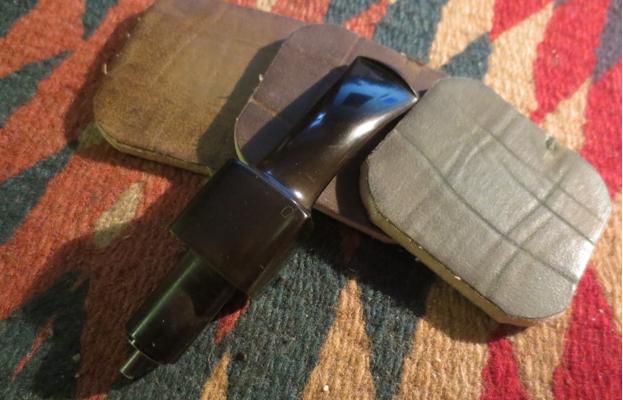
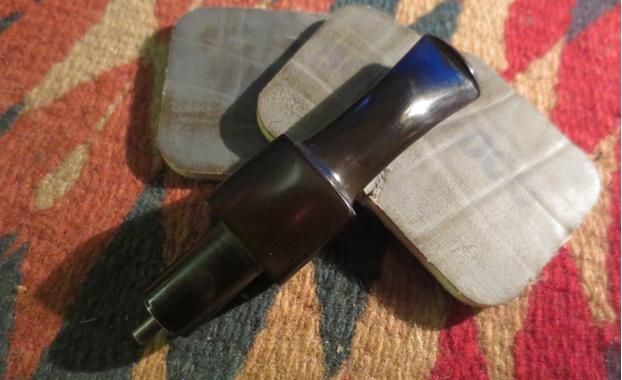
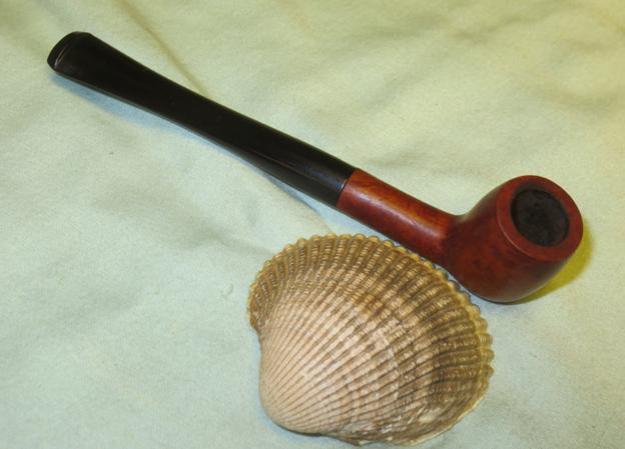
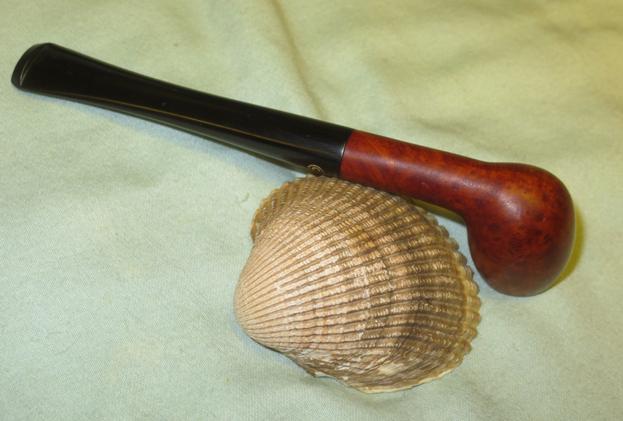
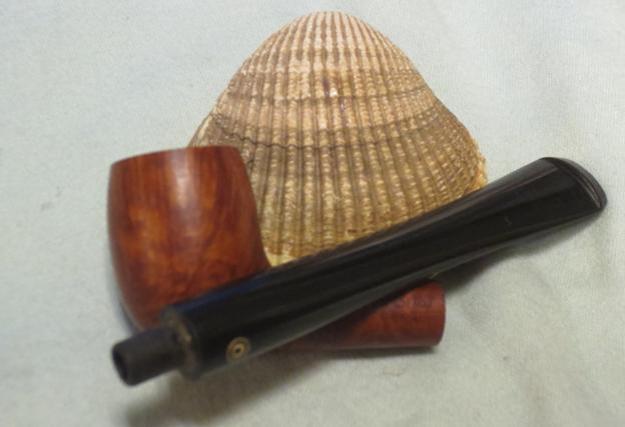
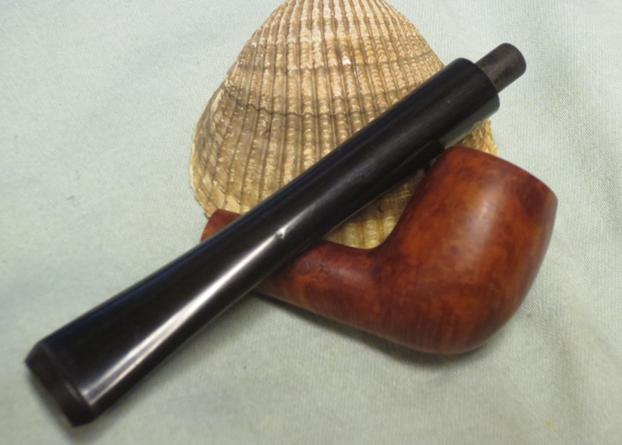
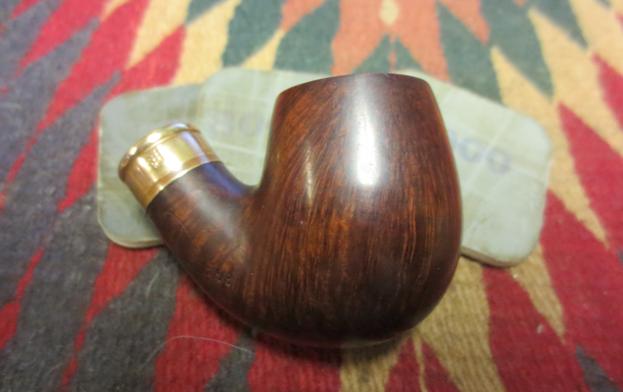
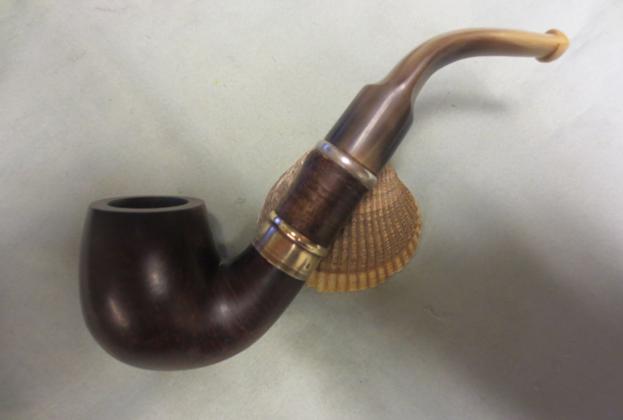
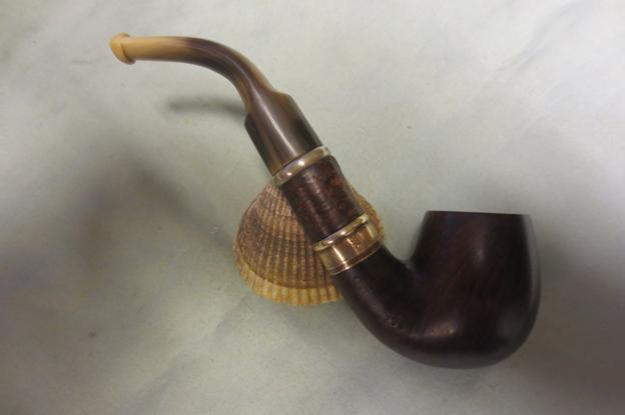
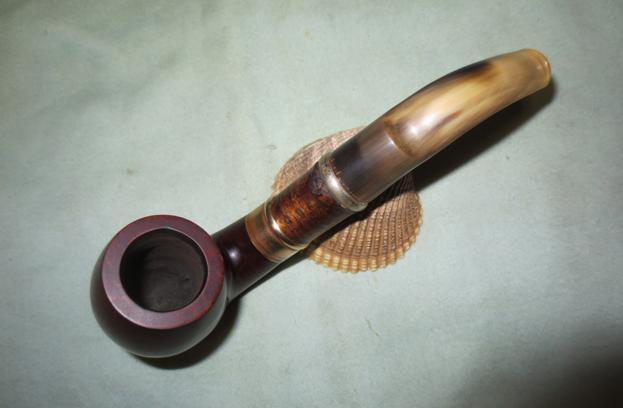
My brother Jeff found this old pipe either on eBay or in his travels and picked it up. He sent me photos of the pipe when he received it. It looked pretty bleak to me but there was some promise in the interesting shape of the pipe and the grain that was visible in the photos. There were also some dark spots on the sides of the bowl that I wondered about as I looked at the photos. The finish was very dirty and underneath the grime it was gone. There were some burn marks around the top of the bowl. The bowl was lightly caked but very dirty. The stem was lightly pitted and oxidized but there were no tooth marks or chatter on the stem.dan1 dan2My brother cleaned the pipe really well and the grime and remnants of the finish were all gone by the time I received the pipe. I took some photos of the pipe before I started to work on it. The dark spots on the sides of the bowl are visible in the photos below. The damage to the rim is also visible. There are some nicks in the top of the bowl and some burned areas that will need to be addressed. He cleaned out the airway in the shank and the stem as well as the mortise area. I noticed however that there was a slight ledge in the mortise that was hard and made me wonder what was happening there.dan3 dan4I took a close up photo of the bowl to show the extent of the damage to the inner edge of the rim and the rim top. The bowl was quite out of round and the burn marks though not deep were prevalent in the briar. I took some close up photos of the stem as well to show the condition they were in when I started the clean up.dan5I topped the bowl on the topping board with 220 grit sandpaper until all of the damage was removed.dan6I sanded the inside of the bowl and the inner edge of the rim with a tube of sandpaper until the edge was smooth and round.dan7I sanded the top of the rim with micromesh sanding pads – wet sanding with 1500-2400 grit pads and dry sanding with 3200-12000 grit pads. The rim took on a shine.dan10I wiped the bowl down with acetone on a cotton pad to remove the remaining debris and worked on the dark areas. The dark areas turned out to be fills and the darkening occurred around the edges of the fills.dan8 dan9I warmed the briar and then stained it with a dark brown aniline stain mixed 50/50 with isopropyl alcohol. I flamed the stain to set it in the briar and then repeated the process until the coverage on the bowl was good.dan11I hand buffed the bowl with a microfiber cloth to see what the coverage looked like particularly over the filled areas. The photos below show the pipe at this point in the process. The putty spots are visible in the first two photos. I have circled them in red to make them clear. Both fills were solid and tight but had a red overtone that stood out.dan12The top of the rim came out looking really good. The burned spots and damage to the rim top and inner edge have been minimized.dan13I recleaned the interior of the shank using the dental spatula to scrape away the hardened tars and oils. I scrubbed it with pipe cleaners, cotton swabs and alcohol until it was clean. I cleaned up the airway in the stem with bristle cleaners and was able to remove the last of the tars.dan14The stem fit against the shank with a slight gap on the right side. I heated the tenon with a Bic lighter and while it was still soft held it straight in the shank until it cooled.dan15On the underside of the shank next to the stem there was a chipped area where the briar was missing from the shank. I cleaned out that area and filled it in with clear super glue and briar dust. Once it dried I sanded it smooth with 220 grit sandpaper and then polished it with 1500-4000 grit micromesh sanding pads. I used a dark brown stain pen to touch up the sanded area.dan16I sanded the stem with 220 grit sandpaper to smooth out the pits and roughness. I polished it with micromesh sanding pads. I wet sanded it with 1500-2400 grit pads and dry sanded it with 3200-12000 grit pads. I rubbed the stem down with Obsidian Oil between each set of three pads. After the final rubdown I let the stem dry.dan17 dan17a dan18I used a black Sharpie Pen to draw “grain” lines through the fills and used the dark brown stain pen to blend the pen lines into the body of the pipe. I buffed the pipe and stem with Blue Diamond polish on the buffing wheel to finish cleaning up the small remnants of oxidation. I gave it several coats of carnauba wax and buffed it with a clean buffing pad. I hand buffed it with a microfibre cloth. The finished pipe is shown in the photos below. Thanks for looking.dan19 dan20 dan21 dan22 dan23 dan24 dan25 dan26
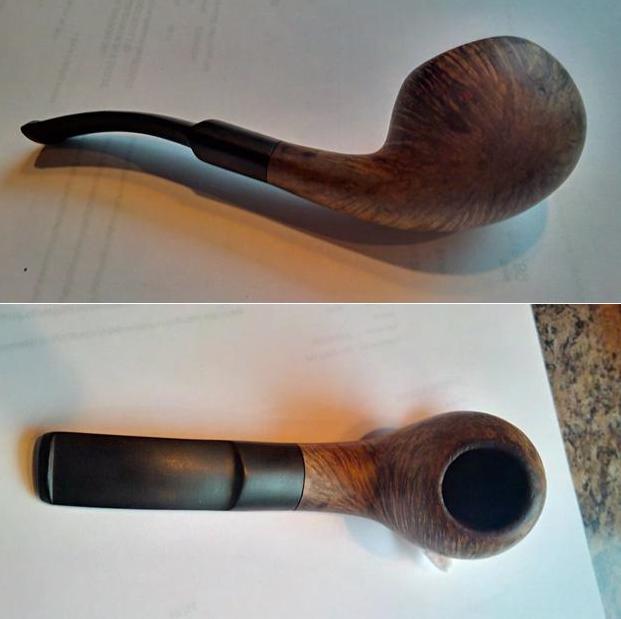
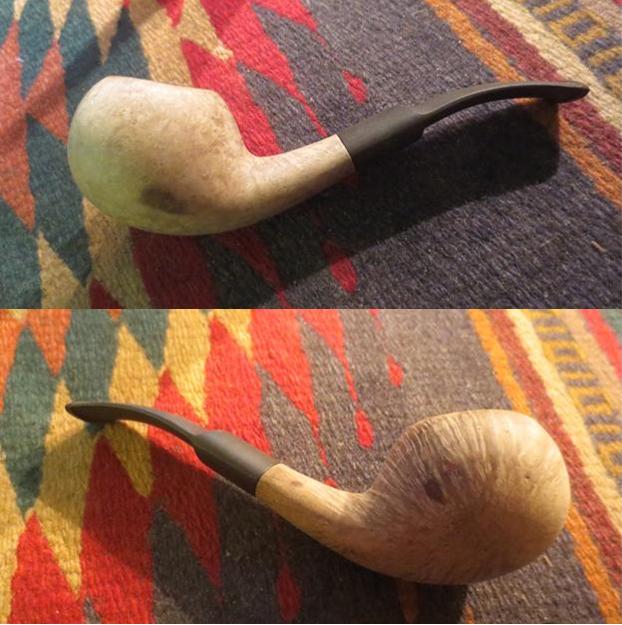
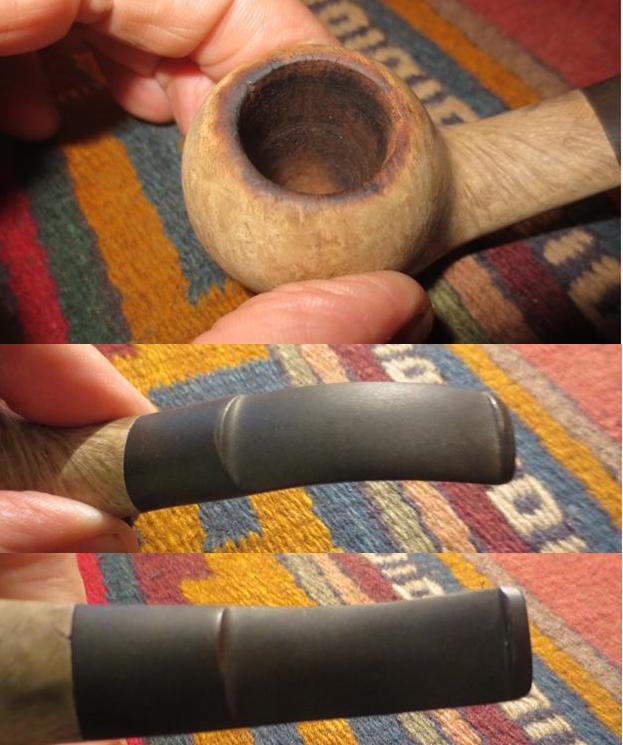
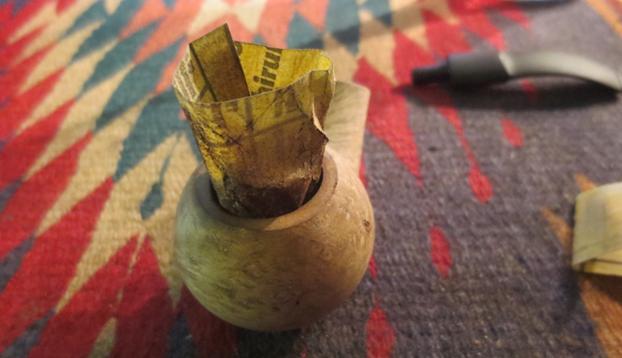
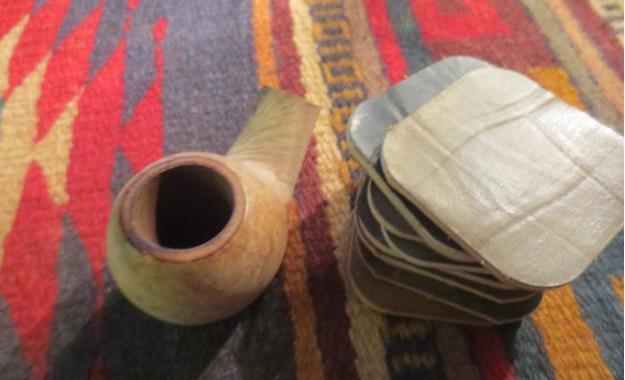
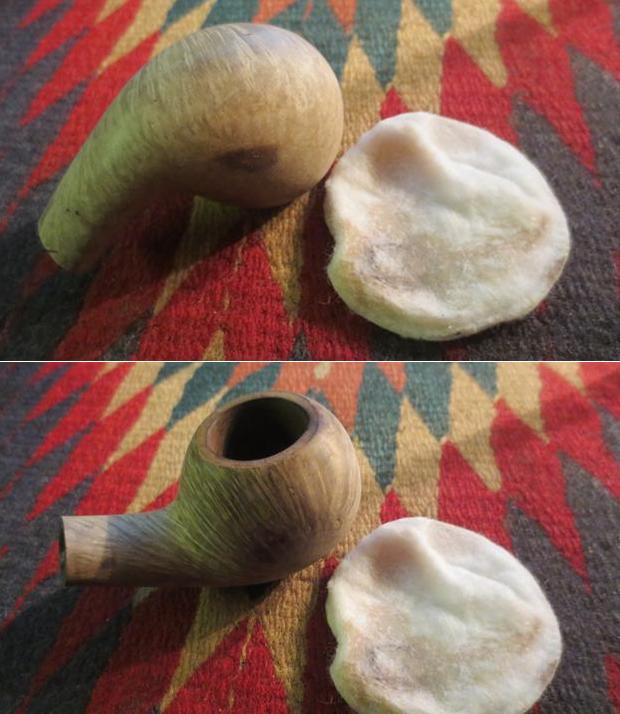
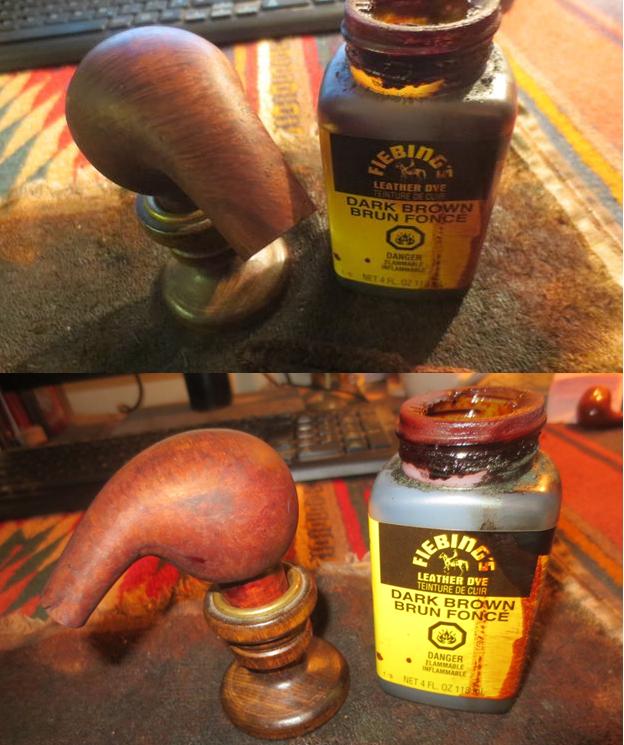
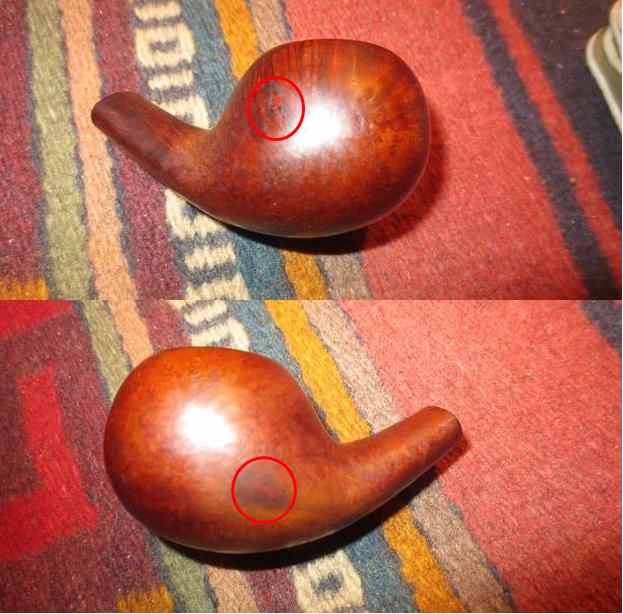
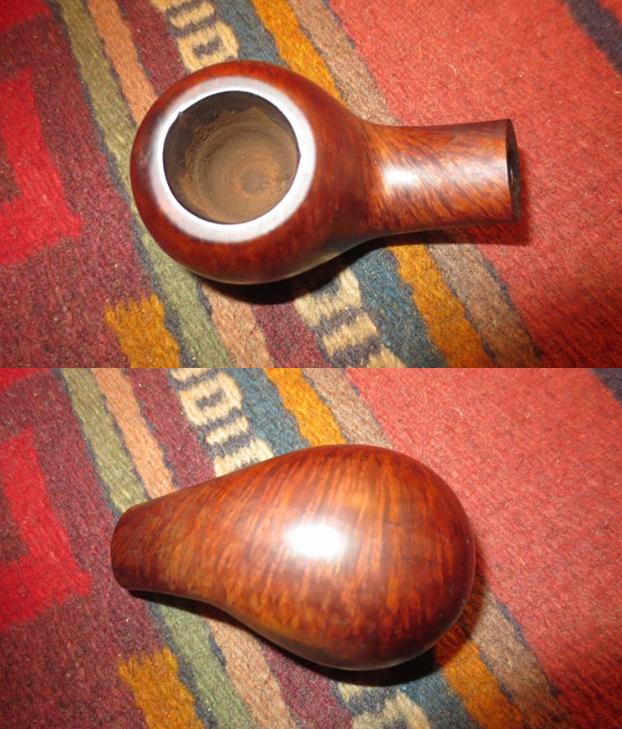
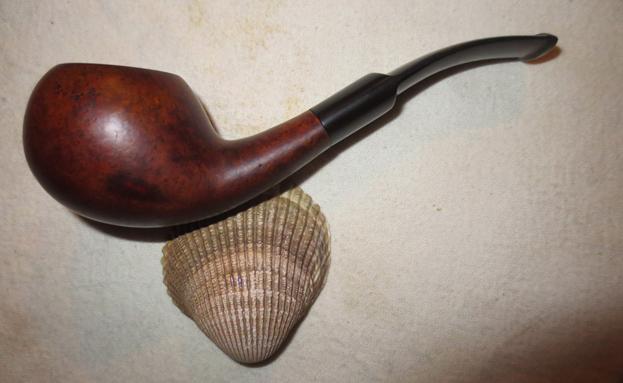
 

A unique old WDC Turin Rustic Volcano


Blog by Steve Laug

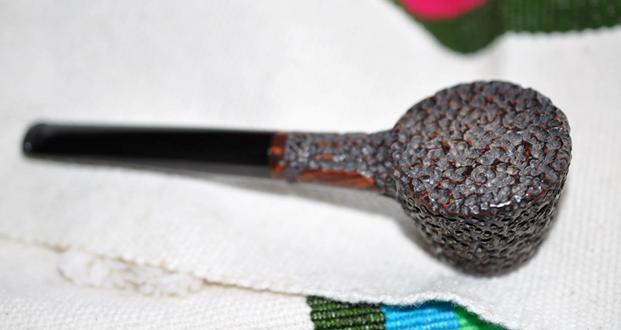
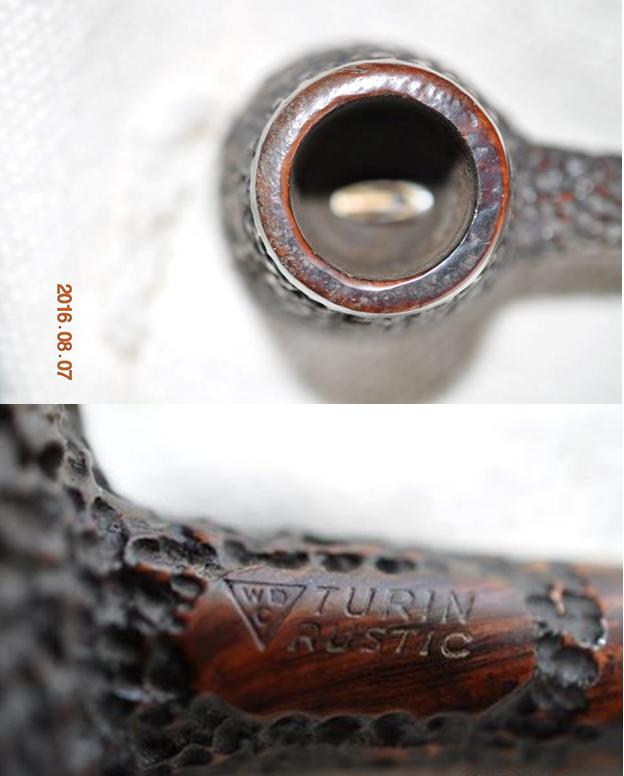
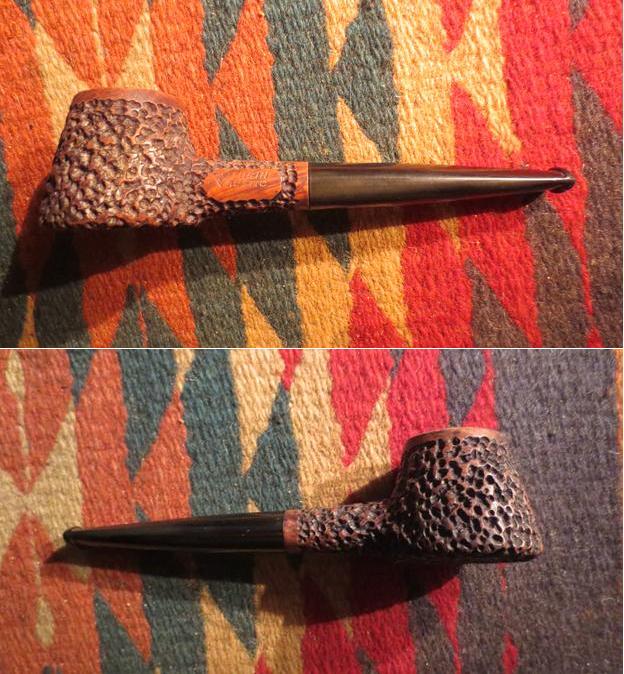
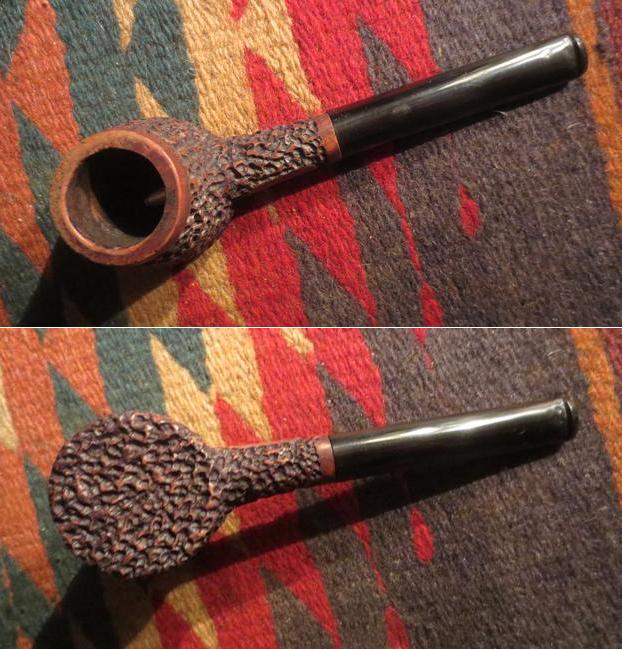
When I saw this one on eBay I sent a message to my brother and asked him to bid on it. He did and we got it. I love the rustication on the Turin Rustic series. It is rough and yet dignified at the same time. The seller billed it as restored/refurbished and clean. By and large that was true. The shank and the inside of the stem were very clean. The rim had been knocked about a bit and the inner edge of the rim was rough and uneven. The bowl had been reamed. The stem was polished though there were deep tooth marks on the top and underside of the stem next to the button.demuth1 demuth2My brother took the above photos and the following ones before he cleaned the pipe. You can see the damage to the rim top and the inner edge in the next photo. The second photo shows the stamping on the left side of the shank.demuth3Though I knew a bit about the WDC pipe maker and the William Demuth Company I thought it might be good to review the history before I started restoring the pipe. I googled the Turin Rustic to see what I could find. It immediately referred me to a post on the Kaywoodie Forum that in turn was an excerpt from pipedia.org. Here is the link.

http://kaywoodie.myfreeforum.org/archive/w.d.c.-master-list__o_t__t_191.html

William Demuth, a native of Germany, entered the United States at the age of 16 as a penniless immigrant. After a series of odd jobs he found work as a clerk in the import business of a tobacco tradesman in New York City. In 1862 William established his own company. The William Demuth Company specialized in pipes, smoker’s requisites, cigar-store figures, canes and other carved objects.

The Demuth Company is probably well known for the famous trademark, WDC in an inverted equilateral triangle. William commissioned the figurative meerschaum Presidential series, 29 precision-carved likenesses of John Adams, the second president of the United States (1797-1801) to Herbert Hoover, the 30th president (1929-1933), and “Columbus Landing in America,” a 32-inch-long centennial meerschaum masterpiece that took two years to complete and was exhibited at the World’s Columbian Exposition in Chicago in 1893.

The Presidential series was the result of Demuth’s friendship with President James A. Garfield, a connoisseur of meerschaum pipes. Demuth presented two pipes to Garfield at his inauguration in 1881, one in his likeness, the other in the likeness of the President’s wife. Later, Demuth arranged for another figurative matching the others to be added to the collection as each new president acceded to the White House, terminating with President Hoover.

In 1897 Ferdinand Feuerbach joined the Demuth Company and by 1903 had become the production manager. Feuerbach is credited with developing Demuth’s popular Royal Demuth and Hesson Guard Milano pipelines. He left in 1919, when Sam Frank Sr. needed an experienced pipe man to run his pipe factory, located at 168 Southern Blvd., in the Bronx. Feuerbach and Frank had been close friends since Frank started his own business in 1900 and was closely associated with the sales staff of WDC, selling their line of pipes.

In early 1937, the City of New York notified S.M. Frank & Co. of their intent to take by eminent domain, part of the land on which the companies pipe factory was located. This was being done to widen two of the adjacent streets. As a result of this, Frank entered into negotiations to purchase the Wm. Demuth Co.’s pipe factory in the Richmond Hill section of Queens. It was agreed upon that Demuth would become a subsidiary of S.M. Frank and all pipe production of the two companies would be moved to Demuth factory. New Corporate offices were located at 133 Fifth Avenue, NYC.

Demuth pipes continued to be made at the Richmond Hill plant till December 31. 1972. Then the Wm. Demuth Company met its official end as a subsidiary company by liquidation. Demuth’s mainstay pipe, the Wellington continued to be offered in the S.M. Frank catalog until 1976. In the mid-80’s, the Wellington even made a brief return as a direct to the consumer offer.

When the pipe arrived from Idaho it was quite clean and ready to work on. I took some photos of it before I started.demuth5 demuth6The next photo shows the rim and the damage to the surface. There were a lot of dents and dings as well as some roughness on the right side toward the front of the bowl. The inner edges was also worn and rough.demuth7The next photos show the condition of the stem – it had some deep tooth marks on the top and underside that are visible in the photo below.demuth8I “painted” the surface of the vulcanite with the flame of a Bic lighter to lift the dents and I was able to raise all but one of them completely. Even the worst one on the underside came up so that is only needed a little patch. The rest of them I was able to sand smooth with 220 grit sandpaper.demuth9I cleaned the sanded area on the underside of the stem with alcohol and then filled in the remaining tooth mark with a spot of clear super glue. Once it dried I sanded it smooth with 220 grit sandpaper and blended it into the surface of the stem.demuth10I rolled a piece of sandpaper and sanded out the inside of the bowl and the inner edge of the rim to smooth out the damage.demuth12

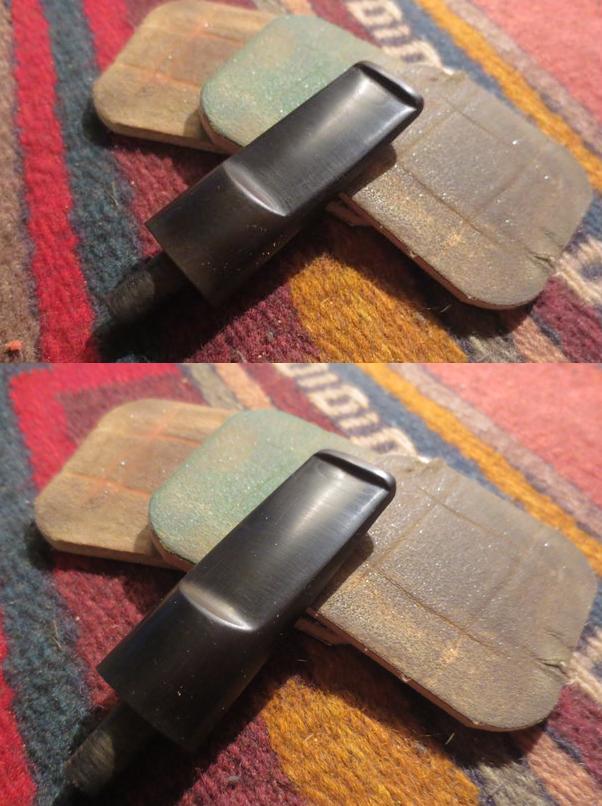
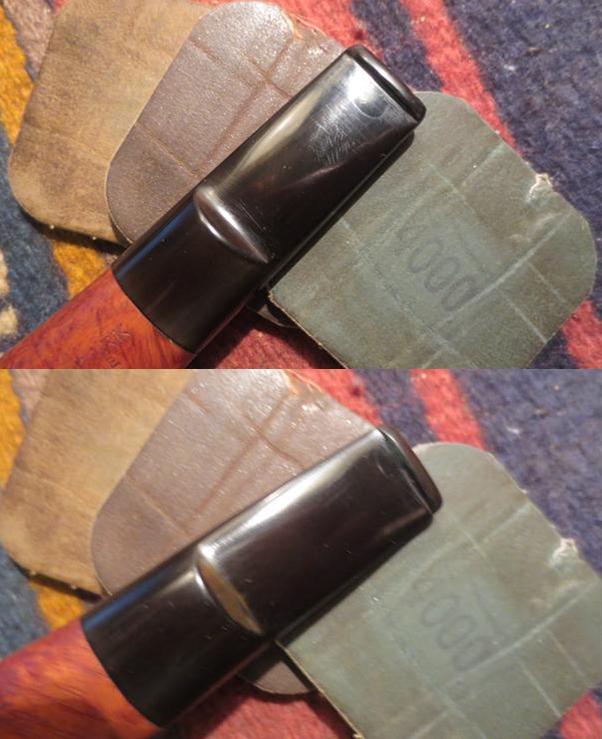
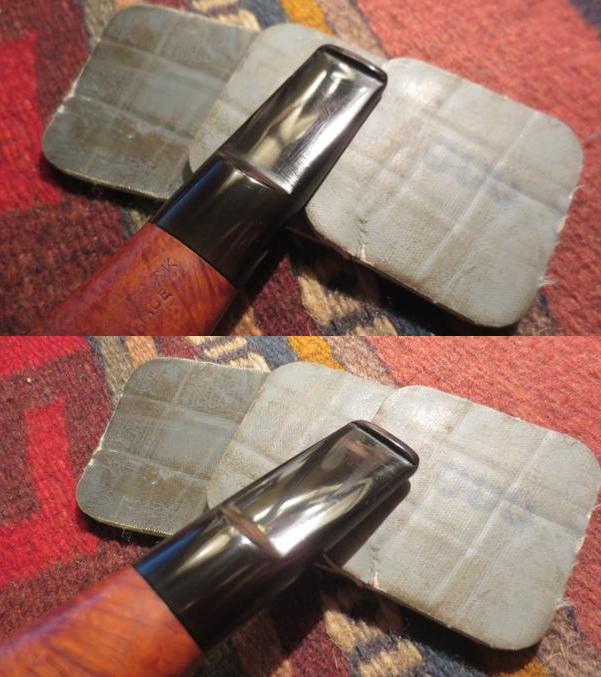
I touched up the rough spots on the inner edge with a piece of 220 grit sandpaper and smoothed out the edge until it was back in round. In the photo below you can see the damage to the top and outside edge of the bowl toward the front. It looked like it had been knocked out on concrete.demuth13I decided to lightly top the bowl on the topping board with 220 grit sandpaper until the rim top was smooth and clean of damage.demuth13aI sanded the rim top with micromesh sanding pads from 1500-12000 grit until the surface of the rim was clean and smoothly polished.demuth13bI used a light brown stain pen and touched up the rim top. The next four pictures show the bowl after I had rubbed it down with a light coat of olive oil. I love the rustication on the bowl sides and bottom. It really is a unique pattern.demuth13c demuth13dI polished the stem with micromesh sanding pads – wet sanding with 1500-2400 grit pads and dry sanding with 3200-12000 grit pads. I rubbed the stem down with Obsidian Oil after each set of three pads. After the final rub down I set the stem aside to dry.demuth14 demuth15 demuth16

I buffed the bowl and stem with Blue Diamond on the buffing wheel. I gave the stem multiple coats of carnauba wax and buffed it with a clean buffing pad to raise the shine. I hand wax the bowl with Conservator’s Wax and buffed it with a clean buffing pad. The finished pipe is shown in the photos below. The finish shines and the pipe belies its age. It is a beauty. Thanks for looking.demuth17 demuth18 demuth19 demuth20 demuth21 demuth22 demuth23 demuth24 demuth25


Restoring a Long Diamond Shank Aldo Velani Grande 39


Blog by Steve Laug

This pipe came to me through my brother. I am not sure if it was one of his eBay finds or his pipe hunting adventures. Either way it is a unique and unusual pipe. It has a long diamond shaped shank ending in a tapered diamond shaped stem with a slash of briar inserted into the Lucite. The bowl is a variation on a Dublin shape with the diamond shape of the underside of the shank carrying through to the bottom of the bowl. The rim had been obviously tapped out on some hard surface and the top and the outer edges of the rim had nicks and dents. Somewhere along the way someone had cracked the shank and put on a poorly installed Sterling silver band. The stem had some slight tooth chatter on the top and the bottom near the button and there were several small tooth marks on the underside.aldo1It is stamped Aldo Velani Grande on the left side of the shank. The centre portion of the top line of the stamp is faint. It is stamped on the right underside of the shank with the shape number 39. There was no other stamping on the shank. The stem bore an AV stamp that had originally been gold in colour but had faded. In the second photo below you can see the glue from the band oozing out onto the shank. It was that way all the way around. Someone had carelessly used the glue and not cleaned up the overflow. You can also see that the stem does not fit properly against the shank end.aldo2The stem listed to downward and to the left side of the shank and was crooked. Once I pulled the stem out I could see that the tenon was no longer straight.aldo3The next two photos show the top of the rim and the bottom of the bowl respectively. You can see the light cake and the rounding of the outer edges of the rim in the first photo. The underside of the pipe looked pristine. The finish was dirty and a bit spotty.

aldo4My brother, Jeff cleaned up the pipe. He scrubbed out the internals and the external of the pipe. When it arrived in Canada it was very clean and the finish had basically been removed. I am really growing to like having these pipes arrive cleaned and ready to restore. Thanks Jeff!aldo4a aldo4bThe next photo shows the rim after he had cleaned up the surface. There was a burn mark on the front edge of the rim that would need to be addressed. You can clearly see all the nicks and chips in the rim edges in this photo.aldo4cOnce I removed the stem the band fell off in my hands. I could see the band covered a sloppy crack repair. Though the repair held and the crack was sealed there was a lot of glue. I am not sure whether it was for the crack or for the band. Either way it was over kill. The glue had hardened and somewhere along the way the silver band had picked up the ridges and valleys of the hard glue underneath.aldo4dI sanded the glue until it was smooth on the shank end. I squared up the band and made the angular corner of the diamond shape more sharp. I smoothed out the dents in the band as much as possible from the inside of the band. I slid band on the shank and used a small ball-peen hammer to carefully tap the band flatter from the outside. I was able to remove much of the damage to the silver band with this process. I used a small bit of glue to hold the band snug on the shank.aldo4eTo take care of the rim damage and to reduce the damage to the outer edge of the rim I topped the bowl on a topping board with 220 grit sandpaper. I sanded until the edge was clean and then worked on the outer edge of the rim with sandpaper. In the second photo below you can see the area where the burn has affected the outer edge at the front of the bowl.aldo5I wrapped a KleenReem pipe reamer with 220 grit sandpaper and used it to sand the interior of the bowl and clean up the inner edge of the rim.aldo6On the right side of the bowl there were two larger chips in the outer edge. I used crazy glue and briar dust to fill in the divots. Once the repair dried I sanded it with 220 grit sandpaper to reshape it.aldo7I heated the tenon with a Bic lighter until the tenon was flexible and then carefully inserted it into the mortise and aligned it with the shank. I held it in place until the tenon cooled. That repaired the fit of the stem to the shank.aldo8Since I was working on the stem I decided to finish polishing it. I sanded out the tooth marks and tooth chatter with 220 grit sandpaper. I polished it by wet sanding with 1500-2400 grit micromesh sanding pads. I dry sanded it with 3200-12000 pads. I wiped the stem down with a damp cloth. Once the pipe was finished I would buff the stem and pipe together.aldo9 aldo11 aldo12I used European Gold Rub n’ Buff to touch up the AV stamp on the side of the stem and hand buffed the stem.aldo13I stained the bowl with a dark brown aniline stain cut by 50% with isopropyl alcohol. I flamed it and repeated the process until I got an even coverage.aldo14I took the next set of photos to show the bowl after the stain had dried. It was too opaque for me and hid the grain on the pipe but I would deal with that in the morning. I set the pipe aside of the night and let the stain dry.aldo15 aldo16In the morning I wiped the bowl down with alcohol on a cotton pad to thin the stain coat and make the grain stand out.aldo17 aldo18With the stain looking good and the stem finished I buffed the pipe with Blue Diamond on the buffing wheel and gave it multiple coats of carnauba wax. I buffed it with a clean buffing pad to raise the shine and then by hand with a microfibre cloth. The finished pipe is shown in the pictures below. It is a beautiful pipe. It is ready for whoever wants to add it to their rack. Send me a message or an email at slaug@uniserve.com if you are interested in this beauty. Thanks for looking.aldo19 aldo20 aldo21 aldo22 aldo23 aldo24 aldo25 aldo26 aldo27


I love the shape of this Comoy’s Regent’s Park London Made Canted Volcano


Blog by Steve Laug

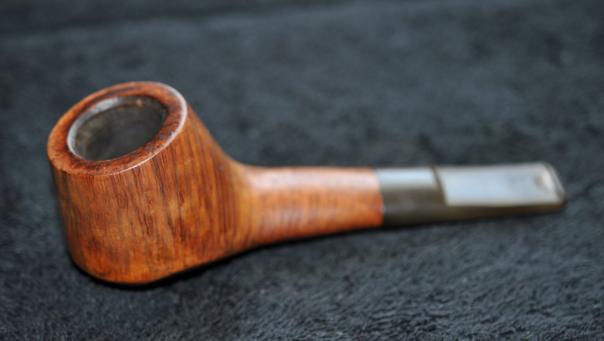
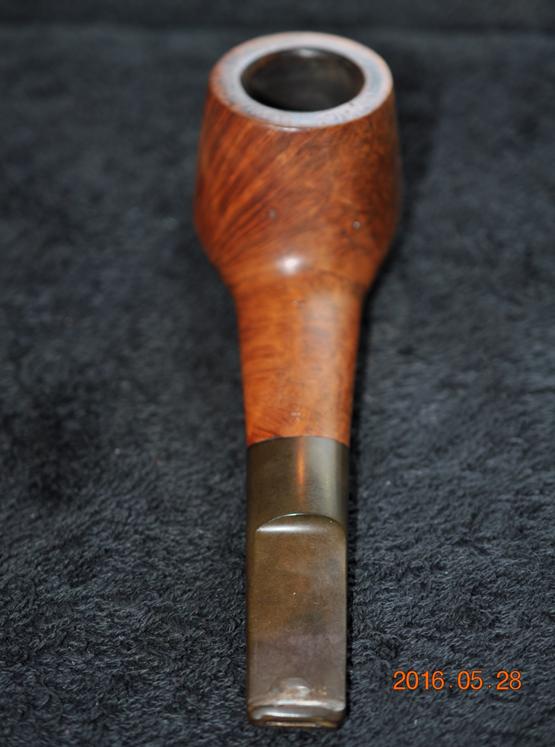
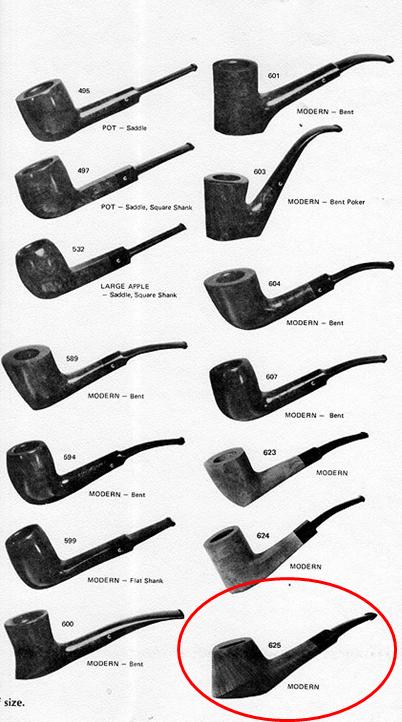
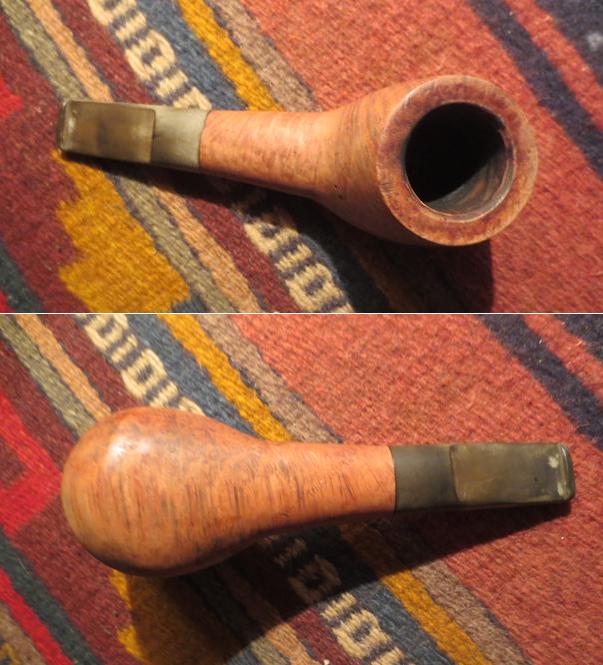
This pipe takes advantage of the grain to the maximum. The shape has flame, mixed and stunning birdseye on the sides, top and bottom of both the bowl and the shank. This is another of the pipes that my brother Jeff found. The stamping is faint but readable with a lens. It is stamped on top of the shank with the words Regent’s Park over London Made. On the underside of the shank stamped diagonally from front to back it reads Made in England. From the photos that Jeff set me the pipe was in decent shape. The finish was spotty and dirty. The rim was clean and undamaged with a light and spotty lava coat. Comoy1The stem was lightly oxidized and there was a deep and large tooth mark on the top side near the button. I have learned that there is usually a match to that on the underside of the stem. The canted volcano shape is very nice. In the photo below it appears that there were some small pin prick fills on the back side of the bowl just above the shank.Comoy2From what I can find online the pipe is made by Comoy’s. They made the Hyde Park brand and it appears they also made the Regent’s Park brand – both which are Comoy’s seconds and are named after London Parks. I found this Comoy’s Shape Chart on-line which shows the pipe as a Modern 625. I have circled it in red – it is shown on the bottom of the right column, last pipe.Comoy3As usual now, my brother did a stellar job cleaning up the pipe before he sent it to me. He reamed it and scrubbed the exterior with Murphy’s Oil Soap so the finish was very clean. He cleaned out the internals as well. The pipe was ready for me to work on the finish and stem repairs when I received it. The next four photos show what the pipe looked like when it arrived to my work table.Comoy4 Comoy5I took a close up photo of the rim to show the slight damage – almost cut marks on the top of the rim surface. The inner and outer edge of the rim is fairly undamaged though so it will not take much to clean up this rim. I also took close up photos of the stem to show the large bite/tooth marks on the top and bottom sides near the button.Comoy6 Comoy7I cleaned up the tooth marks with sandpaper, a dental pick and alcohol. I filled in the deep dents with black super glue and let it cure. I forgot to take photos of the repairs before I sanded them out. Once the glue had cured I sanded both sides of the stem with 220 grit sandpaper to smooth out the repair to match the surface of the rest of the stem.Comoy8I also filled the pin holes in the back side of the bowl with clear super glue and briar dust. Again I forgot to take a photo of the glue and dust mixture. Once it dried I sanded the bowl with 220 grit sandpaper and blended the repairs into the surface of the briar. The surface was smooth to touch .Comoy9I sanded the slash marks on the rim with 220 grit sandpaper to minimize them. It did not take too much sanding to remove them. I also sanded the inner beveled edge of the rim to clean it up and remove the darkening.Comoy10I sanded the bowl and rim with a medium and a fine grit sanding block. I worked to remove the scratching left behind by the 220 grit sandpaper. I carefully avoided the areas on the shank that held the already faint stamping.Comoy11 Comoy12I sanded the stem with the sanding block as well.Comoy13I wet sanded the stem with 1500-2400 grit micromesh sanding pads and rubbed it down with Obsidian Oil. I dry sanded it with 3200-4000 grit pads and gave it another coat of oil. I finished sanding it with 6000-12000 grit pads, gave it a final coat of Obsidian Oil and set it aside to dry.Comoy14There were some scratches on the top of the stem. I would need to work on them some more at this point.Comoy14a Comoy14bOnce I buffed the stem with Blue Diamond the scratches would be blended into the stem surface. I gave the bowl a coat of Danish Oil and Cherry Stain to highlight the red of the briar. I set it aside to dry for about twenty minutes.Comoy15I wiped the bowl off with a soft cloth and hand buffed it lightly to get a clear picture of the finish and the grain on the bowl.Comoy16 Comoy17I polished the bowl and stem with Blue Diamond on the buffing wheel. I buffed out the scratches in the stem and the briar. I gave the bowl and stem multiple coats of carnauba wax to protect it. I buffed it with a clean buffing wheel to raise the shine. I hand buffed the pipe with a microfibre cloth to deepen the shine. The finished pipe is shown in the photos below.Comoy19 Comoy20 Comoy21 Comoy22 Comoy23 Comoy24 Comoy25

An Old Timer Horn Stem, Cherrywood Shank and Briar Bowl BBK Bosshardt Luzern


Blog by Steve Laug

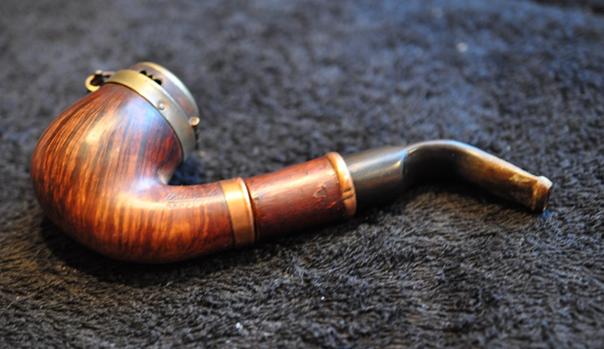
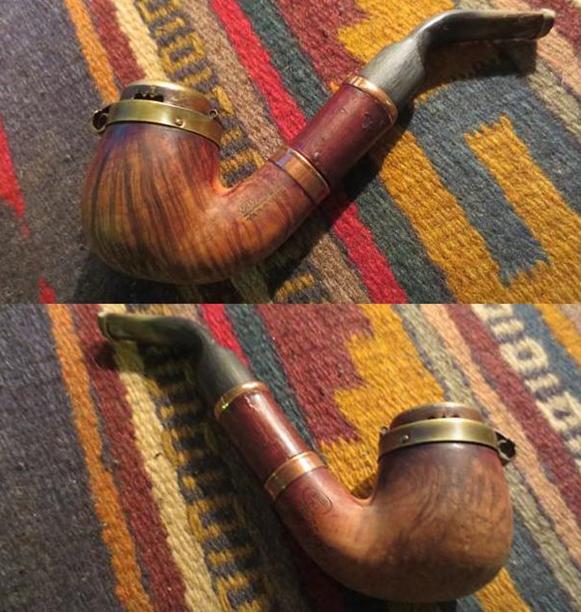
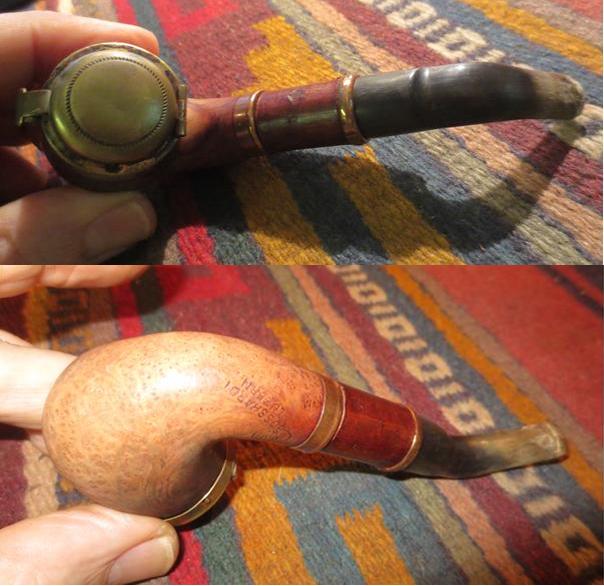
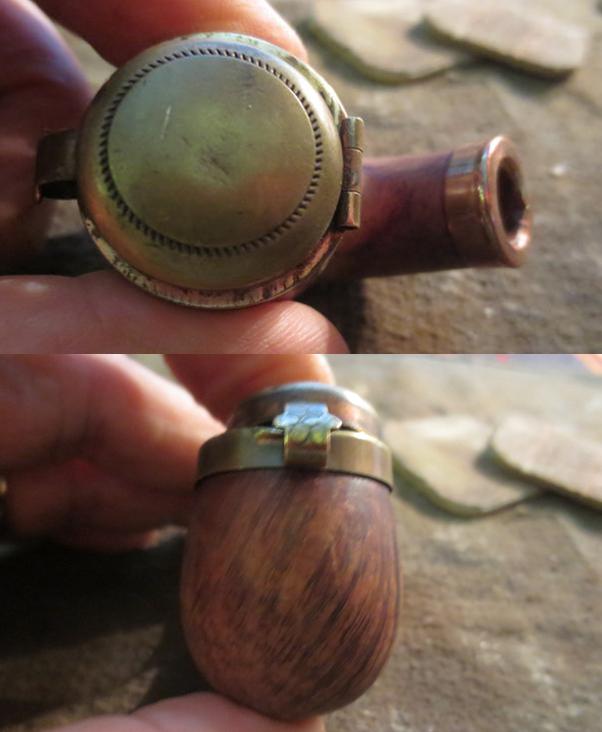
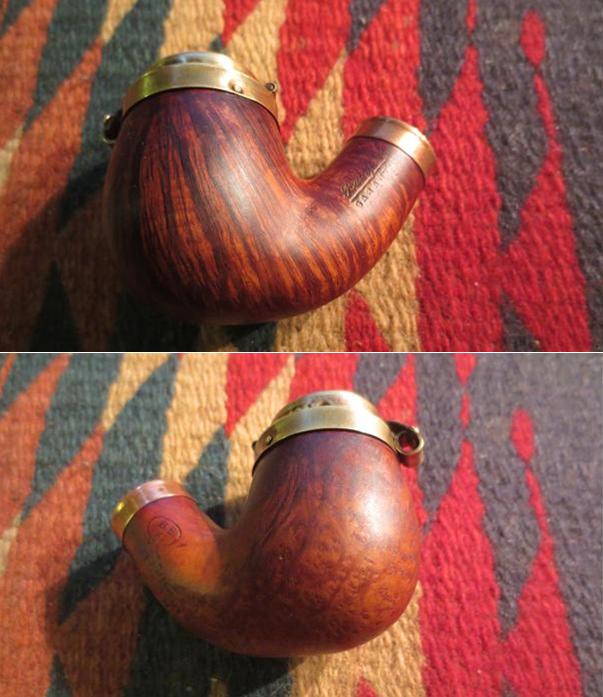
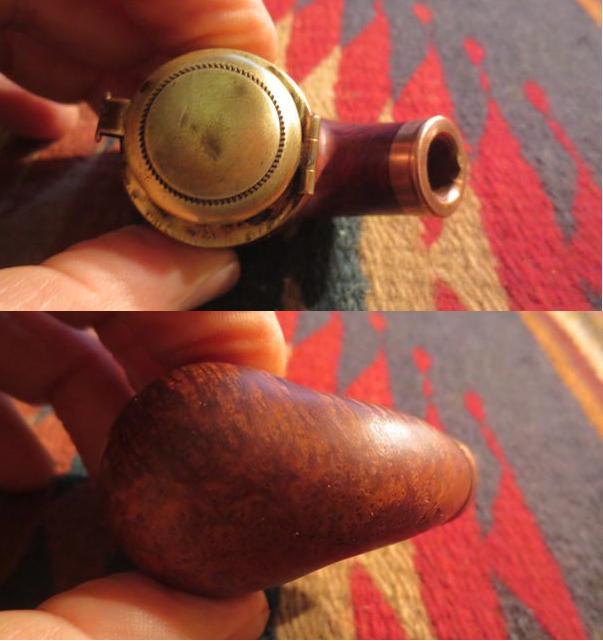
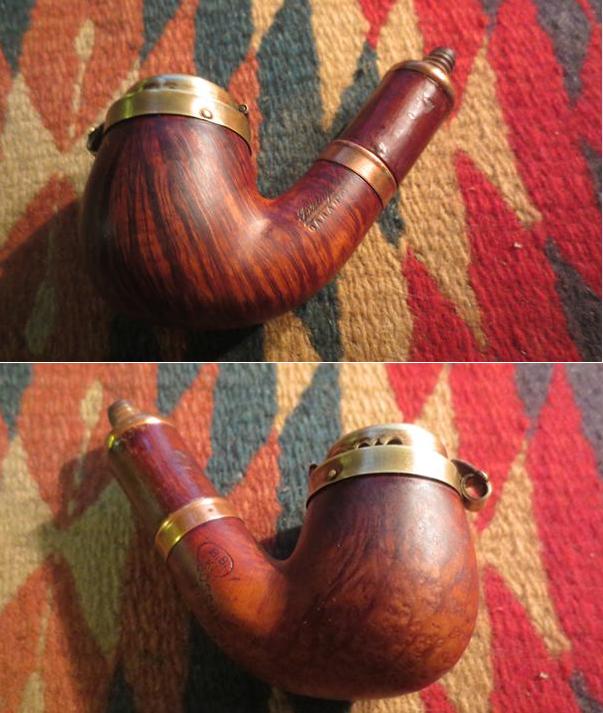
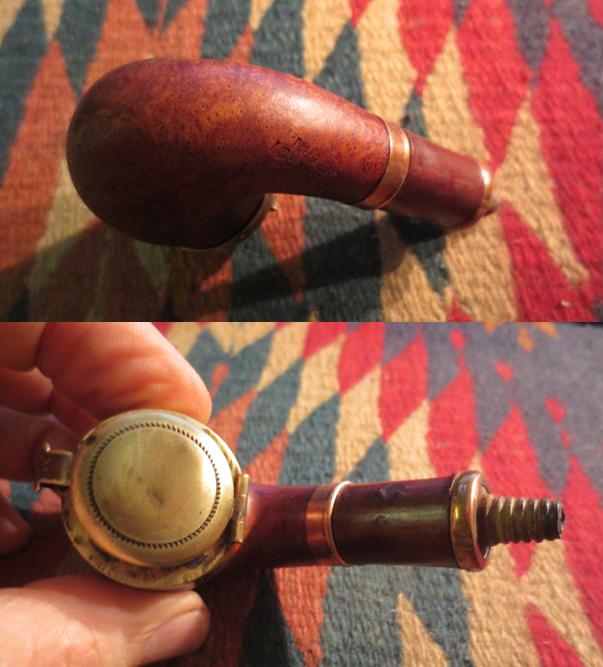
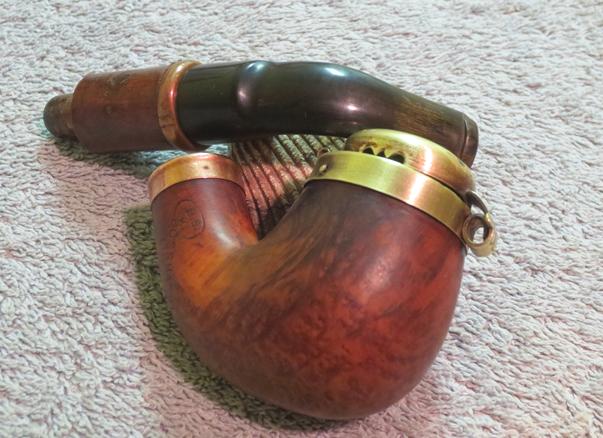
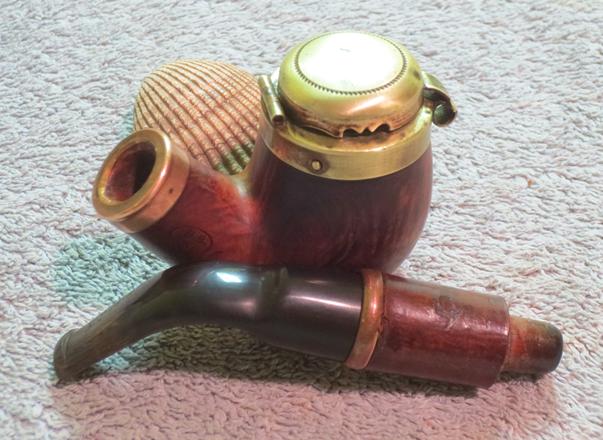
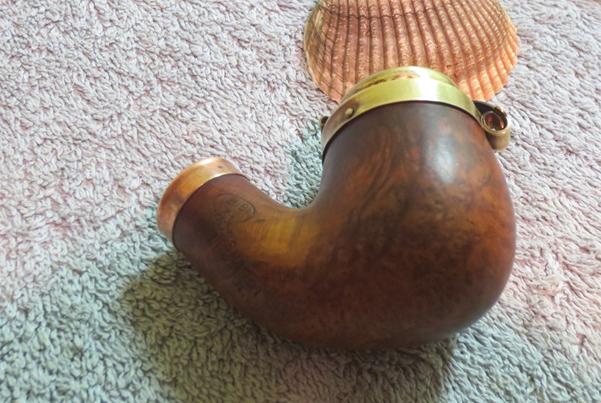
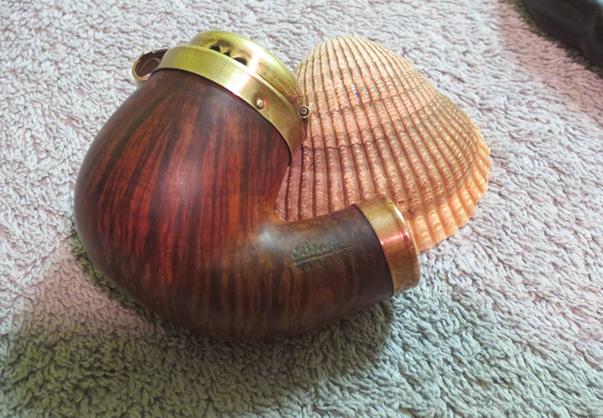
This old pipe came to me from my brother. He picks up some interesting pipes in his hunts and eBay purchases and this is a unique one. The bowl is a really nice piece of briar with some amazing grain – a mix of flame and birdseye on the bowl. The rim cap and bowl cap are brass coloured. The hinge on the back of the rim connects the rim cap and the bowl cap. There is a curved spring piece of brass on the front that fits over a ridge on the front of the rim. The end of the briar shank has a brass shank cap/ferrule. It was tarnished to almost copper coloured brass. The shank extension is cherry wood and is pressure fit into the mortise. The top of the cherry wood extension has a brass ring that is pressure fit on the end of the extension. The stem is horn. The end of the cherry wood has a threaded end that the horn stem screws onto. The stem had some tooth marks and chatter on the top and underside of the stem next to the button. The shank of the pipe is stamped on the left side with the words Bruyere over Garantee. On the right side of the shank it is stamped BBK in an oval over Bosshardt over Luzern.BBK1Through the years I have cleaned up several BBK pipes. The last one was a rusticated hunter pipe with a windcap. Prior to that, I restored a square shanked panel billiard. I have written about both them on rebornpipes at the following links: https://rebornpipes.com/2012/09/21/refurb-on-a-bbk-panel-billiard-swiss-made/, https://rebornpipes.com/2014/08/31/restoring-an-old-bbk-hunter-pipe/.

When I worked on the BBK Hunter I researched the brand. The BBK was a Swiss made brand as the shanks of all the pipes I had cleaned up and restored were stamped that way. Pipedia was my primary reference in that blog. Here is the link: http://pipedia.org/index.php?title=Bru-Bu. I have included the material from the previous blog below.

“Josef Brunner, oldest son of the farmer Konstantin Brunner from the hamlet Nieder-Huggerwald, belonging to the community of Kleinlützel (Canton Solothurn), was sent in 1871 to a pipe turner in Winkel/Alsace for his apprenticeship. As was usual at that time, Brunner wandered as a journeyman after ending the apprenticeship. Eventually, he went to Saint-Claude, France which was then the world’s stronghold of briar pipe manufacturing. There, Brunner was able to increase and deepen his knowledge in the field of industrial pipe making. When he returned home in 1878, he installed a small turner’s workshop in the house of his father. With the energetic support of his two younger brothers, he began to produce tobacco pipes of his own calculation, taking them to the markets in the surrounding area. In 1893, Bernhard Brunner’s wife inherited the mill in Kleinlützel. At this point, the pipe fabrication was transferred to an annex belonging to the mill. Now it was possible to drive the machines by water power – an important relief to the workers and a considerable innovation compared to the previous pedal-driven system.”

“The business developed so well after the turn of the century even when a lack of workers in Kleinlützel occurred. The problem was solved by founding a subsidiary company in the small nearby town Laufen an der Birs in the Canton of Bern. This plant didn’t exist too long. The disastrous economic crisis in the 1920’s and early 1930’s forced the Brunner family to restrict the fabrication of pipes dramatically. In addition the big French pipe factories in Saint-Claude – although suffering from the same circumstances – flooded the Swiss market with pipes at prices that couldn’t be matched by Swiss producers. By 1931 approximately 150 of 180 Brunner employees had been sacked – the rest remained in Kleinlützel, where the cheap electric energy ensured a meager survival.”

“In 1932, Mr. Buhofer joined the Brunner family. The company was named Brunner-Buhofer-Kompagnie, and, shortly thereafter, Bru-Bu. Buhofer had made his fortune in the United States but, homesick, returned to Switzerland to search for a new challenge. Bru-Bu’s fabrication program was expanded with many handcrafted wooden art articles: carved family coats of arms, bread plates, fruit scarves, and – more and more – souvenir articles for the expanding Swiss tourism industry. Pipes remained in the program continuously, but the offerings changed from traditional Swiss pipes to the more standard European shaped pipes. Bru Bu is widely known as BBK.”

The last paragraph of the Pipedia article linked BBK pipes to Former Nielsen. I have two of Former’s pipes so this stood out to me. “At some point in the late 1970’s, Bru-Bu went out of business. Some of the Brunners, as far as known, continued as timber traders. But in 1986 new life filled the old Bru-Bu pipe workshop, when Dr. Horst Wiethüchter and “Former” Nielsen started to produce the high-grade Bentley pipes there.”

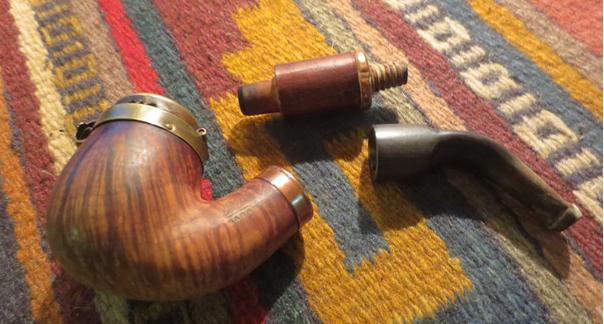
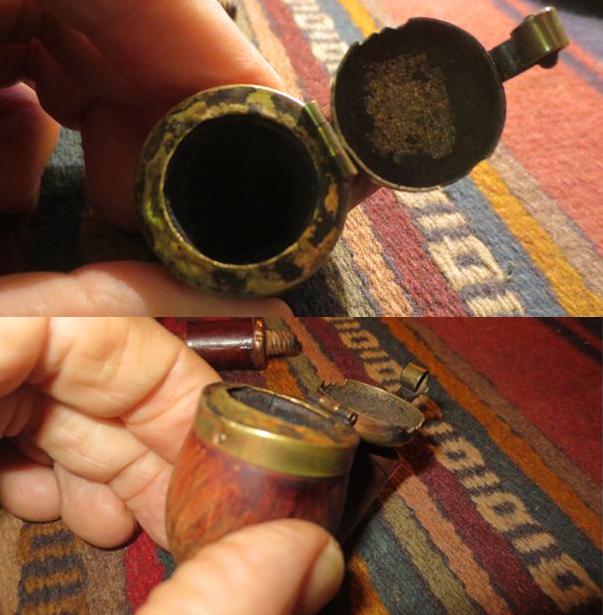
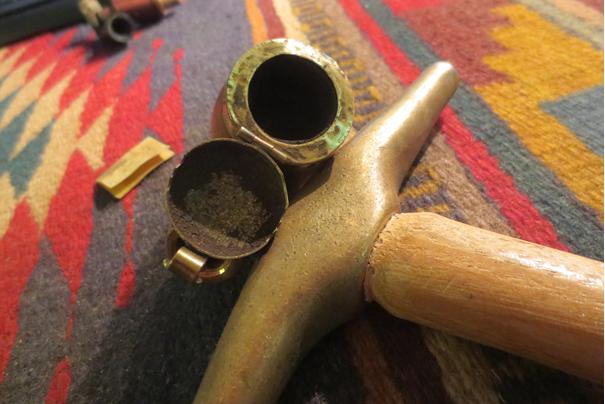
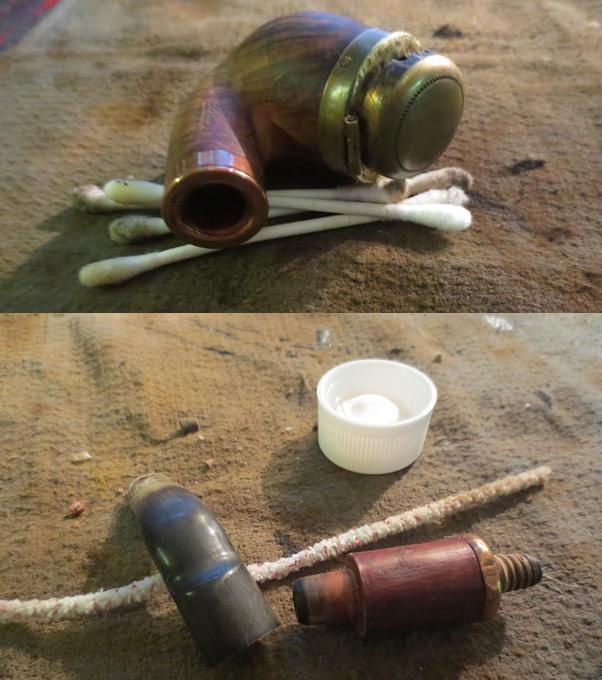
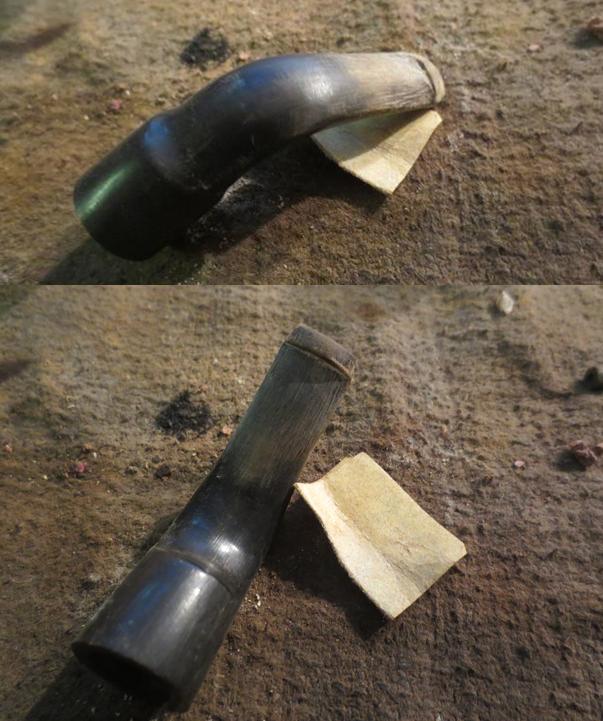
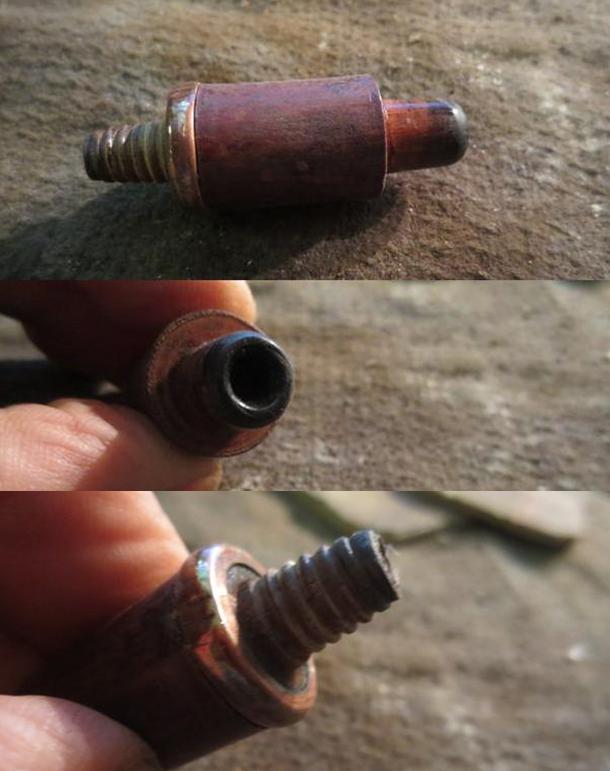
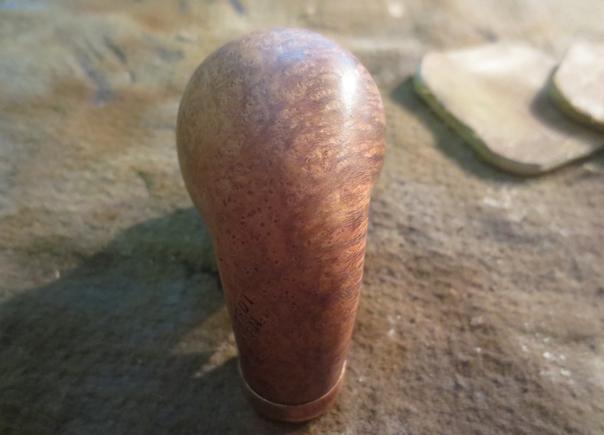
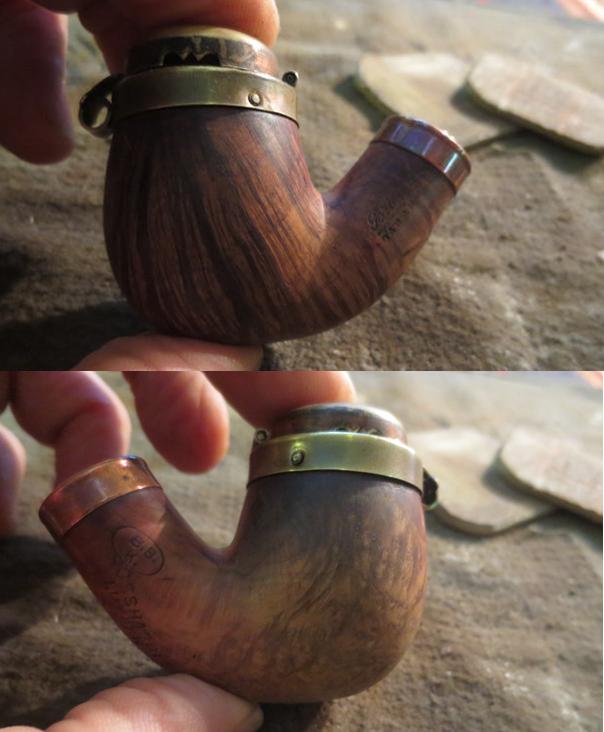
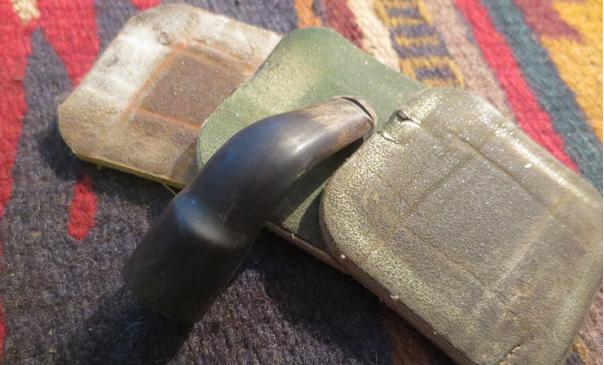
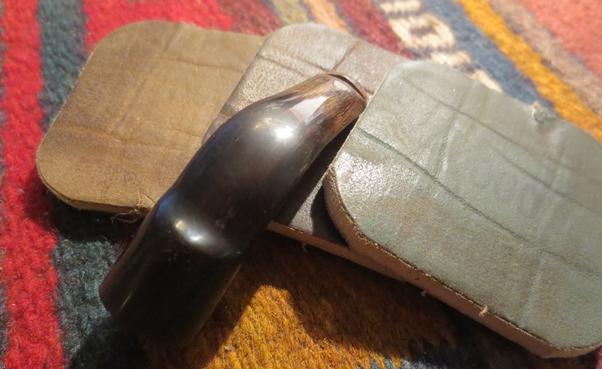
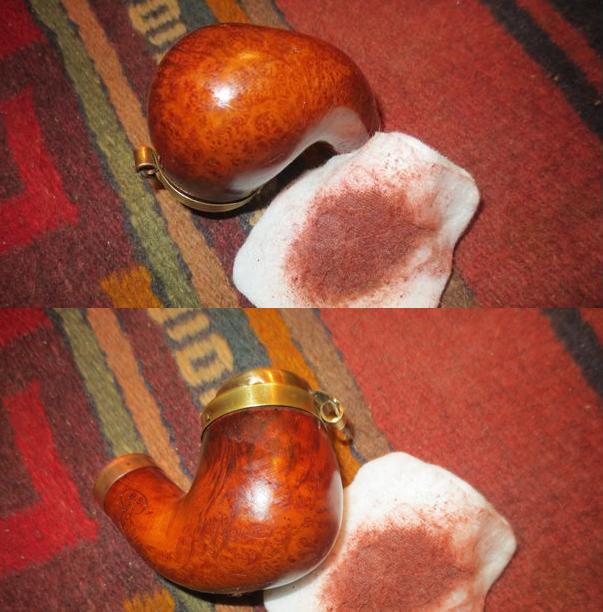
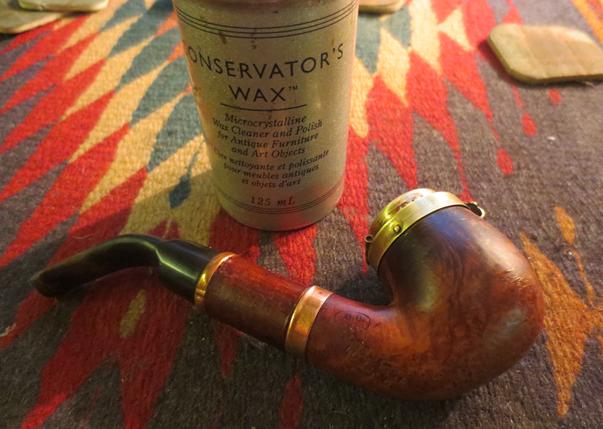
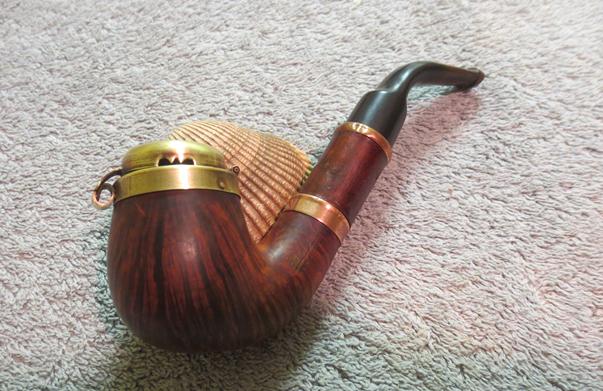
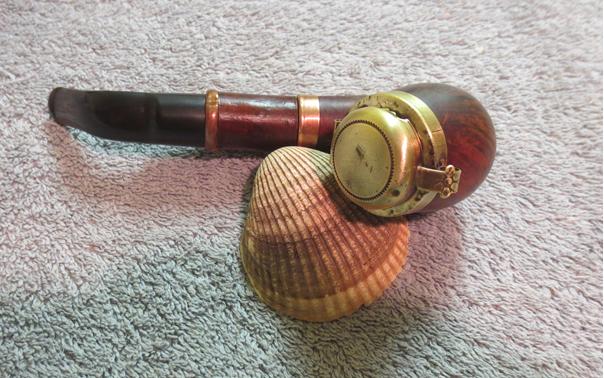
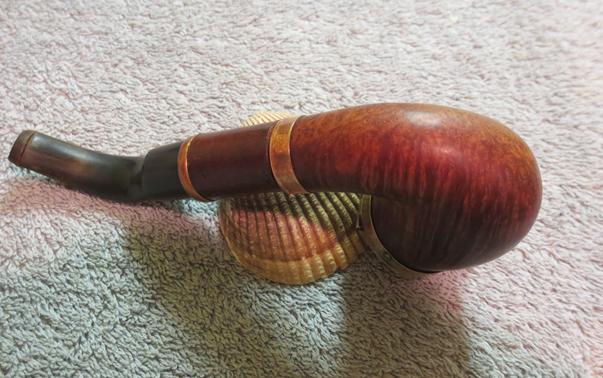
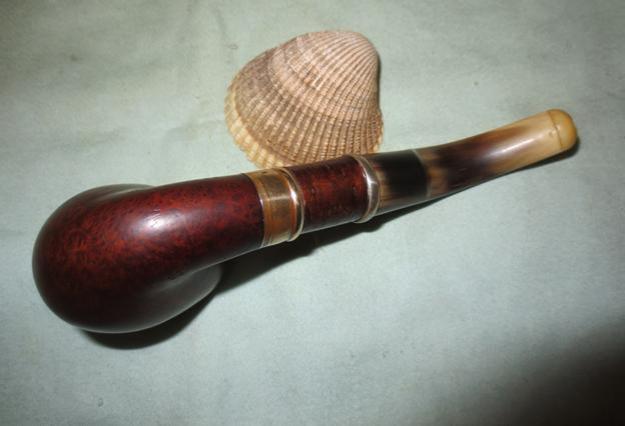
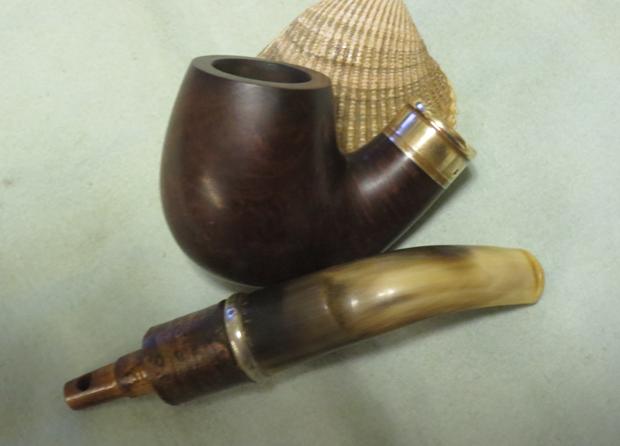
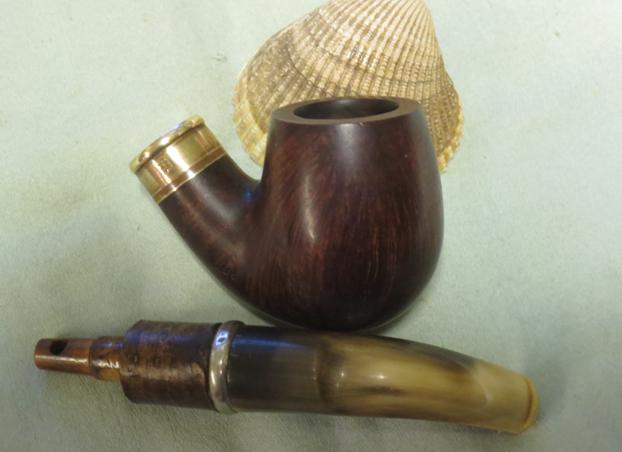
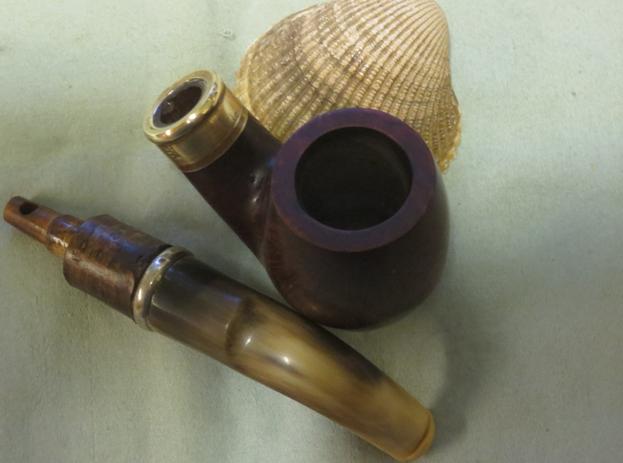
My brother cleaned up the pipe and reamed the bowl. He scrubbed out the wind cap and the brass rim cap. He cleaned out the shank and the airways in the stem, shank extension and the mortise. It turned out that the cherry wood extension was loose fitting in the shank. The wood had worn enough that it was no longer snug. The horn stem was clean but had tooth chatter and a deep tooth mark on the underside of the stem near the button. The brass rim cap was dented and worn but the wind cap still fit tightly against it. The next set of four pictures show the condition of the pipe after he had cleaned it up. BBK2 BBK3I took the pipe apart to show the various components of the pipe. The cherry wood extension in the centre of the photo has a tapered end that fits into the shank and a threaded end that the stem screws onto.BBK4I took a close up photo of the rim cap and the inside of the wind cap. You can see from the photo that the rim is badly dented and quite dirty. The inside of the wind cap is pitted and has some rust. The edge of the rim on the front had lifted slightly from the inner edge of the bowl and was dented on the front. The ridge on the edge was still there and held the front spring on the wind cap in place.BBK5I took some photos of the stem to show the tooth chatter and worn surface of the stem near the button on both the top and the bottom near the button. There was also some deeper tooth marks on the underside of the stem.BBK6I used a small ballpein hammer to flatten the rim cap to the briar rim underneath. I worked on it to minimize some to the dents and dings in the brass rim.BBK7I cleaned out the remaining debris in the bowl with a Savinelli Pipe Knife. My tapping the hammer on the rim knocked some pieces of cake free so the knife cleaned up what remained. I used a brass bristle wire brush to clean out the inside of the wind cap. I was able to remove some of the rust on the inside with the brush.BBK8I scrubbed the shank with alcohol and cotton swabs to remove any of the dust from my quick ream clean up. It was amazingly clean. I also ran pipe cleaners and alcohol through the shank extension and the stem.BBK9I sanded the tooth chatter and the tooth marks on the horn stem with 220 grit sandpaper to remove them and blend them into the material. I also wanted to smooth out the roughness of the stem at those points.BBK10The cherry wood shank extension was dirty so I wiped off the exterior with an alcohol dampened cotton pad. I noticed that the end of the pressure fit tenon had a horn end cap to seal the end of the wooden tenon. I believe that addition preserved the tenon from shrinkage and splintering. The threaded tenon on the other end of the extension fit snug into the end of the horn stem.BBK11I polished the wind cap, rim cap and the shank cap with 1500-4000 grit micromesh sanding pads. I took some photos the pipe after the polishing was completed. It is a beautiful piece of briar.BBK12 BBK14 BBK13I polished the horn stem with micromesh sanding pads – wet sanding with 1500-2400 grit pads and dry sanding with 3200-12000 grit pads. I rubbed the stem down with Obsidian Oil between each set of three pads. I gave it a final rubdown of oil after sanding it with the 12000 grit pad and set it aside to dry.BBK15 BBK16 BBK17I stained the bowl with a Danish Oil and Cherry stain mixture.BBK18 BBK19After it sat for about 20 minutes I rubbed it down with a soft cloth to polish it. After the hand rubbing the grain stood out more clearly. The red stain and the brass caps really looked great together.BBK20 BBK21I gave the wooden friction fit tenon several coats of clear fingernail polish, being careful to keep it off of the horn cap on the end. That did the trick and the extension sat snug in the mortise.BBK23 BBK24I gave the bowl, shank and stem a thick coat of Conservator’s Wax and let it dry. I hand buffed it and gave it a second coat of the wax.BBK25I buffed the pipe by hand with a microfibre cloth and polished the metal with a jeweler’s cloth. The finished pipe is shown in the photos below. I love the way the grain just pops on this old pipe. The cherry wood shank extension adds not only length but also a touch of rustic to the pipe, though this particular piece of cherry wood has bark that is quite smooth. The dark striations of the horn stem also go well with the wood. The brass bands at the stem and the shank as well as the rim cap and wind cap give this old timer a real look of class. The finished pipe is shown in the photos that follow. It is a beautiful pipe to my eyes. Thanks for looking.BBK26 BBK27 BBK28 BBK29 BBK30 BBK31 BBK32 BBK33 BBK34


A 9438 Rhodesian Stamped Tobacco Town


Blog by Steve Laug

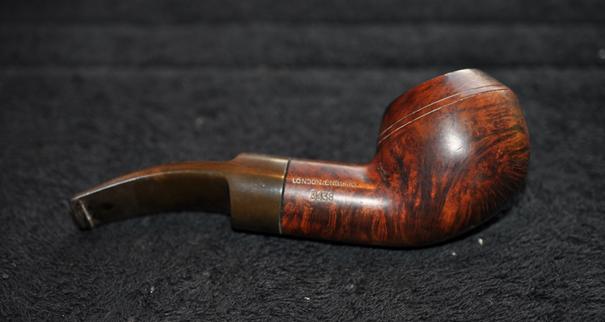
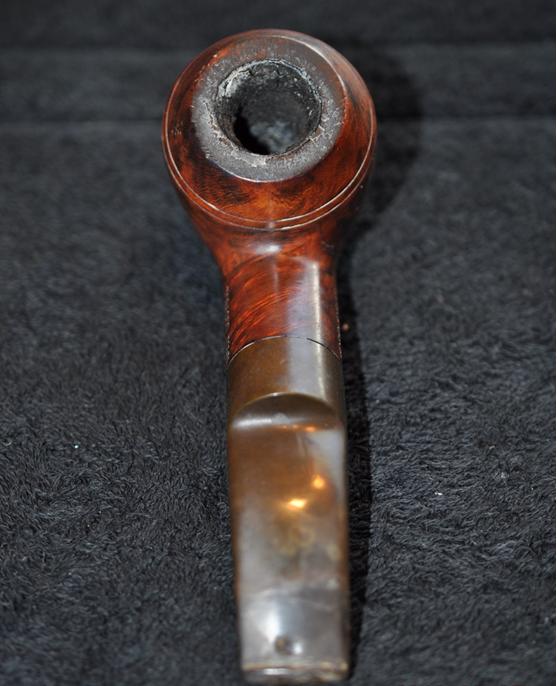
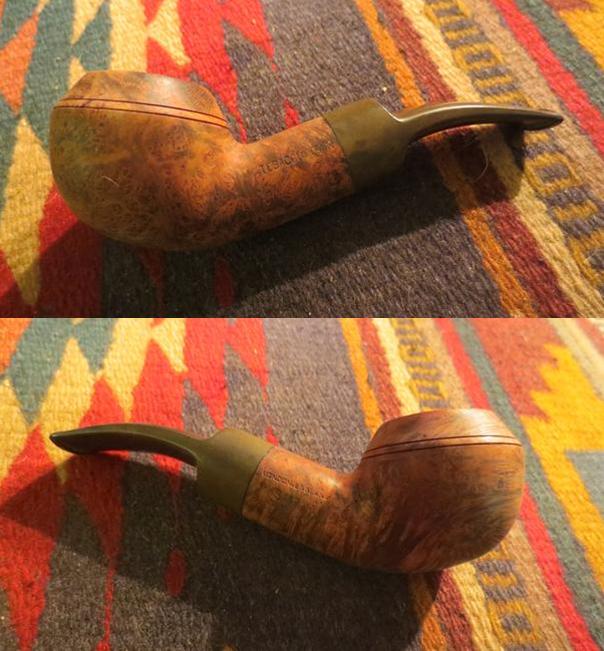
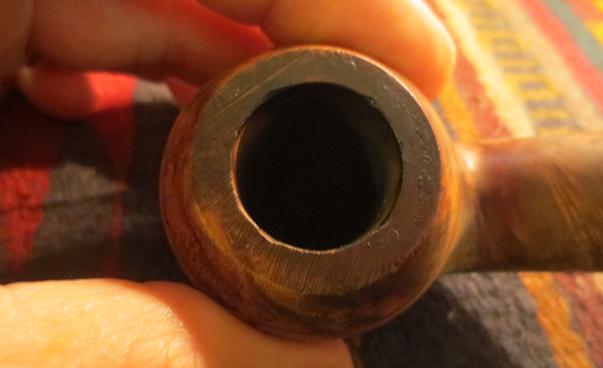
This is one of my favourite pipe shapes – the classic GBD 9438. There is just something about the way the lines flow and the way the pipe sits in the hand that make this an all-time favourite from me. This one is somewhat unique in that though it bears the London England over 9438 stamp on the right side of the shank on the left side it is stamped Tobacco Town. The stem bears no GBD roundel but it is definitely the original stem. The finish is dark and the briar has some amazing grain. Tobacco Town is a chain of tobacco shops in the Northwestern United States and it also is the name of a few shops across the Southwest and the Midwest. Here is a link to the shops in Portland, Oregon:  http://tobaccotown.com/. I think that because of the wide use of the name that identifying the shop that had this line of pipes made for them by GBD will not be possible. The two photos below show the pipe as it was when my brother received it.GBD1The rim had a heavy tar buildup with the cake overflowing the bowl onto the rim top. The twin rings around the cap on the bowl also were filled with dust and debris. The stem was oxidized and there were some deep tooth marks on the top and underside near the button. The topside of the button was worn thinner than the underside and there were some tooth marks on it as well.GBD2My brother Jeff has developed his own cleaning regimen that really delivers a clean pipe to me. By the time I receive it the bowl has been reamed and the finish scrubbed clean with no dirt or debris in the rings. The stem was clean and the damaged areas very visible. The rim top was free of the lava overflow but still was slightly darkened. The next set of four photos show what the pipe looked like when I started working on it.GBD3 GBD4Before I began my work I took a close up photo of the rim top and the bite marks on the top and bottom of the stem near the button. The rim had the majority of the tars removed but under the bright light I could see some residual stubborn bits. The inner edge of the rim also had some damage from what looked like someone’s reaming the bowl with a knife. I have circled the bite marks in the photos of the stem surfaces with a red circle to clearly identify the issues there.GBD5 GBD6I scrubbed the exterior of the bowl and the rim with acetone on cotton pads to try to remove more of the residue on the rim and to remove some of the darker spots of stain on the bowl. I wanted the grain to really stand out.GBD7 GBD8I worked on minimizing the damage to the inner edge of the rim by sanding it with a folded piece of 220 grit sandpaper.GBD9I decided to lightly top the bowl to remove the stubborn residue that remained and to lighten the smoke darkened rim at the back of the bowl.GBD10I noticed that the inside of the shank had been stained with the same brown stain as the exterior of the bowl so I scrubbed it out with cotton swabs, pipe cleaners and alcohol. I was able to remove the stain. As I scrubbed it I notice that against the end of the mortise there were still some tars that kept coming out with the cotton swabs. I used a dental spatula to scrape the end of the mortise to remove these hardened tars. They are visible on the paper towel in the second photo below. I followed that up by swabbing out the mortise with cotton swabs and alcohol. I also scrubbed the airway in the stem. There was some debris trapped in the slot in the button that I worked out with a dental pick.GBD11 GBD12I wiped the exterior of the stem down with alcohol on a cotton pad and worked on the tooth dents to make sure the surface was clean. I used a dental pick to apply the black super glue to the dents on both sides of the stem and sprayed the glue with accelerator. I followed up with applying a second layer of the glue to fill in the air bubbles on the surface that seem to always follow using the accelerator and set the stem aside to dry.GBD13When the glue had cured I used a flat blade needle file to smooth out the patch to the surface of the stem and to recut and reshape the button. I sanded the repair with 220 grit sandpaper and then refiled it with the needle file.GBD14 GBD16I polished the stem with micromesh sanding pads using my normal routine – wet sanding with 1500-2400 grit pads and dry sanding with 3200-12000 grit pads. I rubbed the stem down between each set of three pads with Obsidian Oil. I gave the stem a final coat of oil and set it aside to dry.GBD17 GBD18 GBD19I rubbed the bowl down with Watco Danish Oil with Cherry stain and let it dry for about 30 minutes. After 30 minutes I rubbed the bowl down with a soft flannel cloth.GBD20I buffed the bowl and the stem with Blue Diamond on the buffing wheel and then gave the pipe multiple coats of carnauba wax. I buffed it with a clean buffing pad to raise the shine. I hand buffed it with a microfibre cloth to deepen the shine. This is one of my favourite shaped both in terms of the shape and the hand feel of the bowl. The red colours that are highlighted by the cherry stain show the grain beautifully. Thanks for looking.GBD22 GBD23 GBD24 GBD25 GBD26 GBD27 GBD28


An Interesting Brebbia Silver AS1 Square Shank Brandy


Blog by Steve Laug

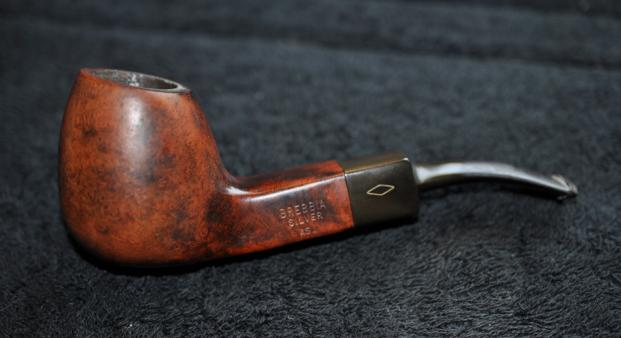
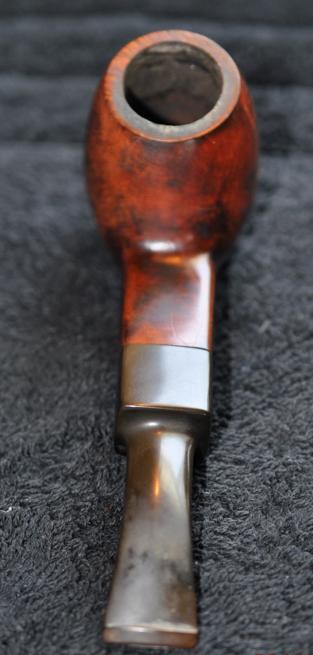
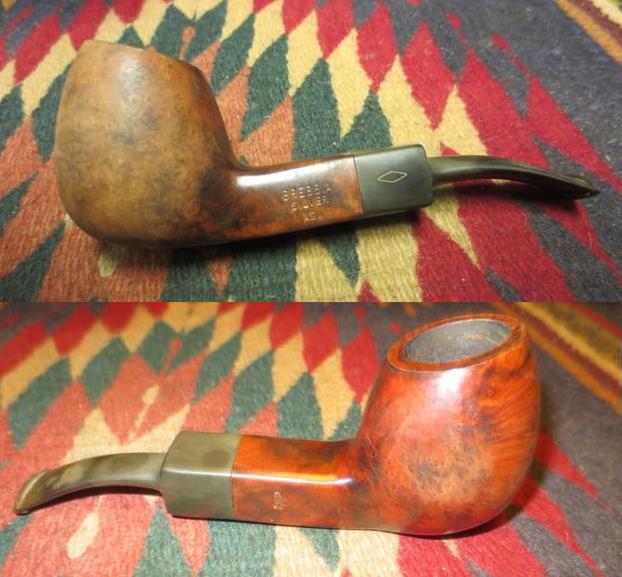
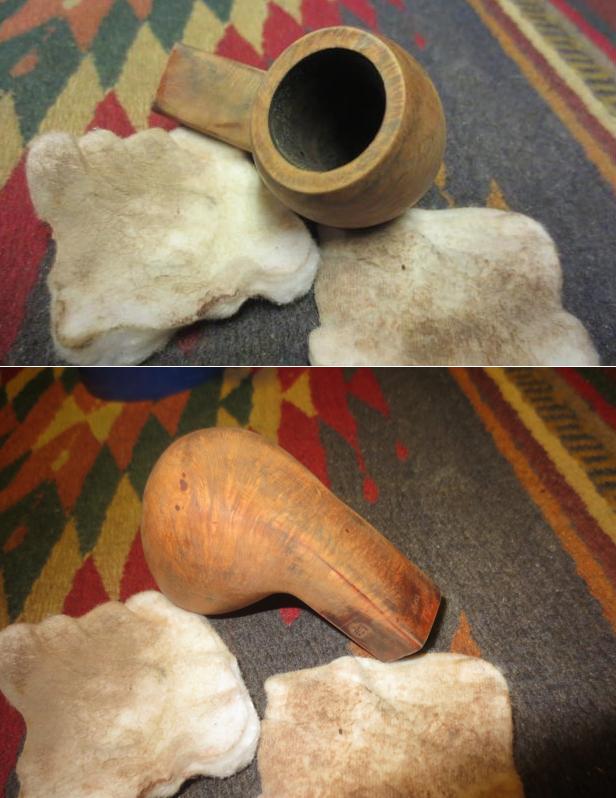
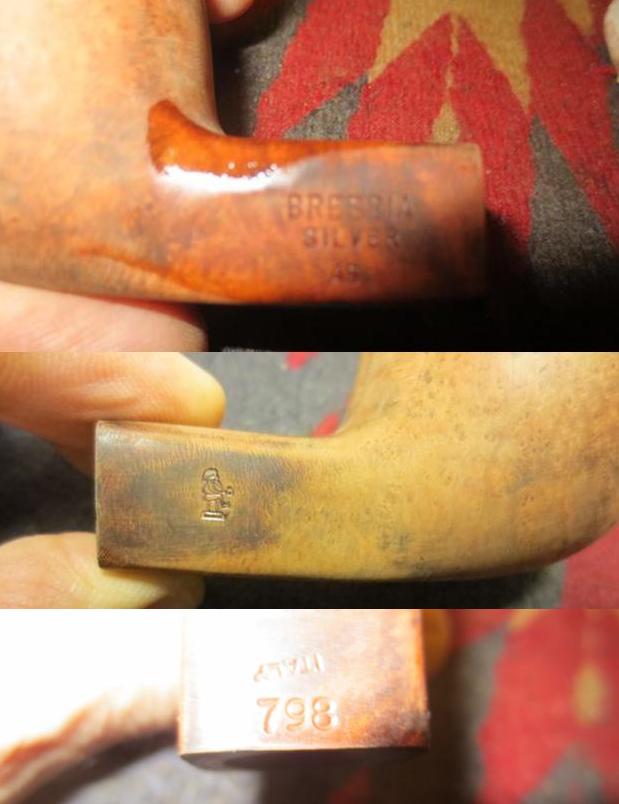
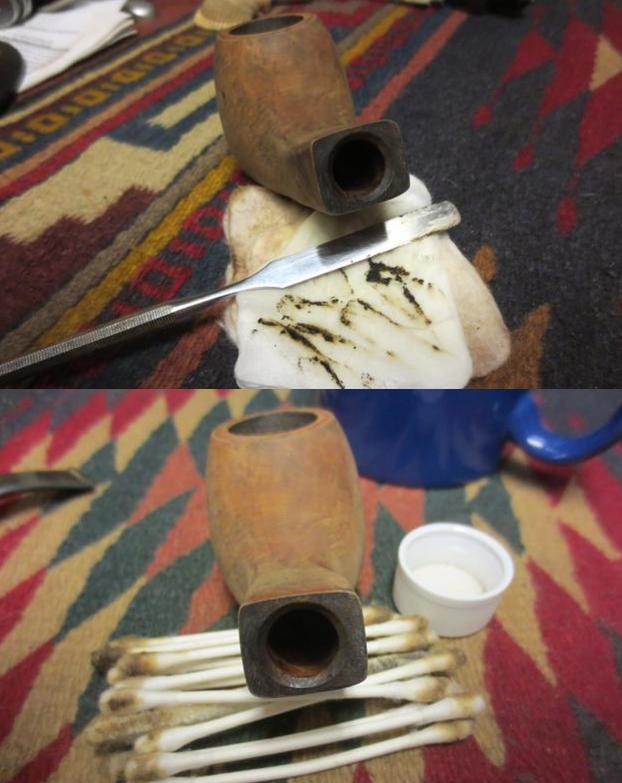
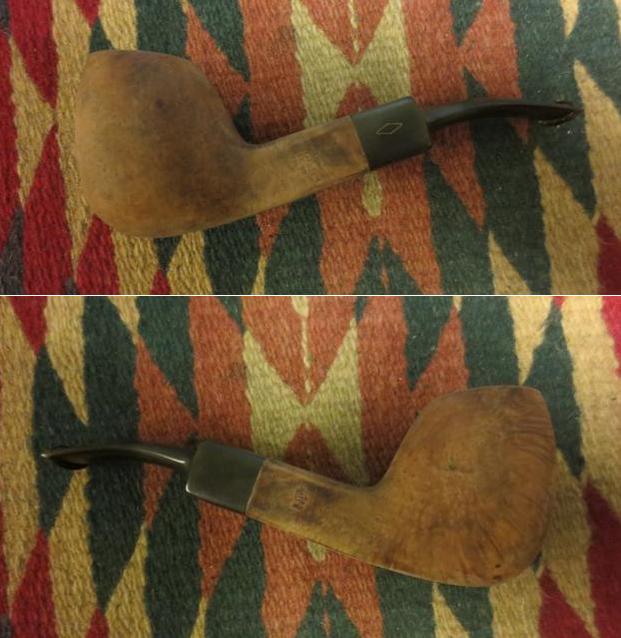
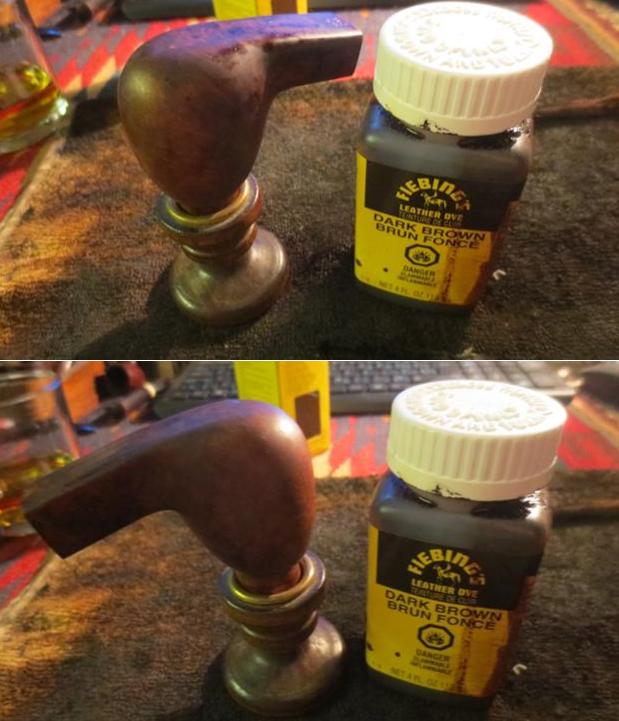
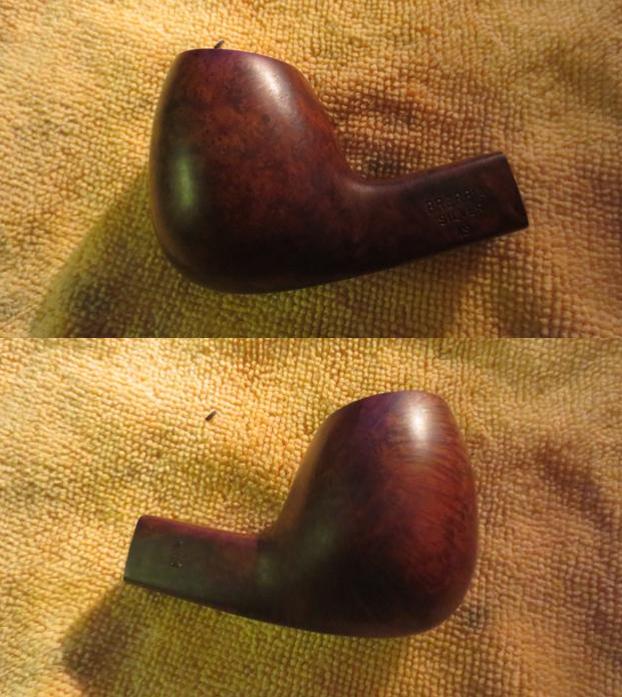
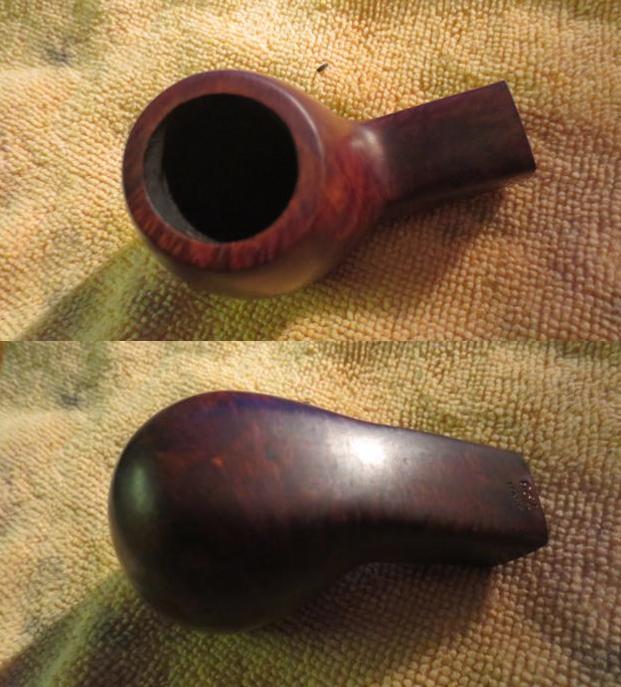
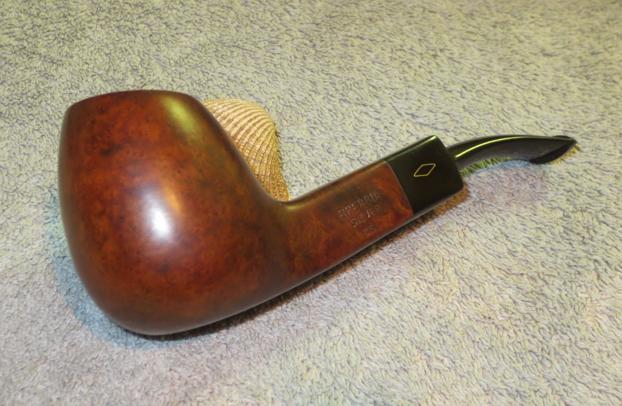
Over the years the only Brebbia pipes I have worked on have been the Iceberg Pipes. They have a beautiful rustication that just speaks to me. The rugged roughness looks like the briar came that way and I have always like the feel in the hand. However, every one of the pipes, Iceberg or otherwise have either belonged to someone else or were too big for my liking. I have never seen a pipe like the one that my brother Jeff found and sent my way. First it is a smooth briar not rusticated and second it is a brandy shape with a square shank and square saddle stem. I have not seen one like it before and I have looked around a fair bit and have not found another. In the photos of the pipe that my brother took before he began the cleanup it looked to be in good condition. The finish was a little mottled but it still looked to be decent. The bowl appeared to have a light cake so it potentially would be an easy clean up.Brebbia1 Brebbia2My brother scrubbed the bowl with Murphy’s Oil Soap and removed most of the finish but the stubborn spots on the shank. The stem was lightly oxidized and had some light tooth chatter on the top and bottom near the button. The next set of four photos show the pipe when it arrived here in Canada. Once again my brother did a great job cleaning this one up. I can’t believe how much time it saves to be able to begin with finishing rather than cleaning. Thanks Jeff.Brebbia3 Brebbia4I took a close up photo of the rim to show how clean it was and how the bowl was in round and the edges were not damaged.Brebbia5The stem was a bit of an oddity to me. I have not seen a stem with the kind of built in tube that this Brebbia sported. There is an end cap on the tenon with the tube protruding out. When the stem is in the shank the tube sits in the airway between the mortise and the bowl.Brebbia6To remove the stubborn finish on the shank I scrubbed the bowl and shank with acetone on cotton pads. It took a bit of elbow grease but the shank finally let loose of the finish.Brebbia7 Brebbia8I took some close up photos of the stamping on the shank as they were very clear. The left side of the shank reads Brebbia over Silver over AS_. I am assuming that the AS_ was probably AS1. The right side of the shank has a gnome stamped on it. The gnome was the logo Brebbia used to put on its stems from 1953 to 1956. On the underside it is stamped Italy 798.Brebbia9The stem was very tight in the shank so I examined it with a light and saw that there was a thick hard coat of tars on the walls of the mortise. I scraped the mortise with a dental spatula and removed the heavy coat of tars and then scrubbed it with pipe cleaners, cotton swabs and alcohol.Brebbia10I put the stem back in place and it fit snugly but the tightness was gone. I took some photos of the pipe at this point in the restoration.Brebbia11 Brebbia12I removed the stem again and worked on it with micrmesh sanding pads – wet sanding it with 1500-2400 grit pads and dry sanding with 3200-12000 grit pads. Between each set of three pads I rubbed the stem down with Obsidian Oil and also gave it a final rubdown after the 12000 grit pad. I set the stem aside to dry while I worked on the bowl.Brebbia13 Brebbia14 Brebbia15I stained the bowl with a dark brown aniline stain thinned by 50% with isopropyl alcohol. I applied it to the bowl with a folded pipe cleaner and flamed it with a lighter. I repeated the process until the coverage was even.Brebbia16I hand buffed the bowl with a microfibre cloth to polish the stain and even out the look of the finish.Brebbia17 Brebbia18I put the stem back on the bowl and buffed the bowl and stem with Blue Diamond on the buffing wheel. I gave the entire pipe several coats of carnauba wax and buffed it with a clean buffing pad to raise the shine. I finished by hand buffing the pipe with a microfibre cloth to deepen the shine. The finished pipe is shown in the photos below. Thanks for looking.Brebbia19 Brebbia20 Brebbia21 Brebbia22 Brebbia23 Brebbia24 Brebbia25

Restemming and Restoring a Tiny KBB Rocky Briar 1540B Salesman’s Pipe


Blog by Steve Laug

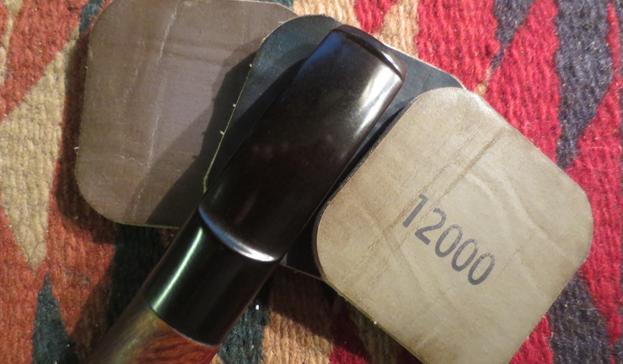
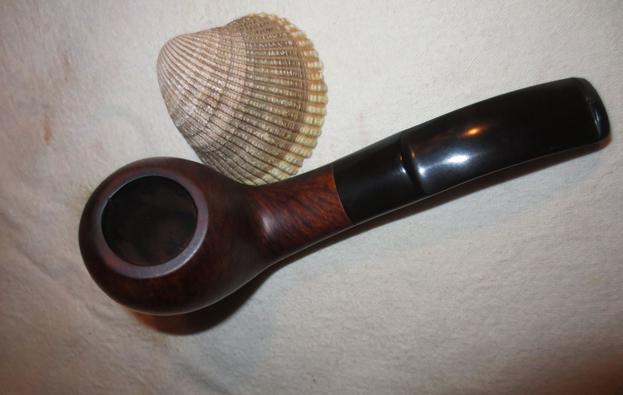
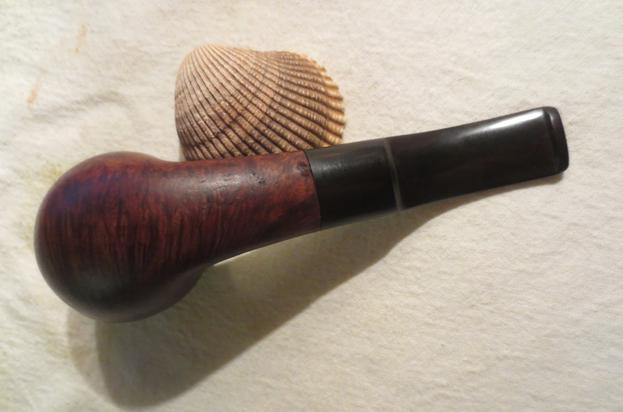
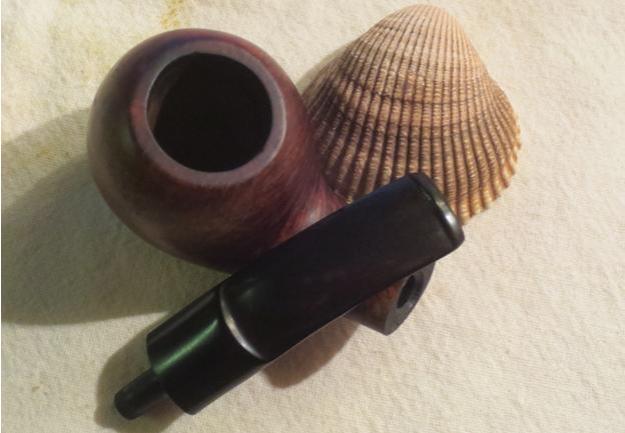
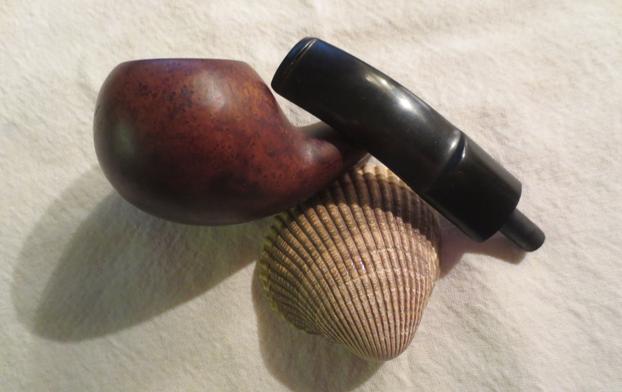
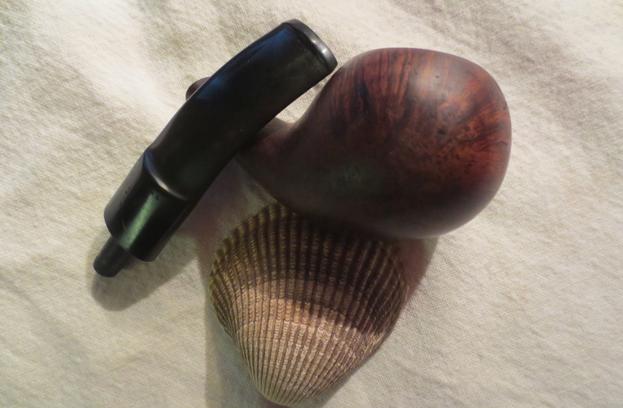
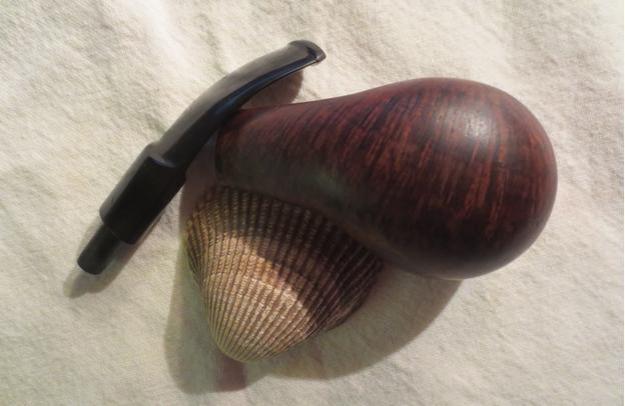
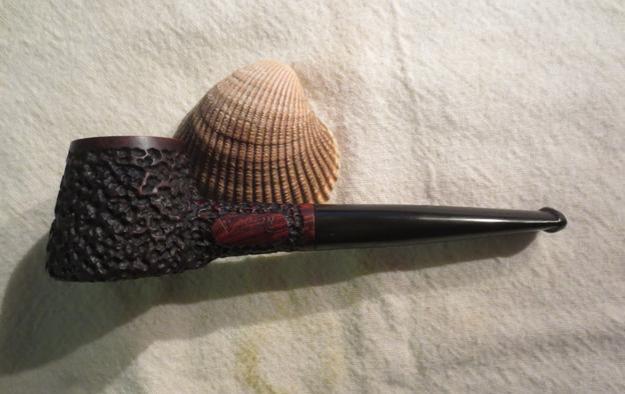
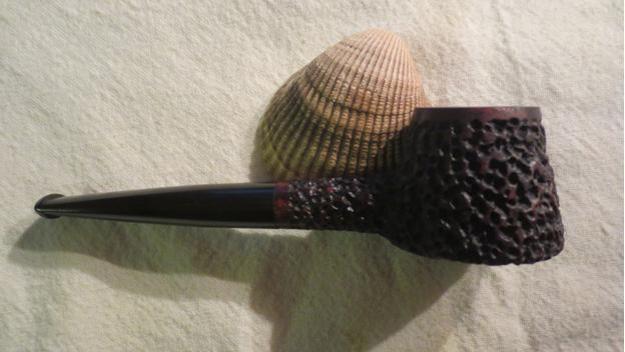
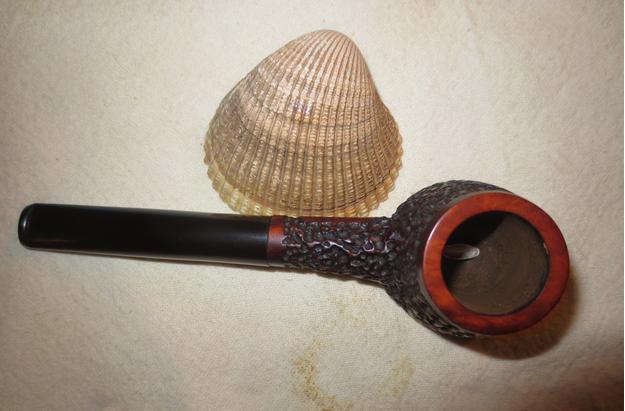
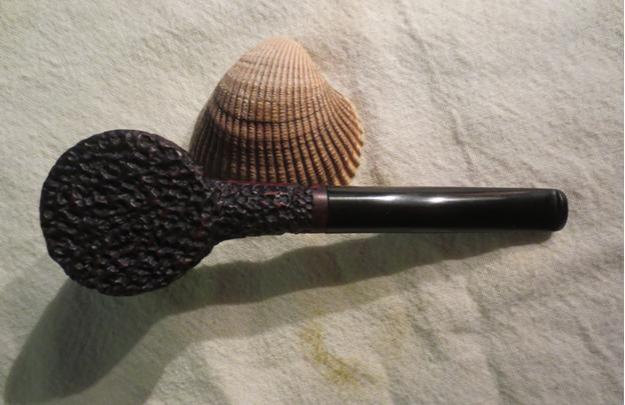
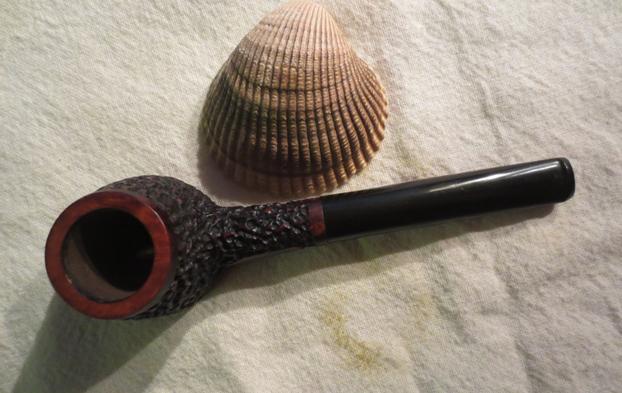
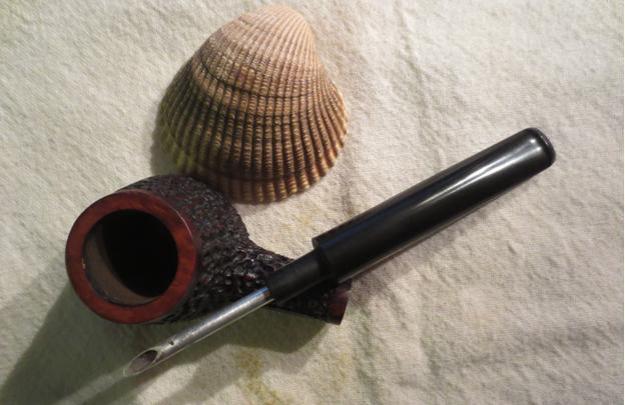
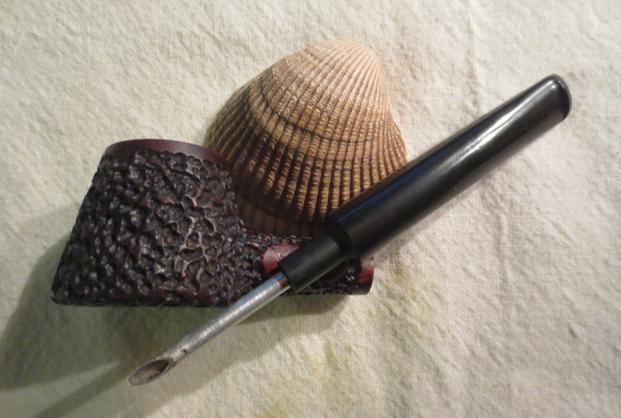
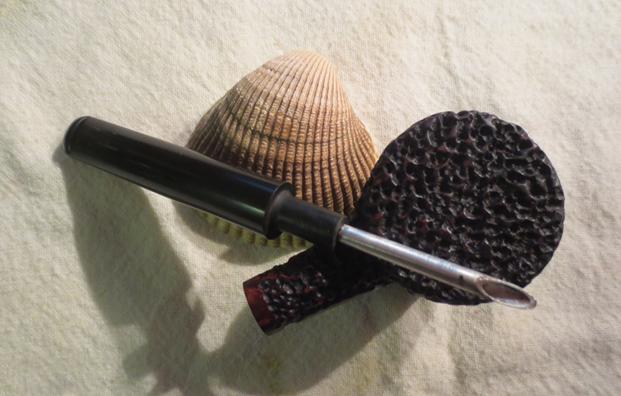
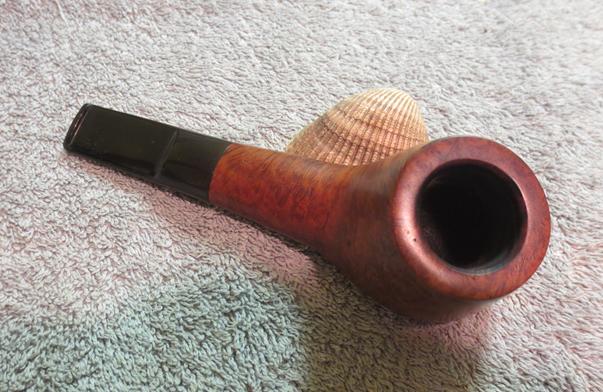
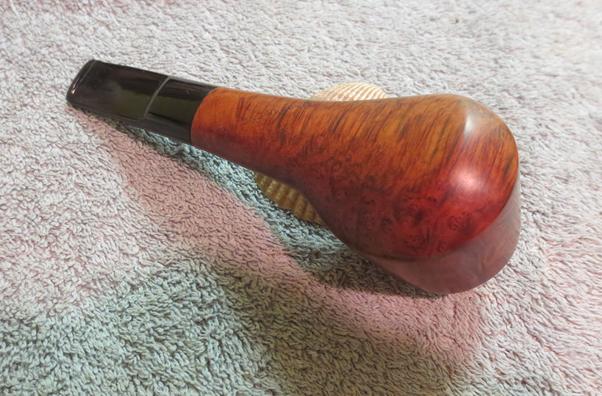
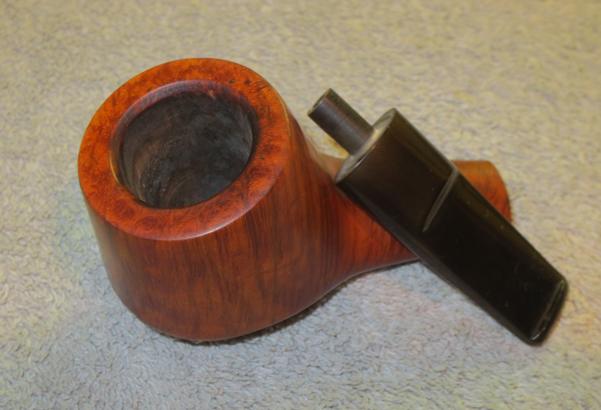
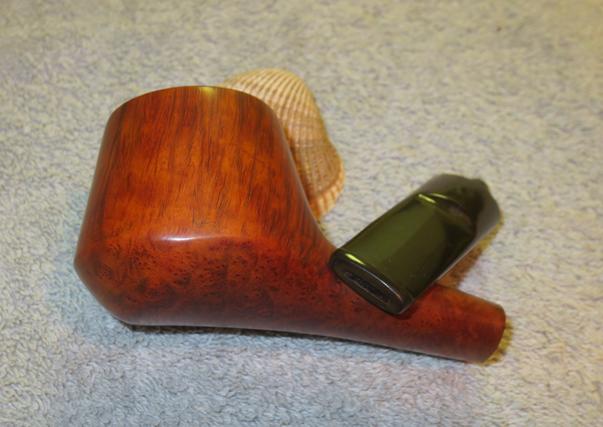
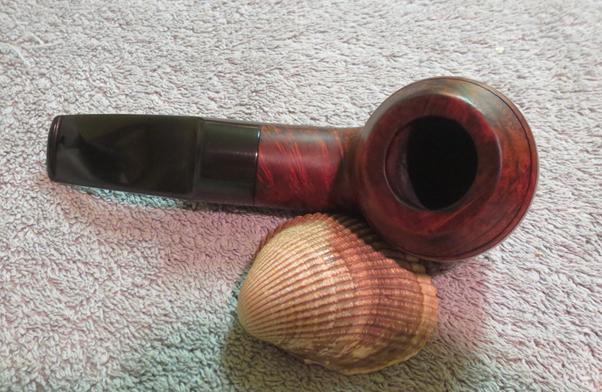
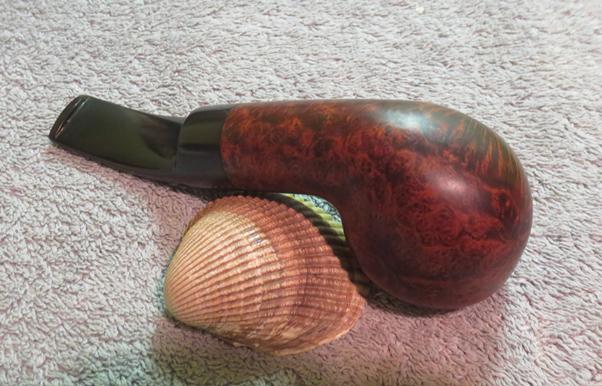
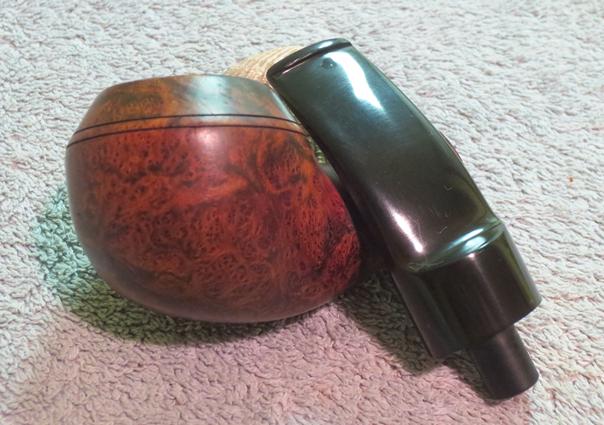
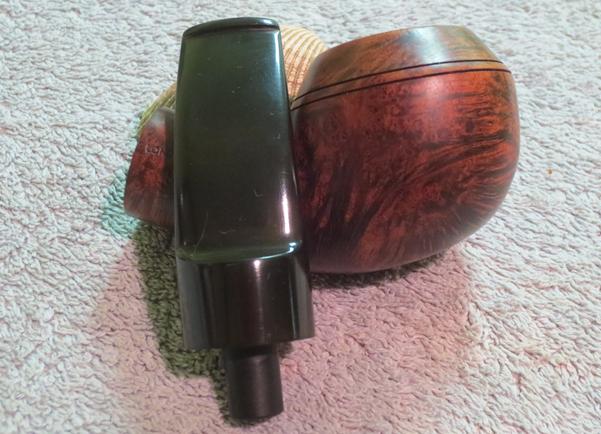
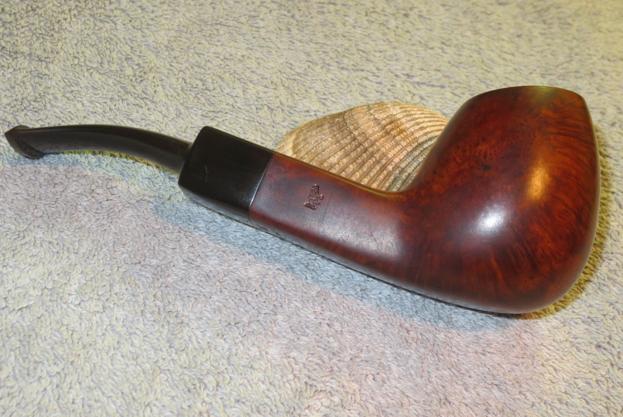
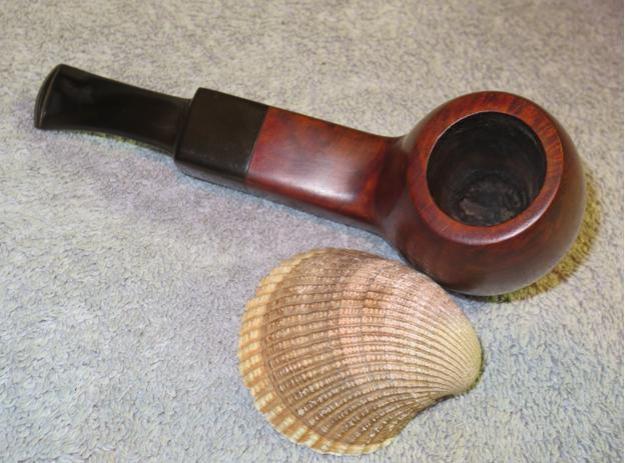
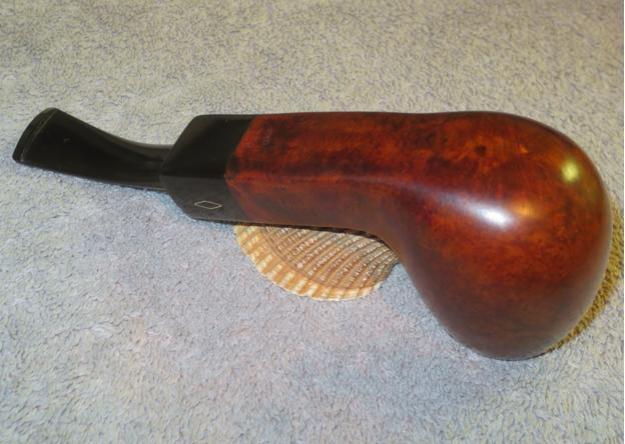
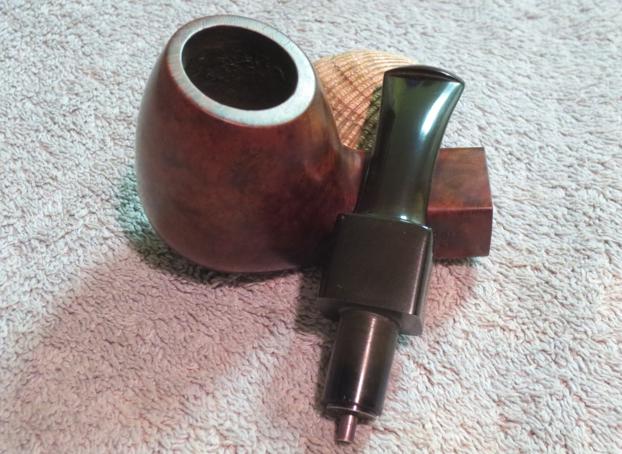
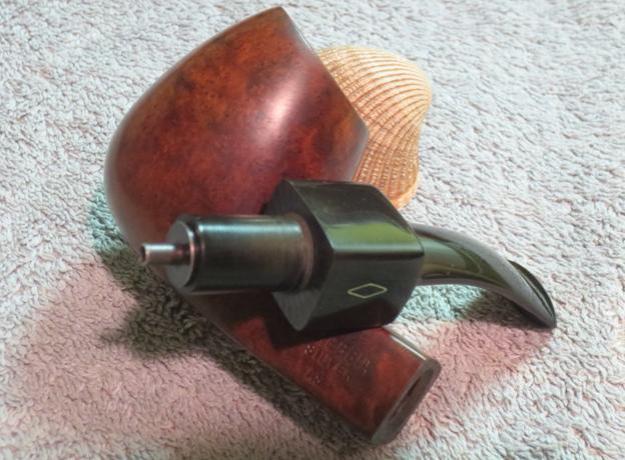
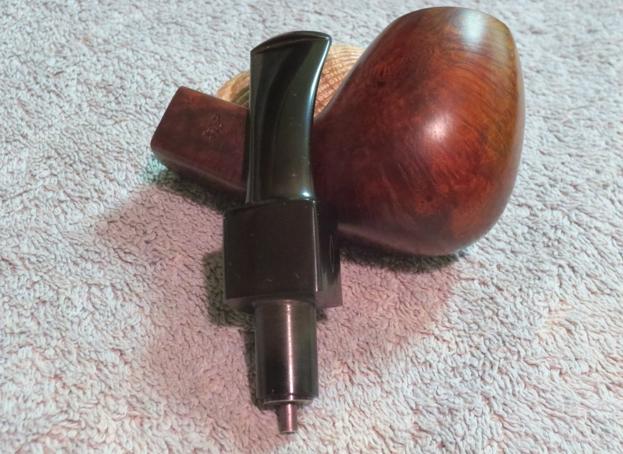
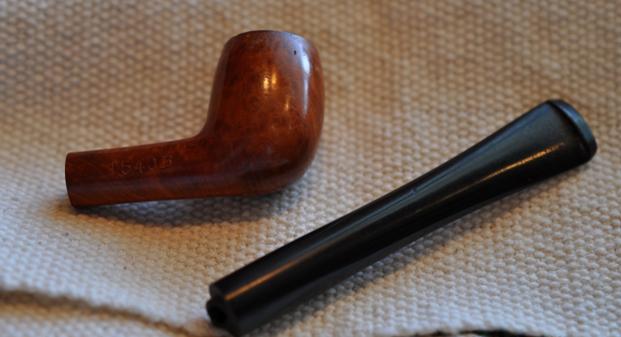
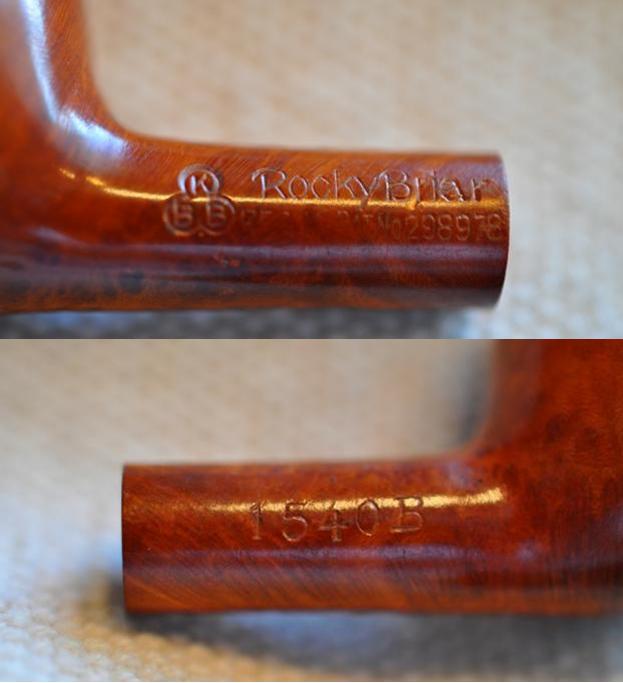
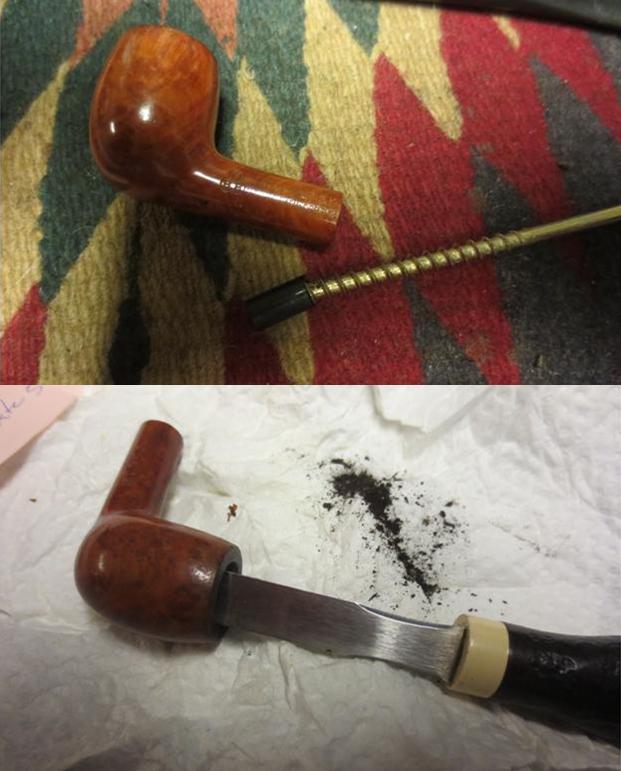
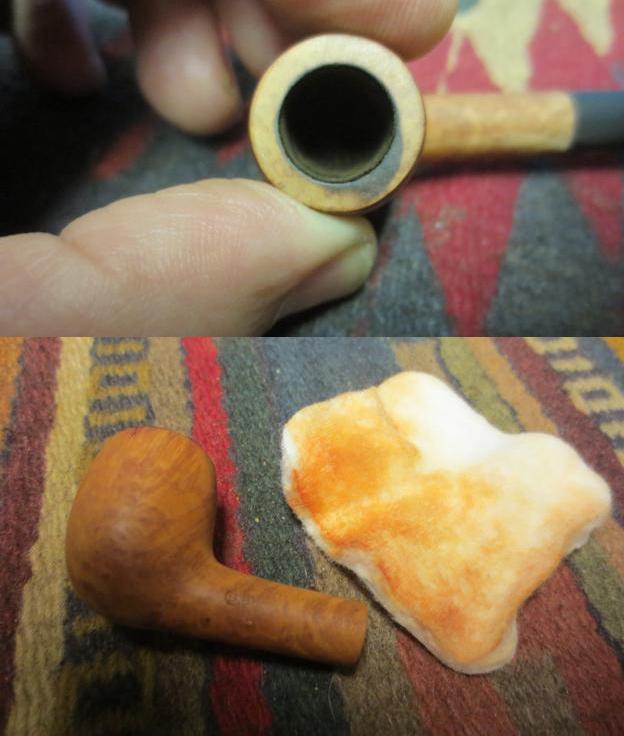
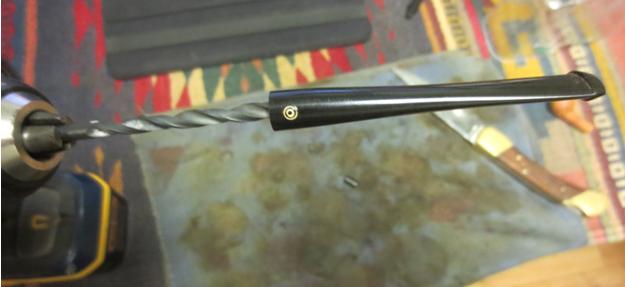
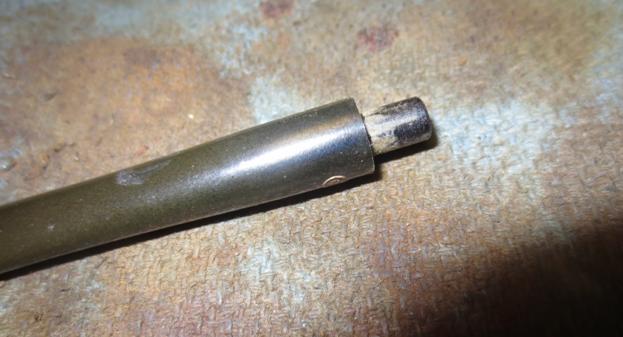
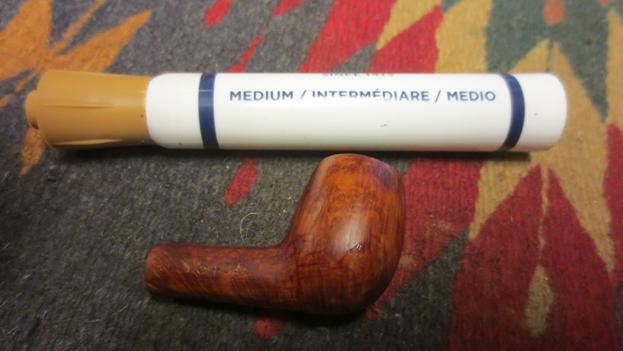
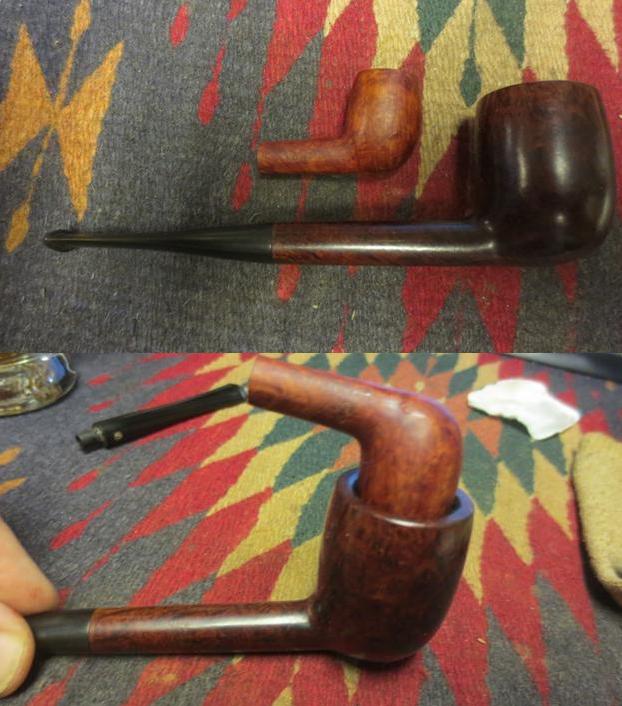
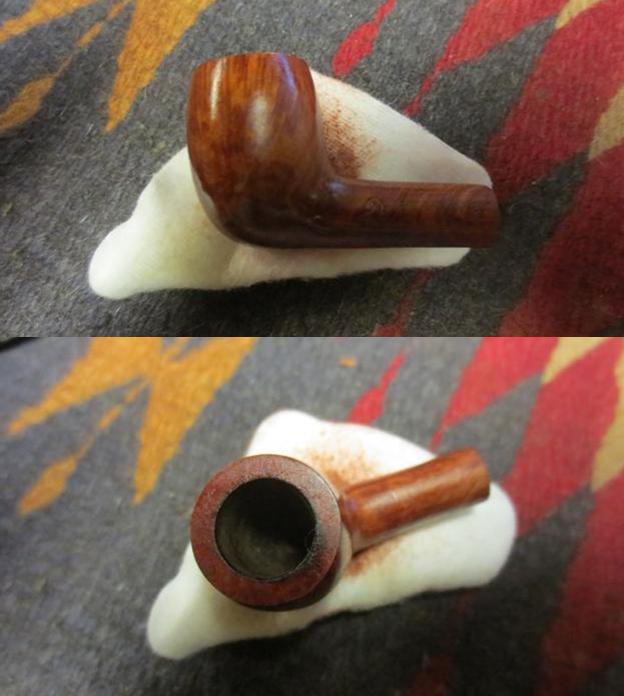
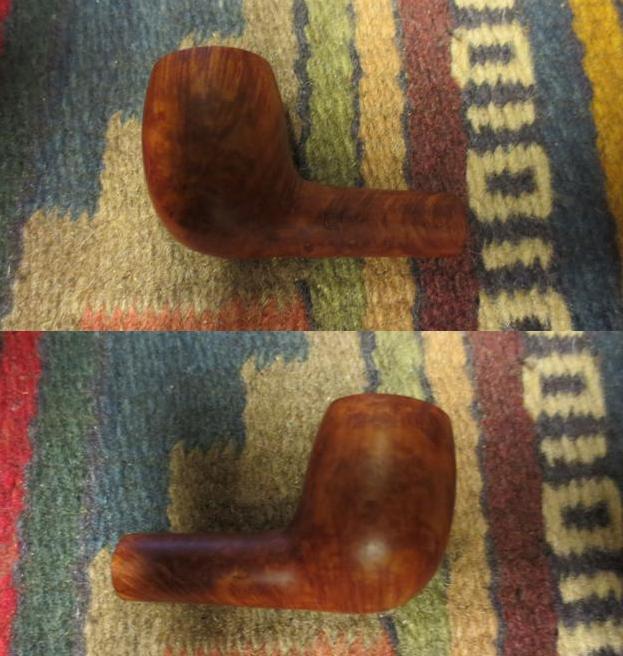
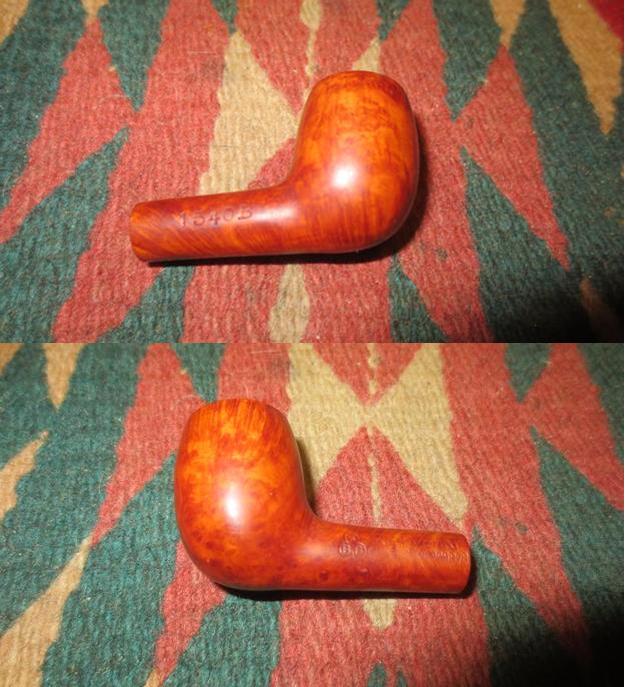
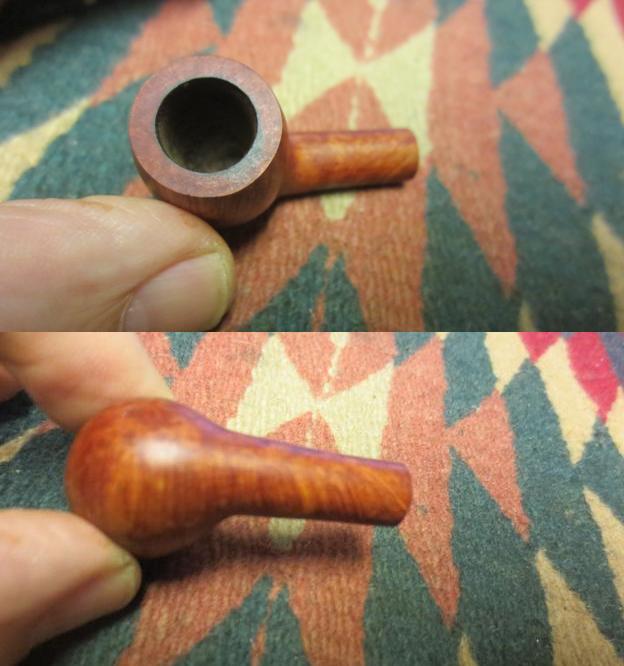
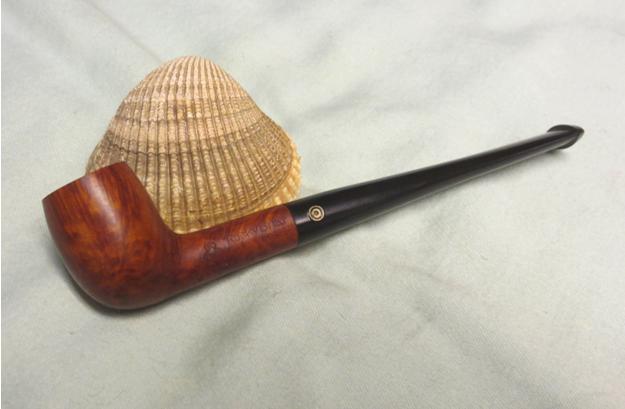
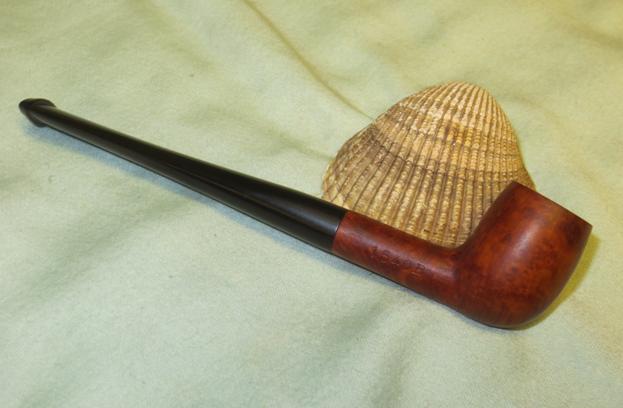
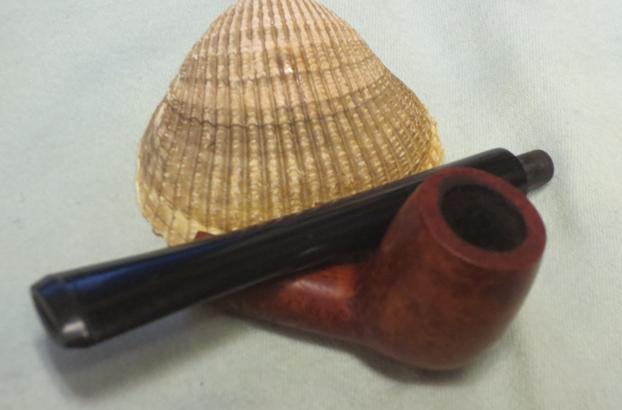
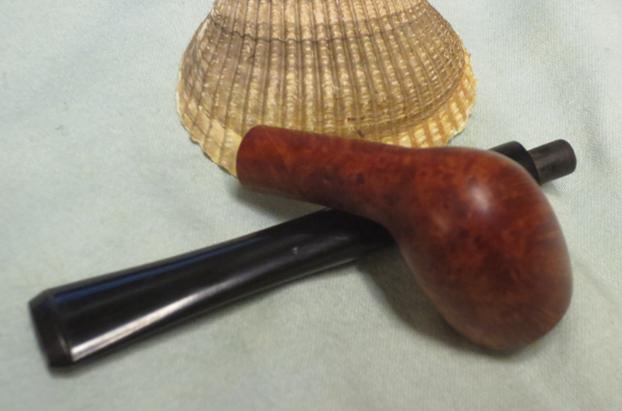
In the box of pipes my brother sent me was a beat up leather pipe and tobacco pouch. I pushed it aside and cleaned up the rest of the pipes in that particular part of the box. The other evening I was doing a bit of sorting and I took out the pouch and looked it over. It had a large tear on the bottom edge. The zipper was worn and hard to work and the leather was brittle. I almost tossed it in the bin but felt something inside of the pouch. I looked at the inside of the underside of the pouch and there was nothing there. I open the broken zipper on the top of the pipe and inside was a very small – tiny if you will – pipe. The tenon was broken and the stem and bowl sat in the pouch.  I took it out of the pouch to have a look. KBB1It was a KBB that was stamped Rocky Briar. Why it bore that stamp I have no idea as it is a smooth briar. There is no rustication or and carving on the bowl at all – just very smooth. Underneath the KBB in a cloverleaf stamp and the Rocky Briar on the left side of the shank it read Reg. Pat. No. 298978. On the right side of the shank it reads 1540B which it was the shape number. All of that seems very normal but did I say that this pipe is tiny? It is only 4 ¾ inches long, 1 1/8 inches tall. The diameter of the bowl is 5/8 inches and the chamber is 7/16 inches in diameter. All is proportional and well laid out. It makes me wonder if it was not a salesman’s pipe.KBB2The tenon was snapped in the shank but no damage had been done to the shank itself. Really the pipe looked quite good other than the broken tenon.KBB3Obviously the pipe had been smoked and quite often. There was a fairly thick soft cake in the bowl and the rim top had a coating of tars and oils. The back left side of the rim had a burn mark on it that was quite large.KBB4I took a photo of the pipe before I began to work on it. The finish was very shiny – like it had been given a coat of varnish. The rim was obviously rough as you can see from the photos but the rest of the pipe looked good. The stem had tooth chatter on the top and the bottom of the stem near the button. The logo on the shank was a clearly stamped circle within a circle. The broken tenon would need to be pulled and if possible the stem given a new tenon.KBB5I used a drywall screw to pull the broken tenon. I screwed it into the broken tenon in the shank and wiggled it free. Before I pulled it out of the shank I took the following photos.KBB5a KBB5bI pulled the piece of tenon out of the shank and reamed the bowl with the only reamer that would fit in the tiny opening – a Savinelli Pipe Knife. I scraped back the cake to bare briar.KBB6The burned area on the top of the bowl made it necessary to top the bowl on the topping board using 220 grit sandpaper.KBB7I scrubbed off the briar with acetone on a cotton pad. I wanted to clean off the sanded rim and the shiny coat on the bowl so that it would be easier to stain the bowl and rim to match.KBB8I used the Dremel and sanding drum to flatten the face on the stem and then set up my cordless drill to drill out the end of the stem. I hand twisted the stem onto the drill bit. I started with a bit slightly larger than the airway in the stem and worked my way up until I had opened up the airway large enough to hold the tenon in place.KBB9I decided rather than trying to turn a small tenon that would fit in the shank I would clean up and use the existing broken tenon. Fortunately on these old pipes the tenon was quite long. I glued the broken tenon piece into the newly drilled opening in the stem with black super glue. I filled in around the tenon piece with the super glue using a dental pick and a piece of paper clip. I smoothed out the glue and aligned the tenon in the shank and set the stem aside to let the glue cure. Once it hardened, I sanded the new tenon with 220 grit sandpaper to remove the excess glue and make the fit in the shank smoother.KBB10I put the stem in the shank and sanded the shank and stem to make the transition smooth. Once I had the stem fit adjusted I sanded the shank and stem with a 1500 grit micromesh sanding pad to remove the scratches.KBB12 KBB13I wet sanded the stem with 1500-2400 grit micromesh sanding pads. I rubbed it down with Obsidian Oil. I dry sanded it with 3200-4000 grit pads and gave it a second coat of oil. I finished sanding it with 6000-12000 grit pads and gave it a final coat of Obsidian Oil. I set the stem aside to dry.KBB15 KBB16 KBB17I gave the bowl a first coat of Medium Brown Stain with a staining pen to serve as an undercoat. KBB18I realize that for many of us who read about pipe restoration the measurements of this pipe really do not give a clear picture of the true size of the pipe. To give more of a sense of perspective to the diminutive size of the pipe I decided to take two photos of the tiny bowl with a regular sized Comoy’s long shank billiard. The first photo shows the pipe above the larger one. The second photo shows the bowl fitting inside of the regular sized bowl. Hopefully that helps give you a clear idea of the tiny nature of the pipe.KBB19I gave the bowl a second coat of stain using a Danish Oil Cherry stain. I wanted a bit of contrast to the brown and also to enhance the reds in the briar.KBB20 KBB21I rubbed the bowl down with a soft cotton cloth to spread the stain coat out and rub it into the briar. The next photos show the look of the pipe after a quick hand buff.KBB22I buffed the bowl with Blue Diamond on the buffing wheel to polish it. I gave the bowl several coats of carnauba wax and buffed it with a clean buffing pad. I hand buffed it with a microfibre cloth.KBB23KBB24I gave the bowl and stem another coat of carnauba wax and lightly buffed it with a clean buffing pad. I hand buffed the entire pipe with a microfibre cloth. The finished pipe is shown in the photos below. It came out really nicely. Looking at the pipe is hard to tell from the photos the tininess of the pipe as all is proportional. The seashell in the photo is the same one that I use in all of the final photos and with this pipe it seems quite large. Thanks for looking.KBB26 KBB27 KBB28 KBB29 KBB30 KBB31 KBB32 KBB33
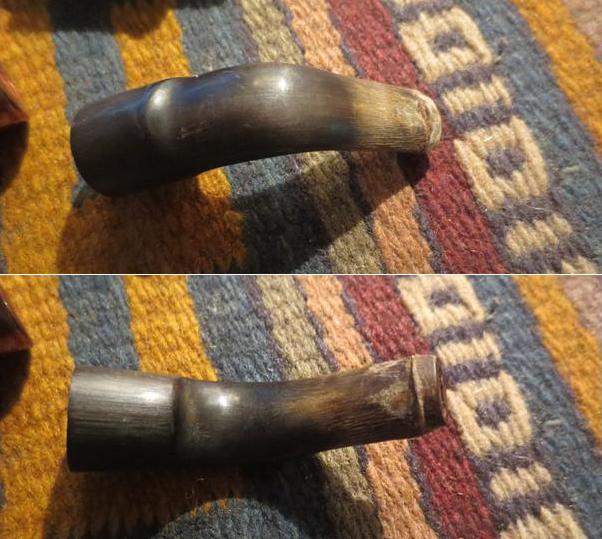
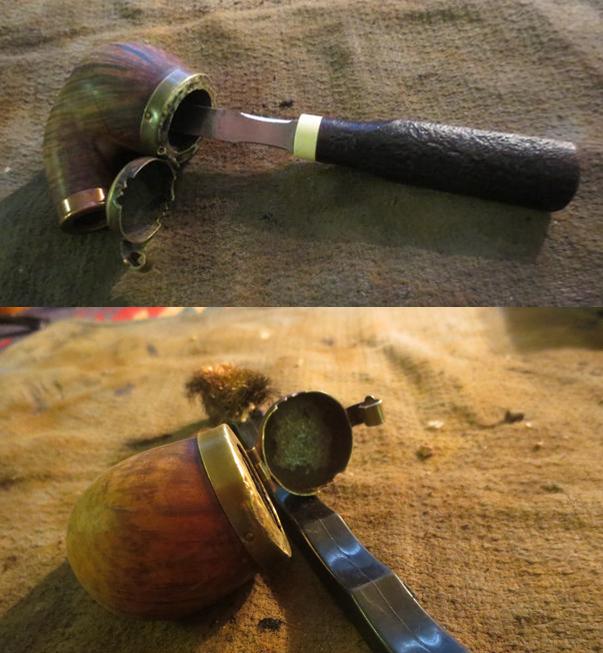
A WDC Bakelite/Briar Pipe like none I have seen before


Blog by Steve Laug

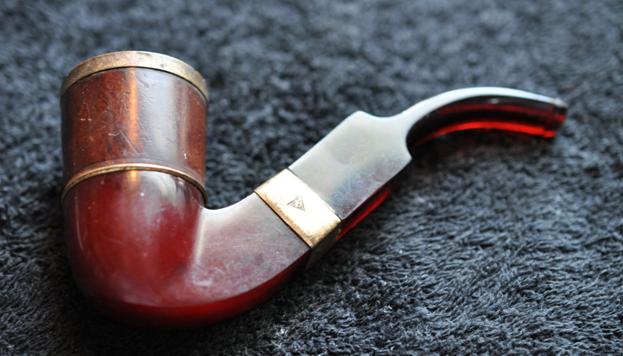
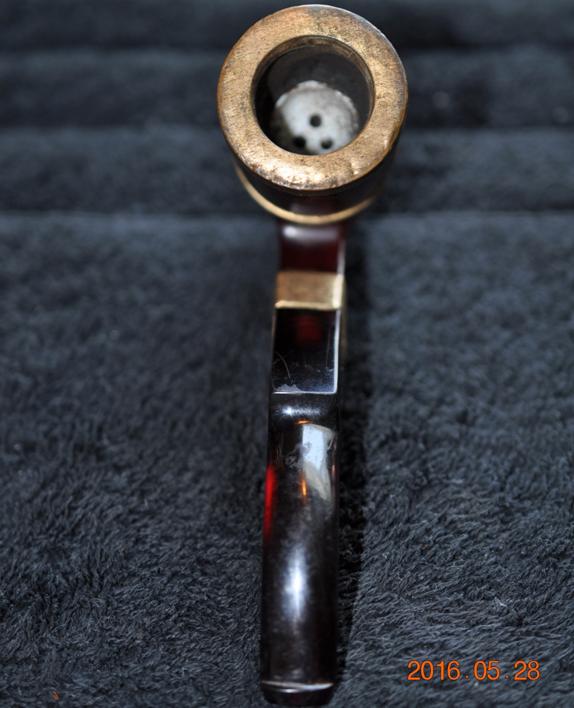
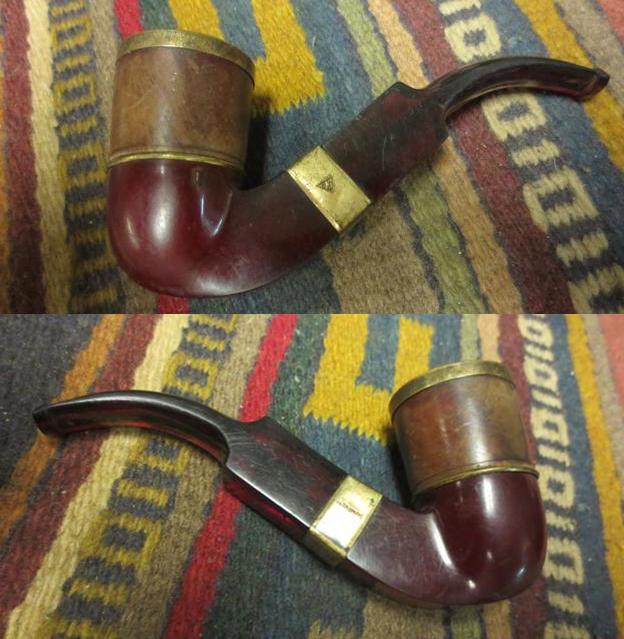
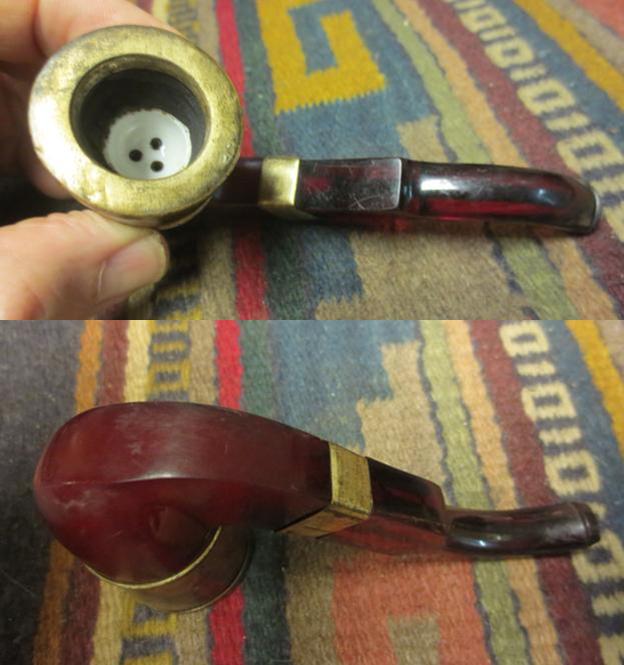
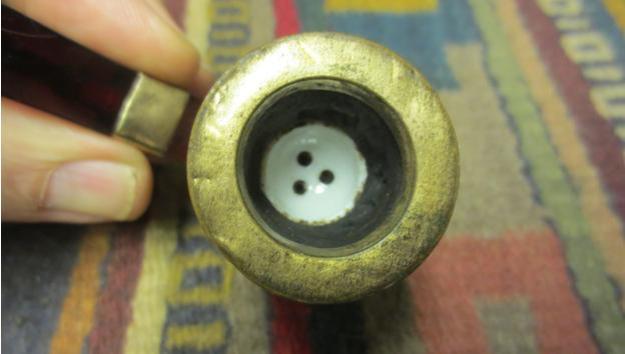
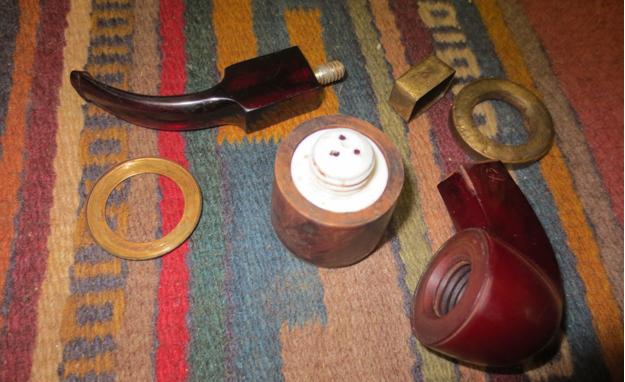
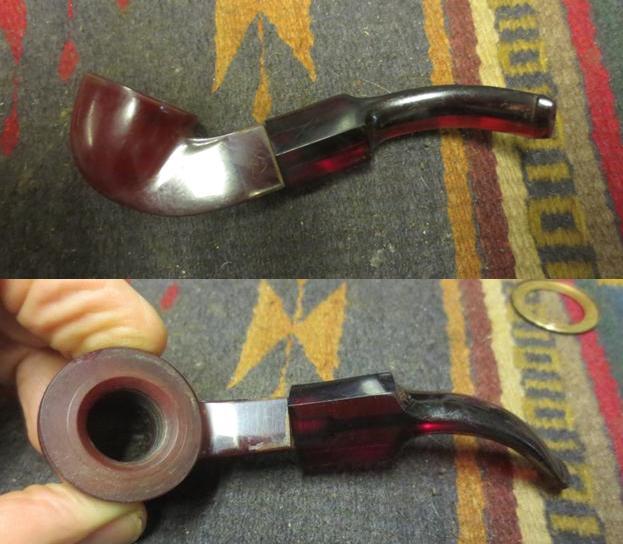
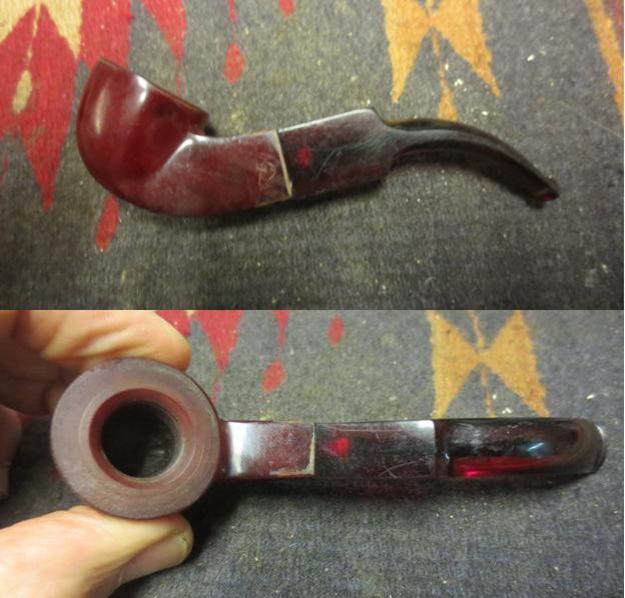
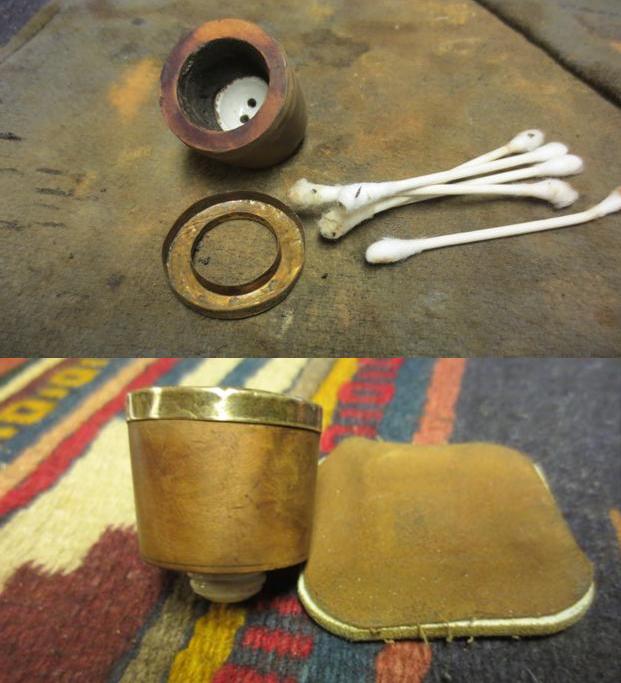
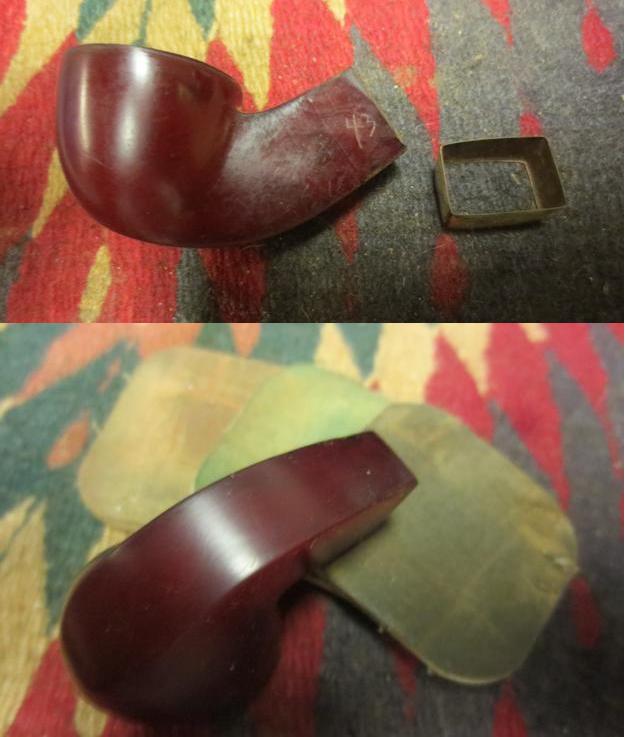
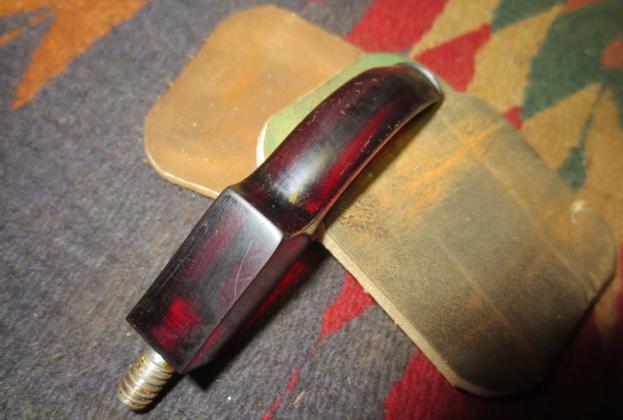
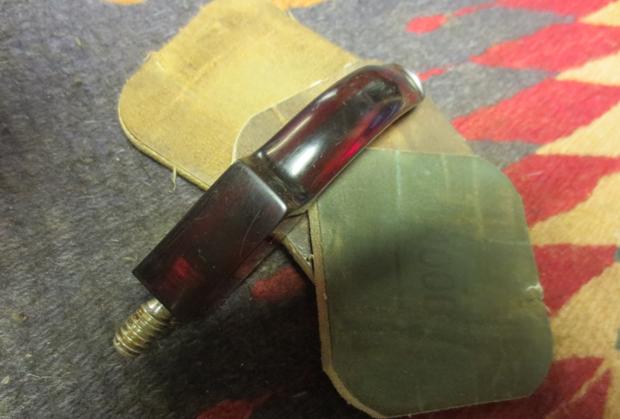
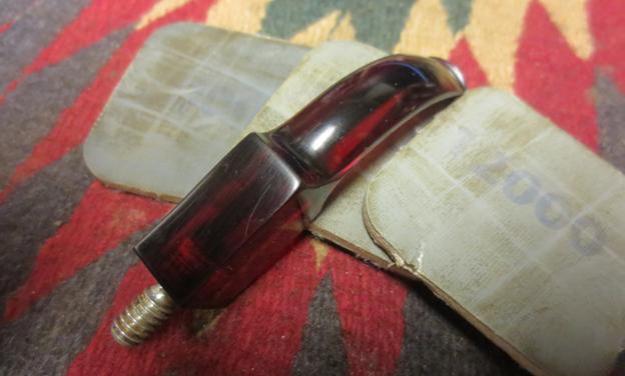
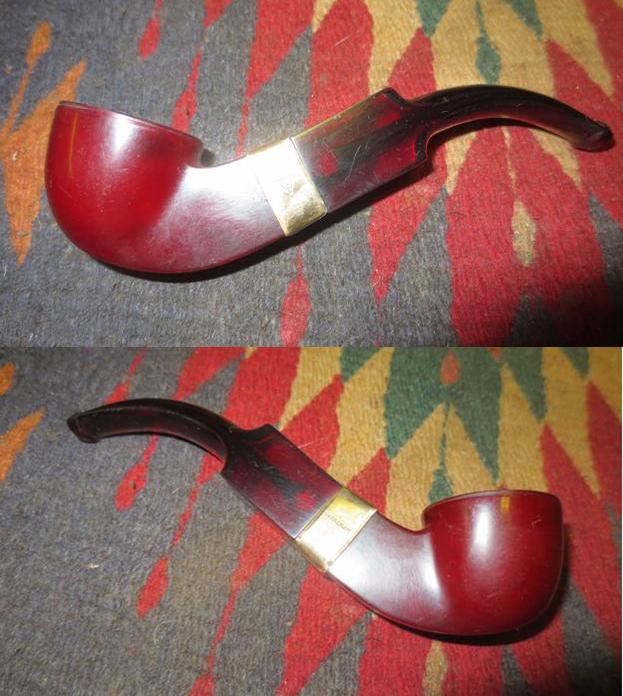
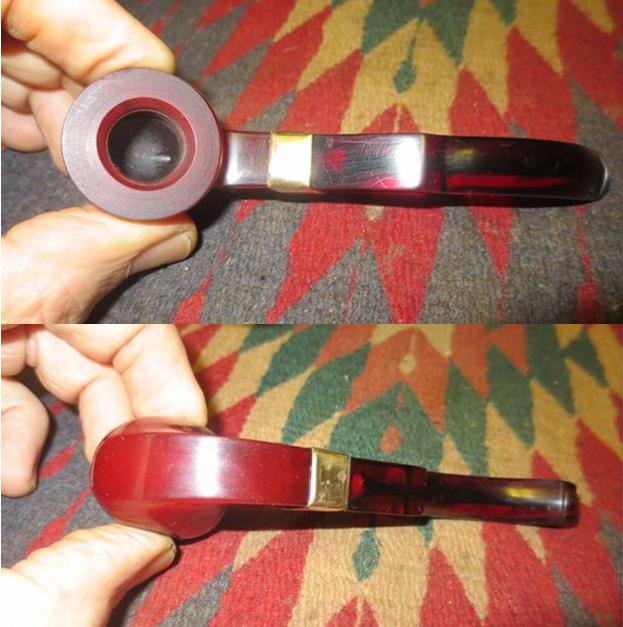
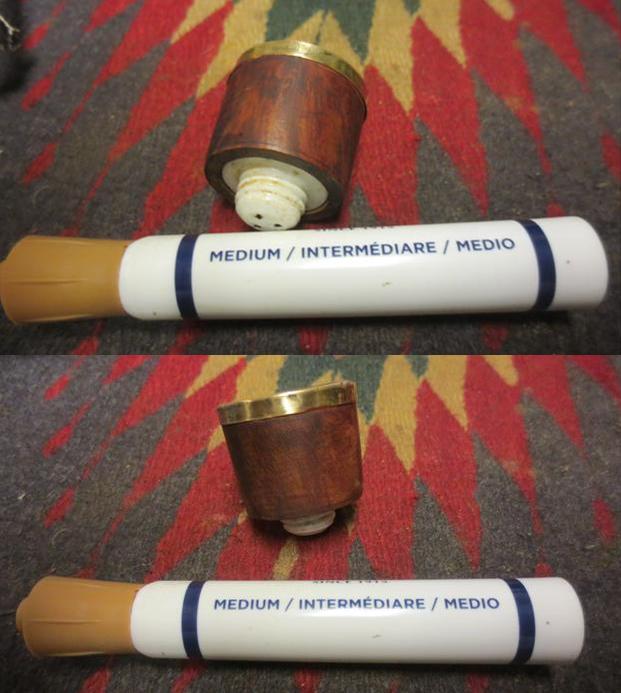
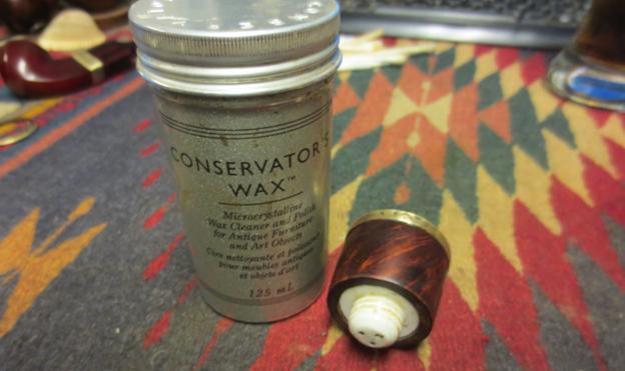
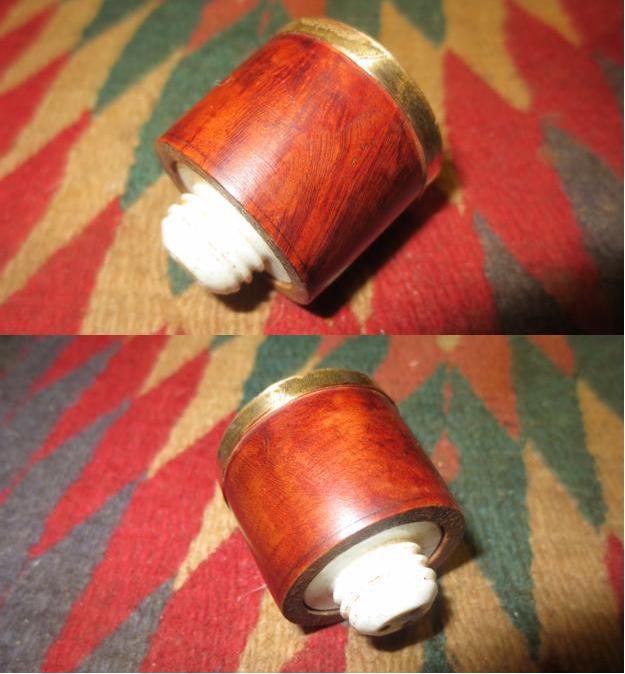
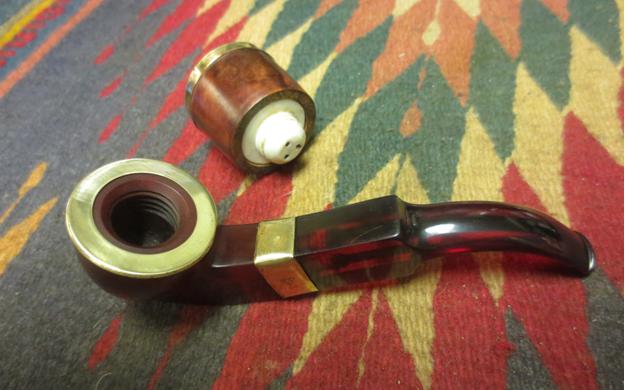
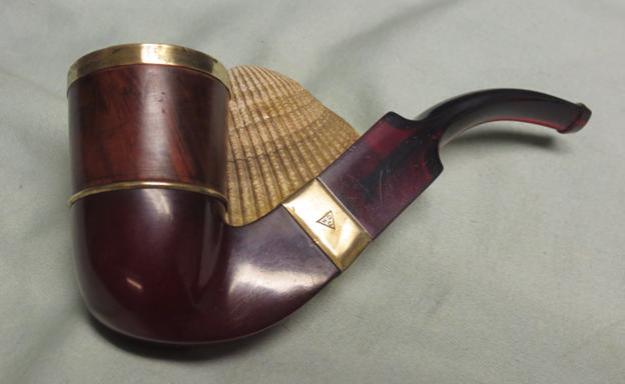
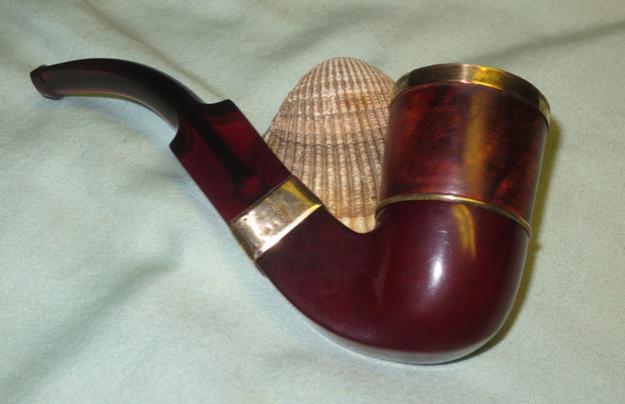
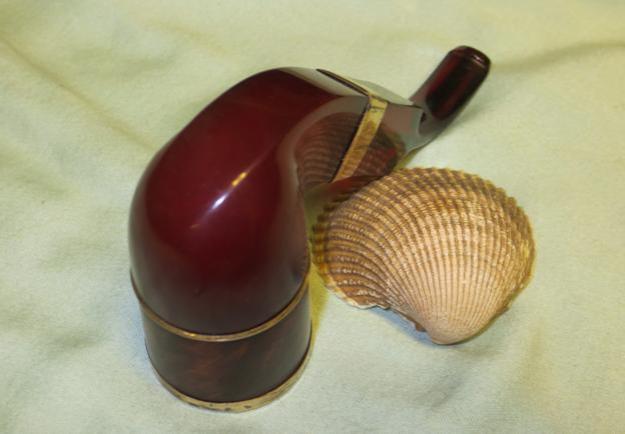
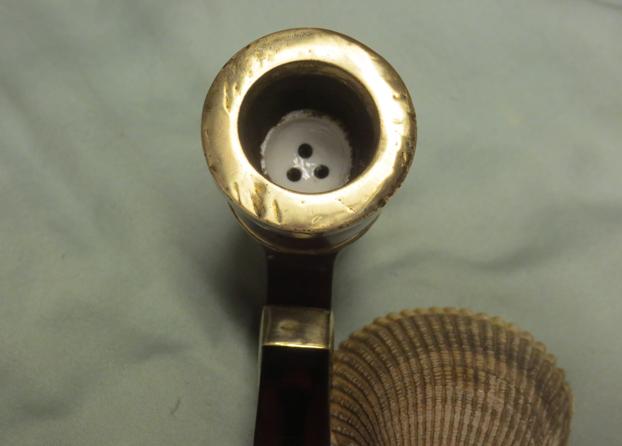
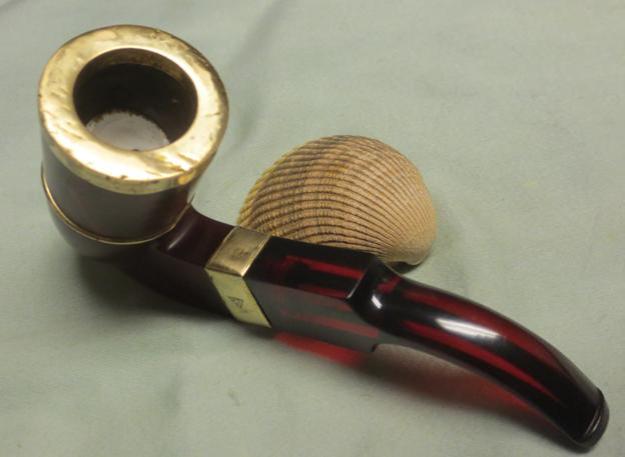
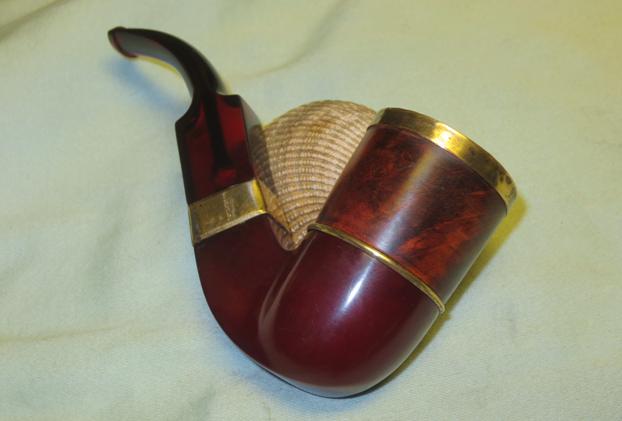
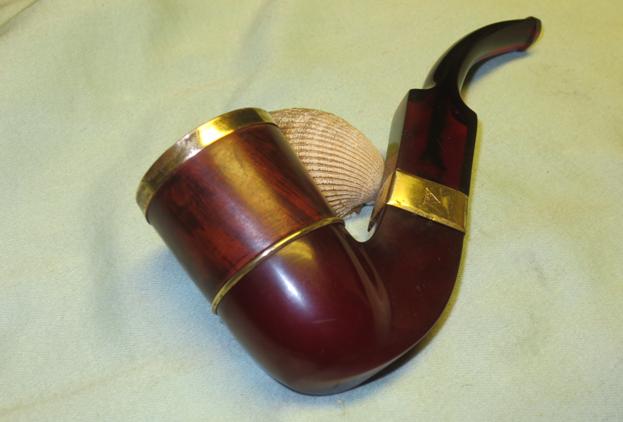
When my brother sent me this pipe I have to say I was surprised and enamored with it. I have cleaned up a lot of WDC pipes over the years and have come to really like them. There is something about them that always gets my attention. The workmanship is generally well done. The materials used are good quality. The briar always tends to have some flaws and is never perfect. But there is something about the brand that I like. Well this pipe is an oddity to me. It is a shape that is similar to some of the CPF pipes I have cleaned up and the combination of briar, brass and Bakelite it really nicely done. The first difference is that this one has a flat rectangular shank and saddle stem. The Bakelite base is rounded and flows into the flattened shank and stem. The stem is also Bakelite or Redmanol as the case may be. It is a rich reddish colour that is translucent and the light really plays with. The second difference is that in a lot of this style pipe the threaded connector and bottom of the bowl is metal. On this one it is white porcelain. When the bowl is removed the threaded connector is also porcelain – a single porcelain unit from the cupped bottom of the bowl to the connector. Those two differences intrigued me.WDC1There is a brass spacer between the base and the briar bowl and at some time in its life the spacer had been reversed and the sharper edges scarred the bowl. The Bakelite is actually notched to receive the sharp turned down edges of the spacer. The bowl had lots of dents and scars – character marks that I wish could talk and tell the story of the travels of this old pipe. The brass rim had long since come loose and was easily removed but for some reason never disappeared as it clung to the rim of the pipe. In the next photo you can see the rim top and the porcelain bottom of the bowl… it almost looks like the old milk glass that my grandmother collected.WDC2After looking at the two pictures above that came from my brother I was looking forward to seeing the pipe in person. When it arrived and I finally took it out to work on it was all that I had expected. The stem was over clocked so that would need to be addressed but I lined things up and took the next set of photos to show what the pipe looked like after my brother did an amazing job cleaning it. (It is great to have him work with me – it really speeds up the process on the restoration. He reams and cleans the pipes and does the dirty work of reaming and removing the debris of the years.) I looked it over to see if there were identifying marks. What I thought was brass may all be what is stamped on the right side of the band – 14K Gold Plated. The left side of the band bears the inverted WDC triangle logo.WDC3 WDC4I took a close up photo of the rim top to show the dents, scratches and scars on the surface. The photo also shows the porcelain cup in the bottom of the bowl. It has three round air holes for directing the smoke into the bottom chamber and into the stem.WDC5I dismantled the pipe to show the many parts that went into its construction. The photo below shows the broken down pipe.WDC6The next photos show the over clocked stem. (I had removed the loose band at this point in the process.) Once the base was screwed onto the stem it was grossly overturned. The metal tenon was set in the stem so it would need to be heated to be able to repair this.WDC7I heated the metal tenon with a lighter and once the glue softened I was able to align the stem and shank very easily. Underneath the band the number 43 had been scratched into the Bakelite shank. I am not sure if that is the shape number or if it is the “autograph” of the assembler of the pipe. Either way it is something that remained hidden for many years. WDC8I set the base aside and worked on the bowl. I removed the rim cap and cleaned off the glue that remained behind on the top of the bowl. It was rough and I was thinking that it was reason that the cap was no longer smooth. I scrubbed out the glue residue in the inside of the rim cap as well with alcohol and cotton swabs. I used a flat blade screw driver to smooth out the interior flat surface of the cap. I wiped down the bowl with acetone to remove the remnants of the finish and then glued the rim cap back in place with an all-purpose glue. I polish the rim with some micromesh and metal polish. I decided to leave some of the dents and dings as to me it gave the pipe character.WDC9 WDC10I cleaned the surface of the Bakelite base and sanded the whole base with micromesh sanding pads from 1500-12000 grit. I rubbed the base down with Obsidian Oil several times throughout the process to give the micromesh some bite as I polished the base. WDC11WDC12I gave the internals a quick clean with alcohol and cotton swabs to remove any of the sanding dust that might have found its way into the bowl base and shank. I also cleaned the airway in the stem at the same time with alcohol and pipe cleaners.WDC13I roughened the area on the base that would be underneath the band to give the glue something to bind to. I used an all-purpose glue and applied it sparingly to the shank. I had previously polished the band with metal polish to remove any tarnish and give it a shine. I pressed it in place and laid the base aside for the glue to set.WDC14I cleaned the inside of the space plate with alcohol and cotton swabs to remove the debris of the years. The spacer appeared not to have been glued in place so I left it that way. I polished it with micromesh sanding pads 1500-4000 grit until it gleamed. I laid it aside until I was ready to put the pipe back together.WDC15I turned my attention to the stem. There were some light tooth marks on the underside of the stem near the button. I sanded these out with 220 grit sandpaper. I wet sanded the stem with 1500-2400 grit micromesh sanding pads. I wiped the stem down with a damp cotton pad and dry sanded it with 3200-12000 grit pads. I gave the stem a final wipe down with the damp pad.WDC16 WDC17 WDC18With the stem finished and the glued band dried I put the base and stem back together. I would still need to buff the entirety with Blue Diamond on the buffing wheel.WDC19WDC20I used a medium brown stain pen to stain the bowl. I heated the briar and then applied the stain with the pen. I repeated the staining until the coverage was smooth and even.WDC21I gave the bowl several coats of Conservator’s Wax and hand buffed it to raise the shine with a microfibre cloth.WDC22WDC23With all the parts finished I took a final photo of the bowl and the base before putting it back together.WDC24I buffed the completed pipe with Blue Diamond to polish out some of the scratches in the base and the stem. I was not able to remove all of them so I left a few behind to tell the story. I gave the pipe several coats of carnauba wax and buffed it with a clean buffing pad. I hand buffed it with a microfibre cloth. The finished pipe is shown in the photos below. I am really pleased with the finished pipe and how it looks. Thanks for looking.WDC25 WDC26 WDC27 Wdc28 WDC29 WDC30 WDC31 WDC32


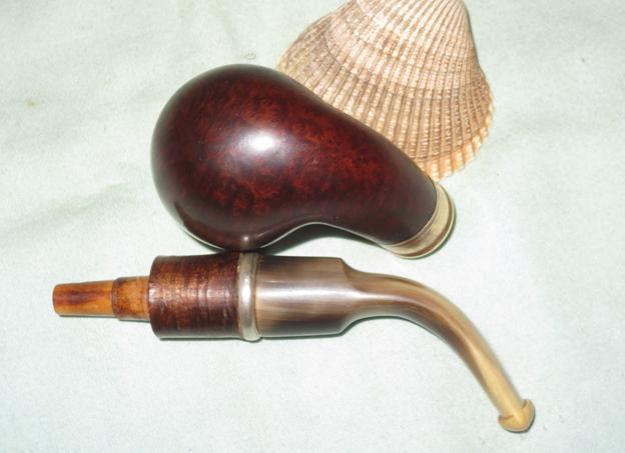
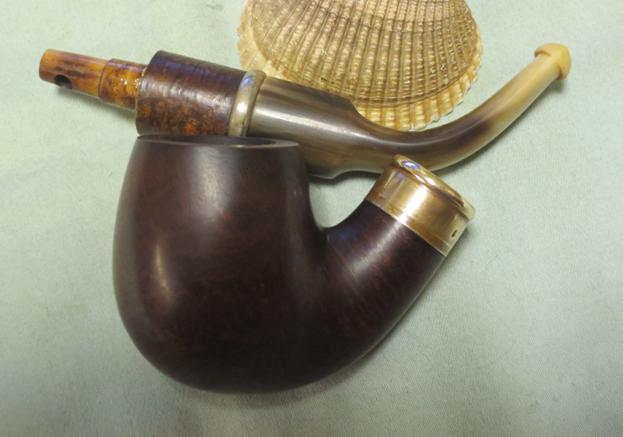
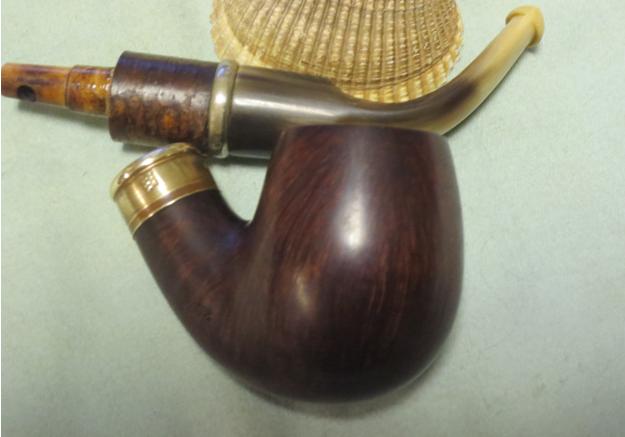
A Ropp La Montagnarde Deposee 298 Horn-Cherrywood-Briar


Blog by Steve Laug

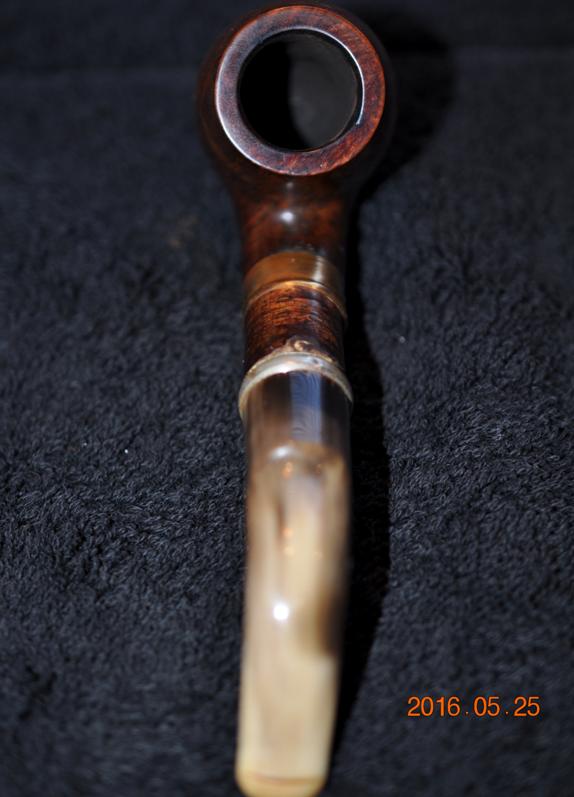
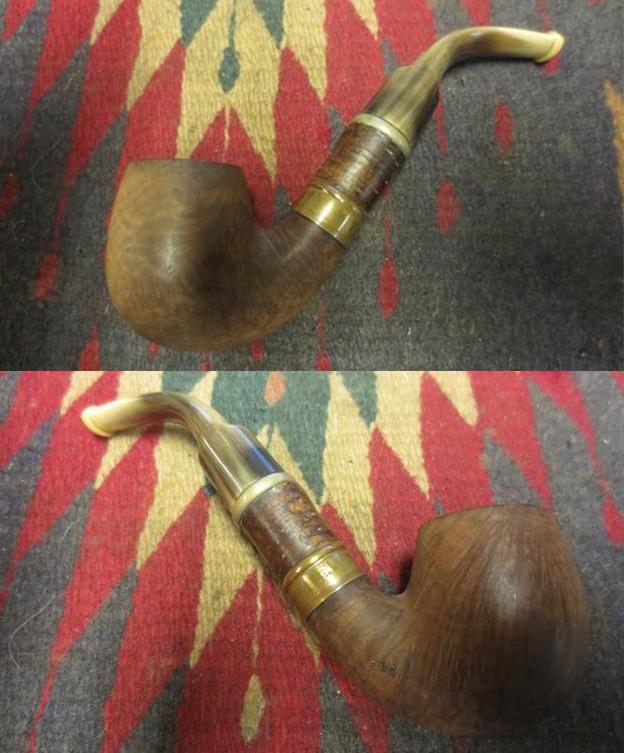
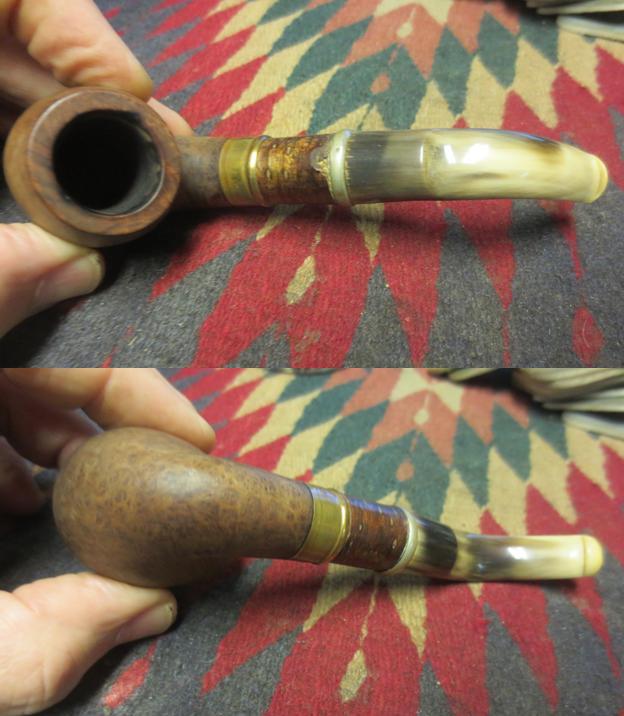
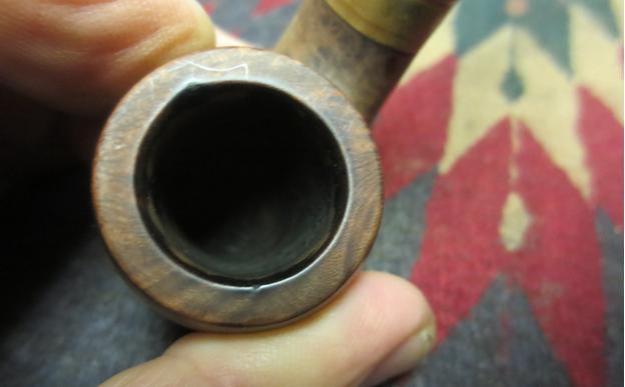
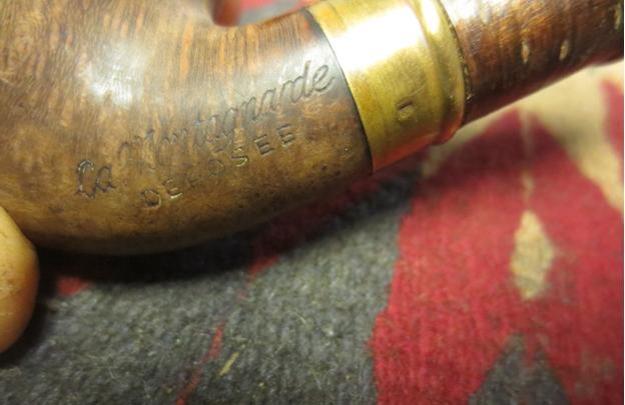
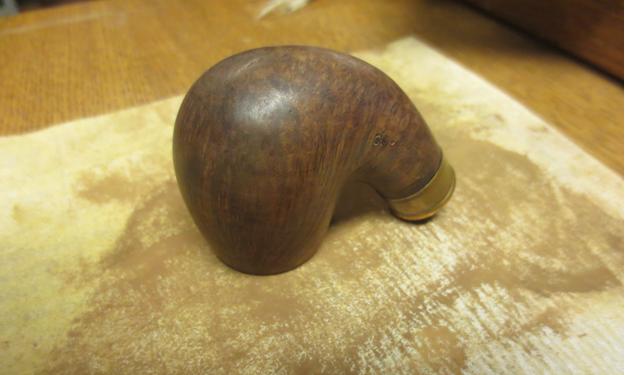
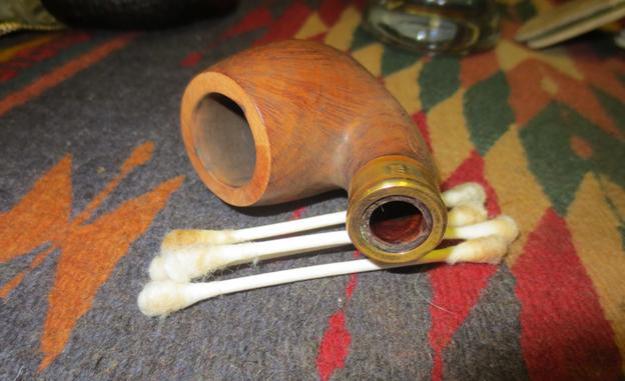
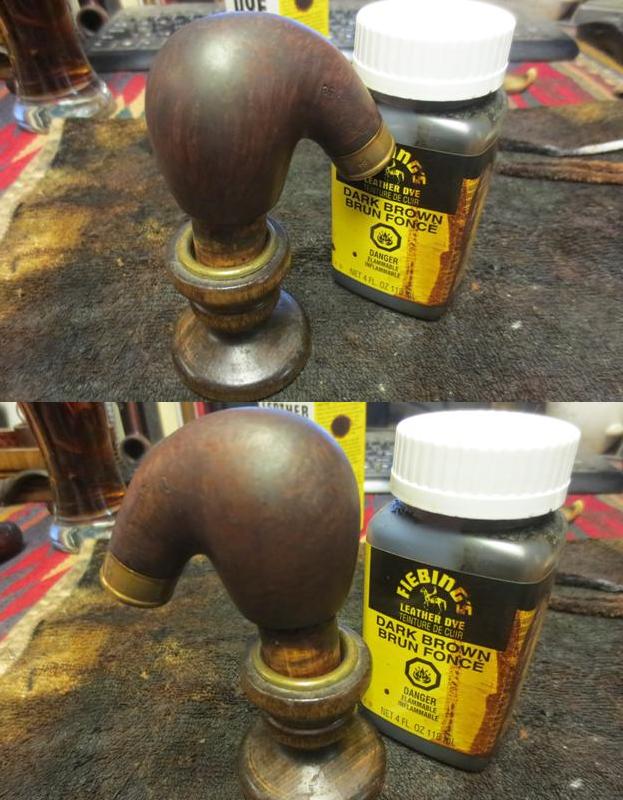
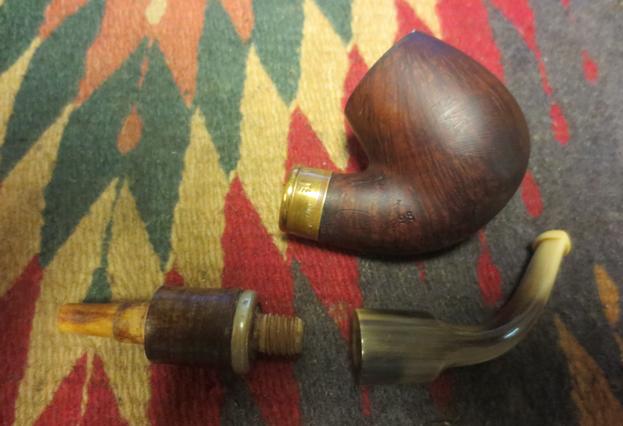
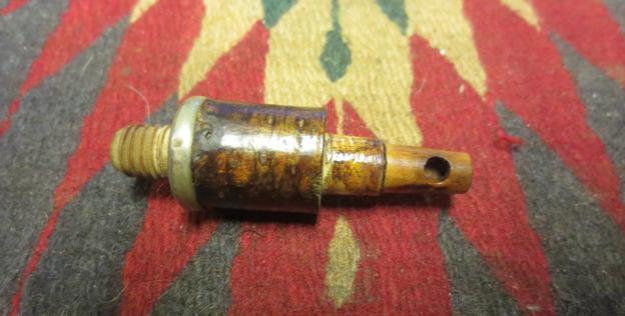
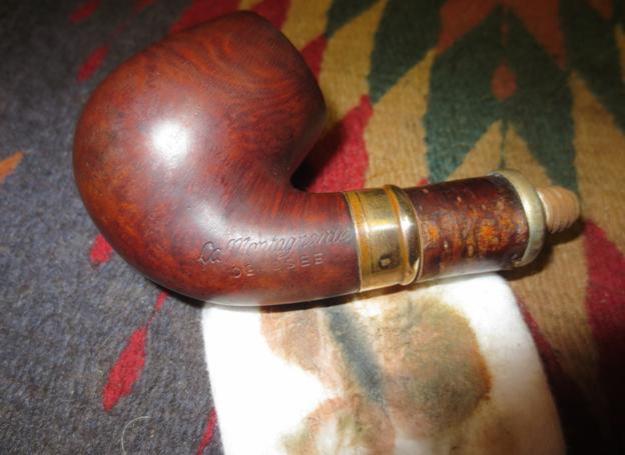
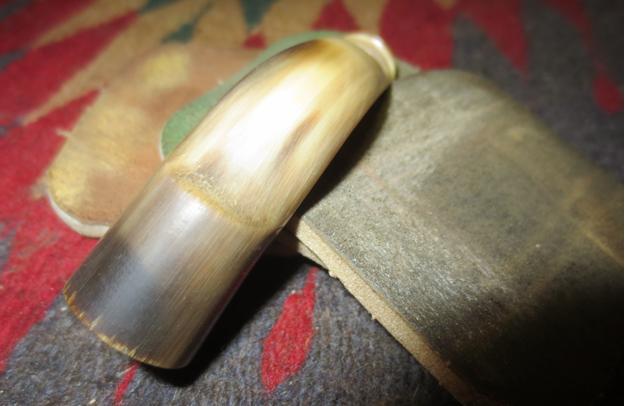
I have been cleaning up a lot of pretty standard pipes lately, whether metal, meerschaum or briar. It has been a while since I took on a unique looking piece that captured my interest. In the current box of pipes my brother sent there are some great one of a kind pipes that I have not seen before so I turned my attention to one of them. The first one that I decided to work on just called out my name. The combination of rustic cherrywood with the bark on, really nicely striated horn and beautifully grained briar just called out to see what I could do with a restoration. I have no idea of the age of the pipe but the horn stem with the orific button speaks of some age. The pipe is stamped on the left side La Montagnarde over Deposee and on the right side it is stamped with Ropp in an oval with the 298 shape number next to it. The brass band on the shank and the small wedding ring brass band on the cherrywood extension give the pipe a touch of class. The next two photos were the seller’s photos. The pipe looked to be in really good condition.Cherry1 Cherry2When the pipe arrived at my brother’s house it was not nearly as clean as it appeared. The finish was spotty and worn. It had been waxed or maybe shellacked to give it a shine. The stem screws into the cherrywood and then the wood end is pressure fit into the shank of the pipe. It was very loose and would not stay in place. My brother cleaned the internals and scrubbed the exterior with Murphy’s Oil Soap. It took off the soiled finish and the remnants of the polish. When I got it the pipe was very clean. The brass bands were tarnished and the horn was dull.Cherry3 Cherry4I took some close up photos of the rim and the stamping to have a better look. The top of the rim had a burn mark on the inner edge of the right side. It did not go deep into the surface of the briar so a light topping would remove the damaged area.Cherry5The second close up shows the stamping on the shank. La Montagnarde Deposee is what it reads. La Montagnarde translates from French as “The Mountain” and Deposee translates as “Filed” or “Registered”.Cherry6I topped the bowl with 220 grit sand paper on a topping board. Once the bowl was topped I used a rolled piece of sand paper to sand out the bowl and smooth out the inner edge of the rim.Cherry7 Cherry8The internals were pretty clean. My brother had done a good job scrubbing out the mortise and shank. I used a few cotton swabs and pipe cleaners and alcohol to remove and of the dust left behind by my sanding.Cherry9I stained the bowl with dark brown aniline stain and flamed it. I repeated the process until the bowl was covered.Cherry10I wiped the bowl down with a cotton pad and alcohol to thin the stain and make the grain stand out better.Cherry11I buffed the bowl with Blue Diamond and gave it a light coat of olive oil. I rubbed down the cherrywood bark with oil as well to bring some life to it. In the photo below you can see the way in which the pipe is held together.Cherry12The cherrywood insert has a threaded wooden tenon on the outer side which the horn stem threads onto. The other end is a wooden stinger apparatus that fits into the shank of the pipe and holds the stem in place on the bowl.Cherry12aI polished the brass bands with a tarnish polish to bring back the shine.Cherry13I cleaned out the threads in the end of the stem with cotton swabs and alcohol.Cherry14I sanded the stem with micromesh sanding pads – wet sanding with 1500-2400 grit pads and dry sanding with 3200-12000 grit pads. I rubbed the stem down with Obsidian Oil between each set of three pads. What appears to be chips along the end of the stem are not actually chips but striations that run through the rest of the stem.Cherry15 Cherry16 Cherry17I sanded the bowl with 1500-12000 grit micromesh sanding pads. As I sanded it the grain really began to pop and some of the scratches in the briar disappeared.Cherry18 Cherry19 Cherry20I buffed the bowl and stem with Blue Diamond. I avoided buffing the cherrywood insert as I did not want to risk peeling the bark. The finish began to take on a rich glow. The finished pipe is shown in the photos below. The first four photos show the pipe as a whole. The rest of the photos show the various pipe parts. Thanks for looking.Cherry21 Cherry22 Cherry23 Cherry24 Cherry25 Cherry26 Cherry27 Cherry28 Cherry29 Cherry30