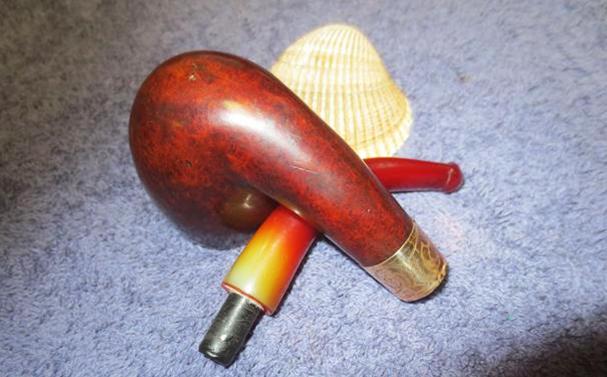
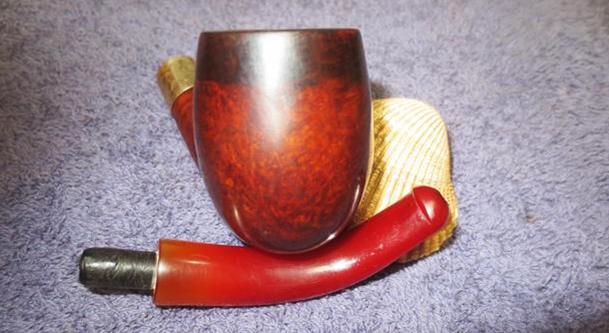
Tag Archives: fitting a stem

Breathing new life into a SON Freehand – an early pipe by Eric Nording


Blog by Steve Laug

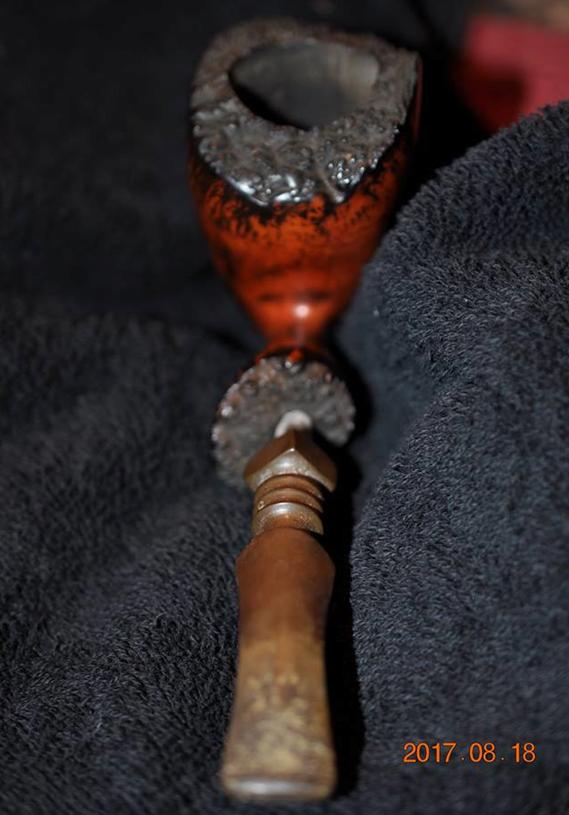
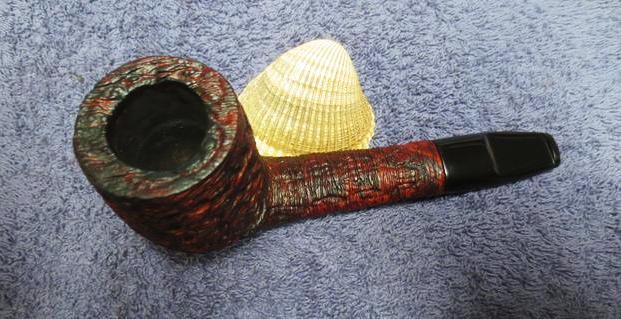
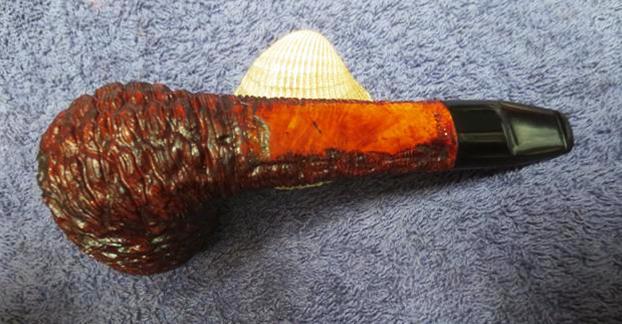
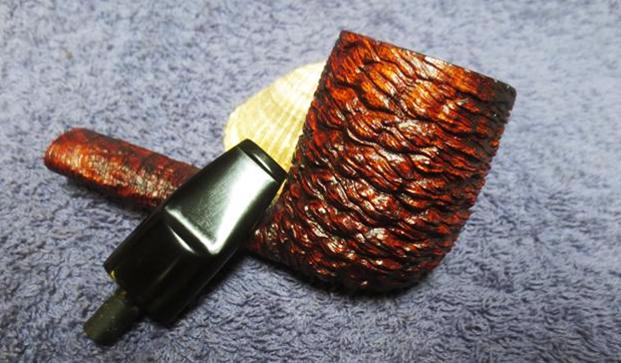
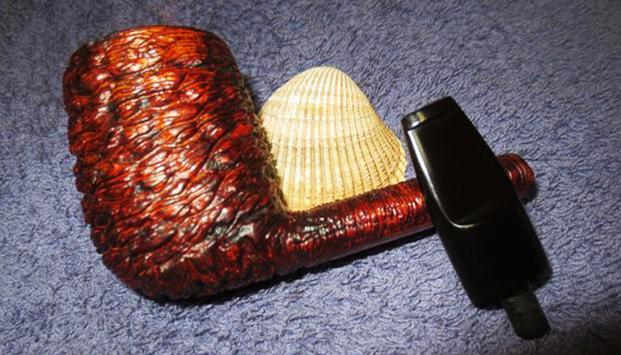
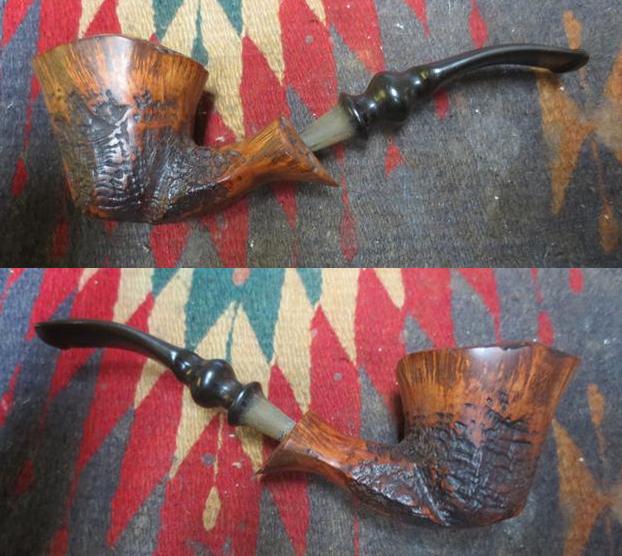
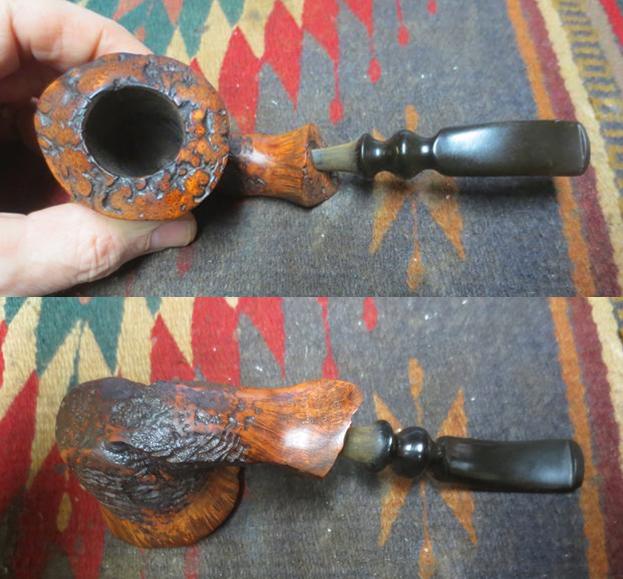
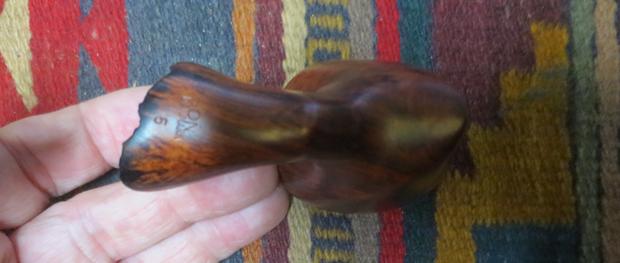
When my brother Jeff saw this pipe he went for it. I am not sure if he bought it on one of his travels or on EBay but it is the kind of pipe that catches his attention. The grain on the bowl is a mix of flame, straight and swirled patterns. The stain on the bowl is dark from the top of the bowl down about ½ inch all around the bowl. It similar to other pipes from the 60s that had a bit of a flume finish on the top edges of the bowl. The plateau on the top of the rim and the end of the shank are blackened and the dark rough plateau in those spots works well with the reddish brown stain on the bowl. The pipe was dirty with a thick cake in the bowl and an overflow of lava on the rim top filling in much of the plateau top. The stem was dirty with some built up calcification on the tenon and around the rings on part way up the stem. This is visible in the photo below. The stem was heavily oxidized and was a brownish green colour. There was tooth chatter and tooth marks on both sides of the stem near the button. Jeff took some photos of the pipe before he did his cleanup. The next photo shows the rim top. You can see the cake in the bowl and the overflow of lava and grime that filled in some of the ridges and grooves in the plateau.The grain on the bowl though dirty, showed promising patterns – straight grains and flame. There were also some swirls in the grain. The photos below show what the finish looked like and under the grime it looked good. There was a flaw in the grain on the right side of the bowl (shown in the second photo below). I have circled it in red. The stamping on the underside of the shank is very readable. It reads SON over DANMARK over the number 5. At this point I had no idea who the maker of the SON brand was. I would need to do a bit of research to figure out who the maker was. The style though was very 1960s era but I had no proof of that at the moment.Jeff took some photos of the insert stem showing the calcification on the tenon and in some of the rings on the vulcanite stem. The oxidation is also very visible in the vulcanite. You can also see the grime in the grooves of the plateau on the end of the shank.The photos of the stem show a lot of tooth chatter on both sides of the stems. There are also some tooth marks on the button top and bottom.I decided to do a bit of research on the brand to see who made the SON brand. I looked first on Pipephil’s site http://www.pipephil.eu/logos/en/logo-s10.html. I quote from a note on the site next to photos of the stamping on the pipes of that brand.

“The brand’s name stems from a partnership between Soren Skovbo and Erik Nording. It lasted for two years in the mid-1960s before the partnership ended and the brand ceased. That dates this pipe to the 1960s.”

I looked on Pipedia for further information: https://pipedia.org/wiki/N%C3%B8rding. In the listing of pipemakers by country the entry for SON linked back to Nording pipes. I went to that page and read the following information. I have included a portion of that article below that gives the pertinent connections.

Long before he graduated from engineering school at age 25 he was a more experienced pipe smoker than most men his age. He frequented a pipe shop in Copenhagen and often had his pipes repaired there. “The guy who did the repairs in that shop” says Nording. “could see that it was a good business, and he wanted to start his own pipe making shop.” That repairman’s name was Skovbo. One day he approached the young Erik Nording with a proposition. “You are a blacksmith and an engineer,” Skovbo said to Nording. “You must know a lot about machinery. Can you make me some pipe making machinery?”

“I told him I could make anything he wanted,” says Nording. “But I didn’t have any money. So I borrowed S200 to buy some bearings, and I scoured junkyards for old broken machinery. I bought inexpensive housings and put in new bearings and new shafts.” It was Nording’s first contract and he wanted to get a good start, so he took great care in making the best possible tools for the pipe maker. “I made him a little polishing machine, and a lathe, and a sander for shaping pipes.” When he had everything put together and running perfectly, he called Skovbo and told him his machinery was finished.

“He came out and looked it over,” says Nording. “He turned on the electricity and watched everything run. He had some blocks of wood with him, and he tried everything out. Finally he looked at me and said, ‘It’s exactly as I wanted. Perfect. How much do I owe you?’ I told him the price—I don’t remember how much it was, but it was very inexpensive.”

Skovbo thought the price was very good. “That’s fantastic,” he said. “The price is right. Now I’ll start out for myself, make some pipes and when I earn some money I’ll pay you.”

It must have been a terrifically discouraging moment for a young man who had just completed what he thought was his first paying job in a new career. As Erik Nording now remembers that moment, sitting in a beautiful home that contains a pipe making shop large enough for 20 workers making tens of thousands of world-famous pipes, his face exhibits amusement at that memory. But back then, as a youngster trying to get a foothold in the world, his expression must have been more akin to horror.

“I told him that was not good enough,” says Nording. “I told him I was a poor man, I didn’t have any money, I needed to be paid for my work.” But Skovbo told Nording that he couldn’t pay him.

“Then I will keep the machinery,” said Nording. “I’ll make pipes myself.”

“You don’t know how to use this machinery,” said Skovbo. “You know nothing of pipe making.”

“Well, you’re not getting it. You should have told me before I did all this work that you didn’t have the money to pay for it.”

Skovbo thought it over. “Why don’t we start together?” he said.

That’s how Erik Nording became a pipe maker.

There are still a few of those early pipes around. “I saw some at a shop I visited a while back,” says Nording. “The shop owner offered to give them to me as mementos but I refused. They may be worth quite a bit of money to collectors. You never know”…

Those first pipes carried the name SON”, which was an acronym for the combination of the names Skovbo and Nording. Each of the partners borrowed $5,500 to get the business going, to rent a space and get the electricity turned on and to buy two bags of briar. Skovbo taught Nording how to make pipes, “but I didn’t have much time because I was still studying,” says Nording. “And I never got the chance to learn much from him, because shortly after we started he said that I would never be a pipe maker, he said that my hands had no skill for the craft, that I could never learn. I never understood how he could make such a judgment, but he did.”

To his credit, Nording shows no sign of triumph in the fact that he has proved Skovbo wrong by becoming one of the best-known pipe makers in the world. “He said that he would continue with SON pipes alone, that he no longer needed me,” says Nording. However, the partners had a legal agreement that whoever wished to dissolve the partnership first would leave the company to the remaining partner and be paid off without interest over five years. So Nording became the one to keep the company…

…Nording continued with SON pipes for only a year or two before changing the company name to Nording in the mid-’60s. “I figured nobody could ever take that name away from me,” he says. Nording’s were exclusively freehand shapes, graded from A, B, C, D, up to its highest grade, extra. Later an “F” grade was added—less expensive than the “A.”

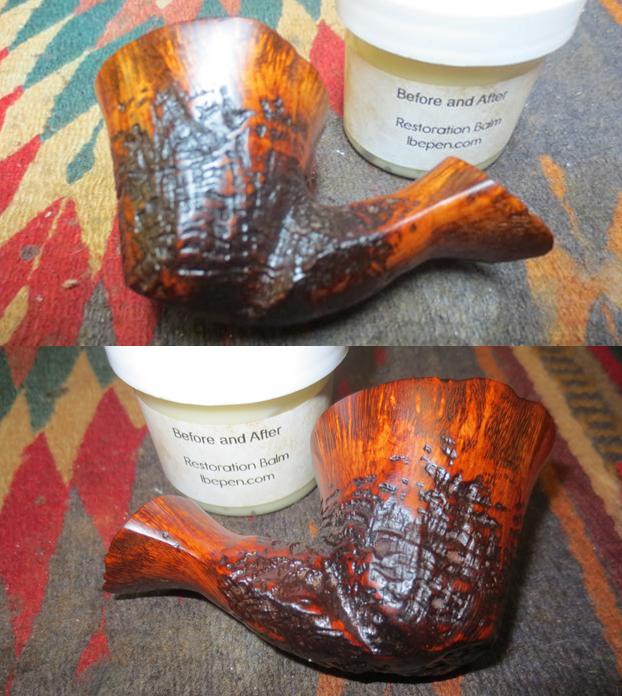
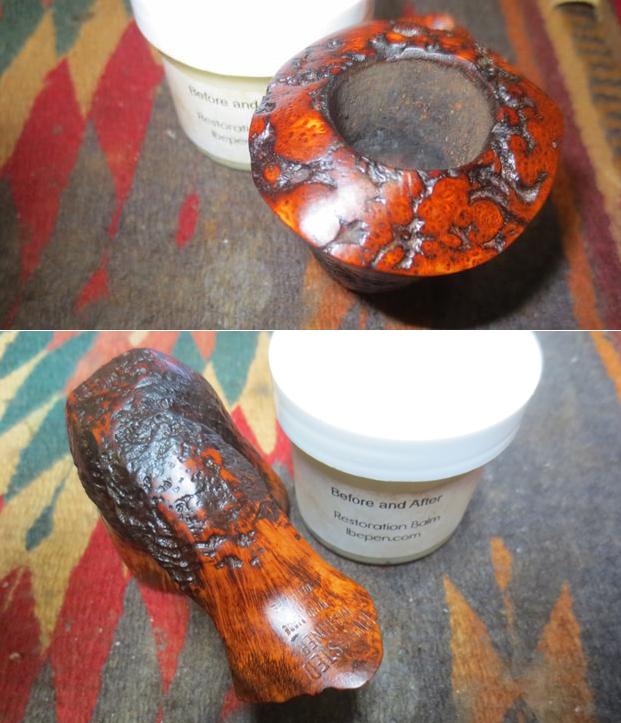
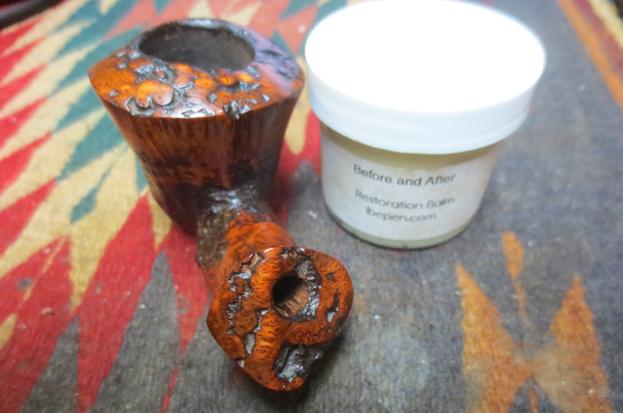
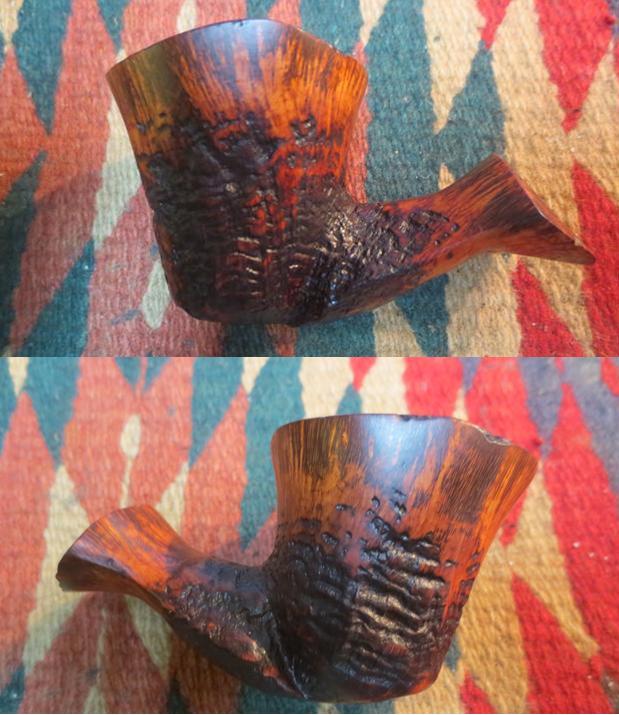
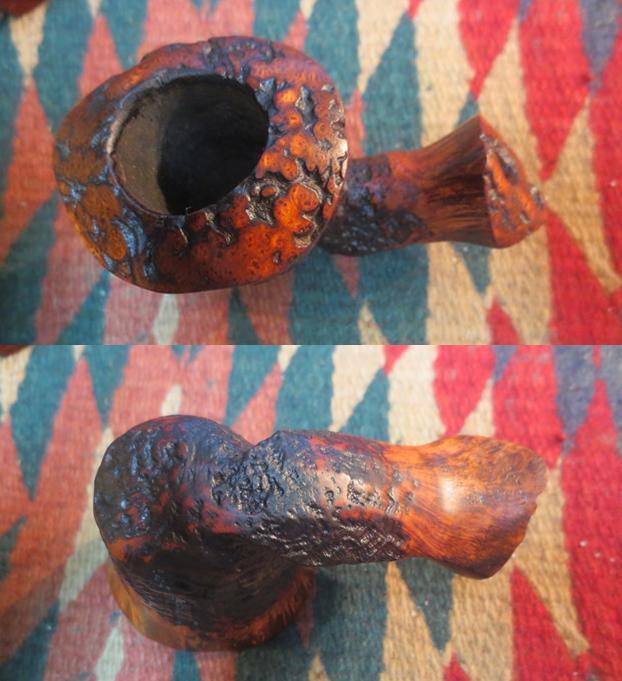
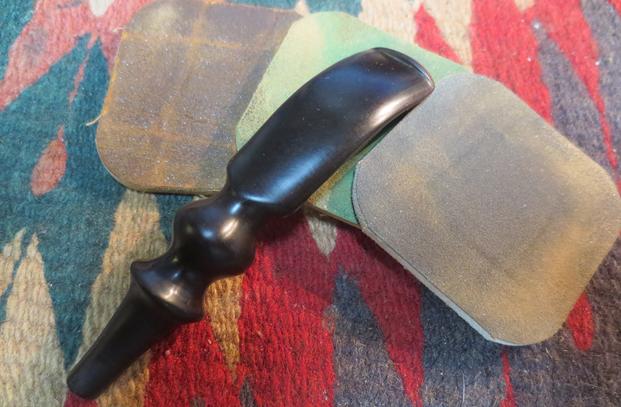
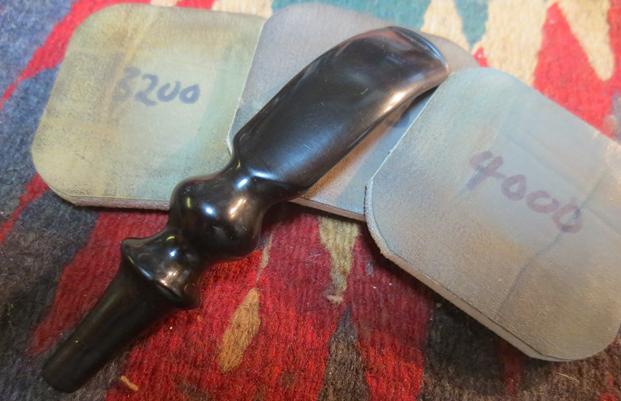
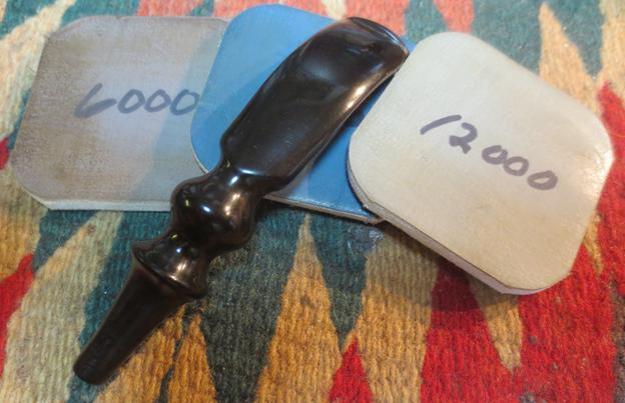
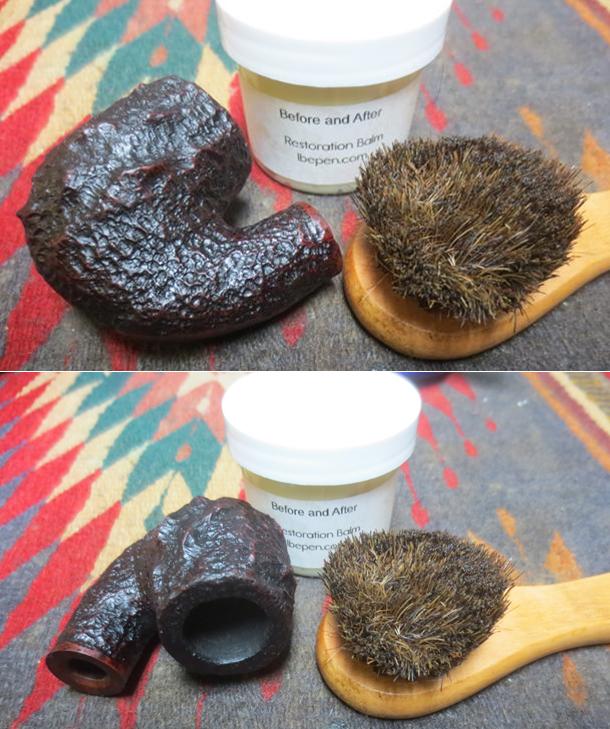
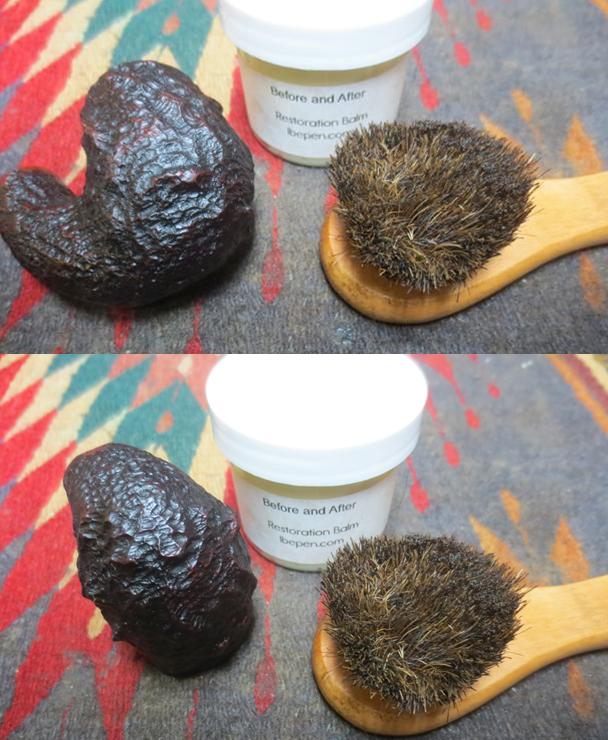
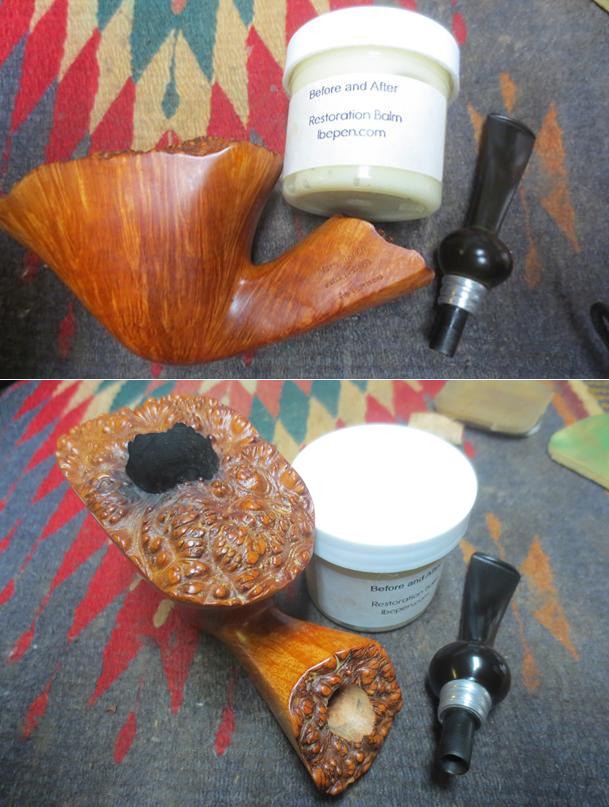
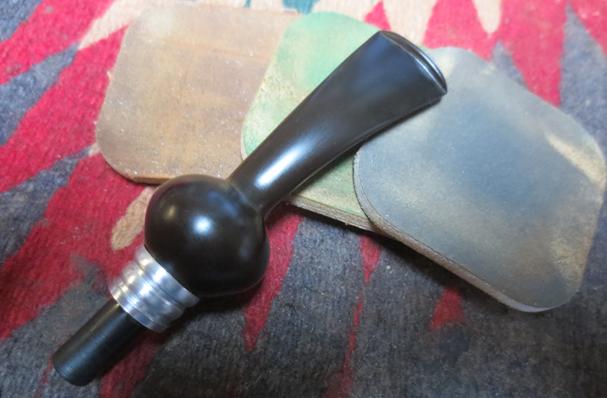
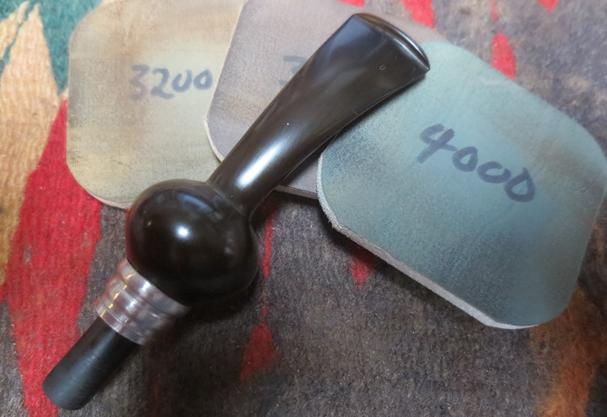
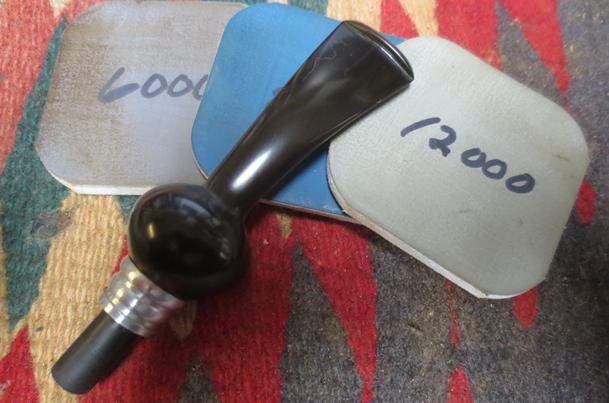
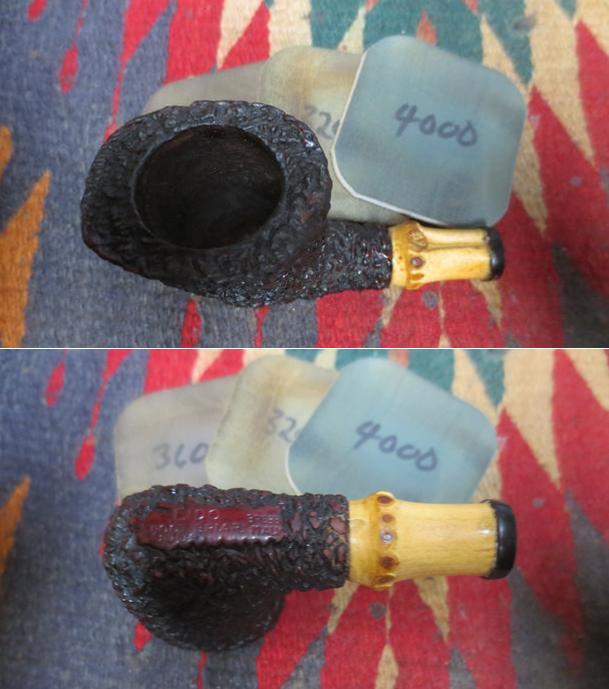
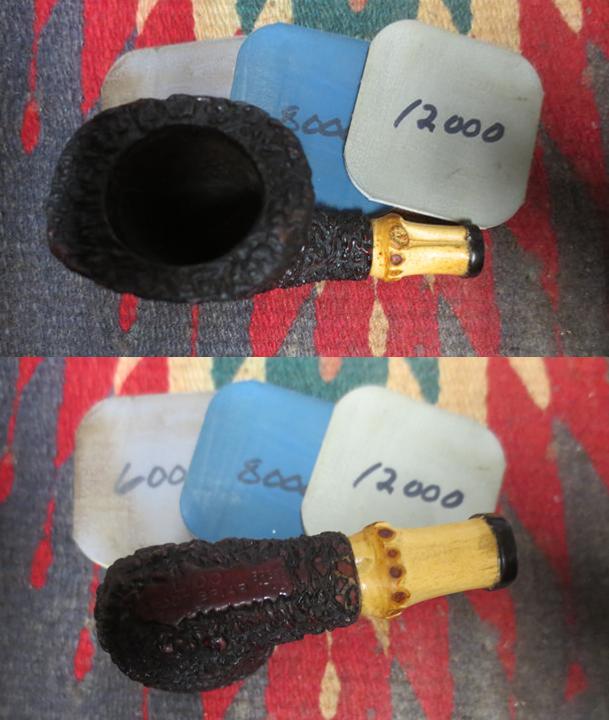
Jeff worked his magic in cleaning up this pipe. He reamed it with a PipNet reamer and smoothed the walls of the bowl with a Savinelli Fitsall pipe knife. He scrubbed out the mortise and the airway in the shank and the stem with alcohol, cotton swabs and pipe cleaners. He scrubbed the exterior of the bowl, rim and shank with a tooth brush and Murphy’s Oil Soap to the oils and tars on the bowl, rim and shank. He rinsed it under running water. He dried it off with a soft cloth. The cleaning of the stem raised more oxidation in the vulcanite. The tooth marks and chatter was clean but visible. I took the stem off and put it in a bath of Before & After Stem Deoxidizer and totally forgot to take pictures of the pipe before I started.I did however; remember to take photos of the bowl to show its condition before I started my work on it. While the stem sat in the deoxidizer bath I worked on the bowl. I decided to start by addressing the flaw and the nick in the briar on the right side of the bowl. I wiped down the area around the damaged and flawed spot with cotton pad and alcohol. I filled in the flaw with clear super glue. Once it had cured I sanded the filled in area with a piece of 220 grit sandpaper to smooth out the repair and blend it into the rest of the briar. I decided to scrub the briar with Before & After Restoration Balm. I rubbed it into the briar with my finger working it into the plateau on the rim top and shank end. The product worked to lift the grime and debris out of the grooves of the briar. I rubbed it down and scrubbed it deeper into the grooves of the briar with a shoe brush. I polished the briar with a soft cloth to remove the balm from the briar. The photos below show what the pipe looked like after scrubbing the briar with the product. The balm helped to blend in the repaired area with the surrounding briar. The briar had a new life and the plateau on the rim top and shank end also looked alive. I set the bowl aside and turned back to the stem. I removed it from the soak in the Before & After Deoxidizer and wiped it down. I cleaned out the inside of the airway with alcohol to remove the product from the stem. I polished the stem with a soft cloth to remove all of the deoxidizer and give it a bit of a shine. It had removed much of the light oxidation though there were remnants in the rings and grooves above the tenon. There were still some spots of oxidation that needed to be addressed and the button needed to be reshaped on both sides to remove the tooth marks and chatter. The photos below show what it looked like at this point.I used a folded piece of 220 grit sandpaper to work on the tooth chatter and to reshape the edges and surface of the button.  I worked over the spots of oxidation on the flat portions and on the rings and grooves in the turned stem with the sandpaper at the same time to remove it from the surface of the hard rubber stem.I polished out the sanding scratches and marks in the vulcanite with micromesh sanding pads – wet sanding it with 1500-2400 grit pads and dry sanding it with 3200-4000 grit pads. I wiped the stem down with Obsidian Oil after each sanding pad. I buffed the stem with Blue Diamond on the buffing wheel. I brought it back to the table and sanded it with the final three 6000-12000 grit pads. After the final pad I gave it a final coat of oil and set it aside to dry. I put the stem back on the bowl and worked the pipe over on the buffing wheel using Blue Diamond to polish the bowl and shank. I used a gentle touch on the briar when I was buffing it so that the grooves of the rustication would not be filled in and make more work for me. I buffed the stem with a harder touch to raise the gloss on the rubber. I gave the bowl multiple coats of Conservator’s Wax and gave the stem multiple coats of carnauba wax. I buffed the pipe with a clean buffing pad to raise the shine. I hand buffed it with a microfiber cloth to deepen the shine. The finished pipe is shown in the photos below. It looks better than it did in the beginning. It is a beautiful pipe. The dimensions of the pipe are: Length: 7 inches, Height: 3 1/4 inches, Diameter of the bowl: 2 inches, Diameter of the tapered chamber at the top of the bowl: 1 1/4 inches. I will be adding this one to the rebornpipes store shortly if you are interested in adding it to your collection. It will make a fine addition to the rack. If you are interested email me at slaug@uniserve.com or send me a message on Facebook. Thanks for looking.


Pipe Hunting in the Portabello Market, London – Found a PNB Pipe


Blog by Steve Laug

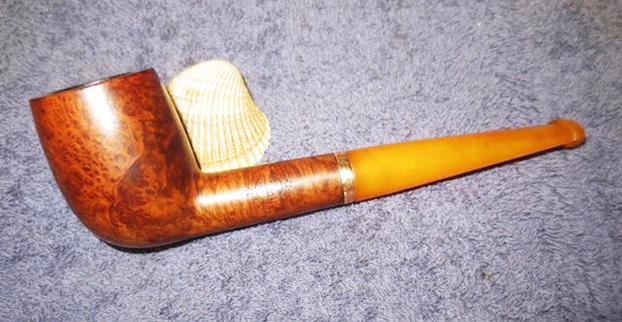
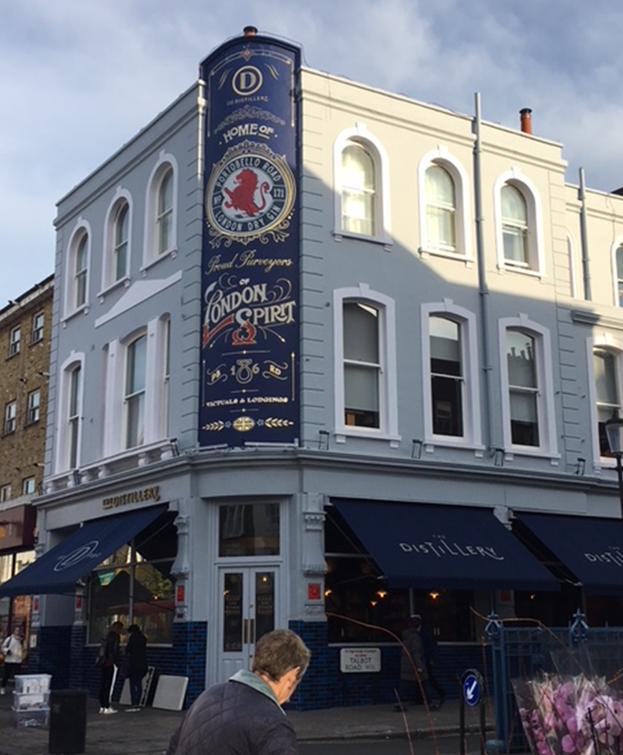
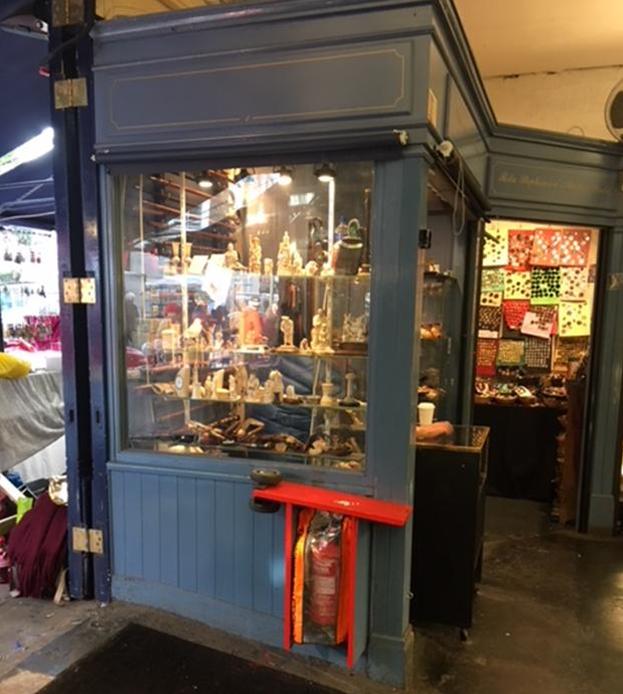
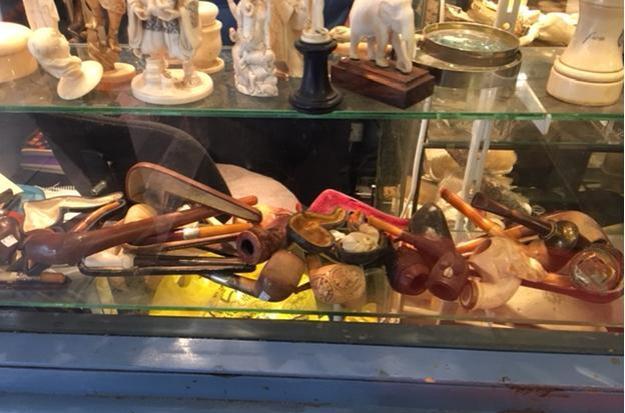
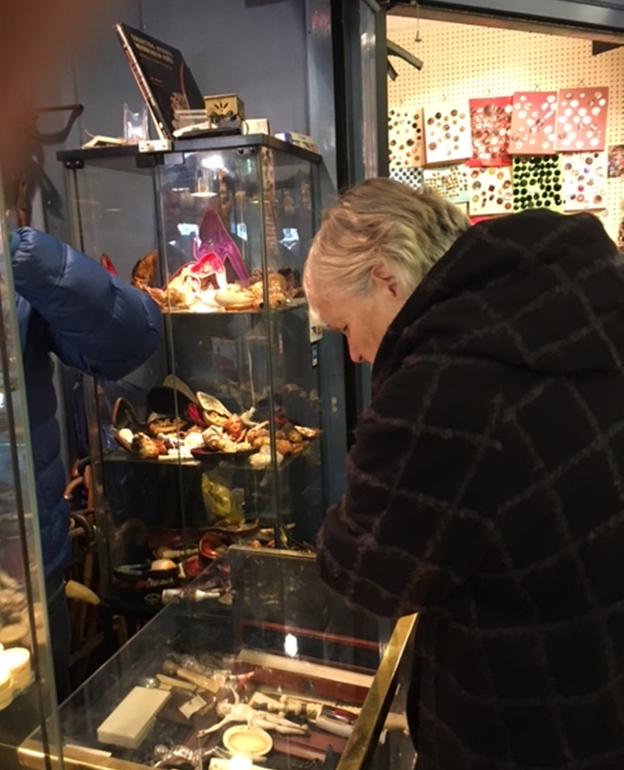
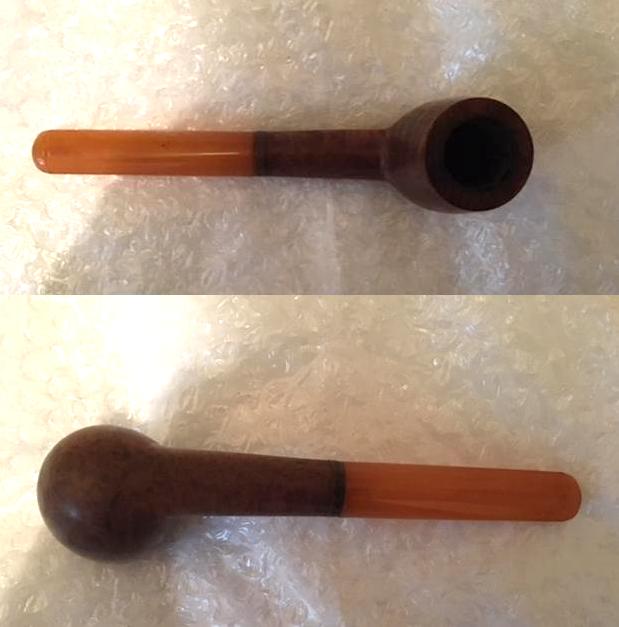
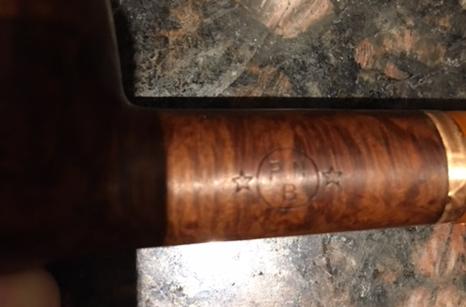
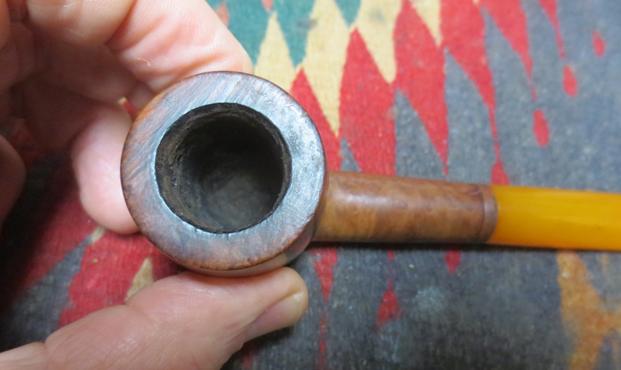
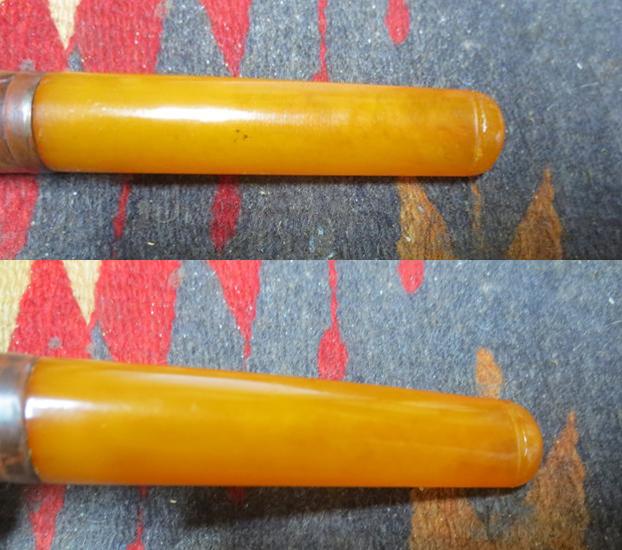
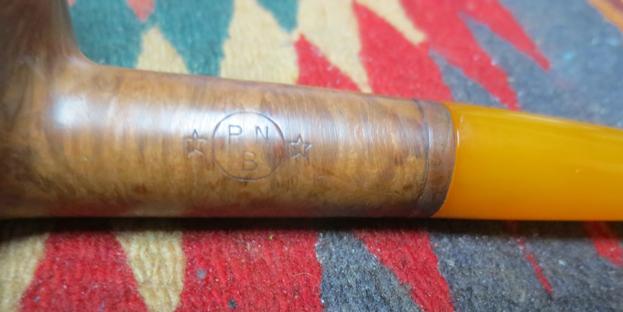
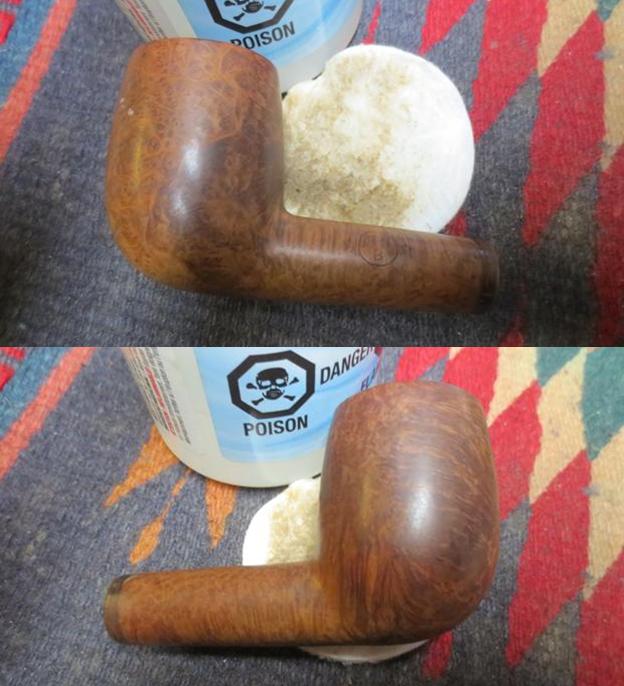
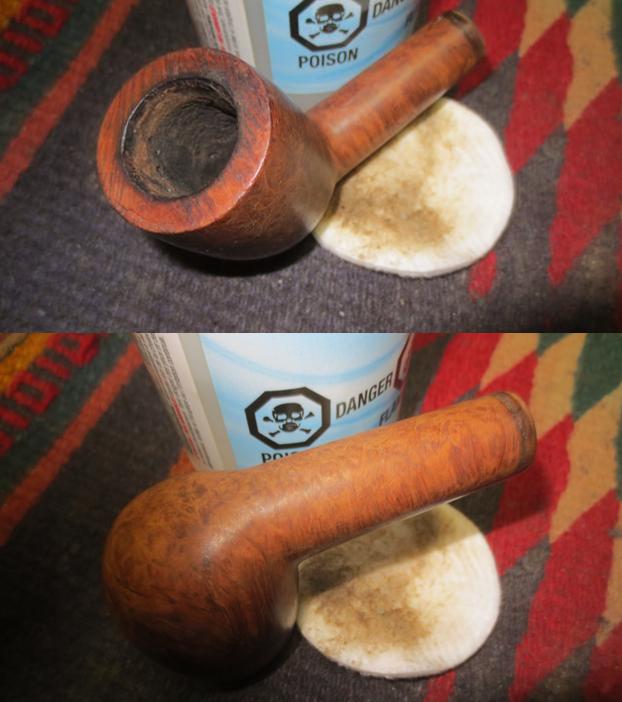
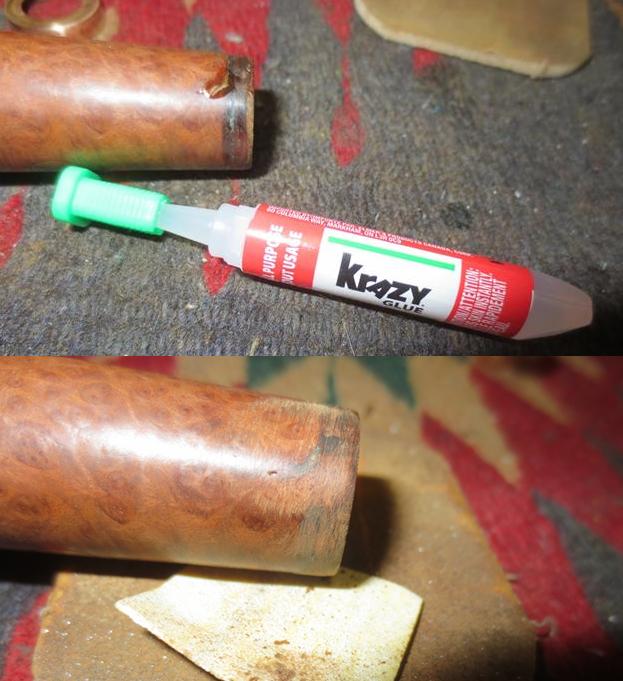
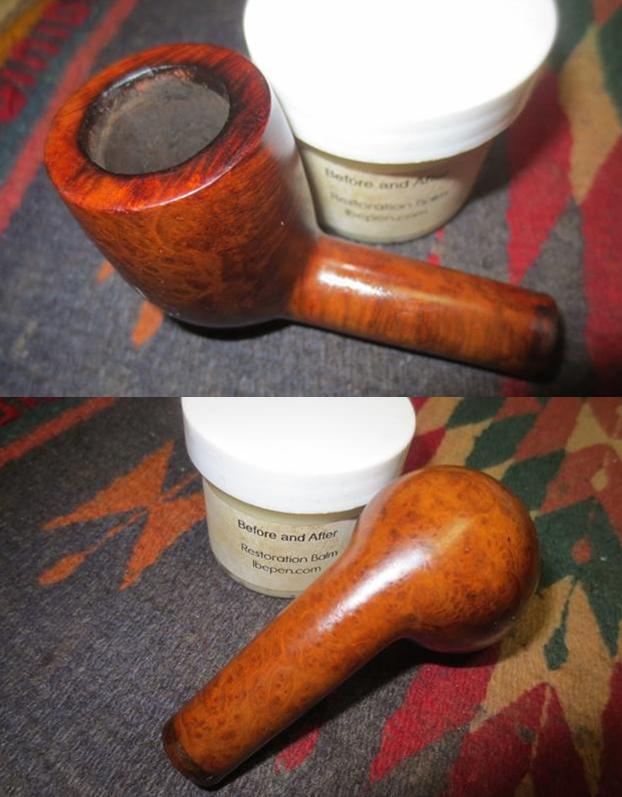
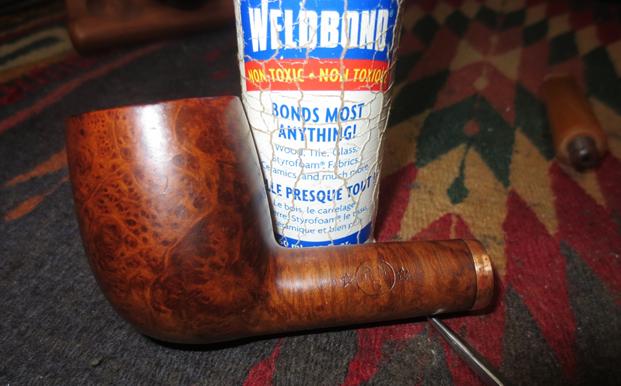
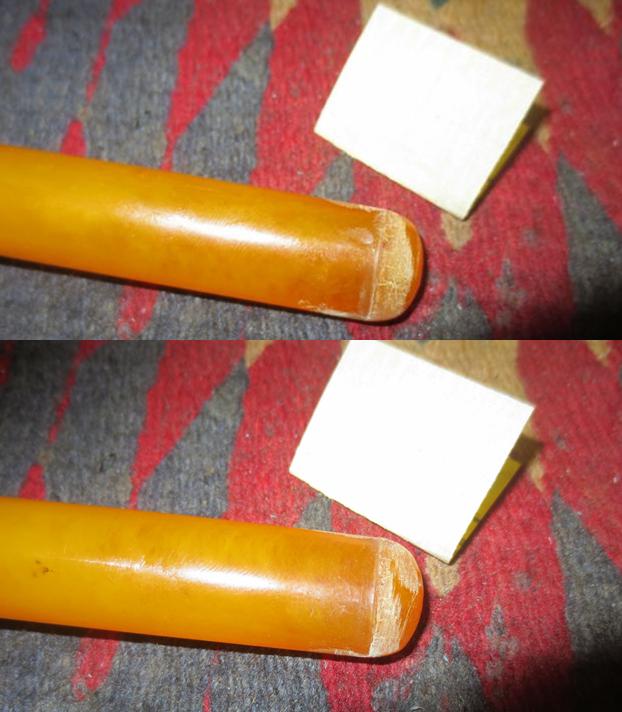
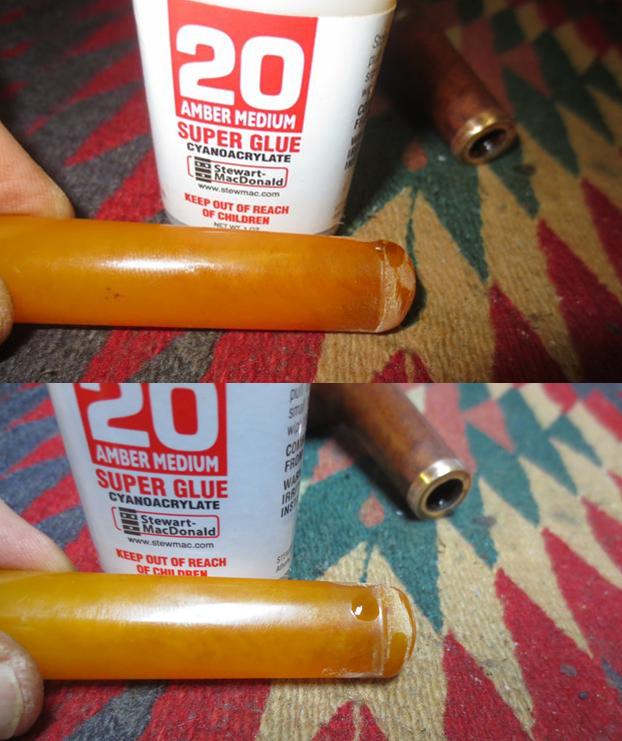
Over the years I had heard and read about the Portobello Road Market – the world’s largest antique market with over 1,000 dealers selling every kind of antique and collectible. On past trips to England I had not been able to take the time to go have a look. On the current trip it looked like I would have time and to top it off we had rented an Air BNB apartment within walking distance of the market. I looked up information about the market so I could be prepared. I want to know what to expect when I went walked to it on the weekend. But I have to tell you, all the preparation I did was not enough to prepare me for what the reality would be like once I turned the corner in the Nottinghill neighbourhood and came out on Portabello Road. The next two photos give you a bit of a feel for what I saw on that Saturday morning. The streets were crowded with people of every size, shape and ethnicity. There were booths lining both sides of the street. There were shops with a variety of wares to sell. I wandered up and down the street of the market looking at the booths and shops along sidewalks and street. As mentioned above, the market is known for its antique sellers and shops so I was hoping to find a few pipes in the windows and shop cases. I walked through several of the antique shops (really like our Canadian antique malls) looking quickly at the cases to identify the ones I would come back to and spend more time at. In one particular shop there was a small corner booth by the door that had display cases around the front and side of the spot. The cases were full or pipes and cheroot holders carved out of meerschaum. There were many old carved meerschaum pipes with shapes of animals and faces. There were some briar pipes as well with different stems – varying from amber to horn to rubber. This was a booth where I needed to take some time to go through the pipes.In the next two photos you can get a bit of an idea of how the pipes were displayed in the cases. They were really a jumble and it would take time to go through them. You can see meerschaum pipes with and without cases and stems. You can see oddly shaped bog oak pipes with amber stems and old pipes with metal shank and bowl caps. There were long pipes and shot pipes and many in between. The prices were surprisingly high so it would be a matter of narrowing the field down to one or two that I would add to my bag.I moved from the side case to the front of the booth to look through some of the pipes displayed there. These too were a jumble and mixed through displays of figurines, crucifixes and antique cutlery. There were even books on collectible meerschaums on display on top of the cases.I finally narrowed down the pipes I was interested in to the one below. It was a large billiard that was in fairly good condition. There was a light cake in the bowl, the rim top had some lava and the stem had tooth marks. The stem had a piece of paper wrapped around the threaded bone tenon to give it enough bite to hold onto the threads in the mortise. The pipe was stamped on the left side of the shank with the letters PNB or PBN in a circle with a star on the right and left, outside of the circle. It also had a thin oxidized brass/gold band on the shank end that would clean up nicely. The stem looked to be Bakelite or Amberoid and had some light tooth marks on the top and underside near the button. I took the photos below when I returned to the apartment after the shopping adventure. The next photo shows the stamping on the left side of the shank. I cannot find any information on the brand either as PNB or PBN. I posted the logo on the Gentlemen’s Pipe Smoking Society on Facebook and Mike Hagley had a suggestion that was a possibility. He said the pipe looks like a Belgian made pipe, so he suggested that PNB stands for Pipier Nationale Belgique. Another friend on the same GPSS group Neville van Niekerk from Germany wrote that the pipe was a Bernstein pipe from Vienna, Austria. He went on to say that they were originally Meerschaum pipe makers until the Turks decided that Meerschaum could not be exported in blocks any more. Thank you both for your suggestions.I wrapped the pipe in bubble wrap and put it in my suitcase until I returned to Vancouver three weeks later. I was looking forward to working on the pipe. When I got home I unwrapped the pipe and brought it to my work table. I took some photos of it to chronicle what it looked like before I started. The photos below show the pipe when I started. I took a close up photo of the bowl and the rim to show the cake and the rim darkening. The inner and outer edge of the rim was in good condition. There was some light scratching on the rim top and some darkening all around the inner edge but it would clean up nicely.The stem was in pretty good condition. There was some light tooth chatter on the button surface and a tooth mark on the right side of the top of the button. There was a deep tooth mark on the underside of the stem near the button as well. I took another photo of the stamping on the shank and was able to get a clearer photo.I unscrewed the stem from the shank and the paper wrapping on the tenon came off easily. The band on the shank was also loose so it fell off as well.I wiped the outside of the bowl and shank down with 99% isopropyl alcohol on cotton pads. I wanted to remove any remnants of the finish and also the grime that was ground into the briar on the sides of the bowl and rim. The pipe has some beautiful grain – a mix of birdseye, cross and flame grain. I polished the brass band with micromesh sanding pads to remove the oxidation that had darkened it. The shine returned and it was a nice golden colour that would work really well with the amber coloured stem and virgin briar.With the band removed from the shank a flaw in the briar was revealed on the right side of shank near the shank end. I filled it in with clear super glue and when it dried sanded it smooth with 220 grit sandpaper and would later polish it with micromesh sanding pads to blend it in with the rest of the briar.I reamed the bowl back to bare briar with a PipNet pipe reamer and finished cleaning it up with a Savinelli Fitsall pipe knife.I pressed the band on temporarily so that I could polish it in place while polishing the briar. I wet sanded the briar and band with 1500-2400 grit micromesh sanding pads and dry sanded it with 3200-12000 grit pads. I wiped it down with a damp cotton pad after each pad. Each micromesh pad brought a deeper shine to briar and band. I removed the band and wiped the briar down with Before & After Restoration Balm. I rubbed it into the briar with my fingers, let it sit for about 10 minutes and then buffed it off with a soft cloth. It really brought the grain to life. I buffed it lightly with a shoe brush and a soft cloth. I wiped down the shank end with some alcohol on a cotton pad to clean it off so that I could reglue the band. I used a dental pick to put glue on the shank end and the inside of the band. I pressed it in place and lined it up. I held it until the glue set.Once the glue dried I decided to address the worn threads in the mortise. The threads on the old bone tenon would not hold onto the threads in the mortise. I painted the threads in both with clear fingernail polish and let them dry.Once the glue dried I decided to address the worn threads in the mortise. The threads on the old bone tenon would not hold onto the threads in the mortise. I painted the threads in both with clear fingernail polish and let them dry.When the fingernail polish had dried I worked on the tooth marks on the stem. I sanded the tooth chatter with 220 grit sandpaper and reshaped the button to remove the tooth marks.  I filled in the tooth marks with amber super glue. I purposely overfill the areas so that as the glue dries and shrinks it still fills in the dent. I set the stem aside to let the glue cure.Once the repairs had dried I sanded them smooth with 220 grit sandpaper. I polished the stem with micromesh sanding pads – wet sanding with 1500-2400 grit pads and dry sanding with 3200-12000 grit pads. I rubbed the stem down with Obsidian Oil after each sanding pad. I cleaned up the threads a bit on the old bone tenon and turned it in place into the mortise. It fit snuggly and held tightly in the shank. I buffed the pipe and stem with Blue Diamond on the buffing wheel and then gave the bowl and stem multiple coats of carnauba wax to shine and protect. I buffed the pipe with a clean buffing pad to raise the shine and hand buffed it with a microfiber cloth to deepen the shine. The finished pipe is shown in the photos below. It is quite a large pipe. The dimensions are, Length: 6 ½ inches, Height: 2 inches, Diameter of the bowl: 1 3/8 inches, Chamber diameter: 7/8 inches. I am pleased with the way the pipe turned out. Thanks for looking.


This Old Italian Canadian showed Promise


Blog by Steve Laug

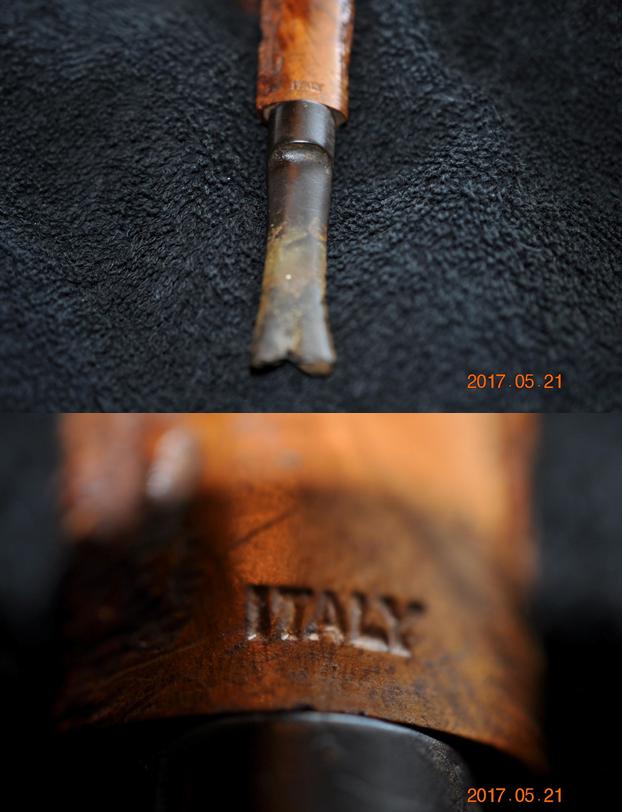
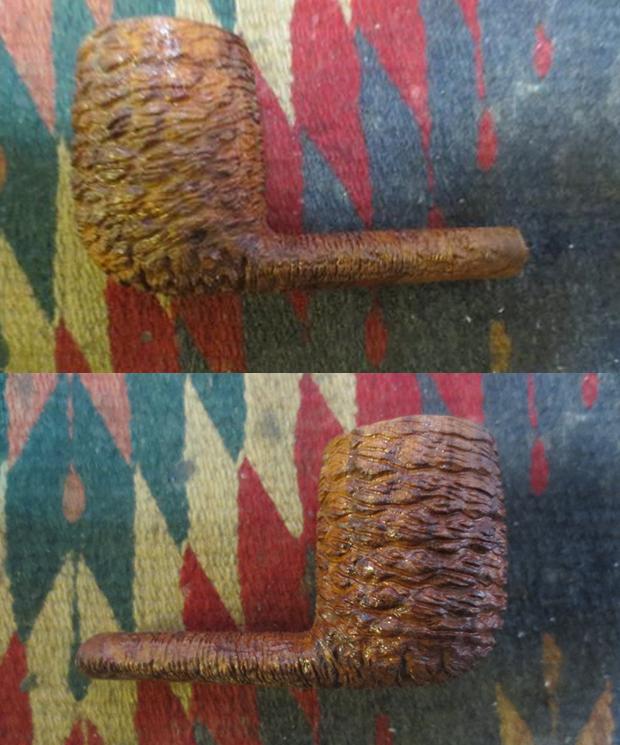
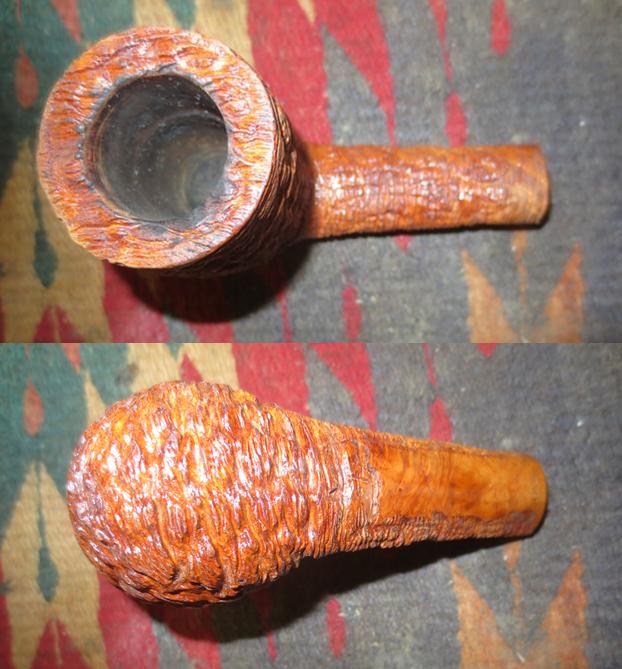
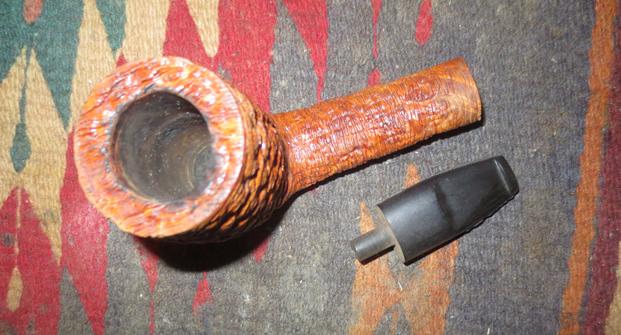
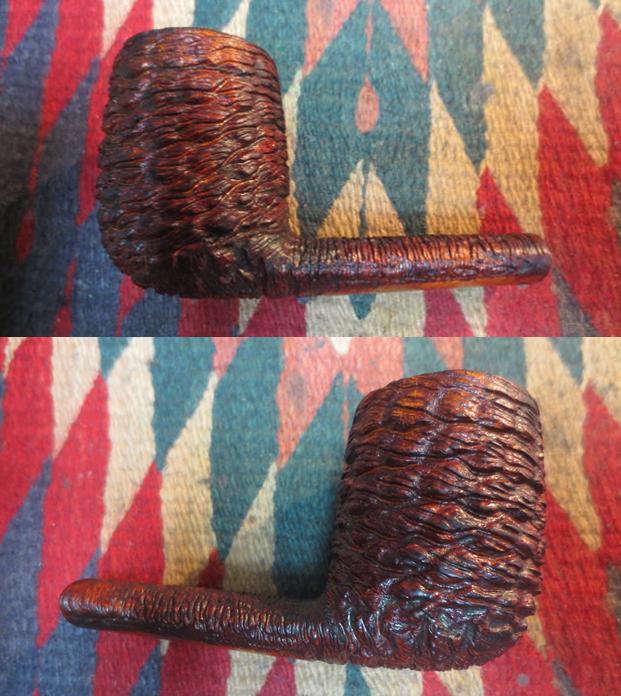
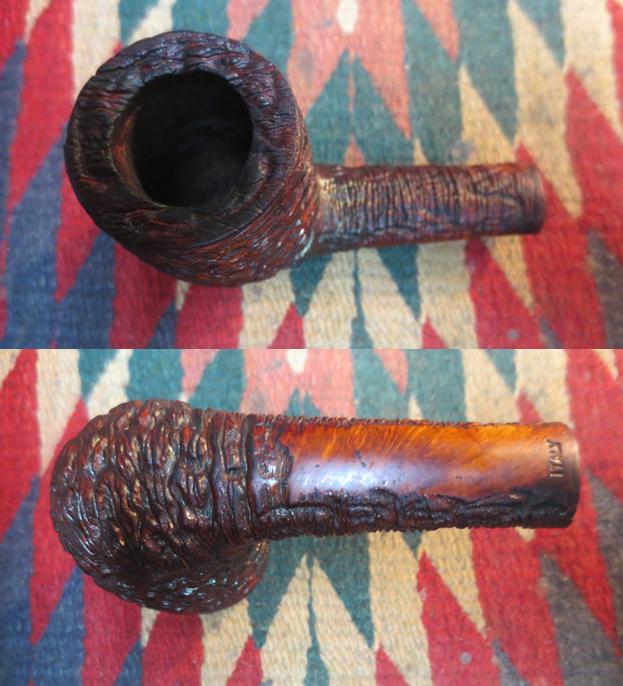
Jeff picked this heavily rusticated pipe up on one of his recent forays into the antique shops and malls of Montana. It is sea rock like rustication on the bowl and shank with a wire rustication on top of that. The finish was very dirty with a lot of dirt and grime in the deeper grooves of the rustication. There was a random stem stuck in the shank when he picked it up – I think it was just to make it more sellable. The stem is a round saddle stem while the shank is oval. The finish was dirty and there were some nicks in it around the shank end. The bowl had a heavy cake in it with some lava overflow filling in the rustication pattern on the rim top. There appeared to be some burn damage on the back left side of the rim top. The pipe had a smooth portion on the underside of the shank for stamping but the only stamping was at the shank/stem junction where it read ITALY. Jeff took photos of the pipe before he started his clean up. The rim top can be seen in the next photo. You can see the thick cake and the lava overflow on the top of the rim. It is hard to know if there is damage to the inner edge of the rim but the outer edge was clean and undamaged. It appeared that there was some burn damage on the back left side of the inner rim edge but we would not know until Jeff cleaned the pipe.Jeff took pictures of both sides of the bowl to show the rocky, craggy appearance of the finish on the bowl. It is unusual and interesting at the same time.The next photos show the shank and Italy stamping on the shank end. The stem is obviously the wrong one. You can see the variation of the round saddle portion of the stem and the oval shank. I am not too worried about the stem as it is going in the bin anyway as I will need to fit a new stem on the shank. Jeff worked his magic in cleaning up this pipe as it was a real mess on the rim and deep grit and grime in the grooves of the finish. He reamed it with a PipNet reamer and smoothed the walls of the bowl with a Savinelli Fitsall pipe knife. He scrubbed out the mortise and the airway in the shank and the stem with alcohol, cotton swabs and pipe cleaners. He scrubbed the exterior of the bowl, rim and shank with a tooth brush and Murphy’s Oil Soap to the oils and tars on the bowl, rim and shank. He rinsed it under running water. He dried it off with a soft cloth. Once the grime was removed the finish actually looked quite good condition. I took photos of the pipe to show its condition before I started my work on it. I did not bother with the old stem as it would be replaced. I went through my can of stems and found one that had the same diameter all the way around as the shank. The fit against the shank end was almost perfect. I would need to make the edges taper a bit more at the shank. The stem was new and still had castings on the sides and the end of the button. The tenon was a perfect fit in the mortise. I put the stem in the shank and took photos of the restemmed pipe. The pipe looks good with the new stem. There is promise in the appearance at this point. I repaired the chip on the left side of the shank end with clear super glue. I needed to rebuild that edge to remove the damaged area and allow the stem to fit snug against the shank. I used a sharp knife to bevel the edges of the mortise to accommodate the hip at the tenon/stem junction.I used a brass bristle wire brush on the rustication to clean off any remnants of the finish and then wiped the bowl down with acetone on cotton pads to remove the dust. I stained the bowl with a dark brown aniline stain and flamed it to set it in the briar. I repeated the process several times until I was happy with the coverage on the bowl. I set the bowl aside to dry overnight before proceeding with polishing the briar.In the morning I buffed the bowl with a shoe brush to raise a shine on the briar. I took the following photos to show what the pipe looked like at this point in the process. The bowl is looking good with a lot of colour variation due to the roughness of the rustication. I laid aside the finished bowl and turned my attention to the stem. I sanded out the casting marks and scratches on the stem with 220 grit sandpaper. I opened up the slot in the button with needle files to make it easier to push a pipe cleaner through. After I had removed the casting marks and the scratches on the stem surface it was time to work on it with micromesh sanding pads. I wet sanded it with 1500-2400 grit pads and wiped it down after each pad with Obsidian Oil to give the next pad more bite when I sanded. I dry sanded it with 3200-12000 grit pads and again wiped it down with the oil after each pad. After the final pad I wiped it down with a final coat of oil and set it aside to dry. Each photo shows it progressively getting a shine. I set aside the stem and picked up the bowl once again. I used the Mark Hoover’s Before & After Restoration Balm on the briar. I rubbed it into the grooves on the bowl sides with my fingers. I wanted it to go deep in the grooves to further test the effectiveness of the product. This would be a good test as it one of the roughest rustications that I have worked on with the product. As I have mentioned in previous blogs Mark had said that the product can be used on briar or stems – whether vulcanite, acrylic or horn. He said it was designed to pull the dirt off of the briar as well as polish it. I figured this deep rustication would certainly put those claims to a test. He said that he had added some anti-oxidants to keep the briar from getting damaged from both UV rays and water. Once I had all the grooves and surfaces of the bowl covered I wiped it down with a clean cotton pad and then buffed it with a shoe brush. It seemed to work very well and I took the following photos to show the results. I put the stem back on the bowl and buffed it with Blue Diamond on the buffing wheel to polish the stem and lightly polish the briar. I gave the stem multiple coats of carnauba wax buffed it with a clean buffing pad to raise a shine. I gave the bowl multiple coats of Conservator’s Wax and rubbed it into the rusticated finish. I buffed it with a shoe brush and then with a clean buffing pad to raise the shine. I hand buffed the pipe with a microfiber cloth to deepen the shine. The variegated finish on the bowl and stem combine to present a beautiful pipe. The pipe really does look good with the new stem. The dimensions of this pipe are Length: 5 1/2 inches, Height: 2 1/8 inches, Bowl diameter: 1 1/2 inches, Chamber diameter: 7/8 inches. The finished pipe is shown in the photos below. I will soon be adding it to the rebornpipes store if you are interested in adding to your collection. It is a beauty and will serve someone very well. Email me at slaug@uniserve.com or send me a message on Facebook. Thanks for looking.
 

Cleaning up a Pair of Goedewaagen Delft Ceramic Pipes


Blog by Steve Laug

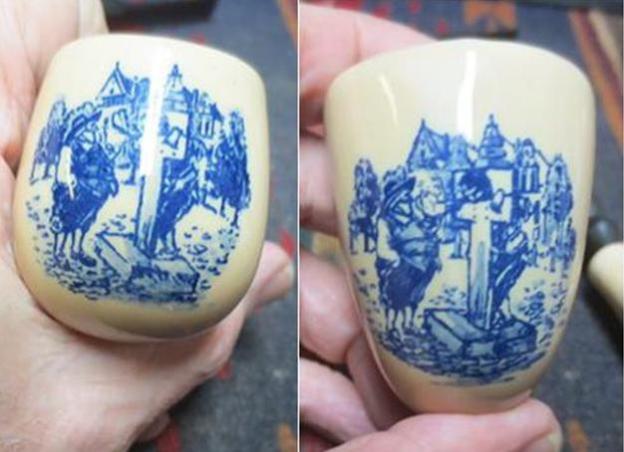
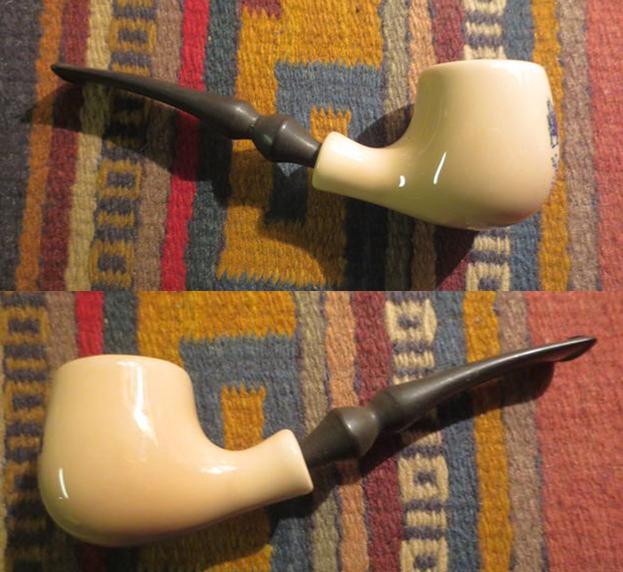
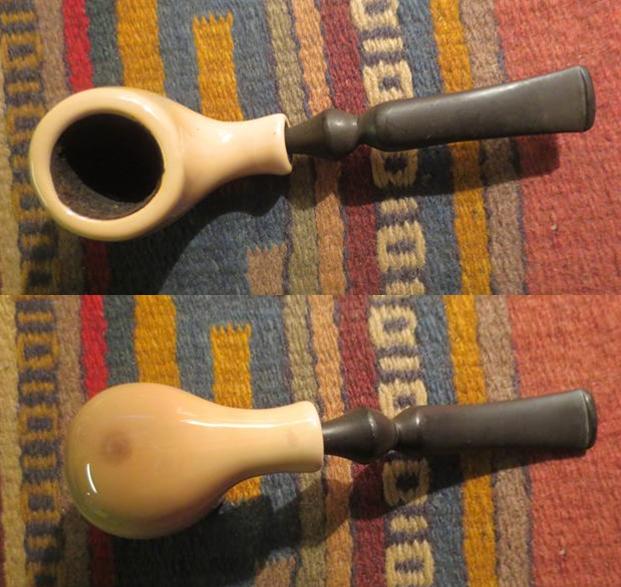
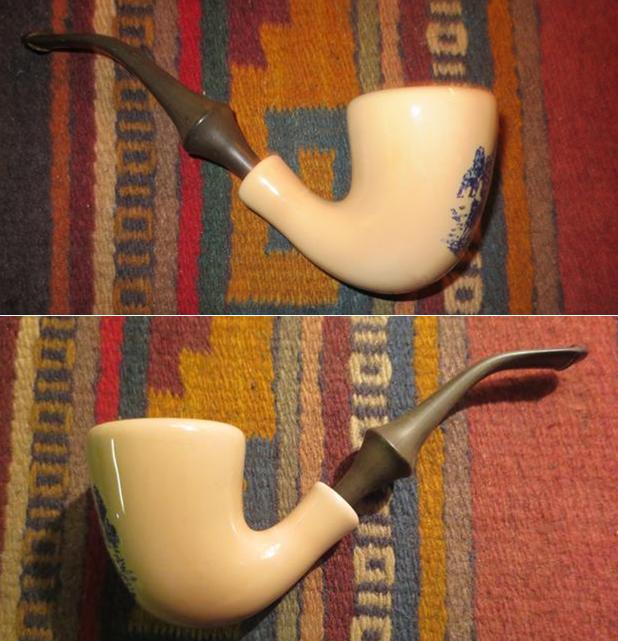
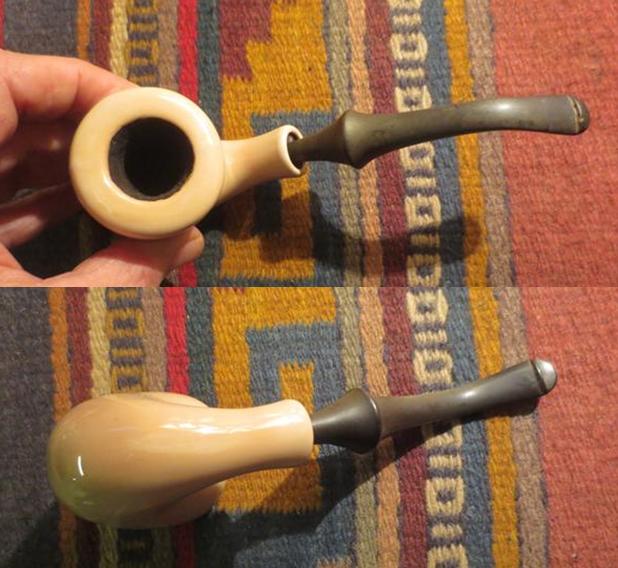
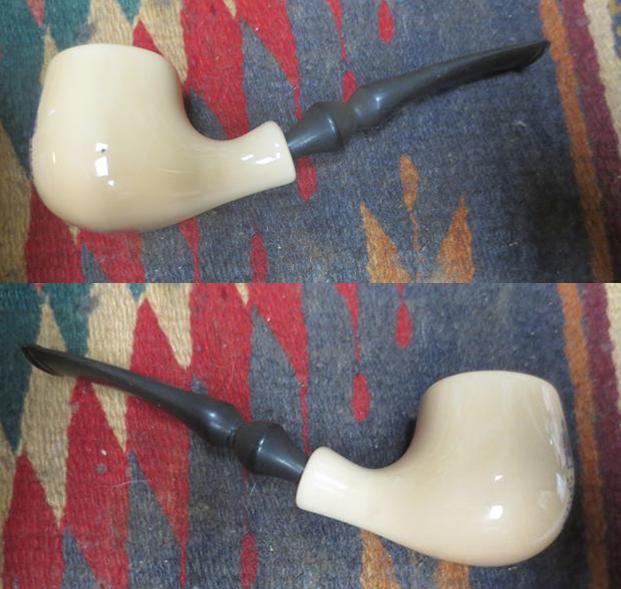
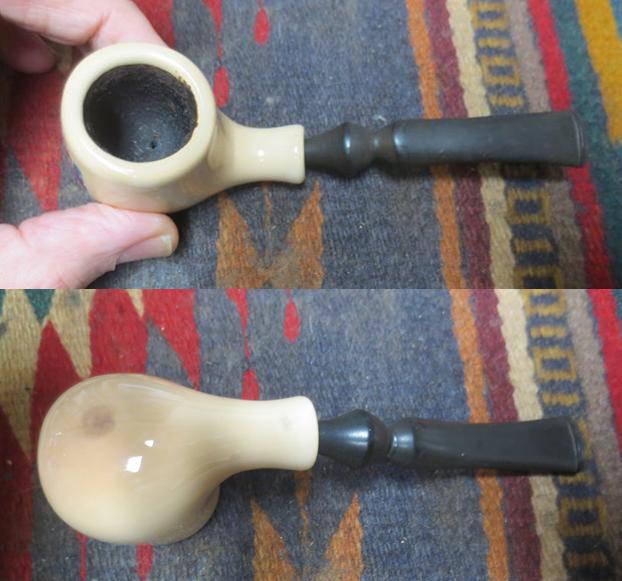
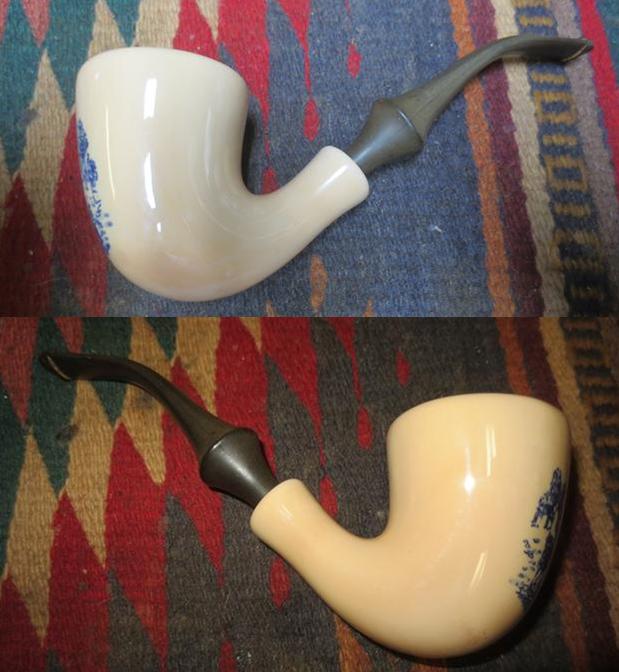
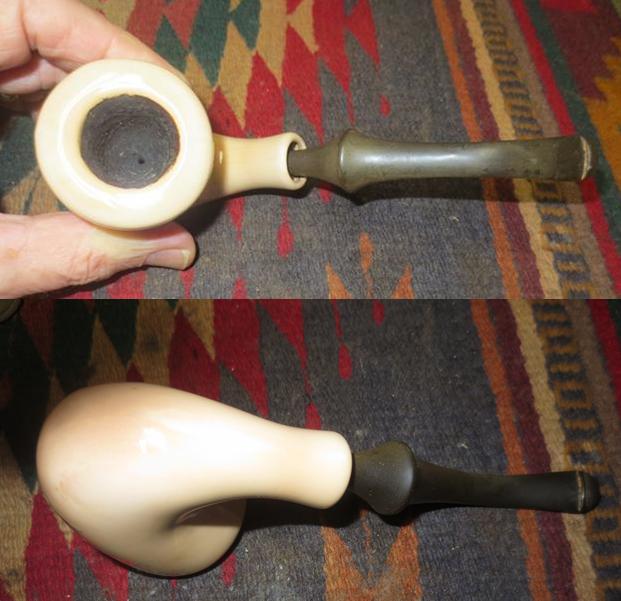
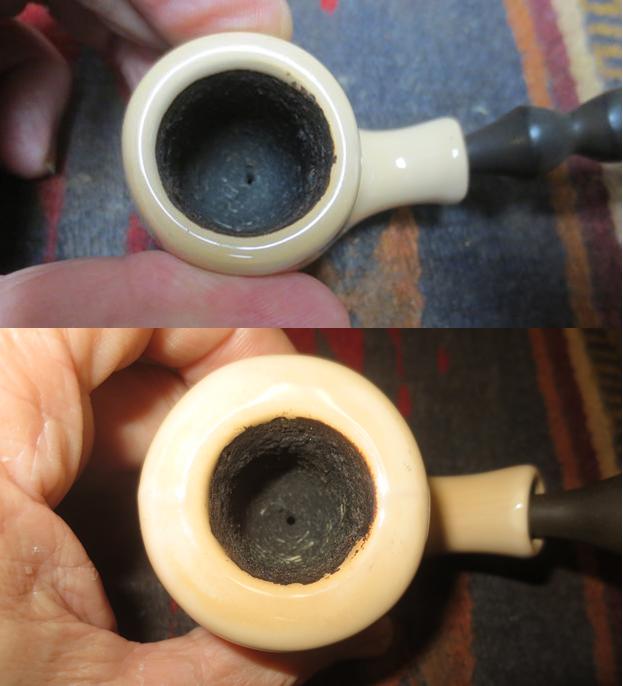
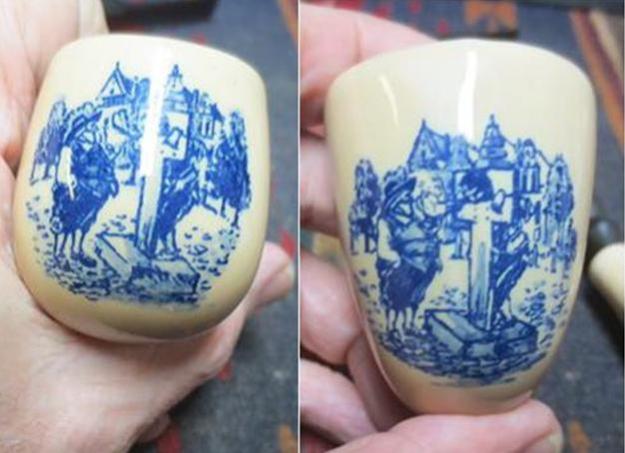
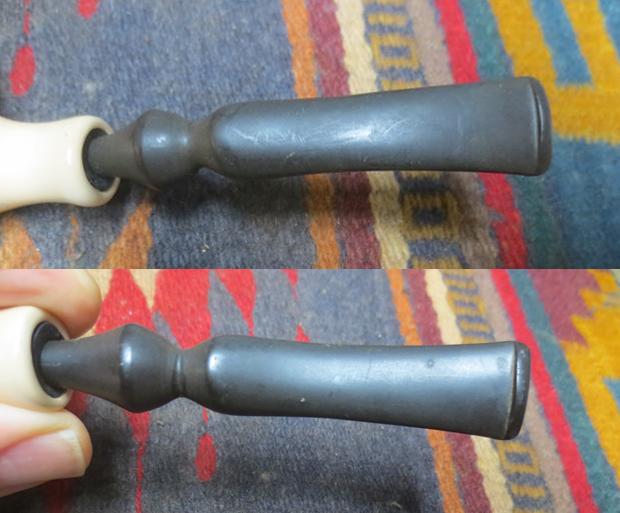
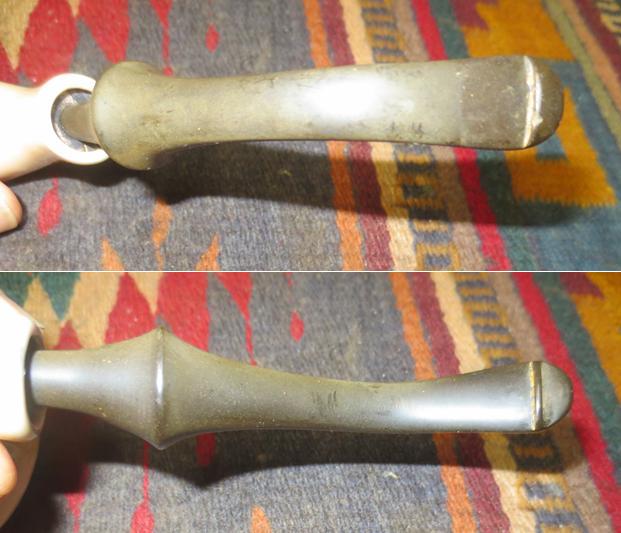
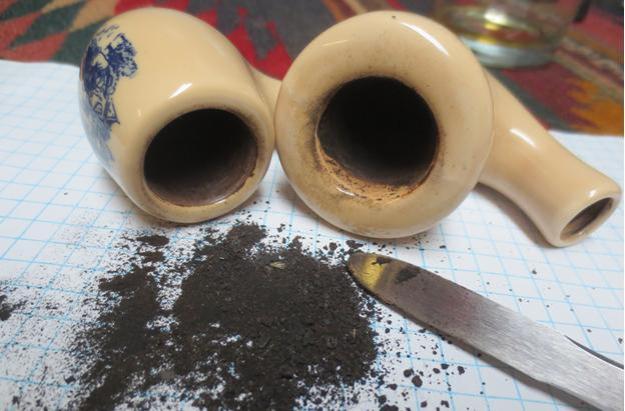
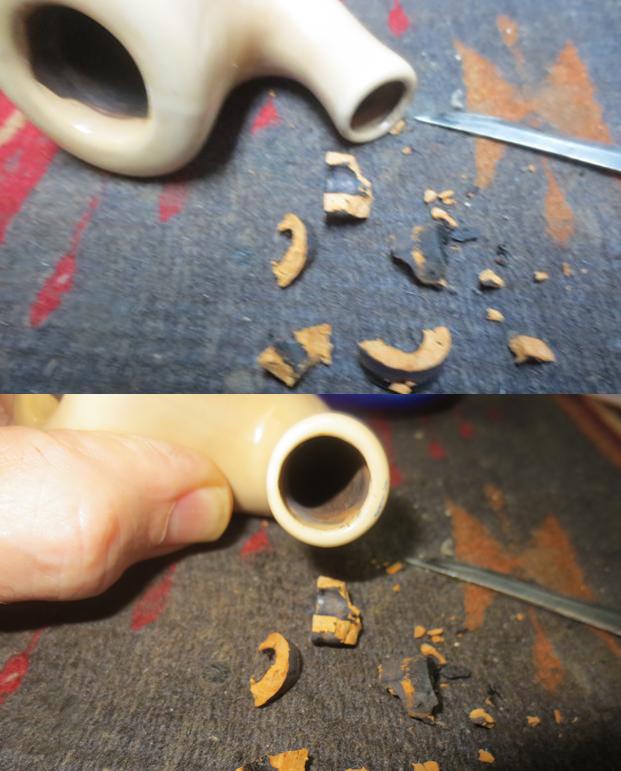
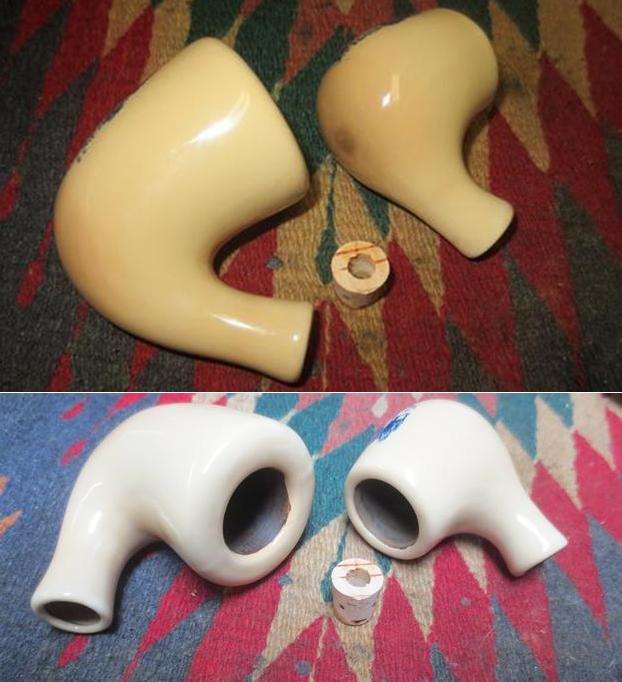
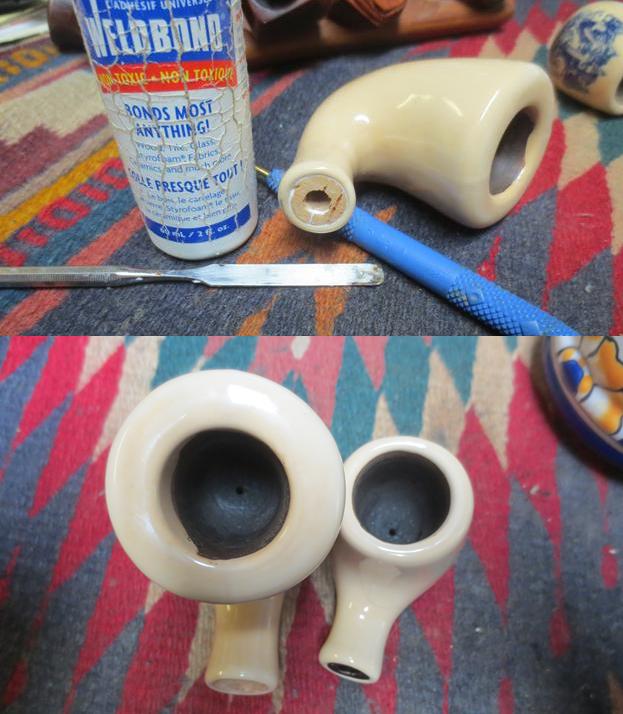
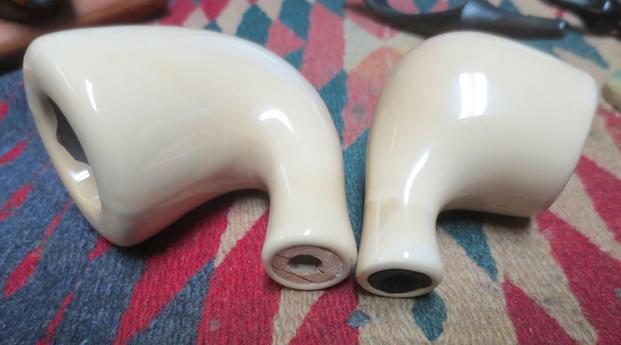
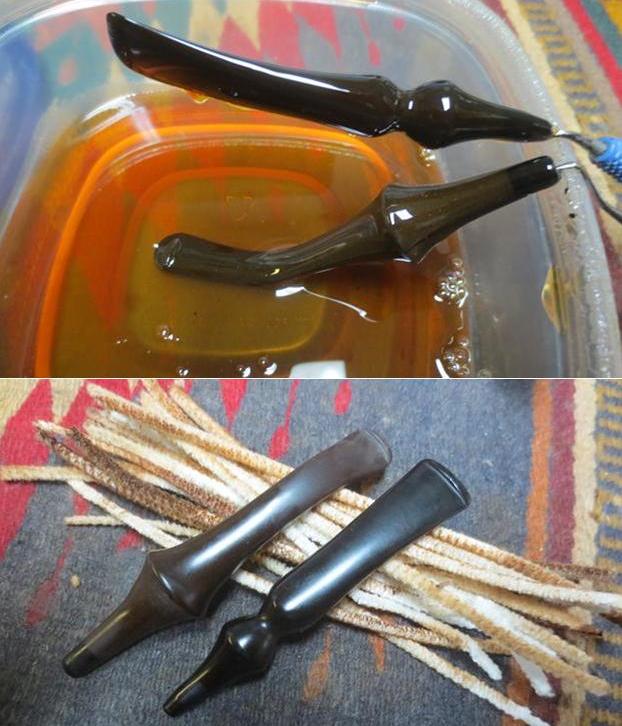
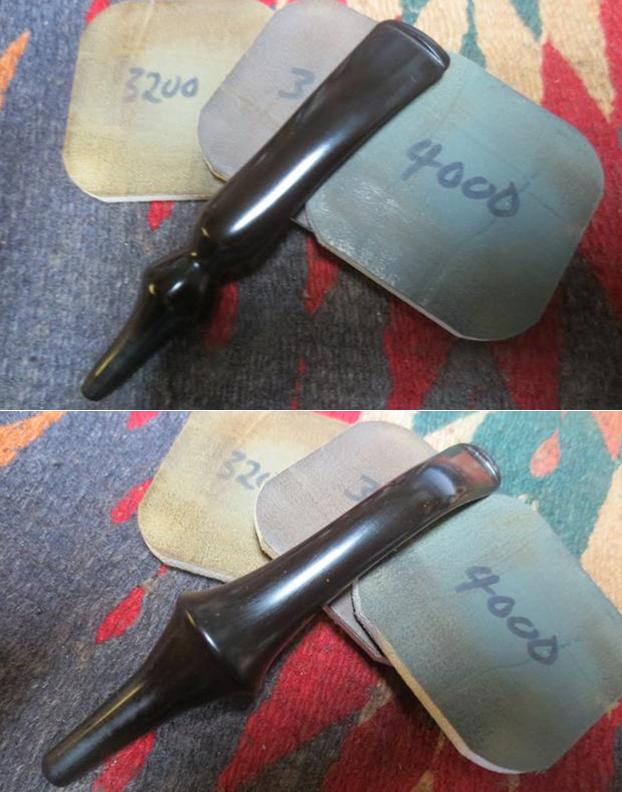
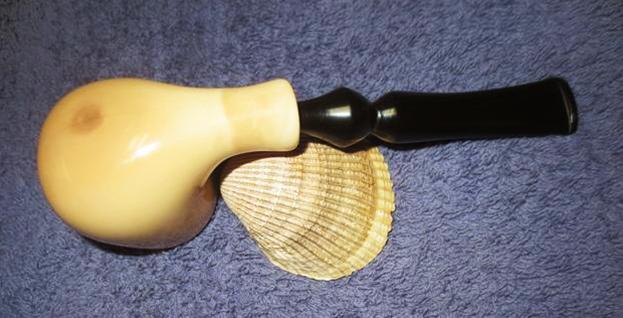
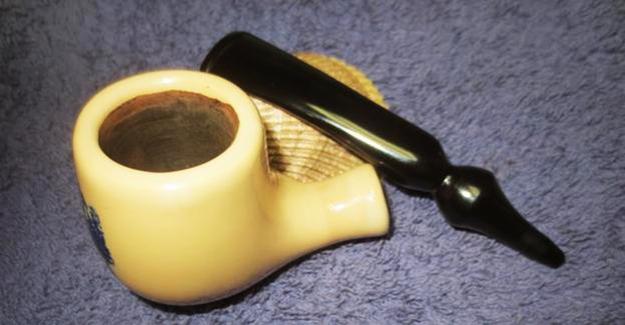
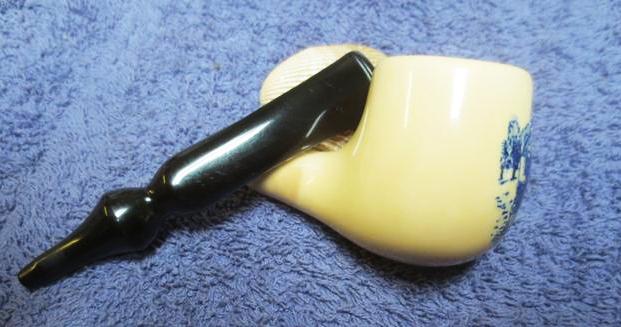
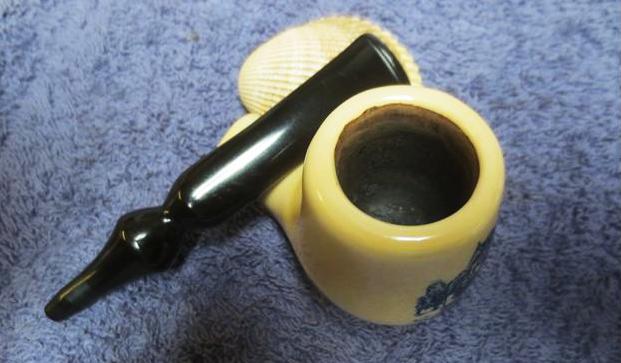
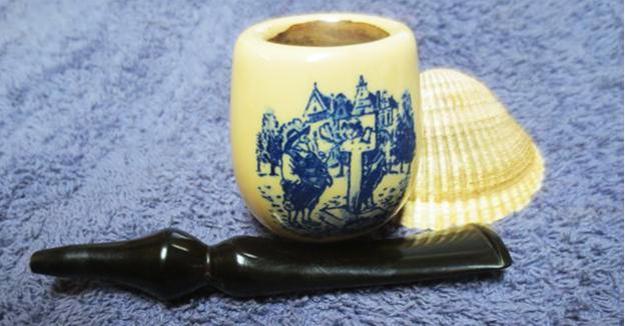
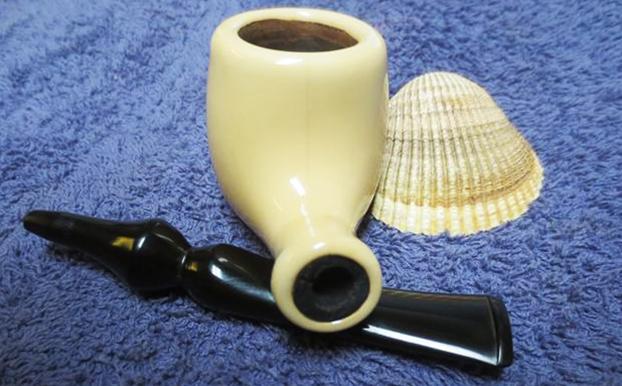
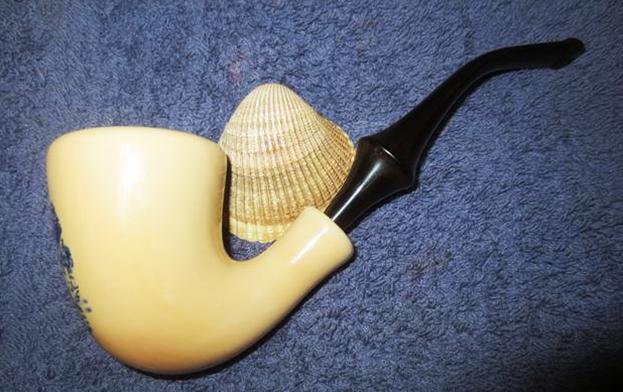
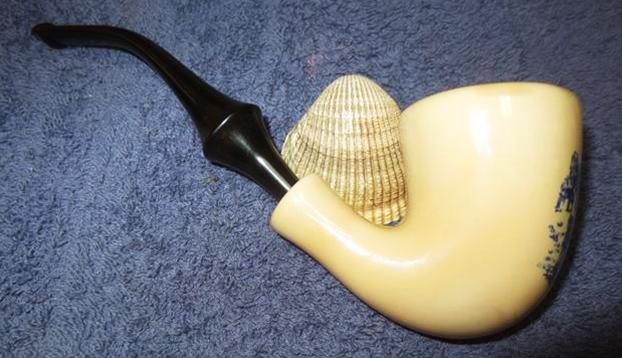
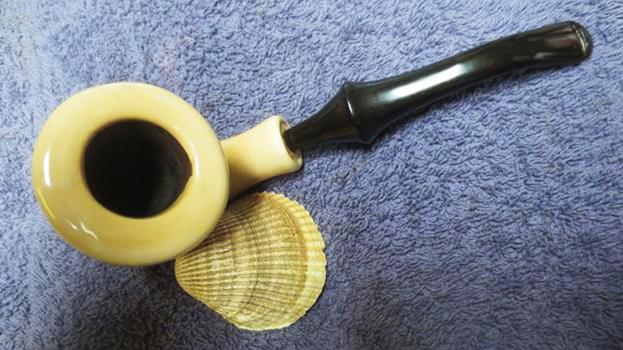
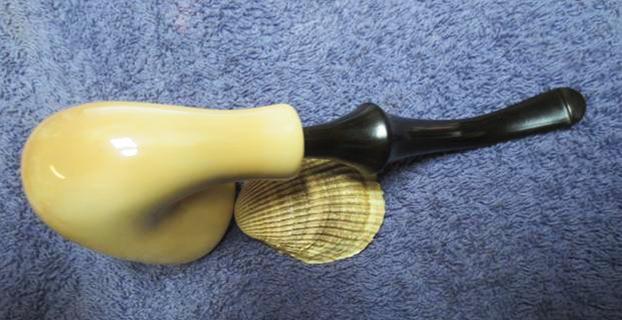
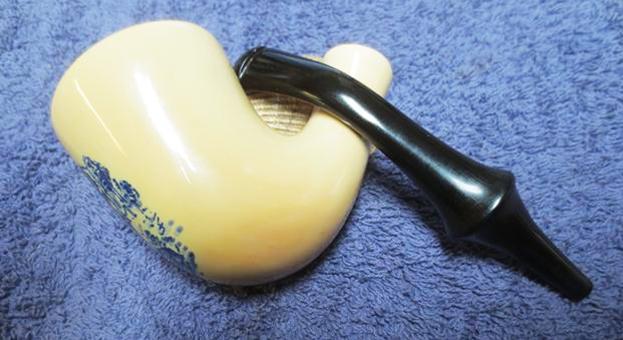
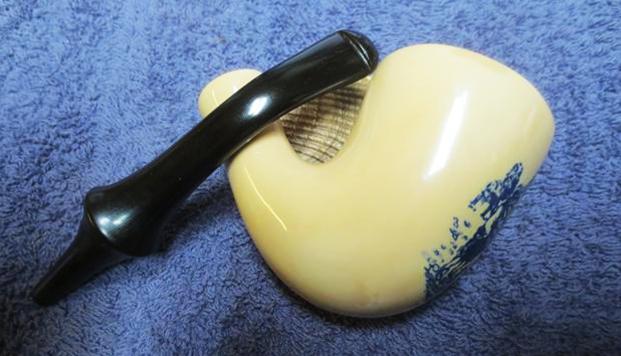
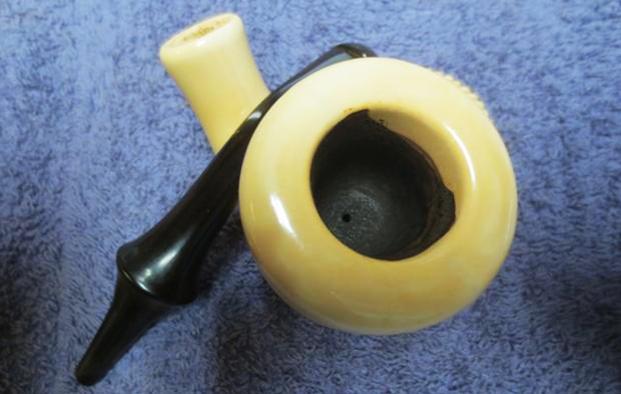
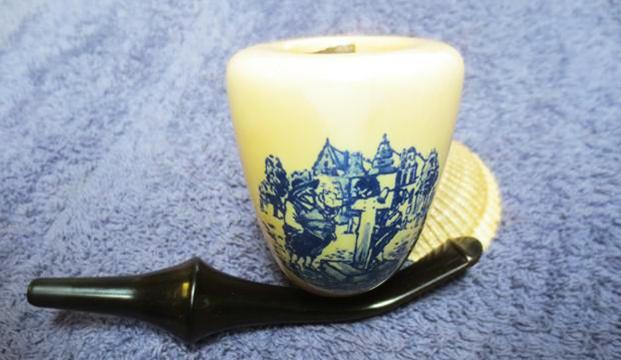
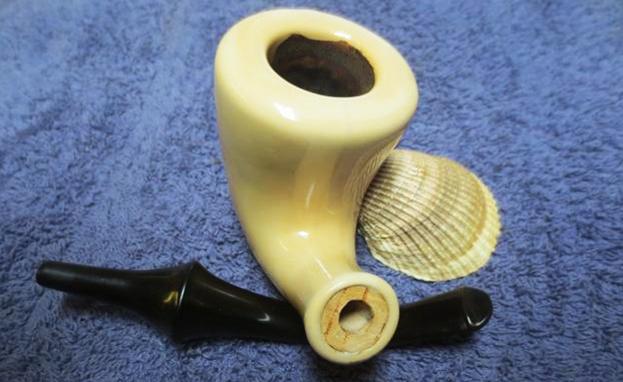
This pair of double walled ceramic pipes was originally white with a blue Delft style scene painted and cured into the ceramic on the front of both bowls. They both have a painting of a scene that is a famous picture from Troost Tobacco where one man is in the stocks and another, rather portly man is helping him smoke a pipe. There is no other stamping on either pipe. Both pipes have begun to develop a nice patina as the bowls darken from smoking them. The stem on the smaller of the two (photos 1-4) was a typical freehand stem like many I have seen and used in the past. The one on the larger calabash (photos 5-8) shaped one is like the stems on WDC Wellington’s – kind of a faux p-lip with the airway coming out the end of the button rather on the top like a Peterson. The smaller pipe had a rubber stopper in the end of the shank to hold the stem in place and the larger one had a crumbling cork stopper. Both pipes were very dirty with cake in the bowls and oxidation on the stem surfaces. The pipes were made by an old Dutch pipe making house called Goedewaagen. Here is the link to their website. Have a look at the history page on the site. It gives a detailed background on the Company that made the pipes. Even though the link is in Dutch it is worth translating with Google Translate. http://www.goedewaagen.nl/goedewaagen/. I have included the cutaway diagram of the double walled ceramic pipe to help give and idea of the concept and construction of the pipe.Both pipes came to me from the estate of a Vancouver pipe smoker whose widow left them with RJ Clarke’s Pipe Shop after he died. I was asked to clean them up and sell them for the shop as it has since closed. I decided to work on them together as they will need the same kind of cleanup and restoration. The photos below show both pipes as they were when I brought them to my work table. I took photos of each of the bowls to show the cake lining the walls and the condition of the bowl and rim top. Both had a thick cake and the airway at the bottom of both bowls was half plugged making the airflow quite restricted.The paintings on both bowls were identical – a painting of a scene that is a famous picture from Troost Tobacco where one man is in the stocks and another, rather portly man is helping him smoke a pipe. As mentioned above both shanks used a stopper in the mortise to hold the stem in place. The smaller pipe used a rubber stopper and the calabash style pipe had a cork stopper. The rubber one was in good condition while the cork one was crumbling and pushed into the mortise. The photos below show the two stoppers.The stems were quite different in terms of condition. It appeared to me that the one on the smaller pipe was better quality vulcanite than the other one and it was barely oxidized. There was light tooth chatter on the stem. The stem on the calabash pipe was heavily oxidized and the tooth chatter and marks were heavier. I put both stems in the Before & After Pipe Stem Deoxidizer bath to soak overnight. I knew that it would work well on the stem from the smaller pipe as it was less oxidized. The heavier oxidation on the calabash stem would be harder because the bath was getting less effective after soaking and cleaning 80-90 stems in it.I scraped out the cake in both bowls using the Savinelli Fitsall Pipe Knife. I removed all of the cake and sanded the inside of the bowls with 220 grit sandpaper to remove the remnants. I used a dental pick to clean out the clogged airway at the bottom of each bowl.The rubber stopper on the smaller pipe was in good condition and still usable. The cork stopper was crumbling and I could hear pieces rattling in between the double walls of the ceramic pipe. I used a pen knife to clean out the pieces of cork. I cleaned both bowls under warm running water. I filled the space between the two walls of both pipe with hot water and shook it to loosen any residual tars or oils that had collected in those spots. I shook the water out and repeated the cleaning until the shanks and insides of both pipes were clean. I scrubbed the outside of the bowl and the inside of the bowl with hot water and a light detergent to remove the dirt on the glazed ceramic finish. While I was cleaning the bowls I remembered that I had inherited a bag of corks that were drilled or Le Peltier ceramic pipes. I took one out and was glad that it was the proper diameter for the calabash.  I dried out the shank and the bowl with paper towels and wetted the cork to cause it to swell. The fit in the mortise was perfect. I used a dental pick to carefully lift it out of the mortise and coated it with all-purpose glue. I pressed it in to the mortise until the surface of the end of the cork was the same distance from the outer edges as the rubber stopper on the other pipe. I set the bowl aside to let the glue dry before trying the stem on the pipe. I took photos of both bowls to show how clean they were at this point in the process. By this time the stems  had been soaking since the night before. I took them out of the bath and held them over the container to let the thick solution drip clean of the stems. When the majority had dripped clean I dried them off with a rough cotton cloth the wipe off as much of the oxidation on the rubber as possible in the drying process. I cleaned the airway on both stems with alcohol and pipe cleaners until the deoxidizer and the tars and oils in the stems was removed and they were clean. In retrospect I should have cleaned them before soaking them but hindsight is always better anyway. The stem with the lighter oxidation came out almost perfect. The other one was certainly better than before the soak.The stems looked good but more work would need to be done before the final black gleam was back. I buffed both stems with red Tripoli to remove the remaining oxidation. I sanded both stems with 220 grit sandpaper to remove the tooth chatter from both sides near the button. I did more work on the stem from the calabash to remove the heavier oxidation of the vulcanite and to reshape the button. Once I was finished with the sanding I buffed both stems again with the red Tripoli. After buffing them I polished them with micromesh sanding pads – wet sanding them with 1500-2400 grit pads and wiping them down after each pad with Obsidian Oil to give the next pad more bite when I sanded. I dry sanded them with 3200-12000 grit pads and again wiped them down with the oil after each pad. After the final pad I wiped them down a final time with the oil and set them aside to dry. I put the stem back on the bowl and buffed the entire pipe with Blue Diamond on the buffing wheel to polish the stem and the bowl. I used a soft touch on the bowl as I did not want to damage the paintings on the bowl fronts of the ceramic polish in any way. I buffed stem hard to work over the remaining small scratches and minute oxidation that was still on the rubber of both stems. It took some work but they cleaned up nicely. I gave the bowls and the stems multiple coats of carnauba wax buffed them with a clean buffing pad to raise a shine. I hand buffed the pipes with a microfiber cloth to deepen the shine. The two double walled bowls with the Delft style painting on the front and the developing brown patina combined with the black vulcanite stems present a beautiful pair of pipes. I find these interesting double walled Goudewaagen ceramic pipes a pleasant change to the briar pipes that I normally work on. The finished pipes are shown in the photos below. The dimensions of the smaller brandy shaped pipe are Length: 6 inches, Height: 1 ¾ inches, Bowl diameter: 1 ½ inches, Chamber diameter: 7/8 inches. The dimensions of the larger calabash pipe are Length: 7 inches, Height: 2 ½ inches, Bowl diameter: 2 inches, Chamber diameter: 7/8 inches.I will be adding both of these pipes to the rebornpipes store shortly. I already have several of these pipes so I will be passing these on to others to try. Thanks for looking.

Restoring an Edwards Hexagon Dublin Sitter 97


Blog by Steve Laug

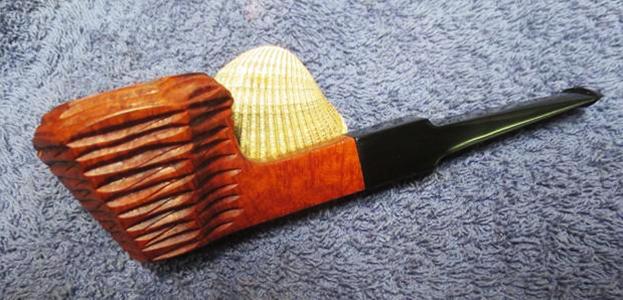
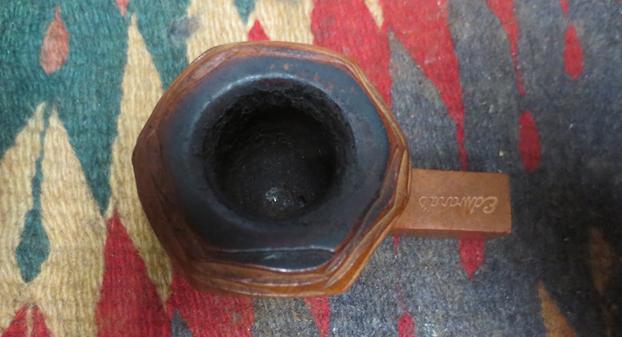
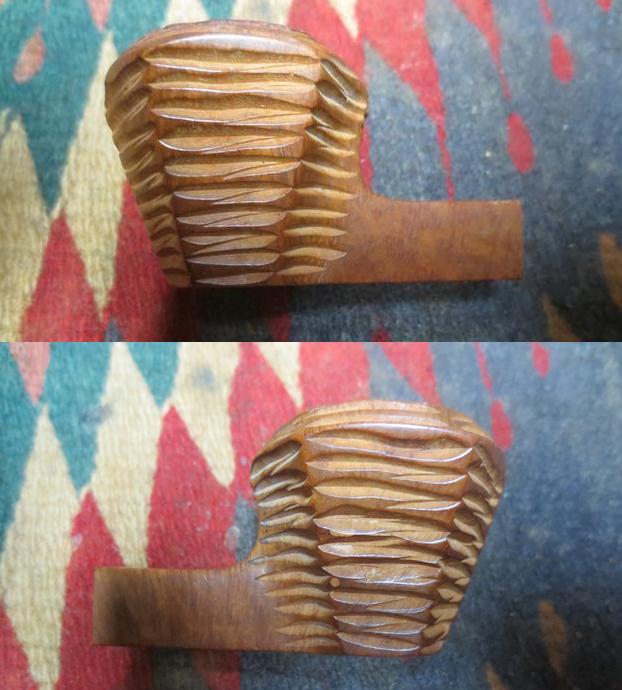
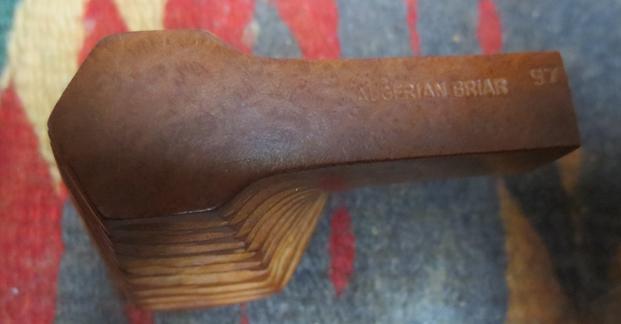
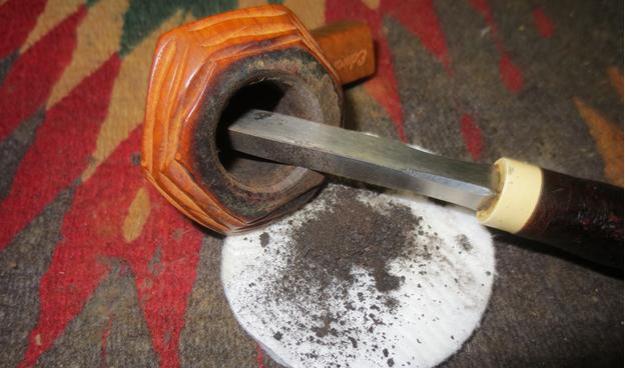
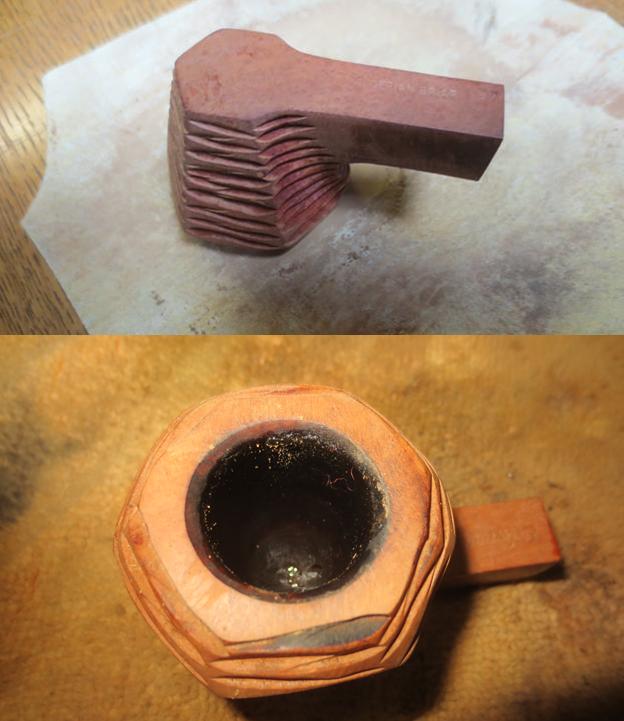
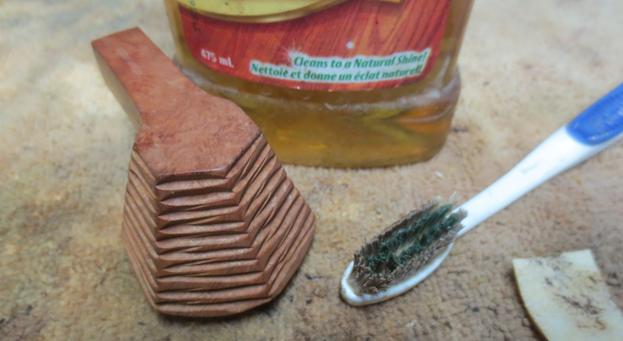
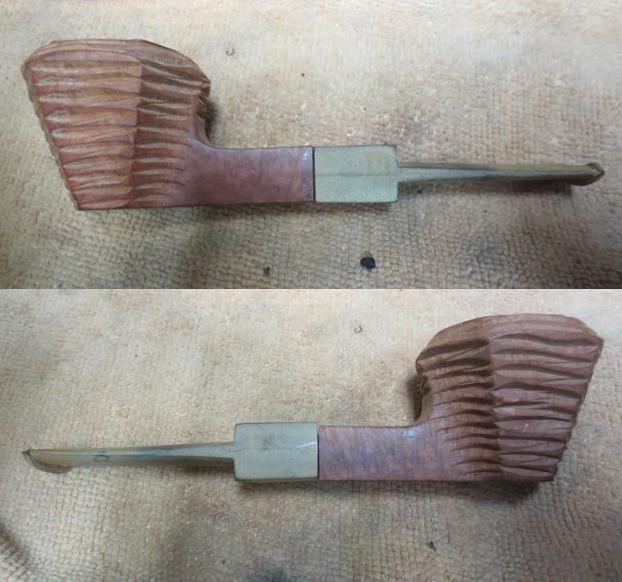
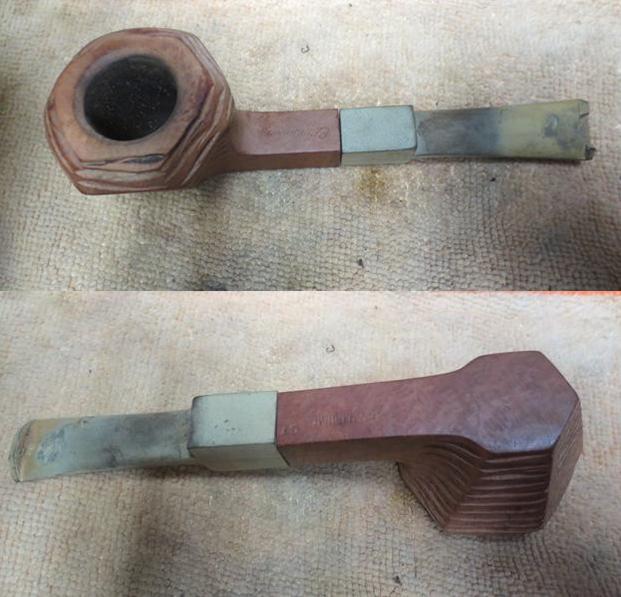
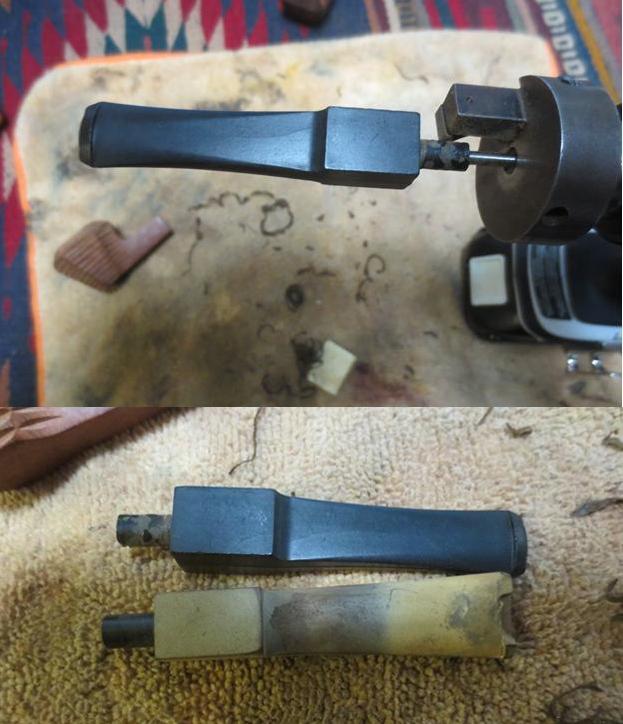
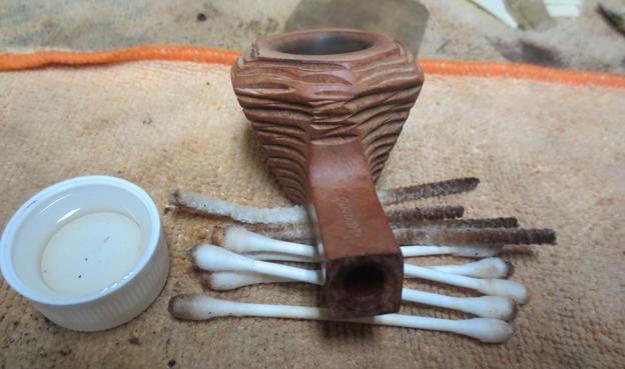
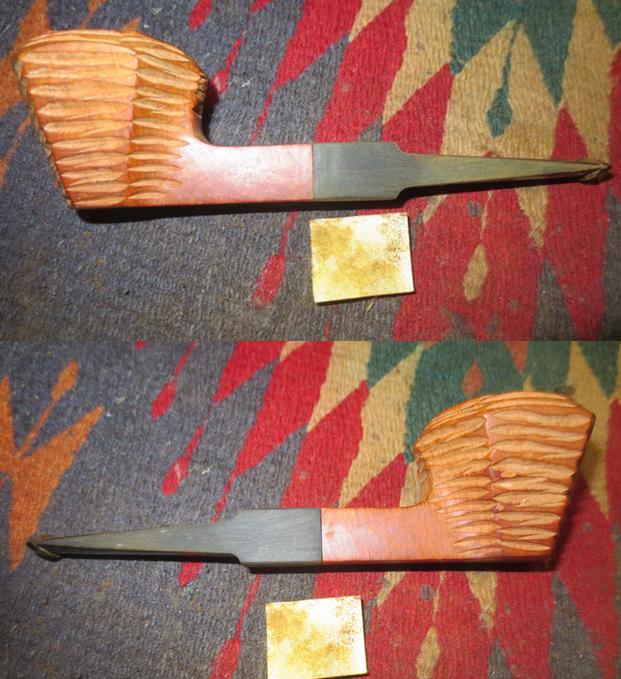
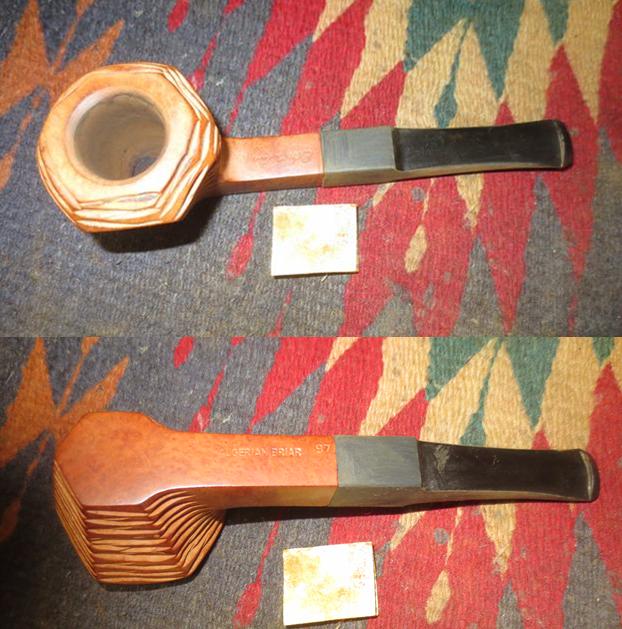
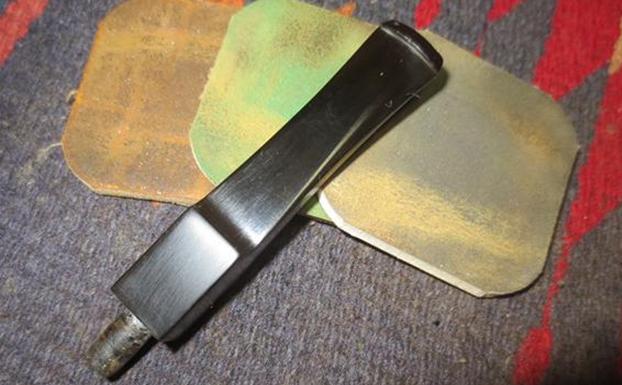
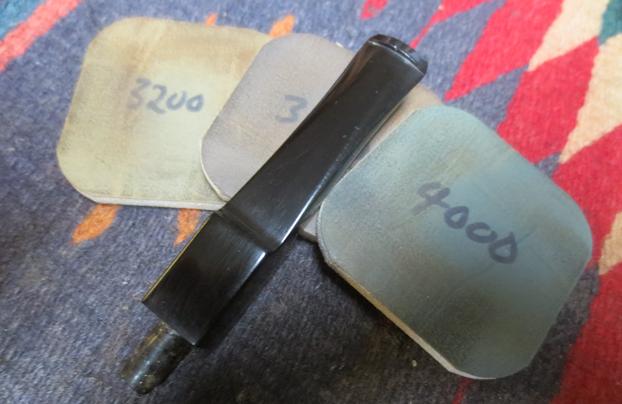
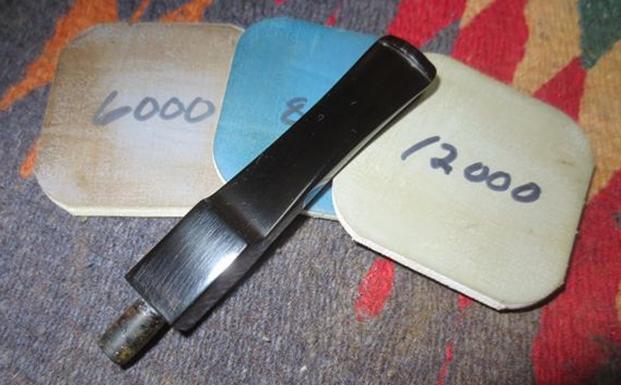
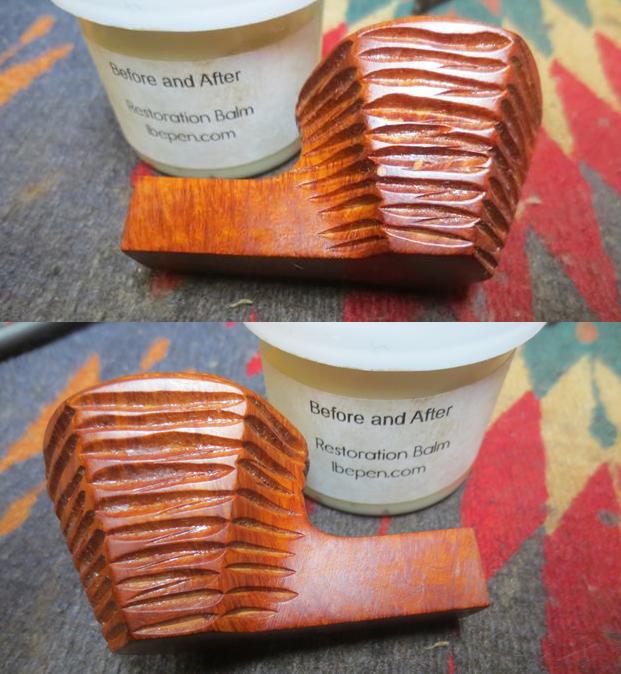
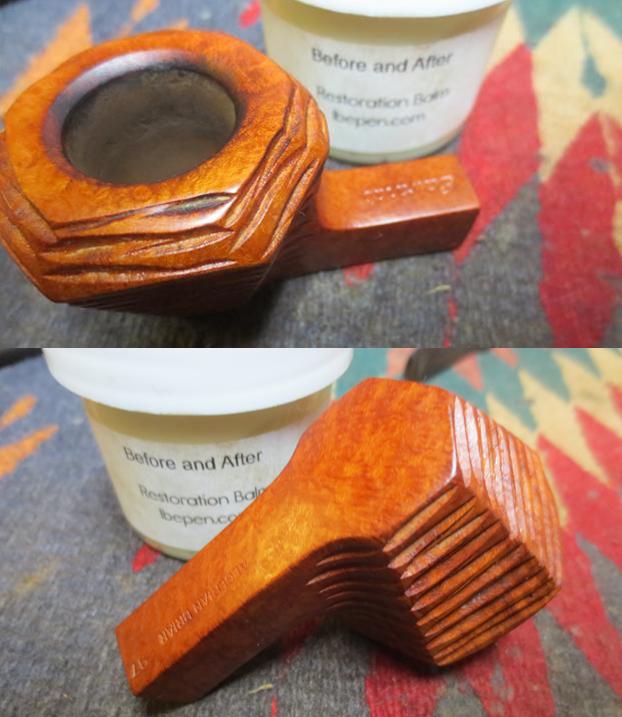
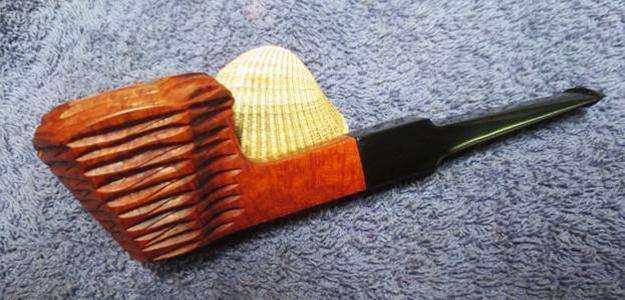
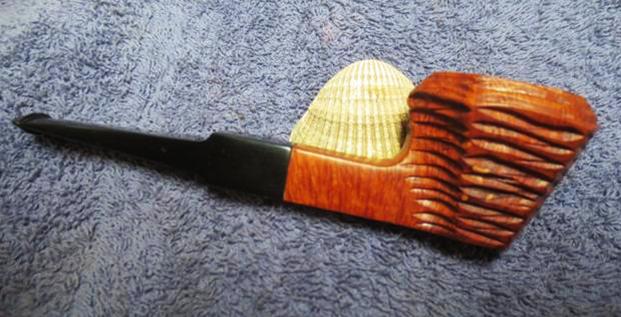
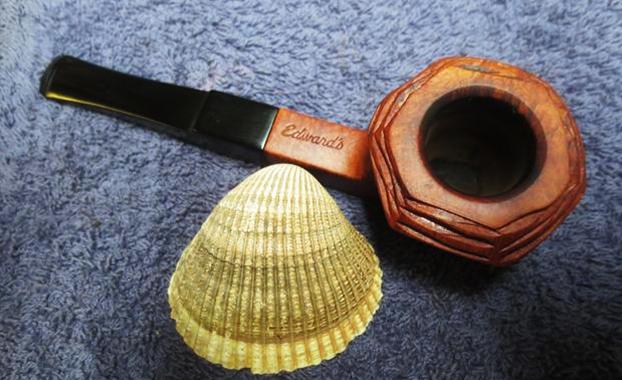
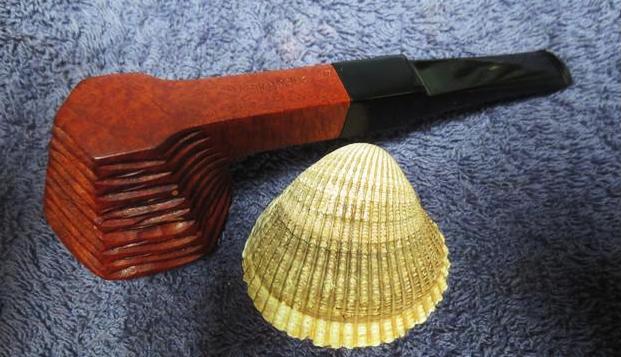
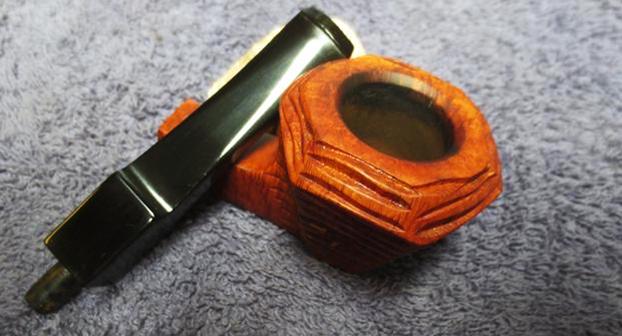
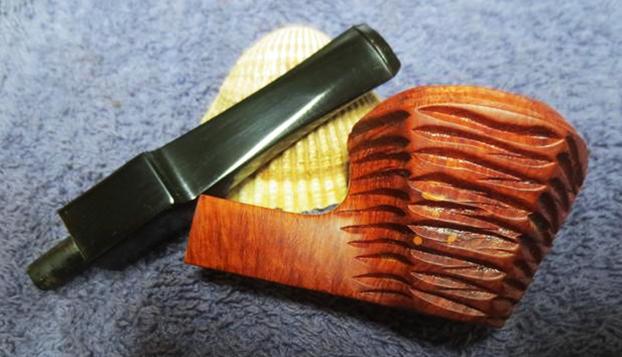
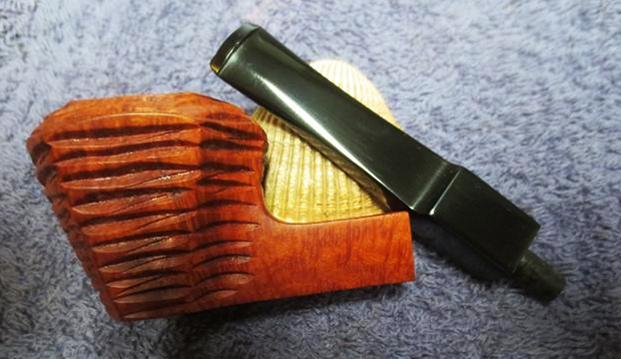
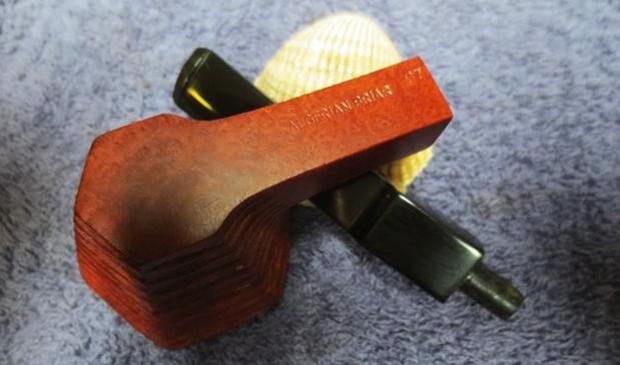
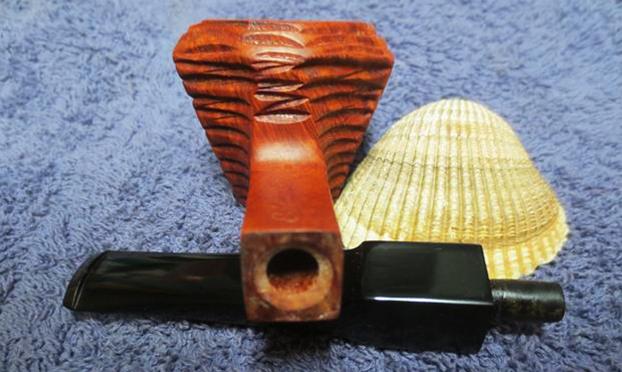
I got an email a while back from a friend who wanted me to work over an old Edwards that he had picked up. He had bought one from me in the past and had now found another one. It was a Hexagonal Dublin that had carved grooves on the sides of the bowl from the rim down to the base. The shank is square sided and is smooth. It is stamped Edwards on the top side of the shank. On the underside of the shank it is stamped Algerian Briar followed by the shape number 97. He had found it in a local antique shop I think. It had a thick cake in the bowl and the lava flowed over the top of the rim and down to the second layer of the carving on the rim. The shank was dirty and also filled with tars. The stem was a heavily oxidized replacement stem with the entire underside of the button broken off. Because it was a replacement I decided to put another replacement stem on the shank. I pulled the stem off the shank and took photos of the bowl. The grooves in the carving were dirty and the natural finish was dirty and damaged. I forgot to put the stem back on the shank and take photos. I was intent on cleaning up the bowl. I scraped out the carbon cake in the bowl and off the rim top with a Savinelli Fitsall Pipe Knife. I carefully removed the lava from the rim of the bowl.I lightly topped the bowl on the topping board with 220 grit sandpaper to remove the thick lava coat on the rim. I did not want to take off too much of the briar as it looks like an interesting stack of briar sheets from the top down.I scrubbed the bowl and rim with Murphy’s Oil Soap and a tooth brush to get all of the grit and dust out of all of the grooves and edges of the briar stack. I rinsed the pipe with running water to rinse off the dust and the soap and scrubbed it under the running water to leave behind a clean bowl. I dried it off with a clean cloth. Then I remembered I had not taken photos of the pipe with the old stem in place so I slid the stem into the shank and took the next series of photos. Not only was the replacement stem badly oxidized it also had a large chip out of the button across the top side of the stem. It was poorly fit to the shank as well. You can see from the photos that it is larger in diameter than the shank itself. It was definitely going to be replaced. I put aside the damaged replacement stem and took a new square stem blank out of my box of stems. I turned the tenon on the PIMO tenon turning tool on my cordless drill to take down the tenon to fit the shank of the Edwards pipe. Once I had the tenon turned I wiped it down with a damp cloth and took a picture of the new stem next to the one I was replacing.I put the new stem on the shank to see how it fit against the shank end. I needed to do quite a bit of sanding on the sides of the stem to get the flow along the sides, top and bottom smooth and even.I cleaned out the internals of the pipe – the mortise and the airway in the shank using alcohol, cotton swabs and pipe cleaners to remove all of the oils and tars that collect there. I cleaned out the airway in the new stem to remove the dust from turning tenon.I sanded the stem to reduce the size on all sides with 220 grit sandpaper. When I got close I put it on the shank and carefully sanded it until the transition between the shank and the stem was smooth. I sanded out the casting marks and scratches on the stem with 220 grit sandpaper. There were quite a few scratches left behind by the work I did to fit it to the shank. Once I had the majority of deep scratches sanded out, it was time to work on it with micromesh sanding pads. I used the micromesh sanding pads to polish the stem. I wet sanded it with 1500-2400 grit pads and wiped it down after each pad with Obsidian Oil to give the next pad more bite when I sanded. I dry sanded it with 3200-12000 grit pads and again wiped it down with the oil after each pad. After the final pad I wiped it down with a final coat of oil and set it aside to dry. In the last photo of the three below you can still see some light scratches in the vulcanite on the saddle part of the stem. These would need to be buffed out on the wheel. (I polished the tenon as well as can be seen in the photos below. Each photo shows it progressively getting a shine.) With the stem almost finished I took it off the shank and used the Mark Hoover’s Before & After Restoration Balm on the briar. I rubbed it into the grooves on the bowl sides with my finger and a cotton swab. I wanted it to go deep in the grooves to further test the effectiveness of the product. This would be a good test as it is a totally different finish than any of the other pipes I have worked on with the product.  Mark had said that the product can be used on briar or stems – whether vulcanite, acrylic or horn. He said it was designed to pull the dirt off of the briar as well as polish it. He added some anti-oxidants to keep the briar from getting damaged from both UV rays and water. Once I had all the grooves and surfaces of the bowl covered I worked it into the finish with a cotton pad to see if it pulled out the dirt. It seemed to work very well and I took the following photos to show the results. So far the product seems to be delivering as promised. I will continue using it for a while and see how it works in a variety of settings before I give an opinion of the product. I put the stem back on the bowl and buffed the entire pipe with Blue Diamond on the buffing wheel to polish the stem and the bowl. I used a soft touch around the stamped areas as I did not want to flatten them or polish them away. I buffed stem hard to work over the remaining scratches in the rubber. It took some work but they are smoothed out. I gave the stem multiple coats of carnauba wax buffed it with a clean buffing pad to raise a shine. I gave the bowl multiple coats of Conservator’s Wax and rubbed it into the sandblast and the plateau areas. I buffed it with a shoe brush and then with a clean buffing pad to raise the shine. I hand buffed the pipe with a microfiber cloth to deepen the shine. The interesting carved finish on the bowl with its natural oil finish and the new stem combine to present a beautiful pipe. The pipe has been given a total makeover and the new stem fits the shape very well. The finished pipe is shown in the photos below. I think William is going to really like the new look and feel of this pipe. I have one more of his to finish up and then the pair will go back to him in the mail. Thanks for looking.

Restemming and Reconditioning a Rungsted Mariner by Preben Holm


Blog by Steve Laug

I don’t know when I learned that the Rungsted line of pipes was another line that Preben Holm carved. But I learned that he made several lines outside the Ben Wade contract pipes he was producing for Snug Harbor/Lane. This was confirmed when I looked online and found a thread on PipesMagazine.com. The discussion covered a brand called Britta Bech and one of the members there happened to mention and confirm what I already knew about the Rungsted line. From my memory and the speaker’s the pipes were mostly carved in the mid to late 70’s or early 80’s during the height of the Danish Freehand pipe craze in the US. The speaker there said that though some refer to these as seconds he did not think that was accurate and that really it was a totally separate line from Preben Holm. I would agree with his assessment on this. I am pretty certain looking at the various Rungsted pipes that I have worked on that there are no flaws. They all combine both smooth and sandblast finishes and present a really interesting finished pipe. (mlaug on pipesmagazine.com http://pipesmagazine.com/forums/topic/preben-holm-info-needed).

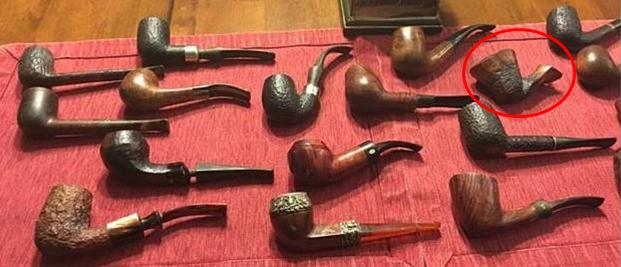
This particular pipe came in a lot that Jeff and I purchased from a fellow in Idaho. Jeff had purchased the pipes shown in the photo below from him. The Rungsted is circled in red at the top right side of the photo. The photo came because I asked Jeff to send me a picture of the pipes he picked up. I have written about the find on a previous blog that you can read if you are interested at the link that follows: https://rebornpipes.com/2016/10/07/a-good-day-hunting-orchestrated-between-british-columbia-and-idaho/ 

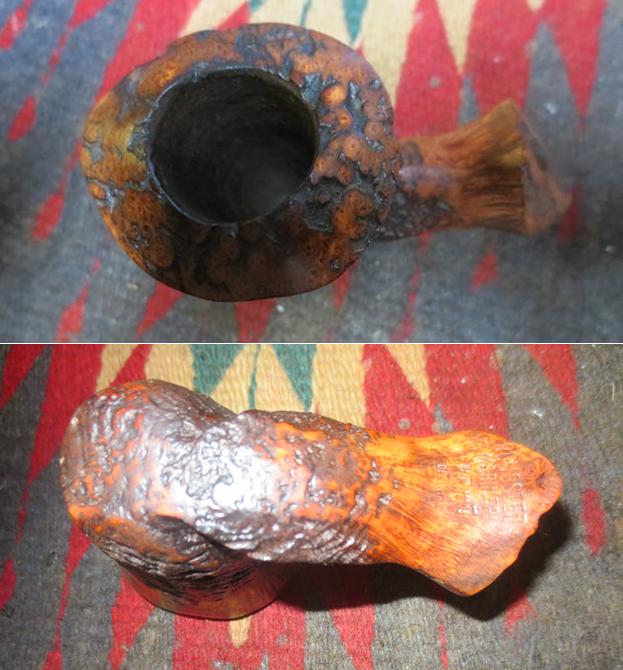
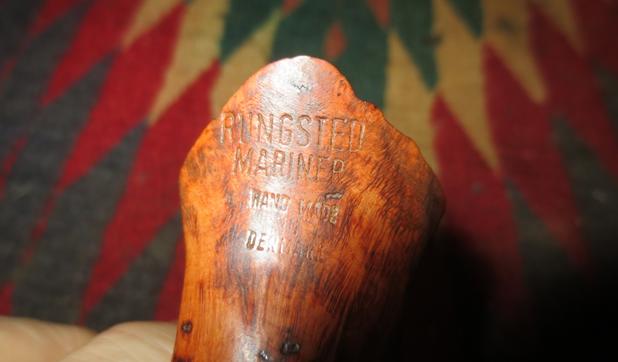
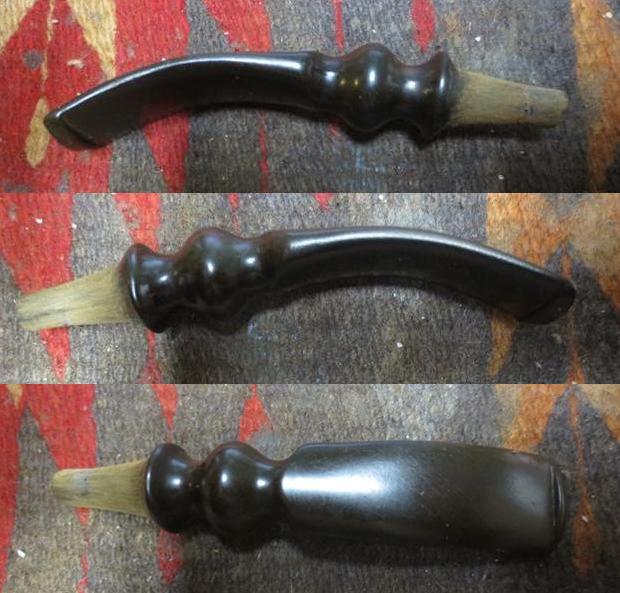
Jeff did a great job cleaning off the debris and grime on this old bowl. It did not have a stem when it came to us, one would have to be made to fit it. He reamed it with a PipNet reamer and smoothed the walls of the bowl with a Savinelli Fitsall pipe knife. He scrubbed out the mortise and the airway in the shank and the stem with alcohol, cotton swabs and pipe cleaners. He scrubbed the exterior of the bowl, rim and shank with a tooth brush and Murphy’s Oil Soap to the oils and tars on the bowl, rim and shank. He rinsed it under running water. He dried it off with a soft cloth. Once the grime was removed the finish underneath was in stellar condition. The rich patina of the older briar was a variegated finish of smooth and sandblast looked great. I took photos of the bowl to show its condition before I started my work on it. The shank of the pipe was stamped on the smooth underside. It read RUNGSTED over MARINER over Hand Made in Denmark. The stamping was quite legible, though the lower portion was lighter than the upper.I had a stem in my can of stems that I had started shaping for another pipe some time ago and abandoned. It needed to have a little more of the tenon end taken down to fit in the mortise but it had the correct look for the pipe. I took pictures of the stem before I did the work to make it fit.I sanded the tenon end down with 220 grit sandpaper until it fit snugly in the shank. I put it in place on the pipe and took the next set of photos. Lots of sanding to do, but it gives an idea of what the pipe will look like when it is finished. In my ongoing experiment with Mark Hoover’s Before & After Restoration Balm I am using it on this mixed finish pipe. It should be a good test of how it works in the transitions between the smooth and sandblast portions as well as on the plateau on the rim and the shank end. I have used it individually on each of those finishes but not on a pipe that had all three features. Mark describes the product being designed for use on briar or stems – whether vulcanite, acrylic or horn. It was formulated to pull the dirt off of the briar as well as polish it at the same time. It includes anti-oxidants to keep the briar from getting damaged from UV rays and water as well as something that enlivens the briar. I worked it into the sandblast portions with my fingers and rubbed it on the smooth portions. I wiped it down with a cotton pad to see if it pulled out the dirt. It worked very well on all the different parts of this bowl. I took the following photos to show the results. As always, I will continue using it for a while and see how it works in a variety of settings before I give an opinion of the product. I buffed the bowl with a clean buffing pad to polish the briar and see what the finished bowl would look like and if areas that needed a bit more attention. The buffed bowl can be seen in the photos that follow. It has a rich patina that really has a deep glow to it. The two finishes really flow into each other and give the pipe a warm look. I sanded out the casting marks and scratches on the stem with 220 grit sandpaper. I opened the slot in the end of the button with needles files and sandpaper to make it easier to push a pipe cleaner into the stem and shank. I polished it with micromesh sanding pads – wet sanding it with 1500-2400 grit pads and wiping it down after each pad with Obsidian Oil to give the next pad more bite when I sanded. I dry sanded it with 3200-12000 grit pads and again wiped it down with the oil after each pad. After the final pad I wiped it down with a final coat of oil and set it aside to dry. I put the stem back on the bowl and buffed it with Blue Diamond on the buffing wheel to polish the stem and the smooth portions of the briar. I used a soft touch around the stamped areas as I did not want to flatten them polish them away even more that they already were. I gave the stem multiple coats of carnauba wax buffed it with a clean buffing pad to raise a shine. I gave the bowl multiple coats of Conservator’s Wax and rubbed it into the sandblast and the plateau areas. I buffed it with a shoe brush and then with a clean buffing pad to raise the shine. I hand buffed the pipe with a microfiber cloth to deepen the shine. The variegated finish on the bowl and stem combine to present a beautiful pipe. The pipe really does look fresh and new to me and I like the finished look with the new stem. The dimensions of this pipe are Length: 6 1/2 inches, Height: 2 inches, Bowl diameter: 2 inches, Chamber diameter: 7/8 inches. The finished pipe is shown in the photos below. I will soon be adding it to the rebornpipes store if you are interested in adding to your collection. It is a beauty and will serve someone very well. Email me at slaug@uniserve.com or send me a message on Facebook. Thanks for looking.

Restoring a Savinelli Made Estella 614 Full Bent


Blog by Steve Laug

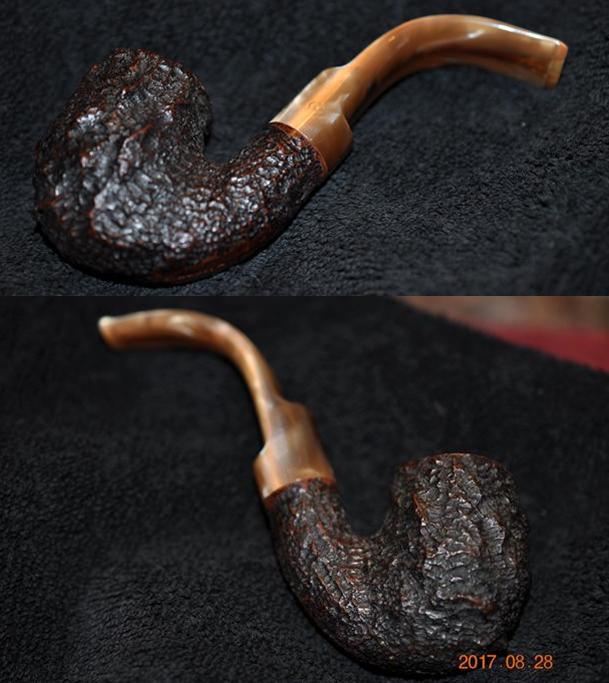
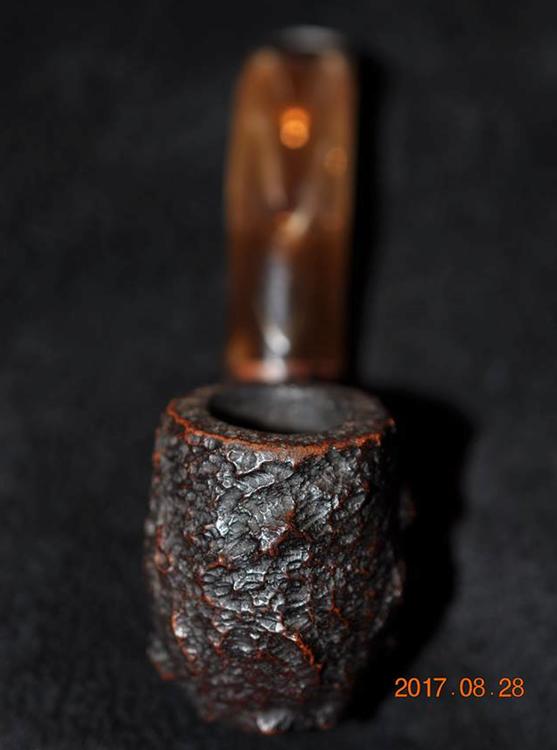
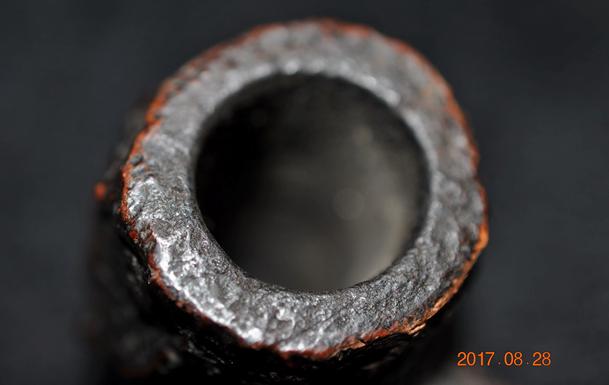
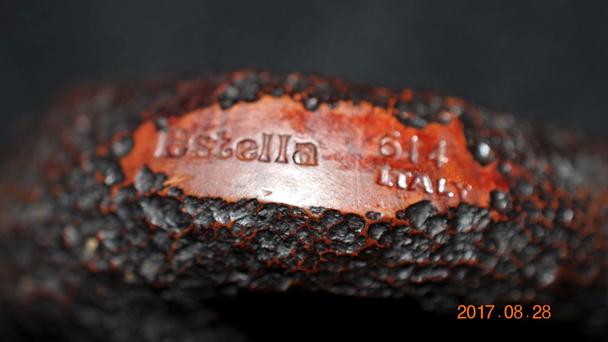
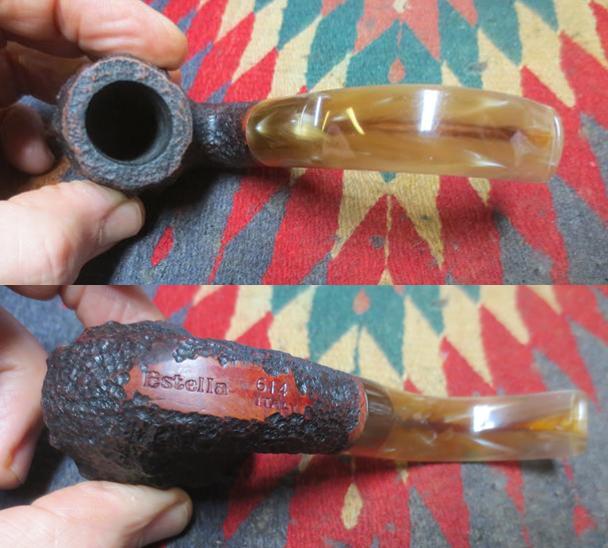
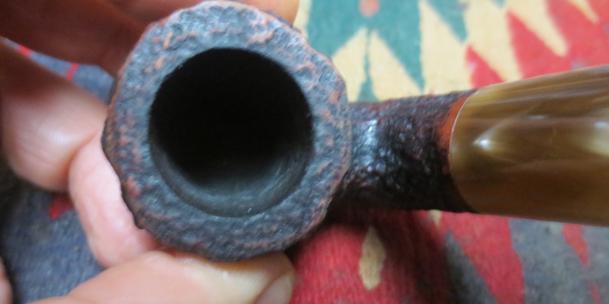
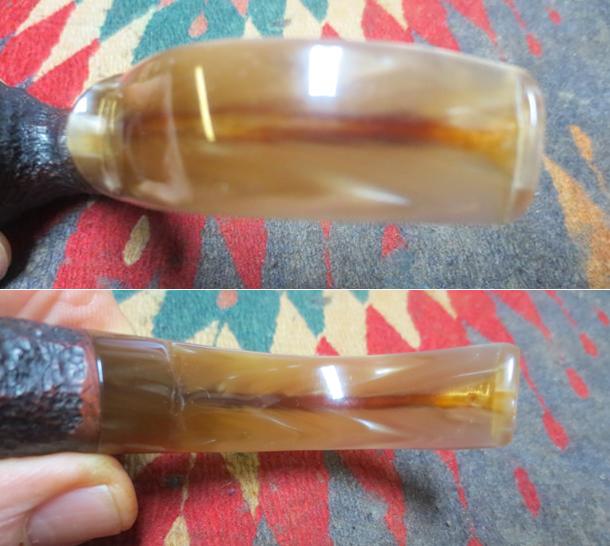
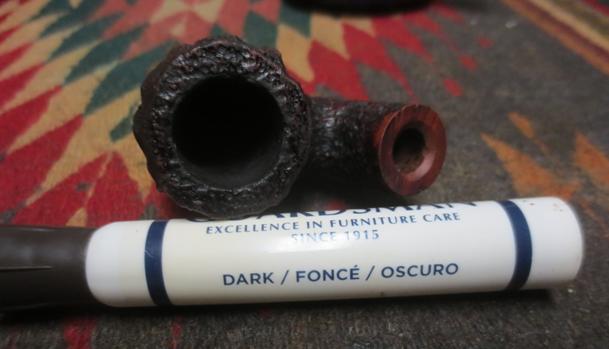
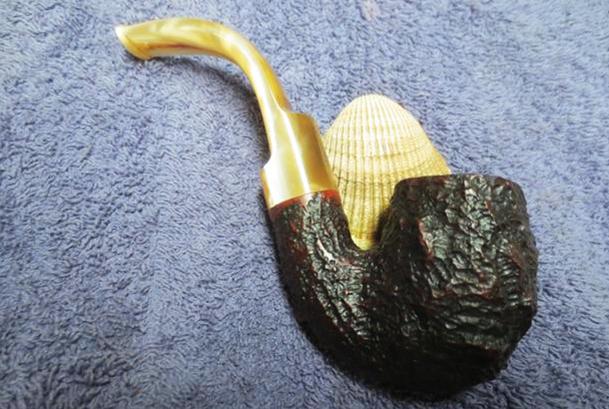
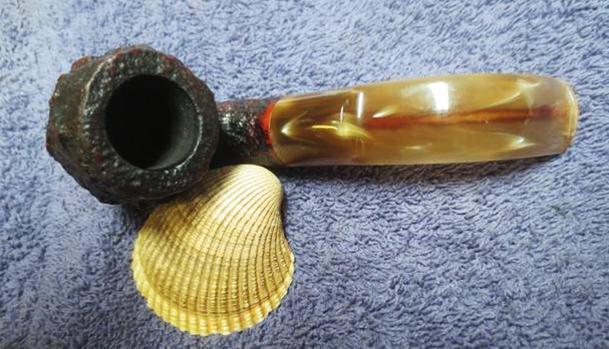
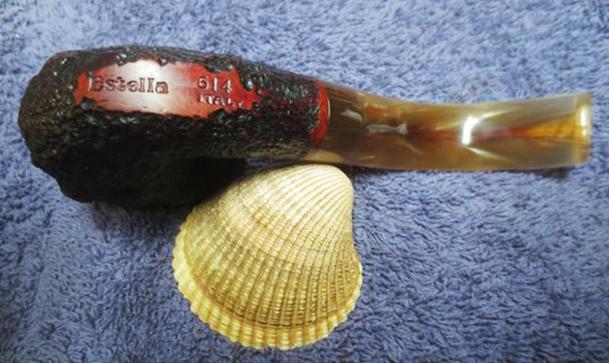
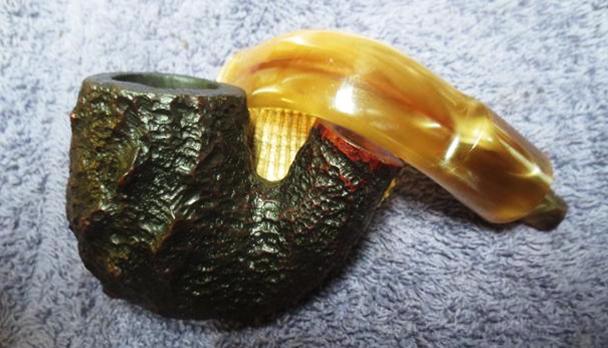
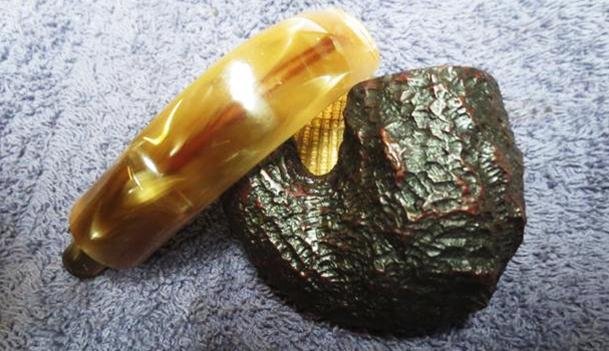
I have always liked the rocky rusticated finish on the Savinelli Made Estella pipes. I have worked on many of them over the years and by and large they seem to have been a well-loved, good smoking and almost indestructible pipe. The finish is a rustication that almost looks like a “blastication” (rustication then sandblasted). It is knobby and very tactile. It feels good in the hand. I have worked on panels, billiards and bulldogs but never a full bent. This one was in good shape. The finish was dirty but was undamaged. The inner edge of the rim was clean and the outer edge had some wear from knocking it out against hard surfaces. There was a light cake in the bowl and the rustication on the rim top was covered with a thick coat of lava. The Lucite stem had tooth marks on the top and the underside of the stem at the button. There was a dark tar stain in the airway in the stem.  The button was in great shape. Jeff took the next series of photos to show the condition of the pipe before he cleaned it. The next photo shows the rim top and you can see the tar buildup in the rustication of the rim. It is almost smooth there is so much tar.The next photo shows the stamping on the underside of the bowl and shank. It reads Estella followed by the shape number 614 over Italy. Often there is a Savinelli Shield logo but it is not on this pipe. There is also an E stamped on the left side of the staggered saddle stem. The next two photos show the tooth marks on the top and underside of the stem at the button. There was one deep mark on each side of the stem at the button.Jeff did an amazing job cleaning up the light issues on this pipe. He reamed it with a PipNet reamer and cleaned up the remnants with a Savinelli Fitsall pipe knife. He scrubbed out the mortise and the airway in the shank and the stem with alcohol, cotton swabs and pipe cleaners. He scrubbed the exterior of the bowl, rim and shank with a tooth brush and Murphy’s Oil Soap to remove the dust of the years. He removed the lava coat on the rim surface so that it was clean. He was able to clean up the outer edges of the rim so that the damage was removed and matched the rest of the rustication. He rinsed it under running water. He dried it off with a soft cloth. Once the dust was removed it was clear that the finish underneath was in stellar condition. The random style of the rustication and the high spots gave it a very rough feel that was like rock. Very well carved. I took photos of the pipe to show its condition before I started my work on it. The rim looked really good. The grooves and carved surface was very clean and the lava that had filled in all of them was gone. The bowl was clean as well.The stem cleaned up well. The majority of the tar stains in the airway came out with the scrubbing with alcohol. What was left was probably not going anywhere. The tooth marks on both sides were dents that were not too deep and could be sanded out.I stained the rim top and the outer and inner edges of the bowl with a dark brown stain pen to blend it in with the colour of the rest of the pipe. There was ring of smooth briar at the end of the shank where the stem sat against it.In my ongoing experiment with Mark Hoover’s new product that he calls Before & After Restoration Balm I used it on the blastication of the bowl and shank. Mark is the creator of the Before & After Pipe Stem Deoxidizer and Polishes.  He says that the product can be used on briar or stems – whether vulcanite, acrylic or horn. He said it was designed to pull the dirt off of the briar as well as polish it. He added some anti-oxidants to keep the briar from getting damaged from both UV rays and water. I chose to use it on this pipe because of the roughness of the rusticated finish on this bowl. I rubbed it into the finish on the bowl and shank with my fingers and worked it into the finish with a shoe brush to see if it pulled out the dirt. It seemed to work very well and I took the following photos to show the results. I will continue using it for a while and see how it works in a variety of settings before I give an opinion of the product. I used a sharp knife to bevel the airway in the tenon. Funneling the airway at that point adds to the smooth flow of air to the button.I sanded the tooth marks on the stem with 220 grit sandpaper until they disappeared into the surface of the stem. When I finished sanding the stem it was smooth and there were not any damaged areas on the stem at the button.I polished the stem with micromesh sanding pads – wet sanding it with 1500-2400 grit pads and wiping it down after each pad with Obsidian Oil to give the next pad more bite when I sanded. I dry sanded it with 3200-12000 grit pads and again wiped it down with the oil after each pad. After the final pad I wiped it down with a damp cloth and set it aside while I finished the bowl. I put the stem back on the bowl and buffed the pipe with Blue Diamond on the buffing wheel to polish the briar. I used a soft touch on the rusticated areas as I did not want to flatten them or fill in the grooves with polishing compound. I gave the stem multiple coats of carnauba wax and I gave the rusticated bowl several coats of Conservator’s Wax. I buffed it with a clean buffing pad to raise a shine. I hand buffed it with a microfiber cloth to deepen the shine. The rough rusticated finish with its dark brown and medium brown highlights works well with the golden swirled Lucite stem. The pipe looks fresh and new. The dimensions of this pipe are Length: 5 1/2 inches, Height: 2 inches, Bowl diameter: 1 1/8 inches, Chamber diameter: 3/4 inches. The finished pipe is shown in the photos below. It is one that will be going on the rebornpipes store shortly. It will make a nice addition to someone’s pipe rack. If you are interested email me at slaug@uniserve.com or send me a message on Facebook. Thanks for looking.


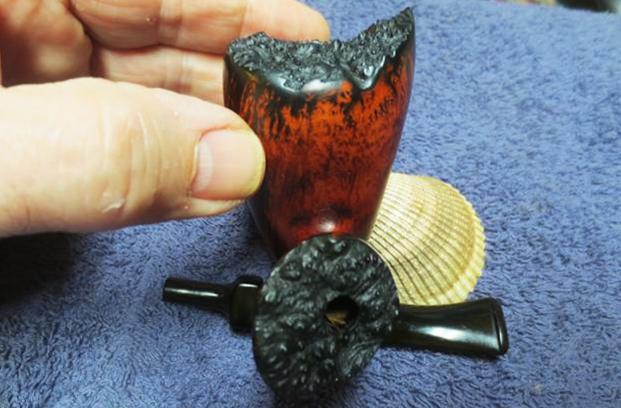
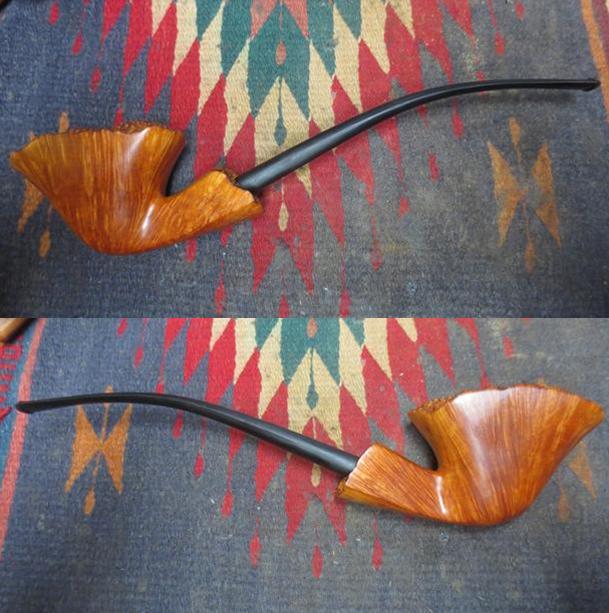
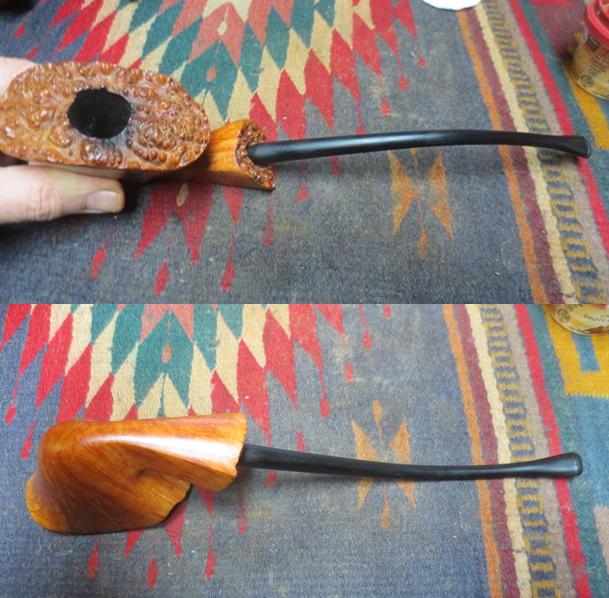
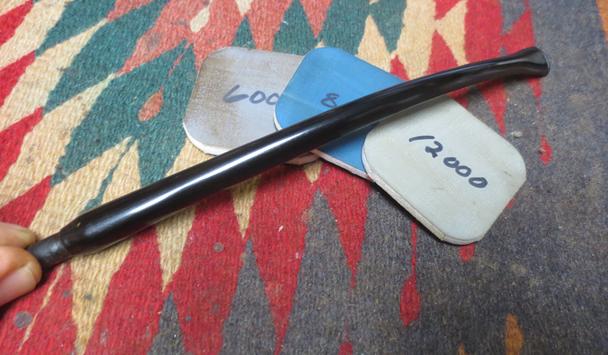
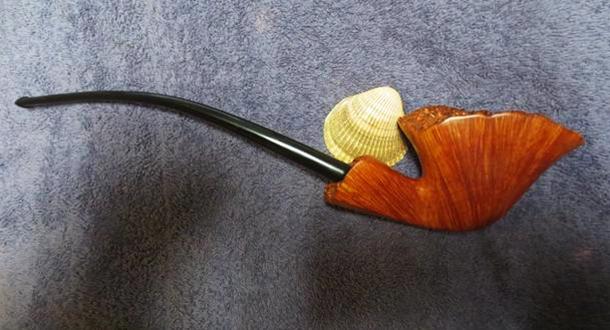
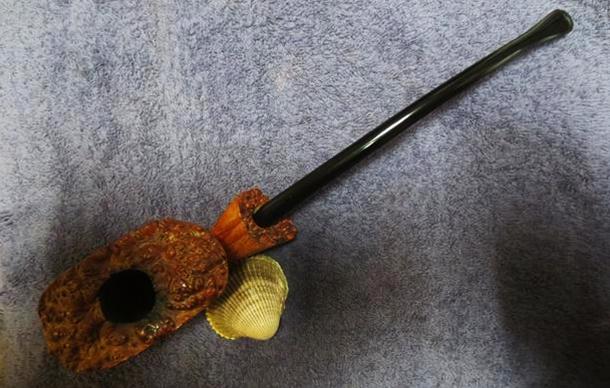
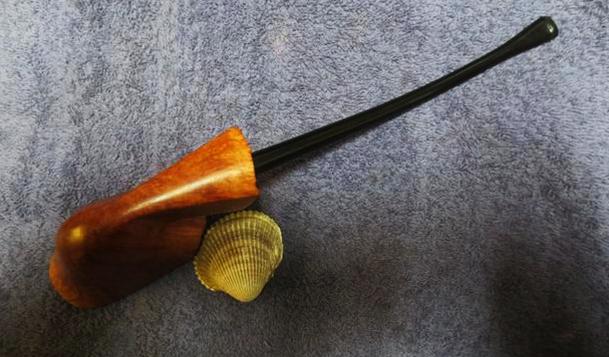
Fashioning a Churchwarden Stem for a Mario Grande Freehand


Blog by Steve Laug

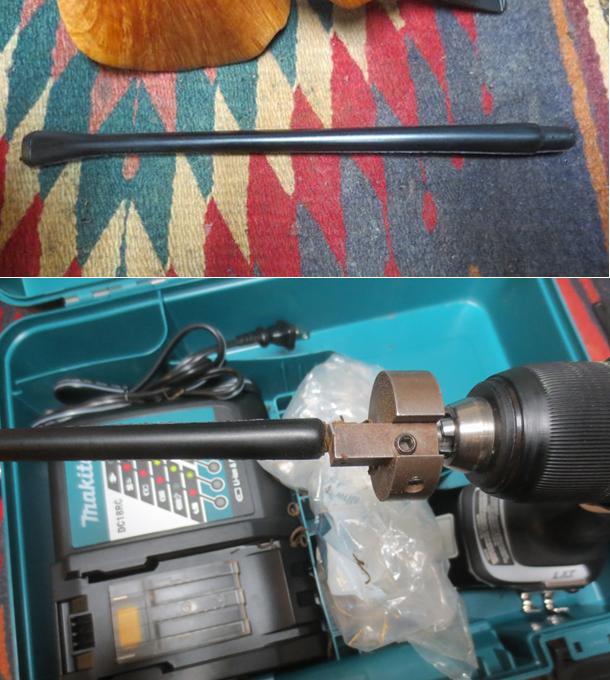
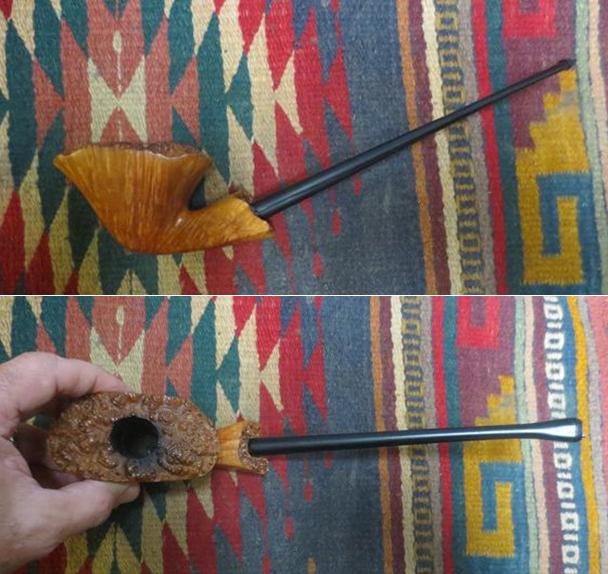
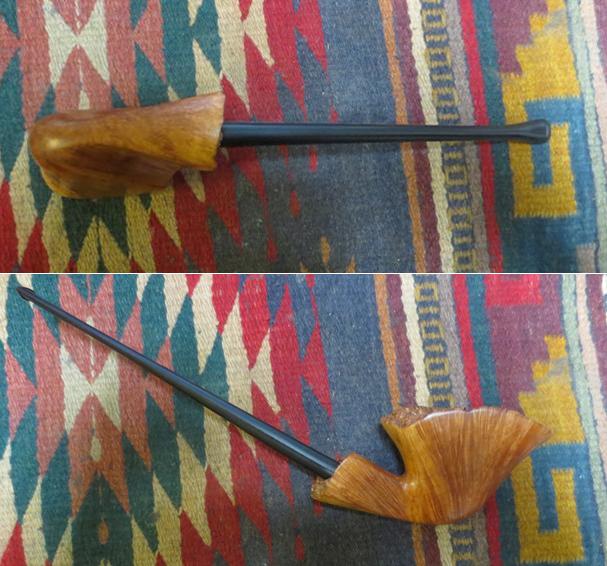
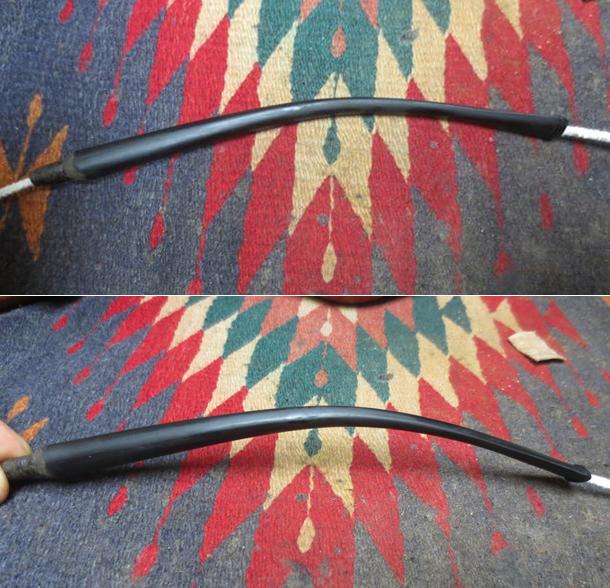
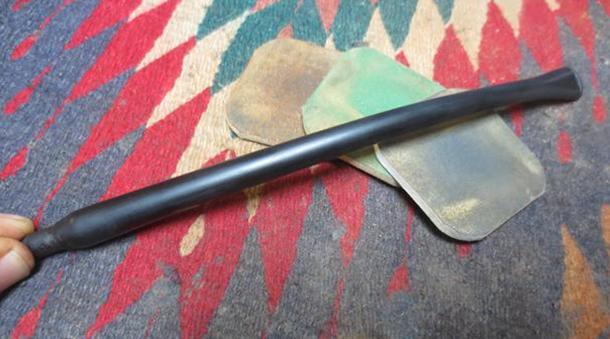
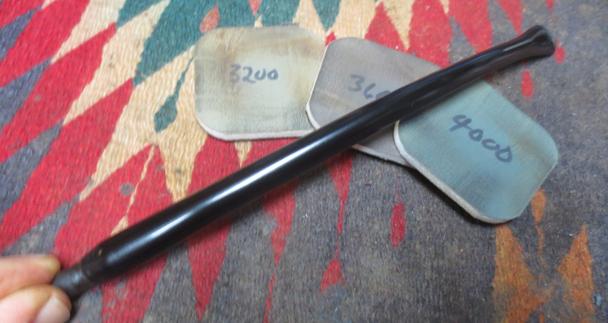
A while back I was contacted by a fellow named Chris who was referred to me by the local pipe and cigar shop. He needed a repair on a Joh’s Churchwarden with a broken shank. I repaired the shank, banded it and cleaned it up. You can read about that repair on a previous blog at this link:  (https://rebornpipes.com/2017/08/26/repairing-a-broken-shank-and-crooked-alignment-on-a-johs-churchwarden/). He also had a big Mario Grande Freehand that he wanted me to make a churchwarden stem for. He really likes the long stems and wondered if I could make him one that he could use interchangeably on his Mario Grande pipes. He wanted a really long stem but the only stems made are 8 inches long. I contacted him and he said to go ahead order one for this pipe. Several weeks went by and the stems finally arrived. I took some photos of the pipe.The pipe was a big piece of briar and it was in good shape. The existing stem was oxidized on the top side and the ball at the tenon insert. I decided that I would both clean up the existing stem and make a new stem for it.I took a photo of the top of the bowl that shows the beautiful plateau top and the size and shape of the chamber. For a block of briar this large the chamber was only 3/4 inches in diameter. It is a small chamber for a pipe this large.I took photos of the stem to show that the oxidation was heavier on the top side of the stem than the underside.I took the stem out of the mailing bag and wiped it down. It had the casting marks on both sides of the stem and on the tenon and button end. Those would need to be cleaned up. I used a Dremel and sanding drum to remove the casting marks on both sides and the button and tenon end. I drilled the airway open enough to hold the pin on the PIMO tenon turning tool. I put the tool in my cordless drill and pushed the stem onto it. I adjusted the cutting head to cut the tenon to the same diameter as the tenon on the existing stem. I held the stem and used the drill to cut away the excess material so that it would fit snugly in the mortise.I put the stem in the shank and took photos of the new look of this handmade Mario Grande. The pipe looks really good and will be a great sitting pipe. There is no way that the weight of this piece of briar will ever work as a clencher. I put a pipe cleaner in the airway in the stem and put it on a cookie tray. I turned the setting on the oven to 350 degrees F and put the cookie sheet and stem in the oven. I let it heat for 10 minutes until the stem was absolutely straight and pliable. I put the stem in the shank and bent it to an angle that matched the flow of the bowl and shank. I held it until the stem cooled and the bend was set.In my continued experiment with the new product from Mark Hoover – the creator of the Before & After Pipe Stem Deoxidizer and Polishes. He calls it Before & After Restoration Balm and it can be used on briar or stems – whether vulcanite, acrylic or horn. He said it was designed to pull the dirt off of the briar as well as polish it. He added some anti-oxidants to keep the briar from getting damaged from both UV rays and water. This is the second smooth briar pipe that I chose to use it on. I figured it would be a good test to see how it worked on a smooth briar bowl and a lightly oxidized vulcanite stem. I applied it and worked it into the crevices of the plateau on the shank and the rim top with a shoes brush. It worked well, so I took the following photos to show the results. The bowl and the stem have a rich shine. I would need to polish the stem a bit more to remove all of the oxidation but it was far better than when I started. I will continue using it and see how it works on a variety of pipes before I give a review.I buffed the stem with red Tripoli and Blue Diamond polish to remove as much of the oxidation as I could with the wheel. I polished the stem with micromesh sanding pads to remove the oxidation that remained – wet sanding it with 1500-2400 grit pads and wiping it down after each pad with Obsidian Oil. I dry sanded it with 3200-12000 grit pads and again wiped it down with the oil after each pad. After the final pad I gave it another coat of the oil and set it aside to dry. I put the stem in the shank and took photos of the new Churchwarden look of the Mario Grande. I sent the photos to Chris to see what he thought of the new stem. I turned my attention to the Churchwarden stem. I sanded away the marks from the castings and shaped the tenon end of the stem into a cone to fit into the conical drilling at the end of the shank. I buffed the stem with red Tripoli and Blue Diamond polish to remove as much of the scratching in the vulcanite as I could with the wheel. I polished the stem with micromesh sanding pads to further remove the scratches – wet sanding it with 1500-2400 grit pads and wiping it down after each pad with Obsidian Oil. I dry sanded it with 3200-12000 grit pads and again wiped it down with the oil after each pad. After the final pad I gave it another coat of the oil and set it aside to dry. I put the churchwarden stem back on the bowl and buffed the pipe and stem with Blue Diamond on the buffing wheel to polish the briar and vulcanite. I switched stems and buffed the short stem with Blue Diamond as well to polish it. I gave the bowl and both stems multiple coats of carnauba wax and I gave the plateau areas on the rim and shank end with several coats of Conservator’s Wax. I buffed it with a clean buffing pad to raise a shine. I hand buffed it with a microfiber cloth to deepen the shine. The rich medium brown stain and the rough plateau on both the rim top and shank end the polished black vulcanite of both stems worked well together to give a rich look to the pipe. The finished pipe is shown in the photos below. I took photos of it with the churchwarden stem and with the original short stem to give an idea of how it looked all polished and shining. Thanks for looking.
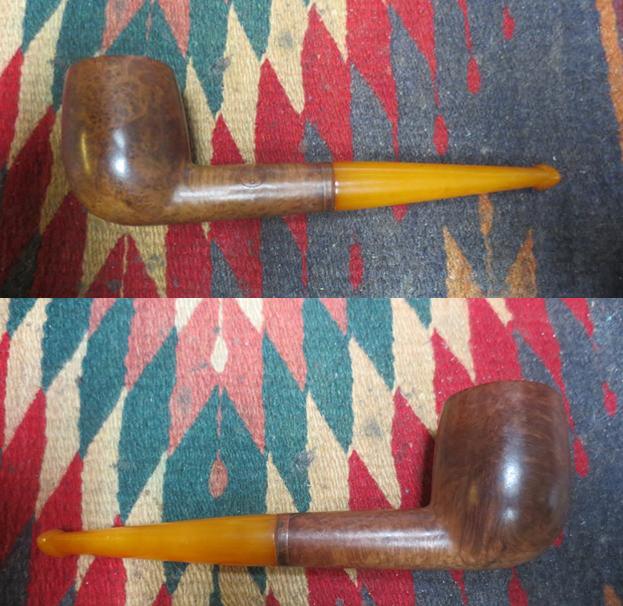
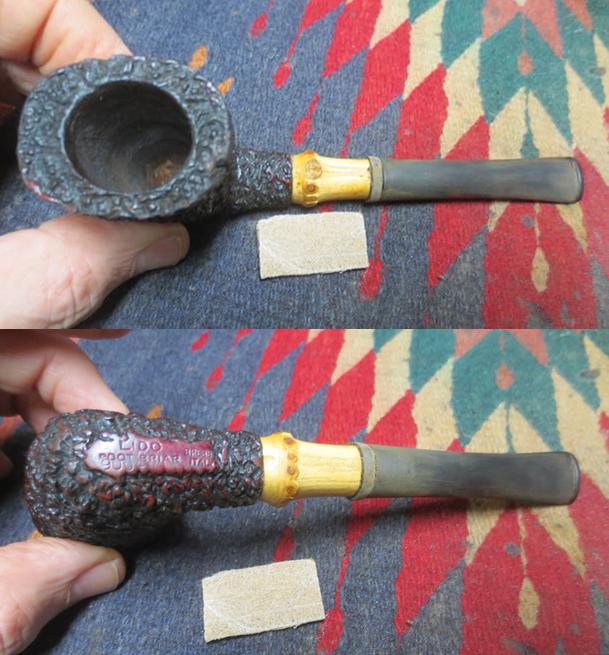
Another Frankenpipe – Salvaging a Lido Root Briar Dublin Bowl


Blog by Steve Laug

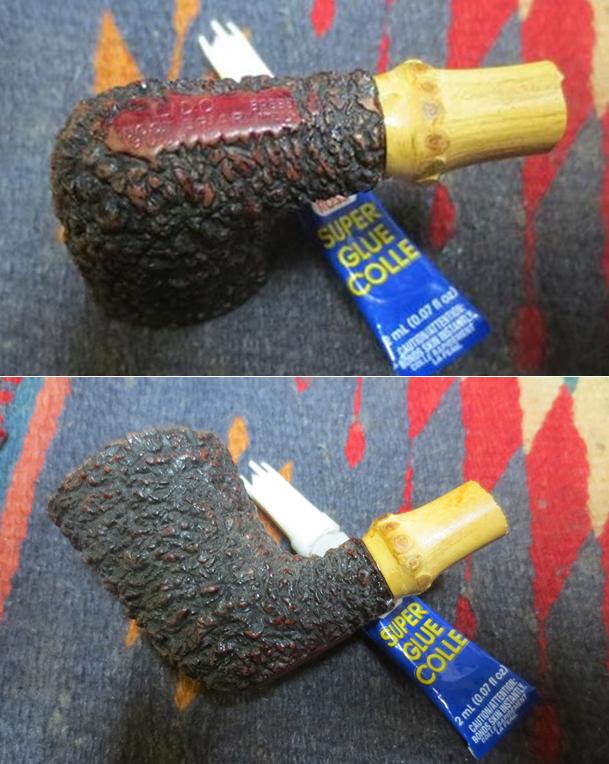
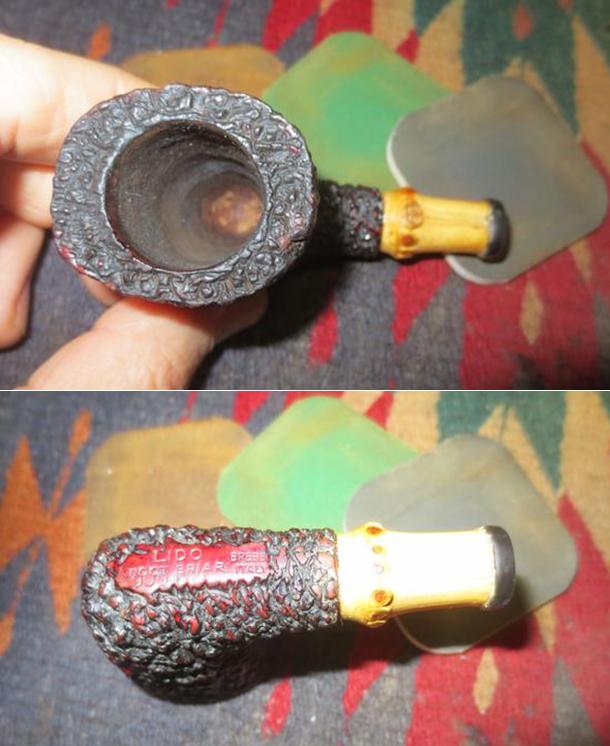
My brother Jeff picked up a nice looking Brebbia pipe on one of his trips to Montana. It was a Brebbia Lido Root Briar Dublin. It had an almost Castello Sea Rock finish on the bowl and shank. It was stamped on a smooth spot on the underside of the bowl and shank. It read Lido over Root Briar over 9004. Next to that it read Brebbia over Italy. Jeff showed me the pictures and it was a nice looking pipe as far as I could see. The shank looked a little short and the angle of the stem was funny but it was nice. The oval shape of the bowl was different and made the pipe interesting. When Jeff examined it at his hotel he discovered that the stem had been glued into the shank. The close he looked the more convinced he became that the shank had been broken and that this was a quick fix either to keep the pipe smokable or to make it sellable. Either way it was no longer a good find in his mind.

We talked when he was doing the cleanup and he was going to throw it away. He did not take pictures of the pipe as it was when he got it for this reason. The bowl had a thick cake and the rim had a copious overflow of lava that filled in the finish. I asked him to clean it up anyway and send it to me. He was dubious but he did it. He reamed and cleaned the bowl and shank to a point where it was spotless. He scrubbed the exterior with Murphy’s Oil Soap and a tooth brush and was able to get the rim clean of the lava. It was clean when it arrived in Vancouver. I unpacked the box and looked at it briefly and tossed it back in the box. I had no inspiration as to what to do with it at that point so I figured I would just let it sit for a while.

Yesterday I woke early to an idea for the Brebbia bowl. I don’t know if that happens to you but it does to me. Probably means I am thinking too much about pipes but it is what it is. I knew what I wanted to do with the bowl so I dug it out of the box and turned it over in my hands. I did not take photos of it at that point though I should have. I used a Dremel and sanding drum to square up the broken shank end. It was at an angle so it needed to be made flat. I sanded it on the topping board to smooth out the end of the shank and face it. I cleaned out the inside of the shank end with alcohol and cotton swabs to remove the dust and debris and ready for the next part of the process.

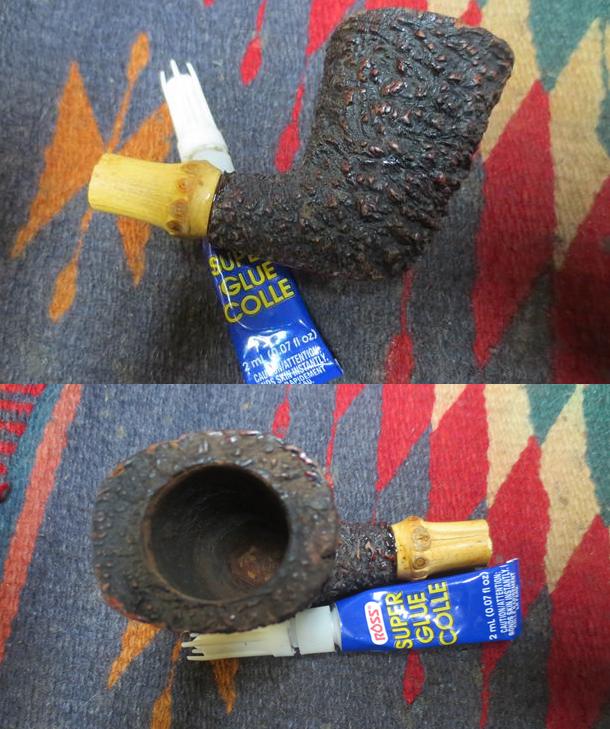
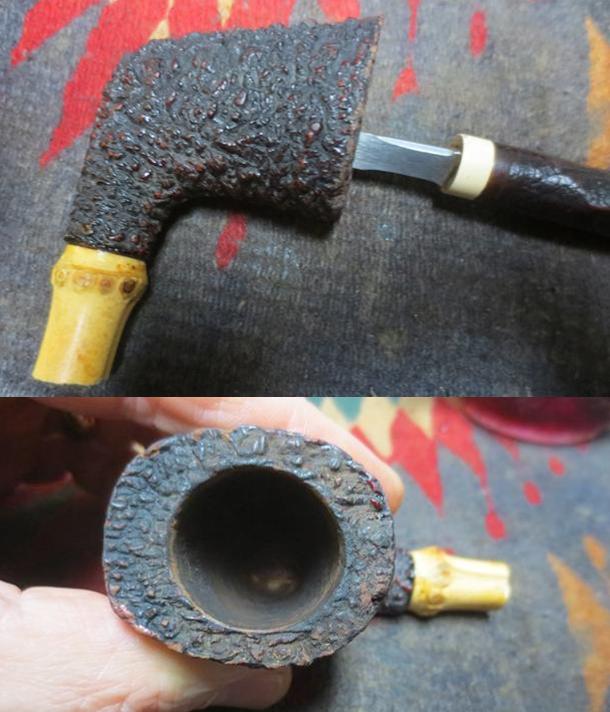
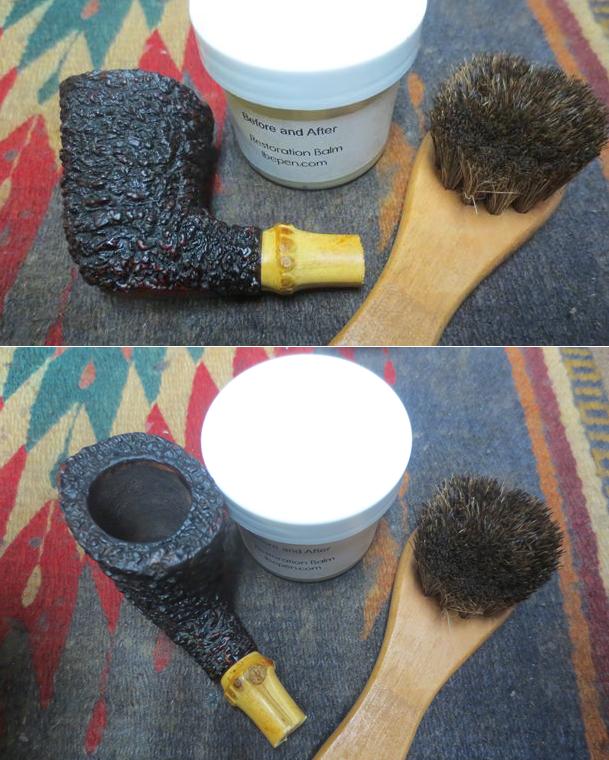
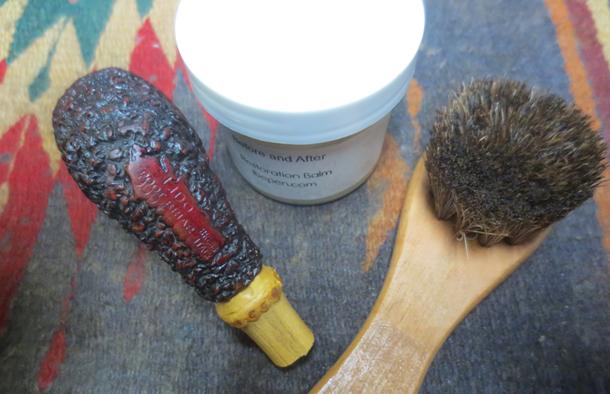
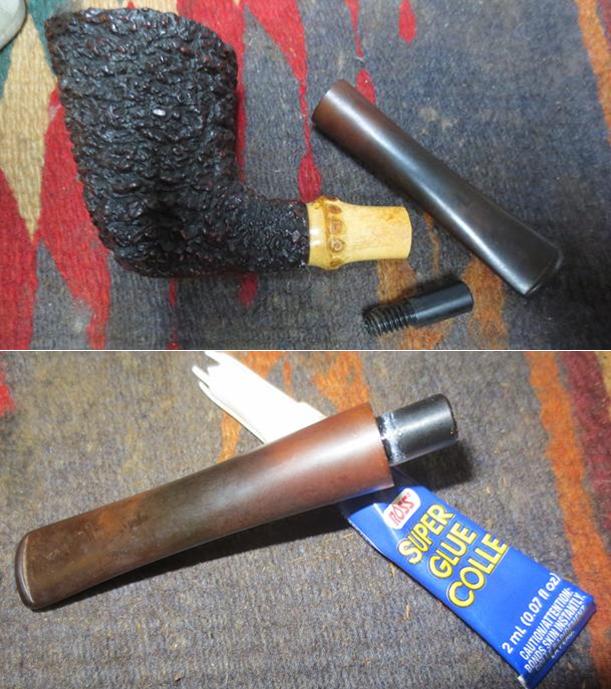
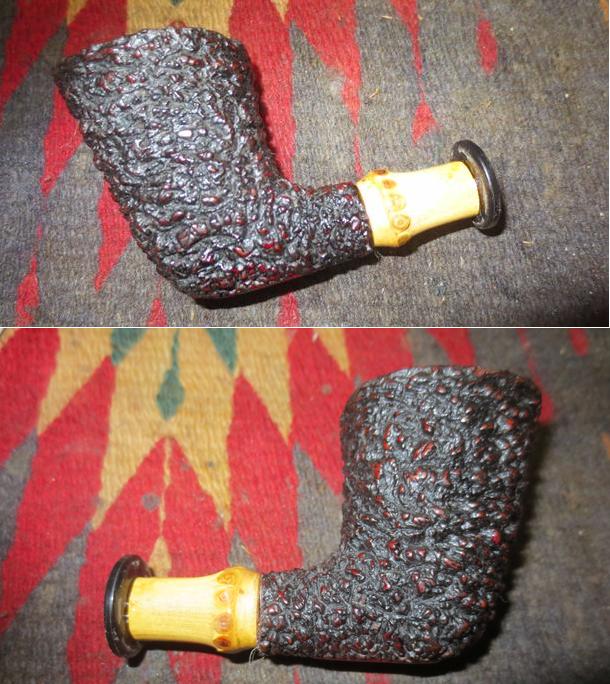
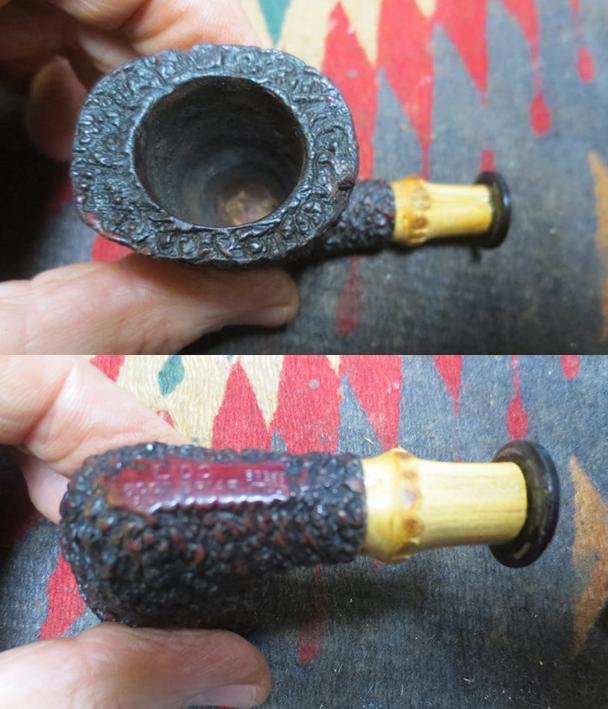
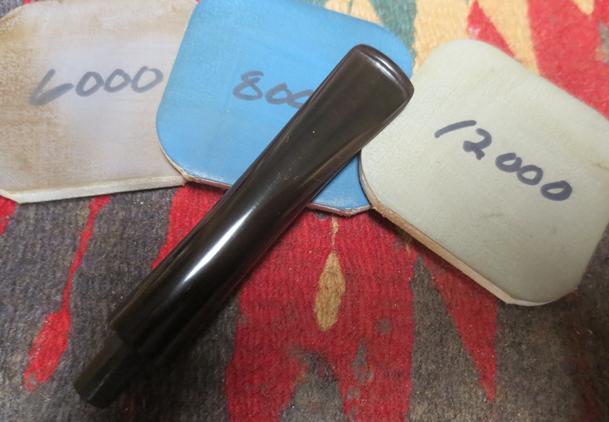
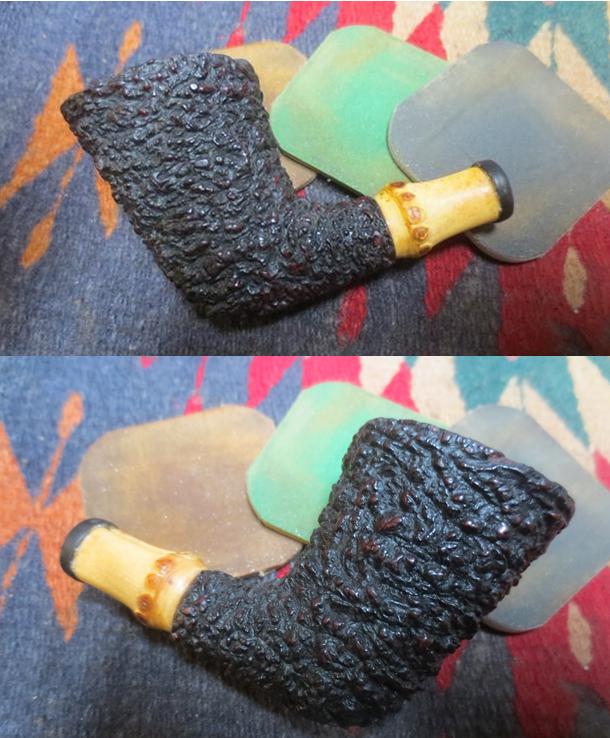
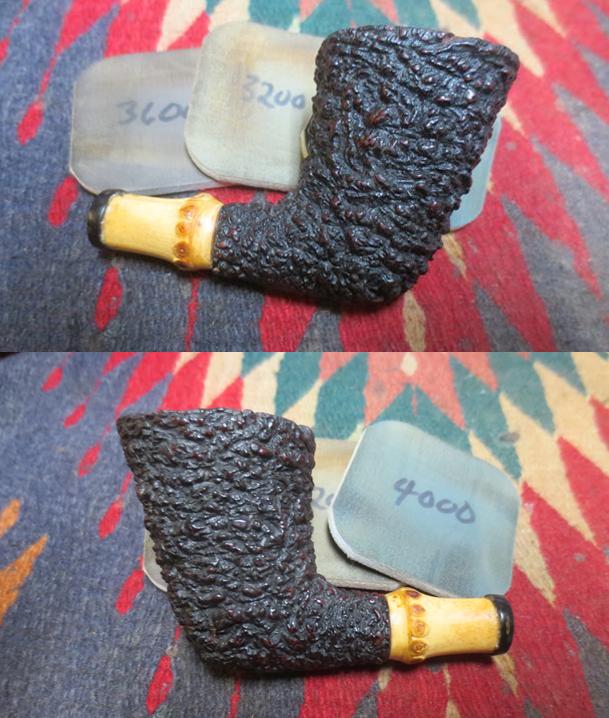
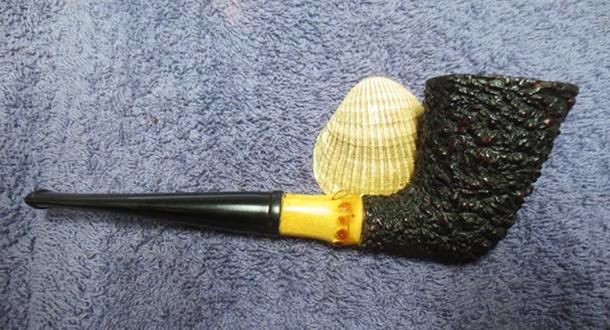
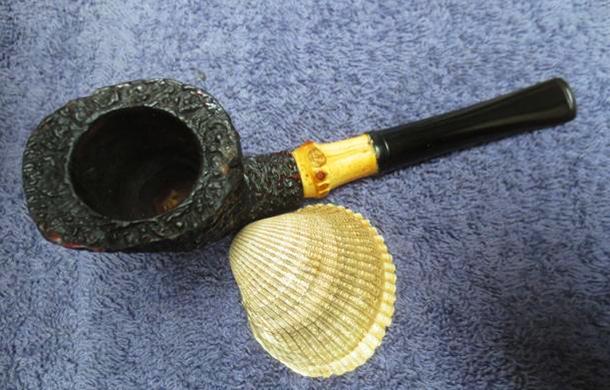
I went through my box of parts and found a one inch long piece of bamboo with one knuckle that I had cut off in a repair on another pipe. It was a thick hard piece of bamboo that would work well. The end with the knuckle was the same basic diameter as the shank end so that would work well. I also keep broken chunks of Delrin and vulcanite tenons to use for this kind of thing so I salvaged a one inch long piece of Delrin that was perfect. I roughed up the surface a bit and took down the outer diameter with the Dremel and sanding drum so that it would insert into the shank end. The photo below shows the accumulation of parts ready to be joined together.In the past I have used epoxy to glue the parts together. This time I chose to use clear super glue. I applied the glue to the end of the tenon that went into the shank and pressed it into place. I made sure that things lined up well and let the glue cure. It does not take long – which is why I chose to use it this time. You have to work quickly to assure all is aligned before it sets. Once it was set I painted the end of the shank and the bamboo with super glue and applied it to the tenon as well and pressed the bamboo over the extended piece of tenon. I lined everything up so the fit was correct. I wanted the groove in the bamboo on the top side of the shank so once it was done I held it until it set. The following photos show the bowl and shank repair at this point in the process. I liked the look of the pipe at this point. I cleaned up the reaming a bit as I saw some remaining cake on the back side of the bowl during the process. I used the Savinelli Fitsall pipe knife to cut it back and smooth out the surface of the bowl interior.I used a brass bristle brush to clean up the top of the rim a bit more. There still seemed to be remnants of lava in the nooks and crannies of the rustication that needed attention. Nothing does the job on this kind of surface like a brass bristle tire brush.I am continuing to experiment with a new product from Mark Hoover – the creator of the Before & After Pipe Stem Deoxidizer and Polishes. He calls it Before & After Restoration Balm and it can be used on briar or stems – whether vulcanite, acrylic or horn. He said it was designed to pull the dirt off of the briar as well as polish it. He added some anti-oxidants to keep the briar from getting damaged from both UV rays and water. I chose to use it on this third pipe – because of the roughness of the rusticated finish on this bowl. I figured it would be a good test to see if it reached deep into the rustication and pulled out the dirt. I applied it and worked it into the crevices with a shoes brush. It seemed to work very well and I took the following photos to show the results. I will continue using it for a while and see how it works in a variety of settings before I give an opinion of the product. I decided to see what stem I would use for this pipe. I needed something close to the diameter of the end of the bamboo. I went through my can of stems and found one that was perfect. It was the same diameter and would match well. It was oxidized but there were no tooth marks in the vulcanite so it would be a simple clean up. It did not have a tenon so I would need to replace the tenon in the stem. The photo below shows the parts. The thing I neglected to photograph was the end of the stem. The drilling was perfect for being able to turn the new threaded tenon in place. I coated the threads with a coat of super glue and turned the tenon in place on the stem. I quickly aligned the tenon and made sure it was straight before the glue set. You have to work quick with the super glue to achieve this before it sets. I sprayed the tenon with accelerator to harden the glue. It leaves behind a white residue that is shown in the photo. It easily comes off with a damp cloth.I set the stem aside for a while and turned back to the end of the bamboo where it would meet the stem. I used the Dremel and sanding drum to flatten it out. I pressed it against the sandpaper on the topping board to face it and make it square. Once I had that done I looked through my box of parts and found a hard rubber button that I had drilled to use as a spacer on a previous pipe. It would work perfect in this situation. I glued it in place on then end of the shank with super glue. I filled in around the joint against the bamboo with the tip of the superglue to seal it and allow no air or moisture to seep through the joint. Once the glue had hardened I would need to trim it back to the diameter of the stem. It would serve as a smooth surface for the end of the stem to sit against and make the fitting of the stem much easier. The final photo in this series shows an end view of the space on the bamboo. You can see how it looks from that perspective in the photo. I neglected to take photos of the process of trimming back the spacer. Once the glue set (several hours) I used the Dremel and sanding drum to take back the excess material of the space close to the diameter of the stem. I sanded the spacer with the stem in place using a worn piece of 180 grit sandpaper to smooth it out and also to remove the oxidation on the stem. I did take a photo of the pipe to send to my brother.There will still need to be a lot of sanding to match these two parts a bit more but you can see the general idea in the photos below. I like the way the pipe looks so far. Given the parts I had available this Frankenpipe is coming together quite well. Once everything lined up well it was time to polish the spacer and the stem. I polished the stem with micromesh sanding pads – wet sanding it with 1500-2400 grit pads and wiping it down after each pad with Obsidian Oil. I dry sanded it with 3200-12000 grit pads and again wiped it down with the oil after each pad. After the final pad I gave it another coat of the oil and set it aside to dry. I polished the spacer at the same time  using micromesh sanding pads – wet sanding it with 1500-2400 grit pads and wiping it down after each pad with Obsidian Oil. I dry sanded it with 3200-12000 grit pads and again wiped it down with the oil after each pad. After the final pad I gave it another coat of the oil and set it aside to dry. I put the stem back on the bowl and buffed the pipe with Blue Diamond on the buffing wheel to polish the briar. I used a soft touch on the sandblasted areas as I did not want to flatten them or fill in the grooves with polishing compound. I gave the stem multiple coats of carnauba wax and I gave the sandblasted bowl several coats of Conservator’s Wax. I buffed it with a clean buffing pad to raise a shine. I hand buffed it with a microfiber cloth to deepen the shine. The rough sandblast finish with its dark brown and oxblood contrast stain and the newly added bamboo shank work well with the tapered stem I fit to the shank to make a beautiful pipe. The pipe looks fresh and new. The dimensions of this pipe are Length: 6 inches, Height: 2 1/8 inches, Bowl diameter: 1 3/8 inches wide and 1 3/4 inches long, Chamber diameter: 7/8 inches. The finished pipe is shown in the photos below. I like it! It came out pretty well in my opinion – not too bad for a Frankenpipe. Thanks for looking.
Rode Hard & Put Away Wet – MLC Redmanol French Briar Bent Billiard


Blog by Steve Laug

This older MLC bent billiard is a turn of the 20th century pipe. According to Pipedia, (https://pipedia.org/wiki/M._Linkman_%26_Co) the initials stand for M. Linkman Company which was thought to mean Mary Linkman Company. They were a Chicago based company that produced both briars and meerschaums. The company was named for the mother of the same Linkman who branded pipes under that same name and then eventually became the Dr. Grabow pipe manufacturer with which we are familiar. Pipephil’s site gave a little more information at this link (http://www.pipephil.eu/logos/en/logo-l4.html). M. Linkman and Co. was established by Louis B. Linkman and August Fisher in 1898. The company closed down in the 1950s and the Dr Grabow branch was sold to Henry Leonard and Thomas Inc. There was also a note that early Linkman’s pipes were stamped MLC in an oval.
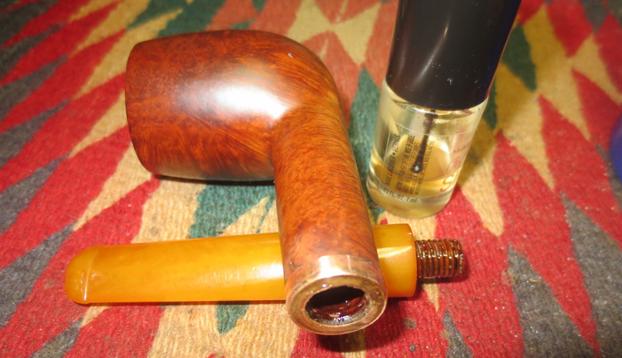
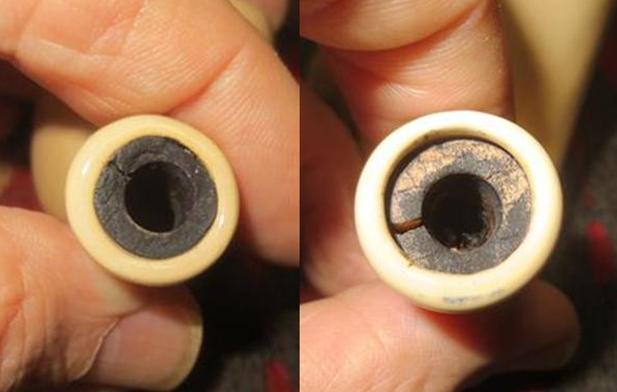
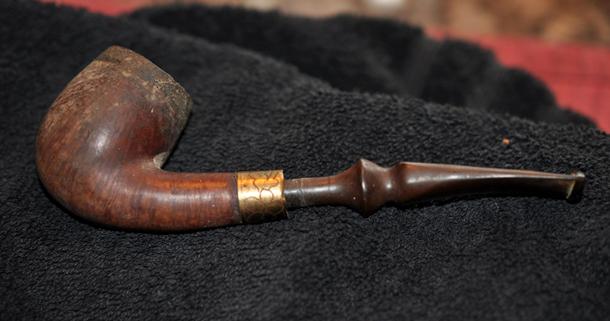
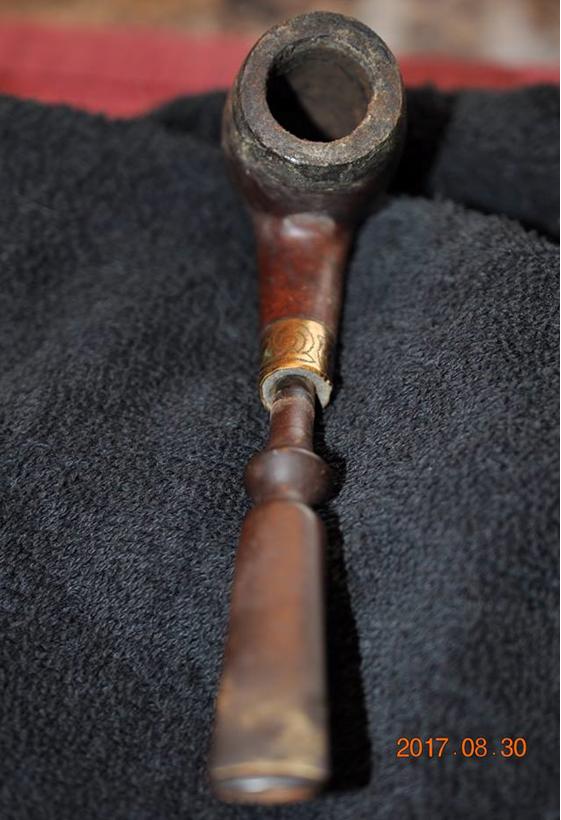
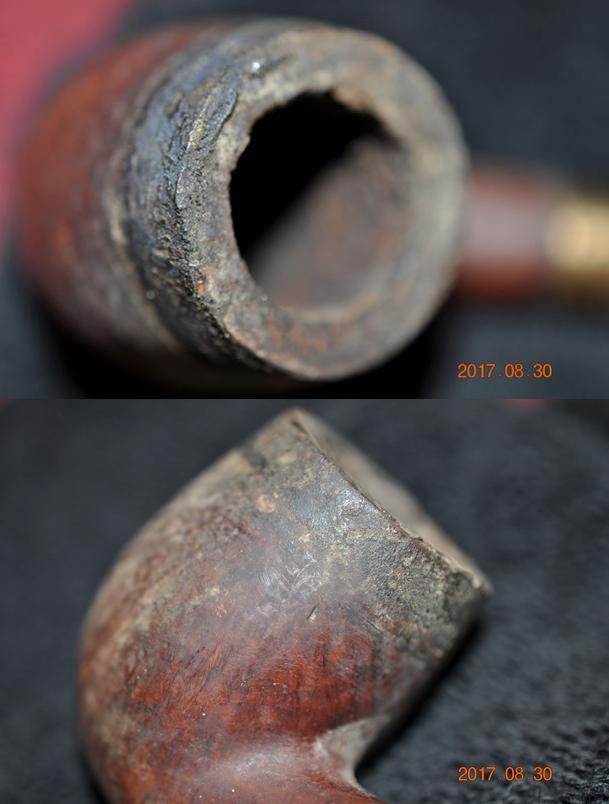
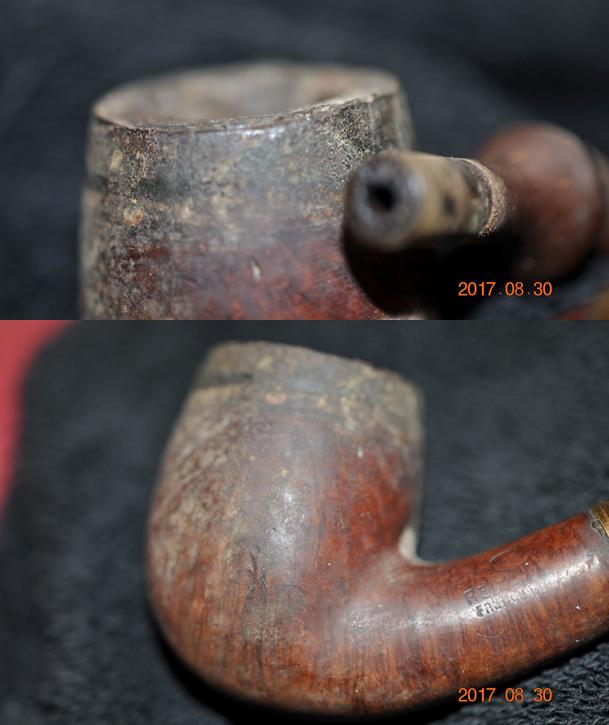
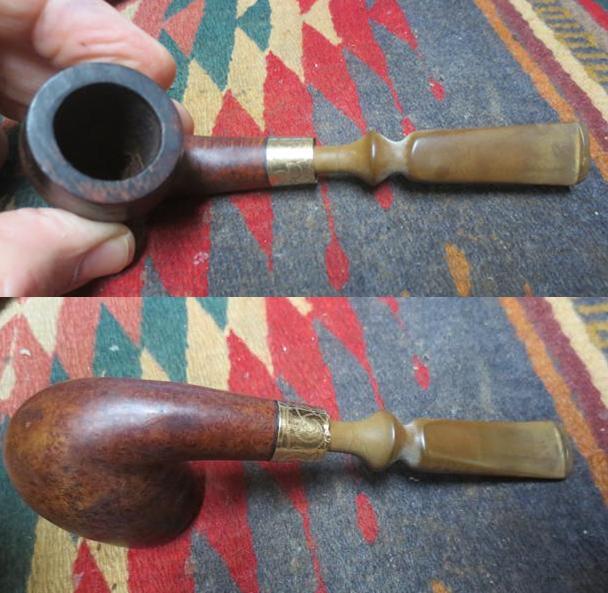
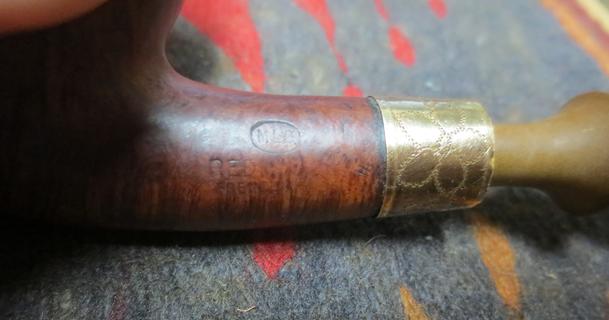
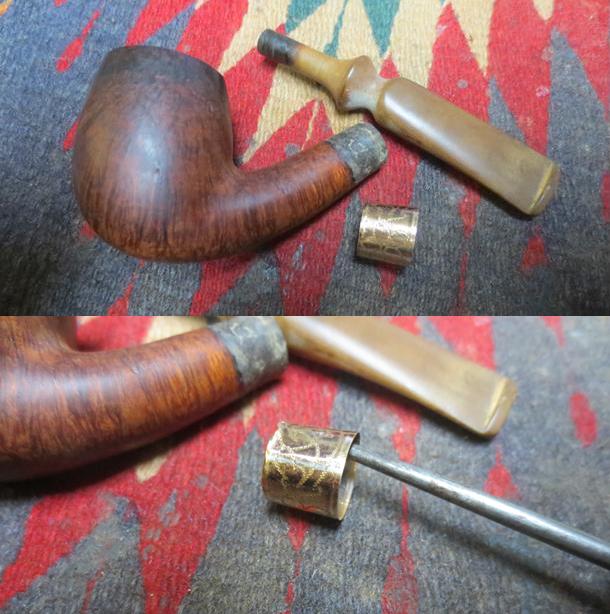
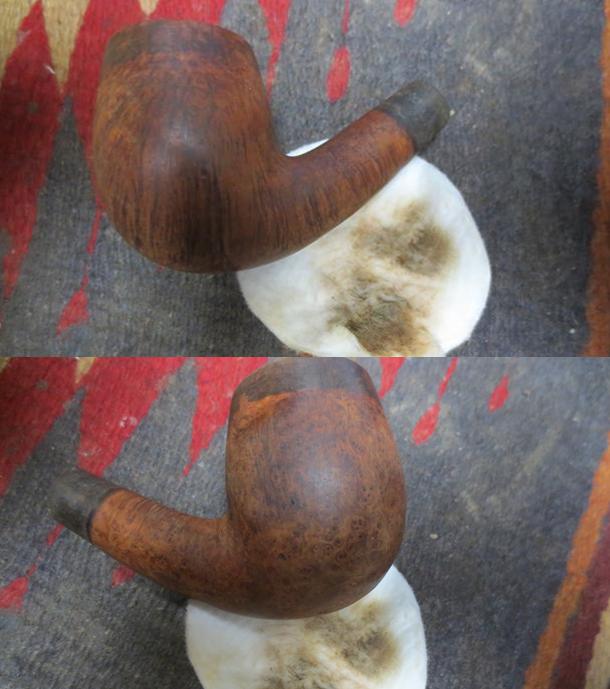
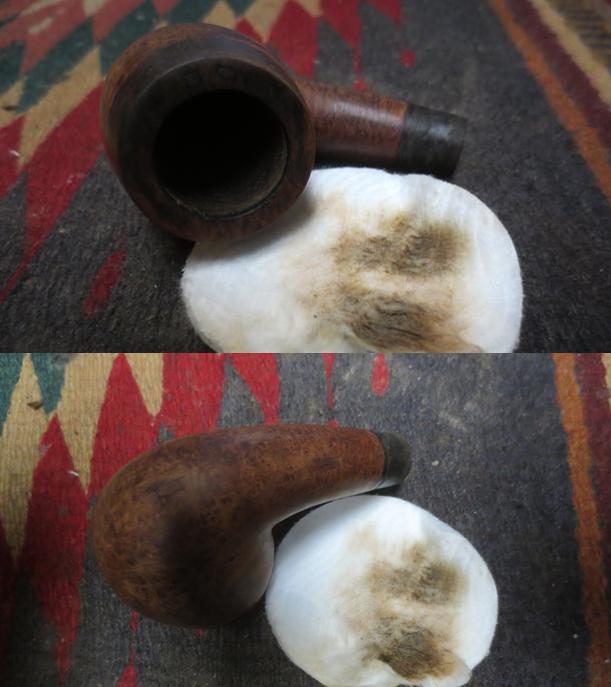
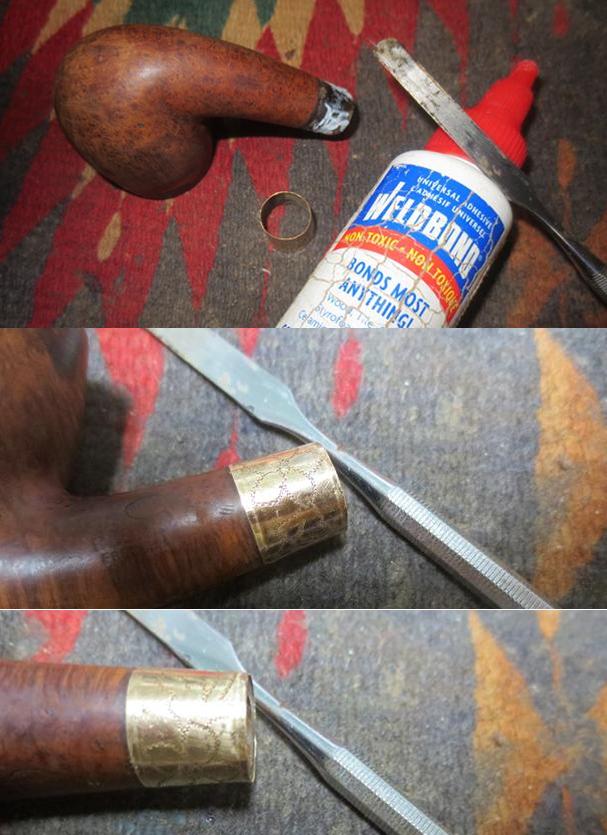
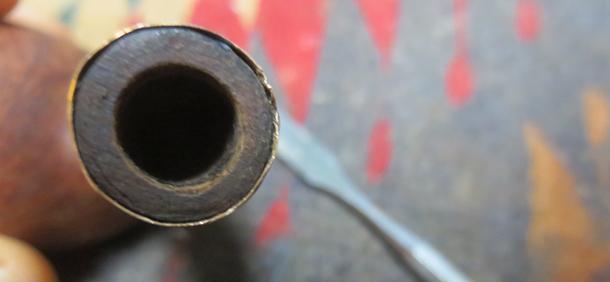
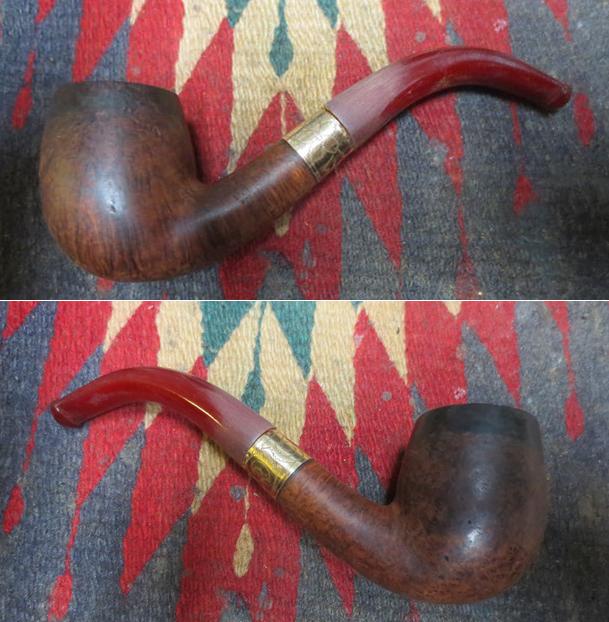
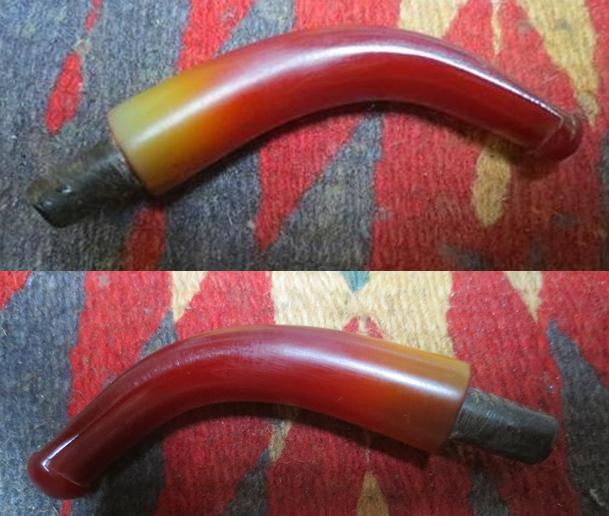
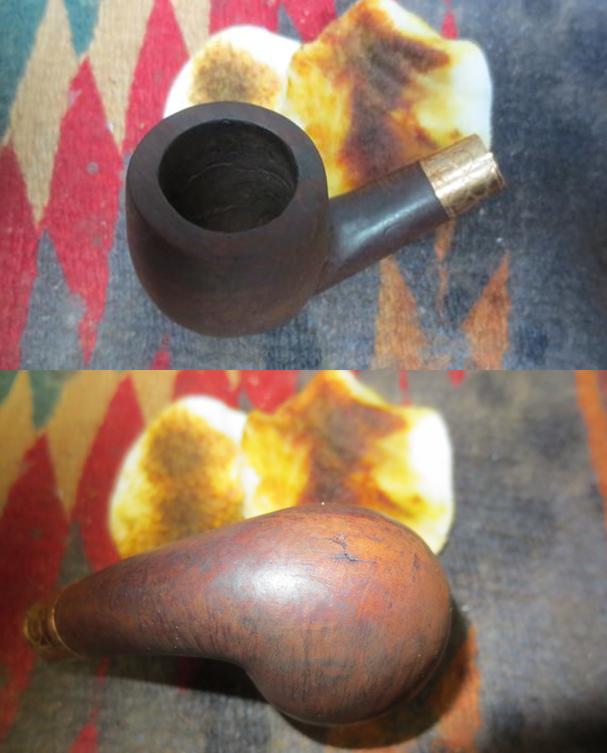
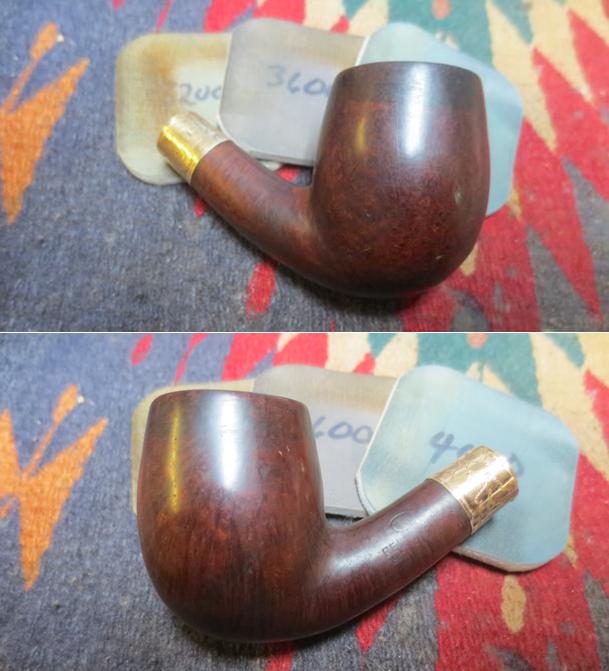
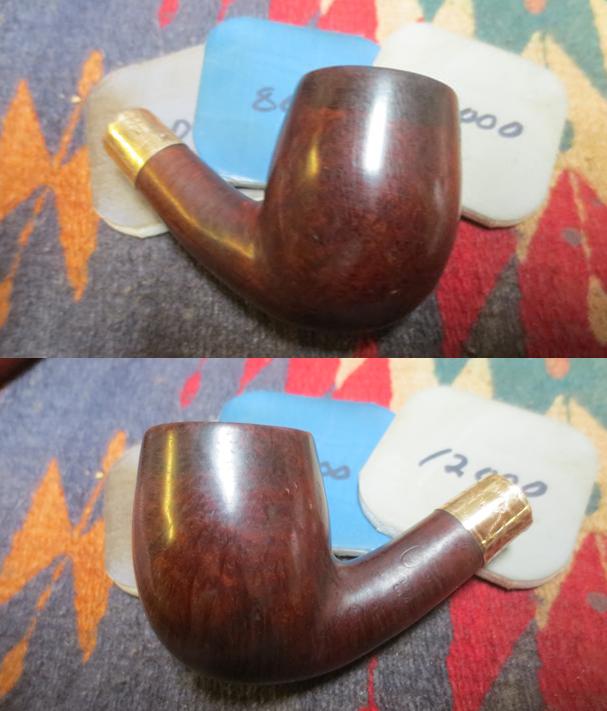
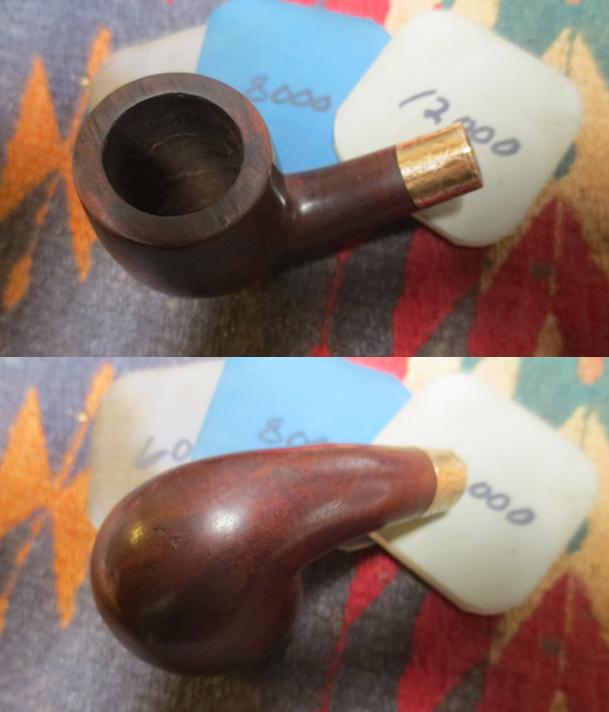
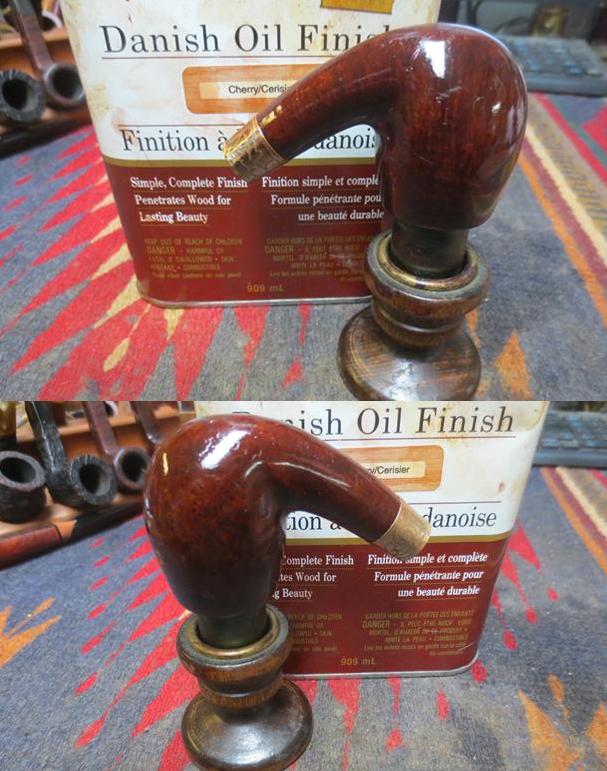
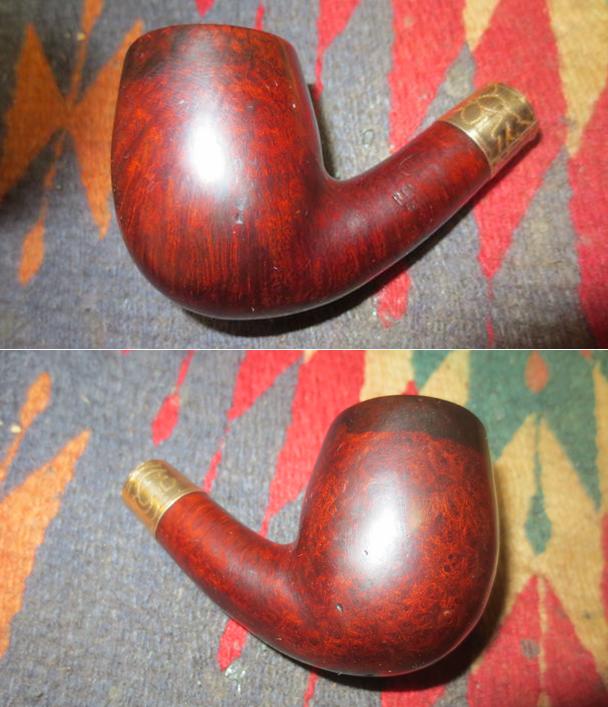
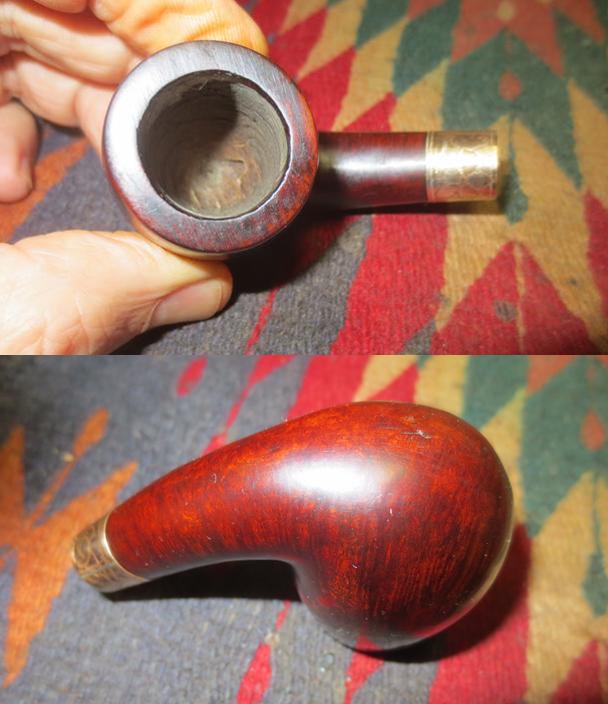
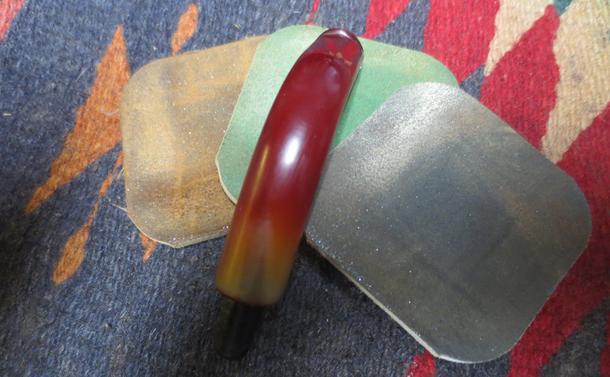
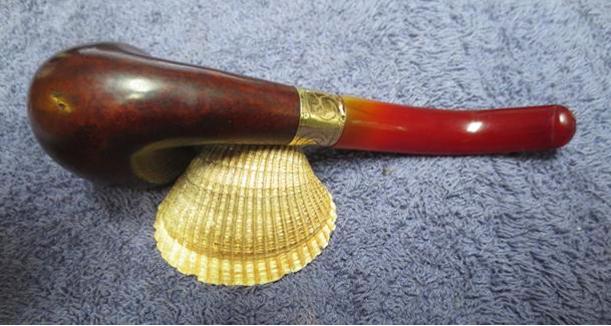
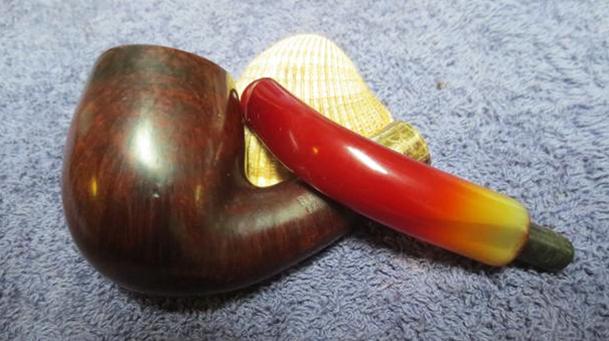
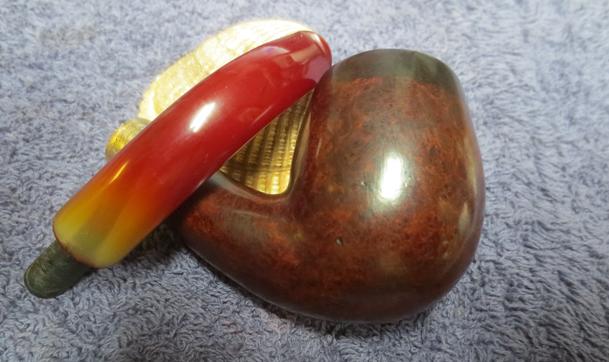
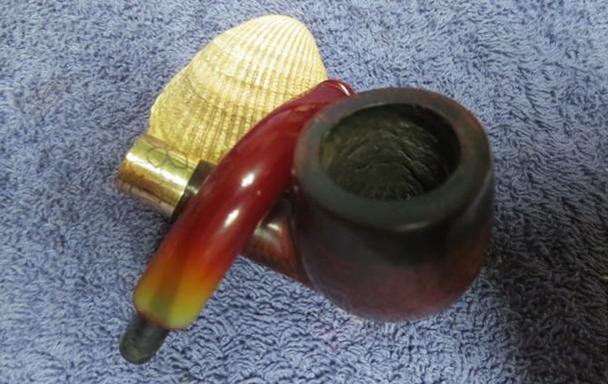
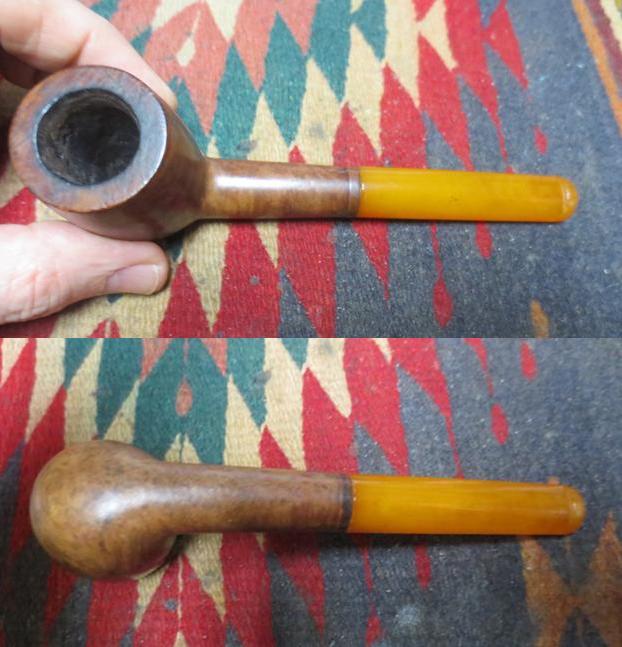
If you have followed this blog for a while you have come to know that I love really old pipes and this one fits into that category of pipes. It is stamped MLC in an oval over Redmanol over French Briar on the left side of the shank. There are no other stampings on the pipe. The band is brass and is etched with a pattern of vines and flower around the entire band. The band was a mess on the shank end. It was bent and dented and no longer round. It was loose on the shank and would need to be straightened out before it was reglued. It is a small bent billiard and definitely sporting the wrong stem. It should have had a Redmanol stem to go with the stamping on the shank of the bowl.

I have written a bit more about the MLC brand on several early blogs (https://rebornpipes.com/2016/11/12/an-interesting-the-nuvo-mlc-italian-briar-hidden-in-a-wdc-case/ https://rebornpipes.com/2017/08/17/restoring-a-sad-old-mlc-bent-billiard/).

Jeff took the photos that follow before started the cleanup. You can see from the photos the condition of the pipe. The bowl exterior was absolutely filthy. It is the first time I have seen the lava that usually is on the rim flow over the top and down the sides of the bowl. The lava on the outside edge of the bowl and the thick cake in the bowl made it hard to know what the condition of the rim edges. The incorrect stem and the condition of the pipe told me that it was someone’s favourite smoker and when the old stem broke or wore out a convenient replacement was stuck in the shank and it continued to be smoked. The next photos of the bowl, rim and the flow of lava down the outside of the bowl shows how filthy this pipe was before Jeff started his clean up. The bowl is scratched and nicked but even that damage is hard to assess given the condition of the pipe. If you look closely you can see the MLC oval on the next photo of the shank. Below that it reads Redmanol over  French Briar. You can see the tars that have built up on the shank and pushed the band toward the end of the shank. It really was a dirty pipe. The photo of the bottom of the bowl and shank show more of the worn condition of the briar.The next three photos show the condition of the end of the band. It was in rough shape. As the band was pushed off the shank end because of the tars the end that extended beyond the briar of the shank was bent and damaged.The last photo Jeff took showed the condition of the stem. I was not particularly concerned with the stem as I was planning on replacing it with a fitted stem. If I used it in the future I would clean it up.I reread the blogs on the MLC pipes that I had restored previously to refresh the information. Now I was ready to see what I could do with this old pipe. It is really nice working on clean pipes. I have done enough repairs recently that have required me to ream and clean them that I have a greater appreciation for how nice it is to have this done for me. Thanks Jeff for your work and the way it makes my part a bit easier. He worked his usual magic in cleaning up this messy pipe. I really wondered what would lie beneath all of the grime and tars. Jeff reamed it with a PipNet reamer and cleaned up the remnants with a Savinelli Fitsall pipe knife. He scrubbed out the mortise and the airway in the shank and the stem with alcohol, cotton swabs and pipe cleaners. He spent quite a bit of time scrubbing the exterior of the bowl, rim cap and shank with a tooth brush and Murphy’s Oil Soap to remove the build up. He rinsed it under running water. It took a lot of scrubbing to get it free of the tars but it worked well. He dried it off with a soft cloth. Once the grime was removed it was clear that the finish underneath was in rough shape. The briar was quite nice with a mix of straight and birdseye grain around the bowl and shank. I took photos of the pipe to show its condition before I started my work on it. Jeff had done a miracle in removing the thick cake, cleaning the lava on the rim and sides of the bowl. The inner edge was in pretty  decent shape as was the outer one. I was happy to see the condition. There was however a darkening on the rim top and all around the bowl coming down the sides about ¼ inch. At first I thought that it might have been left behind by a rim cap of some sort but there were no small nail holes in the briar on the sides of the bowl. I think that actually it is what is left behind by the greasy hands of the pipe man and the lava that had flowed down the bowl sides.He was also able to remove much of the grime around the band on the shank and leave the stamping undamaged.I removed the stem and carefully slid the band off the shank. I wanted to clean up the end of the shank with alcohol and sandpaper. I also want to smooth out the back edges of the band and see if I could make it smooth and useable once again. I heated the end of an awl/ice pick and pressed it against the damaged areas of the band. The brass was quite thin so it was really quite workable. I was able to remove all of the damaged areas but one that was a compressed area on the bottom side. It would be hidden on the underside of the shank once it was glued back in place.I scrubbed the shank end and the dark area with acetone to remove more of the grime that was on the surface of the briar. I was able to reduce quite a bit of the buildup around the top of the bowl and the rim top with this method. I sanded the end of the shank to smooth it out. I used a dental spatula to spread the all-purpose glue around the shank. I pressed the band back on the shank with the small damaged spot on the underside.I took a photo of the end of the shank to show that the band fit tight on the shank and was even with the shank end. You can see the damaged area on the underside of the shank on the right side of the photo.I looked through my can of stems because I remembered having a bent Redmanol stem that I had picked up somewhere along the way. Sure enough it was there. It was slightly larger in diameter than the shank of the pipe so it would need to be sanded to fit nicely on the shank. It also had a push stem on it that would need to be removed and replaced with a normal tenon. Both of those were relatively easy jobs. I was anxious to get moving on the stem so of course I forgot to take photos of the stem with the meerschaum push tenon. It was loose so I unscrewed it from the stem. I had a small threaded Delrin tenon with the threads that were close to the same and threaded it into the airway on the stem. It worked well so I unscrewed it and glued it in place in the stem. The photos below show the new tenon on the stem.The tenon fit well in the mortise. The fit against end of the shank was nice. I sanded it to remove the excess material and reduce the diameter of the stem to match the shank using 220 grit sandpaper. In the photos below it is getting close to a nice fit. What you can’t see in the photos is that the nice, rich, red colour of the Redmanol lightened with sanding to shades of blood orange. I could not start over so I decided to keep sanding until the fit was correct. At first I did not like the effect on the Redmanol and I was disappointed by the colour shift. Looking at the stem from the drilled airway before I put the tenon in place and the flat end of the stem it appeared that the red was solid all the way through the material so when the oranges and yellows started to show up I was a bit frustrated. Now as I look at it I have to say it is growing on me. It reminds of the Popsicles that we used to by when I was a kid. I stopped sanding the bowl and put the stem on the shank to get a couple of photos so I could look at it on the screen and get the effect. It is almost like flame… kind of a nice variation. It is interesting to see the fine red line between the band and the stem – the flat end still is an even red. I don’t quite understand it but I am resolved to live with it. I am going to stain the bowl so that should also add to the variations of colour on this old pipe.I decided to try to bleach out the darkening on the rim top and first ¼ inch of the bowl all the way around. I wiped it down with bleach on a cotton pad and left it on the dark area to do its work. It worked better on the left side than the right.I stained the bowl with a dark brown aniline stain to try to blend in the dark rim stains. I applied the stain, flamed it and repeated the process. Once it dried I wiped the bowl down with alcohol on cotton pads to make it more transparent and let the grain shine through.  In the process some of the nicks in the briar showed up more clearly. I decided not to fill them in but to leave them as war wounds on this old timer. They tell a story that I wish the pipe could tell us. I polished the briar with micromesh sanding pads. I started polishing with 3200-4000 grit pads and wiped the bowl down after each pad with a damp cloth. I continued to polish with 6000-12000 grit pads and wiped it down after each pad. I hand buffed it with a soft cloth. The dark ring around the top of the bowl is still visible but less than before. The rim looks good. To further blend the darkened top portion of the bowl with the rest of the pipe I gave the bowl a contrast coat of Danish Oil Cherry Stain. I applied it by hand and rubbed it off and repeated the process to get a good smooth coat.I wiped the stain coat off and hand buffed the pipe lightly. The photos below show what the pipe is looking like at this point in the process. The right side still shows darker than the left at top edge of the bowl. I polished the stem with micromesh sanding pads – wet sanding it with 1500-2400 grit pads and dry sanding with 3200-12000 grit pads. I wiped the stem down with Obsidian Oil after each pad. After the final 12000 grit pad I gave it a final coat of oil and set it aside to dry. I put the stem back on the bowl and buffed it with Blue Diamond on the buffing wheel to polish the briar. I gave the pipe multiple coats of carnauba wax and buffed it with a clean buffing pad to raise a shine. I hand buffed it with a microfiber cloth to deepen the shine. The newly variegated Redmanol stem did not too bad with the old pipe. It shines like polished horn and the flow of the colours worked with the colours on the bowl. The way the colours shifted on the parts worked well together to present a beautiful pipe. The dark rim edge almost looks like the way meerschaum pipes were flumed with a dark edge. The pipe looks fresh and new. Later I will need to give it a bowl coating to protect the bowl inside as there are spidering cracks all around the briar. The finished pipe is shown in the photos below. Thanks for looking.