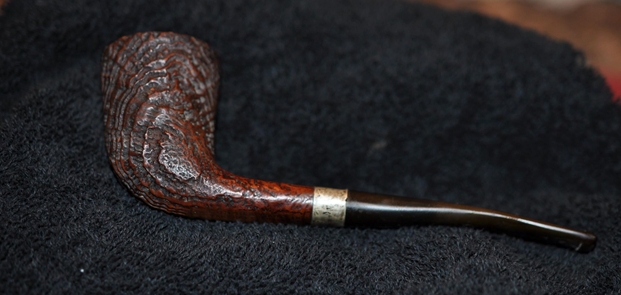
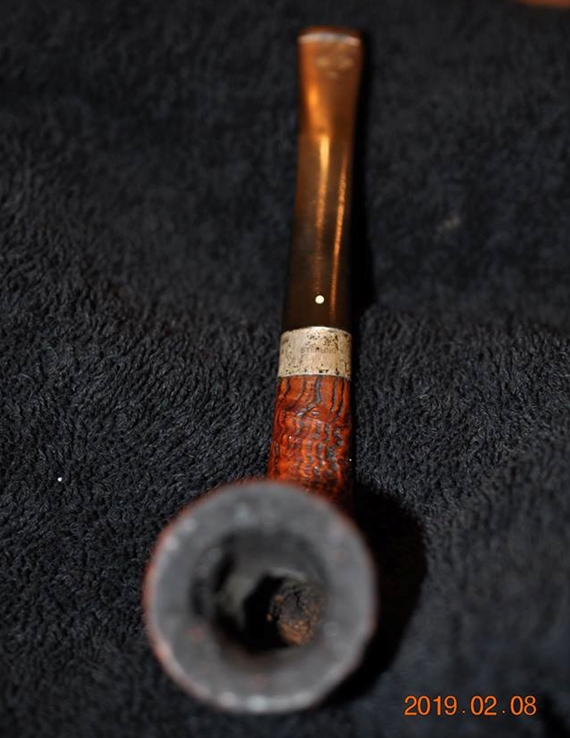
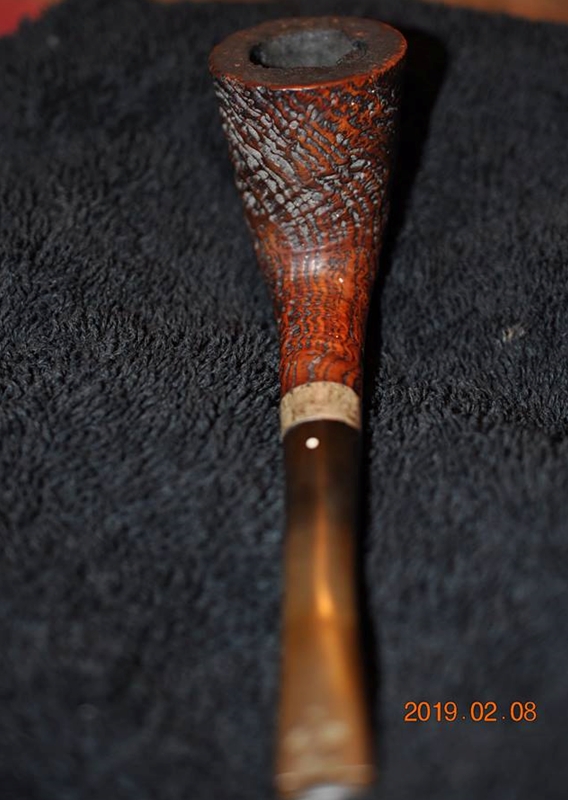
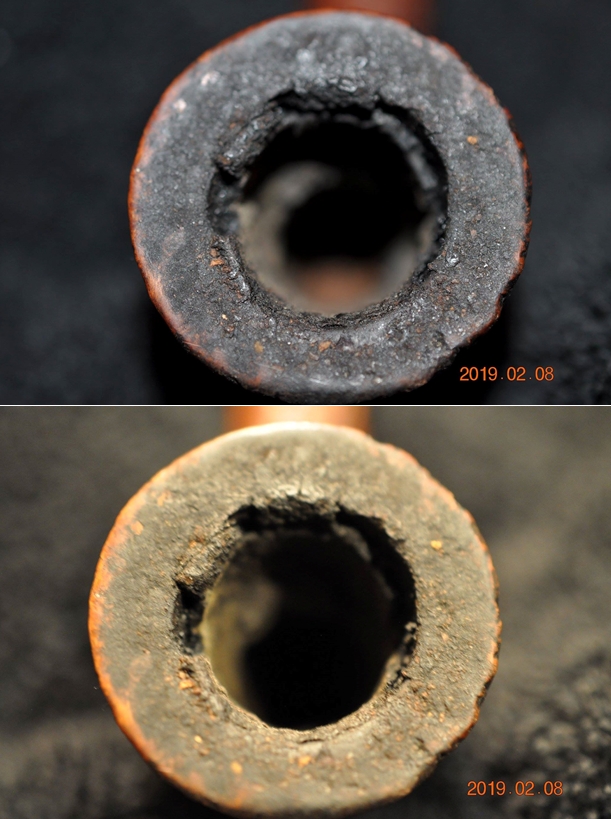
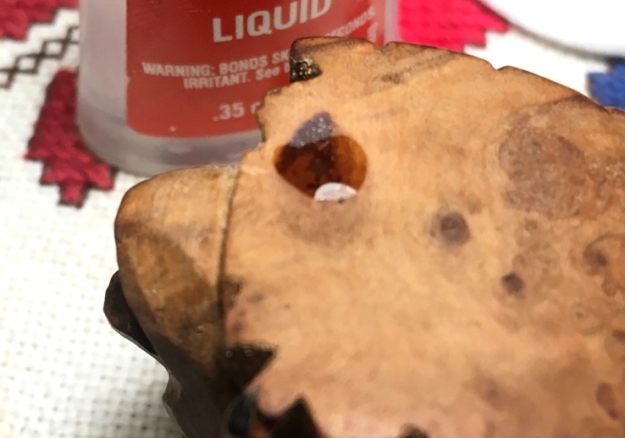
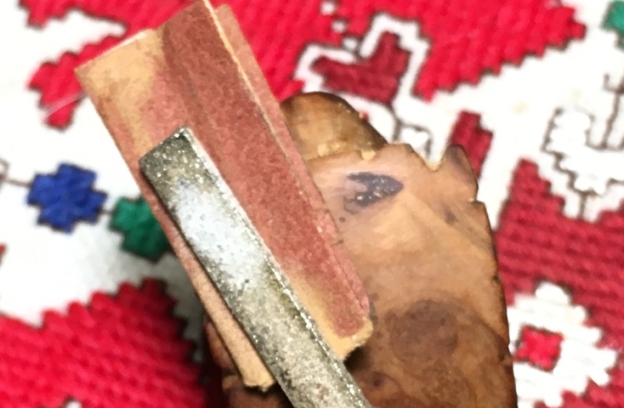
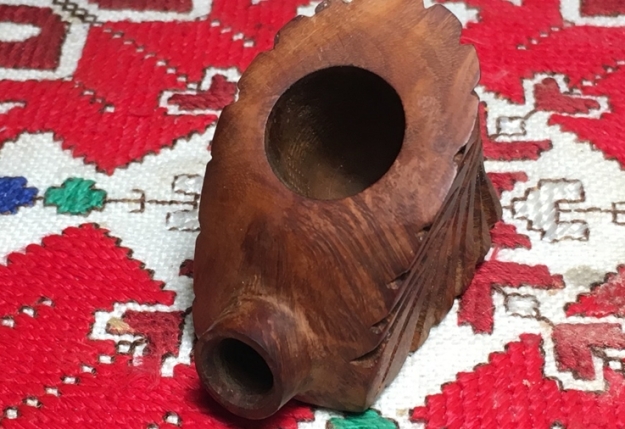
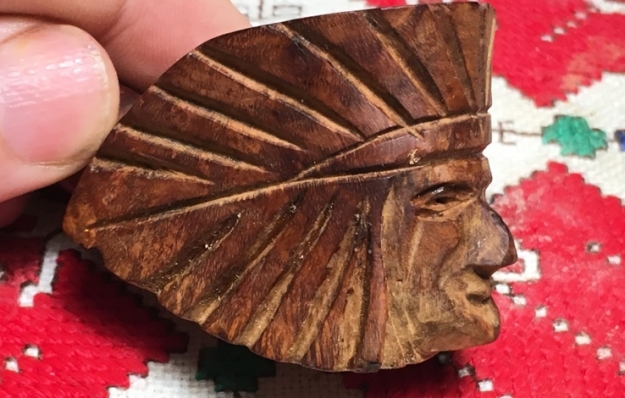
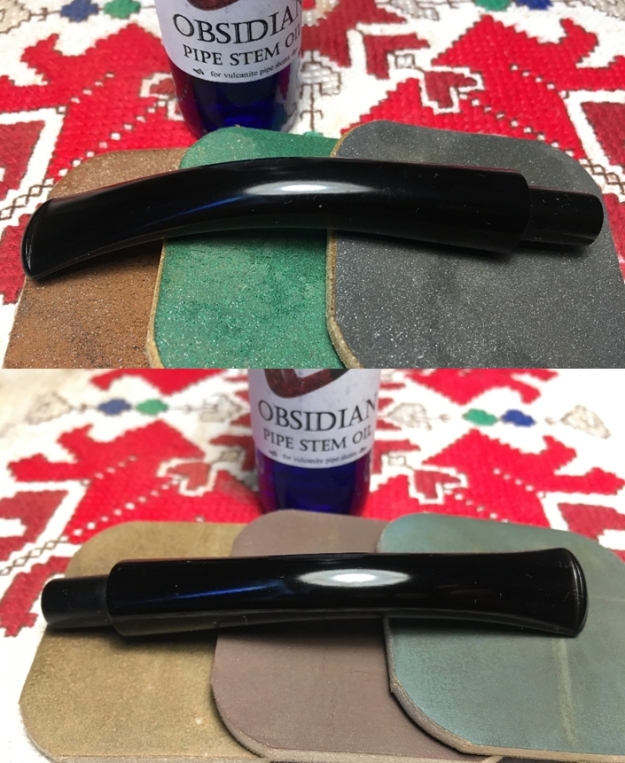
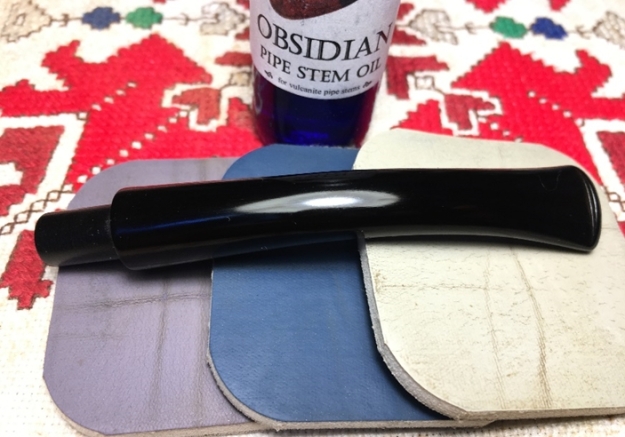
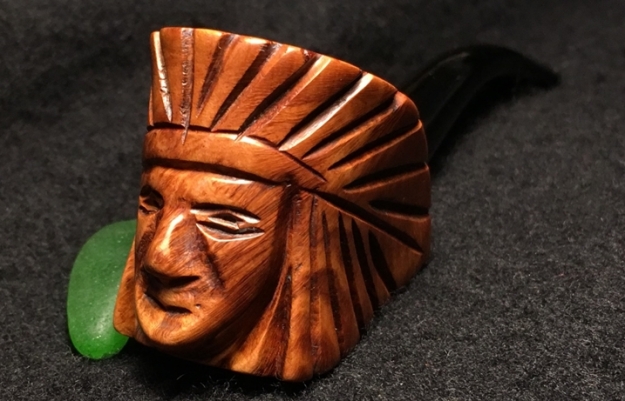
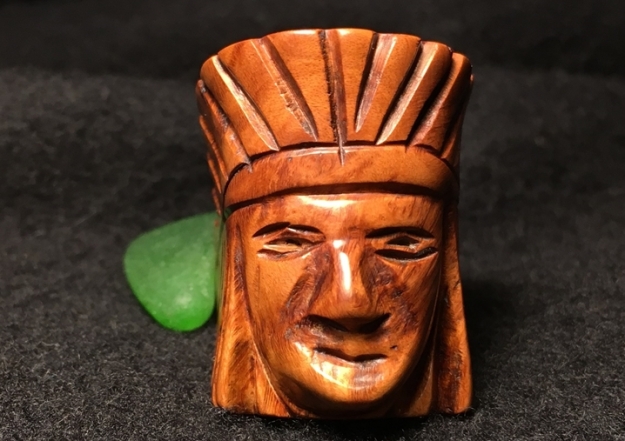
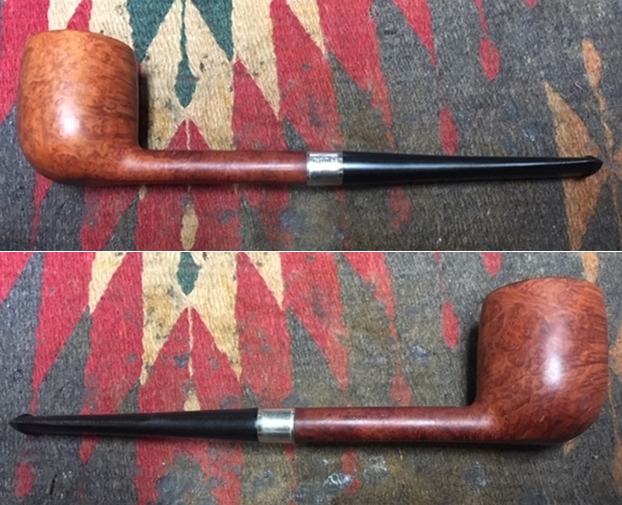
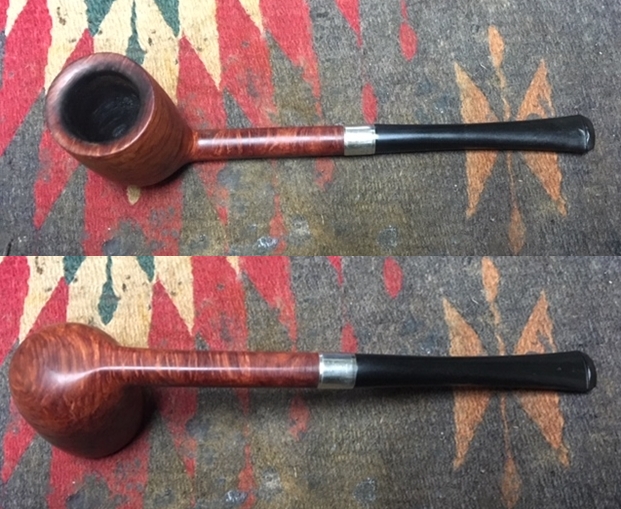
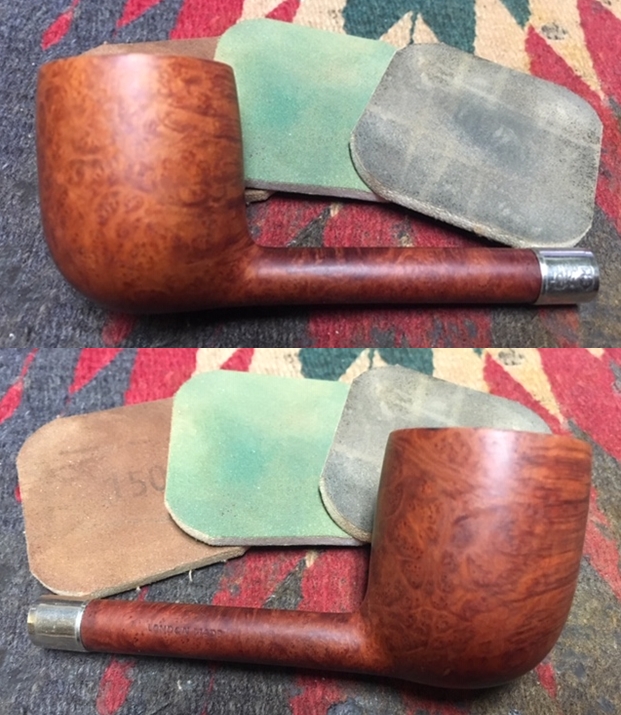
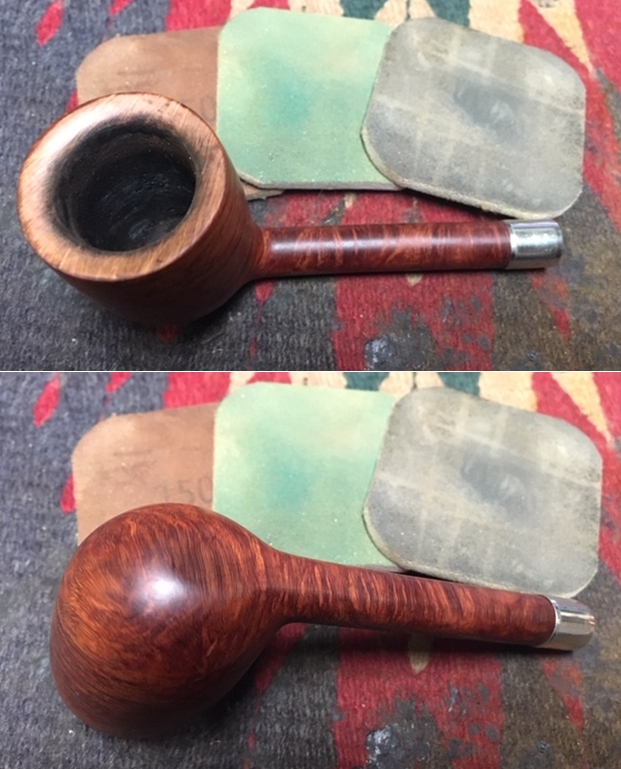
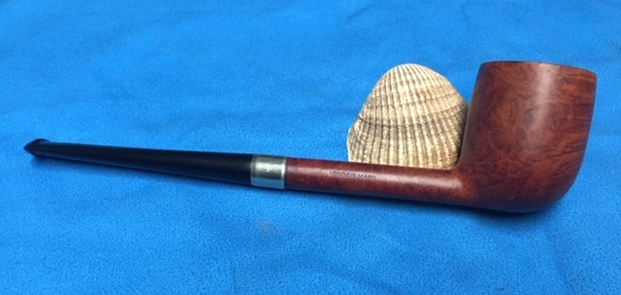
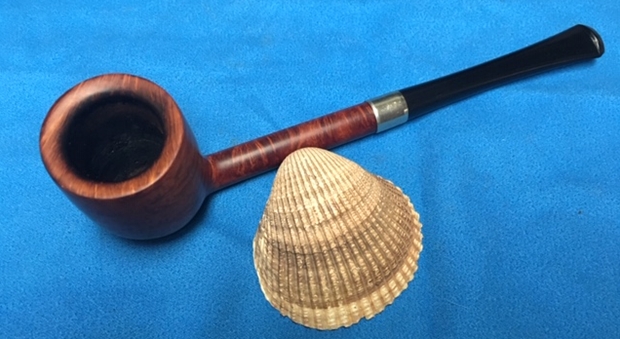
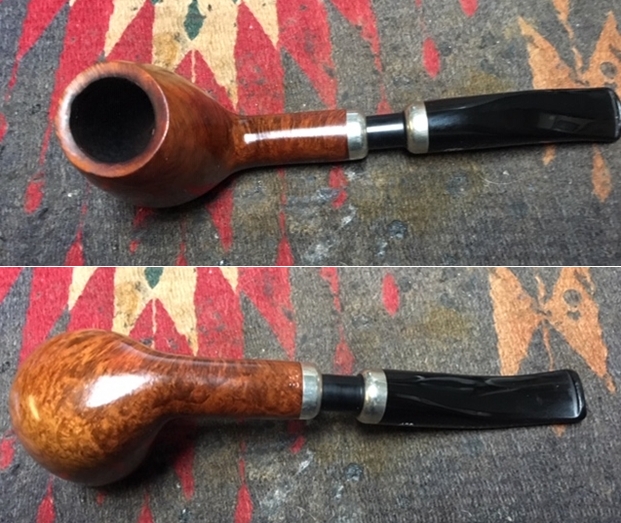
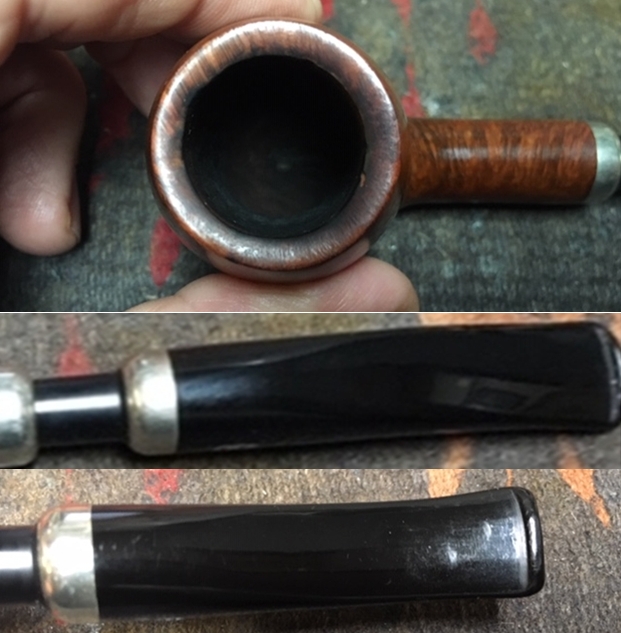
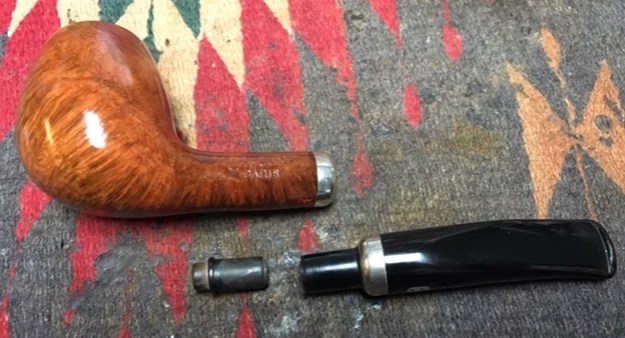
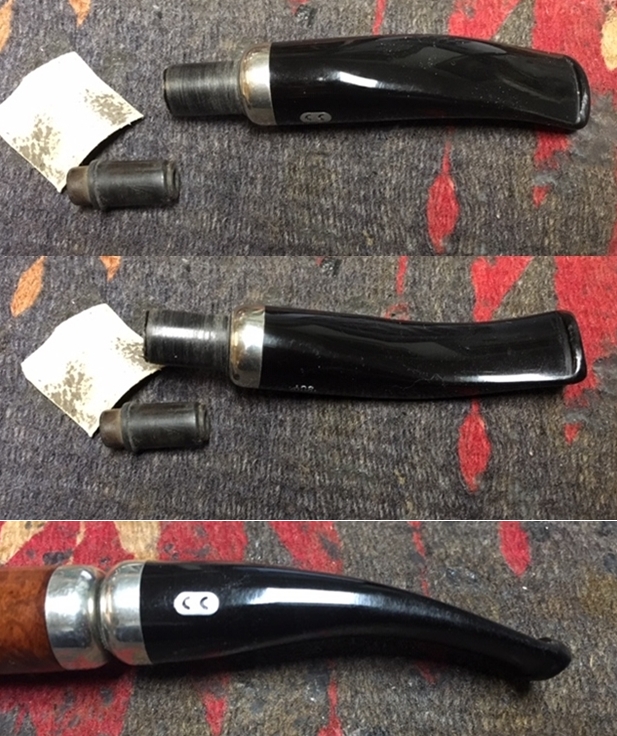
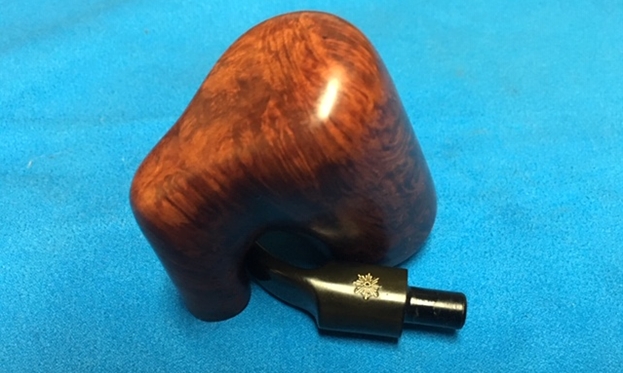
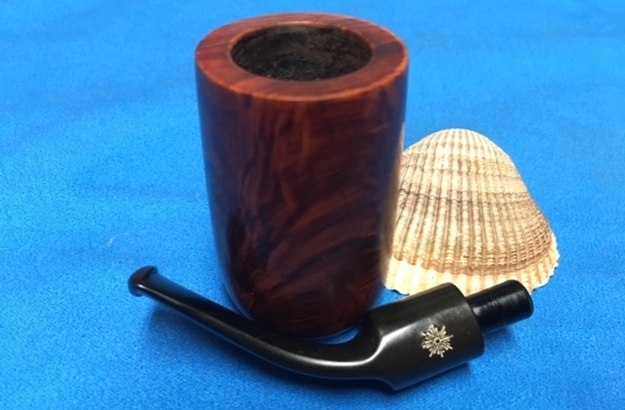
Tag Archives: fitting a stem

Restoring a Unique “House of Lords” Sitter


Blog by Paresh Deshpande

I am pretty angry and frustrated at myself!!!!! That’s a very strong and confusing sentiment against oneself, I admit. But that’s the truth. Let me explain.

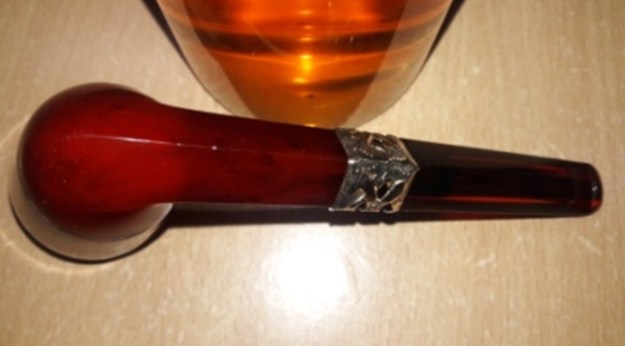
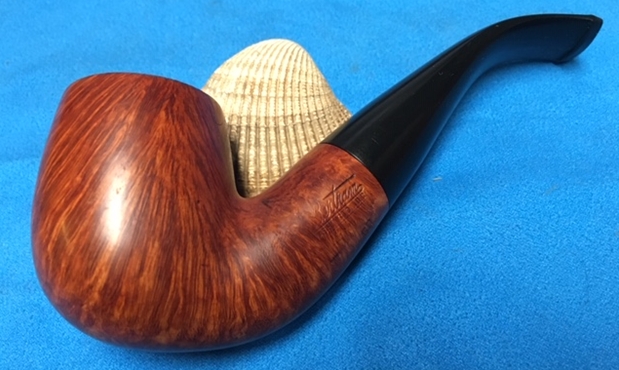
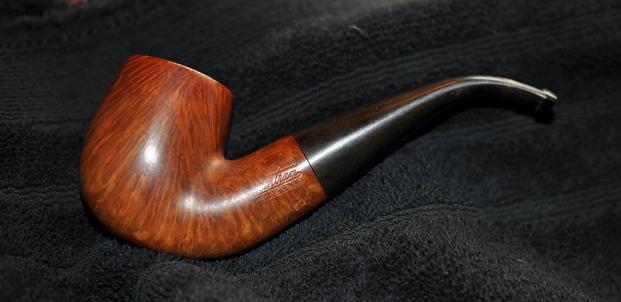
I spent nearly two weeks working on three pipes; a Dunhill Bruyere, a Tim West Freehand and a Stefano Exclusive. These three had their lip end of the stem either chewed off for about an inch and a half or a through and through hole!!! It could be considered as a major stem repair project. I successfully rebuild the stem end, including the button, lip edges and the slot. Though, I was unable to shape the slot as perfectly as I would have liked on the Dunhill, the repair was perfect on the Tim West and the Stefano. I felt elated and supremely confident about my capabilities. The blending of the repairs appeared spot on and I blazed through the remaining restoration, clicking pictures of the progress without giving them a second look. When, at the end, I went through the pictures while doing the write up, to my horror, the repaired stem and stummel stared back at me with all their imperfections on display in form of scratches, brownish spots of oxidation and fillings showing through the stain!! This was embarrassing for me and I shared these images with Mr. Steve. In his characteristic method of pointing out my short comings, I shall quote his reply to me, “Takes lots of work… I am having a little trouble with that lately…. Trying to rush it. Pipe looks good”, unquote!! Readers of rebornpipes and those who know him would be smiling while reading this part. Well, to cut the banter short, I shall rework all these short comings later as I want to start on a fresh pipe!!

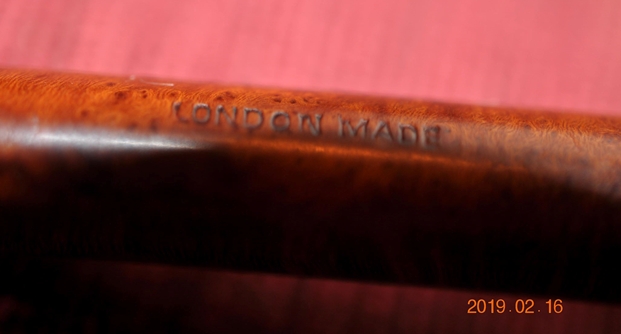
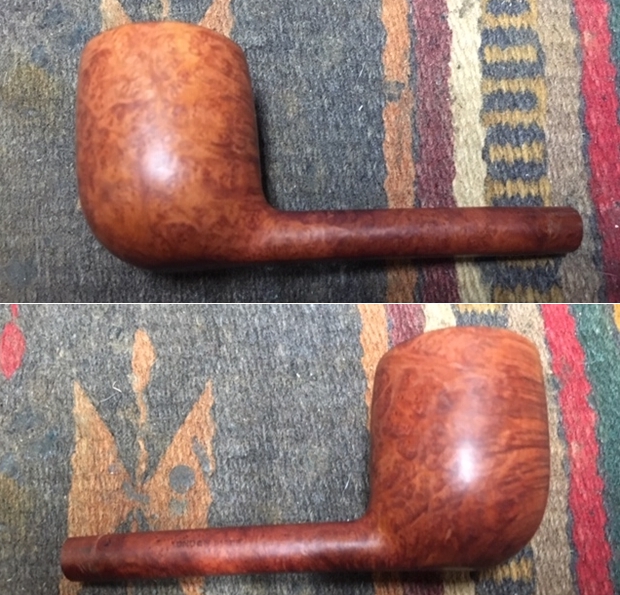
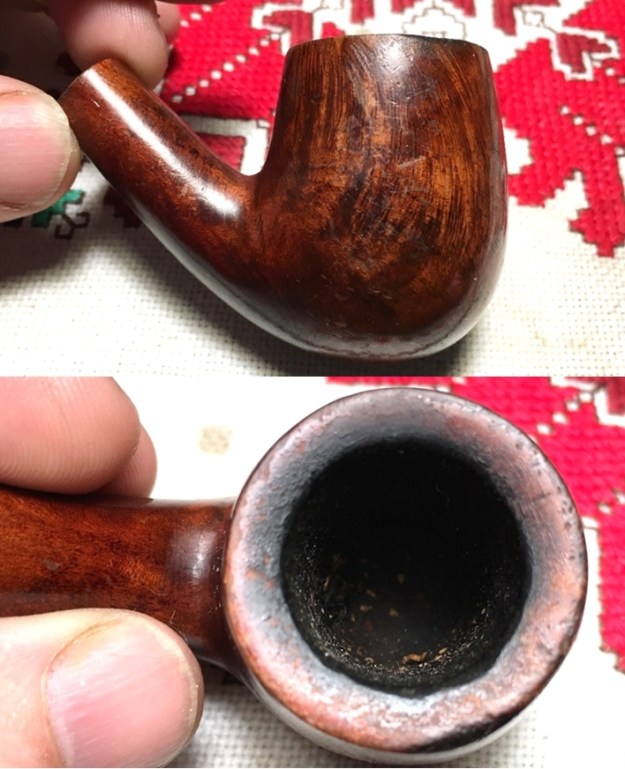
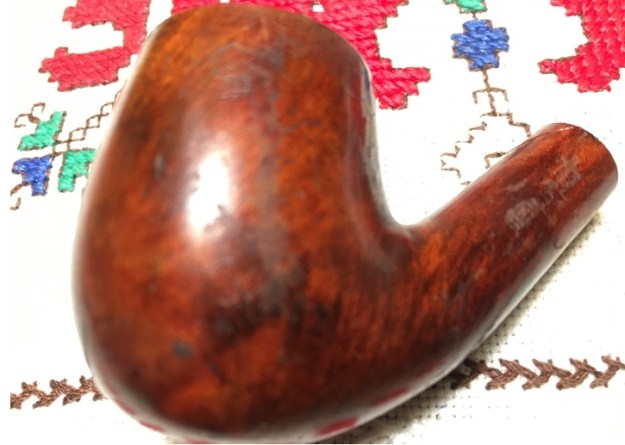
The pipe on my work table, from my inherited collection, is one large barrel shaped full bent (this aspect needs to be confirmed and will be cleared as we progress further) sitter with beautiful and very tightly packed birds’ eye grain on either side of the bowl and shank, extending over to more than half of the front of the stummel. Equally tightly packed cross grain are seen on the front left and back of the bowl and also on the upper and bottom surface of the shank. It is stamped on the left side of the shank as “HOUSE OF LORDS” over “MADE IN ENGLAND” in block capital letters. The right side of the shank bears the numeral “275”, probably the shape code, towards the bowl shank junction. The vulcanite saddle stem bears the Crown logo stamped on the left of the round stem. The stem logo and the shape code are slightly worn off. I have included a picture of the stem logo from pipephil.eu to show how it appears on this stem.To know more about the brand, the lines offered by the maker and attempt to date this pipe, I visited pipedia.org, which has wealth of information on almost all pipes. The only information available here was that this brand was by Samuel Gordon in the early 20th century and thereafter became a Sasieni second. My next go to site is pipephil.eu where the stampings and stem logos on a pipe are used for brand information and to date a pipe. Here is the link for information on the pipe currently on my work table:-

www.pipephil.eu/logos/en/logo-h3.html#houseoflords

This site also pointed to the same information gleaned from pipedia.org. Here is what was found on pipephil.eu.

Brand from Samuel Gordon. Maybe a Sasieni second (J.M. Lopes, op. cit.)

I further followed the link to “Gordon” and learned that Samuel Gordon had founded the brand “GORDON” in 1910-20 eras. This is the link for Gordon brand of pipes; www.pipephil.eu/logos/en/logo-g4.html#gordon

From the above information, it is assumed that this piece is from the early 20th century period. Wow!!!! This is really an old pipe. The pipe brands and its vintage, those that are in my grandfather’s collection, never cease to amaze me and there are some really collectible pipes that I have inherited.

INITIAL VISUAL INSPECTION

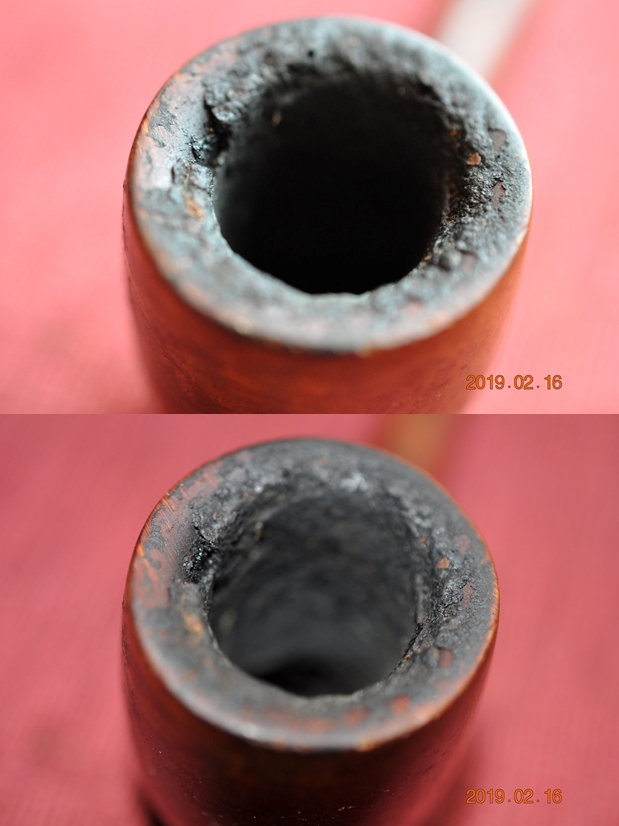
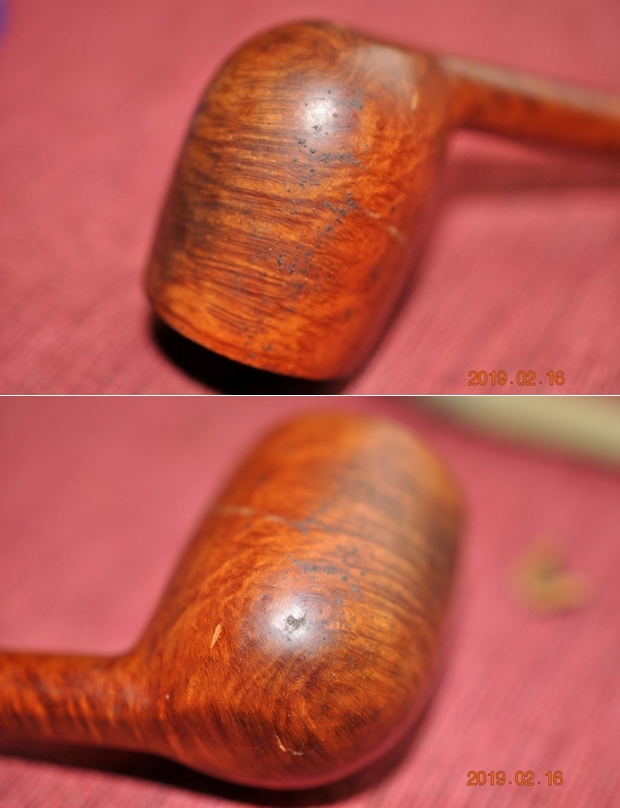
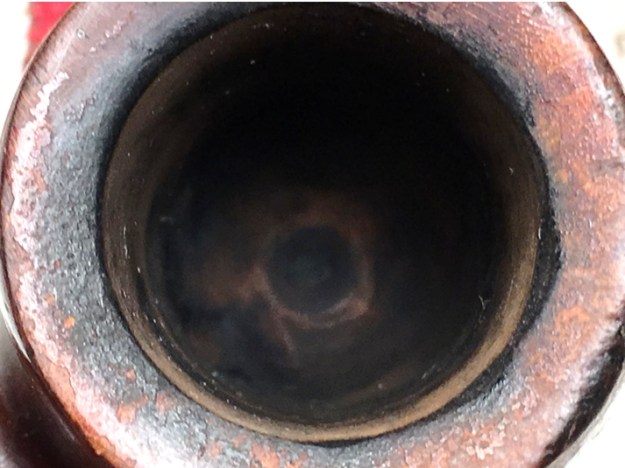
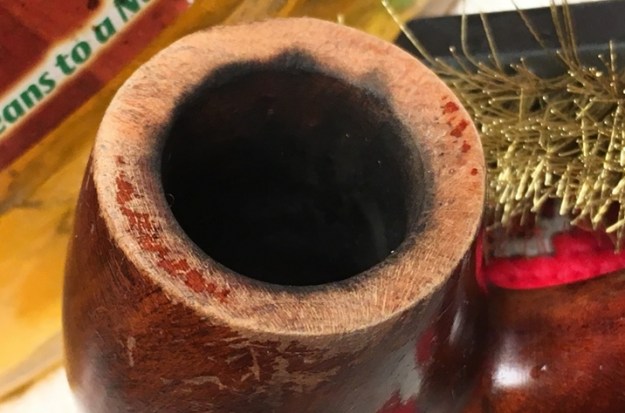
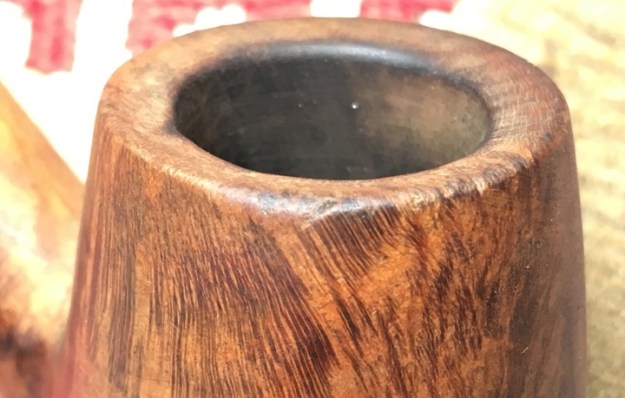
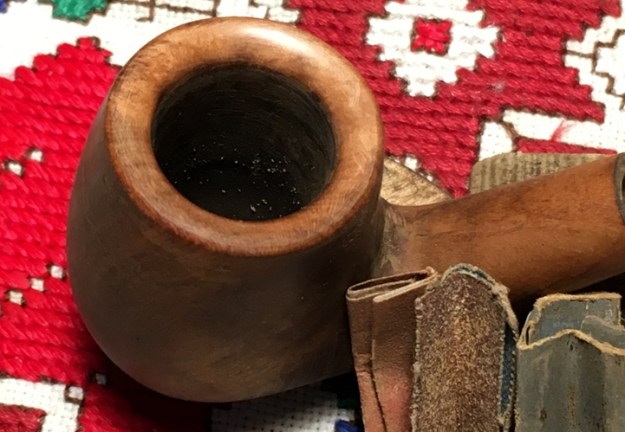
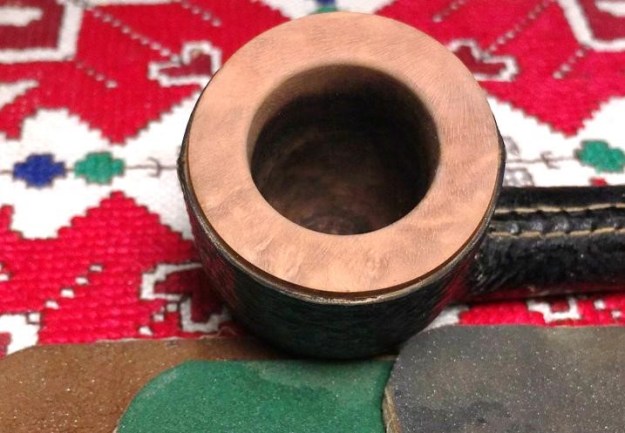
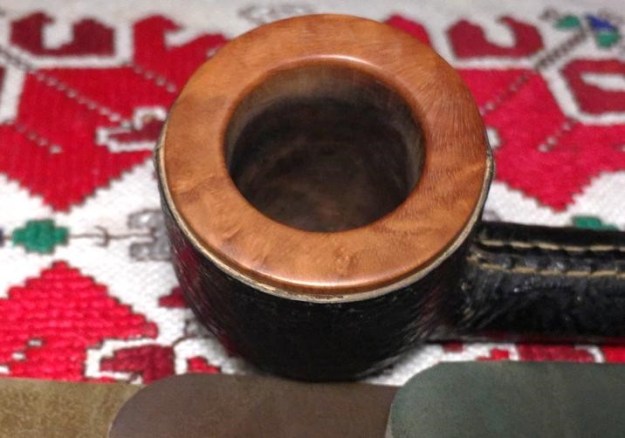
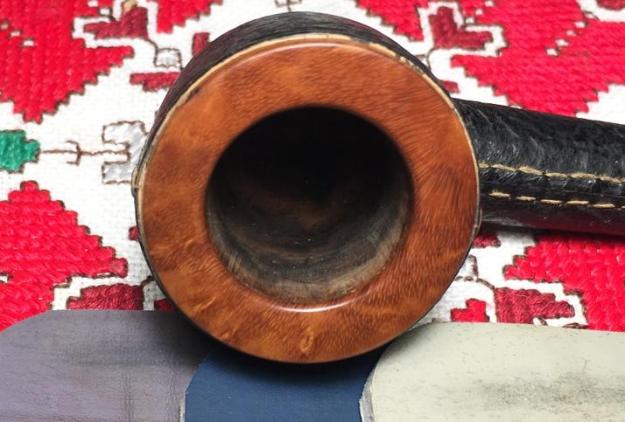
The chamber shows a nice even build up of a cake which makes it difficult to comment on the condition of the inner walls of the chamber. However, the general appearance of the stummel makes me believe that there will not be any major issues with the chamber walls. The rim top is clean with no overflow of lava and this is a big surprise coming from my inherited collection!! The chamber is out of round with the inner rim edges showing charring at 3 o’clock and 9 o’clock direction. It appears that this charred area of the inner edge was tried to get rid off in an amateurish way. The outer rim is also damaged and has a few chips and dents to the front, probably caused due to hitting the bowl against a hard surface to remove the dottle!! All in all, I would say that this was one of the few well cared for pipes from his collection!!The surface of the stummel is covered in dirt and grime accumulated over a period of time. The stummel surface is peppered with numerous dents and dings, more so towards the front of the bowl, probably caused due to careless and uncared for storage for the last 40-45 years and equal number of years of previous usage!!!! It will be a big decision whether to address these dents and dings by abrasive sanding method and loose the patina which has developed on the surface, or let them be. Well, I shall cross the bridge when I reach it. The mortise appears to be either clogged or has some obstruction as air flow through it is hard and laborious. The vulcanite stem is heavily oxidized. Some light tooth chatter is seen on both surfaces of the stem towards the lip. This issue should not be a major headache to address. The lip edge on both sides is crisp but lightly damaged. The quality of vulcanite is good.The thing that struck me odd was the bend on the stem. It was bent way too much than the normal. When I shared the pictures of this pipe with Mr. Steve, he too found the angle of the bend too rakish and very odd, to the extent that he felt it might not even be correct for the pipe. However, the stem logo confirmed otherwise. So, I am confronted with the controversial prospect between “PRESERVATION” and “RESTORATION”!! While I do not have as clear a mandate as Mr. Steve had, managing this conflict, for me, is more challenging. To me, this inheritance is a family heirloom and in this particular instance, I would rather maintain this profile instead of straightening it. Mr. Steve gave me a second perspective that the stem was bent during storage due to intense heat which is prevalent in India and may not be original as my grandfather had smoked!! Well, this could be true. The inner conflict continued while I proceed to clean and spruce up the pipe to its pristine condition (or at least make a sincere attempt at it)

THE PROCESS
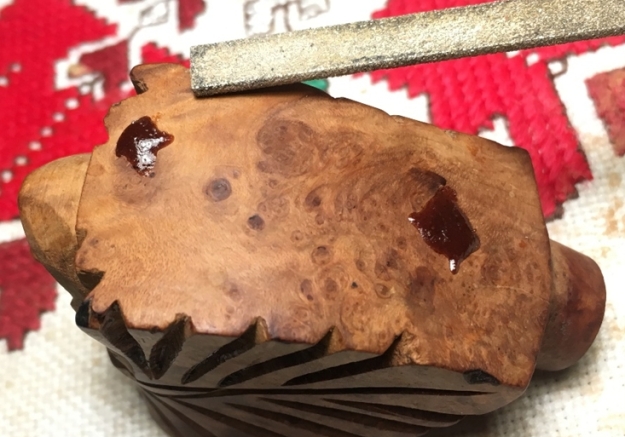
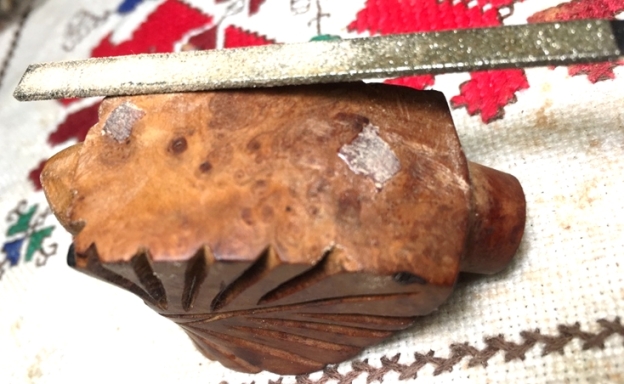
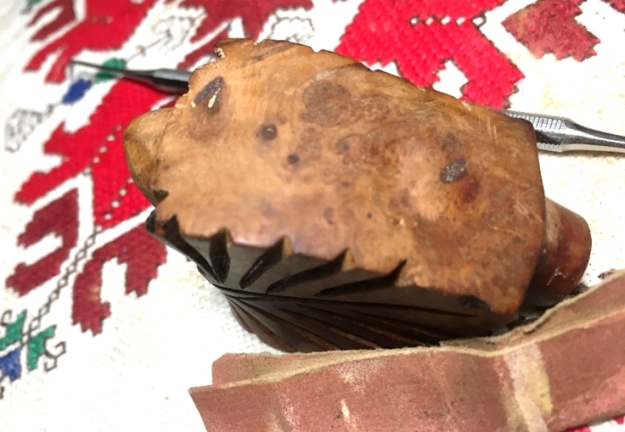
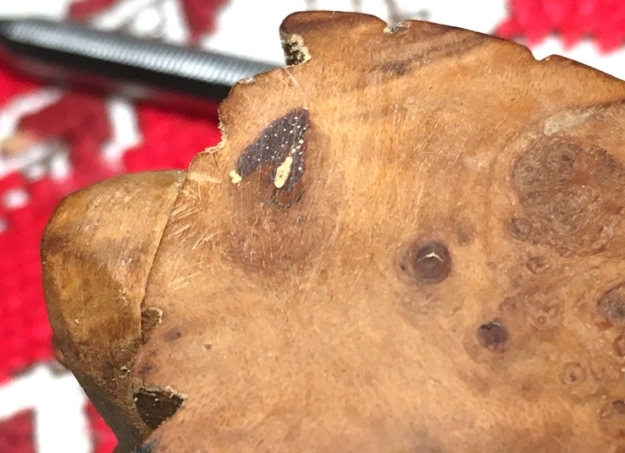
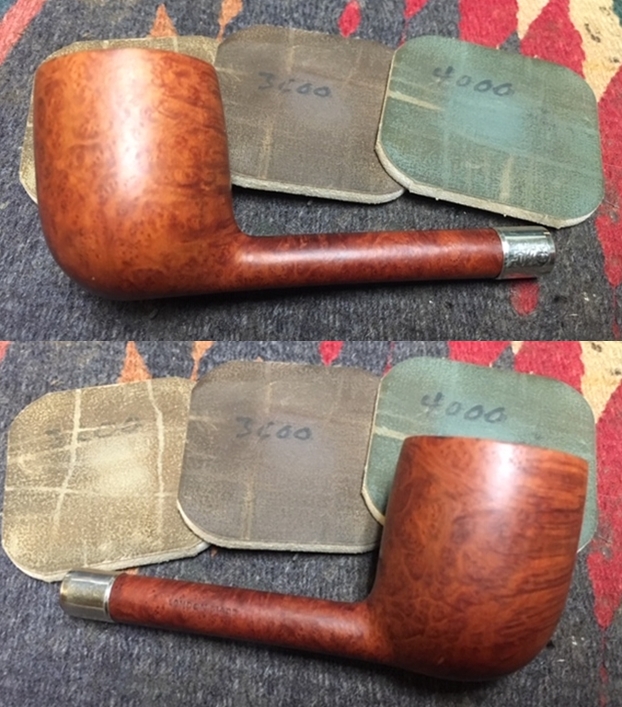
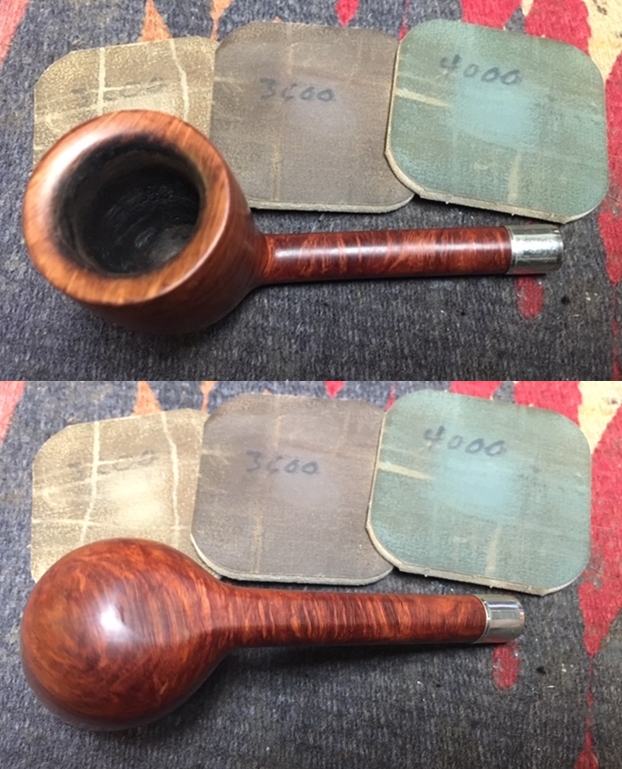
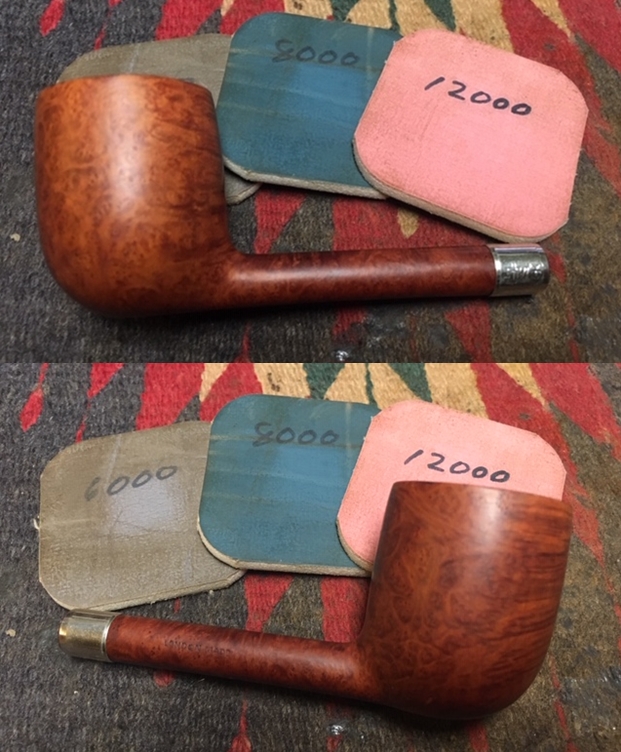
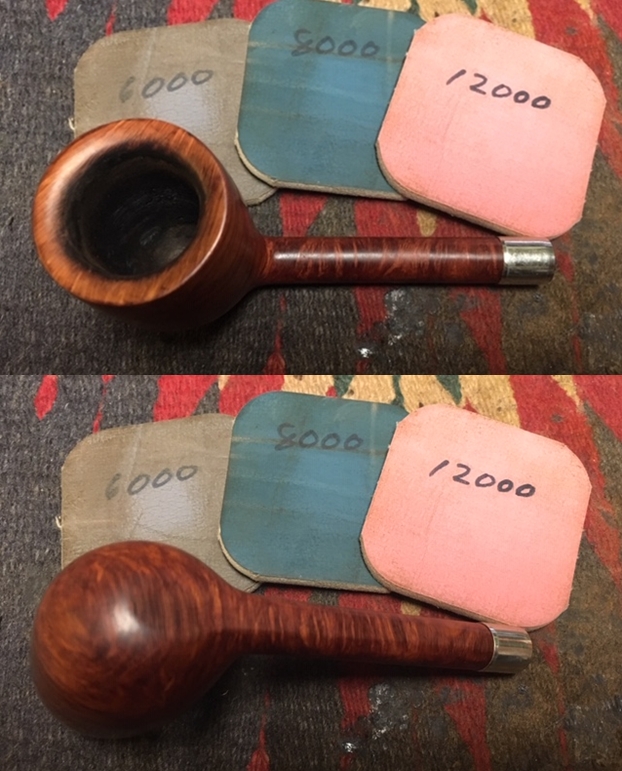
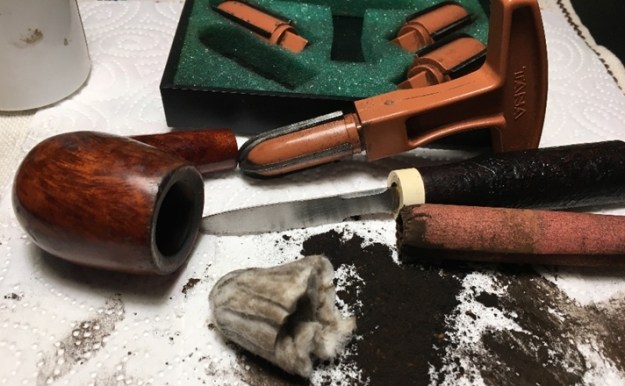
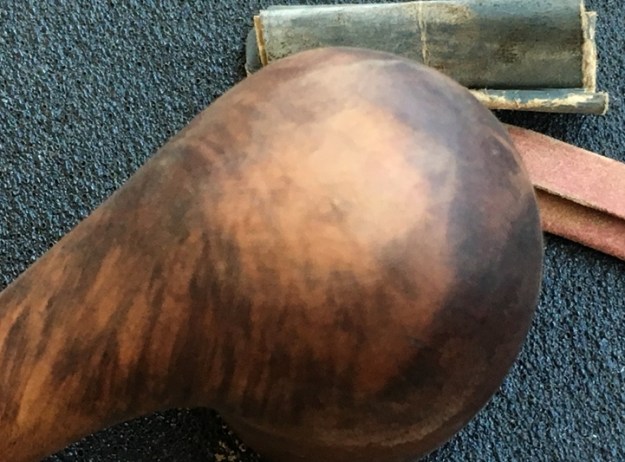
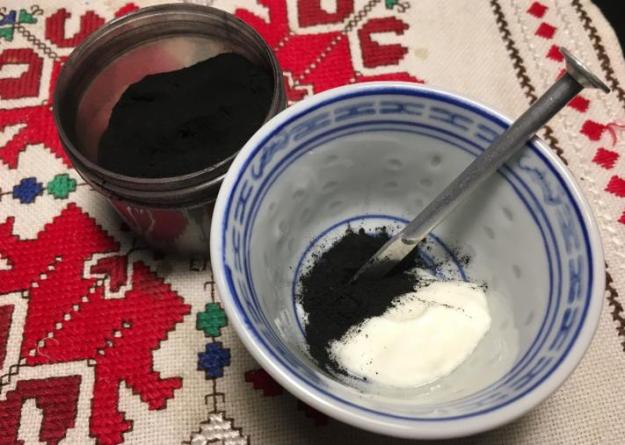
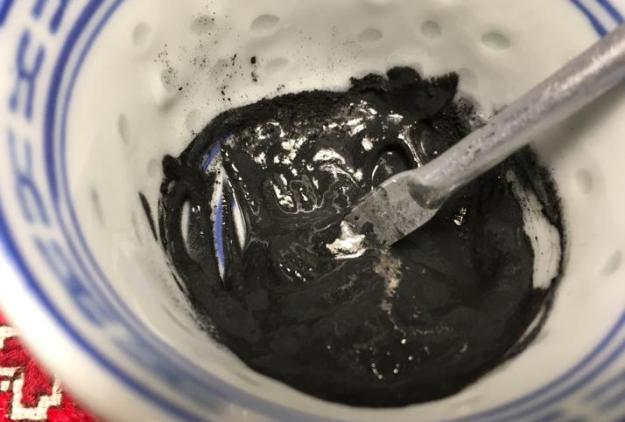
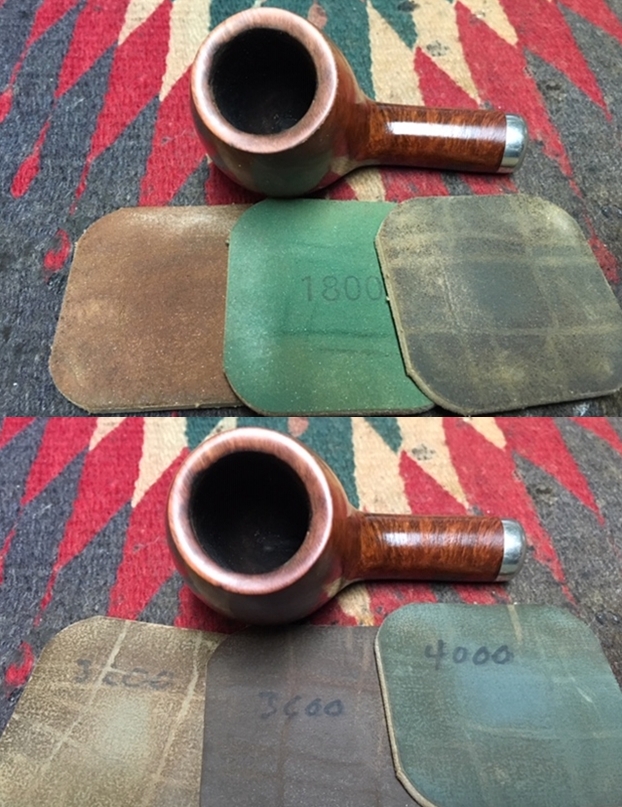
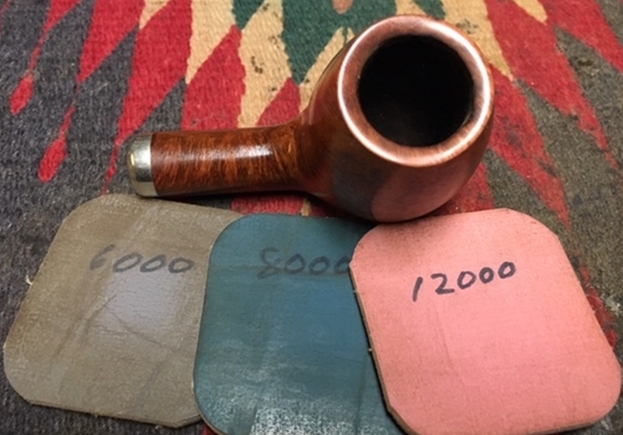
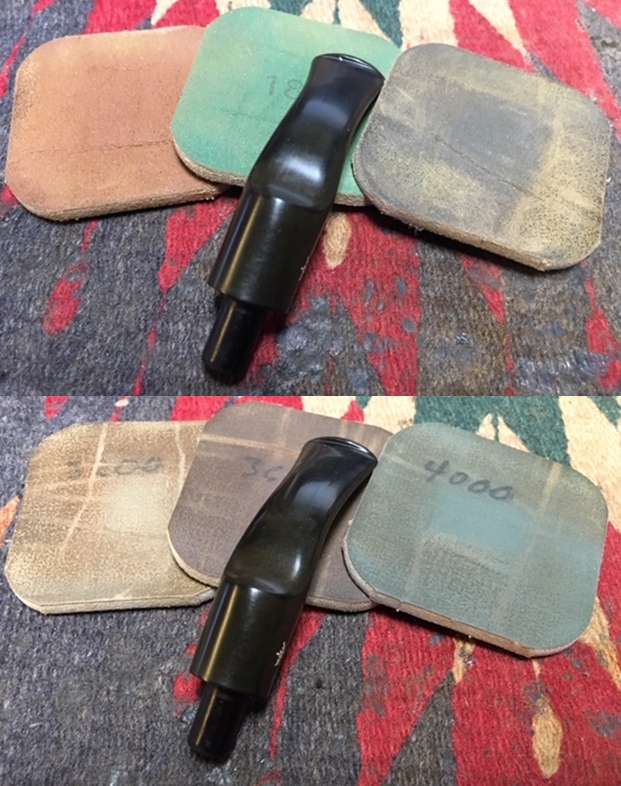
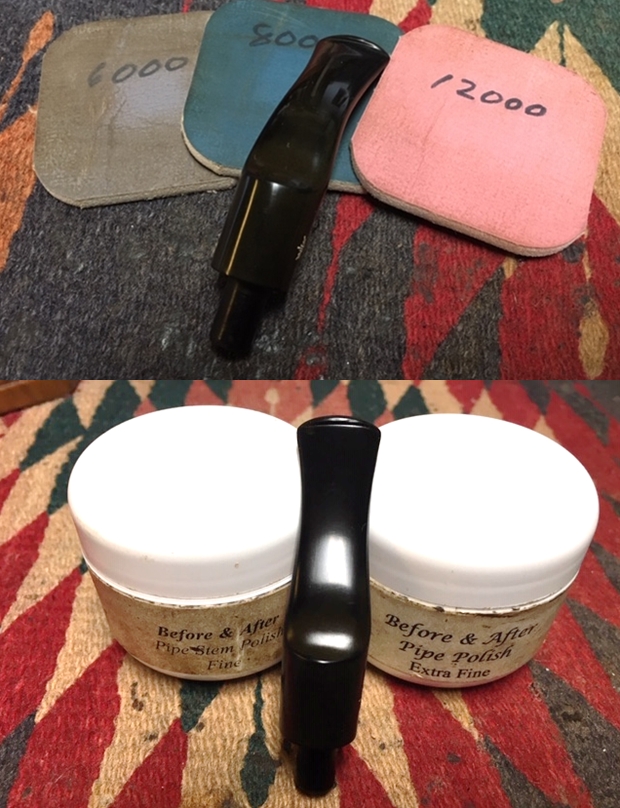
I reamed the chamber with my fabricated knife and scraped out all the cake. With a folded piece of 180 grit sandpaper, I further sand out the last traces of remaining cake and expose the walls of the chamber. There are some very minor and insignificant webs of line on the chamber walls that can be seen to the front and above the drought hole. I wiped the chamber with a cotton pad dipped in isopropyl alcohol to remove the carbon dust left behind by all the reaming and sanding process. I gently scraped the rim top surface with a sharp knife to remove the lava overflow. Using the same knife, I gently scrapped out the charred briar from the inner rim edge till I reached solid wood. The following pictures show the inner rim edge after the removal of the charred wood from the 3 o’clock and 9 o’clock direction. Also seen is the earlier amateurish attempt at addressing the issue of out of round bowl. I shall address this issue by creating a bevel to inner edge. This was followed by cleaning the mortise with cue tips, pipe cleaners and shank brush dipped in isopropyl alcohol. With my fabricated spatula shaped knife, I scrapped out the dried oils and tars from the mortise. My, there were chunks of gunk in there and can be seen in the following pictures!! Finally after some diligent cleaning, the mortise is clean and this further completely eliminated traces of old smells from previous usage.The internals of the stummel is now clean and fresh. Now, it was the turn of the stummel to get cleaned up. Using a hard bristled tooth brush dipped in undiluted Murphy’s oil soap, I very deliberately scrubbed the surface of the stummel. I cleaned the rim too. The stummel and rim top was dried using paper napkins and soft cotton cloth. I am not very happy the way the rim top appears at this stage with all the charring and uneven inner and outer rim edges. This needs to be addressed. I set the stummel aside to dry out naturally. After cleaning the rim top with Murphy’s oil soap, the inner edge damage was even more evident, and begged to be addressed before I proceed any further. I topped the rim on a 220 followed by 320 and 600 grit sand paper, checking frequently till I was satisfied that the charred surface was greatly reduced. The inner edge is still uneven, though much better than before topping. With a folded piece of 180 grit sand paper pinched between my thumb and fore finger, I created a bevel on the inner edge. This addressed the issue of uneven and out of round inner edge. A couple of dents and chips are also seen to the outer rim edge and one (circled in red) in the newly created inner edge bevel. There were a few slightly deeper chips on the stummel surface. I gouged out the old and dried wood from these dents from the front of the stummel, inner rim edge and the heel and spot filled it with a mix of CA superglue and briar dust (believe you me gentlemen, making and thereafter applying this mix to fill the pits is not as easy as it appears!!!!!! The moment superglue comes into contact with the briar dust; it hardens even before you can blink. Maybe there is an issue with the glue that is available to me here, coupled with the prevailing climatic conditions or maybe one Mr. Dal Stanton could help!!). I always over fill the holes so that when I sand them down they are smooth and I can feather in the fills with the rest of the briar. I set the stummel aside to cure overnight. I had applied this mix of superglue and briar dust to the inner rim edge as it would not be coming in direct contact with heat from the burning tobacco leading to health issues. While the stummel was drying, I worked the stem. I covered the stampings on the stem with whitener using a whitener pen. I flamed the stem surface of the stem with a Bic lighter to raise the tooth indentations and scratches on the stem. The heat from the flame of Bic lighter causes the vulcanite to expand and regain its natural shape, reducing the marks. Using a needle file, I sharpened the lip edges. For a better blending, I further sanded the entire stem with 220 followed by 600, 400 and 800 grit sand paper. This helps to reduce the sanding marks left behind by the more abrasive 220 grit paper. To bring a deep shine to the vulcanite stem, I went through the complete set of micromesh pads, wet sanding with 1500 to 2400 grit pads and dry sanding with 3200 to 12000 grit pads. I wiped the stem with alcohol after each pad and rubbed it down with Extra Virgin Olive oil. The internals of the stem was cleaned out using alcohol and pipe cleaners. The finished stem is shown below. By the time I had worked on the stem, the fills on the stummel surface had completely cured. I sanded the fills using a flat head needle file and checked to see if I had missed any spots. I wanted the entire surface smooth to the touch. I sanded the spots down and blended them into the bowl surface using a folded 220 grit sand paper. I followed this step by sanding the entire stummel with a 220 grit sand paper followed by 600 and 800 grit sand papers. Once that was done I wiped the bowl down with a cotton cloth dampened with Isopropyl alcohol to remove any remaining dust. I wet sand the stummel with 1500 to 2400 grit pads and follow it up by dry sanding with 3200 to 12000 grit pads. Once I was through with the micromesh pad sanding, the fills showed in complete contrast with the rest of the stummel, as can be seen in the pictures below. I hope they will blend in better once I apply the balm and buff the stummel. I rub a small quantity of “Before and After Restoration Balm” in to briar and let it rest for a few minutes. The balm almost immediately works its magic and the briar now has a nice vibrant appearance. I further buff it with a horse hair shoe brush. The stummel, at this point in restoration, looks beautiful save for the fills which can still be seen in all their awfulness. To address this, I have the option to stain the stummel with a dark brown stain or I let it be as a being part of its journey thus far!! Thus, another conflict has been added to the existing one regarding the stem. I shall think about it once I reach that point in restoration. Before I proceed to final stage of polishing and applying carnauba wax coats, I want to address the superficial and insignificantly thin lines in the chamber as a precautionary measure. I mix activated charcoal and yogurt to the consistency of a thick porridge, not runny while being pliable. Inserting a folded pipe cleaner into the mortise till it peeps out of the draught hole, I apply an even coat of this mixture to the inner walls of the chamber with a modified bamboo frond and set it aside to dry out overnight. The next evening, the coat has completely dried out and is hard. Using a piece of folded 220 grit sand paper, I lightly run it over the coating to a smooth finish. I had a long look at the dark fills against the rest of the stummel and did not like it. I made a decision to stain the stummel in dark walnut stain. I use the powder variety of stain and mix it with 99% isopropyl alcohol. I heated the stummel surface with a heat gun and applied the stain with a folded pipe cleaner. As I paint the stummel with stain over sections at a time, I burn the dye using a Bic lighter that combusts the alcohol in the aniline dye and sets the dye pigmentation in the wood.  After fully saturating the stummel and covering the whole surface, I set the stummel aside to rest for several hours. Once the stain had set, I mount a cotton cloth buffing wheel on the Dremel and set the speed at about 40% full strength and apply red compound to the stummel. This does help in revealing the grains gradually while masking the darker fills. To finish, I re-attach the stem with the stummel. I mounted a cotton cloth buffing wheel to a locally manufactured machine which is similar Dremel.  I set the speed at about half of the full power and applied White Diamond compound to the entire pipe. I wiped/ buffed the pipe with a soft cotton cloth to clear it of any leftover compound dust. I then mounted another cotton cloth wheel on to the polishing machine and applied several coats of carnauba wax. I finished the restoration by giving the entire pipe a rigorous hand buffing using a microfiber cloth to raise the shine further.
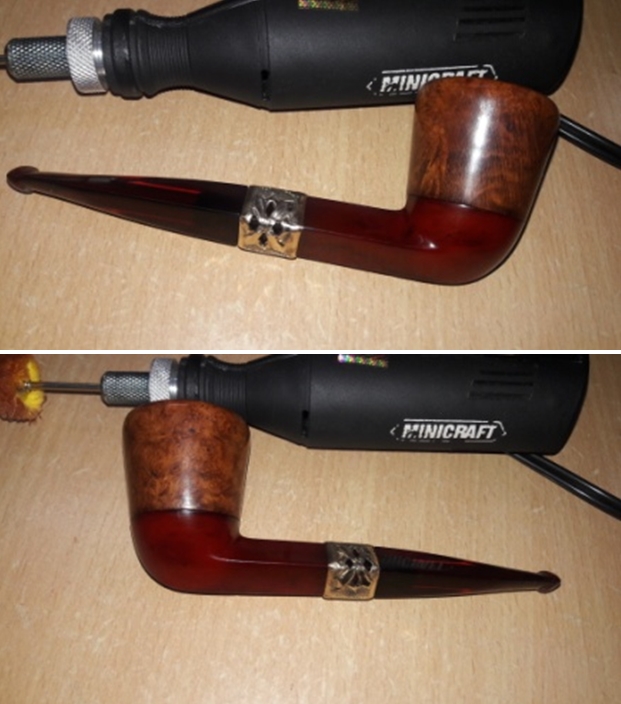
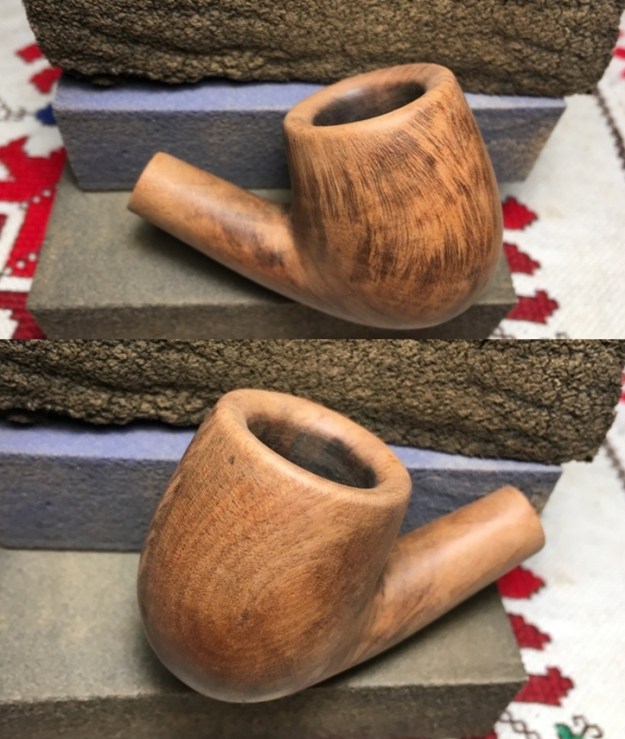
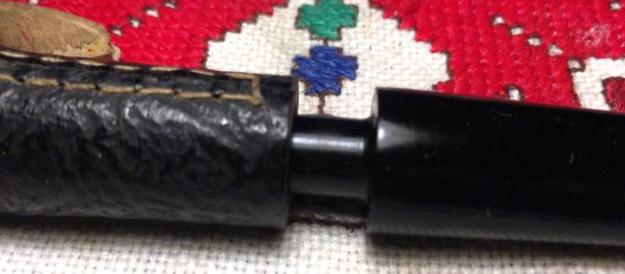
The completed pipe looks lovely, fresh and vibrant; the photographs in this case, do not do justice to the appearance of this beautiful large barrel-shaped pipe. Thank you for having the patience to reach this far while reading the write up. And as usual, I request all those readers to please leave a comment as it will help me to improve further and hone my skills. PS: After the pipe restoration was completed, nearly 15 days later my guide and mentor, Mr. Steve casually asked me if I had decided to straighten the stem. This set me thinking that here is a gentleman who is still thinking about the bent stem and that he is still doing so as he is convinced that a straight stem would look nicer on the pipe and would be original to the pipe. This convinced me to re-straighten the stem to its original. I place a fluffy pipe cleaner through the airway to prevent it from collapsing due to heating and with a heat gun; I heat the stem till it is pliable and straighten out the stem just by eyeballing the shape till satisfied. Here are a few pictures after the stem was straightened. Yes, there are a few minor issues which is a direct result of the process like the alignment of the shank end with the tenon end and slight dullness in the shiny stem etc, but they will be addressed subsequently. The overall appearance of the pipe is much better and the shank flow into the stem is more fluid and even. Thanks Mr. Steve!!


The Decline of Restoring Old Pipes, Part 4/4: Fixing a Meerschaum Shank Everyone Thought Was Beyond Repair


Blog by Robert M. Boughton
https://www.roadrunnerpipes2k.com/
https://www.facebook.com/roadrunnerpipes/
Copyright © Reborn Pipes and the author except as noted

 To him that will, ways are not wanting.
— George Herbert, in Jacula Prudentusm or Outlandish Proverbs, Sentences, &c. (posthumous, 1651). 

RECAP
Part 1 hypothesized that the discontinuation, illegality and dwindling or total unavailability of vital materials, used in antique and other very old pipes, will lead to a serious crisis in restoring these heirlooms and otherwise prized implements of contemplation to their original conditions.  My main theme was the need for those of us in the business – having considerable, moderate or little experience under our belts – to learn how to overcome these difficulties that will become more acute all too soon.  In hindsight, I should have emphasized better the need for those who now have the know-how to use their own perhaps self-discovered and unique (read proprietary) heroic measures to cooperate in sharing them with the rest of us.

Part 2 described the first of three such repairs I have completed, its example being a Colossus Pipe Factory (CPF) Best Make turned lion’s head meerschaum with a gold band and genuine cherry red amber stem that needed reconnecting with a new bone screw tenon.  Five years after I began searching for the one part, I was compelled to send the otherwise restored CPF to a specialized repair service that may have been the only place capable at the time to affect the rehabilitation – for lack of a proper bone tenon or anyone to whom I could turn for instruction on how to repair damage to the inner shank.  Now I know the necessary work was relatively minor.

Part 3, taking the form of a fable, told of the misadventures of the Restorer during his two-year quest to cleanse of all evils a Kaufman Brothers & Bondy Blueline Bakelite dated by its owner to 1911 and entrusted to the Restorer’s care for a simple cleaning and restoring.  The ensuing calamities must be read to be believed.

INTRODUCTION
I became involved with this small old meerschaum smooth bent billiard by the most unusual circumstances of any restoration I’ve made so far.  My pipe club meetings take place the third Thursday of every month in a back room of the local Moose Club Lodge, where the Ladies of the Moose are gracious enough to cook a special dinner for us at a low price that just covers their expenses, not counting the tips we’re more than happy to contribute.

Before dinner was served at the December meeting, one of the ladies, Sherry, happened to buy two of my pipes.  One was the best I had, a beautiful Ben Wade by Preben Holm Danish freehand, and the other a vintage Dr. Grabow easy bent natural billiard.  Sherry didn’t know much about pipes but liked those two, which I let her have at the 15% club discount minus the usual $8.00 shipping fee.  She mentioned finding at a yard sale a little pipe, in a leather case, she described as very dirty but white underneath with a broken stem.  She thought it might be antique.  I told her it was probably meerschaum, explained what that meant, and  encouraged her to bring it with her the night of the next meeting so we could all have a look and see what might be done.

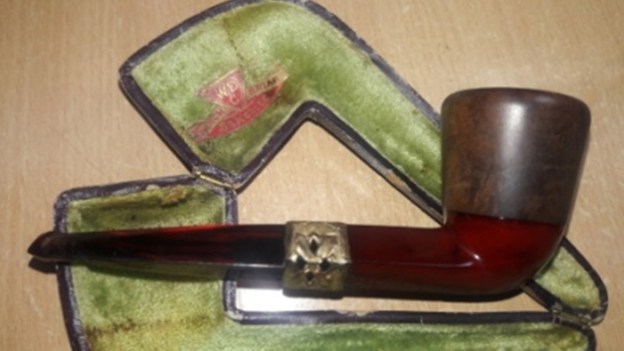
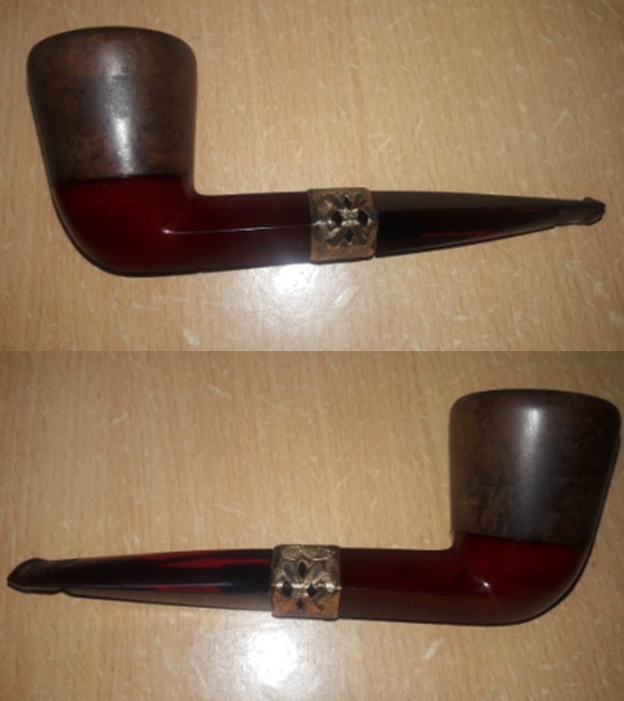
Before dinner was served at the January meeting, Sherry handed me the little brown case.  There’s something mysterious about such objects, teasing the beholder to approach and open them and reveal the secrets hidden within.  Nothing we’ve been taught by fables, folklore and outright superstition entreating us not to meddle with common-looking doodads, unless we’re prepared to face the unknown but likely negative consequences, is powerful enough to stay our hands.  “Aladdin and the Magic Lamp,” which was not added until 1704 to the original Arabic tales from the 8th-14th centuries, comes to mind.  The tale of the powers of the Magic Lamp, during more than three hundred years of oral and other popular re-telling, has been altered from its actual story in which all ends well to a warning to be careful what we wish lest we get what we ask for.  But in this event, the contents pf the brown case appeared benign. The top felt lining of the open box identified the meerschaum billiard as a First Quality, but whether that was an old brand name or the importer I have not been able to determine.  Sherry’s main concern, of course, was if her $8 yard sale find could be fixed so she could smoke it.  Seeing the severe damage to the inner shank, my hopes were not high.  I observed the stem that was with the meerschaum was too short and also smaller in diameter than the shank and suspected its use as a replacement of the original may have caused or worsened the harm. Still, with wishful thinking, I thought the gutted, ragged shank of the little pipe (only 5” long) might be mended with Plaster of Paris or some sort of putty.  I was sitting next to Don Gillmore, the artisan pipe maker whose business is called DW Pipes, and he nixed those ideas.  Any new stem and tenon, Don said, would not support the billiard’s weight with the sort of shank repair I proposed.  We passed it around the table, and that was the general opinion.  For such a small pipe, it was rather heavy, and at least part of me had to go along with everyone else’s verdict.

Sherry also wondered how old the First Quality pipe was.  The group conclusion was that it dated to between the turn of the 20th century and the 1930s.  Everyone agreed the stem was Bakelite, but in a later experiment that ended with shocking results I proved that was erroneous.  More about that later.

And so I had to tell Sherry, choosing my words with special care, that her pipe was very old but there was nothing we could do to attach a new stem.  Still I thought there might be some way to accomplish the feat.  I kept that to myself, however, instead offering to clean up the pipe and make it look nice, at least, at no charge.  I could see the well-masked disappointment on her face and had to bite my tongue to hold back my seemingly irrational hope so as not to risk another let-down.  For the meantime, Sherry let me take the pipe for cleaning.

George Herbert’s proverb, later reiterated as “Where there’s a will, there’s a way,” is the prefect prelude to this blog.  Everyone else present at the January meeting of my local pipe club reached the same conclusion, that the restoration was impossible given the severe damage and known methods of repair I proposed that were intended for small jobs of meerschaum patchwork,  I even consulted our host, Steve, in a short exchange of emails in which I suggested more and more creative (meaning desperate) approaches   I should have accepted the wholly sensible belief that the smooth little billiard was past fixing when I received Steve’s emphatic consensus that any such approach would not support the inherent torque between the stem and shank.  In fact, for a moment I did give up hope   

I’m afraid my mind was already ensnared by what my dad always called a steel trap, however, and I had to find a means of escape even if it required sending the pipe to miracle workers such as the folks at Norwoods Pipe Repair, who had bailed me out several times already.  I was growing tired of such surrender, but with that end in mind, I sent Norwood the younger photos clarifying the damage and text adding every possible material of the main parts to be used, in the preferred order.  As always with that fine business, I had a positive response the same night.  Assured the job could be done, I prepared a realistic estimate of the amount Sherry would pay, with parts, labor, shipping there and back and the 11% tax included, and forwarded the good news to Sherry.

But you see, another aspect of Herbert’s collection I like is the comparison of the modern sense of the word outlandish in the book’s subtitle being “freakishly or grotesquely strange or odd” compared to the now archaic meaning, from the Old English utlendisc, as foreign or not native.  I also appreciate the translation of the main title, from Latin, referring to careful darts.

Remembering the antique CPF turned lion’s head meerschaum pipe I sent to Norwoods to have the original amber stem reattached with a new bone screw tenon, I took a closer look at the shank as it appeared before and after the wonderful work that was accomplished.  An outlandish notion in both senses of the word began to form in my mind.Notwithstanding my good faith communication with Norwoods, I knew I could accomplish the task myself.  Because of the way the CPF’s previous shank threading was filled with some permanent solution, sinking the new bone tenon within it, all I needed was a practicable guess as to the solidifying substances used.

Thinking it might present somewhat of a difficulty to Don, I drove to his house and showed him the CPF.  After examining the shank for a few seconds, Don suggested epoxy mixed with powdered wood.  He half-filled a plastic 35mm film tube with the latter – more than I’d need for far more meerschaum repairs than I could make in quite a while – and said the epoxy was up to me.  Of more importance to me was his change of opinion regarding my ability to accomplish the task.

I cut in half my previous estimate of Sherry’s cost to fix her meerschaum pipe and sent her a new email asking if I could proceed with the work, guaranteeing the price.  It was the only time I’ve bid on a job, and my goal being less to make money than to demonstrate how this kind of meerschaum repair could be performed by almost any restorer (not to downplay my experience more than is appropriate), I decided to undercut the competition with assertive style.  Her reply was that if I was confident I could do the work, get on with it.

With the pipe already cleaned by then, I had reluctantly concluded an amber bit was not viable at the time because of general unavailability of any color without sending the pipe to someone else to do the work.  I only had to acquire a Bakelite stem of an appropriate length and color (as close as possible to the orange of the poor replacement shown above, based on Sherry’s wish) and a selection of bone tenons and Teflon push-pull sets from which to choose when I decided the type I would use.

JH Lowe turned out to be the single supply store I found with all of the above but sold the push-pull sets in 12-packs.  I would only need one, and thinking I’d save on my expenses, I ordered a three-pack from Royal Meerschaum.Also, the JH Lowe bit page did not mention available colors, and the closest length was 3”, the standard.  For the pipe to fit its case as it had when first made, the bit needed to be 2½”.  On a tip from a friend, I called Tim West of JH Lowe and asked if he had any orange or even yellow Bakelite bits of the right length that were pre-bent.  Every source I had found, online and friends, stressed that Bakelite could not be bent.

CORRECTION TO PART 1: In the first blog of this series, I noted that hand-crafted old pipes, including the stems, were made to the exact and often eccentric specifications of the maker, and therefore one of the problems “for purposes of restoring old stems made of Bakelite…[is that] any necessary replacement can be reworked in only one way: fitting an over-sized stem of an otherwise suitable candidate to a shank by serious sanding or other such methods.  Any other alteration, such as bending or threading, is strictly impossible.”  When Tim repeated that Bakelite bits were pre-fashioned for individual pipes, I told him I was aware of that obstacle and it was, indeed, the cause of my greatest difficulty – finding one already bent.  Without a bent Bakelite stem, I added, I could not complete the project at hand.  With a little reluctance, Tim then insisted that although it is “tricky at low temperatures, Bakelite can be bent.”  He assured me he has succeeded in bending Bakelite “a little but not much.”    

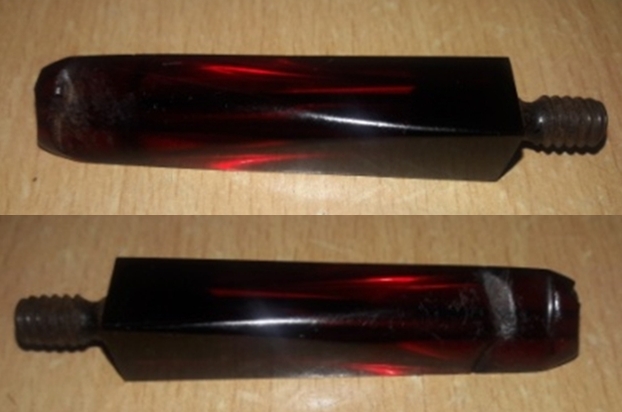
Just to be on the safe side, I ordered a 3” straight bit that was dark reddish brown, a 2½” “orange or yellow” bit Tim was sure he had in a back room, whether or not it was bent, and a 12-pack of assorted bone tenons.  Both bits were pre-drilled for the “push” side of the set.  Given Tim’s qualification of the bending process being chancy at low temperatures, I reasoned, if need be I would crank the oven up a little at a time and see if the world’s first synthetic plastic became more malleable.  But Tim came through with all of it, including a 2½” easy bent yellow bit, leaving my experiment for a later date – but not too far in the future, perhaps even as a follow-up to these four blogs. By the way, Tim is experiencing technical difficulties with his website navigation menu.  As a workaround solution, he has made sure that browser searches for JH Lowe pull up direct links to each of his pages.  He apologized for the temporary inconvenience.

RESTORATION
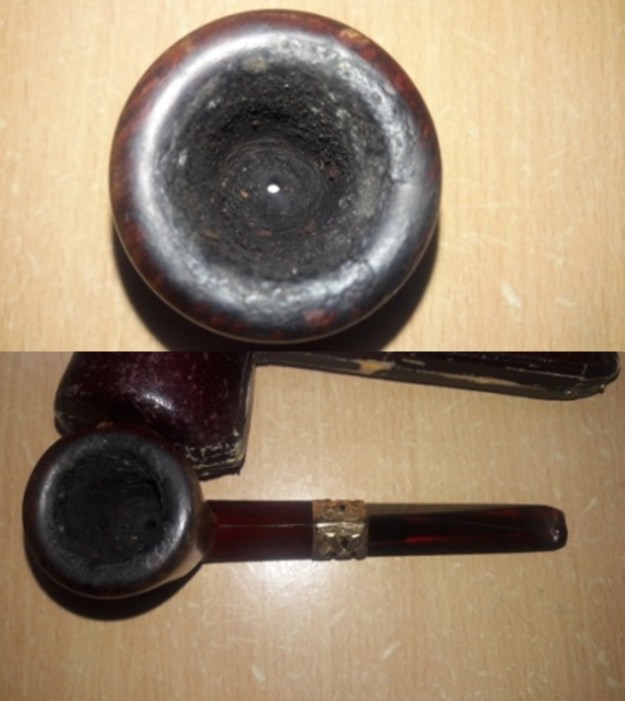
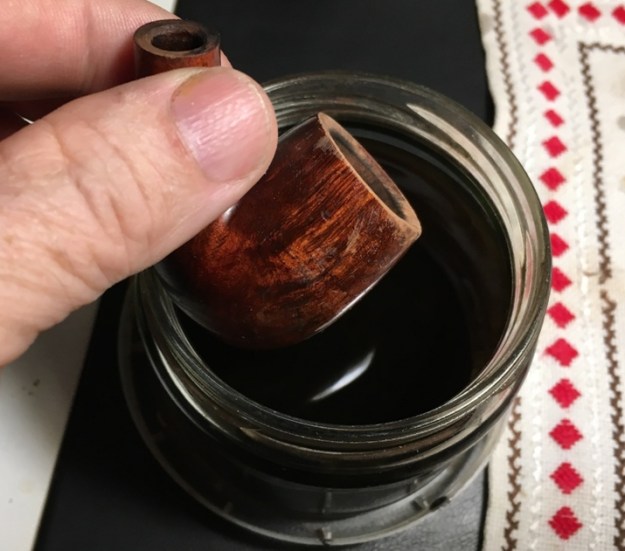
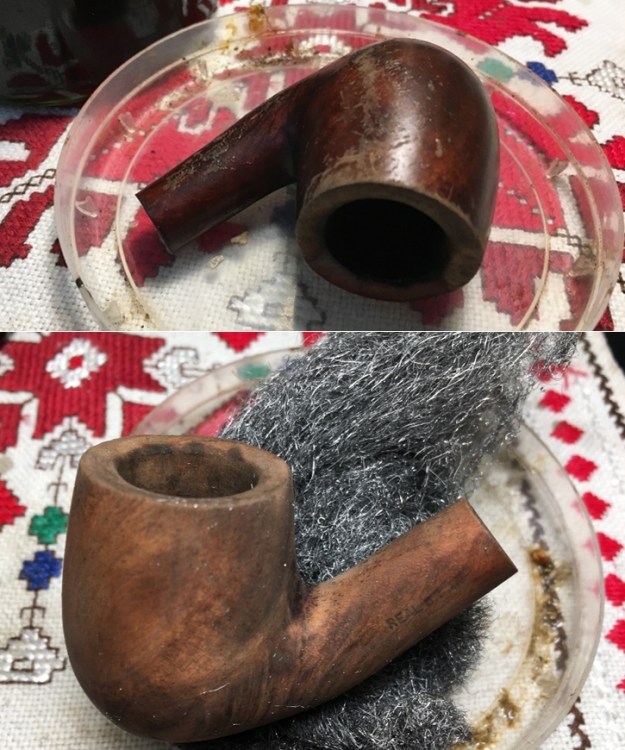
The basic cleaning of Sherry’s pipe was finished the morning of January 18, the day after she left it with me for that reason.  I started with a simple wipe down using a small part of a paper towel and purified water and was amazed by the difference. Meerschaum rims tend to be easier to rid of char than wooden ones, and this was no exception, despite the awful looking burns, using super fine “0000” steel wool.  Exercising great care, I used a reamer to begin clearing the crusty chamber of built up cake, followed by 150-, 320-, 600- and 1000-grit papers.  I also applied the three finest-grit papers to the shank opening to make it smooth.I finished cleaning the outer stummel with a soft tooth brush dipped in purified water.Now, here’s where I had to start making the big decisions, the first of which was to use a modern push-pull set instead of a bone screw tenon for which the pipe was made.  I wanted to use the bone tenon, but that was my ego trying to get the better of me.  The most important factors were the integrity of the bit to shank connection and the pipe’s ultimate lasting use to its owner.  The next two photos show how the push-pull set is designed to be installed and the perfect fit of the push half in the bit.The reality of the situation, however, was that the correct insertion, or receiving, side of the Teflon set was the same diameter as the shank.  In other words, there was no way whatsoever that the right way would work.  Again, I wanted to go with a bone tenon that would have been good for my own use, but that would have meant more work and less strength for the pipe in terms of the higher risk of the actual owner breaking the fragile bone.

Since the latter was all that mattered, I used the easiest and safest improvisation of reversing the order of the push-pull set.  Even this required widening the mortise, and the only tools available to me for the procedure – one each slotted and Phillips head screw driver and a small but sharp pen knife – could best be described as inadvisable.  I proceeded with a mix of confidence and willingness to pay the price of a similar, name brand and definitely antique replacement complete with its own case that I took the precaution of making sure was available to Buy Now on eBay.

Starting with the pen knife, I whittled away the roughest area of the mortise, then inserted the slotted screwdriver with minimal force and very slowly turned the head until there was no resistance.  That left the mortise round and the thickness of the meerschaum even but a tad too small for the short end of the push side to fit snugly.  The Phillips head was wide enough to slide into the mortise with the same minimal force as before, and a couple of slow turns made the hole perfect.  The one good aspect of using the Phillips head was that it roughened the inner wall as the instructions for the upcoming epoxy and powdered wood application suggested.I had to pay Don one more visit to have the bit opening widened to accommodate the push-pull part usually inserted in the shank.  With his big power drill press that could be set to stop at the exact depth required, the task took Don only a few minutes.  I also picked up a band I wanted to put on the pipe, not for repairing a crack but for cosmetic and further support purposes.  Although I wanted to use a sterling band, the only type Don had on hand that fit was a 12½mm nickel one.Back at my own modest home workshop that night, using a file, I scuffed the parts of each push-pull half to be inserted in the bit and shank, as shown below with the shank side.  Then I ran a pipe cleaner through the mortise and draught hole of the stummel and another through the bit’s airway to prevent excess epoxy and shaved wood mix from seeping and setting inside either.  Sliding the Teflon parts over each cleaner so they were just above the connection points, I mixed a small amount of epoxy and powdered wood and applied the mix to the upper halves of the scuffed areas one at a time and pushed each into place when it was ready, knowing the adhesive concoction would spread out over the whole connectors.  The initial bonding took 60 seconds, during which time I moved both cleaners back and forth a fraction to assure they didn’t stick. Nine minutes later, the epoxy mix fully set, I removed the two cleaners that came out with no resistance.  The hardened, even fill of the adhesive solution is clear in the last photo.  I gave the push tenon inside the shank a good tug to test the bonding, and it didn’t budge.  Poking the re-cleaned thin metal shank clearer of my three-piece tool into the opening of the stem’s push-pull half, I angled it to grip the inner side and tugged, again without any movement of the part.

The longest, most difficult labor of the entire restoration still awaited me: matching the 15½mm bit opening to the 12½mm shank.  Most people think of 3mm as a small measurement, but any pipe restorer knows it’s a massive discrepancy. All of this adjustment required 150-grit paper and hours – over a period of days – of patience not to eliminate a fraction of a millimeter too much of the Bakelite after so much effort.  Here it is close to the end of the first stage, before sanding down the left shank to get rid of the chip and make the two halves of the pipe flush. Also still remaining was much of the tapered bulge, especially on the top, but I slowly worked it down before adding the band with a few tiny dabs of Super Glue.  Adding the band showed the sides of the shank that still needed to be evened out, which I did with 220-grit paper and super fine steel wool. After that, there was still one problem I had to address.  The mouthpiece was so wide that the leather case would not snap shut.  That meant an assault on both sides of the mouthpiece with 150-grit paper.  Fortunately, Bakelite, like acrylic, is more forgiving than Vulcanite/Ebonite as far as scratches go, and it was nice and smooth after a full course of micro mesh.  I also buffed the bit with carnauba on my electric wheel. Case closed, so to say.CONCLUSION
Not forgetting the mishap with the short, undersized bit that was used by a previous restorer, I determined it was not Bakelite.  After speaking with Tim at JH Lowe and before I received the needed parts that included a stem of the correct length and already bent, I decided to prepare for the possibility of needing to bend it.  And so I pre-heated the oven to 250° F and placed the old bit inside on a piece of aluminum foil.  Not even 10 minutes later, in the living room, my eyes were watering, and I noticed smoke and a noxious odor.  Rushing to the oven and opening the door, I beheld what can only be described as vampire remains after exposure to sunlight.  Really, nothing was left but a small outline of black soot.  Even the tenon that we all believed to be bone had vanished.  Recovering from the shocking sight, I realized the bit had been the cheapest variety of plastic.

To be sure, Norwoods, with its two generations of experience, would have returned a pipe finished with a perfectly shaped bit, not to mention one made of orange amber and connected with a bone screw tenon in keeping with the ideal of completing such restorations with all of the original materials.  As far as my substitution of a Teflon push-pull tenon set goes, I stand by my decision that was based on the owner’s need for enduring enjoyment of her First Quality meerschaum pipe.  Concerning the slight bulge that remains in the bit, I’ll just say I did the best I could in the time allowed, by hand using paper without even the benefit of an electric sanding wheel.

Still, I will follow up with Sherry and offer to give the bit the finishing touches it could use.  But this restoration was a success in that I learned how to repair a mangled meerschaum shank on my own and now share the experience so that other restorers will have the same ability.  That, after all, was the highest goal of this series.

SOURCES
https://academic.oup.com/res/article-abstract/os-XI/42/139/1538585?redirectedFrom=PDF
https://academic.oup.com/res/article/os-XI/42/139/1538585
https://rebornpipes.com/2018/12/16/the-decline-of-restoring-old-pipes-part-1-4/
https://rebornpipes.com/2019/02/05/the-decline-of-restoring-old-pipes-part-2-4-an-antique-cpf-meerschaum-five-years-finishing/
https://rebornpipes.com/2019/02/21/the-decline-of-restoring-old-pipes-part-3-4-sir-daryl-and-the-golden-blueline-bakelite/
https://www.royalmeerschaumpipes.com/Regular-Stem-Push-Pull-Fittings-p/sft-3.htm
http://www.jhlowe.com/misc-items.htm
http://www.jhlowe.com/bits-bakelite.htm

The Decline of Restoring Old Pipes, Part 3/4: Sir Daryl and the Golden Blueline Bakelite


Blog by Robert M. Boughton
https://www.roadrunnerpipes2k.com/
https://www.facebook.com/roadrunnerpipes/
Copyright © Reborn Pipes and the author except as noted

Once upon a time there was a man who was about to go on a long journey, and right before his departure he asked his three daughters what he should bring back to them. The oldest wanted pearls, the second, diamonds, but the third said, ‛Dear Father, I’d like to have a singing, springing lark.’ — The Brothers Grimm, Jacob and Wilhelm, from “The Singing, Springing Lark,” in Children’s and Household Tales (1815)

RECAP
Part 1 hypothesized that the discontinuation, illegality and dwindling or total unavailability of vital materials, used in antique and other very old pipes, will lead to a serious crisis in restoring these heirlooms and otherwise prized implements of contemplation to their original conditions.  My main theme was the need for those of us in the business – having considerable, moderate or little experience under our belts – to learn how to overcome these difficulties that will become more acute all too soon.  In hindsight, I should have emphasized better the need for those who now have the know-how to use their own perhaps self-discovered and unique (read proprietary) heroic measures  to cooperate in sharing them with the rest of us, as Part 4 will demonstrate without the help I would have preferred but with other expert assistance that is very much appreciated.

Part 2 described the first of three such repairs I have completed, its example being a Colossus Pipe Factory (CPF) Best Make turned lion’s head meerschaum with a gold band and genuine cherry red amber stem that needed reconnecting with a new bone screw tenon.  Five years after I began searching for the one part, I was compelled to send the otherwise restored CPF to a specialized repair service that may have been the only place capable at the time to affect the rehabilitation, for lack of a proper bone screw tenon or anyone to whom I could turn for instruction on how to repair the damage to the inner shank.  Now I know the necessary work was relatively minor.  Having determined the approximate technique used to repair my CPF, I will share the knowledge with anyone who cares to read the next and final installment, in which I mend a more damaged meerschaum shank and re-stem the pipe.

SIR DARYL AND THE GOLDEN BLUELINE BAKELITE
Once upon a time, in the sixteenth year of the third millennium, there lived a young man who dwelt in the center of a place of medium size.  When it was founded by Spaniards three centuries earlier the sage brush- and tumbleweed-blown burg was a dukedom known as Alburquerque, with two r’s, named in honor of a now long-forgotten duke of the proud nation that settled it.  But long before our tale began, the name was shortened, probably because of common misspelling, to Albuquerque, with only one r.

At the time the events of this account began to unfold, more than half of the almost one million souls who called the Land of Enchantment home tried to get along in its fast-growing and biggest metropolis, but perhaps lacked faith in the higher powers.  Gun-related deaths and evils in general were far above average compared to the other 49 quasi-independent lands of the constitutional federal republic they composed.  This was before Puerto Rico, Guam, the Virgin Islands and Panama were granted the same status, although they did not ask for it, and despite the attempts of Texas, Hawaii and California to rule themselves   Most of the people still believed they were part of a true democracy, which of course does not exist.

The young man, whom we will call Sir Daryl, had a high-tech job that his life in general and education and training in particular had prepared him to perform with the greatest skill.  He also enjoyed his work, as much as any man likes the chronic rising from bed day in and day out and spending long hours away from home and friends, so that was a good thing.

But Sir Daryl’s real love in life was going on quests for beautiful and rare tobacco pipes that were bestowed with magical powers.  Sir Daryl’s keen eyes and a preternatural knack for recognizing the magic when he saw it aided him in his never-ending search.  Even when he traveled for business purposes, without fail he seemed able to sniff out the rare and hidden examples of the craft that awaited him   All of the precious shapes and styles he discovered in this fashion were his for the taking at prices so low he could not bring himself to turn them down.  Sometimes Sir Daryl wondered at his aura of luck in locating the treasures but did not spend much time fretting over his ostensible good fortune.  As his tastes grew more refined, which such appetites always arouse, Sir Daryl turned to antiques.

Unaware that his friends were beginning to notice the signs of a peculiar spell that was known to afflict many pipe collectors of his period, before counter-spells were found to eliminate the problem, Sir Daryl became obsessed with the thrill of the chase and ultimate liberation of these fine prizes from their previous, unworthy guardians.  And they were much admired by all who beheld them

One of Sir Daryl’s most splendid finds was crafted by the renowned house of Kaufman Brothers & Bondy and given the enticing name Blueline Bakelite, the creation of which he was able, with his considerable fact finding skills, to pinpoint to the second year of the second decade of the twentieth century.

Alas!  Sir Daryl so wanted to savor the gold-banded billiard beauty that he took it with him to his weekly informal pipe get-together early one Friday evening, still in the box in which it arrived with the day’s mail.  He settled back in the cushioned chair that had his name on it and prepared a bowl with an excellent Virginia Perique concocted with miraculous properties that made his body seem weightless and his mind travel to far-off places, not all of which he had ever seen outside of these visions.

With the slowest possible deliberation, Sir Daryl struck a wooden match and kindled the top layer of the divine amalgam in expectation of an ethereal treat, Almost immediately, his typical serene and content composure twisted into a spasm of intense revulsion apparent to his friends all about the low, round table where everyone had set out tins and other glorious, colorful containers with concoctions from around the globe that group custom made free for the trying.  Sir Daryl began to retch and reached for a tissue paper to spat out the evil spell that began its sorcery in his mouth and thence to wind an insidious path into his throat.  With the greatest of luck that was his hallmark, Sir Daryl cast out the vile spirit.

Being a naturally kind, trusting soul, the only mistake Sir Daryl made was in believing the minion who sold him the pipe with the false claim that it had been cleansed of all evil.  As Sir Daryl’s breath returned with the color in his face, one of his peers, who sat closest to him in another deep cushioned chair to his right, happened to be gifted with the power of perception.  Suspecting the foul truth of the matter, the wise aficionado asked if dottle was the problem.

Still unable to speak in a clear voice, Sir Daryl handed his newest prize to the other man, one of several Restorers present round the small table, and sipped from a bottle of mineral water, the better to wash away the diminishing remnants of old leaf and other substances too frightful to mention in this story conceived for young, impressionable children.

The Restorer scrutinized the various parts of the instrument and offered his services to Sir Daryl, for a modest fee, of course, and a deal was struck.  The trustworthy Restorer said with his natural sense of fidelity that he would return the treasured and still un-tested Blueline Bakelite the next day.  Little did he then know of the otherworldly obstacles that would befall him, beginning later that very night.

Enchantment, as a point of interest and special significance, concerns the subjection to or bewitchment by magical influences.  Some enchantments are made for good – and others not.

 THE RESTORER TELLS OF HIS ODYSSEY, IN HIS OWN UNCOUTH VOICE
Thank you, Omniscient Narrator, for that lovely, florid introduction, and for providing the most charming and flattering title you could come up with for my chapter in some other hero’s tale.  I don’t mean to be rude, but I must set a couple of facts straight, if only for the sake of dispelling that whole fidelity thing you pinned on me.

For one thing, I didn’t “offer” my services, it was more like begging Sir Daryl to grant me the honor of taking his beautiful but badly marred and filthy 1911 billiard – yes, that’s the year our Narrator meant to say in his own rather prosaic, ho-hum way –home with me.  I asked whether he wanted the final stain to adhere to the original dark brown or be lighter and was not surprised when he opted for the former. Anyone with eyes will see the KB&B was messed up outside from the shots of it I snapped as soon as I was home, which I’ll dig up some place and show in a minute.  As far as its innards go, I know more than I really needed to about that because I just had to see what Sir Daryl’s little fit was all about and later tried it in private with some of the cherriest aromatic there is.  The consequence indeed was every bit as nasty as my friend Sir Daryl let on!

Daryl in the chair with his name on it

And enough with your Sir Daryl nonsense.  He’s just a man like I am, and his name is Daryl Loomis.  Even if I didn’t know him for going on five years now, I should know his real name because he’s bought about nine pipes from me, and that’s by far the record for one person.  I suppose, based on what you said about his taste in pipes and all, this must mean I sell some pretty good ones, although I admit I never let an antique go to Daryl or anyone else.

One last thing: if I had known what was going to happen in the middle of the night, I never would have accepted the $25 Daryl paid me in advance.  Come to think of it, I would not have taken the unique pipe at all.  Then again, maybe if I had the power to see back and forth and all over Time like a certain Narrator, I suppose I would have just avoided the whole mess in the first place.  I’ve always hated trippy thoughts like that.  At any rate, at least then you wouldn’t have this grand fable to tell, would you, big guy?  And forget about any singing, springing larks popping up!  Quite the opposite is in store, in fact.  I’ll bet the old codger of a Narrator ends up claiming he knew that all along and only meant it as foreshadowing.

Anyway, I found the shots I snapped, and here are the first of them. When held to the light, as I did and will prove in good time, the Bakelite stem is remarkable in its similarity to genuine cherry red amber.  That is a seeming contradiction in terms, I’m aware, as the word amber, from the Latin and Greek origins, means orange. However, the actual stem material is a synthesis of phenol and formaldehyde resins made in a process of intense heat and pressure known as thermosetting.  The first synthetic plastic, Bakelite provided a cheaper alternative, when amber was the rage, that was difficult to differentiate from the real thing with the naked eye and was therefore popular in the manufacture of pipes during the early 20th century.

Other than the need for a serious cleaning and retorting of the inner pipe, Daryl’s Blueline Bakelite had inexplicable dark black blotches on the left middle and right rear sides of the bowl.  I never determined the cause of the stains, as I ended up having no better option to choose as the source of the marks, but there were two I ruled out: scorching with long-inflicted match or lighter flames and burnouts.  Scorches would have come out much easier than these deep flaws, and burnouts never would have cleared up.  There was also the telltale damage to the chamber that was not present.  By the way, the restoration process will be shown in a time lapse style rather than my usual frame by frame style.

The following photos were taken after a preliminary Everclear soak, during which the band came off.  I followed that with a light sanding using 600-grit paper. I reattached the band with Super Glue.  A whole lot of sanding later, starting with 150-grit paper and working back up to 800, succeeded in eliminating the blotch on the left shank, but a specter remained on the right.  A terrible slope, lacking a better word, on the right side of the rim is also apparent now for the first time in the photos I took after the scar on the left was eliminated with considerable work.  But that would have to wait to be righted. I know this was cockeyed thinking, but I wanted to see if staining would cover the spot on the right of the bowl rather than continuing to abrade the wood.  I used Lincoln Brown aniline stain, flamed it with a Bic and micro meshed to the correct shade.  Obviously, the attempt failed.I had worked on the pipe from roughly 8 p.m. the previous night, after returning from my pipe get together, and it was sometime around 4 a.m. Saturday.  True enough, I could have used a break for sleep, but I don’t blame the unthinkable calamity that happened next on my own fatigue.  Although I accept full responsibility for what followed by the simple fact that the rare and precious pipe was in my custody, and would even be happy to blame myself for some error, that was not the cause of the awful event that occurred without warning.

As I had done many times, with the same great care and patience, I unscrewed the stem from the bone tenon.  There was no resistance, no mis-threading, nothing whatsoever wrong – until the sickening sound and feel of bone that was, one second, solid, and the next, several disjointed pieces that didn’t even fit together and more or less pulp left in the shank and stem.  And the infernal softness of the sound it made when it shattered, not a snap, crackle or even a pop, but as closely as I can describe it, like the effortless breaking between a pinkie and a ring finger of the softest piece of chalk.  There I was, exhausted as I readily admit, with the bone tenon broken and crushed in my hands, the remnants scattered on the floor in bits and fine powder. Almost three years after the pipe restoration went all the way south (and I’m sure everyone knows the figurative distance and final destination I’m suggesting), I still remember most how the unimaginable tragedy lacked any definitive sound.  I know now that the bone material had passed its life expectancy long before and might have failed at any moment.  In hindsight, I am grateful it happened to me rather than Daryl.

Here is the ghastly reality my numb mind had not even processed yet as I saved the horror for the record, by pure dazed habit, after frantically trying to graft the three tangible splinters of the tenon together with Super Glue.  Note the Frankensteinian product of my mad attempt at surgery on the tenon and the perfect evenness of the fault line leading to a total impaction of the stem hole.I tried my best to sleep and, late in the morning when I got up, considered the remains, my hope to find I had dreamed the whole fiasco obliterated with less noise than the plan-changing event a few hours before.  I decided to put the stem aside for the time being.  Why tempt further catastrophe when such things have a way of finding us, like the only two certainties in life of which Christopher Bullock seems to be the first person to warn us, in his 1716 farce, The Cobler of Preston.

Instead, I turned to the mangled rim and working with a double-sided 150/180-grit sanding pad painstakingly returned it to full health. When I was finished with the rim, it was looking good.  I even managed to give it a slight inward slant before reaming and sanding the chamber smooth.Other than the missing tenon, everything was beginning to look up again.  Outside was warm and sunny, bare wisps of clouds here and there in the blue sky.  When the other incomprehensible disaster struck, I felt like a lightning rod on an old barn swaying and creaking in the storm of the century.

This time, no ifs ands or buts, it was my fault despite the inherent danger of meddling with Bakelite or any other synthetic plastic.  I had no trouble with some dental tools I somehow got my hands on, wheedling out a chunk of packed bone here and another there from the shank, and the mother lode popped out nice and easy   Then it was the stem’s turn, and it was ornery.  I just started to make a decent dent on the harder bone inside the tiny stem hole when I just plain blew it.  I heard it that time, the crack amplified by my ears the way a bolt from Zeus struck the railroad tracks a few yards from me as I walked home from work in Granby, Colorado just before my 21st birthday.  I was watching the storm coming closer and saw nature’s electricity hit the rails.  That flash up in the Rockies made me jump a foot in the air, but the explosive soundwave a heartbeat later sent me flying across U.S. Hwy. 40, forget about the non-stop two-way traffic between the Berthoud and Rabbit Ears Passes..

Once again, in the frenzy of emotions over my double-destruction debacle starting with the bone tenon and then the stem, I hastened to glue the two pieces of the stem together before taking pictures.  The first was while the glue was still setting, the second after I micro meshed off the excess glue and to show the great color as well as how closely the small piece fit into the big, and the third just for the sake of showing the end view.Regardless of my initial frazzled audacity to think I might be able to right this wrong, my sense of morality is intact enough that I know I would have rejected the notion of passing off the fatally flawed stem as undamaged no matter how seamless the result may have been, but I was still relieved to have any temptation removed.

The star-crossed shadow that came to lurk around every corner began to seem a curse.  Since the day I restored my first pipe, until then the thought of giving up the whole endeavor for good never occurred to me.  At that lowest point of all my work reclaiming old and worn estate pipes, to crib from Steve’s site motto, I came a breath away from scattering all of it with my arms and hands to the walls about me or wherever else they might crash and shatter – the remains of the KB&B, dozens of other pipes awaiting my attention and every tool I had acquired, all of which I didn’t yet know was soon to be stolen from me anyway.  But that’s a different story I’ll tell when I’m ready.  This was in the spring of 2016, when my life in general was, to me, dangerously pointless.  I considered selling what I could and scraping together everything I had to find Daryl a suitable replacement.  That was really all I cared about, but it was enough.

I am well aware that some readers of my blogs view my style of writing as feigned or, a little worse, contrived.  My unorthodox approach to blogging pipe restorations doesn’t help, and my habit of falling into literary mimicry now and then may annoy many of the more experienced contributors to this forum.  That’s just not how I approach any writing project, which happens to be with the same imagination and enthusiasm I try to put into the actual pipe work.  I needed a year from the completion of this particular trial merely to face the unpleasant truths of the experience and find the words to describe it, however fanciful they may strike some folks.

But I did finish the job, although it took two years and the unwavering patience of my friend Daryl to be done with it.  In that respect, the Narrator’s appellation of Sir Daryl is well warranted.   Now I can finally let everyone know something that’s been on my mind for too long: anyone who doesn’t buy the bald self-analysis of my strengths and weaknesses I just finished sharing once and for all can believes what he will and sod off.  I’m not going away, and this is for the rest of you, who hopefully know who you are and that I appreciate the encouragement.

With more time to work on the pipe afforded to me by the unhappy but, for Daryl, fortunate destruction of the tenon if not the stem while both were my responsibility to replace, I was able to eradicate the mark on the right side of the bowl.  The next shots show the re-staining and micro meshing to the correct original dark shade of brown.  Thanks to the intrinsic problems with Windows 10, the key shot of the right side was lost, and I only have one showing the final result after eliminating the remaining scratches from the excessive but necessary sanding used to make the black marks disappear, which I accomplished with every sanding and smoothing resource at my disposal. Desperate to get Daryl’s pipe back to him, I was willing to offer as a temporary solution my real cherry red amber stem from the CPF Best Make turned lion’s head meerschaum I restored in Part 2.  Preparing for that possibility, I straightened the amber by heating it in the oven.  The second pic shows the original Bakelite stem above the straightened amber stem, in which I had placed a bone tenon I happened to have on hand but that didn’t fit.  The length of the amber stem is a little longer, but I expected it would at least mollify Daryl.All of the events and work occurred during a relatively short period of time in 2016.  Not until two more years passed did I find Norwoods Pipe Repair, and Kenneth Norwood assured me he could replace the bone tenon and even the same color of Bakelite stem.  At last I can show the parts he returned with the pipe I sent him.  The replacement, as it turned out, was also a little longer than the original, but I was confident Daryl would be more than pleased.Only two years after taking on the task of cleaning and restoring the KB&B that had such wonderful potential, all I had to do was retort the pipe.  I did so immediately, and as the replacement parts arrived, believe it or not, the same day as our monthly pipe meeting, I was able to return the gorgeous completed pipe to its owner that night. THE END OF THE LONG JOURNEY
Thus ends our tale of the long and arduous task of the unlucky but persistent Restorer…who almost never faltered in his pursuit of Right versus Wrong.

And everyone lived, happily ever after.

THE NARRATOR’S PREVIEW OF THE FINAL ADVENTURE
The fourth and final Book in this series will tell the tale of the first venture by the heroic Restorer, since thus he clearly needs to be described, into the small and secretive world of meerschaum repairers in his quest to be of service to a Good Lady.  Anyone who has ever had dealings with this lonely coven will understand how they covet and guard above all else the alchemies they devise as theirs and theirs alone.  But our hero will reveal, for the whole world to know at long last, the wondrous knowledge he has uncovered with the aid of unanticipated paladins – in particular an Artisan of high renown who dwells in the same town as the Restorer.SOURCES
https://norwoodspiperepair.com/index.html
http://freakonomics.com/2011/02/17/quotes-uncovered-death-and-taxes/
https://rebornpipes.com/tag/kbb-kbb-pipe-history/

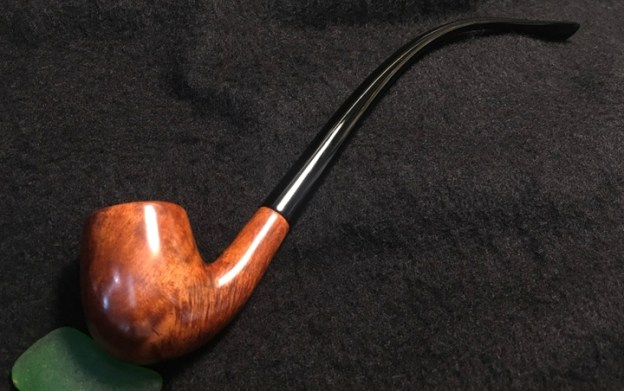
Fashioning a Churchwarden from a Dimpled Bent Billiard Bowl


Blog by Dal Stanton

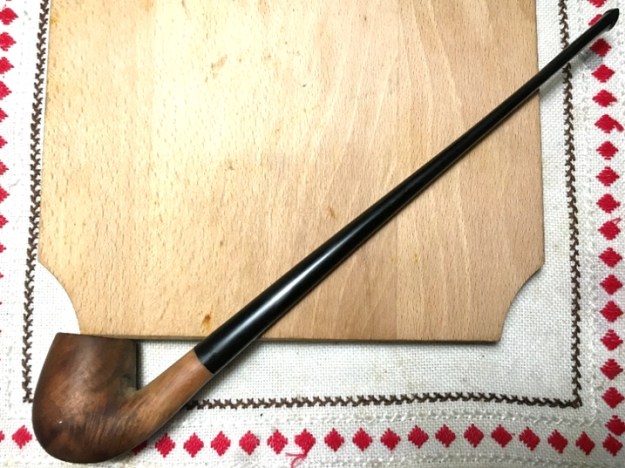
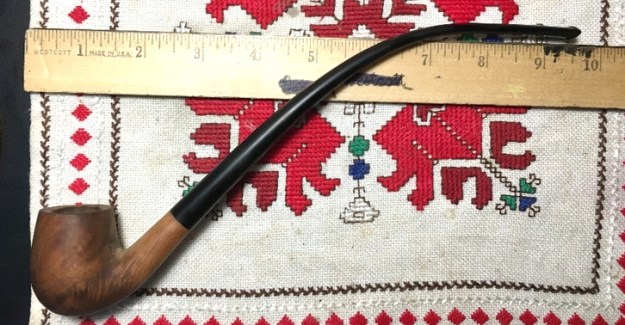
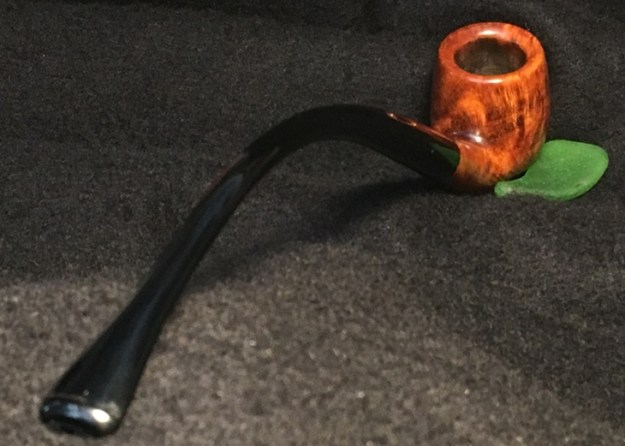
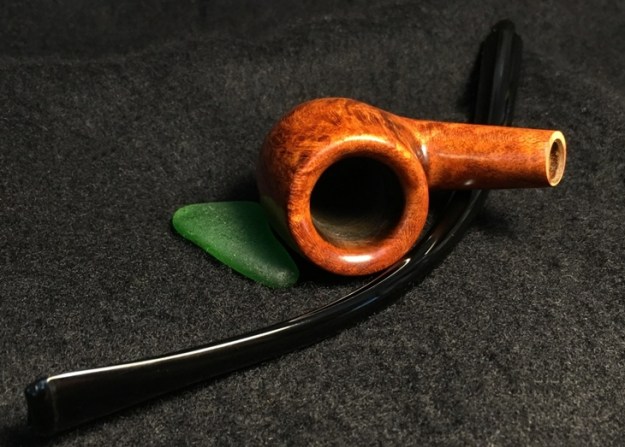
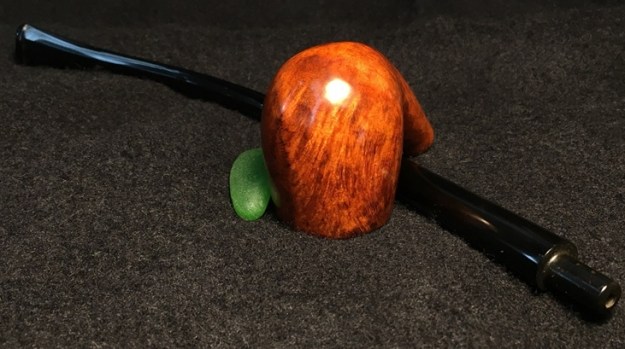
The great thing about the Churchwarden shape is that it is the only pipe that is identified not strictly by the shape of the bowl but by the length of the stem.  Bill Burney’s Pipedia Pipe Chart explanation describes this unique characteristic of the Churchwarden shape.  When I received an email from Coleman, he was looking to add a Churchwarden to his collection.  He wrote:

Hey Dal, I was browsing your website love the pipes, wanted to see if you had any more churchwardens available for commission or sale. I’ve always wanted one, and I can’t think of a better place to buy one than from Daughters of Bulgaria. The longer the stem the better. I really liked the billiard churchwarden, and the French imperial one in the shop that’s already sold. Do you think you’ll get anymore?

Last time I was with Coleman was he was an intern serving with us here in Bulgaria about 5 or so years ago.  He was single then, but as life happens, he is now happily married to Rebecca for 4 years!  He had spoken to Rebecca about adding a Churchwarden to his collection from The Pipe Steward and was agreeable to Coleman’s acquisition because the sales benefit the Daughters of Bulgaria – women and girls who have been trafficked and sexually exploited.  Thank you, Rebecca!

Coleman described wanting a Billiard stummel with a bent shank.  I rummaged through potential stummels that could be repurposed to fashion an acceptable Churchwarden for Coleman.  I found three good candidates and sent pictures to him.  In the end, he settled on the Dimpled Bent Billiard in the center which has great promise for a beautiful display of natural briar grain with interesting rusticated accents.  We discussed the terms and came to an accord and I placed Coleman’s Churchwarden project in the queue.

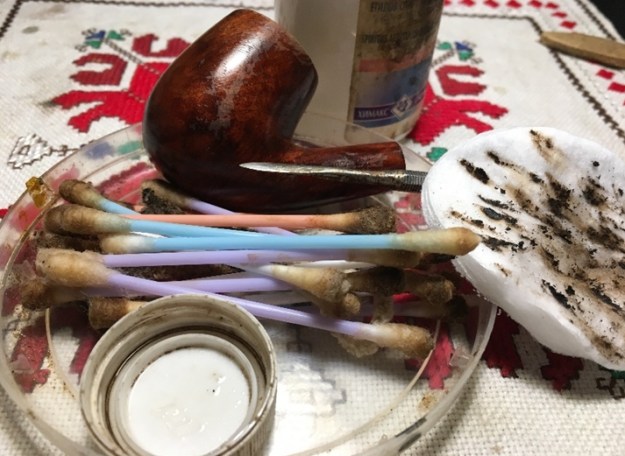
Taking the stummel out and placing it on the work table, when I first acquired the Dimpled Bent Billiard, it came in the Lot of 66 I got off the eBay auction block.  When I initially looked at it, I did not see anything that looked like markings.  With a closer look now, I can just make out on the lower side of the shank the COM being France – I can barely make out ‘ANCE’.  The markings are now so thin that they have nearly passed out of remembrance and undoubtedly will with this fabrication.  I take a closeup of the ghosted marking on the lower shank.What I was not looking for but what is obviously revealed in the closer look at the lower shank is a small stress fracture in the briar.  I take a few more pictures with different angles of light highlighting it.  The good news is that the crack is isolated – not going through to the shank end. I’m assured of this after inspecting closely looking at the shank end and mortise.  My guess is that the small, barely visible crack was formed from a fall where the stem was the first to hit and it pressed up and in opposite reaction, the tenon pressured downwardly on the lower mortise wall and the stress crack resulted on the lower shank. A guess.  I’ll think about what needs to be done about the crack and address it later.The accenting rusticated dimple effect is interesting giving the smooth briar contoured, rustic relief – I like it, and so did Coleman.  The grain shows nice potential in the pictures below. The chamber has some carbon cake build up – I’ll be removing it to give the briar a fresh start.Finally, I take a picture showing the stummel and the Warden stem together – what we’re aiming for!  The bend of the shank sets the stage for a nice, long sweeping Warden stem.I start the Warden fabrication by cleaning the stummel.  Starting with reaming the chamber, I use only the smallest blade head from the Pipnet Reaming kit and follow by scraping the chamber wall with the Savinelli Fitsall tool.  Finally, after wrapping 240 grit paper around a Sharpie Pen, I sand the chamber removing more of the carbon and getting down to the briar.  To remove the carbon dust, I wipe the chamber with a cotton pad wetted with alcohol.  After an inspection of the chamber, it shows no signs of heat damage with cracks or fissures.To clean the external briar, I use undiluted Murphy’s Oil Soap and a cotton pad to scrub.  I also get into the dimples to clean them.  On the rim, the internal lip of the rim is darkened from scorching.  I use a brass wire brush to clean the rim, but even after scrubbing the darkened briar is still evident. The internals of this stummel was no picnic!  Using pipe cleaners and cotton buds dipped in isopropyl 95%, I clean the mortise and airway.  I also do a lot of excavating of tars and oils by scraping the mortise walls with a dental spatula which you can see wiped in plenty on the cotton pad in the picture below.  Using a long shank brush, I’m able to scrub the airway.  It took a good bit of time, but the buds started lightening until enough progress had been made.  Later, I will continue the cleaning by giving the bowl a kosher salt and alcohol soak.I decide to move forward with the stummel repair before beginning the shaping of the Churchwarden stem.  I have two issues to address before moving on.  The rim is scorched and even after cleaning a dark ring persists around the inner lip of the rim.  With the rim already rounded, I will simply go with that flow and bevel out the internal rim damage.  The other challenge is to address the small stress crack on the lower shank.
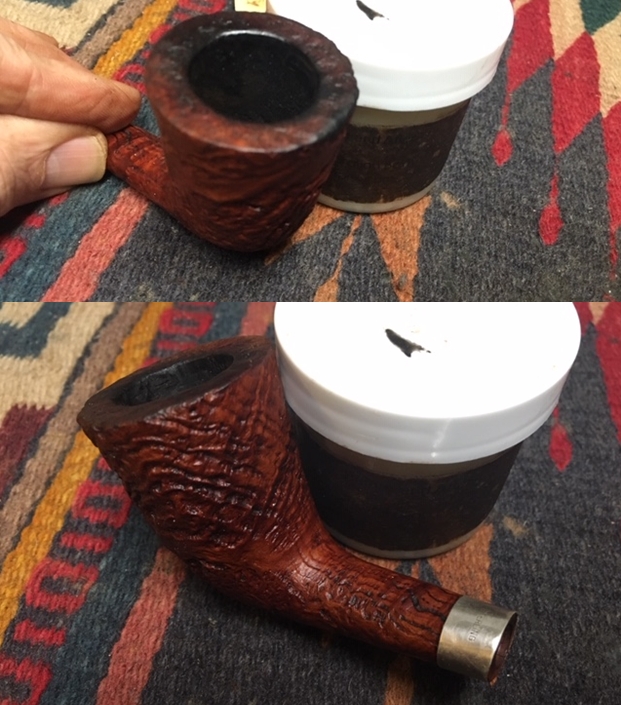
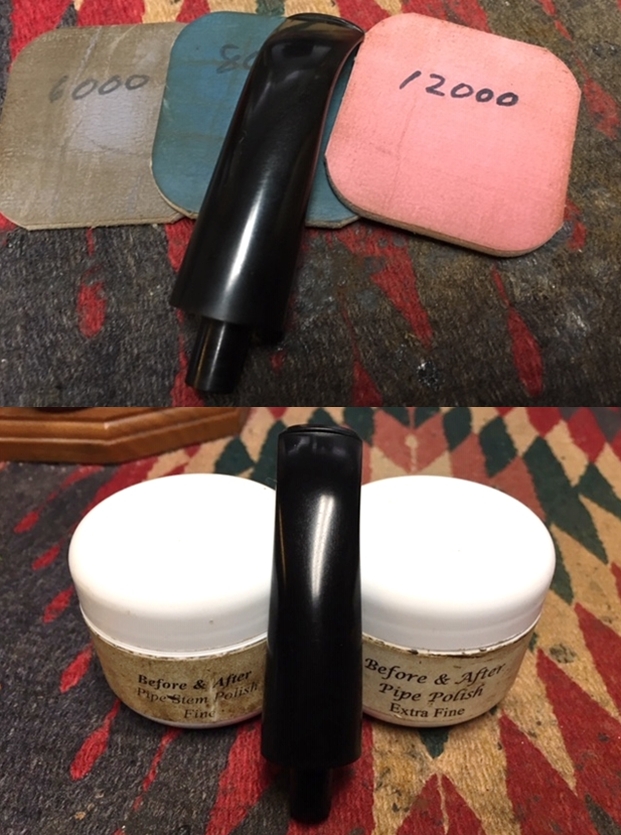
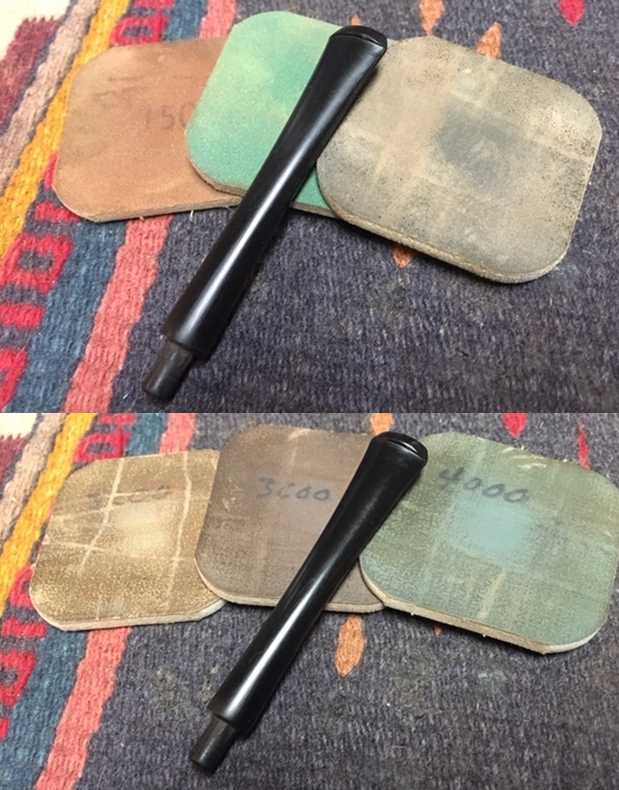
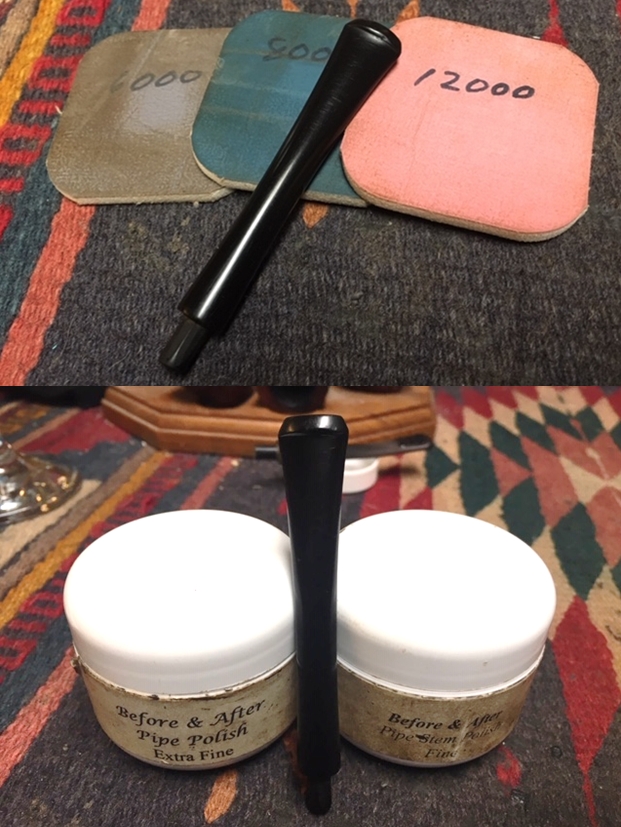
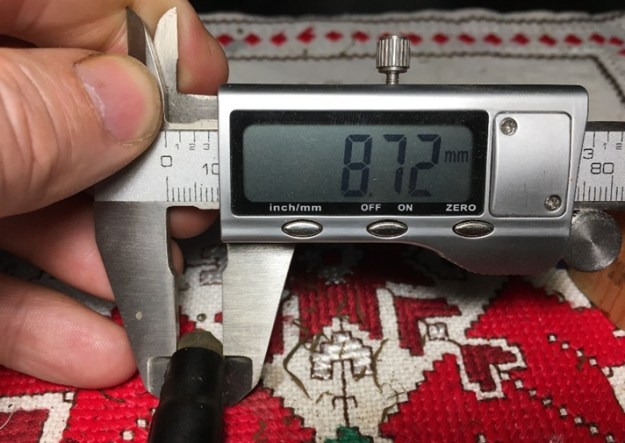
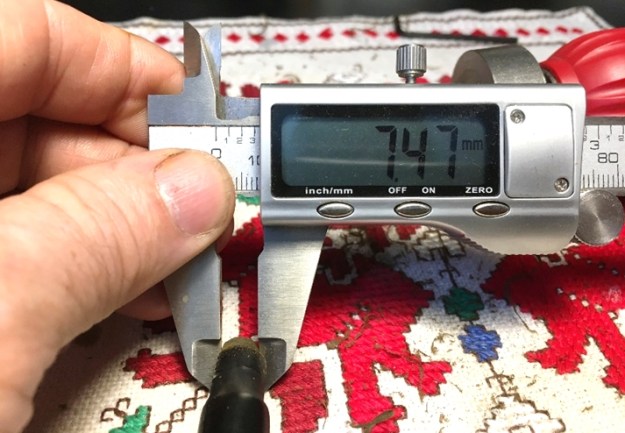
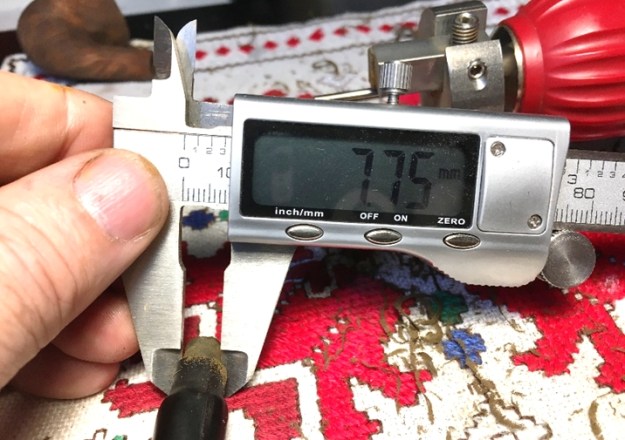
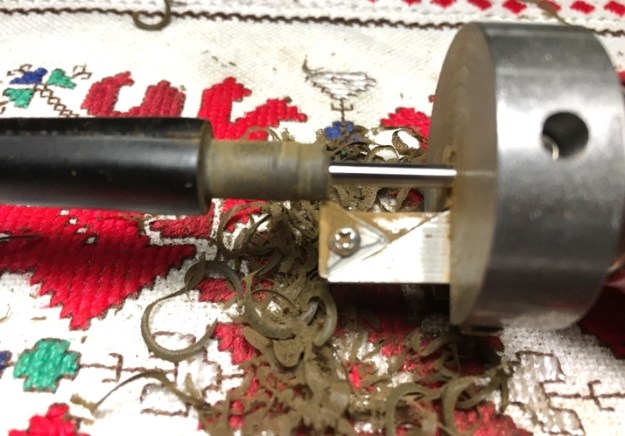
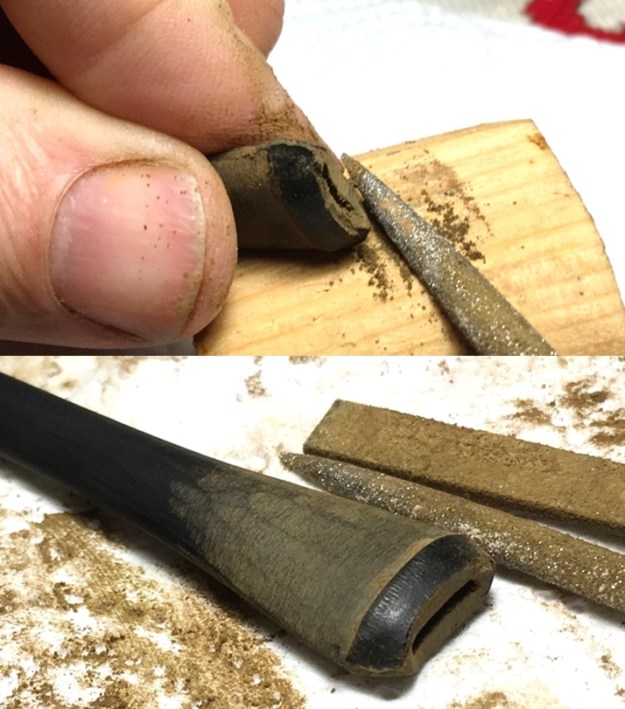
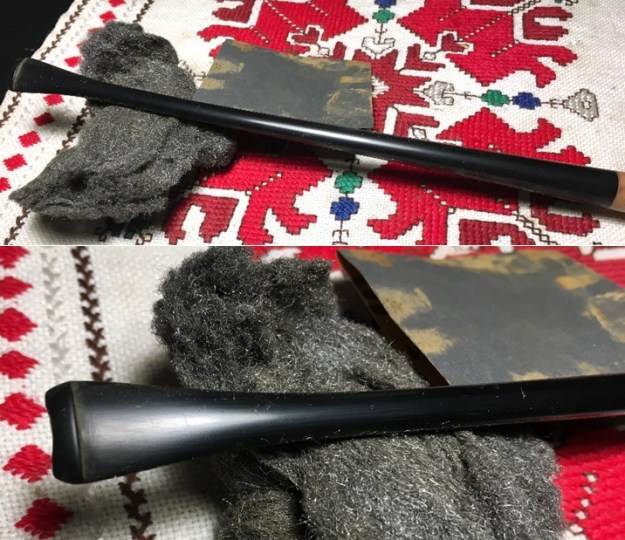
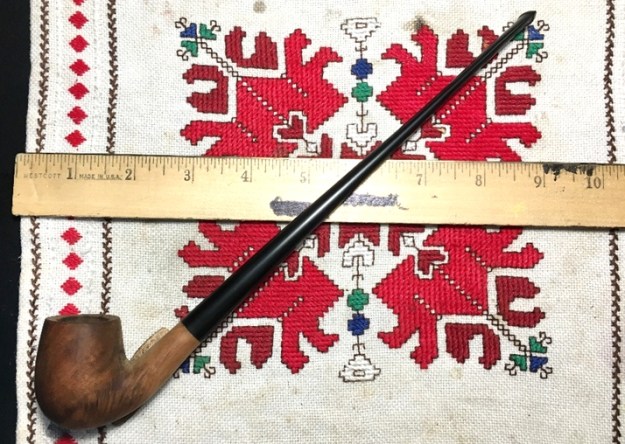
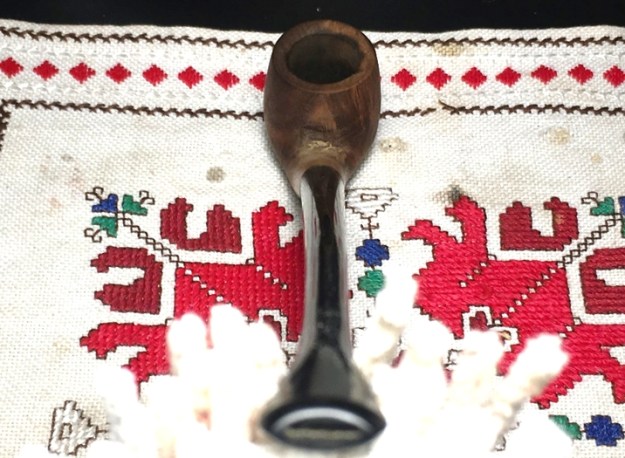
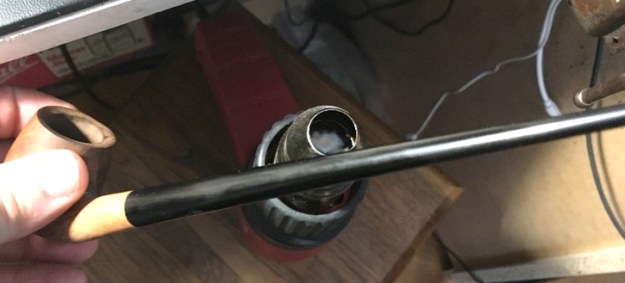
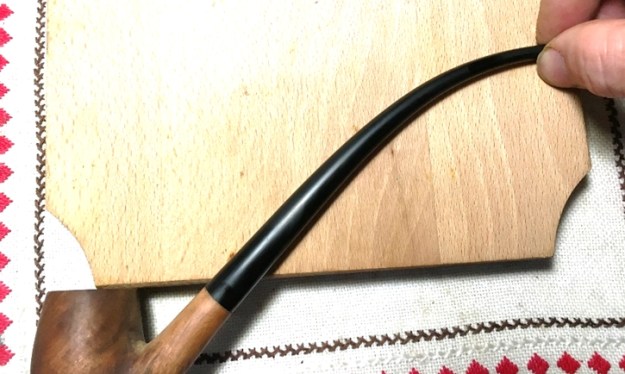
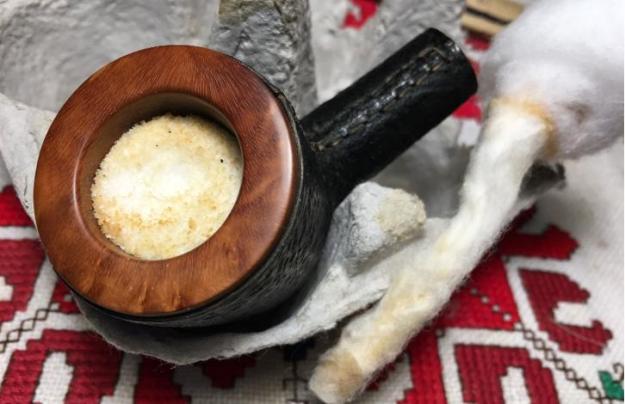
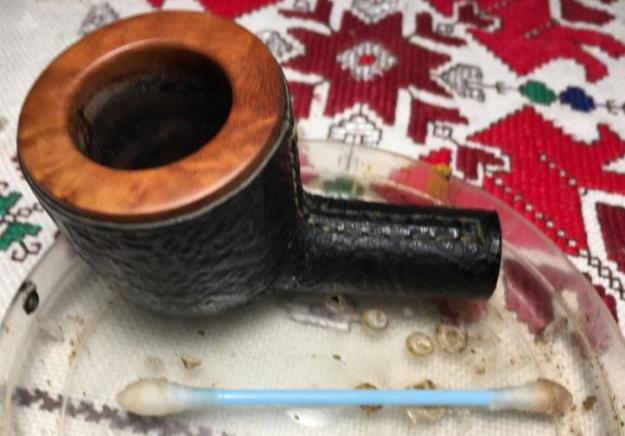
First, I address the rim.  After taking a close-up of the rim to mark the starting point.  In succession, I pinch rolled pieces of sanding papers between my thumb and the inner rim from coarser to less coarse grades: first 120, then, 240, 470 and 600 grade papers.  This removes the damaged briar and freshens the rim and it looks much better.  The rounded rim will look good as a Churchwarden.  Before and after pictures follow: Now, I decide to address the pressure crack on the lower shank.  I will drill two counter-holes at the ends of the crack to guard against the crack growing.  This stops the possibility of the crack creeping in the future.  Drilling these holes is not easy using a hand held Dremel extension with a 1mm drill bit.  Not only do I have the ‘shakes’ as an obstacle of accomplishing a good, true hole drilling, but the depth of the drilling is also of concern.  The shank is not a thick piece of briar!  I do not want to see sunlight coming into the mortise! The first picture is simply of the crack – difficult to see with a magnifying glass.  In order to help guide the drilling, I use a sharp dental probe, again with the aid of a magnifying glass, to mark the ends of the crack with an imprint where the counter-holes will be drilled.Next, I change out the Dremel clamping and mount a 1mm drill bit into the handheld extender.  This is where the jitters really start jittering.  Perhaps, one day I’ll secure a more stable drilling platform but today is not that day!  Thankfully, and I do mean thankfully, the drilling goes well.  Not too much shaking nor too deep. Next, I use thin CA glue because the crack is very subtle, and I want the CA glue to fill and penetrate what it can.  I apply CA glue to the two holes and crack and apply briar dust to the patch.  Hopefully, this aids the holes to later blend.  I put the stummel aside to allow the patch to cure.Several hours later I make it back to the work table and the shank patch has cured and I begin filing the mound with a flat needle file until the patch mound is almost flush with the briar surface.  I then switch to sanding with 240 grade paper to bring the patch flush with the surface and finish at this point with 600 grade paper to smooth it out and blend it.  The patch looks good and I believe the repair was necessary.  It should blend well with the surrounding bird’s eye grain. Time to focus on fashioning the Warden stem with the use of the Pimo Tenon Turning tool which has been a very useful addition to my instruments in my restoration toolbox.  I keep the directions on the wall in front of me!  The visuals give an idea of how this tool works to quickly and accurately resize a tenon.The precast stem is 8 5/8 inches long.  I begin by measuring the inside diameter of the mortise using an electronic caliper.  The measurement is 8.50 mm.  This represents the critical target width of the tenon to fit the mortise.  The precast tenon is obviously fat and I use the Pimo Tool to take off a layer of the fat tenon simply to serve as a starting point.I first pre-drill the airway with the drill bit provided by the Pimo kit to allow the guide pin of the Turning Tool to fit into the airway.After the first ‘fat’ cut of the tenon, the tenon is 9.60mm.  My goal is not to cut the tenon exactly at 8.50mm for a ‘perfect’ fit, but to give myself about .40mm of extra width to then conservatively sand my way to a good tenon/mortise fit. Every mortise is different, and I have found it better to go at it slowly.  So, adding .40 to 8.50 gives me a tenon target width of about 8.90 to aim for using the Pimo tool. With the hex wrench provided I turn the set screw to the left to reduce or tighten the Carbide Cutter Arm of the Pimo tool.  Again for an initial measurement, I only cut small portion of the tenon and measure (picture below).  There’s always the chance of taking too much off!  The test measurement is 8.79mm.  This cut results in the tenon being underneath the 8.90 conservative target but still above the 8.50mm critical measurement.  I take the tenon down to that measurement and begin sanding. To smooth off and form the end of the rough tenon, I make quick work of it with a sanding drum mounted on the Dremel.Gradually sanding with 240 grit paper as well as using a flat needle file, eventually I achieve a good fit.  The tenon is snug but not too snug.You can see in the next picture the overhang of the shank which needs to be sanded down flush with the stem butting against the shank face.  What I also notice is that the face of the stem is shouldered – or down-turned.  This is from not taking off enough vulcanite to have a flat face surface for the stem face to seat against the shank face.  Not shown is remounting the Pimo tool onto the drill and shaving off a bit more of the stem face to improve the junction.  With the flattening of the stem face the tenon seats well.  I go to work sanding the shank to bring it flush with the stem.  I also taper the sanding up the shank to achieve more flow – not having the stuffed pants look.  After sanding the shank/stem junction looks great. Even though the Warden stem is a new precast stem, it must be shaped, filed and sanded to remove vulcanite ripples and manufacturing seams.  I work on the button area with the flat needle file and then 240 grade paper.  I also fully sand the entire stem with 240 grade paper.  You can see manufacturing ripples in the new stem which the sanding smooths out. After completing the sanding with the 240 grade paper, I wet sand the entire stem with 600 grade paper followed by applying 0000 steel wool.  The Warden stem is looking great.  It’s difficult to take good pictures of the Warden stem because the view is always from orbit to get the full length!  So, I provide a few close-ups as well.To hydrate the vulcanite, I then wipe it down with paraffin oil, a mineral oil.I refit the stem with the Dimpled Billiard stem to get a look at the progress.  I’m liking what I’m seeing.Now I need to bend the stem.  I use a hot air gun to heat the vulcanite to make it supple and bendable.  I first put a pipe cleaner in the airway just to make sure the airway does not collapse during the bending.  The general aim is to give the Warden stem a gentle and flowing bend so that the end of the stem is generally in a parallel orientation with plane of the rim.In the end, I re-heat, re-bend, re-heat and re-bend a few times until I was satisfied. I think it looks good.  I go for the flowing look which is more ‘Gandalf-like’ – the subjective bar for all Churchwardens!  I think this will be agreeable to Coleman.With the Warden stem bent, I start the micromesh process by wet sanding the stem with pads 1500 to 2400, then dry sanding with pads 3200 to 4000 and 6000 to 12000.  After each set of 3 pads I apply Obsidian Oil to continue to hydrate the vulcanite.  There is a pop to the freshly sanding/polished vulcanite!Turning now to the stummel, I use sanding sponges to clean the surface of the Dimpled Billiard removing minor cuts and nicks.  I first take some starting pictures then sand the stummel with a coarse sponge followed by medium and then, finish with a light grade sponge.  The sanding goes over the top of the rusticated dimples.  To get into and clean, sand and polish the dimples, later I will use the compounds and the Dremel to do this. I then go directly to sanding with micromesh pads starting with wet sanding pads 1500 to 2400, then dry sanding with pads 3200 to 4000 and 6000 to 12000.  I enjoy watching the grain emerge during the micromesh process. Before going any further with the stummel polishing, I continue the internal cleaning using kosher salt and isopropyl 95% as I indicated earlier. I begin by forming a wick by stretching and twisting a cotton ball to insert into the mortise.  I then fill the bowl with kosher salt, which unlike iodized salt, does not leave an after taste.  I then place the stummel in an egg crate for stability and add isopropyl 95% to the bowl until it surfaces over the salt.  I wait a few minutes while the alcohol is absorbed and top it off once again.  I then set the stummel aside to soak for several hours. The soak did the job.  The discoloration of the salt and wick show the absorbing action of the salt and alcohol.  I toss the expended salt in the trash can, wipe the bowl out with a paper towel and blow through the mortise as well to dislodge remnant salt crystals.  I finish off by expending a few more alcohol wetted pipe cleaners and cotton buds to make sure all is clean, and it is.  Moving on. With Coleman’s agreement, I’m staying with the natural grain color and because of this I utilize Before & After Restoration Balm to condition the briar surface.  The Balm deepens and enriches what is already present in the grain and I like the subtle improved results of using it.  I put some Balm on my finger and rub it into the surface.  The Balm’s texture begins as a thinner oil-like thickness and then gradually thickens into a wax-like texture.  I work the Balm into the rusticated dimples as well. After fully covering the surface, I wait about 30 minutes and then wipe/buff the excess Balm. I use a toothpick also to make sure the dimples are not holding collected Balm.  A few ‘After’ pictures to compare.  It looks great! With the Balm applied, I mount a cotton cloth buffing wheel to the Dremel at 40% speed.  I then apply Blue Diamond compound to the stummel surface taking special care to work the compound into the rusticated dimples. The sanding processes do not get into the crevasses but pass over.  Using the smaller buffing wheel, I’m able to direct the compound into the crevasses.  I also apply Blue Diamond to the Churchwarden stem.  Its easier to keep the stem and stummel separate because of the size of stem and the rotating motion I use with the Dremel.  After completing application of the Blue Diamond, I apply carnauba wax to the stem and stummel using another cotton cloth buffing wheel and leaving the speed the same.  After completing application of the wax, I unite stem and stummel and give the newly born Churchwarden a rigorous hand buffing to raise the shine.
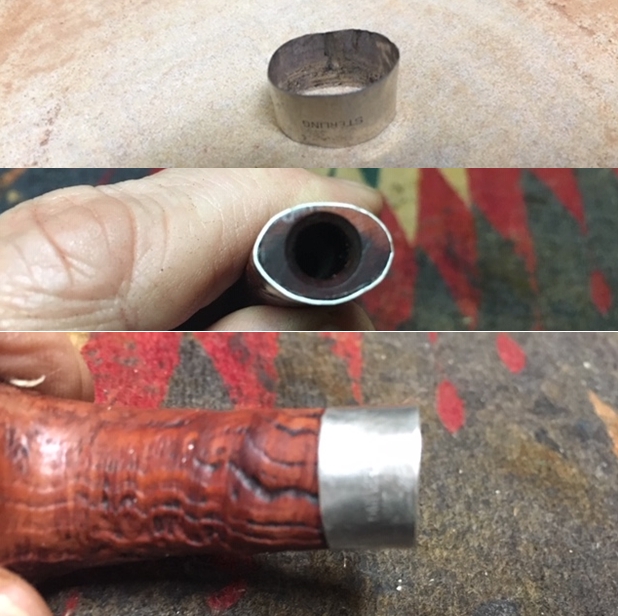
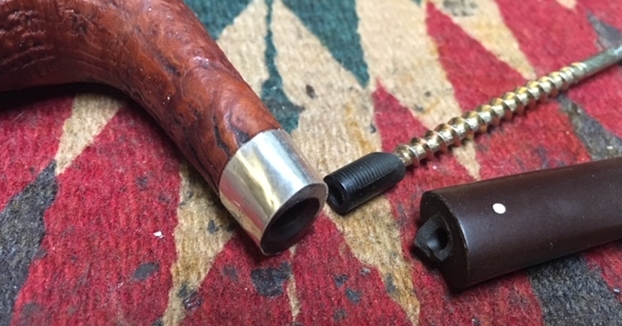
The fabrication of this Dimpled Billiard Churchwarden came out great.  I’m pleased.  The rusticated Dimpled Billiard has beautiful grain with a splay of grain spreading to the rim and much bird’s eye populating the heel of the stummel.  Often, rustication is used to hide blemishes in a lesser quality bowl, but this is not the case with this stummel.  The rusticated dimples are interesting shapes on a beautiful canvas of briar grain.  I believe Coleman will be pleased.  He commissioned this Dimpled Billiard Churchwarden and has the first opportunity to acquire it from The Pipe Steward Store.  This pipe benefits the Daughters of Bulgaria – women and girls who have been trafficked and sexually exploited.  Thanks for joining me!

Restemming and Restoring a Malaga Scoop


Blog by Steve Laug

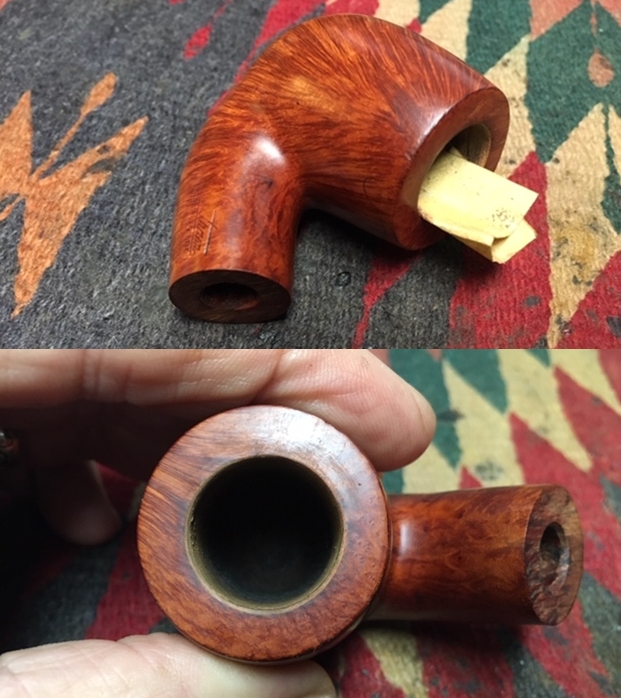
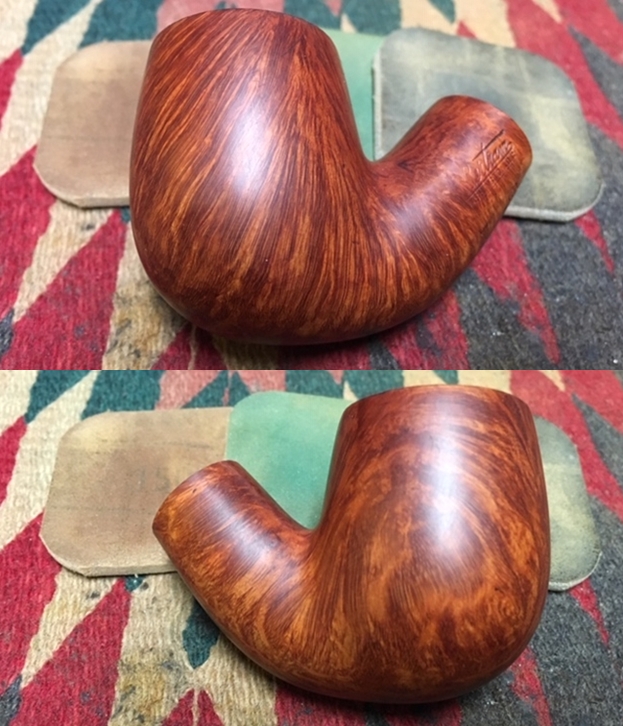
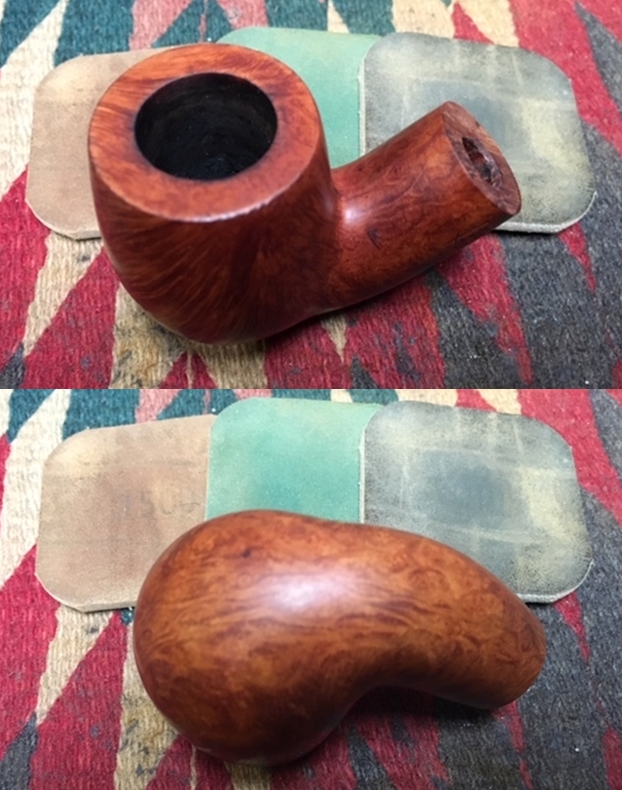
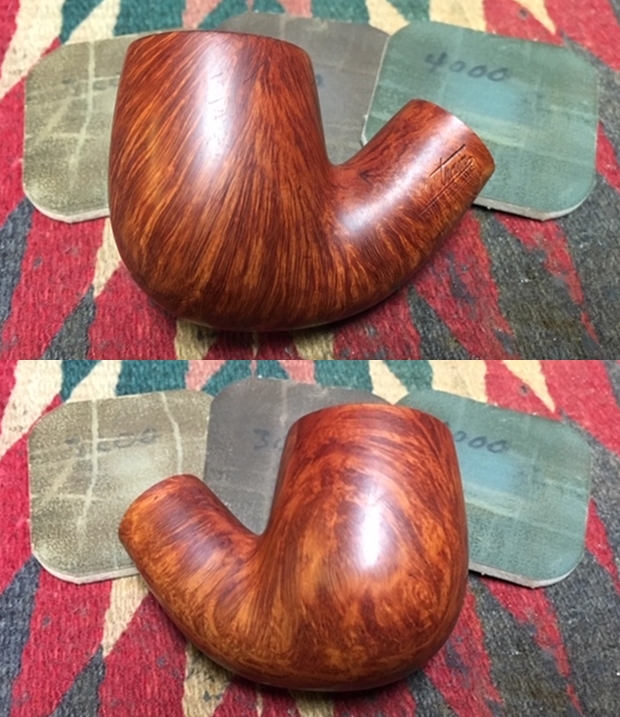
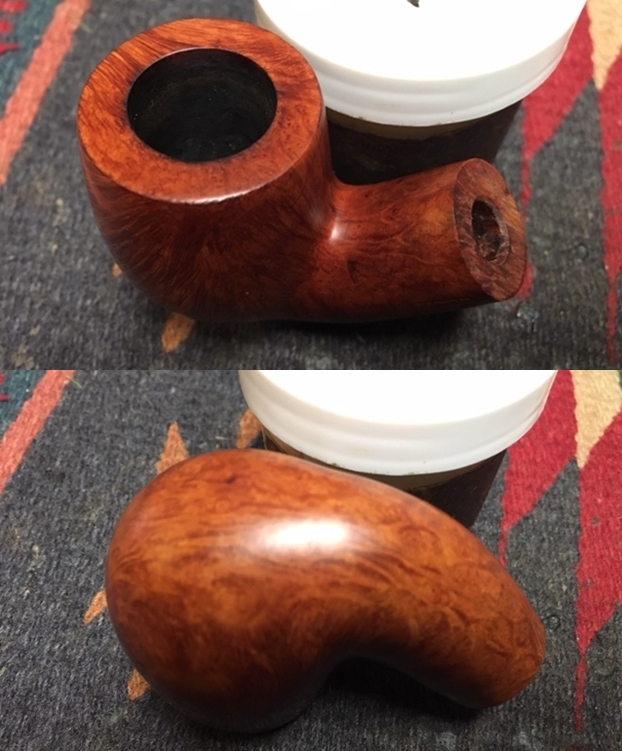
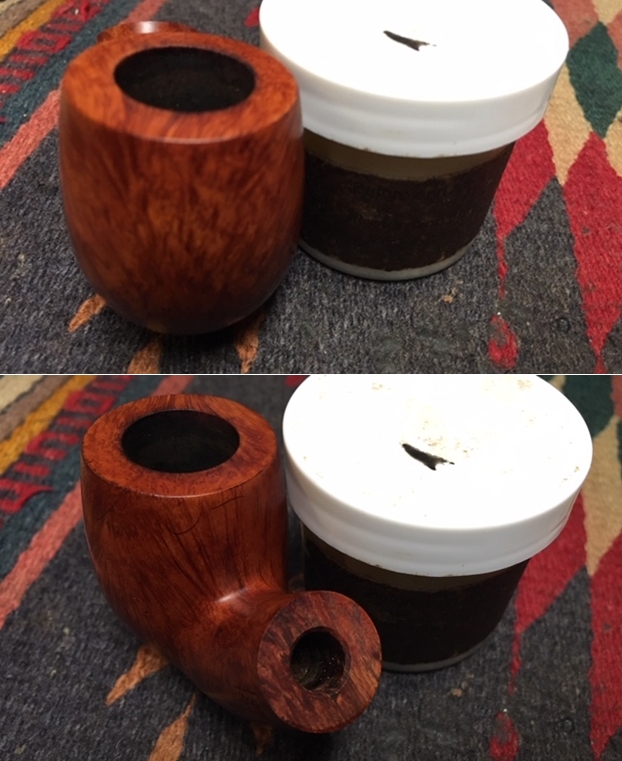
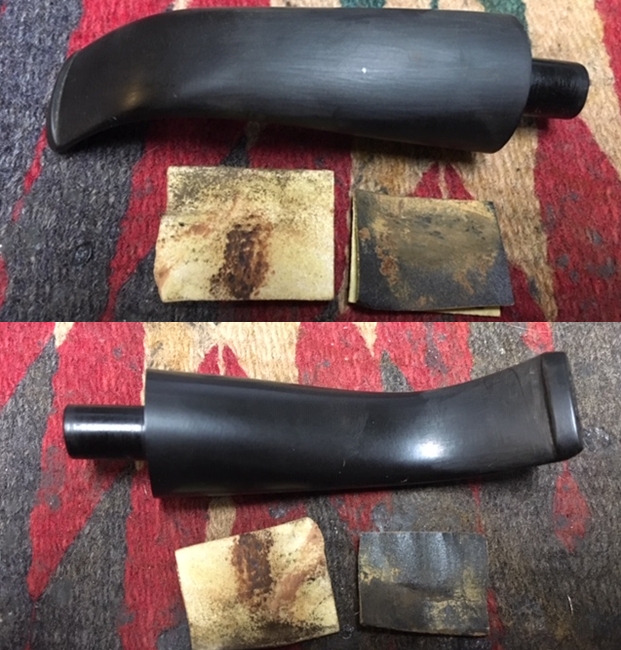
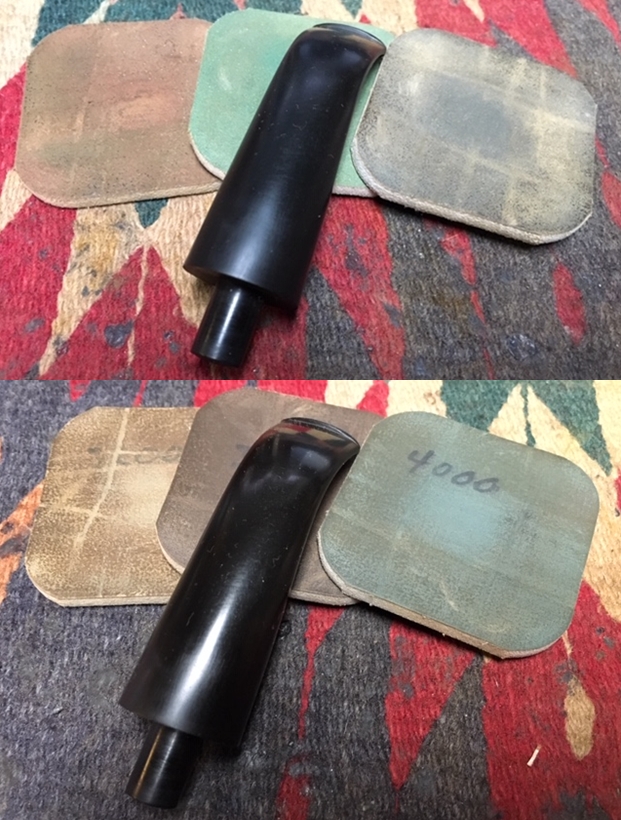
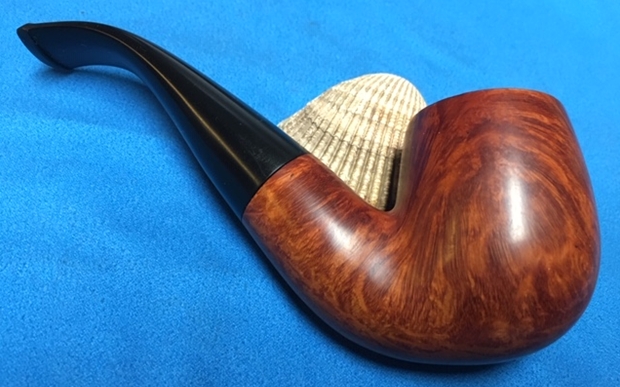
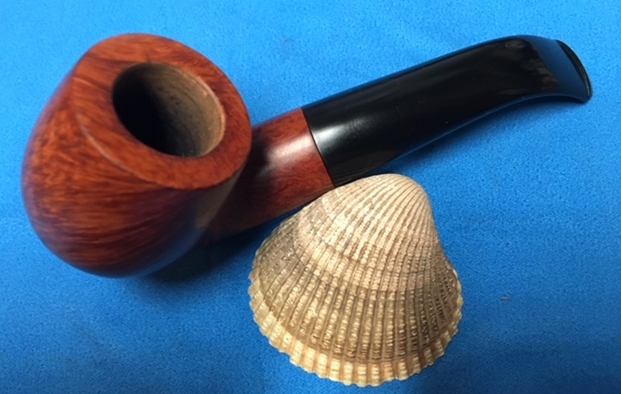
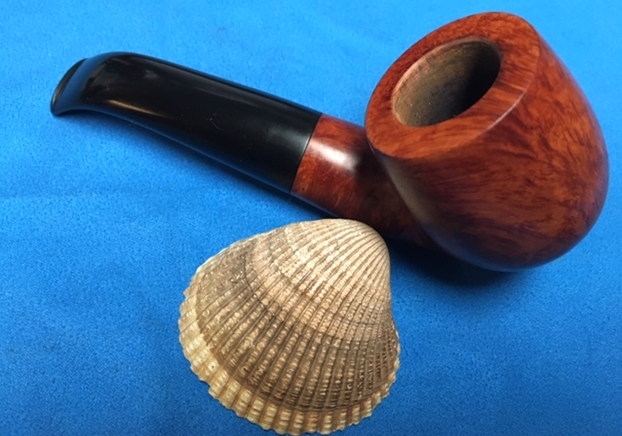
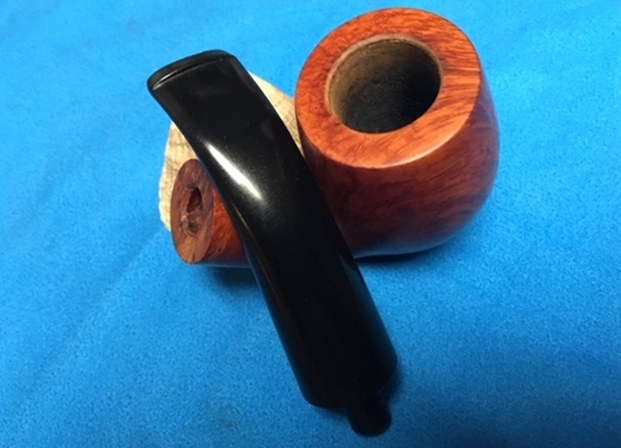
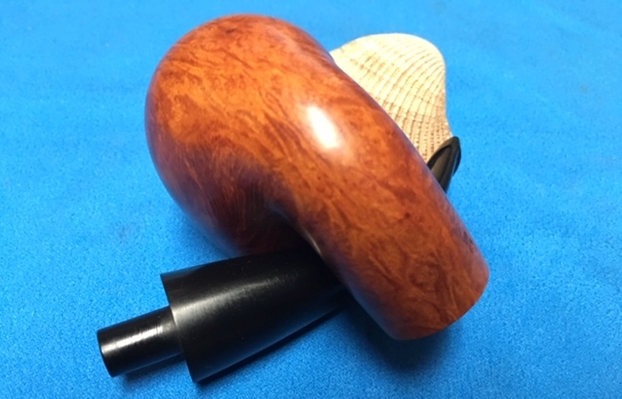
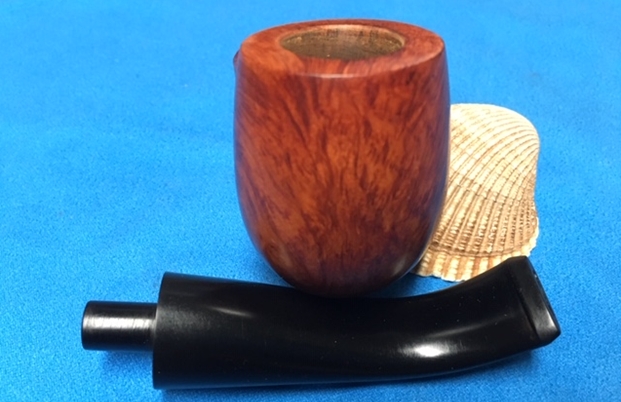
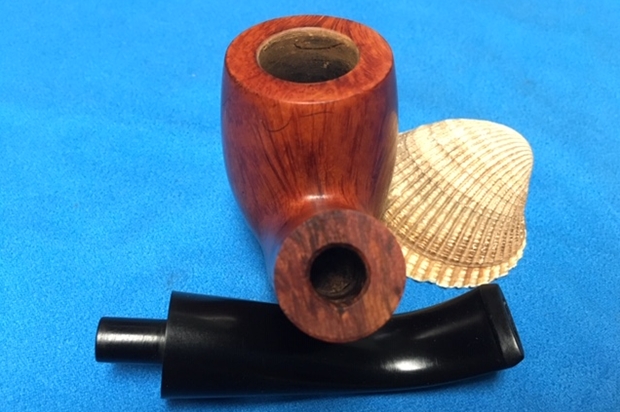
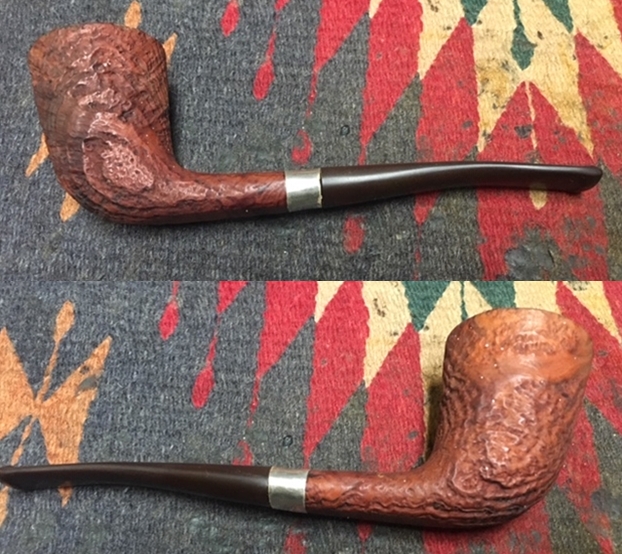
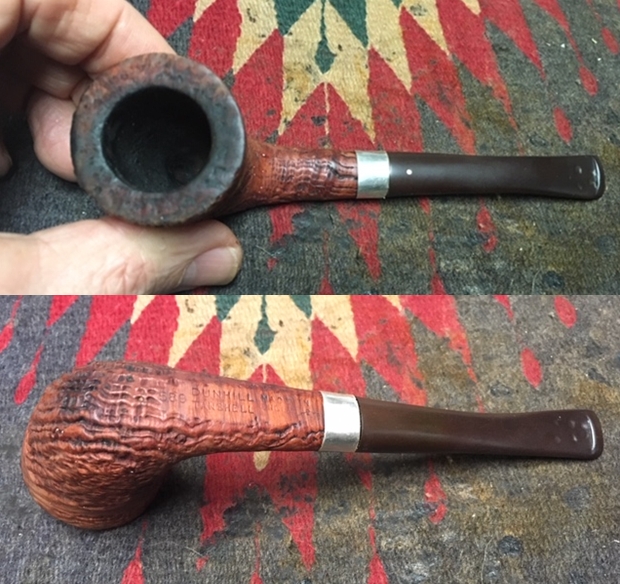
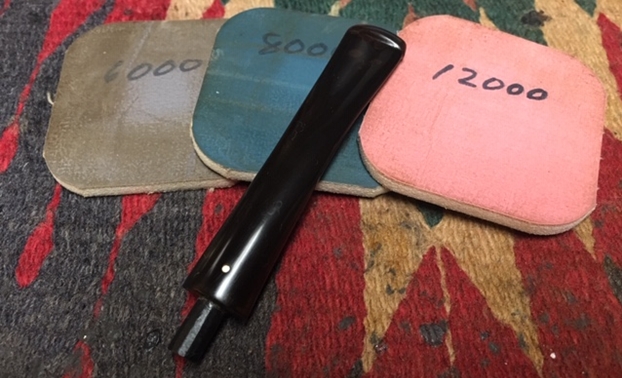
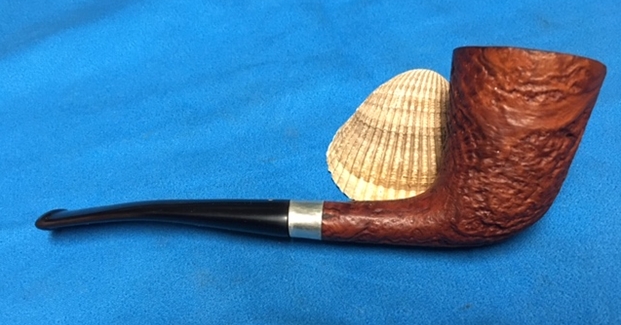
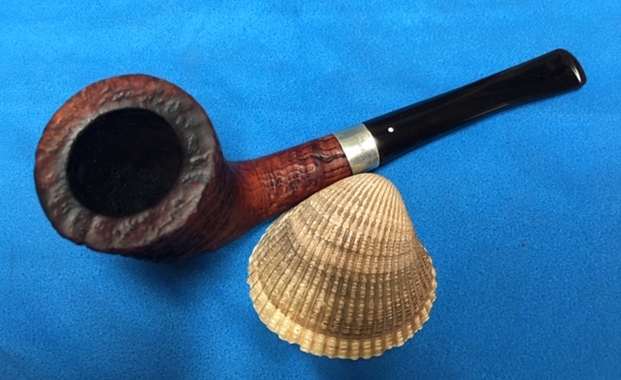
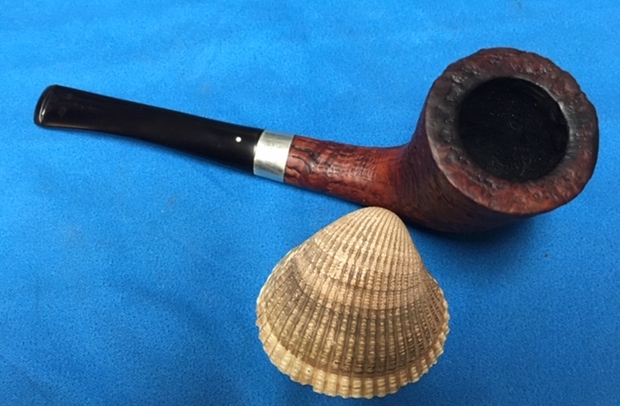
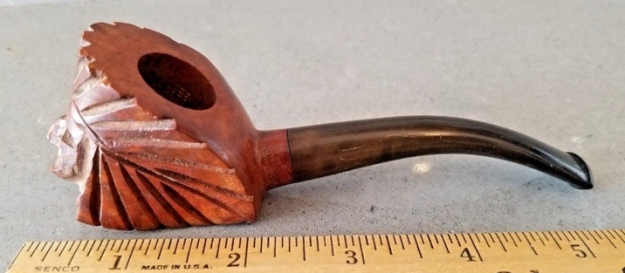
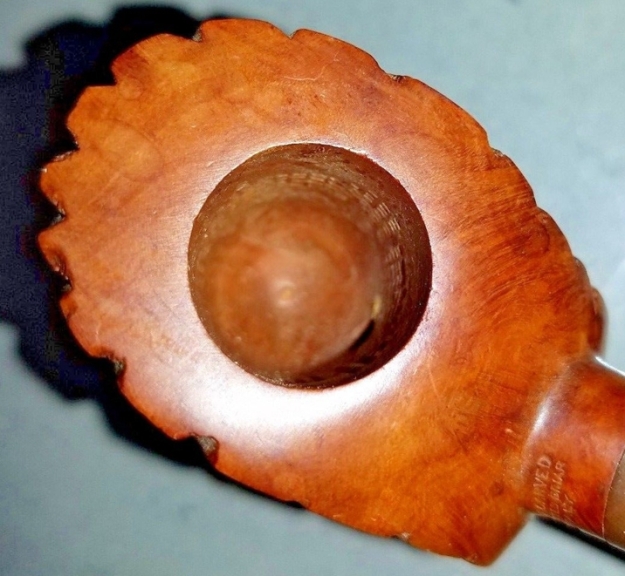
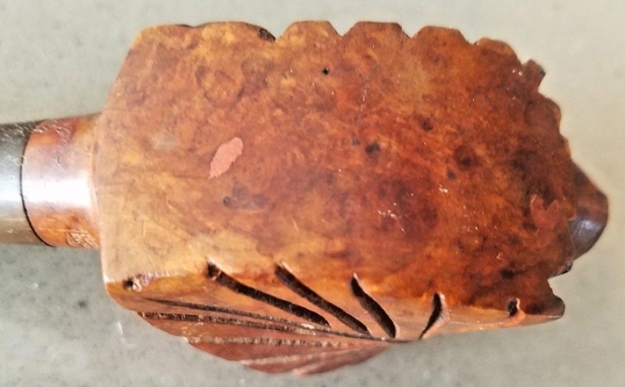
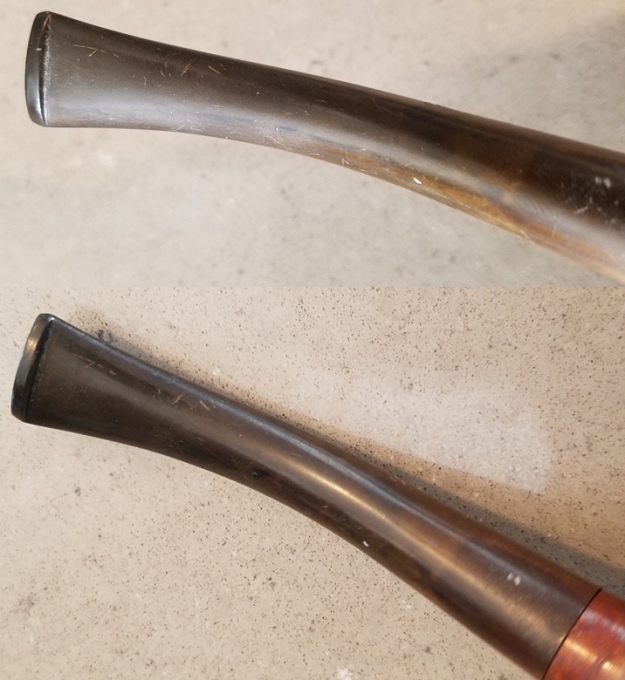
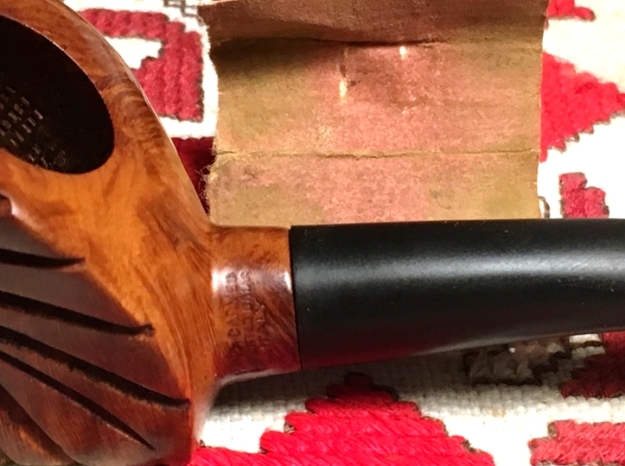
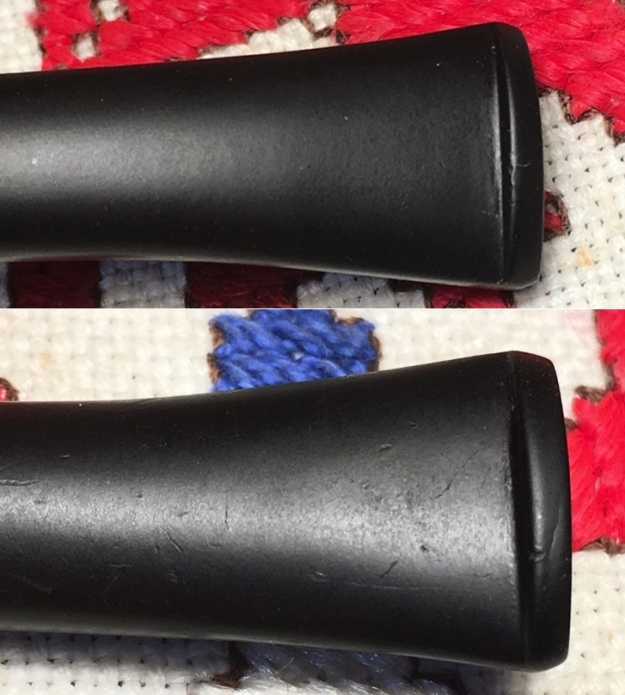
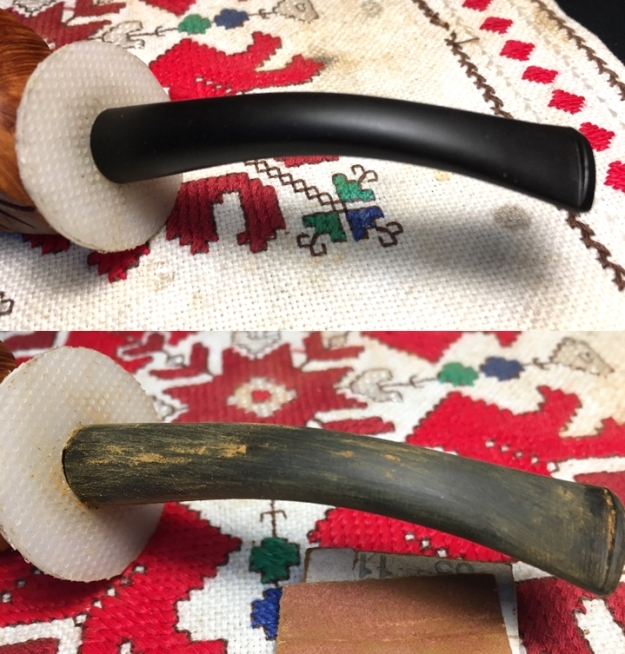
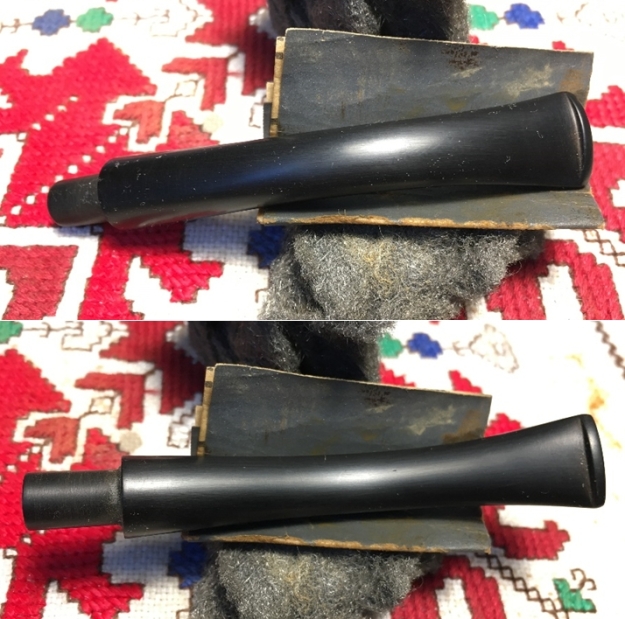
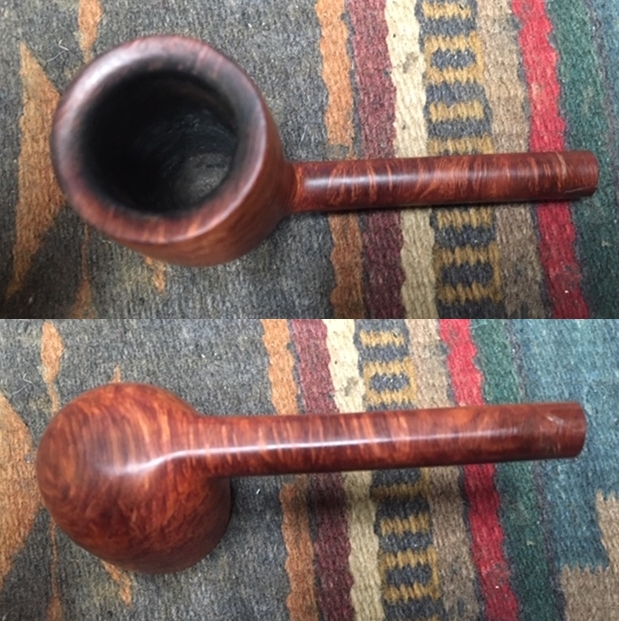
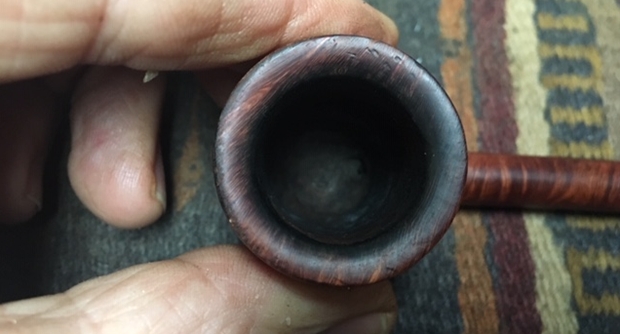
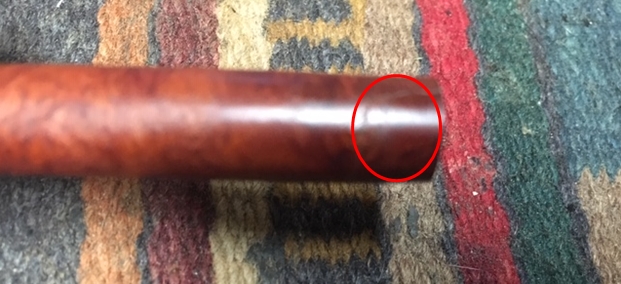
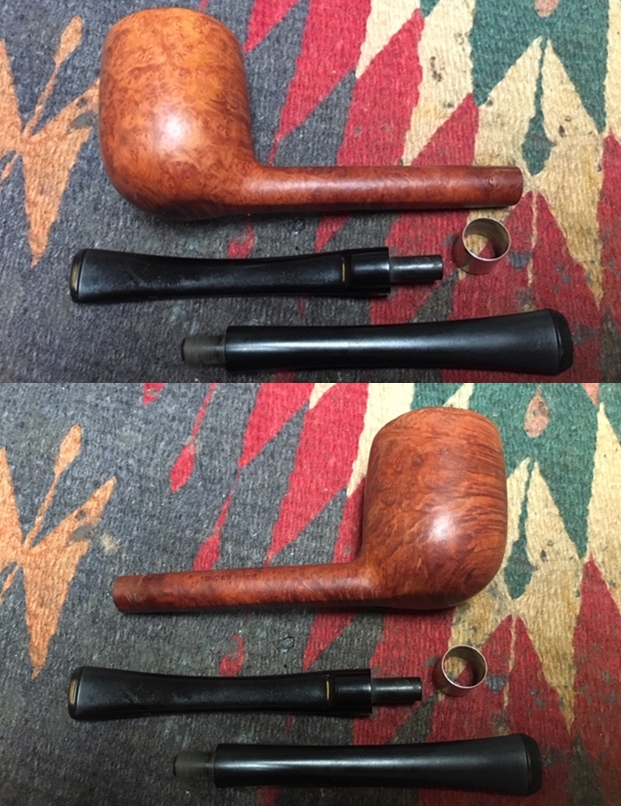
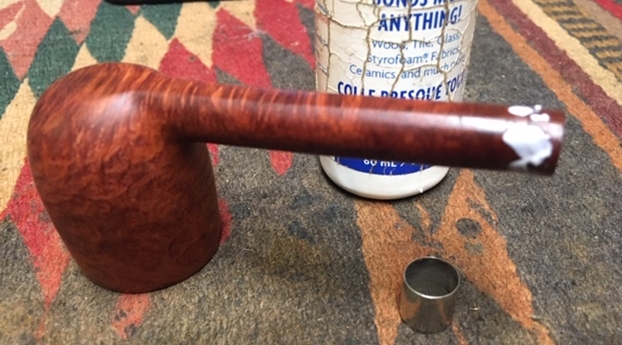
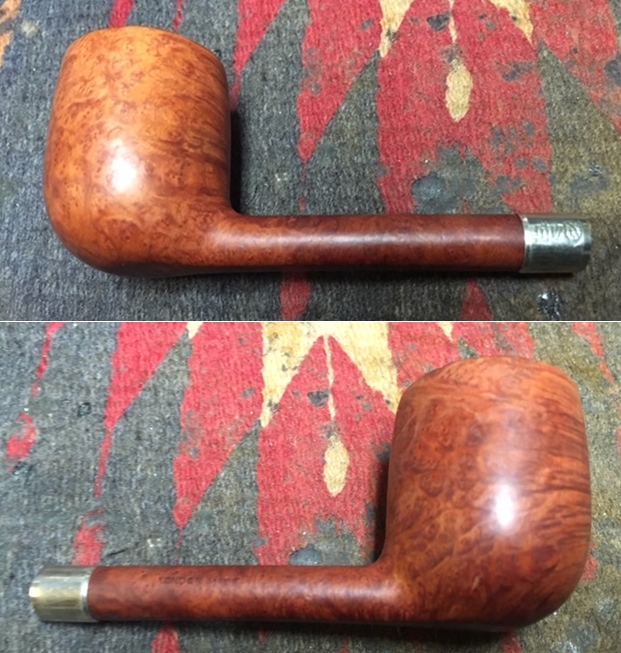
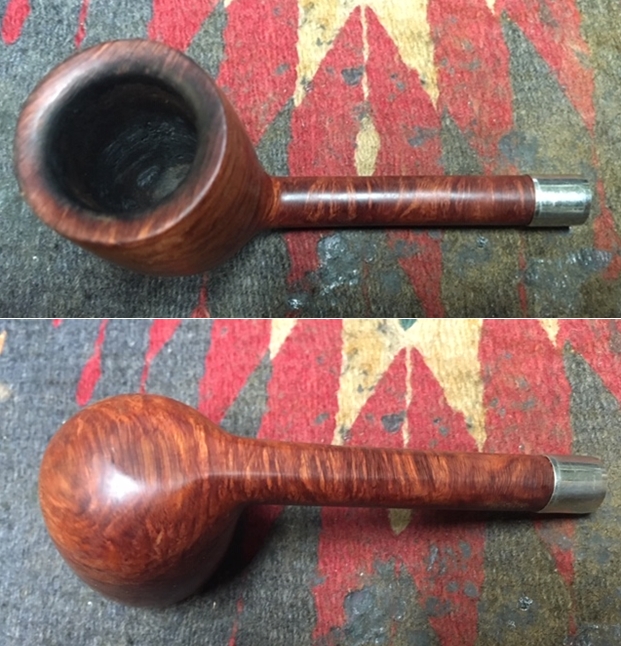
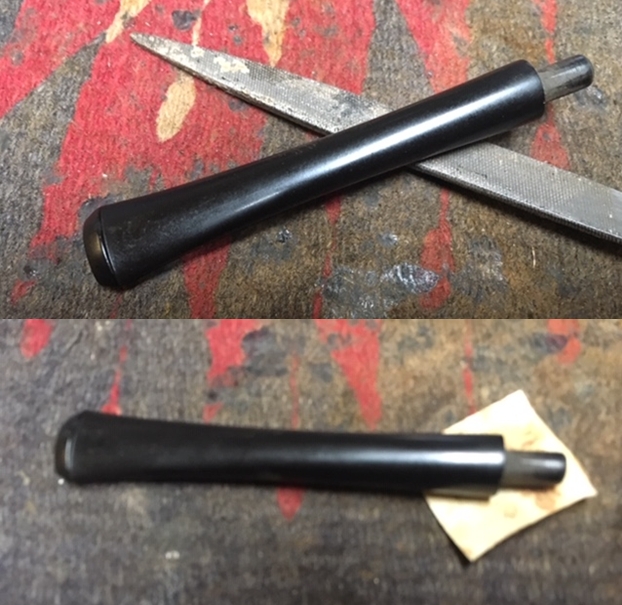
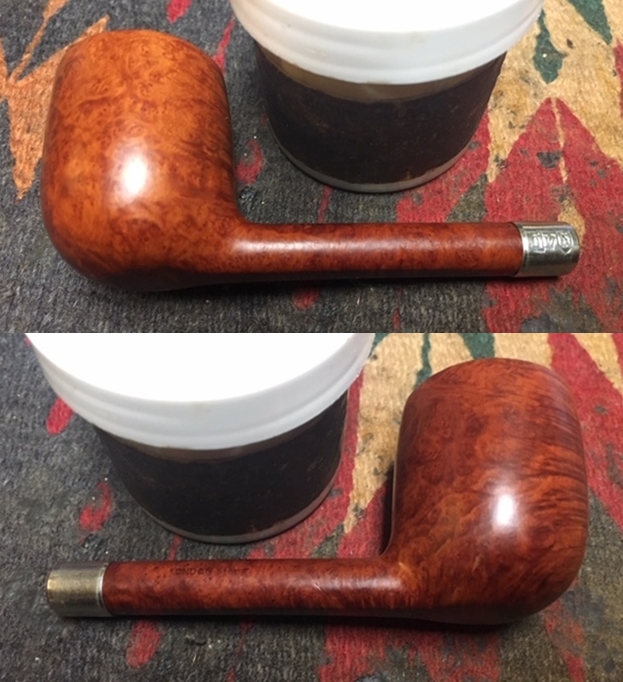
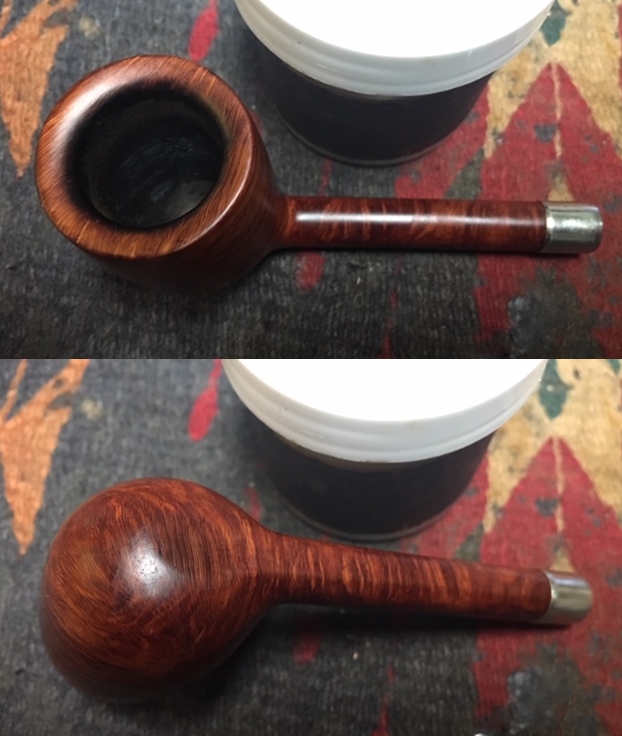
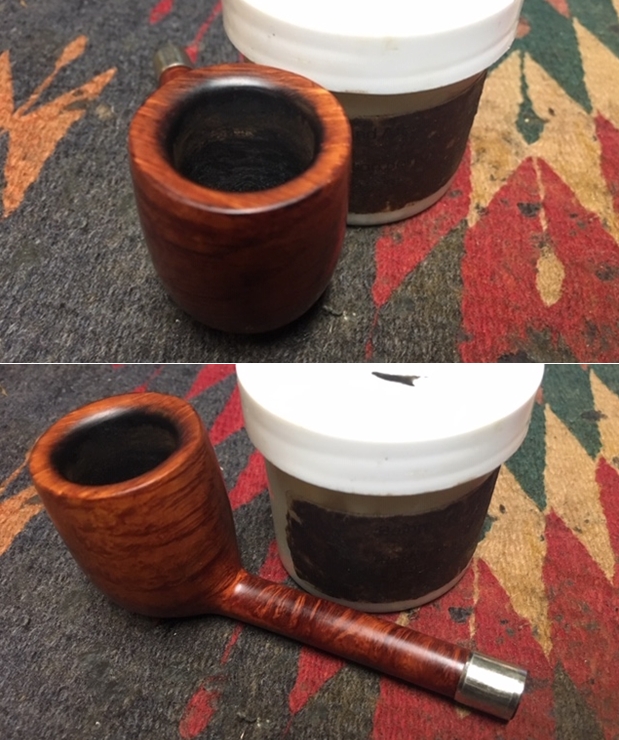
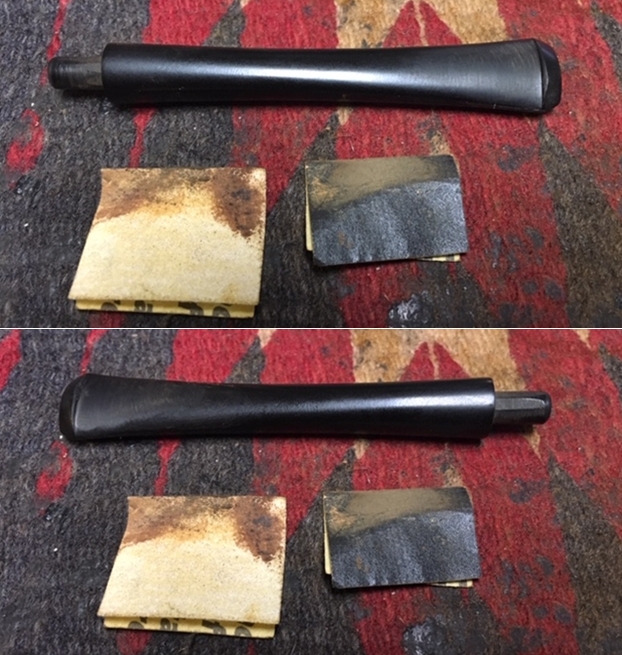
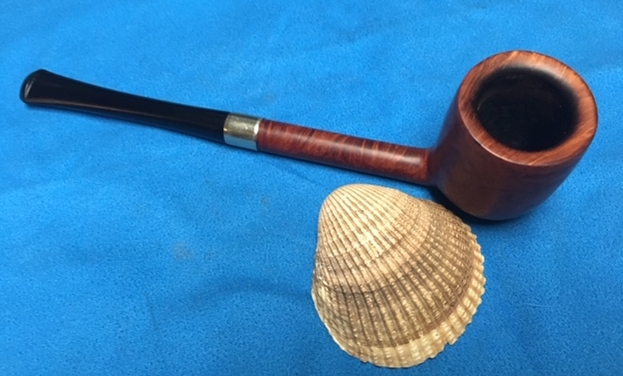
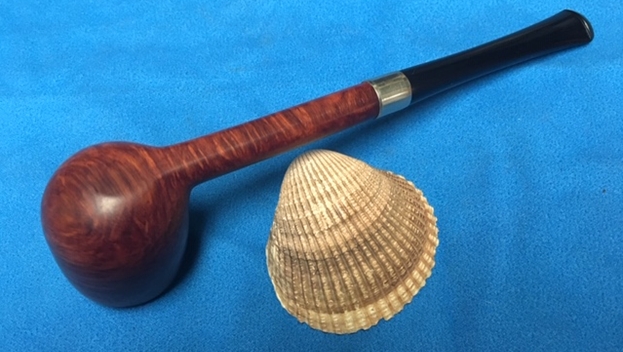
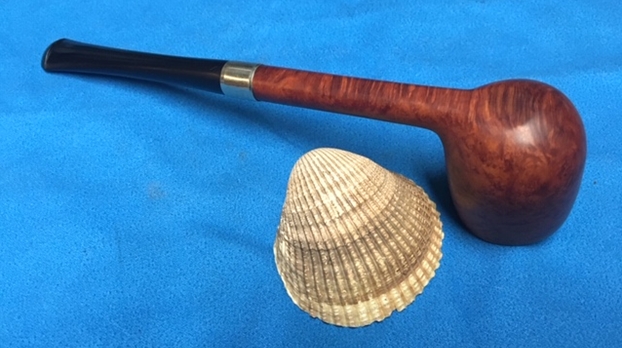
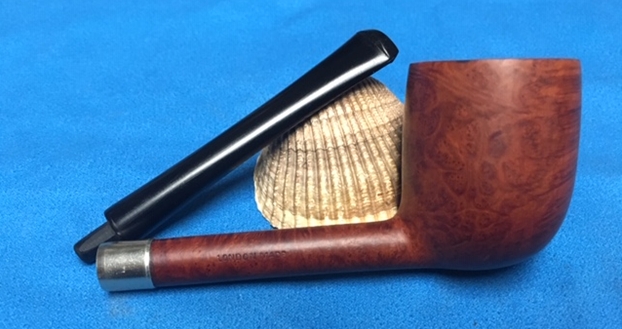
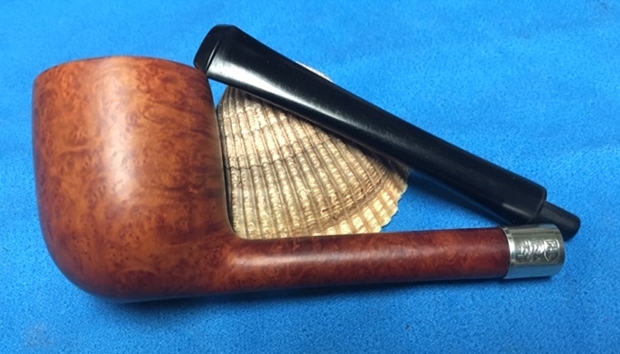
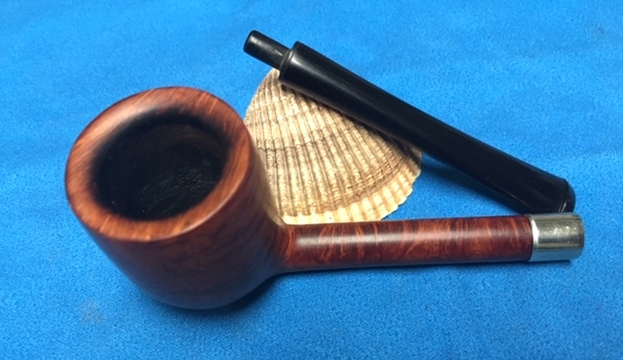
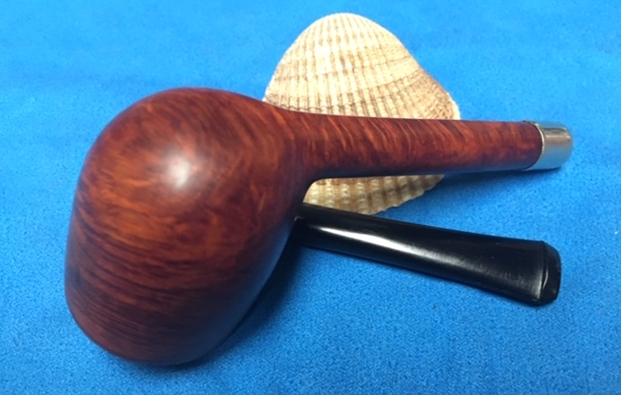
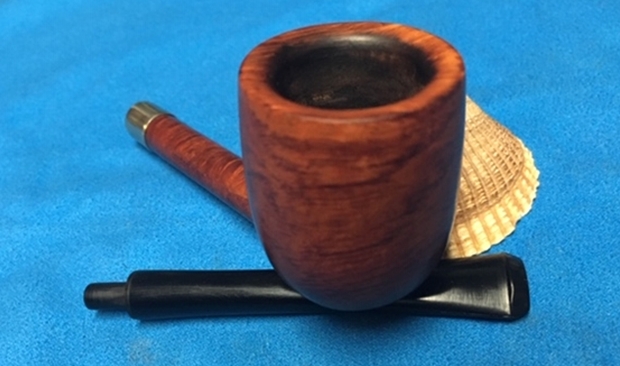
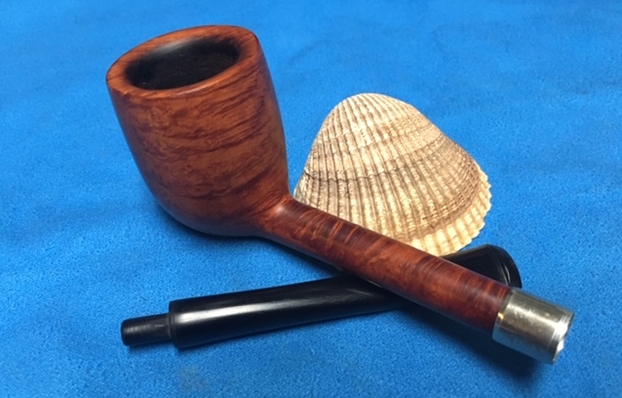
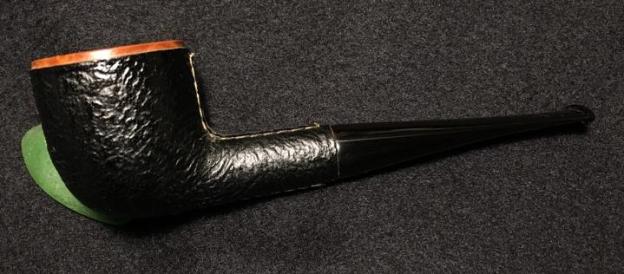
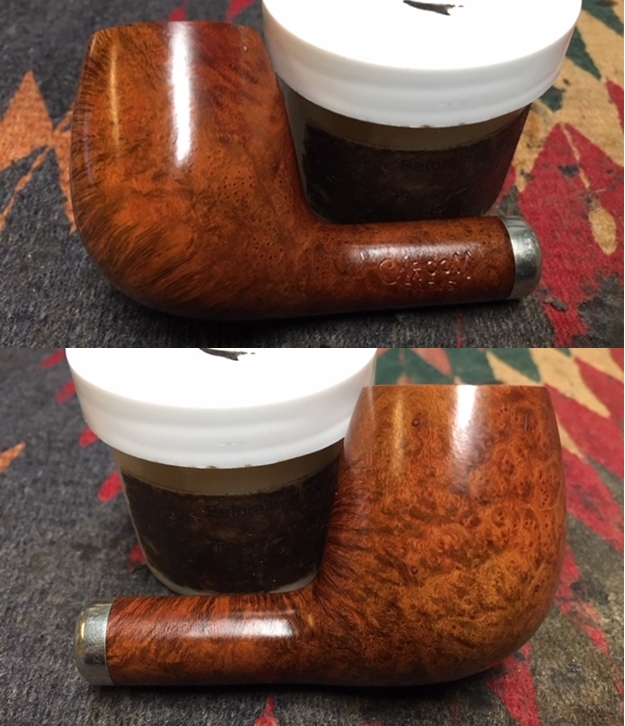
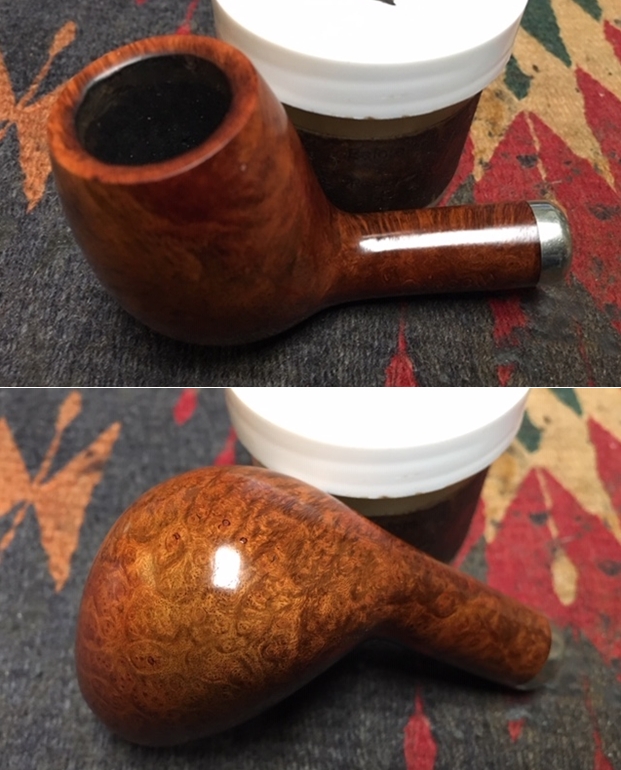
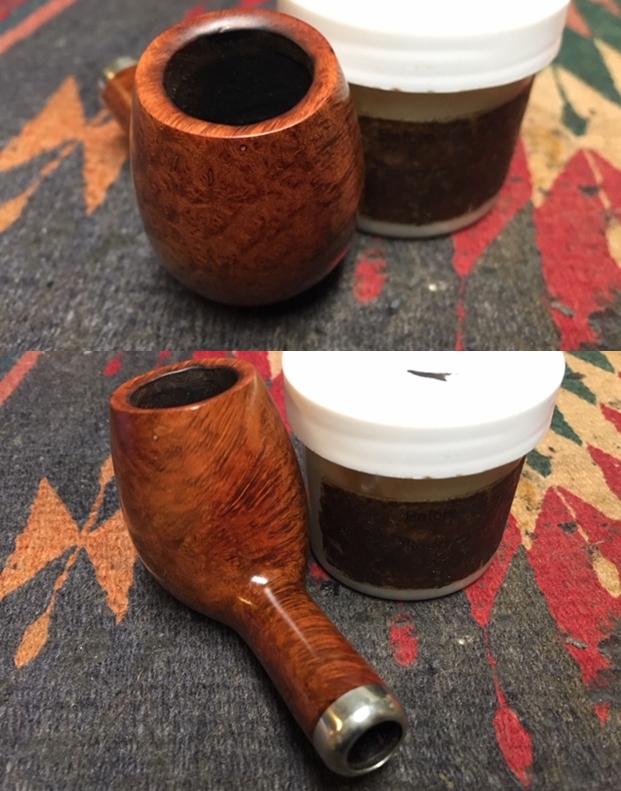
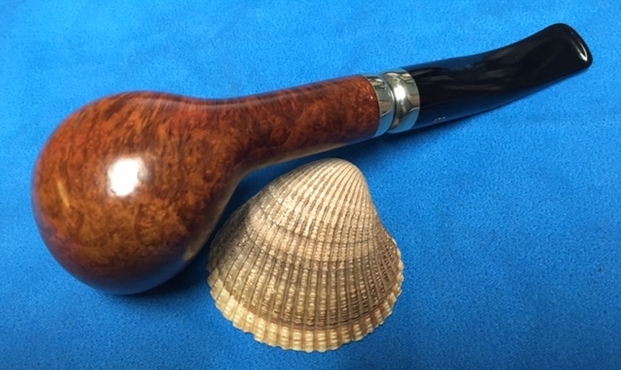
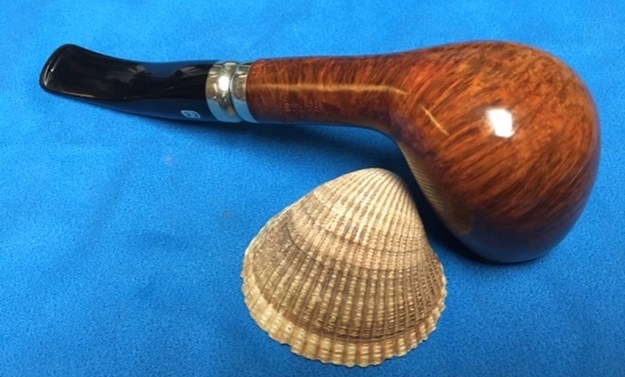
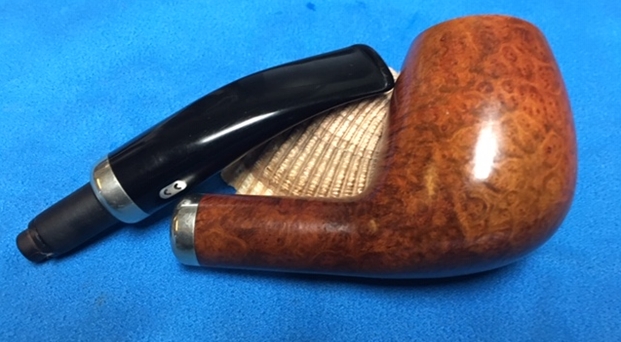
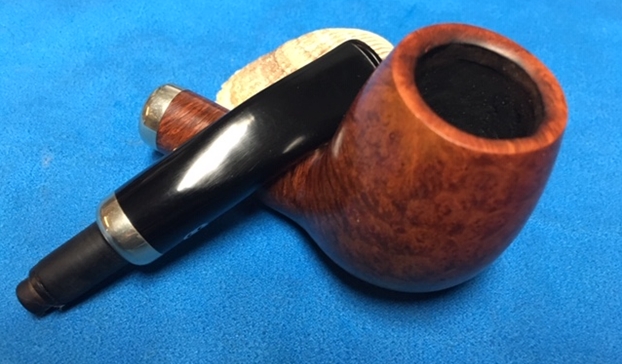
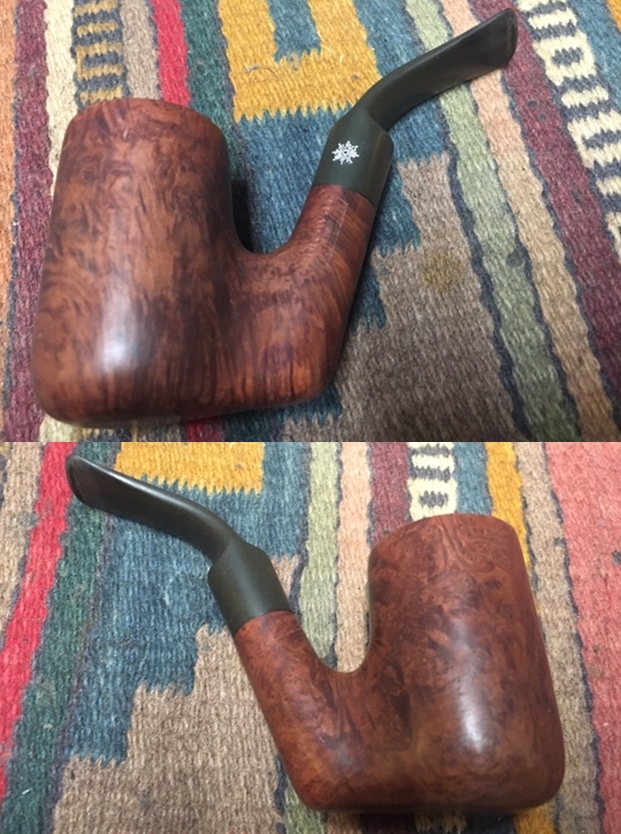
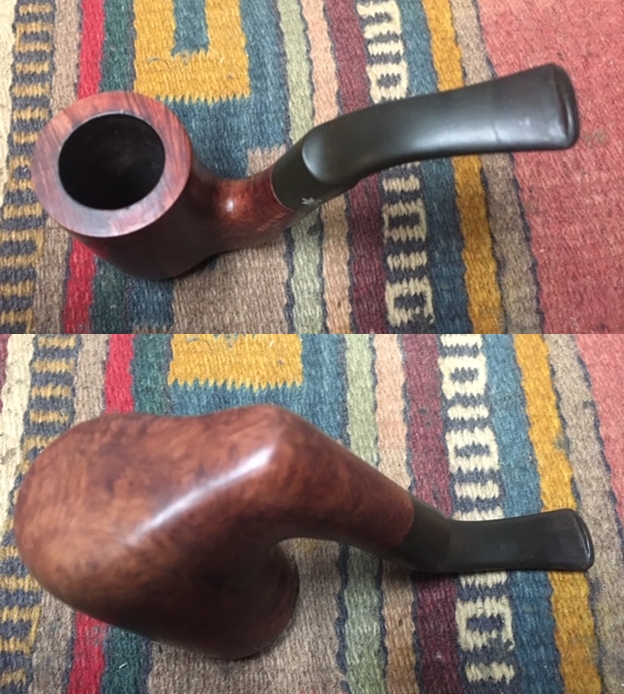
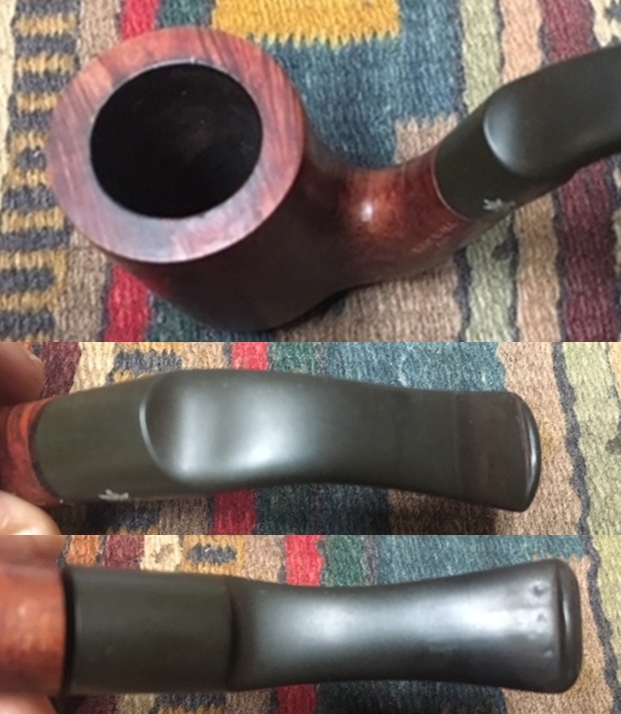
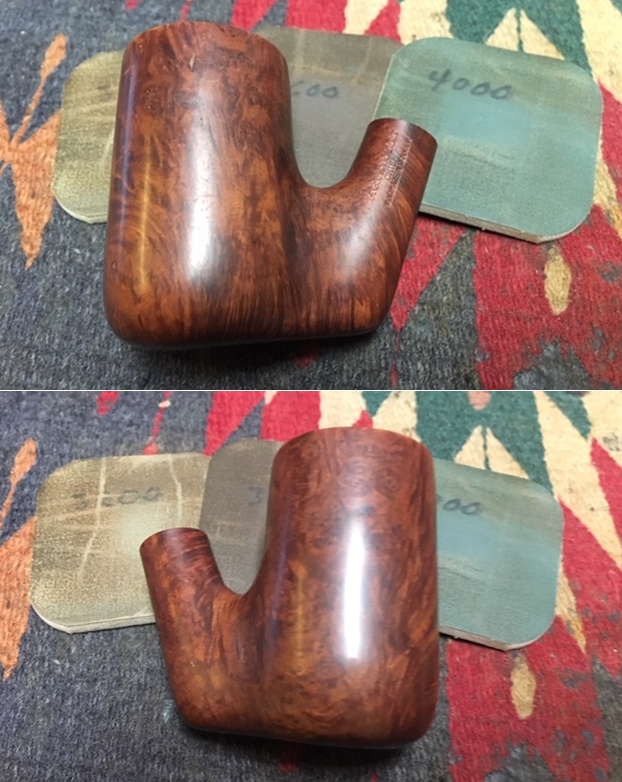
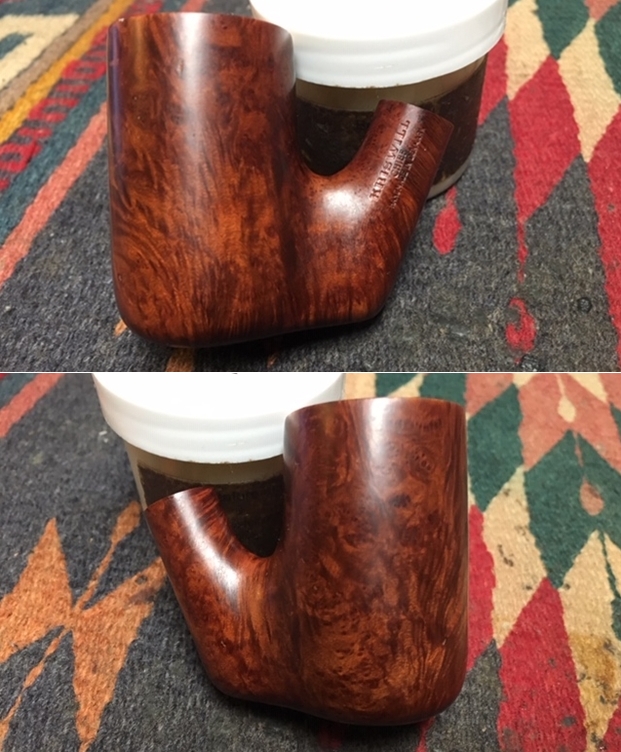
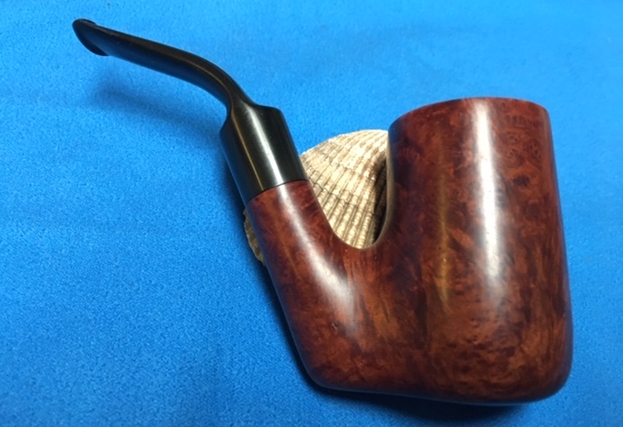
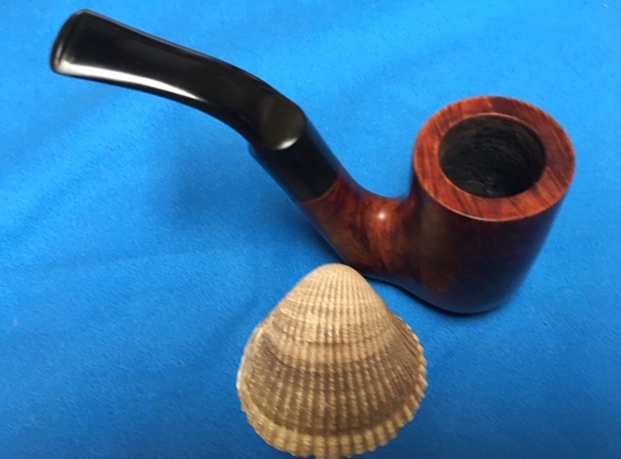
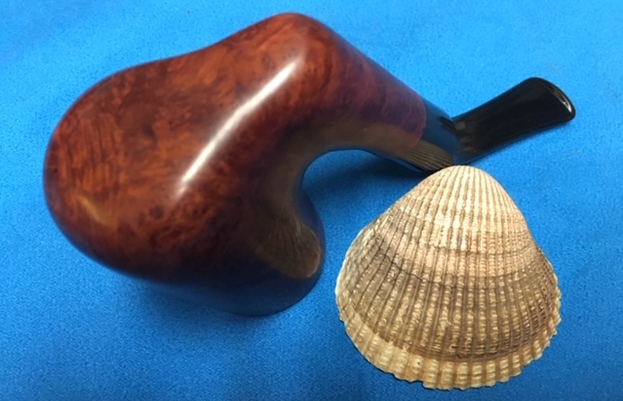
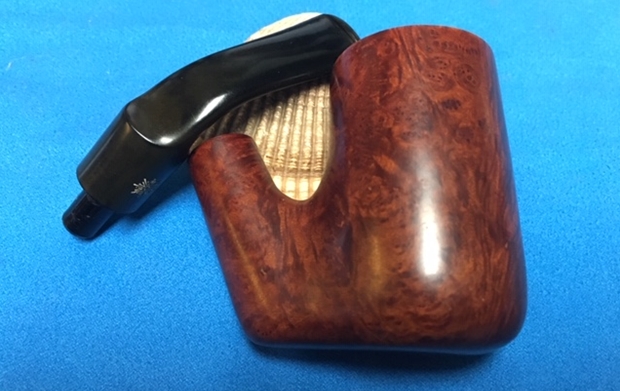
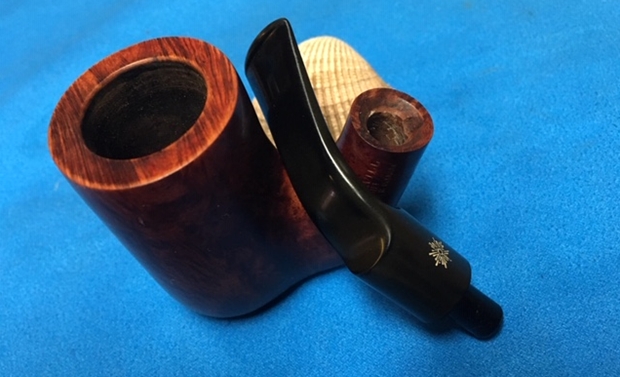
Since I am already working on restemming pipes I figure I might as well fit a stem to a MALAGA bowl that Alex dropped by a while ago. It is an interestingly shaped piece and I really like the looks of it. MALAGA called this shape a scoop. The grain swirls around the bowl sides and shows some great cross grain on the rim top. It is a pretty clean bowl with a bit of darkening on the rim top and cake build up at the bottom of the bowl. The pipe is stamped on the underside of the shank horizontally with the stem shank junction and reads MALAGA. The finish on the pipe is very in great condition with a few dings and pits in the briar on the right front near the rim. It has the classic Malaga oil cured look and is a rich, natural brown colour. The stem was missing so I would need to fit and shape a new one for it. I went through my can of stems to find an oval stem that would work with this shape pipe. I picked a new stem blank that I thought showed some promise. I took photos of the pipe and the potential stem before working on it. The photos give a pretty clear picture of the shape of the pipe and its general condition when I received it.

For those of you who are unfamiliar with the brand, I am also including the link to a blog that I wrote that gives some of the history of the Malaga brand and the Malaga Pipe Shop in Royal Oak, Michigan in the USA. Here is the link – https://rebornpipes.com/tag/malaga-pipes/. That blog also includes links to a catalogue and the history of the pipemaker George Khoubesser. If you are interested to learn more, then I invite you to follow the link to get a feel for the brand and the pipemaker. I changed my habitual pattern of working on pipes with this one as the bowl was pretty clean. I would do the reaming later. I set up my cordless drill and drilled the airway in the tenon so that the guide on the tenon turner would fit. I put the PIMO tenon turner in the chuck and turned the tenon until it was the right diameter for the shank. I know many use a micrometer to set the tenon turner correctly but the way the tool is configured that has never worked for me. I always eyeball it and turn it in degrees. After each turning I check it in the shank. When I get close I stop and finish with sandpaper and files. Probably a bit of a troglodyte but hey, it works for me.Once I had the diameter so that the tenon was snug I put the stem in the shank and took photos of the pipe at this point. It is way for me to see if I like the proportion of the length of the shank and bowl with the length of the stem. I have gotten to this point on other pipes and pitched the stem in the can and turned a different stem. In this case I thought it would work very well. I would need to reduce the diameter of the saddle, remove the casting marks on the stem and give it a slight bend when I was finished. What do you think? I took some close up photos of the rim top and the fit of the stem to the shank to give you a clearer picture of where things stood at this point in the process. Incidentally, in the last photo below you can see the MALAGA stamping on the underside of the shank.I used the Dremel and sanding drum to take off the casting marks on the sides and button end of the stem. I also used the sanding drum to remove the majority of the excess stem material on the saddle. I hand sanded it with a file and 220 grit sandpaper to get the fit close to a smooth transition. I little a tea light candle and heated the stem to bend it to the angle I wanted to work with the bowl. I took photos of the stem after the bending to show what the pipe looked like at this point in the process. There was still a lot of fine tuning and shaping to do but the pipe was beginning to look complete. I liked the look of the new stem. Some of you may wonder why I sand the shank the bit that I do. My experience is that I can smooth out the transition this way. I know that others do it differently but this is my process. I continued to sand and shape the stem and fit it to the shank end. I beveled the mortise end a bit more than it was originally using a small half circle needle file. Once that was done I sanded the stem to smooth out the transition with the shank. The photos below show that it is getting closer to a fit. I took some close up photos of the fit of the stem to the shank at this point. It is getting better and better. I still need to do a few adjustments to the tenon to get a snug fit to the shank.I sanded the stem with 400 grit wet dry sand paper to polish out the scratches left behind by the files and 220 grit sandpaper.I polished the stem with micromesh sanding pads – wet sanding it with 1500-2400 grit pads and dry sanding with 3200-12000 grit pads. I wiped the stem down after each of the pads using Obsidian Oil. I polished it further with Before & After Pipe Stem Polish – both Fine and Extra Fine grits. I gave it another coat of Obsidian Oil and set it aside. With the stem fit and finished I set it aside to work on the bowl. The bowl was in decent condition other than some darkening on the top and two small pits on the right front of the bowl. There was also a little bit of cake in the bottom one third of the bowl. Whoever had reamed it did not take the conical bowl into their thoughts. The rest of the bowl was well reamed but the bottom portion was not. I reamed the bowl with a Savinelli Fitsall pipe knife to clean up the bottom part of the bowl. I filled in the two small pits with clear super glue and when the patches cured sanded them smooth with 400 grit sandpaper. Unfortunately I did not take a photo of that part. Ah well. It is easy to get caught up in the process and forget the photos… I apologize for that.I polished the briar with 2400-12000 grit micromesh sanding pads – wet sanding with 1500-2400 grit pads and dry sanding with 3200-12000 grit pads. I wiped the bowl down with a damp cloth after each pad. I found that with each successive grit of micromesh the grain stood out more and gave a shine to the pipe. I liked what I saw when I looked at it. I worked some Before & After Restoration Balm into the surface of the briar with my fingertips to clean, enliven and protect it. I let the balm sit for a little while and then buffed with a cotton cloth to raise the shine. The following photos show the bowl at this point in the restoration process. The bowl and the rim top look really good and the darkening is gone. The finish looks very good with the rich oil finish on the bowl and rim. I am very happy with the results. Now with both parts of the pipe finished, I polished stem with Blue Diamond polish on the buffing wheel. I gave the bowl and stem multiple coats of carnauba wax. I buffed the pipe with a clean buffing pad to raise the shine. I hand buffed it with a microfiber cloth to deepen the shine. The pipe polished up pretty nicely. The contrasting grain came alive with the buffing. The rich oil finish on the briar works well with the new, polished black vulcanite stem. The finished pipe is a beauty and feels great in the hand. Have a look at it with the photos below. The dimensions are Length: 5 ½ inches, Height: 1 1/2 inches, Outside diameter of the bowl: 1 ¾ inches, Chamber diameter: 9/16 of an inch. This one will be going back to Alex with the rest of his pipes that I am working on. Thanks for walking through the restoration and restemming with me on this nicely shaped MALAGA Scoop.
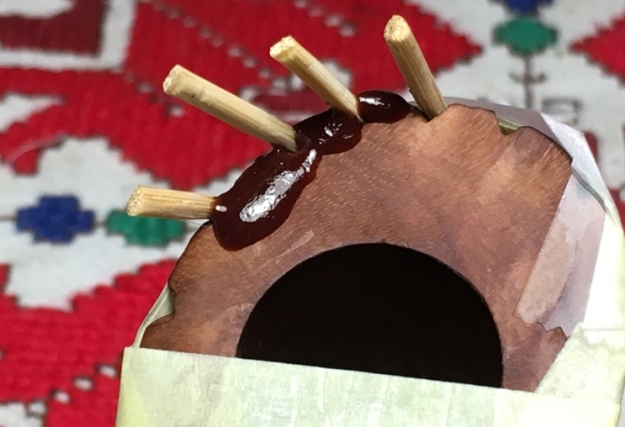
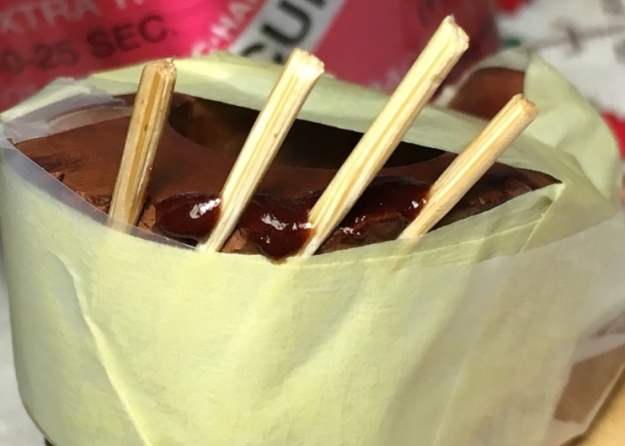
New Life for a Sad, Old Kriswill Bent Egg


Blog by Steve Laug

The next pipe in the queue is from a group of pipes that Paresh purchased from a rag picker in Mumbai, India. The fellow had found a large number of pipes as he was going through rubbish bins and contacted Paresh. This is a tired and worn looking Kriswill. I knew looking at it even before the stamping was checked that this was a Kriswill because there is something distinctive about the shapes. The pipe is stamped (though it is faint now from wear) Kriswill Hand Made in Denmark. The pipe was filthy and unusable. I think it was from the generation who smoked a pipe to death and then pitched it. The finish on the pipe is very dirty and the sandblast is almost worn smooth. There is a thick cake in the bowl and a lava overflow on the rim top. I can see some damage to the inner edge of the rim but because of the cake and tars it is hard to know what the inner edge looks like. The stem was broken at the tenon and there was a very strange set up keeping the pieces together. I took photos of the pipe before cleaning it. The photos give a pretty clear picture of the shape of the pipe and its general condition when I received it. At first glance I thought that the tenon was broken off in the shank but as I examined it I came to believe it was even worse. It looked like someone had glued something in the shank and Gerry-rigged a connection to the stem. The photo below shows what I saw. What is not clear in the photo was a piece of metal in the centre of the mortise area. It looked like a tube but when I tried to push air through the shank it was absolutely plugged.I was going to have to try to drill out the shank but before I did that I examined the shank and stem more closely. The stem had been hacked pretty seriously so that the diameter was not even close to the diameter of the shank. In the centre of the mortise the metal tube turned out to be a 2 inch long finishing nail. It appears that the nail was used to keep the stem in place in the shank. For what? I don’t have an answer for that as it was utterly unsmokable. Once I removed the nail with a pair of needle nose pliers I was able to blow air through the shank. It was at least clear. I used a drill bit slightly larger than the mess in the shank and carefully drilled the shank. It did not work to clear out the shank! However, it was clear what was there – it was a tube made of masking or painters tape! I took a pen knife and twisted it into the mortise and was able to pull the tube free of the shank. The last photo shows everything that had been in the shank to hold the stem in place on the shank. I could surmise from the length of the stem what I would need for a replacement stem. I went through my can of stems and found one that had the right sized tenon and was the same length and width as the broken stem. It was a saddle stem instead of a taper but I liked the look of it on the pipe. I pushed it in place and took the following photos. I would need to reduce the diameter of the saddle, bend the stem and do a general cleanup, but it was a keeper. I took a photo of the stamping on the shank to show that it reads Kriswill. Underneath it says Hand Made in Denmark but that stamping is faint and only readable in a bright light or with a lens.With the stem chosen I set it aside to work on the bowl. I really hate working on dirty pipes! I can’t say enough how much I appreciate my brother Jeff doing the lion’s share of the reaming and cleaning before I even work on pipes… It is these few that I have to clean up that make me thankful and realize how much work he does before I get them here to restore. Thanks Jeff. The bowl had a thick cake and a heavy overflow of lava. It was obviously someone’s favourite pipe.I reamed the bowl with a PipNet pipe reamer using the smallest cutting head. The bowl on these old Kriswill pipes is conical so the PipNet only goes so far down the inside. I reamed out the bowl as far as the reamer would reach and then used Savinelli Fitsall pipe knife to finish the project. I scraped the rim top with the pipe knife to remove the majority of the lava and could see that the rim edges and top were damaged with burn marks.To remove the damage to the top of the rim I topped it on a topping board with 220 grit sandpaper. I worked on it to remove the burned areas and the damage to the inner edge of the rim as much as possible. I am happy with how it turned out.I lightly beveled the inner edge of the rim with a folded piece of 220 grit sandpaper to give it a cleaner look. The look of the bowl at this point is far better than when I started the rim clean up. I will still need to polish the rim and match the stain to the shank end smooth portion. Fortunately for me this old Kriswill originally had a smooth rim top so it will look like new.I polished the topped bowl rim with 3200-12000 grit micromesh sanding pads. With each successive grit of micromesh the grain stood out more and gave a good finished look to the pipe. I liked what I saw when I looked at it. There was a little variation in stain colour between the rim top and the shank end so I decided to stain both to get a good blend. I used an Oak stain pen to match the colour of the shank and smooth spot where the stamping was. Once the stain had cured for that time I moved on to the next step in the process.It dawned on me at this point that I had been so intent on getting the plug out of the shank and topping the bowl that I forgot to clean out the shank! I normally do that right after reaming the bowl but forgot. It goes to show you that if you vary an habitual pattern even a bit you will leave steps out. I stopped the process and went back and cleaned out the shank and airway to the bowl with pipe cleaners, cotton swabs and isopropyl alcohol until the pipe was clean and smelled fresh.With the rim top and bowl polished and the shank and airway CLEAN, I worked some Before & After Restoration Balm into the surface of the briar with my fingertips to clean, enliven and protect it. I let the balm sit for a little while and then buffed with a cotton cloth to raise the shine. The following photos show the bowl at this point in the restoration process. The bowl and the rim top look really good and the darkening and lava are gone. The finish looks very good with the contrast between the rich, dark brown and the Oak stain on the rim and shank end. I am very happy with the results. With the bowl finished I set it aside and turned my attention to the stem. I used a file and a folded piece of 220 grit sandpaper to shape the diameter of the saddle portion of the stem to fit the diameter of the shank. It took a lot of filing and sanding to get it to this point but there is a lot of fine tuning work to do. The shank is not round but it is more of a vertical oval in shape so the stem will need to match it to have a seamless fit. It is a lot of hand shaping work to get the two to match. I sanded the scratches and the tooth marks on the stem with 220 grit sandpaper to bring the shank and saddle portion into line. I further sanded and shape it with 400 grit sandpaper to remove the scratches. This is the beginning of the polishing process on the stem. I wiped the stem down with Obsidian Oil and put it back in the shank to take progress photos. I polished the stem with micromesh sanding pads – wet sanding it with 1500-2400 grit pads and dry sanding it with 3200-12000 grit pads. I wiped the stem down with Obsidian Oil after each pad. I further polished it with Before & After Pipe Polish – both Fine and Extra Fine. I gave it a final coat of Obsidian Oil and set it aside to dry. This pipe has had quite a journey to this point in time and space. It somehow traveled from Denmark where it was made to Mumbai, India. There is was found abandoned, binned and found by a rag picker who then sold it to Paresh in another region of India. From Paresh it traveled to me in Vancouver, Canada. In April it will travel to Nepal with me and back Paresh in India. I only wish that it could tell its story. All I know is that I have extended its life of usefulness and given its purpose back as it was intended.

I polished stem with Blue Diamond polish on the buffing wheel. I gave the bowl multiple coats of Conservator’s Wax and the stem multiple coats of carnauba wax. I buffed the pipe with a clean buffing pad to raise the shine. I hand buffed it with a microfiber cloth to deepen the shine. The pipe polished up pretty nicely. The contrasting grain came alive with the buffing. The rich contrasting browns and black colouring works well with the new, polished black vulcanite stem. The finished pipe is a beauty and feels great in the hand. Have a look at it with the photos below. The dimensions are Length: 5 ½ inches, Height: 2 inches, Outside diameter of the bowl: 1 inches, Chamber diameter: 5/8 of an inch. I will be taking this pipe with me to India soon and giving it back to Paresh. Thanks for walking through the restoration with me on this battered and weary Kriswill.

A Cutty Tavern Pipe – Recommissioning a Historical Classic as a Gift for a Steward of History


Blog by Dal Stanton

Tavern Pipe
By Suzie Baker

Summary and excerpts of the artist’s description:
Here the subject poses as an American Colonial man from 1776; he actually posed on Washington’s Birthday.  He has a ruddy complexion and piercing blue eyes. From my perspective, he is more interesting to paint than a golden-haired beauty.

He poses with a tavern pipe. This type of pipe was a communal pipe used in pubs in the 18th century. After each use, the pipe stem was cut away then replaced on the mantel for the next user. I chose a color scheme appropriate to the time period and drew inspiration from Rembrandt’s work in the direct gaze, dark background and loose handling of paint, especially in the clothing….

Let me first tell you the story about the commissioning of the Cutty Tavern Pipe now on my worktable and then I will tell you about the gifted artist I discovered in my research about tavern pipes, Suzie Baker, and her amazing offer to benefit the Daughters of Bulgaria with her ‘Tavern Pipe’.Living in Bulgaria, the opportunities to talk with our grown children (and growing grandchildren!) residing in the US, is a special treat.  My son, Jonathon, reached out to me on FaceTime with a special, ‘historical’ request.  Jonathon desired to commission a special ‘historical’ pipe as a gift for Andrew, a friend who was leaving his job as the assistant curator of the Dearborn Historical Museum – an American city in the state of Michigan that takes its history seriously.   Jonathon, while serving on the mayoral appointed Dearborn Historical Commission, befriended Andrew as Andrew fulfilled his duties as a curator for the museum tasked with safeguarding Dearborn’s history.

Today, Dearborn, a suburb of Detroit, is proud to be one of the most ethnically diverse cities in the world.  Yet, Dearborn’s history is predominantly shaped by the controversial industrialist and auto manufacturer, who called Dearborn his home, Henry Ford (1863-1947).

When Jonathan shared his desire to commission a pipe with some historicity as a gift for a CURATOR of a museum, and that museum was the Dearborn Historical Museum, I was anxious to rise to the challenge that that request presented.  I did a fast dictionary search on Google to see a working definition of ‘Curator’.  This is what I found:

Automobile manufacturer Henry Ford, left, and his son, Edsel, in one of their car showrooms in January 1928. (AP) from Washington Post article (link)

Curator:
a keeper or custodian of a museum or other collection.
“the curator of drawings at the National Gallery”
synonyms: custodian, keeper, conservator, guardian, caretaker, steward

I took special interest in the last word listed as a synonym of curator – ‘steward’, which speaks to my ‘Pipe Steward’ sentiments.  Understanding that we are not the owners ultimately but protecting and caring for that which belongs to others to pass it on.  I understand this as I handle pipes which are laden with their own histories revealed in the nomenclature, but often the history and legacies of that pipe’s steward(s) joins the pipe’s legacy moving together to the future.  As a curator, Andy participated in guarding history.  History by its very nature comes with a blend of beauty and goodness coalescing with ugliness and pain – each side of the pendulum is history which we guard so that we do not forget it and continue to learn from past triumphs and failures – even when it’s not comfortable.

So, the gauntlet was thrown: A Steward of History (Andrew the Curator) is celebrated for his service by the current president of the Dearborn Historical Commission (my son), who reaches out to The Pipe Steward (that’s Dal in Bulgaria) to commission a special pipe, with historical gravitas to adequately serve as an appropriate gift.  Jonathon asked for my recommendations, but relying on the Harry Potter principle in wand selection approach, I turn Jonathon loose

Keens Steakhouse reported to be the oldest pub/restaurant in NYC and that celebrates their history of clay cutty taven pipes and have a serious collection of clay pipes on display (Link from PipesMagazine.com).

looking through my virtual ‘Help Me!’ baskets in the For “Pipe Dreamers” Only! collection to discover which pipe would choose Andrew and let Jonathon know 😊.  After whittling the list down, one pipe did the choosing – the Cutty Tavern Pipe which I acquired from the Lot of 66 off the eBay auction block.  After Jonathon confirmed the commissioning, the first question that came to my mind, since I don’t know Andrew personally, was whether he is the kind of curator that enjoys a trip to the pub after a long day curating at the museum?  This was an important question for my historical research – how do you talk about Tavern Pipes without an appreciation for the natural and historical habitats from which Tavern Pipes have their genesis?  Thankfully, with a confident confirmation, Jonathan assured me that yes, Andrew would enjoy a pub.  With that settled, I began my research.

I found a short description of the Cutty shape on ThePipeGuys site to be a good summary and historical description of the Cutty Tavern Pipe.

Cutty

Tavern scene with a man smoking a pipe next to a barrel with a jug on top of it, his left foot resting on a bench. 1694 From the British Museum (Link)

There is no denying the resemblance that the Cutty bears to the clay tavern pipes of a bygone age. Delicately shaped, Cuttys typically have not an ounce of excess briar left in place. This delicacy of shaping necessitates the use of a special drill bit for the tobacco chamber, which tapers even more drastically than a Danish conical bit, and comes to a sharp point at its tip. A special honor is paid to this pipe, in that this type of conical bit is now called the “cutty bit”.

Notice, the ladies are not left out!
From Pinterist Pipe Smoker Group (link)

Many Cuttys still include the “spur” at the foot of the bowl, once again hearkening back to their clay ancestors, but while the spur of a clay pipe was the remnant of the manufacturing process, the briar versions are purely nostalgic. The bowl of the Cutty is heavily canted forward, which helps differentiate it from other long-shanked pipes like the Canadian. The Cutty may sometimes display a very unique stem, which is slim, slender, and round (almost like a straw). However, the majority of modern Cuttys now sport a tapered stem and come in many finishes.

Try simply googling ‘Cutty Tavern Pipe’ and 100s of images begin sharing different shards of the story and one feels like he’s in a time machine.  Of course, the briar descendants of the classic clay workhorse Cuttys of the 1800s and the early 1900s, claim this heritage as their own.

Elizabethans called a pipe a “little Ladell.”

TobaccoPipes.com adds this information in their ‘Complete Guide to Tobacco Pipe Shapes’:

As far as we can tell, the Cutty is the oldest pipe shape that is still available today.  

As early as the 16th century, pipe smokers would settle in at their favorite tavern and–if they had a high enough social status–would pull out a long clay pipe, almost always a Cutty shape.  This shape was common because it was easy to craft in the molds used for clay pipes (William Goldring, The Pipe Book: A History and How to:1973).  

In my digging into the Cutty clay pipe history, I discovered one very interesting and surprising article (at least to me) that a curator would appreciate.  The Colonial Williamsburg Foundation’s (Virginia, USA) website, History.org, published an article by Ivor Noël Hume entitled, “Hunting for a Little Ladle – Tobacco Pipes” (link).  The author describes how archeologist can learn much about different periods of Colonial America in Williamsburg, Virginia’s, history through the recovery of thousands of clay pipe fragments!  As we’ve already mentioned, hygienic concern is the predominant theory.  An excerpt from the author is enlightening:

There are thousands of pipe fragments found in Williamsburg. An early explanation for their ubiquity had it that in colonial-era taverns’ pipes passed from mouth to mouth, but that in the interests of hygiene the previously lip-gripped section was broken off and thrown away. There is no documentary support for that notion, but it is known that used pipes were placed in iron cradles and heat cleansed in bake ovens before being issued to the next round of smokers.

And then I came across this picture that was among 100s of others on the google ‘Tavern Pipe’ image search page results – and I paused.  I see a pipe man in an age gone by and I immediately know what he’s doing as a fellow-pipe man.  Yes, he’s smoking his beautifully shaped long Cutty Tavern Pipe, but he’s doing something else much more important – that his Cutty clay is helping him to do – reflection.  He’s looking out the window, or at the hearth with his eyes, but his heart and soul are elsewhere, seeking understanding or perhaps a much-needed answer.  It is not lost to me as well, that his waiting quill – while ready to move and inscribe on the parchment the sought-out knowledge or answer that his reflection is cultivating, is at rest.  For that moment, the quill waits for the hand’s movement from the heart’s command.

Every pipe man and woman know that smoking a pipe is more than smoking.  It’s a ritual that brings us into calm or fellowship and a slowed time for reflection as we seek to negotiate life and care for loved ones and friends.  The name of the painting I was lost in was simply ‘Tavern Pipe’.  I knew at that moment I wanted to include this painting in the writeup of this special Cutty Tavern Pipe for a special friend of my son – a museum curator would appreciate what I see.

In the next moment I was composing my email to the artist, Suzie Baker, after I clicked on the link taking me to her website where I found her contact information.  This is what I wrote:

Dear Ms. Baker,

I’m writing to you asking for permission to use the picture of your beautiful painting, Tavern Pipe, in a write up I am doing on the restoration of a briar wood Cutty Tavern Pipe.  I came across your www.suziebaker.com site while doing research on tavern pipes.  I will give full credit to your work and website when I cite the information. 

I am an artist of another kind.  You can see my website at www.ThePipeSteward.com.  I collect old, used and often discarded vintage pipes and restore them.  I then sell them world-wide and give the proceeds to the Daughters of Bulgaria – a work in Bulgaria helping women and girls who have been trafficked and sexually exploited.  My wife and I live and work in Bulgaria with the Daughters of Bulgaria.  The pipe restoration hobby is a personal way I try to make a difference by talking about this issue to primarily a men’s world – pipe smokers.  Each restoration has its own write-up which you can see at the website.  I will not use the picture of your painting without permission and if given, will, as I said, give you and your site full recognition.  As a pipe lover and one who enjoys a bowl now and then, your painting captures something of the spirit of those who enjoy, and yes, love not only the smoking of pipes, but the beauty of pipes as they showcase both beauty and design.  I call my work, The Pipe Steward, is because unlike cigarettes and cigars (which I do not like!) pipes are often heirlooms and are passed down from generation to generation.  They often carry with them the memories of those who had them before. 

Thank you for your consideration of this request. 

Best regards, 

Dal Stanton
The Pipe Steward

In the past I’ve written notes like this to individuals and pipe houses asking for information about pipes to aid research and I press the ‘send’ button with a very low expectation that this burst of electrons ever finding their way back to my inbox.  I was surprised when her reply arrived so quickly.  Here is what she said:

Hi Dal,

Thanks for the request and your service to those caught in trafficking, a daunting and worthy cause. 

Yes, I would be pleased for you to use my image in your write-up. In fact, this painting is still available so if the posting results in a sale, I will donate 25-30% of the sale back to your worthy cause. The price and details are listed on my sight in the info under the painting (as seen on a computer screen) or info tag on a Mobile device. 

I am on an airplane currently and about to take off. I can send you the image tomorrow. Please let me know what resolution you require. 

Blessings,

Suzie Baker OPA
Vice President, Oil Painters of America 


Well, as the president of the Daughters of Bulgaria Foundation, her generous offer was something I could not refuse as we work for the benefit of the Daughters.  I appreciated her response and offer.  After looking at her website, I was drawn to the “About Suzie Baker” tab – who is this person?  Not only is she an accomplished artist, wife and mother, but she recognizes that her talent is a gift and she uses this gift to give back to others – especially artists.  There’s much more on this page that describes the accomplishments of this artist who also desires to be a benefactress of women who have been trafficked and sexually exploited. Her ‘calling’ is similar to my own, as I seek to ‘give back’ specially to pipe men and women, the gift of restoring pipes that I am stewarding for a time, and at the same time, seeking to benefit the Daughters.  About Suzie Baker:

Giving Back

This artist also believes in giving back to the community of artists, and she is proud to serve as a Board Member with the Oil Painters of America. “Serving on the board with OPA is and will be a highlight of my career, primarily because of the opportunity it gives me to serve my fellow artists,” she says. “Being on the path of a working artist is a calling. I find helping others on their path a very satisfying pursuit.” She has also earned Signature Member status in numerous other prestigious art organizations: the American Impressionist Society, the

Click the picture for the Daughters!

National Oil and Acrylic Painters Society, the Laguna Plein Air Painters Association, the Outdoor Painters Society, the California Art Club, and American Women Artists.” – from Suzie Baker, Fine Artist at https://www.suziebaker.com/info/suzie

Pipe men and women, if you would like to add the ‘Tavern Pipe’ to your collection of pipes and artwork and help a good and needful cause at the same time, the Daughters of Bulgaria, click the image on the right which takes you to Suzie Baker’s site with a full description of the Tavern Pipe painting, and a higher resolution picture to view. Contact information for Suzie Baker is also included.  When you contact her, simply tell her that it’s for the Daughters.

This story has told you about the son, the curator and the artist.  Now, the story turns to the Cutty Tavern Pipe on my work table – the main character!  I was fascinated by the research I did that shed light on this unmarked Cutty.  All the before-mentioned descriptions are true of this 9-inch Cutty Tavern Pipe.  Here are pictures that show you what I’m seeing.     This pipe is the perfect gift for the curator!  One more bit of research that showcases the historical uniqueness of clay Cutty Tavern Pipes and its relations to its briar descendants.  The severely canted and uniquely shaped bowl comes to a point as it ties into the long, pencil thin shank and stem.  A very interesting diagram I discovered at CanadianArchaeology.com (link) of the National Historic Parks Branch of Canada, depicts the historical development of the clay pipe bowl and provides the corresponding dating for that particular style.  As I look at the diagram’s images and comparing them to our Cutty, it was fashioned after the clay Cuttys belonging to the period from 1820 to 1860.  The canting and the bowl width, along with the spur, now ornamental for the briar, all seem to align.  I have no way of dating the Cutty Tavern Pipe heading to Andrew, but its history and heritage wrap around it even in the absence of a verifiable nomenclature.

Armed now with a deeper and more comprehensive understanding of the Cutty Tavern Pipe on my table, I take a closer look at his condition.  The briar, somewhat subdued underneath the dirt and grime, is beautiful.  The surface itself shows that it has been well loved and used by a previous steward.  There are nicks and dents over the bowl surface as well as the shank. The pipe shows signs of wear but has been well-cared for.  I say that because, with a shank of only 7/16 inches wide at the stem joint, the fact that the shank hasn’t cracked at this very thin juncture is amazing!  A caution to the future steward, be careful with the stem mounting and removal!  The shank IS pencil thin.  Looking at the rim, there are some dents on the external lip and some significant lava flow over the backside of the rim.  The conical chamber has moderate cake build up which I will remove to provide the briar a fresh start.  The long pencil stem shows some oxidation and tooth chatter on the bit.  The button and slot look to be in good shape.To begin the restoration, using pipe cleaners dipped in isopropyl 95% and long shank brushes, I clean the internal airway of the pencil stem.  It was dirty.After soaking for several hours, I remove the stem and take a closeup shot to reveal the raised oxidation – the olive green layer is now to be removed.To remove the oxidation, I wet sand the stem using 600 grade paper.  Following the sanding, I apply a 0000-grade steel wool on the entire stem as well cleaning the surface further.  To begin the process of rejuvenating the vulcanite, I apply a mineral oil – paraffin oil, to the stem and put it aside to absorb.  It’s looking good!I begin the cleaning process of the stummel by reaming the chamber.  Because of the small, tapering chamber, I do not use my regular Pipnet Ream kit but instead go directly to using the Savinelli Fitsall tool and it does a stellar job.  It reaches very easily to the difficult areas at the floor of the chamber and negotiates well the angle of the conical bowl.  Using 240 grit paper around a Sharpie Pen, I sand the chamber to clean further the carbon cake.  Finally, I clean the carbon dust using a cotton pad wetted with isopropyl 95%.  After inspecting the chamber, I see no heating problems with cracks or fissures.  I move on. Next, to clean the external surface of the stummel I use undiluted Murphy’s Oil Soap with a cotton pad to scrub.  This does a great job.  I also utilize the straight edge of a pocket knife to gently scrape the lava crust from the rim and then use a brass wire brush to work on the burned area of the rim.  The cleaning well removes the finish on the stummel, but there remains a darkened area on the rim where there was scorching.  To complete the basic cleaning regimen, I use pipe cleaners and cotton buds to work on the internals of the mortise.  With the stem internal airway as dirty as it was, I am not surprised to find the mortise equally mucked up with tars and gunk.  After I put on surgical gloves, my first hurdle was to clear the entire airway.  The first pipe cleaners I plunged into the abyss would not push through the draft hole – something was blocking. After a few attempts, the pipe cleaner pushed old tobacco through, and it was finally cleared.  In addition to pipe cleaners and cotton buds dipped in alcohol, I use a long-wired shank brush wetted with alcohol to clean the airway.  A dental probe was also helpful reaching in and excavating the collected tars off the mortise walls.  To increase my cleaning leverage more, I use a drill bit almost the size of the airway, hand turning it as it moves up the airway, scraping the tars of the briar as it goes.  Finally, some headway is realized, and cotton buds begin to lighten.  I’m satisfied with the cleaning for now.With the workday ending, I continue the cleaning of the internals using a kosher salt and alcohol bath.  I first stretch and twist a cotton ball to form a ‘mortise wick’ that I insert into the long, narrow shank of the Cutty.  I use a slender painter’s brush to help force the cotton down the airway.  I then situate the stummel in an egg carton and fill the bowl with kosher salt.  Kosher salt doesn’t leave an aftertaste like iodized salt.  I then fill the bowl with isopropyl 95% until is surfaces over the salt.  I wait a few minutes as the alcohol recedes and then top it off.  I turn out the light to let the salt and alcohol do it job through the night. The next morning the soak has done the expected job.  The kosher salt and cotton wick are soiled after drawing out oils and tars from the internal cavity.  I empty the bowl of salt, wipe the chamber with a paper towel, use a shank brush and blow through the mortise to remove any left-over salt crystals.  To make sure the cleaning is complete, I expend a few more cotton buds and pipe cleaners and find great results. A refreshed pipe for the curator! Moving on!I look now at the rim.  With the dents I see on the outer lip and the scorched darkened briar on the inside of the rim lip, I decide to top the stummel lightly to remove most of the damage to the rim and to freshen the rim lines.  After placing 240 grade paper on a chopping board, with the stummel inverted, I rotate the stummel over the paper several times to top the stummel.  I check to make sure I’m remaining true and finish with a few more rotations. I change the paper on the board to 600 grade and rotate the inverted stummel a few more times to smooth the rim surface further following the coarser 240 grit.  Not all the darkened briar is removed, but I’m not willing to give up more of the rim’s briar.  I focus now on the internal lip of the rim and introduce a bevel to remove more of the darkened briar.  I first cut the bevel using a coarse 120 grade paper followed by 240, then 600.  With each grade of paper, I fold it into a tight roll and then pinch it against the inner rim with my thumb.  I work the rolls around the rim so at the end it is an even, consistent bevel.  I like the subtle softening of the internal bevel and it accomplishes sufficient removal of damaged briar.I move on to the stummel preparation.  As I identified above, I find some significant cuts and dents in the stummel, and especially in the narrow shank.  My guess is that the pipe was stored in a can with the stem inserted first.  The cuts in the shank look like injuries sustained as the shank rubbed against the can edge – my theory.   I take a few pictures to show this.  I decide to fully clean the briar surface and I use 240 grade sanding paper over the entire stummel followed by 470 grade paper.  I then wet sand the stummel using 600 grade paper.  The pictures show the progress. Next, I use sanding sponges to sand and smooth the surface more.  I start with a coarse sponge, then medium then finally, a light grade sponge.  The grain starts emerging during the sponge sanding process.  It looks good. While inspecting the shank afterwards, I notice the crevasse that remains in the shank.  I use a magnifying glass to take a closer look.  It doesn’t appear to be a trauma resulting in a crack but a gouge or cut.  To be on the safe side and for cosmetic reasons, after wiping the area with alcohol to clean it, I apply CA glue to it to seal it. After applying a drop of CA glue on the crevasse, I put the stummel aside giving time for the CA glue patch to cure.With the stummel on the side, I turn back to the stem and look at it again.  The tooth chatter that was evident before was fully removed during the earlier wet sanding with 600 grade paper and 0000 steel wool.  I decide to move now to the micromesh phase by first wet sanding with pads 1500 to 2400 and follow this by dry sanding with pads 3200 to 4000 and 6000 to 12000.  Between each set of 3 I apply Obsidian Oil to revitalize the vulcanite.  The pencil stem looks great! The CA glue patch applied to the crevasse on the shank has cured and is ready to be sanded down and blended.  Using 240 grit paper, I sand down the initial patch mound until it is flush with the briar surface.  Following this, I again use 600 grit paper to erase the 240 scratches and to smooth it out.  As before, I then apply each sanding sponge, starting with the coarse sponge, medium then light. I can still see the scar, but it is now sealed and smooth to the touch and blends in nicely.  A needed detour. With the repair finished, now I apply micromesh pads to the Cutty stummel.  First, I wet sand using pads 1500 to 2400.  Following I dry sand with pads 3200 to 4000 and 6000 to 12000.  The spur even gets its time in the sanding process! During the micromesh phase, I watch the grain emerge and it is beautiful, and see the Cutty bowl design more clearly.  The horizontal grain flanking both sides of the bowl run parallel with the shank.  The cant of the bowl is accented by the grain as the bowl seems to jut out with the grain.  The effect catches the eye.  Added to this is the bird’s eye grain that is on the fore and rear of the bowl.  Whoever turned this block of briar into the Cutty was insightful and could see what the lines would do with the canted Cutty angles.  The picture of the Comoy’s Blue Riband 347 Cutty below (link) has the same eye catching grain motif.  I found this picture of a Cutty as I was doing an online survey looking at the different hues that briar Cuttys come in generally.  Of course, you will find a spectrum of color from dark to light as you look at the googled image pages.  Yet, as I looked at 100s of pictures, what seemed to be resonating with me was the darker hues like the Comoy’s above depicts.  Of course, the clay Cutty is white, but the older ‘English’ classic feel was communicated more through the darker hues like this striking Comoy’s.  My decision was made, and after assembling my desktop staining tools, I mix together Fiebing’s Dark Brown Leather Dye 2 parts to 1 with Fiebing’s Saddle Tan Pro Dye in a shot glass.  After wiping the stummel with alcohol to clean it, I insert into the mortise two doubled pipe cleaners to serve as my handle.  I then heat the Cutty stummel with a hot air gun to open the briar helping it to be more receptive to the dyes.  Using a folded pipe cleaner as an applicator, I ‘wash’ parts of the stummel with the dye and then ‘flame’ it using a lit candle.  As an aniline dye, the alcohol combusts when it meets the flame and as the alcohol burns off in a ‘puff!’ it sets the dye pigment into the briar.  I methodically apply the dyes to the entire stummel flaming as I go. When thoroughly covered, I put the stummel inverted on a cork situated in a candle stick holder to rest through the night allowing the dye to settle.  I discovered that this period of resting is important as it helps guard against the newly applied stain to come off on the fingers later when the pipe is first put into service and the briar is heated for the first time.The next morning I’m ready to start ‘unwrapping’ the fired and dyed stummel.  The firing creates a crust on the surface which I initially remove with the use of a felt buffing wheel applying Tripoli compound.  I mount the felt buffing wheel onto the Dremel, set the speed at the lowest RPMs because I do not want to create too much friction and scorch the briar.I methodically work the felt wheel through the crust revealing the briar grain underneath the crust.  Throughout the process, I purge the felt wheel often as it collects the crusty fired dye.  I stage a picture (below) to show the contrast after the felt wheel applies Tripoli compound and has unwrapped a portion of the stummel revealing the stained grain beneath.  After I complete the initial unwrapping of the entire stummel, I change from a felt cloth buffing wheel to a cotton cloth wheel and increase the speed of the Dremel to 40% full power.  I then apply another round of Tripoli compound with the softer cotton wheel.  I discovered doing this after the felt wheel helps to angle in to the crook of the shank/bowl junction better, but it also removes more dye blotches revealing a sharper grain contrast.After completing the second round of Tripoli, I wipe the stummel with a cotton cloth wetted with alcohol.  This can lighten the finish if I choose to rub more aggressively but I don’t.  I’m satisfied with the color, but the wipe helps blend the finish further and remove excess dye.I follow the Tripoli compound by applying the finer Blue Diamond compound.  I mount another cotton cloth wheel to the Dremel, keep the speed at 40%, and apply the compound.  I apply it to both the stummel and the stem.  Since the stem is longer, it’s easier to keep them separated as I apply the compound.Following the Blue Diamond, another cotton cloth wheel is mounted, the speed remains the same and I apply Carnauba wax to both the stem and stummel.After completing the application of wax, I try to reunite the stem and stummel and discover that the tenon/mortise fit is too snug for comfort.  This often happens after internal cleaning and the briar is wet and that can expand it microscopically – enough that forcing the tenon into this pencil thin shank is a recipe for disaster – cracking a shank is not a fun thing to deal with! To remedy this, I wrap a piece of 600 grit paper around the tenon and sand it down until it fits more easily and snuggly.  This restoration has told an interesting story.  The Cutty Tavern Pipe looks great.  The dark brown finish and polishing regimen has resulted in a unique Cutty bowl drawing even more attention.  The Cutty Tavern Pipe’s lines are classic and harken back to a day gone by when these pipes were fashioned with clay and were held proudly by both those with means and the common man and woman who had gathered with friends to enjoy each other at the pub and a smoke.  A fitting gift for a curator of history and even more so, the commissioning of this pipe by my son, benefits the Daughters of Bulgaria – helping women and girls who have been trafficked and sexually exploited.  The unexpected turn in this story is the painting, ‘Tavern Pipe’, depicting the pipe man and his pipe – an accurate and telling image captured on canvas by the brush of a gifted artist, Suzie Baker, whose generosity is making available a percentage of the sale of this painting to the Daughters of Bulgaria.  Is there a pipe man or woman out there to bring the Tavern Pipe home benefiting the Daughters?  I hope so!  Thank you for joining me!


Rejuvenating a Ben Wade Hand Model London Made Billiard


Blog by Dal Stanton

This Ben Wade came to me a couple of years back when I landed, from the eBay auction block, what I have called the Lot of 66. It continues to yield nice collectable pipes. The finish on this Ben Wade is a rustic looking blasted finish which is eye catching with the detail and bowl shaping. It caught Todd’s eye in the For “Pipe Dreamers” Only! collection and is the last of 3 that he has commissioned. Here are pictures of the Ben Wade Hand Model now on my worktable: I’ve discovered through the reading I’ve done about the name ‘Ben Wade’ that it has an up and down history. The Pipedia article is helpful in simplifying the history in four helpful ‘eras’ which I’ve summarized from the Pipedia:

The Family era (1860 to 1962) – the heydays of the English name when the pipes were stamped Made in Leeds, England.

Charatan / Lane second (1962 to 1988) – When Herman G. Lane purchased the name, the transition from a higher quality pipe during the long Family Era transitioned exclusively to the fabrication of machine-made pipes. Lane moved the production from the Leeds factory (closed in 1965) to Charatan’s Prescott Street factory. Ben Wade became essentially lower quality series pipes produced in standard shapes. The pipes during this period were stamped, “Made in London, England” or dropping the “London” and stamped with “England” alone. After Lane died, in 1978 his heirs sold the Charatan and Ben Wade names to Dunhill, which left the production of Charatan/Ben wade at the Prescott Street factor. In 1988 production came to an end for Ben Wade when the Charatan’s Prescott Street factory closed.

Ben Wade turns Danish (1971-1989) – During this era Preben Holm, from Denmark, was in financial difficulties and Herman Lane and he went into partnership producing the Handmade and fancy pipes. These pipes were marked “Ben Wade Made in Denmark”. These pipes gained great popularity, especially as the were marketed in the US. After Lane’s death, Preben Holm, not the businessman, was in financial difficulties and reduced his workforce and production, but at his death in 1989, production of the Danish Preben Holm pipes came to an end.

Resurrection – (1998 to present) – Duncan Briars bought the Ben Wade name from Dunhill in 1998 and production of Ben Wade pipes restarted at the Walthamstow plant, sharing the same space where Dunhill pipes are produced and reportedly benefiting from the same quality of production. During this present era, the stamping on the pipes is: “Ben Wade, Made in London, England”The reason I went through this summary of Ben Wade’s morphing history is because in nothing I’ve read about Ben Wade (and I’m sure there’s more out there), I found no reference to a Ben Wade Hand Model with the COM, London Made. The stamping on the pipe before me is ‘Ben Wade’ [over] HAND MODEL [over] LONDON MADE. The saddle stem has the Ben Wade stamped on the upper side of the stem saddle. My first glance at the blasted finish made me wonder whether this Ben Wade came out during the ‘mystery’ Resurrection period in the Pipedia article. Here is the full text that made me wonder:

As said before Preben Holm’s death marked the third end of Ben Wade and for long years there were no Ben Wade pipes in the shops anymore. But then, all of a sudden they were back in the USA some years ago! Who made these pipes? A concrete manufacturer was not known at first.

The rumors spreading were considerable. Especially because these Ben Wades – originally all blasted and in deep black color – featured so perfect straight and / or ring-grain that they were almost suspicious in view of the prices. The supposition that “Mother Nature” had been given a leg up by means of rustication combined with subsequent blasting was evident as different sources confirmed.

Steve on rebornpipes refers to pipes as having a ‘blasticated’ finish. The process is blasting a rusticated pipe making it appear naturally blasted but the more perfect lines make it seem better than ‘mother nature’ as the Pipedia described. As I look at this Ben Wade, I wonder if it’s from that time period and the grain looks so good, is it blastication? I sent Steve the picture below and his verdict was not blastication, but a really nice looking blasted finish. Yet, I’m stumped by the COM marking. Here’s a close-up of the stummel, very nice natural 3-D blasted grain and not blastication. I sent out pictures of some pictures and the nomenclature to various pipe Facebook groups and the responses I did get, though they were anecdotal, pointed to an earlier period. Paul, from Pipe Smoker of America FB Group, said that he believed it was a Pre-78 and made in Charatan factory. He also said that these were some of his best smokers are London BWs. It sounds good to me!

As I look at the condition of this Ben Wade, the surface needs cleaning to see what the finish will do. The finish is dark and tired as I look at it. The chamber shows light cake buildup and the rim is darkened with some lava flow. The stem will need to be cleaned of the oxidation and the button is chewed some with bite compressions on both the upper and lower bit.

With a better knowledge of the Ben Wade Hand Model Billiard on my worktable, I begin by cleaning the stem airway with pipe cleaners wetted with alcohol and then add it to a bath of Before & After Deoxidizer along with other pipes and stems in the queue. After several hours, I fish out the Ben Wade’s stem and wipe it down with cotton pads wet with alcohol to remove the raised oxidation. The Deoxidizer did a great job.To begin to rejuvenate the stem, I apply a coat of paraffin oil (a mineral oil) to the vulcanite and then put it aside.Next, I go to work on the chamber using the Pipnet Reaming Kit. After putting paper towel down, I ream using 3 of the 4 blade heads available. I follow by fine-tuning with the Savinelli Fitsall tool and finish by sanding the chamber with 240 grit paper wrapped around a Sharpie Pen giving the briar a fresh start. I then wipe the chamber with a cotton pad and alcohol ridding it of leftover carbon dust. After inspecting the chamber, I see no heating or burning problems. I move on! The internals of the mortise and airway are next on the cleaning regimen. Using cotton buds and a few pipe cleaners, things clean up quickly. I also use a dental spatula and scrape the mortise wall and remove very little tars and oils. It’s nice when a stummel isn’t horrendously grungy! Moving on.Moving now to the external blasted finish, I use undiluted Murphy’s Oil Soap with a cotton pad to scrub. I’m wondering how strong the finish is – it appears a bit thin and the cleaning will reveal the answer. I also use a bristled tooth brush as well as a brass wire brush on the rim. After scrubbing, I take it to the sink and rinse the stummel with cool tap water without allowing water in the internals! The verdict is that the finish is worn and the scrubbing on the rim has left bare briar. With the day closing, I want to give the internals a further cleaning using kosher salt and alcohol as a soak. I create a wick from a cotton ball by pulling and twisting it. The wick serves to draw the tars and oils out. I then insert the wick down the mortise and airway with the help of a stiff wire. I then fill the bowl with kosher salt (which leaves no aftertaste) and after placing the stummel in an egg carton to keep it stable; I put isopropyl 95% into the chamber until it fills. I wait a few minutes and top off the alcohol once more. I turn out the light allowing the stummel to soak through the night. The next morning, I discover that the soak has not unearthed too much additional tars and oils from the internals of the pipe. This was confirmed after I followed with a few cotton buds and pipe cleaners dipped in alcohol. Cleaned!Turning my attention now to the Ben Wade stem, the Before & After Deoxidizer did a great job excising the oxidation from the vulcanite rubber compound. Now I focus on the bit and button repair which have some significant bite compressions. I take a closer look with a couple of pictures to mark the start of the repair. I start by painting the bit area with a Bic lighter to heat and expand the vulcanite. After doing this for some time I take comparison pictures to show the unsatisfactory progress. Comparing first:

Upper bit, before and after:Lower bit, before and after:The heating process made little progress. I now mix activated charcoal with CA glue to form a patch material and apply it to the tooth compressions and to the button lips – I’ll need to reshape the button. I first clean the stem area with isopropyl 95%. I then gradually mix thick CA glue with activated charcoal on an index card. I aim for a thickness of molasses so it’s thick enough to stay in place not run but will allow some manipulation once applied. On the first mixing, I mixed too much activated charcoal with the CA glue and got one of the chemical reactions where the mixture hardens instantly giving off an acrid smoke!! This has happened before. I need to apply the mixture before it thickens too much. The next mixtures work well. After applying patch material to both upper and lower I set the stem aside to allow the patch to cure. I turn my attention now to the Ben Wade Hand Model stummel. I like the rustic look of this stummel. What I also like about it is that there is a curving or narrowing in the shaping of the bowl about 2/3s up as it moves toward the rim. With the rough finish, rough is good and the surface reminds me of tree bark! With the stummel being dry and with a light blotchy look in the valleys of the blasted areas, I decide to add some paraffin oil to the briar to hydrate it. Doing this also allows me to get a sneak preview of what the briar will look like somewhat finished, I apply paraffin oil to the surface with a cotton pad. This moisturizes the briar and I like what I’m seeing. The only thing I’m not liking is that the scorched place on the back side of the rim is still evident even with the help of a darkened blend. The pictures show what I’m seeing. I decide to go back to an elbow grease methodology and focus cleaning on the rim with a brass wire brush and Murphy’s Oil Soap. This time Murphy’s has its way. I did do a lot of scrubbing and the rim surface shows the skinned lighter area on the rim where the cleaning was, but the scorched area was removed.To darken the rim to blend with the rest of the bowl, I use a cherry dye stick which matches pretty well and I color the rim as well as the edge of the rim – external and internal. This looks good and will blend in more as I polish.Next, to clean up the lower shank panel, I very quickly and lightly, run the area through the full regimen of 9 micromesh pads from 1500 to 12000 – dry sanding with each. I wasn’t worried about the nomenclature because it is deep and solid, and I sanded very lightly with the pads. This gently cleaned the smooth briar of minor nicks and scratches.I like the look of the finish and decide that it looks good just as it is. In order to deepen and enrich the natural grain, I apply Before & After Restoration Balm. I like this product that can be found at http://www.lbepen.com. I apply some of the Balm to my fingers and thoroughly work it into the briar surface – into the nooks and crannies of the richly blasted briar. After applying, I let the stummel sit for a few minutes – 10 or so, and then I wipe the stummel with a microfiber cloth to remove the excess Balm and to buff it up a bit. I take a picture during the ‘absorbing’ period.The patches on bit and button of the stem are now cured after several hours. I begin to remove the excess patch material on the upper bit using a flat needle file. I’m careful to establish the new inner lip of the button. As I filed to shape the new button lip, I discover a crevasse hidden below which is too severe simply to remove. There are other pockets on the button that don’t look too promising. It is normal in my experience, that its necessary to apply additional patch material to fill pockets and gaps that appear during filing and sanding.To address patching the button problems, this time I use a black CA glue to fill the crevasse and pockets and I apply an accelerator to quicken the curing process. Again, filing and shaping the upper button lip and this time better results are realized.I follow filing by sanding with 240 grit paper (which I forgot to add as a prop to this picture!) to erase the marks left by filing. As with the filing of the button, the finer 240 paper reveal a cluster of pockets in the center bit area in the patch. Again, I spot drop black CA glue to fill the pockets, apply an accelerator and file the excess then sand the bit area with 240 grit paper. The upper bit and button area look good. The same process is repeated on the lower bit and button. It too, looks good. With the bit repairs completed and with the repaired button shaped, I continue by wet sanding the entire stem with 600 grade paper. I’m careful to work around the BEN WADE stem stamp on the saddle. After wet sanding with 600 grit, I apply 0000 steel wool to stem. Finally, I wet scrub the stem with Magic Eraser. I’m satisfied with the progress. I move forward with the micromesh pad regimen wet sanding using pads 1500 to 2400 followed by dry sanding with pads 3200 to 4000 and 6000 to 12000. I follow each set of 3 pads with an application of Obsidian Oil which further rejuvenates the vulcanite. I like that vulcanite pop! The stem looks great. I try to reunite the stem and the stummel and as is the case sometimes, after cleaning the mortise, the briar inside can expand causing the fit with the tenon to become too tight. I do not want to force the stem and risk a cracked shank, so I gently ream the mortise with a half-rounded needle file. Then I gently sand the tenon by wrapping 600 grit paper around the tenon.This works and I am able then to reunite the stem with the stummel and mount a cotton cloth buffing wheel to the Dremel and set the speed at about 40% full power.  I apply Blue Diamond compound to the entire pipe.  I run the wheel along the grain of the blasting to bring out the contrasts of rough briar as well as to buff it up into a shine.  After completing the Blue Diamond, before applying wax, I freshen the Ben Wade white stem stamp.  I clean the area with alcohol and then I dab a bit of white acrylic paint over the stamping.  I then use a cotton pad to tamp the wet paint which draws off the excess paint and helps the paint to dry sooner. Then using a toothpick, I gently scrape off the excess paint leaving a refreshed BEN WADE stamp.  It looks nice and crisp.I then mount another cotton cloth buffing wheel onto the Dremel and apply carnauba wax to the stummel.  I increase the speed of the Dremel from my usual 40% up to about 50 to 60% full power.  I do this to create more heat with the friction of the wheel to encourage the wax to dissolve in the craggy blasted briar surface.  Waxing a rough surface can cause the wax to collect and not to absorb into the surface.  The added heat encourages this and as I look at the waxing action, it looks like it’s having the desired effect.  Nice!  After finishing the waxing process, I then give the stem and stummel a rigorous and substantial hand buffing to remove any excess wax and to raise the shine.

The blasted grain on this Ben Wade Hand Model is distinctive.  It looked so good I thought that it might be the blastification process, but it is the real deal.  The shaping of the bowl also adds to the rustic effect with it tightening near the top and then flaring out.  The blasted briar displays many hues of grain – very eye pleasing.  This is the third of three pipes that Todd commissioned, and he will have the first opportunity to acquire this Ben Wade Hand Model from The Pipe Steward Store.  These pipes benefit the work we do here in Bulgaria with the Daughters of Bulgaria working among women and girls who have been trafficked and sexually exploited.  Thank you for joining me!

A Hard Ridden “Malaga” Billiard Made New


Blog by Steve Laug

I have mentioned several times in the blogs I have done on the Malaga pipes that I have restored for Alex that he is now collecting them in a focused manner. He has found some beautiful pieces that come from the Malaga Pipe Shop in Royal Oak, Michigan in the USA. The more I work on the brand the more I am impressed by the quality of the craftsmanship and beauty of the pipes that came from the shop. I have written an earlier blog to give a little history of the Malaga Brand if you are interested: https://rebornpipes.com/tag/malaga-pipes/. That blog also includes links to a catalogue and the history of the pipemaker George Khoubesser). Follow the link to get a feel for the brand and the pipemaker. If the pipes Alex has found have been beautiful, this one was not! It was a bleached and varnished mess. The stem did not fit in the shank and the feel of the pipe when I ran my fingers over it was ridged and bubbled. It was a strange feeling pipe. It is stamped on the left side of the shank with “MALAGA” and on the heel of the bowl with a 0. I have not seen the 0 stamp before so I am unclear of the meaning. All I know is that this pipe was going to be a hard one to make beautiful again. Here are some photos of it before I started. The varnish coat had protected the bowl from scratches and dents but it was rough feeling with its ridges – almost like it had been painted on with a brush. The rim top was dirty with some darkening around the surface and the inner edges of the bowl. The outer edge was clean. The bowl had a thick cake. The finish had some dark stains along the left side of the shank around the Malaga stamping. There were also some stains on the underside of the shank. It really was an odd pipe in many ways. The stem was quite oxidized and there were deep tooth marks on both sides near the button. The button surface was also marked. The stem did not seat in the shank. That led me to believe that the shank was lined with tars and oils.The stamping was hard to capture because of the painted on varnish but is clear and readable. It is stamped “MALAGA” on the left side. The 0 on the heel of the bowl is very clear.The varnish coat was so hard and impervious I decided to throw the bowl into an alcohol bath to soak overnight. I did not think it would work but thought it was worth a try. I closed up the container and called it a night.In the morning I removed the bowl from the bath. It had not done any damage to the thick coat of varnish or whatever… it was a hopeless endeavour so I decided to wait and deal with it later. I reamed the bowl with a PipNet reamer using three of the four cutting heads. I took the cake back to bare briar. I followed up with a Savinelli Fitsall pipe knife to scrape away the remnants of cake and clean up the walls of the bowl. I finished the reaming with a piece of dowel wrapped in 220 grit sandpaper and sanded the walls of the bowl. To remove the damage to the rim and the varnish coat I used a topping board with 220 grit sandpaper and worked the rim against the surface of the board in a circular motion to remove the damage. I used a folded piece of 220 grit sandpaper to smooth out the inner edge of the rim and to remove the darkening present there. I decided to go back to stripping off the painted coat on the bowl. I sanded it with 220 grit sandpaper to break the shiny surface of the topping. I wiped it down with acetone on a cotton pad and sanded more and repeated the process until the finish was gone. With the varnish/plastic coat removed I polished the bowl with micromesh sanding pads.  Wet sanded with 1500-24000 grit pads and dry sanded with 3200-12000 grit pipes. I wiped the briar down after each pad with a damp cotton pad to remove the sanding dust. The colour of the briar was uneven and the area around the stamping had some dark streaks that I could not remove. I worked on them with a corner of micromesh but I was thinking I would need to stain the bowl to take care of the issues. Before I went that far I decided to rub the bowl down with some Before & After Restoration Balm. I rubbed it into the briar and buffed it to see what showed up. I like the grain but I wanted to go for a darker brown to cover the stains on the shank. I was not happy with the overall look yet but decided to clean out the shank and the mortise. I scraped the mortise walls with a dental spatula to loosen the build up in the shank. I used cotton swabs, pipe cleaners and alcohol to remove the tars and oils that had built up in the  shank and kept the stem from seating against the shank end.  With the inside and outside clean it was time to stain the bowl. I heated the briar and then applied some Fiebing’s Light Brown stain to the briar. I flamed it and repeated the process until I was happy with the coverage on the bowl.I let the stain cure for several hours and worked on another pipe. Once the stain had set I wiped it down with isopropyl alcohol on cotton pads to remove the excess and make the stain more transparent. I polished the briar with micromesh sanding pads – wet sanding with 1500-2400 grit pads and dry sanding with 3200-12000 grit pads. I wiped the bowl down with a damp cloth to remove the sanding dust. I worked some Restoration Balm into the newly stained surface of the briar and it came alive. The following photos show the new look of the pipe. I buffed the pipe on the buffing wheel using Blue Diamond polish. It removed a little more of the darker stain and the grain really began to shine through more clearly. I set the bowl aside and addressed the issues with the stem. I sanded the surface of the stem with 220 grit sandpaper to remove as much of the oxidation as I could. I wiped down the surface of the stem with a damp cloth and cleaned out the tooth marks with cotton swabs. I filled in the tooth marks with black super glue and laid the stem aside to let the repairs cure. I turned to work on another pipe while the repair cured.Once the repairs had hardened and cured I used a needle file to sharpen the edge of the button and smooth out the repair on the stem. I sanded the stem repairs with 220 and 400 grit sand paper to blend the repair into the surface of the stem. It took a lot of sanding to smooth it out but the finished product looked a lot better than when I started. I wiped the stem down with Obsidian Oil and then cleaned the airway in the airway with pipe cleaners and alcohol. I was quite surprised by the lack of debris and grime in the airway.I polished the stem with micromesh sanding pads – 1500-2400 grit pads and dry sanding 3200-12000 grit pads. I wiped the stem down after each pad with Obsidian Oil. I polished it with Before & After Pipe Polish – Fine and Extra Fine. When I had finished it I wiped it down a final time and set it aside to dry. This Malaga Billiard came alive with the buffing. I polished the bowl and the stem with Blue Diamond polish on the buffing wheel. I gave the bowl and the stem multiple coats of carnauba wax. I buffed the pipe with a clean buffing pad to raise the shine. I hand buffed it with a microfiber cloth to deepen the shine. The pipe polished up pretty nicely. The various styles of grain shining through the finish on the bowl. The rich contrasting brown colour works well with the polished black vulcanite stem. The finished pipe is a beauty and feels great in the hand. Have a look at it with the photos below. The dimensions are Length: 5 3/4 inches, Height: 2 inches, Outside diameter of the bowl: 1 1/4 inches, Chamber diameter: 3/4 inch. I will be putting this I have a few more of Alex’s pipes to finish then this one will be heading back to him. I look forward to hearing what he thinks of the new look Thanks for walking through the restoration with me on this Malaga.


Removing an annoying whistle from a Handmade Canadian by Bill Lator


Blog by Steve Laug

A fellow Vancouver Pipeman named Alex has been keeping me busy with working on the pipes he is picking up. He is selling quite a few of his pipes on the rebornpipes store right now so that he can change the direction of his collection. He is currently picking up a lot of interesting American and English made pipes. One of those is this Canadian that is engraved on the underside of the shank and reads as follows: Handmade Canadian by Bill Lator. It is a nice piece but has some unique features that are visible in the photos that follow. It had a Sterling Silver decorative band (no cracks or damage to the shank). The shank ahead of the band has a definite curve to it… to me it made the pipe interesting. There was also a cant to the bowl with the backside of the bowl more angled. The rim top has some damage that has been cleaned up and the backside of the rim is thinner than the rest of the bowl. The bowl is clean and quite pristine. The stem did not fit well in the shank and had a definite whistle when you drew air through it. I took some close-up photos of the rim to show the condition of the rim top and the inner and outer edge of the bowl. The rim top had some dents and damage to it and the inner edge was thinner at the back of the bowl. The outer edge had a few nicks and dents in it. The stem was in excellent condition though the fit of the stem to the band was off in that the stem circumference was bigger than that of the inside of the band keeping the stem from seating properly in the shank. The silver band is engraved Sterling Silver on the underside.The engraving on the underside of the shank is shown in the photo below. It is also engraved on the left side of the shank with the name of the individual for whom the pipe had been made. It is worn but I can make out “Made For” and under that is the name Keith R. Westerberg (?) at least that is what it looks like. It is faintly etched but the first part is more readable than the last name.When Alex dropped it off I asked him to do a bit of research on the brand and see what he could find out about the pipemaker and the brand. He said he would and over the next couple of days sent me several emails with information that he had found out about the pipe.

The first email was the description given of the pipe on the SATX Pipes site – the company he purchased it from. They gave a pretty detailed description of the pipe and the stamping on the pipe. He included a photo of the pipe along with the description.

This is a very rare hand made Canadian by Bill Lator. In addition, it bears the customer’s name on it that it was commissioned for. Bill Lator was a pipe maker from Indiana who operated two small pipe shops with his family.

This particular Lator is in fine shape. Stem is shiny black and free from any chatter. Beautiful grain and color is offset by a sterling silver band. This is a non-filtered pipe. Pipe has been sanitized, polished and waxed, and comes ready to smoke. Pipe Dimensions: Length Overall: 6 1/8″ Height Overall: 1 3/4″ Width Overall: 1 1/4″ Chamber Width: 7/8″ Chamber Depth: 1 5/8″ Weight: 1.1 ozAlex added a personal note with the description and reflected that though the description says…it bears a customer’s name, but I didn’t notice that. All I saw was “Handmade Canadian by Bill Lator”.

Alex also sent along picture of a Magazine cover showing …Bing with a BL Canadian on the cover of a magazine.He also included an excerpt from a local newspaper article about the Lators from 1976:

Pipemaking is a family affair for the Bill Lator family. The family owns and operates “The Pipemaker,” 109 N. Broad. Father Bill, Sr. and all three sons, Paul, 28, Bill, Jr., 20 and Kurt, 14 have taken up the rare trade of pipemaking. According to Lator, there are only about 20 pipemakers in the United States. “And three of them are in Griffith,” he quipped. Lator said his pipe making started as a hobby, “a way to relax after a busy day as an executive.” Lator also began doing extensive research into pipe making going through a number of west coast libraries and learning everything he could. About a year ago, his friends started suggesting he open a pipe shop and after more urging by his son Paul, Lator moved to Griffith. The fame of his handmade briar pipes combined with the skills of his wife, Hellen, in blending pipe tobacco made the shop an instant success. Lator said his oldest son turns out artistic pipes, “he is the artist in the family-Son, Bill is the “perfectionist.” His creations have a machined perfection according to his father, “which appeals to certain customers.” The youngest, Kurt, is still an apprentice, learning the trade of pipemaking with the discards and making tampers. Mrs. Lator has gained a reputation as a master tobacco blender.

Alex sent a follow-up email and included a paragraph from Bill Lator’s obituary: “Bill was very artistic and in 1973 found he could make beautiful smoking pipes carved of briar. In 1975 he along with his 2 sons, Paul and Bill, opened The Pipemaker Pipe and Tobacco shop in Griffith, Indiana. He loved that shop and all the customers. He made a very successful business that lasted 13 years. In 1986 he decided it was time for him to retire…”

From this I know that the pipe came from Bill Lator’s Griffith, Indiana Shop – the Pipemaker Pipe and Tobacco Shop. It had been made between 1975 and 1986 when Bill retired.

Now it was time to address three specific issues that I saw with the pipe.

  1. There was a distinct whistle when you drew on the pipe to pull air from the bowl to the button.
  2. The stem did not seat well in the shank and there was a gap in between the end of the shank and the stem when it was in place.
  3. The bowl was slightly out of round and the back wall was thinner than the rest of the bowl.

I decided to deal with the whistle in the airway first. I took the stem off and drew air through the shank. It was a clean and open draw with no whistle. With that test I knew that the problem was not in the shank. I turned to the stem and blew air through the tenon and out the slot. The whistle was loud and distinct. I shined a light through the tenon so see if there were any obstructions on the walls of the airway. That is often the cause of the noise. There can be debris left behind by the drilling of the airway. I could not see anything from the tenon end. I shined the light in the slot end and there I found the issue. The slot was deep and T shaped rather than Y shaped. This made the air whistle as it was drawn into the slot. I used a flat and a round needle file to reshape the airway in the slot to a Y shape. In my experience this shape makes the transition of the air from the bowl to the mouth a straight smooth flow with no interruptions.I cleaned up the slot with a folded piece of 220 grit sandpaper to smooth out the edges of and leave it free of debris.

With the airway in the stem cleaned up and the whistling taken care of I turn ed to deal with the fit of the tenon in the shank. I used a sharp pen knife to carve a bevel in the shank face. The initial beveling was rough but when I tried the stem in the shank the fit was snug and there was no gap between the shank face and the face of the stem. I sanded the bevel with a folded piece of 220 grit sandpaper to smooth it out. The second photo shows  the first sanding of the bevel. The third photo shows the final sanding of the bevel smoothing out rough edges. The final photo shows the finished bevel. I stained it to match the rest of the pipe using a Maple stain pen. The second issue was solved.Now it was time to address the third issue – the damage to the rim top and the bowl edges. After measuring the slop of the walls of the bowl on the front, the sides and back I could see that the thinness was primarily an issue with the top of the bowl. To deal with that I decided to lightly top the bowl with 220 grit sandpaper on a topping board. I removed the damage to the top of the rim and in doing so was able to reduce the thinness on the backside of the rim. I did not need to take much off of the rim top to effect this change and I was happy with the results. I polished the rim top with micromesh sanding pads – wet sanding with 1500-2400 grit pads and dry sanding with 3200-12000 grit pads. I wiped the rim down with a damp cloth after each sanding pad. The rim top looked much better than when I started the process. I restained the rim top and edges with a Maple stain pen. I buffed the bowl and stem with Blue Diamond on the buffing wheel to polish the pipe and then gave it multiple coats of carnauba wax. I buffed it with a clean buffing pad to raise the shine and hand buffed it with soft microfibre cloth to deepen the shine. The photos of the finished pipe are shown below. It is finish and the whistle is gone, the stem fits better against the shank and the rim top looks significantly better. I look forward to hearing what Alex thinks of his Lator pipe now… it is a beauty.

ADDENDUM

Yesterday (16 August 2019) Michele, Bill Lator’s daughter left an amazing comment on this blog about her Dad. I am highlighting that message because in the follow up to it she sent some photos of her Dad and the Pipe Shop in Griffith that I am including below.

I am Michele Lator-Murray, Bill Lator is my Dad. He is missed by all of us and so proud to see this article. I have forwarded it to our Mom. Our Brother Billy has passed also. Paul and Kurt are alive and well. My son has taken interest in his heritage and has a small collection of Dad’s Pipes.Thanks for the memories.

The photos include a picture of her Dad, Bill Lator by himself, with her Mom, a photo of the day Michele gave her son his first pipe that she found of her Dad’s online, the Pipemaker Pipe and Tobacco Shop advertisement from a Purdue Student paper and the backside of a book of matches.

Thanks so much Michele for send us these photos. It is always great to have a photo of the pipe man himself and some of the memorabilia.