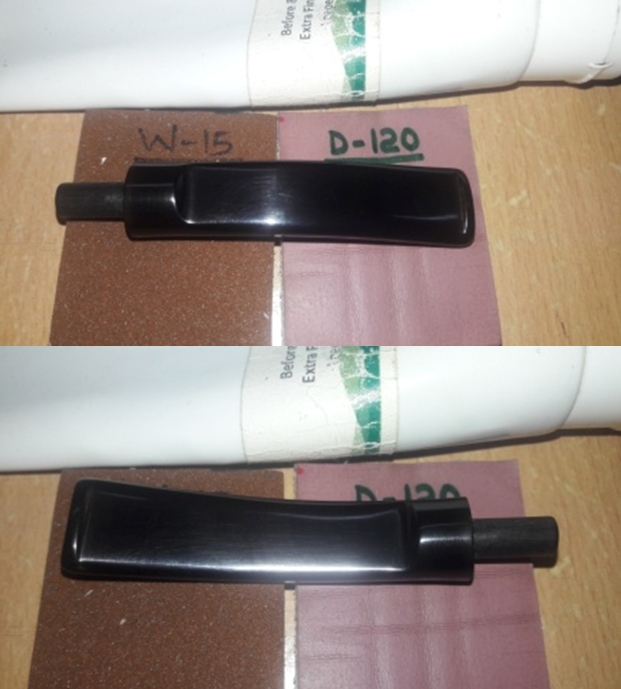
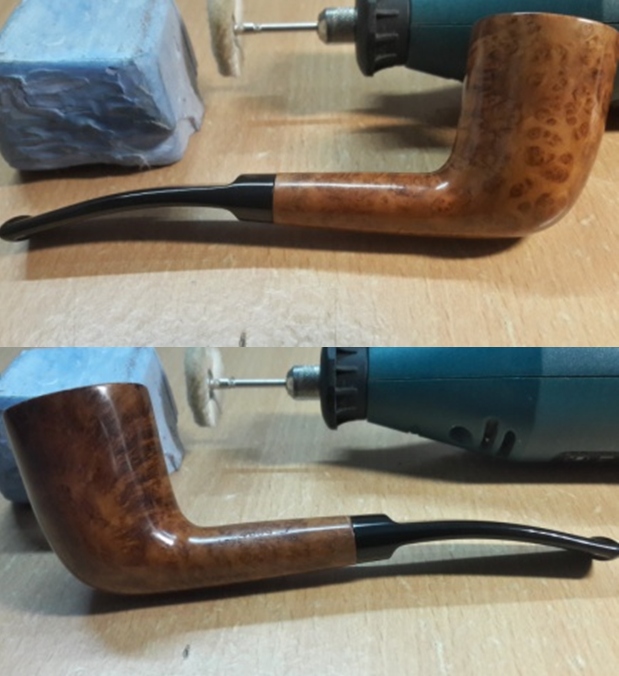
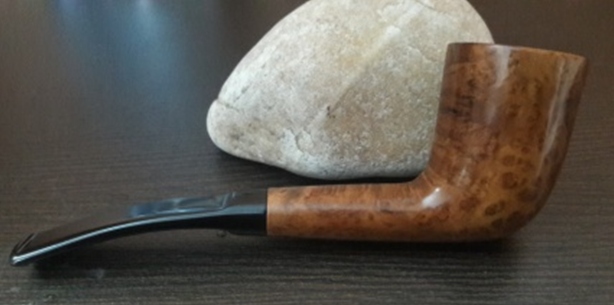
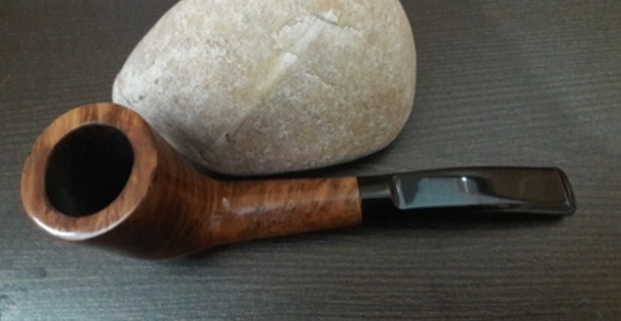
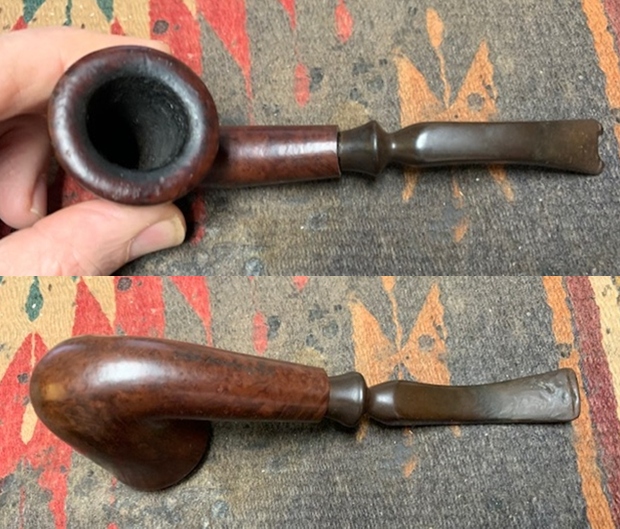
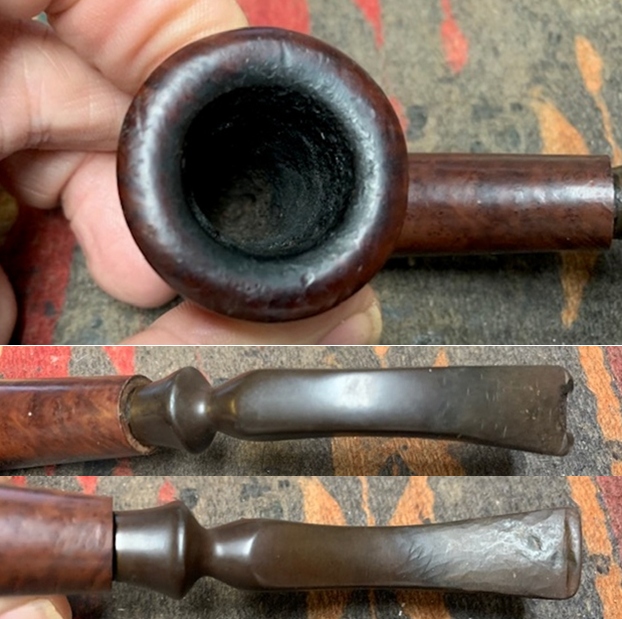
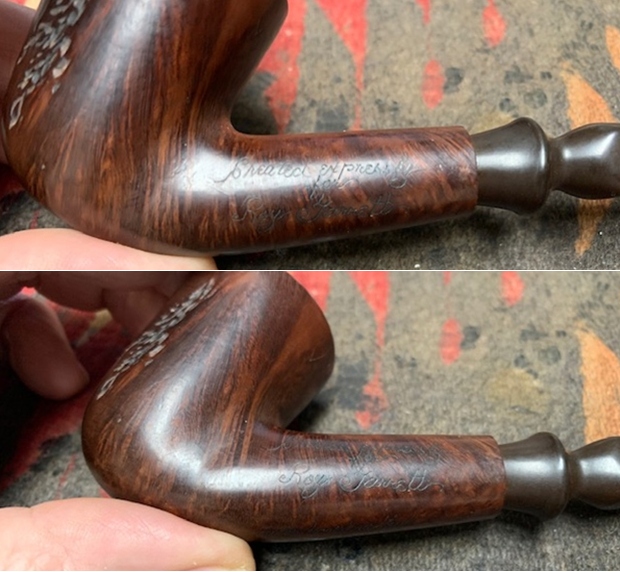
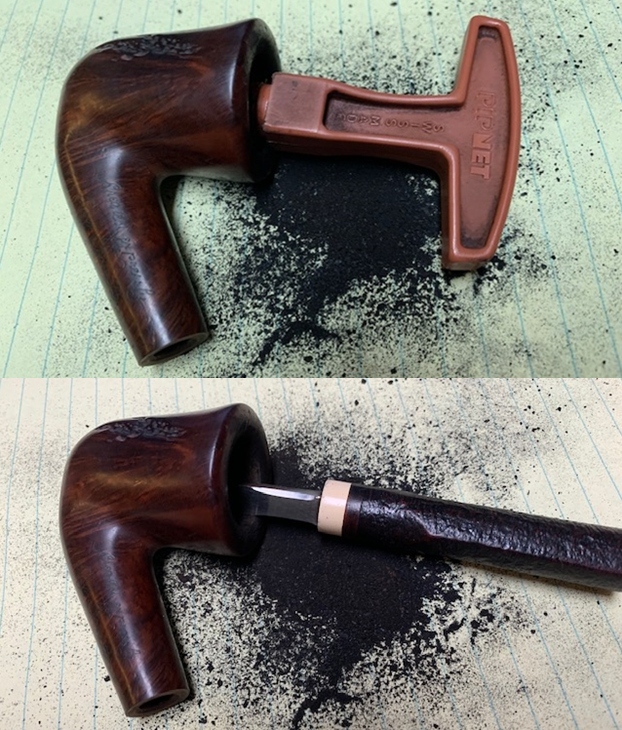
Tag Archives: fitting a stem

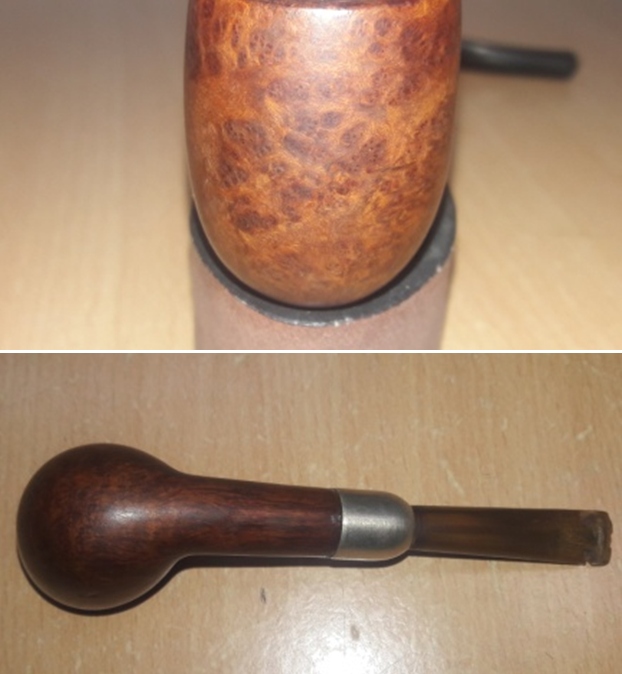
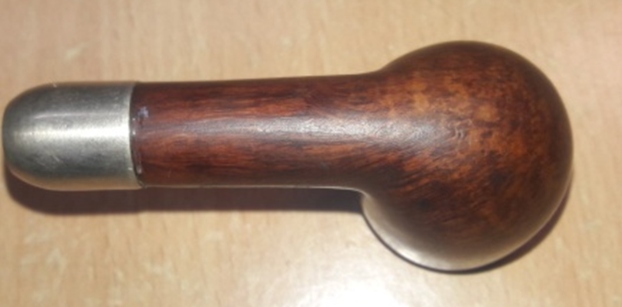
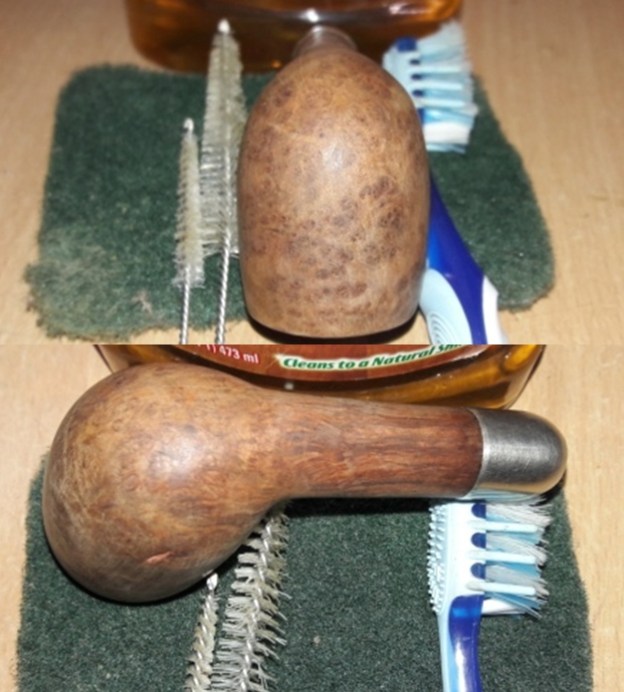
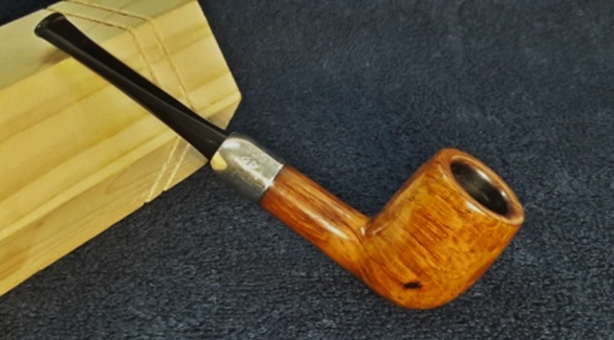
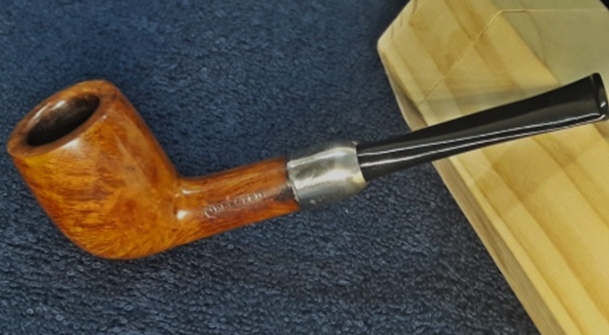
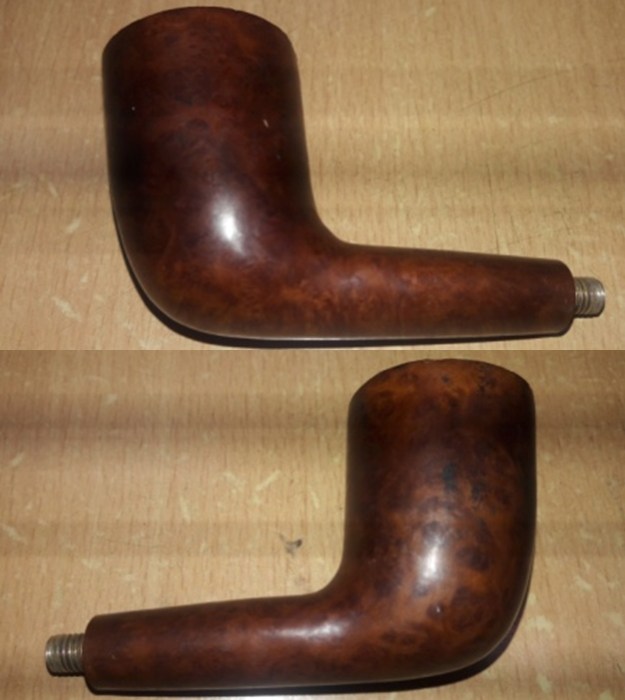
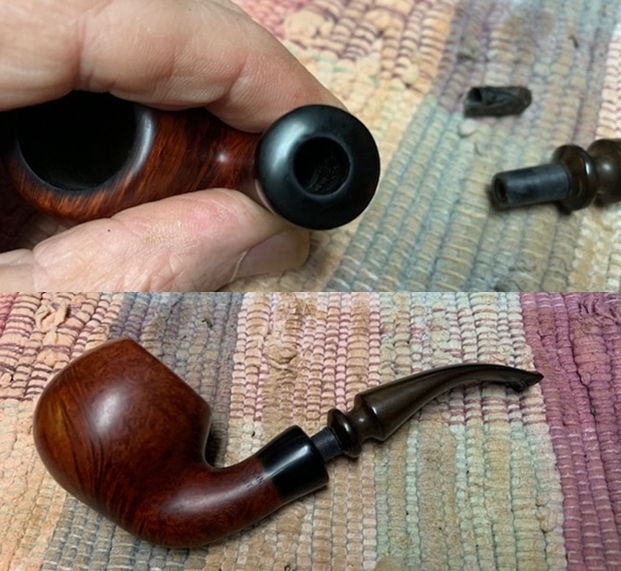
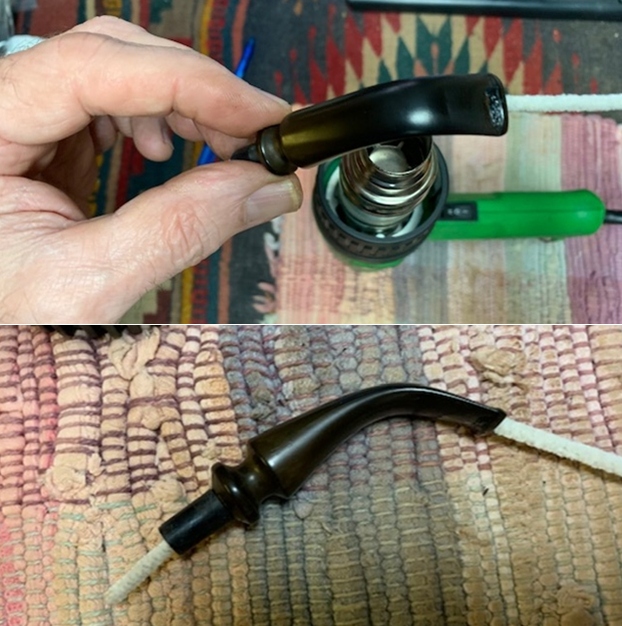
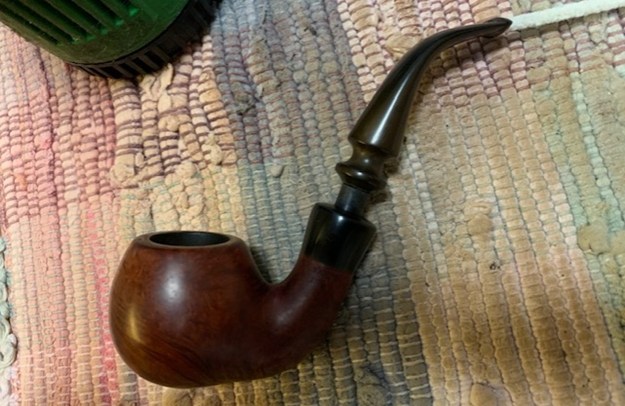
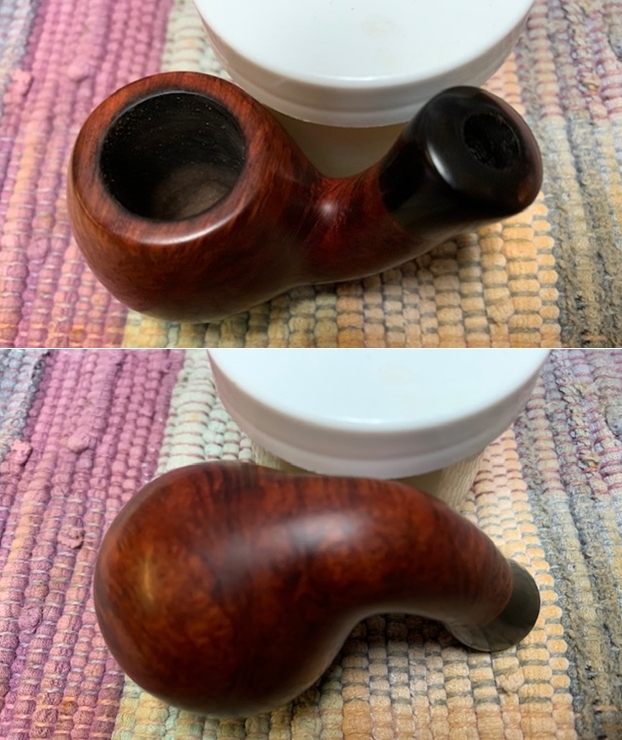
Replacing The Military Mount Stem Of a Beautiful “Selected Briar” Billiard


Blog by Paresh

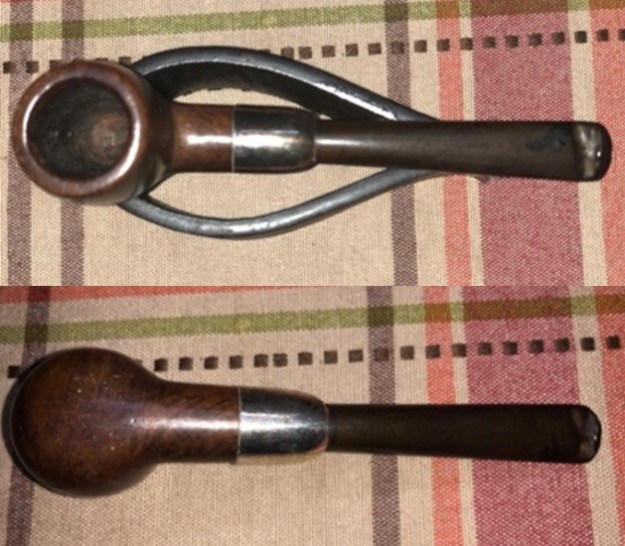
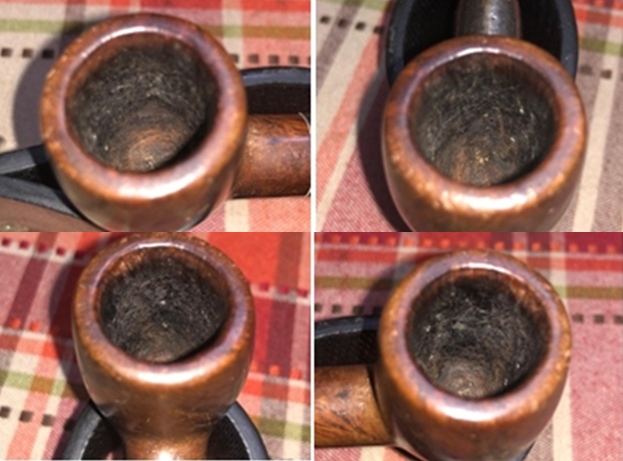
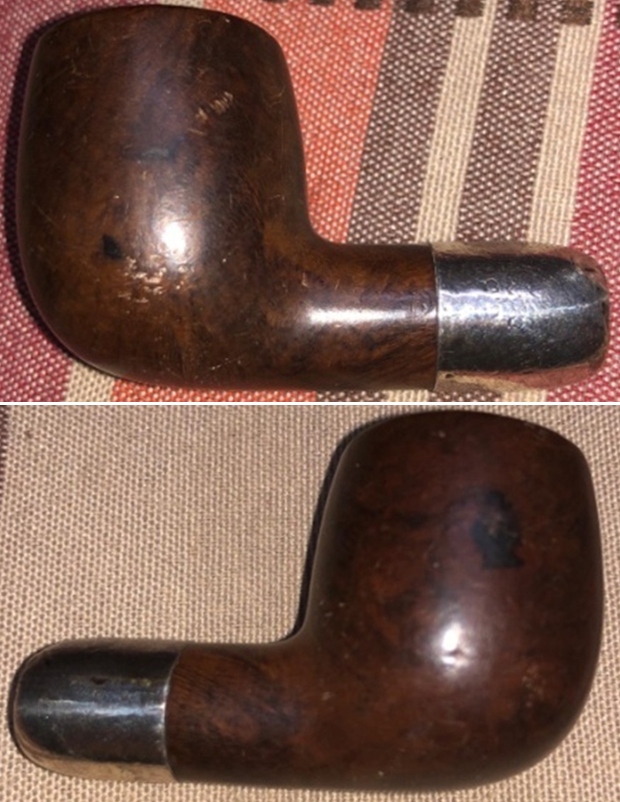
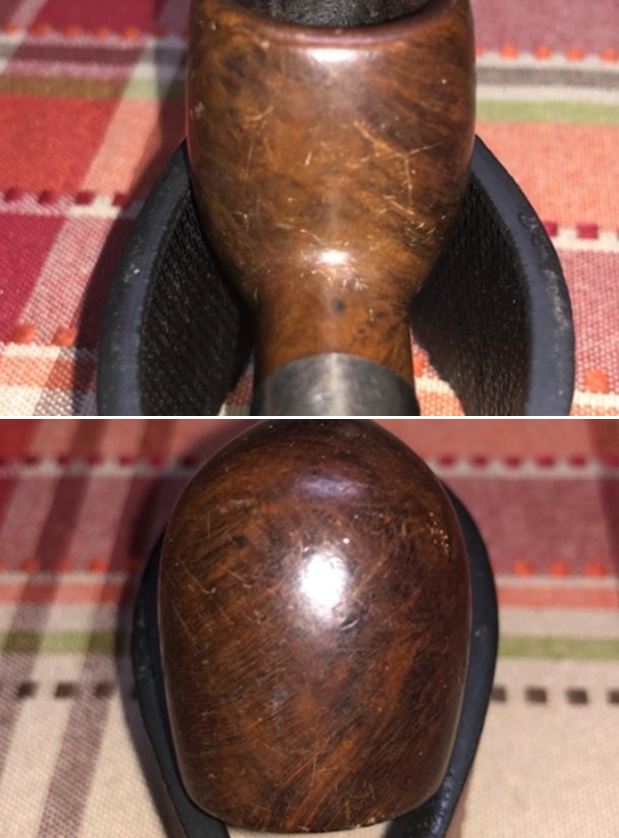
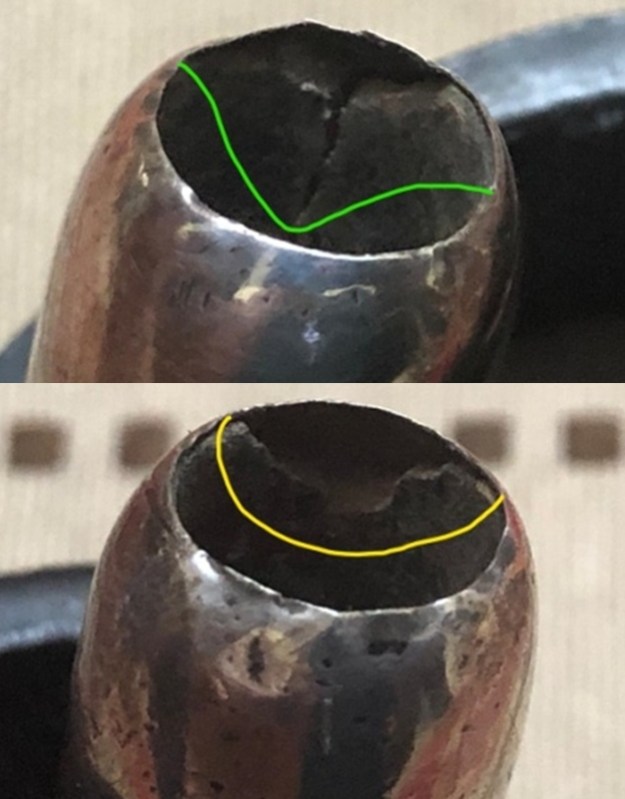
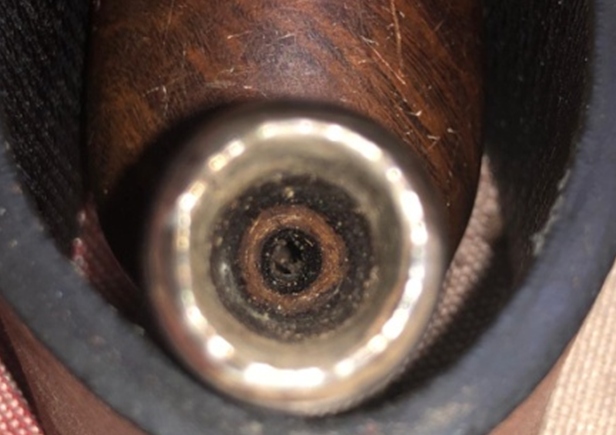
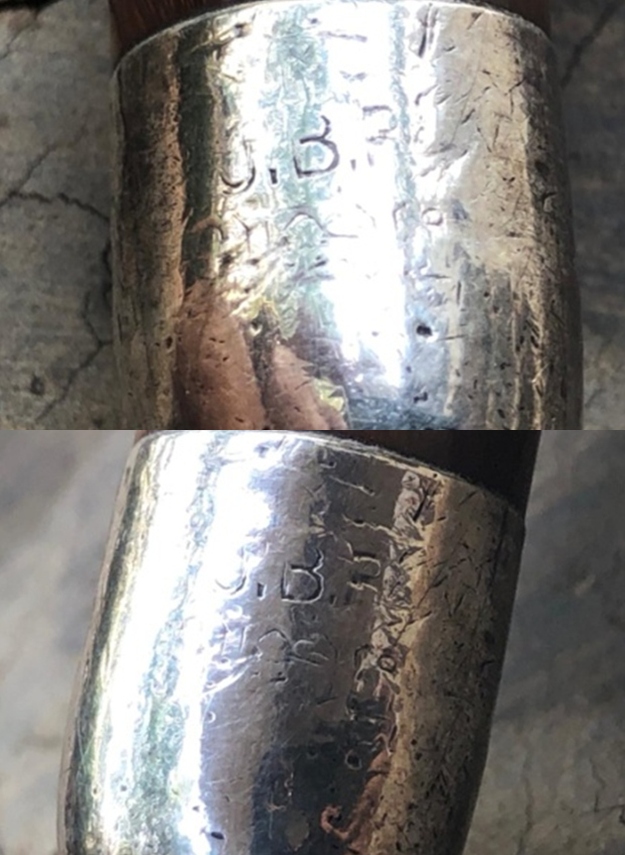
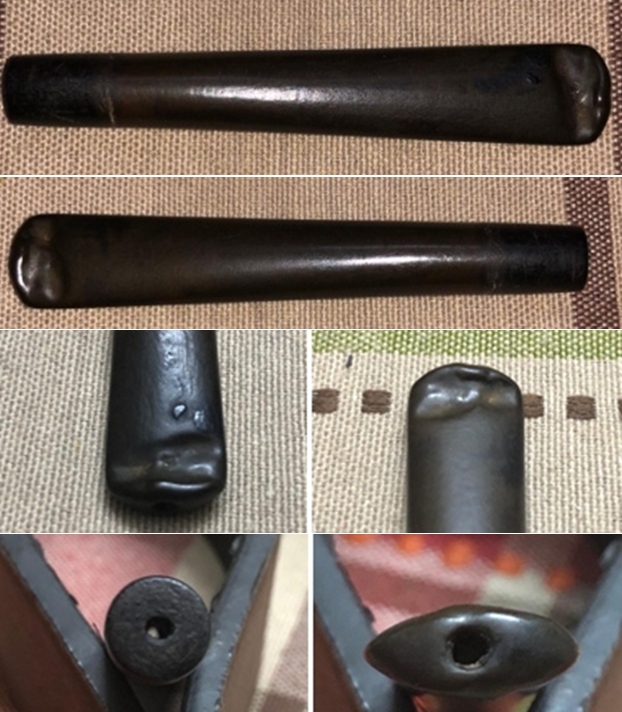
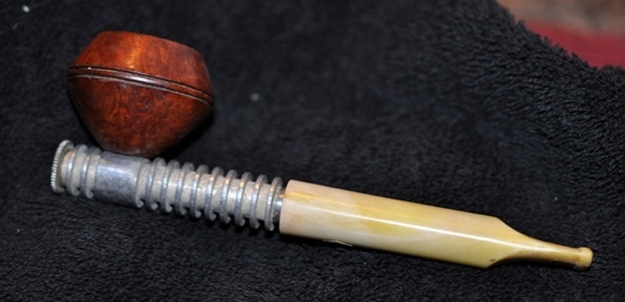
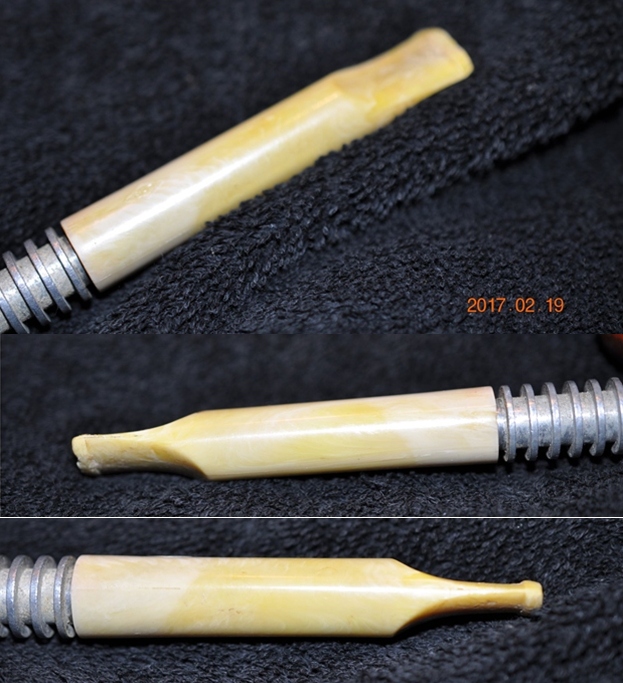
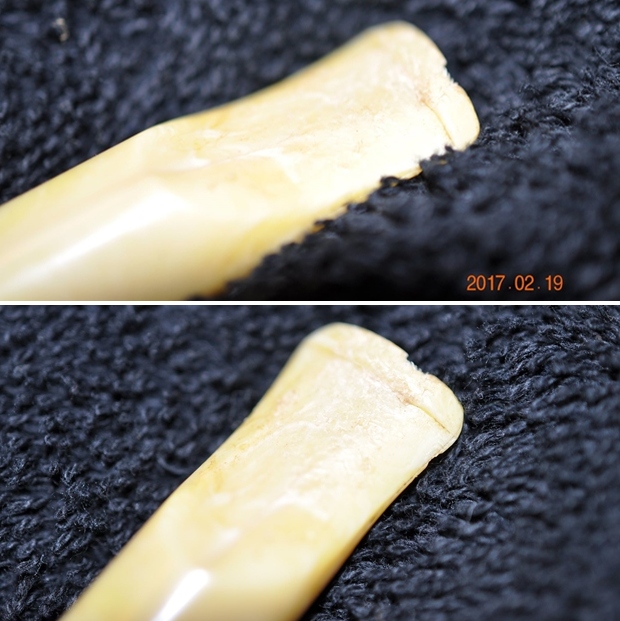
I had been procrastinating restoration work on this pipe for long, primarily for want of spares. This was one of my inherited pipes that had its horn stem completely shot!! I had been waiting for a suitable replacement stem, preferably a horn stem and so when I received my stash of around 40 vulcanite and 20 horn stems (a mix of used and new stems), this pipe moved up the queue for refurbishing.

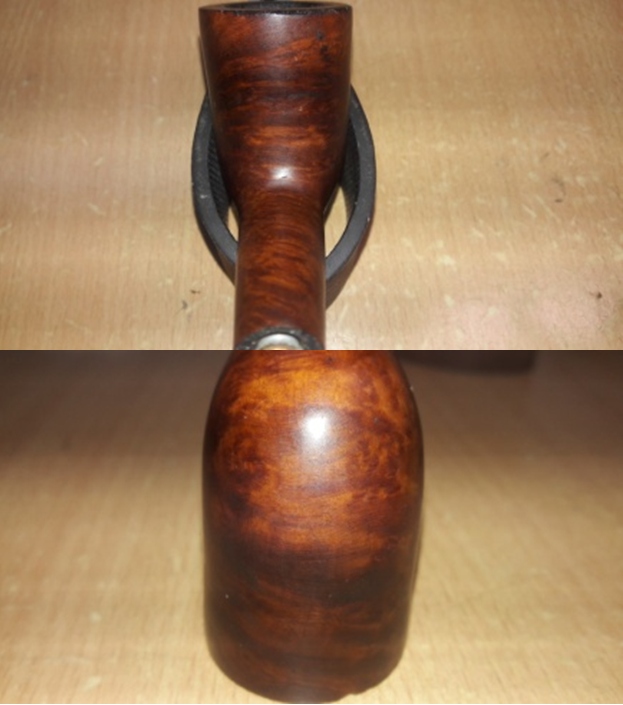
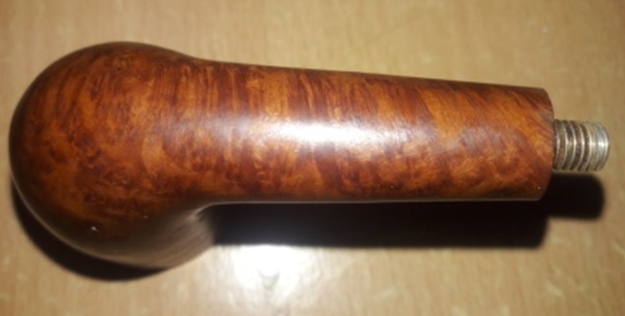
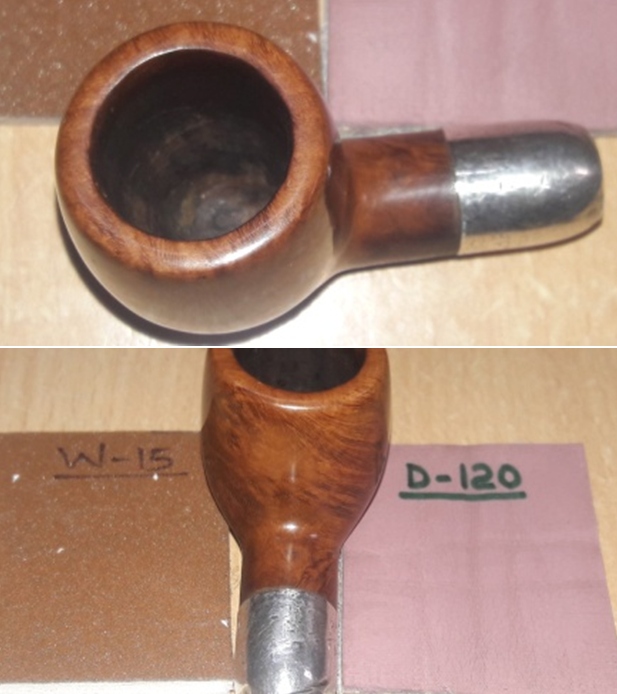
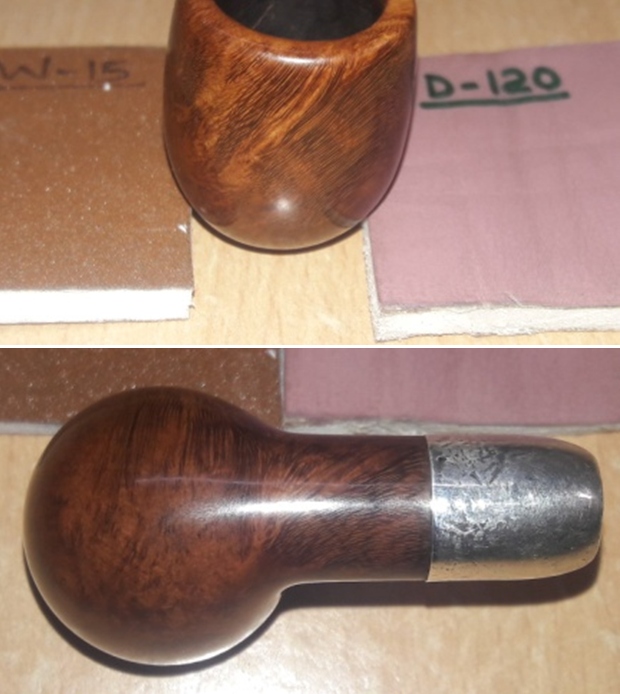
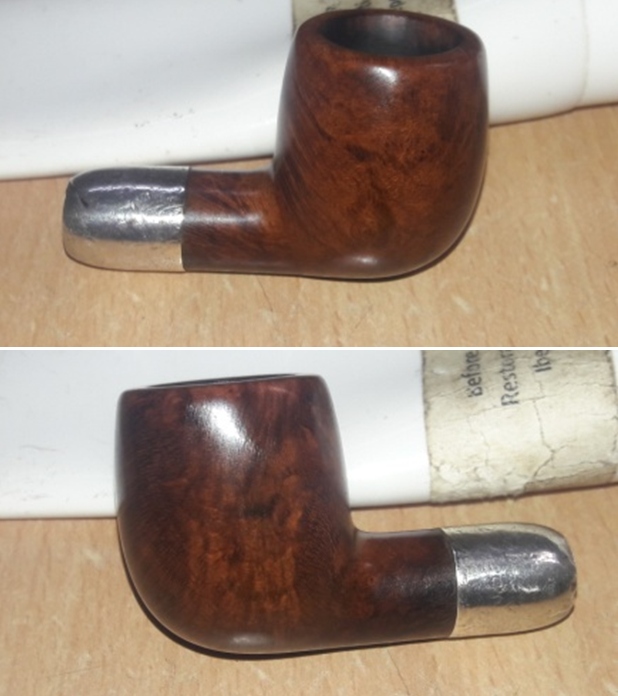
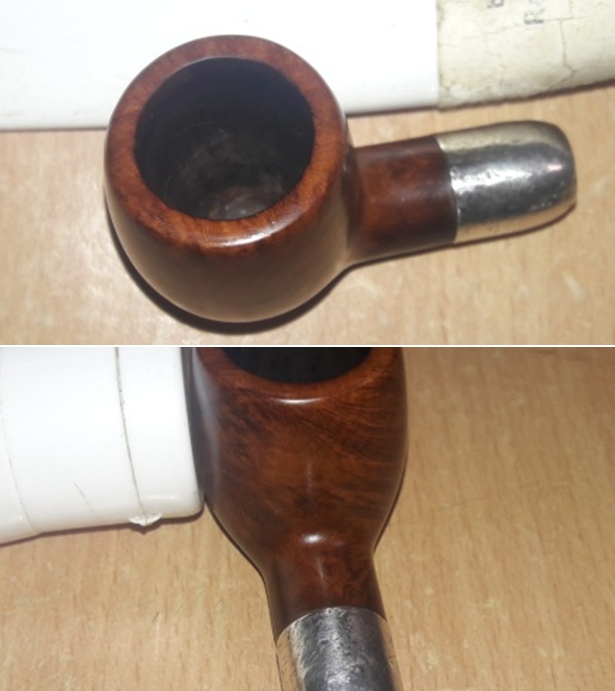
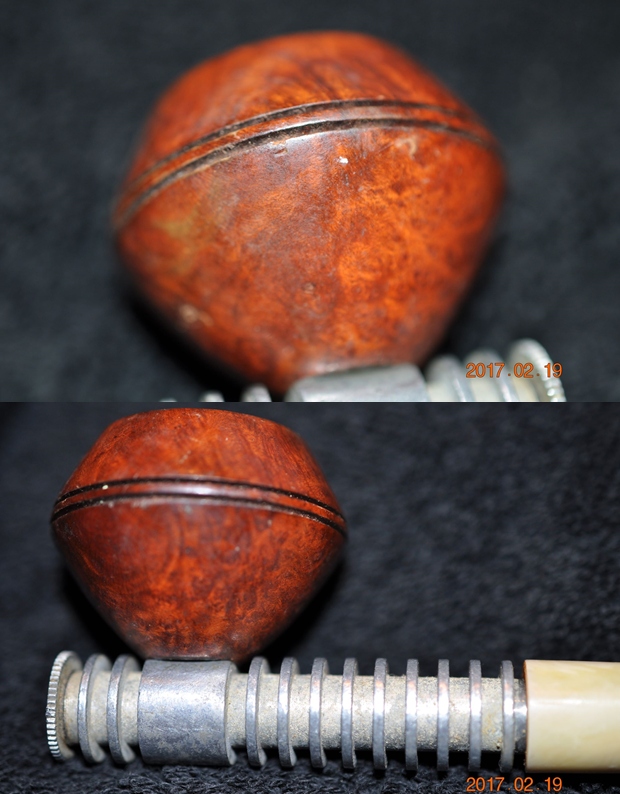
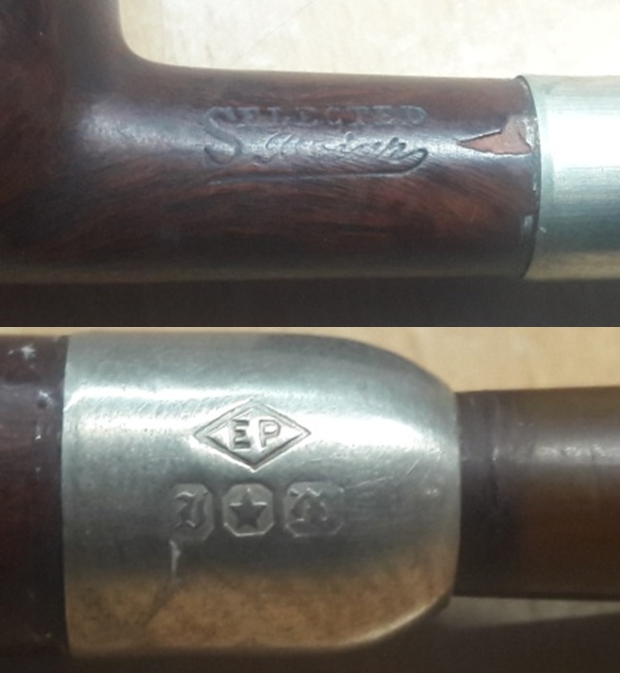
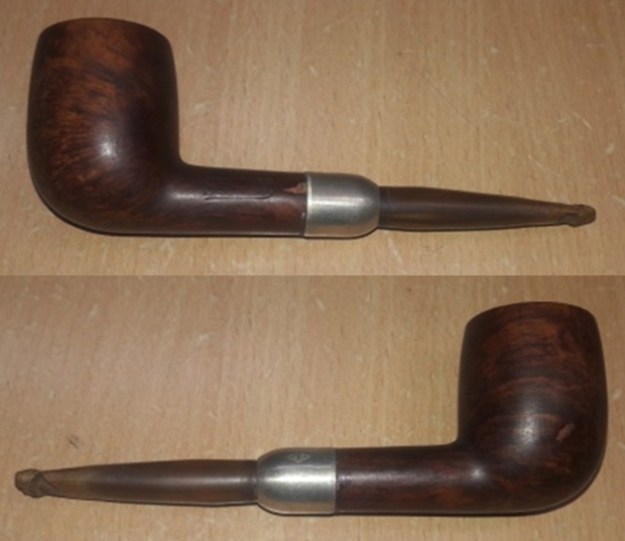
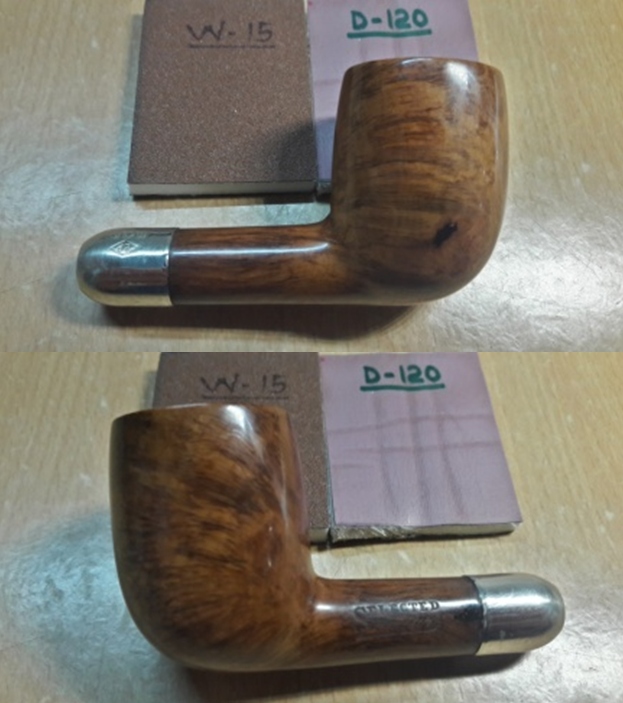
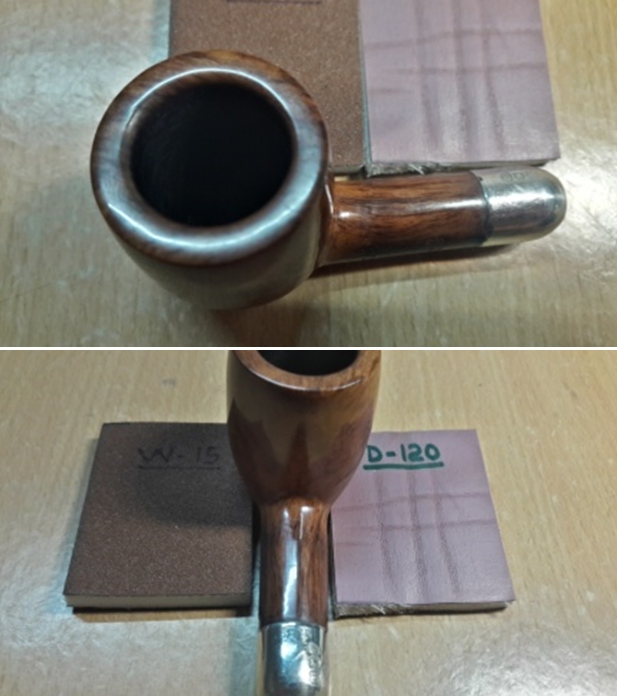
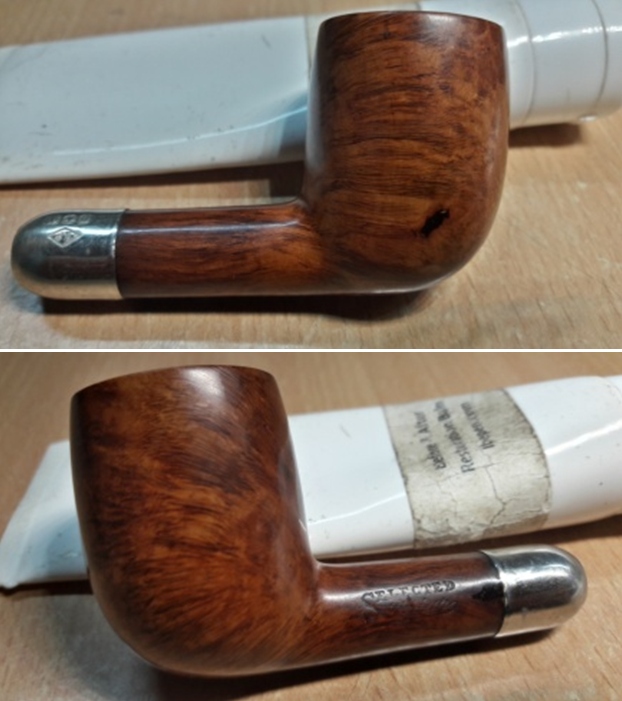
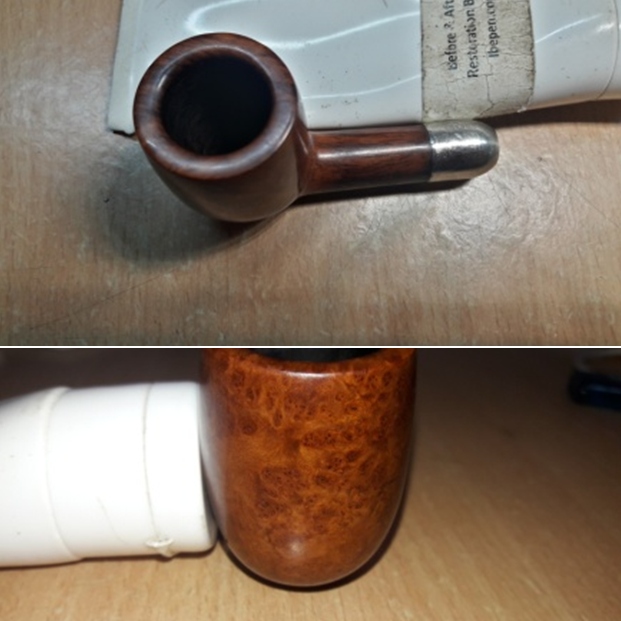
This pipe has an old world charm about it what with its classic billiard shape and military mount horn stem. The stummel has a mix of Bird’s eye grain on the front, back and at the foot of the stummel with cross grains to the sides of the bowl. The shank has beautiful cross grains that run the entire length of the shank. It appears as if these straight grains emanates from the shank end and move up towards the bowl shank junction. It is stamped on the left side of the shank as “SELECTED” in block with letter S being larger than rest of the letters, over “Briar” in artistic hand. The shank end nickel ferrule is stamped as “EP” in a rhombus over three American faux hallmarks. The stampings are crisp and clear. The lack of COM stamp or brand name makes me believe this pipe to be a BASKET PIPE and the faux American hallmarks points to the probability of this pipe being made for the American market. The stamp “EP” stands for ELECTRO PLATED nickel ferrule as I know.
The horn stem points to the vintage of this pipe as being from prior to 1920s when vulcanite rubber gained prominence as a stem material.

The dating of this pipe as prior to 1920s is my guesstimate based primarily due to fitment of a horn stem. Any concrete and substantiated information on this pipe and its dating will be a huge learning for me and fellow readers of rebornpipes!!

Initial Visual Inspection
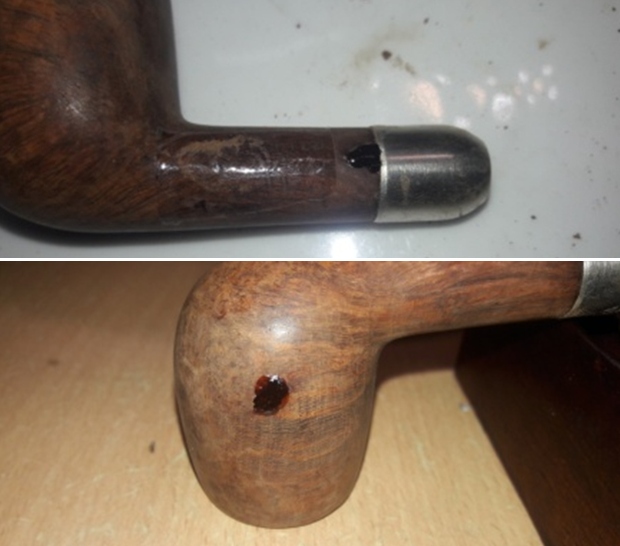
This pipe has the classic straight Billiard shape with a medium sized bowl. The stummel boasts of a mix of Bird’s eye grain on the front, back and at the foot of the stummel with cross grains to the side of the bowl. The shank has beautiful straight grains all round. The stummel surface is covered in a lot of dust and dirt. There are a couple of fills in the briar but that does not mean that the quality of the briar is sub standard. The carving, hands feel and appearance of the pipe, even in this condition, screams high quality and excellent craftsmanship. There is a decent layer of cake in the chamber. The stem has been cut short before and is heavily damaged with a through hole on one of the stem surface and few deep bite marks in the bite zone. Here is how the pipe appears as it sits on my work table. Detailed Visual Inspection
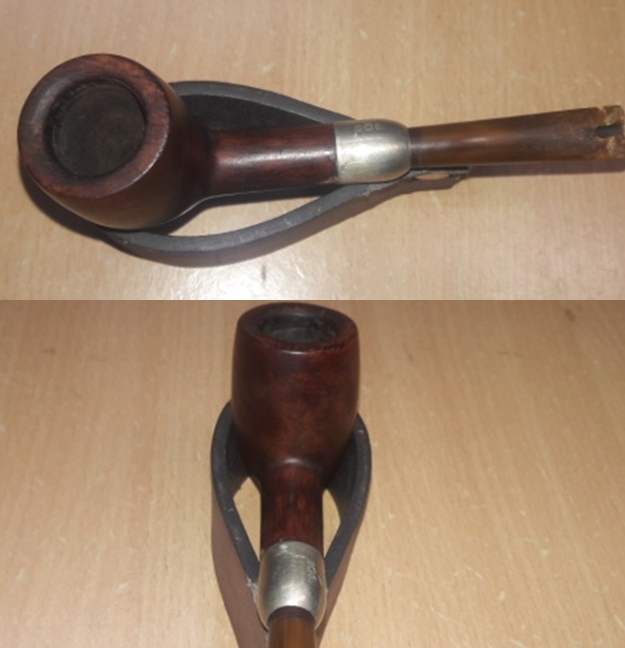
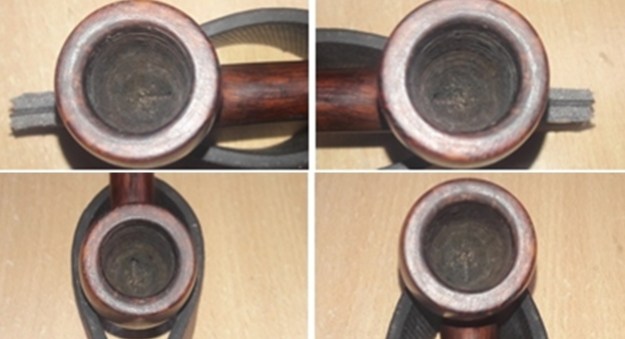
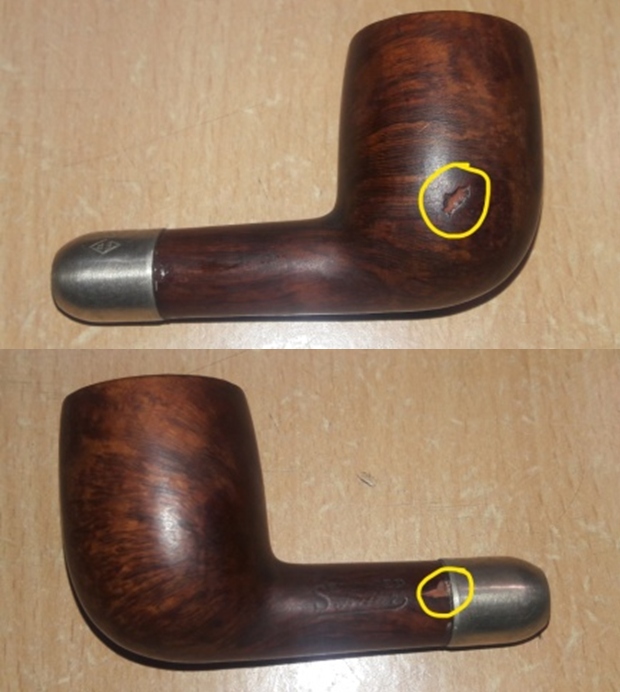
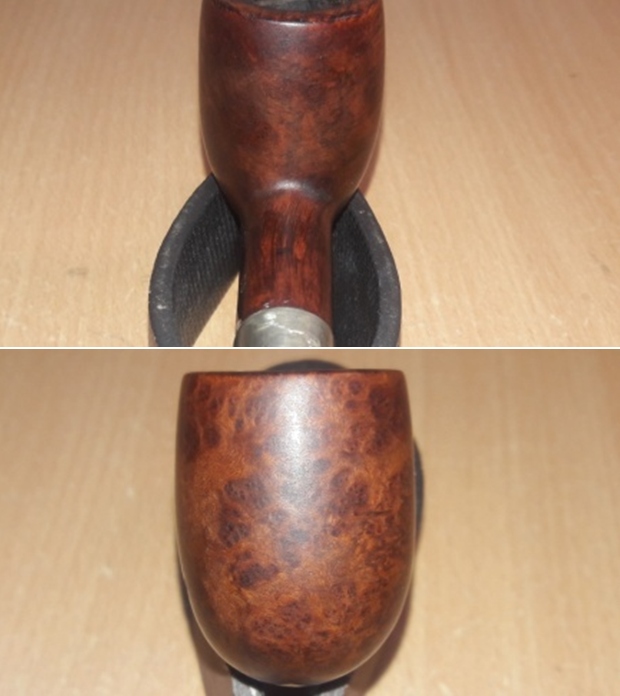
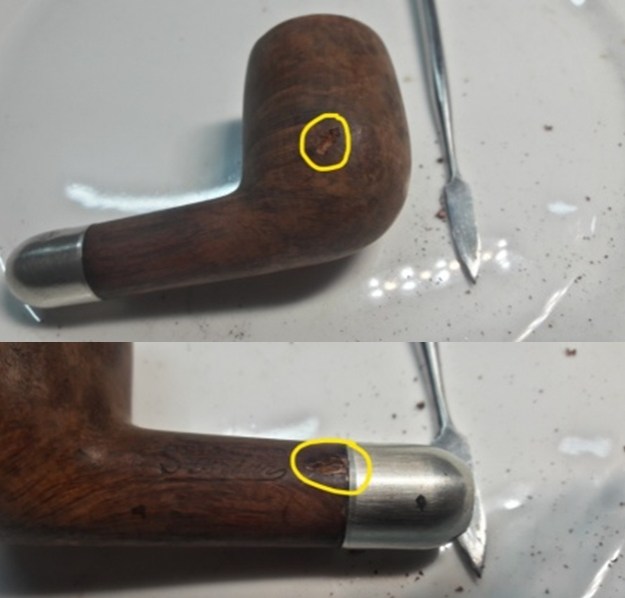
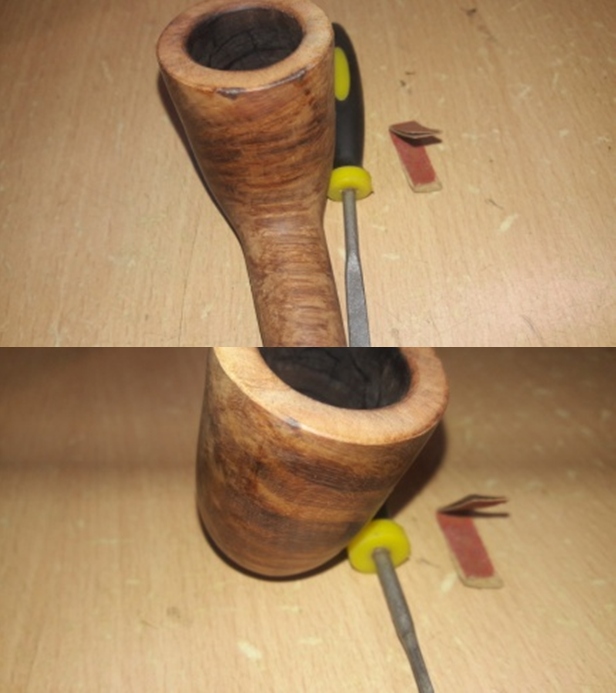
The chamber has an even layer of thin cake and appears to have been reamed and never smoked thereafter. The smooth rim top surface is scratched and it seems that the rim top has been scrapped to remove overflowed lava. Both the inner and the outer rim edges are beveled and appear sans damage. The condition of the inner walls of the chamber can be commented upon after the cake has been taken down to the bare briar. The chamber odors are mild. The draught hole is dead center and at the bottom of the chamber and that makes me believe that it should great smoke. The stummel appears solid to the touch all around and hence I do not foresee any serious damage to the walls in the form of burnout/ deep heat fissures/ lines or pits. To address the damage to the rim top, I shall top the surface on 220 grit sand paper. The reaming and subsequent cleaning of the chamber and mortise should completely eliminate the ghost smells from the chamber.The smooth stummel surface has taken on a layer of aged patina, through which one can make out the beautiful mix of Bird’s eye grain on the sides and at the foot of the stummel with cross grains to the front and back of the bowl. The shank displays tightly packed lovely cross grains that run the entire length. There are two fills in the entire stummel (encircled in yellow), one on the right side and another in the shank, adjacent to the stamping and close to the edge of the ferrule. The vintage of the pipe and years of uncared for storage has added layers of grime and dust over the stummel surface giving the briar a lifeless and bone dry look. Thorough cleaning of the stummel surface and rinsing it under warm water should highlight the grain patterns while preserving the patina. I shall refresh the fills with a mix of briar dust and superglue. The fill near the stampings on the shank will need to be worked on very carefully, if I have to preserve the stamping and which I always ensure!! It will be easy job if the ferrule can be separated from the shank end. The mortise shows accumulation of oils, tars and gunk and will need to be cleaned up. However, I have to admit that it is not as clogged as I am used to on my grandfather’s pipes. The horn stem in military mount style is completely shot!! You name an issue that a restorer is likely to come across in a stem, it is present and how!! Though personally I feel that every stem is repairable to an acceptable standard, however, in this case I feel that a stem replacement is in order to improve both the aesthetics as well as functionality of this pipe. Have a look at the pictures below to get an idea of the issues that this stem brought to the table…The Process
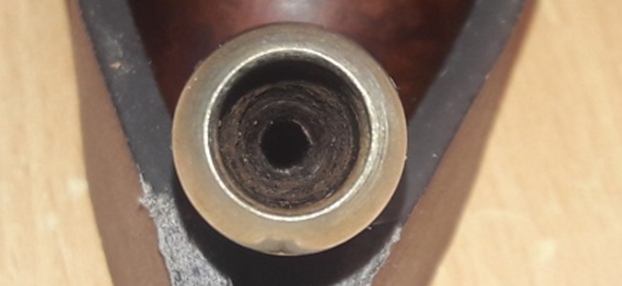
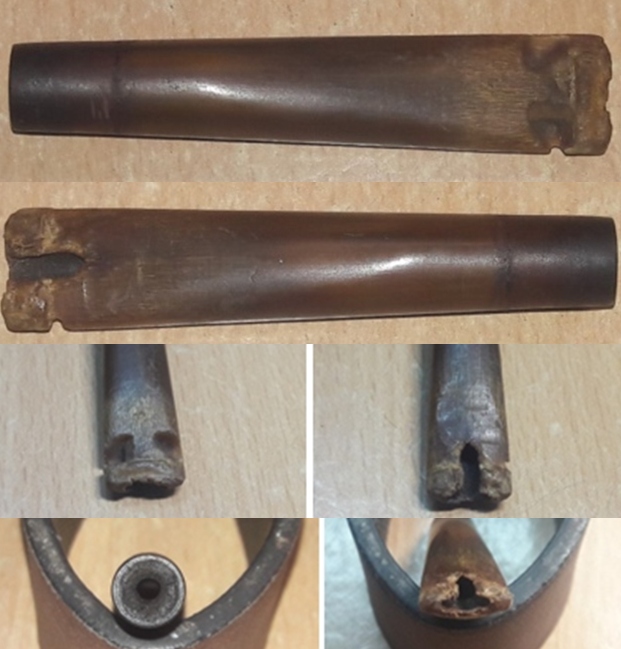
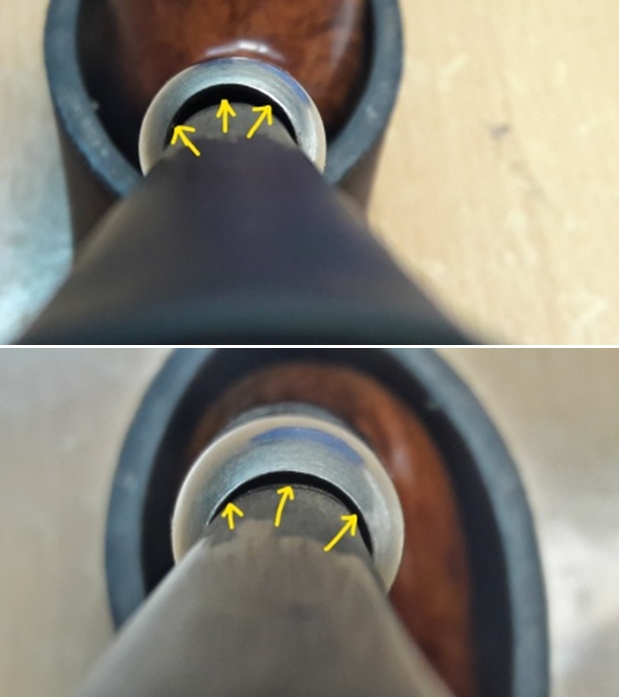
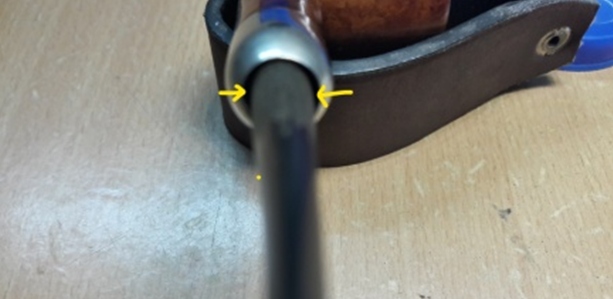
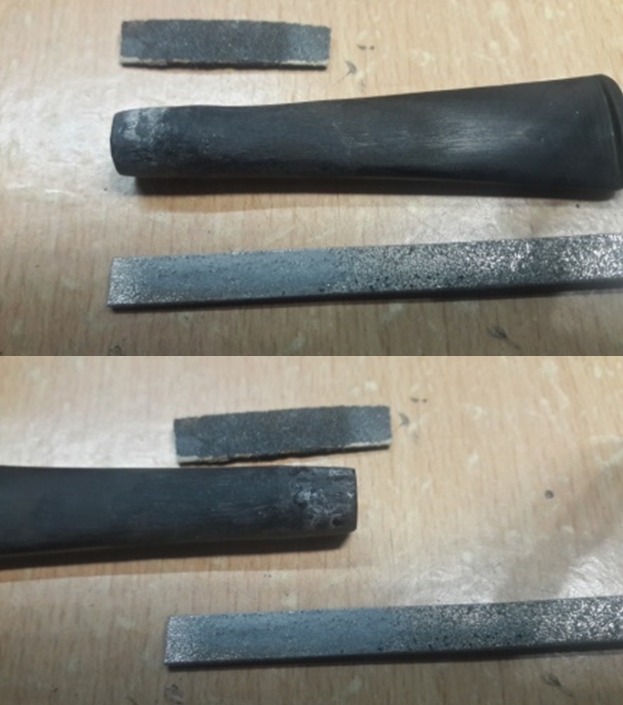
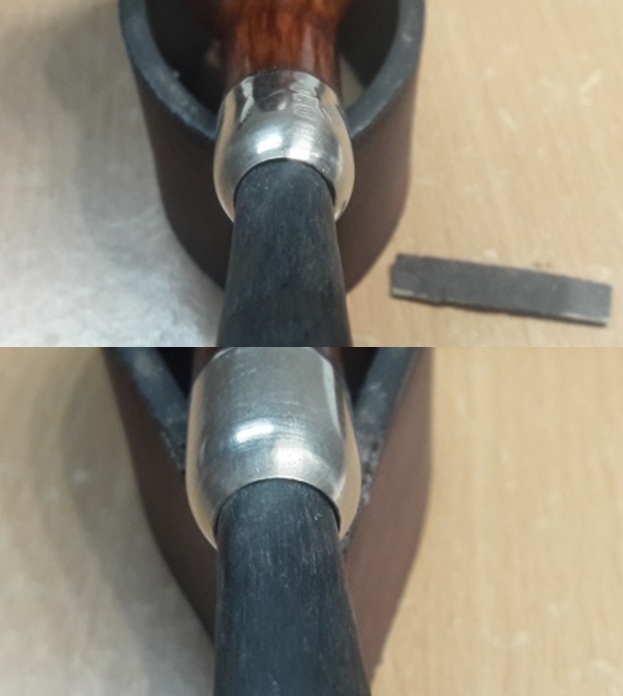
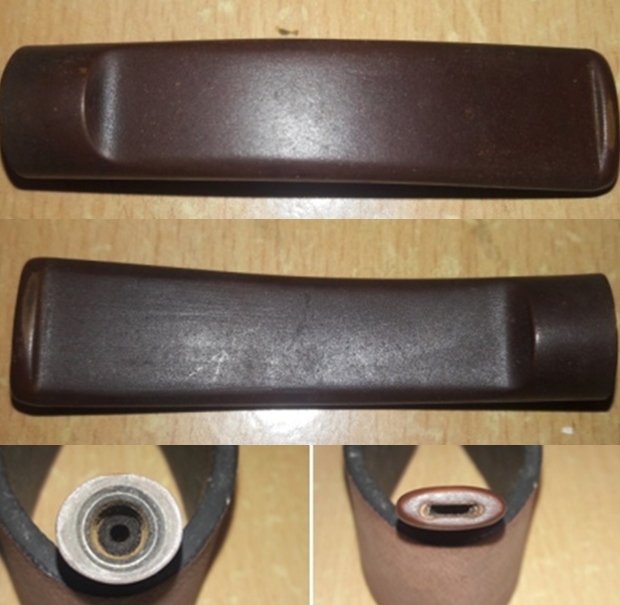
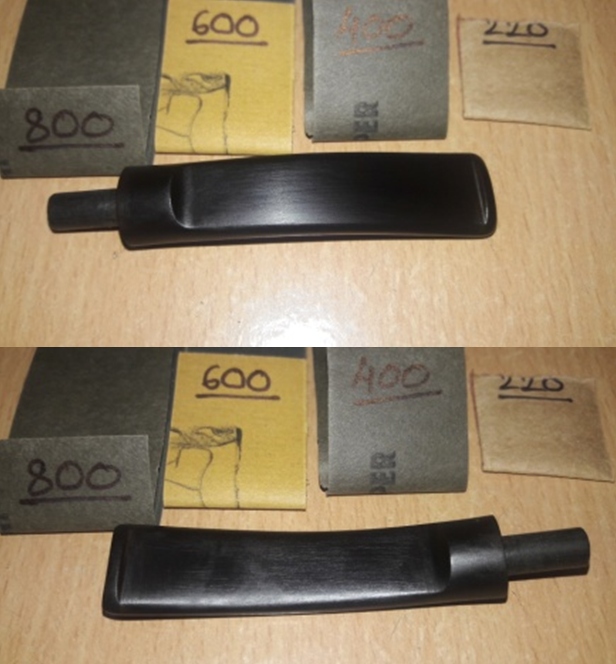
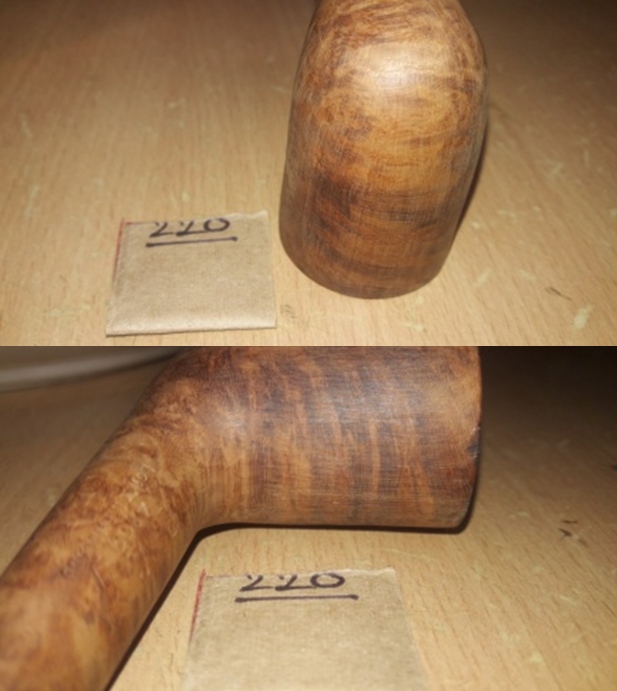
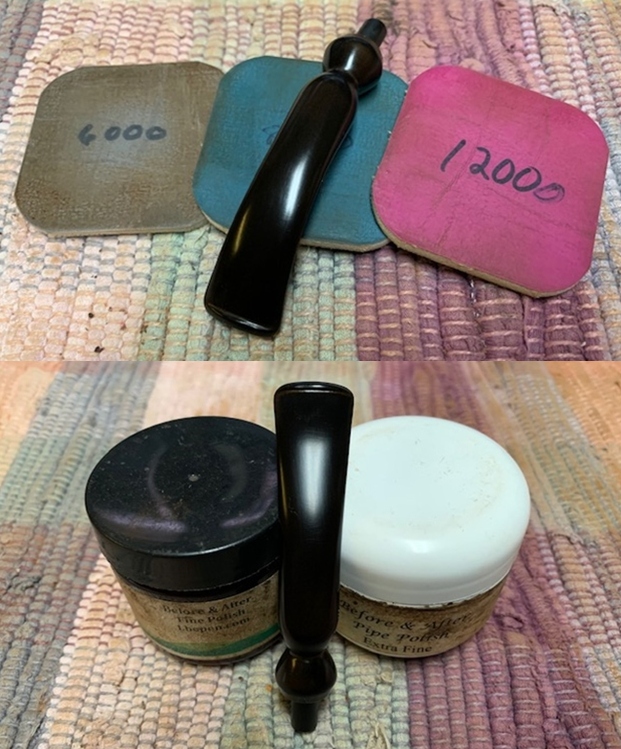
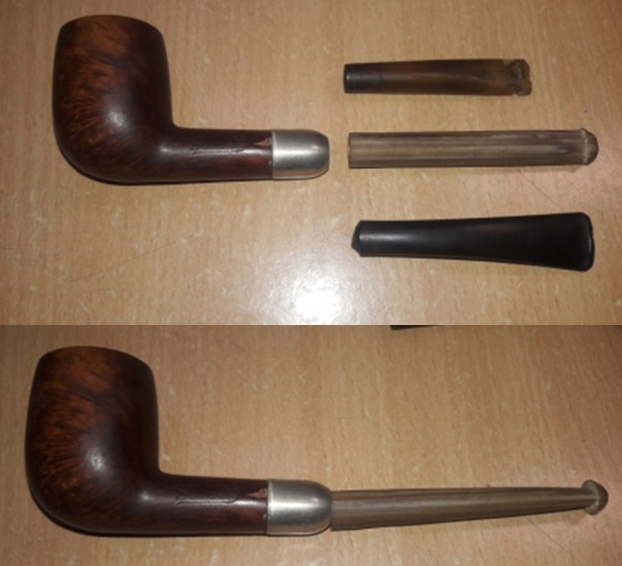
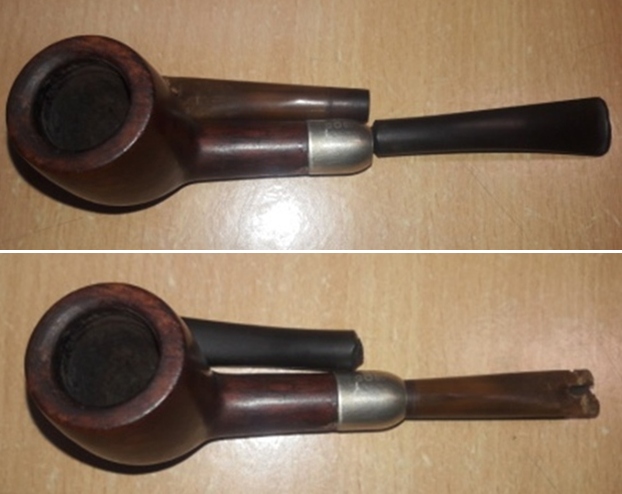
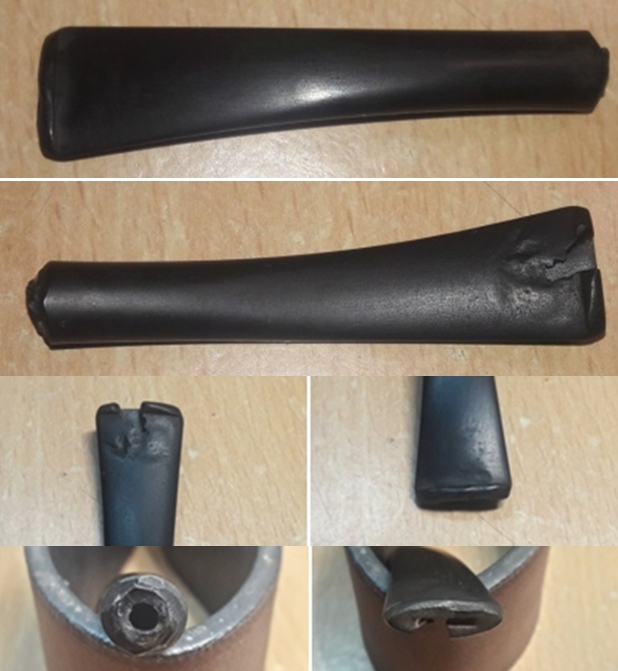
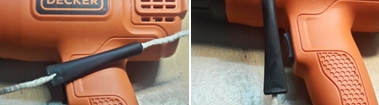
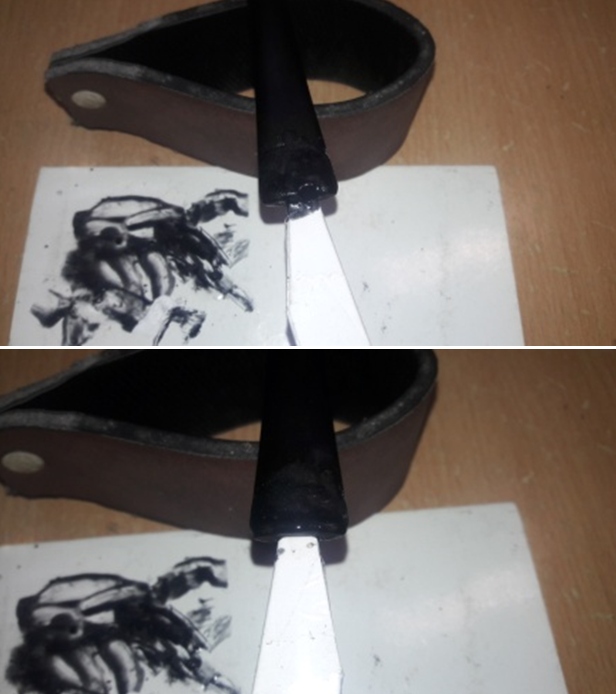
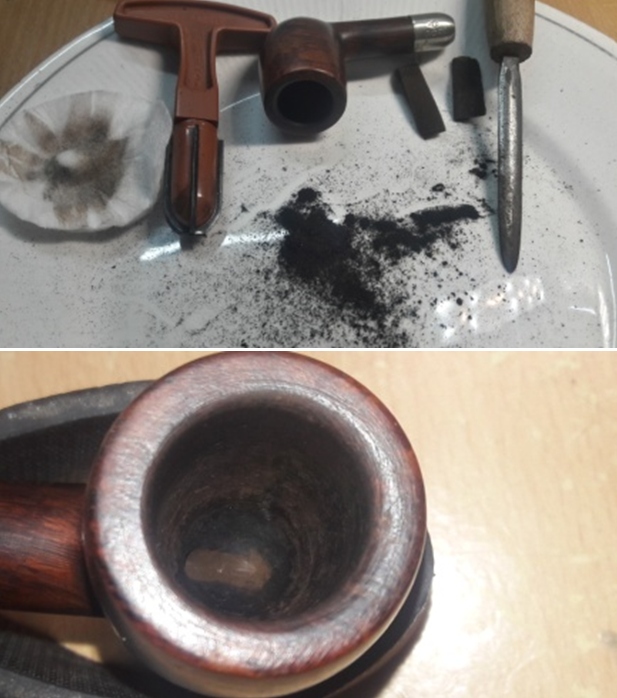
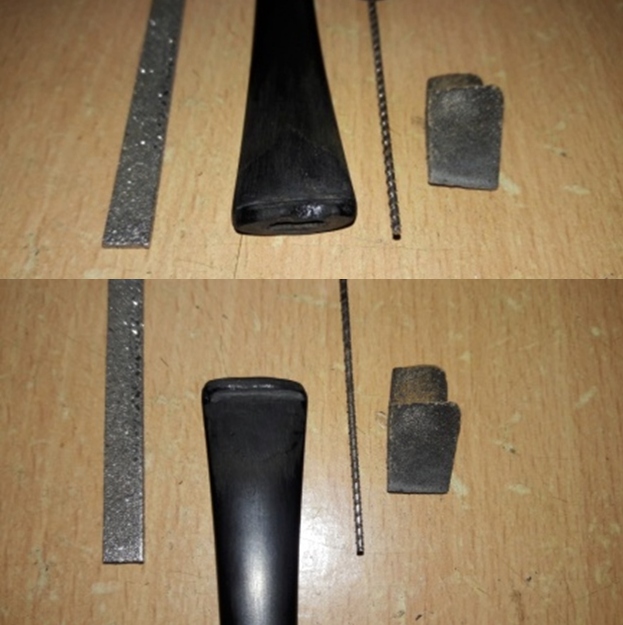
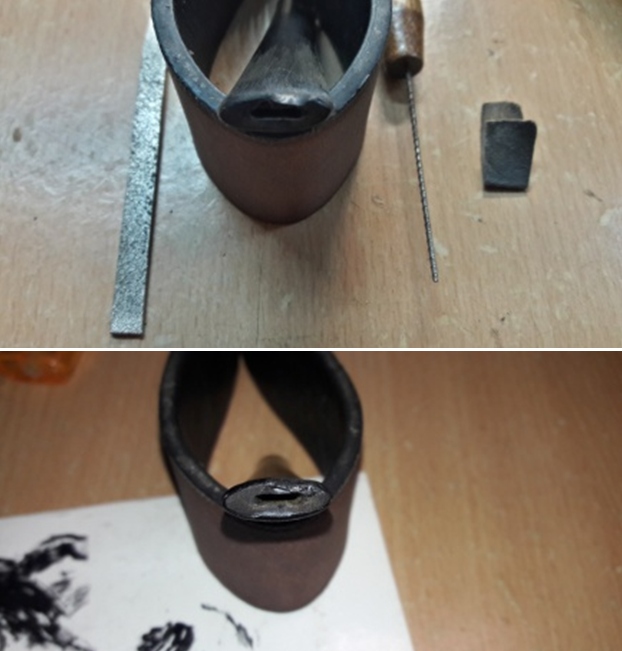
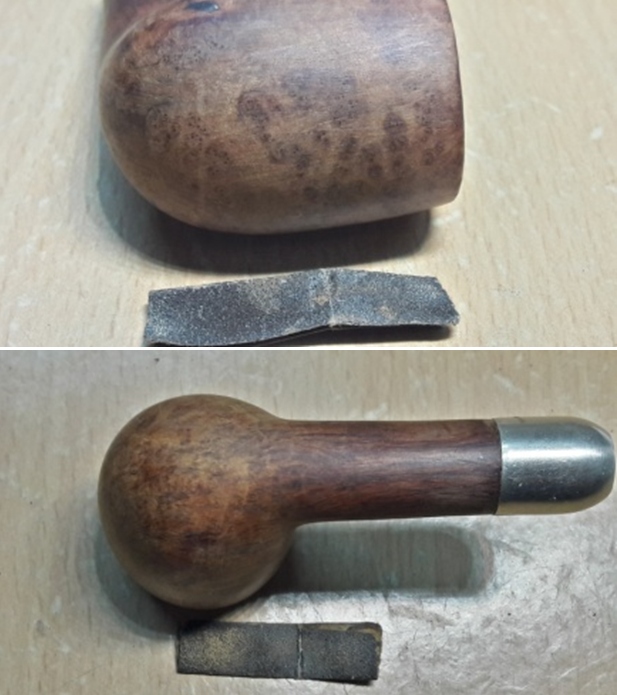
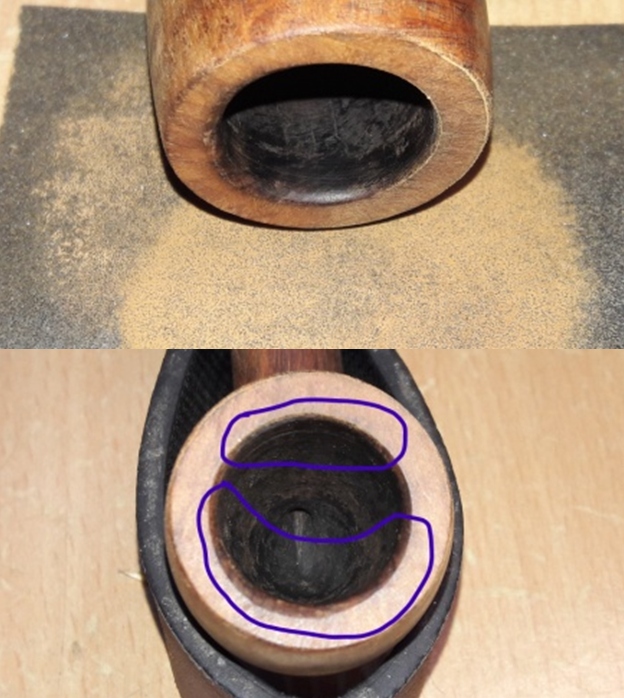
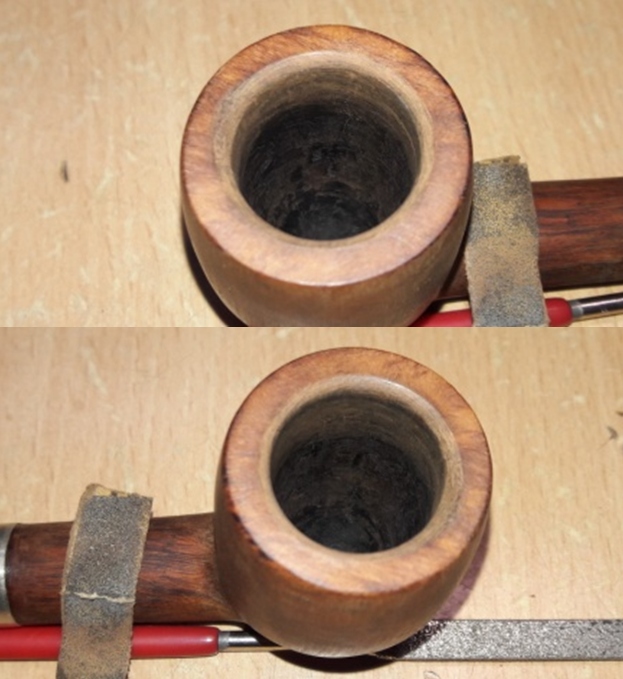
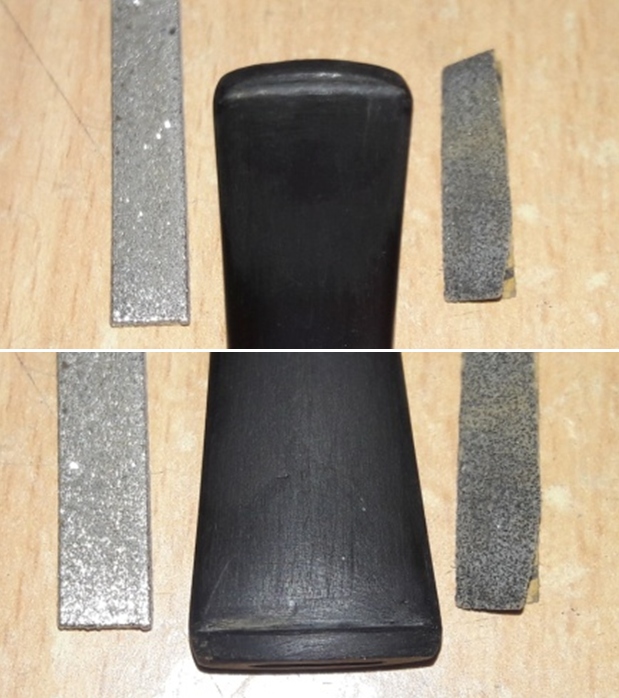
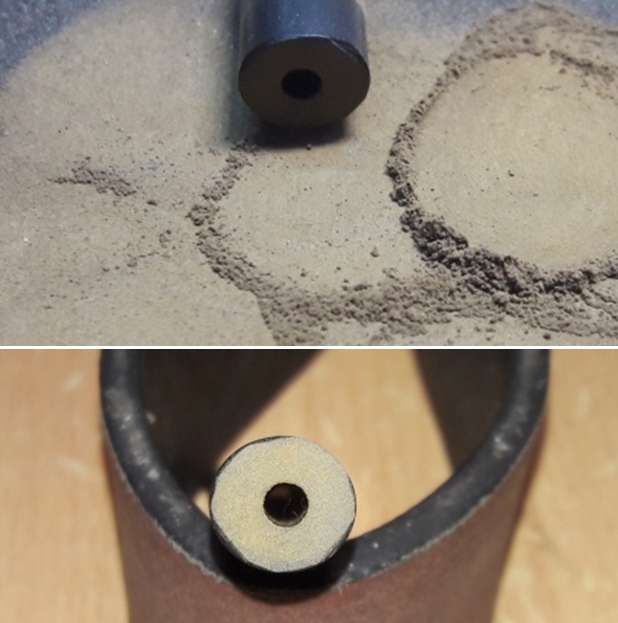
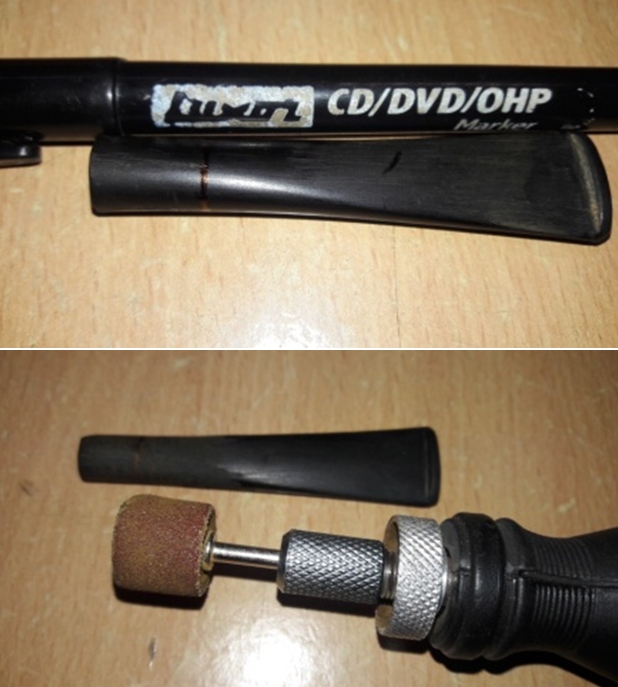
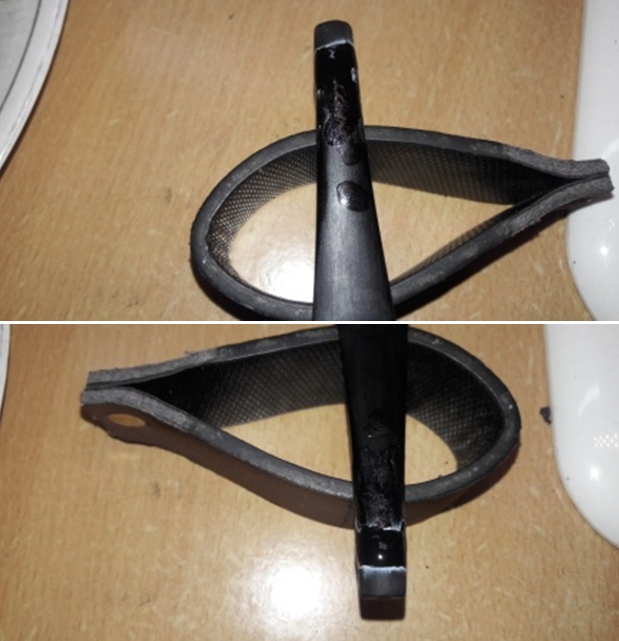
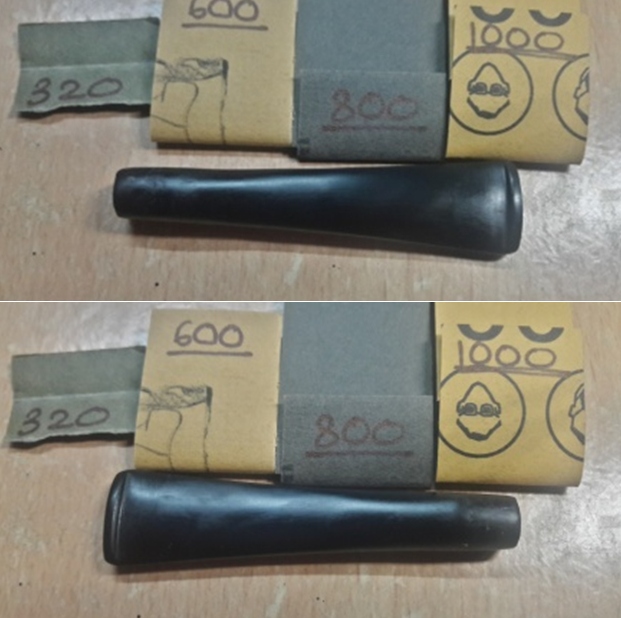
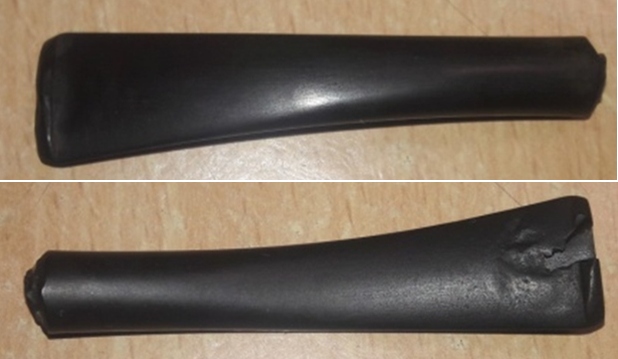
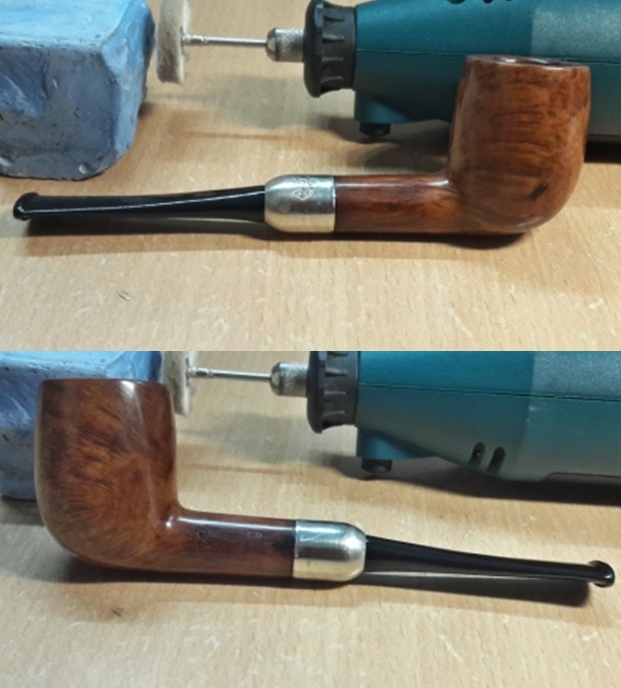
The first step in this restoration was to identify a suitable stem that would replace the old and chewed up horn stem. I FaceTimed with Steve and we went through the lot of horn stems that I had received. We shortlisted a straight military mount style specimen of brand new horn stem with a round orifice. It would suit the pipe both functionally and aesthetically. However, it did not have a taper and the slight belly swell that the original horn stem had. We ended the conversation with a few tips that Steve gave to help me work through this project. On a hunch, I got the slightly bent vulcanite stem that I had earmarked for another project, an early 1900s BEN WADE, and checked it out against the stummel. The extreme flare at the slot end, the taper and the size made me reconsider the horn stem that Steve and I had shortlisted. This vulcanite stem had the Castello like military mount stem and it really looked fantastic. I shared the pictures (shown below) of all the three stems, including the original and the vulcanite stem with Steve and promptly received the characteristic response from Steve, “Ohhh! The vulcanite stem looks like it was made for this pipe…I would definitely go with the vulcanite”. Decision made, the slightly bent vulcanite stem would be the one replacing the horn stem. I am definitely being ambitious to achieve Castello like shape to the stem, but there is no harm in trying!! The replacement vulcanite stem too came with its own set of damages. The stem was deeply oxidized with heavy and deep tooth indentations in the bite zone over the upper stem surface. The lower stem surface had a large chunk of vulcanite chewed off from the bite zone, including the button. The button edge on the upper stem surface is also deformed with heavy tooth indentations. The tenon has been unevenly sawed off, definitely an amateurish job, but it would save me some work nevertheless!! The stem would need to be straightened out first. The bite zone and buttons on either surfaces will have to be reconstructed and reshaped. Thereafter, the issue of seating of the stem in to the mortise will have to be dealt with. Before progressing to stem repairs proper, I decided to straighten out the stem first. I inserted a pipe cleaner through the stem prior to heating as the pipe cleaner prevents the collapse of the air way. With my heat gun, I gently heat the stem till it was pliable. I gently pressed the stem against the flat table surface and held it in place till the stem had sufficiently cooled and retained the straightened shape. I further cool it down under running cold water and set the straight shape. This heating also raised the tooth chatter and bite marks to the surface in the bite zone. The stem has been perfectly straightened out and some of the tooth chatter has been raised to the surface. The quality of vulcanite on this stem is top class.Next I inserted a triangulated index card covered in scotch tape in to the slot. The tape prevents the mix of superglue and charcoal from sticking to the index card/ seeping in to the air way and blocking it. I mixed superglue and activated charcoal powder and generously applied it over the bite zone, including over the buttons, on either surfaces of the stem and set it aside to cure. Once the fill has hardened, I shall file and sand the fills to match the surface of the stem and sharpen the button edges on either surface. I have been using CA wood superglue and this glue hardens immediately and allowed me only a few seconds of application whereas the all purpose CA superglue allowed me enough time to get an even spread over the damaged surface.   While the stem fills and repairs were curing, I worked on the stummel by reaming the chamber with size 2 PipNet reamer head. With my fabricated knife, I further scraped the chamber walls to remove the remaining carbon deposits. Once the cake was reamed back to the bare briar, I used a 150 grit sand paper followed by 220 grit sand paper to remove all the traces of remaining cake and also to smooth out the inner walls of the chamber surface. Finally, to remove the residual carbon dust, I wiped the chamber with a cotton pad wetted with 99.9% pure isopropyl alcohol. The chamber walls are sans any damage. The outer and inner rim edge is in great shape. The rim top surface itself is peppered with dents/ dings and scratches which will be addressed by topping. The ghost smells are greatly reduced and may be eliminated after the shank/ mortise are thoroughly cleaned. This was followed by cleaning the mortise with cue tips, pipe cleaners and shank brush dipped in isopropyl alcohol. I scraped the walls of the mortise with my dental tool to remove the dried oils and tars. The mortise was pretty clean and it did not take too much effort and pipe cleaners to get it nice and clean.  With the bowl internals clean, I move to clean the exterior of the stummel. I used a hard bristled tooth brush and Murphy’s Oil soap to scrub the stummel and rim top. For this stummel cleaning, l I used Murphy’s Oil soap as I wanted to preserve the old patina that had developed on the stummel and was not sure how the Briar cleaner product would affect it. After the scrub with oil soap, I washed the stummel under running warm water with anti oil dish washing detergent till the stummel surface was clean and dried it using paper towels and soft cotton cloth. I simultaneously cleaned the shank internals with the detergent and hard bristled shank brush and set the stummel aside to dry out naturally. The stummel surface has cleaned up nicely with the beautiful grain patterns on full display. The ghost smells are completely eliminated and the pipe now smells fresh, odorless and clean. The shank air way is nice and open. I am sure that the pipe will turn out to be a fantastic smoker with a full wide and open drew. I also noticed that the shank has a distinct taper towards the walls of the mortise. I prefer to have my tenon as close to the walls of the mortise as possible to ensure minimum gap between the air openings and the taper on this pipe means that the military mount stem tenon end will have to be shaped so. Next I addressed the issues of the two fills in the stummel surface. With a sharp dental tool, I gouged out the fill to the right side and one at edge of the ferrule on the left side of the shank. I covered the stampings on the left side of the shank with a scotch tape to prevent the briar dust and superglue glue mix from spreading over and ruining the stampings. Using the layering method, I filled these gouges with a mix of briar dust and CA superglue till the mound of the mix was slightly above the rest of the stummel surface. This helps in a better blending of the fill with the rest of the stummel surface while sanding and reduces the scratches caused by the use of a needle file as you have a correct perspective of the sanding that is required. I set the stummel aside for the fills to cure. While the stummel fills were set aside to cure, the next afternoon, I worked on the stem fills which had cured completely. With a flat head needle file, I worked on the filling till I had achieved a rough match with the surrounding surface and had sufficiently sharpened the button edges. I further sand the fills with a piece of 180 grit sand paper to achieve a better match. I used a slot file to even out the horizontal slot edges and widen it a bit. The reconstructed button over the lower surface needed to be refilled to make the button and the slot end face even. I spread the mix of charcoal and superglue over the button edge and slot end face on either sides again and set the stem aside for the refill to cure. With further stem repairs being on hold, I turned back to the stummel repairs. Using a flat head needle file, I sand the fill till I had achieved a rough match with the surrounding stummel surface. I sand the entire stummel with a piece of 220 grit sand paper to further blend in the fills with the stummel surface. I topped the rim top surface on a piece of 220 grit sand paper, checking frequently for the progress being made as I hate to loose briar estate any more than absolutely necessary. The scratches over the rim top have now been completely addressed. The inner rim edge bevel appeared to be slightly uneven at the front and at the back end of the rim top (encircled in blue) and I decided to freshen and even out the bevel. With a folded piece of a 220 grit sand paper pinched between my thumb and forefinger, I create a slight bevel on the inner edge of the rim top surface. I am careful so as not to alter the profile of the stummel by excessive topping or creation of the bevel. I am pretty pleased with the appearance of the rim top and edges at this stage. The following pictures show the progress being made and improvements to the inner and outer rim edges. With the stummel repairs almost complete, save for the micromesh and wax polish, I worked the stem. The fill had cured and with a flat head needle file I sand the fills and reshape the buttons. I further sand the fill and buttons with a folded piece of 220 grit sand paper. I am pretty happy with the way the stem repairs have shaped up and also the buttons now have a nice crisp edge to them.   I followed up the repairs to the bite zone by addressing the issues at the tenon end of the stem. I sand the tenon end over a piece of 180 grit sandpaper to a smooth and even face.  I marked the approximate length of the mortise over the stem from the tenon end with permanent marker. This would give me a reference point from where I would need to turn the tenon. I mounted a 150 grit sanding drum on to my hand held rotary tool and sand the tenon end. While sanding the tenon end, I always had the profile of the Castello stem at the back of my mind. I checked for the seating of the stem in to the mortise frequently and stopped once I had an approximate seating. I fine tuned the seating by further sanding of the tenon end with a piece of 220 grit sandpaper. When I checked the seating, I realized with a cringe that there is a substantial vertical gap (indicated with yellow arrows) between the stem and the shank end on either surface while the sides are a perfect fit. Another FaceTime consultation with Steve and we both reached a conclusion that there was no option but to rebuild the upper and lower stem surface afresh to cover the gap between the stem and shank end since other shortlisted stems would not do justice to the pipe’s complete appearance. So what followed was a tedious, laborious and time consuming process of filling with a mix of activated charcoal & superglue, curing, sanding, checking the seating and repeating the process till I achieved a snug fit of the stem in to the mortise. I have explained the entire process in just two lines, but in reality it took me 4 complete days to achieve the desired results. The pictures below will give the readers an idea of the process that was involved. At this stage of restoration, I had achieved a rough seating of the stem in to the  mortise and discerning Readers would have noticed minor gaps between the stem and shank end. I too had observed this gap but am not perturbed by this as this issue will be addressed when I fine tune the seating by sanding with higher grit sandpapers. Also, if the issue persists, I can always resort to rebuilding and readjusting as necessary.    Thereafter, again began the process of fine tuning the seating of the stem in to the mortise by sanding with 320, 600, 800 and 1000 grit sandpapers. The technique that I used is very simple; sand one side, check the seating and if the seating is not snug, sand the relevant side and continue to do so till I achieved a snug airtight fit. The closer I came to the perfect fit, the higher grit sand paper I used. A lot of patient and diligent work of 7 hours, I reached the point where I felt “no more sanding… this is the perfect seating!!”. My mantra “LESS IS MORE” was also playing at the back of my mind. I had simultaneously sanded the entire stem surface through all the above mentioned grit sand papers. I was very pleased with my efforts as I had achieved a perfect snug seating of the stem in to the mortise while being able to maintain the semblance of a Castello like stem!!To bring a deep shine to the vulcanite stem, I went through the complete set of micromesh pads, wet sanding with 1500 to 12000 grit sandpapers. I wiped the stem with moist cloth after each pad and rubbed it down with Extra Virgin Olive oil to rejuvenate the vulcanite. At the end of micromesh cycle, I polished the stem with “Before and After Fine & Extra Fine” paste. The finished stem is shown below.  For the readers to get a perspective of the stem transformation I am including the pictures below of the stem before the modifications to fit the shank were started. The gentle and seamless flare to the stem at the tenon end on both surfaces looks cool, akin to a Whale back!To check and verify the correctness of the alignment of the stem airway, the tenon opening, shank/ mortise airway and finally through the draught hole, I did the PIPE CLEANER test.  The pipe cleaner passed through cleanly and without any obstruction from the slot end right through the draught hole.With the stem repairs, transformations and micromesh polishing complete, I turned my attention back to the stummel which was yet to be polished with the micromesh grit pads. I wet sand the entire stummel with 1500 to 12000 grit micromesh pads, wiping frequently with a moist cloth to check the progress. I really like the looks of the stummel at this point in restoration. The grain and the clean lines of this piece of briar is really appreciable. The few scratches that were noticed over the stummel surface too have been addressed at this stage. Next, I rubbed a small quantity of “Before and After Restoration Balm” deep in to the briar with my finger tips and let it rest for a few minutes. The balm almost immediately works its magic and the briar now has a nice vibrant appearance with the beautiful grain patterns displayed in their complete splendor. I further buffed it with a horse hair brush. The contrast of the dark browns of the Bird’s eye and cross grains with the natural patina of the rest of the stummel adds an interesting dimension to the appearance of the stummel. I have now reached the homestretch in this restoration project. To complete the restoration, I mount a cotton cloth buffing wheel on to my hand held rotary tool and polished the stummel and stem with Blue Diamond compound. This compound helps to remove the minor scratch marks that remain from the sanding.    I mounted another cotton buffing wheel that I have earmarked for carnauba wax and applied several coats of the wax. I finished the restoration by giving the entire pipe a rigorous hand buffing using a microfiber cloth to raise the shine further. With a jeweler’s cloth, I cleaned the nickel ferrule to a nice deep shine. The finished pipe looks amazingly beautiful and is ready to join my collection. I only wish it could share with me its life story of the past years while I enjoy smoking my favorite Virginia blend in it or maybe an English blend or maybe just keep admiring it!! Big thank you to all the readers who have joined me on this path by reading this write up as I restored and completed this project.
Refurbishing And Replacing an Aluminum Tenon on a Barling # 4809, T.V.F Zulu Pipe


Blog by Paresh

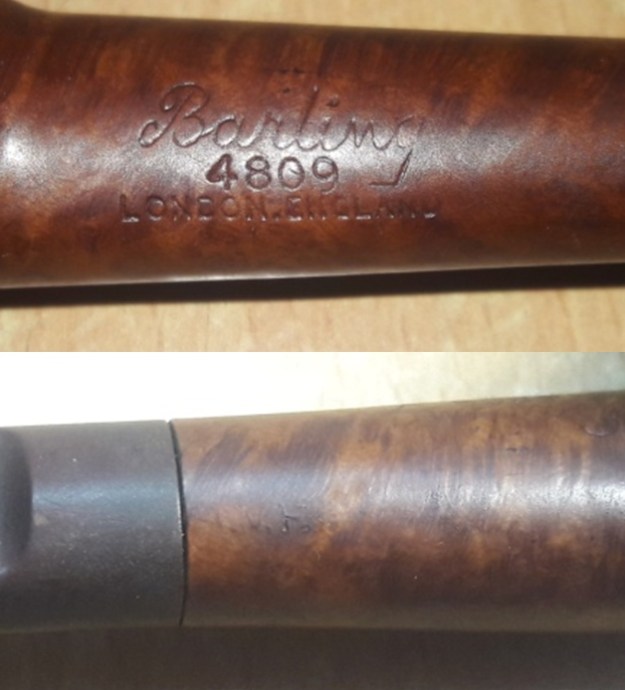
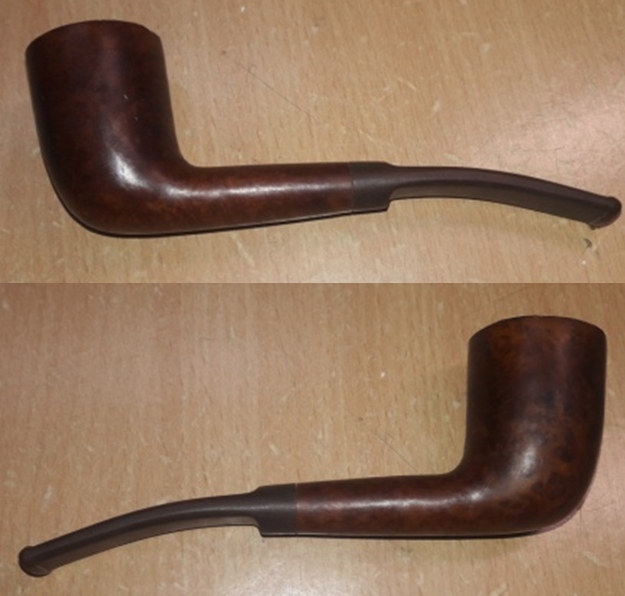
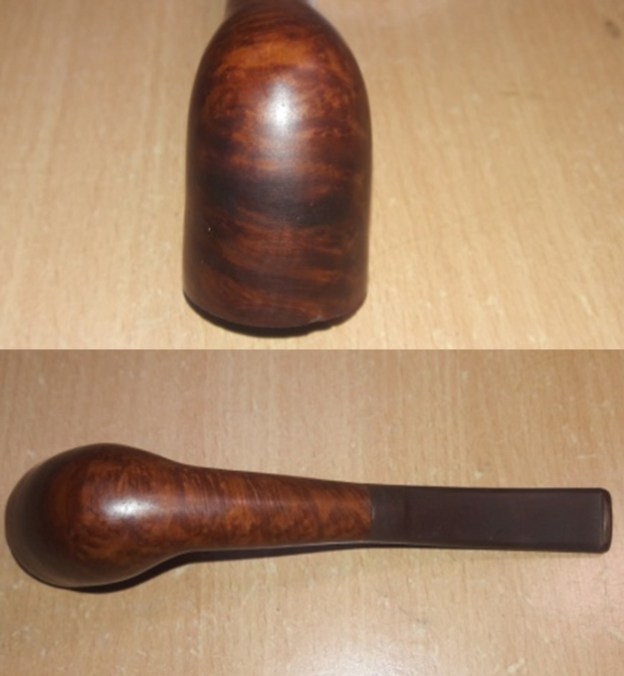
The next pipe that I decided to work on is a classic Zulu shaped pipe with beautiful bird’s eye grain to the sides of the stummel and cross grains to the front, back and over the shank surfaces. This pipe is stamped on the left shank surface as “Barling” in running hand over “4809” over “LONDON ENGLAND” in block capital letters. On the flat top right side of the shank is stamped “T.V.F”. The stampings are all crisp and deep. The trademark Barling cross has been completely buffed off from the saddle top of the Barling styled vulcanite stem. The size, shape and feel of the pipe is solid to the touch.  Barling’s pipe brand has been well researched and chronicled on pipedia.org and by Steve when he worked on many of Barling’s pipes over decades and thus, shall not waste time in repeating the information that is available. I too have carefully read and researched this brand as I do have many pipes that I have inherited and tentatively date this pipe as being an Early Corporate Era pipe. I have based my conclusions based on the following facts that I have read on pipedia.org (https://pipedia.org/wiki/Barling)

Early Corporate Era Nomenclature
A script Barling logo replaces the block “Barling’s Make” logo. Makes sense, no Barlings are making pipes.

The pipes retain the 4 digit model number introduced in mid 1962, but they also introduce a size 1, which means that there are 4 digit numbers beginning with a 1. The model number is placed right below the Barling logo.

The words LONDON ENGLAND are stamped below the model number. The “MADE IN ENGLAND.” Stamp is discontinued. Ye Olde Wood and TVF have both been discontinued. They will return in the mid 1960’s.

Thus, even though it is not a pre-transition piece, this pipe from after mid 1960s, still has the classic shape, draw and feels nice in the hand that Barling’s pipes are so famous for.

Initial Visual Inspection
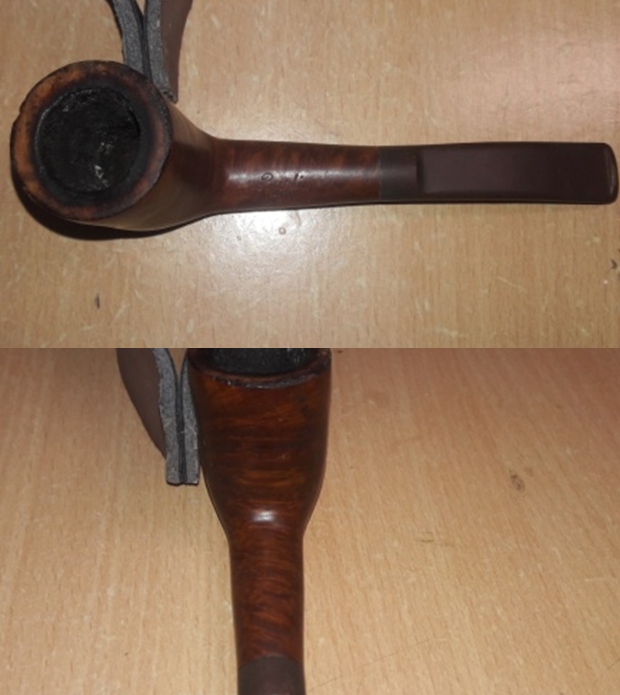
This pipe has a decent medium bowl size with chamber depth of about 1 7/8 inches. The stummel boasts of some beautiful cross grains to the front and back of the bowl and all around the shank and loosely packed Bird’s Eye to the right side of the stummel. The stummel is covered in dirt and grime of the overflowed lava and dirt accumulated over the years of heavy smoking and uncared for attention to cleaning and maintenance. There is a thick layer of cake in the chamber and few severe chips and dings to the rim edges. The stem is heavily oxidized with a perceptible gap between the stem and shank end face. The pipe’s appearance, as it sits on my work table, does not present an encouraging picture. Detailed Inspection Of The Pipe And Observations
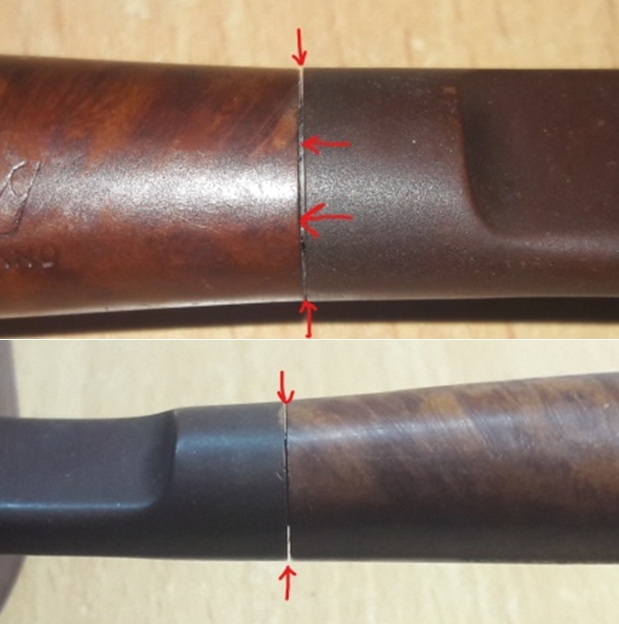
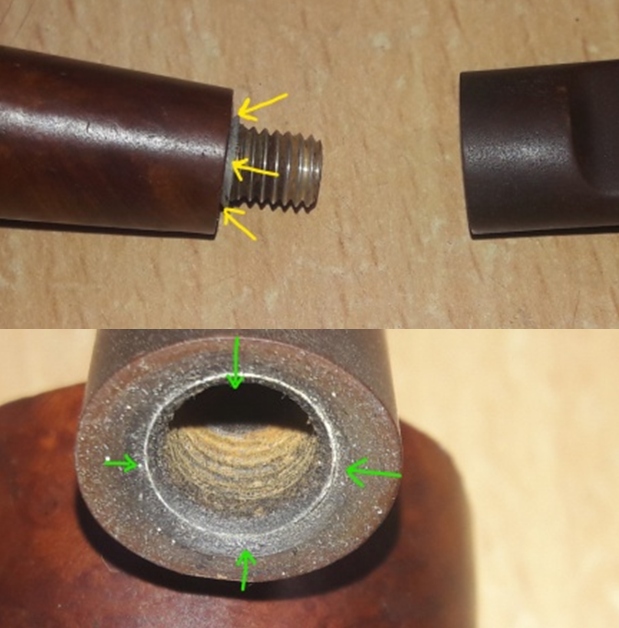
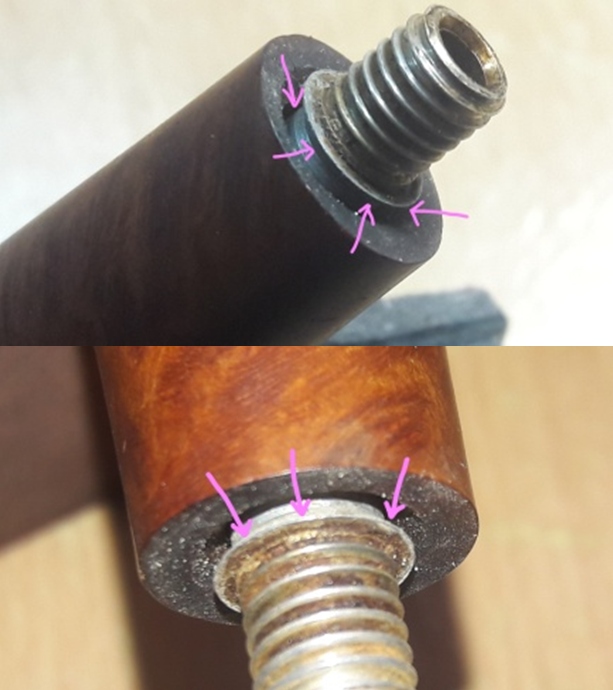
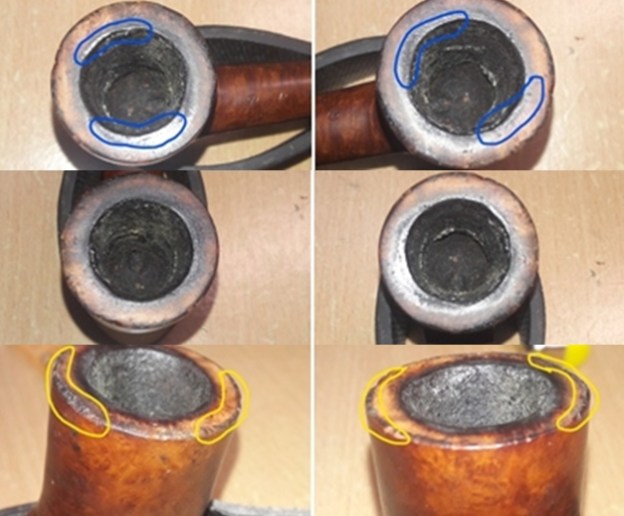
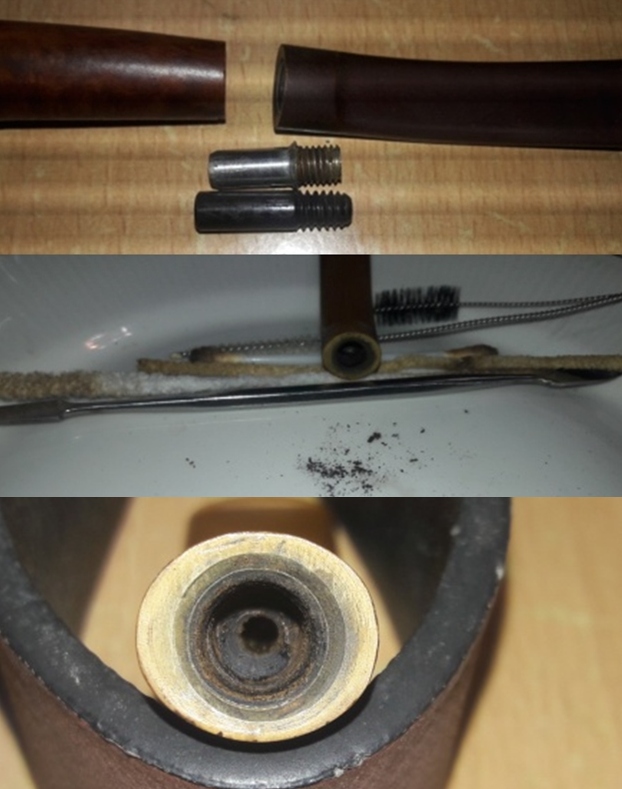
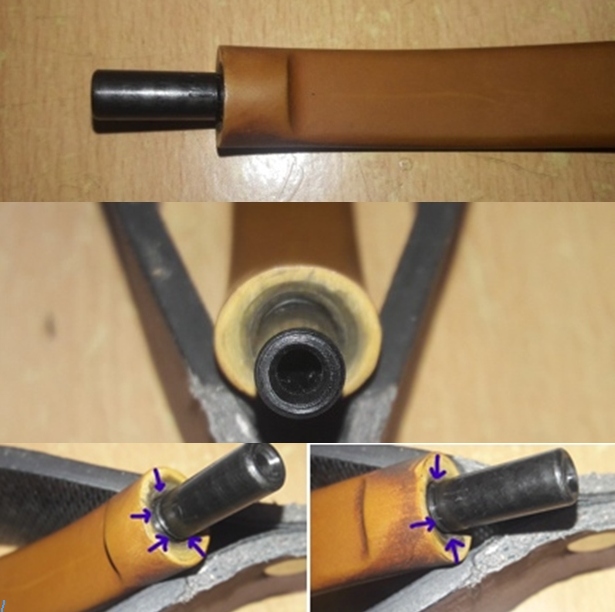
The first thing I noticed was the perceptible gap (indicated with red arrows) between the stem and the shank end face with the stem completely seated in the mortise. I attempted to separate the stem from the shank, but the stem wouldn’t budge. I chucked the pipe in the freezer for about four hours. I tried again and this time the stem turned but with a sinking feeling, I realized that it was not the tenon that was turning but it was the rest of the stem that turned. It dawned on me that the original tenon had been replaced with a threaded one. After a few careful turns, the stem separated from the shank end. The original tenon had been replaced with an aluminum one and the tenon remained firmly embedded in to the shank.A closer look at the embedded tenon showed prominent outwards protruding shoulders (indicated with yellow arrows) while a matching bevel (indicated with green arrows) had been carved in the saddle at the tenon end of the stem face to accommodate the tenon shoulders. Threads had been tapped in to the saddle for seating the threaded tenon. The gap between the aluminum tenon and the shank face (indicated by pastel pink arrows) is too large. These repairs are well done and have been done by a professional. However, even though the repairs are solid and neatly done, I would rather prefer to have a Delrin tenon over a metal tenon for the reasons of hygiene and ease of maintenance, not to mention the aesthetics of the pipe. The bowl has a wide rim that slightly tapers down towards the heel and has a chamber depth of about 1 7/8 inches. The draught hole is at the bottom and center of the chamber and this construction should make it a great smoke. The chamber has an even layer of thick hard cake with a strong ghost smell. The rim top surface is covered with thick lava overflow and has max accumulation in the lower half of the rim top. Through this layer of lava, a few dings can be seen over the rim top surface. The inner rim edge appears dark and worn out all around, however the damage seems to be severe in 8 o’clock and 3 o’clock directions (encircled in blue). The outer rim edge is equally damaged all along the periphery. There are a number of dents/ dings and chipped areas over the outer rim edge but most severe in 6 o’clock, 12 o’clock and 10 o’clock direction (encircled in yellow). The condition of the inner walls of the chamber can be commented upon after the cake has been taken down to the bare briar. The stummel appears solid to the touch all around and hence I do not foresee any serious damage to the walls in the form of burnout/ deep heat fissures/ lines or pits. The dark inner rim edge, in 8 o’ clock and 3 o’clock direction, may be charred further than anticipated and the same will be confirmed after the surface has been thoroughly cleaned. I need to resort to topping the rim top in order to address the damage to the rim top surface. The ghost smells should reduce once the cake from the chamber is removed and the shank has been cleaned. The smooth stummel has a forward cant in a classic Dublin shape that is broad at the rim that narrows at the bottom/ foot. The shank is oval making it a Zulu shaped pipe. The surface is covered in dust, lava overflow and grime through which one can make out the beautiful cross grains to the front and back of the bowl and shank. There is not a single fill in the briar surface and points to high quality of briar selection for which Barling is renowned. The briar is looking lifeless and bone dry. For a pipe that has been so heavily smoked, there are surprisingly no dents and ding over the stummel surface. Once the stummel has been thoroughly cleaned, any other damage or flaws (which I think there will be none) will come to the fore. Thorough cleaning and rising of the stummel under warm water will highlight the grain patterns. Micromesh polishing will help in imparting a nice shine to the briar. The entrenched aluminum tenon makes it impossible to observe the insides of the shank and the mortise. However, the overall condition of the pipe in general and the chamber in particular, makes me believe the shank internals will be filthy with dried oils, tars and gunk. The restricted airflow is another pointer to a messy shank internals.

The high quality vulcanite tapered saddle stem is typical Barling with a narrow saddle at the end of a proportionately broad stem. The stem is so heavily oxidized that it appears brownish green in color! The saddle has been widened to house the threaded end of the tenon, is blocked with accumulated ash and oils/ tars that have dried out on the inside. The horizontal slot end is chock-a-block with gunk. The trademark stem logo of BARLING CROSS is completely buffed out. For a pipe that has seen such heavy usage, the stem is in pristine condition with no tooth chatter or bite marks or deformed button edges. Replacing the aluminum tenon with a Delrin tenon is one challenge that will have to be dealt with great care and caution. The Process
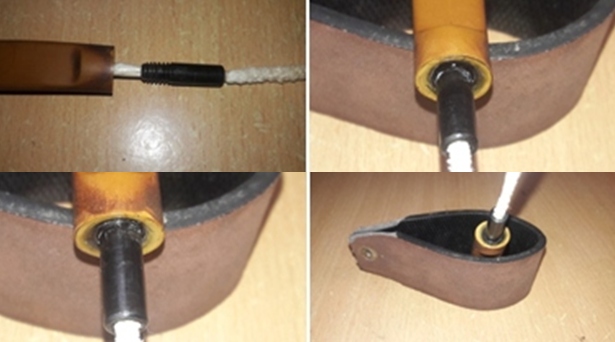
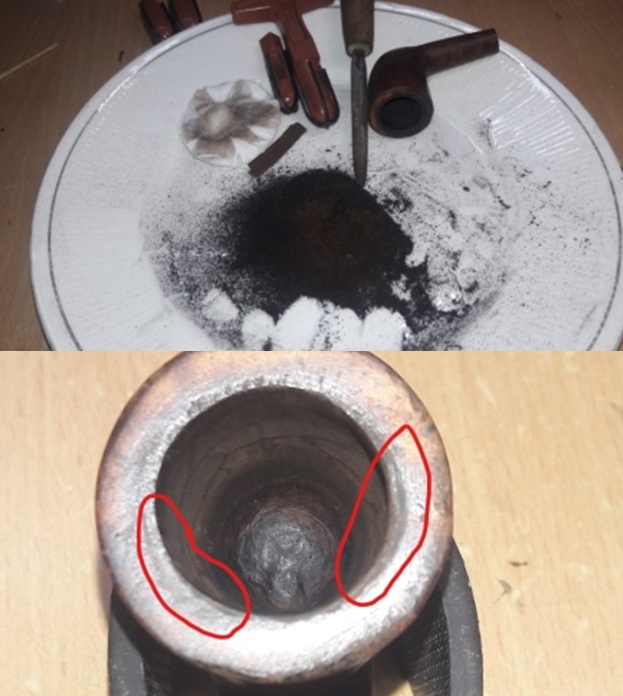
The first issue that I decided to address was that of the tenon replacement. I heated the tenon with the flame of a lighter and thereafter, with nose pliers I carefully dislodged the aluminum tenon from the shank. I selected a Delrin tenon that roughly matched the shank and stem opening. I cleaned the stem opening that housed the threaded end of the tenon using shank brush, pipe cleaners, q- tips and alcohol. With a sharp dental tool, I scraped out all the dried oils and tars and gunk from the stem opening. With the stem opening cleaned up nicely, I shall next check the seating of the new tenon in to the stem. I tried the seating of the new tenon by threading it in to the widened saddle of the stem and, as rarely as it happens, the fitting was perfect. The tenon, however, would need a bit of work for achieving a snug fit in to the shank. The gap (indicated with blue arrows) between the replacement tenon and the stem face bevel will have to be filled and sealed with CA superglue.Next I wound a piece of scotch tape around the tapered end of a pipe cleaner and insert it through the tenon in to the stem airway. I applied clear CA superglue to the threaded end of the replacement Delrin tenon and also over the threaded stem opening and turned the tenon in to the stem. I lightly tapped the tenon to seat flush with the base of the wide saddle end wall. I applied superglue in to the gap that was formed between the stem bevel and the tenon and set the stem aside for the glue to cure. The scotch tape wound pipe cleaner prevents the superglue from seeping in to the stem airway and clogging it and also helps in guiding and aligning the airway of the new tenon with that of the stem. While the stem repairs were set aside to cure, I worked on the stummel by first reaming the chamber with size 1 followed by size 2 head of a PipNet pipe reamer. I further scraped the chamber walls with my fabricated knife to remove the remaining carbon deposits where the reamer head could not reach. I scraped out the lava overflow from the rim top surface. Once the cake was reamed back to the bare briar, I used a 150 grit sand paper followed by 220 grit sand paper to remove all the traces of remaining cake and also to smooth out the inner walls of the chamber surface. Finally, to remove the residual carbon dust, I wiped the chamber with a cotton pad wetted with 99.9% pure isopropyl alcohol. The inner rim edge was charred in 8 o’clock and 3 o’clock direction which have been encircled in red. I scrapped off the charred briar from these areas and now the chamber is out of round. The chamber walls show a web of minor heat lines which would need to be protected from developing in to major heat fissures that would eventually lead to a burnout. I shall give the inner rim edge a slight bevel to get the bowl back to a perfect round and mask the damage. The ghost smells are considerably reduced and should be eliminated once the shank and mortise internals are cleaned. The rim top surface is still considerably darkened and would need to be thoroughly cleaned to know the exact damage to the surface.   I followed up the reaming of the chamber with cleaning the mortise using cue tips, pipe cleaners and shank brush dipped in isopropyl alcohol. I scraped the walls of the mortise with dental tool to remove the dried oils and tars. The ghost smells are further reduced and should be eliminated completely when the shank internals are cleaned with shank brush and dish washing soap. With the bowl internals clean, I move to clean the exterior of the stummel. I used a hard bristled tooth brush and Murphy’s Oil Soap to scrub the stummel and rim top. I washed the stummel under running warm water with anti oil dish washing detergent till the stummel surface was clean. I simultaneously cleaned the shank internals with the detergent and hard bristled shank brush and dried it using paper towels and soft cotton cloth. I set the stummel aside to dry out naturally. As anticipated, this thorough cleaning of the shank eliminated the strong ghost smells from the chamber and now the pipe smells clean and fresh. The stummel surface has cleaned up nicely and the beautiful grain patterns are now on full display. The charring over the rim top surface in 8 o’ clock and 3 o’ clock direction (encircled in red) is significantly deeper than anticipated and the chipped areas (encircled in blue) are far deeper than I thought them to be. I shall have to resort to topping to address these damages. With the stem repairs still set aside to cure, I continued with the stummel repairs. I topped the rim top over a piece of 220 grit sand paper till I had a smooth even surface and the charred surface in 8 o’clock and  3 o’clock direction as well as the chipped areas on the outer rim edge (encircled in red) were greatly reduced. I am very happy with the appearance of the rim top and rim edges at this stage of restoration. The chipped surfaces over the outer edges that still remain will be filled with a mix of superglue and briar dust. The charred surfaces will be addressed by creating a nice bevel over the inner rim edge.   With a folded piece of worn out 180 grit sand paper pinched between my thumb and forefinger, I carefully gave a bevel to the inner rim edge and addressed the issue of charred inner rim edge. After I was done with the inner rim edge repairs, I filled up the chipped areas on the outer rim edge with a mix of superglue and briar dust and set the stummel aside for the fills to cure and harden. The rim top surface and the edges look very neat at this stage with the bowl in a nice round shape. Once the fills over the outer edges are completely cured, I shall sand and match them with the rest of the edge and if need be, create a slight bevel to further even out these repairs. While the rim edge fills were set aside to cure, I turned my attention back to the stem. The new tenon was firmly attached with the stem and the glue had hardened completely. With a folded piece of 180 grit sand paper, I sand the excess glue from the stem face. With the same piece of sandpaper, I sand the tenon till I had achieved a snug fit of the tenon in to the mortise. One of the important lessons that I have learned in tenon replacement is that one should sand less and check more frequently!! I did just that and checked the seating after every circular cycle of sanding the tenon. Once the seating was snug and perfect, I seated the tenon inside the mortise and realized that the length of the tenon was more than the depth of the mortise. Thus back to sanding board, but this time I sand the tenon face on a piece of 180 grit sandpaper. Checking ever so frequently, I stopped the sanding process when I had a neat and seamless seating of the tenon in to the mortise. I am really very happy with this tenon replacement and the seating is as flush as when it was new!! With the tenon replacement completed to my satisfaction, I moved on to the cosmetic refurbishing of the stem. I wiped the stem surface with Murphy’s Oil soap and a cotton swab. The oil soap removes the loose surface oxidation and leaves behind the deep seated oxidation over the stem surface. Thereafter began the arduous and time consuming process of sanding the stem with 220, 400, 600 and finally 800 grit sandpapers. I rubbed a generous quantity of EVO deep in to the vulcanite and set the stem aside for the oil to be absorbed in to the surface. Did I mention the tons of elbow grease that I had to spend on getting the stem to the state that is seen below? Well, the long and short of removal of oxidation from the stem is that I had to invest about 7 long back breaking hours of efforts. How I miss Abha’s help and the magic of Mark Hoover’s stem oxidation removing solution!! While I cleaned up the stem, the outer rim edge had cured and with a flat head needle file I sand the fills to achieve a rough match with the rest of the rim edge. I further blend in the fills with a folded piece of 180 grit sand paper. To address the minor dings that remained over the outer rim edge, I created a slight bevel to the outer rim edge with a folded piece of worn out 180 grit sand paper. The repairs have blended in nicely with the outer edge and the the outer rim edge looks nice.Next, I sand the entire stummel with a piece of 220 grit sand paper to address the minor scratches and dings that would otherwise show after micromesh polishing cycle. I followed it by wet sanding the stummel with 1500 to 12000 grit micromesh pads, wiping frequently with a moist cloth to check the progress. Next, I rubbed a small quantity of “Before and After Restoration Balm” deep in to the briar with my finger tips and let it rest for a few minutes. The balm almost immediately works its magic and the briar now has a nice vibrant appearance with the beautiful grain patterns displayed in their complete splendor. I further buffed it with a horse hair brush and gave a vigorous buff with a microfiber cloth to deepen the shine. The dark browns of the bird’s eye and cross grains spread across the stummel makes for a visual treat. It really is a nice piece of briar. To bring a deep shine to the vulcanite stem, I polished the stem by wet sanding with 1500 to 12000 grit micromesh pads. I wiped the stem with moist cloth after each pad. I rubbed a little quantity of “Before and After Fine/ Extra Fine” stem polish. This product developed by Mark Hoover helps to remove minor scratches from the stem surface while further eliminating what little oxidation that remained on the stem surface. I rubbed it down with Extra Virgin Olive oil to rejuvenate the vulcanite. The finished stem is shown below. I am pretty pleased with this appearance of the stem.I mount a cotton cloth buffing wheel on to my hand held rotary tool and polished the stummel and stem with Blue Diamond compound. This compound helps to remove the minor scratch marks that remain from the sanding.Next, I mount another cotton buffing wheel that I have earmarked for carnauba wax and applied several coats of the wax. I finished the restoration by giving the entire pipe a rigorous hand buffing using a microfiber cloth to raise the shine further. The finished pipe looks amazingly beautiful and coupled with the size, heft and the hand feel, makes it quite a desirable pipe. P.S. I sincerely apologize for the poor quality of pictures that I have clicked of the finished pipe. I am still experimenting with my props, light setting and camera settings to take better quality of pictures to highlight the grains and finish of the completed pipe.

I wish to thank each one for sparing their valuable time to read through this write up and each one is my prayers. Stay home…stay safe!!

A Simple Clean Up of a Double Walled GoedeWaagen Apple Bowl Pipe


Blog by Paresh

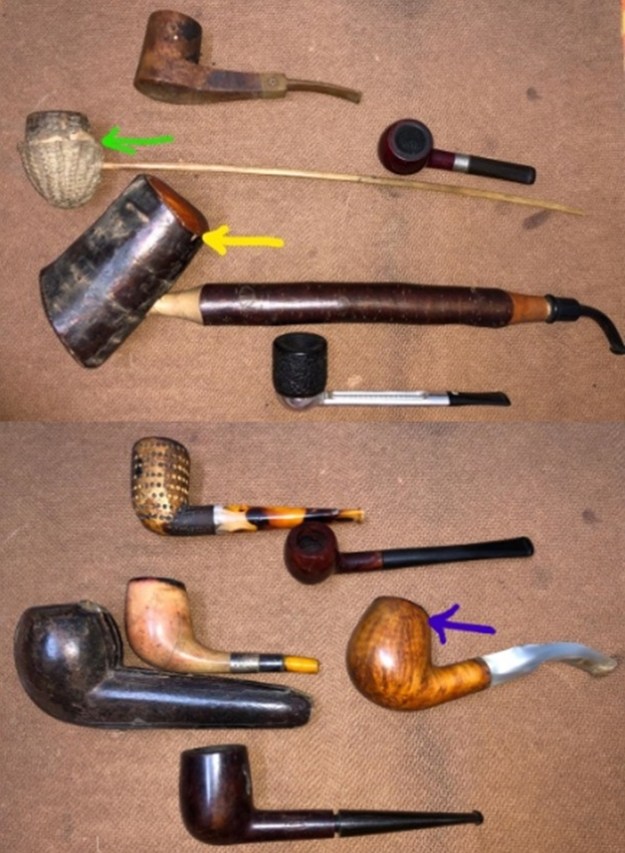
About two months ago, I had worked on a battered and abused, but well loved meerschaum line Orlik Bent Brandy pipe from an estate lot of 40 pipes that I had acquired about eight/ nine months ago. That was the third pipe from the lot that I had refurbished, the first being a huge Real Cherry wood pipe and the second was a Corn Cob with a long Albatross wing bone. Here is the link to the three write ups which will provide background information as to how I came to acquire this lot and the condition of the pipes that I had received;

https://rebornpipes.com/2020/03/08/refurbishing-a-real-cherry-foreign-pipe-from-estate-lot-of-40/

https://rebornpipes.com/2020/05/10/refurbishing-a-vintage-corn-cob-pipe-with-an-albatross-wing-bone/

https://rebornpipes.com/2020/06/11/a-second-inning-for-a-meerschaum-lined-orlik-bent-brandy/

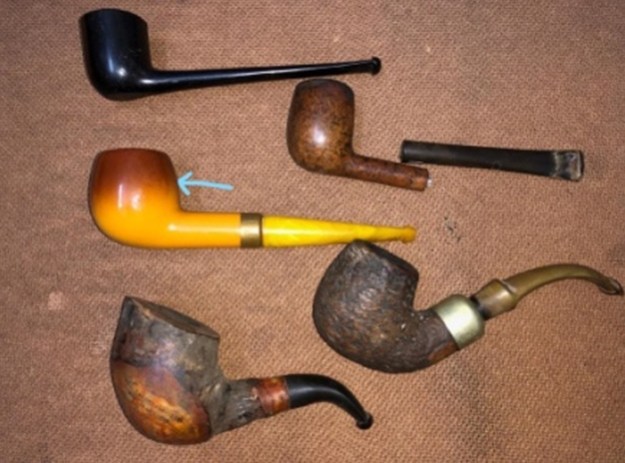
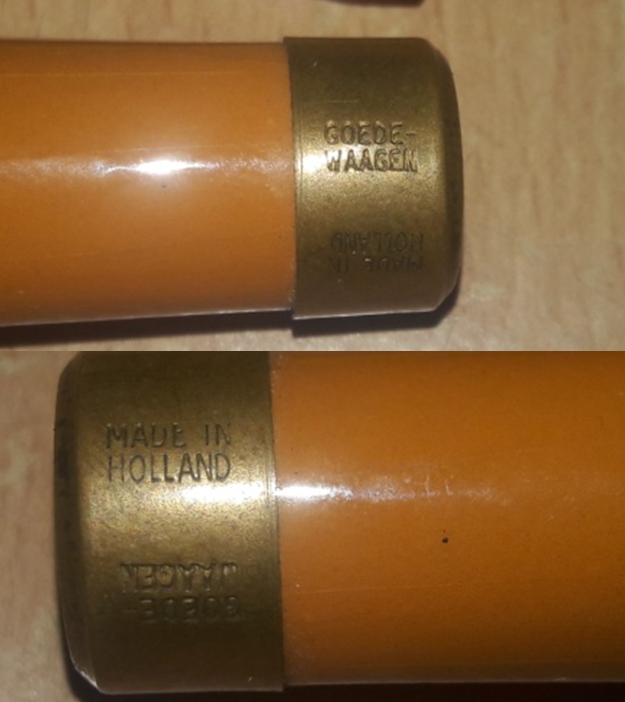
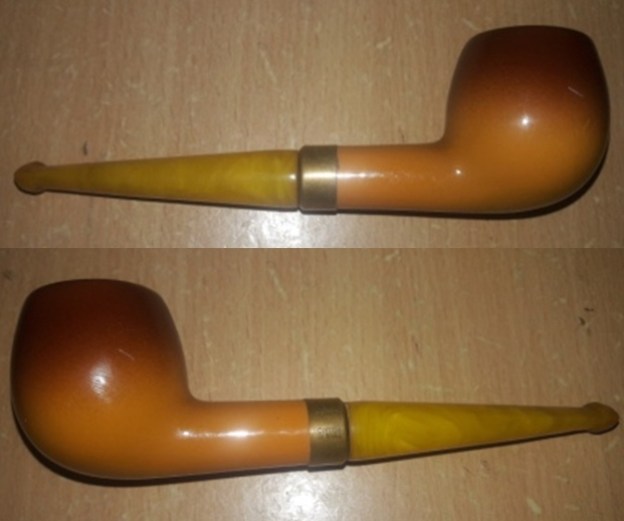
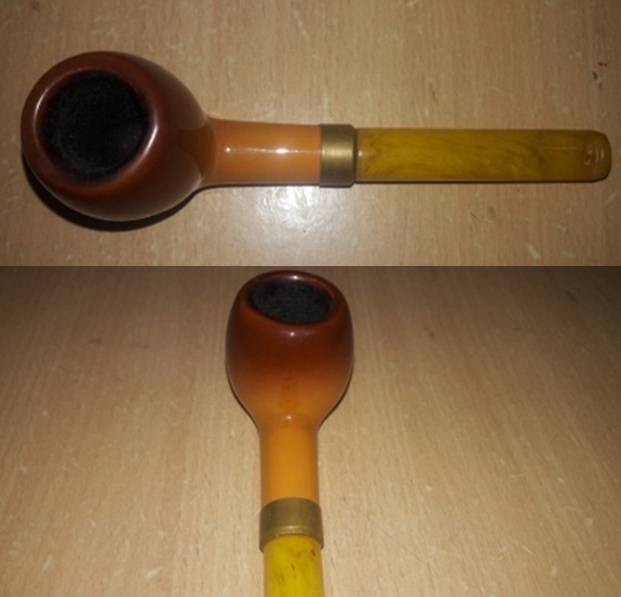
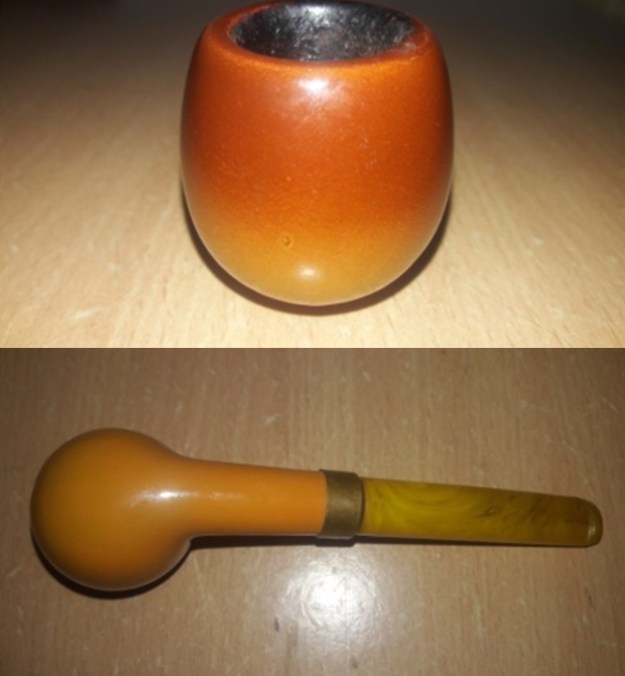
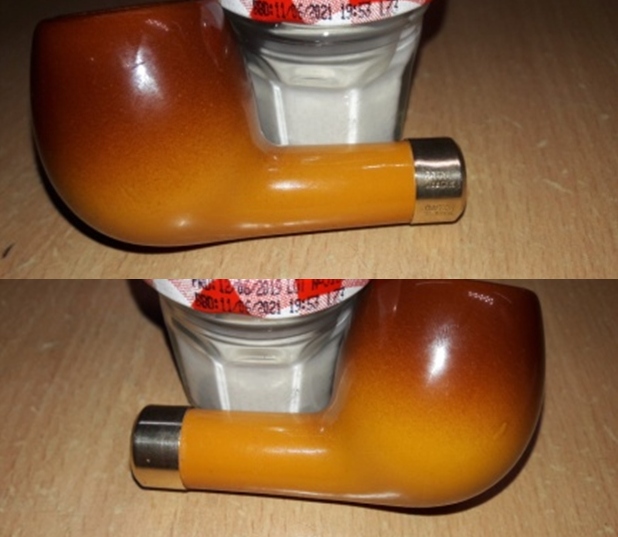
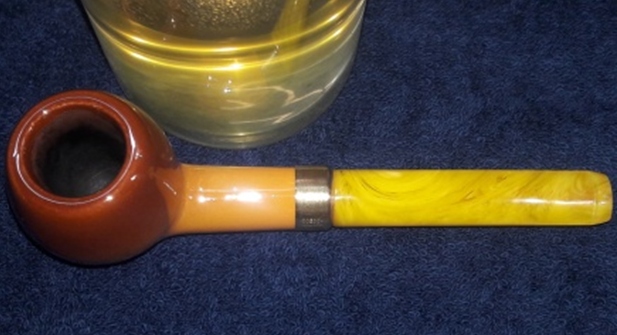
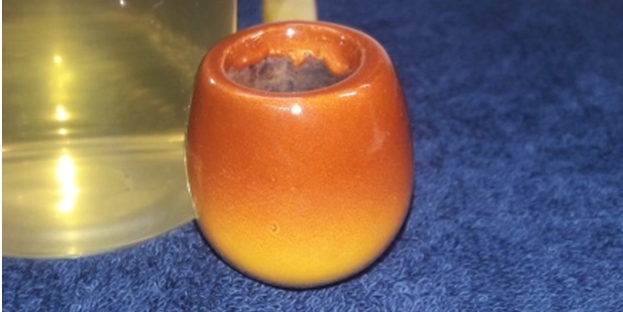
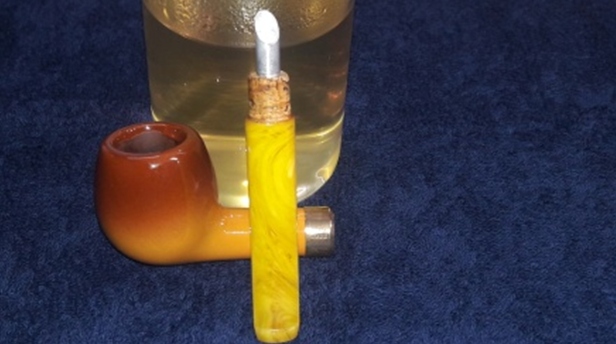
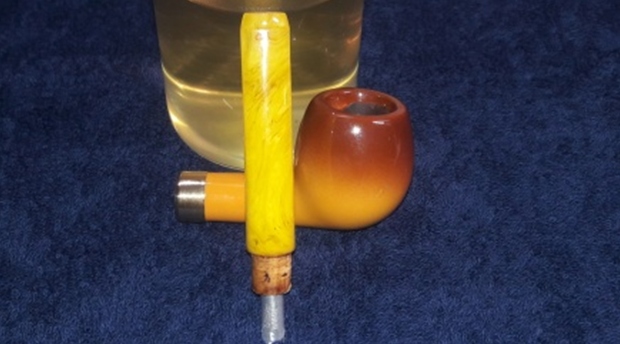
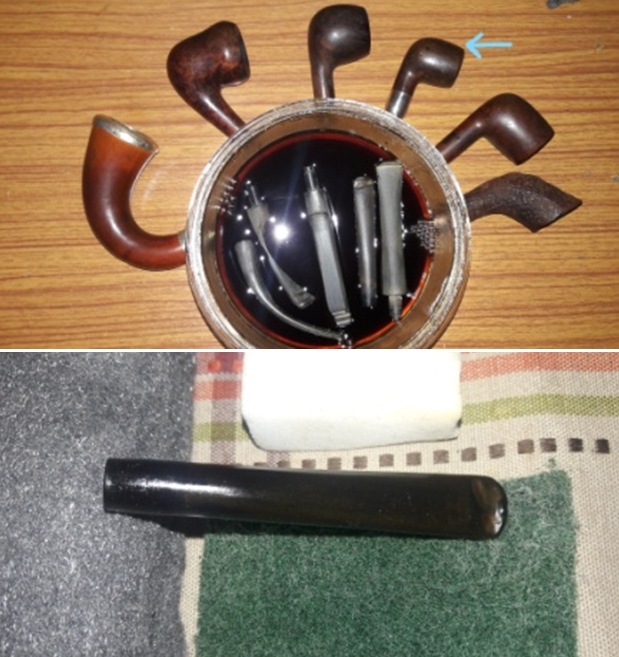
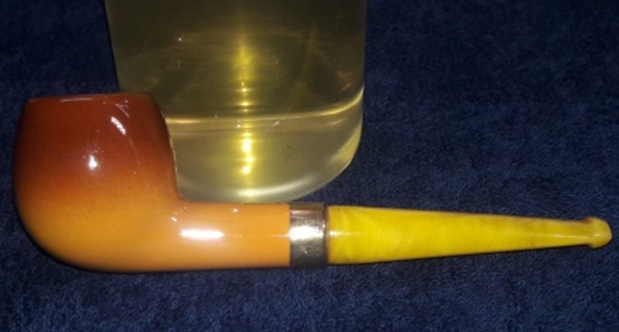
The fourth pipe from this lot and currently on my work table is beautiful brightly colored straight Apple with a tapered yellow variegated stem with swirls of black. The first three pipes that I had worked on are marked with yellow, green and indigo arrows while the fourth pipe that is currently on my work table is shown in the third picture marked in pastel blue colored arrow. The eye catching candy colored attractively Apple shaped pipe screams “PARTY” and feels ultra light in hand. The shank end is adorned with a brass band. It is stamped on the brass band as “GOEDEWAAGEN” over “MADE IN HOLLAND”. There is no shape code or stamping on either the stummel or the acrylic stem.   The stamping on the brass band gave me a definitive direction to my quest to know about this brand. I turned to my favorite site, rebornpipes.com, to know more about the brand and sure enough, Steve had worked on a couple of GoedeWaagen pipes and researched it in detail. Given below is the link for the readers who are interested in knowing about this pipe from Holland.

https://rebornpipes.com/2017/10/21/cleaning-up-a-pair-of-goedewaagen-delft-ceramic-pipes/

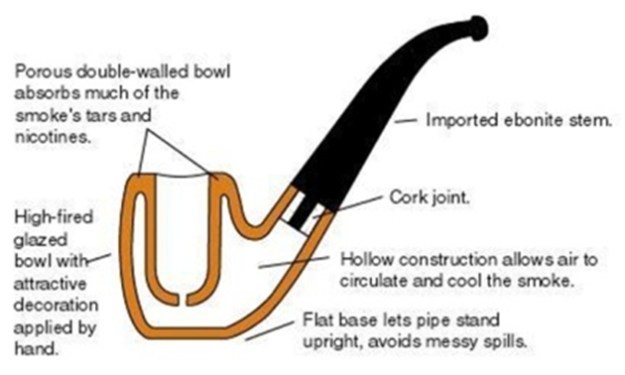
Steve has included a picture of these pipes that gives out the construction and functioning of the pipe which I have reproduced below.I searched pipedia.org for more information on the Maker and brand of GoedeWaagen. I have reproduced the information contained on the site and also the link to the webpage.  https://pipedia.org/wiki/GoedeWaagen

Dirck GoedeWaagen became a master pipemaker on January 1, 1779 and took on his first assistant the following month. Soon after Dirck’s grandson fell in love with and married a girl from the illustrious De Jong family, legendary in the ceramic pipemakers guild in Gouda. He built a workshop in the Keizerstraat in Gouda, which continued for two generations until his grandson Abraham GoedeWaagen moved the company to a new location.

In 1853, Pieter Goedewaagen purchased his father-in-law’s factory “De Star”, which becomes the basis of the modern GoedeWaagen Company. In approximately 1880, Abraham’s grandson Aart GoedeWaagen persuaded his father Pieter to expand the business with an eye towards more models of pipes, and P. GoedeWaagen & Sons was founded in response. Within ten years the firm had hundreds of models and P. GoedeWaagen & Son was exporting pipes around the globe.

GoedeWaagen continued to make pipes, but also began acquiring other ceramics firms, including ‘De Distel’ in 1923, and in so doing acquiring the expertise to make decorated ceramics other than clay pipes. It is at this time that the company is granted a Royal charter and by the 1930’s Royal Goedewaagen is one of the top names in Dutch ceramics.

While Goedewaagen pipes were originally traditional and figural clays, after the invention of the double walled clay pipe by Zenith, also a Gouda company, Goedewaagen began producing pipes in that commonly seen style, which they marketed as The Baronite Pipe, advertised for its clean smoking and health benefits. Since the company’s bankruptcy in 1982, however, they have made only the occasional souvenir pipe, including a line commemorating Holland’s monarchs.

There is a mention of “Zenith” pipes and visited the page that contained information on this brand related to GoedeWaagen pipes. The article makes for an interesting read.  https://pipedia.org/wiki/Zenith

Correlating the above two, it can be safely established that the pipe is from in between the period 1920s when the double walled ceramic pipes were invented by Zenith to 1982 when GoedeWagen filed bankruptcy.

With the provenance of the pipe established and firm in my knowledge and understanding of the GoedeWaagen Brand, I move ahead with my initial visual inspection.

Initial Visual Inspection
The pipe, as it appears, is shown in the pictures below. The pipe must have hardly been smoked as the layer of cake in the chamber is very thin with very minor traces of overflow of lava over the rim top surface. The stummel is covered in clear glaze and is covered in dust and fingerprints. The stem airway is dark with dried oils and tars. Heavy tooth chatter and deep bite marks in the bite zone and button edges on either surface can be seen on the stem surface. All in all, this is a lovely pipe and should stand out in any gathering once cleaned and polished. Detailed Inspection
The chamber has an even layer of hard cake. There are traces of old oils, tars and grime that can be seen over the inner rim edge. The cake masks the condition of the chamber walls and condition of chamber walls will be determined only once the cake and lava overflow has been cleaned up. The rim top surface is in pristine condition with no dents or dings or chipped areas. The smells from the chamber are very strong. This issue of old smells will have to be addressed. A simple reaming and cleaning should make this chamber as good as new, unless we have a cracked wall or any such surprise underneath the cake.   The clear glazed double walled ceramic stummel is covered in dust and oily fingerprints and appears dull. There are no cracks, dents/ dings on the stummel surface… Not even a scratch!! The mortise is nice and clean with no traces of accumulated gunk. A simple wash and polish should get the stummel nice and shining like new.   The yellow acrylic variegated stem with dark swirls perfectly matches the candy color of the stummel and rather elevates it further. The tenon end has a cork stopper that helps in snug fit of the tenon in to the mortise. The cork stopper has a small piece that has broken off and the cork itself appears dry. The bite zone is peppered with deep tooth chatter and heavy tooth indentations over the button edges on either surface. The tenon and the air way is covered and clogged with gunk. Air way over the surface appears darkened and flow through the stem is not full and clear. The stem surface and internal first needs to be cleaned. The tooth chatter will be sanded out with 220 grit sandpaper and filled with glue. The button edges on either surface needs re-building using clear CA superglue.   The Process
I began the process of refurbishing this pipe first by working on the stem. As I was handling the stem, I realized that the tenon turned in my hand. I completely unscrewed and realized that what I thought to be a tenon was in fact a tenon extension that was screwed on to the threaded tenon. The threaded tenon and the tenon extension were covered in dried gunk and grime. The front edges of the tenon extension are up turned and sharp and I shall address them subsequently.The threaded tenon and the tenon extension were cleaned with soft brass wired brush and cotton swabs wetted with alcohol. I cleaned the stem internals with a small shank brush and liquid dish soap. I have realized that using small shank brush and liquid soap reduces consumption of pipe cleaners by about 75%. This is considerable savings considering that I pay thrice the cost of pipe cleaners on cost of shipping!! Next, I ran a couple of dry pipe cleaners through the stem to clean and dry it out. I avoid using isopropyl alcohol in cleaning stem air way just to guard it against crazing (call it my paranoia to use alcohol on an acrylic or Perspex stem!!). The tenon end, slot and the air way is now clean. I cleaned the external surface of the stem with a Scotch Brite gauze and liquid dish washing soap. Next I addressed the issue of broken cork piece. I cut a piece of wine cork and roughly shaped it to match the missing cork piece. I stuck the new piece in place with clear CA superglue taking care that I did not foul up the threads on the tenon. I set the repairs aside for the glue to harden.  I wiped the stem with a cotton pad and alcohol. Thereafter, I applied clear CA superglue over the button edges and filled the deep tooth indentations and the minor tooth chatter in the bite zone. I set the stem aside for the fill to cure.   I had completely forgotten about the tenon extension amidst the other processes. The tenon extension was covered in oils and tars that had dried out and set hard over the surface. I cleaned it with shank brush, hard bristled toothbrush and dish washing soap. Once the tenon extension was cleaned, I observed that the tenon extension also bears the stamp “GoedeWaagen”. I still have to address the up turned and sharp front edges in the tenon extension.    Next, I reamed the chamber with my fabricated knife to take the cake down to the ceramic walls. Truth be told, the use of the knife was restricted only to scraping the surface in an attempt to dislodge the cake as I did not want to subject the ceramic to excessive force of a reamer head. With a 150 grit sand paper, the walls of the chamber were rid of all the remnants of the cake. I further wiped the chamber with a cotton swab wetted with alcohol to remove the carbon dust that remained. I wiped the traces of lava overflow from the rim edges with cotton swab and alcohol. The chamber walls are pristine with no damage and the rim top also cleaned up nicely.  I cleaned the shank internals first with hard and regular pipe cleaners dipped in alcohol. Thereafter, I rinsed the areas between the double walled chamber and the shank with warm water. The shank internals are now clean and fresh.    As I was wiping the stummel after the internal wash of the shank, the brass band came loose. The thick white ceramic paste that held the brass band over the shank end had dried up completely. I scraped the dried ceramic paste from the shank end surface and also from the insides of the brass band.   With the stummel internals clean and fresh, I moved ahead with cleaning the external surface of the stummel. I wiped the stummel surface with Murphy’s Oils soap on a cotton swab. I rinsed the stummel under warm running water and wiped it dry with a soft cotton cloth.   I cleaned the brass band with an all purpose liquid polish and worked up a nice shine to the brass band.   The cork repair had cured completely. With a flat head needle file, I sand the excess cork to match the rest of the cork surface. I further sand the cork to achieve a perfect match.  Next I worked the stem. The stem fills had cured nicely. Using a flat head needle file, I sand the fills to achieve a rough match with the rest of the stem surface and also reshaped the buttons on both the surfaces. I further fine tuned the match and sand the entire stem with 400, 600 and 800 grit sandpapers. I polished the stem surface with micromesh pads, wet sanding with 1500 to 12000 pads. I wiped the surface with a soft cloth at the end of the micromesh cycle. I applied a little Extra Virgin Olive oil to the stem, though it does not help much, and set it aside. Though I am not a big fan of acrylic stems, I am happy with the way the stem appears at this stage.   With the stem repairs and polishing completed, I turn my attention back to the stummel. I stuck the brass band to the shank end with all purpose glue and set it aside for the glue to set completely.    I evened out the sharp and up turned edges of the tenon extension by rolling them out with the middle round potion of a screw driver. I further smooth out the edges by sanding it down with a piece of 180 grit sandpaper. To bring a nice shine to the tenon extension, I polish it further by dry sanding it with 12000 grit micromesh pad. All through the process, I was careful to preserve the stamping on the surface of the tenon extension.   I rubbed a small quantity of “Before and After Restoration Balm” in to the stummel and let it rest for a few minutes. The balm almost immediately works its magic and the stummel now has a nice vibrant appearance. I further buff it with a horse hair shoe brush. Though the balm works best over the briar wood, it has been my experience that it works nicely on other stummel surfaces like Meerschaums and now ceramic. The balm imparts a nice sheen over this alternative stummel material which is as good as that over briar wood.    I applied a generous quantity of petroleum jelly over the cork stopper to rejuvenate and moisten the cork.    To apply the finishing touches, I mount a cotton cloth buffing wheel on to my hand held rotary tool and apply a coat of Blue Diamond to the stummel and the stem to polish out the minor scratches. With a cotton buffing wheel that I use for carnauba wax, I apply a coat of carnauba wax to the stummel and stem and continued to work on it till the complete coat of wax had been polished out. I mount a clean cotton cloth buffing wheel and gave the entire pipe a once over buff. I finished the restoration by giving the entire pipe a rigorous hand buffing using a microfiber cloth to deepen the shine further. The finished pipe is shown below. The yellow variegated stem with dark swirls elevates the fun quotient of the pipe and is very appealing to the eye. P.S. The next time once this pandemic is over and things return to normal, I shall take this attractive pipe to one of the gatherings, just to check out the reactions of the gathered people.

Appreciate all the efforts of readers who have had the patience to read this write up thus far!

Praying for the safety and well being of all the readers and their loved ones in these troubled times…


Breathing Life into an Old Battered “JBB” Billiard With Military Mount Stem


Blog by Paresh

This petite small pipe had attracted my attention since the time I had received three huge boxfuls of pipe that once belonged to my Grandfather. But over the period of years, there were always other interesting and larger bowl sized pipes that piqued my interest and these kept moving up the ladder in line for restoration, relegating this beauty further down in the pile. Abha, my wife, knew that I had liked this pipe the first time I had seen it and she worked her magic in cleaning it up for me to work further. After she had done the initial cleaning up, this pipe languished at the bottom of the pile of around 50 plus pipes that she had cleaned up. And it was during the period of my stay at home on compulsory leave due to the countrywide lockdown to contain the spread of CORONA VIRUS (COVID-19), that this pipe came up for restoration.

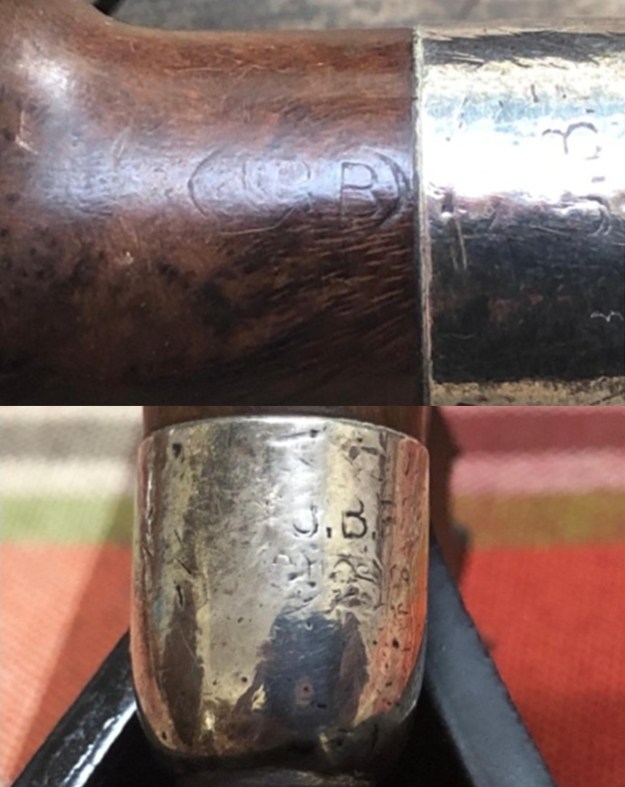
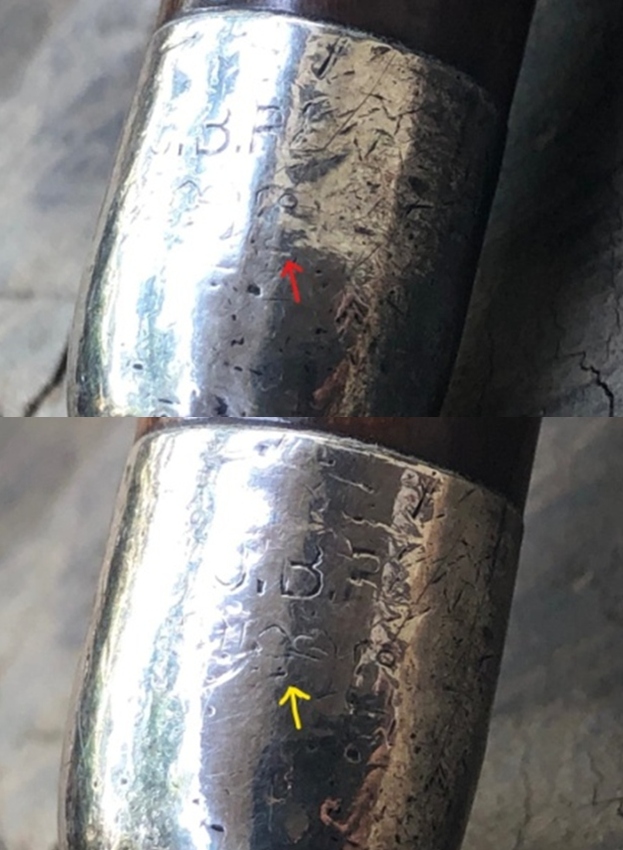
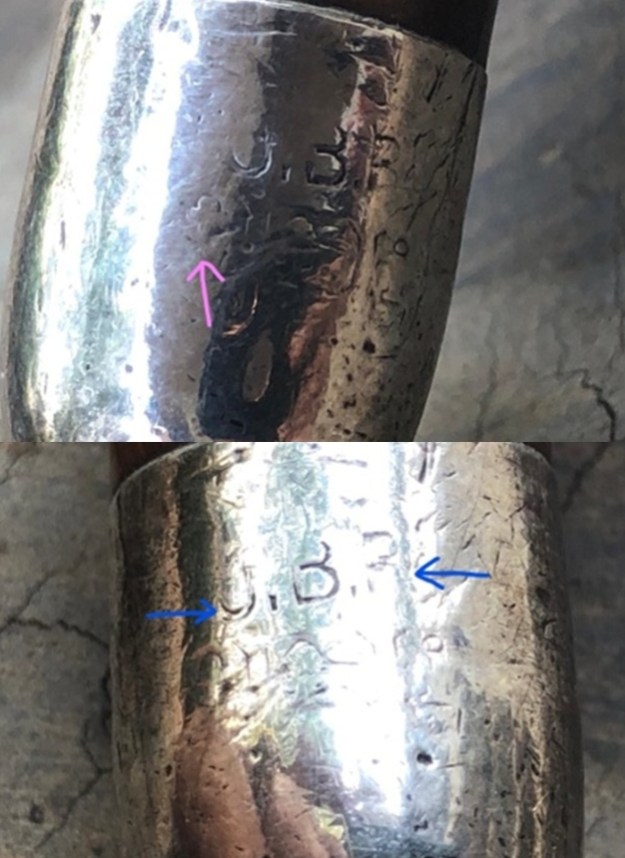
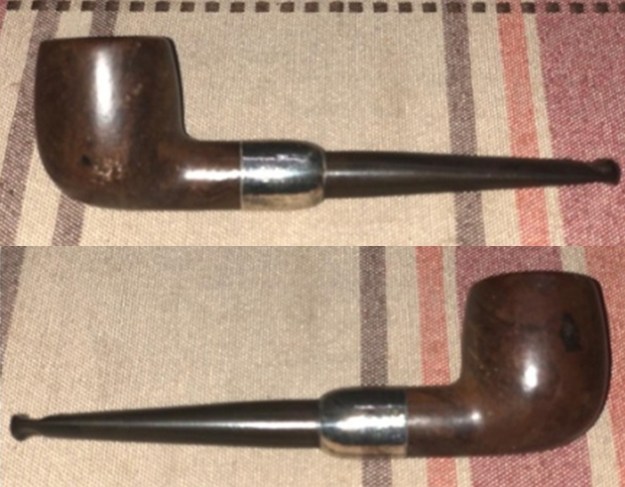
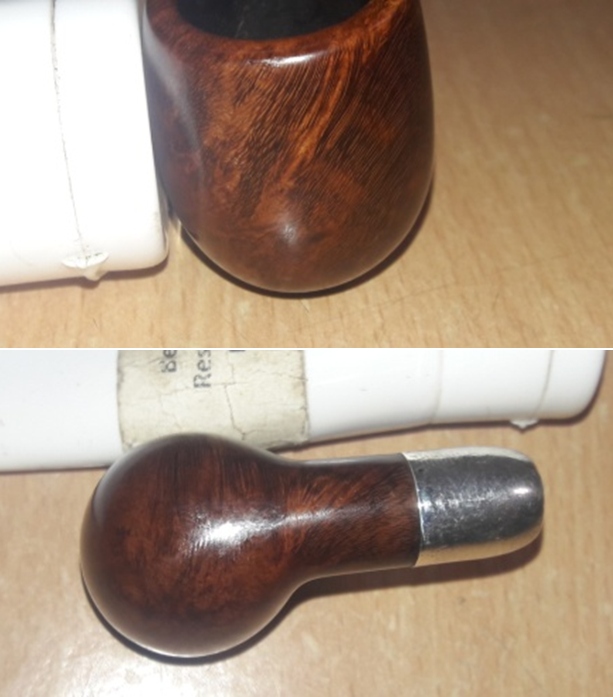
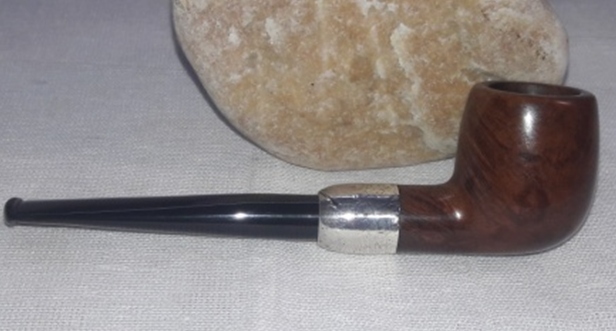
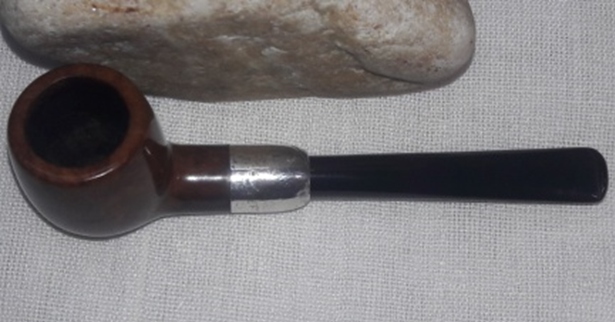
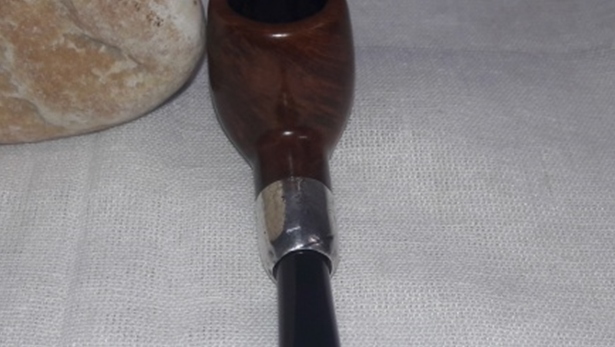
The pipe with its petite classic billiard shape and a military mount vulcanite stem has a delicate feel and look to it. It has beautiful dark coloration with some astonishing grain patterns that are seen over the stummel surface. The shank end is adorned with a sterling silver ferrule that adds a touch of classy bling to the appearance of the pipe. It is stamped on the left side of the shank in capital letters as “JBB” in an oval. The sterling silver ferrule is stamped as “J.B.B” without any frame in capital letters over three sterling silver hallmarks. From left to right the first cartouche stamping is completely buffed out (indicated in pastel pink arrow) with only a cross with upward projections on either sides of the horizontal arm that can be made out. This is followed by a cartouche with a LION PASSANT (indicated with yellow arrow) certifying silver quality and the last cartouche with date code letter “i” (indicated with red arrow). The vulcanite stem is without any logo. The stamping on this pipe are all worn out and can be faintly made out under 5X magnification. The lack of COM stamp may pose difficulties in identifying and researching of this brand.    JBB…again an unknown brand for me, a third one on the trot!! A visit to my favored site, rebornpipes, drew a blank and I decided to trace the brand through the Maker’s mark on the sterling silver ferrule. I have identified http://www.silvercollection.it as my favored site to date and identify mounter’s/ makers for all things that are silver hallmarked. Sure enough, I found what I was searching for. The pipe currently on my work table is from Joseph B Brown, a tobacconist from Hull, England registered with Chester Assay office.

http://www.silvercollection.it/DICTIONARYTOBACCONISTJ.html  With the maker’s mark identified and established to my satisfaction, I move ahead to date this pipe on the same site. I searched for Chester Assay office date chart and came across the date code letter that had the closest resemblance to the date code letter on the ferrule. The letter code identified it as being assayed in 1872!! Here is the link to the Chester dating chart and below is the image of the relevant section with the year marked in red box.

http://www.silvercollection.it/englishsilverhallmarksCHE.html

Since the date code letter on the ferrule is faded and worn out, I wanted to be sure of the correctness of the year of this ferrule being assayed. I searched pipedia.org for more information on this brand and have reproduced the relevant information below along with the link to the article (https://pipedia.org/wiki/J.B.B.).

J.B.B. is the initials found on pipes manufactured and distributed by Joseph B. Brown of Kingston upon Hull, England from the early 1870s until sometime in the 1920s. Hull is located in East Yorkshire. Brown billed his company as a “Hull Importer of Tobacconists Goods,” and apparently produced various lines of meerschaum and briar pipes as well as cheroot and cigar holders. His business was located on Brook Street.

Joseph Brown was born in Ashbourne, Derbyshire about 1844. His early years were spent as a traveller (i.e. salesman) in the jewelry trade. By 1871 he had moved to the Hull area in Yorkshire, and on February 17, 1875 he married there. His wife was named Alice Fourster (this spelling is almost certainly a transcription error), who was born in Newcastle, Northumberland about 1850.

By 1876 Joseph was associated with the pipe trade; in that year he received a patent for “mounts for tobacco pipes”. In subsequent censuses he is clearly identified as an importer of fancy goods. For many years the business was located at 41 Brook Street in Hull, while the family maintained a residence some 18 miles away in Withernsea.

Joseph and Alice had four children: Joseph (b. 1881), Walter H. (b. 1882), Rachel (b. 1884), and James (b. 1887). Of the boys, at least Joseph and James were involved in their father’s business. Joseph lived until at least 1911, and the business was in existence at least as late as 1922. The directory in the latter year fails to show Alice or two Josephs, lending some credence to an assumption that the eldest son had by that time taken over operations.

J.B.B. creations often have silver banding as part of their design. In the Hull region, all silver was assayed and hallmarked by the Chester Assay Office, a city located in Cheshire, England. A well established dating schema exists for this office, and makes it possible for the collector to accurately date the production of J.B.B. sterling outfitted tobacciana.

Now, this is where the confusion arises.

(a) Joseph Brown was associated with tobacco trade from early 1870s until sometime in 1920s. This fits in with the above appreciated dating of this pipe.

(b) By 1876 Joseph was associated with the pipe trade; in that year he received a patent for “mounts for tobacco pipes”. However, the pipe currently on my work table dates to 1872 as per the date code letter of Chester Assay office i.e. 4 years prior to receiving the patent.

Well, the J.B.B stamp on the shank surface and on the silver ferrule establishes beyond doubts the authenticity of this pipe. The faded and worn out hallmarks, including the date code letter, raises some doubts. It is also quite possible that there could be an anomaly in the collated information. Thus, unless proven otherwise, I would rather stick to my findings and date this pipe to 1872.  

Initial Visual Inspection
As I have mentioned above, this pipe was initially handled by Abha and she is not in a habit of taking many pictures as she works on each piece of briar. There are not many pictures to give the readers an idea about the condition of the pipe before she had worked her magic and presented me with a nice clean canvas to carry forward my repair and refurbishing tasks. I have included a description of the initial condition of the pipe as documented by her. This pipe has a rather small bowl in a classic Billiard shape and has a chamber depth of about 1.1 inches. The chamber had an even layer of hard cake which is not very thick. The condition of the inner walls of the chamber can be commented upon after the cake has been taken down to the bare briar. The rim top surface is relatively clean but is peppered with numerous minor dents/ dings and nicks. The rounded inner rim edge is sans any damage however, the outer edge shows numerous small dings notably to the front edge and in between 12 o’clock and 3 o’clock direction. The draught hole is clogged and restricts the free flow of air through it. The ghost smells in the chamber are very strong.    The smooth stummel surface has some very beautiful grain patterns and has taken on a lovely dark patina. The stummel shows signs of vintage in the form of many scratches, dents and dings that it has acquired over the last century and a half!! The briar has accumulated a lot of grime and dust imparting the stummel a lifeless and bone dry appearance.    The shank end is where the maximum damage is on this pipe. A chunk of briar is missing from two places at the shank end; one on the left hand side (enclosed in green) with a crack that extends towards the stummel and the other on the right side (enclosed in yellow). The mortise is completely clogged with a restricted draw. In case I am able to separate the silver ferrule from the shank end, I shall reconstruct the missing chunks from the shank end using briar dust and superglue while stabilizing the crack by drilling counter holes.    The sterling silver ferrule has numerous dents and dings that obscure the stampings that are already worn out and faded. The tenon end of the ferrule has some sharp edges and is severely dented. The ferrule is securely glued on to the shank end to stabilize the crack/ damage and hold it together. There is nothing much that I can do about the dents and dings to the ferrule other than clean it up and polish it to a nice shine. These dents and dings are and shall remain a part of the pipes journey thus far.The high quality vulcanite military mount stem was deeply oxidized. Some deep tooth chatter and tooth indentations are seen on both the upper and lower stem surfaces in the bite zone and at the bottom of the button edge. The tenon end had accumulated ash and oils/ tars that had dried out on the inside as well as on the outside. The orifice has scratch marks and dried gunk embedded in to it which will have to be addressed.The Process
The shank end damage/ crack were something that would essentially require materials and equipment that are available to me at my work place; therefore, I had no option but to relegate the stummel repairs and restoration to a later date. Abha and I decided that we should complete the stem repairs and polishing while I was home as that would reduce the time that I would otherwise spend in stem restoration.

Abha cleaned out the internals of the stem air way and immersed it in “Before and After Deoxidizer” solution along with the stem of other pipes in line for restoration. Once the stem had soaked overnight, she cleaned the stem under running warm water and scrubbed the raised oxidation from the stem surface using Scotch Brite pad. She further removed the oxidation by scrubbing the stem with 0000 grade steel wool and applied a little olive oil to rehydrate the stem. Once the stem was internally and externally cleaned, I start with addressing the deep tooth indentations and chatter on either surface in the bite zone. Since rubber has a property to expand and regain its original shape when heated, I heat the bite zone with a candle flame to raise the bit marks and tooth chatter to the surface. I sand the stem surface with a folded piece of 220 grit sand paper. This helps to remove any raised residual oxidation and also smooths out the raised tooth indentations. The deeper bite marks were filled with a mix of CA superglue and activated charcoal and set aside to cure.   Once the fills had cured, using a flat head needle file, I reshaped the button and roughly matched the fills with the rest of the stem surface. I further fine tuned the match by sanding the filled area with a folded piece of 220 grit sand paper pinched between my thumb and forefinger. I followed it up by sanding the entire stem surface using 600 grit sand paper and finally with a piece of 0000 grade steel wool. This serves to remove the deep seated oxidation and also reduces the sanding marks of the more abrasive sand papers. I also sharpened the button edges while sanding. I wiped the stem with a cotton swab and alcohol to remove all the oxidation and sanding dust from the surface. I applied a little Extra Virgin Olive oil over the stem and set it aside to be absorbed by the vulcanite.To bring a deep shine to the vulcanite stem, Abha polished it by wet sanding with 1500 to 2000 grit sandpapers followed by further wet sanding with 3200 to 12000 grit pads. She wiped the stem with a moist cloth after each pad and rubbed it down with Extra Virgin Olive oil to rejuvenate the vulcanite. The finished stem is shown below.  Further repair and refurbishing work would have to be put on hold till I rejoin my work place.

Part II
Finally back at my work place…… After enjoying a compulsorily extended leave of three months with family and having honed my culinary and domestic chores skill set, I was happy to rejoin my duty and get back to completing the pending pipe restorations.

I started further restoration work on this pipe by reaming out complete cake with size 1 head of the PipNet pipe reamer and further smooth out the chamber walls with a folded piece of 220 grit sandpaper. The chamber walls are solid and in pristine condition.I further cleaned out the internals of the shank with pipe cleaners and alcohol and cotton buds. I scraped out the dried oils and tars from the shank walls with a dental tool. The ghosting is still strong and would need more invasive method to completely eliminate these smells.To completely eliminate the ghost smells, I subjected the chamber to a cotton and alcohol soak. The alcohol draws out all the deep oils and tars from the chamber and mortise walls which is thereafter trapped by the cotton balls. The next day, the soak had done its intended task and the pipe now smells nice clean and fresh. Once the cotton balls were removed, I ran a couple of bristled pipe cleaners dipped in alcohol to remove the loosened oils and tars from the mortise.  Before proceeding with further repairs, I decided to separate the sterling silver ferrule from the shank end as it would give me free access to rebuild the chipped shank end and stabilize the crack. I first tried to heat the ferrule with my heat gun but to no avail. Next trick that I tried was to soak the shank end in pure acetone. Acetone eats away at the glue and loosens the ferrule. I stuffed a cotton ball wetted in acetone in to the shank end and set it aside for the acetone to loosen the glue. However, this too failed and the ferrule remained firmly stuck to the shank end. I conferred with Steve about this rebuild and he suggested that I should try and rebuild the shank end with clear superglue from the inside. That is exactly what I would do to repair the damage.   Next, I thoroughly cleaned the rim top and the stummel surface using Murphy’s Oil soap and a hard bristled tooth brush. The stummel and the rim top have cleaned up nicely.    I decided to address the dents and dings on the stummel surface and on the rim outer edge. Using a marker pen, I marked all the major areas with dents and dings as I had decided to leave the minor ones as they were. I heated my fabricated knife over the flame of a candle, placed a wet Turkish hand towel over the marked areas and steamed out the dents by placing the heated knife over the towel. Though some dents were still observed, these were greatly reduced when compared to before steaming.   To even out and match the raised dings over the stummel surface, I sand the entire stummel with a folded piece of 320 grit sand paper.   Next I decided to address the damage to the shank end. As discussed with Steve, I filled the crack and chipped shank end on the left side with clear superglue. Once the glue had set, I applied another layer over it, repeating this process till I had a good coverage of superglue over the damaged area. I repeated this process over the right side after the superglue on the left side had set. Once the damaged surfaces were filled with superglue, I set the stummel aside for the fill to cure completely.     By the next afternoon when I got back to working on this pipe, the superglue fill had cured and hardened completely. With a semi circular needle file, I sand the fill to a smooth surface frequently checking for the seating of the stem in to the mortise. Once I had achieved a rough match, I worked the fills sanding it down with 320, 600, 800 and 1000 grit sand papers till I had a perfectly smooth shank wall and a snug seating of the stem in to the mortise. With the internal repairs to the shank end completed, I addressed the issue of sharp and uneven edges of the sterling silver ferrule. I lightly topped the sharp edges of the ferrule over a piece of 180 grit sand paper giving it only a few turns till I had a nice even edge surface. Using a round needle file, I filed at the rough and sharp edges till smooth. The silver ferrule edge is now even and smooth with no sharp edges and the seating of the stem in to the mortise is also snug and perfect.    I had reached the stage where I had to decide if I wanted to completely eliminate all the dents and chips by further sanding with various grit sand papers and loose the patina which has developed on the surface or maintain the old sheen and make peace with a few minor dings. I decided on keeping the old sheen and went straight for the micromesh cycle. The old patina and the minor dents and dings would add to the vintage look of the pipe, which it was. I dry sand the entire stummel with 1500 to 12000 grit micromesh pads. I love all the pipes that I have restored or bought and are in my collection, but this piece has evoked the feeling of “DESIRE” in my heart, it’s such a beautiful pipe.    Next, I rubbed a small quantity of “Before and After Restoration Balm” deep in to the briar with my finger tips and let it rest for few minutes. The balm almost immediately works its magic and the briar now has a nice vibrant appearance with the beautiful grain patterns displayed in their complete splendor. I further buffed it with a horse hair brush. The dark browns of the of the grain contrasts beautifully with the rest of the lighter brown stummel and makes for a visual treat. It really is a nice piece of briar.  To put the finishing touches, I mount a cotton cloth buffing wheel on to my hand held rotary tool and polished the entire pipe with Blue Diamond compound. This compound helps to remove the minor scratch marks that remain from the sanding. Next, I mount another cotton buffing wheel that I have earmarked for carnauba wax and applied several coats of the wax. I finished the restoration by giving the entire pipe a rigorous hand buffing using a microfiber cloth to raise the shine further. Lastly, I polish the sterling silver ferrule with a jeweler’s cloth to a nice and radiant shine.  The grain patterns on this finished pipe looks amazingly beautiful and coupled with the vintage, shape and the contrast that the sterling silver ferrule imparts, makes it quite a desirable pipe. This pipe shall be joining my small collection of English pipes to be admired and be happy that I have restored it, to the extent possible, to its former beauty and functionality. I wish to thank each one for sparing their valuable time to read through this write up and each one is in my prayers. Stay home…stay safe!!
Restoring and Repairing a Carved Sultan Meerschaum Pipe


Blog by Steve Laug

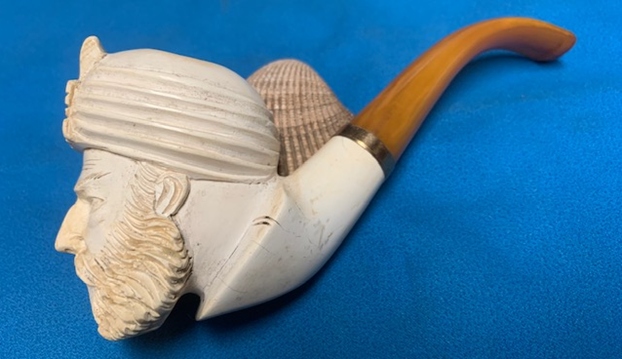
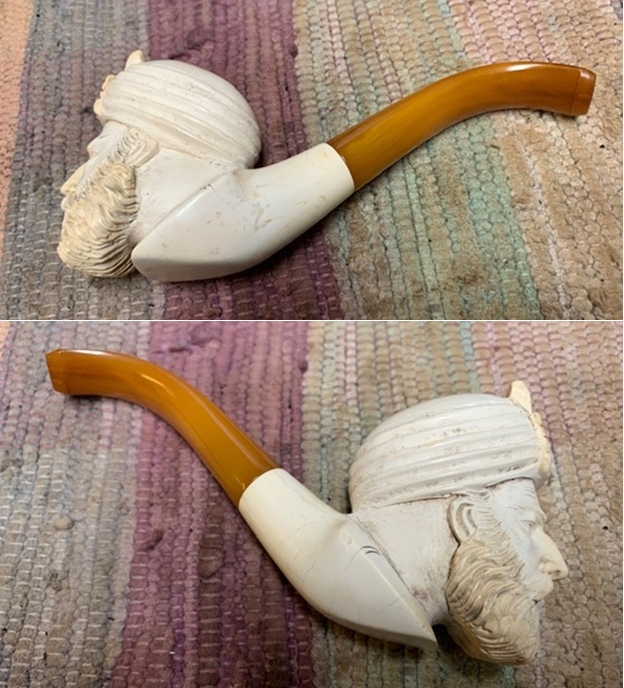
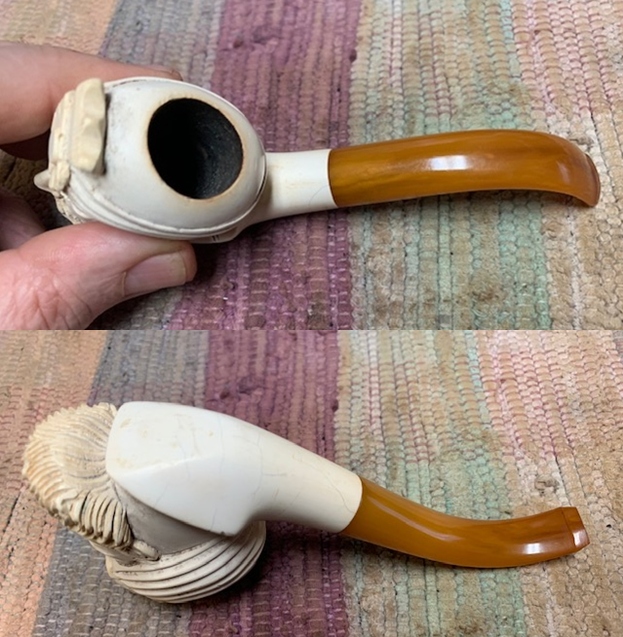
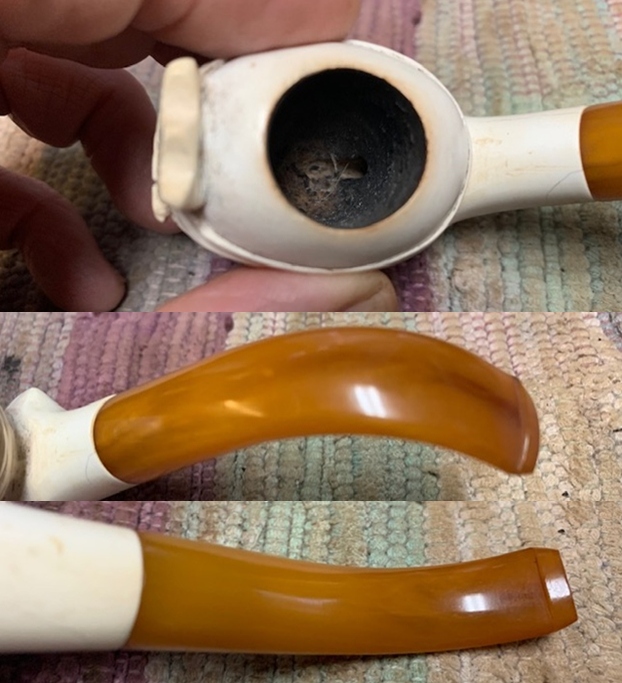
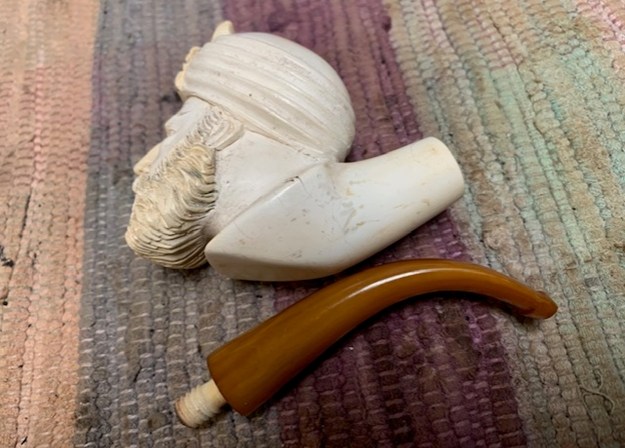
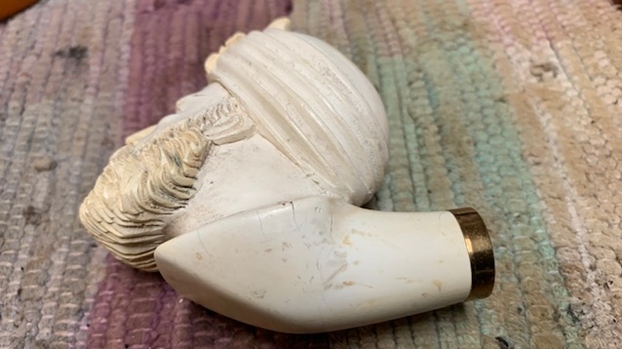
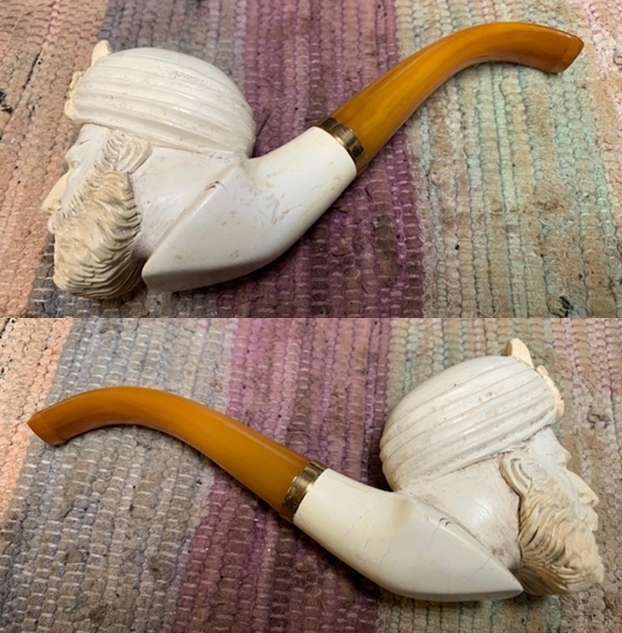
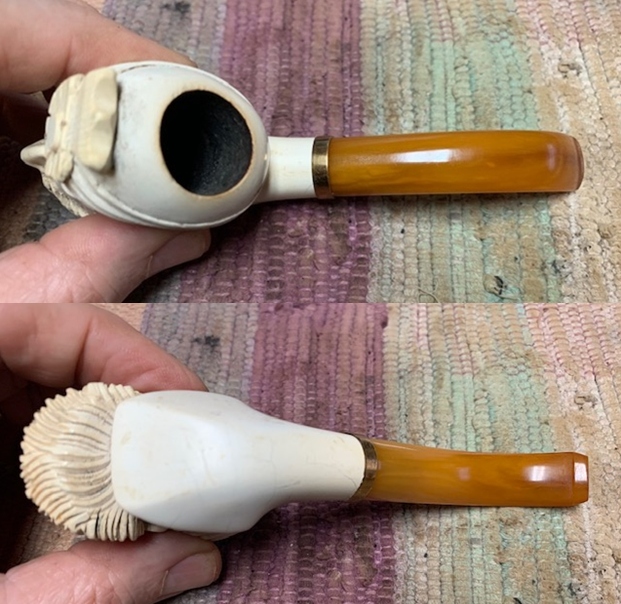
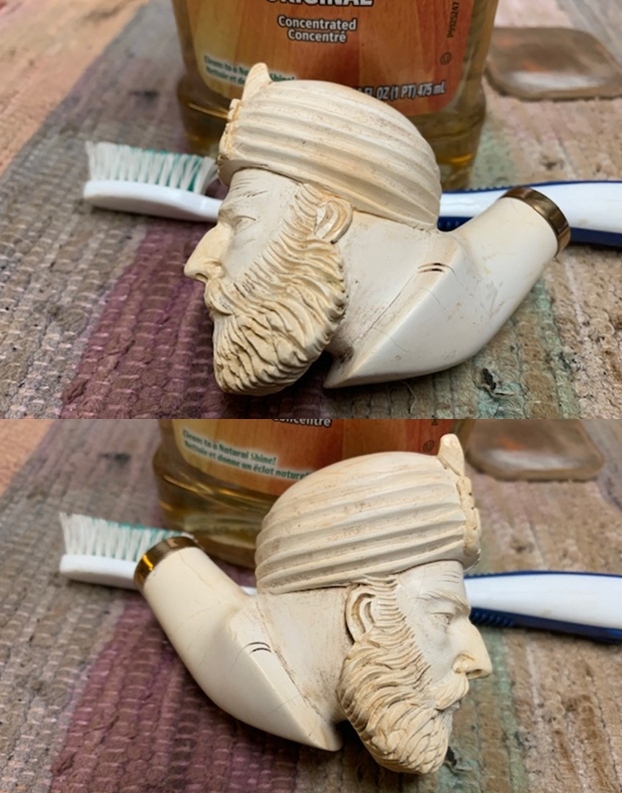
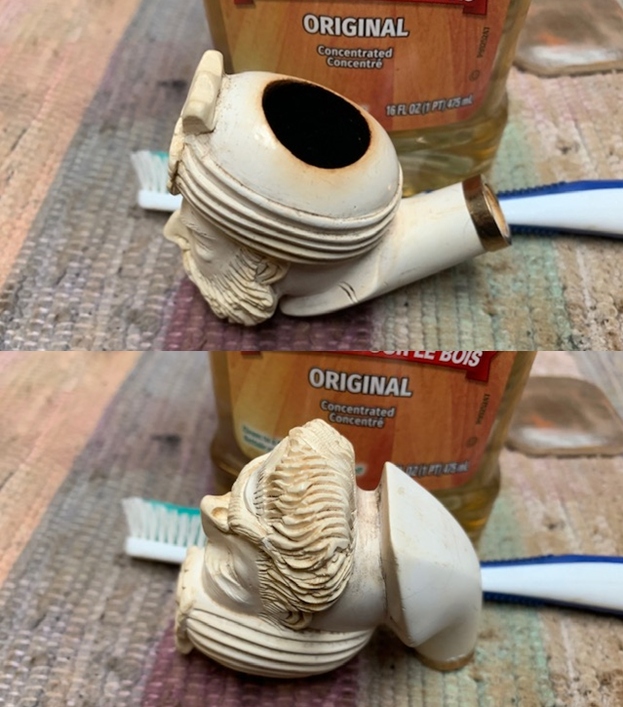
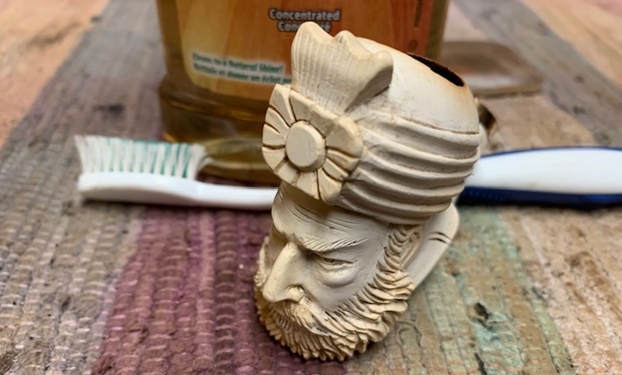
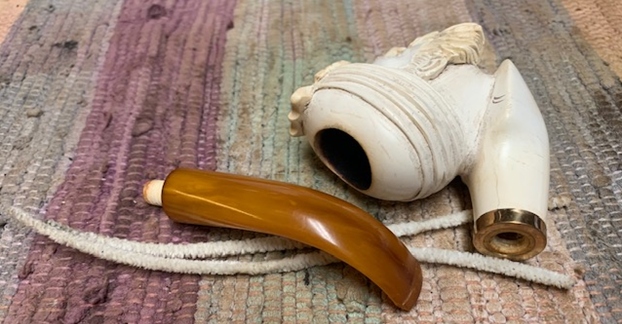
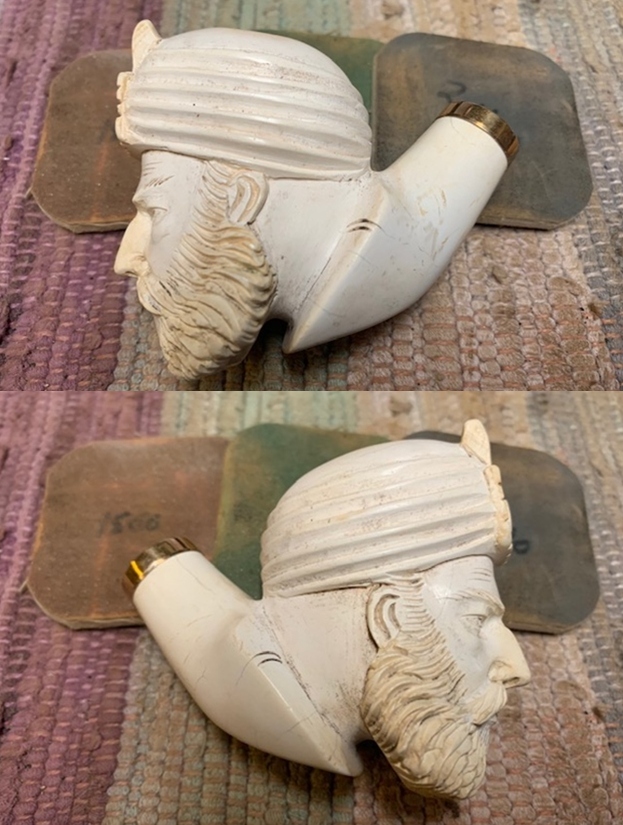
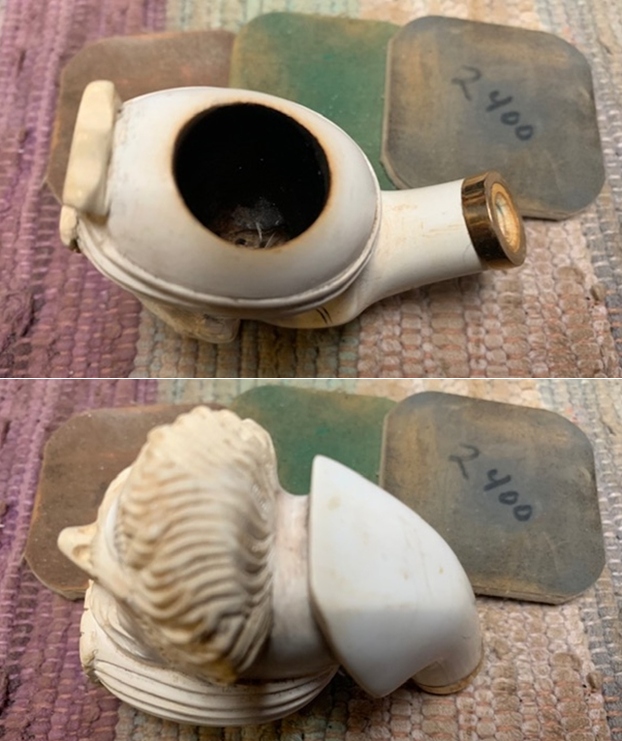
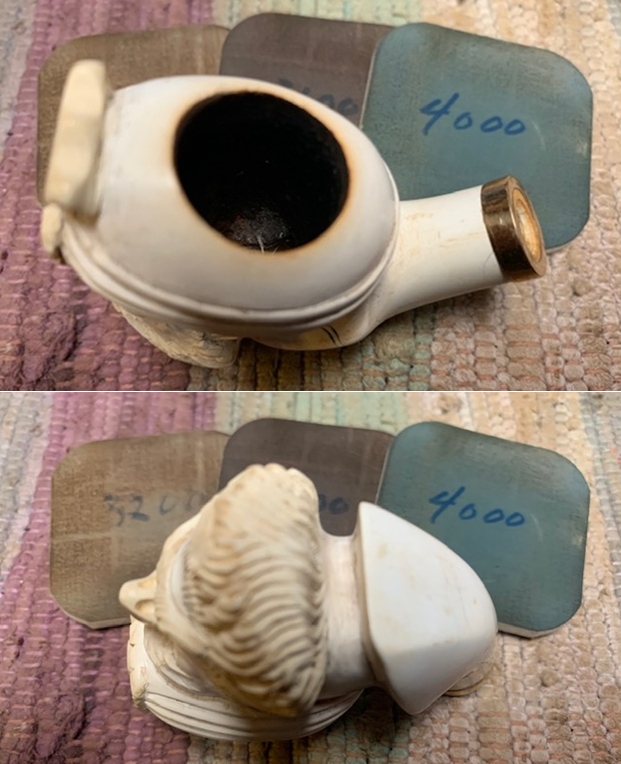
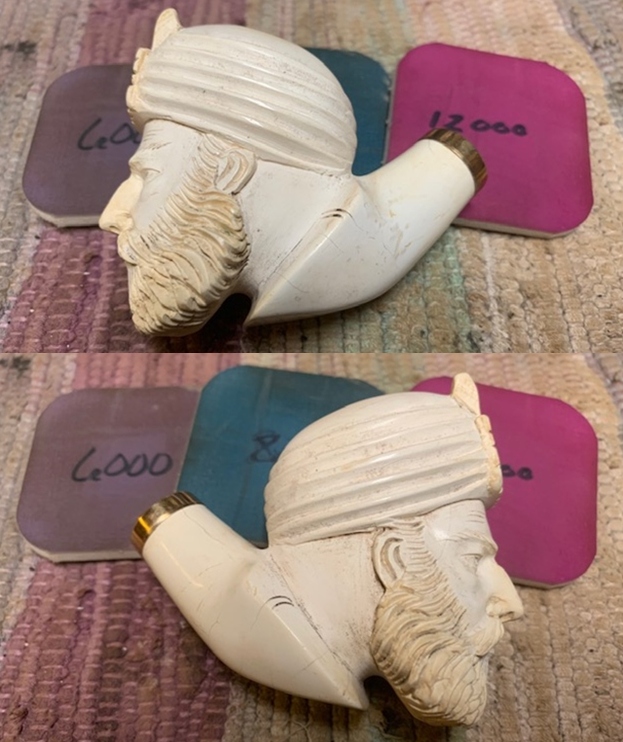
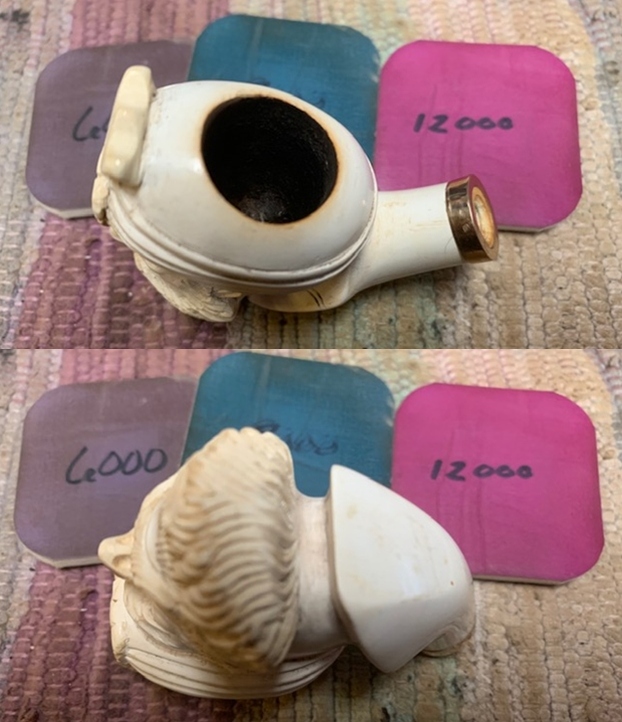
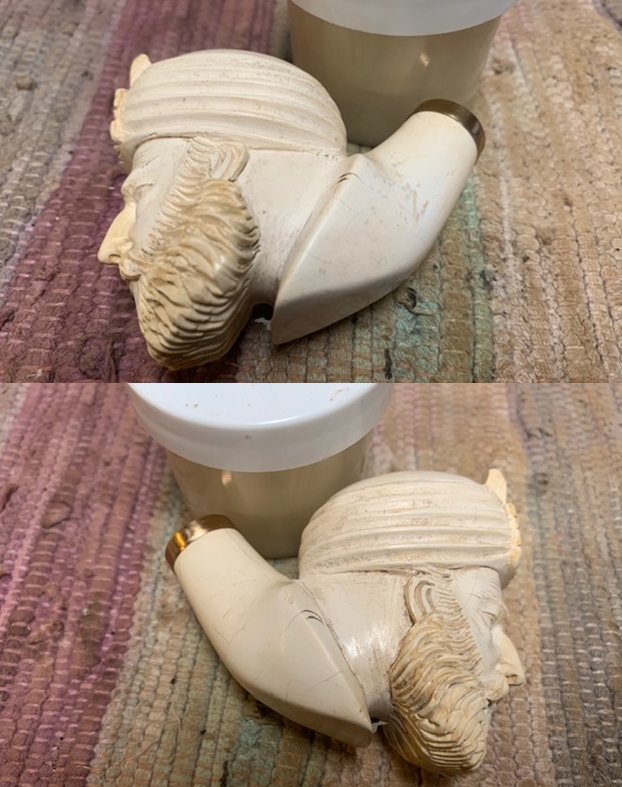
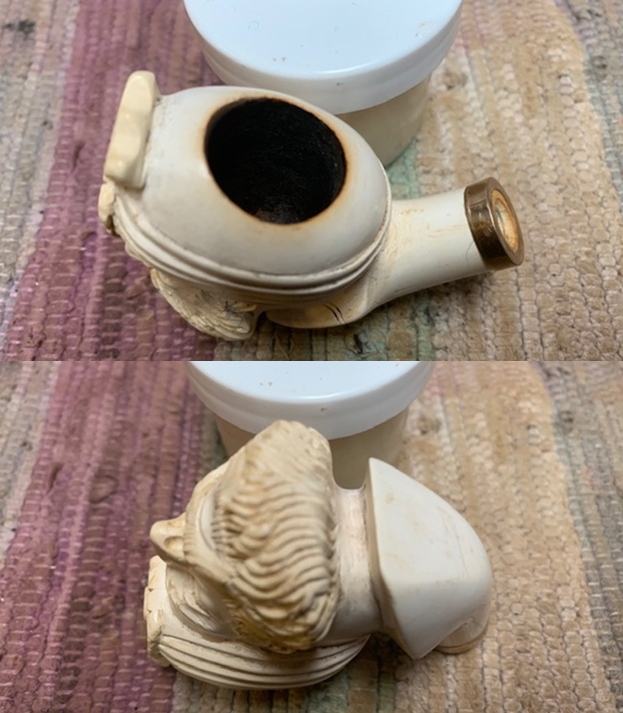
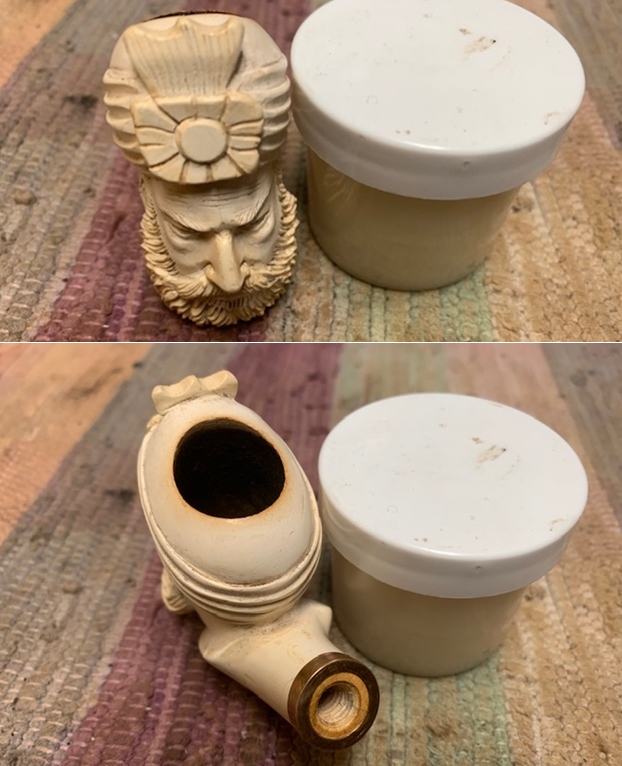
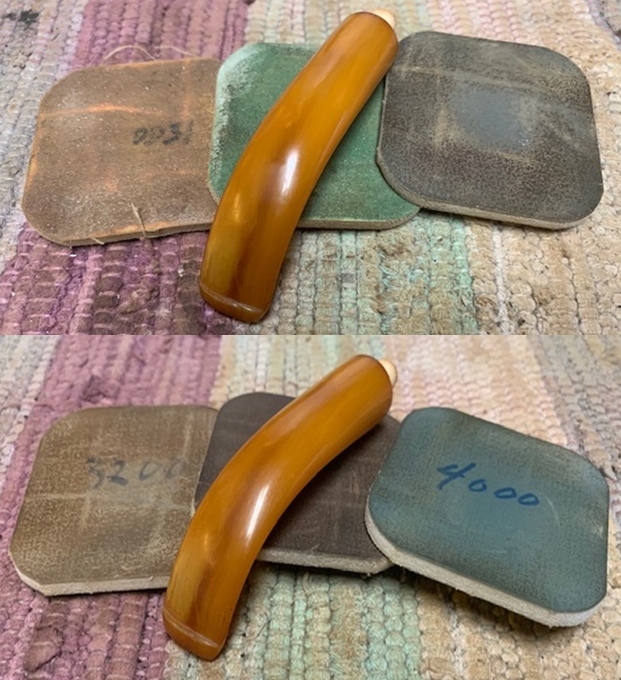
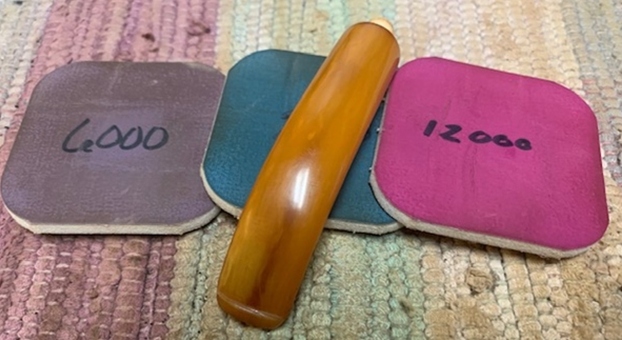
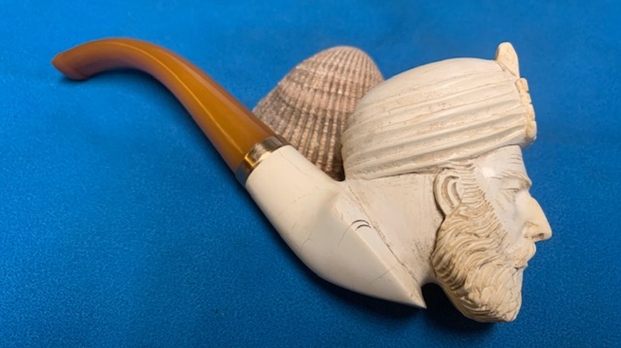
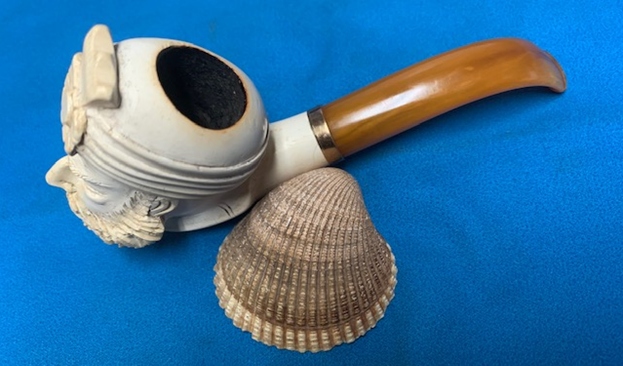
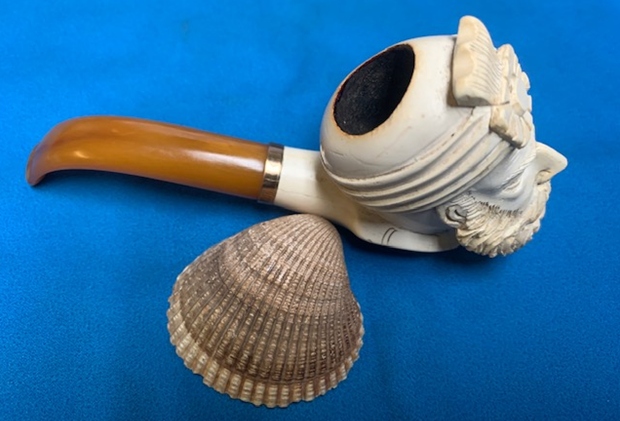
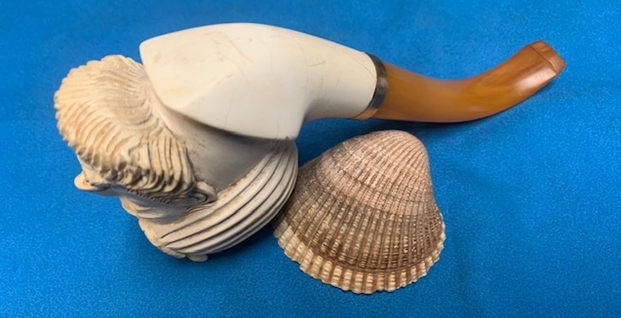
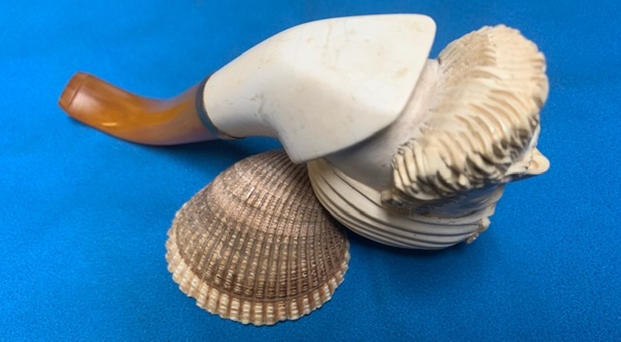
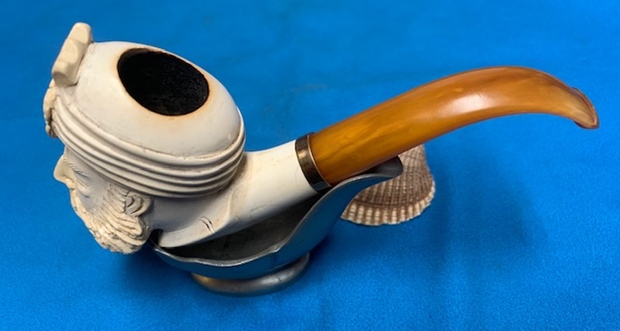
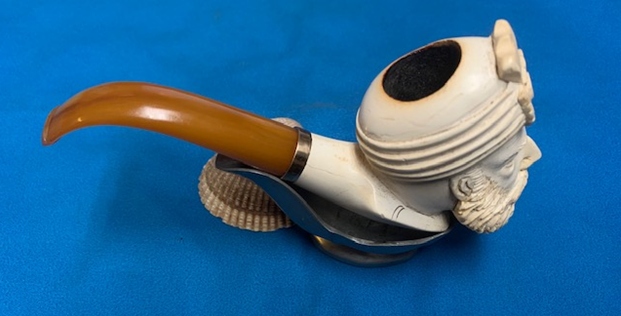
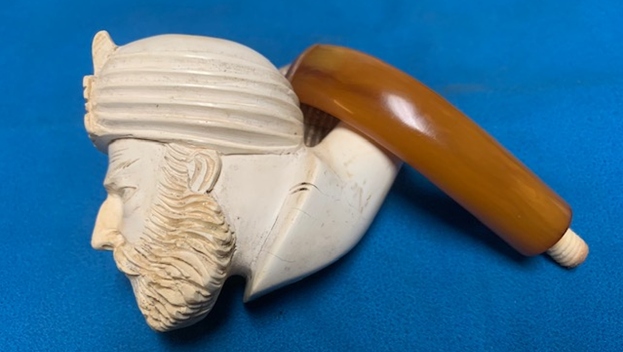
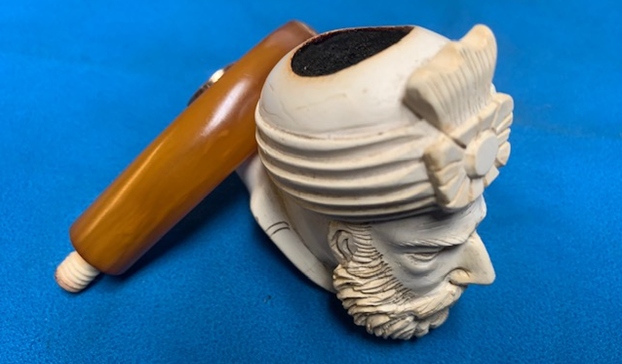
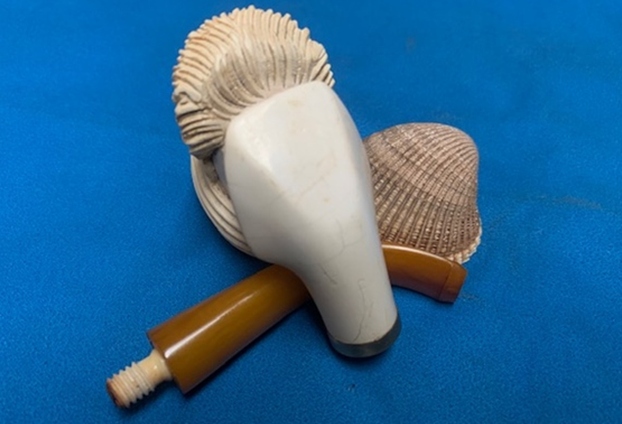
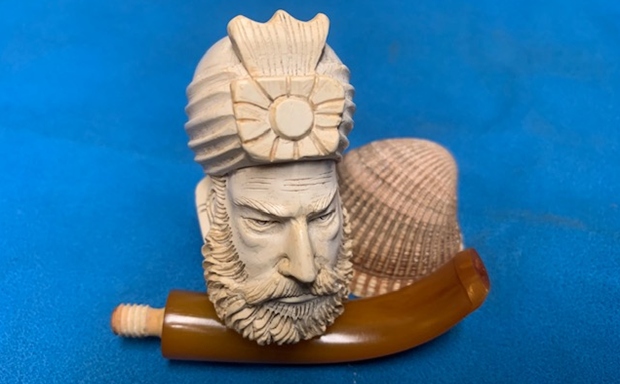
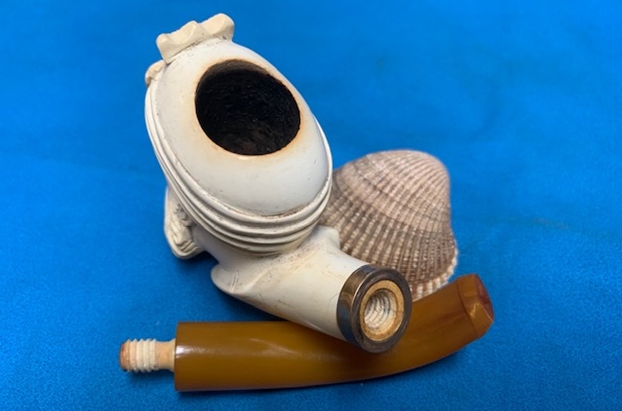
This is another of those pipes that I have no idea when or where it came from. With Jeff and my penchant for picking up pipes where ever we go it could honestly be from anywhere. As for the when, that is and will remain a mystery. This is a carved figural meerschaum Sultan Head Bent pipe with an acrylic (Bakelite) stem. The pipe has no identifying stamping on the shank or stem and even on the shank end when the stem is removed. It is a dirty pipe but the bowl was surprisingly clean. The rim top had some lava and darkening around the inner edge but otherwise looked very good. There was a lot of dust and debris in the carving around the turban and the beard. The creases around the neck and eyes were also filled with dust and debris. The shank showed three hairline cracks on the top and right and left sides. None were big or deep but they were present. My guess is that they came from over tightening the stem on the shank. There were also scratches on the shoulders and collar forming the shank. The taper stem was in very good shape with a minimum or tooth chatter and marks on the top side near the button. The button edges were in excellent condition. It was overclocked slightly and that would need to be dealt with. Here are some photos of the pipe when I brought it to the work table.   I took a close-up photo of the rim to show the condition of the rim top, bowl and the inner edge of the bowl. You can see the inside of the bowl and note that it was quite clean. The rim top looked good with some darkening and developing patina on the inner edges. The stem was in decent condition.      I removed the stem from the shank and took a photo of the flow of the pipe. The pipe was going to look good once it was cleaned and polished.I have circled the hairline cracks in the photos below. They are quite light but in reality they are visible, I can also see the on the shank end with the stem removed. I went through my bands and found a thin profile brass band that had a slight cap that would go over the shank end. I used some clear super glue on the band and on the shank end and pressed the band in place on the shank. The fit was good and it should provide a cushion for the stem and tenon protecting the stem from being overturned. A side benefit was that the slight thickness of the band corrected the overclocked stem. I took photos of the pipe with the stem in place to give you a sense of what the pipe looked like. I scrubbed the exterior of the bowl with a tooth brush and undiluted Murphy’s Oil Soap to get the grime and debris out of the grooves and carving. I rinsed it with running water (keeping the water out of the bowl and shank) and dried it off with a towel. With that the outside was clean and definitely looking better… progress!    I cleaned out the mortise, shank in the briar and airway in the stem with pipe cleaners, cotton swabs and 99% isopropyl alcohol. The pipe was dirty with lots of tars and oils. I polished the meerschaum with micromesh sanding pads – wet sanding with 1500-12000 grit pads. I wiped the bowl down after each pad to remove the sanding debris.   I worked some Before & After Restoration Balm into the surface of the meerschaum with my fingertips and a horsehair shoe brush to clean, enliven and protect it. I let the balm sit for a little while and then buffed with a cotton cloth and shoe brush to raise the shine. The following photos show the bowl at this point in the restoration process. It is definitely looking better and I am very happy with the results. I set the bowl aside and turned my attention to the stem. I polished the stem with micromesh sanding pads – wet sanding with 1500-12000 grit sanding pads and wiping it down after each pad with Obsidian Oil. I wiped it down a final time with Obsidian Oil when I finished.        This Carved Sultan Head Meerschaum Figural with a Bakelite taper stem turned out to be a great looking pipe. The features of the face and the beard as well as the wraps of the turban look really good. The amber coloured Bakelite stem also turned out very well. The thin brass band adds a nice touch to the classy look of the pipe. I polished stem and the bowl lightly with Blue Diamond polish on the buffing wheel and the finish just popped and came alive. I gave the bowl multiple coats of Clapham’s Beeswax Polish and the stem multiple coats of carnauba wax. I buffed the pipe with a clean buffing pad to raise the shine. I hand buffed it with a microfiber cloth to deepen the shine. The pipe polished up pretty nicely. The pipe took on life with the buffing. The developing patina on the beard, turban and shank work well with the polished amber coloured stem. The finished pipe has a rich look that is quite catching. Have a look at it with the photos below. The shape, finish and flow of the pipe and stem are very well done. The dimensions are Length: 5 ½ inches, Height: 2 ½ inches, Outside diameter of the bowl: 1 ¼ inches wide x 1 ¾ inches long, Chamber diameter: ¾ of an inch. The interesting old Meerschaum Sultan will be going on the rebornpipes store shortly. If you are interested in adding it to your collection let me know. Thanks for walking through the restoration with me as I worked over another estate pipe.
Restemming and Restoring a Bill Lator Handmade Bent Dublin


Blog by Steve Laug

A fellow Vancouver Pipeman named Alex has been keeping me busy with working on the pipes he is picking up. He has picked up some interesting American and English made pipes. One of those is this Dublin that is engraved on the left side and underside of the shank. On the left side it reads Crafted Expressly for Roy Garrett. On the underside it reads Lator Handcrafted. It is a nice piece but has some unique features that are visible in the photos that follow. It has a sculpted/rusticated portion on the left side of the bowl and a crowned rim top. There was a thick cake in the bowl and lava overflowing onto the rim top. The rim top has some scratching and dents that will be more visible once the lava coat is gone. It appears that the edges of the bowl are in good shape – both inner and outer. The finish was very dirty with grime and oils ground into the smooth and rusticated portions. The stem did not fit well in the shank and appeared to be a replacement stem. The diameter of the stem was less than that of the bowl and left a large edge exposed on the shank end. I believe that the pipe originally had a taper stem rather than the fancy, damaged turned one that was on it when I received it. To my mind it would need to have a new stem fit to the shank. Here are some photos of the pipe when I first received it.I took a close-up photo of the rim to show the condition of the rim top and the inner edge of the bowl. The rim top had some dents and damage to it and the inner edge appeared to have some charring and darkening. The stem was an obvious replacement of necessity. It did not fit the shank and it was actually quite worn out with a chip out of the button and stem on the top side. I would need to fit a replacement.  The engraving on the left side and the underside of the shank are shown in the photos below. It reads as noted above.    I removed the stem from the shank and took a photo of the flow of the pipe. When I crafted a new stem for it I would work with the same angles to get the same look.When Alex dropped it off the first of the Lator pipes that he wanted me to work on I asked him to do a bit of research on the brand and see what he could find out about the pipemaker and the brand. He said he would and over the next couple of days sent me several emails with information that he had found out about the pipe. Here is a link to the first blog on the Canadian that is referred to in the following information (https://rebornpipes.com/2019/02/07/removing-an-annoying-whistle-from-a-handmade-canadian-by-bill-lator/).

The first email was the description given of the pipe on the SATX Pipes site – the company he purchased it from. They gave a pretty detailed description of the pipe and the stamping on the pipe.

This is a very rare handmade Canadian by Bill Lator. In addition, it bears the customer’s name on it that it was commissioned for. Bill Lator was a pipe maker from Indiana who operated two small pipe shops with his family. This particular Lator is in fine shape. Stem is shiny black and free from any chatter. Beautiful grain and color is offset by a sterling silver band. This is a non-filtered pipe. Pipe has been sanitized, polished and waxed, and comes ready to smoke. Pipe Dimensions: Length Overall: 6 1/8″ Height Overall: 1 3/4″ Width Overall: 1 1/4″ Chamber Width: 7/8″ Chamber Depth: 1 5/8″ Weight: 1.1 oz

Alex also sent along picture of a Magazine cover showing …Bing with a BL Canadian on the cover of a magazine.He also included an excerpt from a local newspaper article about the Lators from 1976:

Pipemaking is a family affair for the Bill Lator family. The family owns and operates “The Pipemaker,” 109 N. Broad. Father Bill, Sr. and all three sons, Paul, 28, Bill, Jr., 20 and Kurt, 14 have taken up the rare trade of pipemaking. According to Lator, there are only about 20 pipemakers in the United States. “And three of them are in Griffith,” he quipped. Lator said his pipe making started as a hobby, “a way to relax after a busy day as an executive.” Lator also began doing extensive research into pipe making going through a number of west coast libraries and learning everything he could. About a year ago, his friends started suggesting he open a pipe shop and after more urging by his son Paul, Lator moved to Griffith. The fame of his handmade briar pipes combined with the skills of his wife, Hellen, in blending pipe tobacco made the shop an instant success. Lator said his oldest son turns out artistic pipes, “he is the artist in the family-Son, Bill is the “perfectionist.” His creations have a machined perfection according to his father, “which appeals to certain customers.” The youngest, Kurt, is still an apprentice, learning the trade of pipemaking with the discards and making tampers. Mrs. Lator has gained a reputation as a master tobacco blender.

Alex sent a follow-up email and included a paragraph from Bill Lator’s obituary: “Bill was very artistic and in 1973 found he could make beautiful smoking pipes carved of briar. In 1975 he along with his 2 sons, Paul and Bill, opened The Pipemaker Pipe and Tobacco Shop in Griffith, Indiana. He loved that shop and all the customers. He made a very successful business that lasted 13 years. In 1986 he decided it was time for him to retire…”

From this I know that the pipe came from Bill Lator’s Griffith, Indiana Shop – The Pipemaker Pipe and Tobacco Shop. It had been made between 1975 and 1986 when Bill retired.

Now it was time to work on the pipe itself. I reamed the thick cake back to the walls with a PipNet pipe reamer using the first two cutting heads. I followed up – cleaning the remnants of cake on the walls with a Savinelli Fitsall Pipe Knife. The final step for me to assess the condition of the walls of the bowl is to sand it with 220 grit sandpaper on a piece of dowel. I sanded the walls smooth. I was happy with the condition of the inside walls of the chamber.  I scrubbed the exterior of the bowl with a tooth brush and undiluted Murphy’s Oil Soap to get the grime and debris out of the briar. I rinsed it with running water and dried it off with a towel. With that the outside was clean… progress!   I worked on the damage to the rim top to remove the darkening, charring and dents and nicks. I sanded it with 220 grit sandpaper and started polishing it with 400 grit sandpaper. The top is looking much better at this point.I cleaned out the shank and airway in the bowl with pipe cleaners, cotton swabs and 99% isopropyl alcohol. I would do the stem once had the replacement shaped and fit.I polished the briar with micromesh sanding pads – wet sanding with 1500-12000 grit pads and wiping the bowl down with a damp cloth after each pad. The grain is really beginning to stand out and the rim top is blending in quite well.     I worked some Before & After Restoration Balm into the surface of the briar with my fingertips to clean, enliven and protect it. I let the balm sit for a little while and then buffed with a cotton cloth to raise the shine. The following photos show the bowl at this point in the restoration process. I am very happy with the results.      I set the bowl aside and went through my stems to find one that would fit well. There was a nice acrylic stem without a tenon that was the right diameter as the shank end. I took a photo of the new stem with the one that came with the pipe. I took a photo of the tenon that would work on the stem and in the shank.  I repaired the tooth marks in the acrylic with the new Black Loctite 380 Adhesive. I set the stem aside to let the repairs cure.      I glued the new tenon in place in the stem with clear super glue. The tenon looks long but it is the same length as the mortise.I used a needle file to recut the edges of the button and flatten out the repairs. I sanded them with 220 grit sandpaper to smooth them out and blend them into the surface. I started the polishing with 400 grit wet dry sandpaper.Bending this stem was a challenge! I heated it with a heat gun and was unable to bend it. I heated it in boiling water for over 5 minutes and the bend I was able to achieve was not as much as I wanted. I repeated the process multiple times and the photo below shows what I accomplished.I am not happy with the bend. It had taken a lot of work to get to this point but I did not like what I was seeing. I went back through my can of stems to find a different stem that would work better. I found one that would work, it had the correct bend  but needed to be cleaned up and polished.I sanded the stem with 220 grit sandpaper and 340 grit sandpaper paying particular attention to the tenon and the curve of the saddle stem.       I polished the stem with micromesh sanding pads – wet sanding with 1500-12000 grit sanding pads and wiping it down after each pad with a damp cloth.   This Lator Bent Dublin with a new fit acrylic saddle stem turned out to be a real beauty. It has a unique carved rustication on the left side of the bowl and a crowned rim top that rolls from the outer edge into the bowl. Lator really maximized the grain with the shape of the pipe. Everything about the pipe – the rustication on the side, the crowned rim top and the cut of the briar work well to highlight the shape of the bowl. I polished stem and the bowl with Blue Diamond polish on the buffing wheel and the finish just popped and came alive. I gave the bowl and the stem multiple coats of carnauba wax. I buffed the pipe with a clean buffing pad to raise the shine. I hand buffed it with a microfiber cloth to deepen the shine. The pipe polished up pretty nicely. The pipe took on life with the buffing. The rich brown finish works well with the polished acrylic stem. The finished pipe has a rich look that is quite catching. Have a look at it with the photos below. The shape, finish and flow of the pipe and stem are very well done. The dimensions are Length: 5 ½ inches, Height: 2 inches, Outside diameter of the bowl: 1 ½ inches, Chamber diameter: 7/8 of an inch. The pipe will back in the box of pipes that I am working on fro Alex. I am looking forward to what he will think of this one. Thanks for walking through the restoration with me as I worked over another estate pipe.

Restoring a Odd LH Stern Filtrex Air Cooled Filter Pipe


Blog by Steve Laug

The next pipe on the work table is another odd one that I have looked at several times over the years and then put back in the box of pipes to be restored. We picked it up on EBay in 2017 out of Illinois and it has been sitting here since then. To me it is another pipe that characterizes the perpetual hunt for the perfect flavourful and cool smoke. Today I decided to bring it to the table and work on it. This one is an oddity made by LHS. It has a briar bowl with the screw holding it to the top of the metal tube that forms the shank. The smooth finished bowl is either a bulldog or Rhodesian bowl with the twin rings around the cap. The shank piece is oxidized aluminum with cooling fins and a threaded end cap that is removable for cleaning. The stem is plastic (perhaps nylon or an early acrylic). It was stamped on the stem with the LHS in a Diamond logo. There is no other information on the shank in terms of a line of pipes or a shape number. The pipe was dirty with grime ground into the finish. There was a cake in the bowl and lava overflow and bubbling of the finish on the rim top. The inner edge of the rim appeared to be in okay condition but we would know once it was cleaned. The stem was dirty and deep tooth marks and chatter ahead of the button on both sides. Jeff took photos of the pipe as it was when he received it from the EBay seller. Jeff took photos of the bowl and rim top to give an idea of the thickness of the cake in the bowl and the condition of the rim top. The pipe was a mess and it would take a lot of work. He also took photos of the condition of the stem to give a picture of the shank. He ends with photos of the stem surface. You can see the tooth marks in the stem material on both sides of the stem.   He took a photo of the stamping on the topside of the stem. It is reads as noted above.Jeff took photos of the sides of the bowl and the condition of the exterior of the bowl and the aluminum shank that the bowl is screwed into. It really is an odd looking pipe. I am anxious to see it looks like when I take it apart. The shank end cap has knurled edges and I am wondering if it would be stuck in the shank and unmovable. There appears to be a shellac or varnish coat on the bowl to give it the shine that shows through the grime.    You can see that Jeff was able to remove the cap. The threads appear to be in excellent condition. The stem also came of the metal shank quite easily. Inside was a disintegrating paper filter that was really just a pile of debris. It was a mess.  He also included photos of the shank and stem. Before I started working on it I did a bit of research on the brand to see if I could find anything mentioned in the two sites I regularly check for background information. I turned first to Pipephil’s site (http://www.pipephil.eu/logos/en/logo-lhs.html). There was a great summary of the history of the brand but nothing on this particular unique pipe. I include that summary below:

The L&H Stern Inc. was established by Ludwig Stern (1877-1942) in 1911. His brother Hugo (1872-?) acted as vice-president & secretary. The firm moved to 56 Pearl St. Brooklyn in 1920. It closed down in the 1960s. LHS was one of the main pipe suppliers for US soldiers during WWII.

I did a quick look at Pipedia (https://pipedia.org/wiki/LHS) and there was a longer version of the same information as well as lot of photos of the wide range of LHS produced pipes. It is well worth a visit however there was no information on this particular odd pipe. The one thing that was included that proved a gold mine was an LHS Catalogue from 1946. I have included the link as well as a screen capture of the FILTREX pipe and information included from the catalogue (https://pipedia.org/images/b/b8/LHS_Catalog_1946.pdf).

The page contained this information: The Filtrex pipe is probably the coolest smoking pipe yet made. The aluminum cooling coils with highly absorbent filter keeps the pipe cool and dry at all times. A package of 20 Filtrex absorbent filters free with each pipe. The Filtrex pipe can be had with solid rubber bits or “easy grip” plastic bits.

From there I turned to the Smoking metal collectors website to check out the possible information that it would provide (http://www.smokingmetal.co.uk/pipe.php?page=224). It included two listing for the LHS Filtrex pipe stating that it came in two different sizes. I have included that information and photos below.

The diameter of this pipe is smaller than the normal Stern. Carries the LHS in a diamond logo on the plastic mouthpiece.  The larger of the two L H Stern pipes, identical except for size.    Now it was time to work on the pipe. Given the horrible condition of the pipe shown above I was wondering what it would look like after the cleanup. Jeff did an amazing job on this one. With odd design combining briar, aluminum and plastic it was a lot of detail work to get it clean. The pipe is similar in design Kirstens. He reamed the bowl with a PipNet Reamer and cleaned it up with a Savinelli Fitsall pipe knife. He cleaned out the internals of the shank and airway in the stem with alcohol, cotton swabs and pipe cleaners. He scrubbed the externals of the pipe with undiluted Murphy’s Oil Soap and rinsed with running water. The pipe looked a lot better than when he started. Internally it was spotless and smelled clean. I took some photos of the pipe before I started my work on it.      I took some close up photos of the rim top and the stem surface. I wanted to show the condition of the rim top and edges of the bowl. The outer edges were in okay condition. The inner edges had nick toward the front of the bowl. There was still some peeling varnish on the rim top. There were nicks and gouges in the top of the rim toward the front. I also took close up photos of the stem to show the deep tooth marks and chatter on the top and underside near the button.    I took photos of the stamping on the top of the stem. It is faint but readable. It is stamped as noted above.   I took a photo of the pipe with the stem removed to give and idea of the proportions of the bowl and shank unit and the stem.I took the pipe apart and took photos of the parts.     I decided to start my restoration on this old timer by addressing the varnish or shellac on the bowl by wiping it down with acetone to remove it. Once the finish was gone the briar looked very good.    I moved on to deal with the damage to the inner edge and the rim top. I sanded the inner edge with a folded piece of 220 sandpaper to bring it back into round.  I filled in the flaws on the rim top with clear super glue. I let it cure and sanded them smooth with a folded piece of 220 grit sandpaper.   I topped the bowl on a topping board with 220 grit sandpaper to remove the repair and blend it into the surface of the rim.   I polished the bowl with micromesh sanding pads. I wet sanded with 1500-12000 grit pads and wiped the rim top off after each pad with a damp cloth. The shine began to look very good. I rubbed the bowl down with Before & After Restoration Balm. I worked it into the surface of the rusticated briar with my fingertips and a horsehair shoe brush to clean, enliven and protect it. I let the balm sit for a little while and then buffed with a cotton cloth and shoe brush to raise the shine.      I set the bowl aside and turned my attention to the aluminum shank. I buffed it with Blue Diamond polish on the buffing wheel to raise a shine. I put a Dr. Grabow Charcoal Filter in the shank. The second half of the filter extends into the stem attachment once I have it done.  I screwed the bowl back on to the shank and took photos of what the pipe look like so far. It is looking pretty good at this point in the process. All that is left is the stem to clean up and polish.   Now it was time to work on the stem. There was a chip out of the outer edge of the button. I filled it in with clear super glue. Once the repair cured I sanded it smooth with 220 grit sandpaper and topped the edge on the topping board to flatten out the outer edge of the button.    I sanded the tooth marks and chatter on the stem surface with 220 grit sandpaper to blend them into the surface of the surrounding vulcanite. I started polishing process with 400 grit wet dry sandpaper.        I used some Rub’n Buff Antique Gold to touch up the LHS Diamond on the top of the stem. I polished the stem with micromesh sanding pads – 1500-12000 grit pads. I wiped it down with a damp cloth after each sanding pad. This restored LHS (LH Stern) Filtrex Air Cooled Filter pipe turned out to be a good looking pipe (I think I can call this oddity good looking). The unique set up of the pipe is still a part of the hunt for the dry, cool smoke. That is what makes it interesting to me. The contrasting brown stains on the bowl worked really well with the polished aluminum shank and polished yellow plastic stem. I put the stem back on the bowl and carefully buffed the pipe without the stem with Blue Diamond on the buffing wheel. I gave the bowl multiple coats of Carnauba Wax. I gave the stem multiple coats of Conservator’s Wax. I followed that by buffing the entire pipe with a clean buffing pad. I hand buffed the pipe with a microfiber cloth to deepen the shine. The finished LHS Filtrex Air Cooled Filter Pipe sits well in the hand and feels great. Give the finished pipe a look in the photos below. The dimensions of the pipe are Length: 5 ½ inches, Height: 1 ¾ inches, Outside diameter of the bowl: 1 ¼ inches, Chamber diameter: ¾ of an inch. This unique piece of American pipe history will be joining my collection of oddities that all were a part of the search for the perfect smoke. Thanks for reading this blog and my reflections on the pipe while I worked on it.


Cleaning up a Svendborg Danish Handmade Bark Inka Bent Apple 21


Blog by Steve Laug

The next pipe on the work table is another one that is a bit of a mystery to me. It is obviously one that I picked up on one of my hunts or in a trade as it has not been cleaned at all. The mystery is that I have no recollection of finding the pipe so I have no way to connect it to a time period. I do know that it has been here for quite a while and I am just now getting to it. I try to eventually work the pipes we find into the restoration queue so that I can keep them moving. This one is a full bent apple shaped pipe. It has some nice mixed grain around the bowl and shank with a vulcanite shank extension. It was stamped on the underside of the shank and reads Svendborg [over] Danish Handmade. On the left side of the shank it is stamped Bark [over] Inka and on the right side is the shape number 21. The finish was dirty with dust and grime ground into finish. There was a cake in the bowl and some lava overflow on the rim top. The inner edge of the rim did not look too bad as far as I could tell. The vulcanite shank extension and stem were both oxidized. The stem was a mess of oxidation, calcification and grime with tooth marks and chatter ahead of the button on both sides. There was very faint Svenborg ∞ (infinity sign) logo on the left side of the fancy saddle stem.

Before I started working on it I did a bit of research on the brand to remind myself of what I knew of the maker. I turned to Pipephil’s site first (http://www.pipephil.eu/logos/en/logo-s14.html). I did a screen capture of the information on the site. I did a screen capture of the pertinent information and have included it below. I copied and pasted the side bar information below:

Brand founded in 1970s by Henrik Jørgensen, Poul Ilsted and Tao Nielsen. They bought an old factory (Nordisc Pibefabriker) in Svendborg on Funen Island. Poul and Tao gradually bow out from machine manufactured pipes (1982) and Henrik Jørgensen manages the brand until its takeover by Design Berlin (D) in the late 90ies. Kaj C. Rasmussen jointed the firm for several years. 17 employees worked for this brand under Henrik Jørgensen direction.

I then turned to Pipedia and found that an article on the brand that was helpful and interesting to read (https://pipedia.org/wiki/Svendborg). I have included the first part of the article below.

Jens Tao Nielsen and Poul Ilsted Bech met each other when working together for Erik Nørding and soon became close friends. Both felt a bit tired to make nothing but bizarre fancy shapes and agreed they wanted to produce pipes of more style and more classicism. They decided to establish their own brand “Tao & Ilsted” – But how to do it?

A good fortune brought them in contact with Henrik Jørgensen, a passionate pipe lover and a wealthy Copenhagen banker who was willing to retire from bank business and change his career to become a pipemaker. The trio joined in 1969 and decided to start a new pipe brand together. Nielsen and Ilsted started to search for a suitable workshop while Jørgensen took care of the finances. In early 1970 the partners found an old, closed down pipe factory in Svendborg on Funen, and bought it shortly after for a mere 16.500 Danish Kroner. It was the earlier Nordic Pipe Factory – Nordisc Pibefabriker – maybe the oldest Danish pipe factory. And now it became the home of Svendborg Piber.

The article also included this set of pages from a catalogue that were interesting as they included the Bark line. The philosophy that drove the brand is also there to read.Now it was time to clean up this pipe and get it restored. I cleaned the pipe with the methodology that Jeff and I have developed. The pipe was a mess when I took it out of my box here so I was curious to see how well it would cleanup. I took some photos of the pipe before I started my work on it. You can see that it is filthy but has some great grain in the blast and on the smooth portions. It has a really nice sandblast that is deep and rugged. I took some close up photos of the rim top and the stem surface. I wanted to show the condition of the cake in the bowl and look of the rim top and lava overflow. I also took close up photos of the stem to show the tooth marks and the calcification, oxidation and generally condition of the stem surface.    I took a photo of the stamping on the underside of the shank and it is faint but readable under the grime. It is stamped as noted above. It is also stamped on both sides of the shank.I removed the stem for the shank and took a photo of the bowl and stem to give a picture of what it looked like. It is a great looking pipe under the grime.I decided to start my restoration by getting rid of the cake in the bowl and cleaning up the rim top. I reamed it with a Savinelli Fitsall Pipe Knife. I sanded the inside of the bowl with 220 grit sandpaper wrapped around a piece of dowel. Once I finished the bowl was smooth and clean. I was glad to see that there was no internal damage.  I scraped the inside of the tenon with a pen knife to remove the buildup of tars. I followed that by scrubbing out the internals of the shank and the airway in the stem with alcohol, pipe cleaners and cotton swabs until the pipe was clean.  I was not able to push a pipe cleaner through the shank to the bowl. There was some obstruction in the way that impeded the airflow.      I scrubbed the exterior of the bowl with Murphy’s Oil Soap and a tooth brush to remove the grime and grit on the briar and the lava on the rim top. The finish looks very good with good looking grain around the bowl and shank. Once it is polished it will come to life. I scrubbed the oxidized shank extension with Soft Scrub All Purpose scrub and cotton pads to remove the oxidization. It took a bit of elbow grease and hard scrubbing to remove the oxidation but it looked very good.      I decided to pause and try to clean out the shank and try to remove what was clogging the airway in the shank. I could not push a pipe cleaner through the shank it was blocked and when I blew air through it and it was very constricted. I probed the shank with a dental pick and was surprised when this piece of plastic wrap came out of the shank. It explained the buildup I took off the tenon when I first clean it. It appeared that something had been glue to the tenon and now I knew what it was.  Without it the airway and flow was unobstructed.With the obstruction out of the airway the tenon was far too loose in the shank. Something would need to be done to make the tenon fit snug in the shank. I decided to make a Delrin sleeve for the tenon. I thought about making Delrin insert for the vulcanite shank extension but decided to do it this way. I drilled out a replacement tenon with a variety of drill bits. I held it in a set of vise grips and opened the tenon.Once it was open I pressed it onto the existing tenon.  The fit on the tenon was perfect and the fit in the shank was much better than originally. I would clean up the new tenon adapter so that the fit in the shank would be snug but smooth.  The tenon was wide open and excellent airflow. I put the newly sleeved tenon in the shank and took a photo of the pipe at this point.   The stem needed to be bent to fit the profile of the bowl and to hang well in the mouth. I put a pipe cleaner in the stem and heated it with a heat gun until the vulcanite had softened. Once it had softened I bent it to the correct angle. I put the stem on the pipe and took a photo of the new bend. I rubbed the bowl down with Before & After Restoration Balm. I worked it into the surface of the briar with my fingertips and a horsehair shoe brush to clean, enliven and protect it. I let the balm sit for a little while and then buffed with a cotton cloth and shoe brush to raise the shine.    I set the bowl aside and turned my attention to the stem. I scrubbed the stem with Soft Scrub polish to remove the oxidation. While it did not take it all out it removed much of the oxidation. I filled in the small tooth dents next to the button with Black Super Glue and set the stem aside to let the glue cure. Once it cured I smoothed it out with a needle file and sharpened the edges of the button.   I sanded the stem surface with 220 grit sandpaper to remove the remaining oxidation and to blend the repairs into the surface of the stem. I started the polishing with 400 grit wet dry sandpaper.I polished the vulcanite with micromesh sanding pads – 1500-12000 grit pads. I wiped it down with a damp cloth after each sanding pad. I used Before & After Pipe Polish – both Fine and Extra Fine to further polish the stem.  I left a little oxidation around the stamp so as not to damage it more. This restored Svendborg Handmade Bark Inka 21 Bent Apple is a nice looking pipe. The contrasting brown stains on the pipe worked really well with the polished vulcanite shank extension and fancy turned vulcanite stem. I put the stem back on the bowl and carefully buffed the pipe with Blue Diamond on the buffing wheel. I gave the bowl and stem multiple coats of carnauba wax on the buffing wheel keeping a light touch on the buffing wheel for the bowl. I followed that by buffing the entire pipe with a clean buffing pad. I hand buffed the pipe with a microfiber cloth to deepen the shine. The finished Svendborg Bent Apple fits nicely in the hand and feels great. Give the finished pipe a look in the photos below. The dimensions of the pipe are Length: 5 ½ inches, Height: 1 ½ inches, Outside diameter of the bowl: 1 ¼ inches, Chamber diameter: ¾ of an inch. If you are interested in carrying on the previous pipe man’s legacy with this pipe send me a message or an email. I have more to work on of various brands. Perhaps one of those will catch your attention. Thanks for reading this blog and my reflections on the pipe while I worked on it.

Restoring a Odd LH Stern System Pipe with a Sump and a Cleanout


Blog by Steve Laug

The next pipe on the work table is an odd one that I have looked at several times over the years and then put back in the box or pipes to be restored. We picked it up on EBay in 2016 and it has been sitting here since then. To me it is a pipe that characterizes the perpetual hunt for the perfect flavourful and cool smoke. Today I decided to bring it to the table and work on it. This one is an oddity made by LHS. It has a smooth rim, shank band and panel on the underside of the shank. The rest of the pipe is very nice tight rustication that almost looks like a sandblast. The top of the shank has opening with a threaded vulcanite cap that forms an entry into the airway. It is just ahead of the bowl shank junction. There was a crack in the shank on the right side that had spread enough that the stem no longer fit in the shank. It was stamped on the smooth underside of the shank. It reads Italian Briar [over] LHS in a Diamond (the LHS logo). There is no other information on the shank in terms of a line of pipes or a shape number. The pipe was dirty with grime ground into the finish. There was a thick cake in the bowl and lava overflow on the rim top. The inner edge of the rim was covered so thickly in lava it was hard to know what was underneath. The vulcanite stem was oxidized and had a burn mark on the right underside and deep tooth marks and chatter ahead of the button on both sides. Jeff took photos of the pipe as it was when he received it from the EBay seller. Jeff took photos of the bowl and rim top to give an idea of the thickness of the cake in the bowl and the lava overflow on the rim top. The pipe was a mess and it would take a lot of work. He also took photos of the condition of the stem surface. You can see the oxidation and tooth marks in the stem on both sides as well as the burn mark in the third photo of the stem. He took a photo of the stamping on the underside of the shank. It is clear and readable as noted above.Jeff took photos of the sides of the bowl and the condition of the exterior of the bowl and the vulcanite cap that was on top of the shank. It really is an odd looking pipe. I am anxious to see what the drilling is like once I receive it in Vancouver. The edges on the cap are worn and damaged and I was wondering if it would be stuck in the shank and unmovable. But it seems that with a little work Jeff was able to unscrew it and took some photos of the shank with the cap removed to show me what it looked like.    You can see the threads in the opening and on the cap itself. They are in great condition. What is not visible in the photos to me is critical. What did the airway do with the opening? Did it go straight through or how did enter or leave the opening? I would learn. There was a lot of debris on the cap and in the opening. It was a mess.Before I started working on it I did a bit of research on the brand to see if I could find anything mentioned in the two sites I regularly check for background information. I turned first to Pipephil’s site (http://www.pipephil.eu/logos/en/logo-lhs.html). There was a great summary of the history of the brand but nothing on this particular unique pipe. I include that summary below:

The L&H Stern Inc. was established by Ludwig Stern (1877-1942) in 1911. His brother Hugo (1872-?) acted as vice-president & secretary. The firm moved to 56 Pearl St. Brooklyn in 1920. It closed down in the 1960s. LHS was one of the main pipe suppliers for US soldiers during WWII.

I did a quick look at Pipedia (https://pipedia.org/wiki/LHS) and there was a longer version of the same information as well as lot of photos of the wide range of LHS produced pipes. It is well worth a visit however there was no information on this particular odd pipe.

Now it was time to work on the pipe. Given the horrible condition of the pipe shown above I was wondering what it would look like after the cleanup. Jeff did an amazing job on this one. With odd airway and capped sump it was a lot of detail work to get it clean. He reamed the bowl with a PipNet Reamer and cleaned it up with a Savinelli Fitsall pipe knife. He cleaned out the internals of the shank and airway in the stem with alcohol, cotton swabs and pipe cleaners. He soaked the stem in Before and After Deoxidizer and rinsed off the remnants of the product and cleaned out the airway once more. The pipe looked a lot better than when he started. Internally it was spotless and smelled clean. I took some photos of the pipe before I started my work on it. I took some close up photos of the rim top and the stem surface. I wanted to show the condition of the rim top and edges of the bowl. The outer edges were in okay condition. The inner edges had burn marks on the back half of the bowl and nicks and chipping on the front half. There were nicks and gouges in the top of the rim and it was slightly crowned. I also took close up photos of the stem to show the deep tooth marks, burn mark on the underside as well as the calcification, and oxidation on the stem surface. I took a photo of the stamping on the smooth panel on the underside of the shank is faint but readable. It is stamped as noted above.   I took a photo of the right side of the shank to show the crack in the shank at the stem shank joint. It is ragged and goes into the rustication for about ½ inch.I decided to start my restoration on this old timer by addressing the cracked shank. I went through my thin brass bands and found one that would work well and not interfere with the stamping. I wanted it to be tight enough that it would pull together the cracked surface. I ran a line of clear super glue in the crack and squeezed it together and lined up the band. I pressed the band in place on the shank and the crack disappeared.     I moved on to deal with the damage to the inner edge and the rim top. I sanded the edge with a folded piece of 220 sandpaper to bring it back into round. I gave it a light bevel to take care of the burn damage. Because the rim top had a slight crown I could not top it on the topping board to I sanded the rim top carefully with the same piece of folded sandpaper to remove the damage to the surface.  I polished the rim top and edges with micromesh sanding pads. I wet sanded with 1500-12000 grit pads and wiped the rim top off after each pad with a damp cloth. The shine began to look very good.     I wanted to get a sense of the airflow from the bowl to the shank so I unscrewed the cap from the top of the shank. It turns out that the shank has a sump under the cap for capturing tars and liquid much like a Peterson System pipe. The airway enters the top of the sump at the bottom of the threads toward the bowl and leaves at the top just below the threads on the shank end. It is ½ inch deep from the top of the opening to the bottom of the shank. With the cap on the shank is a little over an inch thick at that point from the top of the cap to underside of the shank. I inserted a pipe cleaner into the airway on each side of the sump to show the flow. If you can picture it the shape is like a U. The system is in essence a sump and a clean out. I rubbed the bowl down with Before & After Restoration Balm. I worked it into the surface of the rusticated briar with my fingertips and a horsehair shoe brush to clean, enliven and protect it. I let the balm sit for a little while and then buffed with a cotton cloth and shoe brush to raise the shine.         I set the bowl aside and turned my attention to the stem. I “painted” the surface of the stem to lift the tooth marks on both sides of the stem. I filled in the remaining tooth marks and the burn mark on the underside of the stem with black super glue.    Once the repairs cured I used a needle file to flatten the repaired areas and to recut and shape the edge of the button on both sides.    I sanded the repair with 220 grit sandpaper to blend them into the surface of the surrounding vulcanite. I started polishing process with 400 grit wet dry sandpaper.      I polished the vulcanite with micromesh sanding pads – 1500-12000 grit pads. I wiped it down with a damp cloth after each sanding pad. I used Before & After Pipe Polish – both Fine and Extra Fine to further polish the stem.      This restored LHS (LH Stern) Italian Briar System Pipe is a good looking pipe (I think I can call this oddity good looking). The unique sump and clean out system makes it interesting to me. The contrasting brown stains on the pipe worked really well with the polished vulcanite stem. The brass band I put on the cracked shank was a great contrast with the briar and the black vulcanite. I put the stem back on the bowl and carefully buffed the pipe with Blue Diamond on the buffing wheel. I gave the bowl multiple coats of Conservator’s Wax and the stem multiple coats of carnauba wax on the buffing wheel keeping a light touch on the buffing wheel for the bowl. I followed that by buffing the entire pipe with a clean buffing pad. I hand buffed the pipe with a microfiber cloth to deepen the shine. The finished LHS Italian Briar sits well in the hand and should be an interesting smoke. Give the finished pipe a look in the photos below. The dimensions of the pipe are Length: 5 ½ inches, Height: 1 ½ inches, Outside diameter of the bowl: 1 ¼ inches, Chamber diameter: ¾ of an inch. This unique piece of American pipe history will be joining my collection of oddities that all were a part of the search for the perfect smoke. Thanks for reading this blog and my reflections on the pipe while I worked on it.

Cleaning up a Danish Made Jarl 626 Acorn


Blog by Steve Laug

The next pipe on the work table is another one that is a bit of a mystery to me. It is obviously one that I picked up on one of my hunts or in a trade as it has not been cleaned at all. The mystery is that I have no recollection of finding the pipe so I have no way to connect it to a time period. I do know that it has been here for quite a while and I am just now getting to it. I try to eventually work the pipes we find into the restoration queue so that I can keep them moving. This one is a Jarl Acorn shaped pipe. It has a really nice and rugged sandblast finish around the bowl and shank with a smooth band on the shank end and panel on underside of the shank. It was stamped on the underside of the shank on a smooth panel. It reads Jarl [over] Made in Denmark. On the smooth band around the shank end the shape number 626 is stamped on the underside. The finish was dirty with dust and grime ground into the nooks and crannies of the sandblast finish. There was a thick cake in the bowl and some lava overflow on the rim top. The inner edge of the rim was covered so thickly in lava it was hard to know what was underneath. The vulcanite stem was oxidized and had tooth marks and chatter ahead of the button on both sides. There was the classic Jarl Crowned “J” on the left side of the fancy saddle stem.

Before I started working on it I did a bit of research on the brand to remind myself of what I knew of the maker. I turned to Pipephil’s site first (http://www.pipephil.eu/logos/en/logo-j1.html#jarl). I did a screen capture of the information on the site. I did a screen capture of the pertinent information and have included it below.I then turned to Pipedia and found that a very short article that confirmed that the pipes were made by Niels Mogens Jorgensen (https://pipedia.org/wiki/Jarl). I have included the article in its entirety below.

In December of 2010 Ellen Jarl wrote that Jarl pipes were made by her grandfather, Niels Mogens Jørgensen in a little factory in the town of Bramdrupdam, just outside Kolding, Denmark. We have no reason to doubt that Niels Mogens Jørgensen is the maker of these pipes.

Now it was time to clean up this pipe and get it restored. I cleaned the pipe with the methodology that Jeff and I have developed. The pipe was a mess when I took it out of my box here so I was curious to see how well it would cleanup. I took some photos of the pipe before I started my work on it. You can see that it is filthy but has some great grain in the blast and on the smooth portions. It has a really nice sandblast that is deep and rugged. I took some close up photos of the rim top and the stem surface. I wanted to show the condition of the cake in the bowl and look of the rim top and lava overflow. I also took close up photos of the stem to show the tooth marks and the calcification, oxidation and generally condition of the stem surface.       I took photos of the stamping on the smooth panel on the underside of the shank and it is faint but readable under the grime. It is stamped as noted above. The Crown “J” logo is visible on the left side of the stem. I removed the stem for the shank and took a photo of the bowl and stem to give a picture of what it looked like. It is a great looking pipe under the grime.I decided to start my restoration by getting rid of the cake in the bowl and cleaning up the rim top. I reamed it with a PipNet pipe reamer and cleaned up the reaming with a Savinelli Fitsall Pipe Knife. I sanded the inside of the bowl with 220 grit sandpaper wrapped around a piece of dowel. Once I finished the bowl was smooth and clean. I was glad to see that there was no internal damage.    I scrubbed the exterior of the bowl with Murphy’s Oil Soap and a tooth brush to remove the grime and grit on the briar and the lava on the rim top. The finish looks very good with good looking grain around the bowl and shank. Once it is polished it will come to life. I scrubbed out the internals of the shank and the airway in the stem with alcohol, pipe cleaners and cotton swabs until the pipe was clean.   I rubbed the bowl down with Before & After Restoration Balm. I worked it into the surface of the briar with my fingertips and a horsehair shoe brush to clean, enliven and protect it. I let the balm sit for a little while and then buffed with a cotton cloth and shoe brush to raise the shine.      I set the bowl aside and turned my attention to the stem. I scrubbed the stem with Soft Scrub polish to remove the oxidation. While it did not take it all out it removed much of. What was left would polish out with micromesh sanding pads.     I polished the vulcanite with micromesh sanding pads – 1500-12000 grit pads. I wiped it down with a damp cloth after each sanding pad. I used Before & After Pipe Polish – both Fine and Extra Fine to further polish the stem.  I left a little oxidation around the stamp so as not to damage it more.         This restored Jarl 626 Sandblast Acorn is a nice looking pipe. The contrasting brown stains on the pipe worked really well with the polished vulcanite fancy stem. I put the stem back on the bowl and carefully buffed the pipe with Blue Diamond on the buffing wheel. I gave the bowl and stem multiple coats of carnauba wax on the buffing wheel keeping a light touch on the buffing wheel for the bowl. I followed that by buffing the entire pipe with a clean buffing pad. I hand buffed the pipe with a microfiber cloth to deepen the shine. The finished Jarl Acorn fits nicely in the hand and feels great. Give the finished pipe a look in the photos below. The dimensions of the pipe are Length: 5 ½ inches, Height: 1 ¾ inches, Outside diameter of the bowl: 1 ½ inches, Chamber diameter: ¾ of an inch. If you are interested in carrying on the previous pipe man’s legacy with this pipe send me a message or an email. I have more to work on of various brands. Perhaps one of those will catch your attention. Thanks for reading this blog and my reflections on the pipe while I worked on it.