by Kenneth Lieblich
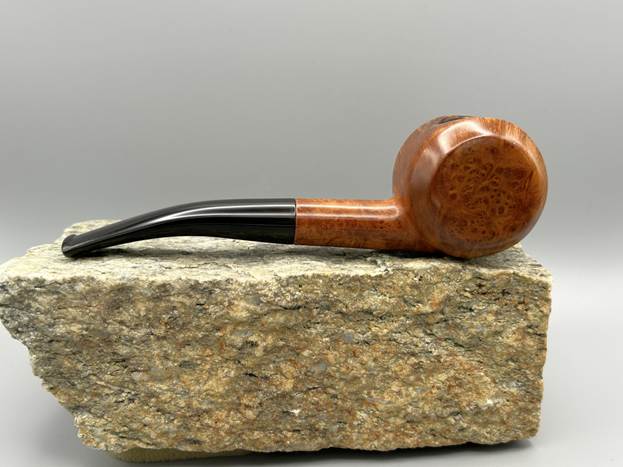
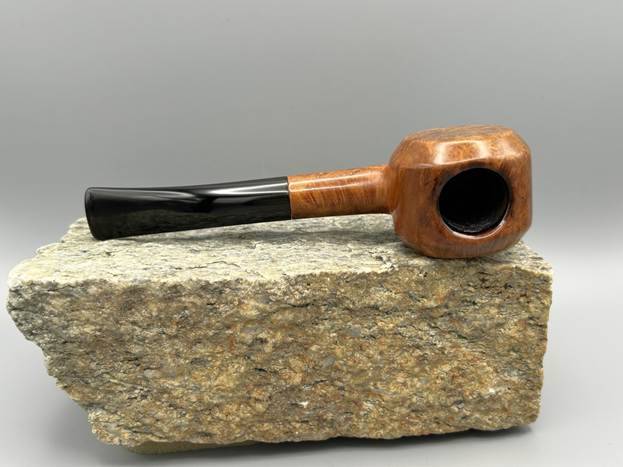
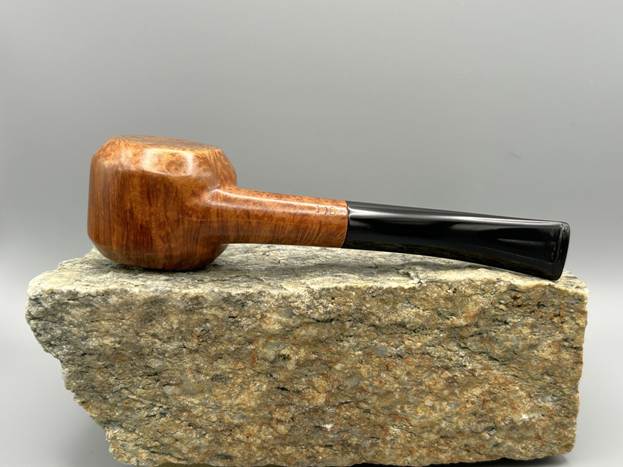
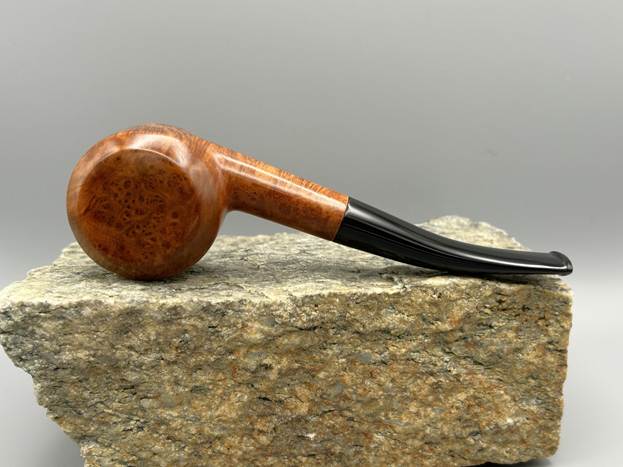
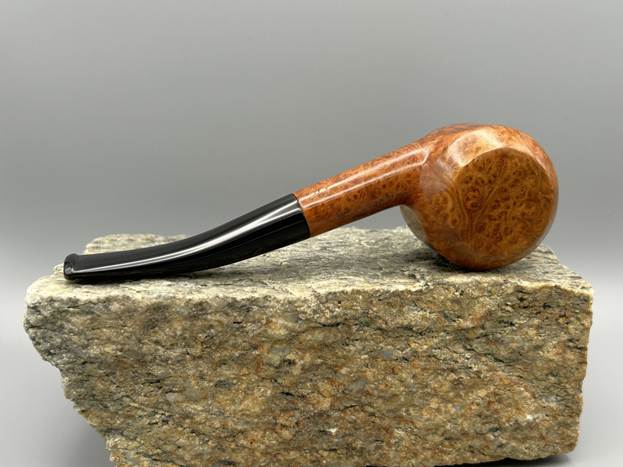
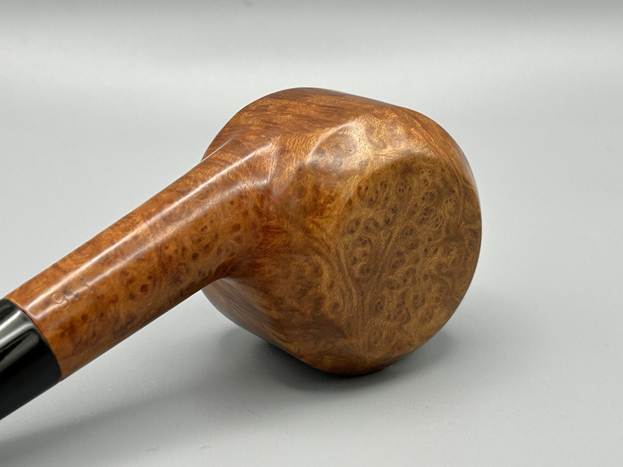
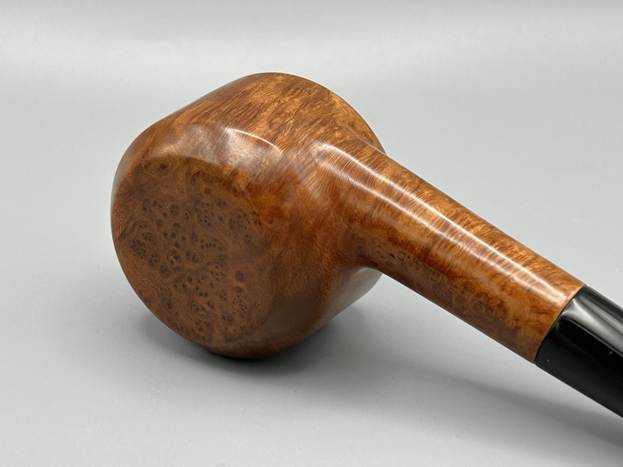
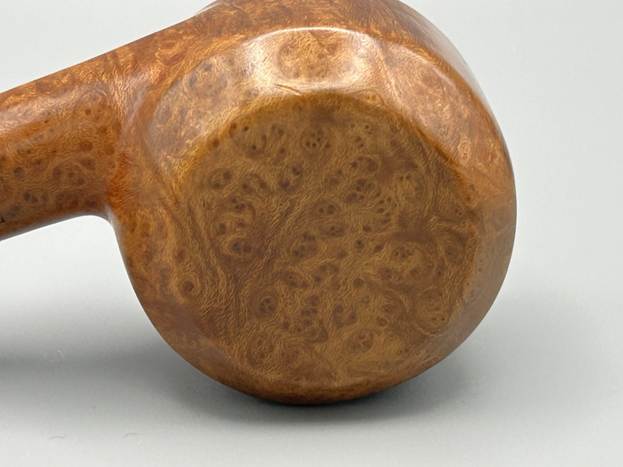
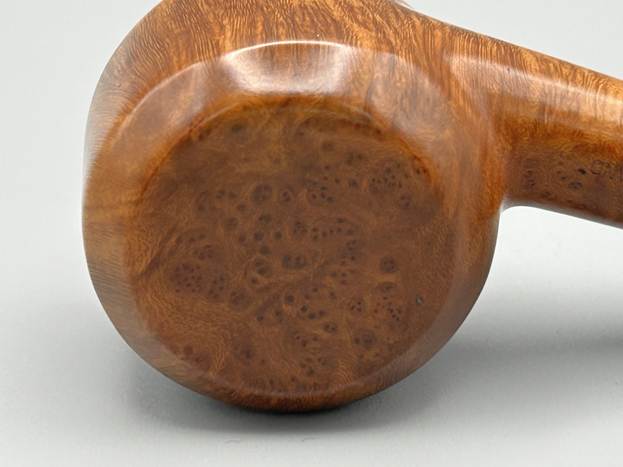
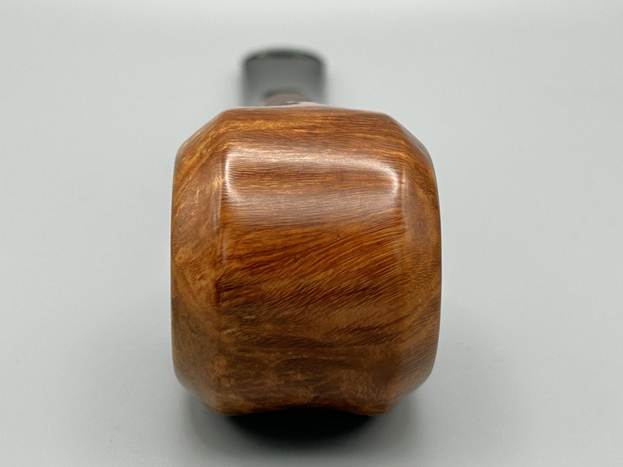
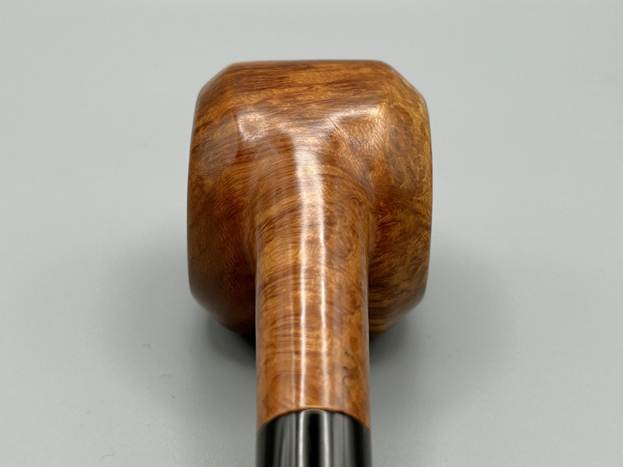
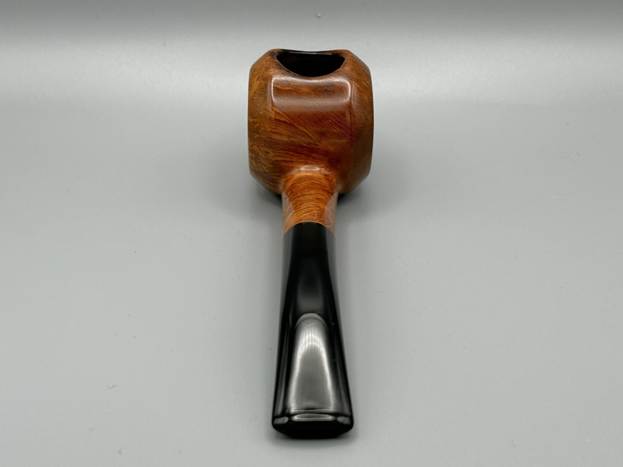
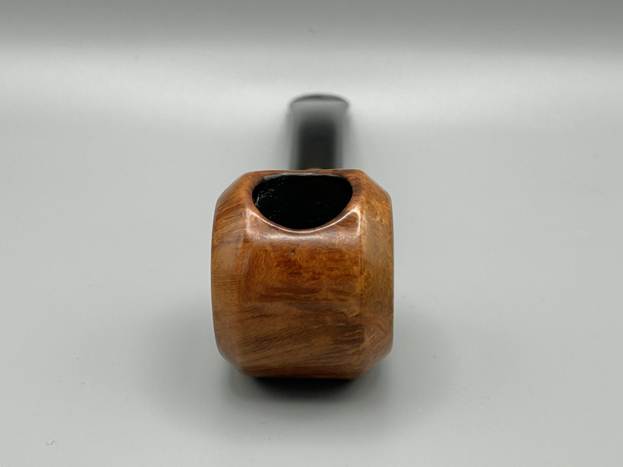
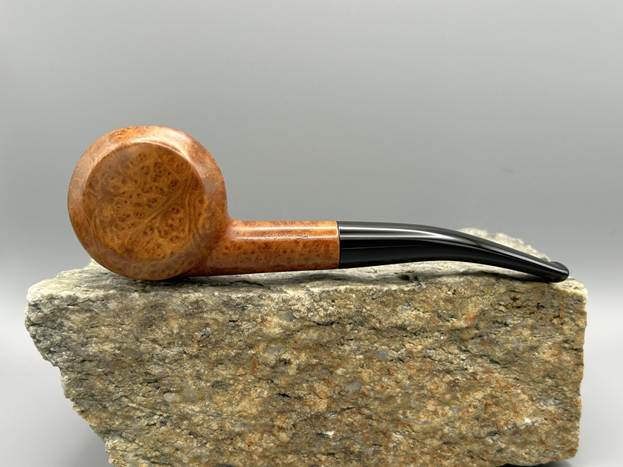
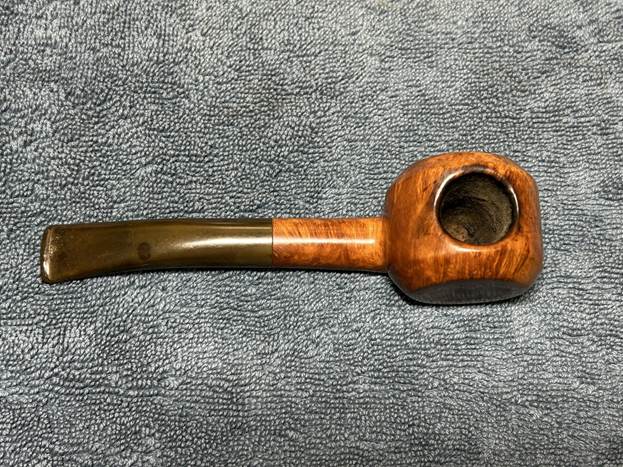
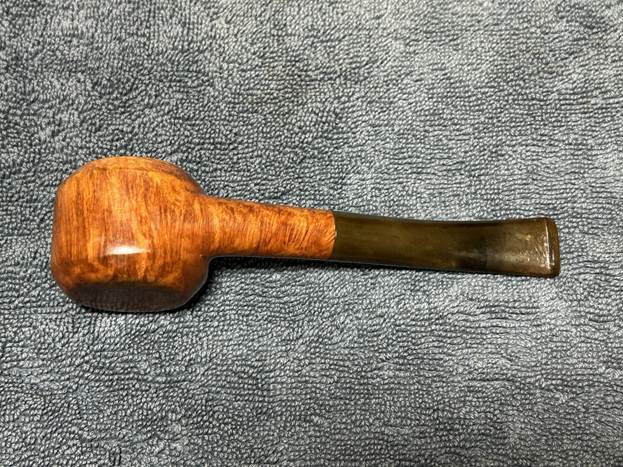
What a stunning pipe this is! When I saw it, of course the shape immediately caught my attention. What would you call it? A snail? A lollypop? A wagon wheel? Looking closely, I could see that this is a quality pipe: superb grain, well drilled, nicely proportioned. I hadn’t heard the name Dulwich before, but it didn’t matter. A fine pipe is a fine pipe regardless of whether the name is known or not. Be sure to check out the final photos of this pipe – it’s a stunner.
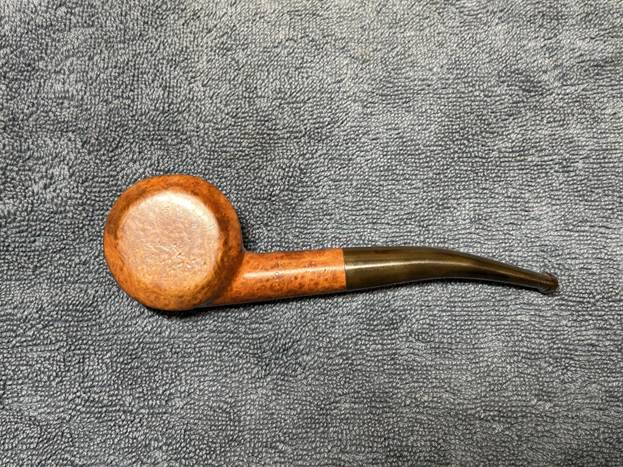
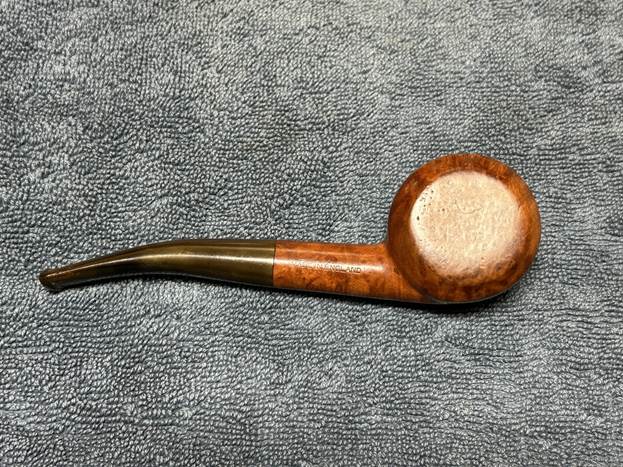
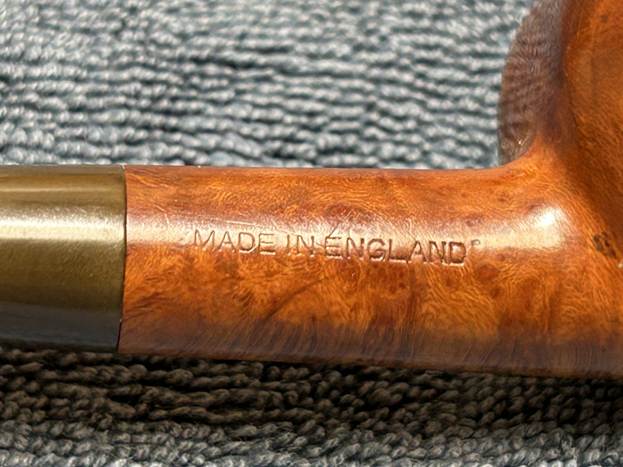
Perhaps the markings on the pipe will help us. On the left side of the shank, we can see Dulwich [over] Streamlined. Below that and to the right, is the shape number: 116. On the right side of the shank, we can see Made in England. There are no other markings to be found.
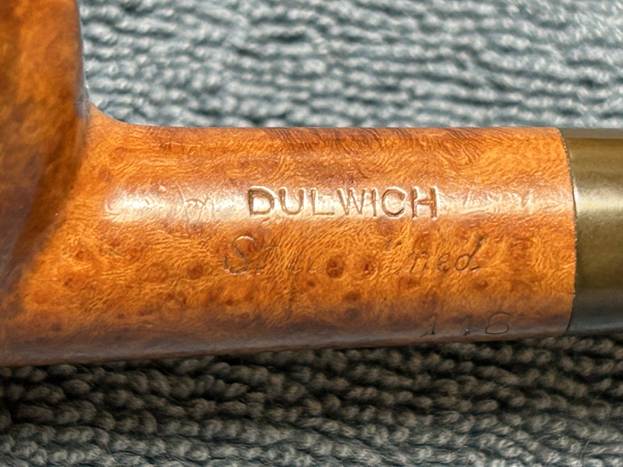
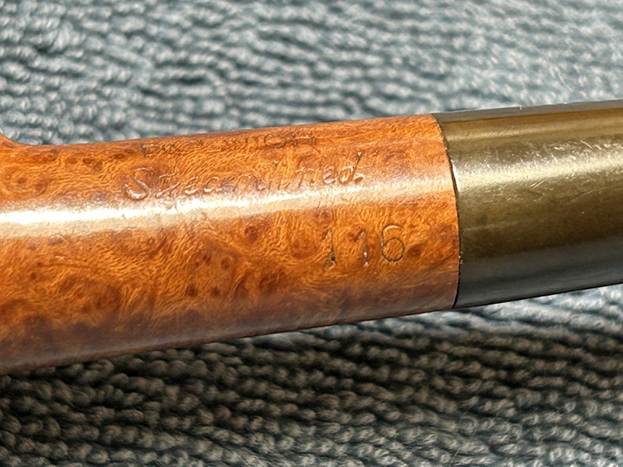
The name Dulwich is an odd one. Dulwich is actually a part of south London. Steve has restored a couple of Dulwich pipes in years past, but they were from the Quaint line of pipes. He didn’t find much in the way of history of the brand. Neither Pipedia nor Pipephil have a listing for the name. I looked in my copy of Wilczak and Colwell’s Who Made That Pipe? and checked. They have a listing for a Dulwick, but not Dulwich. No idea if that’s a typo or not, but it’s a moot point because they had no information for Dulwick anyway. I also found nothing on the Streamlined line.
Here’s the best I can dig up. There is some information to suggest that the Dulwich name is associated with the pipe maker, George Huybrecht. In the forums of PipesMagazine, the connection between the two was mentioned. The user named Jensen stated: ‘His [Huybrecht] “own ” pipes were named London Castle and Dulwich’. You can read that here. In the same forum, Jon Guss writes the following about Mr Huybrecht:
My research is decidedly on the sparse side, but such as it is it suggests that Gaston Huybrechts was born in Nancy, Meurthe-et-Moselle, France on December 25, 1893. He apparently came to England some time after the end of WW1 and formed a long-lasting partnership with M. Davies, making and selling pipes and tobacco sundries as Davies & Huybrechts Ltd from the mid 1920s through the mid 1930s (the company was struck off the register in 1938). Who exactly Davies was is a bit of a mystery to me, although I suspect he was associated with another business called M. & L. Davies Ltd located at 10 Christopher Street in London, engaged in the importation of fancy goods in 1924. Gaston evidently spent at least some time traveling for the firm since he appears in Canada in February of 1933 as a sales representative of Davies & Huybrechts. (Incidentally there were Huybrechts who settled in Canada in 1905 who were almost certainly relatives of Gaston’s).
After the dissolution of the firm in 1938 it’s not clear who Gaston worked for. In the 1939 census substitute he’s listed as a commercial traveller (i.e. salesman), but since there are no business listings under his own name in the phone books of the time I’m inclined to believe he worked for one of the other pipe manufacturers, although of course it’s possible that he was making and selling pipes to shops on his own. But if that was the case I’m skeptical he’d call himself a commercial traveller, which generally indicates a travelling salesman employed by a decent sized firm. Pure speculation of course.
“G Huybrecht” doesn’t show up in phone books until about 1950, so it leaves about a dozen year gap to speculate what Gaston was doing during that time. If he was in the armed forces, unlikely but not impossible given his age, there would be records. I suspect he worked at his trade as best he could, using connections within the fraternity of pipe makers to keep busy as briar grew scarce and facilities were repurposed to support the war effort. Reconversion of course took several years after the war ended, and it makes sense that it would be the late forties before Gaston could get the briar and the financial wherewithal to strike out on his own, and maybe another year or two to get a phone listing in the dismal economy that was post-war Britain. Again, all speculation. What’s not speculation is that Gaston continued to make pipes from that point for the rest of his life, before dying in London on October 7, 1974.
Gaston married twice: in 1923 to Marthe Alphonsine Dumas (1895-1961), and after Marthe’s death he married Josephine Clementine Ogier (1894-1977) in 1965. By his marriage to Marthe Gaston had two children, a son named Andre Ernest (1923-1997) who sometimes went by Andrew, and a daughter named Yvonne Felicie (1924-2005).
Gaston’s will contains a provision which strongly suggests that his son Andre inherited and took over the business. From what I can tell Andre operated it, under the G Huybrecht name, until his own death in 1997. As far as I know there was no further successor after Andre (perhaps one of you know one?). Certainly Andre’s death is about when existing inventory was purchased, presumably from Andre’s widow Jacqueline, and sent to guys like Mike at Blakemar for stemming and eventual sale.
As a final comment I’d add that Andre had two sons, whose names I withhold here for reasons of privacy, But the point is obviously that if anyone is very interested indeed in the history of Huybrechts pipes I’m quite sure that living memory would fill many gaps and correct many erroneous suppositions.
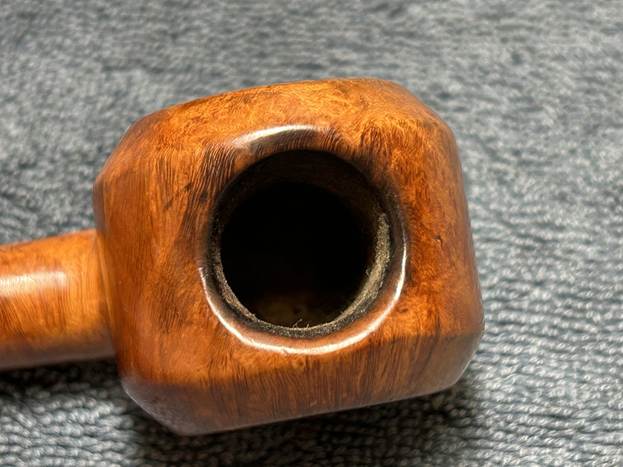
Let’s get on with the pipe. I’m pleased to say that the pipe started in good condition. The stem has some wear, but nothing serious; some oxidation, but, again, nothing serious. The bowl is quite clean. The rim has a bit of darkening, but that will come off. Very little cake in the bowl. The gorgeous briar sides of the bowl have some minor dents and I will address those. This should clean up very well.
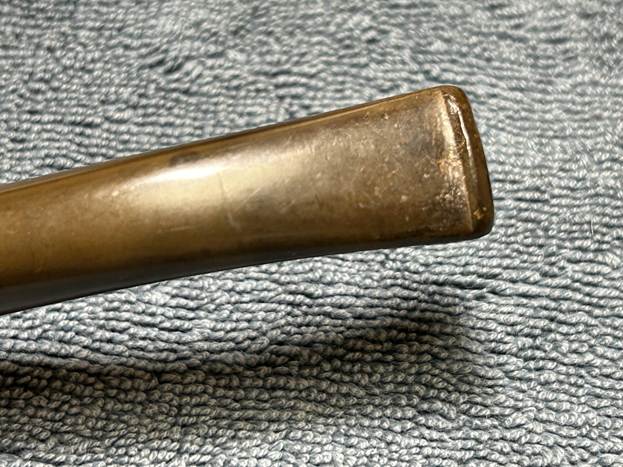
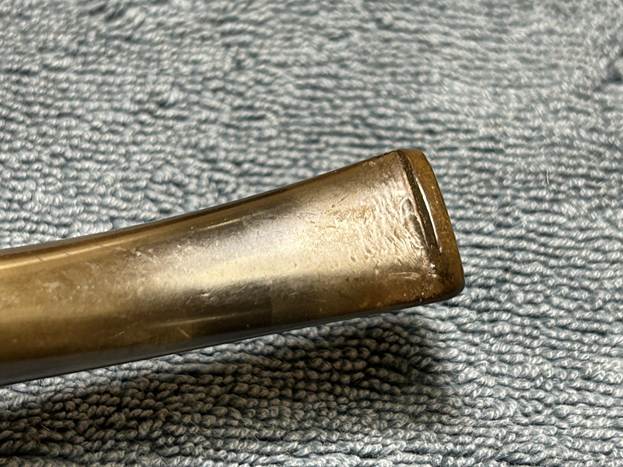
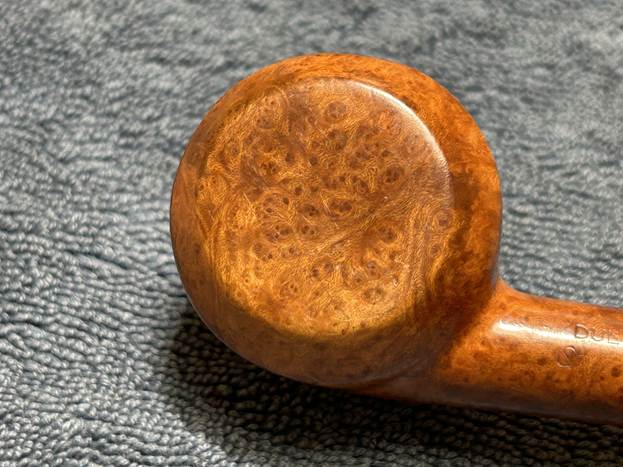
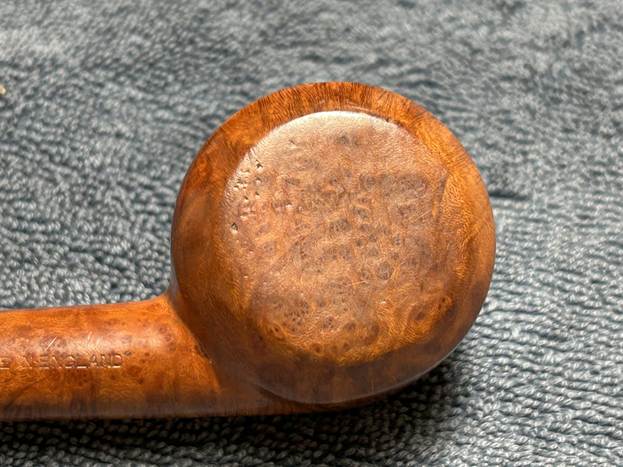
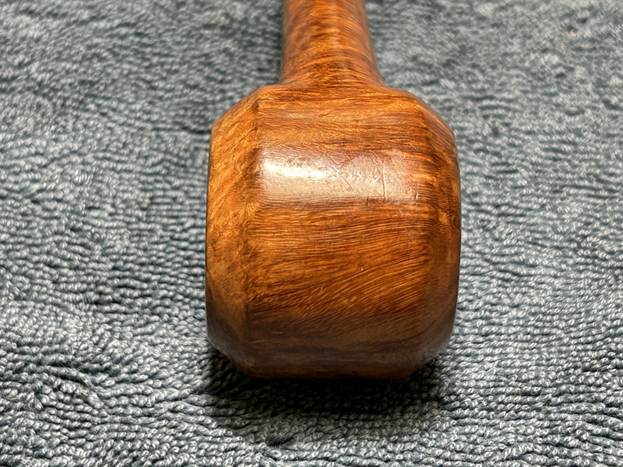
I used isopropyl alcohol on a few cotton rounds and wiped down the stem to provide an initial cleaning of filth before moving on to the next steps. The primary cleaning came next. I disinfected the inside of the stem with both pipe cleaners and cotton swabs dipped in lemon-infused 99% isopropyl alcohol. I scrubbed thoroughly to make sure the interior was very clean. And it didn’t take much, fortunately.
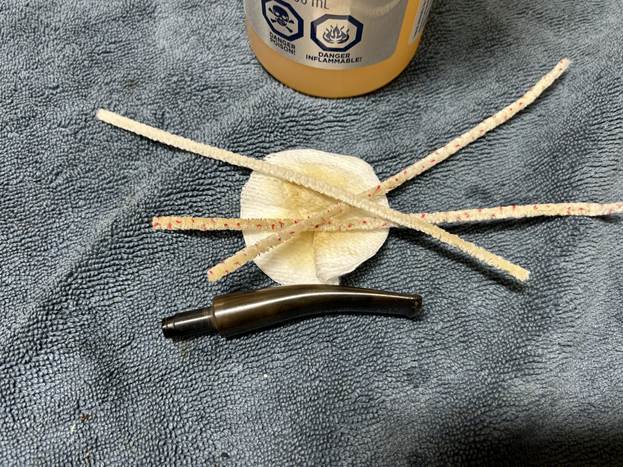
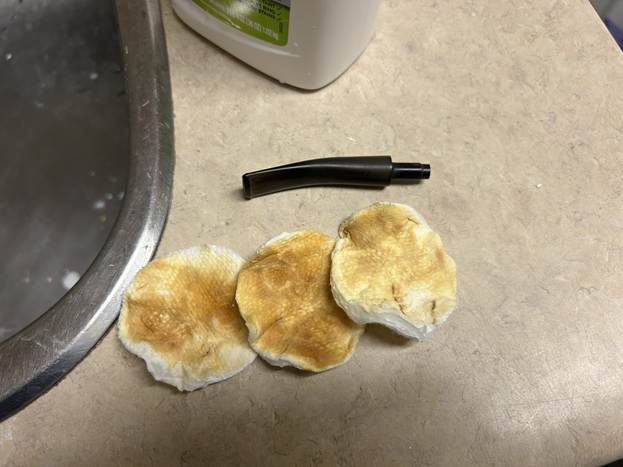
The goal of the next step is the removal (or minimization) of oxidation. Going to my sink, I used cream cleanser, cotton rounds, and a toothbrush, and scoured the stem to remove as much surface oxidation as possible. As the photos show, the result was a hideous, ochre-coloured mess – but better off the stem than on it.
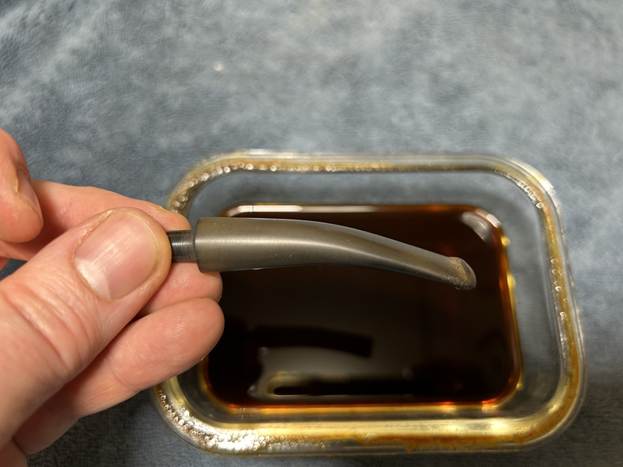
Once the stem was reasonably clean, I soaked it overnight in some Briarville Stem Oxidation Remover. This solution works to draw oxidation in the stem to the surface of the vulcanite. This is a major aid and an important step in ensuring a clean stem. The following day, I drew out the stem from its bath and scrubbed the lingering fluid with a toothbrush.
As the stem was now clean and dry, I set about fixing the marks and dents in the vulcanite. This was done by filling those divots with black cyanoacrylate adhesive, impregnated with carbon and rubber. I left this to cure and moved on.
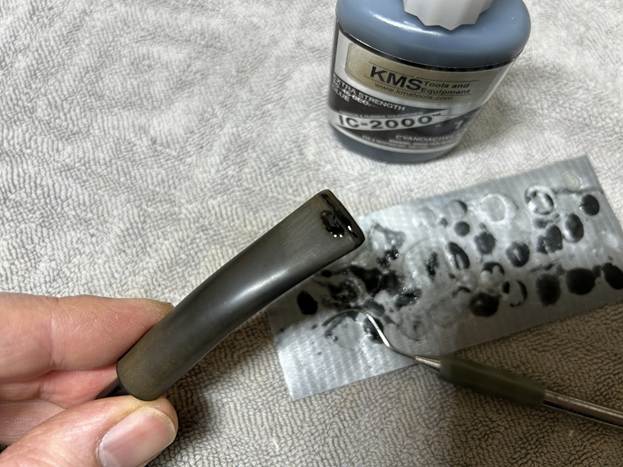
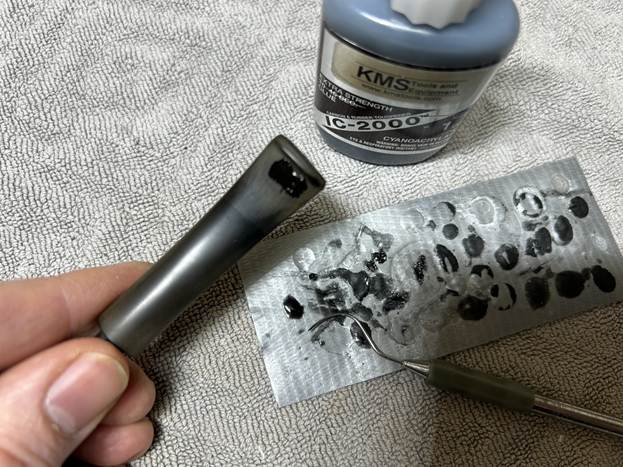
The penultimate step for the stem is sanding. First, with my set of needle files, I reduced the bulk of the cyanoacrylate repairs. I removed the excess adhesive as near to the surface as possible, without cutting into the vulcanite. Following that, I used all nine of the micromesh sanding pads (1,500 through 12,000 grit) to sand out flaws, even out the vulcanite, and provide gentle polishing of the finished surface. I also applied pipe-stem oil while using the last five micromesh pads. There was a wonderful, deep black shine to the stem when I was done.
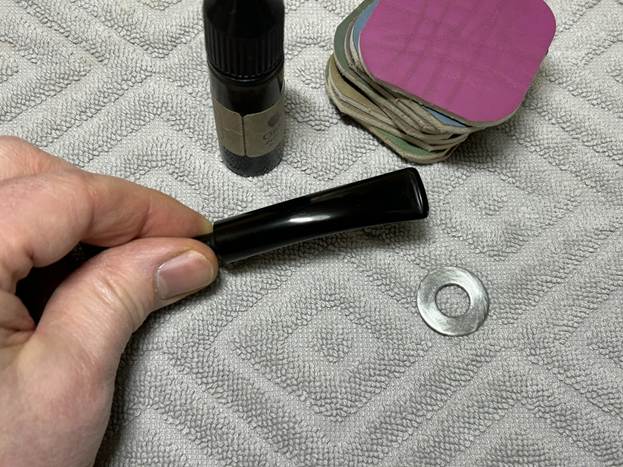
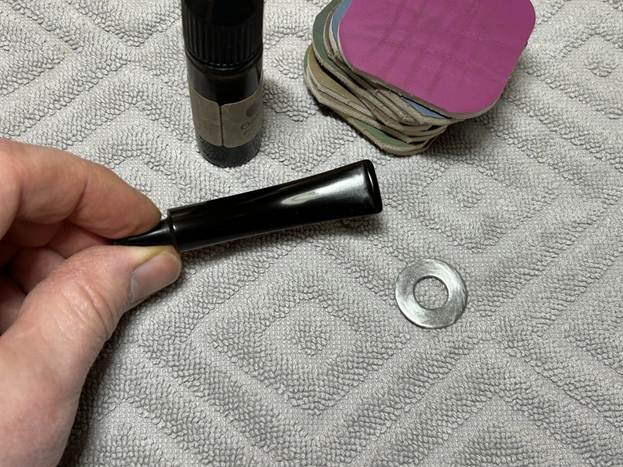
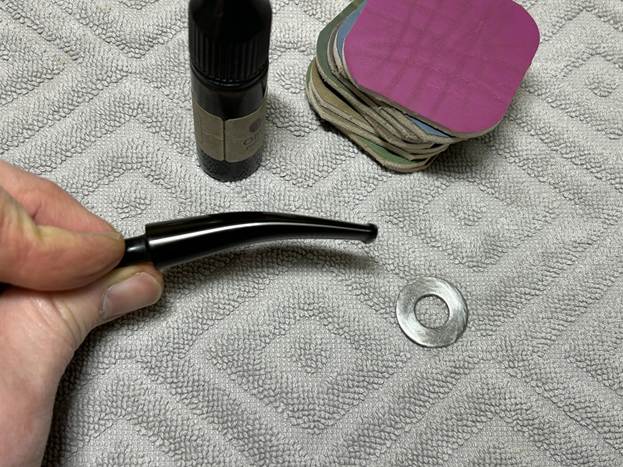
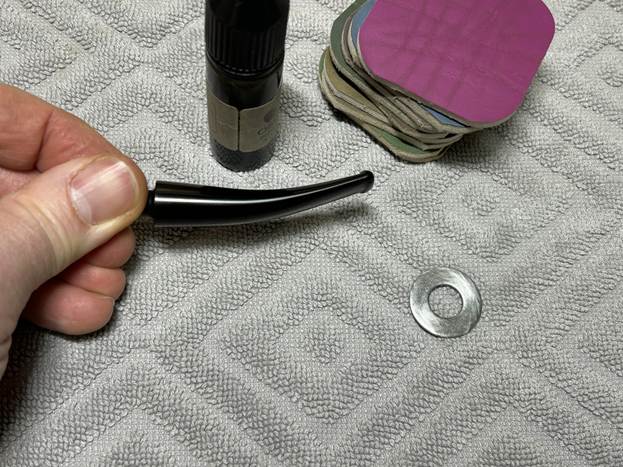
As the stem was (nearly) complete, I moved on to the stummel. The first step was to ream out the bowl – that is to say, remove all the cake inside the bowl. This accomplished a couple of things. First (and most obviously), it cleaned the bowl and provided a refurbished chamber for future smoking. Second, when the old cake was removed, I could inspect the interior walls of the bowl and determine if there was damage or not. I used a pipe knife and a piece of sandpaper taped to a wooden dowel. Collectively, these ensured that all the debris was removed. There wasn’t much, to be fair.
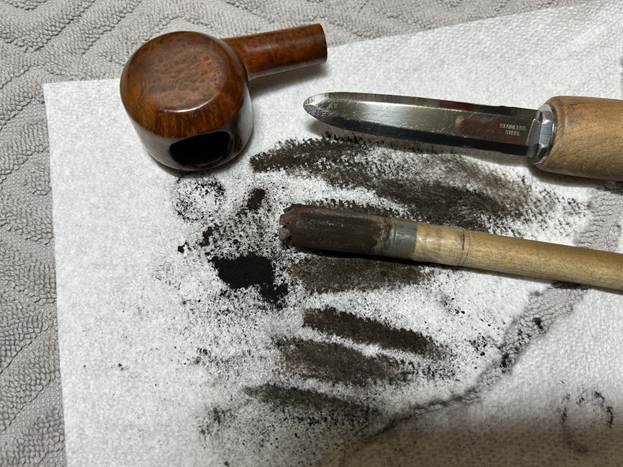
Similar to the stem, I then cleaned the stummel with both pipe cleaners and cotton swabs dipped in lemon-infused 99% isopropyl alcohol.
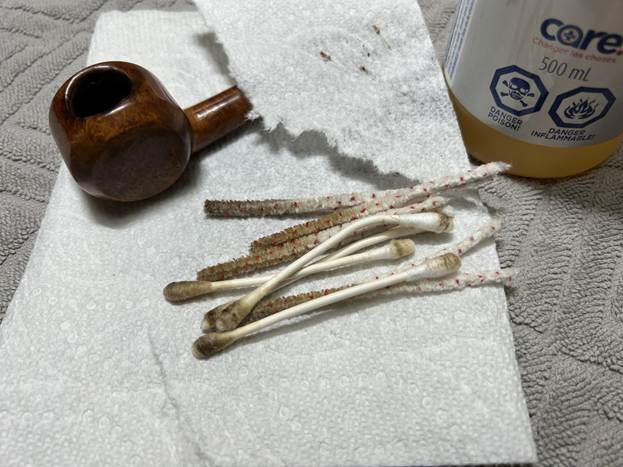
I then decided to ‘de-ghost’ the pipe – that is to say, exorcize the remaining filth from the briar. I filled the bowl and the shank with cotton balls, then saturated them with 99% isopropyl alcohol. I let the stummel sit overnight. This caused the remaining oils, tars and smells to leach out into the cotton.
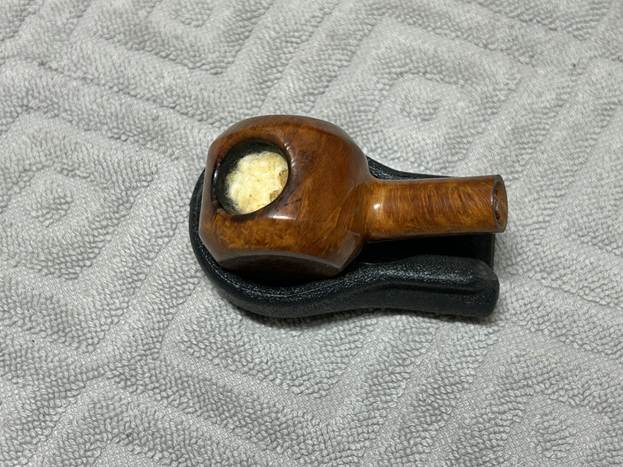
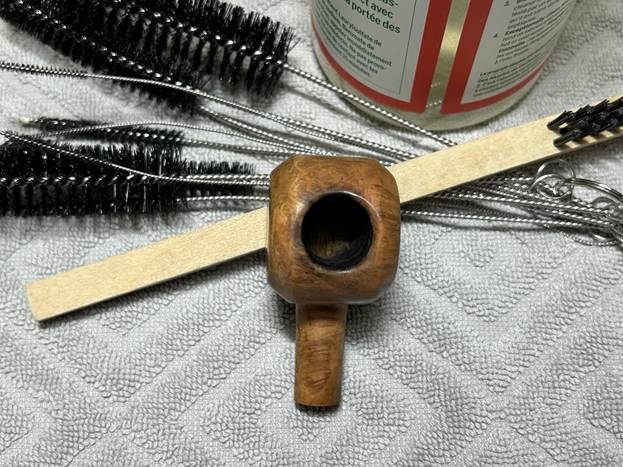
To tidy up the briar, I wiped down the outside, using a solution of a pH-neutral detergent and some distilled water, with cotton rounds. I also used a toothbrush in the crevices. This did a good job of cleaning any latent dirt on the surface of the briar. The last step of the cleaning process was to scour the inside of the stummel with the same mild detergent and tube brushes. This was the culmination of a lot of hard work in getting the pipe clean.
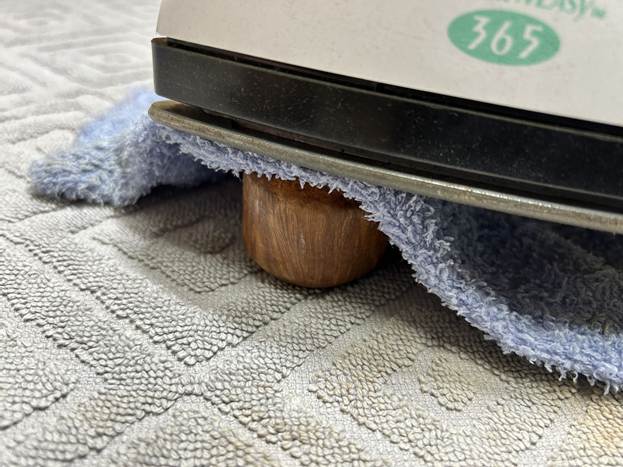
Having completed that, I was able to address the nicks on the sides of the bowl. I dug out my iron and a damp cotton flannel cloth. By laying the cloth over the affected areas and applying the iron to it, the hot and moist steam can cause the wood to swell slightly and return to shape. There was tremendous improvement! It looked as good as new when I was done!
I used all nine micromesh pads (1,500 through 12,000 grit) to sand the outside of the stummel and finish it off. This sanding minimizes flaws in the briar and provides a beautiful smoothness to the wood. I rubbed some LBE Before & After Restoration Balm into the briar and let it sit for an hour or so. The balm moisturizes the wood and gives a beautiful depth to the briar. I then buffed the stummel with a microfibre cloth.
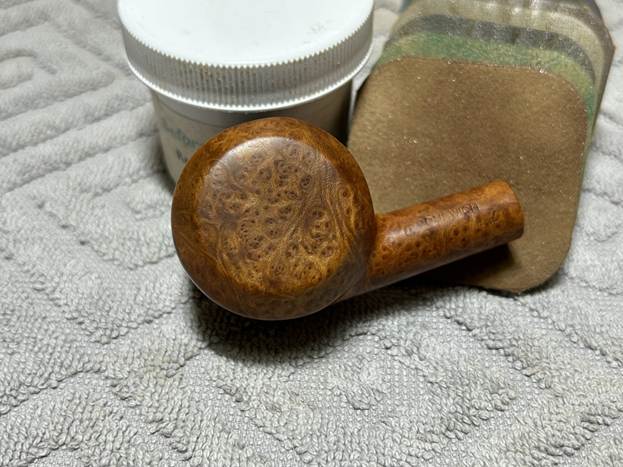
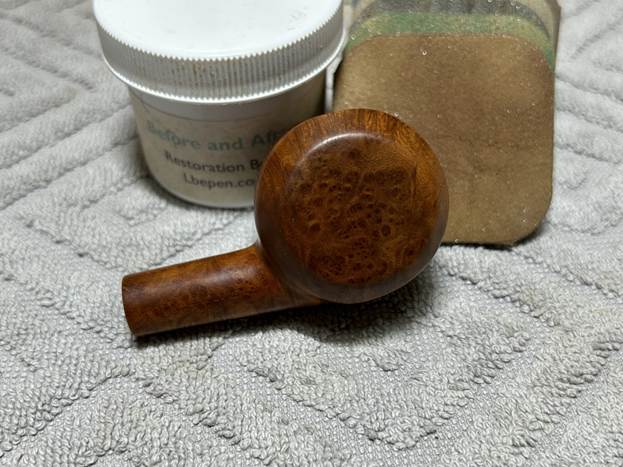
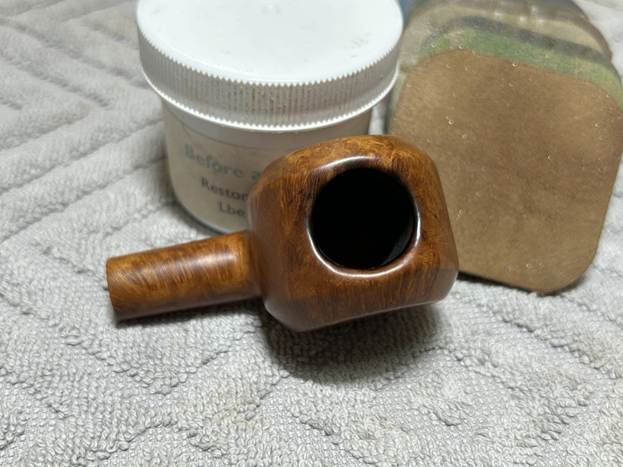
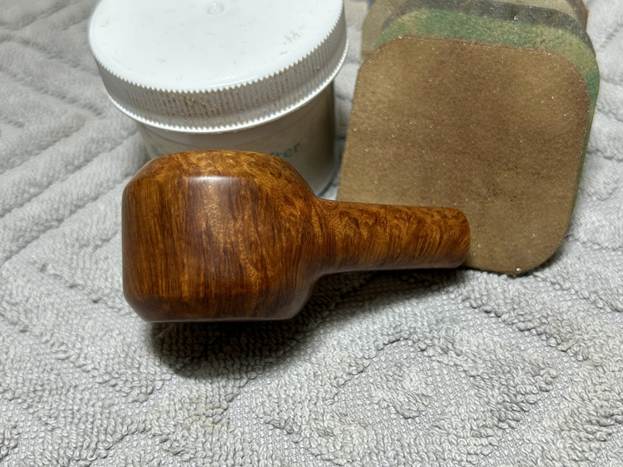
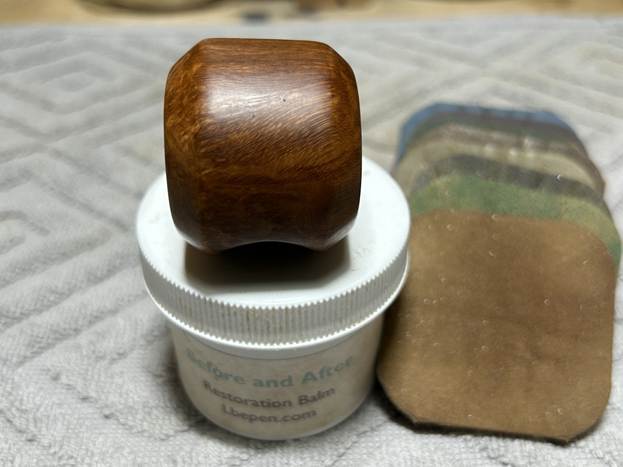
For the final step, I took the pipe to my bench polisher and carefully buffed it – first with a blue diamond compound, then with some carnauba wax. This procedure makes the pipe look its best – the stummel sings and the stem glows.
All done! This Dulwich Streamlined 116 looks fantastic again and is ready to be enjoyed by its next owner. I am pleased to announce that this pipe is for sale! If you are interested in acquiring it for your collection, please have a look in the ‘British’ section of the store here on Steve’s website. You can also email me directly at kenneth@knightsofthepipe.com. The approximate dimensions of the pipe are as follows: length 5⅛ in. (131 mm); height 1½ in. (38 mm); bowl diameter 1½ in. (38 mm); chamber diameter ⅔ in. (18 mm). The weight of the pipe is 1⅛ oz. (34 g). I hope you enjoyed reading the story of this pipe’s restoration as much as I enjoyed restoring it. If you are interested in more of my work, please follow me here on Steve’s website or send me an email. Thank you very much for reading and, as always, I welcome and encourage your comments.