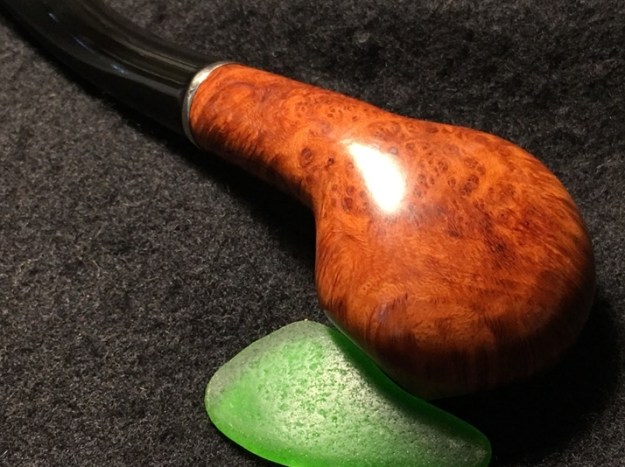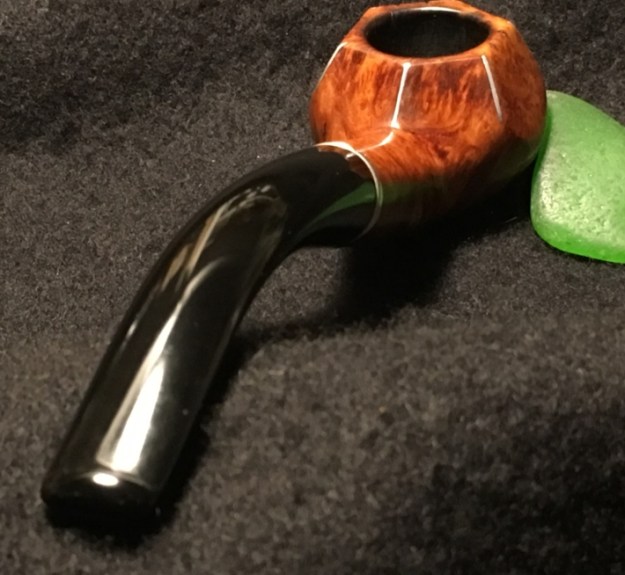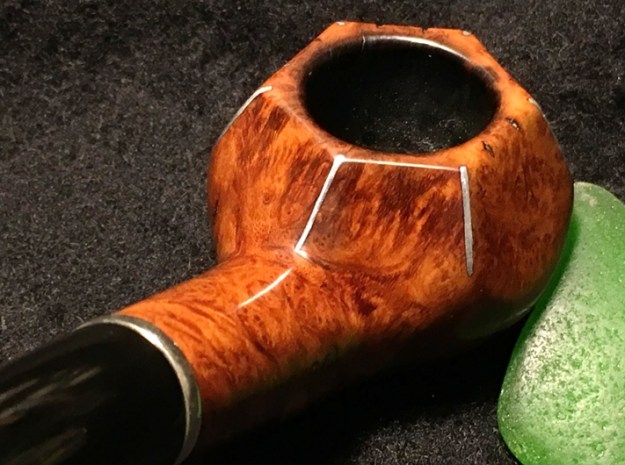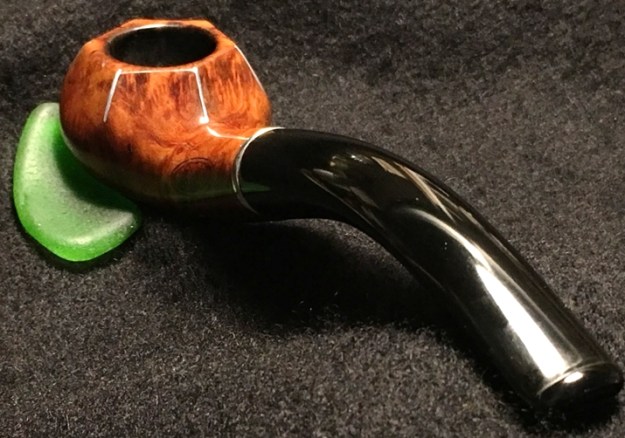
Tag Archives: Dal Stanton article

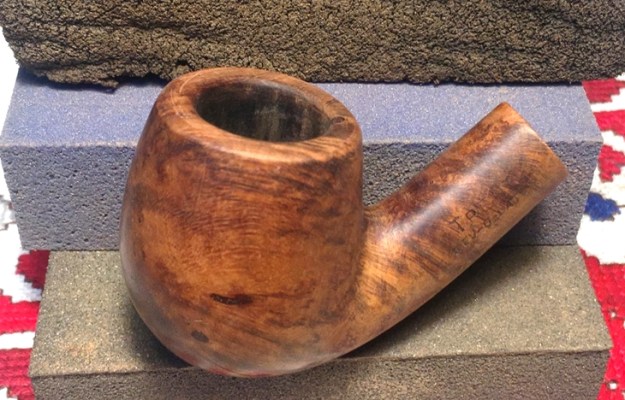
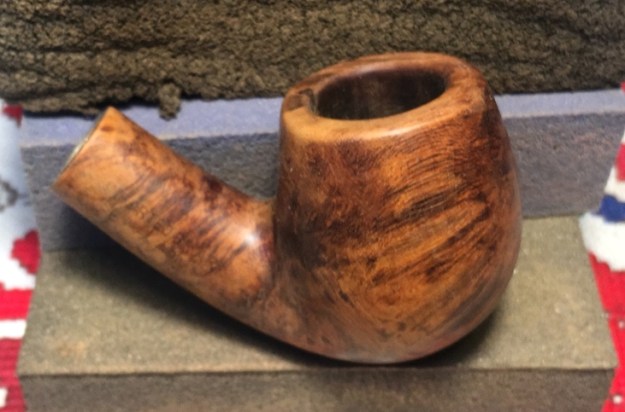
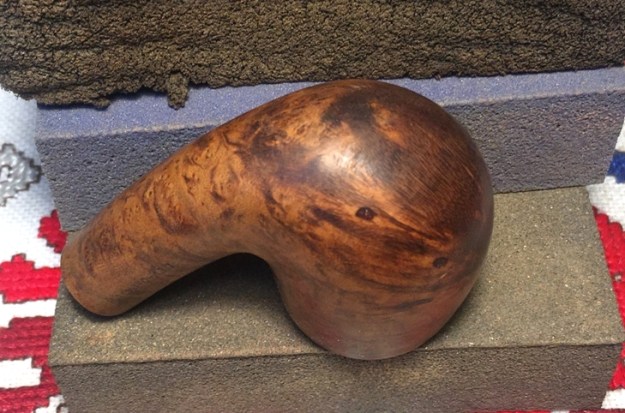
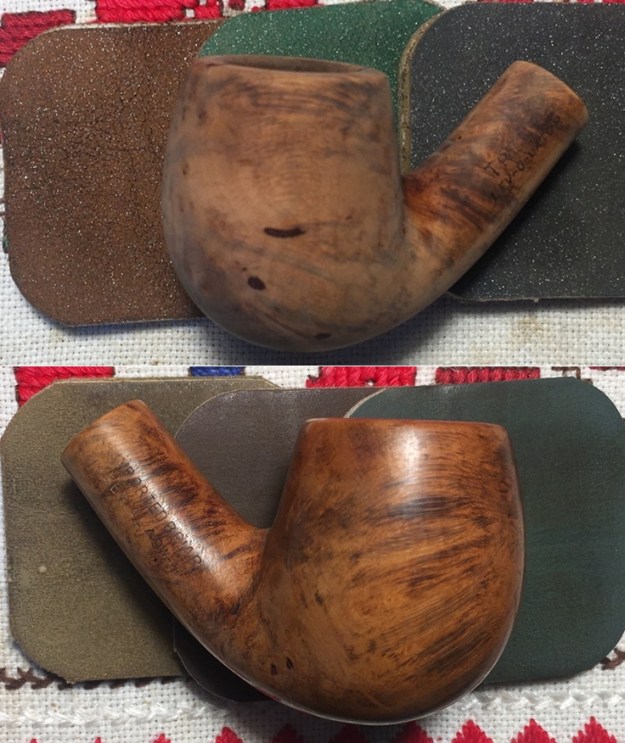
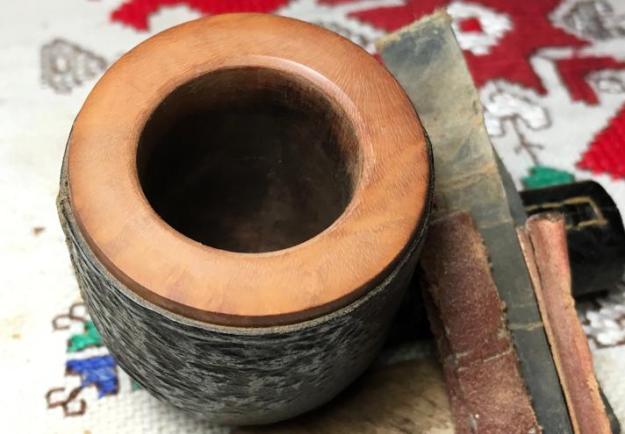
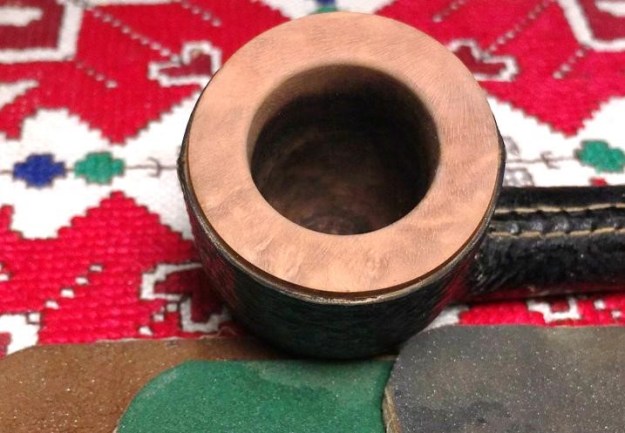
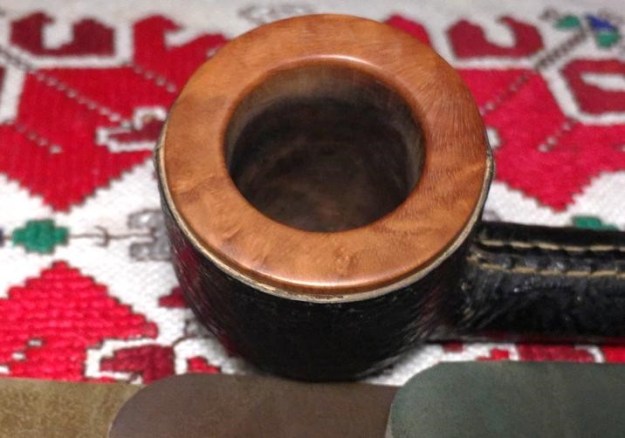
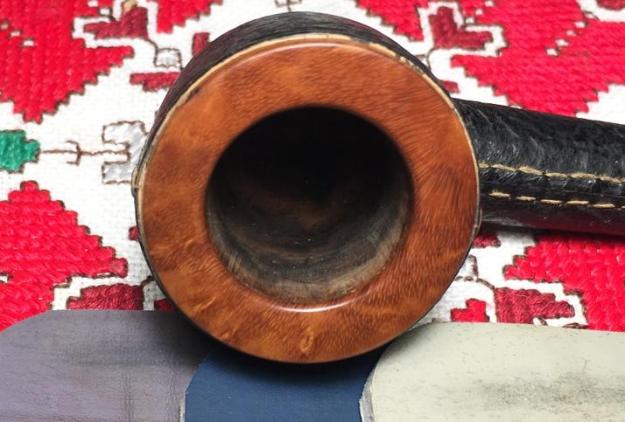
Recommissioning an Interesting Trent Lev-O-Lator Bent Billiard


Blog by Dal Stanton

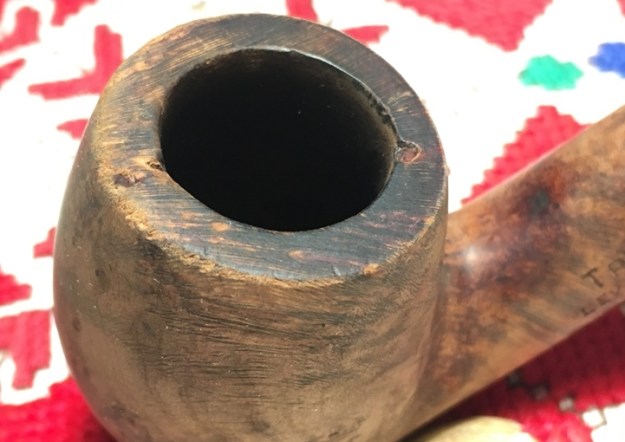
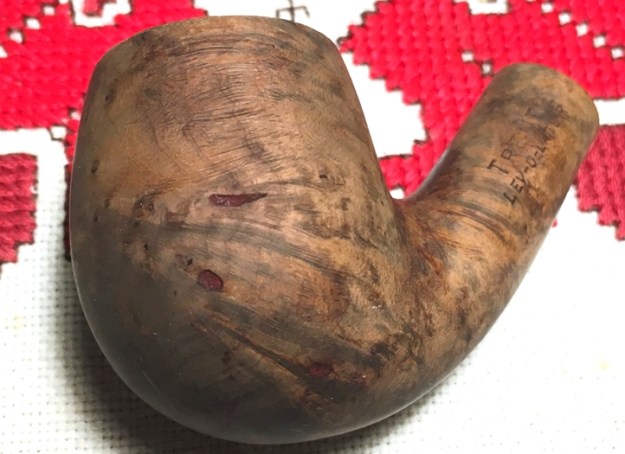
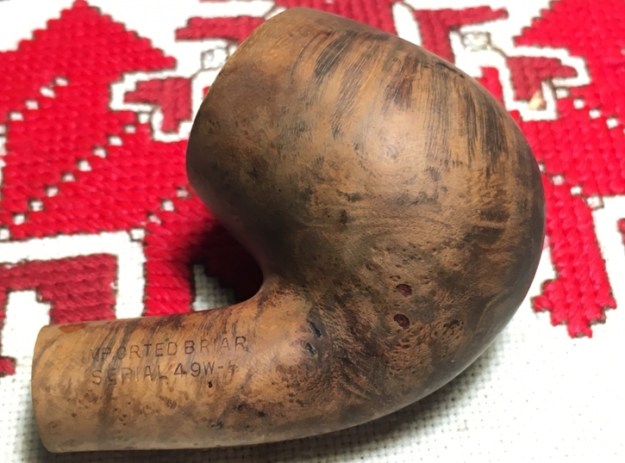
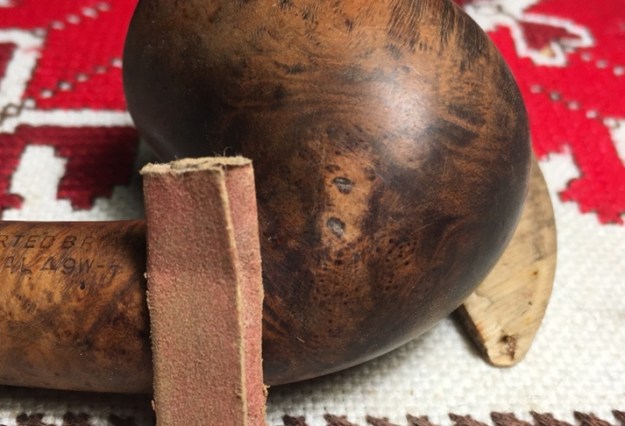
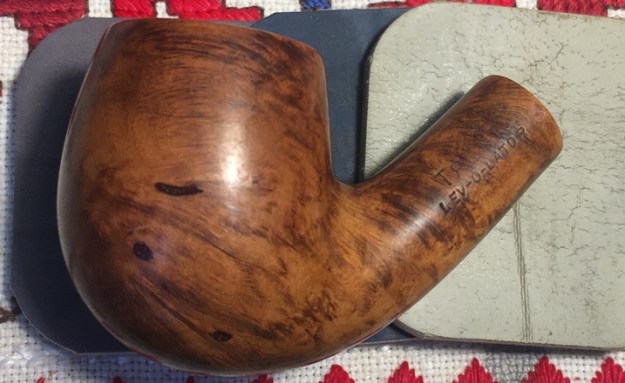
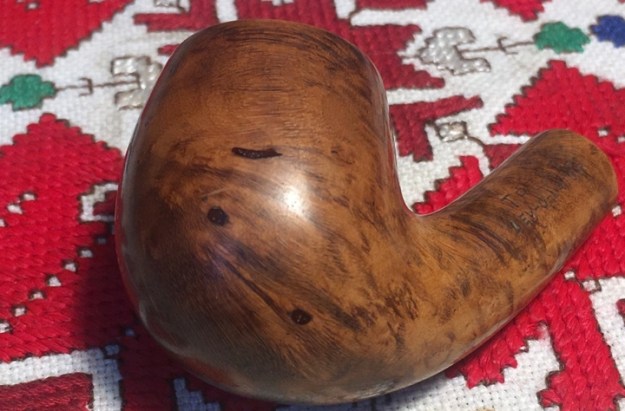
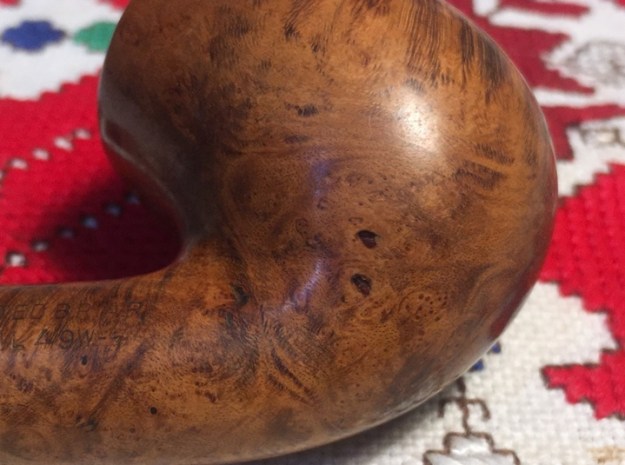
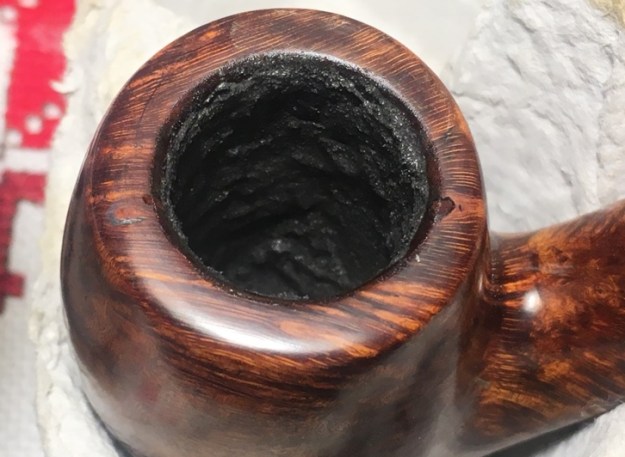
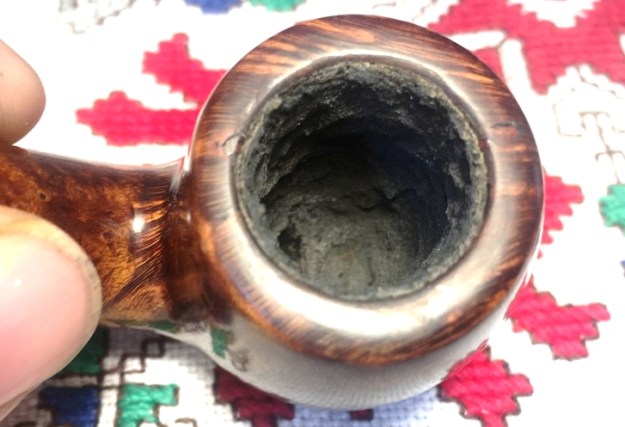
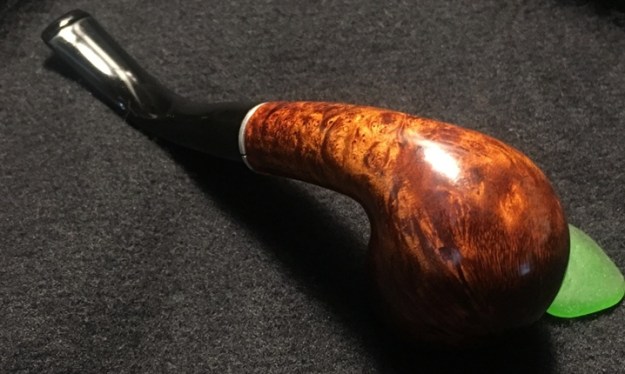
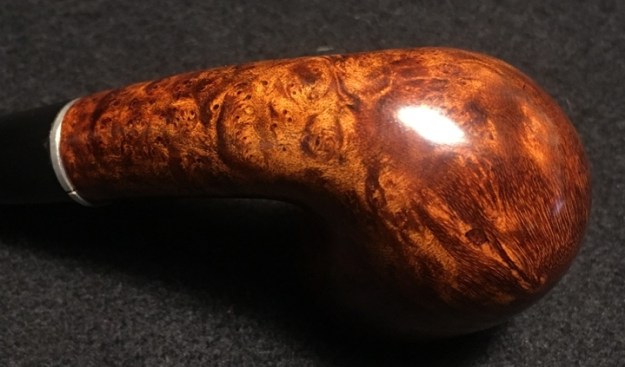
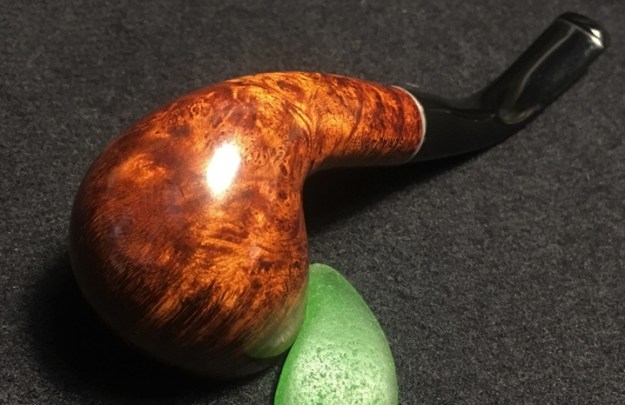
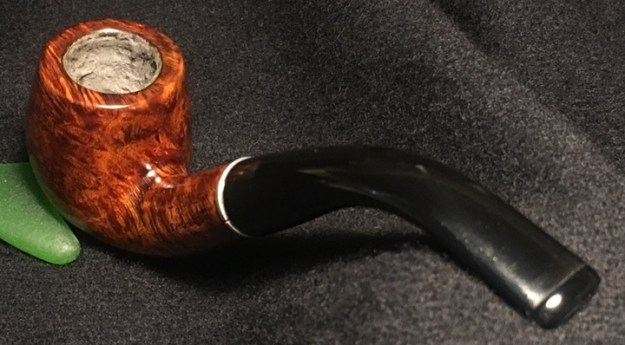
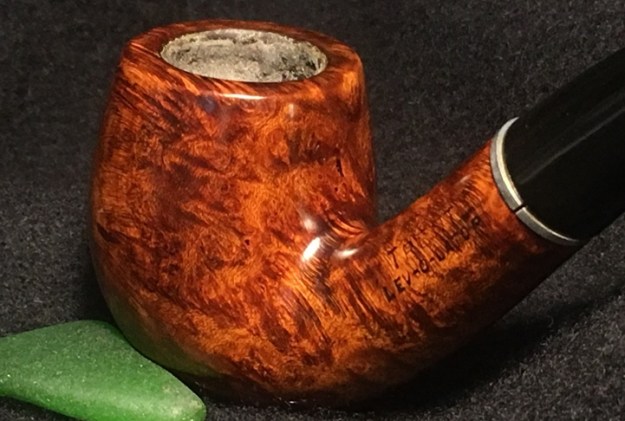
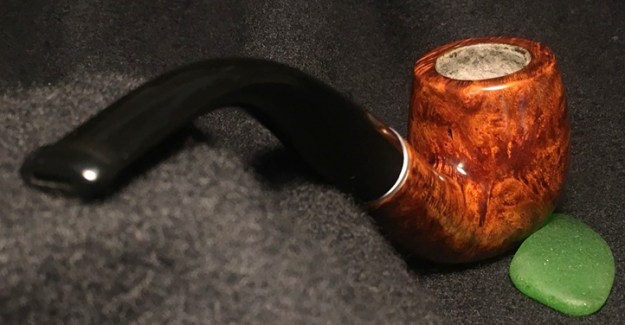
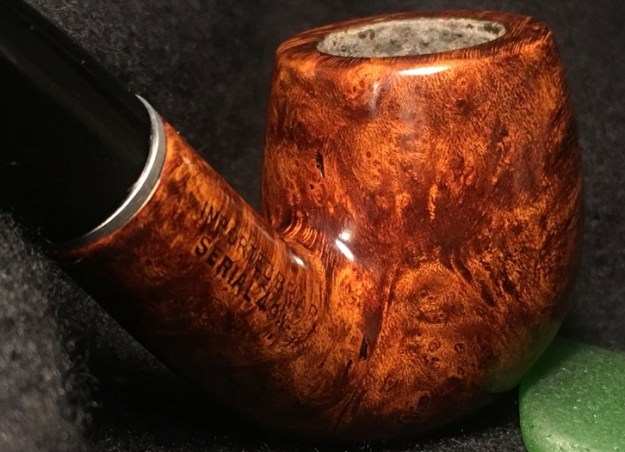
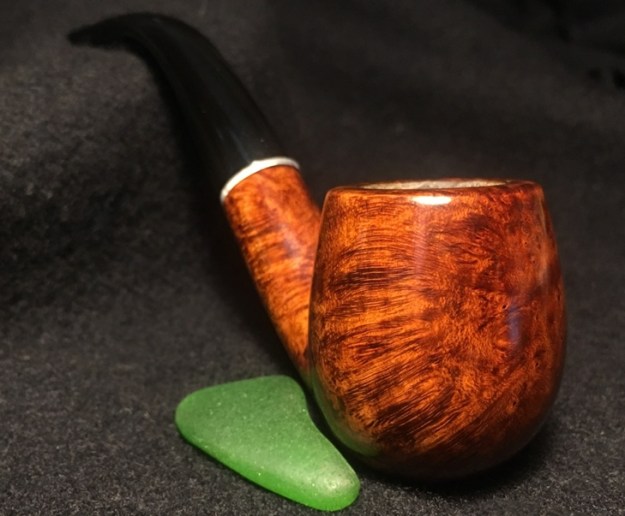
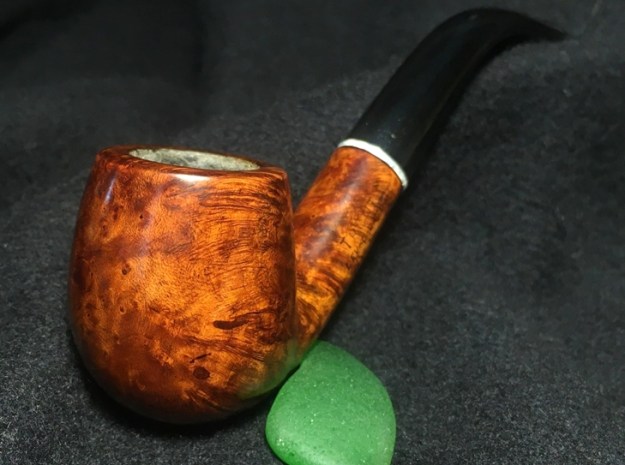
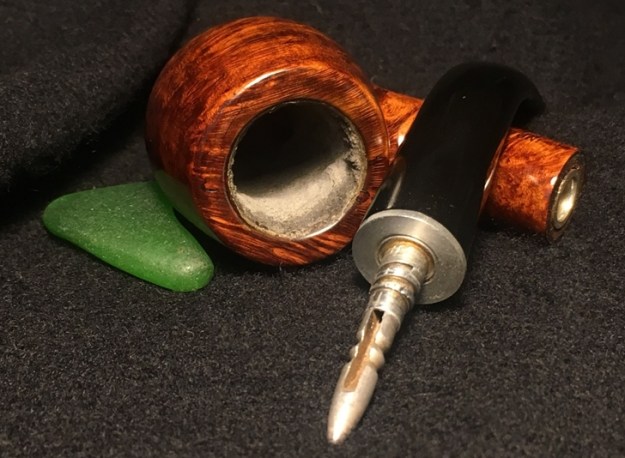
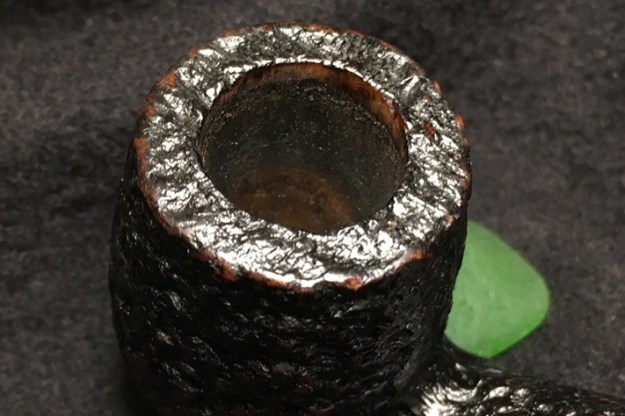
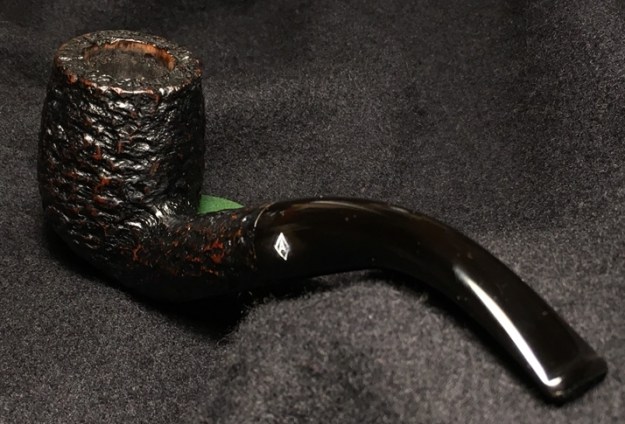
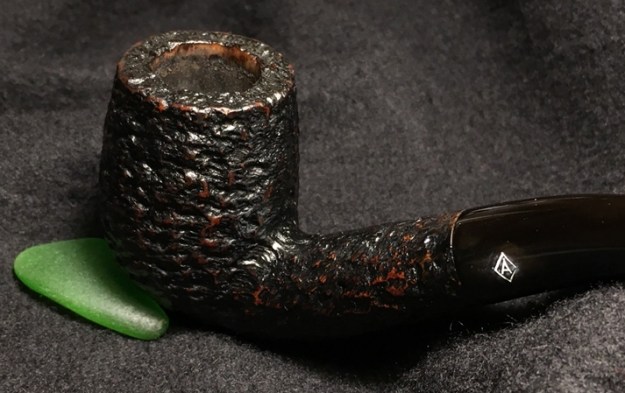
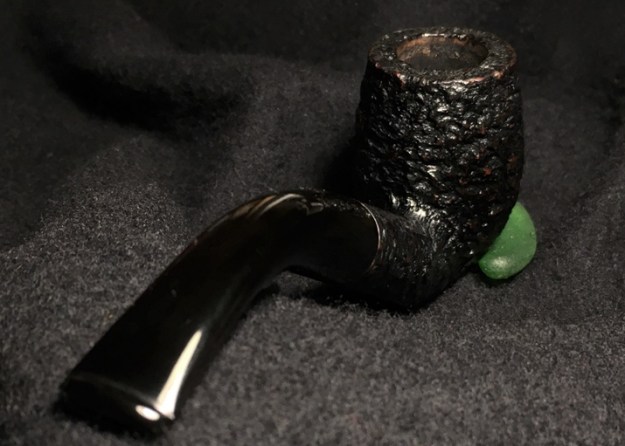
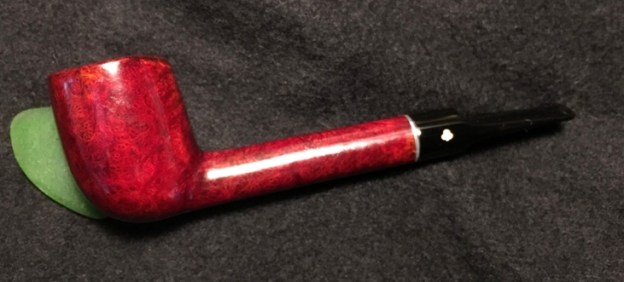
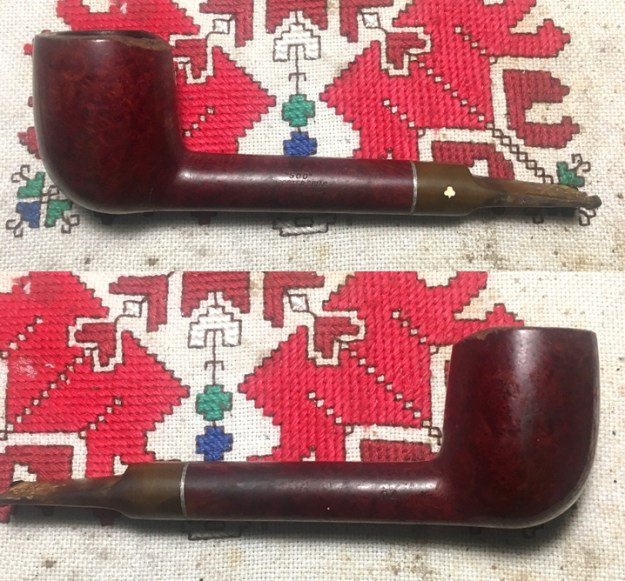
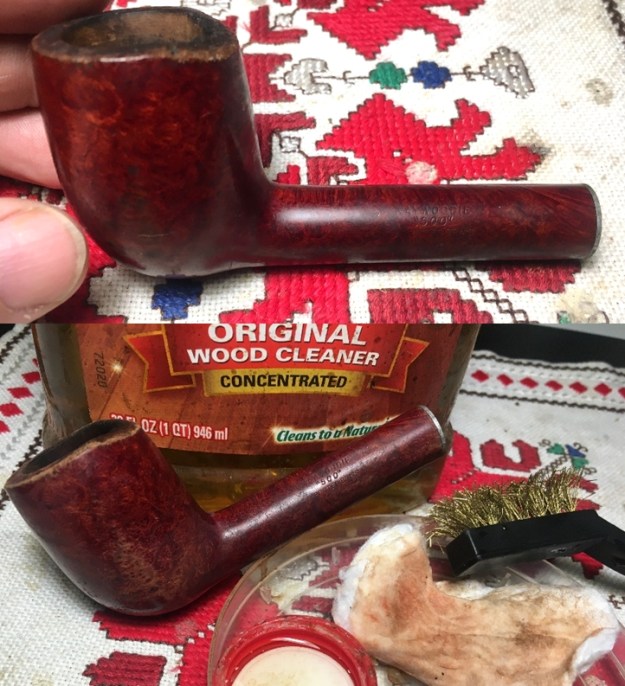
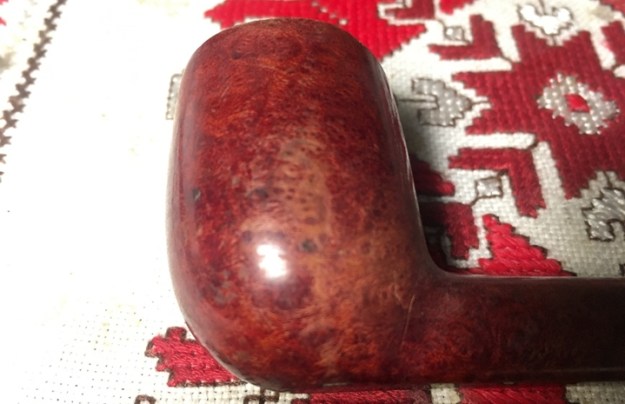
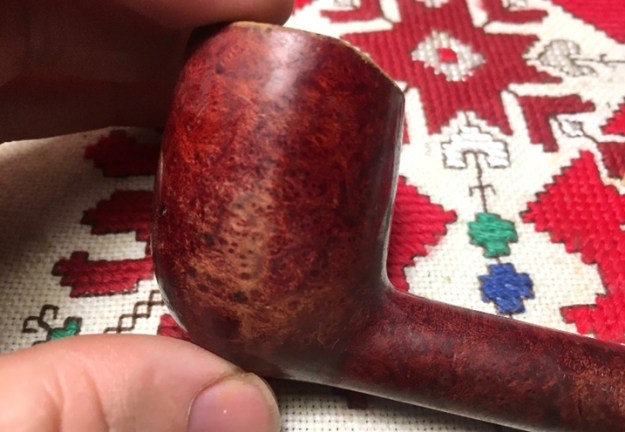
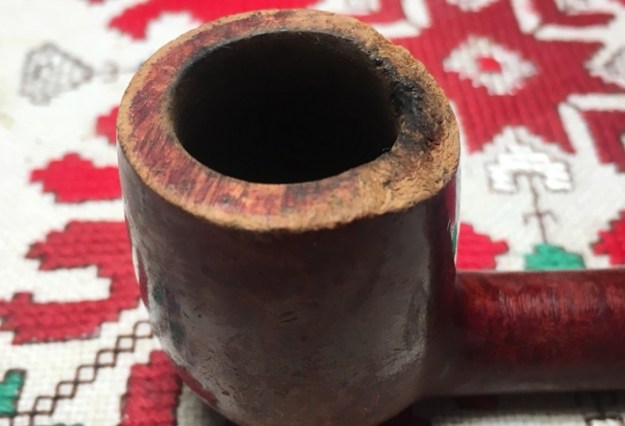
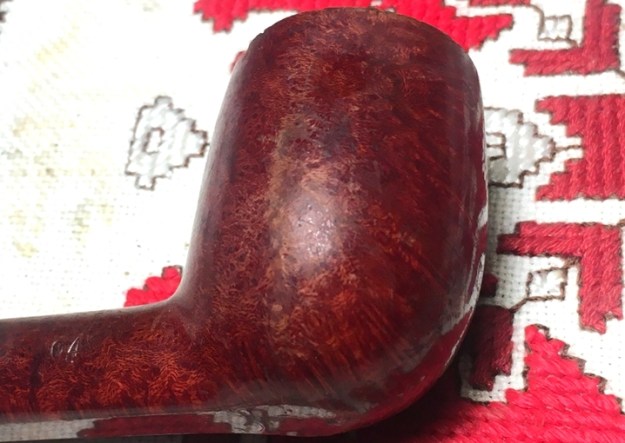
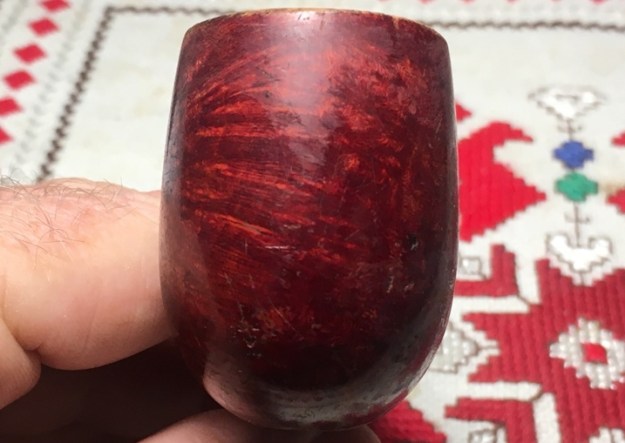
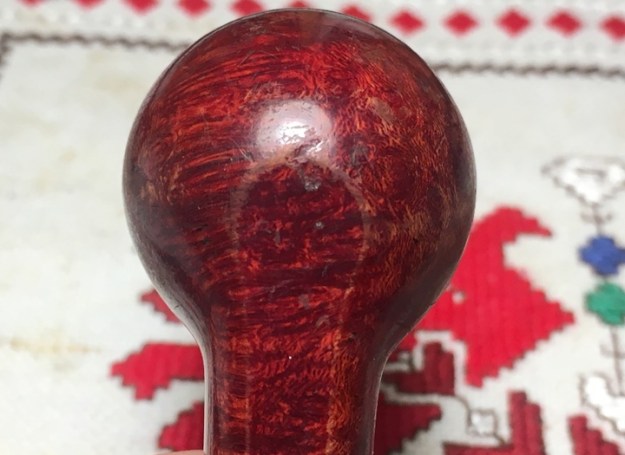
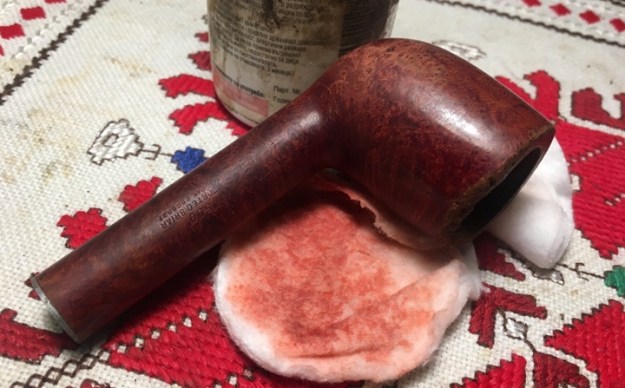
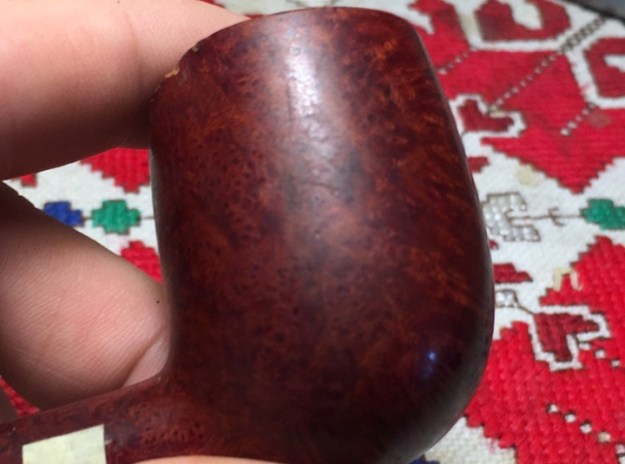
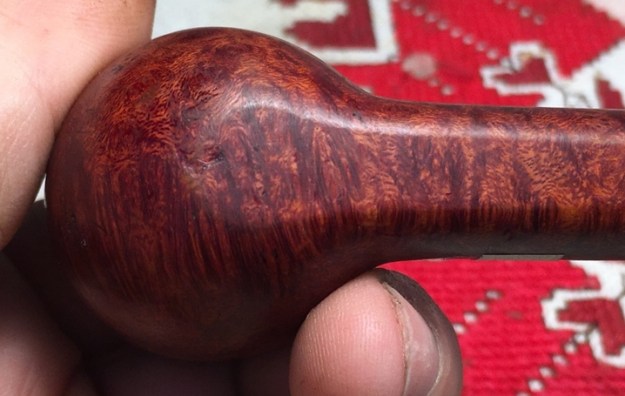
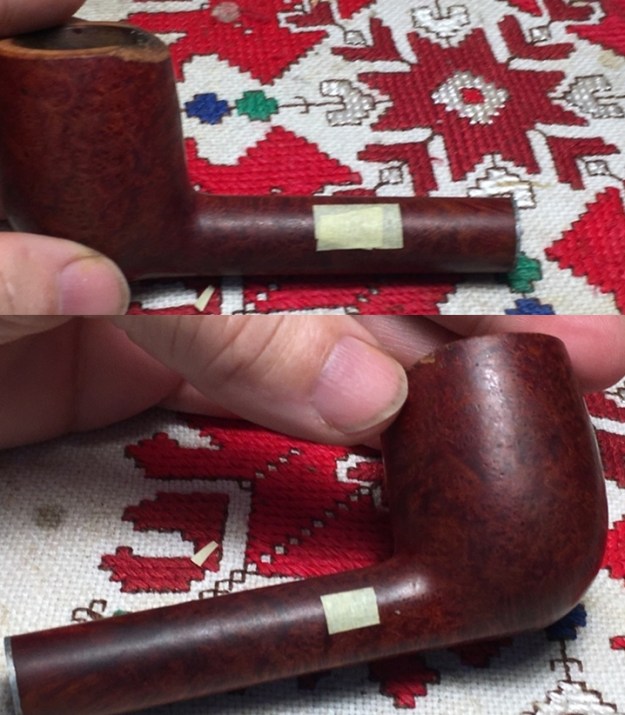
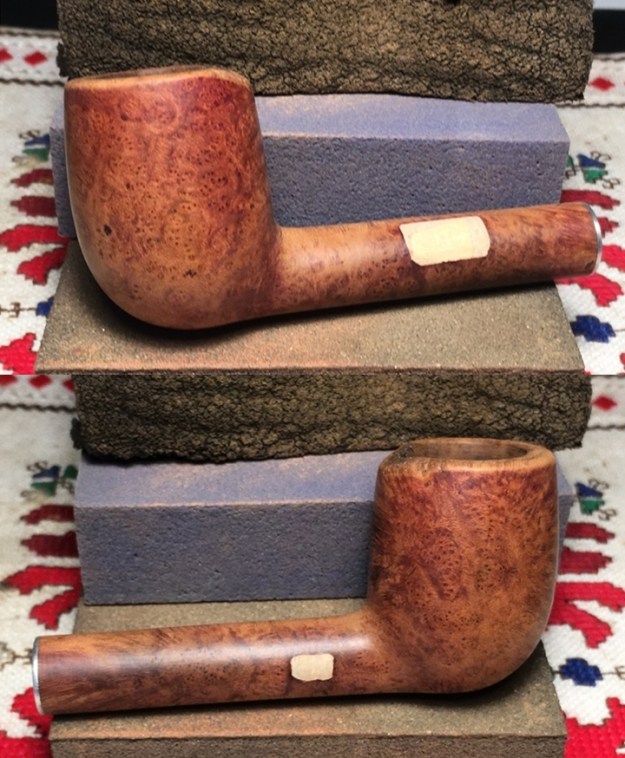
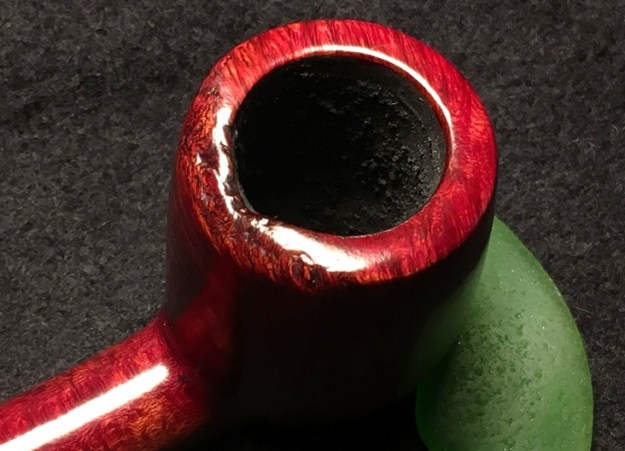
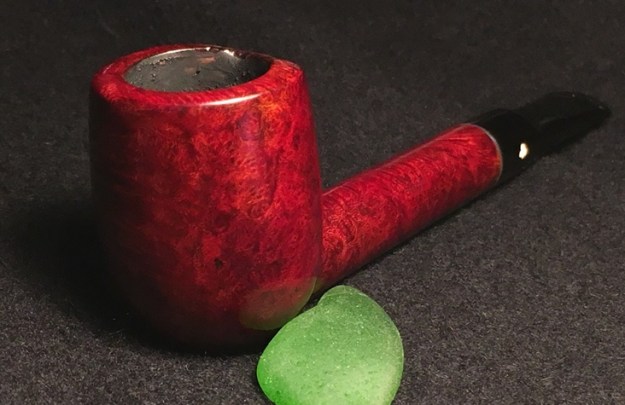
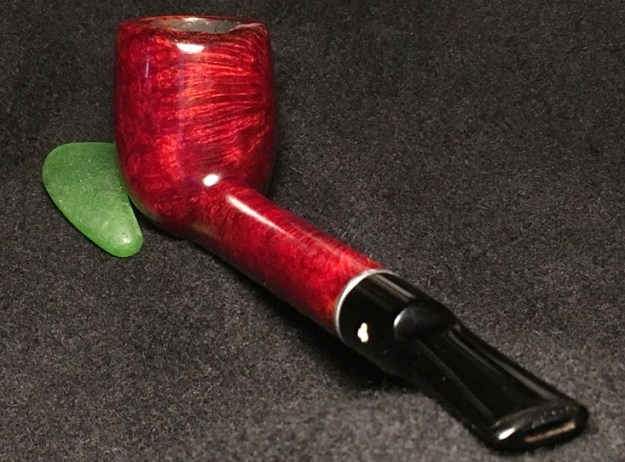
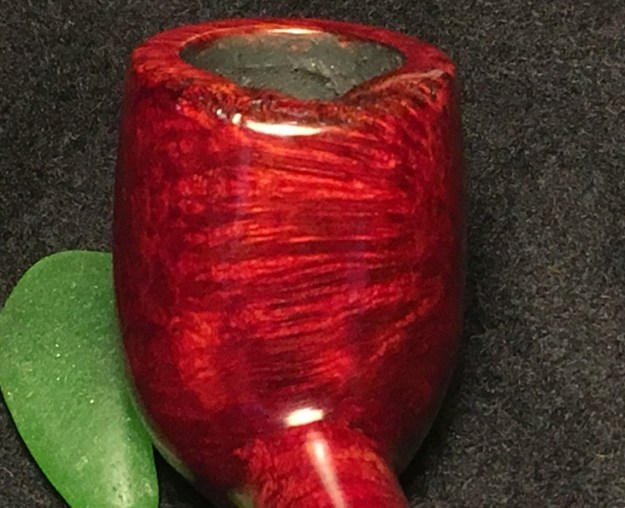
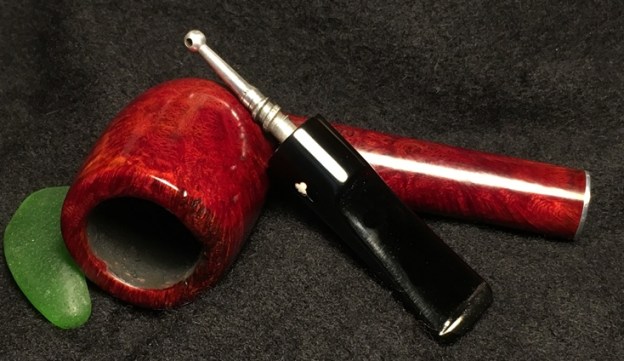
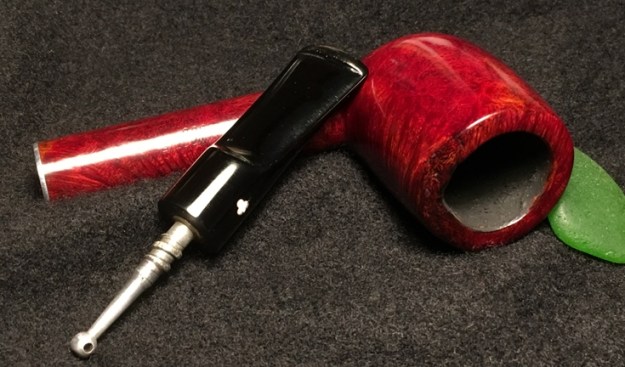
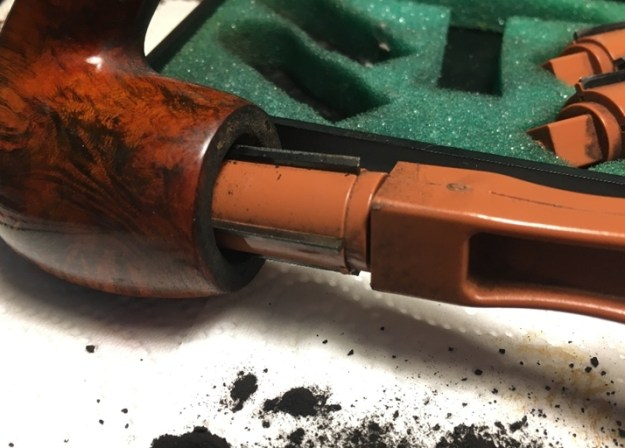
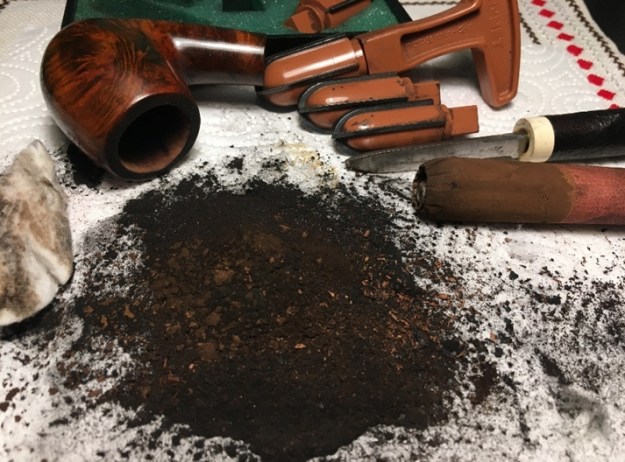
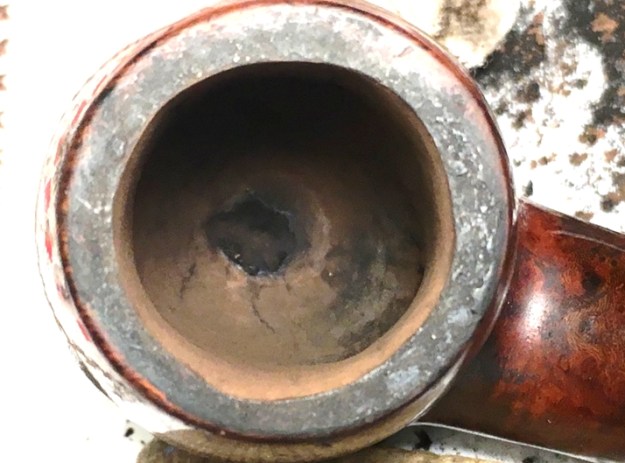
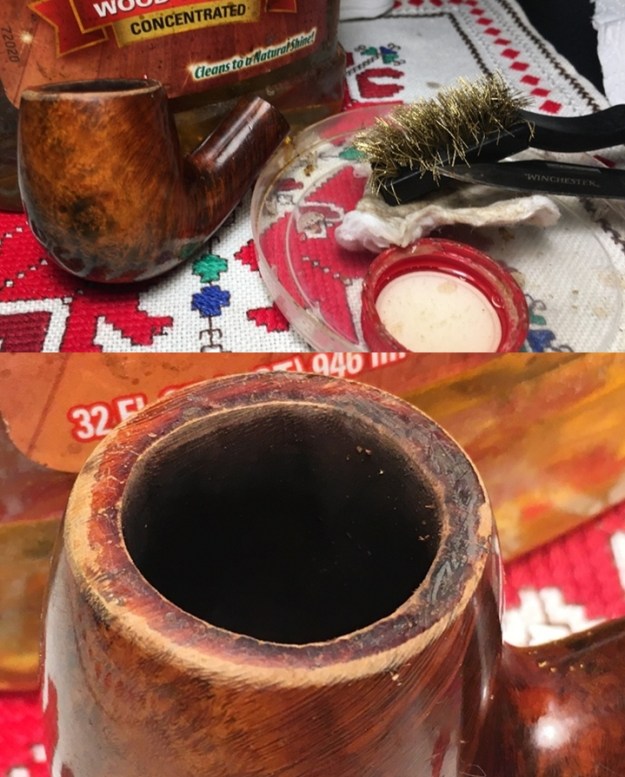
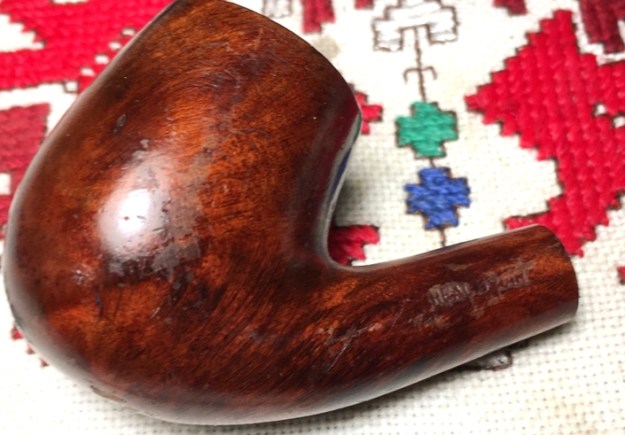
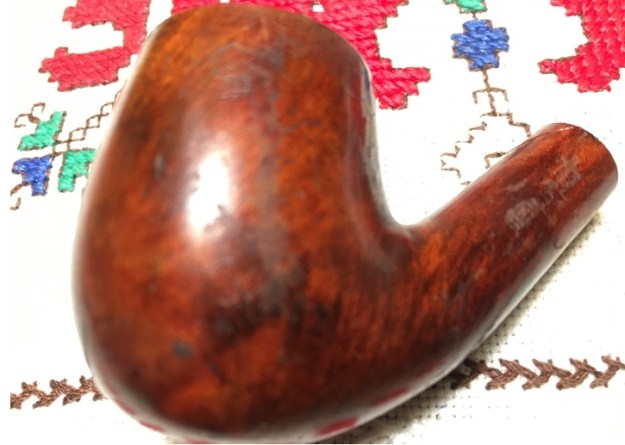
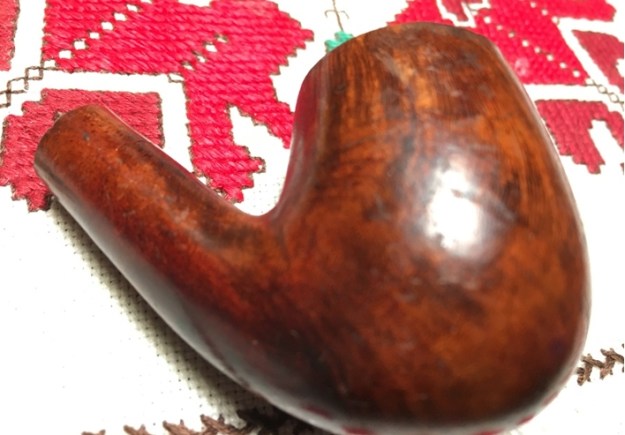
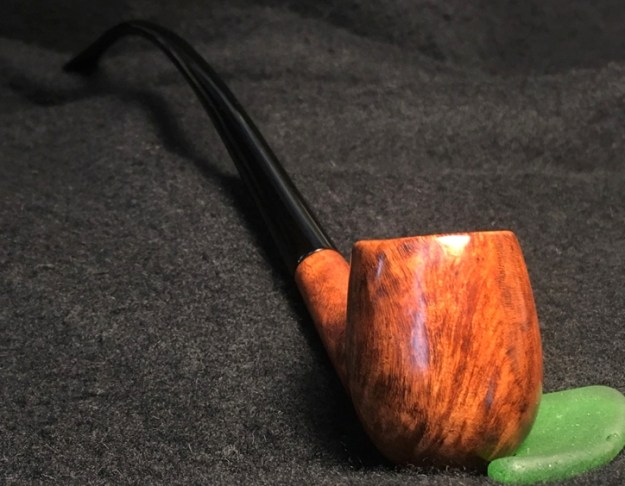
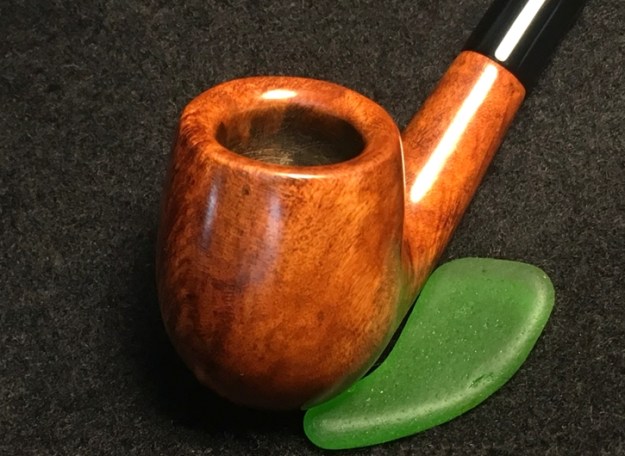
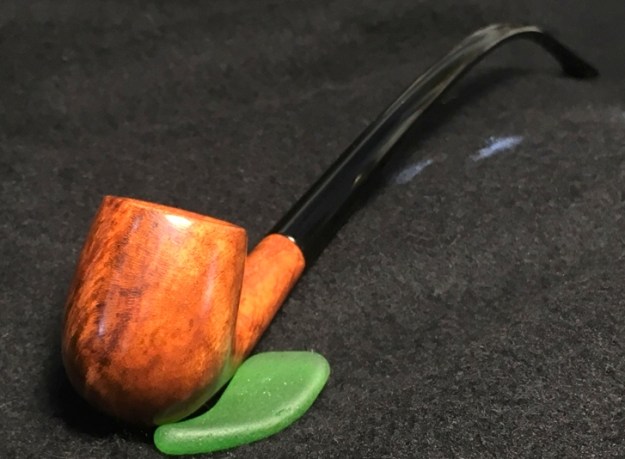
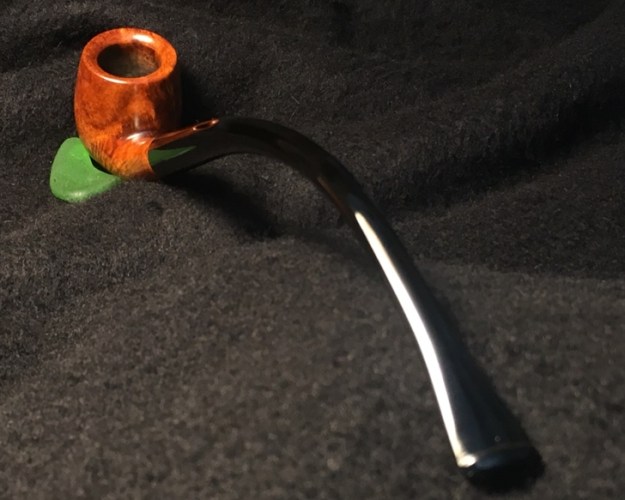
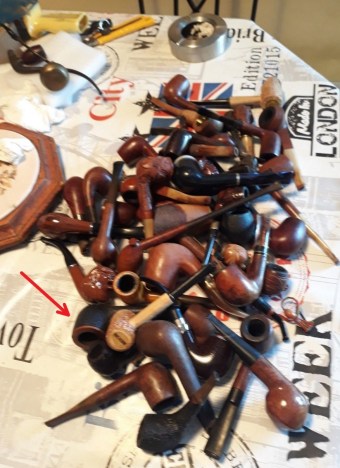
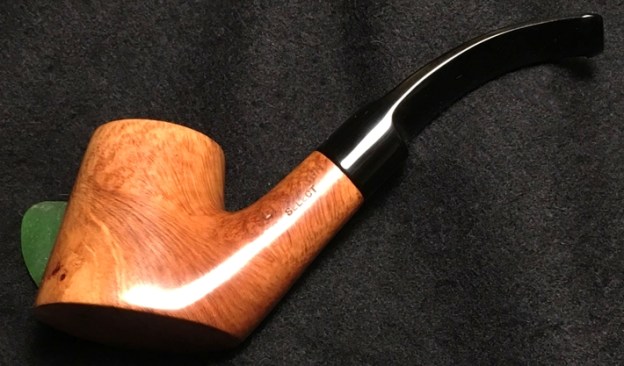
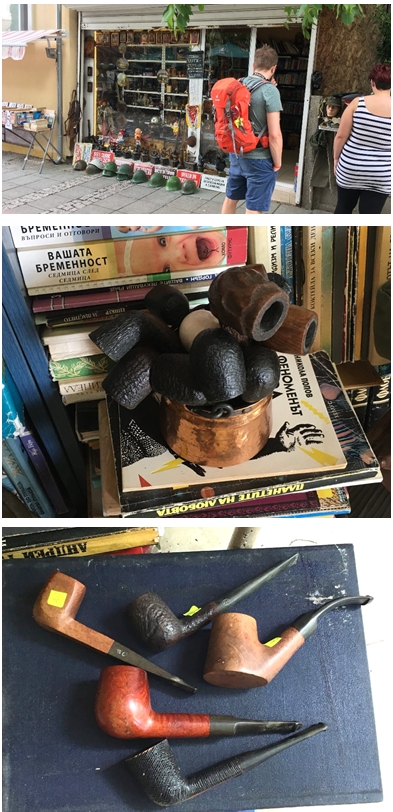
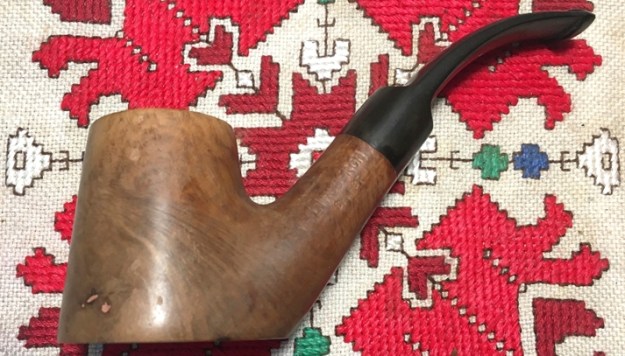
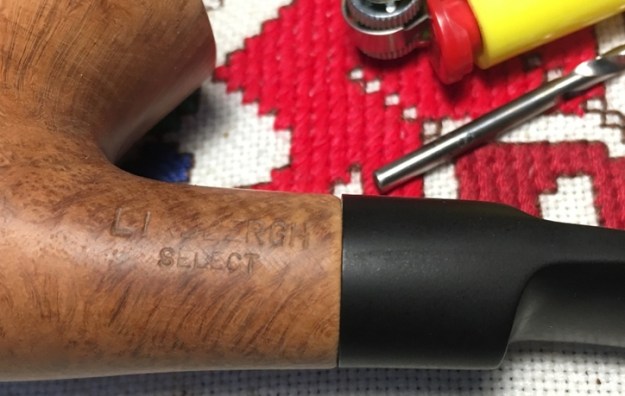
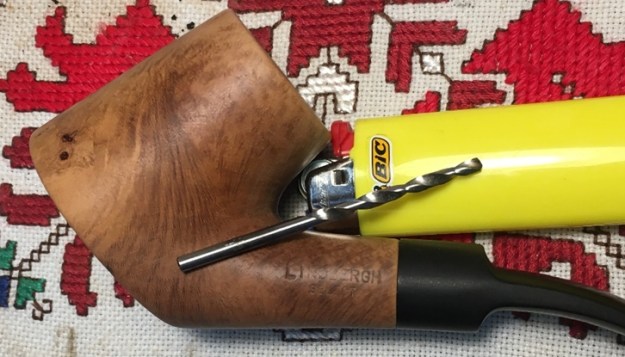
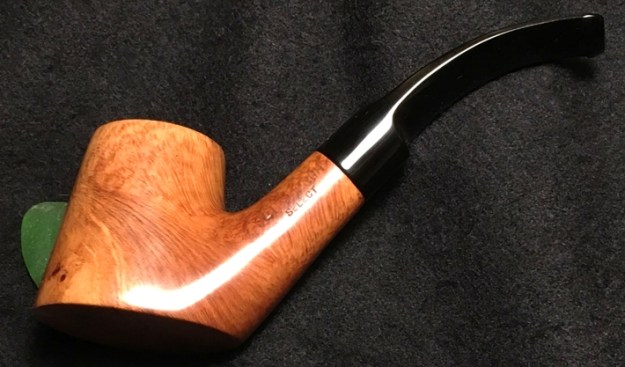
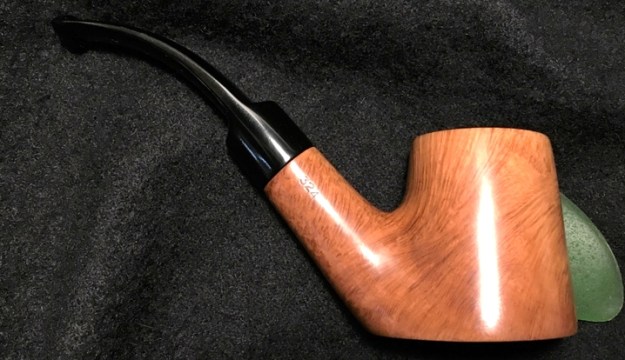
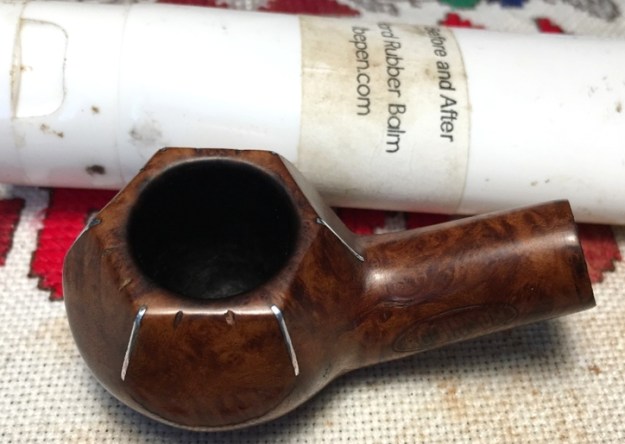
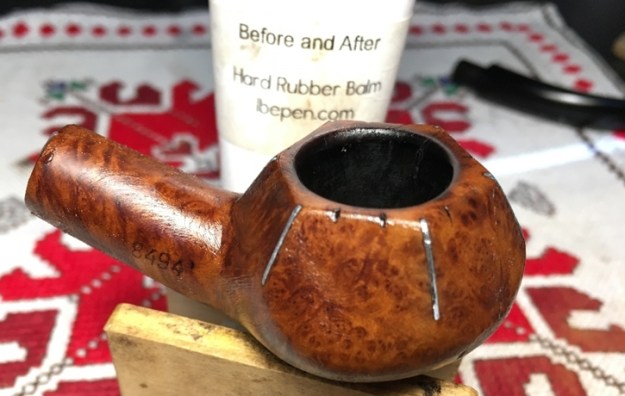
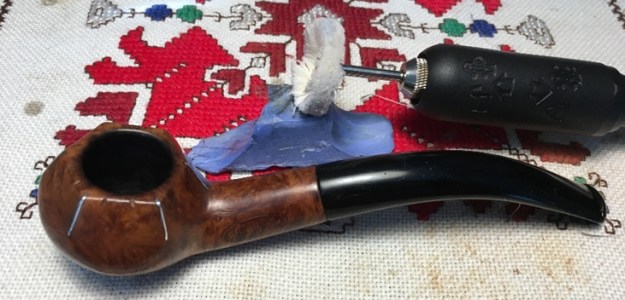
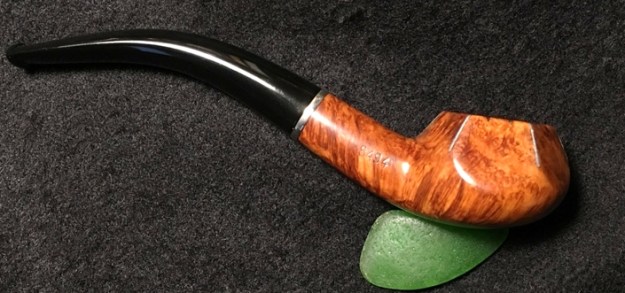
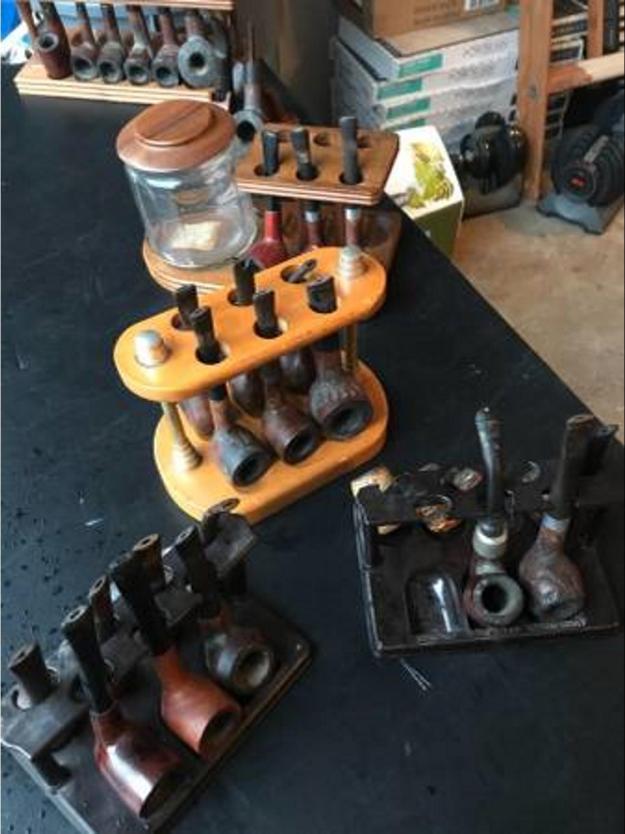
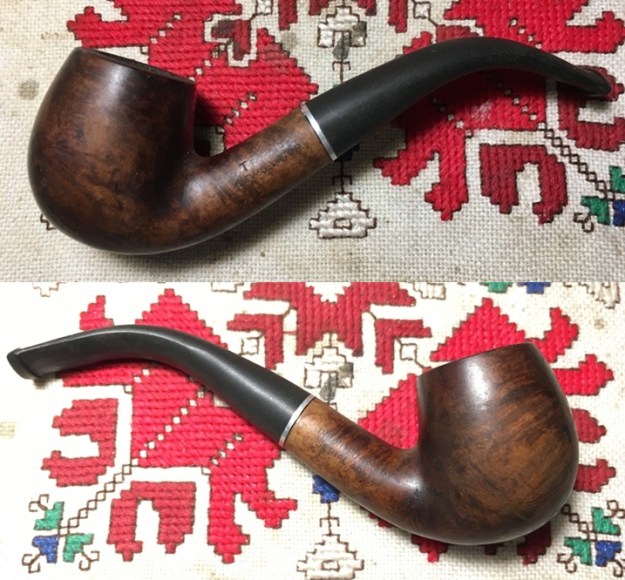
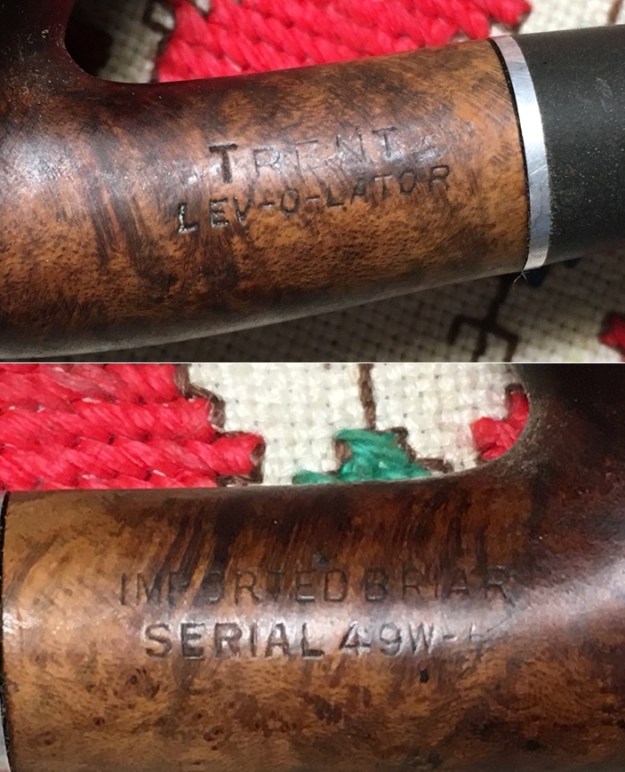
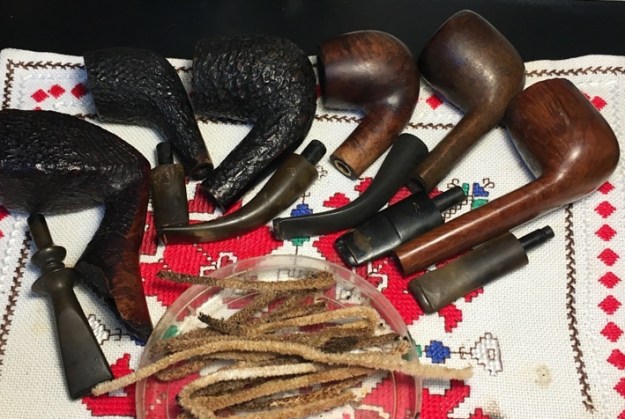
This interesting Trent Lev-O-Lator came to me in a lot from Craig’s list.  One of the great things about friends and family knowing that I restore pipes for the Daughters of Bulgaria is that I have eyes all over the world watching for pipes!  Jon, a colleague working in the same organization, was in the US for a time of furlough after working in Ukraine and was in the Philadelphia area.  This lot of several pipes came up on Craig’s List in his locality and he sent me an email concerning them.  He went to look at them and gave me some descriptions, and many of the pipes were beyond a state of being restored, but for the price being asked, the remaining pipes would make it worthwhile.  Here is picture of the Craig’s List Lot that Jon acquired for me.  As a bonus, the pipe racks would be nice to have here in Bulgaria!They finally made it to Bulgaria where I sorted them and posted many of them online in my For “Pipe Dreamers” Only! collection where pipe men and women can commission a pipe to be restored that ‘speaks’ to them.  Andy has commissioned pipes before and is a return patron of The Pipe Steward.  Before my wife and I moved to Europe with our family over 25 years ago, Andy and his wife, were part of a church in Maryland that I helped start.  Previously, I restored a very nice Monarch Pat. 1989069 – 1074H Bent Ball for Andy as well as create a Churchwarden from a repurposed bowl and had fun with the write-up calling it, Fashioning a Churchwarden from a Forlorn, Throw away Billiard – a story of the Phoenix.  Andy returned to the ‘Dreamers!’ collection and another pipe spoke to him, a Trent Lev-O-Lator, part of the Craig’s List Lot from Jon.  Here are pictures of the pipe that got Andy’s attention. The nomenclature stamped on the left flank of the shank is ‘TRENT’ [over] ‘LEV-O-LATOR’.  The right side of the shank is stamped ‘IMPORTED BRIAR’ [over] ‘SERIAL 49W-5’.I had never seen this name on a pipe, and I had no idea was a ‘Lev-O-Lator’ was.  My first queries to Pipedia and Pipephil.eu, my regular first stops for information and research, came up empty.  A quick look in my copy of ‘Who Made That Pipe?’ by Wilczak & Colwell, also came up empty.  When I searched more broadly in Google, I came up with two helpful threads.  The first was from Pipes Magazine Forums where another person was asking the same question in 2015 – had anyone any information about a pipe marked ‘Trent Lev-O-Lator’?  He had acquired a Zulu with this nomenclature and was hoping to understand better its provenance.  One helpful response in the thread from ‘eJames’ started to build a road map:
Bruce Peters pipes (and a couple of others) were made by HLT for the Penn Tobacco Co. If this is a Bruce Peters it was most likely made before HLT bought Grabow, probably in the 1940’s.

Taking this information, I returned to Pipedia and found ‘Bruce Peters’ listed among American pipe makers:To understand more about the Henry Leonard & Thomas Inc., I look at the Pipedia article about HLT:


Henry Leonard & Thomas, Inc. (HLT) was founded in Ozone Park, Queens, New York by Henry J. Lavietes and two partners on May 31, 1938. The company patented a stem design for pipes and cigarette holders designed by Henry on March 9, 1943. Henry was the son of David Lavietes, who moved to Sparta, North Carolina in the early 1940s to purchase laurel and rhododendron burl to ship back to his son and HLT. Lavietes decided to stay in Sparta and founded the D&P Pipe Works with his other son Paul, originally as a 15-person operation. David Lavietes was the inventor of the Ajustomatic feature incorporated into Dr. Grabow pipes even today.

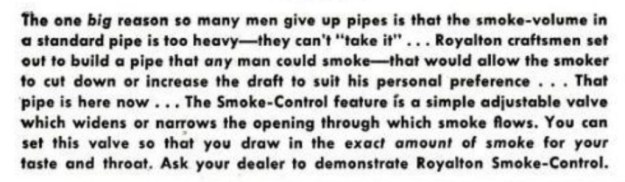
There is no mention of “Trent” or “Lev-O-Lator” but there is mention above of David Lavietes’ invention called the ‘Ajustomatic’ which later became a feature of Dr. Grabow pipes when in 1953 (same article) HLT acquired Dr. Grabow.  In the same article, the Popular Mechanics advertisement (LEFT – Courtesy of Doug Valitchka) describes the ‘Ajustomatic’ technology which looks much like the Lev-O-Later.  Here is the text enlarged:I continue to search for more leads and I find one additional thread that shed more light on the path.  This time the thread was from Tapatalk.com, in the “Dr. Grabow Pipes” Thread.  The thread started in 2017 when ‘SpadeFan’ asked:
Found this nice 86 from HL&T stamped BRUCE PETERS and LEV-O-LATOR.  Anyone know what the term LEV-O-LATOR means? Sound like I should plug it in and make coffee or something.Responses in this thread speculated that the ‘Ajustomatic’ and ‘Lev-O-Lator’ were one and the same:
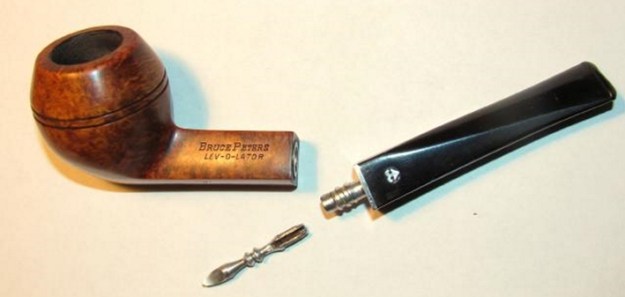
JoeMan: That fitment sure looks a lot like an ajusto…and the cleaner may be identical to that of a Van Roy…and that logo looks a LOT like the Van Roy logo too.  I wonder if it’s a Van Roy production pipe which was then branded as a Bruce Peters.  If so…and if it is Ajusto…then I bet Lev-o-lator is their fancy name for the ajusto function.  

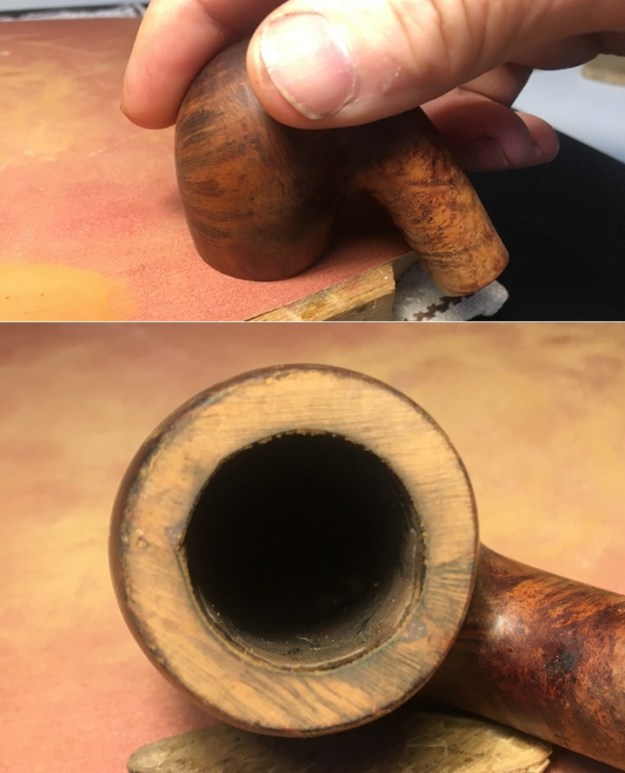
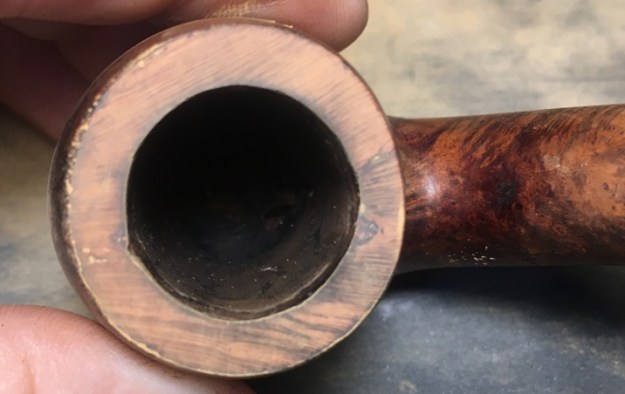
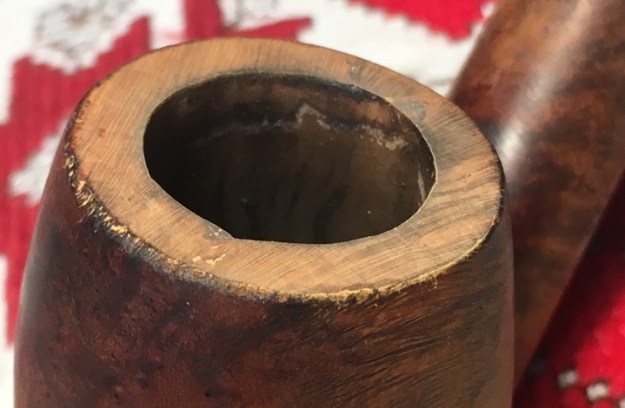
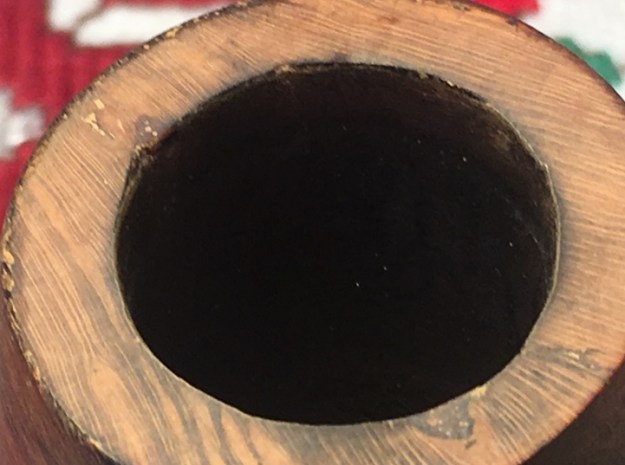
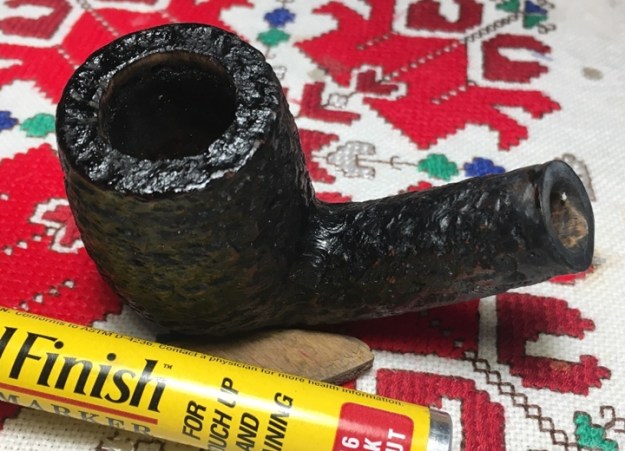
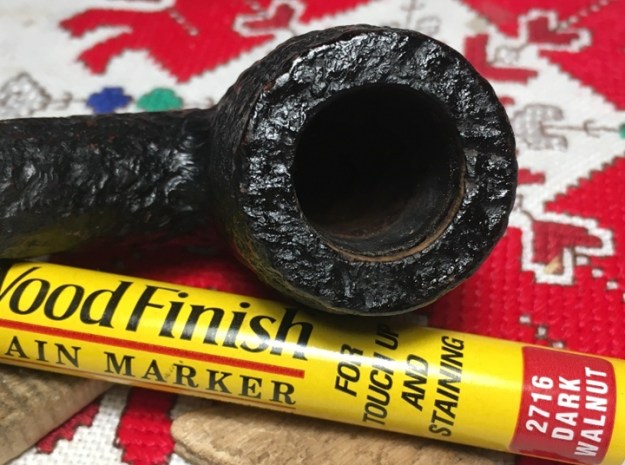
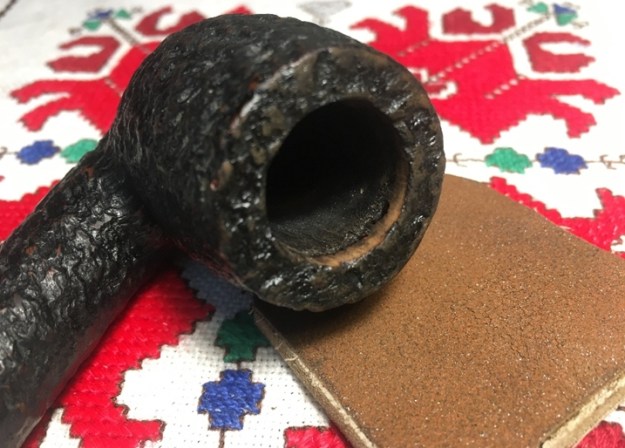
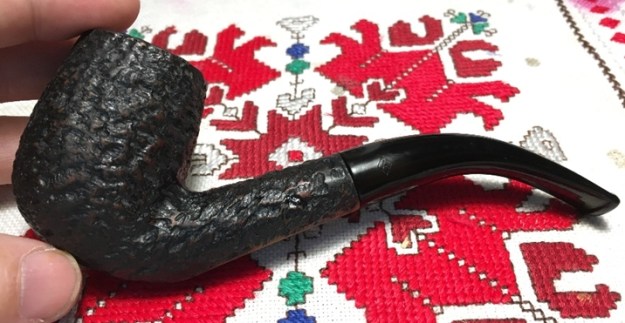
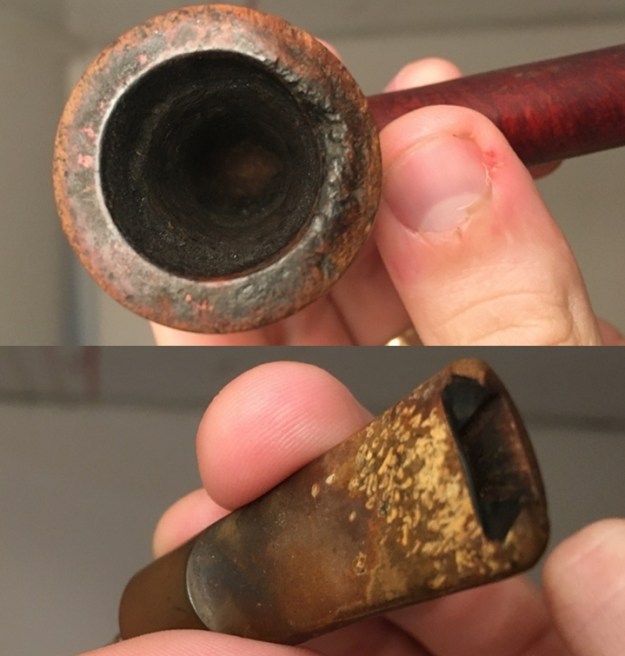
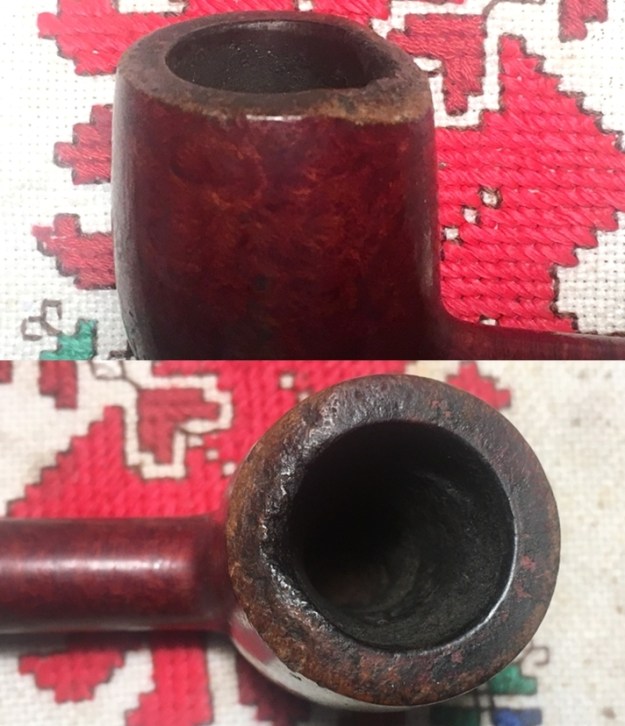
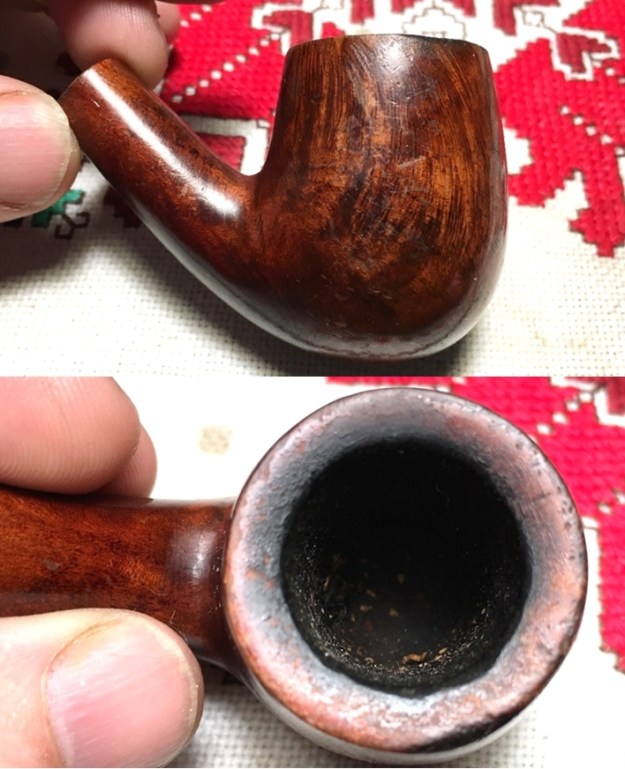
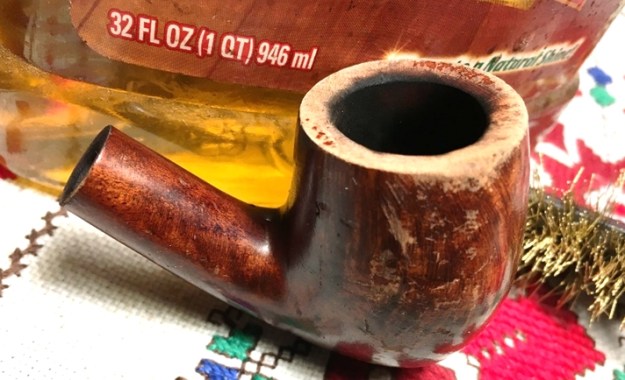
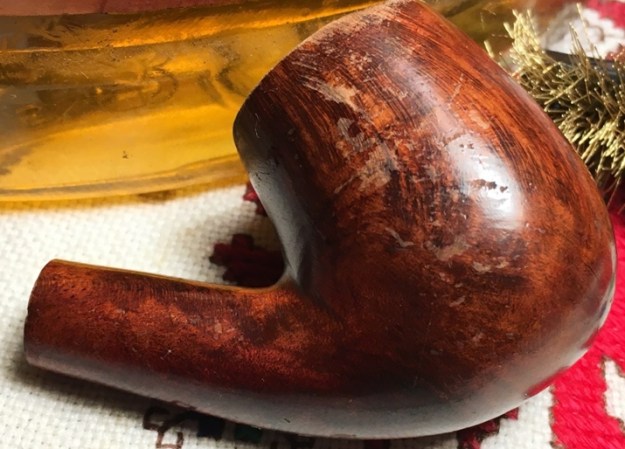
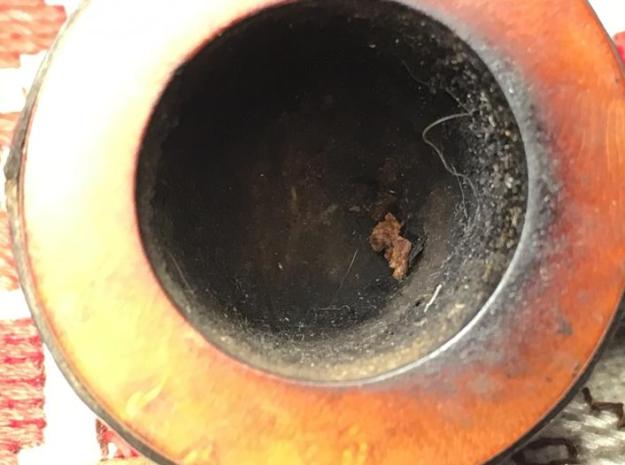
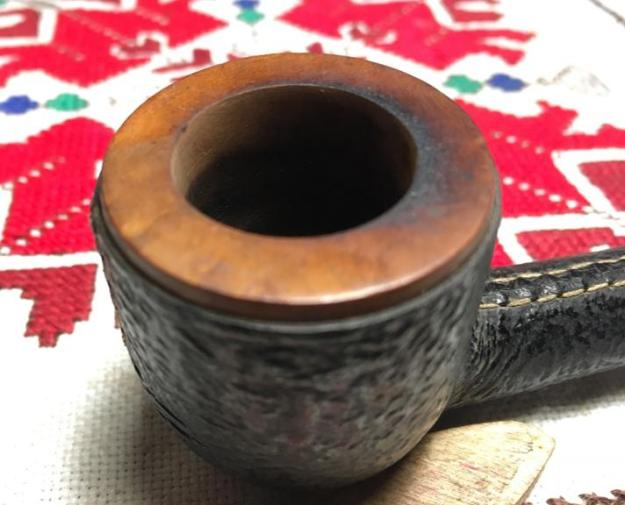
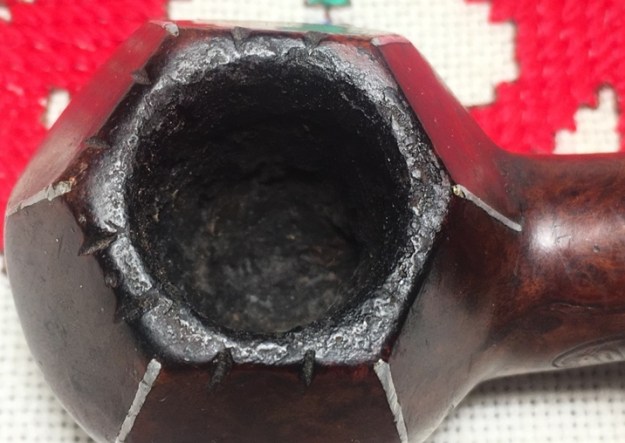
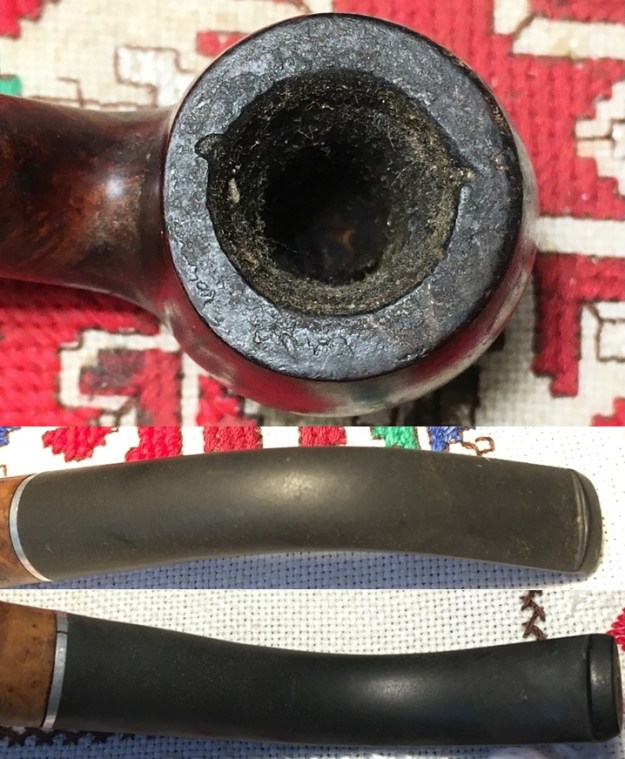
Pipesbywhitney:  I sold one a while back and here are my notes on it; This is a Trent Lev-O-Lator “Serial 49W-5” longer stem pear also stamped “Imported Briar.”  I can find no provenance for Trent pipes but the Import Briar stamping tells us it was most likely American made. The Lev-O-Lator system seems to be a metal drinkless mechanism attached to the tenon similar to many used in various American pipes during the mid-20th Century. I can find a Trend pipe similar to this one made around the same time by the Wm. Demuth Co. in New York so there could be a connect.I could find no additional information specifically placing the ‘Trent’ name in a time-line, but what I can deduce is that the ‘Trent Lev-O-Lator’ is the same ‘Ajustomatic’ internal technology that is traced back to before Dr. Grabow was acquired by HLT in 1953.  Without any specific reference to ‘Trent’, it’s difficult to say much more with certainty.  The Trent Lev-O-Lator on my worktable has the feel of being dated from the 40s to the 60s but this is only speculation.  I would need to find the Trent in a catalog to place it more specifically.Looking at the pipe itself, it’s a very nice half-bent Billiard.  The chamber has some thick cake build-up with the rim showing thick lava flow.  The rim also has two dents on the forward and rear internal edge. The stummel is darkened from grime and age.  I can see a few fills and dents on the briar surface which will require some work.  The stem has oxidation, which is moderate, but the good news is that the bit has little tooth chatter.
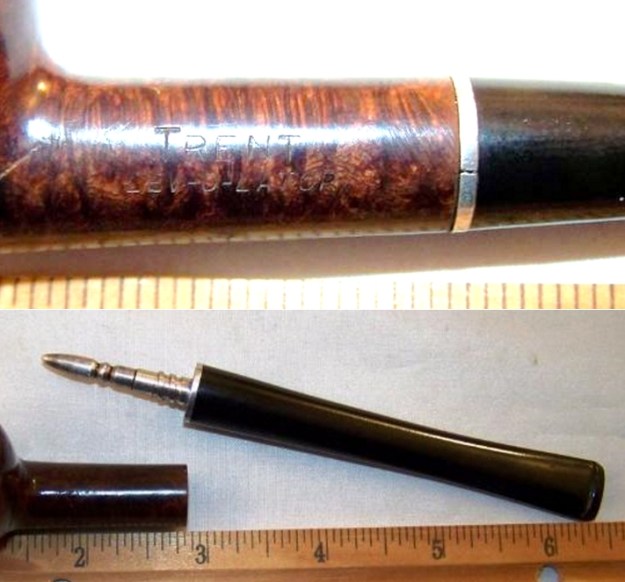
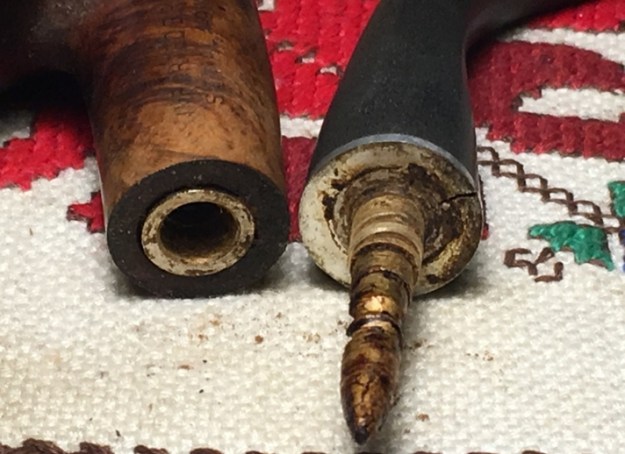
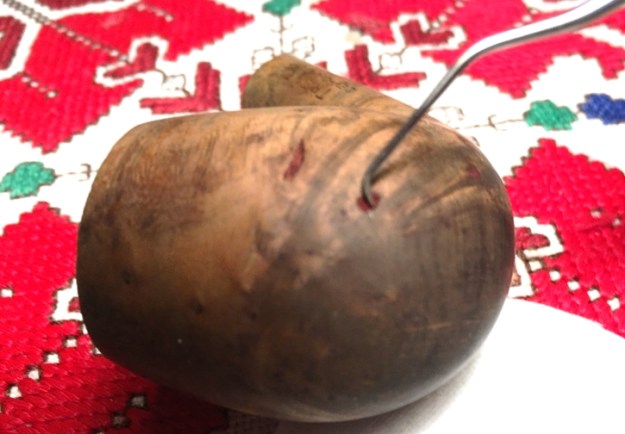
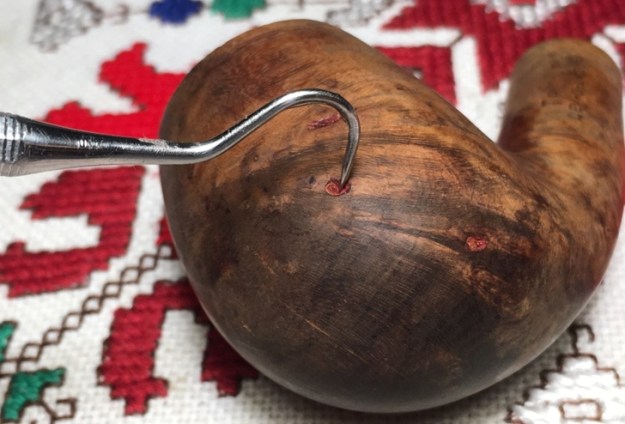
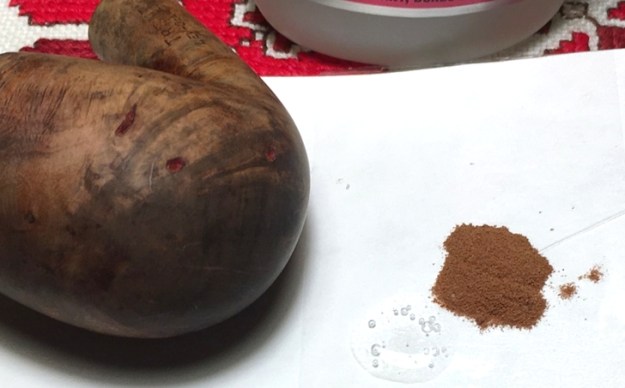
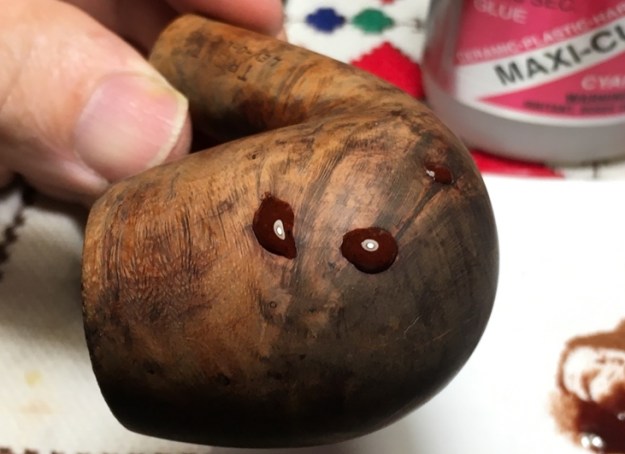
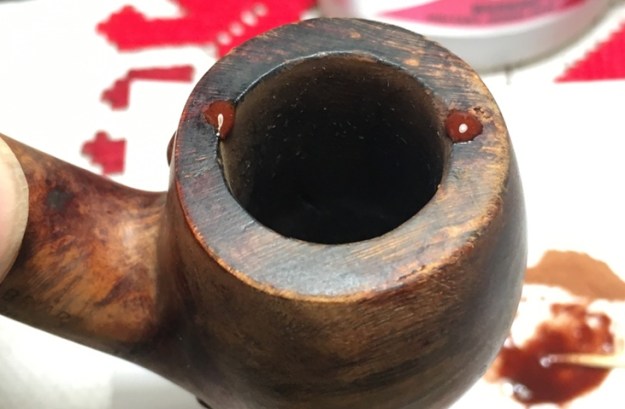
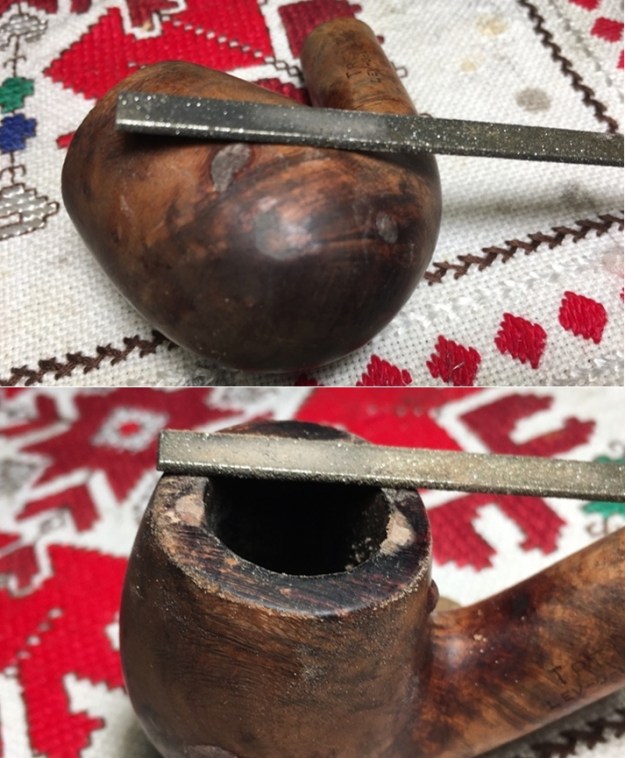
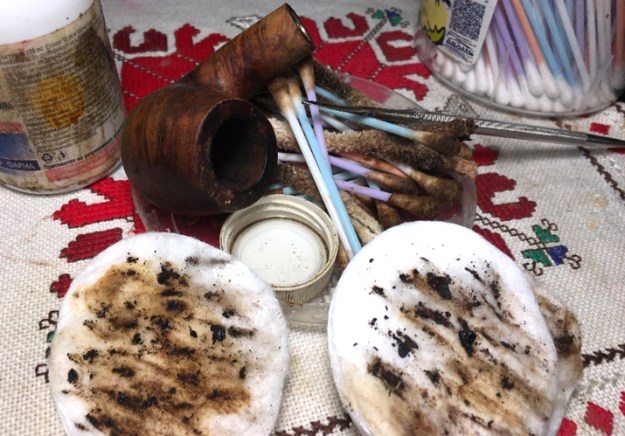
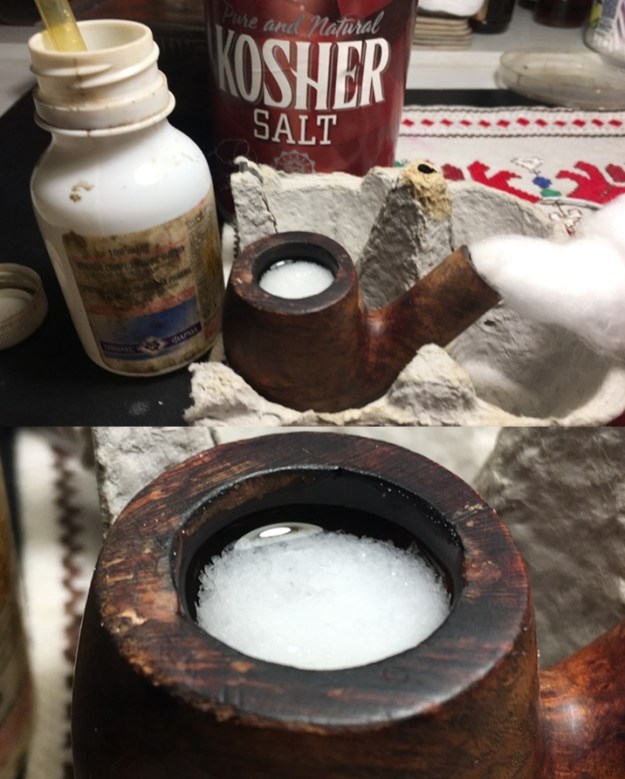
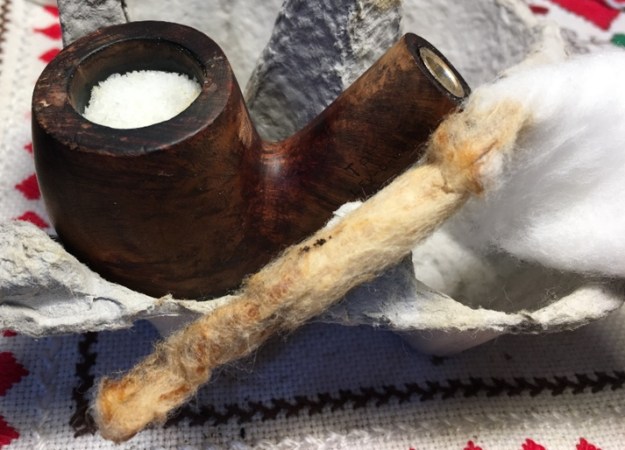
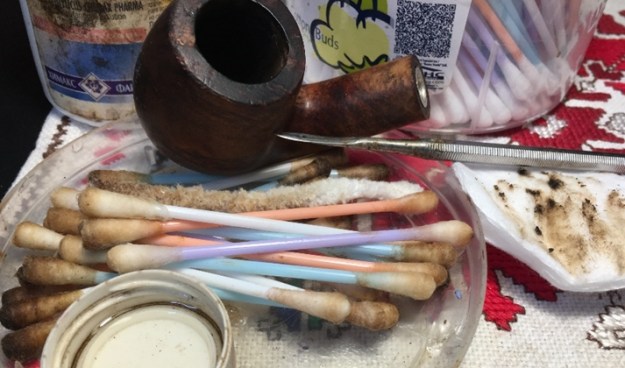
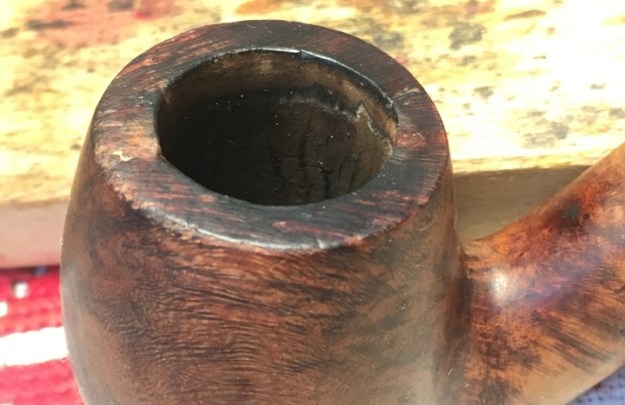
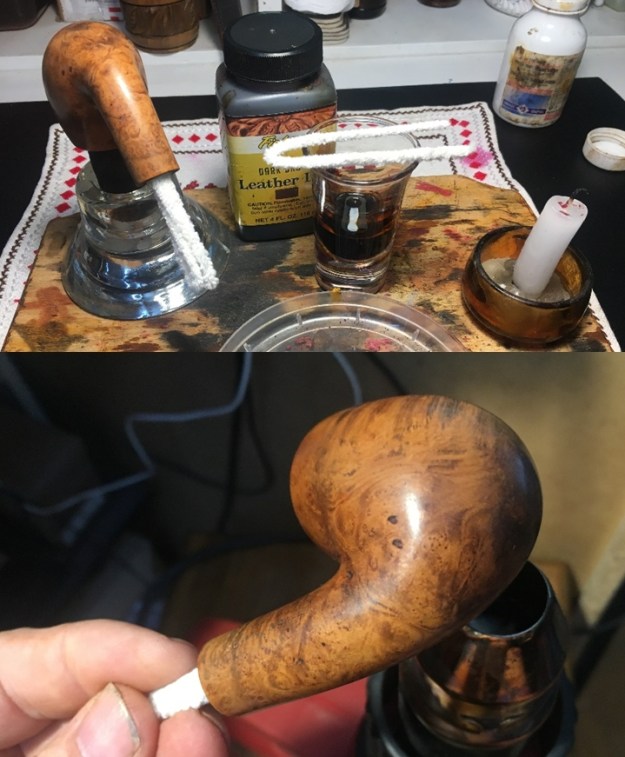
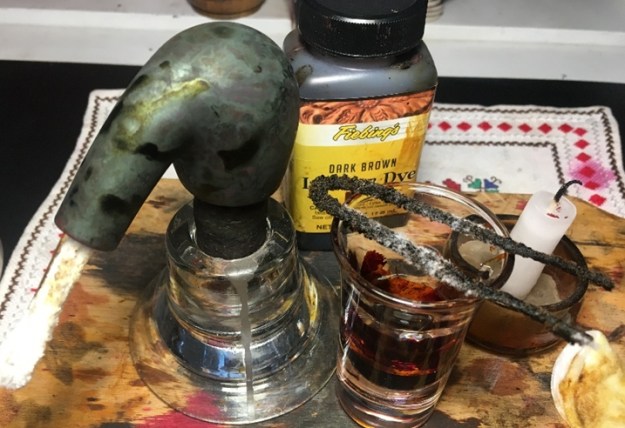
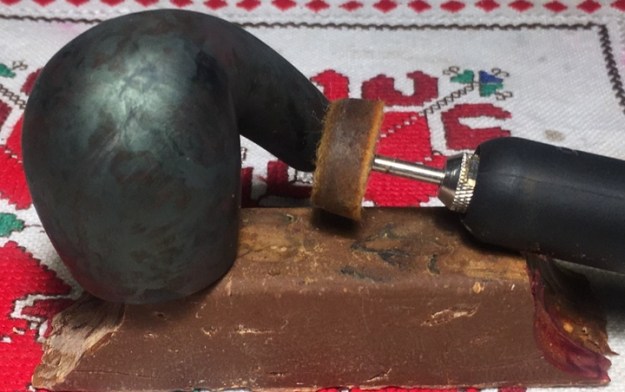
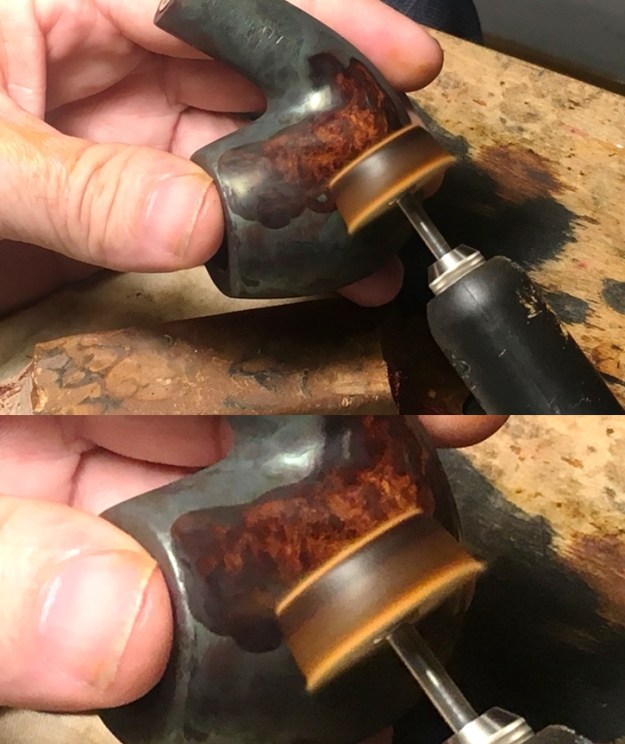
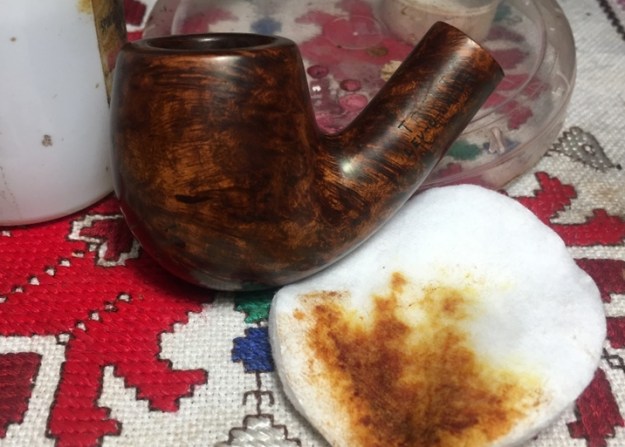
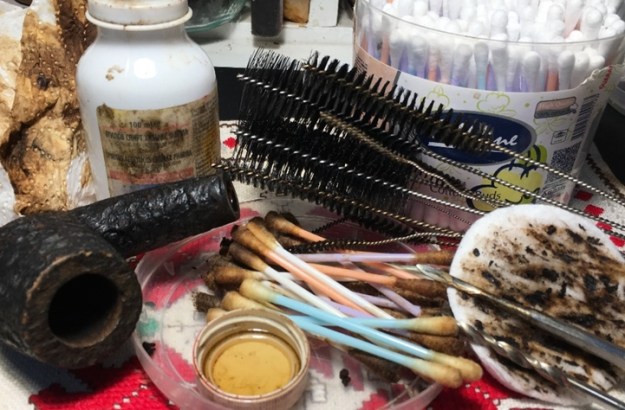
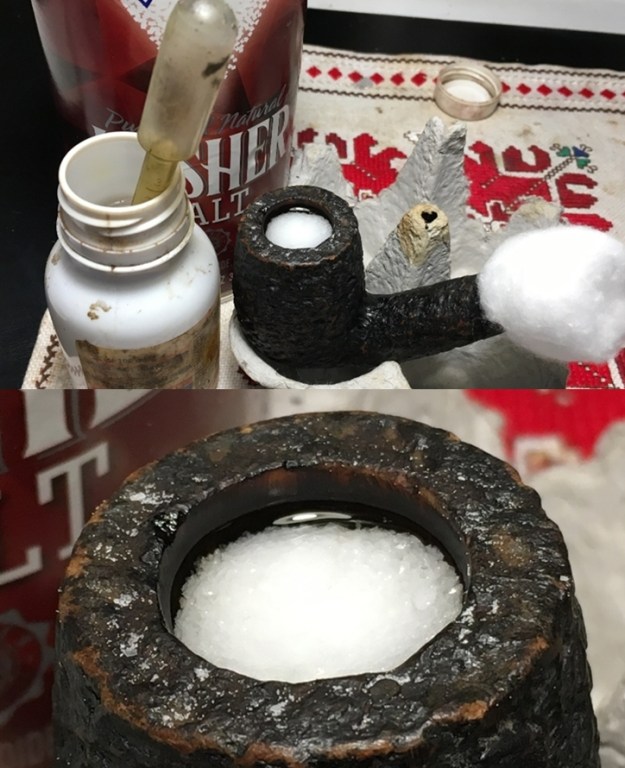
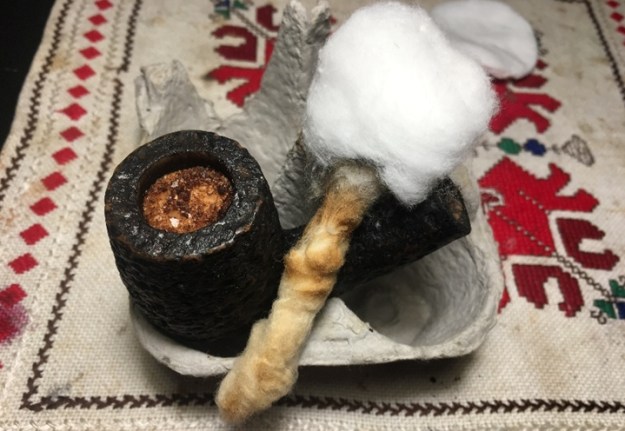
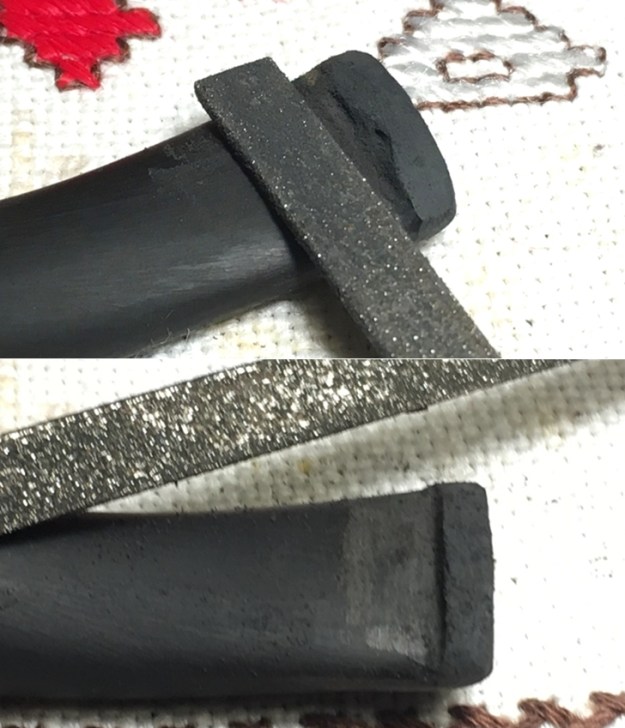
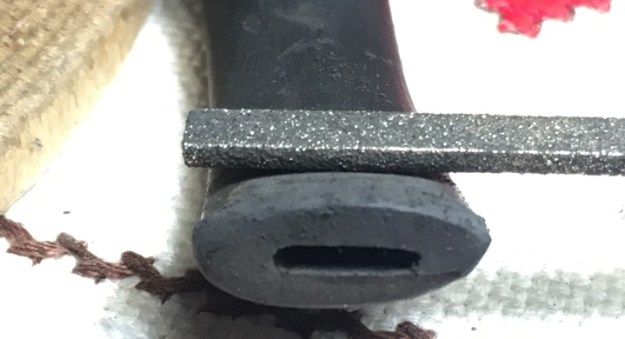
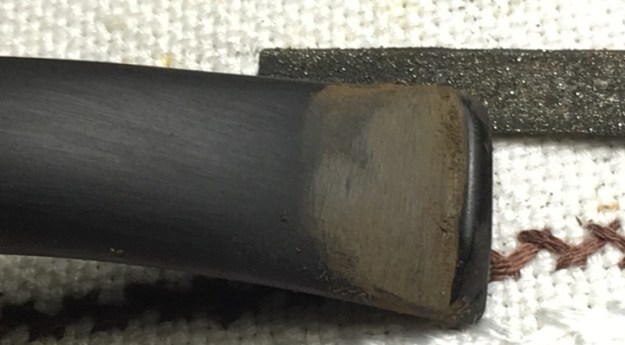
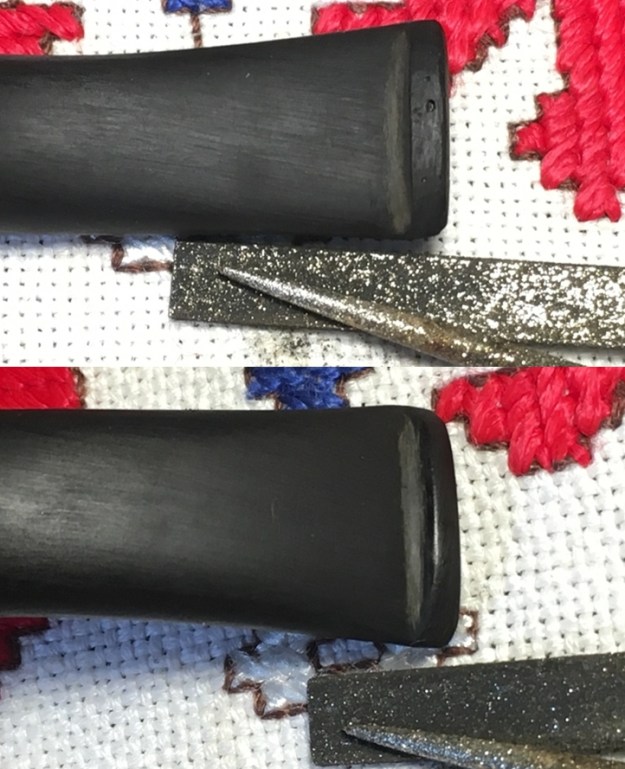
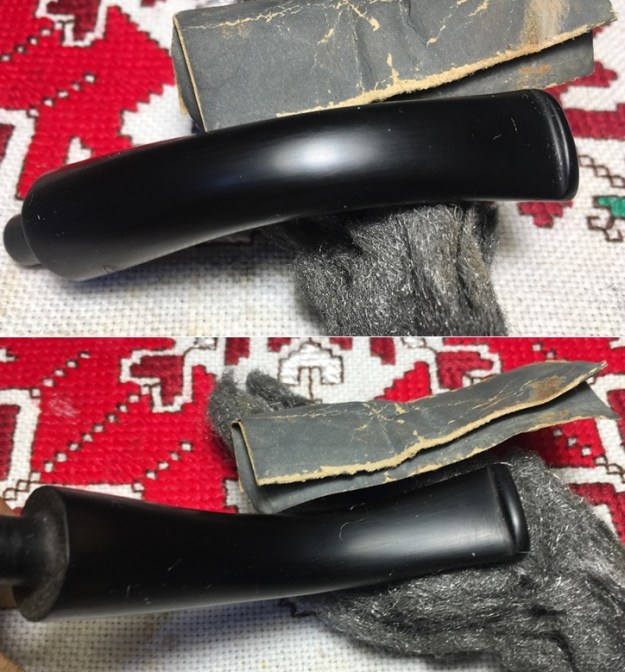
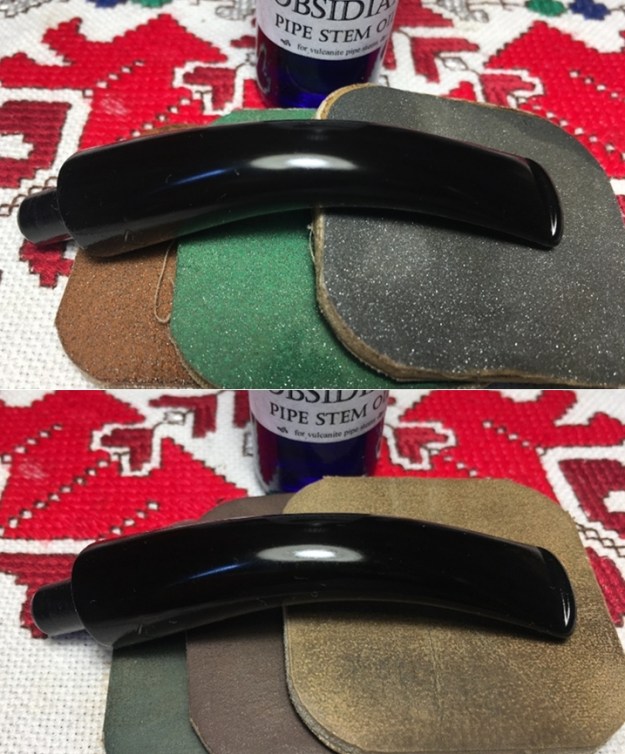
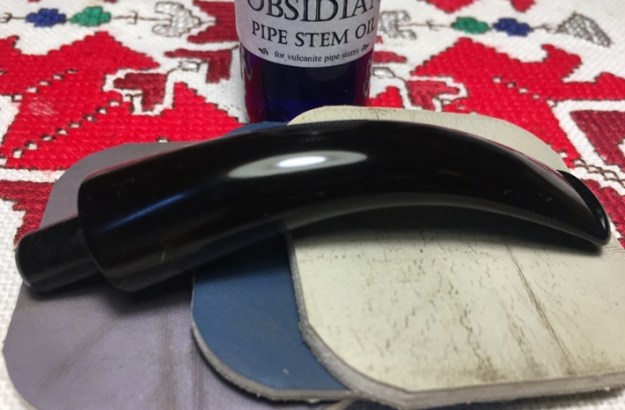
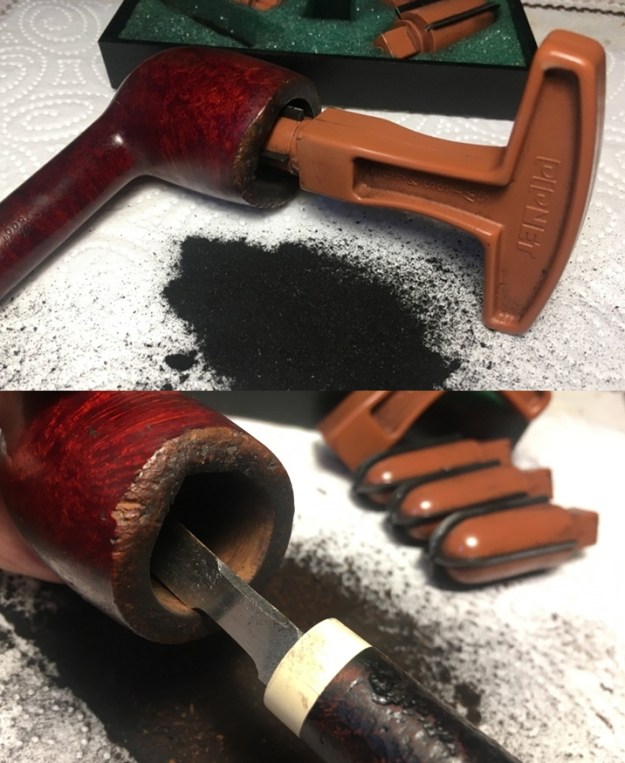
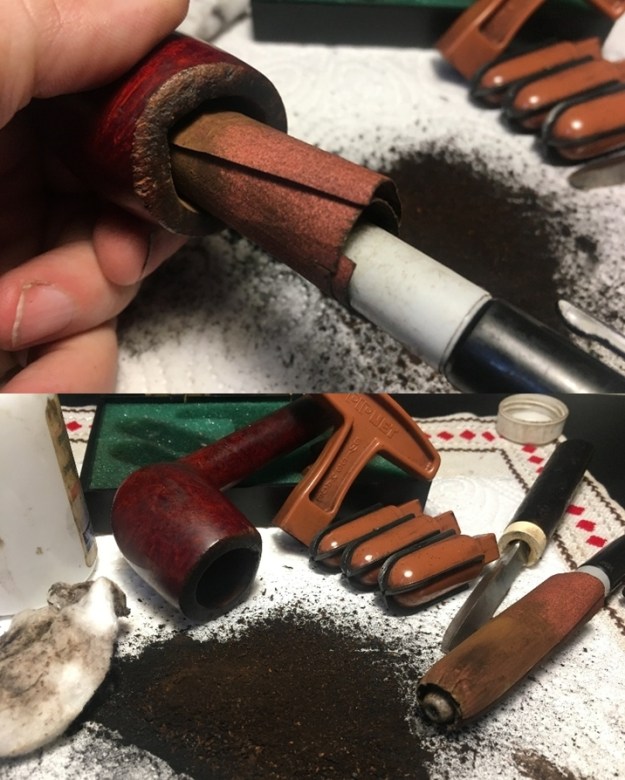
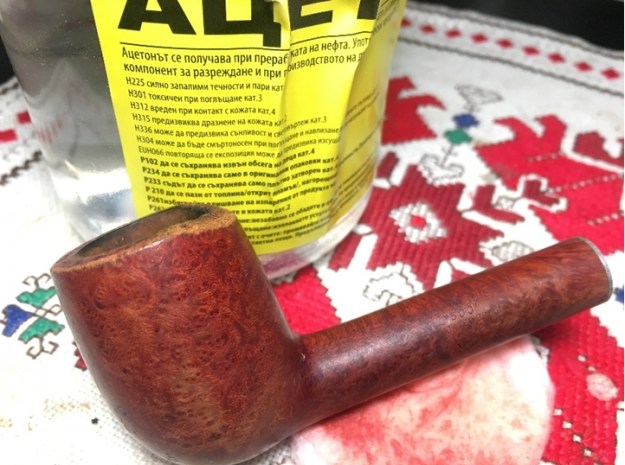
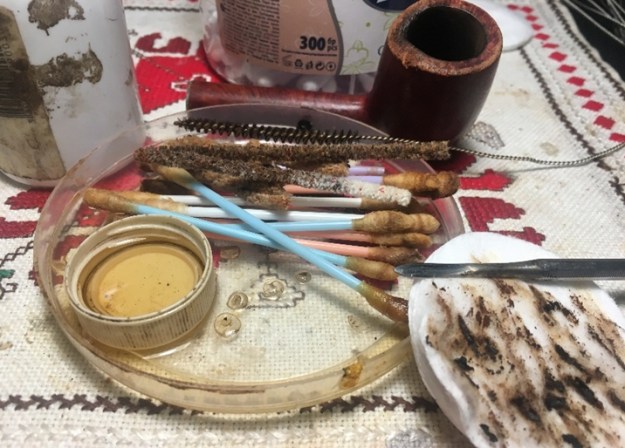
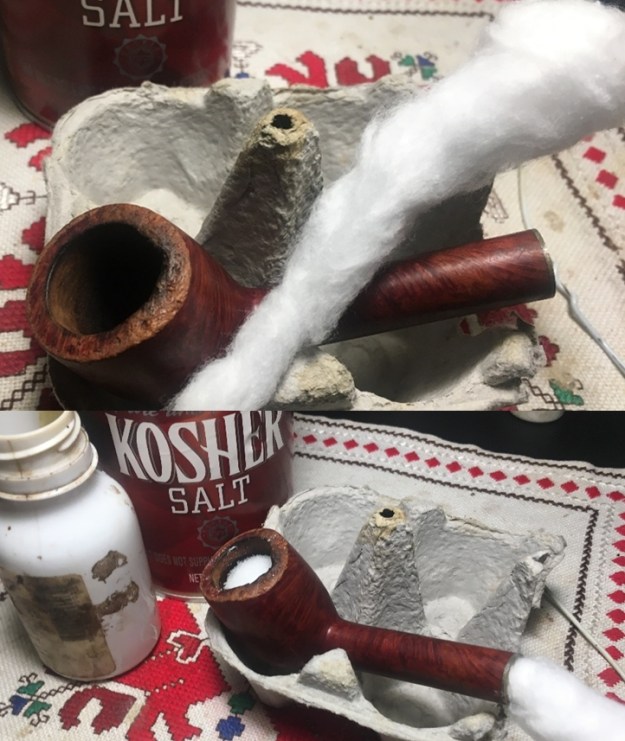
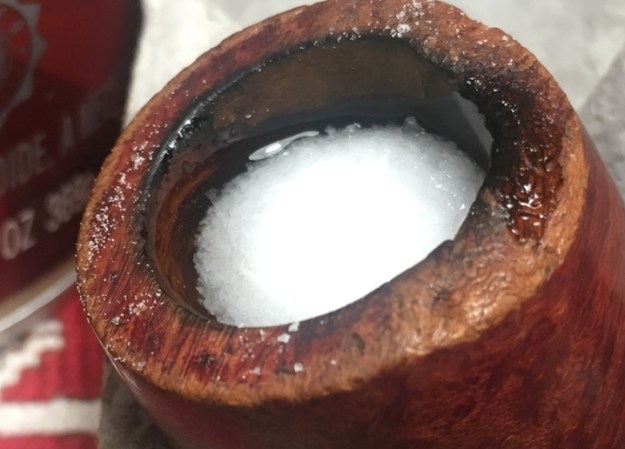
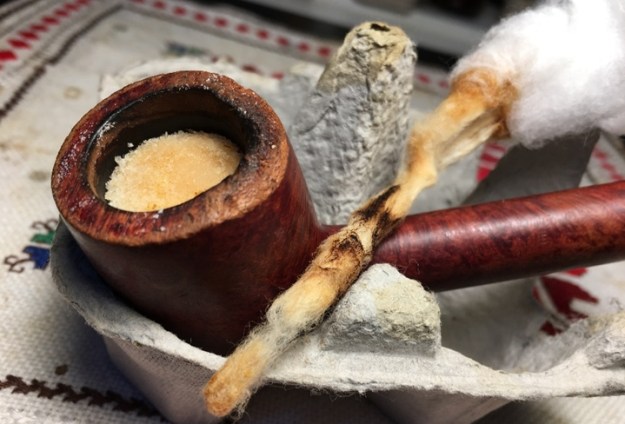
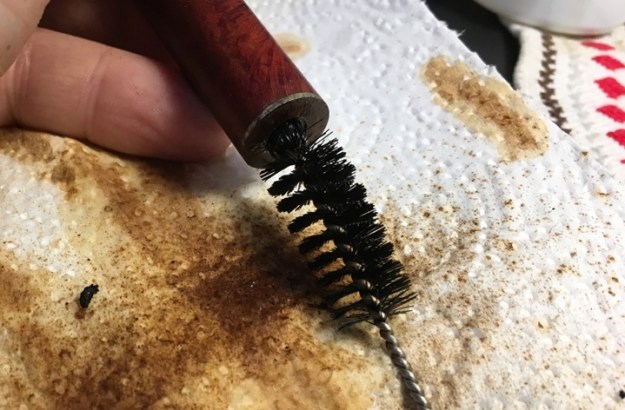
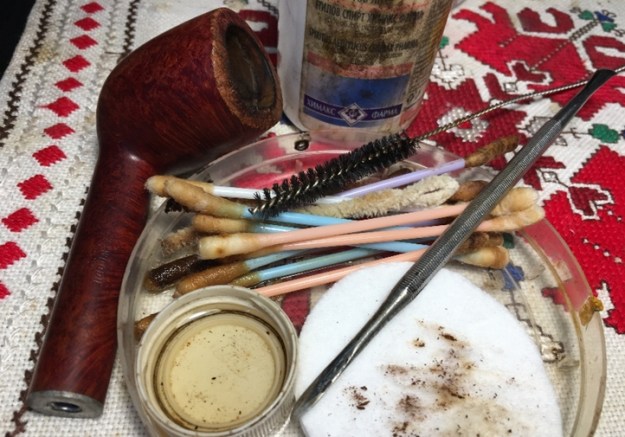
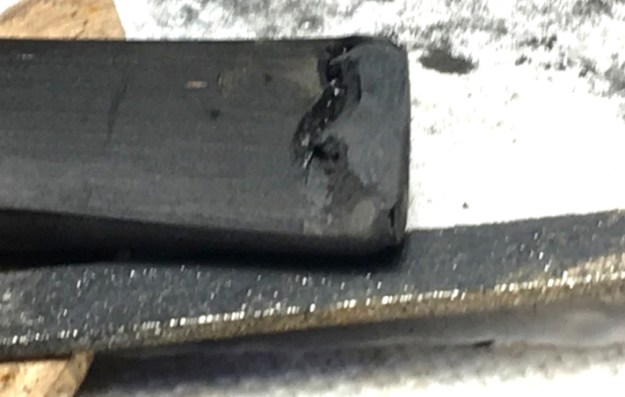
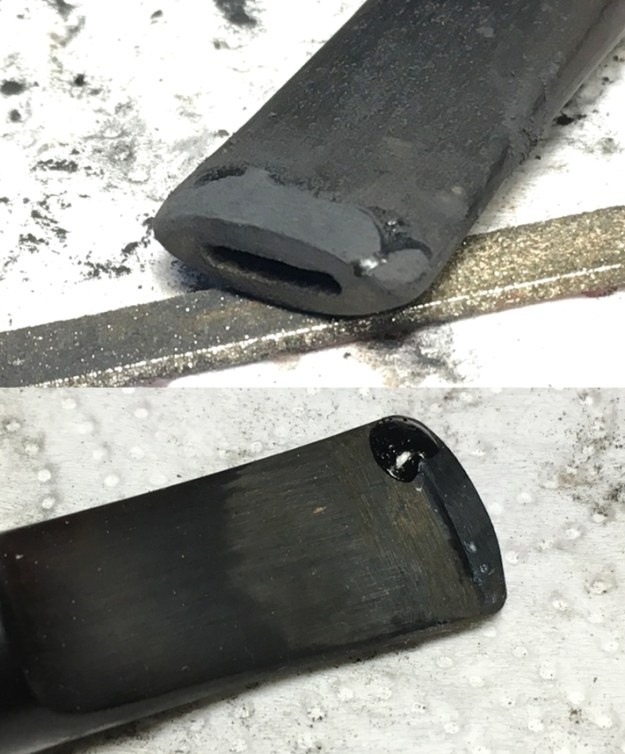
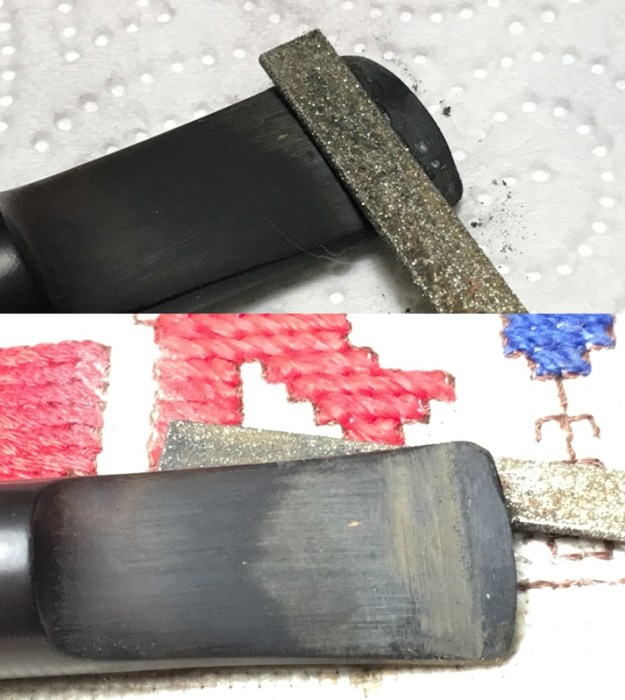
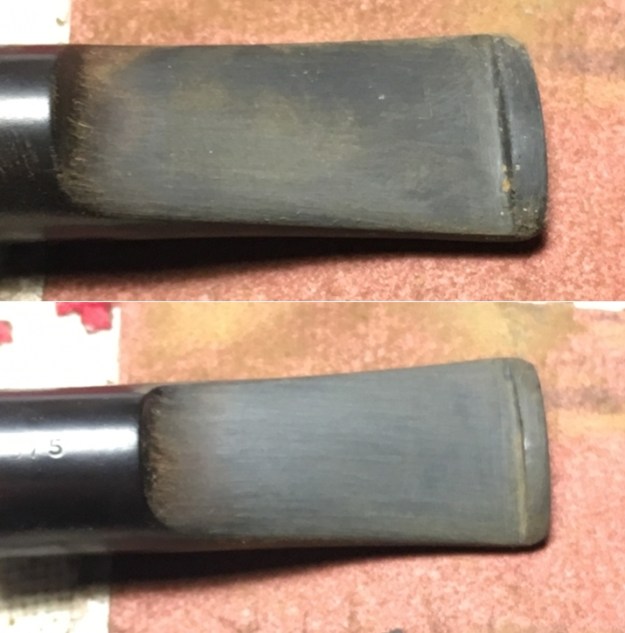
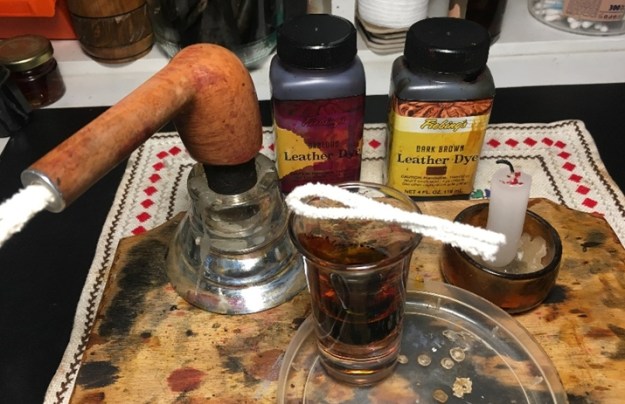
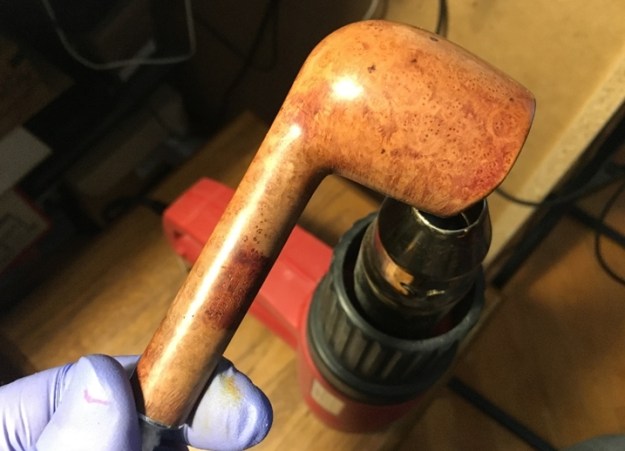
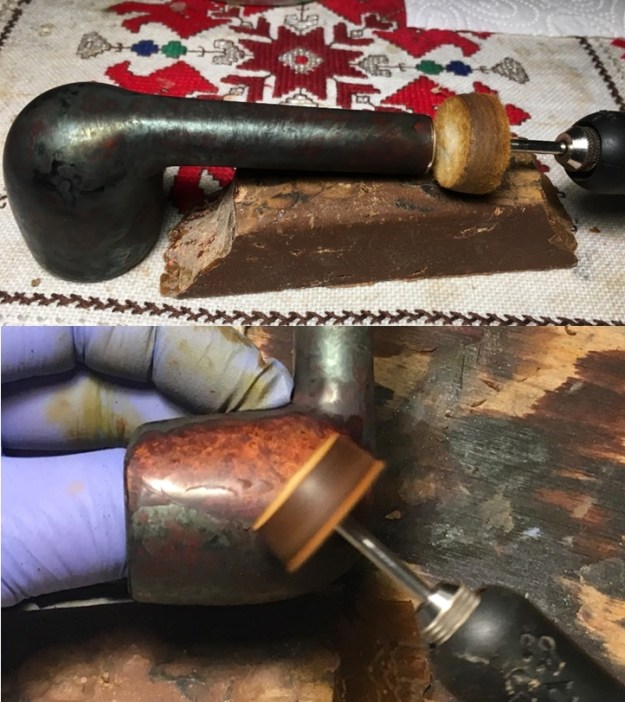
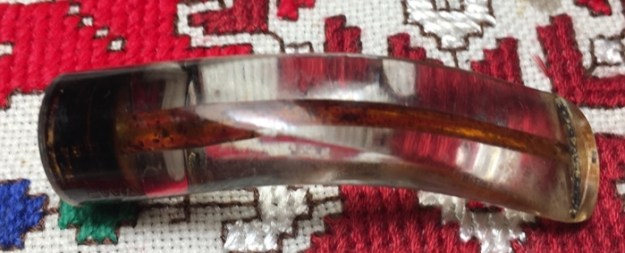
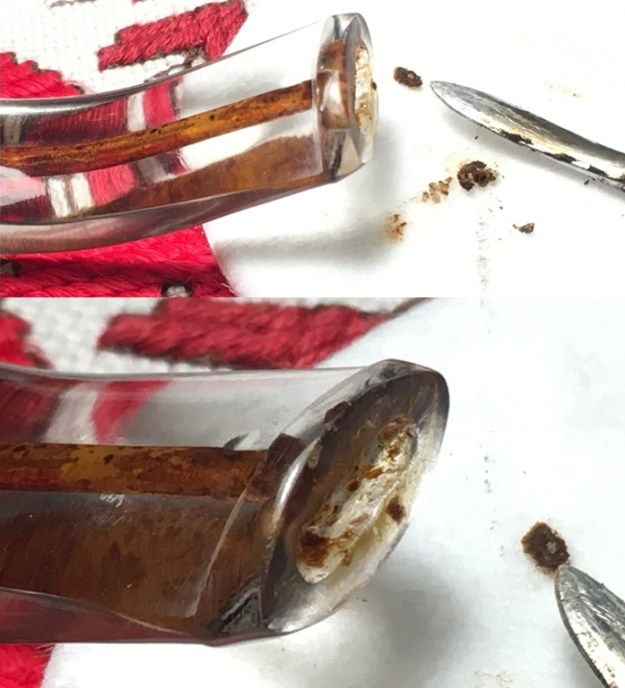
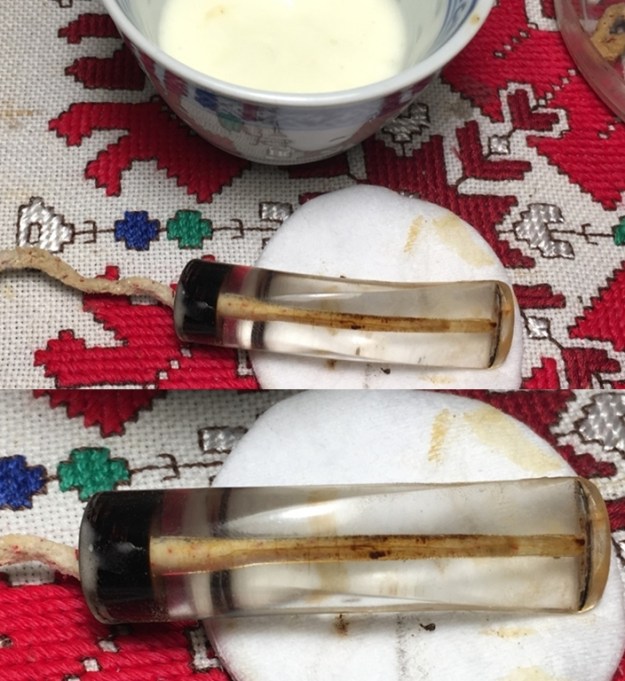
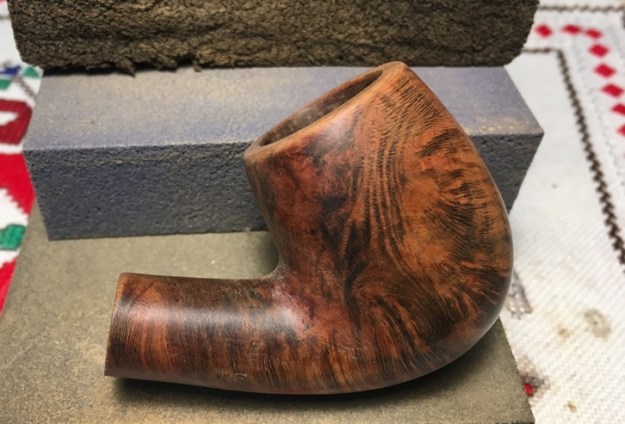
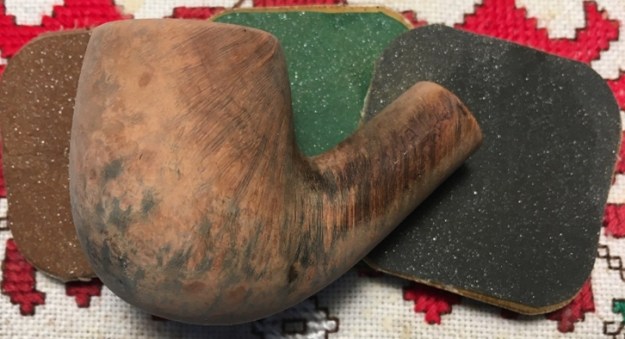
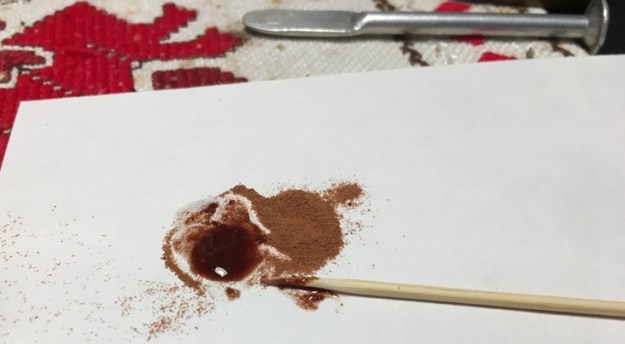
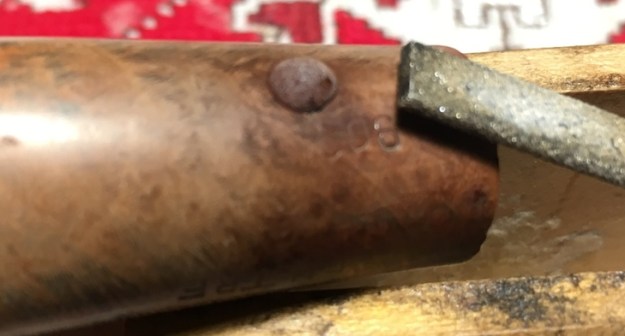
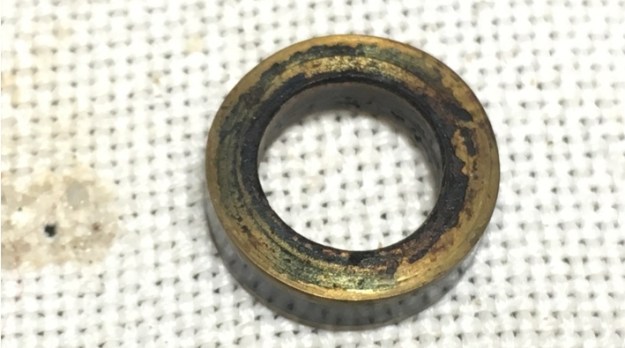
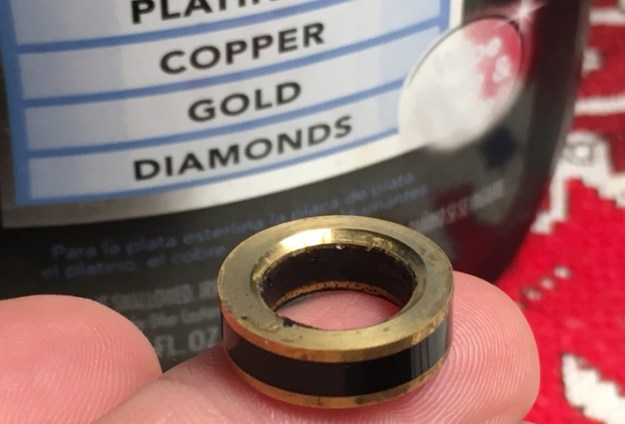
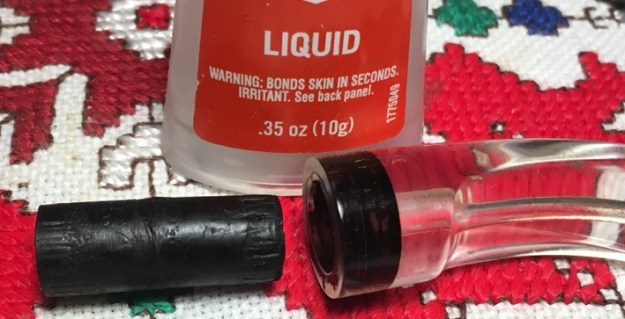
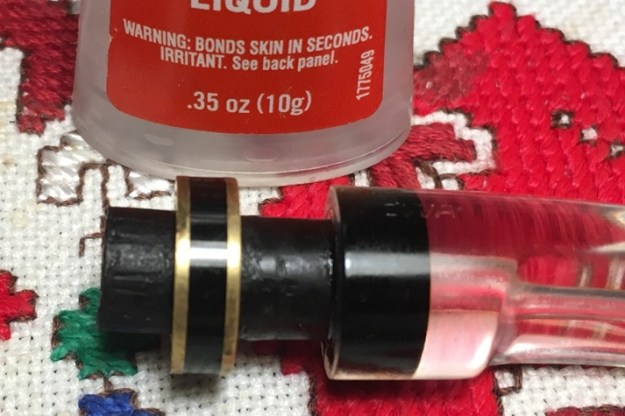
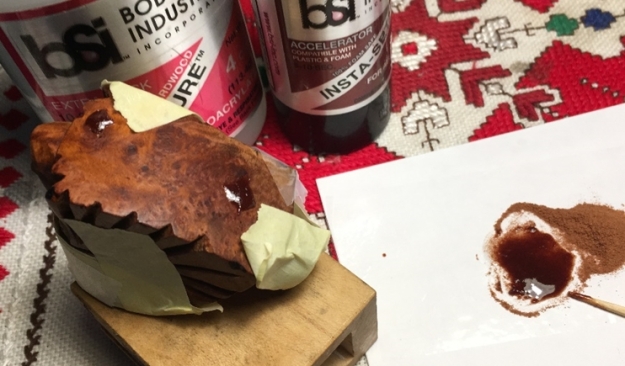
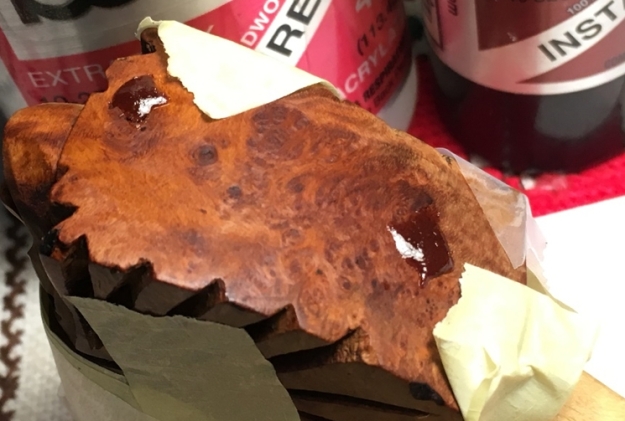
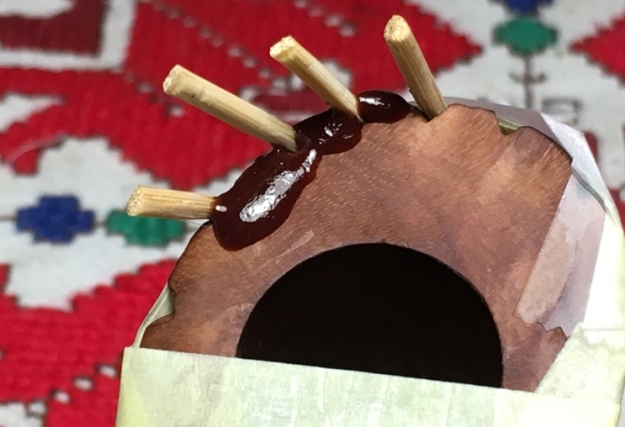
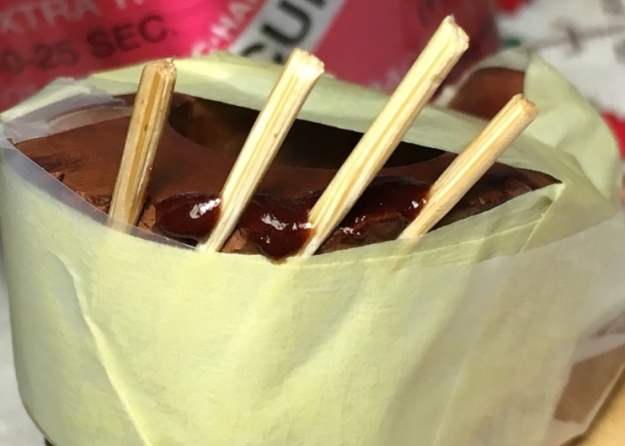
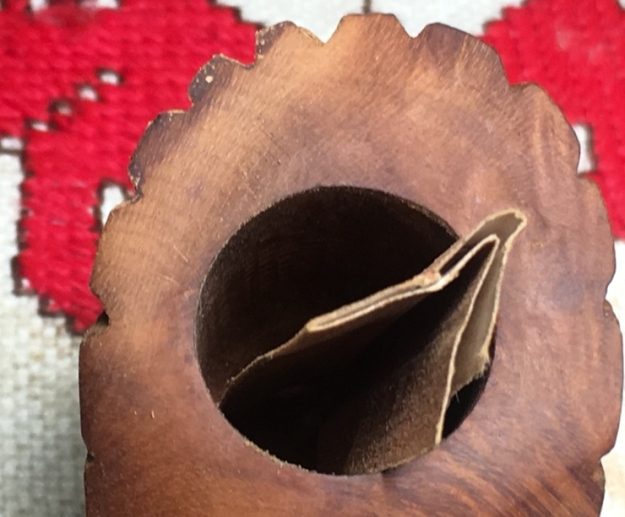
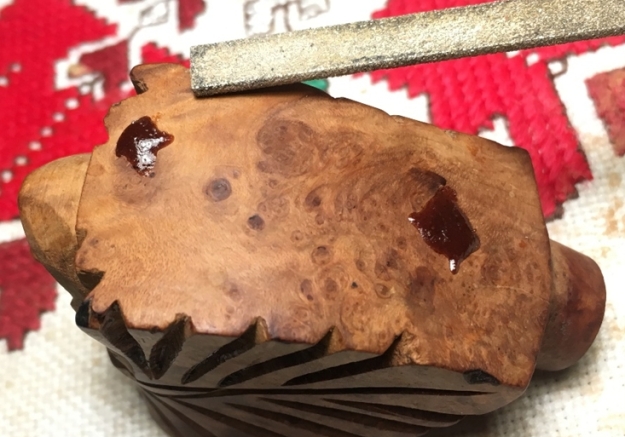
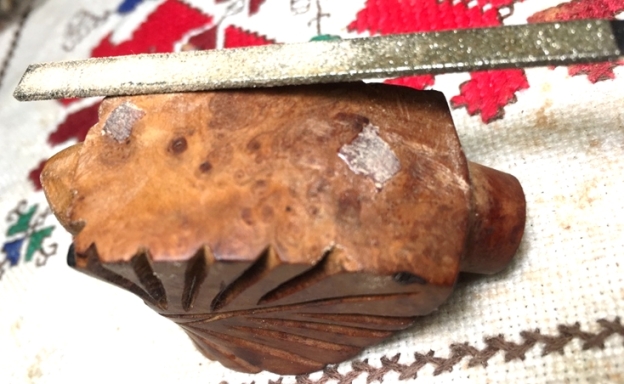
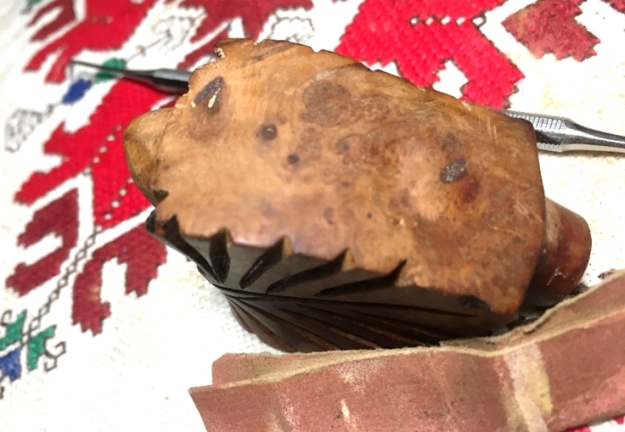
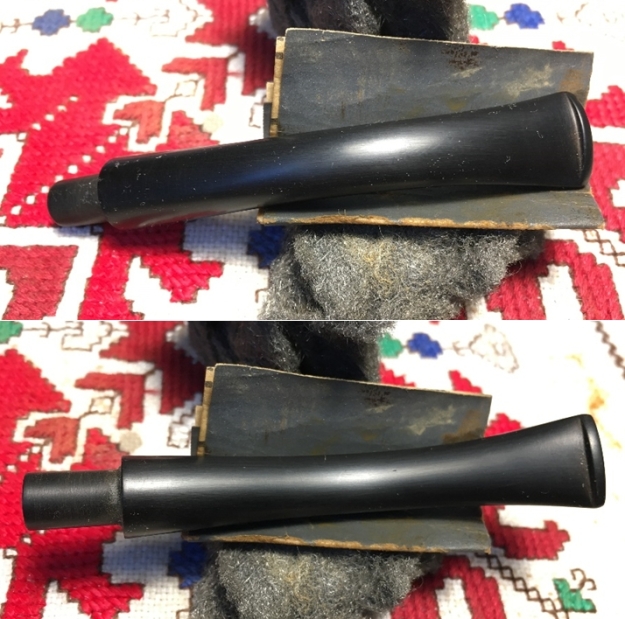
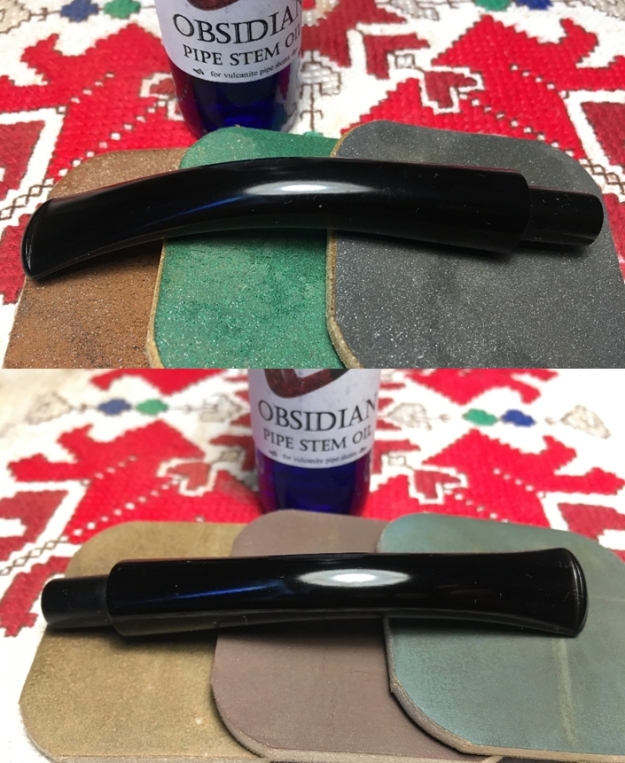
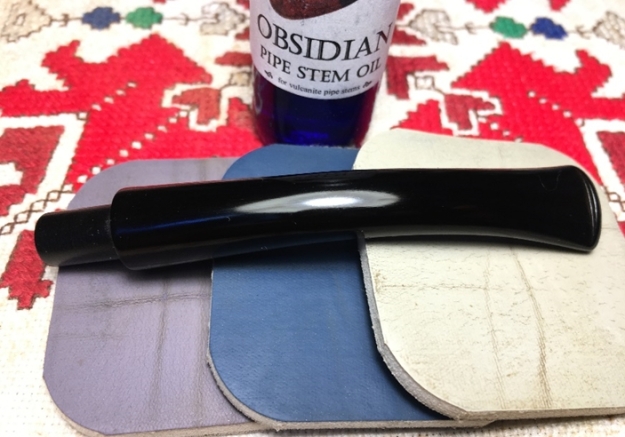
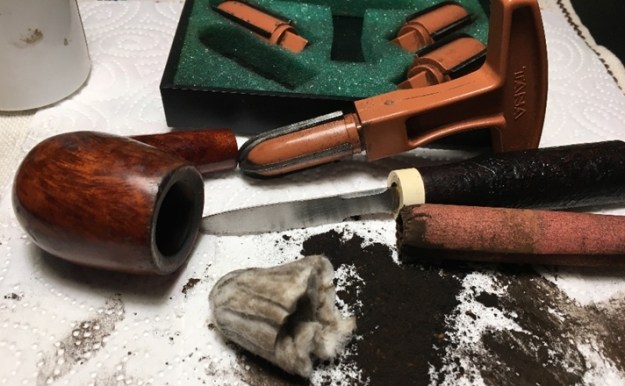
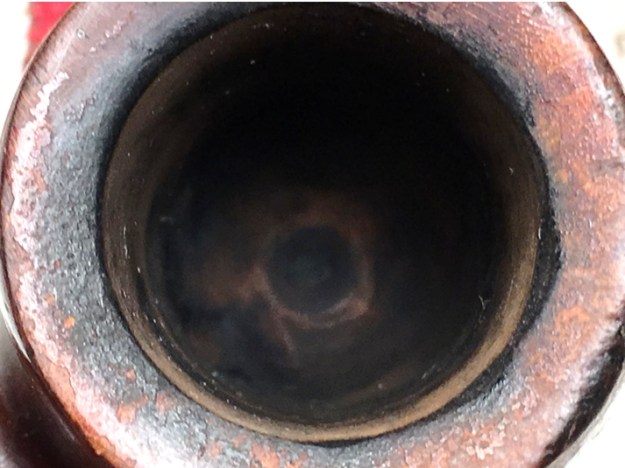
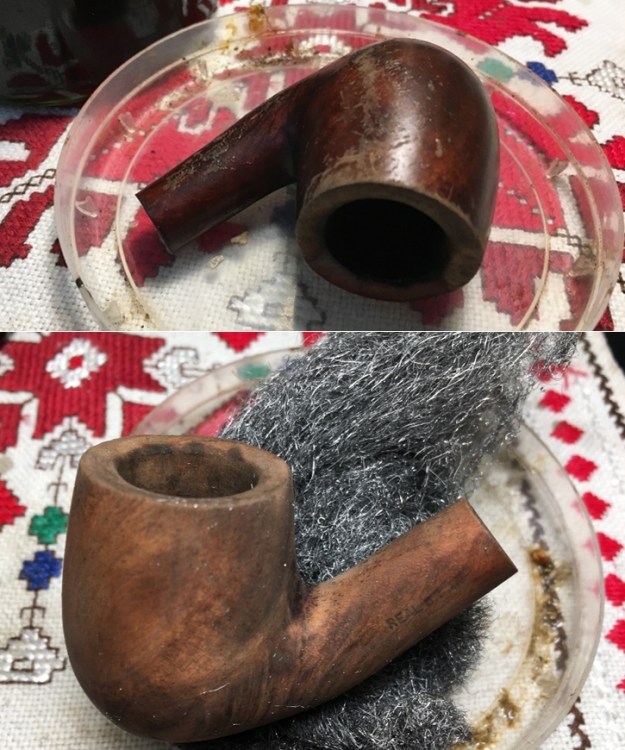
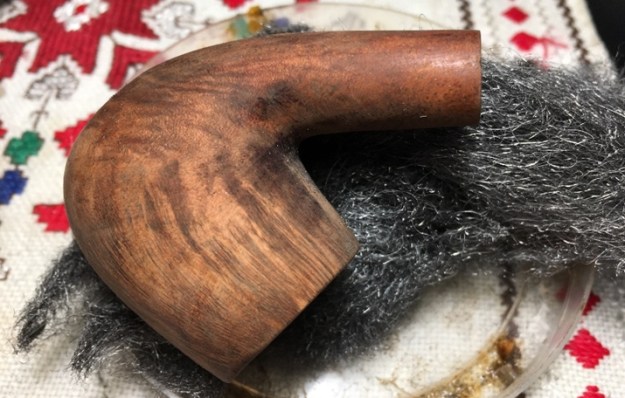
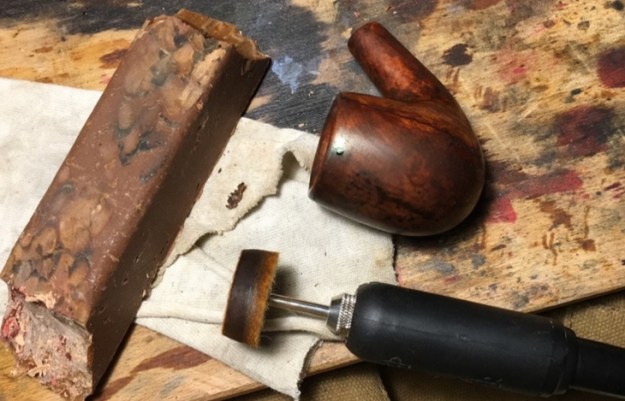
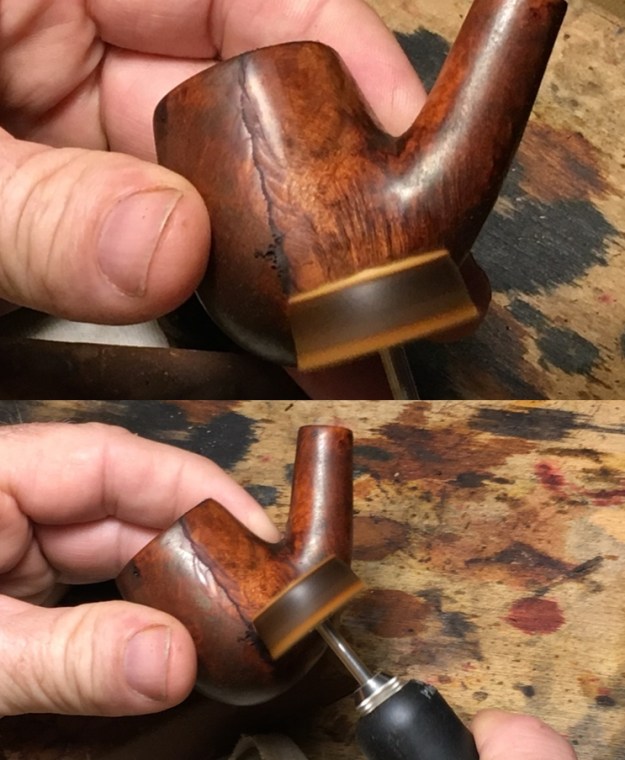
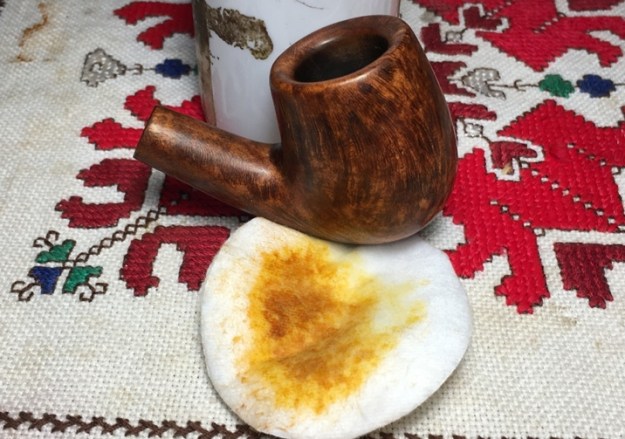
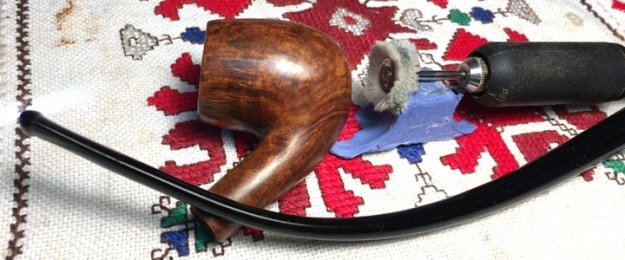
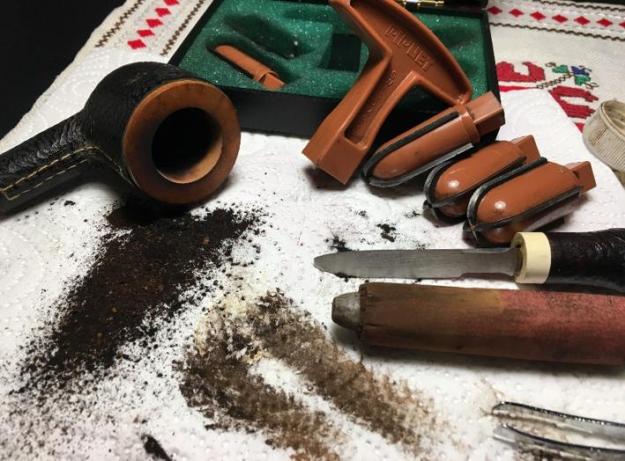
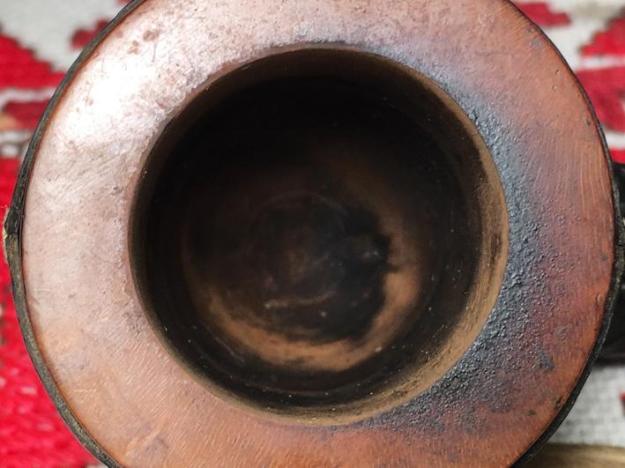
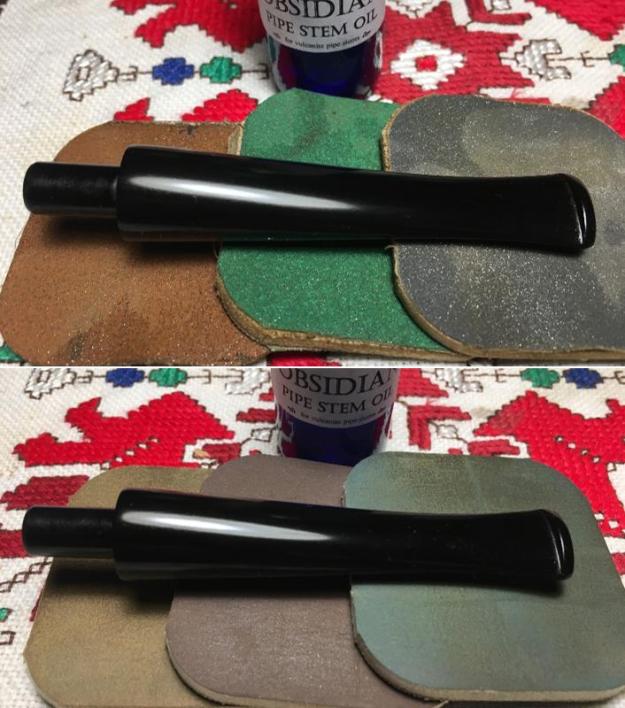
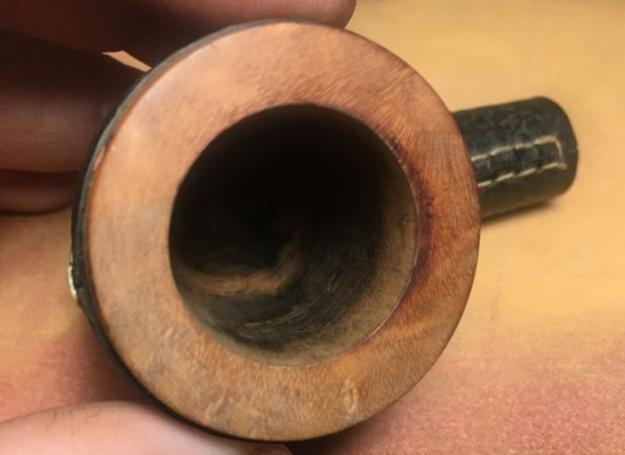
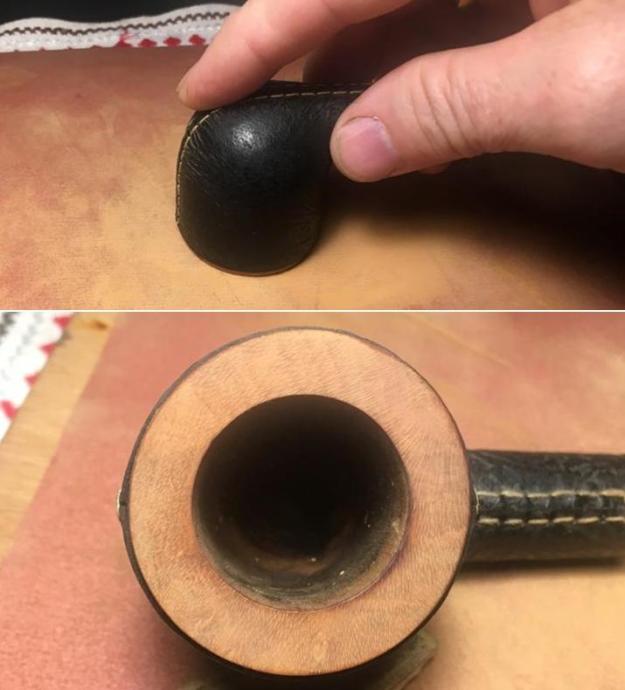
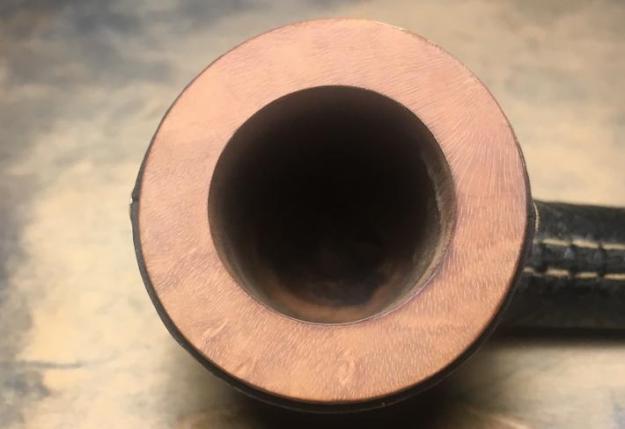
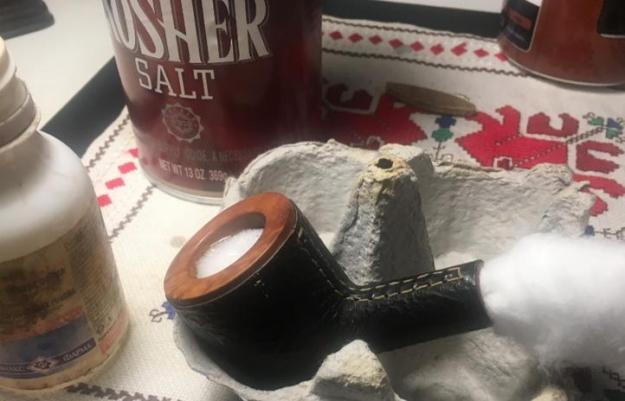
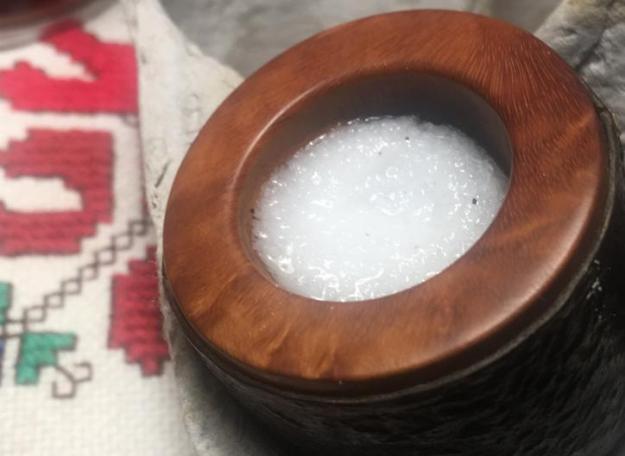
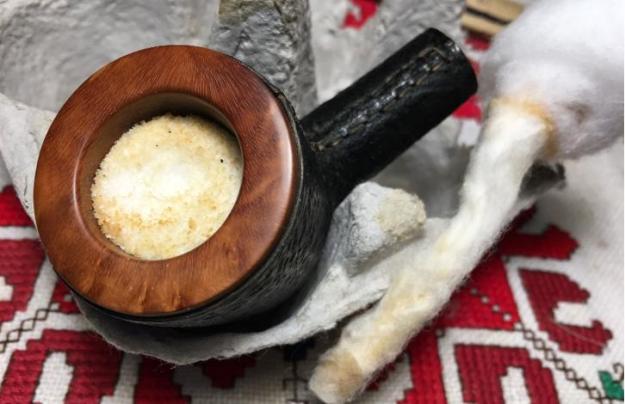
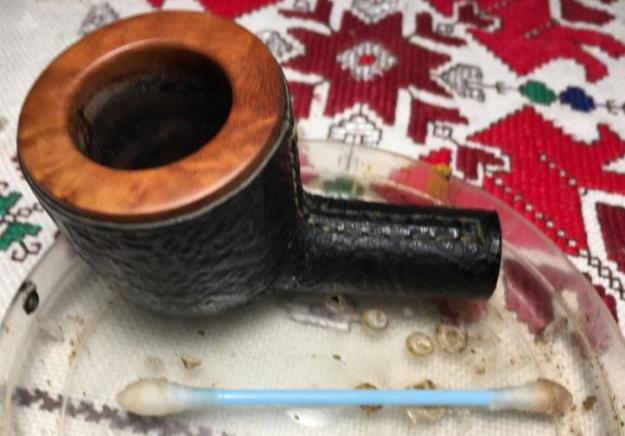
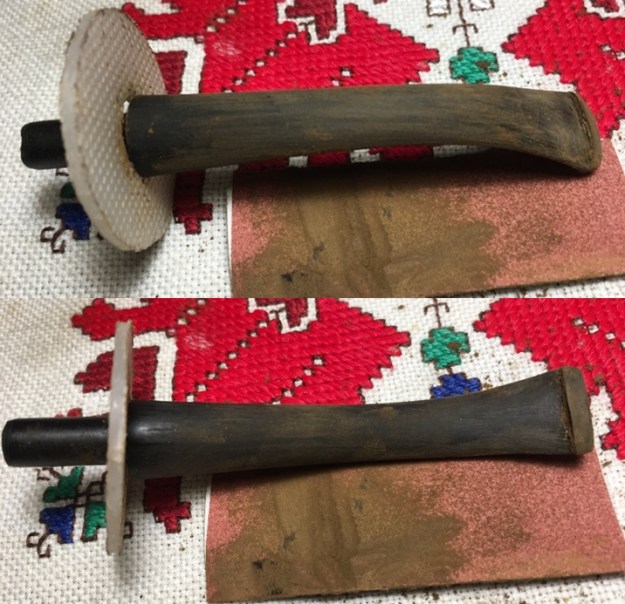
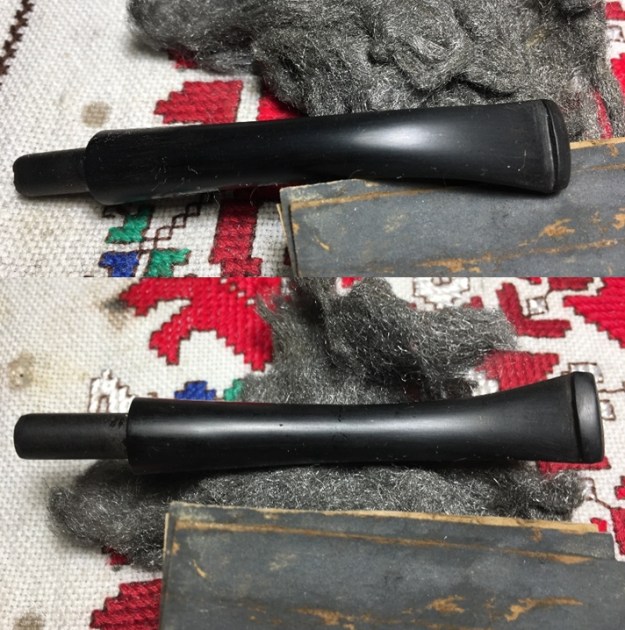
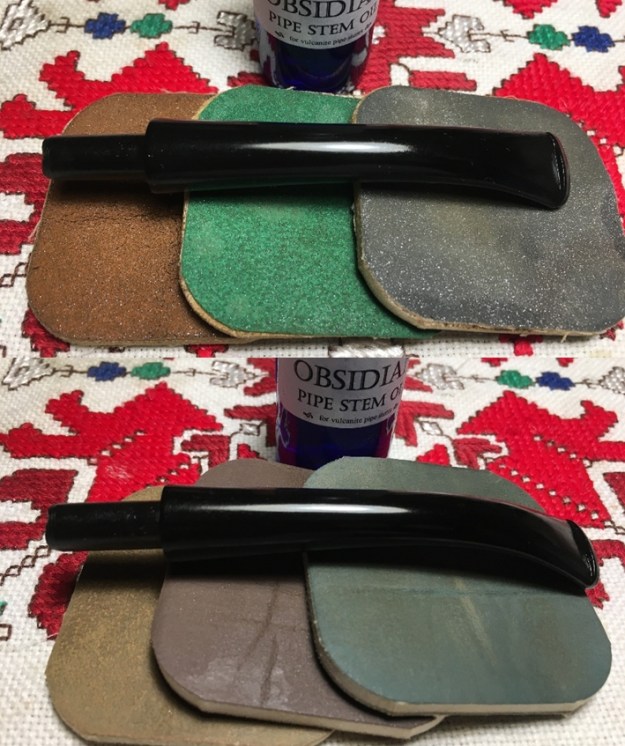
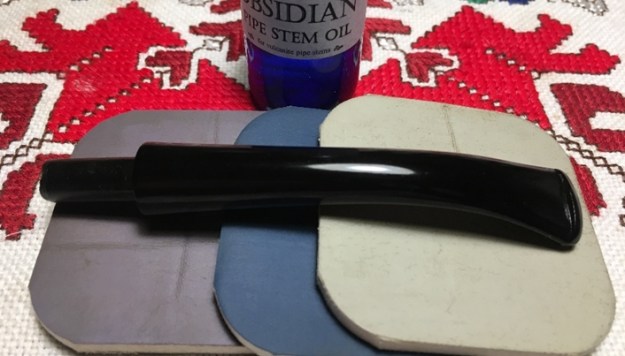
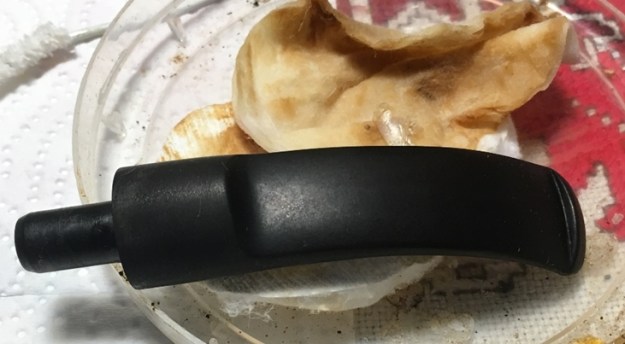
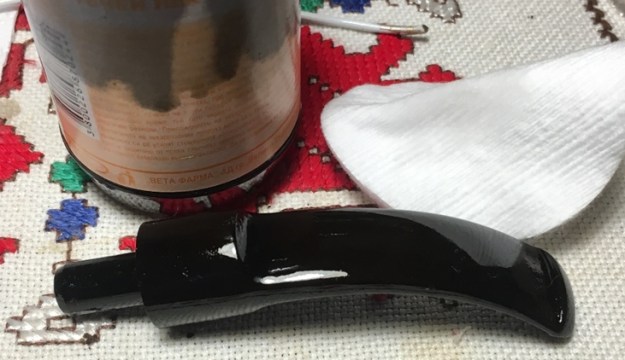
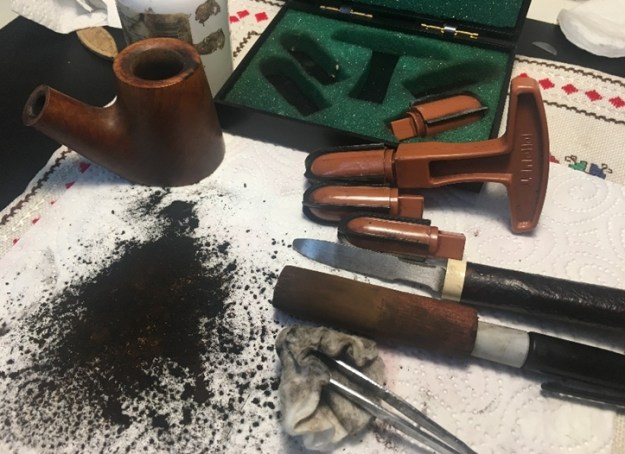
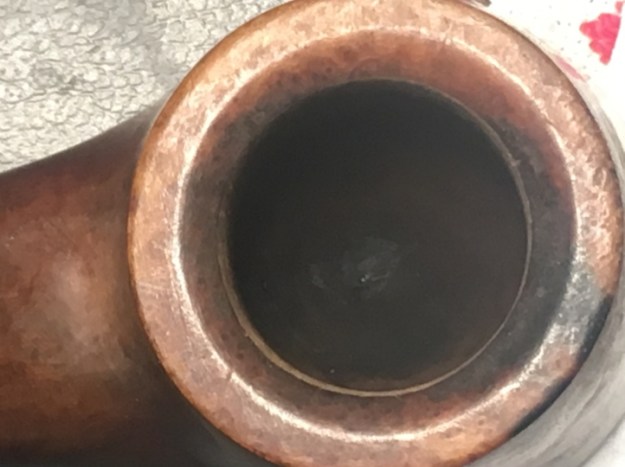
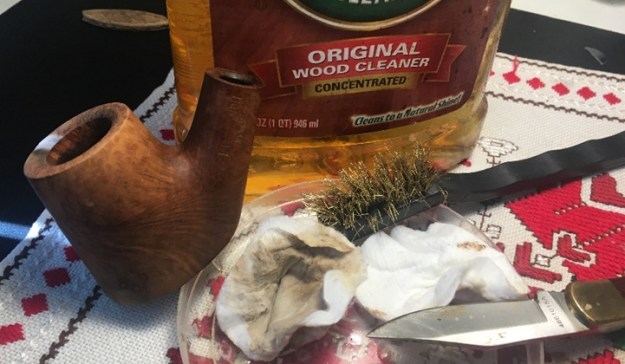
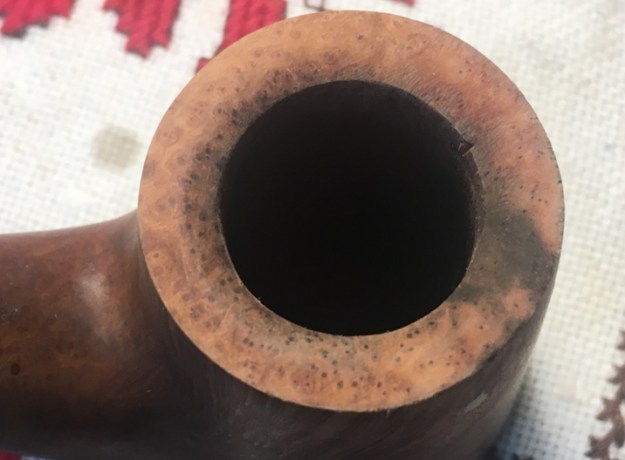
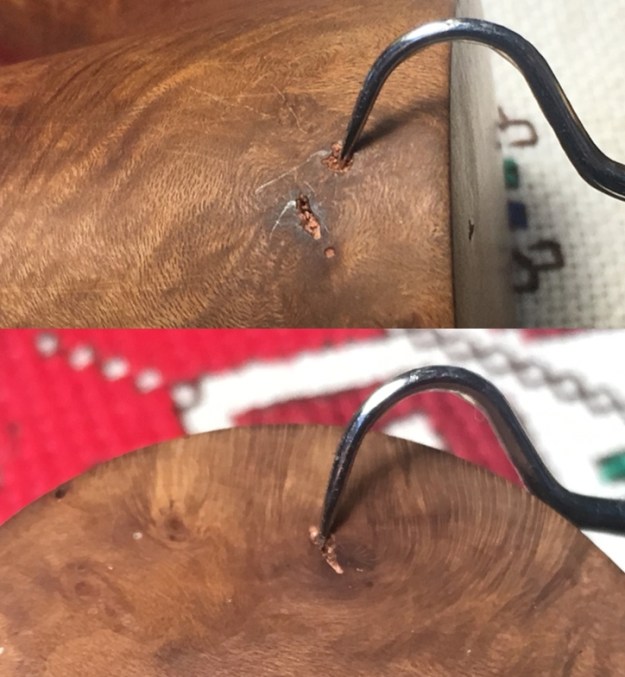
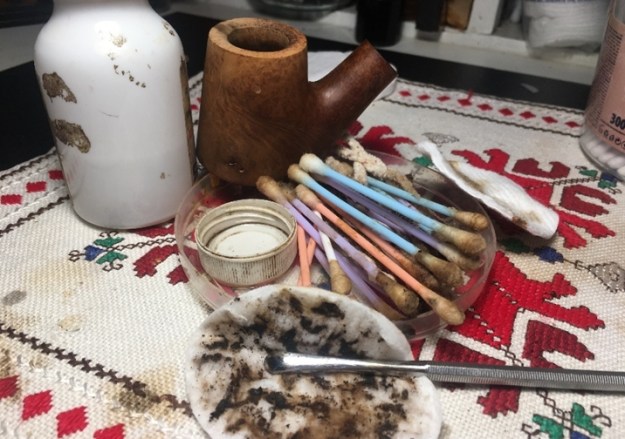
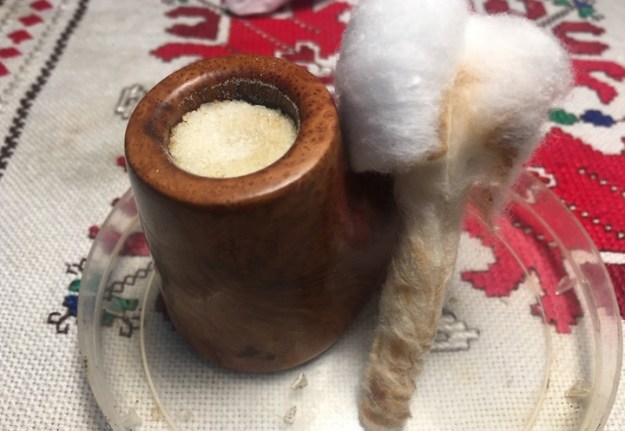
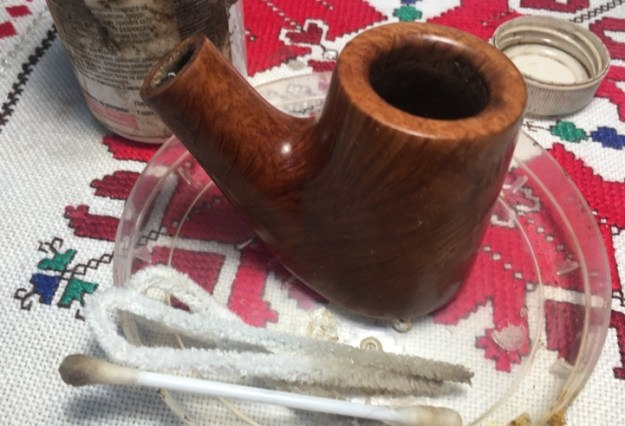
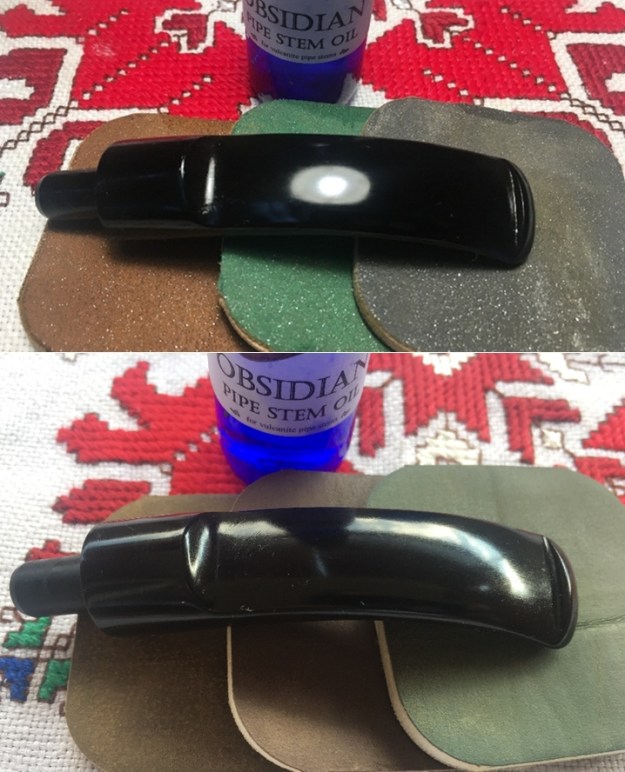
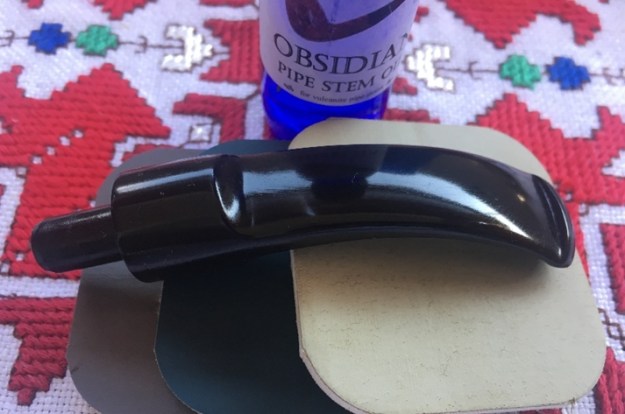
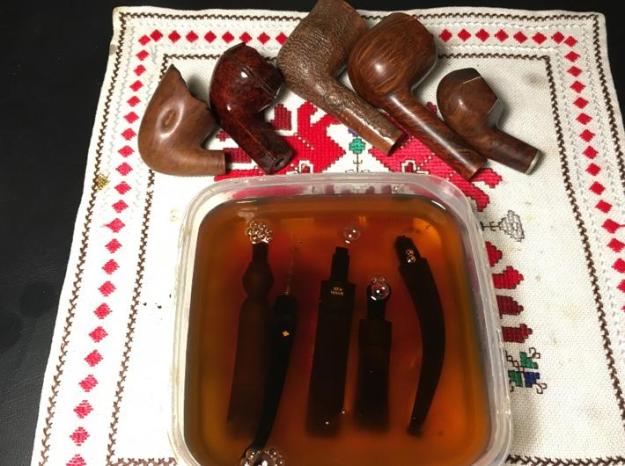
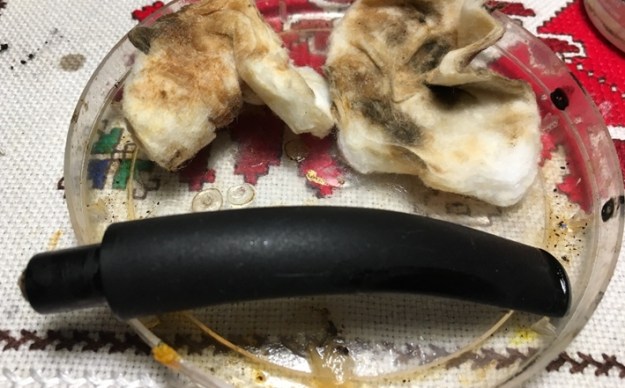
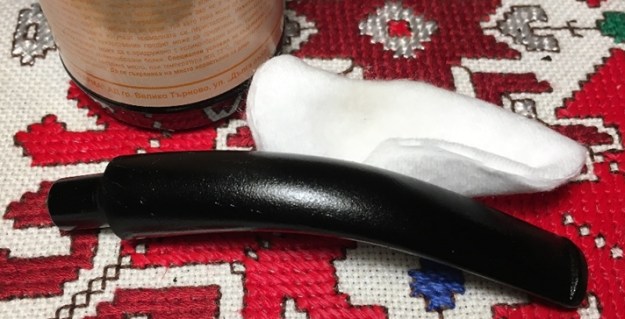
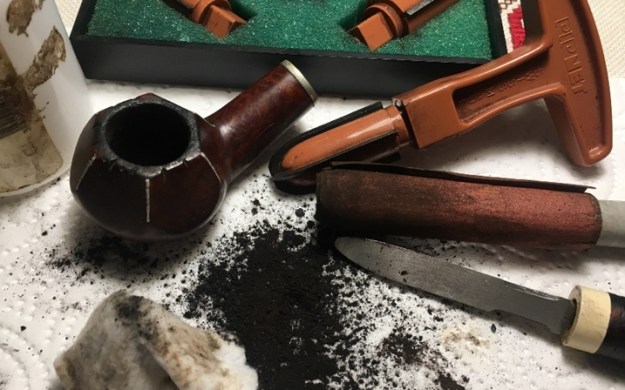
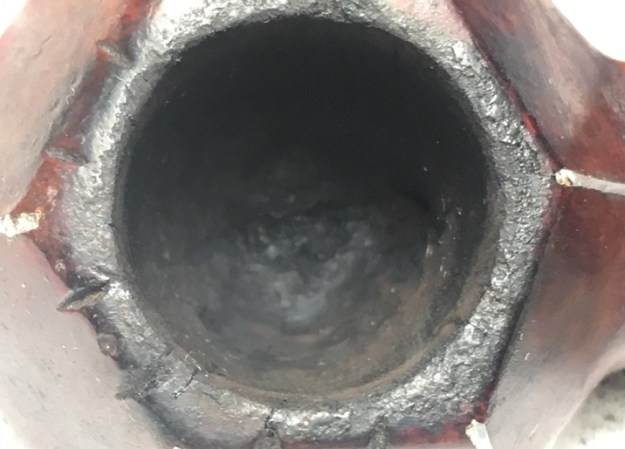
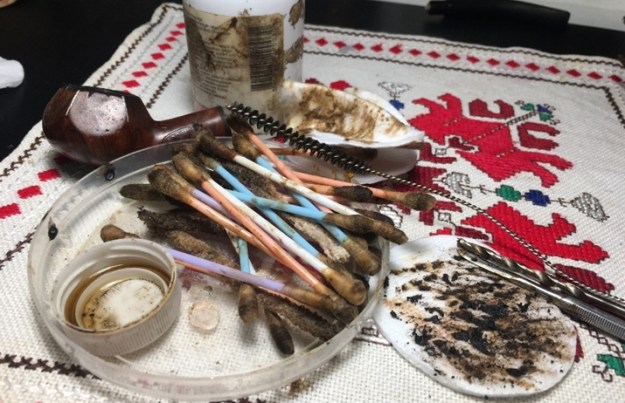
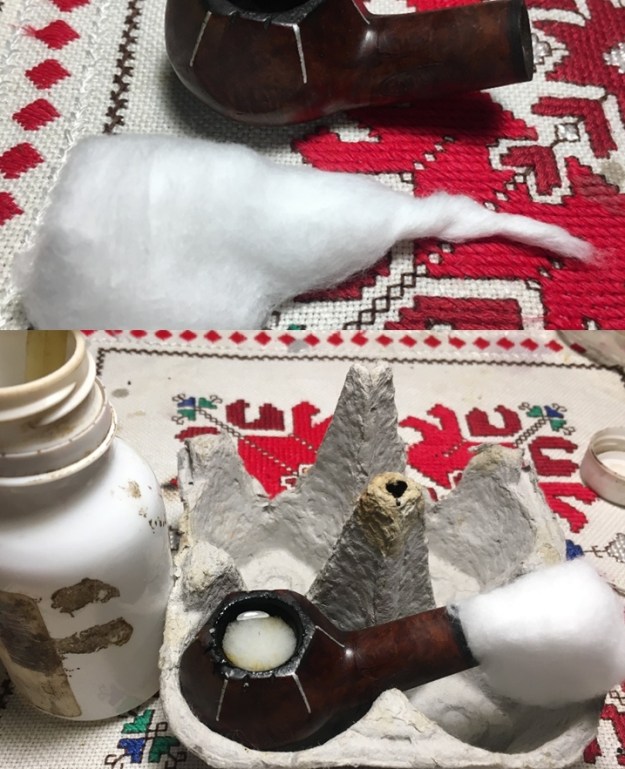
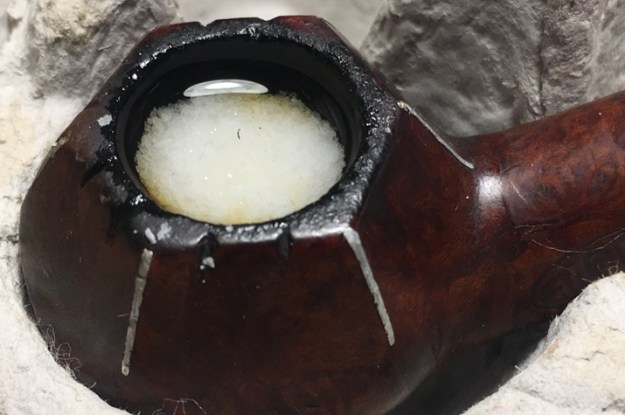
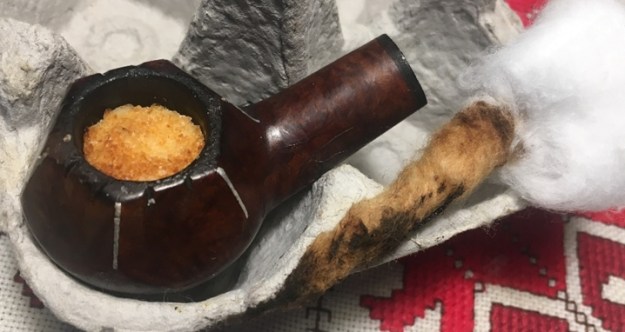
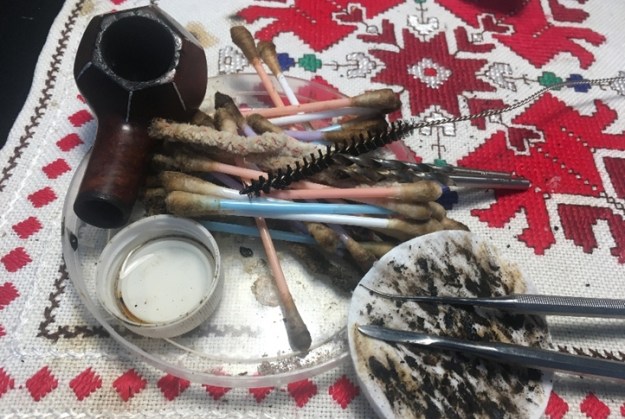
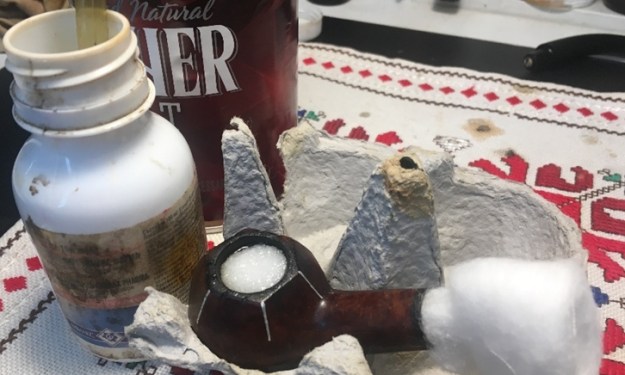
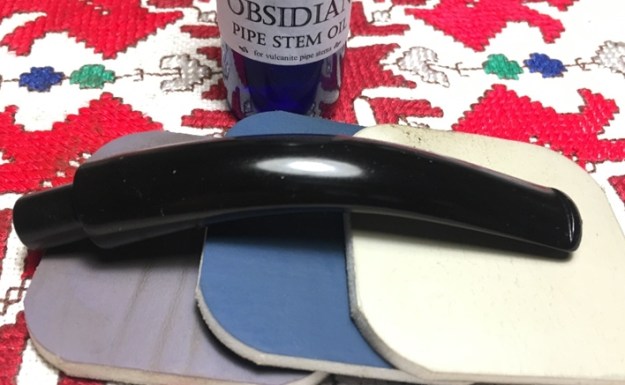
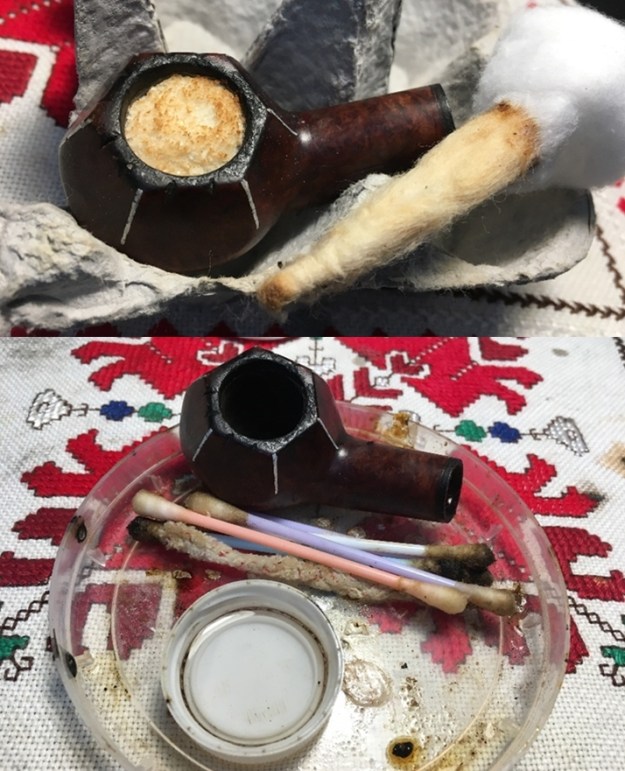
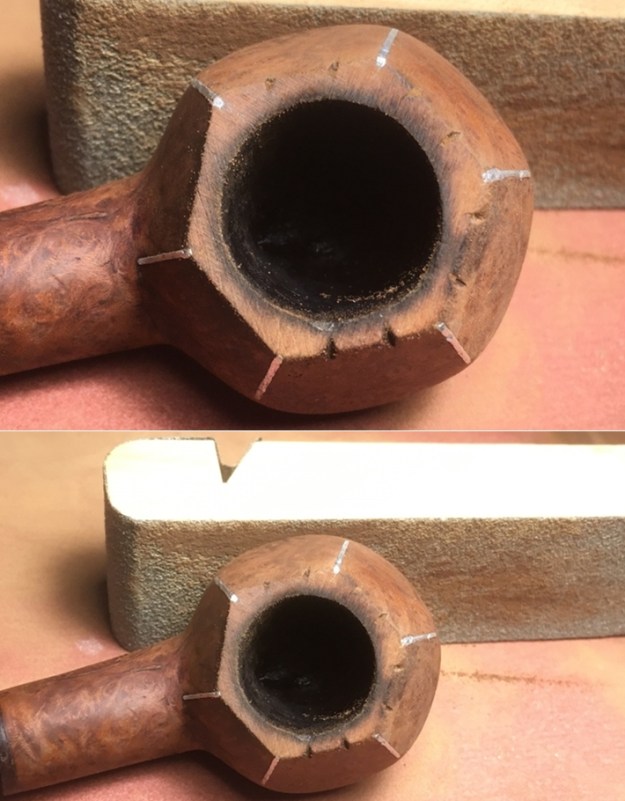
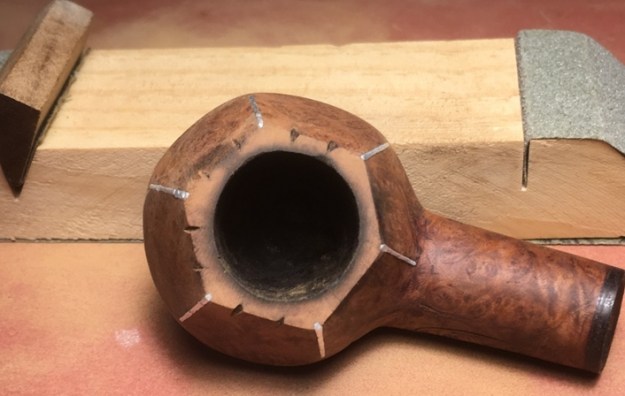
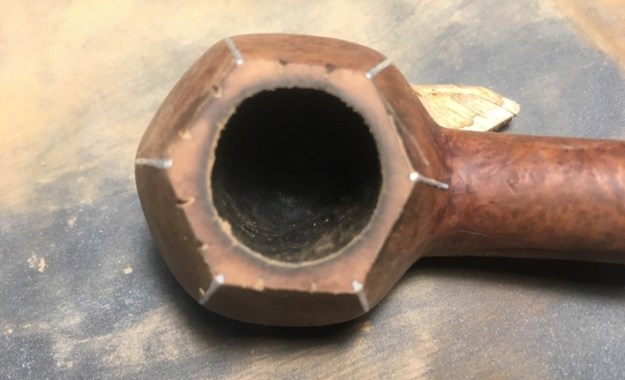
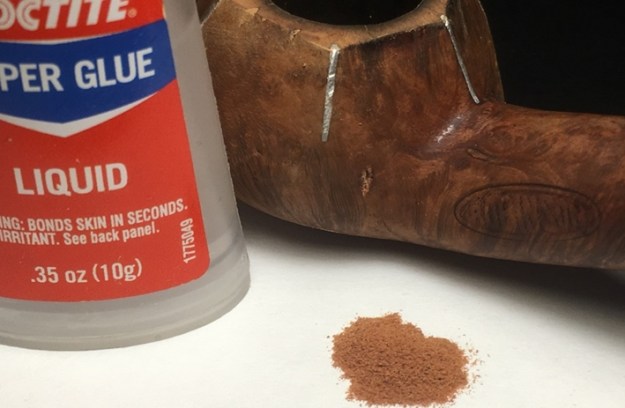
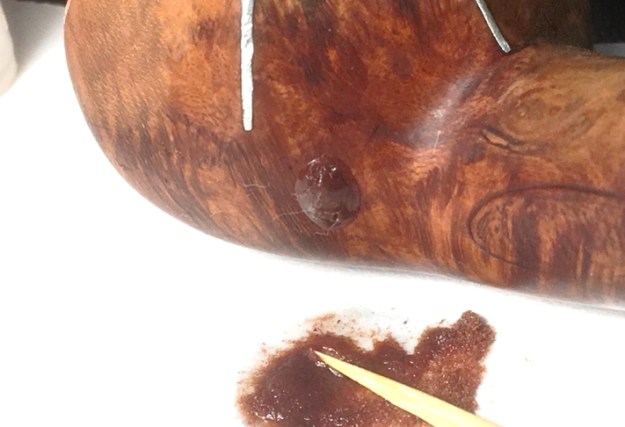
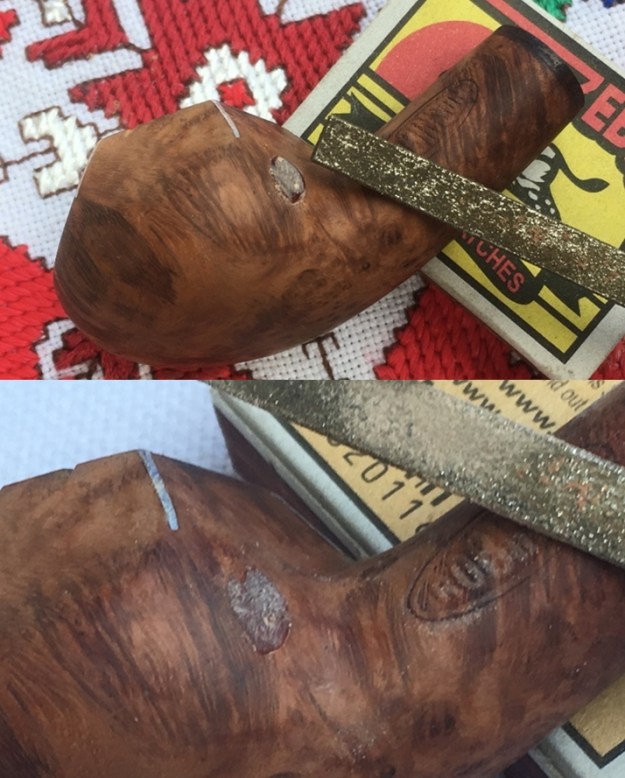
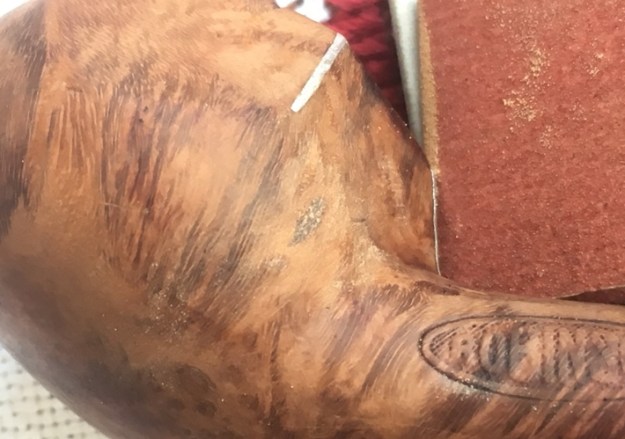
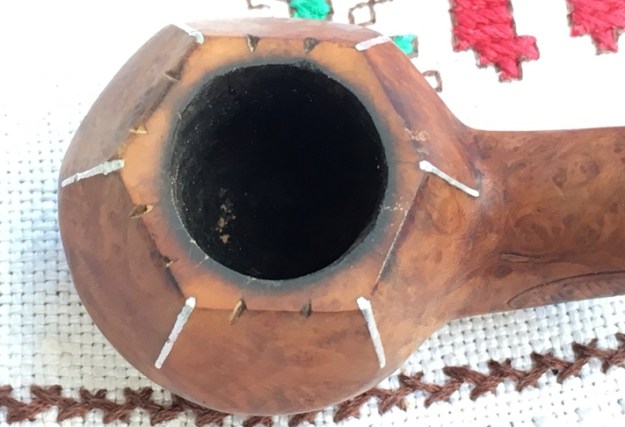
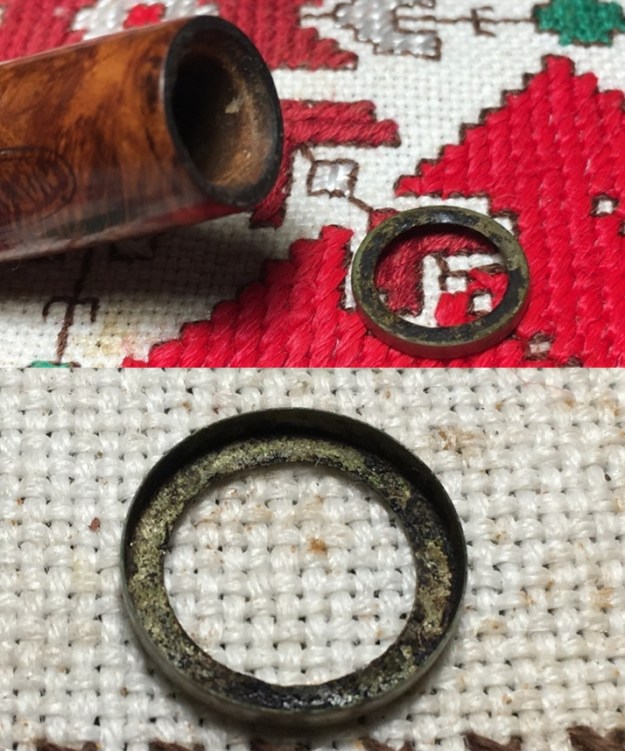
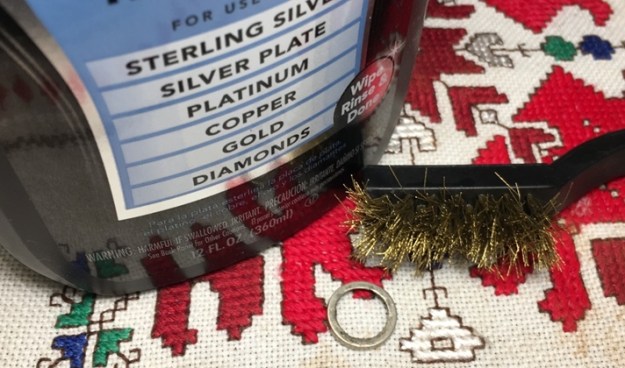
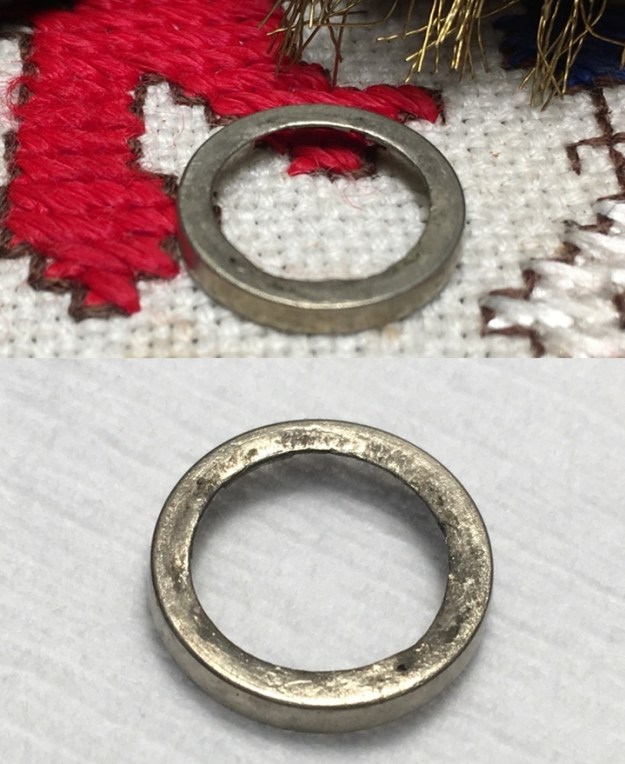
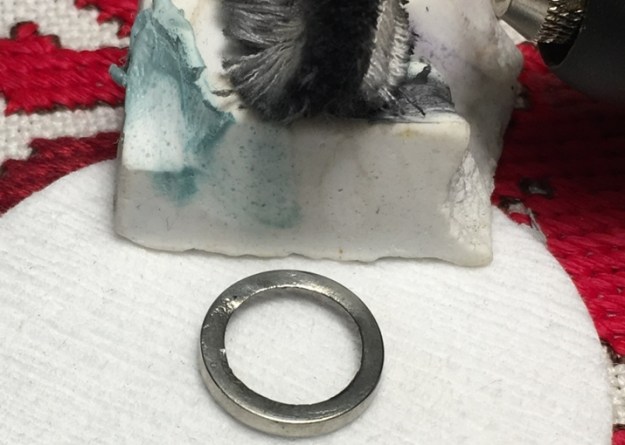
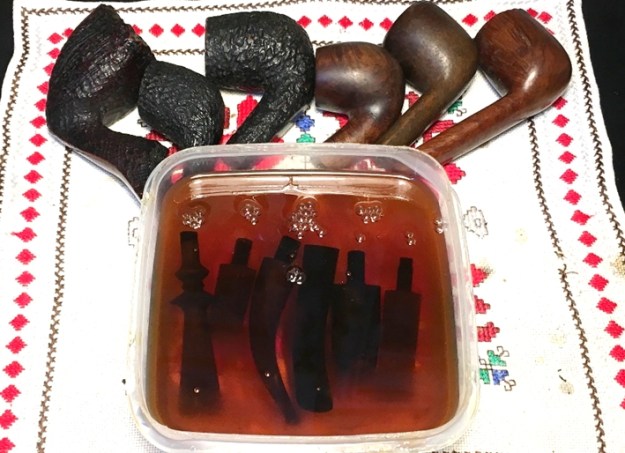
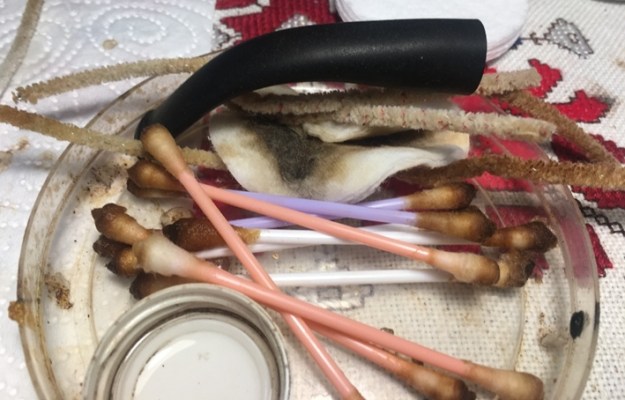
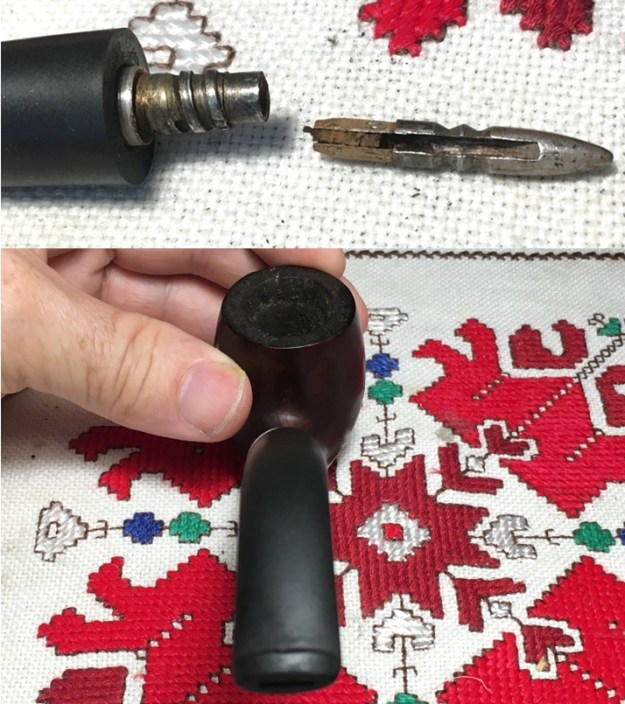
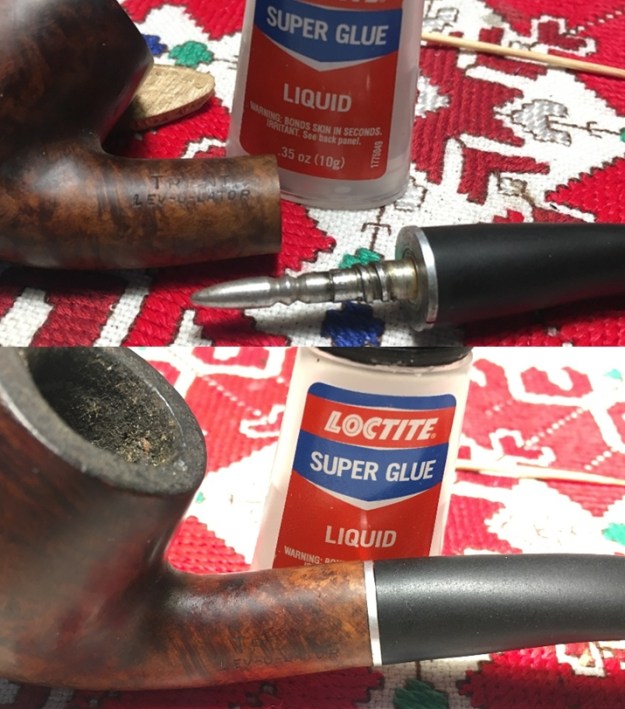
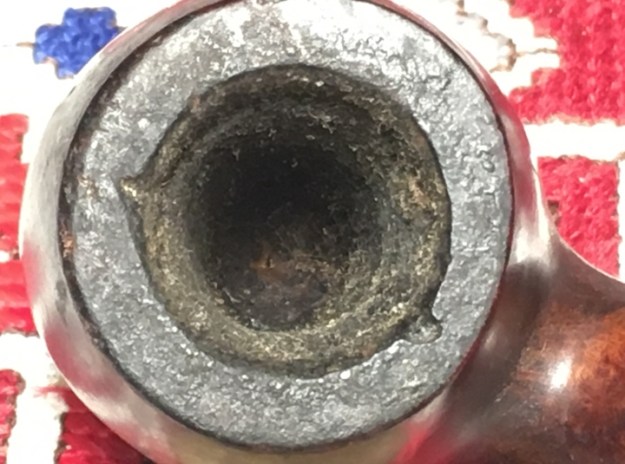
True confession is good for the soul: The research that I have just completed examining the ‘Ajustomatic’ technology was done AFTER I started working on the restoration!  With my practice of putting a batch of stems in the Before & After Deoxidizer soak to remove oxidation, I started on this before doing the research.  Unfortunately, I did not realize that the tip of the ‘Lev-O-Lator’ would come off.  This fitment serves as an air regulator which is cool.  Without realizing that it would come off making my attempt to clean the airway with a pipe cleaner wetted with isopropyl 95% much easier, I decided to remove it.  The shank ring was already loose, and I felt I could remount the metal ‘stinger’ the same way I took it off.I heated the entire metal tenon with a Bic lighter.  After it heated up, I wrapped a cotton pad around the tenon and gently applied a little torque with a pair of plyers and voila!  The vulcanite loosened its grip and the Lev-O-Lator came out.  I still didn’t realize the end regulator could be removed.Along with other pipes in queue, I clean the Trent’s stem with pipe cleaners wetted with isopropyl 95% before placing the stems in the soak with Before & After Deoxidizer. After some hours, I fish the Trent’s stem out of the Deoxidizer and let it drain. I then use a cotton pad wetted with alcohol to wipe off the oxidation that had surfaced.  I also work on the cavity of the vacated metal Lev-O-Lator with cotton buds wetted with isopropyl 95% as well with pipe cleaners clearing the airway of the Deoxidizer.I then apply paraffin oil, a mineral oil, to the stem to begin the revitalization of the vulcanite.Now, with an understanding of the research I did previously, I remove the air adjustor of the Lev-O-Lator after I reheat the tenon, insert it into the cavity and then screw the stem to the right to tighten it in the mortise.  When it tightens, I’m able to continue rotating the stem to the right because the metal is still hot.  I rotate the stem clockwise until aligned and then let it cool. The ajusto air regulator is totally clogged with what looks like mud.  I use a dental probe to clean it and wipe it down with a cotton pad and alcohol.I apply a few drops of CA glue to the inside facing of the shank ring and attach it to the stem.  This should hold it in place.Next, I use the Pipnet Reaming Kit and starting with the smallest blade I go to work on the thick cake.  This was the hardest cake build up I think I’ve experienced in any of my previous restorations!  Oh my, it took a good bit of time for the smallest blade head to work through the brick hard cake.  I was careful not to force the blade too aggressively for fear of breaking the blade head.  The blade head finally broke through to the floor of the chamber and I switch to the next larger blade.  I use only 2 blade heads of the 4 available in the Kit and then transition to scraping the chamber using the Savinelli Fitsall Tool which fine tunes reaching to the areas that the blades would not.  Finally, I sand the chamber using 240 grade paper wrapped around a Sharpie Pen and then clean the chamber using a cotton pad wetted with isopropyl 95%.  After completing the chamber inspection, I detect some small heating cracks running on the chamber wall.  To remedy this, later I’ll coat the chamber wall with pipe mud to provide a layer that will help restart a healthy protective cake.Next, to clean the external surface and work on the lava flow over the rim, I use undiluted Murphy’s Oil Soap on a cotton pad.  I also use a brass wire brush to work on the thick lava flow on the rim.  The grime is thick, and the rim does a good job coming clean, but it’s in pretty rough shape.  I take some pictures to inventory the issues I see on the bowl and rim.  The rim is beat up.  There are divots out of the briar on opposite sides of the rim.  The outer edge of the rim is also dinged and skinned.There are several old fills that are soft and drawn up.  Often this happens after the cleaning and the stummel is wet. I move methodically to each of the fills and excavate the old fill material using a sharp dental probe. To fill these holes, I use briar dust mixed with a thick CA glue.  I put a small mound of briar dust on an index card and I put some CA glue next to the mound.  Using a toothpick, I gradually pull briar dust into the CA glue mixing as I do.  I continue to create the putty until it reaches the thickness of molasses and then I apply small amounts of the briar dust putty to each of the holes including on the rim.  After doing this, I set the stummel aside allowing the patches to cure. Now, turning to the stem, I take some additional pictures to get a closer look.  The upper and lower bit has very little tooth chatter and the button is in relatively good shape.  What stands out about the stem is the very rough surface that remains over the entire stem after the soaking in the Before & After Deoxidizer. To remove any remaining oxidation and to address the rough surface texture, I sand using 240 grade paper.  I also focus on the sharpening and freshening the button area.I then transition to the sink with 600 grade paper and wet sand the entire surface.  Well, during this process, the shank ring that I had attached with CA glue popped off and went down the drain.  Fortunately, after immediately turning off the water, I was able to unattach the trap underneath the sink and retrieve the ring!  I follow wet sanding using 000 grade steel wool.  The stem looks great.On a roll with the stem, I apply the full regimen of micromesh pads to the stem.  First, I wet sand with pads 1500 to 2400 then dry sand with pads 3200 to 4000 and 6000 to 12000.  Between each set of 3 pads, I apply Obsidian Oil to rejuvenate the vulcanite and record that phase with a picture to show that newly polished vulcanite pop!  I then put the stem aside allowing it to dry. With the stem on the sidelines, I look back to the stummel.  The briar dust putty filling the several holes on the rim and stummel surface has cured.  I begin to file each fill mound down with a flat needle file – bringing the mounds down almost to flush with the briar surface.After the filing is complete, I transition to sanding each fill site with 240 grade paper to bring the patches flush with the briar surface and removing all the excess fill material. My normal process order is a little out of order but the grime on the inside of the mortise and airway is patiently waiting.  Using many cotton buds and pipe cleaners dipped in isopropyl 95%, I attack the internals.  I also employ the full arsenal of dental probes, spoons and shank brushes.  At the end of the carnage pictured below, I have yet to come to a place of declaring the internals clean enough to satisfy me. With the frontal assault paused, I use the slower, more passive approach to continue the cleaning through the night.  Using kosher salt and isopropyl 95% I let it soak and work on the internals.  I first pull and twist a cotton ball to form a wick that I stuff down the mortise and airway with the help of a stiff wire.  The cotton wick serves to draw out the tars and oils.  I then fill the bowl with kosher salt and set the stummel in an egg crate to stabilize it.  I then fill the chamber with isopropyl 95% until it surfaces over the salt.  I wait a few minutes as the alcohol recedes and then top it off once more.  I set the stummel aside to soak.The next morning, the salt is not soiled in a great way, but the wick is what is what I want to see.I follow again with a renewed frontal attack using cotton buds and pipe cleaners wetted with alcohol as well as additional scraping the mortise walls with a dental spoon.  Eventually, the buds start surfacing lighter and I call it, ‘Cleaned!’ and move on.With the internals clean, I now focus on the external surface restoration.  I start from the top with the rim by topping the rim using 240 grade sanding paper on the chopping board.  With the damage on the rim, and the briar dust fills on the rim, the topping will give the rim a fresh start with new lines and surface.The half-bent shank reach extends beyond the parallel plane of the rim, so I need to hang the shank over the edge of the board while I top.  With the stummel inverted on the 240 grade paper, I do a tight rotation of the stummel on the corner of the topping board.  I check after a few rotations until it looks clean.I then switch the 240 grade paper with 600 grade paper and rotate the stummel several more times.  I like what I see. Even after the topping, there remains some roughness on the external edge of the rim.  The former divots in the internal rim edge are all but gone, but there are still some slight indents where the briar dust patches are. To remedy this, I create an internal rim bevel.  I start on the internal rim edge using a coarse rolled piece of 120 paper to cut the initial bevel.  I follow this by using 240 and 600 grade papers tightly rolled.  My method of creating the bevel is to pinch the paper against the internal rim edge with my thumb pressing the paper while my index finger puts consistent counter pressure on the external side of the rim and then rotate consistently around the circumference of the rim.  This usually provides a consistent result. I do the same with the external rim edge, but not with the same intent of creating a bevel.  My goal is simply to clean the rim as much as needed.  The result is not only to clean the rim, but to soften the rim presentation. With the rim repair and initial sanding complete, I use sanding sponges for the next phase.  I use coarse, then medium and light grade sponges in that order.  I’m careful to guard the nomenclature during the sanding phases. After completing the sponge sanding, I go directly to sanding with the full regimen of micromesh pads.  I begin by wet sanding with pads 1500 to 2400 then follow by dry sanding with pads 3200 to 4000 and 6000 to 12000. I love the way the grain emerges during the micromesh process. I now reach a decision point which is not in limbo too long.  I decide to apply a darker brown dye to the Trent stummel primarily to aid in masking the fills which are dark on the briar landscape.  I will use Fiebing’s Dark Brown Leather Dye with the flexibility to lighten the aniline dye if I choose. I assemble my desktop staining tools with the Dark Brown Leather Dye in a shot glass to apply with a bent over pipe cleaner.  I begin by wiping the stummel with a cotton pad wetted with alcohol to clean.  I then warm the stummel using a hot air gun.  This heats the briar and expands the grain allowing the dye pigment to have a better reception.When heated, I use the pipe cleaner applicator to paint the stummel with the Dark Brown Leather Dye in sections and then with each painted section I flame the wet aniline dye with the lit candle.  This immediately combusts the alcohol in the dye which flames off with a ‘poof’ and the dye pigment sets in the grain.  I do this methodically around the stummel until the entire stummel is thoroughly covered with the fire crusted dye.  When it’s completed, I set the stummel aside for at least 6 hours to allow the new dye to settle.  This ‘rest’ helps guard against the dye later coming off on the steward’s hands after the first few uses of the pipe when the stummel is heated.  I put the stummel aside and wait.After several hours, I’m ready to unwrap the fired stummel.I mount the felt cloth buffing wheel to the Dremel and set the speed at the lowest RPMs.  This is to reduce the heat generated by the coarser felt wheel as I apply the coarser Tripoli compound.With my wife’s assistance, she takes a few pictures as I ‘unwrap’ the stummel revealing the results of applying Fiebing’s Dark Brown Leather Dye to the stummel.  After completing the first round applying Tripoli compound with the felt buffing wheel, I change to a cotton cloth buffing wheel and increase the speed to about 40% full power.  I again apply Tripoli using the cotton cloth wheel which can reach into the crook of the bowl and shank which is not possible with the felt wheel.  After doing this, I go over the entire stummel once more with the cotton cloth wheel using Tripoli compound. This pass using the cotton cloth wheel sharpens the grain lines – making them very distinctive and almost seeming to be luminescent. After completing the application of Tripoli compound, I wipe the stummel with a cotton pad wetted with alcohol not so much to lighten it, because I like the dark shade of the briar, but to blend the new dye and to dissipate possible dye clumps that collected on the surface.After reuniting the Trent stummel and stem once more, I mount the Dremel with another cotton cloth pad, maintaining 40% full power, and apply the finer Blue Diamond compound to the pipe – stem and stummel.  When finished, I buff the pipe with a felt cloth to remove the compound dust from the surface.  Before applying the wax, I have one project left to accomplish.  Earlier I noted that there were some heating cracks in the chamber which were not severe enough to warrant the use of J-B Weld but could be addressed though applying a pipe mud. Pipe mud is the mixture of cigar ash and water to form a ‘mud’ that provides a hard, protective coating over the chamber walls and serves as a starter layer to develop a healthy dime width protective cake.  With gratitude to my colleague, Gary, living in the nearby city of Plovdiv, I have cigar ash that he provides me periodically from his passion of smoking Romeo cigars.  I clean the ash through a sifter and it works very well.I mix small amounts of ash and water until I get a mud-like texture.  After putting a pipe cleaner in the airway to block the draft hole from closing, I use a small dental spoon to scoop the mud and deposit it on the chamber wall.  I also use the spoon to spread the mud so that it disperses evenly. After applying the pipe mud, I set the stummel in an egg carton and let the mud dry and harden through the night. The next morning, the mud transformed into the hardened protective layer as hoped.  If Andy is the next steward of this Trent, he should know not to use a metal tool to clean the chamber during the initial stages of use.  After using the pipe, stir the resulting ash carefully and after dumping it, take a folded over pipe cleaner and rub the chamber wall to loosen the debris.  This avoids scraping the new protective layer which will help encourage a new protective cake to develop.Now the homestretch.  I mount another cotton cloth buffing wheel on the Dremel, maintain about 40% full power speed, and apply a few coats of carnauba wax to the Trent Lev-O-Lator Bent Billiard – stem and stummel.  After application of the wax, I give the pipe a hearty hand buffing with a microfiber cloth to disperse any collected wax and to raise the shine.
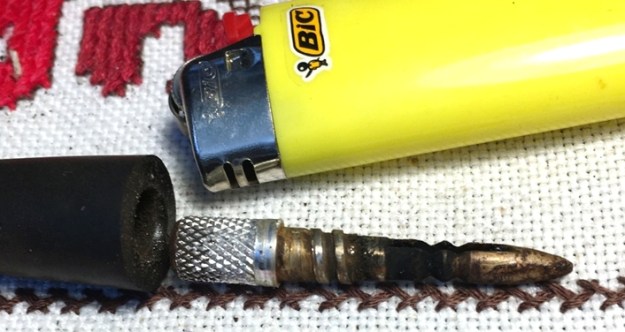
When I started this restoration, I had never heard of the ‘Lev-O-Lator’ adjustment fitment.  It would be interesting to play with the movable adjuster valve to see what the difference in the experience would be.  The grain on the Trent half-bent Billiard came out very well with the thick, dark grains masking well the fill repairs.  I did not re-glue the shank ring in place – I will leave that to the new steward to determine according to his preferences.  Andy commissioned this Trent Lev-O-Lator Half Bent Billiard from the For “Pipe Dreamers” Only! collection and will have the first opportunity to acquire it at The Pipe Steward Store.  This pipe benefits the Daughters of Bulgaria, our work here in Bulgaria among women and girls who have been trafficked and sexually exploited.  Thank you for joining me!


Rebuilding a Button to Recommission an Aristocrat London Made – Made in England 1077


Blog by Dal Stanton

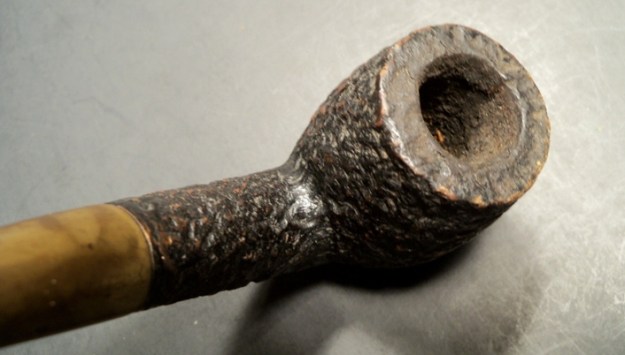
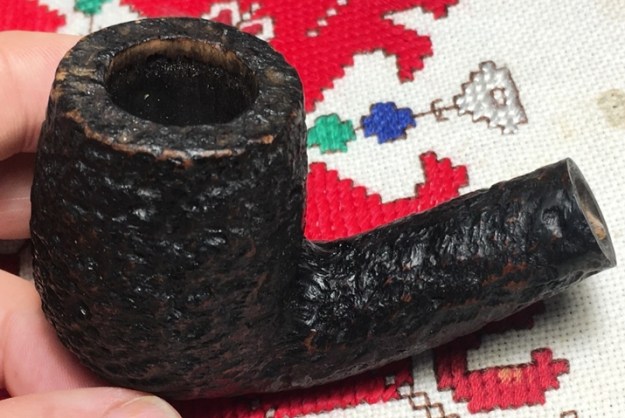
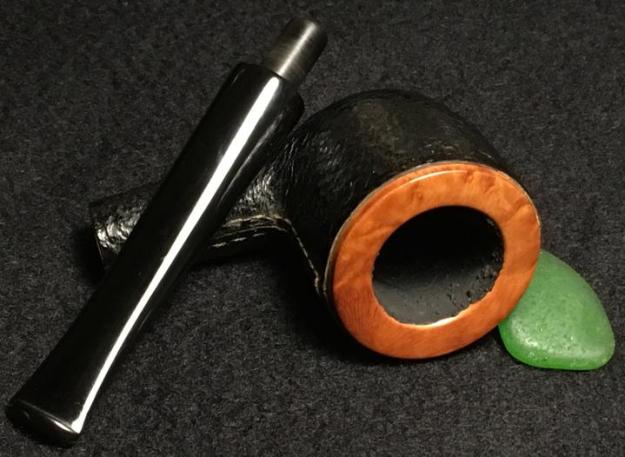
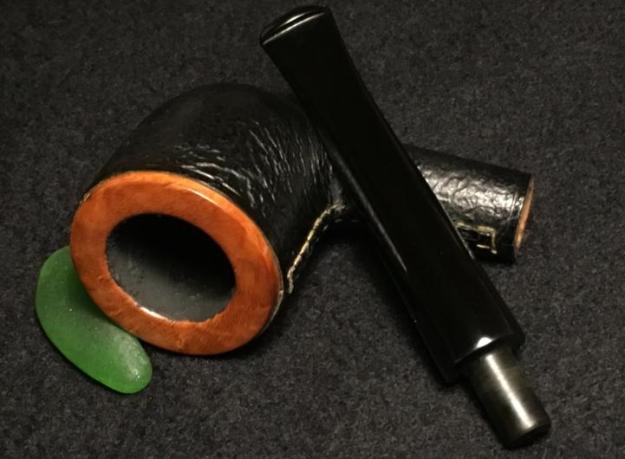
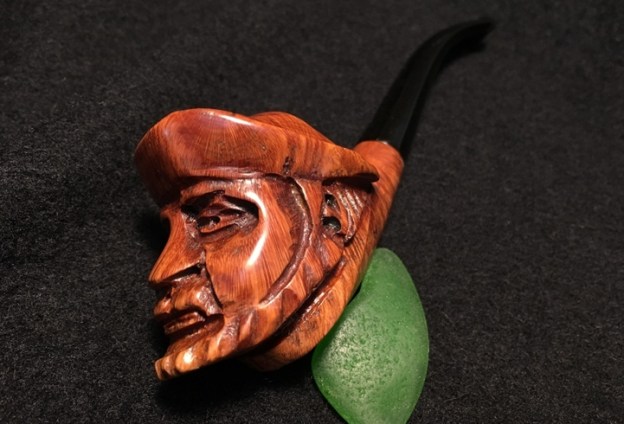
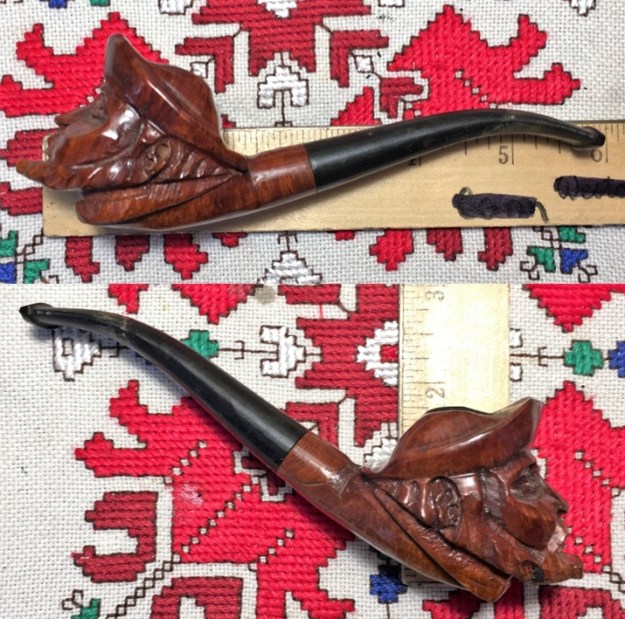
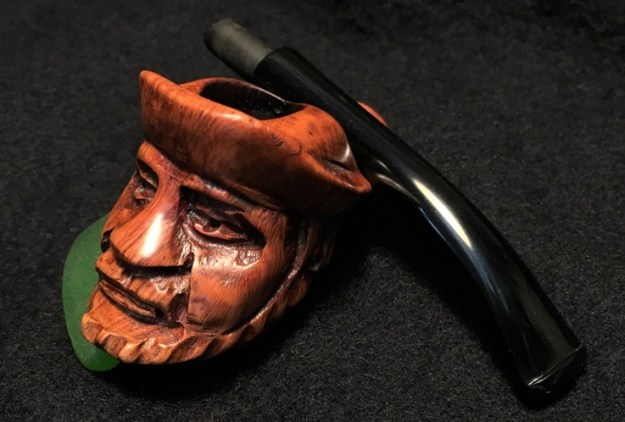
I acquired this very stately looking Aristocrat trolling through offerings on eBay.  I liked it immediately because of its large rusticated bowl and the nice half bent Billiard presence.  It needed some work which was good for me – a broken off button and deep oxidation – factors that would discourage many from taking a second look.  When the auction ended, the price was a good one and I had the highest bid.  Another great pipe to restore to benefit the Daughters of Bulgaria – our work here in Bulgaria helping women and girls who have been trafficked and sexually exploited.  I was in the US when I landed this hefty rusticated Billiard and it was in the suitcase in the Lufthansa cargo hold on its way back to Bulgaria with me.As with all the pipes available in the For “Pipe Dreamers” Only! collection, I take additional pictures for stewards looking to commission a pipe.  When Andrew reached out to me, he indicated interest in the Aristocrat but also in the Bearded Sailor Carved pipe I had then.  He had served in the Navy for 17 years and the old sailor caught his attention.  Unfortunately, the Carved Bearded Sailor was already commissioned for another pipe man.  I appreciate the service that Andrew has given in serving his country, and I mentioned to him that my son had also served as a submariner in the Navy, on the USS Boise. I appreciated his reply when I asked him for patience waiting for the Aristocrat to reach the work table.  Here’s what he wrote:

Dal, 

As the Grandson of a hobbyist wildlife painter I fully understand the time required to do something like this.  I would love this pipe and would like to commission too this pipe.  Thank you for keeping me in mind about the bearded sailor and thank your son for his service.

Andrew 

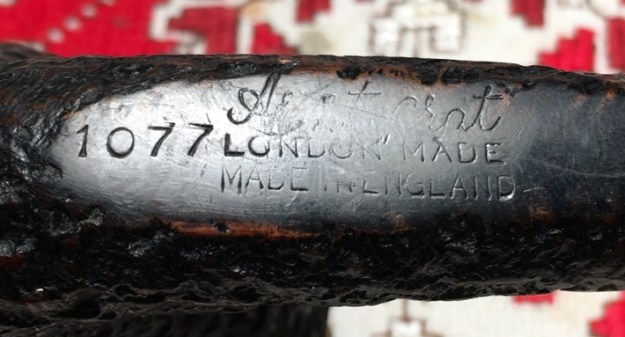
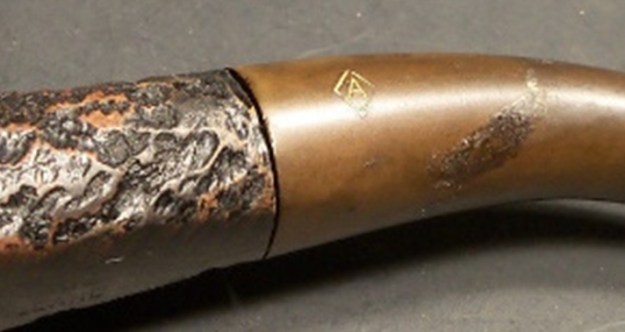
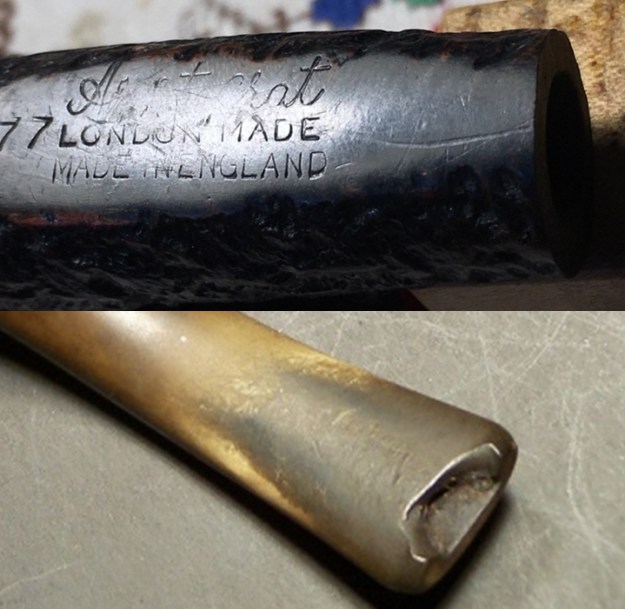
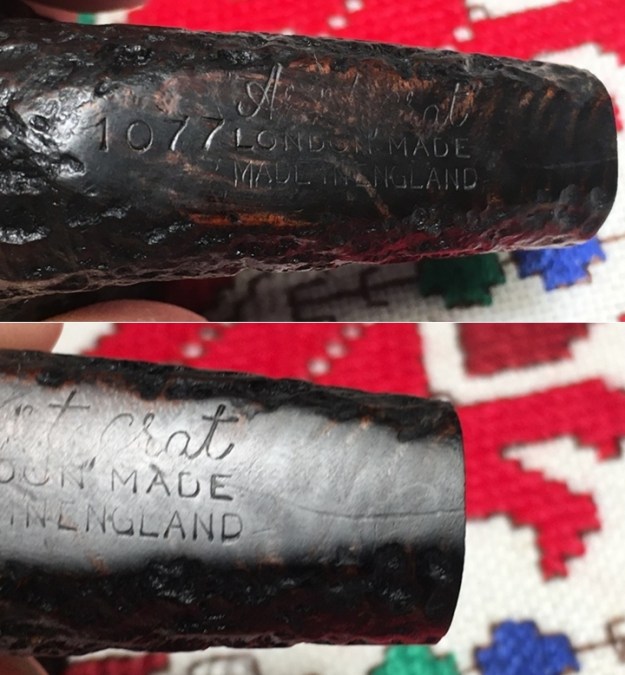
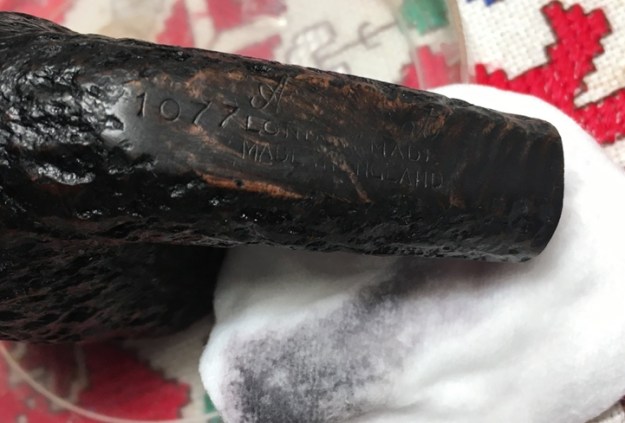
Here are some of the pictures Andrew saw of the Aristocrat London Made that I used from the original seller: The pipe has a large presence and I take out my ruler and take the measurements: Length: 5 15/16 inches, Height: 2 inches, Rim width: 1 1/4 inches, Chamber width: 3/4 inches, Chamber depth: 1 13/16 inches.  The nomenclature stamped on the lower shank smooth panel is thin. I take additional pictures of this from my worktable.  What is stamped is cursive ‘Aristocrat’ [over] LONDON MADE [over] MADE IN ENGLAND.  To the left of the nomenclature is a shape number: 1077 which undoubtedly points to the half-bent Billiard designation.The stem stamping is an ‘A’ set in a diamond frame.In search of the origins of the Aristocrat, I first look in my autographed copy of Herb Wilczak & Tom Colwell’s, “Who Made That Pipe?” dated 3/3/97.  Tom Colwell’s gifting of this book to “Bruce” is in April of 2001, concluding with his signature.  There were several listings for ‘Aristocrat’ but only two fell within the correct UK parameters:

John Redman/Kapp & Peterson – ENGL
Comoy’s / Harmon Bros. LTD – ENGL

Pipedia’s information narrowed the field by isolating the plain ‘A’ logo:

Pipedia’s entry for the John Redman Co. does not include much information.  I researched this company before as being the probable English manufacturer of pipes stamped with Boston’s Tobacconist Shop, L.J. Peretti name (see: A Christmas Gift in need of a stem splice – L J Peretti Squared Shank Billiard).  This restoration started a fun hobby of collecting L.J. Peretti pipes and selling many too!  Here is the information.

John Redman Ltd. and British Empire Pipe Co.

Other lines include Aristocrat, Buckingham, Buckingham Palace, Canberra, Captain Fortune, Dr John, Golden Square, Redonian, Richmond (not Sasieni), Twin Bore.

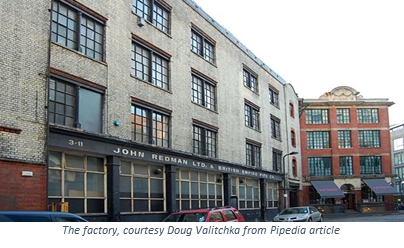
Former factory located at 3-11 Westland Place, Hackney, London N1 7LP

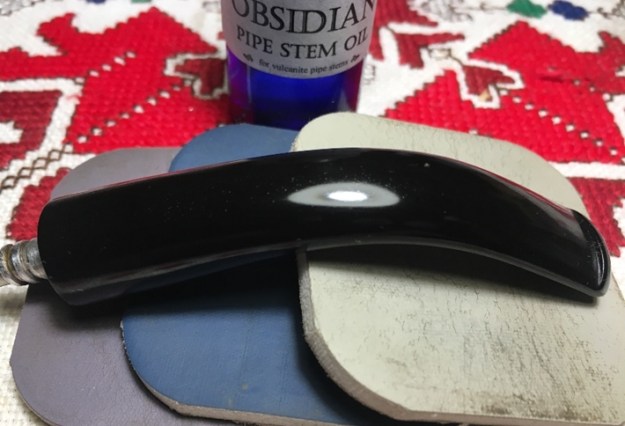
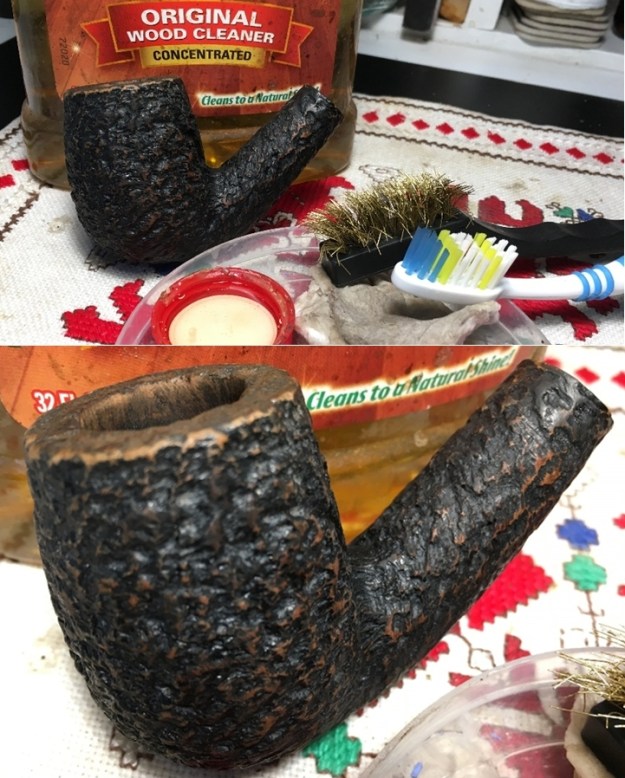
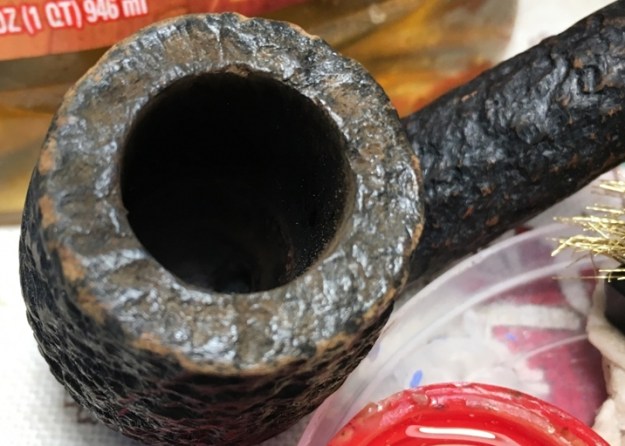
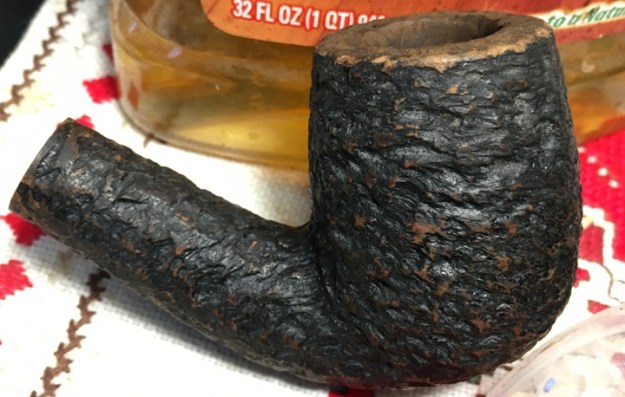
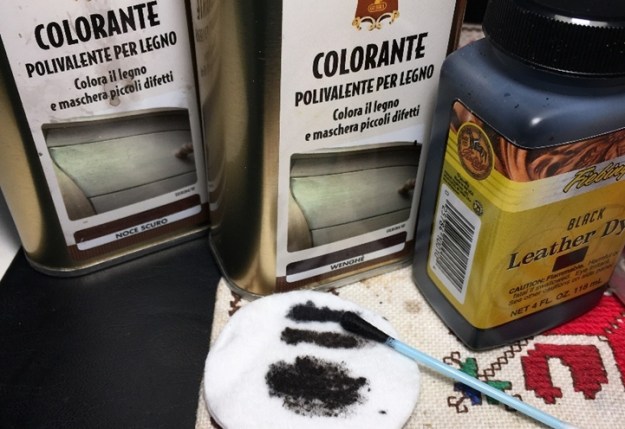
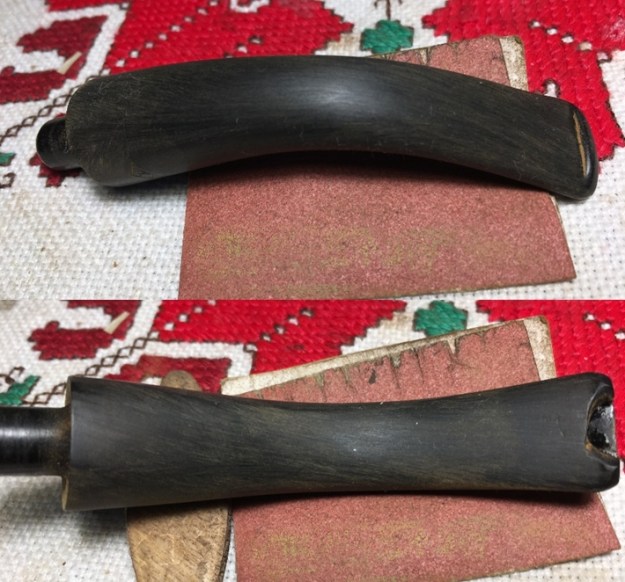
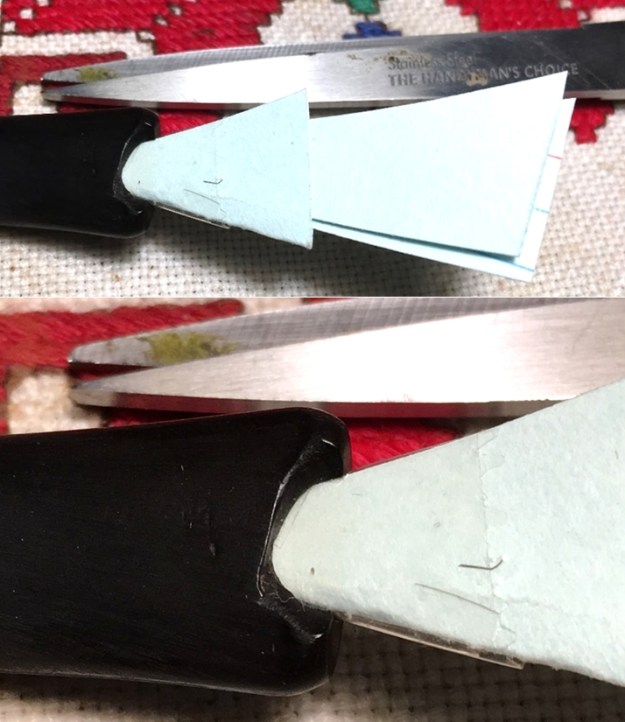
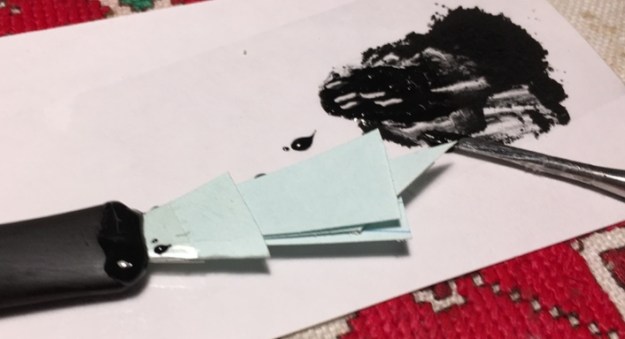
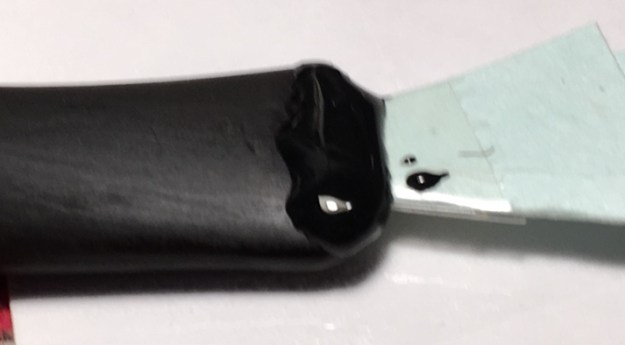
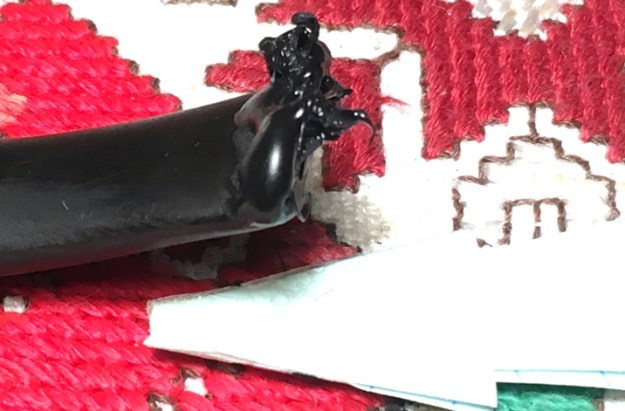
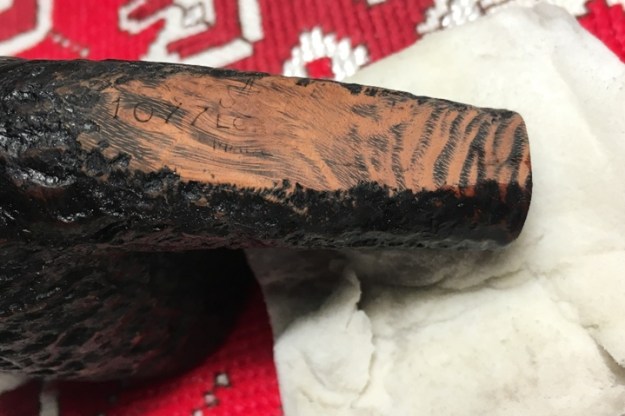
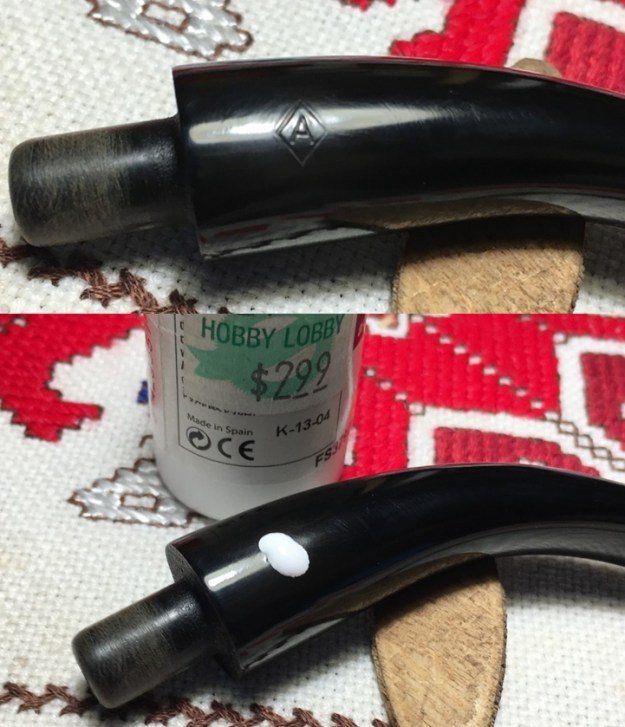
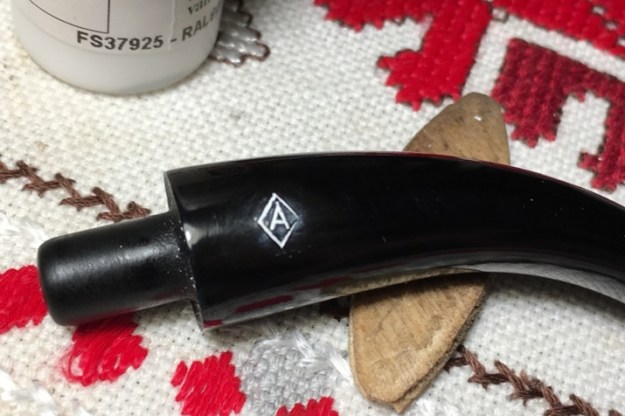
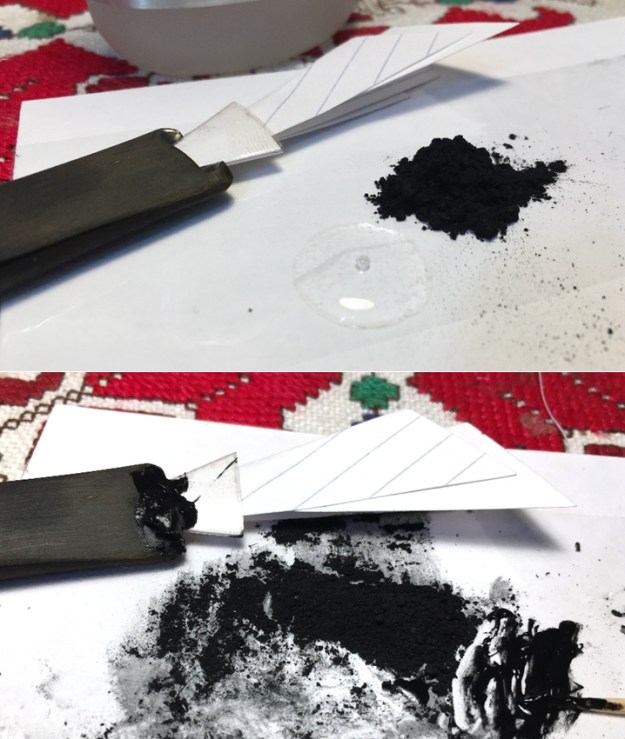
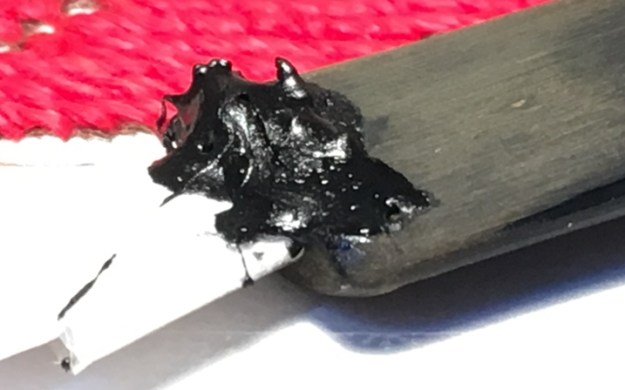
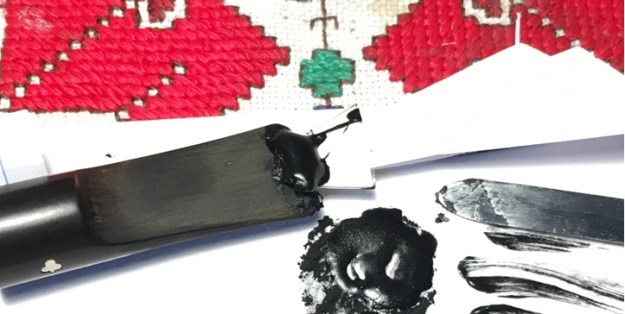
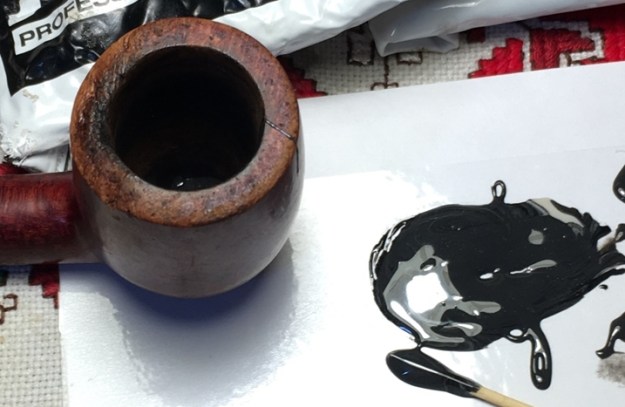
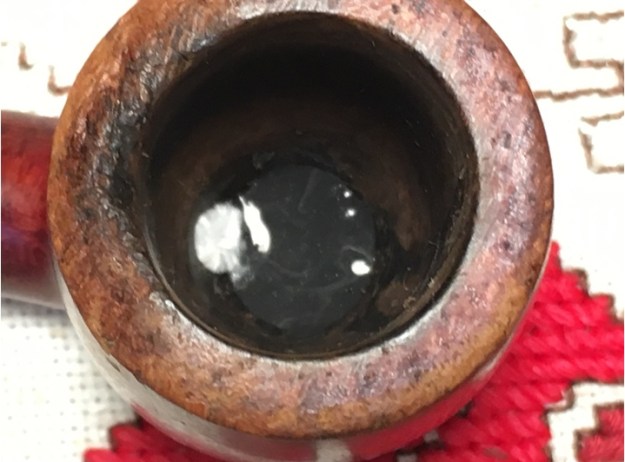
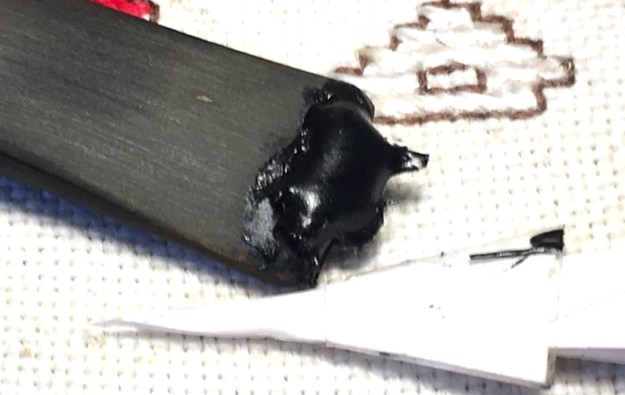
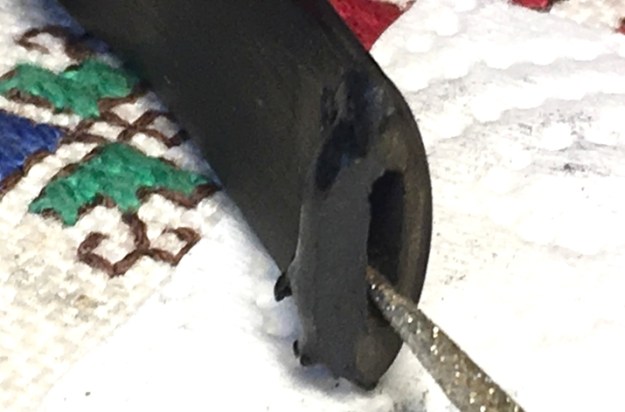
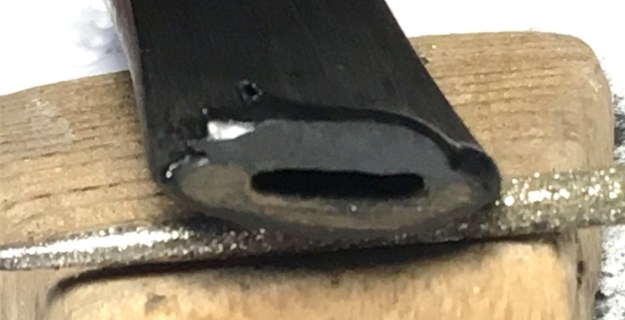
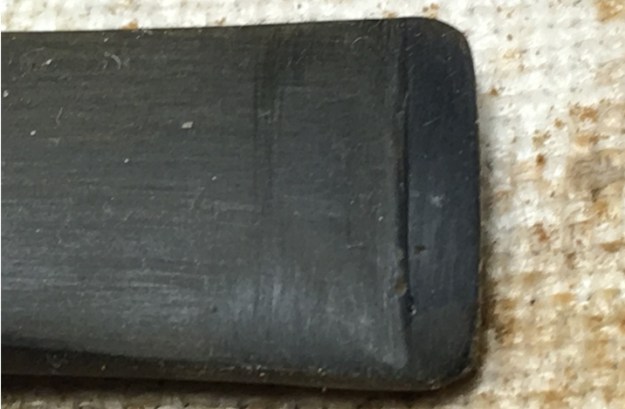
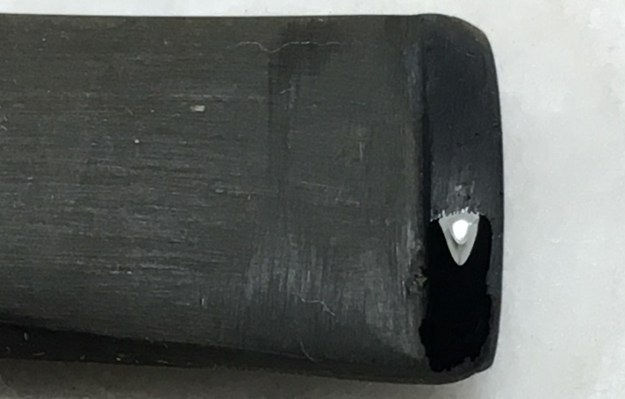
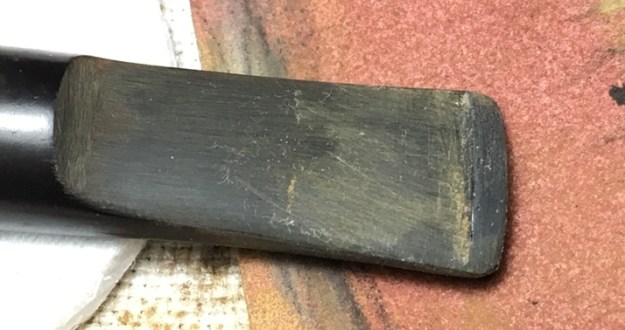
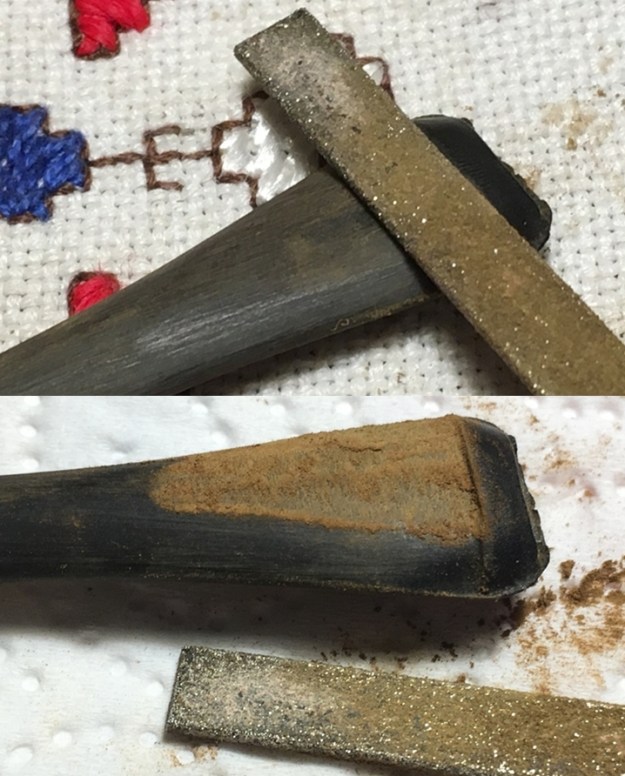
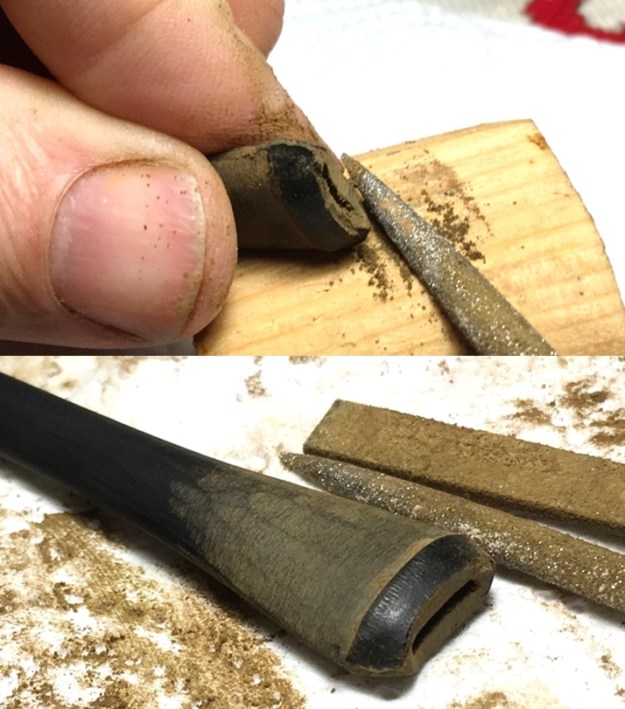
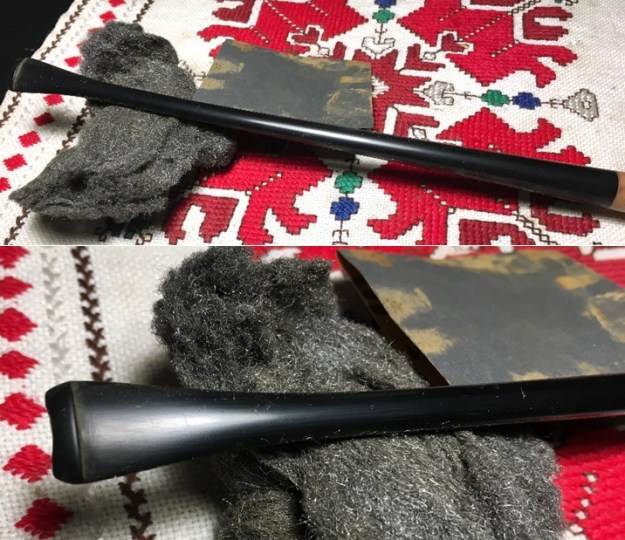
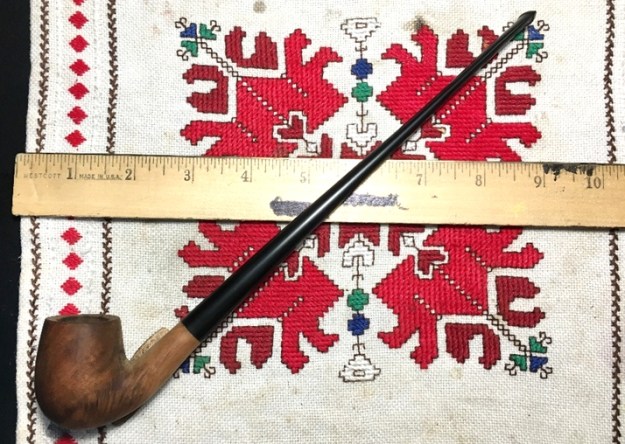
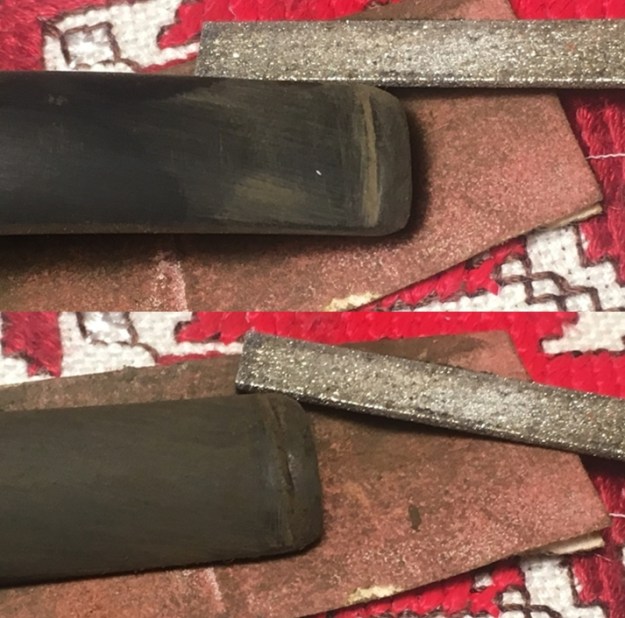
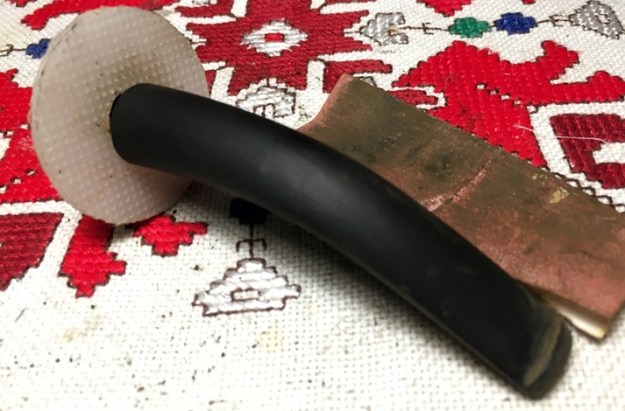
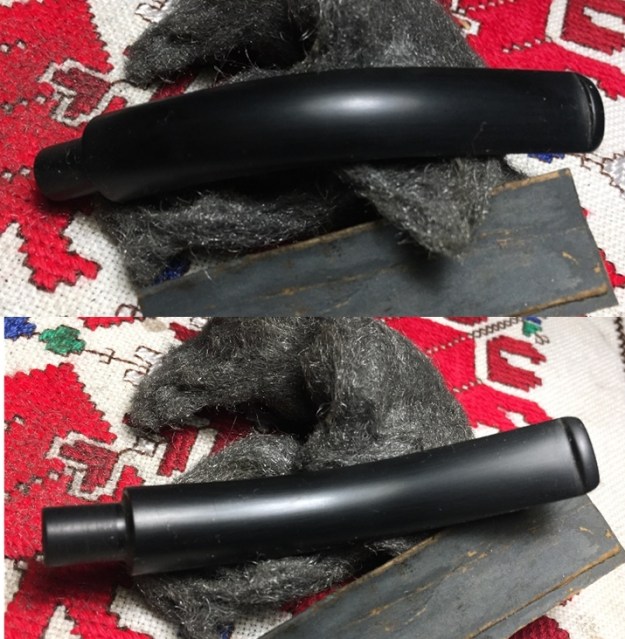
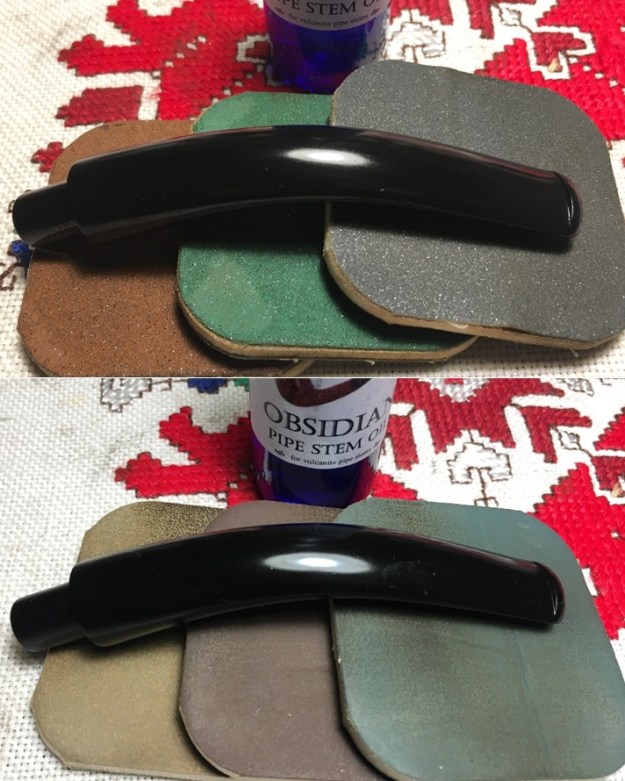
Pipephil’s entry solidified the John Redman Ltd. And British Empire Pipe Co., with the Aristocrat and the ‘A’ stem stamping.The dating of the Aristocrat on my table is difficult to determine, but it has an older feel to it and is set in a very traditional dark English style hue.  Looking at the pipe itself, there is a moderate amount of carbon cake buildup in the chamber which I will remove to examine the condition of the chamber walls.  The rusticated stummel is very attractive – the deep, distinct etching is nice, but there is grime and build up on the rim as well as in the stummel’s nooks and crannies.  The smooth briar panel holding the nomenclature on the shank’s underside is worn and the nomenclature is thin. There is a large scratch scarring the panel.  The panel’s scratches and nicks will be a challenge to clean without further eroding the stampings.  The stem has deep oxidation and the lower button has cracked off.  This will need to be rebuilt.  These pictures show some of these specific issues.I begin the restoration of this John Redman Aristocrat London Made, half-bent Billiard by cleaning the airway of the stem with a pipe cleaner wetting with isopropyl 95%.  I add the deeply oxidized stem to a soak of Before & After Deoxidizer along with other stems and pipes in the queue. After soaking for several hours, I fish out the Aristocrat’s stem and again clean the airway with a pipe cleaner wetted with isopropyl 95% to clean the excess Deoxidizer. I use a cotton pad to wipe off the raised oxidation and the Deoxidizer has done a good job, but I still detect oxidation in the vulcanite.To begin revitalizing the stem, I apply paraffin oil, a mineral oil, and put it aside to dry.Next, I begin the process of cleaning the stummel. I start with reaming the chamber using the smallest blade head of the Pipnet Reaming Kit and moving to the larger blades. I put paper towel down to expedite the cleanup.  I use 2 of the 4 blades available then transition to scraping the chamber further using the Savinelli Fitsall tool and follow with sanding the chamber using 240 grade paper wrapped around a Sharpie Pen for reach and leverage.  After cleaning the chamber with a cotton pad wetted with alcohol, I examine the chamber and it looks great.  I see no evidences of burning damage with fissures or cracking. Next, using undiluted Murphy’s Oil Soap on a cotton pad I start the cleaning of the external rusticated surface.  I also employ a bristled tooth brush to work into the ridges of the rustication.  A brass wire brush which is gentle on the briar, also helps with the rim cleaning.  Finally, I take the stummel to the sink and rinse it with cool tap water.  The cleaning did a good job.  I take some pictures to show the surface and the question begins in my mind regarding the base color of the stummel.  Bare briar is peeking through, but the base looks black to me. Wanting to get a head start on my thinking for later stages, I pull out 3 very dark or black dyes to compare.  I have two Italian brands that are labeled ‘Dark Night’ and ‘Wenghe’ – both of which are so dark brown that they appear black to me.  The third dye is Fiebing’s Black Leather Dye – it is black.  I test each of these to see what they do and which may be the dye I use later to freshen the stummel if I indeed do decide to stain it. Thinking….Moving to the internal stummel cleaning, I use pipe cleaners and cotton buds dipped in isopropyl 95%. I quickly transition to scraping the mortise walls with a narrow dental spatula to excavate what tars and oils would come out manually.  I also use different sizes of shank brushes wetted with isopropyl 95% to clean.  As the picture below shows, this was not a short-lived encounter.  I also use a drill bit to hand turn down the airway to draw out more tar build-up.  After some time, the buds begin to lighten but not enough to declare the job done. To continue cleaning the internals passively, I use a kosher salt and alcohol soak.  I do this to further clean as well as to freshen the internal briar for the new steward.  I first pull and twist a cotton ball to form a wick which I stuff down the mortise and airway with the aid of a stiff wire.  This will act to draw out the tars and oils as the isopropyl 95% does its thing. After putting the stummel in an egg crate to stabilize things, I fill the bowl with kosher salt.  Unlike iodized salt, kosher salt doesn’t leave an aftertaste.  Next, I fill the bowl with isopropyl 95% until it surfaces over the salt.  As the alcohol absorbs into the chamber and mortise, the level of alcohol goes down.  After a few minutes I top off the isopropyl 95% and put the stummel aside to soak. Turning now to the stem, I take some pictures and take a closer look.  The Before & After Oxidizer did well, but there are still build up places on the surface showing where the oxidation was.  The button on the topside is worn down and underneath the button has broken off. Before starting on the rebuild of the button, I use 240 grade sanding paper and sand the stem.  I want to first address the overall condition of the stem surface then the button. While sanding, I’m careful to protect the diamond A stamp of the Aristocrat as well as to avoid shouldering the shank facing. To rebuild the button, I begin by cutting a folded over triangle from index card stock which is a bit stiffer.  I leave the end of the triangle open and create a sleeve.  I put smooth scotch tape over the end of the triangle sleeve to hold the sleeve together and to keep the wedge from sticking to the CA glue and activated charcoal mixture.  After the triangle wedge is fashioned, I insert it into the slot airway as far as it will go to fill the gap and then I push other triangle pieces of index card into the sleeve to fill it out and to hold it in place firmer.I then mix the charcoal putty.  I use extra thick CA glue and mix it with activated charcoal by gradually pulling charcoal into a small puddle of CA glue and mixing with a toothpick.  I add charcoal until it reaches the viscosity of molasses and then apply it to the button.The first application is a little too runny, so I add a bit more charcoal to the mixture and apply more.I have a good coverage over the entire area which will allow me to file and shape the new button.  After the charcoal putty sets, I work the wedge loose and it comes out easily.  I put the stem aside to allow the putty to cure thoroughly.Well, after a few days longer than planned because of dealing with an unforeseen flu bug hitting many here in Sofia, the kosher salt and alcohol soak has done some major work.  The salt and wick are soiled in a big way indicating that the tars and oils were drawn more from the internals. I toss the salt in the waste and clean the chamber with paper towel as well as blowing through the mortise to rid the stummel of salt crystals.I follow again with more cotton buds and pipe cleaners dipped in isopropyl 95% to clean up the left-over residue.  The salt soak made a dent.  After some more effort, I declare the internals clean and move on.The stem button rebuild is next.  The charcoal putty is fully cured after the days of the flu bug and I start working on it using a flat needle file. I start working on the end filing toward the slot to form the end of the stem. After the button face is flush, I then file downwardly to form the depth of the button lip.When I arrive at about the right depth for the button lip, I then file from the stem side to sharpen and shape the new button.I also use the round pointed needle file to smooth the slot – forgot to picture that file!I also freshen the topside button lip with the flat needle file.The filing process is complete.  The bottom rebuild looks great – it shaped up well.  The next pictures show the completion of the filing on the upper bit and button face. As is often the case, air pockets are trapped in the charcoal putty and are revealed during the sanding process. To remedy this, using a toothpick, I run a small drop of regular CA glue on the toothpick and use it to paint the entire lip with the glue.  I also run a line to seal the edges of the button – both the stem side and on the button face.  Taking a picture of black with a light background doesn’t show a lot of detail often!I use an accelerator to quicken the curing process and follow by lightly sanding the button with 240 grade paper.  The CA glue filled the pits well.I take the stem to the sink and wet sand the entire stem with 600 grade paper.  I’m careful to avoid sanding the Aristocrat ‘A’ stem stamp.  After using 600 paper, I then apply 0000 grade steel wool to the entire stem.I move directly to applying the full regimen of 9 micromesh pads to the Aristocrat stem.  I start by wet sanding using pads 1500 to 2400 followed by dry sanding with pads 3200 to 4000 and 6000 to 12000.  Between each set of 3 pads, I apply a coat of Obsidian Oil to condition the stem.  I like that newly polished pop that comes from the vulcanite after the micromesh process! With the stem waiting in the wings, I take a close look at the stummel.  The rustication is deep and expressive and the stummel itself is large.  The briar block this stummel is hewn from must have been dense, because the stummel itself has some weight to it.  I like the dark hue of the rustication and my head debate is whether to freshen the entire bowl by staining it or to keep what is present and touch it up, primarily on the rim?  I’m drawn to the flecked bare briar that is present in the current condition – it gives the stummel and classic rustic look – not too polished, but a pipe that has seen some life.  The rim has raw briar showing and needs touching up. The other question has to do with the smooth briar underplate holding the nomenclature.  The stamping is already ghosting and thin – I don’t want to contribute to this loss of his history!  There is a scratch to the right of the lettering that I can sand without trouble.  But as I look at the smooth briar plate, the dark stain that is now covering the smooth briar does not look good.With the decision made to go with the current hue and touch up, I start on the smooth briar nomenclature plate first on the underside of the shank.  I want to create a more distinct and classy looking nomenclature plate by removing the finish from the smooth briar.  This will create a classy looking contrast between the dark rusticated surface and the smooth briar.  I first use a cotton pad wetted with alcohol which had little effect.  I then switch to using acetone.  I wetted several cotton pads and scrubbed the smooth briar.  This had some effect, but still nothing spectacular showing a loosening of the dark finish on this area.The breakthrough came when I thought of trying Mr. Clean Magic Eraser. To my great surprise, it works.  The finish was removed in large measure leaving behind and interesting patch of smooth briar.  Yet, as I look closely at the nomenclature, I’m afraid it appears as though the Magic Eraser sponge exerted more abrasiveness than I thought would be the case.  The lettering has deteriorated further – the profanity that flashed through my mind did not surface!  Ugh – we make plans, but often they are not what happens.  I allow the briar to dry before doing more on the underside panel.Next, to touch up the rim, I use a Dark Walnut dye stick, which I chose after testing several colors on a cotton pad.  I apply the dye stick over the rim and in the crevices.  It looks great, blending well with the rest of the stummel. To roughen the rim up a bit, to blend it more with the weathered, rustic stummel, I use a 1500 grade micromesh pad and lightly sand the ridges of the rusticated rim.  This lightens the tips and helps blending.To get a bird’s eye view of the project, I rejoin the Aristocrat London Made stem and stummel.  It’s looking good.With a closer look at the junction there is a gap between the shank and the stem facings.  I examine the mortise and there is no ridge that would be creating the obstruction.  With no obvious obstruction, I use 240 grade sanding paper simply to taper the end of the tenon more guessing that the mortise narrows, and this will afford a little more room for the tenon.  After sanding, I try again, and it seats well now. I now mount a cotton cloth buffing wheel to the Dremel, set the speed at about 40% full power and apply Blue Diamond compound to the stem and stummel.  With my wife’s help, she takes a picture of the process in motion.  When completed, I give the pipe a good wipe down with a felt cloth to clean it of compound dust. Before applying wax to the stem and stummel, two mini-projects are first needed.  I could have done this earlier, but now is ok too!  Using Before & After Restoration Balm, I apply some to my fingers and then rub it into the smooth briar area on the underside of the shank.  I also apply the Balm to the shank alone.  Later, after it absorbs for a few minutes, I wipe off the excess and buff up the smooth briar and the shank.  I like the results so well, even on the rusticated shank surface, I decide to then apply B&A Restoration Balm to the entire stummel.  After about 15 minutes, I again wipe off the excess then buff the surface up, making sure all the Balm has been absorbed into the briar surface. While the Balm is absorbing, I refresh the diamond encased ‘A’ Aristocrat stem stamp.  Using white acrylic paint, I apply some paint over the stamp and then blot it with a cotton pad to draw off the excess paint.  After it dries, I gently scrape the excess paint leaving the paint filling the stamping lines.  I like it! I reunite the stem and stummel and mount another cotton cloth buffing wheel onto the Dremel.  Because I’m applying wax to a rougher rusticated surface, I increase the speed of the Dremel to about 60% full power to increase the RPMs and therefore the heat helping to dissolve the wax.  I apply a few coats of carnauba wax to the stummel. Moving to the stem, I decrease the speed to 40% of full power and apply carnauba.   After finishing with the wax, I use and microfiber cloth and give the pipe a rigorous hand buffing to raise the shine.

I am very pleased how this hefty pipe turned out.  The deep, distinct rusticated surface looks great on this nice looking, classic half bent Billiard.  The half bend works very well with the overall feel of the bowl resting in the palm.  My only disappointment is the further eroding of the nomenclature in order to reveal the grain of the smooth briar panel.  Even so, the pipe is a keeper.  The major technical hurdle of rebuilding the button came out beautifully and reveals no evidence of its former state.  Andrew could see how nice this Aristocrat London Made could be and he commissioned him from the For “Pipe Dreamers” Only! collection and will have the first opportunity to acquire it from The Pipe Steward Store.  The restoration of this pipe benefits the Daughters of Bulgaria – women and girls who have been trafficked and sexually exploited.  Thanks for joining me!

Reclaiming Paw’s Kaywoodie “500” 04 Long Stem Billiard – A Great-Grandfather’s Legacy


Blog by Dal Stanton

One of the greatest challenges to me AND honors is to receive a request to restore a pipe that is a family’s heirloom.  It’s amazing how when a loved one passes from this life, the things they leave behind become present links to the memories of the past.  Pipes are favorite heirlooms because they hold an enormous sense of the presence of the loved one – the smell, marks left on the pipe, memories of the loved one sitting and reflecting with pipe in hand and a wink of the eye….  This was one of the reasons I took the name, The Pipe Steward, because of this strong sense of passing on something of great value – not just the physical pipe, but the memories and associations welded to that pipe’s presence.   Joe contacted me with a request for some pipes that hold this honor.  Joe and Hannah work in the same organization as my wife and I, but live in Athens, Greece.  I met them for the first time at a conference there last year.  This was Joe’s request:

Hey Dal,
Joe here…, we talked for a while about pipes. I have some old pipes. They were my wife’s Great-Grandfather’s pipes from Winston-Salem, NC.  I’d love for them to be restored, and I’d love for the money to go to a good cause like
the Daughters of Bulgaria program. All of them need an intense deep cleaning, and some have some stem damage. If I sent you some pictures, do you think you could offer a guesstimation of the price? I’d love to give these pipes to my father-in-law in the same condition as his grandfather smoked them.

Many blessings,
Joe

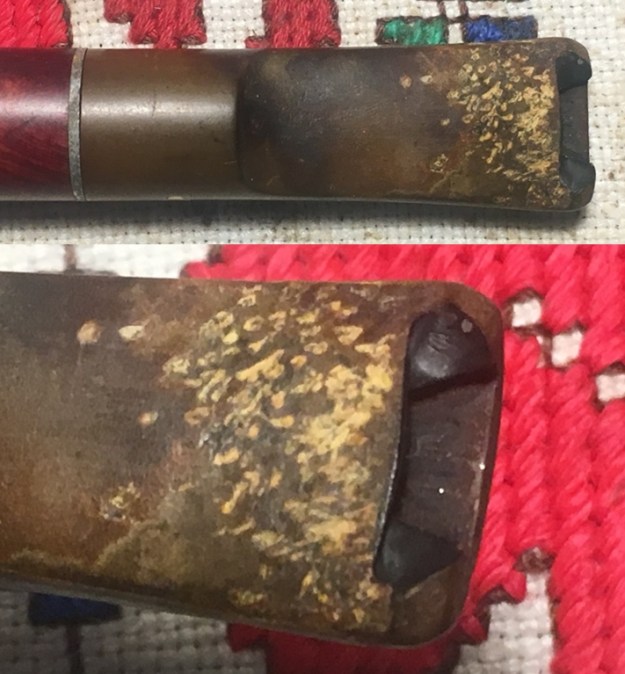
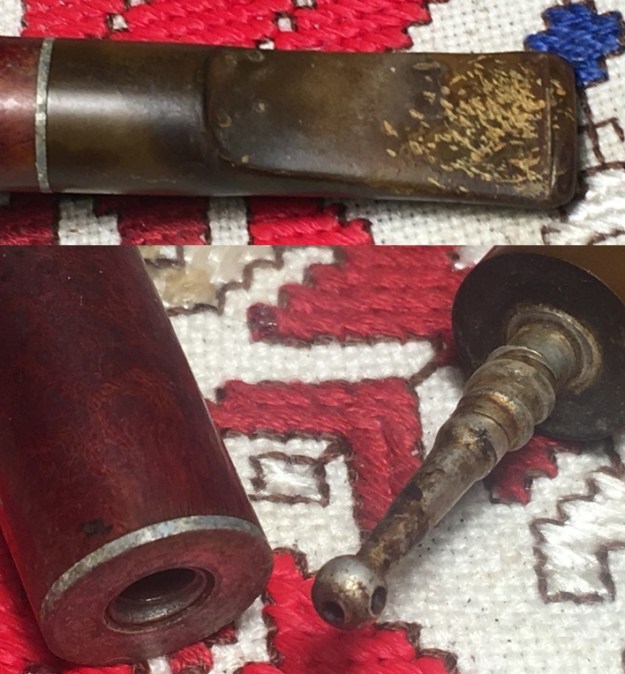
Joe sent some pictures on to me and he settled on one pipe as a starter project – a Kaywoodie “500” Lovat shape – or what I originally identified it as.  Here were a few pictures showing the major issues.Since Joe wanted to gift the pipe to his father-in-law, which belonged to his grandfather – Hannah’s great-grandfather, I asked Joe what he knew about the pipe’s history.  This is what he wrote:

History of the pipe… hmmm. That’s going to be tricky. I will ask and see if anyone can offer more input on the history of Paw’s pipes, but I can’t honestly say much myself.

Ben is my father-in-law. He was raised by a single mom, who worked a lot to raise her 4 boys. So, Ben’s grandparents raised the boys while the mom worked so much. When Ben’s mom passed away a few years ago, we were all cleaning out her home and I noticed a pipe stand in the garage with 5 pipes and a Sir Walter Raleigh bowl cleaner, and someone was asking if that should go in the garage sale. I quickly offered to be a home for it if no one else wanted it, which made Ben happy. He didn’t really have the capacity to decide things that week, he was just glad it was staying in the family and not going to a stranger. 

My ultimate goal is to get these pipes, the stand, and this bowl cleaner in good shape to re-give them back to Ben (maybe for his 60th Birthday next year).  I’ve really just been a pipe steward, myself. I think it will mean a lot to Ben to have an heirloom from his grandfather (who functionally was his father).

Dusty, cobwebby garages often hold the key to finding special heirlooms!  After I wrote Joe describing some of the issues and remedies for Paw’s Kaywoodie “500”, he wrote back with some special instructions to preserve some of the evidences of Paw’s time with his Lovat.  With the heavy erosion to the back of the rim, I had suggested rounding/topping the rim.  Joe’s response:

My initial thoughts are to not round out the rim. I like the flat surface of the rim. As far as the damage on the backside, I know it should be cleaned up, but I wonder if taking 1/10 of an inch off instead of 1/8, if that would yield a proper looking bowl, yet still with the slightest reminder that Paw lit his pipes with a match from the back of the bowl.   It’s just a thought.   I like it when antiques look in their original condition (or close) but I’m also a sucker for the sentimental stuff, so I don’t mind having at least a little bit of the bowl erosion still visible. 

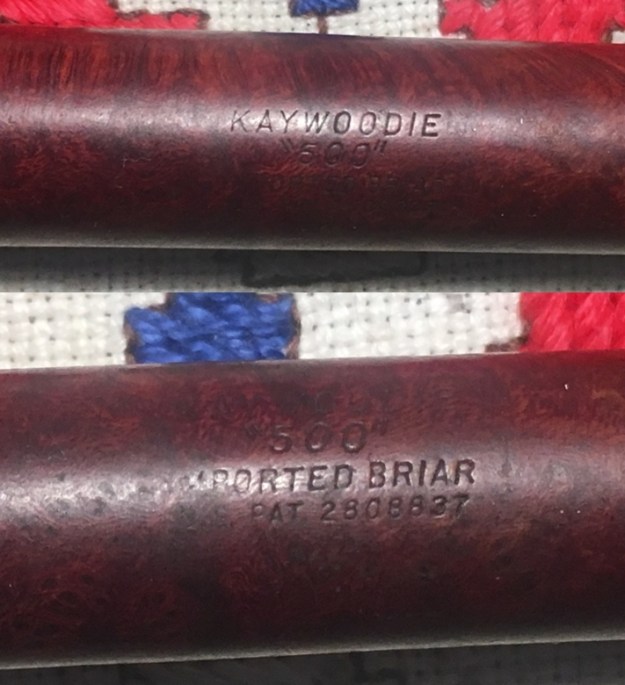
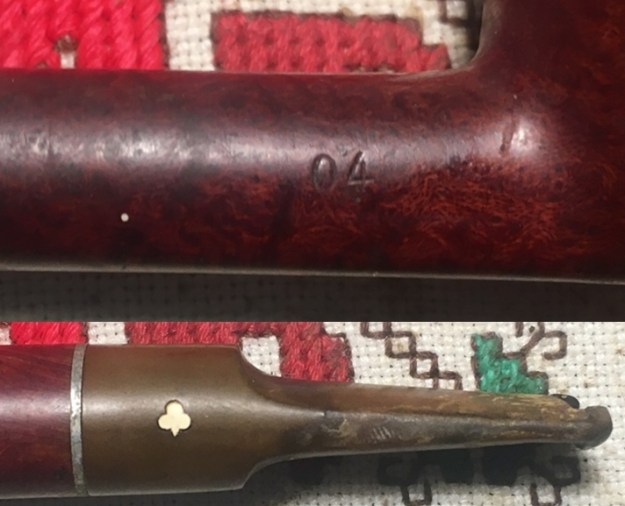
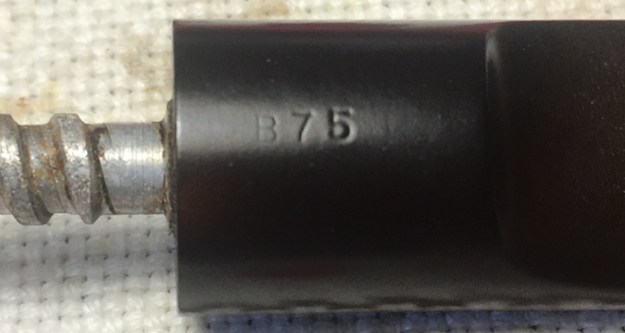
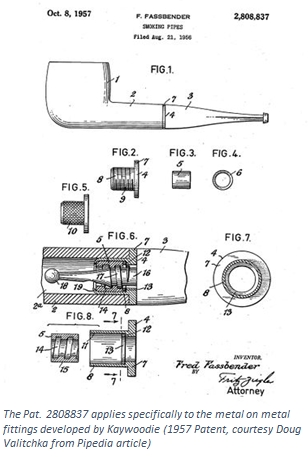
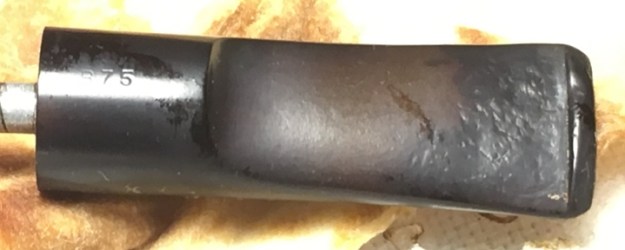
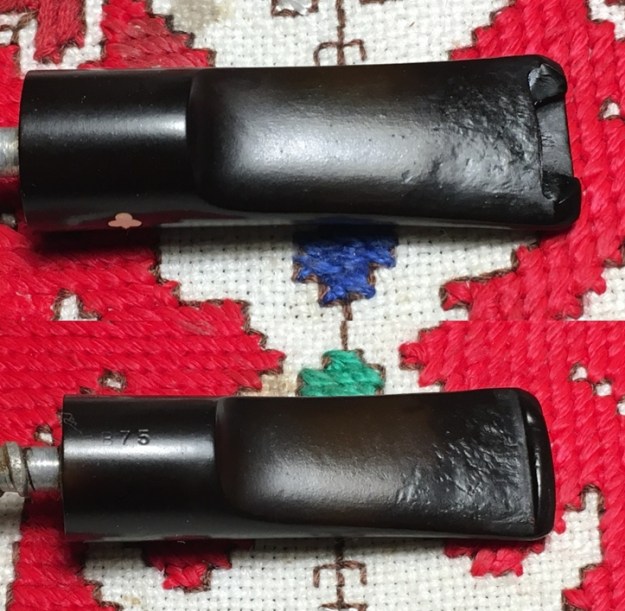
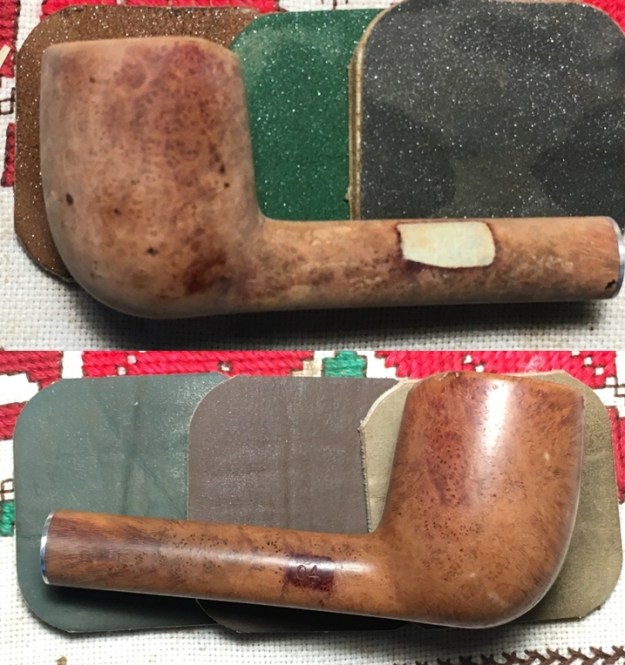
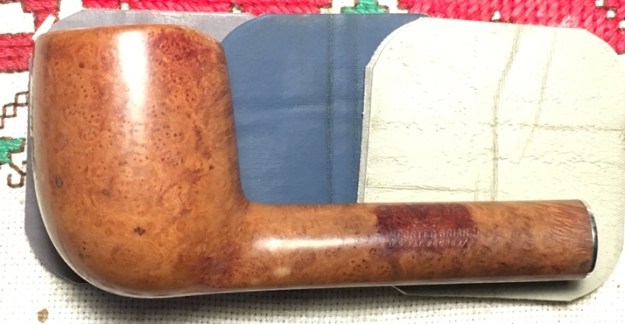
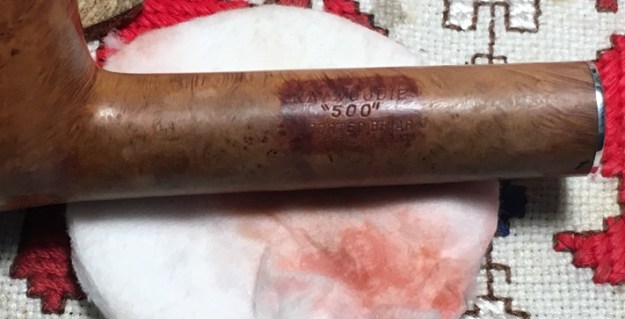
The pipe made it to Bulgaria from Greece via another colleague and another conference in Barcelona that I attended.  With the Kaywoodie “500” now on my worktable I take more pictures to get a better idea of the pipe’s condition. The nomenclature on both sides of the long Lovat stem is clear.  The left flank is stamped KAYWOODIE [over] “500” [over] IMPORTED BRIAR [over] PAT. 2808837.  The right side of the shank is stamped with the Kaywoodie shape number, ‘06’.  The stem holds the classic inlaid Kaywoodie shamrock or clover.  Almost missed and lurking on the lower side of the stem is stamped: “B75” – I’ll need to check this out! Looking first for information about the shape number, ‘06’, Pipedia Kaywoodie Shapes Numbers list is helpful:

04 Large saddle bit billiard, long shank, short bit 1931-1958, 1961-1970

The description is spot on with the saddle stem and long shank.  Calling it a long shank Billiard is essentially the same as a Lovat, in the Canadian family of shapes.  The potential dating brackets are also helpful.  Another Kaywoodie Shapes chart I go to at Kaywoodie Free Forum confirms that this number describes a medium Billiard, long shank, saddle stem but I also see specific shape numbers for Canadians, ‘71’, and such.  So, in deference to the Kaywoodie shape number specifications, I’ll be calling this a Long Shank Billiard and not a Lovat.  Also at Kaywoodie Free Forum, there is a very helpful Kaywoodie Master List that was compiled and I quickly find the Kaywoodie “500” series listed as ‘low end pipes’ with the date range of 1957 to 1967.  The list provided this example of the “500” series of a classic Billiard which matches Paw’s pipe scheme perfectly.  These were not expensive pipes but attractive and well within a working man’s budget.I still have not seen anything regarding the ‘B75’ stamp on the lower side of the saddle stem.  So, as I often do, with all of Steve’s rebornpipes.com experience, I send a note to him with the inquiry.  This response cleared up the mystery:

As for the stamping on the stem I was told by a fellow on the KW forum that they were part numbers to make replacement of a stem easy, I have seen it on quite a few of the KWs I have restored.

So, with that mystery resolved, I look more at the Kaywoodie name.

I’ve worked on several Kaywoodies before this and I am always intrigued by the story and repeat it here to give the broader heritage of Paw’s “500”. The Kaywoodie website, actually the S. M. Frank Co. & Inc. site, is informative:

The history of S. M. Frank & Co. spans nearly a century and half of pipe making, supporting our claim as the “oldest pipe house in America.” S. M. Frank, as it exists today, is a combination of some of the biggest names in pipe making from the early part of the 20th. century. The pipe names Kaywoodie, Yello-Bole, Reiss-Premier, DeMuth, Medico, Heritage and Frank are familiar to generations of pipe smokers.

The article describes how in 1919 the Kaufman Brothers & Bondy Company (KBB) produced the Kaywoodie and Dinwoodie pipe lines.  By 1924 the Dinwoodie line fell by the wayside and the primary name of Kaywoodie was the mainstay pipe line and the company came to be known by that name.  Little is known about the early activities of the KBB Company which started in 1851 by the German born Kaufman brothers.  The company had several locations but was centered in the New York City region throughout its production history.  The expansion of the KKB Company following the gold rush I find fascinating:

produced the Kaywoodie and Dinwoodie pipe lines.  By 1924 the Dinwoodie line fell by the wayside and the primary name of Kaywoodie was the mainstay pipe line and the company came to be known by that name.  Little is known about the early activities of the KBB Company which started in 1851 by the German born Kaufman brothers.  The company had several locations but was centered in the New York City region throughout its production history.  The expansion of the KKB Company following the gold rush I find fascinating:

When one of the men from the New York office got “gold fever”, he carried a large supply of pipes with him to California that he sold along the way. This early “national distribution” did much to build the reputation of KBB. By the late 1800’s, branches of KBB were opened in Chicago, Atlanta, San Francisco and St. Louis with family and friends acting as agents. The trademarks, for the inlaid cloverleaf and the cloverleaf with the KBB initials inside, were issued in 1881. 

In 1935, KBB boasted of being the largest pipe making facility in the world with 500 employees and a production of 10,000 pipes per day from their facility in West New York, New Jersey.  In 1955, Kaywoodie was acquired by S. M. Frank & Co. (See Link) and continues to the present with well-known names Yello-BoleReiss-PremierWilliam Demuth CompanyMedico, Heritage (Heritage Pipes Inc.), along with Kaywoodie (Link).

I enjoyed seeing this picture in the 1955 Kaywoodie Catalog from Pipedia with a specific listing of shape 04.  The ‘04’ is the forth pipe down (picture to the left) and this shows that the shape designations for Kaywoodie pipes stay consistent.  This catalog pre-dates by a few years the ’57 to ’67 dating for the “500” series, but the shape again is spot on.  I enjoyed seeing this catalog page because it shows the huge inventory variety that Kaywoodie provided its customers.  The subtle nuances between these long shank, saddle stem Billiards is interesting to me.  The ‘04’ enjoys the distinction of the longest shank compared to the shapes presented.

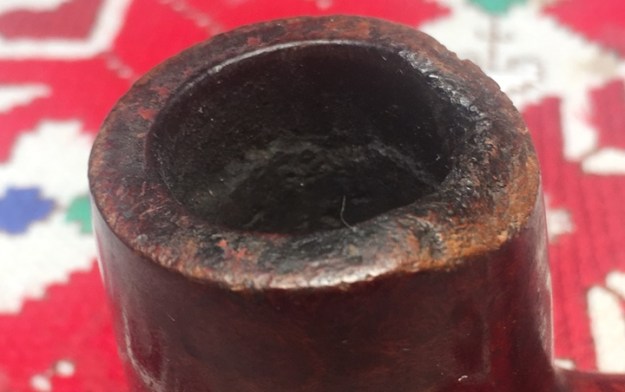
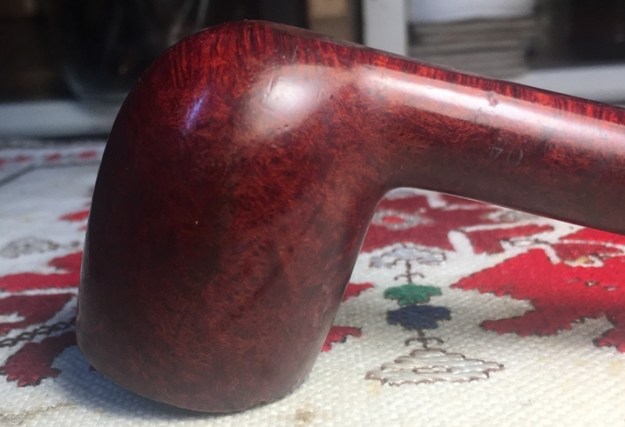
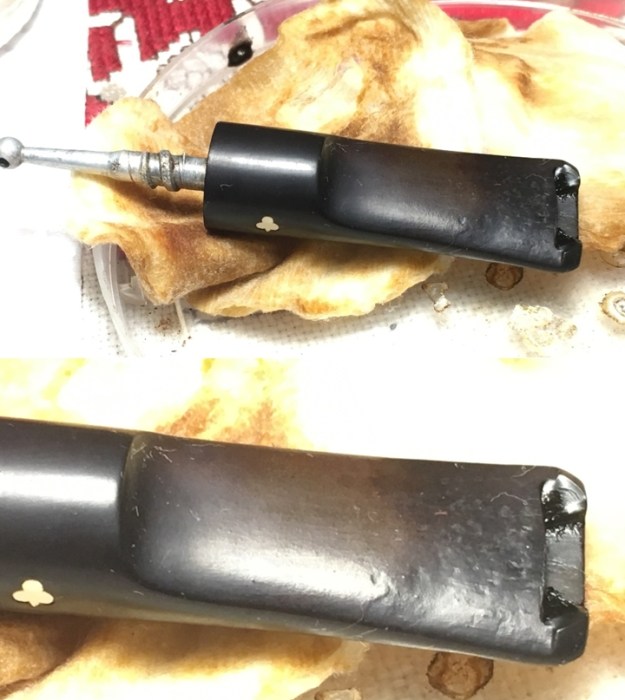
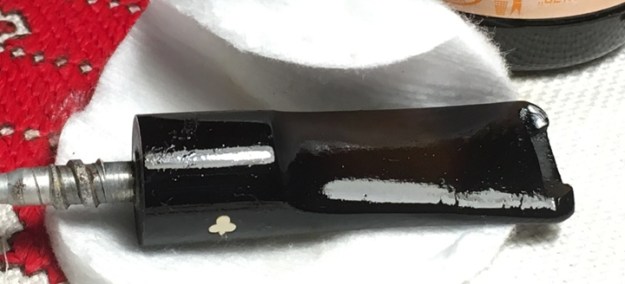
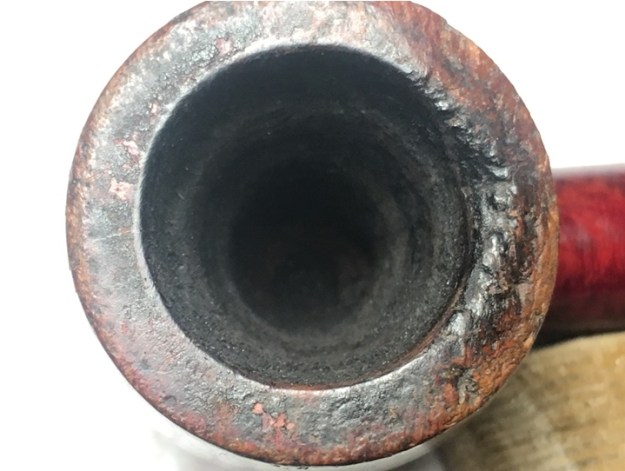
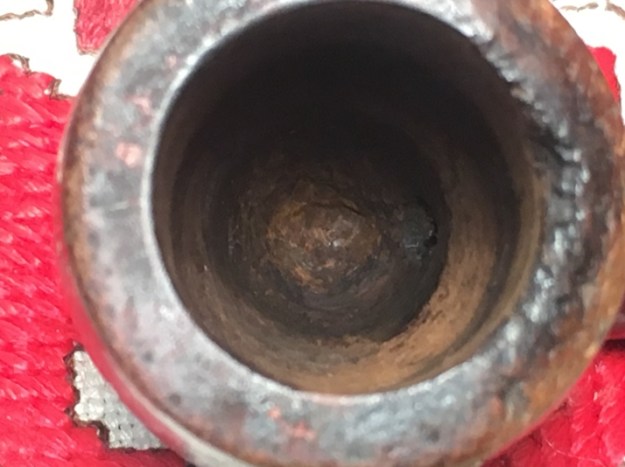
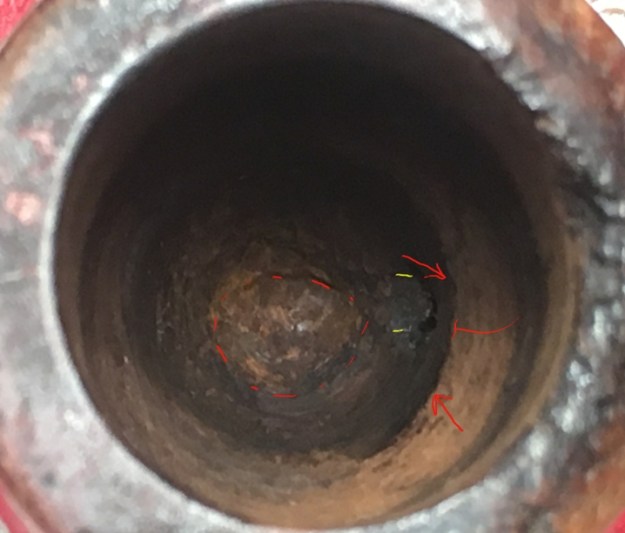
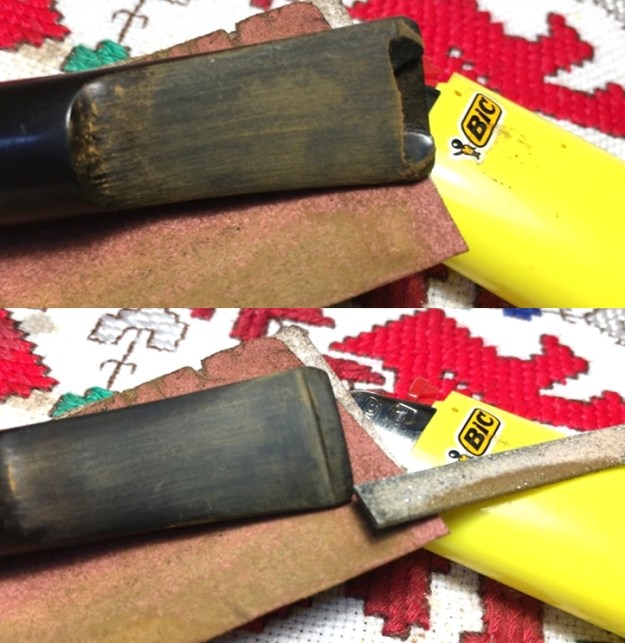
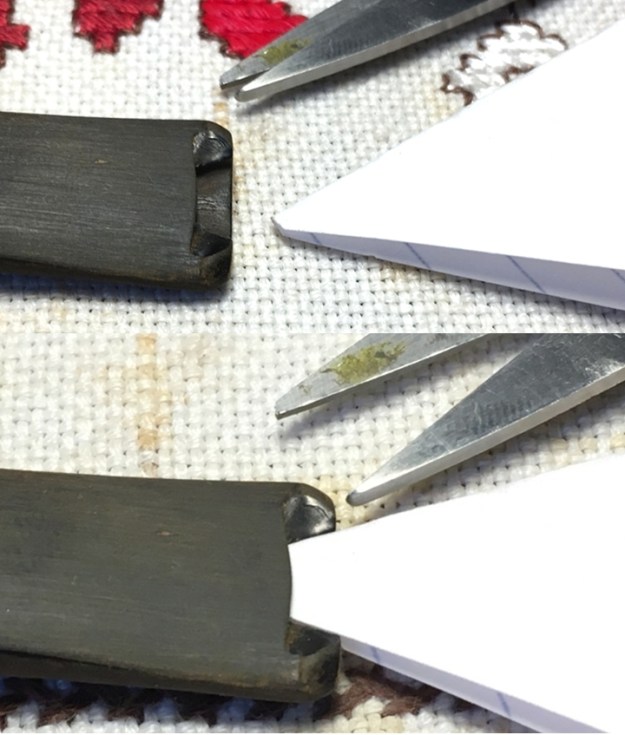
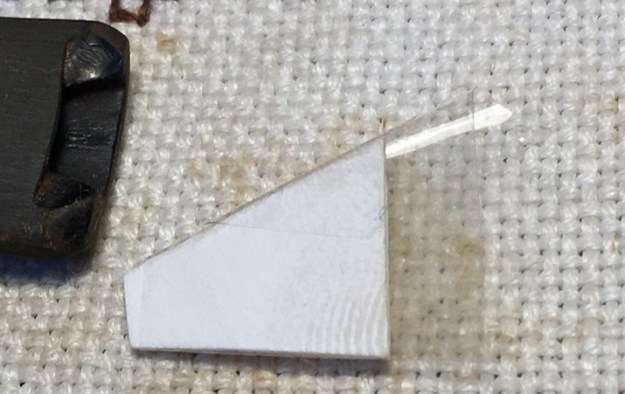
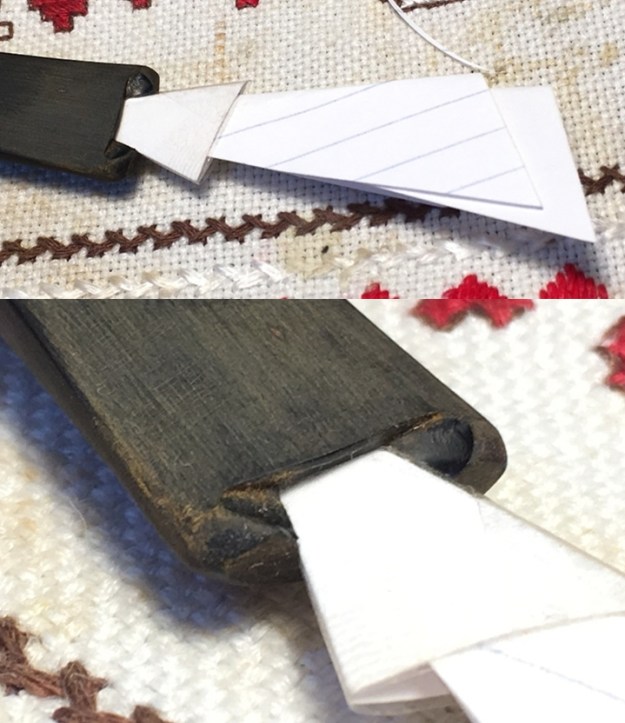
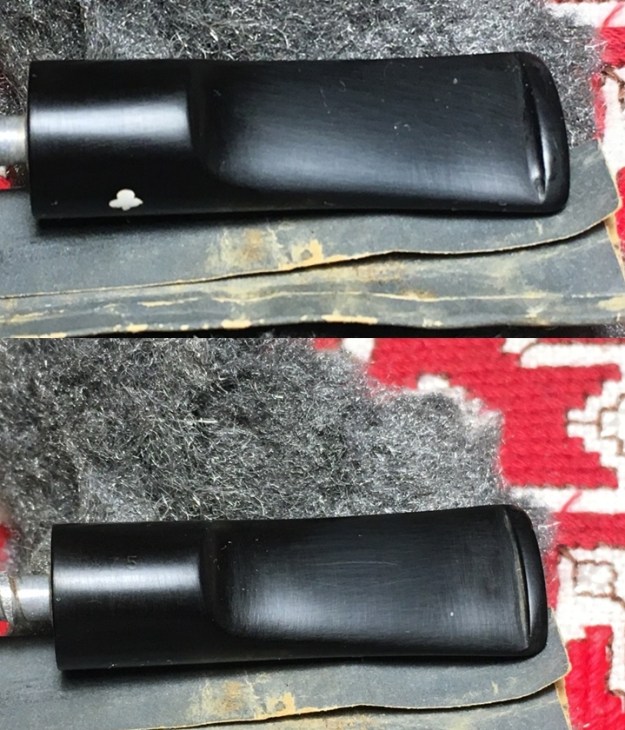
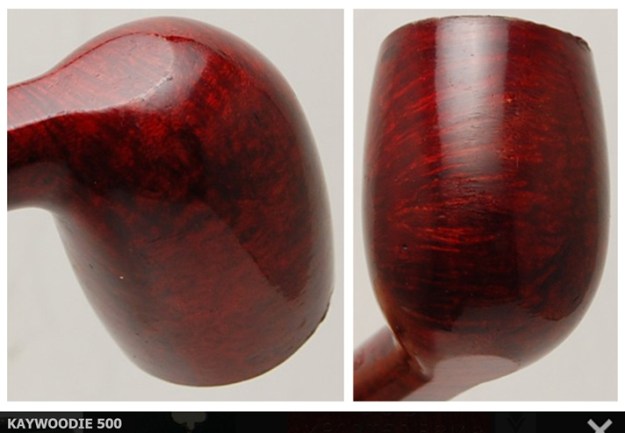
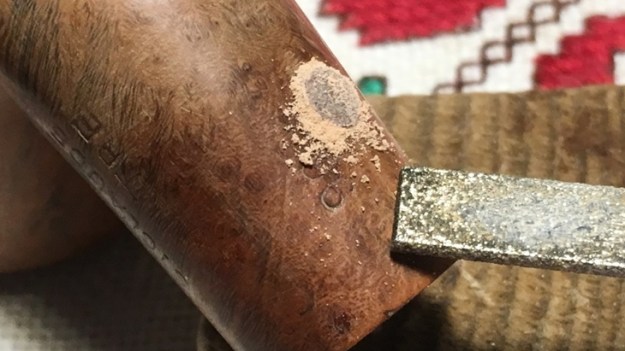
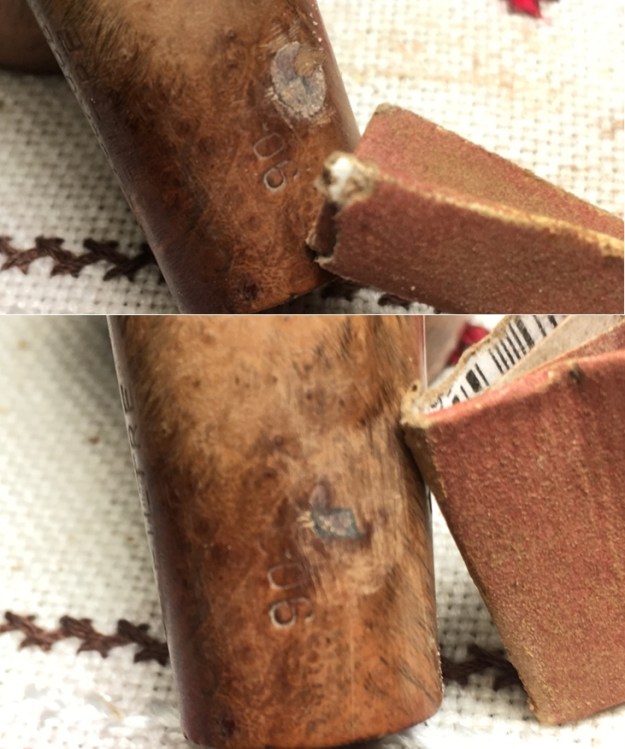
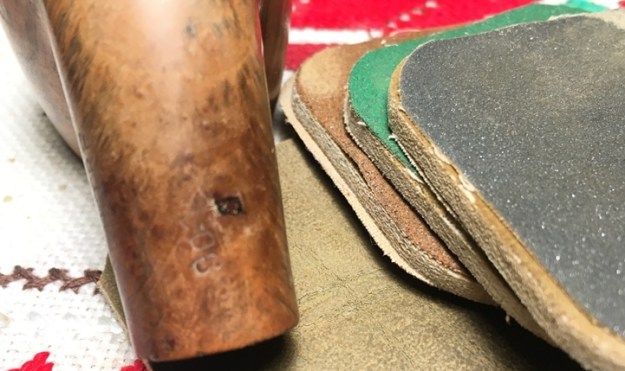
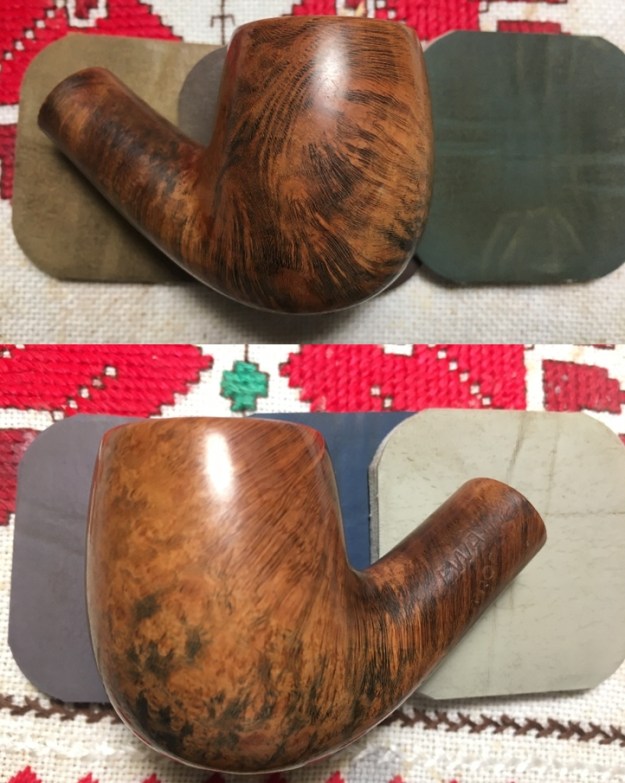
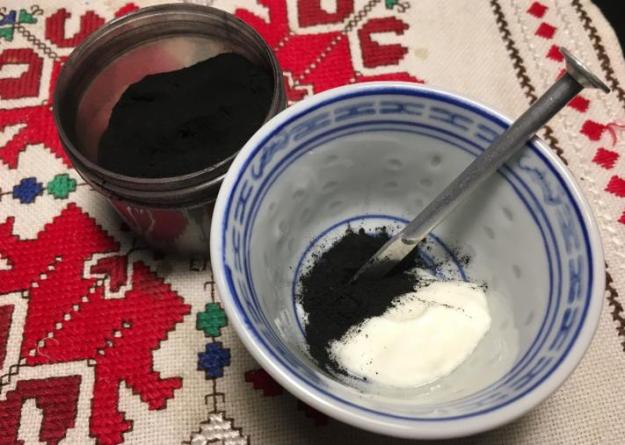
It is obvious from the condition of the Kaywoodie “500” that Paw loved this pipe and this pipe hung in there a long time!  As you would expect, the briar surface has its share of nicks and grime after over half a century of service. The chamber has thick cake that has built up and closes the chamber as you go downward. The rim has seen better days.  What I first thought might be burn damage on the back side of the rim.  I think there’s evidence of that too, as the inner rim lip is burnt and receded, but there’s more.  Because the briar is raw here, it indicates something else about Paw’s habits and rituals of pipe smoking.  It looks as if Paw was a knocker.  With that nice long shank in hand after finishing his bowl, my guess is that he would twist the pipe over and give the bowl a few knocks on whatever hard surface was nearby to loosen and remove the ashes.  The knocker dent is what Joe would like to preserve to some extent as a lasting memory of Paw.  The second picture below is convincing forensically to prove that Paw was a knocker – the angle is perfect! The stem is a mess.  The oxidation is deep.  The tooth chatter and button compressions suggest also that Paw was a chewer!  The upper bit over time took the brunt and over time cracked and the entire top of the button broke off, taking with it some of the flat bit vulcanite real estate.  This area will need rebuilding.The stem shows one more issue that needs addressing: the stem is over-clocked.  It tends to be normal with these pipes as they age, with much wear and use, the metal fittings rubbing, gradually there is a microscopic loss in the metal composition.  The result is more thread room and therefore, when the stem turns to the right and tightens, it’s not in the proper orientation.  This is the case for this Kaywoodie “500” as this picture shows. With an ongoing appreciation for the history of the Kaywoodie name, and of this pipe’s former steward and Joe’s desires to gift the pipe to his father-in-law, Ben, I begin the restoration of Paw’s Kaywoodie “500” with a pipe cleaner dipped in isopropyl 95% and clean the airway of the stem.  I also use a thin shank brush to clean up through the air hole on the metal Kaywoodie tenon.  I then add the stem to a soak of Before & After Deoxidizer to work on the deep oxidation in the vulcanite.  I don’t believe the Deoxidizer will have total success in raising all the oxidation, but this is a good start.  There are other pipes and stems in the commissioning queue that the Kaywoodie joins, all of which have been restored and shipped off to new stewards!After several hours, I fish out the Kaywoodie saddle stem and let it drain.  I then put another pipe cleaner wetted with alcohol through the airway to remove the excess Deoxidizer liquid.Next, wiping the stem surface with cotton pads wetted with alcohol removes much of the raised oxidation.  Much comes off, but the evidence of the residual deep oxidation is easily seen.  I take some close up pictures of the upper and lower bit to show what I’m seeing – I notch down the aperture of the iPhone app I use to allow more light to see the brown/olive green oxidation more clearly. For now, with a cotton pad I apply paraffin oil (a mineral oil) to the stem to begin the process of revitalizing the stem.I now commence the cleaning regimen of the stummel. First, I remove the carbon cake build up by reaming the chamber.  I take a picture of the chamber to mark the start.  I start by using the Pipnet Reaming Kit. After putting paper towel down to minimize cleanup, I start with the smallest blade head and go to work. It takes some time for the blade to break through to the floor of the chamber – the cake is hard and stubborn.  In addition, I use the next 2 larger blade heads of the 4 blades available in the kit.  I then scrape the walls more using the Savinelli Fitsall tool and finish by sanding the chamber with 240 grade sanding paper wrapped around a Sharpie Pen to give me reach and leverage.  After wetting a cotton pad with alcohol, I clean the chamber of the carbon dust residue left over.  The pictures show the progress. When I inspect the chamber, the walls look good. There are heating veins in the wood, but no cracks or fissures from heating damage.  I do note two things that give me some concern.In the picture below I mark off the draft hole with 2 yellow marks.  The first issue I see is marked by the arrows. Through decades of reaming and scraping, which I just added to, a curved ridge has formed – you can see the edge of the ridge marked by the arrows.  The briar curves outwardly to the ridge which I show with the curved red line.  The ridge is only on the back side of the chamber, over the draft hole.  I may need to sand this ridge down so that the chamber doesn’t have an abrupt bump to hinder future reaming and cleaning.  The second issue is caused by overzealous reaming.  The floor of the chamber drops underneath the proper amount of space below the draft hole.  A floor cavity has been created by the chamber floor wearing down over time.  The ridge of this floor cavity is marked with the red dashes. Not only does this create a burning dynamic that will always leave excess tobacco beneath the draft hole, but also the danger of a burn through is a concern with the thinning of the floor.  I will continue to think about these new issues as I continue the cleaning process.Next, I work on cleaning the external briar surface by using undiluted Murphy’s Oil Soap on a cotton pad and I scrub.  I also use a brass wire brush to clean the thick lava flow over the rim.  I use cool tap water to rinse off the soap.  The Murphy’s Soap does a good job cleaning, but the cleaning reveals the rough shape of the stummel. The finish is very thin with shiny finish patches here and there.  There are also many scratches and pits – too many to count.  I take pictures for an inventory. I need to remove the old finish so that there aren’t the shiny patches and unevenness.  I first try wiping the stummel surface with cotton pads wetted with isopropyl 95%.  The pads take a good deal off as evidenced in the coloration of the cotton pads, but there are still patches with the old finish hanging on.Next, I wet a cotton pad with acetone and again I scrub the surface.  This does the trick.  I move on.I turn now to the stummel internal cleaning.  The effort is made difficult by the Kaywoodie metal shank facing which only provides a very small access point to the mortise through the thread air hole.   I use cotton buds and pipe cleaners wetted with isopropyl 95% to clean the tars and oil accumulation out of the mortise and airway.  I also reach through the metal hole with a smaller dental spatula to scrape the mortise wall as far as the tool will reach.  But it doesn’t reach far.  To save on my limited supply of pipe cleaners, I utilize shank brushes also wetted with isopropyl 95%.  After some time, I decide to call a halt to this frontal assault which reminds me of the carnage of WWI – carnage but little advance as the lines were kept in check.  The hour is late, and I change gears.I utilize the more passive approach of allowing the stummel to soak through the night with a kosher salt and alcohol soak. First, I stretch and twist a cotton ball to create the ‘wick’ which I stuff down through the mortise into the long shank airway.  The wick will help draw out the tars and oils from the internal briar.  I then set the stummel in an egg crate to stabilize it and fill the bowl with kosher salt which does not leave an aftertaste.  I then fill the bowl until with isopropyl 95%, the purest alcohol I can purchase in Bulgaria, until it surfaces over the salt.  In a few minutes I top off the alcohol after it has absorbed into the internals.  I then turn the lights off and another day ends. The next morning, I’m hoping that the fact that the cotton wick and salt are strongly soiled is indication that the cleaning of the internals has advanced significantly with the kosher salt and isopropyl 95% soak through the night.  I toss the expended salt in the waste and clean the leftover salt from the chamber with a paper towel, also blowing through the mortise to remove crystals.  I follow this with a renewed regimen of pipe cleaners, cotton buds, shank brushes, and scraping with a dental spatula.  Eventually, as I hear the hallelujah course in the recesses of my mind, the cotton buds begin to lighten and finally I declare that the job completed!  The new steward will do well to clean the internals on a regular basis to avoid this in the future! For a change of scenery and to start on the stem repairs, I take a close look at the stem upper and lower.  There remains deep oxidation of the vulcanite stem requiring sanding to bring it out.  It is mainly in the flat part of the saddle stem.  The tooth chatter and button compressions are significant and of course the upper button must be rebuilt using a mixture of CA glue and activated charcoal.  Before working on this, I decide to use the heating method to bring out and minimize the tooth chatter by painting the areas with a Bic lighter.  I do this before rebuilding the button because of the differences in the materials.  Vulcanite will expand with heat – the CA glue/charcoal will not – at least not in the same way.  So, to be on the safe side, I will work on raising and minimizing the tooth chatter and lower button compressions first, before working on the rebuild.  Sanding will be necessary after both.I paint both upper and lower bit with a Bic and sand with 240 grade paper.  The heating did raise the chatter nicely and the sanding erased it.  I also work on the lower button with a flat needle file to refresh the lip and to work on a small compression.  I’m pleased with this first phase of the stem repair.Next, the button repair. The first thing I do is create a wedge that fits in the slot. I use stiffer index card material to do it.  I fold the card stock to form it into a triangle so that it wedges up the slot into the airway.  I trim it a bit with scissors to make a good fit.  I then cover the fashioned wedge with smooth scotch tape to help it not to stick to the patch material. I leave the end of the wedge open – not covered by the tape in order to leave a ‘sleeve’ opening to tighten the fit. I fit the wedge into the slot then slide other folded pieces of the index card through the end of the wedge which expands the wedge to hold it firm but also to form a mold for the formation of the slot. I also put a very thin coating of petroleum jelly on the wedge to help with the non-sticking.With the wedge firmly in place, I open a capsule of activated charcoal on an index card.  I then place a puddle of thick CA glue next to the charcoal and then draw charcoal into the CA glue gradually until the mixture thickens to the consistency of molasses.  I then apply the mixture to the button and build a mound over the cavity. The first application hardens on the index card before I had dolloped enough to area.  I wait a few minutes and mix another batch and finish building the mound over the button rebuild area.  With this completed, I set the stem aside for several hours for the CA glue and activated charcoal rebuild fully to cure.I look again to the stummel and decide that I will continue in the mixing and patching mode.  I mix a small amount of J-B Weld Kwik to rebuild and reinforce the chamber floor.  It will not take much J-B Weld to do this.  I put a pipe cleaner in through the airway to better show the landscape.Again, on an index card, I mix a small amount of the two components of the Weld, the ‘Steel’ and the ‘Hardener’.  The Weld does not set up immediately which is good.  It takes about 4 minutes before it begins to set.  As it’s setting, I will form a rounded chamber floor so that it’s not flat.  I begin by wiping the chamber floor with a cotton pad wetted with alcohol to clean it.  I mix small equal amounts of the J-B Weld and then spoon up a portion of the Weld on the end of a dental spatula and carefully carry it to the floor of the chamber. I hold the dental spatula there allowing the Weld to slide off the spatula to fill the cavity. I then carefully remove the spatula to avoid getting the Weld on the chamber wall.  I repeat this again by bringing a spoon of Weld and allowing it to fill the cavity as it runs off the spatula. I take a picture of the Weld filling the cavity in the chamber floor and decide that I would let it set as it is which will result in a flat floor.  I will use a grinding ball on the Dremel later to round it out for a more natural bowl.  I set the stummel aside allowing the J-B Weld to cure fully.The stem button rebuild has set up and cured.  As hoped, the wedge easily is removed revealing the rough form of a slot to be shaped.Using a flat needle file, I file and shape by bringing the build overhang of the wedge flush with the button face.After filing so that the button face is flush, I’m able to see the basic form of the slot.  The left side of the slot is closed more than the right side as you can see in the picture above.  I use a rounded sharp needle file to file the tighter end.  I’m patient.  I file gently and methodically.I come to a place where the button slot looks balanced.  I can fine tune it later.Next, again using the flat needle file, I file the top of the button down to form the upper contours.  I have the advantage of having the original ends of the button on both sides that were not broken off.  These provide me with the angles of trajectory the upper button lip took.  I try to file down to be consistent with this to form the button.The button is looking good, but I’m concerned that I did not put enough CA glue/charcoal mixture at the side.  In the picture below you can see the unfiled repair material jutting on the right side.  I’m concerned that this may leave a gap when I start filing the inner edge of the button.  To be on the safe side, I apply a drop of Black CA glue on this gap to make sure that I have a uniform platform to file out and shape the button.  I put the stem aside to allow the patch to cure.When CA patch cures, I quickly file off the excess patch material and continue with the lateral filing to form the internal button edge.After completing the filing, I switch to sanding the newly formed button with 240 grade paper and continue to smooth.  I also sand the upper and lower bit to remove residual oxidation.While sanding the new button, an air pocket is uncovered which is visible on the lower side of the button.To fill this very small air pocket, I paint the button with regular CA glue.  I apply a small drop on a toothpick and spot drop it and this spread the CA over the area.I spray the CA glue patch with an accelerator which quickly cures the glue.  I then sand it with 240 grade paper.The stem is still rough from the 240 sanding and filing.  I switch to 600 grade paper and wet sand the entire stem and follow this with applying 000 grade steel wool.  Wow!  I am pleased with the button rebuild.  It looks great and blends well.   I put the stem aside for now.Again, focusing attention on the stummel and the chamber repair.  The J-B Weld is fully cured filling the cavity at the chamber floor. With gravity forming the orientation of the Weld, the floor is now flat.  For a more natural bowl curvature, I initially use a round grinding ball mounted on the Dremel.  Using the round ball, I grind out the flat surface of the J-B Weld.  As I rotate the ball moving it in circles, I check often with my thumb to measure the progress.When the floor feels good, I mount a small sanding drum on the Dremel and reach in to the lower chamber above the new floor where I had earlier detected a distinct ridge from overzealous reaming.  I use the sanding drum to smooth these out.  I do the same as with the grinding ball, I sand and then feel with my thumb.  Progress is made.After the sanding drum, I switch to sanding with 240 grade paper wrapped around a Sharpie Pen to help me reach and give me leverage.  I further smooth the lower chamber.  A ridge is still detected, but it is much less distinct.  I like the progress and the entire chamber looks and feels much better. The new floor is now at a more appropriate orientation to the draft hole that is seen in the picture below.With the internal chamber repair complete, I turn to the external surface.  The first thing I look at is the rim repair.  Joe wants the pipe in a pristine condition as much as possible.  Yet, he asked to preserve in some degree the rim knocking damage at the back of the rim as an ongoing remembrance of Paw. With this motif in view, the restored rim will provide a strong contrast of new and old, but not forgetting what the ‘old’ represents.  To begin the rim preservation and restoration, I take the chopping board and place 240 grade paper on it.  Keeping the forward rim surface in contact with the board, I top the forward part of the inverted bowl.The picture below first shows the beginning progression and then after further rotations, the second picture shows the full extent of topping with 240 grade paper.  I leave the area on the back side of the rim and it looks good.I then switch the paper on the board to 600 grade paper and turn the inverted stummel several more rotations to smooth out the 240 scratches.After the topping, I examine the rim edges.  The external rim edge still shows many cuts and nicks.  The internal edge is darkened. To freshen the rim edges and to address the residual blemishes I lightly run a rolled piece of 240 grade paper around the external and internal circumferences (minus Paw’s patch).  I follow the 240 grade with 600 grade.  This doesn’t introduce a bevel as much as clean the edges and soften the flat rim presentation.  I think it looks good.Next, I take another inventory of the stummel’s briar surface.  It has many nicks, scratches and some bruising on all sides of the stummel. I decide to clean the surface by utilizing sanding sponges.  Sanding sponges do a great job addressing the minor issues of normal wear and tear that accumulates on the briar surface.  The soft sponge texture also helps clean and freshen the nooks and corners.  To protect the already thin Kaywoodie “500” nomenclature and shape number, I cover them with masking tape to protect their integrity during the sanding phase.I first use a coarse sanding sponge followed by medium and light grade sponges.  The results are good, but I decided that whatever remains on the surface that is not removed through the sanding belong to Paw 😊.Next, I take the Kaywoodie to the sink to wet sand with micromesh pads 1500 to 2400 grade pads.  I follow wet sanding by dry sanding with pads 3200 to 4000 and 6000 to 12000. I take a different angle picture with each set of 3 pads. For the last 6 pads I remove the protective masking tape which reveals the contrast of the finish as it was and as it is now. I will add a stain to the stummel which will mask the difference between the dark nomenclature residue of the former hue and the rest of the stummel.  To reduce this contrast, I try rubbing the darkened areas with a cotton pad wetted with acetone.  This works somewhat, but there’s still a contrast, but toned down some.The cotton pad in the picture above gives a good indication of the reddish hue of the original stain which is consistent with other examples that I’ve found on line of the “500” series.  Pipephil’s information on the Kaywoodie “500” provides a few pictured examples.  Here is one that shows the color used for this line of Kaywoodie pipes.  I’ll aim to match it.  My approach will be to first stain the stummel using a dark brown stain.  I’ll then apply an overcoat of Fiebing’s Oxblood over this.  I start with the dark brown first to darken the grain which is evident in the pictures below.I assemble my desktop staining station and fit the stummel with bent pipe cleaners through the mortise to serve as a handle.  I have Fiebing’s Dark Brown Leather Dye in a shot glass with another bent over pipe cleaner ready to serve as an applicator.  I wipe the stummel with a cotton cloth wetted with isopropyl 95% to clean it. I then warm the stummel with a hot air gun to heat the briar to expand the grain making it more receptive to the dye.  I then use the pipe cleaner to apply the Dark Brown dye to the stummel and as I paint different sections of the stummel, I flame the dye by igniting it with a lit candle.  As an aniline dye, the alcohol combusts, and it flames out leaving the dye pigment set in the grain.  After I apply the dye thoroughly, I set it aside for a few hours to rest before the next step of the process. After a few hours, I mount the Dremel with a felt cloth buffing wheel, speed set at the lowest possible to avoid too much heat.  I then apply Tripoli compound to the stummel to remove the fired shell on the stummel.  It takes some time to methodically move through the process of ‘plowing’ the crust then following with Tripoli. With my wife’s assistance, a picture of this is shown. When completed, I change the felt buffing wheel to a cotton cloth buffing wheel and again apply Tripoli compound to the entire stummel.  This time it is much faster and the felt wheel allows me to reach into the elbow of the shank and bowl which was not possible with the harder felt wheel.  After I complete the cotton cloth wheel cycle of Tripoli, I then buff the stummel with a felt cloth to remove the compound dust.The first phase results in the darkened grains.  The grain is beautiful – the next pictures show the side of the bowl with beautifully swirled bird’s eye.The first phase results in the darkened grains.  The grain is beautiful – the next pictures show the side of the bowl with beautifully swirled bird’s eye.I repeat the same process for the next phase of applying Fiebing’s Oxblood Leather Dye over the dark brown stained stummel – warming the stummel, applying and flaming the aniline Oxblood dye. I put the newly stained stummel aside to rest overnight.Before I rest, I turn again to the Kaywoodie saddle stem waiting in the wings.  I apply the entire regimen of 9 micromesh pads beginning with wet sanding using pads 1500 to 2400 followed by dry sanding with pads 3200 to 4000 and 6000 to 12000.  Between each set of three pads I apply a coat of Obsidian Oil to enrich the vulcanite.  This stem has come a long way and is looking great. Next, after a few days of a business-related trip, I return to Sofia and to the stummel that had been dyed first with a dark brown undercoat then with an Oxblood overcoat.  I remove the Fiebing’s Oxblood Leather Dye fire crusted shell using a cotton cloth buffing wheel on the Dremel applying Tripoli compound.  When completed, I use a cotton pad wetted with alcohol to lightly wipe the stummel to blend the dyed surface.  I then change to another cotton cloth buffing wheel on the Dremel, remaining at 40% of full power and apply Blue Diamond to both stummel and stem.  Following this, I wipe the surface of the stummel and stem with a felt rag to remove the compound dust.Before moving to applying carnauba wax, I reunite the stem and stummel and address a few smaller projects.  First, I noted before that the stem was overclocked by a few degrees.  This happens through time.  To realign the stem to the correct orientation, I heat the metal stinger until the heat loosens the grip of the metal stinger and while it is hot, I rejoin the stem and turn it clockwise.  When it tightens it puts the necessary torque on the heated stinger which loosens it and allows me to continue the clockwise turn.  I turn it a full 360 degrees bringing it back around into proper orientation. This works well.  I move on.Next, I do a quick job of polishing the metal shank facing using a piece of 000 steel wool.  It did a great job.On last project before applying the wax.  I rebuilt the chamber floor using J-B Weld. Now I apply a mixture of natural yogurt and activated charcoal to form a thickened mixture to apply to the chamber floor and wall to create a cake starter.  After inserting a pipe cleaner in the airway to block the mixture, I then put a small about of Bulgarian natural yogurt in a dish and add activated charcoal and mix it.  I continue to add charcoal and mix until it thickens and will not run. I then apply it to the chamber floor and wall using a dental spatula to apply and spread.  It works well and I put the stummel aside for a time for the coating to cure. In the home stretch, I mount another cotton cloth buffing wheel to the Dremel, maintaining the same speed, and apply carnauba wax to the stem and stummel.  After applying a few coats, I then give the pipe a rigorous hand buffing using a microfiber cloth.  This raises the shine even more.

It was a privilege to restore Paw’s old Kaywoodie “500” Long Stem Billiard.  I’m pleased with the stem button rebuild and catching the thinning chamber floor.  I think the final stained hue captures well the historic Kaywoodie “500” theme that ranges from 1957 to 1967 – truly a vintage pipe.  Best of all are the remnants of Paw’s stewardship of the Kaywoodie.  Leaving the rim with latent evidences of Paw’s thumping and lighting, as he went through his own unique ritual with his Kaywoodie in hand, reflecting on life and family with his favorite blend stoked and ready to go.  Joe’s desire to safeguard this heritage and restore this pipe for his father-in-law, benefits the Daughters of Bulgaria – women and girls who have been trafficked and sexually exploited.  Thanks, Joe!  And thanks for joining me (ThePipeSteward)!


Rejuvenating the Amazing Grain of an EWA Trophee of St. Claude, France 909


Blog by Dal Stanton

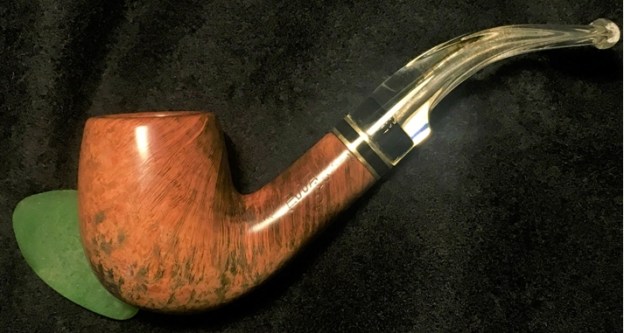
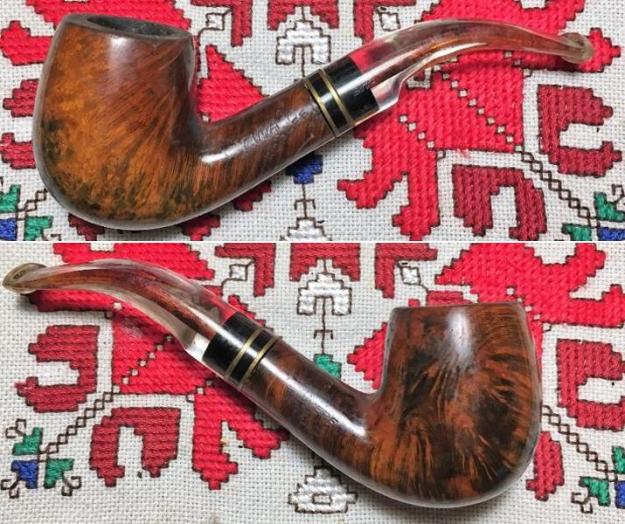
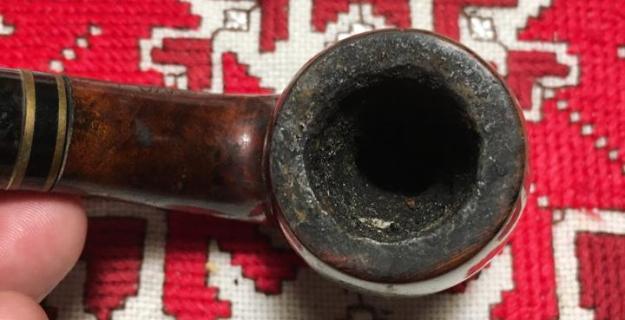
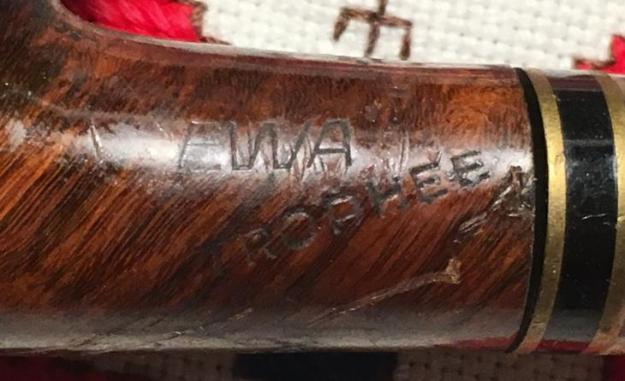
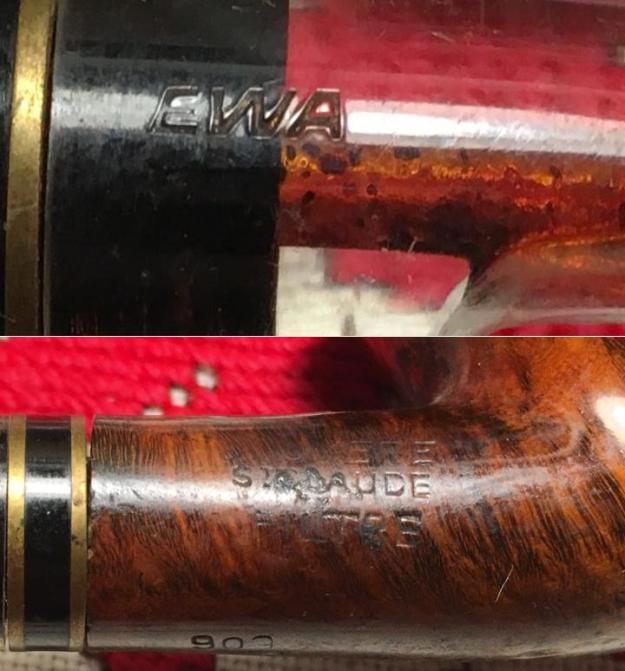
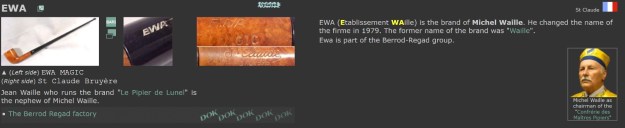
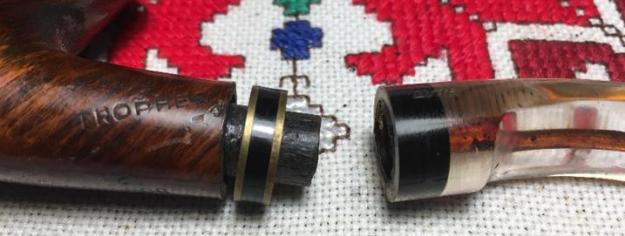
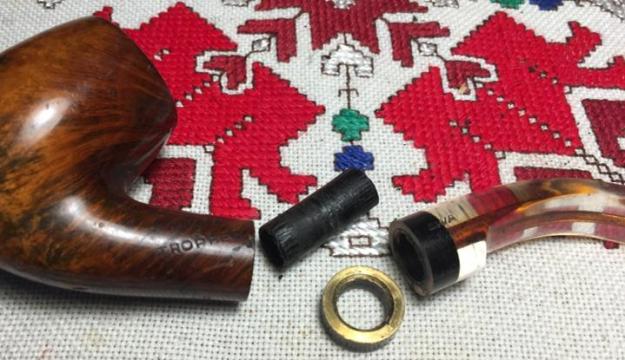
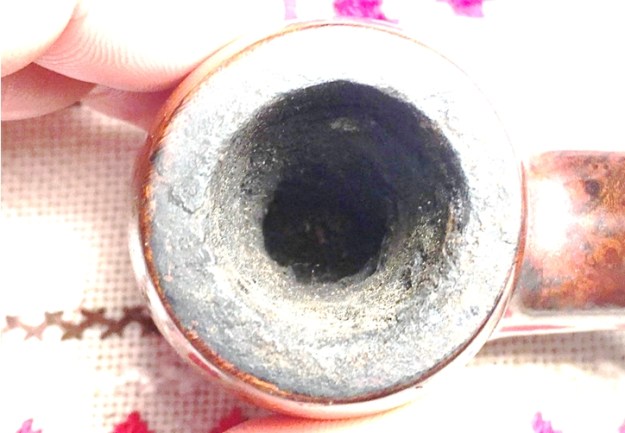
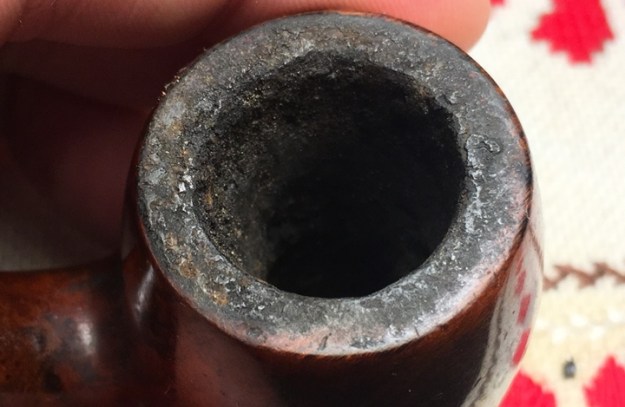
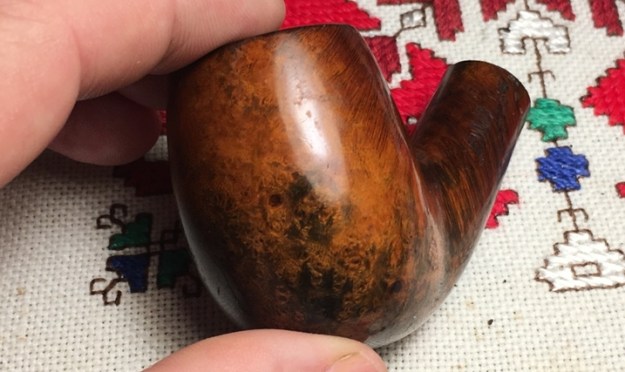
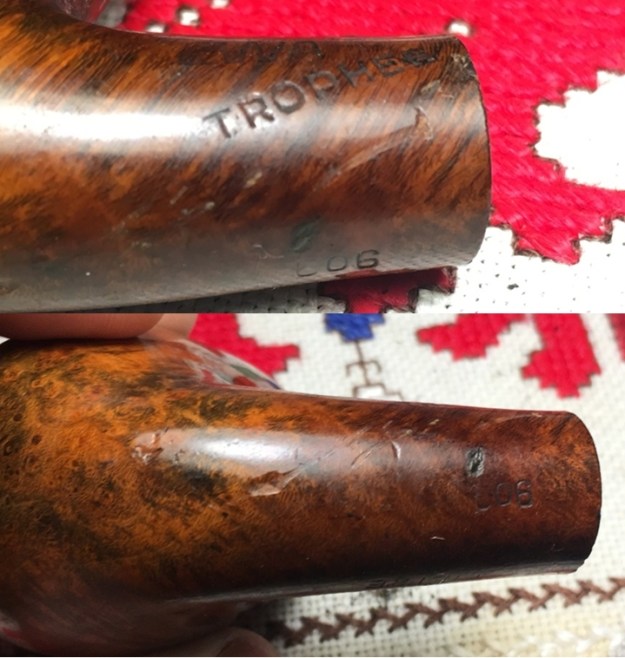
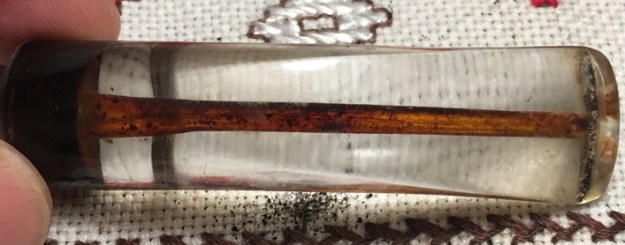
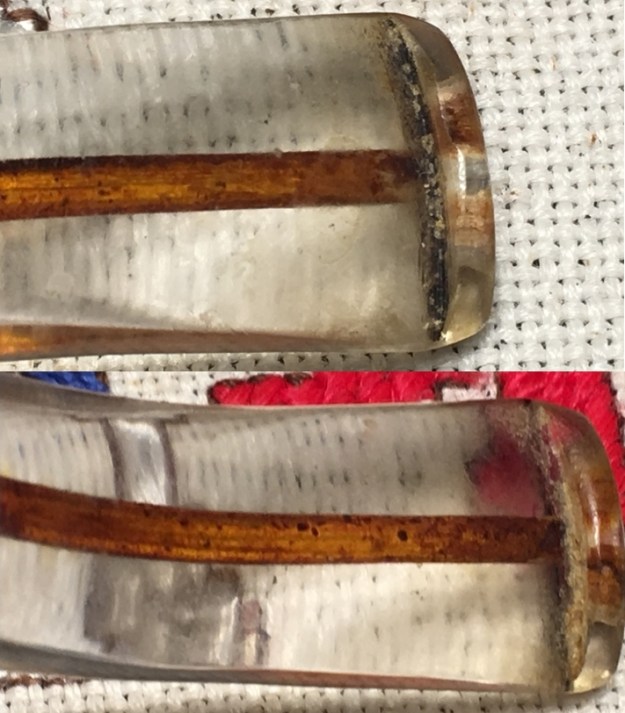
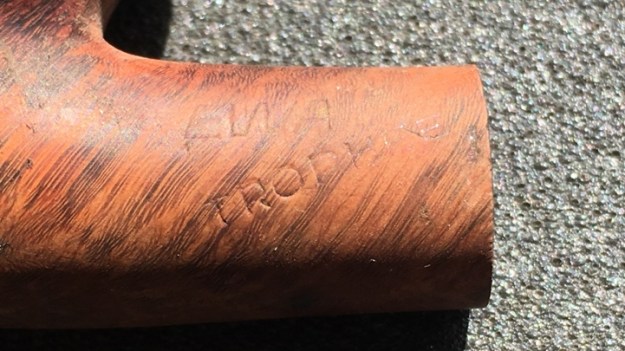
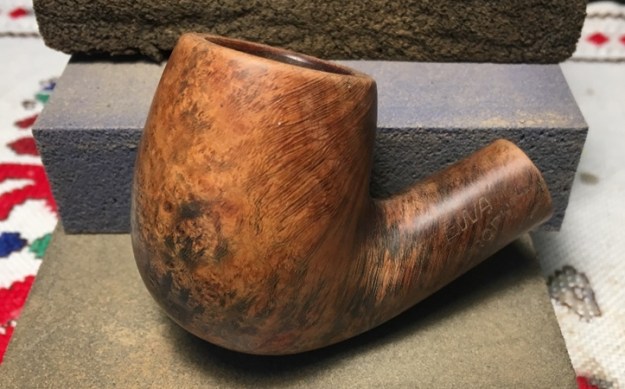
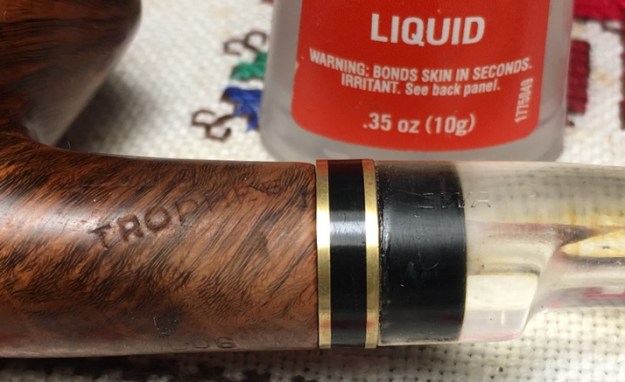
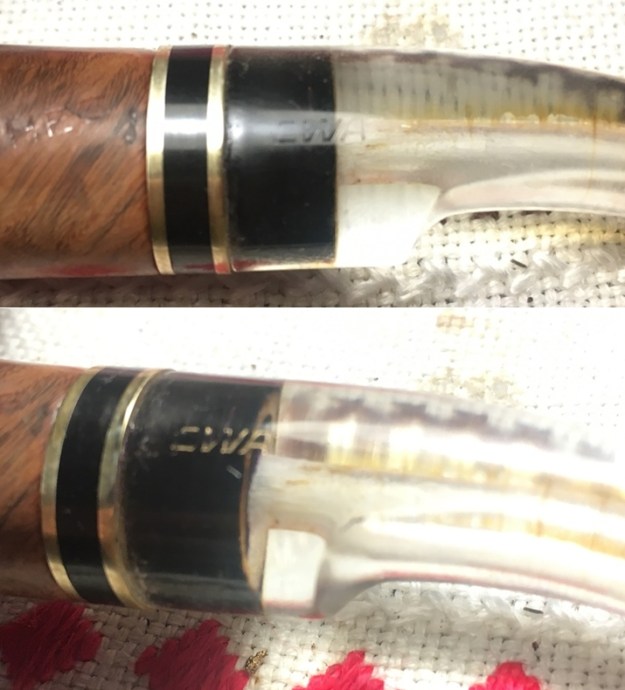
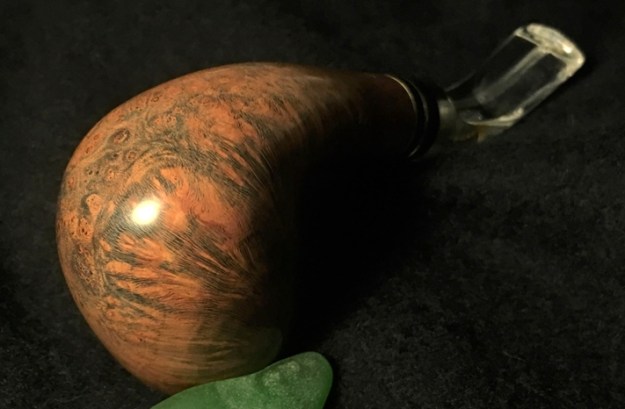
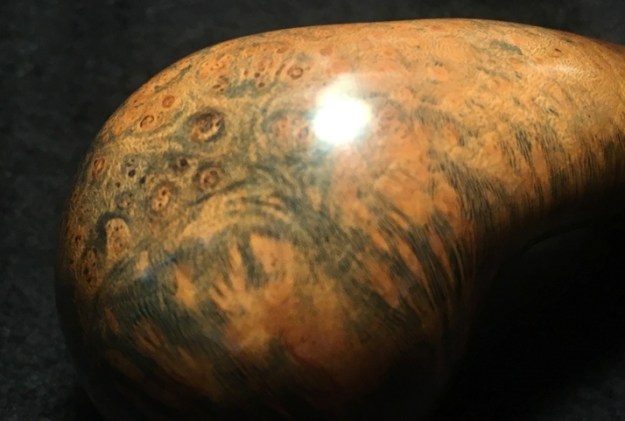
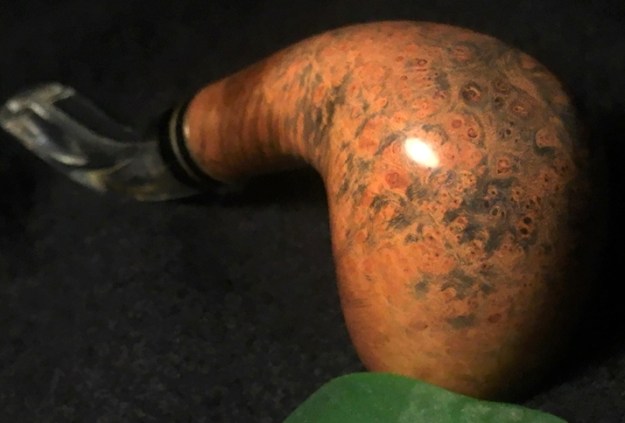
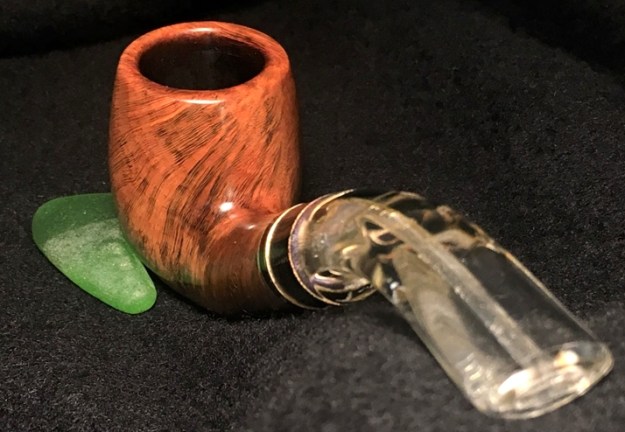
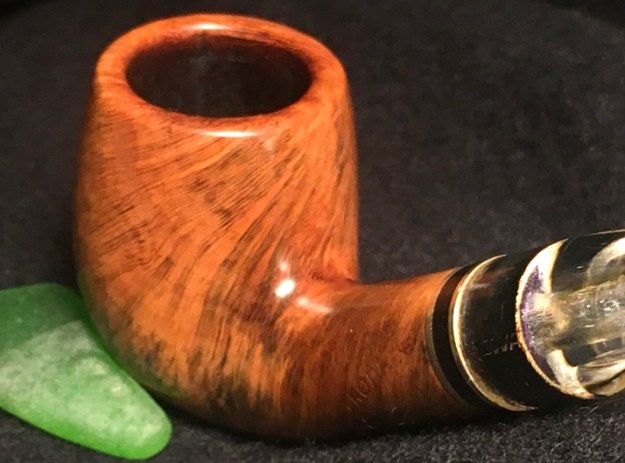
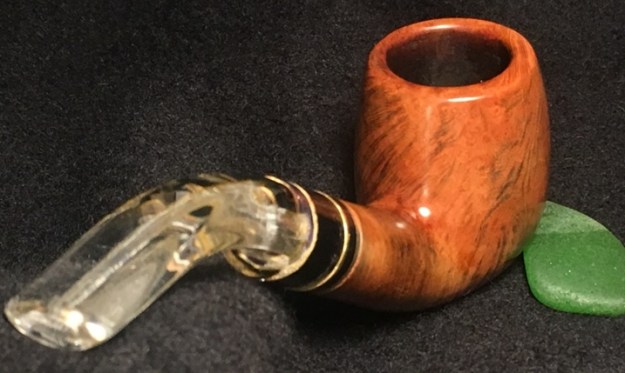
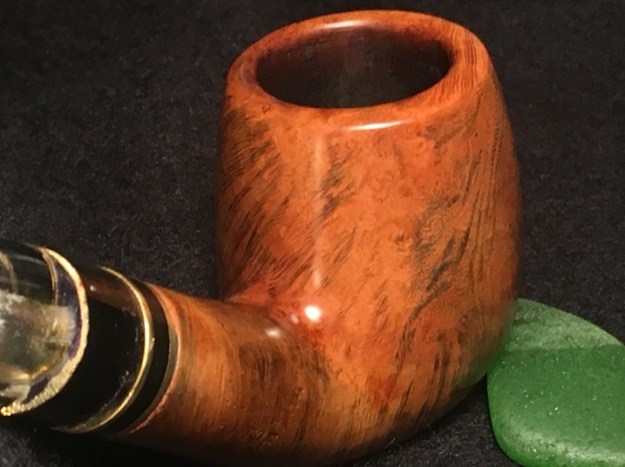
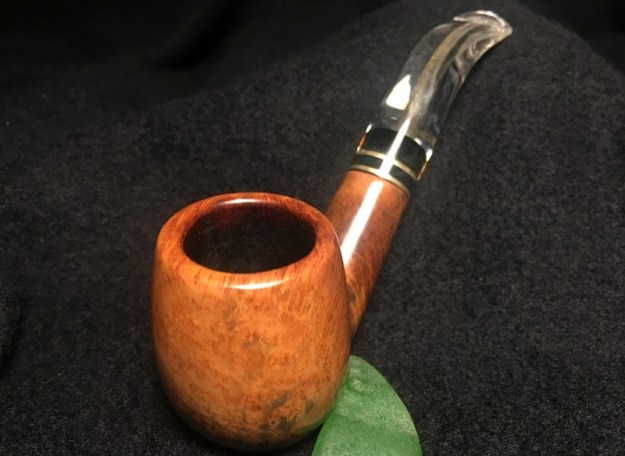
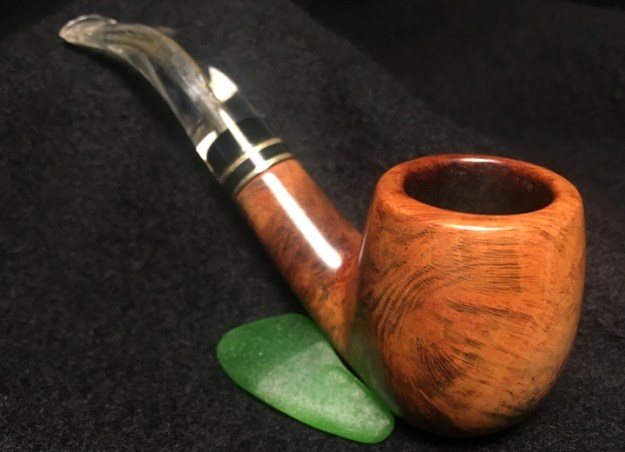
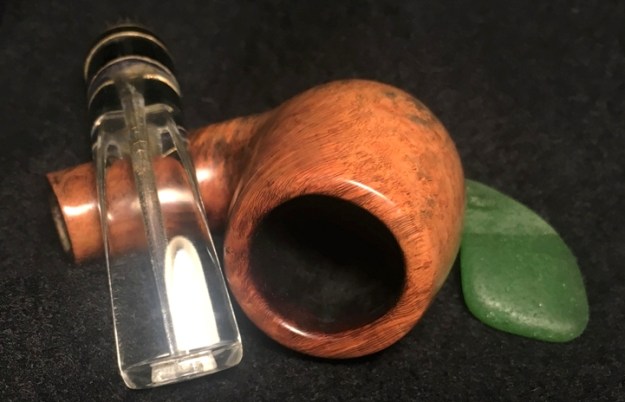
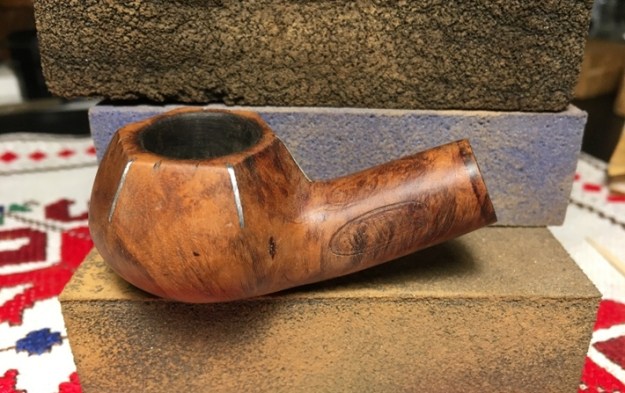
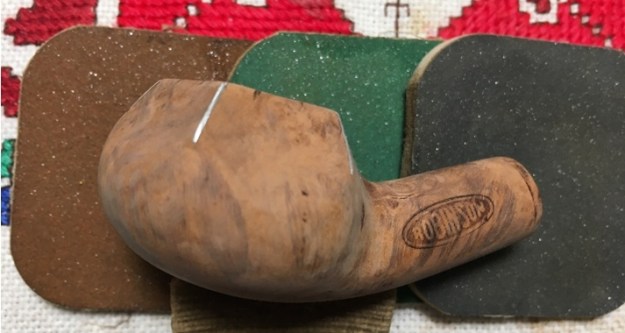
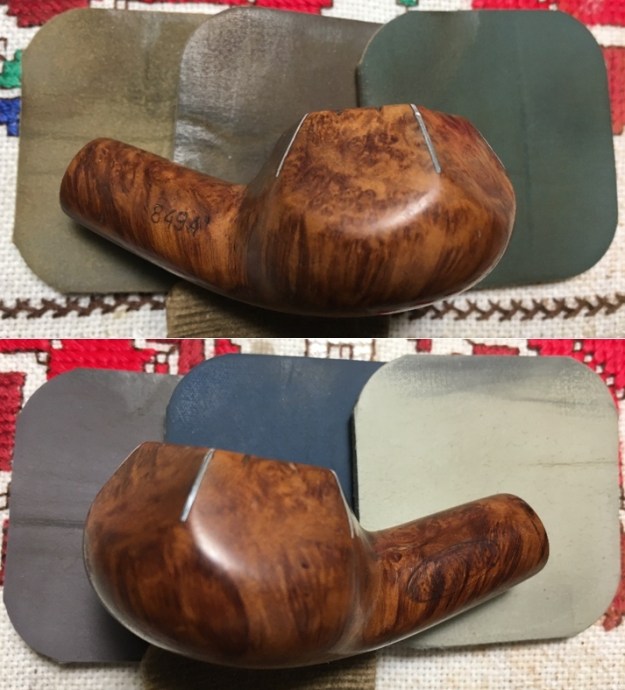
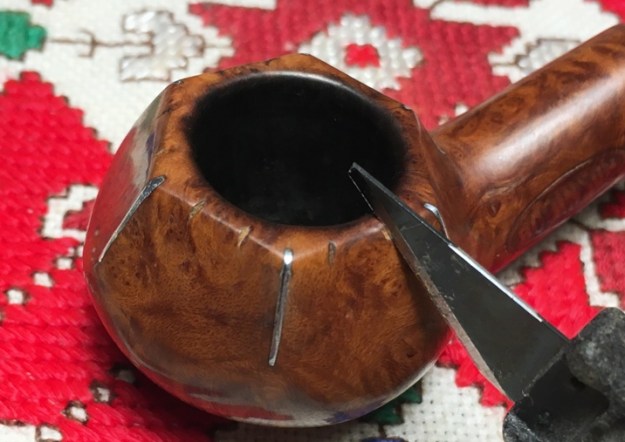
Next on my worktable is another pipe I acquired from a ‘Lot of Treasures’ I found on French eBay.  This French Lot of 50 has rendered some real keepers with historic interest and collectability.  The EWA Trophee I’m now looking at is a classic Bent Billiard with a flare – the acrylic stem, banding and picturesque briar holds out great potential, but it come with some challenges as well.  Pipe man, Scott, commissioned the EWA – a friend on FB and regular contributor on different Face Book Groups, and a former US Navy man who I appreciate very much.  Scott reached out to me on FB Messenger and had been looking at the pipes available for commission in my For “Pipe Dreamers” Only! collection and there were 5 pipes he was dreaming about that he had seen, but settled on one, the EWA Trophee.  I appreciate Scott’s patience in the speed of my pipe restoration production line!  His patience is now paying off, and his commission benefits the Daughters of Bulgaria – our work here in Bulgaria helping women and girls who have been trafficked and sexually exploited.  Here are the pictures that drew Scott’s attention. I can see why this pipe got Scott’s attention.  I have worked on several French named pipes, and this was the first with ‘EWA’ stamped on the left shank flank.  Underneath and at an angle is stamped ‘TROPHEE’.  The acrylic stem also is stamped with a distinct EWA.  The right side of the shank is stamped ‘BRUYERE’ [over] ‘ST. CLAUDE’ [over] ‘FILTRE’.  Tucked on the lower side of the shank is stamped the shape number, ‘909’.  Information about this nomenclature was readily available in the Pipedia article on EWA pipes and with this being my first look at the EWA name of St. Claude, I include more of this article.

From Pipes, Artisans and Trademarks, by José Manuel Lopes

EWA is a French brand of Pipe EWA-Ets. Waille SARL. Launched in the 1970s by Michel Waille, the brand began in the Waille factory founded in 1860 by Horace Waille., and has been passed down from generation to generation ever since. He was succeeded by his son, René (1902-1932), his grandson Adré — who obtained the rank of ‘CAP de Pipier’ in 1926 and was in the company from 1920 to 1974 — and his great grandson, Michel Waille.

Michel, ‘Meilleur Ourrier de France’ but retired today, is currently President of the Pipe Club de Saint-Claude. He joined his father in 1968 and was at the head of the firm until 2002, when the brand was sold, first to Mr. Gigandet, and later to Denis Blanc, of Ad Hoc Pipe. [link is dead]

The company specialises in the production of horn, acrylic and cumberland stems, and today is the only maker in Saint-Claude producing horn and Lucite stems. It also makes the Terminus system pipes, employs half a dozen people and export 25% of its production. From site Ad Hoc Pipe [link is dead]

Horace Waille, the great-grandfather was a pioneer in the history of Pipe story of Saint Claude and created in 1860 a pipe workshop.  Rene Waille, his son, has continued the activity from 1902 to 1932 and was specialized in the initial shaping.

Andre Waille, son of Rene, obtained a “CAP de pipier” (Pipe maker degree) in 1926 and has pursued the activity of the familial company from 1932 to 1974. He is the only pipe maker, who obtained a Pipe maker degree. In 1968 Michel, son of Rene, actual Manager of EWA pipe joint the familial company and transform in 1974 the company in SARL PIPE EWA.

The information I gain from Pipedia that is useful – the Waille name is long-standing in France’s pipe center of Saint Claude.  I’m especially interested in the information that the company has historically specialized in the production and use of horn, acrylic and Cumberland stems which is relevant for the pipe on the worktable.  Pipephil.eu was my next stop and information there clarified the age of this EWA Trophee and the meaning of EWA.  The name was changed in 1979 from simply Waille to EWA from “Etablissement WAille” (English: Establishment).  So, the acrylic stemmed Billiard on my table dates at the earliest starting at 1979 with the genesis of the EWA stamp.With a better appreciation of the heritage and age of this EWA Trophee of St. Claude, I look more closely at the pipe itself.  The grain and classy acrylic stem and banding/shank ring shows promise, but there are also some issues and challenges in bringing this pipe back to a more presentable state.  I take several more pictures to catalogue the issues I see.  The fittings of the pipe have come apart.  As I disengage the stem and stummel, the 8mm filter sleeve is unattached to the stem and needs to be reattached.  The shank ring is also loose. The pipe has been heavily smoked and loved and the cake in the chamber is substantial.  By lightening the picture, you can see how the cake expands as it descends into the chamber.  There is no way to assess the health of the chamber wall until this cake is removed to allow the briar a fresh start and to inspect the wall for heat fissures or cracks.The rim corresponds to the lack of maintenance and cleaning of the chamber.  Thick lava has flowed over the rim and must be removed and cleaned to liberate the briar rim presentation.I like the grain on the stummel – very expressive.  What I don’t care for is the thick shellac finish that was used on this stummel – my classic ‘candy apple’ finish.  I love shine, but briar shine not chemical shine!  I will need to strip this stummel down to the raw briar to allow the grain I see to breathe again.There is a deep gouge on the left side of the shank that creeps toward the shank end where there is another dent next to the edge. The heel of the stummel has seen better days!  There are a few good-sized dents and divots that must be addressed.Probably the most fun will be cleaning the acrylic stem.  The external acrylic surface will not be difficult, but the discolored airway is another thing altogether coupled with the issue of not being able to use the normal cleaning attack with the use of alcohol.On close examination, my concern grows for the cleaning of the airway as I can see microscopic veins splaying from the airway – mainly at the bend of the stem. This next picture is looking into the mouth of the stem that the 8mm filter sleeve has vacated.  This needs to be cleaned thoroughly making way to reattach the filter and afterwards, the ring.We have work to do!  To begin the restoration of Scott’s choice of this EWA Trophee Bent Billiard of St. Claude, I start with the cleaning of the stummel by reaming the chamber which is nearly closed by the growth of the cake.  I take another picture to mark the start and then, starting with the smallest of the blade heads of the Pipnet Reaming Kit, I begin the cleaning process.  To help in the cleanup I first put down paper towel. The cake is hard and stubborn and takes some time and effort for the smallest blade to penetrate to the floor of the chamber.  I take a picture about three quarters of the way down the chamber. I use 3 of the 4 blades available and then switch to using the Savinelli Fitsall Tool to scrape chamber walls.  Finally, I sand the chamber with 240 grit paper wrapped around a Sharpie Pen.  To clean the chamber of the carbon dust, I wipe it thoroughly with a cotton pad wetted with isopropyl 95%.  The picture below shows the huge pile of carbon that was removed from the chamber. After inspection, the chamber appears to be in good shape.  What I notice after the reaming is complete is the rim width imbalance that is now evident after the cake was removed.  The left side of the rim (bottom in the picture) is thinning where fire was drawn over the rim during the lighting. Next, to clean the exterior surface of the stummel, I use undiluted Murphy’s Oil Soap on a cotton pad to scrub.  I also use a brass wire brush to work on the lava crusted on the rim as well as gently scraping it with a knife edge.  The cleaning helps, but the rim remains darkened from the lava and the ‘candy apple’ finish is still very much in place. To complete the stummel cleaning regimen, I use pipe cleaners and cotton buds wetted with isopropyl 95% to clean the internals. After many pipe cleaners and cotton buds, and scraping the mortise walls with a dental spatula, the color of the buds started coming out less soiled.  I decide to stop at this point – the internals were clean enough at this point.In order to strip the ‘candy apple’ finish I put the stummel in a soak of acetone. This should strip the stummel of all the old finish.  I leave it in the soak overnight. Turning to the acrylic stem, before I started on the restoration and as I was thinking about my approach, something in the recesses of my memory was ringing a warning concerning the approach to cleaning the clear, acrylic stem, but I wasn’t sure what it was. I decided to send Steve an email with the stem’s picture and my questions.  With his vast rebornpipes experience, as always, his response was helpful to help chart a course:
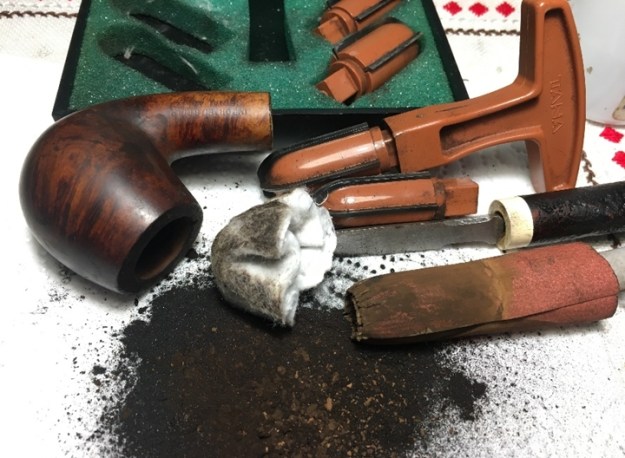
Hey Dal

The clear stems like that (if on a GBD are Perspex and early acrylic) are not resistant to alcohol. They can shatter or at least craze. I will often use lemon juice to start with and also liquid cleanser or soft scrub with bristle pipe cleaners or shank brushes. Sometimes you can use a needle file to work the insides. The airways are often rough inside so they need to be smoothed out. It is pretty labour intensive to clean out the stains as originally the airways were clear…

Steve

In a subsequent note he also added this:

Ok… the GBD brand was originally a ST Claude Brand. Perspex is an early acrylic. It was on GBD Prehistoric pipes… Lucite is another brand name for acrylic… both are acrylic.

I have soaked the stems and it does help some, but I have also put the cleanser on a pipe cleaner and let it soak as well. I have even used comet cleanser… big thing is no alcohol if at all possible. Too risky.

I have read of guys chucking a pipe cleaner in their drill like a drill bit and spinning it in the stem but have not tried that myself…  Anyway..,

 Enjoy

Steve

To begin the ‘enjoyment’ in tackling what proves to be a very stubborn project, I take a picture to mark the starting block.Using a sharp dental spoon, I work on digging gunk out of the slot cavity and scraping the hard stain buildup there.In Bulgaria we do not have ‘Soft Scrub’ but we have a product in the same genre called CIF that I next use to begin addressing the rough stains in the bent stem airway.  I use a bristled pipe cleaner and dip it in the cleanser and go to work.  With the pipe cleaner serving as a back drop I can see that microscopic veins are already evident in the airway lining. This is the ‘crazing’ effect that Steve mentioned in his note.  Removing stain from these will be an effort.  The veins are concentrated at the bend of the stem.To up the ante a bit, I decide to try the technique that Steve described that others had tried – to chock a pipe cleaner in a hand drill and utilize the high-speed rotation to enhance the cleaning process of the acrylic airway.  In order to increase the diameter of the pipe cleaner ‘bit’ I twist and wrap an additional pipe cleaner that I had already used.  I then insert this into the chuck and tighten it down.  I use another bristled pipe cleaner as the ‘drill’ and dip it in CIF cleanser.  I then insert the end of the pipe cleaner into the shank side of the stem and start the drill rotation gradually as I slowly insert the pipe cleaner into the airway – I haven’t done this before so I’m watching to see what happens!  It works like a charm.  As I insert the pipe cleaner, I increase the speed of the rotation and there is no wobble at all.  With the drill speed rotation engaged, I then push and draw the stem back and forth to create more cleaning movement.  I do this also with a soft pipe cleaner and cleanser.  The pictures show the pipe cleaner drilling.Well, I hoped for perfect results, but as feared, the stains in the veins remain visible and these are concentrated at the outer bend of the stem.  Because of this, it is evident that these veins have been here a while.  The rest of the airway is looking good.Next, from Steve’s suggested assault options, I squeeze lemon juice into a dish.  I will use the natural acids of the lemon to work on the airway.  I use the pipe cleaner too, but since the night is late, I settle at this point to put the stem into the lemon juice to soak through the night.  With the stummel soaking in the acetone and the stem in the lemon juice, I turn off the lights and end another day. The next morning, I use a pipe cleaner on the stem again.  The lemon soak through the night did seem to work, but the veins and the discoloration in the veins remain.  A reminder that we live in a fallen world where perfect pipes and restorations do not exist.  I accept this and decide to move on, but I decide to leave a pipe cleaner wet with CIF cleanser in the airway to continue to work on the stains while I turn to the stummel.The stummel has been soaking in acetone through the night to remove the ‘candy apple’ finish.  I fish it out of the acetone and the first appearance is that it still has the sheen showing that old finish was still present.  The finish has been greatly softened through the soak and with the gentle help of 0 grade steel wool I remove the finish without difficulty.  With the old thick finish removed, I examine the shank and the heel areas again where I saw significant dents and pits and discover that these are not as pervasive as they appeared before.  Most of the visible damage was to the thick finish and not to the briar.  Well, that’s one argument in favor of thick finishes!  The second picture below of the close-up of the grain – the bird’s eye grain is fantastic! Looking at the rim, it is thinner on the left side (bottom in the picture) and that edge is deteriorated.  The entire rim presentation needs freshening and to try to improve the width balance some. To address this, I take out the chopping board and put 240 grade sanding paper on it.  I give the stummel a minimal topping to give the rim a fresh start.After taking as much briar off the rim as will be helpful, I switch the board to 600 grade paper and rotate the stummel a few more times to smooth and blend.After the topping, the thinning on the left side of the stummel (bottom in picture above) remains thinner and more topping will not improve this because the stummel width descending in the chamber is thinned because of burning and lighting on that side.  To top until the rim width starts evening out would require too much briar real estate.  The way to mitigate against this, but not fully remove it, is to create an internal rim lip bevel.  On the ‘fatter’ side of the rim I increase the amount of bevel somewhat to help even out the round of the chamber.  I use a coarse 120 grade paper to begin, then follow with 240 and 600 grade papers.  The results I believe have improved the rounding, but again as with the stem airway, perfection is not achieved but it is looking very good none the less! Again, looking at the dent on the stummel heel and on the shank, just below the Trophee stamping, I examine the dents and how to repair them.  I go out on our 10th floor balcony, which is my ‘Man Cave’, and use the steaming method to raise the dent that’s on the heel of the stummel.  I wet a cotton cloth with water, and using my wife’s iron, I apply heat to the wet cloth.  When I do this, the moisture in the cloth evaporates and creates steam which is forced into the area of the briar compression.  The porous composition of wood expands with the forced heat and moisture and the result is the dent hopefully shrinks as the wood reclaims its original state.I apply the hot iron to the wet cloth over the dent.The results are excellent.  If I look hard at the place, I can still see an imprint but there is no longer a compression of the wood.I do the same to the small compression on the edge of the shank and the results are equally as good. To clean the entire stummel of the minor nicks and scratches, I utilize the less invasive approach of sanding sponges.  I use a coarse grade, then follow with a medium and light grade sponges.  I like using sponges because they can find the hard to get places as sponges, but they help remove the small nicks and pits in the briar surface.  The grain on this stummel is amazing – the dark grains appear almost cloudy as they cluster. Next, I take out the micromesh pads and wet sand utilizing pads 1500 to 2400. After finishing the wet sanding, I notice a fill on the underside of the shank next to the shape number that doesn’t look solid. Using a sharp dental probe, I test it and it doesn’t take much to remove it.  Before continuing with the micromesh process, I need to refill the pit left behind.I wipe the area with a cotton pad wetted with alcohol and mix a small amount of thick CA glue and briar dust.  I place a small amount of briar dust on an index card then drop some CA glue next to it.  Using a toothpick, I gradually pull briar dust into the CA glue until it thickens to the consistency of molasses. I then apply a small amount of the putty over the patch area, careful not to go over the shape number.  I put the stummel aside for the putty to cure.Several hours later, the patch has cured, and I begin the process of filing the patch down with a flat needle file.I’m careful to remain on the patch as I file avoiding collateral damage with nearby briar.After bringing the patch mound down almost to flush with the briar surface, I switch to using the sharp edge of a piece of 240 grade sanding paper to bring the patch down to the briar surface.  Again, keeping the sanding process tightly confined to the patch area.When the patch is smooth to touch, I then switch to 600 grade paper to smooth the patch and blend further.When the 600 grade has finished its work, I catch up the patch area in the micromesh process utilizing pads 1500 to 2400.With the patch completed, I continue by dry sanding using pads 3200 to 4000 and 6000 to 12000.  I love the thick grain on this stummel!There is no question in my mind about whether this grain can stand on its own!  At this point I apply Before & After Restoration Balm to the briar surface.  The B&A Restoration Balm does a great job simply deepening the richness of the natural briar.  I apply some to my fingers and rub it into the briar surface.  As I rub it in, it thickens to a wax-like consistency.  After I apply it thoroughly, I let it stand and absorb for about 20 minutes then I wipe off the excess and buff up the surface with a microfiber cloth.  I’m loving the grain!With the stummel on the side, I now turn to the clear Lucite stem. I begin by washing the stem with dish soap and warm water.  Looking closely at the bit area, the top lip of the button is compressed.  I take a picture of it but it’s not easy to see!  There is also roughness from tooth chatter.The lower bit has a tooth compression as well as tooth chatter.I apply clear CA glue to the lower tooth compression and spray the CA glue with an accelerator to hold the glue in place and to quicken the curing process.To deal with the compression on the top button lip, I simply sand it out using 240 grad paper.  I smooth out the tooth chatter as well.I then use 240 grade paper to sand and smooth the patch on the lower side as well as to remove the tooth chatter and roughness of the bit and button.  I follow the 240 sanding by wet sanding the entire stem with 600 grade paper to take out the small nicks and scratches.Following the 600 grade paper, I sand/buff the entire stem with 0000 steel wool.Following the steel would I wet sand the stem using micromesh pads 1500 to 2400 and then dry sand with pads 3200 to 4000 and 6000 to 12000.  After each set of three pads I apply a coat of Obsidian Oil to the stem. The stem is ready to go.  I take the nickel shank ring and clean it with Tarn-X.  It does a great job shining up. Now it’s time to reattach the 8mm filter sleeve.  I want to make sure its straight and seats accurately in the mortise.  I first slip the ring over the sleeve without attaching it with CA glue.  I want to simply use it as a spacer for the first step of reattaching the sleeve.  With the ring over the sleeve, I apply CA glue around the end of the sleeve that is inserted into the stem cavity. After I insert the sleeve into the cavity, before the CA glue sets up, I quickly seat the filter sleeve into the mortise with the ring compressed between the shank and stem.  I hold the stem firmly in place with proper orientation until the CA glue sets.With the sleeve properly seated, I then apply a few drops to the stem side of the ring and then reattach it, again seating the stem into the mortise.  It looks good – no gaps and a straight snug fit.To spruce up the EWA stem stamping, I apply Rub ‘n Buff European Gold.  I apply a little over the stamping and simply wipe it lightly off with a cotton pad.  The stamp is a little thin, but the Rub ‘n Buff holds well, and it looks good.Now the home stretch.  I mount a cotton cloth buffing wheel to the Dremel set at about 40% of full speed and apply Blue Diamond compound to the stem and stummel. I then separate the stem and change to another cotton cloth wheel dedicated to applying Blue Diamond to nickel and I buff up more shine on the shank ring.  After reuniting the stem and stummel again, I then wipe the pipe with a felt cloth to clean off the compound dust in preparation of the application of the wax.  I then change to another cotton cloth wheel with the same speed and apply a few coats of carnauba wax to stem and stummel and then finish with a rigorous hand buffing to raise the shine.

The unique grain cluster constellation that I see in the EWA Trophee is amazing.  The heel grain pattern shows color, swirls and vortexes that remind me of pictures of the planet Jupiter.  It is truly amazing and mesmerizing to look at.  The Lucite stem came out well – it is classy with the complimentary gold and black band ring providing a nice transition.  My only wish is that I could have purged the stem airway totally of the discoloration in the crazed veins that will remain as a reminder of this pipes battle scars from its past!  Even so, the EWA Trophee of St. Claude, is a beautiful Bent Billiard and Scott did well in seeing the potential of this pipe when he commissioned it.  As the commissioner, he has the first opportunity to acquire it in ThePipeSteward Store.  This pipe benefits the Daughters of Bulgaria – women and girls who have been trafficked and sexually exploited.  Thank you for joining me!
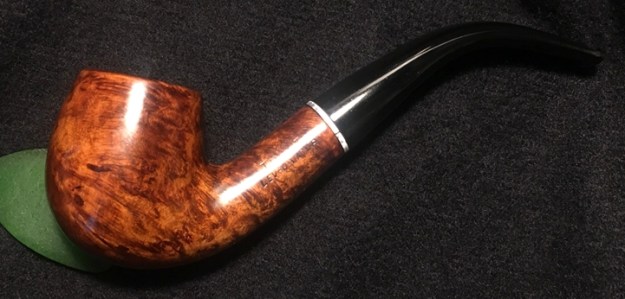
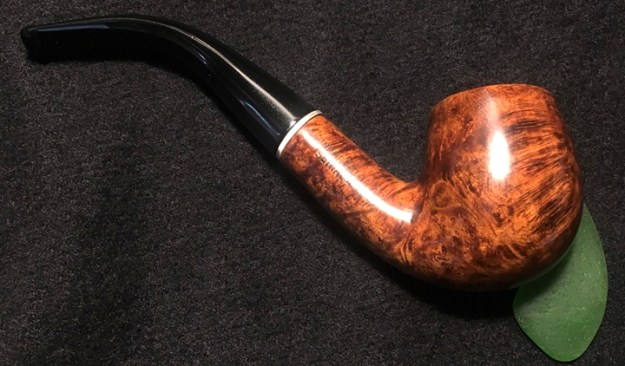
Restoring a Native American Hand Carved from Italy – the ‘Chief of Pipes’


Blog by Dal Stanton

One of the great things about restoring pipes and making them available to pipe men and women world-wide is that I have met very interesting people as they commission pipes and I correspond with them.  Toby is a returning customer from Germany.  He previously commissioned two Churchwarden creation projects where he intended one as a gift for his friend and the other was for himself.  I had fun with the write up, “A Tale of Three Churchwardens”, where I spun a story weaving in folklore, J.R. R. Tolkien and of course, a bit of Middle Earth and Gandalf.  Two of the three Churchwardens went to Toby and after he gifted his friend with his Churchwarden, Toby sent me a selfie of him and his friend blowing inspired smoke rings, each nursing a bowl in their Churchwardens together!  I’ve learned that Toby is a great guy and loves to gift people with special gifts!  That was not the last I heard from Toby.  He desired to find another gift.  Here is his note:

Hey Dal!
Having been so happy with your work I would like to commission the bearded sailor pipe for my future brother-in-law from New Zealand and I think it will be a nice fit. He is getting married in July of next year, do you think that would be possible?
Blessings,
Toby

Unfortunately, the pipe he saw in the For “Pipe Dreamers” Only! collection had just been commissioned and I hadn’t had time to mark it as such on the website.  Toby had a good eye for an interesting pipe, which I just restored and published not long ago, A Carved Bearded Sailor – Ole Crusty – also intended as a gift! I’m glad that Toby continued to look for an alternative that would meet his desires to be a special wedding gift for his brother-in-law.  Another email came and Toby had chosen the Indian Chief as an alternative and called it the “Chief of Pipes”!  This worked for me and ‘Chief’ went into the queue with a tag reminder of the wedding coming in July.  Here are pictures of ‘Chief’ acquired from the original eBay seller now on my worktable: The pipe was advertised as having never been smoked and this was an accurate assessment.  The interesting thing about this carved Native American Chieftain pipe is that it was crafted in Italy.  I take a picture of the nomenclature located on the left side of the squat shank and the lettering is juxtaposed to wrap around the shank.  The stamping is ‘HAND CARVED’ [over] ‘IMPORTED BRIAR’ [over] ‘ITALY’.  There are no other identifying marks on the pipe that I can see.  As is the case here in Bulgaria, the native North American (in both Canada and the United States) population first called ‘Indians’ from mistaken European explorers, are seen somewhat as an exotic people.  Certainly, Hollywood’s depictions of the ‘Cowboys & Indians’ movie genre has contributed to this.  Yet, somewhere in Italy, a pipe maker and a carver (or it could be one person!) decided to craft a unique pipe with the full native American headdress which were always full of  great symbolism and meaning for those who wore them in different tribes.

I was fascinated by the information I found in this article from Wikipedia about the War Bonnet:

Muscogee war bonnet Wolfgang Sauber – Own work

War bonnets (also called warbonnets or headdresses) are feathered headgear traditionally worn by male leaders of the American Plains Indians Nations who have earned a place of great respect in their tribe. Originally they were sometimes worn into battle, but they are now primarily used for ceremonial occasions. In the Native American and First Nations communities that traditionally have these items of regalia, they are seen as items of great spiritual and political importance, only to be worn by those who have earned the right and honour through formal recognition by their people.[1][2]

The article goes on to describe the ceremonial importance of feathers:

Many Native American tribes consider the presentation of an eagle feather to be one of the highest marks of respect. An honored person must have earned their feather through selfless acts of courage and honour, or been gifted them in gratitude for their work or service to their community or Nation. Traditional deeds that bring honour can include acts of valor in battle (including contemporary military service), but also political and diplomatic gains, or acts that helped their community survive and prosper. The esteem attached to eagle feathers is traditionally so high that in many cases, such as a warrior (e.g. Dog Soldiers of the Cheyenne), only two or three honour feathers might be awarded in a person’s whole lifetime. Historically, the warrior who was the first to touch an enemy in battle and escape unscathed received an eagle feather. When enough feathers were collected, they might be incorporated into a headdress or some other form of worn regalia. Historically, headdresses were usually reserved exclusively for the tribe’s chosen political and spiritual leaders.

I believe the carving does justice to the importance of the headdress or war bonnet as it forms a spiraling movement of feathers encasing the proud image of a warrior.  What’s interesting is that this spiraling movement of feathers forms the image of a larger, dominant feather.  I take a picture to show the feather I’m seeing in the carved war bonnet.  This is very cool!My challenge, as with Old Crusty, the Bearded Sailor, is to guard the rustic roughness of the carved image but to clean it up so it becomes more expressive.  The stem is in good shape except for some minor tooth chatter and oxidation. Even though the pipe is unsmoked, the condition of the finish shows some wear and tear.  The chamber is totally pristine.  The top side or top of the headdress, encompasses the chamber and slopes toward the squat shank.  This area appears to be in good shape with only small nicks.  A beautiful showcase for the grain with this much smooth briar exposed.However, it is apparent that the top, right of the headdress, as I look at the image from the front, has sustained some damage. It appears that Chief took a head dive some time ago.  The top edges of the feathers have chipped.  I take another picture on the opposite side that has not sustained this damage to show the comparison of the healthy bridge across the top.  The question is, is this damage too minuscule to bother with and is there enough wood for a patch to cling to if I were to attempt a repair?  The damage is noticeable. Looking straight on at the image, expected nicks are evident amid the intended roughness of the carving.  The crevasses, especially to the left and right of the face, are full of dirt and grime.The large heel of the pipe which enables it to serve as a sitter, reveals 2 daunting fills that will need attention on the far left and right of the picture.  Though, like the top plateau headdress, the heel provides a large plat of briar landscape that will show off the grain.I think that ‘Chief’ serves as a great nickname for this Native North American Hand Carved of Italy. It is evident from his serious expression he is a proud man!  I begin his clean up and restoration for Toby’s future brothers-in-law’s wedding gift, by removing the stem from the stummel to clean it.  I discover that the tenon is mounted with a small, useless stinger which I promptly remove and put it in my growing stinger collection.  After running a pipe cleaner wetted from isopropyl 95% through the stem to clean the airway, I add the stem to a bath of Before & After Deoxidizer along with other pipes and stems in the queue. After several hours in the B&A Deoxidizer soak, I remove Chief’s stem and run another pipe cleaner wetted with isopropyl 95% through airway to clear and clean the Deoxidizer from the airway.  I then wipe the stem with cotton pads wetted with isopropyl 95% to remove the raised oxidation. The oxidation is thick but came off very nicely.The B&A Deoxidizer did a great job and I follow by applying paraffin oil, a mineral oil I can get here in Bulgaria, to the stem which aids the rejuvenation of the vulcanite, rubber compound.  I then set the stem aside to dry and absorb the oil.With nothing in the chamber to clean, I move directly to cleaning the external briar surface using undiluted Murphy’s Oil Soap and cotton pads.  To clean deeply in the crevasses of the carving I also use a bristled tooth brush and a sharp dental probe to run down the length of the crevasses. The finish on the stummel is very thin and the scrubbing with Murphy’s almost totally removed the finish except for small patches here and there.  The following pictures show the cleaned stummel. As I suspected, the fills made simply of wood glue, has softened after the cleaning process and the fills have also shrunk so that the hole ridges are easily detected.  Without much thought, I use a sharp dental probe to dig out the old material. To remove the patches of left-over finish and to clean the heel where I removed the fill material, I use a cotton pad wetted with alcohol to wipe the surface. This does a good job.A moment of decision has arrived concerning repairs on the stummel surface.  There is no question regarding the holes left on the heel of the pipe.  These will be filled.  The question is how perfectionistic will I be about the feather tips on the upper right of the war bonnet?  I’ve been thinking about how I would approach the fine patching of a carving.  Filling a hole is one thing, recasting an image is quite another!  Without question, if I use briar dust putty made with mixing briar dust and CA glue, the result will be darker for both the heel fills and the feather repair – darker than the raw briar currently shows.  This possibly would mean utilizing a dye later in order to mask and blend the patching but it’s also possible that the natural briar will darken as it sanded, treated and polished and this can possibly mask the repairs enough.  Another question that I mentioned earlier was whether there was enough wood for the patch material to ‘grab’ in order to be a solid repair?Well, as I look at the mangled war bonnet and wondering if I could live with it, an idea started to formulate in my mind, and then started to take shape with my hands.  I snipped the ends of some toothpicks to create crevasse wedges that would form the boundaries around which I could apply patch material.I circled the war bonnet with masking tape that would hold the toothpick wedges in place.  I expect the tape to flex some, but the goal is to hold the wedges in place so that briar putty will not seep into the crevasses.Next, I gently insert the wedges into the crevasses and are held in place by the resistance provided by the tape.I reinforce the masking tape to keep things where then need to be!I decide to start with the heel fills and to employ an accelerator so that the patch would cure quickly, enabling me to flip the stummel and apply patch to the feather repairs. I mix briar dust with a thick CA glue until it reaches the consistency of molasses – that’s my subjective standard – not too thin so that it runs and not so thick that the CA glue hardens too quickly.  I apply the briar dust putty to the holes and then spray with an accelerator.  The putty hardens very quickly. I then flip the stummel and apply briar putty on top of the feathers in need of repair.  I make sure there is excess so that I can file and sand down to form a new flat bride across the top.  I apply the putty carefully but quickly and spray it also with an accelerator so that the putty remains in place and not seep down the crevasses.  I expect some seepage but I’m hoping to ward off a lot because that would not be fun sanding it out! After a time, I unwrap the tape and one toothpick wedge came out with the tape – didn’t put any putty on it at all!  Oh well.  I look at the area and I think it will easily sand.  The three wedges remain with the cured putty holding them in.  I’m hopeful – the plan seems to be working!Using a flat needle file and a triangular needle file that fits very nicely in the crevasses, I begin the slow process of filing over and around the toothpick wedges.  I don’t try pulling the wedges out because I’ll simply file around them until they are loosened from the grip of the putty.  I don’t pull them out risking pulling the patch material off!  The wedge on the right comes out next. As I continue to carefully file, there is now only one wedge remaining.I’m liking how the putty is strong and sturdy as I file on the top as well as in the crevasses vacated by the wedges.  The repair zone still looks pretty rough.I come to the point where I’ve filed the briar putty patch down to almost the briar surface but not quite. I use the triangular file to create a pointed notch at the top of the crevasse.  It looks good!  Time to switch to 240 grade sanding paper to fine tune the sanding.I finish sanding and shaping with 240 grade paper.  Wow! I’m very pleased with the initial results of this reconstruction project on the feathers of the war bonnet.  I will continue to fine tune the results as I go.  I wanted to restore a straight bridge across the top of the feathers to match the healthy feathers. Turning now to the heel repairs, I use a flat needle file on both patch mounds.  I file the mound down until close to the briar surface then I switch to 240 grade sanding paper to bring the patches flush with the briar surface. As sometimes is the case, the fill located to the front of the stummel has a pocket in the briar dust putty patch.  A pocket of air was trapped, and sanding revealed it.I clean out the patch pit and wipe it with a cotton pad wetted with alcohol to clean it.  I then apply clear CA glue to the pit and then spray it with an accelerator to quicken the curing process.Again, I file the patch with the flat needle file and sand with 240 grade paper and the patch is patched!Looking at the stummel, I still see what look like patches where the old finish is still hanging on.  Old finish is evident because it will look a bit shiny compared to the raw briar around it. The reason it is important to dispatch old finish in this case is that will affect the final look if old finish is still in play whether I leave it as natural briar or apply another dye.  In order to continue with a clean briar canvas, I wipe the stummel with acetone using a cotton pad.  This does the trick nicely. The shiny spots are gone. I move on. Next, I see in each of the crevasses of the carving, dark grime and surface discoloration probably from old finish collected in the gaps. Patience is the key here!  First, using a piece of 240 grade sanding paper, I fold into a knife edge and run the paper through every crevasse.  I clean the gaps as well as sand out rough edges and snags as much as I can.After finishing going through all the crevasses with the 240 grade paper, I do the same thing with 600 grade paper. The carving is still maintaining that appropriate rustic roughness, but I like the results of the sanding with the additional cleaning and smoothing. I now use sanding sponges to sand the entire stummel using first a coarse grade sponge, then medium, and finishing with a light grade sponge.  With both the coarse and medium grade sponges, I can run the edge of the sponges through the crevasses.  This is nice to further smooth these rough edges. From the sanding sponges I go straightaway to sanding the stummel with the full micromesh pad regimen.  First, I wet sand using pads 1500 to 2400 then follow dry sanding with pads 3200 to 4000 and 6000 to 12000.  I take a different angled picture after each set of the pads.  The grain in being teased out and I like that. The deep tone of the natural briar is what I was looking for from the micromesh process.  With a carved pipe like this, I would much rather stay with the natural briar if the briar presentation needs no masking to hide and blend repairs.  The heel fills look almost natural and the feather war bonnet repair is invisible.  For this reason, I stay with the beautiful natural briar that has emerged on Chief and apply Before & After Restoration Balm to enrich and deepen the natural hues of the briar.  I apply the Balm after squeezing some onto my fingers and then I meticulously work the Balm into the briar.  I take special care working it into the carving – each crevasse receives individual attention sometimes with the help of toothpick to push the Balm into the gaps. It takes a bit of time.  After applying the Balm, I wait about 15 minutes for the Balm to fully absorb then I wipe the excess off with a microfiber cloth.  Again, the process is meticulous as I clear, wipe and buff each detailed crevasse.  Chief is looking good!  I take a picture of the Balm absorbing period.Next, I return to the stem that has been waiting for attention.  Before starting the sanding the stem, I test the fit of the tenon/mortise union.  As I detected earlier, it is tight.  To provide a more comfortable fit, I wrap a piece of 240 grade paper around the tenon and while pressing it with my fingers and thumb, I give the paper a few rotations around the tenon and again test the fit.  Works like a charm!  The tenon seats well, with an appropriate snug fit. Turning now to the stem, the bit is in good condition.  The upper bit looks almost pristine, the lower shows just one small dent on the button.  Since this pipe is unsmoked, the only wear and tear on the stem is from living in a drawer or perhaps in a box with special keepsakes.  The vulcanite surface also is rough. To make sure the entire stem is pristine, I mount the stem again, but I use a disc to divide the stem and stummel so that I can sand without concern for shouldering the stem’s shank facing.  I use 240 grade paper on the entire stem, followed by wet sanding with 600 grade paper.  I finish this phase by using 000 grade steel wool to buff up the shine. Now to the micromesh regimen.  I begin by wet sanding with pads 1500 to 2400, then dry sanding with pads 3200 to 4000 and 6000 to 12000.  Between each set of three pads I apply a coat of Obsidian Oil to continue vitalizing the vulcanite. I like that new glassy, glossy pop of polished vulcanite! Now, on the homestretch.  After rejoining stem and stummel, I mount a cotton cloth buffing wheel to the Dremel, set the speed to about 40% full power and apply Blue Diamond compound to the entire pipe.  I take special care to work the crevasses of the Native American carving.  Afterwards, I wipe the pipe with a felt cloth to remove compound dust in preparation for applying carnauba wax.  I change to another cotton cloth wheel on the Dremel, maintain the same speed and apply the wax to the pipe.  I apply a couple of coats of wax and after completing this, I give the pipe a rigorous hand buffing with a microfiber cloth to polish more and raise the shine of the stem and stummel.

I’m pleased with the results of the restoration of this Native American Hand Carved of Italy – Chief.  He’s still rough looking, which I think is appropriate, but the lines and edges have been smoothed through the detailed sanding and the Chief’s image carved on this stummel has come alive.  I really am amazed.  The large smooth heel and plateau came out beautifully with distinct grain profiles.  The repair to the feathers on the war bonnet came out well, too.  When I started, I didn’t know if the repair would work or not.  It worked!  Toby commissioned this Hand Carved Chief from the For “Pipe Dreamers” Only! collection as a wedding present for his future brother-in-law.  He will have the first opportunity to acquire this pipe in The Pipe Steward Store.  This pipe benefits our effort here in Bulgaria working with women and girls who have been trafficked and sexually exploited – the Daughters of Bulgaria .  Thanks for joining me!

Crafting a Churchwarden for a Lord of the Ring’s Enthusiast


Blog by Dal Stanton

After restoring 3 pipes which Tina chose to gift special men in her life, the final request was to fashion a Churchwarden for her oldest son Thomas, who is a Lord of the Rings “groupie” and of course, he wants a ‘Gandalf Pipe’ to aid in blowing inspired smoke rings!  Tina’s son has been married for a few years and apparently, he and his wife have a Lord of the Rings movie binge at least once a year!

In my research on the Churchwarden shape, as the story goes, there were men back in the days when they didn’t lock churches at night, who were employed as ‘wardens’ of the church – whose responsibility was to guard the premises.  To be faithful to their charge, they were not allowed to leave the walls of the church.  That created an unusual dilemma between guarding the holy confines and the desire to enjoy one’s evening smoke.  The moral dilemma was creatively solved by a stem.  The length of the stem enabled the church wardens to tend to their evening bowls as they stood vigilantly inside the church walls while the stems extended through the windows…so the story goes (see Pipedia’s article).  Of course, everyone knows that Churchwardens were prevalent in Middle Earth as Gandalf spun up fireworks and smoke rings!

I found a bowl that I put aside quite some time ago that

Courtesy of Gonzalo Kenny https://lotr.fandom.com/wiki/Balrogs

I believed would serve well as a repurposed stummel to be mounted as a Churchwarden.  I know that there are strict Warden purists out there who question the validity of repurposing a bowl for use in fashioning a Churchwarden.  Yet, I appeal to Bill Burney’s description of the Churchwarden in his excellent Pipe Shapes Chart published in Pipedia where he says: “Interestingly, all the other styles of pipe are identified by the shape of their bowls, but the churchwarden is identified by its long stem.  The stem can be bent or straight, but it is always very long – 9” to 18” long.”.  There may be ‘true born’ Churchwardens and there are also those Churchwardens who are adopted into the ranks through the promotion of a discarded and forgotten stummel surviving from another lifetime where they served among other mere mortal pipes that they used to be.  For a common bowl to be remounted onto a Warden stem and to experience that metamorphosis is perhaps like when Gandalf transformed through fire in his mortal combat with Balrog – transforming from The Grey to The White….  Perhaps, only Gandalf knows for sure!  The bowl and stem I chose for this transformation are now on my table.The pre-molded Warden Stem comes from my main supplier, Tim West at http://www.jhlowe.com/bits.htm.  The stummel has ‘Real Briar’ stamped on the side of the shank, but what I like a lot is the 1/2 bent shank.  This will yield a very nice sweeping bend in the Warden stem.  The bowl’s size is not too large – perfect for a Churchwarden. Looking closely at the stummel, I see potential grain underneath the dark, marred surface.  The rim has lava flow but has an attractive inwardly slanted rim.  The chamber has light cake.  I take some pictures of the stummel in its current condition. Before I start working on fashioning the new preformed stem, I clean the stummel.  I start by reaming the chamber using the Pipnet Reaming kit.  I only use the smallest of the blade heads and then transition to the Savinelli Fitsall Tool to fine tune the scraping and cleaning.  Then I sand the chamber using a piece of 240 grade sanding paper wrapped around a Sharpie Pen.  Finally, after wetting a cotton pad with alcohol, I wipe the chamber cleaning it from the carbon dust.  I inspect the chamber after finishing and all looks good. Next, turning to the external surface, I take a few more pictures to show the nasty layer of grime over this stummel!  I use Murphy’s Oil Soap undiluted on a cotton pad and begin the scrubbing process.  I also utilize a brass wire brush to clean the rim. The results are good, but the reality is revealed by the cleaning!  The reality of the condition of the stummel is the reason it was in the box with other lonely stummels having given their all and discarded!  The finish is shot and the rim in mangled. Restoring this stummel to fashion a Churchwarden will be a noble endeavor! Next, I turn to cleaning the internals.  Using cotton buds and pipe cleaners wetted with isopropyl 95%, I go to work.  The internals are nasty.  I also utilize and small dental spatula to scrape the mortise walls.  There was a lot of resistance, but the buds started lightening until I was satisfied that the largest part of the cleaning was accomplished.  I’m not too concerned at this point because I’ve already made the decision to put the stummel in a soak of acetone to totally remove all the old finish which will also take care of residual internal tars and oils. The next morning, I fish the bowl out of the acetone bath.  Some of the finish was removed during the soak, but with the use of 0 grade steel wool, I’m able to dispatch the old finish easily after the night’s soak softened the old finish.  The pictures show the raw briar that allows me to start over. With the stummel cleaning process completed, I turn now to fashioning the preformed Churchwarden stem.  I use an electronic caliper to measure the diameter of the mortise to mark the target sizing of the tenon of the preformed stem that will eventually be seated.  The mortise measurement is 7.38mm in diameter.  Using Charles Lemon’s (of Dad’sPipes) methodology, I add 50mm to this exact measurement to give me my ‘fat’ target.  The ‘fat’ target is what I will aim for when bringing the tenon down to size using the PIMO Tenon Turning Tool.  The ‘fat’ target is 7.88mm.  From this point, I will sand the tenon by hand which gradually and patiently custom fits the mortise. The first thing needed is to pre-drill the tenon airway with the drill bit provided by the PIMO tool.  This enlarges the airway slightly enabling the insertion of the PIMO tool guide pin.  I mount the drill bit to the hand drill and drill out the airway.Next, the PIMO Tenon Turning Tool is mounted on the hand drill and I cut a small test sizing to measure to give me the distance between the test cut and the ‘Fat’ target.  After cutting the test, I measure it with the caliper and record 8.72mm and subtract the ‘Fat’ target, 7.88mm leaving .84mm to remove using the PIMO tool. Using the Allen wrench provided with the PIMO tool, I close the gap of the cutting arm and cut again.  The measurement of the next cut after closing the gap of the carbide cutter arm took off more than I wanted – the measurement is 7.47mm – beyond the 7.88 fat target.  This is why you only to partial cuts at the beginning!I enlarge the gap of the cutter arm a small amount and cut again.  The next measurement is 7.75mm – much better, just falling under the 7.88mm fat target.With this measurement reached, I cut the entire tenon down to the 7.75mm width.  I take the cut to the stem shank facing so a nice straight edge is created, and a ‘shoulder’ is not left from the rough preformed stem.I begin the sanding process by wrapping the tenon with 240 grade paper and rotating the stem and applying pressure strategically with my finger and thumb. I smooth and shorten the tenon a little so that it looks better and doesn’t butt into a ridge that I detect in the mortise which would block the full insertion of the tenon.  I use a flat needle file to do this.The process is slow with a lot of tests and sands… But in time the tenon seats very nicely in the mortise.  Nice!With the tenon snuggly seated in the mortise, the work is far from finished!  The picture shows the offset of the stem and the lip of briar hanging over the stem.  No stem fits automatically!The preformed Warden stem also is not straight but bows to the left through the reach of the stem.  I’ll work on this when I bend the stem later.Using 240 grade paper I begin the process of sanding the junction of the stem and shank.  My goal is to have a seamless transition from shank to stem with no overhanging ridges.  The other issue I see is that both the shank and stem have high spots that need to be sanded down and blended into a uniform flow.  What I want to avoid is the bloomers or stuff-pants look – where the shank balloons out when the sanding has not tapered the flow of the shank from the stem width as it transitions into the shank. It takes time, but in time the ridges have been removed and the tapering through the shank to the bowl looks good. I continue sanding the entire stem with 240 grade paper.  The precast stem is full of ridges and the casting seam down both sides – all of which needs to be sanded away and smoothed.  I also use the flat needle file to form and shape the new button.  I want to retain the curved button slot.  It looks classy! After sanding out the main issues with the new precast Warden stem, I transition to wet sanding using 600 grade paper.  With the bowl and stem united, I sand not only the stem including the shaped button, but also the junction of stem and shank to continue to smooth and blend the tapered transition.  After completing the wet sanding with 600 grade, I use 000 grade steel wool to sand in the same way.  The distance pictures with a Warden stem are always too far away to see detail, but a close-up shows some progress.With the main fabricating and sanding completed with the Churchwarden’s stem, the next step is to bend it.  The 1/2 bent shank of the stummel provides a wonderful trajectory for the bend and sweep of the stem – which emulates more directly Gandalf’s style of Warden.  My goal is to bend the stem so that the final orientation of the bit is generally on a parallel orientation with the plane of the stummel rim which is what is suggested by the ruler in the picture. I remarked earlier that the stem is also a little catawampus to the left as you look down the shaft toward the bowl.  Interestingly, I set up a renewed picture to show this looking down the shaft and my second look at this isn’t as pronounced as it appeared to me before.  The sanding and shank tapering may have mitigated this to some degree. Bending the stem is usually by trial and error to get it right, but the good thing is that the vulcanite stem is very forgiving!  To be on the safe side, though I don’t really believe it to be necessary, I put a pipe cleaner into the end of the stem to protect the airway integrity.I use the hot air gun to warm the vulcanite.  As it’s warming, I gently apply pressure to the bend as the rubber compound becomes supple.  When the stem becomes pliable enough and the bend reaches what appears to be at the right place as I eyeball it, I transfer the pipe to a chopping board where I can use the flat surface and the overhang for the bowl and button expansion at both ends, I press down to straighten the shaft orientation as I hold the bend.  This works very well. The first time around, I decide I need a bit more bend, so I reheat, bend further and then hold the stem firmly against the chopping board until the vulcanite sufficiently cools so that I don’t lose the bend.  To make sure the bend holds I run cool tap water on the stem to seal the bend.I like the results!  The bend is perfect and will present a true Gandalf experience for the new steward of the Churchwarden taking shape.Before I put the newly bent Warden aside to turn to the stummel, I apply paraffin oil to vitalize the vulcanite.Turning now to what was a ‘throwaway’ stummel, I like the grain that made an appearance after the cleaning.  It’s in there!  It just needs some TLC to restore it to the condition that allowed for more beauty to come through.  The briar surface is in surprisingly good condition. There are a few dents and nicks to be expected. There’s a more significant heel bruise where it appears the bowl was thumped on a hard surface.The rim has an attractive inwardly sloping cant which will serve to my advantage in dealing with the residual burn marks and the right side (top in the first picture) of the rim.  The outer edge of the rim is also chewed up a bit. Starting with the rim, I begin by using a coarse 120 grade paper to clean and remove the scorched wood and the dents on the edge.  I follow this with 240 grade paper sanding the canted rim surface.  I’m hopeful this will remove the blemishes but also serve to freshen the rim canted pitch and lines.  I then fine tune with 600 grade paper. The results are great.  The transformation is more than hoped for!  The rim is actually very attractive and some grain peeking out.I do the same with the heel bruise.  I dispatch the blemish quickly with 240 grade paper followed by 600 grade paper.Continuing the sanding, I now sand the entire stummel using sanding sponges.  I start with a coarse sponge, followed by a medium grade then finish with the light grade sanding sponge.  The briar grain is showing up!Following the sanding sponges, I apply the full regimen of 9 micromesh pads.  First, I wet sand using pads 1500 to 2400 then dry sand with pads 3200 to 4000 and 6000 to 12000.  For a ‘throwaway stummel’ this piece of briar is looking very nice. Throughout the micromesh process, I knew I was approaching a decision point.  The natural briar came out way more than I had thought possible when I began with this stummel.  I can remain with the natural briar or apply a dye.  I decide to apply Fiebing’s Saddle Tan Pro Dye to the stummel not for the purpose of covering blemishes but to bring out the briar grain more which is still somewhat subdued as I look at it.  I assemble my desktop dying components.  After I wipe the stummel with alcohol to clean the surface, I insert two folded pipe cleaners into the shank to serve as a handle.I then heat the briar stummel with an air gun.  As the briar heats, this expands the grain enabling the grain to be more receptive to the dye when it’s applied.Using a folded pipe cleaner, I paint the bowl with the aniline based dye in sections and flame each section as I go.  I use the lit candle to combust the painted section of wet dye and it immediately combusts the alcohol in the dye leaving the pigment to set in the heated wood.  I eventually apply the Saddle Tan dye to the entire stummel and repeat the painting and flaming process again to assure full coverage.  I then put the dyed and flamed stummel on the cork to rest through the night. With the dyed bowl resting I take the Churchwarden stem through the full micromesh regimen.  I wet sand using pads 1500 to 2400 and then dry sand with pads 3200 to 4000 and 6000 to 12000.  Between each set of 3 pads I apply a healthy coat of Obsidian Oil to the stem to vitalize the vulcanite.  The newly polished vulcanite pops!  I take one concluding picture instead of the usual 3 because the picture shows no detail because of the size of the stem!The next morning, I’m ready to unwrap the flamed bowl.  After mounting a felt cloth buffing wheel on the Dremel, I set the speed to the lowest possible to reduce the heating factor.  I then apply Tripoli compound to the bowl to remove the flamed crust to reveal the briar beneath. With the assistance of my wife, she takes a few pictures to show the initial removal of the flamed crust.  It takes me a good bit of time to slowly and methodically go through this ‘plowing’ and polishing process.  I remove dye blotches to make sure what is revealed is the minutia of the grain texture.  Not pictured is after I complete the process with the felt wheel (pictured below) I change to a cotton cloth buffing wheel and increase the speed of the Dremel to 40 % of full speed and again go over the entire stummel with Tripoli compound.  I do this first, to reach into the crook of the shank that is too tight for the felt wheel to reach.  Also, I like the further fine tuning of the Tripoli compounds polishing of the briar surface.  The grain sharpens even more providing the contrasts between the harder and softer woods of the briar.I then wipe the bowl with a cotton pad wetted with isopropyl 95% to blend the dyed finish.  The wipe of alcohol evens out the finish and blends it.  Wiping with alcohol will also lighten the finish if I continue to wipe, but I like the tone of the hue where it is so I only to a light wipe for blending purposes.I switch to another cotton cloth buffing wheel, keep the speed on the Dremel and 40% and apply Blue Diamond compound to the stem and stummel.  I don’t join the two because it is easier to work with each individually.  After completing the application of the compound, I wipe both stem and stummel with a felt cloth to remove the compound dust left behind.Finally, I reunite the Warden stem with the repurposed stummel and apply a few coats of carnauba wax to the Churchwarden.  When finished, I give the pipe a vigorous hand buffing with a microfiber cloth to bring out the shine.

Wow!  When I think of where this throwaway stummel was at the beginning of the process and what I see now, it is truly amazing. This Churchwarden’s 1/2 bent shank provides the perfect trajectory for the stem’s gentle, flowing bend to project a pipe that is truly Gandalf worthy!  The grain of the bowl is varied from a vertical flame, a knot with outwardly flowing concentric circles and some bird’s eye thrown in for good measure!  This Churchwarden is certified for Middle Earth distribution for Tina’s son, Thomas.  Tina commissioned  this Churchwarden project along with 3 other restorations (to learn more about commissioning pipes see: For “Pipe Dreamers” Only! ) and each will be boxed and heading to Birmingham, Alabama, USA, from Bulgaria.  All these pipes benefit our efforts here in Bulgaria working with women and girls who have been trafficked and sexually exploited – the Daughters of Bulgaria.  Thank you, Tina!, and thank you for joining me!
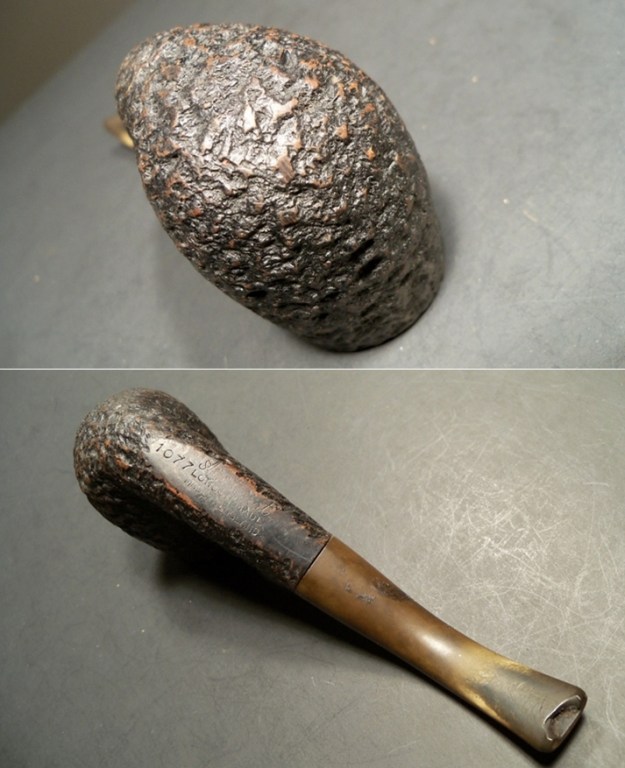
 

Refreshing a Leather Clad Classic Billiard


Blog by Dal Stanton

I acquired this Leather Wrapped Classic Billiard as part of what I call the French Lot of 50.  I landed 50 pipes which included some long-forgotten treasures dating back to before WWII as well as a plethora of pipes mounted with horn stems.  In this French Lot of 50 I discovered French pipe manufacturers that were all but forgotten within the pipe world.  My restoration of the petite EPC Majestic Bent Horn Stem Billiard which earned me my first contribution to the repository of pipe information on Pipedia with the research on the A. Pandevant & Roy Co. of Paris.

The next pipe to catch the eye of someone searching through the ‘Help Me!’ baskets in my For “Pipe Dreamers” Only! collection is a nice looking Leather Wrapped Classic Billiard shape which I’ve targeted with an arrow in the picture of the French Lot of 50.  Tina chose this pipe along with 2 others from the ‘Help Me!’ baskets to commission for special men in her life and to benefit our effort here in Bulgaria, Daughters of Bulgaria – women and girls who have been trafficked and sexually exploited not only here in Bulgaria but throughout Europe.  Tina was visiting us from Birmingham, Alabama, USA, with a group of other ladies.  This Leather Wrapped Billiard was chosen with her son, Matthew, in mind who’ll be graduating from college in May and has plans to utilize his degree in Landscape Design and Turf Management by moving to Big Sky, Montana working at the Moonlight Basin Resort. Tina said that he will be over a team that keeps the golf course in tip-top shape! I’m thinking that this Leather Wrapped Billiard will be a perfect partner for Mathew on the golf course!  A special gift from a proud mother for a special son soon to graduate.  I love it!  Here are pictures of the Leather Wrapped Billiard now on my work table. There is no nomenclature stamped on the pipe or identifying marks on the stem.  As with the most the other pipes that came with the French Lot of 50, there is a very good chance that this Leather Wrap also is French.  The practice of wrapping briar bowls with leather started in France as a creative and economically savvy way to sell sub-par bowls that were part and parcel of France’s austerity measures during WWII.  Pipedia’s article uncovers this bit of pipe history in the article devoted to Longchamp:

In 1948 Jean Cassegrain inherited a small shop near the French Theater on the Boulevard Poissonnière in Paris, called “Au Sultan”. Articles for smokers and fountain pens were offered there. Now, the absolute bulk of the pipes Cassegrain found in the inventory was from war-time production and due to the sharp restrictions on pipe production the French government had enforced in 1940, these pipes were of very poor quality and showed large fills. Strictly speaking, they were not marketable now that the French pipe industry produced pipes of pre-war standards again. In this situation Cassegrain had the probably most enlightened moment in his life: he took some of these pipes to a leather worker who clad bowls and shanks in leather. Only the rims of the bowls and the shanks’ faces remained blank.

E voila – the pipes looked pretty good now and were eye-catching enough to become an instant success in sale. Above all among the thousands of Allied soldiers who populated Paris in those days. The thing worked well, and even unexperieceid pipesters liked the covered pipes very much for they did not transmit the heat to the hand. Very soon Cassegrain had sold the old stock of pipes, and the leather-clad pipes became his only product. He began to place orders with renowned firms like Ropp or Butz-Choquin.

I love stories of innovation like the story of Jean Cassegrain and the creation of the Longchamp name which came from the name of a horse racing park near Paris.  Pipedia concludes the article with this comment:

After 1970 the interest in leather-clad pipes slowly diminished. The Longchamp pipes were offered for the last time in the 1978 catalog though previously placed orders were delivered until 1980.

The splendid success inspired many other renowned producers to offer their own lines RoppButz-ChoquinGubbelsGBD… Maybe Savinelli was the very last producing them for the label of the famous designer Etienne Aigner.

Without identifying markings, it’s not easily determined the origins of the Leather Wrapped Billiard on my worktable.  Yet, the origins of this type of pipe are French and it seems likely that this pipe shares this origin, but a manufacturer remains a mystery.  The pipe itself is in good shape and for this reason I’m calling it a refresher. The chamber barely has any cake build up, but the rim shows some discoloration and is need of a cleaning.  The condition of the leather wrapping the bowl looks great.  The stem has minor oxidation and negligible tooth chatter on the stem.  I do notice that the stem is a bit tight in the mortise.  We’ll see how this snugness progresses during the cleaning.  To begin refreshing the Leather Wrapped Classic Billiard, I use pipe cleaners dipped in isopropyl 95% to clean the stem’s airway.  I then add the stem to a soak of Before & After Deoxidizer along with other pipes in the queue.After several hours I fish out the Leather Wrap’s stem and I push another pipe cleaner through the airway wetted with isopropyl 95% to clear the Deoxidizer from the airway.  I then wipe off the oxidation that has surfaced through the soak using cotton pads wet with isopropyl 95%.  The Deoxidizer does a good job and much oxidation is removed.To begin the stem rejuvenation, I apply paraffin oil with a cotton pad and set the stem aside to dry and to absorb the mineral oil.Now, turning to the stummel, I first clean the chamber using the Pipnet Reaming kit I jump to the second smallest and work up to the largest blade head as I ream the chamber followed by using the Savinelli Fitsall tool.  After scraping the chamber walls with the Fitsall tool, I sand the chamber using 240 grade paper wrapped around a Sharpie Pen to give leverage and reach as I sand.  Finally, I wipe the chamber with a cotton pad wetted with isopropyl 95% to remove the carbon dust.  I inspect the chamber and it looks great – no cracks or heat fissures. Next, I clean the rim using undiluted Murphy’s Oil Soap and a cotton pad.  To work more directly on the lava flow I employ a brass wire brush and scrape the area carefully with a Buck pocket knife. I’m careful to keep the soap and work with the brush on the rim.  I don’t want to damage the leather wrap. I then rinse the rim with cool tap water. The general results of the cleaning are good, but there remains discoloration which I will address later.Now to the internals. Using pipe cleaners and cotton buds wetted with isopropyl 95%, I scrub the internal mortise and airway.  It doesn’t take long, and the buds are emerging lighter.  I’m thankful for a small skirmish!I start cleaning the stem by wet sanding using grade 600 paper and follow using 000 grade steel wool.I move directly to the micromesh regimen by wet sanding with pads 1500 to 2400 and dry sanding with pads 3200 to 4000 and pads 6000 to 12000. After each set of 3 pads I apply Obsidian Oil to condition the vulcanite.  The pop on this stem is nice. With the stem now waiting in the wings, I turn back to the stummel.  To address the residual dark area on the rim, I will give the stummel a very light topping.  I’m hopeful that this will erase the lion’s share of the scorching and refresh the rim.  I take out the chopping board and put 240 grade paper on it.  Keeping the inverted stummel firm and steady, I rotate the rim a few times on the paper. When it seems enough is taken off, I switch the paper to 600 grade paper and smooth out the 240 sanding.  There is just a bit of the darkening remaining after the topping.To dispatch the remainder of the scorched rim briar, I introduce a very mild bevel on the internal rim.  I first use a tightly rolled piece of 120 paper to cut the initial bevel.  I then follow with 240 then 600 grade papers in succession.  In each case, I pinch the tightly rolled piece of sanding paper between my thumb and the internal rim and rotate evenly around the circumference.  The result is exactly what I wanted – the rim is now clean.Next, to bring out the grain on the rim, I wet sand with micromesh pads 1500 to 2400 and follow by dry sanding with pads 3200 to 4000 and 6000 to 12000.  I’m anxious to see how the grain is teased out. As you can see in the picture immediately above, the lip of the upper leather encasing is packed with dust after the micromesh sanding.  I take a narrow dental spatula and clean the dust out by gently sliding the spatula under the leather lip.The next step is to reunite the stem and stummel to apply Blue Diamond compound.  As I noticed before, the tenon/mortise fit is too tight – taking too much pressure to seat the tenon.To address this, I sand down the tenon by wrapping it with a piece of 240 sanding paper and rotate the paper evenly around the tenon.  I sand and then test a few times to make sure I’m not taking off too much.  When the fit is appropriately snug and the tenon seats, I then switch to 600 grade paper to smooth the tenon.  Now it fits perfectly with a good snug fit, but not too tight.I now mount a cotton cloth buffing wheel to the Dremel, set at 40% of full power and I apply Blue Diamond compound to the rim and the stem.Next, I’ve been thinking about how to clean and condition the leather wrap encasing the stummel.  I use Weiman Leather Wipes to do the job.  I follow the directions by using the wipe that cleans and applies the preservative and then I buff the leather with a microfiber cloth.  Wow!  It’s looks great.  The leather darkened to a newer looking richness – very nice.  The pictures show before and after. Since my day is closing, I want to further the internal mortise cleaning by giving the bowl a kosher salt and alcohol bath.  I use the highest grade isopropyl 95% available here in Bulgaria.  I first create a ‘wick’ from twisting and stretching a cotton ball.  The wick serves to draw out the remnant of tars and oils.  I use a stiff wire to help push the end of the cotton wick down the mortise.  I then fill the bowl with kosher salt, set it in an egg carton and fill it with isopropyl 95% until it surfaces over the salt.  In a few minutes I top off the alcohol that has absorbed and set it aside and turn out the lights! The next morning, the salt and wick are soiled – the wick not as much which is good if it shows that the mortise is already clean.  I clean the chamber of the salt, wiping it out with paper towel and blowing through the mortise.  To make sure all is clean, I use one cotton bud wetted with alcohol and it demonstrates that the mortise is clean.  Moving on. I rejoin stem and stummel and mount another cotton cloth buffing wheel on the Dremel, maintain 40% speed and apply carnauba wax to the rim and stem.  To further condition the leather wrapping one more time, I apply a very light coat of paraffin oil and then rub it in well.  I follow by buffing the entire pipe with a microfiber cloth to bring out the shine of stem, leather stummel and the briar rim.

Perhaps, I should have done this before waxing the rim, but to add a starter for a new protective cake and for aesthetic reasons, I coat the chamber walls with a mixture of natural yogurt and activated charcoal.  When cured, the mixture provides a very durable surface providing a buffer for the fresh briar until a natural cake develops.  The new steward just needs to be careful not to scrape the chamber with a metal tool, but simply to rub the chamber with a folded pipe cleaner will be sufficient to clean after use.  I mix the activated charcoal and the natural yogurt until it thickens enough to not run – being too liquid. I then use the pipe nail to spread it on the chamber wall.  I then set the stummel aside for a few hours for the mix to cure. This Leather Wrapped Classic Billiard cleaned up well.  The leather is dark and rich looking and the butterscotch colored rim pops in contrast to the leather.  The fine, delicate grain of the rim is pleasing to the eye as the leather is to the touch.  This is Tina’s third commissioned pipe which she chose for her son who is soon to graduate from college.  She will have the first opportunity to acquire the pipe from The Pipe Steward Store.  This pipe benefits the Daughters of Bulgaria – women and girls who have been trafficked and sexually exploited.  Thanks for joining me!
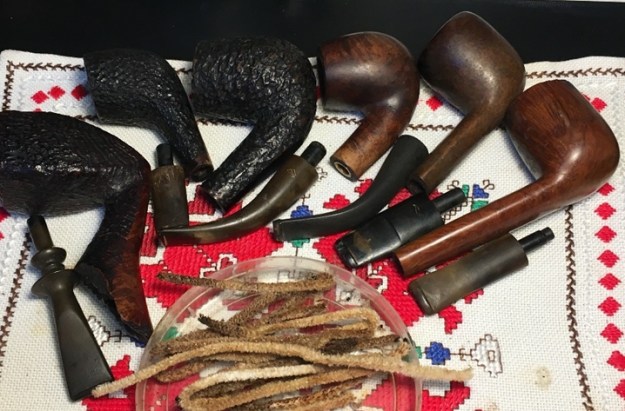
A Gift for a US Coast Guard Man – A Carved Bearded Sailor, ‘Ole Crusty’


Blog by Dal Stanton

Tina commissioned the restoration of 3 pipes and one Churchwarden project by repurposing a bowl.  Her purpose was to benefit the Daughters of Bulgaria while at the same time purchasing great vintage pipes that would be gifted to special men in her life.  The first of these pipes, the Lindbergh Select Poker, which came out beautifully, is for Tina’s brother who served as a naval aviator and flew on P3 airplanes flying over different bodies of water to do reconnaissance missions and who has many stories of his adventures.  I’m now looking at the Carved Bearded Sailor – my first try at restoring a sculpted face.  There are no identifying marks on the pipe, and I’ve searched closely with a magnifying glass.  I acquired the Carved Bearded Sailor from a Lot I snagged on French eBay, so my assumption is that this pipe has a French origin – it’s a good guess!  When Tina saw this pipe, she immediately took it in hand and said she knew who would receive this pipe – her older brother who started in the Army but later spent 25 years in the US Coast Guard as a helicopter pilot involved in such activities as law enforcement (boarding and inspecting ships) and search and rescue – aiding vessels in trouble on the high seas regardless of the flags they flew.  Here are the pictures I took of the Carved Bearded Sailor commissioned for the ‘Coastie’ on my work table: I love the old crusty look of the sailor’s face encased in this carving.  What I like most of all is that it is a nice carving, but the thick varnish makes it look like a tourist trinket pipe to me.  It is apparent that the steward who had this pipe smoked him well!  The moderate cake buildup in the chamber and the signs of lava and grime on the ‘cap’ – we don’t have a rim with this guy, we have a cap! – point to a pipe that was used and not put on a shelf to collect dust.  He’s got some history, but I can’t say how much and I’m guessing that his COM is France.  The only thing I’m not excited about with this crusty sailor pipe is the varnished finish – I’m not a fan of a heavy varnish, candy apple gloss finishes.  The challenge would be, if I were to remove the varnish as part of the restoration, and dive into polishing and buffing the nooks and crannies of the carving, it might prove to be a daunting task.  Another factor would be to maintain the roughness that gives it a rustic uniqueness.  The carving is not a porcelain doll smoothness – its crusty like the sailor depicted!  I want to clean up the carving but not lose the rustic, roughness that is to me, what makes it special.  The stem has some oxidation and tooth chatter but not much of an issue.

I begin the restoration of the Carved Bearded Sailor by wetting a pipe cleaner with isopropyl 95% and cleaning the airway of the stem.  I then place the stem in a soak of Before & After Deoxidizer with other pipes in The Pipe Steward queue.After several hours, I take the Sailor’s stem out and let the Before & After Deoxidizer drain off the stem.  I then run another pipe cleaner wetted with alcohol through the stem’s airway to clean it of the Deoxidizer.  I also wipe off the raised oxidation with a cotton pad wetted with isopropyl 95%.  The Deoxidizer does a good job.I then apply paraffin oil to the stem to begin revitalizing the vulcanite.I haven’t yet decided how exactly I will approach the restoration of the stummel, but I decide to simply clean it the normal way first and see how things look.  The chamber is small, only 5/8 inches wide, and this is too small for the Pipnet Reaming heads.  So, I employ the Savinelli Fitsall tool to scrape the chamber walls in close quarters. As I scrape the chamber walls I find that there’s a good bit of cake build-up in the chamber.  After a while, I notice that there appears to be no draft hole at the bottom of the chamber.  Hmmm, not sure about this!  I try to push a pipe cleaner through the airway via the mortise and it is a no go.  I take a sharp dental probe and dig a bit at the floor of the chamber and a bit of cake crumbles revealing a hole, not where I was looking for it, but more toward the bottom.  I keep digging and another hole appears – forward of the other.  With the help of a stiff wire, I’m able to punch through the blockage allowing me to insert a pipe cleaner.  I take a picture to show what I’m seeing.  At first, I thought that what I was seeing was a cavity underneath what appears now to be a bridge of carbon cake between the two holes.  I continue to dig with the dental probe, and it appears that what I’m looking at is metal.  It appears to be a metal insert with two holes allowing air to pass through.  Interesting – I’ve never seen this before.  I’m not able to see anything through the mortise that looks like metal.I continue the cleanup of the chamber by sanding the chamber with 240 grade paper wrapped around a Sharpie Pen.  I then wipe the chamber with a cotton cloth wetted with alcohol to clean the carbon dust. It seems that it is a 2-holed metal insert – like an internal stinger, which pushes my thinking more toward a French invention, but still only guessing.  Other than the interesting two-holed insert, the chamber appears to be in good shape with no heating problems.Next, to clean the external surface of the carving, I use undiluted Murphy’s Oil Soap and scrub with a cotton pad and bristled tooth brush to get into the curves, nooks and crannies of the carving, I use as well a bristled brass wire brush to work on the lava and discoloration on the cap. I then rinse the stummel with cool tap water.  The surface of the carving cleans up nicely as well as the rim/cap. Next, the internal cleaning.  Using pipe cleaners and cotton buds wetted with isopropyl 95%, I go to work. The design of the internal metal insert is interesting.  The airflow is pulled downwardly to the two holes that are on the floor of the chamber, not where the draft hole is normally located. I scrape the sides of the mortise with a dental spatula to excavate tars and oils.  I also employ a drill bit to reach into the chamber created by the metal insert below the chamber floor.  I hand turn the drill bit which pulls the crud out.  The internals are pretty nasty overall.  Eventually, buds begin to surface cleaner until I’m satisfied that the internals are clean.  I arrive at a decision point.  The question is, do I keep the thick varnish finish and work with it or do I remove it and figure out a different approach to the external surface – natural briar or dye?  In principle, I don’t like the shiny finish that varnish produces.  Why? You’re not looking at the shine of the briar, but the shine produced by the varnish.  I can understand, with a carving like this, it’s an easier and quicker way to produce a ‘finished’ shine, but to me it’s mediocre. The other problem is that when the finish is thicker, it can chip and leave portals to the raw wood which will obviously be a different hue and texture – mess.  I see evidence of this as I scan the carved surface.  In the end, my dislike of mediocrity when restoring pipes took over and I decide to renew finish on the Sailor so that hopefully, it doesn’t lose its quaint roughness but cleans and sharpens it so that the carving is enhanced not stifled!  So my plan is ratified taking some last pictures of the candy apple finish! To start over, I put the stummel in an acetone soak to remove all the old finish from the craggy and carved surface.  I leave it in the soak overnight.  Time to turn out the lights.The next day, I fish ‘Old Crusty’ out of the acetone soak.  The finish is partially removed but most is loosened.  I use 000 steel wool in combination with the brass wire brush to remove the residual varnish from the stummel surface. Parts of the old finish I scrape off with my thumb nail and it’s like congealed meat fat.  I use a dental probe as well to dig into the crevices to remove dirt and gummed up varnish.  Finally, most of the removal is completed – all that I can see of the old varnish is removed.  I take a picture to show the progress to this point.Next, I continue cleaning and clearing the surface by focusing the steel wool on areas of smooth briar to sand and buff up.  I aim for the flat surfaces to tease out the grain – which I find are many!  The obvious smooth surface is the cap and bill, but there are also the eyebrows, the nose and nose bridge, the cheek tops, the mustache, the top of the beard, the cheeks…  As I buff with the 000 steel wool on these surfaces, the carved face begins to emerge as a more distinct image.  I reach into all the major crevasses as well.  I’m please with the results of this stage.  I take pictures at the conclusion of the steel wool buffing sanding and shaping. After using the steel wool, I sand with the micromesh pads.  I start by wet sanding with pads 1500 to 2400 then dry sanding with pads 3200 to 4000 and 6000 to 12000.   With each phase, I take a picture offering a different perspective of the face that emerges through the micromesh process.  I watch amazed! Before switching to the stem, I come to another decision point.  I had been thinking that I would apply a dye – probably a light Fiebing’s Saddle Tan hue to bring out more pop. After completing the micromesh pad process, the briar of this stummel needs no help with ‘pop’!  I decide to stay with the natural grain that has emerged and to deepen it, I apply Before & After Restoration Balm to the carved stummel.  I’m anxious to see how the Balm acts on the carved surface – how it will enhance the carved face.  I put some Balm on my fingers and work it into the briar.  It takes some effort and the help of a cotton bud and a toothpick to push the Balm into the crevasses of the sculpting.  After applying the Balm throughout and working it in thoroughly, after about 20 minutes, I use a cotton pad to start wiping off the excess Balm and again, reaching into the crevasses to remove Balm.  The Balm eventually dissolves and is absorbed.  I finish by buffing the stummel with a microfiber cloth.  Wow!  The Balm did a great job deepening the tone of the briar.  I’m already loving the profound difference between the buffed sheen and texture of natural briar and the candy apple varnish finish that I started with.Letting Ole Crusty rest awhile, I now turn to the stem.  The stem is generally in good shape – negligible tooth impact is found on the bit.  The button has one compression that will be easily addressed with sanding.  The only thing I notice that is not what I like is that the entire stem has a very rough texture to it.  The Before & After Deoxidizer did a great job removing the oxidation, but the resulting texture needs addressing.I use 240 grade paper to sand out the minor bit and button issues.  I also sand the entire stem to remove the roughness.  To avoid shouldering the stem shank facing, I use a plastic disk on the end to butt up against as I sand.I follow the 240 grade by wet sanding the entire stem with 600 grade paper and then using 0000 steel wool.I move straight away to sanding with micromesh pads by wet sanding with pads 1500 to 2400, followed by dry sanding with pads 3200 to 4000 and 6000 to 12000.  After each set of three pads I apply Obsidian Oil to rejuvenate the vulcanite. Now, on the homestretch.  I reunite stem and stummel and mount the Dremel with a cotton cloth buffing wheel and I apply Blue Diamond compound to stem and stummel.  In order not to load the crevasses with compound which would be a pure nightmare to clean out, I keep the buffing wheel on the high briar points where there is smoother briar.  What I discover though, after starting the Blue Diamond application, is that the troughs of the carving are wide enough that I leave behind no compound as I work the wheel in these areas.  I think that using a Dremel with it’s miniature buffing wheels, gives me an edge in situations like these.  After finishing application of the compound, I transition to applying carnauba wax in the same way.  I mount another cotton cloth wheel to the Dremel, maintain a speed of about 40% full power and apply the wax over stem and carved stummel. After application of the wax, I give the pipe a rigorous hand-buffing with a microfiber cloth to raise the intricate shine and to make sure there’s no wax caked up in the crevasses.

When I began this project, I had no idea what I would be able to do to improve the presentation of the carved sailor’s face.  I wanted to retain the rustic, rough feel but bring out more of the grain and contours of the face carving.  This is my first restoration of a carved figure and I’m very pleased with the huge difference in the quality of the carved presentation by uncovering it or freeing it from the thick candy apple glaze that entrapped it.  The minute appearances of briar grain have been teased out and now highlight the various facial components of the carving in a satisfying and attractive way.  In my view, the restoration took the Carved Bearded Sailor from a trinket-like feel to an expression of artistic beauty and creativity.  I started calling the bearded sailor, ‘Ole Crusty’, during the process of getting to know him better and helping him come out!  I think the name fits the image of the old bearded sailor who was weathered by life, that the carver was seeking to capture and bring to life in this pipe.  Tina commissioned this pipe for her brother, a Coast Guard man, and I trust that she and he will like ‘Ole Crusty’ as well I do!  Tina commissioned this pipe from the For “Pipe Dreamers” Only! collection and will have the first opportunity to acquire ‘Ole Crusty’ from The Pipe Steward Store.  This pipe benefits the Daughters of Bulgaria – women and girls who have been trafficked and sexually exploited.  Thanks for joining me!  I begin with a Before & After of Ole Crusty:
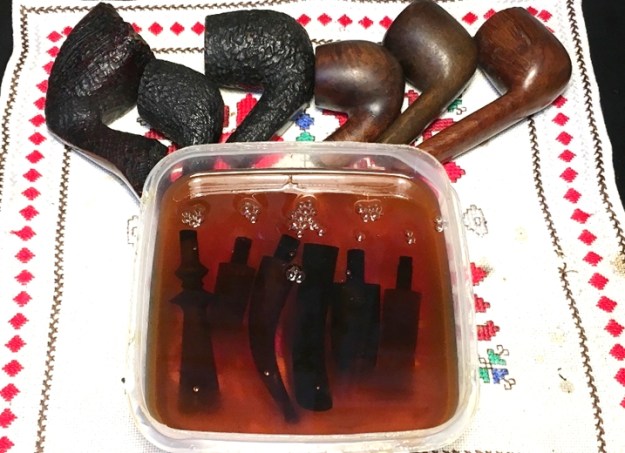
Tina’s first choice: Renewing a Lindbergh 324 Poker


Blog by Dal Stanton
Burgas, Bulgaria, is a coastal city on the Black Sea where my wife and I as often as we can, go to find some rest and relaxation on the beach, especially during the summer months.  When we’re not enjoying the surf and sand, one of my favorite activities is to go pipe picking, of course!  I found the Lindbergh 324 Poker on one of these expeditions in 2017 on the main walking streets in Burgas – an antique shop I’ve visited before did not let me down on this visit!

I found the treasure trove in a copper pot waiting for me on a stack of books.  I carefully and methodically sifted through the pipes in the brass pot and culled 5 nice candidates who were calling my name!  They were a Butz Choquin Supermate 1596 Paneled Billiard – St Claude-France, a Rusticated Harvey Meerschaum Lined Dublin (LONDON/PARIS/NEW YORK), a Lincoln London Made Real Sandblasted Billiard, and an Old Bruyere Billiard with an interesting P-Lip saddle stem and the Lindbergh Select 324 Poker.

I was drawn to both the Lincoln and the Harvey because they had the “RESEARCH ME!” aura about them in addition to being cool looking pipes.  The BC Panel had gain that said, “Let me loose!”  Yes, I believe pipes speak if we have ears to hear and my ears were fine-tuned having spent time on the beach clearing the senses!  After negotiations were completed, the Burgas 5 were wrapped and bagged and came home with me to Sofia.

As with most of my acquisitions that benefit the Daughters of Bulgaria, they are pictured, recorded, catalogued and put into the online For “Pipe Dreamers” Only! collection waiting for a steward to hear them calling from the virtual ‘Help Me!’ baskets.

Tina was visiting us in Bulgaria with a group of other ladies from Birmingham, Alabama, USA, and with most of our visitors, they heard of my ‘interesting’ hobby of collecting and restoring vintage pipes.  Tina was intrigued and asked to see my work table and some pipes – she had the growing idea of commissioning some pipes FOR THE DAUGHTERS to gift special men in her life – husband, sons, colleagues…. This was my kind of visit!  She started going through the troves of pipes that I have in the inventory for the Daughters and it was fun watching her settle on certain pipes that ‘matched’ the man she had in mind and in the end, she commissioned 4 pipes to be restored and one Churchwarden project which I will fashion from a repurposed bowl.  I gave her estimates for the pipes she had chosen, and she solemnly agreed to a vow of PATIENCE.  I’m thankful for her patience which is finally bearing fruit on my work table!  I chose the Lindbergh Select Poker with a shape number of 324 to work on first.  I love the iconic Poker shape and the story associated with the utilitarian purpose of the Poker’s flat bottom, that easily finds a casual place on the card table next to the adult beverage while its hopeful steward looks expectantly at the cards dealt.  This Poker has a large swatch of briar real estate and an attractive canted volcano-like descent that results in a larger card table base or heel.  The 3/4 bent shank/stem gives the entire pipe a casual, reach for me feel.  Here are pictures of the Lindbergh Select 324 now on my work table: The stamping on the left flank of the shank is ‘LINDBERGH’ [over] ‘SELECT’.  The right flank is stamped with what I’m assuming is the Poker’s shape number, 324.  There are no other identifying marks that I can see.To learn more about Lindbergh Select, I look to Pipedia with no nibbles.  My copy of Herb Wilczak and Tom Colwell’s, ‘Who Made That Pipe?’ also came up empty.  Turning next to Pipephil.eu I found more.  The examples of Lindbergh I found there were of various markings without a strong sense of a positive hit.  The note that was included in this name that gave a COM of France was that they were most likely crafted by more than one maker, which makes sense looking at the different markings and especially the stem stampings and different stem lettering.  Seemingly no continuity in the markings.This was a helpful bit of information which pushes my thinking a bit broader than a single manufacturer of the Lindbergh name.  Next I do a Google search and found another Lindbergh SELECT that was for sale on an auction block (LINK) and found an interesting similarity – the sharply beveled internal rim. Unfortunately, the pictures they provided did not show the nomenclature but did show a shape number – 601 for the oval shank Billiard.  My search took me next to a discussion thread about a Lindbergh pipe on PipesMagazine.com that brought me as close to understanding the origins of this pipe as I’m going to get for now.  The thread started with sablebrush52 who purchased a Meerlined Panel with the markings Lindbergh with the addition of ‘New York – Paris’ in the nomenclature.  The thread described the historical attachment the French have with the famous and controversial aviator Charles Lindbergh, whose historic jaunt across the Atlantic in the prop plane, The Spirit of St. Louis, captured the imaginations and hearts of the French at that time.  This national embrace of Charles Lindbergh would explain how pipes were produced from different French sources with the Lindbergh name – more of a historical commemoration of this event.  The nomenclature of the pipe under discussion in the thread is pictured here:I’m including one well-known contributor’s statement as a summary of this history and fascination with Charles Lindbergh.  From mso489:

Lindberg was one of the early American mega-celebrities, which both immortalized his life and damaged it in various ways, the later kidnapping of his child and his relationship with the rise of the Nazi regime with their interest in aeronautics. So this pipe reflects that tender moment in history where his mere name sent out sparks of admiration. It’s appropriately a handsome example of industrial design. Lindberg was a farsighted designer of aircraft which is why he succeeded first with his flight. His plane, The Spirit of St. Louis, was a masterpiece of prioritization, economy, and spareness; he gave up a front windshield substituted with a periscope to make room for yet another fuel tank — but that’s an easy example. The whole plane was conceptualized that way. Then there was the whole problem of staying awake to fly the plane, which he managed to do.

Looking more closely at the Lindbergh Select on my work table, the chamber has light cake and some lava flow on the rim and shows some scorching on the right forward quadrant.  The large Poker stummel has several fills that will need to be cleaned out and refilled on the stummel side and the heel.  The upper right side of the bowl has a dent which might be able to be drawn out through heating.  The saddle stem has oxidation.  The bit has very little tooth chatter at all. I discover that scotch tape was wrapped around the tenon in order to tighten the fit.  When I remove the tape, the result is a very loose fitting tenon – rattling around in the mortise! It’s very possible that this stem is a replacement, but it should fit nicely. The balance of the Poker is perfect – it sits quite nicely. I start the restoration of this Lindbergh Select Poker by first cleaning the internal airway of the stem with pipe cleaners dipped in isopropyl 95% and then placing it in a bath of Before & After Deoxidizer along with other pipes and stems in the queue – most commissioned by Tina! After some hours, I fish out the Lindbergh bent Saddle Stem and allow the B&A Deoxidizer to drain off.  I also run another pipe cleaner through the airway to force the Deoxidizer out and then wipe the raised oxidation with cotton pads wetted with isopropyl 95%.  Much oxidation is removed.After finishing the removal of oxidation, I begin to revitalize the vulcanite stem by applying a coat of paraffin oil (a mineral oil) and I put the stem aside to soak in the oil and dry.Turning now to the Poker stummel, using 3 of the 4 blade heads available in the Pipnet Reaming Kit, I ream the chamber.  I follow by employing the Savinelli Fitsall tool to fine tune by scraping the chamber walls further.  Finally, I use a Sharpie Pen wrapped with 240 grade paper and sand the chamber removing the residue carbon and revealing fresher briar.  I wipe the chamber with a cotton pad wetted with alcohol to remove the remaining carbon dust.  After inspection of the chamber, all looks great!  There are no evidences of heating problems. Next, I clean the external real estate of the Poker’s briar using undiluted Murphy’s Oil Soap and a cotton pad.  I keep my eye on the old fills to see how they react.  I also utilize a brass bristled brush to work on the darkened scorched area on the rim.  I also carefully scrape the rim with the sharp edge of a Buck pocket knife.The results of the cleaning are good, but the rim still shows the burn trail of the lighting practice of the former steward – pulling the flame over the rim instead of over the tobacco and pulling the flame downwardly.As I suspected would be the case, the old fill material softened, and I easily remove it from the side and heel of the stummel using a sharp dental probe.Before moving further with the external repairs, I clean the internals of the stummel by using pipe cleaners and cotton buds wetted with isopropyl 95%. The internals turn out to be nasty and I do much excavating using a dental spatula – scraping the mortise walls of tars, old oils and much gunk. I also use a shank brush to clean the airway. Finally, the crud starts giving away and cotton buds start emerging a much lighter hue. I call the job done for now, to return later for a kosher salt and alcohol soak to draw more tars and oils from the internal cavity as well as to freshen the stummel.To continue the work on the stummel surface, I start from the top down.  First, to address the deep scorching on the rim, I use the topping board with 240 grade paper on it to top the stummel.  Thankfully, this stummel as a good bit of real estate but I still am very stingy in giving up the briar.  I take a picture to mark the start and then a few pictures showing the progression as I rotate the inverted stummel over the 240 grade paper. I come to a place that is the tension between complete removal of the dark area and having given up enough top briar in the effort.  I stop and switch out the paper to 600 grade paper and give the stummel a few more rotations to smooth out the scratches of the 240 paper.  The rim lines are refreshed, but a darkened area remains at this point.To now sharpen the bevel and clean the rim further, I use 240 grade paper tightly rolled and sand the internal bevel. I follow this with 600 grade paper (which I forgot to picture!) and then, one final rotation on the topping board with 600 grade paper to sharpen the rim lines once more.  I like it.  The rim looks great.With the rim repair advanced to this point, I now work on refilling the pits on the side and the heel of the stummel that were left after removing the old fill.I mix briar dust and thick CA glue to form a putty that I use to fill the pits.  After putting a small amount of briar dust on an index card, I then place some CA glue next to it.  Using a toothpick, I gradually mix briar dust into the CA glue until it thickens to the consistency of molasses.  I then apply the putty to the pits using a tooth pick.  When filled, I put the stummel aside for the putty to cure.After the briar dust patches have set up sufficiently, I now work on the two dents on the upper part of the Poker.  I take a couple pictures to capture the larger and the smaller dents from different angles.The heating method can work very well to expand the compressed wood by using heat to hydrate the wood and causing it to expand.  I’m thankful that my wife allows use of her iron to do the job.  I go to the ironing board for this activity.  I wet a cotton cloth handkerchief and place the wet cloth over the dents then I apply the hot iron over the dented area. It steams a lot as the moisture in the cloth rapidly evaporates and steam is forced toward the wood surface.After doing this steaming procedure a few times, I take another picture.  You can still see the outline of the injury, but compared to where it was, by touch it is much less pronounced and should easily sand out.With the briar putty patches now fully cured after several hours, I use a flat needle file to begin working the patch mounds down to the briar surface. From the needle file I transition to 240 grade paper and remove the remainder of the excess briar patch material bringing the fill flush with the briar surface.Next, I again bring out the topping board with 240 grade paper.  This time, though, I’m topping the heel of the stummel which has taken the brunt of the wear and tear.  It is interesting to see the progression of the ‘topping’ of the heel which is not flat.  The first picture marks the starting point followed by a progression of rotations on the topping board. I switch the topping paper to 600 grade paper and take the heel a few more rotations to smooth the heel surface after the 240 grade paper.  The grain on the heel looks good.Now moving to the stummel proper, I return to the dents that I used the steaming method to expand and minimize the dents.  To fully remove these injuries, I lightly sand the area with 240 grade paper and follow with 600 grade paper to smooth further.  The steaming method helped and now the dents have been erased.With all the patches and blemishes addressed, I use a progression of sanding sponges from coarse, medium to light to sand the entire stummel removing the nicks and scratches.  I lightly address the surface around the Lindbergh Select nomenclature and shape number. I’m at a junction point for the stummel – moving on to the micromesh pad regimen.  I also have a stem that is waiting in the wings for attention.  I reunite the stem and Lindbergh Select Poker to get a look at the progress.  I love the shape of this Poker as its heel expands outwardly to form a stable platform to sit. With the reunification of the stem and stummel, I’m reminded again of the very loose-fitting junction of the tenon’s seating in the mortise.  During the cleaning of the stem, I discovered that the stem fitting had been tightened by wrapping scotch tape around the tenon.  The picture below shows the extent of the looseness. To rectify this by expanding the tenon, I use a drill bit one size larger than what will fit comfortably into the airway. To introduce the larger drill bit end into the tenon’s airway to begin expanding it, I first heat the end of the tenon with a Bic lighter to soften the vulcanite.  When the heated vulcanite becomes supple, I begin to gently insert the drill bit into the airway.  The larger bit expands the airway which pushes the tenon’s diameter outwardly.  As the bit begins to enter less supple, cooler vulcanite while I’m inserting it, the bit is straightened by this, so I don’t have to worry about the tenon during the supple stage to be angled improperly.After the first try, I refit the stem into the shank and it is tighter, but it needs a little more tightening for a snugger fit. I repeat the process and heat more of the tenon and then insert more of the bit into the expanding airway.  Before taking the bit out of the airway, I set the vulcanite with cool water from the tap so that the expansion holds. The second procedure works like a charm with a good snug junction.  I’m pleased.I decide to move forward with the finishing of the stummel’s briar surface with the micromesh regimen.  I plan to apply a dye to the Poker, but we’ll see how things develop.  I first wet sand using pads 1500 to 2400 and then dry sand with pads 3200 to 4000 and 6000 to 12000.  I love this part of teasing out the grain of this large Poker stummel.  I’m amazed at how the grain darkened and deepened during the micromesh process.  Before this, I was thinking that I would need to stain the stummel to mask the patches on the briar surface.  After looking at the natural grain, the patches look like natural knots in the briar.  I decide at this point to go with the natural briar hue. Before applying Before & After Restoration to the briar surface, I eyeball once more the junction between stem and stummel.  I’m not satisfied with the seating of the stem in the shank.  I can see a gap on the lower side of the shank/stem junction.  The top of the junction is riding high preventing a clean meeting on the lower side.  To address this, I fold a piece of 240 grade paper in half and insert it between the upper shank/stem junction and sand between the two.  This eventually lowers the top side helping the lower junction to seat better.  I’m not totally pleased with the junction at the end, but I’ve learned when to stop striving for perfection! With the stem and shank junction fitting much better, I put the stem aside again and apply Before & After Restoration Balm to the Poker surface.  I place some of the Balm on my finger and work it in to the briar surface.  After about 10 minutes I wipe off the excess and buff up the surface with a microfiber cloth.  The grain hues deepen and the natural briar finish is very nice.Turning now to the stem, the tooth marks on the bit are very minor.Using 240 grit paper, I sand out the minor issues on the bit very quickly.I then wet sand the stem using 600 grade paper and then follow by applying 0000 grade steel wool.  In addition, I scrub the surface with Magic Eraser to finish the cleaning. With my day ending, I have two projects that I’ll leave to work through the night.  I apply paraffin oil to the stem to further rejuvenate it.I also give the stummel internals a further cleaning and freshening with a kosher salt and alcohol soak.  I create a mortise ‘wick’ by pulling and twisting a cotton ball and then insert it down the mortise with the help of a stiff straight wire.  I then sit the Poker in its natural state on the table and fill the bowl with salt.  I then fill the bowl with isopropyl 95% until it surfaces over the salt.  After a few minutes the alcohol has been absorbed and I top the bowl with more alcohol and turn out the lights. The next morning, the soak had furthered the cleaning – there was minor discoloration in the salt and wick.  I tossed the salt in the waste and cleaned out the stummel with a paper towel and blowing through the mortise to be sure to remove all the expended salt.  To be on the safe side, I expend a few more pipe cleaners and cotton buds to clean up residue after the soak.  All was clean!  Moving on. Now back to the stem.  I now apply the full regimen of micromesh pads from 1500 to 12000 to the stem.  I first wet sand using pads 1500 to 2400, then dry sand using pads 3200 to 4000 and 6000 to 12000.  After the wet sanding I move out to the satellite work desk on my 10th floor ‘Man Cave’ balcony where spring is trying to show itself.  A shot of me enjoying the change of weather and the view that I have of Sofia’s Vitosha Mountain nursing a bowl of Land BCA with my smooth Meer and teasing out more patina!

Next, I reunite stem and stummel and after mounting a cotton cloth buffing wheel to the Dremel, I adjust the speed to about 40% of full power and apply Blue Diamond compound to the entire Lindbergh Select Poker.  Following the compound, I wipe/buff using a felt cloth to clean the pipe of compound dust.  I then mount a cotton cloth buffing wheel dedicated to applying carnauba wax.  Leaving the Dremel and 40% power, I apply several coats of wax and finish by hand buffing with a microfiber cloth.

The Lindbergh Select 324 Poker fits and exceeds the expectations of this classic shape.  The grain is displayed over the large briar landscape and the broad heel is an added benefit.  The vertical flame grain terminates in the rim revealing distinctive bird’s eye grain – very nice.  The 3/4 bent saddle stem also adds to the overall balanced feel of the iconic Poker.  The Lindbergh Select’s specific manufacturer will remain a mystery, but the French origin seems secure.  Tina commissioned this pipe along with 4 others from the For “Pipe Dreamers” Only! collection to give as gifts to special men in her life.  She will have the first opportunity to acquire the Lindbergh Select in The Pipe Steward Store.  This pipe benefits the Daughters of Bulgaria – women and girls who have been trafficked and sexually exploited.  Thanks for joining me!
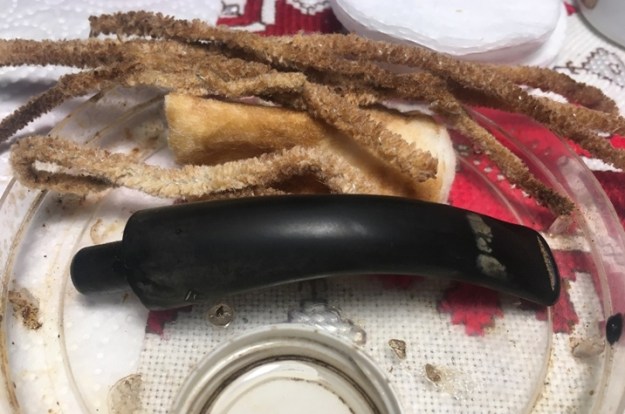
Restoring a Surprising Silver Treasure: a Robinson 8494 Quarter Bent Paneled Tomato


Blog by Dal Stanton

I acquired this interestingly shaped pipe in an eBay Lot acquisition from France which has contained several very collectible pipes.  The challenge with this French Lot has been that several names stamped on the pipes are unfamiliar to me and require more research to uncover the origins.  This pipe continues that trend as its origins aren’t clear. My good friend and former colleague working in Ukraine, a pipe man and restorer himself (see: https://www.thepipery.com), saw this Robinson Paneled Tomato in the For “Pipe Dreamers” Only! collection and reached out to me about commissioning it which I was more than happy to do!

I’m categorizing this Paneled Tomato (though a case could be made that this is a Prince shape, but the shank is a bit too broad I think) pipe as a petite as its dimensions are: Length: 5 ¾ inches, Height: 1 inch, Tomato bowl width: 1 1/2 inches, Chamber width: 5/8 inches, and Chamber depth: 7/8 inches. It has a very attractive and sleek shape with the 1/4 bent stem, but what I haven’t seen before are the painted panel boarders setting off the upper dome of the Tomato along with sculpted rim notches.  Here are pictures of the pipe now on my worktable: What I thought at first was a stinger that had been cut off, might be a slotted insert of some sort.  I’ll work on removing it later.The left side of the shank bears the ornate, oval with ‘ROBINSON’ stamped.  The right side of the shank bears what I believe is a shape number ‘8494’.  I looked in my autographed copy of Herb Wilczak & Tom Colwell 3/3/97 – ‘Who Made That Pipe?’ and found only one entry for ‘Robinson’ belonging to a ‘John J. Robinson’ with the COM listed as USA.  I found no reference to a ‘John J. Robinson’ in Pipedia’s listings or Pipephil.eu, my regular first stops for information.  I’m dubious of the COM of USA because, and I know this is subjective, the pipe has a European feel.  Its diminutive size reflects more the English and French values of the last century and the pipe has a sense of some age to it in spite of the painted panel edges and rim notches that may have been added later.  Also, the shape number of ‘8494’ doesn’t lend itself to a COM of USA.  I decide to do a quick survey of English/French pipe shape charts to find this shape number that corresponds to the Paneled Tomato I’m looking at.  Often established pipe manufacturers will put out lines of pipes for a 3rd party company with the party’s name stamped on it but the shape will emulate the shapes that the mother manufacturer already produces.  I investigate BBB and GBD specifically as the most likely possibilities but found no match that might make this Robinson 8494 a positive second or sub-brand of these well-known English/French sources.   Next, I go back to Pipephil.eu and instead of searching John J. Robinson, the Wilczak & Colwell clue, I simply search more broadly, ‘Robinson’ and find an interesting listing.Robinson & Co. Ltd, is a retail company in Singapore and Malaysia with obvious historic English connections.  Wishing to know more about this company, I found this lengthy article in Wikipedia, Robinsons & Co. that gave much information.

Robinsons & Co. Pte Ltd is a retail company which has department stores in Singapore and Malaysia. The company owns the Robinsons department store, John Little in Singapore and has franchise outlets of Marks and Spencer in both countries. The company has grown into one of the country’s most renowned department stores. Robinsons celebrates their 160th anniversary in 2018.

Robinsons & Co. Limited is currently part of the UAE-based Al-Futtaim Group.

The article outlines the formation of the company in 1858 by Phillip Robinson of England when the British Empire had a colonial presence in Singapore.  With partnership changes the exclusive, high end department store became known as Robinson and Co., in 1859.  Through the remainder of the 1800s and into the 1900s it became a landmark in the downtown Singapore store and catered mainly to expatriates and higher end customers among the local population – royalty, business, and political spheres.  During WWII, the store was bombed by the Japanese and was finally closed during Japanese occupation.  After WWII it reopened when the British returned to Singapore in 1946 and the business flourished. During the 1970s, the business was less profitable due to international and local conditions and finally, the publicly traded Robinson & Co. Limited was acquired by Dubai based Al Futtaim Group in 2008.

From Pipephil.eu information, I’m able to establish two facts – the Robinson Department Store in Singapore DID market pipes with ‘Robinson Co. LTS’ which, secondly, have a COM of ‘Made in England’.

The theory takes shape in my mind, with the absence of any other corroborating information, that it is possible that the ‘Robinson’ on my table is indeed connected to the ‘Robinson & Co.’ of Singapore.  The Robinson on my table lacks stampings that confirm this as with the pipes shown on Pipephil.eu. But it is conceivable, yet I cannot substantiate this, that the Robinson I have is an older version before what appears to be the newer and more developed marketing applied to the later Robinson store pipe.  This is obviously a guess, which I could not substantiate even after searching for older catalogues and any other ‘Robinson’ pipes out there on the internet!  So, armed with a theory which I will continue to mull over, I move on!I begin the restoration of this possibly English made for Singapore, Robinson Quarter Bent Paneled Tomato, by addressing the moderate oxidation in the stem. After cleaning the airway with pipe cleaners dipped in isopropyl 95%, I then include the stem in a bath of Before & After Deoxidizer along with other stems of pipes that have already been restored and sent on to join new stewards.  The Robinson is the last stem in this Before & After Deoxidizer batch.Several hours later I fish out the Robinson stem and wipe it down with cotton pads wetted with isopropyl 95% to remove the raised oxidation.  The texture of the vulcanite stem is rougher than usual it seems.  After cleaning the stem surface, I run a few more pipe cleaners through the airway to assure that the Before & After Deoxidizer is gone.  The stem looks good after the treatment.To start the revitalization of the vulcanite, I then apply paraffin oil – a mineral oil, to the stem and then put it aside to absorb the oil and dry.Now, turning to the waiting stummel, I first address the moderate carbon cake by using the smallest blade head of the Pipnet Reaming Kit.  This blade head fits the chamber perfectly.  I follow by using the Savinelli Fitsall Tool to scrape the chamber wall further revealing fresher briar.  Finally, I sand the chamber with 240 grit paper wrapped around a Sharpie Pen and then wipe the chamber clear of carbon dust with a cotton pad wetted with isopropyl 95%. After clearing the carbon cake, I inspect the chamber and it looks good.I then move directly to the internal cleaning of the mortise and airway.  I start using cotton buds and pipe cleaners dipped in isopropyl 95% and…. The text describing the cleaning process is much shorter than the cleaning process.  I had noticed earlier that this stummel was a bit of a stinker, so I was anxious to begin addressing this olfactory offense to my nose and adjoining rooms in our 10th floor apartment in a formerly Communist Bloc apartment building.  In addition to pipe cleaners and cotton buds, I use a dental spatula to scrape the mortise walls, as well as a drill bit inserted into the airway and hand turned to excavate the tars and oils.  I also use a long wire shank brush to scrub the internals. The picture shows the weapons brought to bear….I’m still not seeing cleaner cotton buds and pipe cleaners that would reveal progress, so I decide to move on to giving the stummel a kosher salt and alcohol soak with hopes that this will loosen the grunge and clean the internals.  After stretching and twisting a cotton ball to serve as a wick to help draw out the tars and oils, I insert it into the mortise and the airway with the help of a straight stiff wire. I then fill the bowl with kosher salt and place it in the egg crate to keep it steady.  Using a large eye dropper, I add isopropyl 95% to fill the bowl until is surfaces over the salt.  After it absorbs in a few minutes, I refill the bowl with alcohol and put it aside to soak. The next day, the salt and wick are heavily soiled and hopefully the condition of the internals is improved.  Using a pipe cleaner and cotton buds, I soon find out that the condition is much the same.  I put on surgical gloves a long time ago during this cleanup process!  I continue to dig and excavate using all the tools listed above.With a glimmer of hope beginning to dawn with cotton buds and pipe cleaners starting to lighten, I again provide a kosher salt and alcohol soak with the hope that the tide is turning.  What I discover as I became intimately familiar with the internal layout of the mortise as I inserted spatulas and dental probes to clean, was that the drilling of this stummel was in two phases.  A larger drill bit was used to open the mortise.  Then a smaller drill bit was used to drill the short airway and exiting into the chamber forming the draft hole.  The slight up-tick in the angle of the second drilling created a small trap of sorts that collected much tar and oils over the years.  It would be difficult to clean with normal pipe cleaners as they would go over to the top of the trap on their cleaning mission.  To intentionally clean this small angled trap, it needs to be intentionally and regularly scraped with a probe – something stiff enough to dislodge anything collecting. With the kosher salt and alcohol soak cooking a second time, I pick up the stem and take another look at the slotted insert in the tenon.  It doesn’t appear to be a snipped stinger, but perhaps an air restrictor insert of sorts with a slotted opening – I’m not sure if its threaded but I doubt it. I don’t have much sympathy for stingers and restrictors as they simply create more angles for the airflow – this creates condensation and more moisture….  I heat the metal insert and tenon with a Bic lighter to loosen the grip and using a pair of needle nose pliers I do not pull the insert out but accomplish snapping the top of the insert off!  I hand screw a drill bit into the shaft of the metal insert remaining in the tenon and after reheating the tenon and drill bit, and a few retries, I succeed in extracting the remainder of the inserted air restrictor.  It will be much easier to clean now as well. Looking now at the stem, the bit area on the upper and lower has some bite compressions, but not significant.  The lower button lip has also been chewed a little.  I’m thinking that sanding and a little filing should rectify the situation.I use a flat needle file to freshen the button and 240 grit paper to sand out the compressions.  This works well.I also sand the entire stem with 240 grit paper to remove the rough, goose skin surface of the vulcanite. I employ a disc I fashioned to guard again shouldering the shank face of the stem.I then wet sand the entire stem using 600 grade paper followed by 0000 steel wool.Without pause I move to the micromesh regimen using pads 1500 to 12000.  First, I wet sand using pads 1500 to 2400 followed by dry sanding with pads 3200 to 4000 and 6000 to 12000.  Between each set of three I apply Obsidian Oil to the stem to revitalize the vulcanite – and it is coming to life!  The rough surface smoothed and polished up well. The next morning (again), with something akin to Handel’s Hallelujah Chorus in the backdrop of my mind joyfully reverberating and echoing, I see that the second kosher/alcohol soak has furthered the cleanup effort significantly.  After dumping the soiled salt and cleaning the stummel of salt crystals, I run a few more buds and pipe cleaners through the internals and the cleaning is now complete!  The bowl is also freshened from the stink odor that dominated its presence before.  This cleaning was a bear – and it’s not finished!Turning now to the external briar surface, I wonder what the cleaning will do to the paint job this stummel has received.  If it’s acrylic paint, the cleaning should remove it.  If not, well, it’s something else, probably oil based.  I have a very difficult time conceiving of any scenario where paint was part of the original motif of this Paneled Tomato – I believe the rim notches were a later addition as well, but perhaps not!  I’ll clean and see what happens.  I use undiluted Murphy’s Oil Soap with cotton pads to clean the stummel.  There’s lava overflow covering the rim which I also deal with using a brass bristle brush.The cleaning removes the grime and I discover the panel boarder painted strips firmly intact, hmm.  On the left flank of the stummel is the loan fill that I detect after seeing more of the stummel.  After the cleaning, the old fill material is soft, and I remove it easily with a dental probe to be replaced later with CA and briar dust putty.The stummel cleans up well and has lightened considerably revealing some nice grain patterns on the diminutive bowl, but it also shows the nicks, wear and tear of normal usage.  After the cleaning and scrubbing, the rim is still showing some burn areas.Not much consideration was needed to bring out the chopping board that serves as my topping board.  I use 240 grade paper to refresh the paneled rim.  I would like the six sides and corners to be sharper and more distinct.  The shank extends beyond or above the rim plane, so I hang the shank over the edge and begin the topping like that.  I also utilize a small sanding block that is very useful for fine-tuning a topping project by allowing me to focus on an area.  The pictures show the progression using 240 grade paper. When satisfied with the progress, I change the board to 600 grade paper to smooth the rim from the 240 grit scratches.Next, before working on the stummel proper, I repair the small pit on the left side of the stummel by refilling it with a putty created from mixing briar dust and CA glue.  It doesn’t take much to fill.  I use an accelerator after mixing and applying the putty with a tooth pick.  This quickens the curing process so that I can quickly file and sand it and continue the project. Thankfully, Bulgaria is beginning to experience some intermittent spring-like weather.  I take advantage of the mild weather and move out to the Man Cave, my 10th floor balcony, where I file and sand the patch mound and enjoy Red’s Cherry blend in my Gasparini MGM Rock 1912.  A wonderful time filing and sanding! To erase as much of the inner rim scorching damage that darkens the briar, I introduce a bevel.  I first tightly roll a piece of coarser 120 grit paper to do the initial clearing.  I then follow with 240 grit paper also tightly rolled. After applying the bevel, I return to the topping board and turn a few rotations to refresh the rim.Oh my!  At this point in the restoration, I discover that I’m not restoring a mangled pipe that was painted and rim notched for fun!  After re-topping the rim, I see that what I thought was paint framing the panels is not paint at all.  It’s metal – a metal inlay of some sort.  An inlay?!  That takes time and skill!  I examine the rim where the top of the ‘paint’ met the rim and I see that it has depth.  I take a few more close ups to show the dimensions from differing angles. Not sure what I’m looking at, I show my discovery to my wife, and she asks me if I have a magnet?  I didn’t, but she took a magnet off the freezer holding up a photograph and she says to test the magnetic pull of the metal.  It has no magnetic pull at all.  Her conclusion is, “It’s probably silver.”  After a quick search on Google for, ‘Silver inlay in wood’, I found these pictures on Pinterest. I am suddenly more firmly convinced of my theory about the origin of this ‘Robinson’ – from a high-end store in Singapore.  Who would pay for such a pipe as this?  Who would be drawn to a pipe with silver inlay? Now that I know what it is, the pipe itself is transformed from a discarded pipe that someone painted and notched trying to be cleaver to a pipe that was the recipient of a fine jeweler’s careful process of silver inlay in wood – and not just wood but situated perfectly and uniformly framing the panels of this pipe.  Looking at some videos and pictures I see online, the process was probably done using a silver wire that was tapped into place as the first picture above.  The next urgent question coming to mind was not how to remove it but how to protect it!?  The inlay has stayed intact this long, I don’t want to change the status quo!  I decide to use sanding sponges to work on the scratches and nicks that are prevalent on the stummel. The sponges shouldn’t be too invasive if inadvertently moving over the silver.  Before starting with the sponges, I see that the left side of the stummel, just under the panel, has significant pitting.  I apply a small amount of CA glue here to fill the pits and apply an accelerator to quicken the curing time.I use 240 grit paper, then 600, to sand out the patches until flush with the briar surface and smooth.I then use sanding sponges, starting with coarse, medium, then light, to work out the blemishes throughout the stummel.  I avoid as much as possible direct movement over the silver inlay but work around it on each panel.I then utilize the full regimen of micromesh pads, 1500 to 12000.  I first wet sand using pads 1500 to 2400, then dry sand with 3200 to 4000 and 6000 to 12000.  As with the sanding sponges, I do not intentionally focus the pads over the silver inlay but work around it. With the assumption now that the twin rim notches on the forward panels are part of the original motif, I freshen two of them using a carpenter’s blade.During the initial cleaning of the stummel, the shank cap had popped off and I put it aside for safe keeping.  Now that I’ve discovered the silver inlay, I’m wondering if this cap is more than the nickel plating that I originally suspected.  To clean, I take it to the sink and wash it with warm water and mild soap, using my fingernail as well as a brass brush to help in the cleaning.  After cleaned I rinse it and dry it thoroughly.I then apply Tarn-X to the ring with a cotton pad and wipe thoroughly then take it to the sink and again rinse and dry.This time with a magnifying glass, I check the band and my original assumption seems to be correct that it is nickel.  I find no stamping on the metal to indicate that it is silver.  Next, I apply the magnet to the ring, and it is not magnetic at all.  After a quick search in Google to check the magnetic composition of nickel, I discover that it is indeed magnetic.  The band, shank cap before me is not.  It is becoming clearer now that I am not working on a maligned basket pipe.  If this band is indeed silver, it is rawer and unmarked.  Again, my theory of an English, Singapore, connection is encouraged. Before reattaching the cap to the shank, I mount a cotton cloth buffing wheel to the Dremel dedicated to applying White Diamond compound on silver.  I have wheels dedicated for several different compounds and metals.  I carefully hold the band and buff it with White Diamond compound and then buff it with a microfiber cloth.To bring out the depth of the grain that has emerged, I apply Before & After Restoration Balm to my fingers then work it into the surface of the briar.  The Balm begins with a thinner oil consistency then thickens as I work it into the surface.  At the end it’s like a wax.  I allow it to sit for several minutes then I wipe it off with a clean cloth and buff it up until the stummel is clear of excess Balm.  The Balm does a great job bringing out the nuanced tones of the briar. After applying the Restoration Balm and without remounting the silver shank cap, I reunite the stem and stummel setting the speed at 40% full power and apply Blue Diamond compound to the entire pipe.  I don’t remount the silver shank cap so that I can apply the compound without worry of impacting the band.  As well, during the buffing, I stay clear of the silver inlay to avoid the chemical reaction that can stain the wood with black.  After the application of Blue Diamond compound is finished, I apply two small dots of CA glue to the inner side of the silver shank cap and remount it on the end of the shank.  It looks great! Now in the homestretch, I remount the stem to the stummel and apply coats of carnauba wax to the entire pipe, still avoiding the silver inlay and band.  After completing the application of wax, I give the pipe a rigorous hand-buffing to raise the shine of the briar and the luster of the silver.
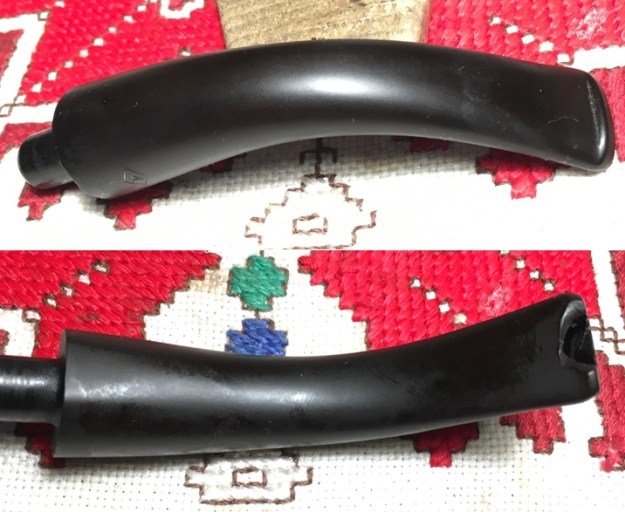
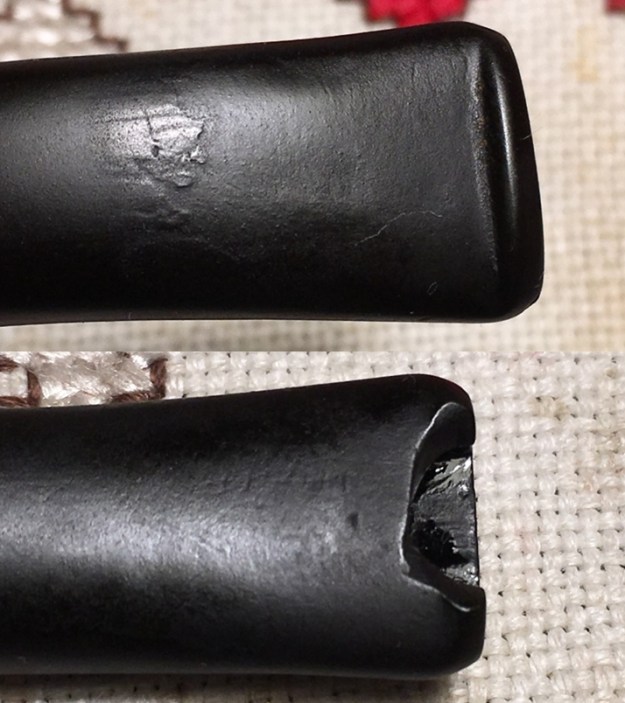
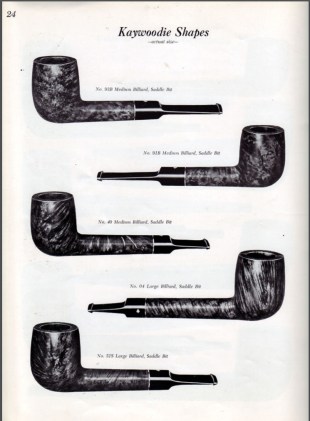
My final theory for the origins of this silver laden Robinson Quarter Bent Paneled Tomato is that it was produced in England in the years immediately following the close of WWII after the British returned in 1946 after Japanese occupation and the Robinson department stores in Singapore and Malaya soared in sales – reaching 1 million US for the first time in its history (LINK) and saw expansion well into the 1950s with the acquisition of the John Little Co., the largest and older competitor to the Robinson presence in Singapore.  This is only a guess as to the period, but with what appears to be an older Robinson stamping from the examples I found online, I’m thinking that this guess is pretty good but still a guess!  How I viewed the pipe morphed from being a marginal basket pipe that had been maligned to a very nice pipe with a touch of opulent class.  The briar grain itself is beautifully presented on the heel of the stummel and is showcased in each of the six silver-framed panels. The diminutive size puts this pipe squarely in English tradition and the gently bent stem is elegant with the striking silver band providing the bowl/stem transition.  The absence of formal markings on the silver band is still a question, but it might be explained in that it was destined as a store pipe.  My friend, Dave, commissioned this Robinson Paneled Tomato and he will have the first opportunity to claim it from The Pipe Steward Store.  This pipe, as with others, benefits our work here in Bulgaria with the Daughters of Bulgaria – women and girls who have been trafficked and sexually exploited.  Thanks for looking!