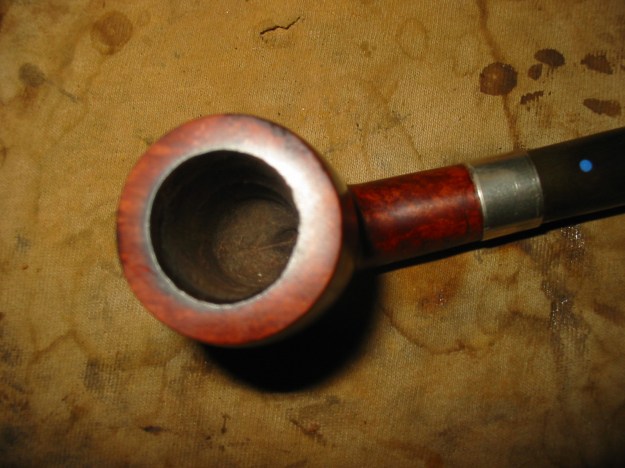
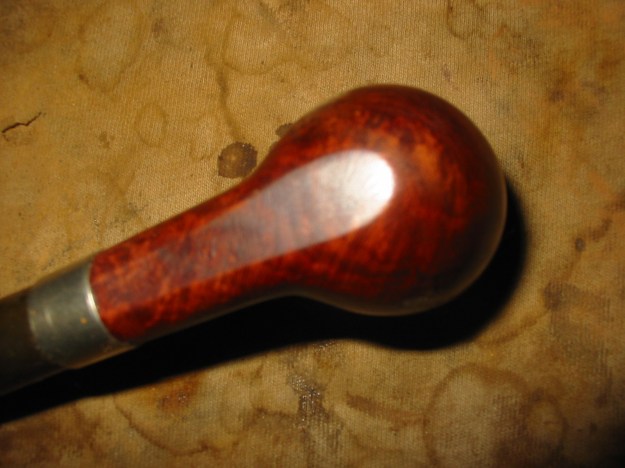
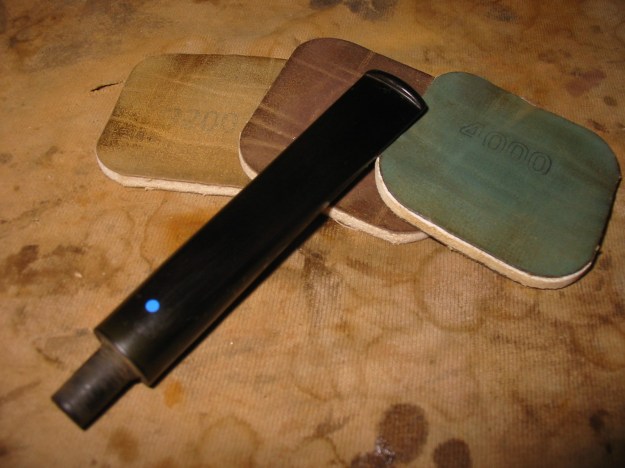
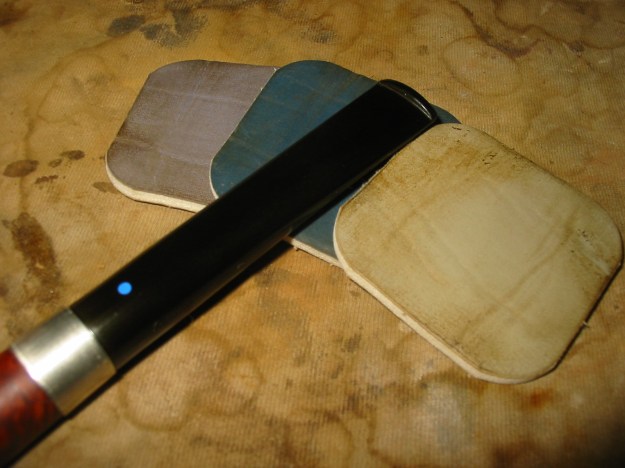
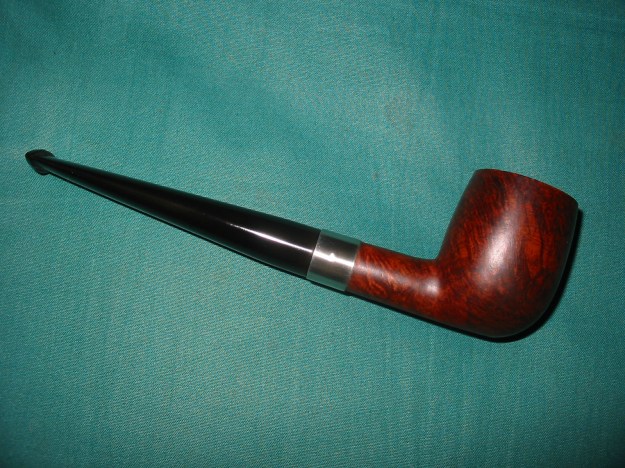
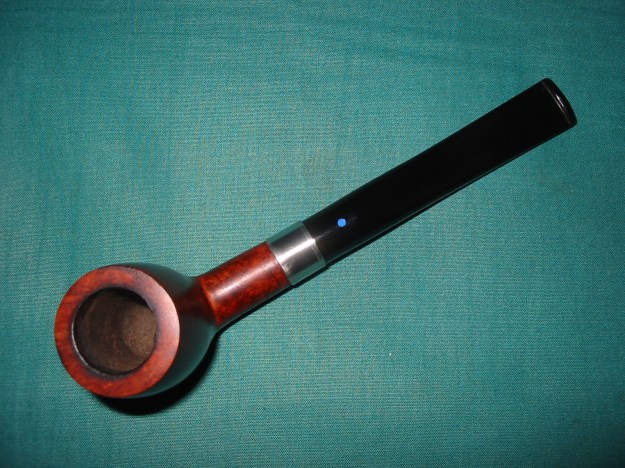
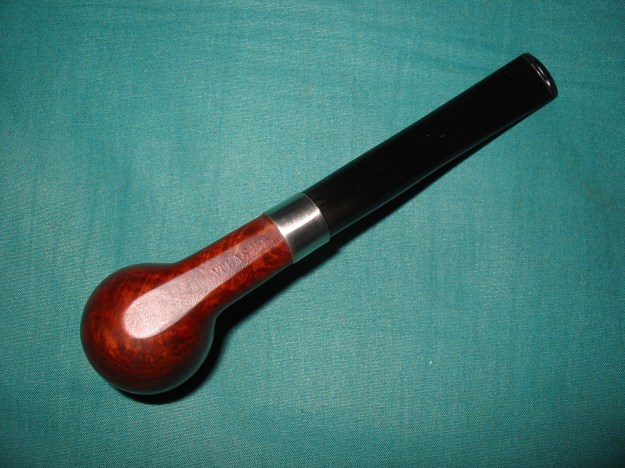
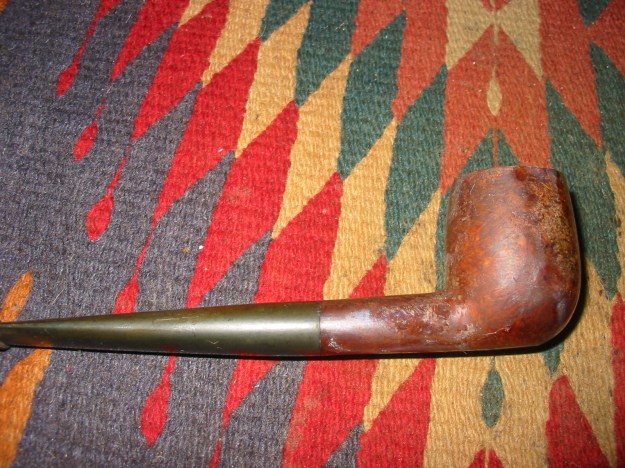
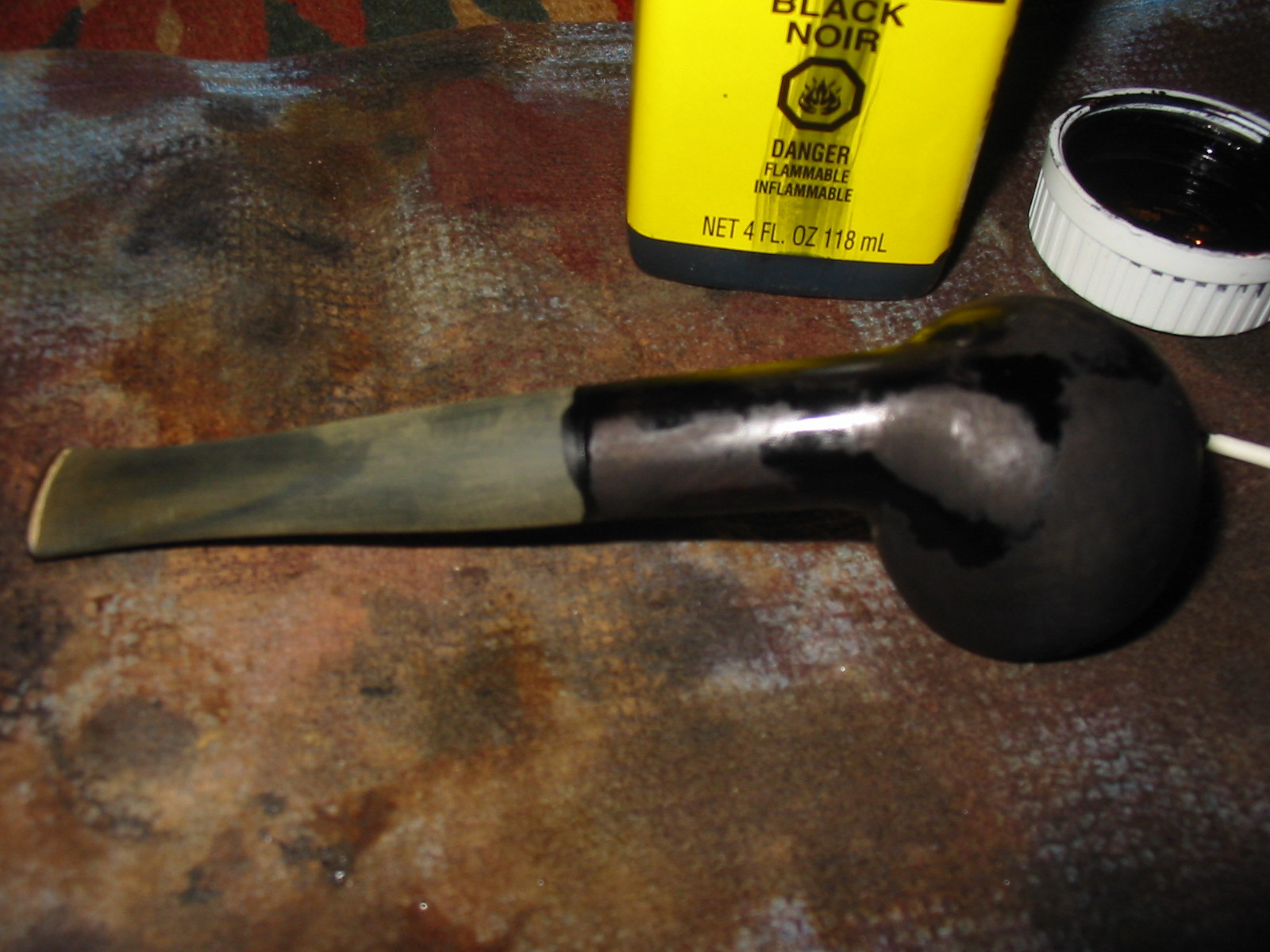
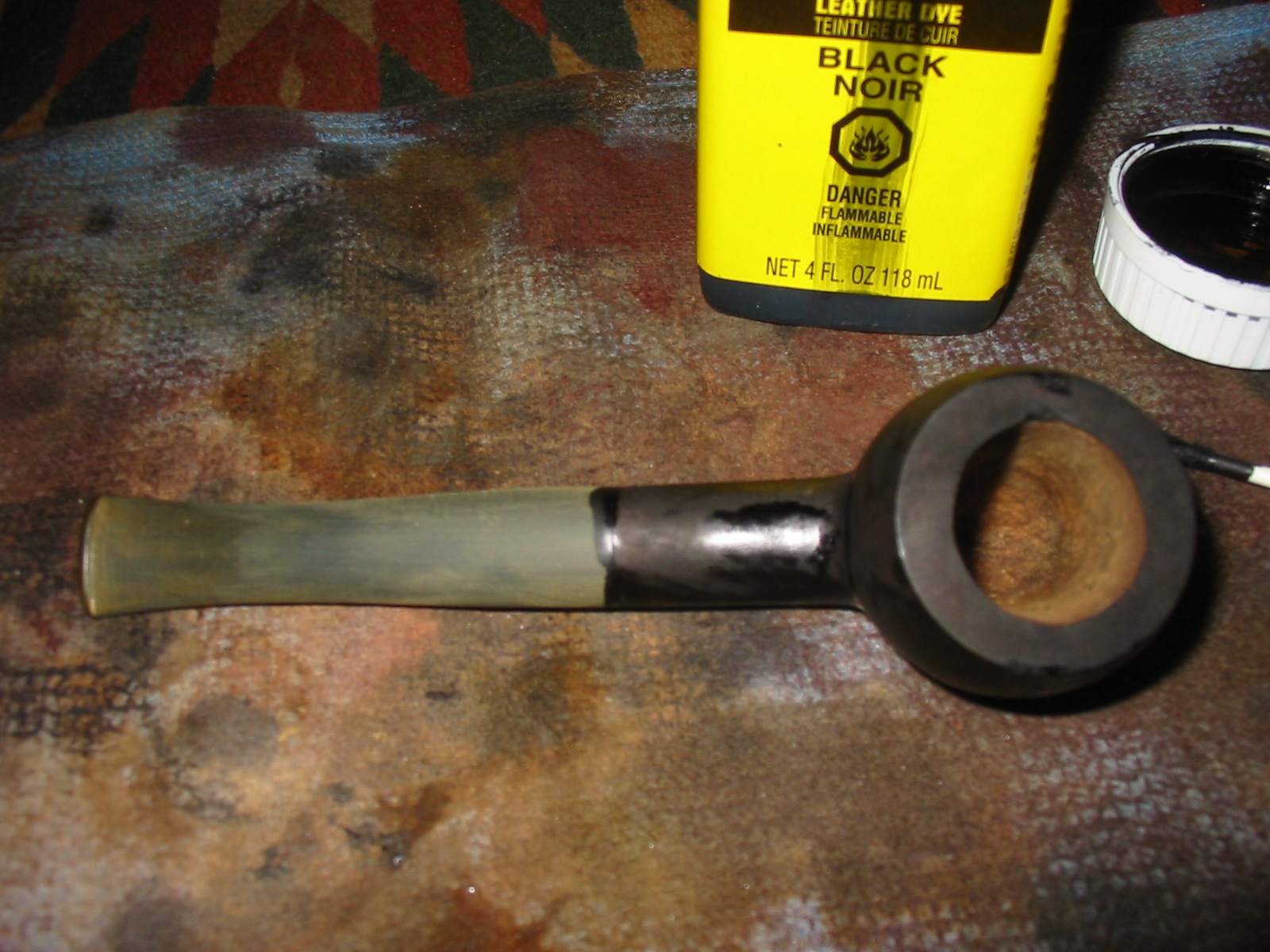
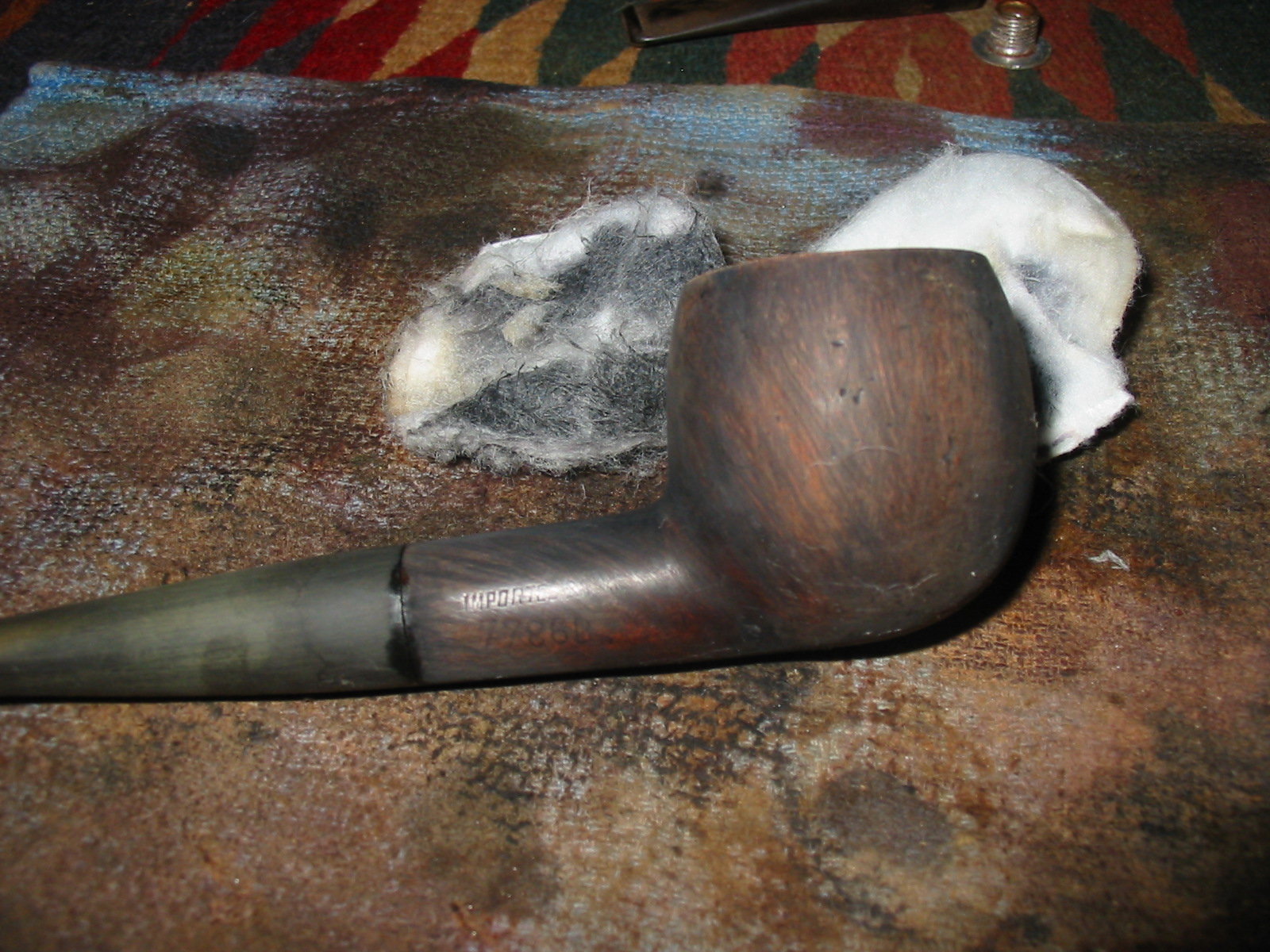
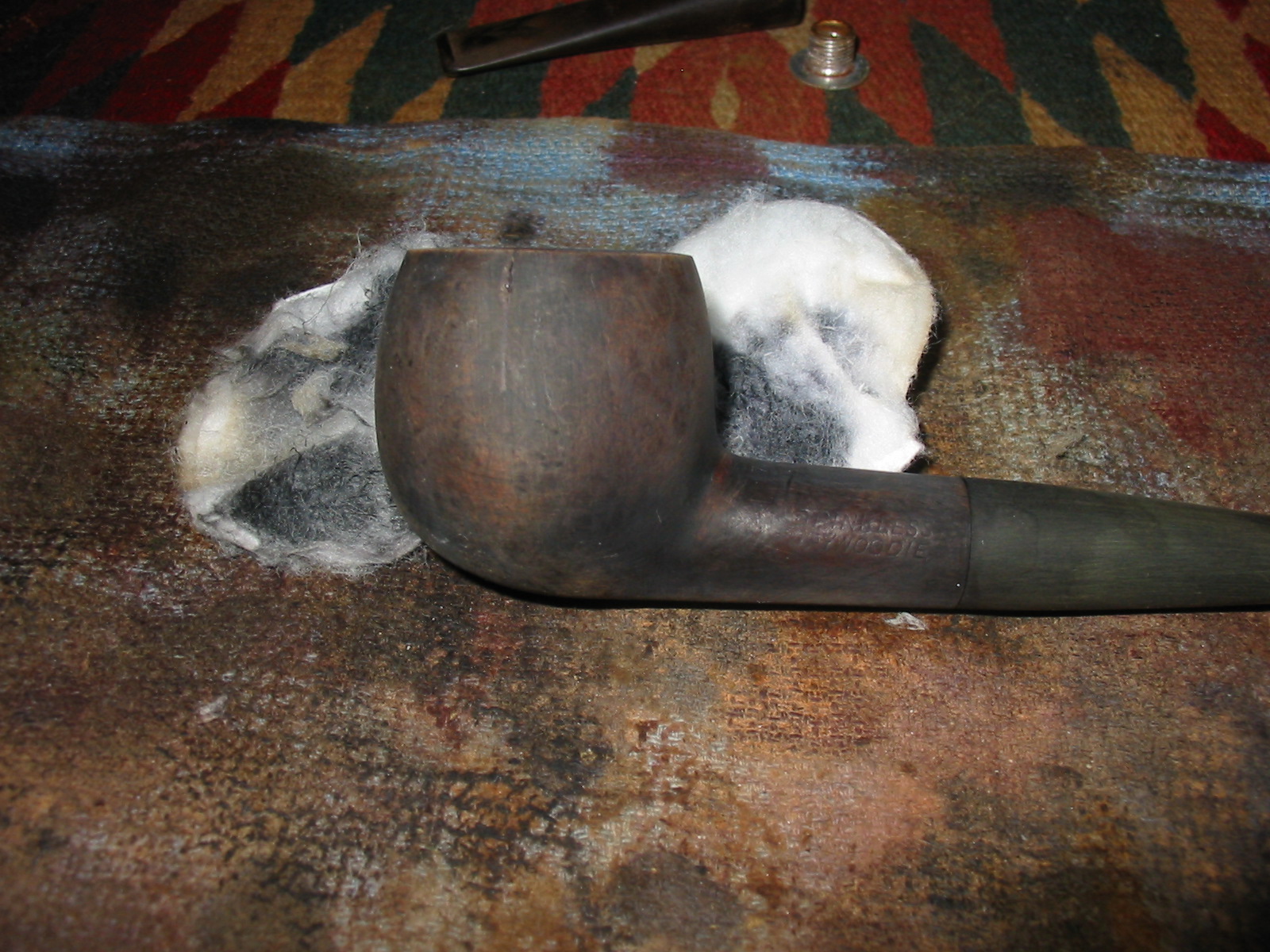
Tag Archives: contrast staining

Topping and Refinishing a Dansk Handvaerk Thorshammer Bruyere


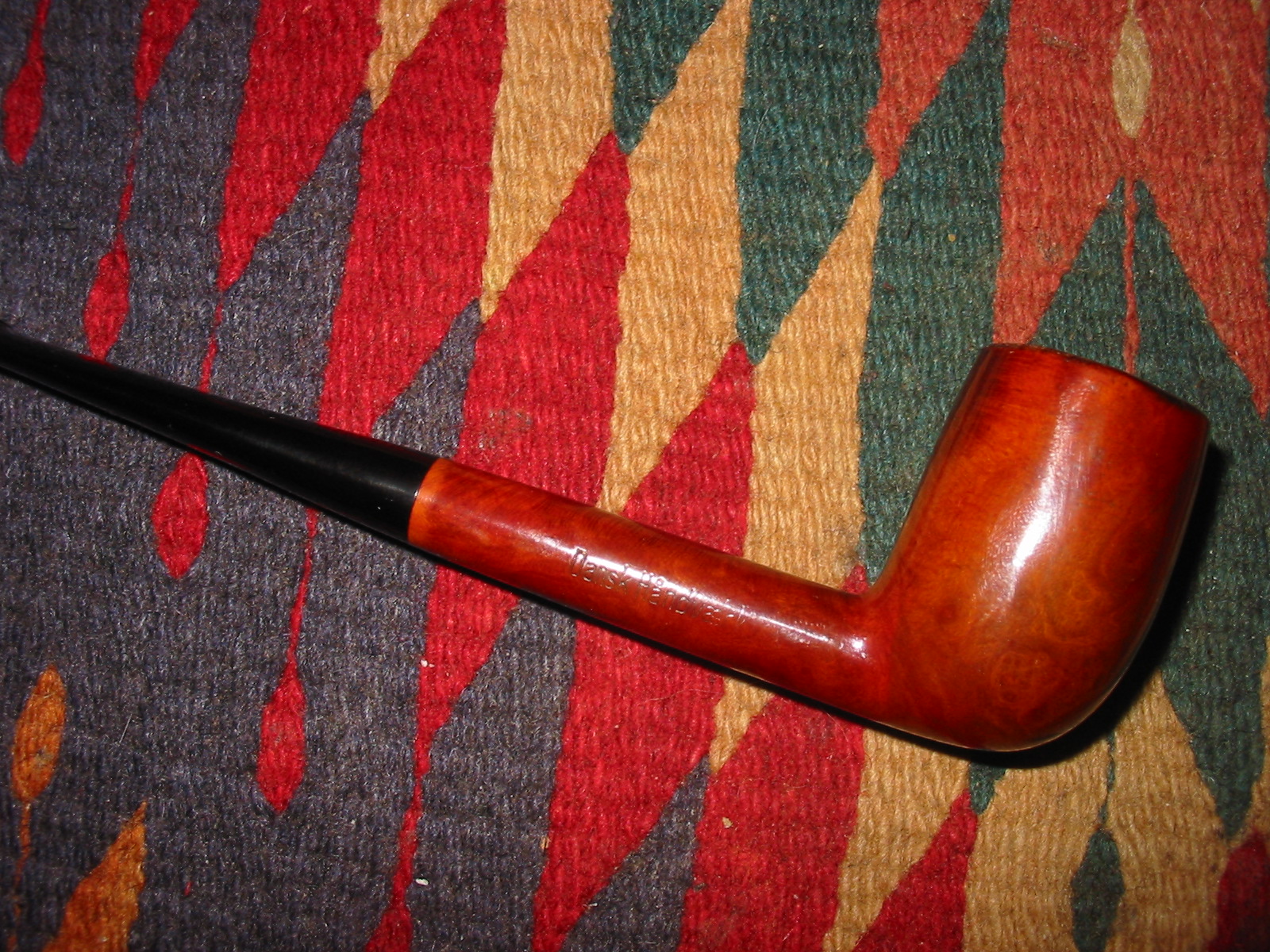
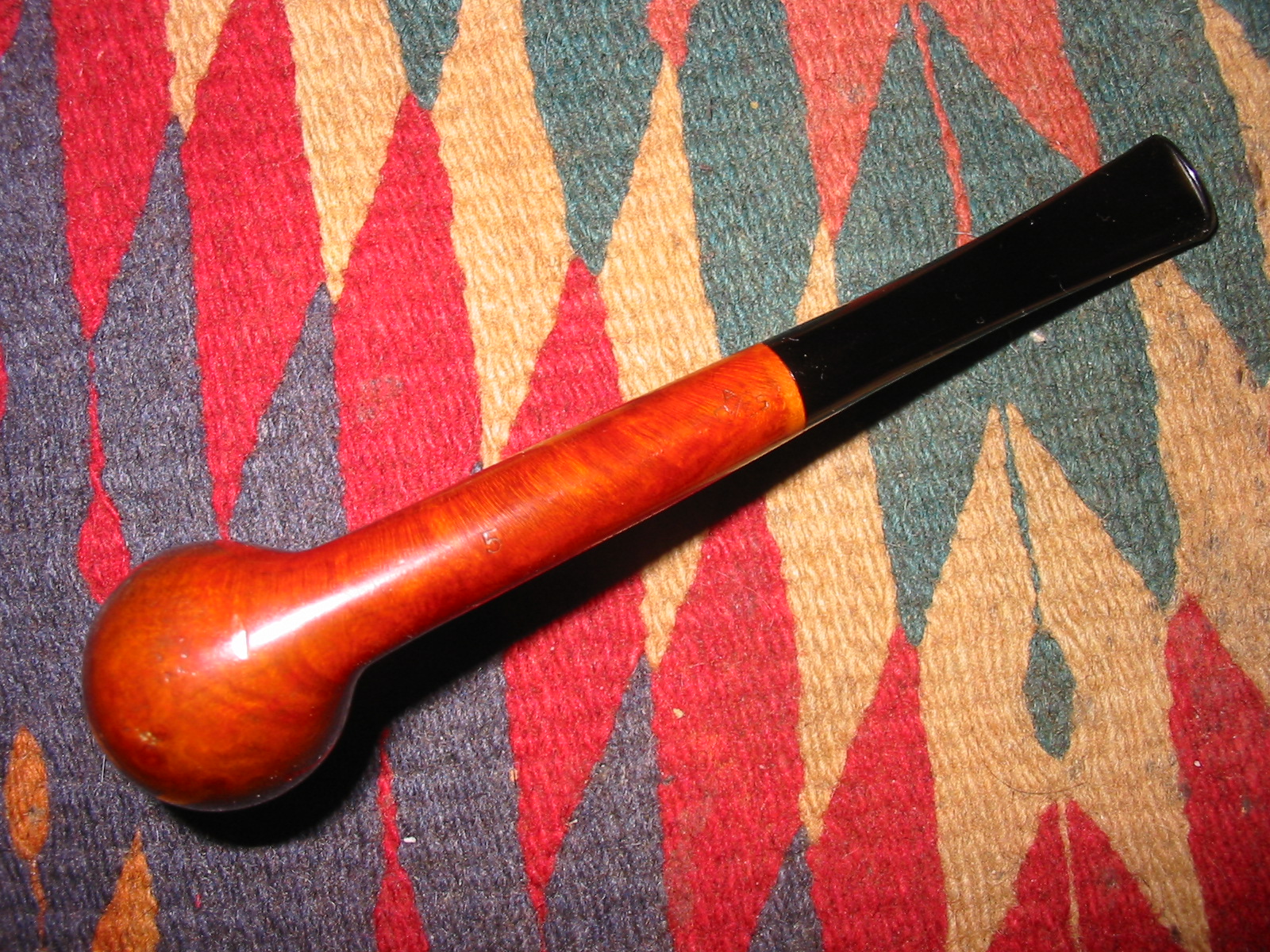
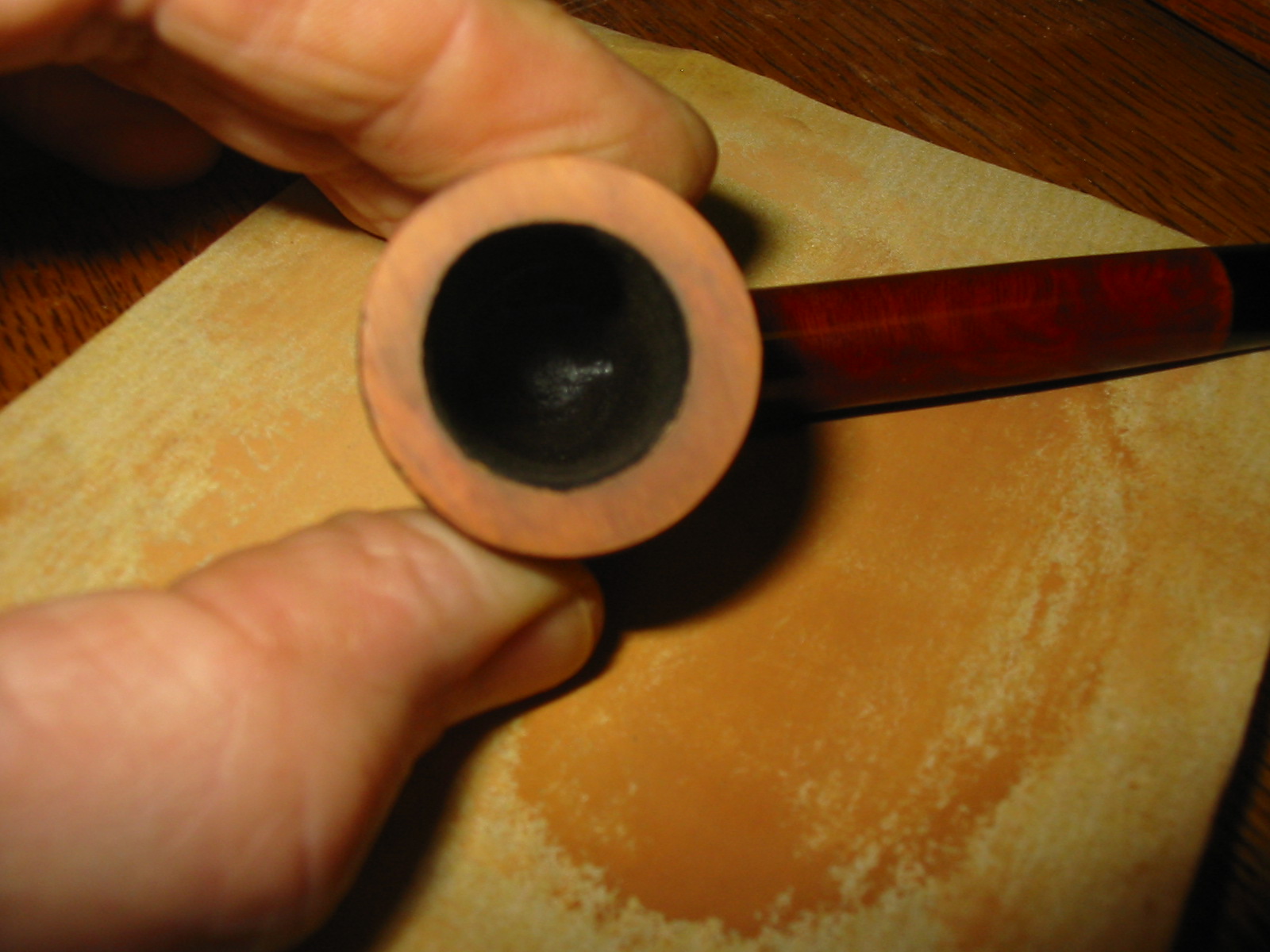
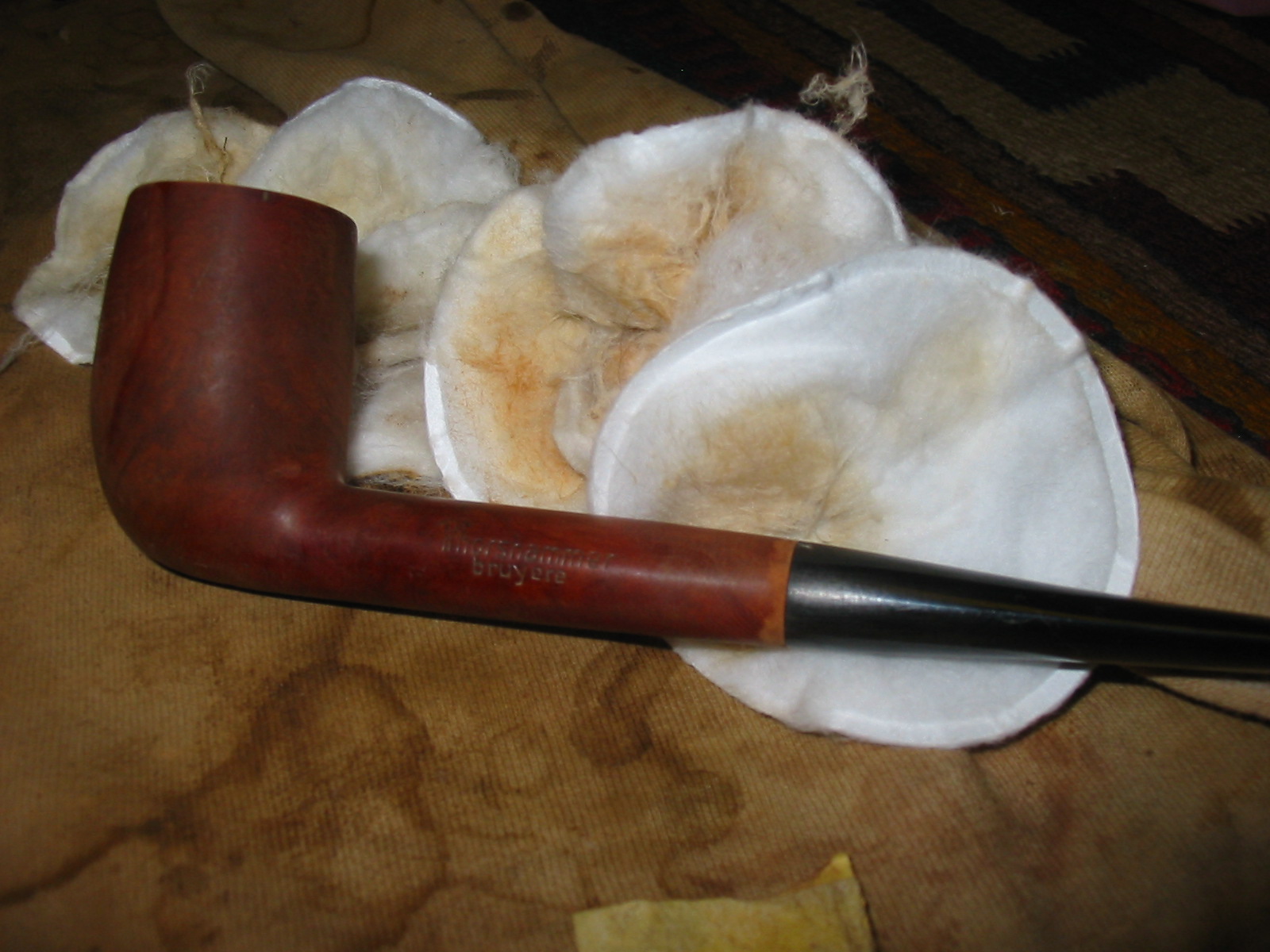
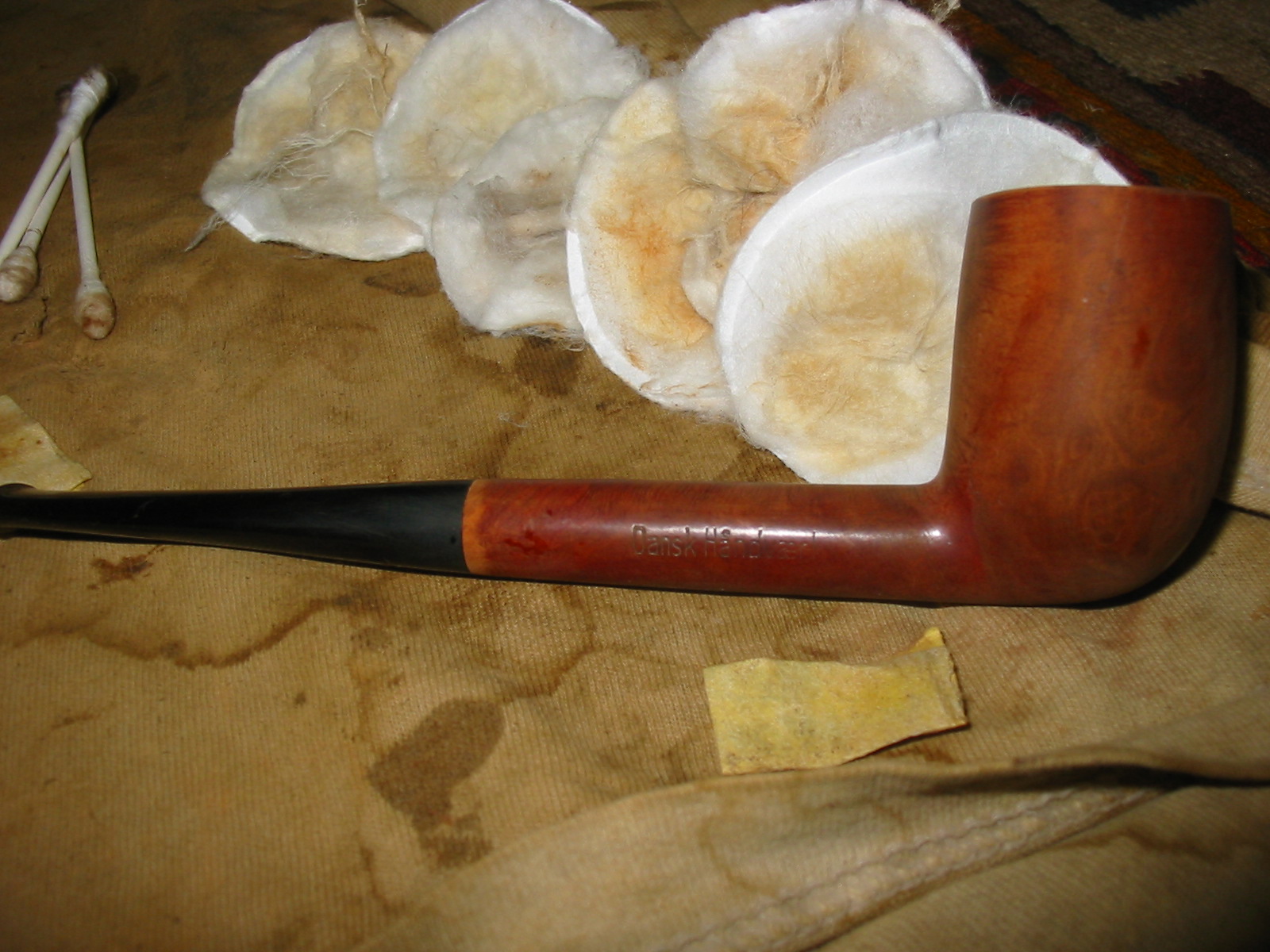
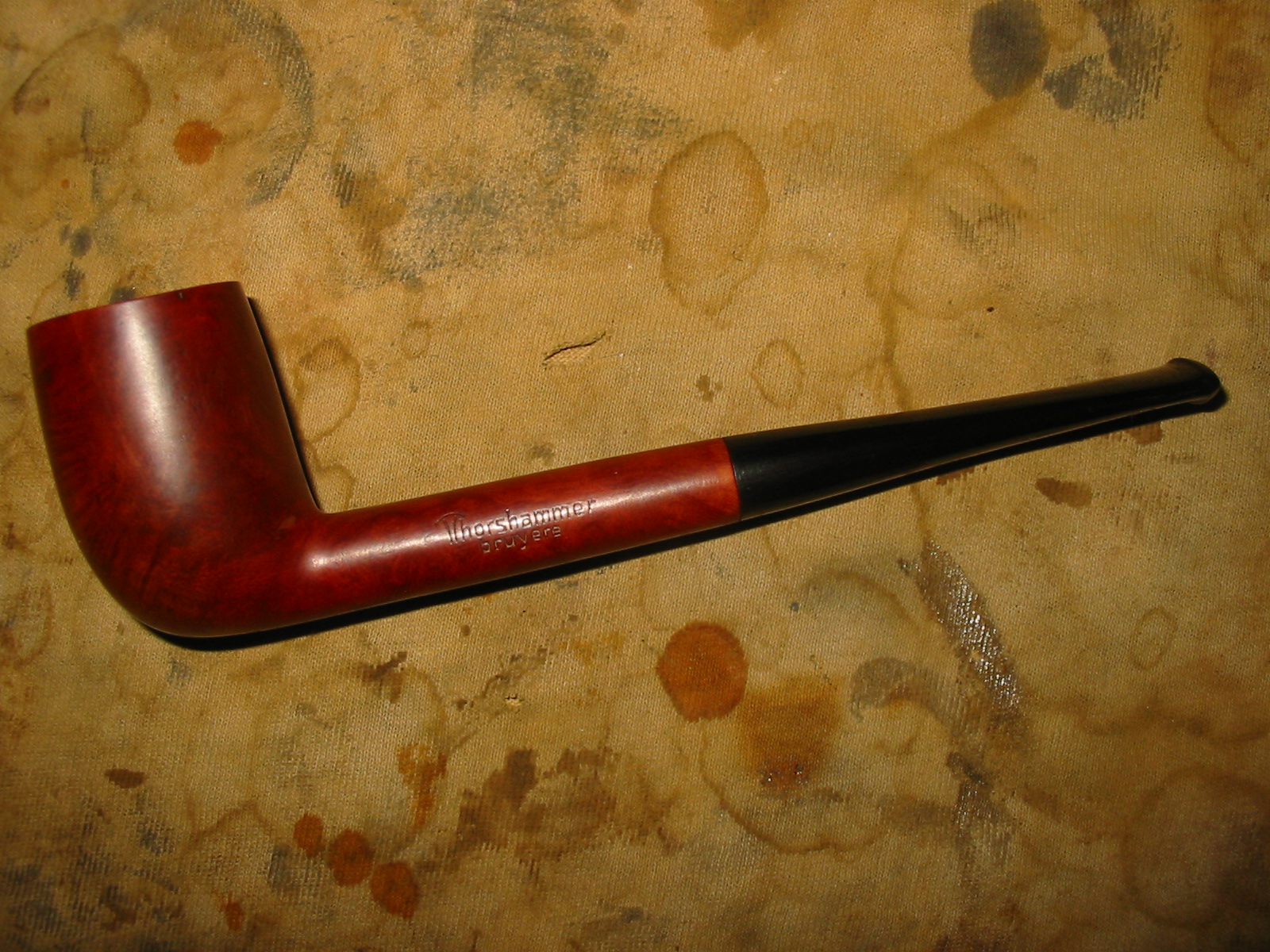
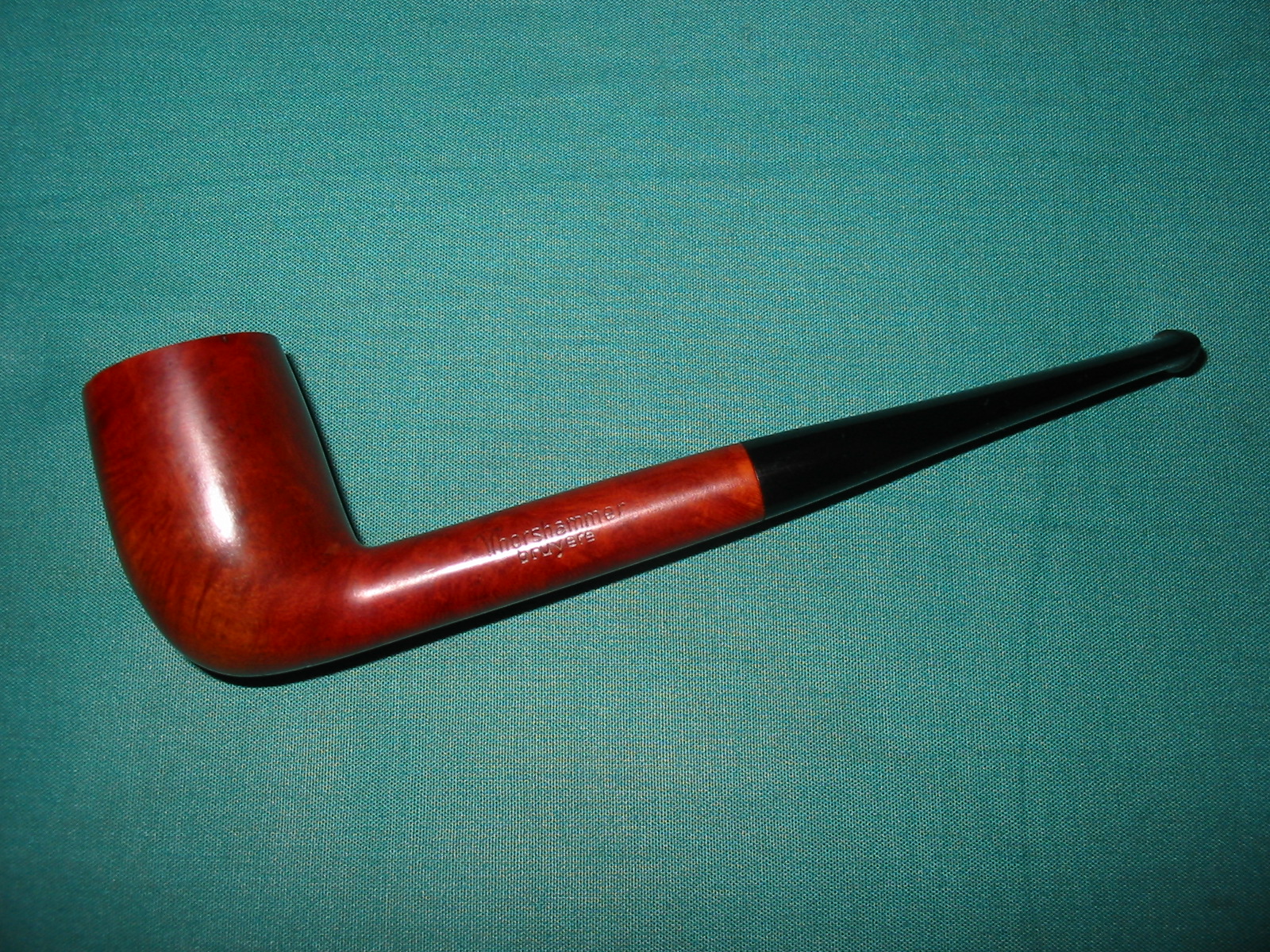
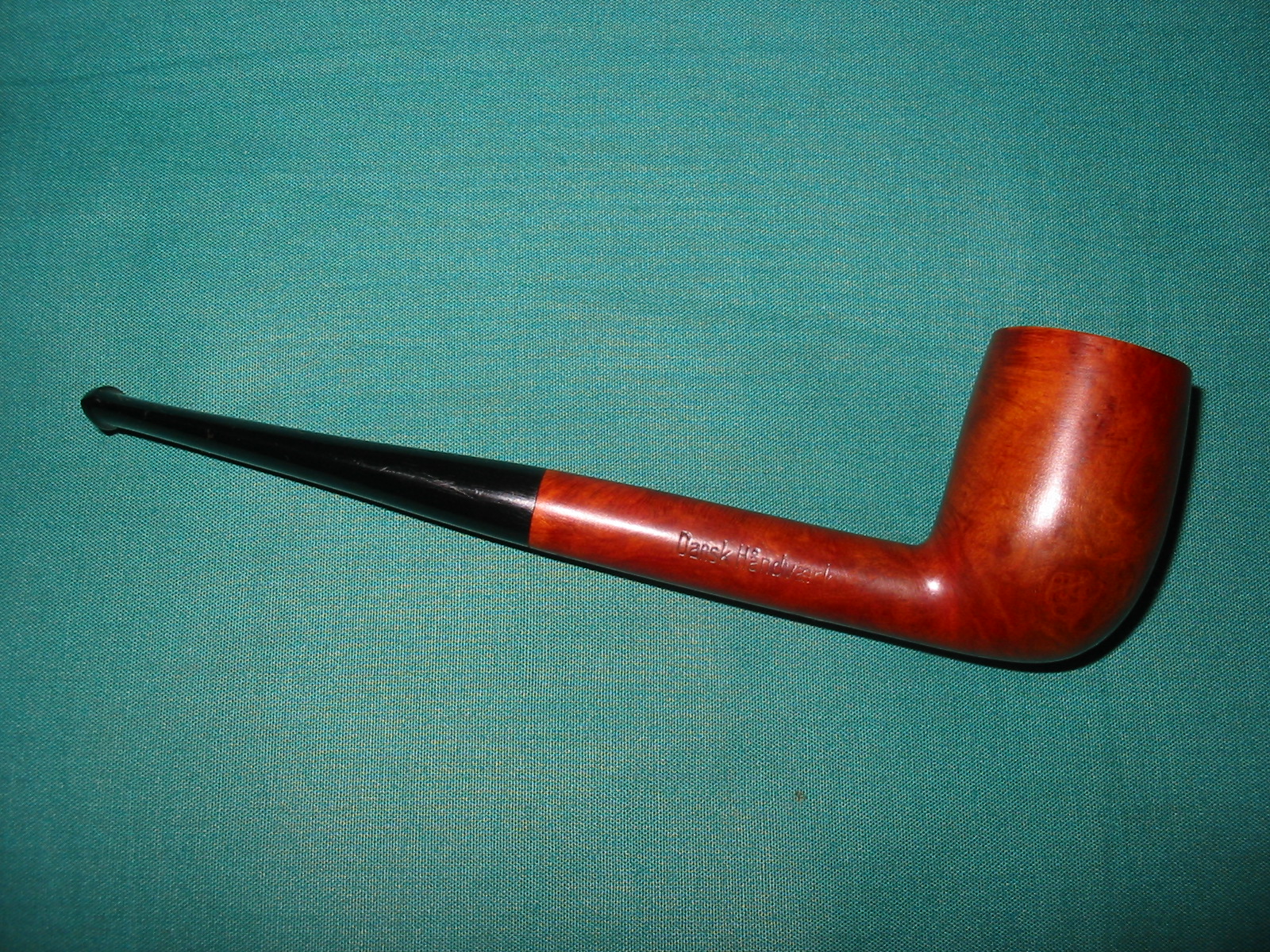
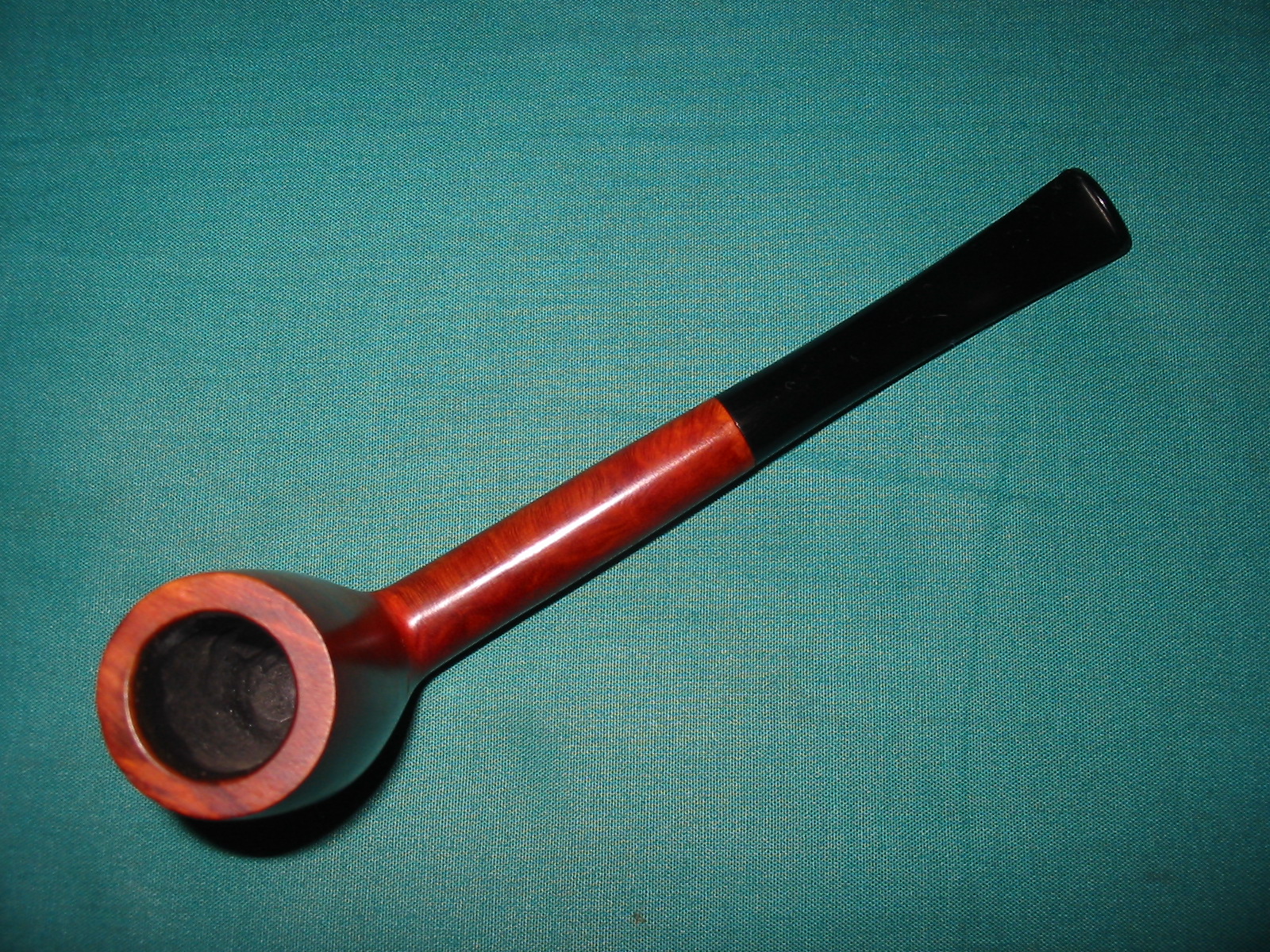
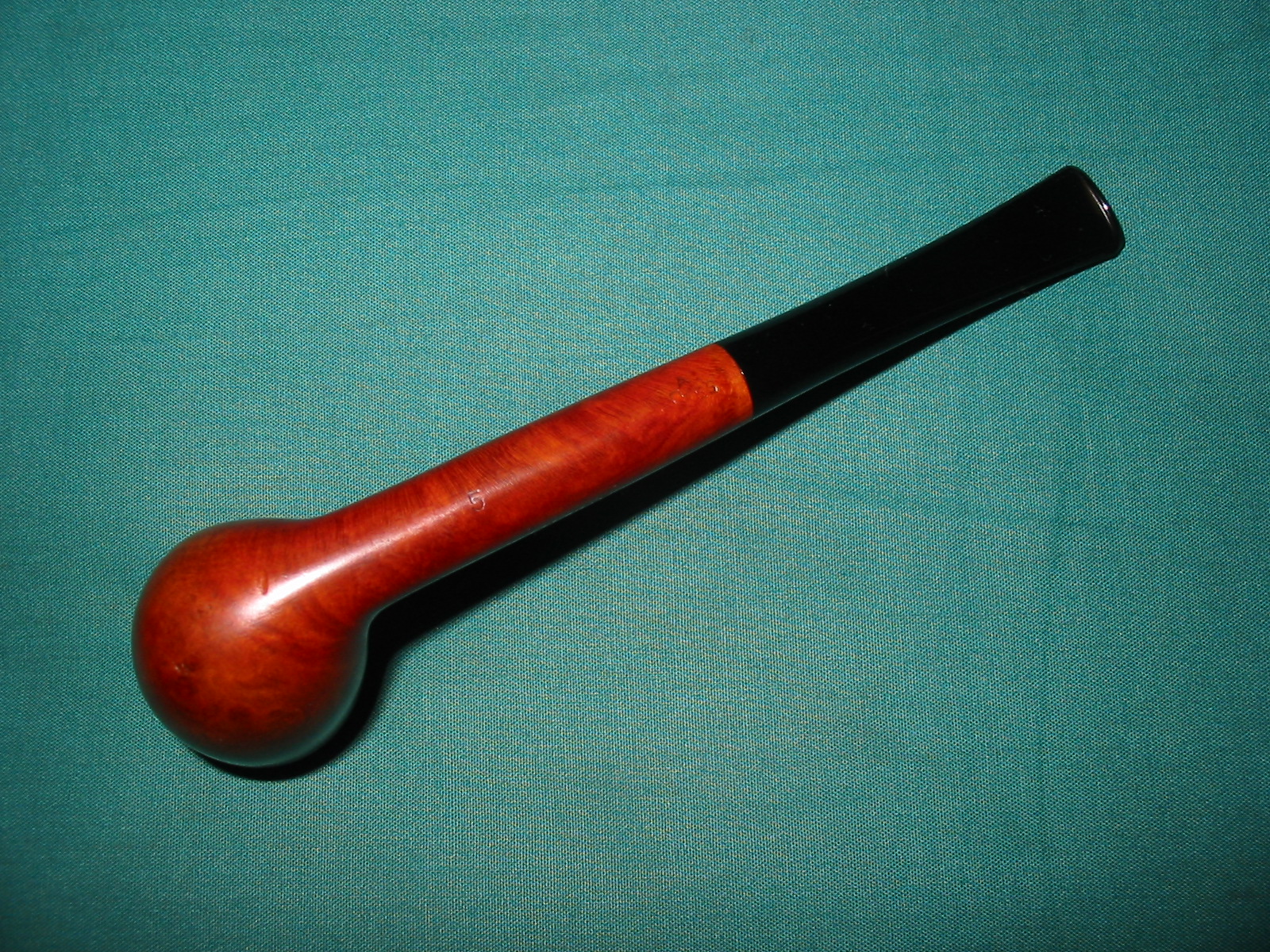
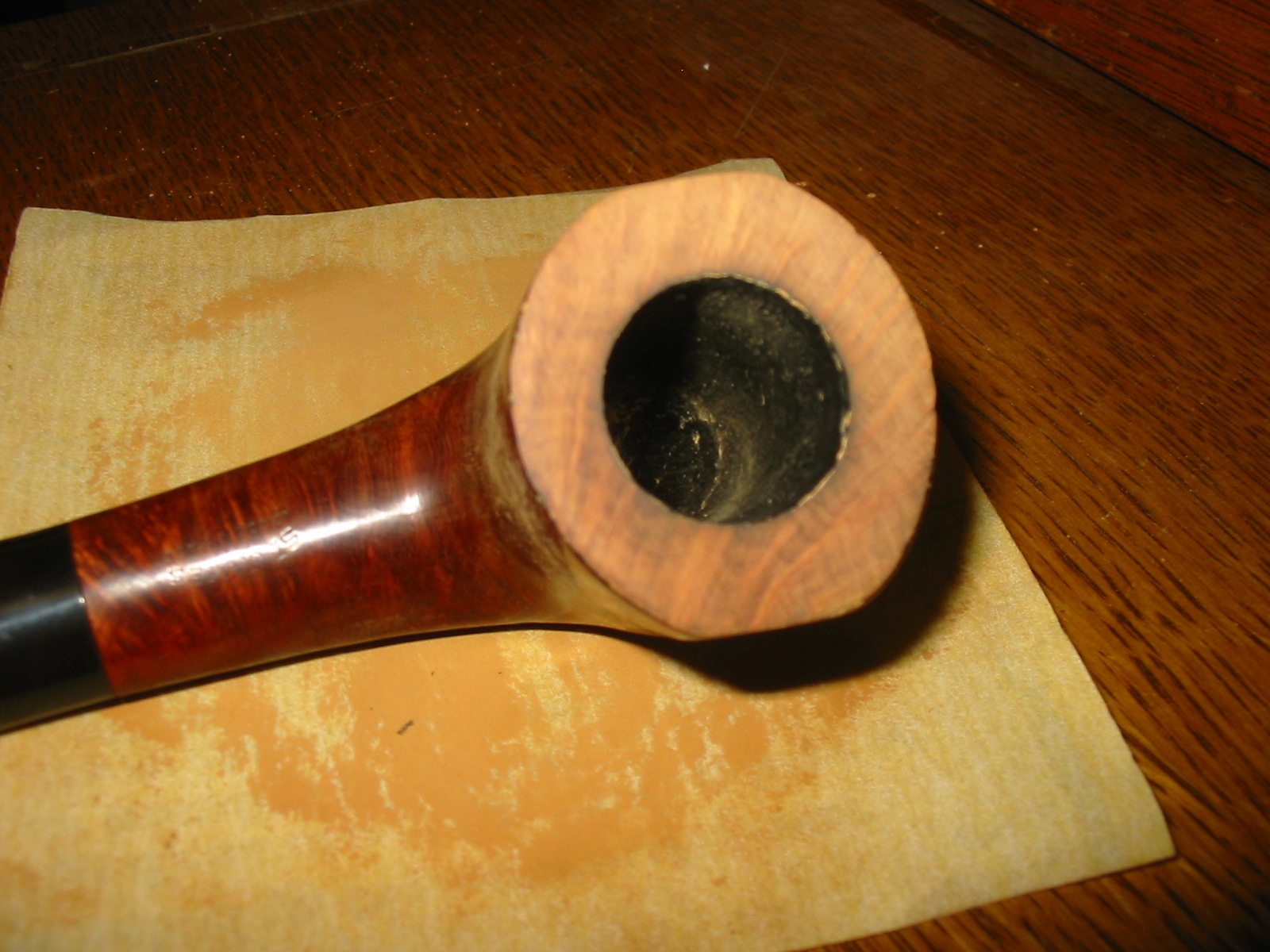
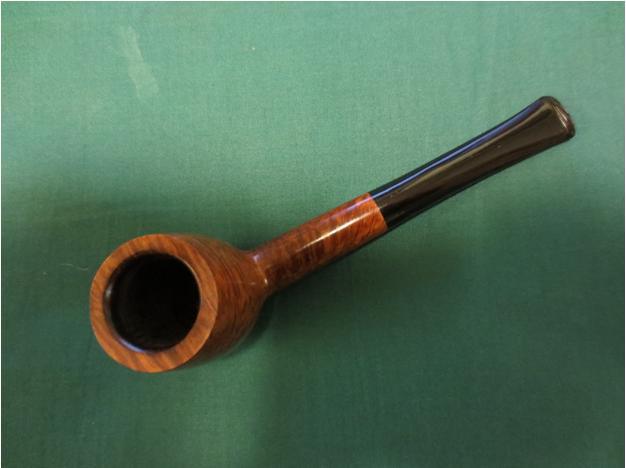
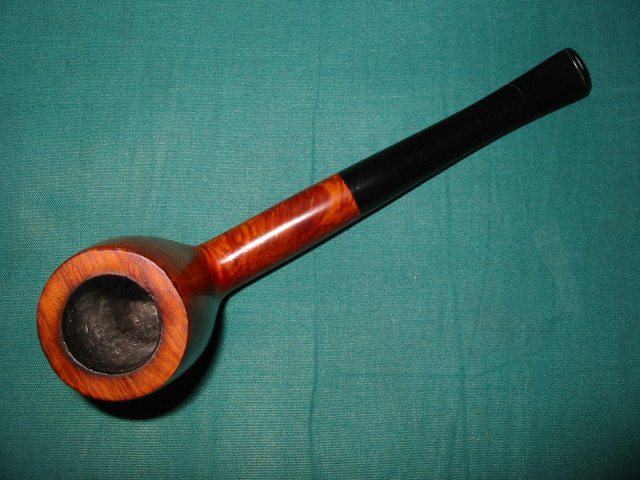
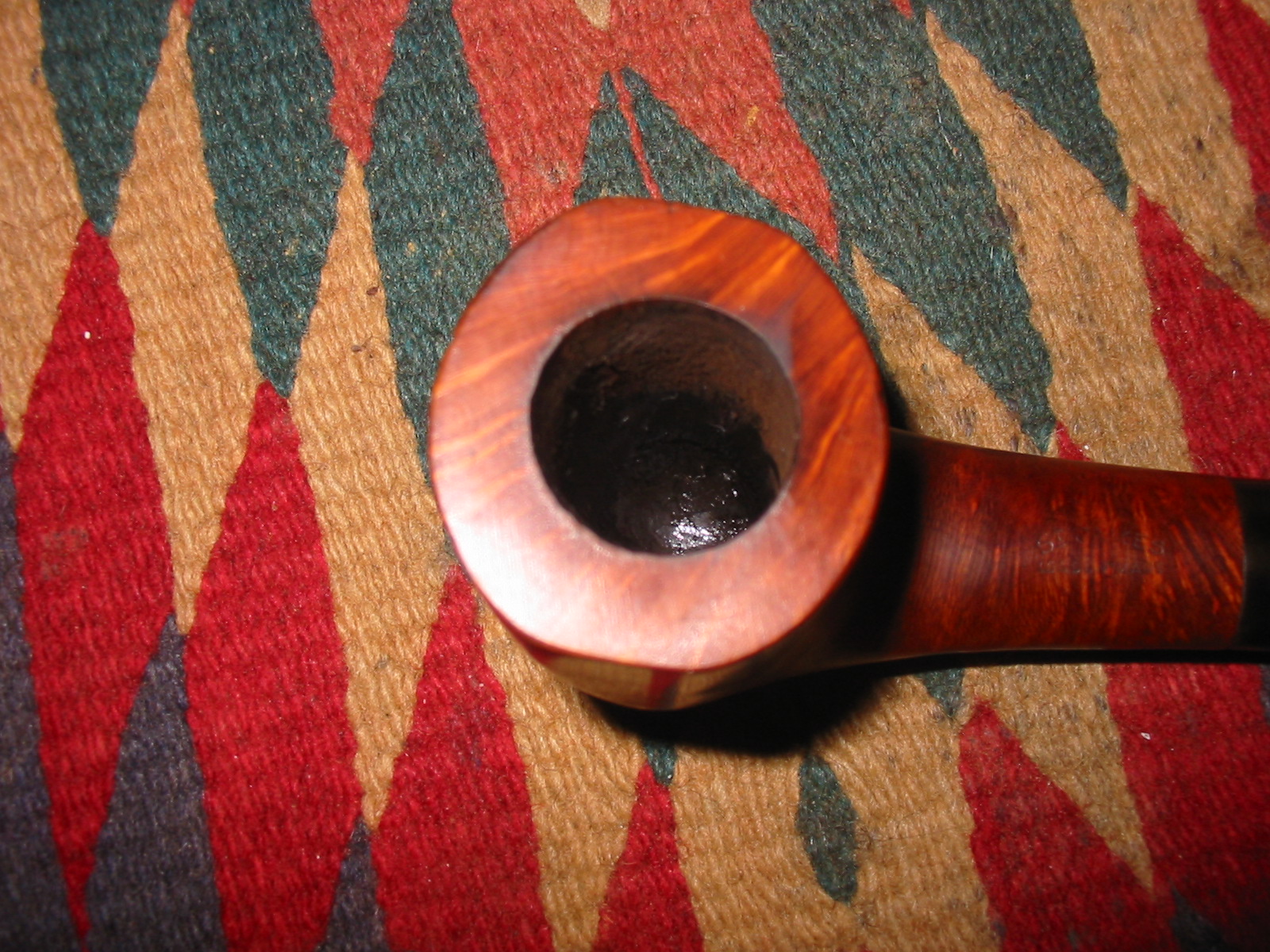
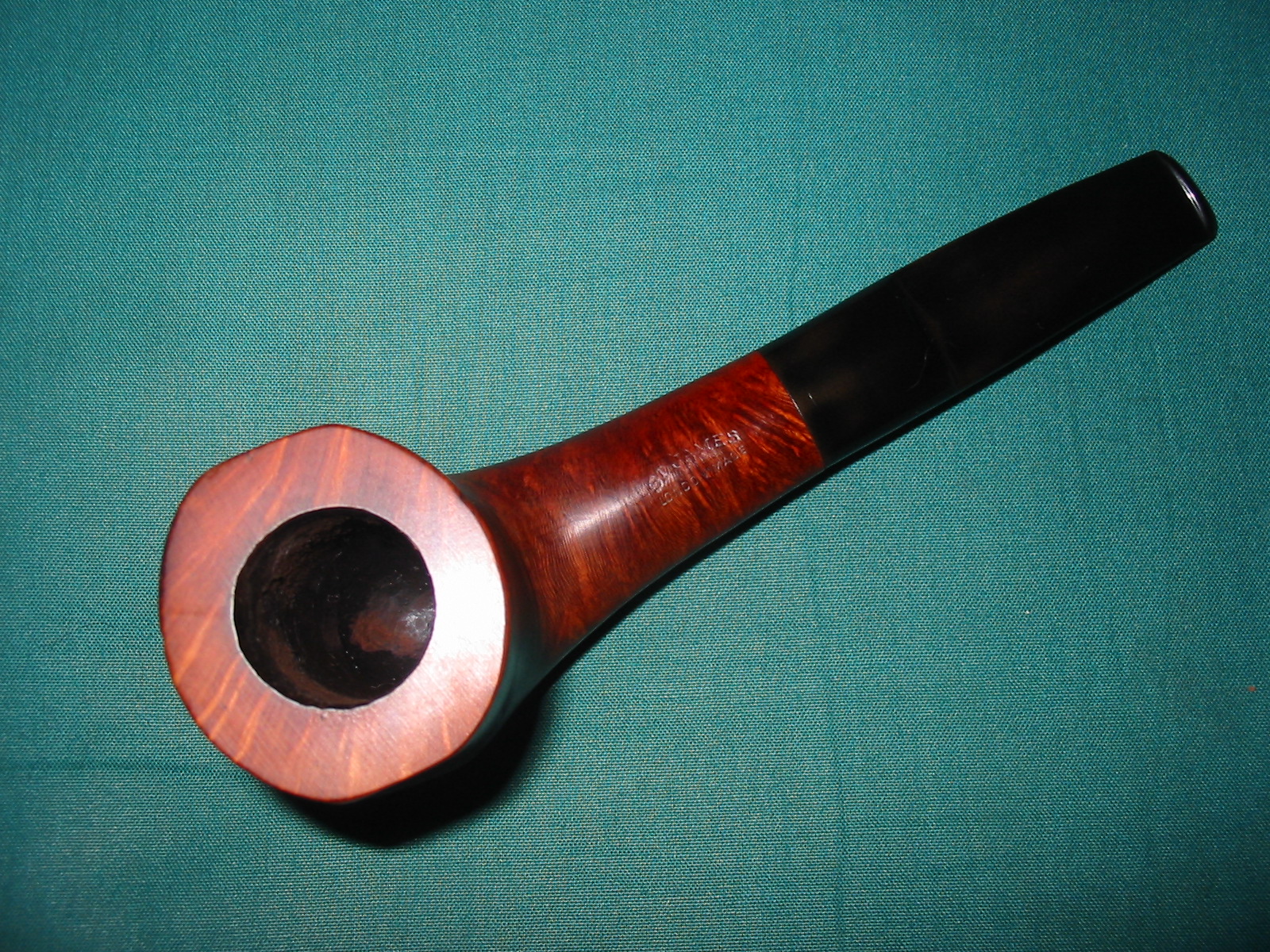
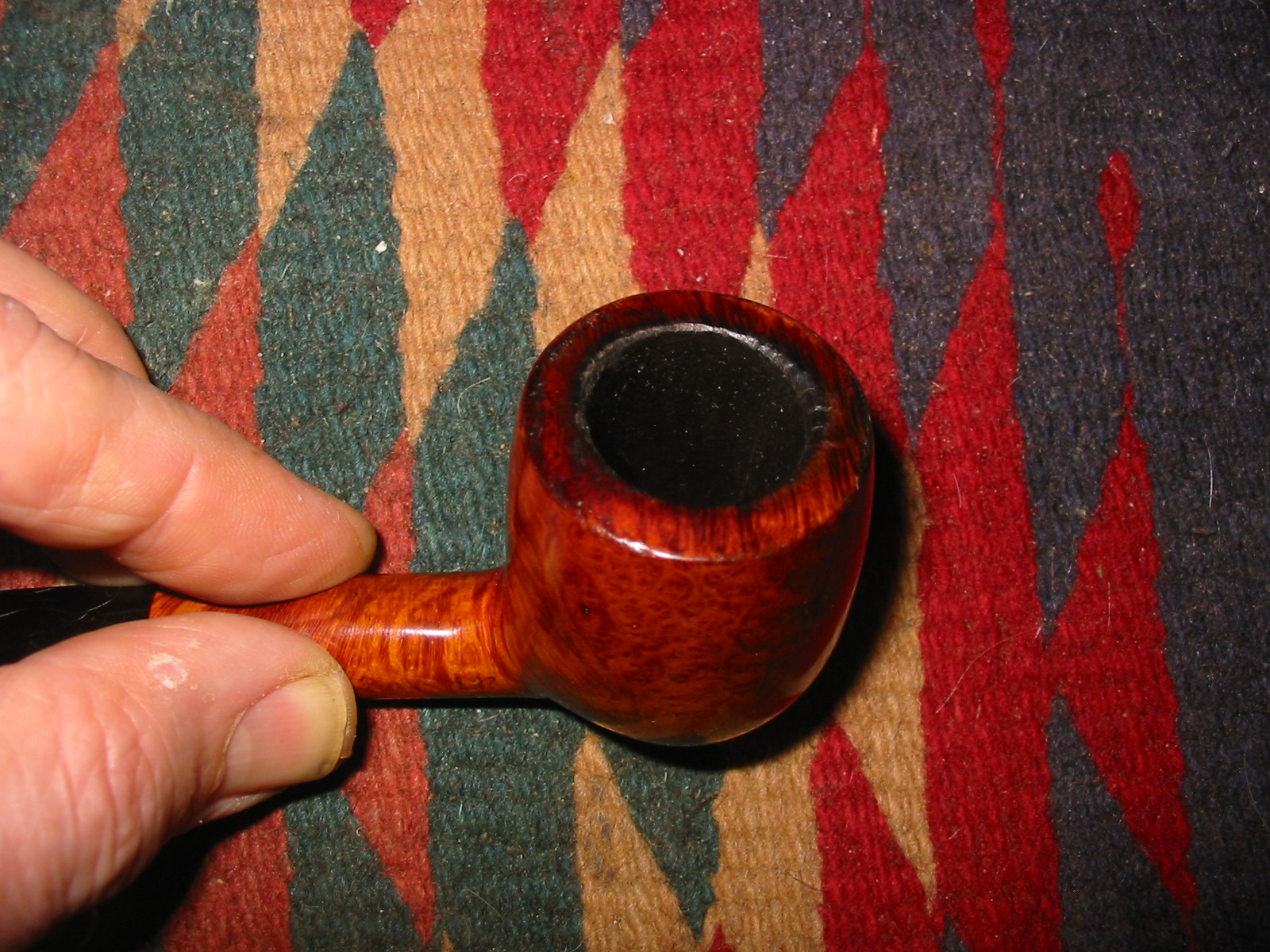
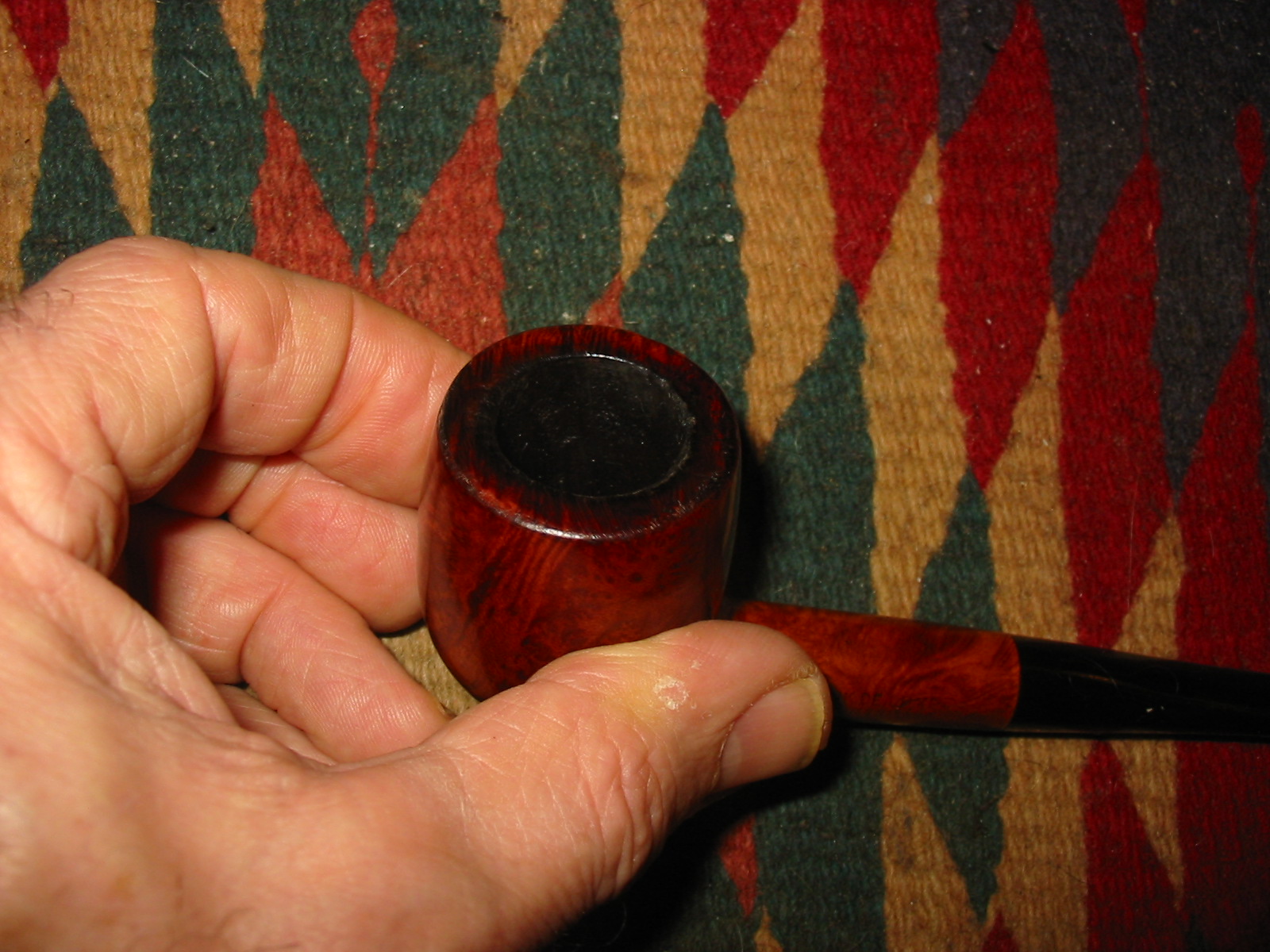
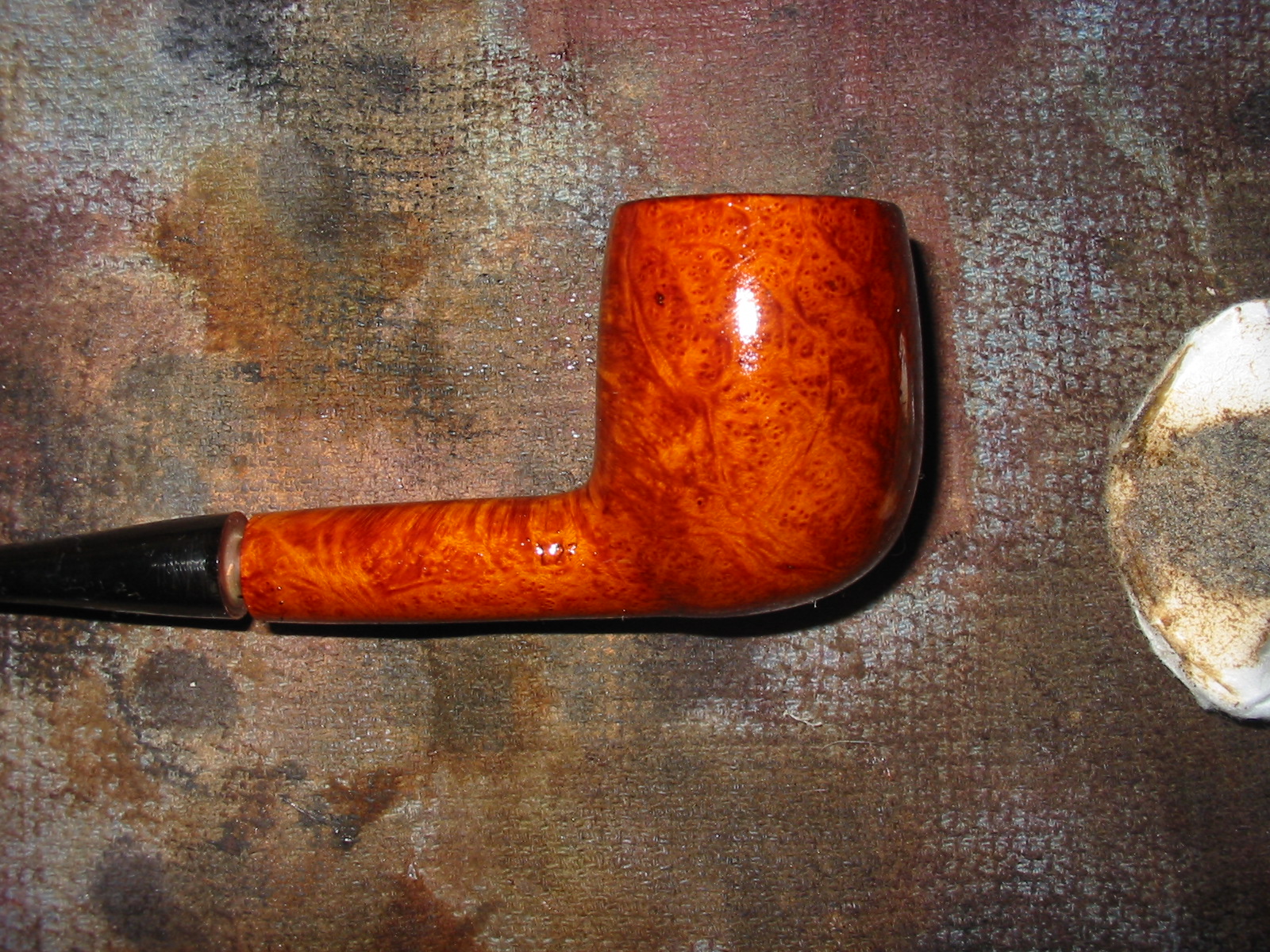
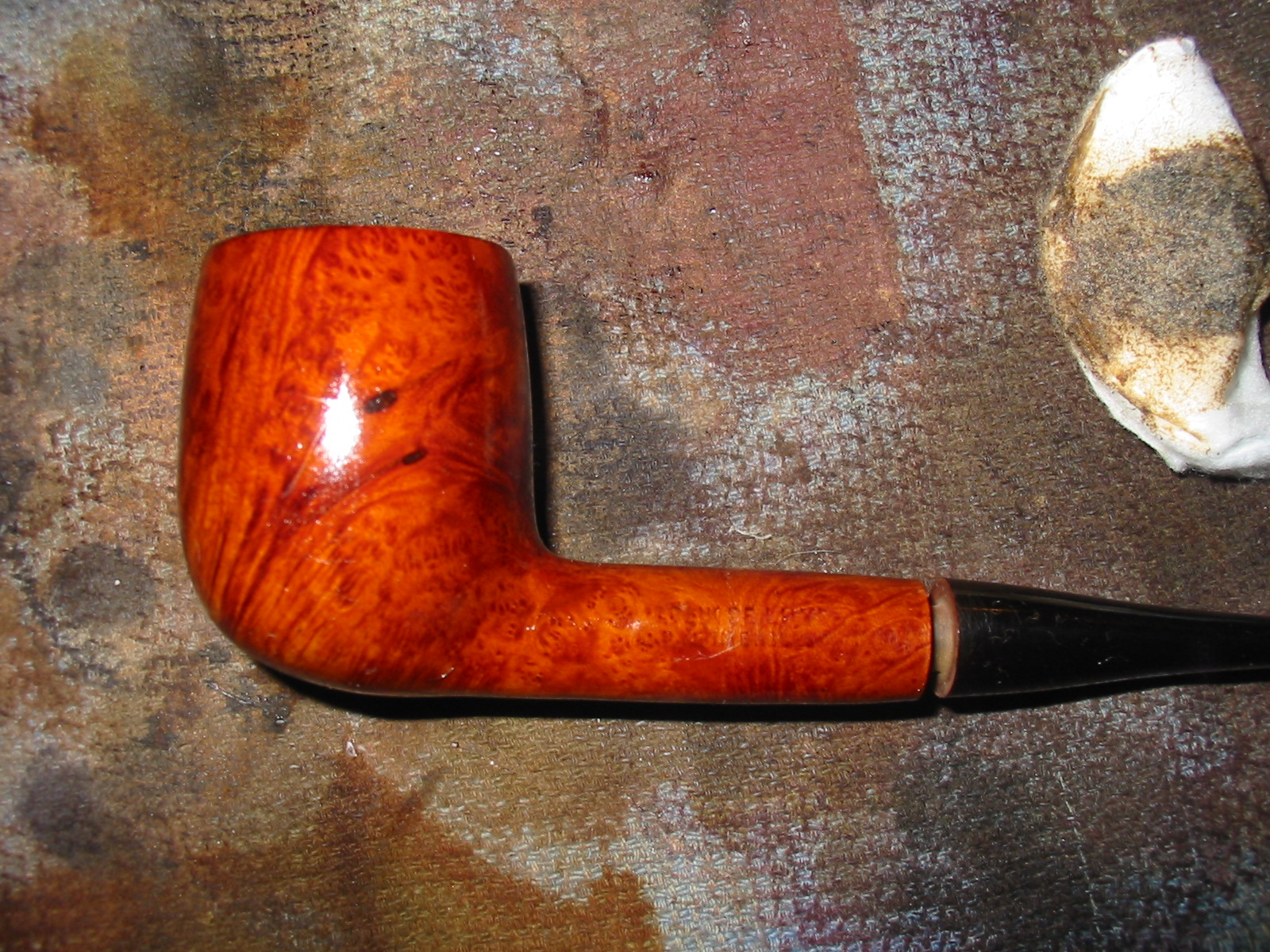
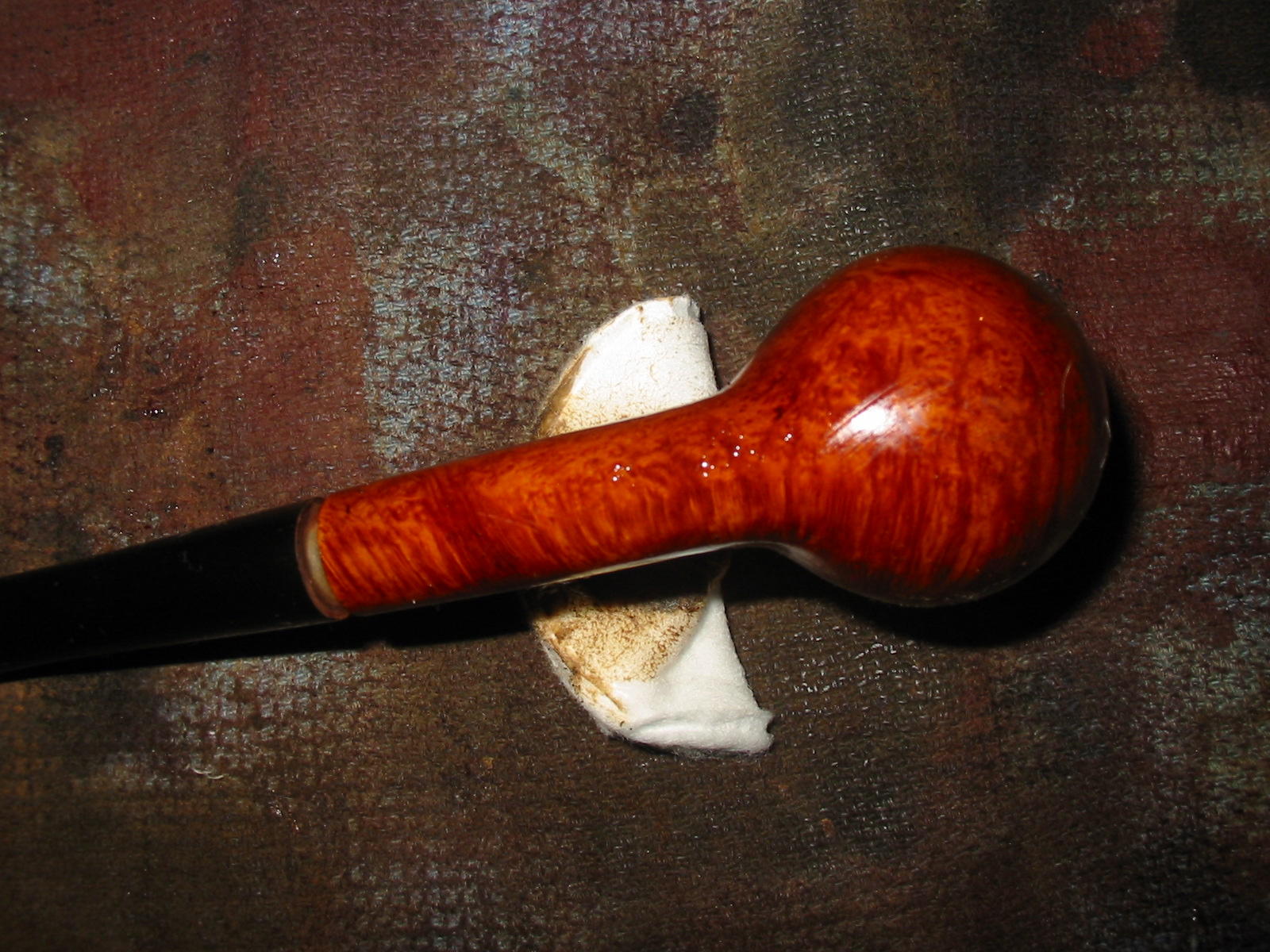
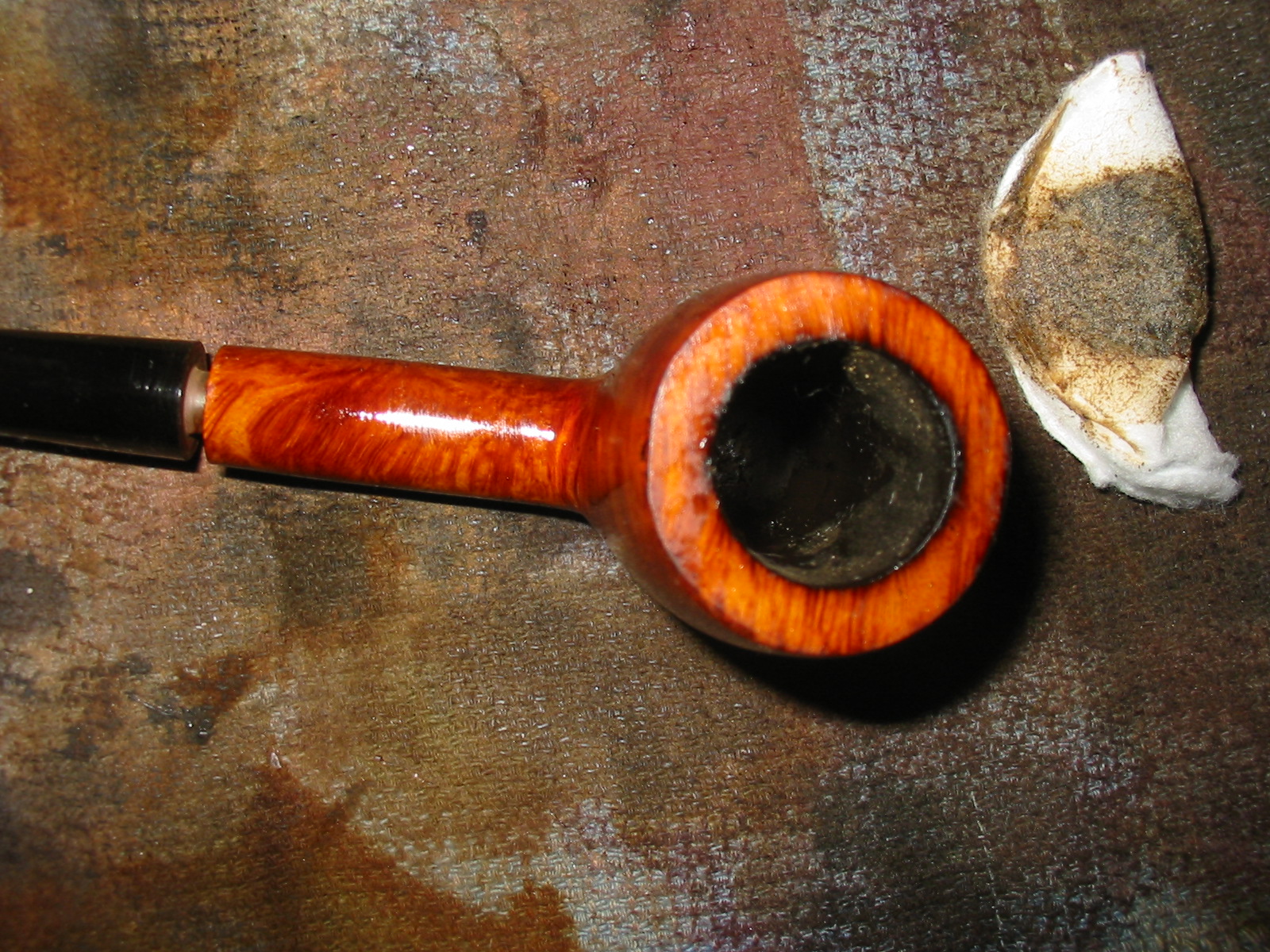
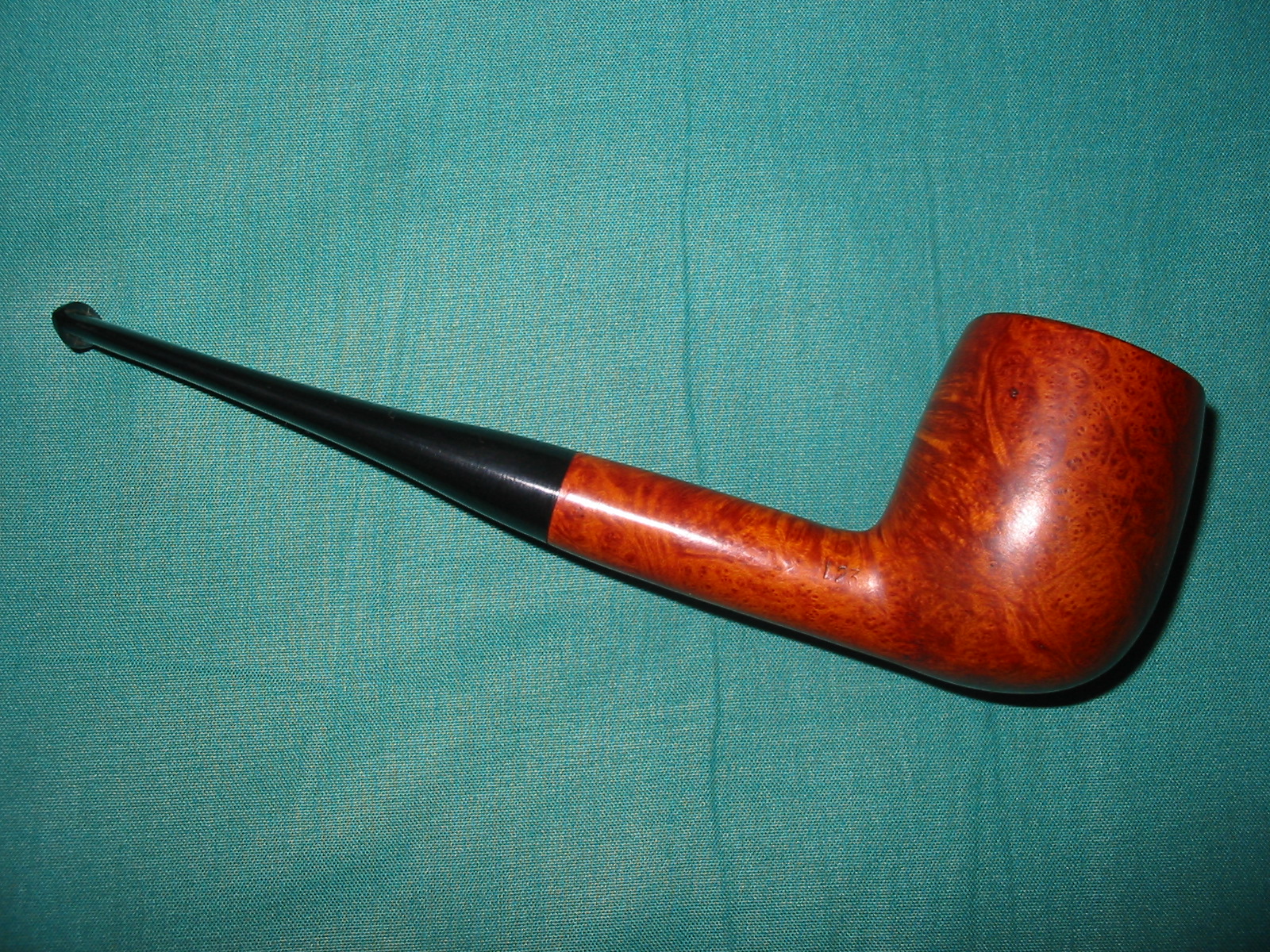
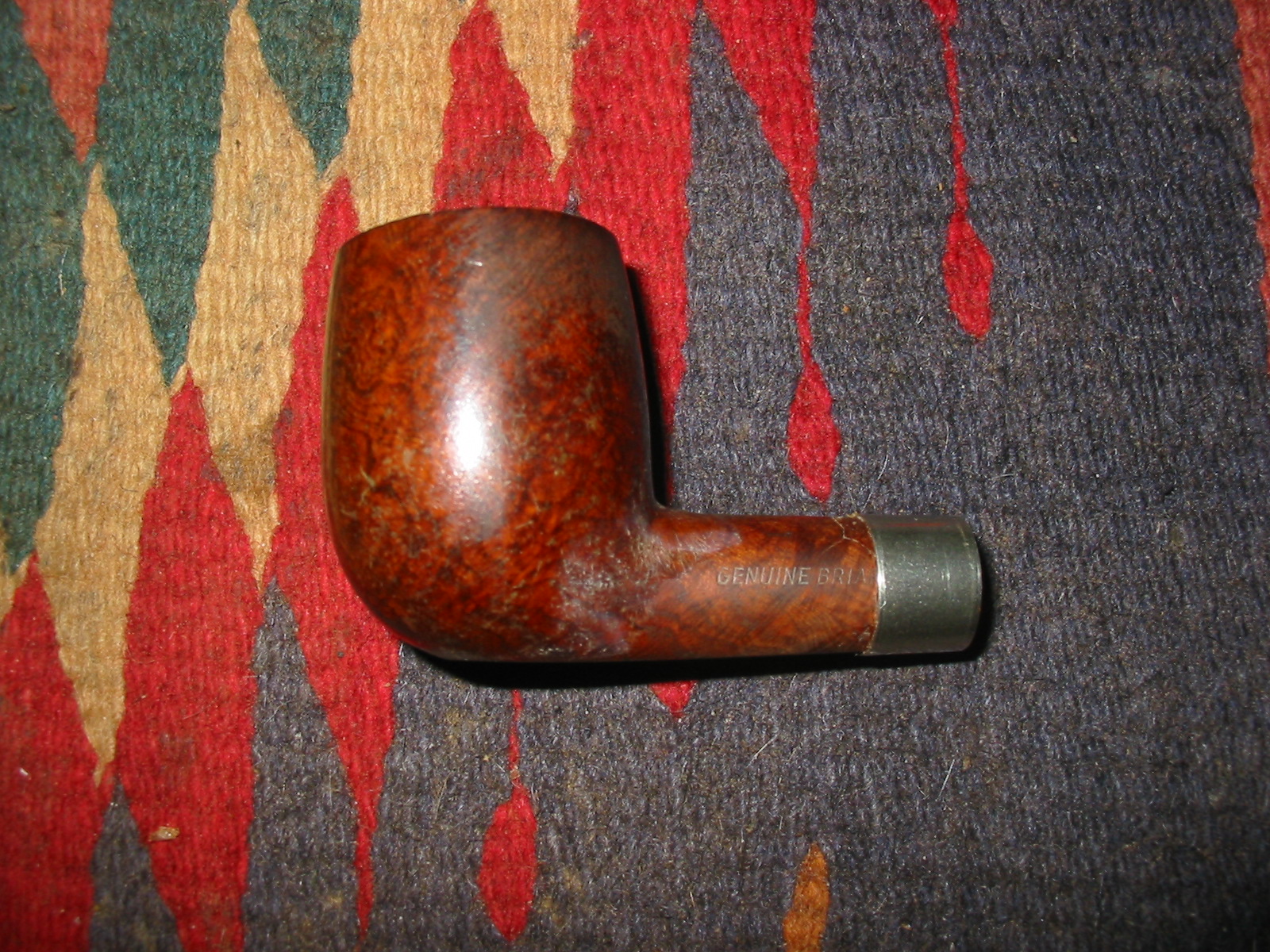
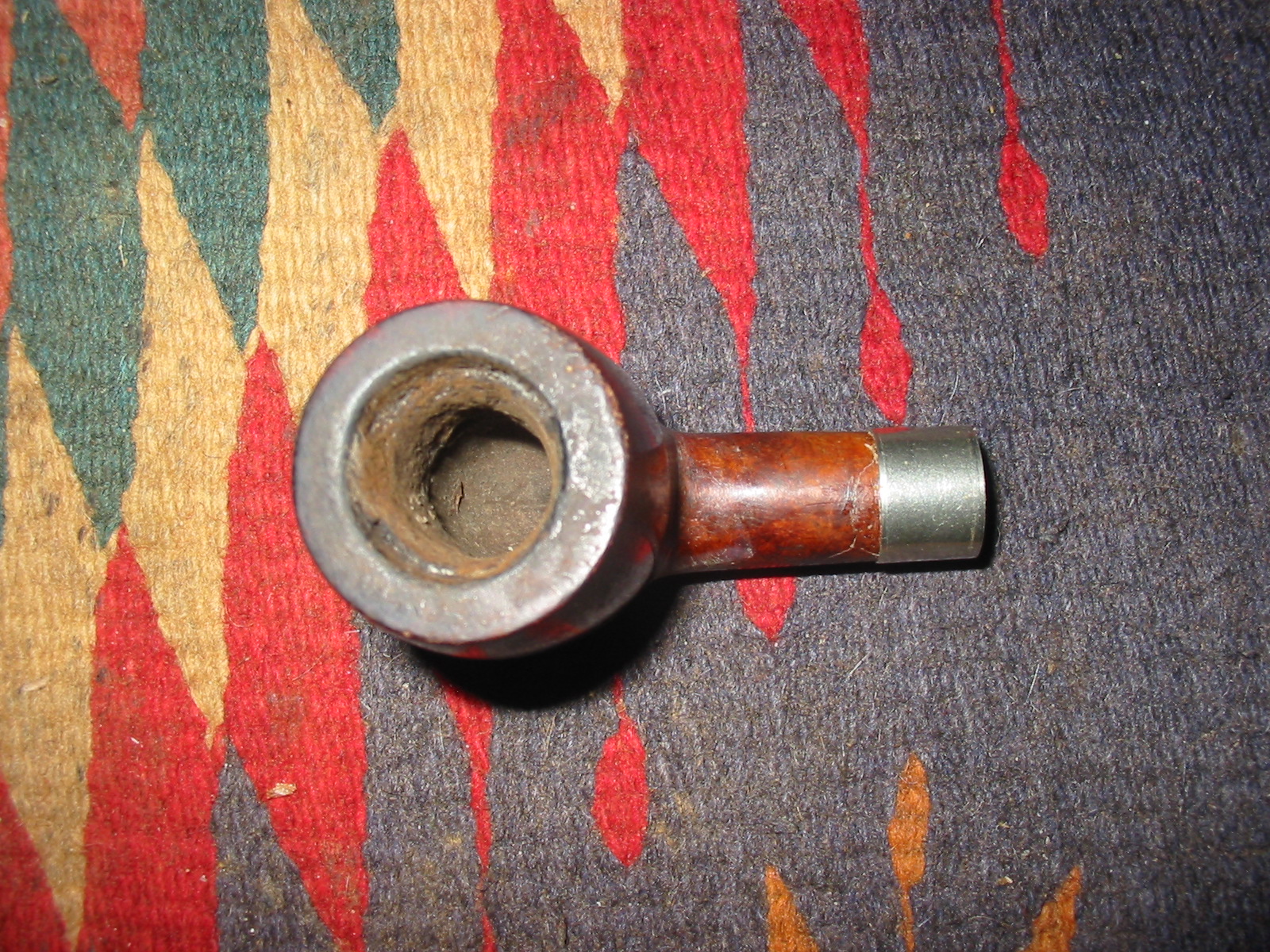
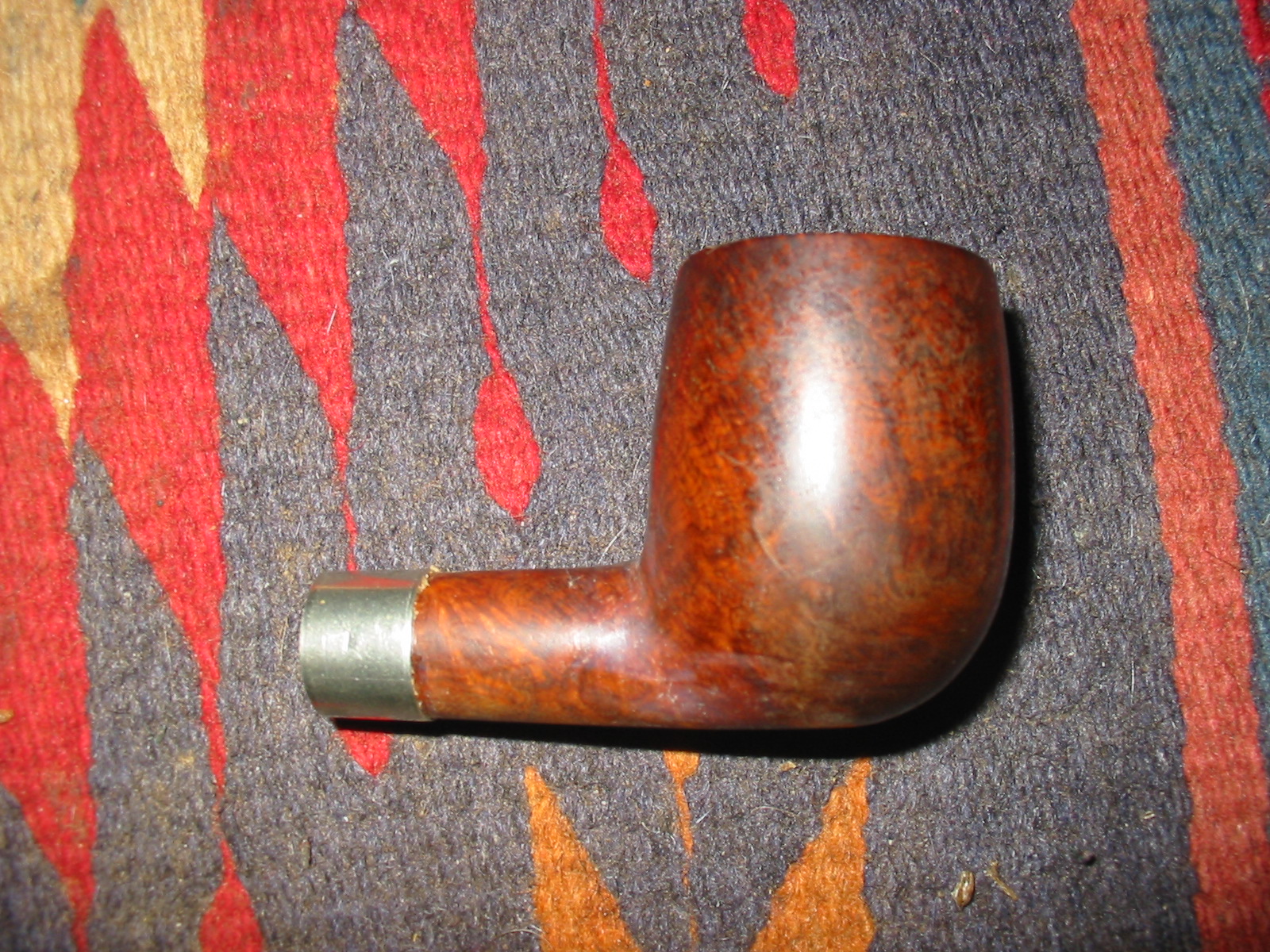
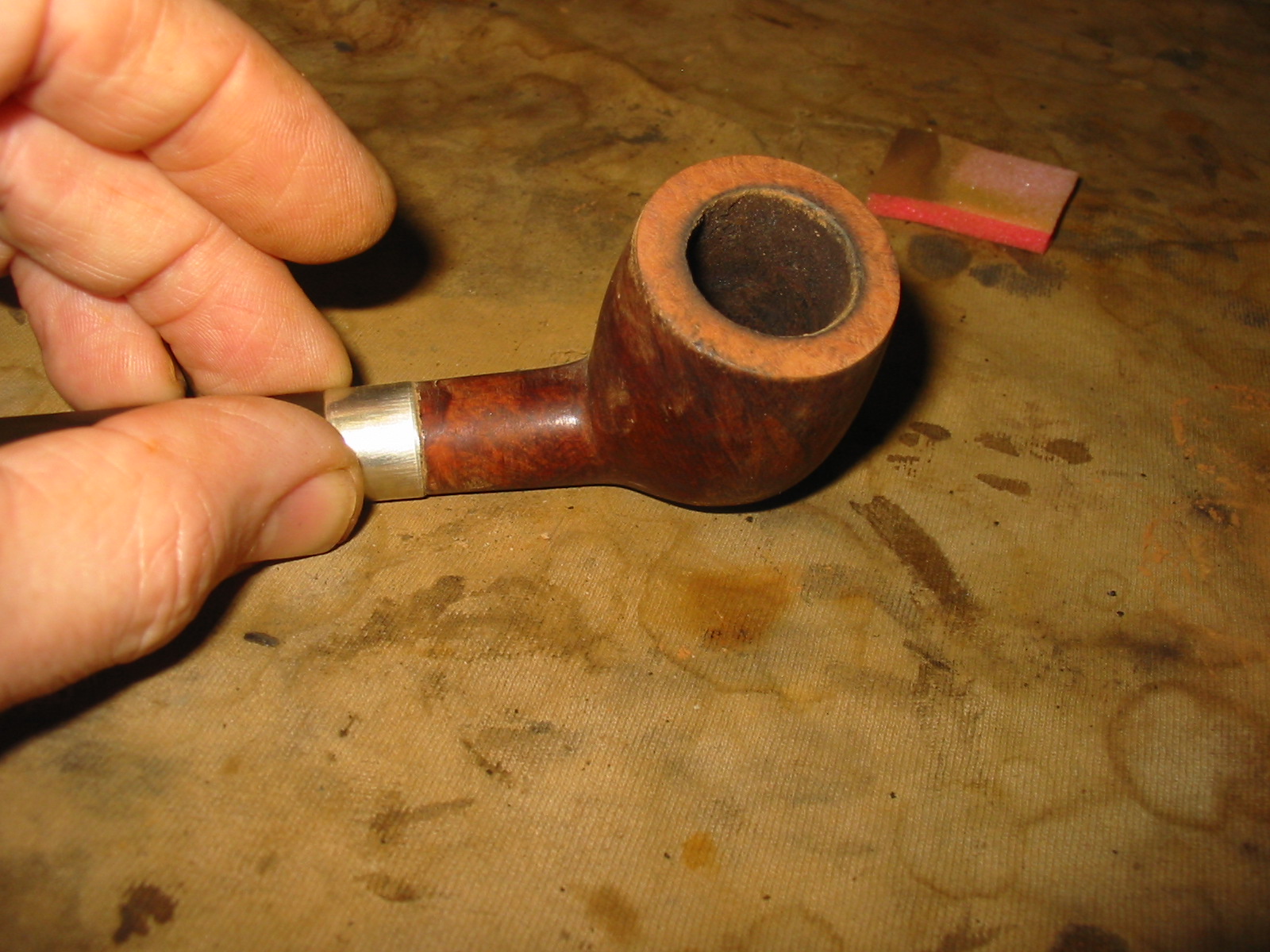
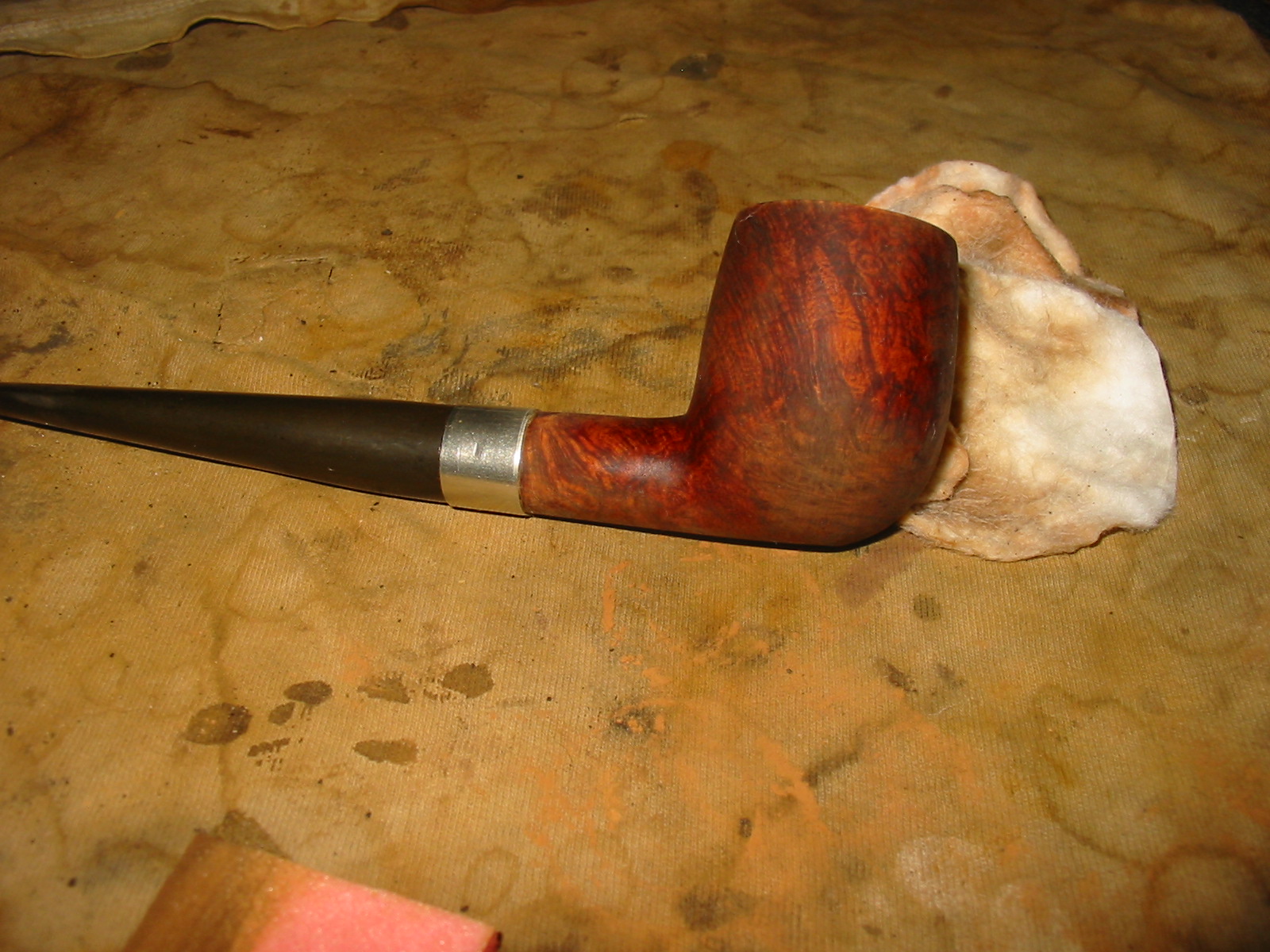
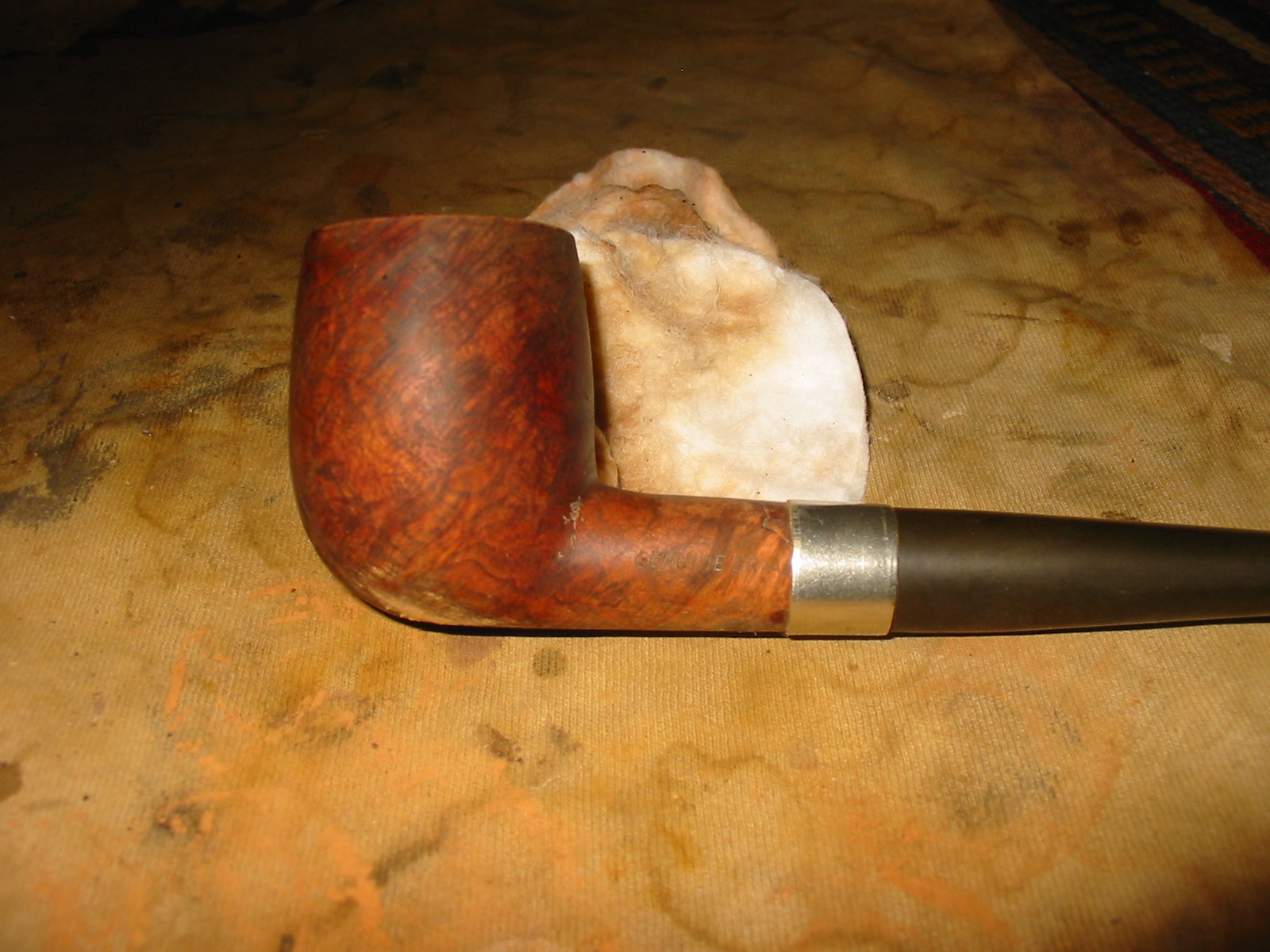
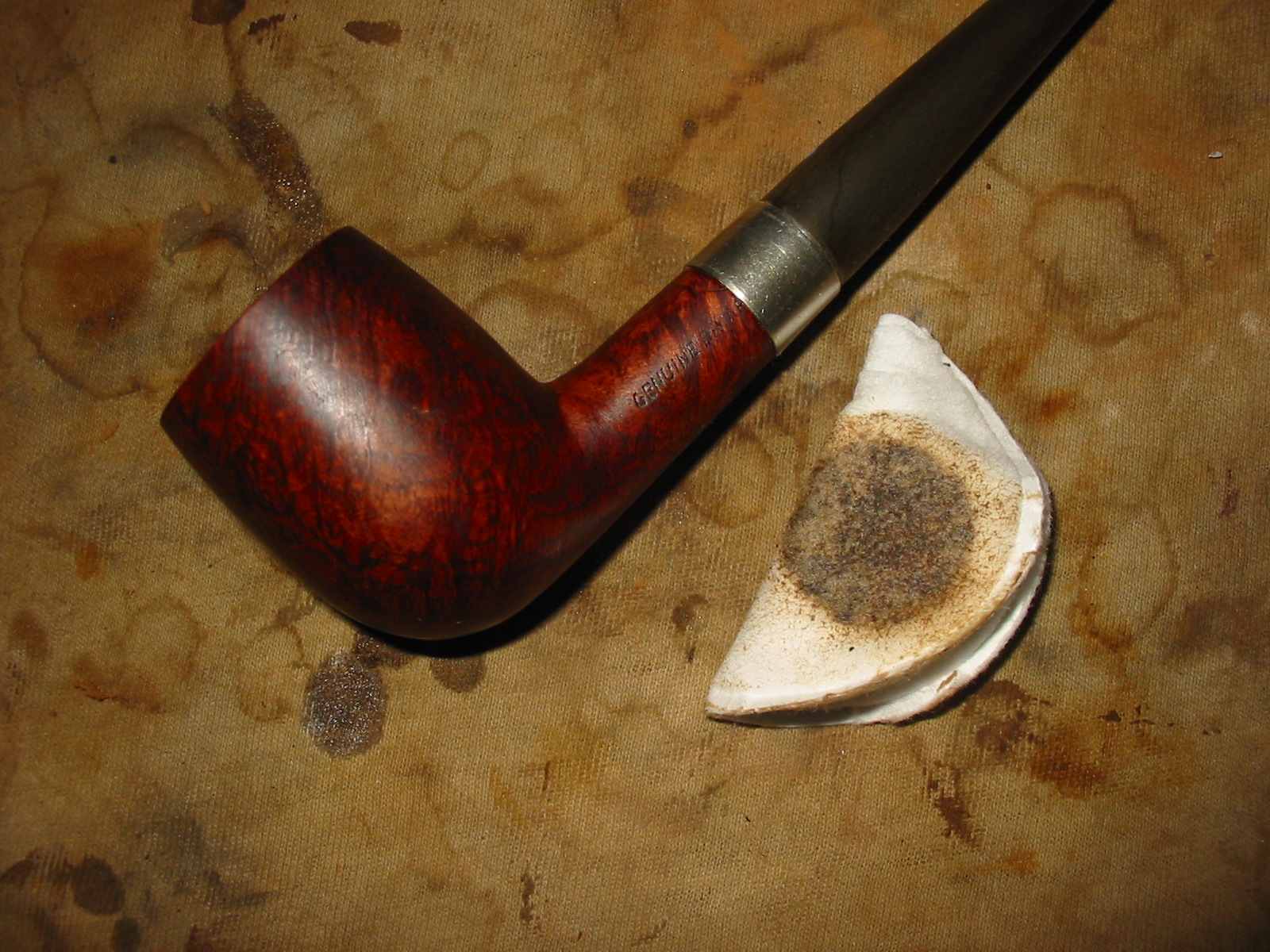
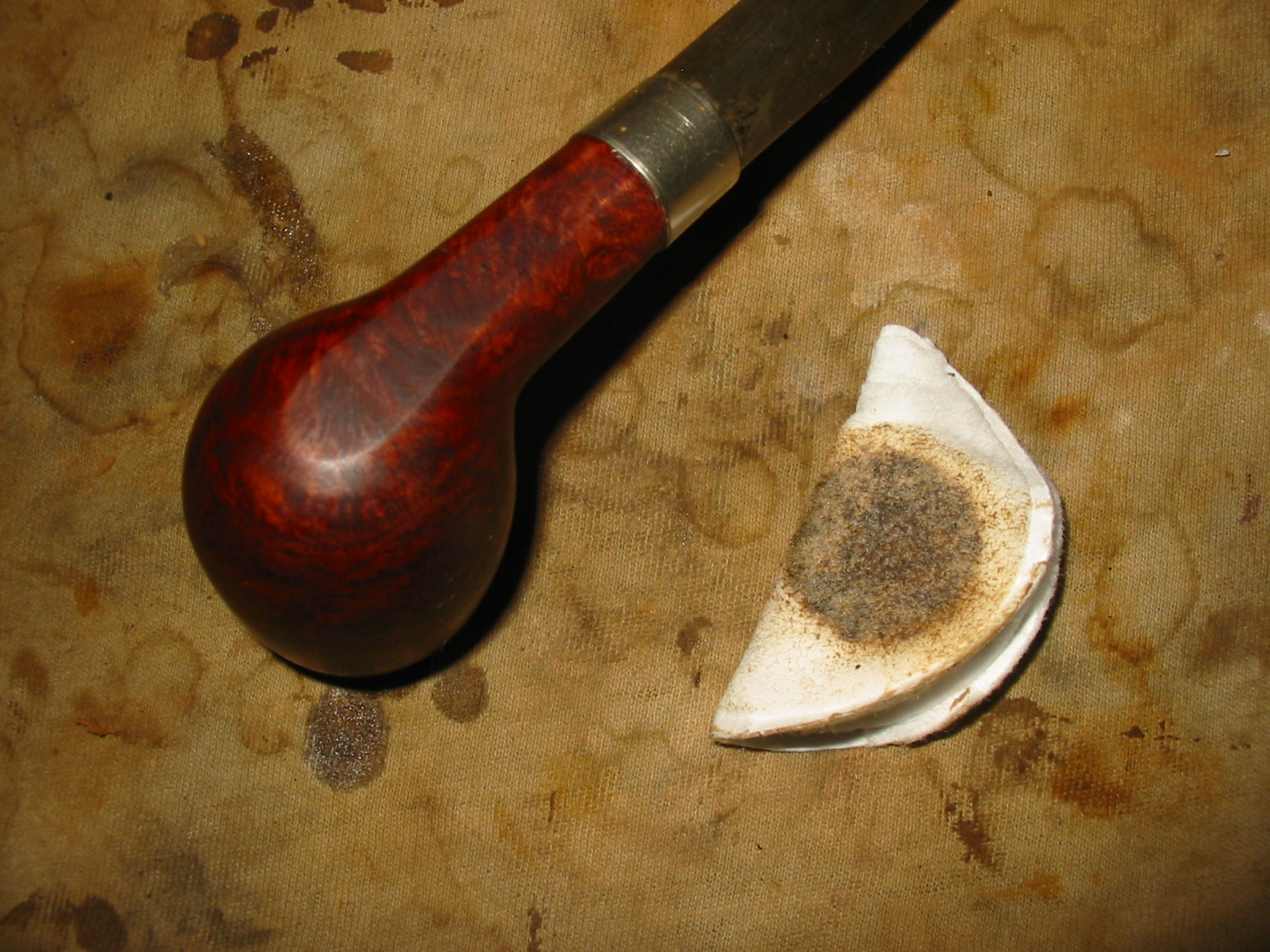
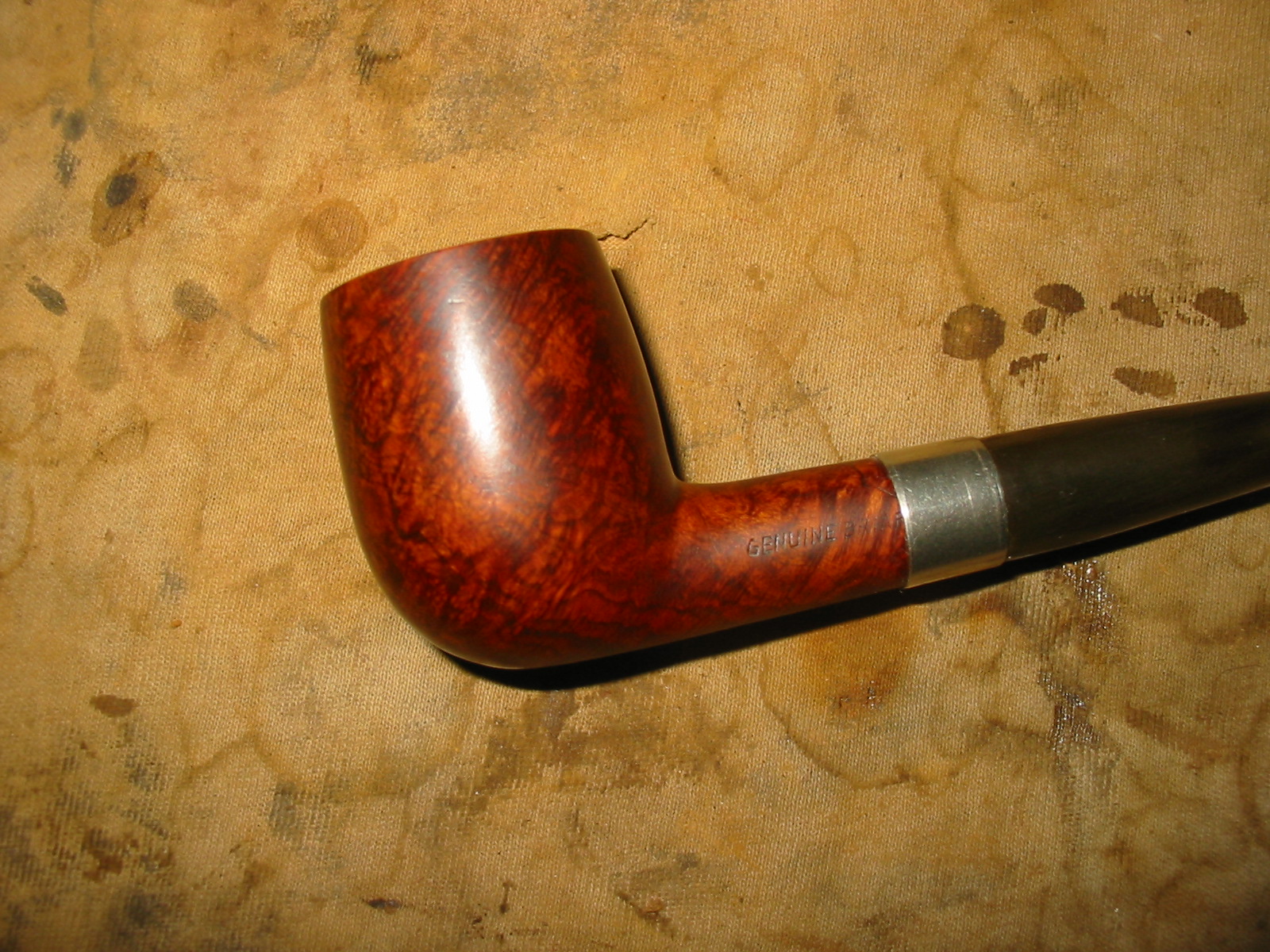
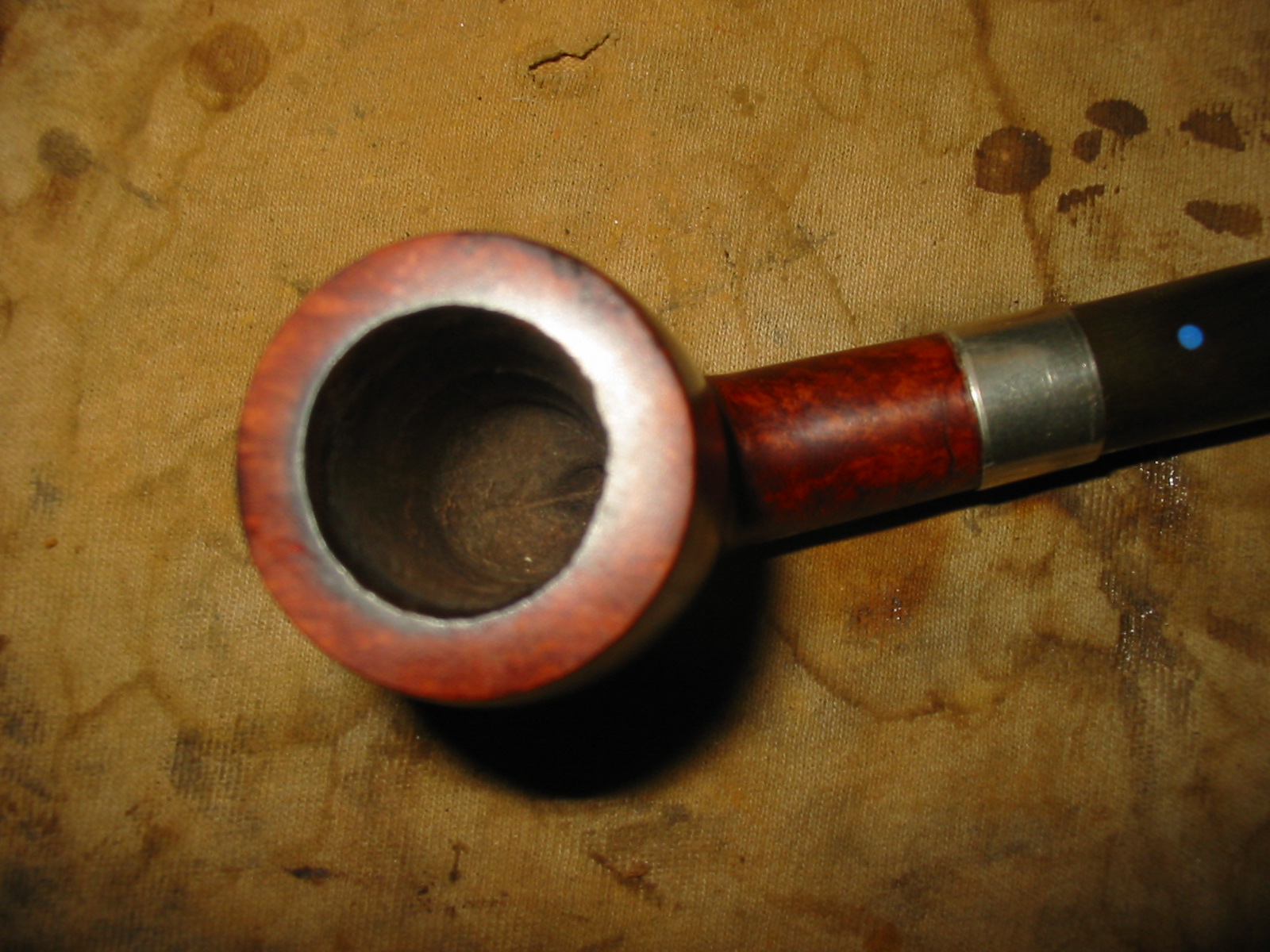
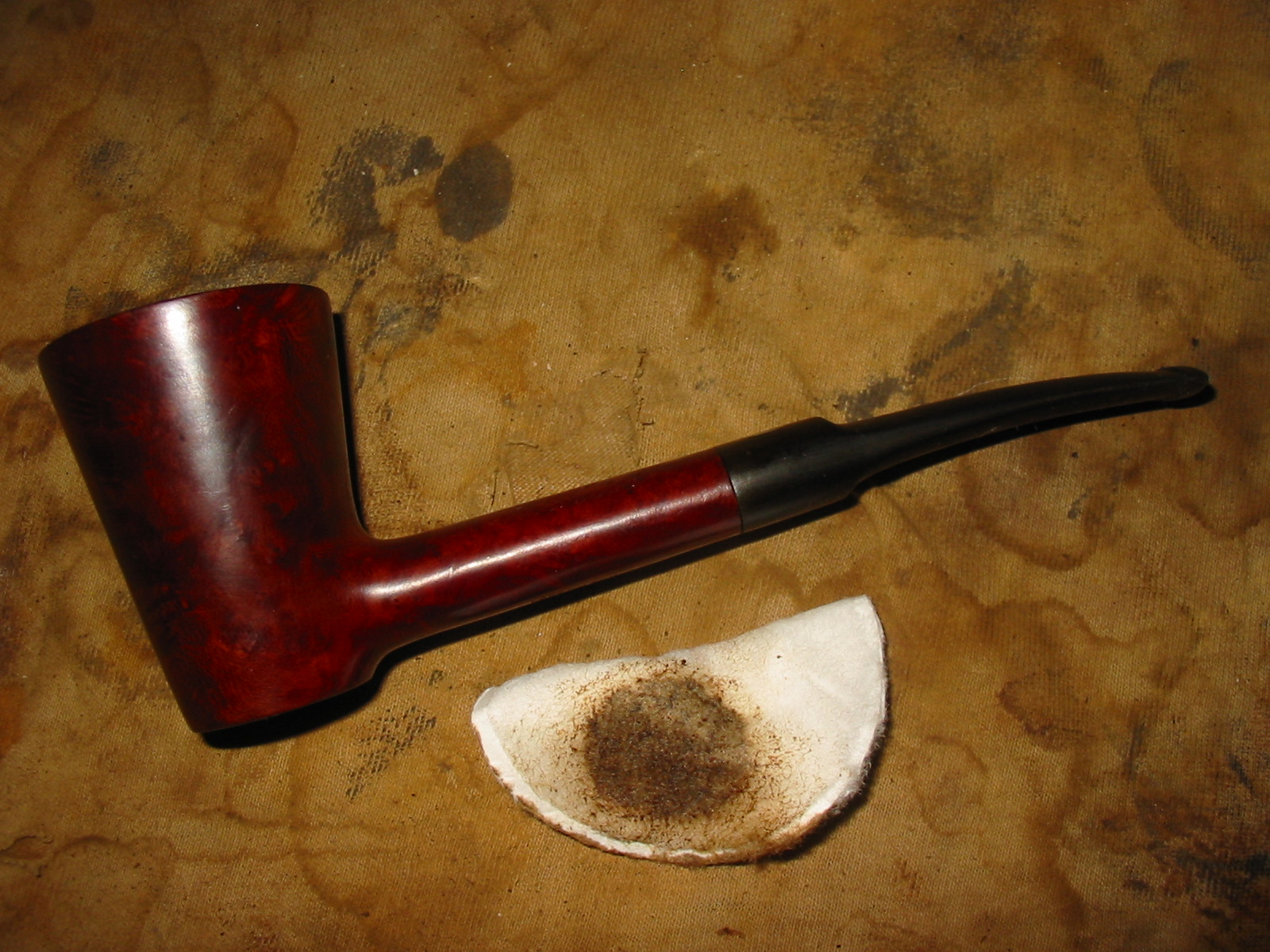
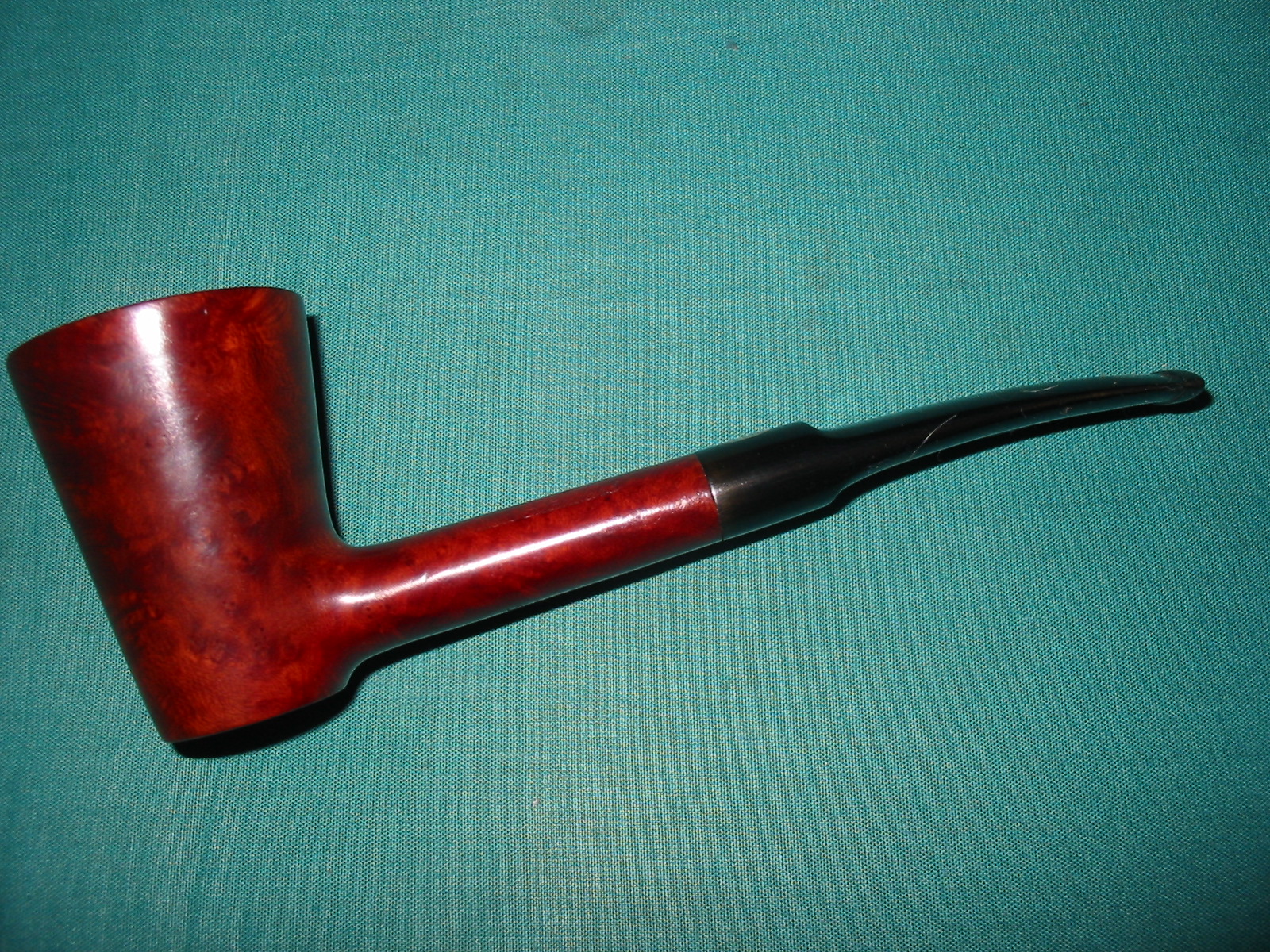
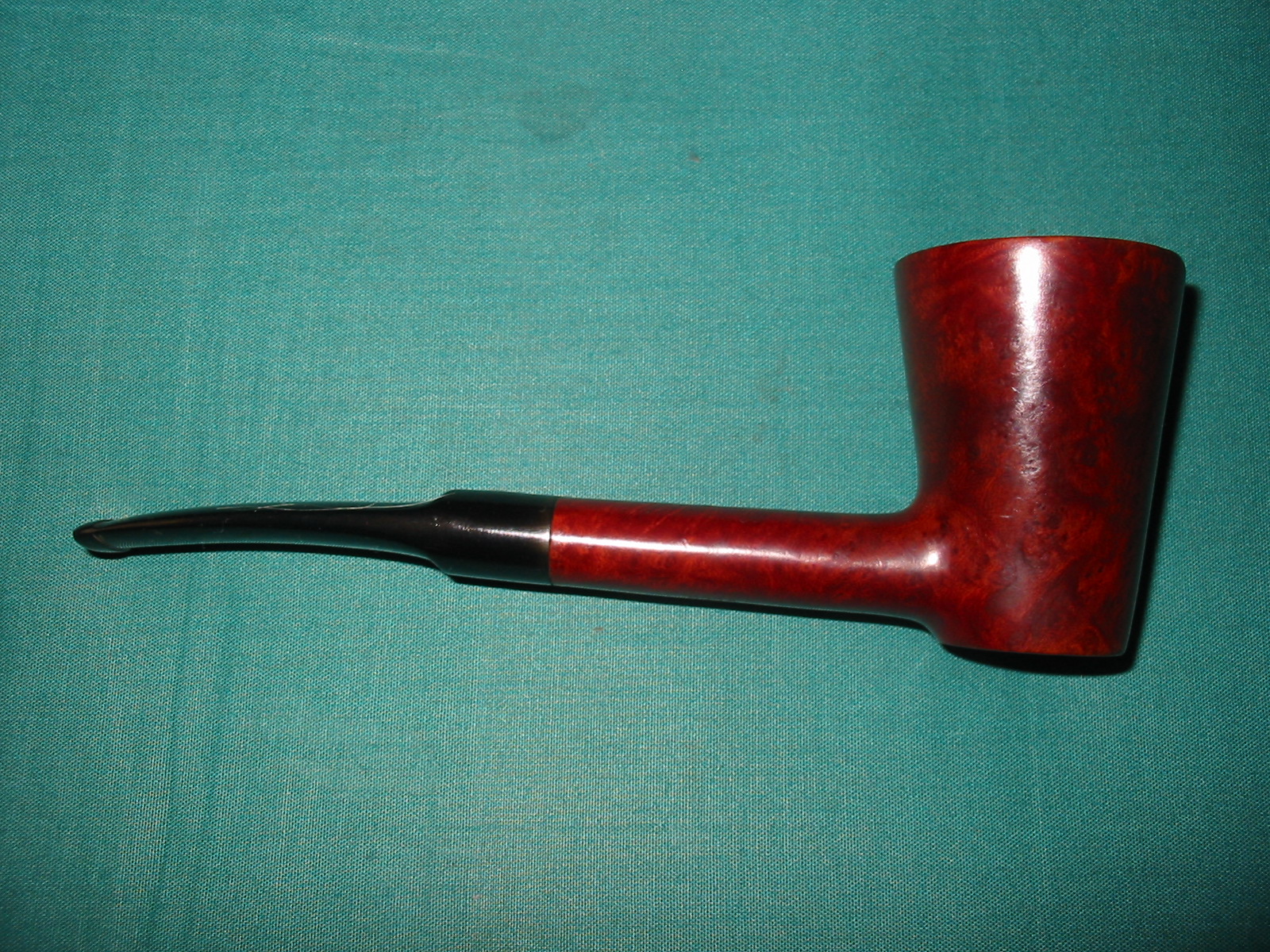
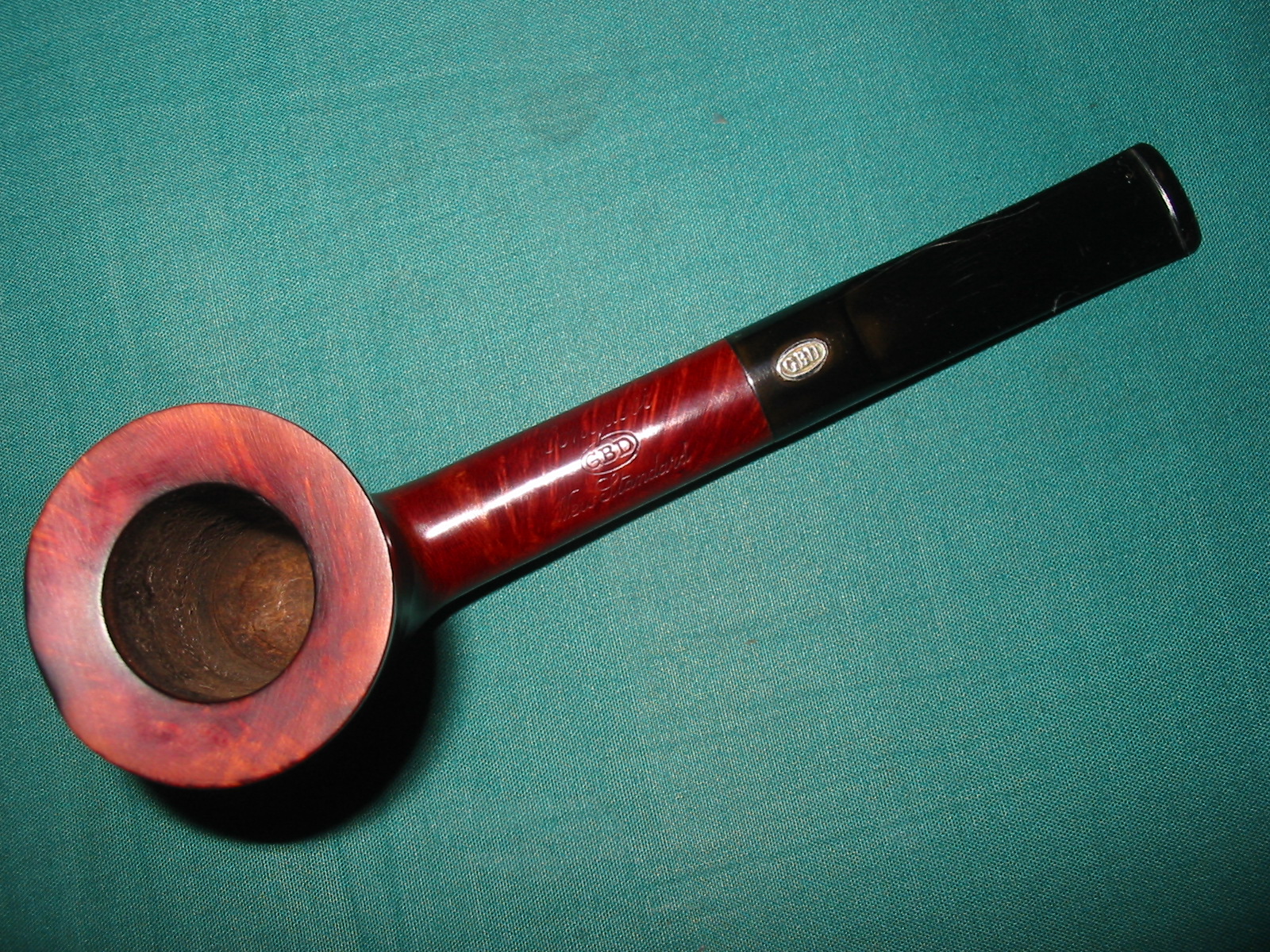
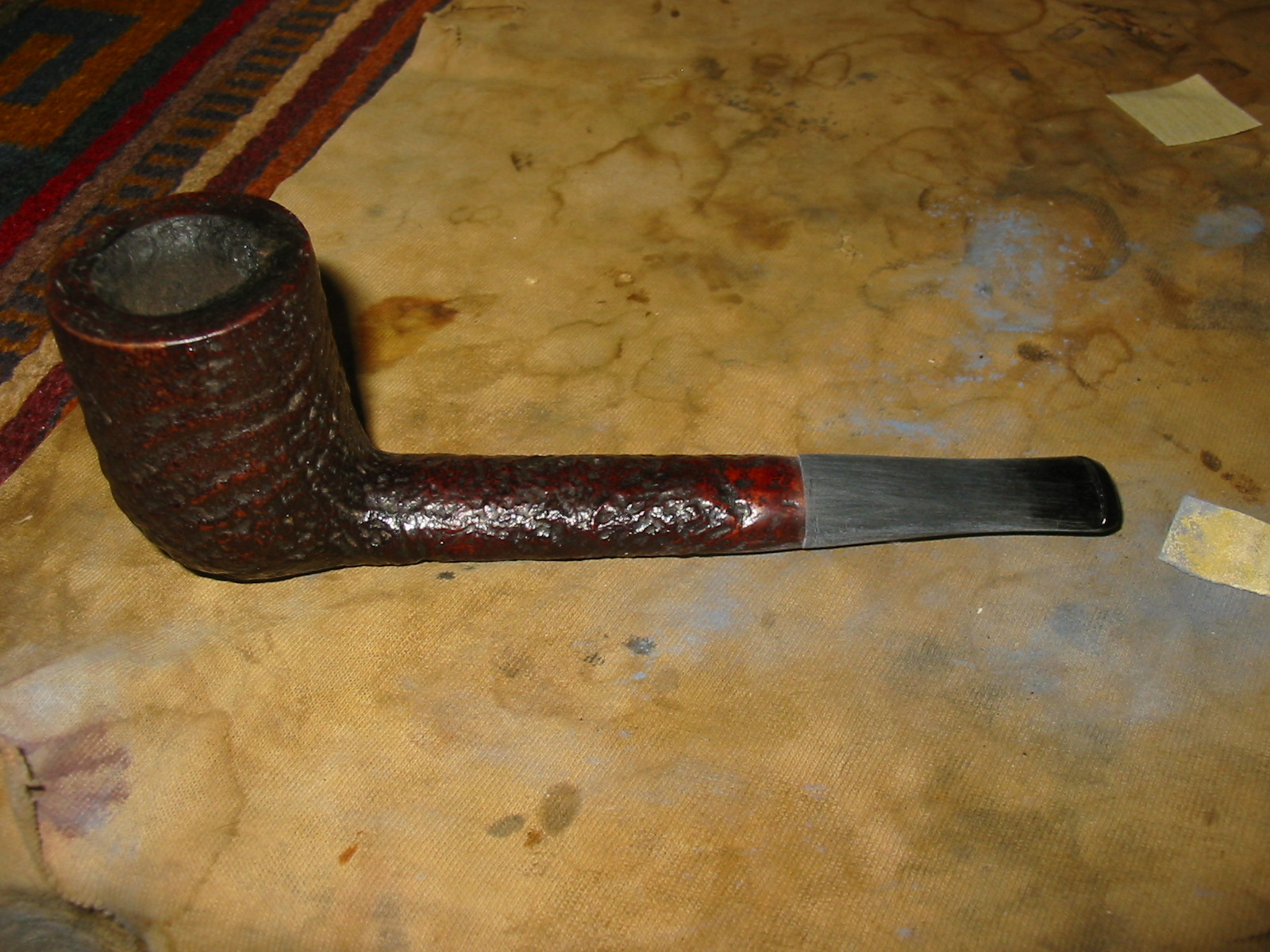
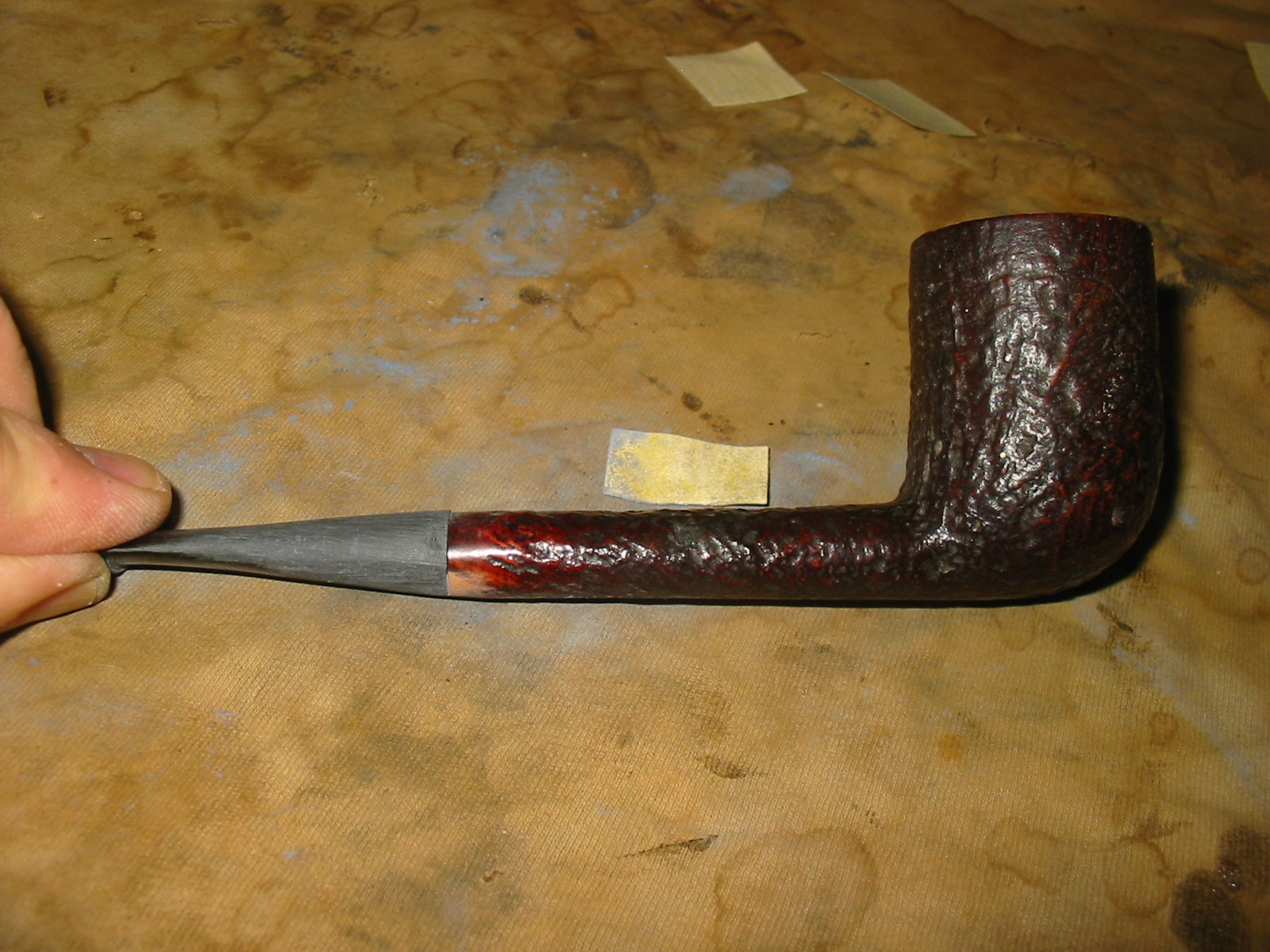
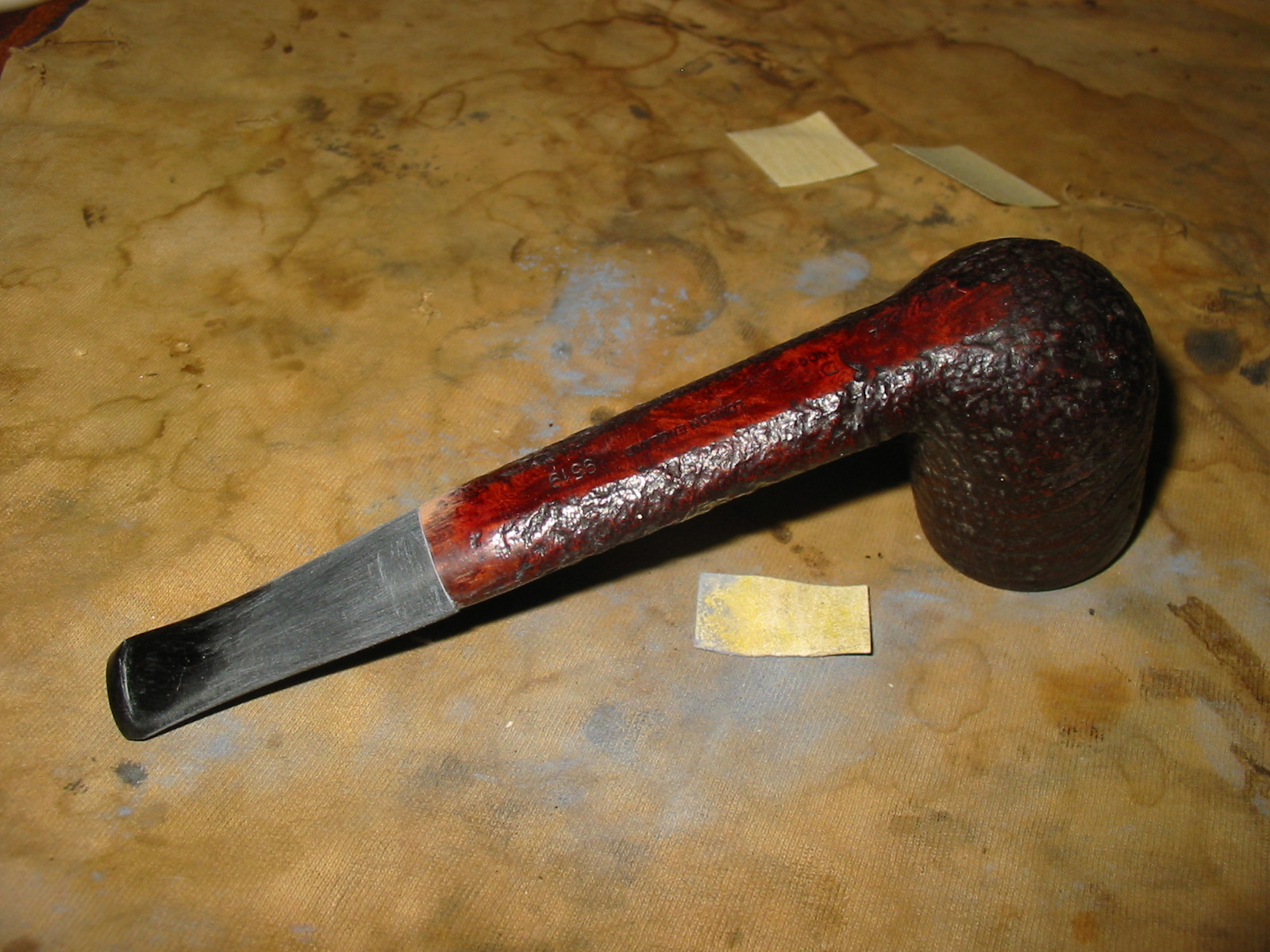
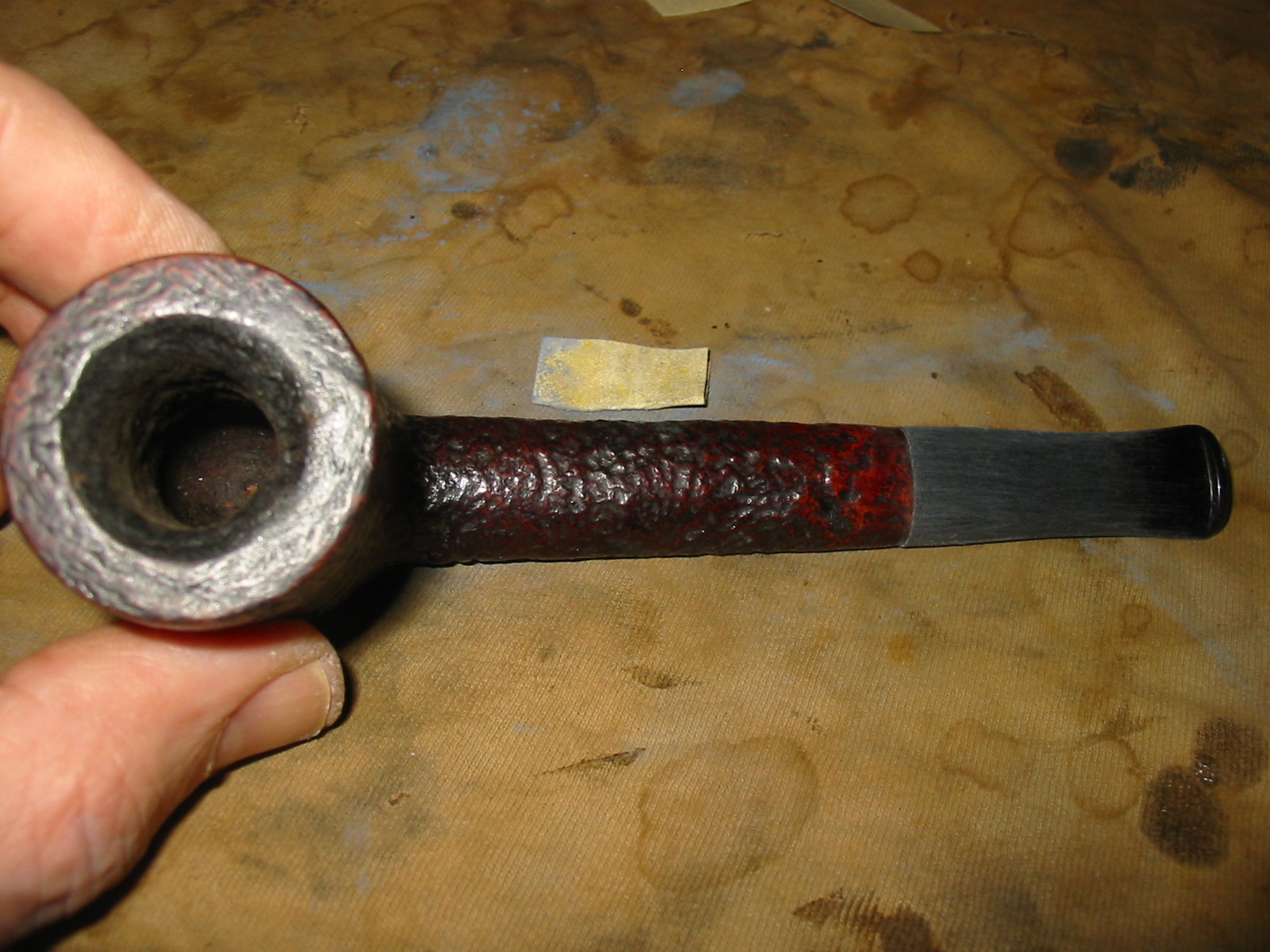
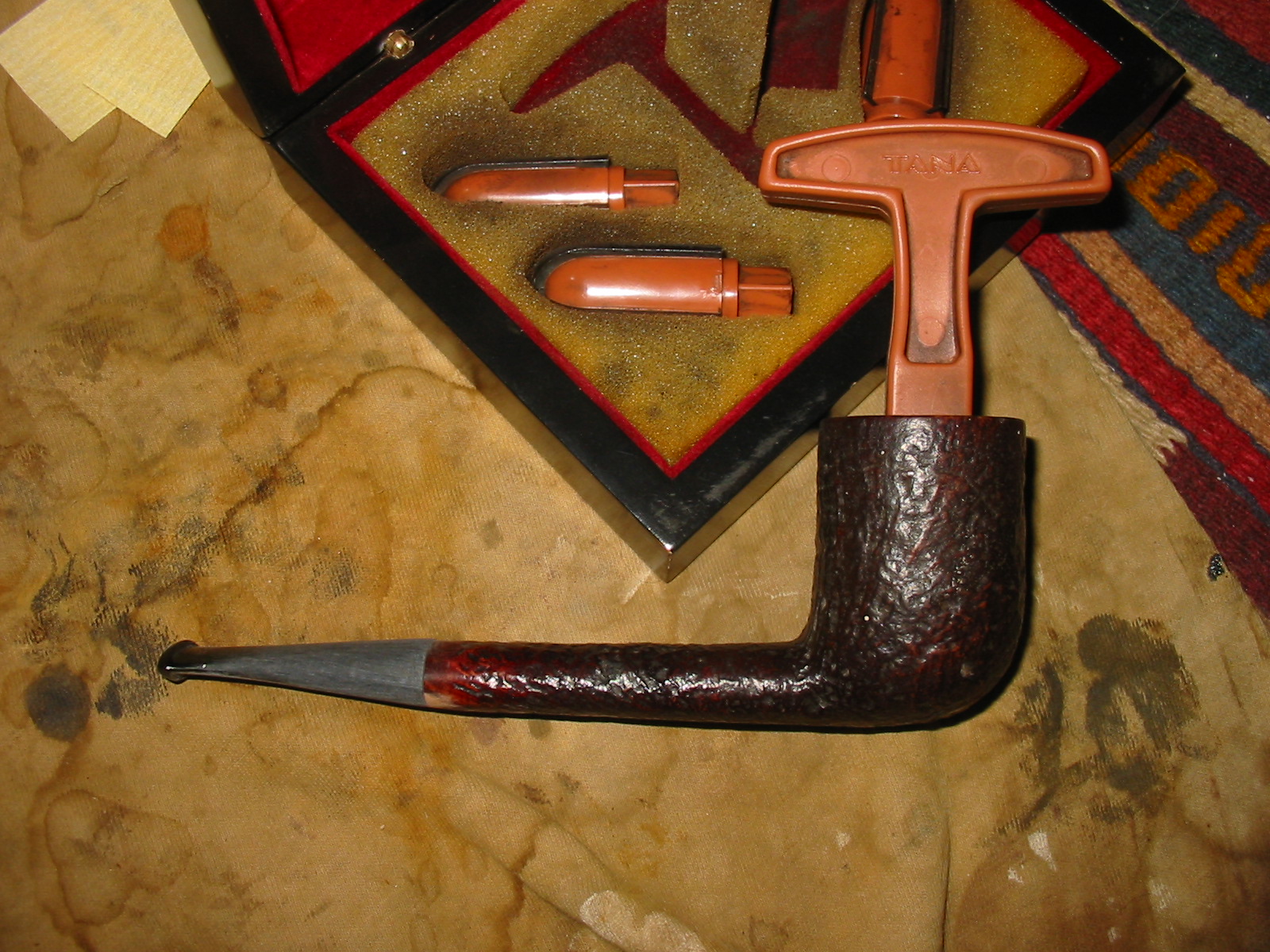
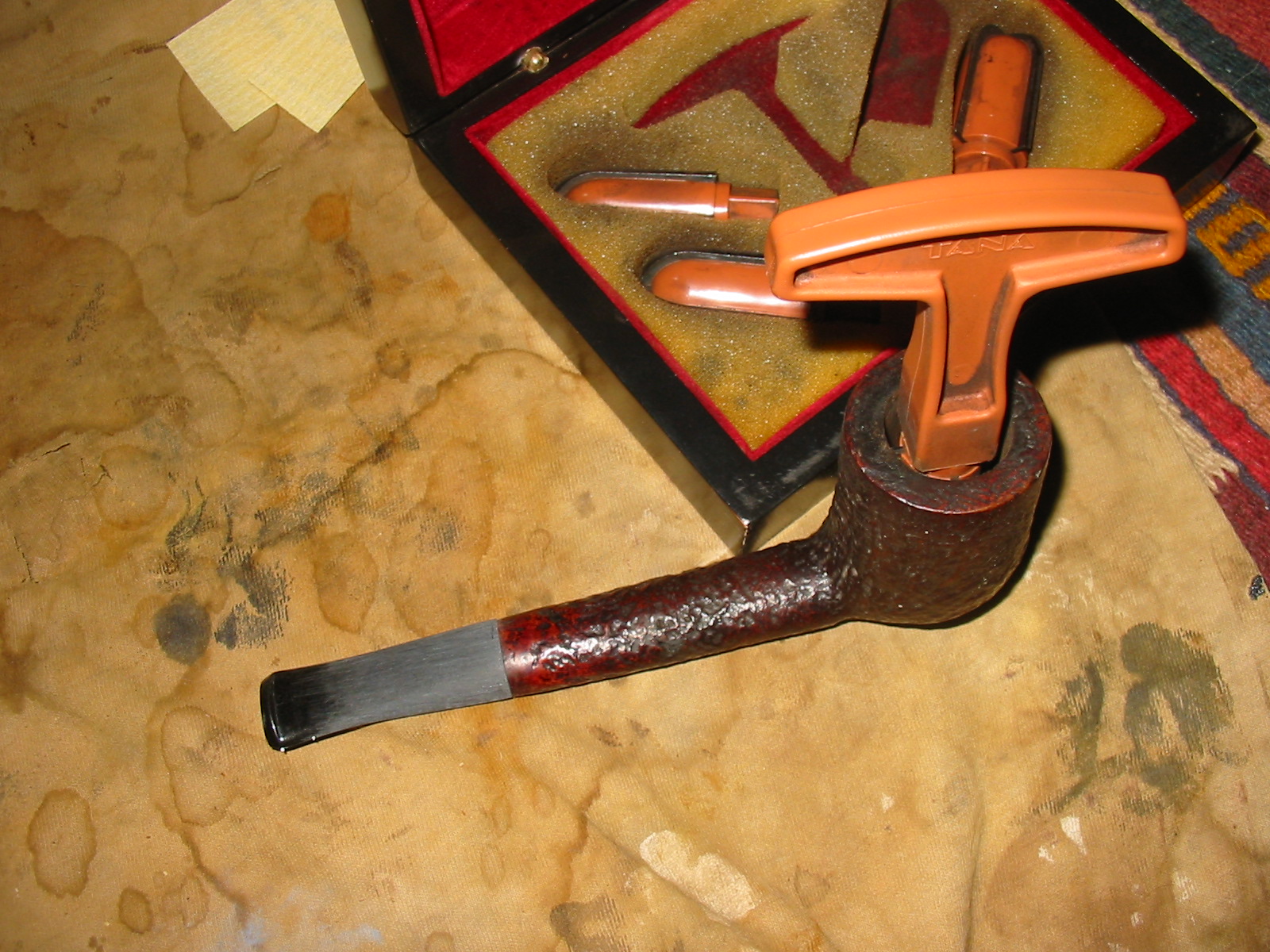
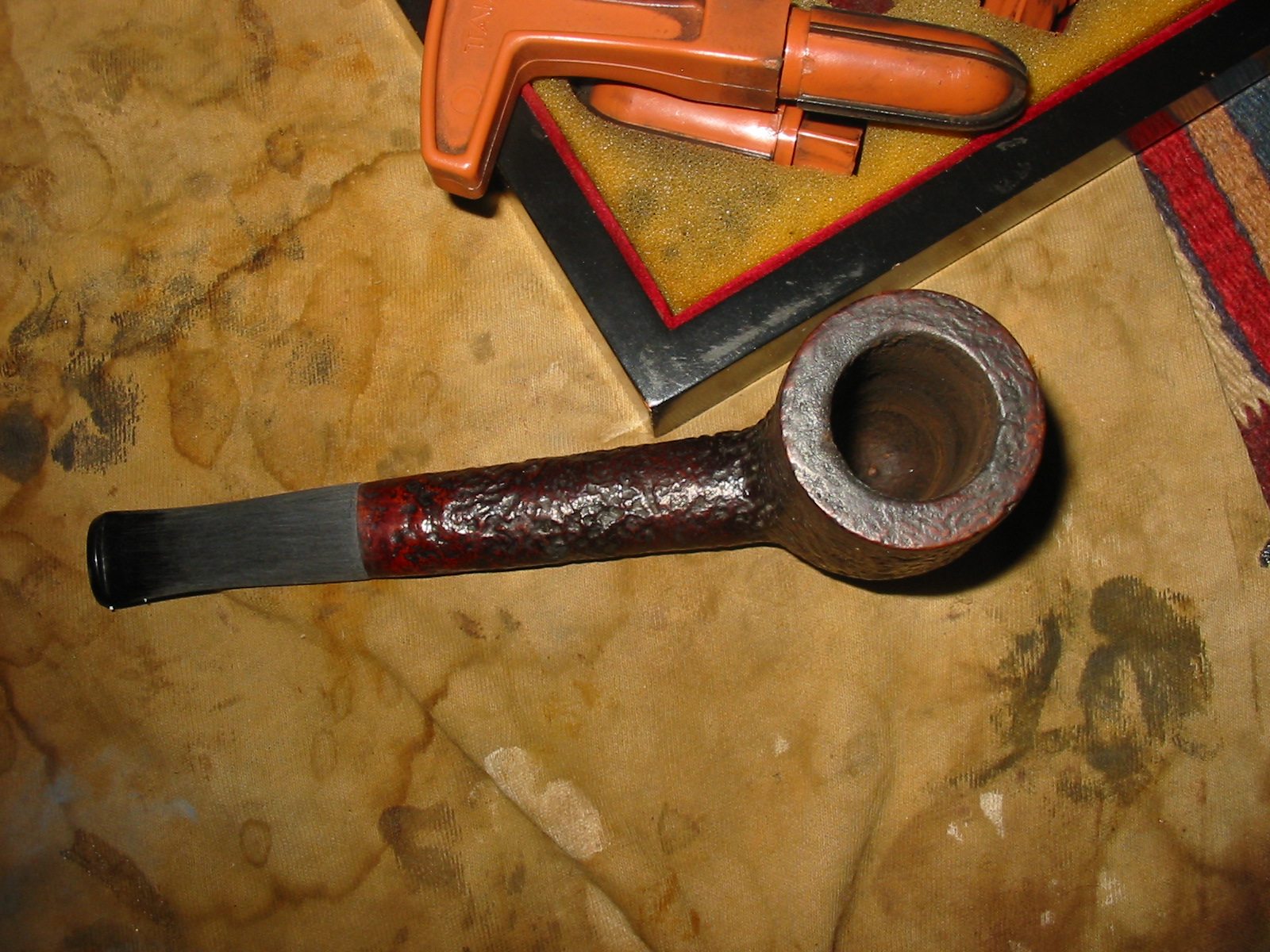
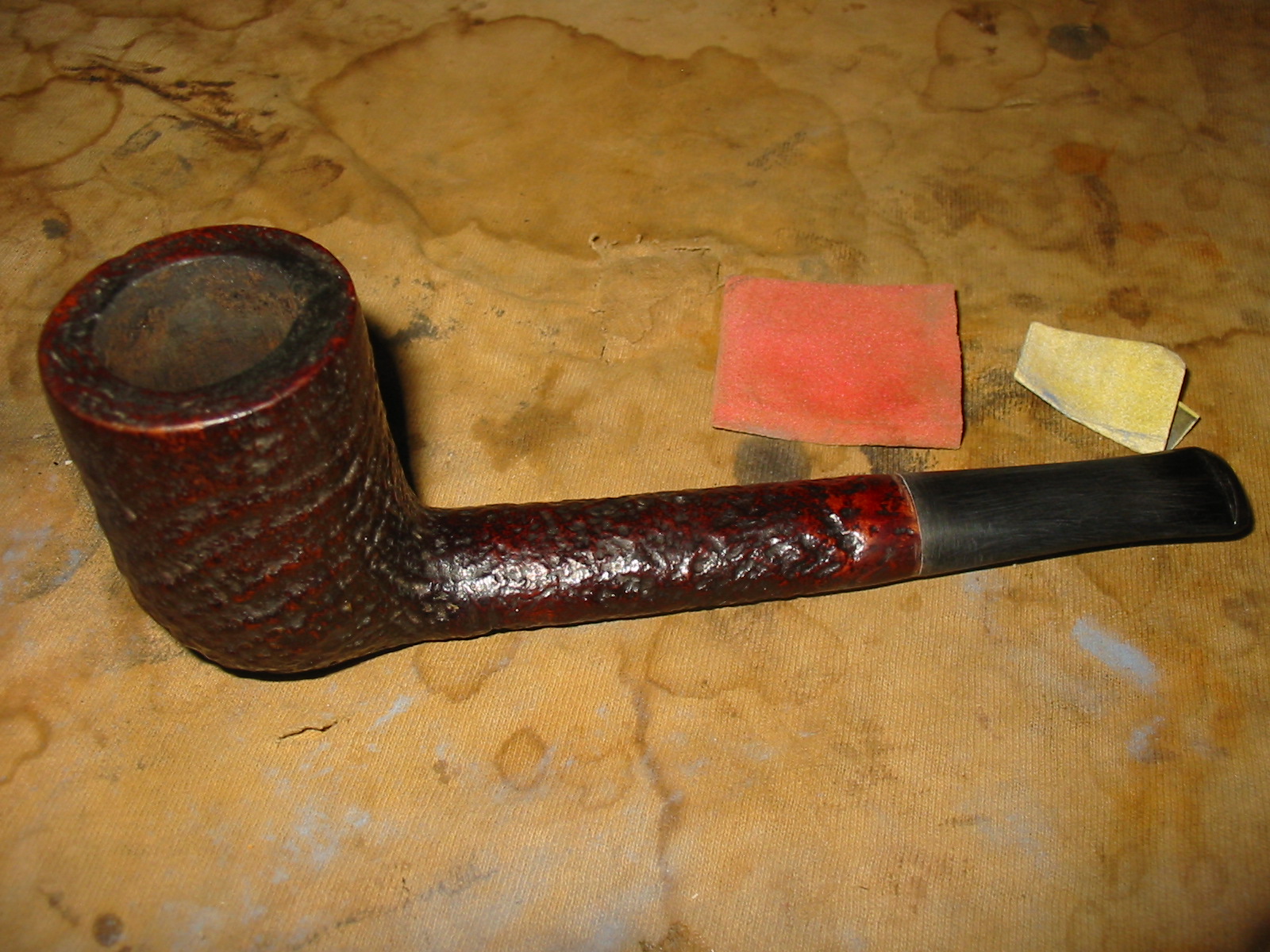
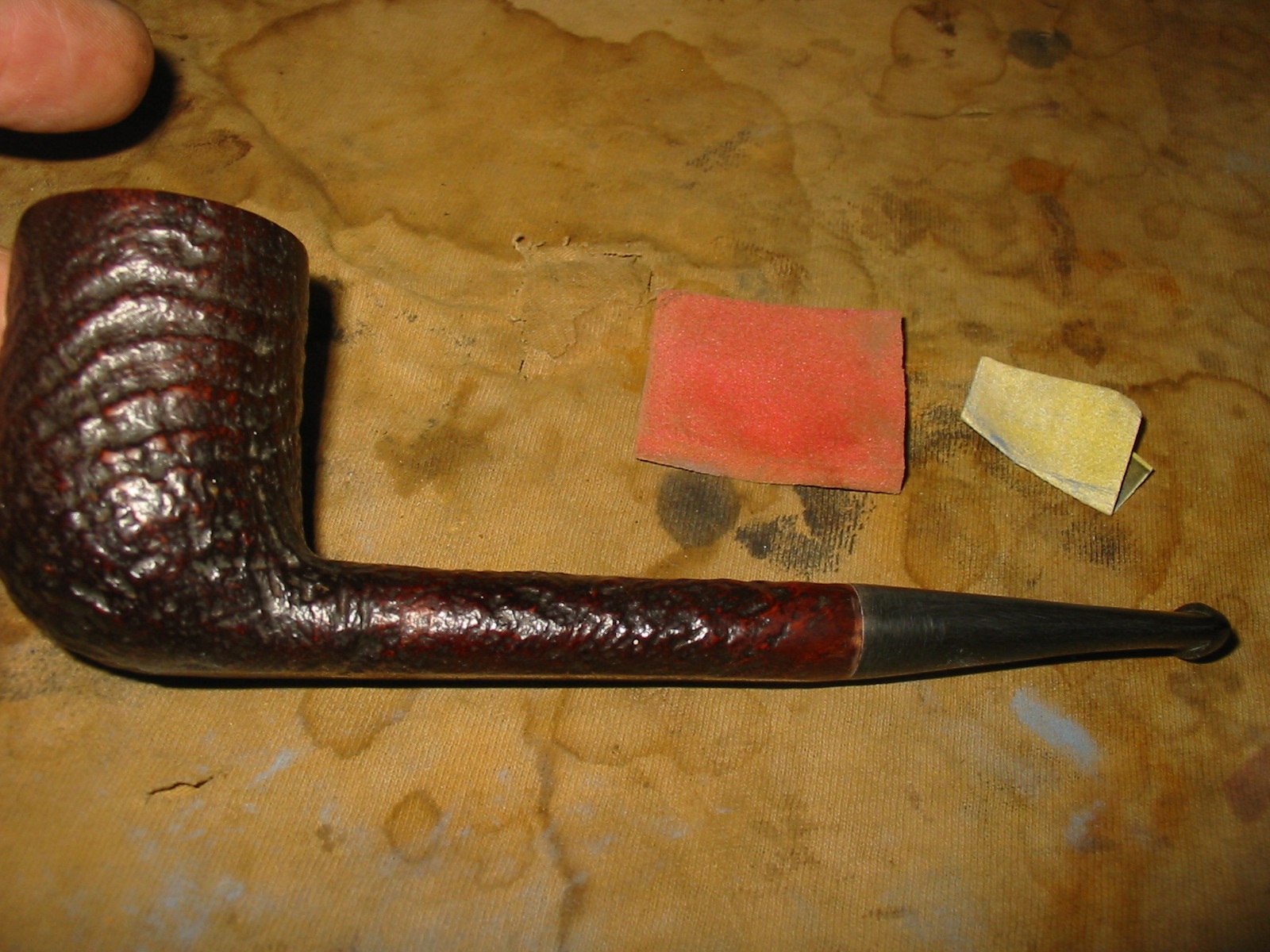
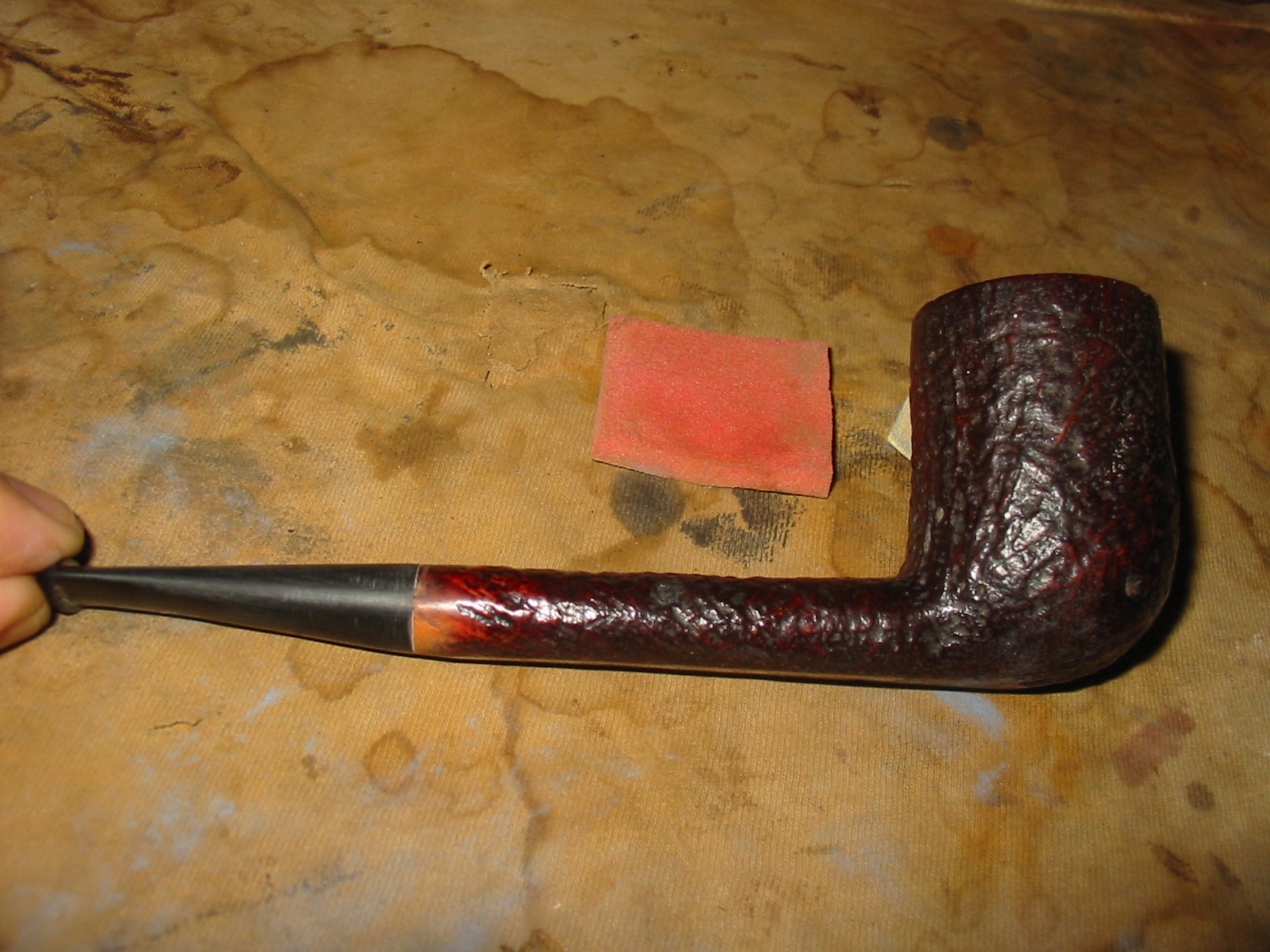
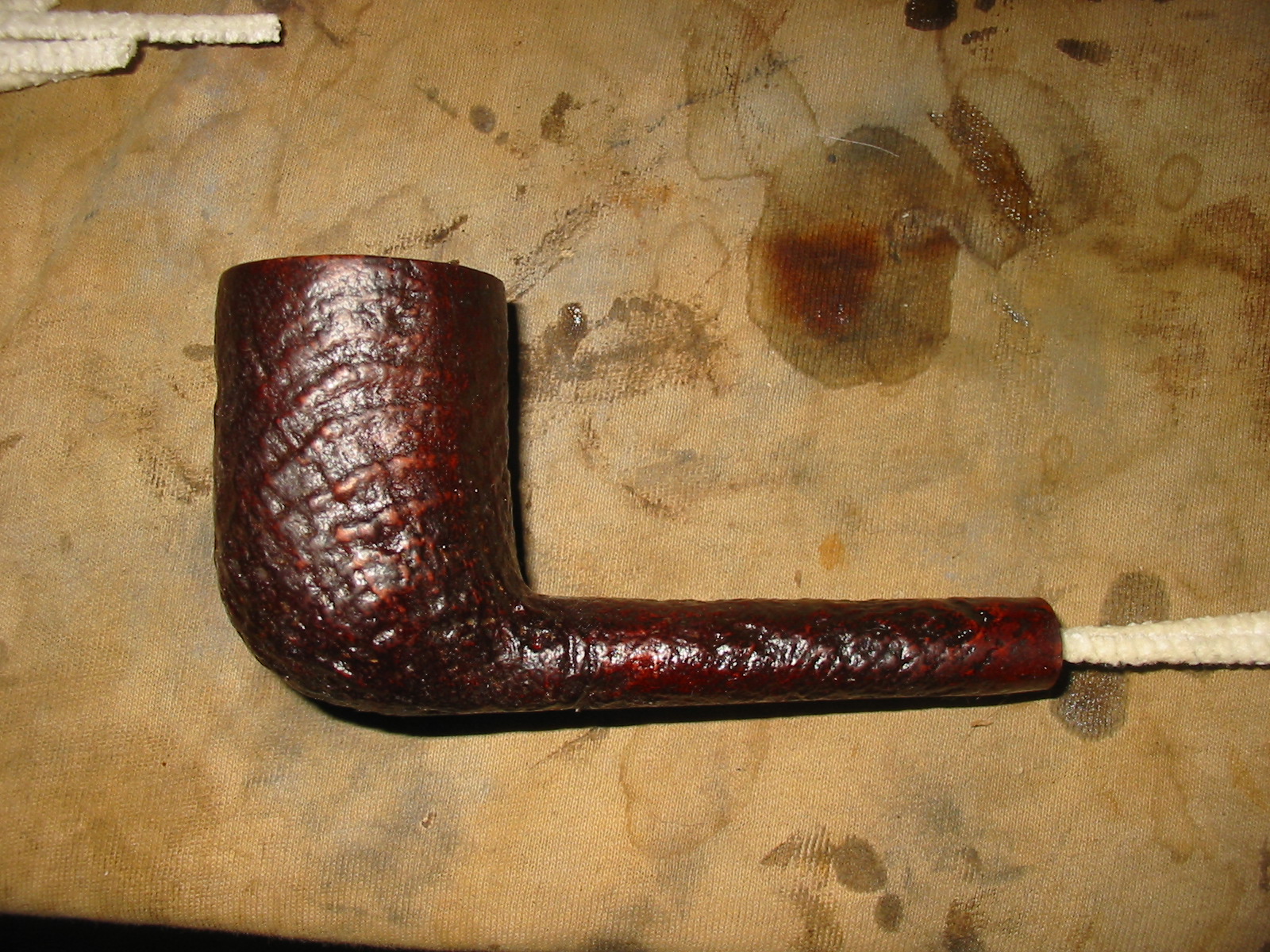
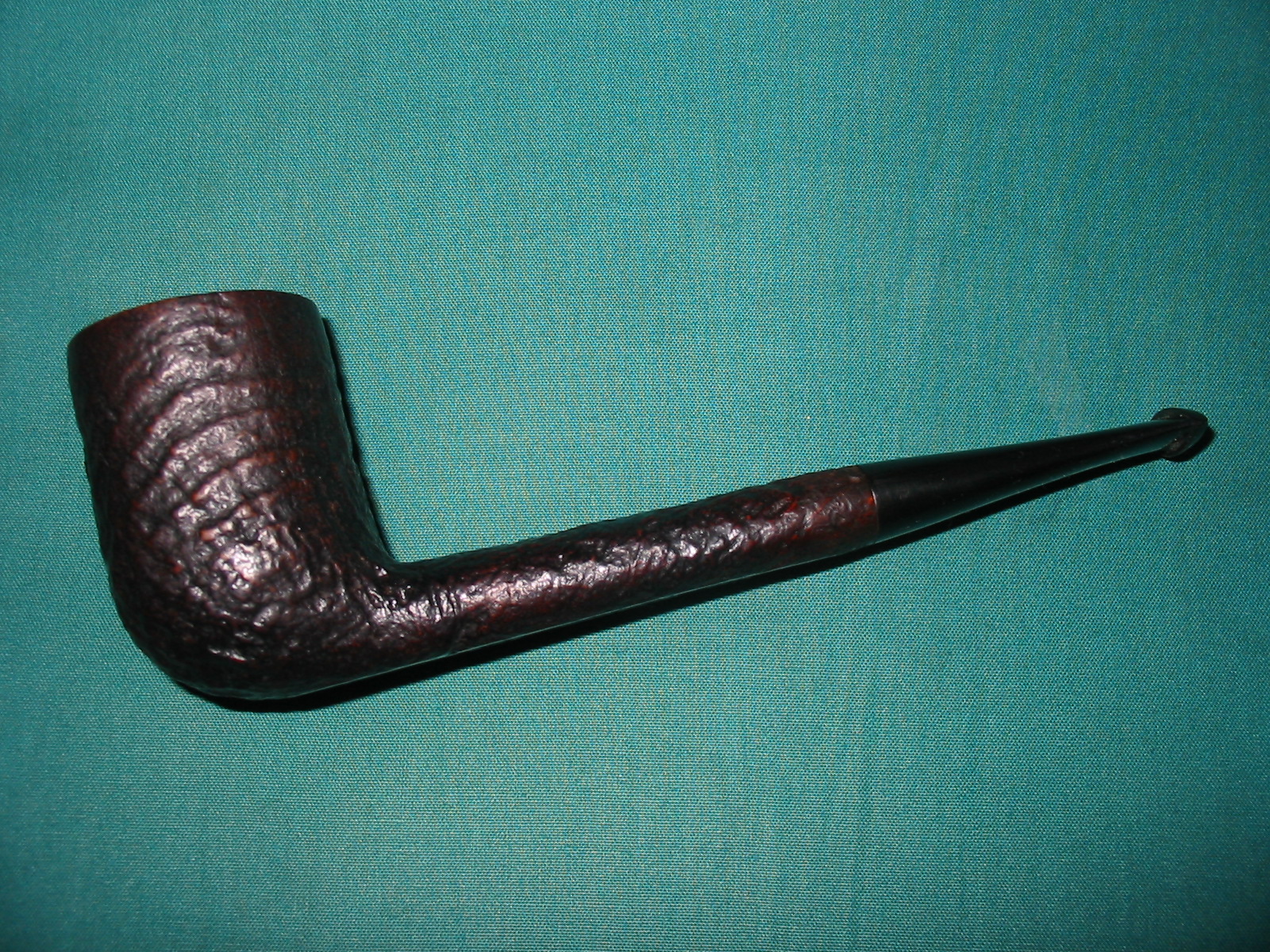
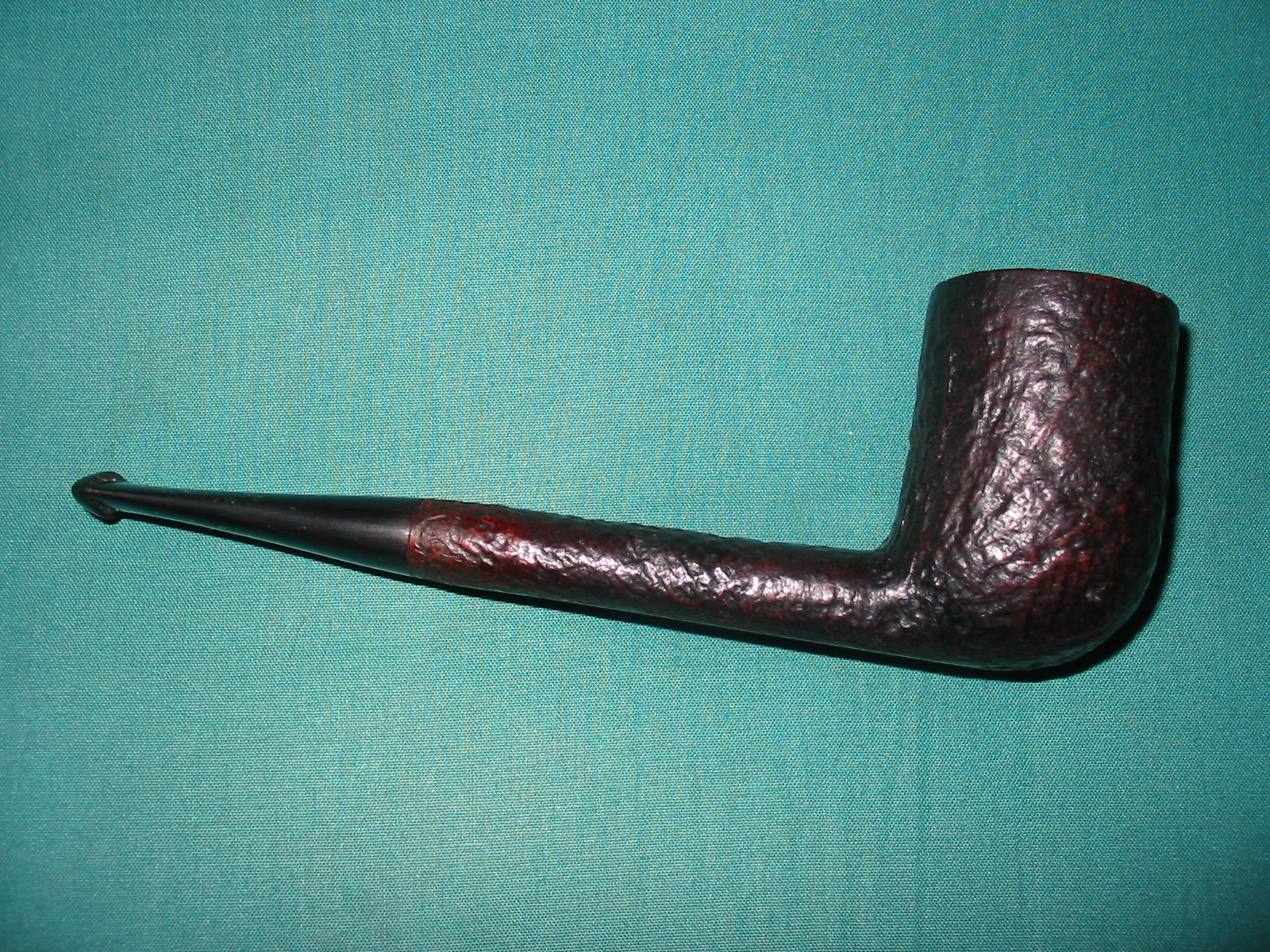
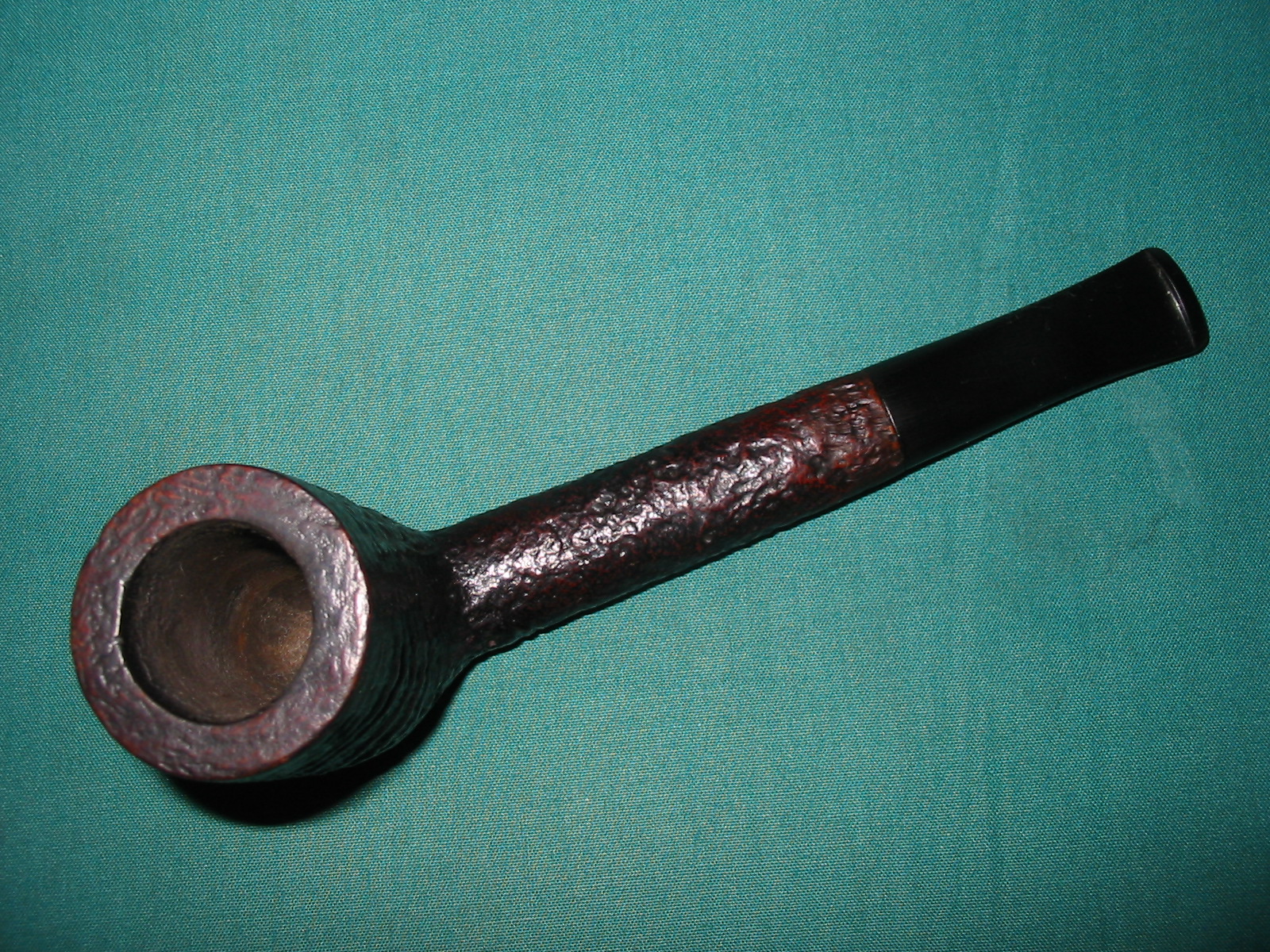
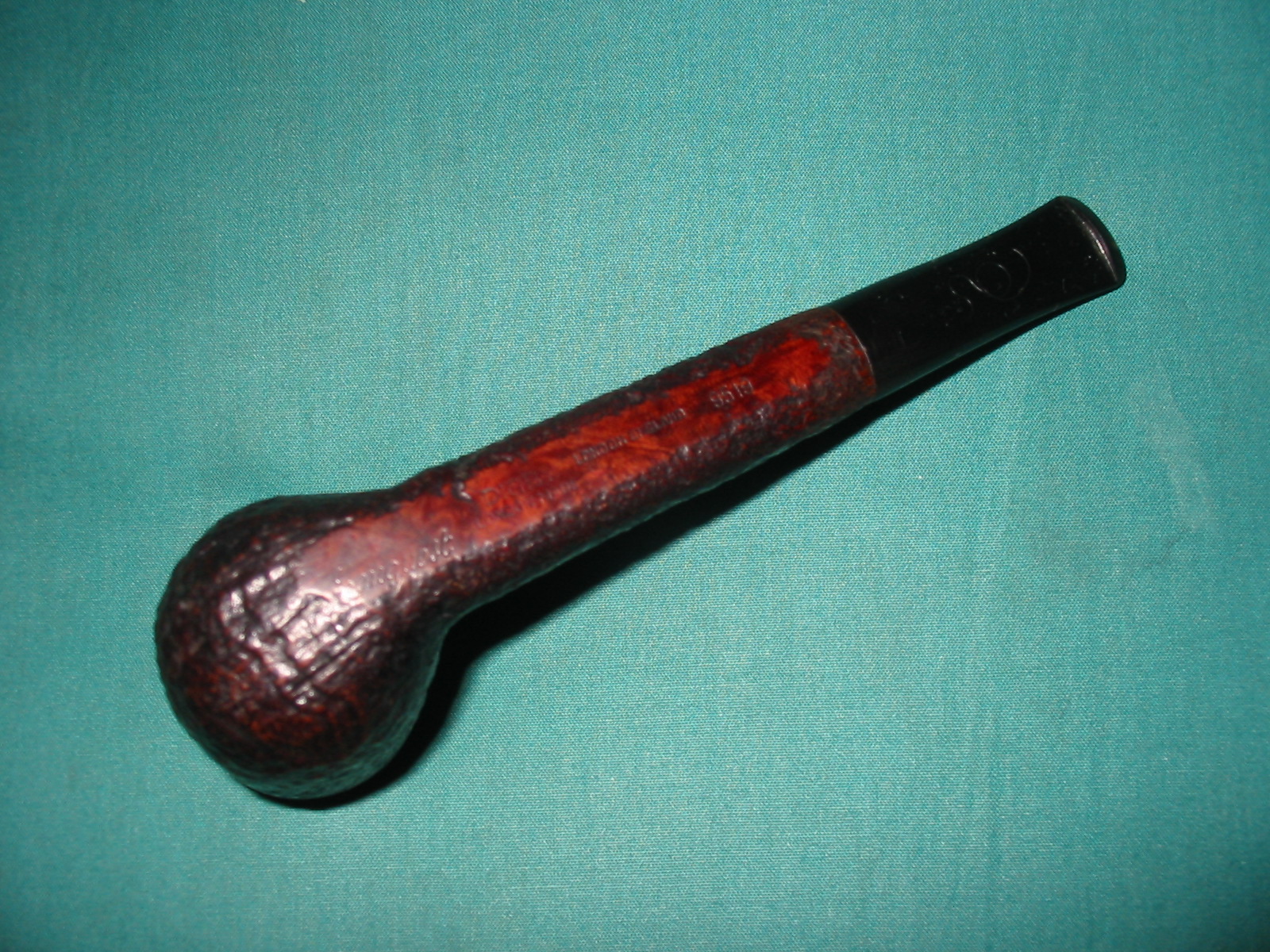
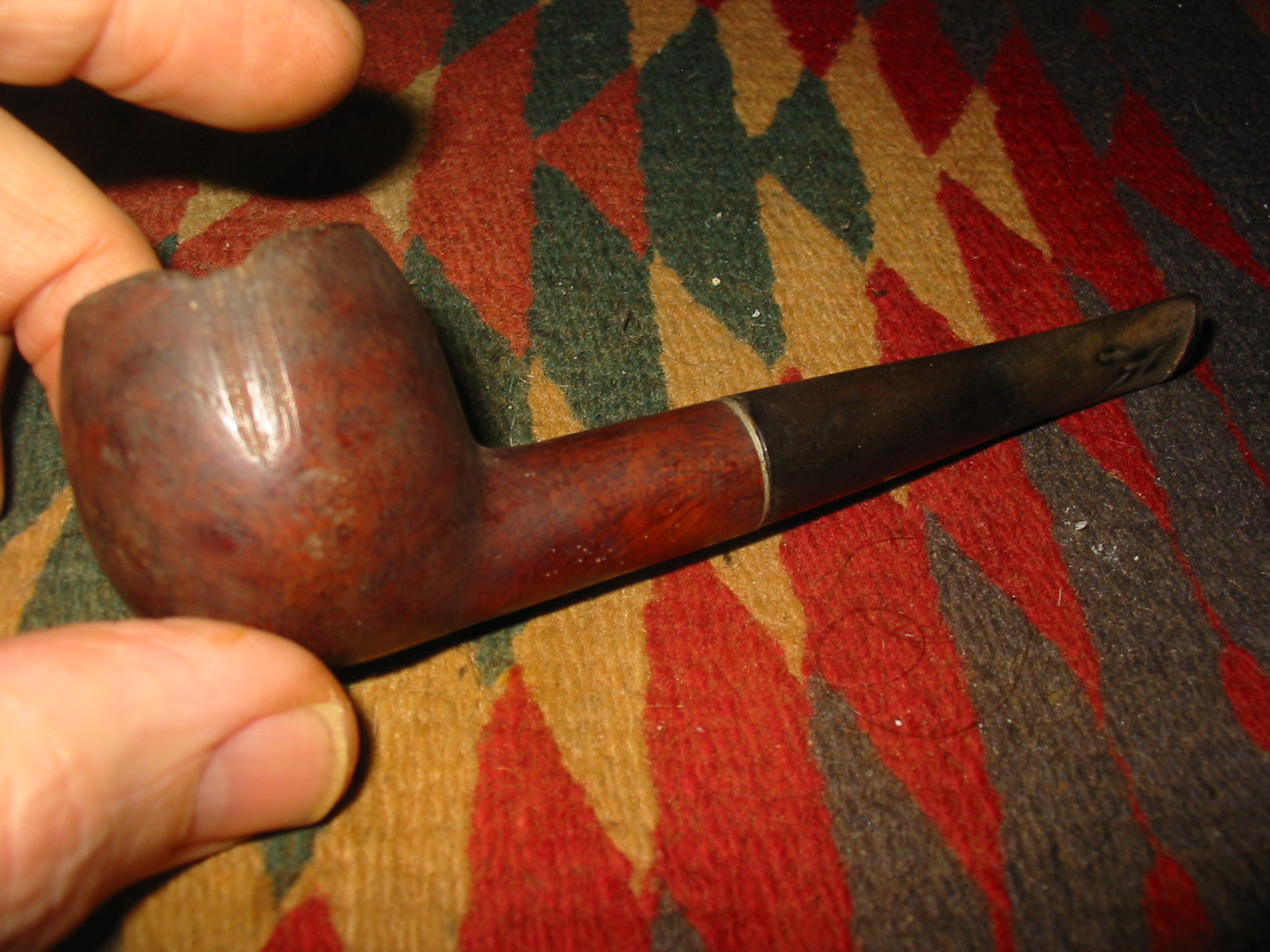
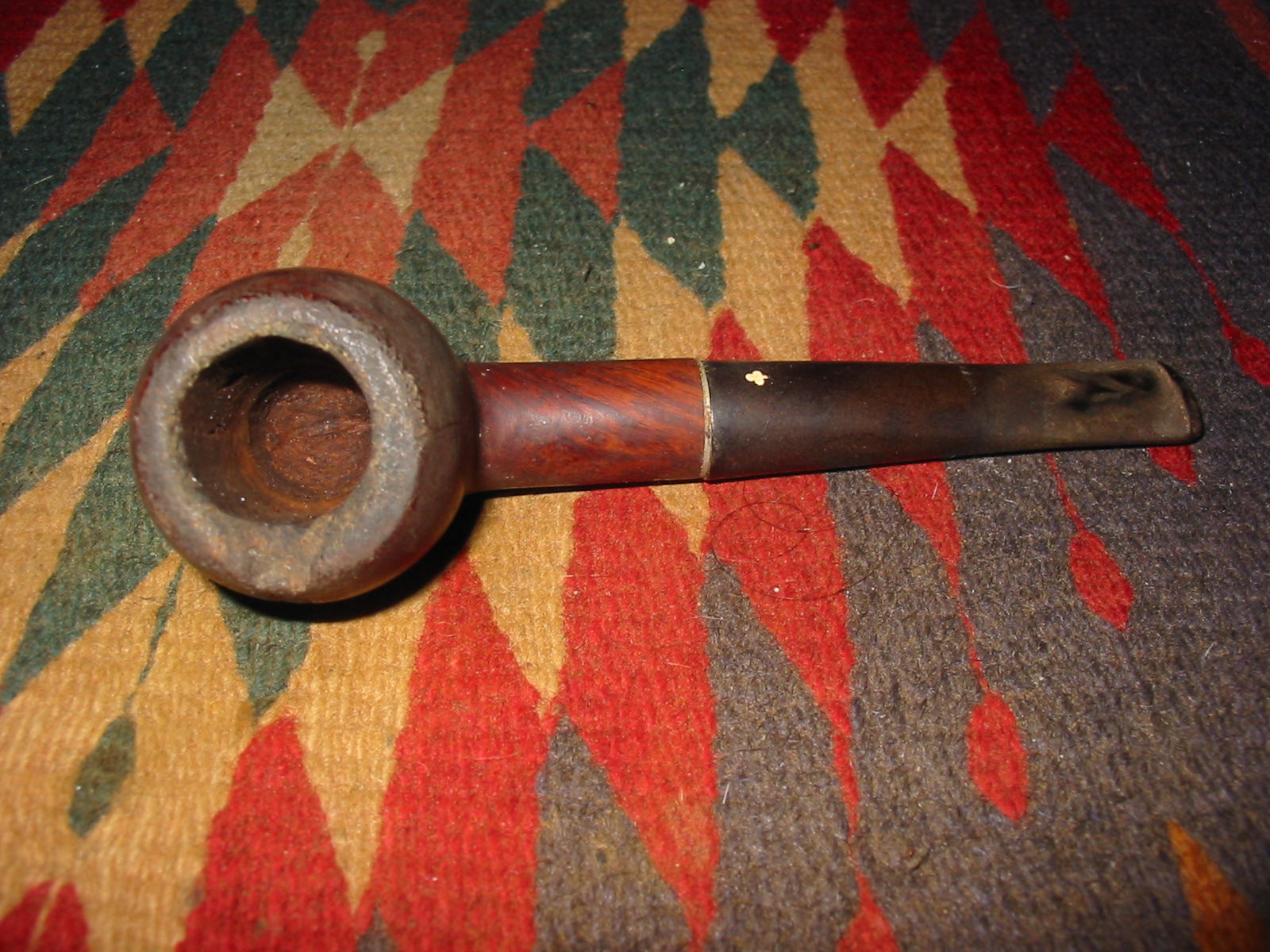
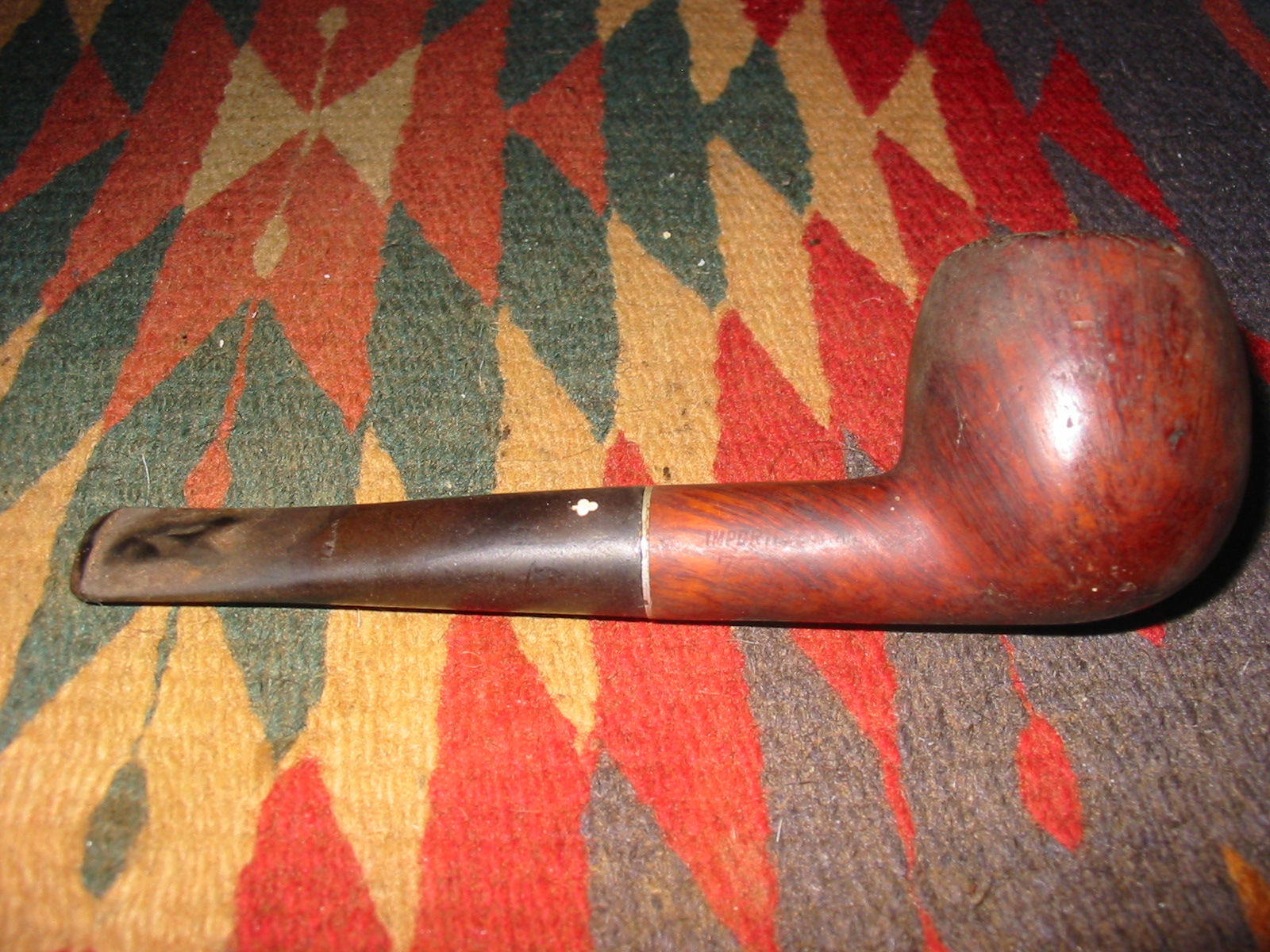
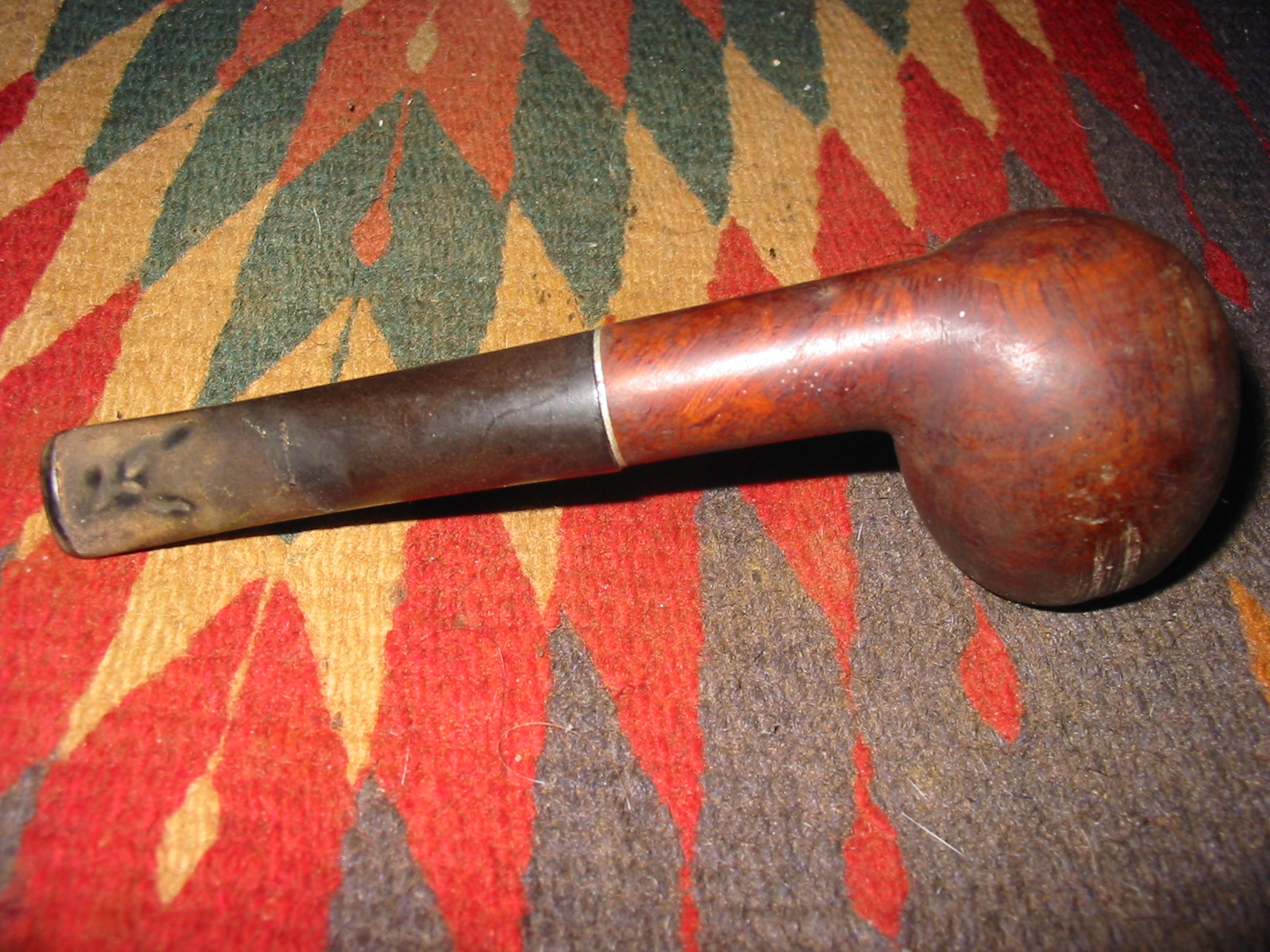
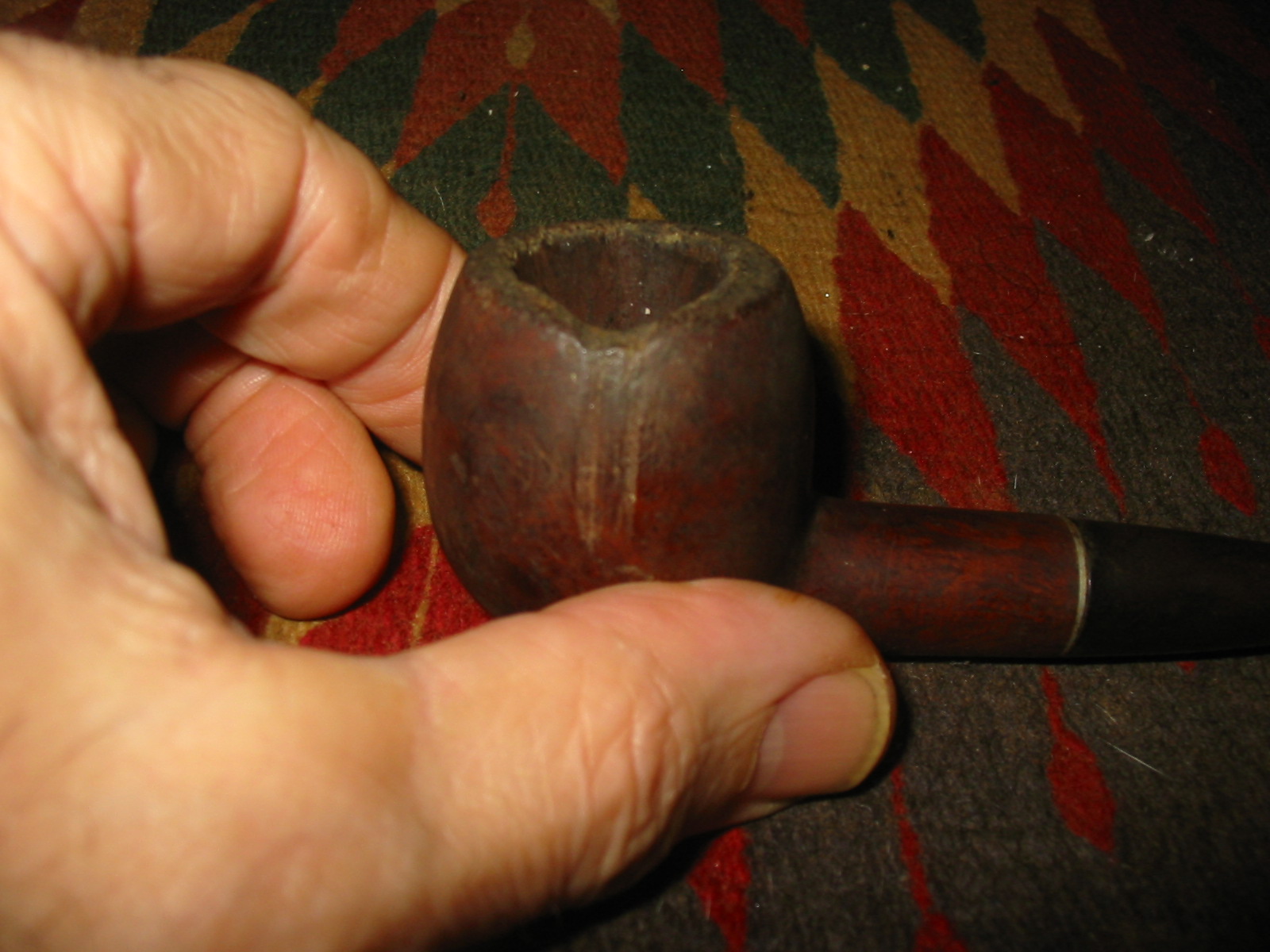
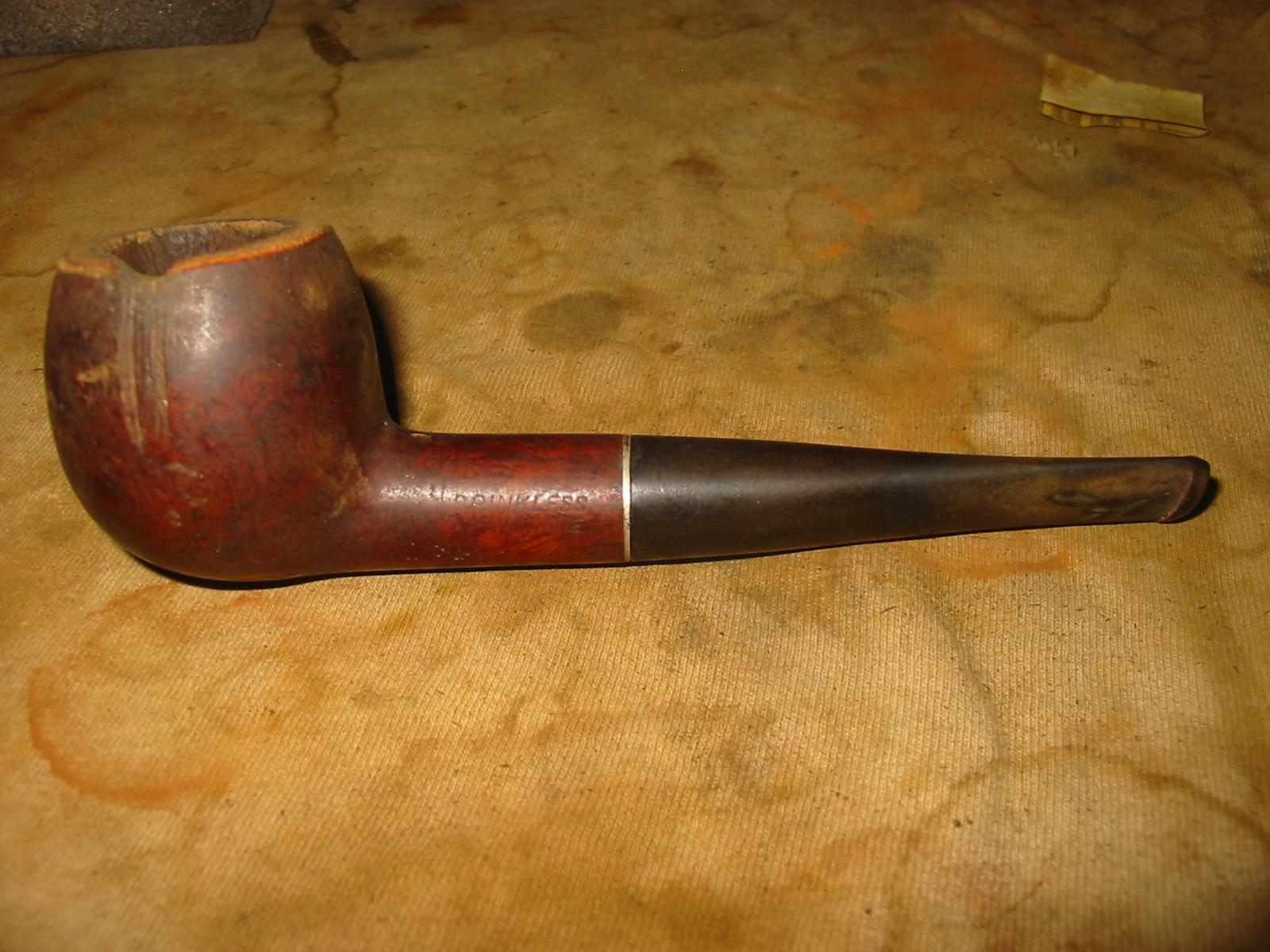
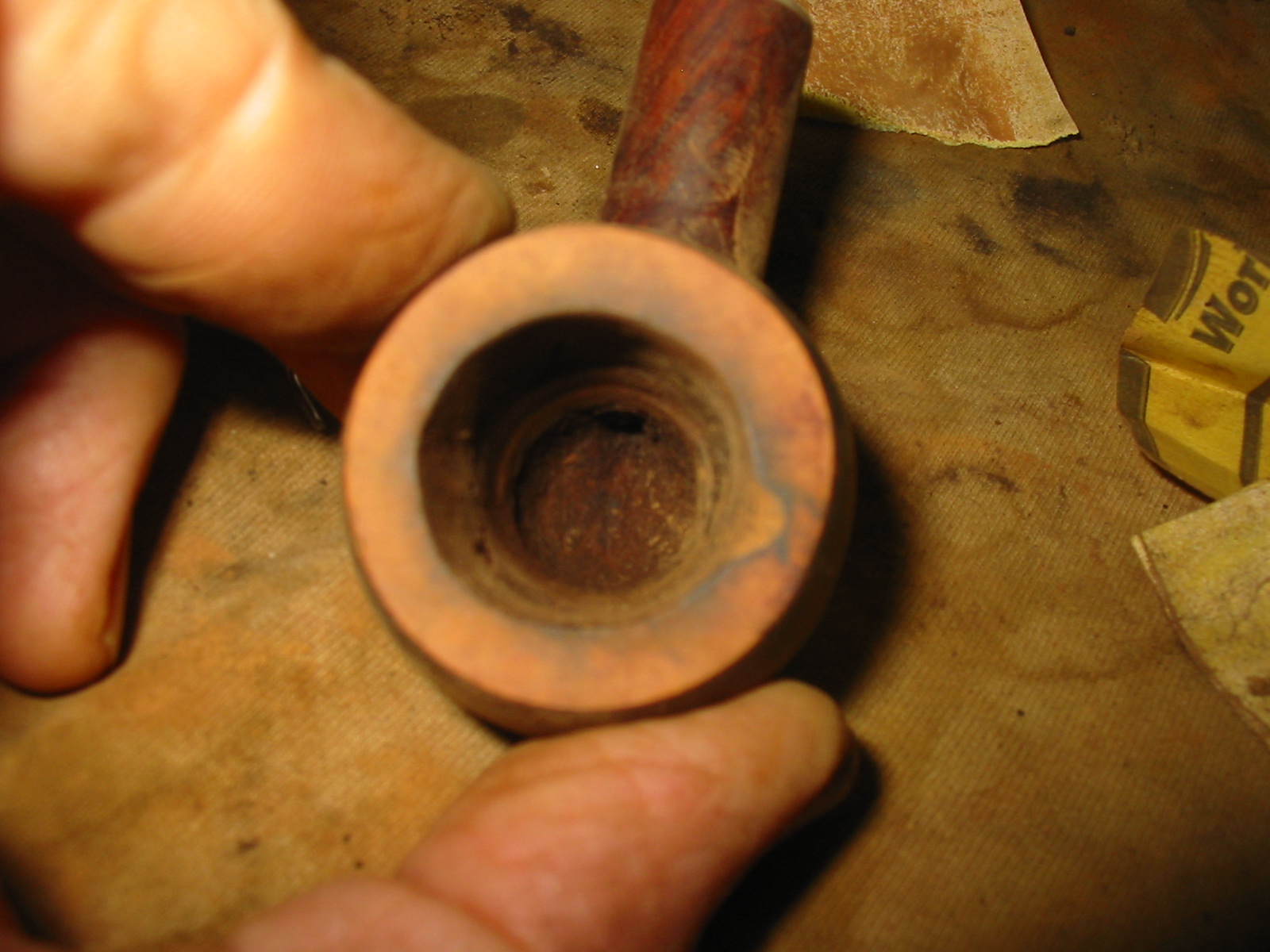
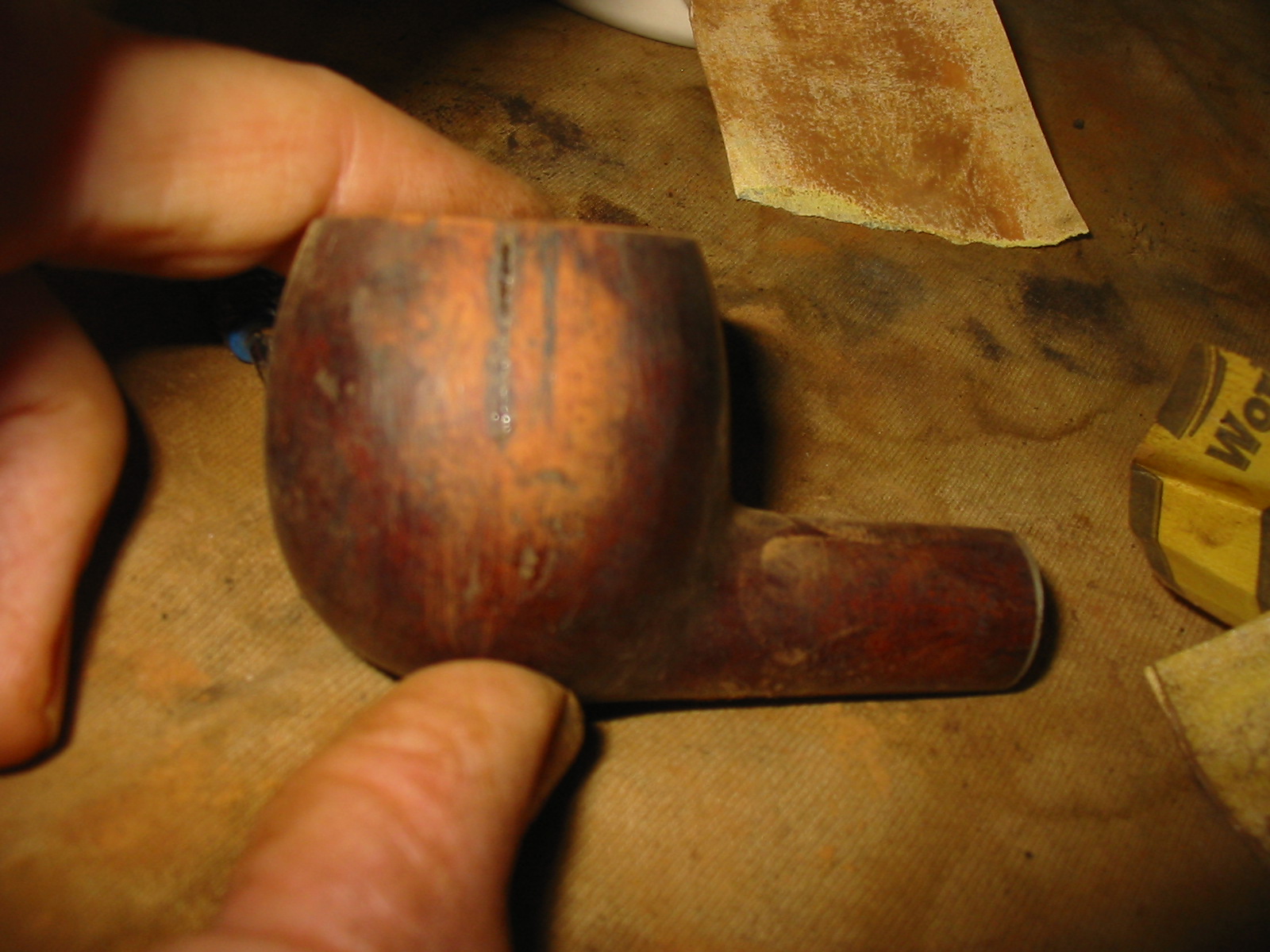
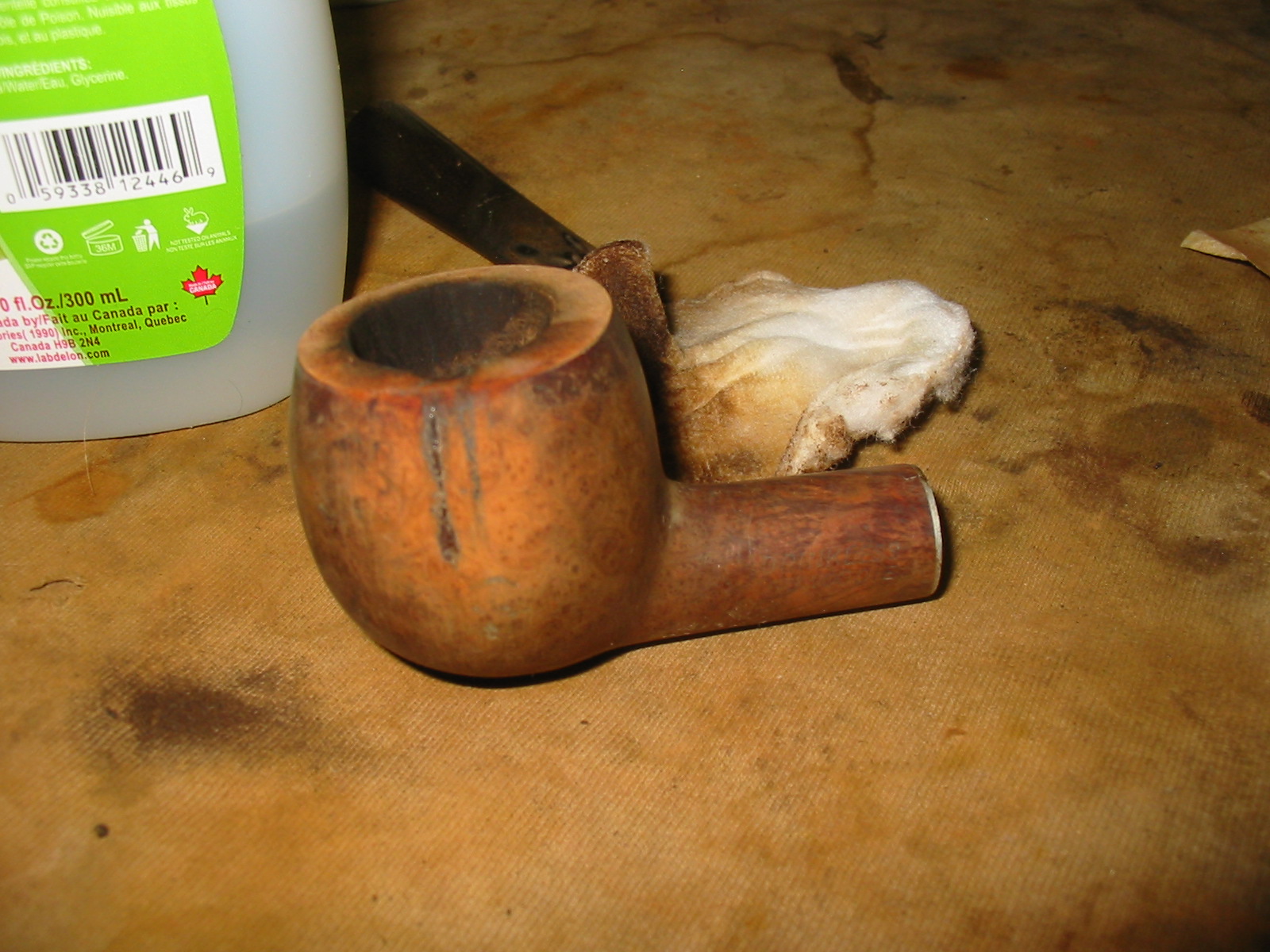
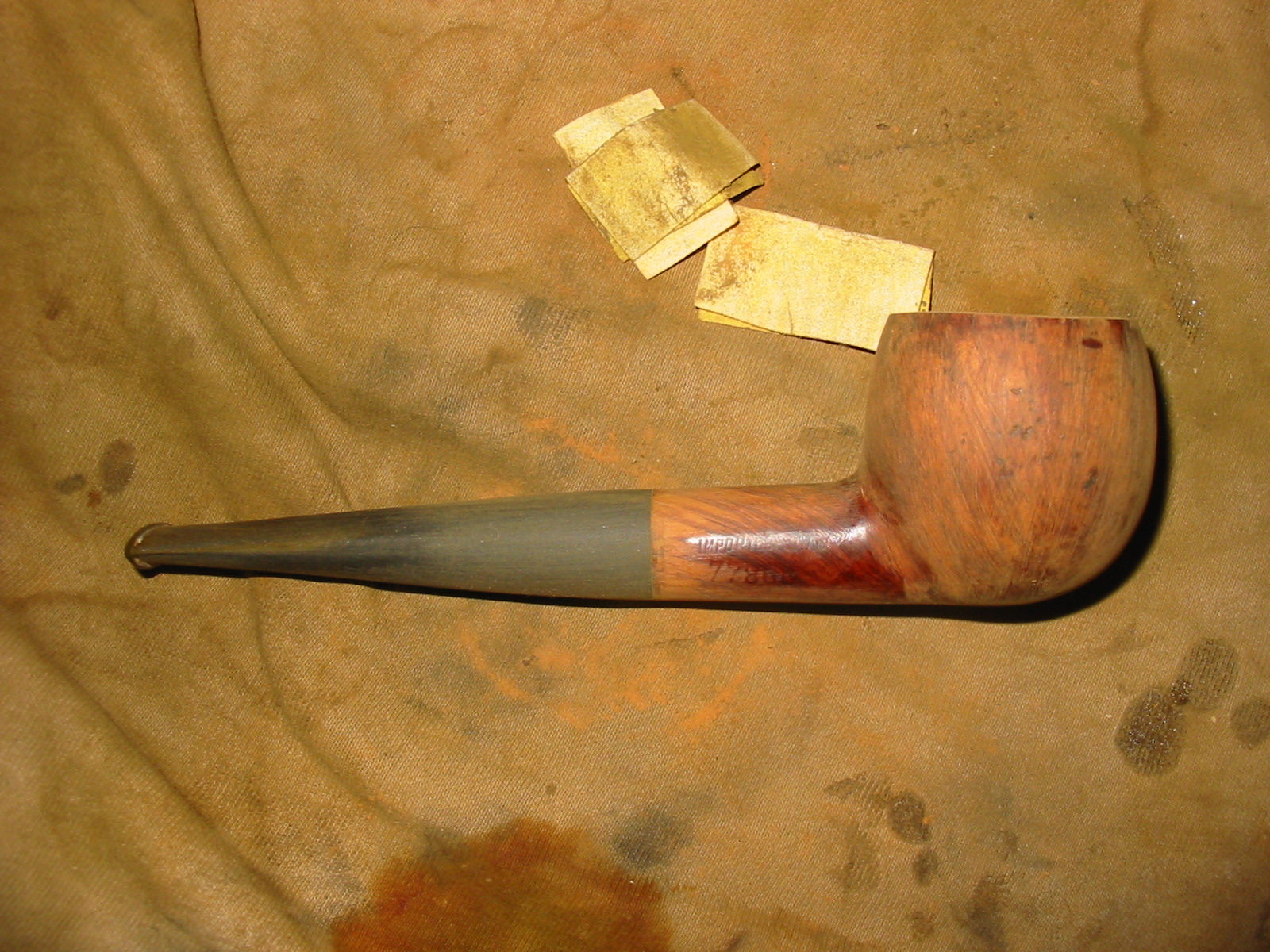
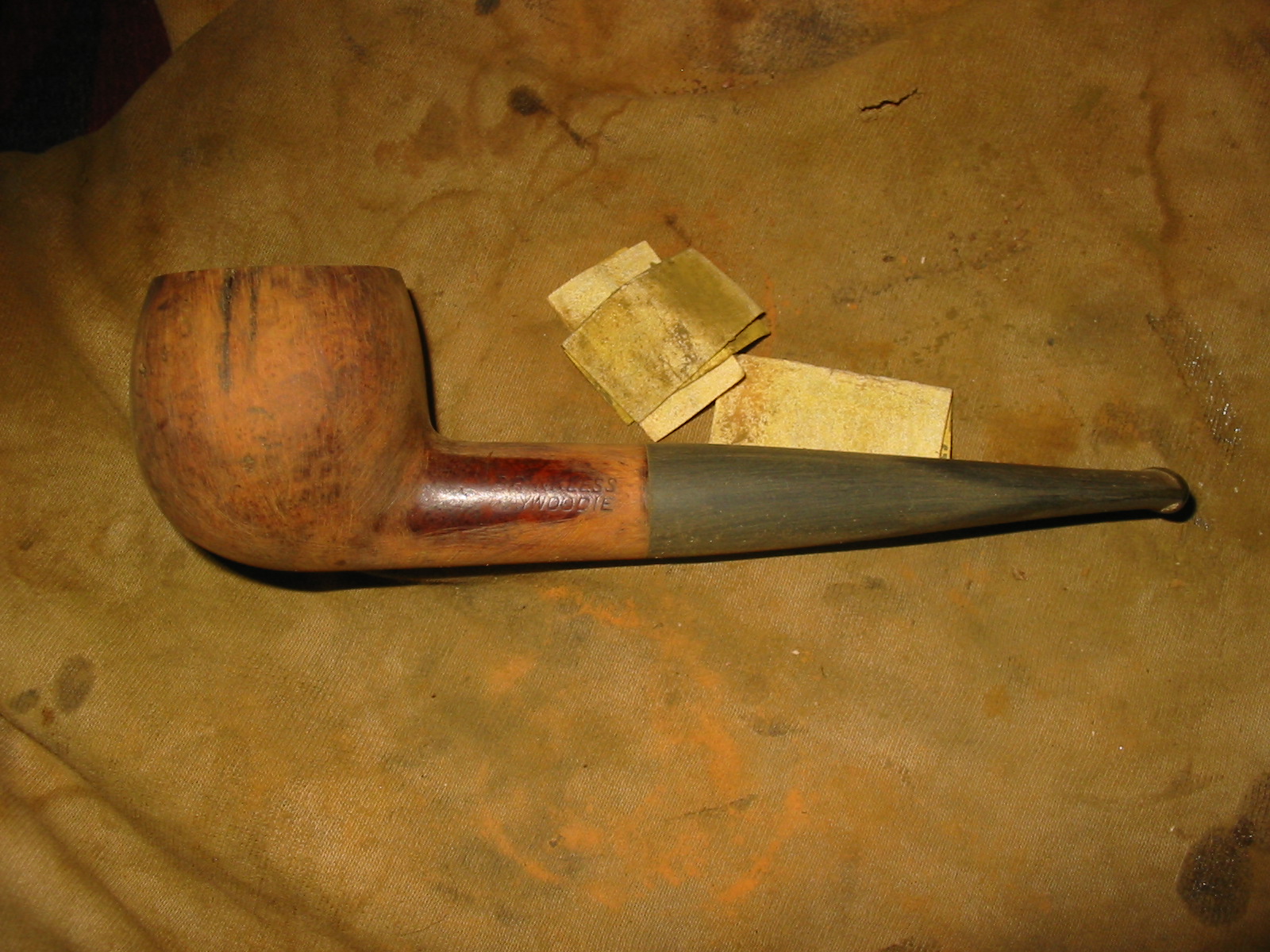
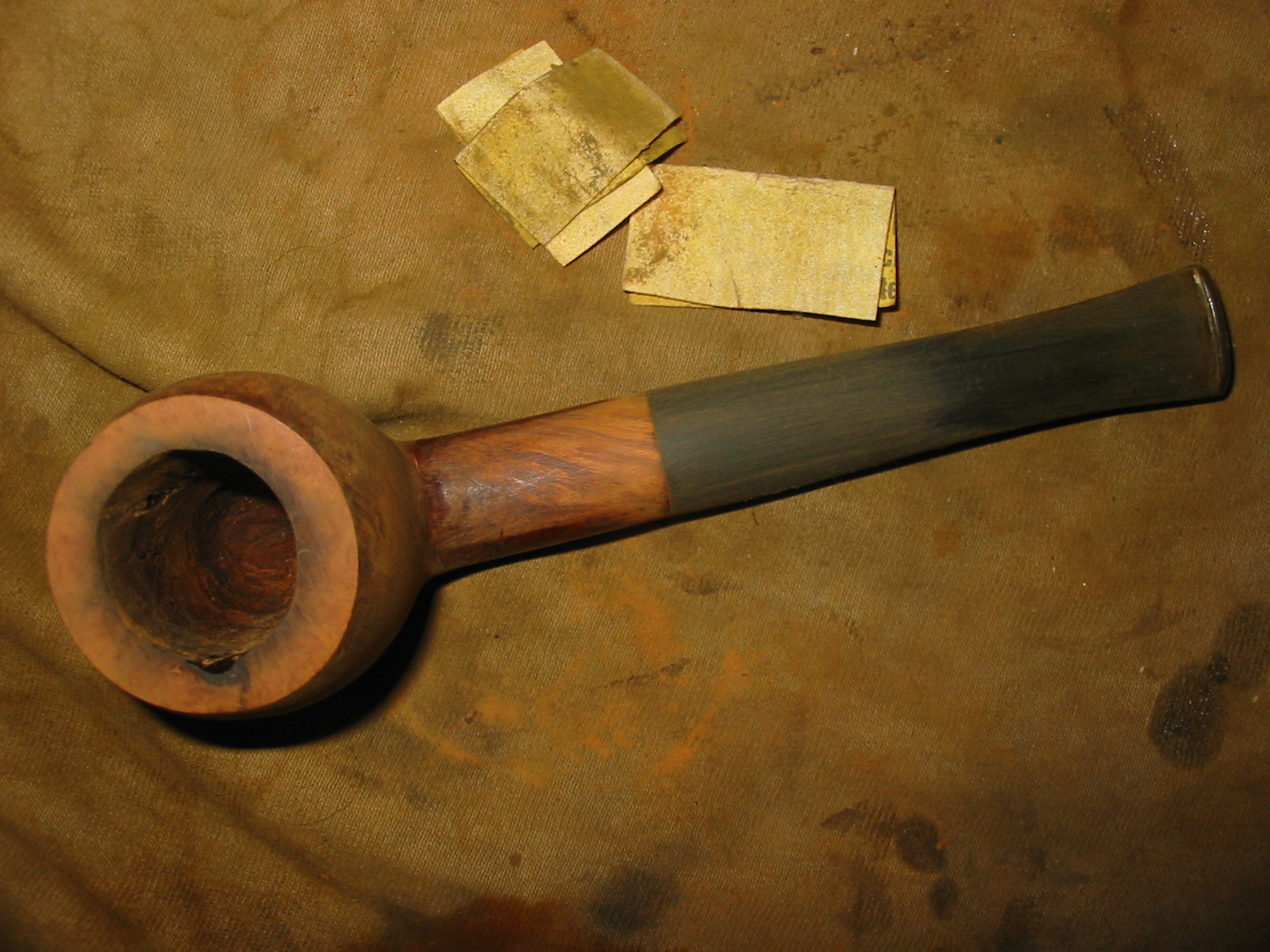
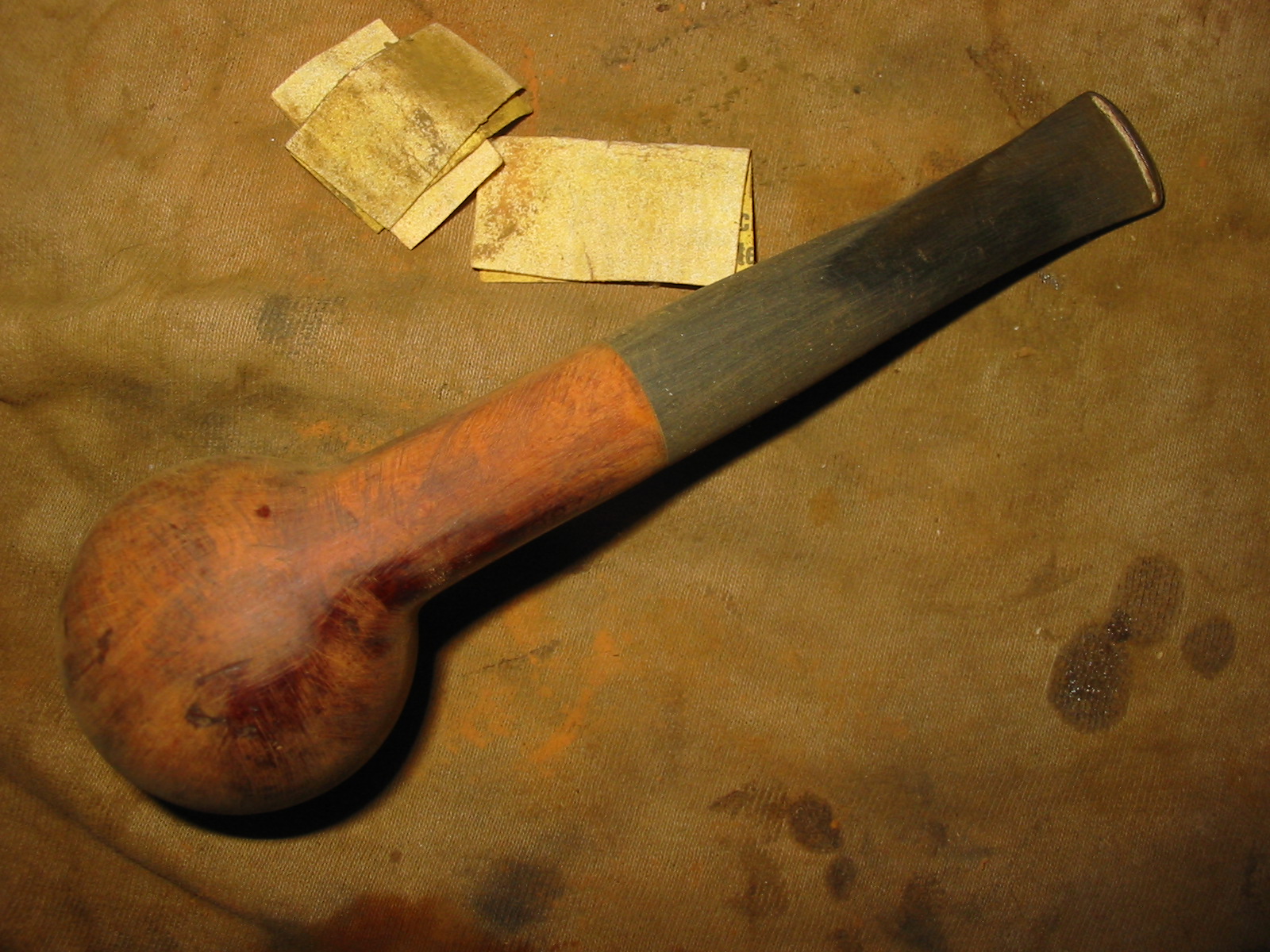
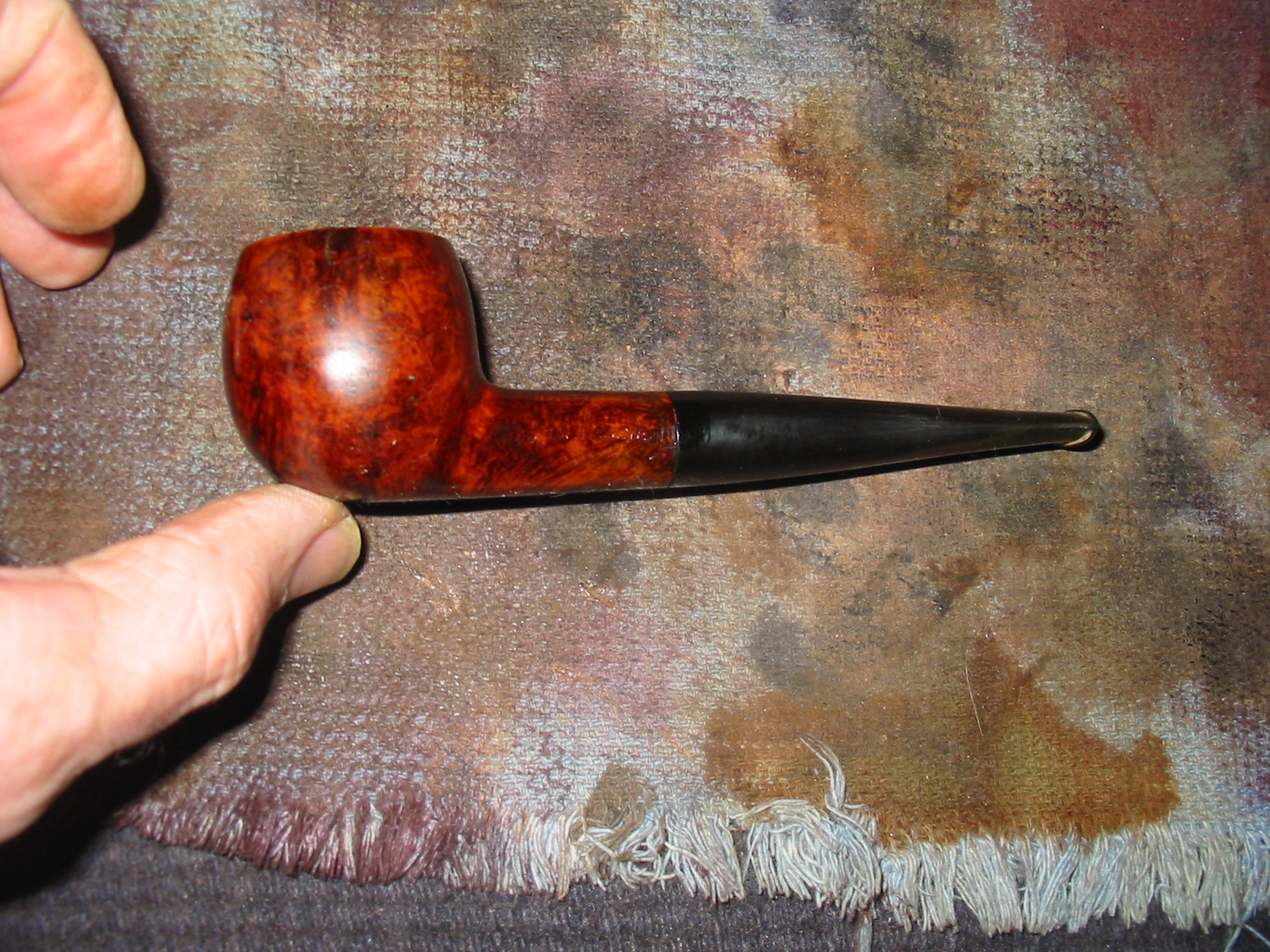
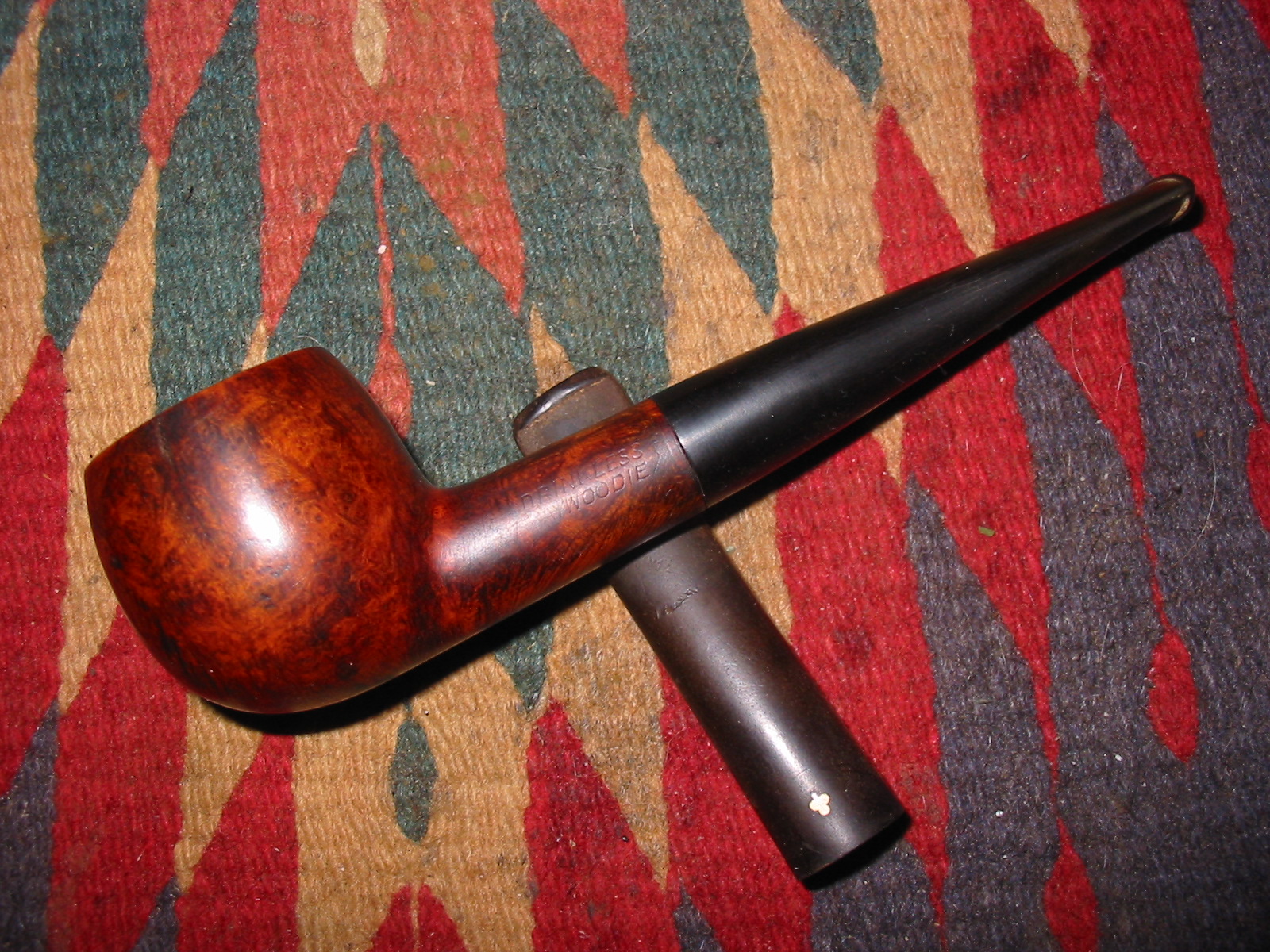
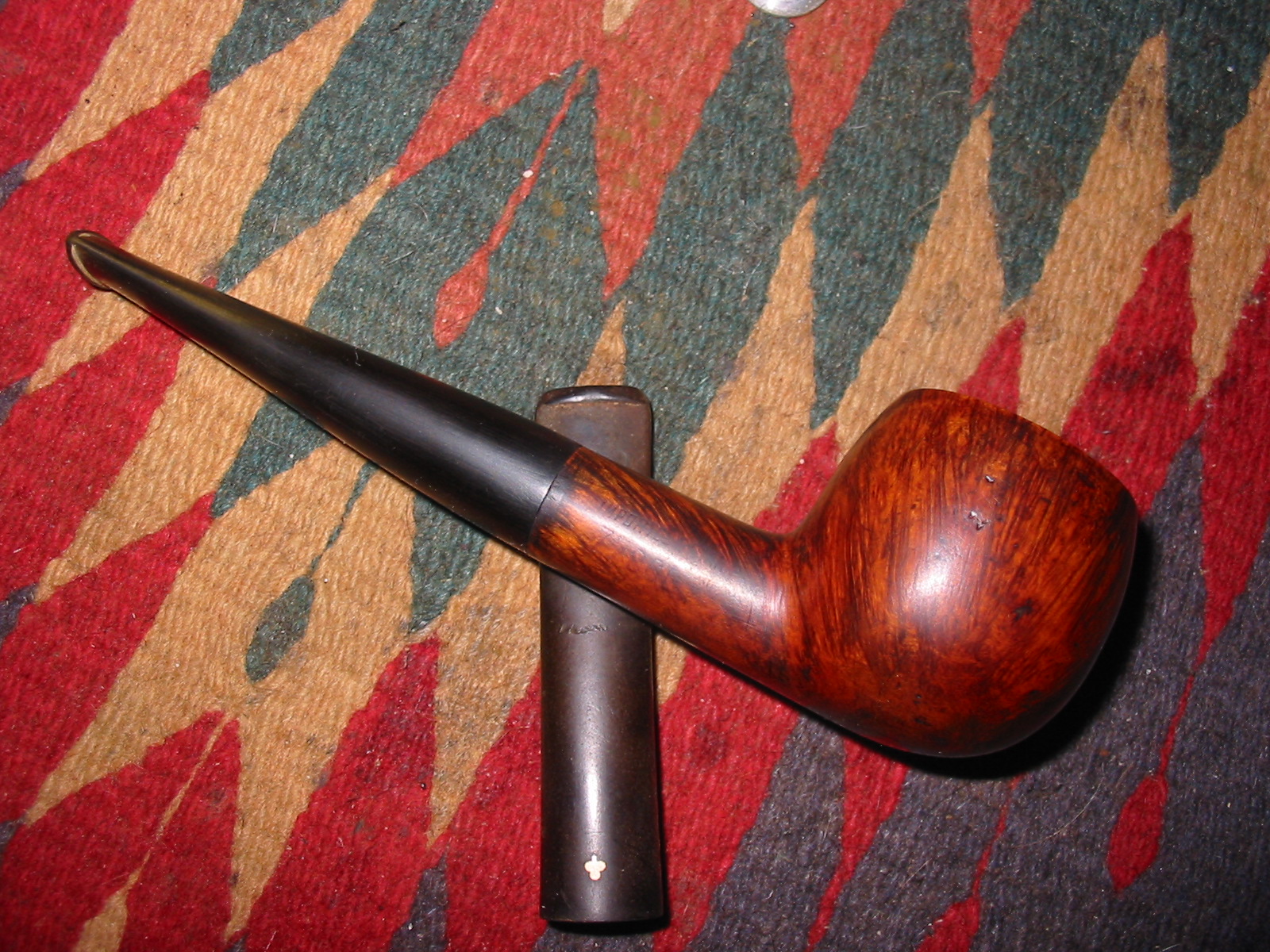
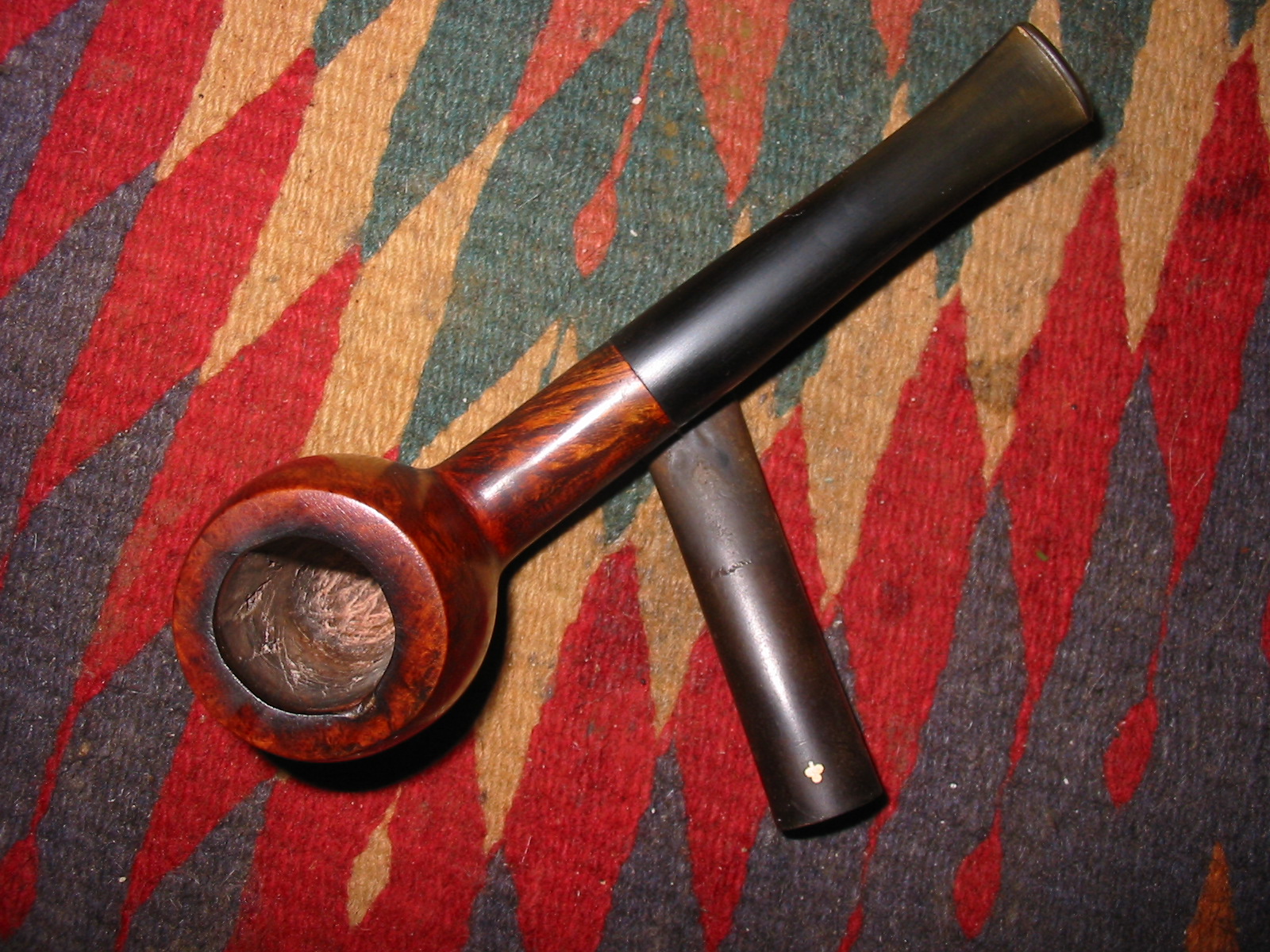
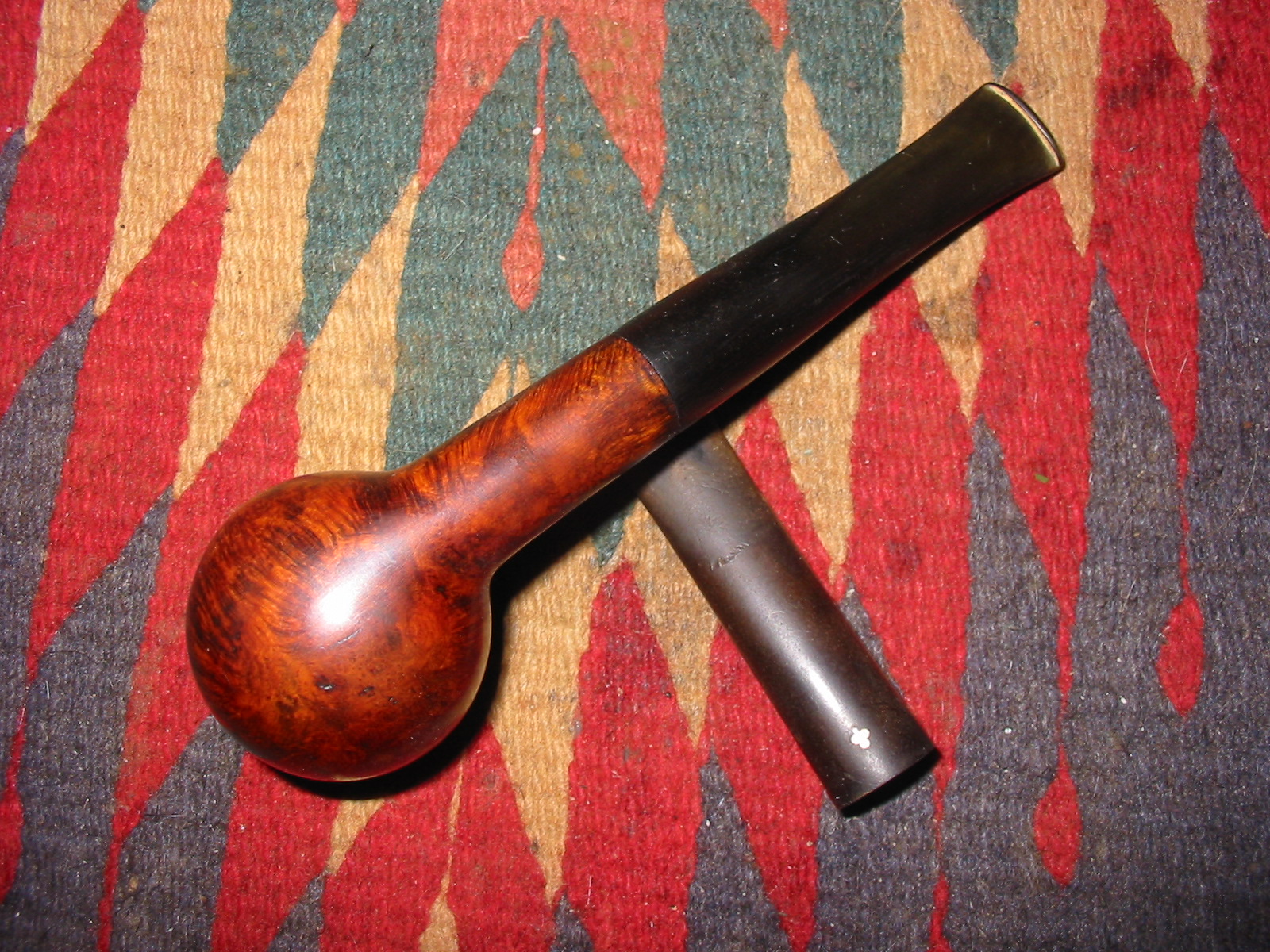
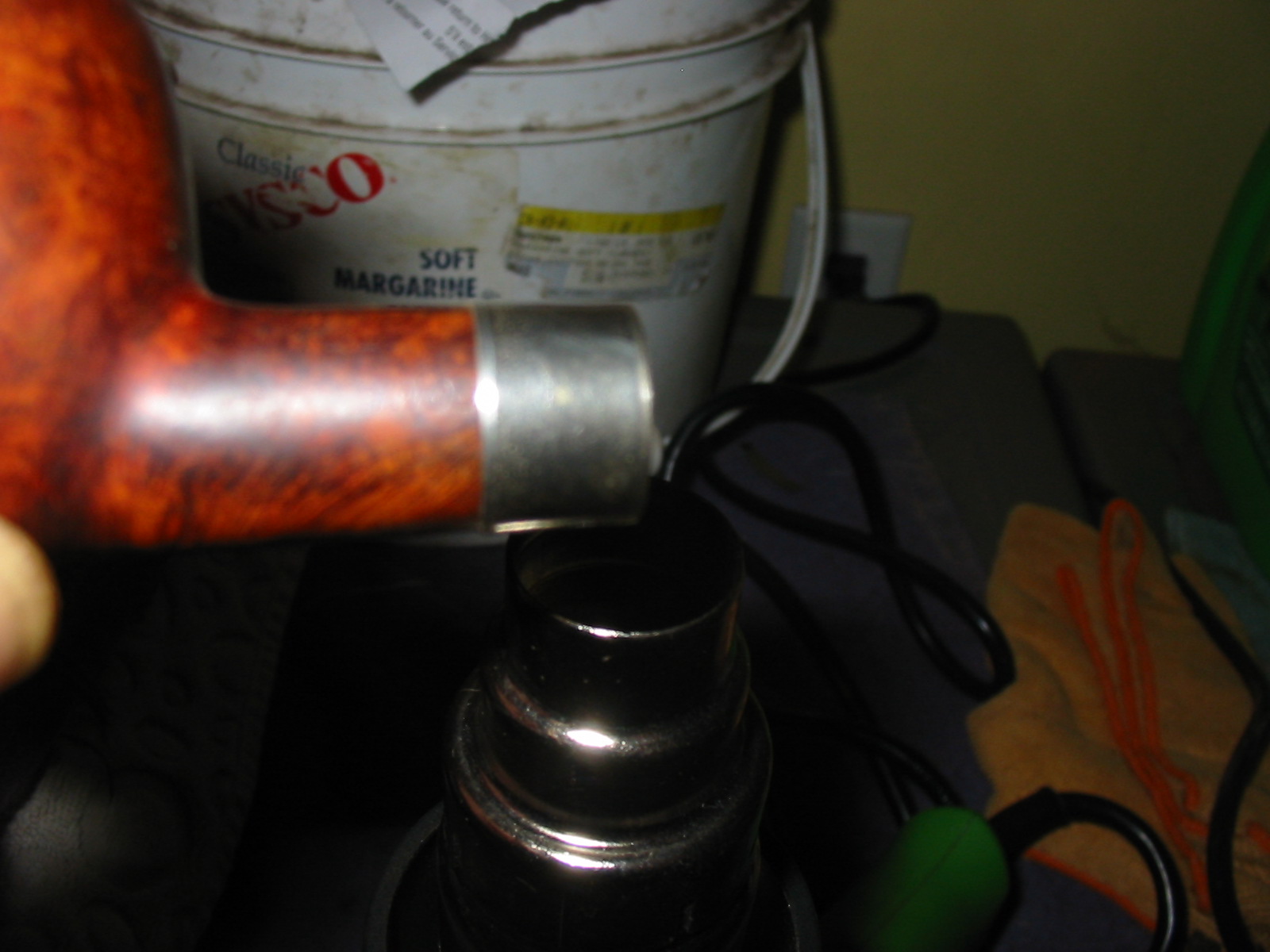
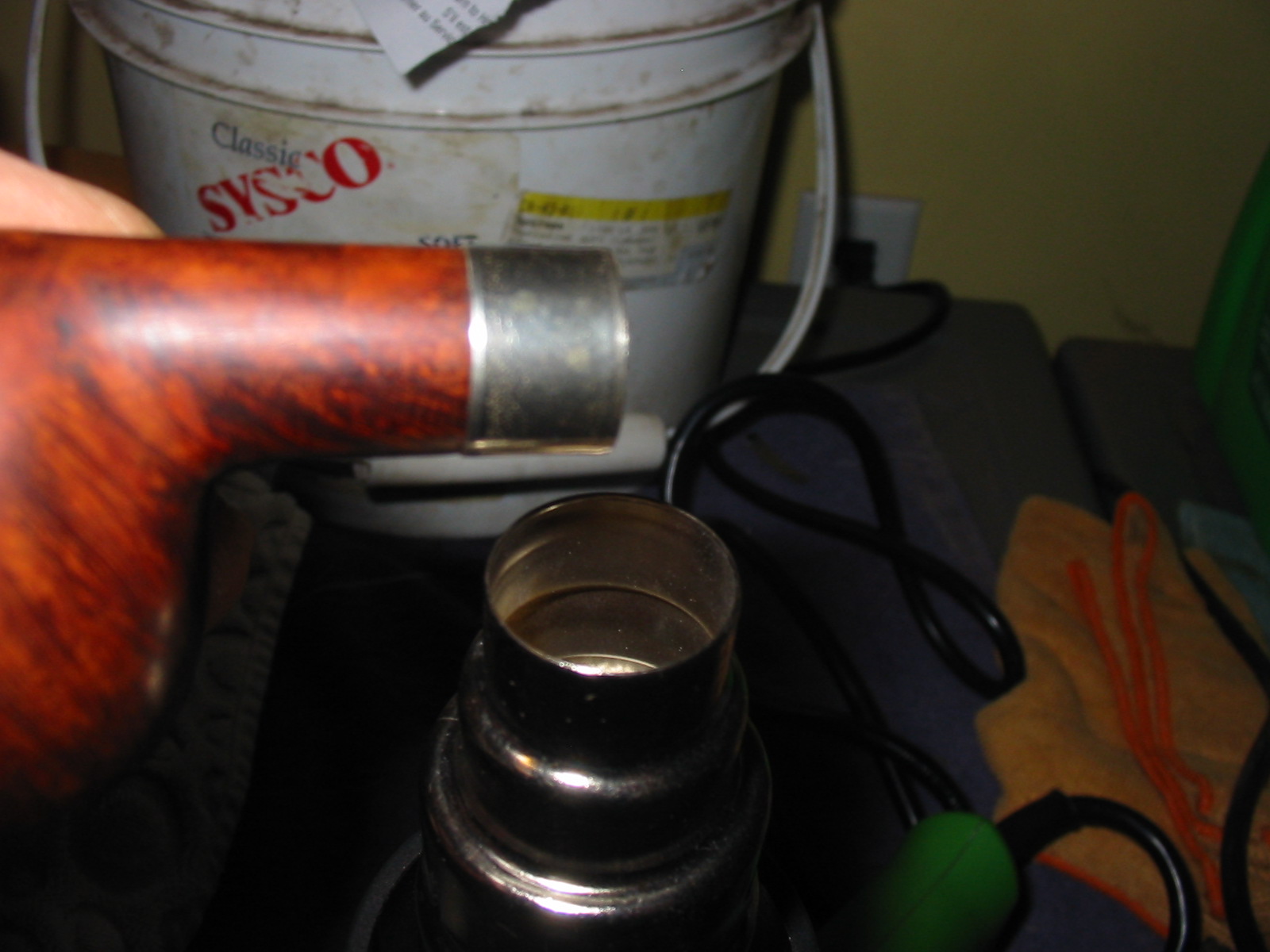
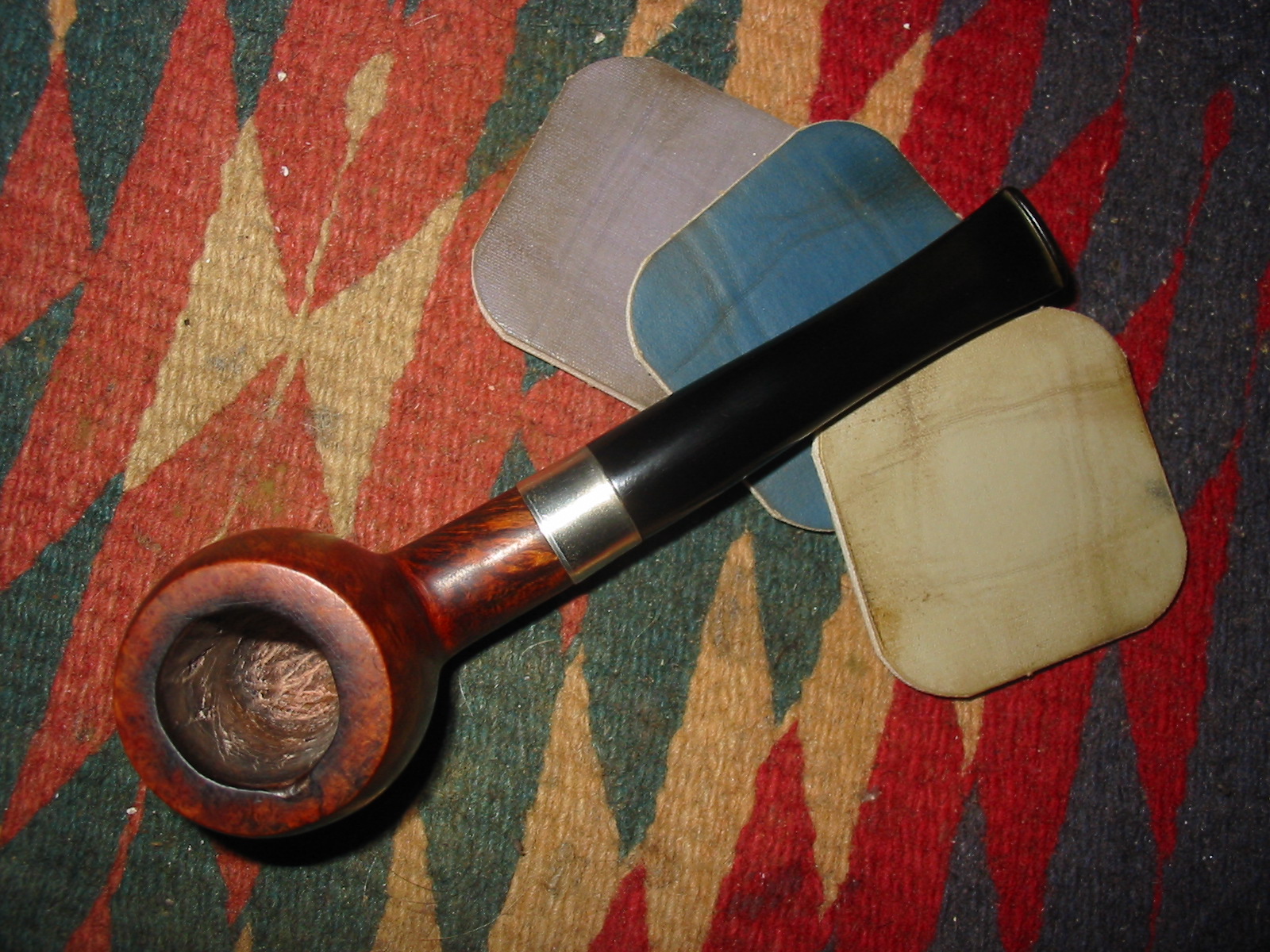
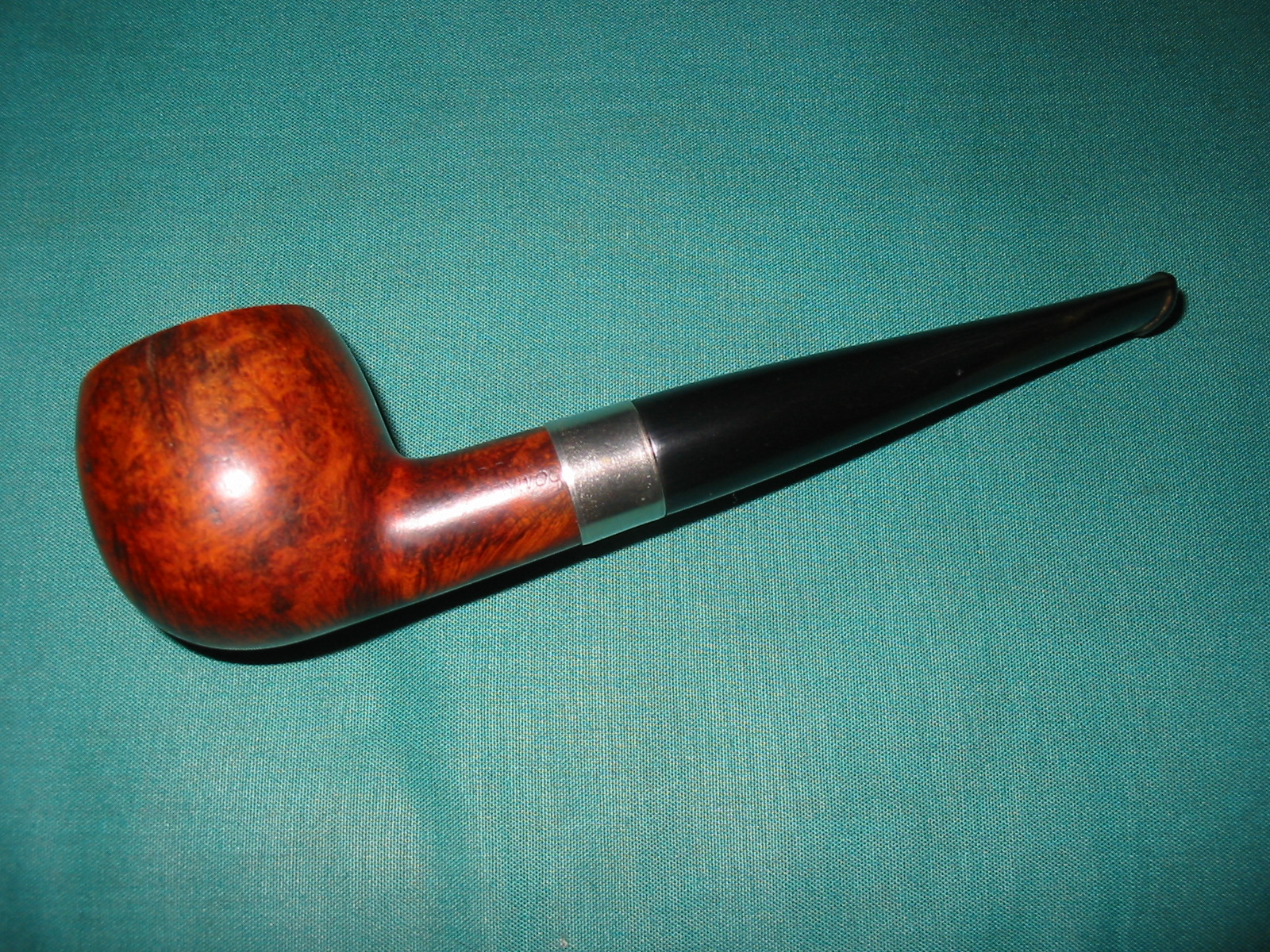
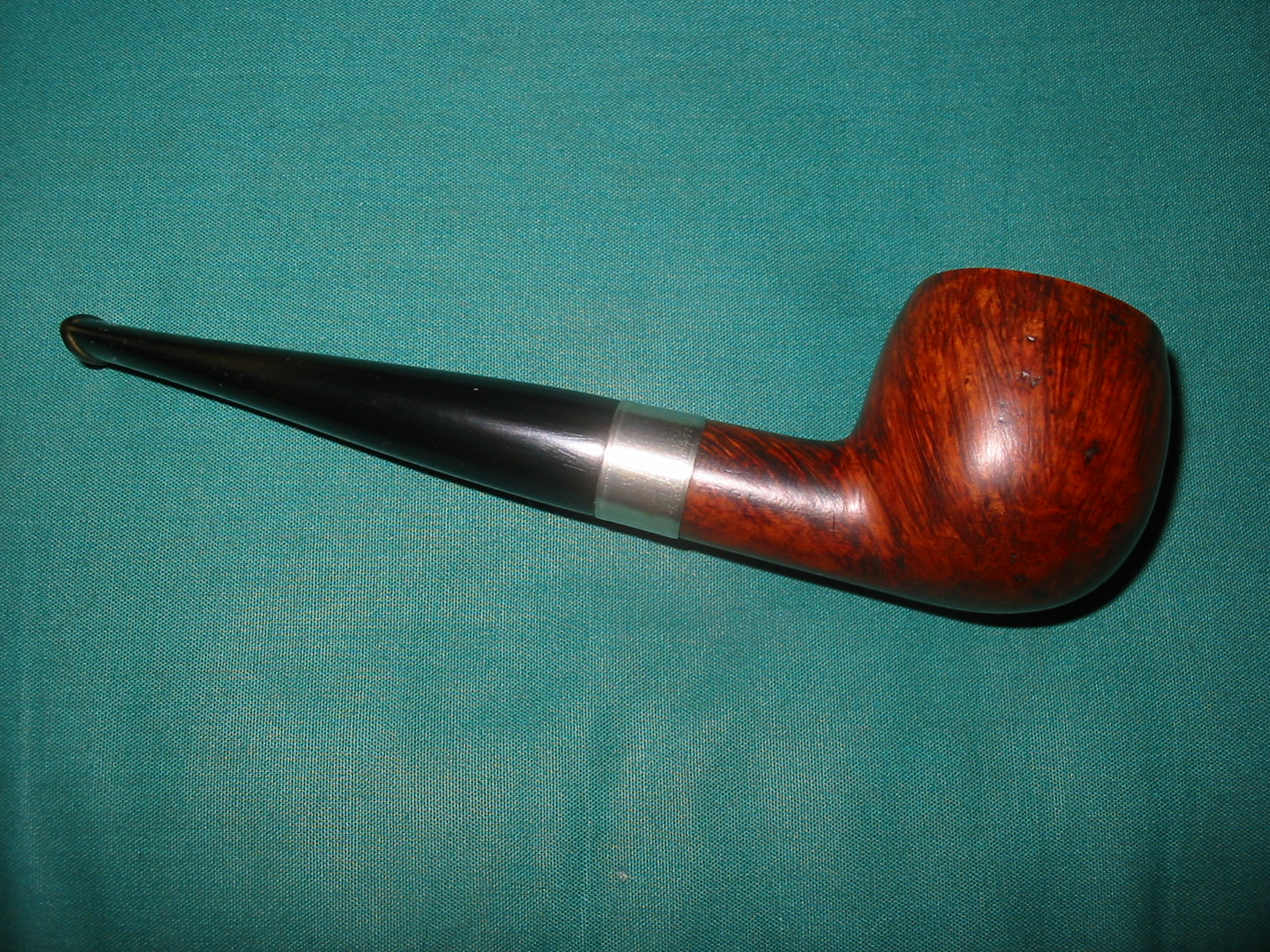
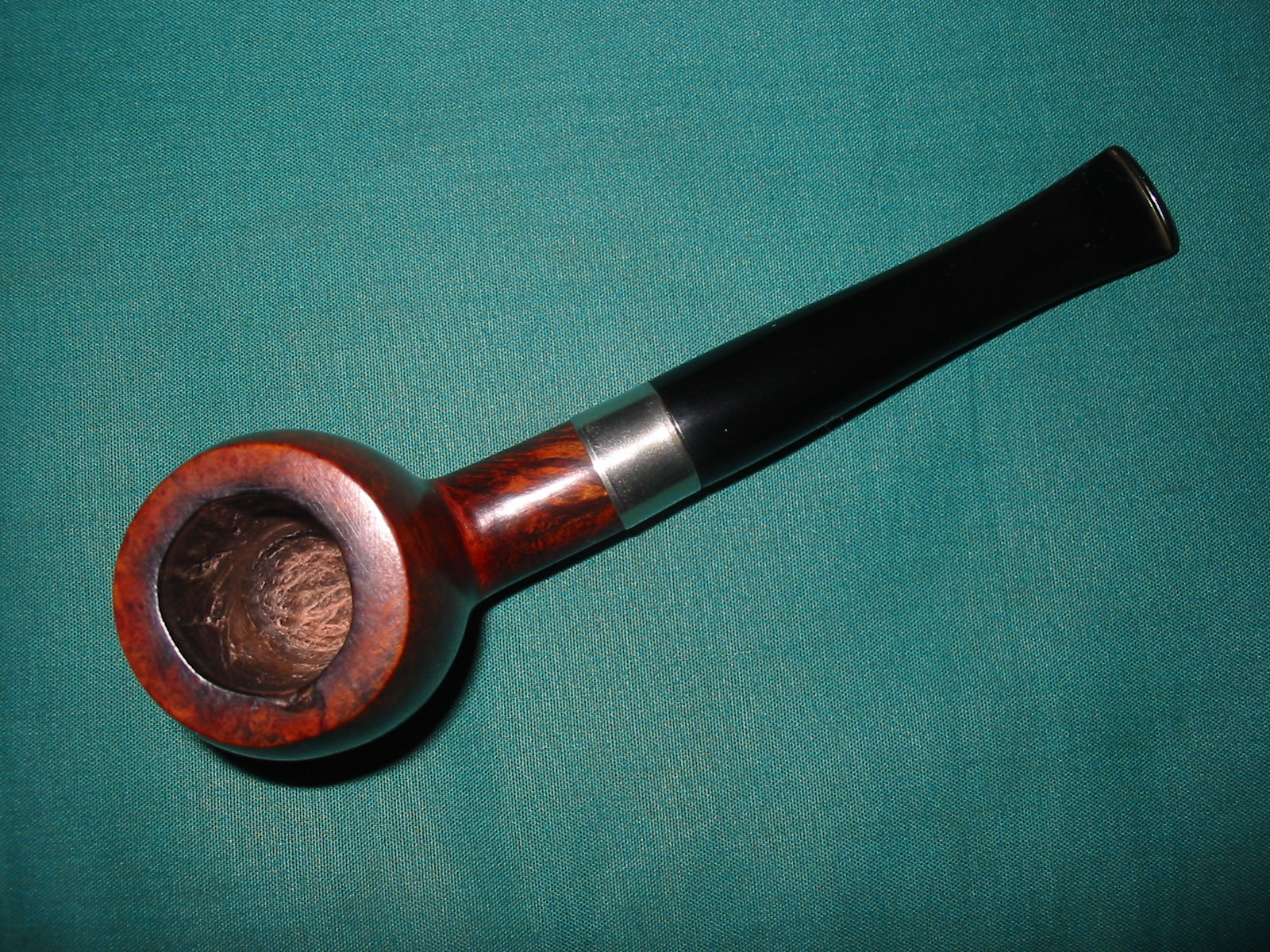
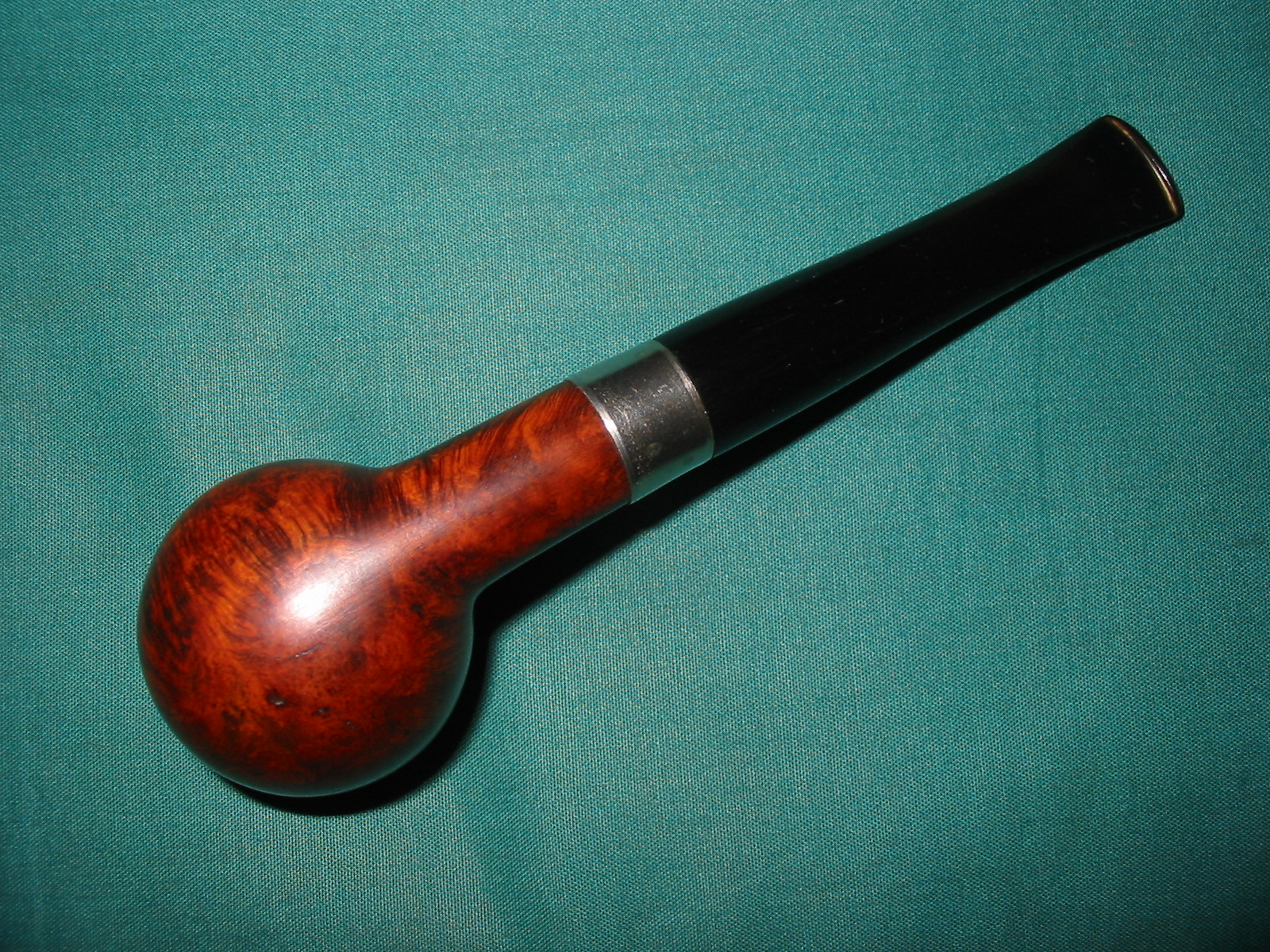
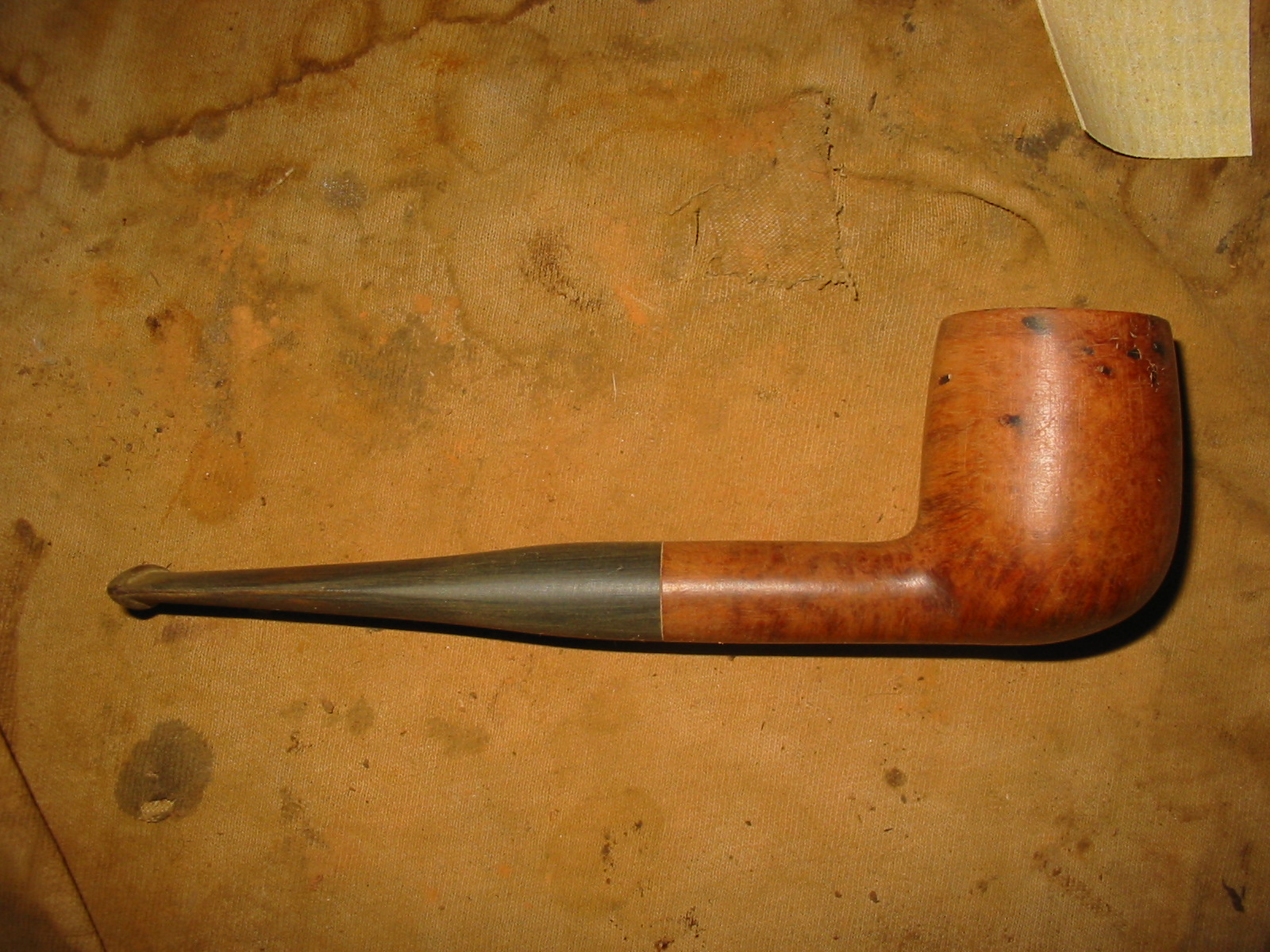
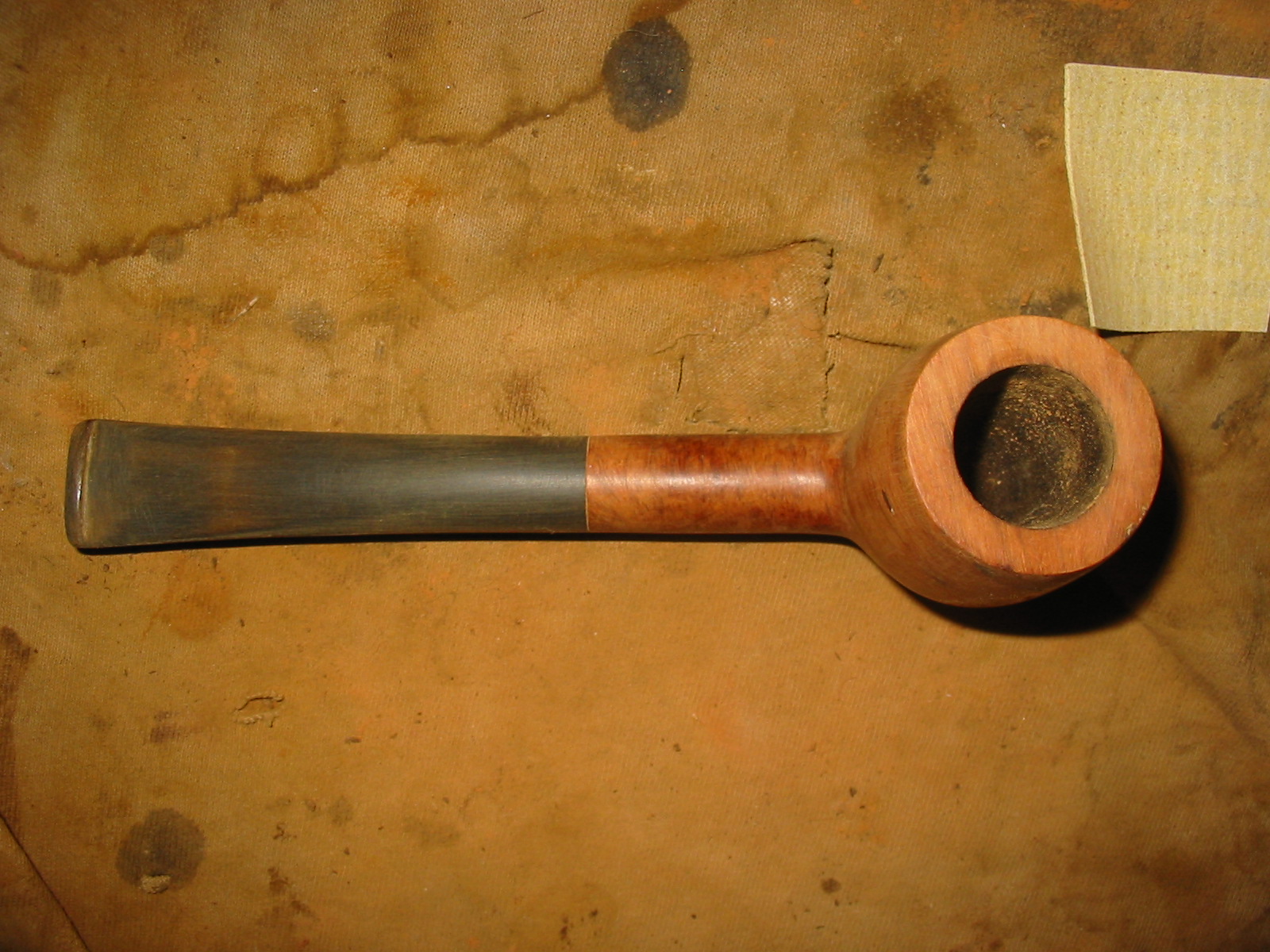
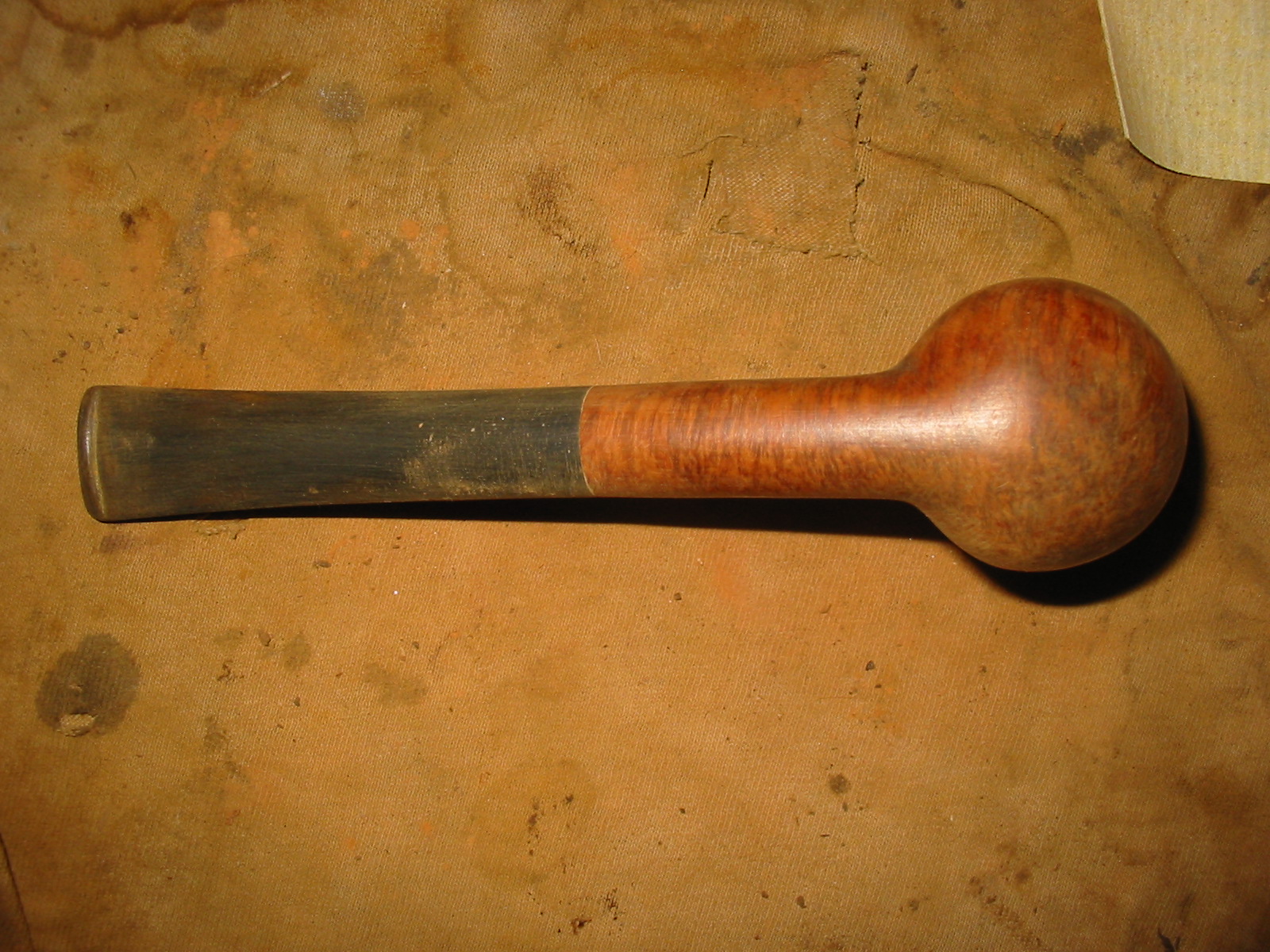
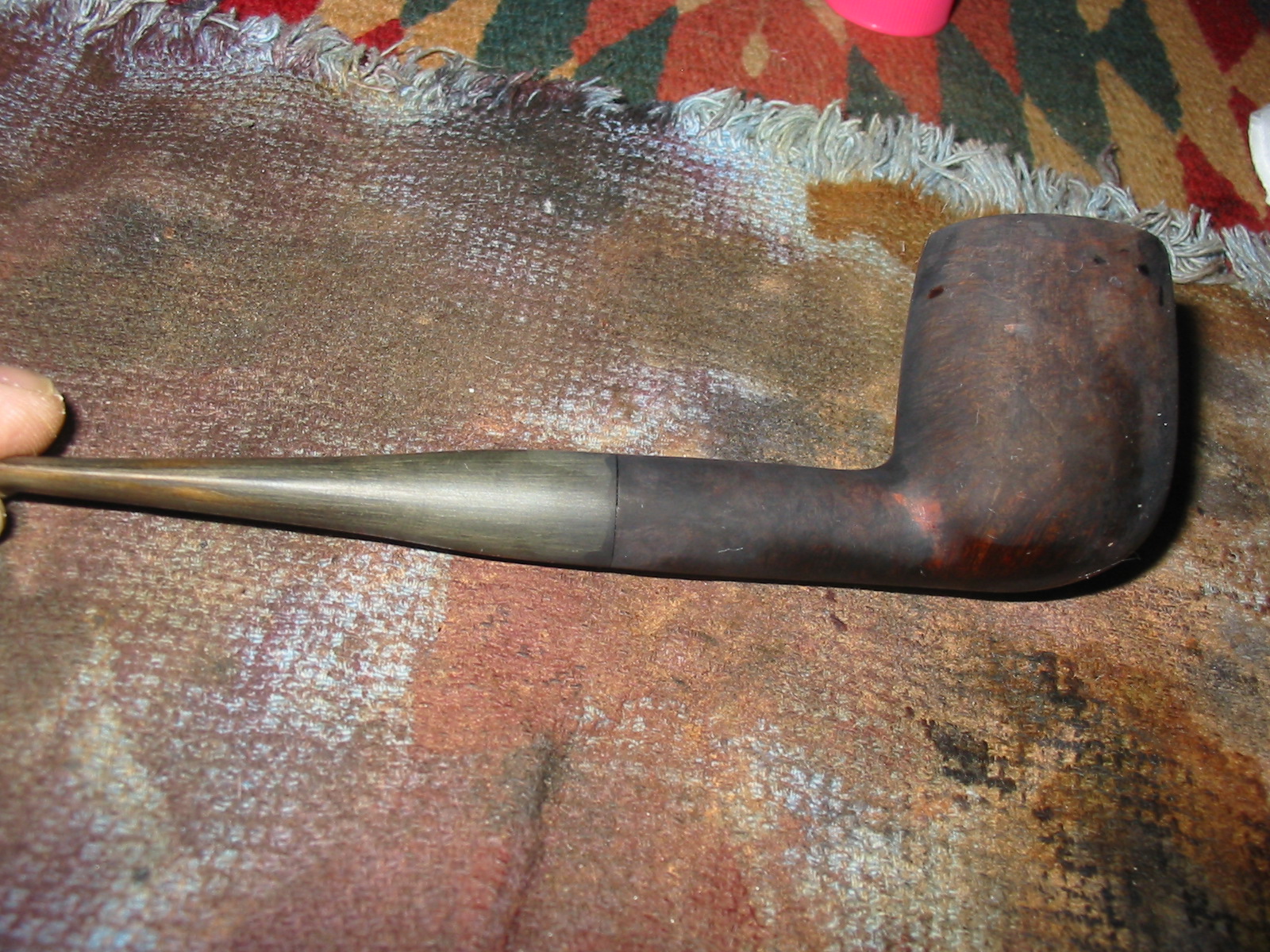
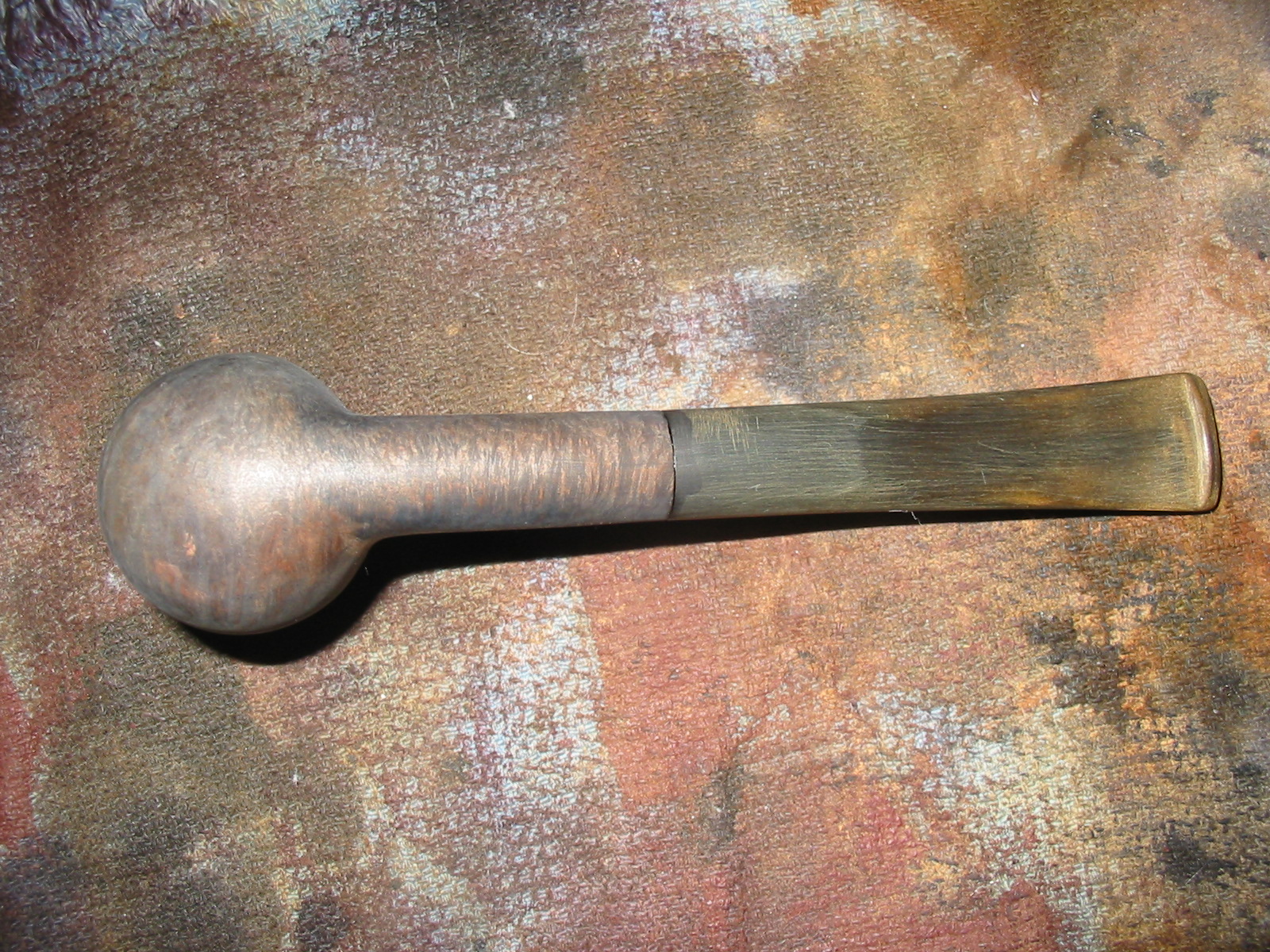
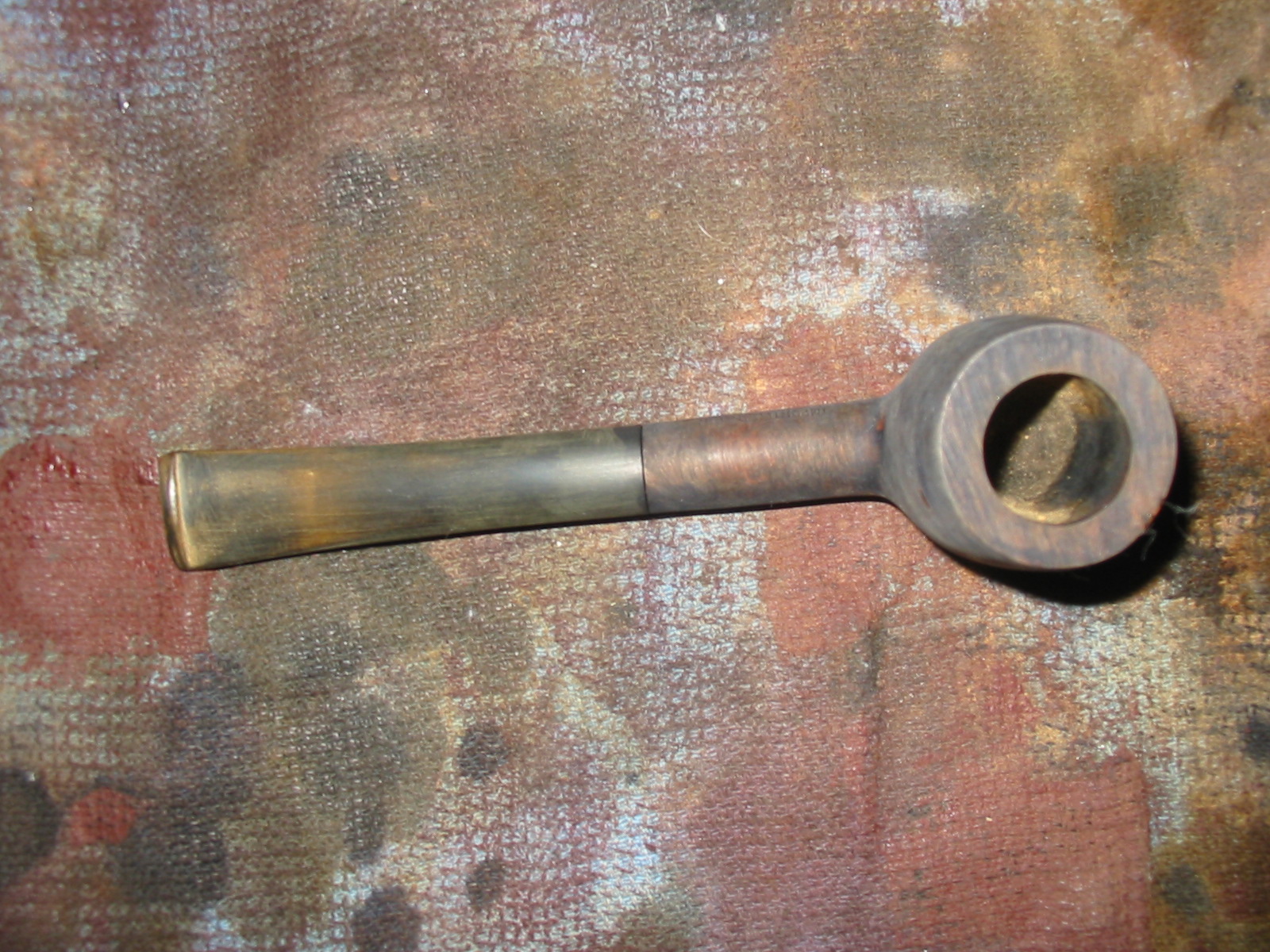
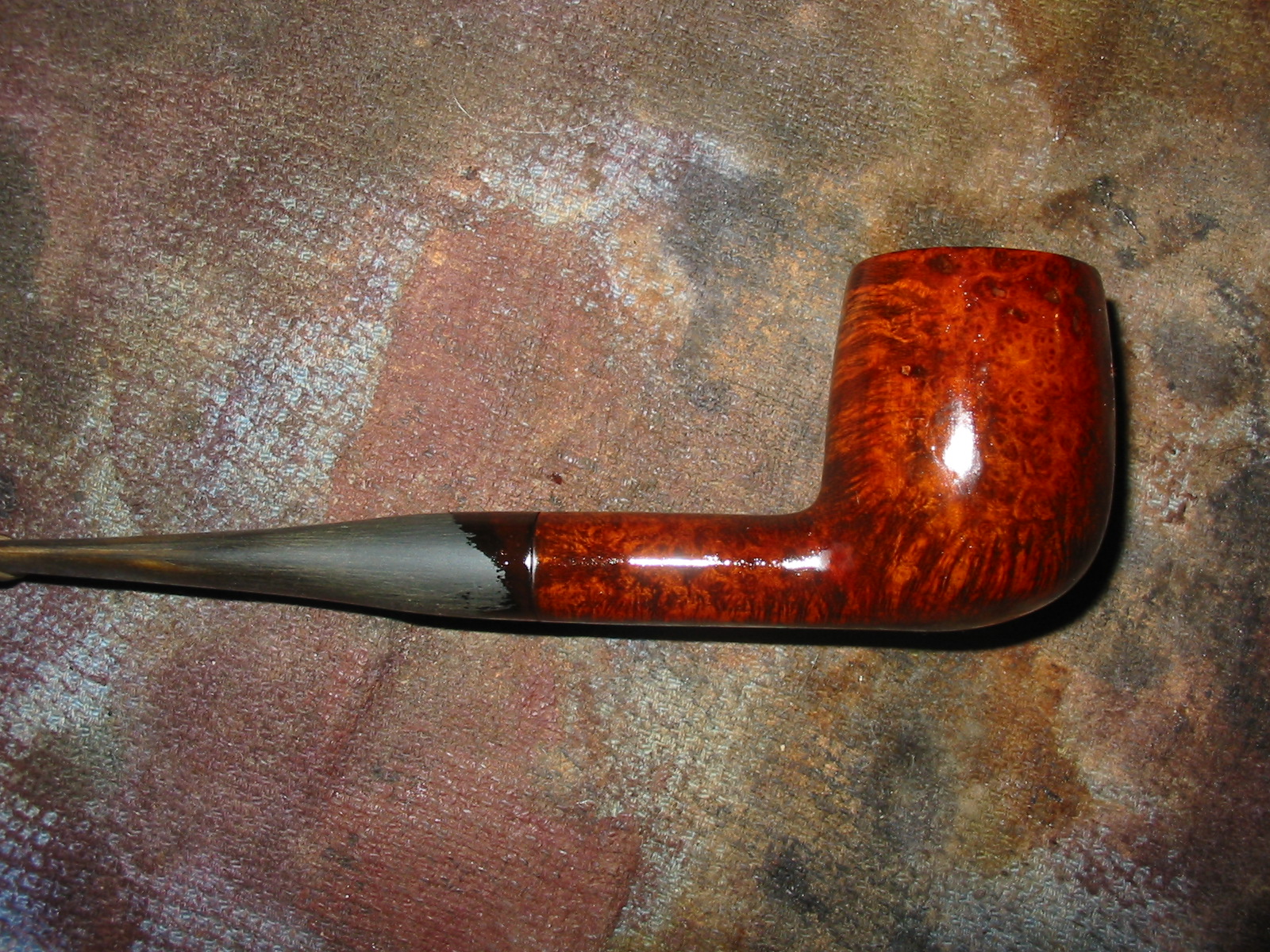
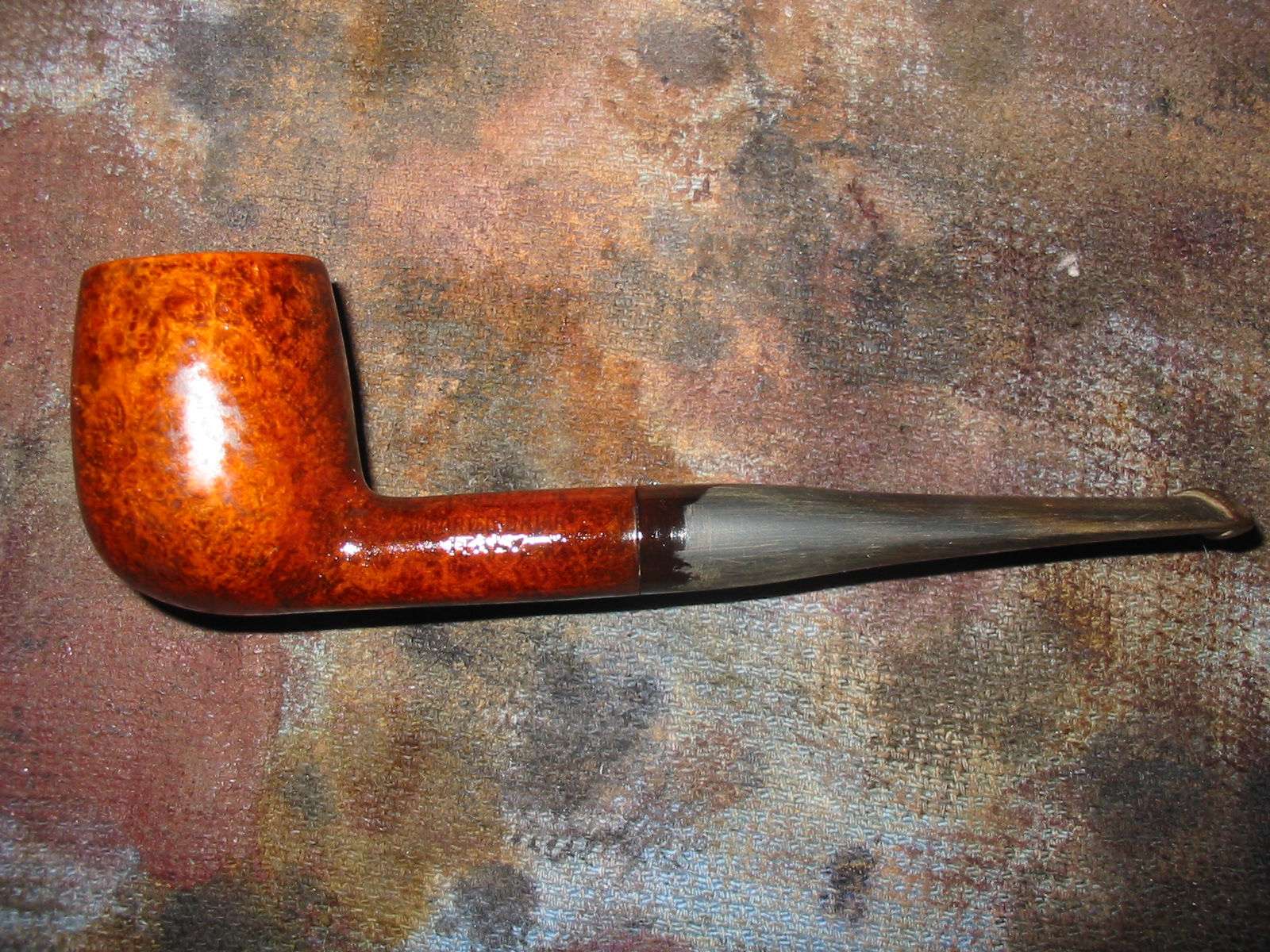
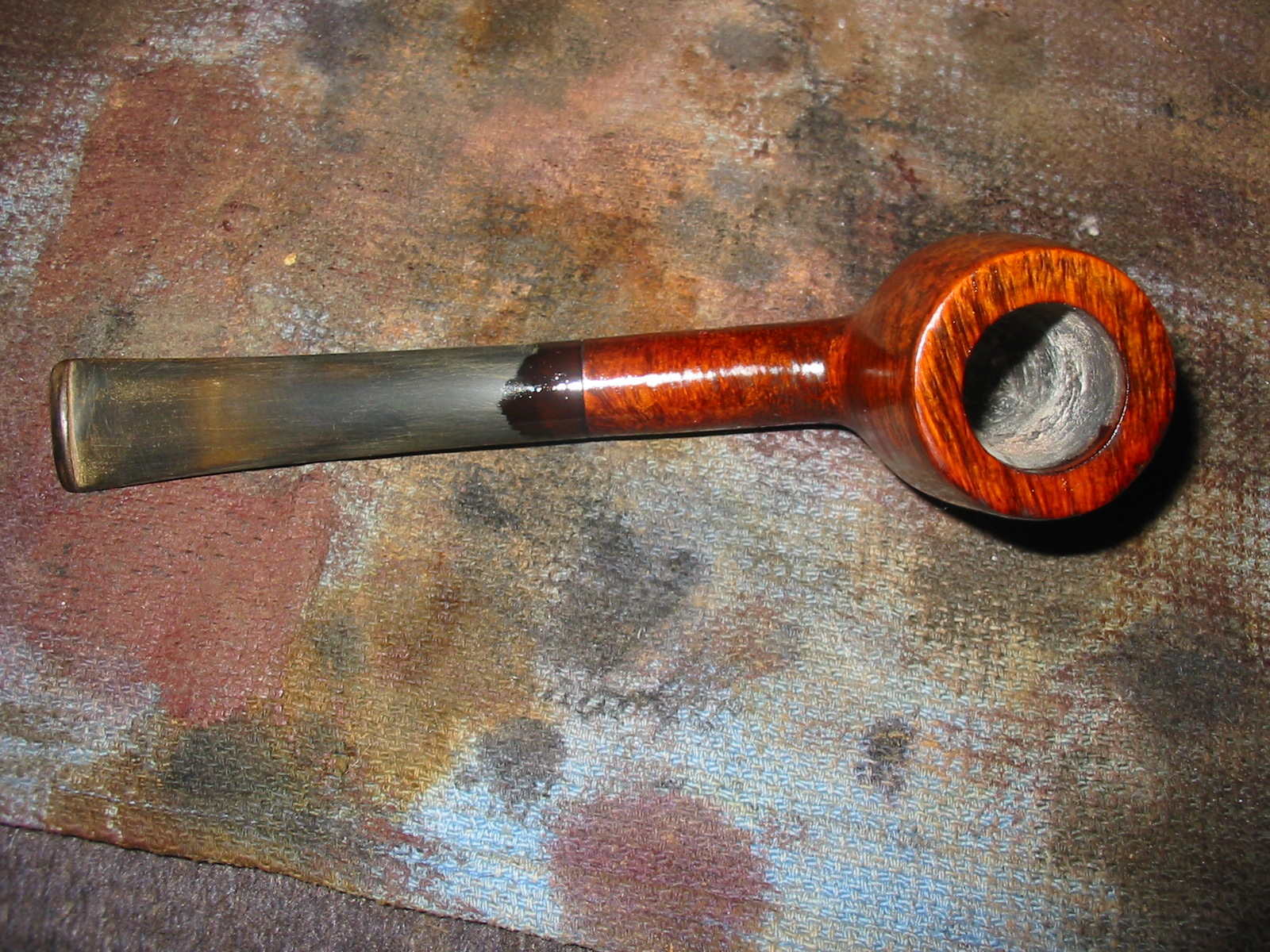
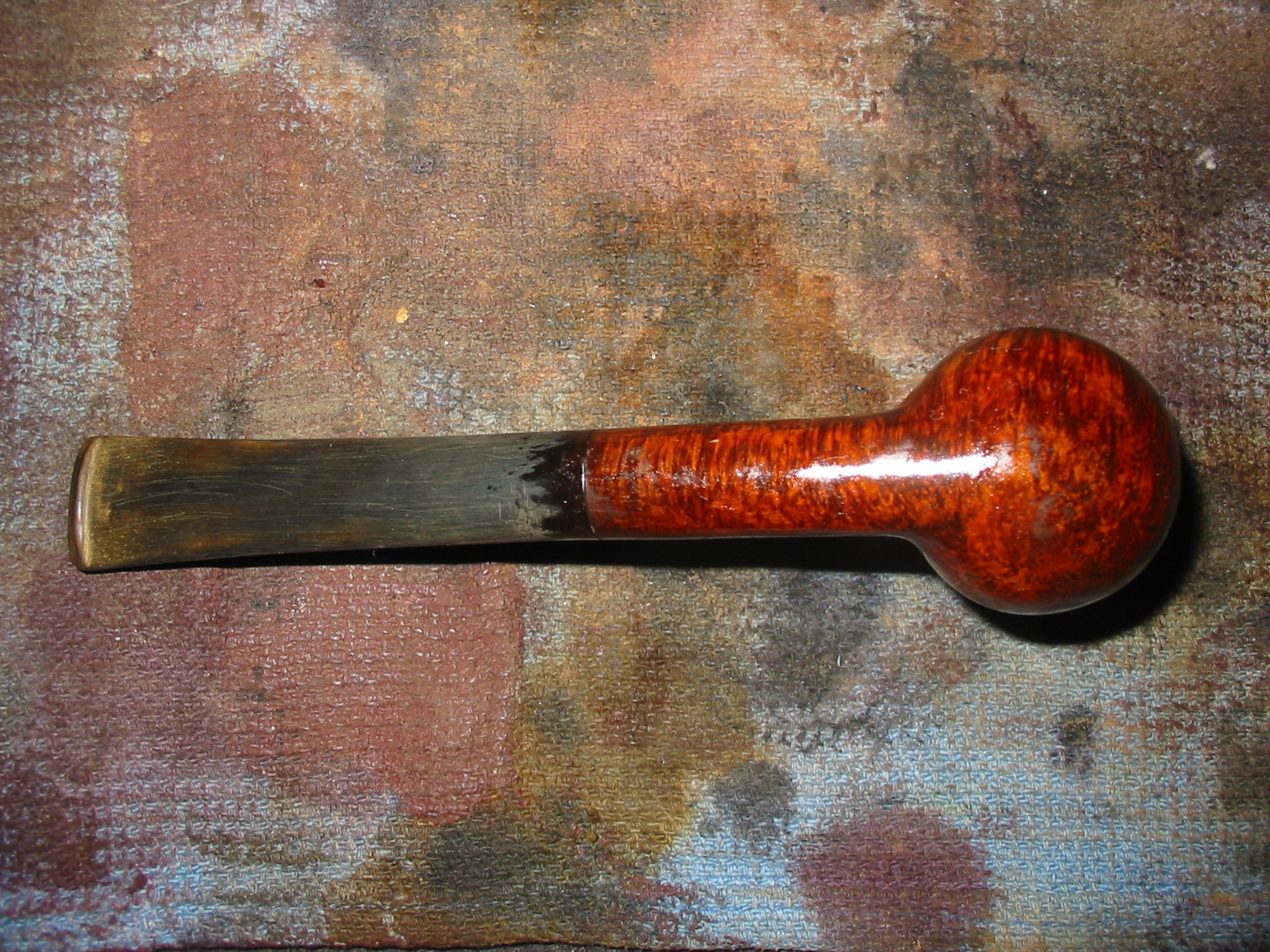
This is yet another one of the Vancouver Pipe Club lot – it is stamped on the left side of the long shank Thorshammer over Bruyere. On the right side it is stamped Dansk Handvaerk. On the underside of the shank is an interesting stamping next to the stem shank junction – it reads A/ES with the / being the image of a pipe. It also has the shape number 5 on the underside. The shape is either a long shanked billiard or a long stemmed lumberman or Liverpool. When I took it out of the box the finish had a coating of varnish that had the fingerprints of the varnisher imprinted in them. The pipe has a small band of light briar near the stem. I thought that maybe this was done when the pipe was restemmed, but upon examination I believe the stem is the original. The light band could also have been a thin silver band or such but that was missing. The rim was a mess as with the majority of the pipes I am doing for the club box. The outer edge had burn marks on the right side and had been badly beaten against whatever the smoker used to empty his bowl. It was missing chunks of briar and steaming would not bring out the damage. The finish was also spotty under the varnish so I decided to strip the bowl and start over.
IMG_4180

IMG_4181

IMG_4183

IMG_4184

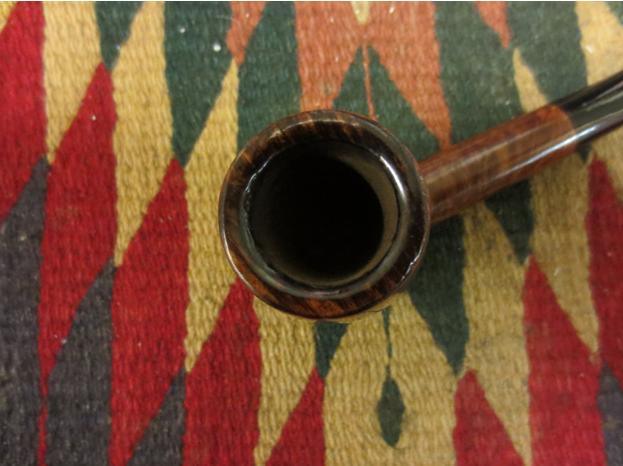
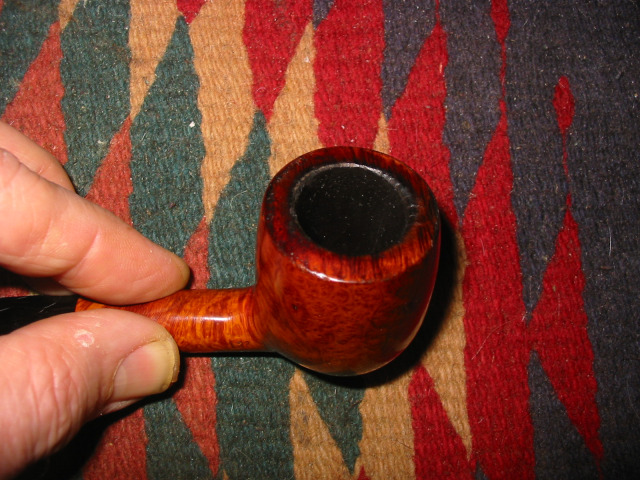
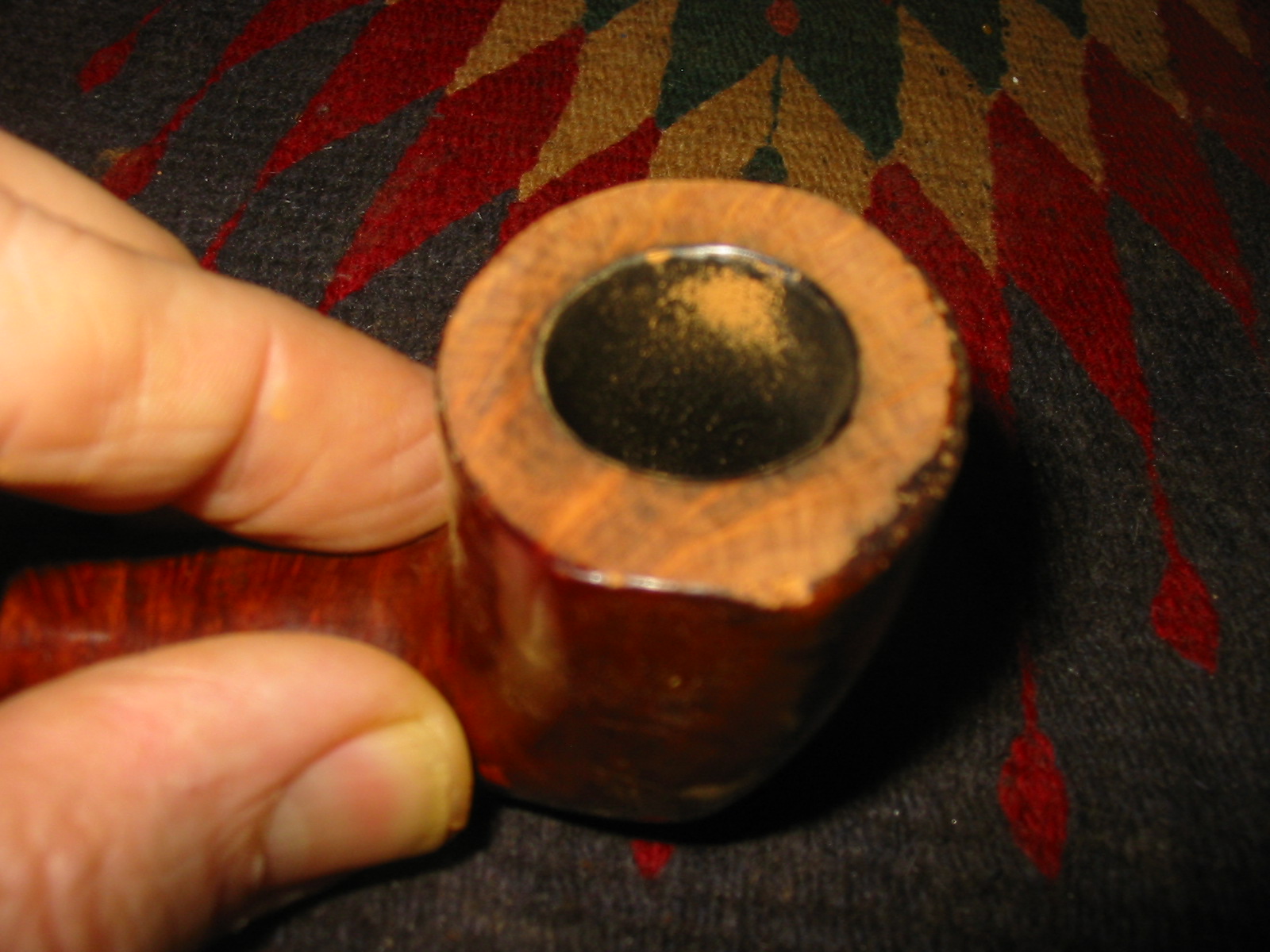
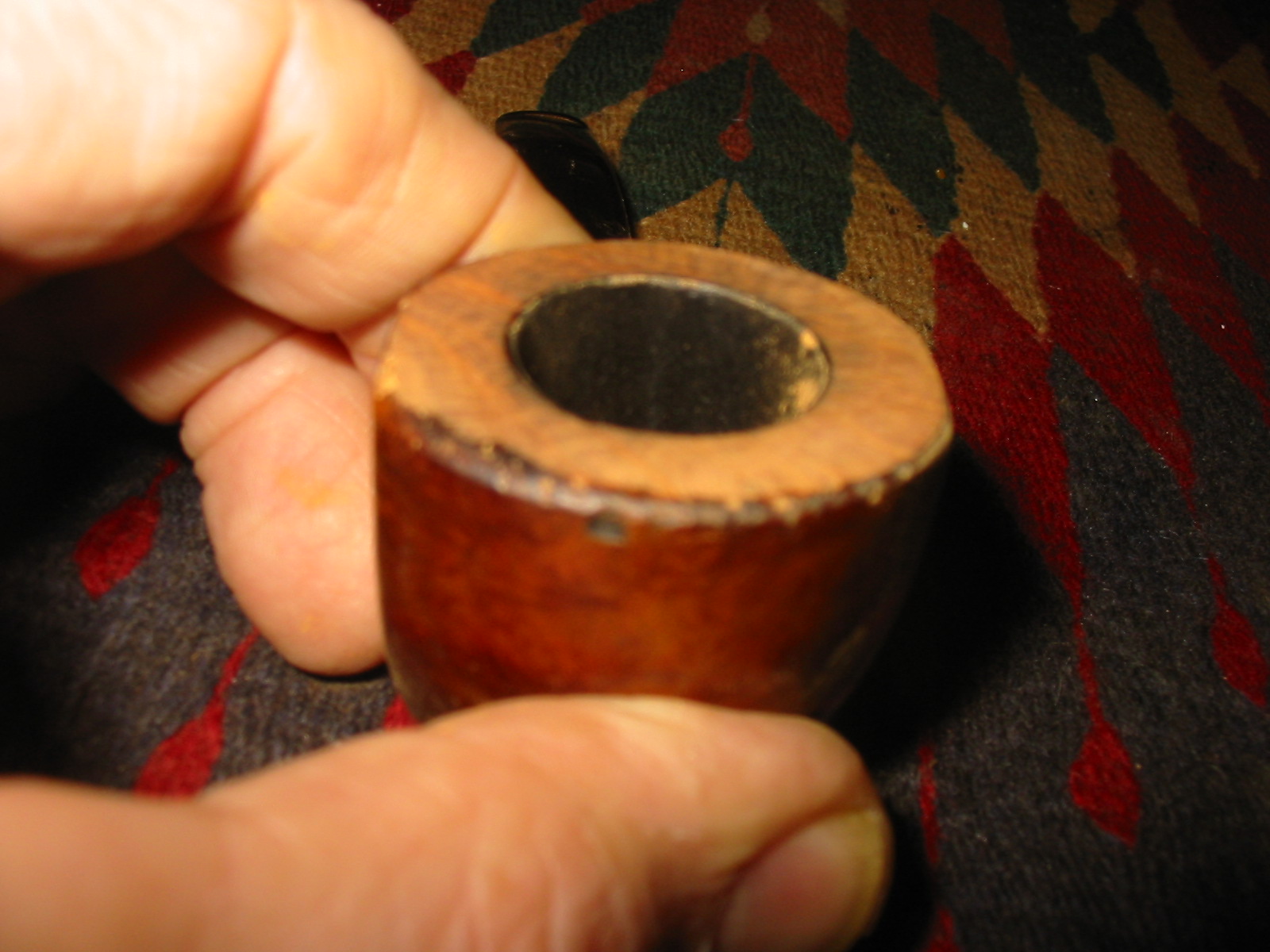
The picture below gives a fairly good view of the damage to the rim. In later photos of the topping process I show a few more of the damaged areas of the rim.
IMG_4185

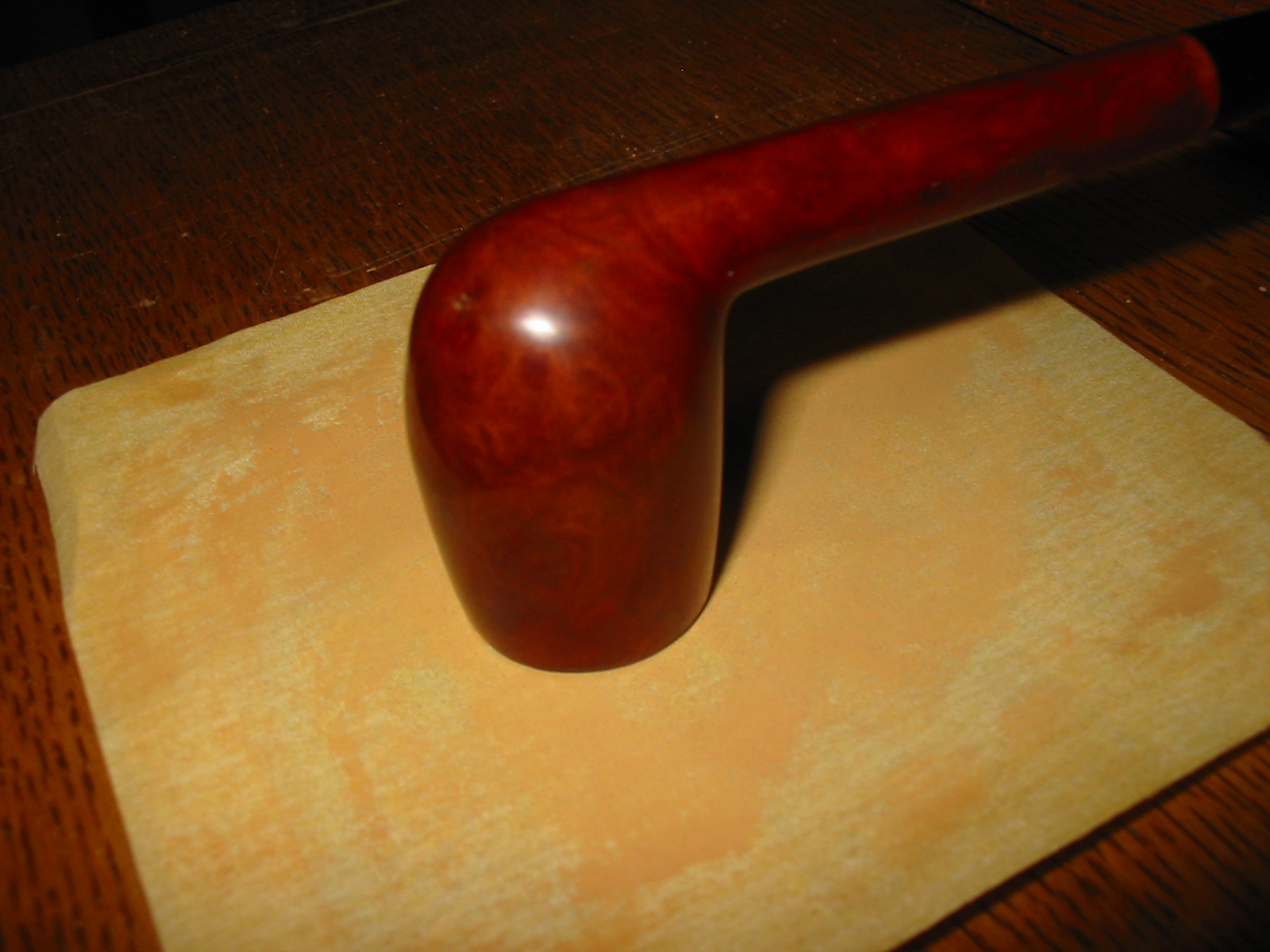
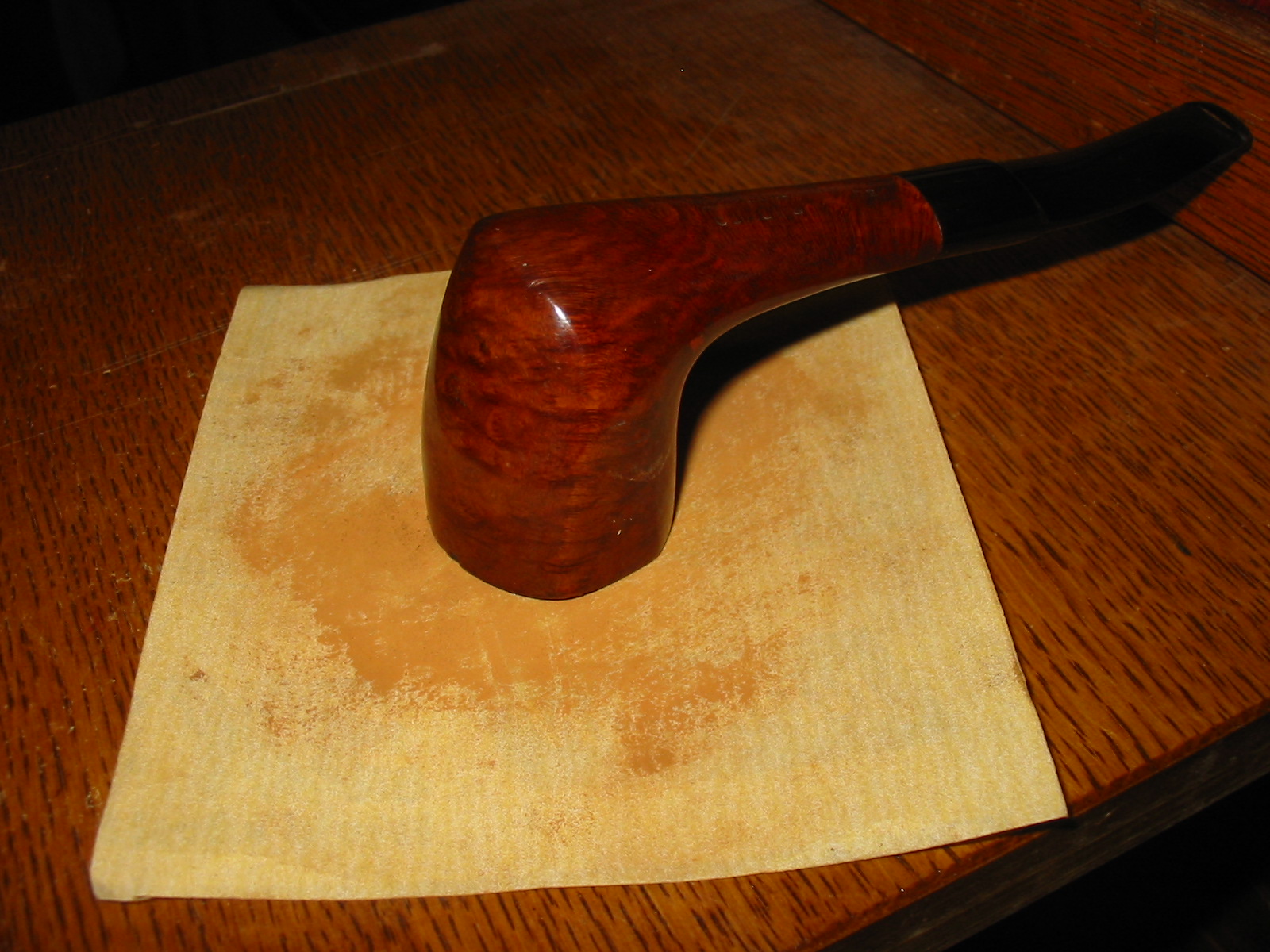
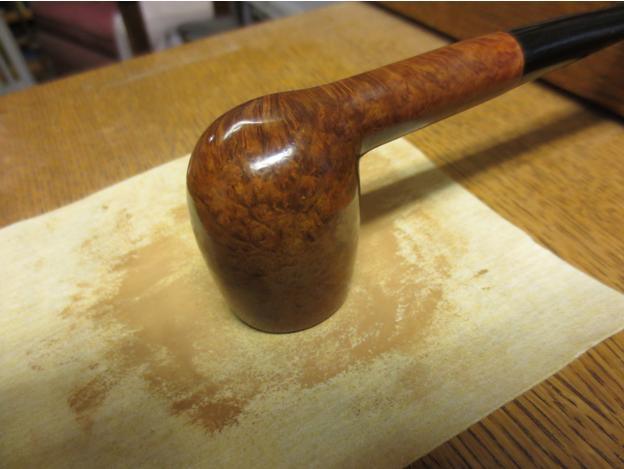
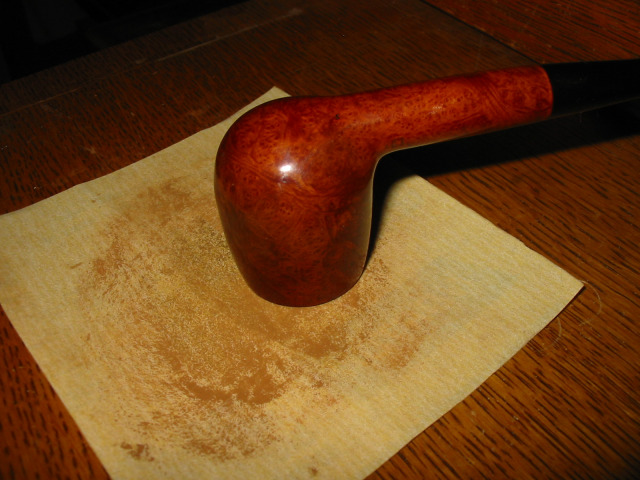
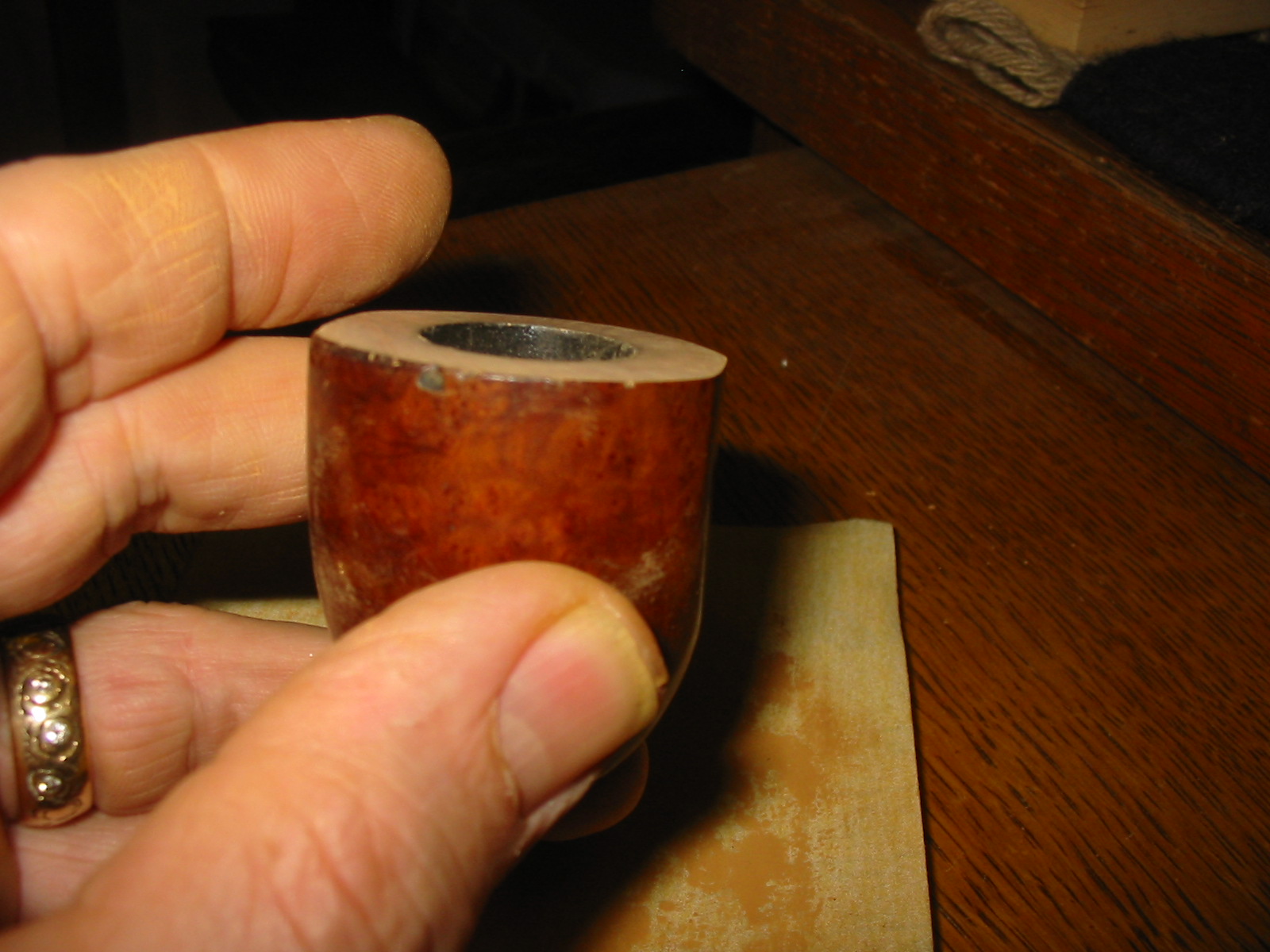
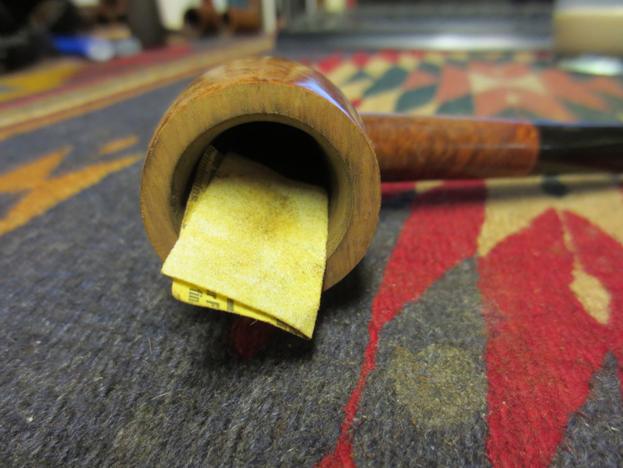
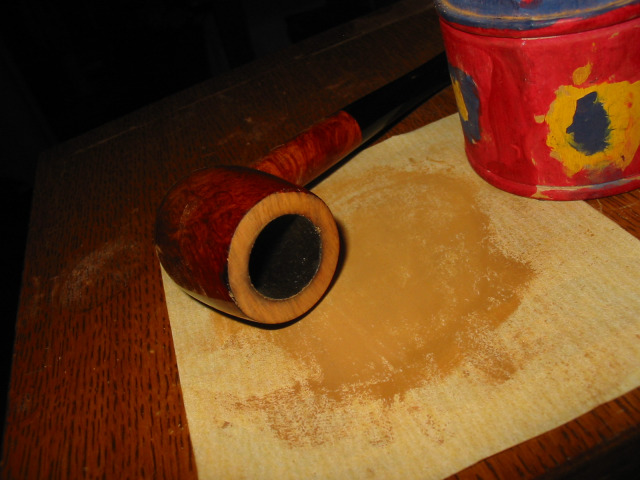
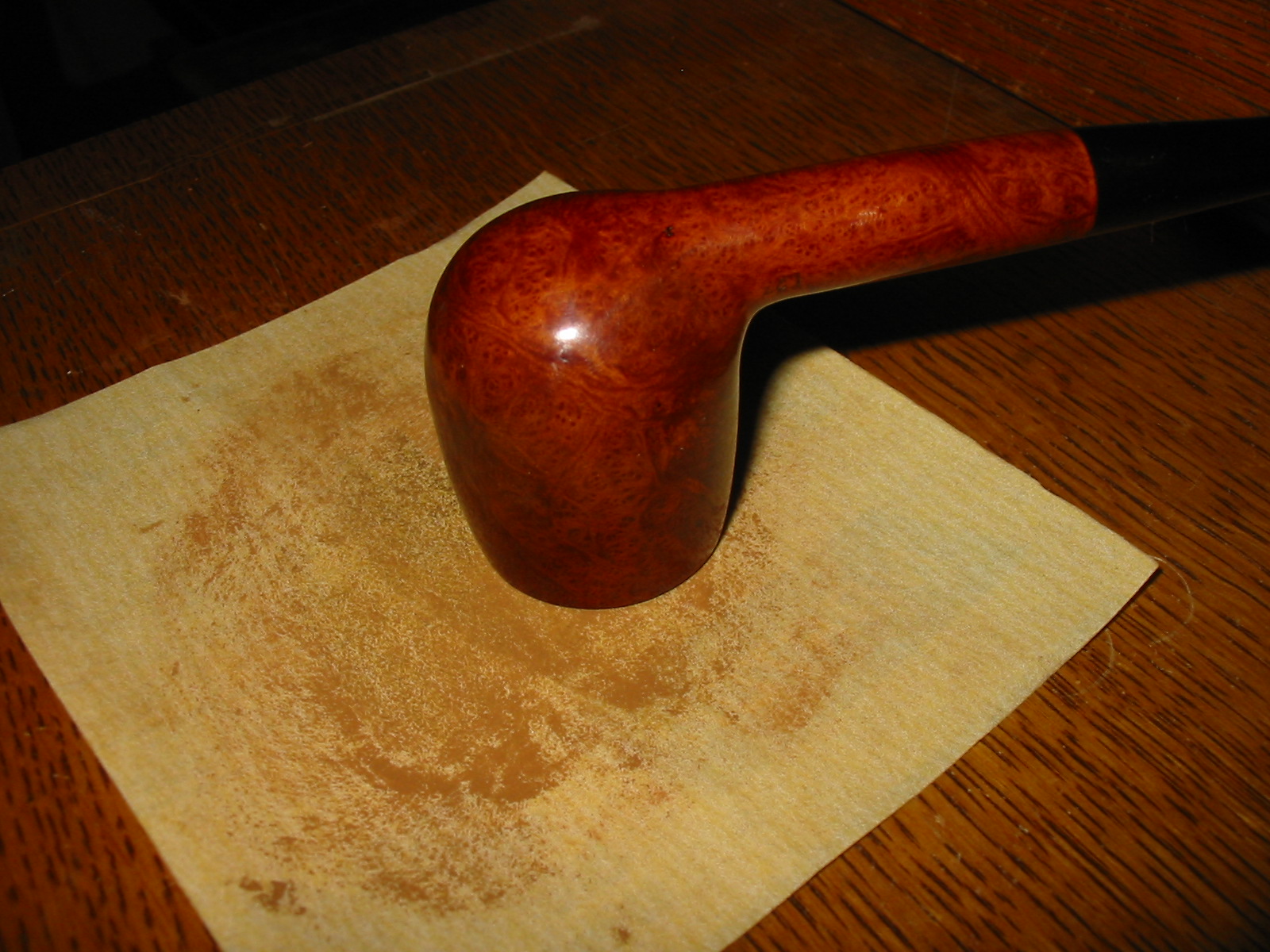
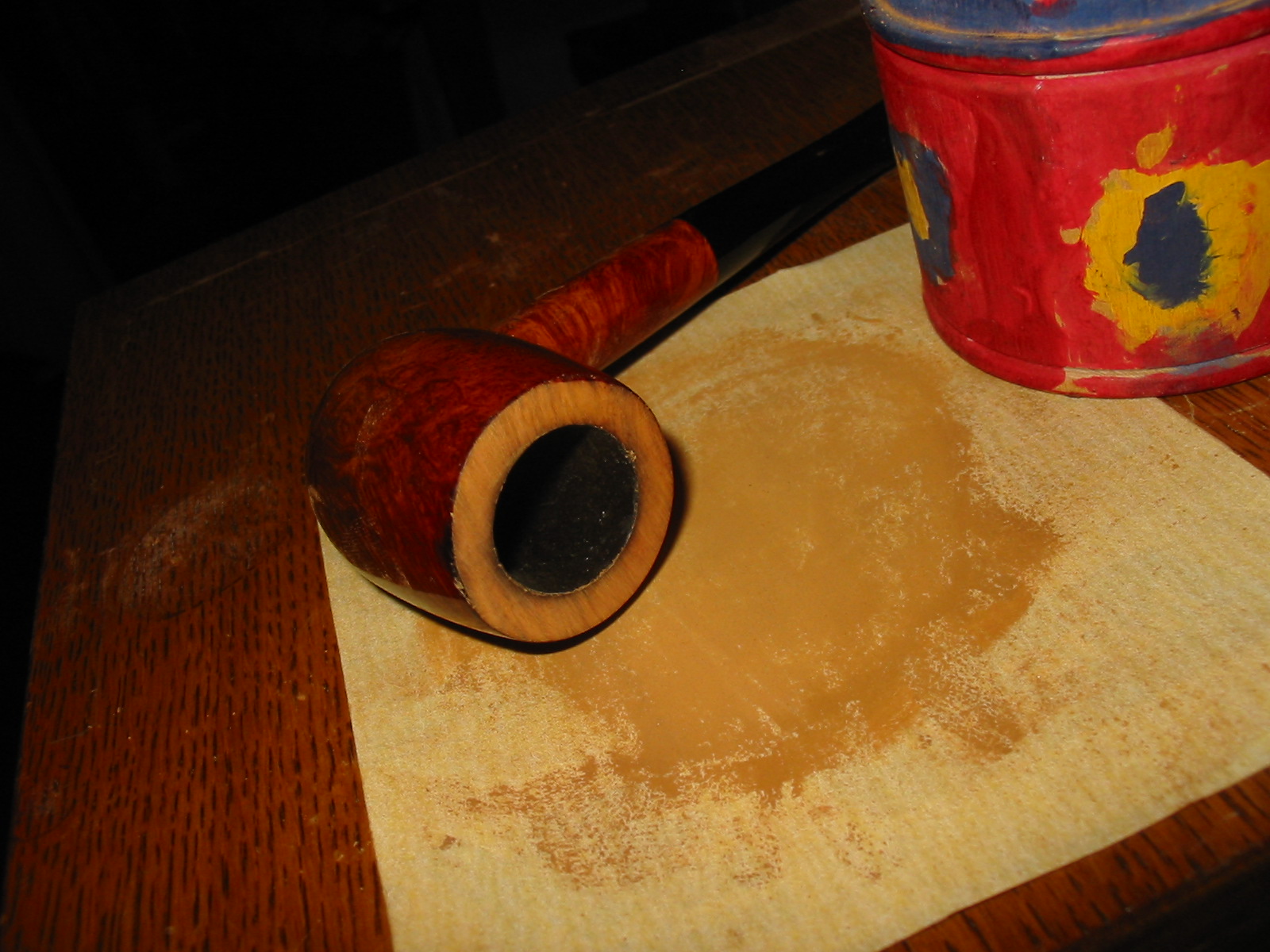
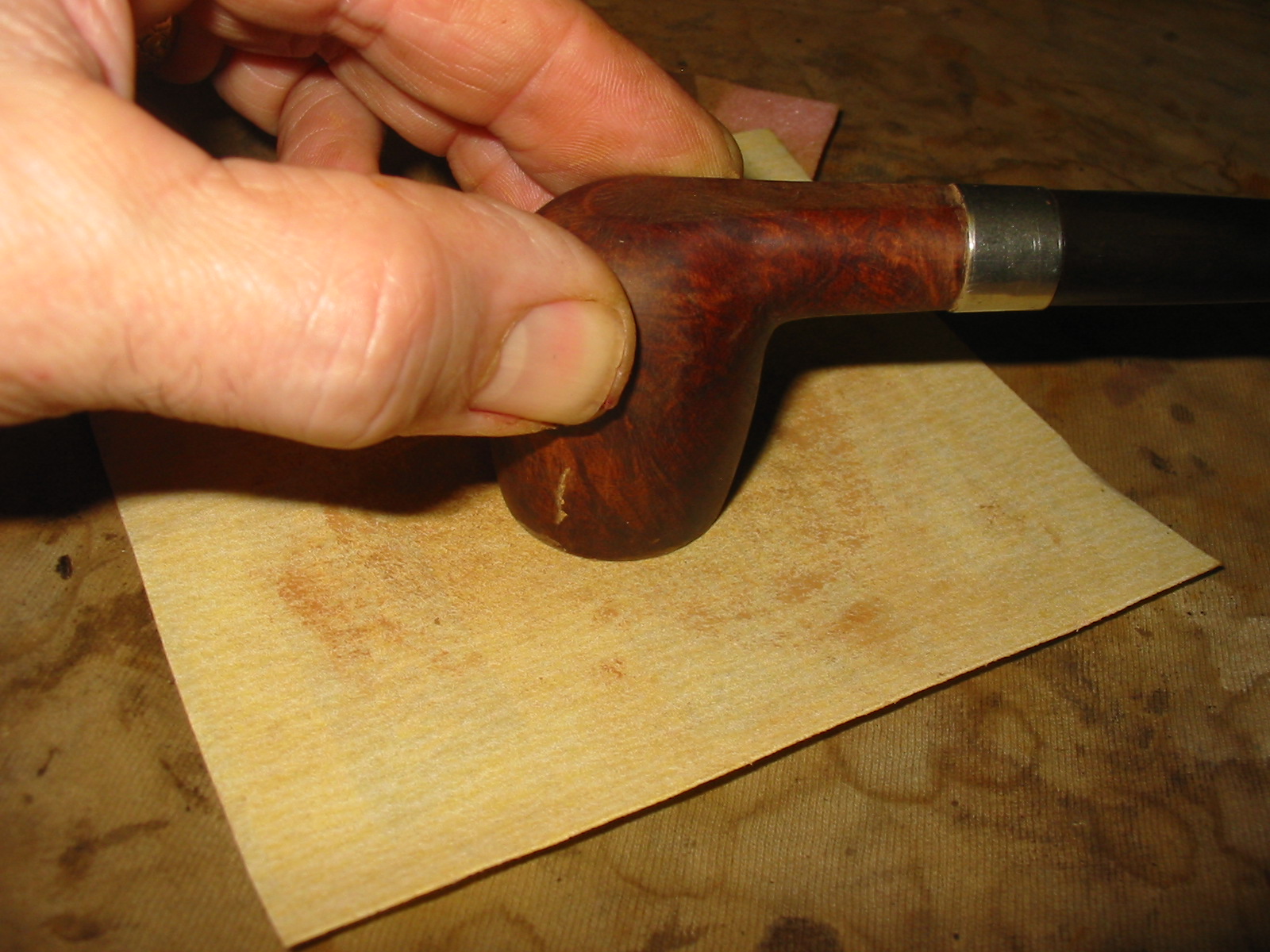
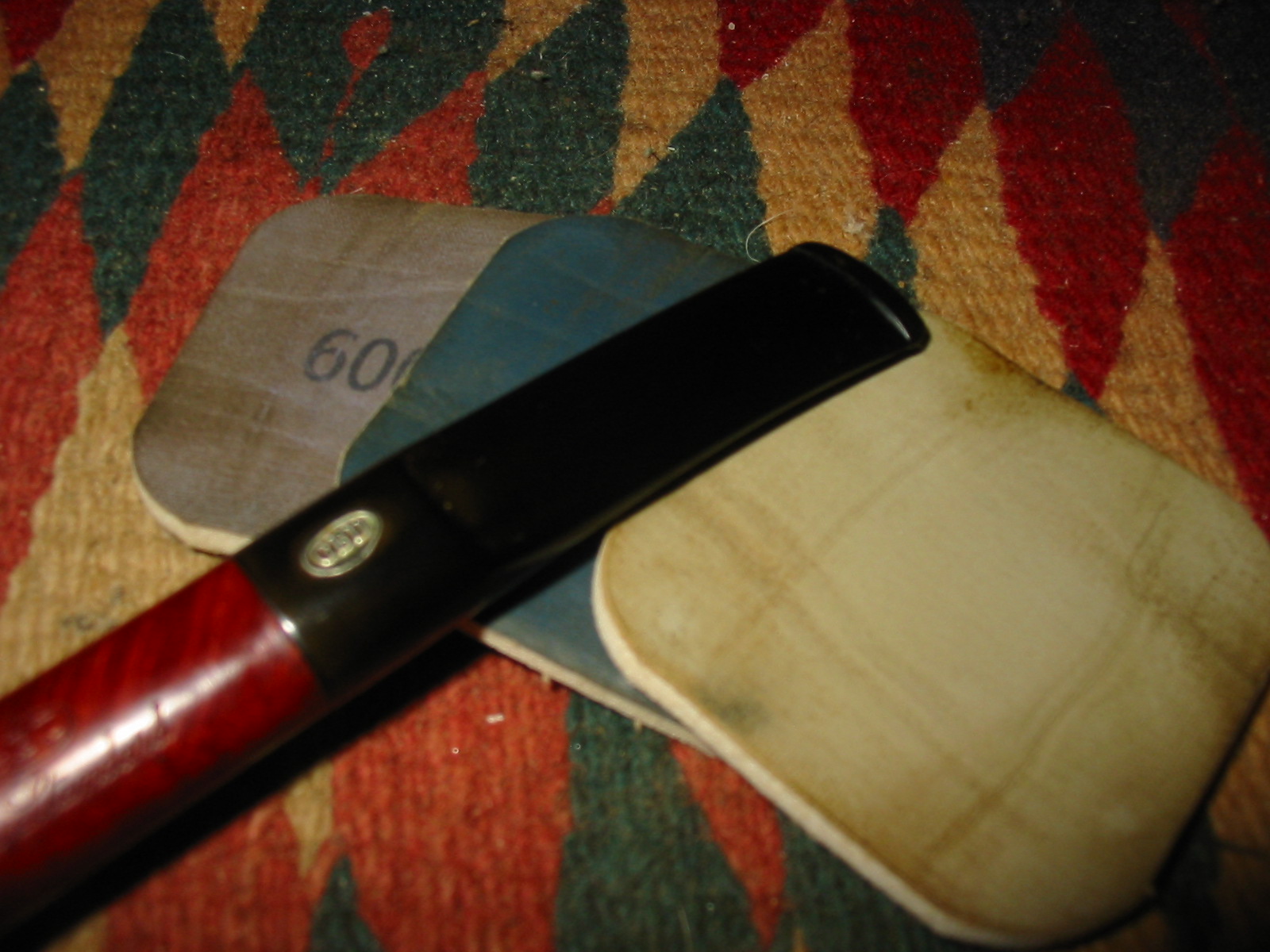
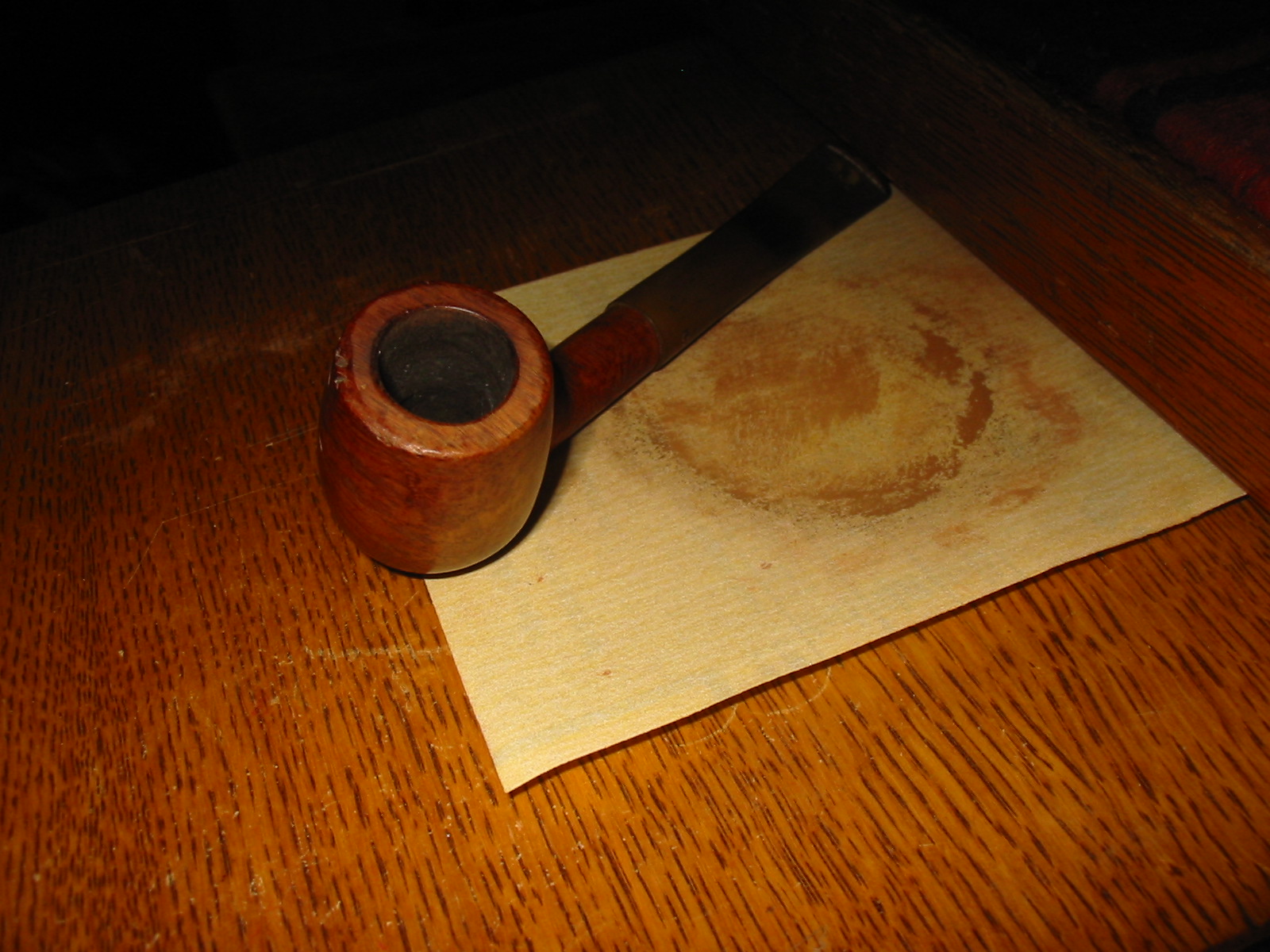
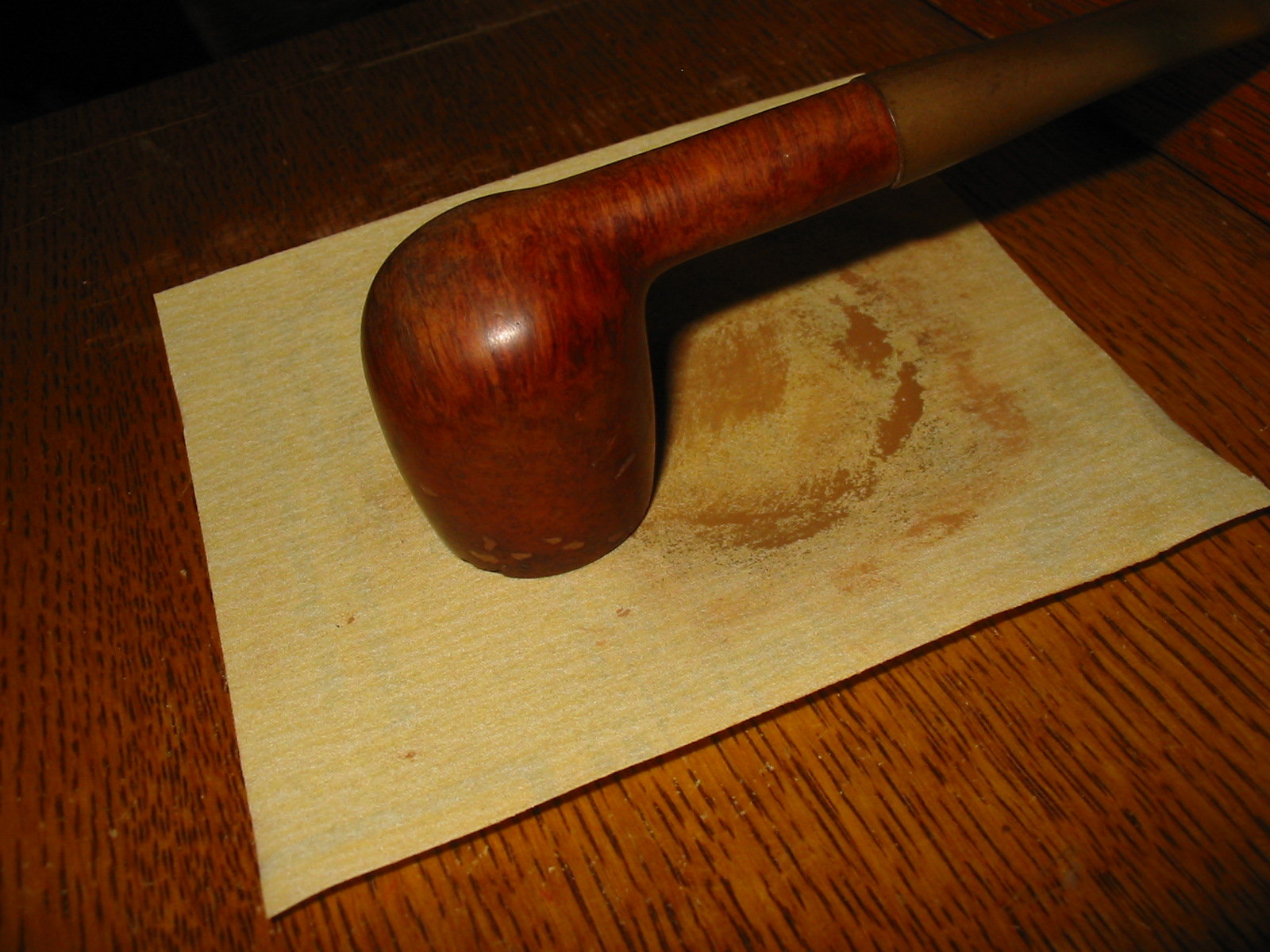
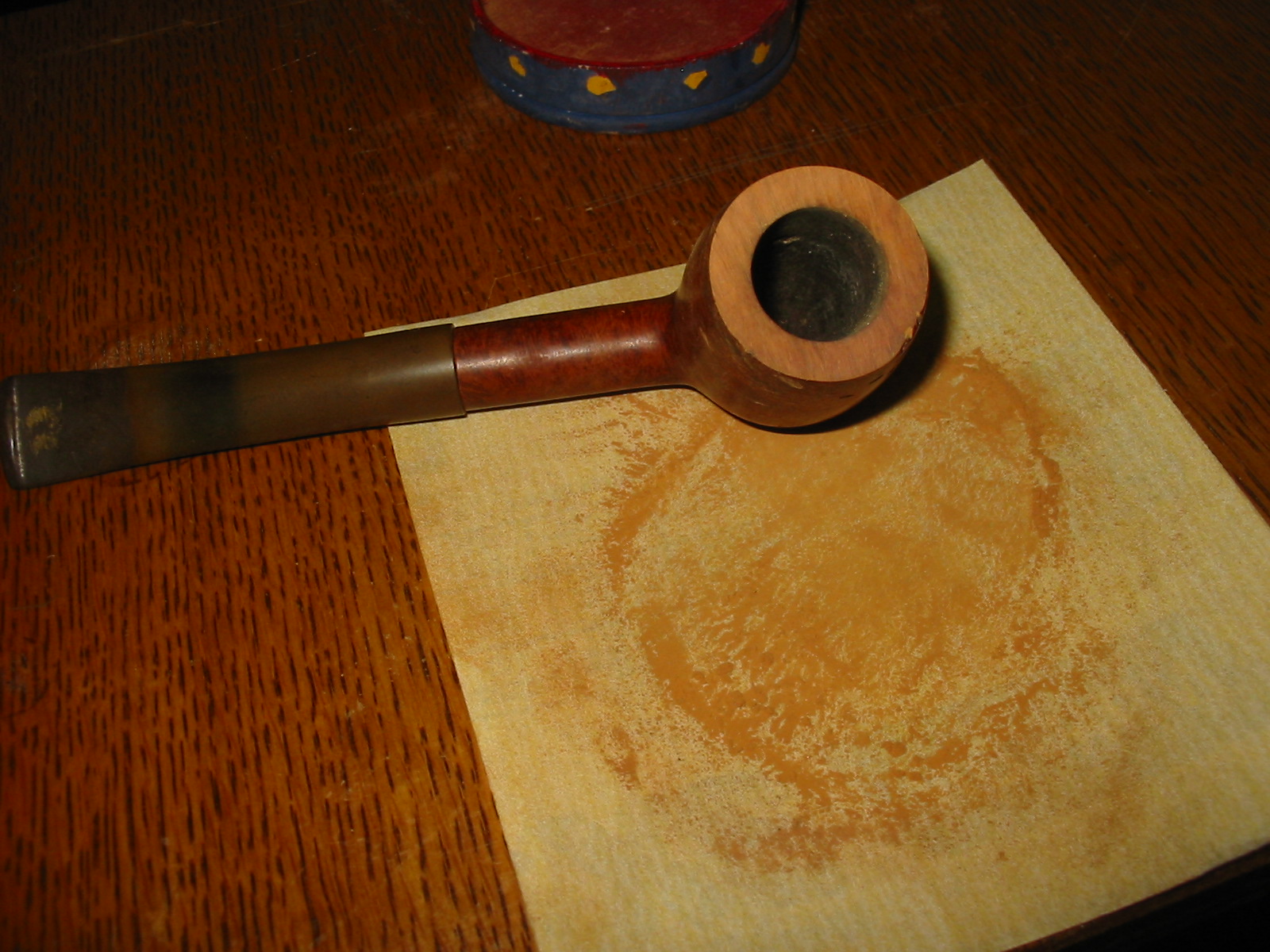
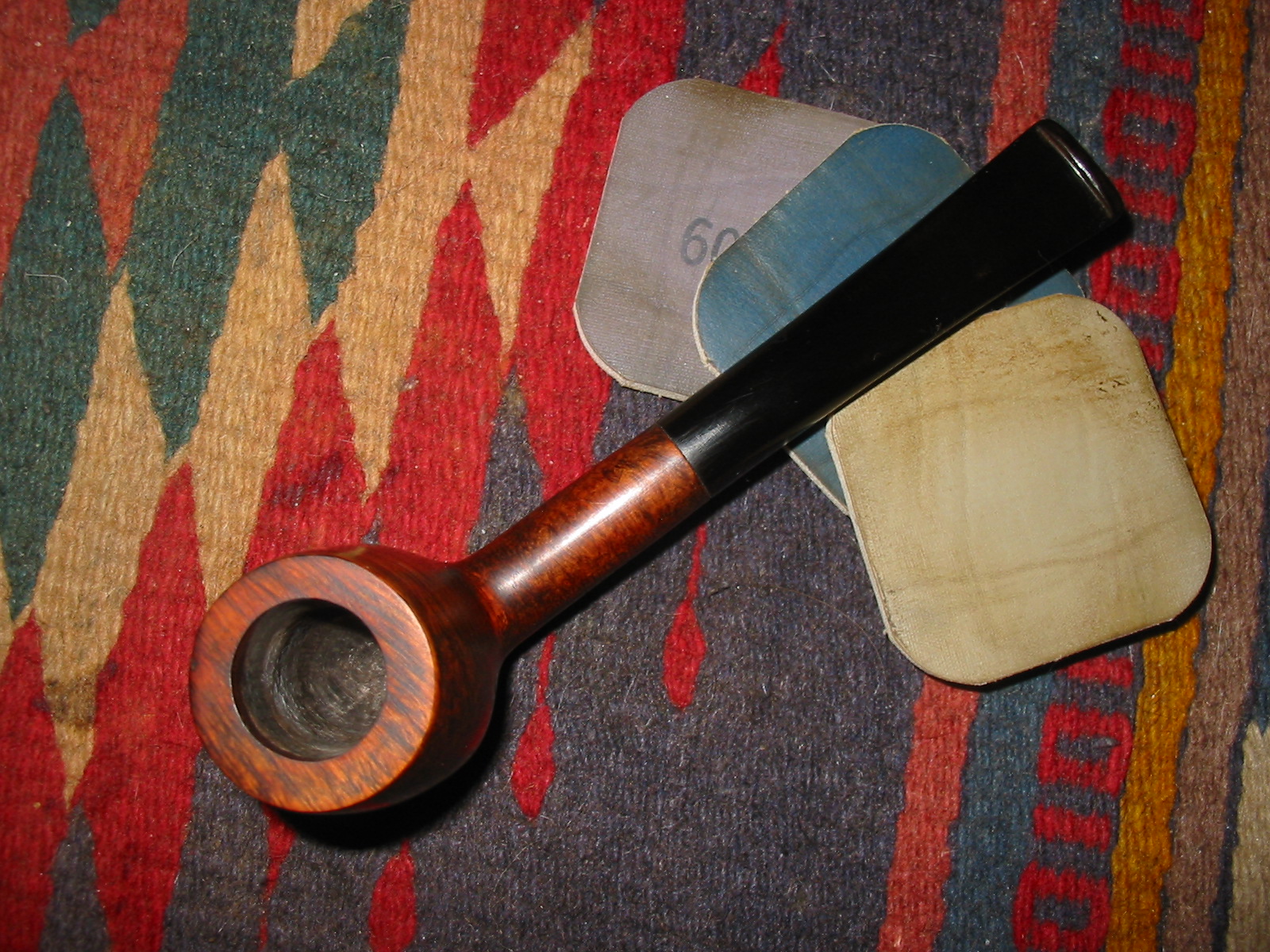
I set up my topping board and sandpaper and began to top the bowl. I checked often to make sure that I would stop at the right point in the process. I wanted to remove as little of the height of the bowl as possible while smoothing out the damaged areas.
IMG_4186

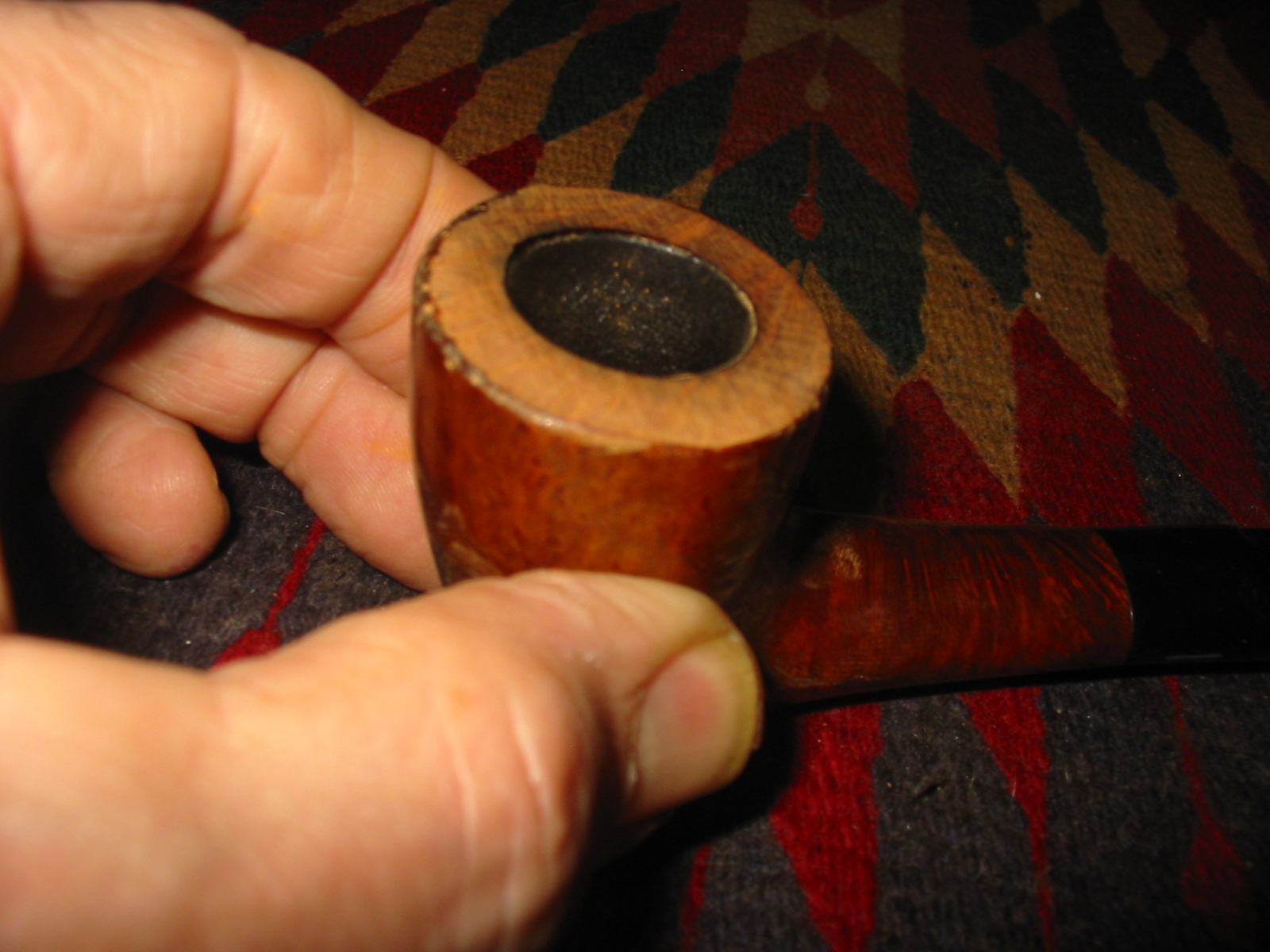
The next two photos show the outer edge damage after a little bit of sanding on the board. It was really quite rough to the touch as I ran my fingers around the bowl.
IMG_4187

IMG_4189

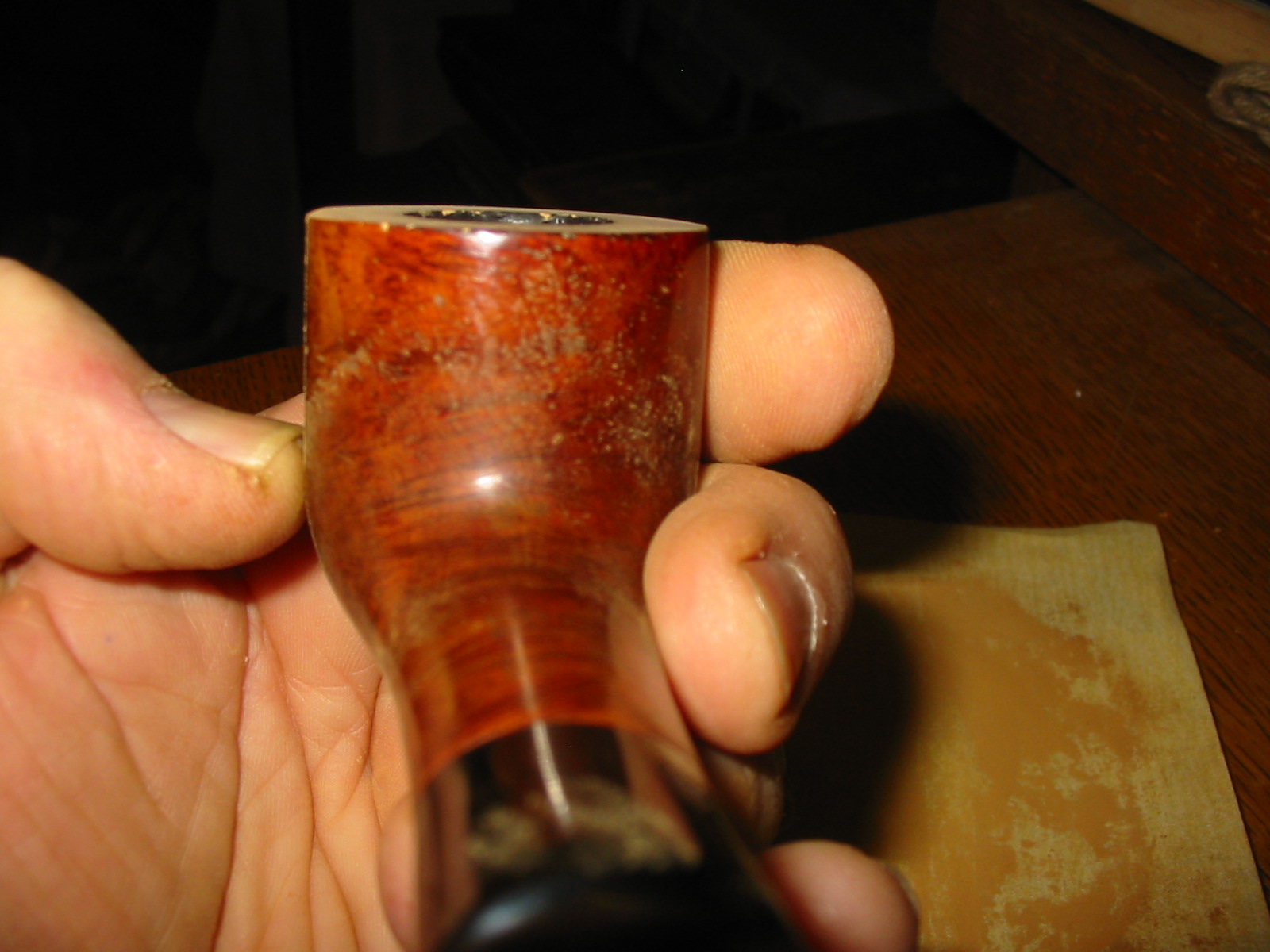
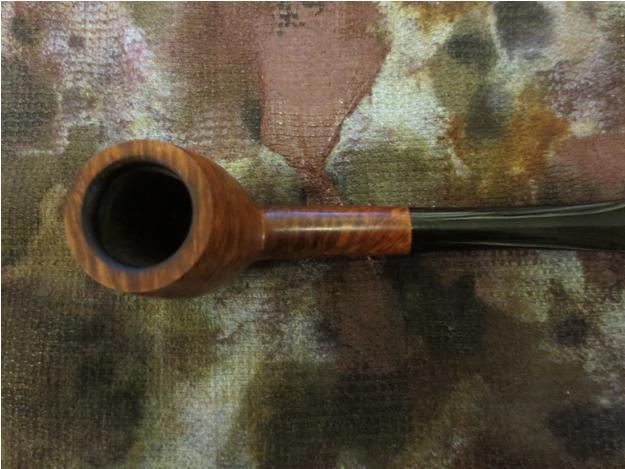
I continued to sand the top of the bowl until the damage was minimized. I sanded it with a fine grit sanding block afterwards to smooth out the scratches left behind by the sandpaper. I also beveled the inner edge of the rim with a folded piece of sandpaper to smooth out that area as well. This will become visible in the later photos.
IMG_4190

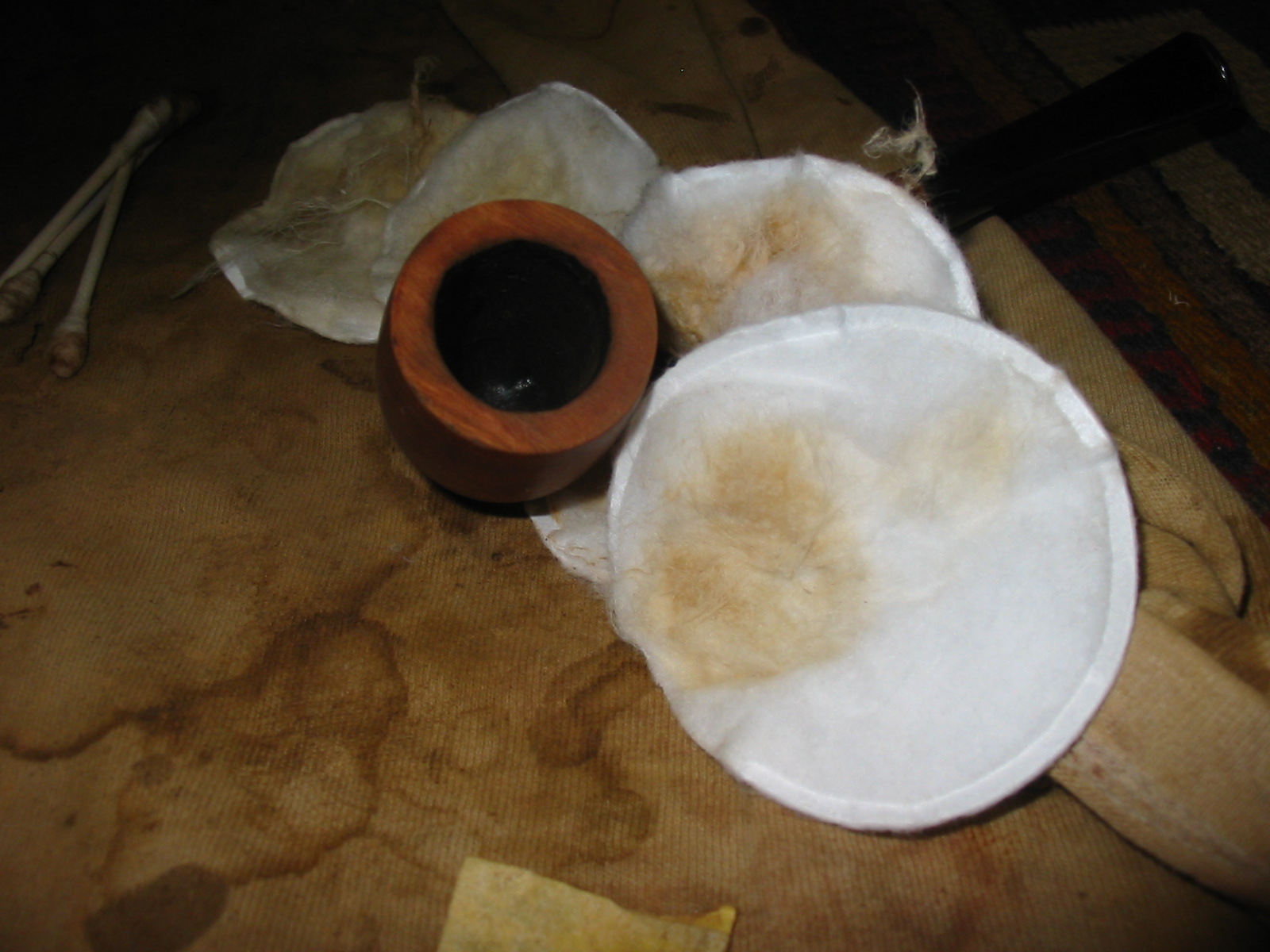
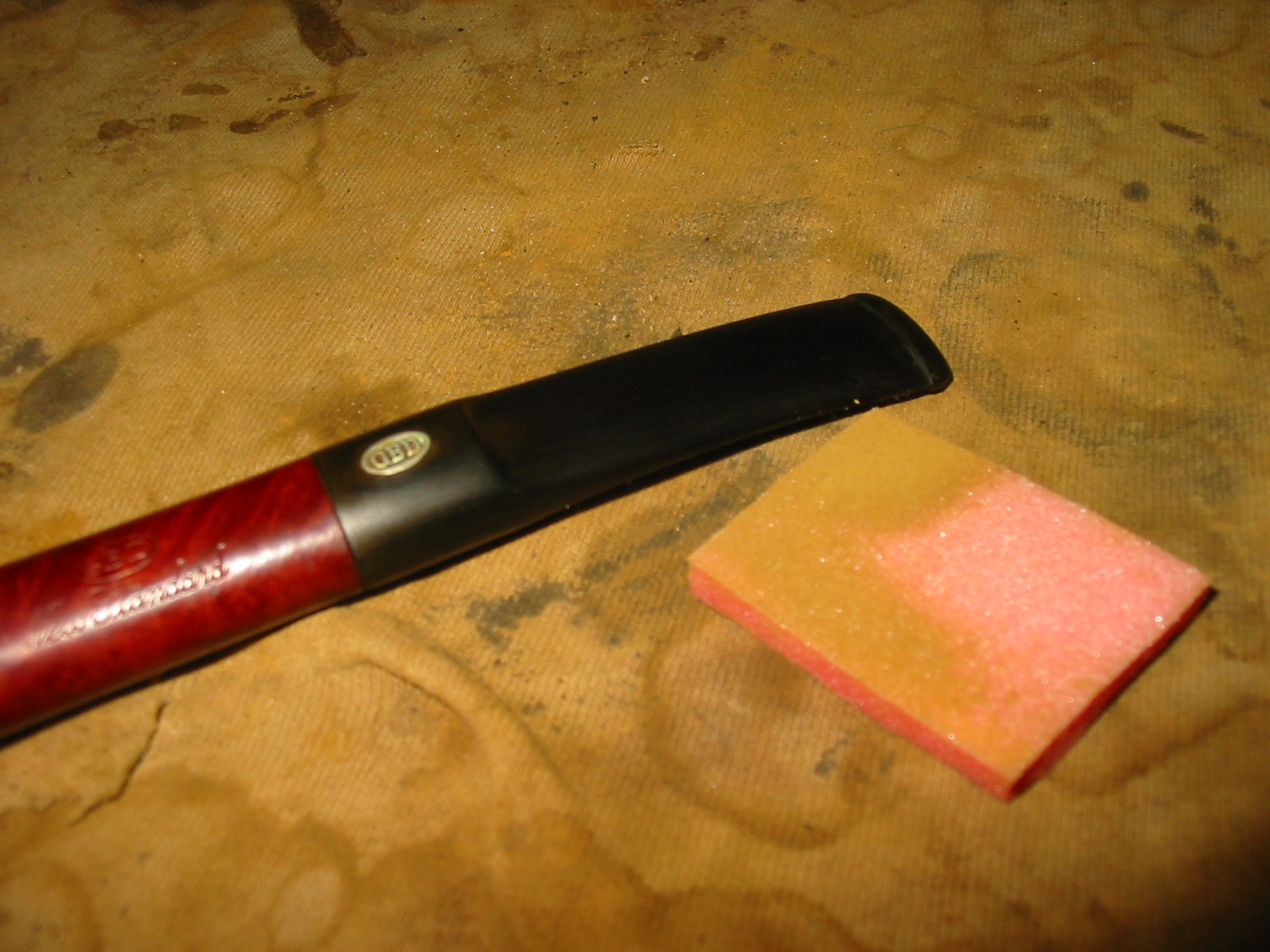
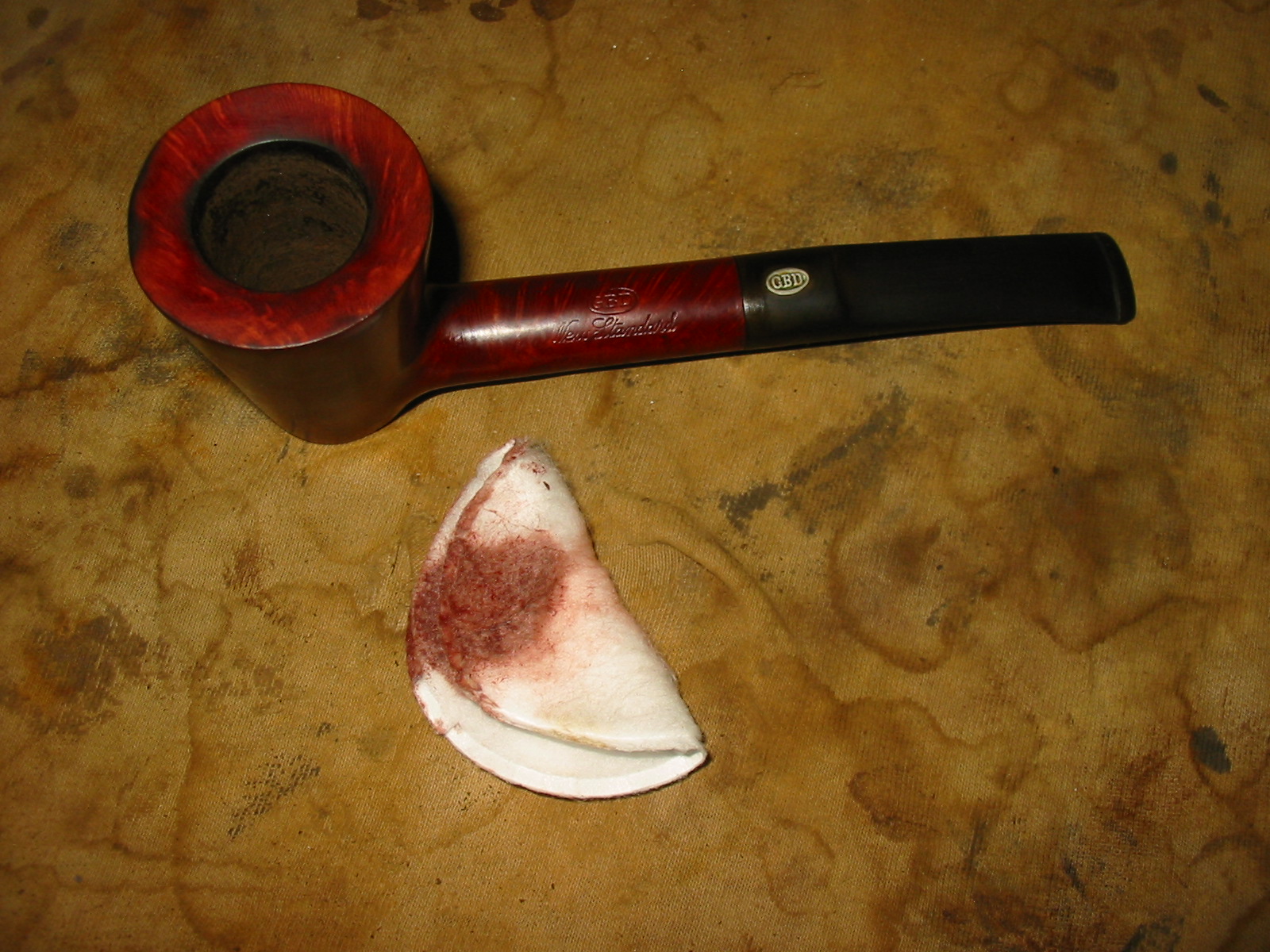
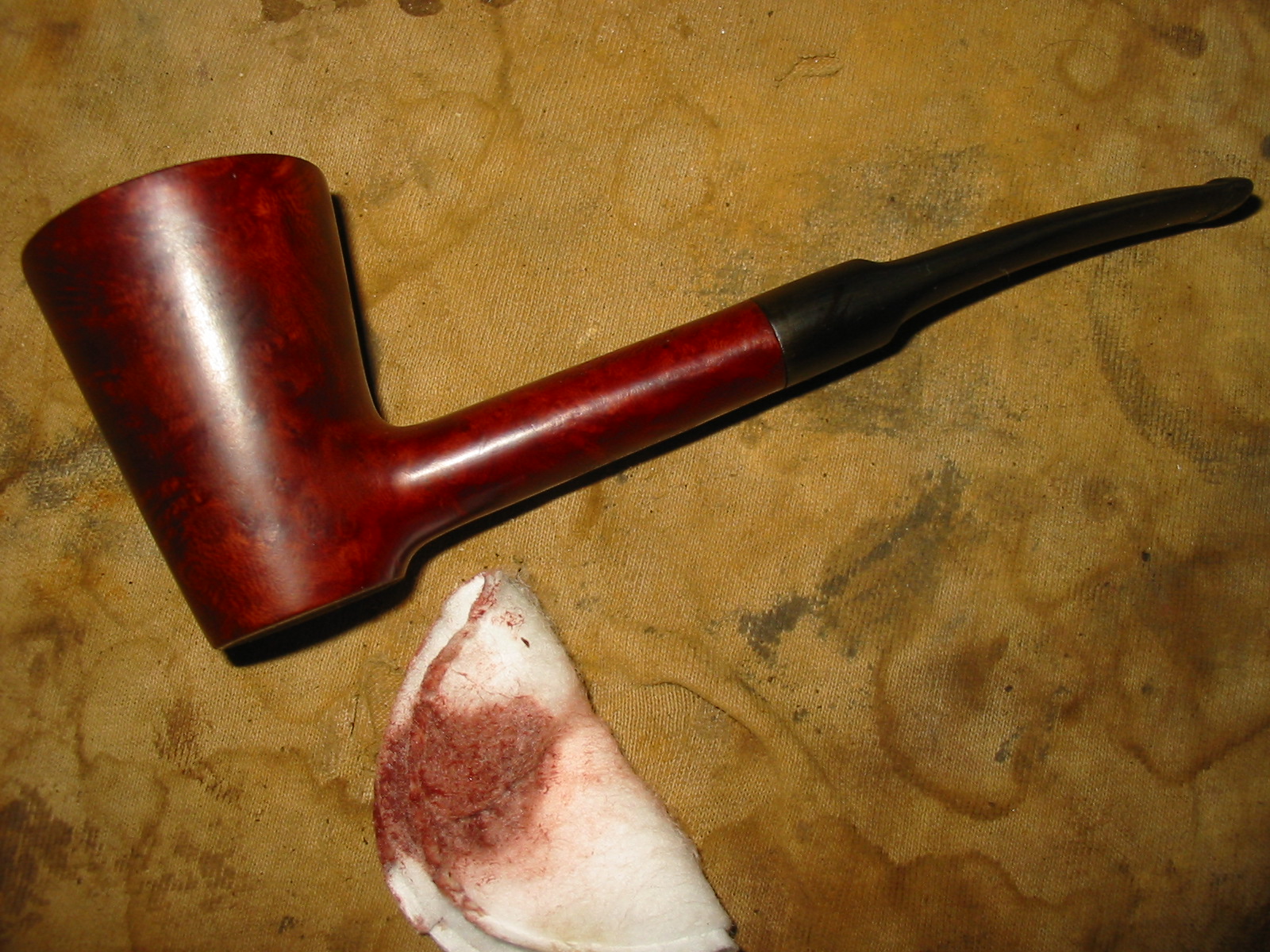
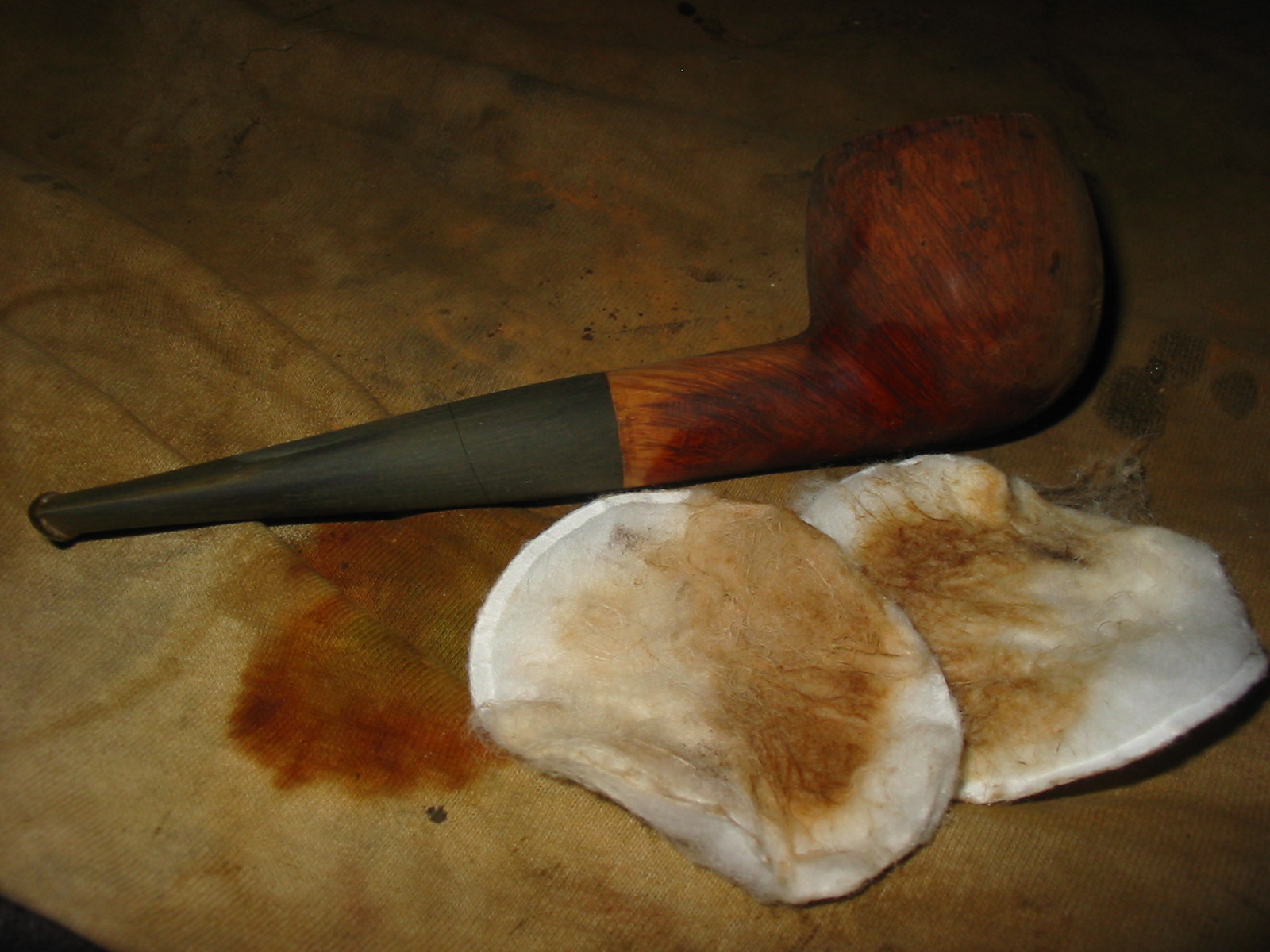
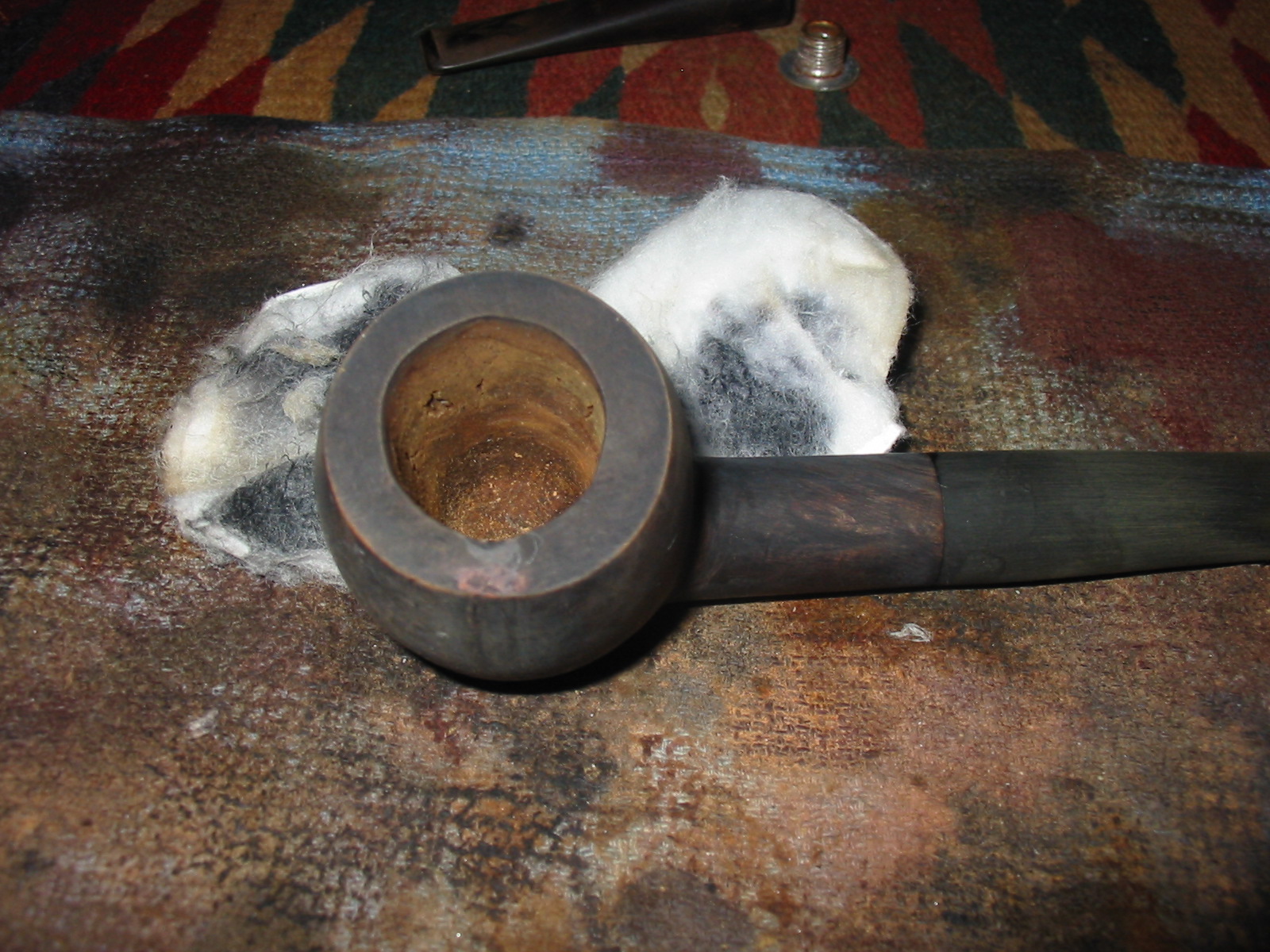
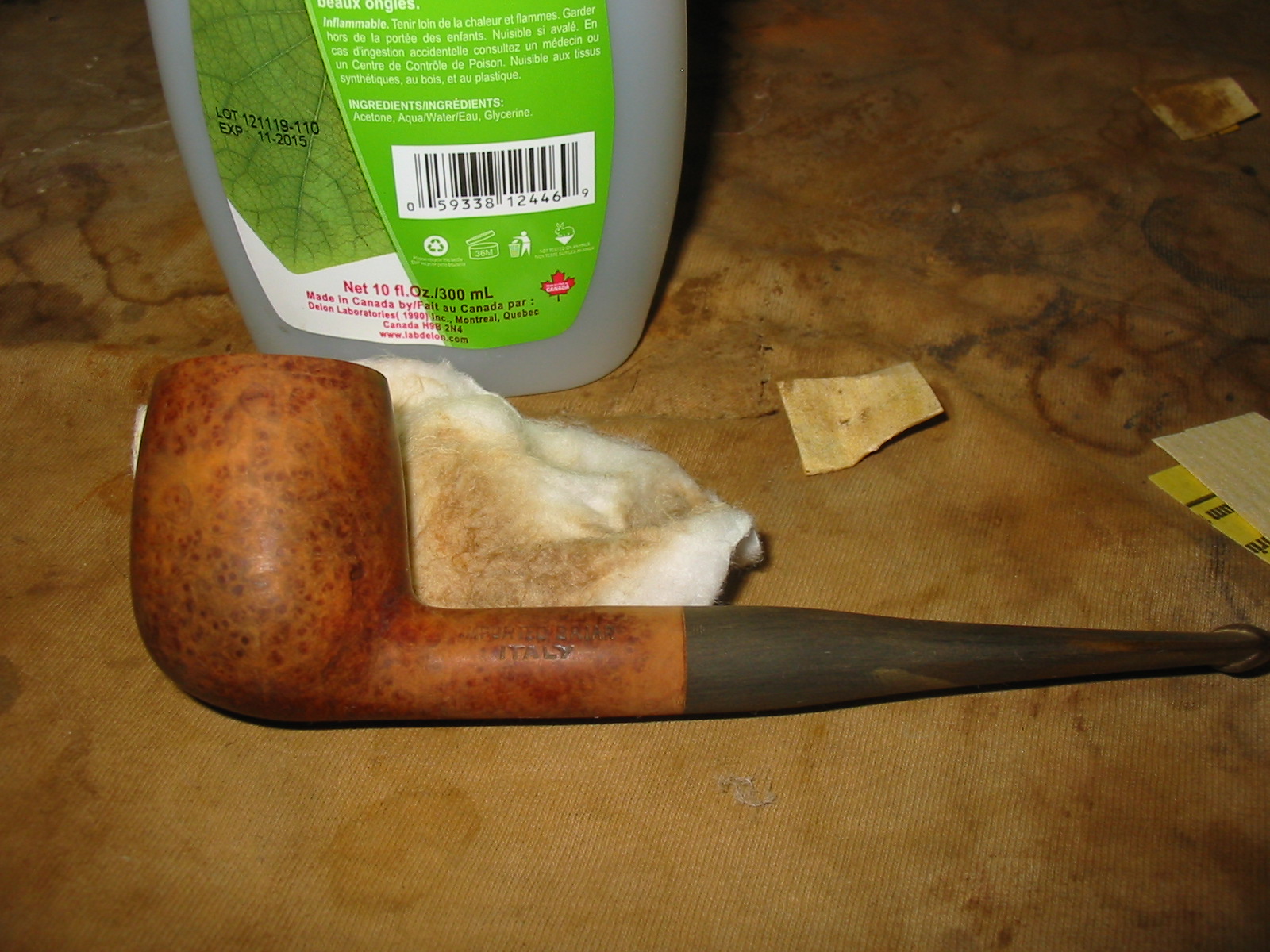
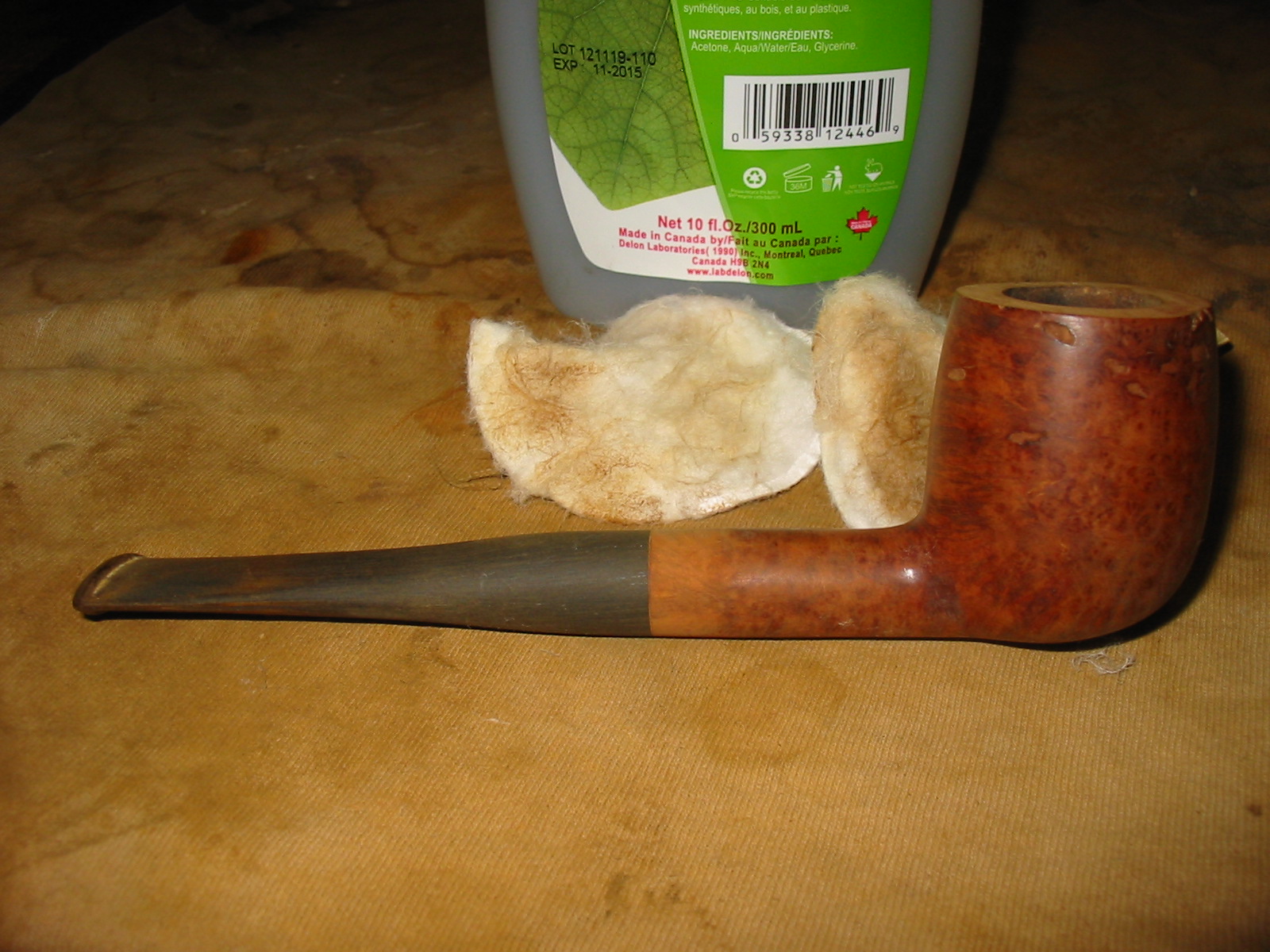
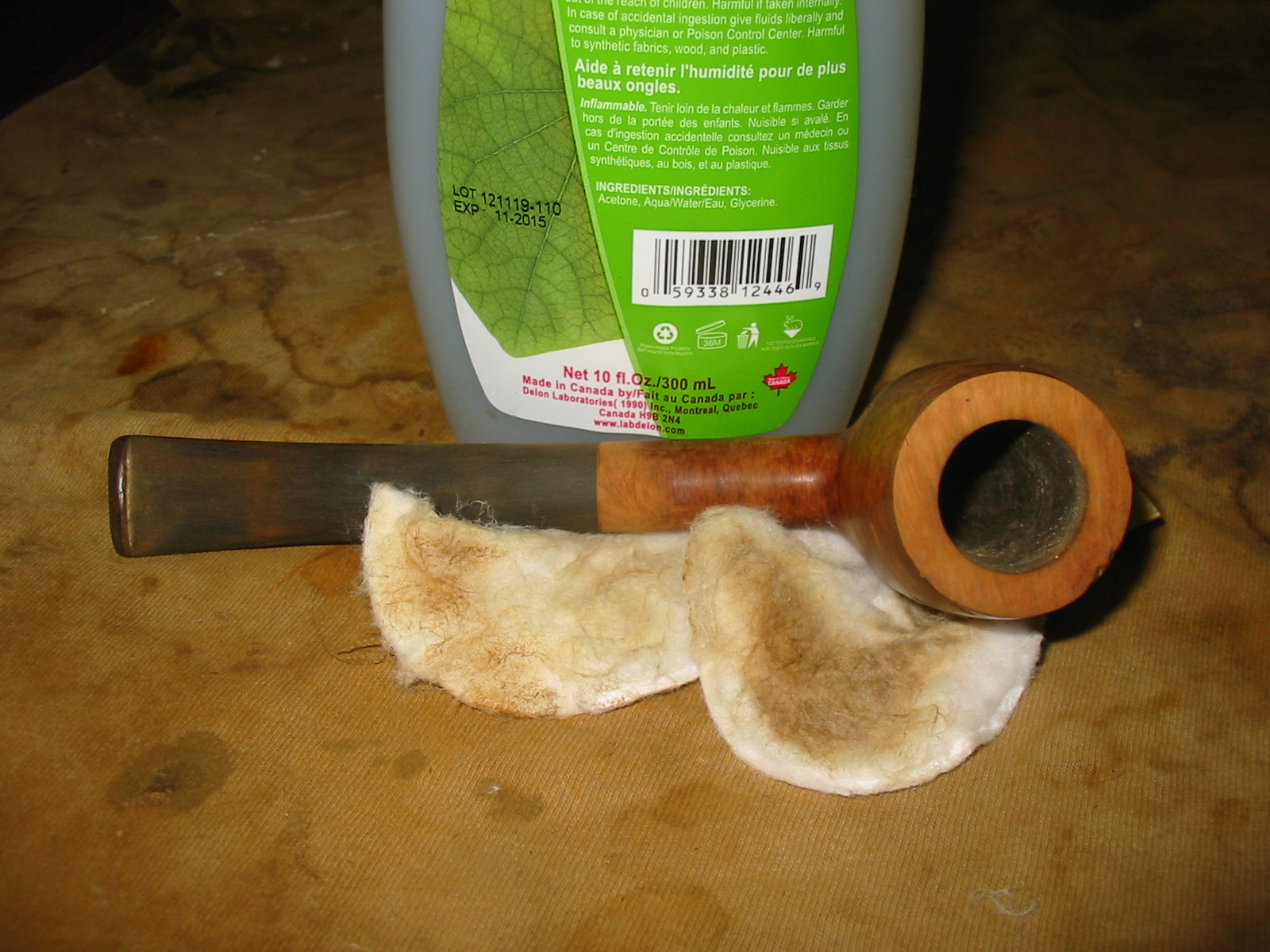
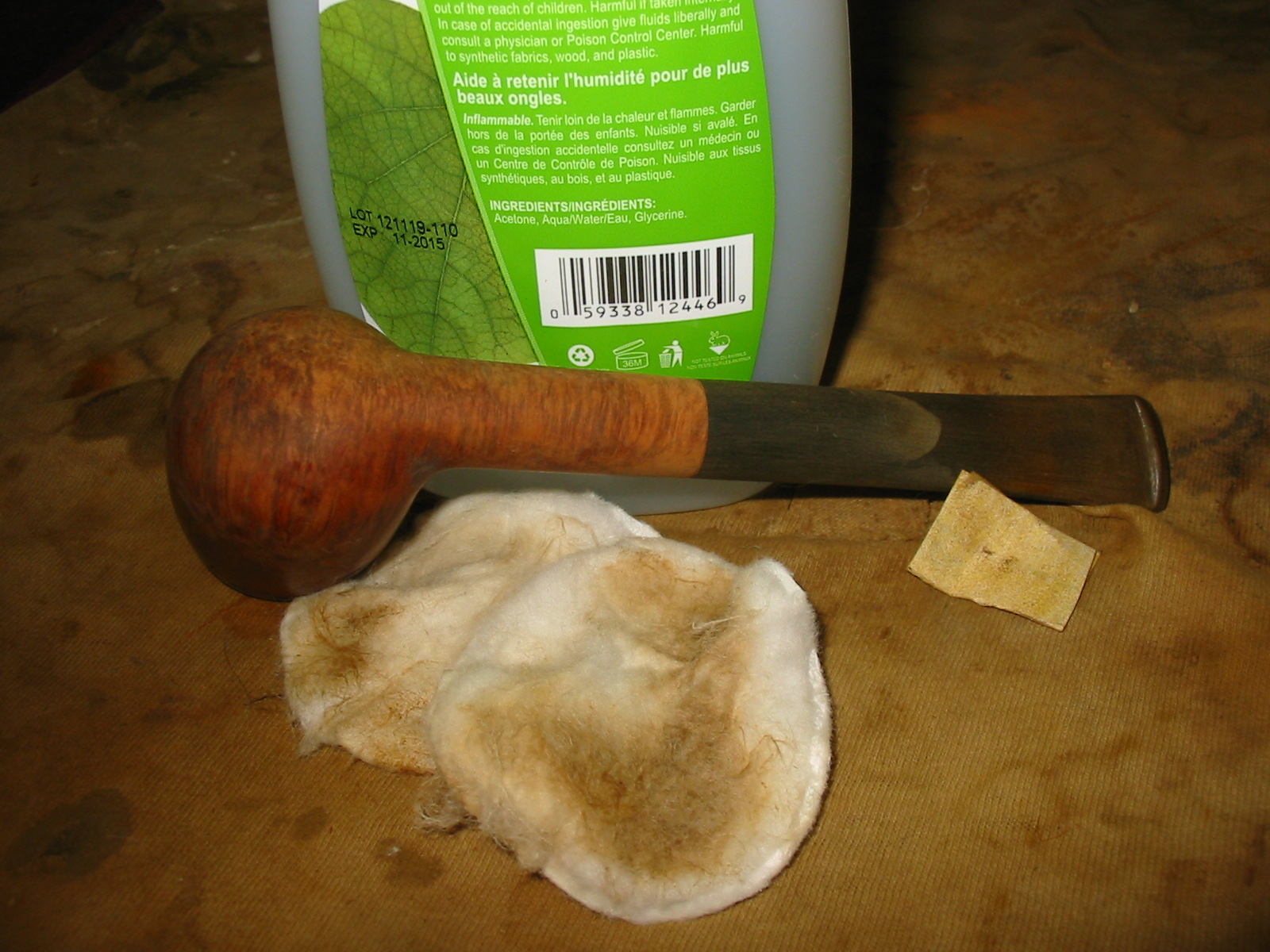
I wiped the bowl down with acetone on a cotton pad to remove the varnish and the stain. I sanded the bowl with a fine grit sanding sponge to remove the stubborn varnish areas and then scrubbed it down with acetone again. Once I had the finish removed the bowl was ready to be stained.
IMG_4191

IMG_4192

IMG_4193

For ease of use, since I have a lot of these to do for the pipe club stash, I am using MinWax stain. On this one I gave it a coat of Red Mahogany stain followed by a coat of Medium Walnut stain. I rubbed them on and off to get the colour I wanted. The area at the stem junction stubbornly refused to take much of the stain no matter how much I coaxed it and heated it. In the photos below the lighter area at that point is better though still visible to me.
IMG_4194

IMG_4195

IMG_4196

IMG_4199

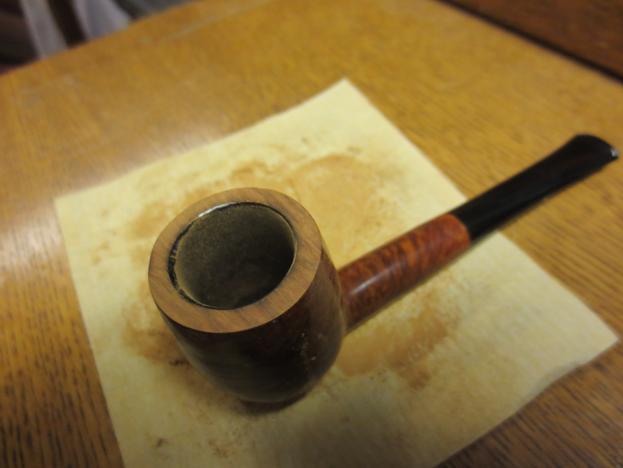
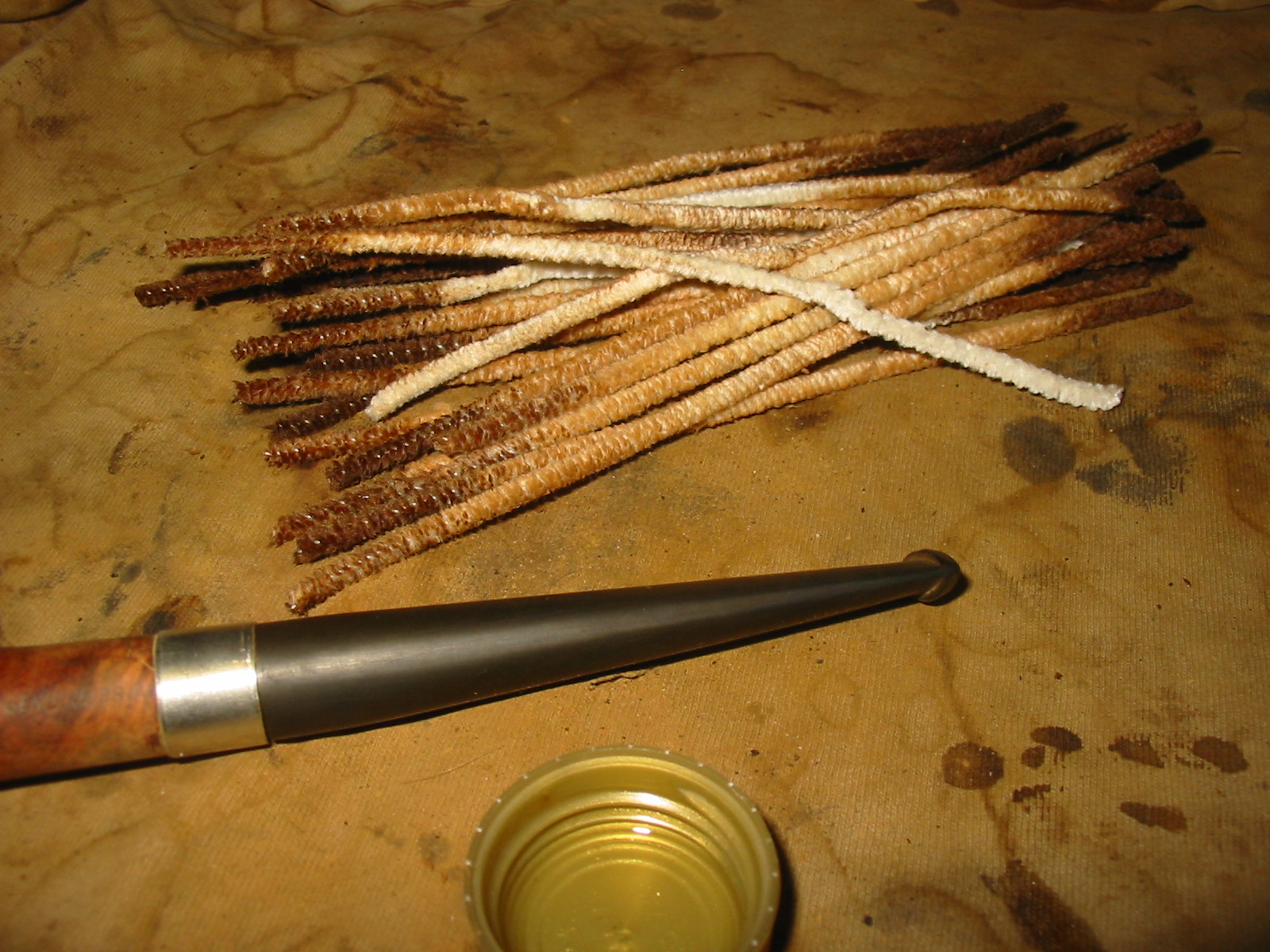
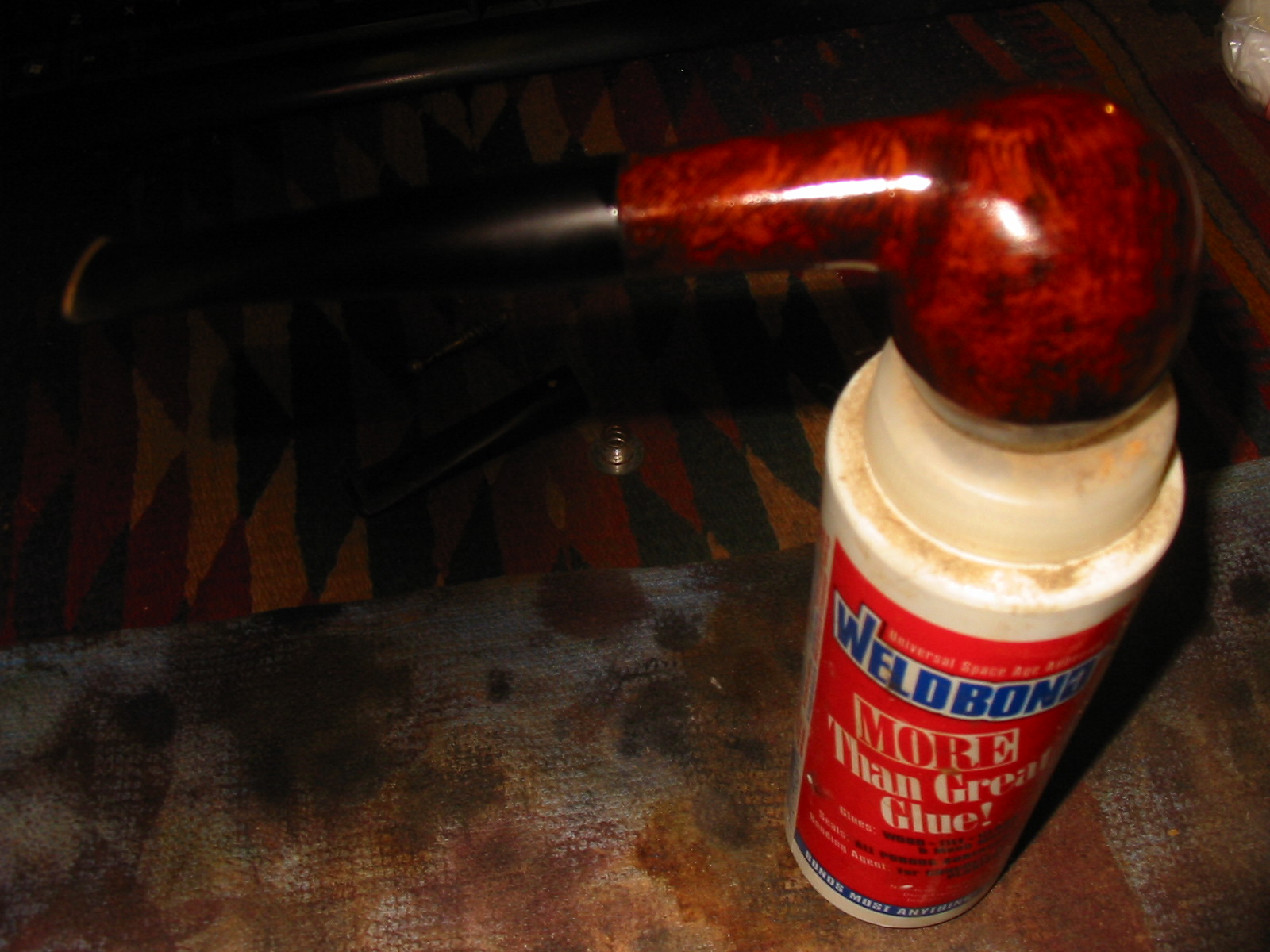
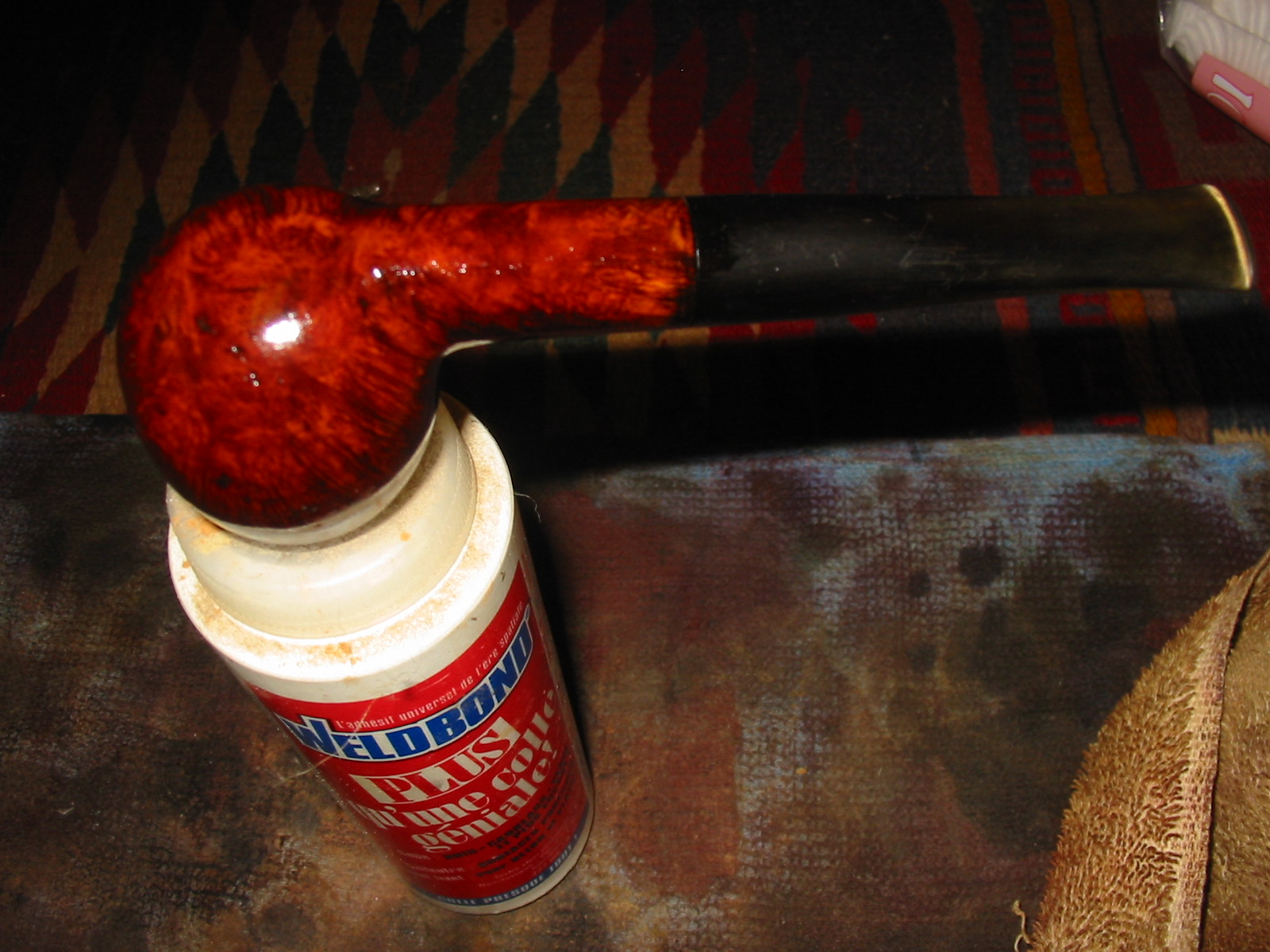
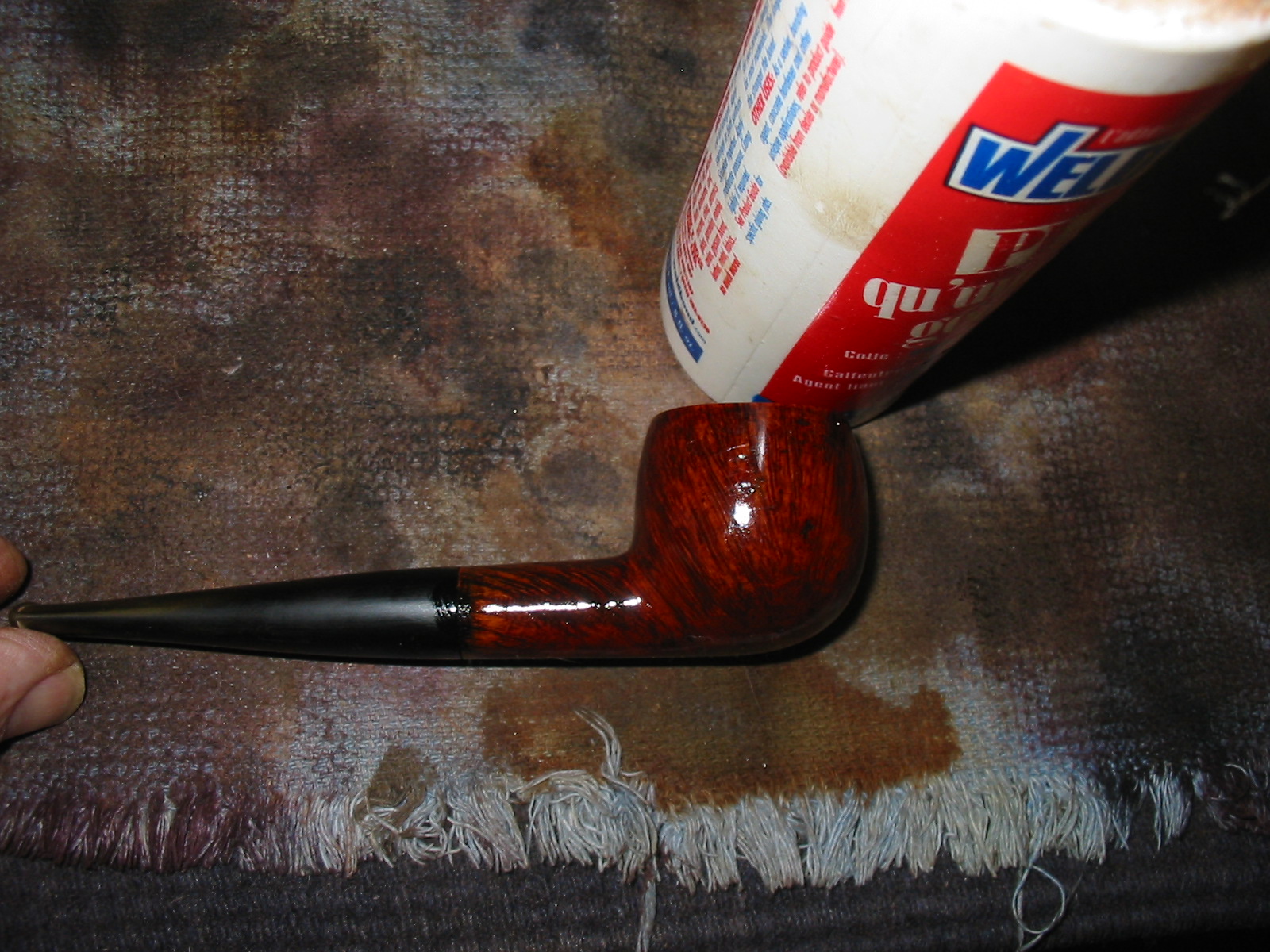
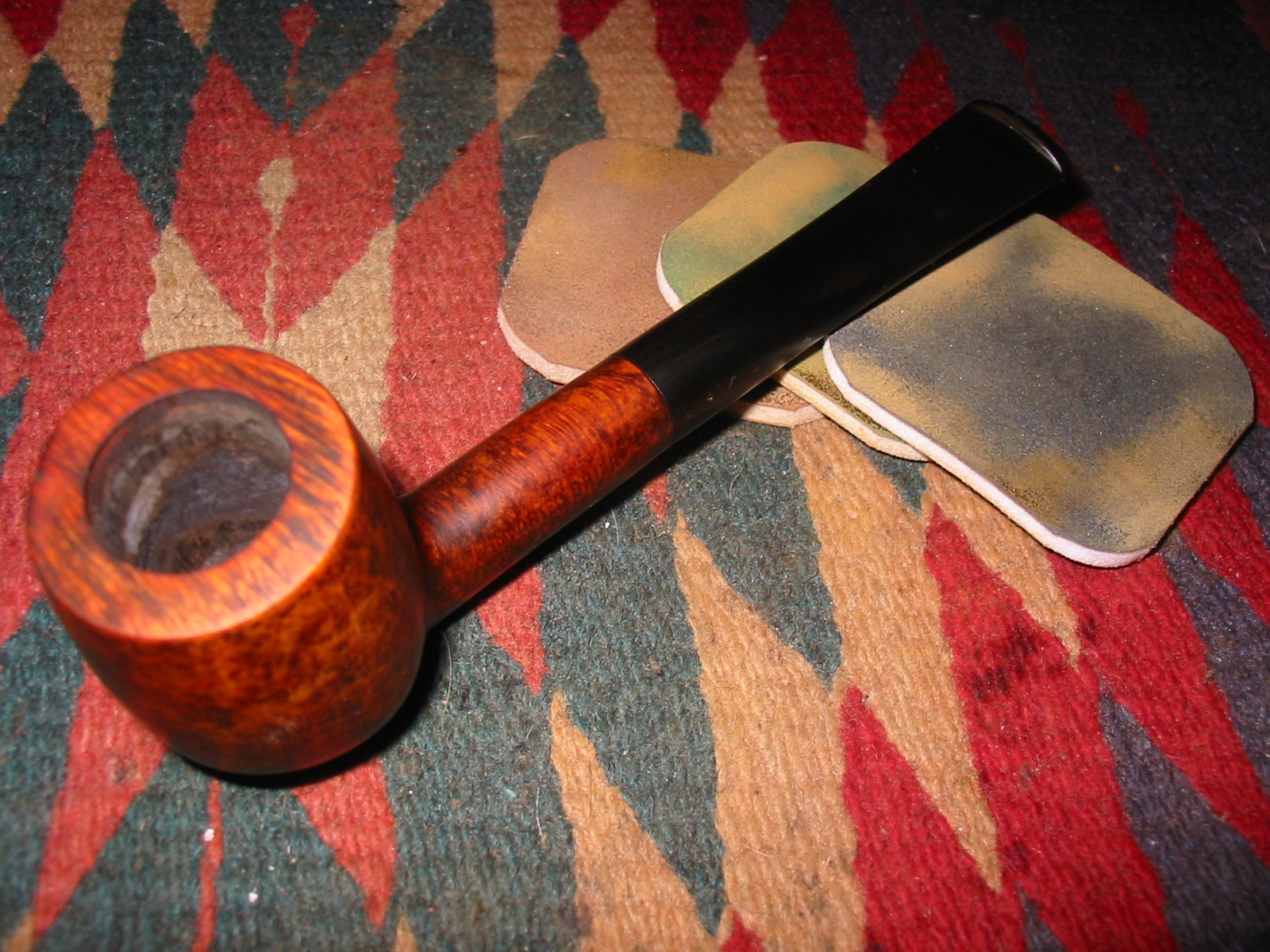
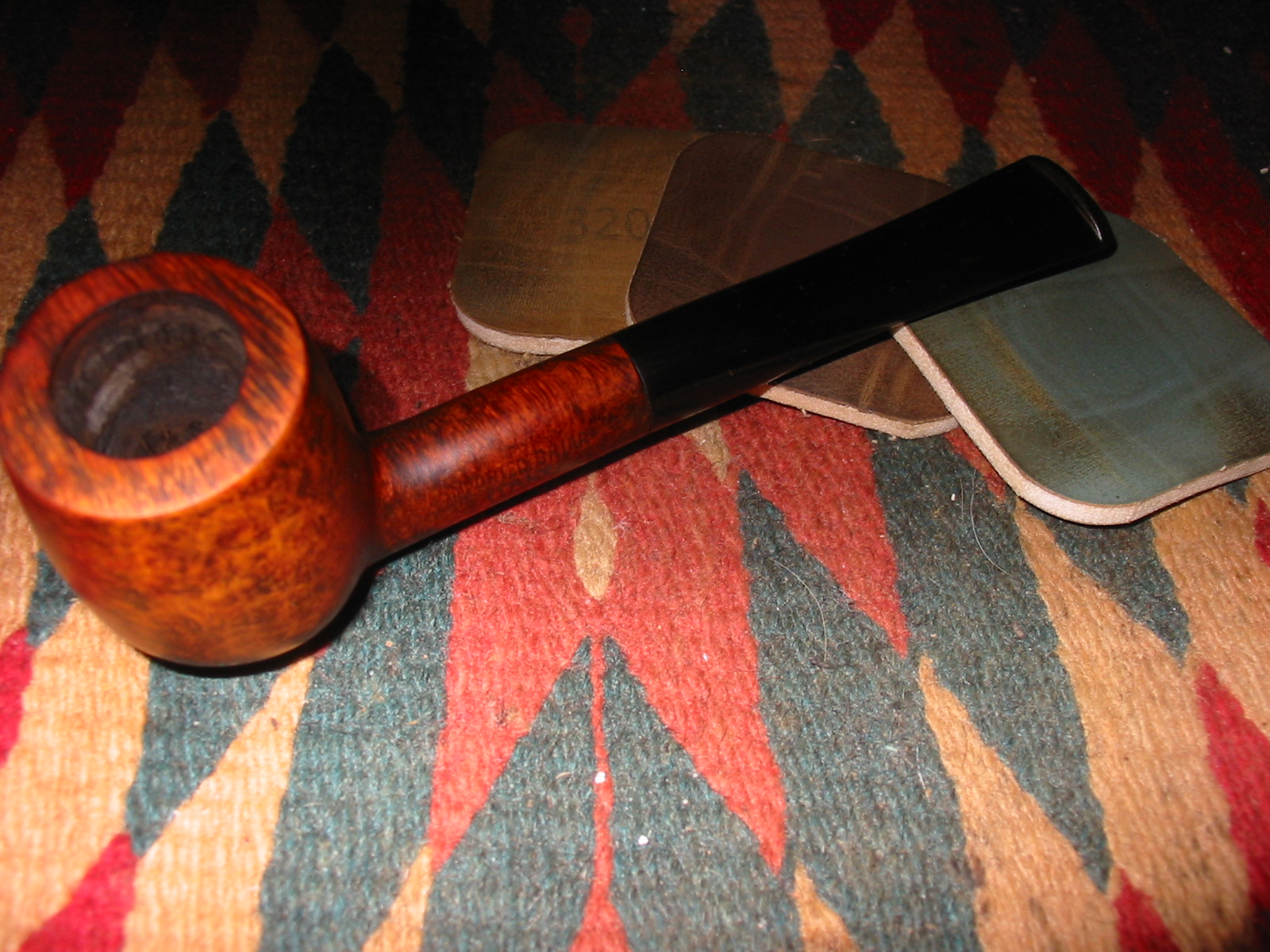
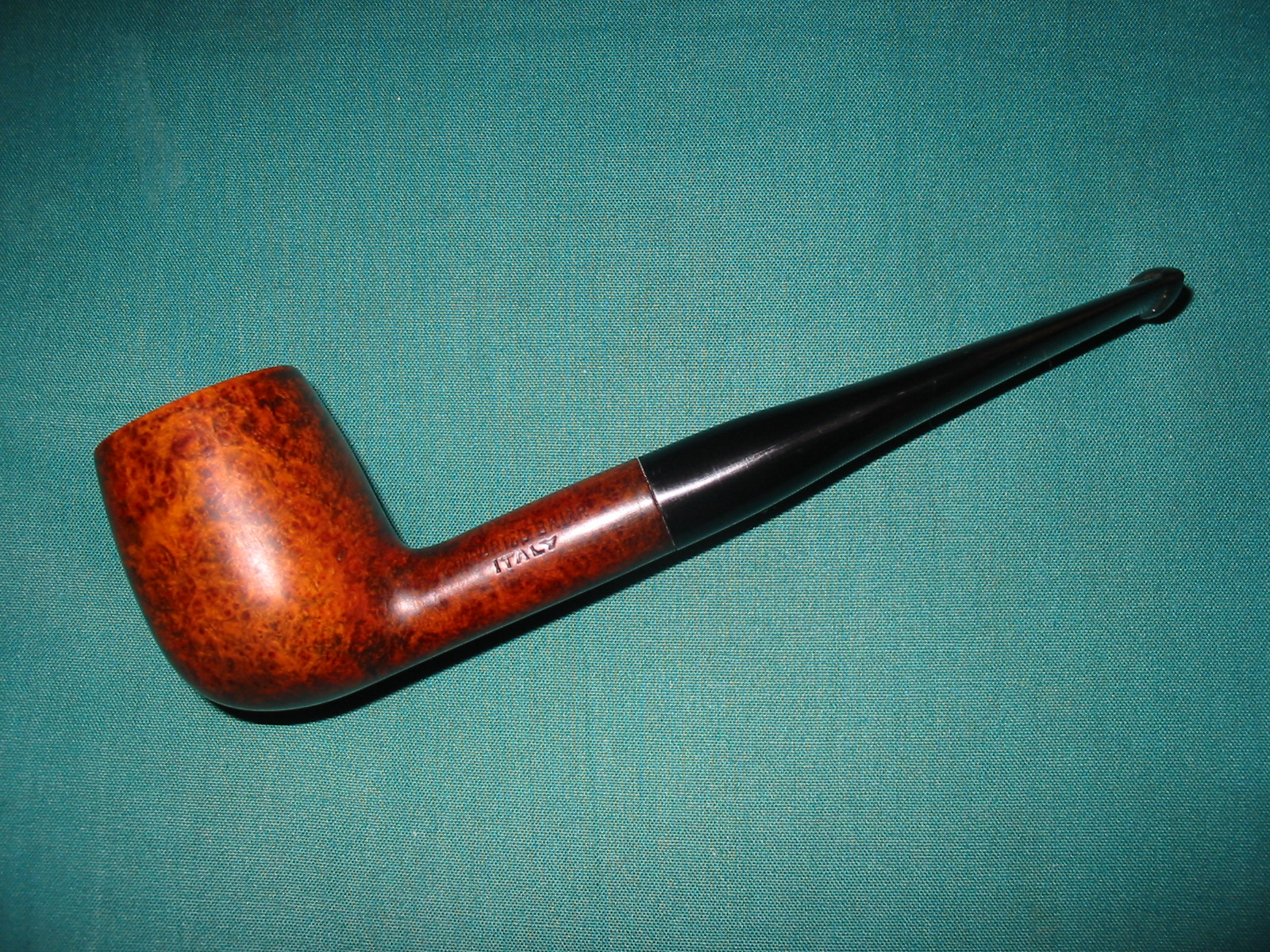
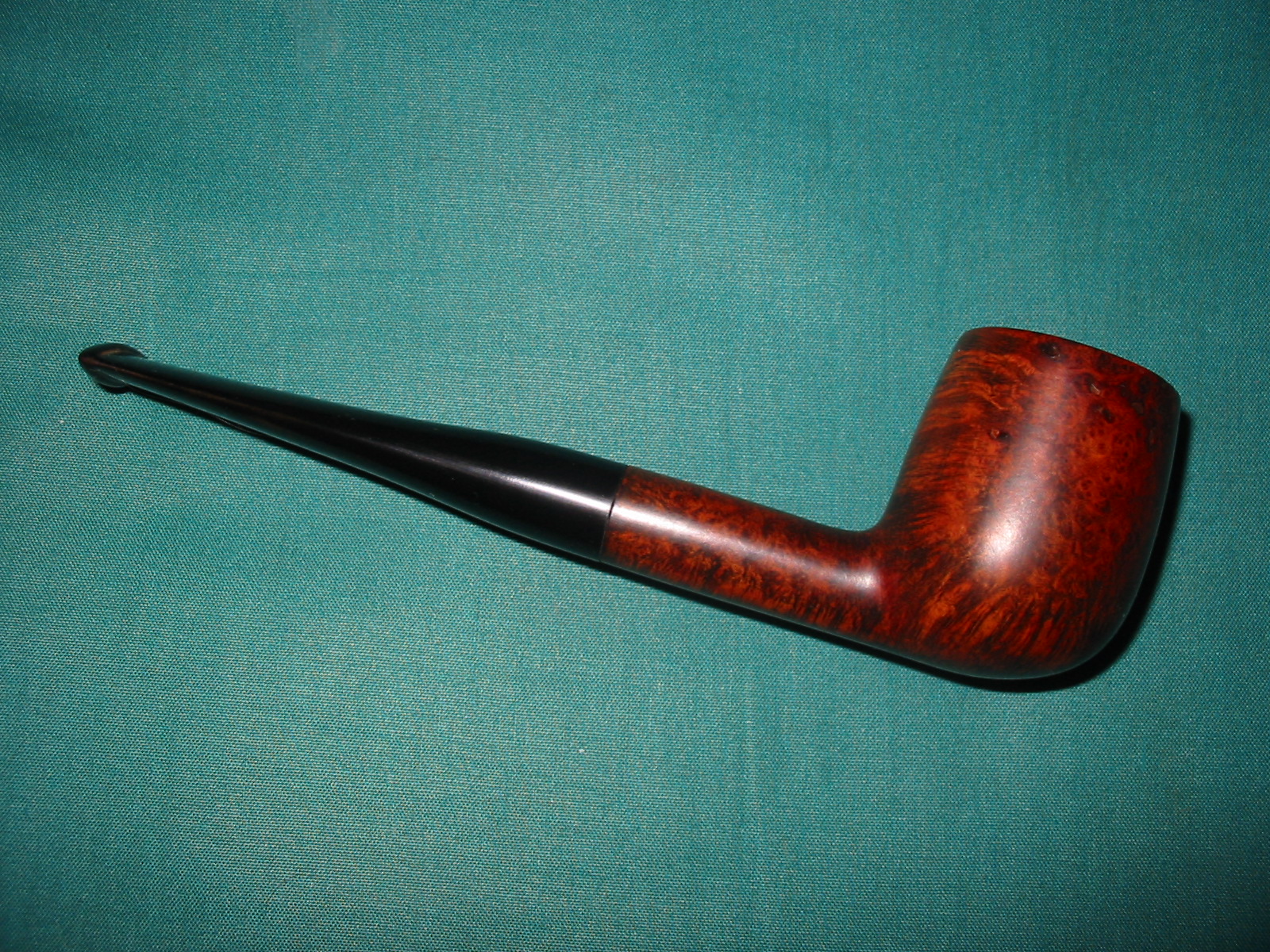
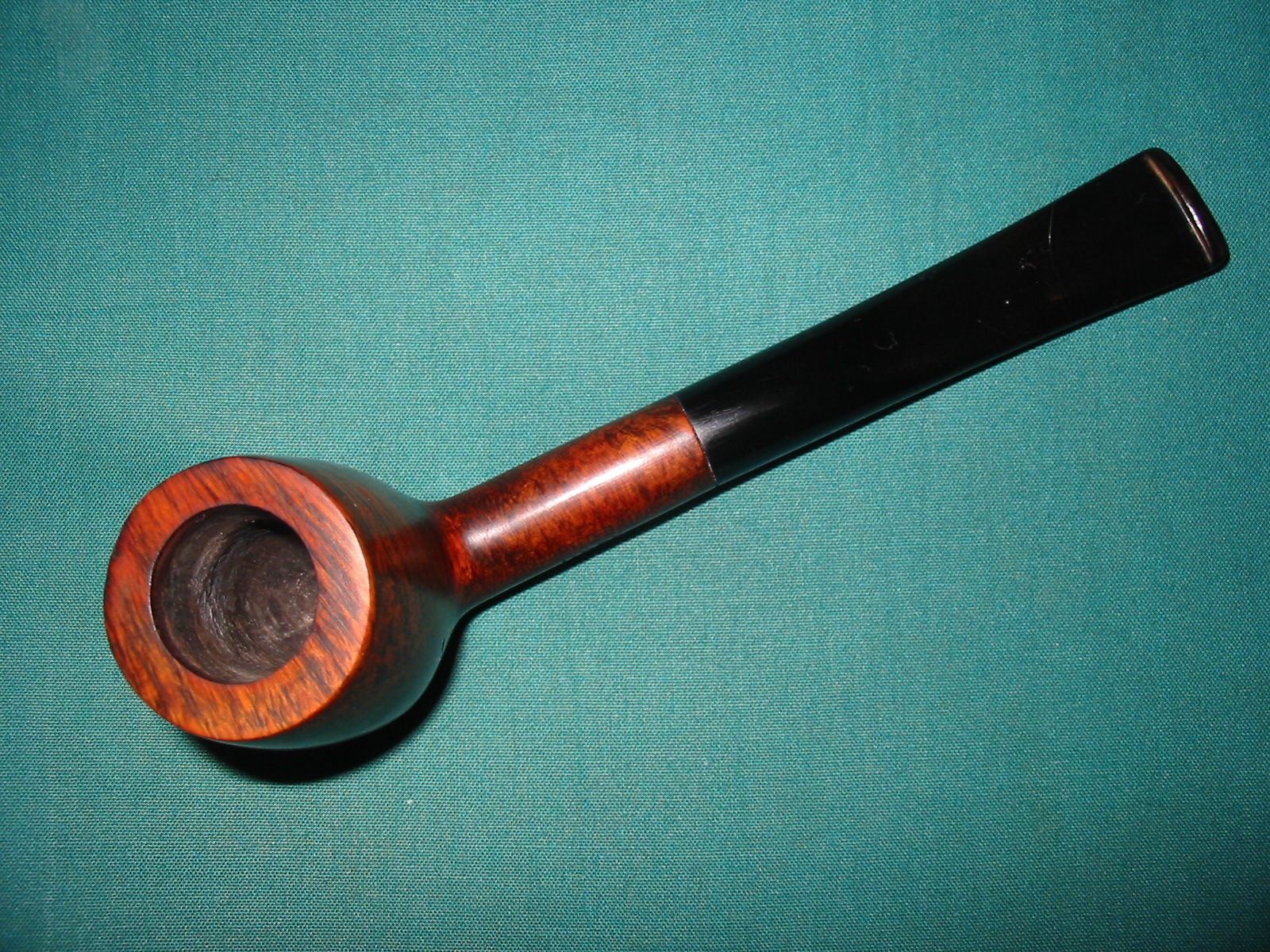
I rubbed down the stem with Obsidian Oil and rubbed it into the vulcanite. Once it was dry I buffed the pipe with White Diamond and then gave it multiple coats of caranauba wax to protect and give it a shine. The rim came out exceptionally well and the stain coat looks far better than when I started. The red Mahogany stain kept the red undertones that were present in the original stain coat. I finished buffing with a clean flannel buff to give it a shine. The finished pipe is shown in the photos below. It is ready to go back in the box of finished pipes for the Pipe Club. Still a few more pipes to fix and work on before I send them back to the club for sale or their fund-raising use.
IMG_4200

IMG_4201

IMG_4202

IMG_4203

Topping and Restaining a Lorenzo Ascona


Blog by Steve Laug

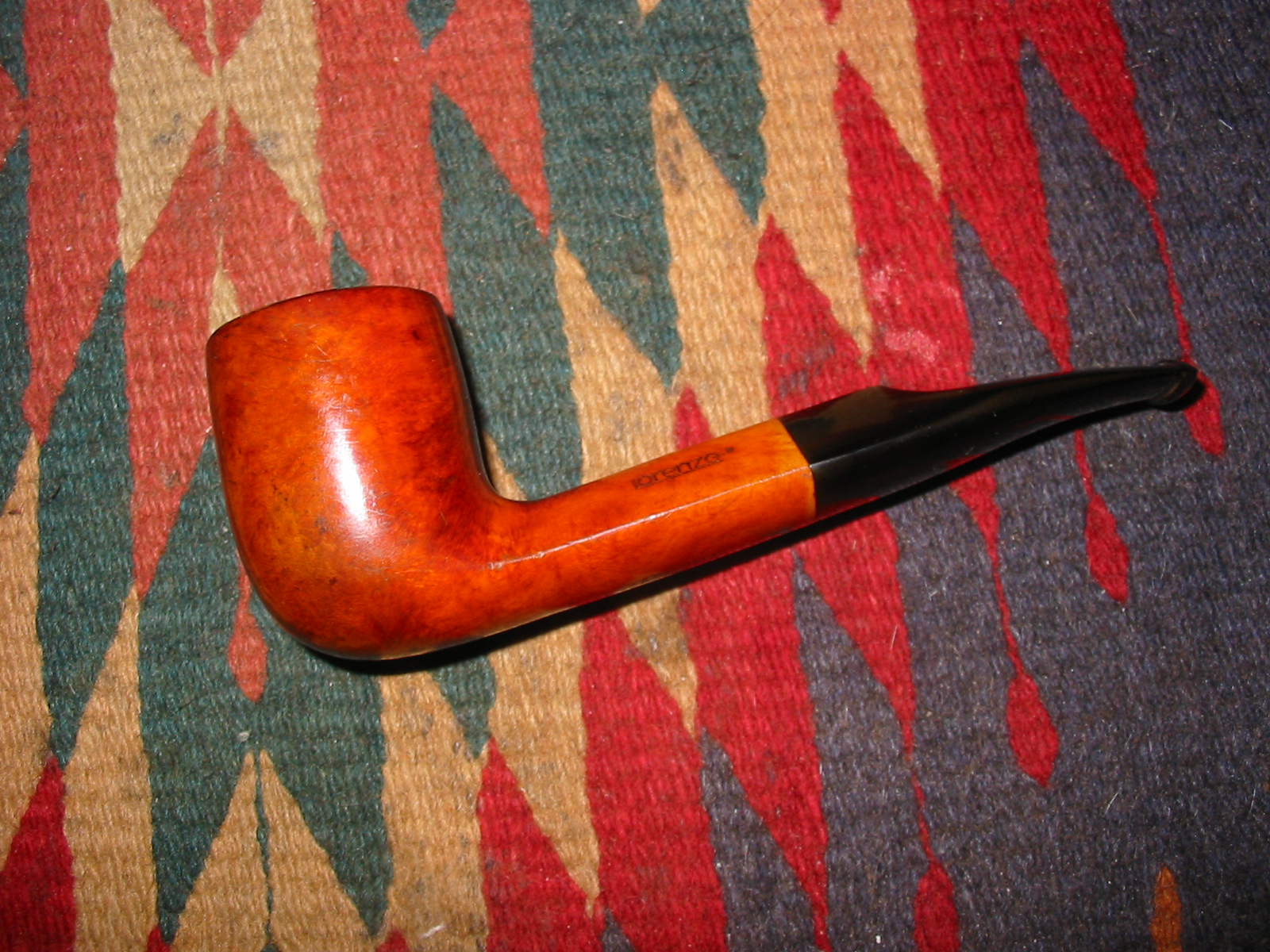
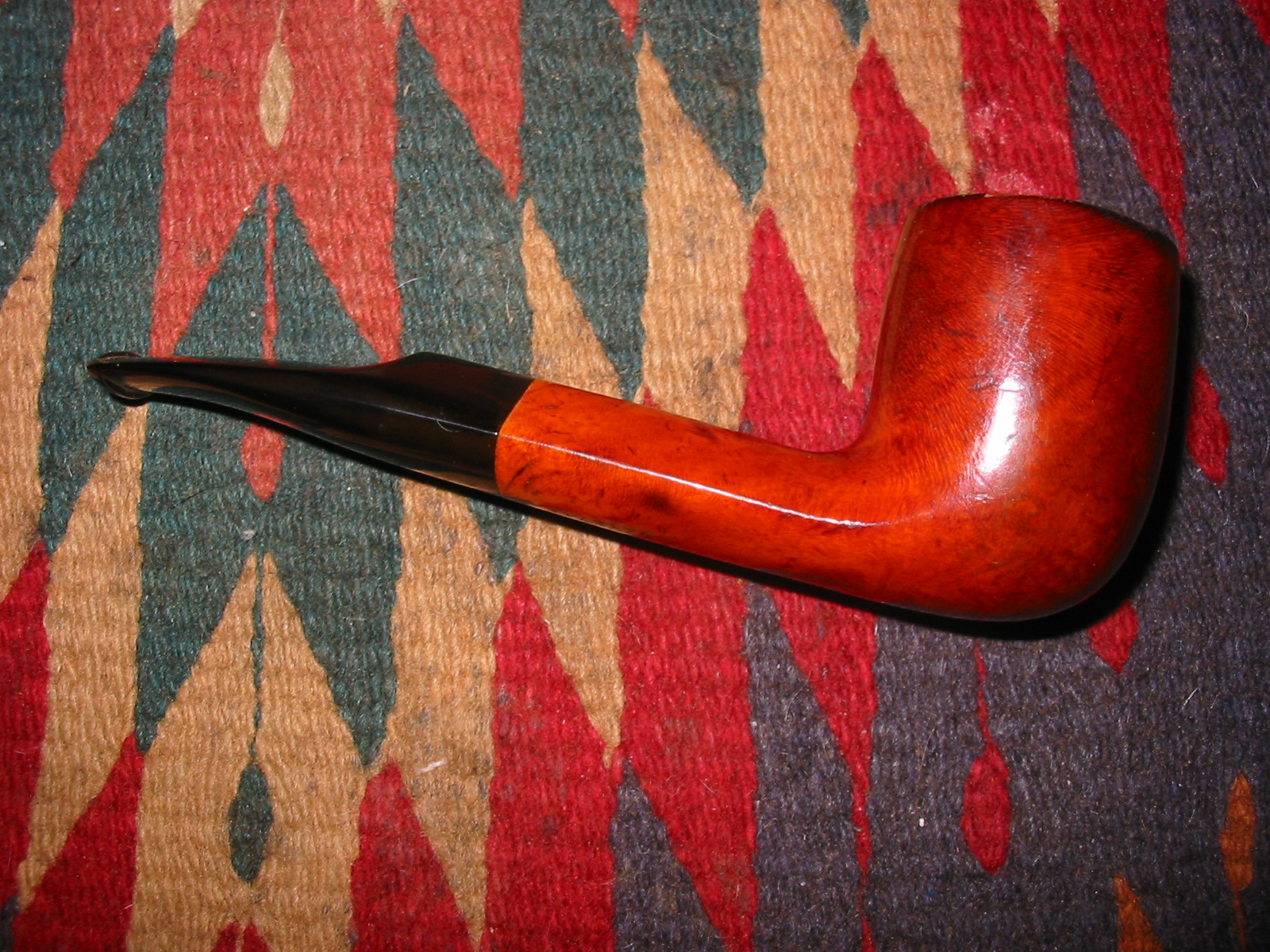
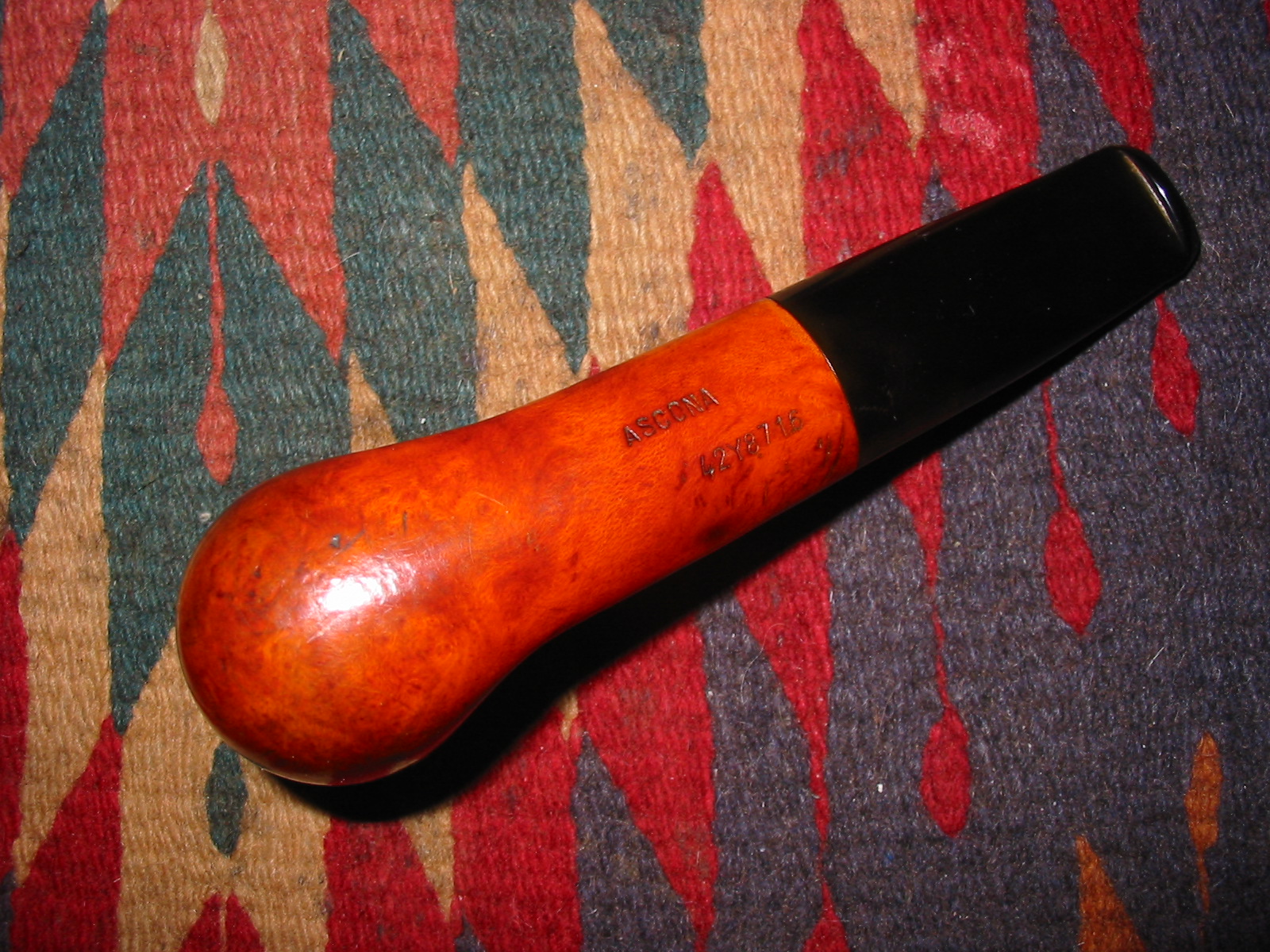
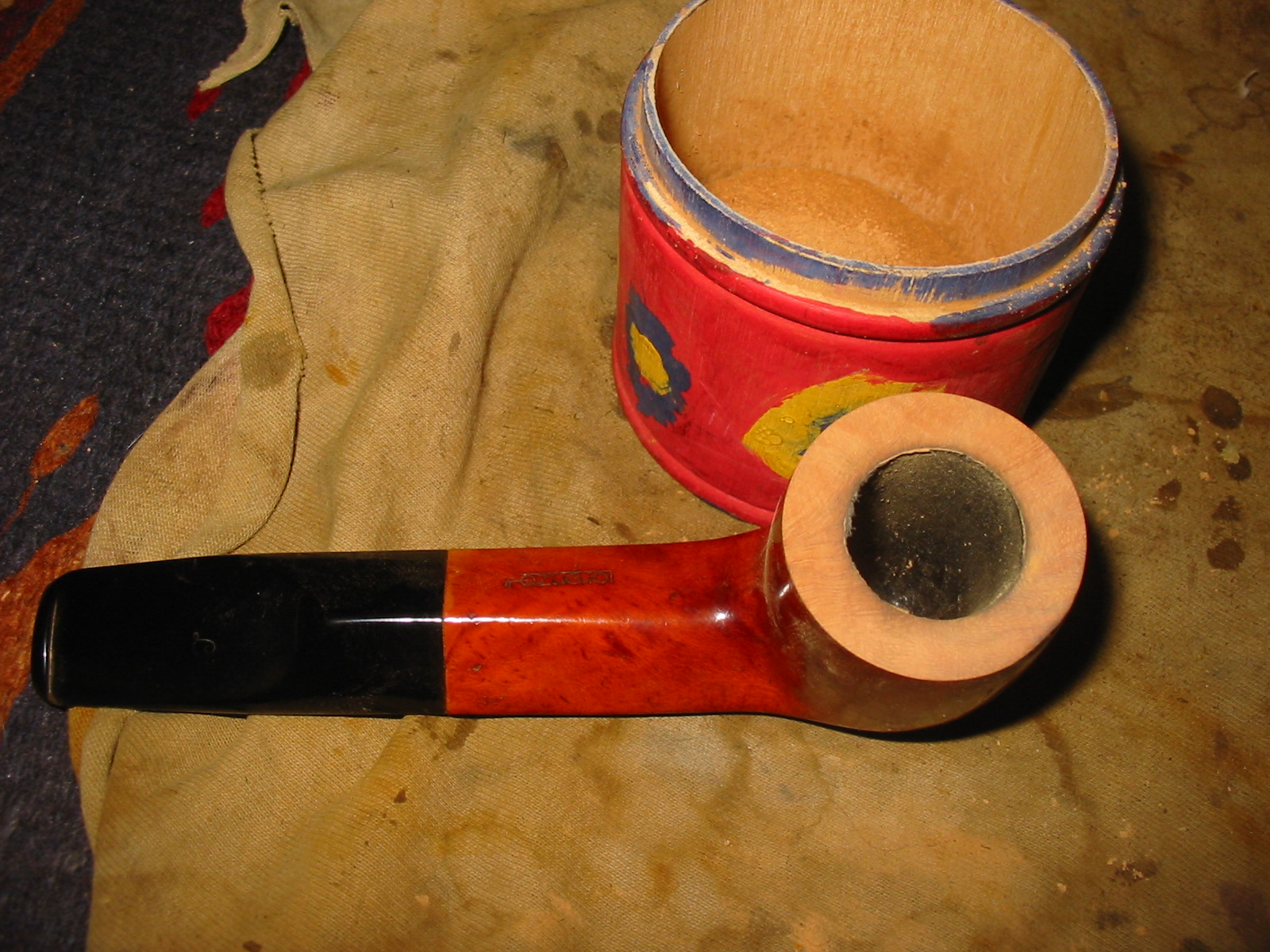
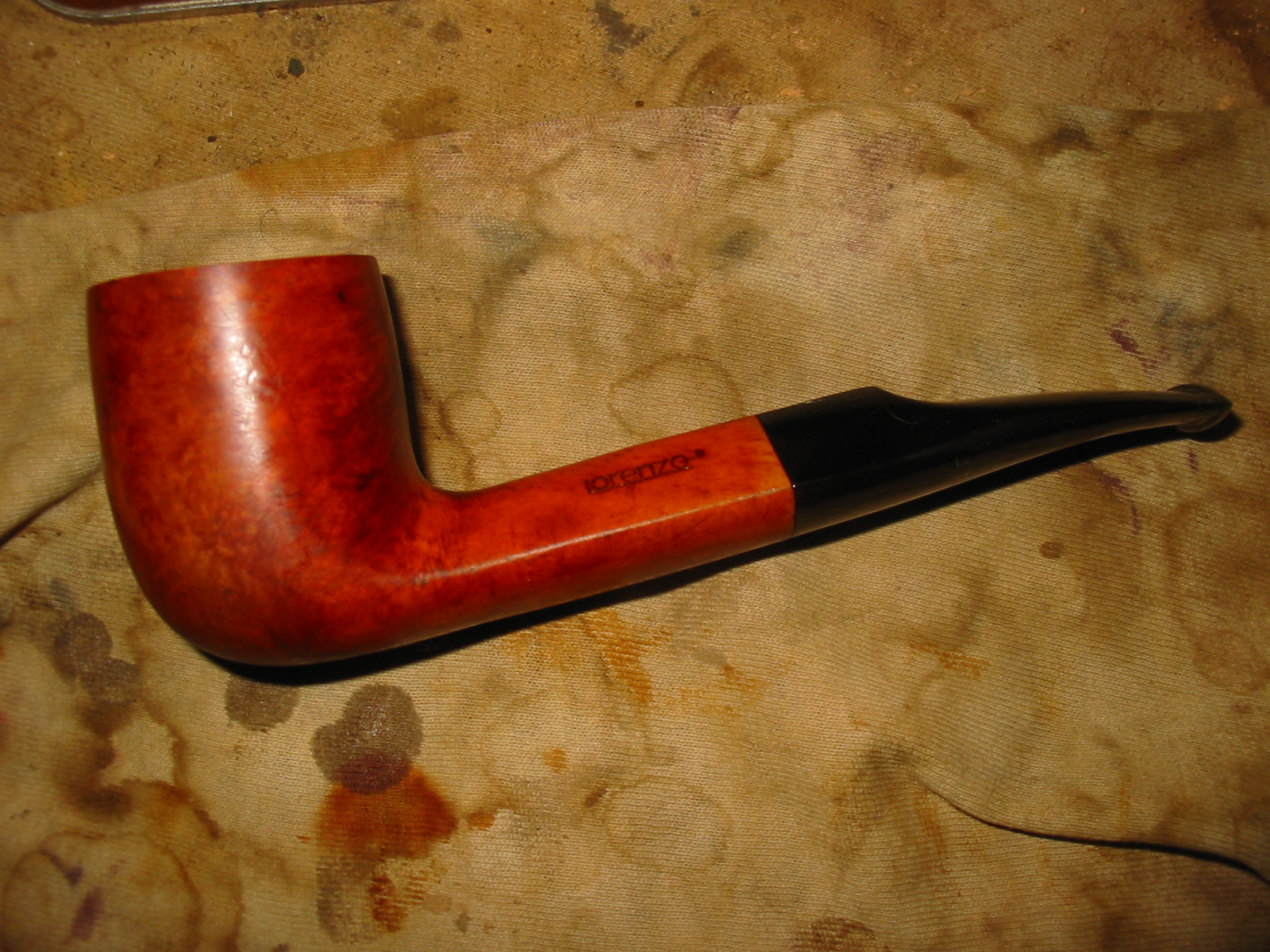
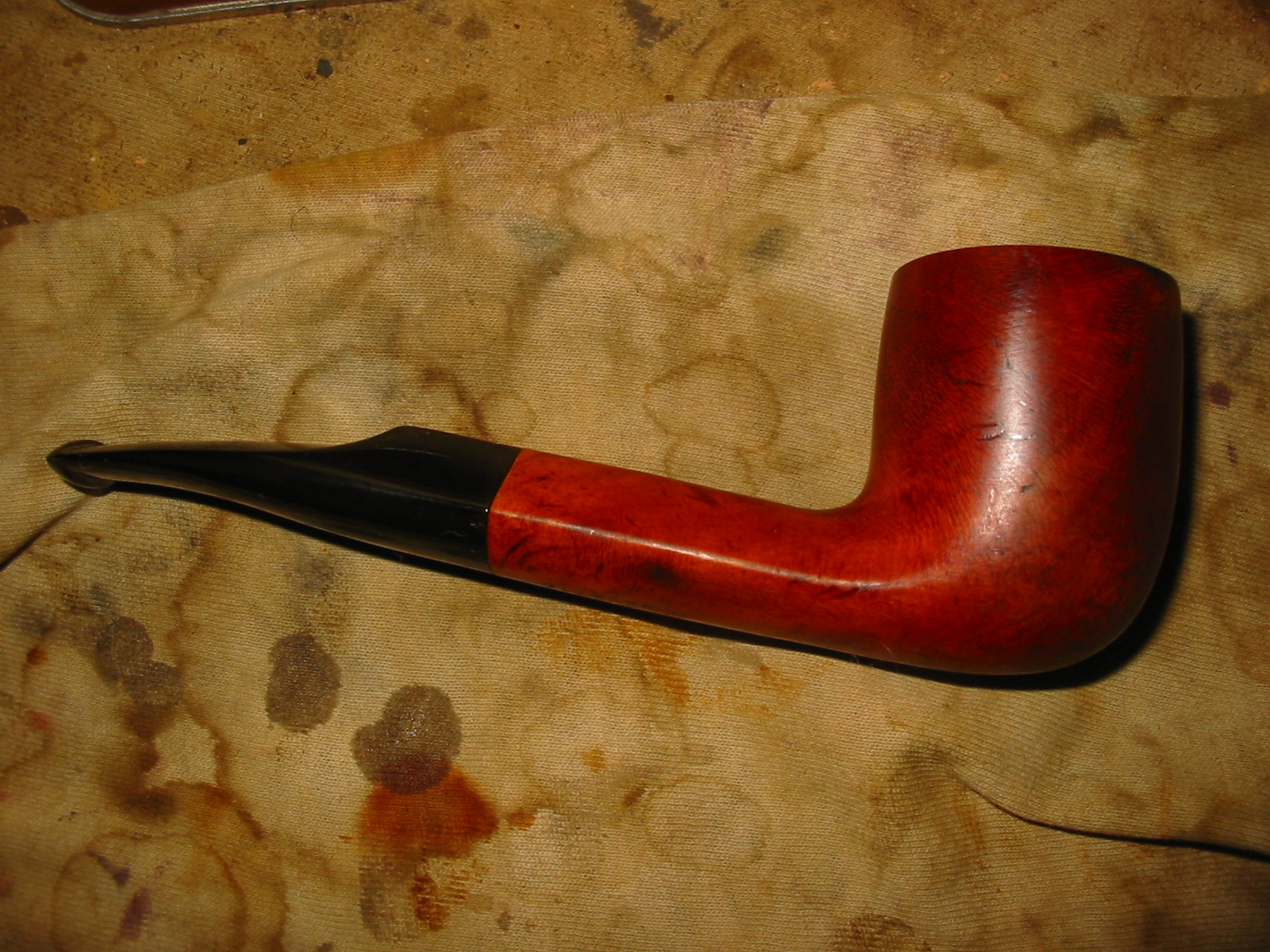
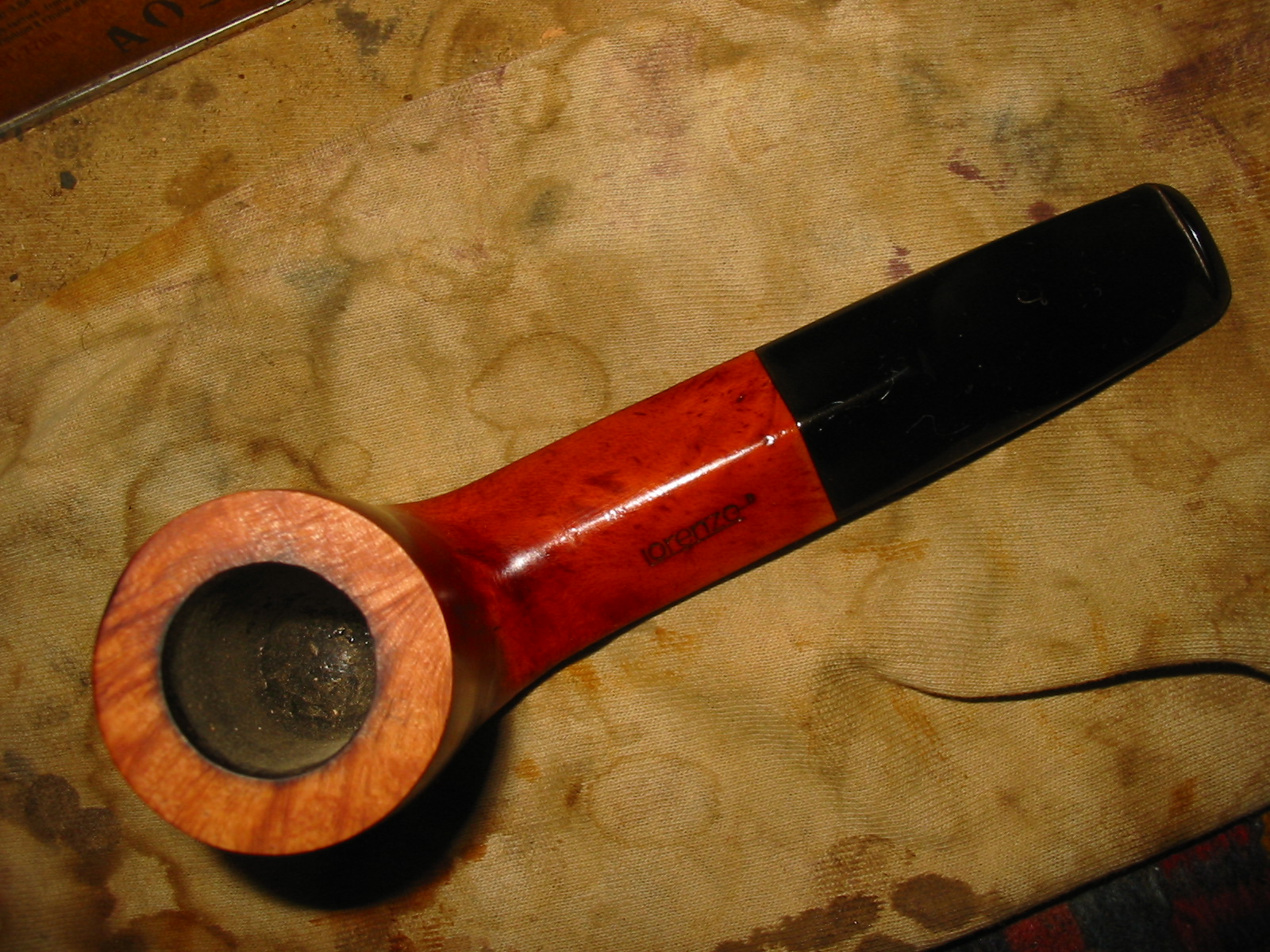
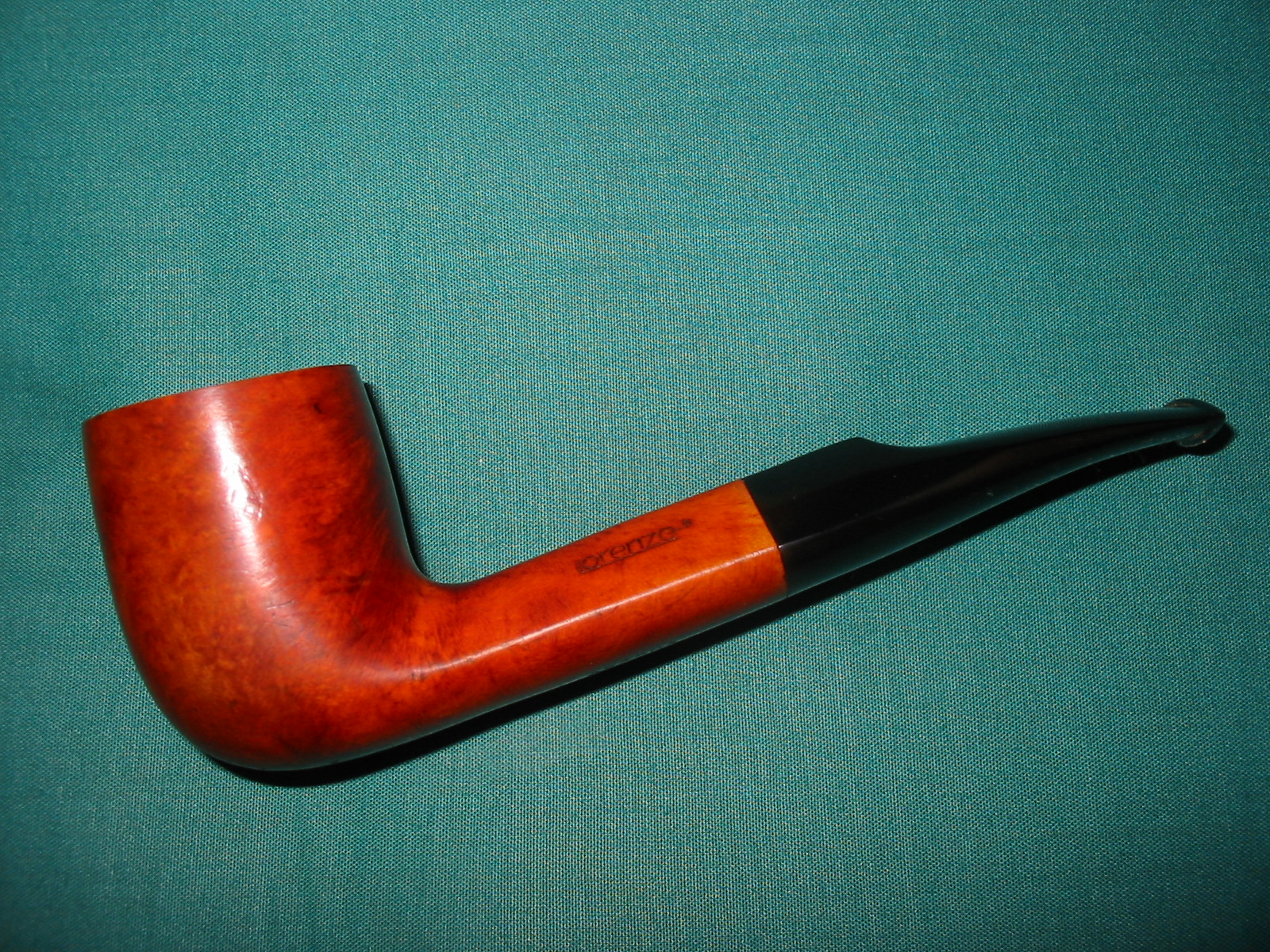
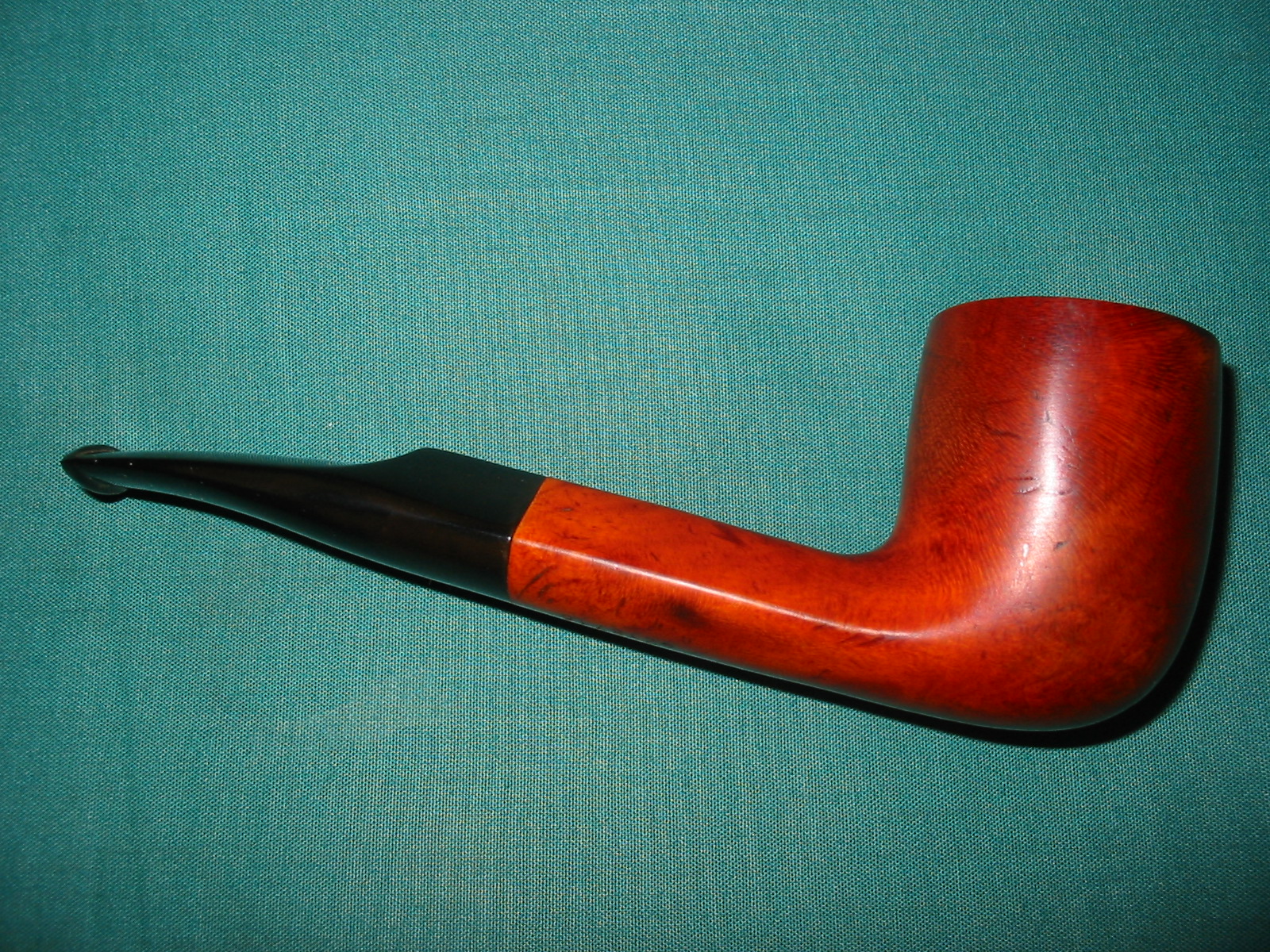
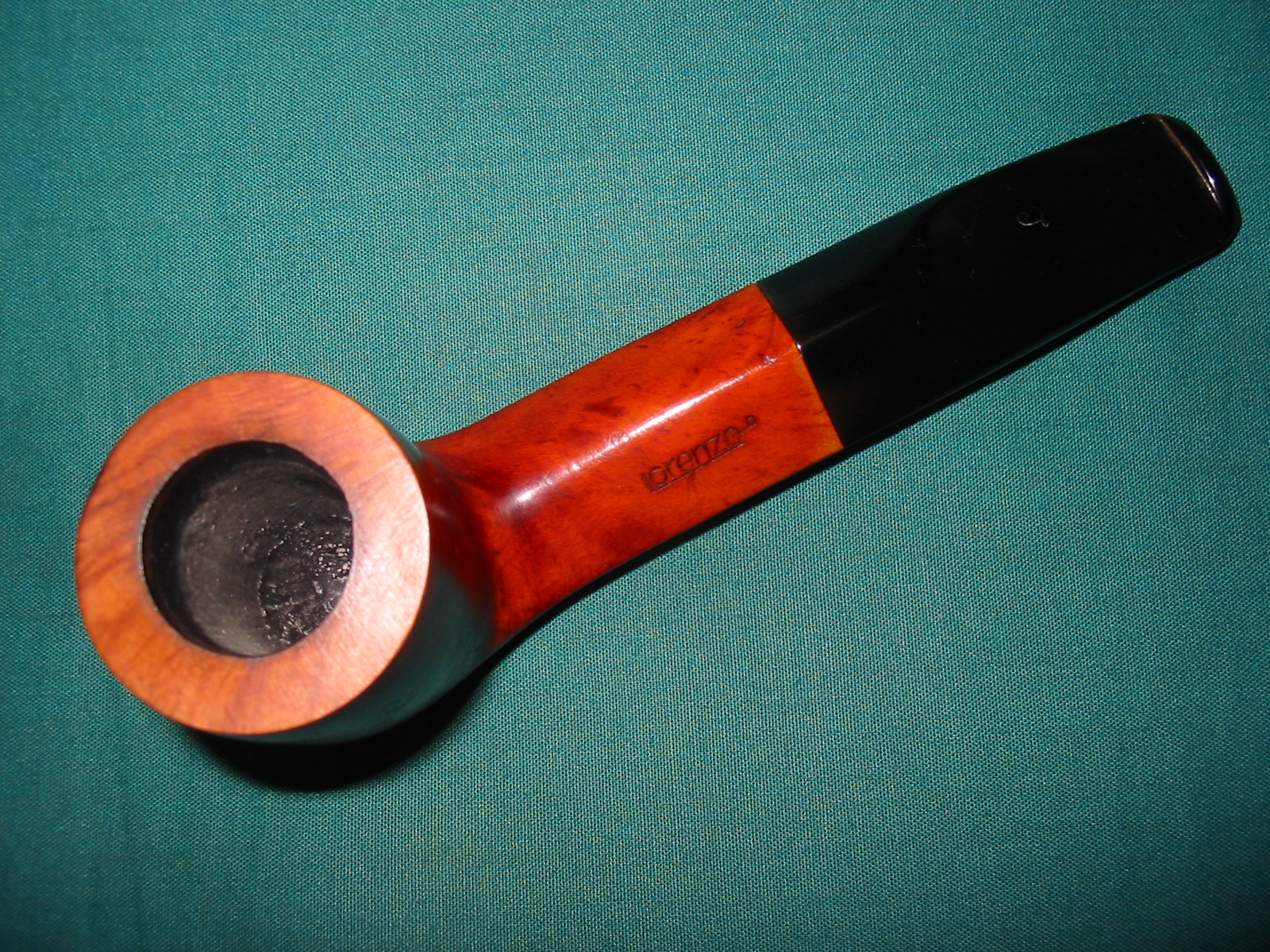
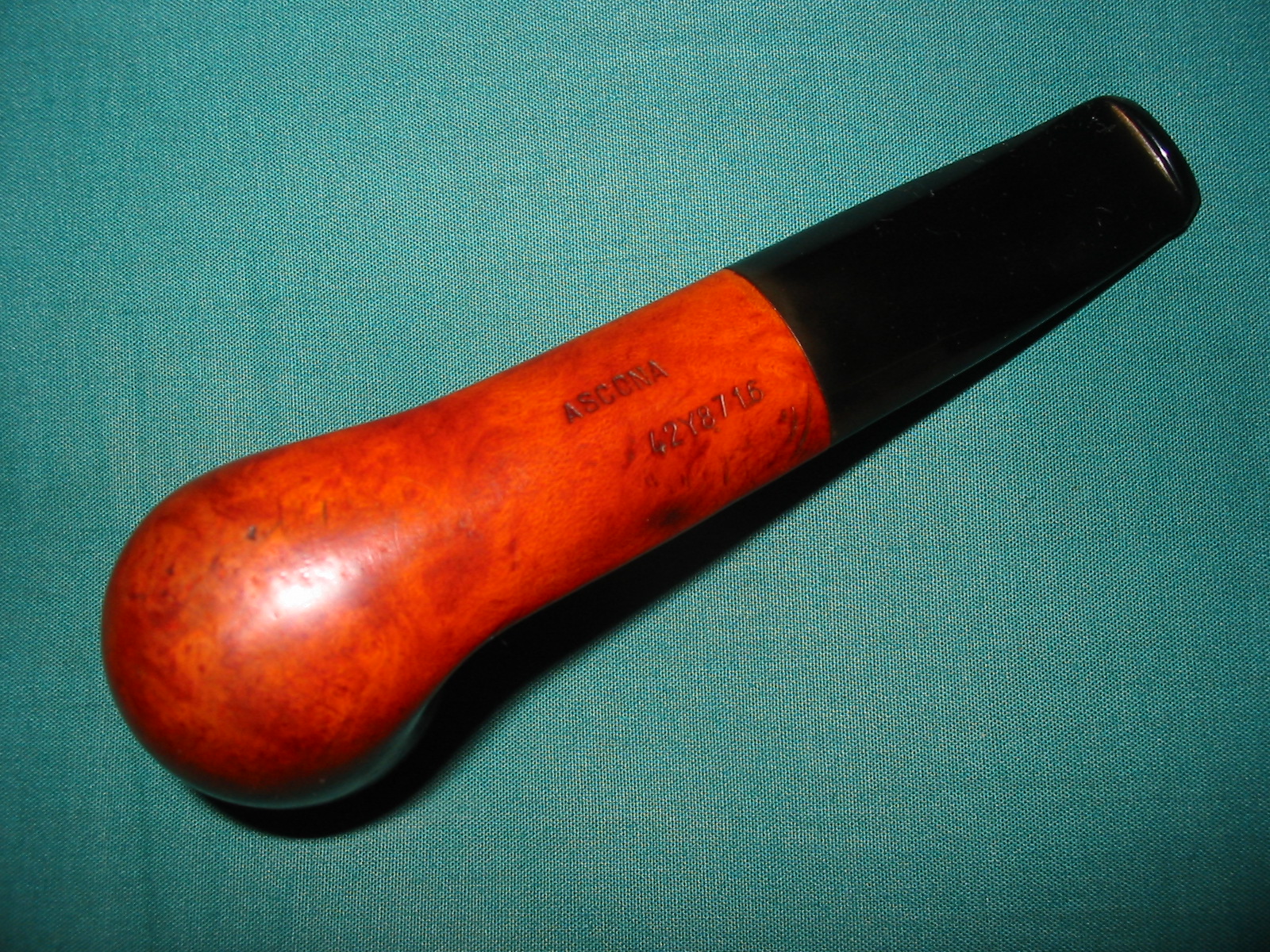
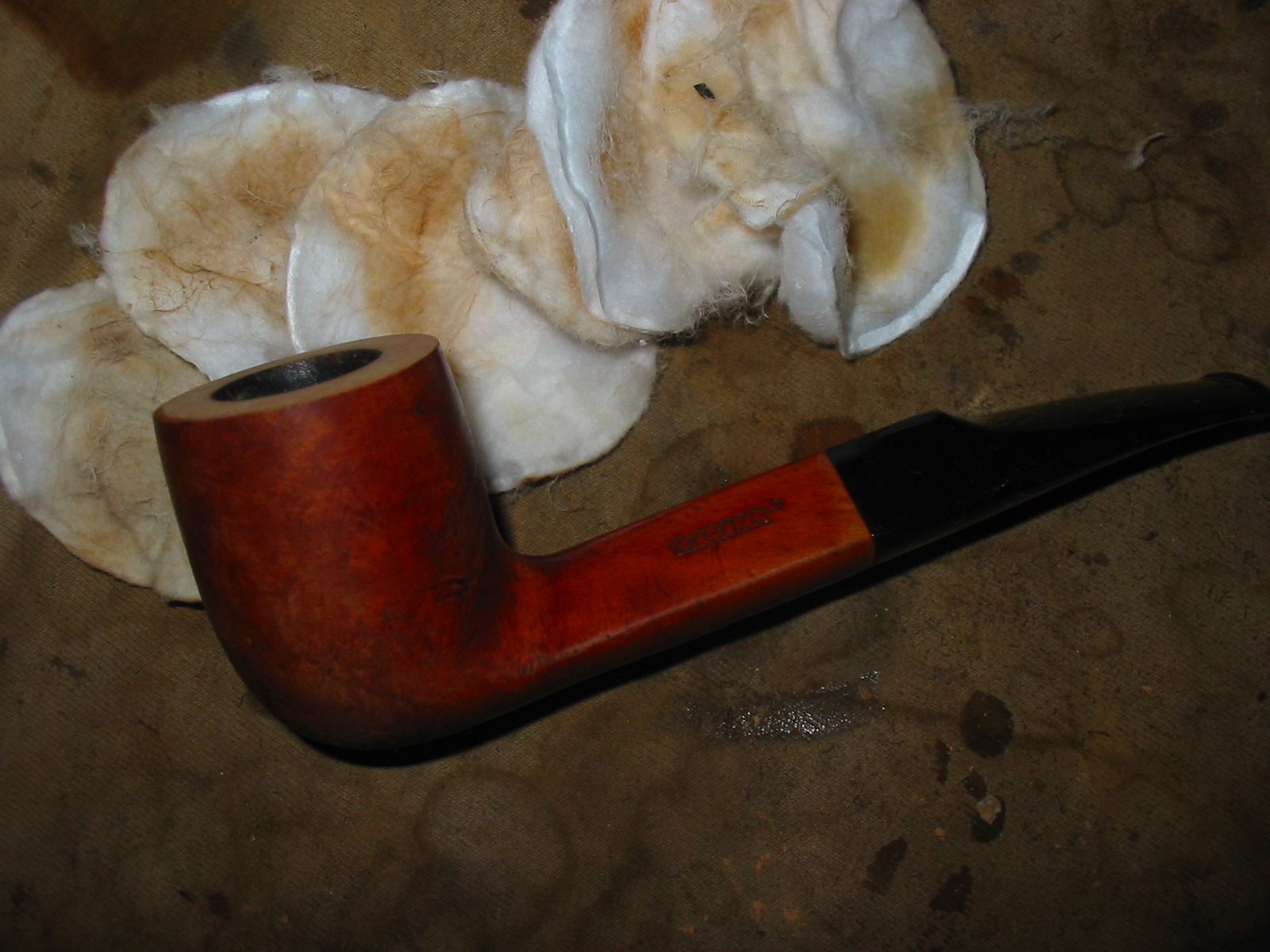
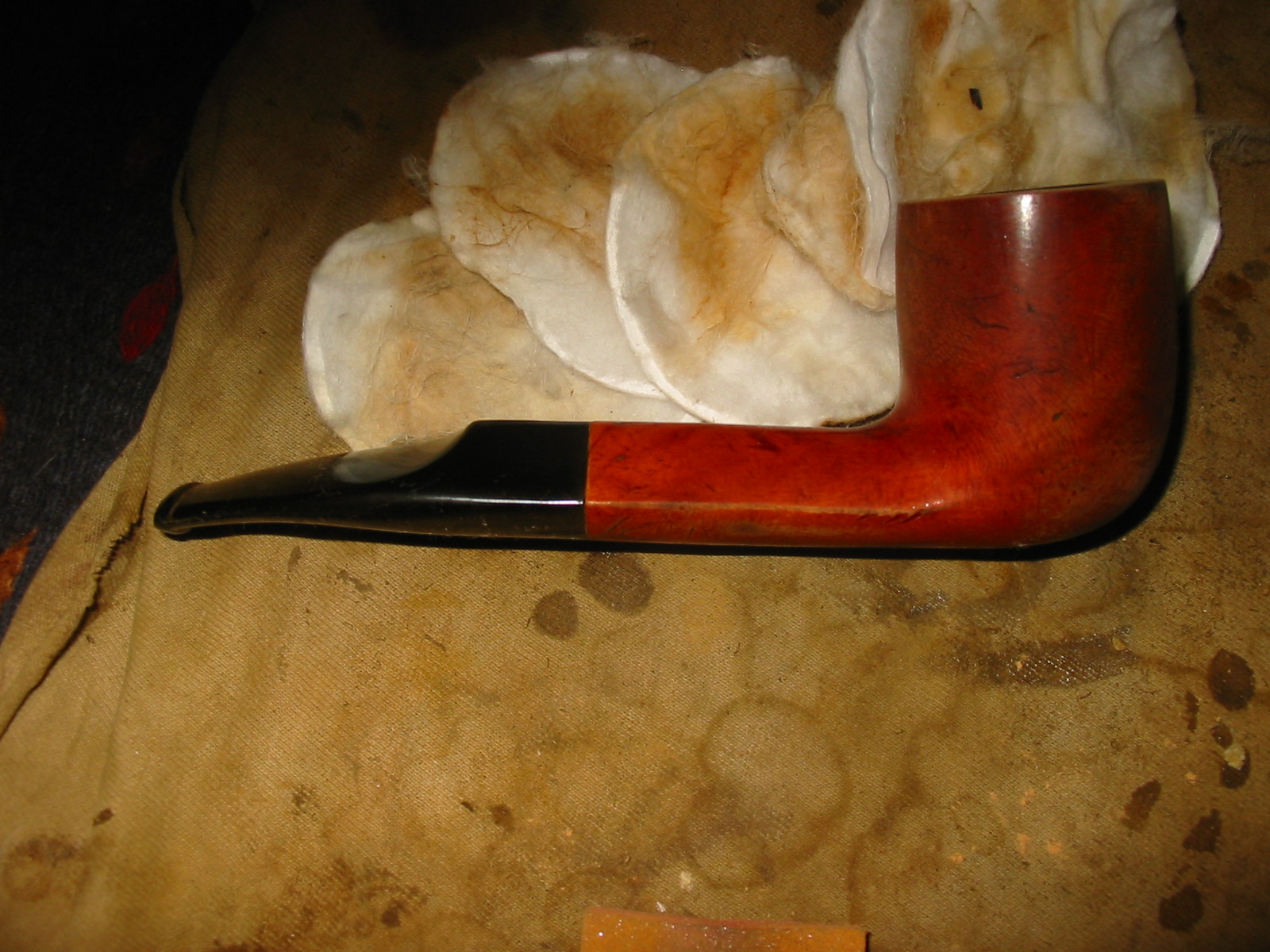
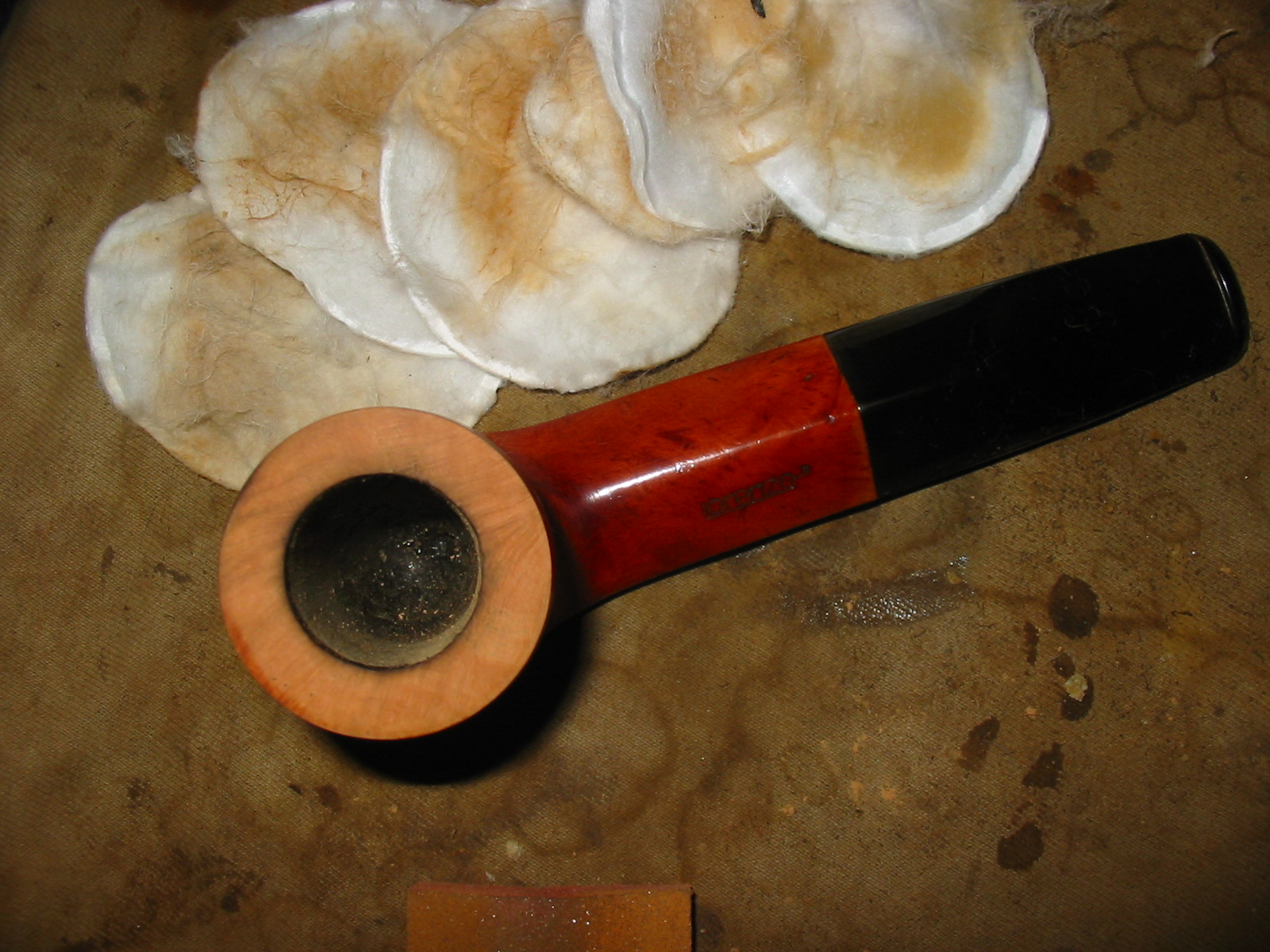
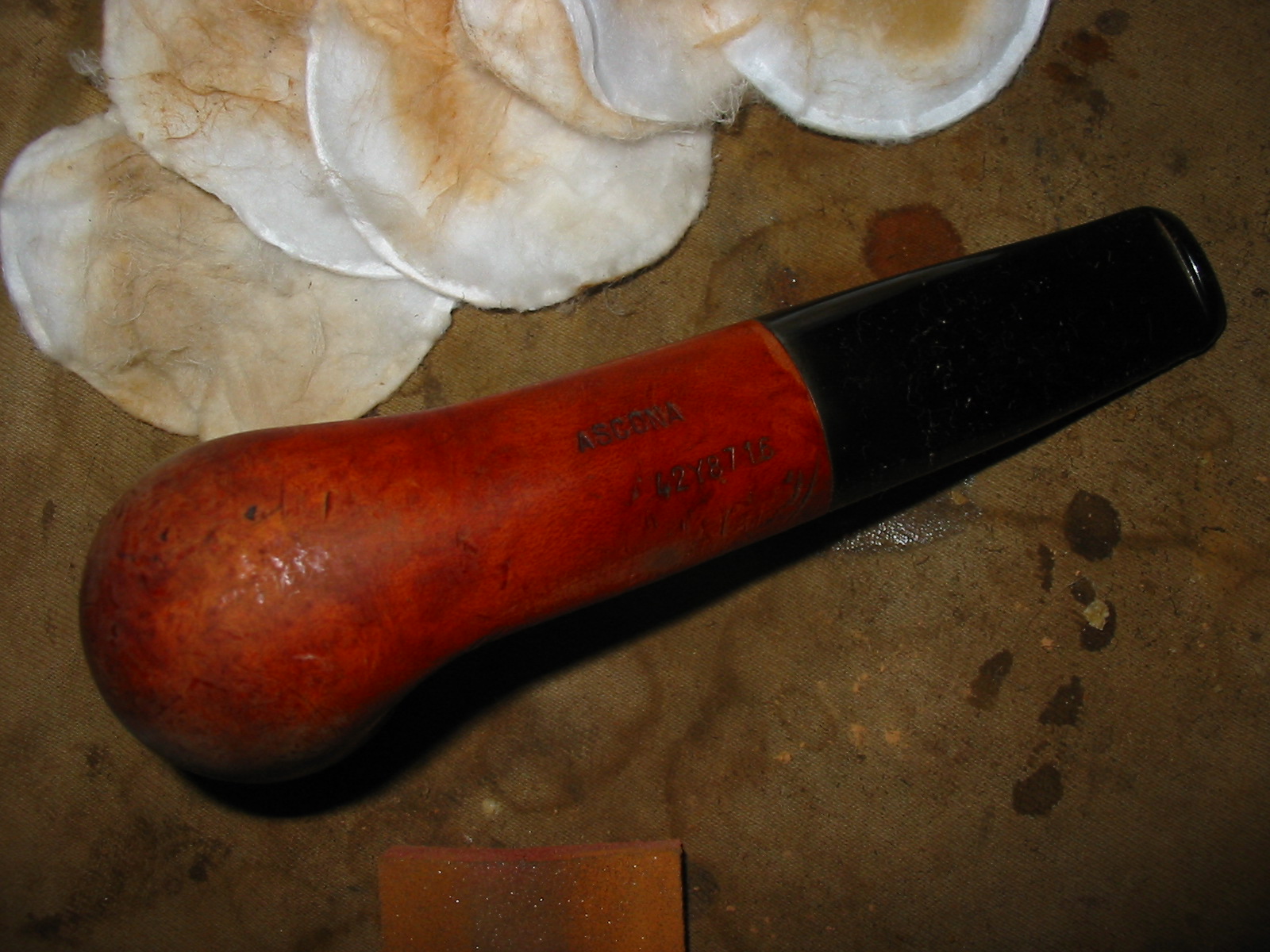
Yet another pipe from the Vancouver Pipe Club donation was this triangular shanked Lorenzo. It is stamped on the left side of the top of the shank Lorenzo and on the bottom of the shank it is stamped Ascona over a series of numbers and letters – 42Y8716. I have no idea what the numbers mean and have been unable to find any information on them. Over the years I have had quite a few old Lorenzo’s but they always seem to find new homes as they tend to be too large to my liking. This one is a bit different – it is probably a group 4 sized bowl with a large triangular shank and saddle stem. The stem was in very good shape and still bears the cursive L logo stamped on the blade of the stem. The bowl was in very rough shape. There was a coat of varnish on the pipe and the bowl had the usual black rubbery bowl coating. The finish was an orange stain that was breaking up under the varnish and leaving light spots in the finish. The rim was beat up and all the outer edges of the bowl either were scarred or burned. The briar under the varnish is quite scratched and there are dents in the briar. I did not take the time to remove any of those other than the ones that came out through my cursory sanding of the bowl. The marks that remain are like character reminders and I decided to leave them. IMG_4125 IMG_4126 IMG_4127 IMG_4128 The close up photo below, of the top of the pipe shows the damaged rim -the rough outer edges of the bowl and the burn marks. The second photo below shows the burn damage on the side of the bowl below the edge of the rim. IMG_4124 IMG_4129 I set up my normal topping tools – a flat board and a piece of 220 grit sandpaper and began to work on the top of the bowl. I wanted to remove as much of the damage as possible and sharpen the edges of the bowl. I wanted to reduce the burn damage on the front right side of the outer rim in the process as well. IMG_4131 IMG_4130 IMG_4132 IMG_4133 I wiped the bowl down with acetone on cotton pads to remove the varnish and the spotty orange stain coat. IMG_4134 IMG_4135 IMG_4136 IMG_4137 I stained it with two MinWax stains – I used a Medium Walnut first followed by a Red Mahogany stain. I wanted a reddish hue to the pipe that was thinned and lightened by the walnut stain. Once I had finished staining it I buffed the bowl with red Tripoli to smooth out the remaining scratches and even out the stain coat. IMG_4138 IMG_4139 IMG_4141 I rubbed the stem down with Obsidian Oil and when it was dry buffed the pipe one more time with White Diamond. I finished the refinishing by giving the pipe multiple coats of carnauba wax and buffing it with a clean flannel buff. The finished pipe is pictured below. It is ready to go back with the others that have been prepared for the Club to use as they choose. IMG_4142 IMG_4143 IMG_4144 IMG_4145

My Process of Topping a Damaged Pipe Bowl


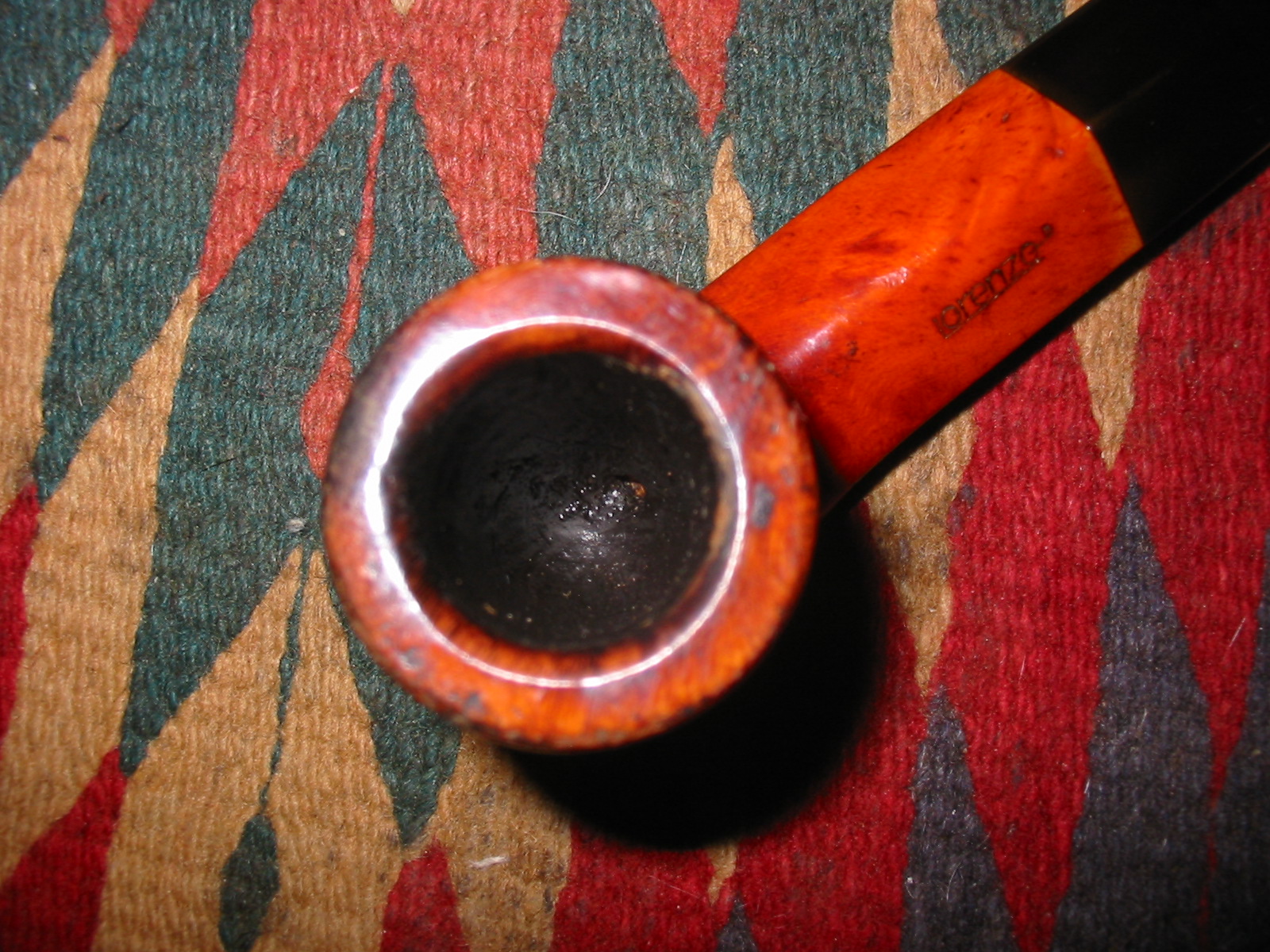
I seem to have been doing quite a few bowl topping job here recently. I decided to document the process a bit and focus on the rim work to make the work more clear so others can give it a try. I have chosen two different Comoy’s pipes and an Orlik billiard that I recently reworked. Each one had serious rim damage that needed topping to effectively repair them. The first one shown below was a Comoy’s London Pride that I have written about in full earlier. This one had both inner and outer rim edge damage. The top had become rounded on both edges and it was poorly done. I researched what it was supposed to look like and topped it accordingly. The second one was an Orlik billiard that had a different type of damage – burn marks and gouges that only a topping would repair. The third one was the Comoy’s St. James pipe that repaired.
comoys5

img_3907

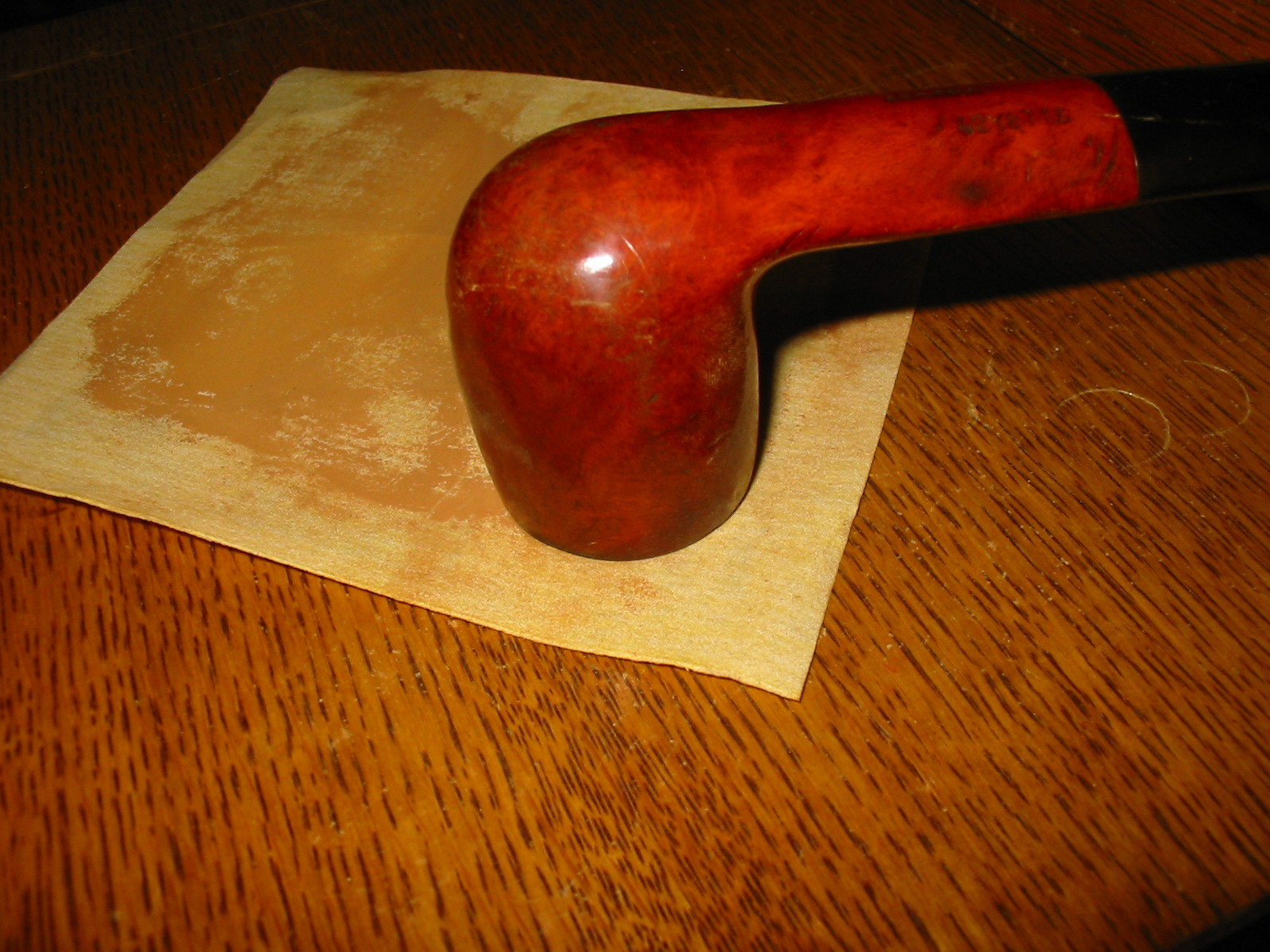
All of my bowl topping starts the same way. I have a flat board that I spread a piece of sandpaper on and place the bowl flat against the board on the sandpaper. As I work it against the paper I am careful to keep the bowl top flat against the paper and not lift an edge or angle the bowl. It is very easy to seriously change the profile of the bowl. I also constantly check to ensure that I only remove enough of the damaged briar to repair the problem and not take too much off.
IMG_3963

comoys6

img_3910

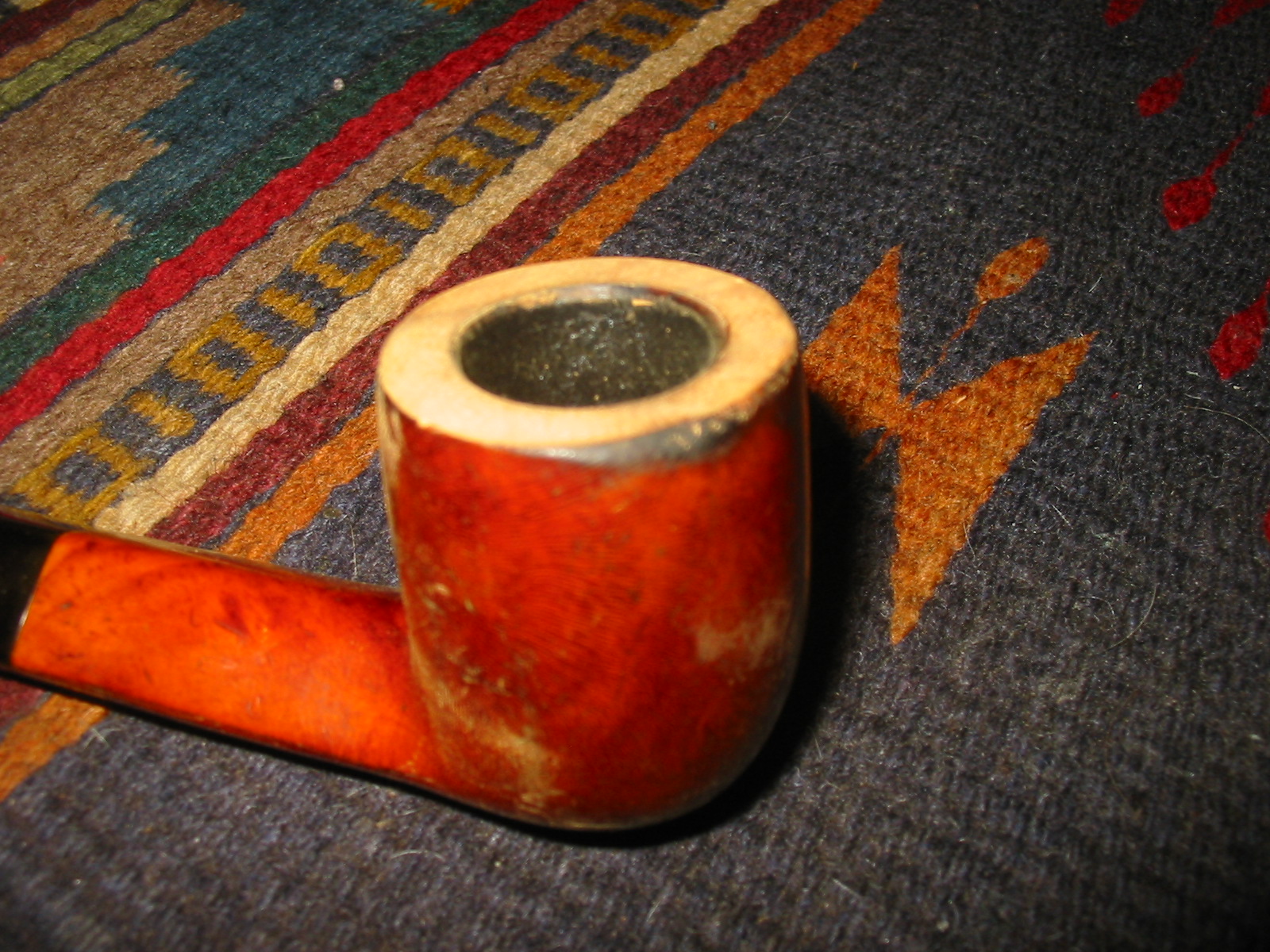
The next series of photos show the progress of the topping. On the Comoy’s St. James I took photos each time I checked on the progress of the topping so you can see the point at which I stopped the sanding. The other two bowls I show the end product of the topping.
IMG_3964

IMG_3966

IMG_3967

IMG_3969

IMG_3971

IMG_3972

comoys7

On each of the bowls that I top I also use a folded piece of sandpaper to smooth the inner edge of the rim. This has to be done carefully or the bowl can easily go out of round. On the Comoy’s London Pride I used the folded sandpaper to create a slight bevel on the inner edge of the rim to match what was originally on that pipe. On the St. James and the Orlik I merely sanded the edge to make a clean and smooth surface.
comoys8

img_3911

IMG_3977

Once the rim is successfully topped the process truly has only begun. The surface then needs to be sanded with higher grits of sandpaper and micromesh sanding pads to remove scratches and give a smooth out the briar so that when it is stained the surface does not show scratching or repair damage. Then it has to be stained in such a way that the colour blends in with the colour of the bowl. When I am refinishing a pipe I find that the simplest and most straight forward way to guarantee a match it is to remove the previous finish as much as possible and start from scratch with the whole bowl. This is not always possible and often the matching process takes several stains and several coats to get a good blend with the rest of the bowl. It is often a matter of darkening a stain or thinning it with alcohol to lighten it or even blending several colours of stain together to get the mix that actually blends in seamlessly to the bowl colour. This part is probably the most time consuming part of the process.

The first two photos below show the stain on the Comoy’s London Pride and how the bowl and rim match – both before and after buffing and waxing. The third photo shows the Orlik after staining and buffing. There is still a slight bit of rim darkening on this rim that I left on purpose. The fourth and fifth photos show the St. James after staining and then after buffing and waxing. The change in the shape or height of the bowl is negligible and the overall improvement to the profile and look of the pipe is well worth the effort.
comoys14

comoys19

img_3925

IMG_3989

IMG_3997

I continue to learn and experiment with the process of topping and sanding a bowl to repair the damage inflicted by the previous owner – whether it is thoughtless carelessness or accidental damage. Each time I do the work I become more confident in the process and pleased with the results. If you don’t try and practice you will never learn. If you have comments to add about the process or have suggestions of improvements I encourage you to record them, photograph them and share them with us all. The community benefits from the combined knowledge of its members. Thanks for reading this blog post.

Reworking an Orlik De Luxe L23 Billiard


Blog by Steve Laug

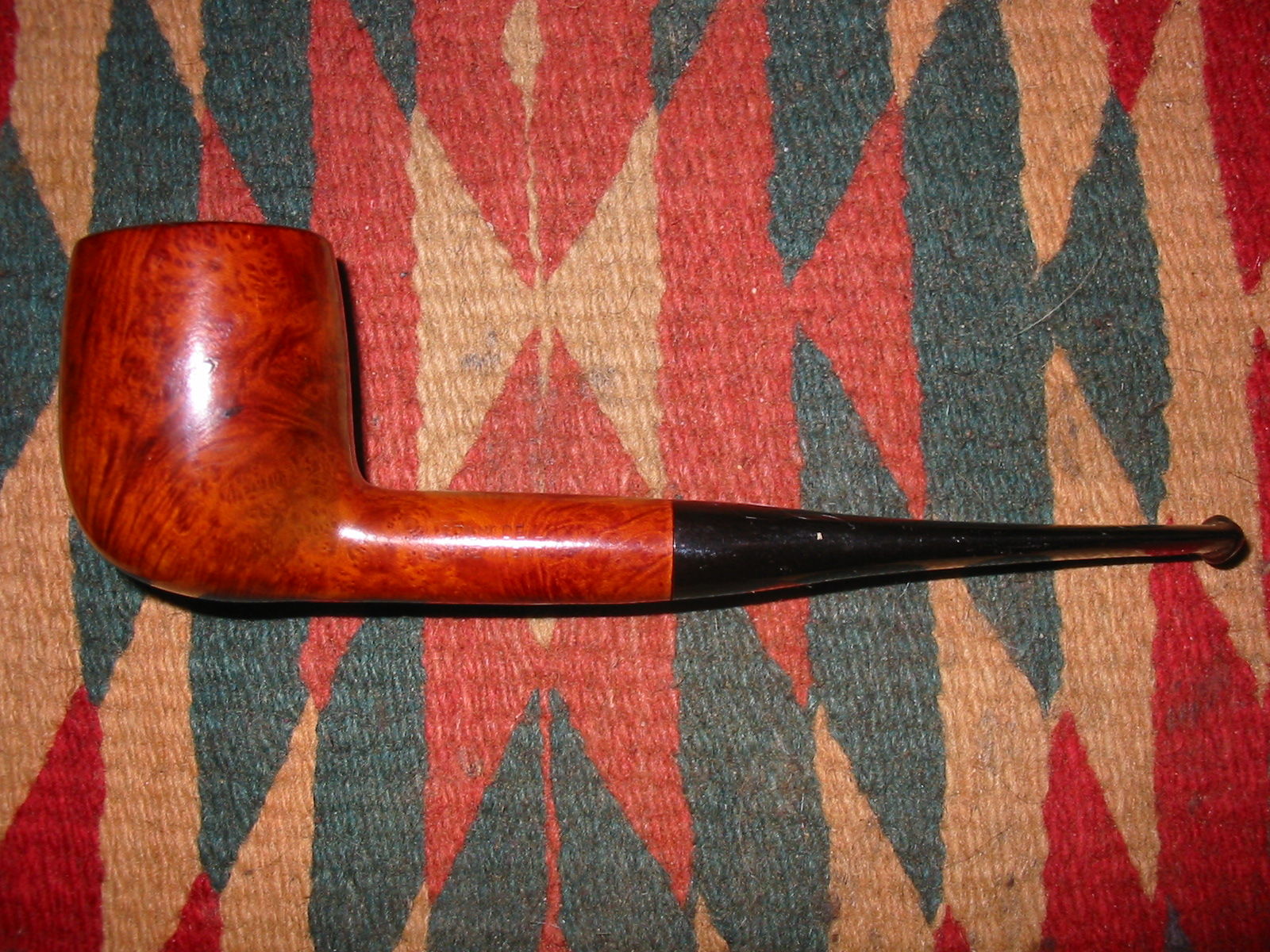
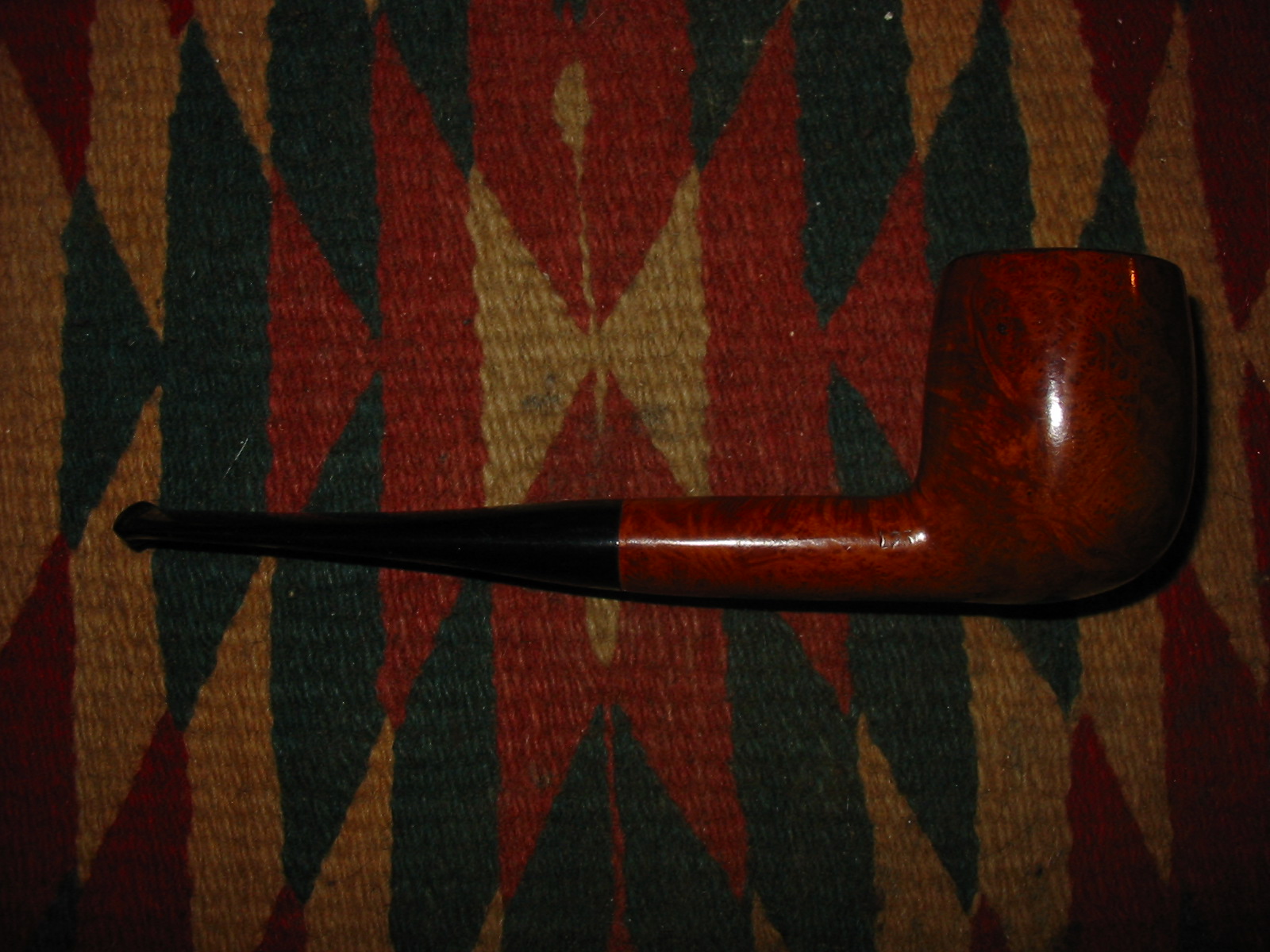
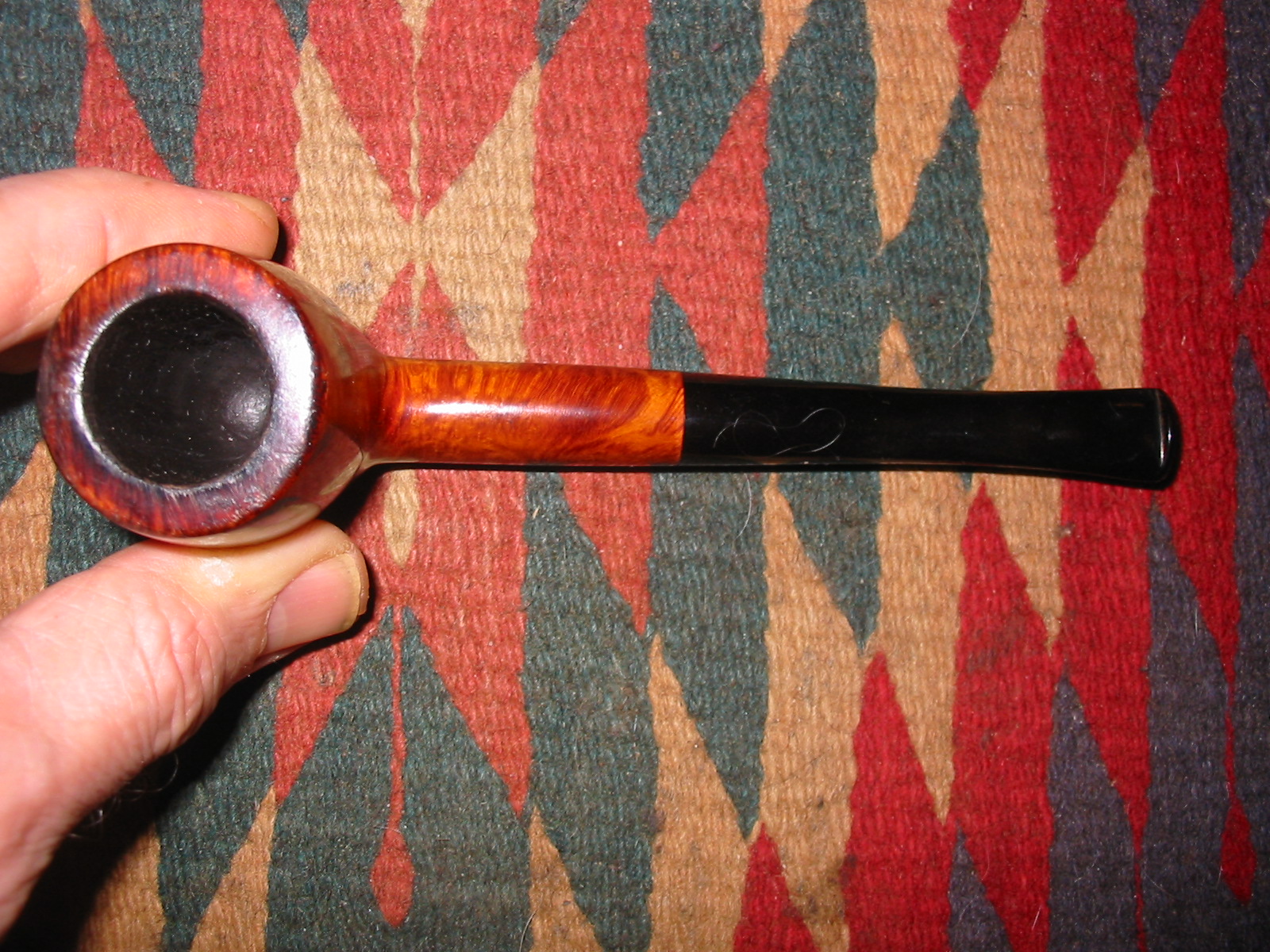
This is the second pipe from box of English pipes that my daughters found when cleaning out our storage room under the front porch (interior room). It is stamped Orlik De Luxe over Made in England on the left side of the shank and L23 on the right side of the shank. It looked as if it had been refurbished by the same gent who did the Orlik Canadian I reworked. This one also had a varnish coat on the bowl that made it shiny. Underneath the varnish the finish was spotty. The outer and inner edge of the rim was damaged and there were deep grooves on the surface of the rim. The tarry buildup had not been totally removed before the finish coat of varnish was put in place. The inside of the bowl had been painted with a bowl coating that was black. The stem appears to be a replacement but it was better craftsmanship than the previous one. The stem itself was clean but had scratches. The interior of the pipe and stem were filthy.

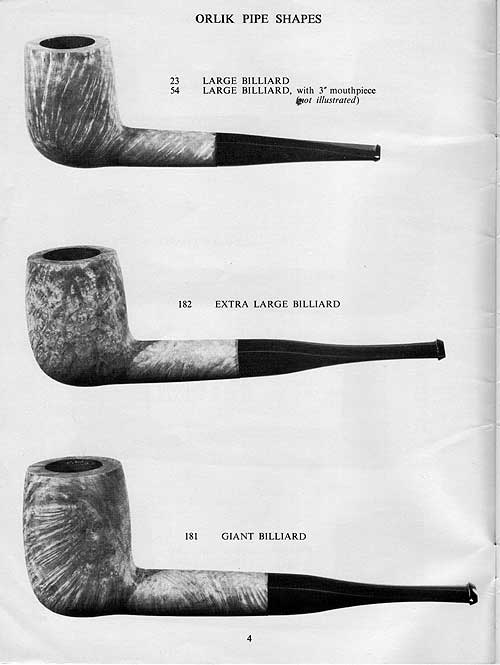
I have little experience with Orlik pipes so the numbering system was a mystery to me. I did a bit of research and found out that the shape numbers remain consistent throughout the various lines of Orlik pipes. The only difference is found in the letter that precedes the number. In the case of the two pipes that I have now worked on each had the letter “L” before the shape number. The letter signifies the line of pipes within the Orlik family that is in hand. The L stands for the Orlik De Luxe line. I have included the chart below that gives the various lines of Orlik pipes. I have also included the shape chart for Large Billiards that shows the L23. The one I have is similar to the one in the picture though I am certain that mine has a replacement stem as it has a different taper to the stem.
orl24

orl4

The first three photos below show what the pipe looked like when I brought it to the work table. The issues that I noted above are clearly visible from these photos. The stamping on the pipe is faint but readable on the left side. The number stamp on the right side is in better condition.
IMG_3901

IMG_3902

IMG_3903

In the photo above the tars that were left on the rim before the varnish are visible by my thumb and also my forefinger. The bowl would need to be topped. I have included the next two close-up photos of the rim to show the condition it was in when I started the rework of this pipe and to explain why I was going to top the bowl. The inner edge of the rim had significant damage and showed signs of being hit against something to empty the bowl. The outer edge had similar damage and was badly pitted on the back and the front of the bowl.
IMG_3907

IMG_3908

I set up the sandpaper on the flat board that I use for topping and topped the bowl until the rim and the edges were once again sharp and clean. I did not have to remove very much of the briar but what I removed took off the damaged outer edges of the rim and reduced the appearance of damage to the inner edge. I sanded around the inner edge with a folded piece of sandpaper to smooth out the inside. The newly topped bowl is visible in the second photo below.
IMG_3910

IMG_3911

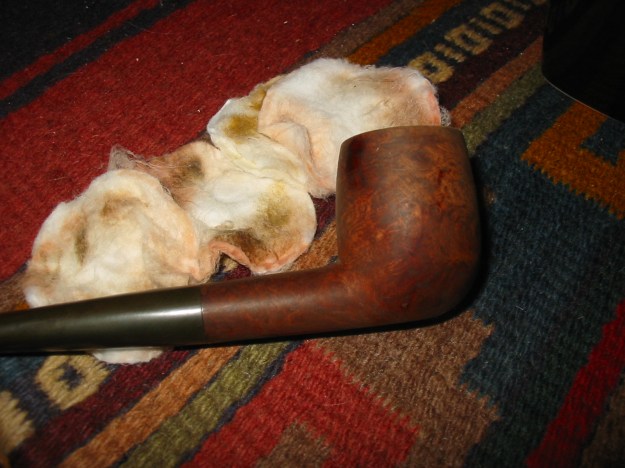
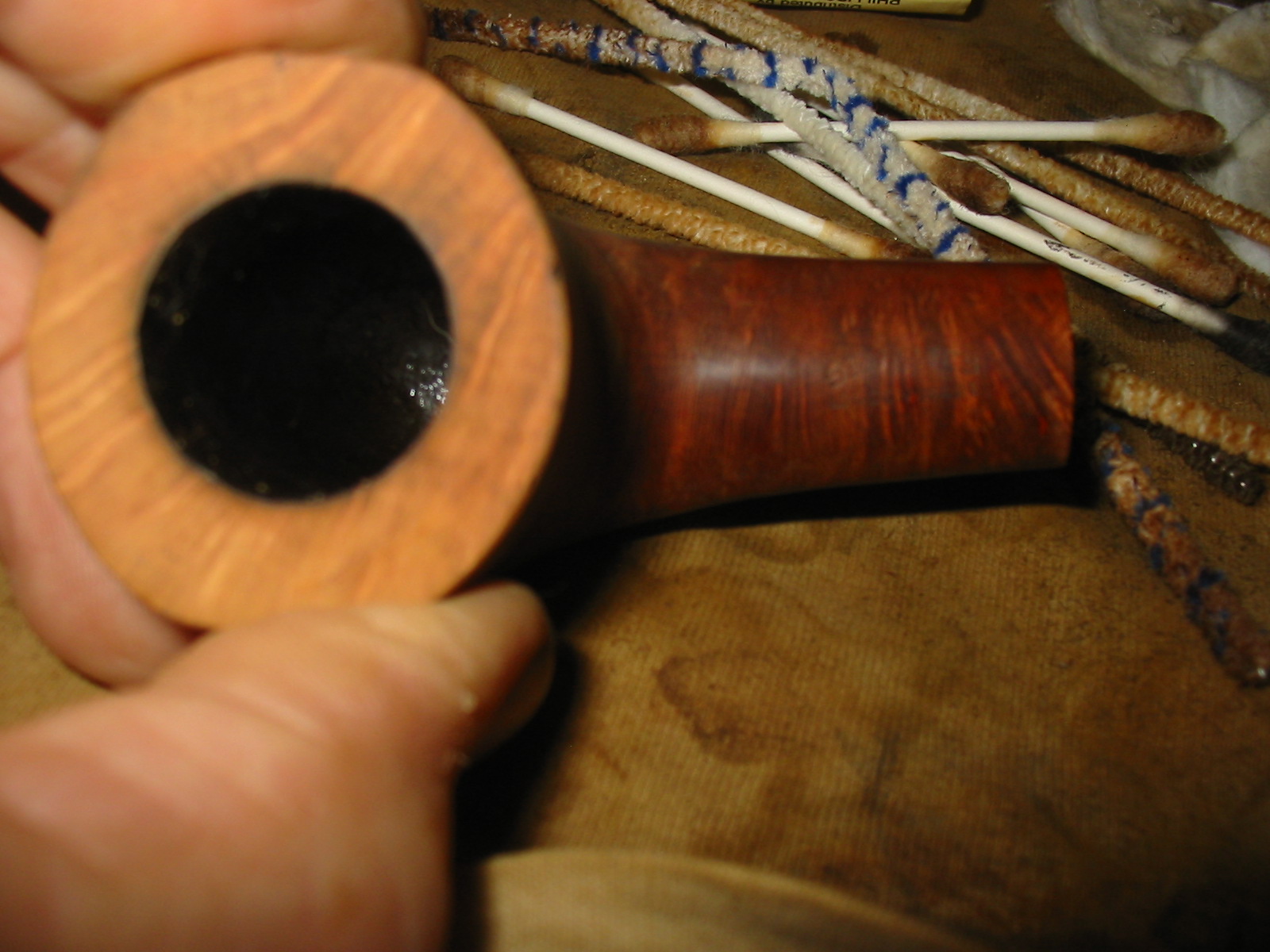
I used a lot of pipe cleaners and cotton swabs to remove the black tars and oils that had not been cleaned out for quite a while. This is only the second pipe that I have cleaned up that came from this chap and I have to say I am not impressed at this point. These were sold in a shop as estates that had been refurbished and were ready to smoke. I wiped down the bowl with acetone on cotton pads to remove the varnish coat before I restained the bowl. I used a black permanent marker to carry the grain lines through the two fills on the left side of the bowl. The briar was actually quite nice under the varnish coat.
IMG_3912

IMG_3913

IMG_3914

IMG_3915

I wiped the bowl down a final time with acetone and then gave it a coat of MinWax Medium Walnut stain. I rubbed it into the bowl and then wiped it off with a soft cotton towel. It really brought the grain to life on this old pipe.
IMG_3916

IMG_3917

IMG_3918

IMG_3919

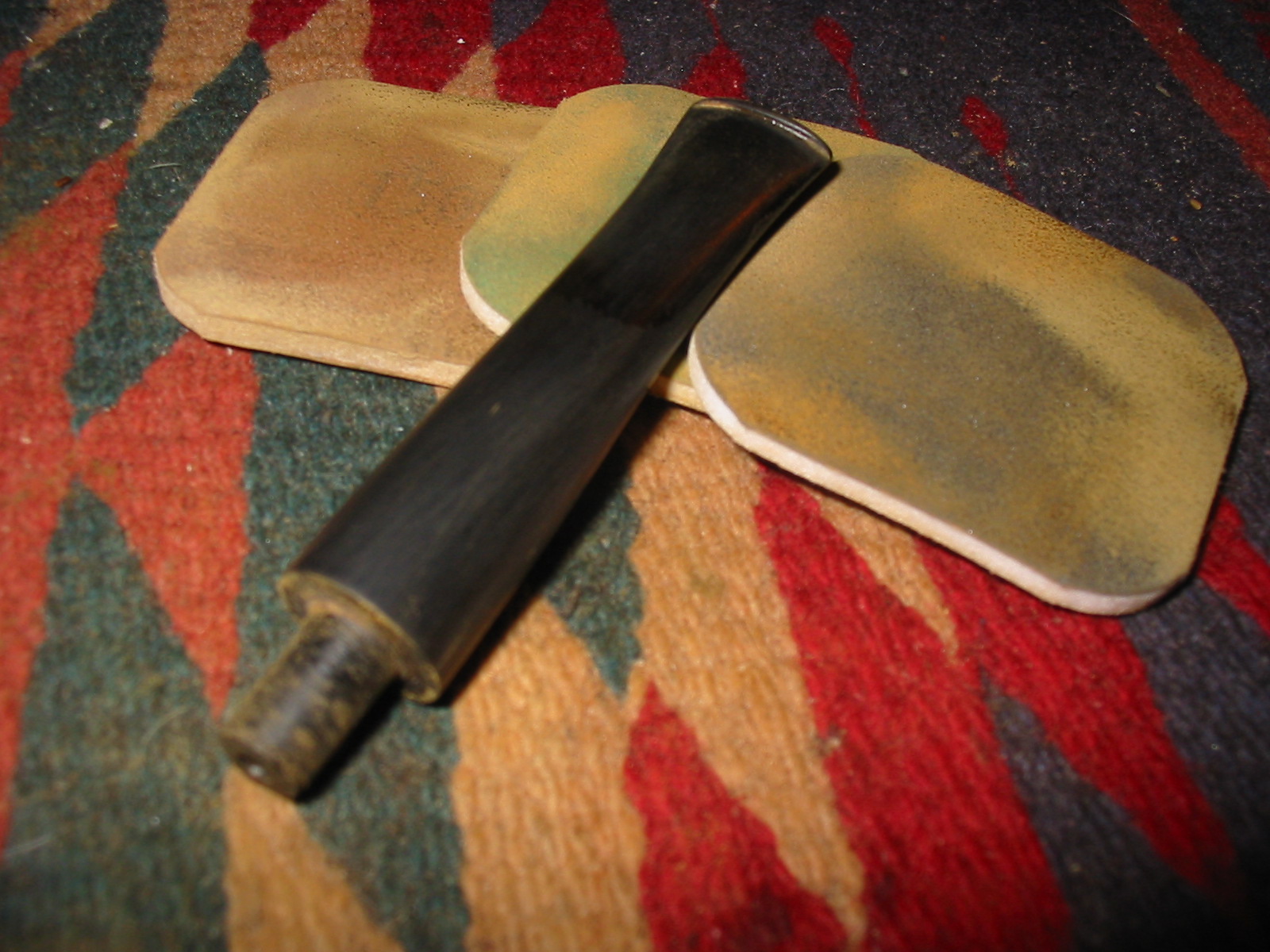
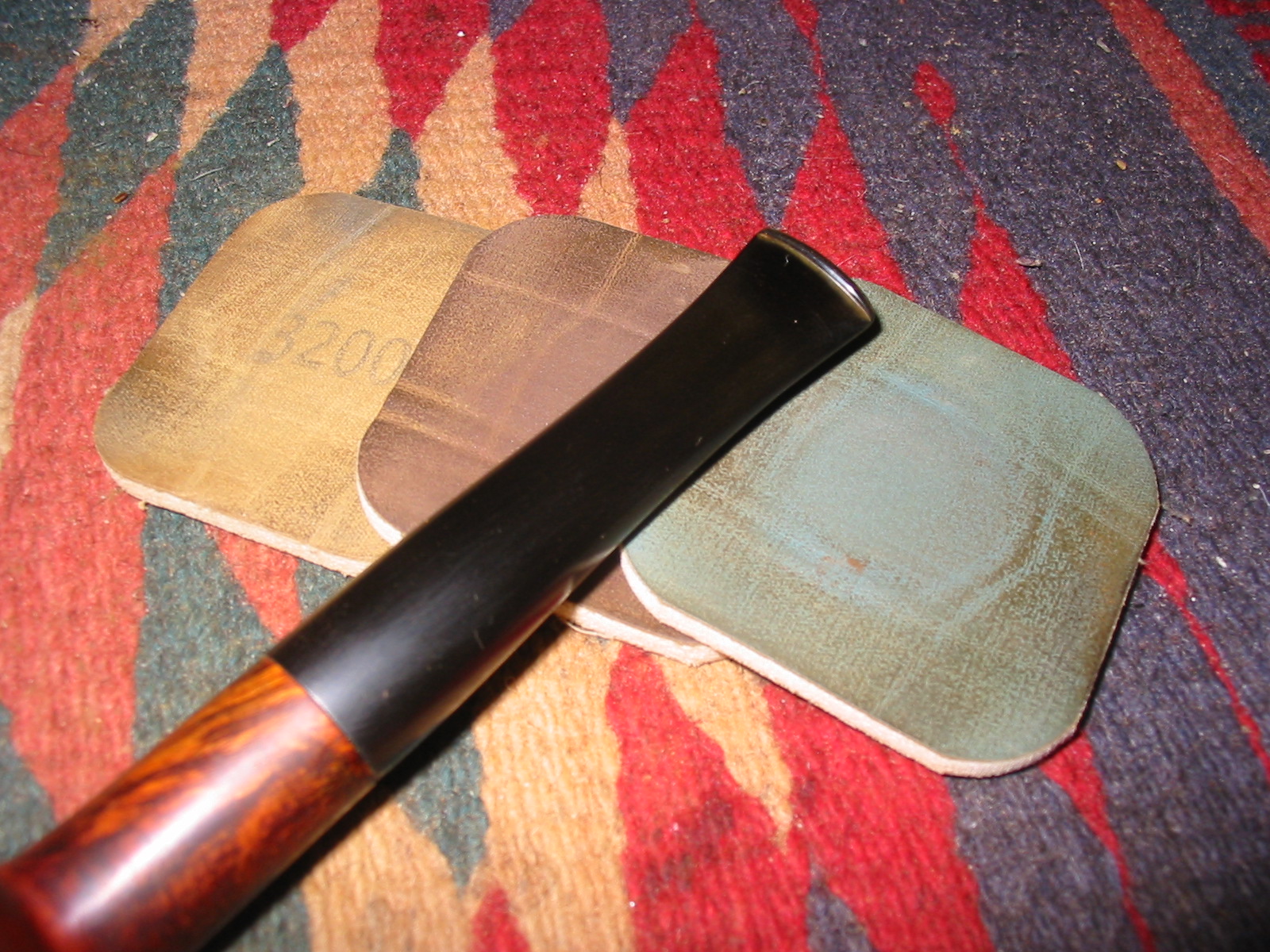
The stem had scratches from the sandpaper that had been used on it previously and a slight bit of tooth chatter near the button that had been buffed over. I sanded it with a medium grit sanding sponge and then with the usual array of micromesh sanding pads – wet sanding with the 1500-2400 grit pads and dry sanding with 3200-12,000 grit pads. I took the pipe and stem to the buffer and buffed the entirety with White Diamond, being careful around the faint stamping on the left side of the shank. I rubbed the stem down with Obsidian Oil and hand buffed it when it was dry.
IMG_3920

IMG_3921

IMG_3922

I buffed the finished pipe with White Diamond and then gave it multiple coats of carnauba wax. I finished buffing with a clean flannel buff to give the pipe a shine. The photos below show the reworked pipe, cleaned and ready for its inaugural bowl.
IMG_3923

IMG_3924

IMG_3925

IMG_3926

Steps Toward Solving a Pipe Mystery – 2 More One Blue Dot Billiards


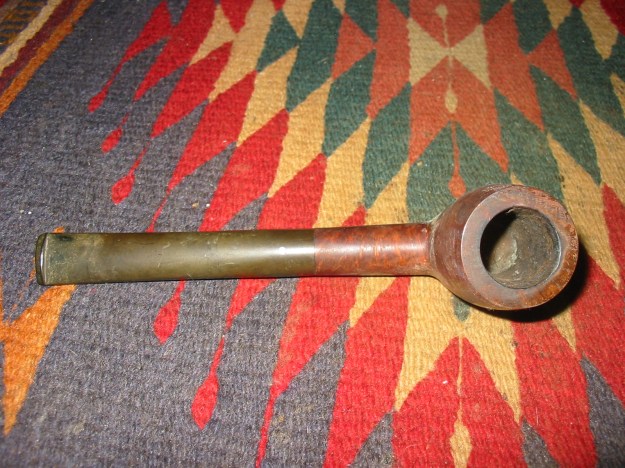
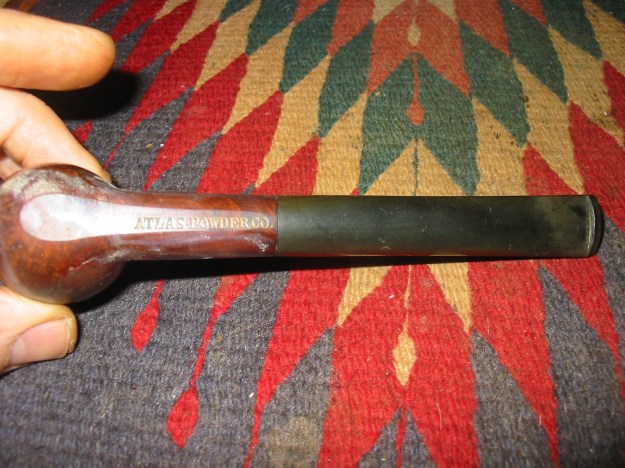
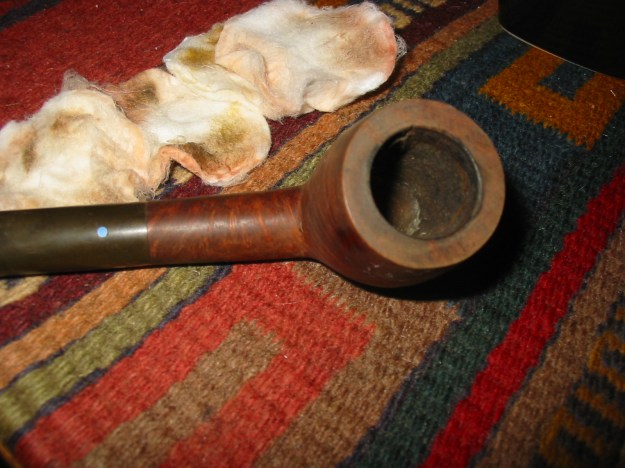
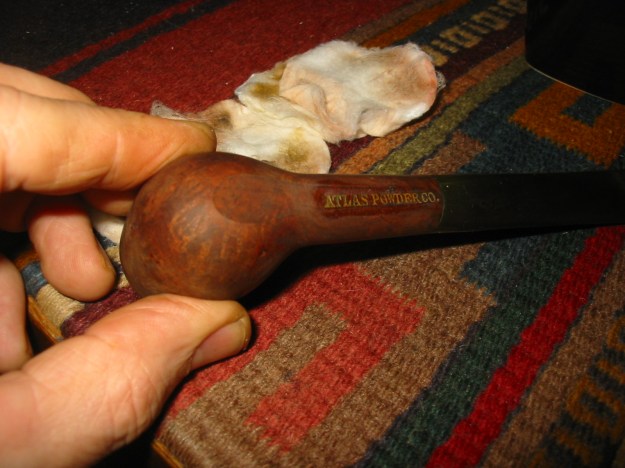
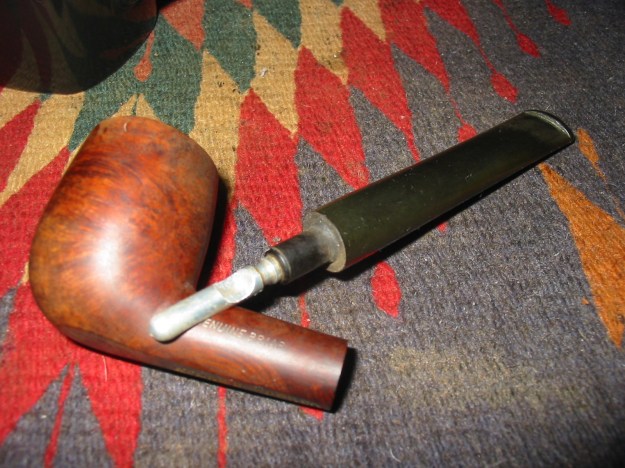
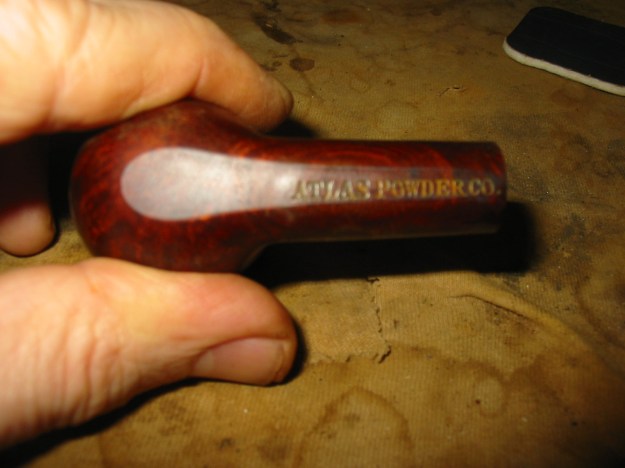
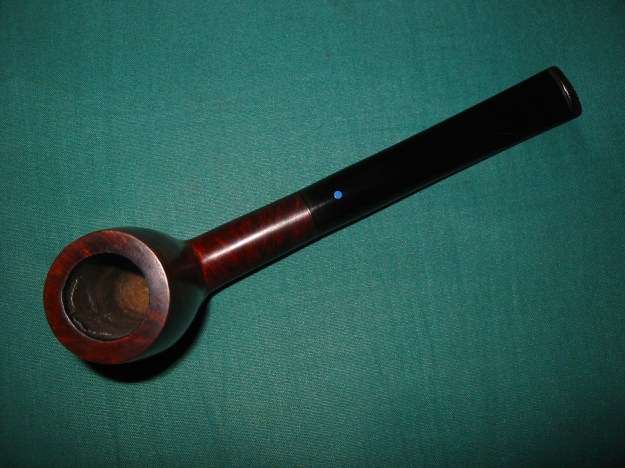
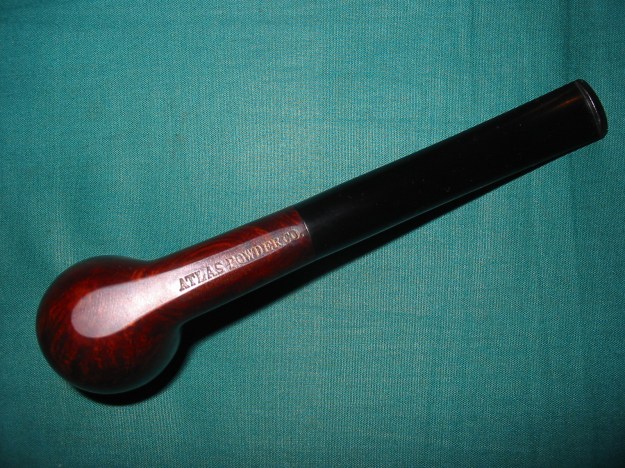
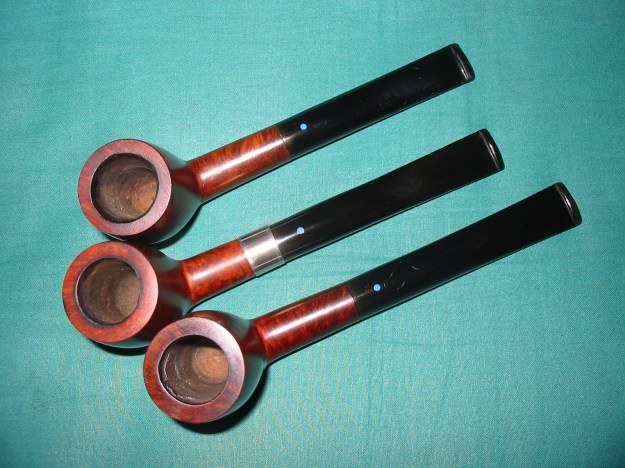
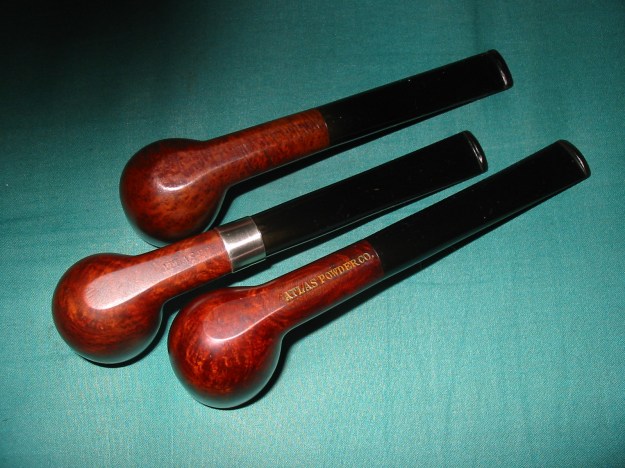
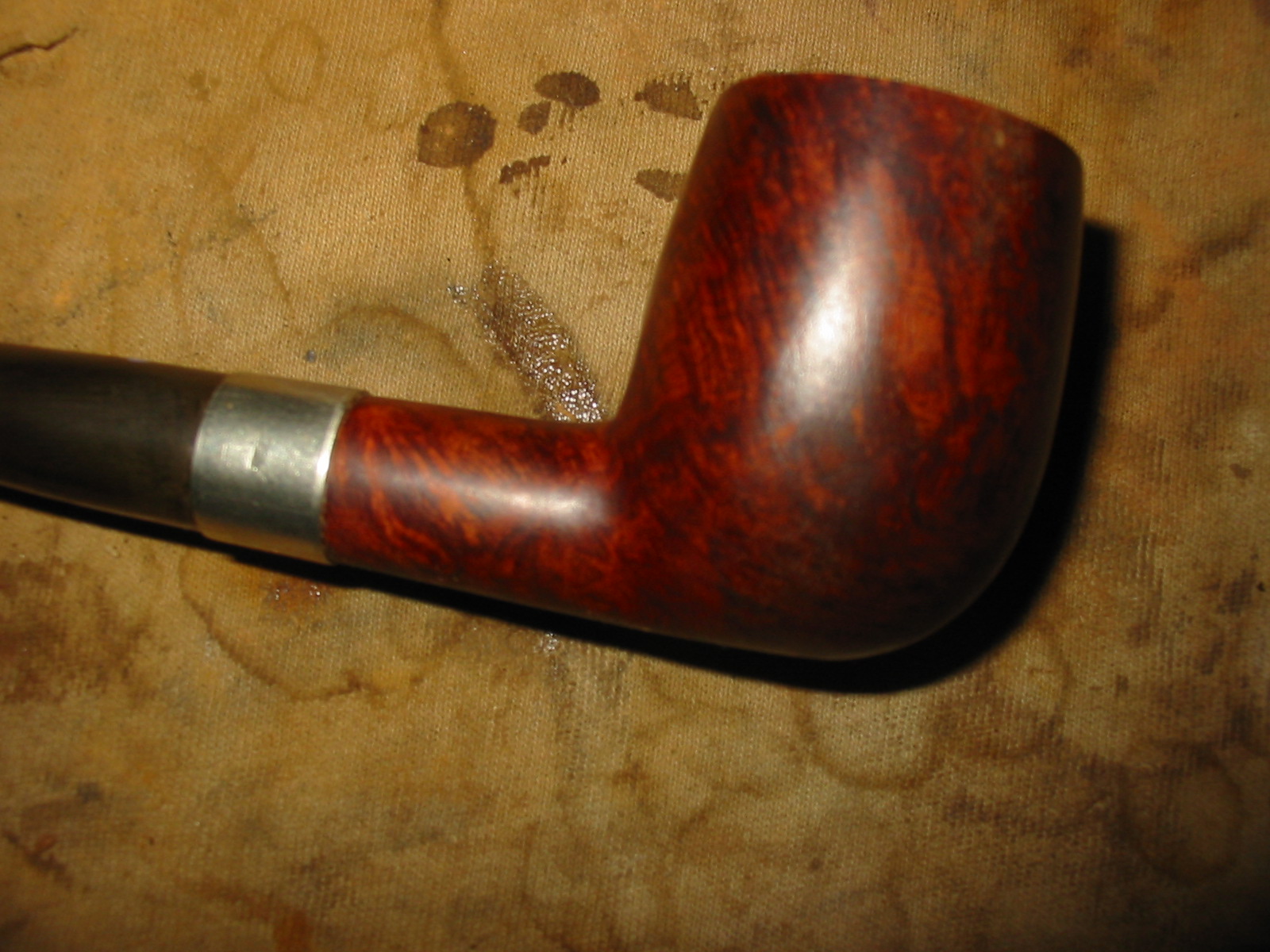
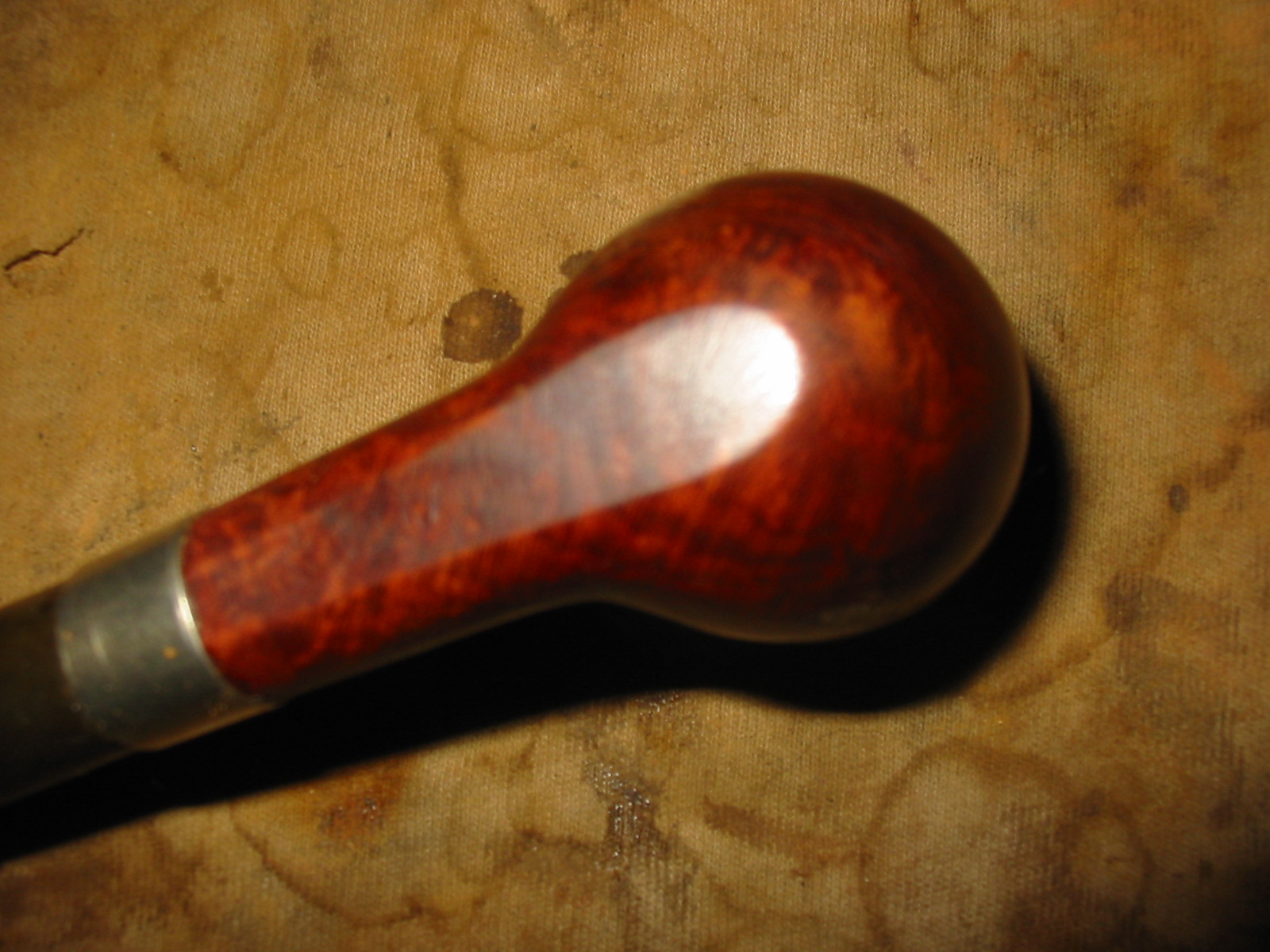
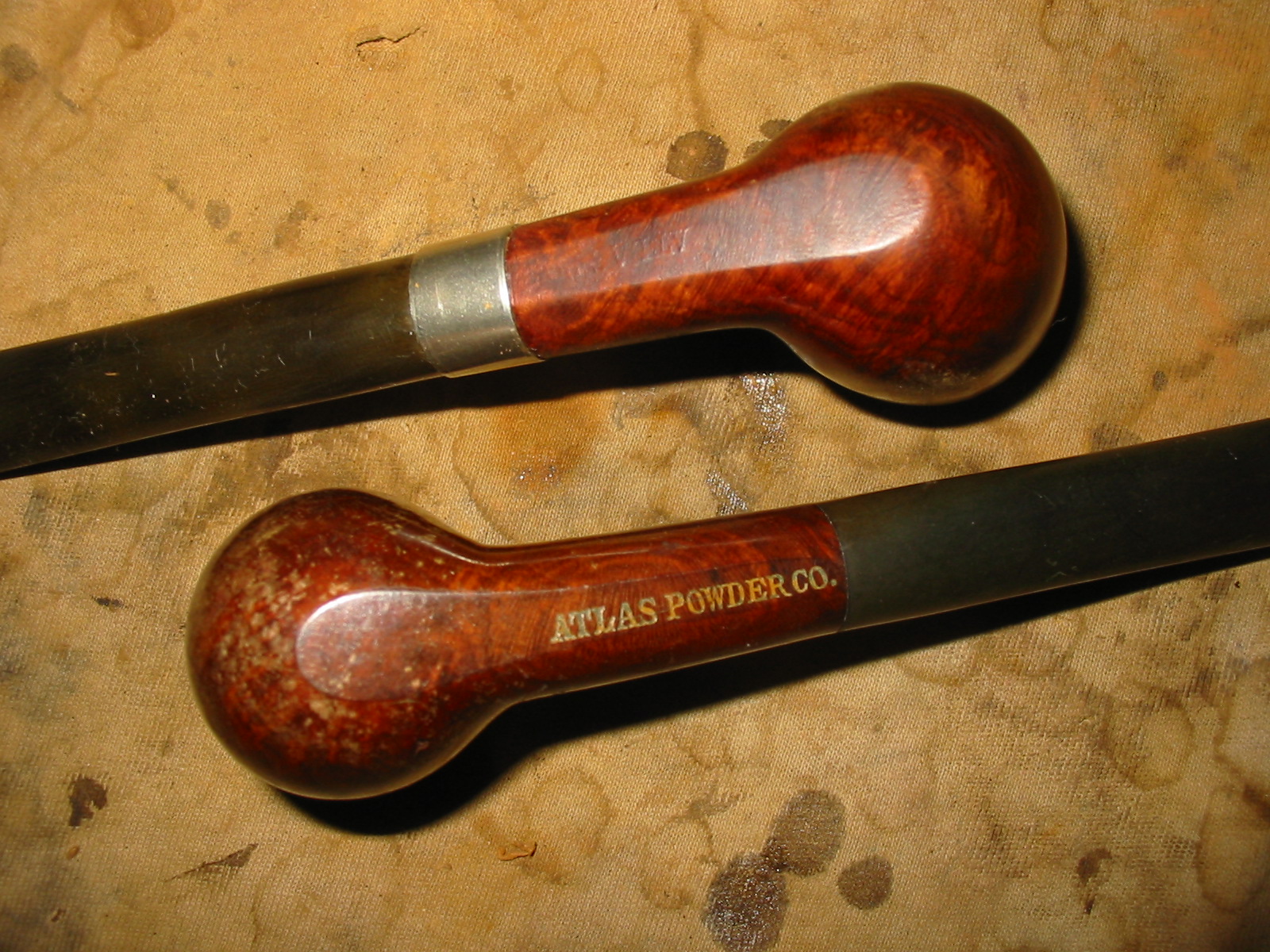
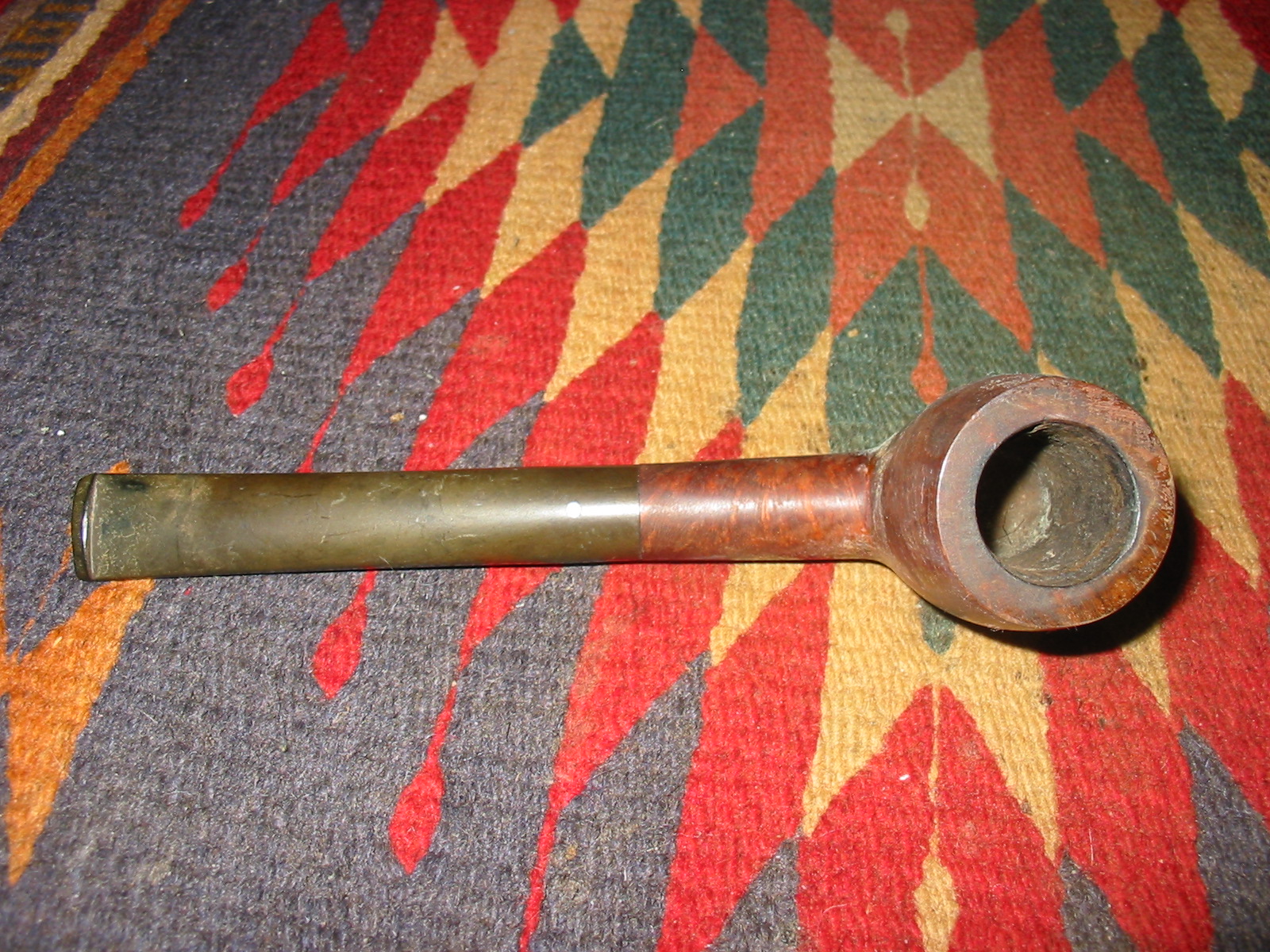
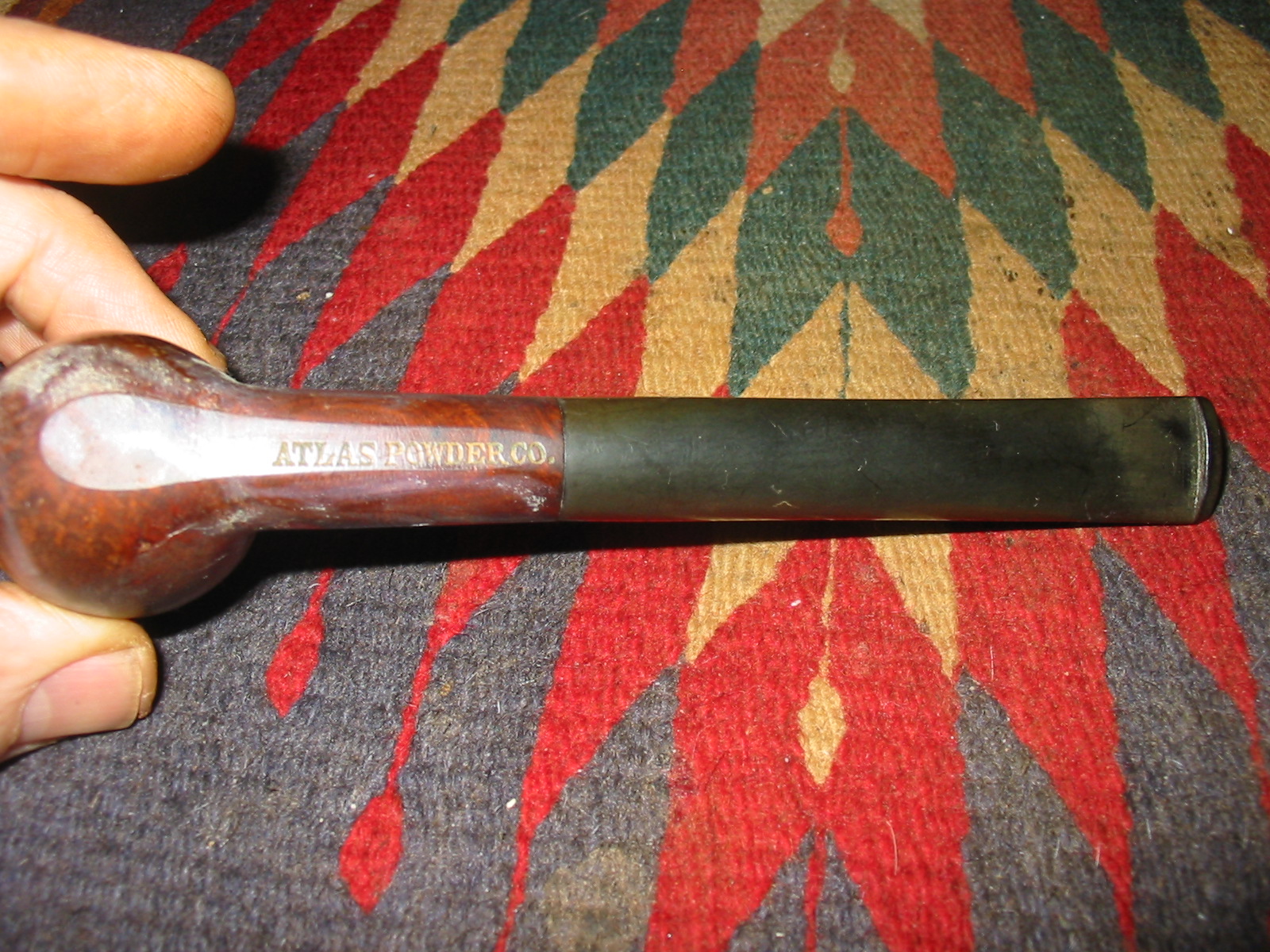
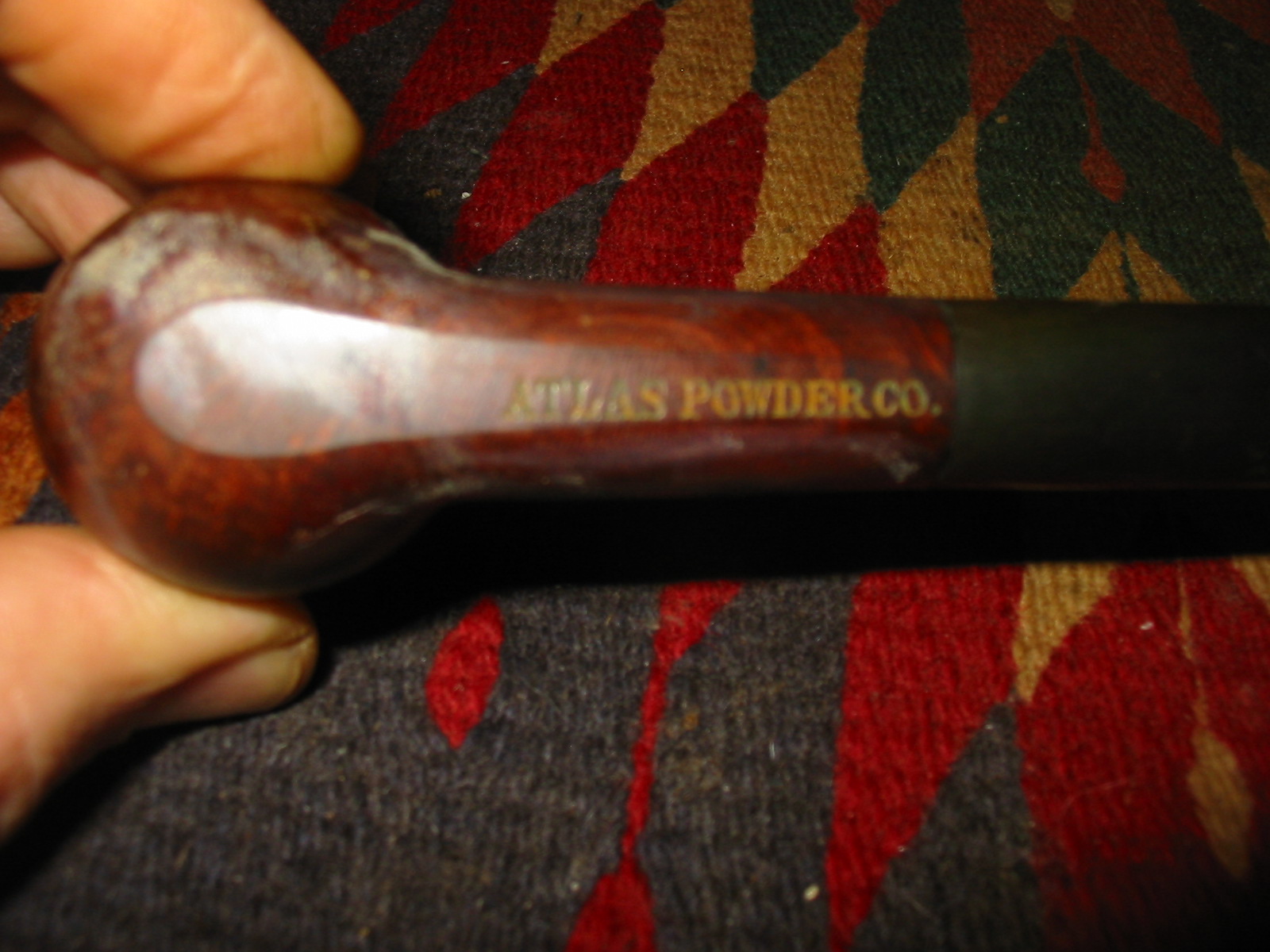
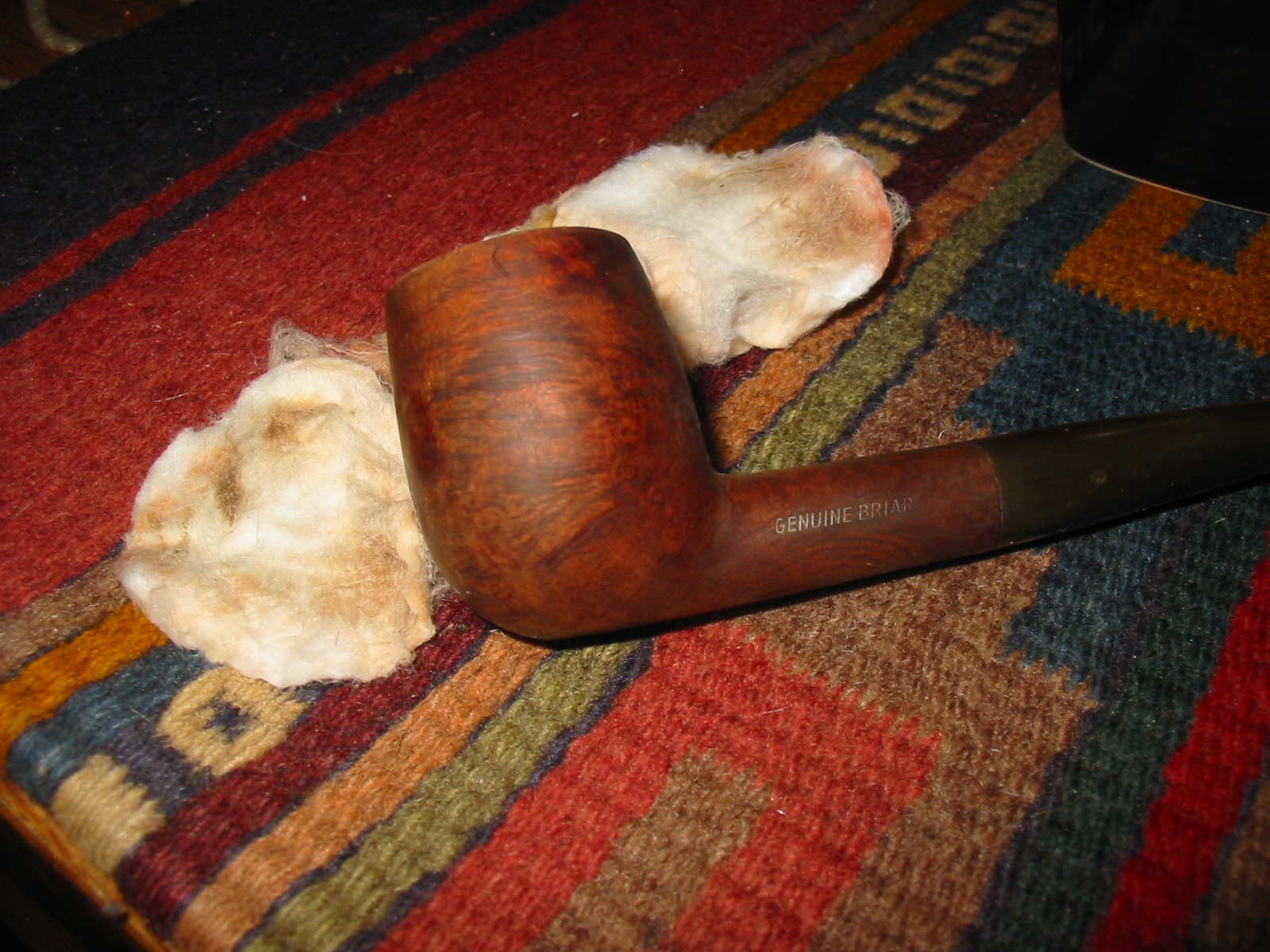
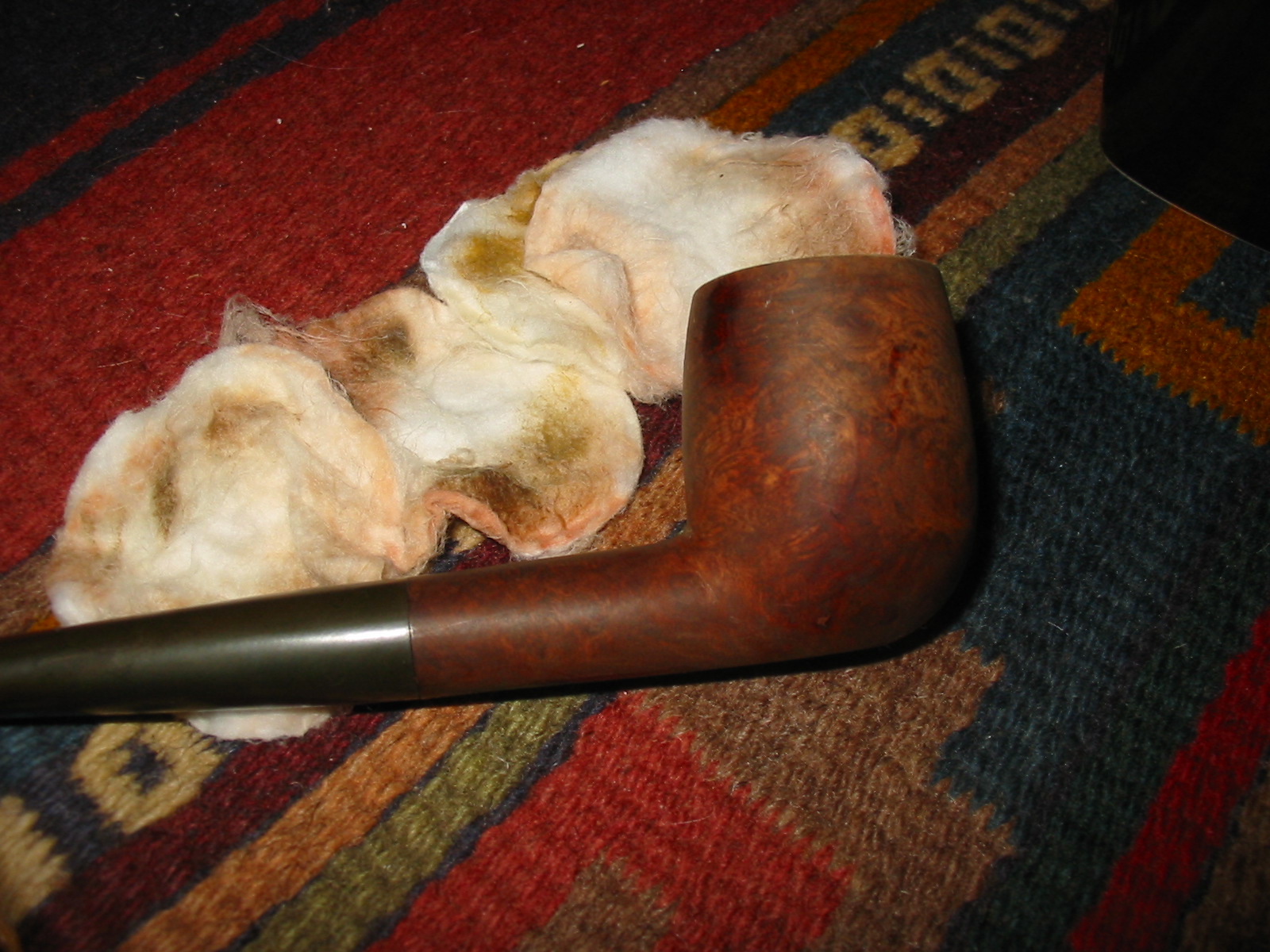
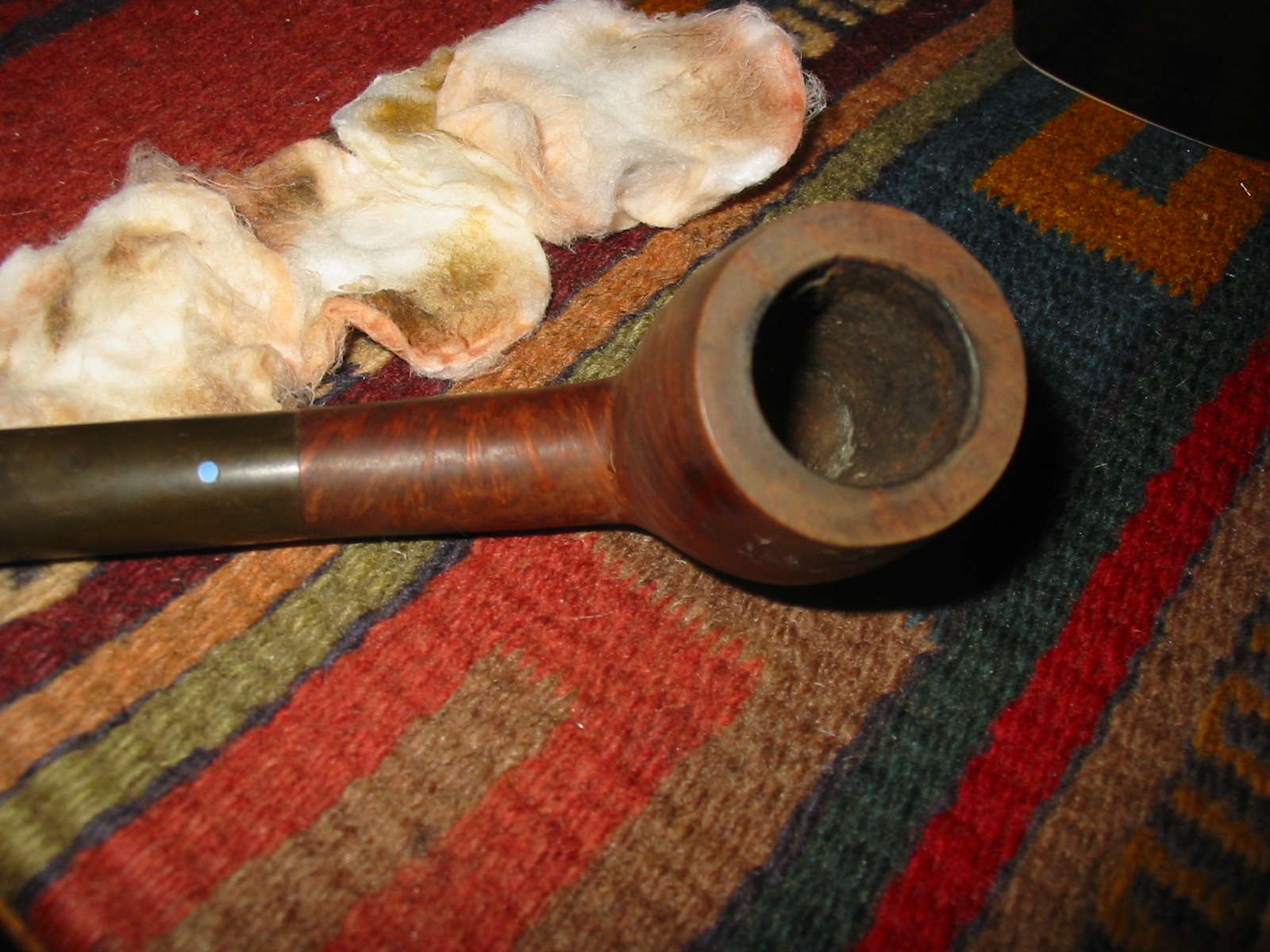
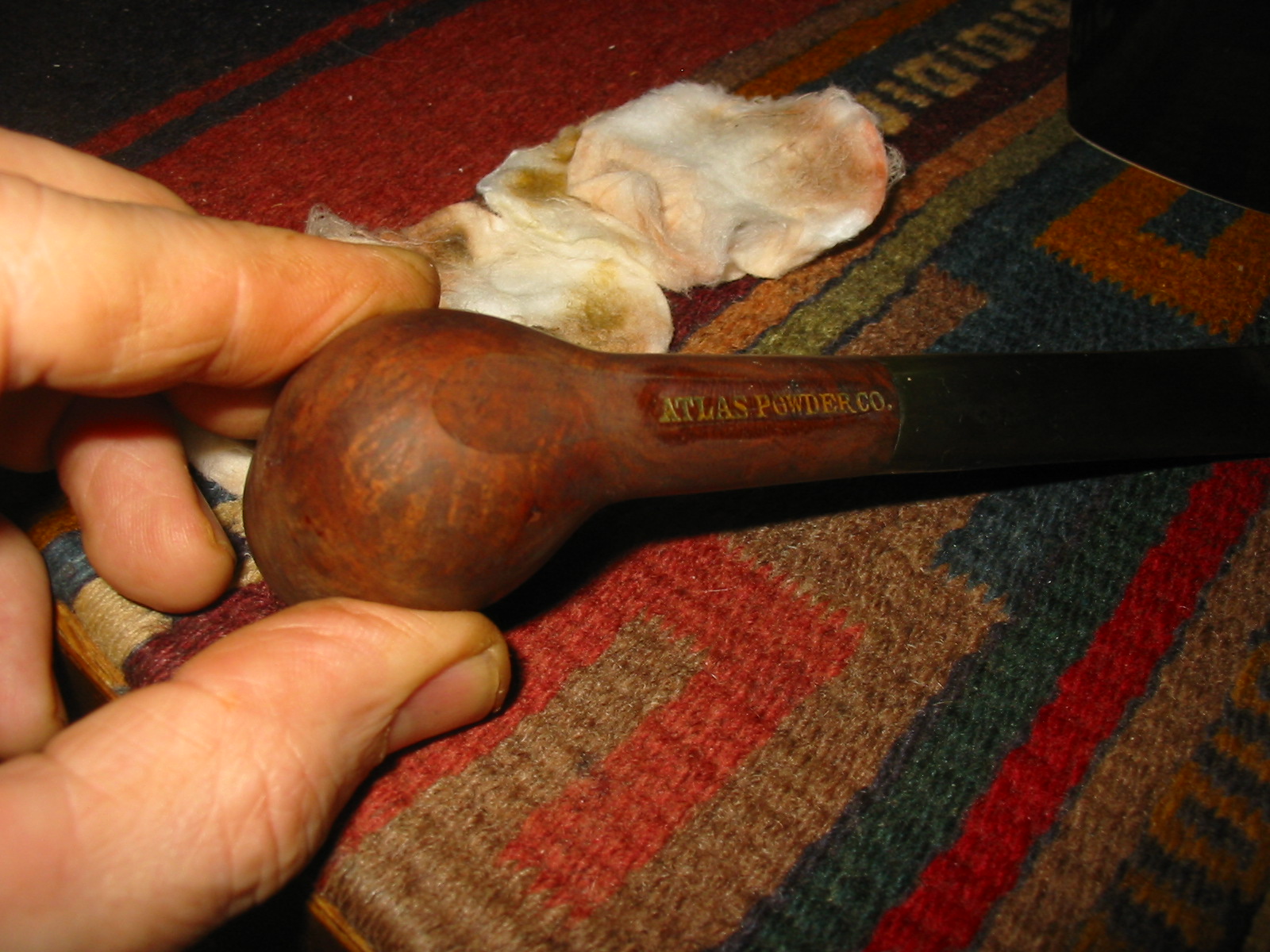
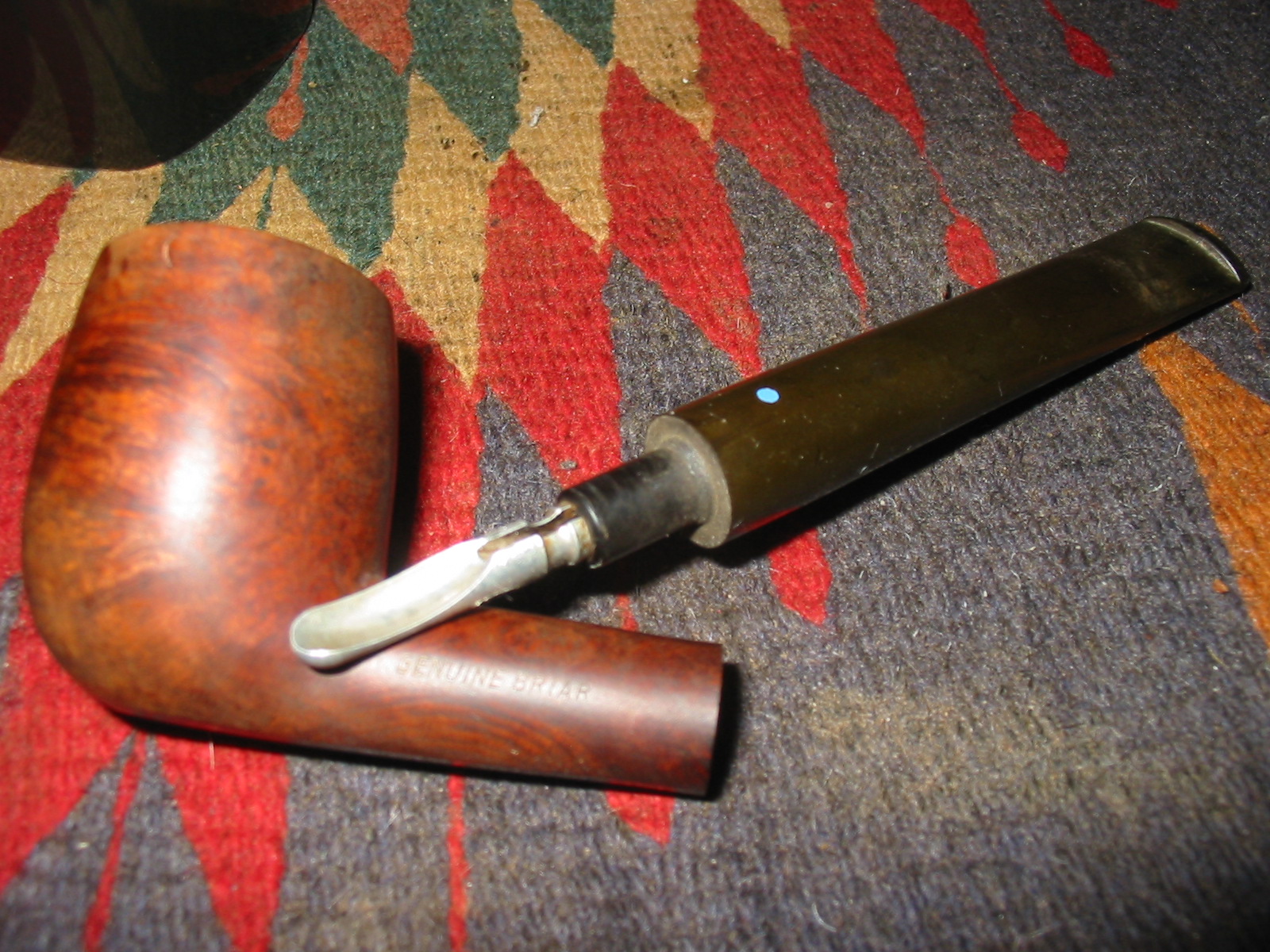
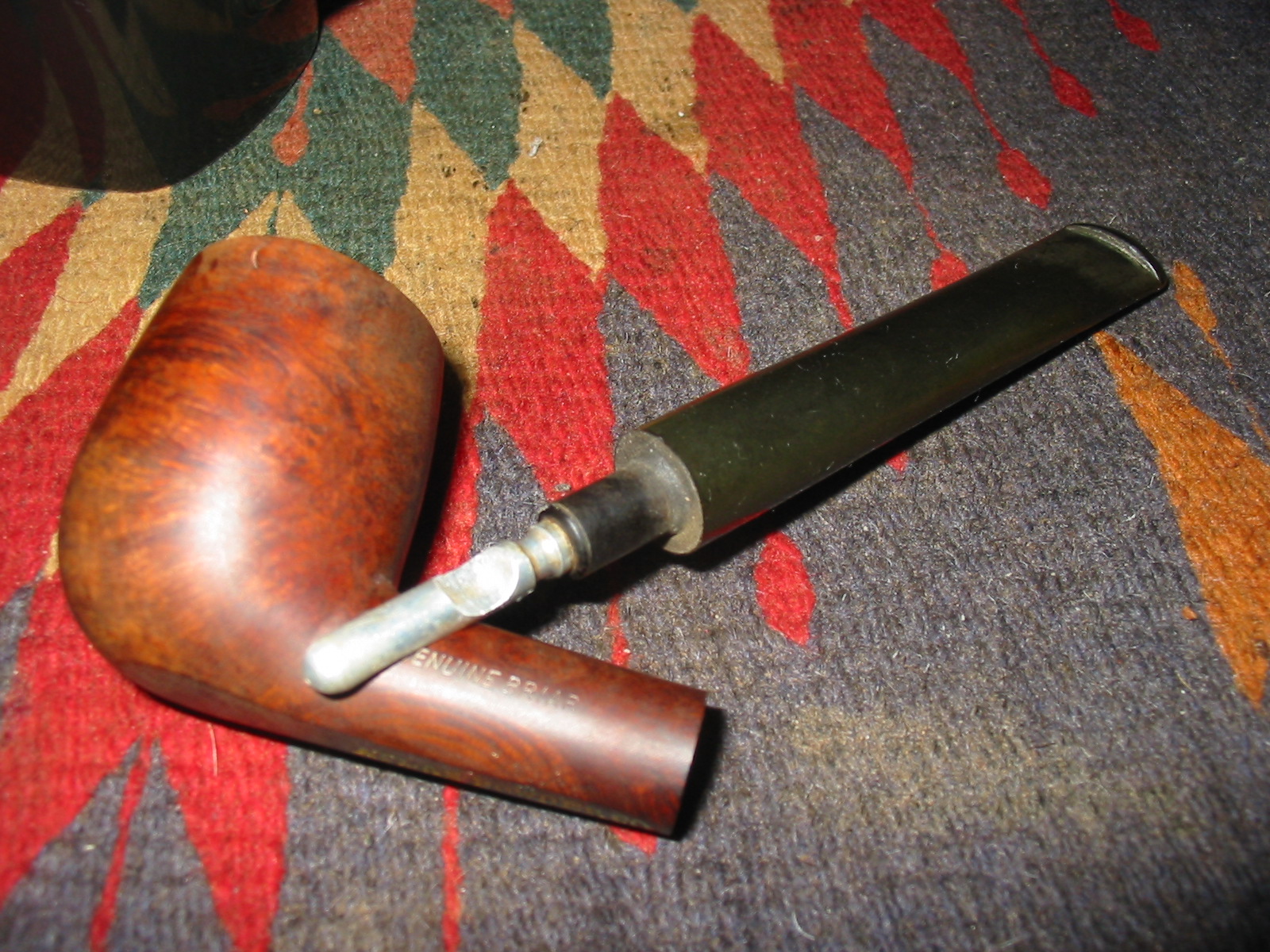
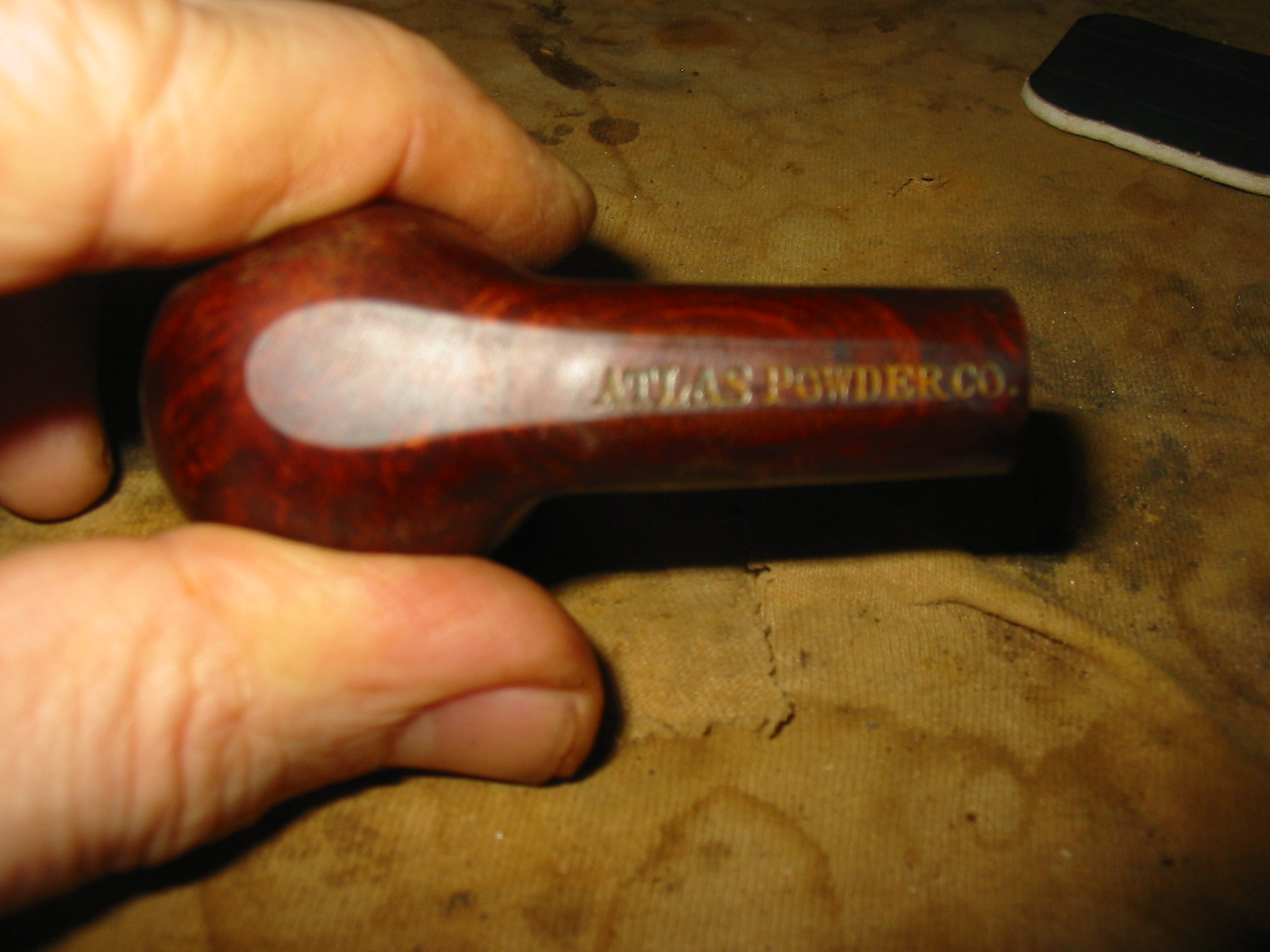
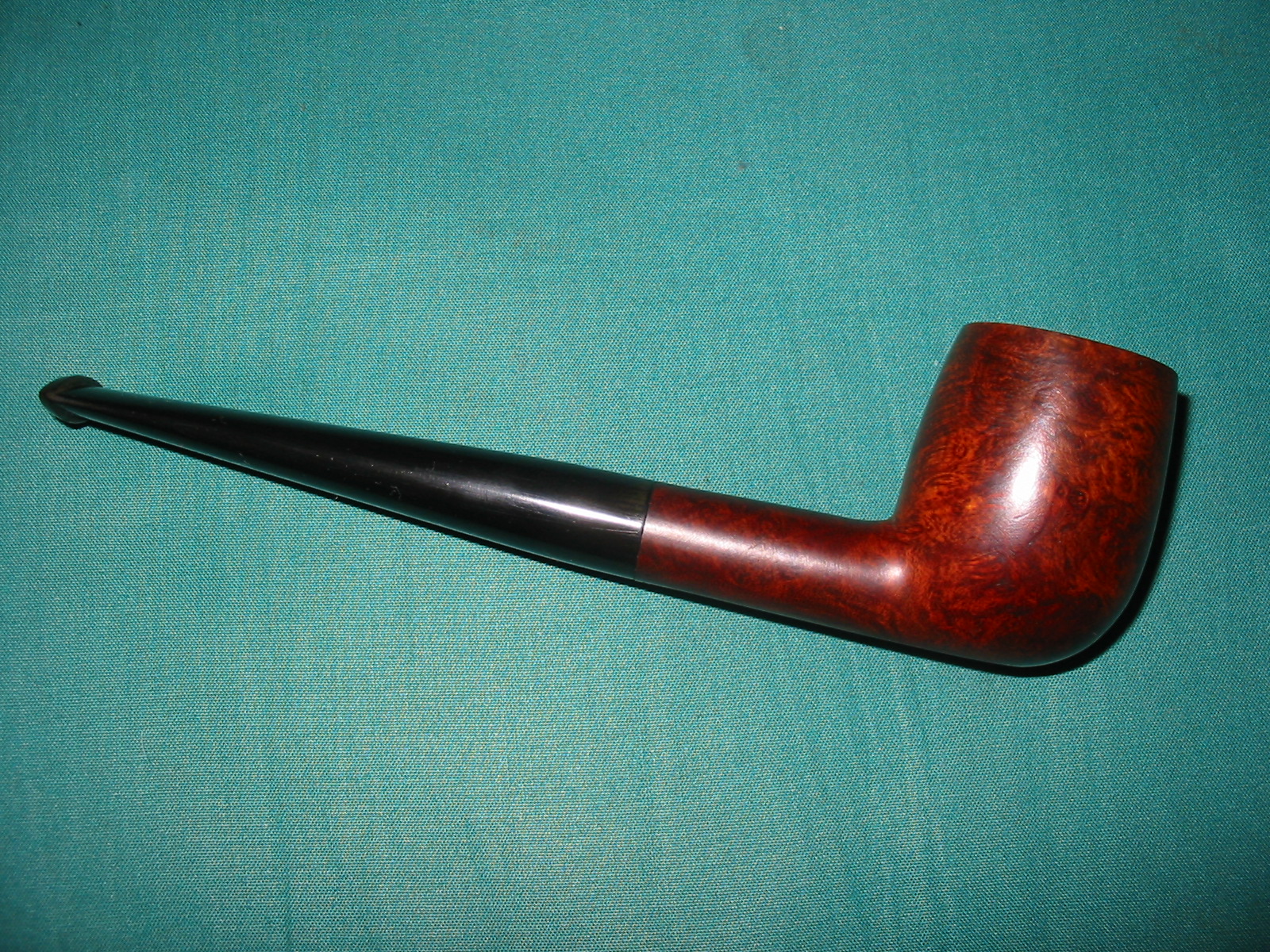
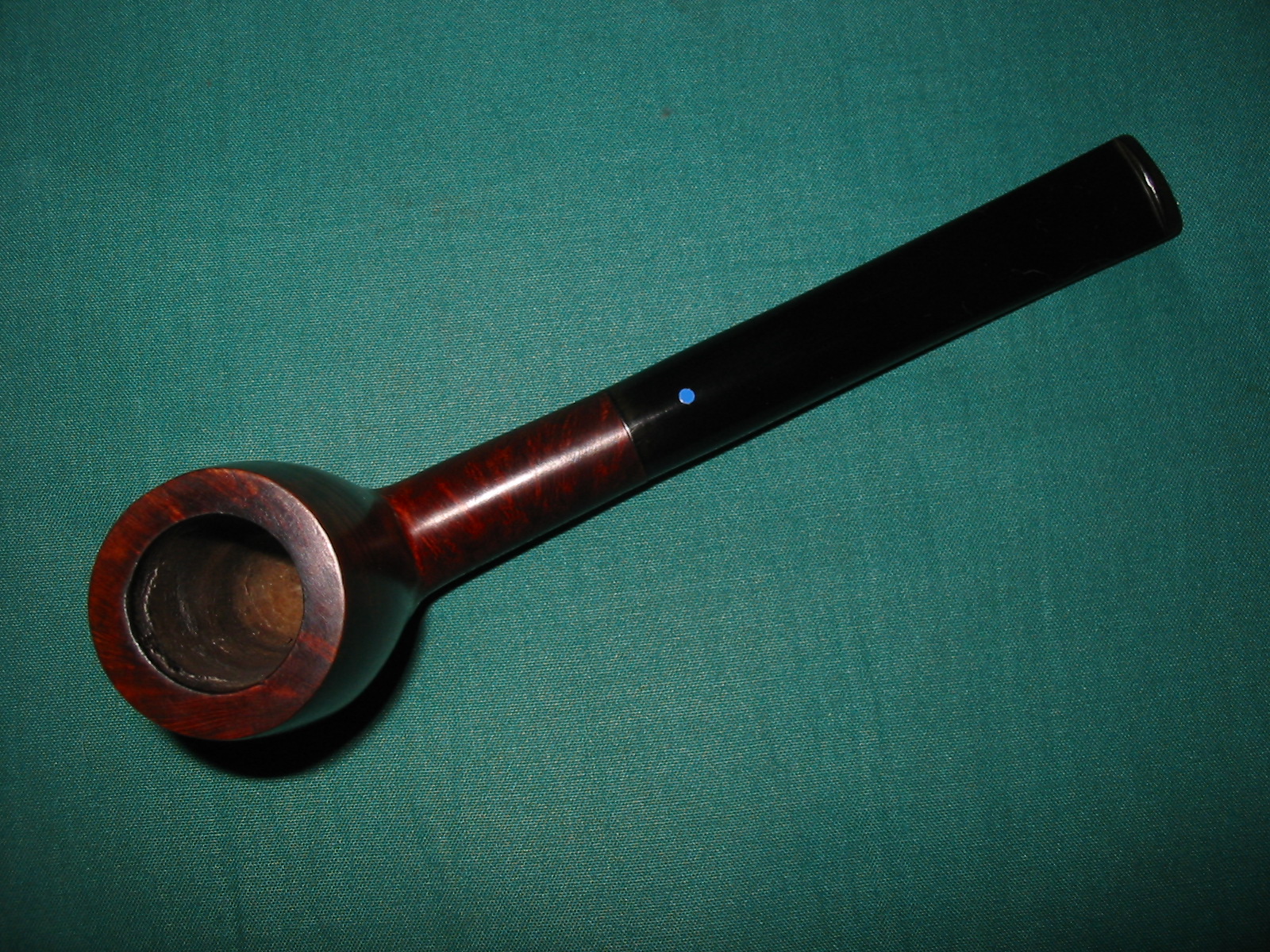
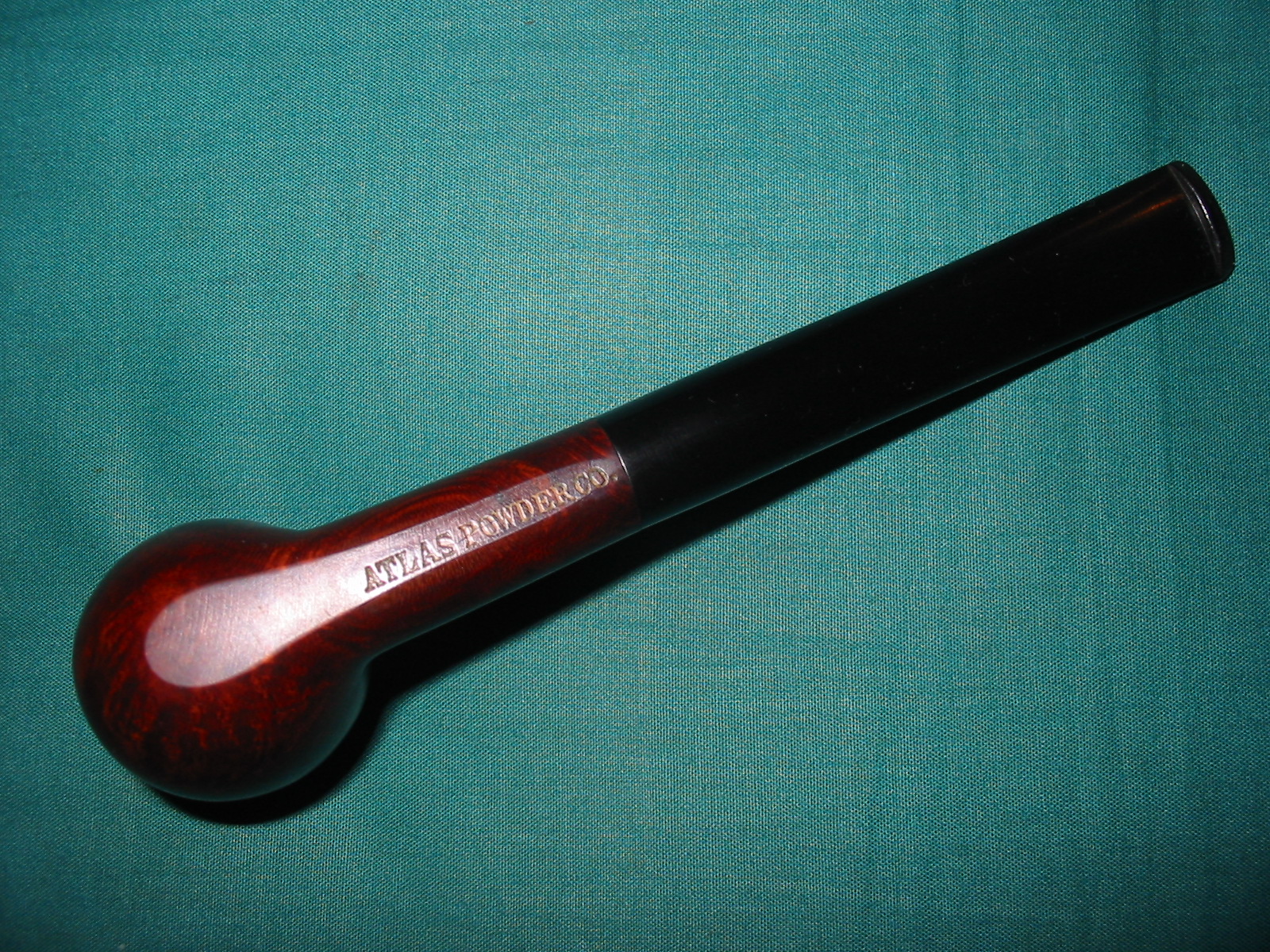
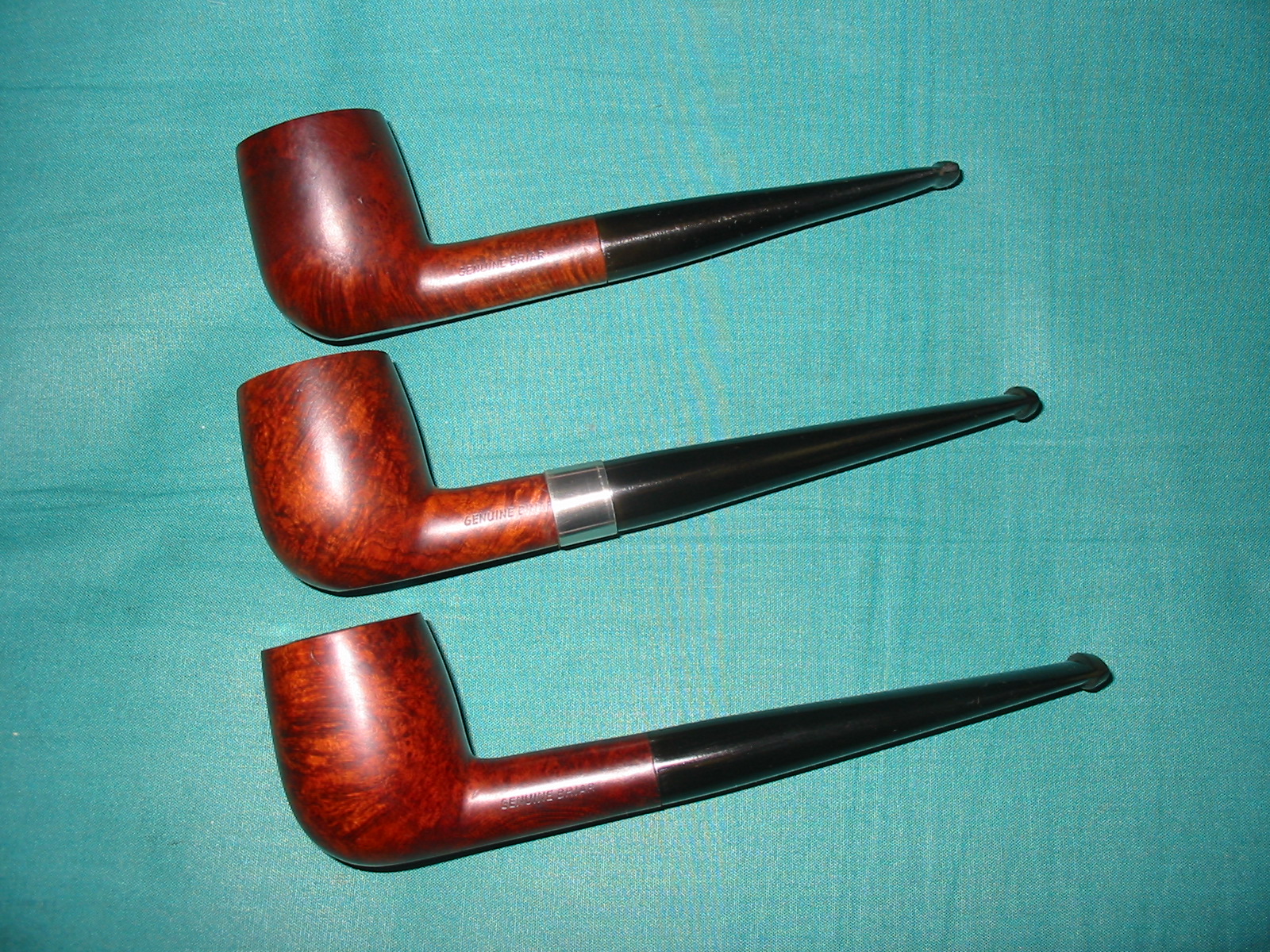
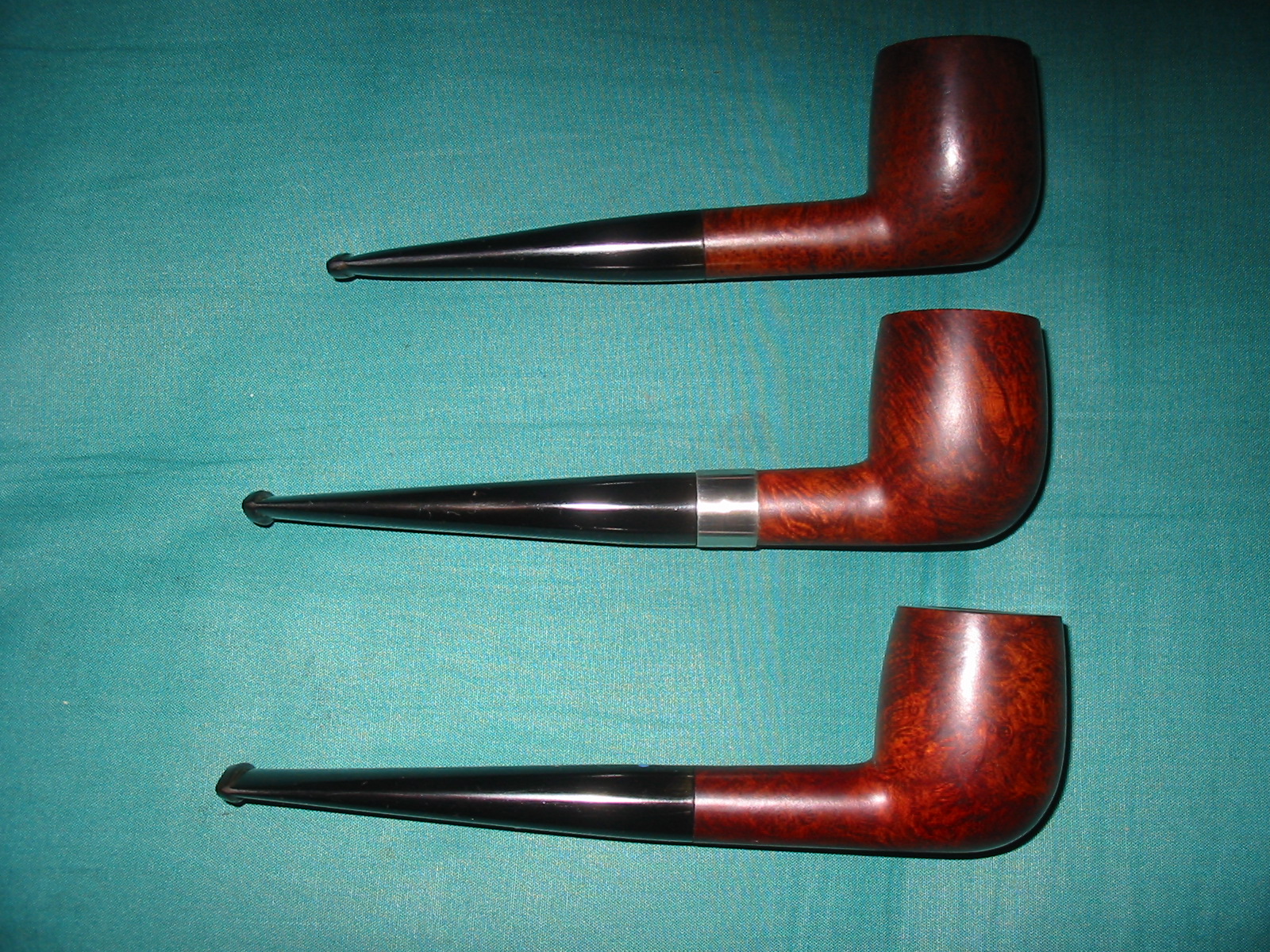
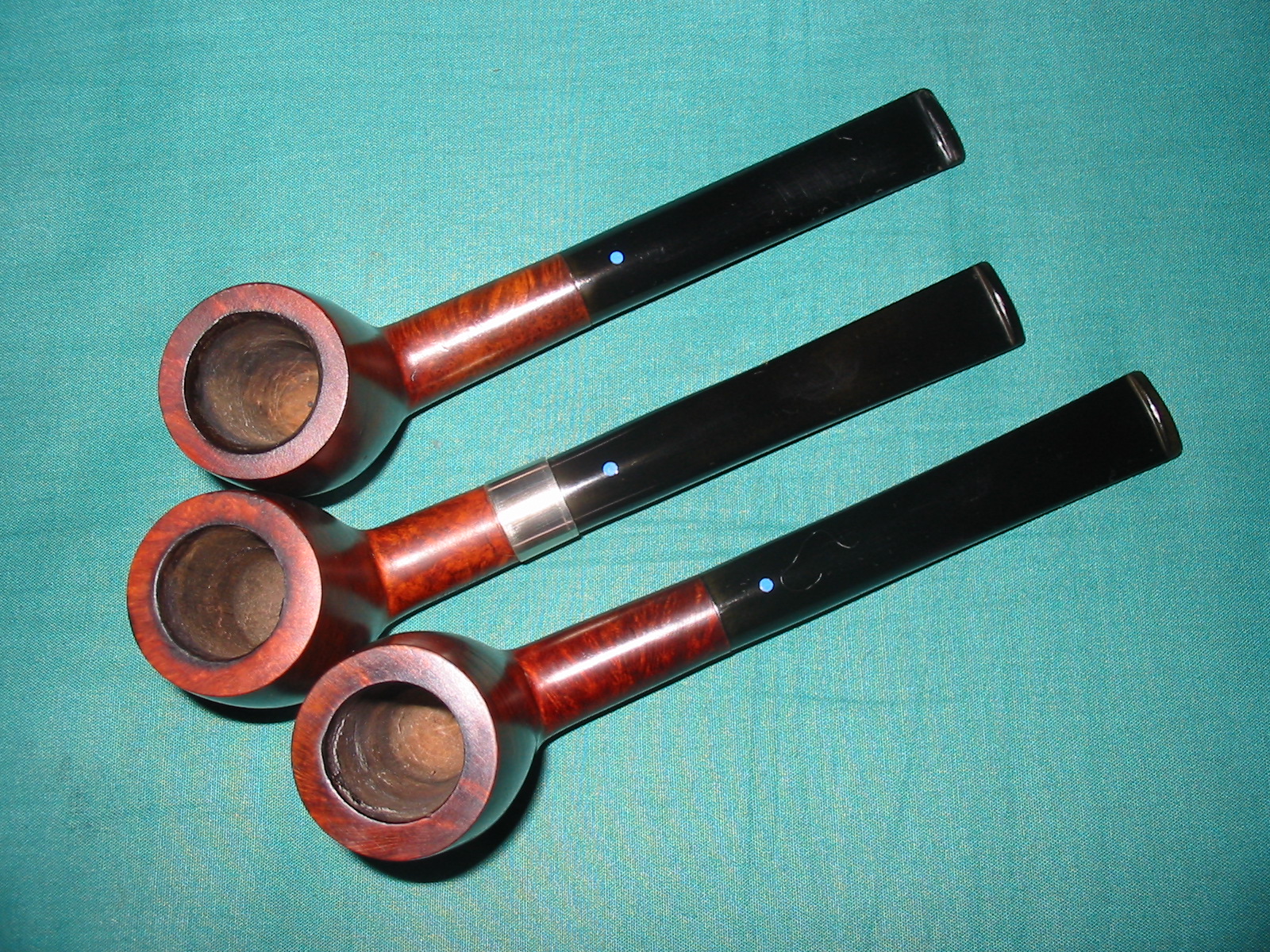
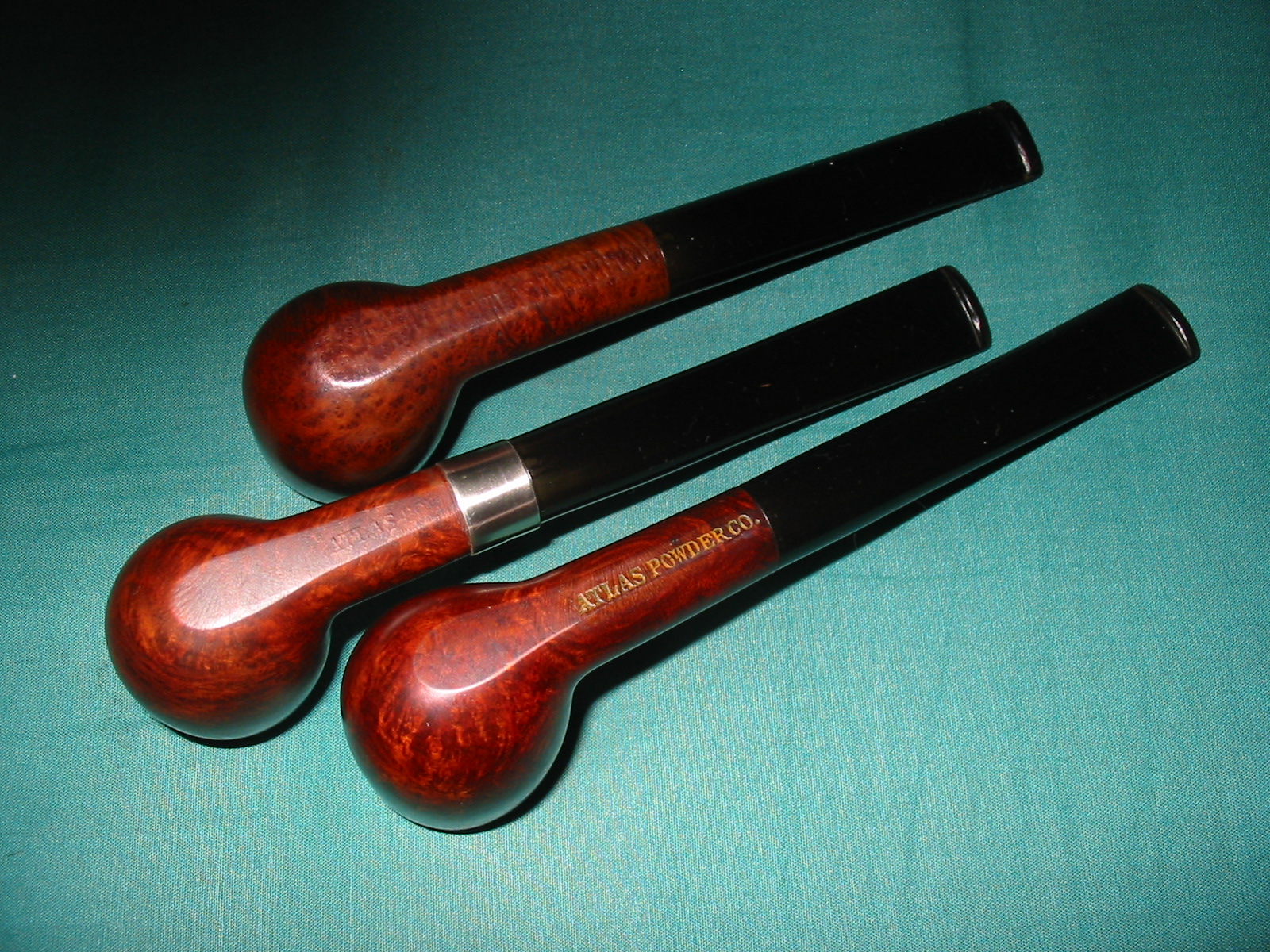
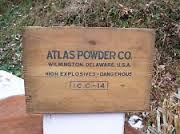
On October 26, 2013, I wrote about a pipe I found and my questioning whether it was a Sasieni Blue Dot billiard. I refurbished the billiard and wrote about it in this blog post https://rebornpipes.wordpress.com/2013/10/26/when-i-saw-it-i-thought-it-was-a-sasieni-one-dot-billiard/ . I was never satisfied with my conclusions regarding the manufacture of this particular pipe. Last weekend (December 28, 2013) I went pipe hunting again and stopped at the same location. There were two more of the blue dot pipes in his case. One of them had been smoked quite a lot and one of them was pretty clean. The one had a cracked shank and the other was clean. The clean one had a stinger apparatus in it while neither the earlier find or the other one this time had one present. The interesting thing to me was that on both of these pipes there was a single line stamped on the bottom of the shank. On the relatively clean pipe the stamping was gold filled and read ATLAS POWDER CO. On the other pipe it had the same stamping though the gold was long gone. I checked the previous pipe and sure enough the same stamping, though fainter was present. Suddenly I had in my possession a trio of billiards. All had the single blue dot on the stem, all were stamped Genuine Briar. All had the same English style tapered stem. All were nice pieces of briar with no fills or flaws. All were stamped ATLAS POWDER CO.

Now I had some work to do – not just restoring these two old pipes to the same state as the other one but really digging into the ATLAS POWDER CO. to find out who they were. Was it possible that what I had were three specialty pipes, stamped with the Company name in gold lettering were made as gift pipes or award pipes? That raised a second question that to me was at least as important. Who made the pipes for the company? Is it possible that they were made by Sasieni, specially stamped with the name of the company to be given out to executives or share holders as gifts? Being able to read the stamping on the bottom of the shank gave me an important clue regarding what to look for on the web. With my questions clearly in my I began to do research on the company. I quickly found out that in 1912, Atlas Powder Company was created in Wilmington, Delaware, when DuPont Company sold two explosives divisions, as mandated by “trust busting” enactments during the Theodore Roosevelt presidency. In the 1960s, Atlas Powder Company changed its corporate name to Atlas Chemical Industries. I wanted more details on that formation and the other companies that may have been included in the process.

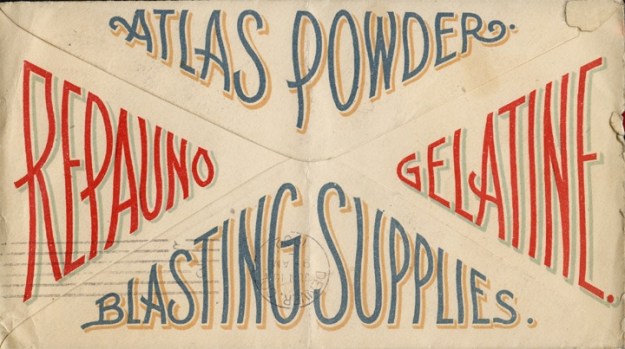
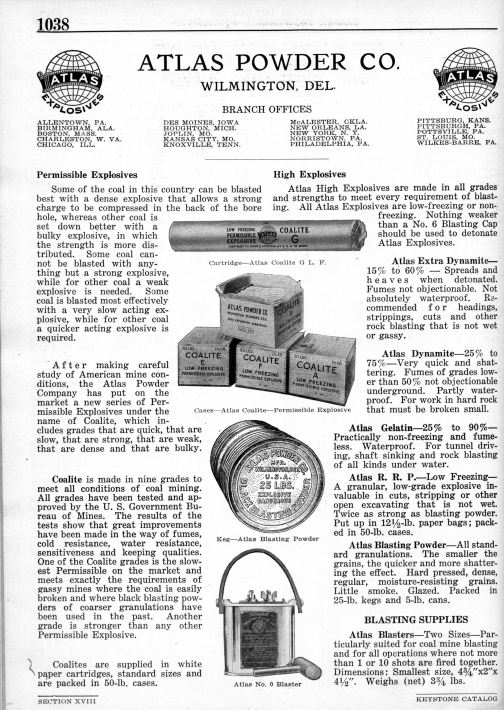
I found a facsimile of an old stock certificate that had some corporate information on it as well as the back side of a mailing envelope with the name and products that were produced by the Atlas Company.
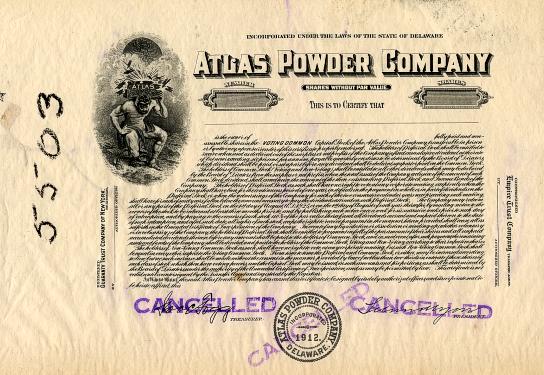
atlas-powder-company-rare-specimen-proof-delaware-1925-2.gif

apc-01back

Further research took me to the company archives at this site http://beta.worldcat.org/archivegrid/collection/data/776641025 There I found information and company minutes from a variety of their meetings and activities. I also found information on lawsuits and actions pending against them at various times in their history. There were corporate memos and data that was marginally interesting but nothing that definitively spoke of pipe being made, purchased or given away. Quoting from the site:

“… The Atlas Powder Company was incorporated in Delaware on October 18, 1912 as part of the court-ordered breakup of the explosives monopoly of E.I. du Pont de Nemours & Company. As part of the settlement, parts of DuPont’s black powder and dynamite business were spun off to two new companies, the Hercules Powder Company, capitalized at $13 million, and the Atlas Powder Company, capitalized at $6 million. Atlas functioned as an independent explosives and chemicals company until July 21, 1971, when it was purchased by Imperial Chemical Industries Limited (U.K.) and became its American affiliate under the name ICI Americas Inc.
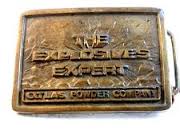
Atlas buckle

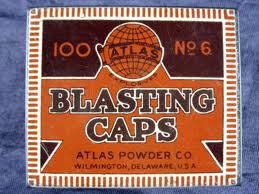
Atlas began business on Jan. 1, 1913, with four former DuPont black powder plants at Ooltewah, Tenn., Belleville, Ill., Pittsburg, Kan., and Patterson, Okla., and three ex-DuPont dynamite plants at Landing, N.J., Hancock, Mich., and Webb City, Mo. Later that year, it purchased the Reynolds Works near Tamaqua, Pa. from the Potts Powder Company, where it manufactured electric exploders, blasting caps, nitric and sulphuric acids, dynamite, and blasting detonators. In 1915, Atlas purchased The Giant Powder Company, Consolidated, which held the first U.S. rights to the Nobel dynamite patents, giving it a presence on the West Coast.
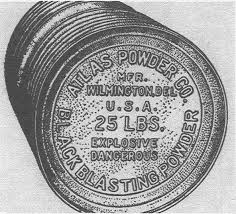
Atas tin

atlas caps

Following the lead of DuPont and Hercules, Atlas began diversifying from explosives into other chemical lines with the 1917 acquisition of Richards & Co., Inc., of Connecticut, and its sales subsidiaries Zapon Leather Cloth Company and Celluloid Zapon Company, manufacturers of lacquers and artificial leather. In 1925, the Pacific Lacquer & Bronze Company was added to the Zapon family. In 1921, Atlas contracted with the Darco Corporation to build an activated carbon plant in Marshall, Tex., and in 1928 Richards & Co., Inc., purchased the Duratex Corporation, a manufacturer of pyroxylin and rubber coated fabrics which also brought a controlling interest in Darco. Atlas bought the assets of the Brevolite Lacquer Company of North Chicago in 1933 and combined it with the Midwest business to the Zapon Company as the Zapon-Brevolite Lacquer Company. Traditional explosives capacity increased with the 1932 purchase of the Peerless-Union Explosives Company. The Atlas Research Laboratory was established at the Reynolds Plant in 1930, and Atlas de Mexico, S.A., was organized as a sales company in 1937.
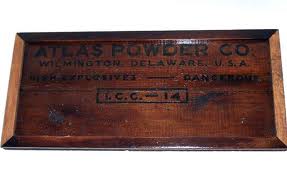
Atlas Box

atlas box2

Atlas devoted all of its plants to military needs during World War II and operated three ordnance plants under contract from the government. However, despite a second surge during the Korean War, the post-World War II years brought a major restructuring. The Duratex line of coated fabrics and plastics was discontinued in 1948, and the Zapon-Darco industrial finishes business was sold in 1955. The following year, Atlas bought the Thermaflow Chemical Corporation of Pennsylvania, makers of high-impact reinforced plastic molding compounds, and the Aquaness Corporation of Houston, Texas, a maker of chemical compounds used in the petroleum industry. In 1959, Atlas formed Solar Nitrogen Chemicals, Inc., as a joint venture with the Standard Oil Company (Ohio) to manufacture ammonia fertilizers. At the same time, explosives plants were being closed. As a consequence, Atlas changed its name to Atlas Chemical Industries, Inc., on May 31, 1961, and the next day completed a merger with The Stuart Company, a Pasadena pharmaceuticals maker. In 1997, after numerous spinoffs and restructurings, the pharmaceuticals business of Atlas became AstraZeneca LP, which has its headquarters in the former Atlas facilities in the Wilmington suburbs.”
Atlas Powder page1

Armed with that information and information gleaned by looking at sales of gift memorabilia on EBay it became at least a real possibility that these pipes were given to stock holders as gifts. I was not able to find definitive information regarding the gifting of the pipes or who made them the implications were strong that they were made for that purpose.
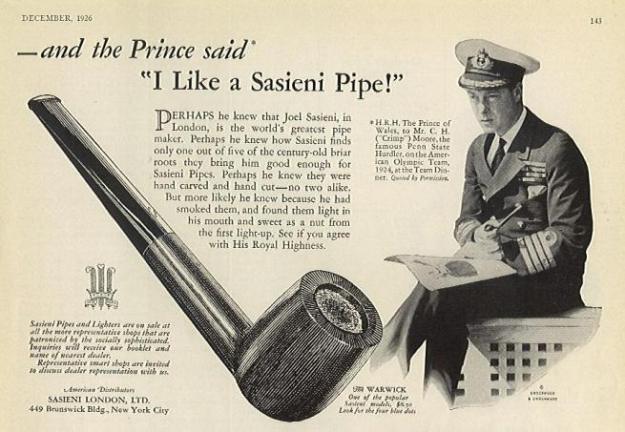
The question still remained regarding the pipes. That took me to a search on the history of Sasieni pipes and any potential connections between the companies. The first article that I turned to was a definitive piece on the history of the brand by Stephen Smith entitled, “Connecting the Dots: A Concise History of the Sasieni Pipe”. http://murderofravens.org/my-sasieni-pipe-article/
19439612371

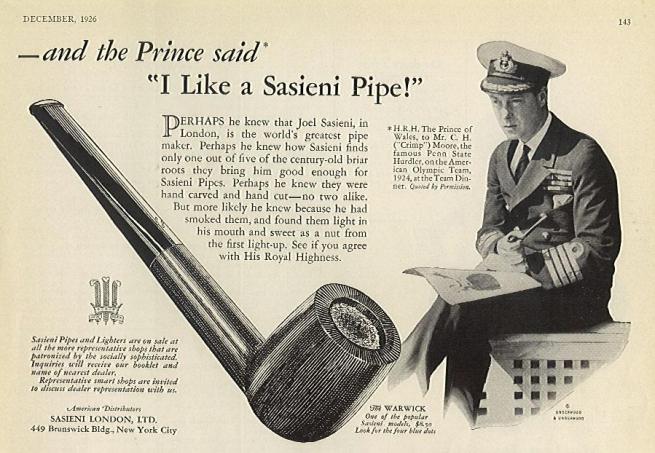
From the article I learned a brief review of the history of the brand. I learned that the Sasieni Company began in 1919 and continued in the family until 1979 when it was sold (this period is the Pre-Transition Period). The Transition period lasted from 1979 to 1986. The company had been bought by Ian Chase and a group of South African investors. In 1986, the company was once again sold to James B. Russell and after him to Cadogan Investments Ltd (Oppenheimer & Co. Ltd.). This Post-Transition period has continued since 1986 to the present. The time period of the pipe and the ATLAS POWDER CO. overlap. However interesting that may be there is still no proof of the connection at this point in my search. I included the above advertisement photo from Stephen’s article because the shape of the billiard in the photo is virtually identical to the three that I have that are the cause of this research.

I am on holiday so I had the time to spare and I spent several hours tracing down leads and dead ends on the links between the two companies. There are no links that I can find. So I am left with just a hunch, a supposition that the pipes were made for the Atlas Powder Co. as gift pipes and that they were potentially made by Sasieni. I may never know more than that but it still leaves more room for digging in the future.

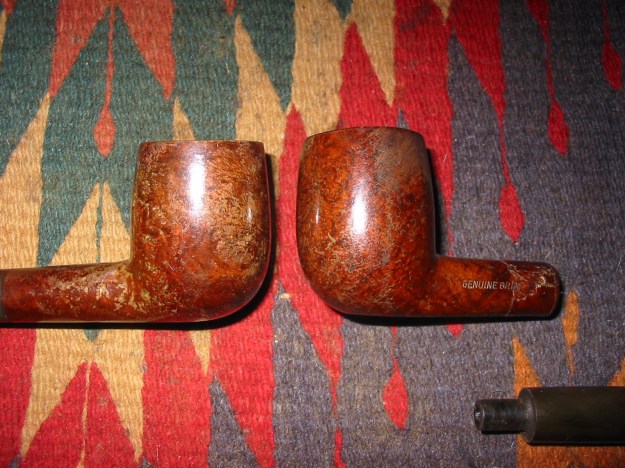
Leaving the mystery to stew for a bit longer I will walk through the refurbishing of the two additional one dot pipes. Here is the pair of bowls in question. The one on the left is solid and less used than the one on the right. It had very little cake in the bowl and the shank and stem were in good shape. The one on the right was more heavily smoked and had a cracked shank. The stem was in fairly decent shape on this one as well. I began my refurbishing on this pair with the pipe on the right.
IMG_3704

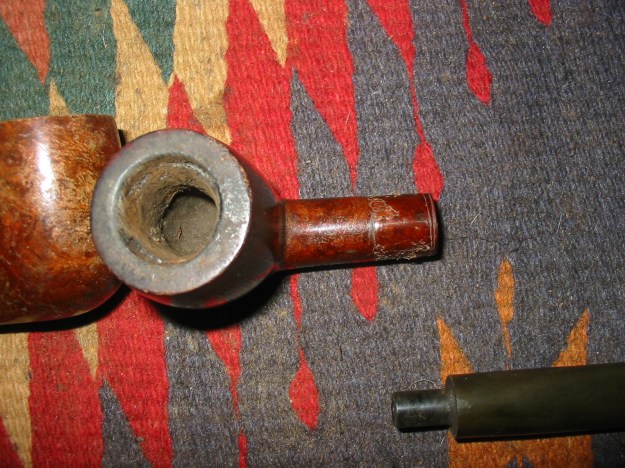
I use a dental pick to remove the scotch tape that held the shank together. It was not clear how bad the crack was until I could get the tape completely removed. I wetted a cotton pad with acetone and wiped down the scotch tape to facilitate its removal.
IMG_3705

IMG_3706

IMG_3708

The next photo is horrible and for that I apologize. I would not have included it if it did not still show the damage to the cracked shank on the first pipe. I glued the cracked piece in place with superglue and then found a band that I could pressure fit on the shank. The combination of gluing the damaged shank and banding it would make it useable once more. I heated the band on the shank over a heat gun and then pressure fit it onto the shank.
IMG_3711

IMG_3712

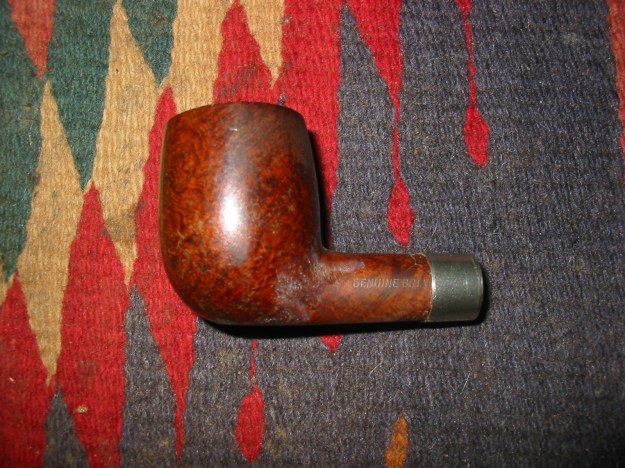
The next series of three photos show the newly banded shank. The repair is finished and with the band in place the rest of the refurbishing of the bowl can take place.
IMG_3713

IMG_3714

IMG_3715

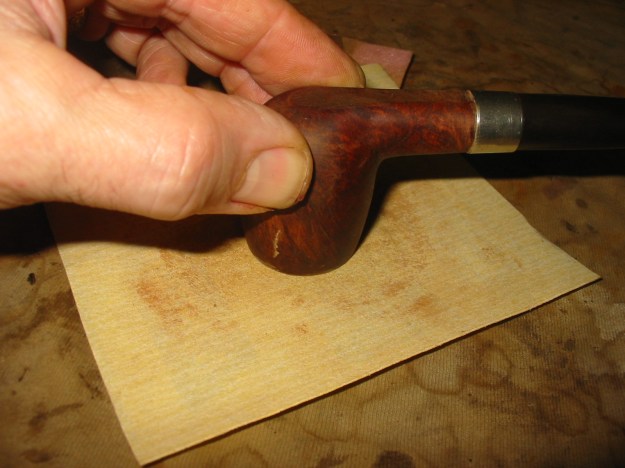
With the band in place on the shank the tenon had to be reduced slightly for a comfortable fit. I cleaned out the shank before I sanded the tenon as I wanted a clean surface for the tenon to sit against. I used cotton swabs and Everclear to clean out the shank. Once it was done I sanded the tenon with 220 grit sand paper to remove enough of the tenon for it to have a snug fit in the shank. I reamed the bowl with a PipNet reamer to remove the carbon build up in the bowl. I lightly topped the bowl to remove the tars and buildup on the rim and to remove some of the slight burn marks on the rim top. Fortunately these were shallow and I was able to remove them completely without dramatically affecting the height of the bowl.
IMG_3722

IMG_3723

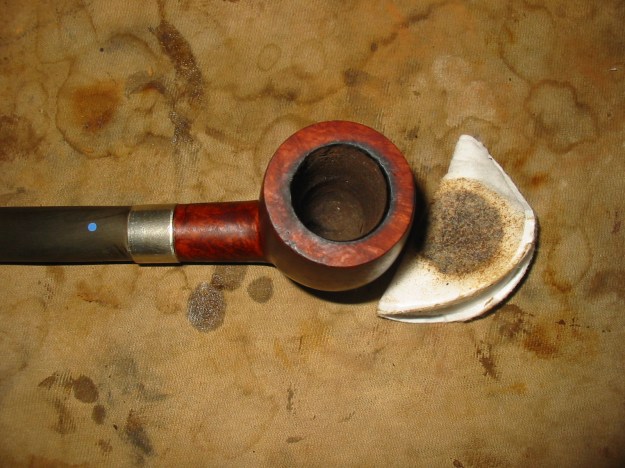
I wiped the bowl down with acetone on a cotton pad to remove the finish that remained on the pipe. There was a light varnish coat that came off easily with the acetone. Underneath was some very nice grain and no fills or fissures.
IMG_3724

IMG_3725

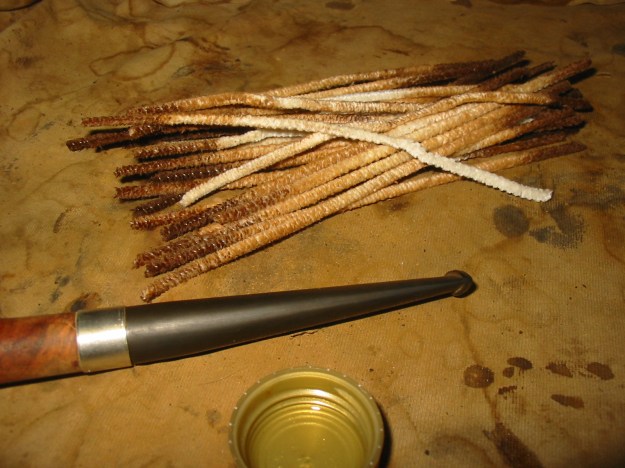
The airway in the stem was clogged and I was not able to blow air through it so I used a dental pick to reach into the airway at the tenon end and through the slot in the button. Fortunately the blockage was near both of these openings and I was able to remove the hardened tars and oils that were present. The tenon end also seemed to have some metallic pieces remaining from the stinger apparatus that was originally in the tenon (I know that it had a stinger as the other pipe still had one in place). It took many pipe cleaners and much Everclear to get the grime deposits removed from the airway of the stem. The photo below shows just a few of them toward the end of the process.
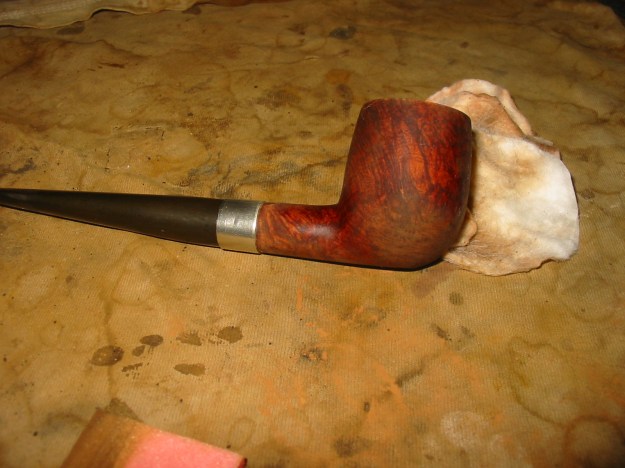
IMG_3728

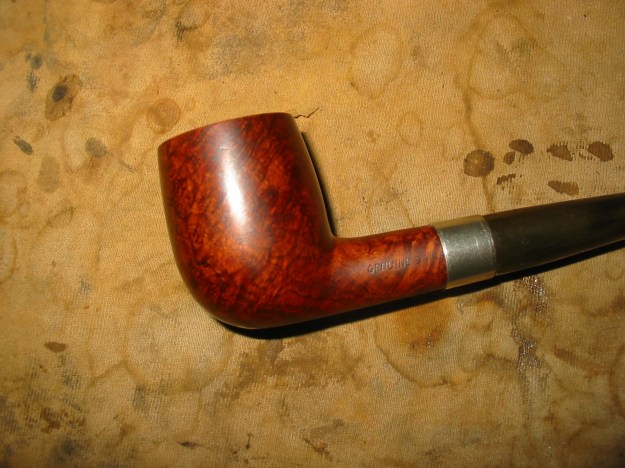
I stained the pipe with a Minwax Medium Walnut stain. It has a nice patina and goes well with the age of these older pipes. I rubbed it on with a cotton pad and rubbed it off with a soft cotton cloth. I reapplied the stain until I had the coverage that I wanted. My goal was to let the grain show through the stain and highlight the beauty of this old pipe.
IMG_3730

IMG_3731

IMG_3732

I buffed the pipe with White Diamond once the stain was dry to bring out a shine to the finish.
IMG_3733

IMG_3734

IMG_3735

IMG_3736

The next photo shows the pipe lying next to the other one. I wanted the stamping on the unrefurbished pipe to highlight the stamping on this pipe. The golden colour of the other stamp is very clear and the stamping on the newly stained one is still visible yet not golden. Before I finished this one, the golden stamping was missing and a black stamping was present in its place.
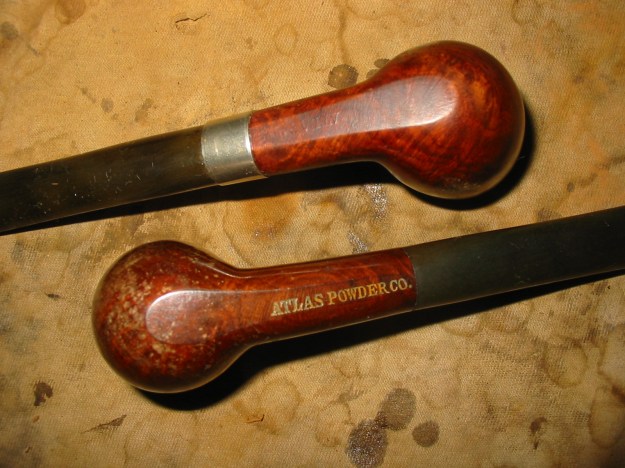
IMG_3738

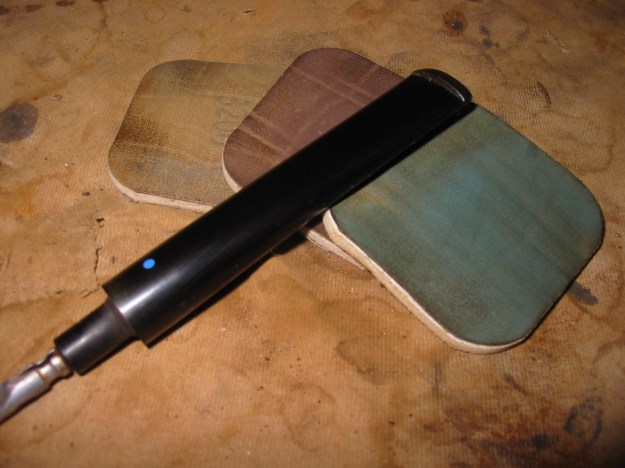
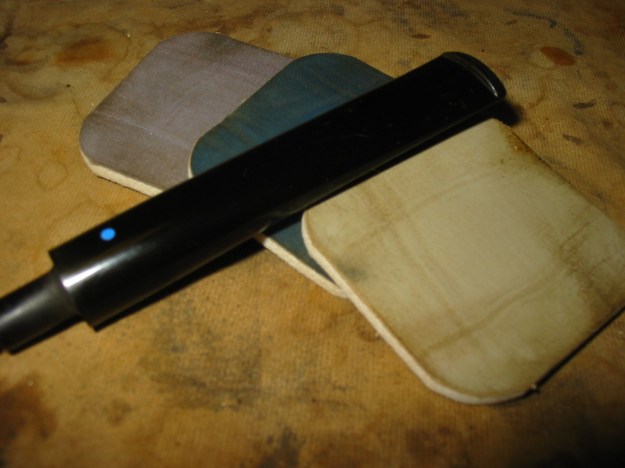
I worked on the stem with my usual regimen of micromesh sanding pads – wet sanding with 1500-2400 grit pads and dry sanding with 3200-12,000 grit pads. I buffed the stem with White Diamond after using the 12,000 grit pad and then rubbed it down with Obsidian Oil. I hand buffed it before putting it back in the shank of the pipe. I also used the micromesh pads to polish the nickel band before I buffed the pipe. I used 2400-4000 grit pads to polish the nickel and then rubbed it down with a silver polishing cloth.
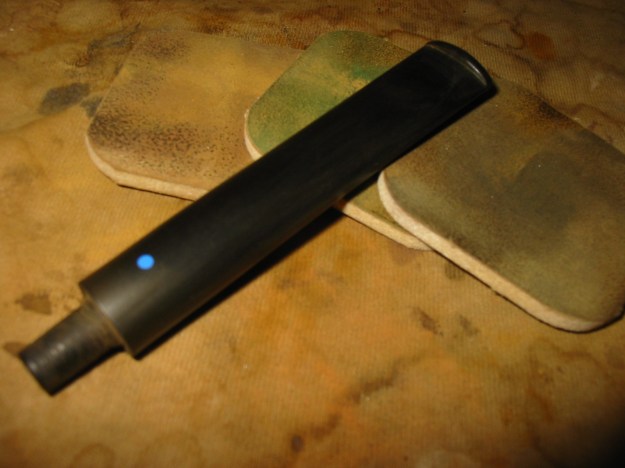
IMG_3739

IMG_3740

IMG_3741

The first of the two pipes was finished. I buffed the entirety with White Diamond and then gave it multiple coats of carnauba wax. I buffed the newly waxed pipe with a soft, clean flannel buff to give it a shine and set it aside while I worked on the second pipe. The next four photos show the finished pipe.
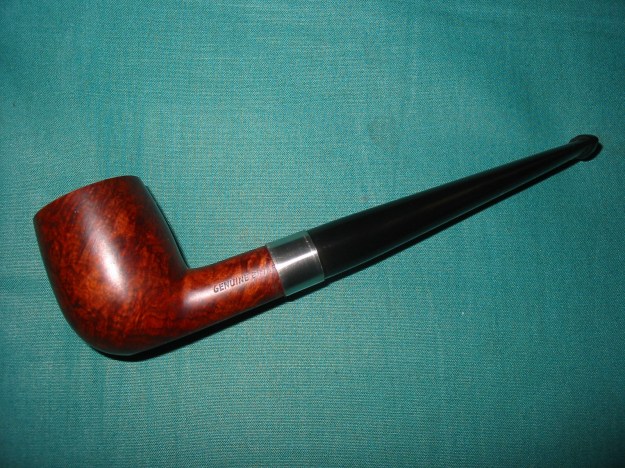
IMG_3742

IMG_3743

IMG_3744

IMG_3745

The second pipe looked worse for wear when I started on it but it was merely surface wear. The bowl itself was not even broken in and the slight cake on the top portion of the bowl was very thin. The shank and the inside of the stem were very clean. The original stinger apparatus was still in place and was slightly discoloured. The ATLAS POWDER CO. stamping on the bottom of the shank was still embossed with gold in the letters. The varnish coat on the finish was disintegrating on the surface of the briar but the briar itself was in great shape. There was no damage to the rim or the edges of the rim. The bowl had no visible fills or dents. It just needed a major cleanup.
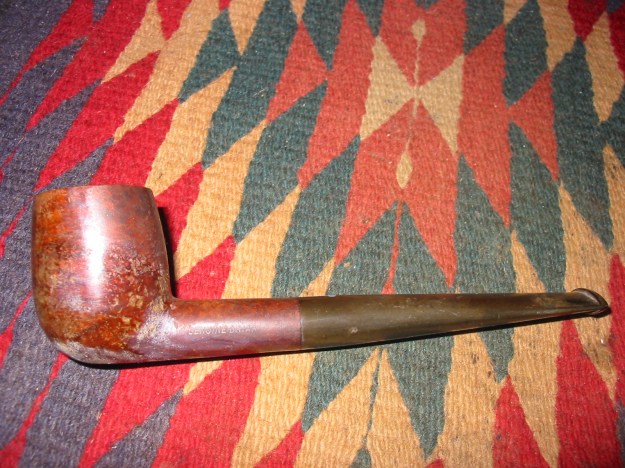
IMG_3746

IMG_3747

IMG_3748

IMG_3749

I have included the next photo to show the ATLAS stamping on the shank more clearly.
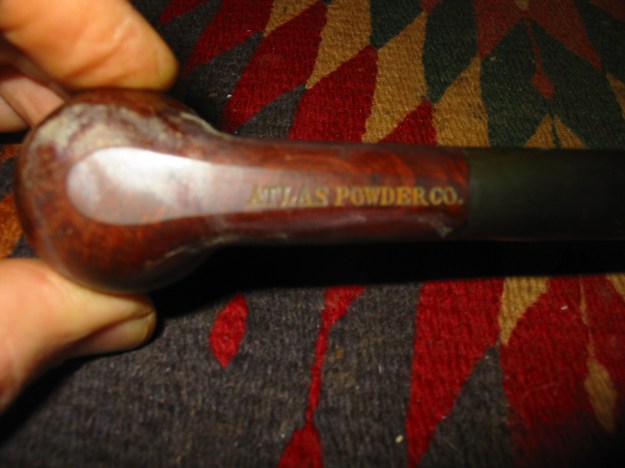
IMG_3750

I followed the same process on this pipe as the one above and wiped the bowl down with acetone on cotton pads. I was careful to not wipe down the bottom of the shank as I wanted to leave the gold stamping intact. With the varnish coat removed the grain on this pipe was also very nice. There is a mix of cross grain, birdseye and a swirl of mixed grain.
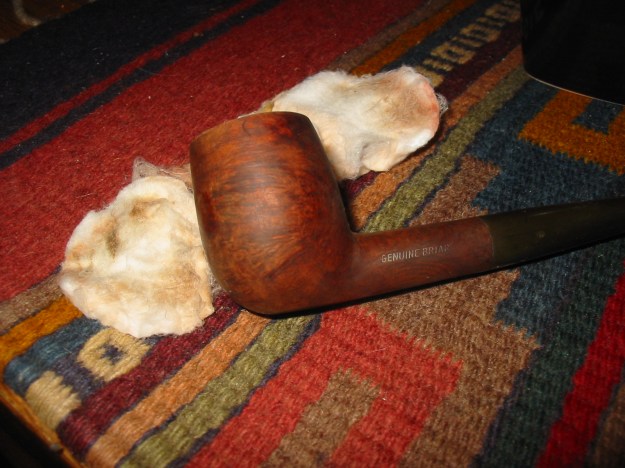
IMG_3751

IMG_3752

IMG_3753

IMG_3754

I removed the stinger apparatus which was pressed into the tenon of the pipe by twisting it free. Once it was removed I cleaned up the interior of the slot on the stinger and the grooves around the end of the spoon portion of the piece. I reinserted it in the stem.
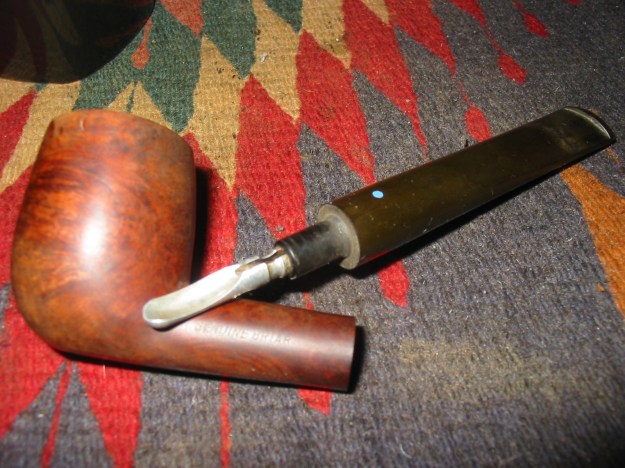
IMG_3755

IMG_3756

I used the same regimen on the stem as noted above to polish the oxidation away. I have found that the combination of wet and dry sanding with micromesh sanding pads works well for me and gives the stem a deep shine. When I finished sanding I buffed it with White Diamond and rubbed it down with Obsidian Oil. I hand buffed the stem and set it aside while I worked on the bowl.
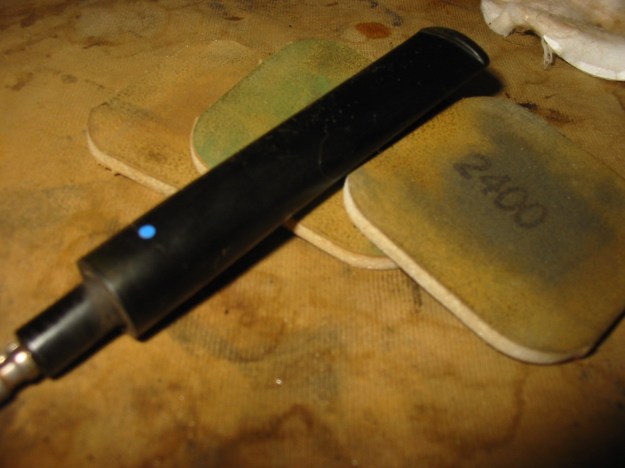
IMG_3758

IMG_3762

IMG_3768

I used the same Minwax Medium Walnut stain on this pipe as the last. I applied it, rubbed it off, and reapplied it until I had the coverage I wanted. As before, I wanted the grain to shine through the stain and give depth to the finish of the pipe.
IMG_3763

IMG_3764

IMG_3766

IMG_3767

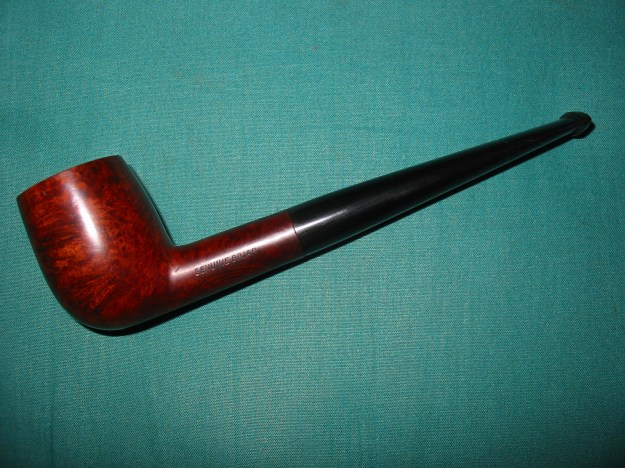
I inserted the stem in the shank and buffed the whole pipe with White Diamond and then gave it multiple coats of carnauba wax. The finished pipe is shown in the photos below.
IMG_3769

IMG_3770

IMG_3771

IMG_3785

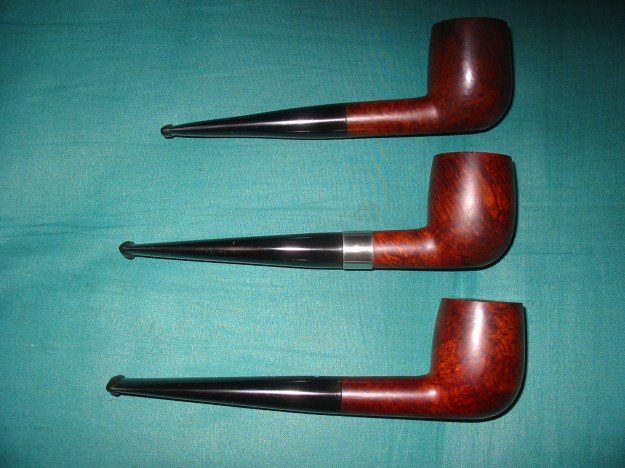
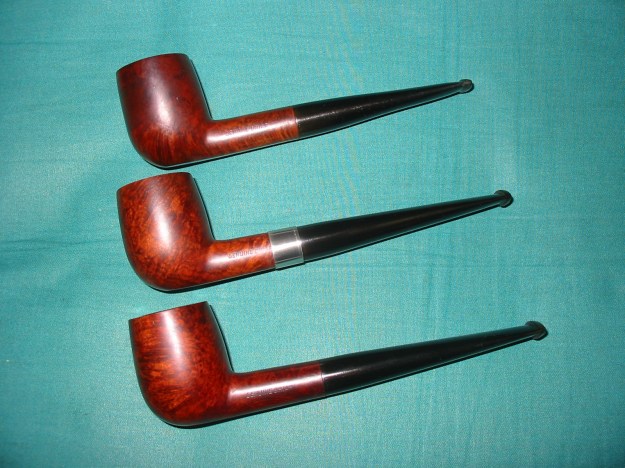
With both of the new additions finished I put them together with the previous ATLAS POWDER CO. pipe and took the following photos. The first pipe has a shorter stem because when I found it the stem had a large bite through. I shortened the length on it and reshaped the button. Other than that and the added band on the middle one the pipes are much the same. All bear the same stamping and the same blue dot. Who knows who the maker of these pipes was? I am still inclined to believe that they may have been made by Sasieni for the ATLAS POWDER CO. to be given to share holders or executives. Whatever the case may be they are smooth smoking pipes and will last another lifetime.
IMG_3778

IMG_3779

IMG_3780

IMG_3781

A GBD “Dublinish” Poker Brought Back to Life


Blog by Steve Laug

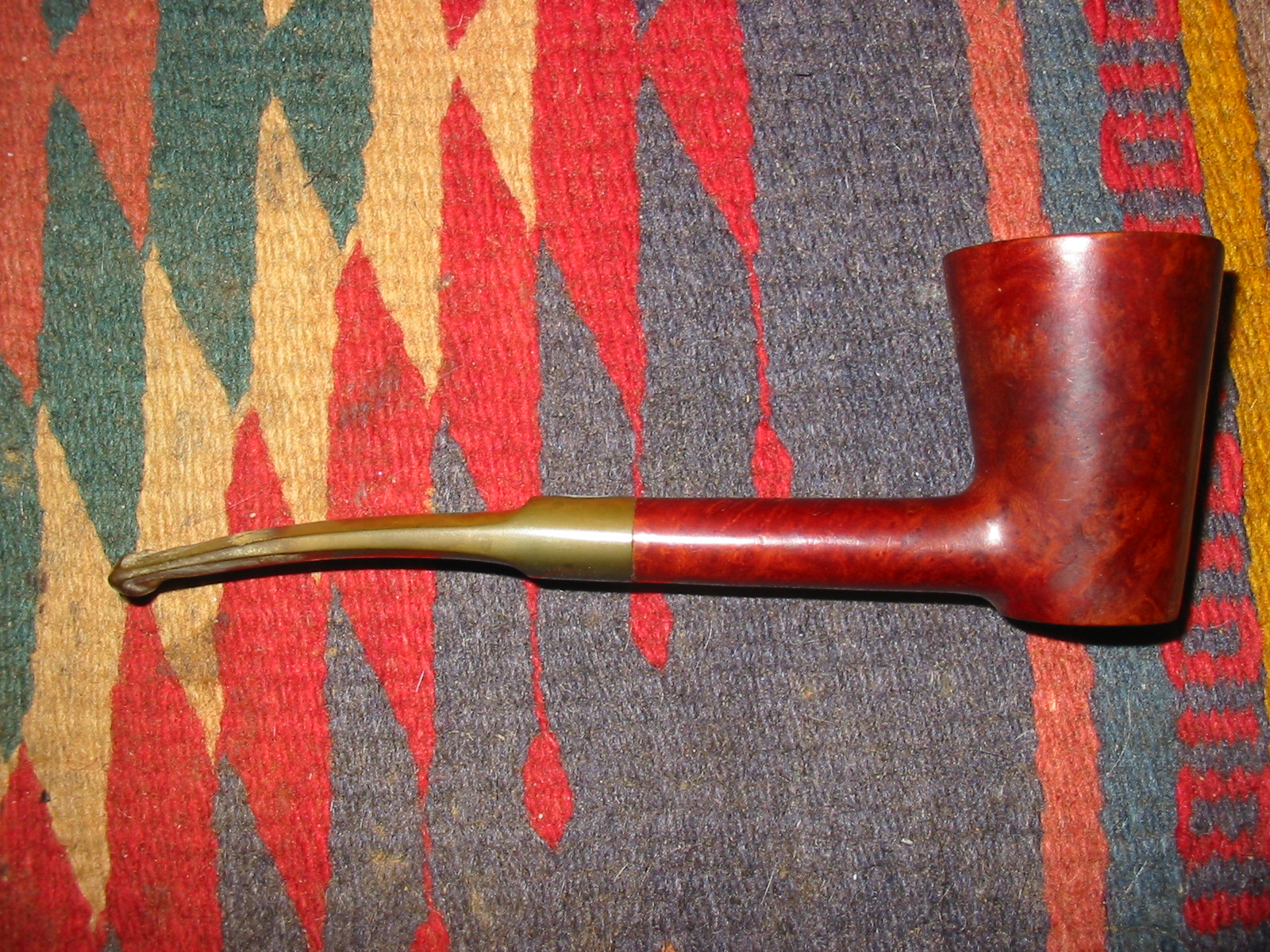
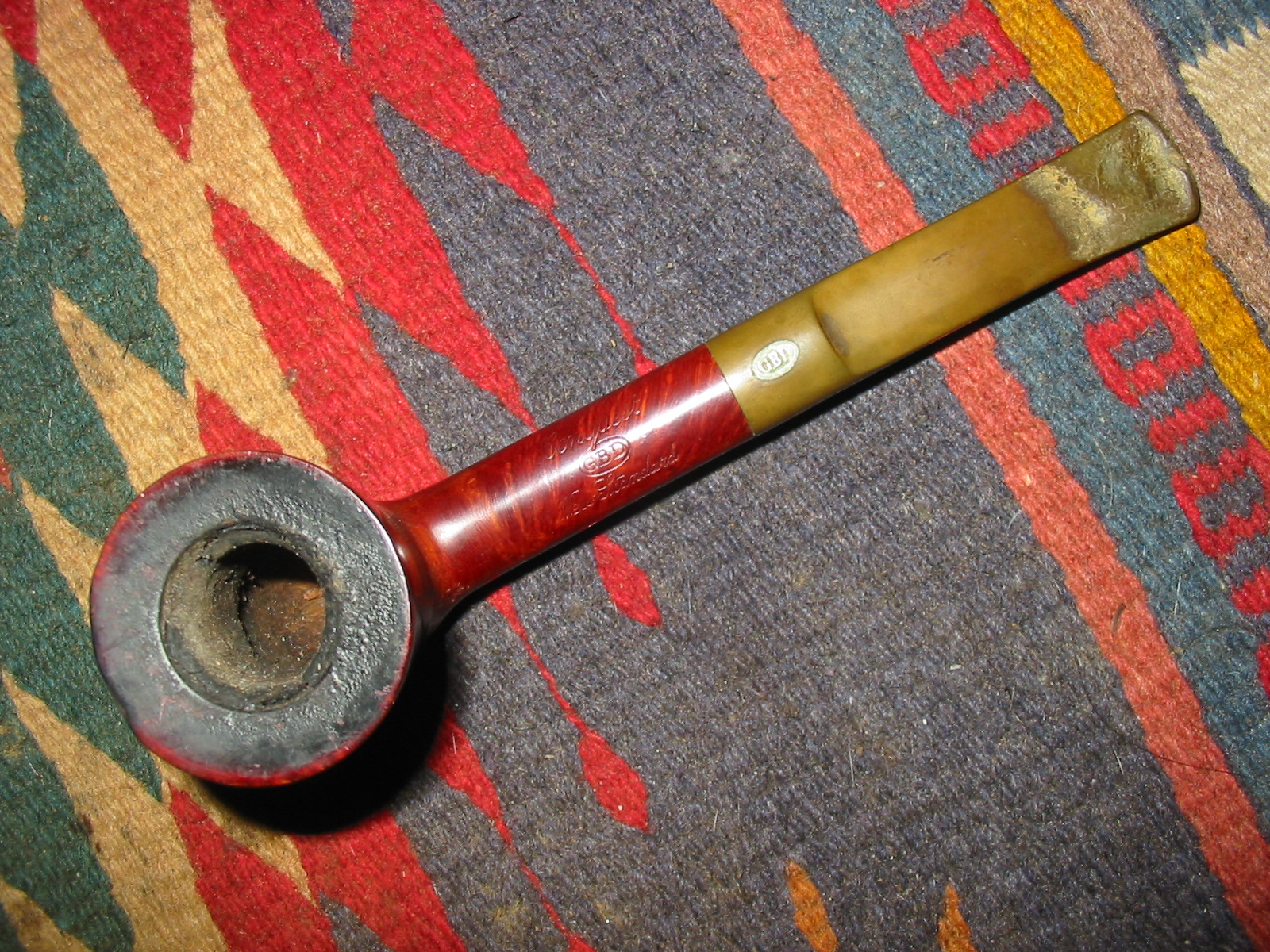
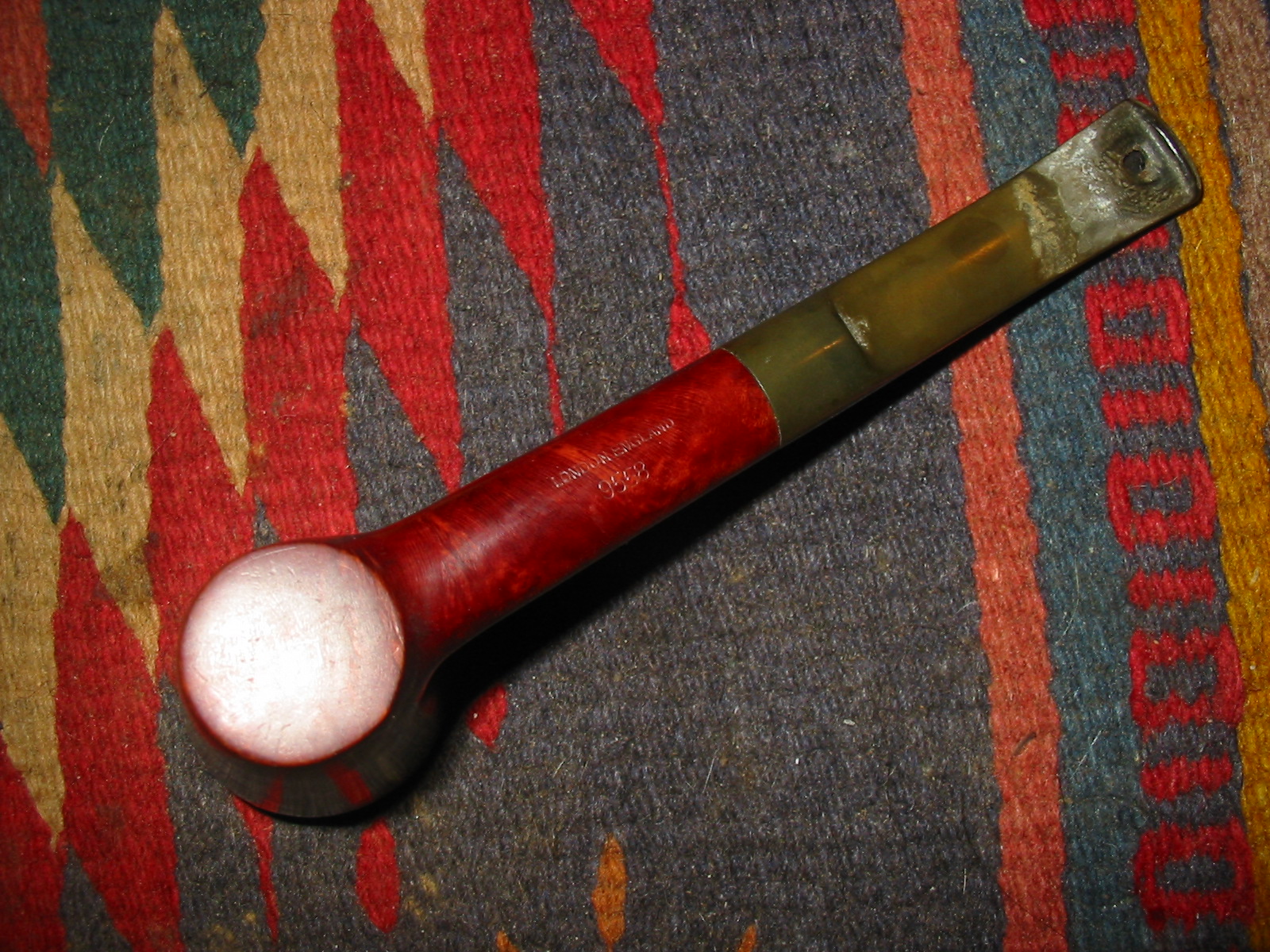
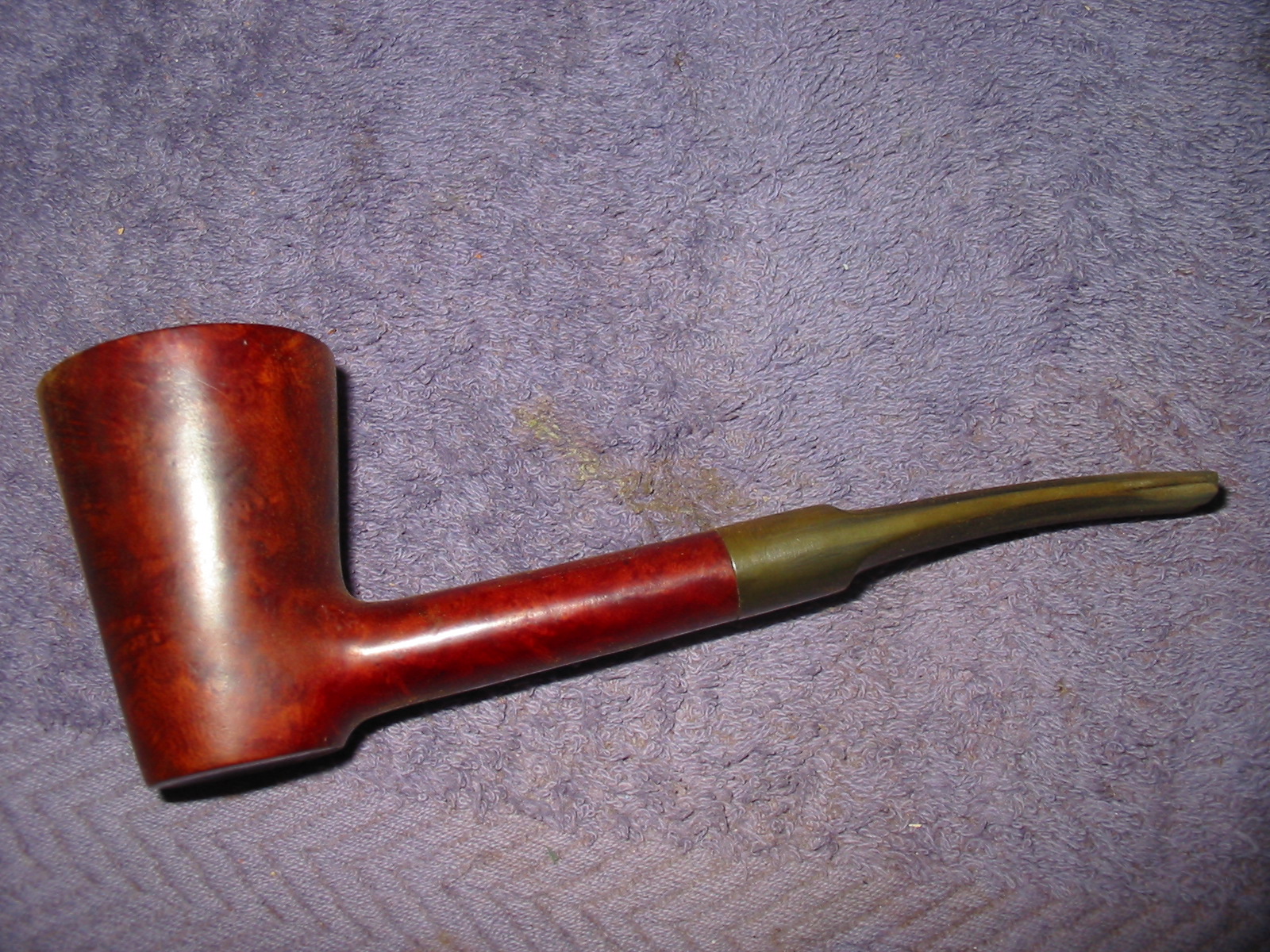
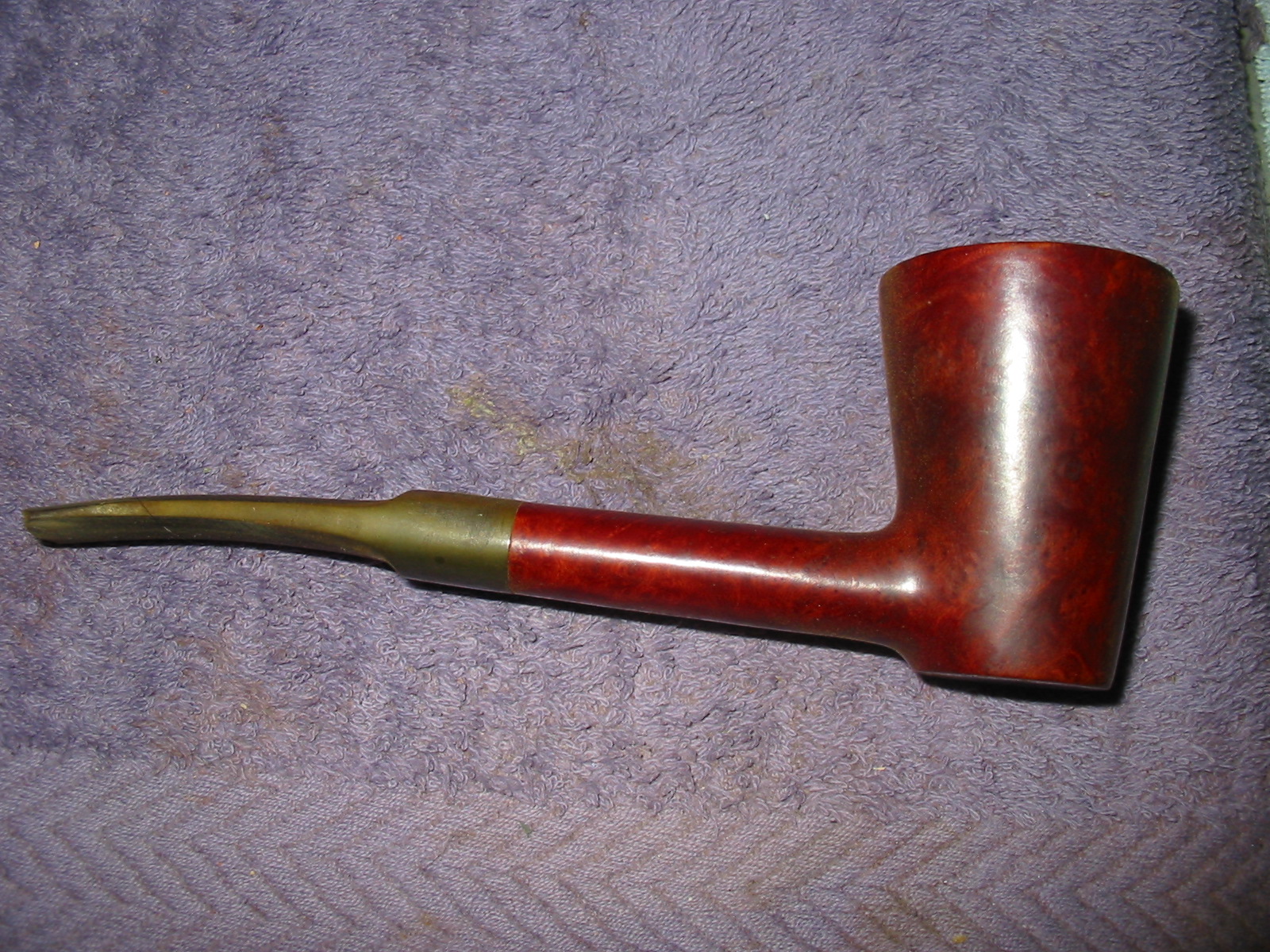
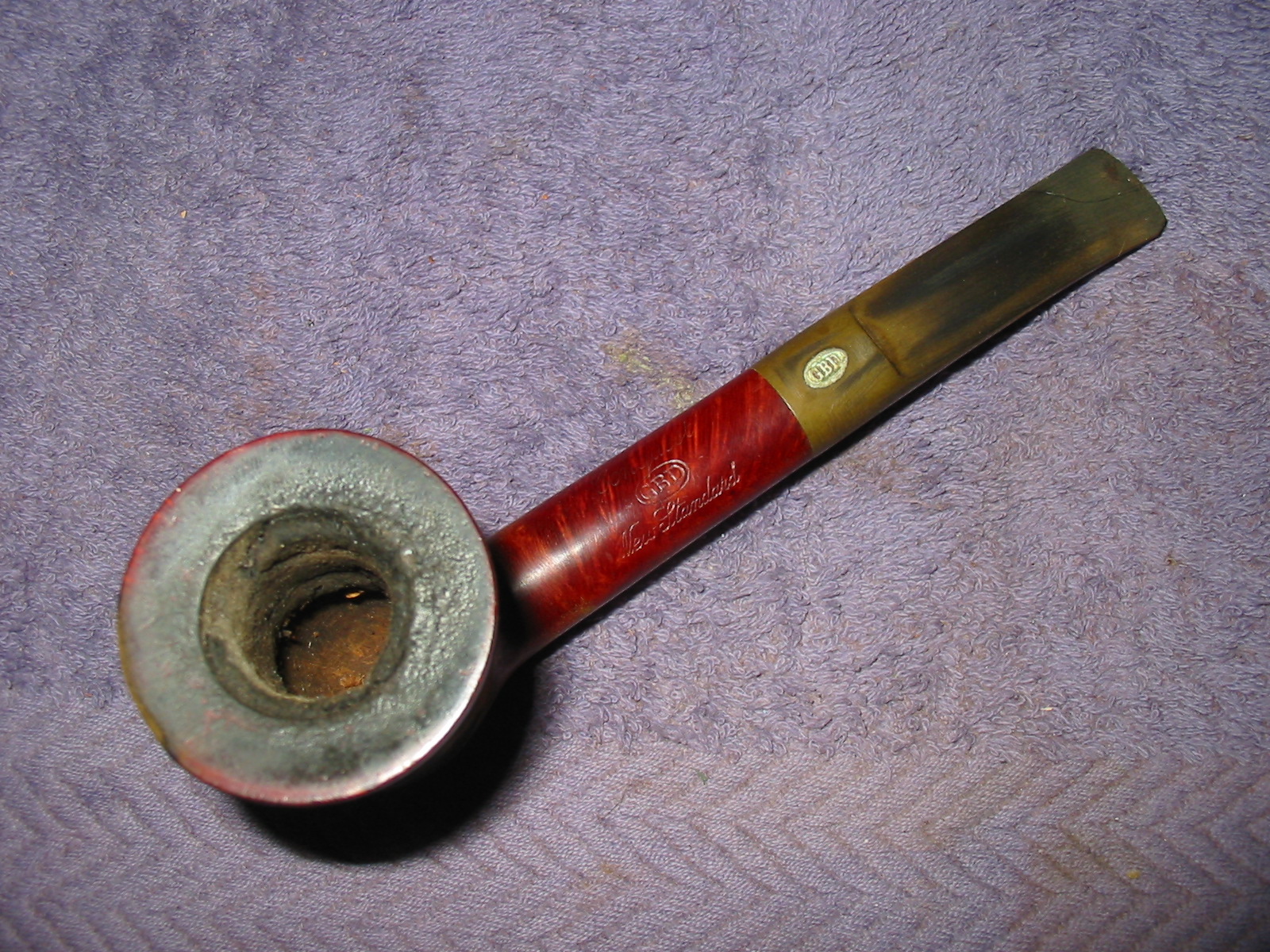
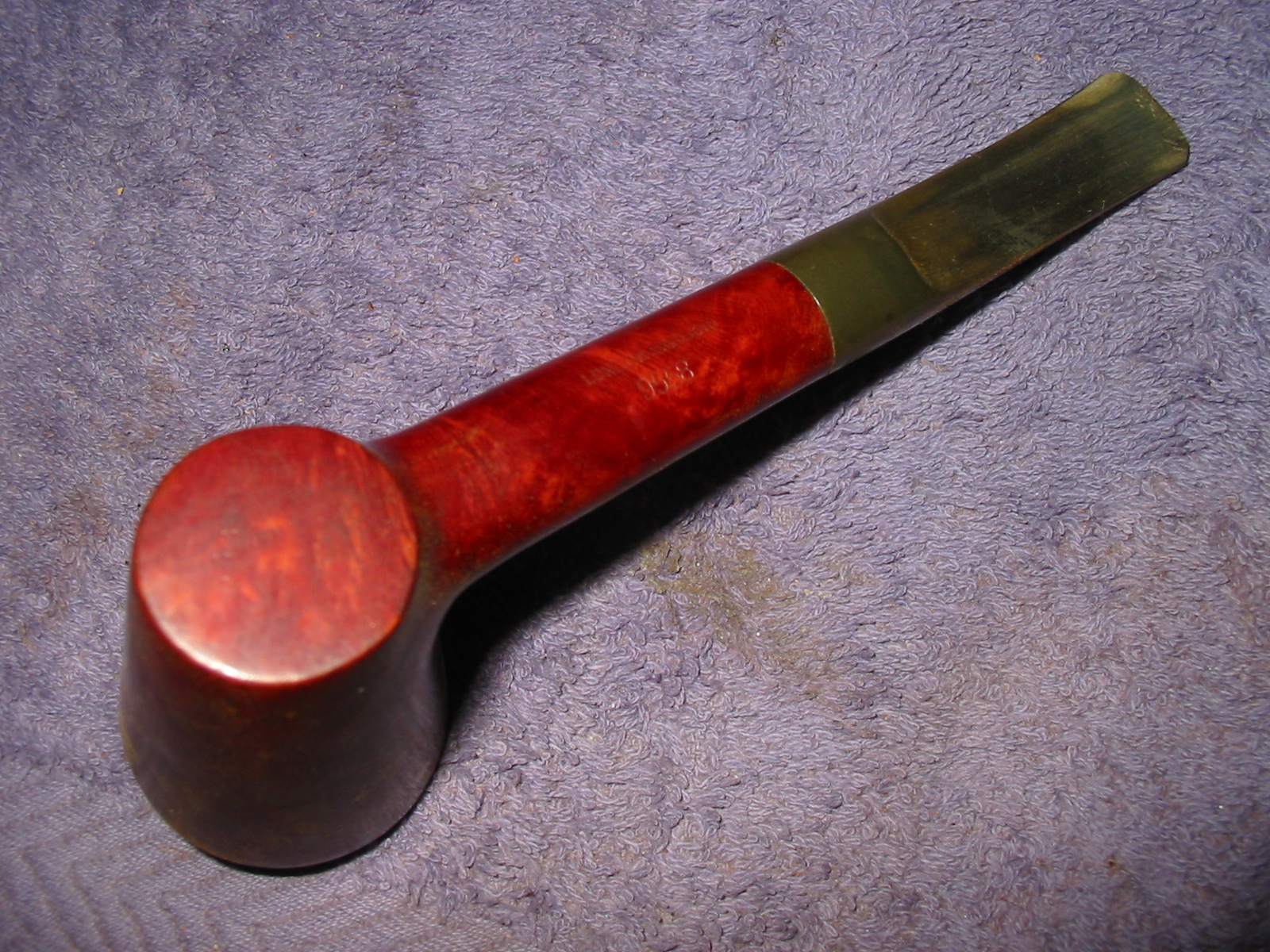
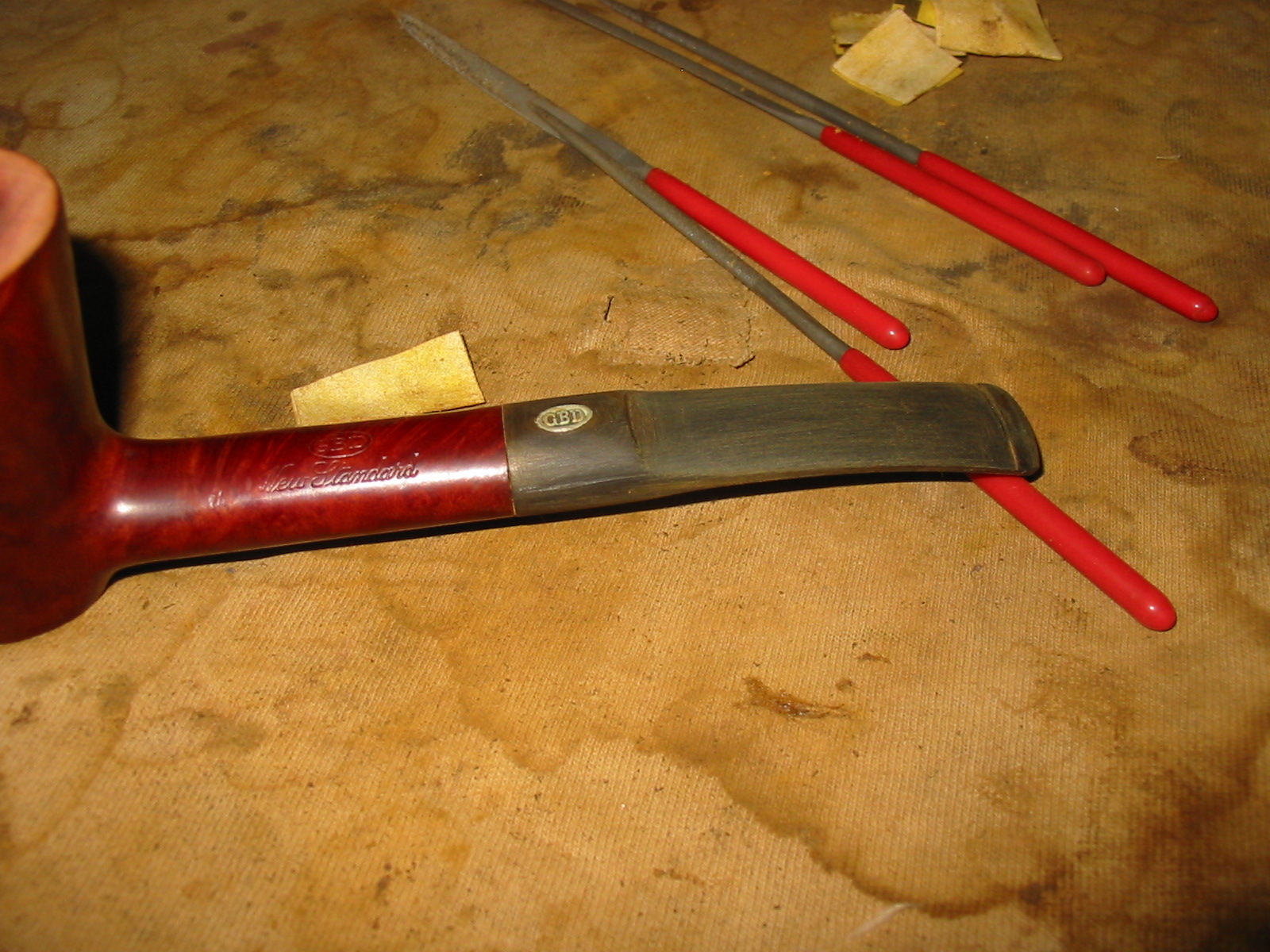
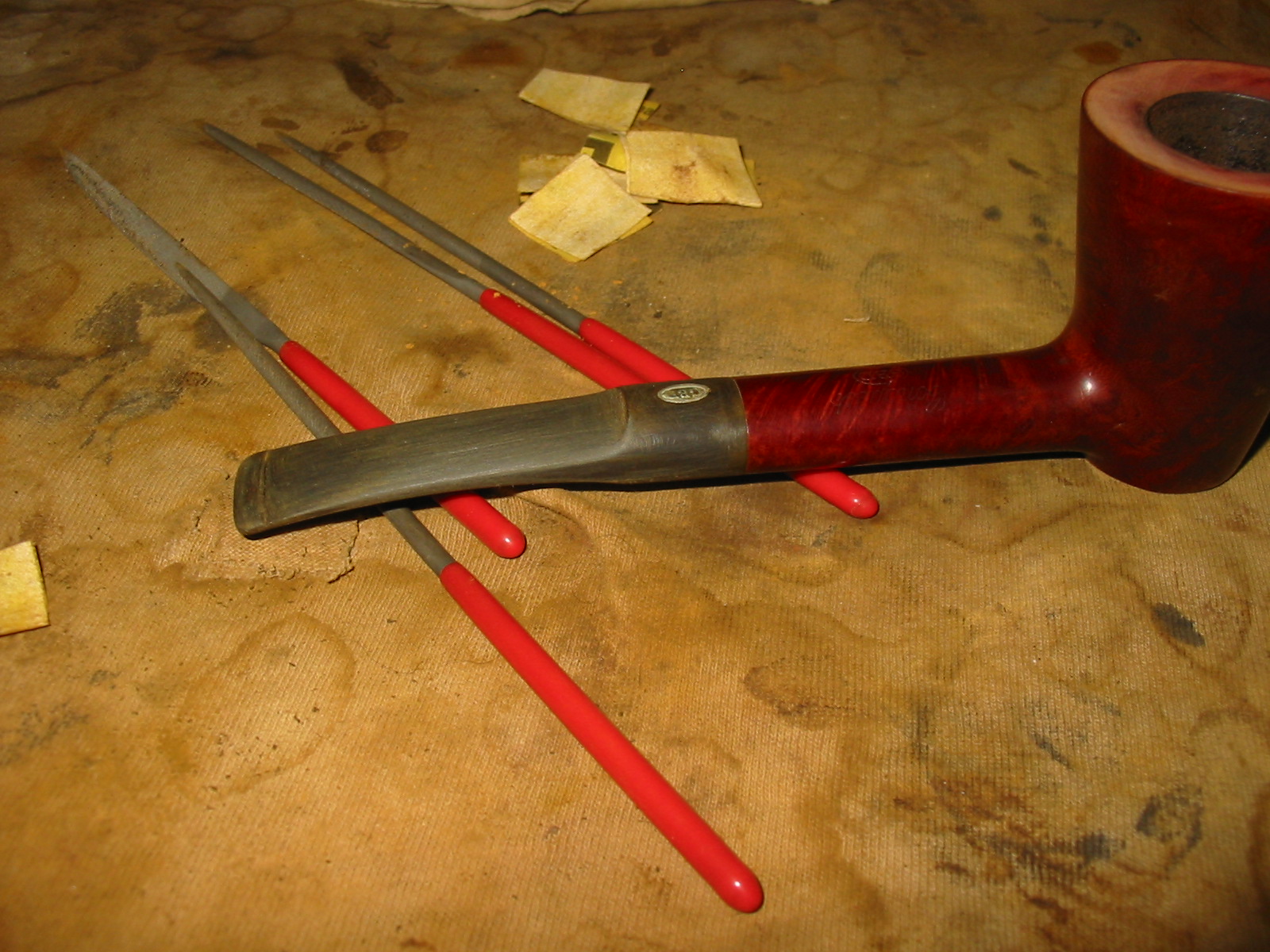
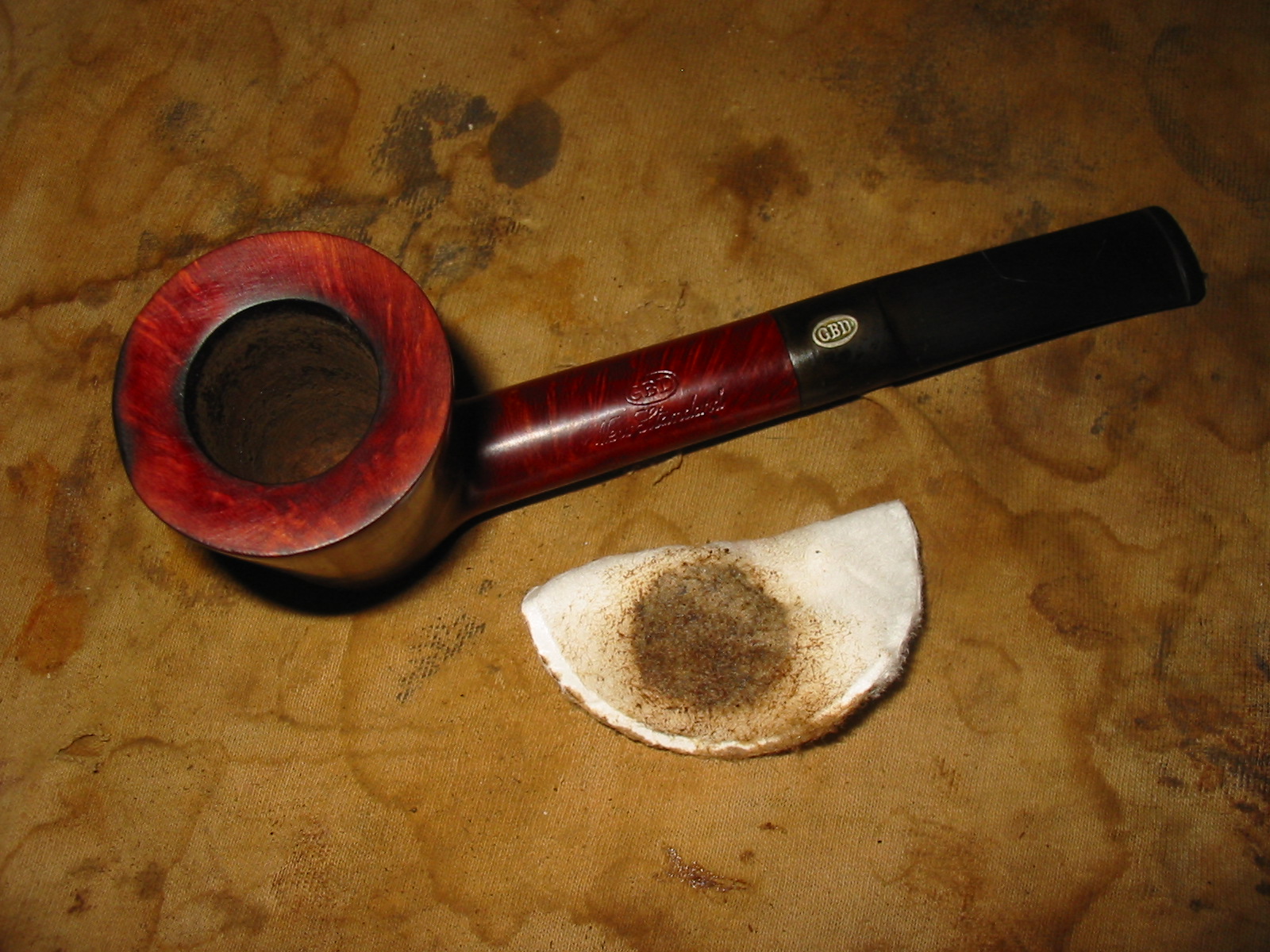
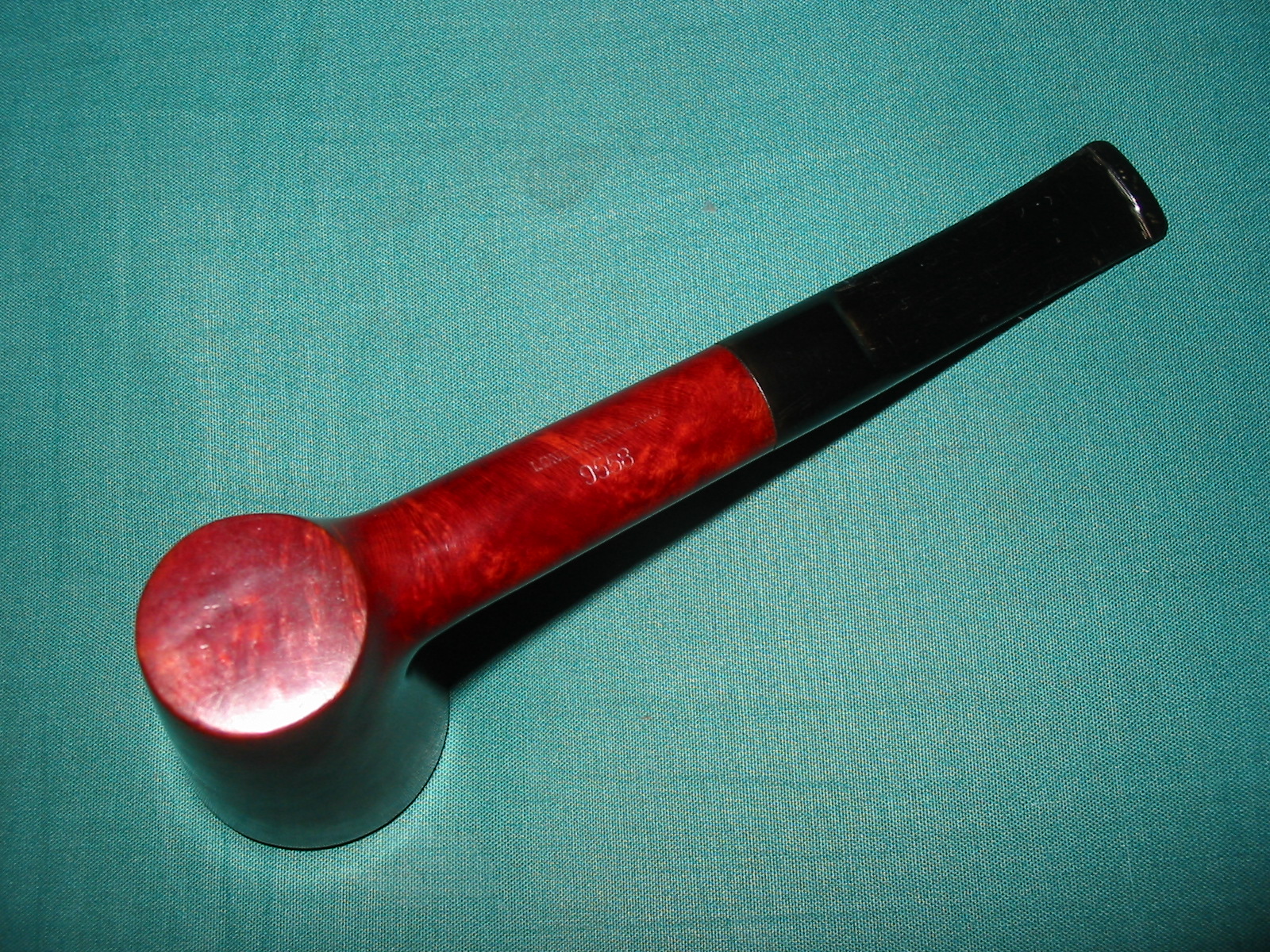
The fourth pipe I have refurbished from the lot I just picked up is an oval shanked “Dublinish” Poker that has a GBD on the brass stem roundel. It is stamped on top of the shank with GBD in an oval over New Standard in script. On the underside of the shank it is stamped London England over 9558. I looked up the shape number on the GBD shape site and was unable to find a listing for a pipe of this shape. I looked other places on the web and did not find this shape either listed or pictured. It is certainly not a shape that I have seen for the years that I have been working on pipes and collecting GBD pipes.
IMG_3666

IMG_3667

The picture below shows the state of the bowl when I brought it to the work table. It had a thick and crumbly carbon cake and carbon and tar build up on the concave surface of the rim. The front of the outer edge had burn marks from repeated lighting. The GBD roundel on the stem was badly oxidized and looked to be corroded. The stem was badly oxidized and on the bottom had a large hole where the previous owner had bitten through the stem.
IMG_3668

IMG_3669

The picture below shows the size of the bite through and gives a pretty clear picture why I chose not to patch the stem but rather to cut the bite through off and rework the stem and button.
IMG_3670

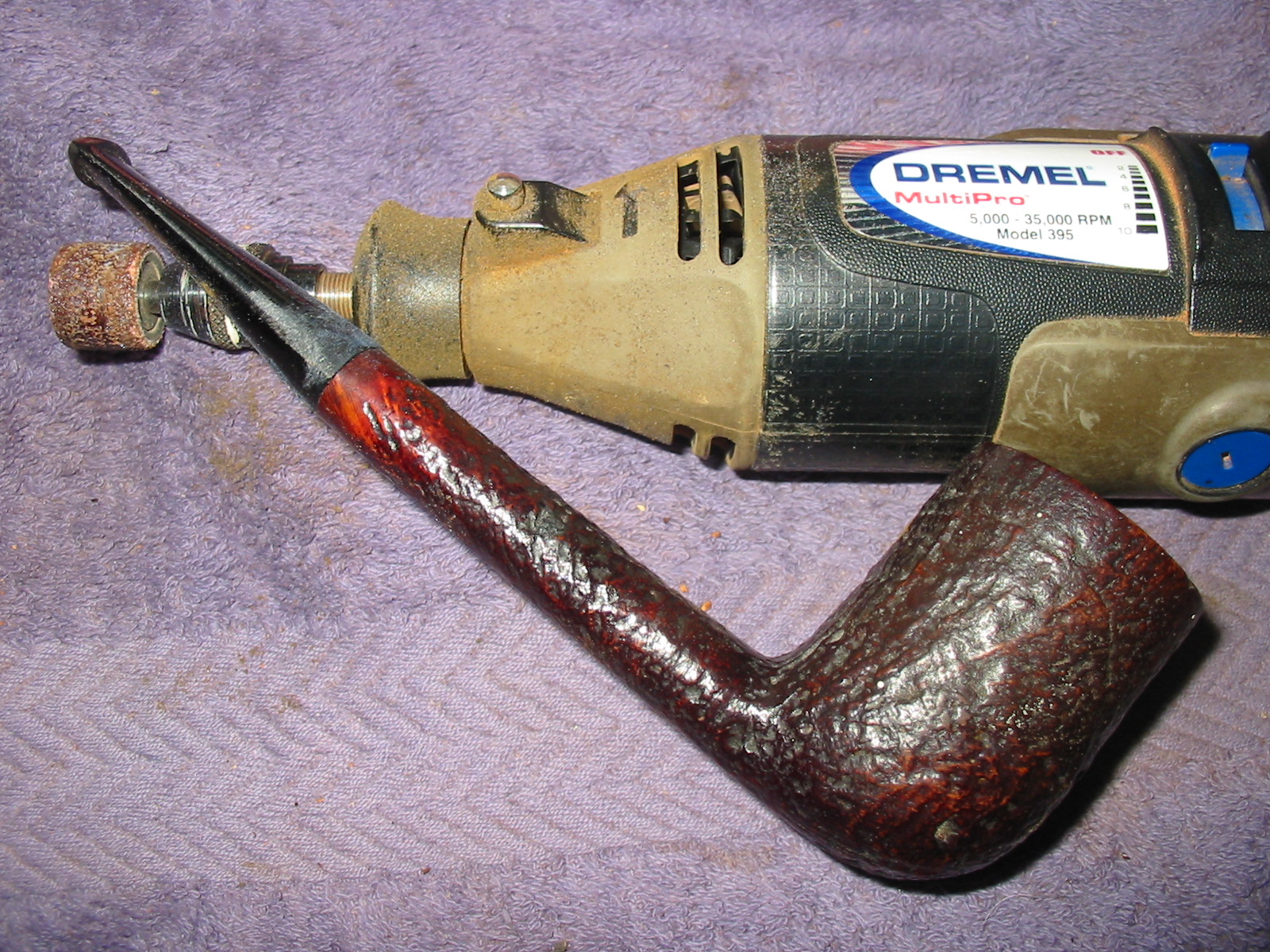
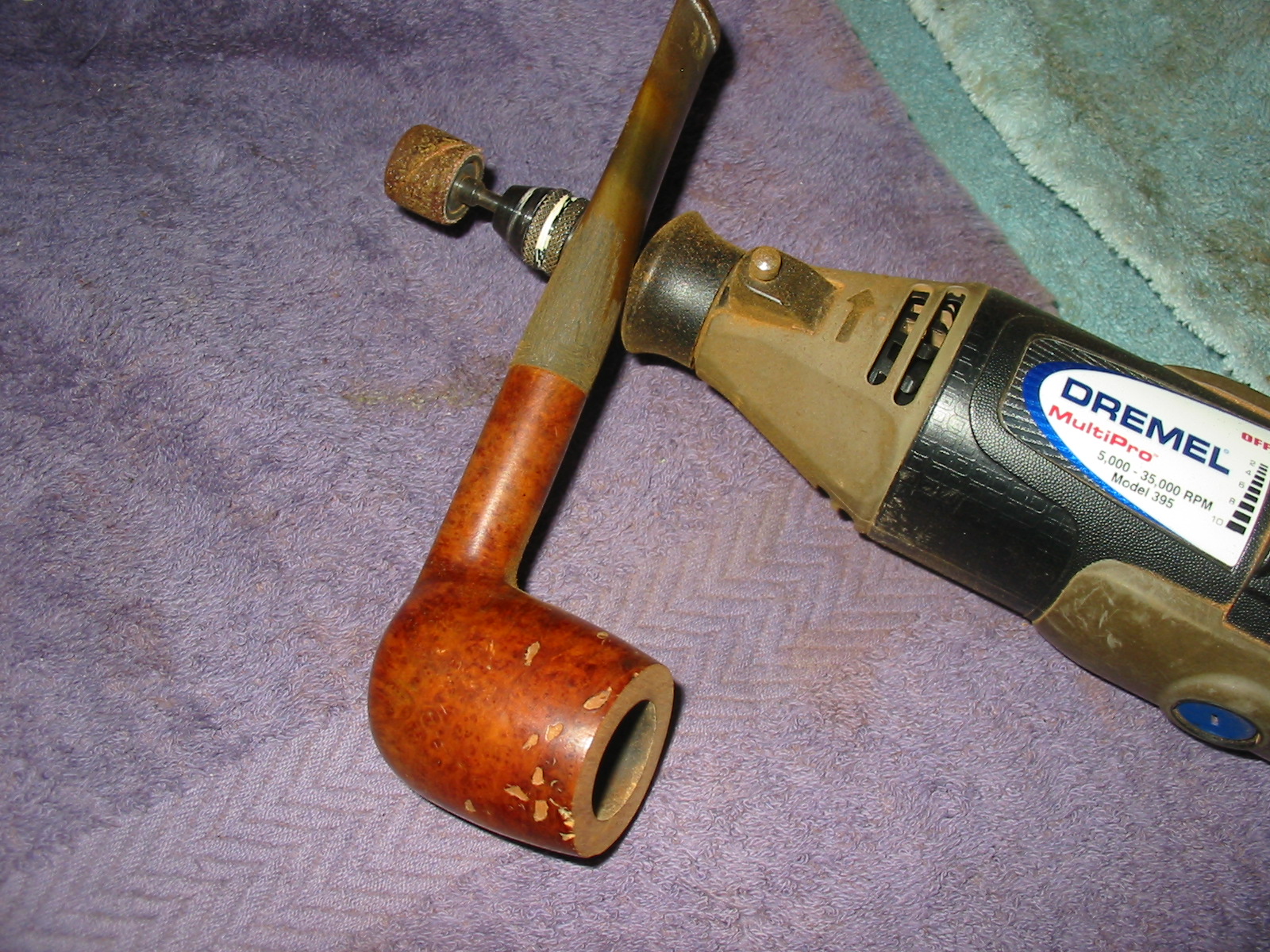
I cut off the end of the stem with a Dremel and sanding drum attachment. I cut it back to the place behind the bite mark that was solid and undamaged. The next four photos show the pipe with the damaged portion of the stem removed and a straight cut made across the end of the stem.
IMG_3671

IMG_3672

IMG_3674

IMG_3678

I took it back to the work table and reamed the bowl with a PipNet reamer. I used three of the cutting heads from the smallest up to remove the cake and clear out the debris in the bowl. I wanted to remove the cake to assess the soundness of the rim and the bowl of the pipe. I scrubbed the rim down with saliva and cotton pads. It took a lot of elbow grease to finally get the rim clean of the buildup and tars. In the photo below the burn mark on the front of the bowl is visible.
IMG_3679

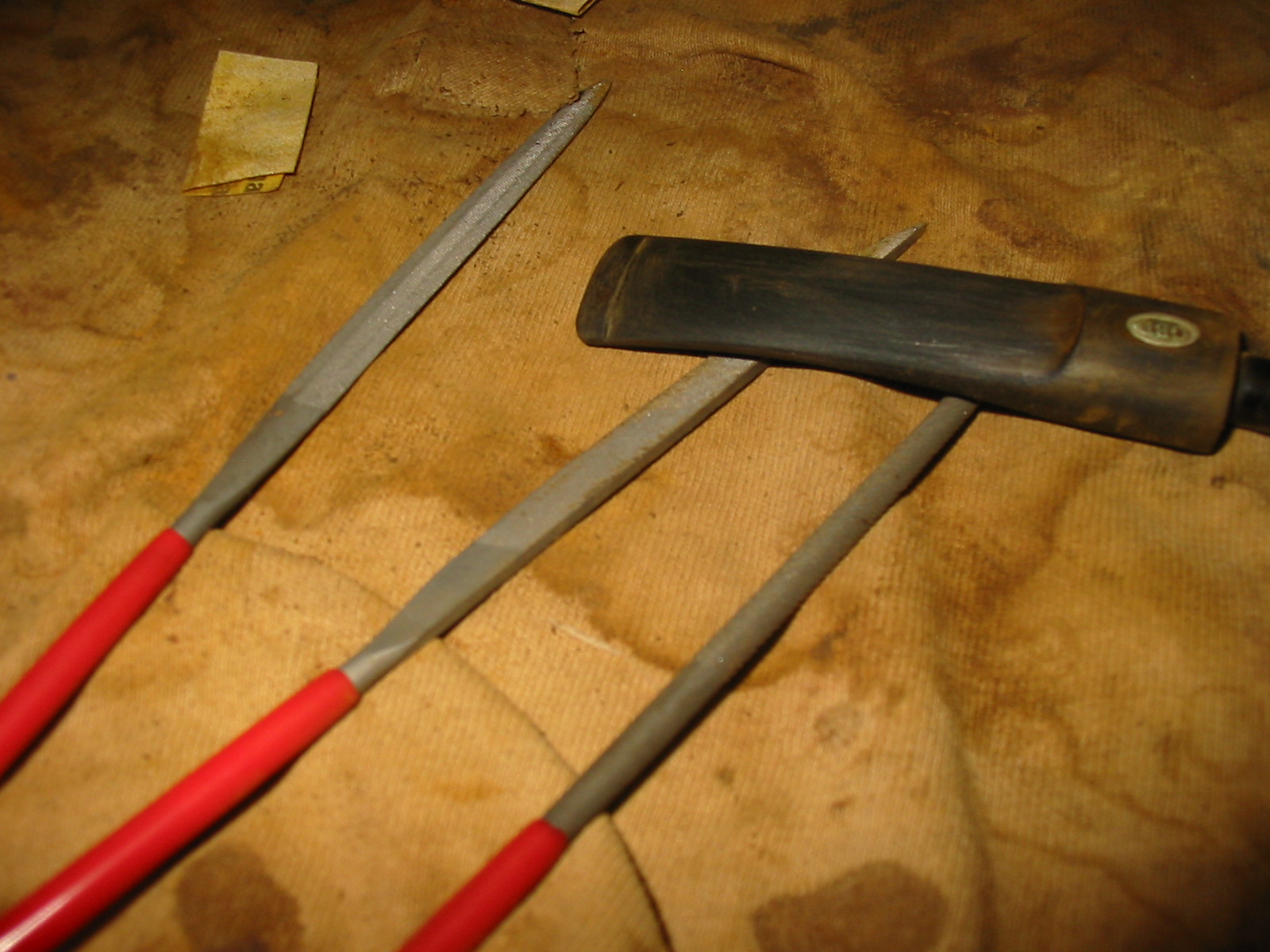
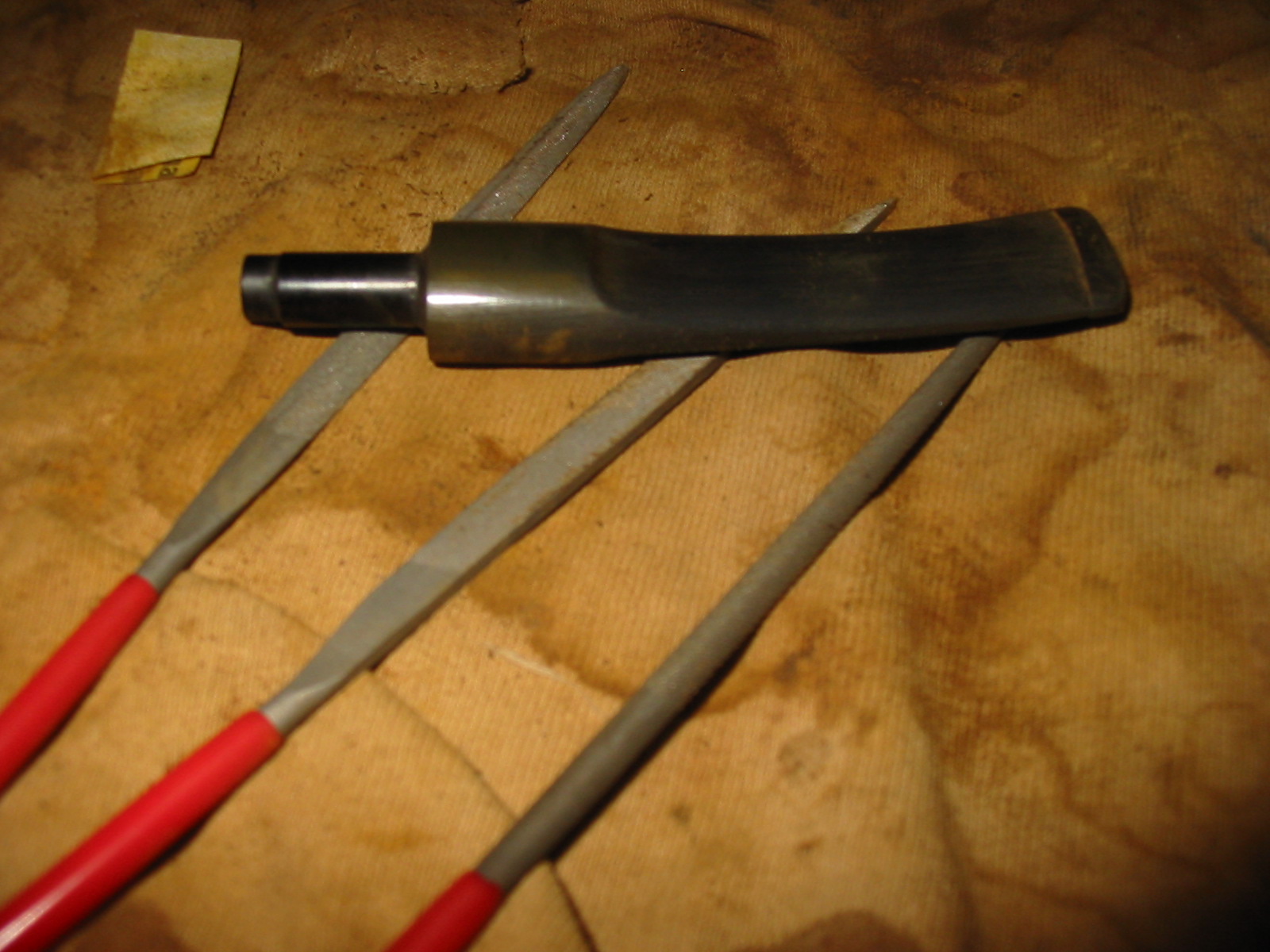
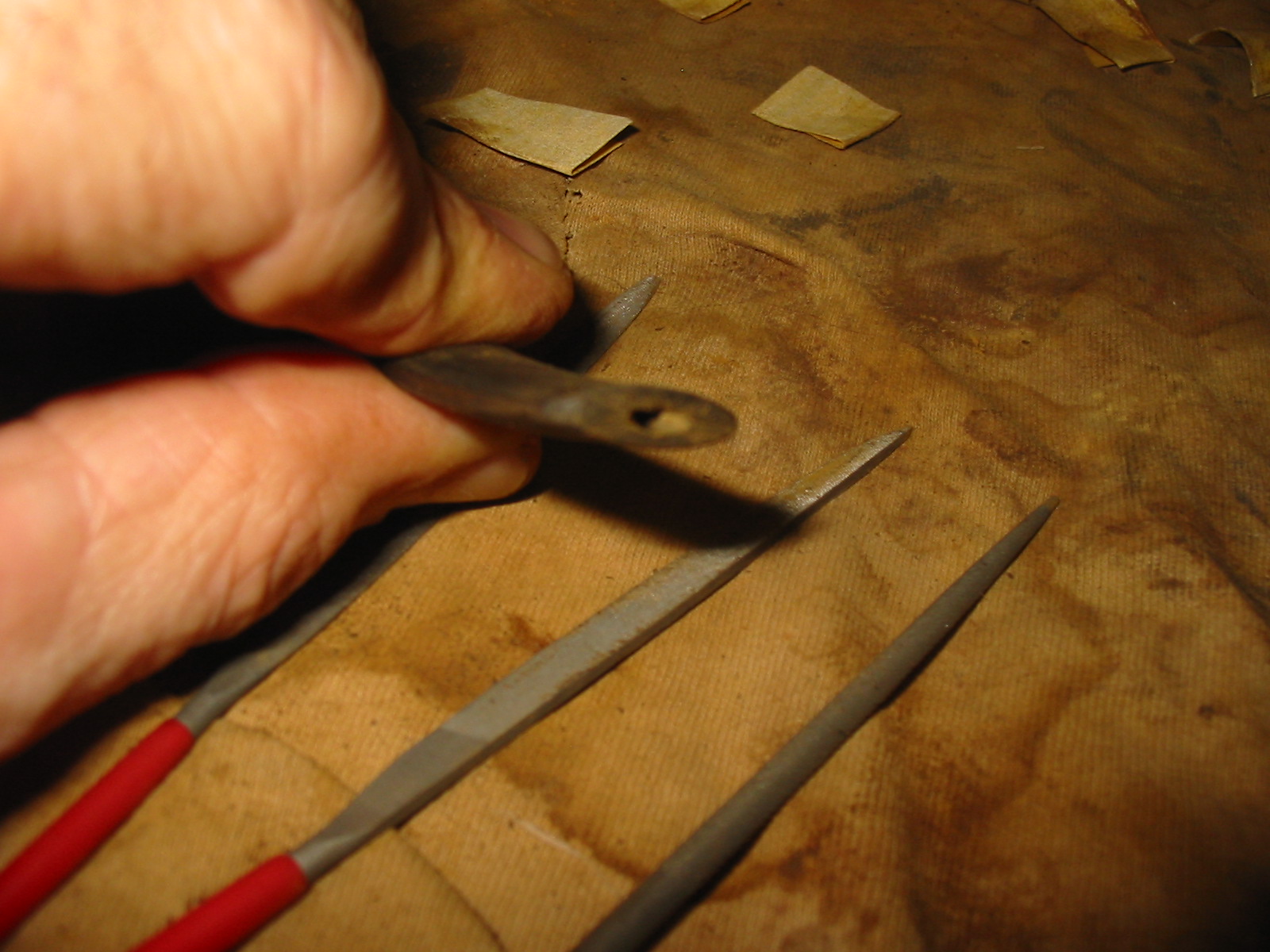
I used files, a wood rasp and needle files to cut the line on the button across the top and the bottom of the stem. I trimmed the thickness of the stem tapering toward the shank with the needle files. I wanted to thin down the stem and taper is more smoothly into the new button making for an even transition from the saddle to the edge of the button.
IMG_3680

IMG_3681

I used the needle files to open the end of the button and shape it into and oval and a funnel into the airway. I wanted a good open airway that would easily take a pipe cleaner.
IMG_3682

After working with the files I sanded the stem with 220 grit sandpaper to remove the oxidation and to continue to shape the stem into a smooth taper from the saddle to the button.
IMG_3683

IMG_3684

IMG_3686

IMG_3687

I sanded the end of the button to angle it back toward the slot and to smooth it out and shape it. I also used the needle files to clean up the straight edge of the button.
IMG_3688

IMG_3689

Once I had the taper and the angles correct I sanded the stem with a medium grit sanding sponge to remove the scratches from the sandpaper.
IMG_3690

IMG_3691

When the stem was finished in terms of shaping I moved on to work on the bowl. I wanted to stain the rim and the edges of the bowl where the burn marks were. I used a red mahogany Minwax stain and rubbed it into the rim and gave the entire pipe a stain coat. Once I had wiped that off with a clean towel I gave it a second coat of medium walnut stain to blend it in even more with the rest of the bowl. I buffed it with White Diamond to polish it and give it a shine.
IMG_3692

IMG_3693

IMG_3694

IMG_3695

I sanded the stem with my regular regimen of micromesh sanding pads – wet sanding with the 1500-2400 grit pads and dry sanding with the 3200-12,000 grit pads. I rubbed in a coat of Obsidian Oil and when it had dried took the stem to the buffer and buffed it with White Diamond to give it a shine.
IMG_3696

IMG_3698

IMG_3699

I buffed the entire pipe with White Diamond and then multiple coats of carnauba wax. I finished by buffing the bowl and stem with a clean buff with soft flannel to bring out a high shine. The finished pipe is shown below in the pictures. The shortened stem came out looking very good and the reduced length does not detract from the look of the pipe as a whole.
IMG_3700

IMG_3701

IMG_3702

IMG_3703

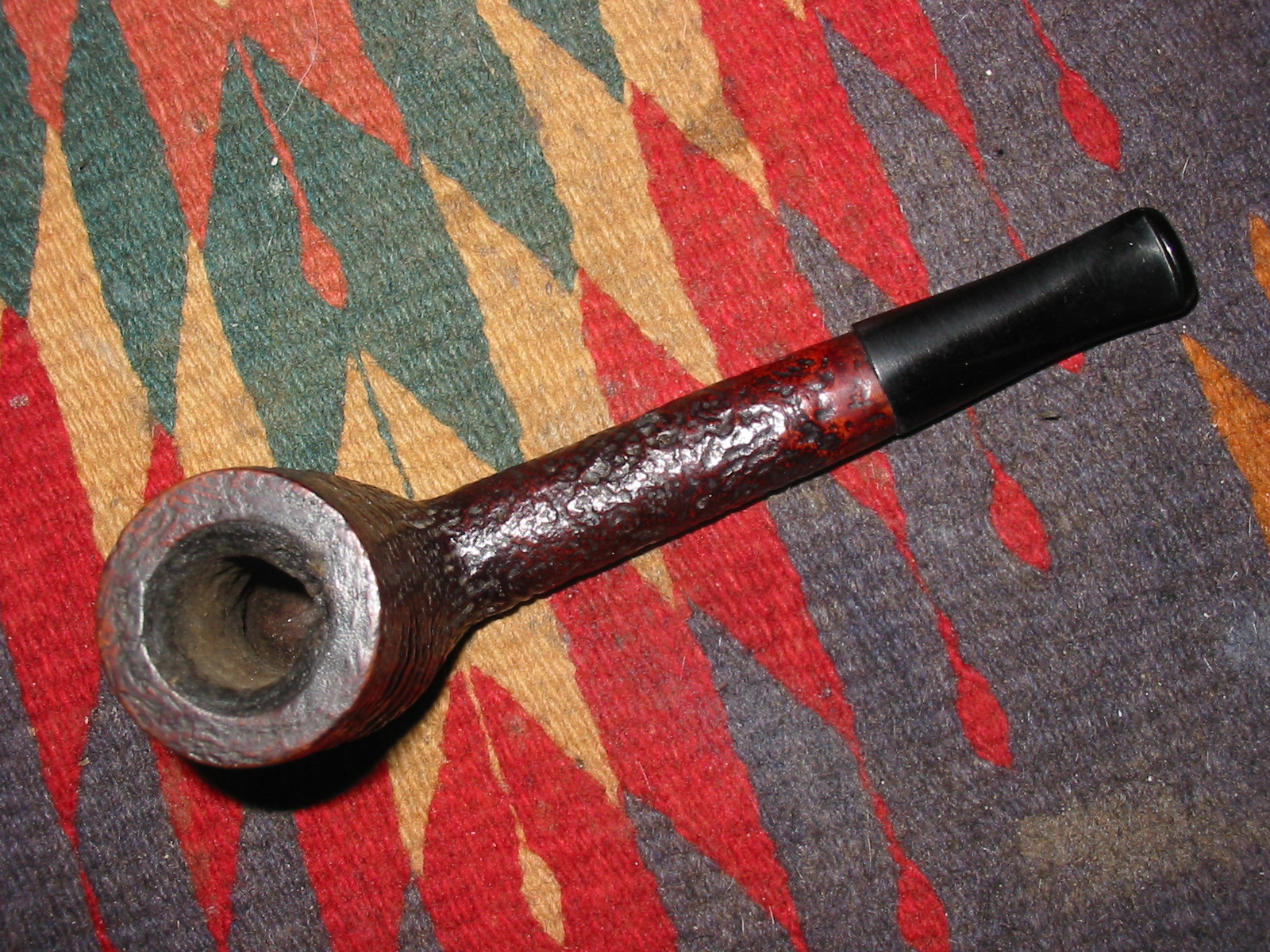
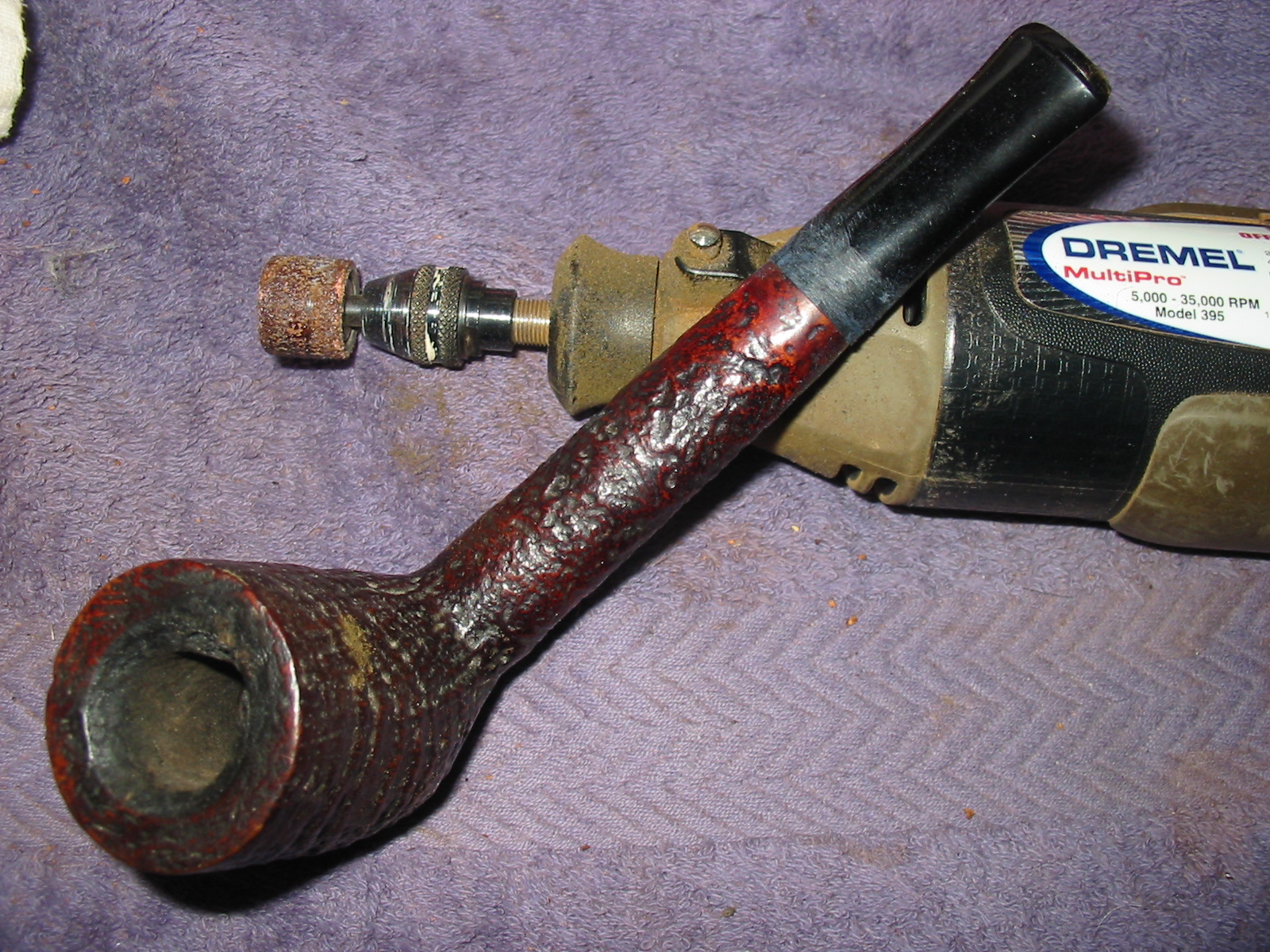
Reclaiming a Digby Conquest Canadian


Blog by Steve Laug

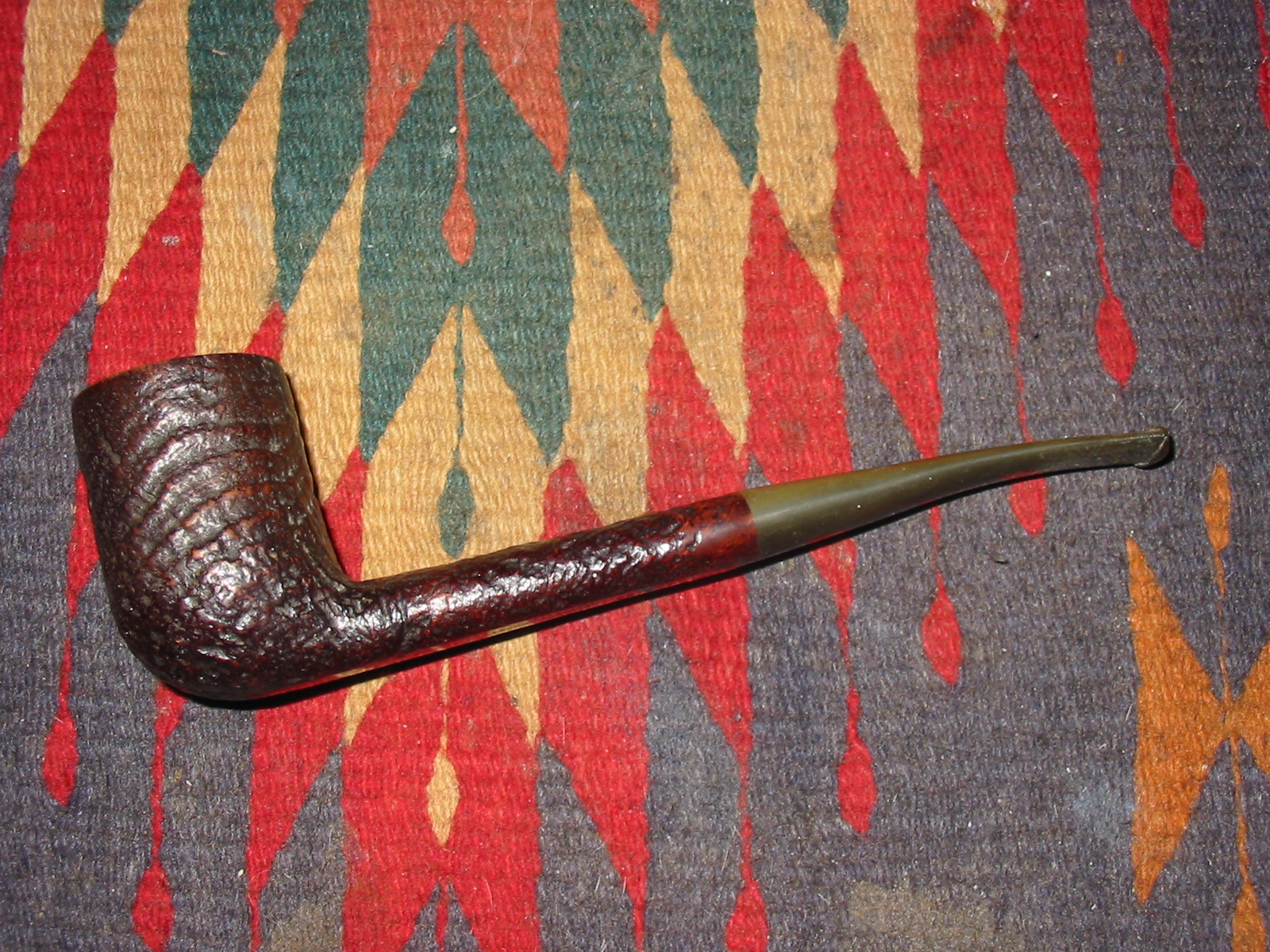
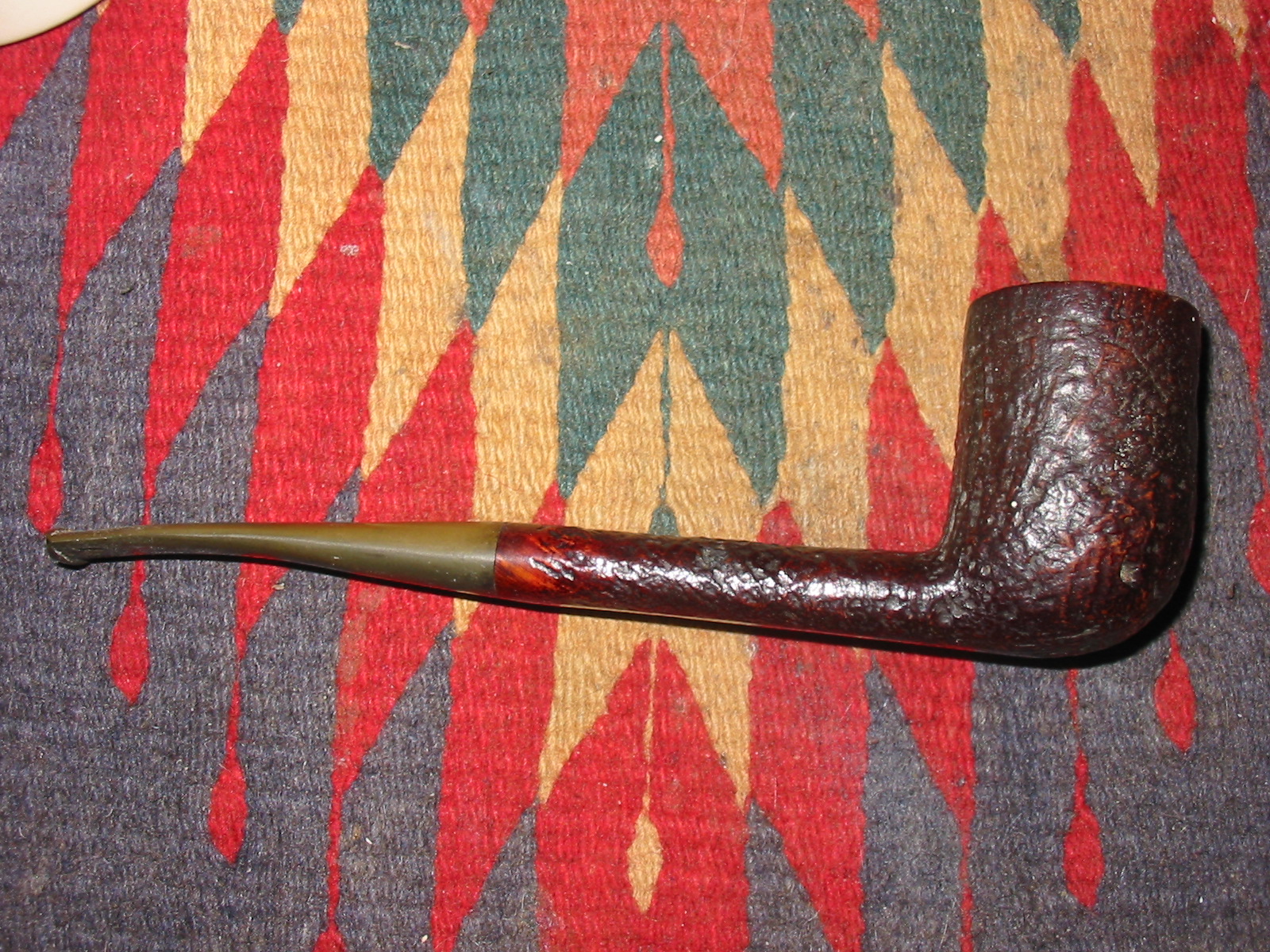
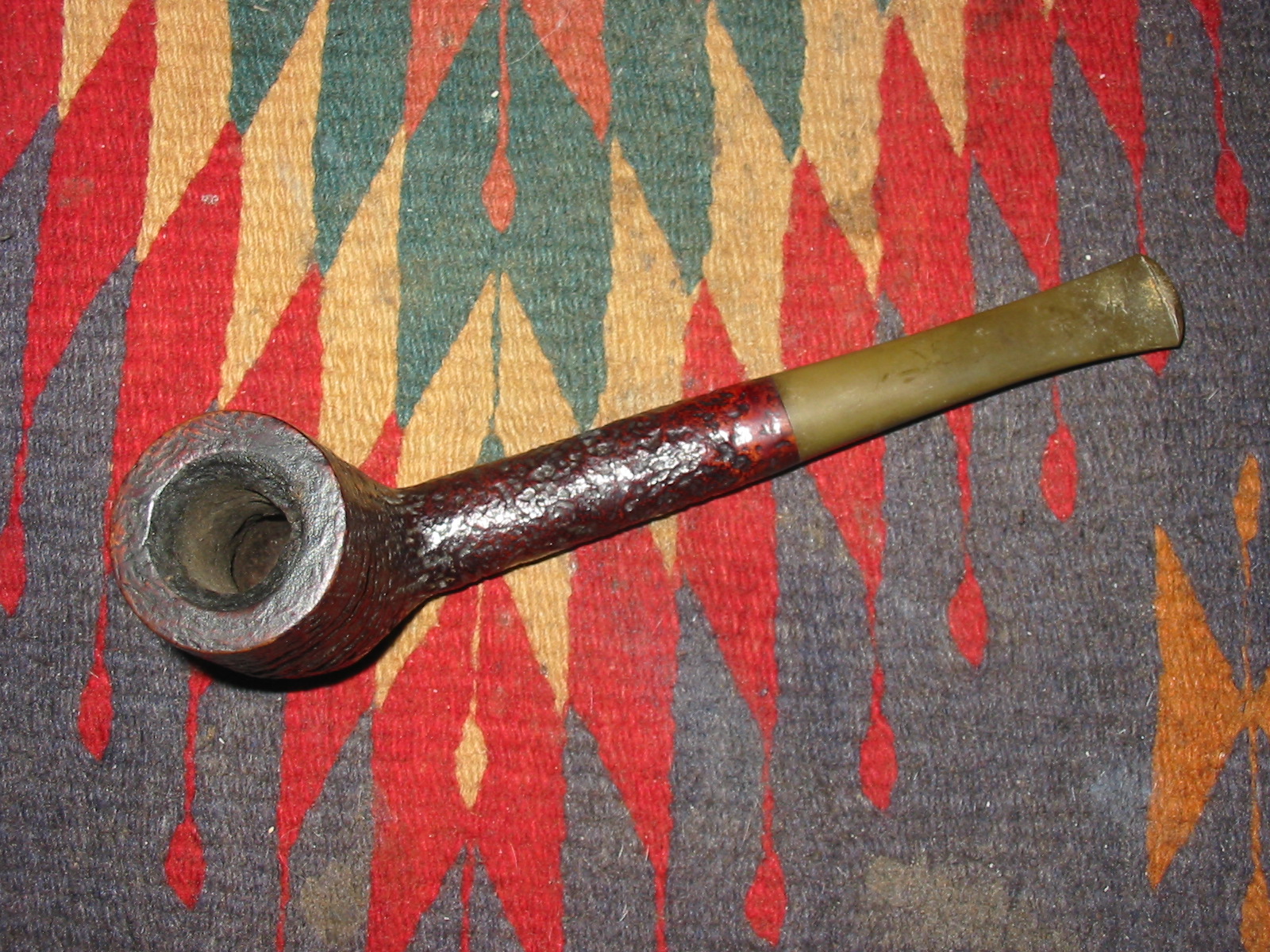
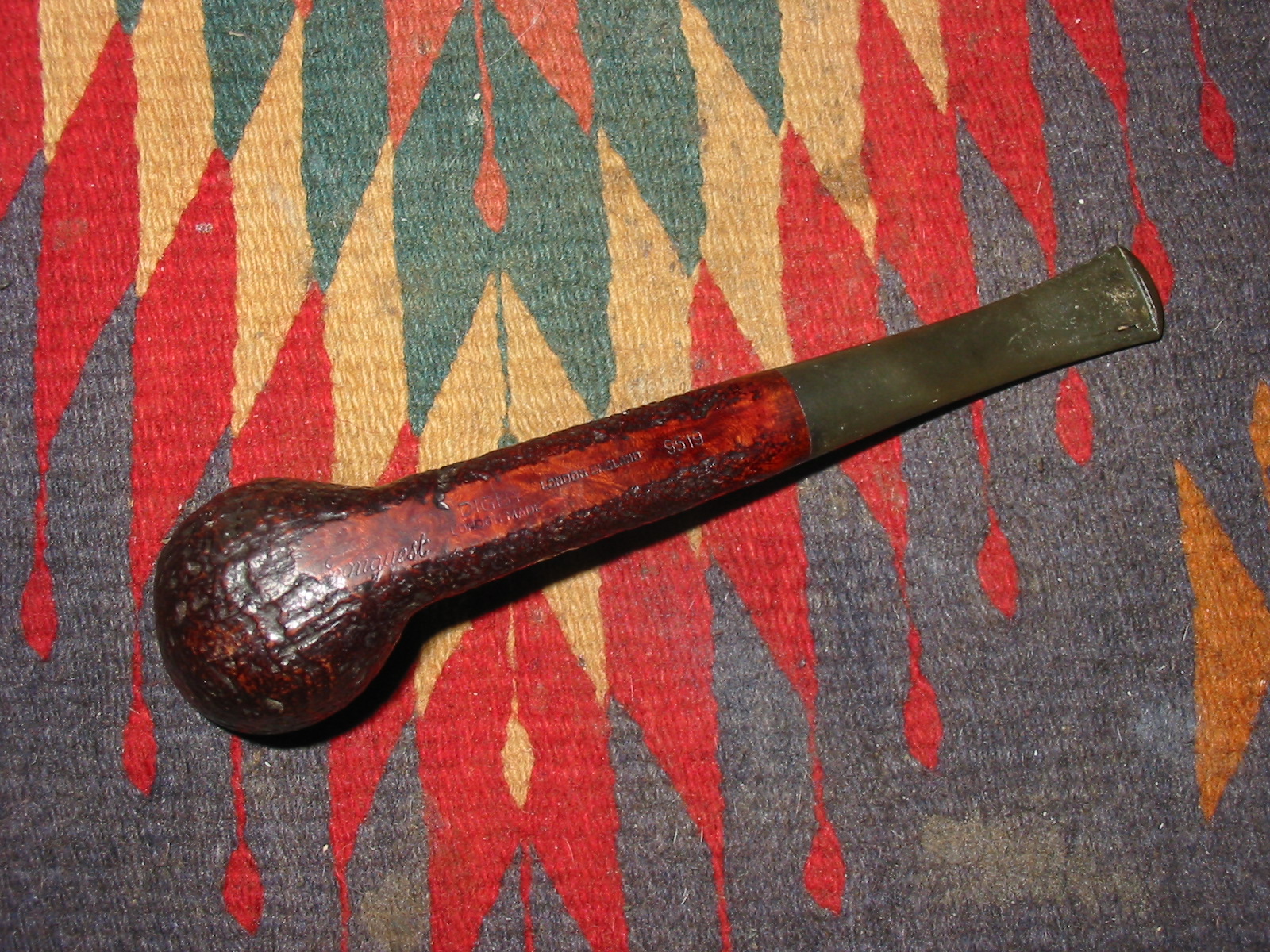
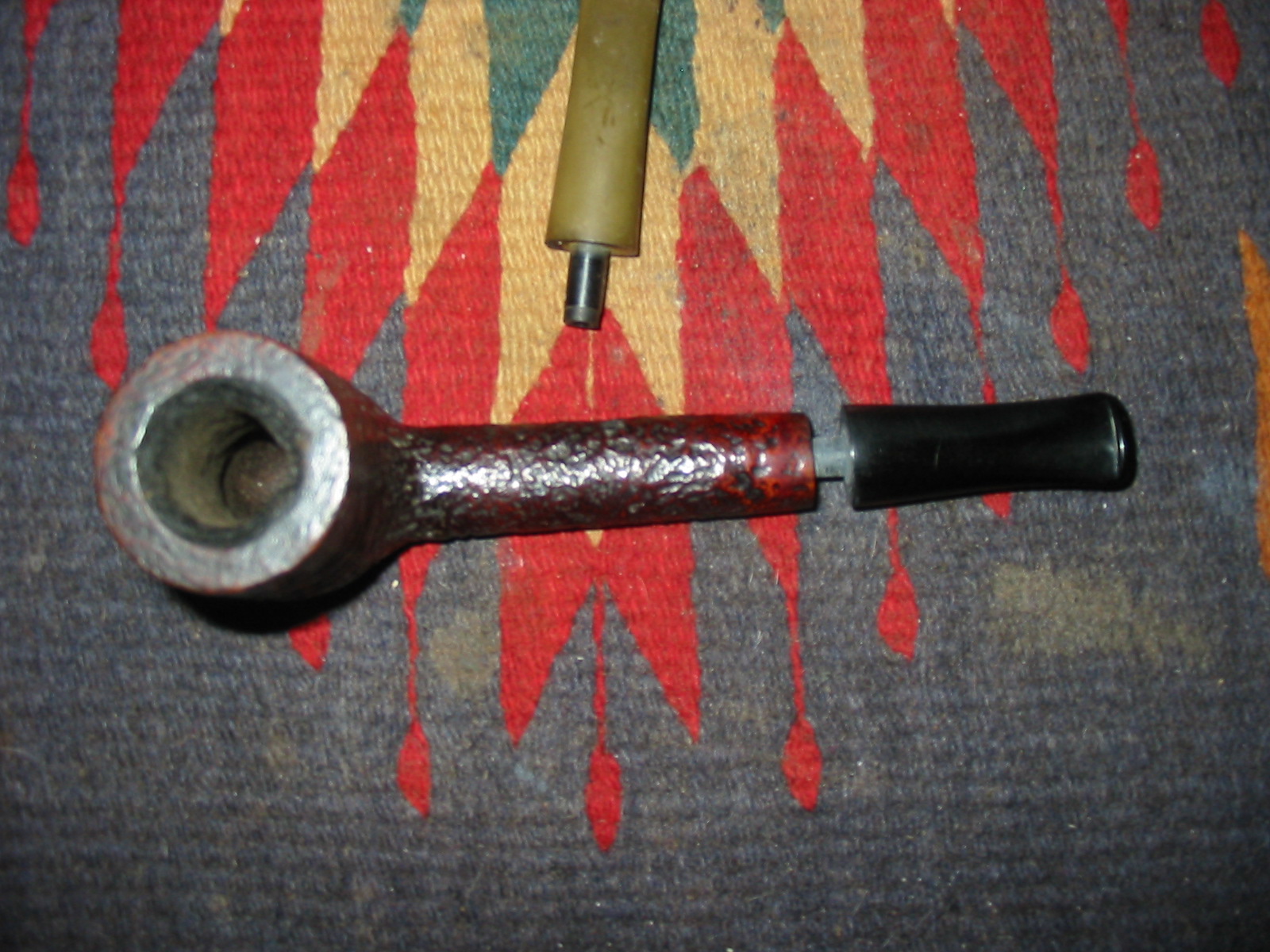
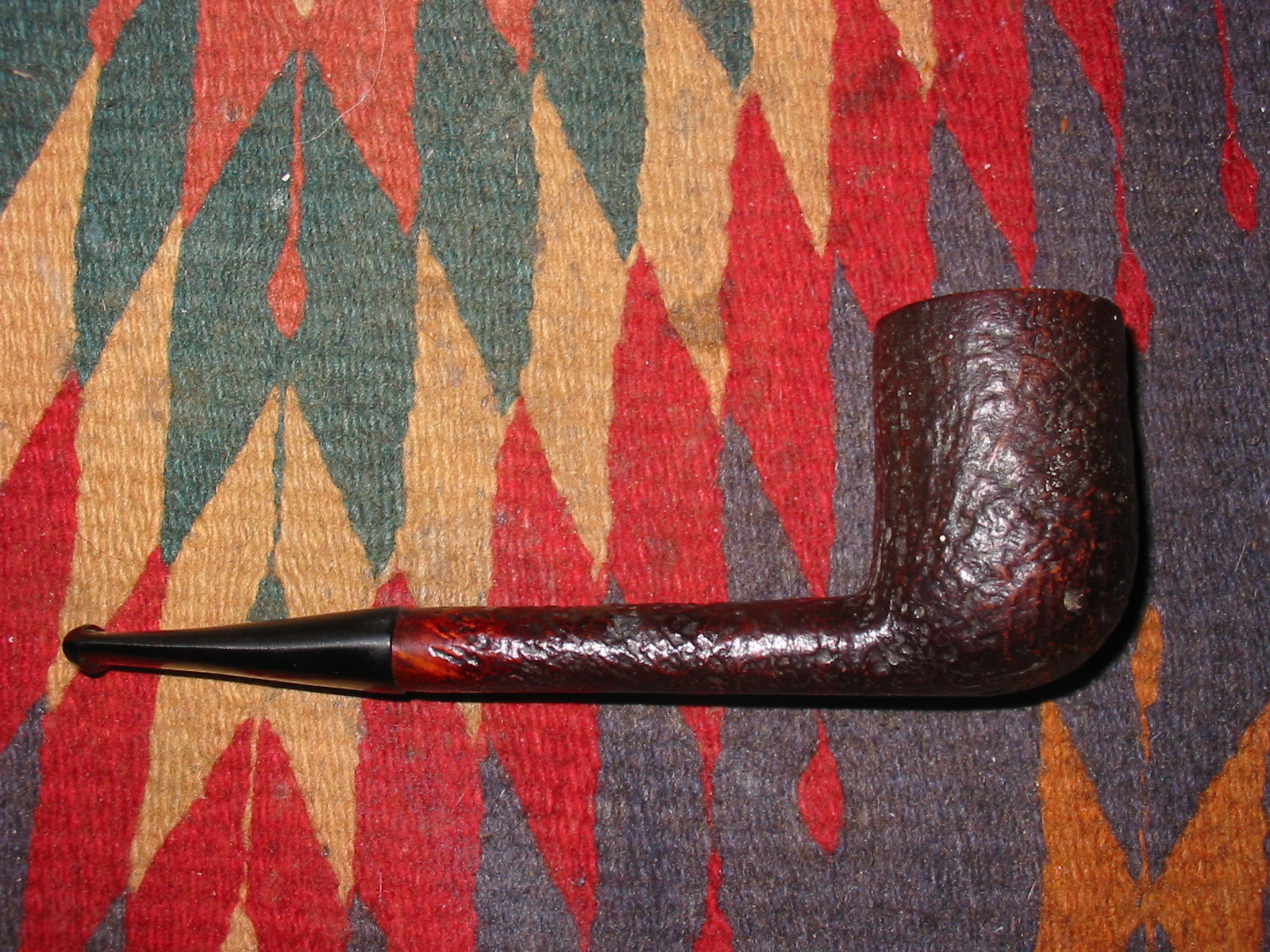
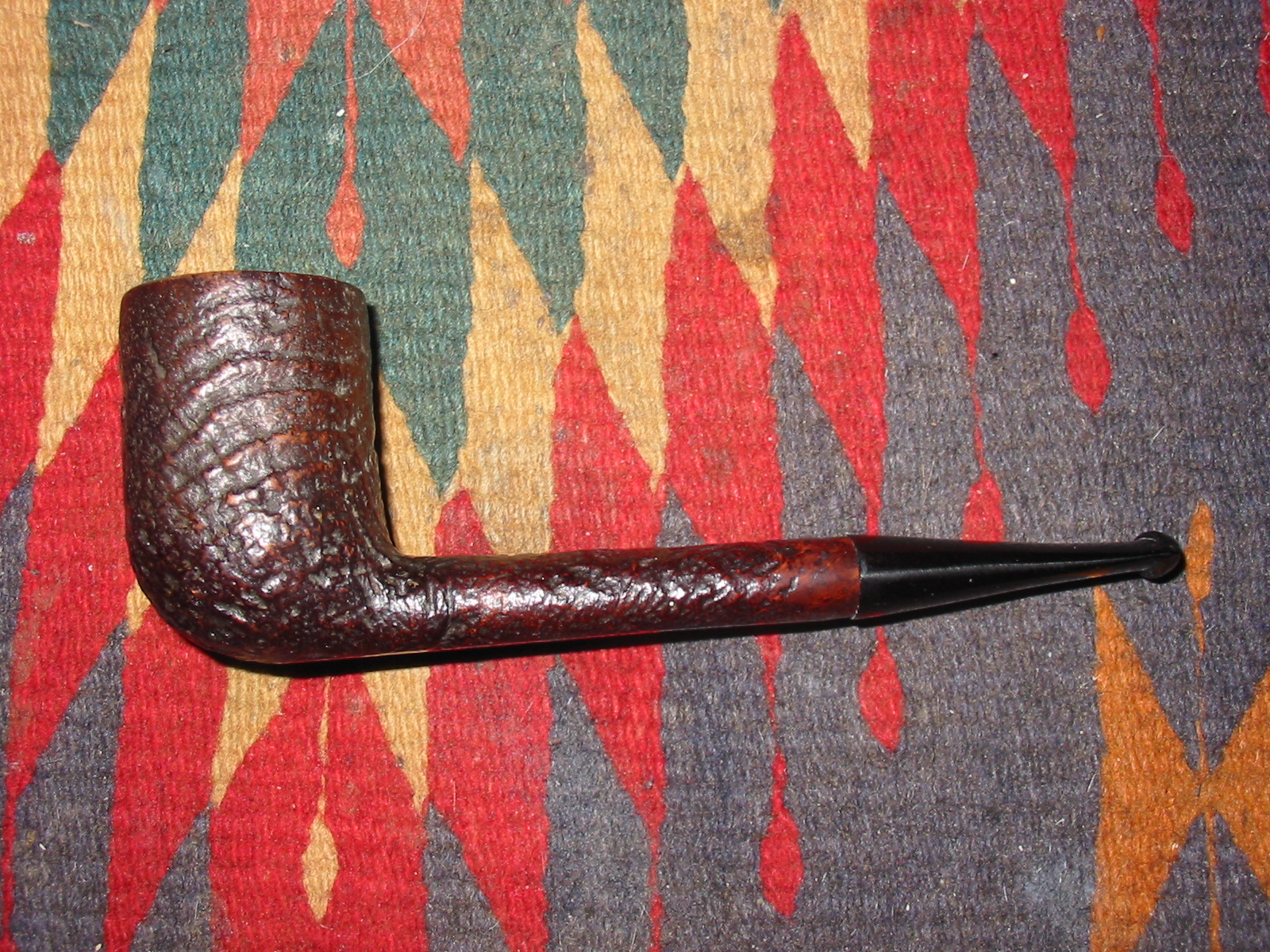
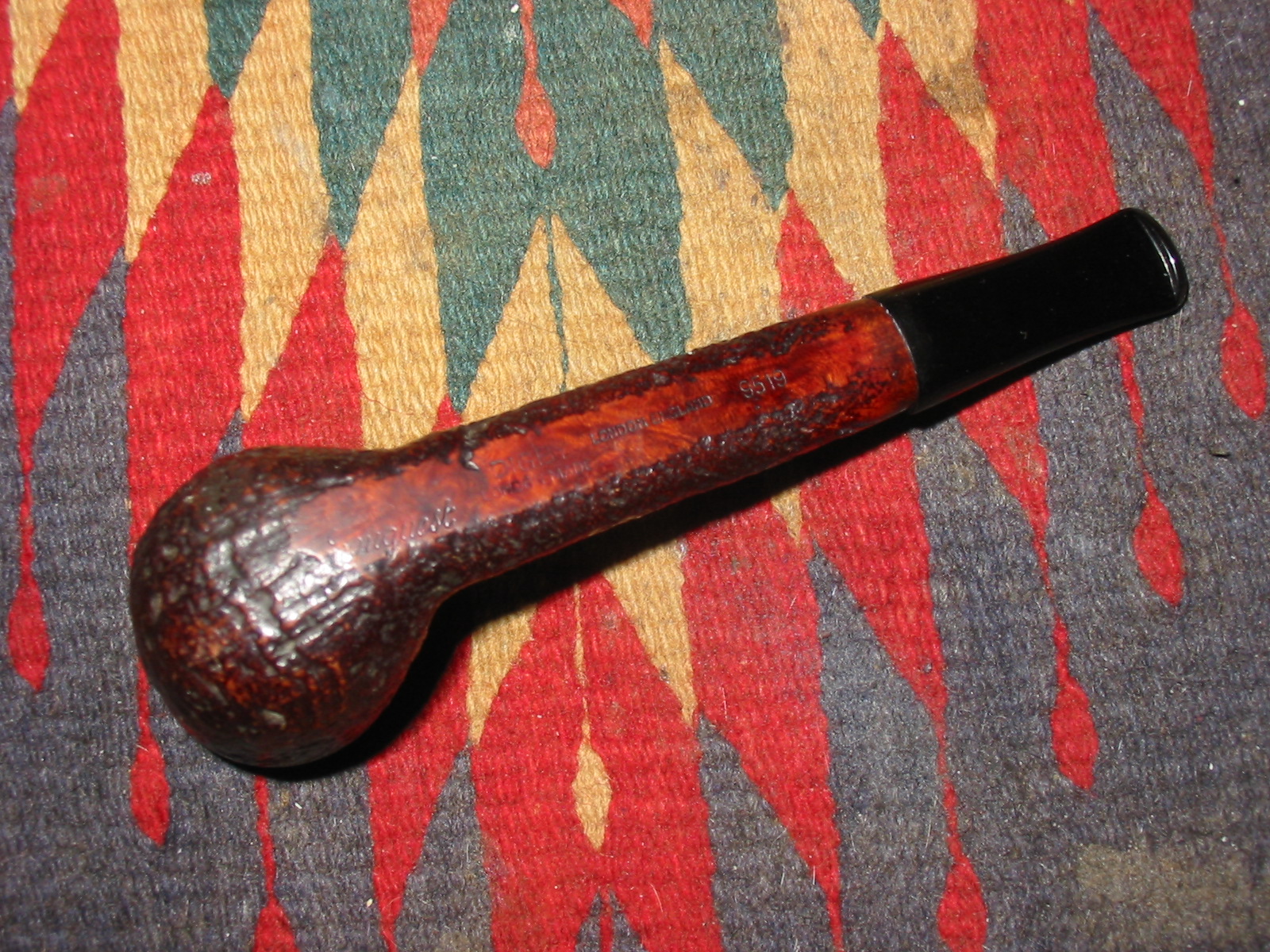
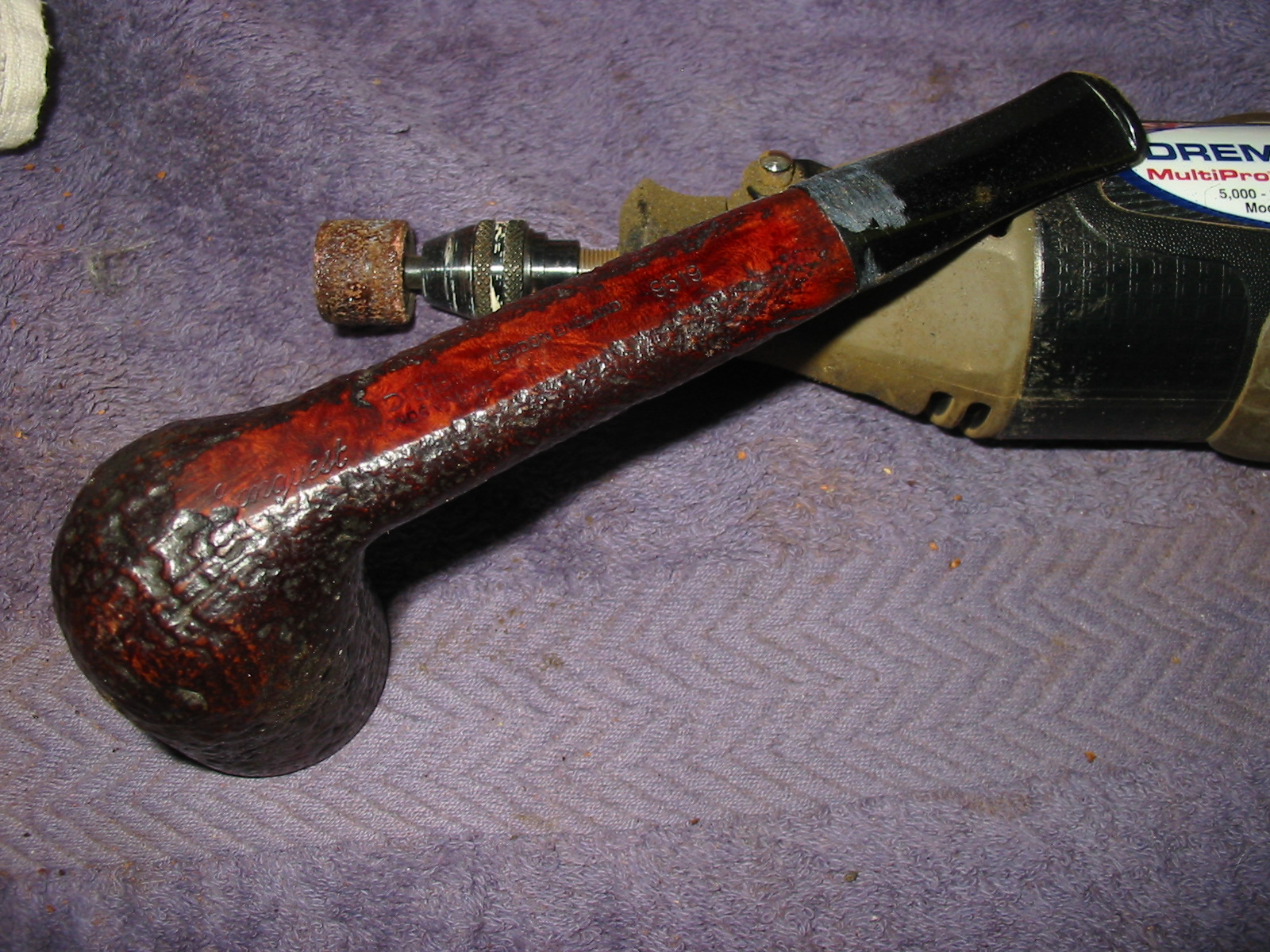
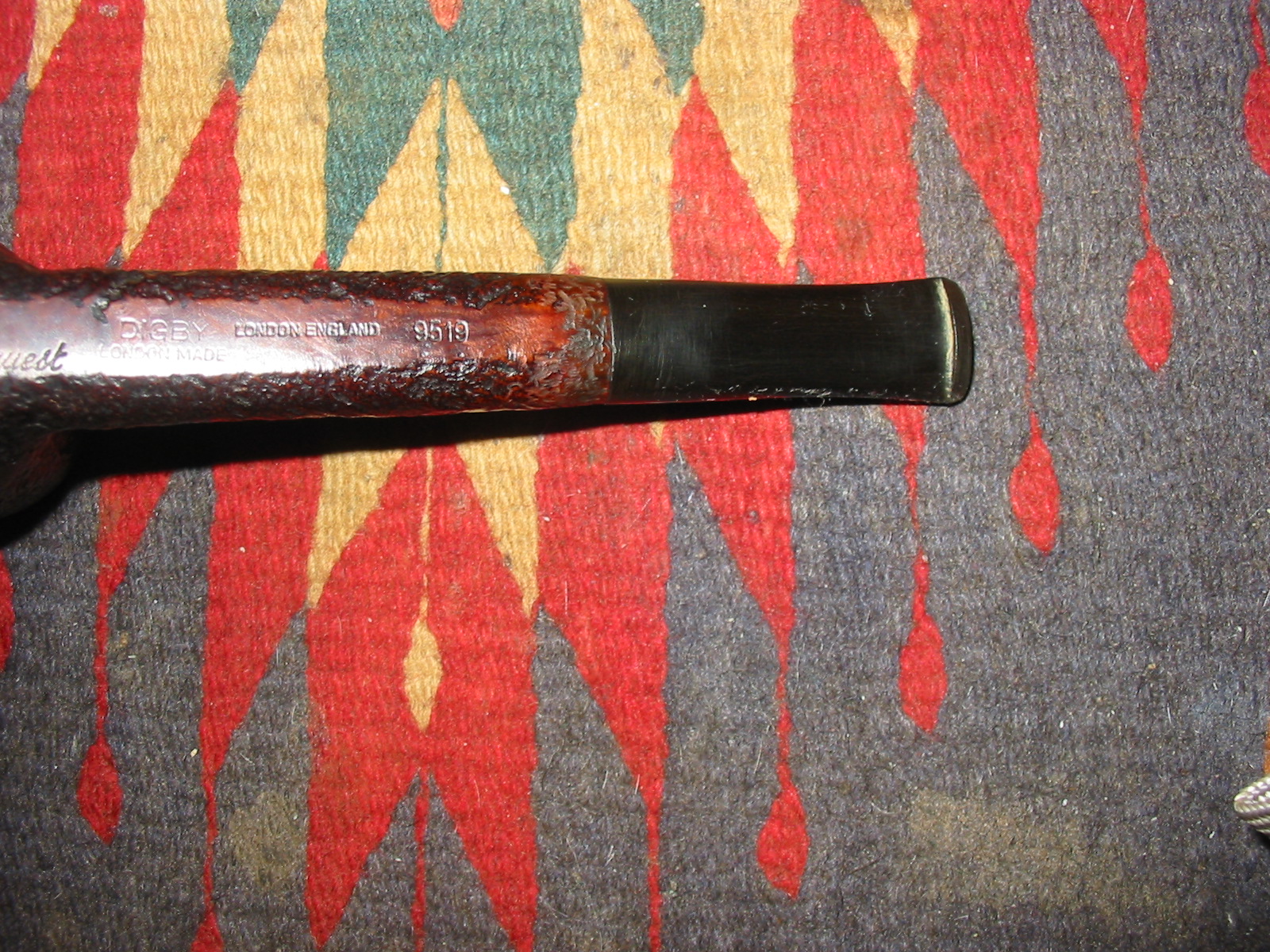
On the weekend I went pipe hunting to refill my box of pipes for refurbishing. I found some nice ones to add to the box. The first one that I took on was odd looking when I picked it up. The stem on it was an aftermarket replacement that proportionally was all wrong. The addition of the stem made the pipe over seven inches long. The stem was also a twin bore which was not standard on GBD line pipes. The stamping on the bottom of the shank is Conquest in script followed by Digby over London Made. That is followed by London England and the shape number 9519. Digby is a GBD second line. It has the same blast as a GBD Prehistoric which lends one more question mark to what makes a pipe a second. In checking the GBD shape numbers there is no shape #9519 listed on the GBD shape site. http://www.perardua.net/pipes/GBDshape.html

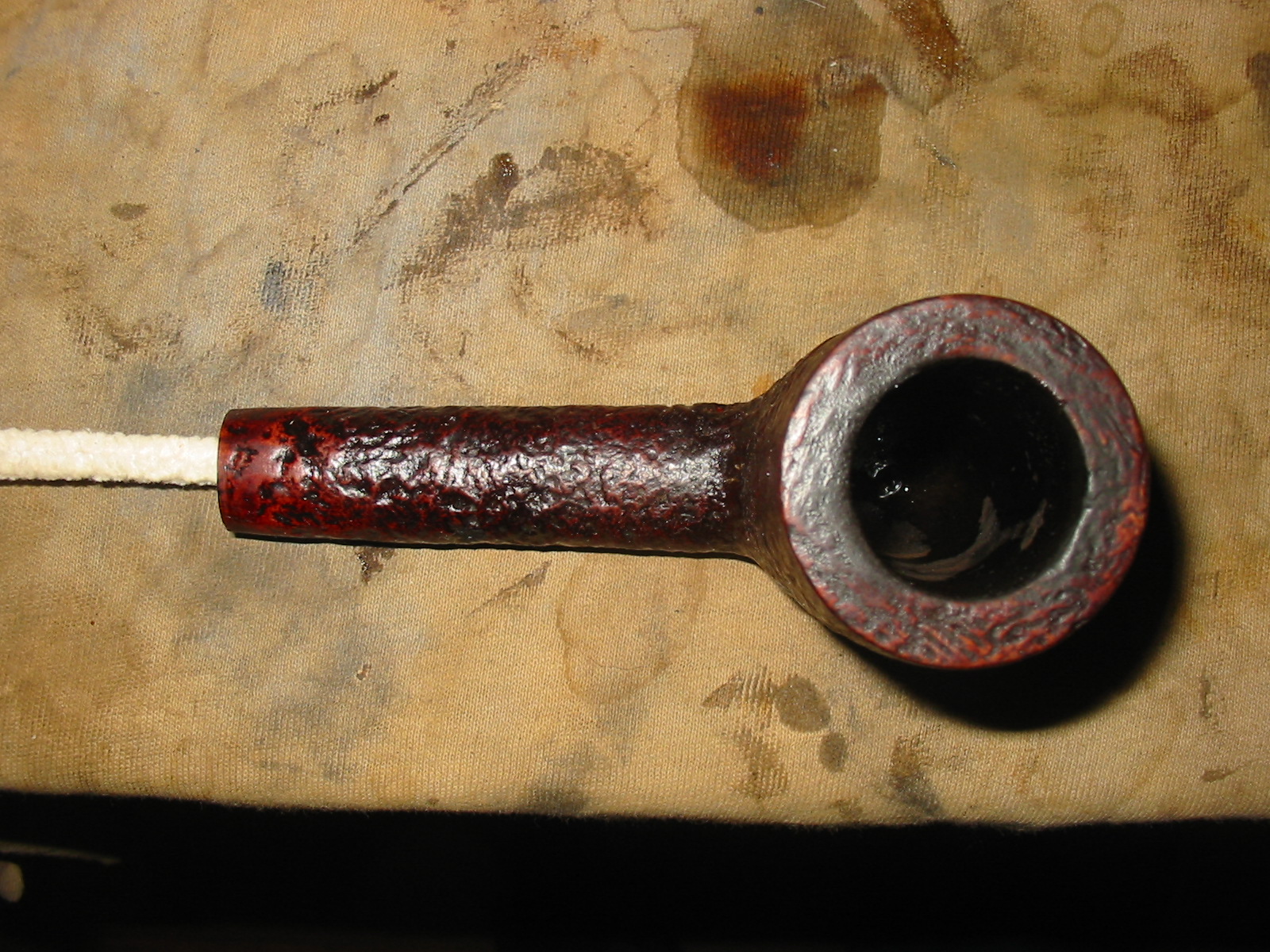
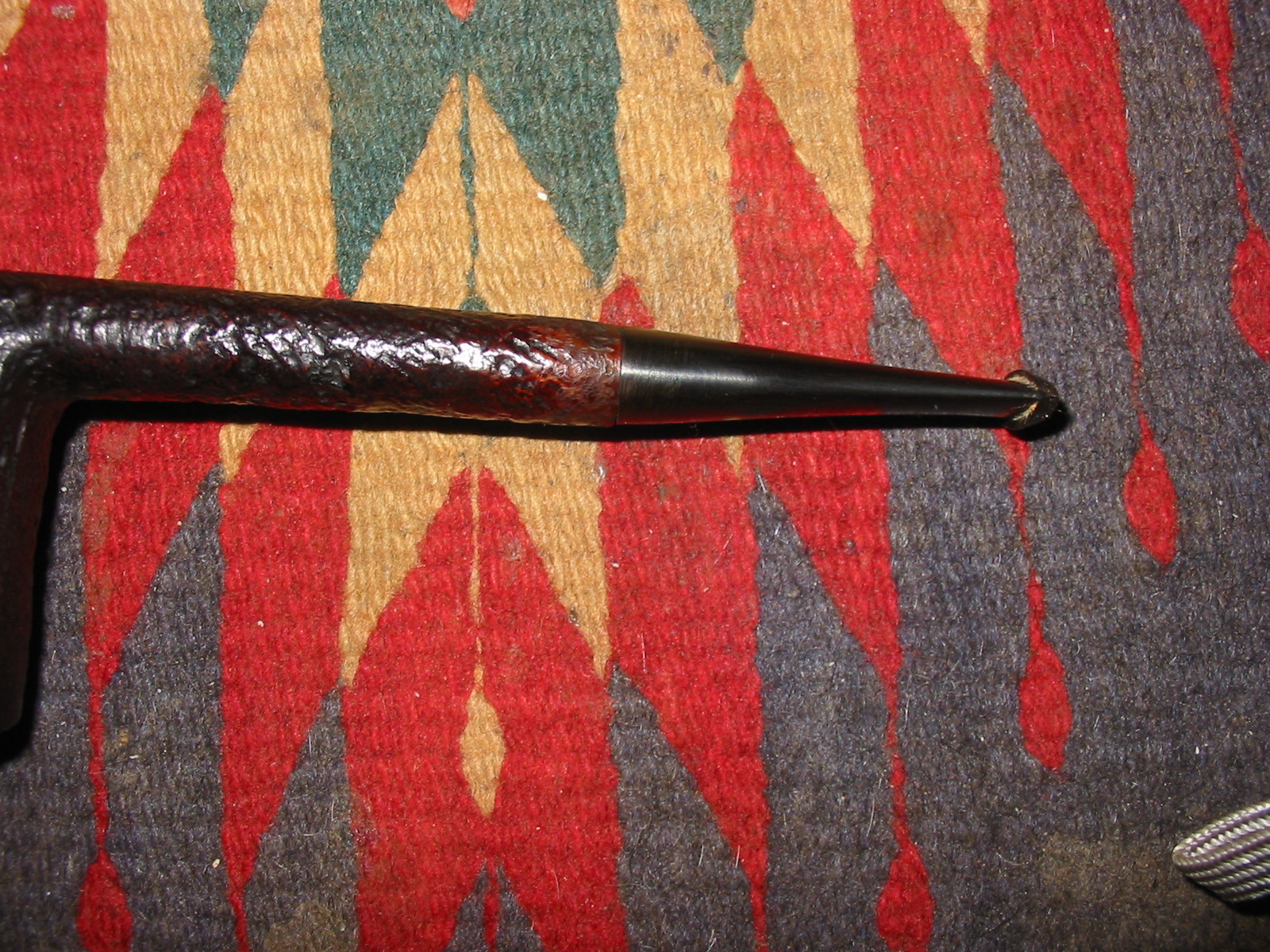
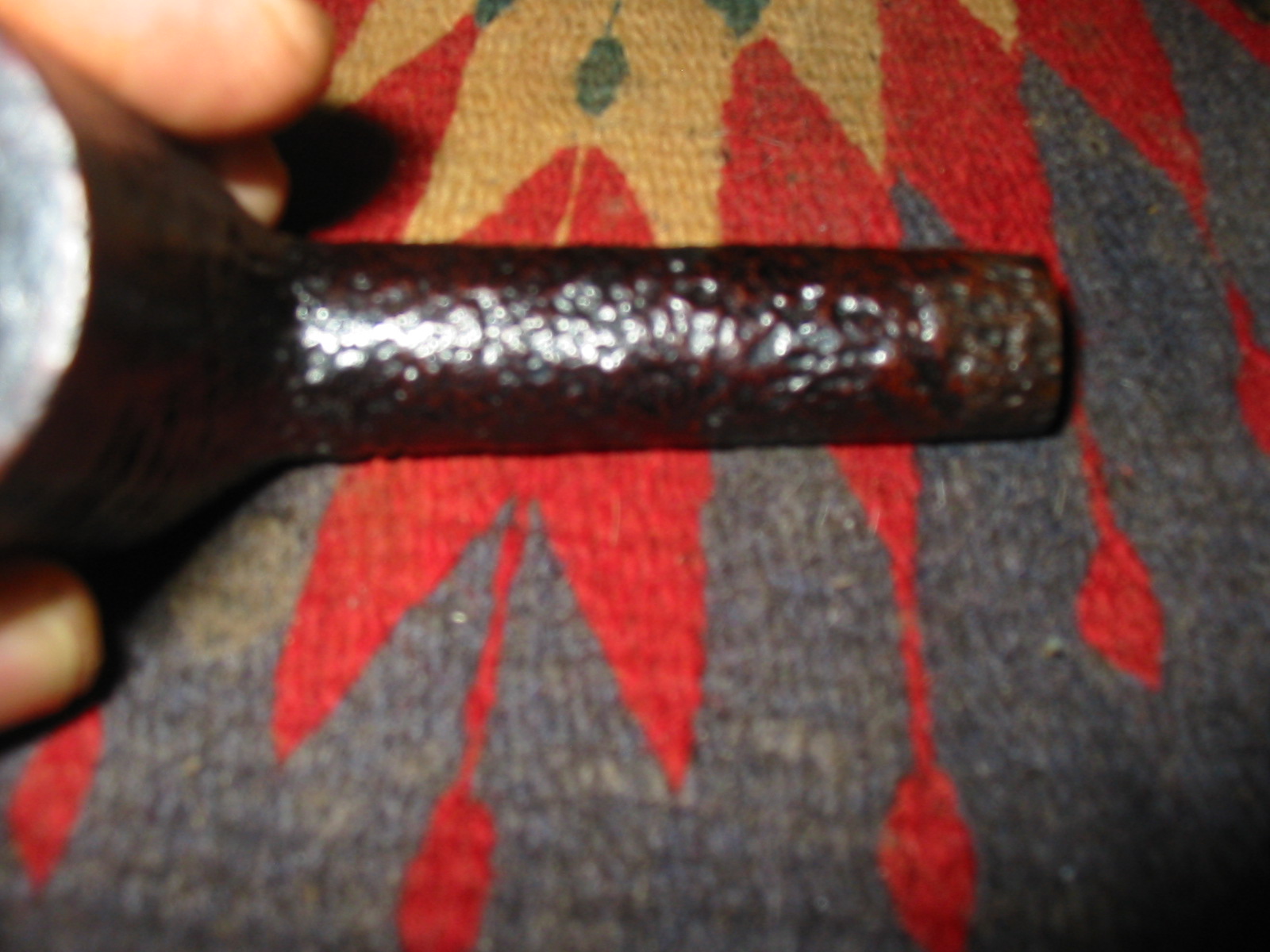
The blast on the bowl was quite nice while the shank was rusticated. The person who added the new stem to the pipe changed the shank to fit the new stem rather than the other way around. In doing so they sanded the shank and removed the blast/rustication on the end of the shank. They also tapered both sides and top and bottom to meet the new stem. While both of these “errors” in fitting a stem are a pain to deal with they are not irreparable. It just means that any new stem must follow the new lines of the pipe and that the rustication pattern needs to be repaired as well. The bowl itself was thickly caked and the rim dirty and with a slight buildup of tars. The finish was spotty and the reddish brown stain was worn.
IMG_3467

IMG_3468

IMG_3469

IMG_3470

I went through my can of stems to find one that would properly fit a GBD style Canadian with an oval shank and found several. I chose the acrylic one in the photo below and used the PIMO Tenon Turning tool to reduce the diameter of the tenon. I also used the Dremel and sanding drum and hand sanding to further fit the tenon to the shank.
IMG_3471

IMG_3460

With the tenon fitting well, the overall diameter of the stem needed to be reduced to fit the shank diameter. It was just slightly bigger so the work on it would not be difficult. The excess is visible in the four photos below. Note also the smoothing of the shank that had been done in the previous repair.
IMG_3463

IMG_3464

IMG_3465

IMG_3466

I used a Dremel with a sanding drum to remove the excess acrylic material and bring the stem into line with the shank. I took care to not nick the shank even though I later planned to rework the rustication on it.
IMG_3472

IMG_3473

IMG_3474

IMG_3476

With the fit roughed in I took it back to the work table to hand sand the stem and make fit seamless. To begin the process I used 220 grit sandpaper to do the hand work. On the right side bottom of the shank I noted that the oval was slightly out of round with the stem removed and gave the new tapered stem a bulge in that area. I sanded the shank and the stem together at that point to correct the previous damage.
IMG_3477

IMG_3478

IMG_3479

IMG_3480

With the fit nearly finished on the stem I reamed the bowl of the pipe with a PipNet reaming set. I began with the smallest cutting head and then ended with the proper sized head for the bowl. I cut the cake back to bare wood.
IMG_3481

IMG_3482

IMG_3484

I worked some more on the stem shank junction with a fine grit sanding sponge to remove the scratches in the briar and the stem. I was more concerned with the briar as I wanted to give it a coat of stain.
IMG_3493

IMG_3494

IMG_3495

IMG_3496

Staining would be a complicated process of using a variety of stains to match the original stain colour on the prehistoric. For the first stain colour I used an oxblood aniline stain. I would use other stains later in the process to get the colour I was aiming for.
IMG_3504

IMG_3506

As I put the newly fitted stem in place so that I could lay it down to dry the tenon snapped on the new stem. As I examined it I could see the many small fractures in the acrylic. This is one of the frustrations of pipe repair. You get a pipe on its way to the finish line only to have something like this happen and have to begin again. I took another stem out of my can of stems. I once again had to go through the process of turning the tenon, using the Dremel and sanding drum and finally hand sanding to fit the tenon in the shank. I also had to trim back the diameter of the new stem to match the shank with the Dremel. One good thing is that doing it the second time everything is set up to do it again more quickly the second time.
IMG_3508

IMG_3509

IMG_3510

Once I had a good fit on the stem it was time to re-rusticate the shank using an etching head on the Dremel. In the next two photos the cutting tool is visible and the rustication of the shank is completed. I did both sides of the shank and the top to match the pattern on the upper portion of the shank. On the underside I brought the pattern around the flattened oval stamping area of the shank and matched the pattern around that area.
IMG_3511

IMG_3513

I stained the newly rusticated shank area with the oxblood stain. The stained rustication is visible in the next four photos. I am pleased with the match on the pattern of the rustication on the shank that I was able to achieve with the tool.
IMG_3515

IMG_3516

IMG_3517

IMG_3518

I still needed to use several more colours of stain to achieve a match to the bowl. I used aniline black and an aniline dark brown stain to approximate the mix of stains to blend the repaired portion with the remainder of the pipe. I would still need to do a top coat of oxblood to truly blend in the repair.
IMG_3519

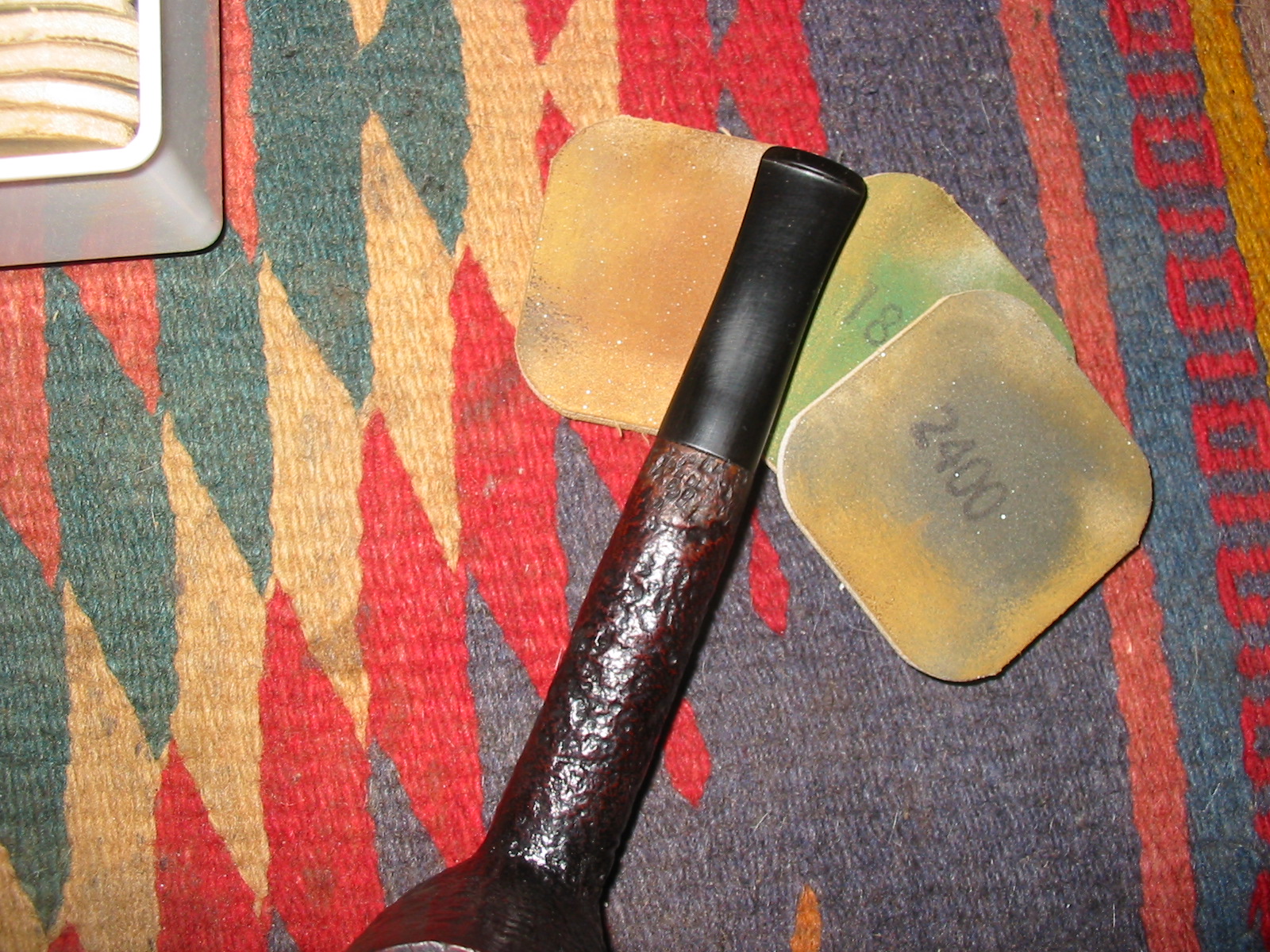
I sanded the stem with the usual regimen of micromesh sanding pads. I wet sanded with 1500-2400 grit pads and dry sanded with 3200-12,000 grit pads.
IMG_3520

I gave the shank a final coat of the oxblood stain and lightly buffed the shank with White Diamond to blend the wear of the older portion with the new rustication. I rubbed down the stem with Obsidian Oil and then buffed the stem with White Diamond as well. Once the buffing was done I gave the stem multiple coats of carnauba on the wheel and then buffed it with a soft flannel buff. I rubbed in Halcyon II wax on the bowl and shank and then lightly buffed the bowl with a soft flannel buff. The “new” Digby Canadian is now ready for its inaugural smoke. It is shown below in the final four photos.
IMG_3540

IMG_3541

IMG_3542

IMG_3543

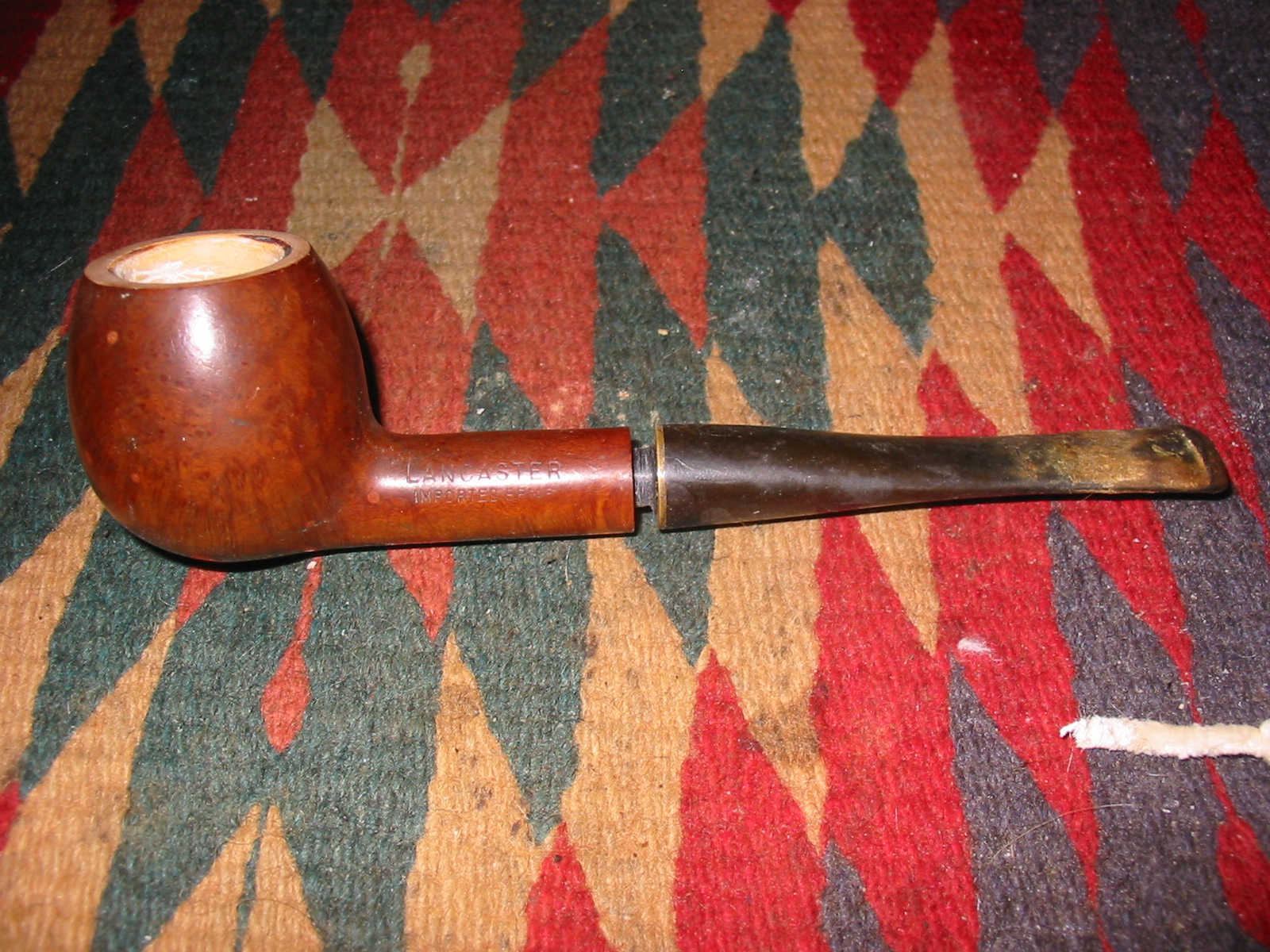
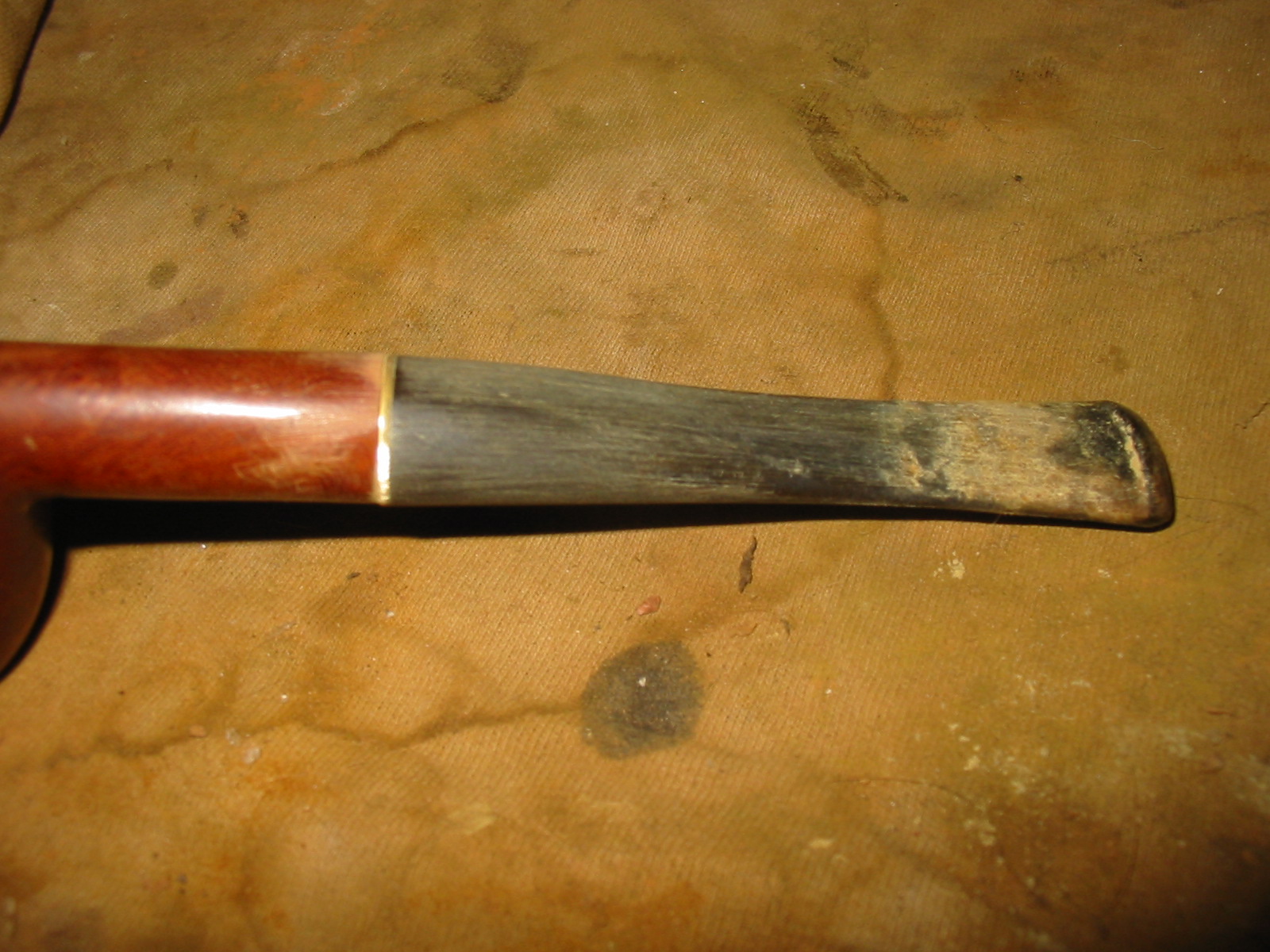
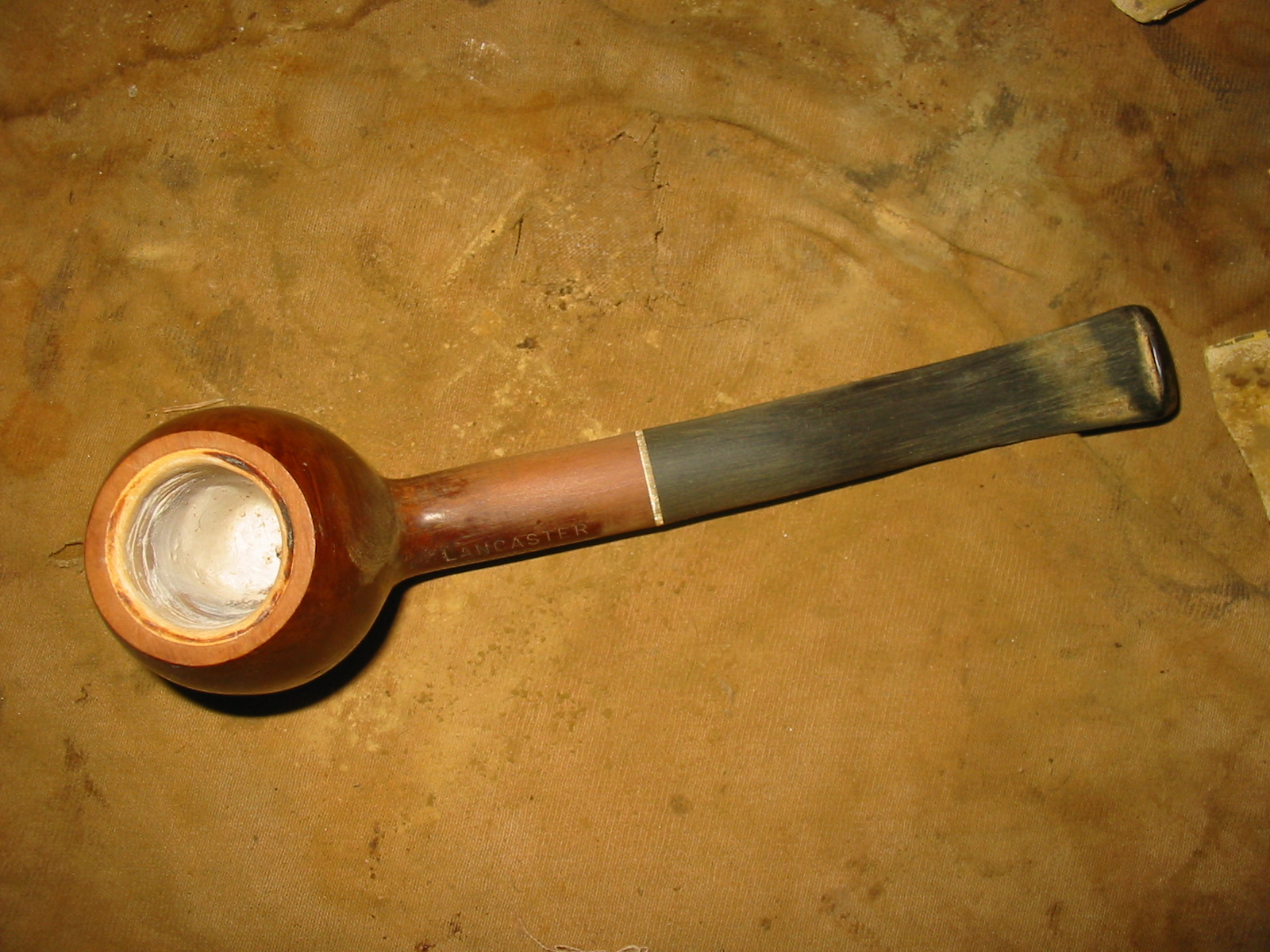
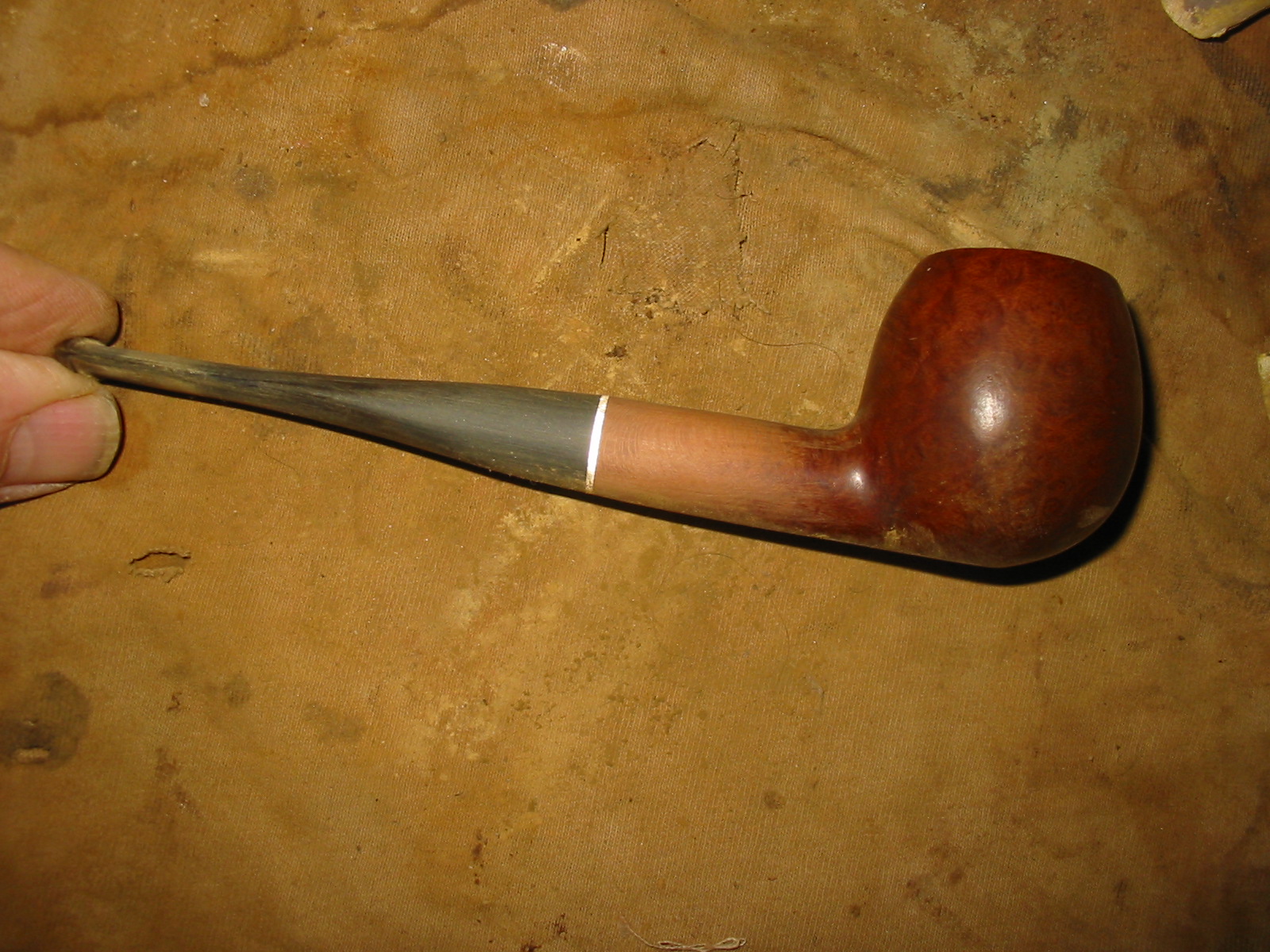
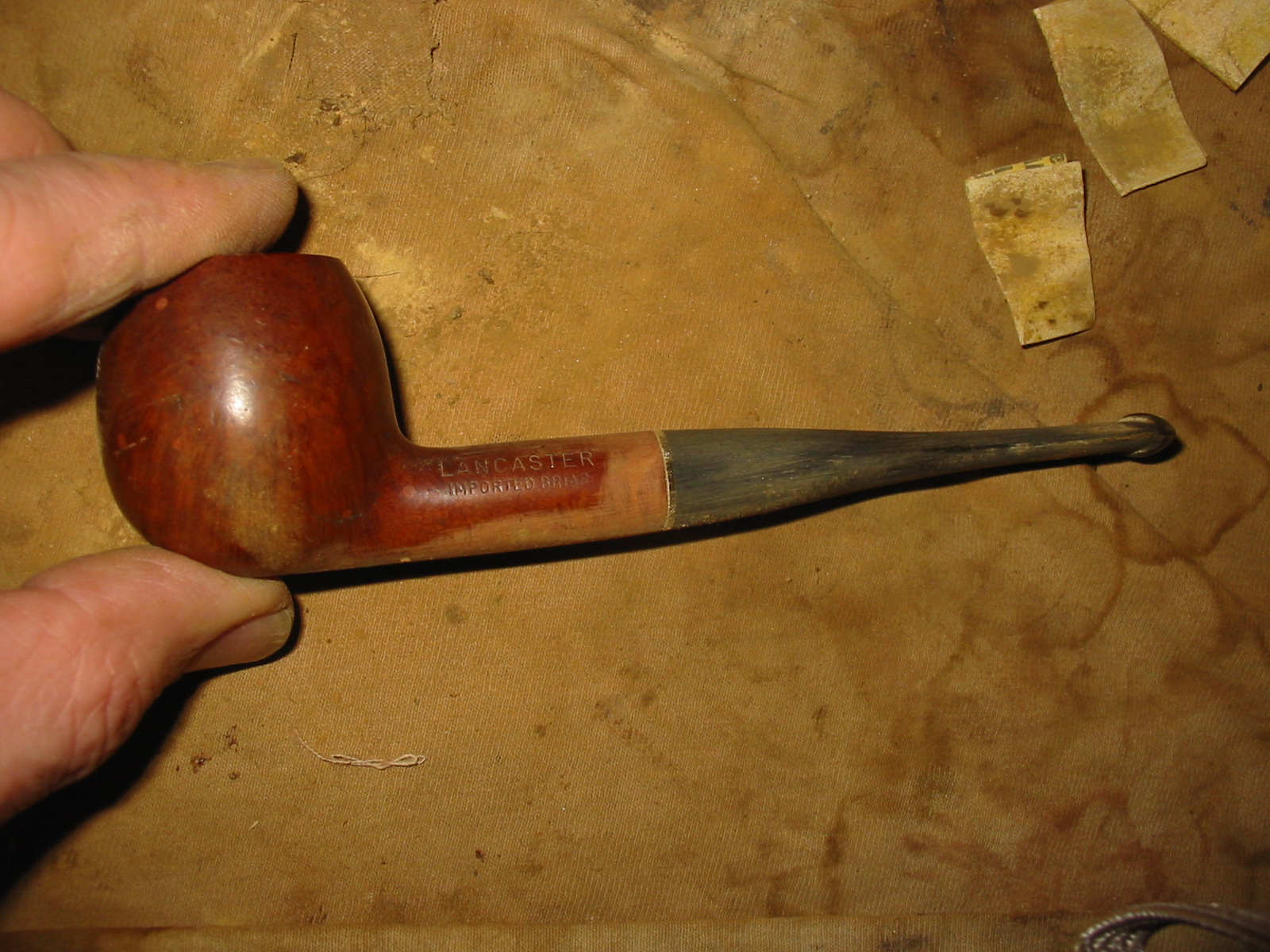
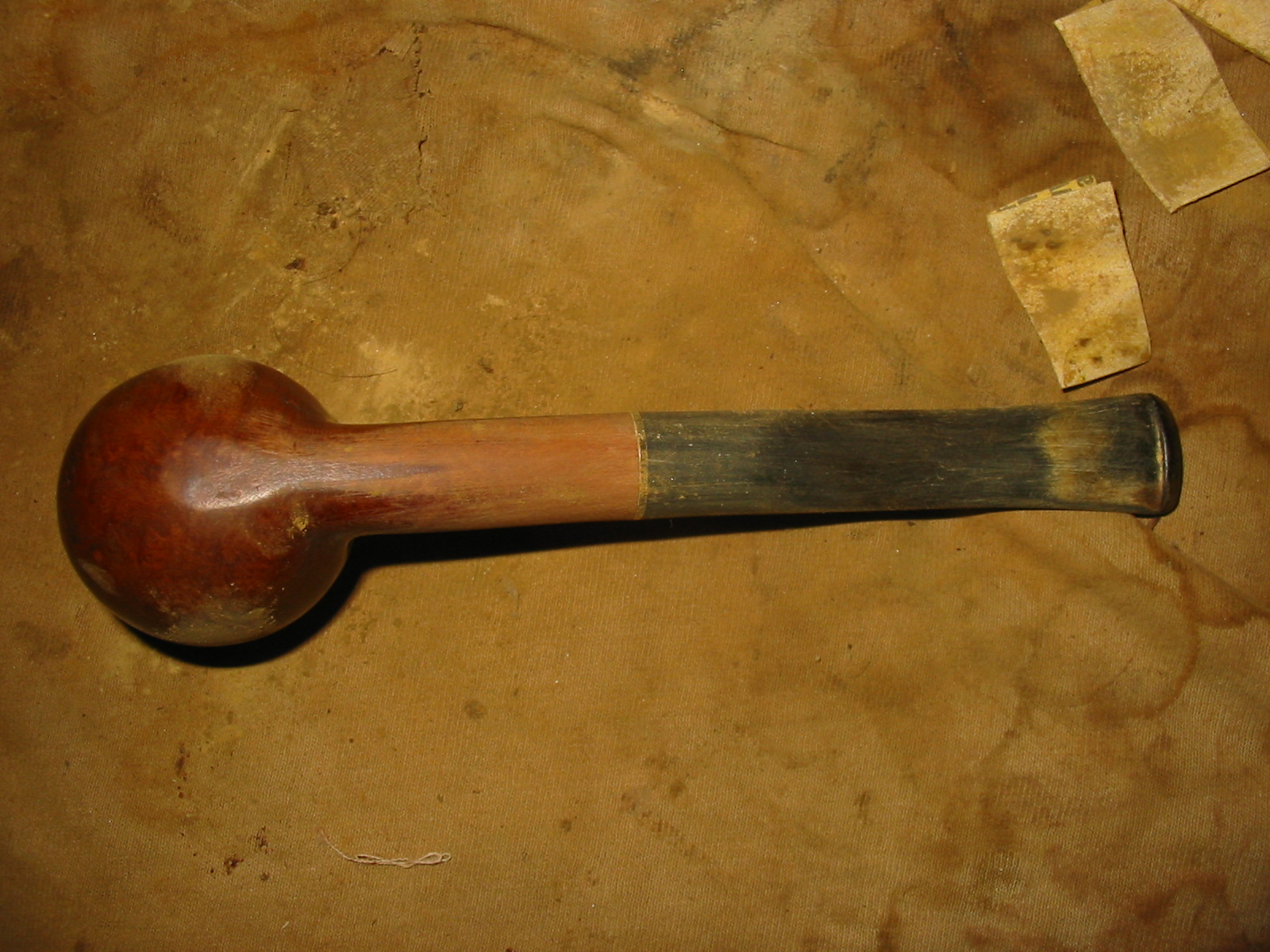
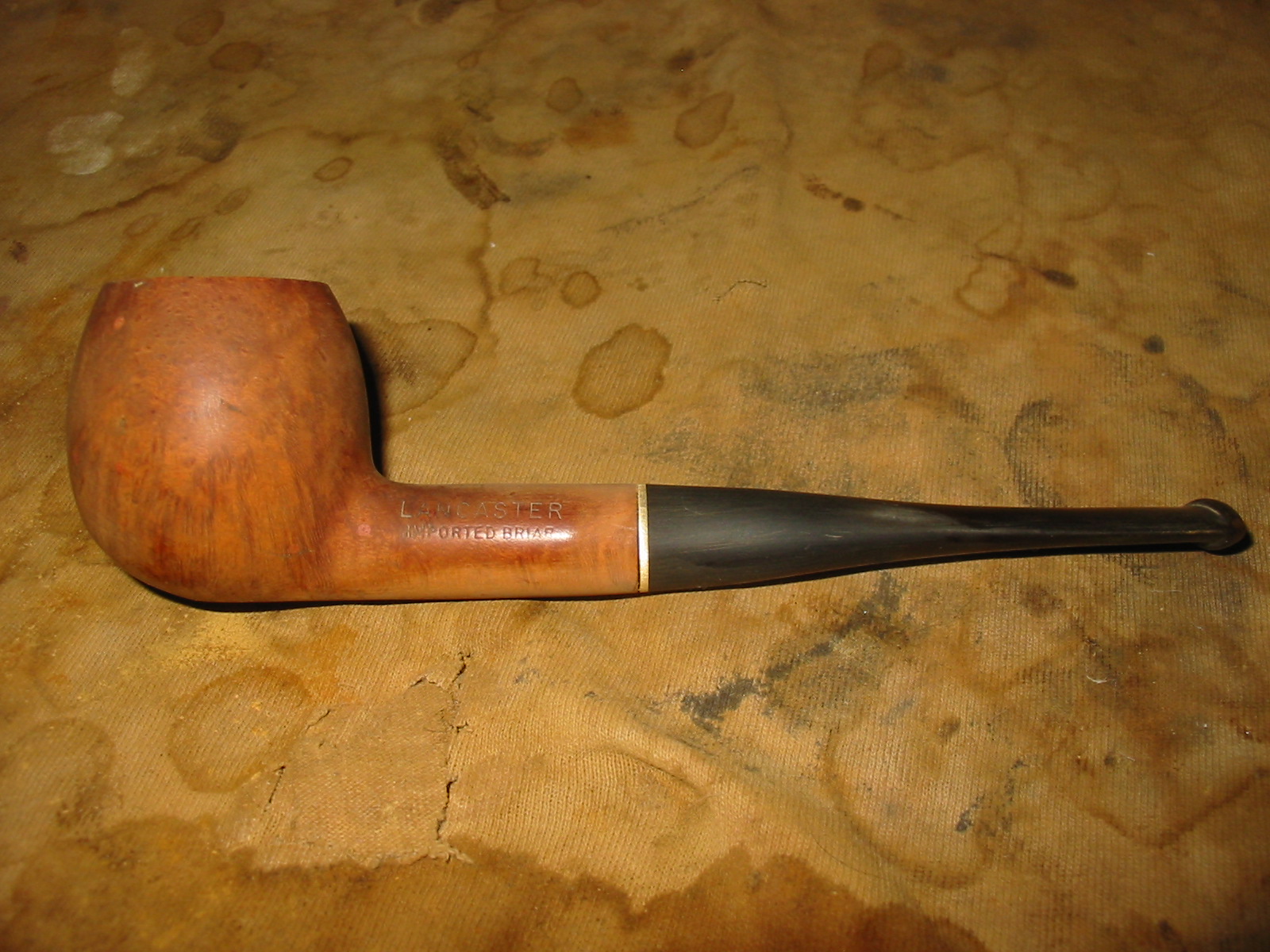
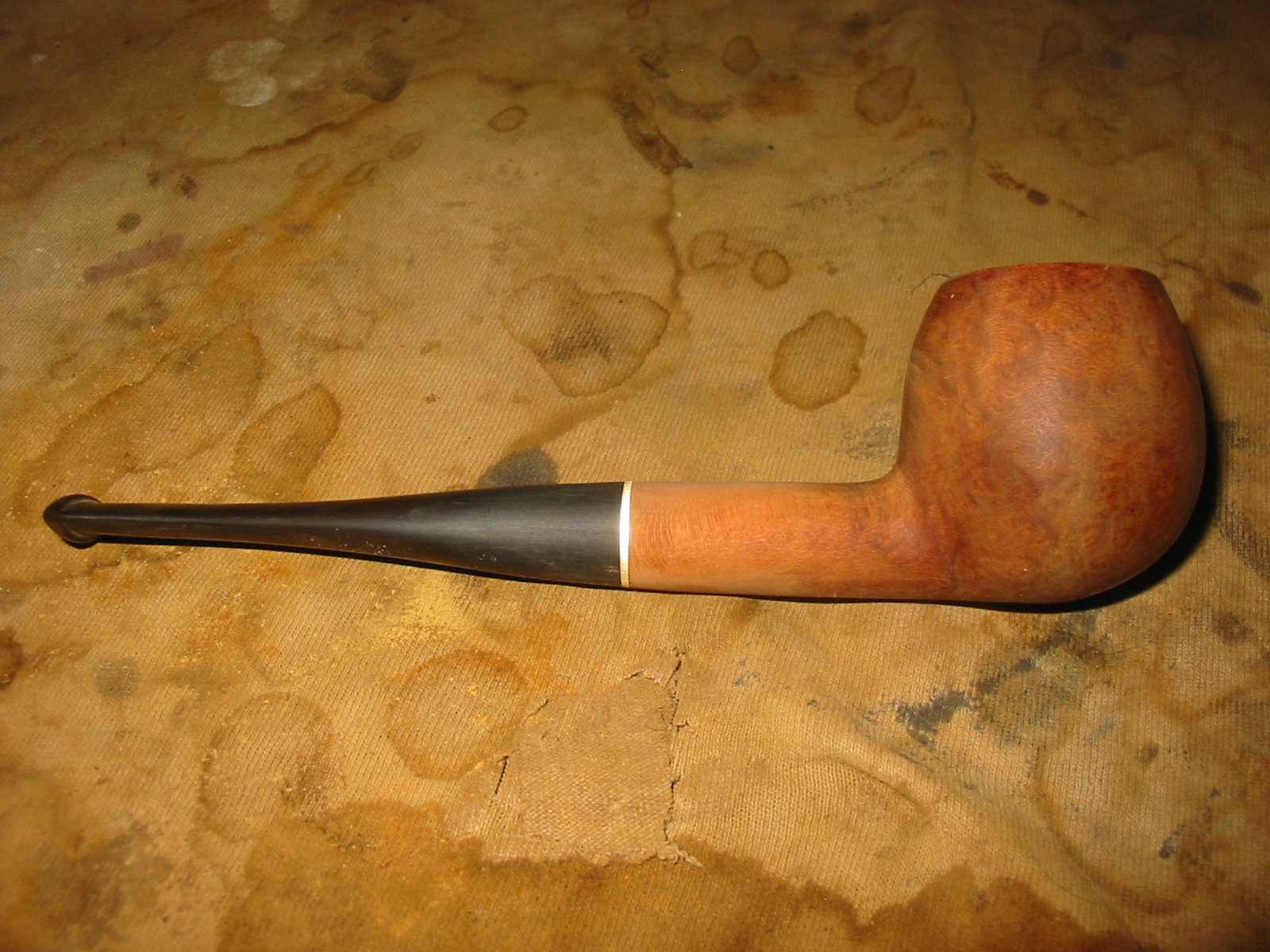
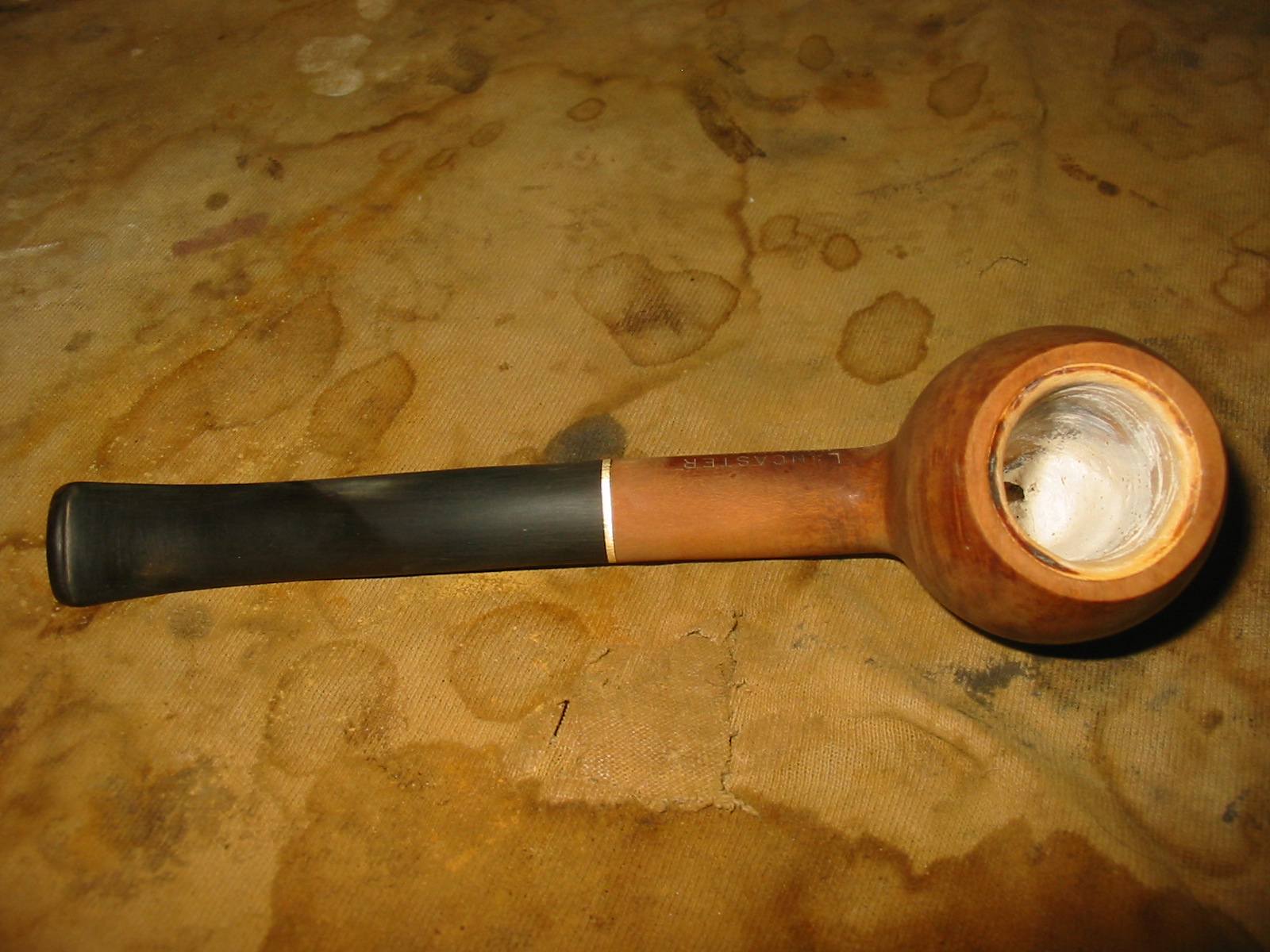
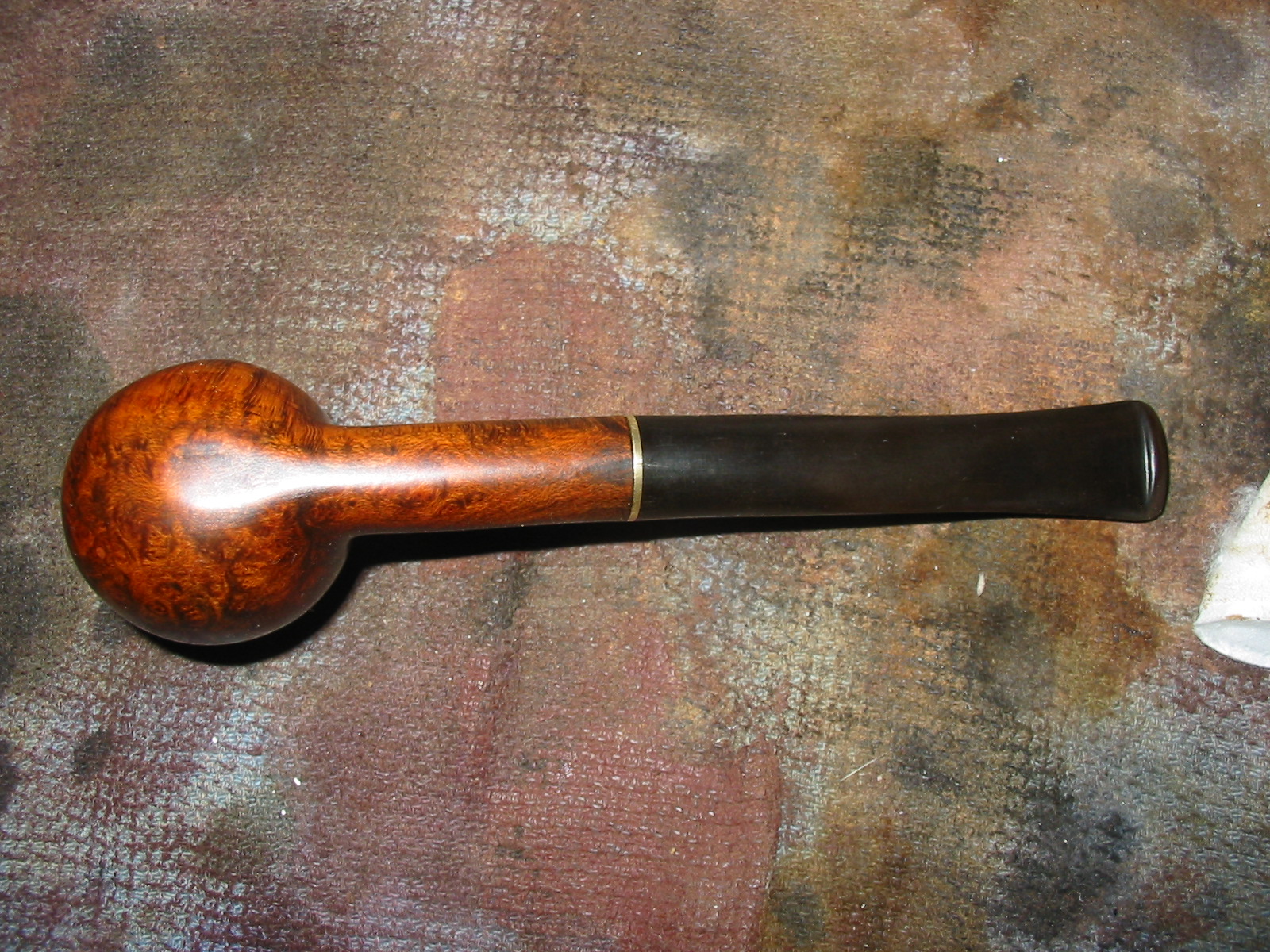
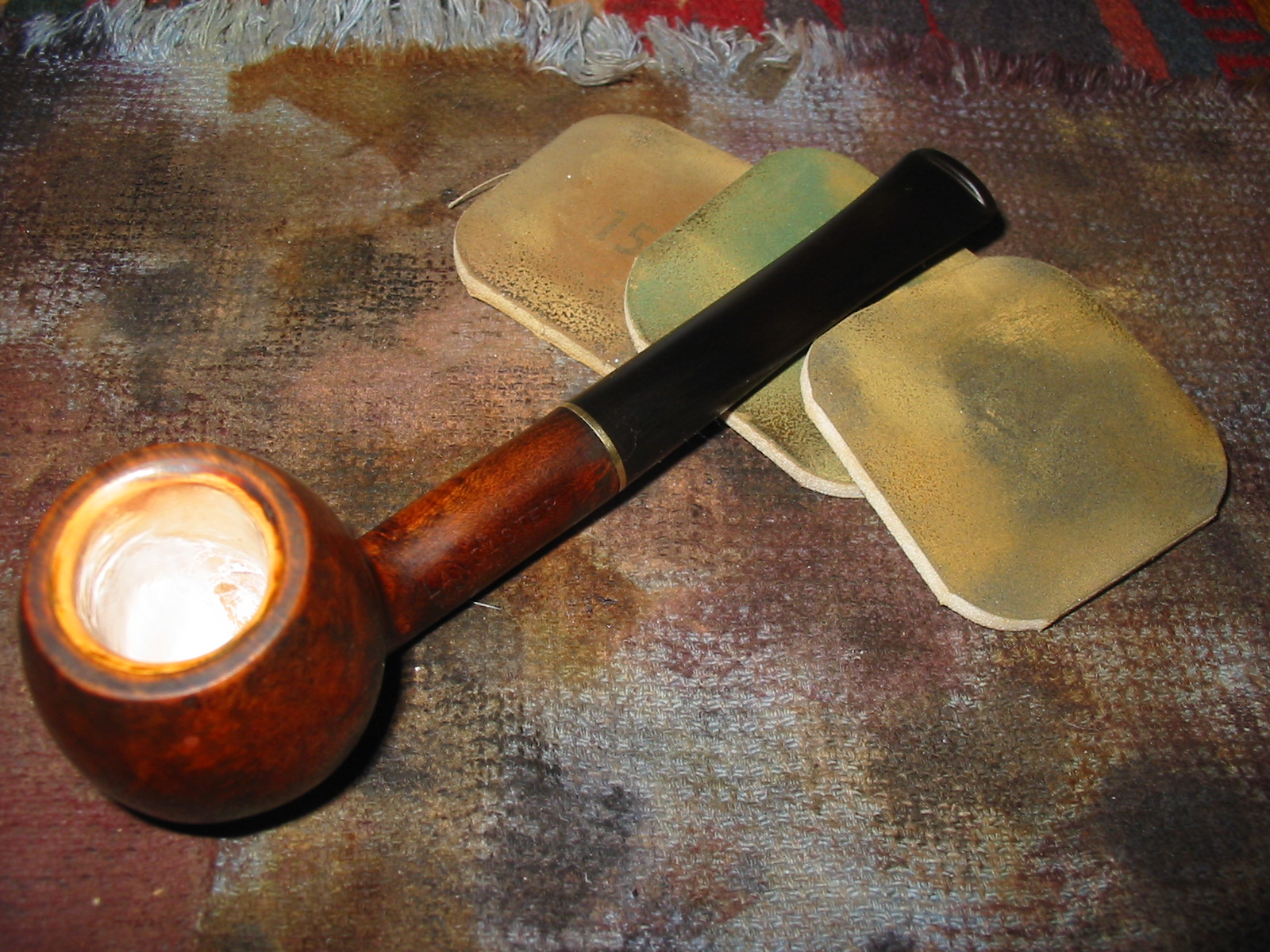
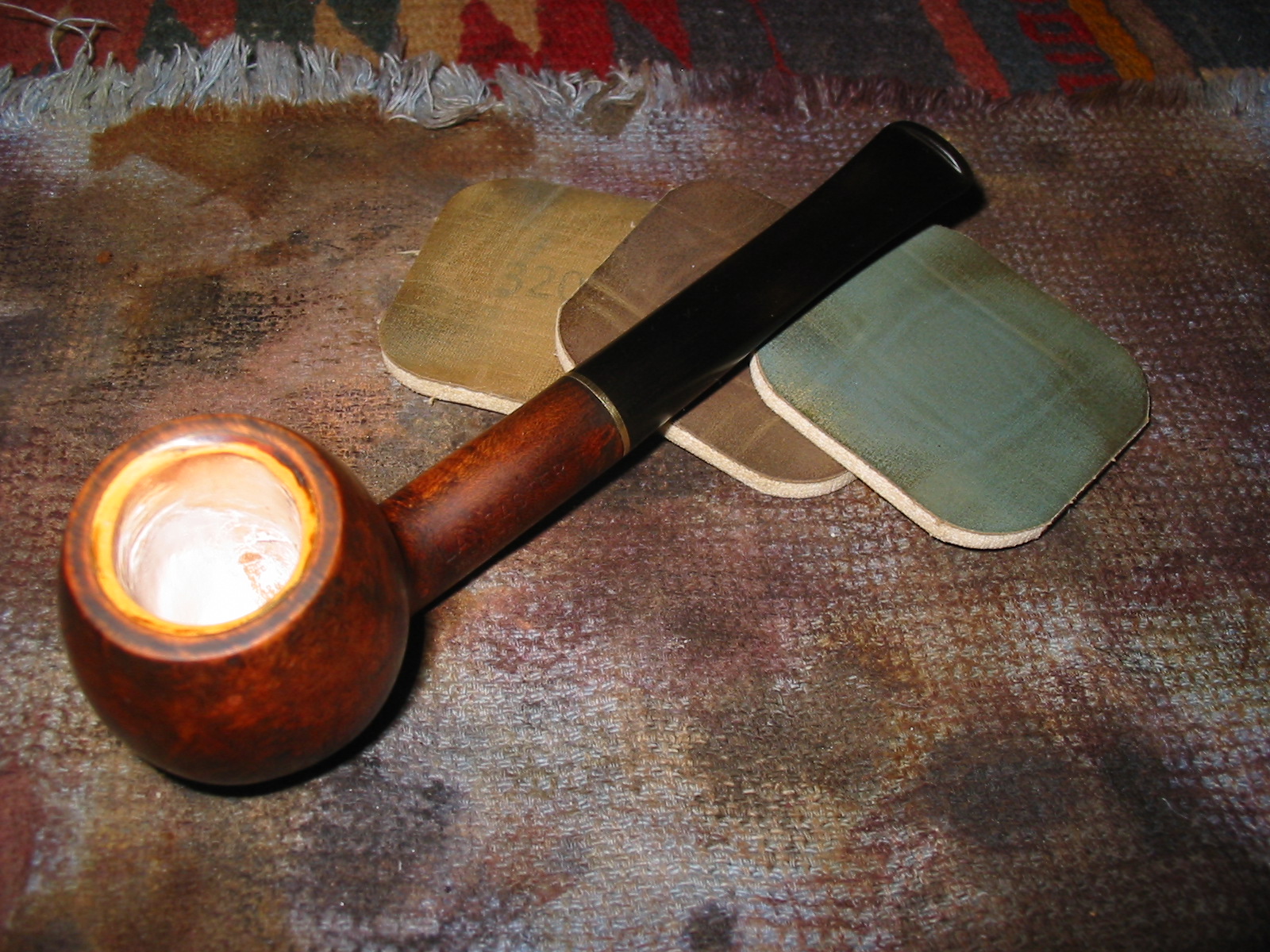
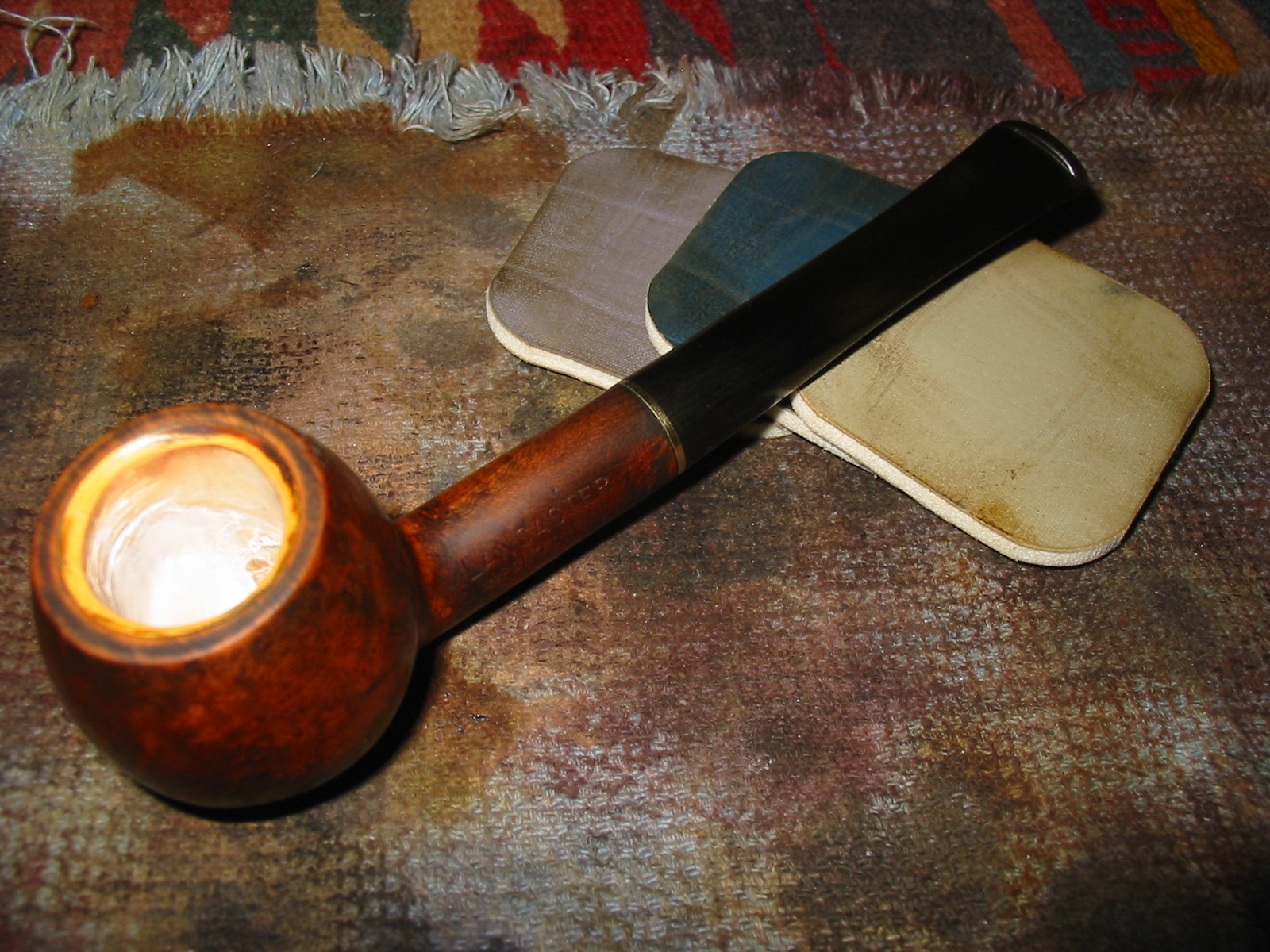
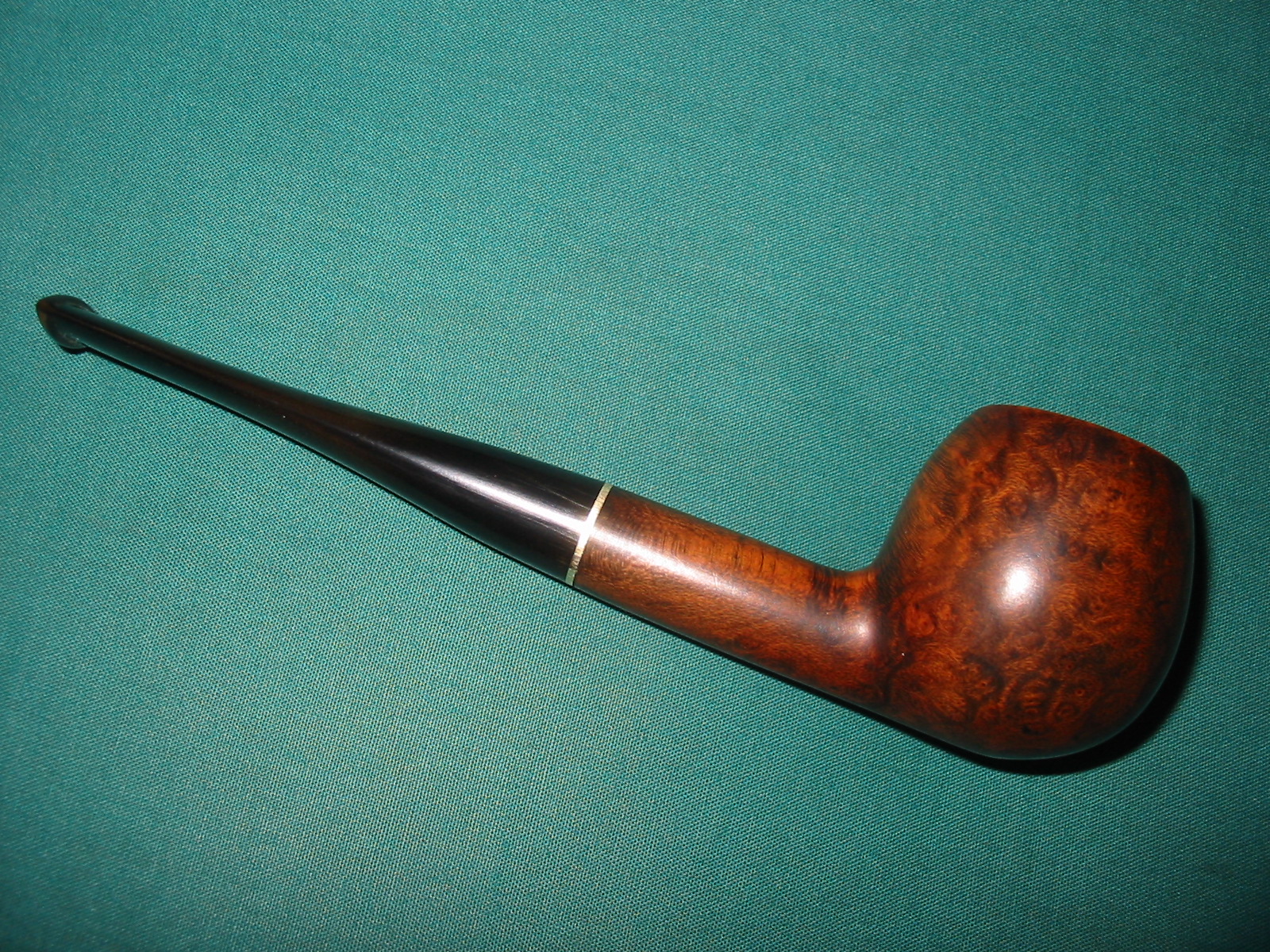
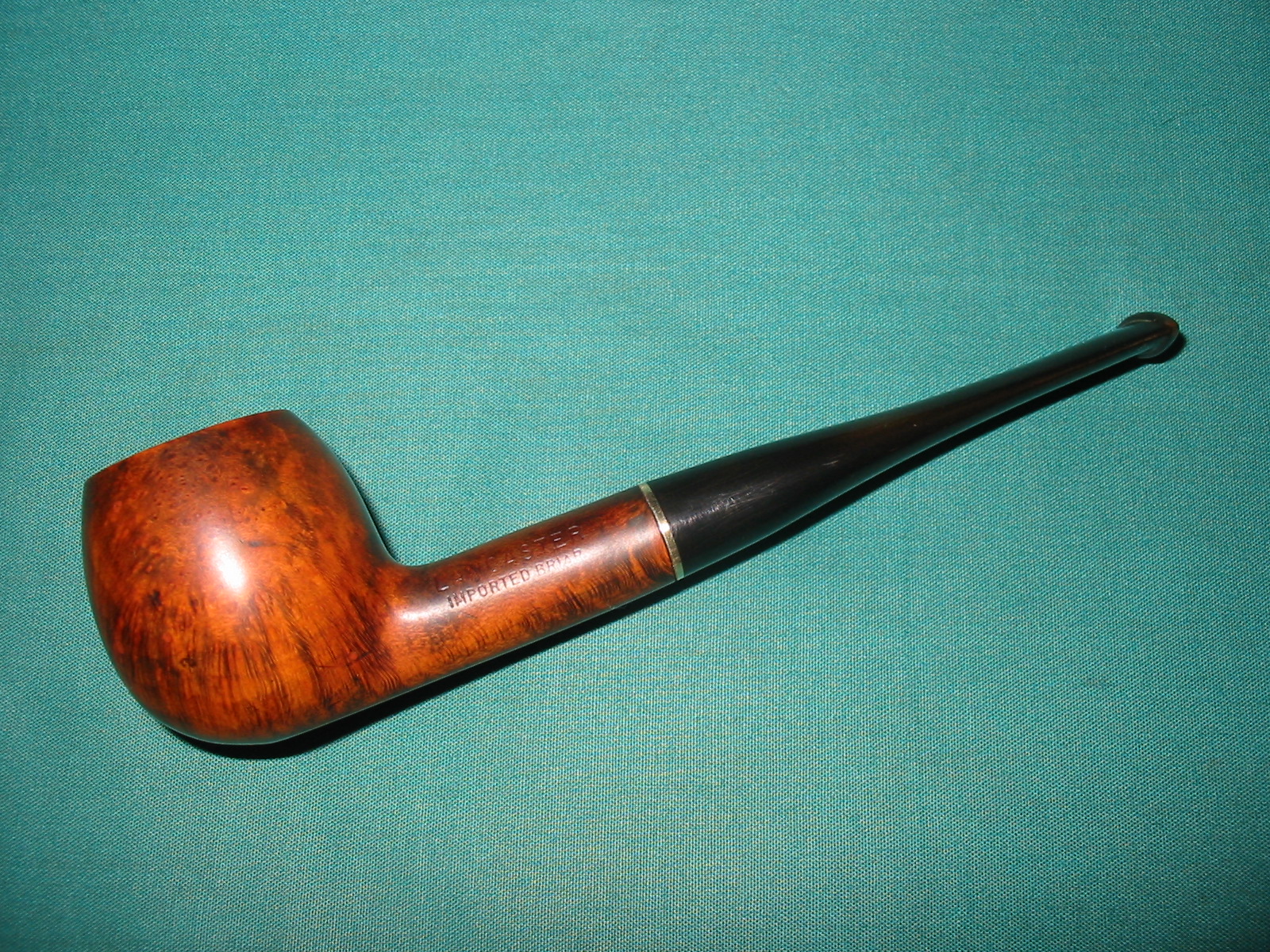
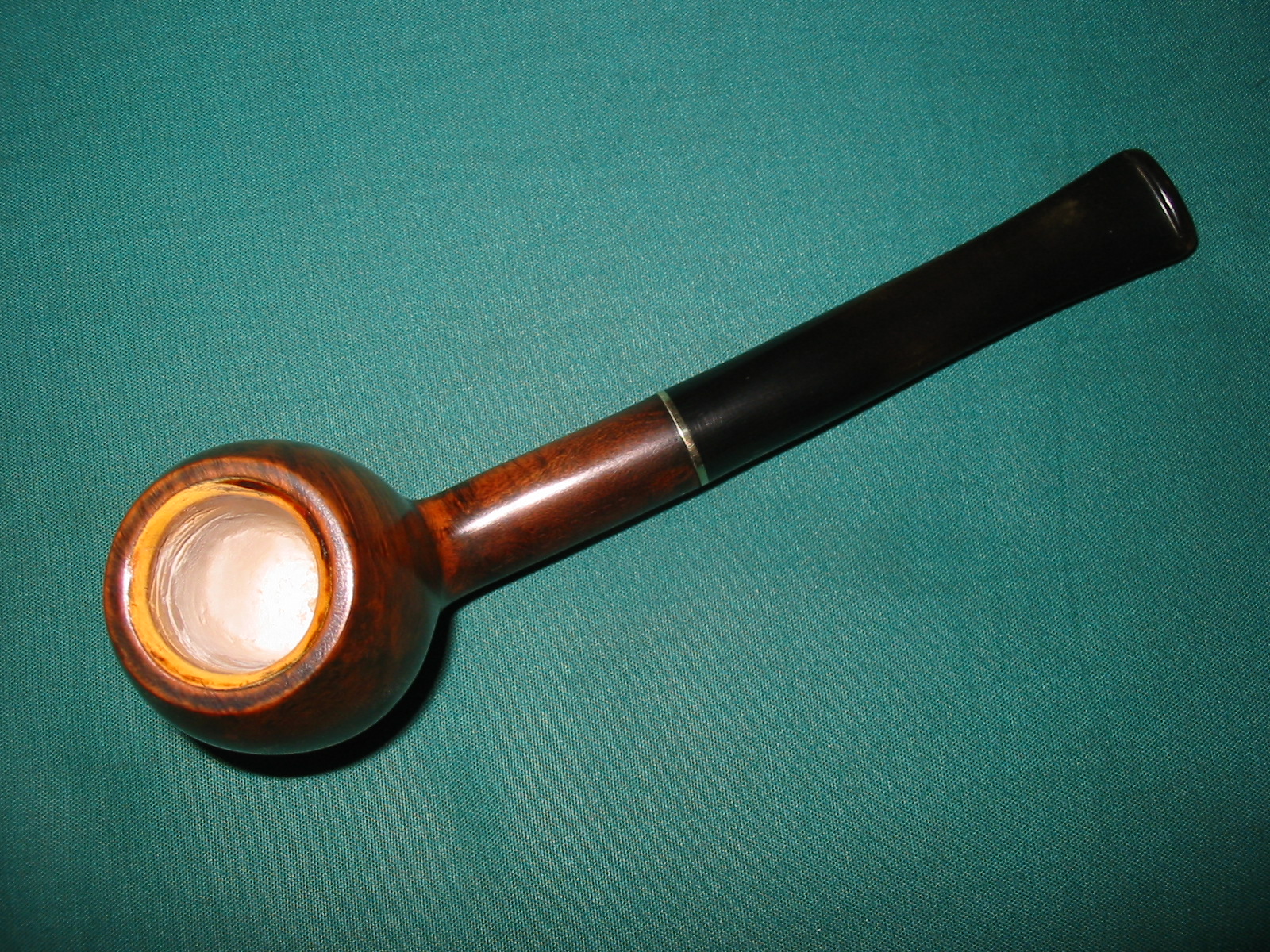
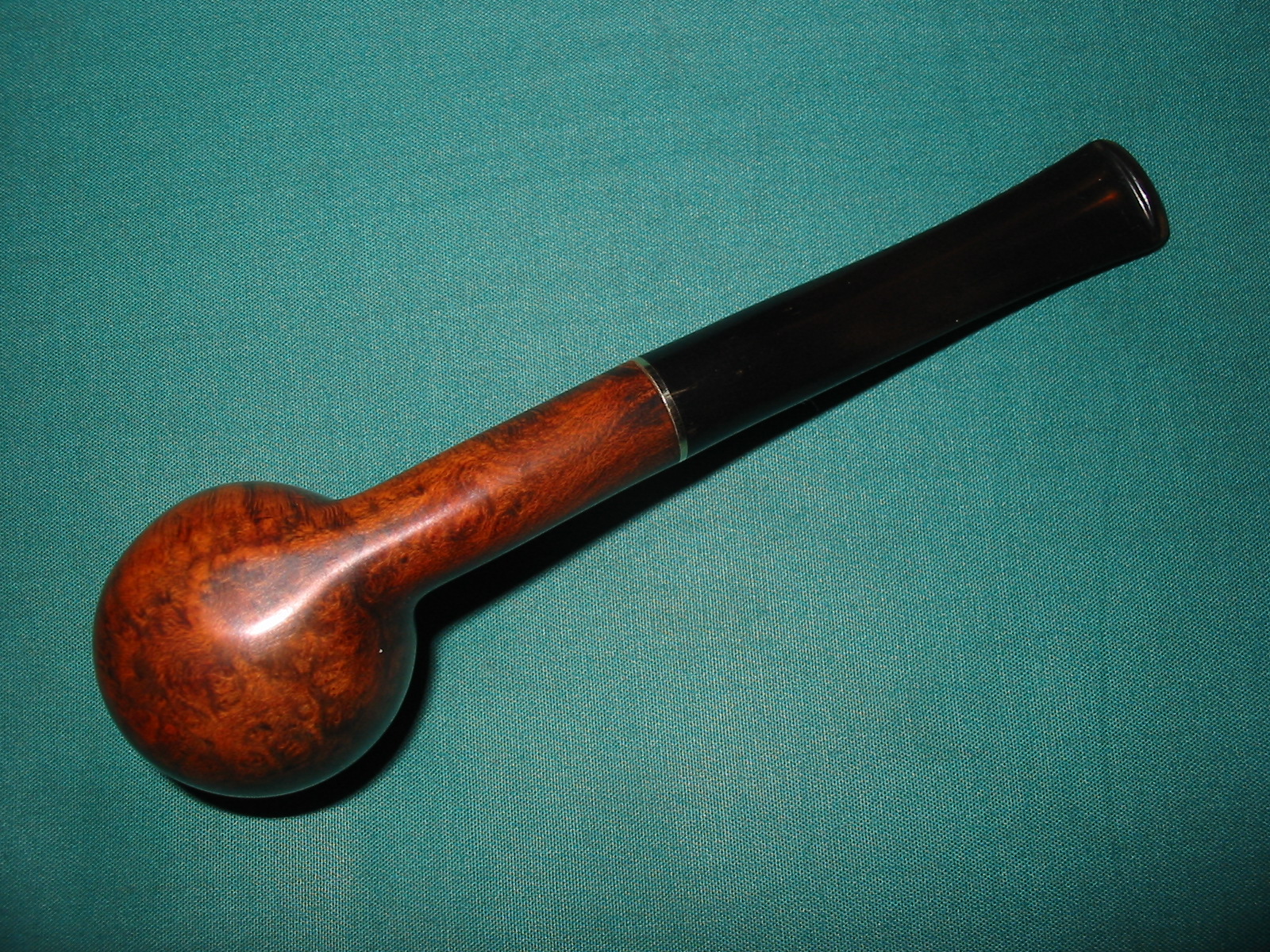
Restemming and Repairing a Meerschaum Lined Lancaster Billiard


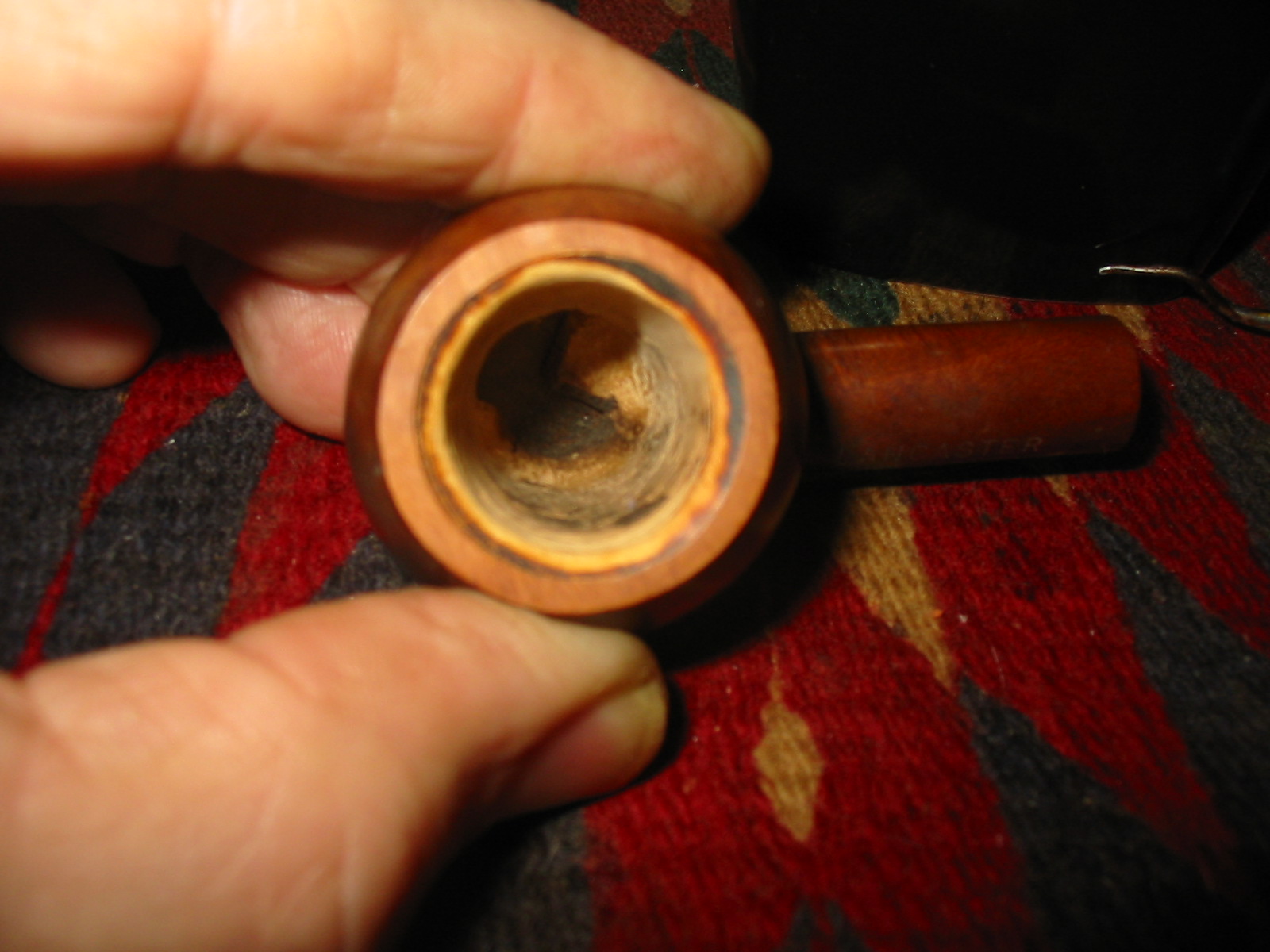
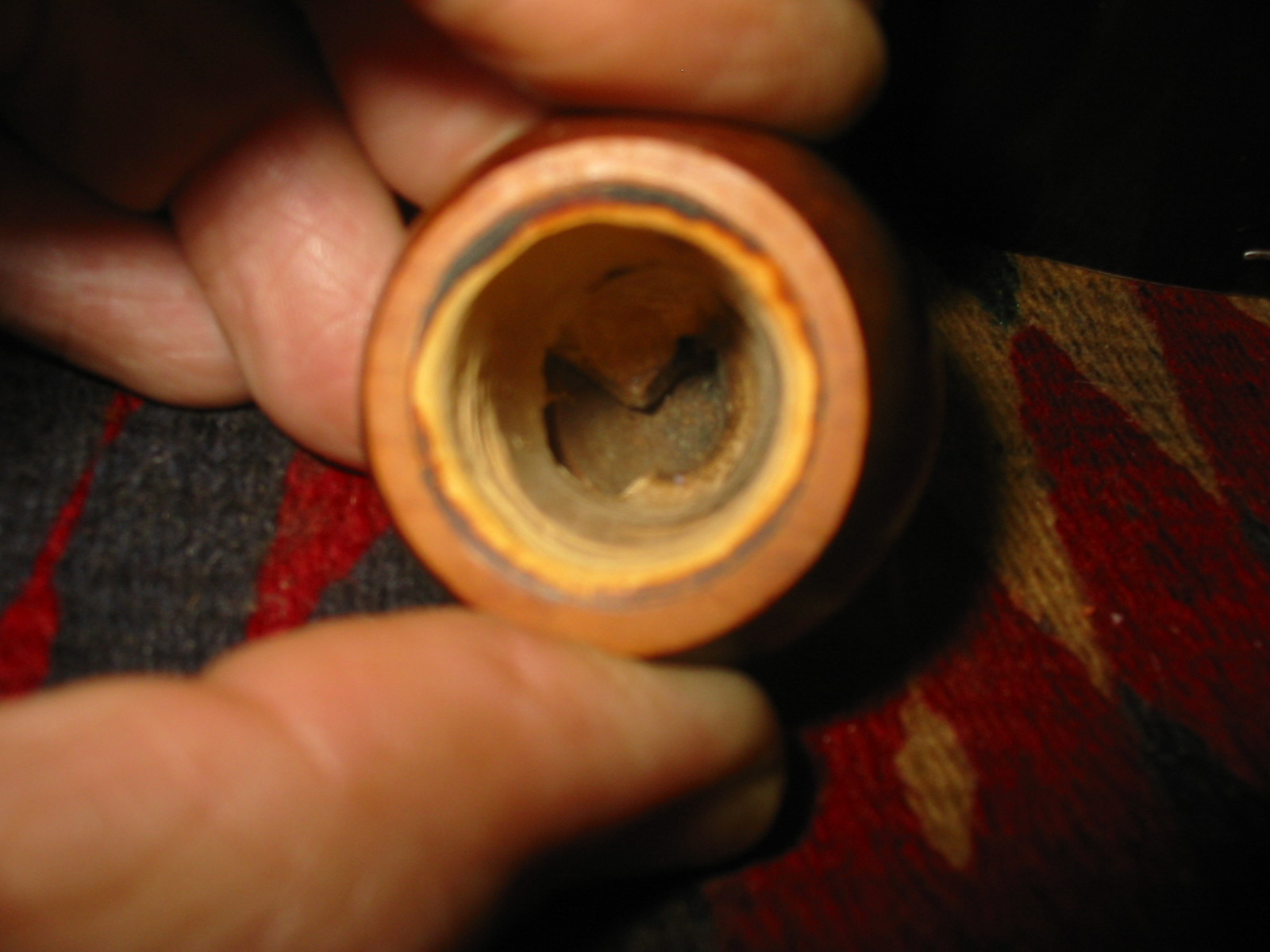
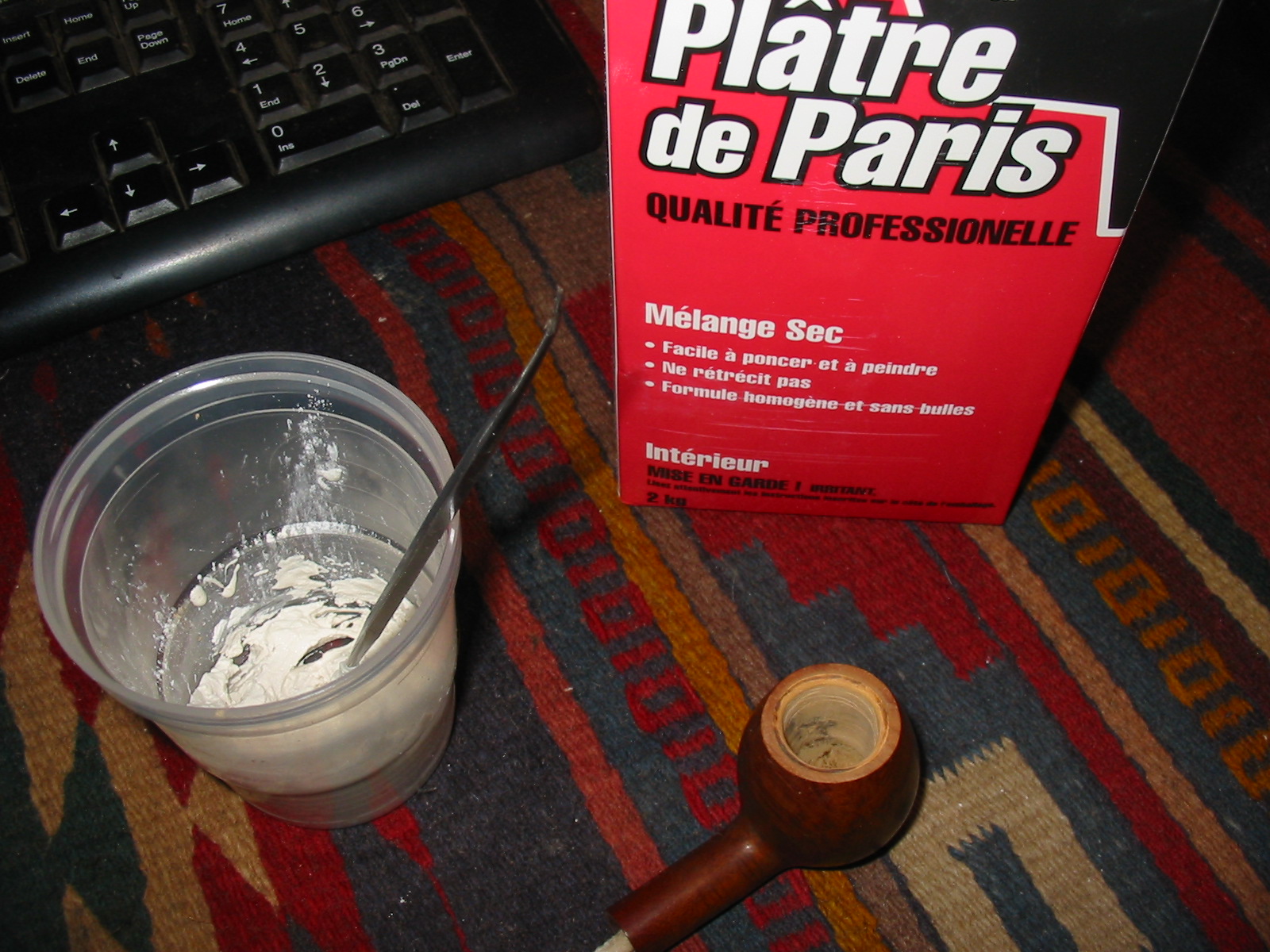
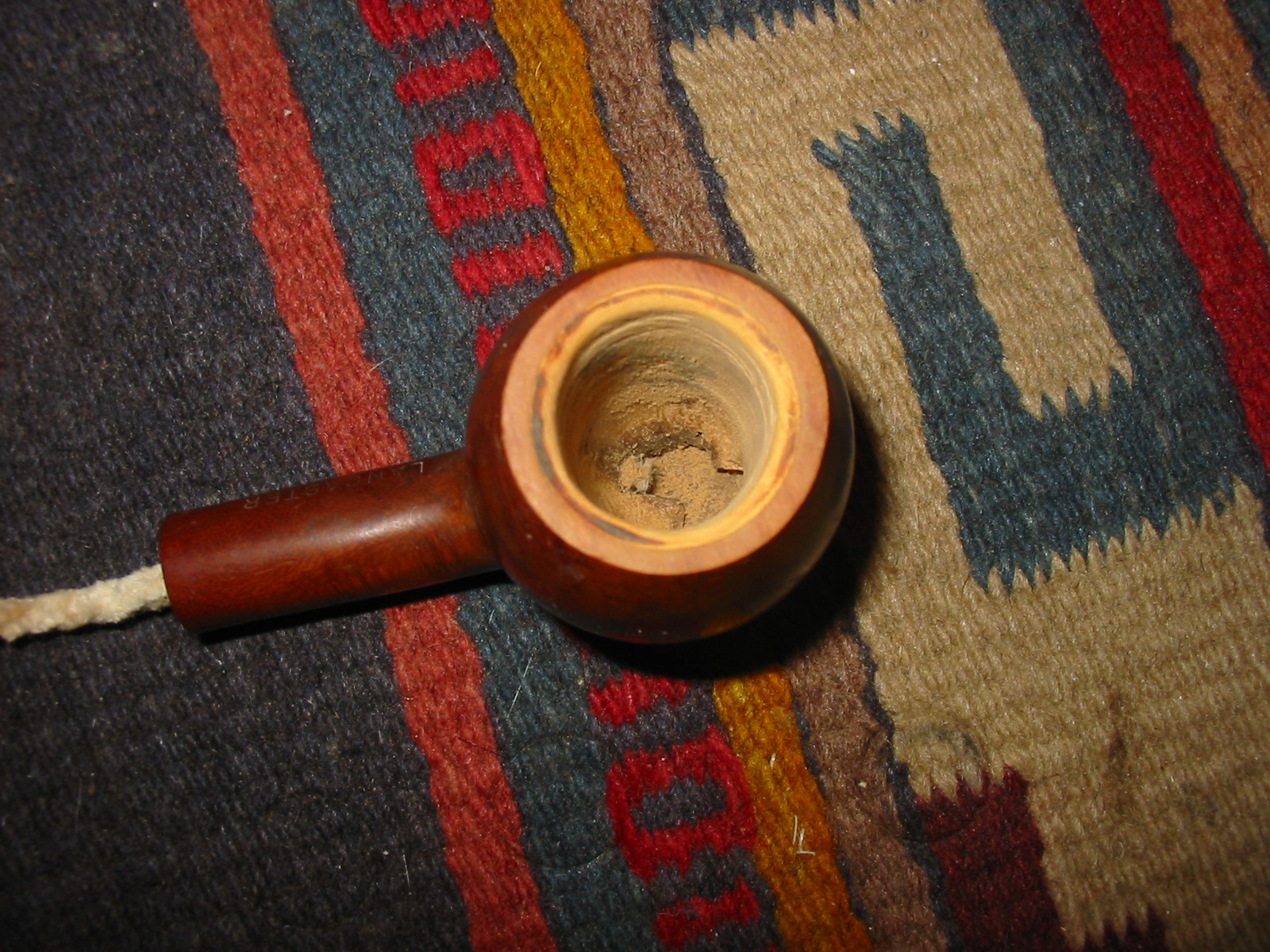
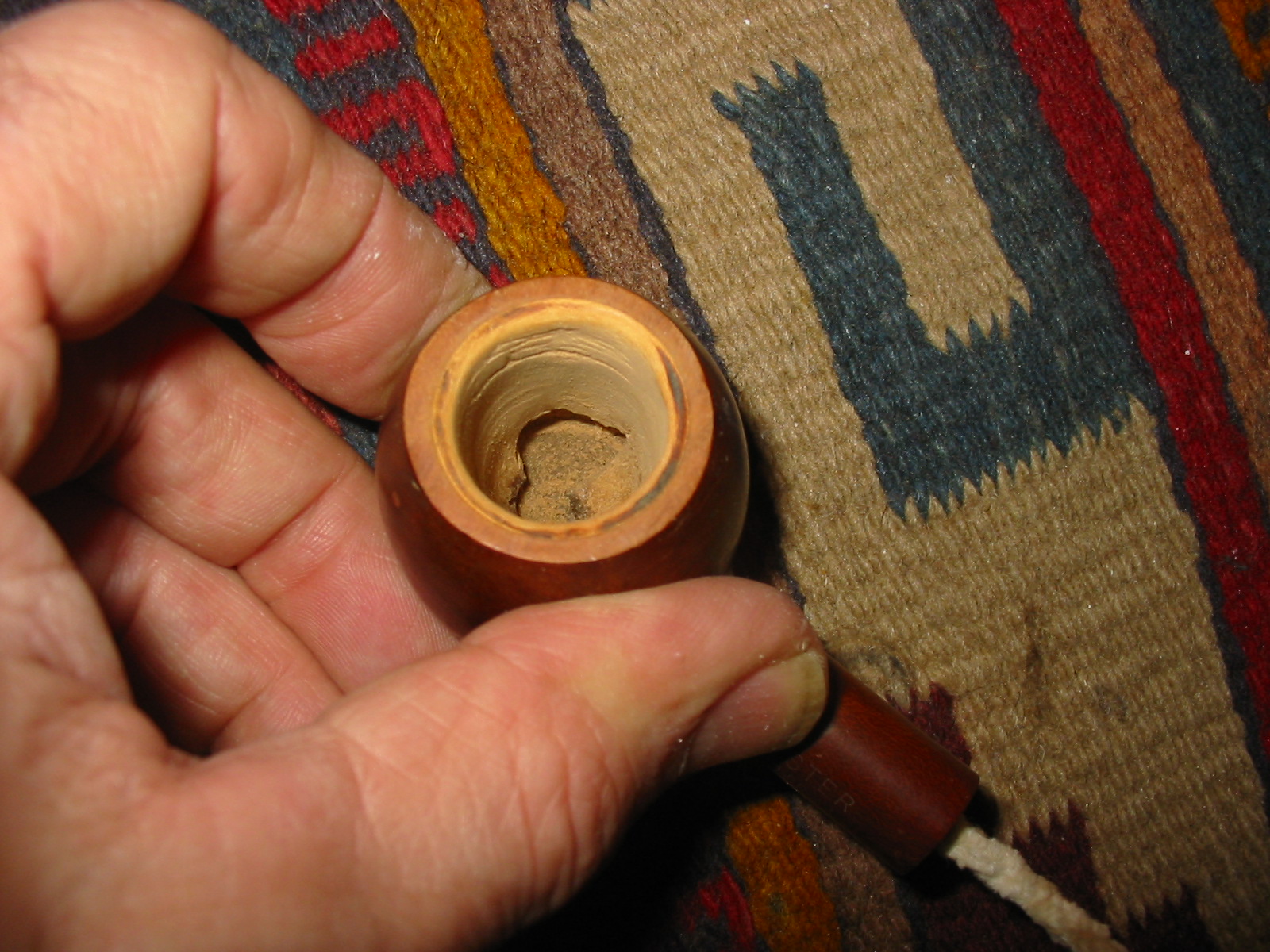
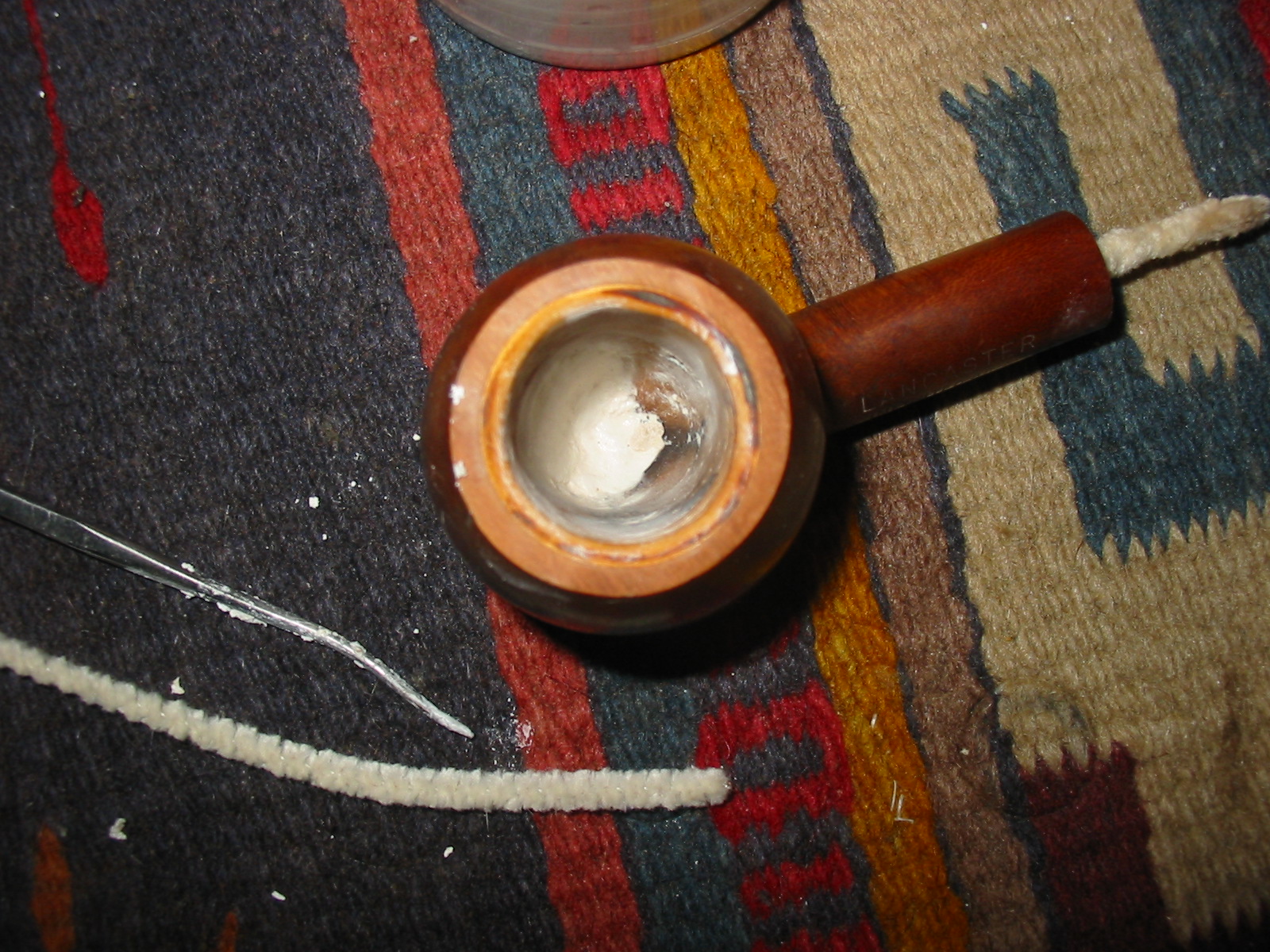
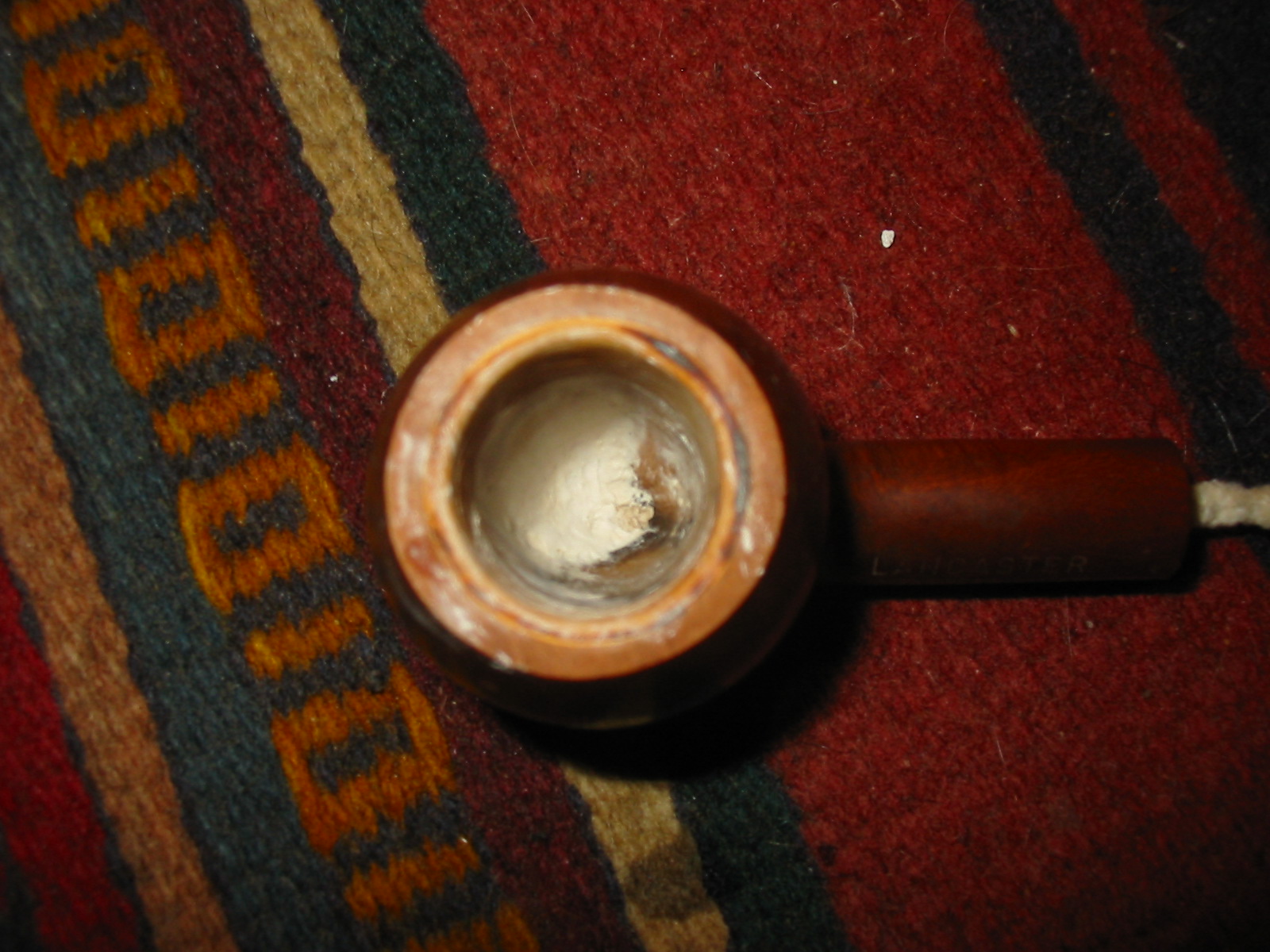
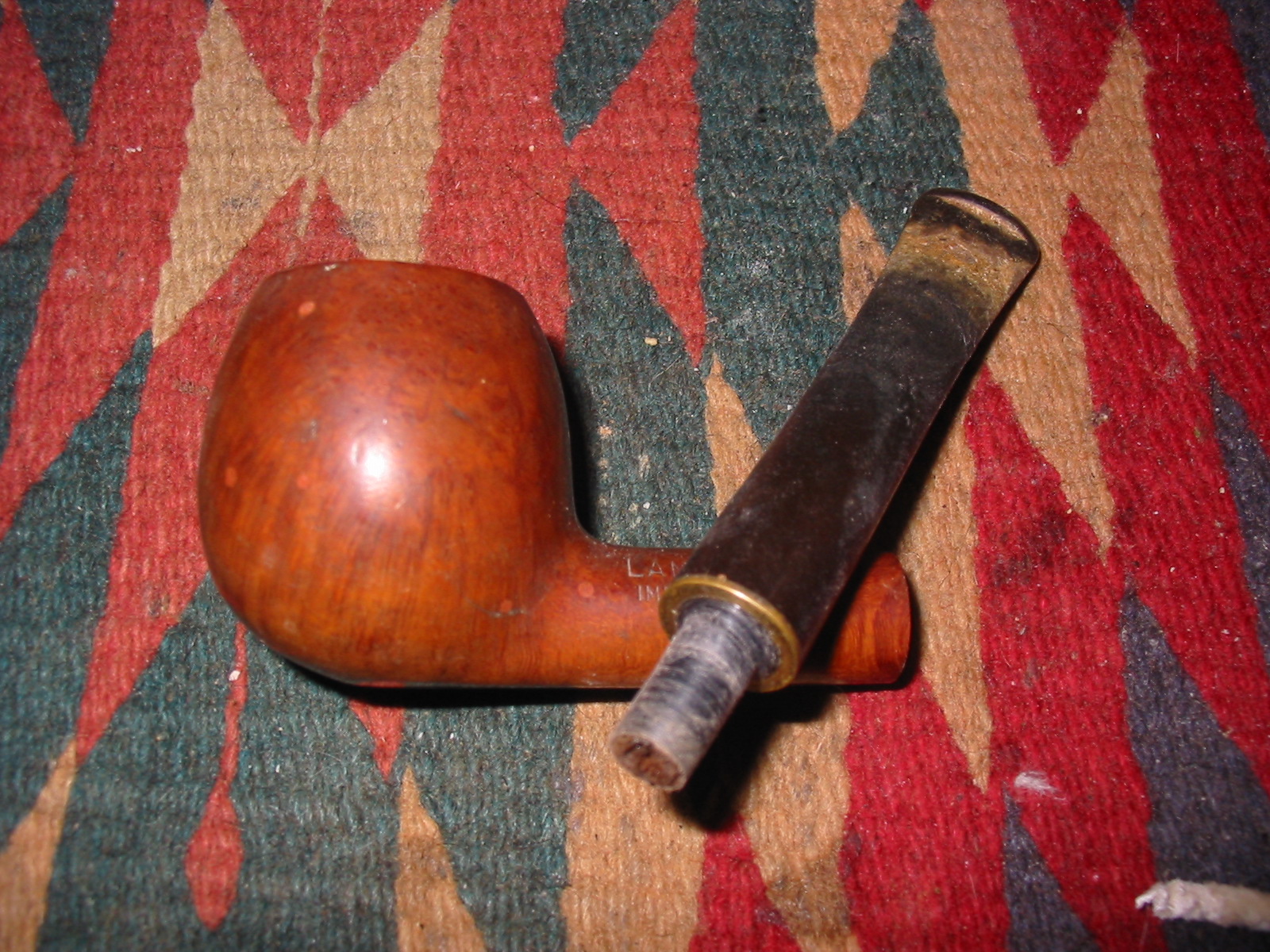
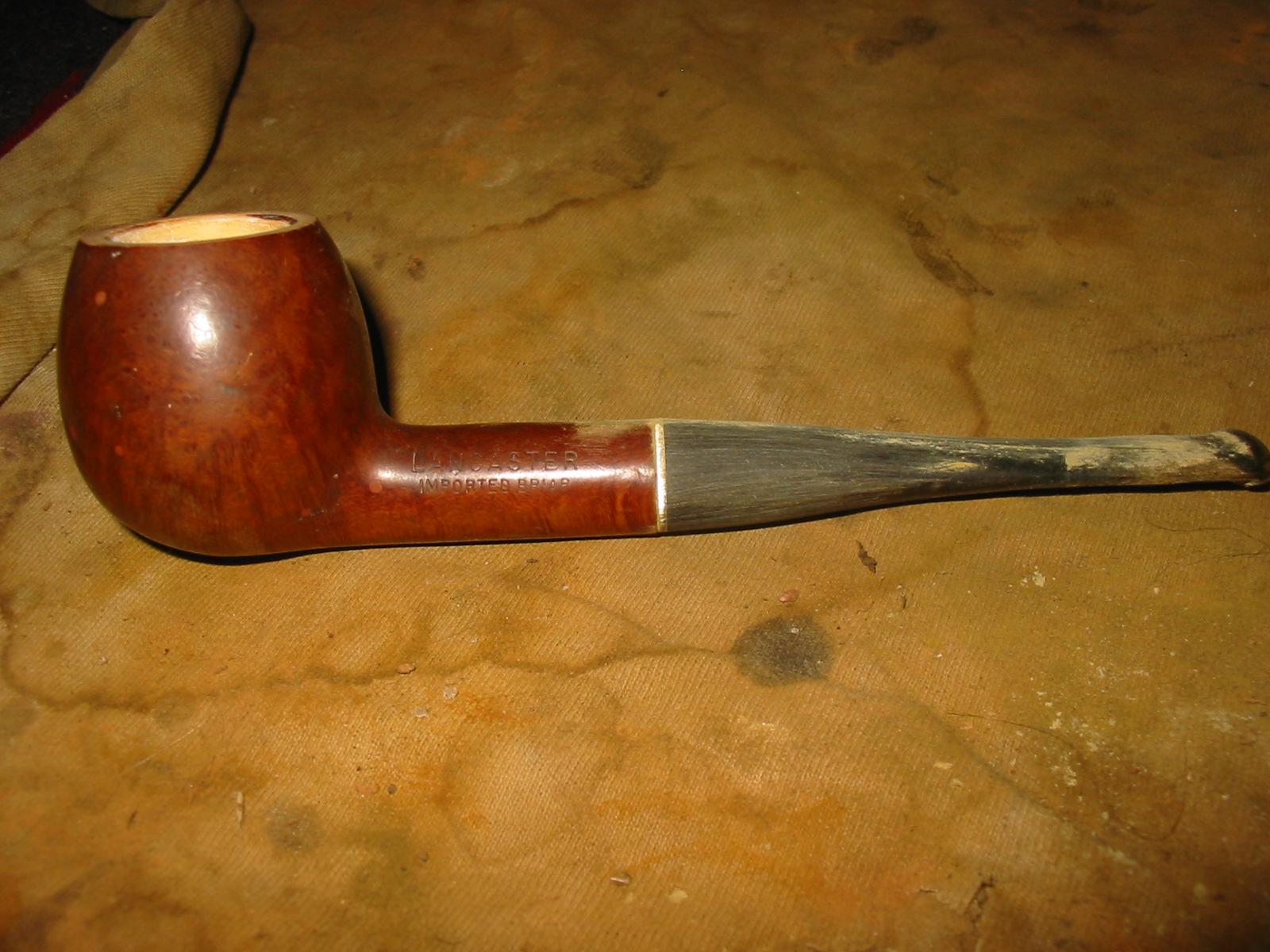
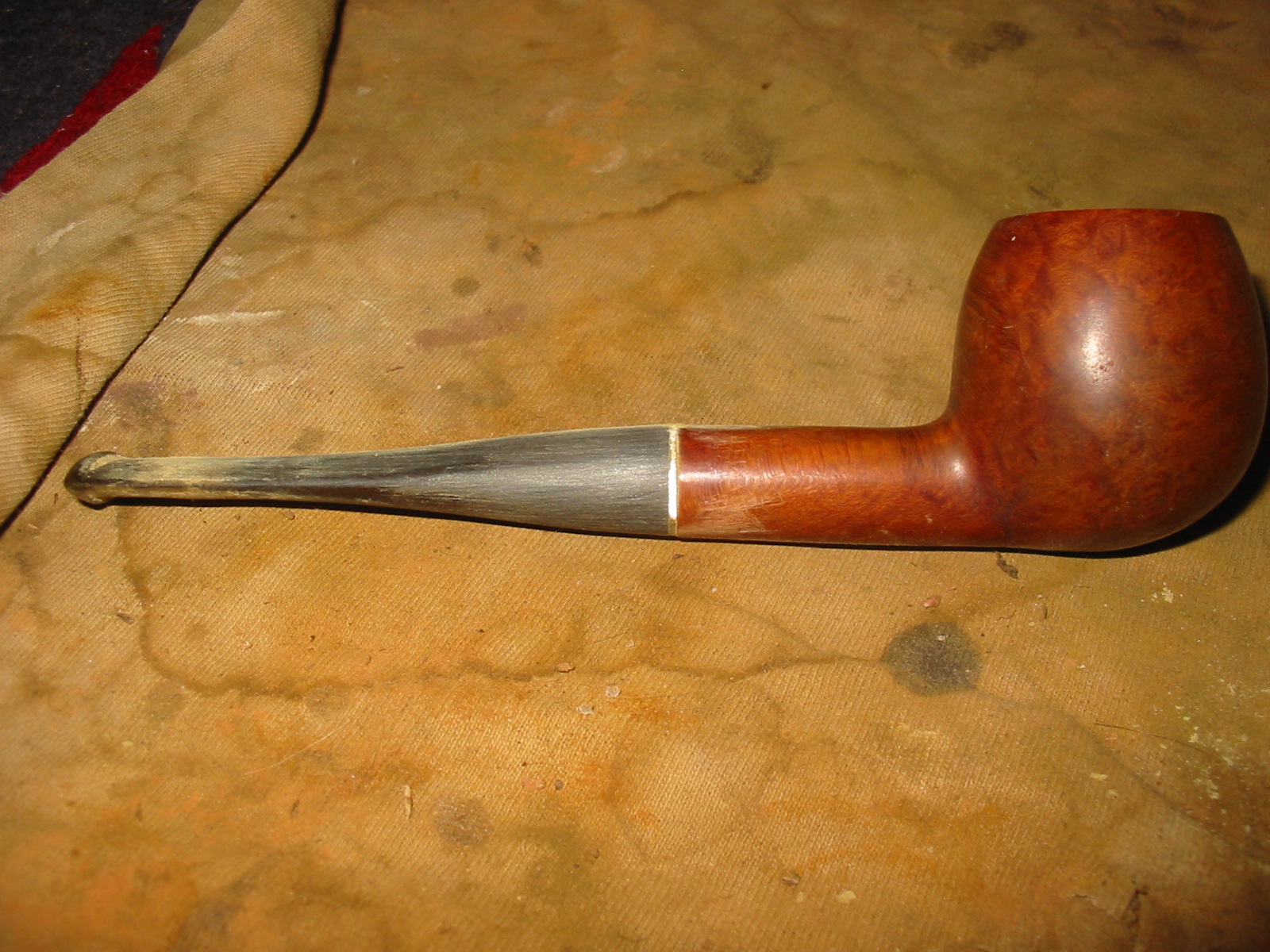
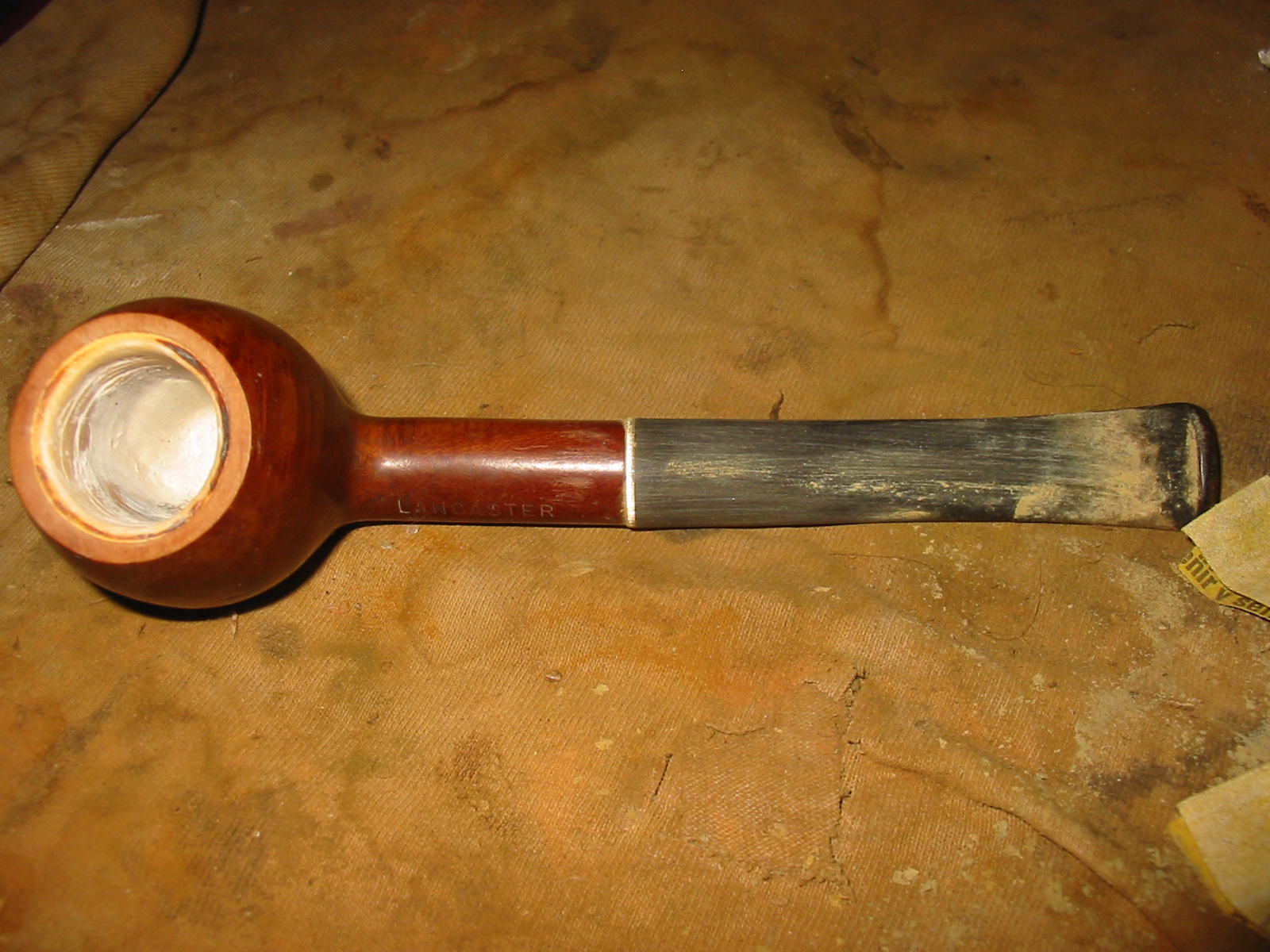
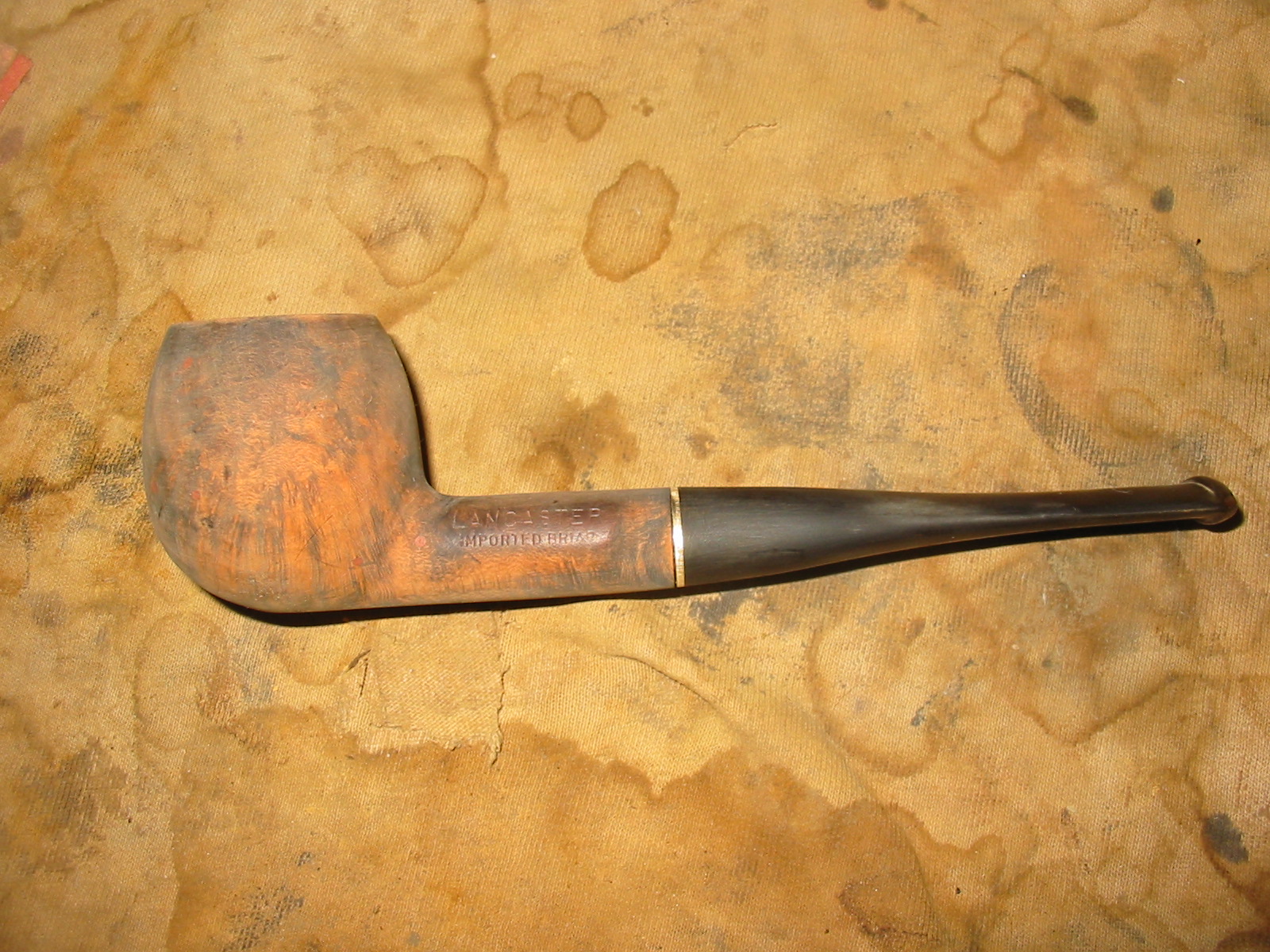
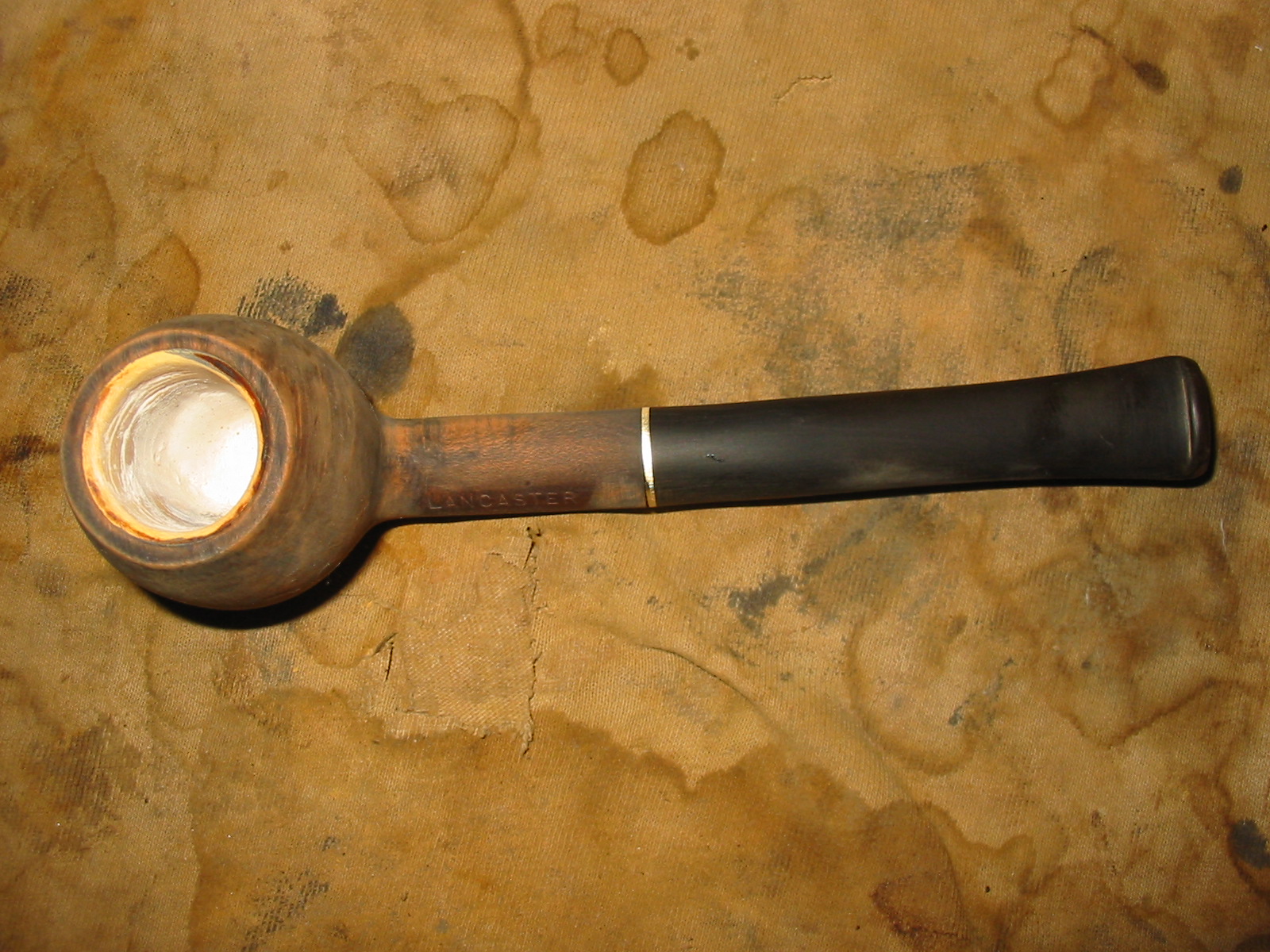
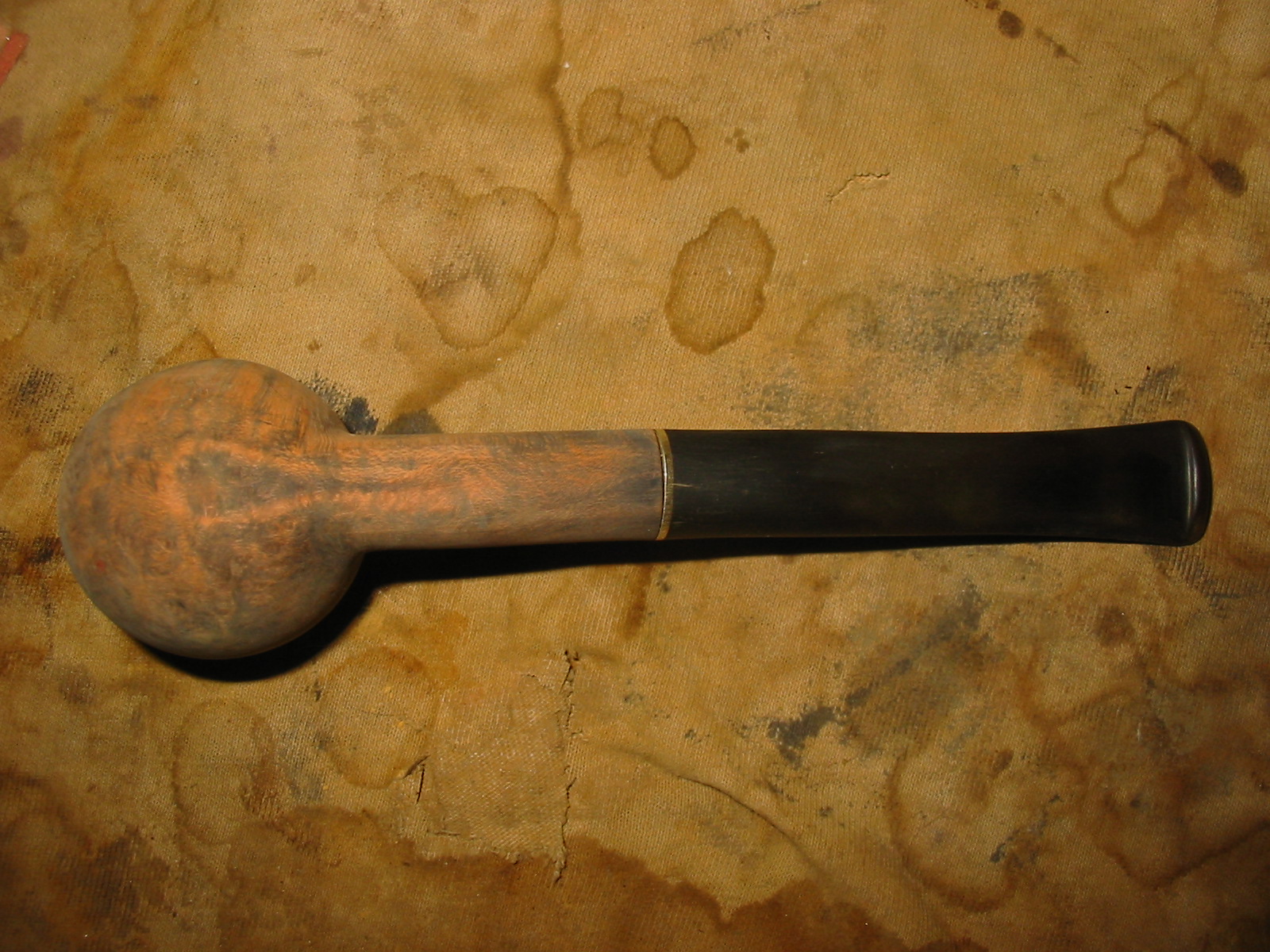
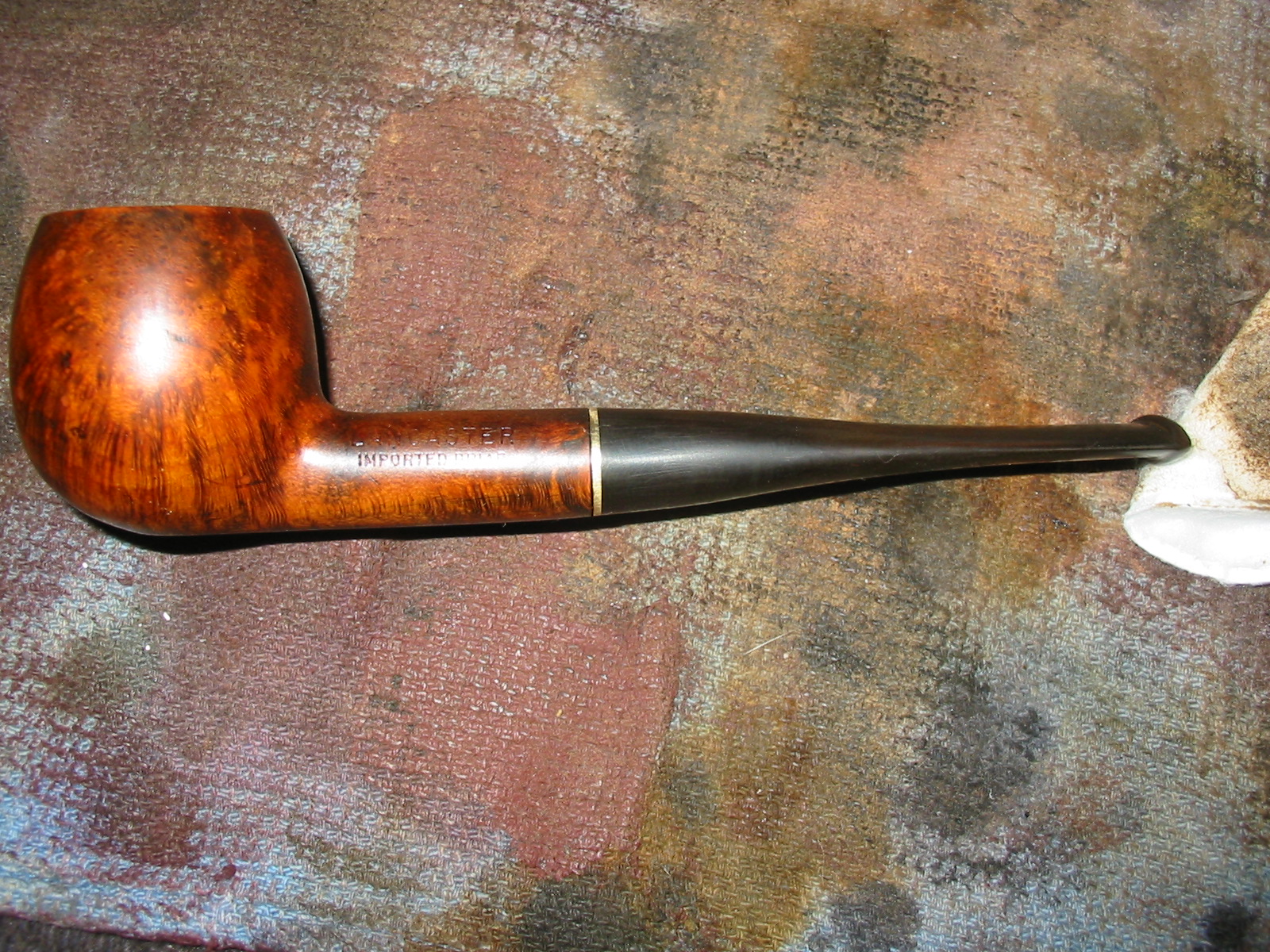
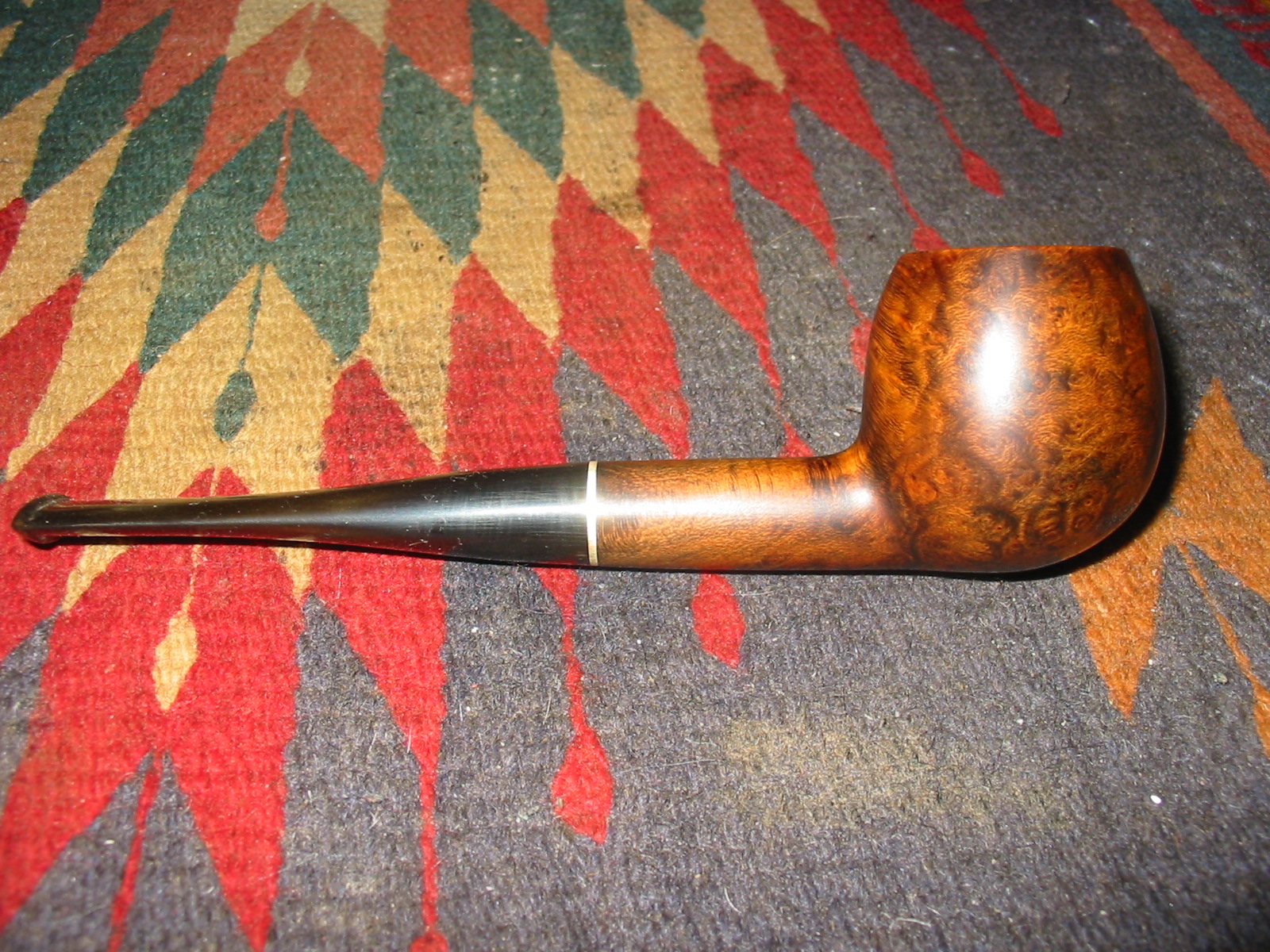
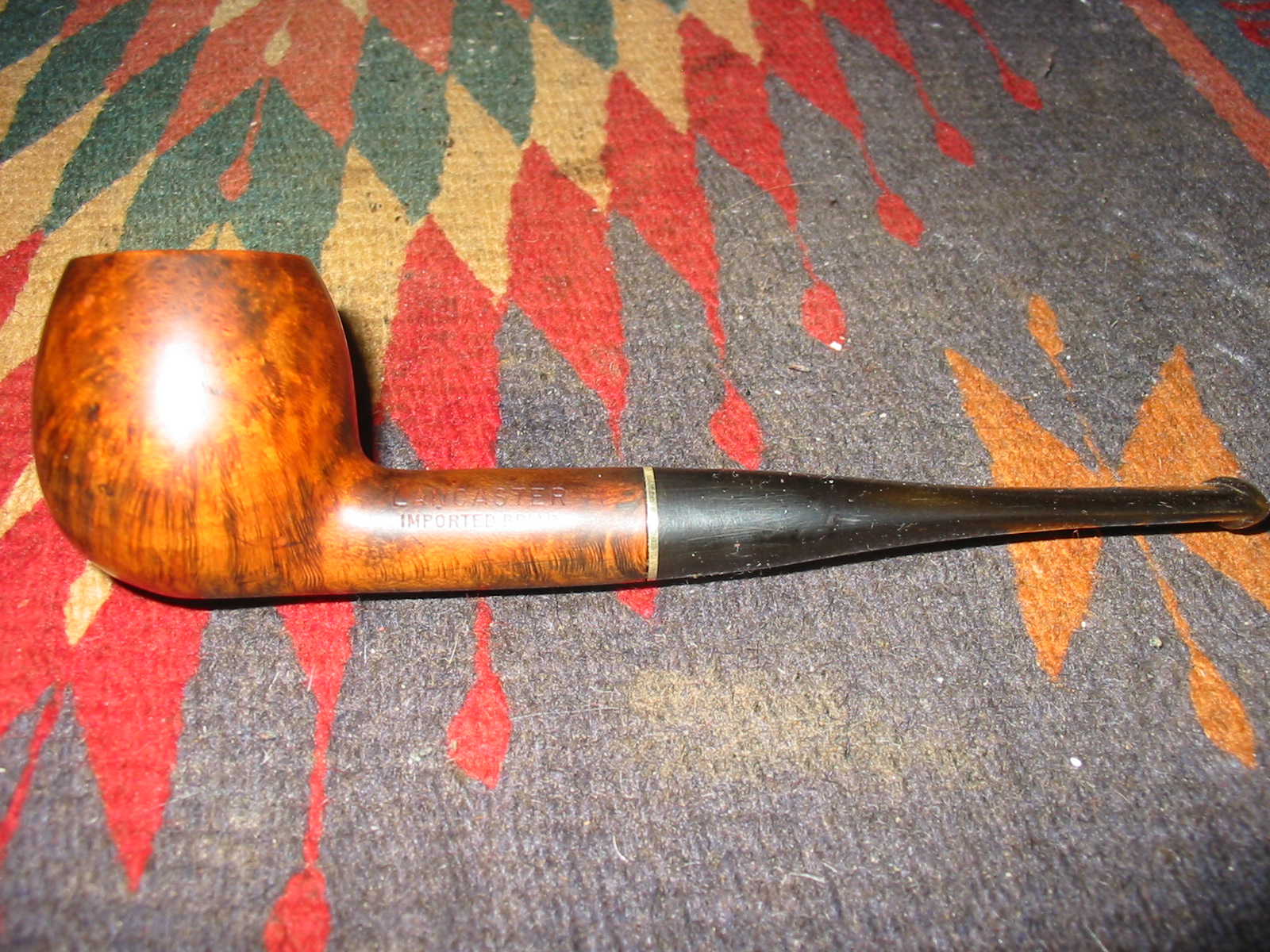
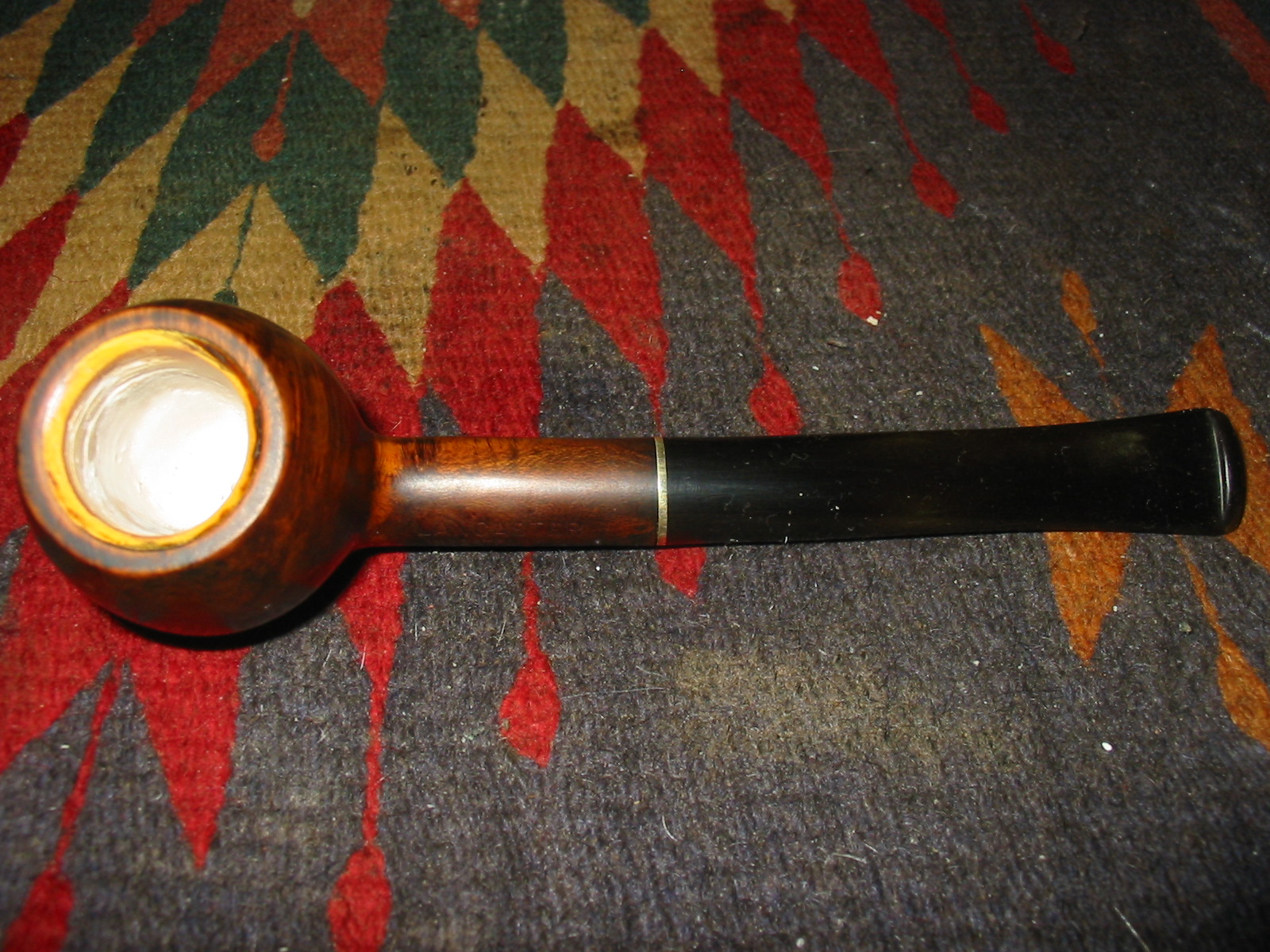
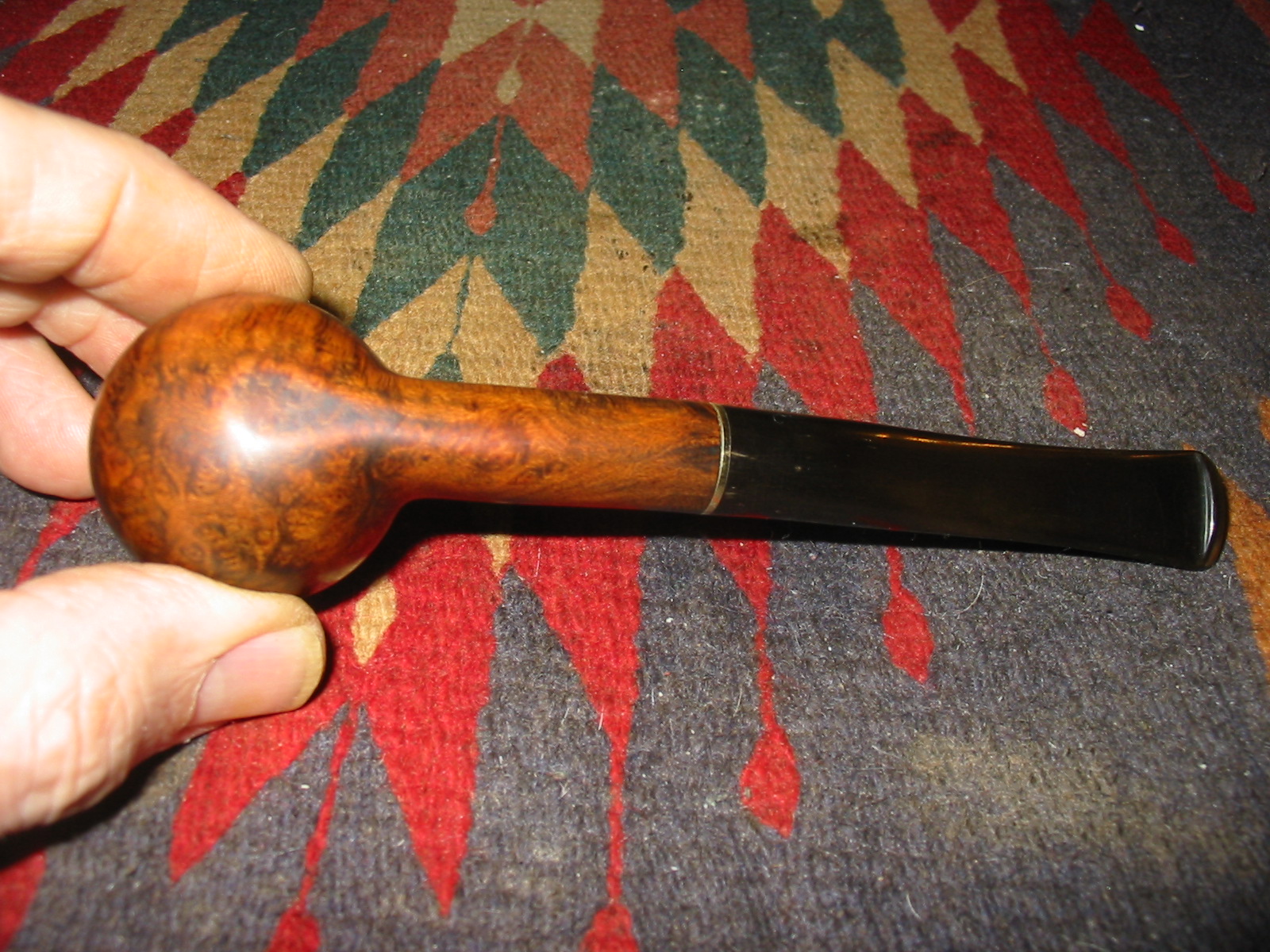
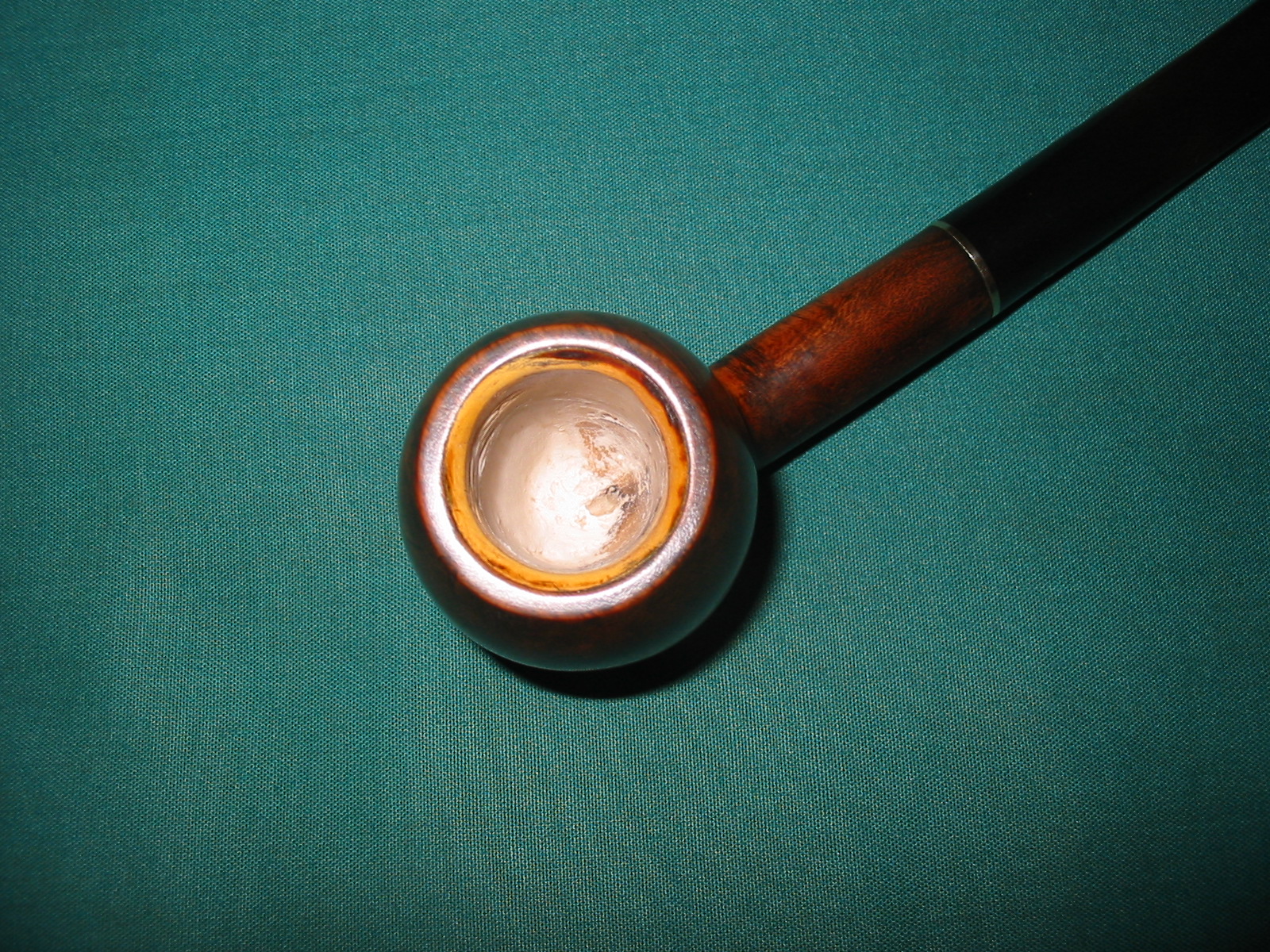
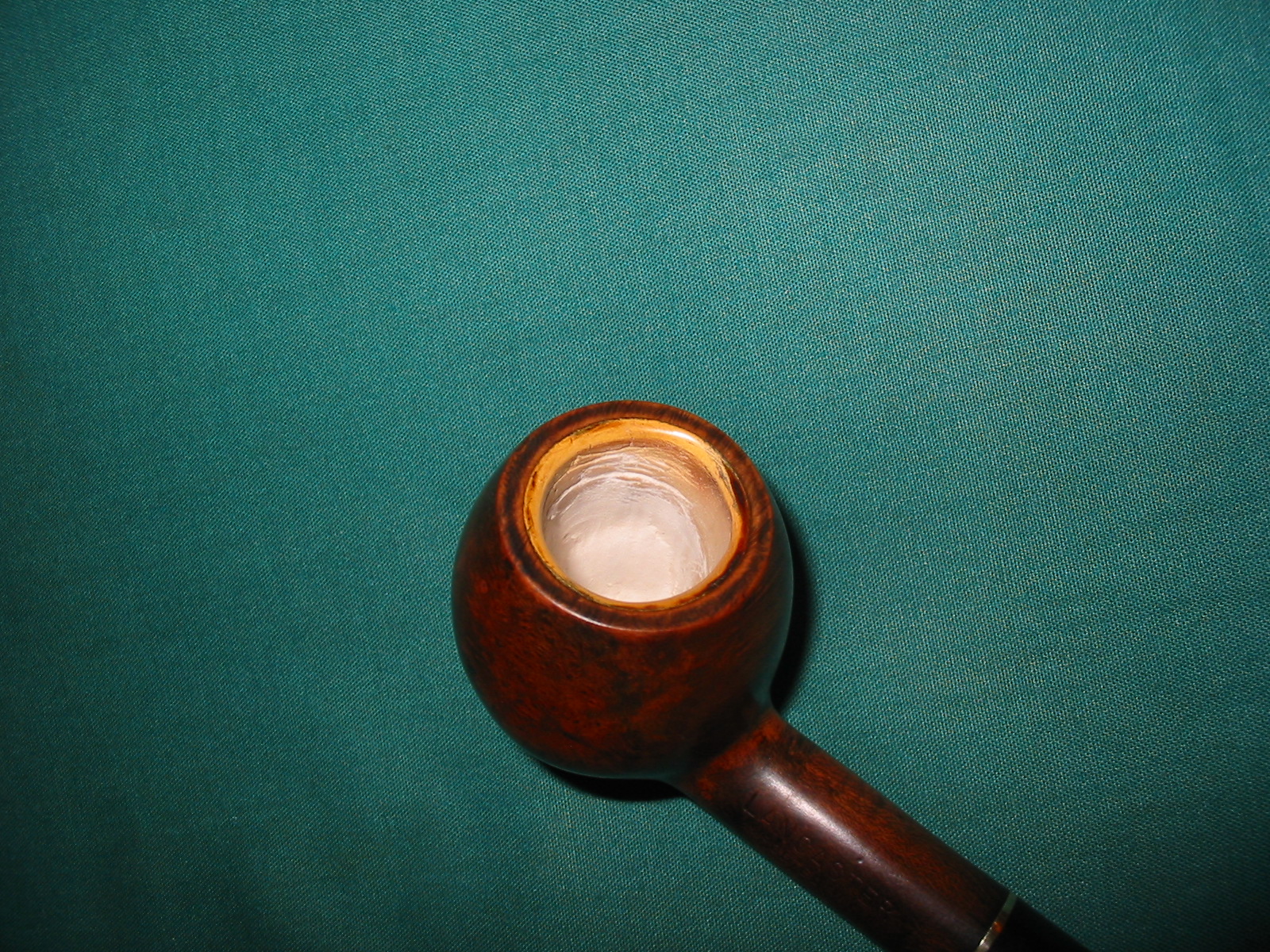
I have had this old meerschaum lined bowl for many years now. It has been sitting in a cupboard and should have rightly been pitched several times over. For some reason I could not bring myself to throw it away. I kind of figured that one day when I had nothing else to do I would experiment on a repair of the meerschaum lining. I had read of several repairs in the past and experimented with one of them previously. The two methods I had read of involved a non-acrylic tile grout without sand while the other one involved Plaster of Paris. I had used the tile grout on a pipe many years ago and still smoke it. The bowl has long since look repaired and you would be hard pressed to see where the repair was in the bowl. This old bowl had much the same damage as that one so I decided to experiment with the Plaster of Paris method. The pipe did not have a stem so I would also need to restem it once the patch was finished. The bowl is stamped Lancaster over Imported Briar on the left side of the shank and has no stamping on the right side. There were small fills present on the bowl – almost like small pin pricks that had been filled in the manufacture of the pipe. The finish on the bowl was virtually not present except for a few spots where the stain had held on stubbornly over the years.
IMG_3352

IMG_3353

I mixed a small batch of Plaster of Paris and water and stirred it with a dental pick. I also had some sanding dust from a meer bowl that I had save so I mixed it in with the Plaster of Paris mixture. I inserted a pipe cleaner into the airway to keep it open when I packed in the mixture to the bowl bottom and side. Once I had a good paste mixed up I used the dental pick to put pieces of it into the bowl. I used the head of a tamper to pack the Plaster of Paris into the bowl bottom. I also pushed the Plaster mixture into the side of the bowl and used the spoon end of the tamper to push it into place. I used the dental pick to carve the airway open at the bottom of the bowl and then a wetted pipe cleaner to smooth out the bowl wall and shape the bottom of the bowl in a slight cup shape. Once that was completed I smoothed out the whole bowl with the wetted pipe cleaner and feathered the edges of the patch into the existing meerschaum material.
IMG_3402

IMG_3403

IMG_3404

IMG_3406

IMG_3407

IMG_3408

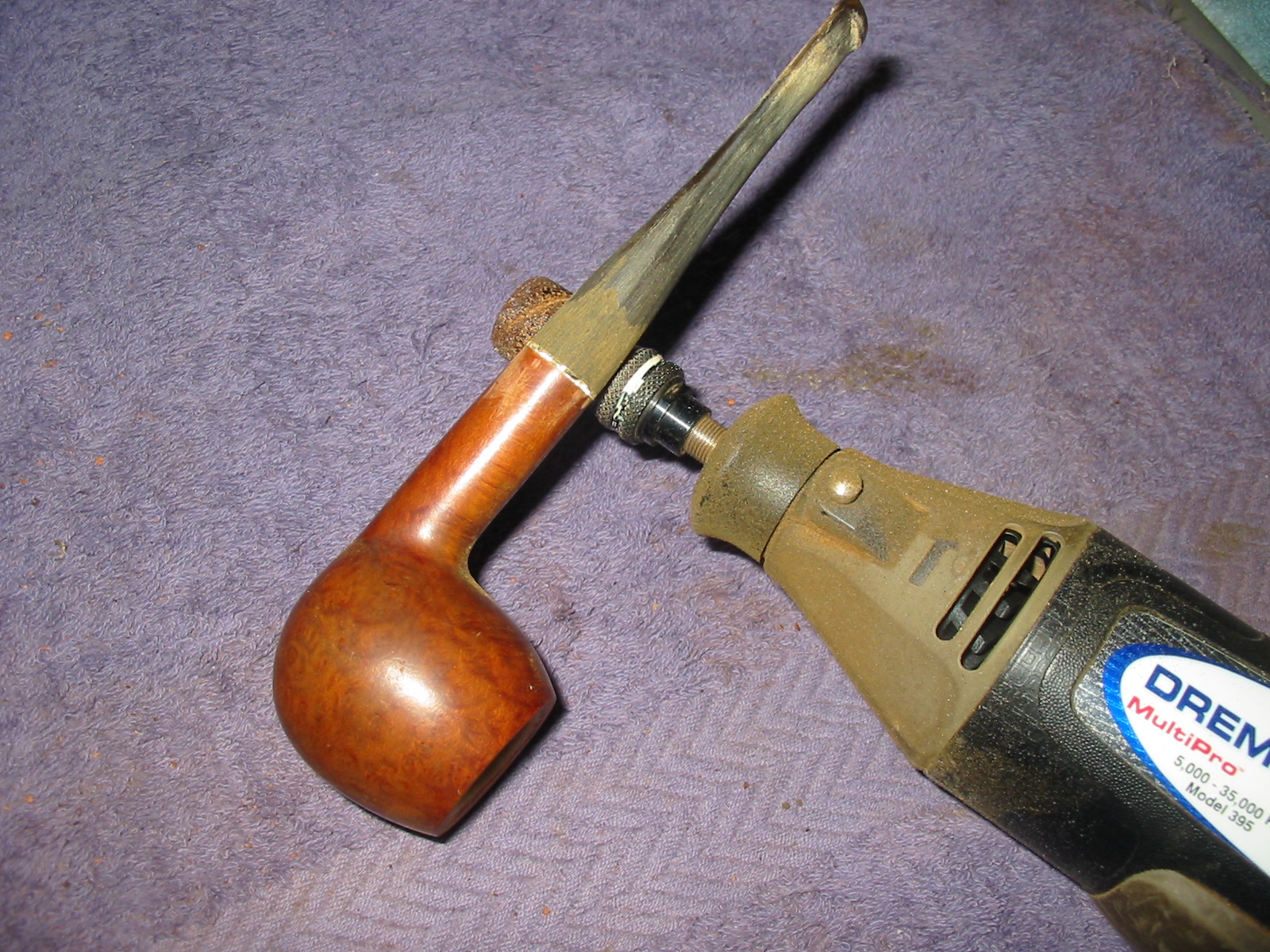
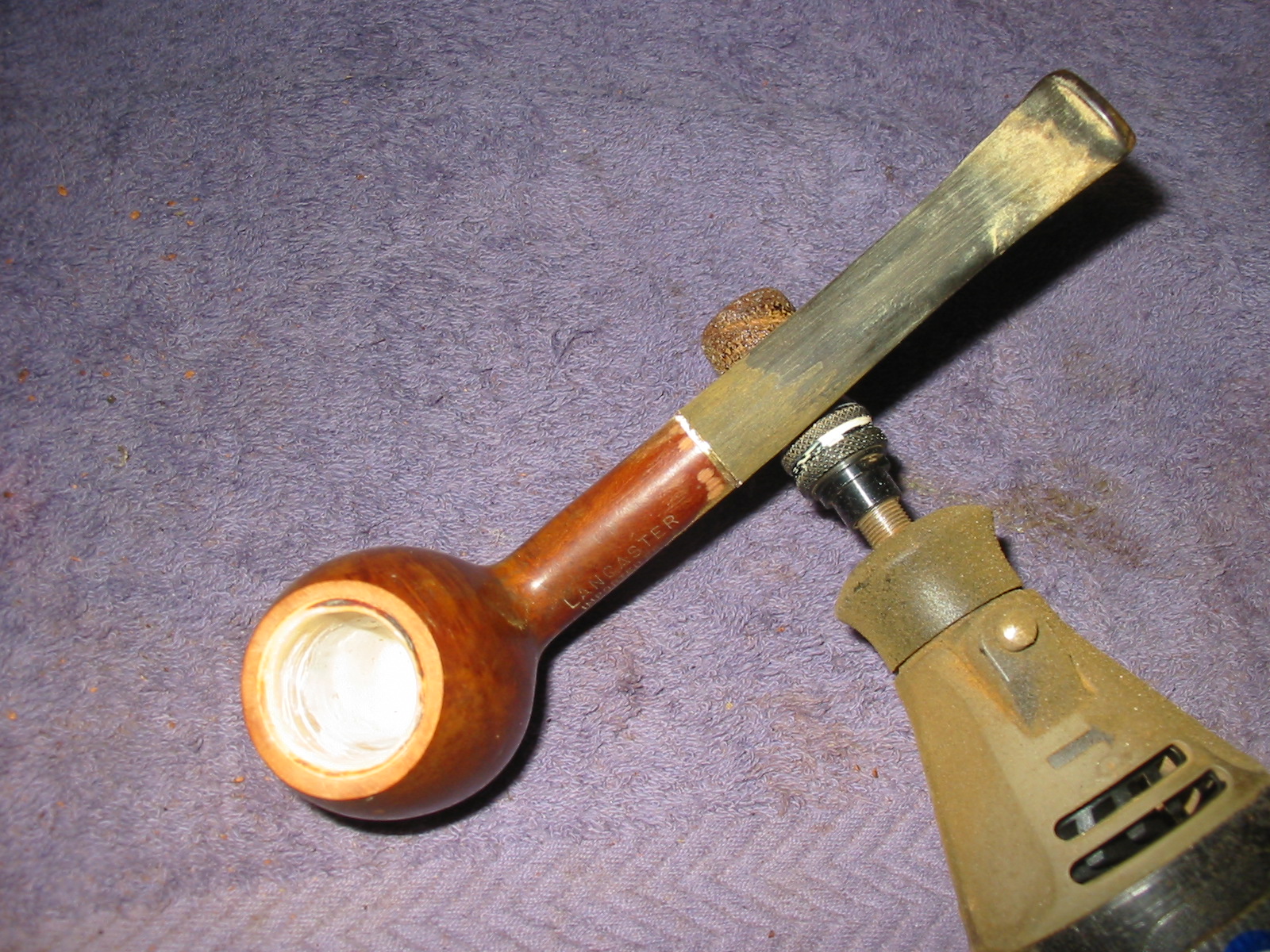
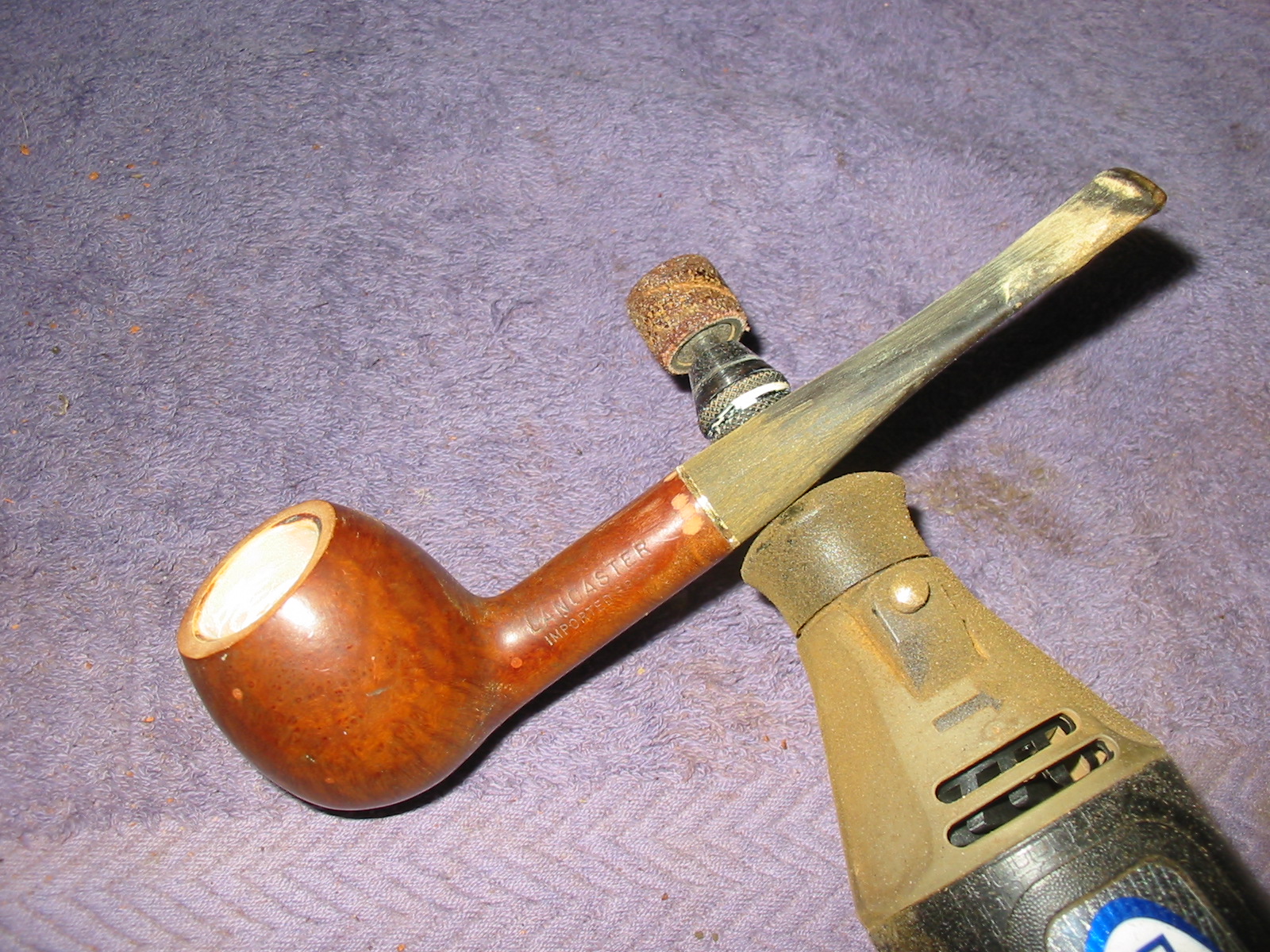
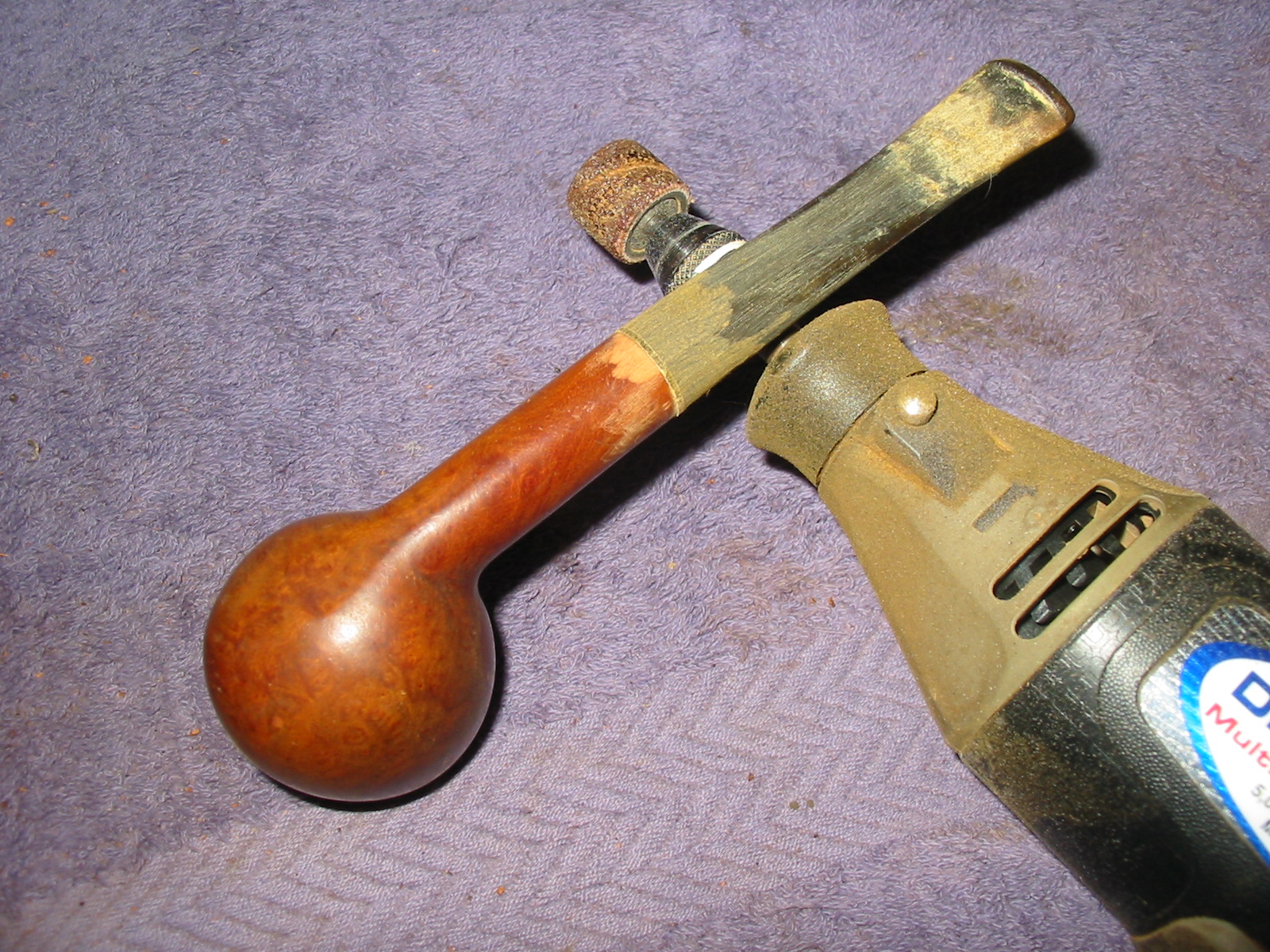
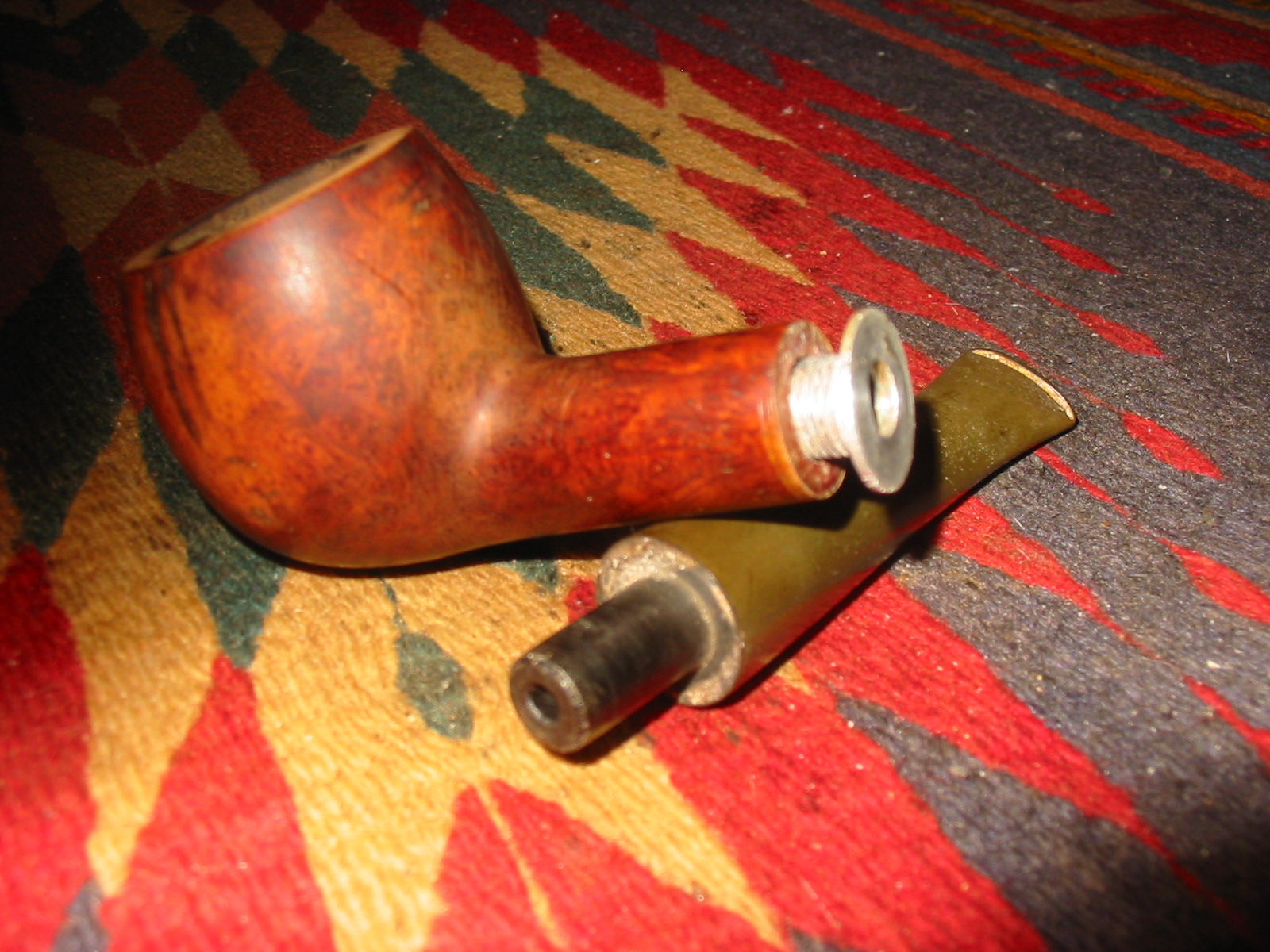
I cleaned up the top of the bowl and the tools and set the bowl aside to dry. After one hour the Plaster of Paris set and I removed the pipe cleaner from the shank. I used the dental pick to shape the airway after removing the pipe cleaner. The bowl was ready to restem. I went through my can of stems and found an old stem that was the right length and close to the correct diameter of the shank. It had a brass stem band that would look great on the old pipe bowl. When I cleaned it up I found that it had a Delrin tenon. I used the tenon tool to turn the tenon down enough to fit the shank snugly. When I cleaned out the end of the tenon after turning it I found that it was set up for a nine millimeter filter.
IMG_3409

IMG_3410

I fit it into the shank and used the Dremel with a sanding drum to sand down the diameter of the brass band and stem to fit the shank. I nicked the shank a couple of times lightly with the drum as I worked on the brass band. The nicks were not deep but merely surface so they would clean up when I sanded the stem and shank for a smooth transition.
IMG_3416

IMG_3417

IMG_3418

IMG_3419

I took the pipe back to the work table and sanded the stem and shank with 220 grit sandpaper to make a smooth transition between the shank and the stem. I also sanded off the calcification that had built up around the button at the same time.
IMG_3411

IMG_3412

IMG_3413

IMG_3415

IMG_3420

IMG_3421

IMG_3422

IMG_3423

I sanded the bowl with the 220 grit sandpaper and then the stem and the bowl with a medium grit sanding sponge to smooth out the scratches left behind by the sandpaper. I wet sanded the bowl with 1500-2400 grit micromesh sanding pads to smooth out the finish before I stained it. I then wiped the bowl and shank down with acetone on a cotton pad to clean off the sanding dust.
IMG_3424

IMG_3425

IMG_3426

IMG_3427

I stained the bowl with a black aniline stain, flamed it and repeated the process until the coverage was even. I heated the bowl with a lighter to set the stain into the grain of the pipe. I wiped the freshly stained bowl with Everclear to remove the top coat of stain and reduce the black stain. The next series of three photos shows the bowl after the wash.
IMG_3428

IMG_3429

IMG_3430

I sanded the bowl with 220 grit sandpaper and then a medium grit sanding sponge to further remove the black stain. The next four photos show the pipe after I had sanded it and wiped it down with Everclear.
IMG_3432

IMG_3433

IMG_3434

IMG_3436

I dry sanded it again with 1500-2400 grit micromesh sanding pads and then stained it with a coat of Minwax red mahogany stain. I rubbed it on the bowl and rubbed off again to give a contrast look to the briar and to hide some of the fills that were present. I sanded it with 3200-4000 grit micromesh to polish the remaining scratches in the briar.
IMG_3437

IMG_3438

IMG_3439

IMG_3440

I wet sanded the stem with 1500-2400 grit micromesh and then dry sanded it with 3200-12,000 grit micromesh sanding pads.
IMG_3441

IMG_3442

IMG_3444

I finished the bowl by giving it a final coat of Minwax medium walnut stain. I rubbed it into the bowl and wiped it off and then hand buffed the pipe with a shoe brush. The rich red brown stain on the bowl turned out well with a variety of highlights.
IMG_3445

IMG_3446

IMG_3447

IMG_3448

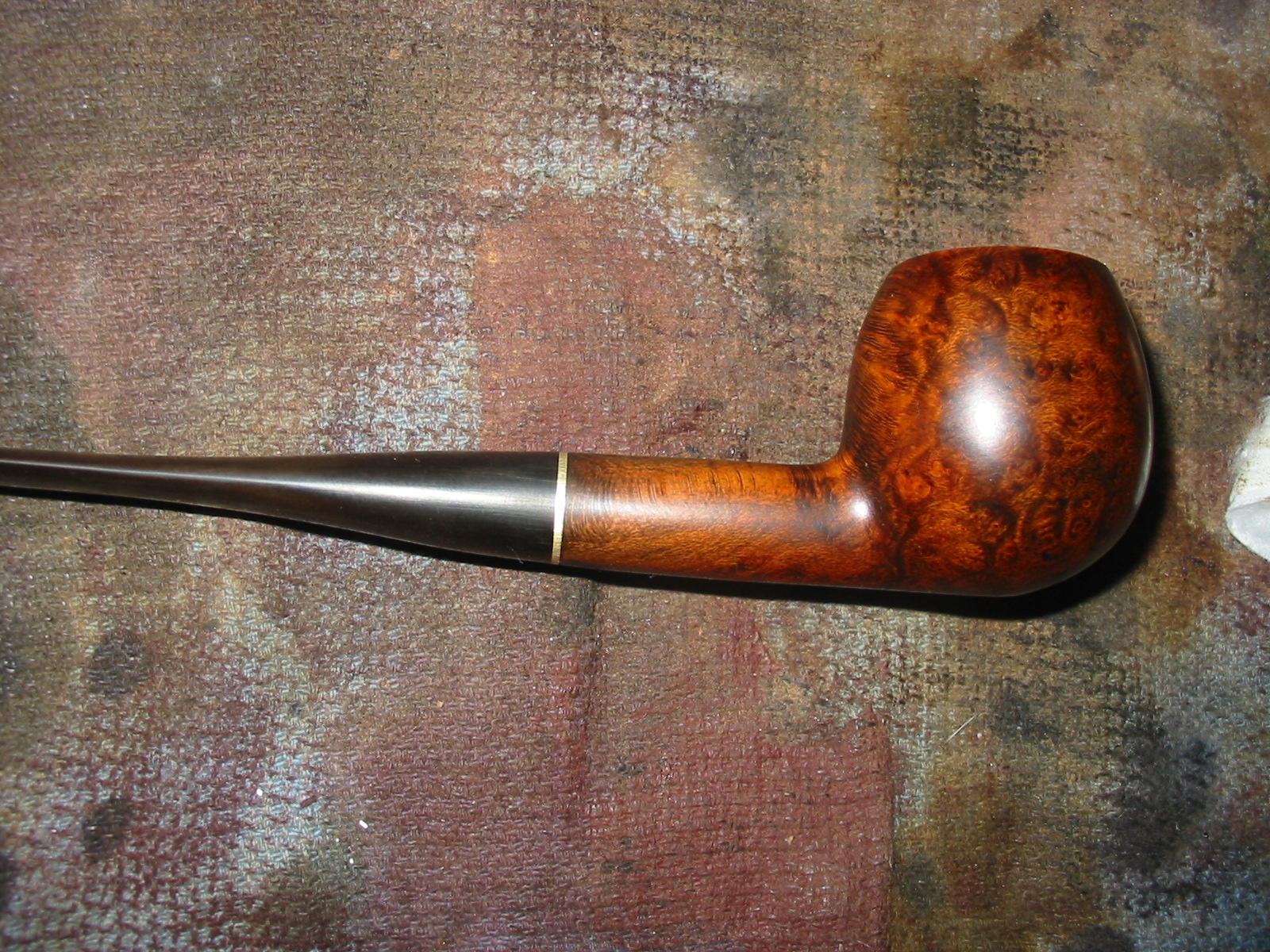
I rubbed the stem down with Obsidian Oil and then buffed the whole pipe with White Diamond to polish it. I finished by giving it multiple coats of carnauba wax to build a shine and protect the finish. The completed pipe is visible in the next four photos.
IMG_3449

IMG_3450

IMG_3451

IMG_3452

I also sanded the top of the rim and the inner bevel of meerschaum with the 1500-2400 grit micromesh sanding pad to polish the meerschaum edge. I gave this top edge a final coat of carnauba wax and buffed it to a shine. The Plaster of Paris patch is drying and needs to cure for 24 hours before it is good to go. The box says that it does not shrink as it dries and so far it is good to its promise. I will have to see if it holds true tomorrow after it has cured a full 24 hours. If so, then it is time to fire it up and check out if it holds as well as the tile grout patch has held up over all these years.
IMG_3453

IMG_3454

Kaywoodie Drinkless Apple Repurposed and Refurbished


Blog by Steve Laug

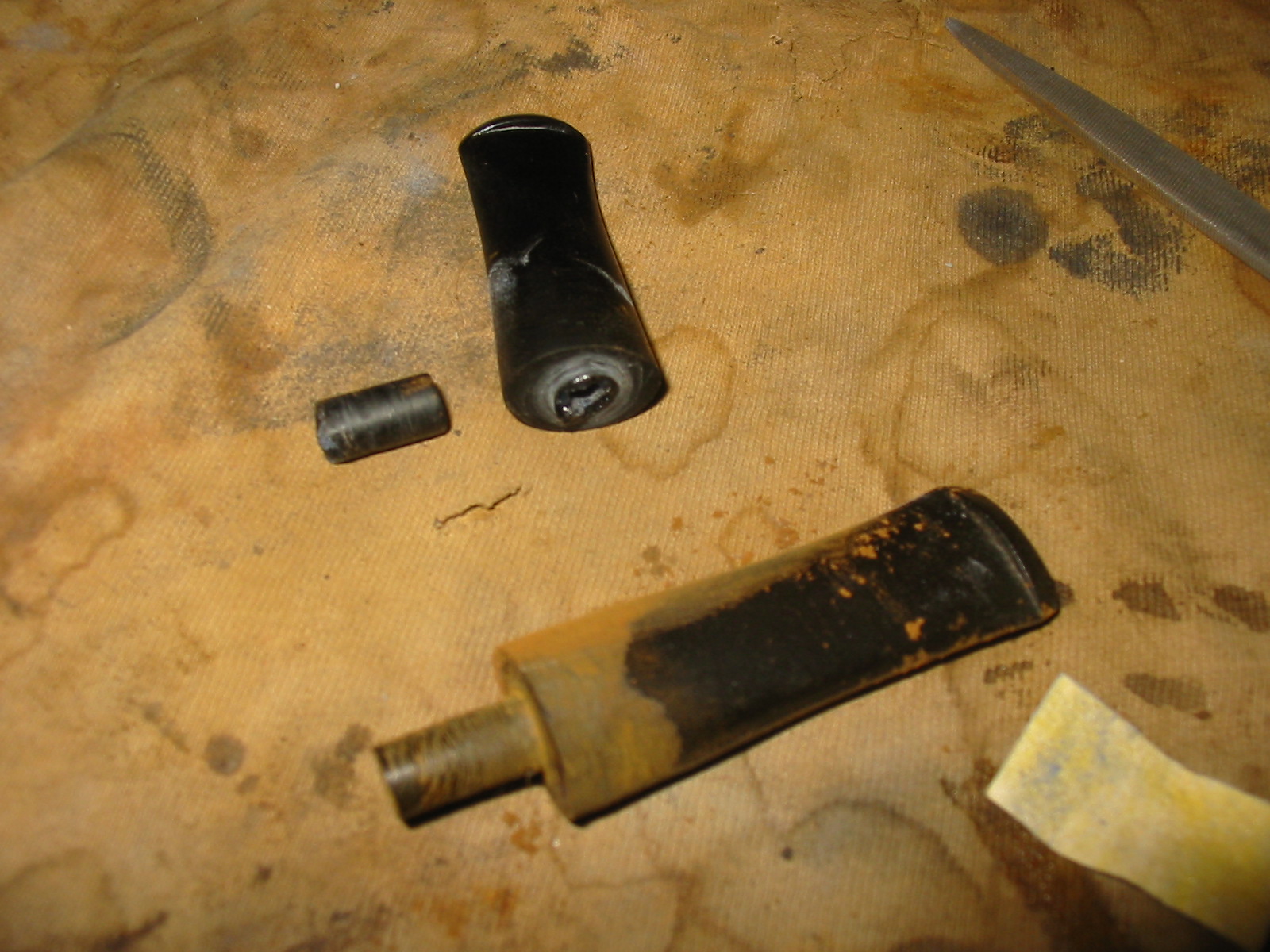
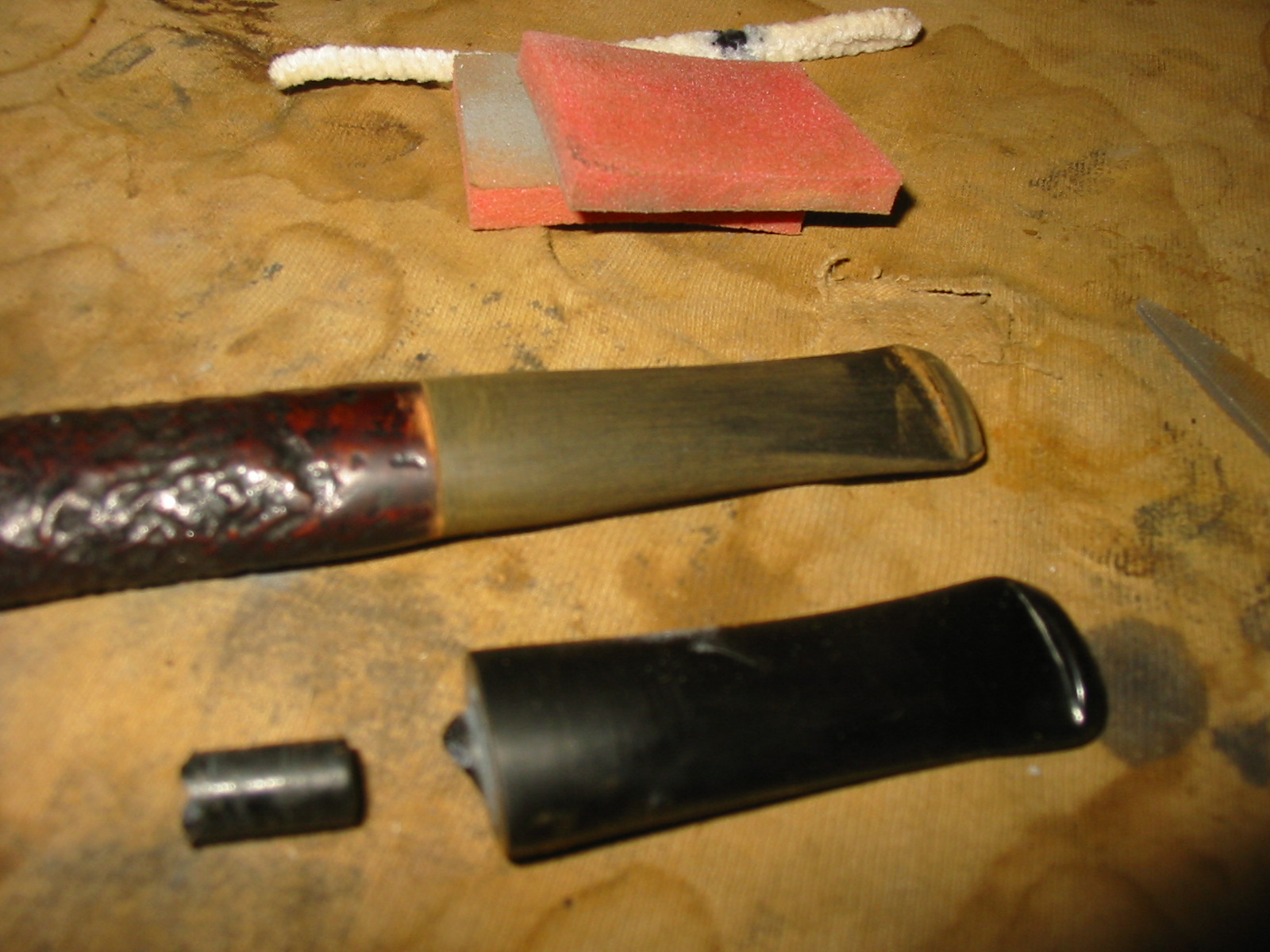
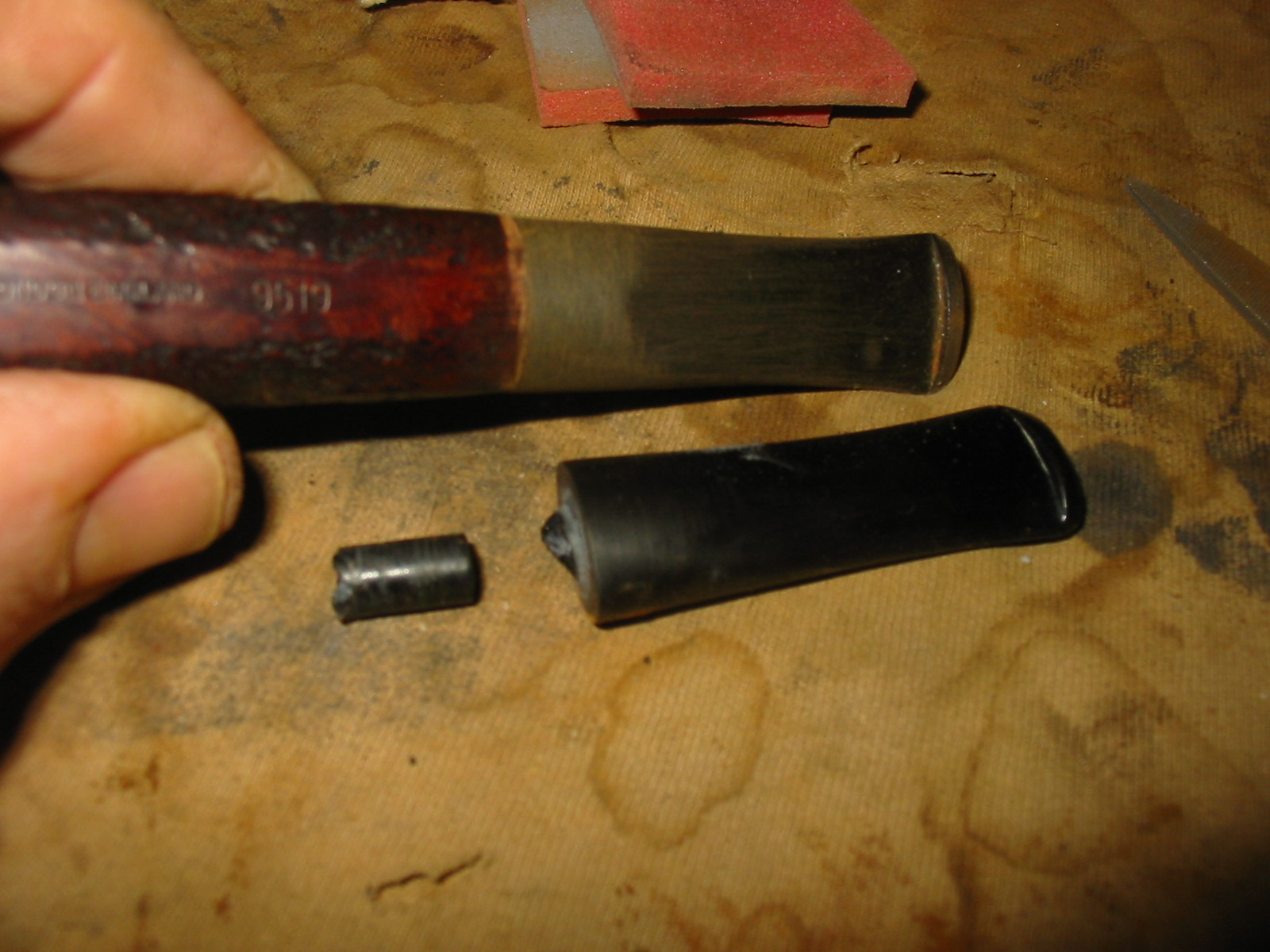
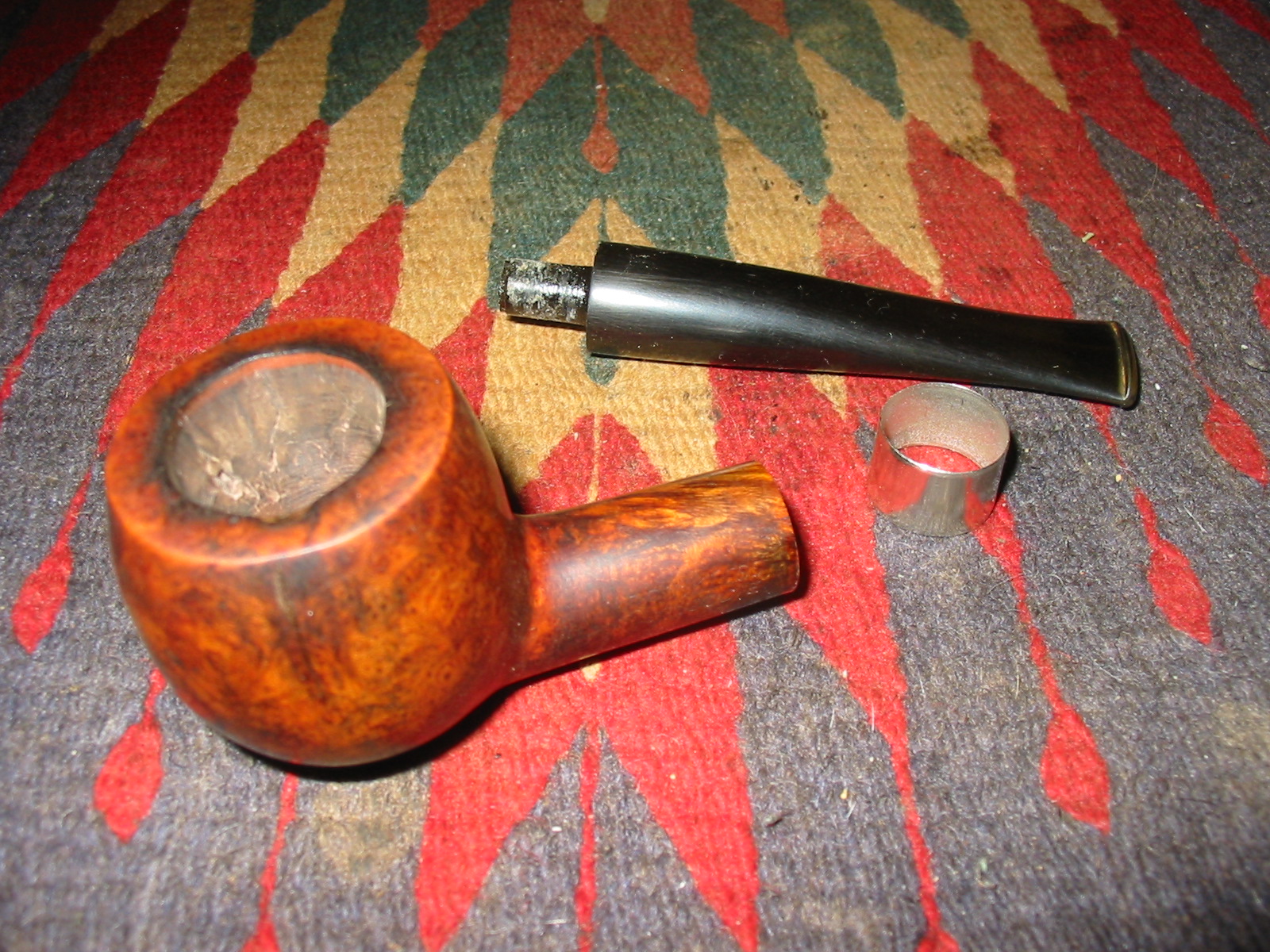
I was gifted this old Kaywoodie Apple in an exchange recently. It is the last of the box of pipes that I have to refurbish. I left it to last as it had some serious problems. The stem was overturned and had deep tooth marks at the button. The bowl had some deep scoring on the left side of the bowl. Those issues might not seem too serious at first glance but they were more so than I had expected. I inspected the stinger apparatus and saw that it had been reglued in the stem. I heated the stinger with a heat gun and turned it back into the shank of the pipe. As I turned it carefully the stem fell off in my hand. I looked and saw that it was corroded through and the heat had softened the glue and the piece literally fell out of the stem. I tried to epoxy it back into the stem and connect the two pieces but it would not stay. Each time I put it back into the shank it fell out – no matter how much curing time I gave it. That was the first issue. In looking at the tooth marks they were repairable but with the broken stinger and threaded tenon I wondered whether it was worth fixing it. The grooves on the bowl and the dip in the rim above them could be repaired and would be a simple fix if I decided to keep the pipe. Those were the issues that caused me to lay the pipe aside for a bit and work on other pipes. That is why it is the last pipe in the bottom of the box.
IMG_3047

IMG_3048

IMG_3049

IMG_3050

Because of the extent of damage to this pipe it was unlikely that it would ever be truly collectible again. Though to some my next decisions will appear to have desecrated an older Kaywoodie I decided to use this pipe to experiment with a few repair ideas. I topped the bowl with my usual method to remove the rim damage. I removed the damaged portion of the bowl and flattened the rim against the sandpaper. When I was finished topping the bowl the rim was flat again however the inner edge of the rim needed to be repaired. It was missing a large chunk of briar.
IMG_3051

IMG_3052

IMG_3053

IMG_3054

The missing chunk matched the twin scoring marks on the outside of the bowl and made me wonder how the previous pipeman had caused that kind of damage to the bowl. The divot on the rim was not a burn mark but a divot that had been caused in the same moment the scoring occurred on the outside of the bowl. I sanded down the scored areas and cleaned the bowl with acetone. I then patched the score marks with superglue and briar dust. I also built up the top of the rim in the divot area with the same mixture. I kept the mix on the top of the rim as much as possible with very little of it on the inside edge. I did not want to use it inside the bowl.
IMG_3055

I sanded the bowl to remove the excess of the glue and briar dust mix and then wiped the entire bowl down with acetone on cotton pads. The three photos below show the state of the bowl and the repairs down with the briar dust and superglue. The third photo shows the top patch.
IMG_3056

IMG_3057

IMG_3058

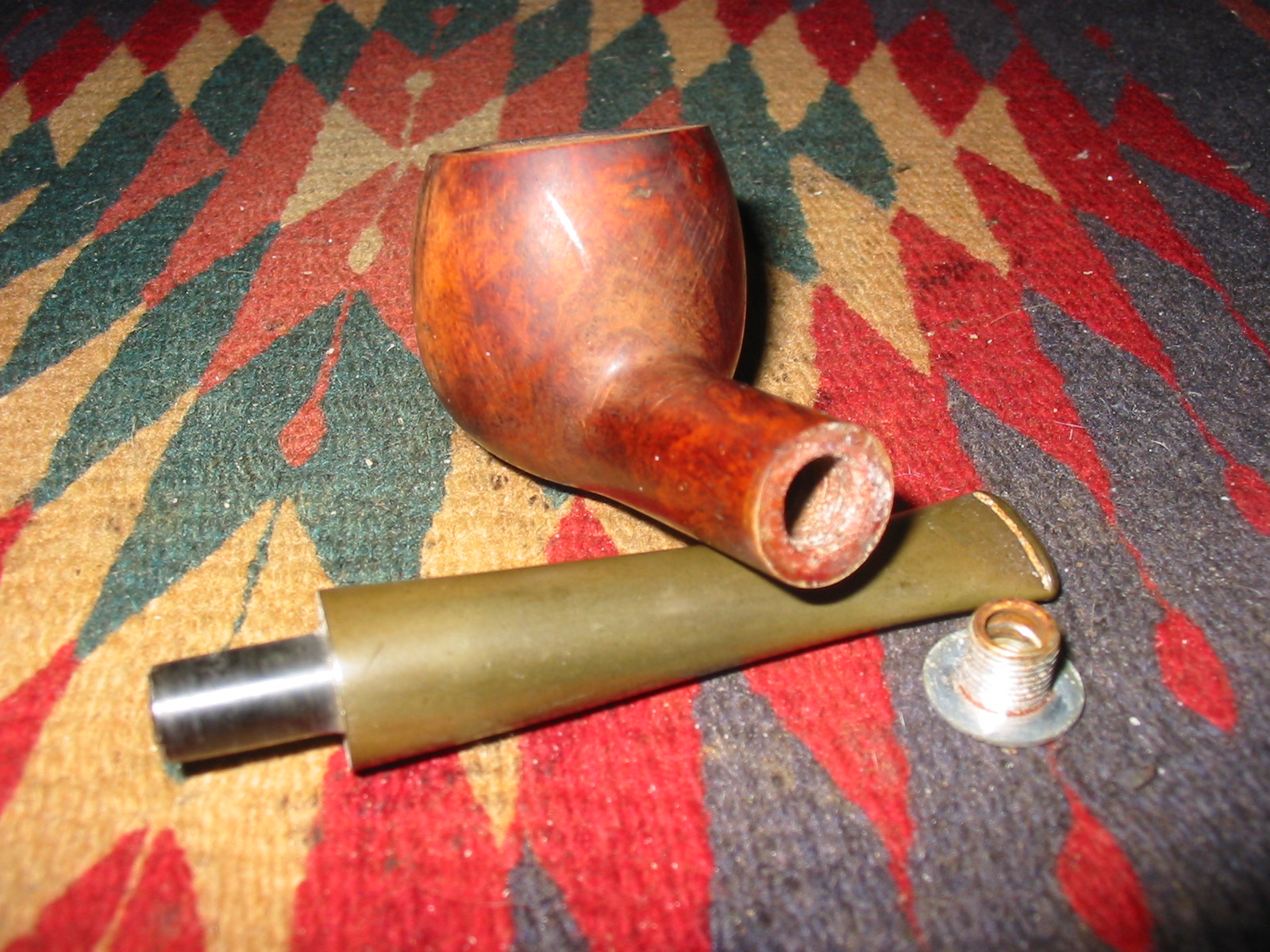
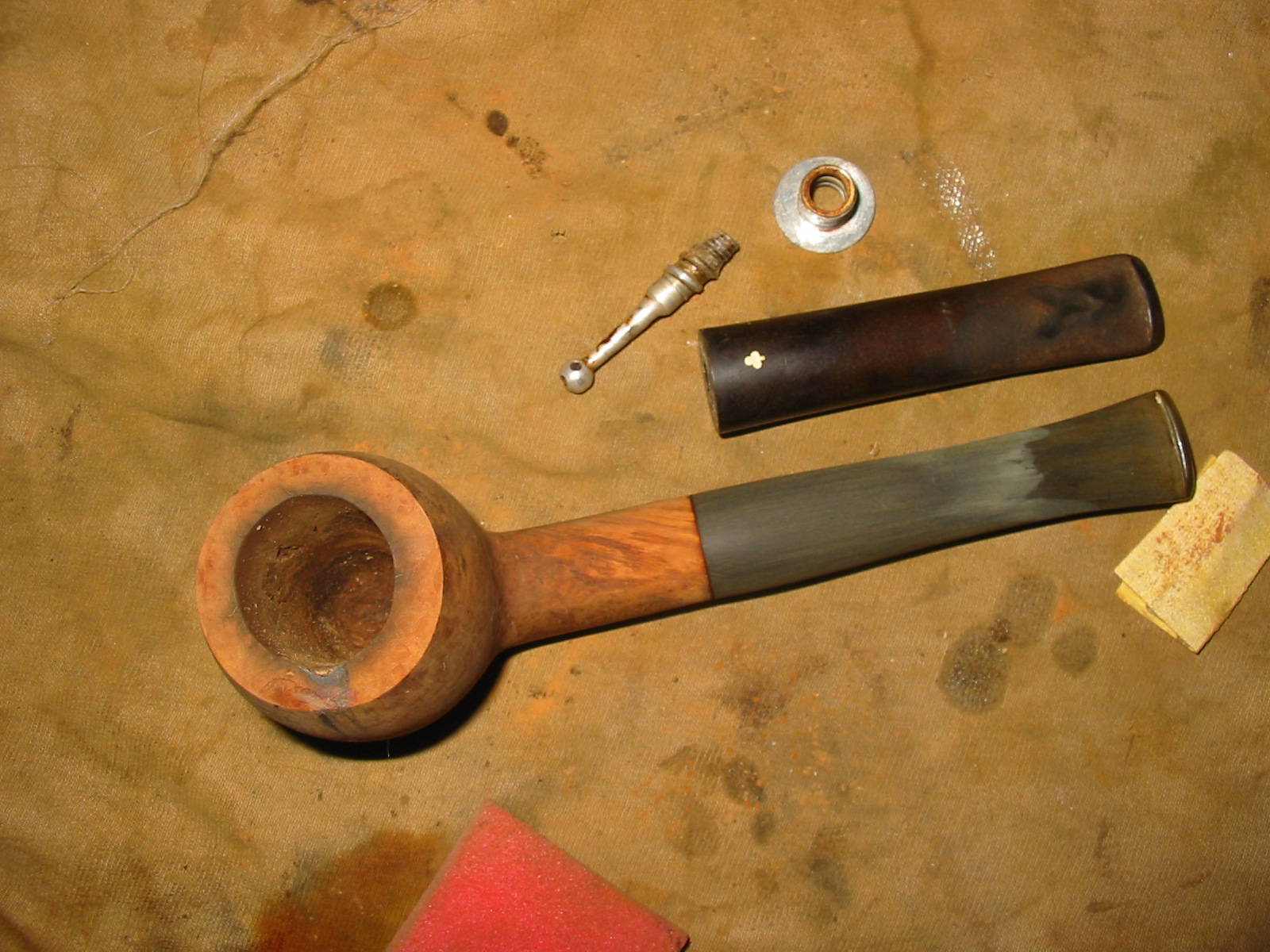
Because the stem was not functional I had a decision to make. I could drill out the disintegrated end of the stinger and put a new replacement tenon in place or I could remove the metal shank insert and make a new push stem for the pipe. The faintness of the stamping on the shank and the extent of damage that I had repaired on the bowl made me take the second choice. I removed the metal shank insert from the shank. This is not as hard as it sounds. I have heard of others drilling it out and leaving it in place. I have opted to remove it. It is threaded and can be unscrewed from the shank with a small pair of needle nose pliers. The next two photos show the process. I sorted through my stem can and found a stem that could be repurposed to fit this shank and then be adapted to fit the diameter of the shank.
IMG_3355

IMG_3354

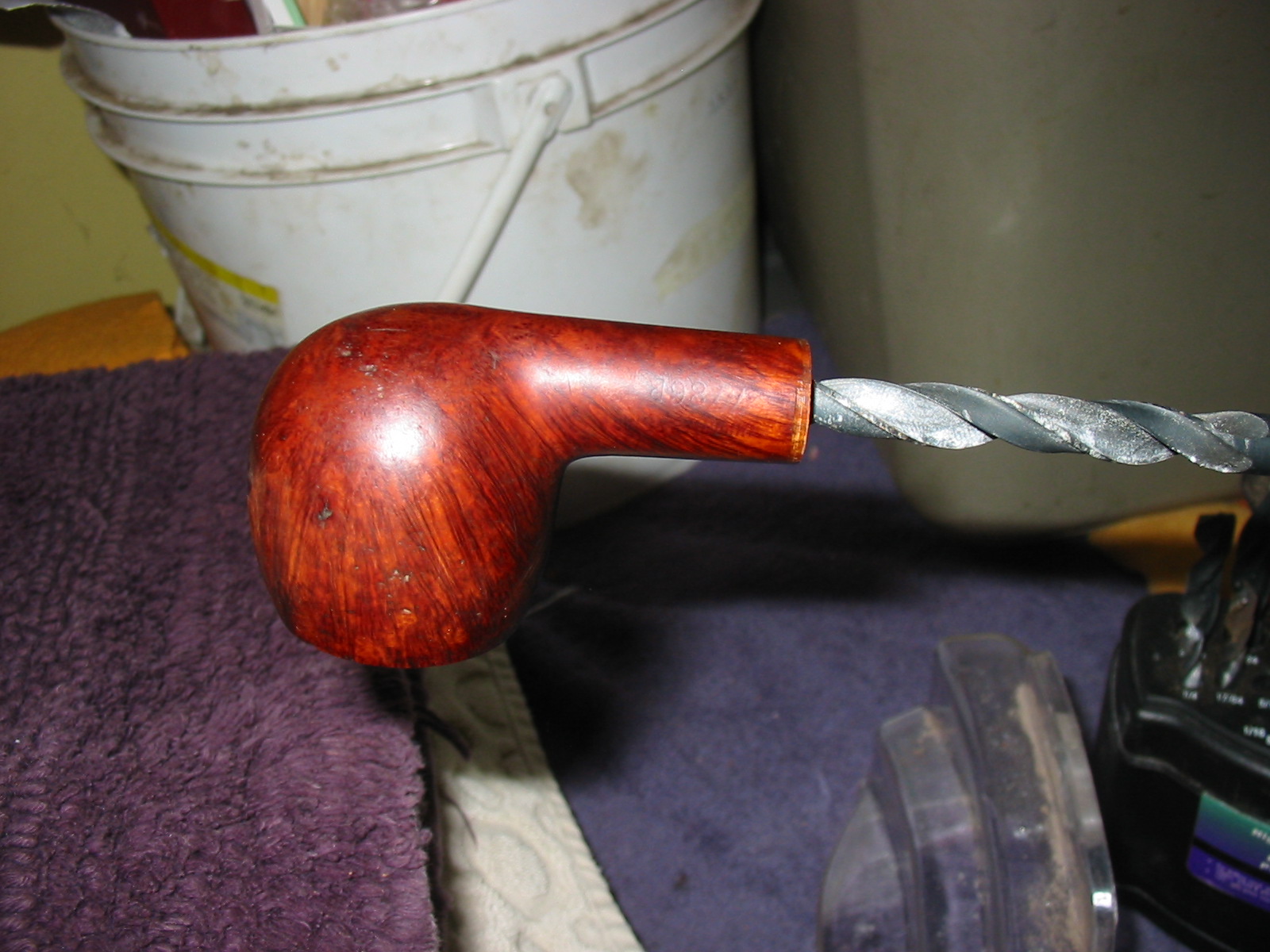
Before I could properly fit the tenon in the shank I needed to drill the mortise deeper. The current depth of the mortise was the same length as the threaded portion of the metal shank attachment in the photo. I wanted the tenon to be longer so I drilled out the mortise to double the length of the current depth. I would need to remove some of the tenon length on the stem to make a good fit but that is a simple task.
IMG_3356

With the drilling done, I used the PIMO Tenon Turning Tool to remove some of the excess diameter of the tenon and also shortened the tenon slightly to get a good tight fit in the shank and clean joint at the tenon shank union. The larger diameter of the stem is visible in the photo below.
IMG_3357

I used the Dremel with the sanding drum and carefully reduced the diameter of the stem while it was in place on the shank. I run the Dremel at a speed that allows me to carefully and steadily control it as I work close to the shank of the pipe.
IMG_3359

IMG_3360

IMG_3361

IMG_3362

IMG_3363

Once I had it roughed in to fit with the Dremel it was time to take it back to the work table and do the hand work with sandpaper to make the fit seamless. Since I was going to restain the pipe anyway I sanded the shank as I sanded the stem to make the transition smooth. In the first two photos the stamping is visible in the light of the flash. In real life it is quite a bit fainter and shallow. I also use some superglue and briar dust to repair some of the deeper dings and marks on the bowl to ready it for staining. I sanded it with 220 grit sandpaper and then with a medium grit sanding sponge to smooth out the surface and remove the scratches left behind by the sandpaper.
IMG_3364

IMG_3365

IMG_3366

IMG_3367

I wiped the bowl down with Everclear to remove the sanding dust and give it a last cleaning before I started giving it a new stain coat. I have also included two photos of the new stem with the older KW stem and broken parts for comparison sake. I really like the way the new stem fit the shank and the look of the pipe after the repairs.
IMG_3368

IMG_3369

IMG_3370

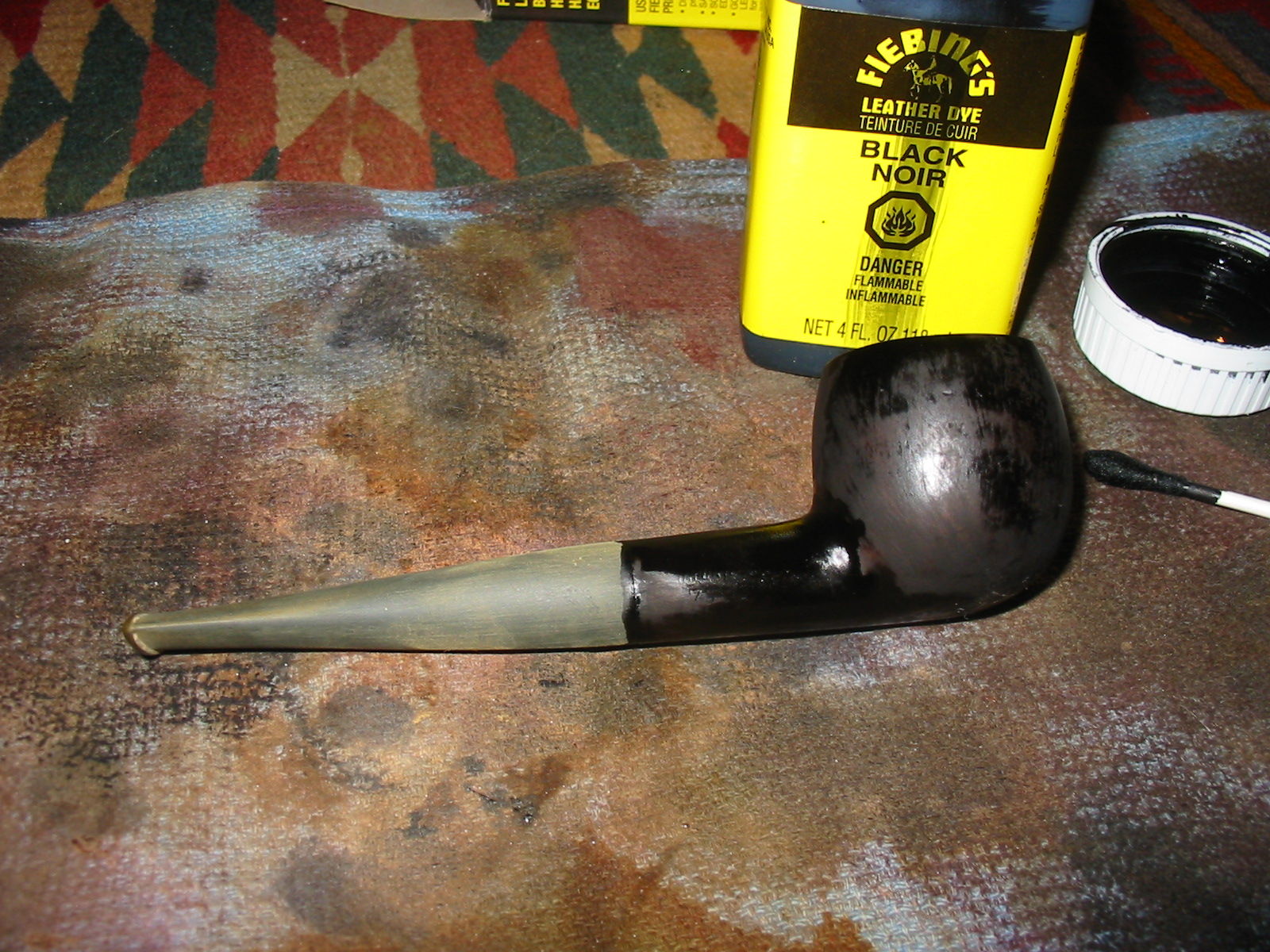
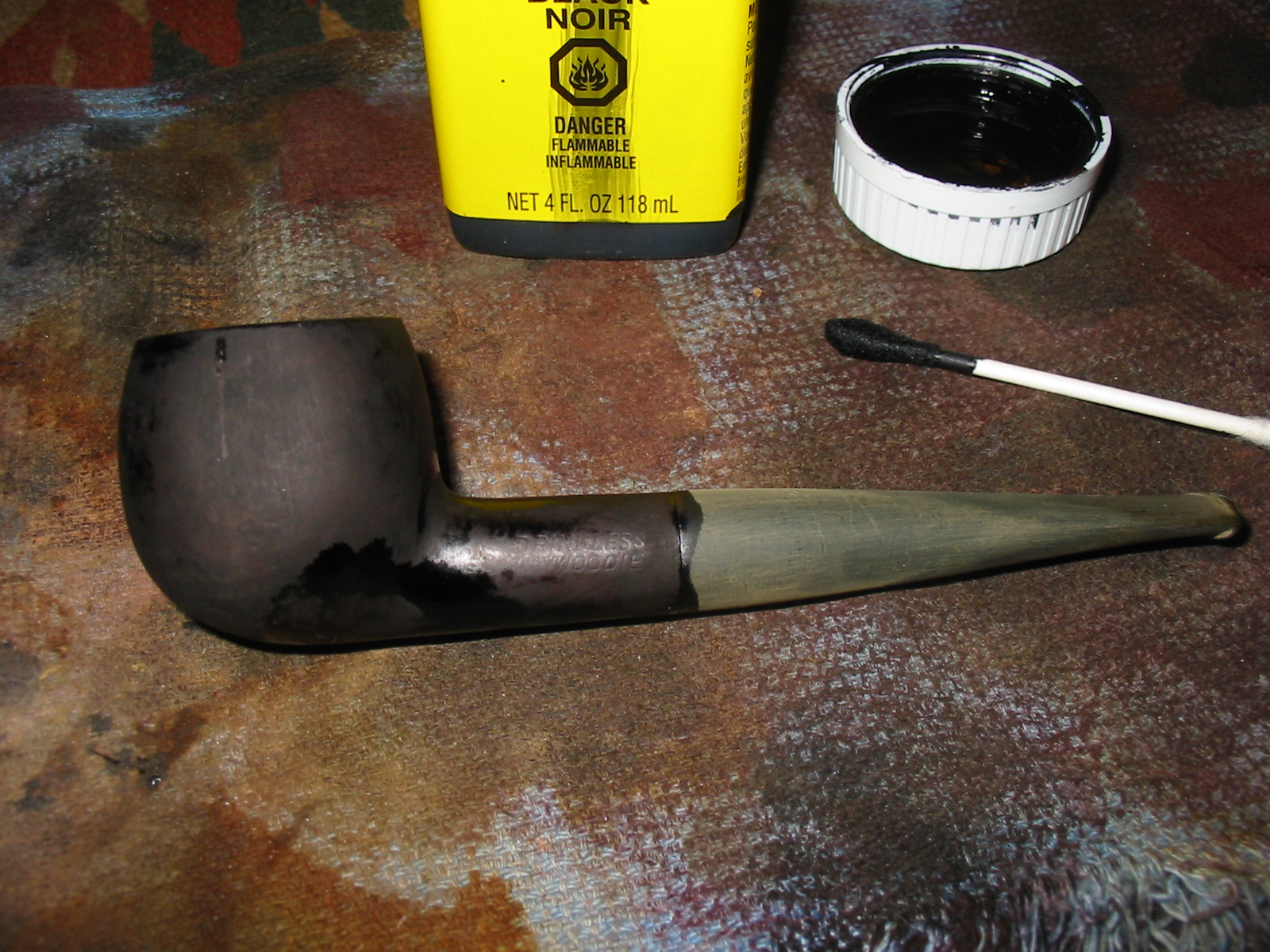
I wanted to continue to experiment with contrast staining so I gave the pipe a first coat of stain with black aniline stain. I applied the stain and flamed it and repeated the process until the coverage was even. I then heated the entire bowl by passing over it with the flame of a Bic lighter to warm the briar and set the stain.
IMG_3371

IMG_3372

IMG_3373

IMG_3374

The black aniline stain is transparent enough that the brown of the briar actually makes the stain appear to be a dark brown. It also covers the repairs on the bowl and blends them into the grain in way that makes them less visible. This was especially important with the repair I had made to the two deep scoring marks on the left side of the bowl. Once the stain dried I wiped it down with acetone to remove the top coat and leave only the grain darkened with the black. After doing that the bowl was still do dark for my liking. Though the grain patterns are very visible I wanted it to be lighter so that when I put the contrast stain coat on it would really pop to the surface.
IMG_3375

IMG_3376

IMG_3377

I sanded the bowl with 220 grit sandpaper and then with a medium grit sanding sponge to further remove the black stain. I finished the sanding by wet sanding the bowl with 1500-2400 grit micromesh sanding pads. Sanding with the micromesh pads removed the scratching left behind by the other sandpapers and prepared it for the next coat of stain that I wanted to give it. I stained the bowl a second time with a coat of Minwax Water based stain. I chose a red mahogany stain for this coat. I like the contrast the reddish colour of the mahogany with the black undercoat. I applied the stain and then wiped it off with a soft cotton cloth.
IMG_3378

IMG_3379

IMG_3380

IMG_3381

I finished the contrast staining with a third colour – a Minwax medium walnut stain for the finish coat. I applied the stain and wiped it down using a soft cotton cloth and then hand buffed it with a shoe shine brush. The next series of four photos show the finish after the application of the three stains and a hand buffing. I really like the contrast finish that the three stains gave the pipe.
IMG_3382

IMG_3383

IMG_3384

IMG_3385

I sanded the bowl and stem with micromesh sanding pads to bring out the shine. I wet sanded the stem with 1500-2400 grit pads and then dry sanded the bowl and stem with 3200- 4,000 grit pads. At that point I made a decision that some will like and others will hate.
IMG_3387

IMG_3388

I took out my box of nickel bands and found one that would fit the shank. I took the photo below with the band next to the pipe to symbolize the thinking process that went into this decision. I put the band against the shank and the stem next to it to see how it looked. I looked at the faint stamping and the fact that is was a non-collectible pipe anyway due to my stem modifications and decided to give it a go.
IMG_3389

I put the band on the end of the shank. For those banding a pipe shank pay attention to the diameter of the band – the end that goes on the shank is slightly larger than the end the faces the stem. I took the pipe and heated the band with a heat gun and then pressed it into place on the shank.
IMG_3390

IMG_3391

I took it back to the work table and finished sanding the stem and bowl with 6,000, 8,000 and 12,000 grit micromesh sanding pads. In the photo below the newly banded shank is visible. The band is solely cosmetic as the shank was not cracked and the fit of the stem was perfect. I liked the added bling on this pipe quite a bit.
IMG_3393

I wiped the stem down with Obsidian Oil and rubbed it into the surface of the vulcanite and then buffed the pipe with White Diamond. I avoid buffing the band as much as possible because it discolors the stem and the shank with the black residue caused by buffing the nickel. I then buffed the pipe with multiple coats of carnauba wax to protect and give a rich finish to the pipe. The finished pipe is shown below in the last four photos. The contrast stain worked well on this pipe. The flaws are there and visible but do not detract from the finish. The stem has a good glow with the lines of the pipe and the nickel band gives a nice polished look to the old pipe. Overall this experiment in repairs ended well. I like the finished look of the pipe and I learned a few new tricks along the way.
IMG_3398

IMG_3399

IMG_3400

IMG_3401

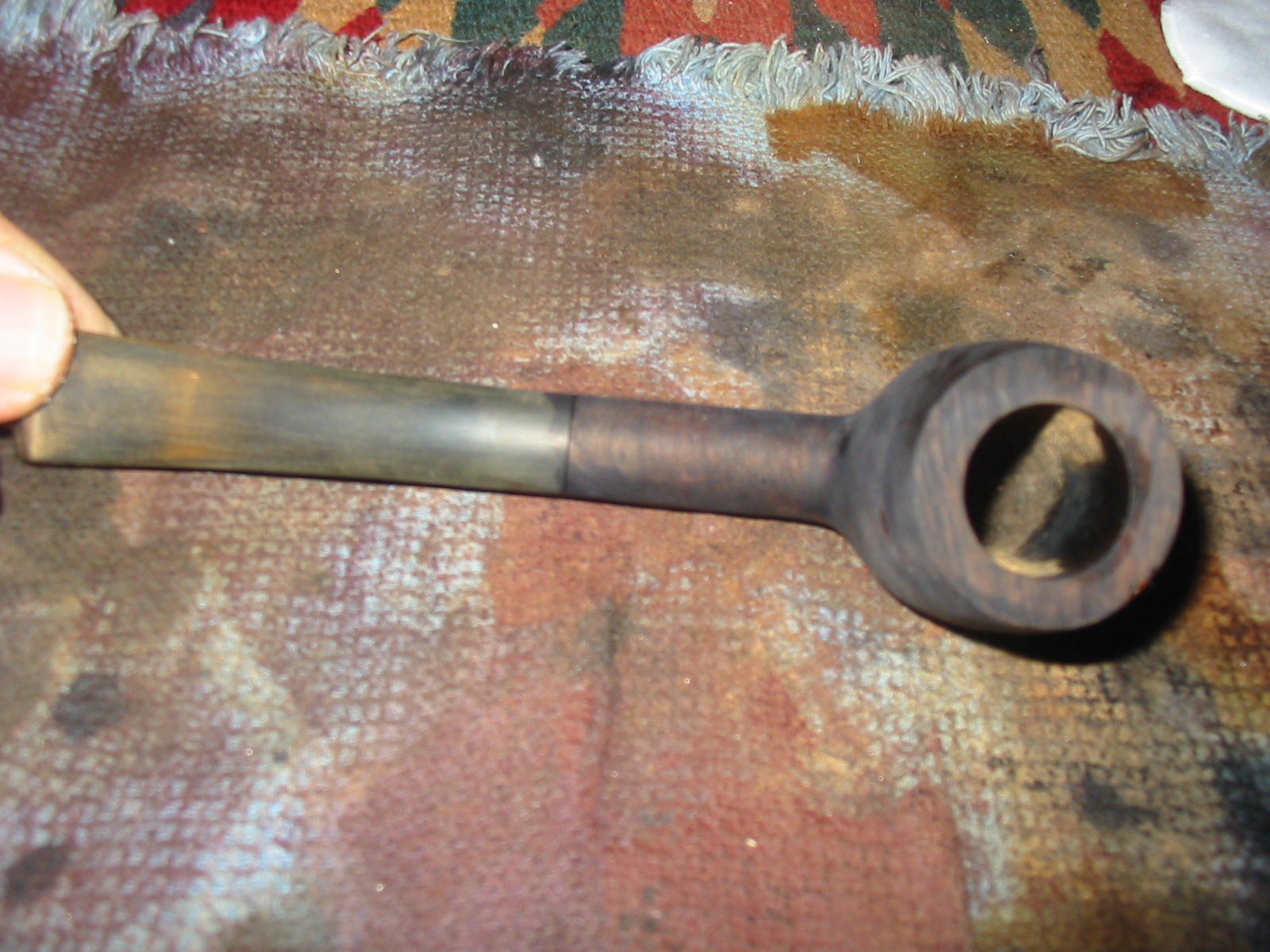
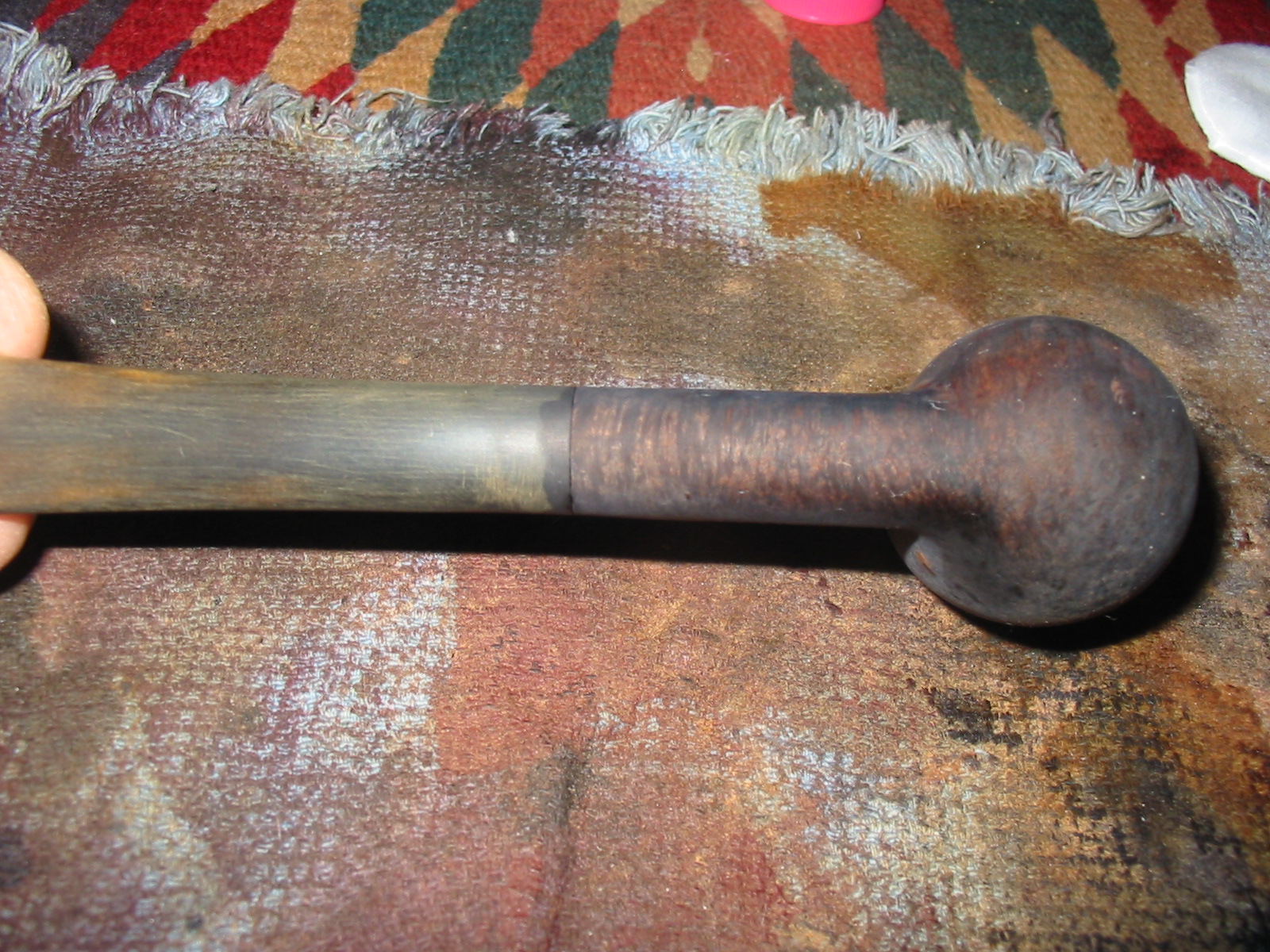
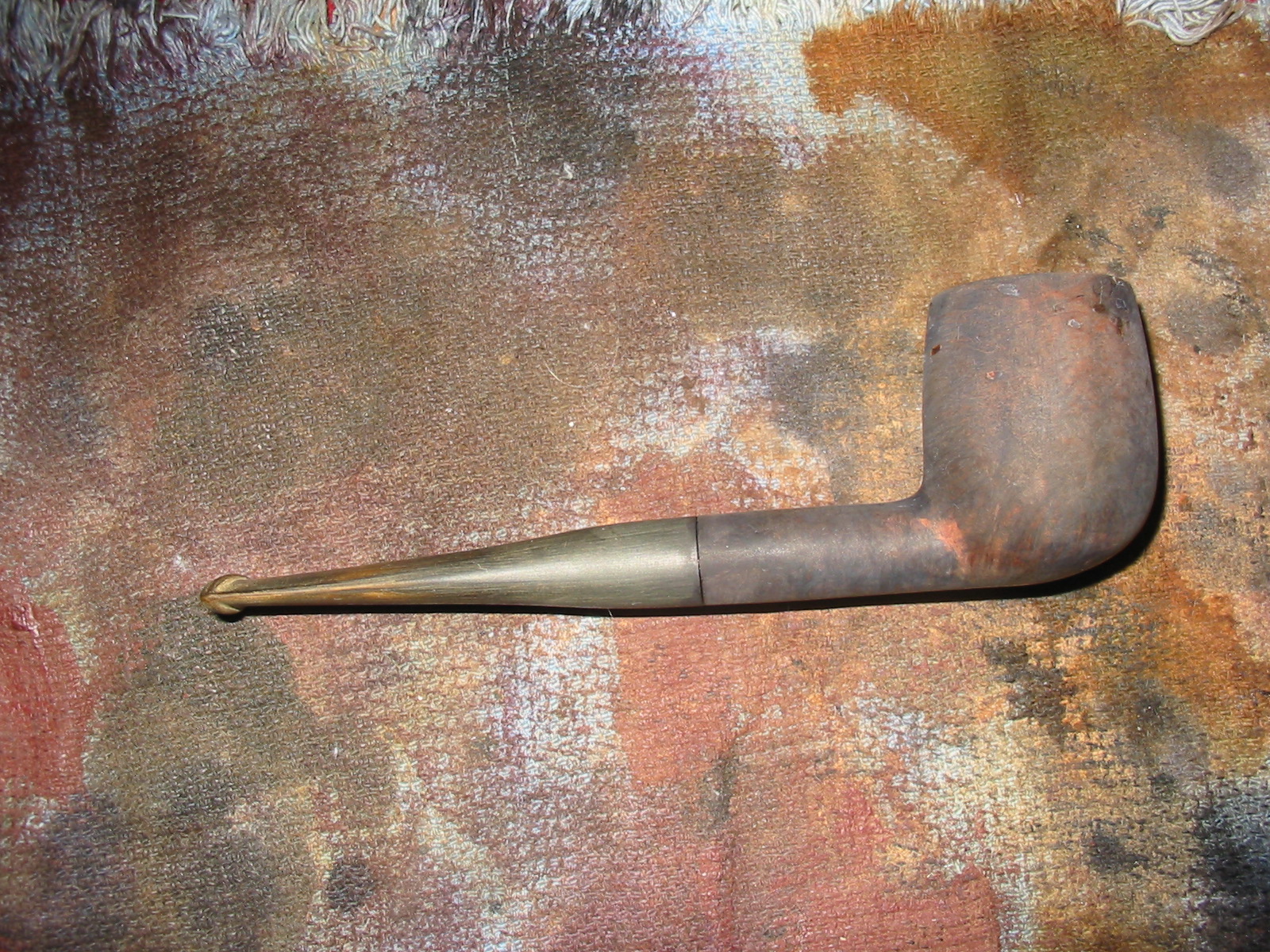
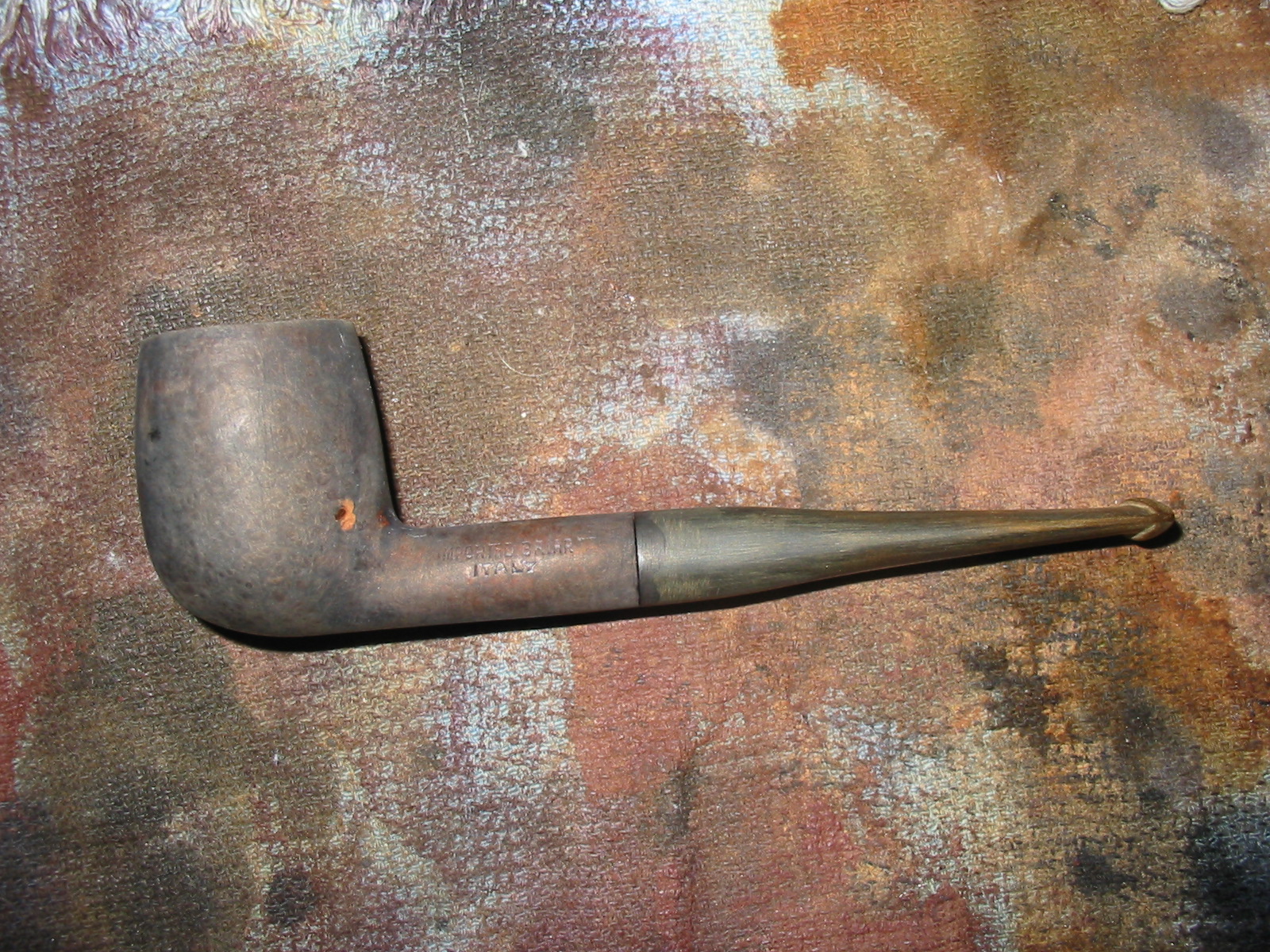
Reworking a No Name Brand Italian Billiard


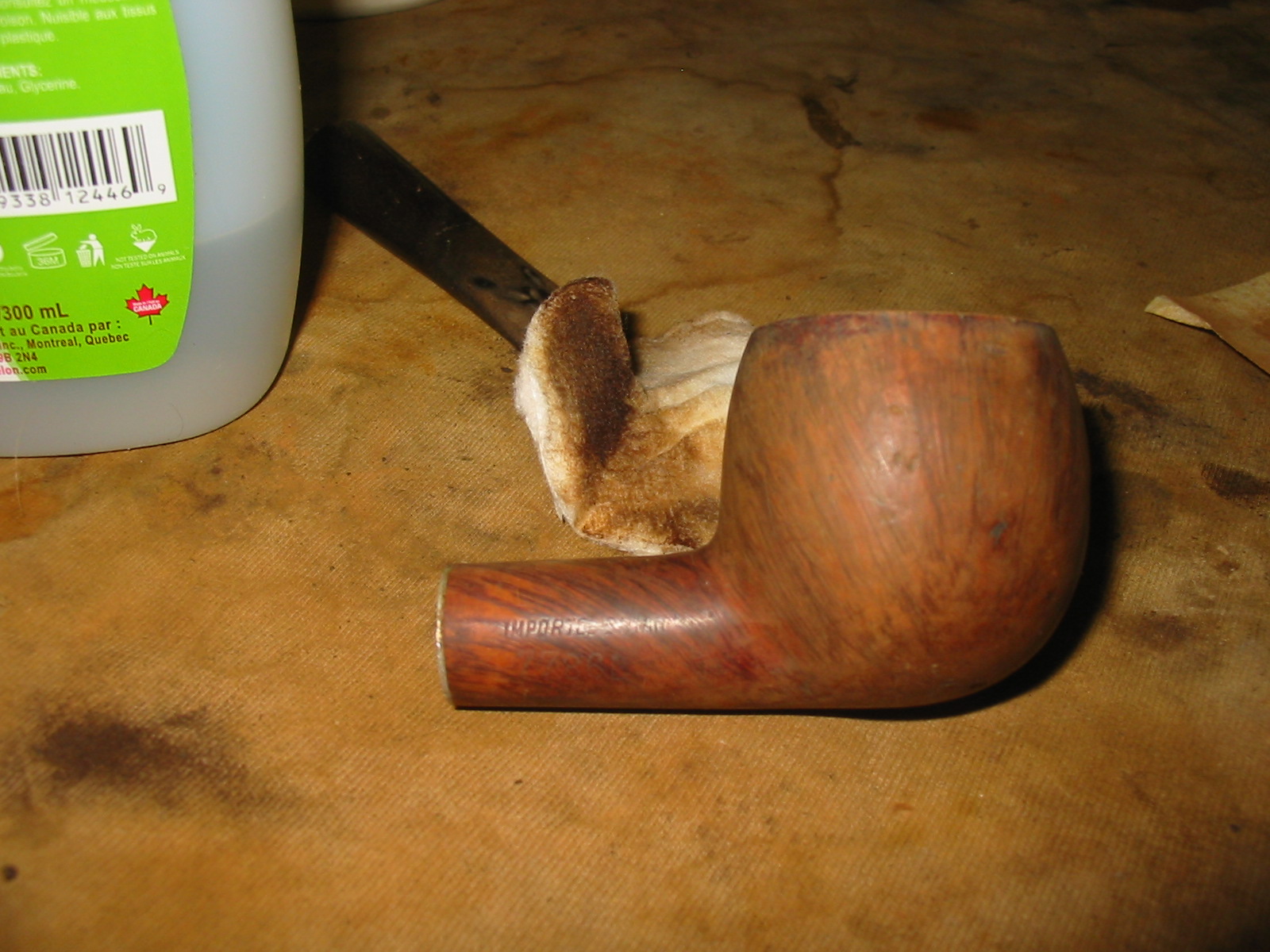
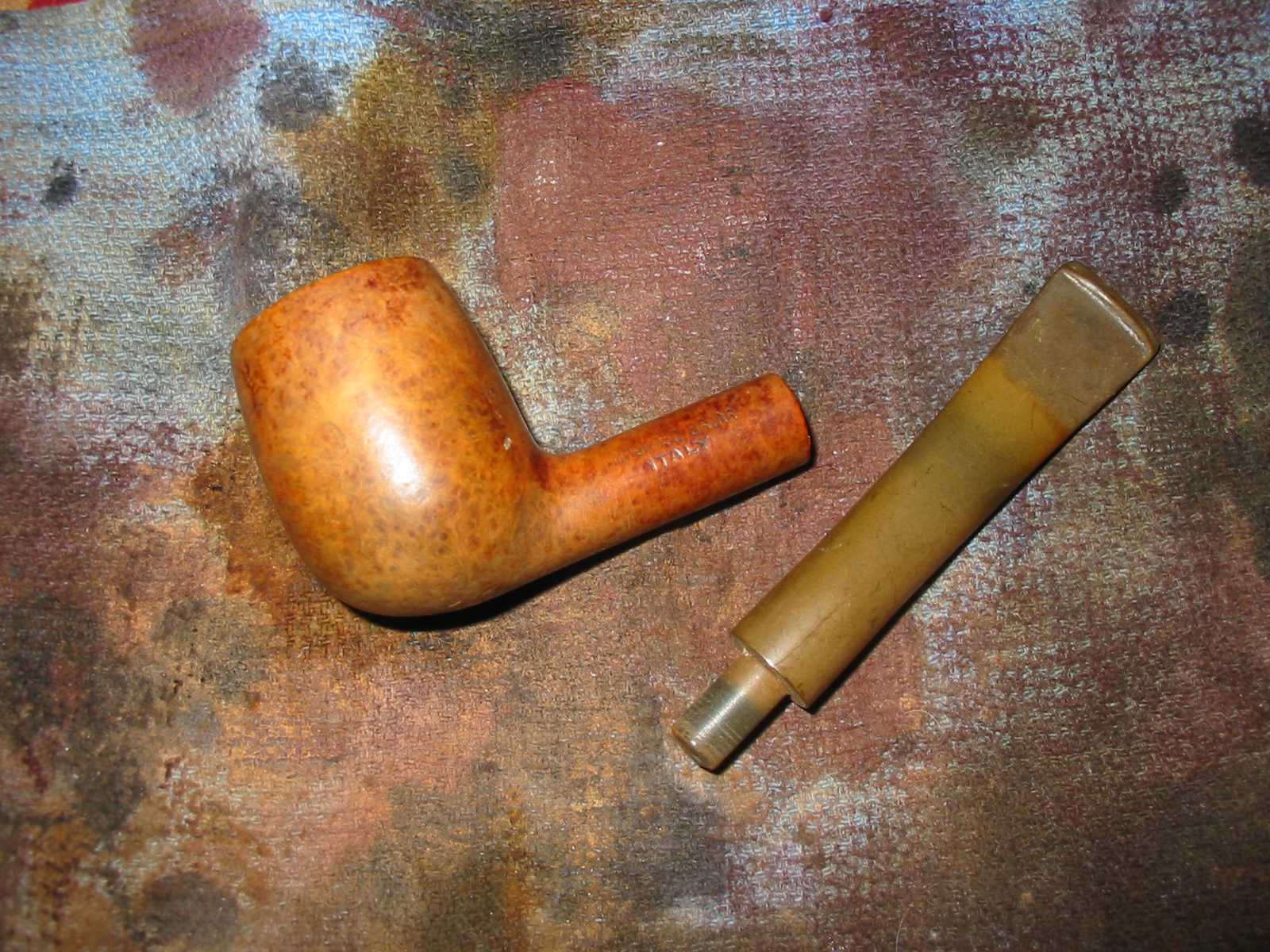
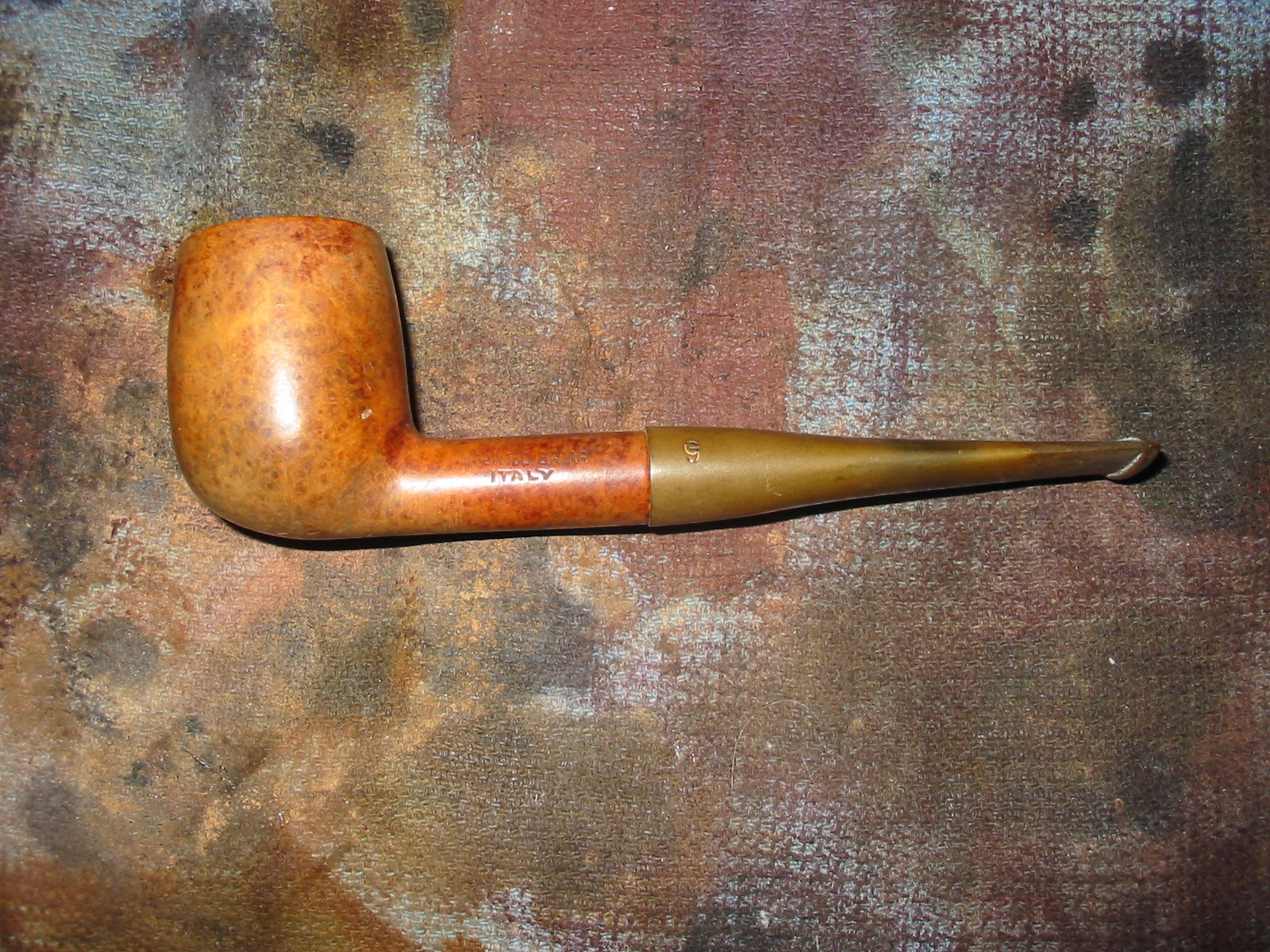
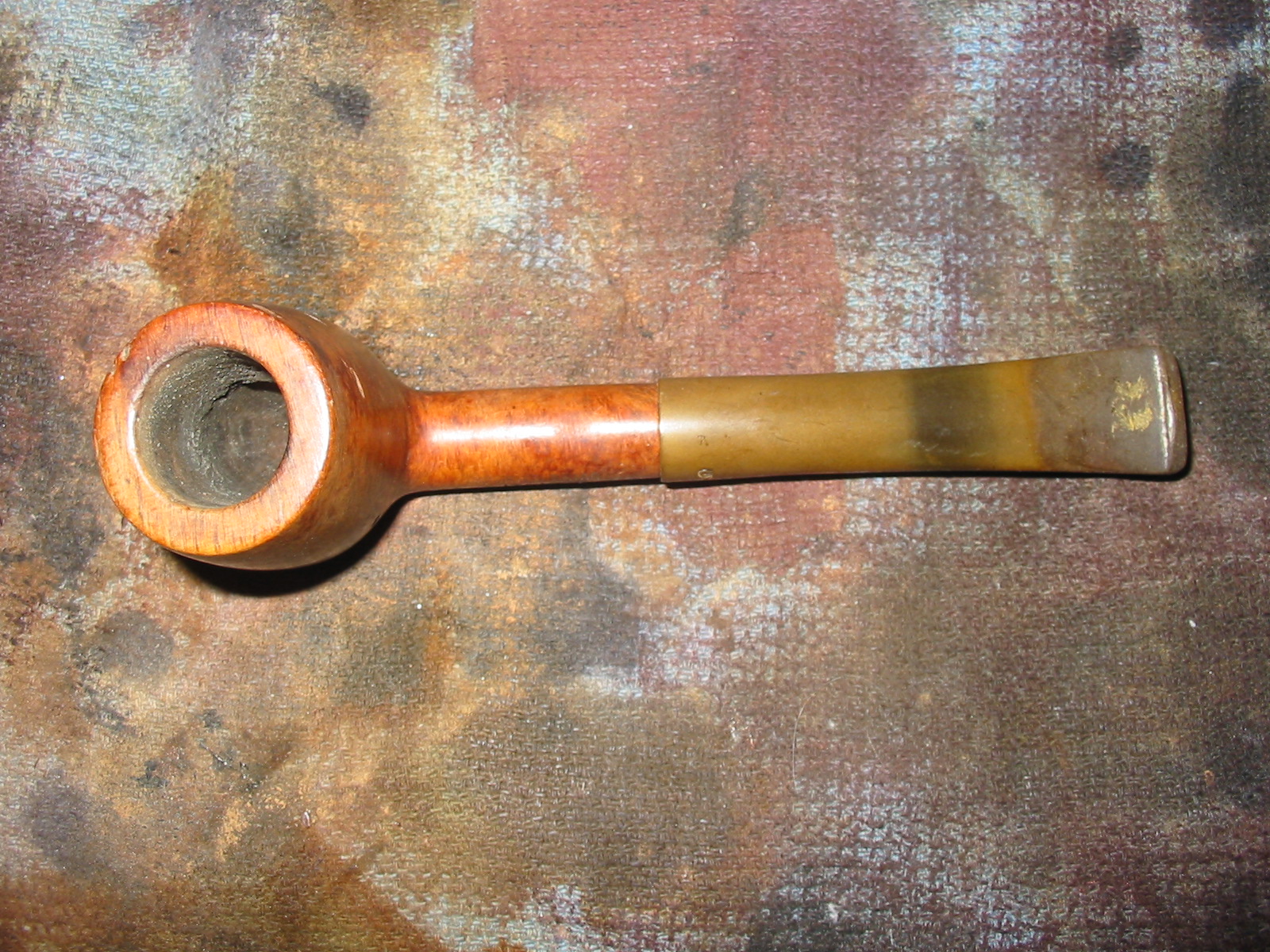
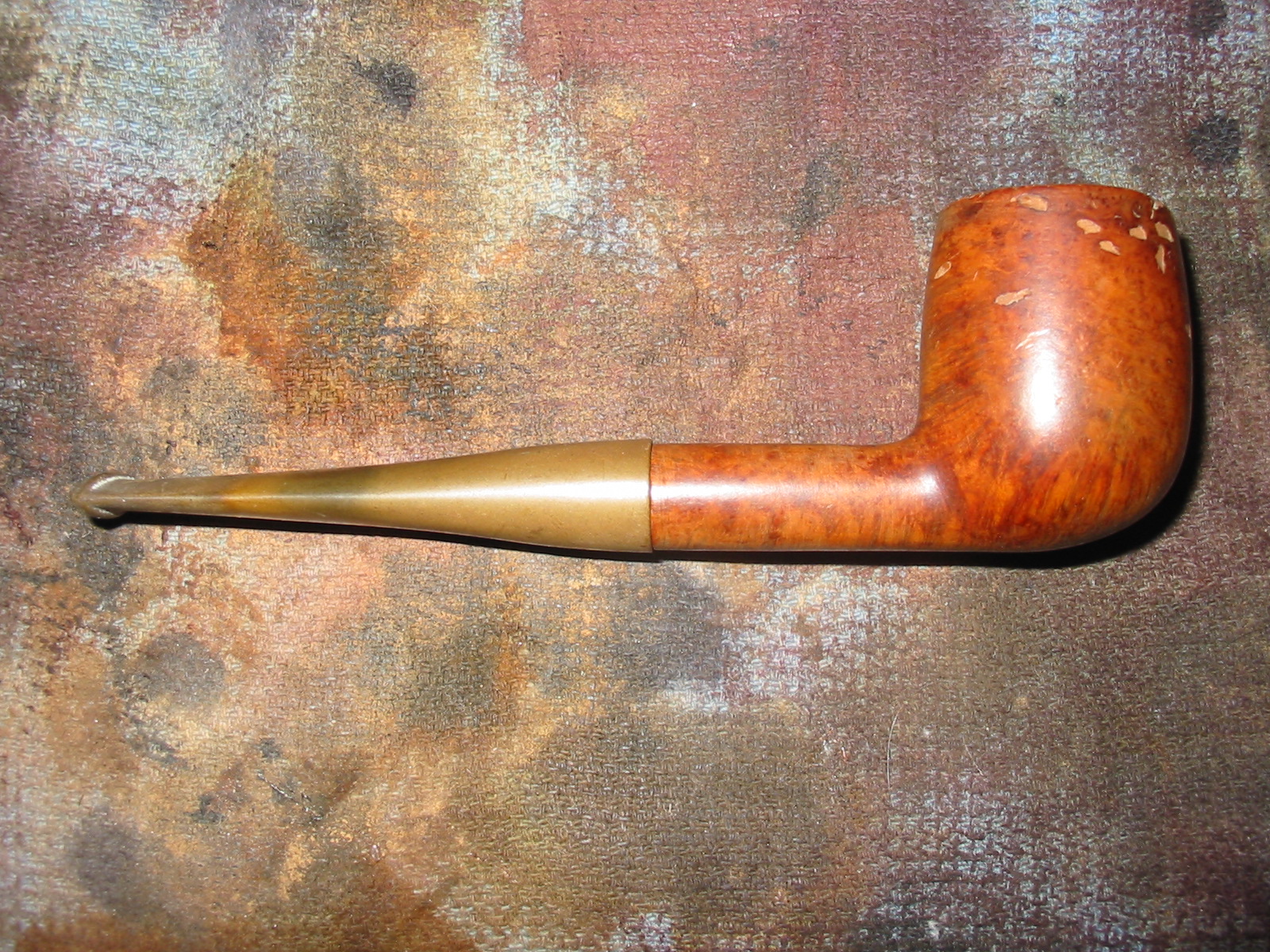
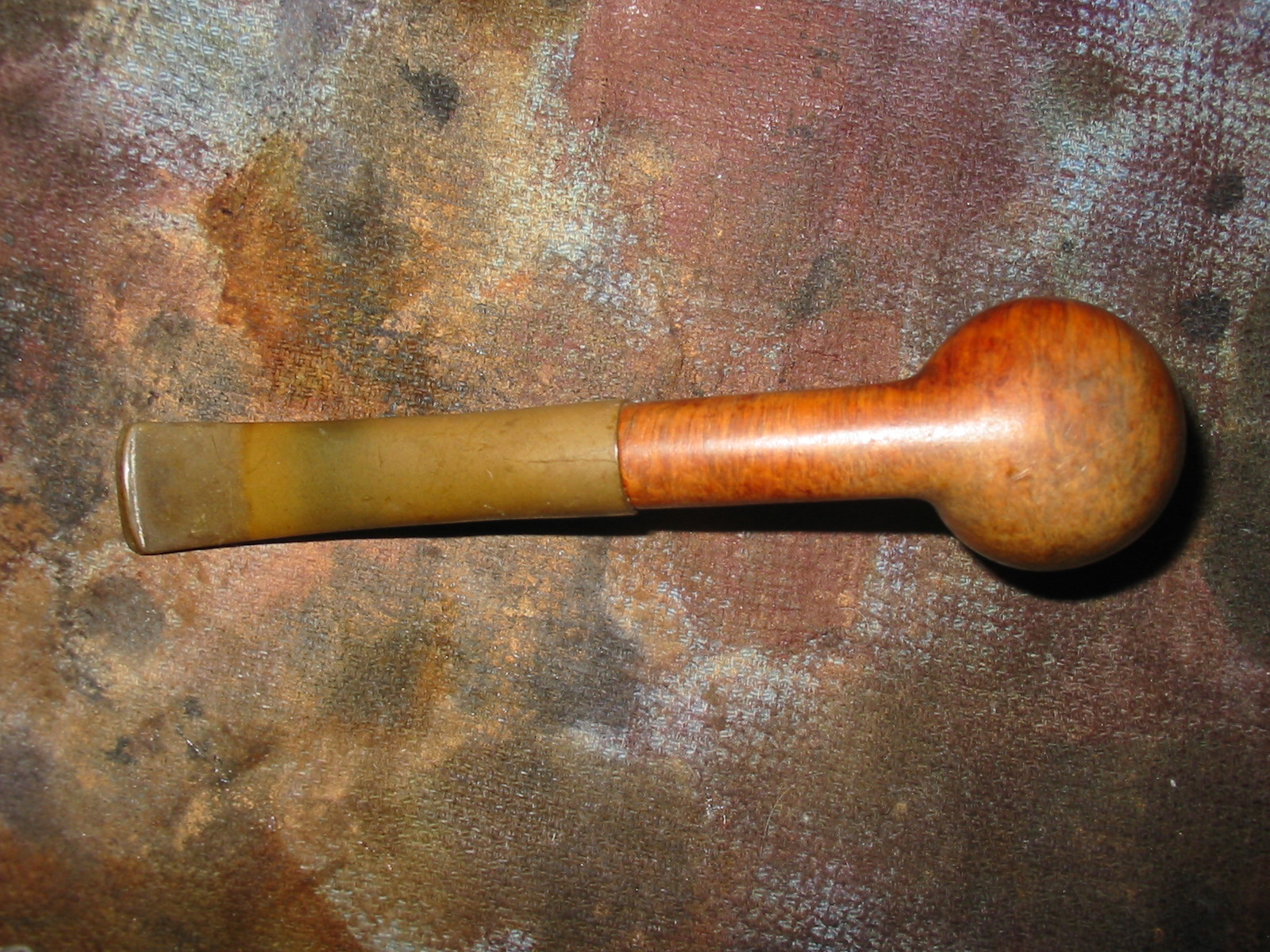
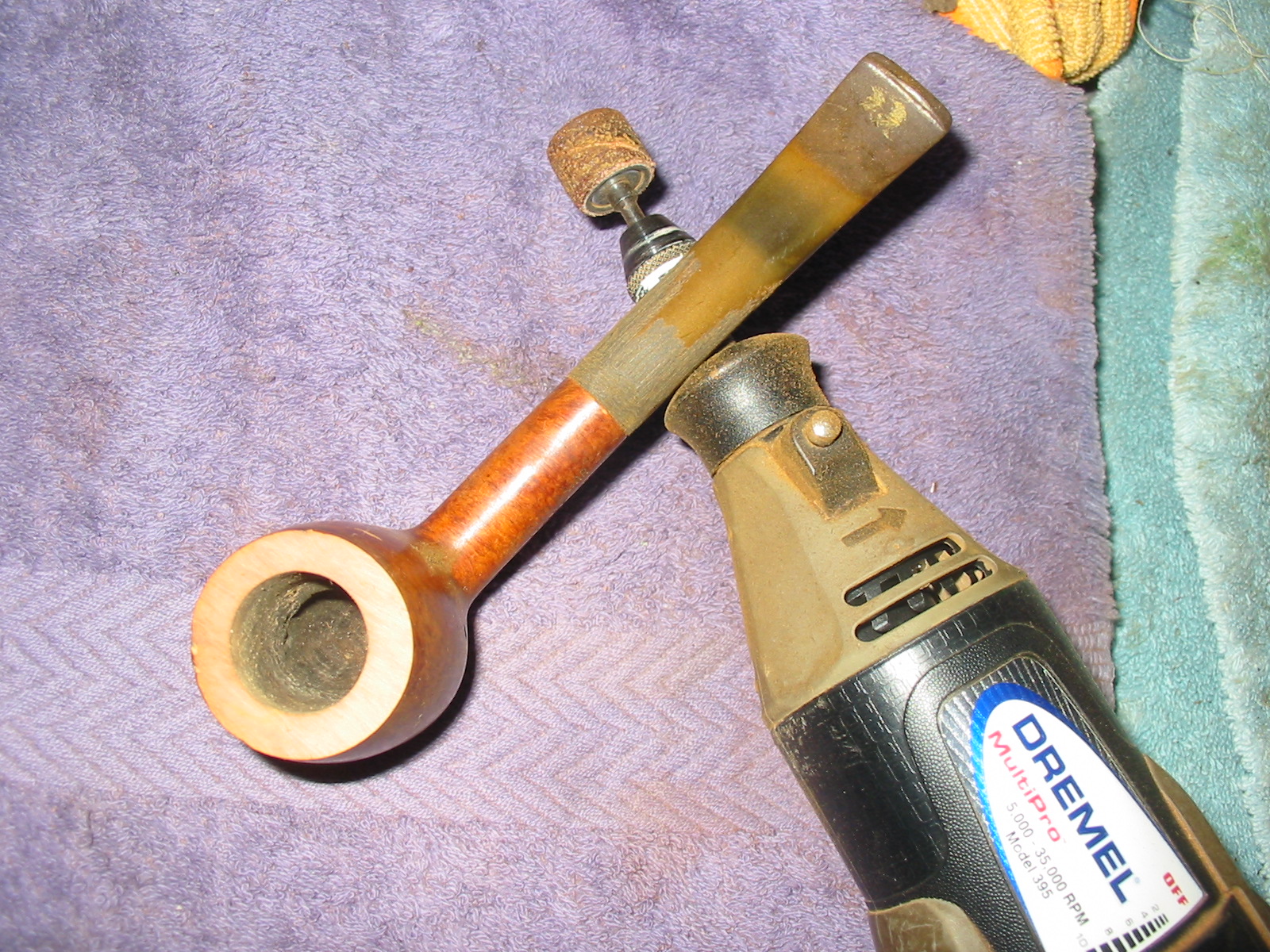
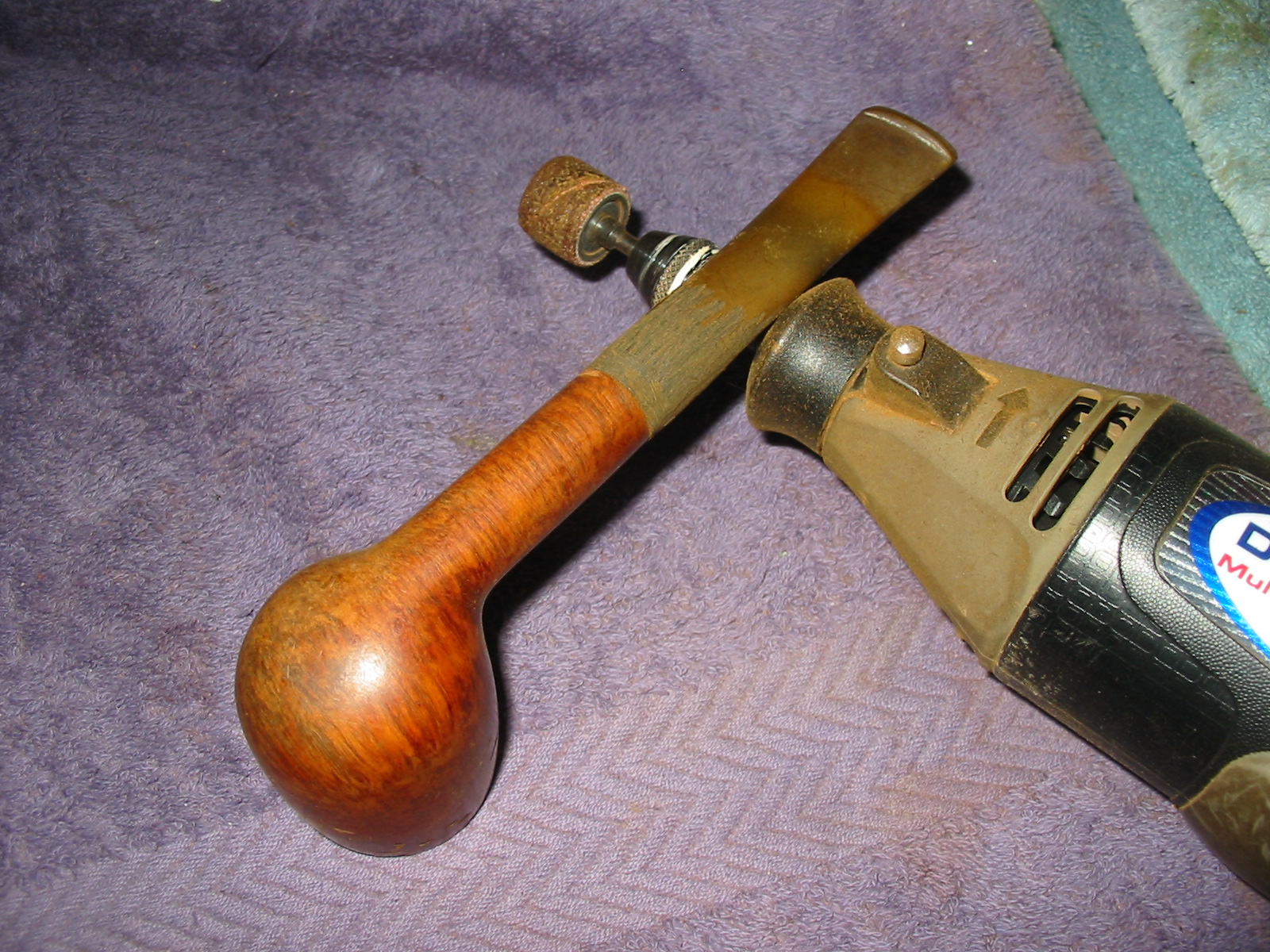
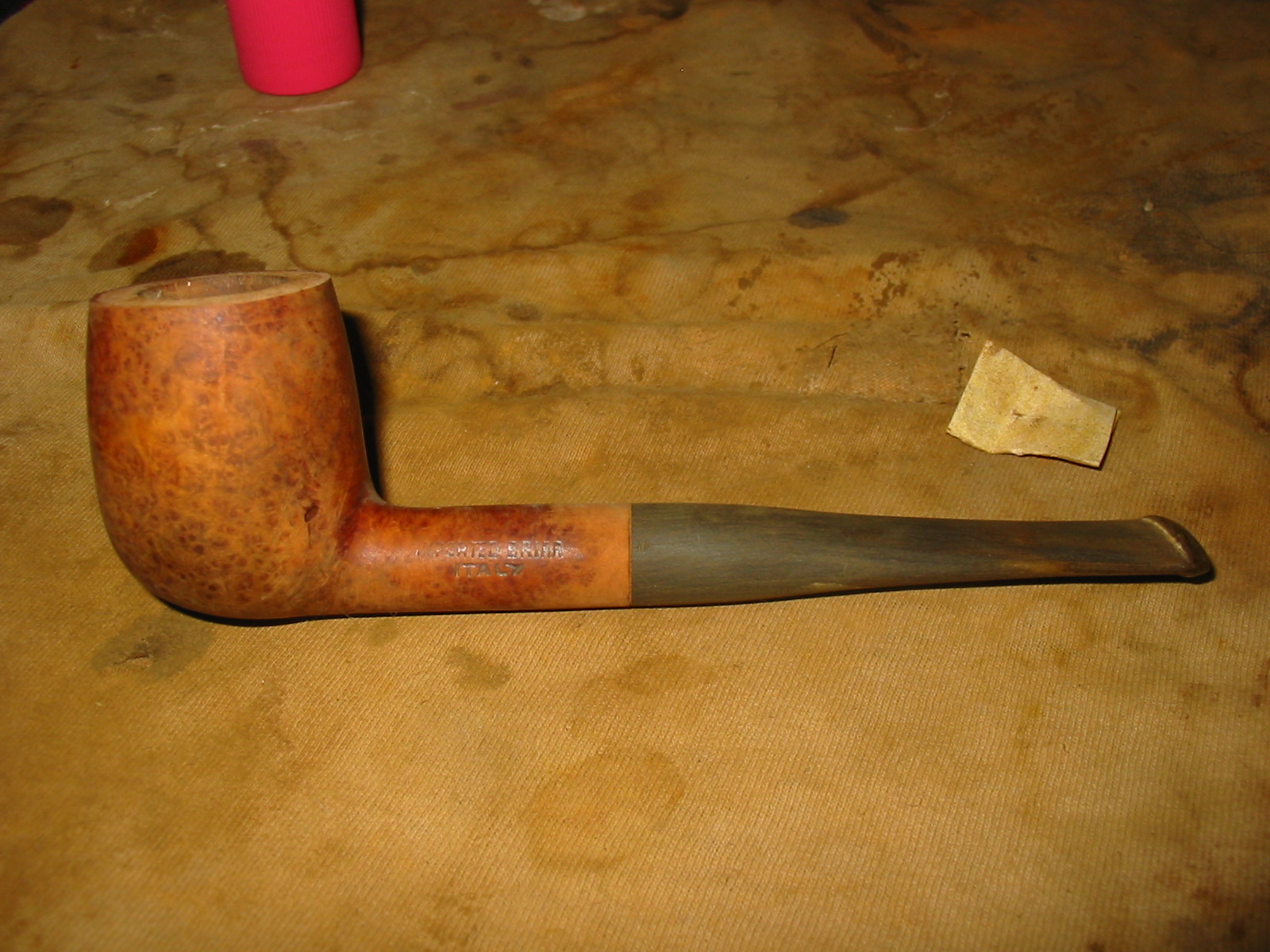
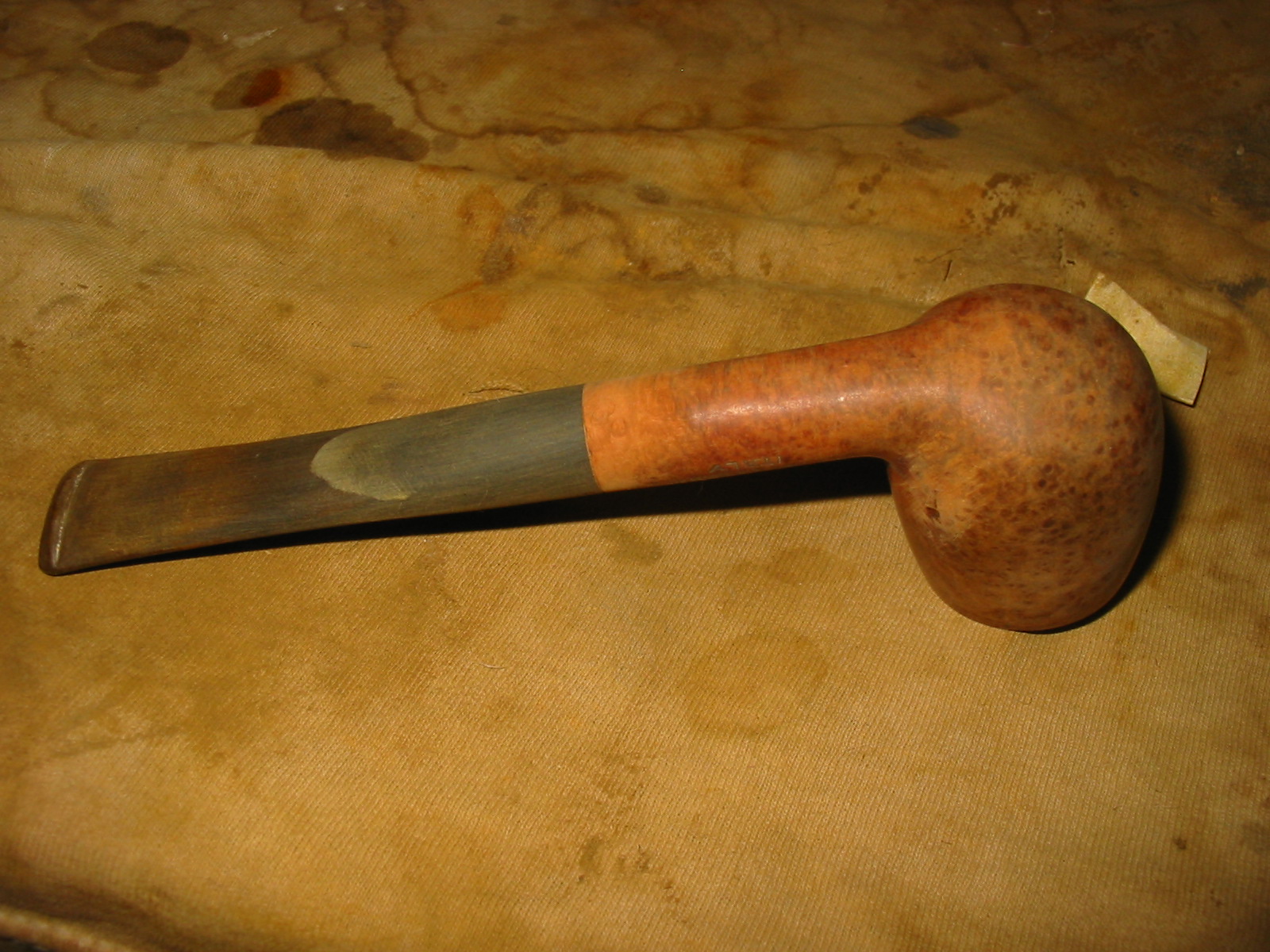
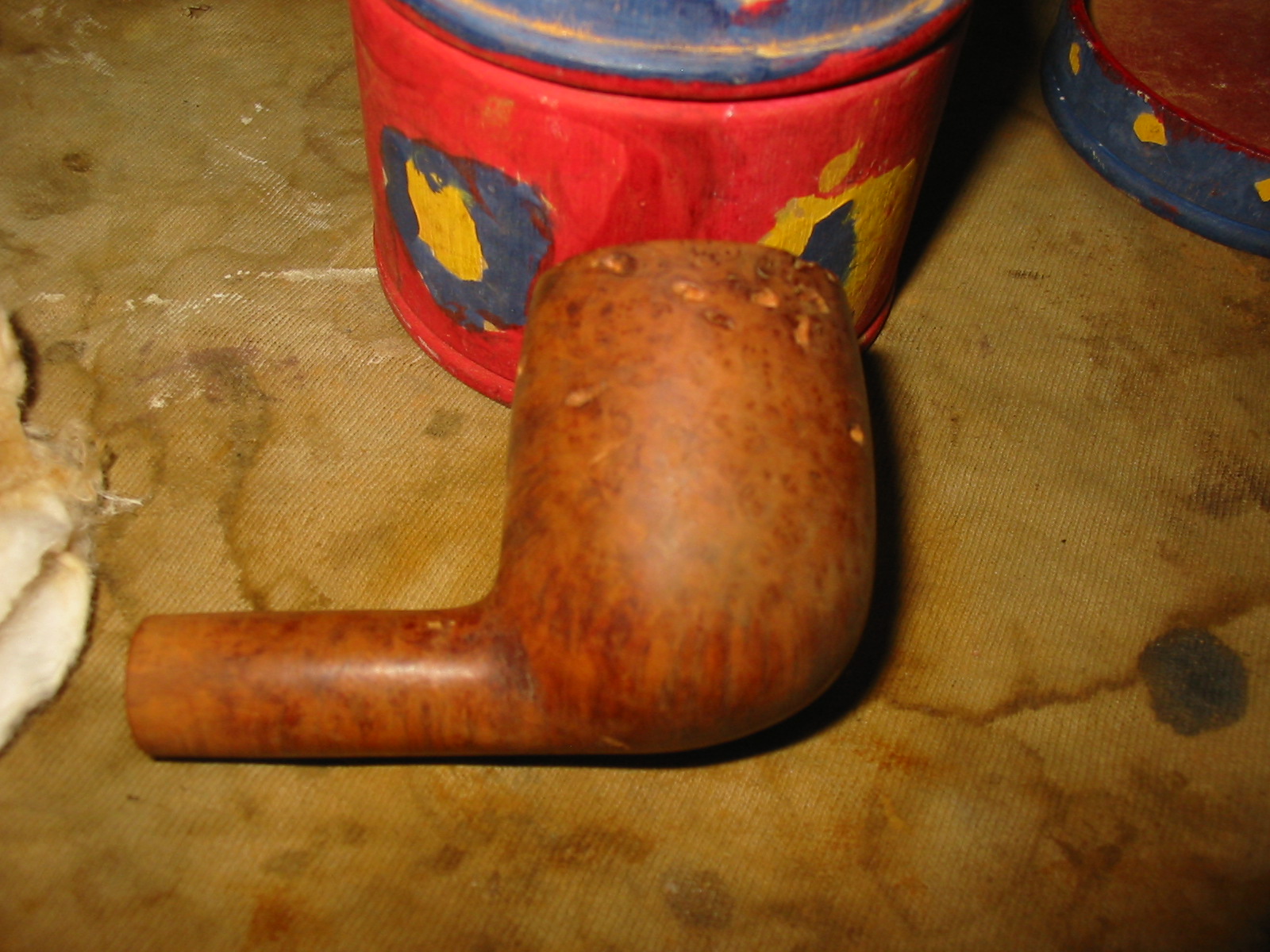
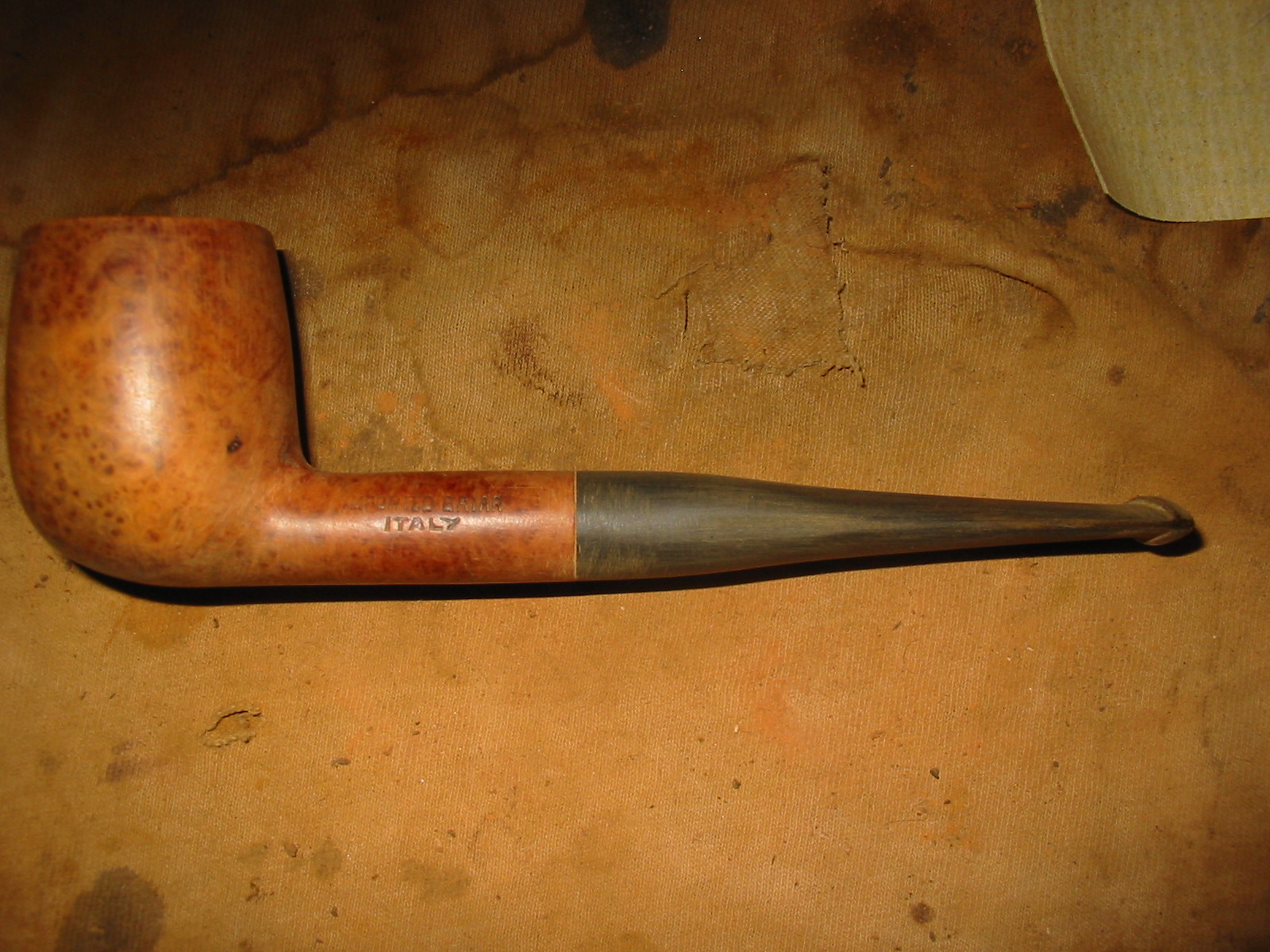
I am definitely getting to the bottom of the refurbishing box – this pipe and one other left before it is empty and I need to start hunting again for more. This old-timer is only stamped on the left side of the shank with IMPORTED BRIAR over ITALY. There is no other stamping on the right side of the shank. The bowl was in pretty decent shape – no real dents or scratches other than around the rim. The edges of the rim were rounded over. The left side showed some nice birdseye grain and the front and the back of the bowl were cross grain. The right side of the bowl was a mess. There were at least a dozen putty fills in various states of coming out of the briar. There were two on the rim that took a bite out of the outer edge of the rim. The finish was gone and the stain had faded. The bowl did not come with a stem so I hunted through my can of stems and found one that would do the trick. It took very little work to get the tenon to fit into the shank. It was a wide blade stem that previously had been on a George Jensen pipe at sometime in its life but that pipe bowl had long since disappeared. With some minor adjustments to the diameter of the stem it would make a great stem for the Italian billiard.
IMG_3288

IMG_3289

IMG_3290

IMG_3291

IMG_3292

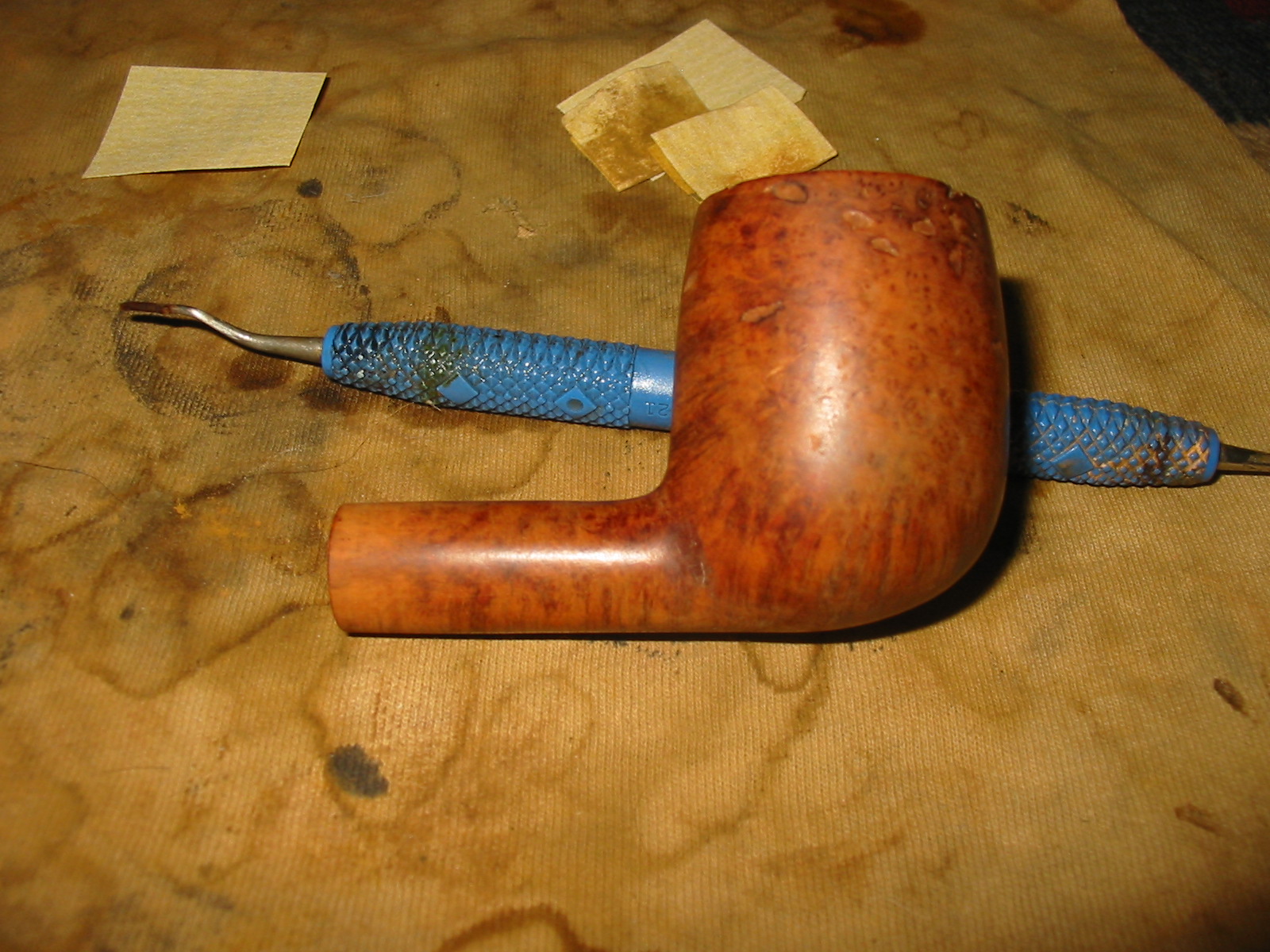
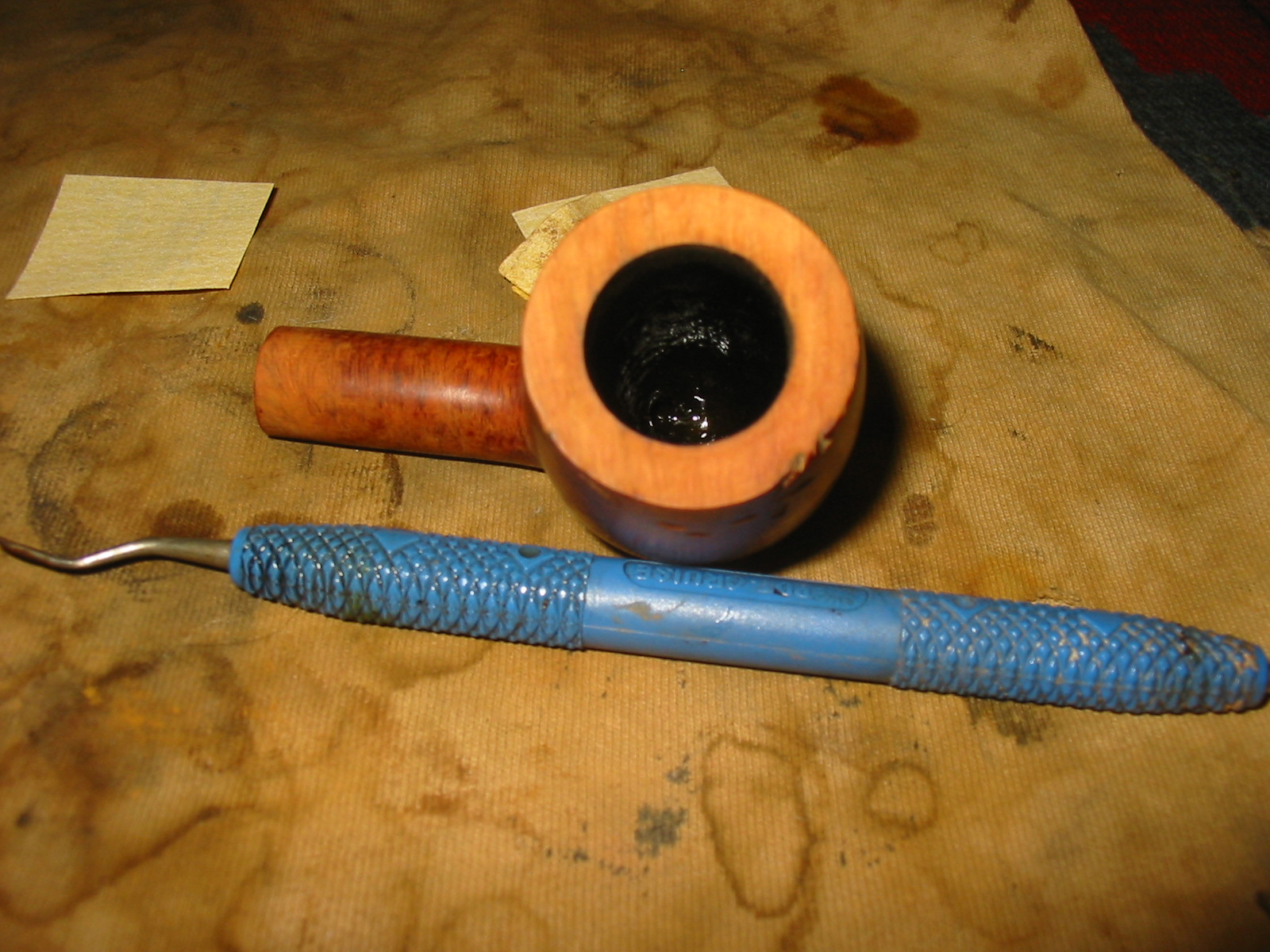
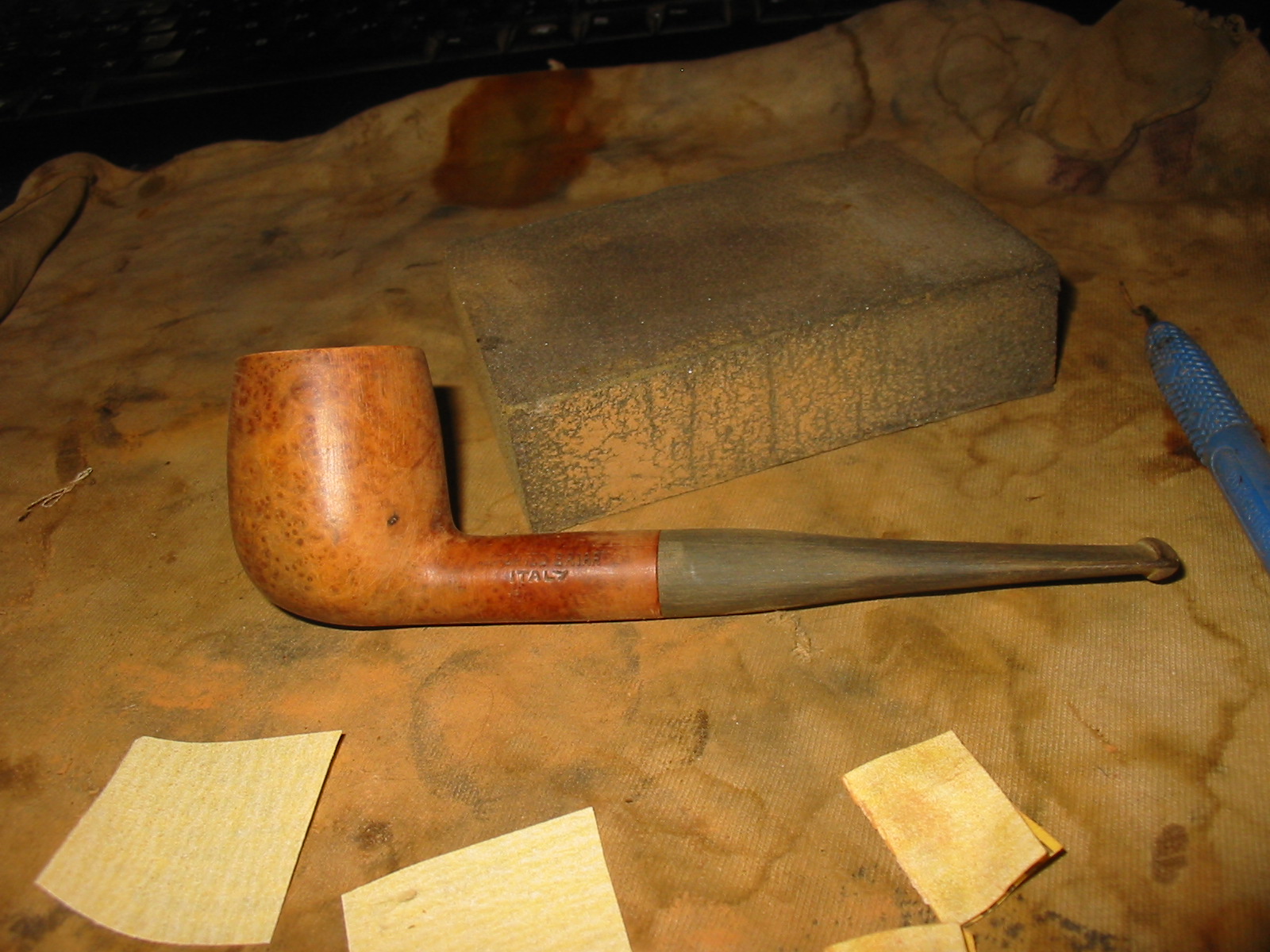
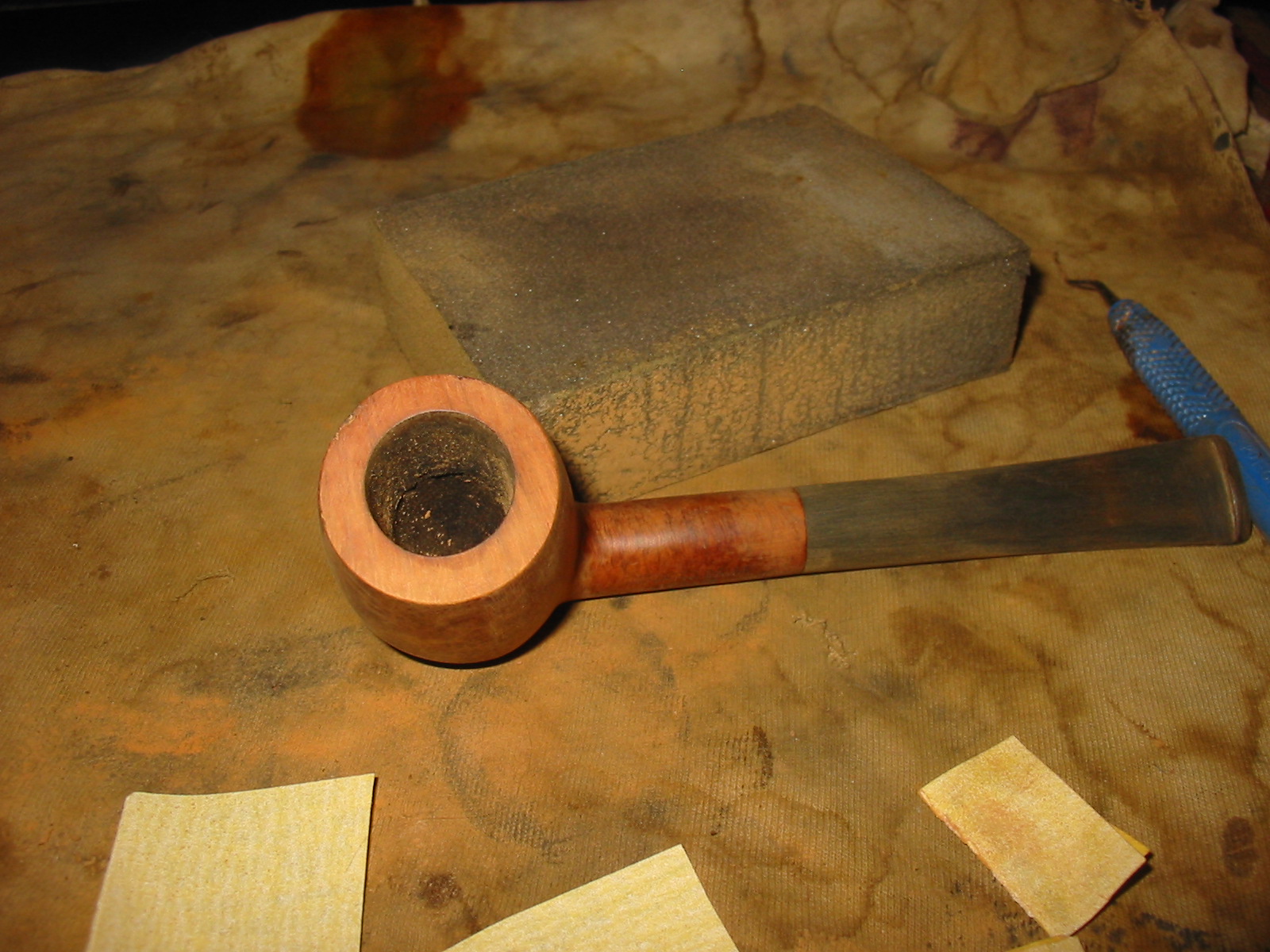
I decided to top the bowl to clean up the rounded edges on the outer rim and to minimize the damage from the two fills on the right edge. I set up my sandpaper on the flat board and turned the bowl top into the sandpaper. I work at this slowly and turn and sand and then tip the briar dust into a container that I have saved for repairs to fills. The first photo below shows the set up as well as the condition of the rim before I worked on it.
IMG_3302

IMG_3303

IMG_3304

I took the top down until the outer edges of the rim were sharp and clean. The damage from the fills is still visible but I stopped before I changed the overall shape of the bowl. I used a Dremel with a sanding drum to reduce the diameter of the stem to match the shank. I take it down as far as possible with the Dremel and then do the finish shaping by hand with sandpaper.
IMG_3305

IMG_3306

IMG_3307

IMG_3308

I sanded the stem with 220 grit sandpaper to remove the oxidation and to finish shaping the area around the shank and stem junction.
IMG_3309

IMG_3310

IMG_3311

IMG_3312

I wiped down the bowl with acetone on a cotton pad to remove the remaining finish.
IMG_3313

IMG_3314

IMG_3315

IMG_3316

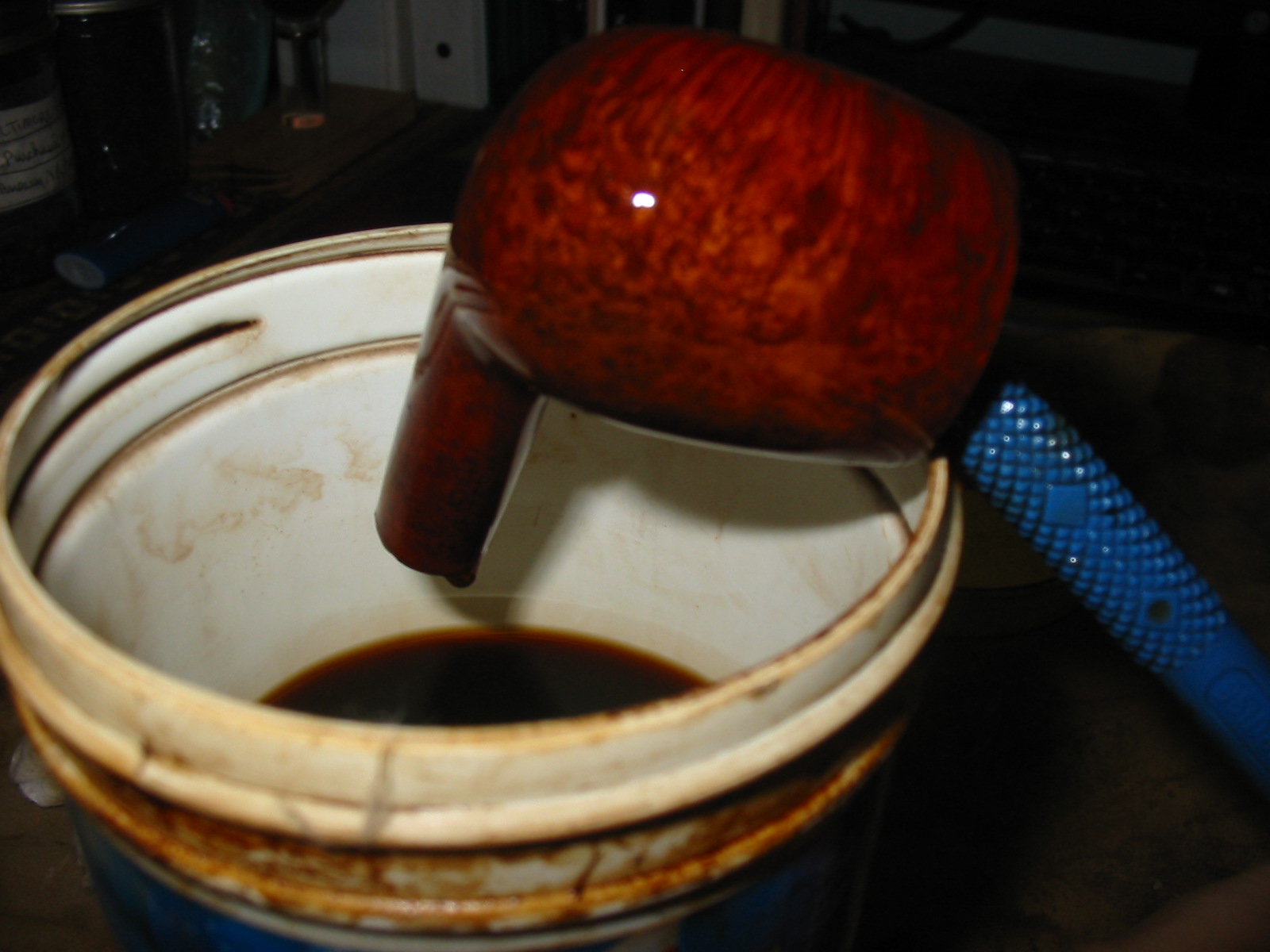
I dropped the bowl in an alcohol bath to soften the putty fills to make them easier to remove. It also removed the remaining finish to the bowl. The dark colour of the alcohol bath adds a patina to the bowl that is something that I appreciate. (I continue to use the bath and filter out the grit and grime from the alcohol every other month. The filtering removes the impurities but leaves the alcohol the colour of the stain that has been removed from the bowl. It is a uniform dark brown colour. I rarely change the bath, just refill it as the alcohol evaporates over time.)
IMG_3317

When I removed it from the bath I picked out the softened putty fills with a dental pick and lightly sanded the bowl and shank with a fine grit sanding sponge.
IMG_3318

IMG_3319

IMG_3320

IMG_3321

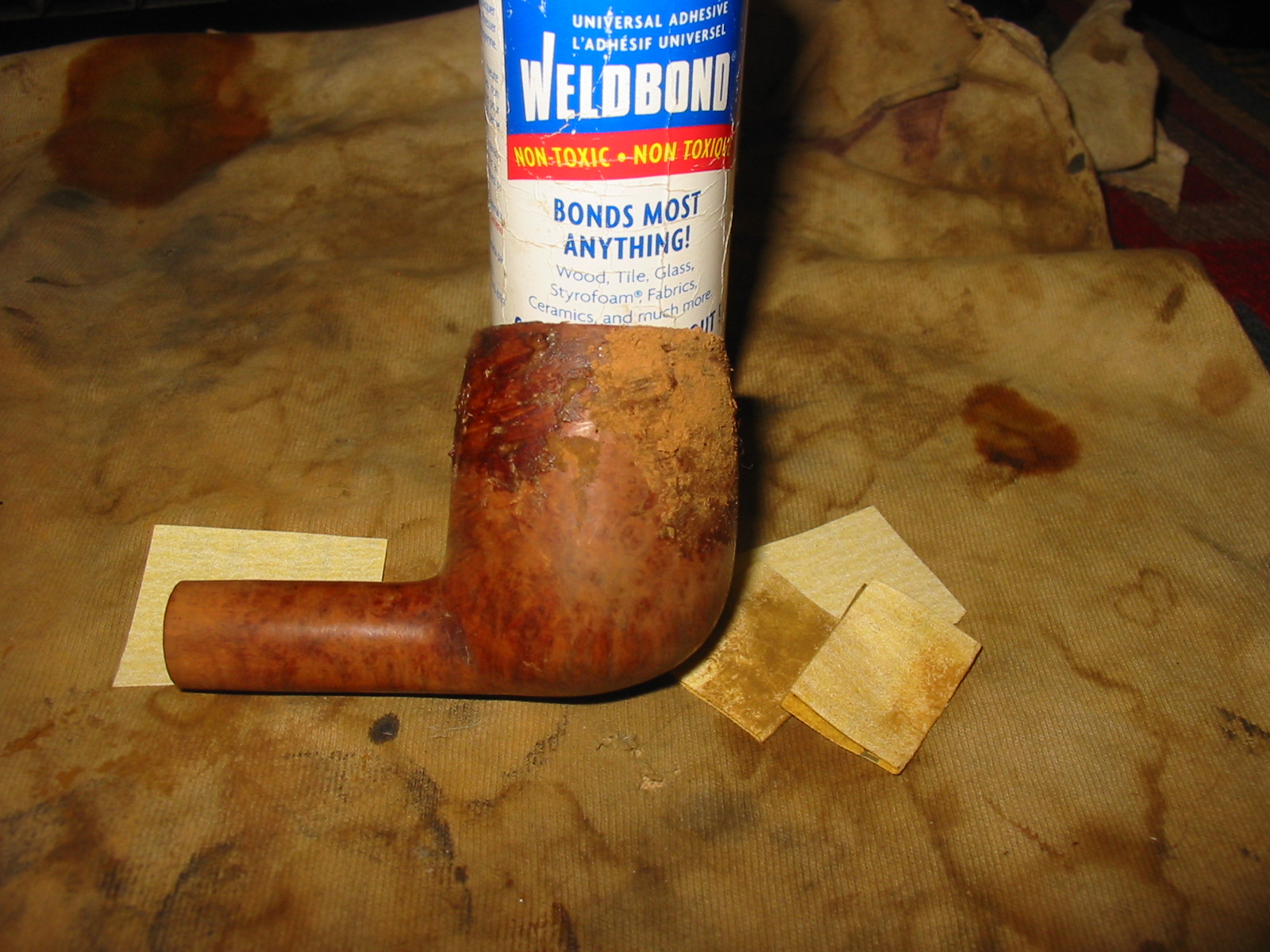
I am continuing to experiment with wood glue and briar dust combined to replace the fills. I am finding that the mixture gives virtually the same darkening of the fill as the mixture of briar dust and superglue so I am not convinced. The drawback to using the wood glue is the slow drying time. That probably is not an issue for some of you but if the result is the same I will opt for the quick results of the superglue. I packed in the briar dust, dribbled the glue into the fills and then added more dust to the mixture. When it dried I sanded it with 220 grit sandpaper to remove the buildup and smooth out the surface of the bowl. I then sanded the bowl with a fine grit sanding block to remove the scratches.
IMG_3322

IMG_3323

IMG_3324

IMG_3325

IMG_3326

IMG_3327

IMG_3328

IMG_3329

I am also continuing to experiment with the contrast staining process so I used it again on this bowl. I wanted to highlight the beautiful birdseye grain and cross grain on the bowl and hide the repaired fills as much as possible. I used a black aniline stain for the first coat of stain. I applied it and flamed it and repeated the process until I had good coverage on the bowl.
IMG_3330

IMG_3331

IMG_3332

I wiped down the bowl with Everclear on a cotton pad to remove the heavy black stain from the surface of the bowl while leaving it deep in the grain. I notice in the process that the stain did not soak into the areas around the fills where there was remnant of wood glue on the surface of the briar. It left a shiny spot of unstained briar. To remedy that I would need to sand those areas of the bowl before applying the second coat of stain.
IMG_3333

IMG_3334

IMG_3335

IMG_3336

I sanded the bowl with a fine grit sanding sponge and also with micromesh sanding pads from 1500-2400 grit. I wet sanded with these grits as they work well to remove scratches in the surface and also to remove the remaining glue on the surface. Once I had the bowl sanded smooth I wiped it down with a damp alcohol pad to remove surface dust and then restained the bowl with an oxblood aniline stain. The next series of photos show the freshly stained bowl before I flamed it. The undercoat of black comes through and highlights the grain very nicely. Once the bowl was dry I buffed it lightly with White Diamond.
IMG_3337

IMG_3338

IMG_3339

IMG_3340

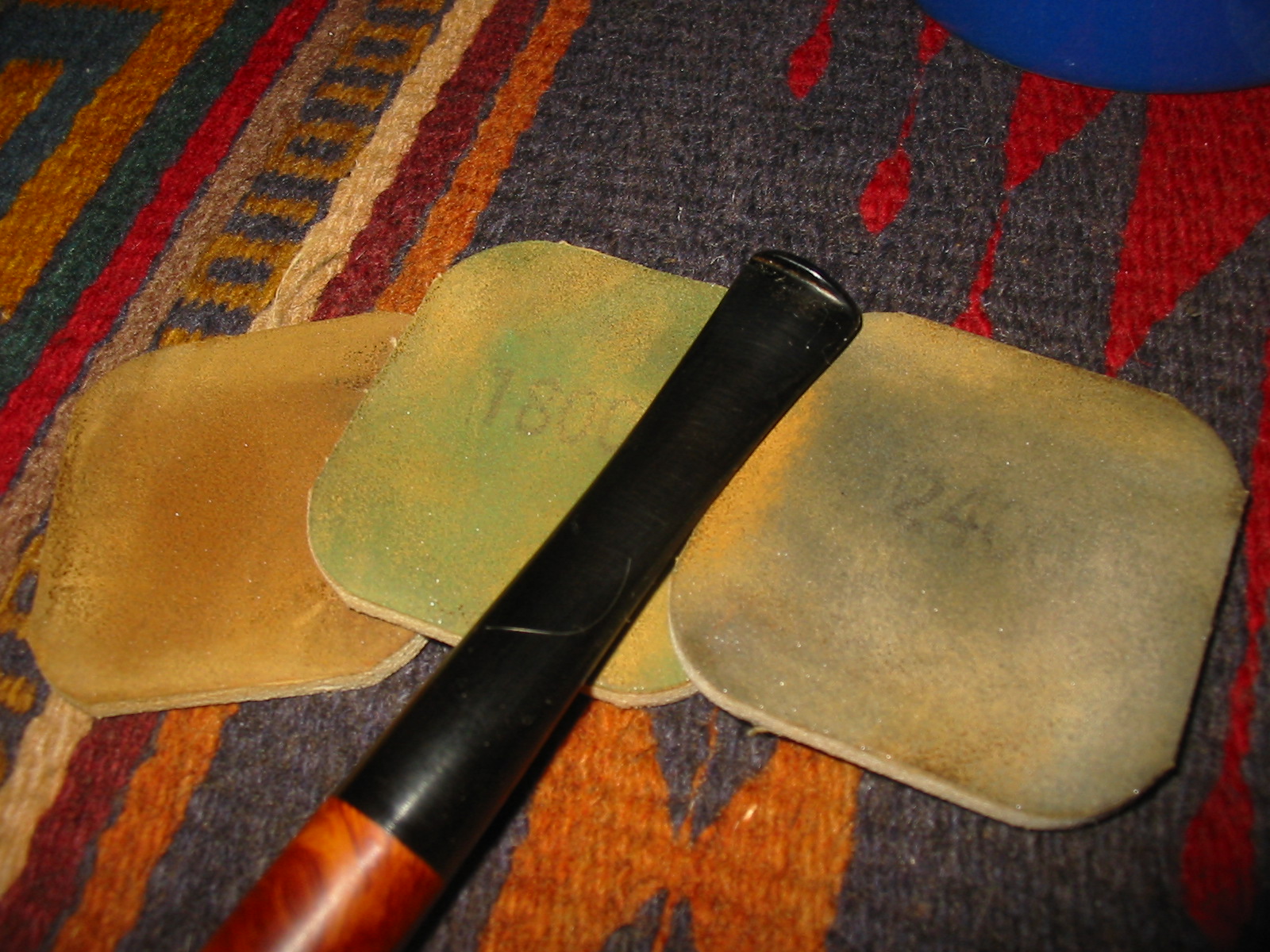
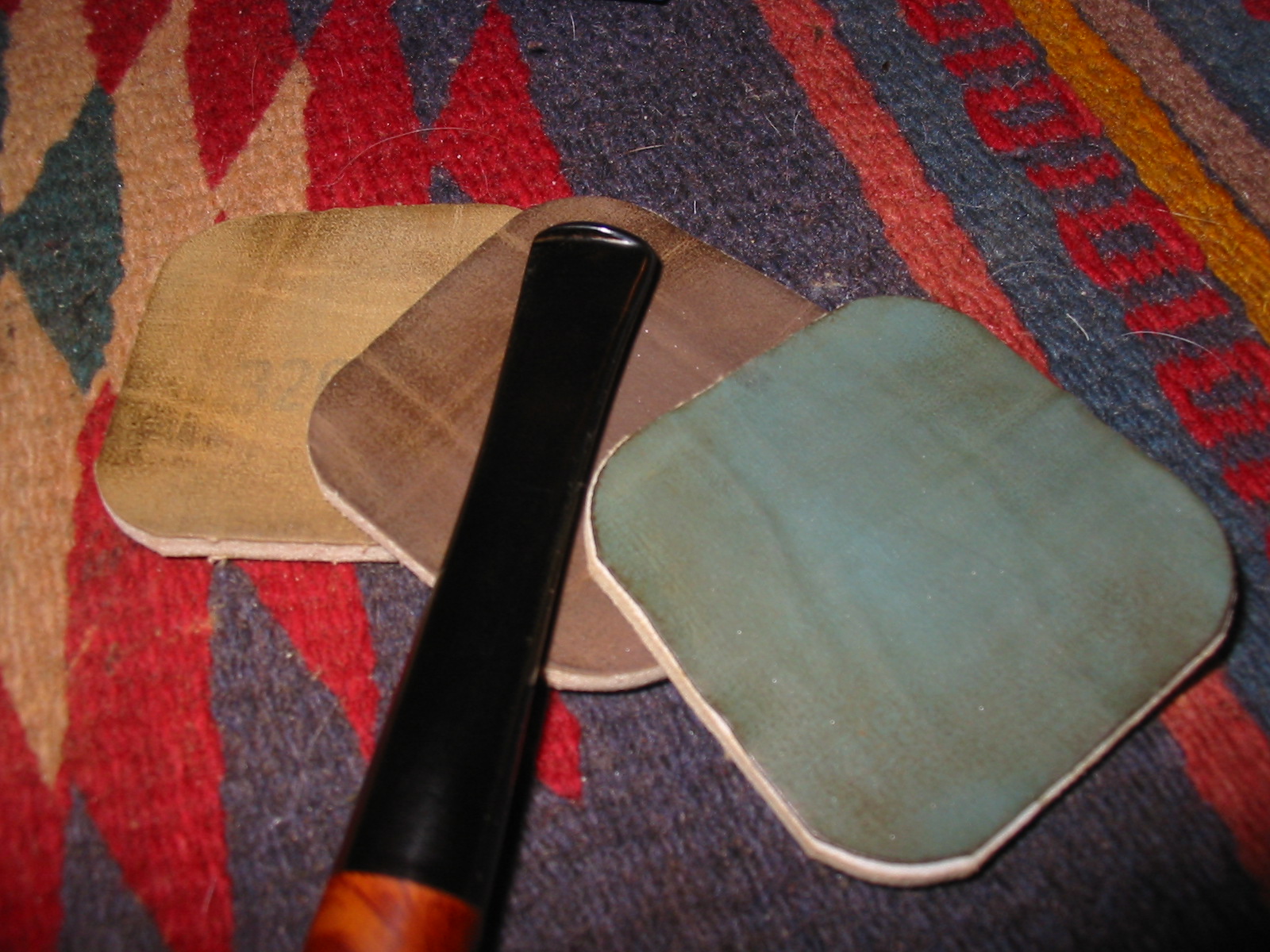
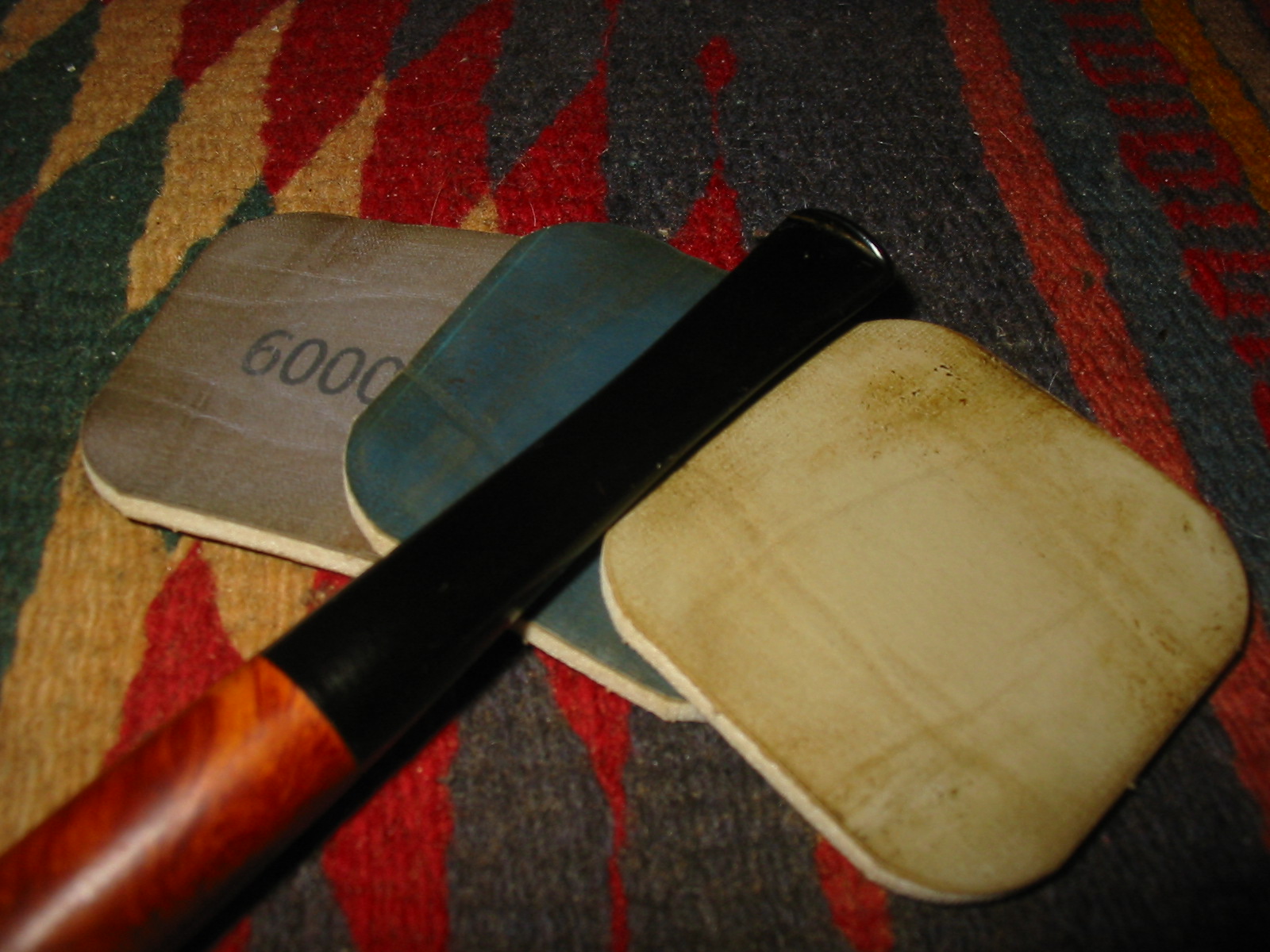
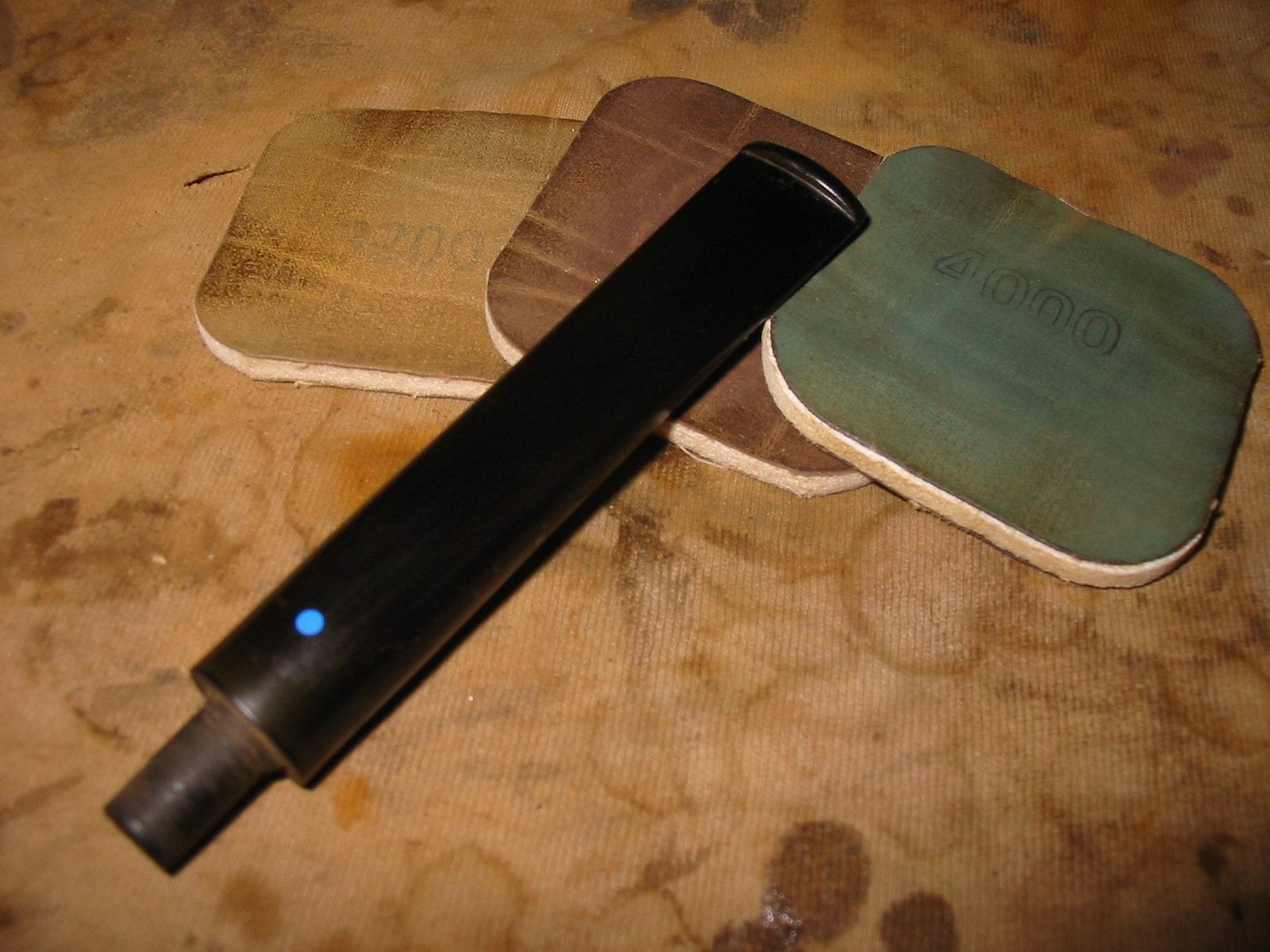
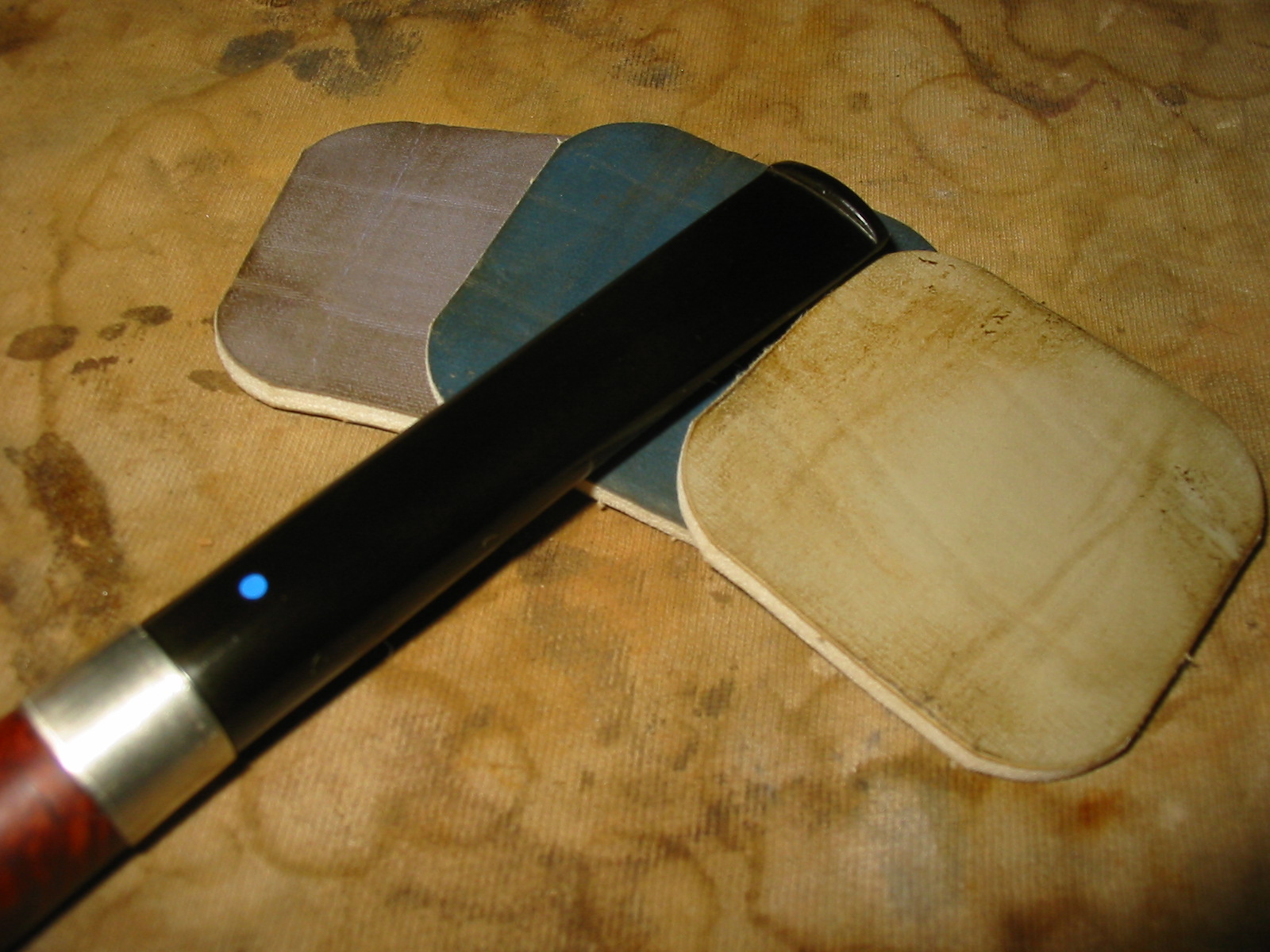
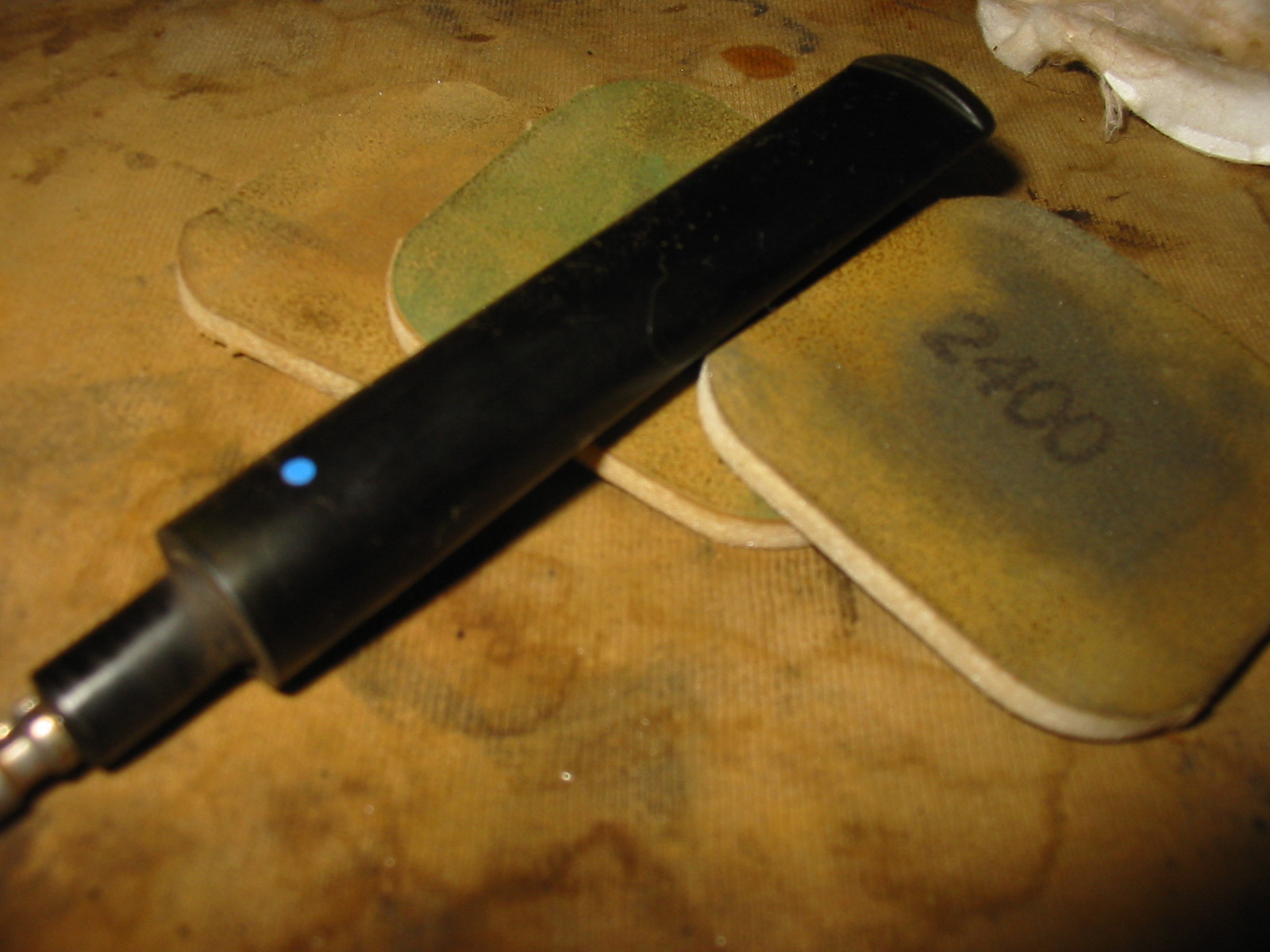
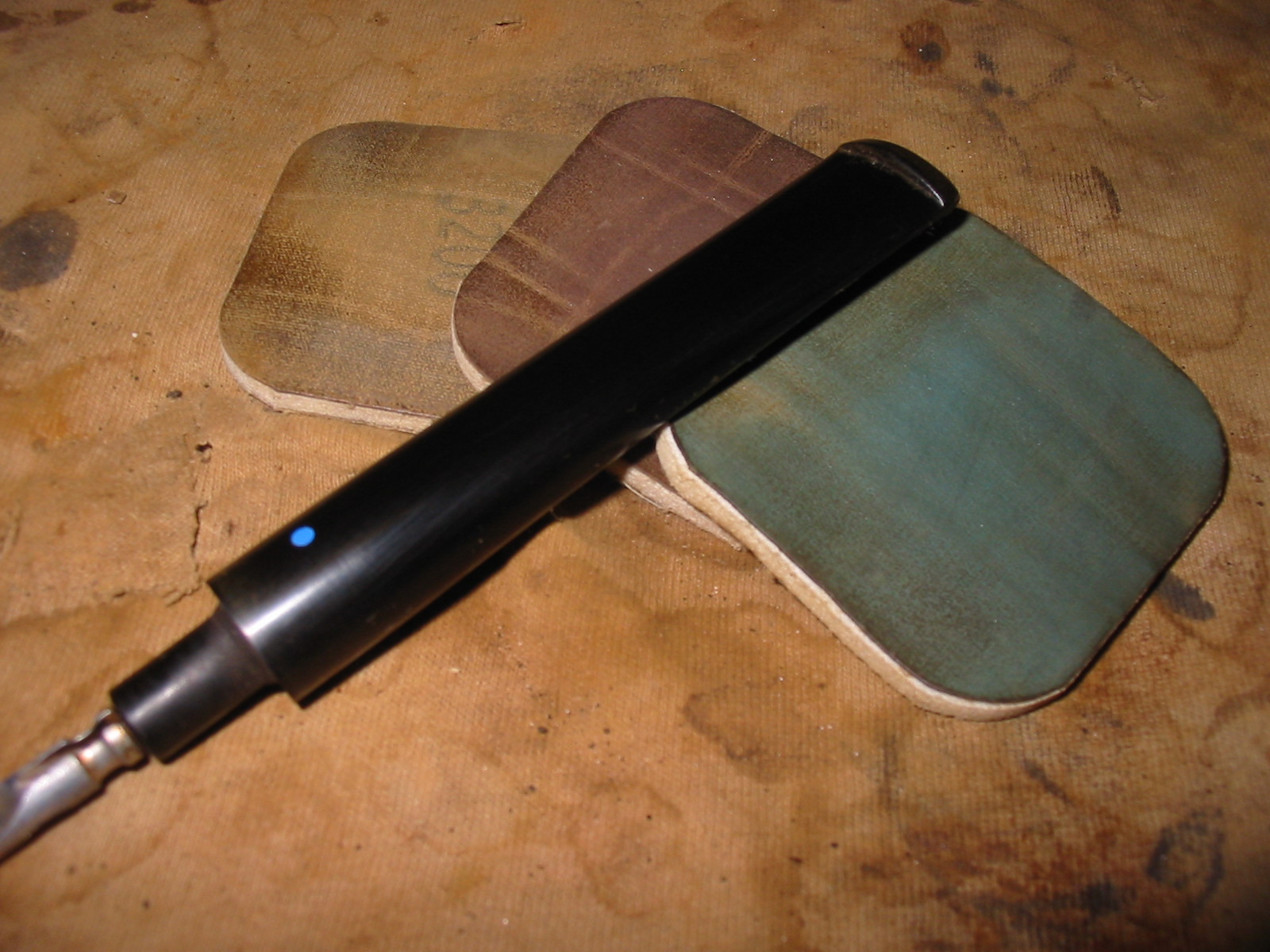
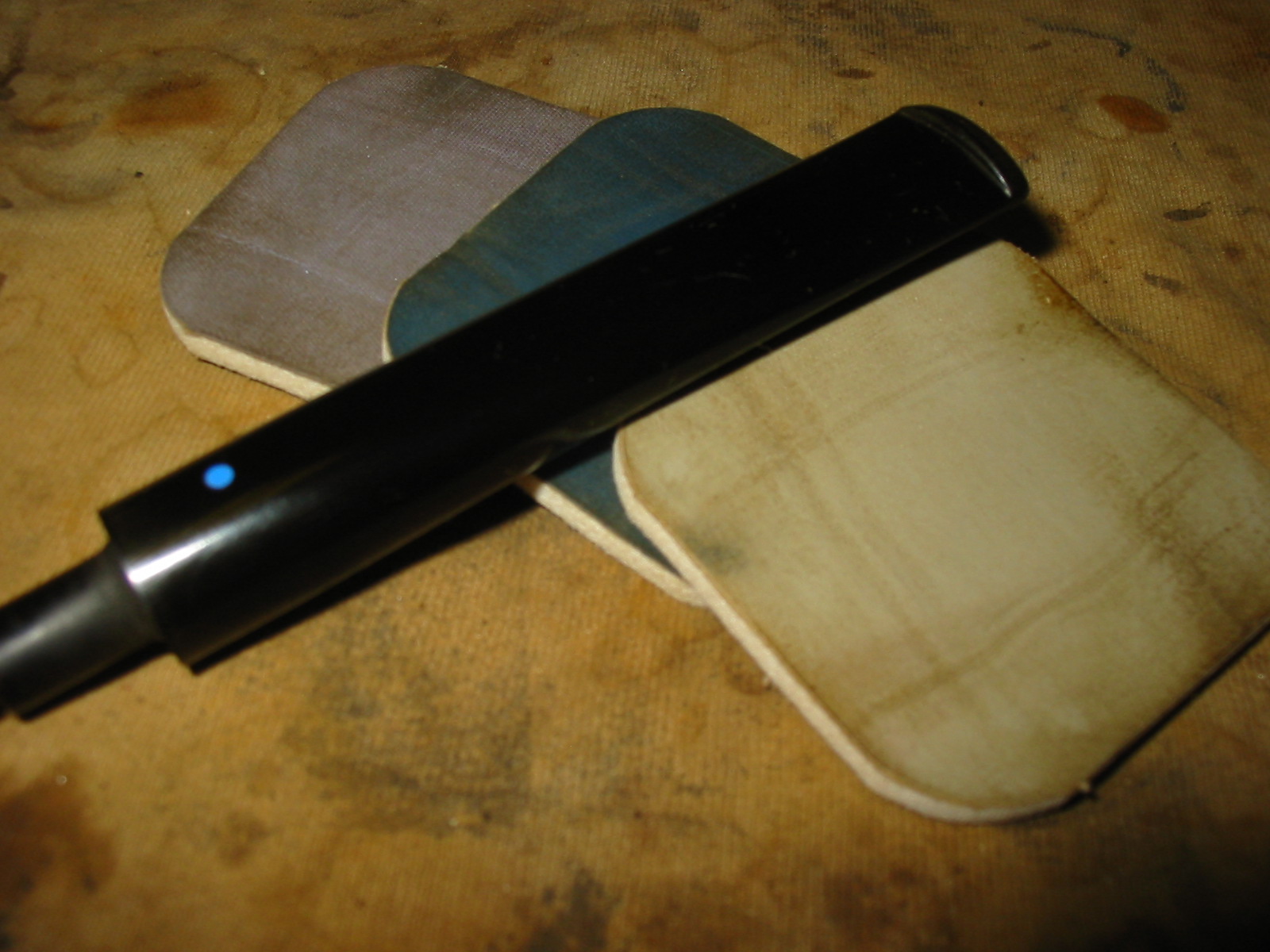
I sanded the bowl and stem with micromesh sanding pads to polish it further. I wet sanded with 1500-2400 grit and then dry sanded with 3200-12,000 grit pads. I find that the higher grit pads add a deeper level of shine with each successive grit. The next three photos show the stem and bowl after polishing with three grits of micromesh. The first photo shows 1500, 1800 and 2400 grit pads. The second photo shows 3200, 3600 and 4000 grit pads. The third photo shows 6000, 8000 and 12,000 grit pads.
IMG_3341

IMG_3342

IMG_3343

I rubbed the stem down with Obsidian Oil and when it was dry I buffed the stem and bowl with White Diamond. I gave the pipe multiple coats of carnauba wax to protect the finish and give it a shine. The contrast stain worked well with this pipe. The birdseye grain really pops and the cross grain is also highlighted. The black undercoat also minimizes the eyesore of the fills on the right side of the bowl and the small one on the left side has virtually disappeared. The final four photos below show the finished pipe. I am happy with the way it turned out – far better than I expected when I took it out of the box to refurbish.
IMG_3348

IMG_3349

IMG_3350

IMG_3351