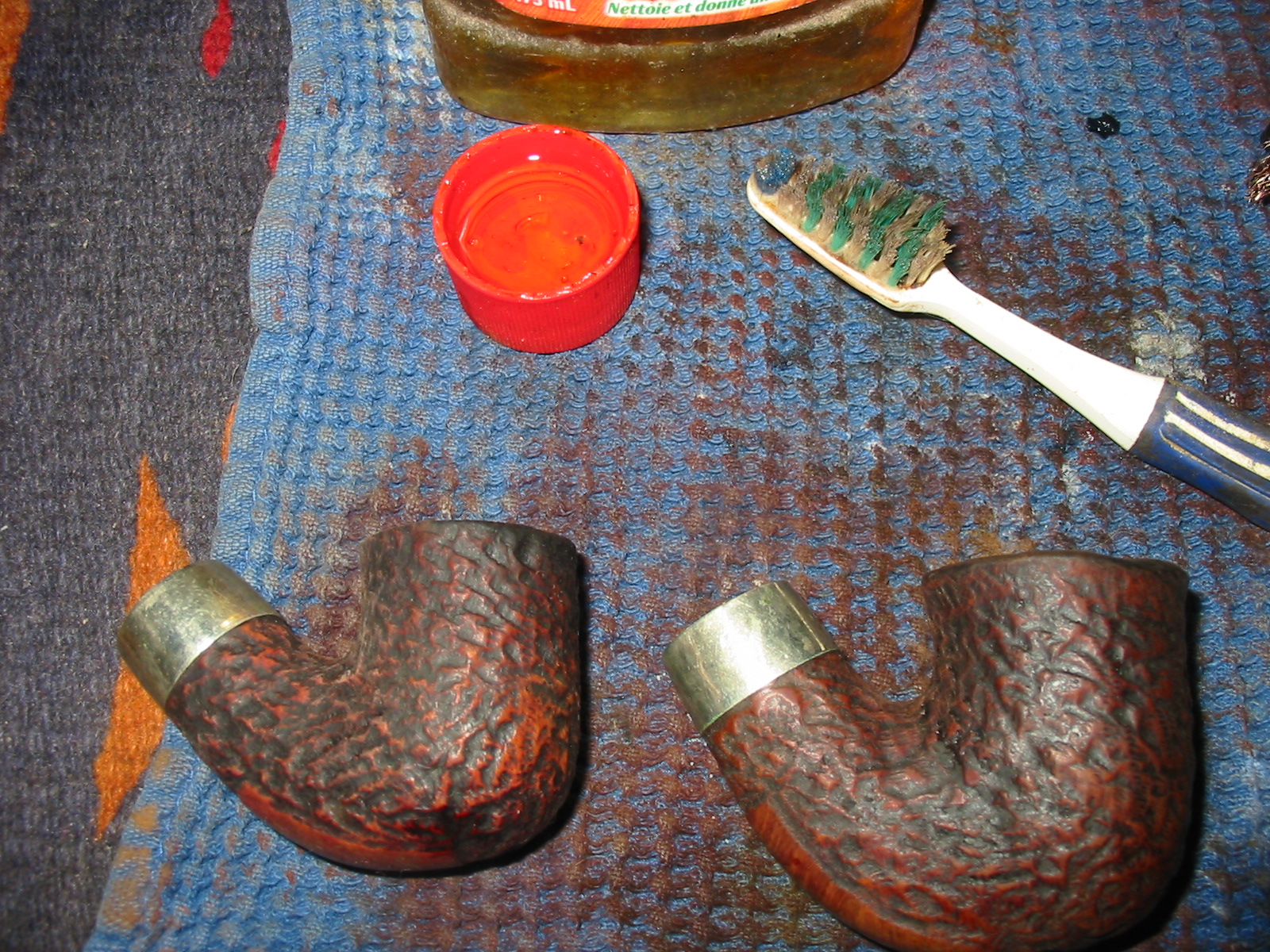
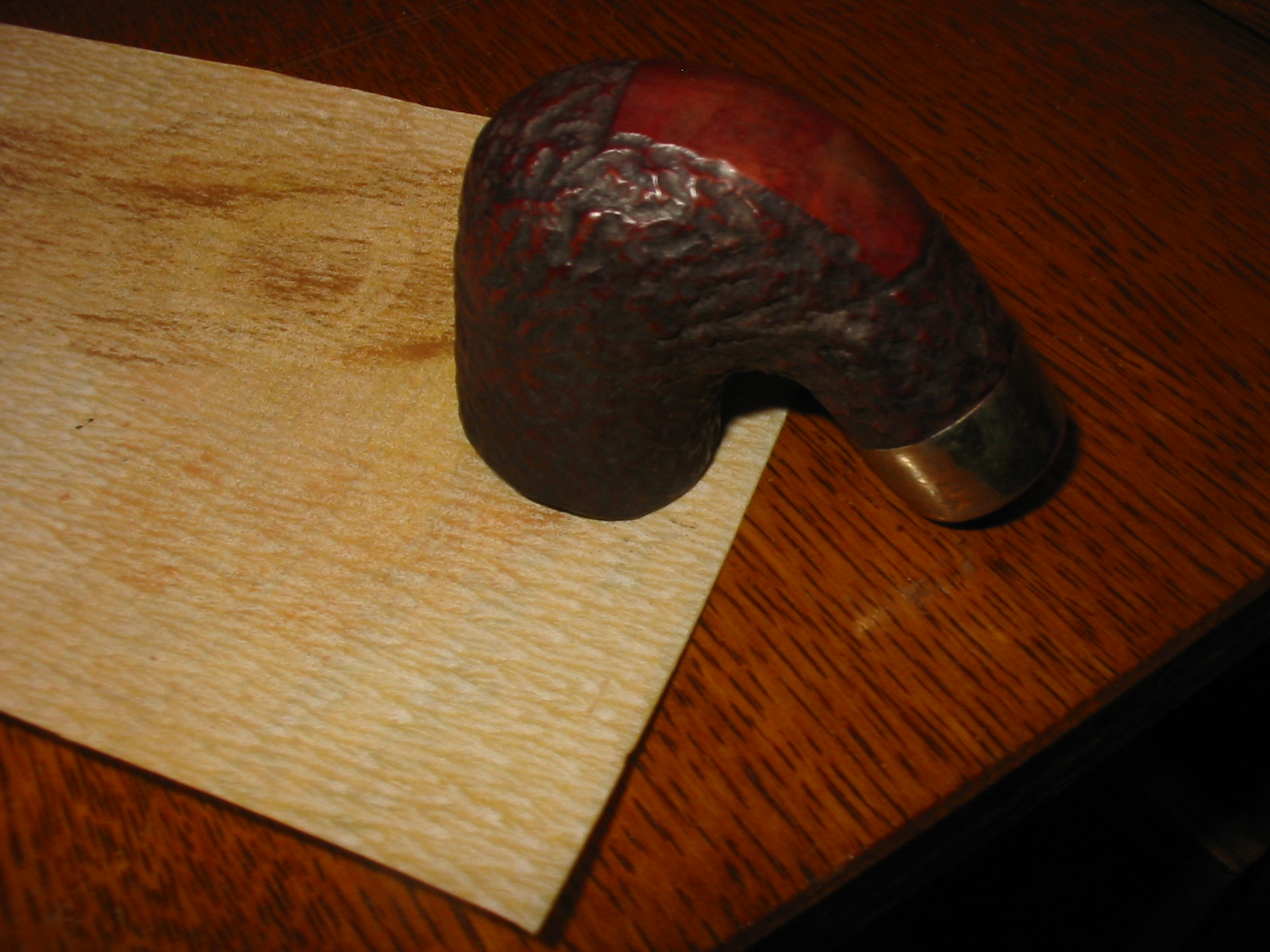
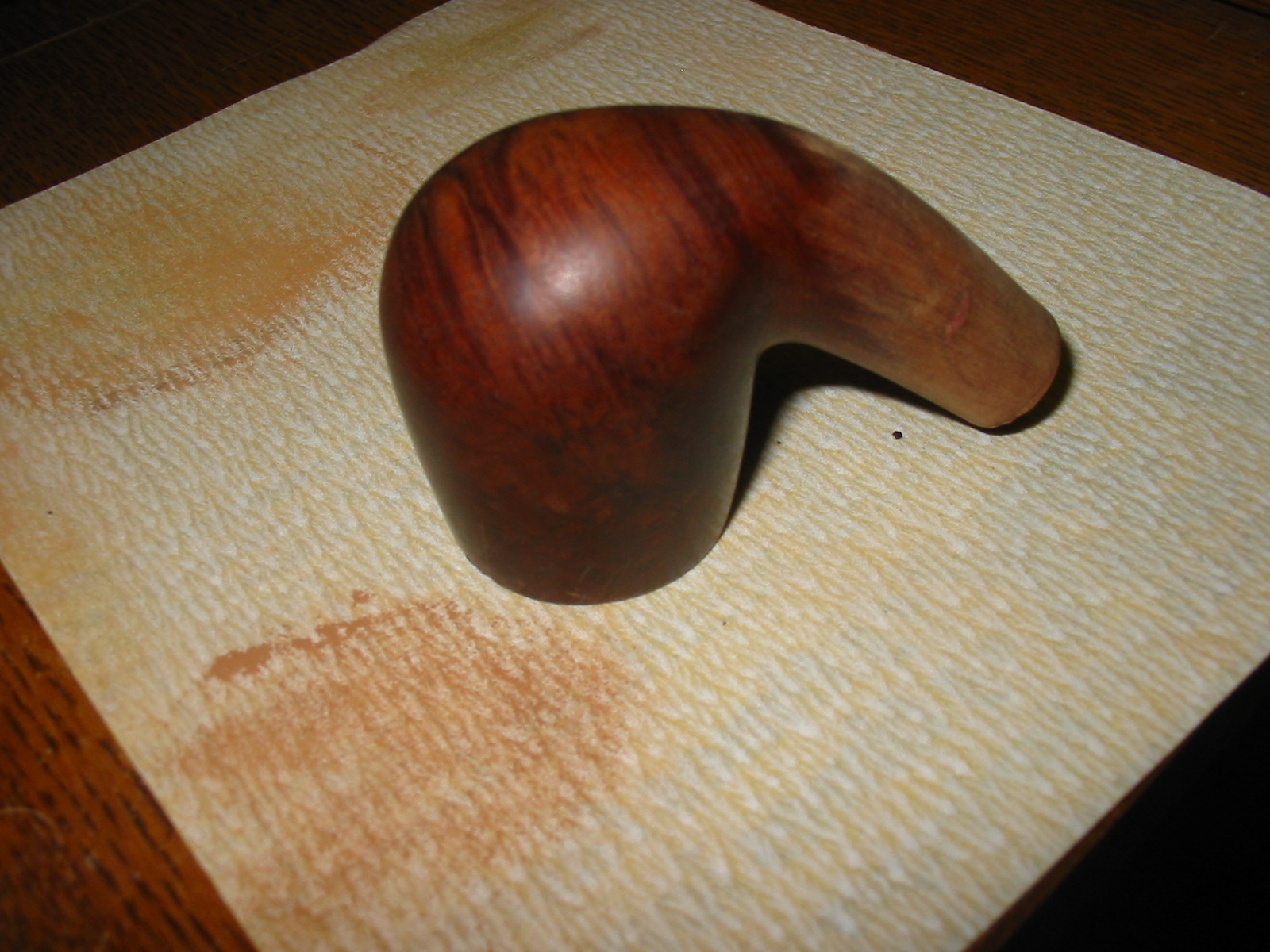
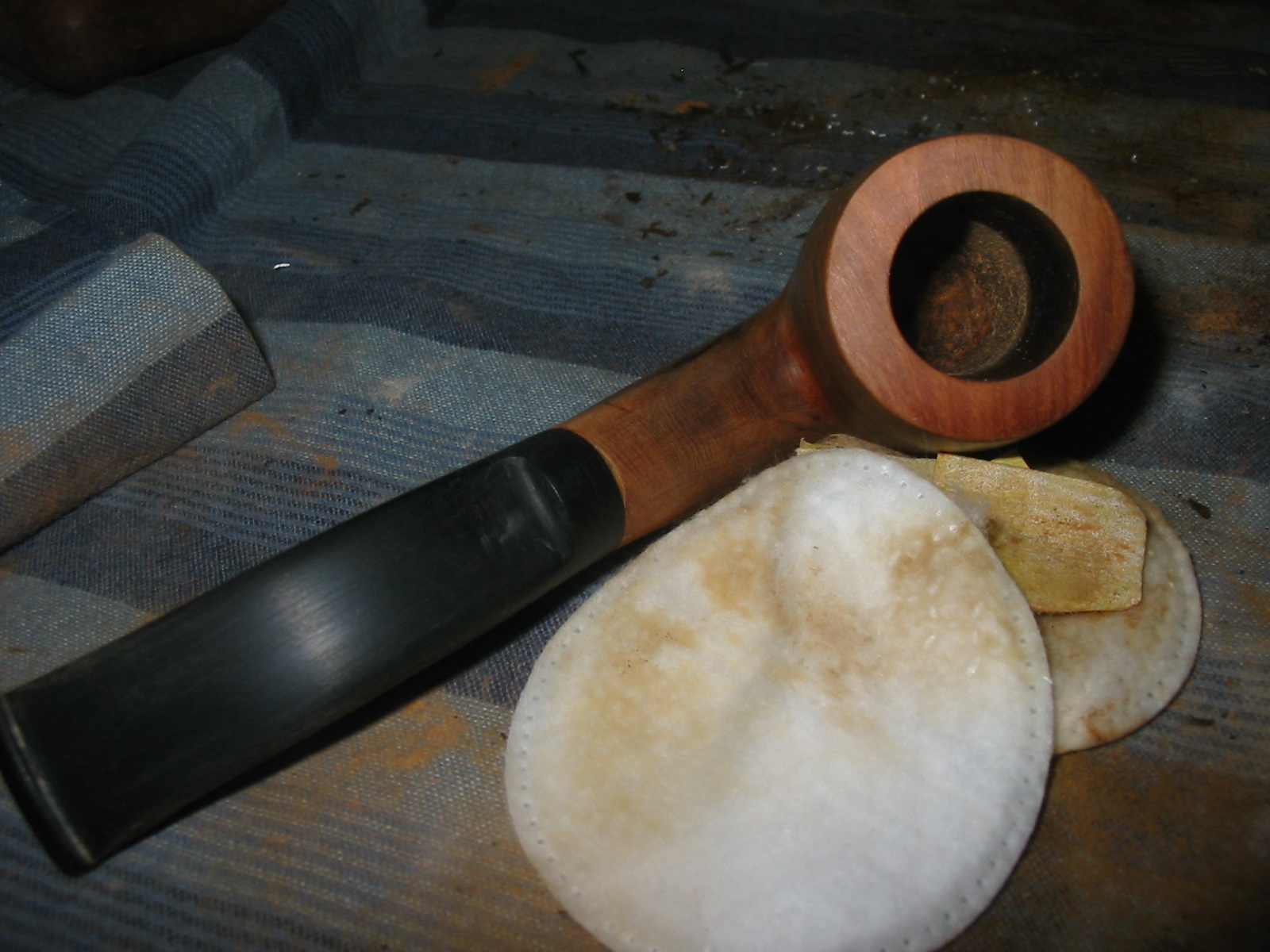
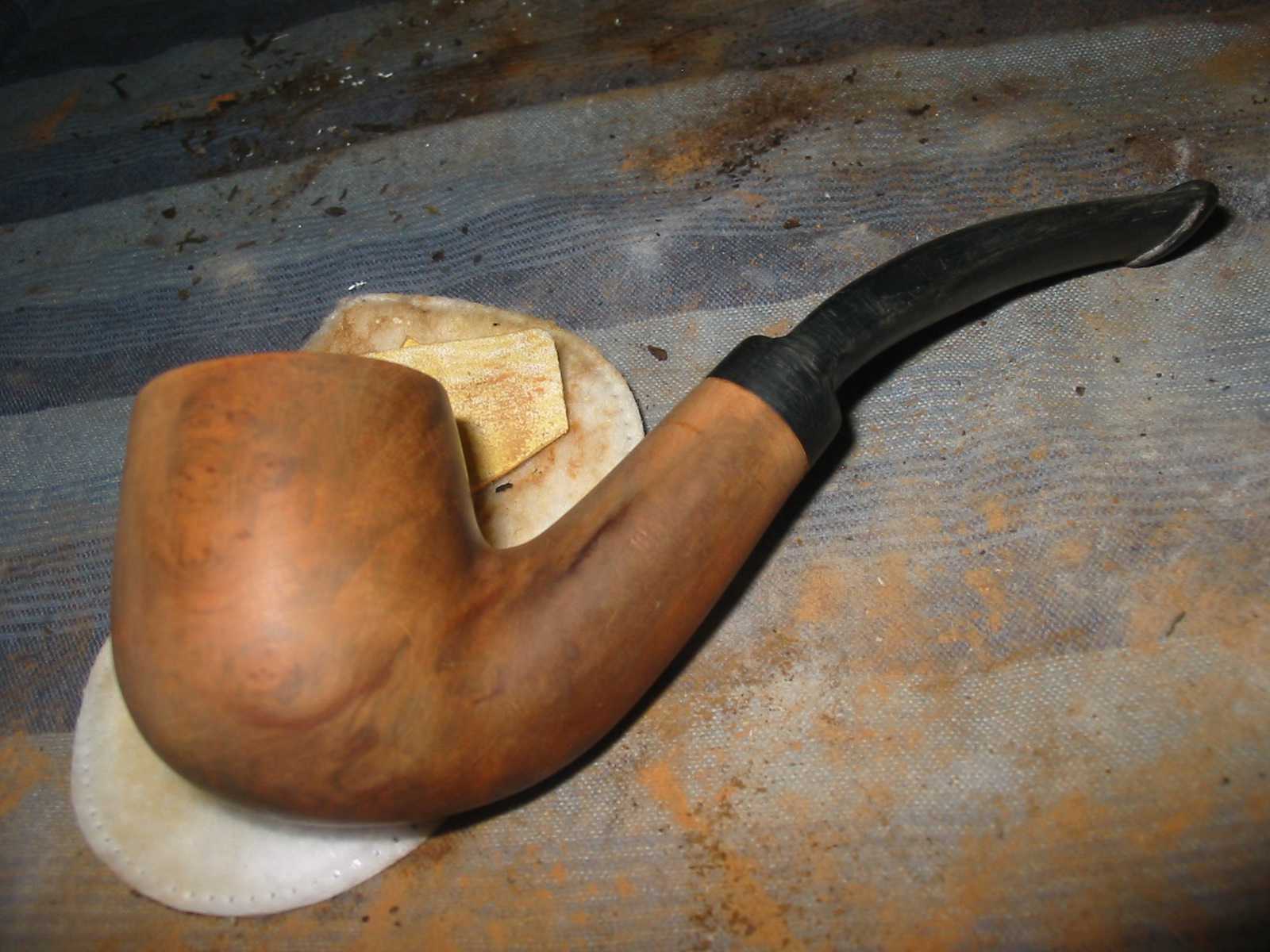
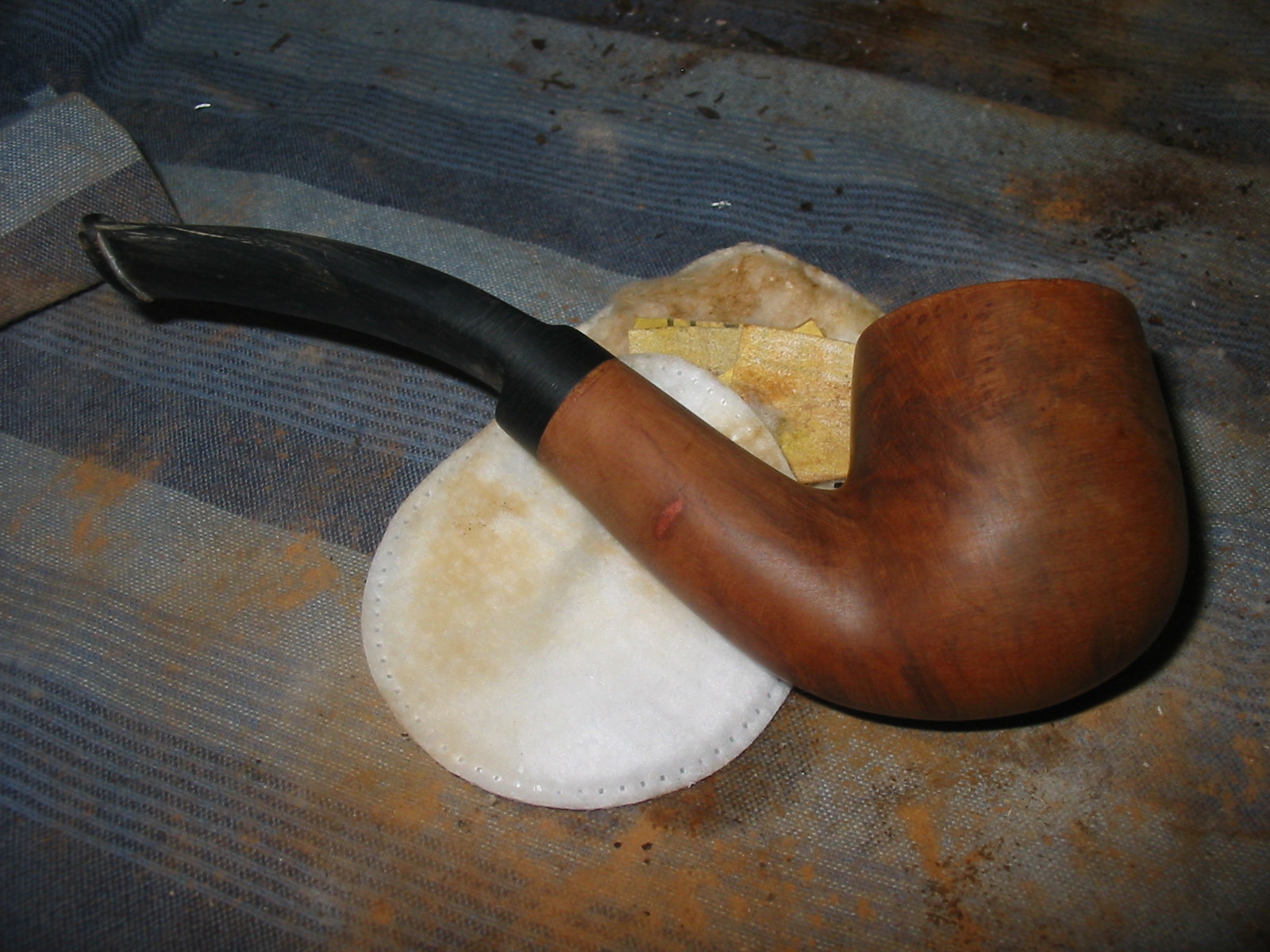
Tag Archives: contrast staining

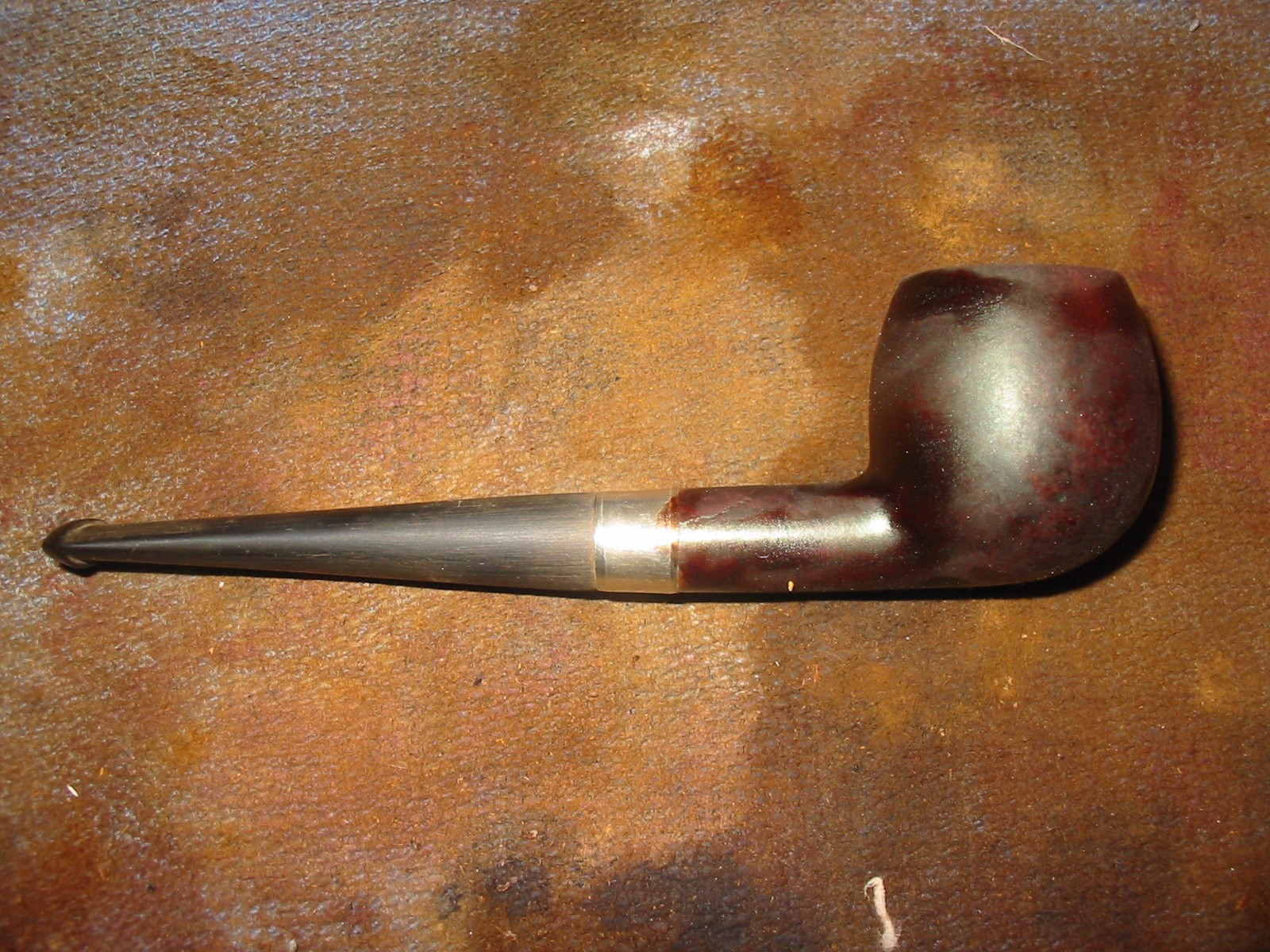
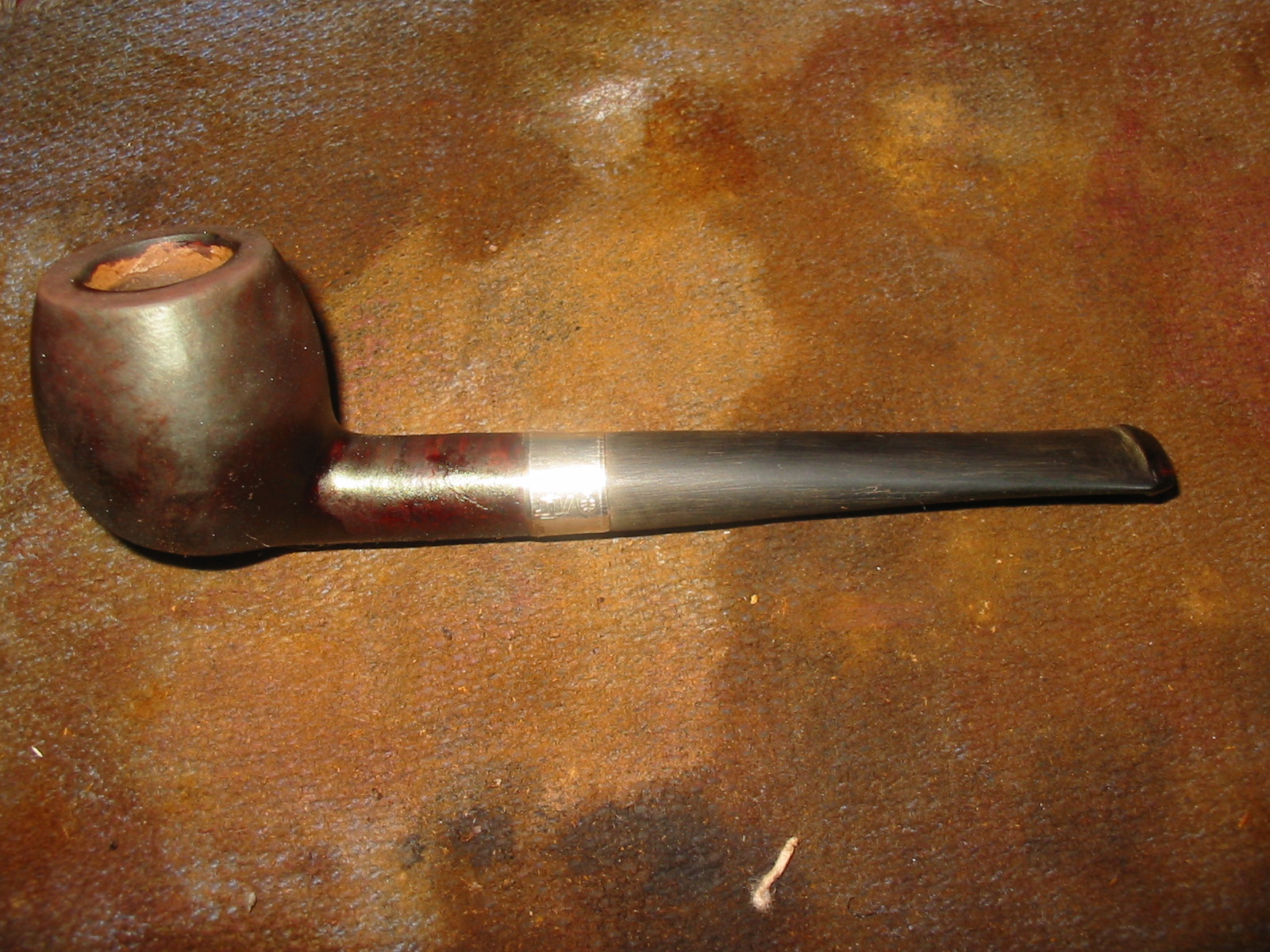
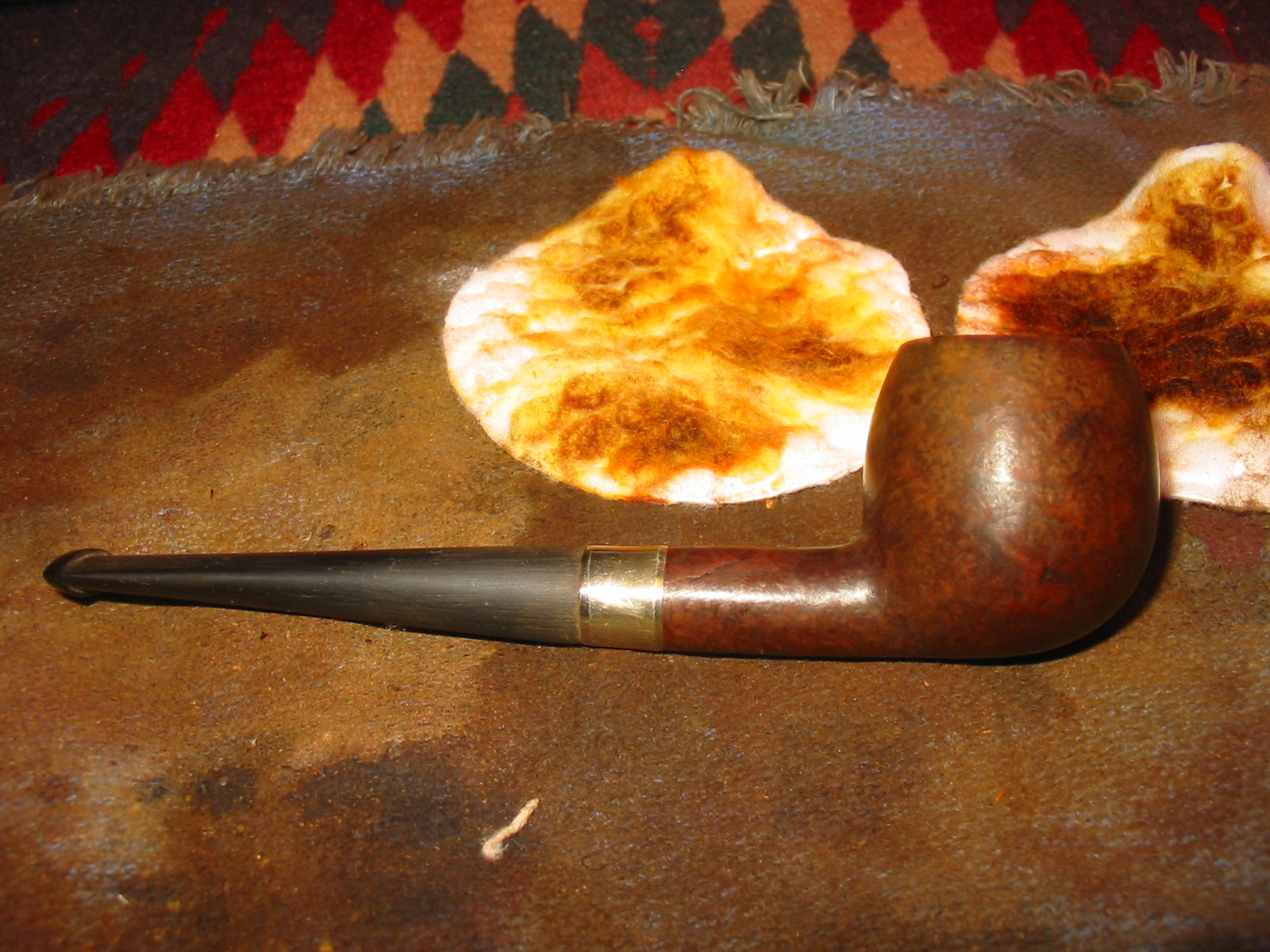
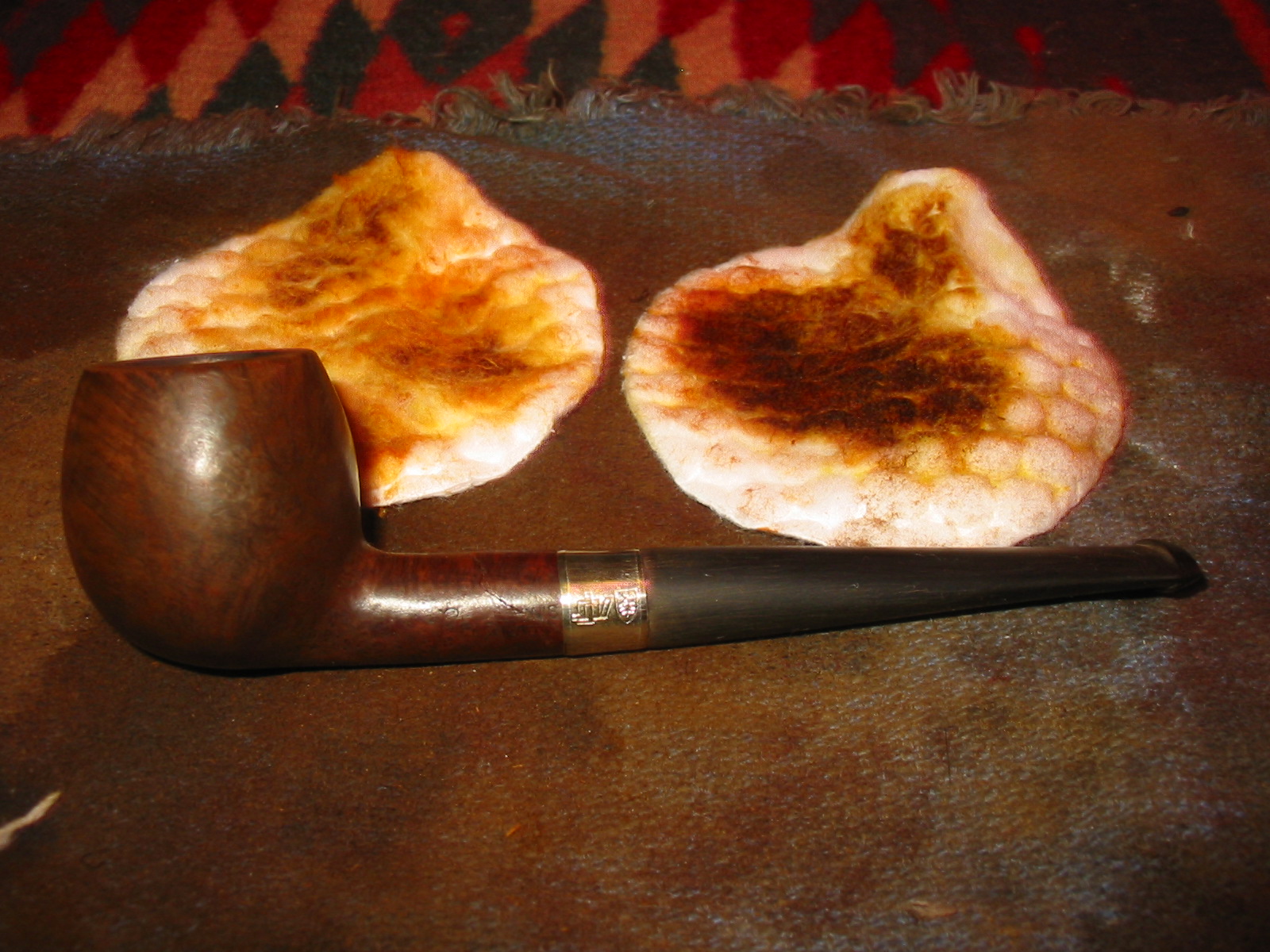
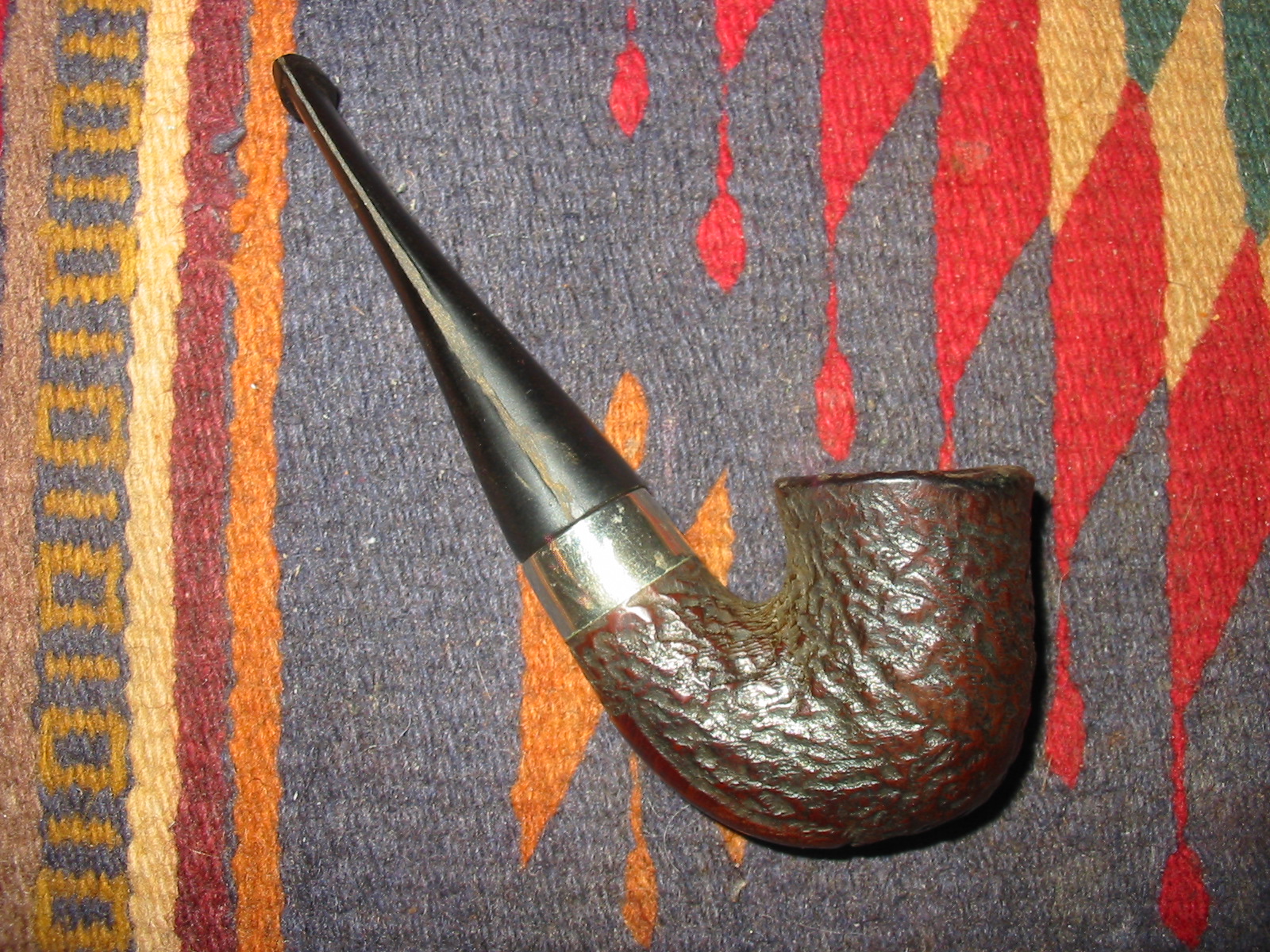
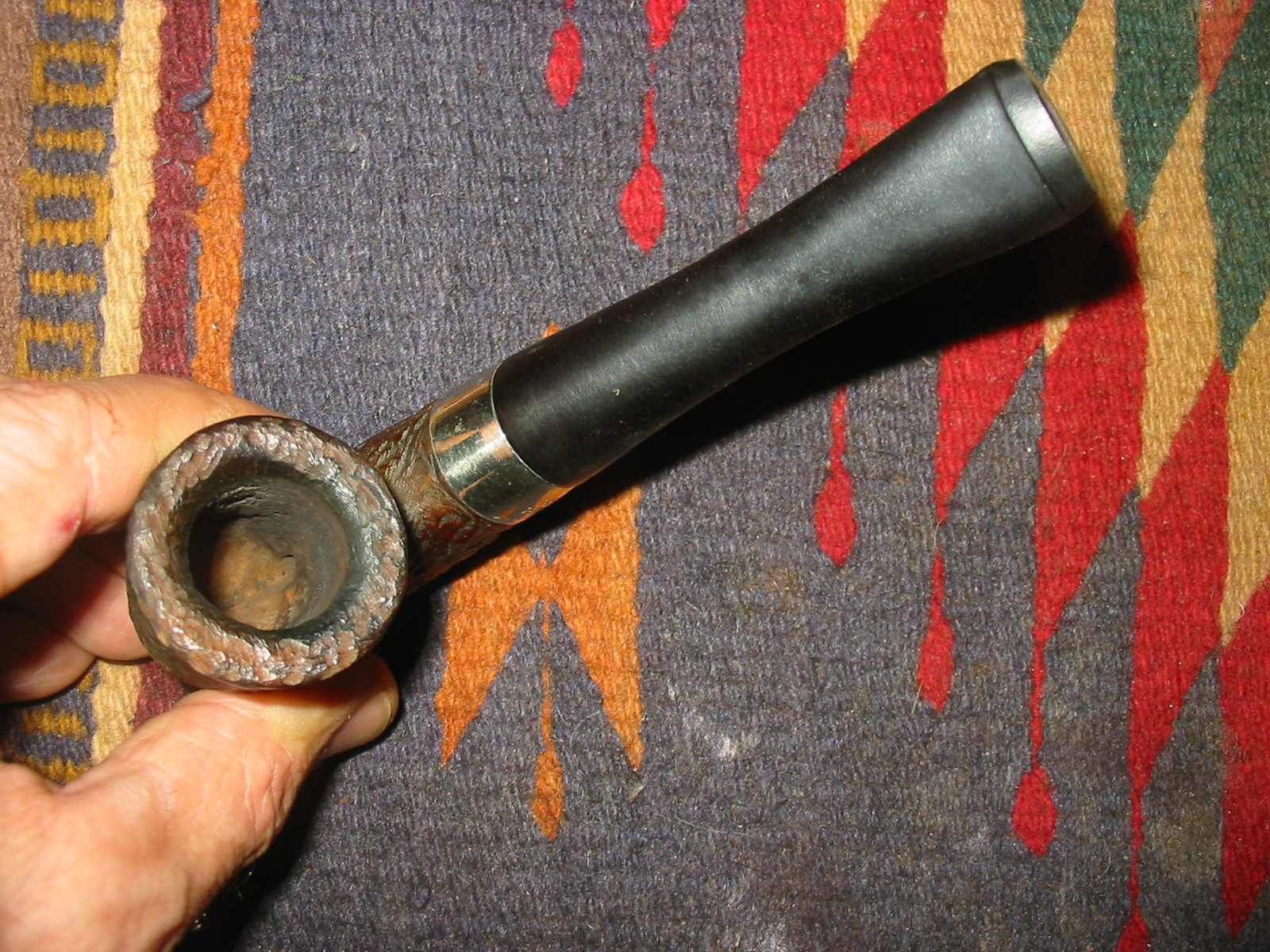
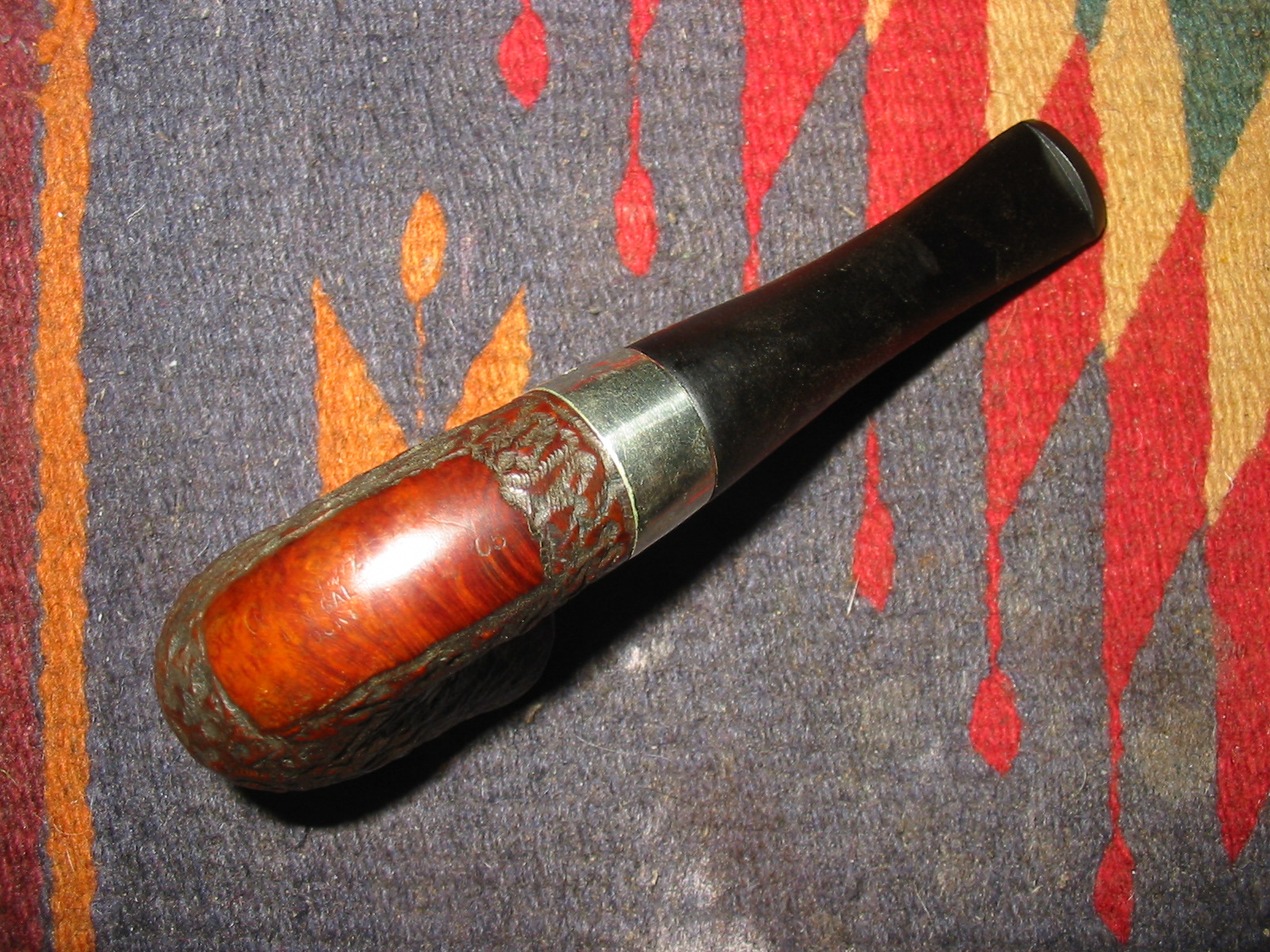
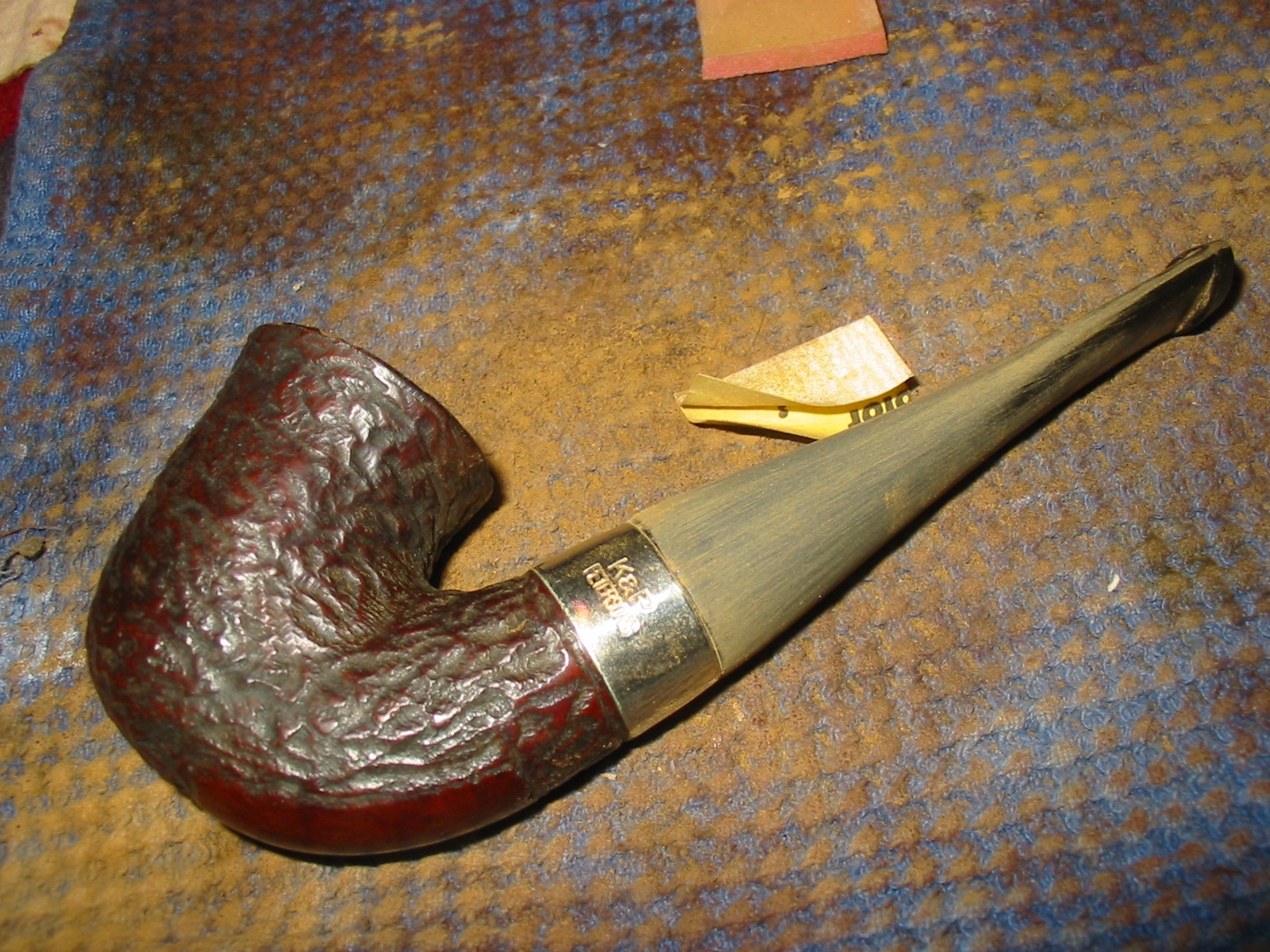
A Unique Piece of Pipe History Almost Lost – A Hardcastle’s Dental Briar Reg. Design No. 857327


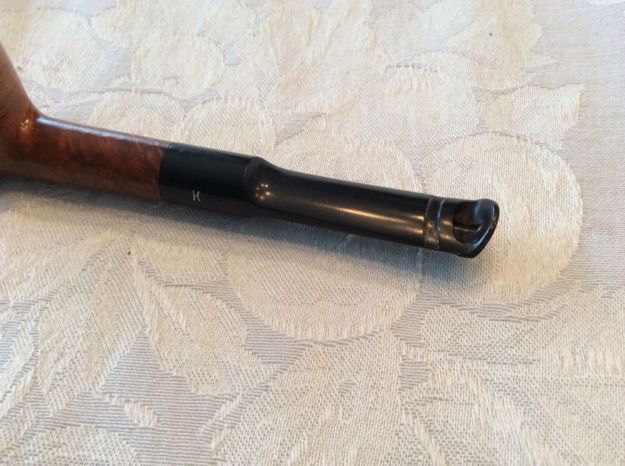
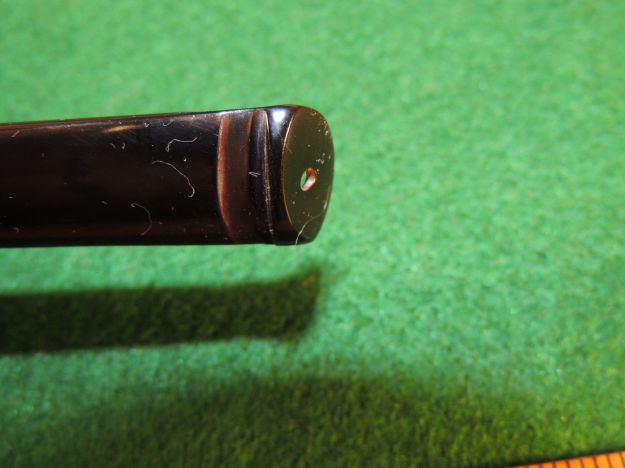
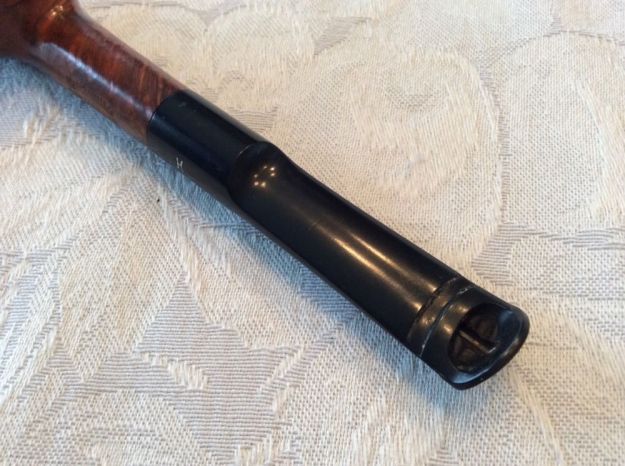
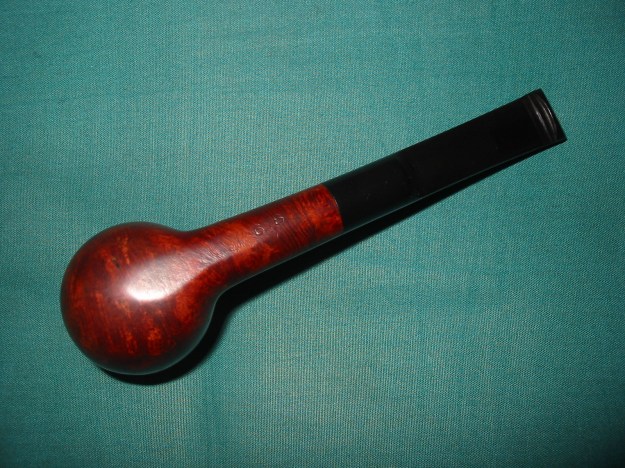
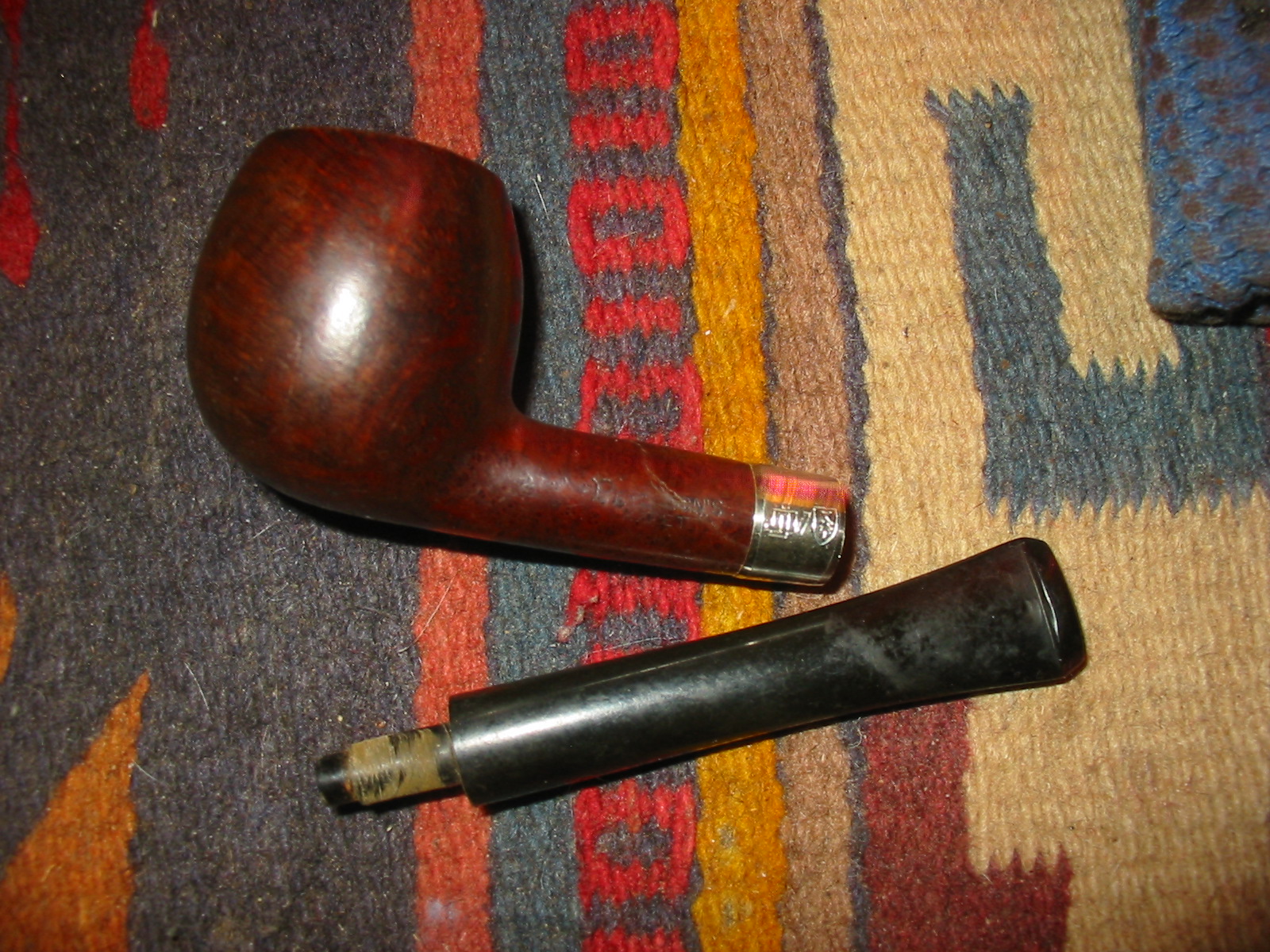
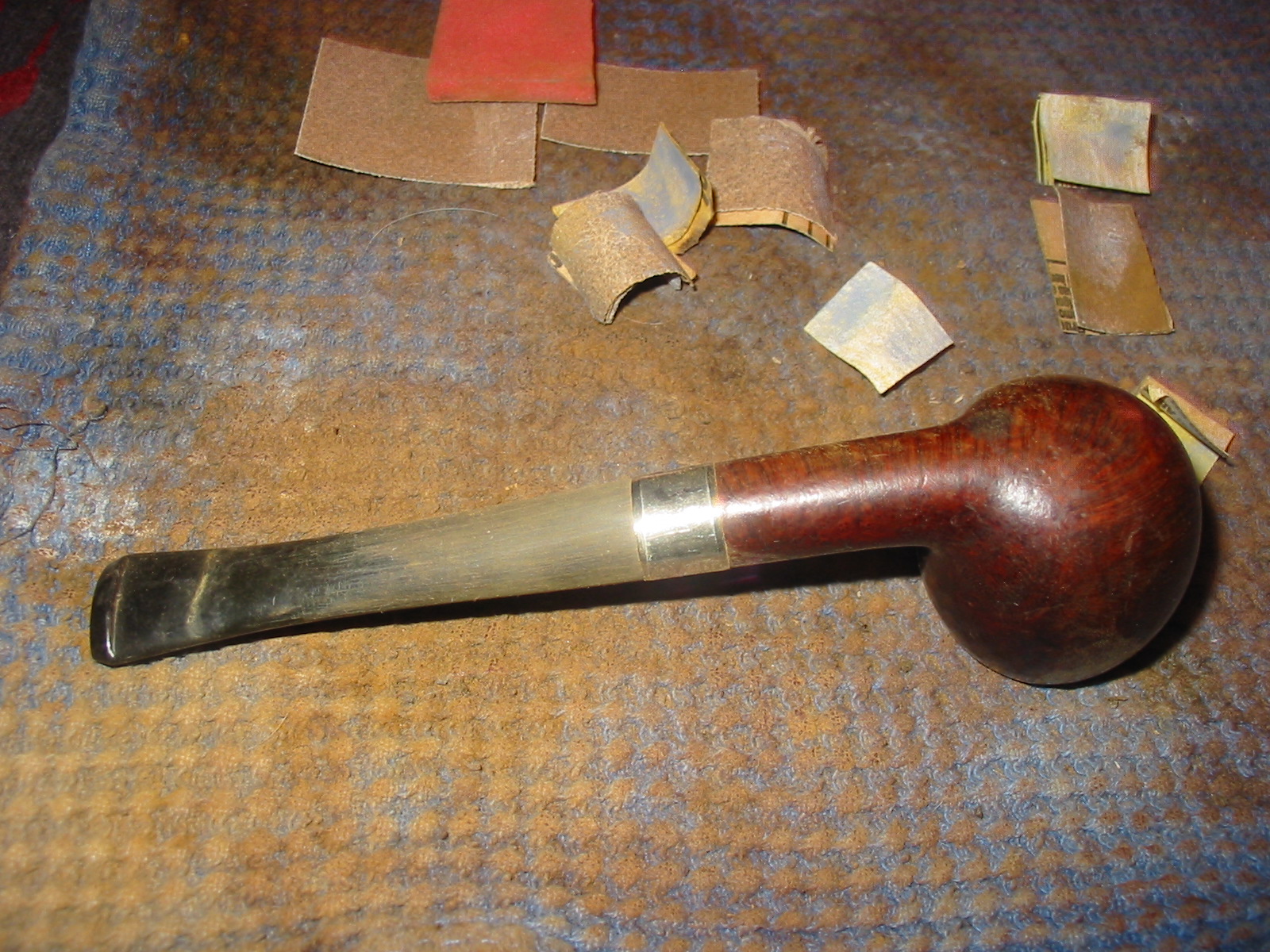
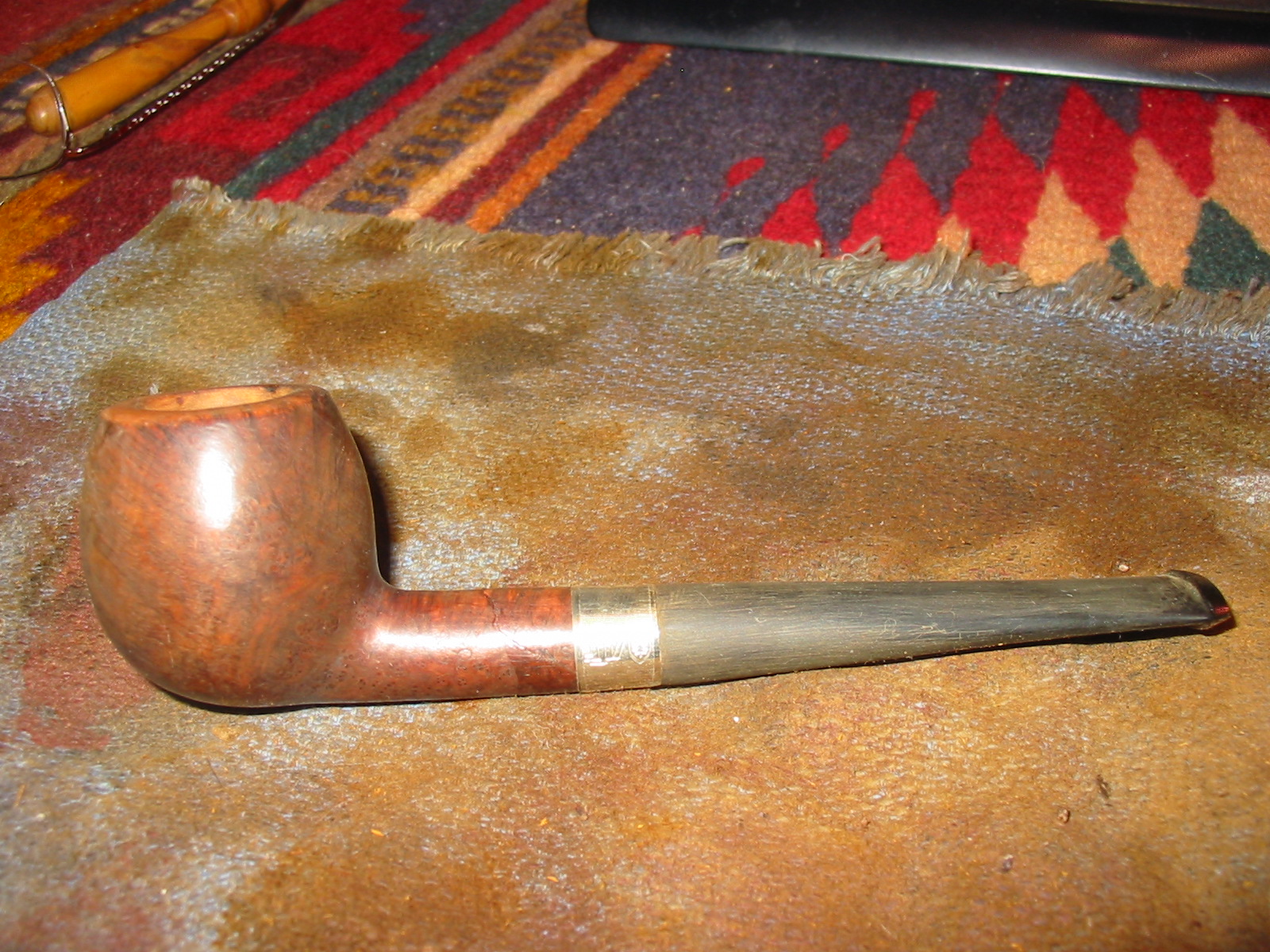
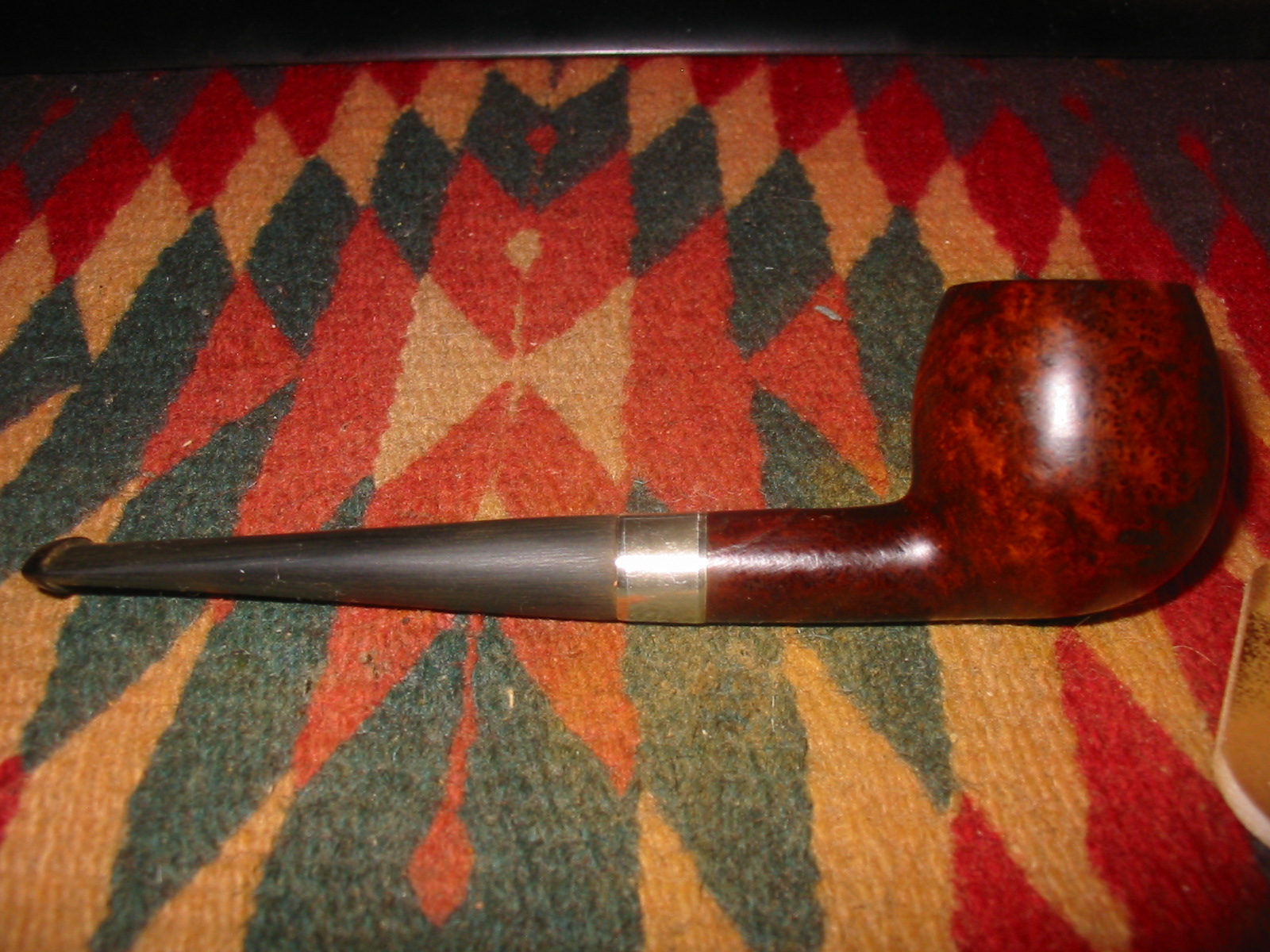
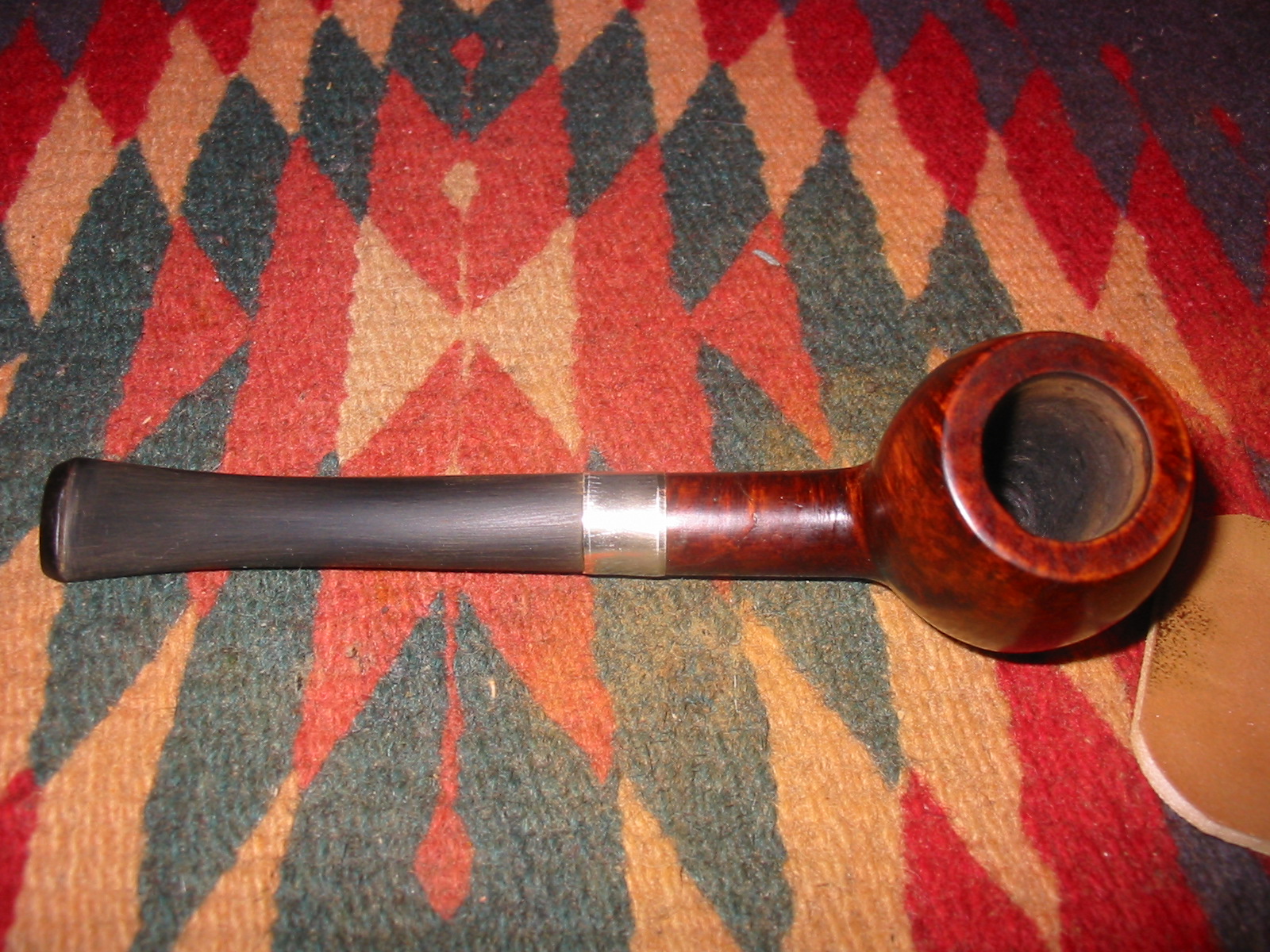
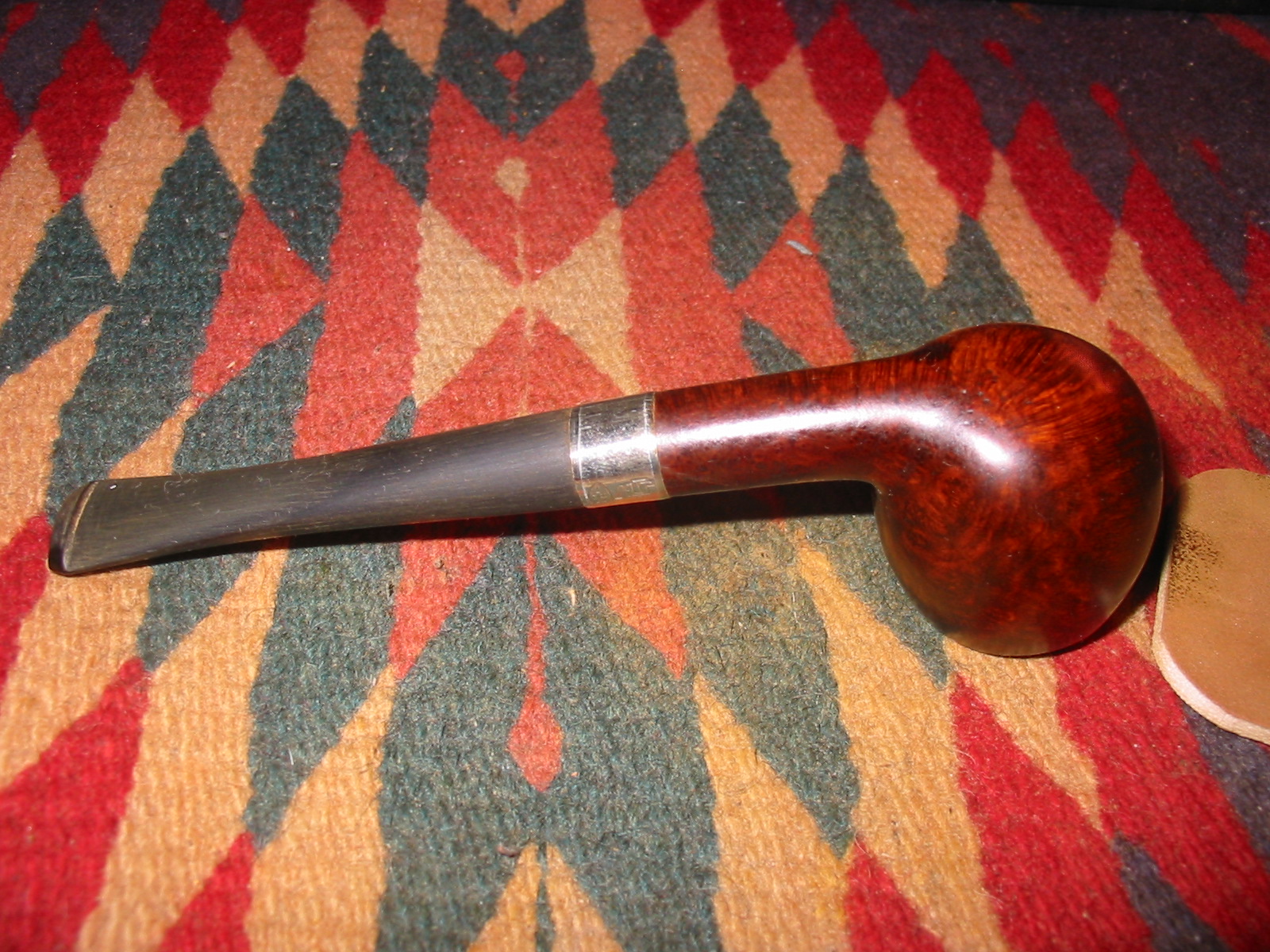
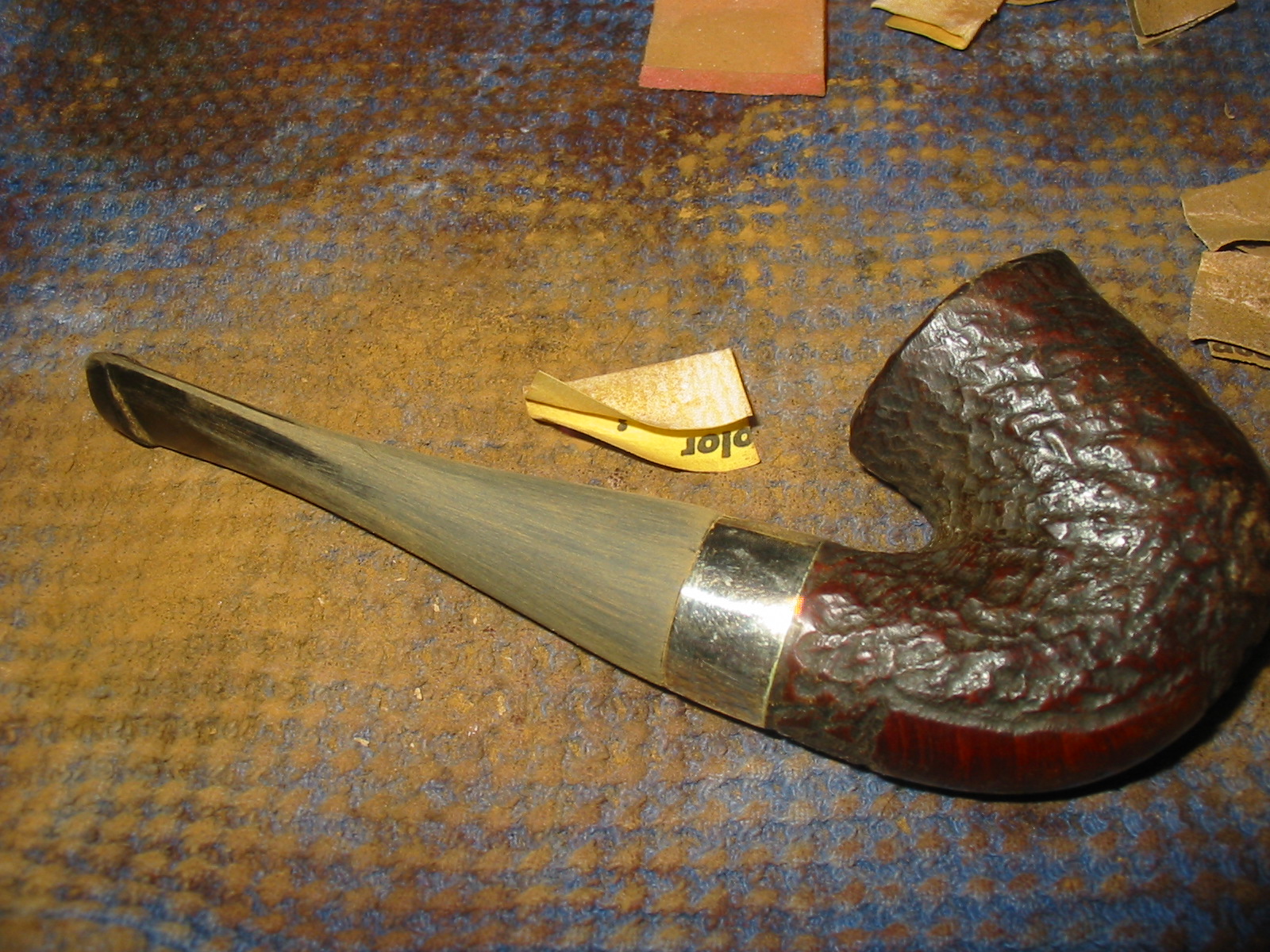
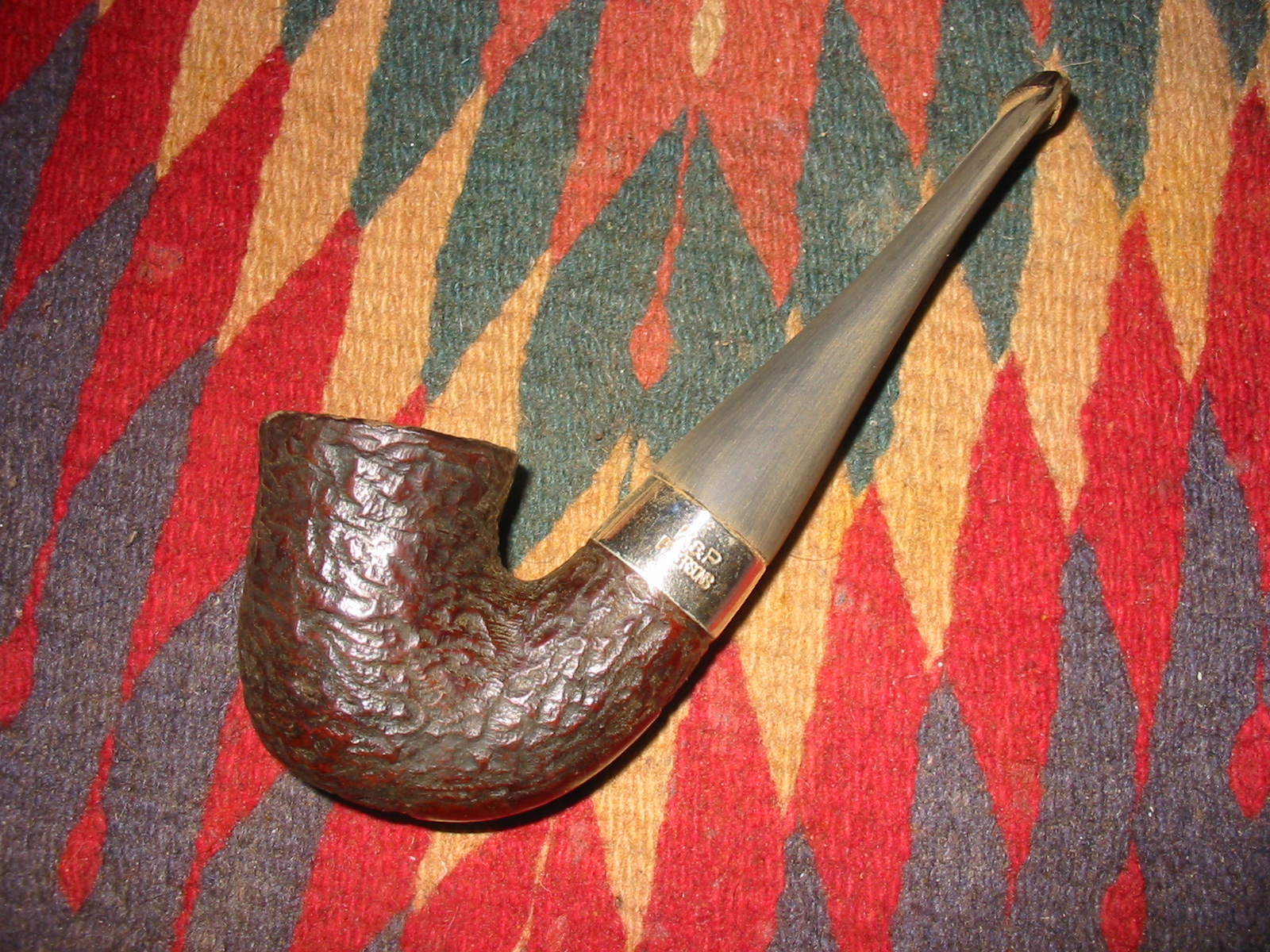
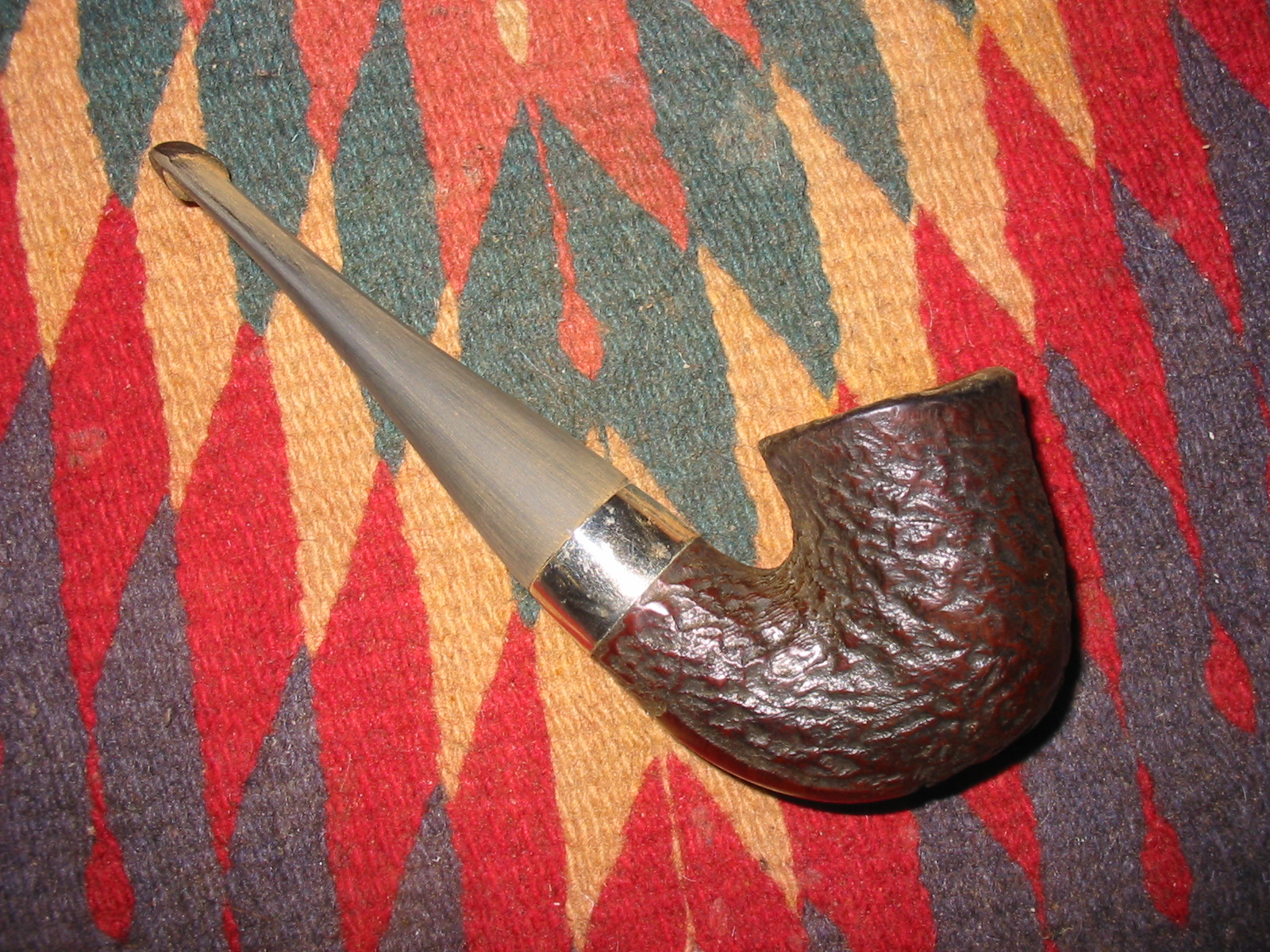
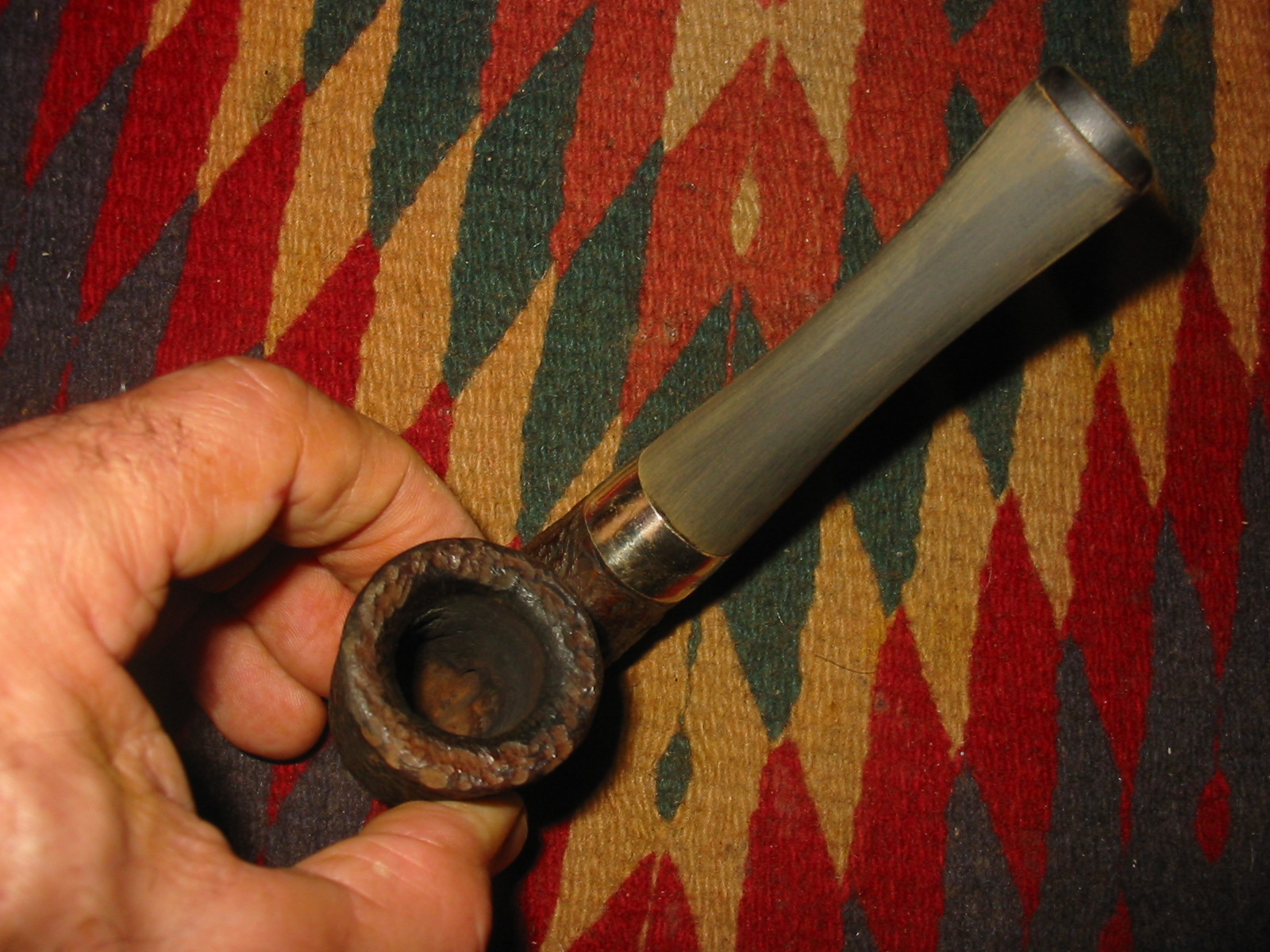
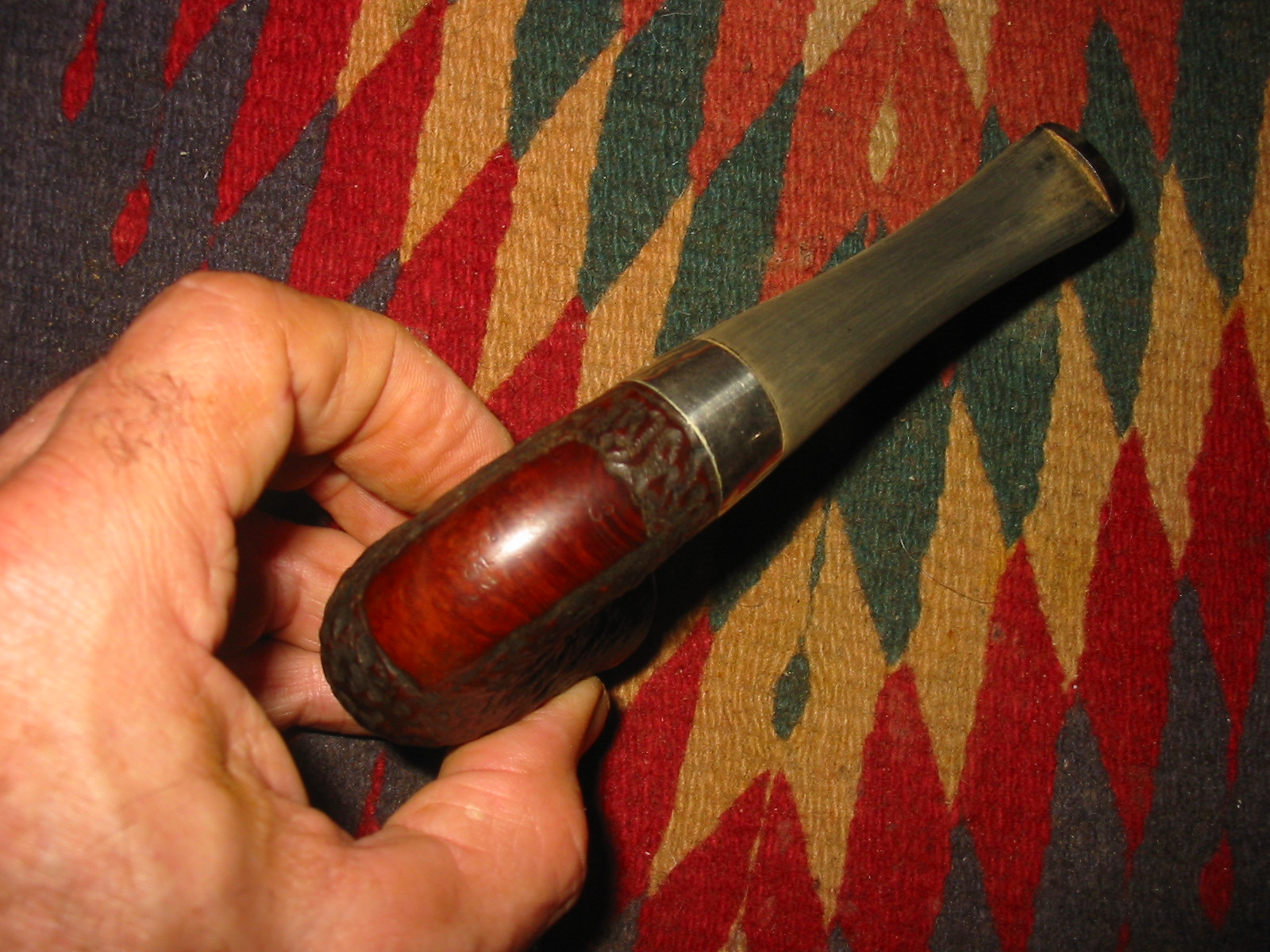
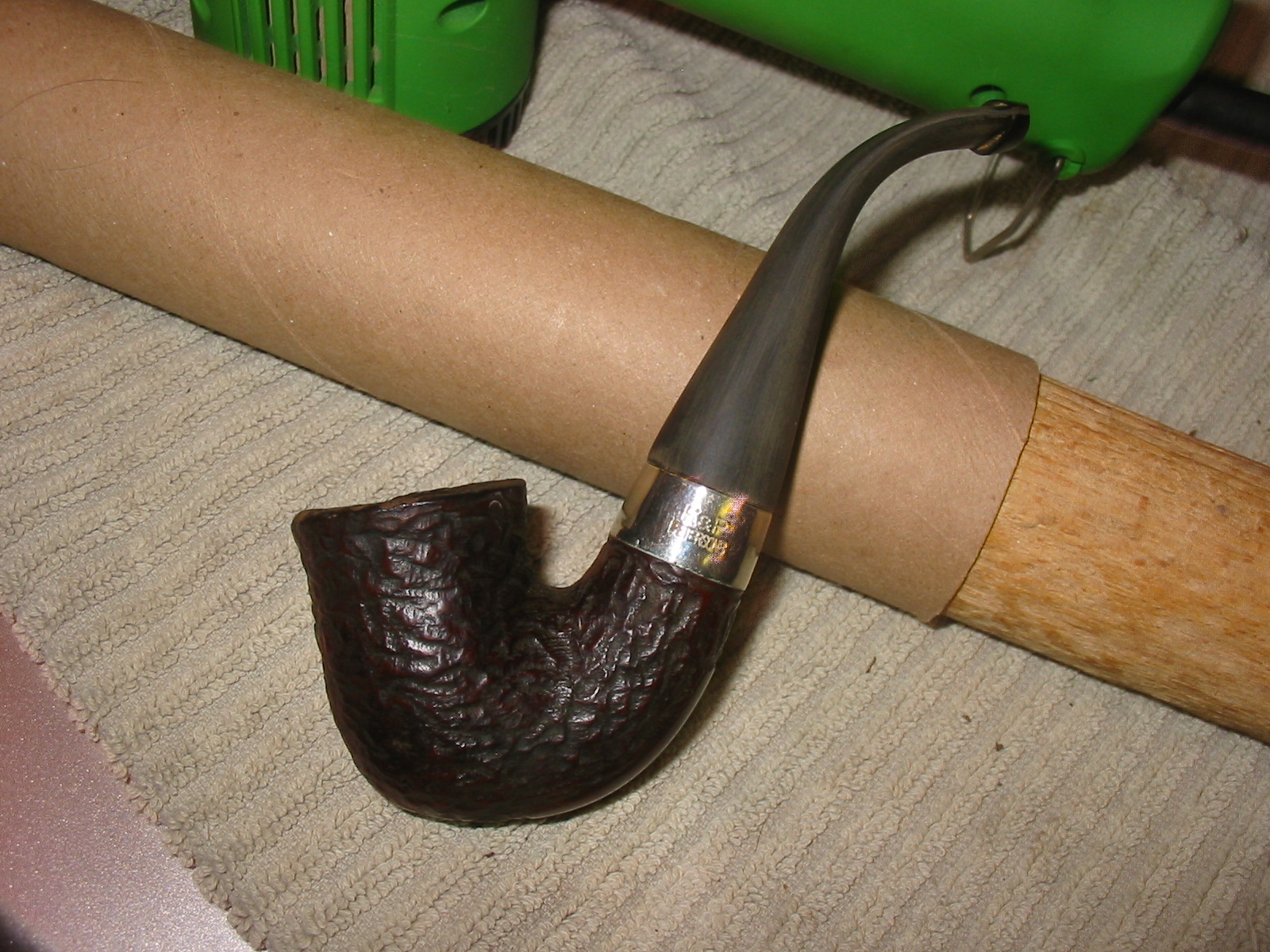
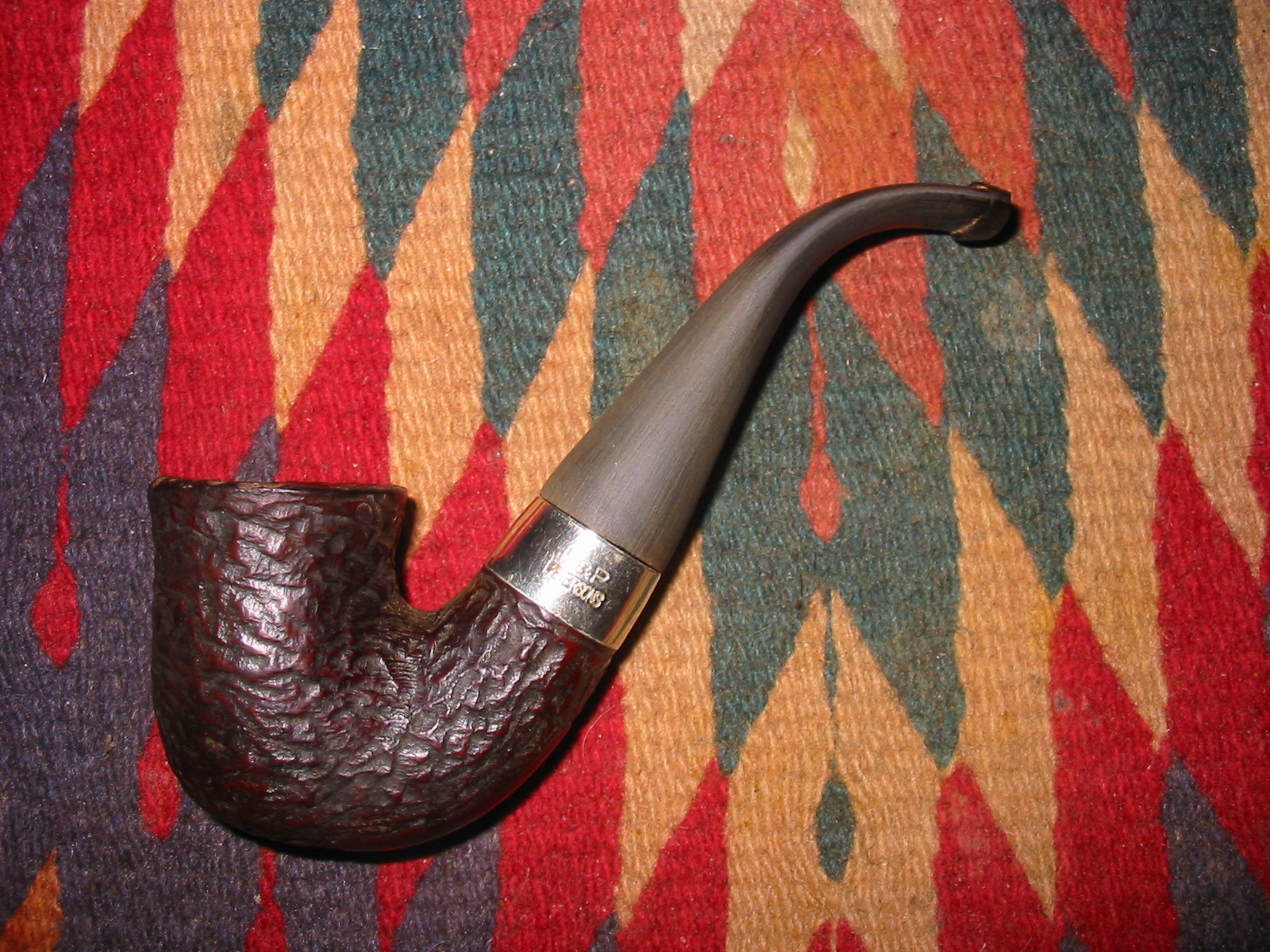
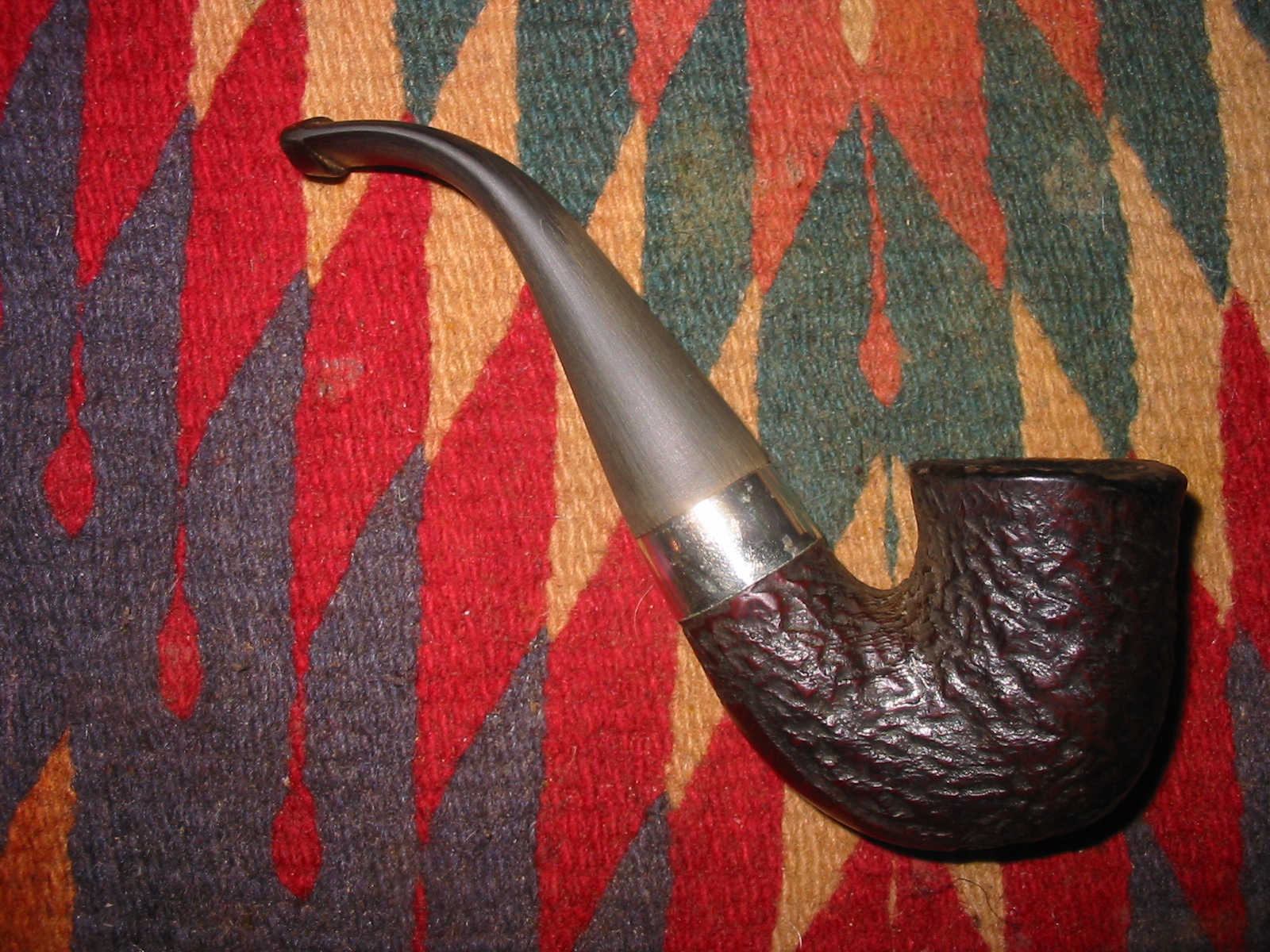
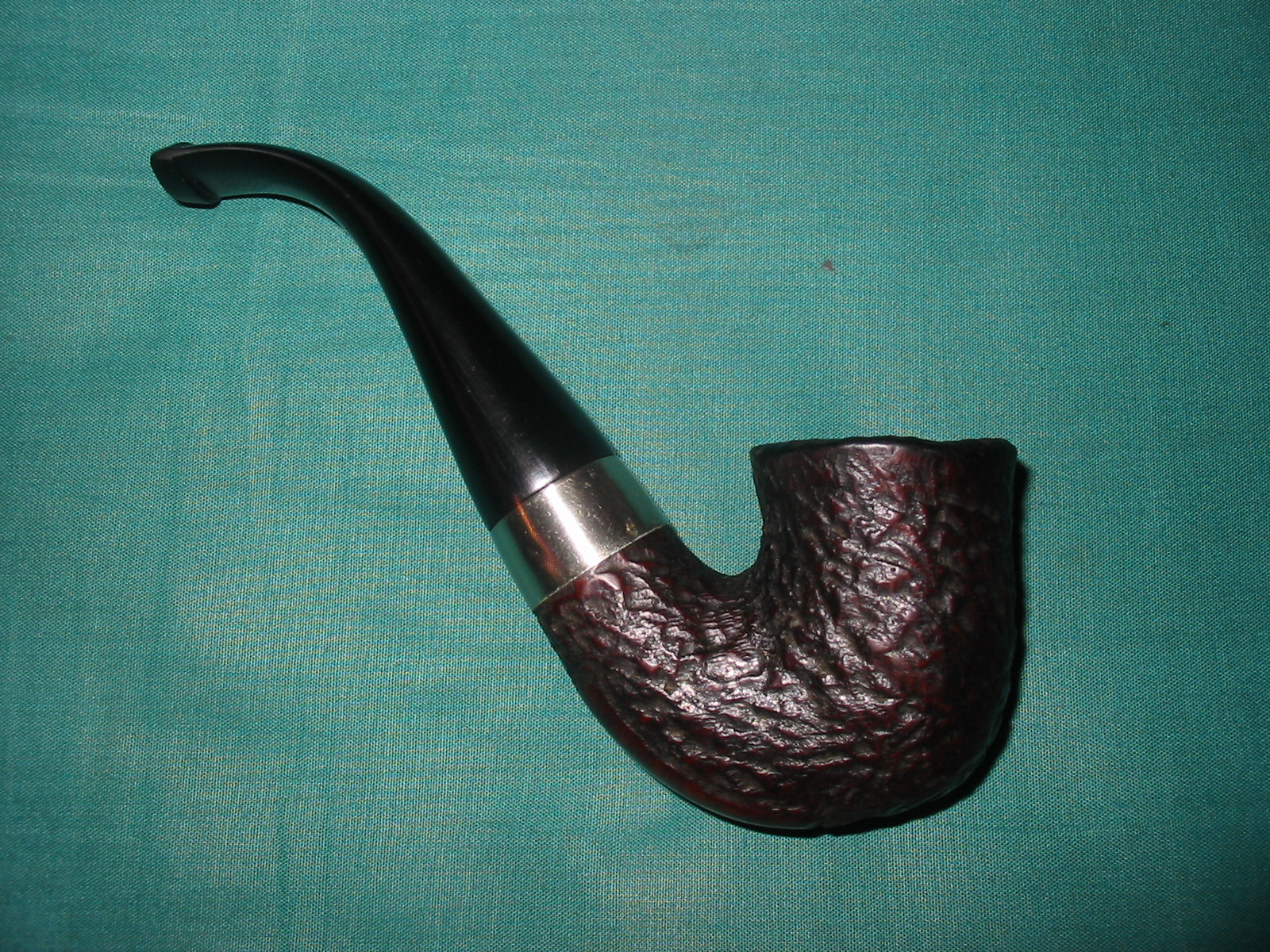
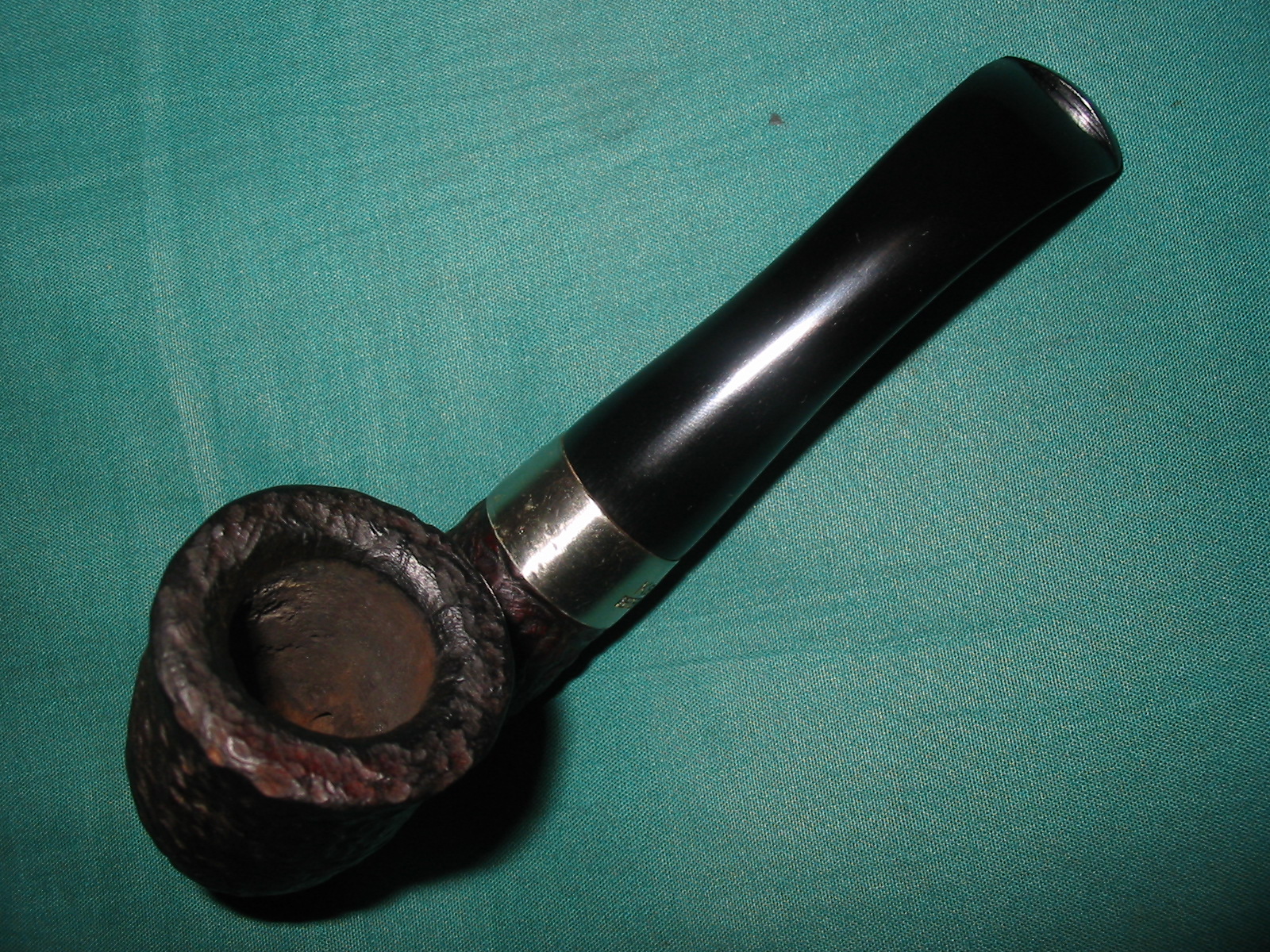
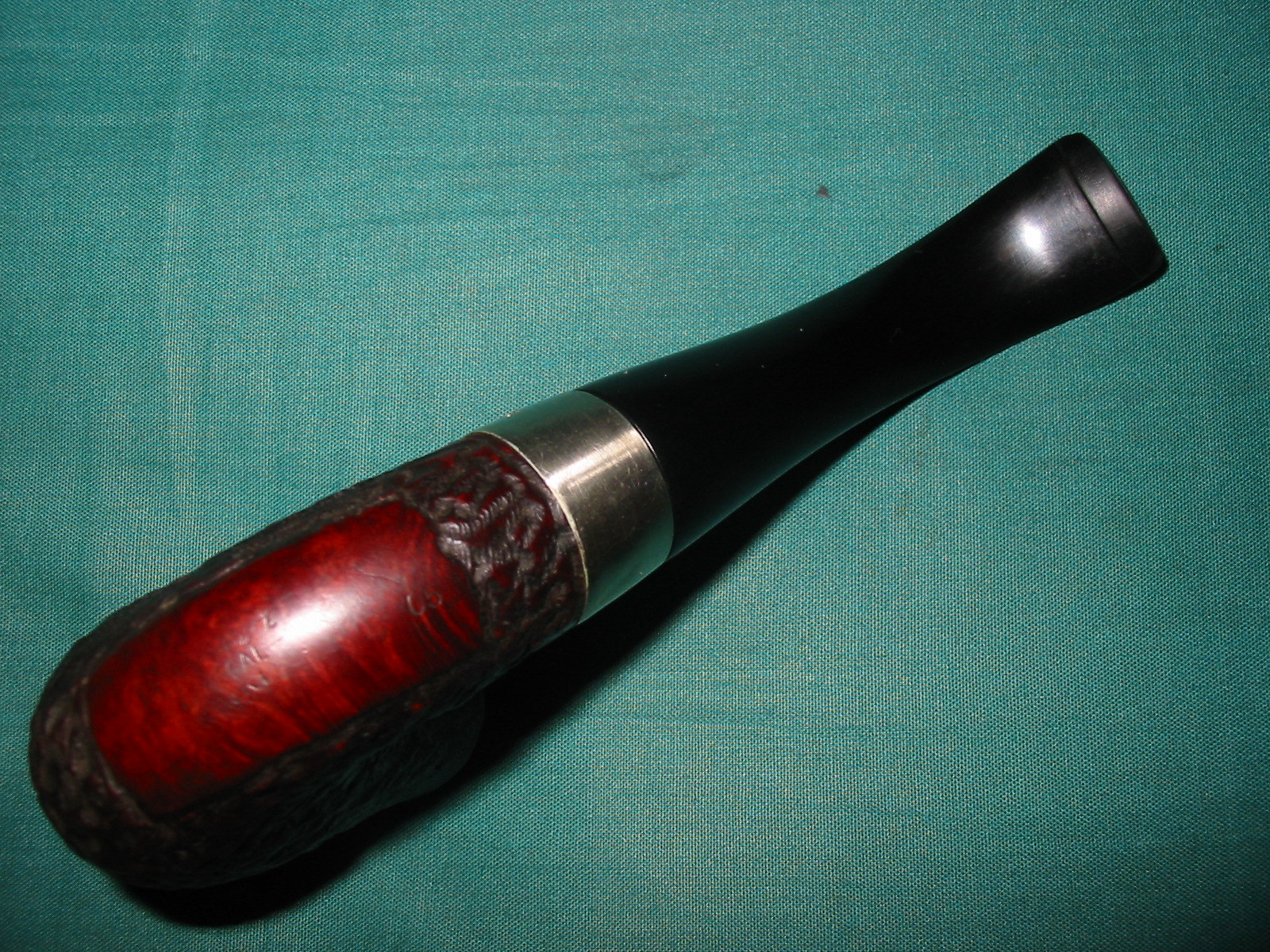
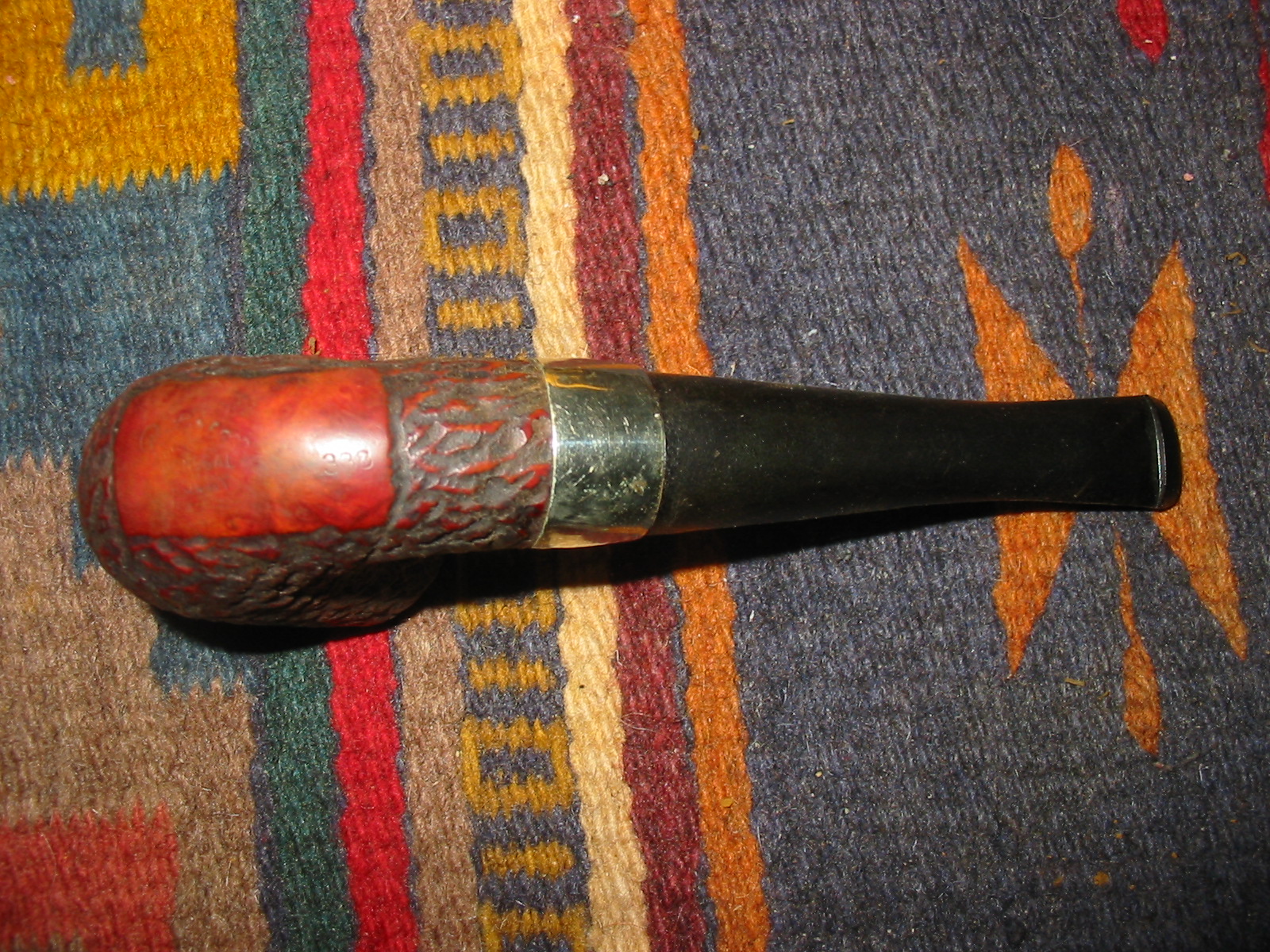
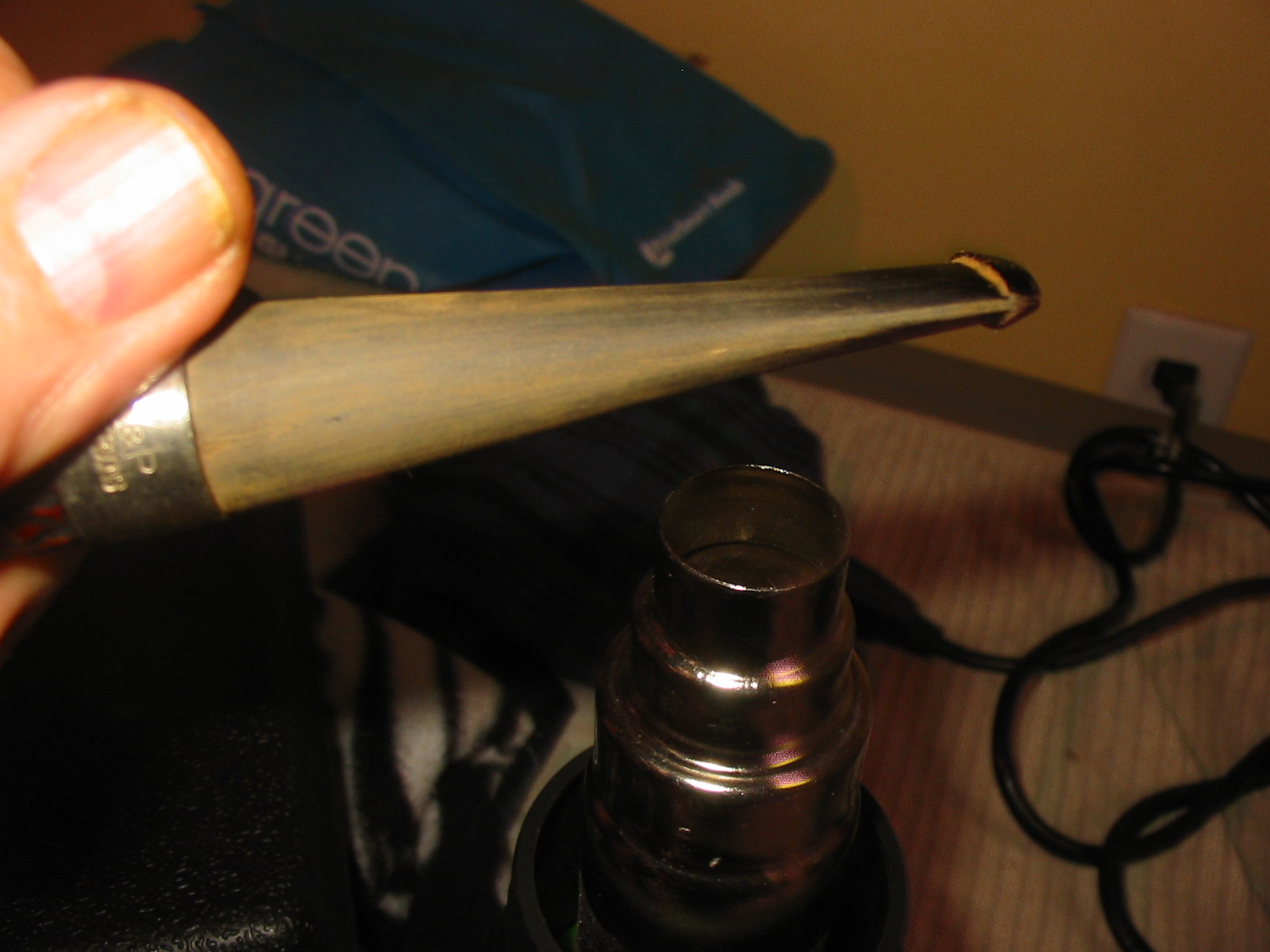
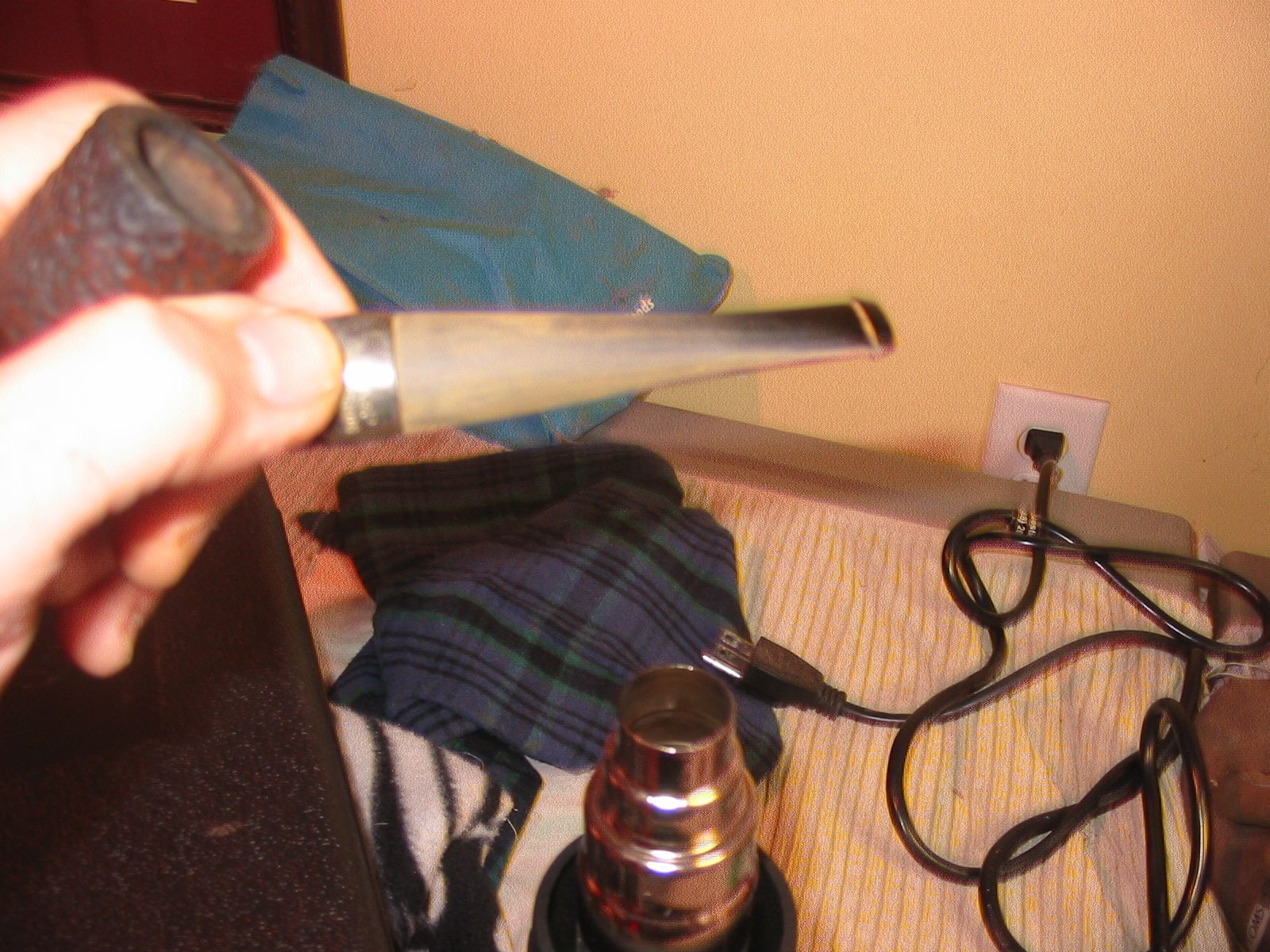
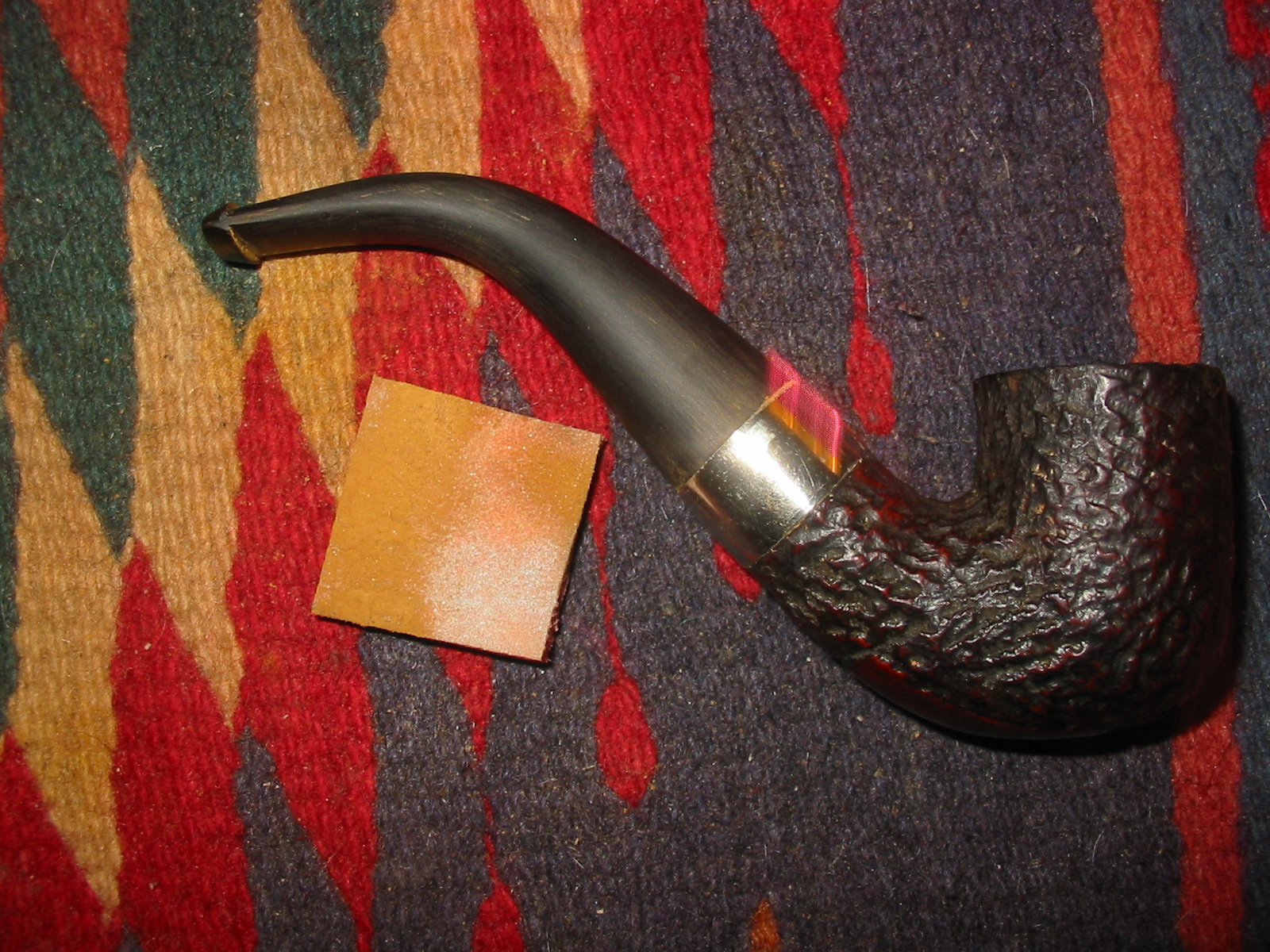
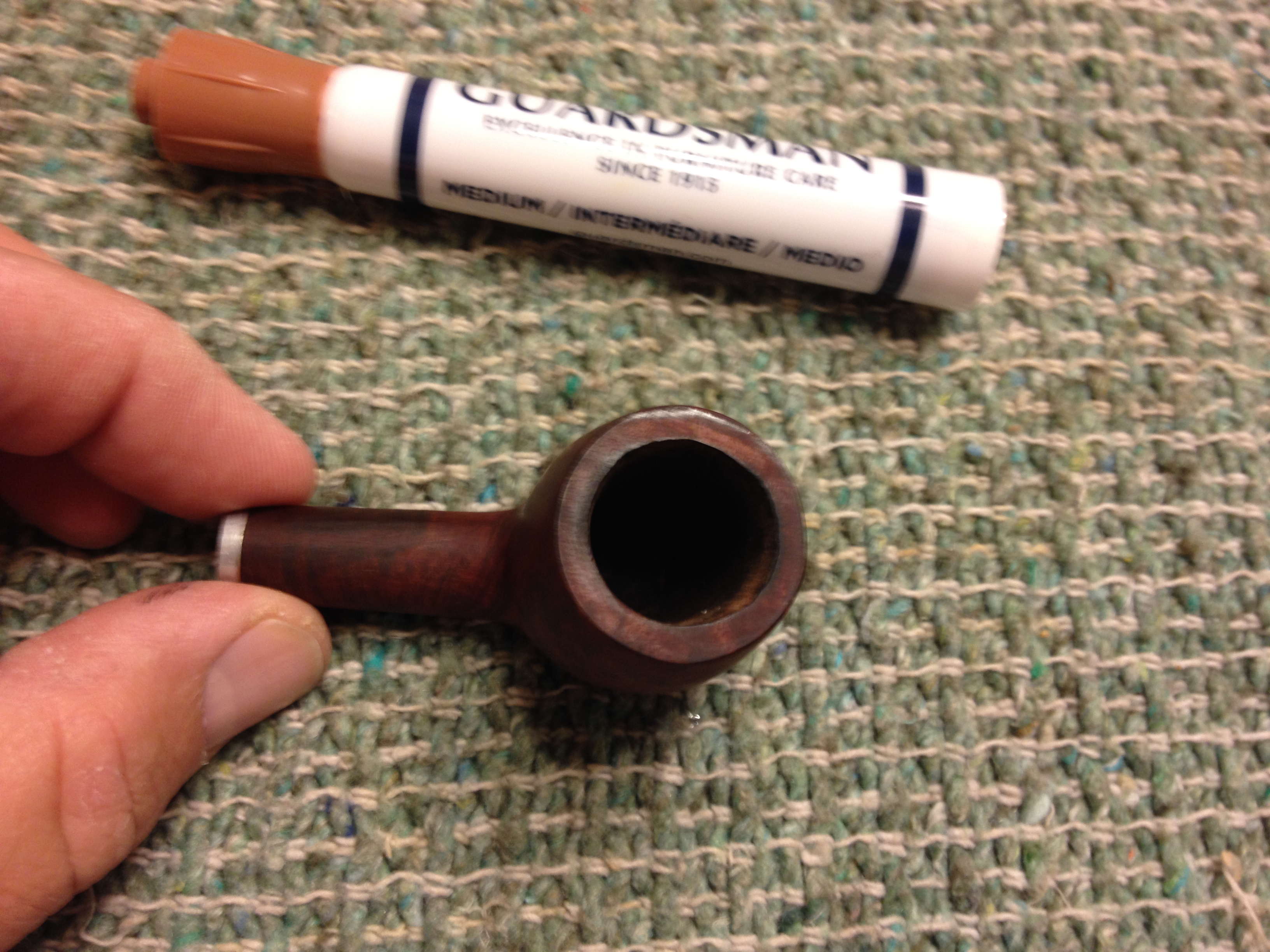
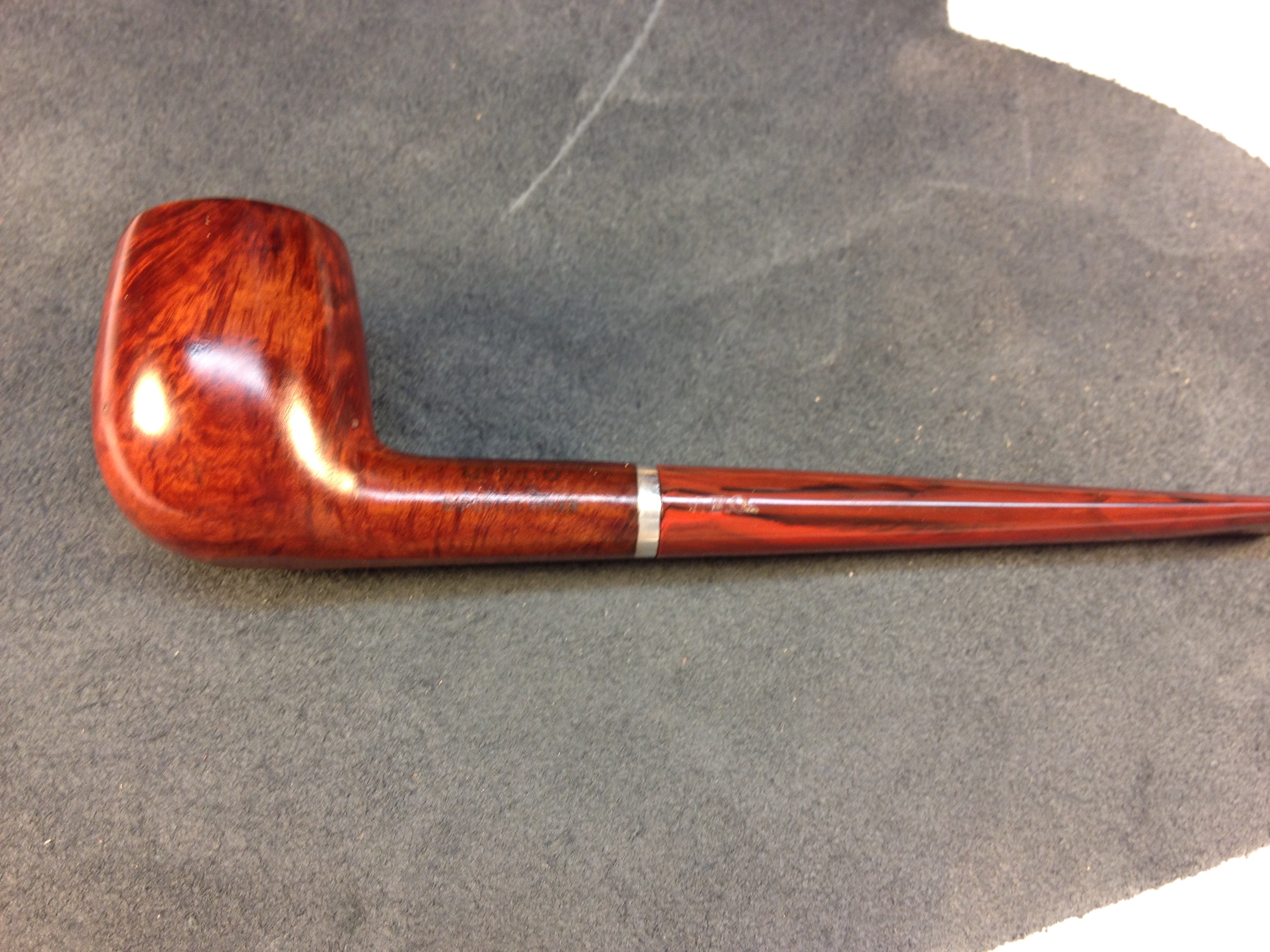
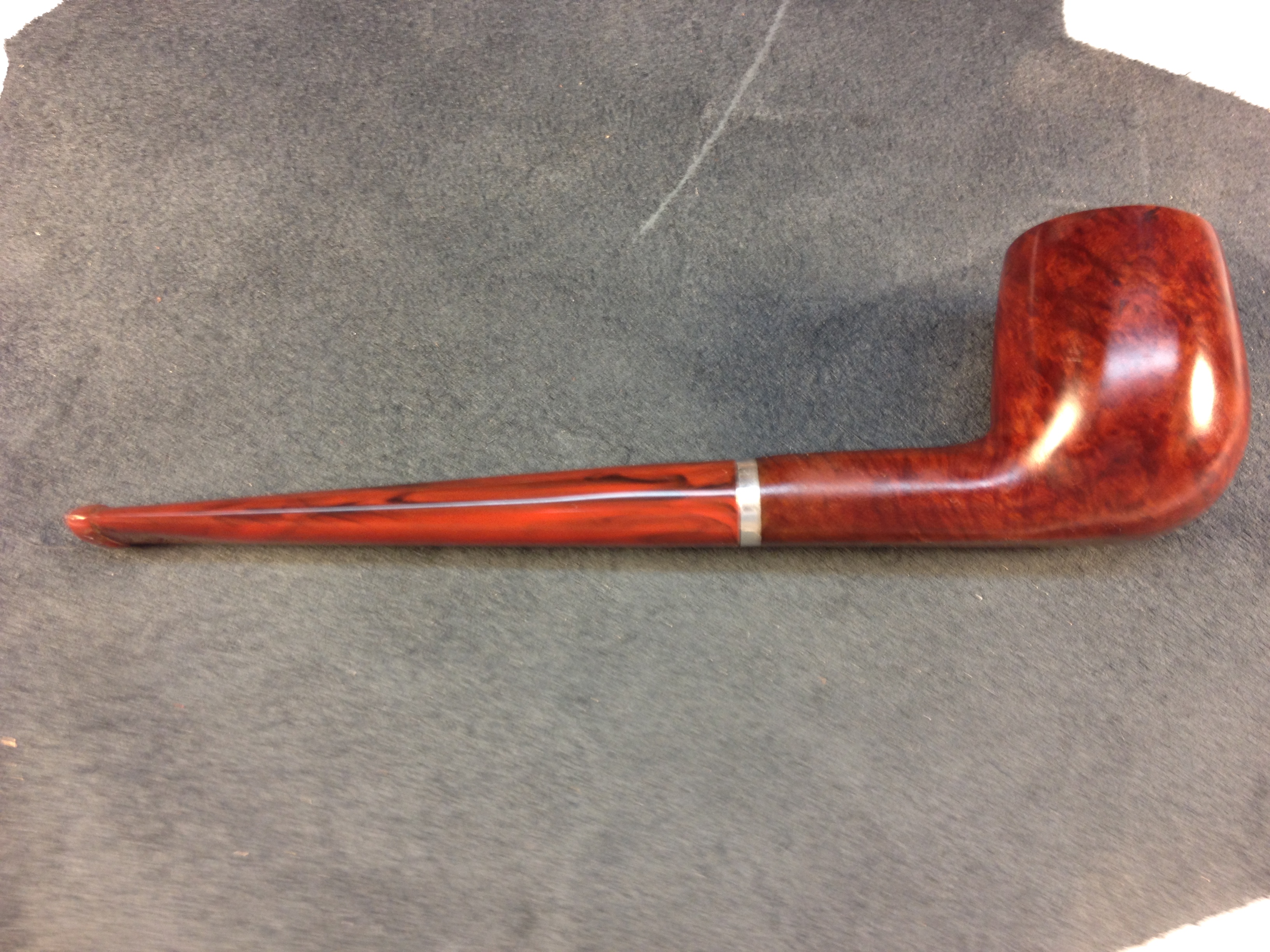
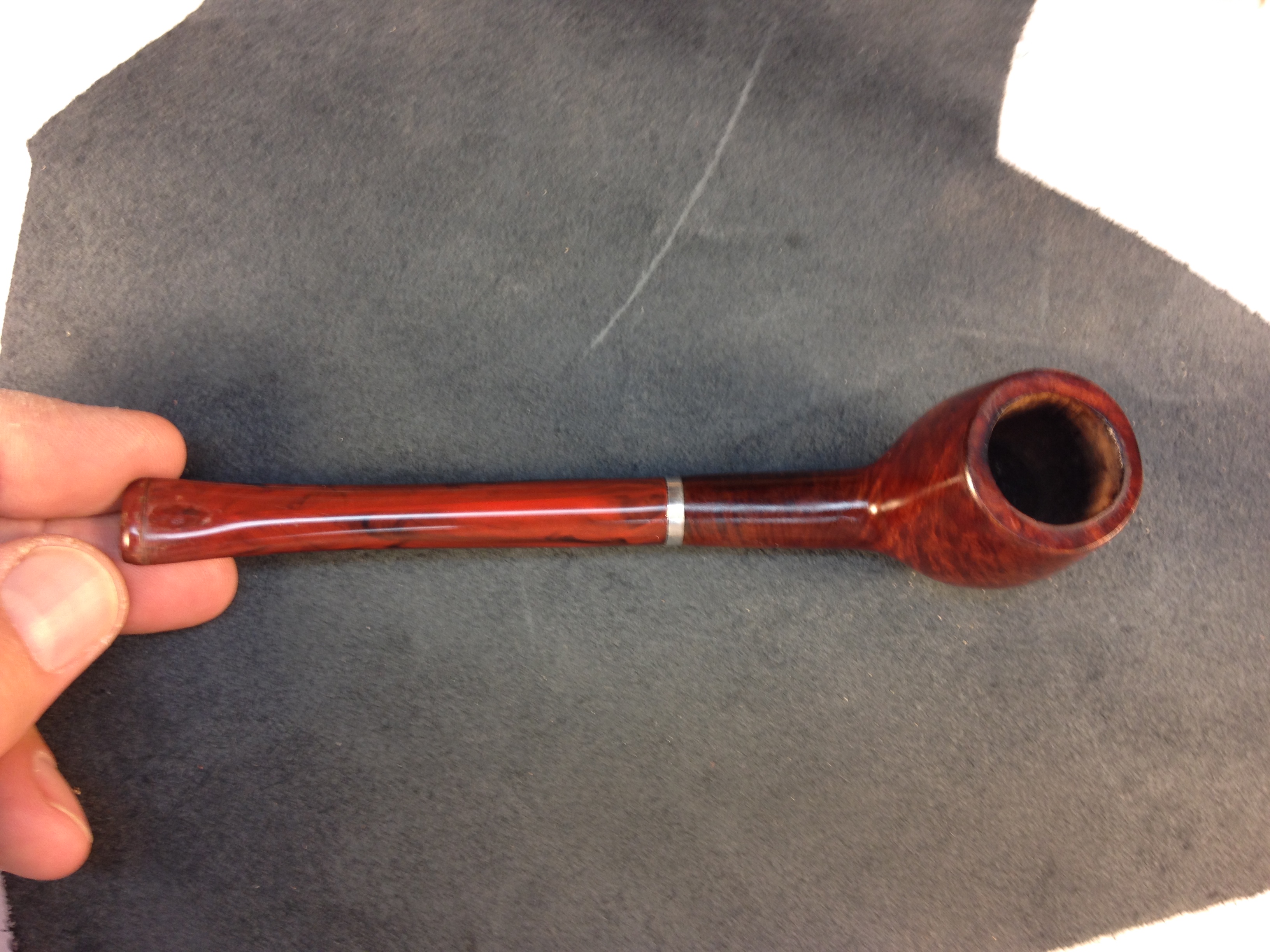
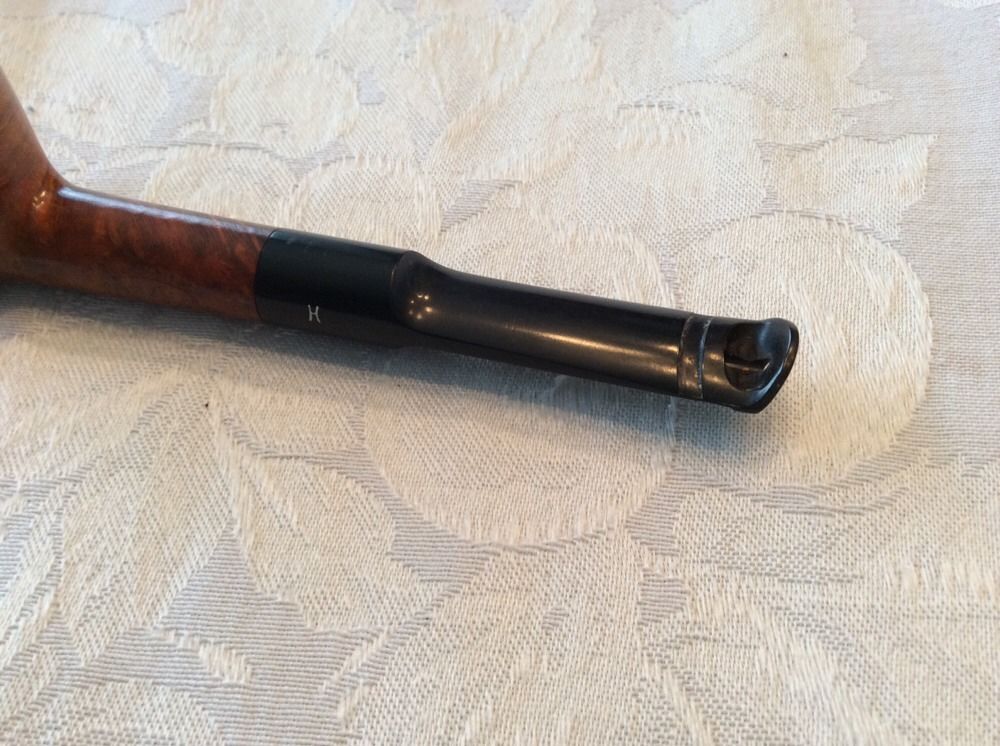
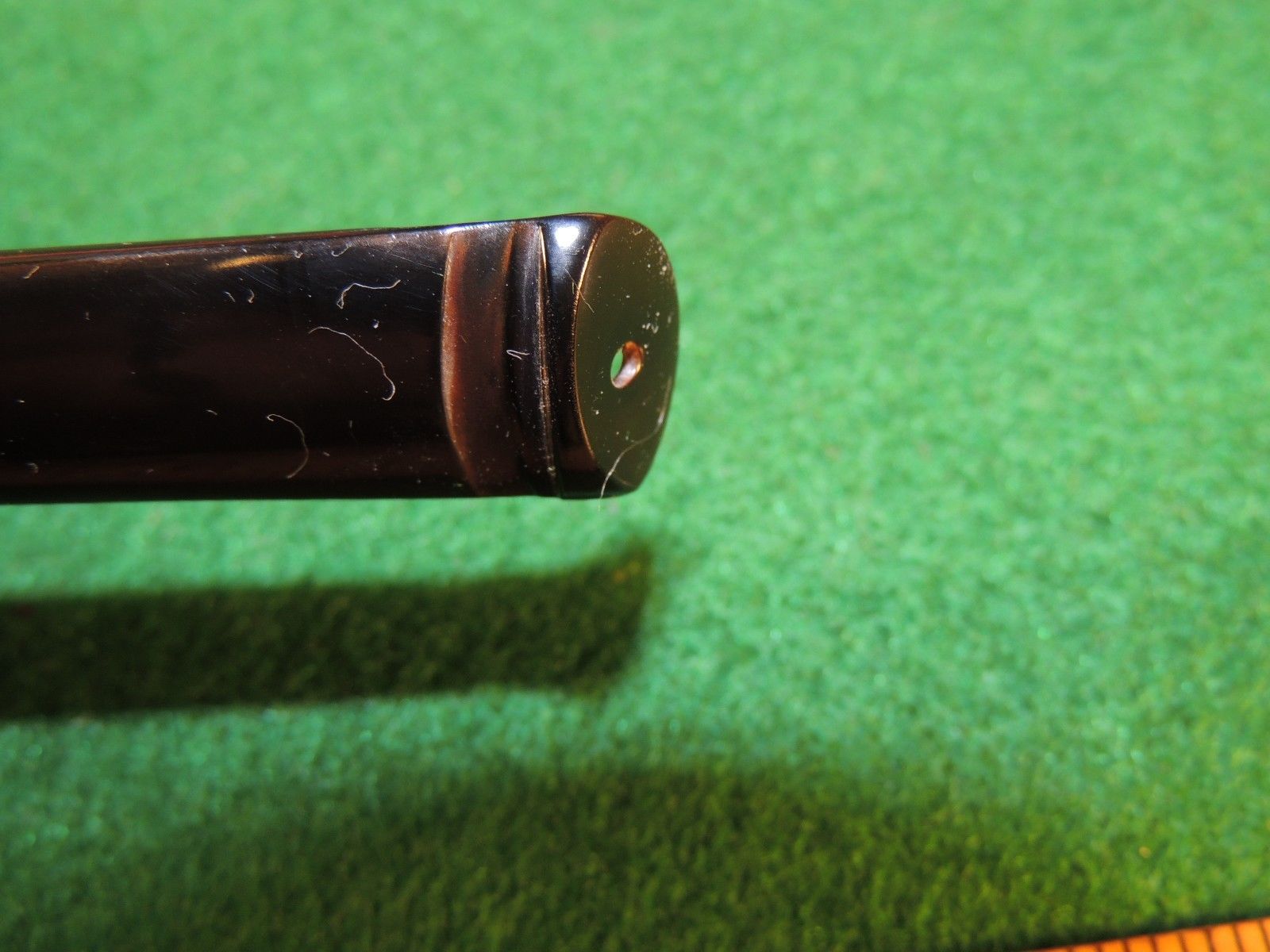
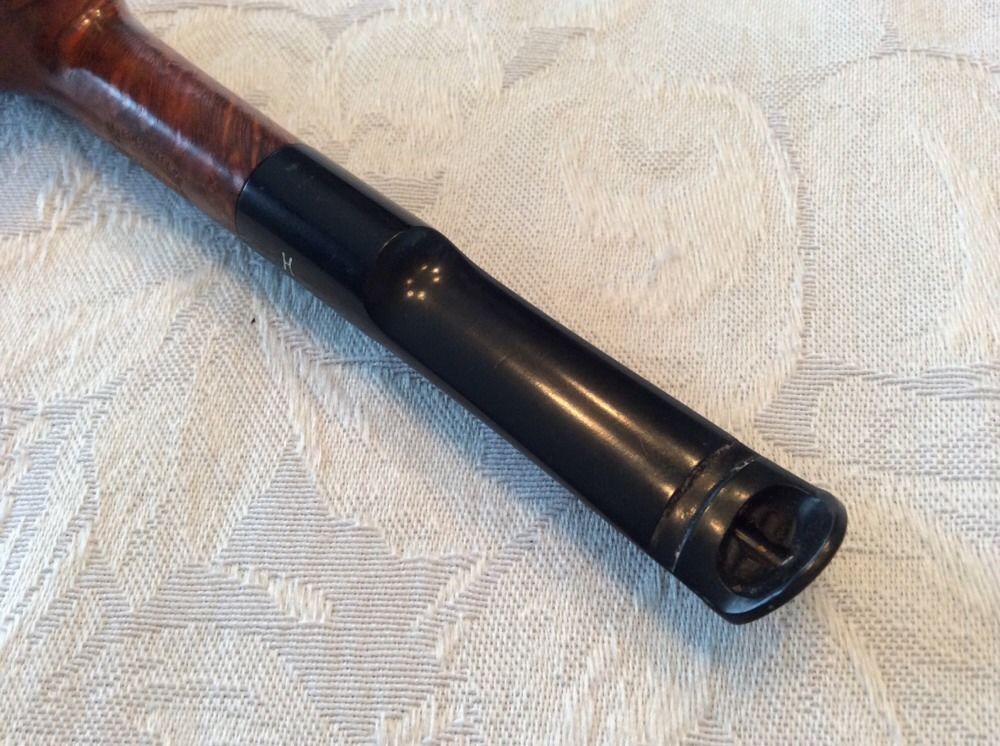
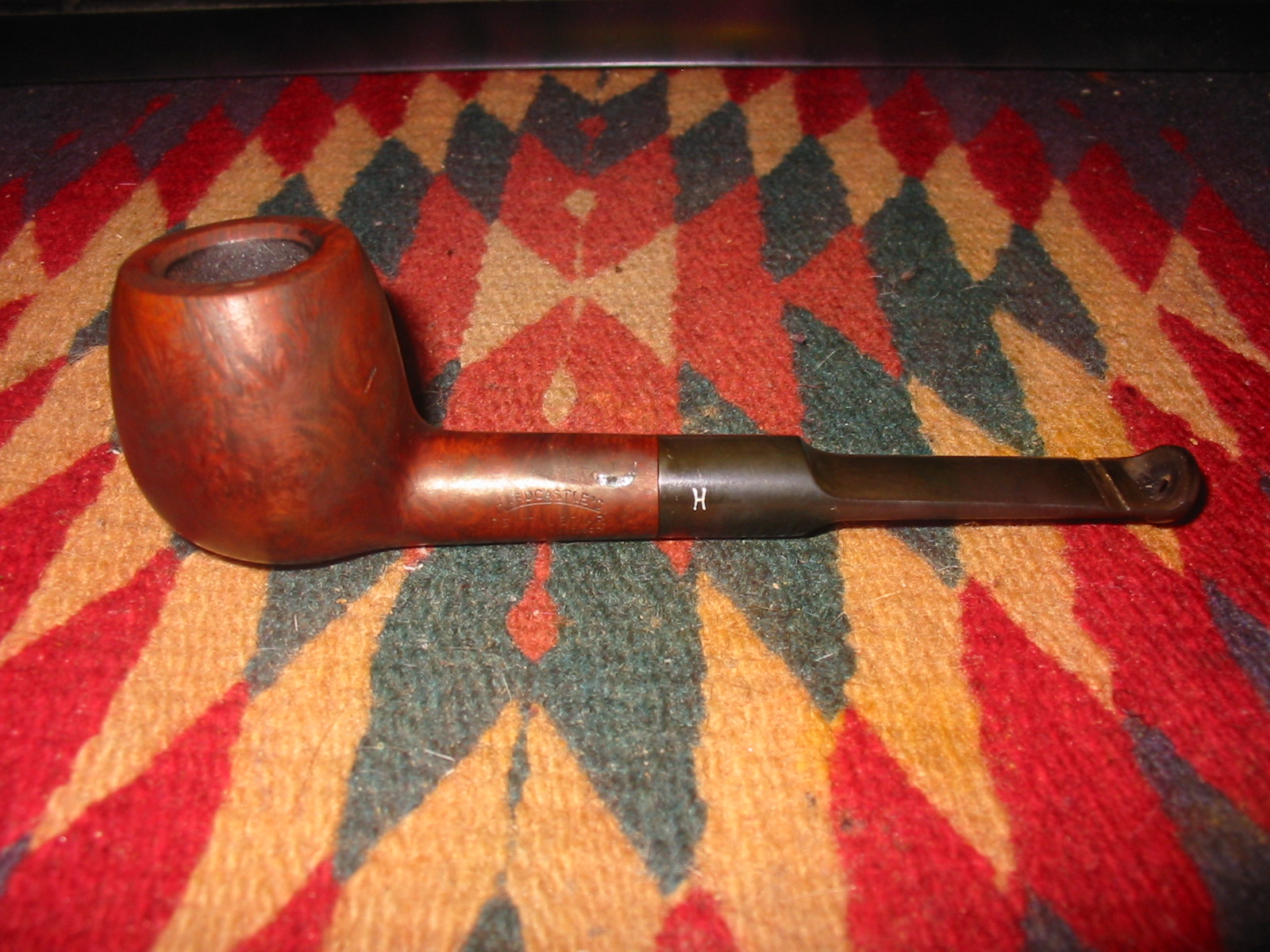
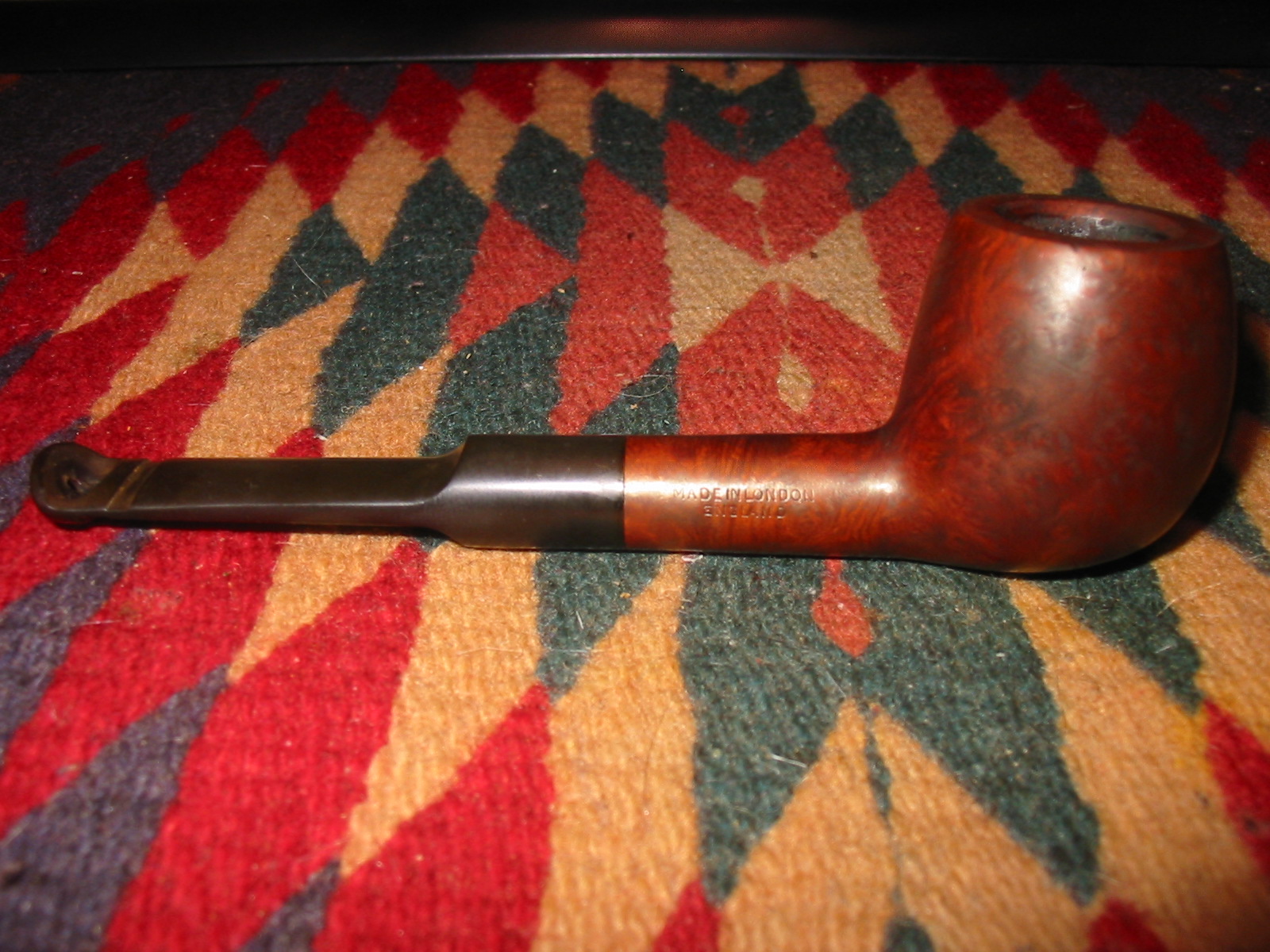
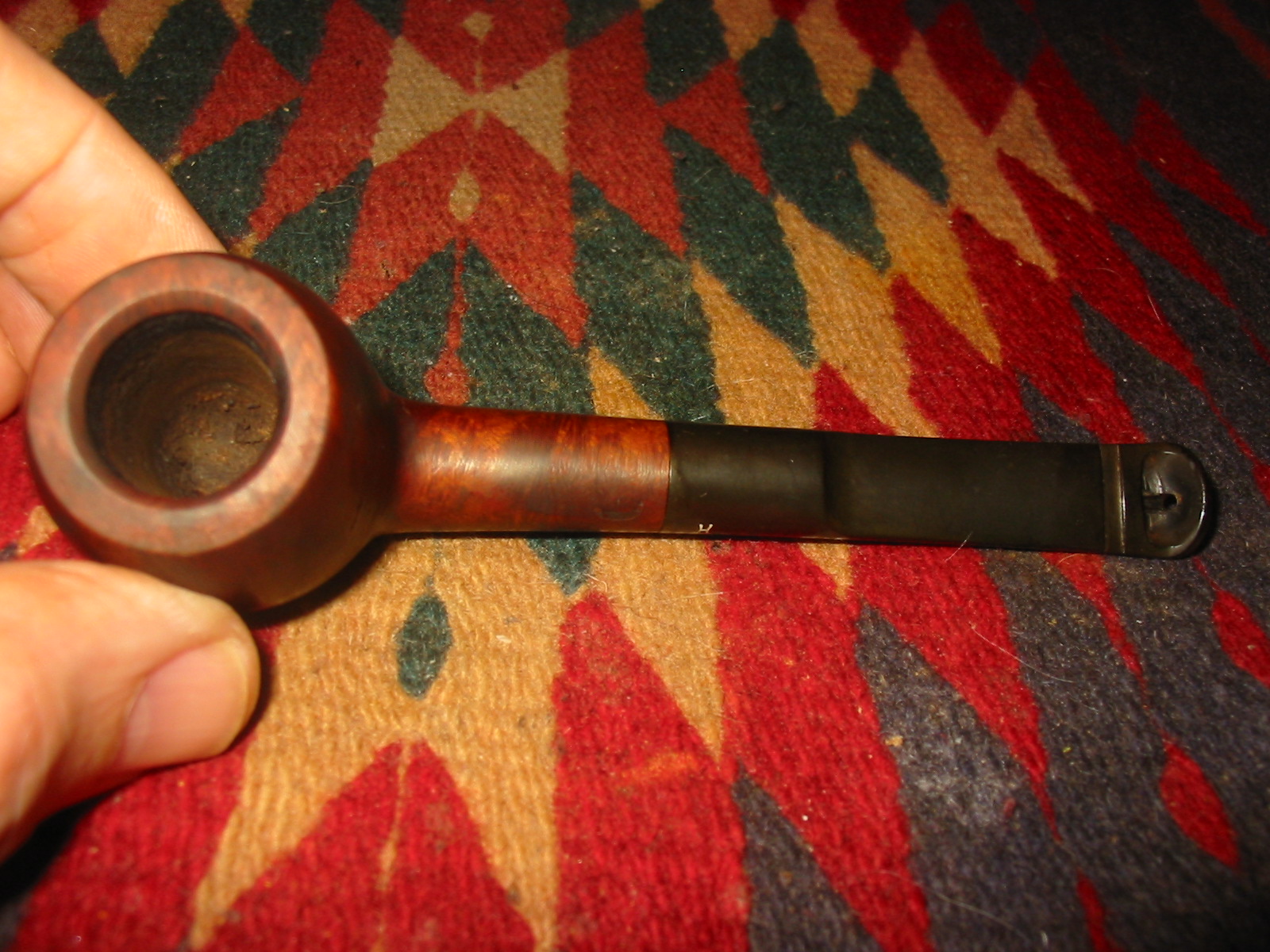
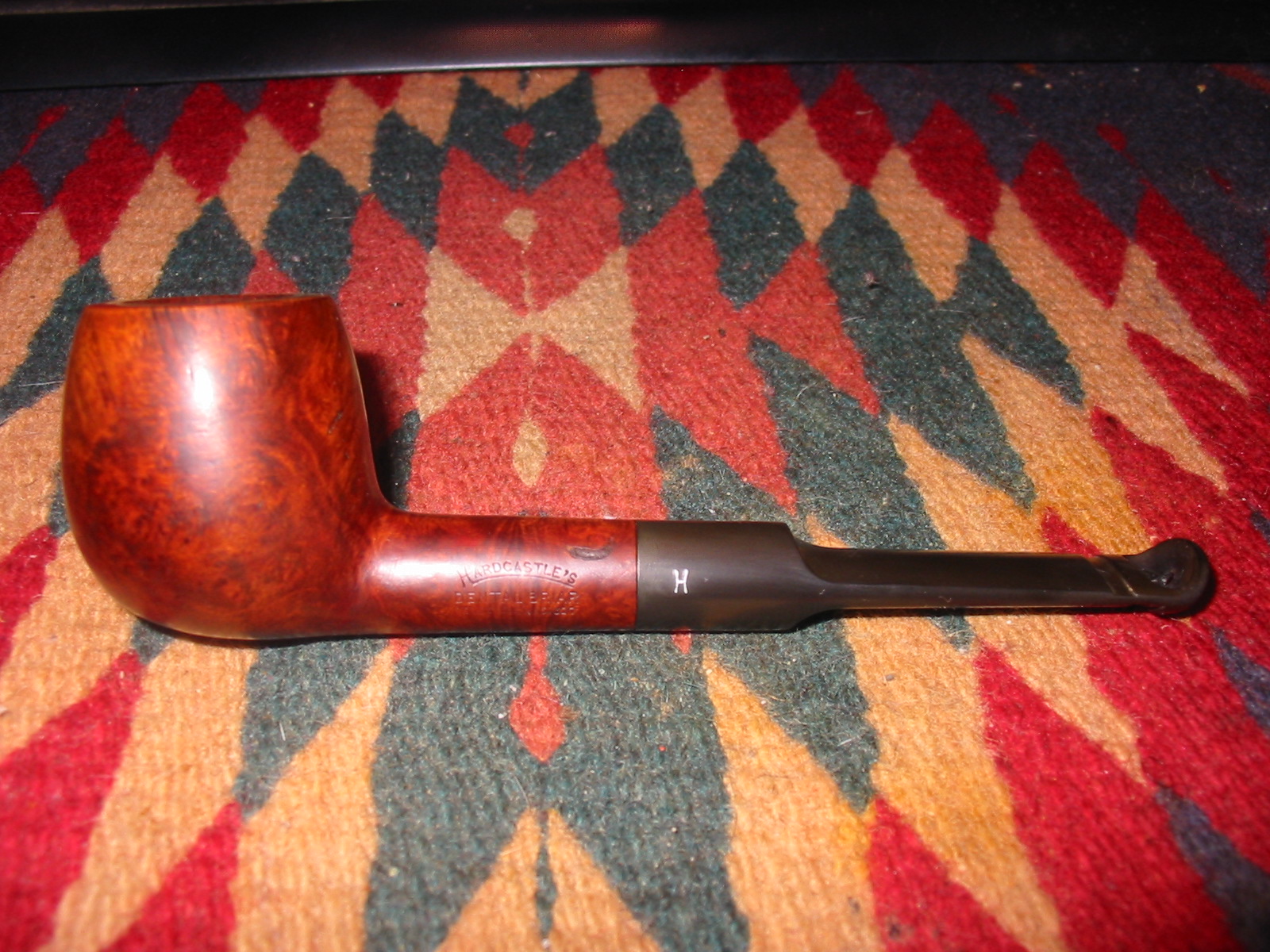
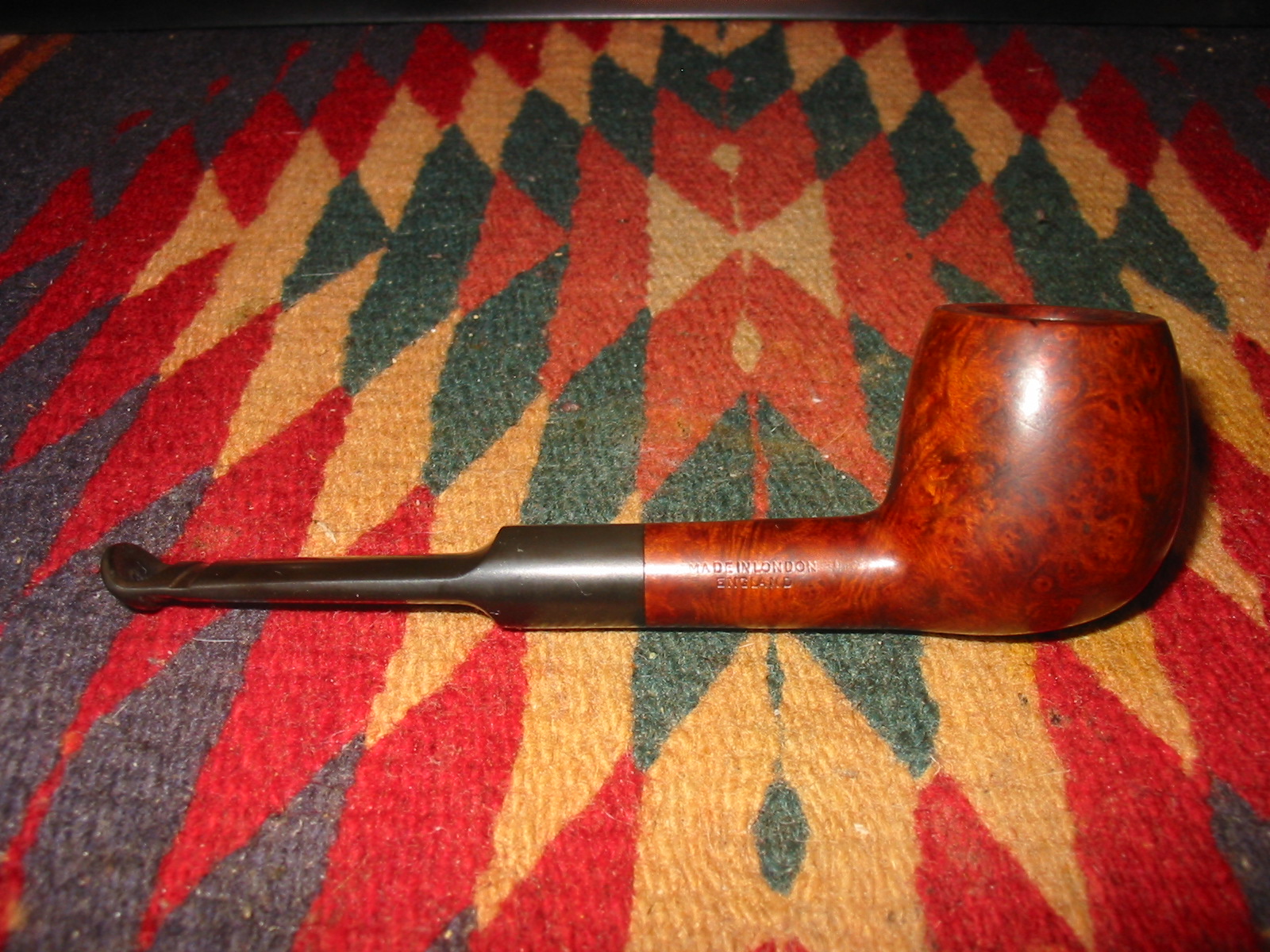
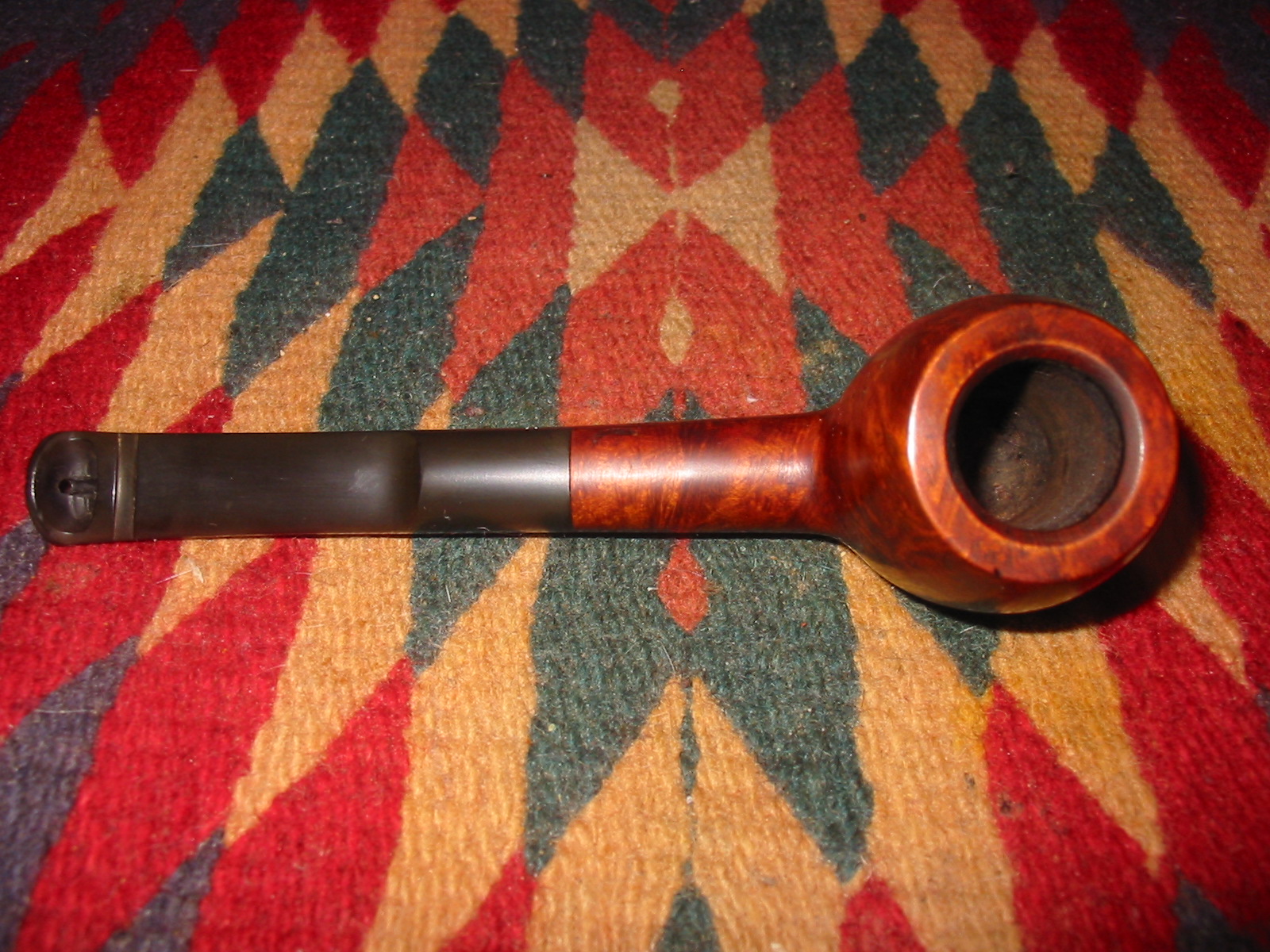
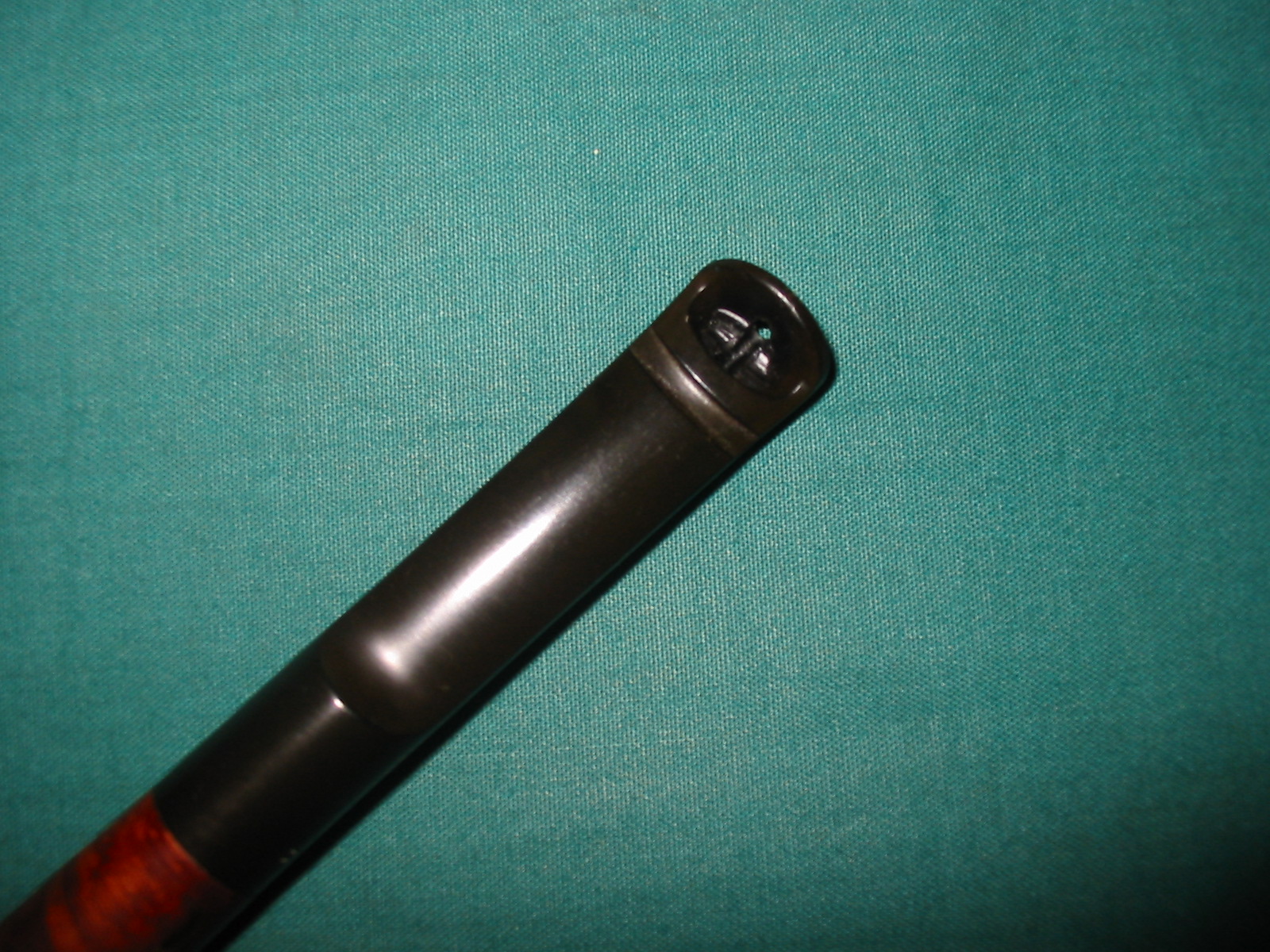
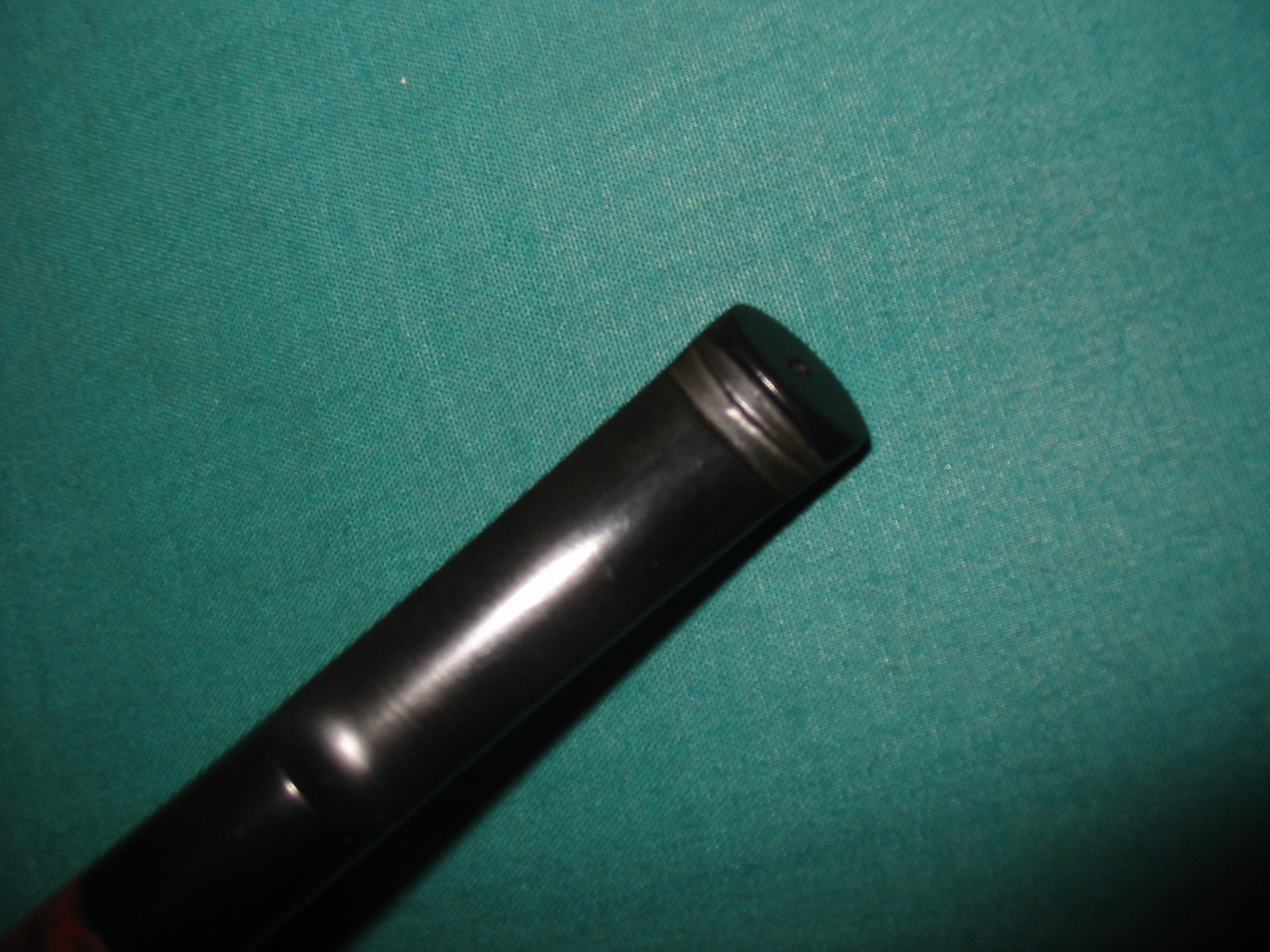
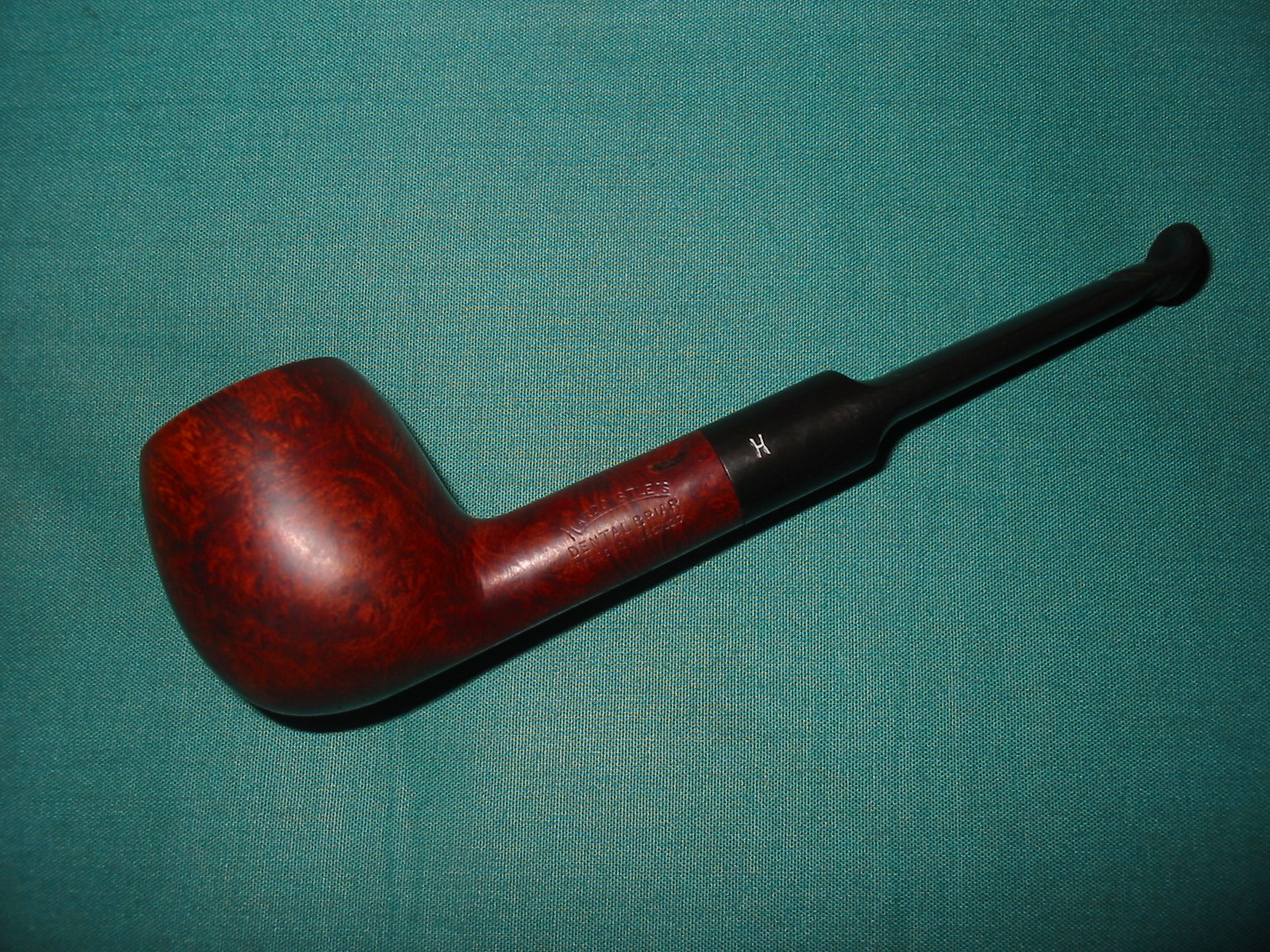
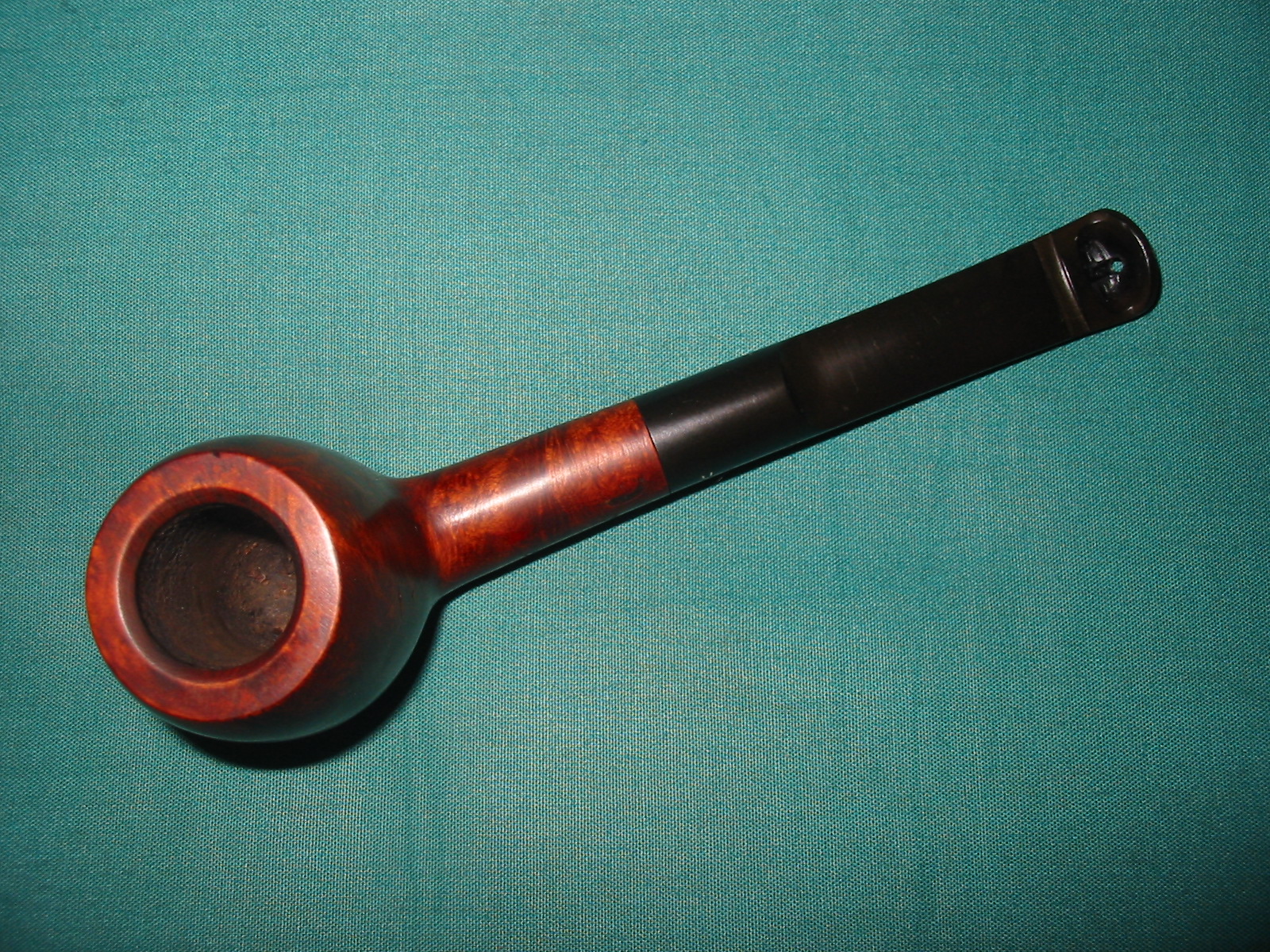
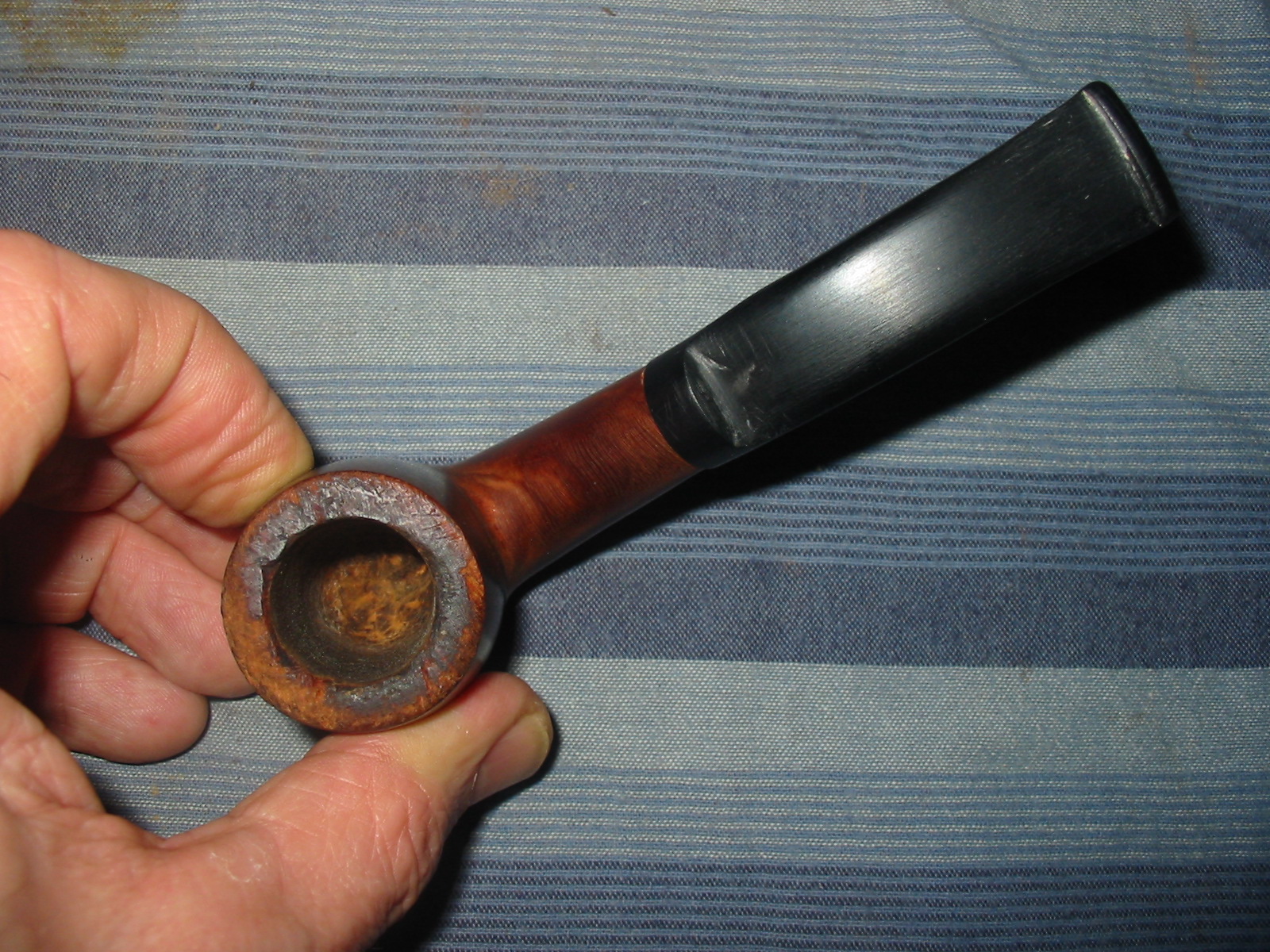
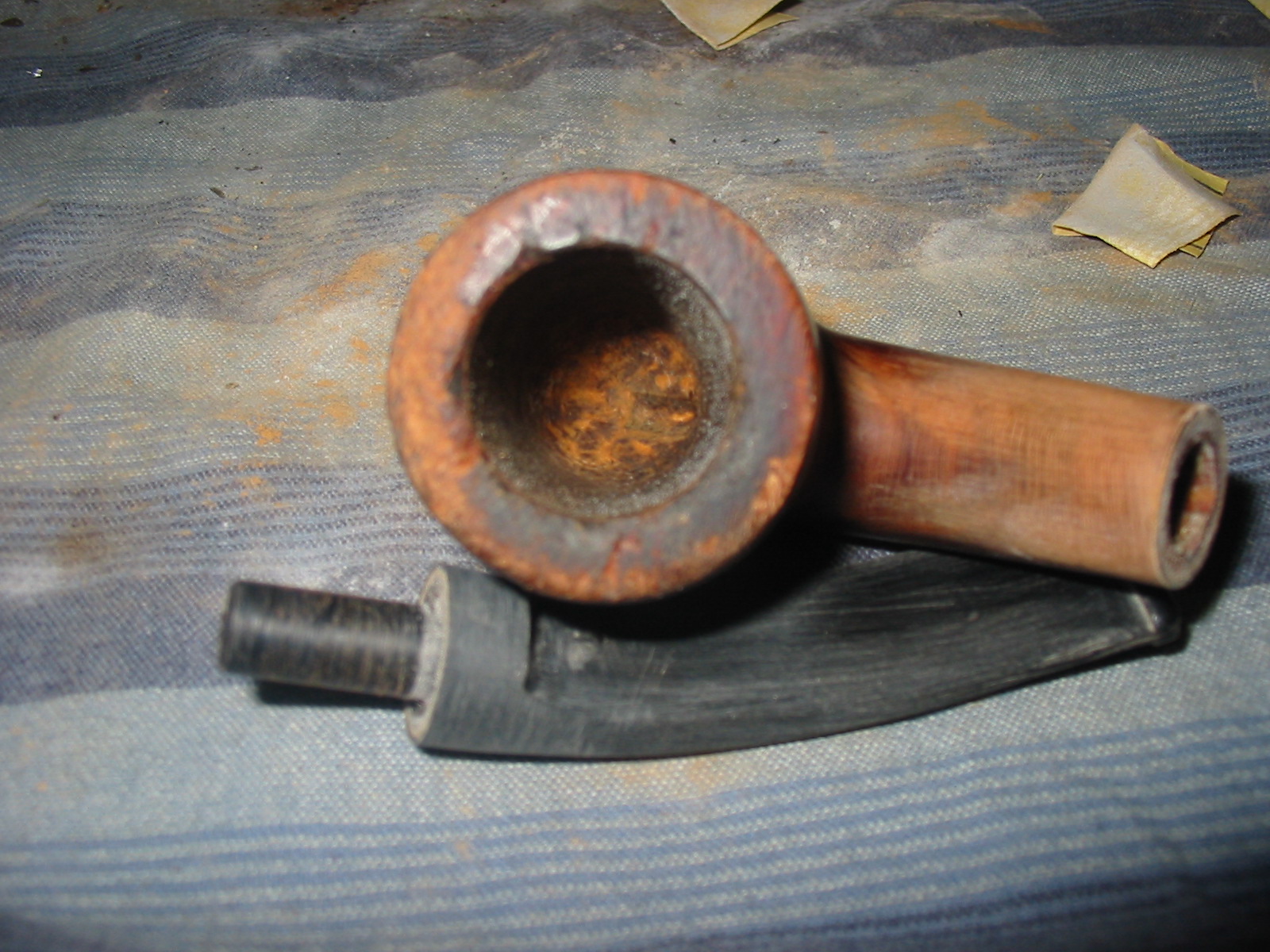
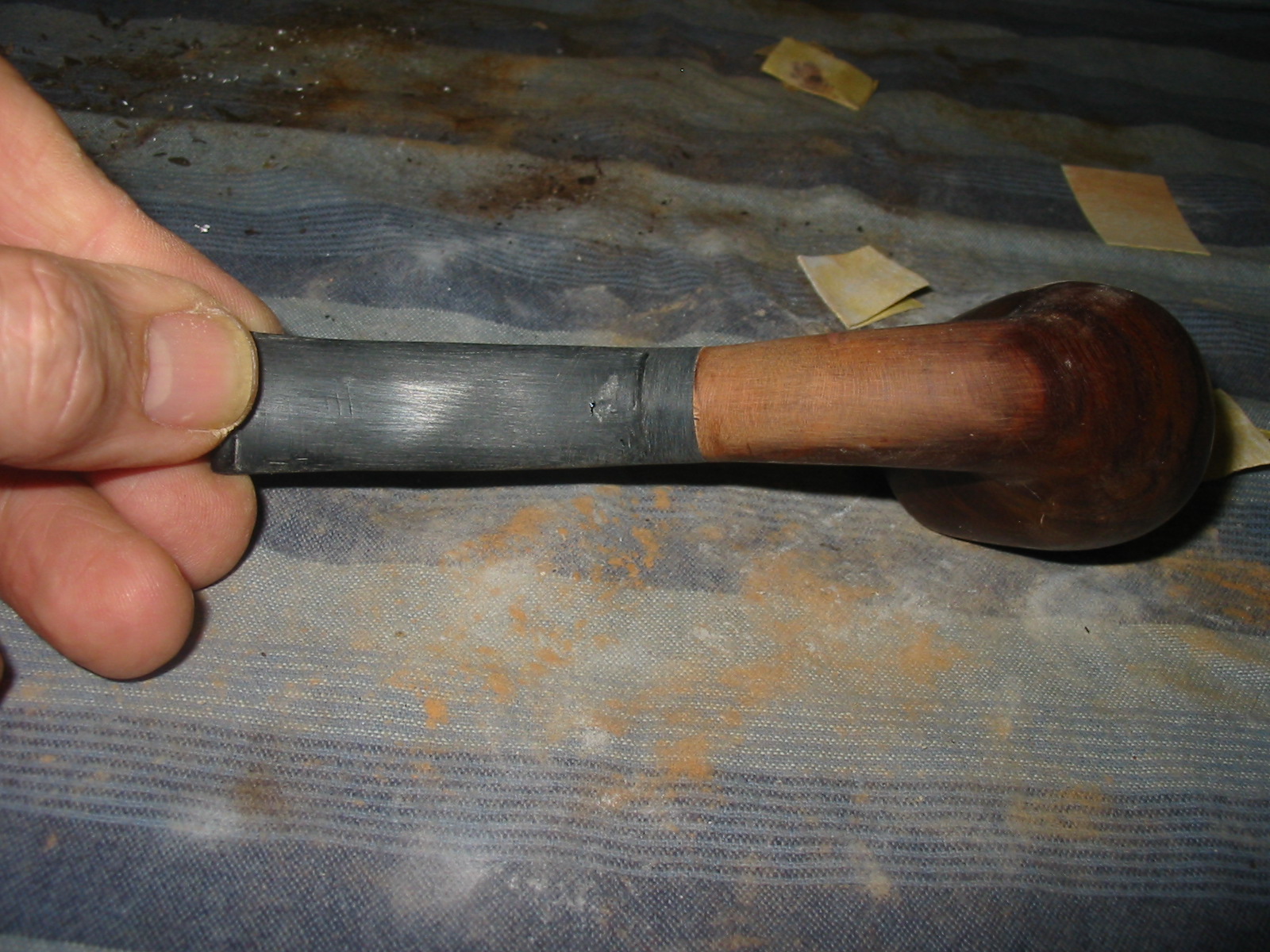
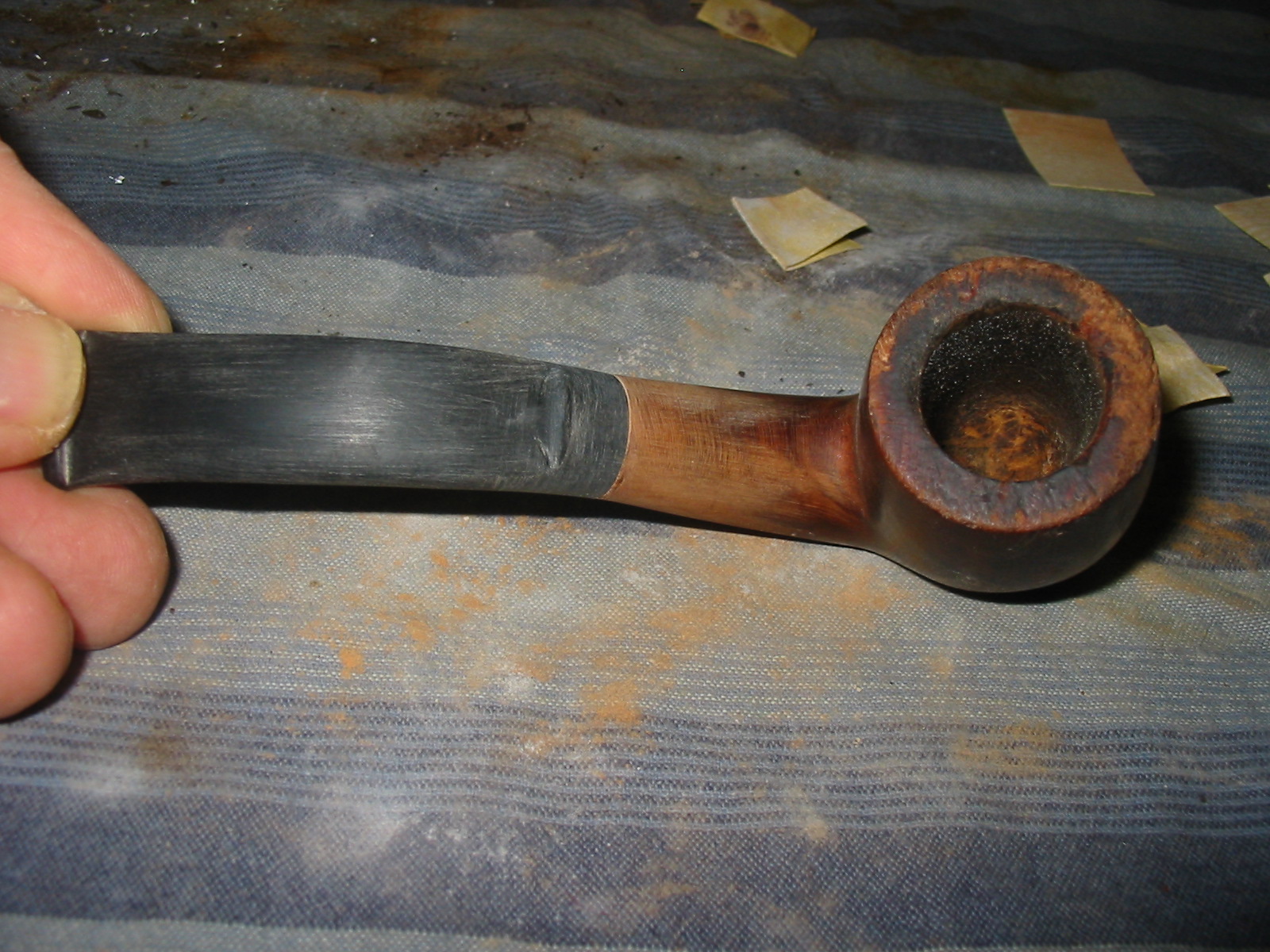
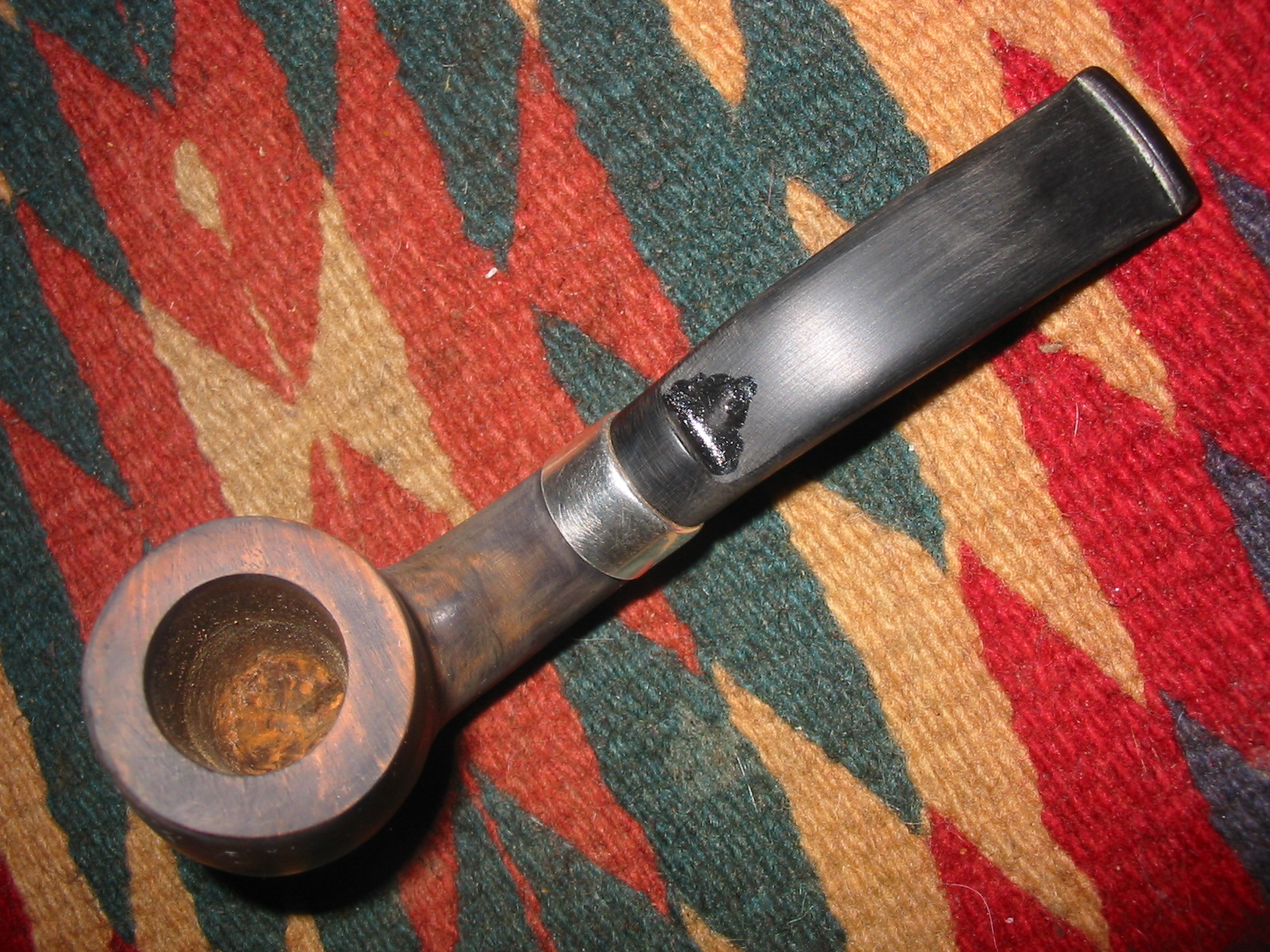
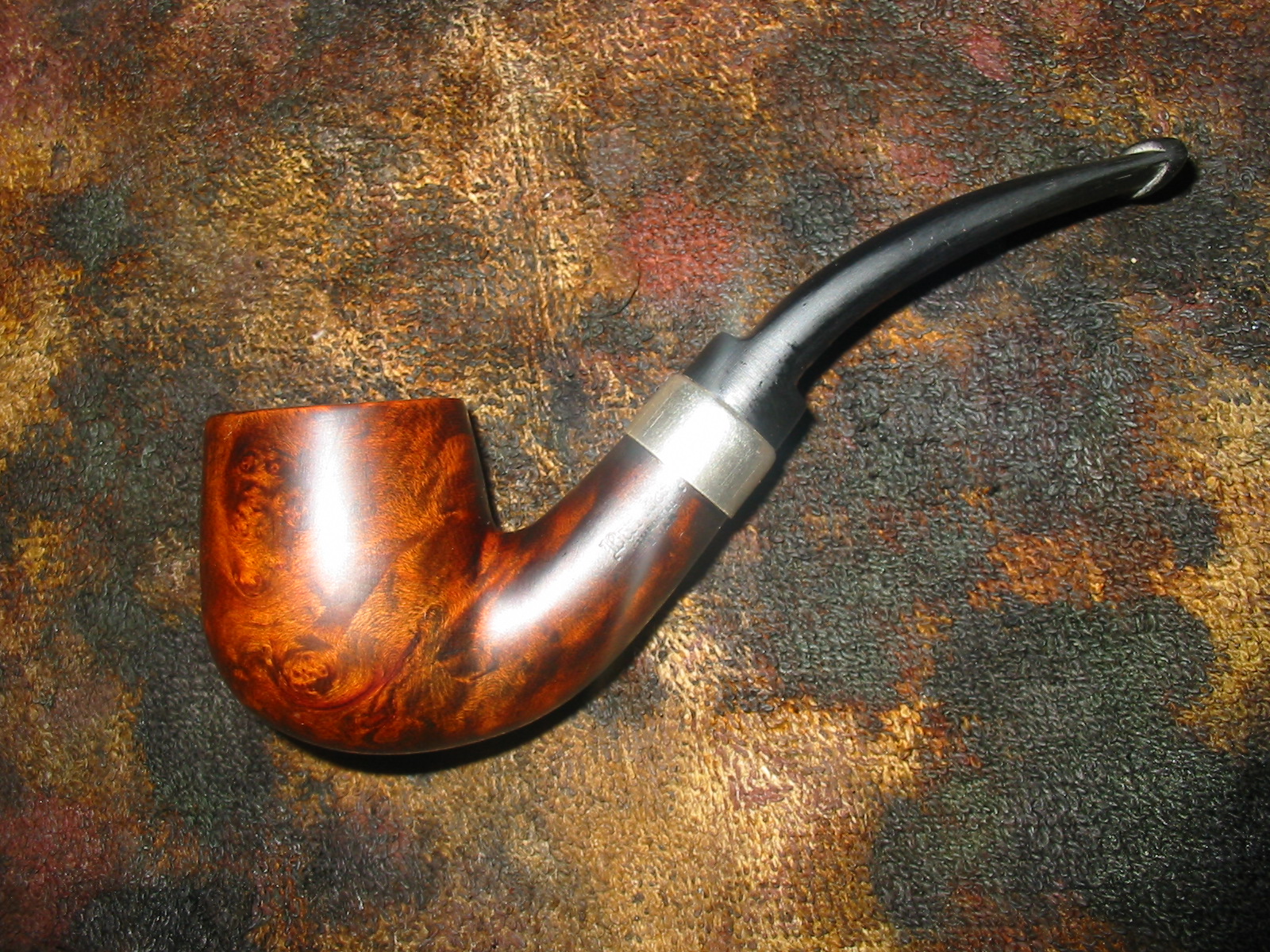
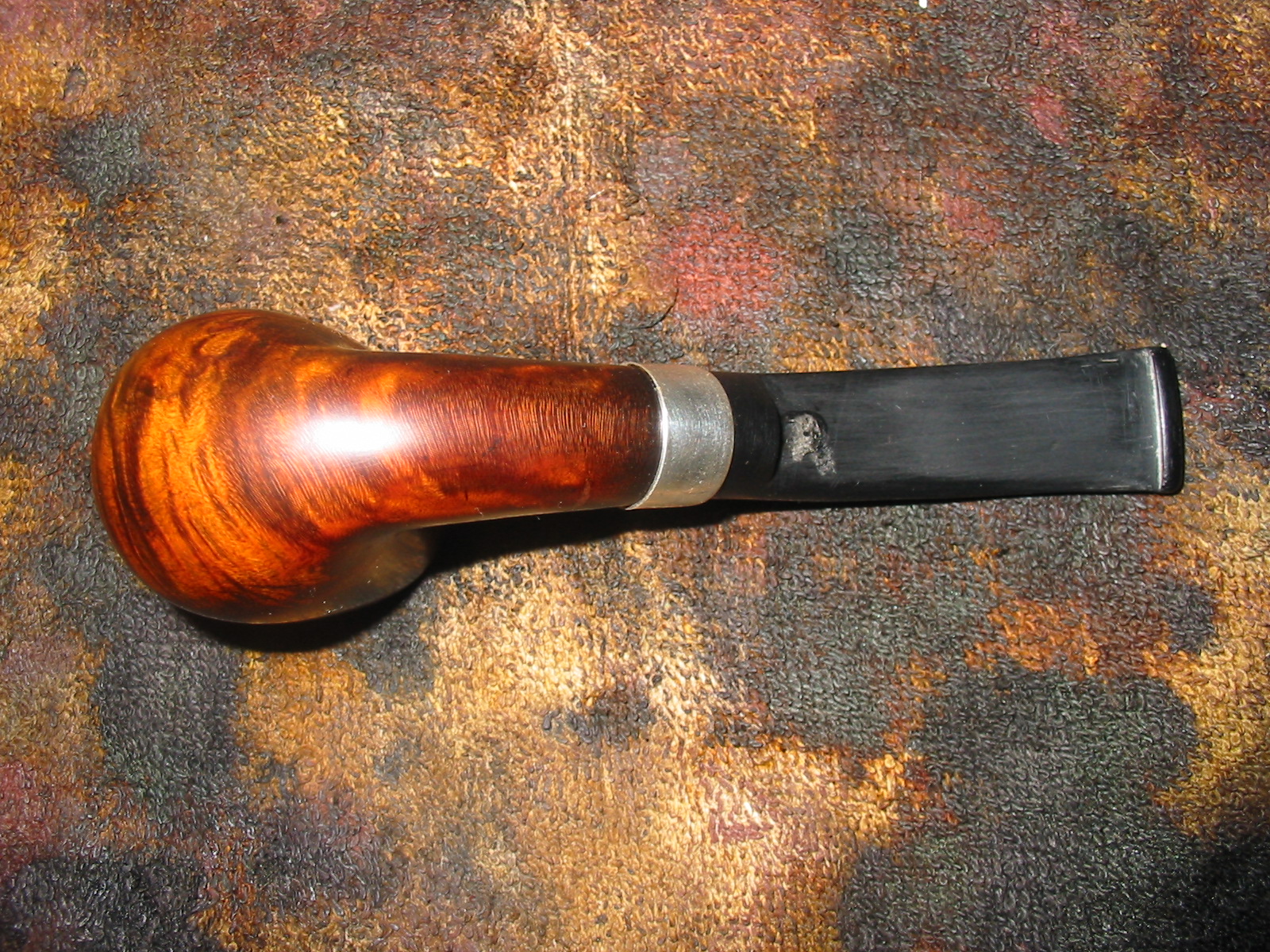
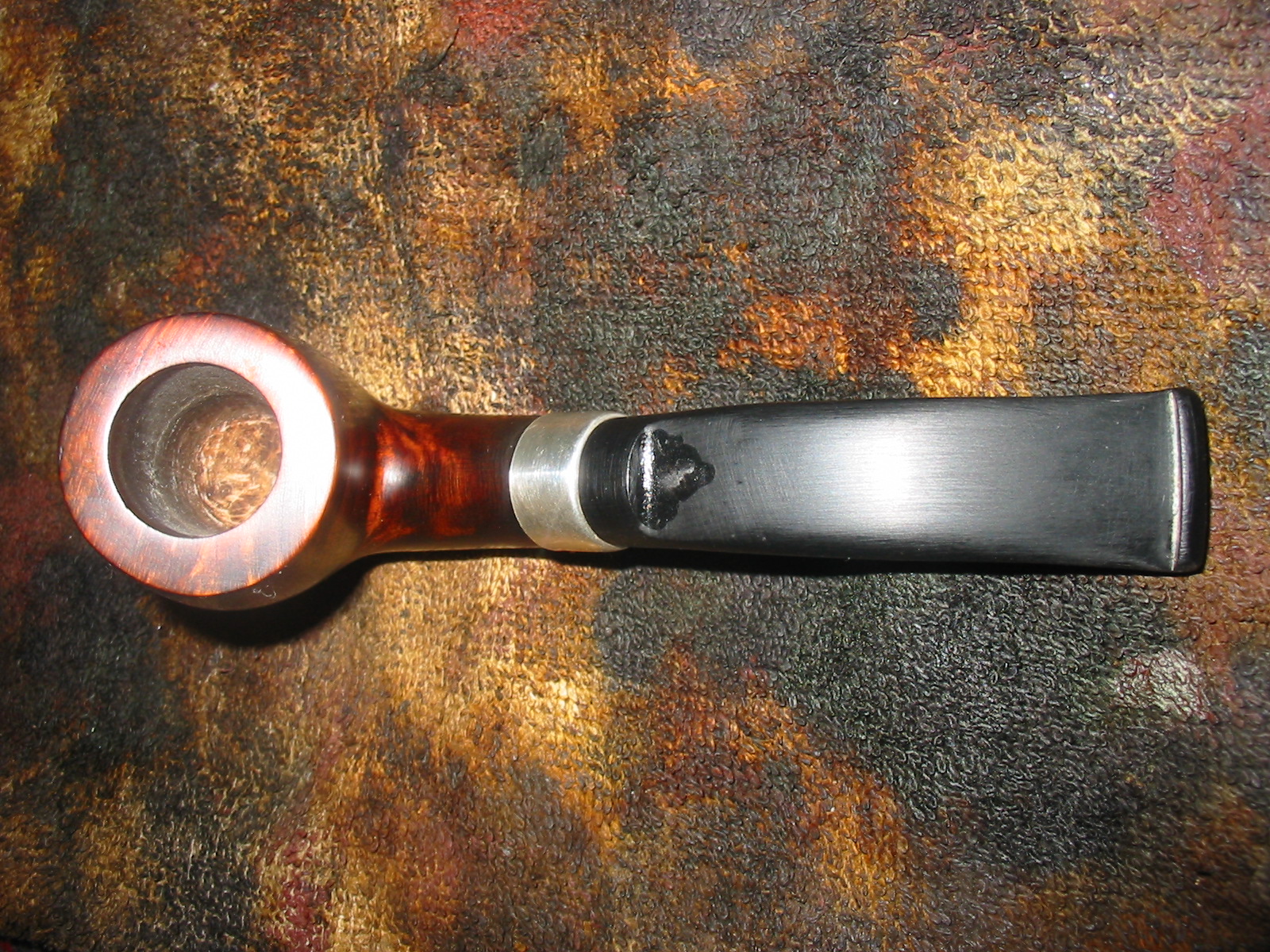
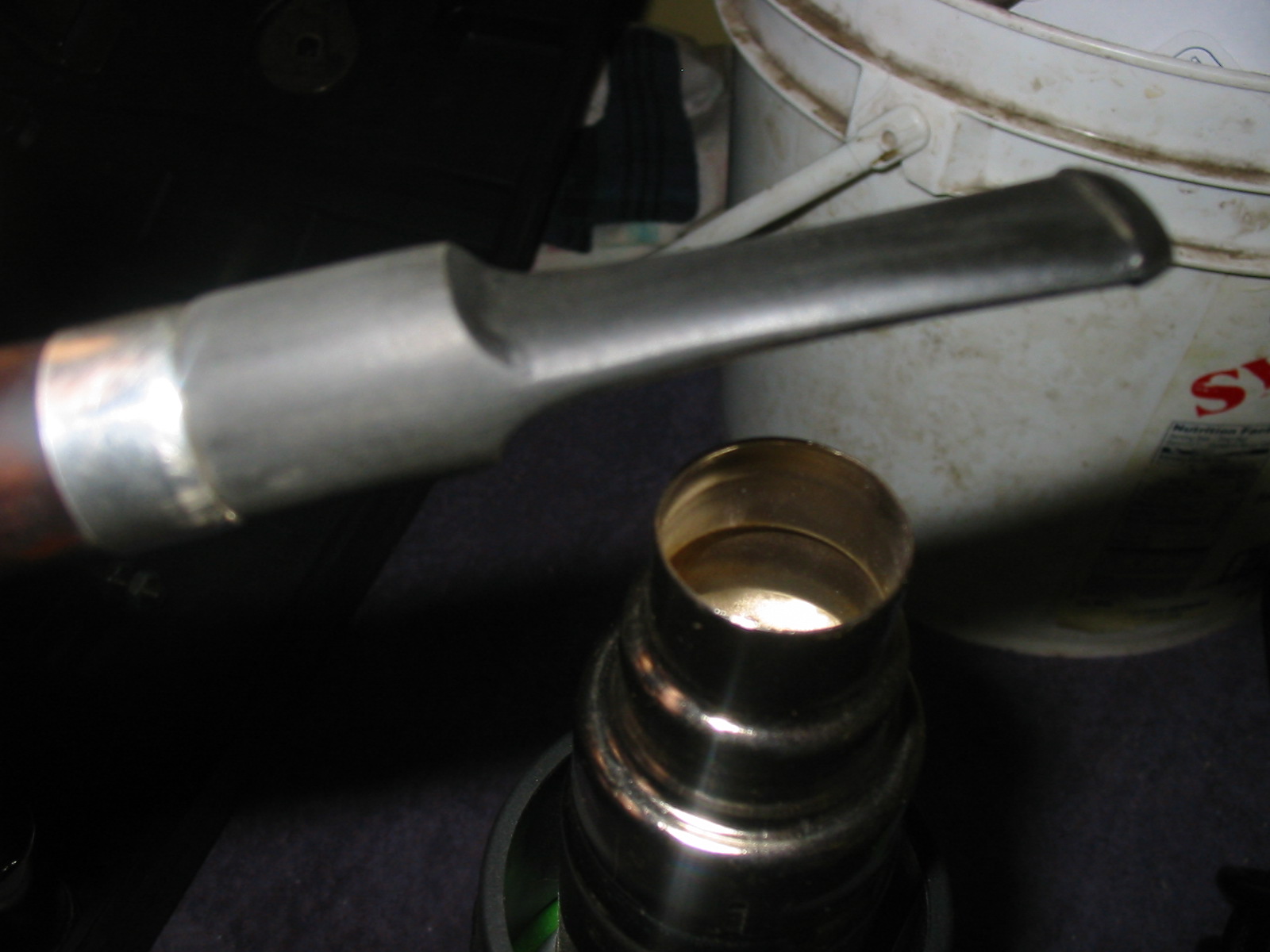
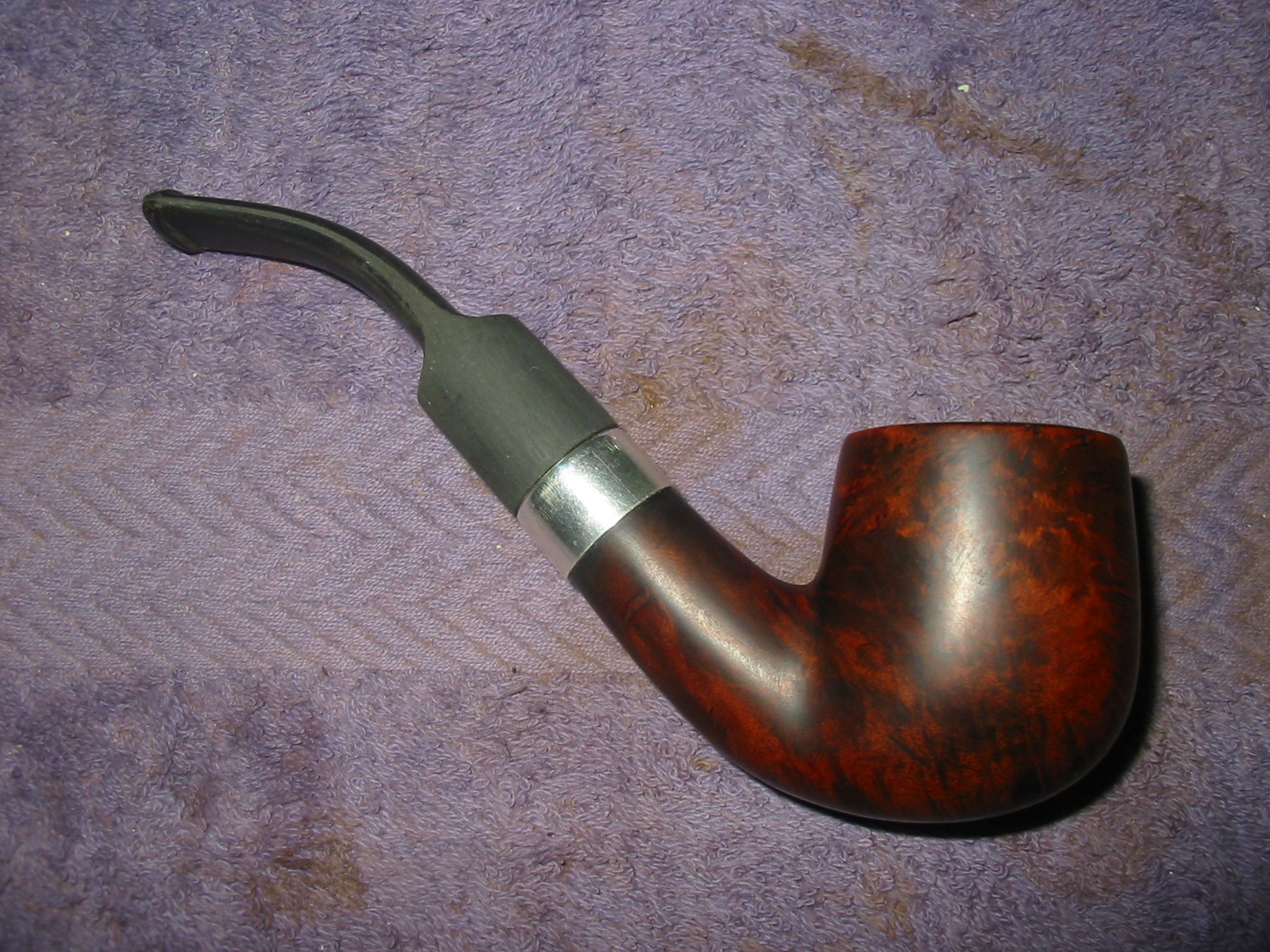
I was gifted a little Hardcastle Apple by a friend on Pipe Smokers Unlimited and a reader of the blog, Bill Tonge. It had the most unusual stem that I think I have ever seen on a pipe. In some ways it looked like a classic dental bit like those seen on other pipes. It had the higher curved upper edge of the button that worked to hang behind an upper plate and the grooves on the under and upper side of the stem for the plate to hook into. But that was all it had in common. The end of the stem, viewed from the button end had a single orific opening rather than a slot. It was a flat upright wall of vulcanite with a single hole in the middle. On the flat surface of the stem just ahead of the button was a large open area where it looked as if a piece of the vulcanite had broken or been removed. The airway was exposed. The gap between the dental end and the open end of the airway was a good ¼ inch. Both Bill and I were convinced it was a candidate for a stem replacement, cutback and reshaped button or as a guinea pig for me to practice on using Jacek’s stem splicing procedure.
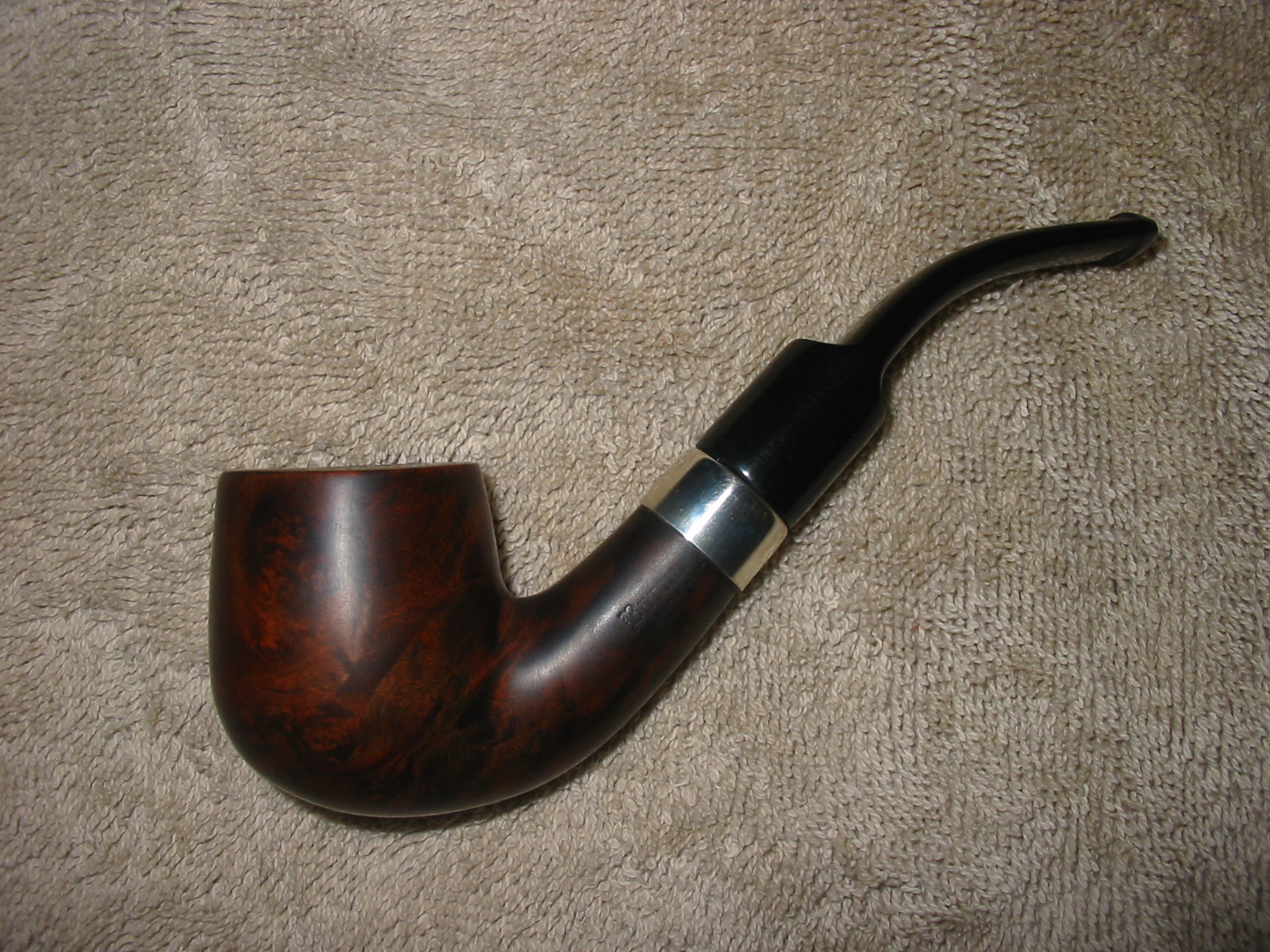
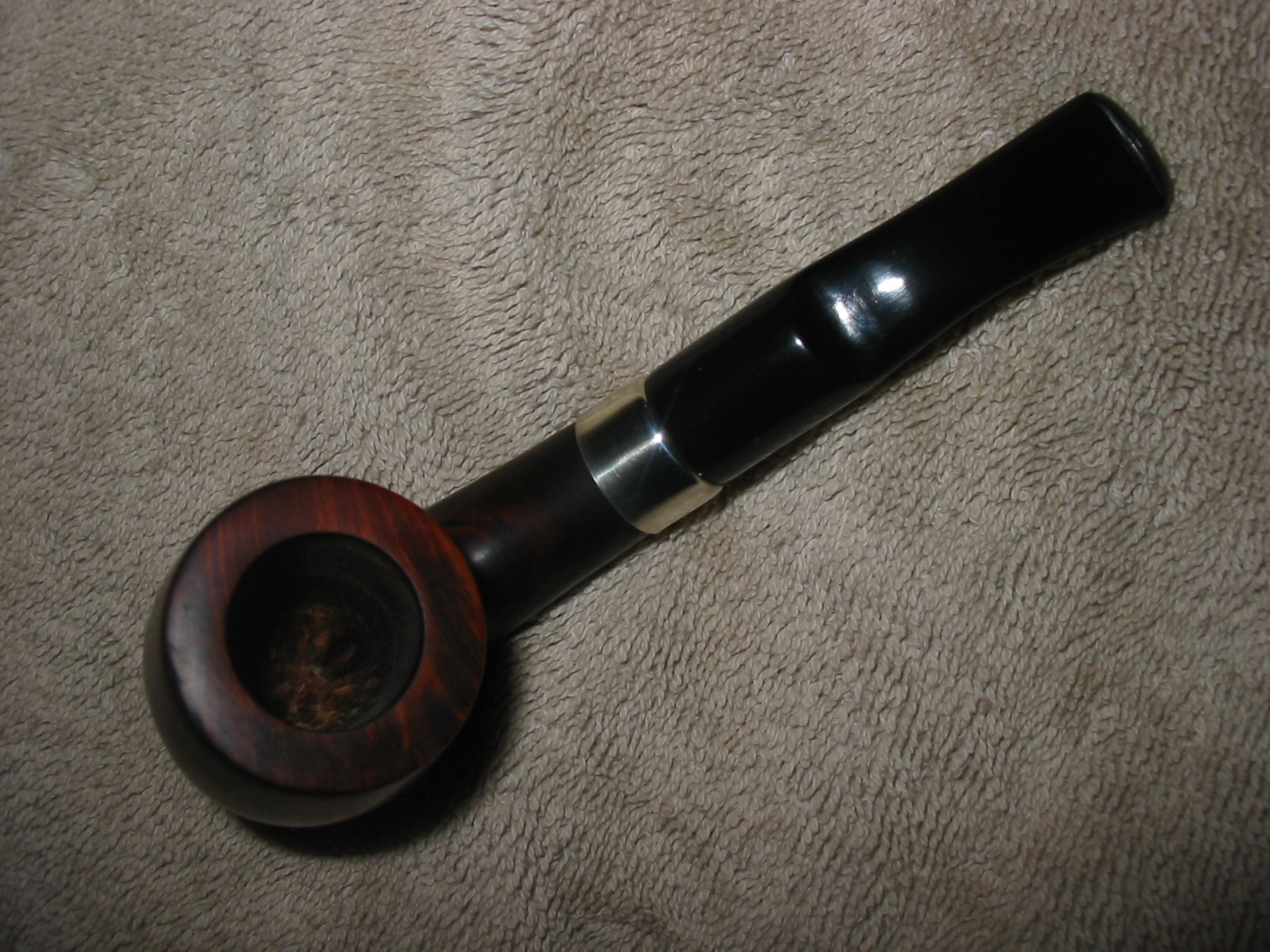
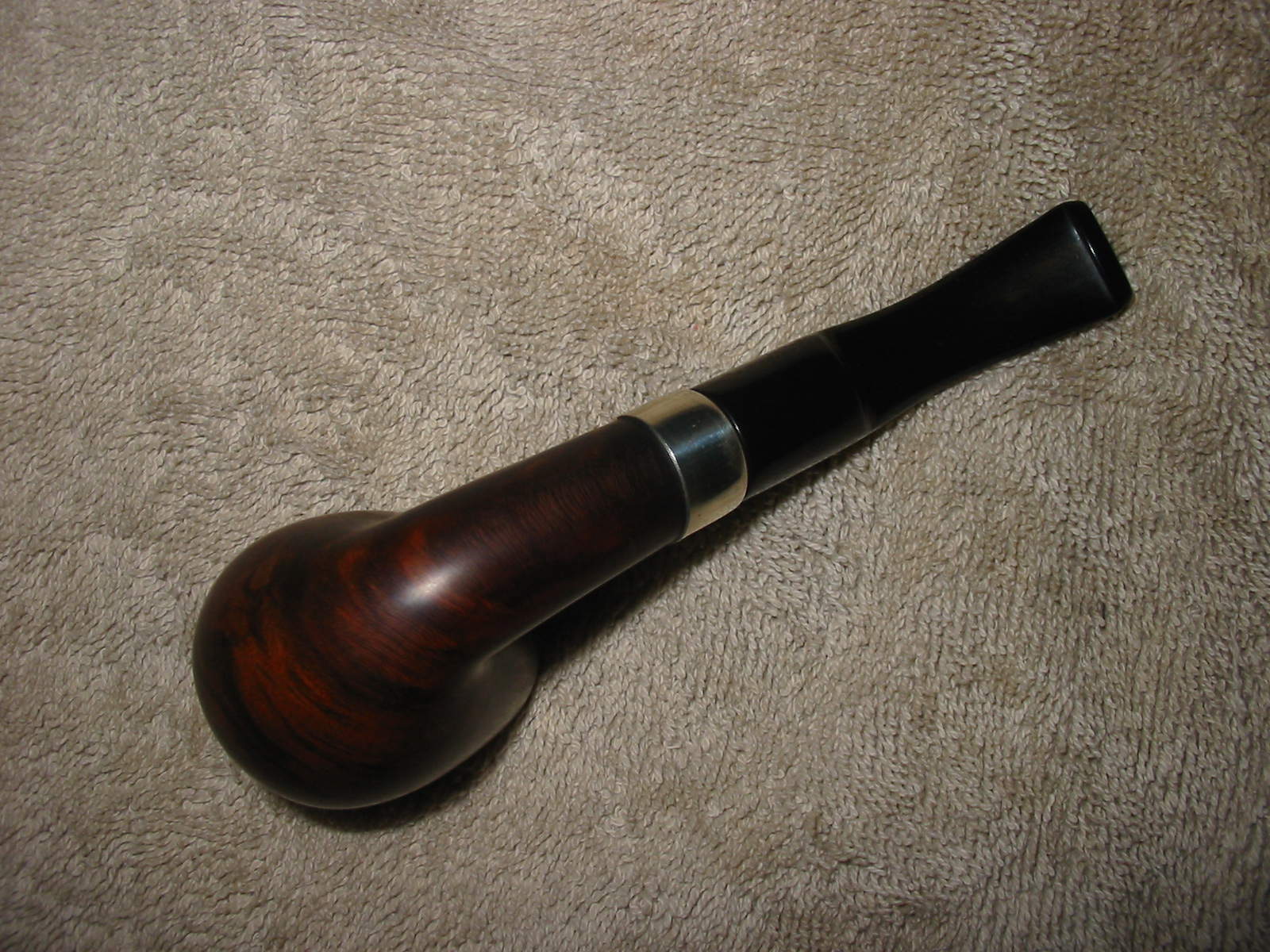
IMG_6943
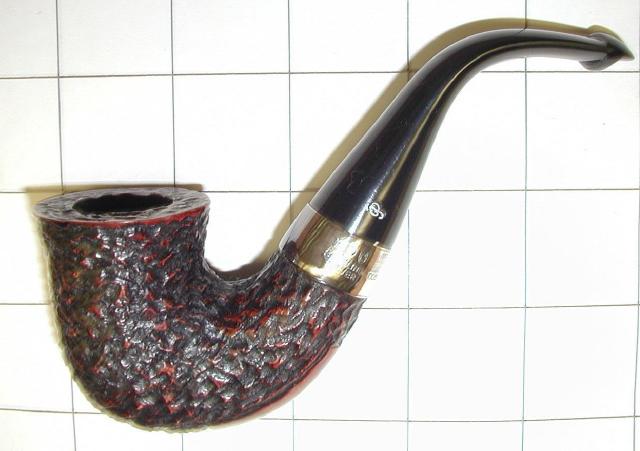
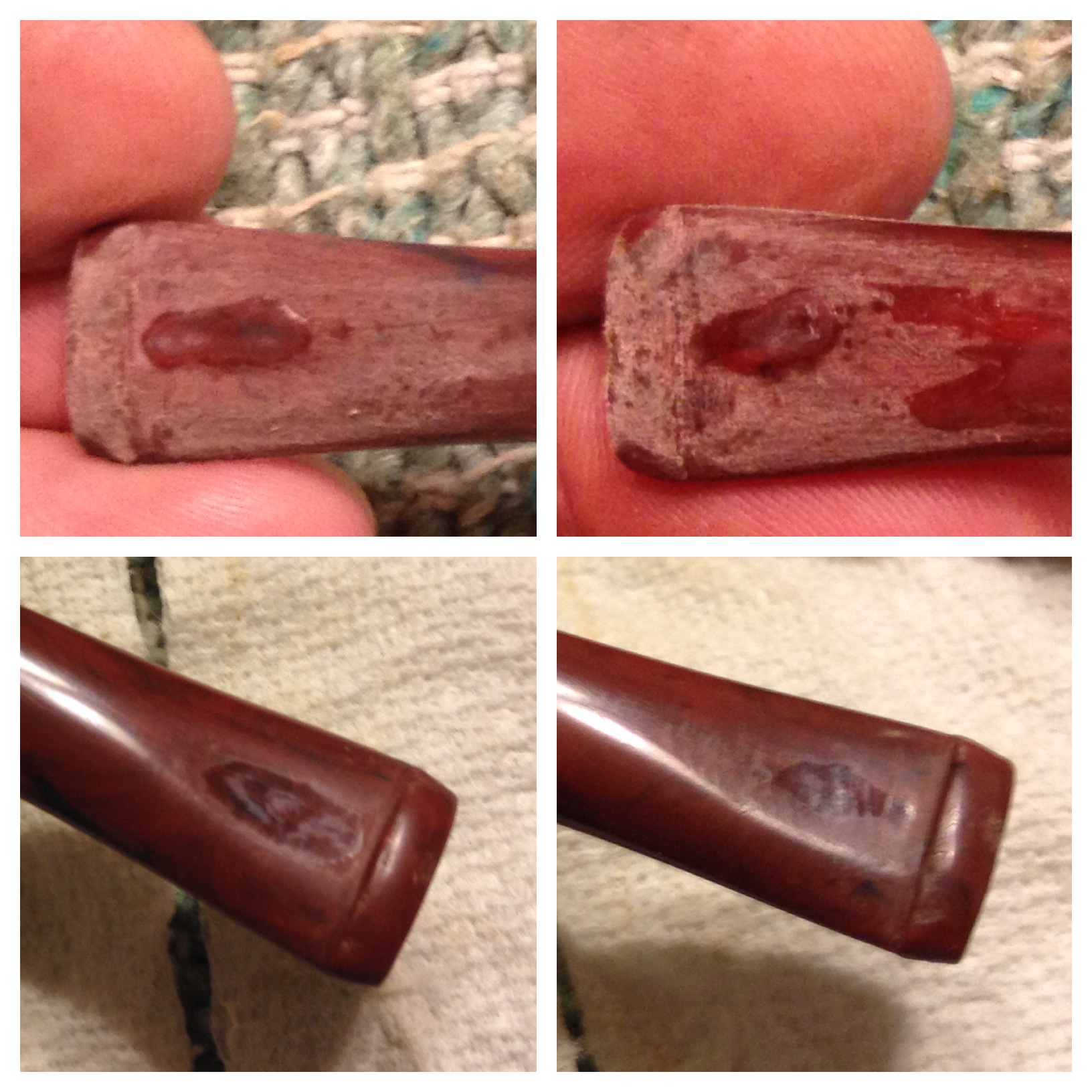
I can’t tell you how many times I took it out of the repair box to have a look. I would turn it over in my hands and think about the three ways to repair what appeared to be damage. I even sketched out a splice on paper at work on my lunch hour. Then last evening I was looking it over thinking the time had come for the work. As I looked it over I noticed that everything was just too evenly cut. The grooves on the top and bottom did not line up. The top one made allowances for the open area. The open area was also very clean and regular. There were no jagged edges on the area. It was clearly cut that way on purpose. So before I started doing anything with the stem I decided to do a bit of digging.I have included some photos of the stem taken from two different Ebay sales of a Dental Briar Pipe. The first two are a top view of the stem and the last two are of the underside. These show the design of the stem and what I commented on above. The pipe on my table has exactly the same stem and stamping at the ones pictured below.
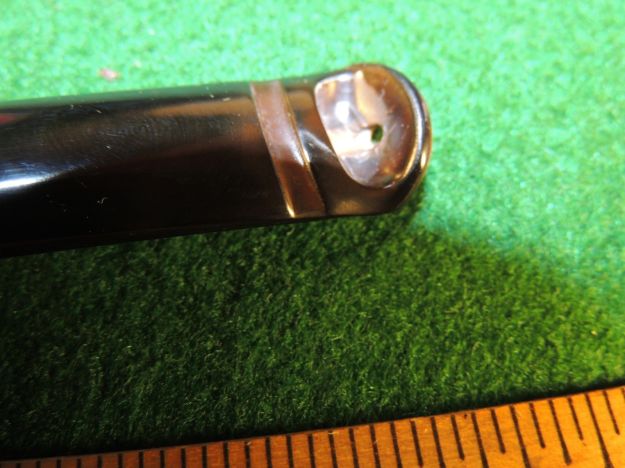
Hardcastles Dental 1

Hardcastles Dental 3

Hardcastles Dental 2

Hardcastles Dental 4
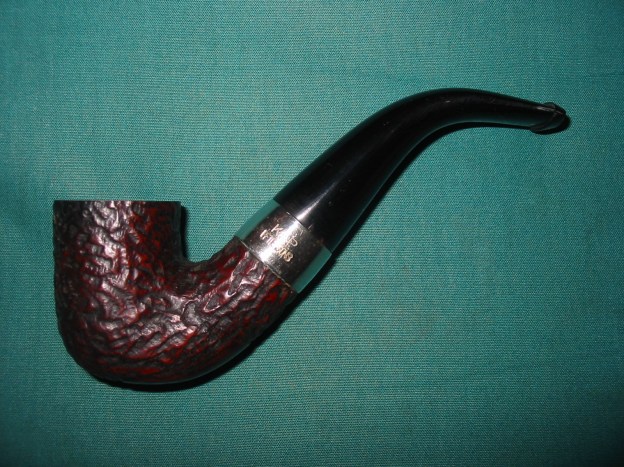
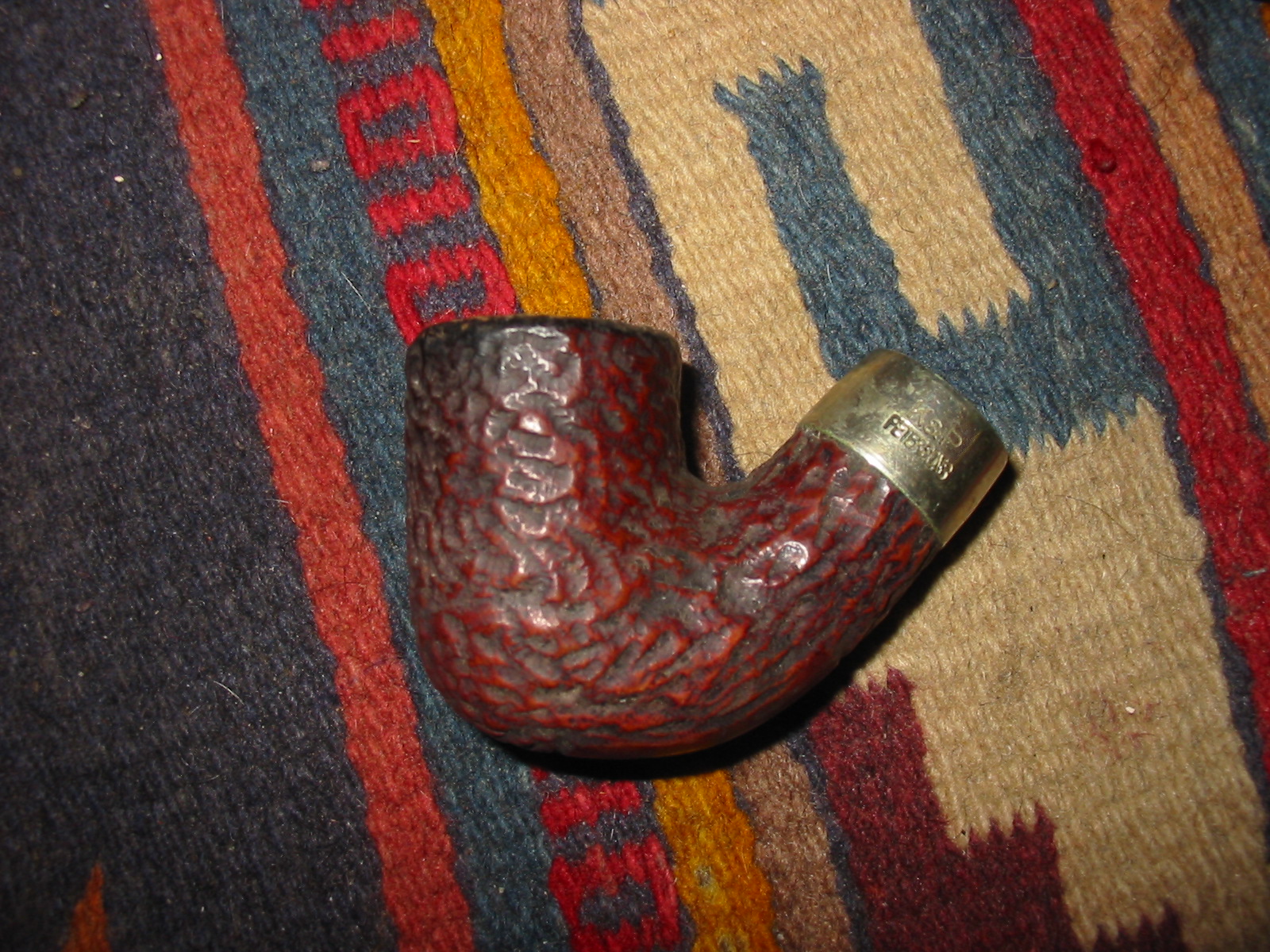
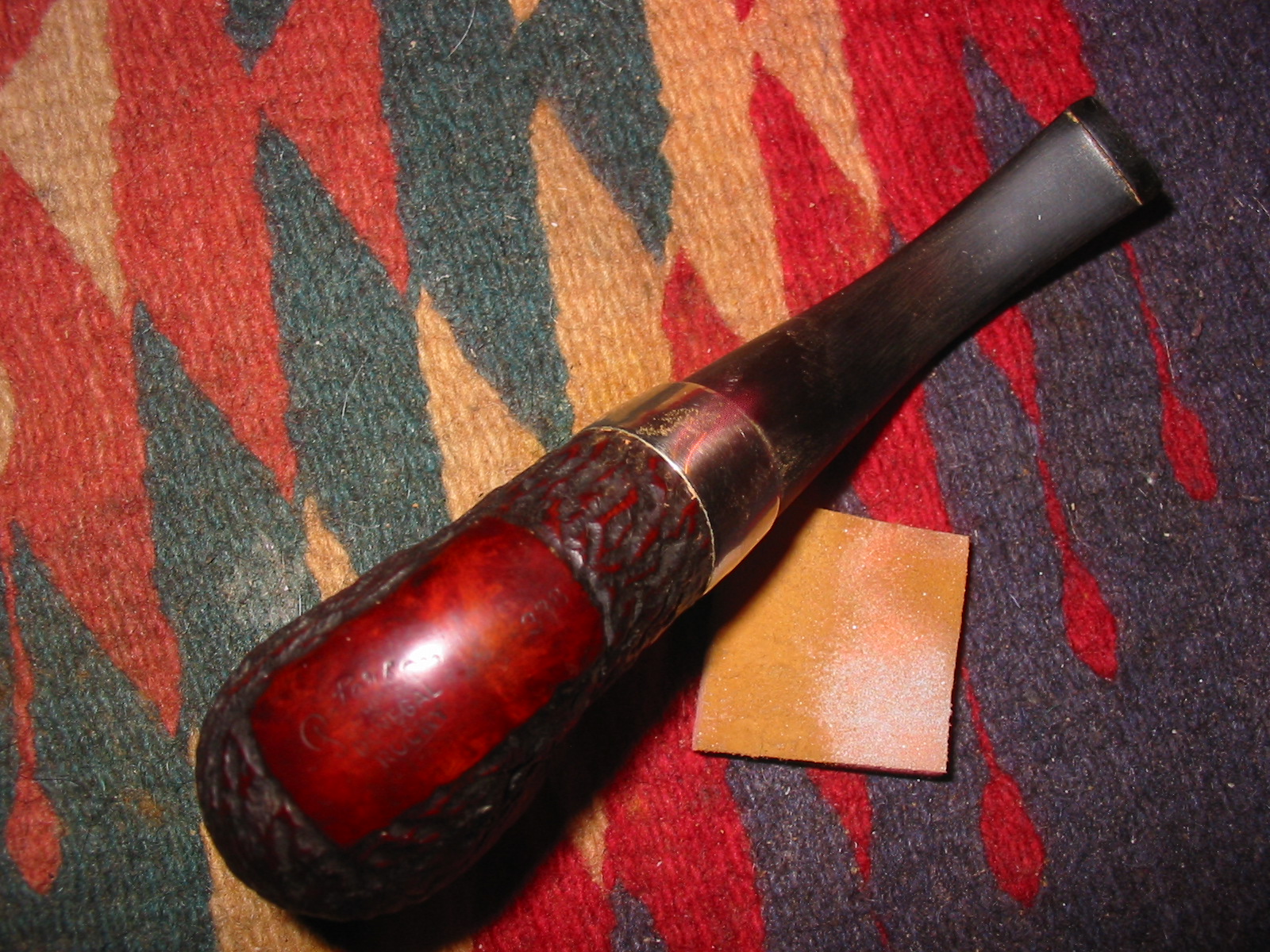
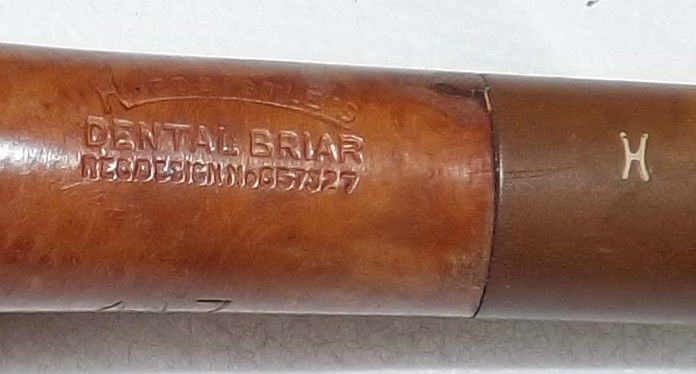
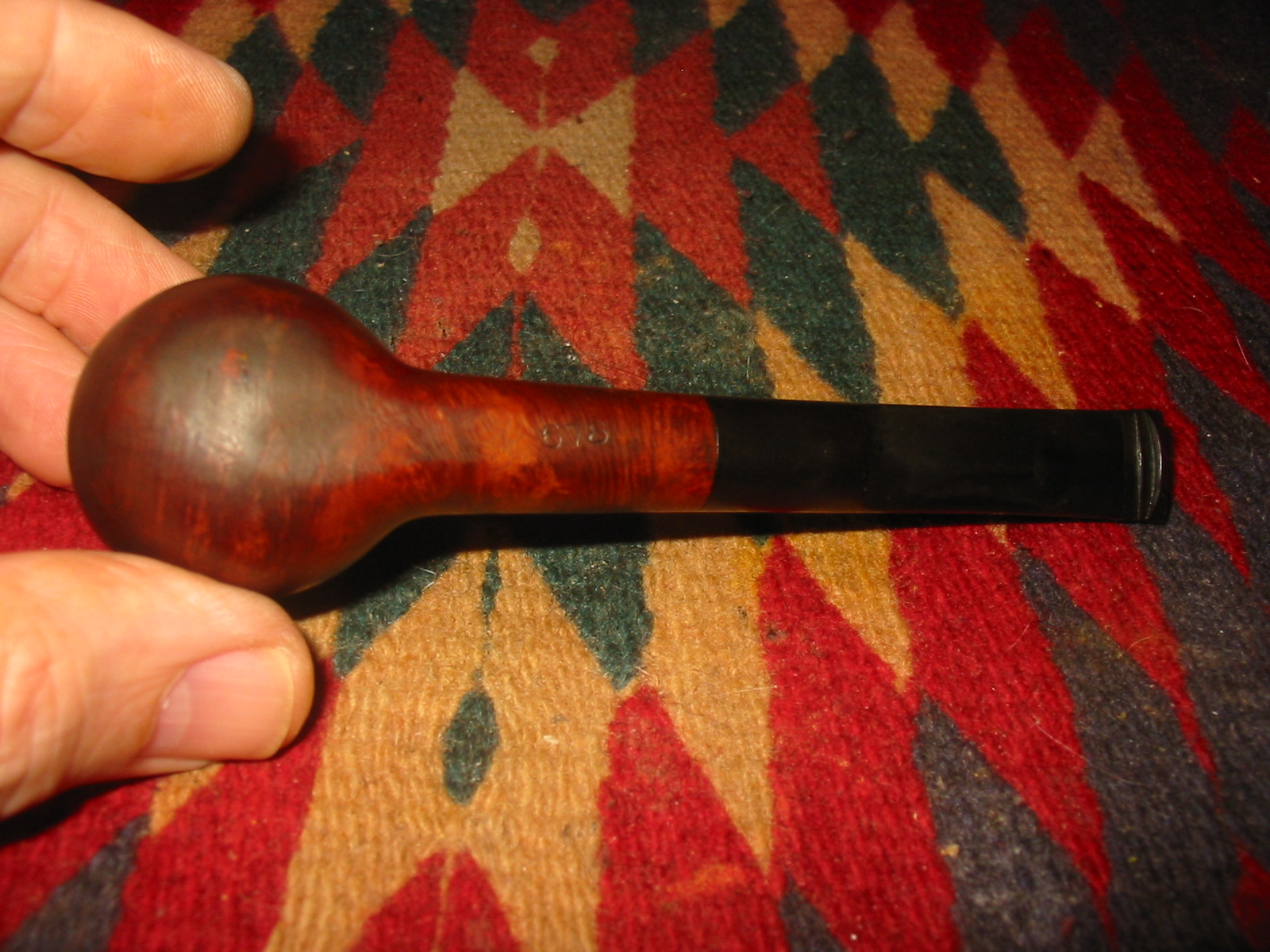
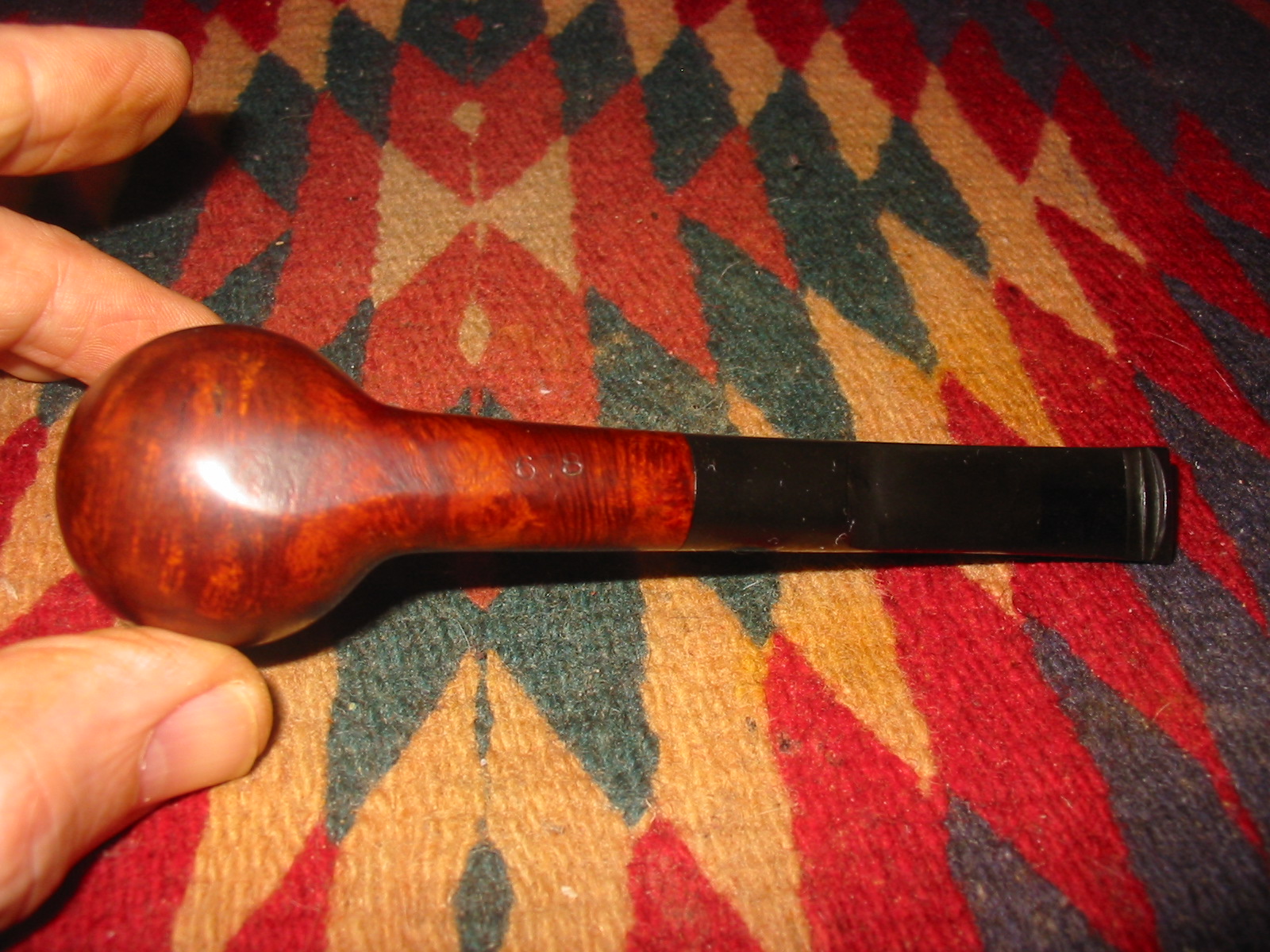
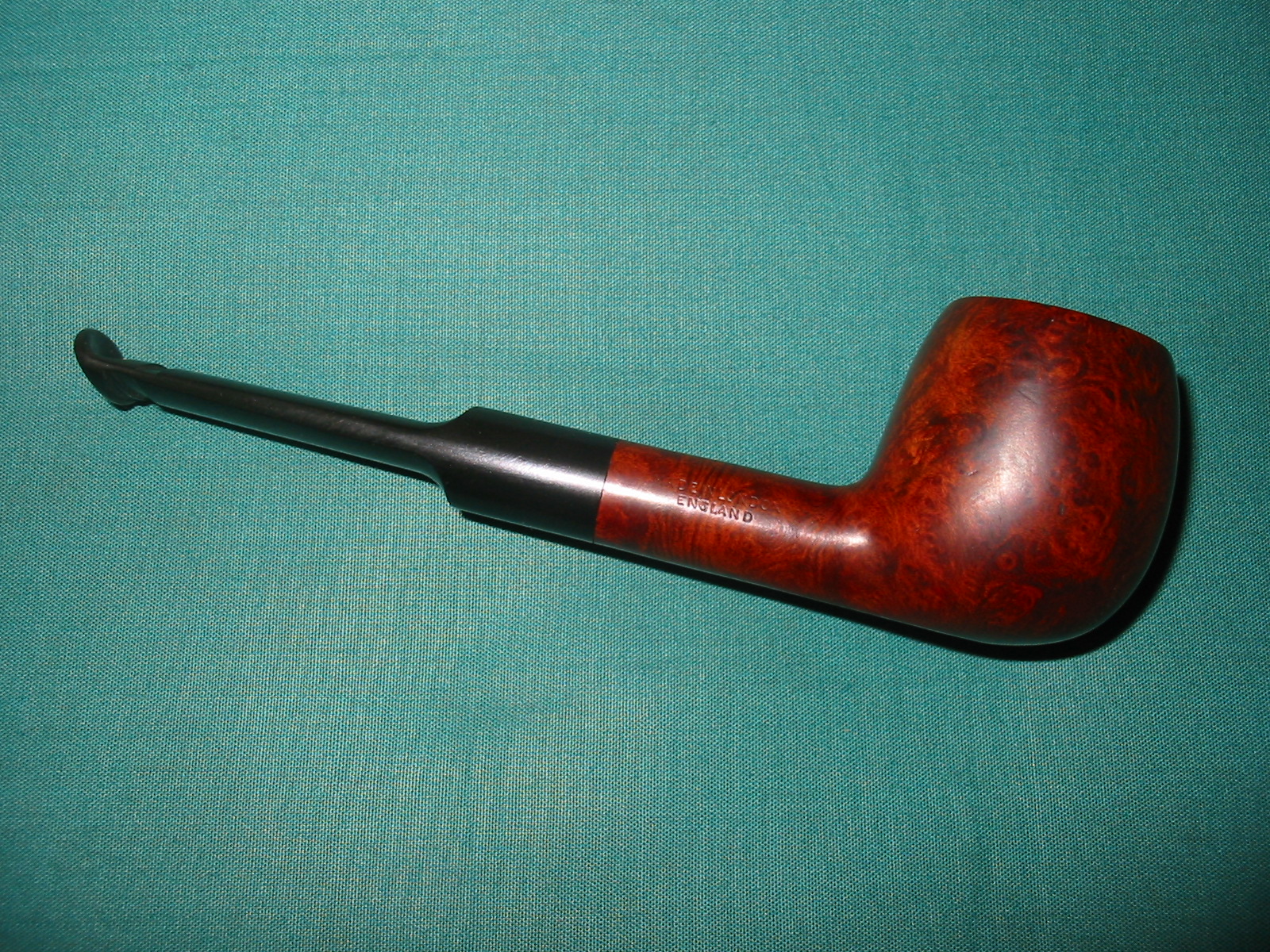
I looked it over and here is what I found. The pipe was stamped on the left side of the stem HARDCASTLE’S over DENTAL BRIAR over Reg. Design No.857327. On the right side it was stamped MADE IN LONDON ENGLAND. On the underside of the shank it is marked with the number 678, a shape number. Stamped on the vulcanite saddle stem is the Hardcastle’s H. The Reg. Design No. was a clue for me to start my hunt. (See the photo below of a pipe that is stamped identically to the one I have.)
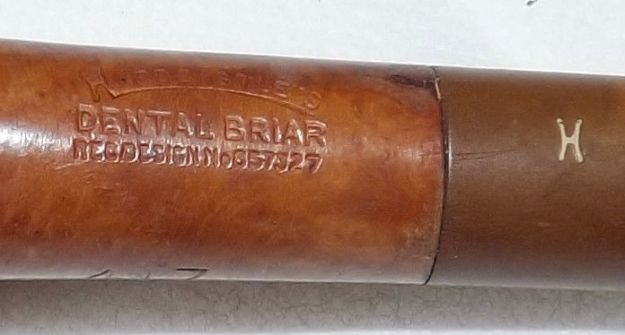
Hardcastles Dental 5
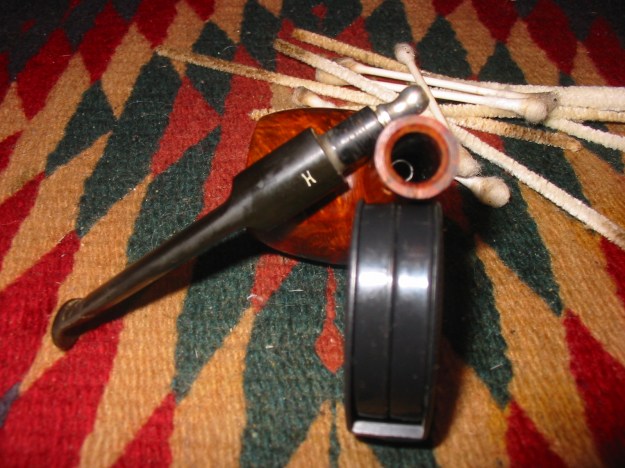
I Googled for information on how to find out about a Registered Design Number. I figured that it would be like finding out patent information. One of the first links came up was to the National Archives. http://www.nationalarchives.gov.uk/records/research-guides/reg-design-trademark.htm I read through the various pages and put in the design number. I found that the designs having number beginning with 857,000 numbers come from 1949. This number was 857,327 so it was pretty clear to me that the design was registered in 1949. At least I had found that the pipe was a made during the time the Hardcastle family owned the brand. At first I thought the design was solely for the stem but when I removed the stem I found that it was far more than that. It included an inserted metal tube deep in the shank that rested against the airway in the bowl. It extended into the shank where it was met by a metal stinger like apparatus in the tenon. This apparatus was set in the tenon. It was a ball on the end of a short tube – the difference being that it was hollow. The end of the ball that rested against the tube in the shank was open thus connecting the airway in the bowl to the airway in the stem through a metal tube that gave a cool material to wick out the moisture in the smoke before it was delivered to the wide open end of the dental bit.
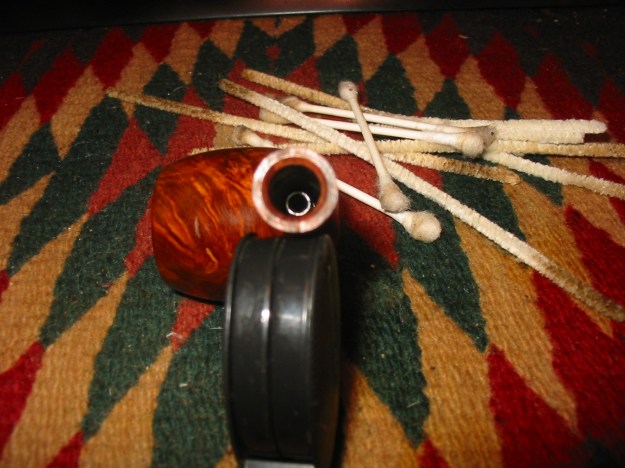
IMG_6947

IMG_6948
From there I went to the link for the British Intellectual Property Office. Now the problems arose for me. I could not find the Registered Design Number on that site. Nothing came back listed with that number on any British patent or registration sites. I was hoping to find at least a diagram of the pipe stem and internals as well as a patent/registration application. But there were none to be found on the sites. I wrote an email to the BIPO in hopes that they respond with some information. They wrote back saying that the design was too old and not in their records. They suggested the National Archives. I searched there again and could not access the files on this number. A dead end? Potentially but I would see if I could go at it from a different route.

I searched and read some of the history of the brand. One of the sites I turned to was Pipedia because I have found that they generally have good concise summaries of a particular brand or the lines in a brand. I found some helpful information on the different time periods of Hardcastle’s production. http://pipedia.org/index.php?title=hardcastle. I quote in part below:

“Hardcastle was founded in 1908 by Edmund Hardcastle and built itself a good reputation among the numerous British mid-graders. In 1935 Dunhill started to build a factory next door to Hardcastle in Forest Road, Walthamstow, London E17. The family owned Hardcastle Pipes Limited sold 49% of its equity to Dunhill in 1936.

Along with closing down its pipe factory in Notting Hill in 1946 Dunhill bought the remaining shares turning Hardcastle into a 100% Dunhill subsidiary. As members of the Hardcastle family continued as executives in the company’s management Hardcastle retained a certain independence.

This ended in 1967. Dunhill merged Hardcastle with Parker (100% Dunhill as well). The new Parker Hardcastle Limited also absorbed the former Masta Patent Pipe Company. Hardcastle’s Forest Road plant was immediately given up and the production of Hardcastle pipes was shifted to Parker’s nearby St. Andrews Road factory – now consequently called Parker-Hardcastle factory.

In fact this put a definite end to Hardcastle as an independent pipe brand and no one other than Edwin Hardcastle, the last of the family executives, spoke frankly and loudly of Hardcastle pipes being degenerated to an inferior Dunhill second. Today Hardcastle pipes use funneled down bowls that are not deemed suitable to bear the Dunhill or even the Parker name as well as obtaining briar from other sources.”

Now that I had a bit of a timeline for the brand it was time to see if I could find information on the various models & grades of Hardcastle pipes before the takeover by Dunhill – a time known as the Family Period. On the Pipedia site they listed that during that time the following models/lines were produced. Straight Grain, Supergrain, Leweard, Nut Bruyere, De Luxe, Royal Windsor Sandhewn, Royal Crown, The Crown, Phito Dental, Old Bruyere, Jack O’London, Dental Briar, Phito, Dental, Dryconomy, Drawel, Phithu, Telebirar, Camden, Lightweight, The Table, Dovetail, Dental, Crescent Extra, Lonsdale, Welard De Luxe . I have marked the Dental Briar in bold in the list above to make it stand out in the list. It was produced during this time. It appears that the Hardcastle was taken over by Dunhill in 1946. At that time, family still retained some control but the brand changed. In 1967 the brand was merged with Parker and became Parker/Hardcastle. With this merger Hardcastle as a distinct brand disappeared and the pipe became a line of seconds for Dunhill.

That information at least gives something of a timeline for my pipe. I know that it was made between the year that Registered Design Number gave of 1949 and the merger date of 1967. That is as close a date as I can ascertain at this time.

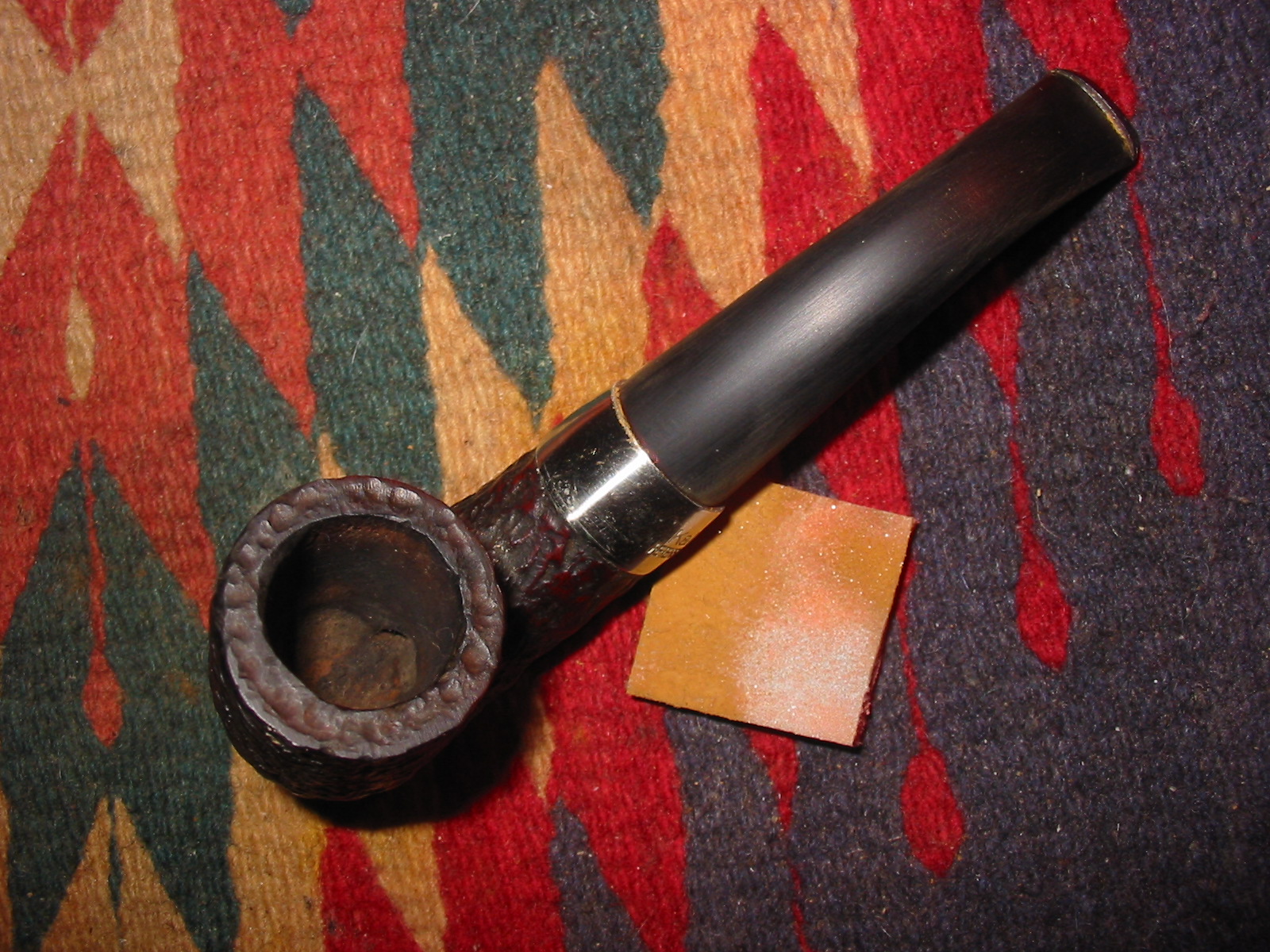
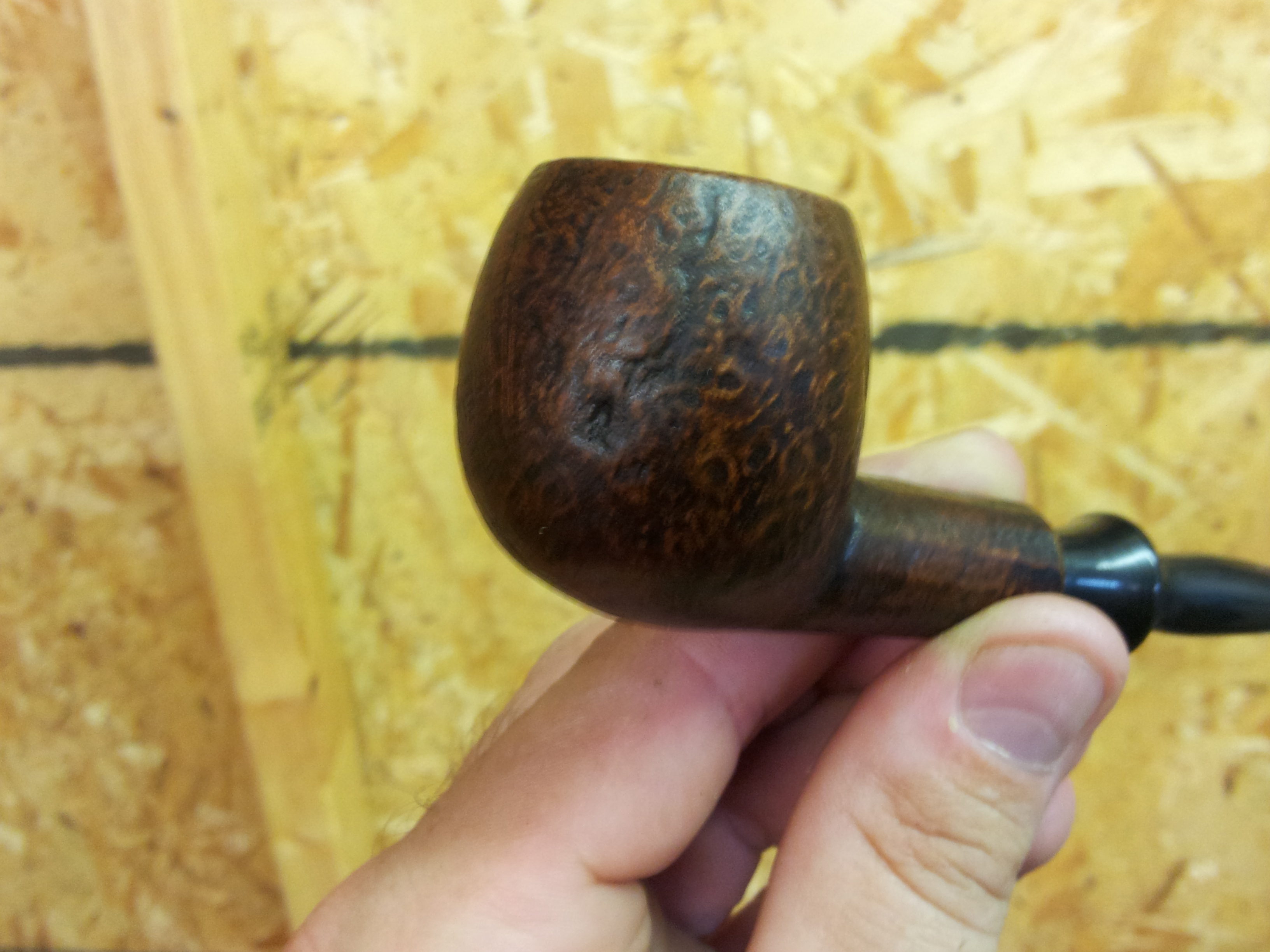
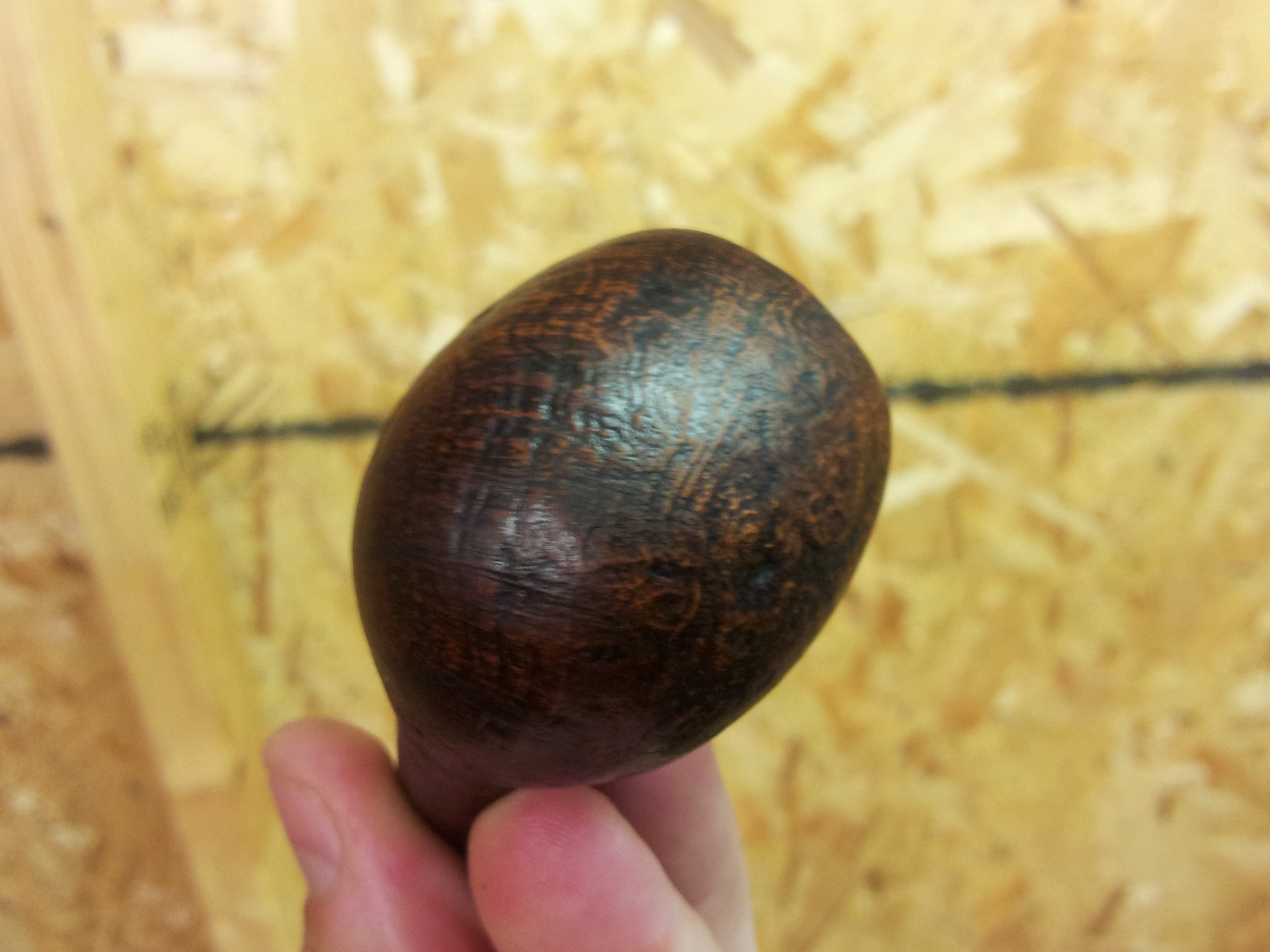
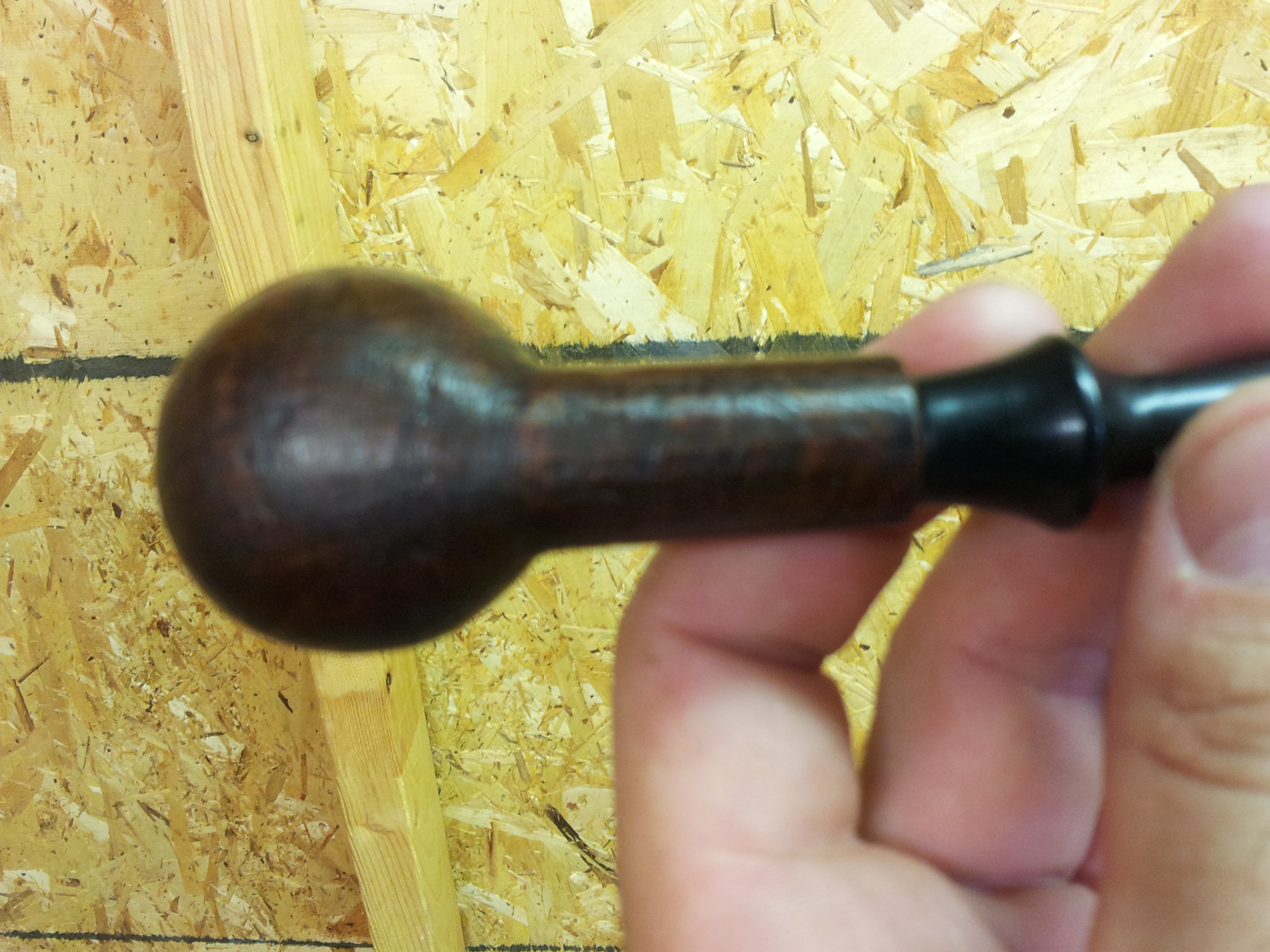
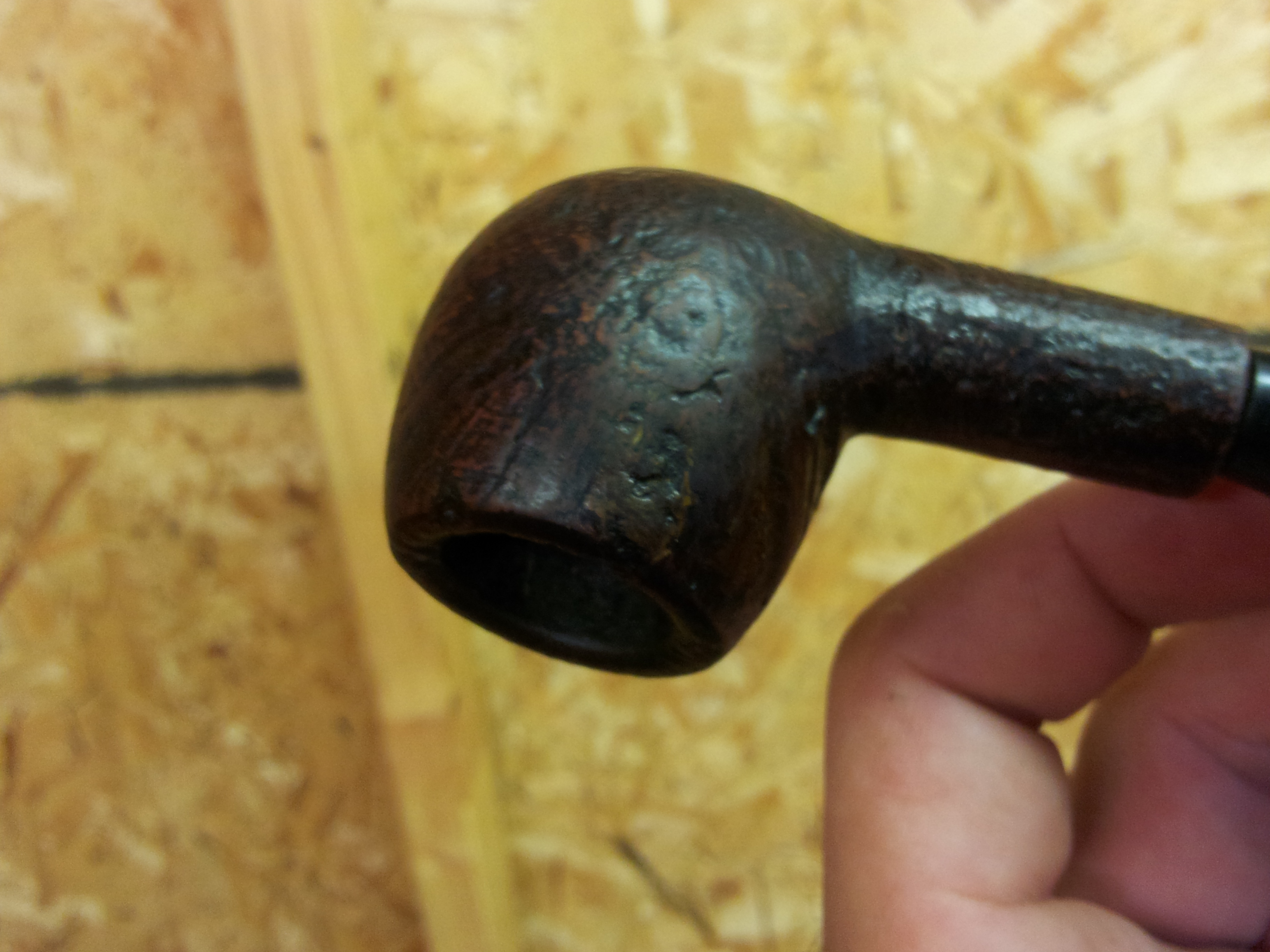
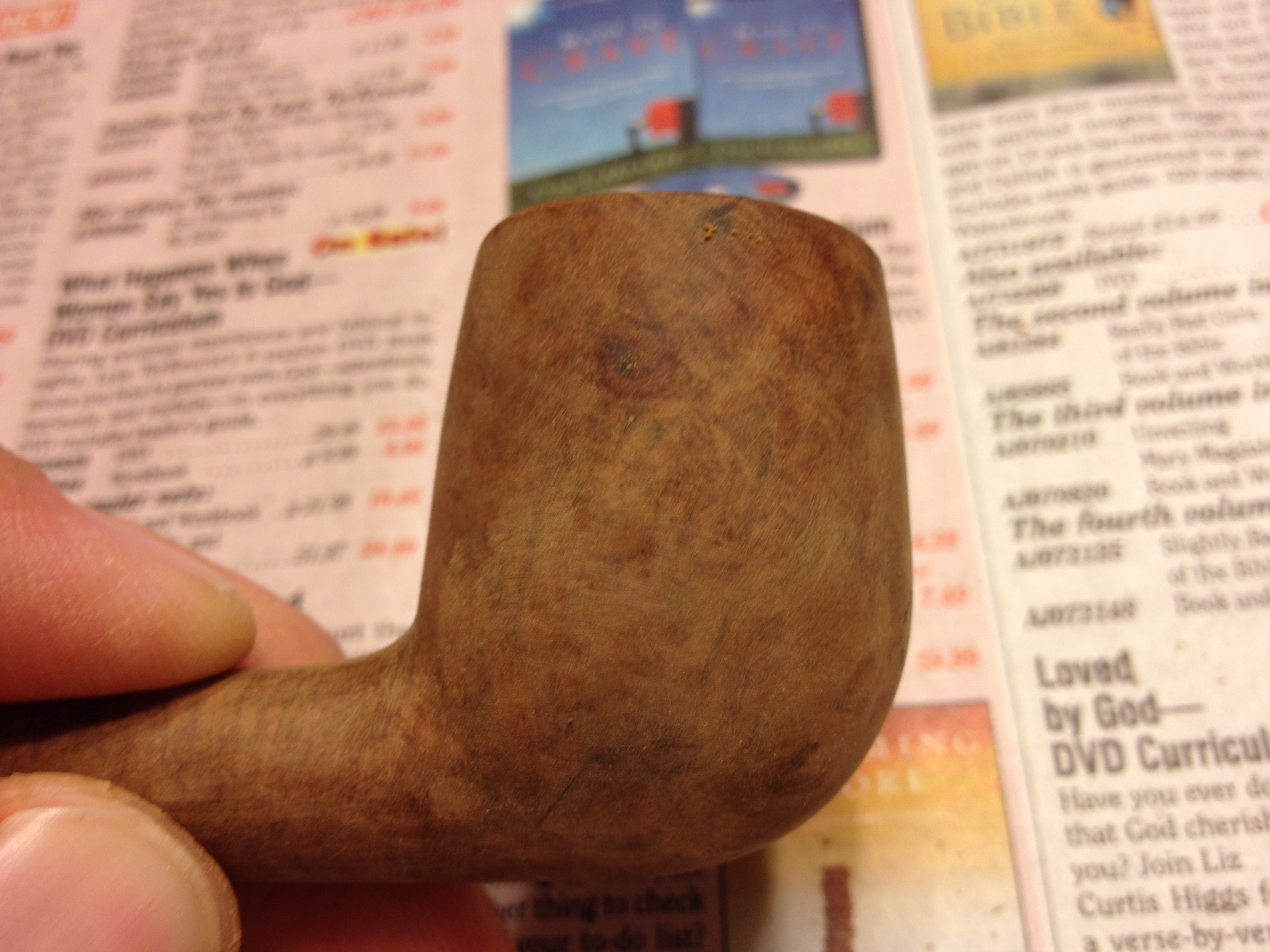
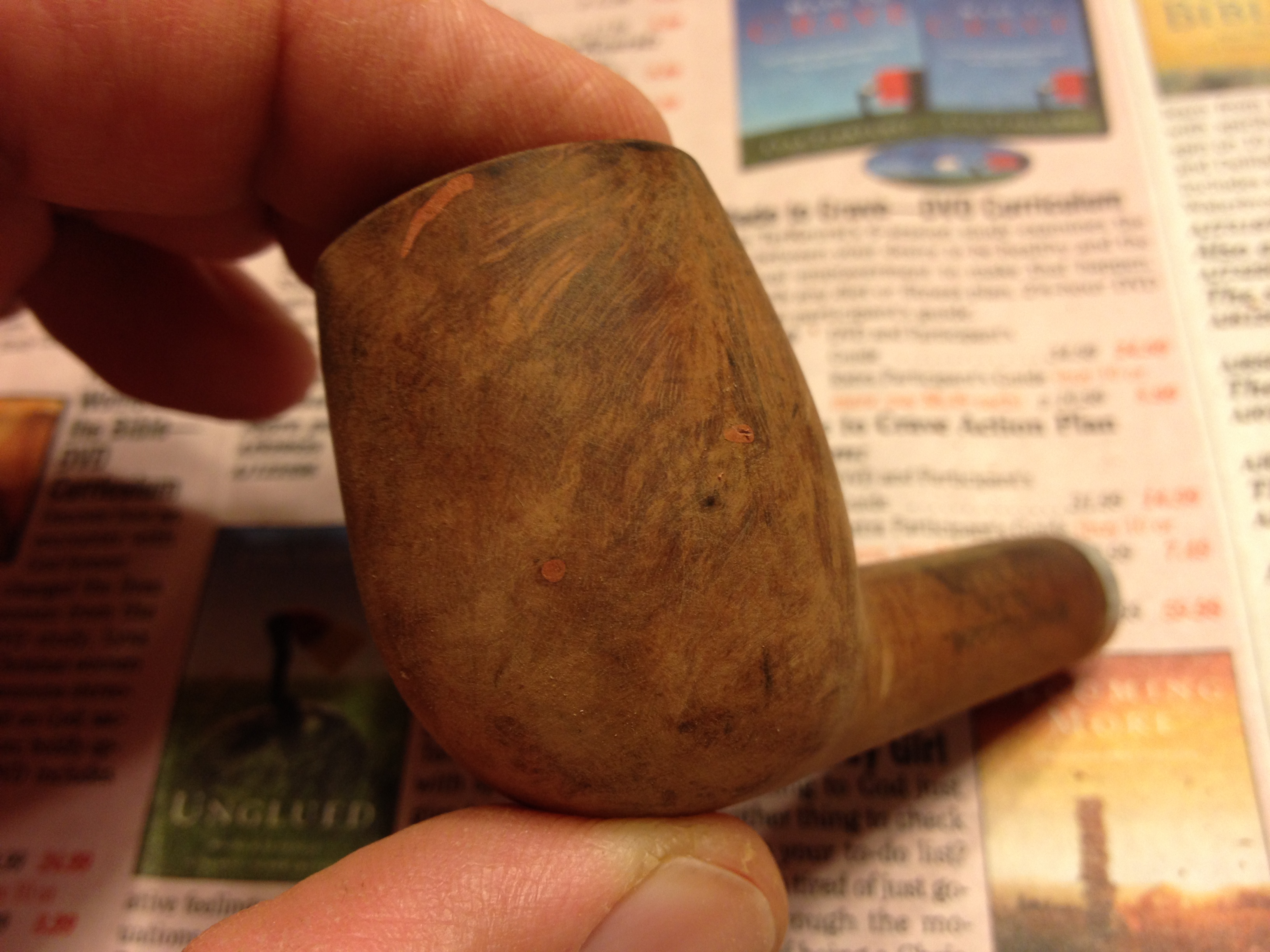
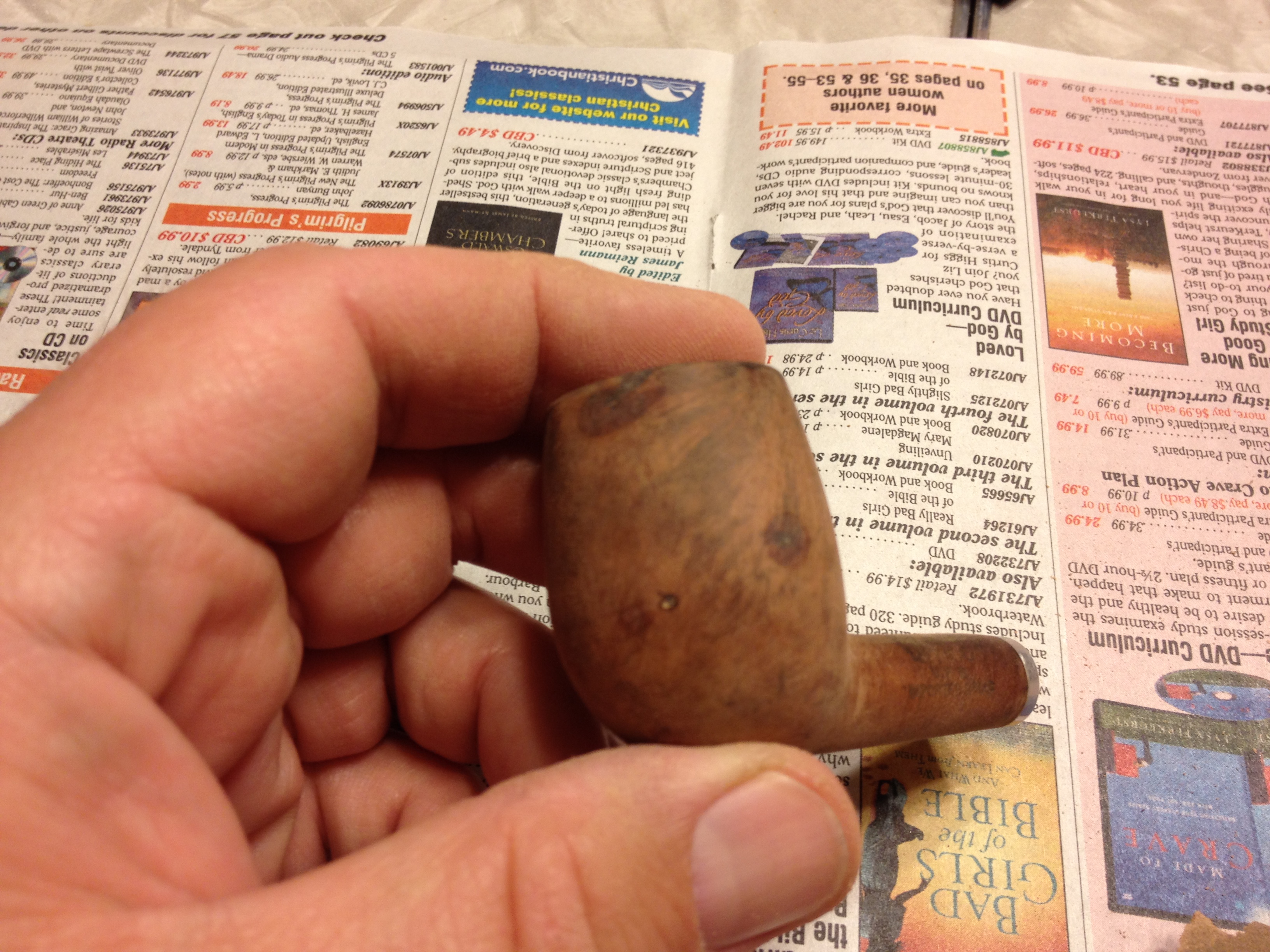
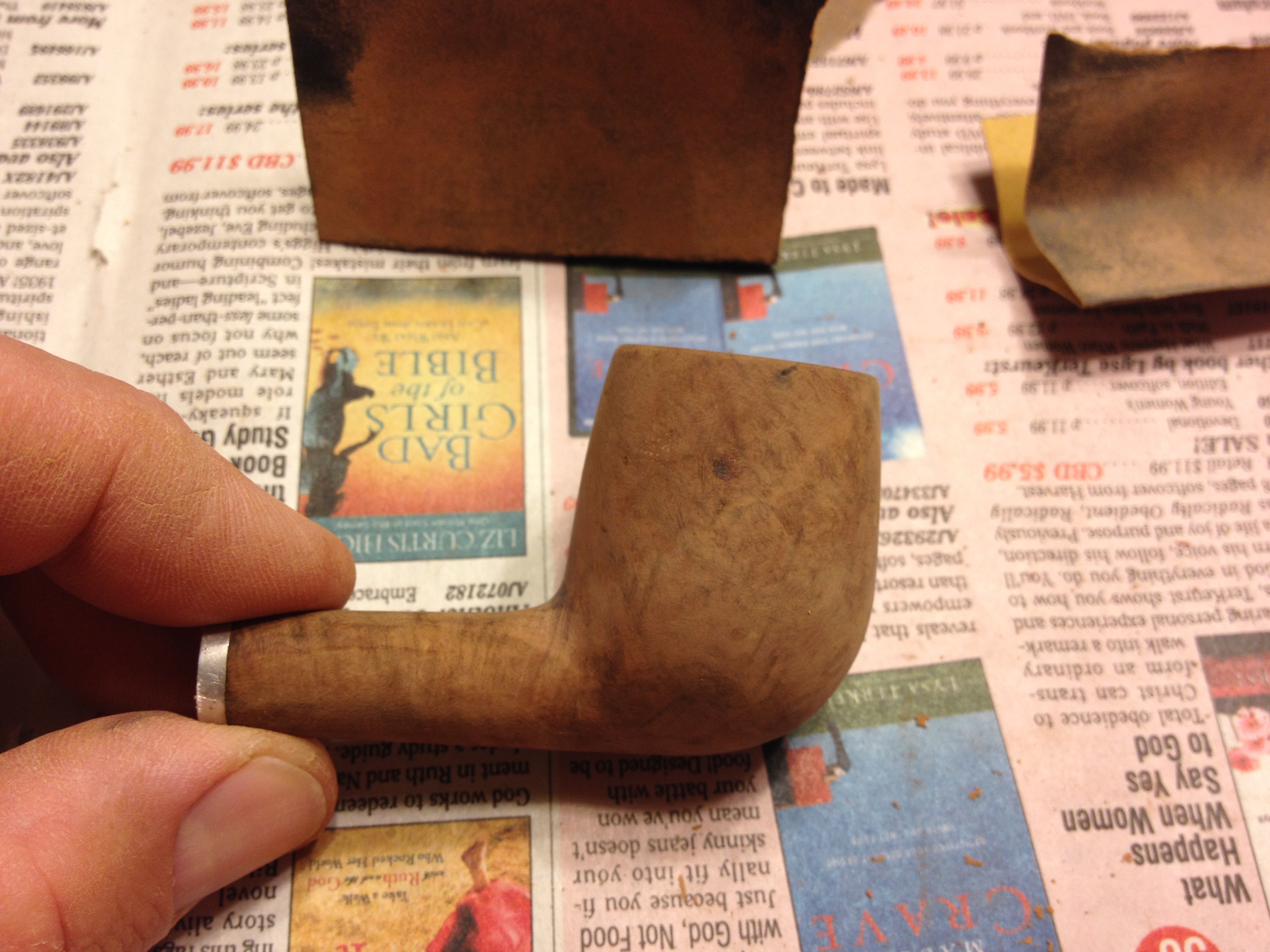
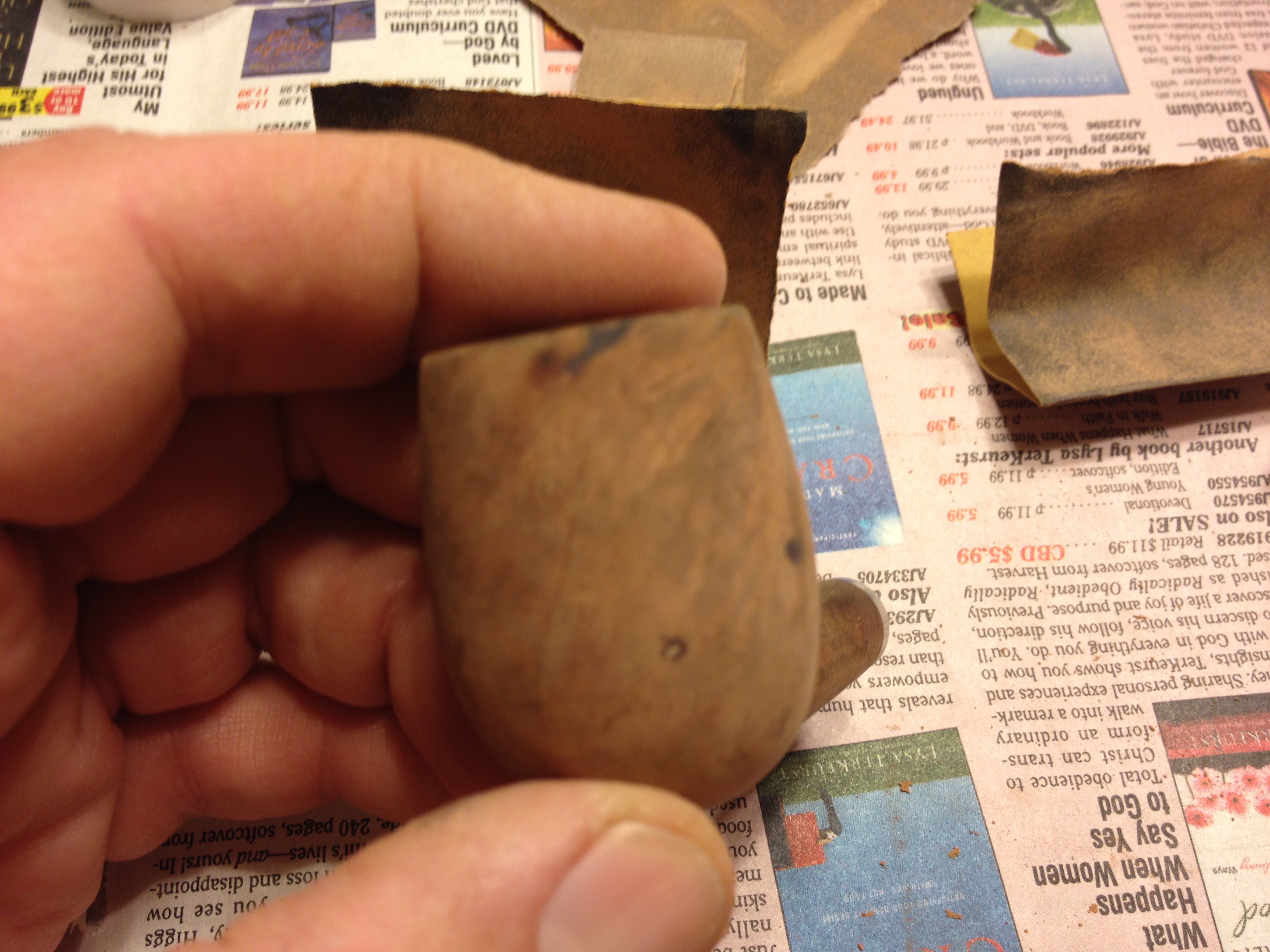
It seemed that I had found all I would find out about this pipe for the moment. It was time to work on the pipe itself and do the cleanup and restoration. I took the pipe to my worktable and quickly looked it over to see what I needed to address in this refurb. The bowl had an uneven cake in it – heavy in the middle and light at the top and the bottom of the bowl. The briar had several fills that had fallen out or somehow been dislodged along the way – one on the shank visible in the photo below next to the stem, one on the back side of the bowl and one on the bottom of the bowl. The rim was undamaged and quite clean other than a slight build up of tars and oils. The next series of three photos give a good picture of the state of the pipe when I began the work on it.
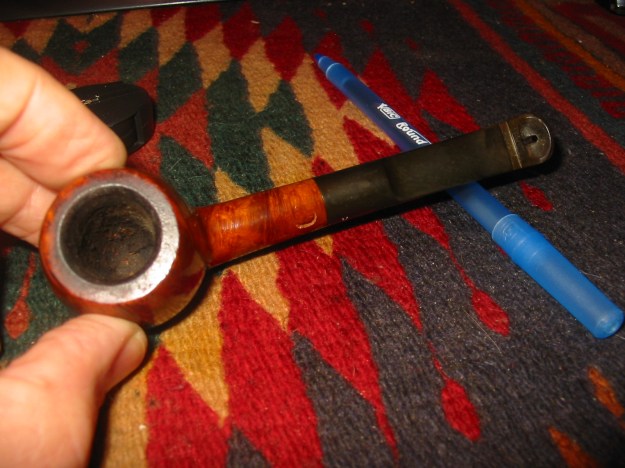
IMG_6944

IMG_6945

IMG_6946
I removed the stem and cleaned out the shank and stem with pipe cleaners, cotton swabs and isopropyl alcohol. I scrubbed until they came out clean and unblemished. Then I reamed the bowl and wiped down the inside of the bowl with cotton swabs and alcohol and ran several more pipe cleaners through the shank to remove any carbon dust.
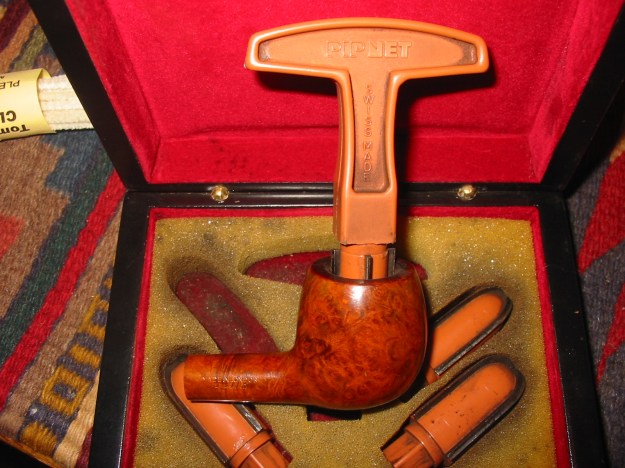
IMG_6949
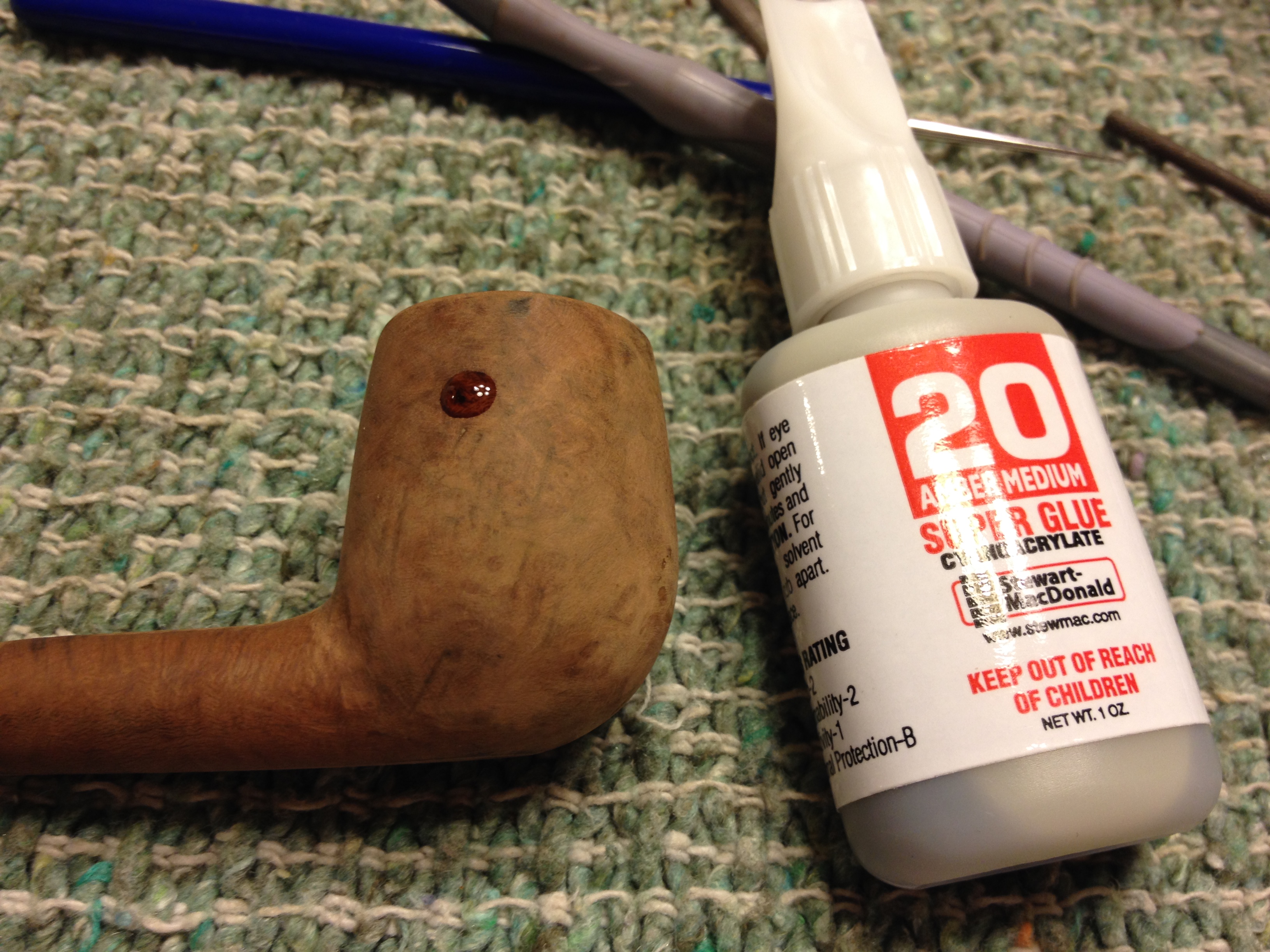
I cleaned out the damaged fills in the briar on the shank, back of the bowl and the bottom of the bowl with a dental pick. I wiped the bowl down with alcohol to clean off the dust and give the glue a clean surface to stick. I then packed briar dust into the crevices and dripped super glue onto the briar dust. I quickly put more briar dust on top of the glue before it dried. I have found that sandwiching the glue between briar dust enables the stain to have a better chance of taking on the patch.
IMG_6950

IMG_6951
I sanded the patches with 220 grit sandpaper, medium and fine grit sanding sponges and then with 1500-2400 grit micromesh sanding pads to smooth out the patches and blend them into the surface of the bowl.
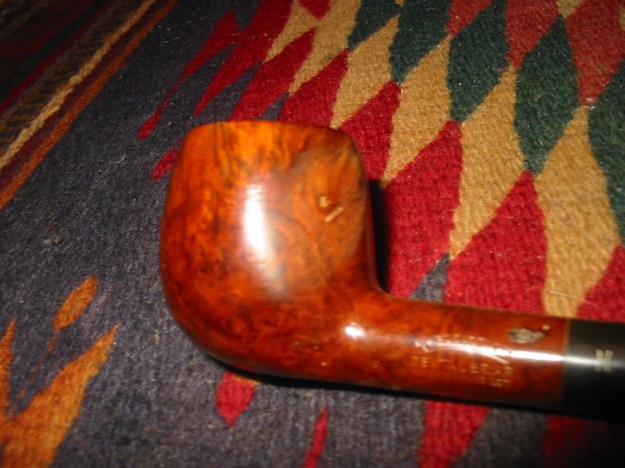
IMG_6952

IMG_6953

IMG_6955
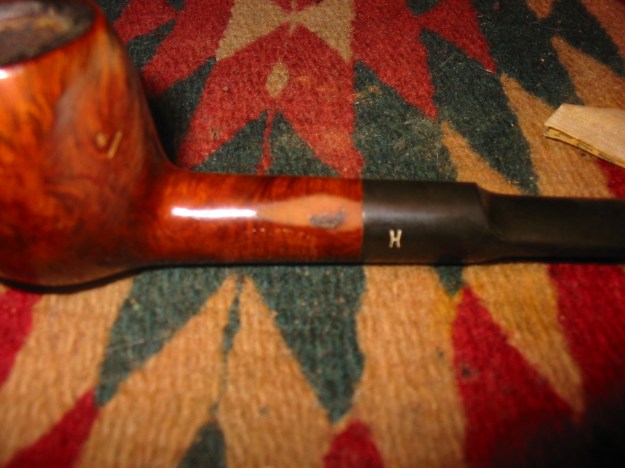
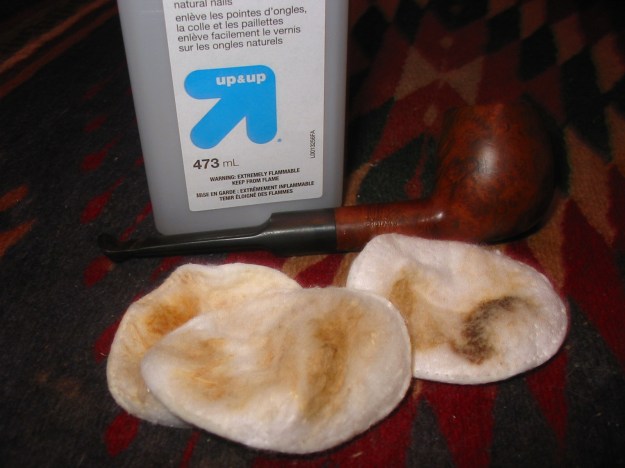
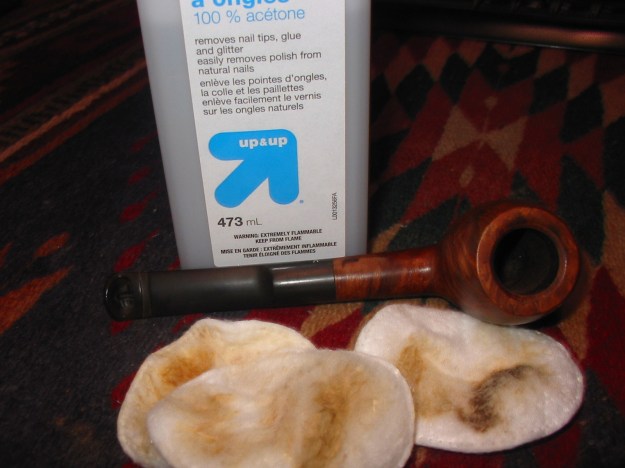
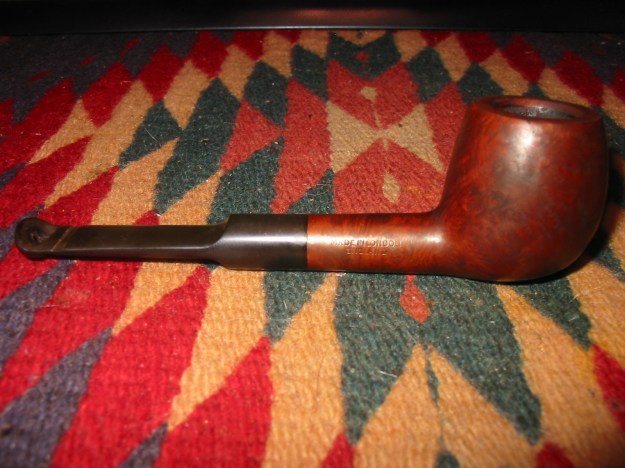
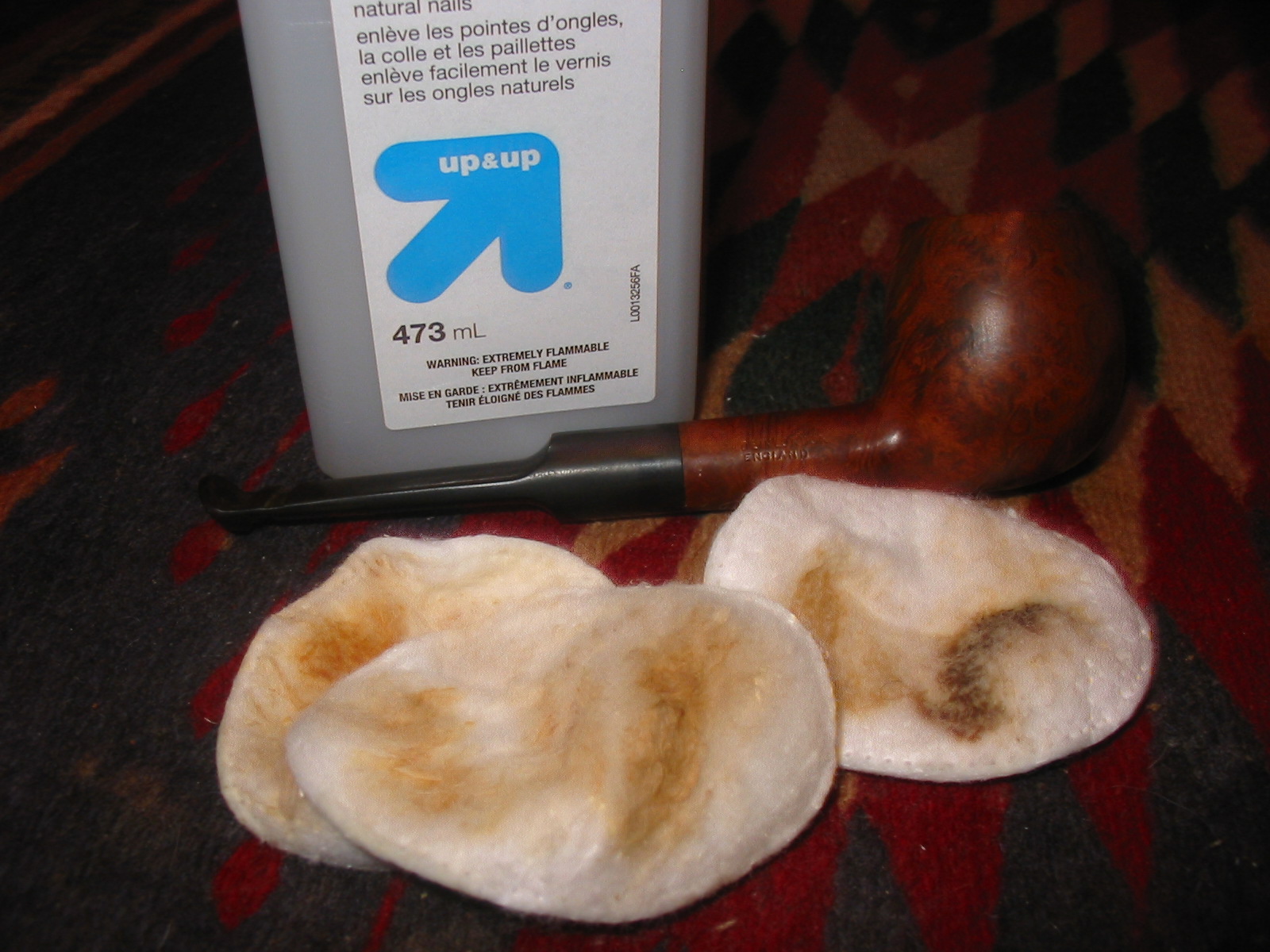
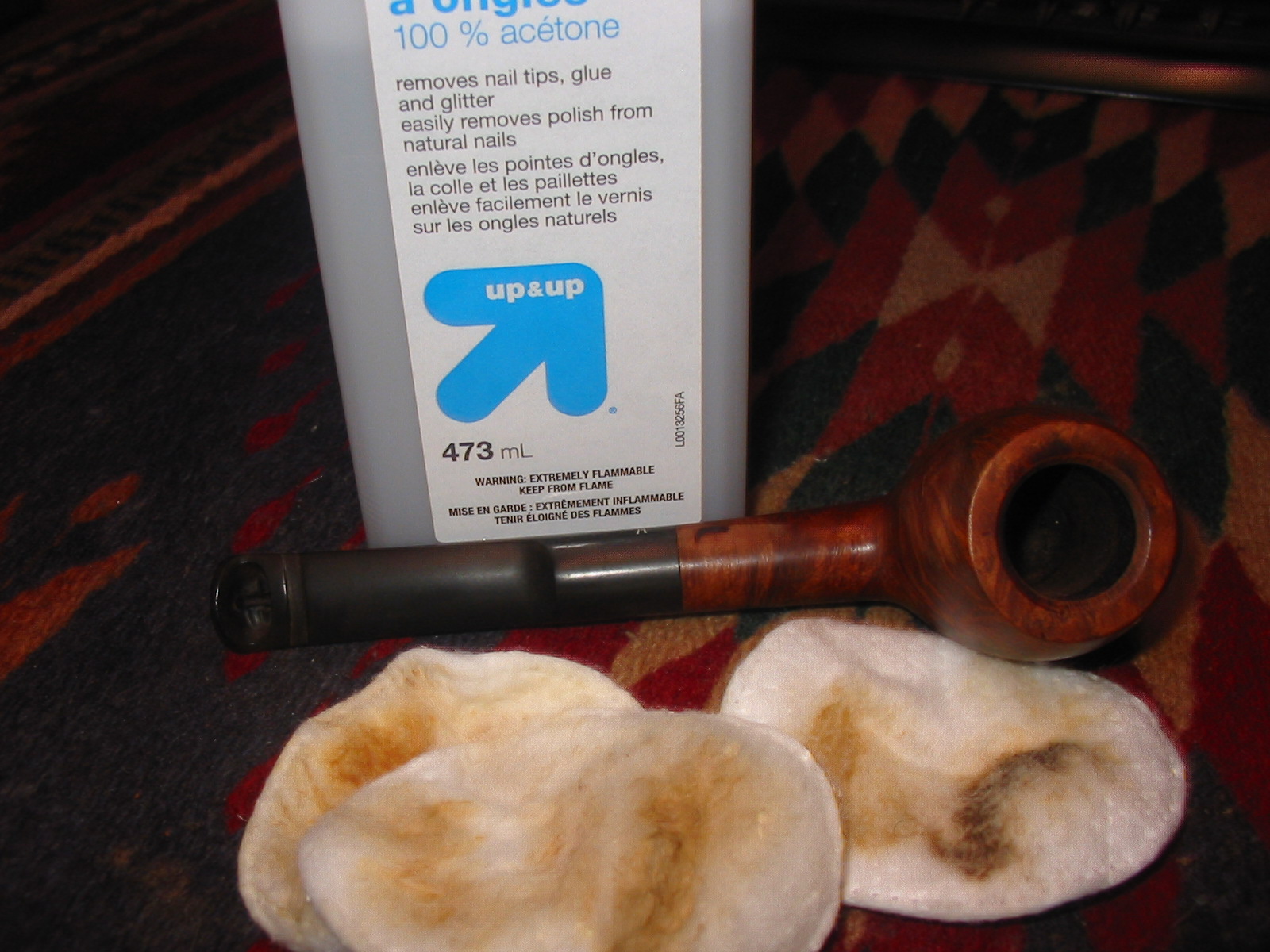
When I had finished sanding the bowl I wiped it down with acetone to break down the finish and remove the waxes on the bowl to prepare it for restaining. When I do this kind of patches on a bowl I restain the entirety of the bowl rather than trying to match the stain in the spots to the whole.
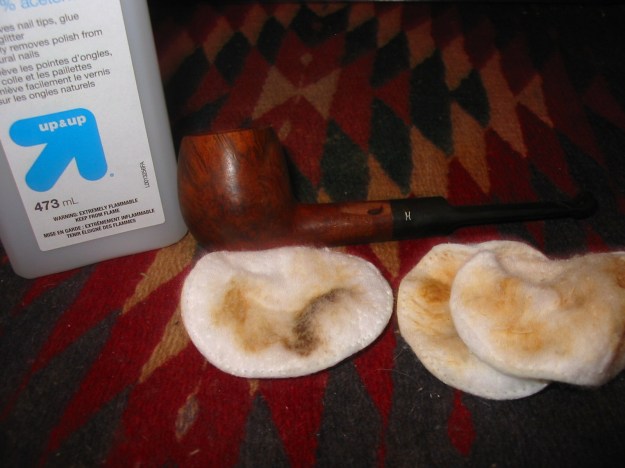
IMG_6956

IMG_6957

IMG_6958
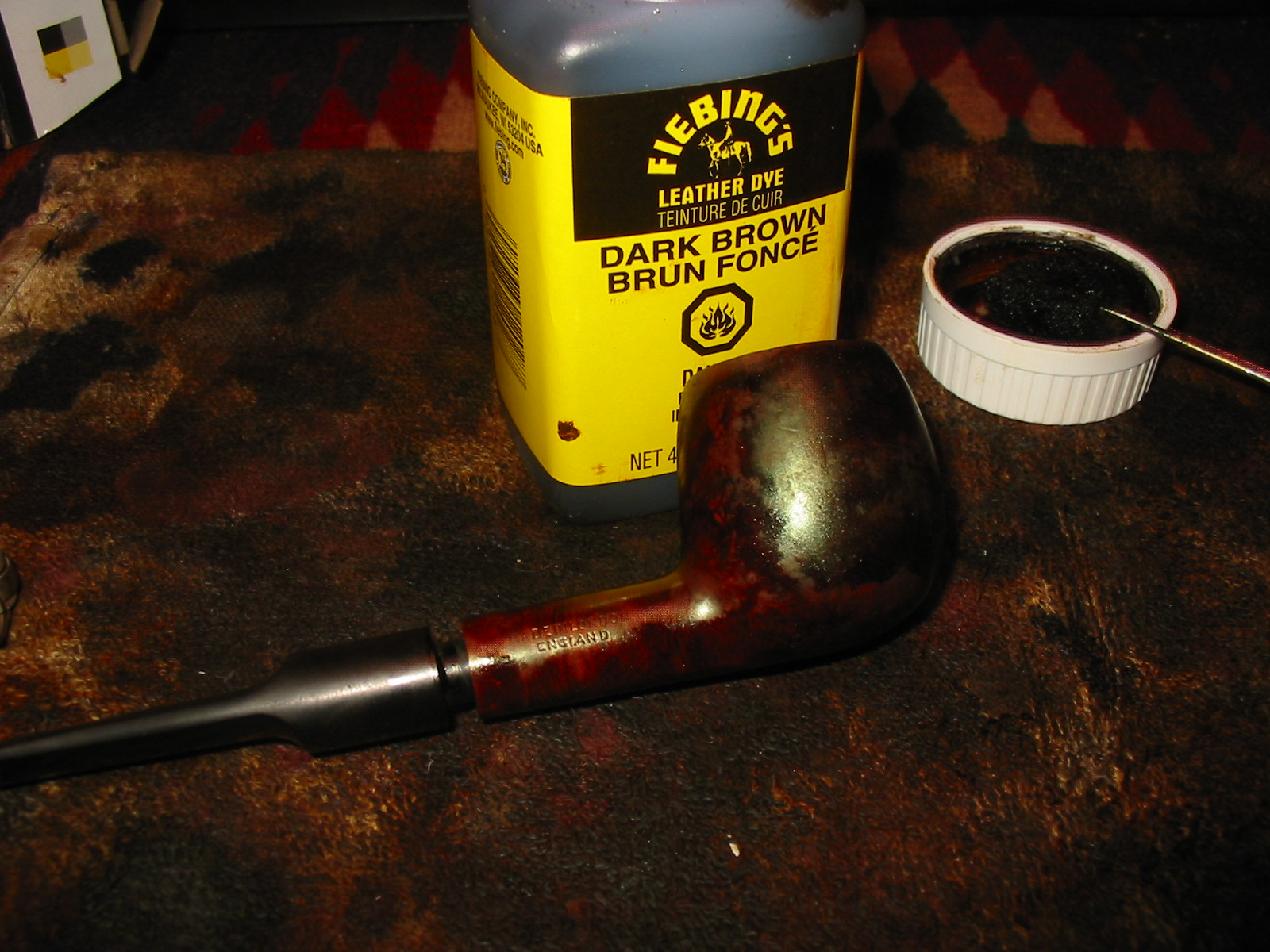
I stained the bowl with a dark brown aniline stain. I heated the briar, applied the stain, flamed it and repeated the process to get a good solid, even coverage on the briar.
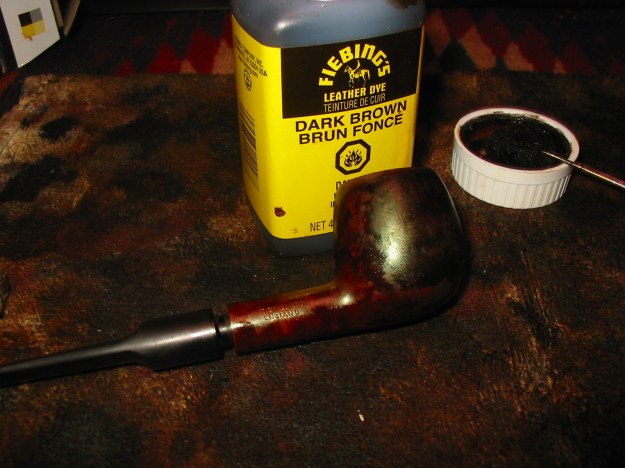
IMG_6959
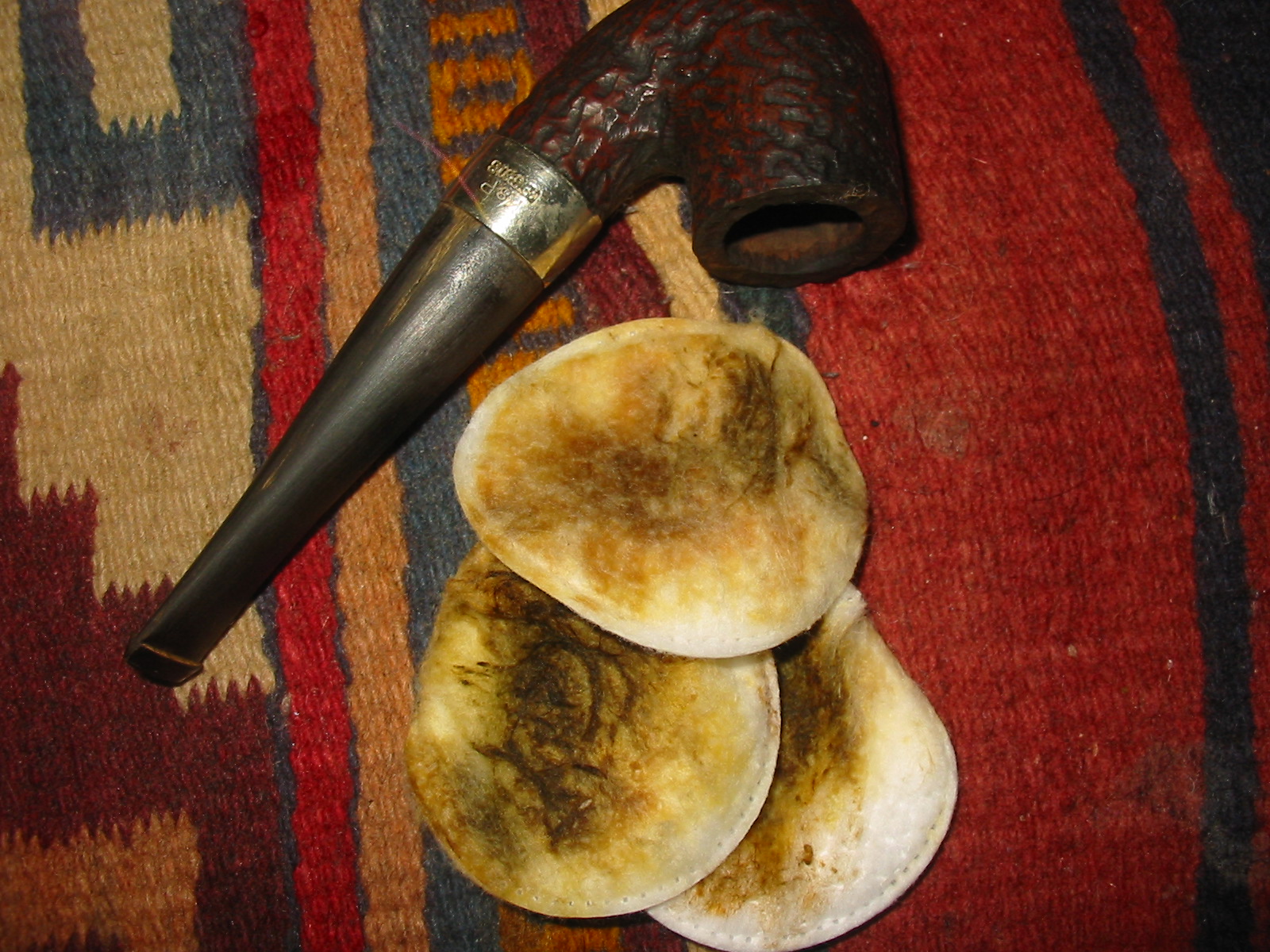
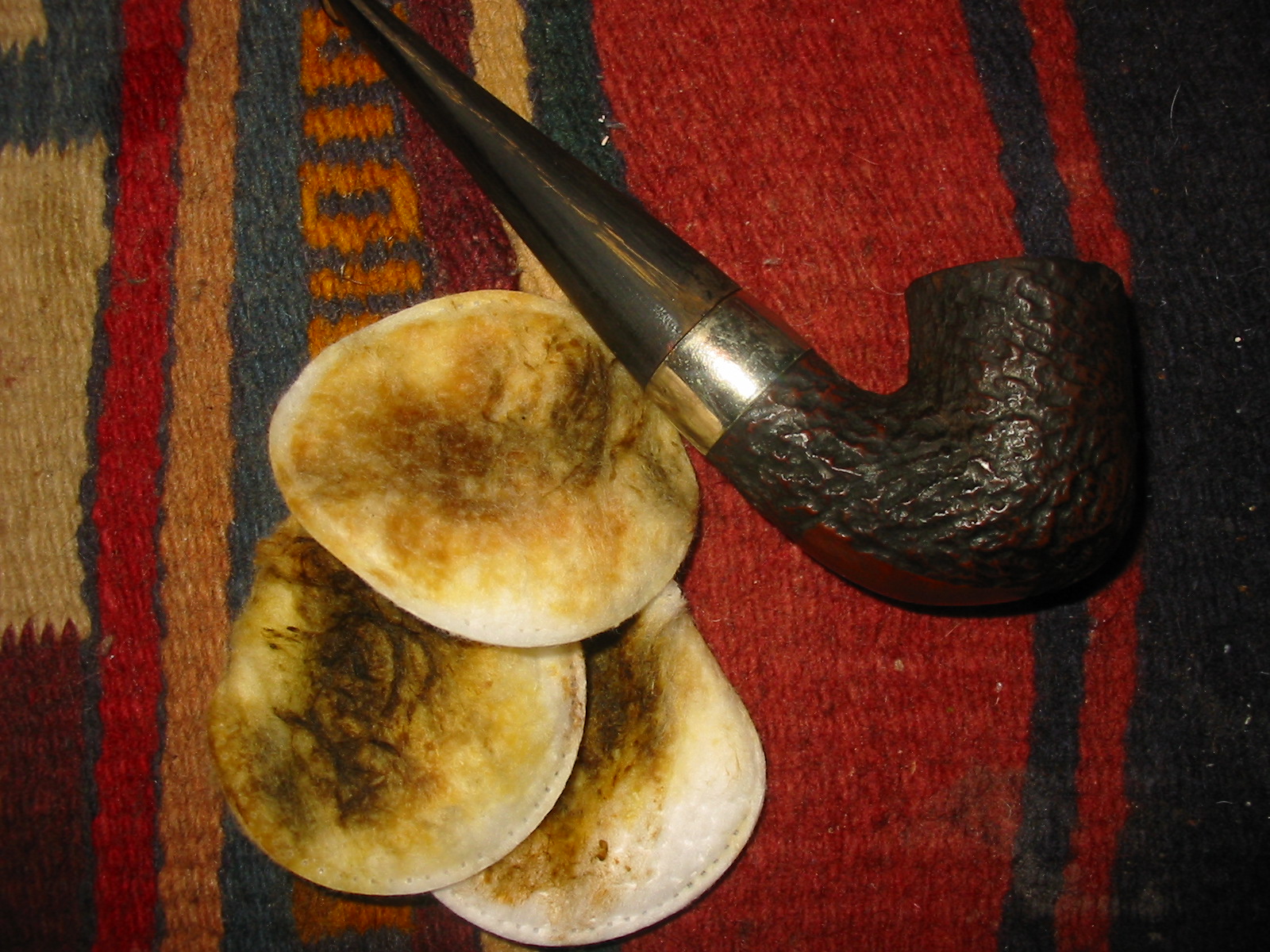
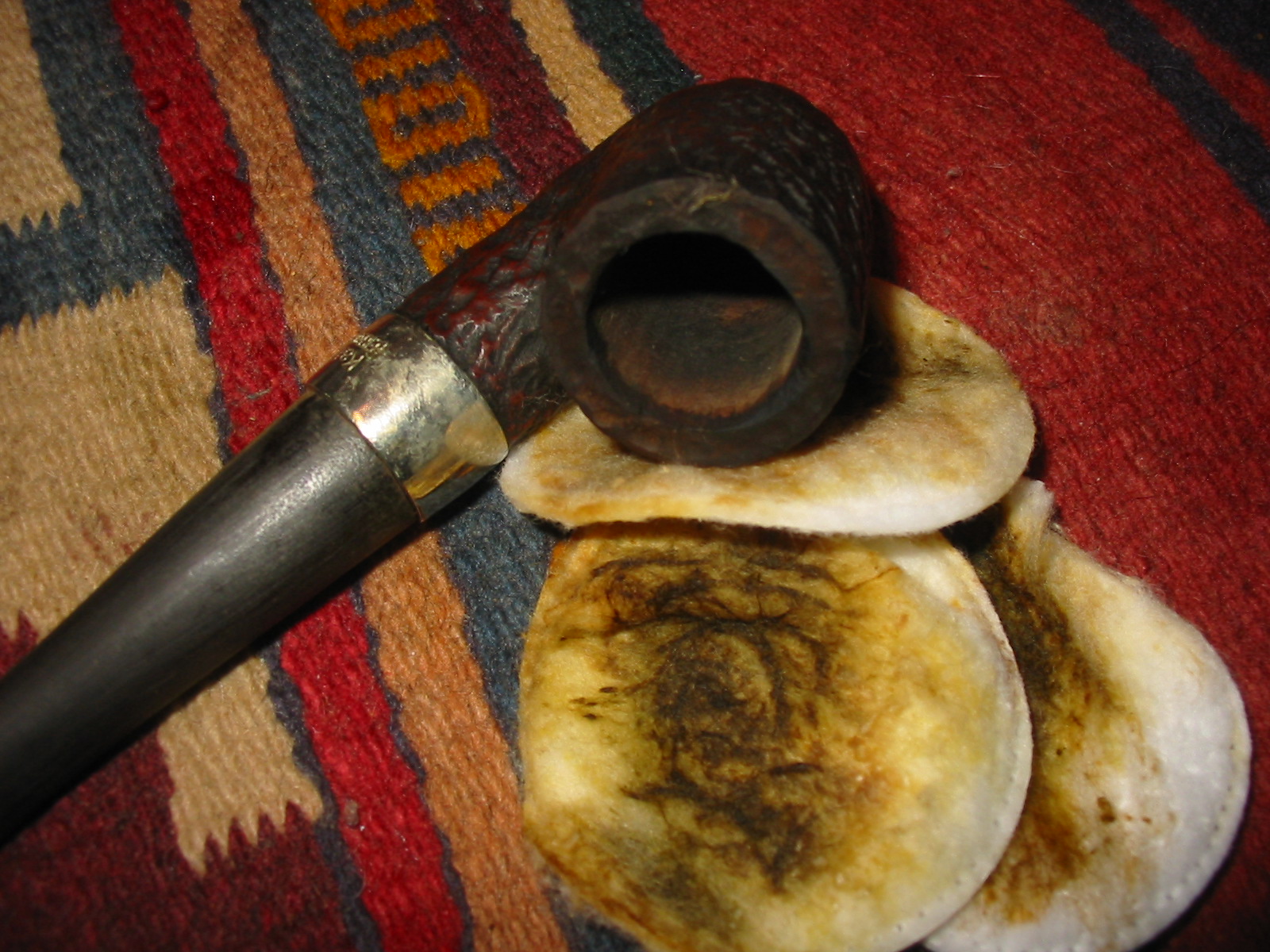
When it dried I wiped it down with a cotton pad and alcohol to lighten the stain and make the grain more visible.
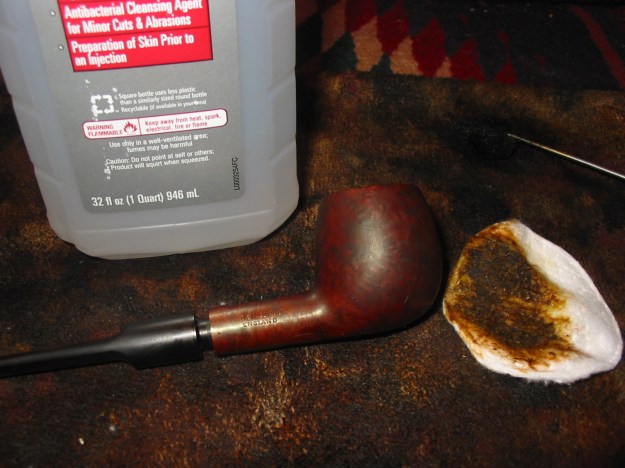
IMG_6960
At this point in the process I buffed the bowl and stem with red Tripoli and then White Diamond to even out the stain and make it flow better on the bowl. The briar dust and superglue patches blended in quite well on the bottom and back side of the bowl. The one on the shank was visible but at least it was smooth and dark. With some work on the finish I would be able to get it blend better.
IMG_6961

IMG_6962

IMG_6964

IMG_6965
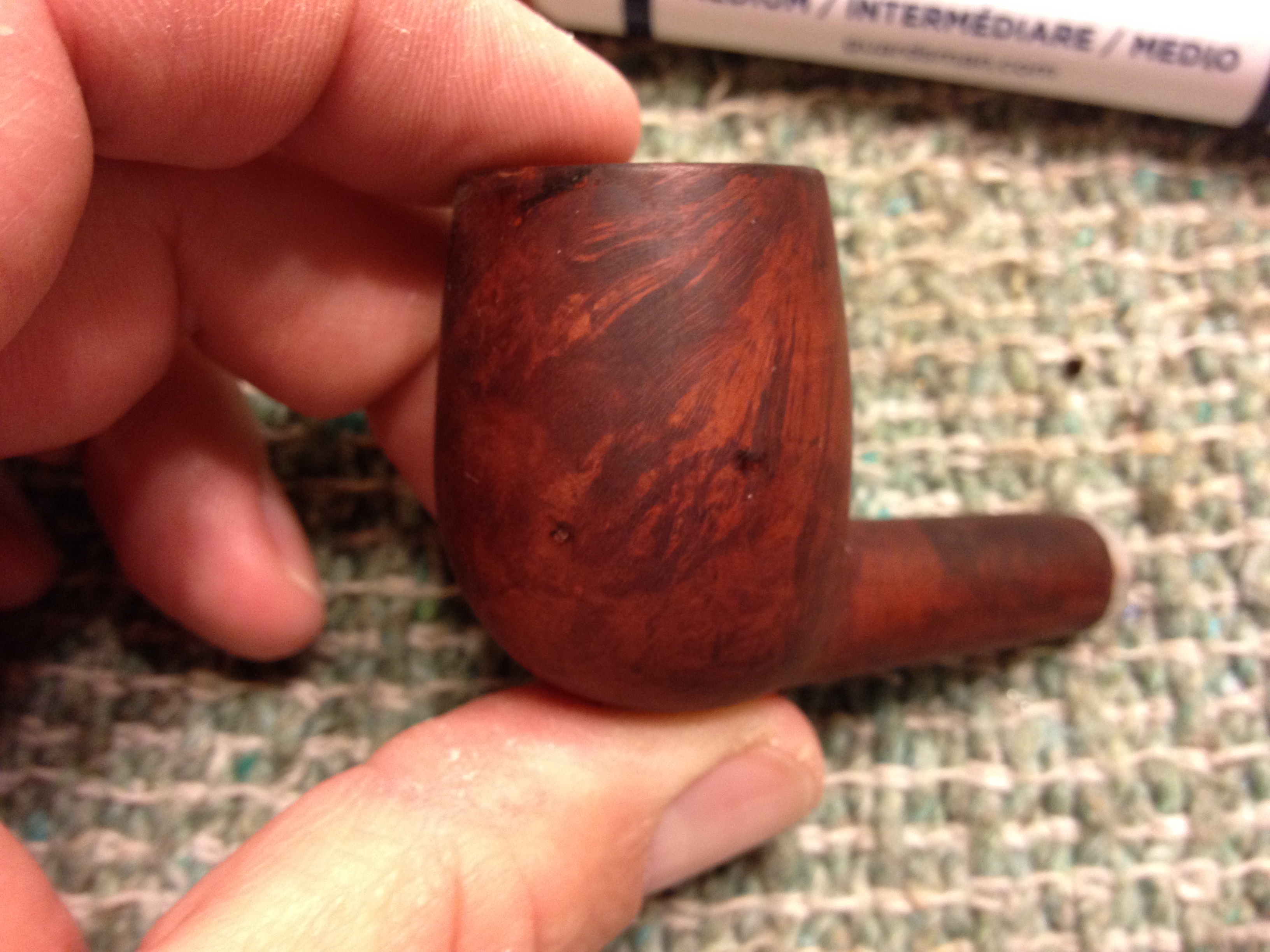
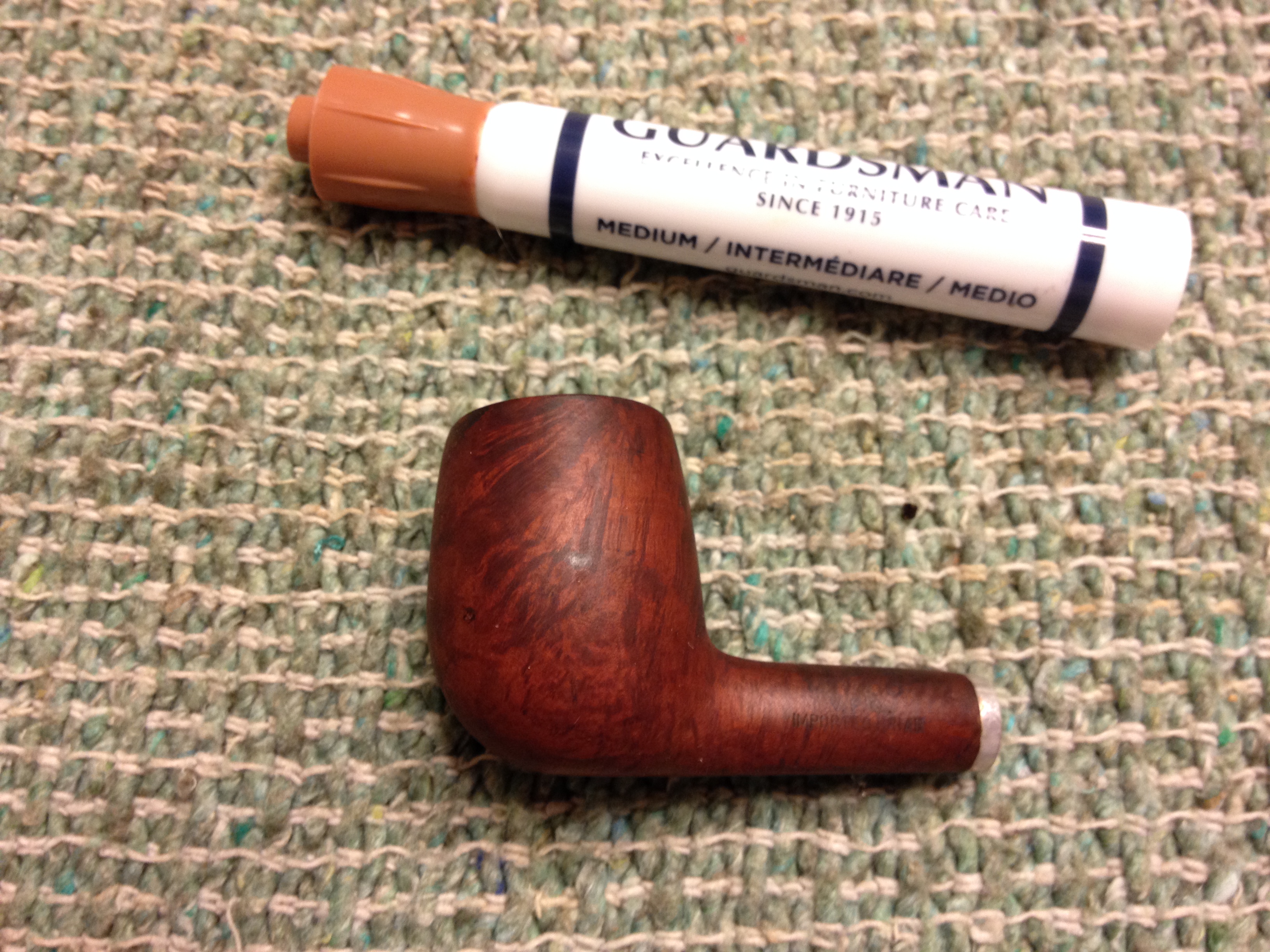
I sanded the bowl with 1500-2400 grit micromesh pads to smooth out the finish and to lighten the stain on the bowl. I was aiming to bring it back as close as possible to the original finish which had red highlights. When I had finished sanding the bowl I gave it a second buff with White Diamond to see where I stood. At this point the work on the bowl was finished and I was pleased with the results. The grain showed clearly and the stain gave a pleasant contrast of dark and light. The patches looked much better and though visible blended in far better with the stain and the grain patterns. The rim and the inner bevel looked excellent.

Now it was time to address the stem. I scrubbed it down with Brebbia Pipe and Mouthpiece Polish. It has a fine grit in the paste and when it is rubbed into the stem works quite well to remove the surface oxidation and buildup. I worked it into the grooves and the dip on the end of the stem with a soft bristle tooth brush. I let it dry for a short time and then rubbed it down with cotton pads. The photos below show the stem after this initial polishing with the Brebbia Polish.
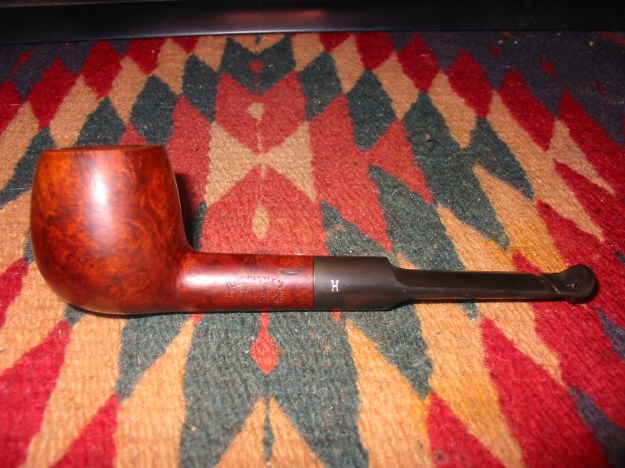
IMG_6966

IMG_6967

IMG_6968

IMG_6969
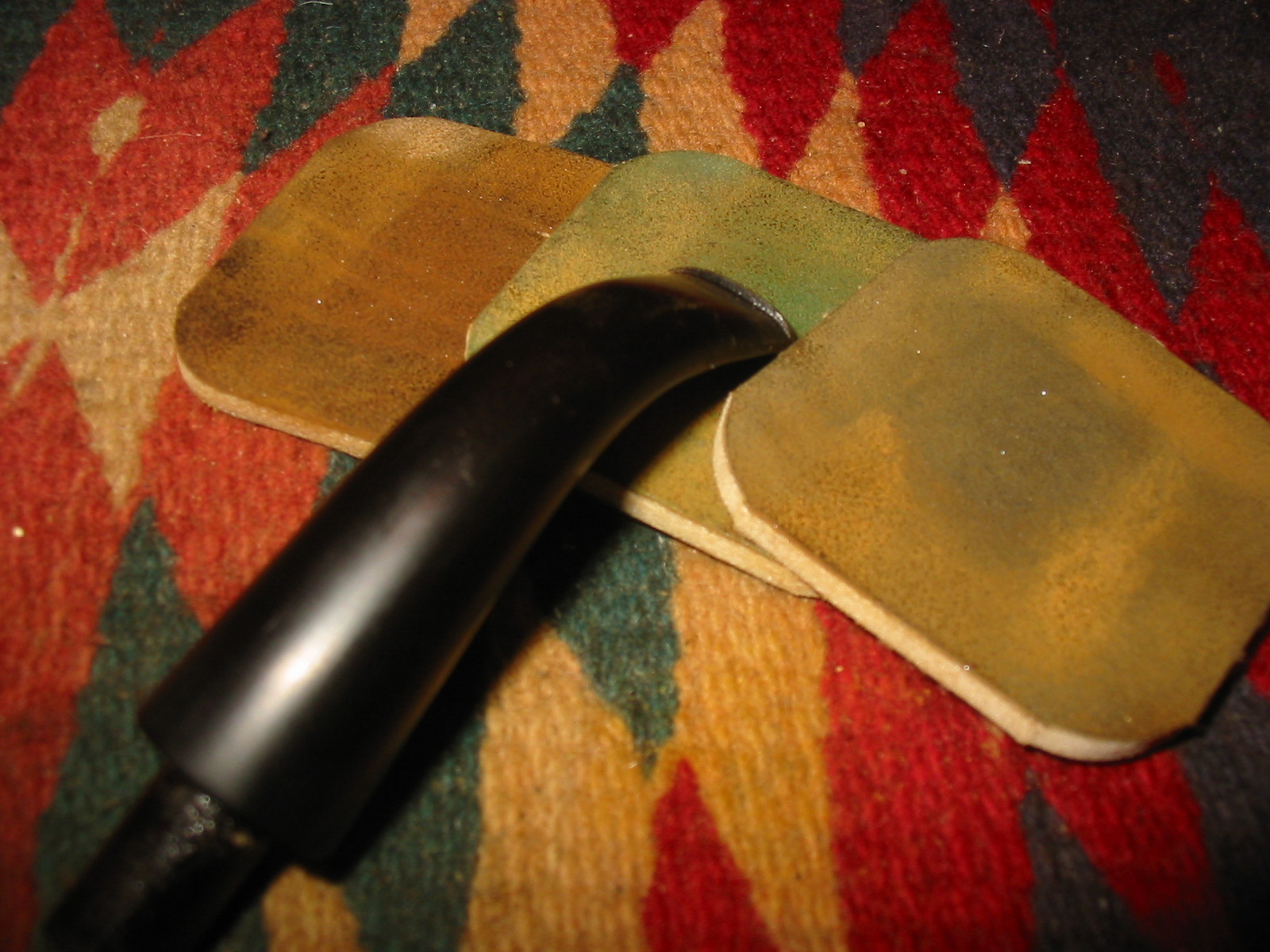
I scrubbed the stem with Meguiar’s Scratch X2.0 and when it dry buffed it off with a cotton pad. I repeated this process several times, scrubbing the grooves and dip on the end of the stem with the same tooth brush. I rubbed the stem down with Obsidian Oil and when dry took it the buffer for another buff with White Diamond. I gave it several coats of carnauba wax, buffing it with a soft flannel buff between coats. I found it very hard to remove some of the oxidation from the channels/grooves on the top and bottom of the stem. Under the flash it is clear that there is still some oxidation at that point. I rubbed it down with another coat of Obsidian Oil being careful to get deep into the edges of the grooves and the dip on the top of the stem.
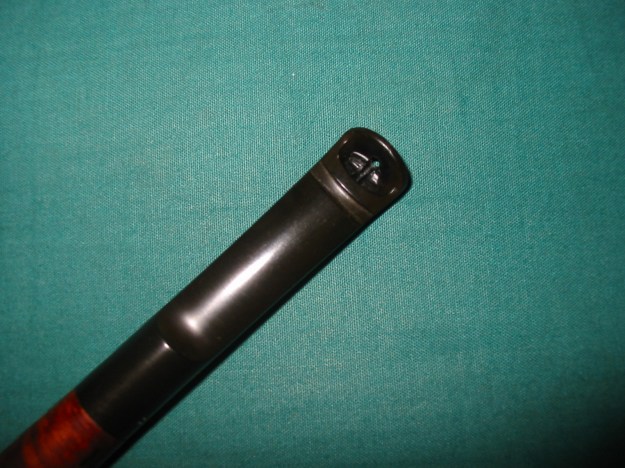
IMG_6978

IMG_6979
The finished pipe is shown in the last series of photos below. I am happy with how this old timer turned out. I am so glad I did my research before cutting off the stem and recutting a new button or splicing in a new button. I would have ruined a unique piece of pipe history and lost the opportunity to learn yet another piece of the history of our fascinating hobby. Now instead it is a restored piece that shows the creativity of those seeking to create a more comfortable pipe. Now I have to load a bowl and give it a try.
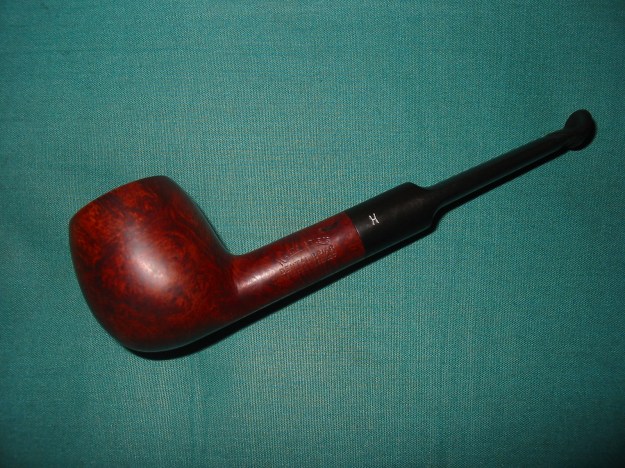
IMG_6974

IMG_6975

IMG_6976

IMG_6977

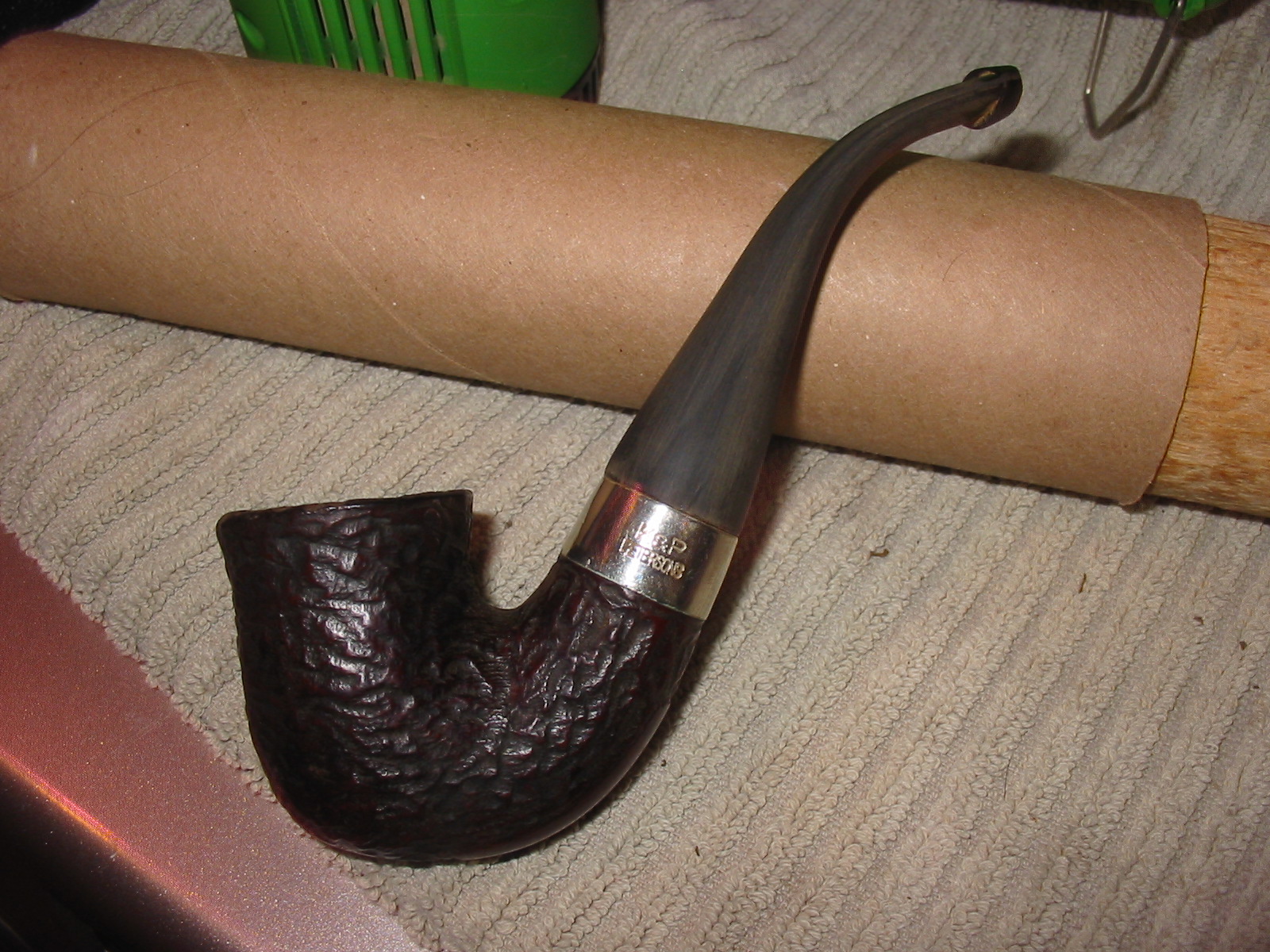
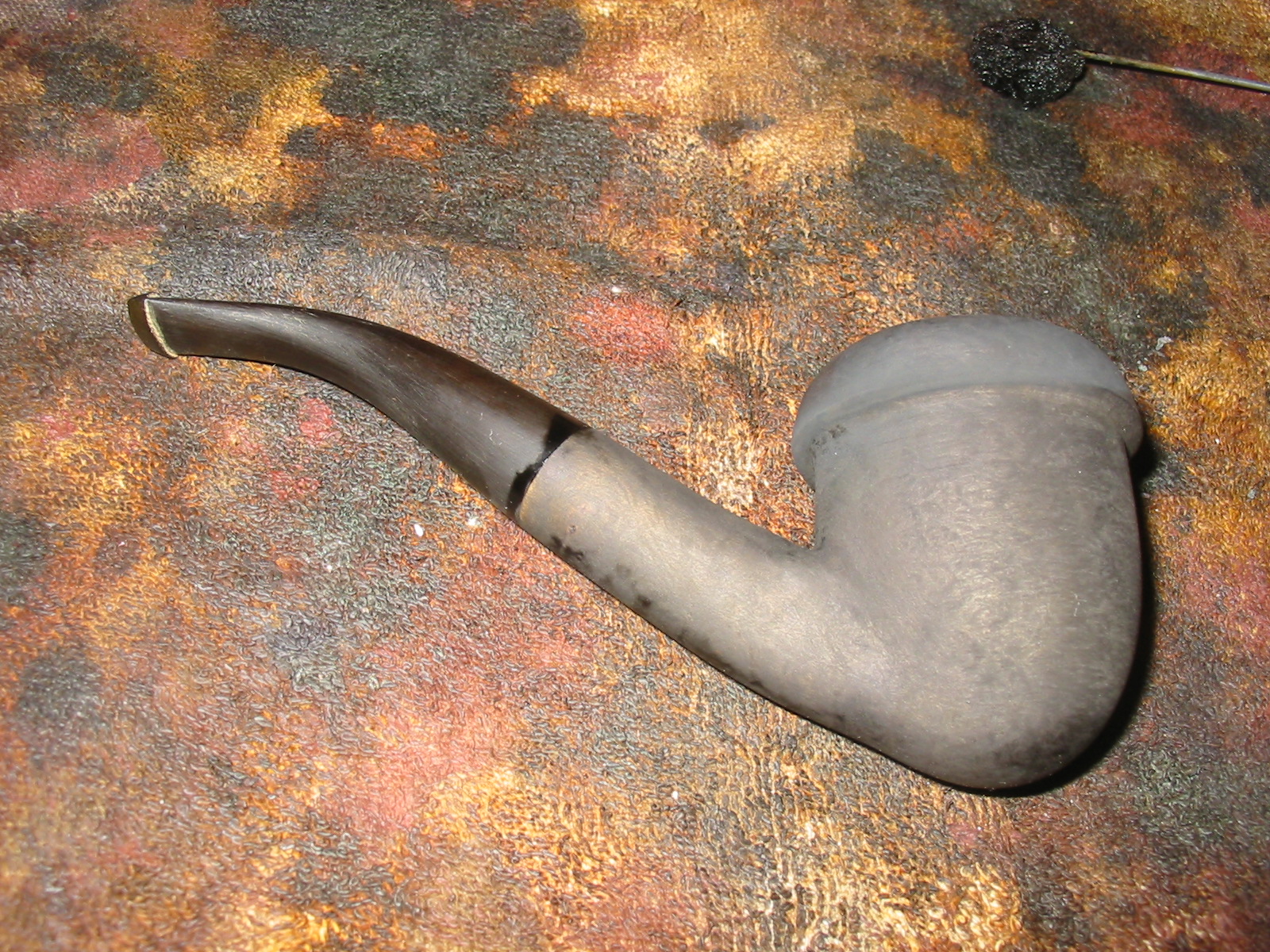
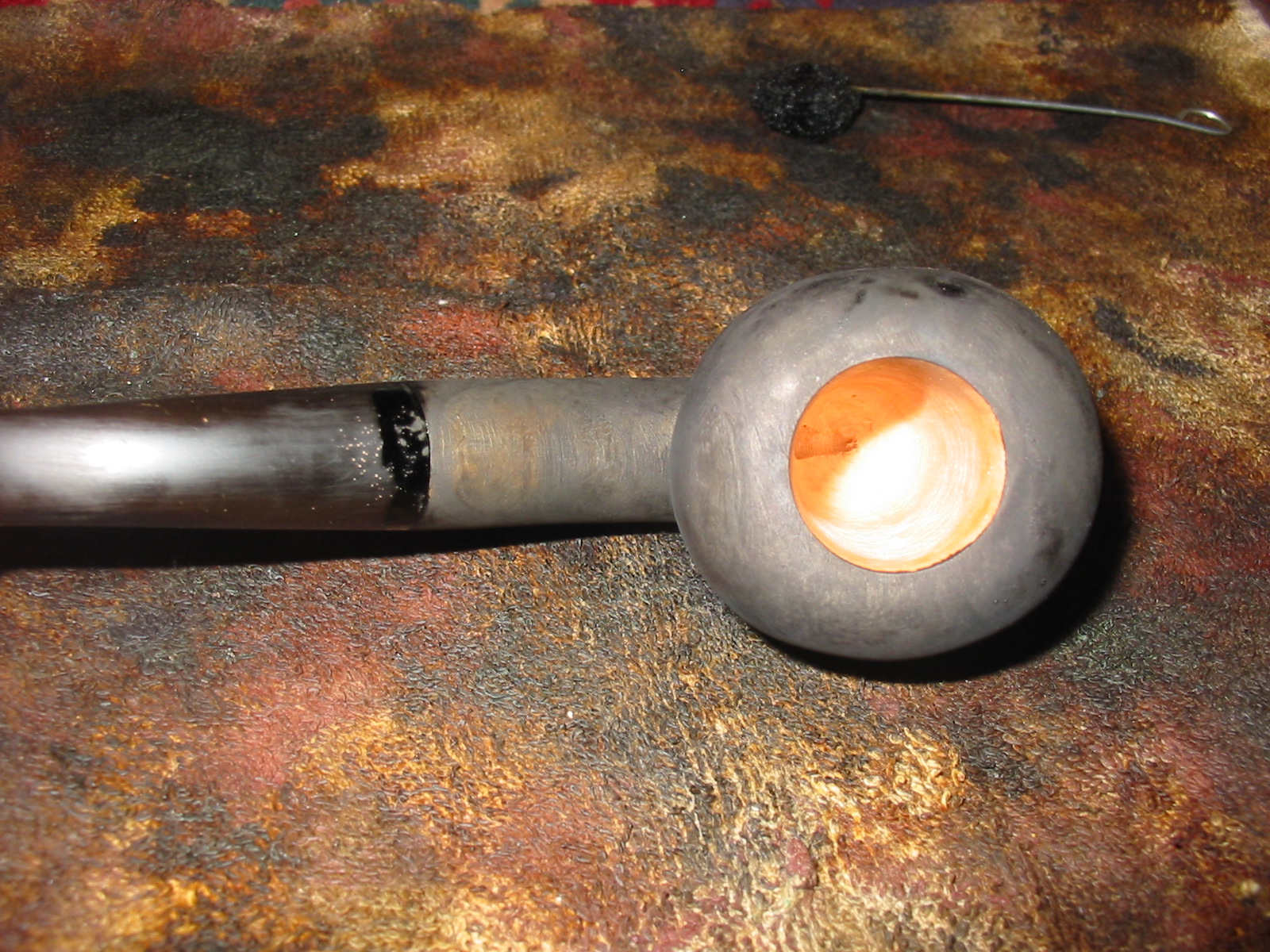
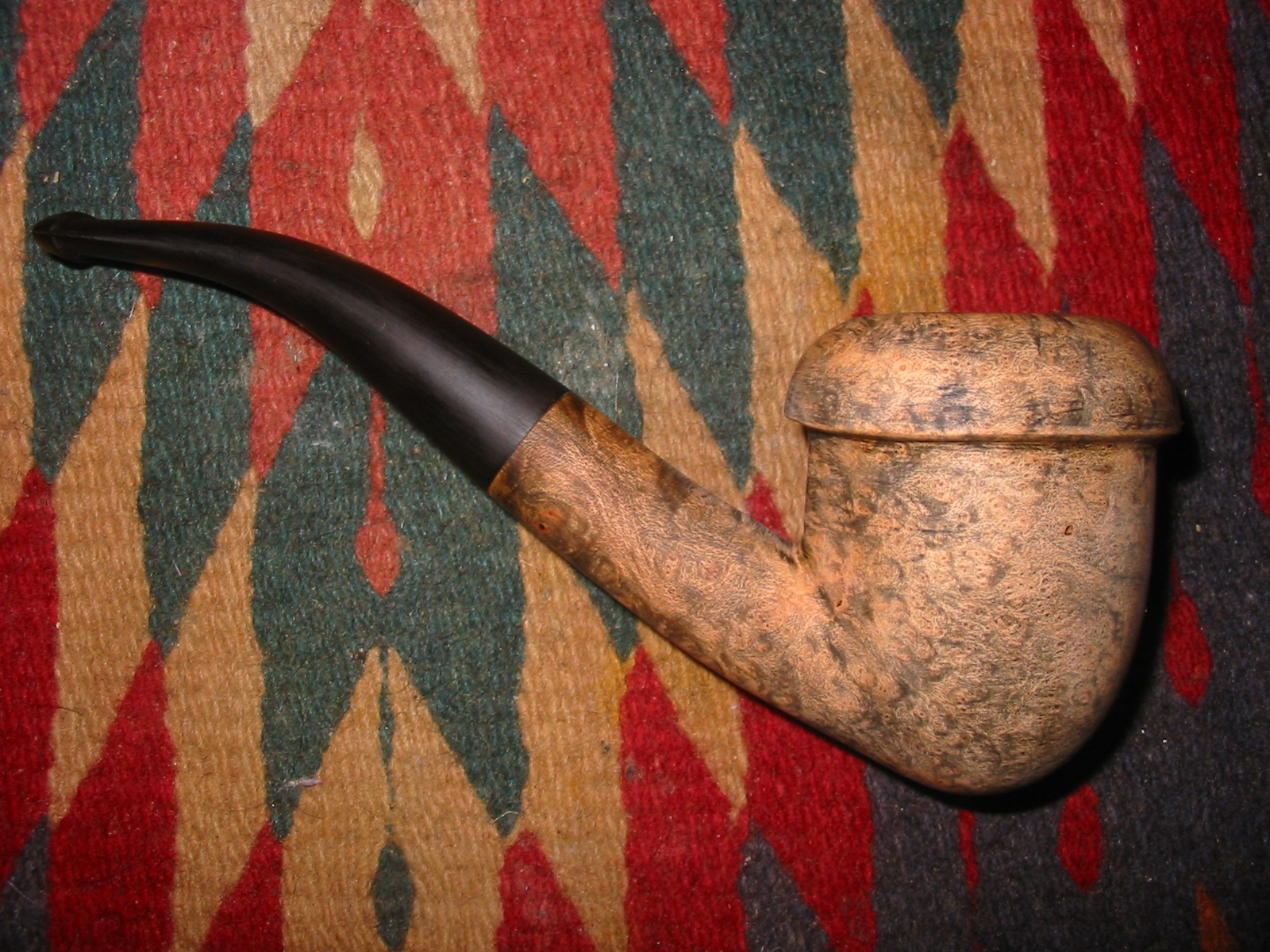
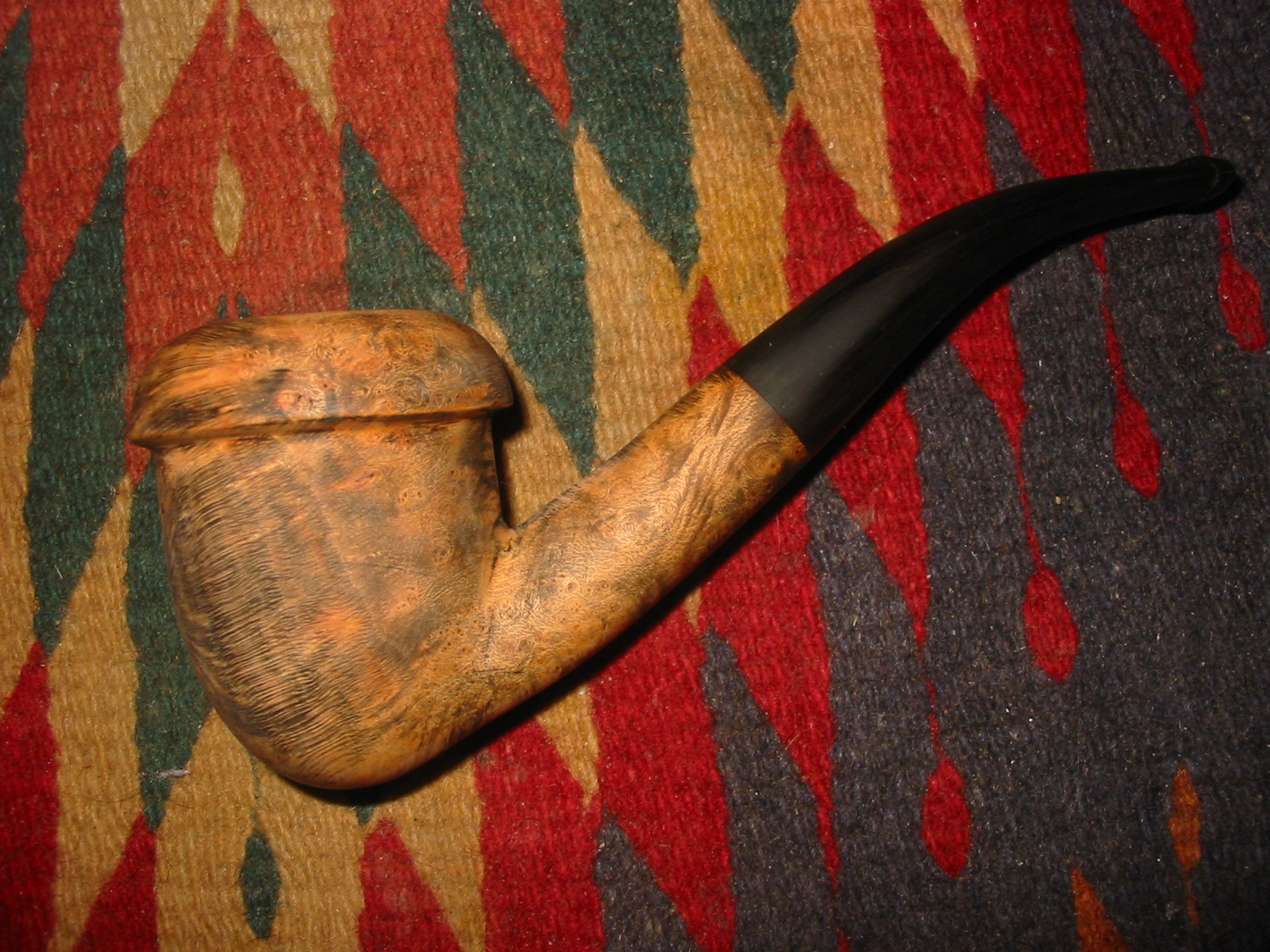
Now that the pipe has been restemmed it is time to rusticate it


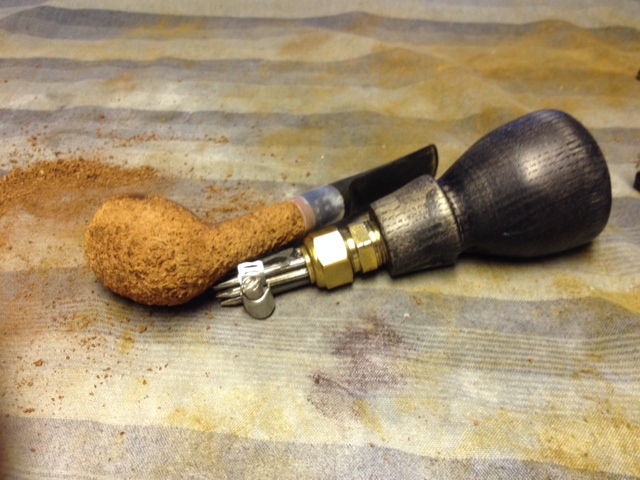
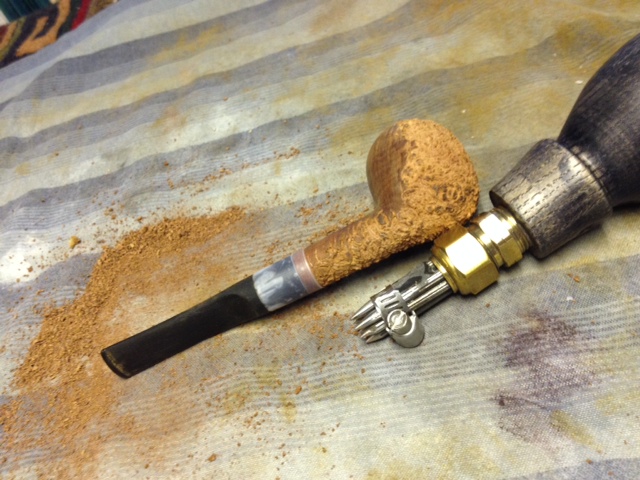
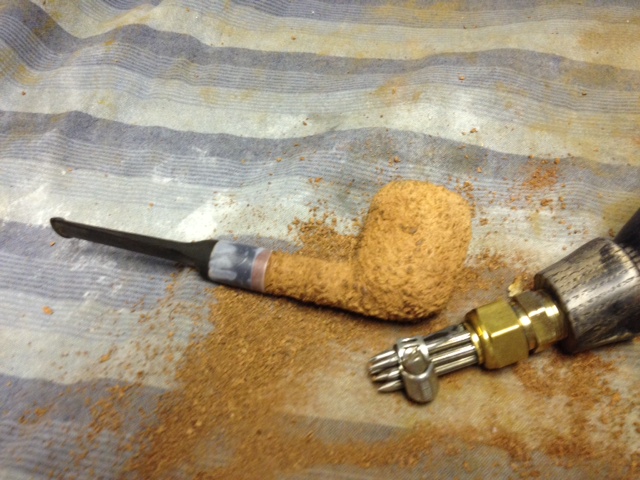
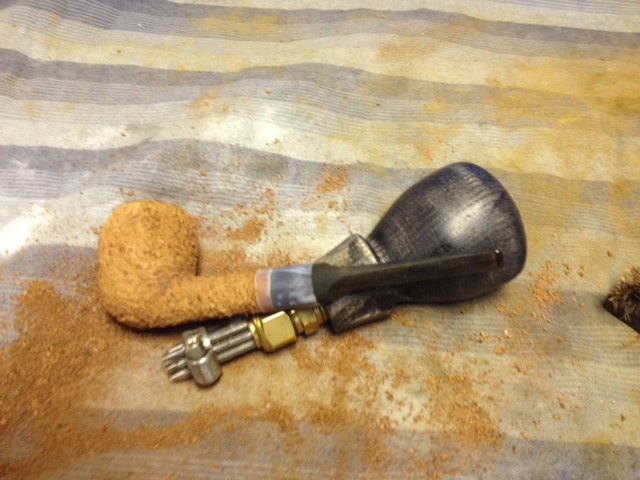
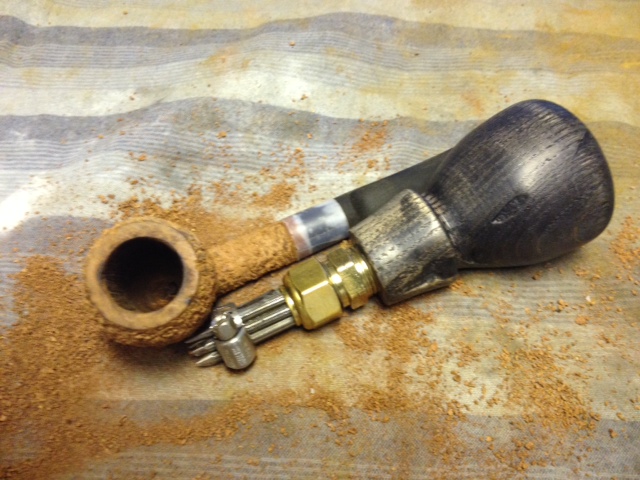
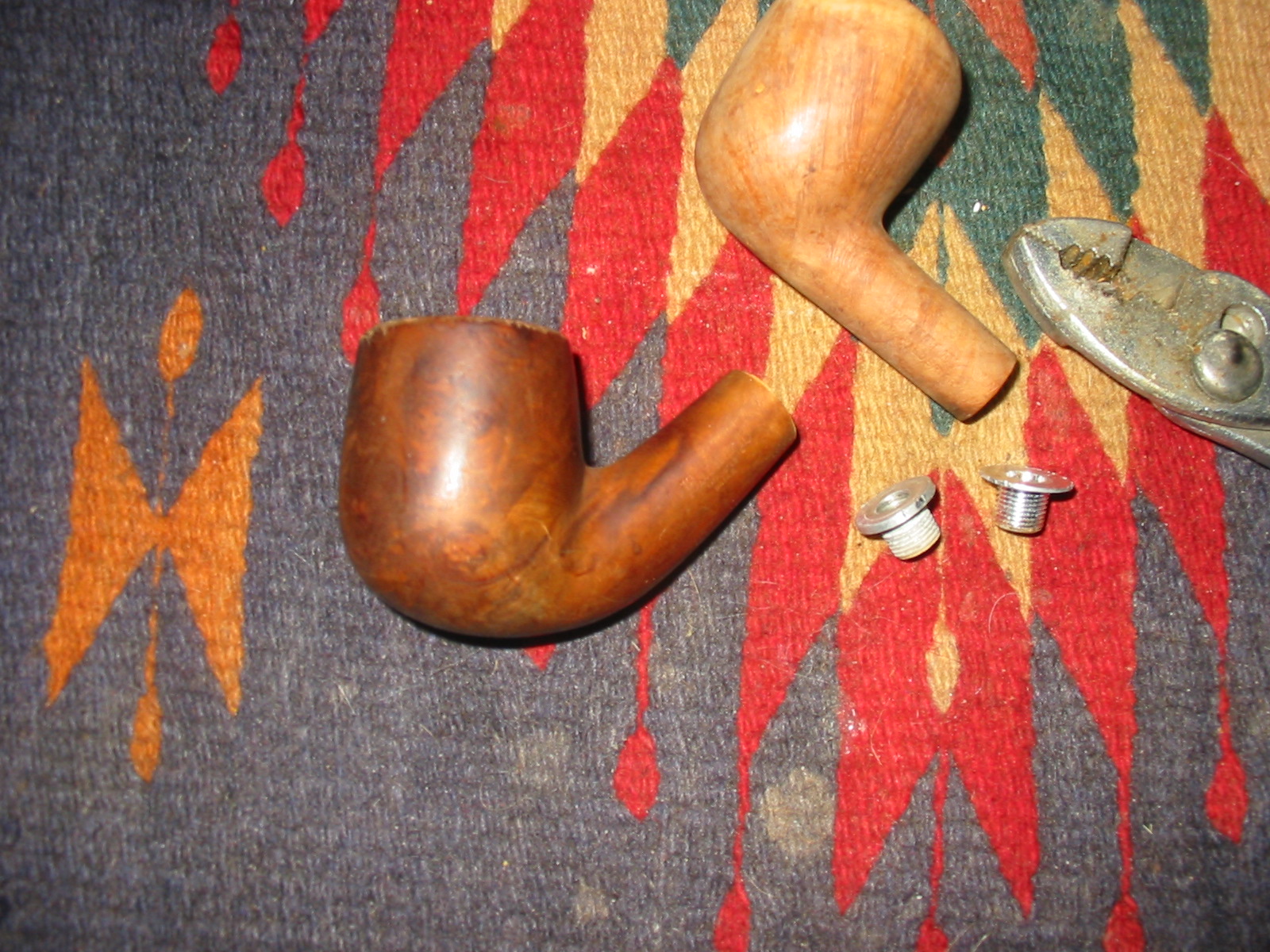
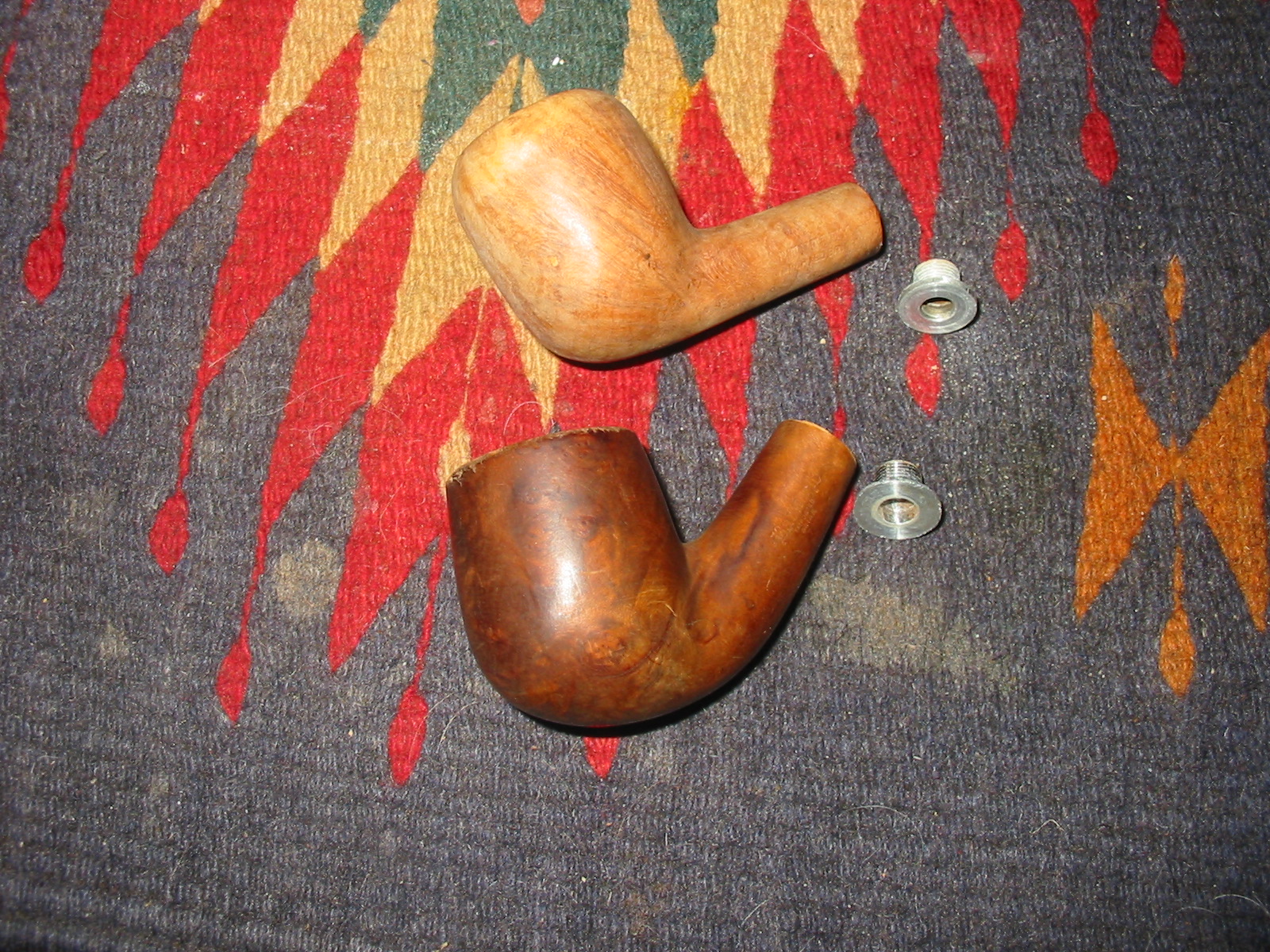
I wrote about restemming this pipe in the post on Replacing a tenon in a stem with a minimum of tools (https://rebornpipes.com/2014/06/15/replacing-a-tenon-in-a-stem-with-a-minimum-of-tools/). The thing I forgot to mention is that the bowl originally had a threaded metal stem and a metal insert in the shank. I was able to remove the insert from the shank with no trouble and craft a push stem for the shank as a replacement. The stem came out great and with some work came out looking like new. In figuring out how to finish the bowl I was faced with a few choices. The briar was not terrible, I have seen worse but there were fills in the bowl. I could have picked them out and refilled them as I have done on many occasions but somehow that just did not attract me with this bowl. I had been given a rustication tool by Chris and had not used it yet so that was very attractive to me for this bowl (https://rebornpipes.com/2014/06/07/a-handmade-rustication-tool-gifted-by-a-friend-and-reader-of-rebornpipes/). The stamping on the shank was virtually buffed away so it was not something that needed to be preserved. So the decision was made. I would get to try out the new tool and see what kind of rustication pattern it would make on the briar and how comfortable it was in the hand as I pressed and twisted it into the wood. I also wanted to see if I could use it in tight spots up against the bowl and shank and close to the stem/shank junction.
rustic1
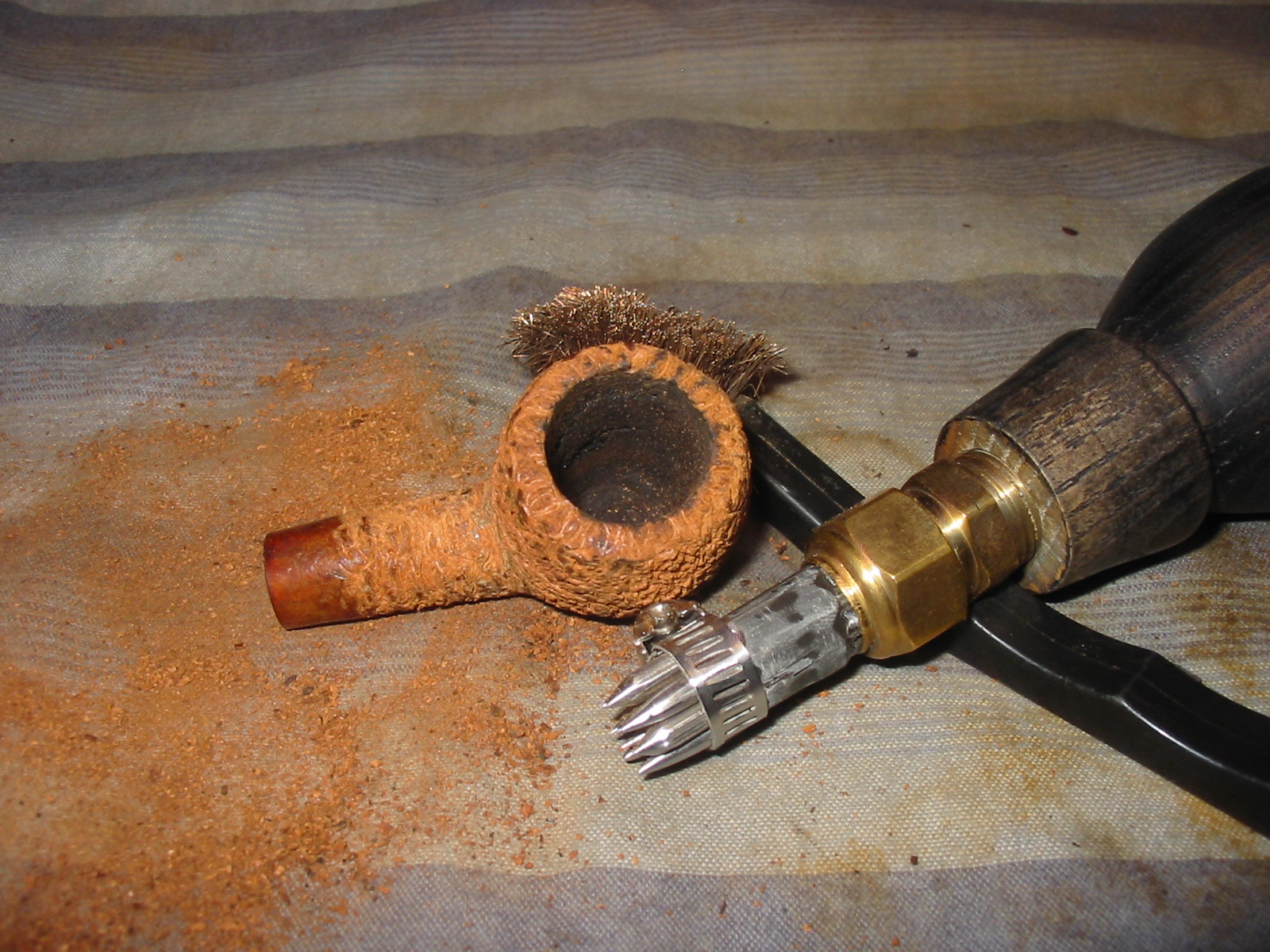
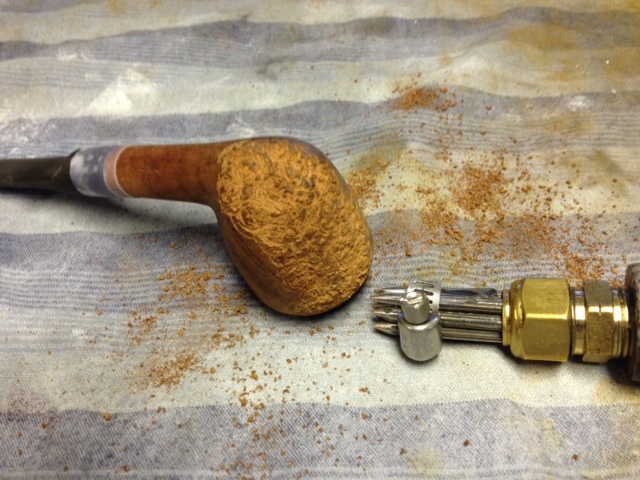
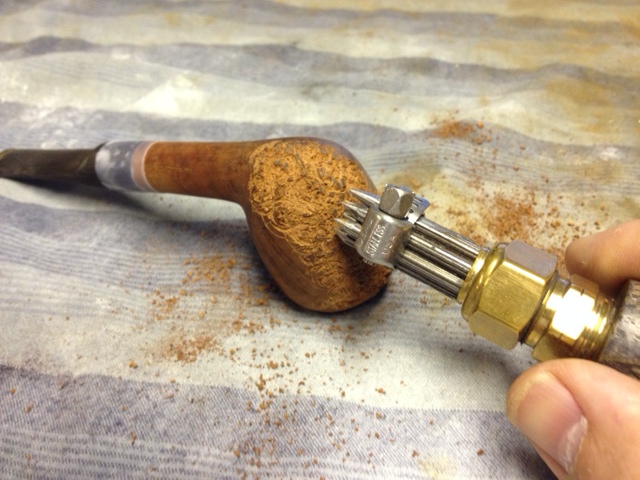
I started on the front of the bowl and pressed and turned the tool into the briar. It worked like a charm. The nails were sharp, the grouping tight and workable on the pattern, the handle was extremely comfortable and spread out the pressure across my palm. This was going to be a piece of cake. It would be no problem to finish rusticating this pipe with a lot less pain in my hands. I wrapped a strip of scotch tape around the shank to make a protective line to work toward on the shank. I wanted to leave a smooth band on the shank so this would remind me where to quit twisting the tool into the wood. The next series of eight photos show the process from start to completion. It probably took me the better part of an hour and a half to rusticate the bowl and shank. I worked it over several times during that time to get a rough finish. I wanted it to be very tactile and rough kind of like a sea rock finish so I pressed hard when I worked over the wood. I left the rim smooth as I wanted to stain it to match the band I was leaving around the shank. The two would provide some contrast to the rustic finish on the rest of the pipe.
rustic2

rustic3

rustic4

rustic6

rustic7

rustic8

rustic9

rustic10
When I finished rusticating the briar unwrapped the scotch tape from the shank. The line was fairly straight and provided a nice contrast of finishes between the stem and the rustication. Then I used a brass tire brush to knock off any loose pieces of briar on the bowl. I find that using the tire brush evens out the finish and cleans up the briar once I have finished with the hard work.
rustic11

rustic12

rustic14

rustic15
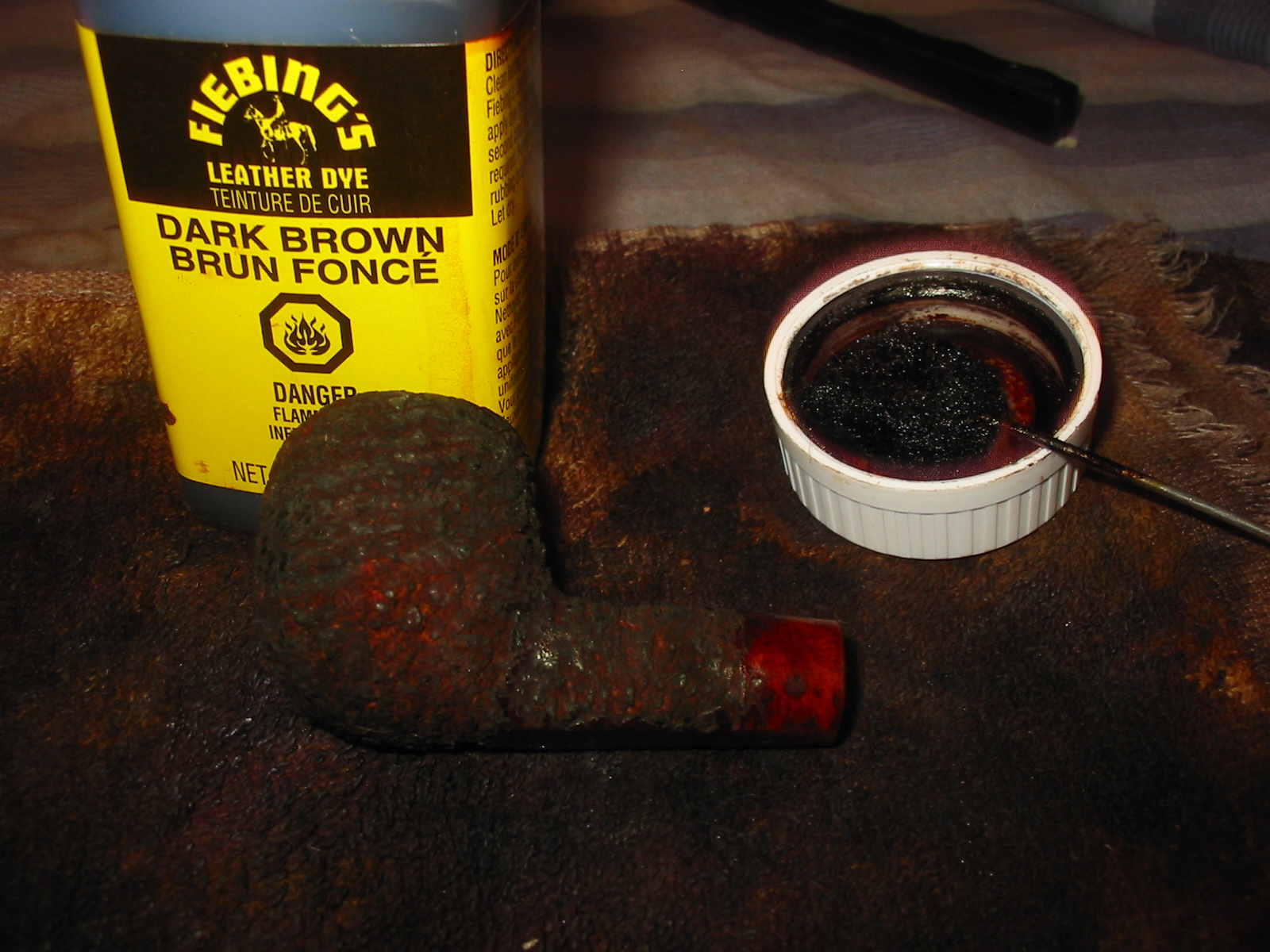
I sanded the band on the shank and the rim with a medium and a fine grit sanding sponge and a fine grit sanding sponge to prepare them for staining. I decided to use two different stains on the bowl to get some depth to the finish. I began with a dark brown aniline stain. I applied it with a wool dauber and let the stain permeate deep into the briar. I flamed it to set it. Reapplied the stain a second time and then flamed it again.
rustic16

rustic17

rustic20

rustic21

rustic22

rustic23
I wiped the bowl down with acetone and isopropyl alcohol on a cotton cloth to remove the stain from the highpoints on the bowl finish and on the band and the rim. I repeated the wash until I had the stain coat the colour I wanted. The dark brown sat deep in the grooves and the high spots were lighter in colour. I then stained the bowl with the second colour, a oxblood or cherry coloured aniline stain. I applied it with a cotton pad and daubed it onto the band, the rim and the high spots on the bowl. I flamed it, reapplied it and flamed it again. Once it was dry to the touch I hand buffed it with a soft cotton cloth.
rustic25

rustic27

rustic29

rustic30
The cherry/oxblood stain worked well on the band and the rim. It made them stand out against the darker brown of the rustication. In the light the texture of the rustication has both a dark brown look in the crevices and a reddish tint on the high spots. The contrasts in the stain on the rustication came out well and the smooth band and the rim work well with the rest of the pipe. Interestingly, and this does not always happen for me, the stain came out exactly the way I was hoping it would when I started the process.
rustic31

rustic32

rustic33

rustic34
At this point all I had left to do was to work over the stem with the micromesh sanding pads and then give it a buff to polish it. I followed my normal process on the stem. I wet sanded it with 1500-2400 grit micromesh sanding pads and dry sanded with 3200-12,000 grit pads. I rubbed the stem down with Obsidian Oil and then took it to the buffer to give a light buff with White Diamond and a blue plastic polish. I finished by giving the rim, the band and the stem multiple coats of carnauba wax and a final buff with soft flannel buffing pad. The finished pipe is shown below. It has come a long way from the neglected bowl that sat in my refurbishing box for a long time with no stem. Now it is ready to fire up and enjoy.
IMG_6848

IMG_6849

IMG_6850

IMG_6851

Restoring a Bent Billiard – Converting a threaded mortise to a push mortise


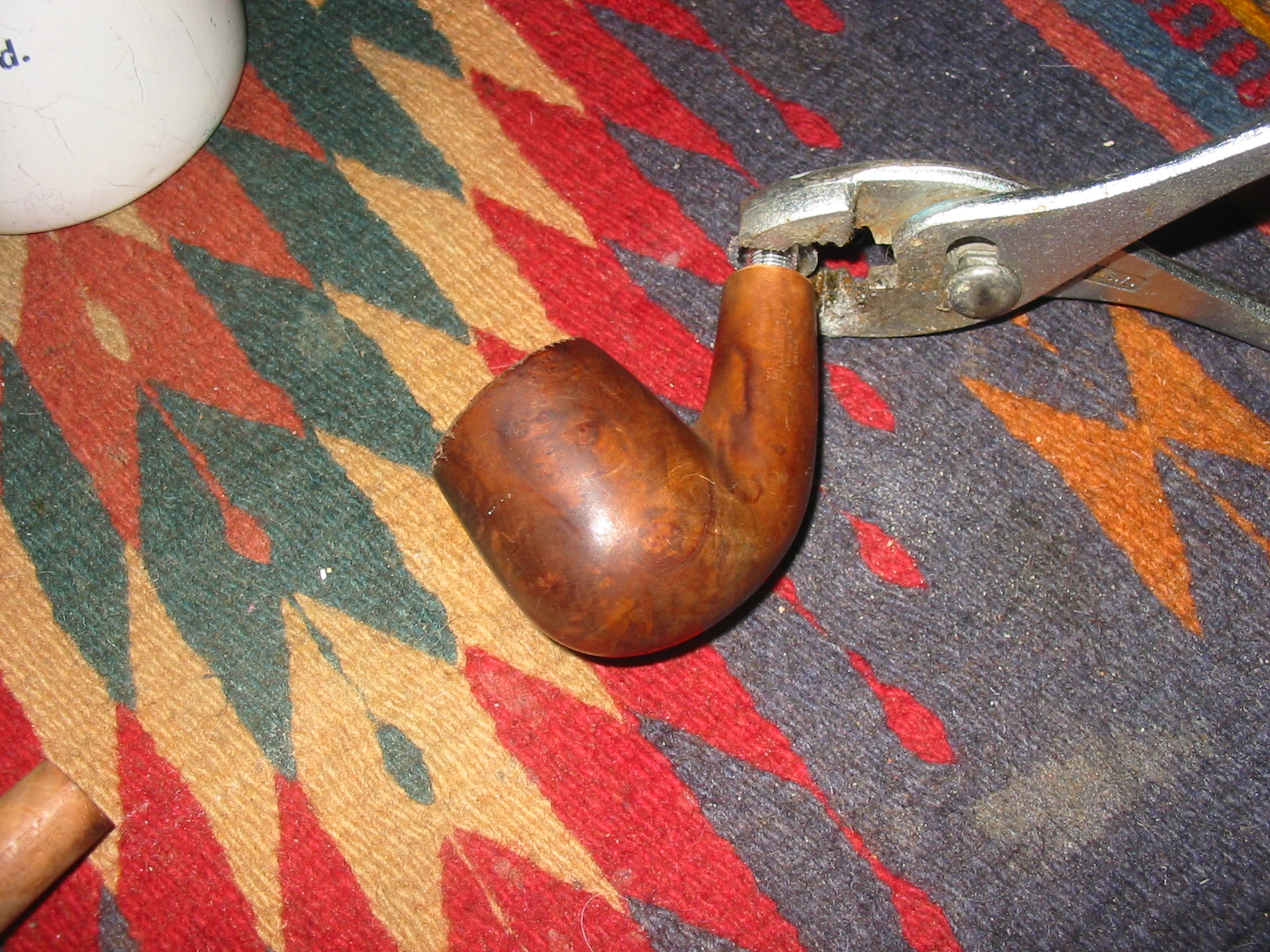
When I picked up these two pipes in the antique mall grab bag my intention was to hunt down threaded metal tenon stems for them both. But I soon finished cleaning up the rest of the lot and was down to these two and an old Medico. These two were in far better shape to start with than the old Medico so I looked them over for a while. I decided to drill out the threads on both of them and fit a push stem to the shank. I started with the bent billiard as it needed the most work to clean up the rim damage. While I was setting up to do it I got to thinking that the odds were very high that the inserts were reverse threaded into the shanks of the pipes. I took out a pair of pliers and carefully locked onto the metal edge of the insert on the bent billiard. I turned it counterclockwise and after a few moments of not moving it came loose and screwed out with ease. I did the second pipe bowl at the same time so I now have two pipe bowls that have been modified with a simple fix to that the mortises will accommodate a push stem.
IMG_6668

IMG_6669

IMG_6667
I had a saddle bit in my can of stems that had a Delrin tenon and with a little sanding fit the shank perfectly. It had a short saddle and quite quickly went to a blade. It was still quite thick in the mouth so I would need to sand it thinner for comfort. The fit against the shank was snug and only the diameter of the stem would need to be adjusted to fit properly.
IMG_6670

IMG_6671

IMG_6674
The pipe has some interesting grain on it and only one fill on the side of the shank. The stamping reads something like Barnard B over Imported Briar on the left side of the shank. The Barna is very clear the next two letters are faint and the end there is a Germanic Style B. Not much information available on the brand that I can find. The rim was really badly beaten up. It was rough and chewed up looking. The outer edge was ruined with chunks missing. The inner edge surprisingly enough was quite clean and in decent shape. There was a thin cake around the top half of the bowl while the bottom half was still unsmoked briar. The finish as worn around the rest of the bowl but surprisingly there were no nicks or dings on the rest of the briar.
IMG_6672

IMG_6673
I took a close up photo of the top of the rim to give an idea of the condition it was in when it arrived at my work table. I fit the stem to the shank and then used the Dremel and sanding drum to take down the excess diameter of the stem. I then sanded the stem and shank with 220 grit sandpaper to make a smooth transition between the two materials. In the photos taken of the top and bottom you can begin to see the damage on the stem near the saddle. At this point it did not go through the Lucite material but it was definitely a grey colour instead of black.
IMG_6678

IMG_6679

IMG_6680

IMG_6681

IMG_6682
With the fit of the stem finished I topped the bowl. I set up the topping board and the 220 grit sandpaper and turned the bowl into the sandpaper in a clockwise direction. I sanded the outer edge of the rim with a folded piece of sandpaper to smooth out the damage that the topping did not remove. I then wiped the bowl down with acetone to remove the finish and clean up the bowl.
IMG_6683

IMG_6686

IMG_6684

IMG_6685

IMG_6687

At this point I got an urge to put a silver band/end cap on the shank just to have a look. I liked the look of the cap but did not particularly like the look of the short saddle stem with the band. I almost pulled the band and decided against it but decided to leave it and stain the bowl to see what the finished look of the bowl would be. I could always make another stem for it should I desire to do so.
IMG_6688

IMG_6689

IMG_6690
I sanded the bowl with medium and fine grit sanding sponges and then wet sanded the bowl with 400 grit wet dry sandpaper. Once the scratches were removed and the briar was smooth I stained it with a black aniline stain. I applied it, flamed it, applied it again and flamed it again. I then heated the bowl with a heat gun to further set the black stain in the grain.
IMG_6691

IMG_6692

IMG_6693

IMG_6694

IMG_6695

IMG_6696

IMG_6697
I wiped the bowl down with isopropyl alcohol and followed that with acetone on cotton pads to remove the excess stain. I wanted to leave it deep in the grain and remove it from the surface of the bowl. I sanded the bowl with medium and fine grit sanding sponges and then wet sanded it with 400 grit wet dry sandpaper. When I had finished the bowl looked almost grey and the dark striations of grain stood out on the heel and underside of the shank.
IMG_6698

IMG_6699

IMG_6700

IMG_6701
I wiped the bowl down with alcohol again and then restained it with a oxblood aniline stain to bring out the contrast in the briar. I really like the way the finish had turned out on the bowl. The stem was looking more and more problematic. It seemed that I had sanded through the blade next to the saddle and sanded into the Delrin tenon. In the top and bottom view photos below you can see the grey area in each of those spots next to the saddle. This stem was ruined and needed to be replaced.
IMG_6702

IMG_6703

IMG_6704

IMG_6705
I took the stem off the pipe and sanded the two sides some more to see if I could feather out the damage or maybe repair it with a super glue patch. Looking at the photos you can see that patching and repairing the stem would not work.
IMG_6706

IMG_6707
I found a vulcanite saddle stem in my can of stems that would fit the shank. I turned the tenon with a PIMO tenon turner and then sanded it until it fit snuggly in the shank. The outer diameter of the stem needed to have some of the vulcanite removed to center the stem against the silver end cap.
IMG_6709
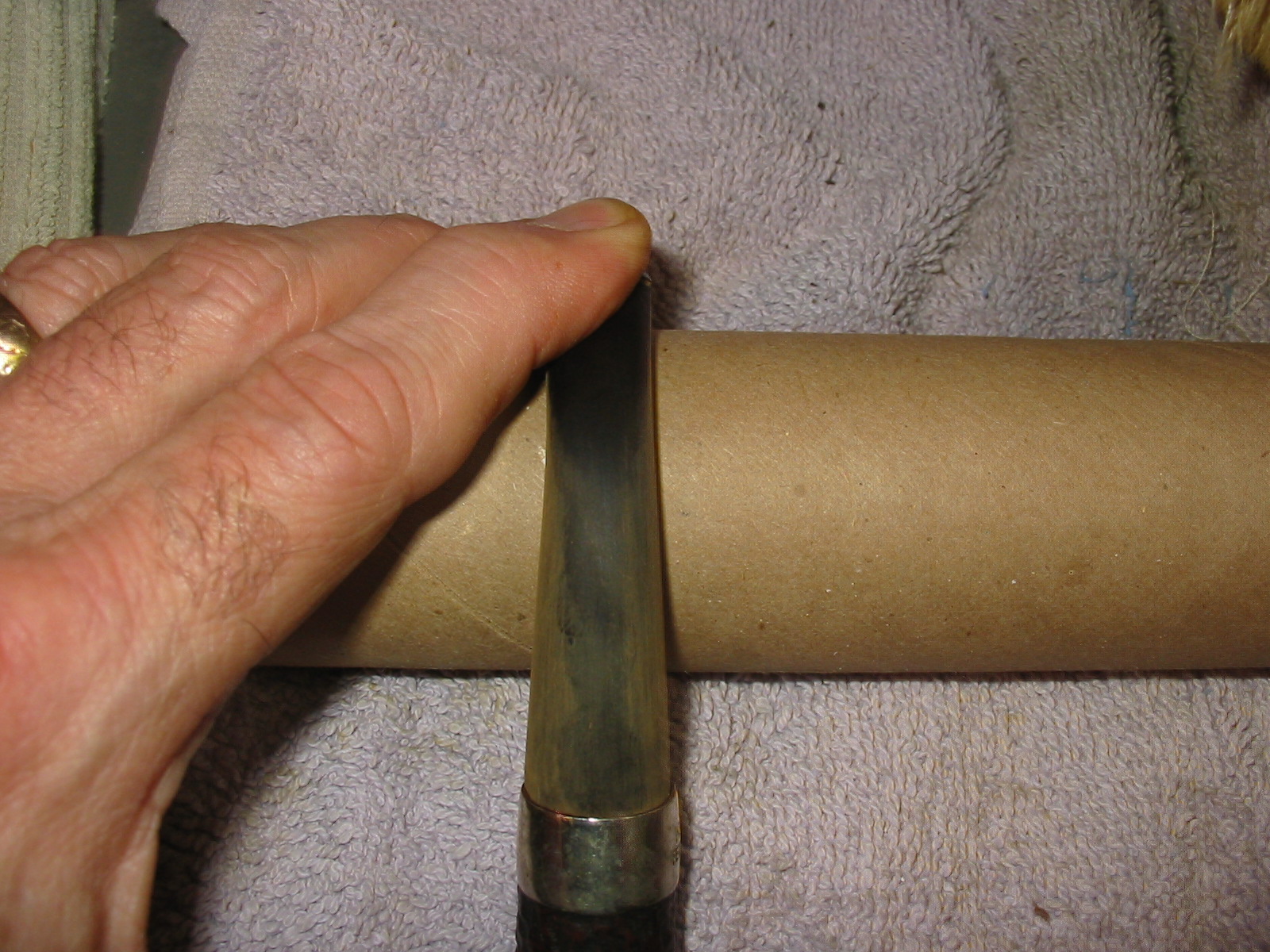
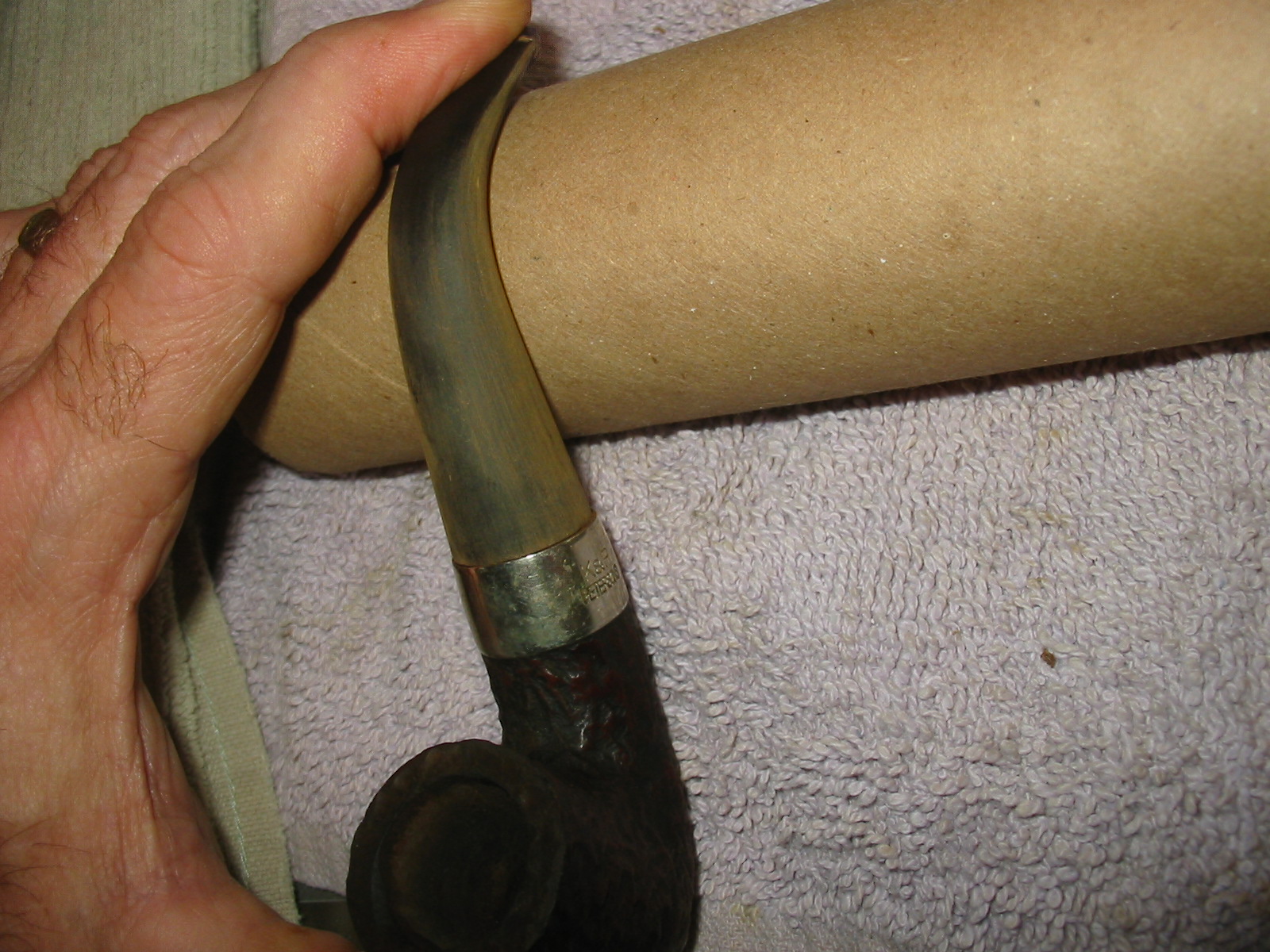
I sanded casting ridges off the stem and used a Dremel and sanding drum to remove the excess stem material. I sanded the diameter and the edges to remove all of the scratch marks. I used 220 grit sandpaper and then medium and fine grit sanding sponges to finish. I set up the heat gun and turned it on the low setting and held the stem over the heat. Once the stem was flexible I bent it carefully over an old rolling pin I use as a base until it was the correct angle. I set the angle with cold water.
IMG_6711

IMG_6712

IMG_6714
I sanded the stem with micromesh sanding pads – wet sanding with 1500-2400 grit pads and dry sanded with 3200-12000 grit pads. I buffed it with White Diamond and then rubbed it down with Obsidian Oil and let it soak into the rubber of the stem.
IMG_6715

IMG_6716

IMG_6717
I buffed the pipe and stem with White Diamond and polished the silver band with silver polish. I gave the entire pipe multiple coats of carnauba wax to preserve and protect the finish. I finished by giving it a light buff with a soft flannel buffing pad. The finish pipe is shown in the photos below.
IMG_6722

IMG_6725

IMG_6728

IMG_6727

Willard Dublin Restemmed and Rejuvenated


This was one of the bowls that I picked up in that antique mall grab bag. It is stamped Willard Imported Briar. There is no other stamping on the shank on either side. It came with an aluminum band on the shank and the mortise was made for a push stem. The finish was in rough shape showing worn spots and crackling in the varnish finish. The bowl sides had deep nicks and gouges in them and there were several fills around the bowl. The rim was heavily beaten with broken edges on the outer rim and some damage to the inner rim edge. The bowl itself was dirty with broken cake around the middle of the bowl and looking like it had been carved away from the top of the bowl leaving the rim out of round. There was no stem with this pipe bowl.
IMG_6576

IMG_6577

IMG_6578
I had a stem that would work with the pipe in my can of stems. The diameter of the stem was too wide but the length and the taper were correct. There was some surface damage to the top edge of the stem that would be removed once I adjusted the diameter. The tenon was very close to a fit and I sanded it lightly to make it fit snug without pressure on the shank.
IMG_6580
With the sanding the tenon fit well in the shank. The next series of photos show the excess material that would need to be removed from the diameter of the stem.
IMG_6581

IMG_6582
I sanded the stem with a Dremel and sanding drum while leaving it in place on the shank. I wanted sand it as close as possible with the Dremel so that the amount of hand sanding would be lessened. I then sanded the stem with 220 grit sandpaper.
IMG_6583

IMG_6584

IMG_6585
Once I had the basic shape right I decided to top the bowl. I set up my topping board and sandpaper and work on removing the damage on the rim. I press the bowl into the sandpaper and turn it clockwise until the damaged portion of the rim is removed and the surface smooth.
IMG_6586

IMG_6587
I took the Dremel to the stem again and removed some more of the excess vulcanite and then brought it back to the work table and did some more sanding with 220 grit sandpaper and medium and fine grit sanding sponges.
IMG_6588

IMG_6589

IMG_6590

IMG_6591
I sanded the bowl with the medium and fine grit sanding sponges to smooth out the sanding marks on the rim and to smooth out the outer edge of the rim. I wiped the bowl down with acetone and then with isopropyl alcohol to remove the varnish finish.
IMG_6592

IMG_6593

IMG_6594

IMG_6595
I reamed the bowl with a PipNet pipe reamer and took out the remaining cake mid bowl. It took three of the four cutting heads to take the cake back to bare briar.
IMG_6596
Since the briar was already a rich reddish colour I decided to stain it with an oxblood aniline stain. I had found that when I scrubbed the bowl down with the alcohol the fills actually were more blended into the bowl than they had been before removing the varnish. I figured that by adding a topcoat of more oxblood stain the fills would blend in more fully into the finish. I applied the stain, flamed it and repeated the process until I got an even coverage on the bowl. The top of the rim took several extra coats of the stain to make it match the rest of the bowl.
IMG_6599

IMG_6600

IMG_6601

IMG_6602
I took the pipe to the buffer and buffed the bowl and stem with White Diamond. I avoided buffing the band as buffing the aluminum turns the buffing wheel black and the black stains the briar and the stem. When I got back to the work table I polished the aluminum with a polishing cloth. The photos below show the pipe after the staining and buffing.
IMG_6603

IMG_6604

IMG_6605

IMG_6606
I sanded the stem with micromesh sanding pads – wet sanding with 1500-2400 grit pads and dry sanding with 3200-12000 grit pads. I buffed the stem with White Diamond and then rubbed it down with Obsidian Oil.
IMG_6607

IMG_6608

IMG_6609
I buffed the bowl and stem a final time with White Diamond and then gave the bowl and stem multiple coats of carnauba wax. I buffed it with a soft flannel buffing pad to bring out the shine. The stain did a good job of hiding the fills. Though they are still present they do not stand out as much. The new stem fit very well and looks like the one that was made for the pipe. The finished pipe is pictured below and it will certainly grace someone’s pipe rack in the near future.
IMG_6610

IMG_6611

IMG_6612

IMG_6613

My latest “Frankenpipe” Project


Blog by Steve Laug

In the grab bag I got from the antique mall on my recent trip was a cutoff bulldog bowl. Whoever had owned the pipe in the past cut off the majority of the shank and had epoxied a metal tenon in place in the short shank. They had then added a churchwarden stem – a delicate round stem that really did not fit at all. In the photo below it is the bulldog just above the cob bowl. The stem was repurposed for the cob stack I wrote about in a previous blog post. The bowl just sat in the box while I figured out what I would do with it. I had thought of turning it back into a bulldog but just was not sure of that being the right direction to go with the pipe.
Pipe finds2
Then this evening I decided to do another “Frankenpipe” project. I pulled together the parts that might come into play and spread them out on the worktable. I had a chunk of briar from Dogtalker that could work for a shank extension, the cut off bowl from the bulldog and a selection of different stems that could be fit to the new shank once it got to that point. I examined the end of the short shank for a long time trying to decide the way to go with the new shank extension – diamond shank or round shank. The edges of the remaining diamond shank were well-rounded and the diamond had virtually disappeared. It looked like it would probably evolve into a Rhodesian by the time I was done but time would tell. Sooooo…. in the spirit of the tall cob, I decided to put together the parts and see what I could do with them.
IMG_6486

IMG_6487
I started the process of joining the briar block and the short shank bowl. I drilled an airway in the briar going straight through. It was slightly larger than the metal tenon so that it the metal tenon and some epoxy would fit. This would give a straight airway from the bowl to the block. Once that was finished I drilled enlarged the airway on other side of the briar block with a larger bit to create a mortise. I put the pieces together to make sure that everything would fit together. For the purpose of having some kind of stem I grabbed an old diamond shank stem from my can of stems to fit the mortise.
IMG_6489

IMG_6490

IMG_6491

IMG_6492

IMG_6493
I used my topping board and sandpaper to try to face the short shank and the piece of briar to facilitate a flush fit when the two pieces were joined. The shank on the pipe had been cut at an angle so I took that into consideration when I was working on the briar extension. I mixed up a two-part epoxy and glued the block and the bowl. The photos show the epoxied joint before I cleaned it up. I clamped the pieces together overnight to let it cure.
IMG_6496

IMG_6497

IMG_6498

IMG_6499

IMG_6501
In the morning once the glue had cured I took the clamp off and looked it over more carefully to see if I could redeem the diamond shank. The more I looked at it the more I knew that the diamond shank was gone and I would best work to make a round shank Rhodesian. I turned the tenon on a very chubby round taper stem with the PIMO Tenon Turner to fit in the new mortise. Once the stem fit well in the shank I got a better idea of what the finished pipe would look like. There was still a lot of shaping and fine tuning to do with the stem to shank junction but the “Frankenpipe” had potential.
IMG_6502

IMG_6506

IMG_6507
I used a Dremel with a sanding drum to begin shaping the shank extension. I had to remove a lot of the briar on the extension and round it to make the transition smoother. I did the work in stages, constantly checking the look and flow of the shank extension to make sure I did not take off too much briar.
IMG_6509

IMG_6510

IMG_6511

IMG_6512
I put the stem in place in the shank to keep the target in sight as I sanded the shank. At this point in the process I was not worrying about the fit of the stem to the shank I was more concerned with the overall flow from the bowl to the button. When I am shaping a pipe I am constantly putting the pieces back together to see if the flow is beginning to work well.
IMG_6514

IMG_6515

IMG_6516
I continued to sand with the Dremel until I had the majority of excess briar removed. I then took it to the worktable and worked on the bowl and shank with 220 grit sandpaper. I continued to remove the briar and shape the new shank. The Rhodesian shape is beginning to become clear in this “Frankenpipe”. There was still a lot of sanding to do but the finished pipe shape was beginning to emerge from the briar.
IMG_6517

IMG_6518

IMG_6519
I continued to hand sand the shank to reduce the diameter and shape the flow toward the bowl. The shank and bowl are starting to look like they belong together. I worked on the stem to make the fit of the stem to the shank smoother. I removed the excess vulcanite with the Dremel and shaped the stem by hand to remove the sanding marks and scratches left behind by the Dremel and sanding drum. When I finished sanding for the evening I slid a band on the shank just for kicks. If I leave the band on the shank I will need to work some more on the stem to get a good snug fit. Even so the pipe is starting to appear from the diverse parts – “Frankenpipe” was beginning to come alive.
IMG_6526

IMG_6527

IMG_6528

IMG_6529

IMG_6530
I sanded some more on the shank and bowl junction. I decided to give the shank a cigar-like flow – tapered at the bowl and taper from the stem to the button but with a gradual rise in the middle. The flow would be a gentle bulge that came to its highest point at the band.
IMG_6531

IMG_6532

IMG_6533

IMG_6534
I decided to take the pipe to work with me and continue to sand it during breaks. I had a day working in our warehouse scheduled and would need to have a diversion from the work I had on the agenda for the day. I sanded it with a medium grit sanding sponge. I took these photos at the end of the day before I headed home for the day. The pipe was really taking shape now.
frank1

Frank3

Frank4

Frank 2
I really liked the flow of the shank from the back of the bowl to the tip of the stem. It formed a nice elongated oval. It would not be possible to sand further on the joint of the bowl and extension so I decided to rusticate the shank. I used some electrical tape to mark off the area that I would rusticate and to protect the places that I did not want to rusticate.
IMG_6535

IMG_6536

IMG_6537

IMG_6538
I rusticated the shank, leaving a smooth section of briar next to the nickel band. I formed a point at the bottom of the bowl where the rustication would end. I decided to leave the bowl smooth as it had some nice grain. I rusticated it with the modified Philips screw driver, wire brushed off the loose briar chips and then sanded it with a medium grit sanding sponge to smooth out the high edges. I wanted a patterned rustication but not one that was rough to the touch. My idea was to provide an interesting pattern on the briar of the shank extension that would hide the joint but also add interest to the finished look of the pipe.
IMG_6539

IMG_6540

IMG_6541

IMG_6542

IMG_6543
I stained the rustication with a black aniline stain, flamed it and then wire brushed it a second time. I restained and reflamed it and then sanded the high spots on the rustication with a fine grit sanding sponge. Once the rustication was the style I wanted I gave the bowl a top coat of oxblood stain. I wanted a contrast between the deep grooves of the rustication and the rest of the pipe. I always have liked that look on a pipe. This particular “Frankenpipe” was made for this kind of rustication pattern. At this point the major work on the bowl and shank is done other than polishing and waxing. I still had work to do on the stem and band but the pipe was taking definite shape. It had come a long way from the pieces that came together at the beginning.
IMG_6544

IMG_6546

IMG_6547

IMG_6548
I still had a lot of work to do on the stem. I needed to clean up the angles and taper of the stem, sand out some of the scratches left behind, reshape the button and open up the airway on the stem. Each of these little steps adds to the finished comfortableness of the stem and the flow of the smoke from the bowl to the mouth. I began by reshaping the slot in the airway. I have three needle files that I have come to depend on for this process. Two of them are oval files – one flatter than the other and the third is a round file. The three files work together to give the slot the open shape that makes slipping a pipe cleaner down the stem and shank during a smoke effortless.
IMG_6549

IMG_6550

IMG_6551
Once the slot was opened I sanded the inside of it with a folded piece of sandpaper to smooth out the inner surface of the slot. I sanded the stem with 220 grit sandpaper to shape and taper the flow from the band and shank toward the button. I wanted a smooth curve that paralleled the curve in the shank on the other side of the band. I used medium and fine grit sanding sponges and then my usual batch of micromesh sanding pads. I wet sanded with 1500-2400 grit pads and dry sanded with 3200-12000 grit pads. I rubbed the stem down with Obsidian Oil.
IMG_6552

IMG_6554

IMG_6555
I put the polished stem back in the shank and took the pipe to the buffer. I buffed it with White Diamond to give a shine to the bowl and shank and lightly buffed the stem again with White Diamond. I gave the pipe multiple coats of carnauba wax – using a light touch on the rusticated part of the shank. I buffed it with a soft flannel buffing pad to raise the shine. The finished pipe is shown below. I noticed in the photos that there are still some fine scratches on the stem and band so I will go back to the micromesh and take care of those. But before I do that it is time to load up a bowl of some aged Balkan Sobranie Virginian No. 10 and give the pipe a smoke. My Cocker Spaniel, Spencer is anxious to go out so it is a good time to load a pipe and give him some attention in the yard.
IMG_6556

IMG_6557

IMG_6558

IMG_6561

A Tired Little Bewlay Billiard Reborn


I participated in a Canadian Box Pass where tobaccos and pipes are mailed across Canada between pipemen and women from sea to sea. It is a fun experience in which you are given a chance to try tobaccos that you might never otherwise try to also trade for pipes that catch your eye. This particular box pass was very well-organized and I received a compact box of tobaccos and a variety of tobaccos. They had been divided in to three broad categories – Latakias, Virginias/Virginia Perique/Burley and Aromatics. There were also several tins of tobacco to try or to trade. The idea was you could take one if you put something of equal value back in the box. There were three pipes as well – a Comoy’s Apple (Cadogan era), a Trypsis partially rusticated pot and a Bewlay billiard that had been restemmed to give it the look of a cutty. There was also some carnauba wax that was there for the taking.
IMG_6208
I sampled many of the Latakia blends and many of the Virginia and Virginia/Perique blends. It was an enjoyable experience over the past weekend. There was one of the pipes that I also kept coming back to over and over again during the weekend – the small Bewlay billiard/cutty. There was something about it that drew my attention. It was clean but the finish was shot and the stem was definitely a replacement. The bend in it seems to have been added with the new stem. The finish was a sandblast that was well-worn from either handling or over buffing. The stamping on the bottom of the shank reads Bewlay in script over Sandblast over London England. It is worn and growing faint. There was probably a shape number at the end of the shank but it had been sanded away with the sandblast when it was restemmed previously.

The first photo below show some light splotches on the side of the bowl. These seem to have been fills that were put in before the blasting and finish were done. They were definitely putty. The shank had been sanded down and the first half-inch next to the stem was sanded smooth. There was also a slight taper to the shank were the sanding had taken down the diameter of the shank at the end. The rim was darkened and had some carbon build up on it. The stem was in rough shape in that it had some deep tooth dents on the underside. When I took it out of the shank I was even more convinced that it was a replacement in that it had a thick-walled aluminum tenon. It was similar to the tenons on Medico pipes with horizontal split in the tenon so that it can be adjusted. The difference was in the thickness of the material.
IMG_6433

IMG_6435

IMG_6436

IMG_6437

IMG_6438

IMG_6439
Before I packed up the box yesterday I decided to take the little Bewlay and give it a new home. The first thing I did last evening was fit a new stem on the pipe. I wanted to have a vulcanite stem and tenon. I had a stem in my can of stems that took very little to fit the tenon to the shank. The diameter of the stem was wider than the shank so that would take some work but that was not an issue. I was undecided if I would replace the bent stem with another bent one or restore it to its original billiard status.
IMG_6440

IMG_6443
I worked on the stem with 220 grit sandpaper to bring the diameter of the shank and the bowl to a match. I wanted to be careful to not remove any more of the briar from the already slightly tapered shank. Once the sanding was close I dropped the bowl in an alcohol bath for a soak to remove the remaining finish on the bowl and the grime and grit from the sandblast rings.
IMG_6444
I continued to sand and shape the stem. I liked the wider blade at the button as I thought it looked like it fit better with the pipe. I left the tenon a little longer so it sat against the end of the mortise when it was inserted.
IMG_6445

IMG_6446
After the bowl had soaked for an hour I took it out and scrubbed the blast with a soft bristle brass tire brush. I find that the bristles do not scratch the briar but that they work well to remove build up in the grooves of the blast. I also wanted to brush the areas of the putty fills to highlight the grain pattern in those areas rather than leave a light looking smooth patch. I used a dental pick to clean out the deeper grooves of the blast in the fill areas. I cleaned out the shank with cotton swabs and alcohol and also the stem internals. I finished sanding the stem to make the transition between stem and shank smooth. I sanded it with a medium and a fine grit sanding sponge after sanding with the 220 grit sandpaper. I sanded the top of the rim very carefully to remove the tarry build up and also smooth the outer edge. At this point I am beginning to really like the straight stem on the pipe. It lends a dignity to the bowl that was lacking with the bent stem in my opinion. It looked to me the way it must have looked when it left the factory. After all the clean up I wiped it down a final time with isopropyl alcohol to prepare the bowl for staining.
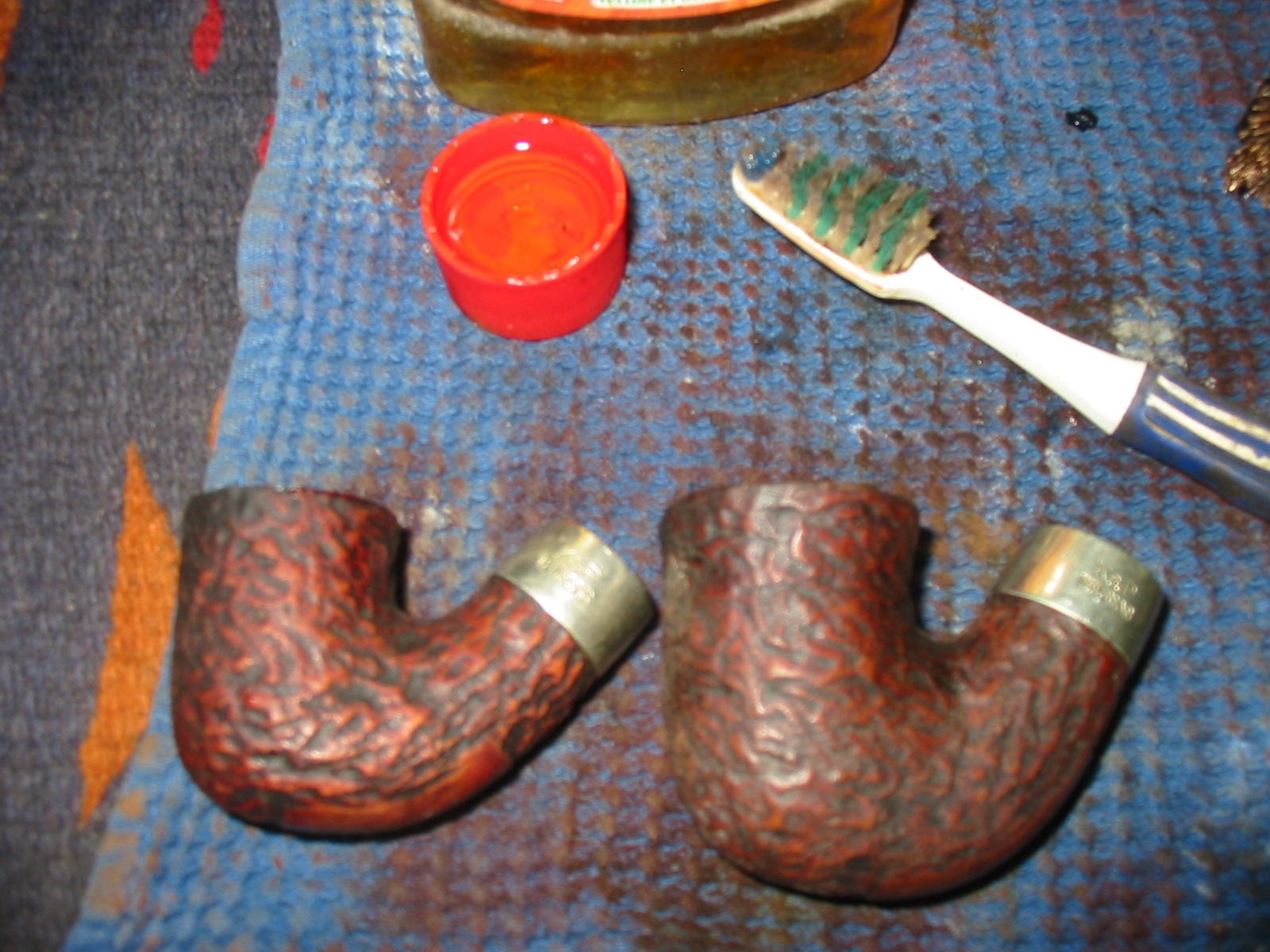
IMG_6447

IMG_6448

IMG_6449

IMG_6450
I stained the bowl with a light brown stain to give it a tan blast look but it did not work on the areas of the putty fills. They still showed through the finish as light streaks in the briar. I then decided to restain it with a dark brown aniline stain. I applied the stain, flamed it, stained and flamed it again to make sure that the coverage was even. In the photos below the stain almost looks black but it is not – it is a dark brown.
IMG_6451

IMG_6453

IMG_6454

IMG_6456
The colour was too dark to my liking so I wiped the bowl down with acetone on cotton pads to remove some of the heavy dark stain and give the bowl more transparency. I wiped it down repeatedly until I got it the colour I wanted with some contrast between the high and low points in the blast.
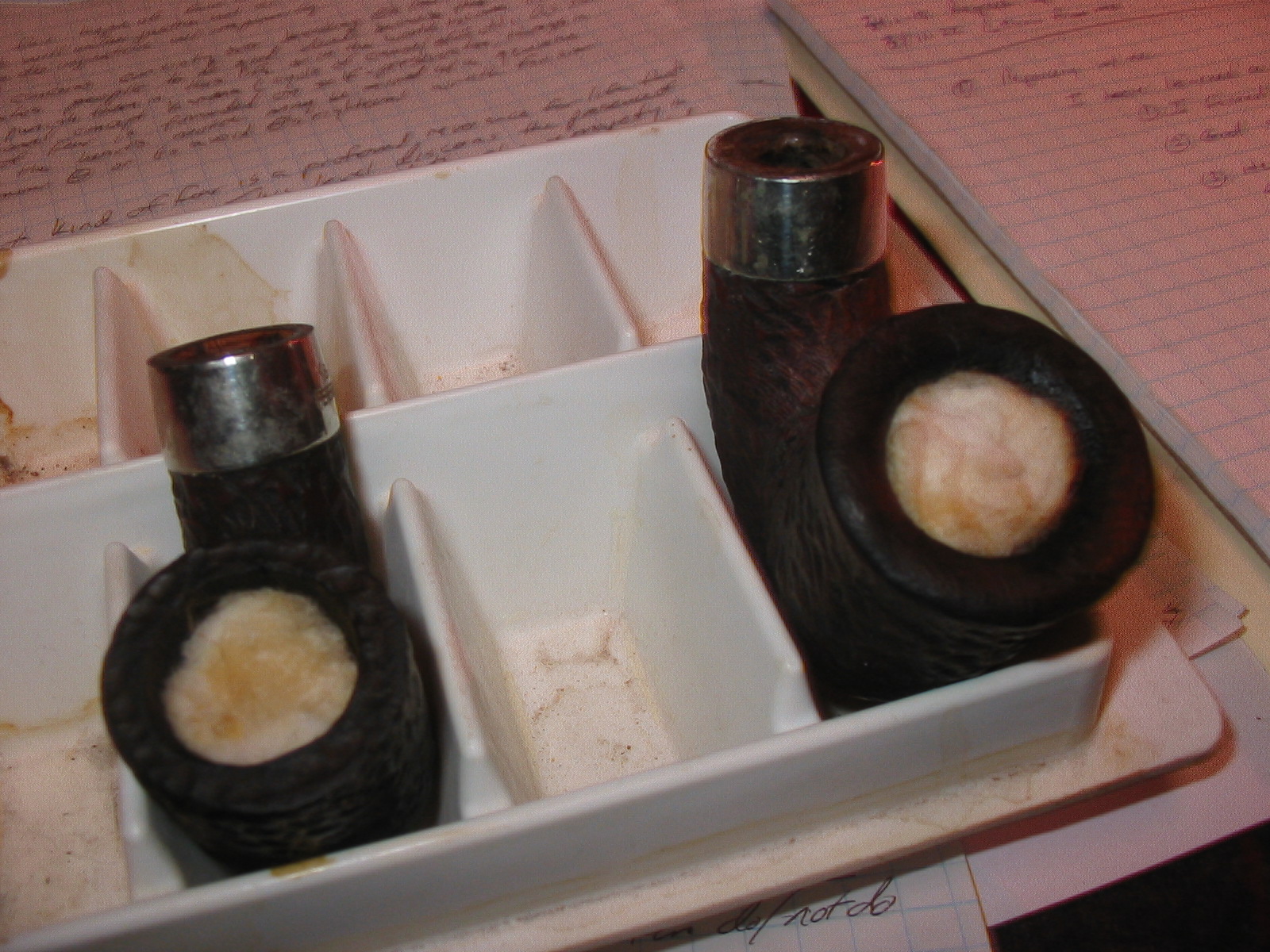
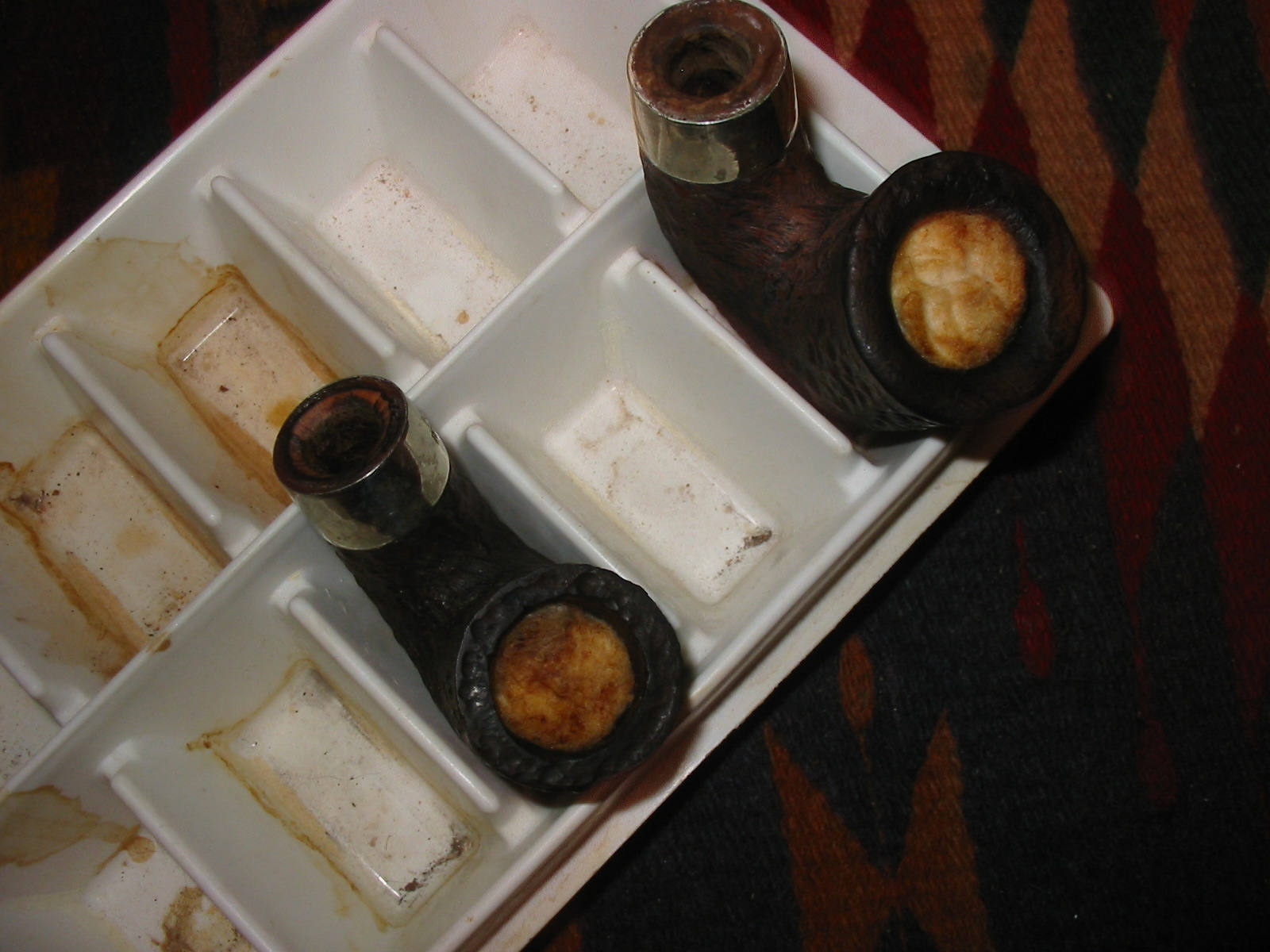
IMG_6457

IMG_6458

IMG_6461

IMG_6462
I sanded the stem with the medium and fine grit sanding sponges to remove the scratches from the work on the diameter. Once I had them removed I use micromesh sanding pads – wet sanding with 1500-2400 grit and dry sanding with 3200-12000 grit pads. I rubbed the stem down with Obsidian Oil and let it soak into the stem.
IMG_6463

IMG_6464

IMG_6472
Afterward I took some photos of the pipe at this stage of restoration to get a good look at the straight stem. I find that I can tell more with a photo than I can holding it in hand when I am trying to decide on the finished look. I wanted to decide whether to leave it straight or to bend it like the one I took off the pipe. For me looking at it on the monitor, enlarged gives me a feel for the overal appearance of the pipe. I cannot tell you how many times, after looking at the photos, that I have taken the pipe back to the table for more shaping and work.
IMG_6468

IMG_6469

IMG_6470

IMG_6471
I liked the look of the straight stem so I left it. I buffed the stem with White Diamond and gave it multiple coats of carnauba wax to protect and preserve it. I gave the bowl a coat of Halcyon II wax and then lightly buffed the stem and bowl with a soft flannel buff to bring up the shine. The finished pipe is pictured below. It came out very well in my opinion. As I look at it I wonder who the maker was. Bewlay had others make their pipes – to my mind this one had the look of a nice little Orlik Sandblast, but who knows for sure. What do you think? Who made this pipe?
IMG_6481

IMG_6482

IMG_6483

IMG_6484

I Had Heard of Royalton but not of the Smoke-Control Deluxe


In my antique mall grab bag was the bowl that is pictured below. It is stamped on the left side of the shank, Royalton over Smoke-Control over Deluxe and on the right side of the shank, Selected Briar over Pat. No.2326658. I had heard of Royalton pipes and have cleaned up a few of them in the years that have gone by. But I had never heard of the Smoke-Control or the Smoke-Control Deluxe. Obviously it was a system pipe of sorts, one of those creative ideas that lasted about as long as its maker. It never seemed to have caught on because in all the years I have been hunting and refurbishing pipes I have never come across one even to walk by in my prowls of thrift, junk or rummage shops. It was a brand unknown to me.

The bowl was in excellent shape and had not even been smoked to the bottom of the bowl. The bottom half of the bowl was bare briar. The top half was darkened but not carbonized at all. It was for all intents and purposes a new pipe. The shank was clean and contained a strange metal apparatus that filled the mortise and then stepped down to fill the airway all the way to the smoke hole in the bottom of the bowl. It was aluminum, the first ¼ inch was smooth and then it had threads that went to the bottom of the mortise. The airway was smooth. The finish on the bowl was non-existent. Whatever stain or coating had been on the bowl was no long present. The stamping was crisp and readable. There were no fills in the briar but there was a nice swirling mix of grain all around the bowl. The rim was clean and showed no burn or dent marks. The pipe was missing the stem. Judging from the mortise the stinger apparatus on this stem must have been a unique looking piece of hardware.
IMG_6315

IMG_6316

IMG_6318

IMG_6319
Since I had no idea what I was working on I decided to do a bit of digging on the internest and see if I could find out about the brand and kind of stem and stinger apparatus that it had. I wanted to know what the patent on the shank covered so that once I had a clear picture in mind I could hunt down a stem or work on one that would fit the shank in the meantime. I found out that Royalton pipes were manufactured by Henry Leonard & Thomas, Inc. (HLT) of Ozone Park, New York. HLT manufactured other brands as well including Dr.Grabow, Bruce Peters, Broadcaster and Vox Pop. I found on Pipephil’s logos page the two photos below that showed the stamping on the stem and the shank. The stamping on the bowl I had was a Smoke-Control with a hyphen rather than the one picture below and also was a Deluxe rather than a Supreme.
royalton1a

royalton1bMine was also stamped Selected Briar instead of Imported Briar. I could see that the stem had an aluminum faux band that sat between the stem and shank.
So far I had learned the manufacturer and the stamping on the stem and the faux band. I had not seen the stem. I did a bit more digging and found several advertisements that showed more of the stem. The first is from Popular Mechanics and it gave a clear description of the purpose of the pipe as well as the meaning of the Smoke-Control feature. The pipe had an adjustable valve that regulated the daft on the smoke to match personal taste and preference.
Smoke Control Advert
This advertisement spoke of both the Supreme Grade and the Deluxe grade of the pipe. The stinger that is shown in the picture could have been similar to the one in the bowl that I had found but it was not quite the same in terms of the sketched in lines on the shank of the top pipe in the picture. My bowl’s interior was different from the one in the picture so the stinger apparatus too must have been slightly different in the one I found. I went to the US Patent web site and did some more research and found the Patent Number of the pipe that I had. There was a description and a diagram of the pipe. The patent was taken out on August 10. 1943 by Arthur Koenigsamen of Jamaica, New York, assigner to Henry Leonard & Thomas Inc. of Ozone Park, New York. Reading the patent data, I am struck by the familiar hunt to develop a better smoking pipe to deliver a dry and cool smoker to the mouth of the pipe smoker and to make pipe smoking more appealing to those who might not try it otherwise. Have a look at the details of the patent and pay attention to each part of the apparatus in the shank and on the end of the stem. There are some unique features that are not visible in the pipe that is shown in the advertisement from Popular Mechanics.
Smoke Control Patent Page 1

Smoke Control Patent page 2

Smoke Control Patent photo
The stem in the above drawing in Fig. 2 shows the tenon that would fit in the mortise in the bowl I have. It is threaded about mid-tenon with three bands. Before and after the threaded portion the tenon is smooth. The apparatus goes into the stem as well, Fig. 3, in a way that was not shown in the advertisement above. It appears that there is a cooling reservoir in the stem that traps moisture and delivers a cool smoke out the wide slot in the end of the stem. The mortise in the bowl I have looks exactly like the one in Fig. 5 and screwed onto the tenon in Fig. 4. The shank on the bowl that I have is set up precisely like the nipple unit in Fig. 5. It is aluminum and set in the shank. I have included the photo below showing and end view of the shank to show what the insert looks like. You can see the flat area, the step up to the threaded portion and then the step up to the airway just as is shown in Fig. 5 above.
IMG_6322
My problem was that the bowl did not come with the unique stem unit that fit the shank. I tried several older Dr. Grabow stems and a Kaywoodie stem that I had here and the threads did not match those found in the shank. I had a choice to make, save the bowl until I found a stem someday by chance or to try to work on a stem and jerry-rig it to fit the shank system. I figured I had nothing to lose so I chose to work on a stem. I had just the right stem in my can of stems. It was a chubby stem from an Orlik pipe and the tenon was already shaped partially for a shank like this. The end of the tenon was slightly smaller in diameter than the portion of the tenon next to the stem itself.
IMG_6323
I slowly turned the vulcanite stem into the metal mortise, being careful to hold the stem straight as I turned it in place. I figured that by doing so I could score the vulcanite with the metal threads of the mortise and in so doing tap thread the tenon on the vulcanite. Low and behold it worked. The stem fit tightly against the face of the shank. The diameter of the stem would need to be adjusted but otherwise the fit was good.
IMG_6325

IMG_6326

IMG_6327

IMG_6328
I carefully sanded the stem and the shank avoiding the stamping. I did not want to damage the stamping on either side of the shank. I sanded with 220 grit sandpaper and a medium and fine grit sanding sponge. I sanded the rest of the bowl and the rim as well. When I finished the fit of the stem at the shank was smooth.
IMG_6329

IMG_6330

IMG_6331

IMG_6332
I wiped the bowl down with acetone on cotton pads to remove any remnants of the original finish on the bowl and to remove the sanding dust.
IMG_6333

IMG_6334

IMG_6335

IMG_6336
At this point in the process things were going too well! Everything was working without a hitch and the pipe was looking really good. This is when things inevitably take a turn for the worse and they certainly did in this case. I unscrewed the stem from the shank in preparation for staining the bowl. I wanted to clean out any briar dust that was trapped between the stem and the shank. I cleaned out the dust and blew air through the mortise. I then slowly and carefully screwed the stem back in place in the shank. They no longer lined up! The fit of the stem against the face of the shank was not tight. The smooth transition between the shank and stem was no longer there. The fit was not right. I took the stem off and examined the mortise and tenon. I could see that the insert in the shank had definitely been pushed deeper into the mortise. When I started it was even with the face of the end of the shank and now it was sunk in and the mortise bevel showed as it probably should have from the start. Arggghhh. Now the fit was off and the diameter of the stem would have to be corrected again. The big problem was that the way the stem fit against the end of the shank was no longer perfect. There was a gap that I could not correct no matter what I did in adjusting the insert or the stem.

I decided that I would have to band the shank, not as a repair on a bad shank but as a cosmetic measure to clean up the fit of the stem and the shank end. This irritates me to no end in that as you could tell from the above photos it was perfect! Ah well so goes the life of the pipe refurbisher who is restemming old pipes with replacement stems. I adjusted the diameter of the shank to fit the flow of the shank without the band. Once again it was round and smooth. If there had not been a gap at the bottom of the shank/stem union a band would not have been necessary. I looked through my box of bands and found a band that would fit and not go to deeply up the shank as to cover the stamping. I found just the right band. I put all purpose white glue on the shank and pressed the band in place. Once the glue had set I screwed the stem on to the shank and lined everything up. The fit and finish of the stem and shank looked good. I actually liked the band on the shank as it broke the line between the shank and the stem and added a bit of bling to look of the old bowl. I guess I can live with the look of the pipe after all. It is not what I wanted when I started but it would do.
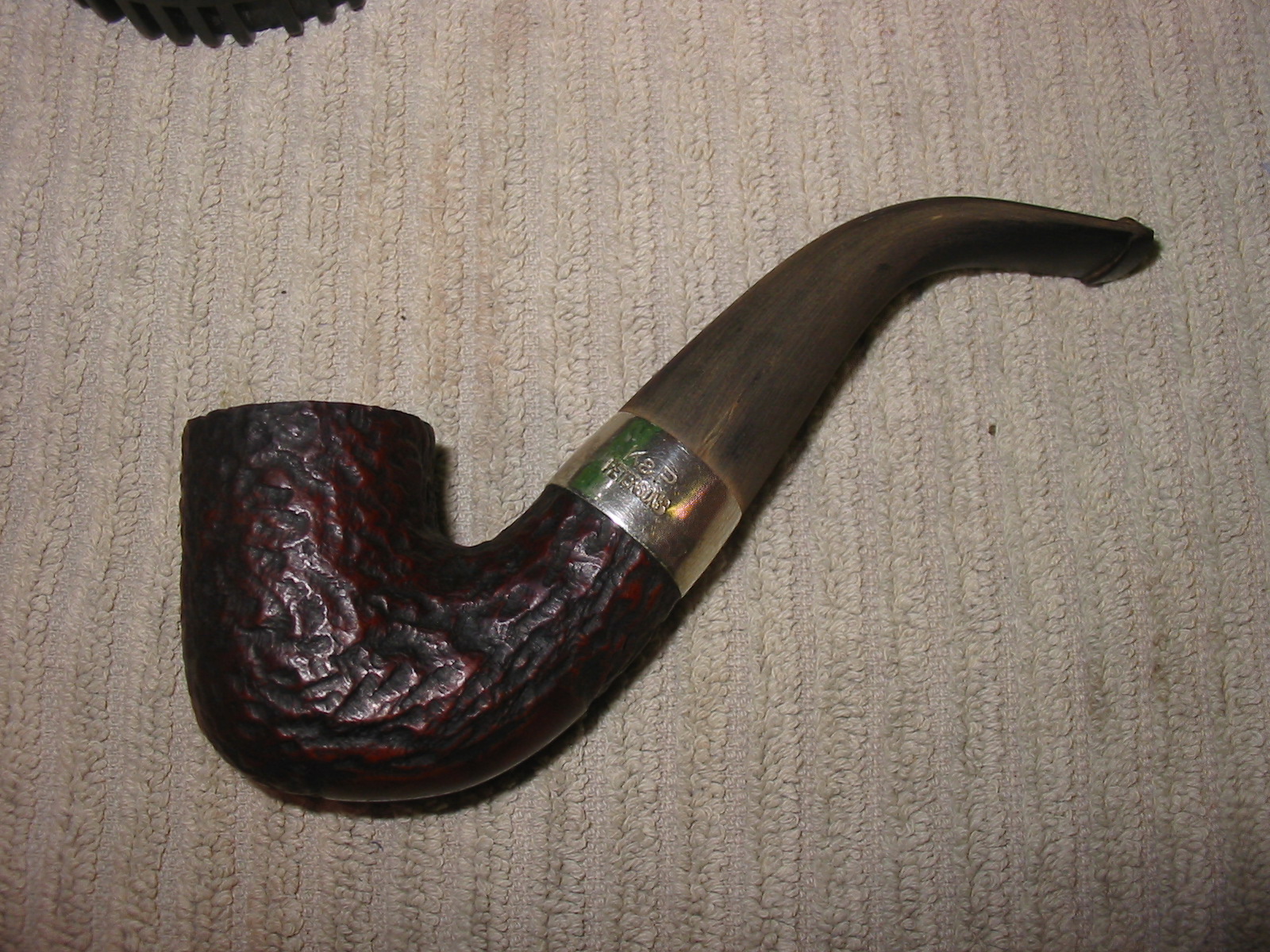
IMG_6337

IMG_6338

IMG_6340

IMG_6341
I wiped down the bowl with isopropyl alcohol on a cotton pad to remove any excess glue that had seeped out around the band and removed grime from my finger prints on the bowl. I gave the bowl a first coat of dark brown aniline stain thinned 1:1 with alcohol. I flamed the stain and then wiped it down with an alcohol pad. I buffed it with White Diamond to see what the finish looked like with the brown stain. While I liked the look, the mottled look of the grain seemed to need some more colour and contrast to make it look right. I was not sure what I would use for a top coat so I set it aside and worked on the stem.
IMG_6343

IMG_6344

IMG_6345
I sanded the stem with 220 grit sandpaper to remove the oxidation that remained after cleaning and then sanded it with a medium and a fine grit sanding sponge. Once I had finished this I wet sanded it with 1500-2400 grit pads. Several times mid stream I went back and sanded with the sanding sponges and started over with the pads to clean up places where the scratching still showed or where the oxidation was stubborn. When I finished with the first three pads I rubbed down the stem with Obsidian Oil and screwed it back on the bowl.
IMG_6346
Now most of you probably would have just finished sanding the stem with the remaining micromesh pads but not me. I got distracted with the stem back on the bowl and decided to give it the second coat of stain. I took it to the buffer and buffed the bowl and the stem with Tripoli and White Diamond before going back to the work table to give it a second coat of stain. For the second coat of stain I decided to use an aniline based oxblood stain. The rich read colour would go well with the mottled grain of the bowl. I applied the stain, flamed it, applied it again and flamed it again as often as necessary to get an even finish. Once it was dry I wiped it down with an alcohol wet pad to remove the excess stain and make it more transparent. I buffed it with White Diamond. This stain coat had the desired effect and I liked the finished look of the bowl.
IMG_6348

IMG_6351

IMG_6354

IMG_6356
I took the photo below to show the threads that were cut into the vulcanite tenon to give an idea of what the finished tenon looked like after all was said and done. The fit in the mortise is snug and the stem screws into the mortise easily.
IMG_6367
I went back to sanding the stem with the remaining grits of micromesh pads. I dry sanded with 3200-12000 grit pads and once again had to go back and sand with the sanding sponges near the button to deal with the stubborn oxidation. This involved having to start over with wet sanding with 1500-2400 grit pads but once I had finished the oxidation was gone. I rubbed the stem down with Obsidian Oil again and when it was absorbed into the vulcanite I buffed the stem and bowl with White Diamond.
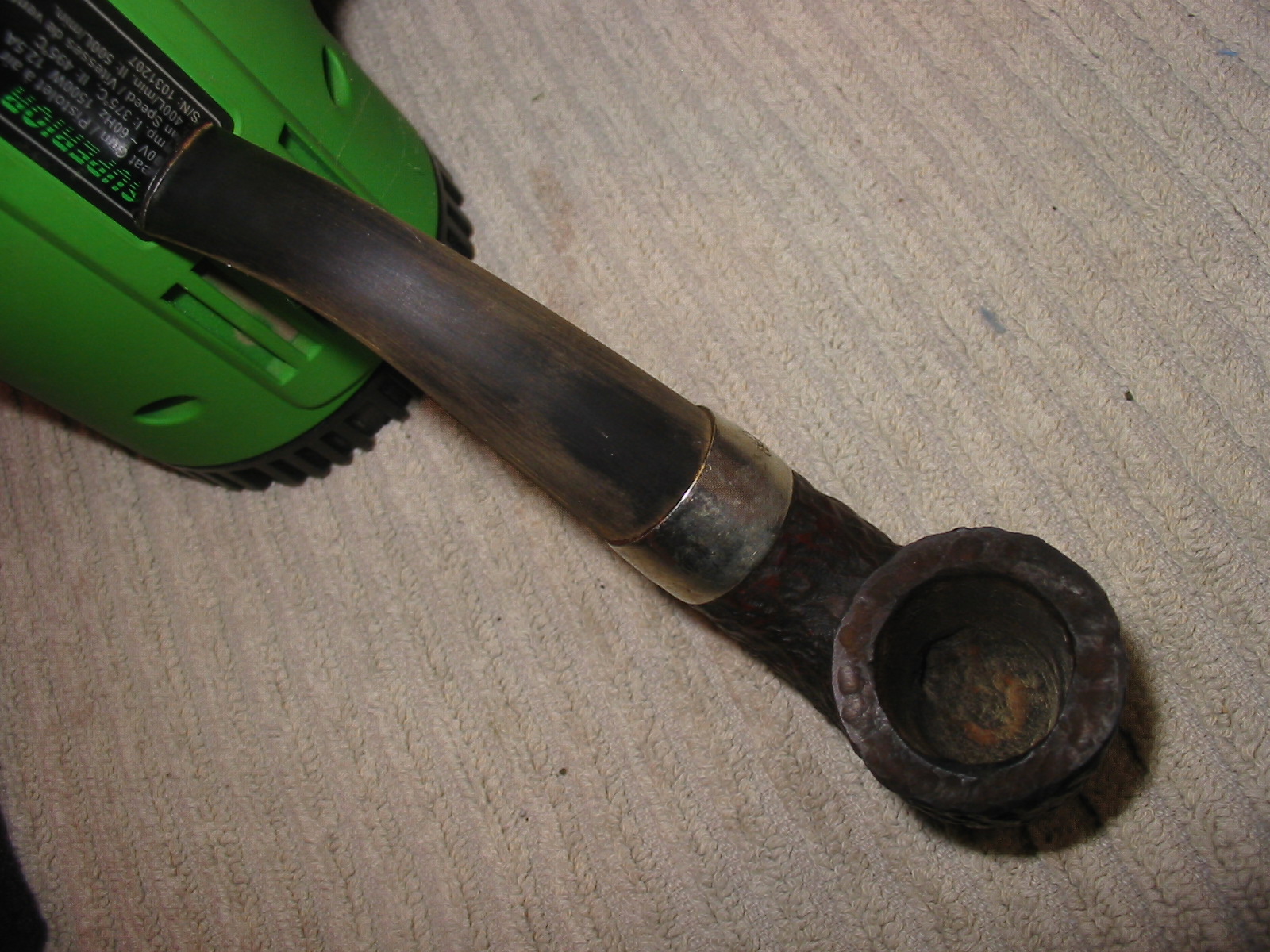
IMG_6368

IMG_6369
I polished the nickel band with silver polish and gave the bowl and stem multiple coats of carnauba wax to protect and give it a shine. When finished I buffed it with a soft flannel buffing pad and brought it back to the work table for the final photos. The old Smoke-Control Deluxe is back in action. The bowl looks great; the stem works even though it is not original. The band gives just the pipe an air of elegance that I had not expected. I look forward to breaking it in and enjoying a smoke in what for all intents and purposes is a new old stock bowl.
IMG_6370

IMG_6374

IMG_6375

IMG_6376

Refurbishing another Old Pal – this time a Long Oval Shank Billiard


Blog by Steve Laug

I just finished cleaning up another of the old pipes I picked up in my antique mall grab bag. It is a dainty pipe with an oval shank. When it came out of the grab bag it had a cracked shank and did not have a stem in the shank so I assumed it was a Canadian. When I went over the stems in the bag I found that one of them was stamped Old Pal. It fit the shank well and the look was quite unique. The stem was broken at the button with a large chunk on one side missing. The overall length is 5 ¾ inches and the weight is negligible. It is stamped on top of the shank in arc – Old Pal, over an Eagle with spread wings and then underneath Made in France.

opOn the underside of the shank it is stamped 396 which I assume is the shape number. The shape number appears to be a GBD number but it is not included in the list on the Perdua shape number website. The stamping is faint but still readable. I wrote about the history of the brand in a previous post (https://rebornpipes.wordpress.com/2014/04/19/restemming-and-refurbishing-a-planter-opera-pipe/) But will summarize it again here for those who may not go back and read it.

“Who Made That Pipe” states that there were two French makers for Old Pal. The first of those is Marechal Ruchon and Cie. (Incidentally it is the company that owned the GBD brand). The second maker listed is Rubinovich & Haskell Ltd. The bird emblem is probably the key, but I can find no reference to it. My own thinking is that the brand was made by Marechal Ruchon & Cie. I was able to dig up this brief summary of the MR&C brand. Ganeval, Bondier and Donninger began making pipes in 1850 and rapidly gained prominence in briar pipe making. Of the three, Bondier survived the others by 30 years, but new partners took their places. The name of the company changed to Bondier Ulrich & Cie, then Bine Marechal & Cie and finally to A Marechal, Ruchon & Cie. August Marechal and Ferdinand Ruchon saw the firm into the 20th century, their names being used for the company for well over 50 years.

Prior to 1899, Marechal, Ruchon & Co. became A. Oppenhiemer’s sole agent for cigarette papers but still remained in the pipe making business. Then in 1902, Marechal, Ruchon & Co., owners of GBD and referred to as French pipe makers, merged with A. Oppenhiemer. In the 1915 London Directory of briar pipe makers one will find: “”Marechal, Ruchon & Co. – 38 Finsbury Sq. E.C.; London works, 15 & 16 Featherstone St. E.C. and Oppenhiemer, A. & Co. – 38 Finsbury Sq. E.C. listed separately.

As before with that background information remembered I worked on this old pipe to clean it up and restore it. When I picked it up the bowl was badly caked. The rim was dirty and the outer edge had been knocked about pretty hard to remove the dottle of the past. The inner bevel was tarred but still in pretty good shape. The right side of the pipe had no fills or real damage. It was a nice birdseye under the grime. The left side had two fills of pink putty in the midst of some very nice grain. The grain on the rest of the bowl was a mix of cross grain and swirling grain. The finish was worn with some paint marks on the top of the shank. The stem was oxidized and had been broken with a large chunk missing at the button on the right side. The shank was cracked but the joint with the stem was smooth and tight. The tenon fit snug in the mortise with no gap in the junction. The shank and airway were dirty and tarry.
IMG_6262

IMG_6263

IMG_6265

IMG_6266
I have included the photo below as it clearly shows the crack in the shank, the broken stem and the stamping on the shank of the pipe.
IMG_6267
I debated whether to cut off the stem or to just restem the pipe with a Canadian stem. I looked at it with a small stem and then with this stem and decided to cut off the stem. I used a Dremel and a sanding drum to remove the broken part of the stem and even out the line of the end of the stem.
IMG_6268

IMG_6269

IMG_6270
I took it back to the work table and reamed the bowl with a PipNet reamer. I reamed the cake back to bare briar so that I could work on the damage to the inner edge of the rim.
IMG_6271
I took out my box of assorted nickel bands and found one that was the correct diameter and squeezed it until it was an oval. I dripped super glue into the open crack and pressed it together to dry. Then I heated the band with a heat gun and pressed it on to the cracked shank.
IMG_6272

IMG_6273
I used a folded piece of sandpaper to sand the tenon slightly so that it fit snugly in the shank. The fit of the stem to the band and shank looked good so that part of the job was finished.
IMG_6274

IMG_6275

IMG_6276

IMG_6277
I set up the topping board and the 220 grit sandpaper and topped the bowl to remove the damaged rim. I used a folded piece of sandpaper to bevel the inner edge of the rim inward like it had been originally.
IMG_6278

IMG_6279

IMG_6280
I wiped the bowl down with acetone to remove the finish and the spots of white paint that were on the top of the shank. I repeated the wash until the finish was clean and then wiped it down again with isopropyl alcohol.
IMG_6281

IMG_6282

IMG_6283

IMG_6284
With work on the bowl at a good stopping point I decided to do some work on the stem. I had to cut a new button and taper the stem toward the new button. There would have to be shaping done as well opening the slot on the end of the stem. I used a rasp to cut the edge on the lip of the button and to sand down the taper of the stem. I used a series of needle files to further shape the button and the taper.
IMG_6285

IMG_6286

IMG_6287

IMG_6288
I cleaned up the taper and the button with a sanding board that I picked up at a beauty supply house. It makes the edge clean and works well to even the taper on the stem.
IMG_6289

IMG_6290
The hole in the end of the new button was elongated and oval but needed to be opened more and made into a “Y” shaped slot whose inner edges tapered toward the airway and the slot shaped like an eye – open enough to take a pipe cleaner without any difficulty. I used three different needle files to open the slot. The first was a round file, followed by an oval file and ending with a flat oval that worked well to cut the edges of the slot.
IMG_6291

IMG_6292

IMG_6293
I sanded the stem with a medium and a fine grit sanding sponge to smooth out the surface on the stem and also to bevel the edge of the button toward the slot.
IMG_6294

IMG_6295
With the interesting grain pattern and the fills on the side of the bowl I decided to use a dark brown aniline stain. I applied it with a dauber and then flamed it. I applied it and flamed it a second time to make sure the coverage was even.
IMG_6297
When the stain was dry I wiped down the bowl and shank with isopropyl alcohol on cotton pads to remove the top coats of the stain and make it more transparent.
IMG_6299
I sanded the bowl with a fine grit sanding sponge and then wiped it again with the alcohol to clean off the dust. I gave it a second coat of a medium walnut stain as a top coat.
IMG_6300
I buffed the top coat of stain with White Diamond and then brought it back to the work table and took the following pictures. The angles on the stem are looking good. The shape of the button and the taper of the stem worked well with the pipe.
IMG_6301

IMG_6302

IMG_6303

IMG_6304
I sanded the stem with medium and fine grit sanding pads and then applied some liquid white out to the stamping on the stem to try to make it stand out more clearly. I sanded the stem with my usual array of micromesh sanding pads – wet sanding with 1500-2400 and dry sanding with 3200-12000 grit pads.
IMG_6306

IMG_6307

IMG_6308
I rubbed the stem down with Obsidian Oil and when it was dry buffed the stem and bowl with White Diamond and gave it multiple coats of carnauba wax to protect and preserve it. I finished by buffing it with a soft, flannel buff. The finished pipe is shown in the photos below. The newly shaped stem came out fairly well. I like the overall look of the finish and the band on the pipe. It is ready to join the other Old Pal in the rack.
IMG_6310

IMG_6311

IMG_6313

IMG_6314

Restoring an old Harlequin Pipe and Trying to Unravel the Mystery of its Origin


When I saw this old pipe on eBay something about it caught my eye. I could see that it was structurally sound. There were no cracks or significant problems with the bowl or shank. The rim was dirty and the bowl very caked but there did not appear to be any damage to the surface of the rim. The outer edge had been tapped out a few times and showed some minor denting around the bowl. There were some gouges/scratches on the left side of the bowl. It looked as if a sharp instrument had scored the briar. There were some dark stains on the briar that easily could have been burn marks but did not appear to be so from the photos. These stains were on the underside of the shank near the junction of the shank and stem on the left side, on the lower right side of the right side and on the lower left side of the front of the bowl. It looked like stains in the grain rather than burns in the photos so I took a chance on it. The stem looked like it was grey/silver Lucite in the photos and that also intrigued me. The tobacco juices had stained the airway dark. Other than that the stem appeared to be undamaged and would be a pretty easy clean up.
Harlequin1

Harlequin2

Harlequin3
The stamping on the shank was the mystery to me. I had never heard of Harlequin pipes and this one was clearly stamped Harlequin in block letters over Made in England. I wanted to see what I could find out about the brand so I went to my usual sources of information. I checked in “Who made that Pipe” by Wilczak and Colwell and “Pipes Artisans and Trademarks by Lopes to see if either of them identified the maker. Both books had nothing listed for the brand. I went on the British Trademark site and read through many of the listings for Harlequin and found that the name was used by many companies for things from wallpaper to graphics design. There were lines of greeting cards, children’s toys and clothing all bearing that name. I found nothing listed that hinted that the pipes were a registered name. I posted on several online forums that I frequent to see if anyone had any ideas. Several folks on the forums recalled that Gallaher’s Tobacco Limited in Ireland had made a tobacco for years called Harlequin. I did some research to see if they had made pipes.
Harlequin4
As I dug through various sites on the hunt for information I received some responses on the forums. One person responded that several English tobacco brands also sold pipes – St. Bruno for one did that. Another respondent on Smokers Forums, Chris (flatticus) posted a couple of links to Gallaher’s that confirmed that they had not only made tobacco products but had made pipes or had them made. He included this information:

Ok, so Gallaher’s made at least some pipes into the early 70’s. And according to this link: http://books.google.com/books?id=LAO…20pipe&f=false

They made a Balkan Sobranie pipe. Or at least intended to enough to register the trademark, and along with the trademark for the tobacco itself. Certainly adds a bit of credence to the idea of a tobacco and pipe sharing the same brand name and stamp.

I have included the information cited above from the link to Google books – the Kenya Gazette and have posted it below. In correspondence from E.G. Bunyassi, Assistant Registrar of Trade Marks he clearly states under the heading of Balkan Sobranie that Gallaher’s Limited, a company organized under the laws of the UK of Great Britain and Northern Ireland had made cigarettes, pipe tobacco and pipes.
Gallaher pipes
I asked on the forum whether anyone knew whether the company made pipes. Chris (flatticus) responded again with the following information:

Interesting question, I don’t honestly know, but Gallaher’s used that trademark for like 70 years, and they were a big, big company. Actually from Northern Ireland, and had the biggest tobacco factory in the world in 1896 in Belfast, didn’t completely disappear until they were bought out by Japan Tobacco in 2007, but before that had a distribution conglomerate with RJ Reynolds for their cigarettes and were pretty gigantic. But they didn’t let the Harlequin mark until at least after 1963, when they last registered it. If I had to guess, they probably let it die after 1969 when American Brands, who I think owns Lucky Strike and similar brands, bought them out. They let the mark expire in 1980, but I see no record of anyone else buying it, and apparently it’s still available.

So, blindly guessing, I’d be surprised if anyone had the guts to use the same mark in a same or similar industry other than Gallaher’s. At least not in Ireland or the Commonwealth. But, that said, I can’t find a record or advertisement suggesting they ever made a pipe. However, I did find this thread, containing a quote from Gallaher himself talking about making pipes as a possible future avenue to address the “aging” nature of pipe smokers. http://christianpipesmokers.net/modu…wtopic&t=24081

Perhaps this was part of the “pipe renaissance” project he was talking about, made to get new pipe smokers interested. I checked harlequin ads, there a few vintage ones out there in images, but none of them referenced a pipe, just the tobacco. But the idea of a free pipe with tobacco, or at least a cheap or, as he put it, “disposable” pipe does seem to fit nicely with his intention there. Any way you slice it, though, it’s a nice bit of mystery to ponder. One of my favorite things about estate pipes, hands down.

In another link there was information on the Gallaher Company. I copied that information and have posted it below. It makes an interesting read in terms of history of this old brand. I have one chunk of Gallaher’s Irish Roll Cake here that is a good strong smoke. I also have some of their other tobaccos in my cellar but sadly it is no more. I think the likelihood is that the Harlequin pipe was made by them and matched the Harlequin Tobacco blend they sold.
Galahers1

Gallahers2

Gallahers3

Gallahers4
Once the pipe arrived I unpacked it and took it to the work table to begin the clean up. I was surprised that the stem was not grey but in real life almost a light green with heavy black tars in the airway. There were also some tooth marks on the top and bottom of the stem that would need to be repaired. The fit of the stem to the shank was snug and smooth. The bowl was badly caked and the rim covered with thick tar. The bowl had some deep gouges that had appeared in the photos on eBay but they were not as deep as I expected. The grain was far better than I expected. Underneath the dark marks, which appear to be ink stains rather than burn marks was some beautiful cross grain and birdseye as well as mixed grain. It would look beautiful when it was cleaned up and refinished. There were several spots on the briar that had large sticky spots of a glue-like substance.
IMG_6195

IMG_6196

IMG_6197

IMG_6198
I reamed the bowl with a PipNet reamer to remove the cake. It was surprisingly soft and crumbly. I took it back to a very thin cake to form the base for a new cake.
IMG_6199
I set up a topping board with 220 grit sandpaper to clean off the build up on the rim. It was hard and no matter how hard I scrubbed it, it would not come off. The outer edges of the rim were also damaged from knocking out the bowl after smoking. The light topping would smooth out the edge damage and minimize the effect without changing the look of the bowl.
IMG_6200

IMG_6203
I scrubbed the exterior of the bowl down with acetone on cotton pads to remove the ink and sticky build up on the finish. I also decided to remove the finish so I scrubbed it until the majority of the finish was gone.
IMG_6204

IMG_6205

IMG_6206

IMG_6207
I cleaned the stem with cotton swabs and pipe cleaners and isopropyl alcohol. I was able to scrub out the airway and the slot in the button removing the stains. I also scrubbed the end of the tenon to clean out the staining there. I scrubbed the mortise with alcohol and cotton swabs as well until they came out clean. The internals were cleaned and smelled fresh rather than smelling like old aromatic tobacco.

Once it was clean, I tried to steam out the gouges in the bowl but they would not lift. I could have sanded them out but that would have changed the profile of the bowl so I opted on repairing them with super glue and briar dust.
IMG_6212
I sanded the repairs with 220 grit sandpaper and then followed that by sanding with medium and fine grit sanding sponges to blend the surface of the fill with the rest of the surrounding bowl. After sanding the fills I sanded the entire bowl with the medium and fine grit sanding sponge to remove the rest of the finish on the bowl. I carefully worked around the stamping so as not to damage it.
IMG_6213

IMG_6214

IMG_6215
I used clear superglue to repair the deep tooth marks on the top and bottom sides of the stem near the button. The bottom repair can be seen in the photo below. I later sanded it with 220 grit sandpaper and the sanding sponges to blend it into the stem surface.
IMG_6216
I decided to use the contrast stain process I have been working on to highlight the grain on this beautiful pipe. I gave it an under coat of black aniline stain. I used a Delrin tenon for a handle in the shank to be able to turn the bowl while I was staining. I applied the stain, flamed it, applied it and flamed it again until the coverage was even.
IMG_6217

IMG_6218

IMG_6219

IMG_6220
When the stain had dried I sanded it with a medium grit sanding sponge to remove the surface stain while leaving the grain highlighted with the black. I wiped it down repeatedly with isopropyl alcohol on cotton pads to check and see what the grain was looking like after sanding. This process took far longer than the staining and initial preparation. I sanded and washed, sanded and washed the bowl and shank until the grain stood out against the briar.
IMG_6221

IMG_6222

IMG_6223

IMG_6224
I sanded the bowl with micromesh sanding pads – wet sanding with 1500-2400 grit to further remove the black stain that was stubbornly sticking in the angles of the bowl and shank. I then gave the bowl a top coat of oxblood stain. My thinking was that the contrast between the black in the grain and the red in the other portions of the briar would make the grain stand out.
IMG_6225

IMG_6226

IMG_6227

IMG_6228
When the oxblood stain dried I dry sanded the bowl with micromesh sanding pads to remove some more of the dark stain and make the grain stand out even more. I rubbed the bowl down with olive oil and used it as a medium for the sanding. It worked well to remove the darker areas of the bowl near the shank and along the top edge and rim.
IMG_6229

IMG_6230

IMG_6232
After sanding I took the pipe to the buffer and buffed the bowl and stem with White Diamond to polish the briar and the Lucite stem. I had previously sanded the stem repairs with the sanding sponges to remove the bump of the glue and blend it into the surface. I followed that with sanding the stem with all grits of micromesh from 1500-12000. I wiped the stem down with Obsidian Oil and then gave the bowl and stem multiple coats of carnauba wax to protect and polish it. I finished by buffing the pipe with a clean soft flannel buffing pad. The finished pipe is shown in the photos below. It is cleaned, stained and ready to smoke. I am really pleased with the finished look of the pipe. The yellow mother of pearl looking stem works well with the contrast stain on the bowl.
IMG_6234

IMG_6235

IMG_6236

IMG_6237

IMG_6238

A Journey from a Sad Apple to a Handsome Prince


In my antique mall grab bag there was an antique apple shaped pipe with an ornate end cap. It was a mix of brass and silver and had a fascinating look – at least to me. I liked it from the get go. The problem was the damage to the bowl was extensive. It truly was a mess with chunks of briar missing and cracks and crevices on the rim as well as in the upper portion of the bowl. So I looked through some of the bowls I have here to see if I had one that the end cap would fit but none were to be found. Lots of reshaping and changes would have had to be done to make any of the bowls I had work so I revisited the damaged bowl and did a few measurements on it to if I could remove the damage and still have anything left that was worth the work.
IMG_6143

IMG_6144

IMG_6145

IMG_6146

IMG_6147
After measuring the bowl I figured that I could convert it from an apple/brandy shape to a prince shape. If you look at most prince shapes you can easily imagine how it would have looked as an apple or a ball shaped pipe. It is not hard to see the prince as a cut down apple. I also looked through my stems and found an older military push stem that would give it a princely look. The end of the stem would need to be turned down slightly to fit in the metal end cap of the shank.
IMG_6148
I decided to start with a conservative approach to the reduction of the height of the bowl and the removal of the damaged briar first. I have learned that it is easy to remove briar but next to impossible to put it back once it has been removed. I set up the topping board and began to turn the bowl into the 220 grit sandpaper to work back the rim. After about ten minutes of work I could see that it would take me all night to hand sand it back to the height I wanted to work with. There had to be a better way to get it close and then finish the topping with the sandpaper and board.
IMG_6149
I decided to use a Dremel to remove most of the damaged briar, carefully working to keep it as close to flat as possible – a trick with a Dremel and a sanding drum but it worked fairly well. I took back all of the damage on ¾ of the bowl rim and left a slight amount on the front ¼. The rim would be thick and I would be able to rework the inner edge to bring it back to round with folded sandpaper.
IMG_6150

IMG_6151

IMG_6152
I took the bowl back to my worktable and used the topping board to flatten out the rim. The flattened rim is pictured in the photos below. I also used a rasp to trim down the taper of the bit so that it would fit in the metal end cap. The rest of the fine tuning of the stem would be done by hand with sandpaper and small files.
IMG_6153

IMG_6154

IMG_6155
I sanded the stem taper so that the fit was snug in the shank of the metal end cap and shank. The build on this old pipe was interesting. When I first got it I was able to remove the end cap. The shank had been cut quite short and then flattened so that a stem would sit in the end cap and be pressed against the end of the shank. I worked on the stem to achieve that result so that the stem sat flush against the end of the shank. With the stem fit correctly it was time to do some work on the bowl.
I decided to use some briar dust and super glue to repair some of the deep cuts in the briar. I cleaned out the cuts in the surface of the rim as well as the surface cracks that remained with a dental pick. I wiped down the surface with isopropyl alcohol and scored the areas that would be repaired so that the fill would bond well with the briar. I packed in briar dust with the dental pick and then dripped the super glue into place. I always overfill my patches so that when dry they are not sunken.
IMG_6156

IMG_6157
When the patches dried I sanded them with 220 grit sandpaper and a medium and fine grit sanding sponge to bring the surface of the patch to the same height and shape as the surrounding briar. This process is kind of like sculpting and once it was done I reshaped the outer edge of the bowl and did some work on the inner edge as well. The photos below show the look of the pipe at this point in the process. The handsome prince is beginning to emerge from the ashes of the old bowl.
IMG_6158

IMG_6159

IMG_6160
I decided to use a two step staining process to better blend in the fills and repairs to the bowl. They would still be visible but not stand out as the first thing that was noticed when looking at the bowl. I used a black under stain first. I heated the briar with a heat gun to warm it and open out the “pores” in the wood to take the stain well. I applied it heavily, flamed and repeated the process until I had good coverage on the bowl. Once it was dry I sanded the bowl to remove the majority of black stain. It remained in the grain and I left it a bit heavy around the top edge of the bowl and rim. I wanted it to have a shadow like look in those areas.
IMG_6161

IMG_6162

IMG_6163

IMG_6165
I wiped down the bowl with acetone on a cotton pad to remove the final bit of black and the sanding dust that was left behind from my work. I gave it several coats of oxblood stain as a topcoat. My thinking was that the deep red of the oxblood stain would set off the black under stain and provide an interesting contrast look to the finish.
IMG_6166

IMG_6167

IMG_6168

IMG_6169
I buffed the bowl and stem with Red Tripoli and White Diamond to see where things stood in terms of the colour and coverage on the bowl. I took it back to the worktable and sanded it with micromesh pads to smooth out the finish on the bowl. I still needed to do some more work on the rim and the stem at this point but the finish on the bowl was getting to the place where it was looking good.
IMG_6170

IMG_6171

IMG_6172

IMG_6173
I sanded the stem with medium and fine grit sanding sponges to remove the scratches and smooth out the transition from the part of the stem that sat in the end cap and the remainder of the stem. I followed that by sanding with micromesh sanding pads – wet sanding with 1500-2400 grit pads and dry sanding with 3200-12000 grit pads. I rubbed the stem down with Obsidian Oil once I had finished the sanding.
IMG_6175

IMG_6176

IMG_6177
The polish on the stem needed a bit more work to remove some of the scratches that still remained but I left that for the moment and decided to give the stem a slight bend. I set up a heat gun and heated the vulcanite until it was pliable. I bent it over a rolling pin that I use for doing this. I find that I get a more even bend when I use the pin as the base for bending.
IMG_6178

IMG_6179

IMG_6180
I took it back to the worktable to examine the repair on the front of the bowl more closely and to also do more work on the interior edge of the rim. It was significantly out of round, particularly around the area of the patch I had applied.
IMG_6185

IMG_6186
I used a half round wood rasp and folded 220 grit sandpaper to rework the inner edge of the rim. While doing so I also decided to top the bowl some more. I worked on the edge until it was getting more round, restained it to see what it looked like and decided I needed to top the bowl even more to remove more of the damage to the surface of the rim.
IMG_6187
After topping it even more, I sanded it with a fine grit sanding block and then restained the rim yet again. At this point the bowl was looking far better. There was still a slight divot out of the edge of the rim on the front of the bowl. I wanted to rework that area some more before I was finished with the pipe.
IMG_6188
I sanded and shaped the inner edge of the rim some more with folded sandpaper, repaired the fill with a bit of superglue and briar dust, sanded some more to get it to the place shown below. All that remained was to sand the top of the rim and inner edge with micromesh pads to clean up the overall appearance and the bowl was ready to go.
IMG_6190
I sanded the inner edge of the rim with some 400 and 600 grit wet dry sandpaper and then carefully dry sanded the top of the rim with micromesh sanding pads 1500-2400 grit. I gave the inside of the bowl a light coat of pipe mud to protect the bowl. I hand buffed the bowl with a shoe brush to give it a shine and then gave it multiple coats of carnauba wax to finish. The completed pipe is shown below in the last series of photos.
IMG_6191

IMG_6192

IMG_6193

IMG_6194
The old sad apple had disappeared and was replaced with a handsome prince that still had some life in it. The little prince will now grace my pipe rack and will one day be given in trust to the next pipeman who will carry on enjoying this piece of history.