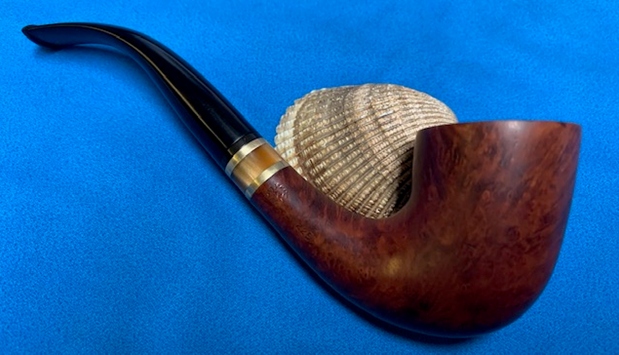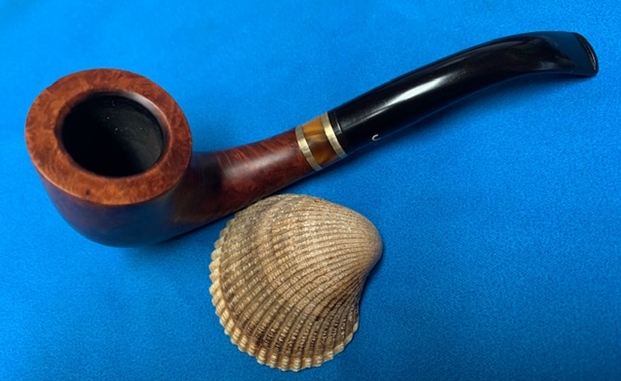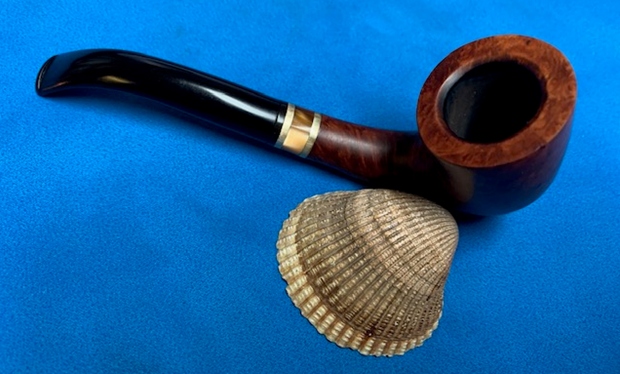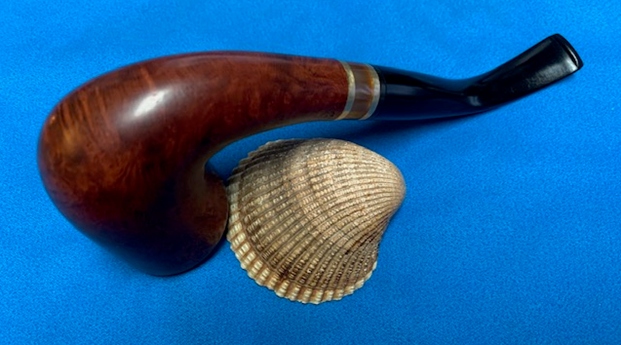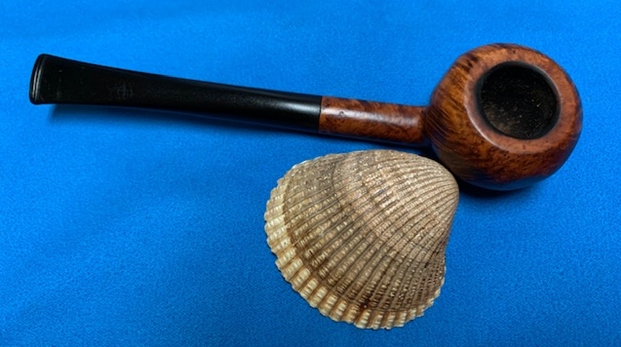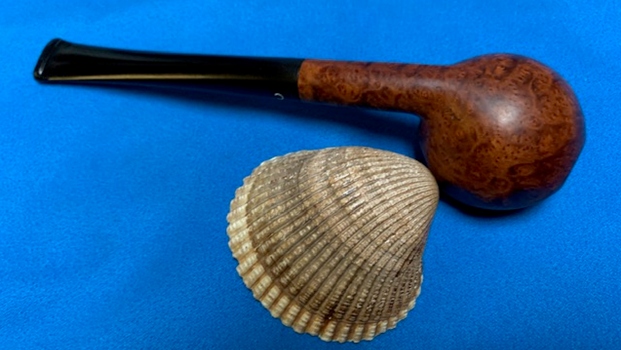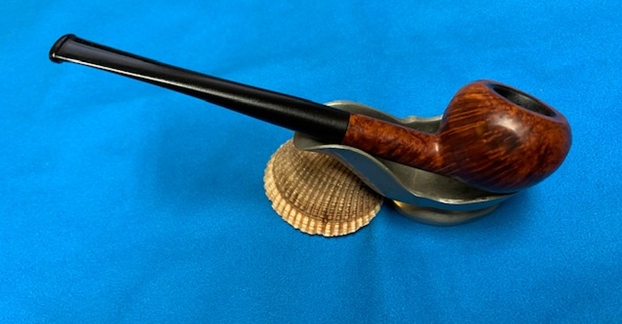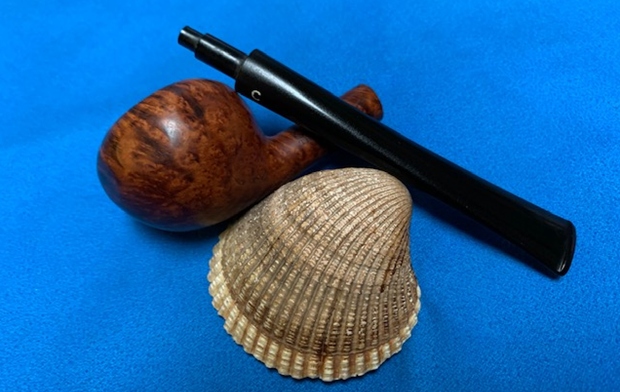
Tag Archives: Comoy’s pipes

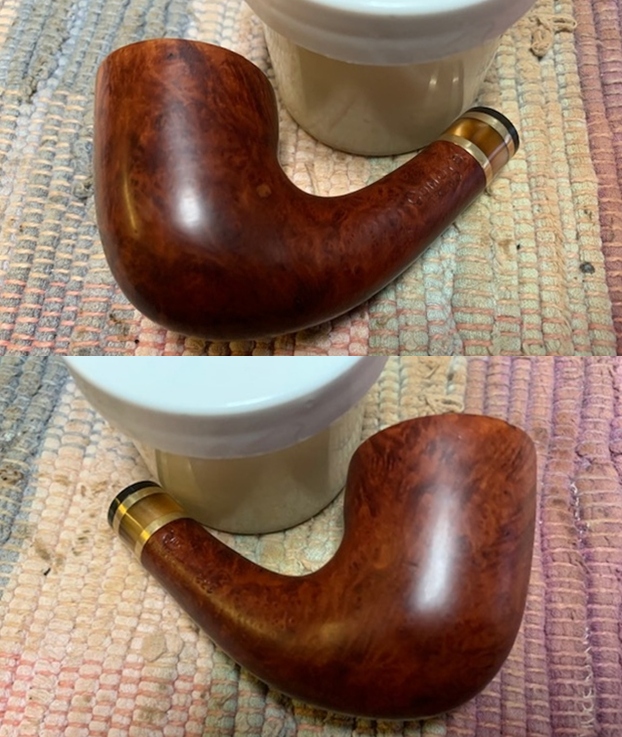
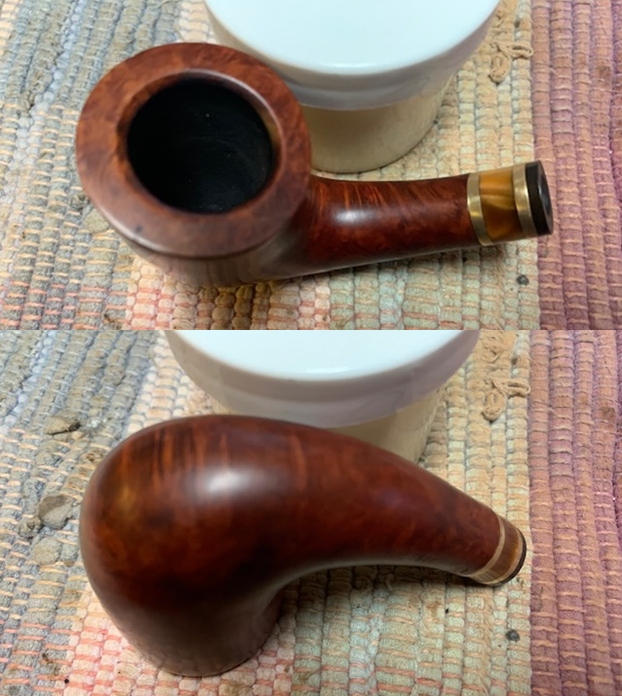
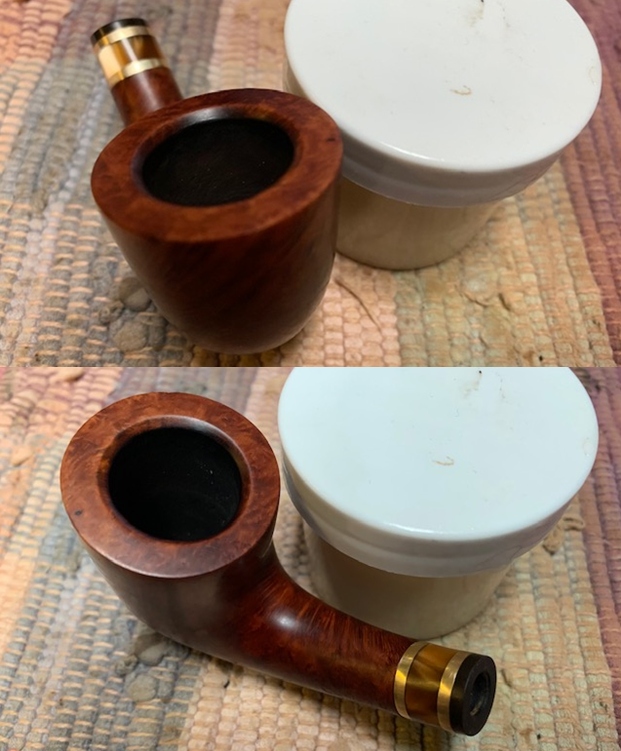
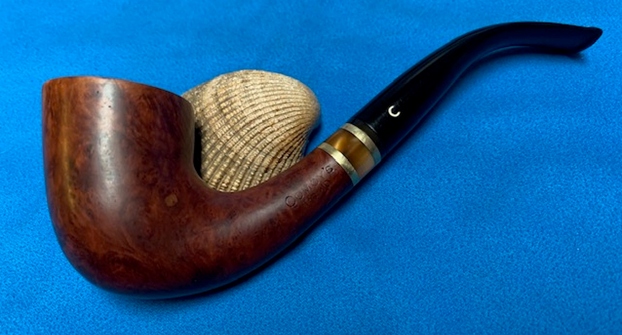
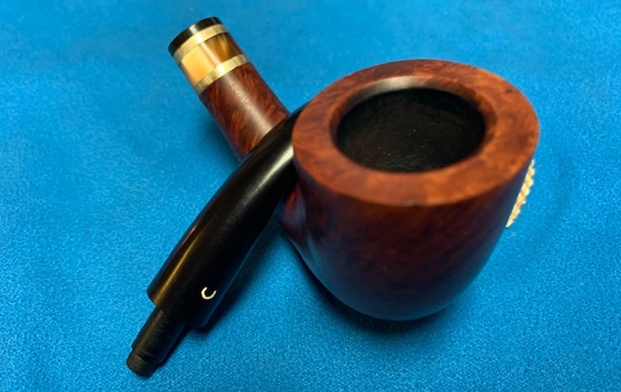
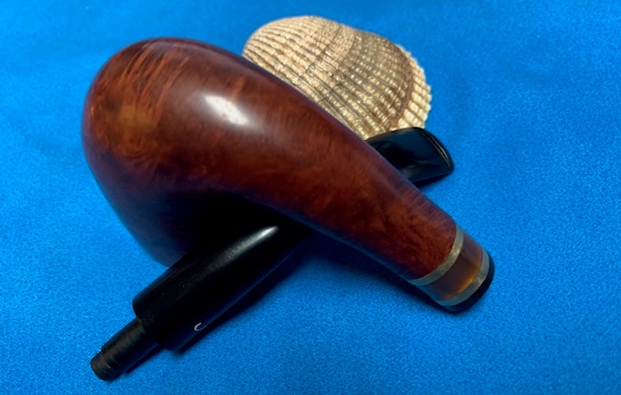
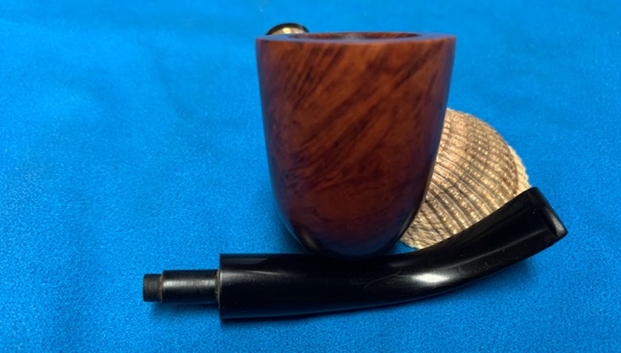
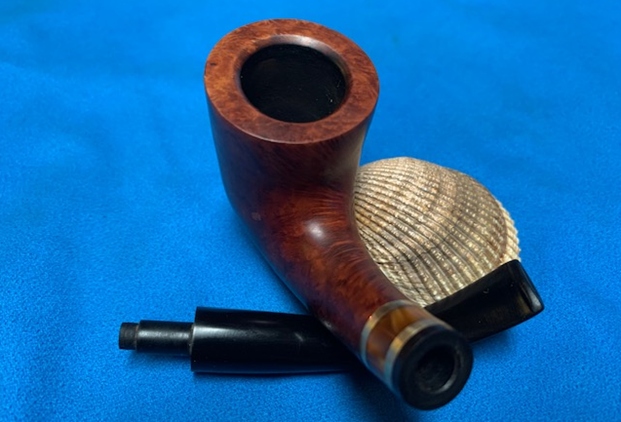
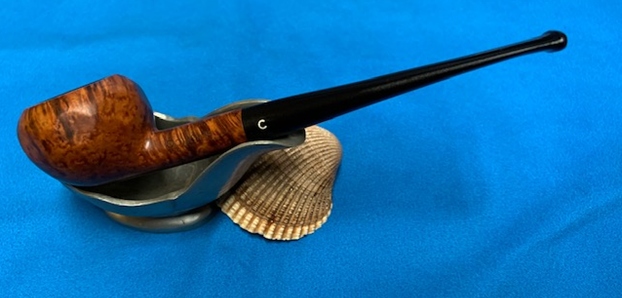
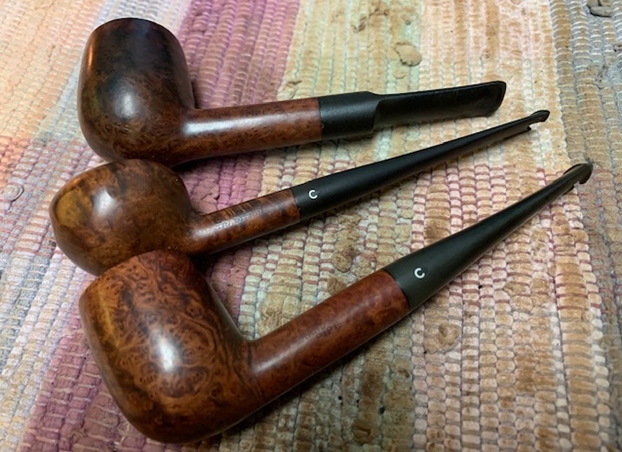
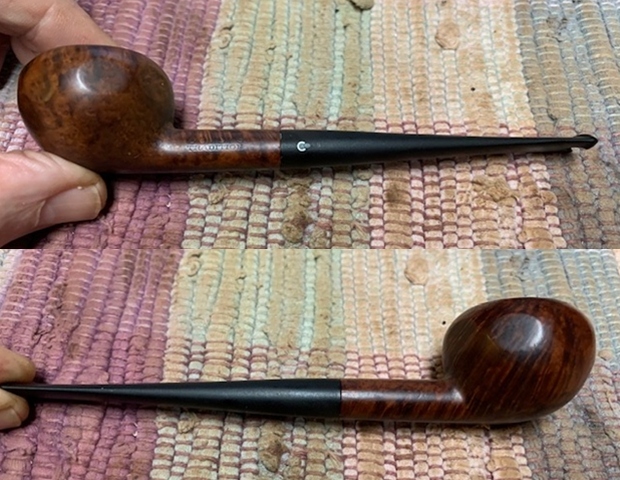
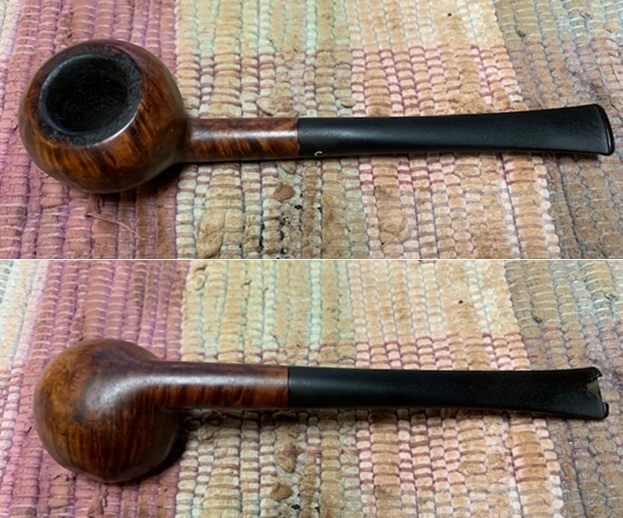
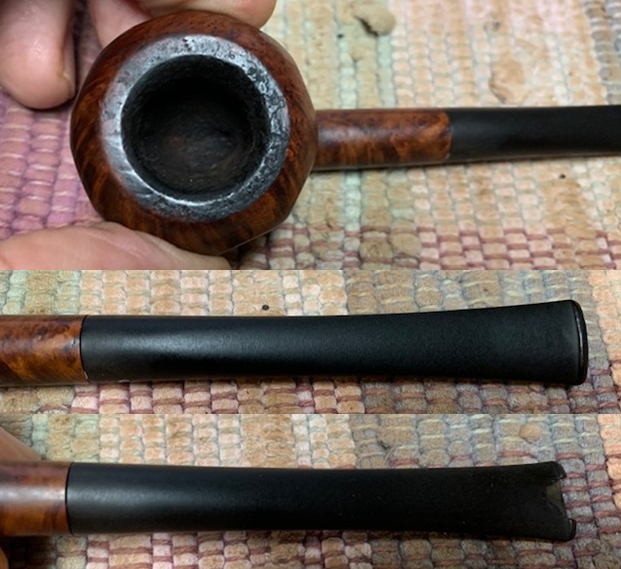
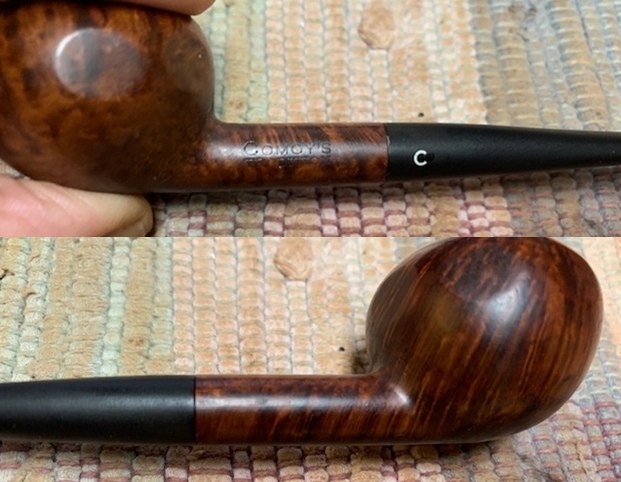
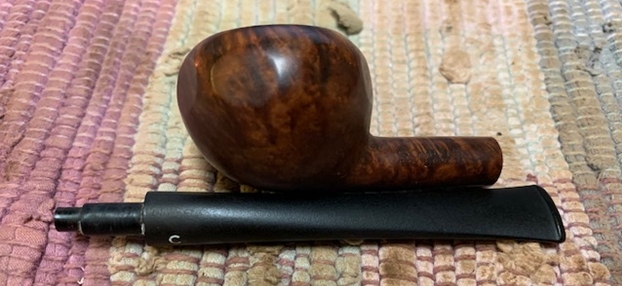
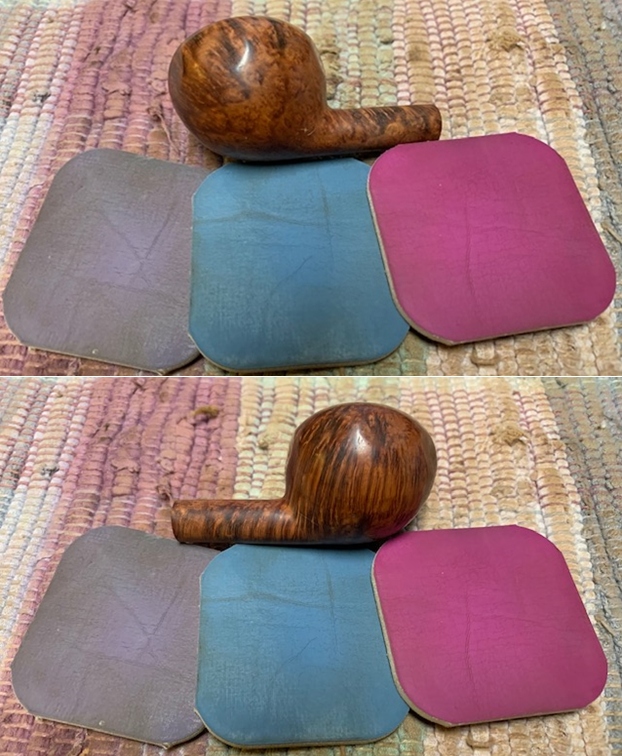
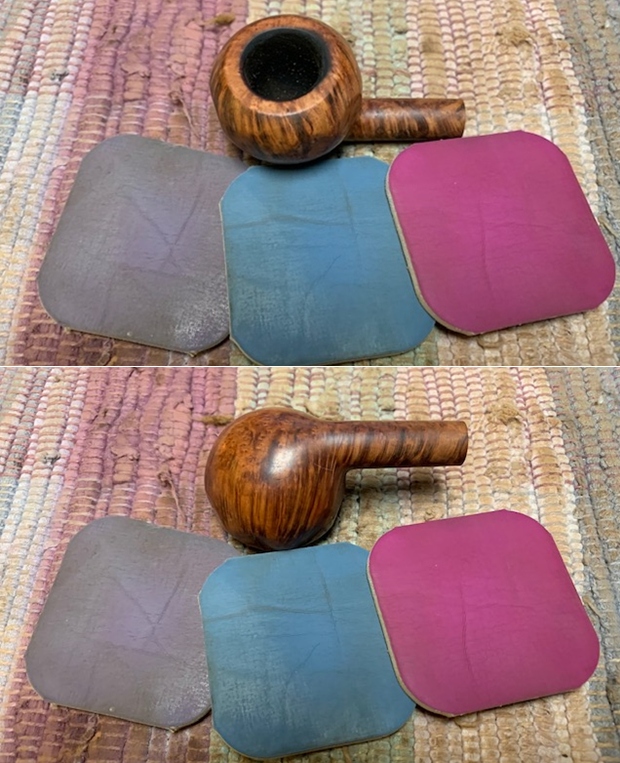
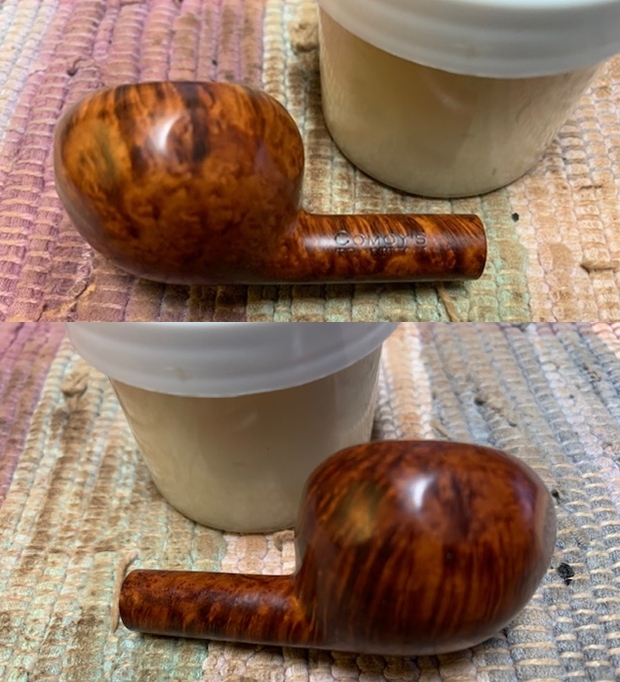
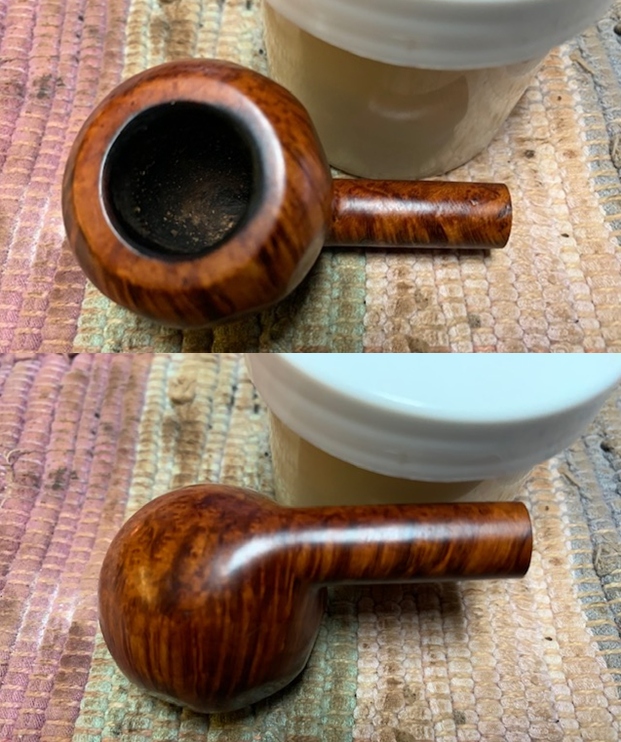
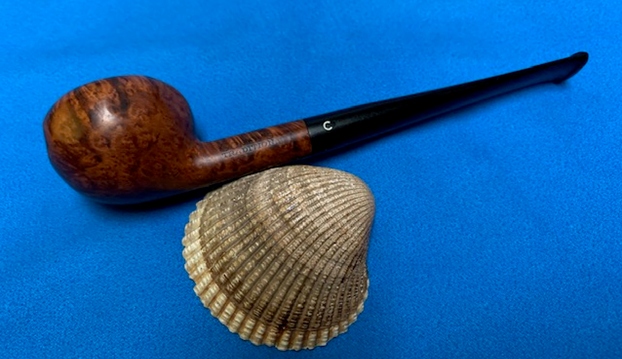
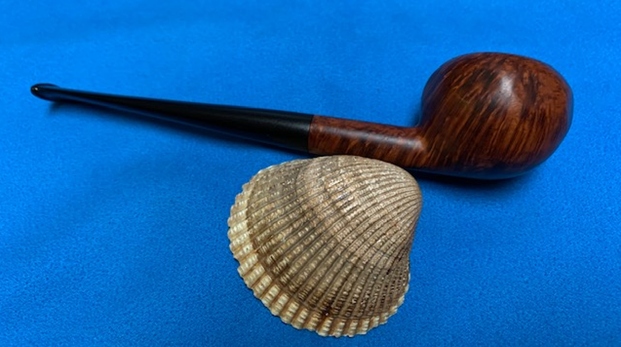
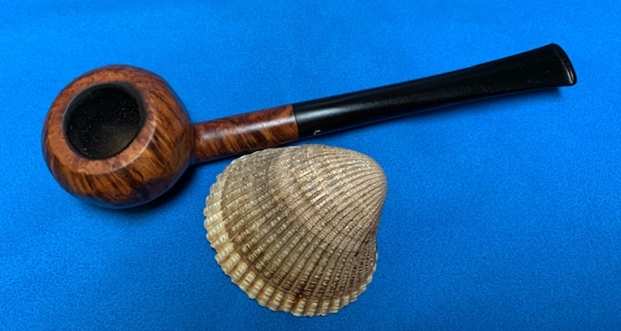
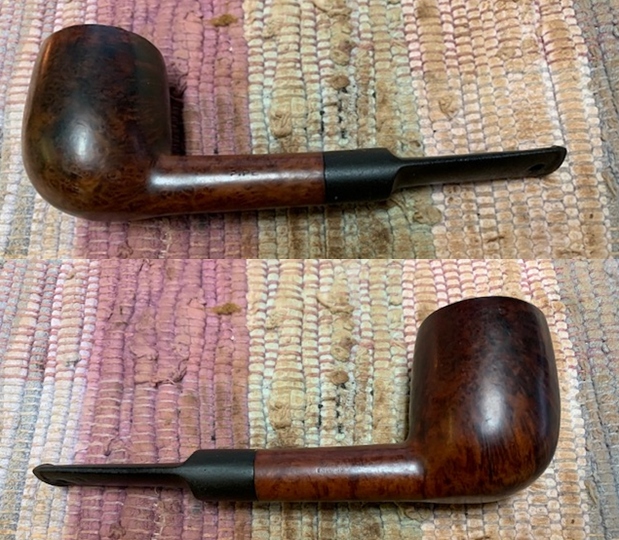
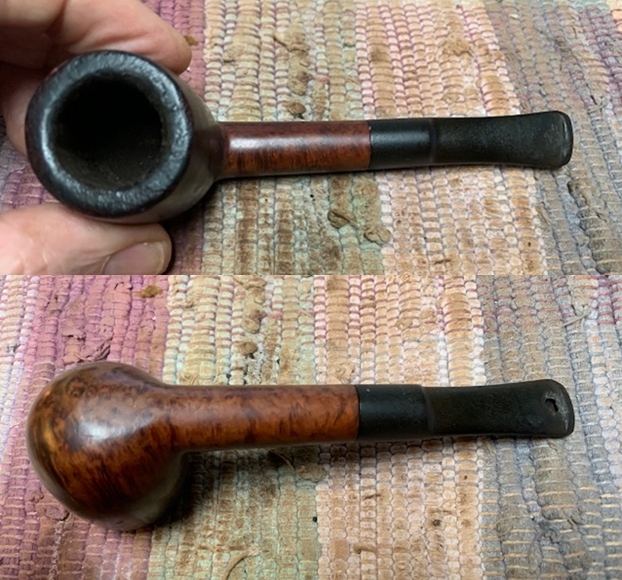
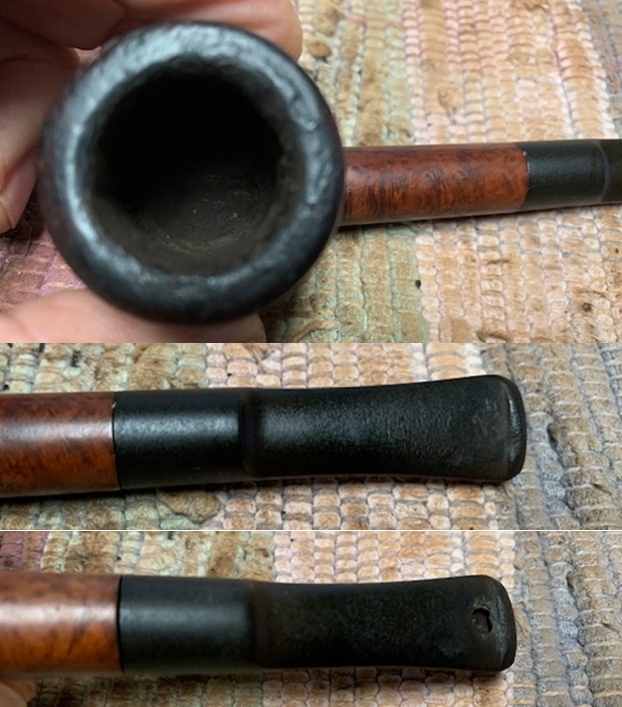
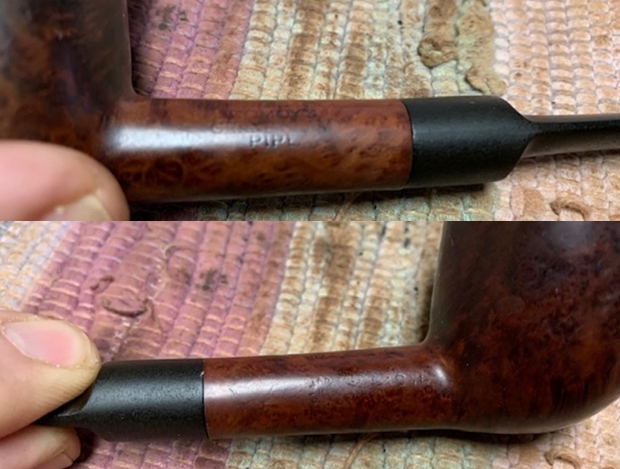
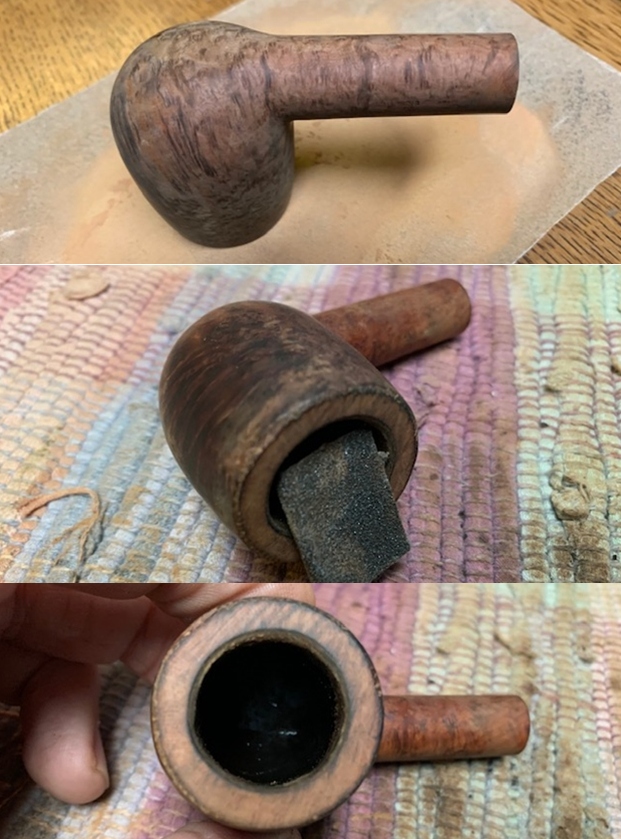
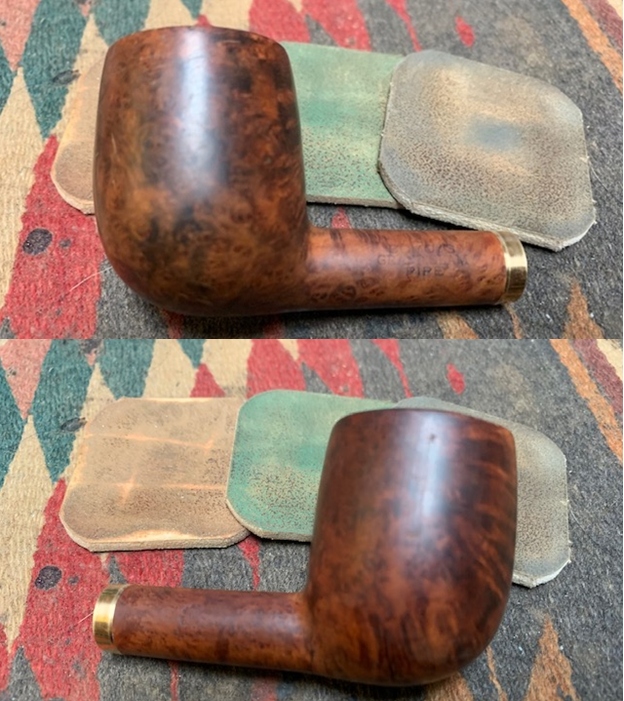
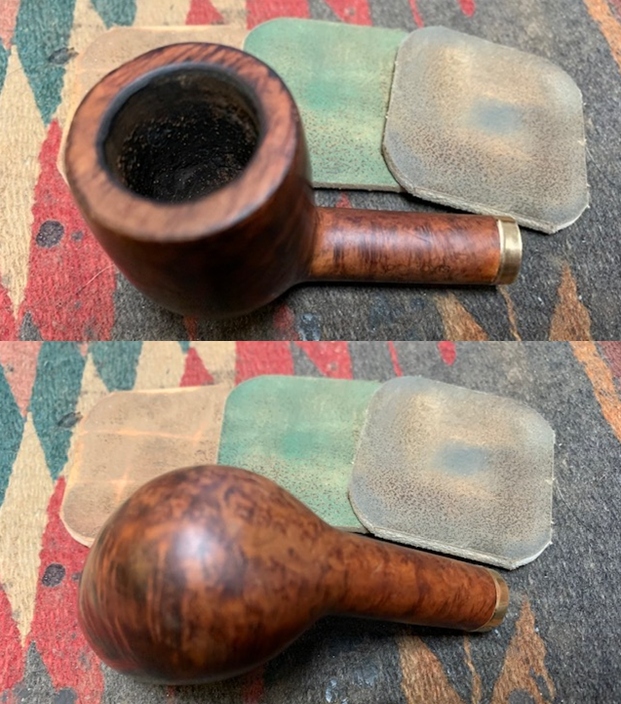
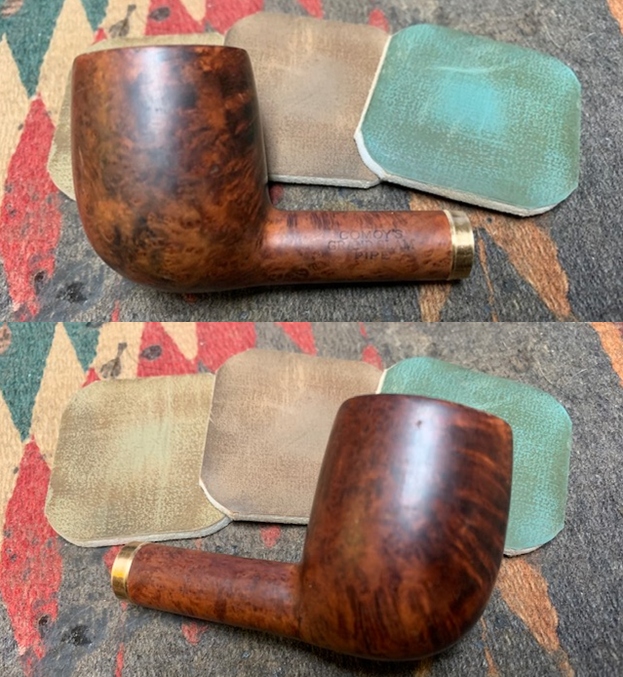
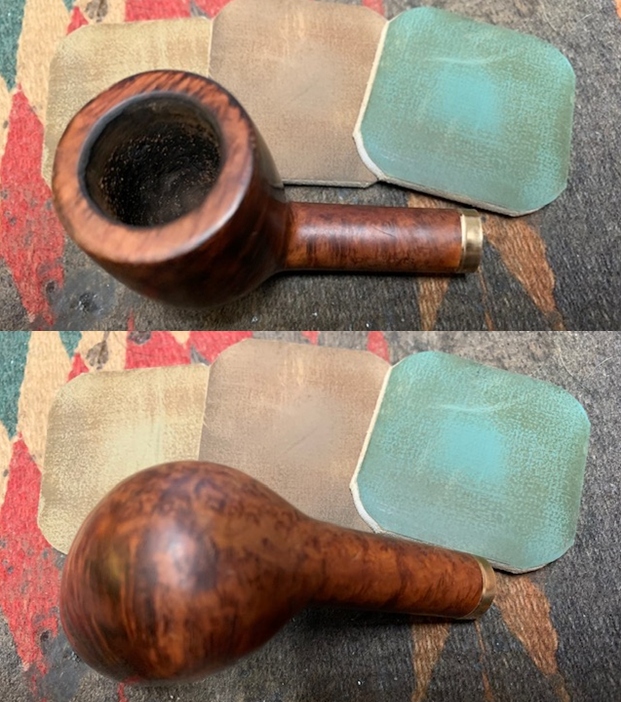
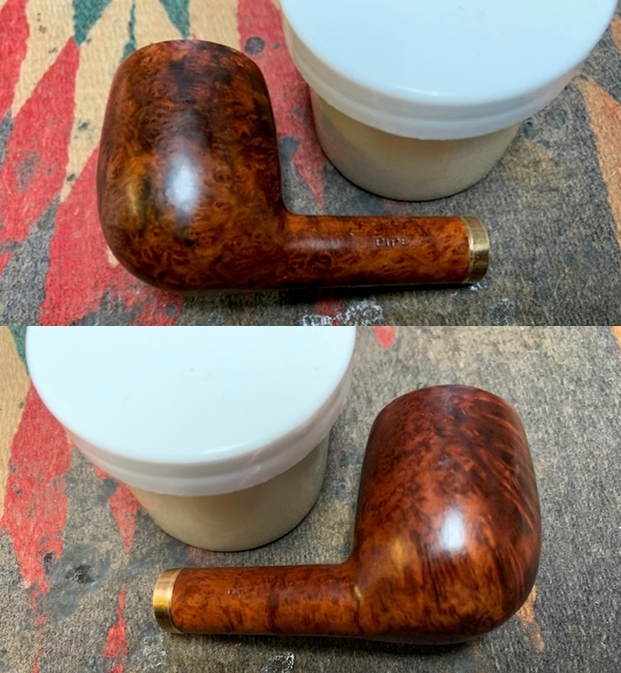
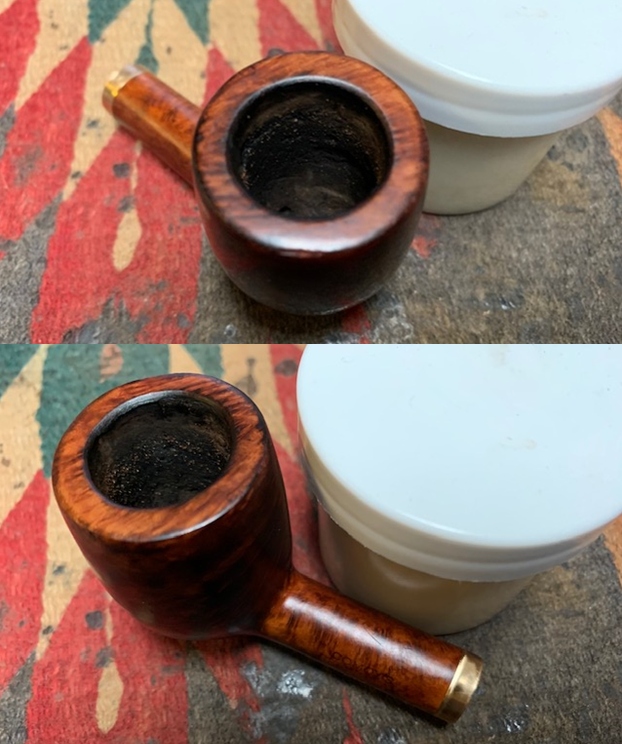
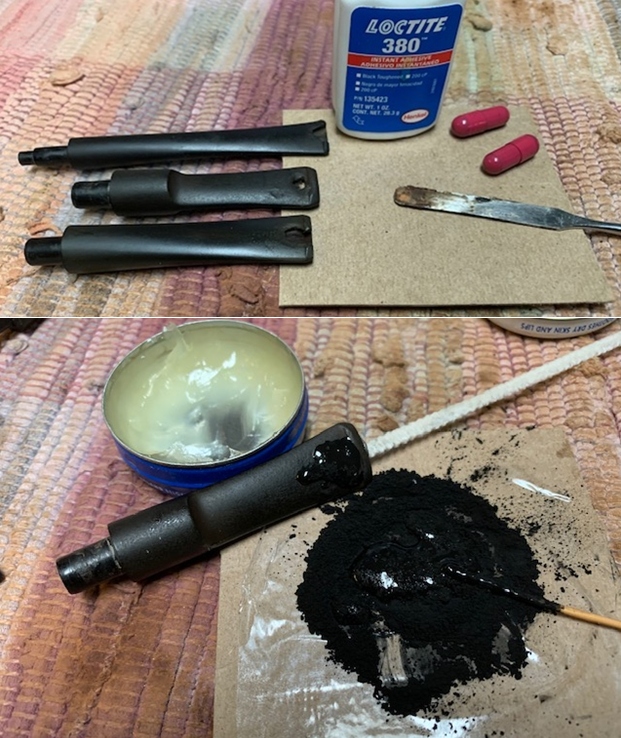
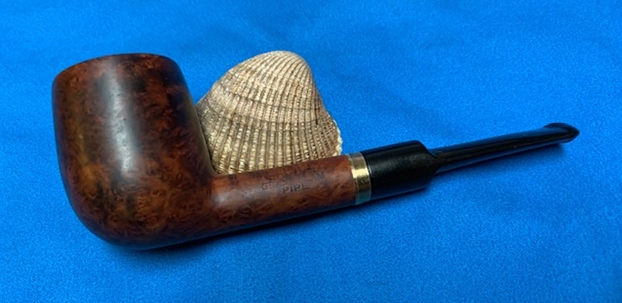
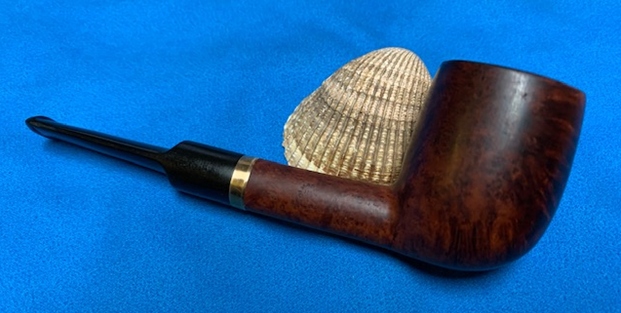
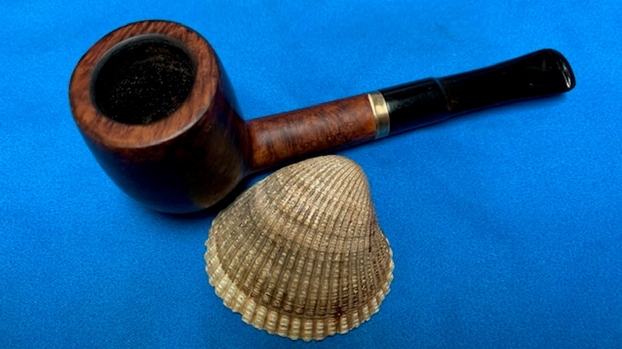
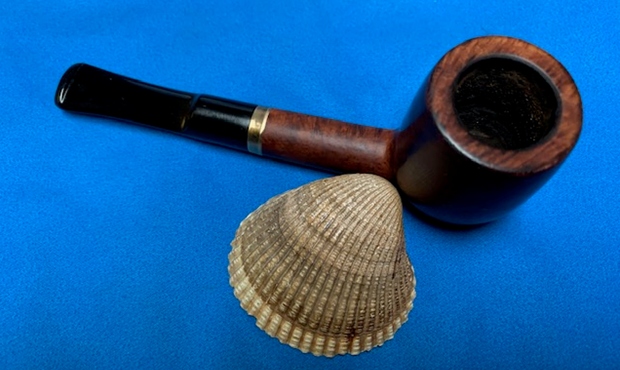
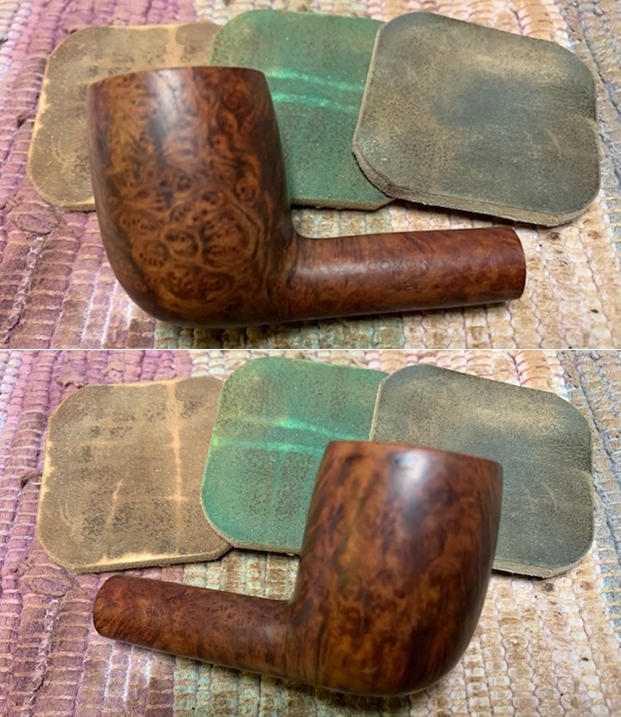
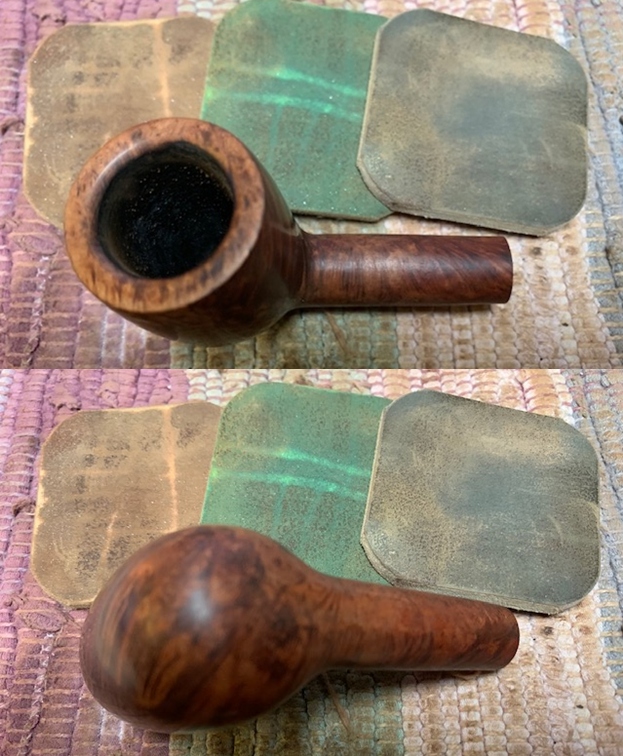
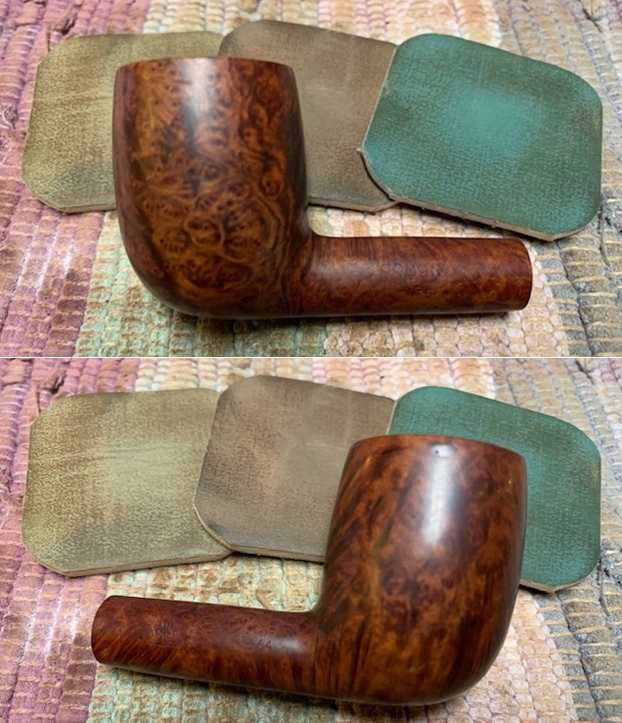
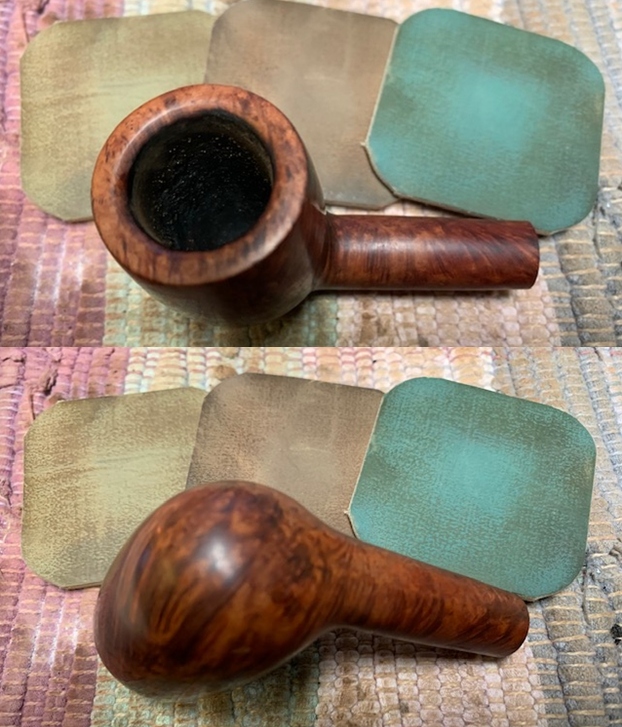
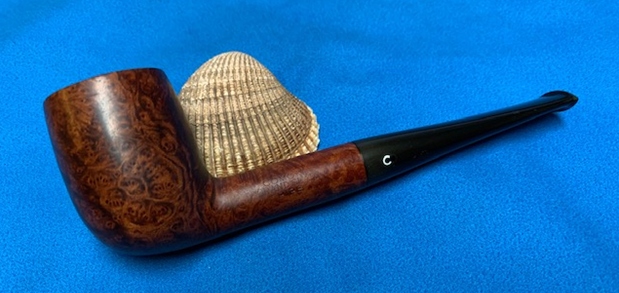
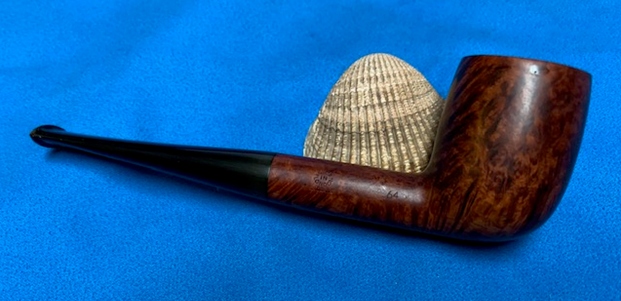
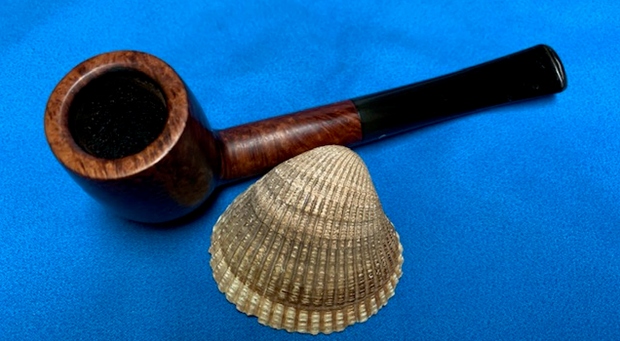
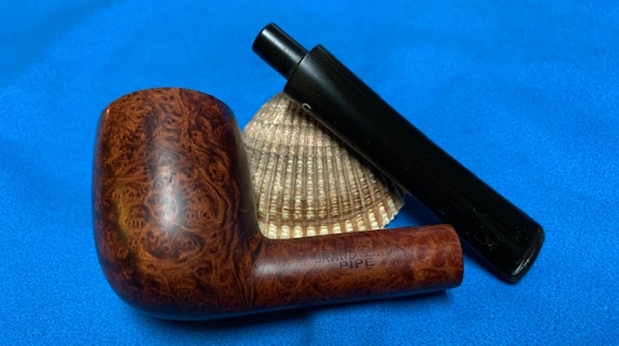
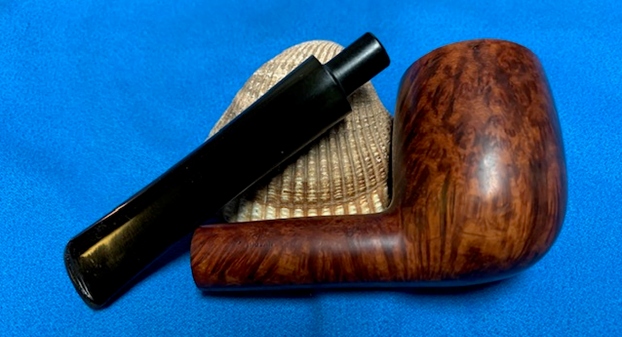
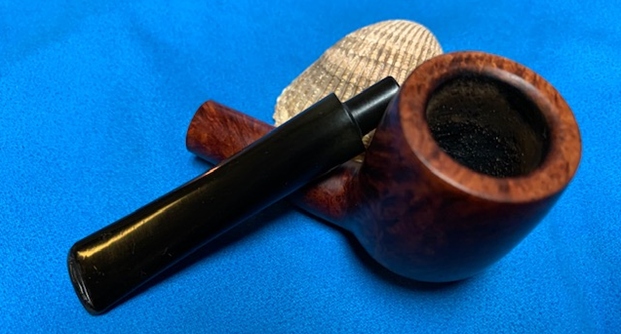
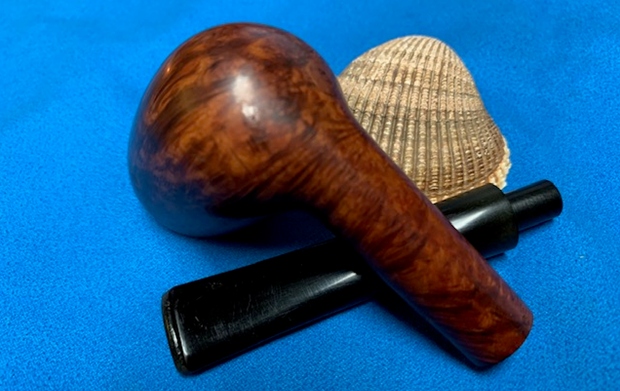
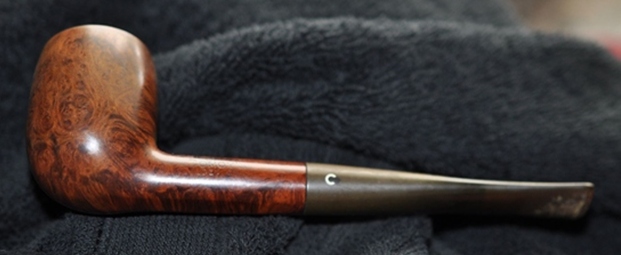
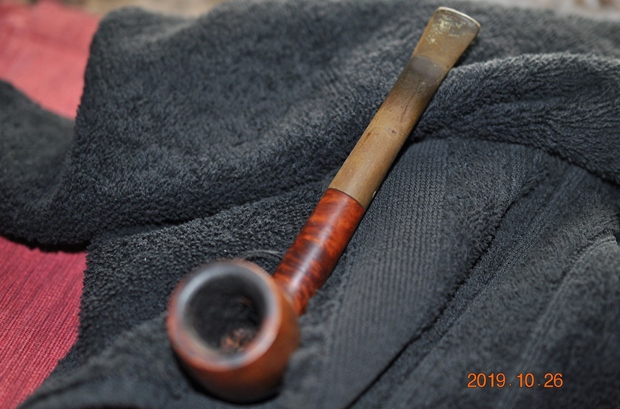
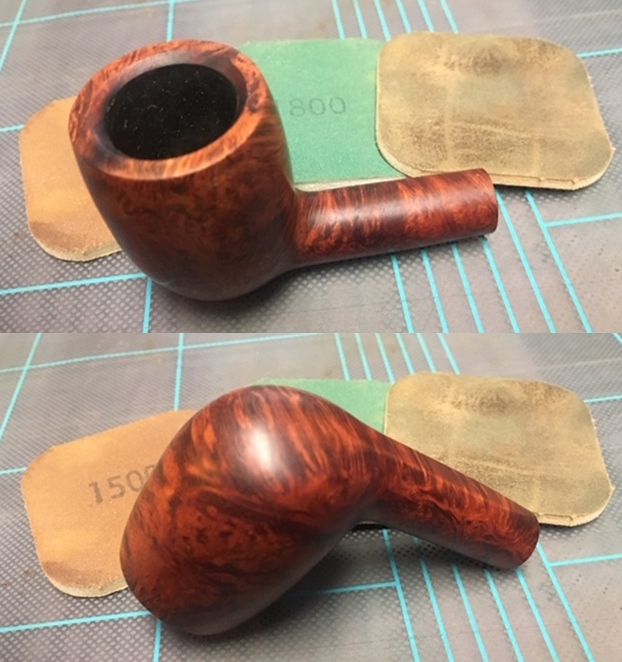
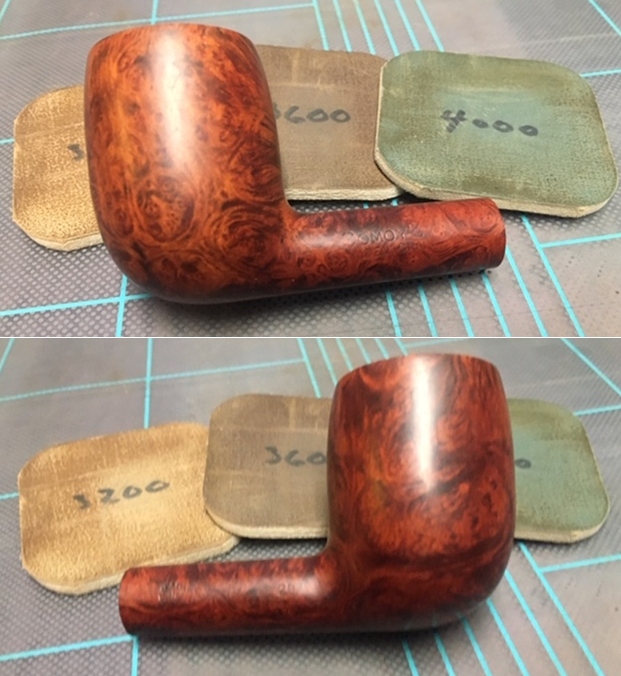
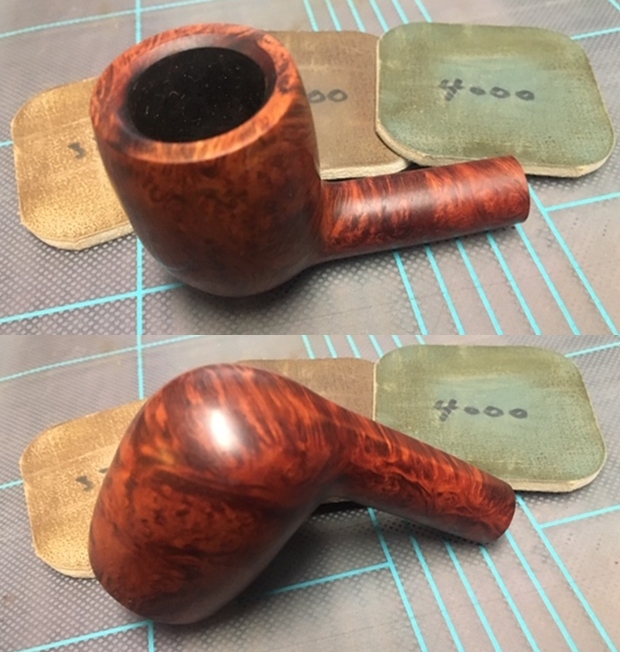
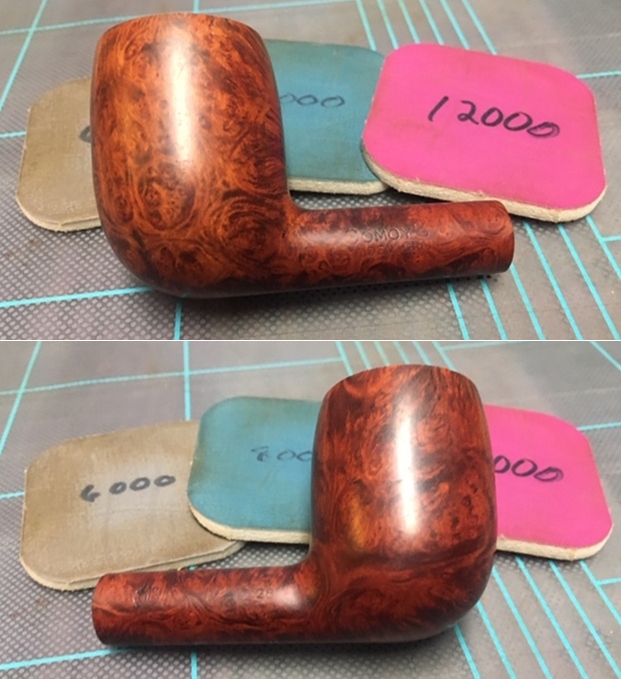
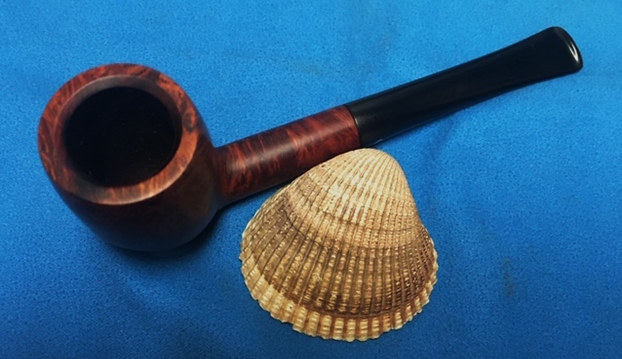
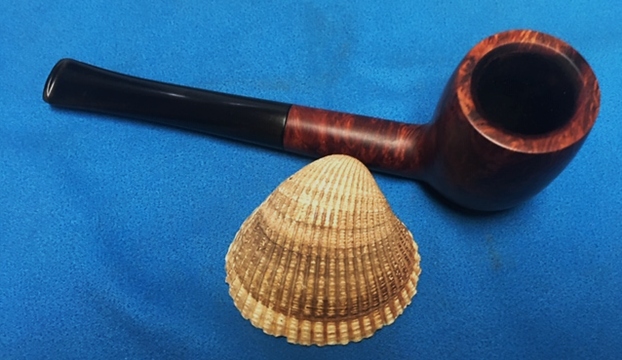
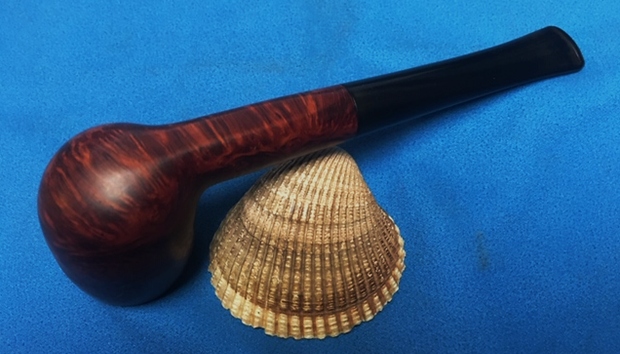
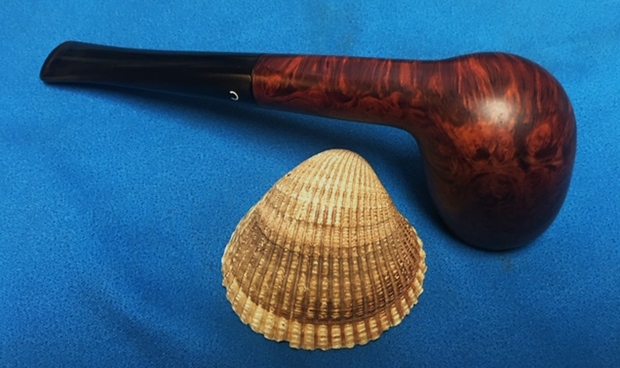
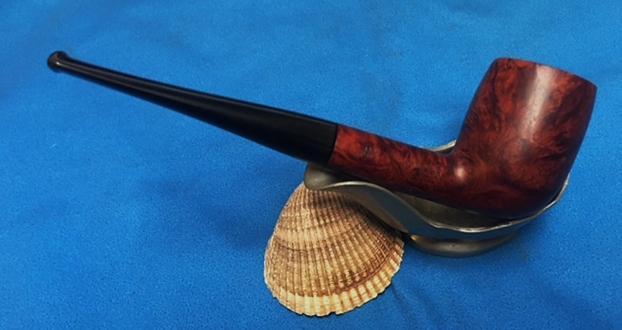
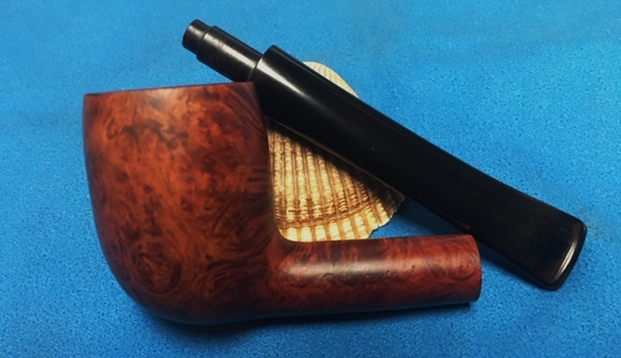
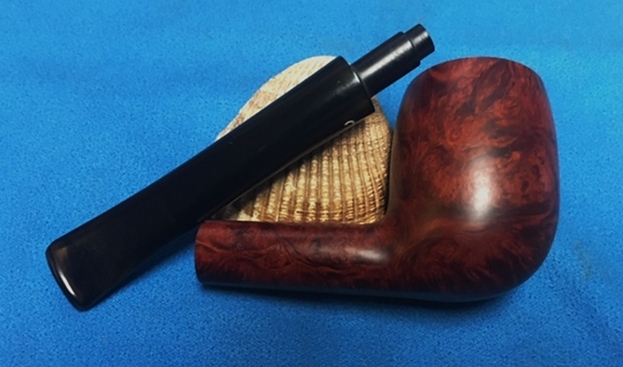
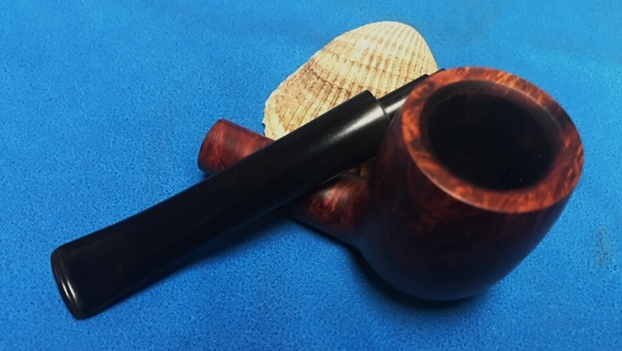
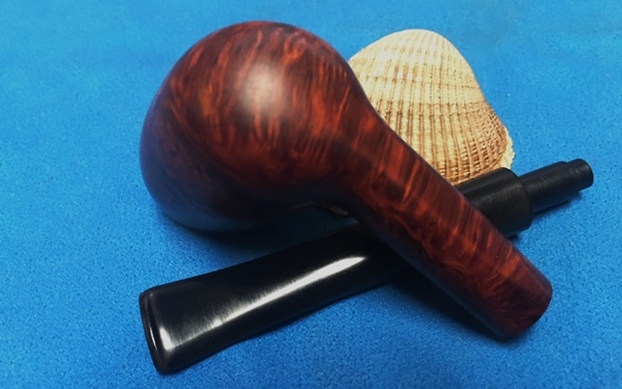
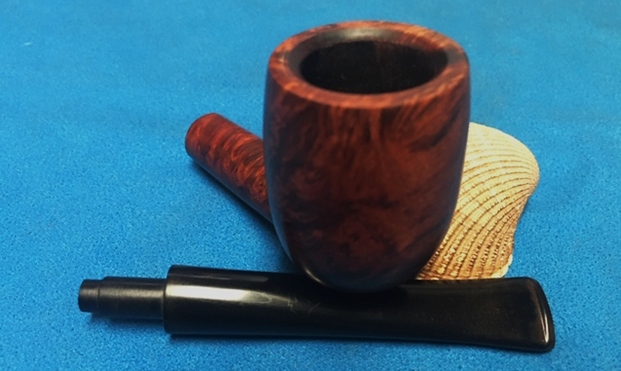
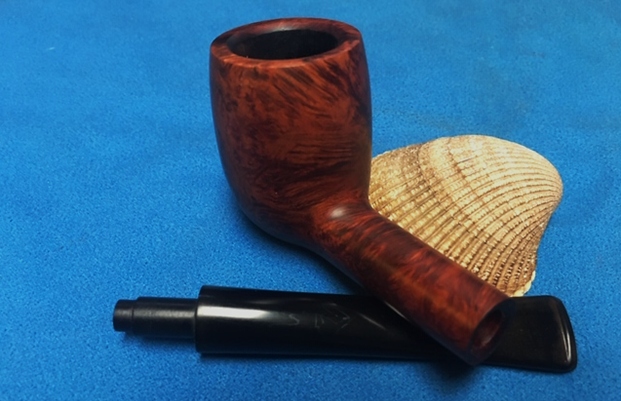
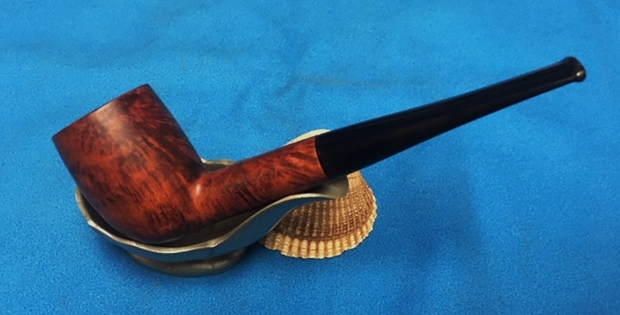
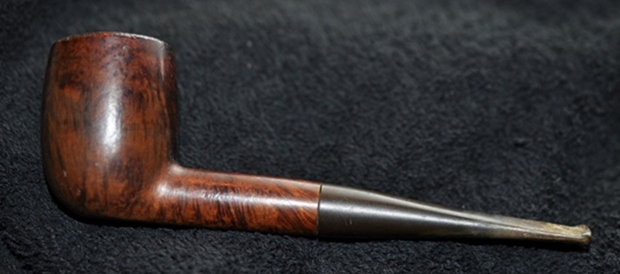
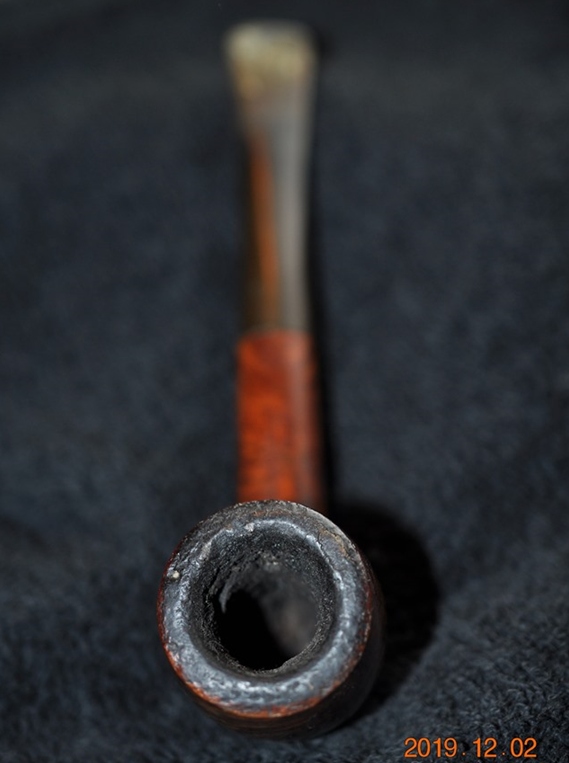
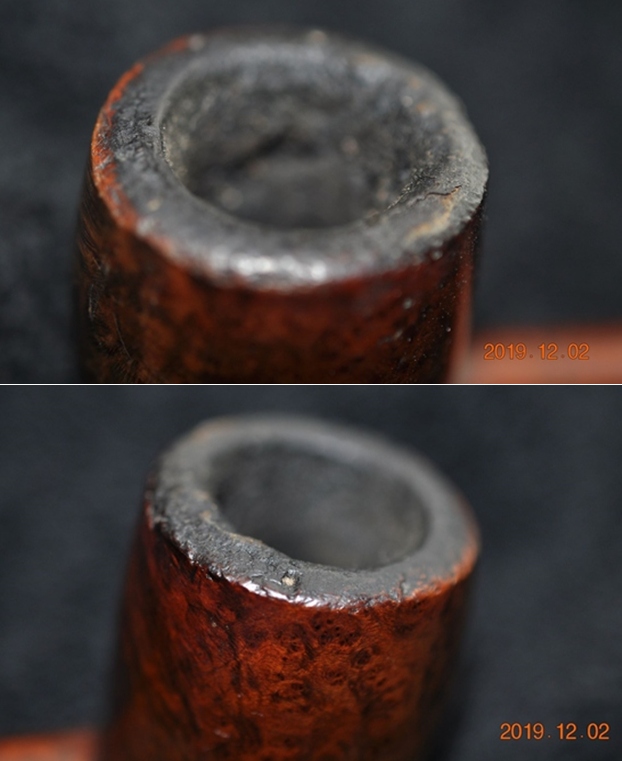
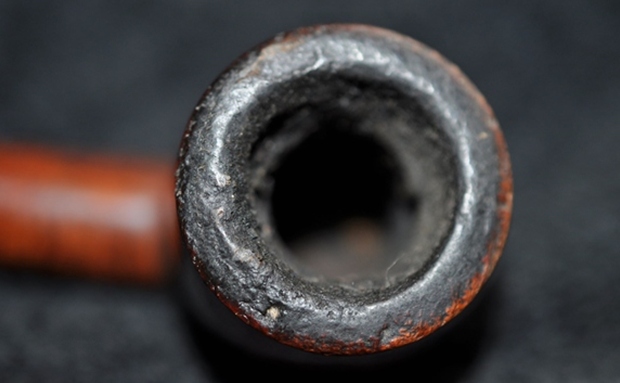
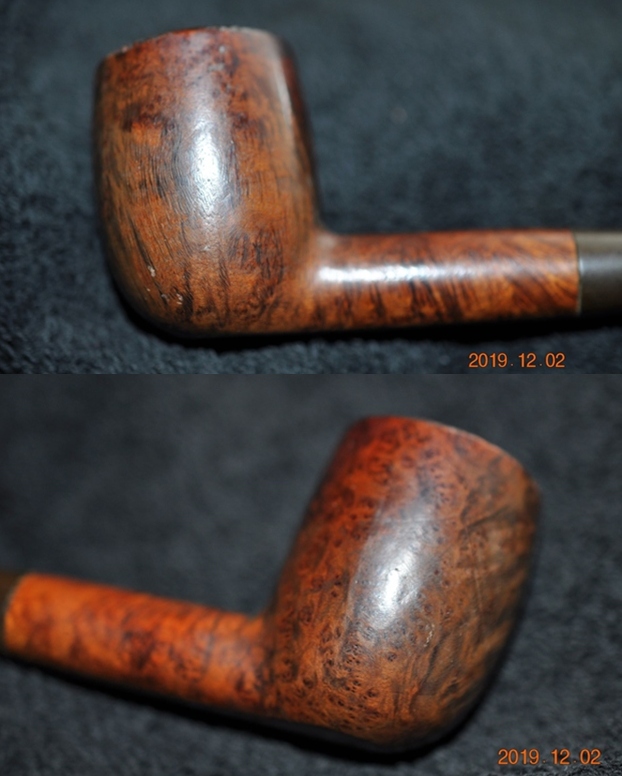
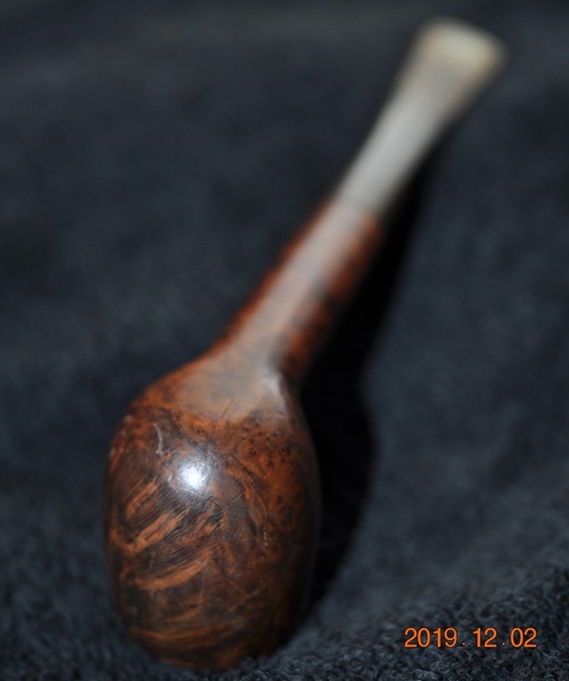
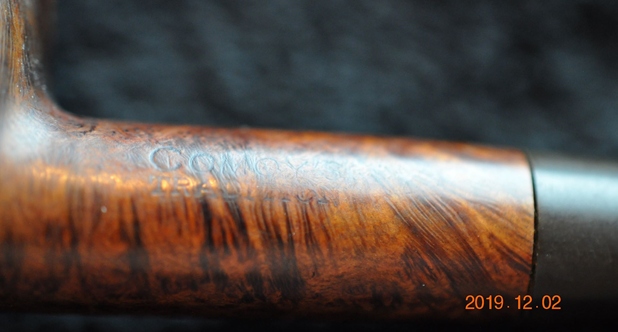
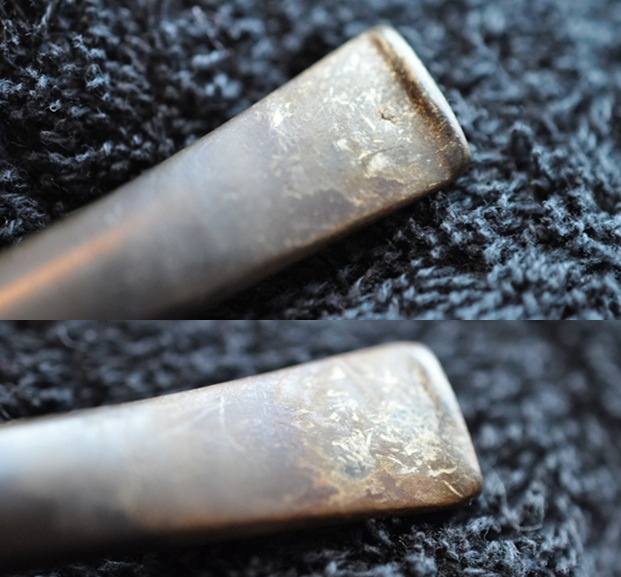
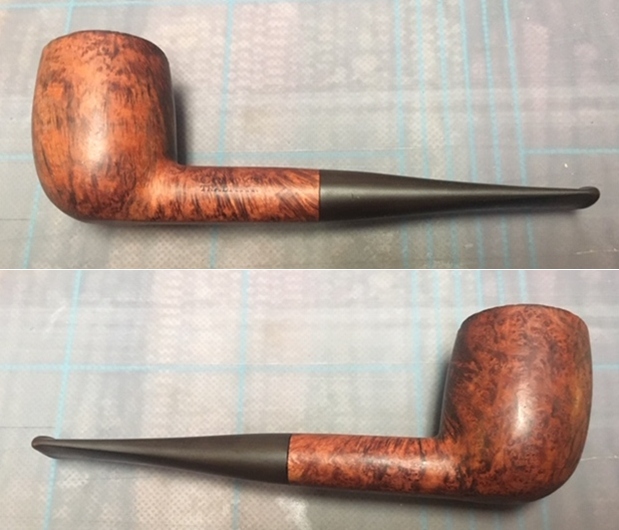
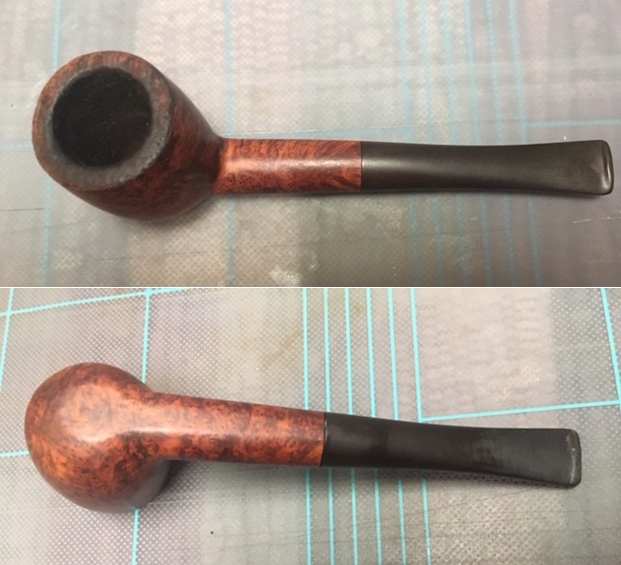
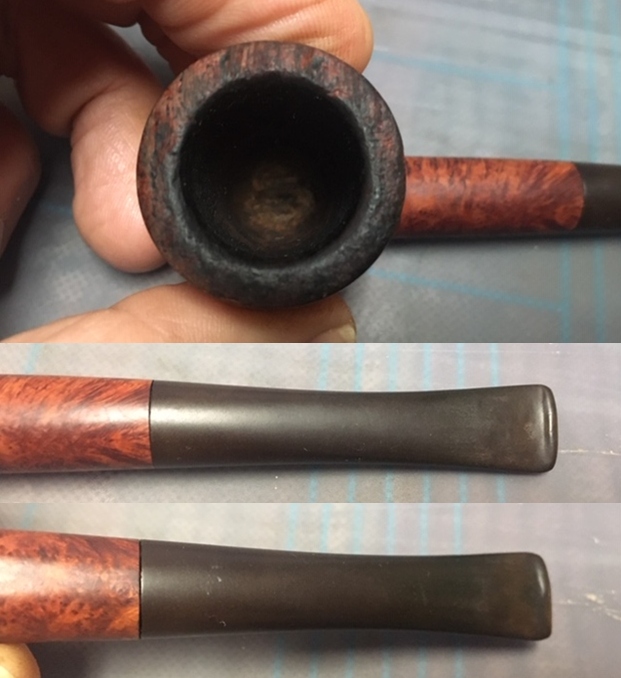
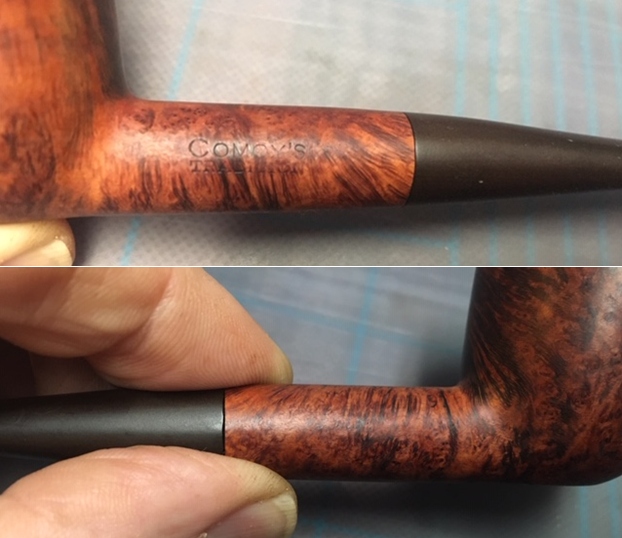
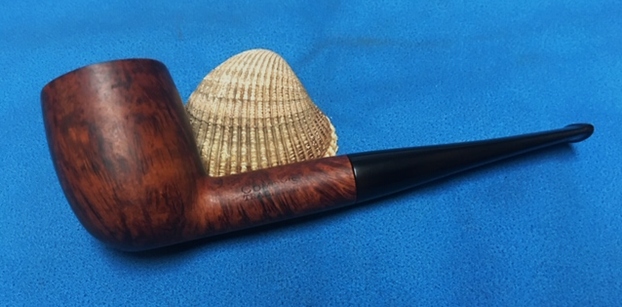
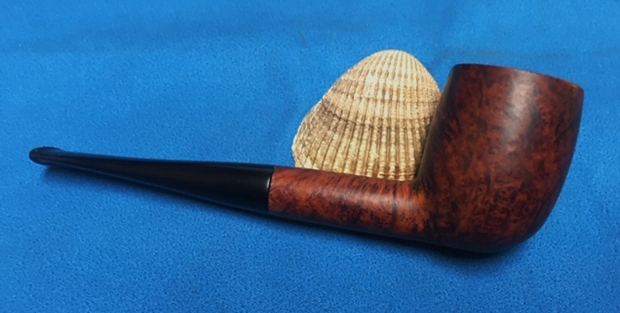
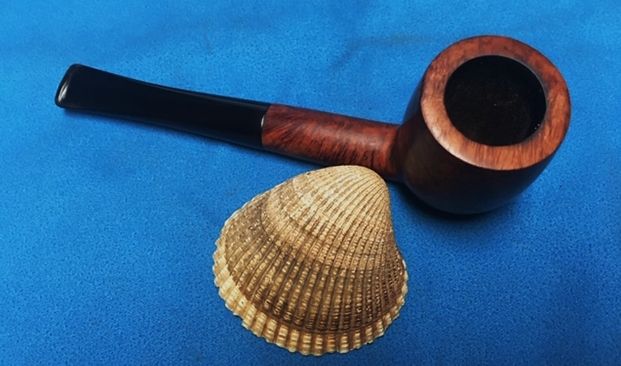
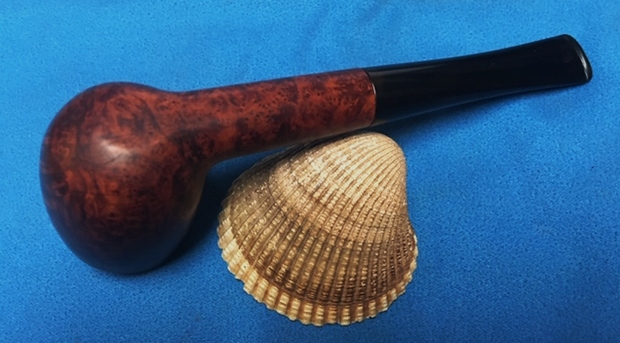
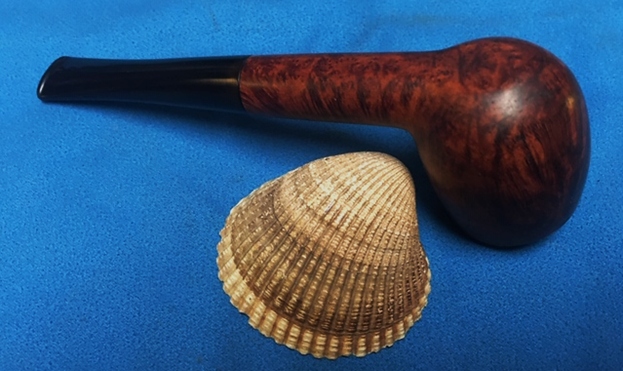
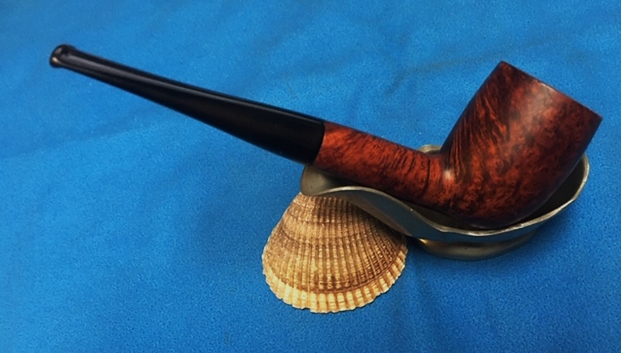
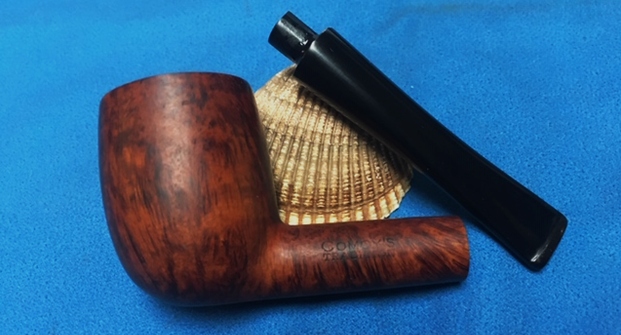
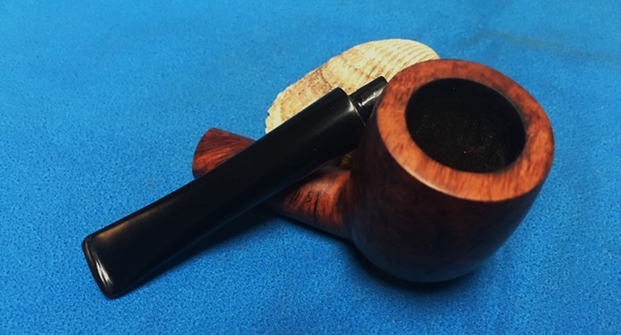
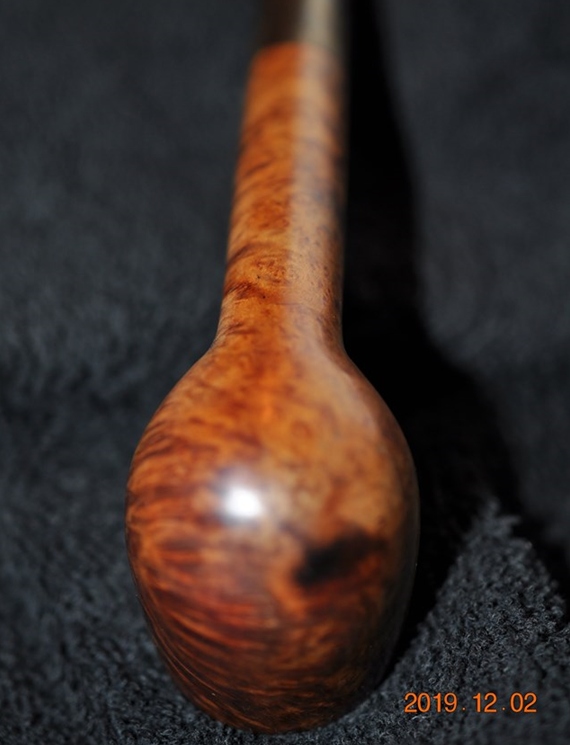
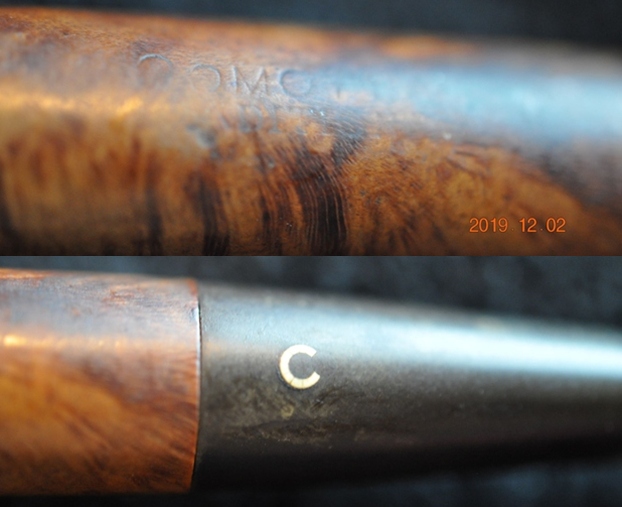
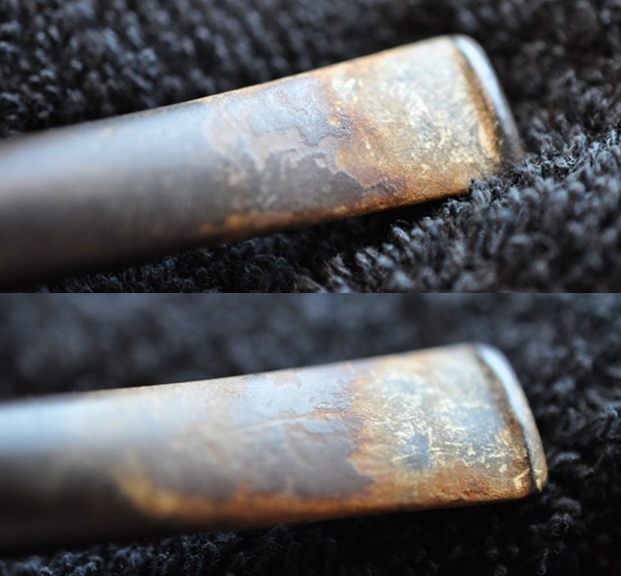
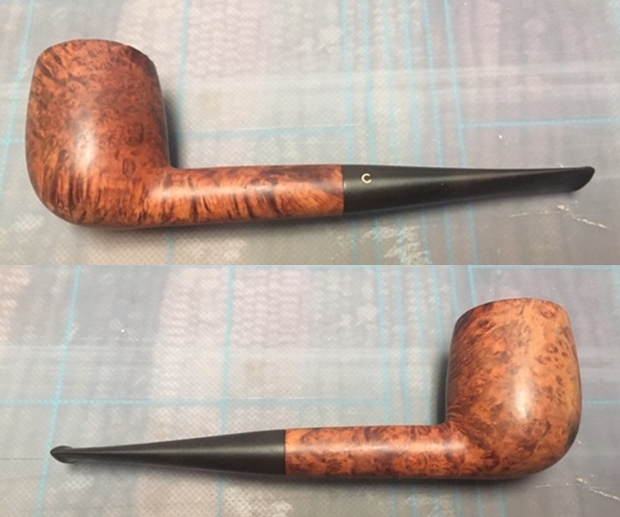
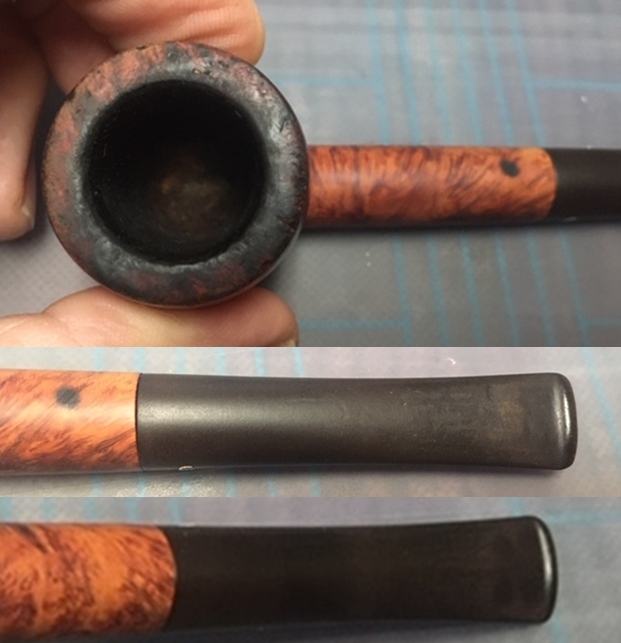
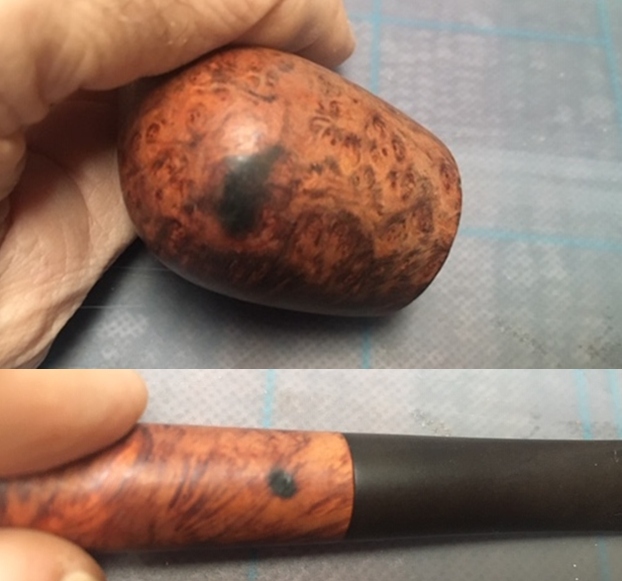
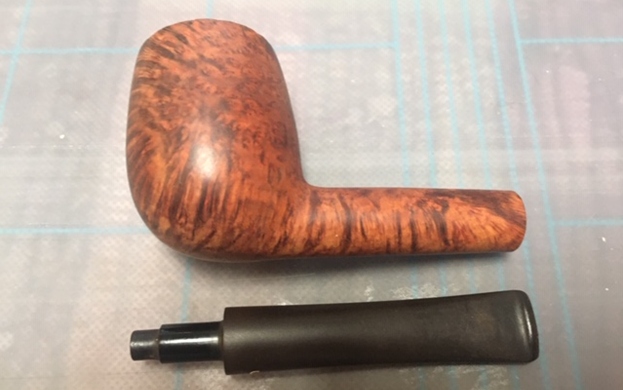
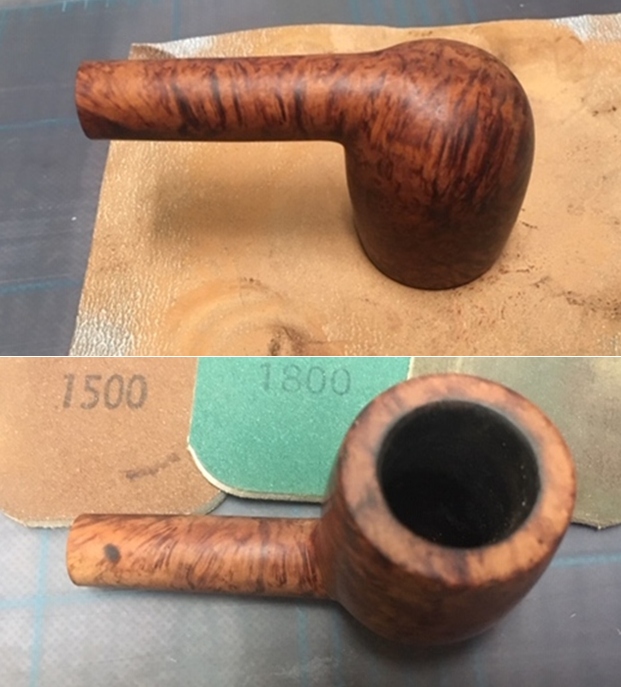
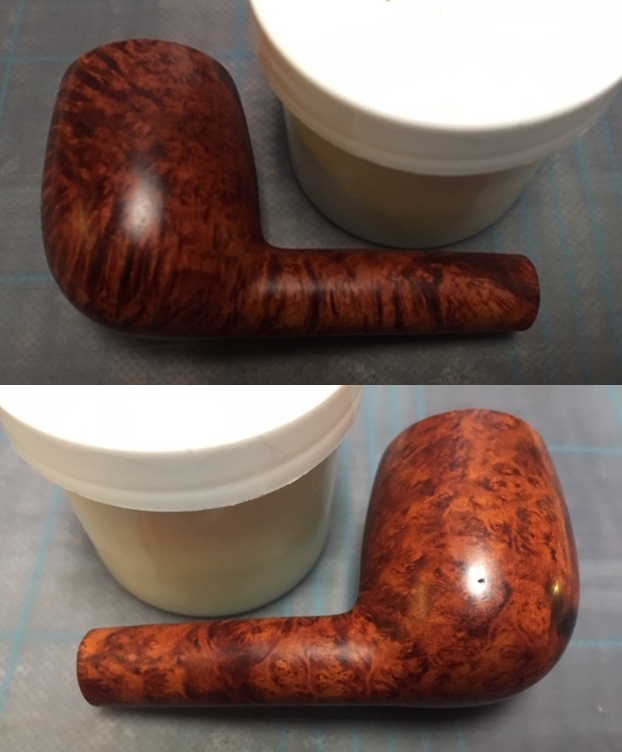
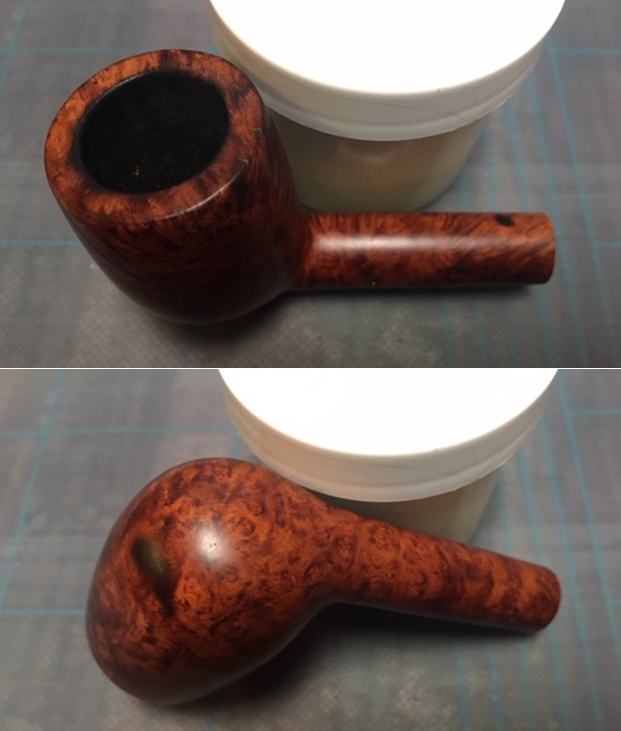
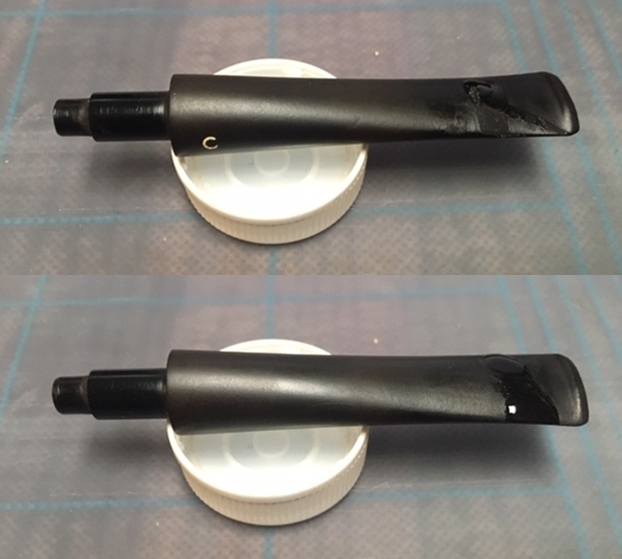
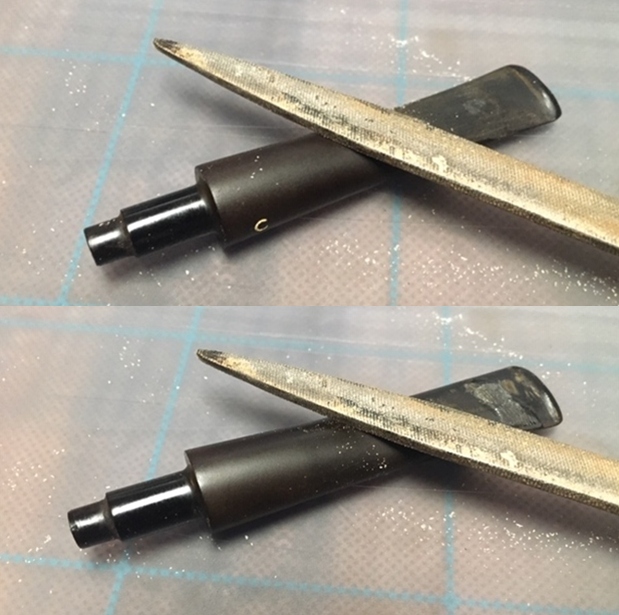
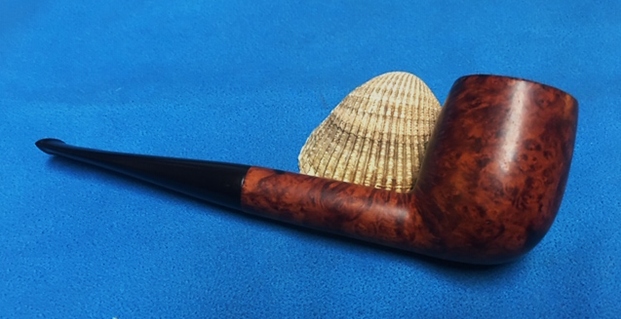
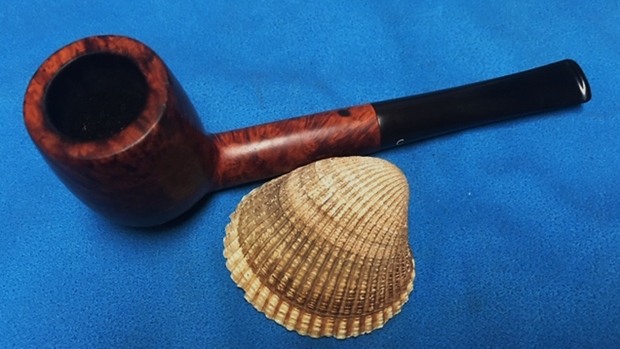
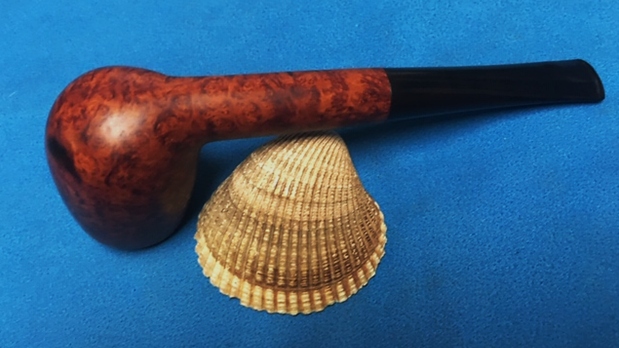
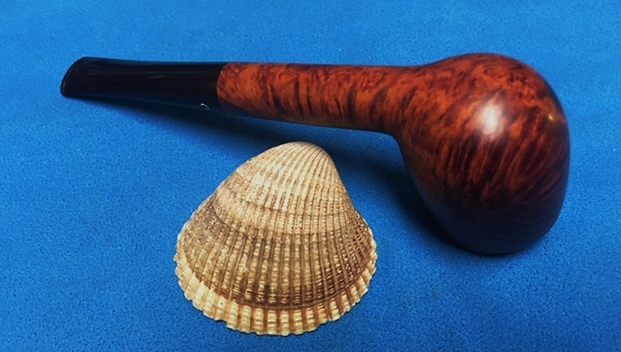
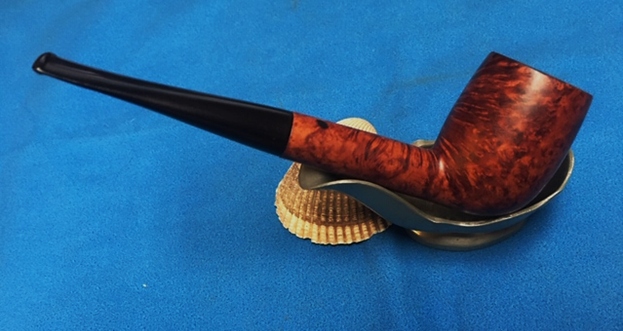
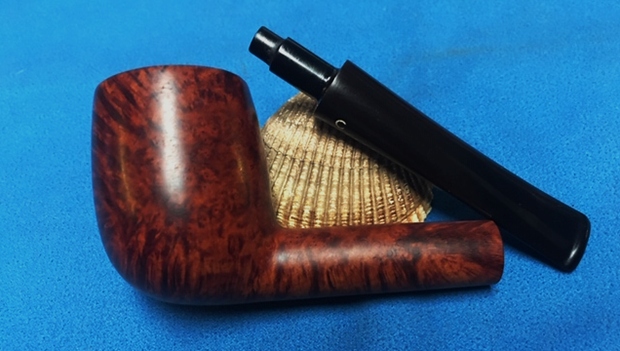
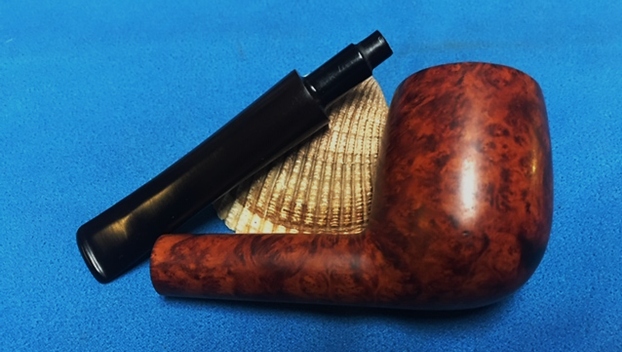
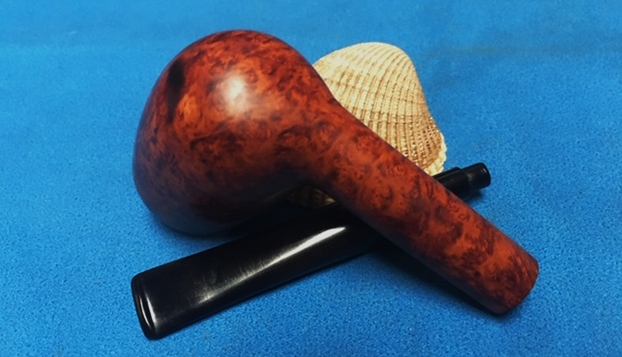
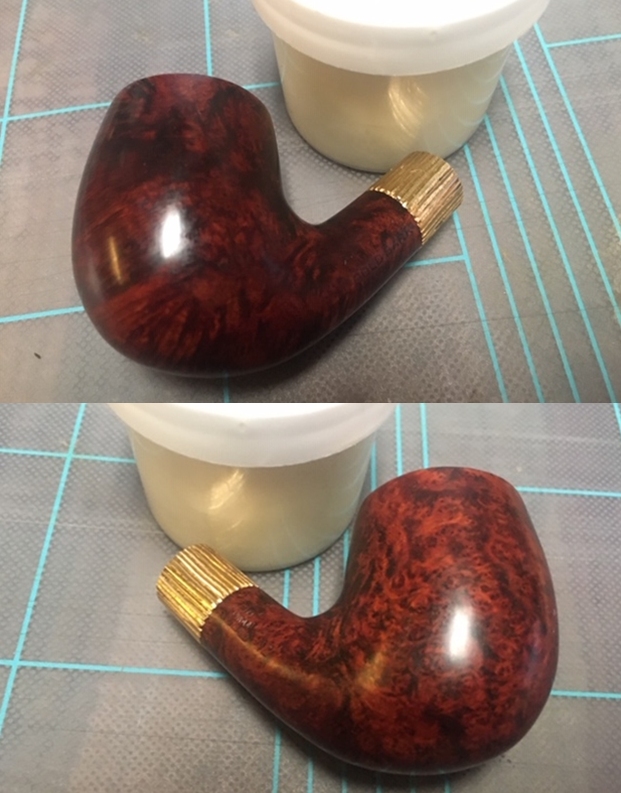
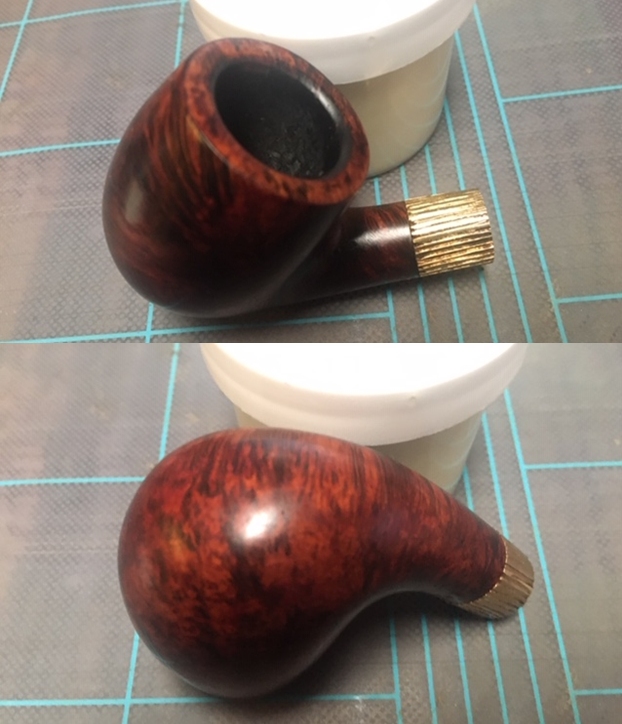
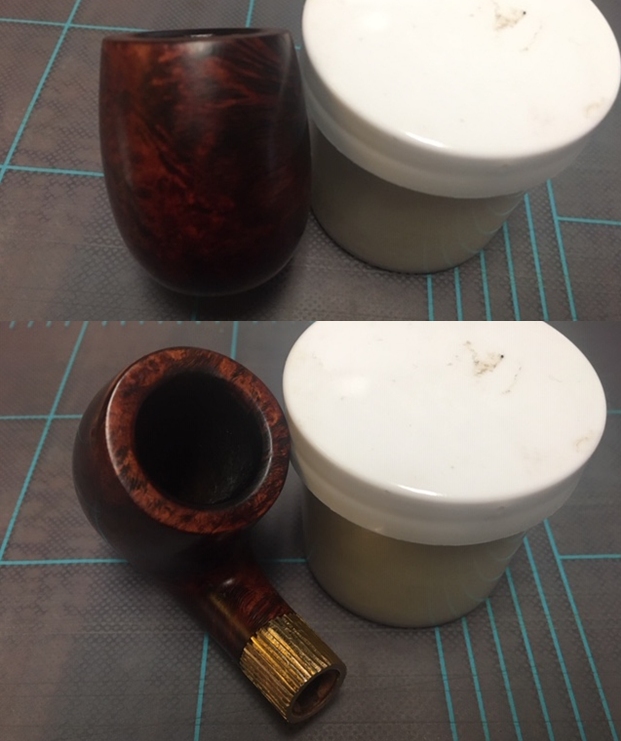
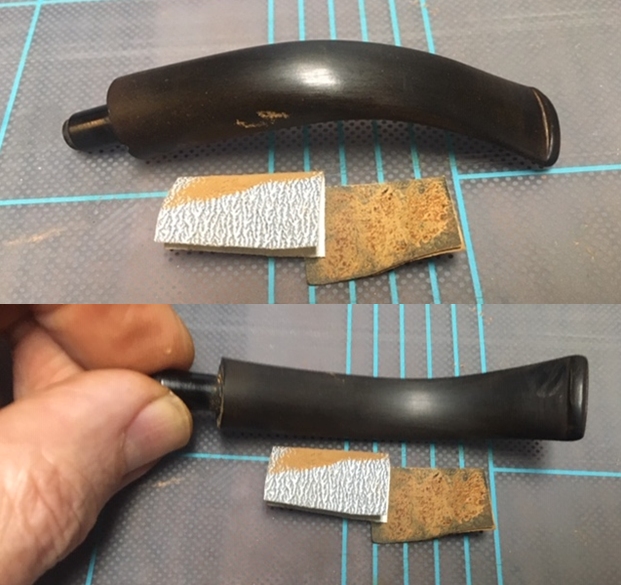
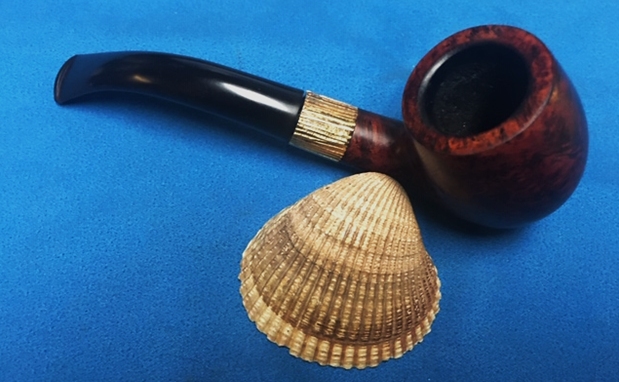
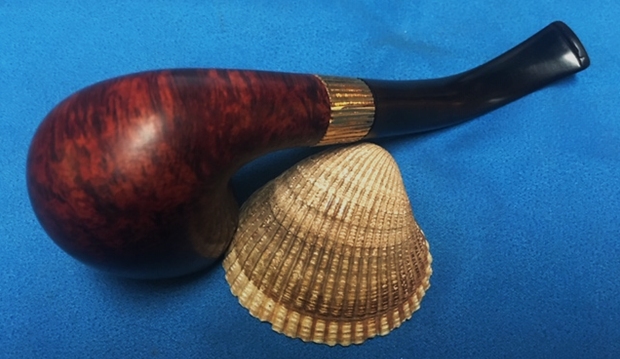
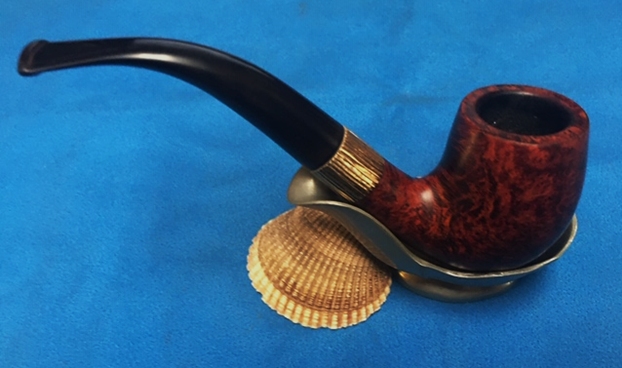
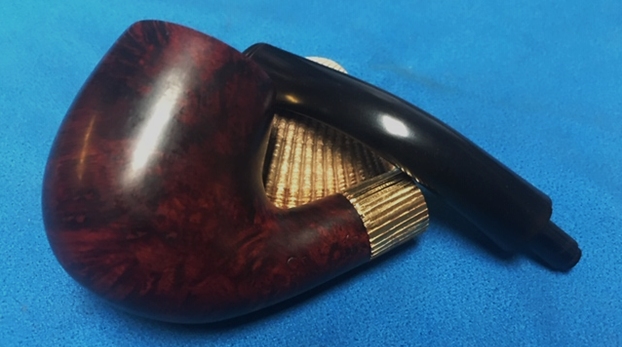
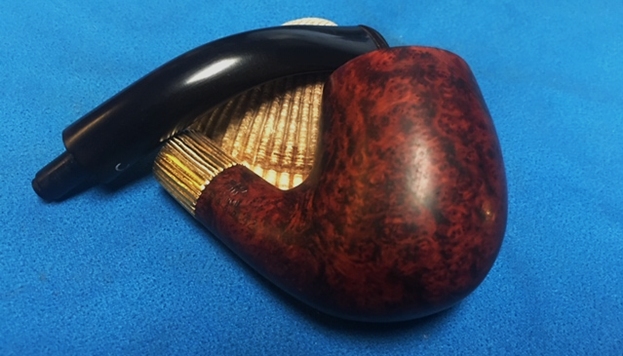
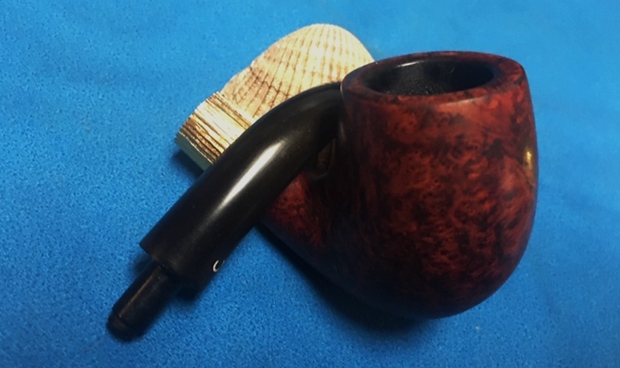
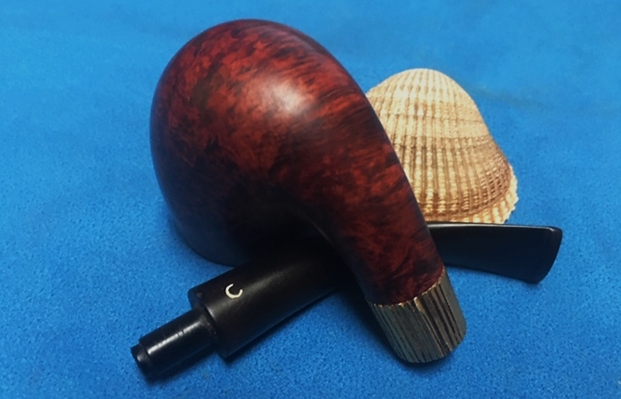
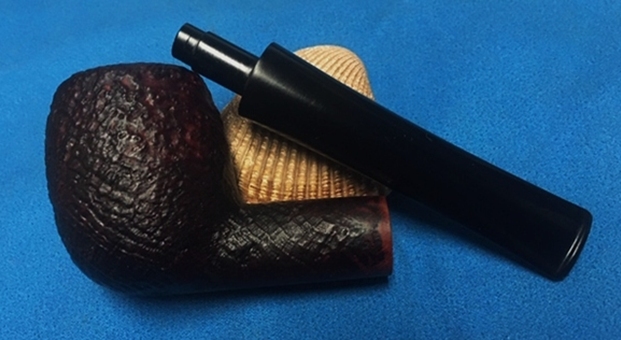
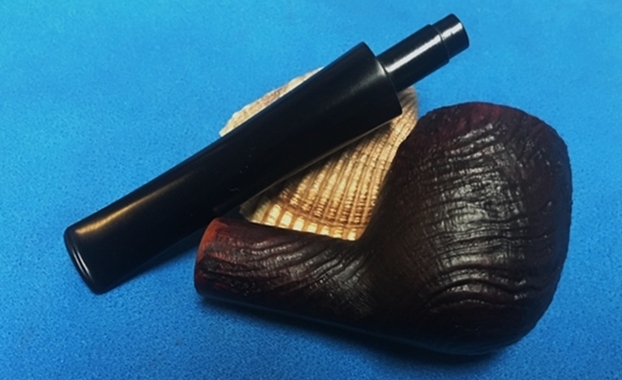
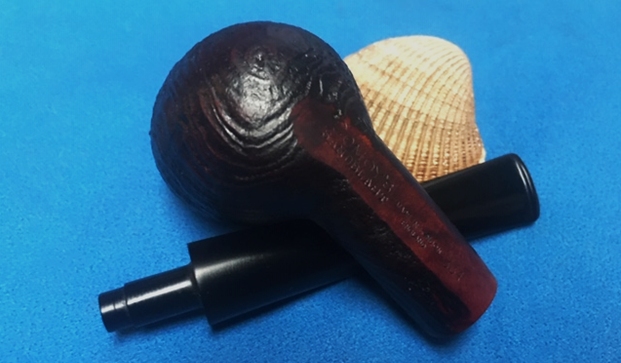
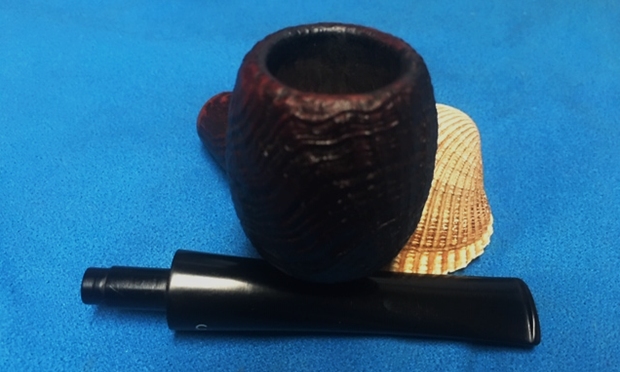
A Tale of the Rebirth of 3 Pipes – Pipe #2 – a Comoy’s Tradition 3591 Panel Prince


Blog by Steve Laug

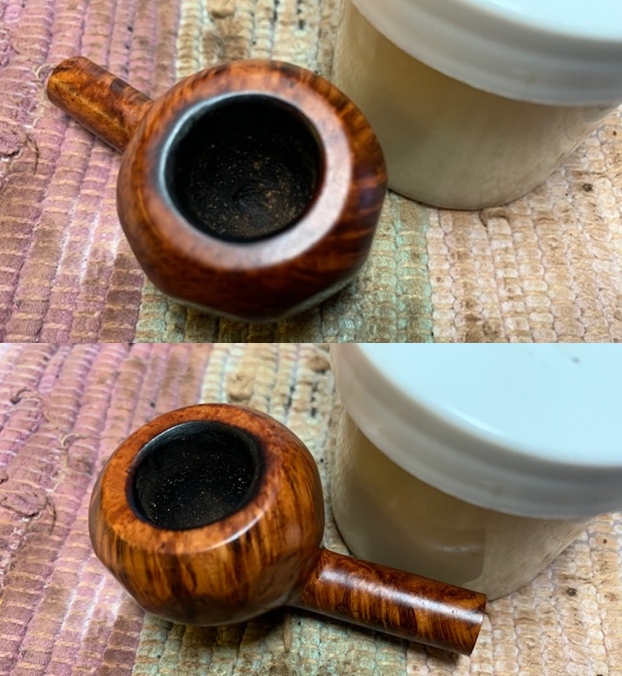
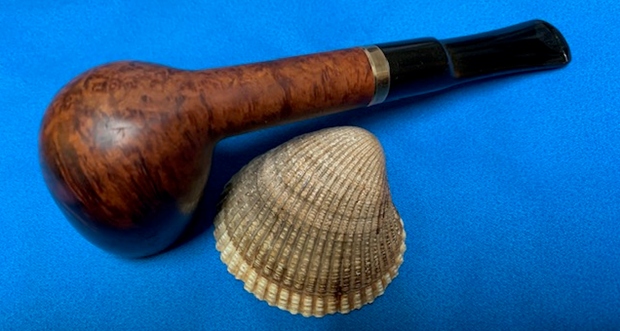
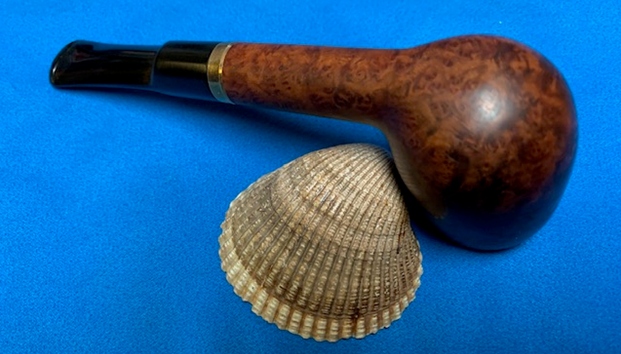
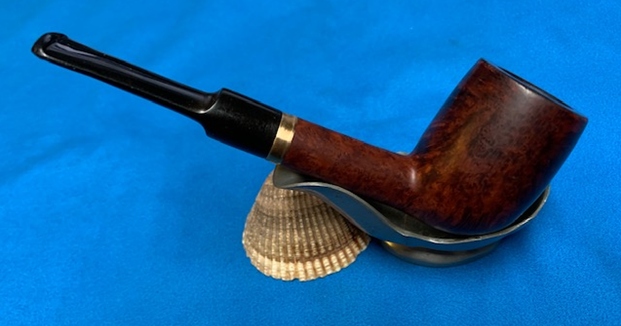
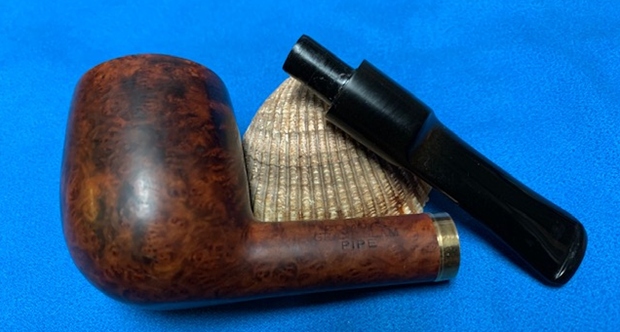
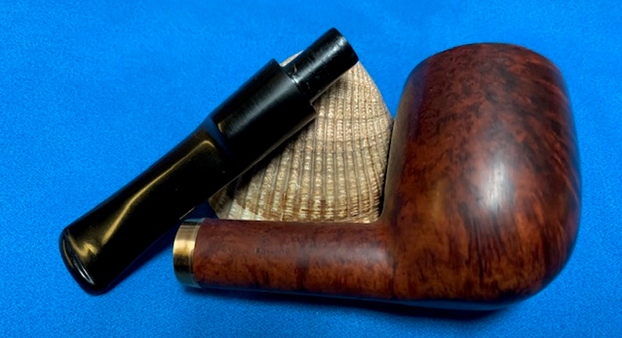
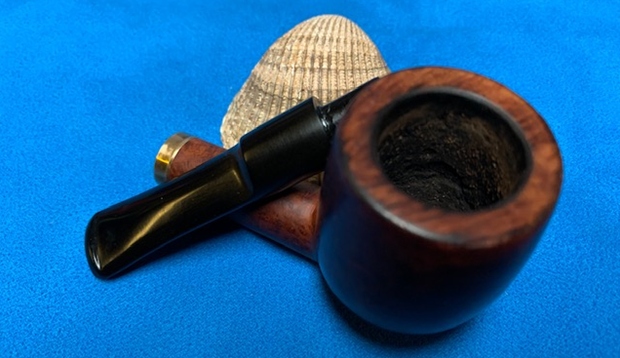
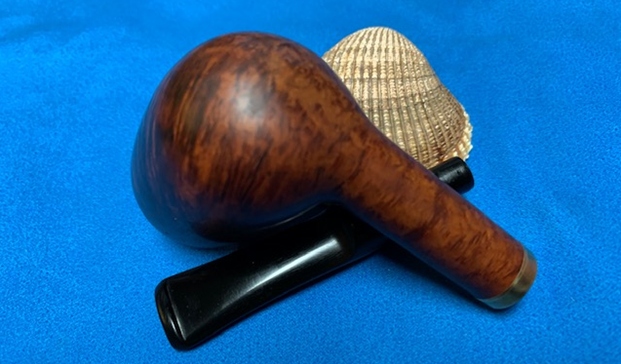
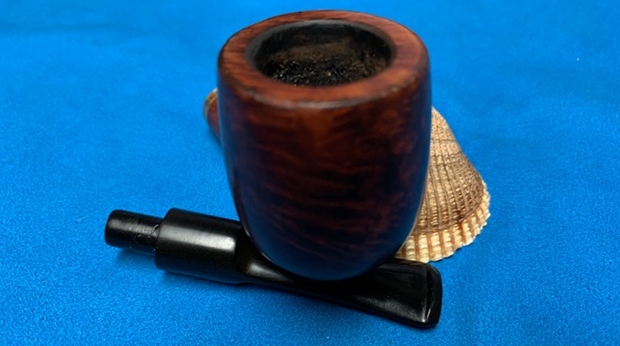
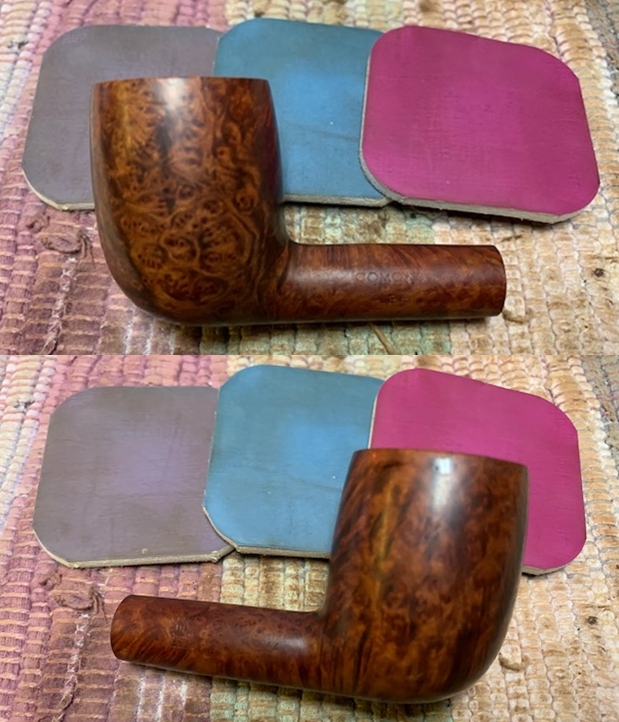
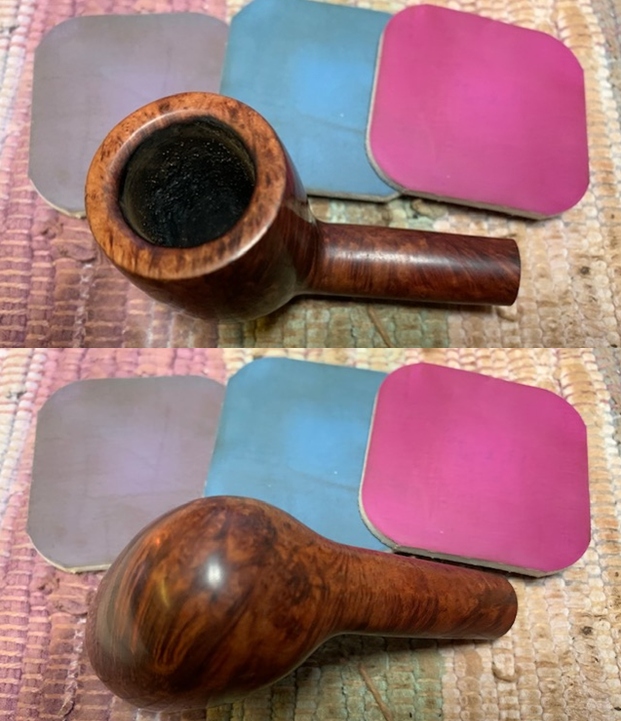
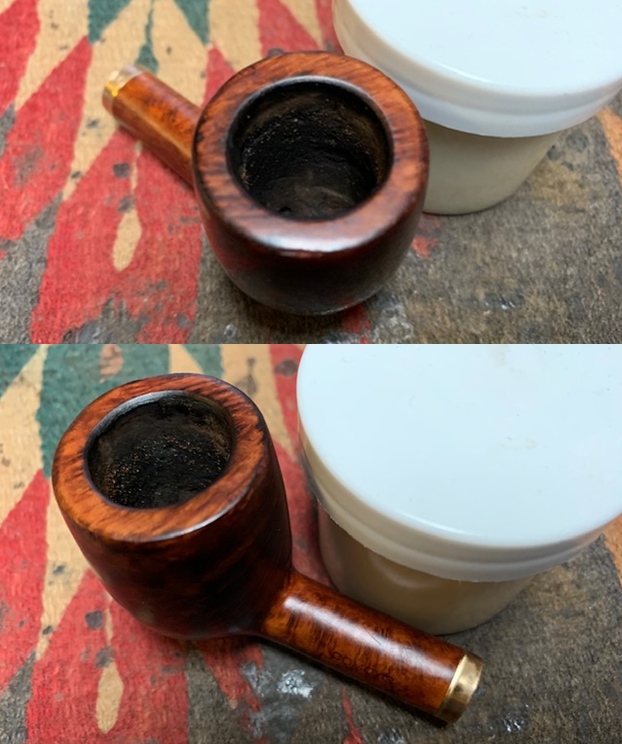
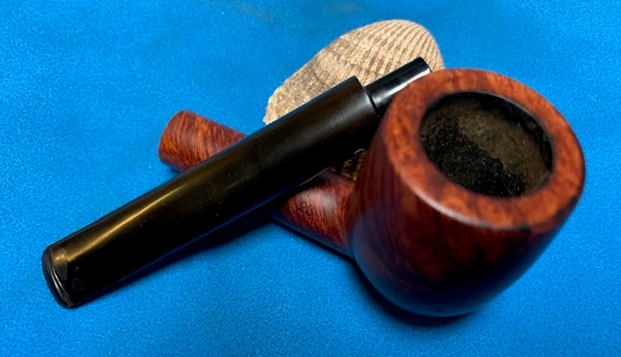
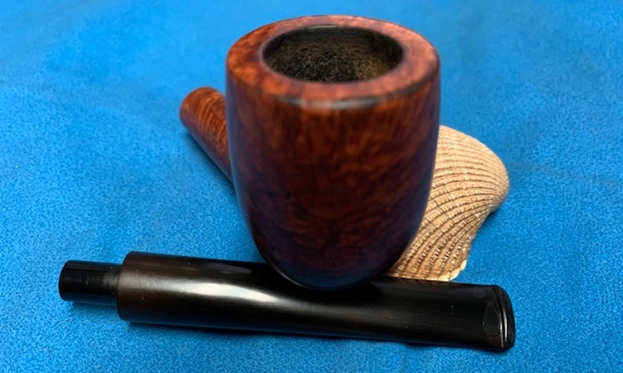
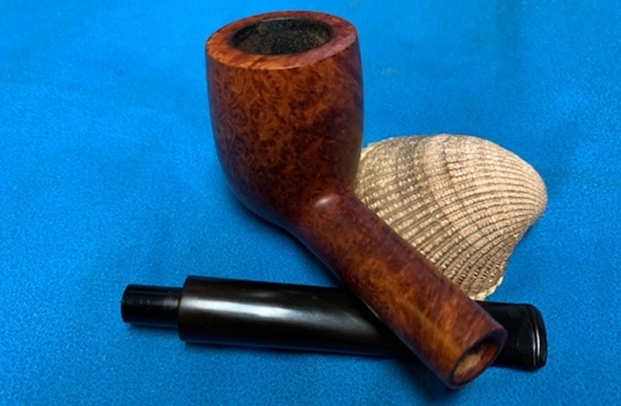
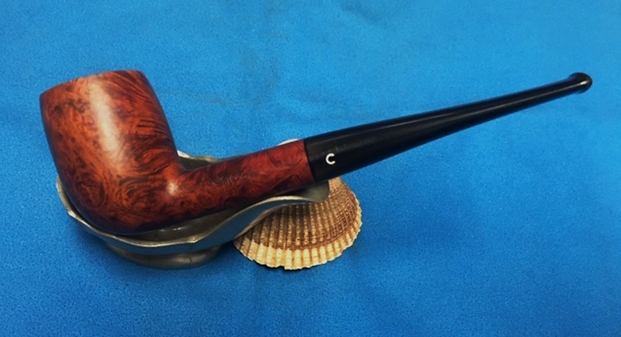
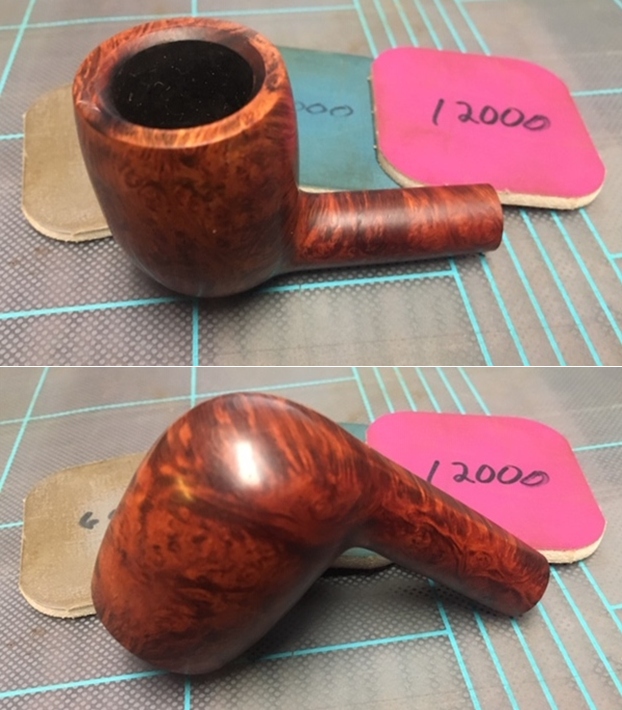
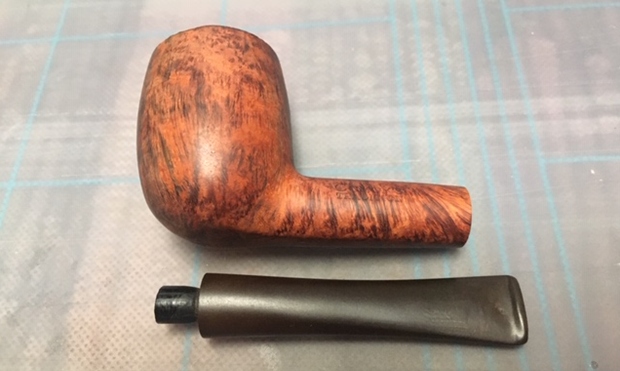
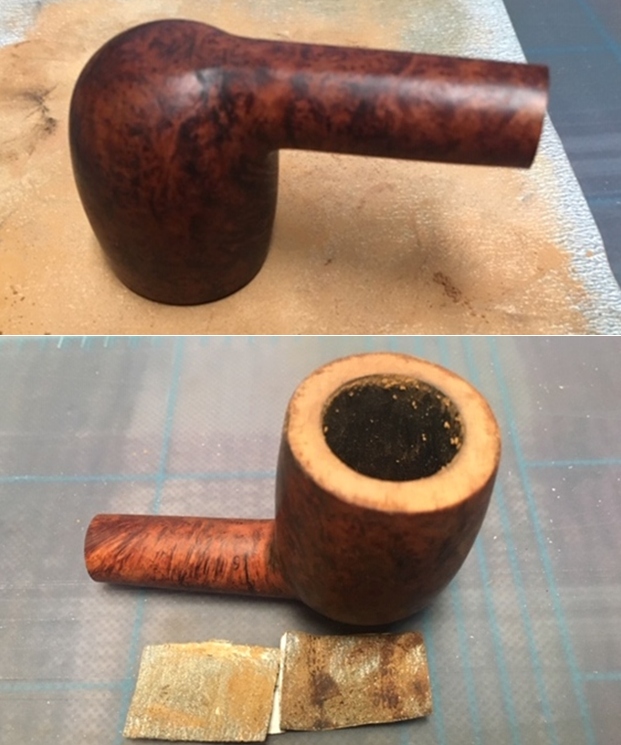
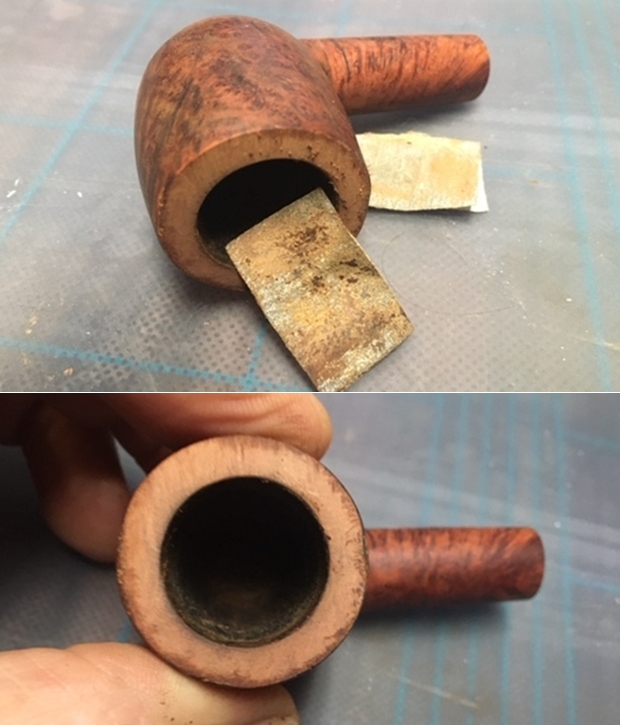
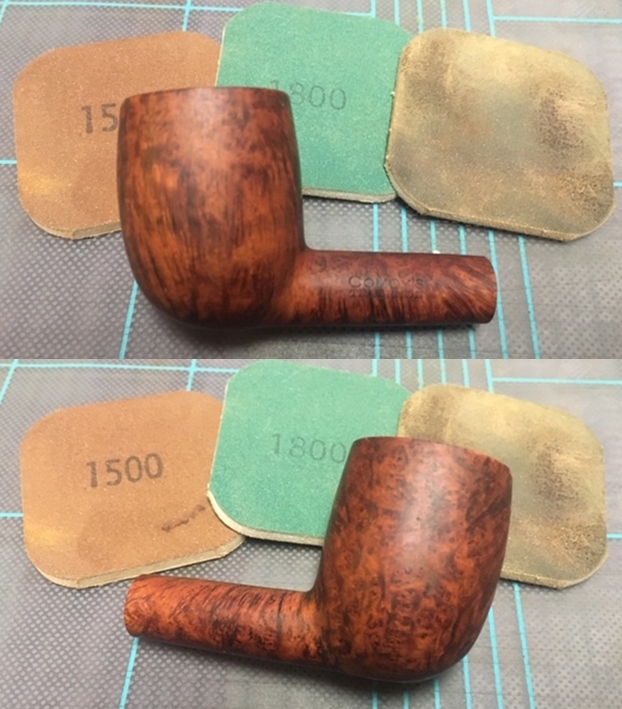
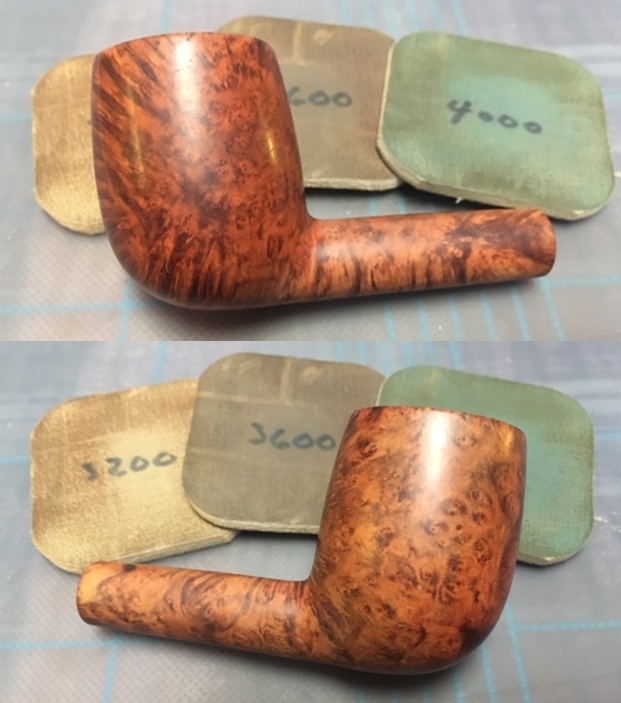
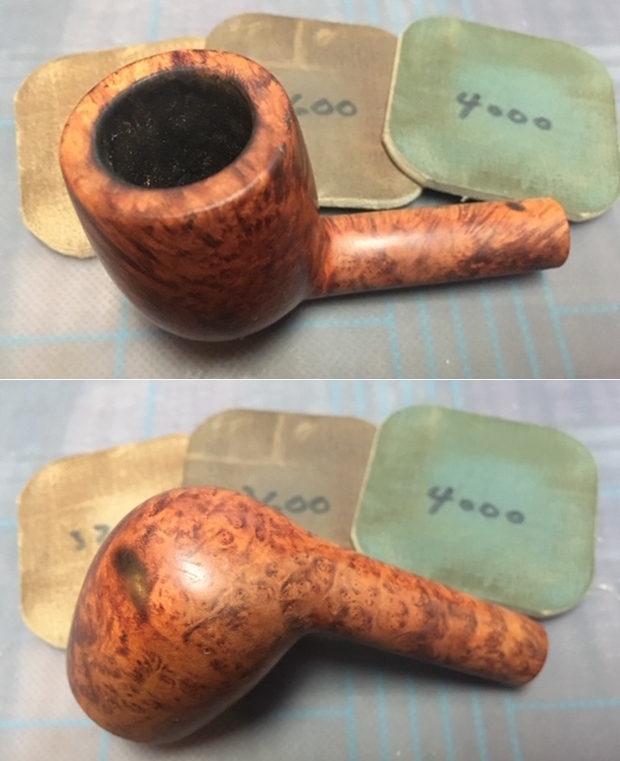
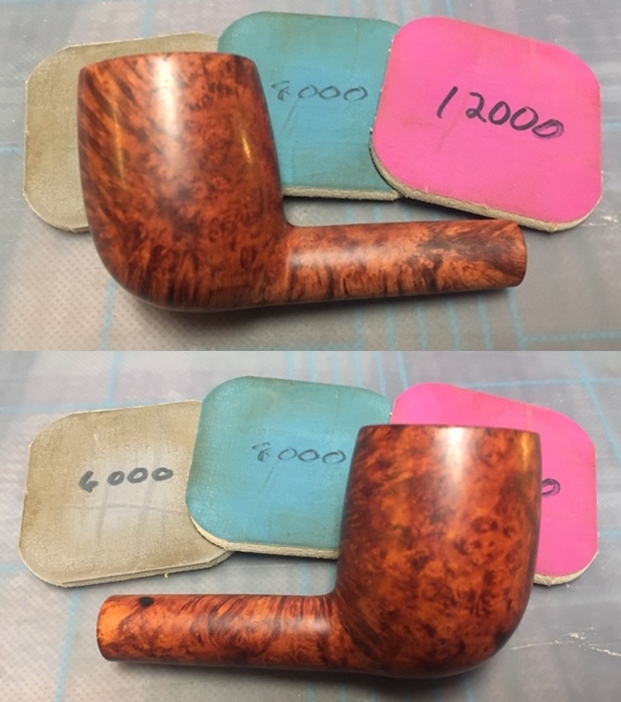
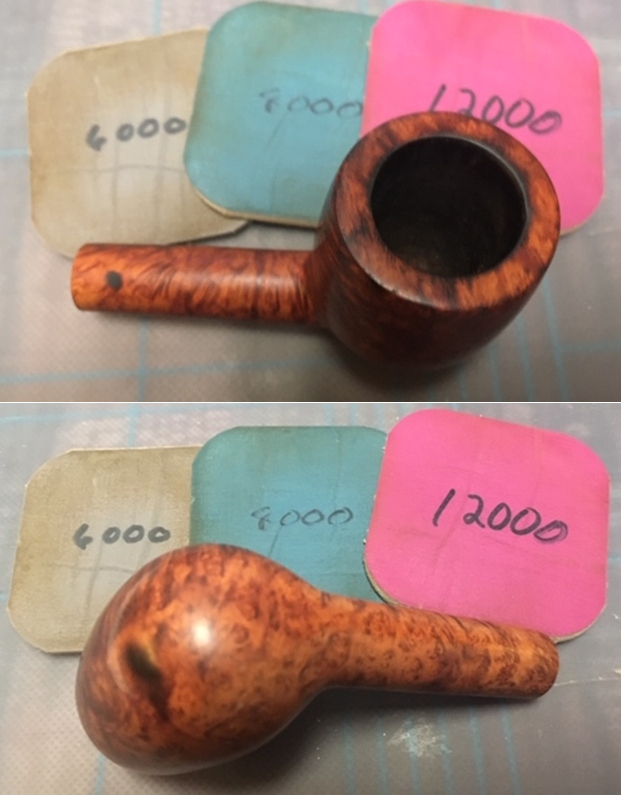
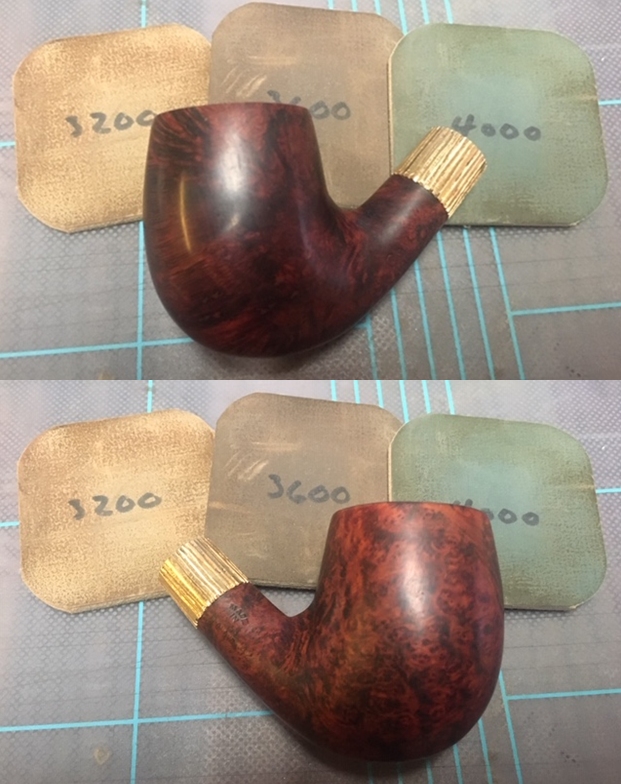
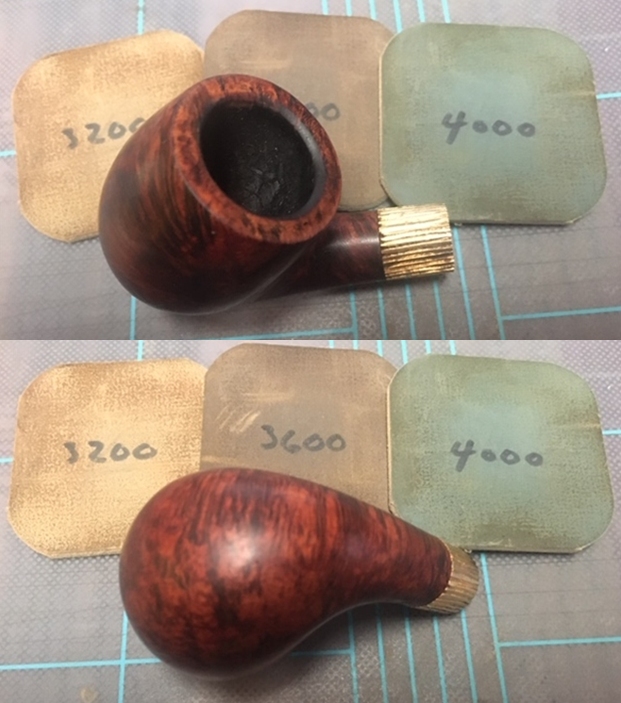
By default this nice little Prince moved to the third slot while waiting for the stem repair to cure. It is now finished and it is a really nice looking pipe. Give the blog a read.

Last week I received an email from a fellow named Stanley who had gotten my info from the local Pipe and Cigar shop. He wrote that he had a trio of Comoy’s pipes that needed to be worked on. Two of them were Grand Slam Pipes and one was a Tradition. We connected via email and he said he would drop them off this week for me to work on. I am including part of his email so you have a sense of what I would be working on. I am also including the two photos that he attached to the email for me to see.

Hey Steve,

I had recently the chance to talk to a very kind and excellent gentleman over at City Cigar, I unfortunately was never able to get his name. However I mentioned I was looking for some replacement stems and he gave me your info…

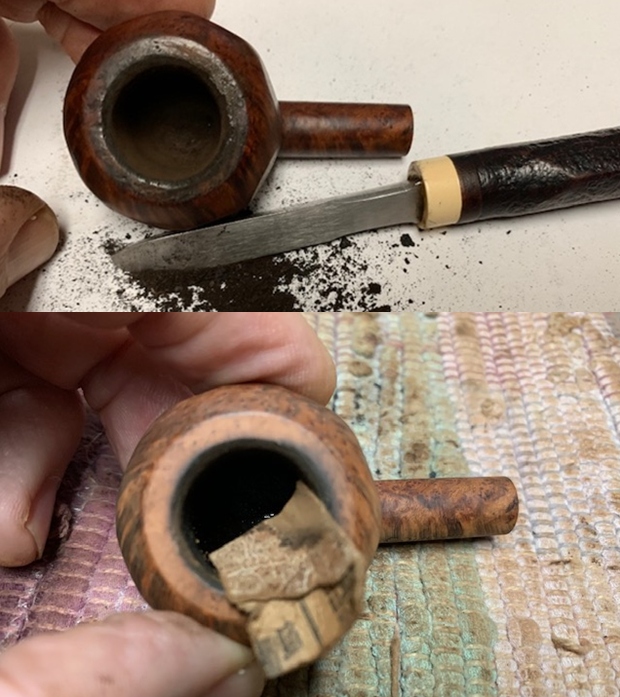
…The pipes in question are attached in photos, I’ve never done any sort of pipe restoration in my life but I have attempted to take the cake down with a pocket knife. If you’d do it, would you be able to do a ream/clean on the three, as well as deal with the stems?

If possible, I’d prefer to save the original stems by repairing them, but it seems to me that most people remedy this problem with a replacement stem. Whatever you think is best I will go with.

If you think that I’d be better off without the stinger insert in the shape 64, then would you be able to remove it? I’m afraid I’d break the stem if I tried haha.

The 484b also seems to have a crack starting near the “Comoy’s Grand Slam” part of the shank, where it meets the stem. Is it possible to deal with this?

That is all! Please let me know what you think!

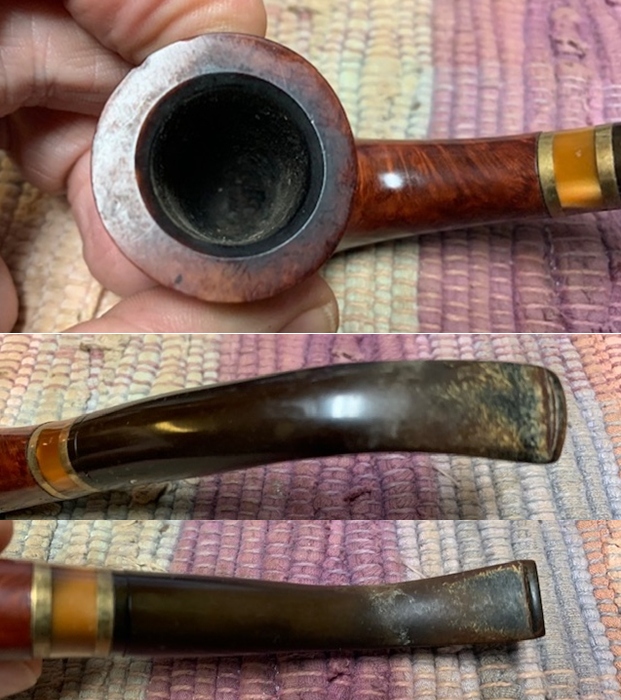
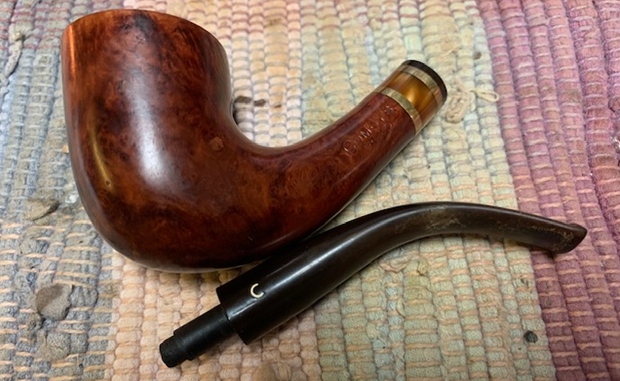
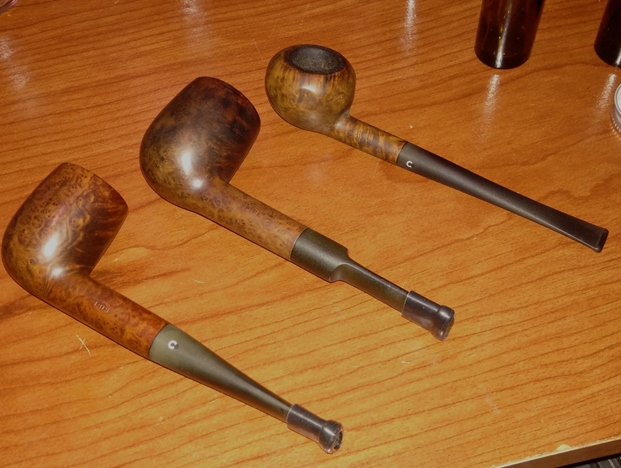
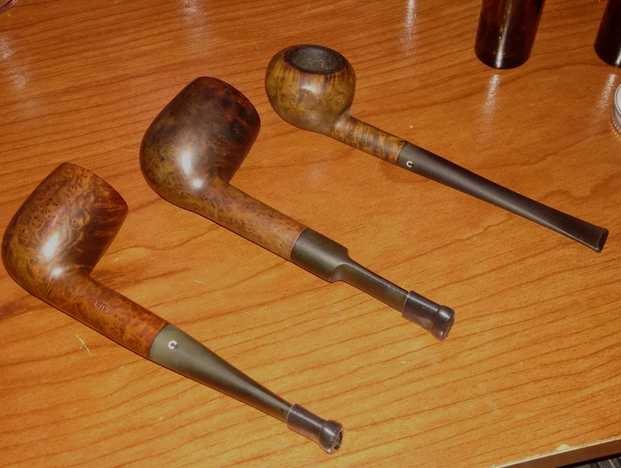
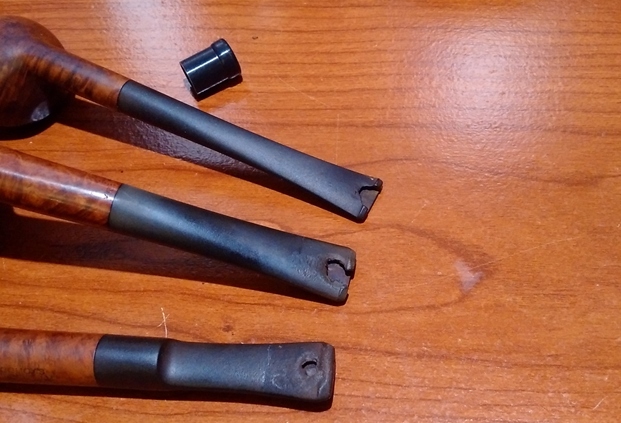
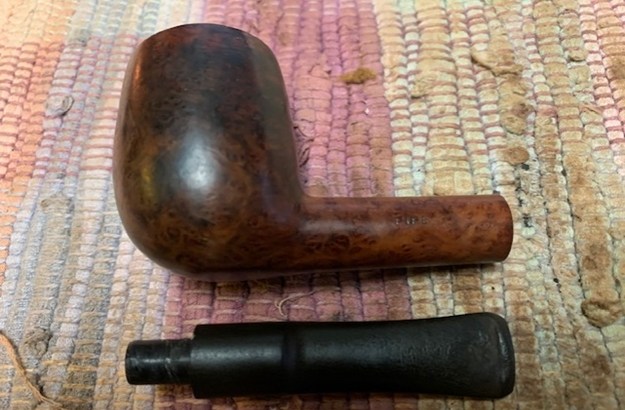
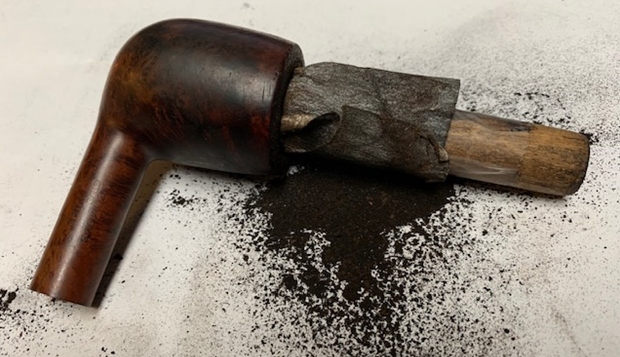
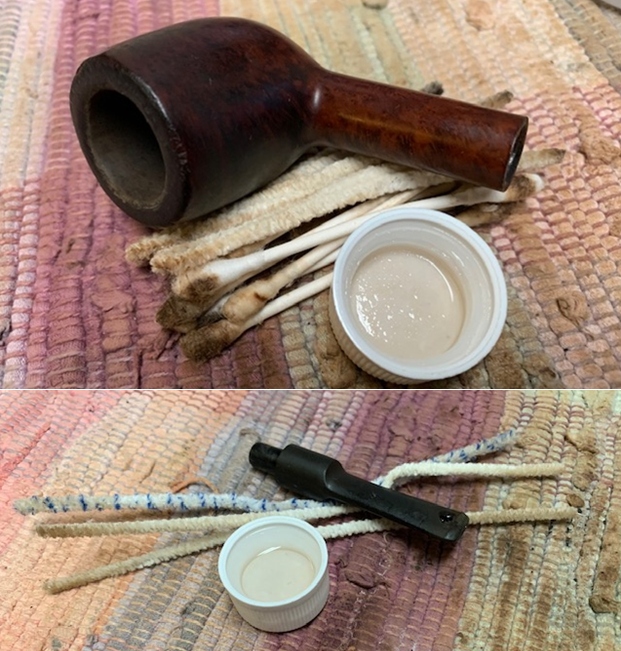
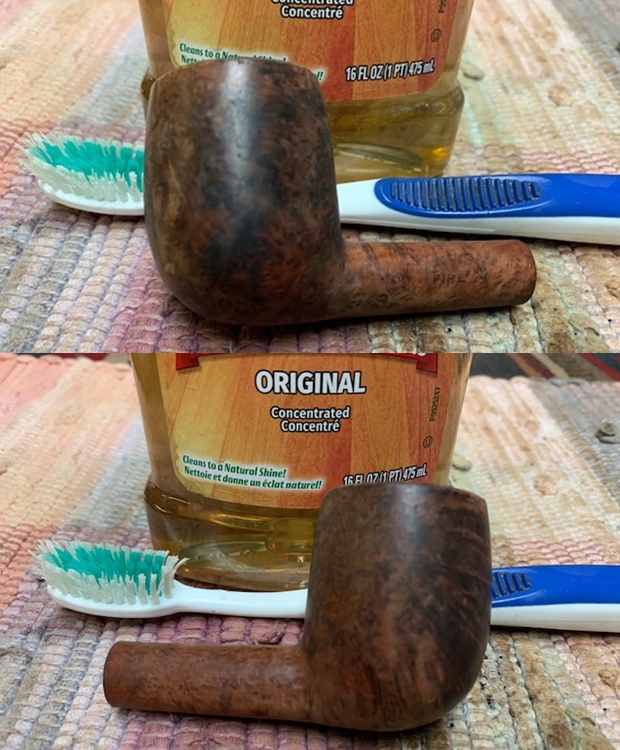
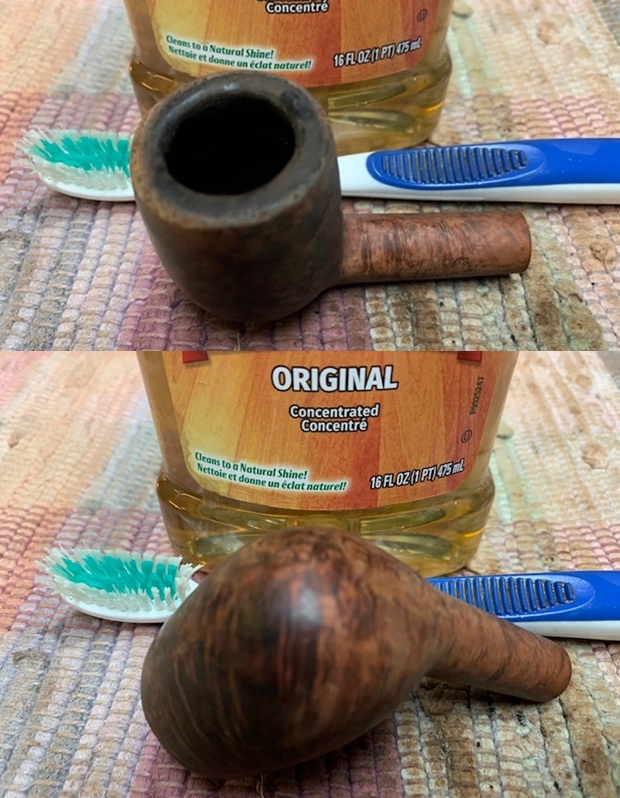
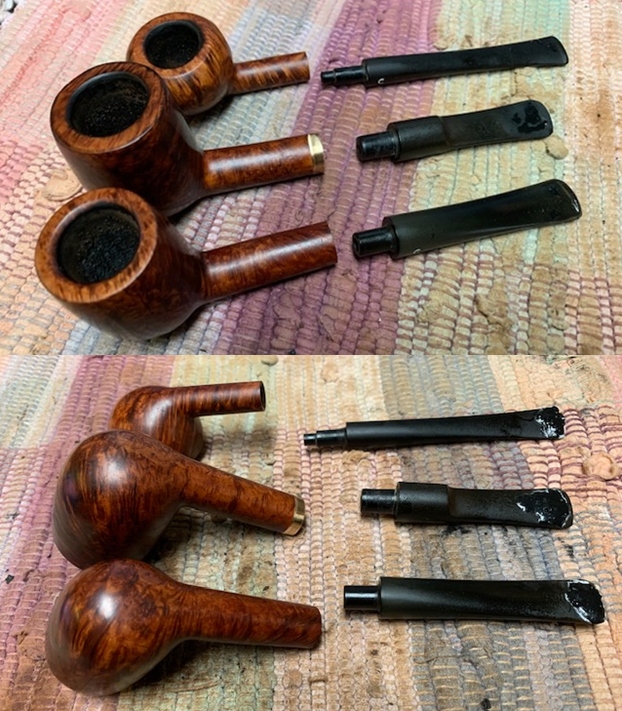
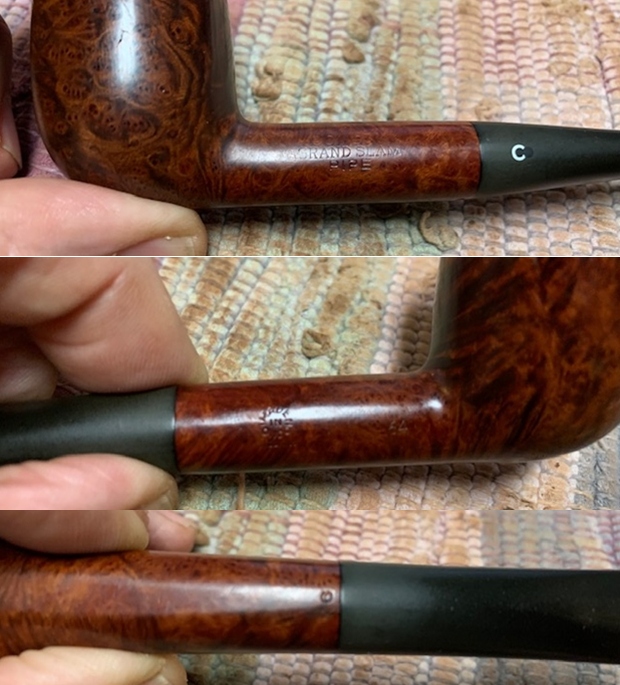
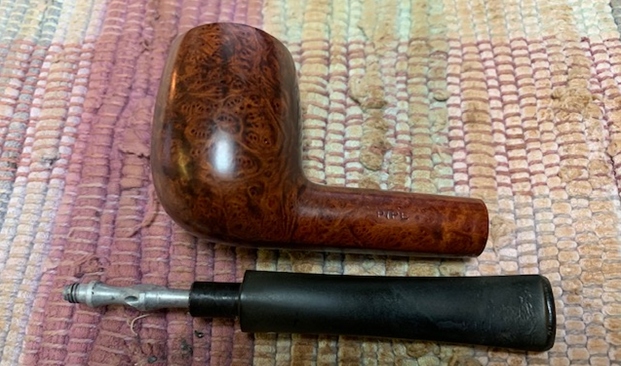
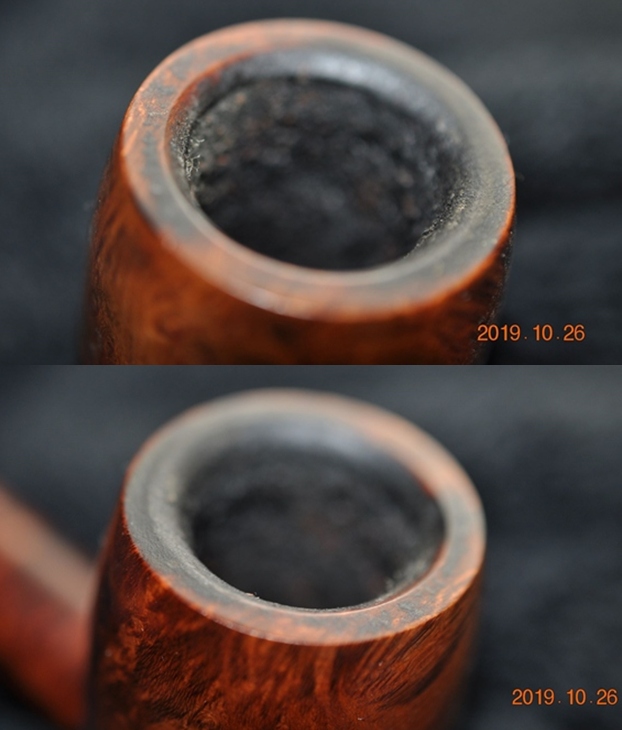
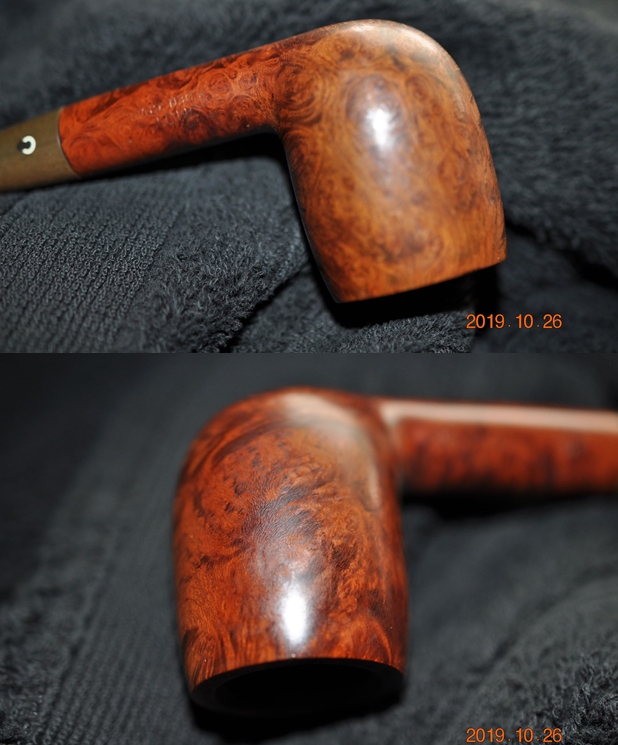
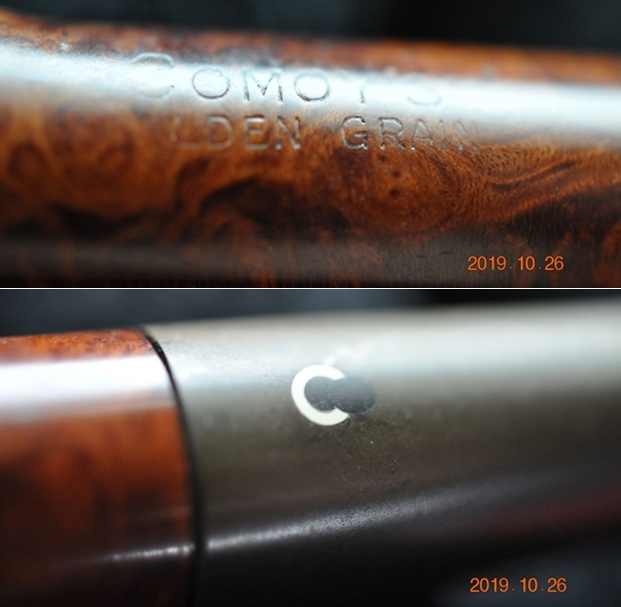
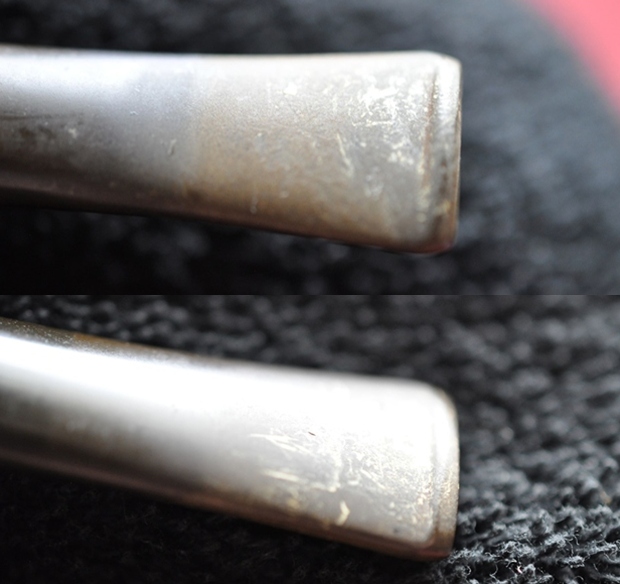
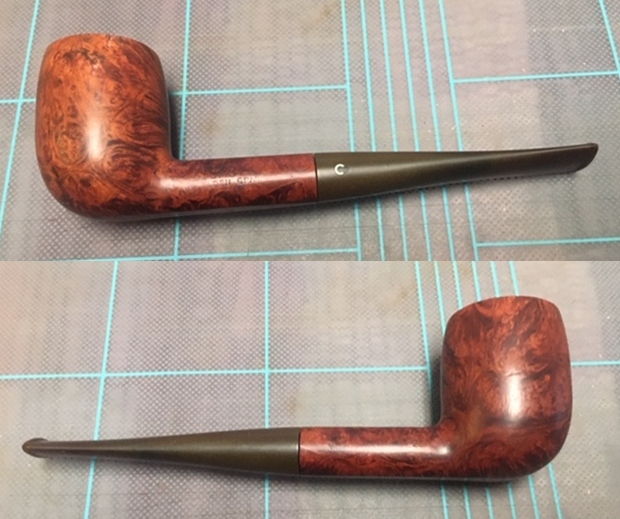
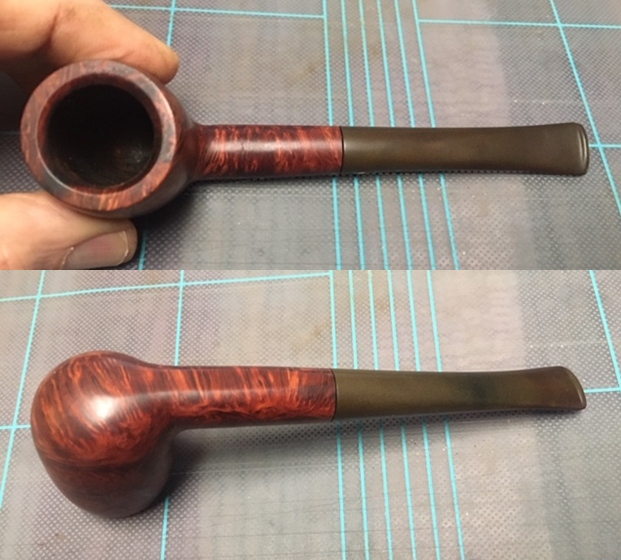
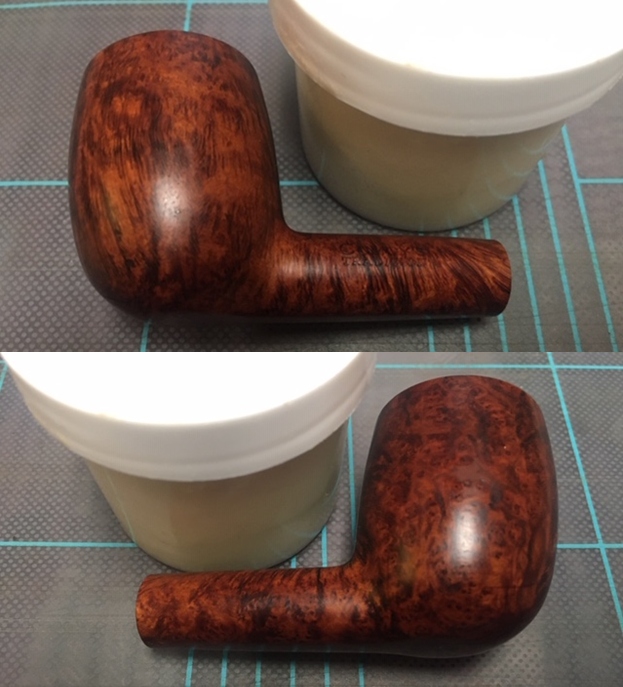
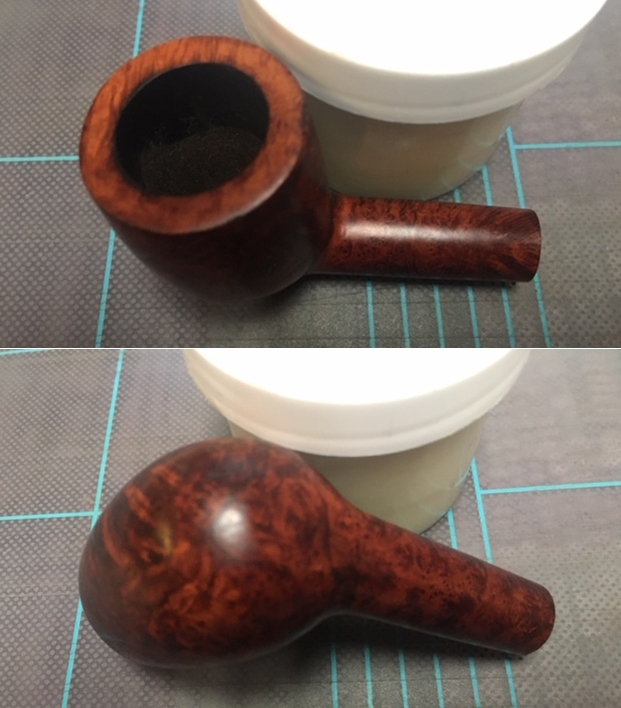
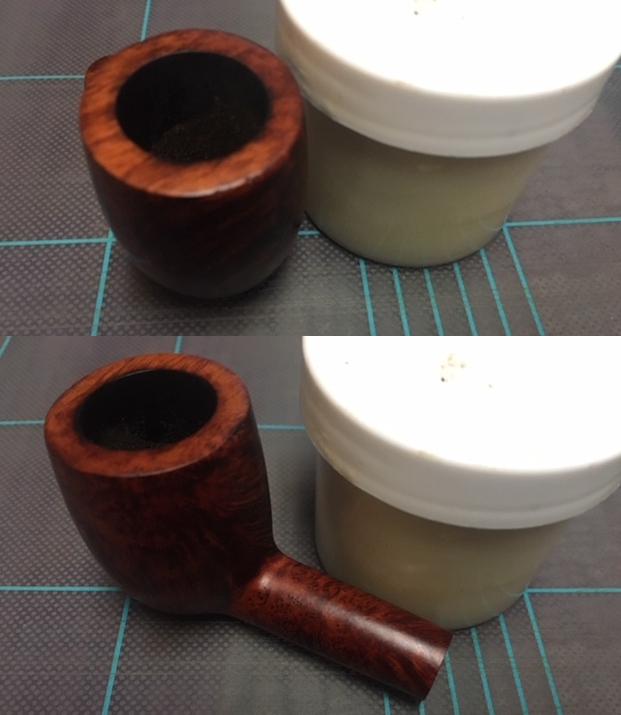
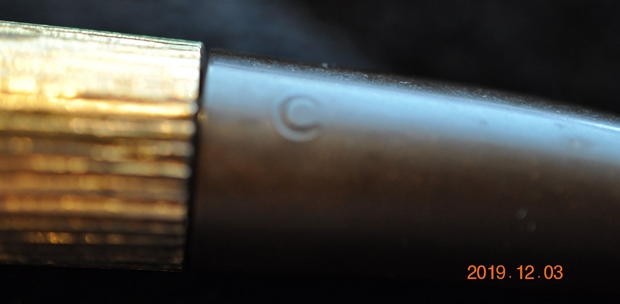
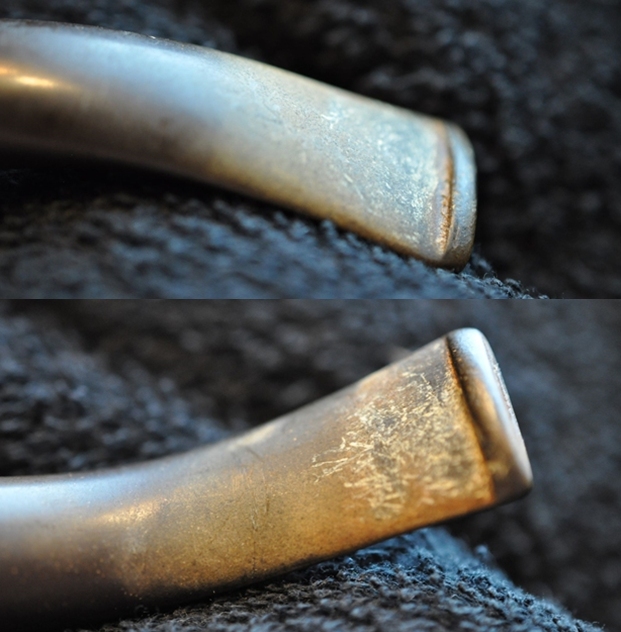
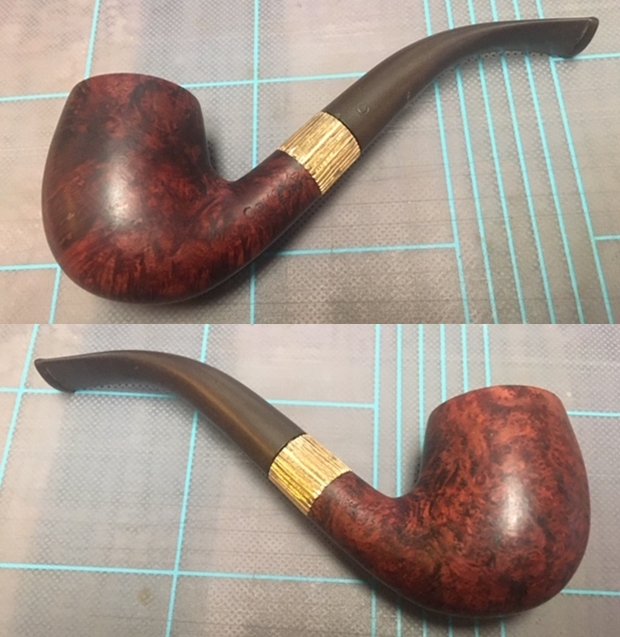
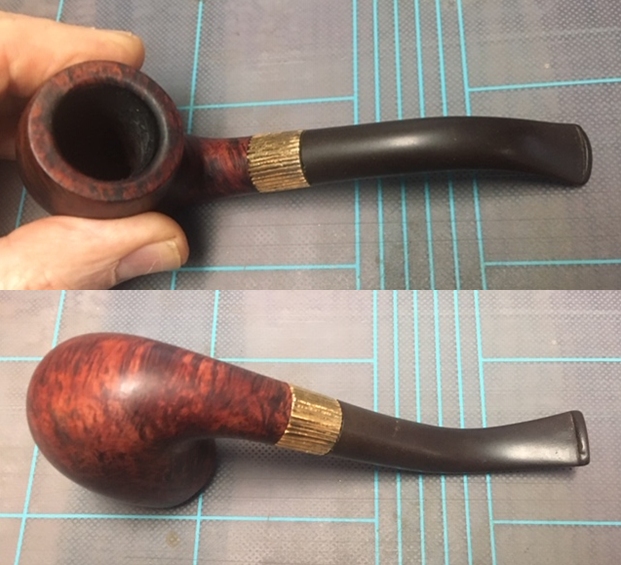
Thanks!  Stanley Last night Stanley stopped by and dropped off the three pipes. I took photos of pipes as there were when I opened the bag they were in. All three pipes were very dirty but the reaming had been started as noted in his email. The stems all had bite throughs on the underside. The bottom pipe in the photo below is a Grand Slam Pipe shape 64 Billiard. The stem has a 3 part C on the left side. The middle pipe is a Tradition 3591 Prince with 8 flattened panels on the bowl near the top. The stem also has a bite through and a missing divot. It also has a 3 part C on the left side. The top pipe in the photo is also Grand Slam Pipe 484B with a replacement stem that also has a bite through. The shank is also cracked on the left side.The last pipe left to work on in this threesome is the Tradition 3591 Panel Prince. It is a beautifully grained Comoy’s Prince that really is a pipe of Pipe Smoking History. The pipe is stamped on the left side of the shank and reads COMOY’S [over] Tradition. On the right side it has the shape number 3591 (the stamp is faint) next to the bowl/shank junction and that is followed by a Comoy’s COM stamp is worn away. The finish had a lot of grime ground into the smooth finish on the bowl and some darkening around the sides of the bowl. The bowl had been scraped but there was still a moderately heavy cake. There was an overflow of thick lava on the top of the rim and on the inner bevel of the bowl. It was hard to know what the rim top and inner edge of the bowl looked like under the grime. The stem was lightly oxidized and there was a large bite through on the underside. There was a three part inlaid C on the left of the taper stem. The pipe had promise but it was very dirty. I took photos of the pipe before he started his cleanup work.   I took photos of the rim top and bowl to give a clear picture of the thickness of the cake and the overflow of lava on the rim top. It is hard to know if there is damage to the inner edge of the bowl because of the lava coat. I also took photos of the top and underside of the stem to show the condition of the stem surface and the bite through on the underside.   I took photos of the stamping on both sides and underside of the shank. They read as noted above. I also included a photo of the 3 part C logo on the left side of the taper stem. I removed the stem and took a photo of the pipe to give a sense of the whole. It is a well shaped billiard. Once the stem was off you can see the step down tenon that was on these older Comoy’s pipes.I looked on Pipephil’s site for information on the Comoy’s Tradition and found the following information I have included a screen capture (http://www.pipephil.eu/logos/en/logo-comoy.html). It has the three part C which dated it to 1946 and following. The stamping is the same as the one I am working on.I turned to the article on Pipedia about dating Comoy’s pipes but the style of the stamping (https://pipedia.org/index.php?title=Comoy%27s_Dating_Guide#1917_to_the_end_of_the_1930.27s_.28at_least_1938.29). I have include the section in the screen capture below that date this pipe to the 1950s.
Now the Comoy’s stamp can be found in three variants in the 1950s

  1. A simple block-letter style without serifs but with the C larger than the other letters and the apostrophe before the “S”.
  2. A return to the slightly more fancy block letters with serifs and the apostrophe. (It seems that some grades carried different stamps, or at least that the stamping changed in different years for some grades.)
  3. A simple block-letter style without serifs and without the apostrophe and with the “C” the same size as the rest of the letters. This stamp was probably not used very long.
  4. A simple block-letter style without serifs but with the apostrophe before the “S” and with the “C” the same size as the rest of the letters.

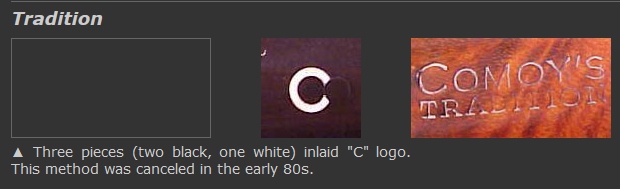
Inlaid “C”

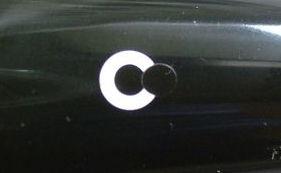
C” was first inlaid in the side of the mouthpiece around 1919. This was a complex inlay needing three drillings. First, a round white inlay was inserted, then the centre of the white was drilled out, and a smaller round black inlay was inserted. Finally, another drilling was made to remove the open part of the “C,” and an even smaller black inlay was inserted. This inlaid “C,” known as the “three-piece C,” was continued until the Cadogan era in the 1980s. However, the “C” in the 1920s and early 30s is much thinner and more delicate than the one post-WW II.

That article gave me some helpful information regarding the pipe that I was working on. I knew that the stamping and logos identified the pipe as having been made in following WW2 and from what I can see from the above information it is a 1950s era pipe.

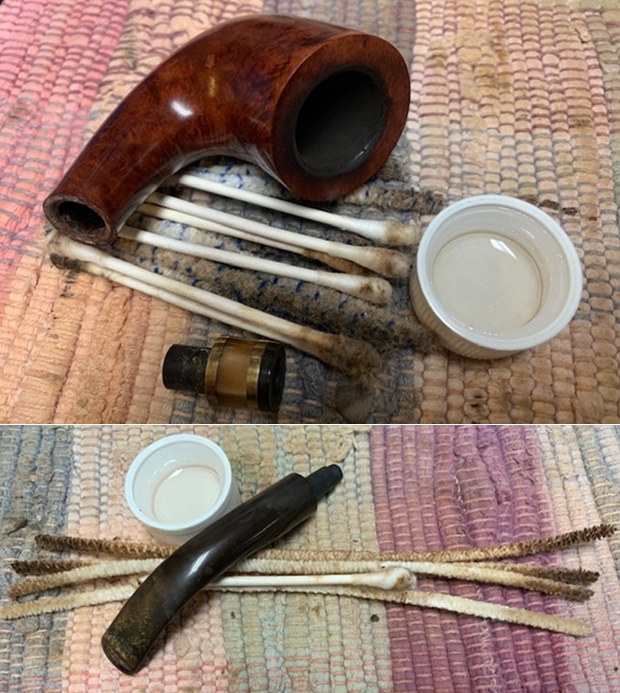
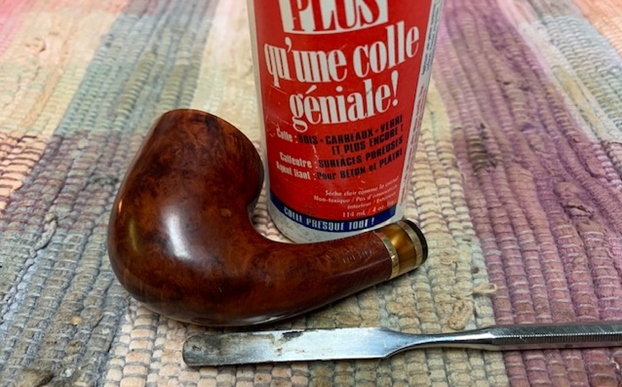
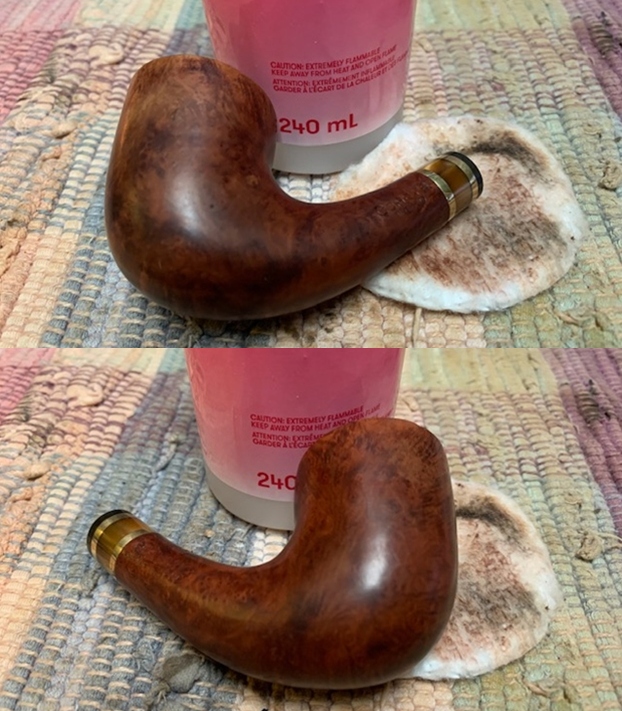
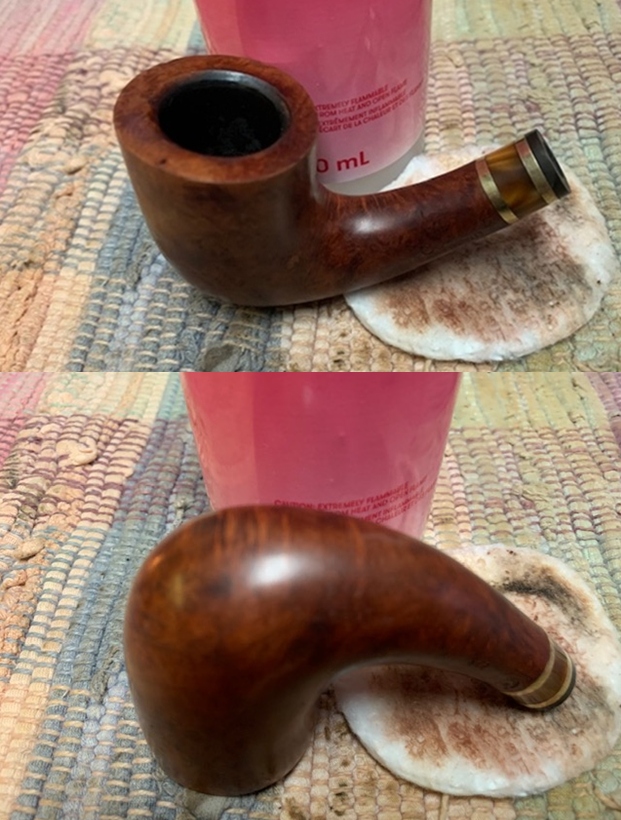
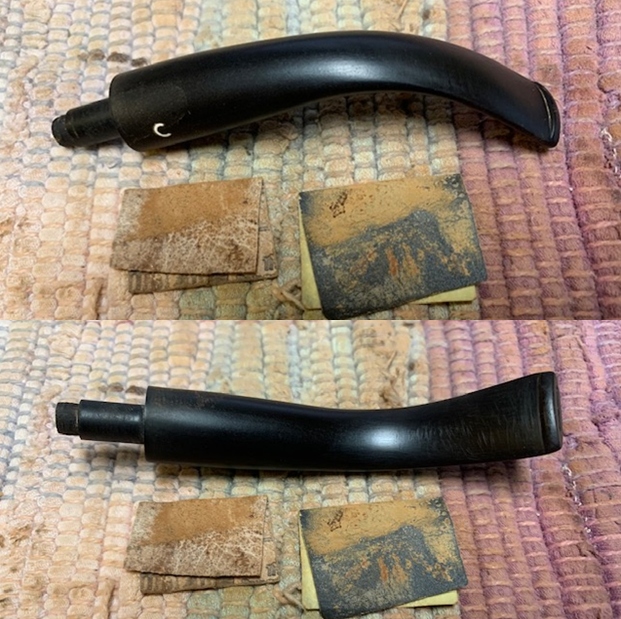
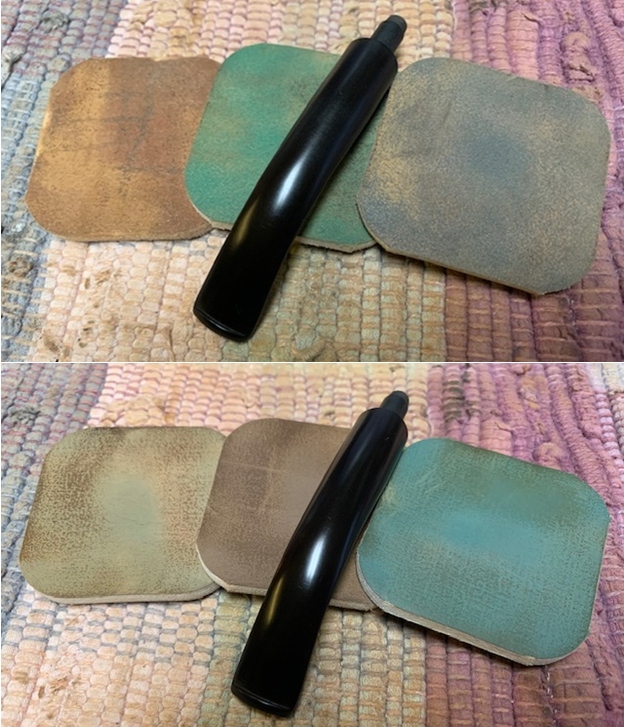
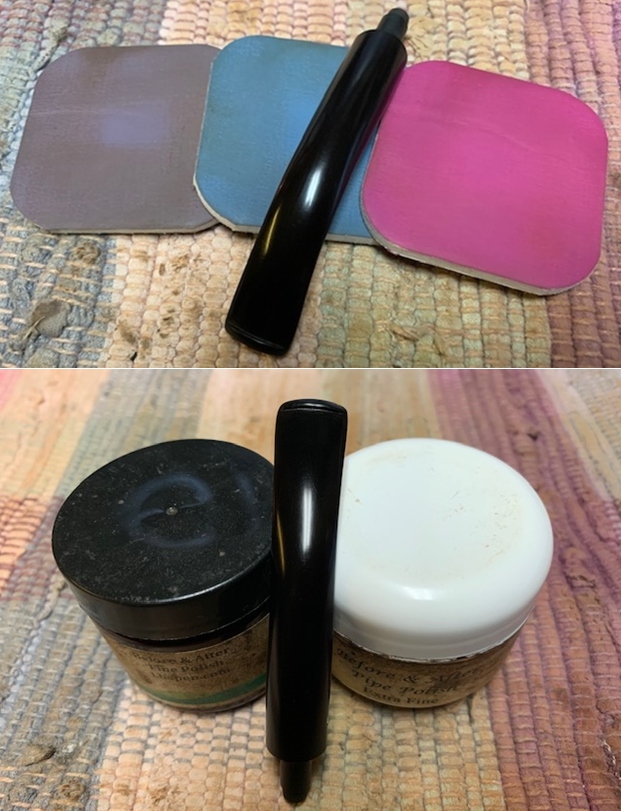
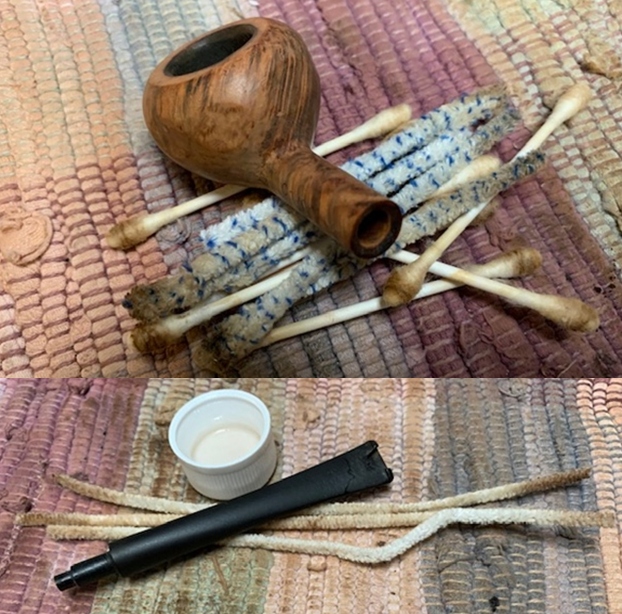
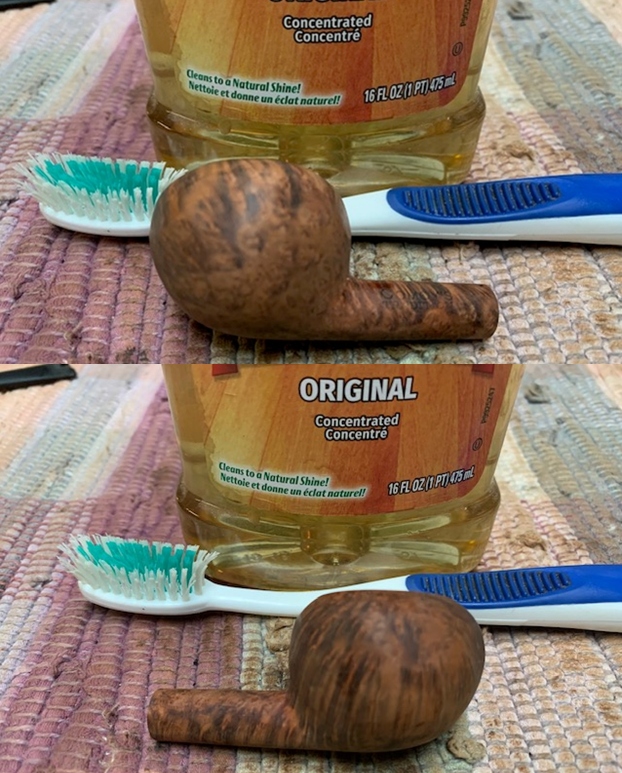
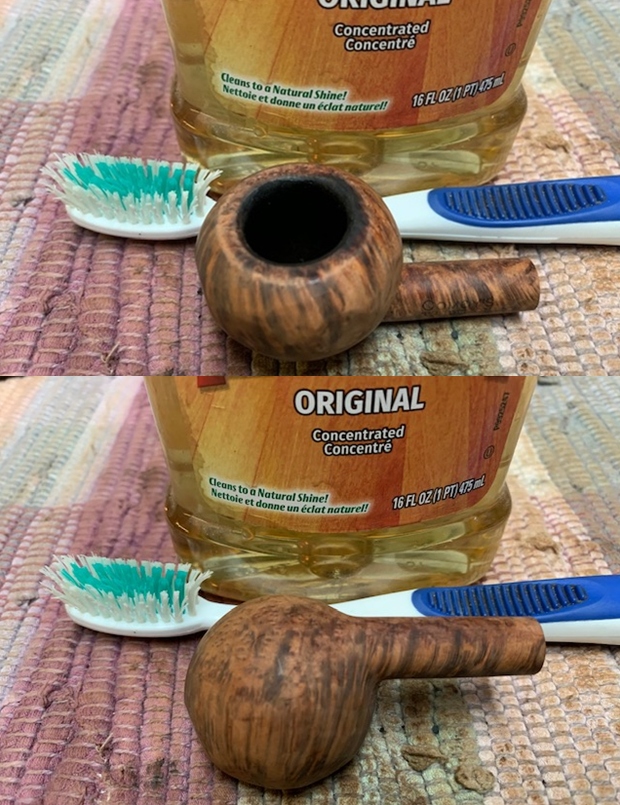
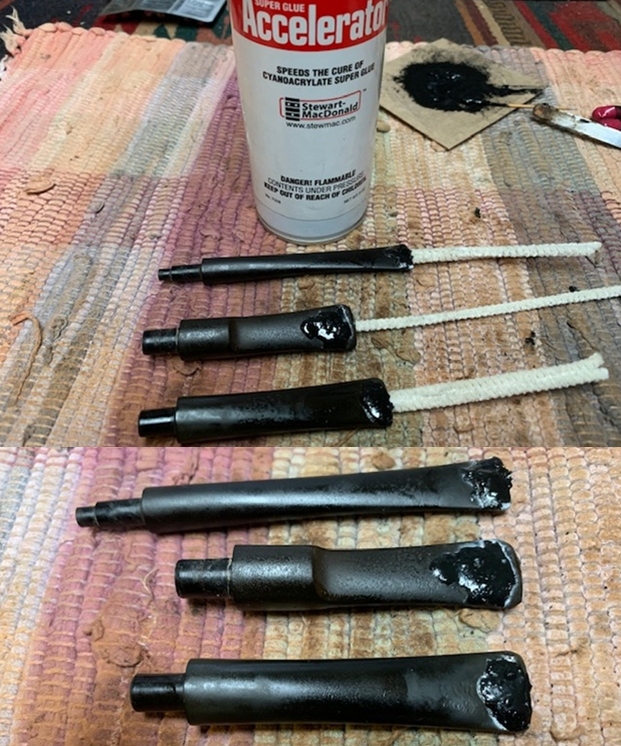
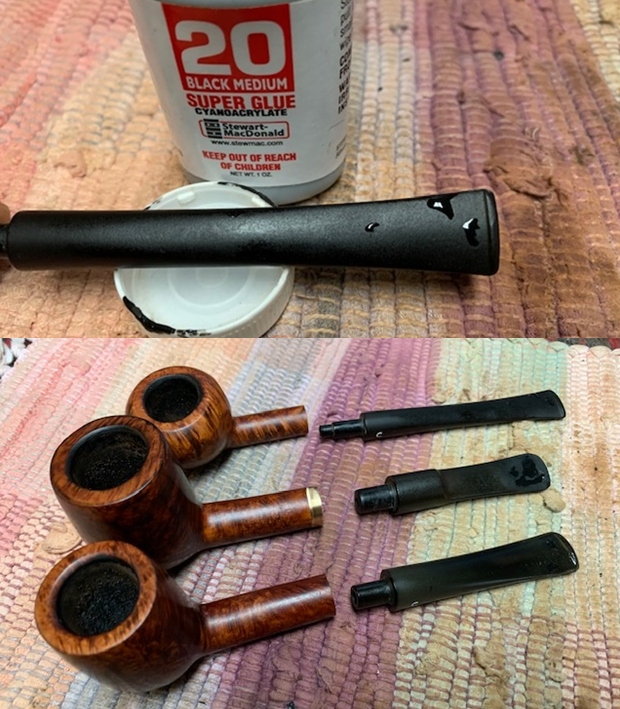
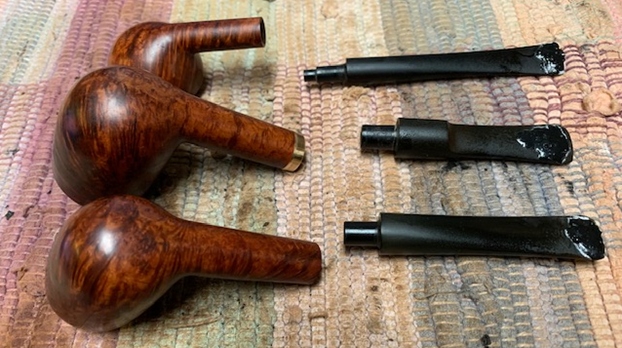
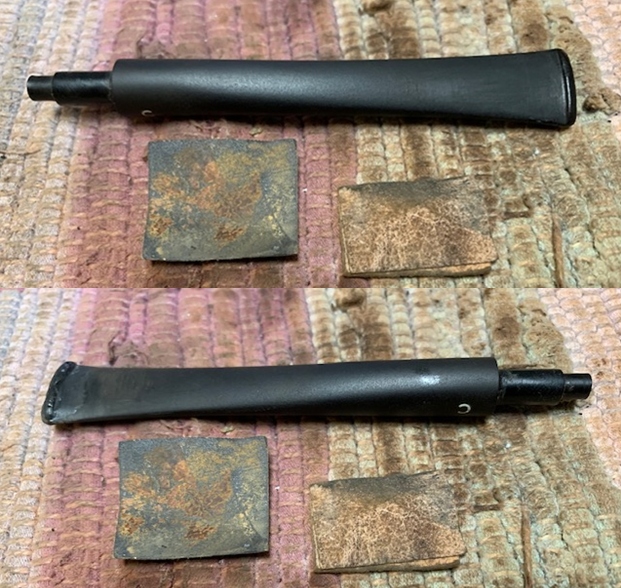
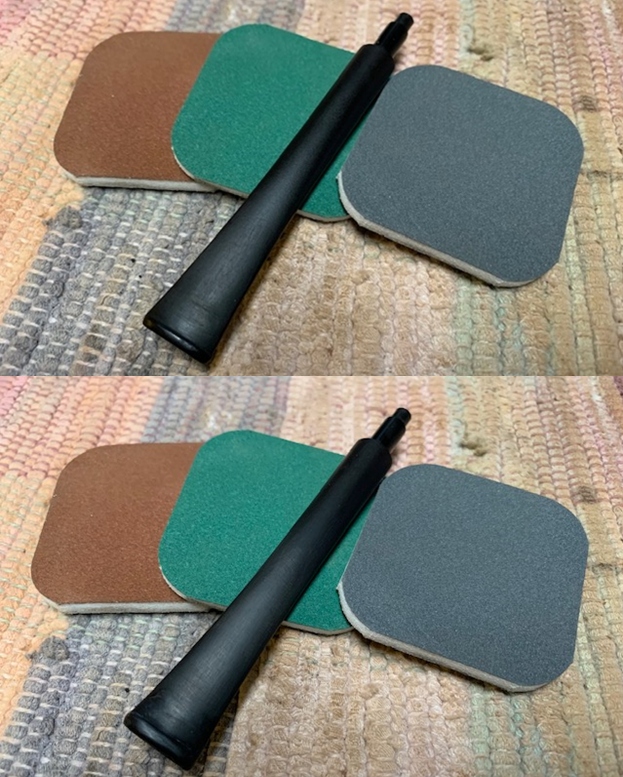
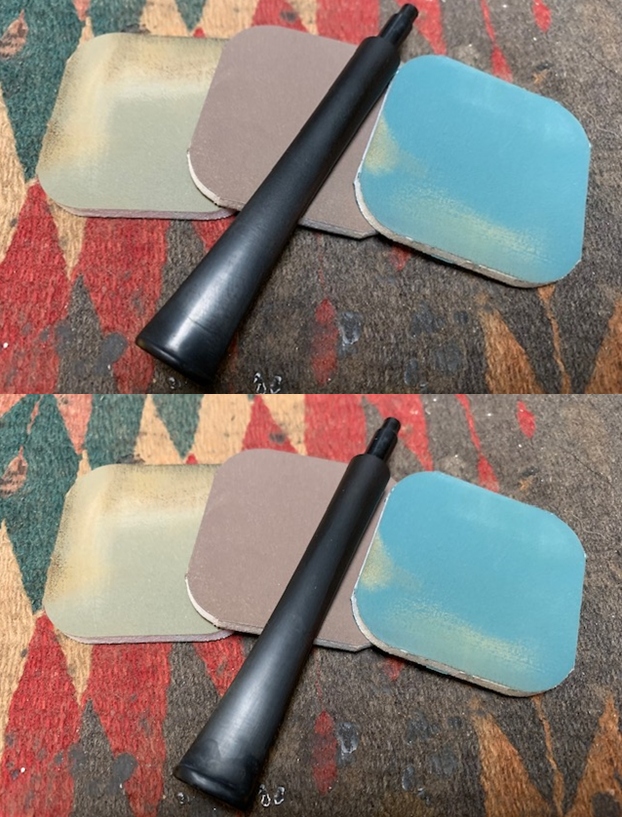
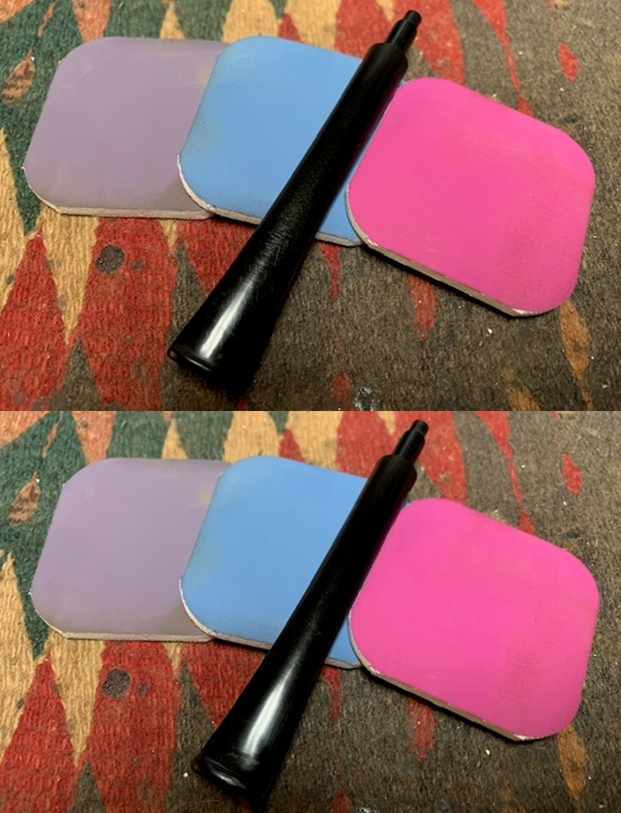
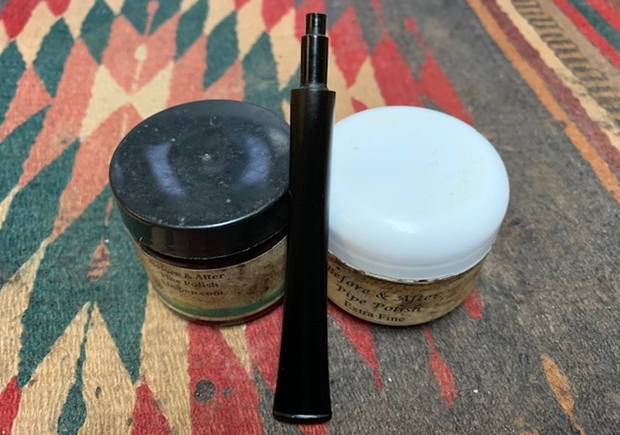
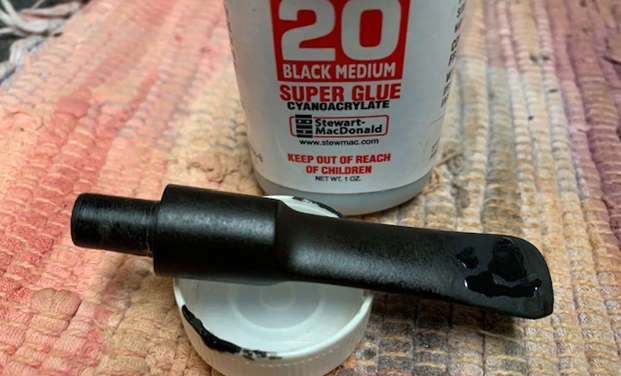
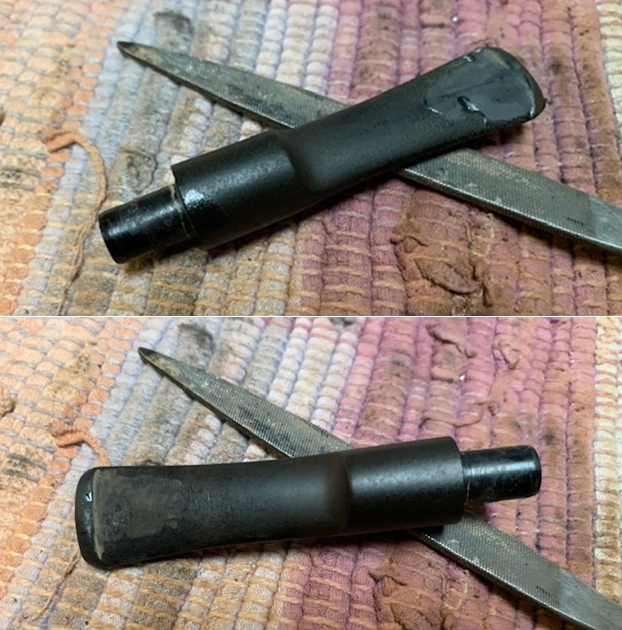
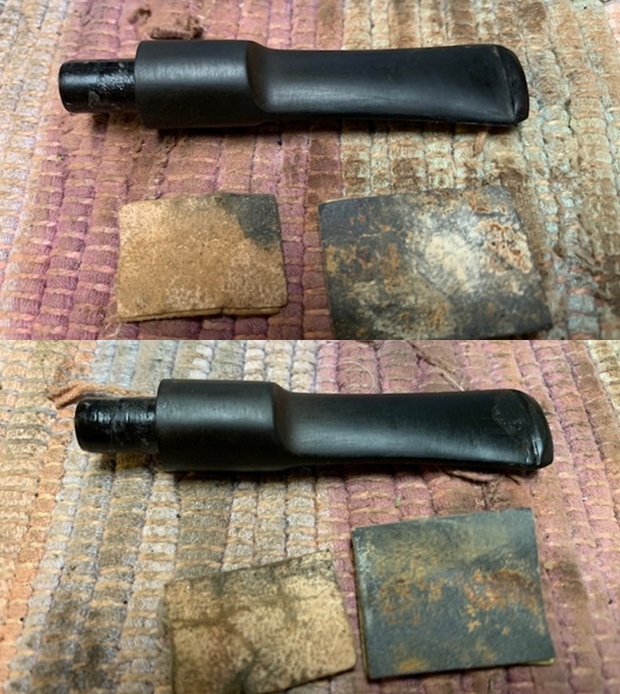
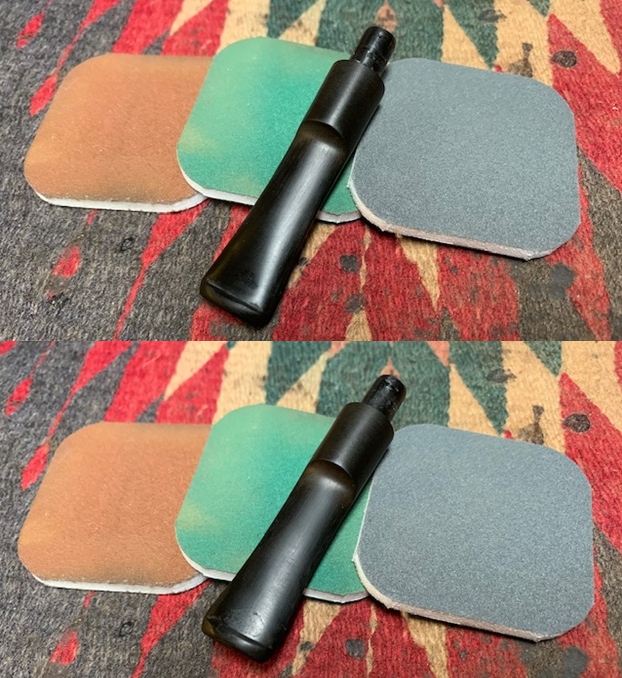
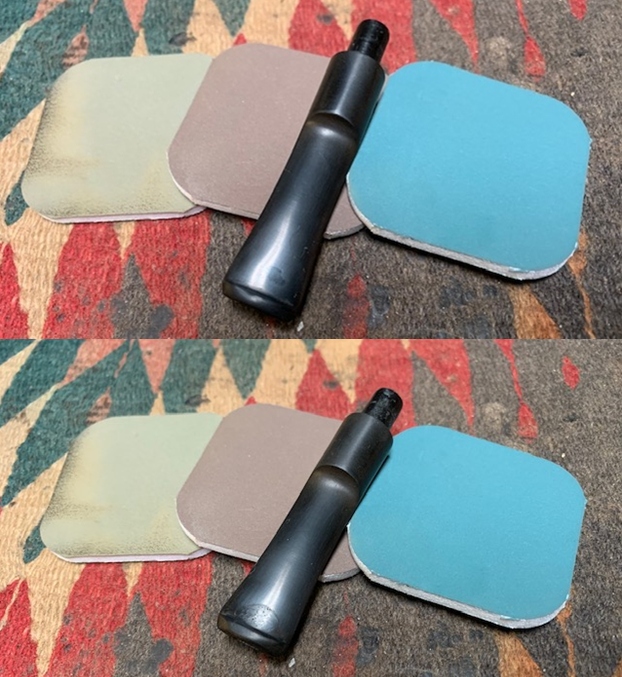
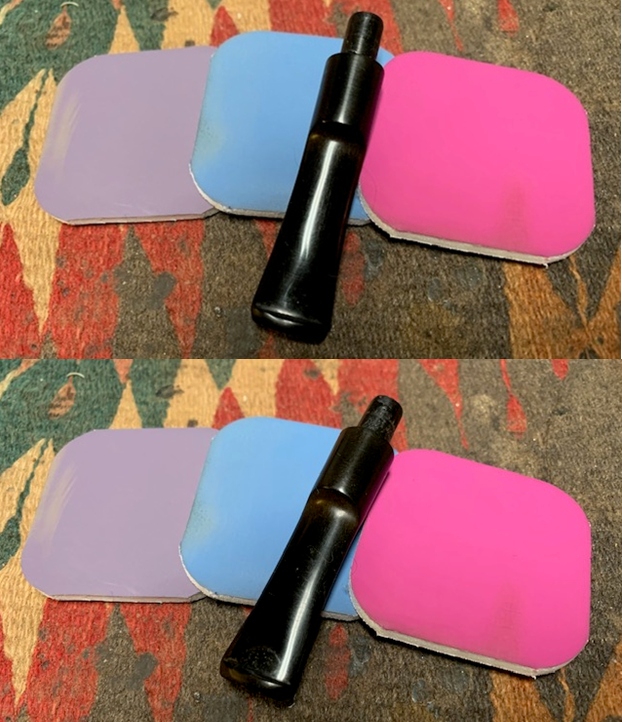
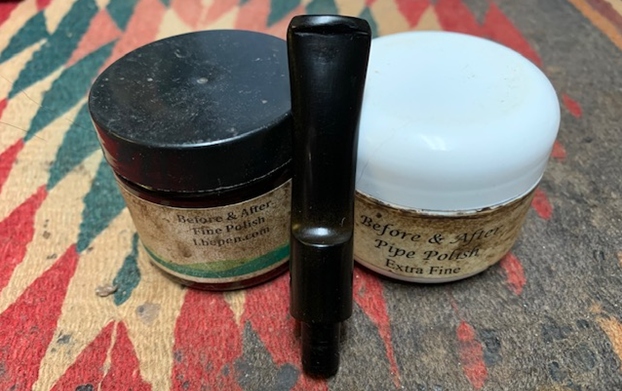
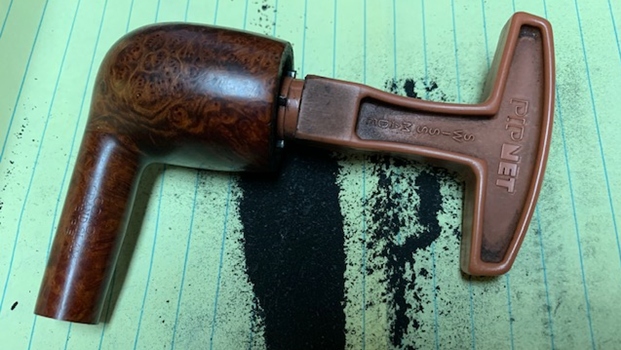
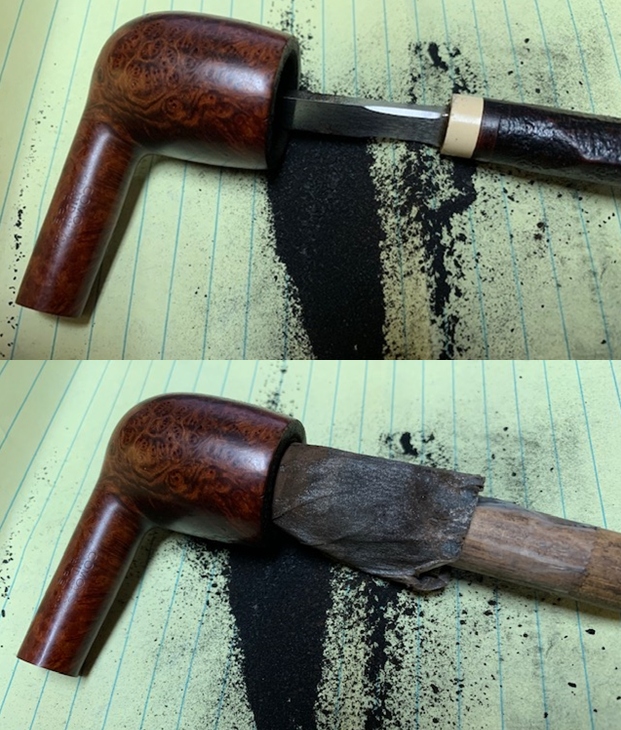
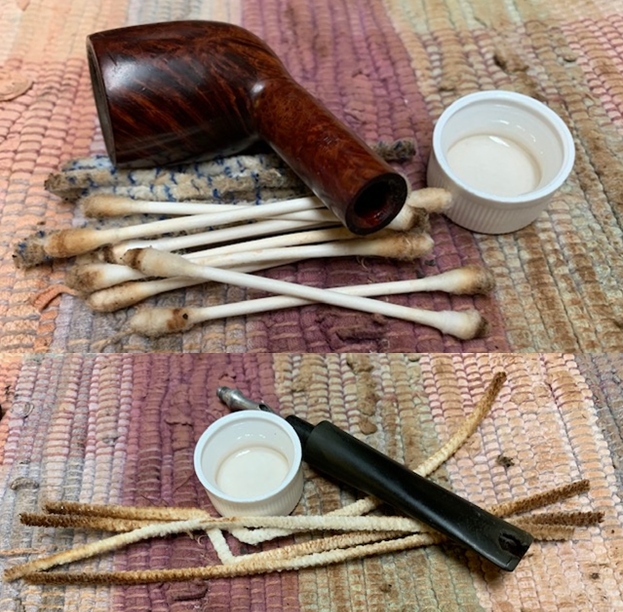
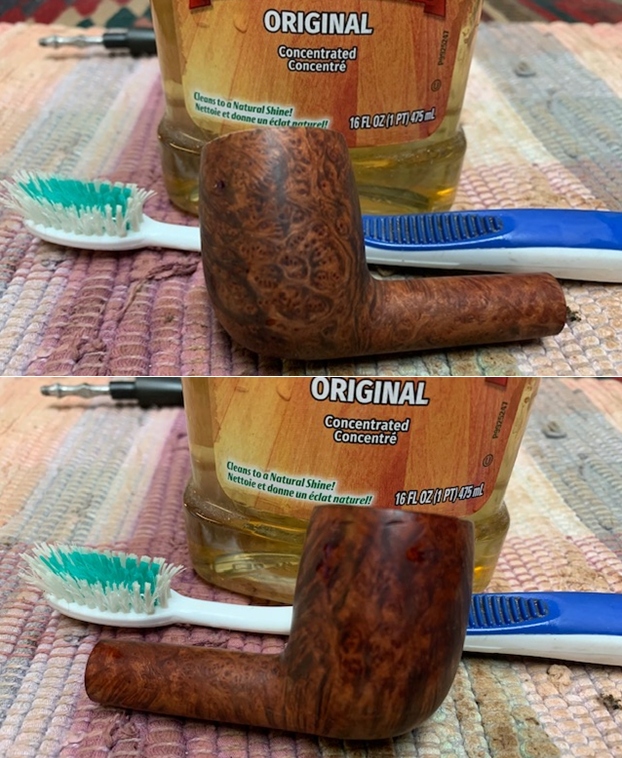
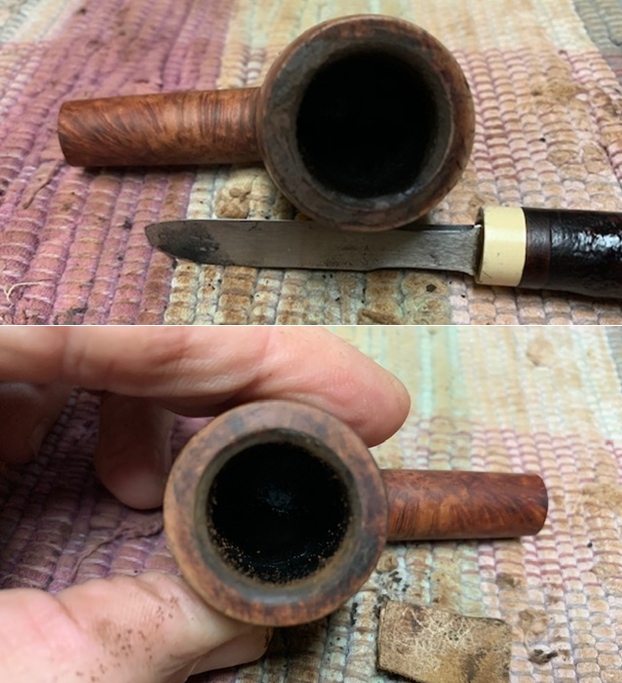
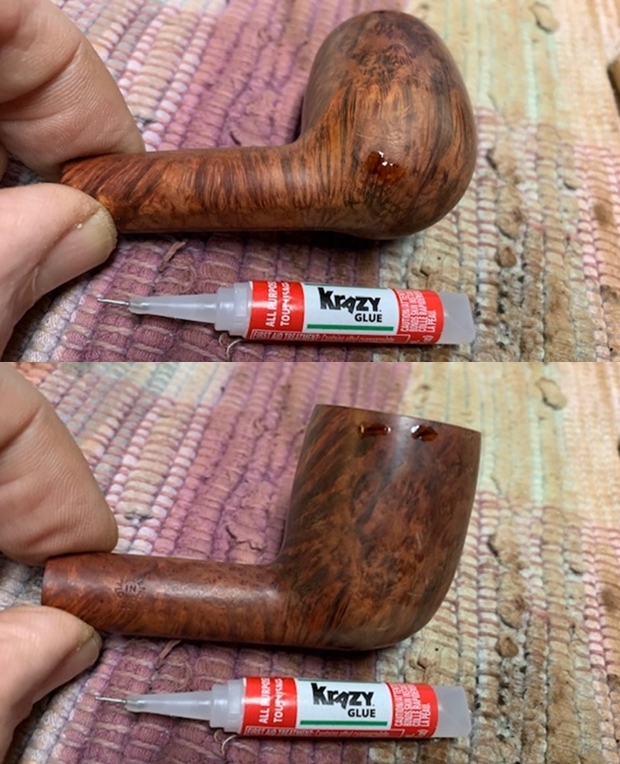
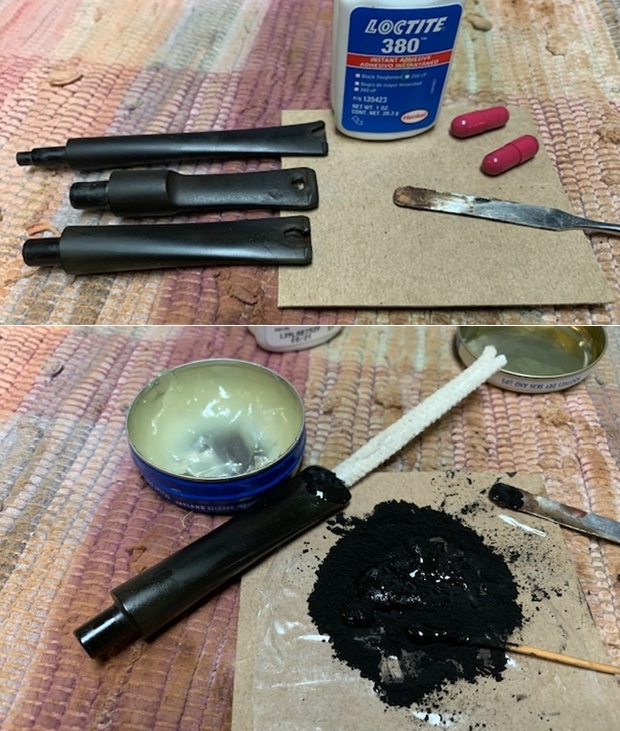
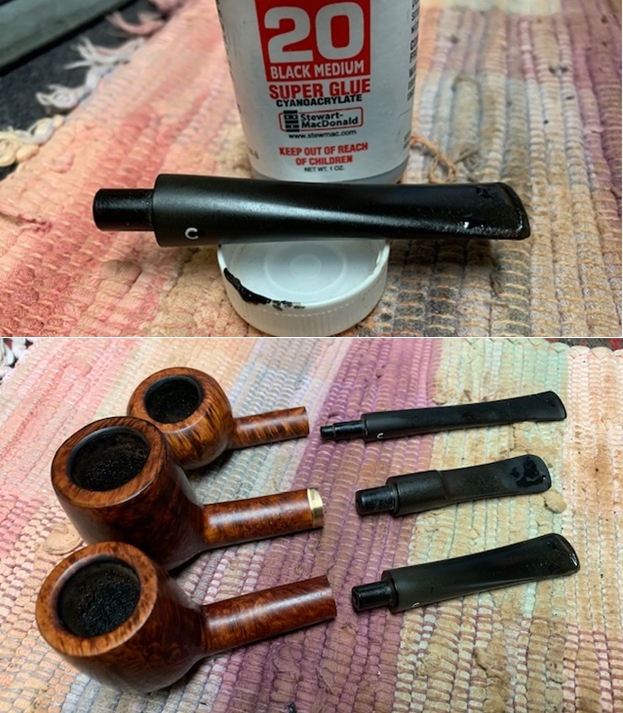
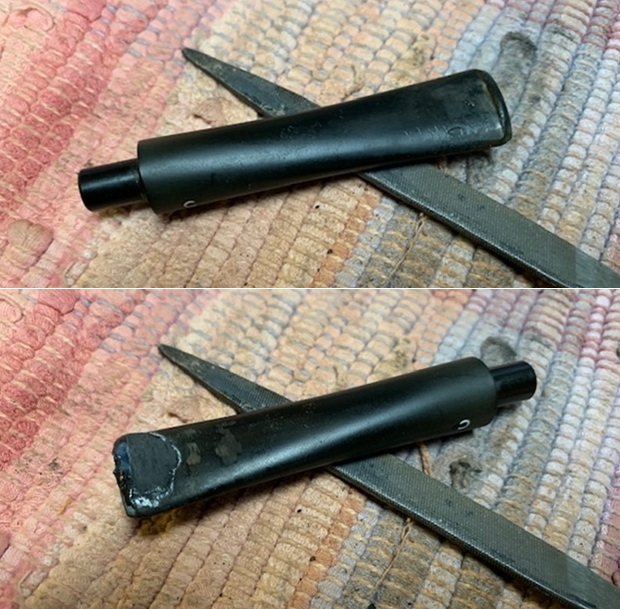
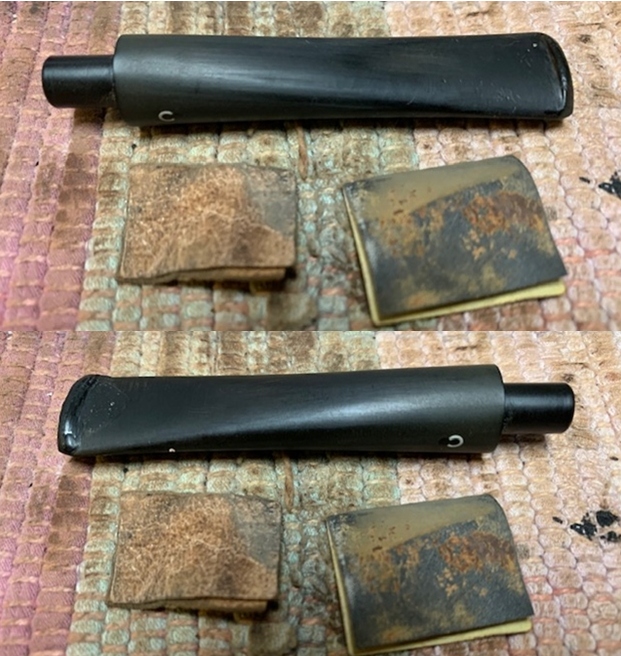
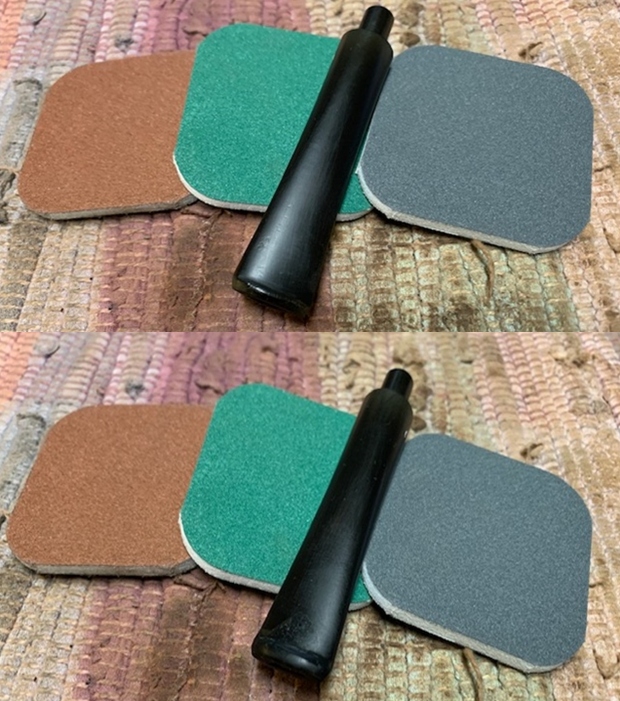
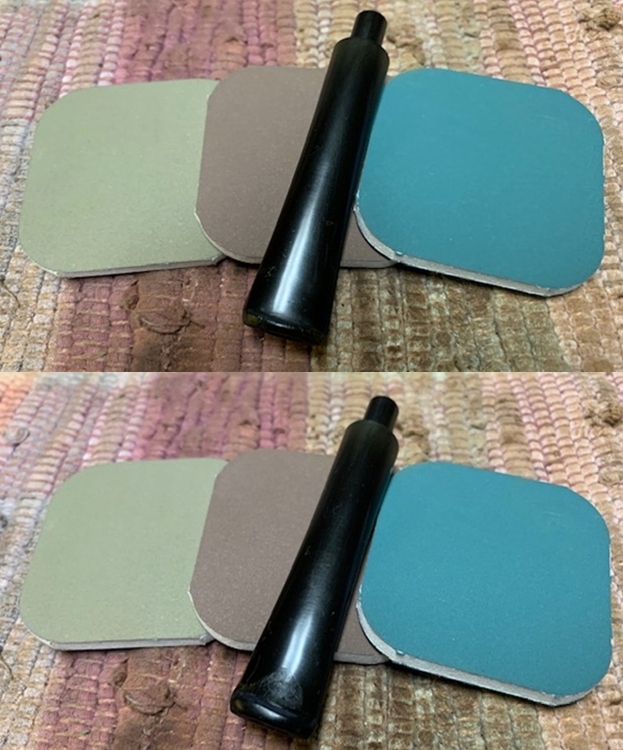
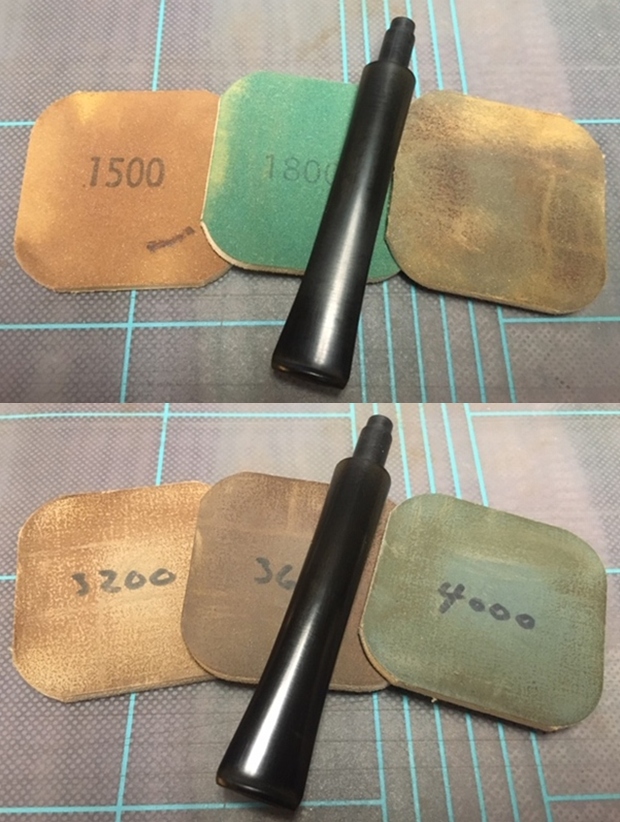
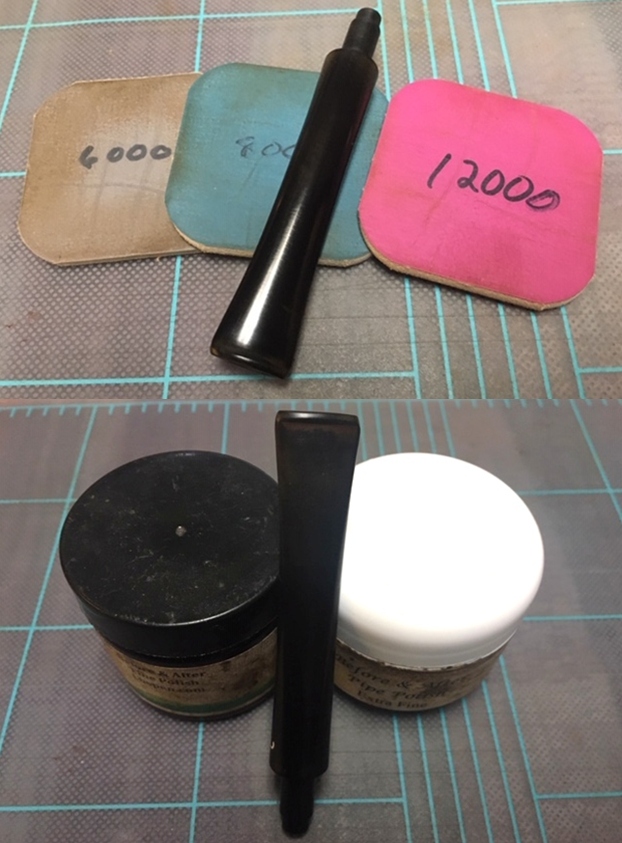
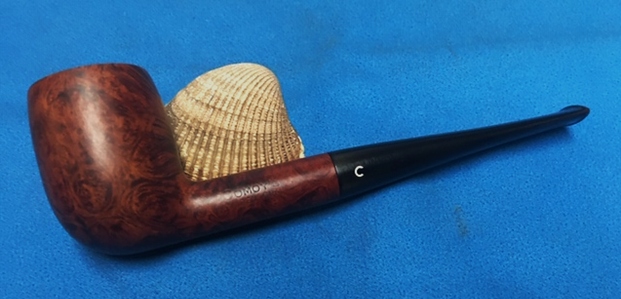
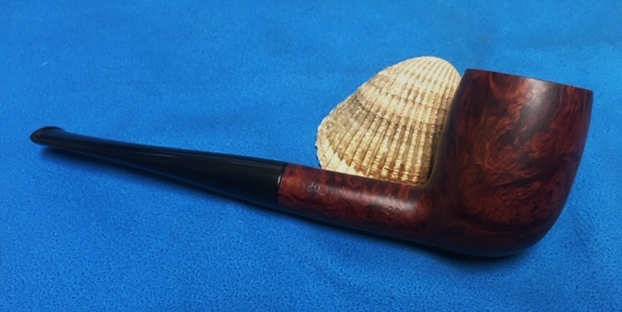
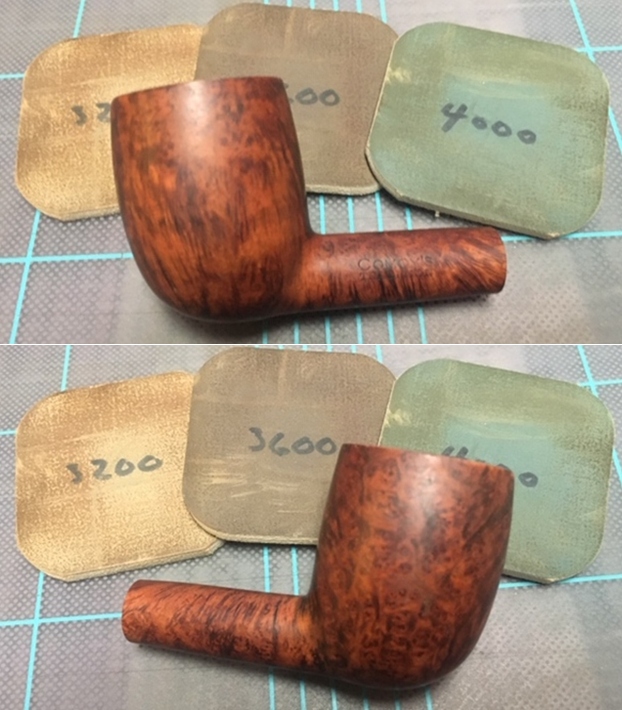
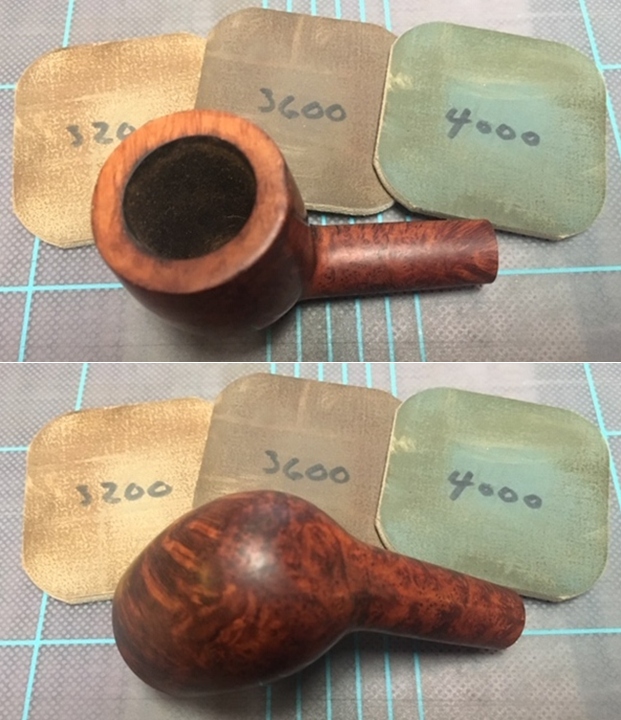
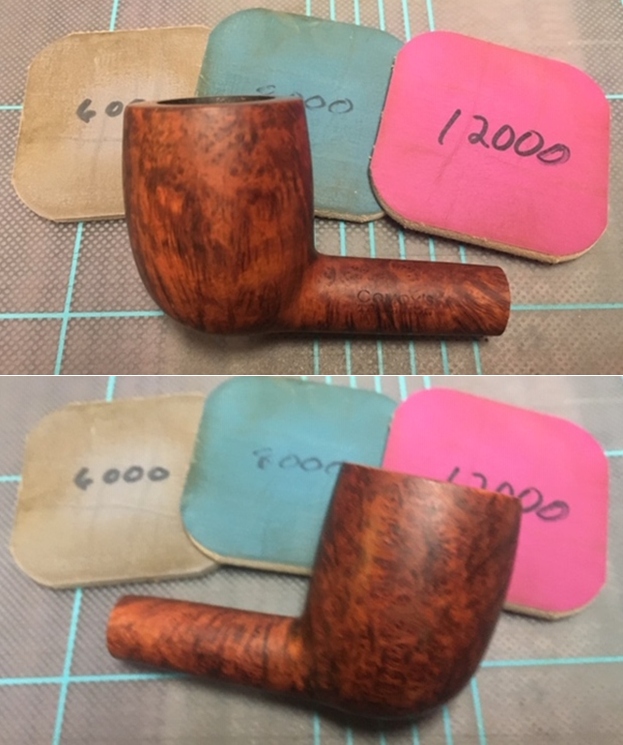
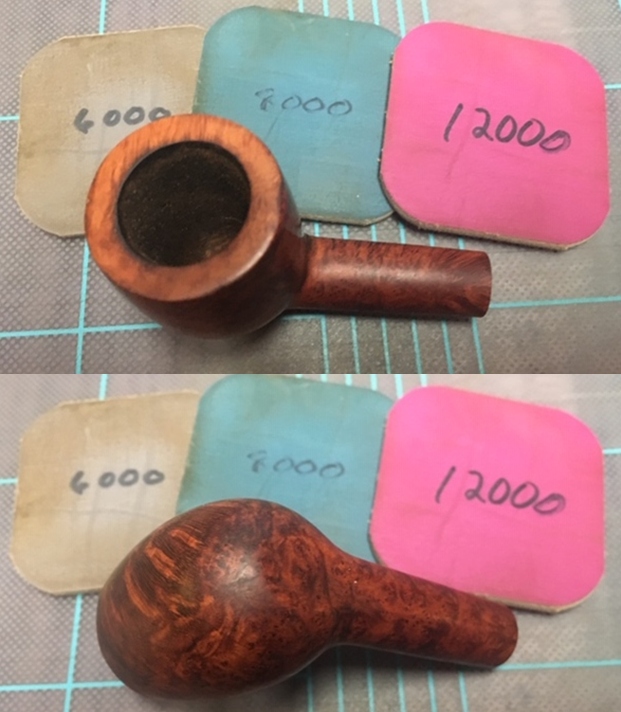
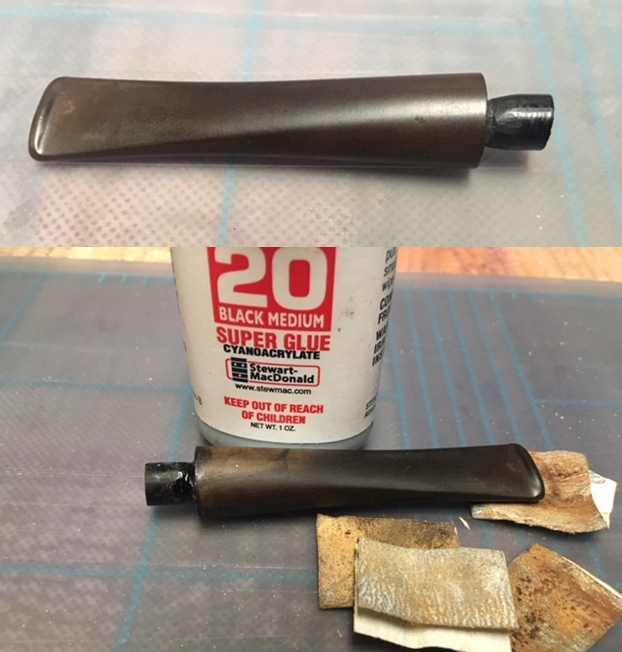
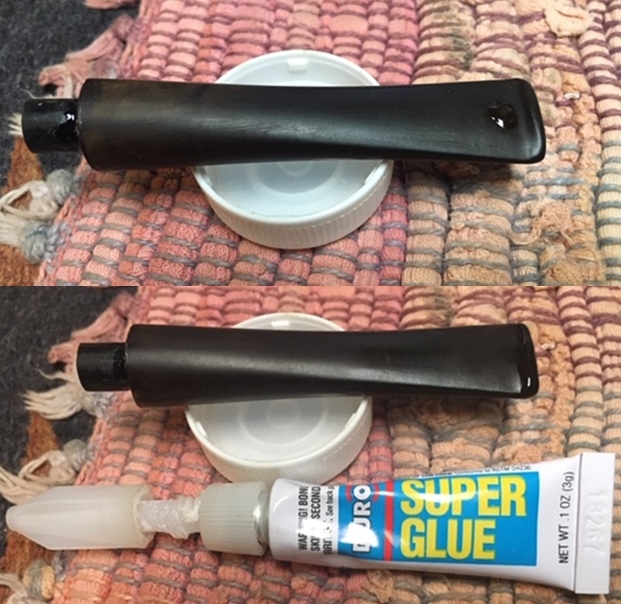
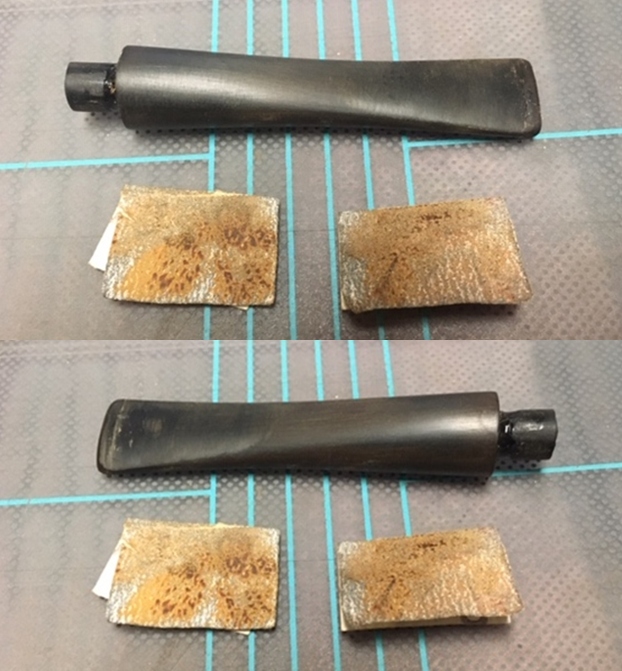
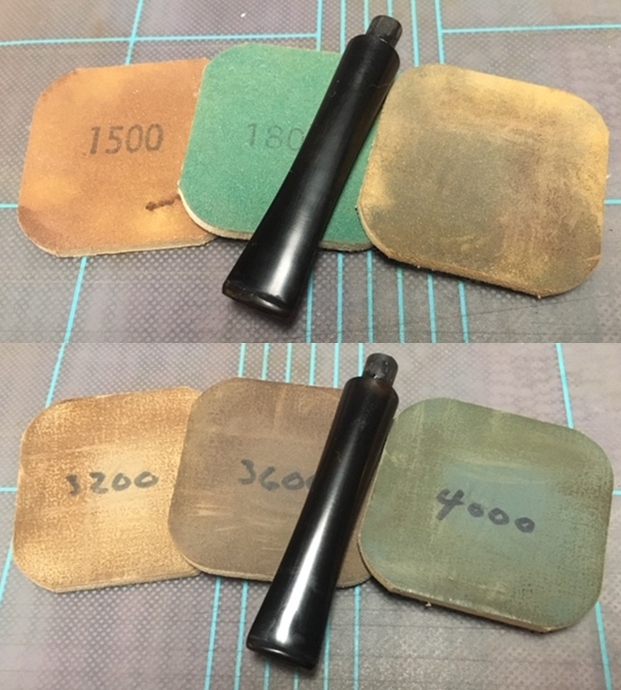
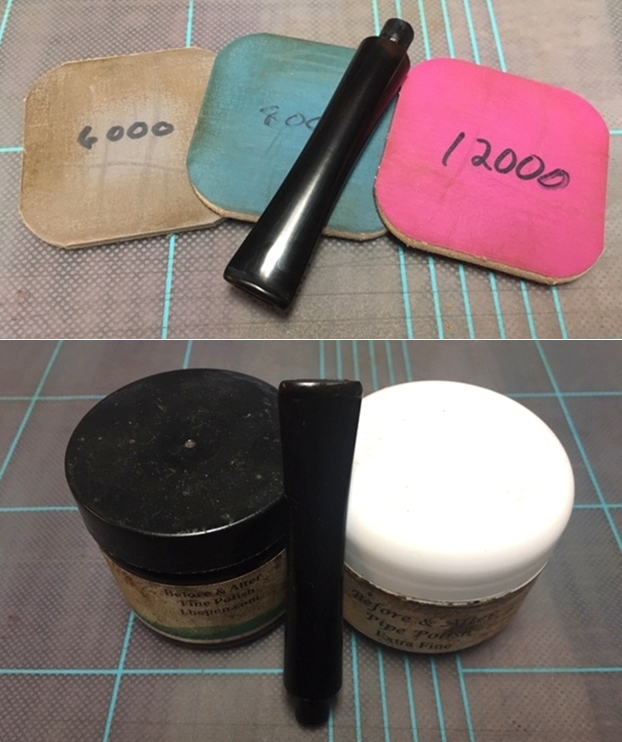
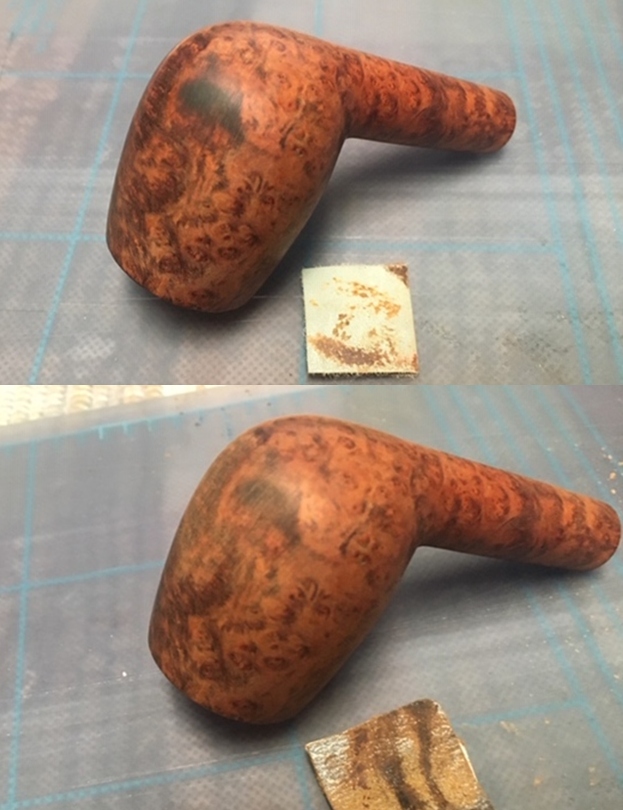
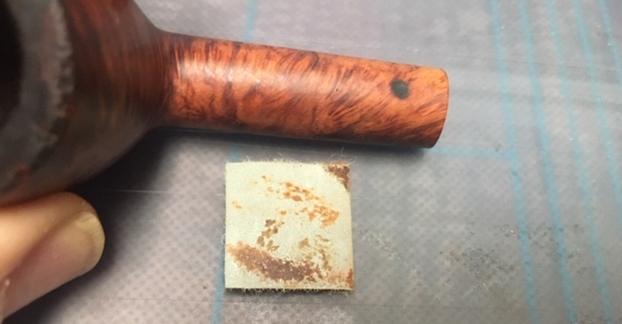
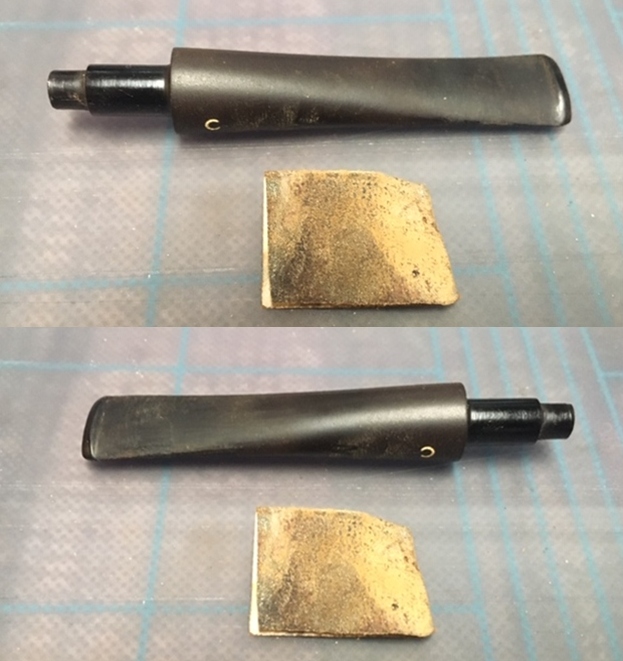
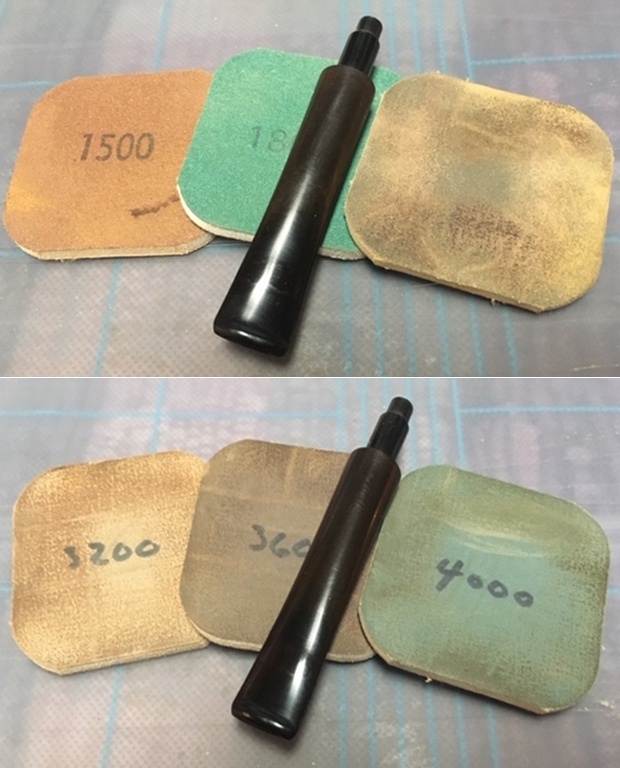
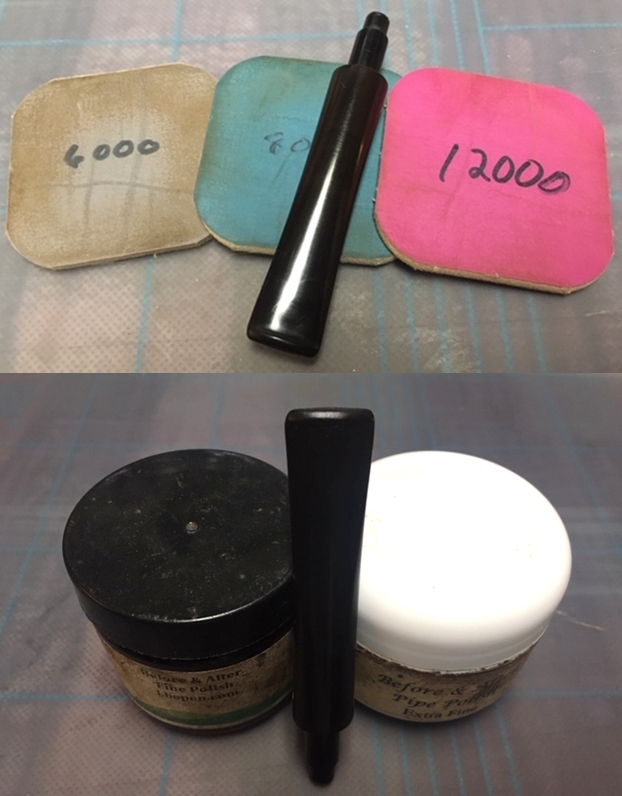
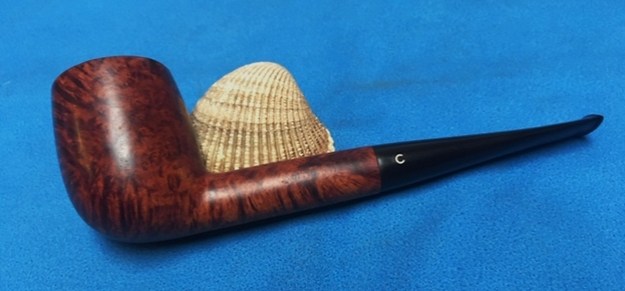
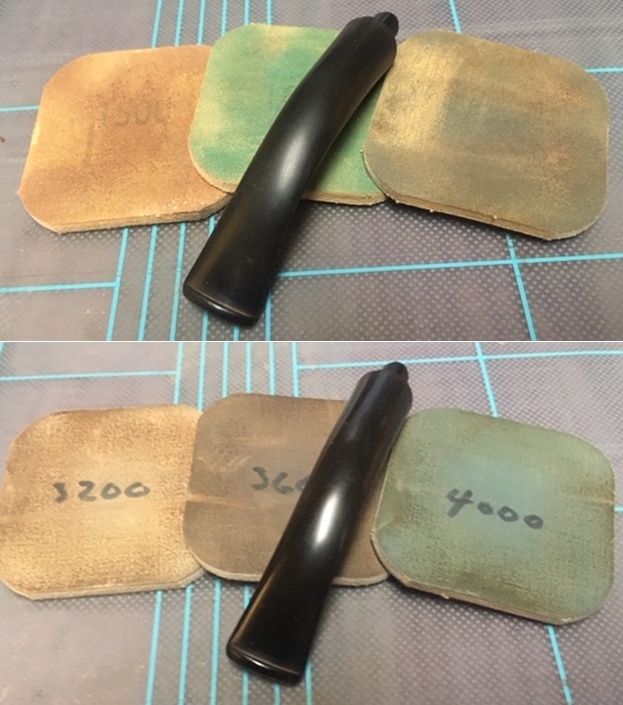
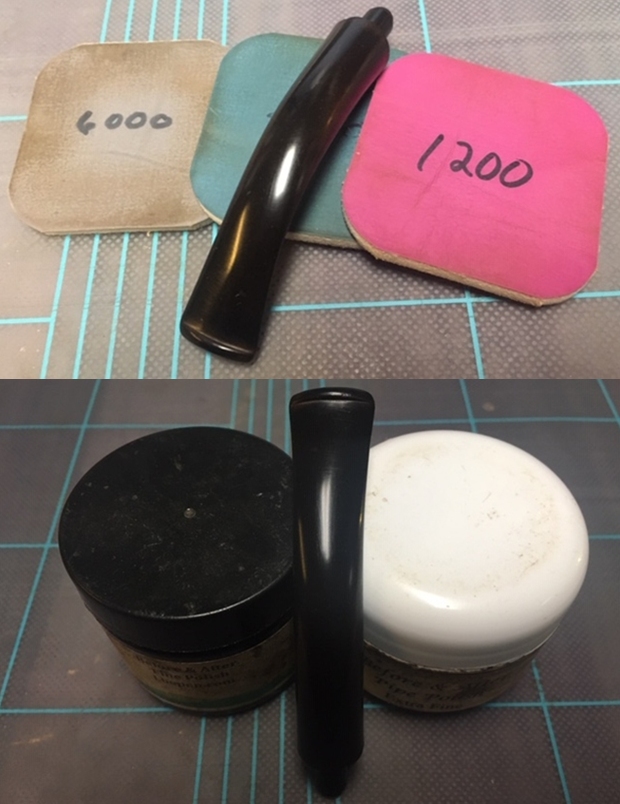
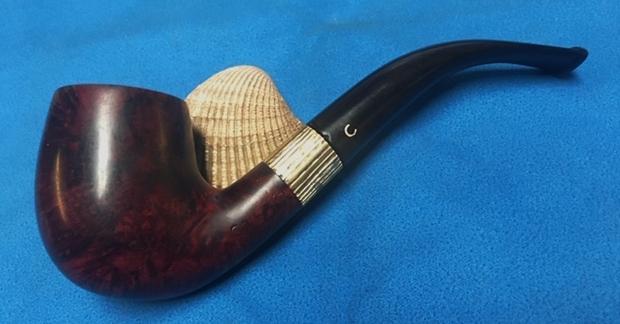
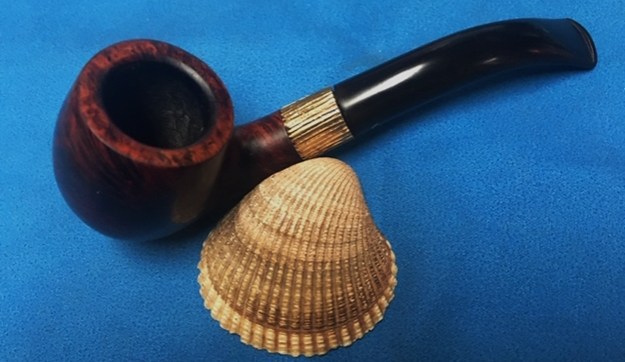
I reamed the bowl with a PipNet pipe reamer using the 2nd and 3rd cutting head to remove the remaining cake back to briar. I followed up with a Savinelli Fitsall pipe knife to remove the remnants of cake. I sanded the walls of the bowl with a piece of 220 grit sandpaper wrapped around a piece of dowel. I scrubbed out the mortise and the airway in the shank and the stem with alcohol, cotton swabs and pipe cleaners. I scrubbed the exterior of the bowl, rim, shank and stem with a tooth brush and Murphy’s Oil Soap to remove the oils and tars on the rim and the grime on the finish of the bowl. I rinsed it under running water and dried it off with a soft cloth.      I was able to remove some of the lava build up on the rim top and finished by scraping it with the Fitsall knife and then a piece of 220 grit sandpaper.  I cleaned up the bevel with the sandpaper at the same time. I polished the bowl and the rim top, sides and shank with micromesh sanding pads – wet sanding with 1500-12000 grit pads and wiping it down after each pad with a damp cloth. I carefully avoided the stamping on the shank so as not to damage the stamping.   I rubbed the bowl and shank down with Before & After Restoration Balm. I worked it into the surface of the bowl sides and shank with my fingertips to clean, enliven and protect the briar. I let the balm sit for a little while and then buffed with a cotton cloth to raise the shine.    I set aside the bowl and turned my attention to the stem repairs. I cut a piece of cardboard for a pallet, put aside two charcoal capsules, and set out the spatula and the Loctite 380 black CA glue. I greased a pipe cleaner with Vaseline and inserted it in the stem. I filled in the hole in the stem with a mixture of charcoal powder and Loctite. I used the spatula to fill in the bite throughs on all of the stems. I sprayed the repair with an accelerator to set the glue and removed the pipe cleaners from the stems.        I filled in the deep tooth marks on the top side of the stem with black super glue and set the stems aside to let the repairs cure. I took a photo of the three pipes at this point to give a feel for where things stood. I smoothed out the repairs with a needle file and started blending them into the surface of the stem. I sanded the remaining repairs with 220 grit sandpaper to further blend it into the stem surface. I started polishing it with 400 grit wet dry sandpaper.   I polished the vulcanite stem with micromesh sanding pads – 1500-12000 grit pads. I wiped it down with a damp cloth after each sanding pad. I used Before & After Pipe Polish – both Fine and Extra Fine to further polish the stem.     This 50s era Comoy’s Tradition 3591 Panel Prince with a vulcanite taper stem is a great looking pipe now that it has been restored. I did a lot of work on the bowl and repaired the bite through on the stem. The rich browns and blacks of the contrasting stains came alive with the polishing and waxing. I put the stem back on the bowl and carefully buffed the pipe with Blue Diamond on the buffing wheel using a light touch on the briar. I gave the bowl and the stem multiple coats of carnauba wax on the buffing wheel and followed that by buffing the entire pipe with a clean buffing pad. I hand buffed the pipe with a microfiber cloth to deepen the shine. The finished Comoy’s thin shank Panel Prince is a beauty and fits nicely in the hand and looks very good. Give the finished pipe a look in the photos below. The dimensions of the pipe are Length: 5 ¾ inches, Height: 1 1/8 inches, Outside diameter of the bowl: 1 ½ inches, Chamber diameter: ¾ of an inch. He will be stopping by to pick them up soon. I am looking forward to what Stanley thinks of his repaired pipe. He had said the threesome were his favourite pipes. This is the second of  the three but the last one I finished. Thanks for reading this blog and my reflections on the pipe while I worked on it. There are many more to come!

A Tale of the Rebirth of 3 Pipes – Pipe #3 – a Comoy’s Grand Slam Pipe 484B Billiard


Blog by Steve Laug

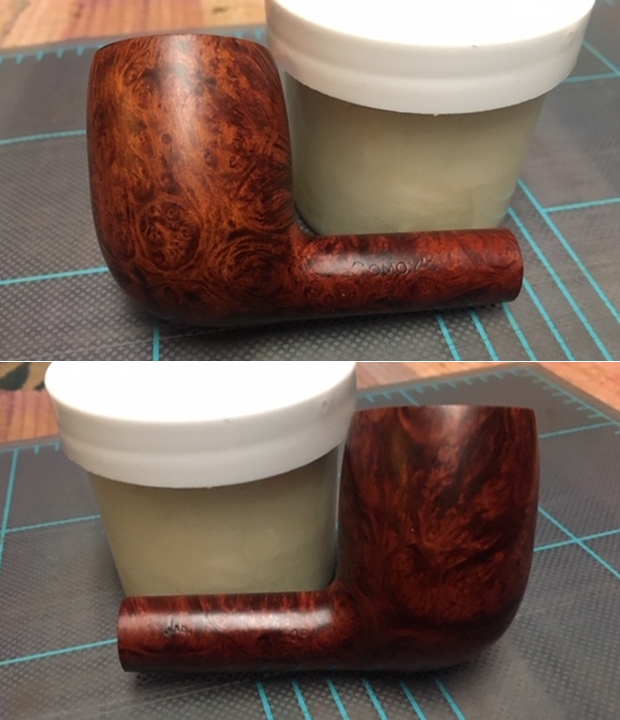
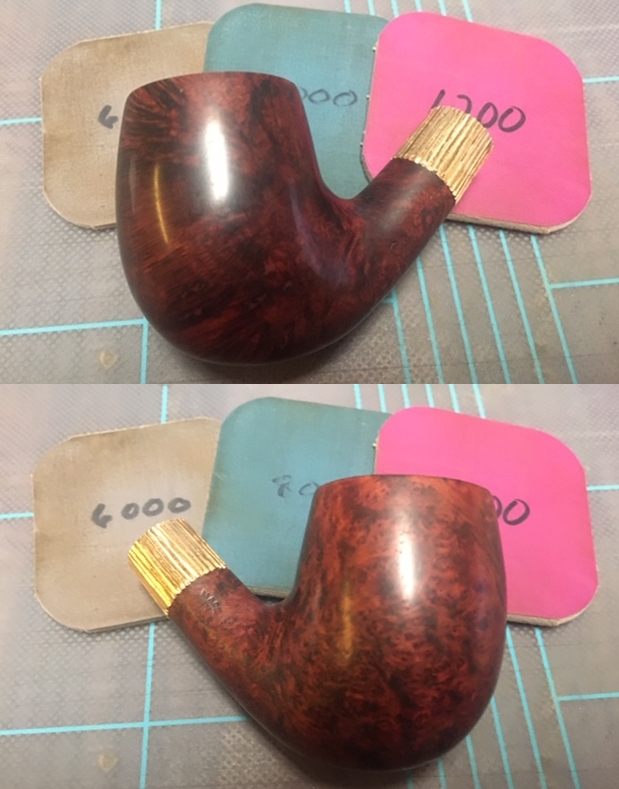
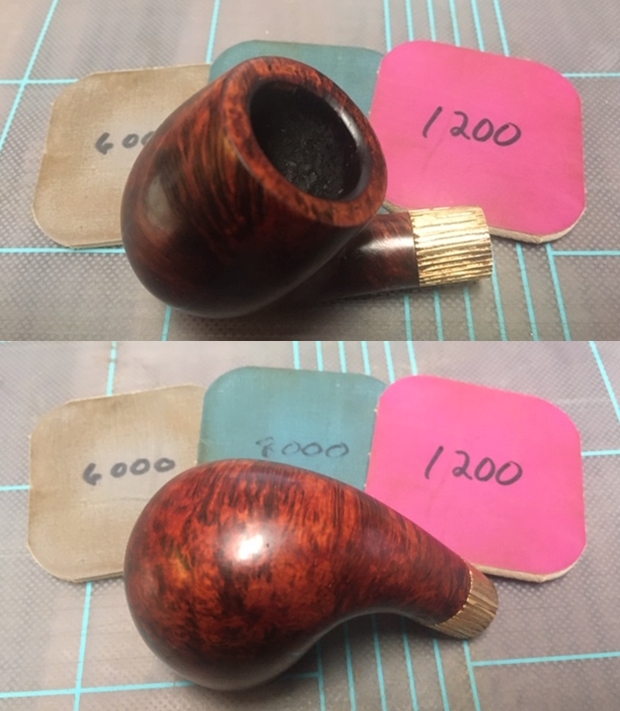
While this is the third and last of the trio I ended up finishing it second. The little panel prince has some added challenges that I was not expecting so it will actually be finished last even though I started on it second. Ah well the surprises of pipe restoring are part of fun.

Last week I received an email from a fellow named Stanley who had gotten my info from the local Pipe and Cigar shop. He wrote that he had a trio of Comoy’s pipes that needed to be worked on. Two of them were Grand Slam Pipes and one was a Tradition. We connected via email and he said he would drop them off this week for me to work on. I am including part of his email so you have a sense of what I would be working on. I am also including the two photos that he attached to the email for me to see.

Hey Steve,

I had recently the chance to talk to a very kind and excellent gentleman over at City Cigar; I unfortunately was never able to get his name. However I mentioned I was looking for some replacement stems and he gave me your info…

…The pipes in question are attached in photos, I’ve never done any sort of pipe restoration in my life but I have attempted to take the cake down with a pocket knife. If you’d do it, would you be able to do a ream/clean on the three, as well as deal with the stems?

If possible, I’d prefer to save the original stems by repairing them, but it seems to me that most people remedy this problem with a replacement stem. Whatever you think is best I will go with.

If you think that I’d be better off without the stinger insert in the shape 64, then would you be able to remove it? I’m afraid I’d break the stem if I tried haha.

The 484b also seems to have a crack starting near the “Comoy’s Grand Slam” part of the shank, where it meets the stem. Is it possible to deal with this?

That is all! Please let me know what you think!

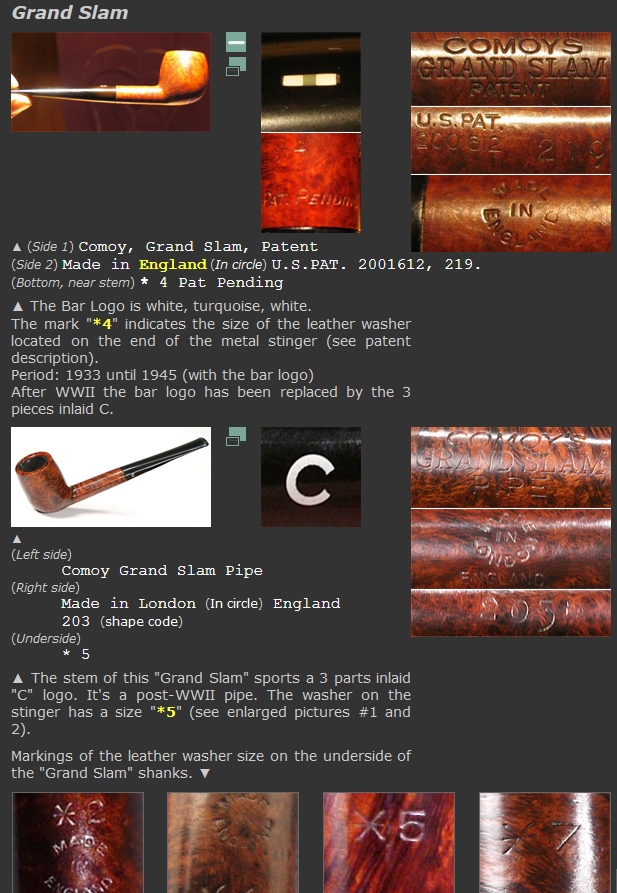
Thanks!  Stanley Last night Stanley stopped by and dropped off the three pipes. I took photos of pipes as there were when I opened the bag they were in. All three pipes were very dirty but the reaming had been started as noted in his email. The stems all had bite throughs on the underside. The bottom pipe in the photo below is a Grand Slam Pipe shape 64 Billiard. The stem has a 3 part C on the left side. The middle pipe is a Tradition 3591 Prince with 8 flattened panels on the bowl near the top. The stem also has a bite through and a missing divot. It also has a 3 part C on the left side. The top pipe in the photo is also Grand Slam Pipe 484B with a replacement stem that also has a bite through. The shank is also cracked on the left side.I decided to finish the last pipe of the trio while I waited for some stem repairs to cure on the second pipe – the Tradition Prince. I had left the pipe in the worst condition to work on last. It was another Grand Slam Pipe shape 484B or maybe 4846 as it is hard to read. It was in rough condition. The finish has a lot of dirt and dark grime ground into the briar but it appears to have some nice grain underneath all of that. I hope to be able to set that free with cleaning. It was probably a Comoy’s Billiard but somewhere along the way it had been given a replacement stem that turned it into a saddle billiard. The stamping is faint but with a light and lens reads COMOY’S [over] Grand Slam [over] Pipe. On the right side it has the shape number 484B(?6) next to the bowl/shank junction and that is followed by a very faint Comoy’s COM stamp that reads Made in London in a circle [over] England. There was a crack in the shank about an inch long on the left side extending into the Grand Slam Stamp. It is a hairline but is a definite issue. It appears that when it was restemmed the shank cracked. The pipe is dirty so it is not readily apparent. The bowl had been scraped but there was still a moderately heavy cake. There was an overflow of thick lava on the top of the rim and on the inner bevel of the bowl. The top and outer edge had been hammered and had a lot of damage. The replacement saddle stem was pitted and rough. There was a large bite through on the underside. This was the pipe I was the most worried about when I assessed the damage. I took photos of the pipe before he started his cleanup work.    I took photos of the rim top and bowl to give a clear picture of the thickness of the cake and the overflow of lava on the rim top. You can see the thick lava and the damage to the inner and outer edge of the bowl. I also took photos of the top and underside of the stem to show the condition of the stem surface and the bite through on the underside.    I took photos of the stamping on both sides of the shank. They are faint but read as noted above. I removed the stem and took a photo of the pipe to give a sense of the whole. It is a well shaped billiard. Once the stem was off I noted that tenon had a thick coating of wax as did the shank which made me wonder if that had cause the crack.I looked on Pipephil’s site for information on the Comoy’s Grand Slam Pipe and found the following information I have included a screen capture (http://www.pipephil.eu/logos/en/logo-comoy.html). The one I am working on is like the second one in the screen capture below. It has has a replacement saddle stem so there is no C on left side. The stamping on the shank is the same as the one I am working on.I turned to the article on Pipedia about dating Comoy’s pipes but the style of the stamping (https://pipedia.org/index.php?title=Comoy%27s_Dating_Guide#1917_to_the_end_of_the_1930.27s_.28at_least_1938.29). I have include the section in the screen capture below that date this pipe to the 1950s.

Now the Comoy’s stamp can be found in three variants in the 1950s

  1. A simple block-letter style without serifs but with the C larger than the other letters and the apostrophe before the “S”.
  2. A return to the slightly more fancy block letters with serifs and the apostrophe. (It seems that some grades carried different stamps, or at least that the stamping changed in different years for some grades.)
  3. A simple block-letter style without serifs and without the apostrophe and with the “C” the same size as the rest of the letters. This stamp was probably not used very long.
  4. A simple block-letter style without serifs but with the apostrophe before the “S” and with the “C” the same size as the rest of the letters.

Made in London England

Appears in two versions. This is again stamped in a circle with “MADE” at the top, “IN” in the middle, and “LONDON” at the bottom, with “ENGLAND” in a straight line beneath. It can be assumed that this stamp was first used in the export drive in the early 1950s. On a Bulldog Sandblast from the early 50s the Comoy name no. 2 above was used together with “MADE IN LONDON” over “ENGLAND”. There are no known examples of pre-WW II Comoy’s stamped in this way. The second version is the same as above but in a “rugby ball ” shape. This shape is verified on Comoy´s “Extraordinaire” pipes.

That article gave me some helpful information regarding the pipe that I was working on. I knew that the stamping and logos identified the pipe as having been made in following WW2 and from what I can see from the above information it is a 1950s era pipe.

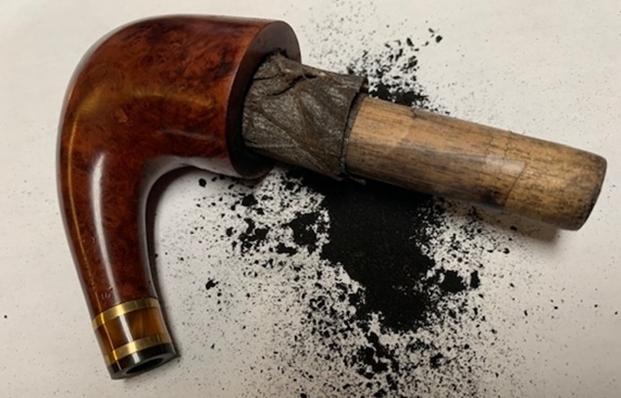
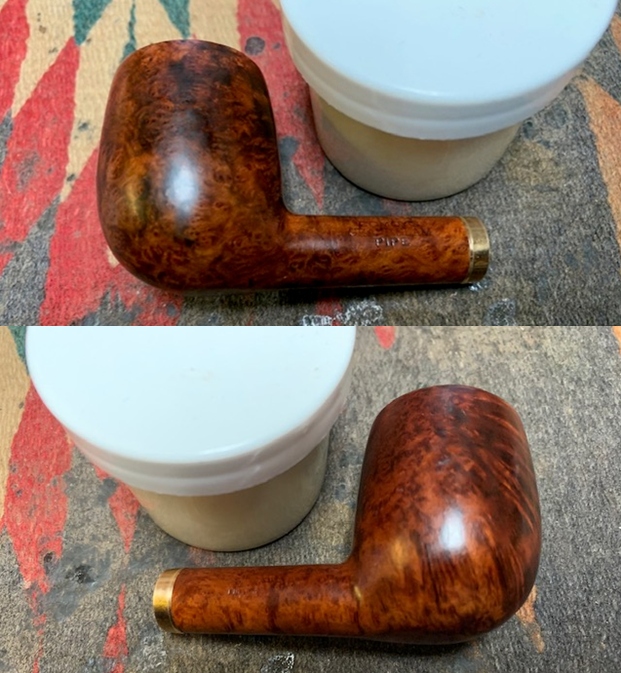
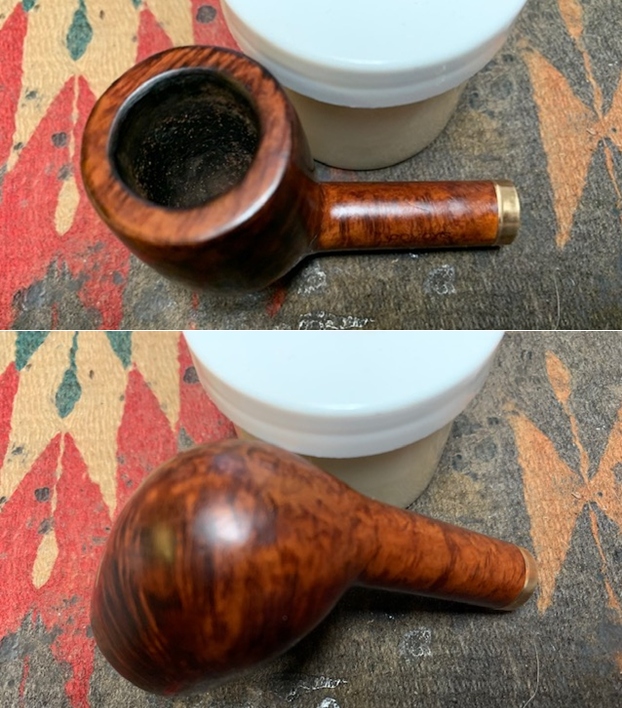
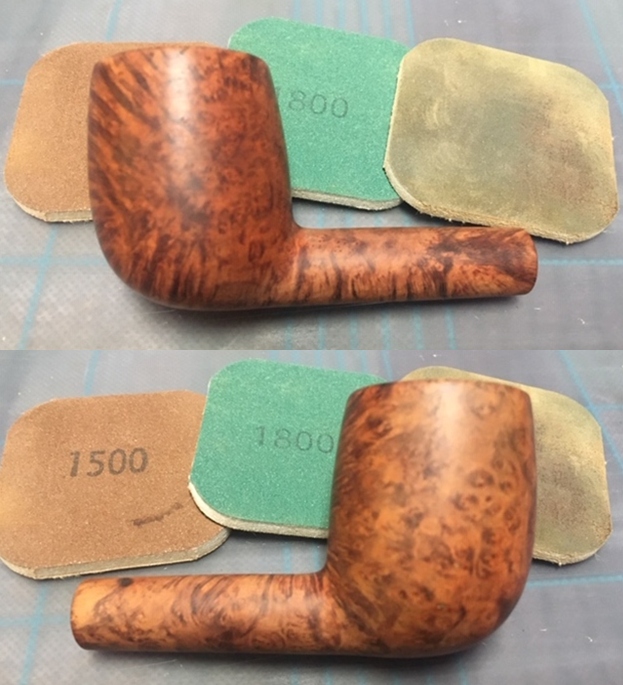
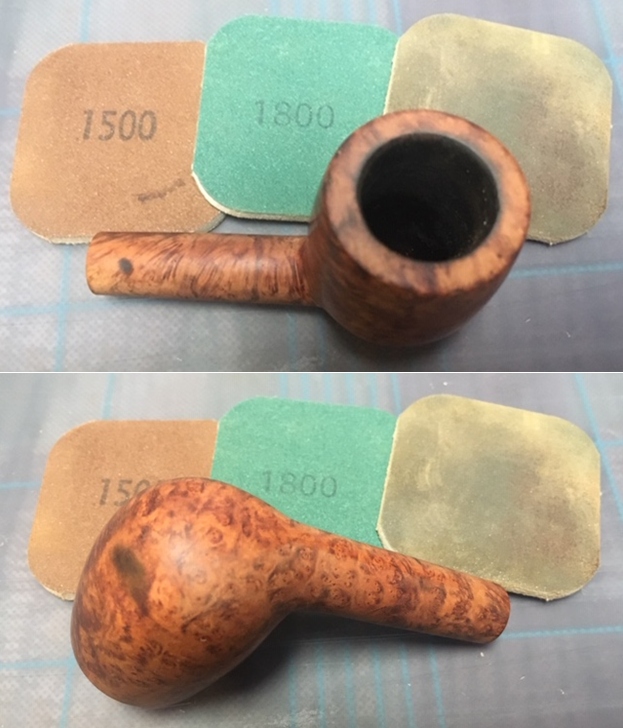
I reamed the bowl with a PipNet pipe reamer using the 2nd and 3rd cutting head to remove the remaining cake back to briar. I followed up with a Savinelli Fitsall pipe knife to remove the remnants of cake. I sanded the walls of the bowl with a piece of 220 grit sandpaper wrapped around a piece of dowel. I scrubbed out the mortise and the airway in the shank and the stem with alcohol, cotton swabs and pipe cleaners.   I scrubbed the exterior of the bowl, rim, shank and stem with a tooth brush and Murphy’s Oil Soap to remove the oils and tars on the rim and the grime on the finish of the bowl. I rinsed it under running water and dried it off with a soft cloth. I was topped the bowl on a piece of 220 grit sandpaper and a topping board to smooth out the damage on the surface of the rim and reduce the damage on the edges. I used a folded piece of 220 grit sandpaper to clean up the beveled inner edge of the rim. With the general cleanup finished I decided to address the cracked shank. I have circled the area of the crack in red in the photo below. I removed the stem and spread the crack slightly and used a tooth pick to put super glue in the crack. I pressure fit a thin band on the end of the shank to bind it together. The band allowed the glue to cure and the crack virtually disappeared. The band is thin enough not do obscure the stamping on the shank sides.I polished the bowl and the rim top, sides and shank with micromesh sanding pads – wet sanding with 1500-12000 grit pads and wiping it down after each pad with a damp cloth. I carefully avoided the stamping on the shank so as not to damage the stamping. I rubbed the bowl and shank down with Before & After Restoration Balm. I worked it into the surface of the bowl sides and shank with my fingertips to clean, enliven and protect the briar. I let the balm sit for a little while and then buffed with a cotton cloth to raise the shine.      I set aside the bowl and turned my attention to the stem repairs. I cut a piece of cardboard for a pallet, put aside two charcoal capsules, and set out the spatula and the Loctite 380 black CA glue. I greased a pipe cleaner with Vaseline and inserted it in the stem. I filled in the hole in the stem with a mixture of charcoal powder and Loctite. I used the spatula to fill in the bite throughs on all of the stems. I sprayed the repair with an accelerator to set the glue and removed the pipe cleaners from the stems.     I filled in the deep tooth marks on the top side of the stem with black super glue and set the stems aside to let the repairs cure. I took a photo of the three pipes at this point to give a feel for where things stood. I smoothed out the repairs with a needle file and started blending them into the surface of the stem. I sanded the remaining repairs with 220 grit sandpaper to further blend it into the stem surface. I started polishing it with 400 grit wet dry sandpaper.     I polished the vulcanite stem with micromesh sanding pads – 1500-12000 grit pads. I wiped it down with a damp cloth after each sanding pad. I used Before & After Pipe Polish – both Fine and Extra Fine to further polish the stem. This 50s era Comoy’s Grand Slam Pipe 484B Billiard with a replacement vulcanite saddle stem turned out to be a nice looking pipe now that it has been restored. I did a lot of work on the bowl and repaired the bite through on the stem. The rich browns and blacks of the contrasting stains came alive with the polishing and waxing. The thin brass shank band adds a touch of class to the pipe. I put the stem back on the bowl and carefully buffed the pipe with Blue Diamond on the buffing wheel using a light touch on the briar. I gave the bowl and the stem multiple coats of carnauba wax on the buffing wheel and followed that by buffing the entire pipe with a clean buffing pad. I hand buffed the pipe with a microfiber cloth to deepen the shine. The finished Comoy’s Billiard is a beauty and fits nicely in the hand and looks very good. Give the finished pipe a look in the photos below. The dimensions of the pipe are Length: 5 ½ inches, Height: 1 ¾ inches, Outside diameter of the bowl: 1 ¼ inches, Chamber diameter: ¾ of an inch. I am looking forward to what Stanley thinks of his repaired pipe. He had said the threesome were his favourite pipes. While this was the last of  the threesome it pushed ahead of number 2 in the queue so there is one more to come! Thanks for reading this blog and my reflections on the pipe while I worked on it. There are many more to come!

A Tale of the Rebirth of 3 Pipes – Pipe #1 – a Comoy’s Grand Slam Pipe 64 Billiard


Blog by Steve Laug

Last week I received an email from a fellow named Stanley who had gotten my info from the local Pipe and Cigar shop. He wrote that he had a trio of Comoy’s pipes that needed to be worked on. Two of them were Grand Slam Pipes and one was a Tradition. We connected via email and he said he would drop them off this week for me to work on. I am including part of his email so you have a sense of what I would be working on. I am also including the two photos that he attached to the email for me to see.

Hey Steve,

I had recently the chance to talk to a very kind and excellent gentleman over at City Cigar, I unfortunately was never able to get his name. However I mentioned I was looking for some replacement stems and he gave me your info…

…The pipes in question are attached in photos, I’ve never done any sort of pipe restoration in my life but I have attempted to take the cake down with a pocket knife. If you’d do it, would you be able to do a ream/clean on the three, as well as deal with the stems?

If possible, I’d prefer to save the original stems by repairing them, but it seems to me that most people remedy this problem with a replacement stem. Whatever you think is best I will go with.

If you think that I’d be better off without the stinger insert in the shape 64, then would you be able to remove it? I’m afraid I’d break the stem if I tried haha.

The 484b also seems to have a crack starting near the “Comoy’s Grand Slam” part of the shank, where it meets the stem. Is it possible to deal with this?

That is all! Please let me know what you think!

Thanks!  Stanley Last night Stanley stopped by and dropped off the three pipes. I took photos of pipes as there were when I opened the bag they were in. All three pipes were very dirty but the reaming had been started as noted in his email. The stems all had bite throughs on the underside. The bottom pipe in the photo below is a Grand Slam Pipe shape 64 Billiard. The stem has a 3 part C on the left side. The middle pipe is a Tradition 3591 Prince with 8 flattened panels on the bowl near the top. The stem also has a bite through and a missing divot. It also has a 3 part C on the left side. The top pipe in the photo is also Grand Slam Pipe 484B with a replacement stem that also has a bite through. The shank is also cracked on the left side.I decided to work on the Grand Slam Pipe 64 Billiard. It is a beautifully grained Comoy’s Billiard that really is a pipe of Pipe Smoking History. The stamping is the significant marker that points this out for me. It is stamped on the left side of the shank and reads COMOY’S [over] Grand Slam [over] Pipe. On the right side it has the shape number 64 next to the bowl/shank junction and that is followed by a Comoy’s COM stamp that reads Made in London in a circle [over] England. On the underside there was a *6 stamped at the stem/shank junction. The finish had a lot of grime ground into the smooth finish on the bowl and some darkening around the sides of the bowl. The bowl had been scraped but there was still a moderately heavy cake. There was an overflow of thick lava on the top of the rim and on the inner bevel of the bowl. It was hard to know what the rim top and inner edge of the bowl looked like under the grime. The stem was lightly oxidized and there was a large bite through on the underside. There was a three part inlaid C on the left of the taper stem. When the pipe arrived it had a Softee Bit over the damaged stem. The pipe had promise but it was very dirty. I took photos of the pipe before he started his cleanup work. I took photos of the rim top and bowl to give a clear picture of the thickness of the cake and the overflow of lava on the rim top. It is hard to know if there is damage to the inner edge of the bowl because of the lava coat. I also took photos of the top and underside of the stem to show the condition of the stem surface and the bite through on the underside.I took photos of the stamping on both sides and underside of the shank. They read as noted above. I also included a photo of the 3 part C logo on the left side of the taper stem.   I removed the stem and took a photo of the pipe to give a sense of the whole. It is a well shaped billiard. Once the stem was off I noted that tenon had a Comoy’s Grand Slam metallic stinger threaded in the stem. It was missing the cap on the end that held the leather washer in place the apparatus was damaged and I would not be able to fit a new cap on the end. I would remove it from the tenon so that I could clean the stem and do the repairs.I looked on Pipephil’s site for information on the Comoy’s Grand Slam Pipe and found the following information I have included a screen capture (http://www.pipephil.eu/logos/en/logo-comoy.html). The one I am working on is like the second one in the screen capture below. It has the three part C which dated it to 1946 and following. The stamping is the same as the one I am working on. The *6 is the size of the washer on the end of the stinger.I turned to the article on Pipedia about dating Comoy’s pipes but the style of the stamping (https://pipedia.org/index.php?title=Comoy%27s_Dating_Guide#1917_to_the_end_of_the_1930.27s_.28at_least_1938.29). I have include the section in the screen capture below that date this pipe to the 1950s.
Now the Comoy’s stamp can be found in three variants in the 1950s

  1. A simple block-letter style without serifs but with the C larger than the other letters and the apostrophe before the “S”.
  2. A return to the slightly more fancy block letters with serifs and the apostrophe. (It seems that some grades carried different stamps, or at least that the stamping changed in different years for some grades.)
  3. A simple block-letter style without serifs and without the apostrophe and with the “C” the same size as the rest of the letters. This stamp was probably not used very long.
  4. A simple block-letter style without serifs but with the apostrophe before the “S” and with the “C” the same size as the rest of the letters.

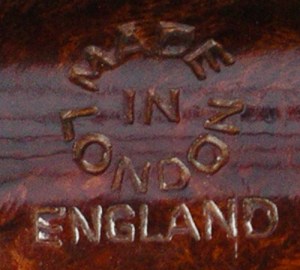
Made in London England

Appears in two versions. This is again stamped in a circle with “MADE” at the top, “IN” in the middle, and “LONDON” at the bottom, with “ENGLAND” in a straight line beneath. It can be assumed that this stamp was first used in the export drive in the early 1950s. On a Bulldog Sandblast from the early 50s the Comoy name no. 2 above was used together with “MADE IN LONDON” over “ENGLAND”. There are no known examples of pre-WW II Comoy’s stamped in this way. The second version is the same as above but in a “rugby ball ” shape. This shape is verified on Comoy´s “Extraordinaire” pipes.

Inlaid “C”

C” was first inlaid in the side of the mouthpiece around 1919. This was a complex inlay needing three drillings. First, a round white inlay was inserted, then the centre of the white was drilled out, and a smaller round black inlay was inserted. Finally, another drilling was made to remove the open part of the “C,” and an even smaller black inlay was inserted. This inlaid “C,” known as the “three-piece C,” was continued until the Cadogan era in the 1980s. However, the “C” in the 1920s and early 30s is much thinner and more delicate than the one post-WW II.

That article gave me some helpful information regarding the pipe that I was working on. I knew that the stamping and logos identified the pipe as having been made in following WW2 and from what I can see from the above information it is a 1950s era pipe.

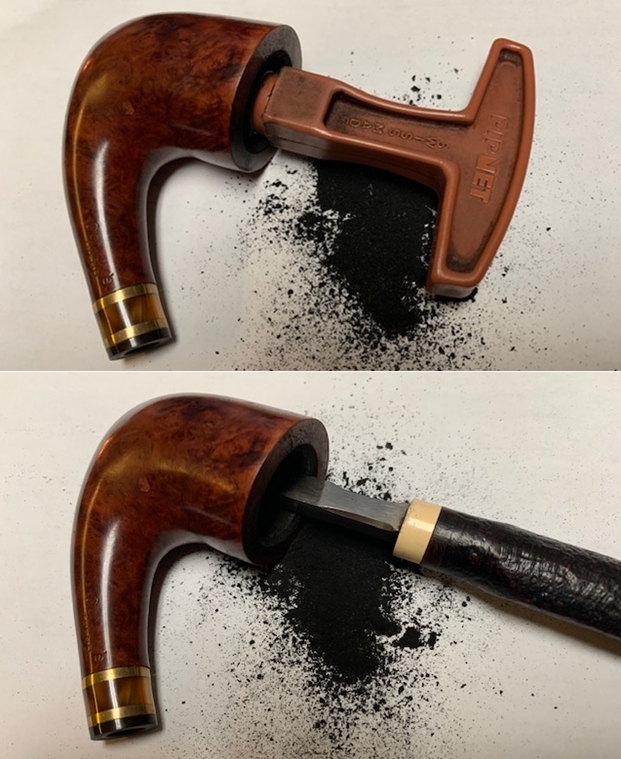
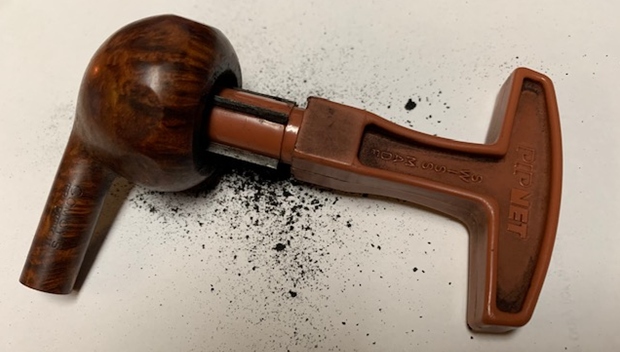
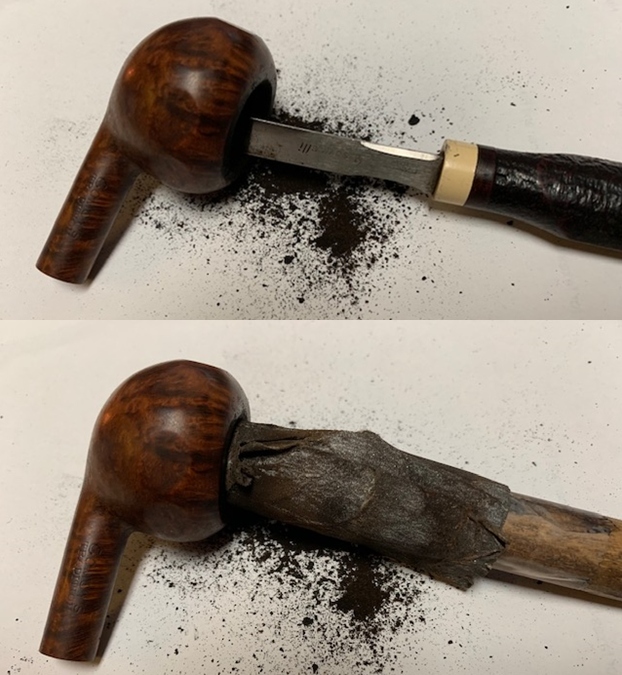
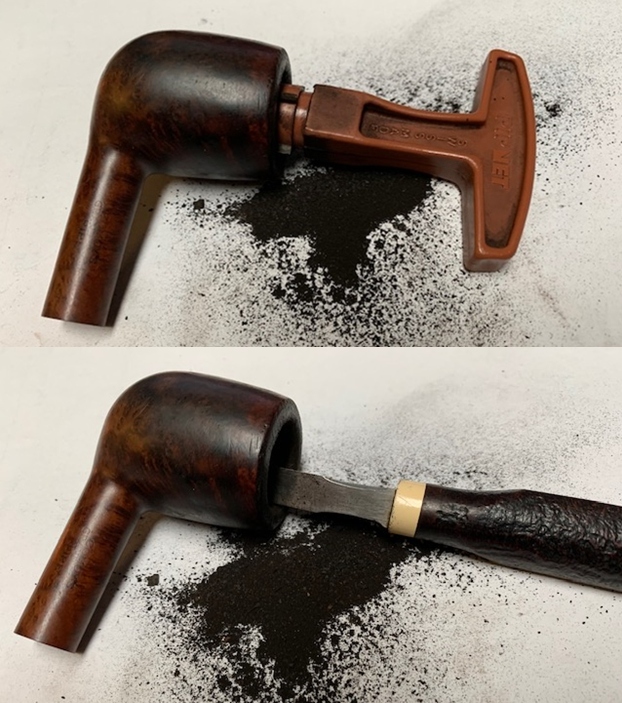
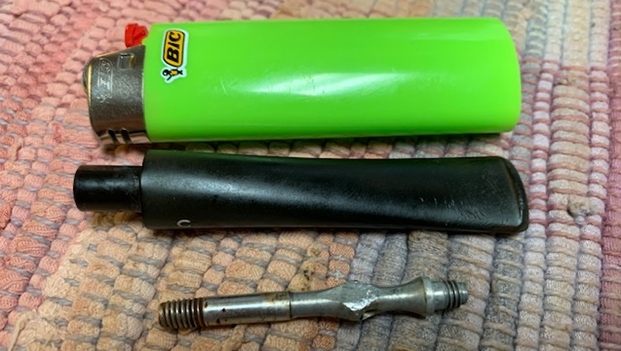
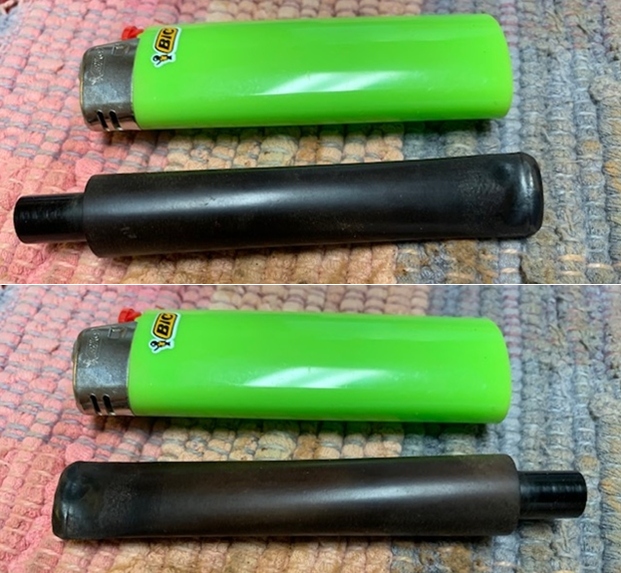
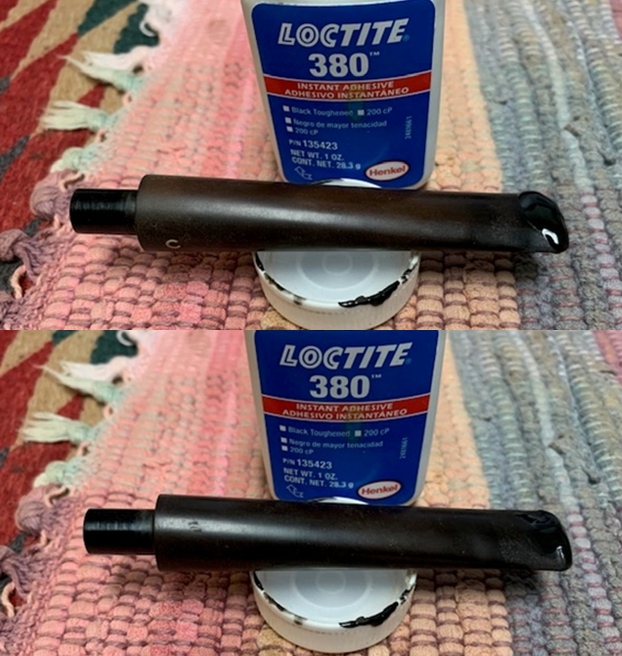
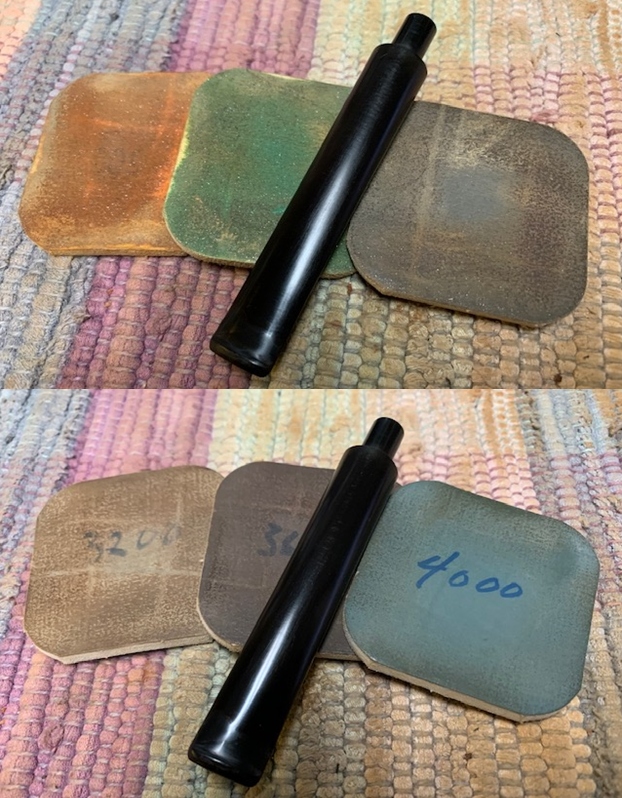
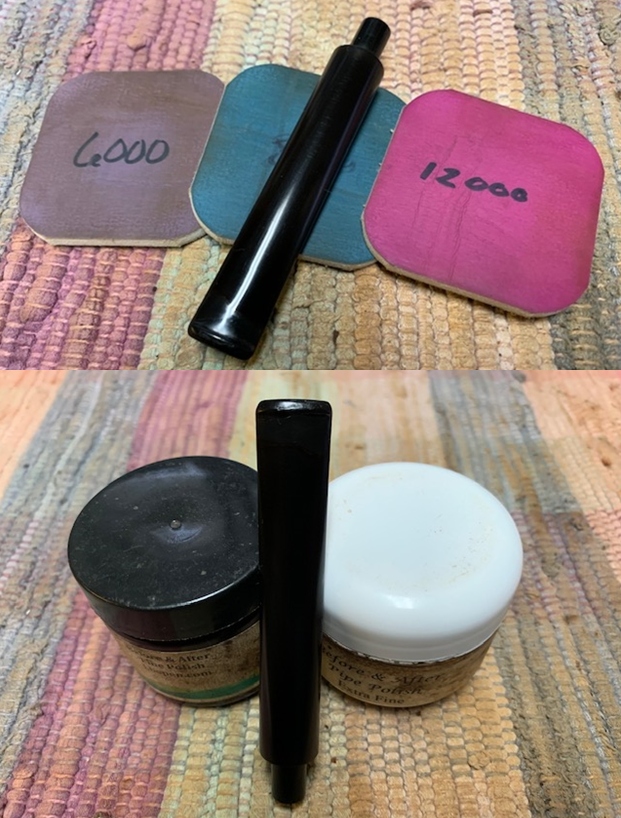
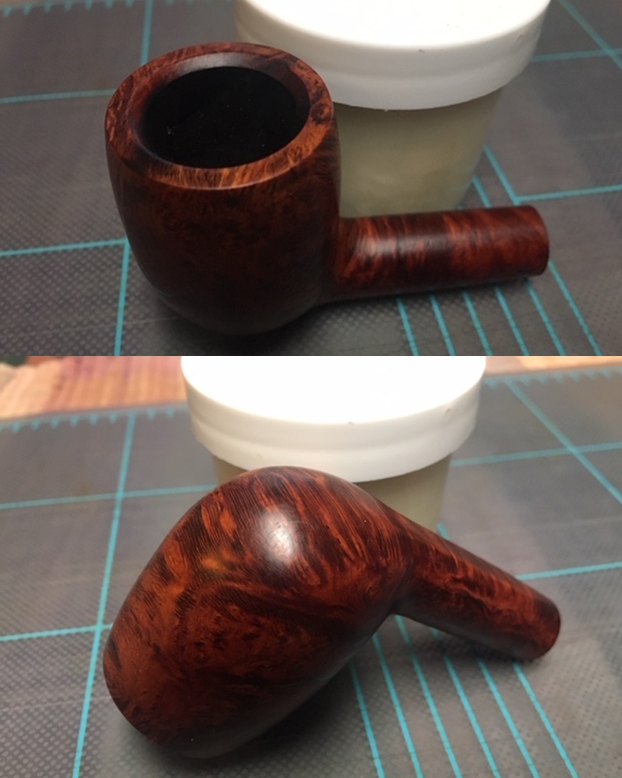
I reamed the bowl with a PipNet pipe reamer using the 2nd and 3rd cutting head to remove the remaining cake back to briar. I followed up with a Savinelli Fitsall pipe knife to remove the remnants of cake. I sanded the walls of the bowl with a piece of 220 grit sandpaper wrapped around a piece of dowel. I scrubbed out the mortise and the airway in the shank and the stem with alcohol, cotton swabs and pipe cleaners. I scrubbed the exterior of the bowl, rim, shank and stem with a tooth brush and Murphy’s Oil Soap to remove the oils and tars on the rim and the grime on the finish of the bowl. I rinsed it under running water and dried it off with a soft cloth.    I was able to remove some of the lava build up on the rim top and finished by scraping it with the Fitsall knife and then a piece of 220 grit sandpaper. There were some deep cuts on the bottom right side of the bowl and on the top right side near the edge. I filled these in with a spot of clear super glue.   I polished the bowl and the rim top, sides and shank with micromesh sanding pads – wet sanding with 1500-12000 grit pads and wiping it down after each pad with a damp cloth. I carefully avoided the stamping on the shank so as not to damage the stamping.   I rubbed the bowl and shank down with Before & After Restoration Balm. I worked it into the surface of the bowl sides and shank with my fingertips to clean, enliven and protect the briar. I let the balm sit for a little while and then buffed with a cotton cloth to raise the shine.    I set the bowl aside and turned my attention to the stem. I heated the stinger with a Bic lighter and unscrewed it with a pair of pliers.I set aside the bowl and turned my attention to the stem repairs. I cut a piece of cardboard for a pallet, put aside two charcoal capsules, and set out the spatula and the Loctite 380 black CA glue. I greased a pipe cleaner with Vaseline and inserted it in the stem. I filled in the hole in the stem with a mixture of charcoal powder and Loctite. I used the spatula to fill in the bite throughs on all of the stems. I sprayed the repair with an accelerator to set the glue and removed the pipe cleaners from the stems.  I filled in the deep tooth marks on the top side of the stem with black super glue and set the stems aside to let the repairs cure. I took a photo of the three pipes at this point to give a feel for where things stood.   I smoothed out the repairs with a needle file and started blending them into the surface of the stem. I sanded the remaining repairs with 220 grit sandpaper to further blend it into the stem surface. I started polishing it with 400 grit wet dry sandpaper. I polished the vulcanite stem with micromesh sanding pads – 1500-12000 grit pads. I wiped it down with a damp cloth after each sanding pad. I took photos of both sides of the stem to show the repair work on both sides.     This 50s era Comoy’s Grand Slam Pipe 64 Billiard with a vulcanite taper stem is a great looking pipe now that it has been restored. I did a lot of work on the bowl and repaired the bite through on the stem. The rich browns and blacks of the contrasting stains came alive with the polishing and waxing. I put the stem back on the bowl and carefully buffed the pipe with Blue Diamond on the buffing wheel using a light touch on the briar. I gave the bowl and the stem multiple coats of carnauba wax on the buffing wheel and followed that by buffing the entire pipe with a clean buffing pad. I hand buffed the pipe with a microfiber cloth to deepen the shine. The finished Comoy’s Medium Billiard is a beauty and fits nicely in the hand and looks very good. Give the finished pipe a look in the photos below. The dimensions of the pipe are Length: 5 ½ inches, Height: 1 ¾ inches, Outside diameter of the bowl: 1 ¼ inches, Chamber diameter: ¾ of an inch. I am looking forward to what Stanley thinks of his repaired pipe. He had said the threesome were his favourite pipes. This is the first of  the three. Thanks for reading this blog and my reflections on the pipe while I worked on it. There are many more to come!

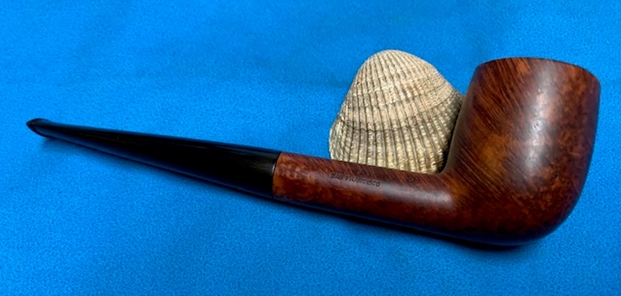
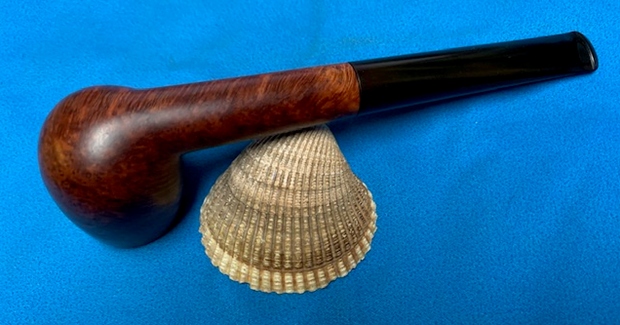
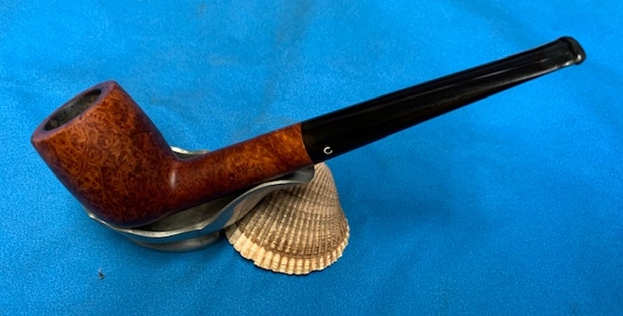
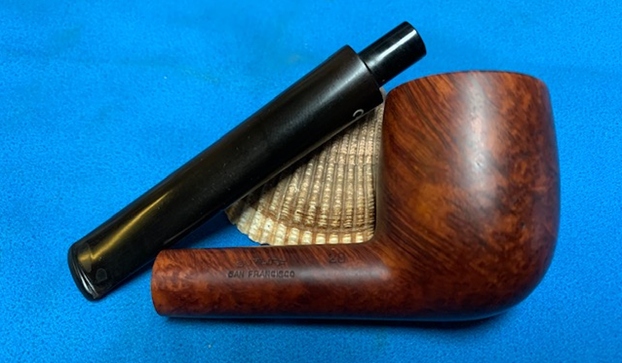
A Piece of  Pipe Smoking History – a Comoy’s Virgin Briar 28 Billiard Stamped Sutliff San Francisco


Blog by Steve Laug

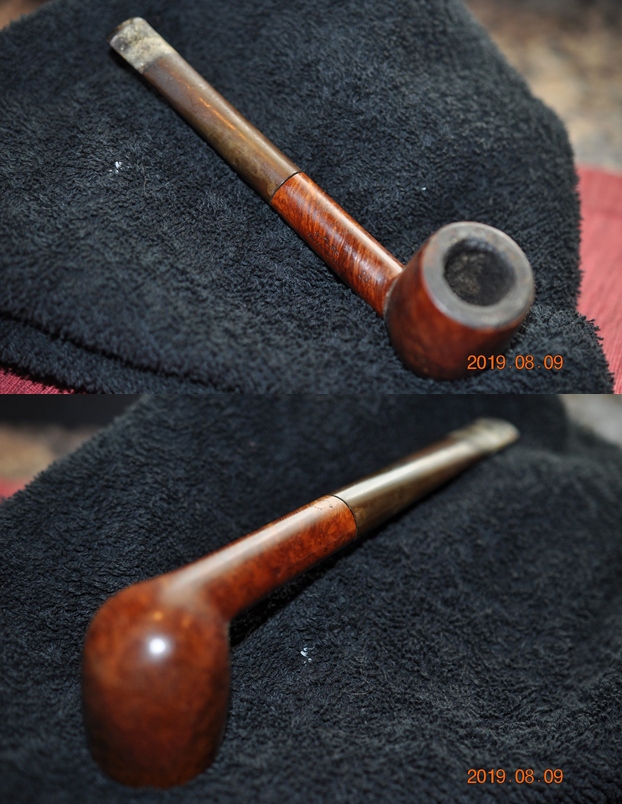
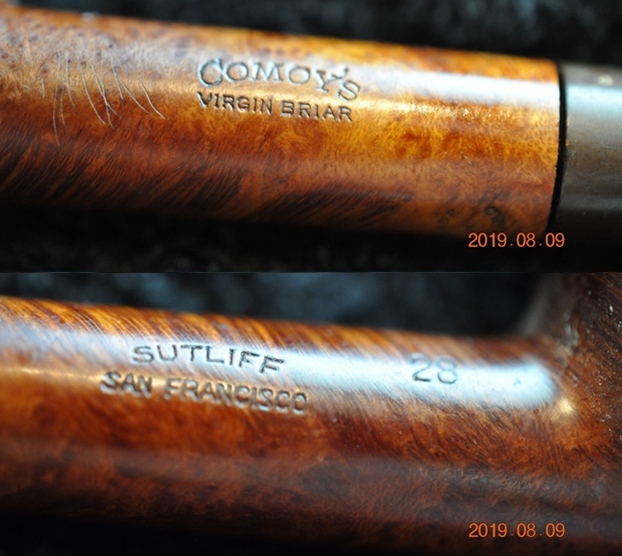
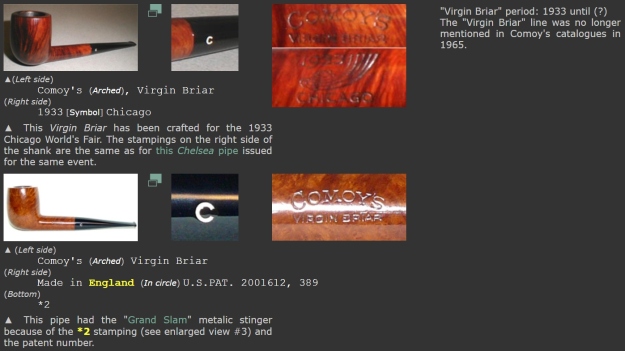
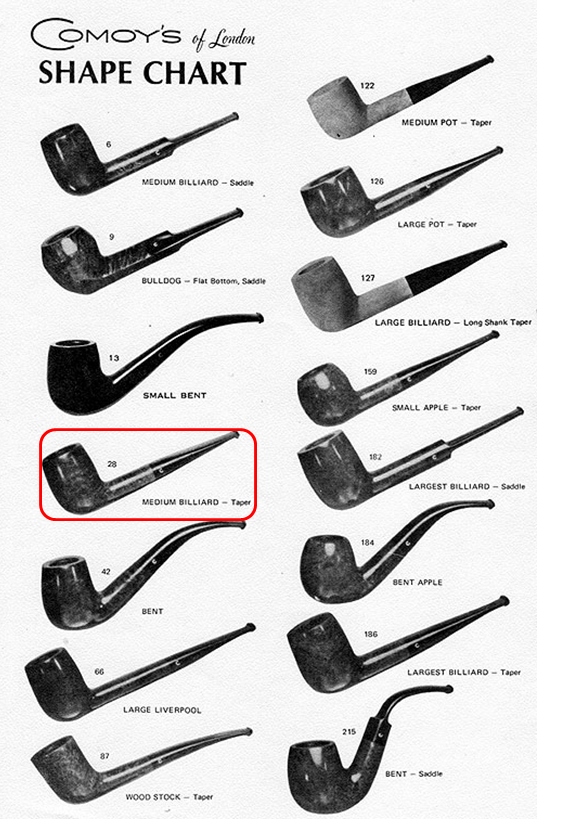
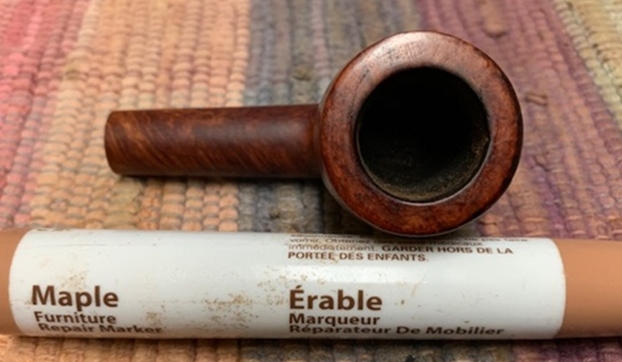
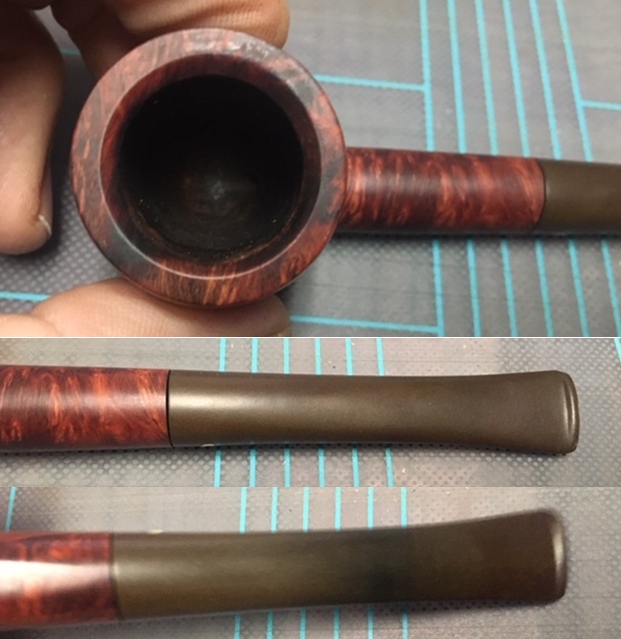
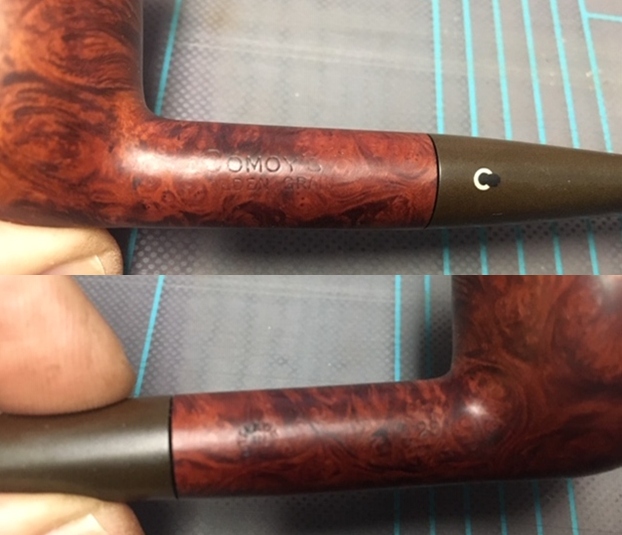
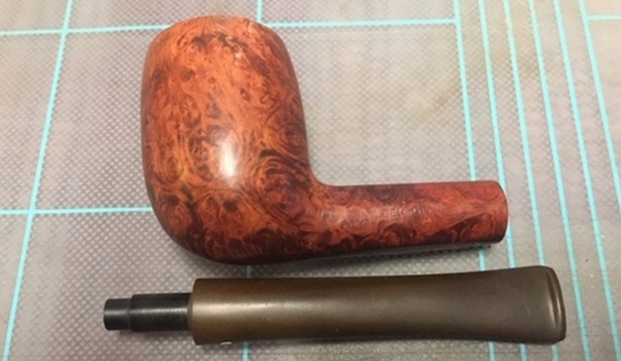
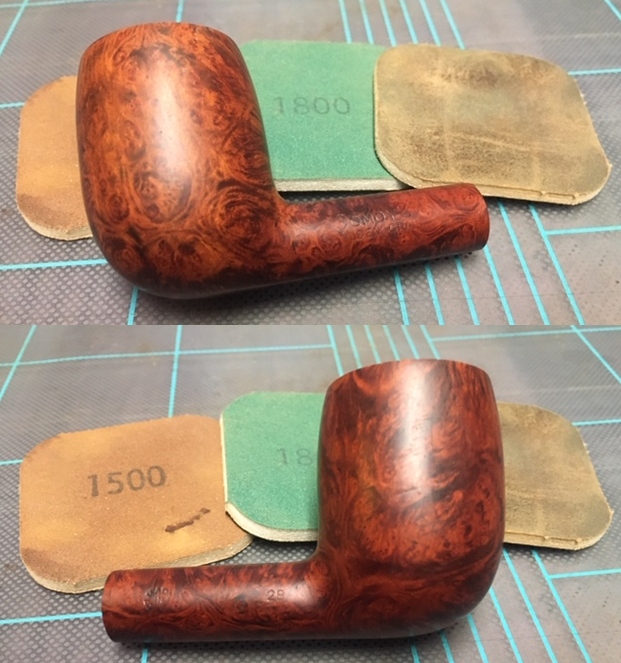
The next pipe on the work table came to me from one of our estate purchases. It is a beautifully grained Comoy’s Billiard that really is a pipe of Pipe Smoking History. The stamping is the significant marker that points this out for me. It is stamped on the left side of the shank and reads COMOY’S arched [over] Virgin Briar. On the right side it has the shape number 28 next to the bowl/shank junction and that is followed by Sutliff [over] San Francisco. On the underside next to the stem/shank junction it is stamped with the football shaped Comoy’s COM stamp that reads Made in England. The finish had a lot of grime ground into the smooth finish on the bowl and some darkening around the sides of the bowl. The bowl was heavily caked and had an overflow of thick lava on the top of the rim. It was hard to know what the rim top and inner edge of the bowl looked like under the grime. The stem was calcified, oxidized and had tooth chatter and large deep tooth marks on the top and underside but the surface of the button was surprisingly free of damage. There was a three part inlaid C on the left of the taper stem. The pipe had promise but it was very dirty. Jeff took photos of the pipe before he started his cleanup work. He took photos of the rim top and bowl to give a clear picture of the thickness of the cake and the overflow of lava on the rim top. It is hard to know if there is damage to the inner edge of the bowl because of the lava coat. He also took photos of the top and underside of the stem to show the oxidation, calcification, chatter and deep tooth marks. Jeff took photos of the sides and heel of the bowl to give a picture of what the briar around the pipe looked like. There is some stunning grain under the grime. You can also see some of the damage around the outer rim edge.   He took photos of the stamping on both sides and underside of the shank. They read as noted above. He also included a photo of the stamping on the left side of the taper stem.   I looked on Pipephil’s site for information on the Comoy’s Virgin Briar and found the following information I have included a screen capture below (http://www.pipephil.eu/logos/en/logo-comoy.html). It is interesting that the Virgin Briar originally came out in 1933 and by 1965 was no longer listed in the Comoy’s catalogues. The example on Pipephil was crafted fro the 1933 Chicago World’s Fair in 1933. I also went to the the Comoy’s article on Pipedia and found nothing in the great historical article that was pertinent. I did find a shape chart that listed the 25 as a medium billiard. I have included a screen capture of the page that included that shape number. I have outlined it in red in the photo included below(https://pipedia.org/images/d/d7/Shape_Chart_1975_1.jpg). I turned to the article on Pipedia about dating Comoy’s pipes but the style of the stamping (https://pipedia.org/index.php?title=Comoy%27s_Dating_Guide#1917_to_the_end_of_the_1930.27s_.28at_least_1938.29). I have include the section in the screen capture below that date this pipe to the 1930s.

1917 to the end of the 1930’s (at least 1938)

The slightly fancy “COMOY’S” can be found stamped in a curve, in upper case script with serifs, apostrophe before the “S,” and the “C” larger than the other letters. The arched “COMOY’S” with serifs and apostrophe may have been continued for a short time after the WW I. Pipes can also be found with the name stamped across the top of the stem as apposed to along the side.

During the 1940s

Not many pipes were made. It seems that the “COMOY’S” was stamped as described above, with the grade of the pipe (quality) stamped in block letters below. Just after WW II, in 1945 or slightly later, the “COMOY’S” stamp was changed from the fancier curve to a straight line, sans serif, block lettered “COMOYS”, with no apostrophe, see No 3 below in “From the 1950s”.

That article gave me some helpful information. I knew that the pipe line originally came out in 1933 at the time of the Chicago World’s Fair. From the information I also knew that the stamping on the pipe I am working on also came from the 1930s – 1945 when the arched Comoy’s stamp was changed. The 28 shape number was tied to a Medium Billiard with a taper stem. I still needed to check for information on the Sutliff San Francisco stamp on the right side of the shank.

I found an article online about the Sutliff Tobacco Company in San Francisco that gave a bit of the history of the company (https://tobaccobusiness.com/sutliff-tobacco-company-editorial/). I have included a pertinent section of the article below.

When H.W. Sutliff established Sutliff Tobacco Company in San Francisco in 1849, California had yet to become a state. Sutliff established his company as a tobacco retailer, and, like so many tobacco retailers of his day, he created his own pipe tobacco blends for his clientele. As the city grew, so did Sutliff Tobacco Company, and, by the time of San Francisco’s great earthquake of 1906, the company had a well-established reputation for providing good-quality pipe tobaccos and other tobacciana. Remaining within the Sutliff family, Sutliff Tobacco Company’s pipe tobaccos also grew in popularity within the region, and by the 1930s, the company enjoyed national sales for its Mixture 79, a non-aromatic cube-cut burley-based blend, which it introduced in 1933.

It is interesting to note that by the 1930s the company had international sales for its Mixture 79 tobacco which was introduced in 1933. This links in nicely with the time period of the pipe. I wonder if the 1933 World’s Fair in Chicago pushed them to have Comoy’s make a pipe for them with their name on it to go along with the tobaccos they shipped around the US.

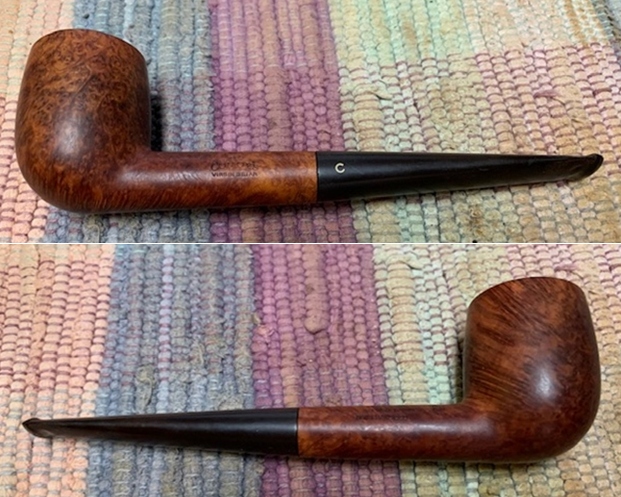
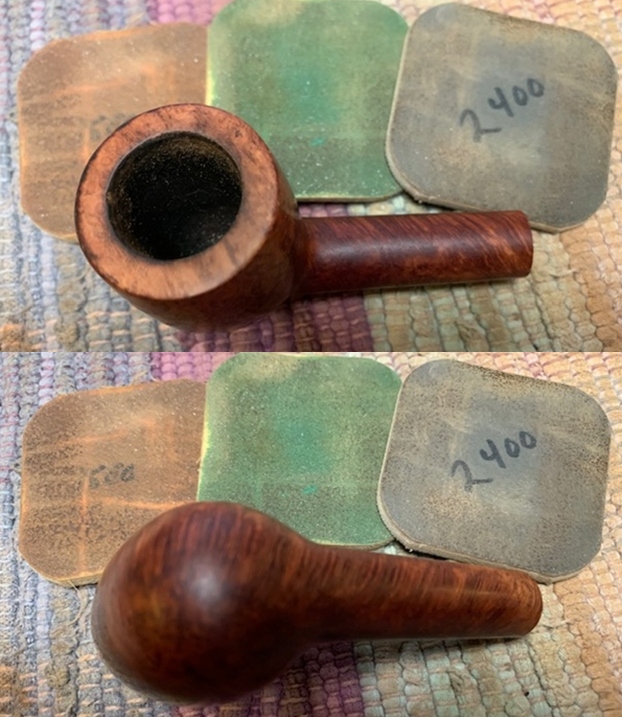
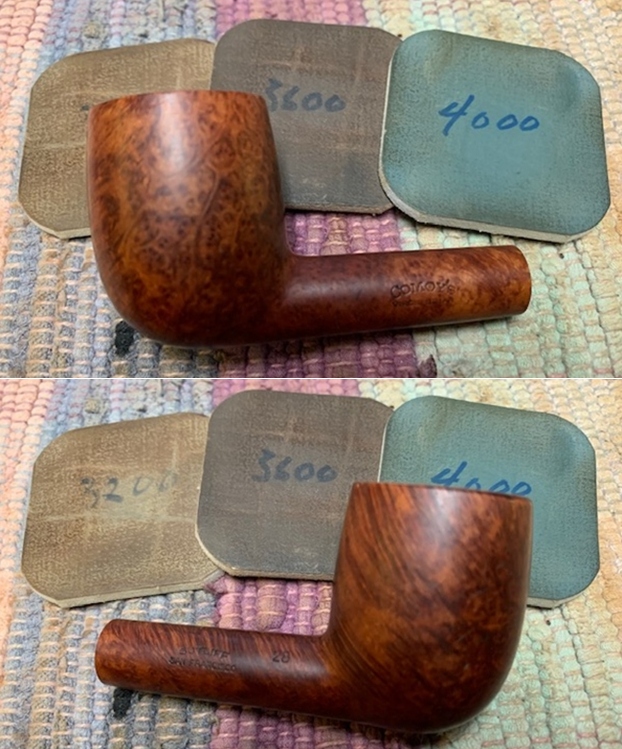
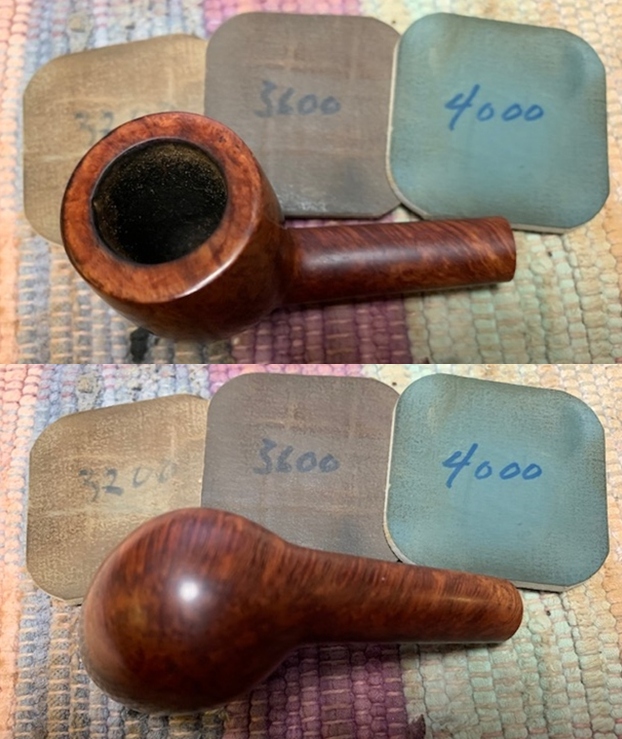
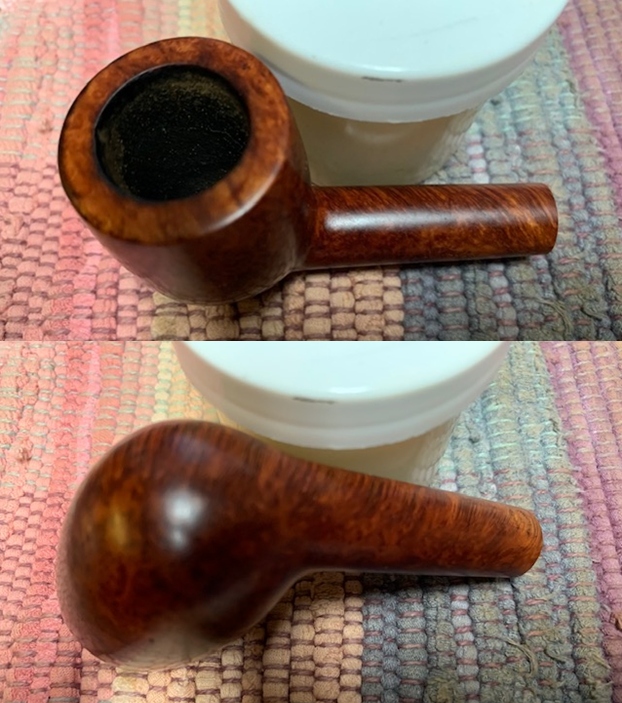
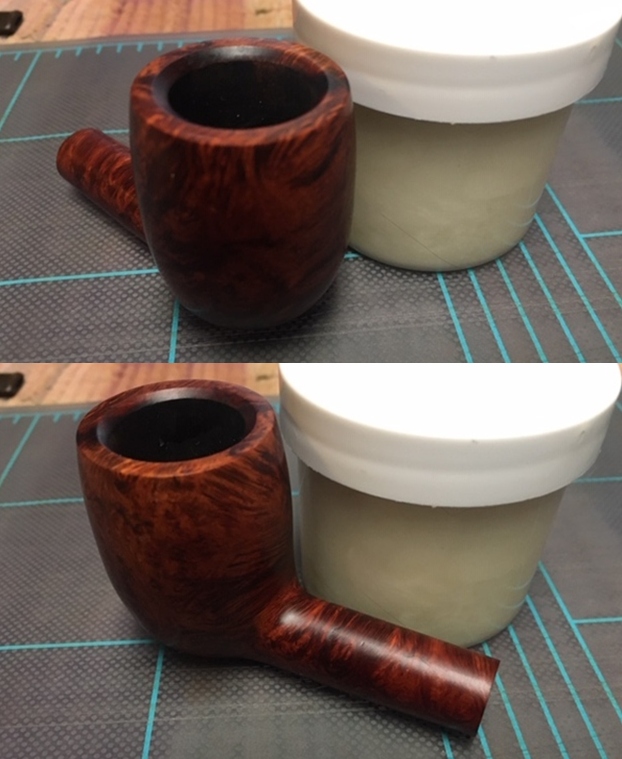
Since Jeff follows the same pattern of work in his cleanup we do not include photos but rather just a simple summary. Jeff reamed the bowl with a PipNet pipe reamer and followed up with a Savinelli Fitsall pipe knife to remove the cake. He scrubbed out the mortise and the airway in the shank and the stem with alcohol, cotton swabs and pipe cleaners. He scrubbed the exterior of the bowl, rim, shank and stem with a tooth brush and Murphy’s Oil Soap to remove the oils and tars on the rim and the grime on the finish of the bowl. He rinsed it under running water. He dried it off with a soft cloth. He was able to remove the lava build up on the rim top and you could see the damages to the top and edges of the rim. I think this pipe may well been before we worked with Mark Hoover’s Before & After Deoxidizer so he cleaned the internals and externals. The stem was clean but lightly oxidized. I took photos of what the pipe looked like when I brought to my worktable. The rim top cleaned up really well with the lava coat removed. The inner edge of the rim showed some damage and burning on the front and back edges. There was also some damage on the rim top at the front. The stem surface looked very good with some light oxidation remaining and some deep tooth marks on both sides ahead of the button.   I took photos of the stamping on the shank sides and underside. It reads as noted above.    I removed the stem and took a photo of the pipe to give a sense of the whole. It is a well shaped billiard. Once the stem was off I noted that the airway in the tenon was quite large. Given the information that some of the Virgin Briar had a Comoy’s Grand Slam metallic stinger I checked for threading and sure enough the tenon was threaded. I tried several Grand Slam stingers that I have here and all were too long and too big to fit in the shank. But at least I knew that it had one in the past.Now it was time to do my work on the pipe. I started by dealing with the rim top and edge damage. I topped the bowl on a topping board with 220 grit sandpaper to remove the rim top damage. I reworked the rim edges smoothing out the damaged areas. The rim top looks much better. I polished the bowl and the rim top, sides and shank with micromesh sanding pads – wet sanding with 1500-12000 grit pads and wiping it down after each pad with a damp cloth. I carefully avoided the stamping on the top and underside of the shank so as not to damage the already faint stamping. Between the 2400 and the 3200 grit pad I stained the top of the rim with a Maple Stain Pent to match the colour of the bowl. I polished it with the rest of the pads and the blend was good.   I rubbed the bowl and shank down with Before & After Restoration Balm. I worked it into the surface of the bowl sides and shank with my fingertips to clean, enliven and protect the briar. I let the balm sit for a little while and then buffed with a cotton cloth to raise the shine. I set the bowl aside and turned my attention to the stem. I “painted” the stem surface to raise the tooth marks and the small ones lifted some. You can see what they looked like in the photos below. I filled in the dents and built up the edge of the button on both sides with black Loctite 380 CA. I set the stem aside to let the repairs cure.     Once the repairs cured I recut the button edge and flattened out the repaired areas with a needle file to begin to blend them into the surface. I sanded the stem with 220 grit sandpaper to further blend them in and followed that by starting the polishing with 400 grit wet dry sandpaper.     I polished the vulcanite stem with micromesh sanding pads – 1500-12000 grit pads. I wiped it down with a damp cloth after each sanding pad. I used Before & After Pipe Polish – both Fine and Extra Fine to further polish the stem.     This gorgeous Comoy’s Virgin Briar 28 Billiard with the Sutliff San Francisco stamp and a vulcanite taper stem is a great looking pipe now that it has been restored. The rich browns and blacks of the contrasting stains came alive with the polishing and waxing. I put the stem back on the bowl and carefully buffed the pipe with Blue Diamond on the buffing wheel using a light touch on the briar. I gave the bowl and the stem multiple coats of carnauba wax on the buffing wheel and followed that by buffing the entire pipe with a clean buffing pad. I hand buffed the pipe with a microfiber cloth to deepen the shine. The finished Comoy’s Medium Billiard is a beauty and fits nicely in the hand and looks very good. Give the finished pipe a look in the photos below. The dimensions of the pipe are Length: 6 inches, Height: 1 ¾ inches, Outside diameter of the bowl: 1 ¼ inches, Chamber diameter: ¾ of an inch. If you are interested in adding this pipe to your collection send me a message or an email. Thanks for reading this blog and my reflections on the pipe while I worked on it. There are many more to come!


Restoring a Comoy’s Golden Grain 28 Billiard from Bob Kerr’s Estate


Blog by Steve Laug

The next pipe I have chosen from Bob Kerr’s Estate is a Comoy’s Golden Grain Billiard with a the three part C on the stem. This is the last of Bob’s Comoy’s pipes that I am working on. (Bob’s photo is to the left). If you have not “met” the man and would like to read a bit of the history of the pipeman, his daughter has written a great tribute that is worth a read. Because I have included it in most of the restorations of the estate to date I thought that I would leave it out this time. Check out some of the recent Dunhill restoration blogs (https://rebornpipes.com/2020/01/01/restoring-the-last-of-bob-kerrs-dunhills-a-1962-dunhill-bruyere-656-f-t-bent-billiard/).

This Billiard is stamped Comoy’s [over] Golden Grain on the left side of the shank. On the right side it is stamped with the number 28 at the shank/bowl junction and the COM stamp circle is worn but readable near the stem shank junction. The tapered vulcanite stem is oxidized, calcified and has light tooth marks and chatter on both sides near the button. There is a three part C on the left side of the stem. The exterior of the bowl is grimy and dirty. There is a thick cake and lava overflow on the rim top. It is thick enough that it is hard to know if there is any damage on top and edges. Jeff took photos of the pipe to show its general condition before he did his cleanup. The exterior of the pipe was very dirty – grime and grit ground in from years of use and sitting. The rim top was covered with a coat of thick lava that overflowed the bowl. There was also some darkening on the rim top and inner edge of the bowl. The bowl itself had a thick cake with flecks of tobacco stuck in the cake on the sides. Jeff took photos of the sides and the heel of the bowl to give a better feel for the condition of the bowl. It is dirty but the grain is very nice around sides. The next photos show the stamping on the sides of the shank. The left side is faint but readable and the right side is even fainter and did not get captured with the photo. With a bright light they both read as noted above.The stem was dirty and extremely oxidized, calcified and had tooth marks on both sides ahead of the button. It was not nearly as chewed the other pipes in Bob’s estate.With over 125 pipes to clean from Bob’s estate I took a batch of them to the states with me when I visited and left them with Jeff so he could help me out. Jeff cleaned the pipes with his usual penchant for thoroughness that I really appreciate. Once he finished he shipped them back to me. This one was a real mess and I did not know what to expect when I unwrapped it from his box. He reamed it with a PipNet pipe reamer and cleaned up the reaming with a Savinelli Fitsall Pipe Knife. He scrubbed out the internals with alcohol, pipe cleaners and cotton swabs until the pipe was clean. He scrubbed the exterior of the bowl with Murphy’s Oil Soap and a tooth brush to remove the grime and grit on the briar and the lava on the rim top. The finish looks very good with good looking grain around the bowl and shank. Jeff scrubbed it with Soft Scrub and soaked it in Before & After Deoxidizer to remove the oxidation on the rubber. When the pipe arrived here in Vancouver for the second stop of its restoration tour it looked a lot better. I took photos before I started my part of the work. I took some close up photos of the rim top and also of the stem surface. I wanted to show what cleaned bowl and rim top looked like. The rim top shows some darkening but the inner edge of the bowl looks very good. The bevel is in excellent condition. I also took close up photos of the stem to show the light tooth marks and the remaining oxidation on the stem surface. You can also see the marks on the surface of the stem.I took photos of the stamping on both sides of the shank and it is faint but readable. It is stamped as noted above. I removed the stem for the shank and took a photo of the bowl and stem to give a picture of what it looked like. You can see the dents in the stem surface.Now, on to my part of the restoration of this Comoy’s Golden Grain 28 Billiard pipe. Since the pipe was in such good condition I decided to start by polishing the bowl and rim top with micromesh sanding pads – wet sanding with 1500-12000 grit pads and wiping the briar down with a damp cloth after each sanding pad. I rubbed the bowl down with Before & After Restoration Balm. I worked it into the surface of the bowl sides and shank with my fingertips to clean, enliven and protect it. I let the balm sit for a little while and then buffed with a cotton cloth and shoe brush to raise the shine. I set the bowl aside and turned my attention to the stem. I scrubbed off the oxidation on the stem surface with Soft Scrub and cotton pads. I rubbed it down until the oxidation was gone. It was definitely looking better. I polished the vulcanite with micromesh sanding pads – 1500-12000 grit pads. I wiped it down with a damp cloth after each sanding pad. I used Before & After Pipe Polish – both Fine and Extra Fine to further polish the stem. This Comoy’s Golden Grain28 Billiard from Bob Kerr’s estate has some beautiful grain. It turned out to be another great looking pipe. The finish on the pipe is in great condition and works well with the polished vulcanite taper stem. I put the stem back on the bowl and carefully buffed the pipe with Blue Diamond on the buffing wheel using a light touch on the briar. I gave the bowl and stem multiple coats of carnauba wax on the buffing wheel and followed that by buffing the entire pipe with a clean buffing pad. I hand buffed the pipe with a microfiber cloth to deepen the shine. The finished Comoy’s Golden Grain Billiard fits nicely in the hand and feels great. Give the finished pipe a look in the photos below. The dimensions of the pipe are Length: 5 ¾ inches, Height: 1 ¾ inches, Outside diameter of the bowl: 1 ¼ inches, Chamber diameter: ¾ of an inch. If you are interested in carrying on Bob’s legacy with this pipe send me a message or an email. I have more to work on of various brands. Perhaps one of those will catch your attention. Thanks for reading this blog and my reflections on the pipe while I worked on it. This is an interesting estate to bring back to life.

Restoring a Comoy’s Tradition 92 Billiard from Bob Kerr’s Estate


Blog by Steve Laug

The next pipe I have chosen from Bob Kerr’s Estate is a Comoy’s Tradition Billiard with a replacement stem. Bob had several Comoy’s Tradition pipes and this is the second of them I am working on. (Bob’s photo is to the left). If you have not “met” the man and would like to read a bit of the history of the pipeman, his daughter has written a great tribute that is worth a read. Because I have included it in most of the restorations of the estate to date I thought that I would leave it out this time. Check out some of the recent Dunhill restoration blogs (https://rebornpipes.com/2020/01/01/restoring-the-last-of-bob-kerrs-dunhills-a-1962-dunhill-bruyere-656-f-t-bent-billiard/).

This Billiard is stamped Comoy’s [over] Tradition on the left side of the shank. On the right side it is stamped with the number 92 at the shank/bowl junction and the other stamping is worn out. The tapered vulcanite stem is a replacement. The stem is oxidized, calcified and has light tooth marks and chatter on both sides near the button. The exterior of the bowl is grimy and dirty. There are burn marks on the top of the shank and on the heel of the bowl. There is a thick cake and lava overflow on the rim top. It is thick enough that it is hard to know if there is any damage on top and edges. Jeff took photos of the pipe to show its general condition before he did his cleanup. The exterior of the pipe was very dirty – grime and grit ground in from years of use and sitting. The rim top was covered with a coat of thick lava that overflowed the bowl. There was also some darkening on the rim top and inner edge of the bowl as well as a burn mark on the top front of the bowl. The bowl itself had a thick cake with flecks of tobacco stuck in the cake on the sides. Jeff took photos of the sides and the heel of the bowl to give a better feel for the condition of the bowl. It is dirty but the grain is very nice around sides. The next photos show the stamping on the sides of the shank. The left side is faint but readable and the right side is even fainter and did not get captured with the photo. With a bright light they both read as noted above.The replacement stem was dirty and extremely oxidized, calcified and had tooth marks on both sides ahead of the button. It was not nearly as chewed the other pipes in Bob’s estate.With over 125 pipes to clean from Bob’s estate I took a batch of them to the states with me when I visited and left them with Jeff so he could help me out. Jeff cleaned the pipes with his usual penchant for thoroughness that I really appreciate. Once he finished he shipped them back to me. This one was a real mess and I did not know what to expect when I unwrapped it from his box. He reamed it with a PipNet pipe reamer and cleaned up the reaming with a Savinelli Fitsall Pipe Knife. He scrubbed out the internals with alcohol, pipe cleaners and cotton swabs until the pipe was clean. He scrubbed the exterior of the bowl with Murphy’s Oil Soap and a tooth brush to remove the grime and grit on the briar and the lava on the rim top. The finish looks very good with good looking grain around the bowl and shank. Jeff scrubbed it with Soft Scrub and soaked it in Before & After Deoxidizer to remove the oxidation on the rubber. When the pipe arrived here in Vancouver for the second stop of its restoration tour it looked a lot better. I took photos before I started my part of the work. I took some close up photos of the rim top and also of the stem surface. I wanted to show what cleaned bowl and rim top looked like. The rim top shows damage and charring on the inner edge of the bowl. I also took close up photos of the stem to show the light tooth marks and the remaining oxidation on the stem surface. You can also see the marks on the surface of the stem.I took photos of the stamping on both sides of the shank and it is faint but readable. It is stamped as noted above.  I removed the stem for the shank and took a photo of the bowl and stem to give a picture of what it looked like. You can see the dents in the stem surface.Now, on to my part of the restoration of this Comoy’s Tradition 92 Billiard pipe. I decided to start by dealing with the damage to the rim top and the inner edge of the bowl. I carefully topped the bowl on a board with 220 grit sandpaper to start removing the damage to the bowl. I used a folded piece of 220 grit sandpaper to clean up the damage to the bevel of the inner edge of the rim. I polished the bowl and rim top with micromesh sanding pads – wet sanding with 1500-12000 grit pads and wiping the briar down with a damp cloth after each sanding pad. I rubbed the bowl down with Before & After Restoration Balm. I worked it into the surface of the bowl sides and shank with my fingertips to clean, enliven and protect it. I let the balm sit for a little while and then buffed with a cotton cloth and shoe brush to raise the shine. I set the bowl aside and turned my attention to the stem. Whoever had made this replacement stem had done a pretty horrible job on the tenon. It is pinched around the stem end and the end of the tenon is crooked as well. It was really a mess. I filled in the pinched tenon with black super glue. I sanded the repair and repeated the process until it was smooth and even.I filled in the deep tooth mark on the top of the stem ahead of the button and built up the button surface on the underside with super glue.I sanded out the remaining tooth marks and scratches on the stem surface with 220 grit sandpaper and started polishing them with 400 grit wet dry sandpaper. I polished the vulcanite with micromesh sanding pads – 1500-12000 grit pads. I wiped it down with a damp cloth after each sanding pad. I used Before & After Pipe Polish – both Fine and Extra Fine to further polish the stem. This Comoy’s Tradition 92 Billiard from Bob Kerr’s estate has some beautiful grain. Even with the burn marks it still is a beauty. It turned out to be another great looking pipe. The finish on the pipe is in great condition and works well with the polished vulcanite taper replacement stem. I put the stem back on the bowl and carefully buffed the pipe with Blue Diamond on the buffing wheel using a light touch on the briar. I gave the bowl and stem multiple coats of carnauba wax on the buffing wheel and followed that by buffing the entire pipe with a clean buffing pad. I hand buffed the pipe with a microfiber cloth to deepen the shine. The finished Comoy’s Tradition Billiard fits nicely in the hand and feels great. Give the finished pipe a look in the photos below. The dimensions of the pipe are Length: 5 ¼ inches, Height: 1 ¾ inches, Outside diameter of the bowl: 1 ¼ inches, Chamber diameter: ¾ of an inch. If you are interested in carrying on Bob’s legacy with this pipe send me a message or an email. I have more to work on of various brands. Perhaps one of those will catch your attention. Thanks for reading this blog and my reflections on the pipe while I worked on it. This is an interesting estate to bring back to life.

Restoring a Comoy’s Tradition 292 Billiard from Bob Kerr’s Estate


Blog by Steve Laug

The next pipe I have chosen from Bob Kerr’s Estate is a Comoy’s Tradition Billiard with a Comoy’s C on the stem. Bob had several Comoy’s Tradition pipes and this is the first of them I am working on. (Bob’s photo is to the left). If you have not “met” the man and would like to read a bit of the history of the pipeman, his daughter has written a great tribute that is worth a read. Because I have included it in most of the restorations of the estate to date I thought that I would leave it out this time. Check out some of the recent Dunhill restoration blogs (https://rebornpipes.com/2020/01/01/restoring-the-last-of-bob-kerrs-dunhills-a-1962-dunhill-bruyere-656-f-t-bent-billiard/).

This Billiard is stamped Comoy’s [over] Tradition on the left side of the shank. On the right side it is stamped with the number 292 at the shank/bowl junction and the circular COM stamp. The tapered vulcanite stem had a Comoy’s C on the left side. The stem is oxidized, calcified and has light tooth marks and chatter on both sides near the button. The exterior of the bowl is grimy and dirty. There are burn marks on the top of the shank and on the heel of the bowl. There is a thick cake and lava overflow on the rim top. It is thick enough that it is hard to know if there is any damage on top and edges. Jeff took photos of the pipe to show its general condition before he did his cleanup. The exterior of the pipe was very dirty – grime and grit ground in from years of use and sitting. The rim top was covered with a coat of thick lava that overflowed the bowl. There was also some darkening on the rim top and inner edge of the bowl as well as a burn mark on the top front of the bowl. The bowl itself had a thick cake with flecks of tobacco stuck in the cake on the sides.  Jeff took photos of the sides and the heel of the bowl to give a better feel for the condition of the bowl. You can see the burn mark on the right side of the heel toward the front. The next photos show the stamping on the sides of the shank. The left side is faint but readable and the right side is even fainter and did not get captured with the photo. With a bright light they both read as noted above.The stem was dirty and extremely oxidized, calcified and had tooth marks on both sides ahead of the button. It was not nearly as chewed the other pipes in Bob’s estate.With over 125 pipes to clean from Bob’s estate I took a batch of them to the states with me when I visited and left them with Jeff so he could help me out. Jeff cleaned the pipes with his usual penchant for thoroughness that I really appreciate. Once he finished he shipped them back to me. This one was a real mess and I did not know what to expect when I unwrapped it from his box. He reamed it with a PipNet pipe reamer and cleaned up the reaming with a Savinelli Fitsall Pipe Knife. He scrubbed out the internals with alcohol, pipe cleaners and cotton swabs until the pipe was clean. He scrubbed the exterior of the bowl with Murphy’s Oil Soap and a tooth brush to remove the grime and grit on the briar and the lava on the rim top. The finish looks very good with good looking grain around the bowl and shank. Jeff scrubbed it with Soft Scrub and soaked it in Before & After Deoxidizer to remove the oxidation on the rubber. When the pipe arrived here in Vancouver for the second stop of its restoration tour it looked a lot better. I took photos before I started my part of the work. I took some close up photos of the rim top and also of the stem surface. I wanted to show what cleaned bowl and rim top looked like. The rim top shows damage and charring on the inner edge of the bowl. I also took close up photos of the stem to show the light tooth marks and the remaining oxidation on the stem surface. You can also see the marks on the surface of the stem.I took photos of the stamping on both sides of the shank and it is faint but readable. It is stamped as noted above.  You can see the C on the left side of the stem.I took some photos of the burn marks on the right front heel of the bowl and the topo of the shank near the stem junction. The burn mark did not go too deep in the briar. It looks like the pipe was laid in an ashtray against a burning ash or coal. The burn on the bowl front did not go through into the bowl so it was not a burn out. The inside of the bowl was smooth and undamaged.I removed the stem for the shank and took a photo of the bowl and stem to give a picture of what it looked like. You can see scratches in the stem surface.Now, on to my part of the restoration of this Comoy’s Tradition 292 Billiard pipe. I decided to start by dealing with the damage to the rim top and the inner edge of the bowl. I carefully topped the bowl on a board with 220 grit sandpaper to start removing the damage to the bowl. I used a folded piece of 220 grit sandpaper to clean up the damage to the bevel of the inner edge of the rim.I sanded the burn marks on the bowl front and the top of the shank with 220 grit sandpaper. While I could not remove the damage in total I was able to minimize it. I polished the bowl and rim top with micromesh sanding pads – wet sanding with 1500-12000 grit pads and wiping the briar down with a damp cloth after each sanding pad. I rubbed the bowl down with Before & After Restoration Balm. I worked it into the surface of the bowl sides and shank with my fingertips to clean, enliven and protect it. I let the balm sit for a little while and then buffed with a cotton cloth and shoe brush to raise the shine. I set the bowl aside and turned my attention to the stem. I filled in the small dents with clear super glue. Once the repairs had cured I used a needle file to smooth out the fills in preparation for sanding and blending them into the surface of the stem. I sanded out the remaining tooth marks and scratches on the stem surface with 220 grit sandpaper and started polishing them with 400 grit wet dry sandpaper. I polished the vulcanite with micromesh sanding pads – 1500-12000 grit pads. I wiped it down with a damp cloth after each sanding pad. I used Before & After Pipe Polish – both Fine and Extra Fine to further polish the stem. This Comoy’s Tradition 292 Billiard from Bob Kerr’s estate has some beautiful grain. Even with the burn marks it still is a beauty. It turned out to be another great looking pipe. The finish on the pipe is in great condition and works well with the polished vulcanite taper oval stem. I put the stem back on the bowl and carefully buffed the pipe with Blue Diamond on the buffing wheel using a light touch on the briar. I gave the bowl and stem multiple coats of carnauba wax on the buffing wheel and followed that by buffing the entire pipe with a clean buffing pad. I hand buffed the pipe with a microfiber cloth to deepen the shine. The finished Comoy’s Tradition Billiard fits nicely in the hand and feels great. Give the finished pipe a look in the photos below. The dimensions of the pipe are Length: 5 ¾ inches, Height: 1 ¾ inches, Outside diameter of the bowl: 1 ¼ inches, Chamber diameter: ¾ of an inch. If you are interested in carrying on Bob’s legacy with this pipe send me a message or an email. I have more to work on of various brands. Perhaps one of those will catch your attention. Thanks for reading this blog and my reflections on the pipe while I worked on it. This is an interesting estate to bring back to life.

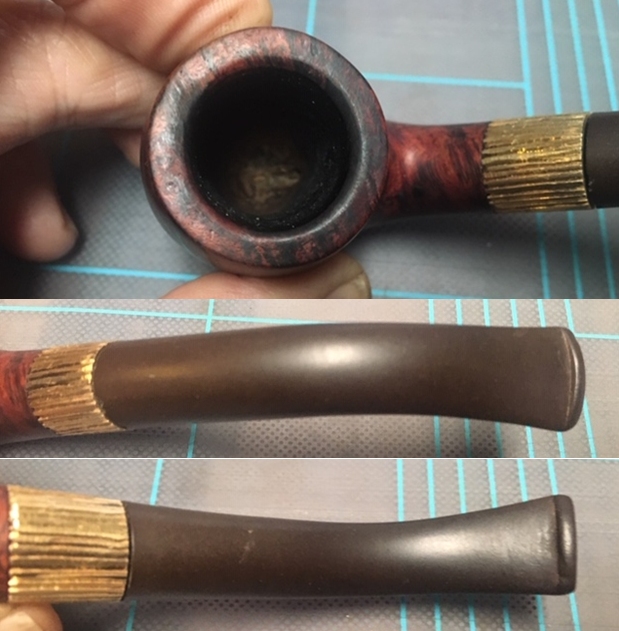
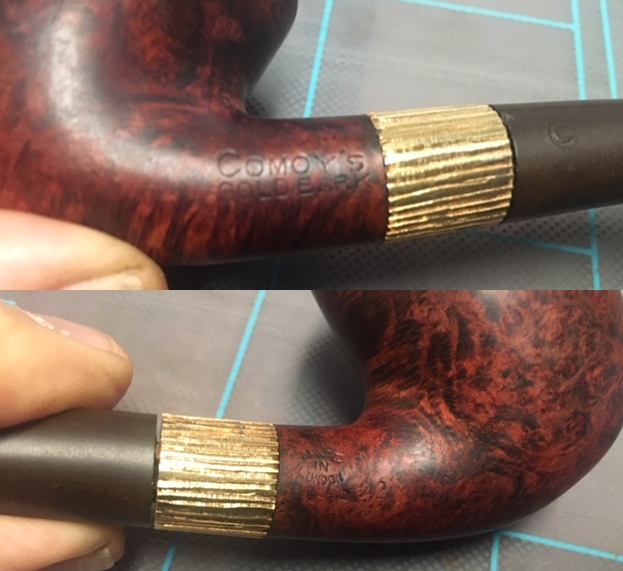
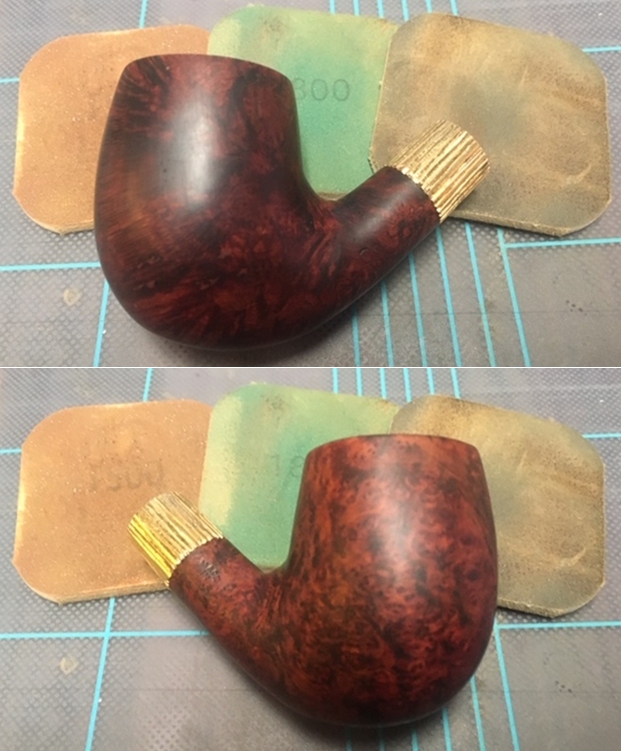
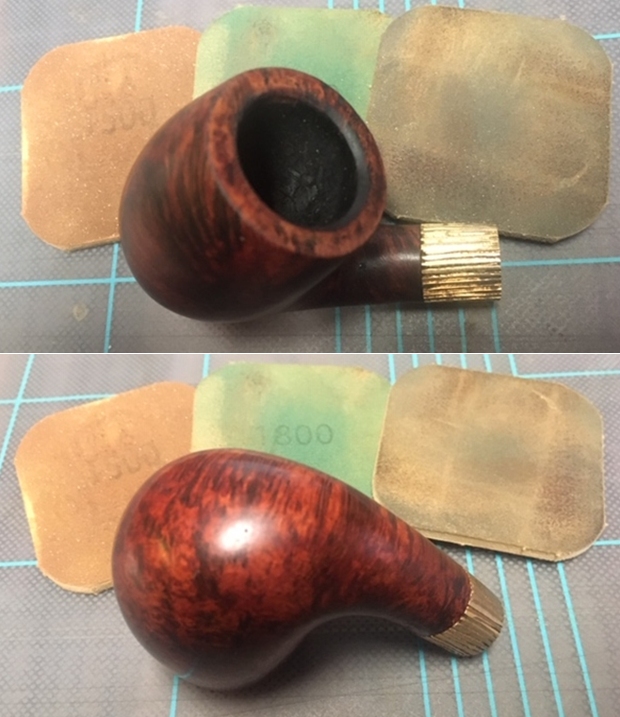
A New Life for a Comoy’s Gold Bark 42 Bent Billiard from Bob Kerr’s Estate


Blog by Steve Laug

I have only 15 more of Bob’s pipes to finish before I have completed the restoration of his estate so I am continuing to work on them. The next one from Bob Kerr’s Estate is an interesting Comoy’s Gold Bark Bent Billiard. It is a bit of a strange one for me as I have several Comoy’s Gold Bark pipes and all are sandblast with a golden stain. This one is smooth! Where is the Bark and is the band the Gold?

(Bob’s photo is to the left). If you have not “met” the man and would like to read a bit of the history of the pipeman, his daughter has written a great tribute that is worth a read. Because I have included it in most of the restorations of the estate to date I thought that I would leave it out this time. Check out some of the recent Dunhill restoration blogs that include the biographical notes about Bob. Here is a link to one of them (https://rebornpipes.com/2020/01/01/restoring-the-last-of-bob-kerrs-dunhills-a-1962-dunhill-bruyere-656-f-t-bent-billiard/).

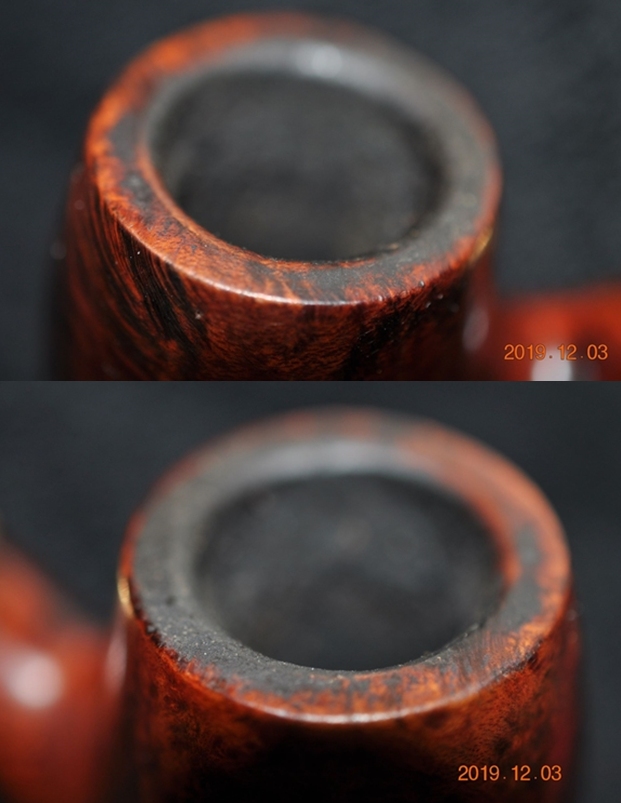
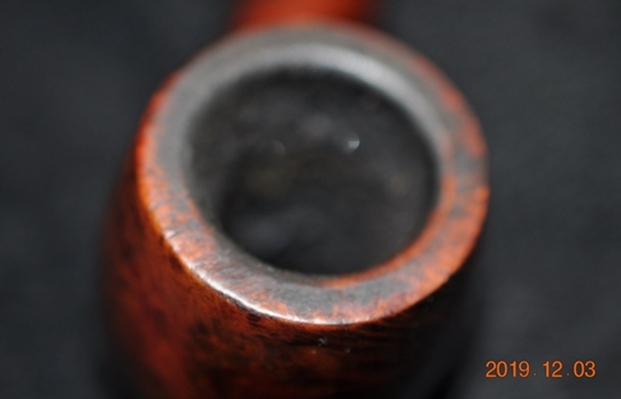
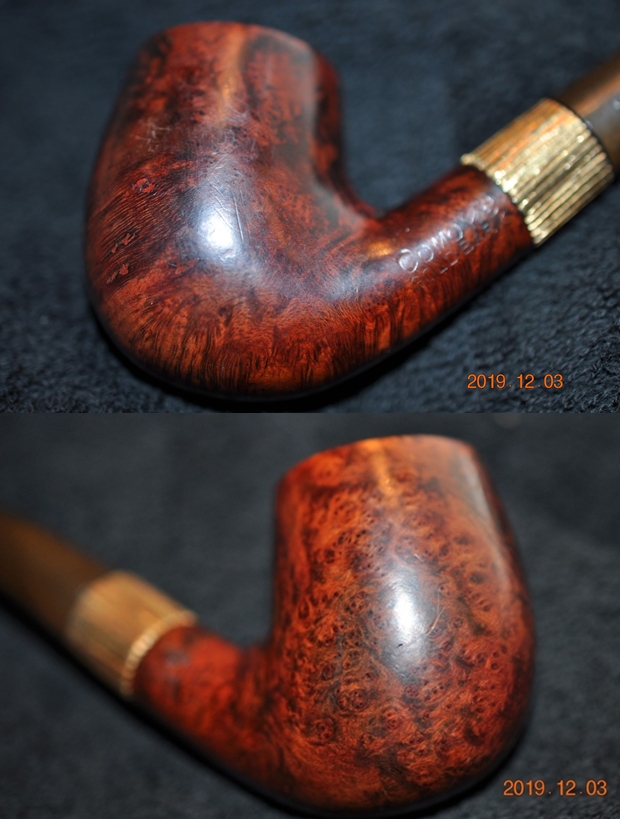
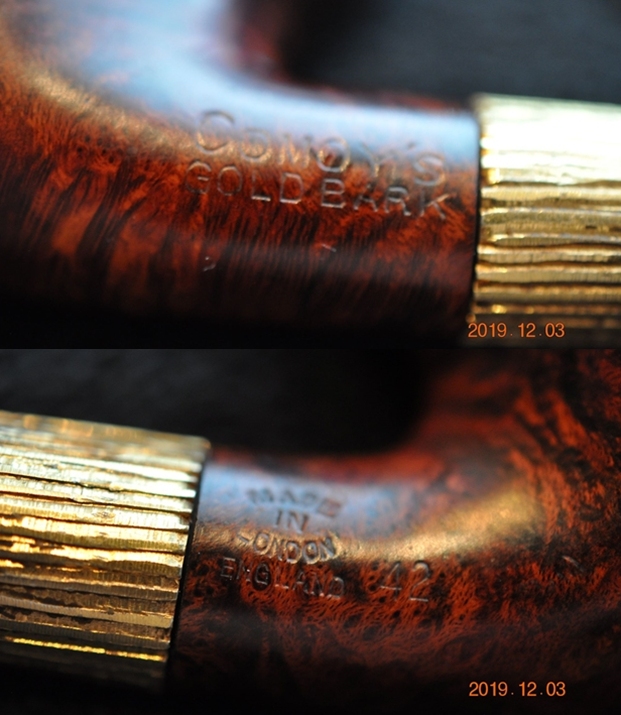
The Comoy’s Bent Billiard with a fluted gold coloured band on the shank. It is a smooth finish around the bowl and shank that has a lot of dust and debris ground into the finish of the briar. It was stamped on both sides of the shank. It is stamped Comoy’s [over] Gold Bark on the left side of the shank. On the right side it is stamped with the Made in London England circle COM stamp followed by the shape number 42. There was a thick cake in the bowl and lava overflow on the rim top. The vulcanite stem was calcified, oxidized and had tooth marks and chatter ahead of the button on both sides. Jeff took photos of the pipe to show its general condition before he did his cleanup. As I mentioned above the exterior of the pipe was very dirty – grime and grit ground in from years of use and sitting. The rim top was covered with a coat of thick lava that overflowed from the thick cake in the bowl. It was hard to know what the rim edges looked like because of the lava.         Jeff took photos of the sides and the heel of the bowl to give a better feel for the condition of the briar around the bowl. You can also see some of the few fills in the briar in the photos.    The next photo show the stamping on the underside of the shank and it is very readable. It reads as noted above. The stem was dirty, calcified and oxidized with tooth chatter and marks on the top and underside of the stem at the button.      With over 125 pipes to clean from Bob’s estate I took a batch of them to the states with me when I visited and left them with Jeff so he could help me out. Jeff cleaned the pipes with his usual penchant for thoroughness that I really appreciate. Once he finished he shipped them back to me. Bob’s pipes were generally real mess and I did not know what to expect when I unwrapped it from his box. I was surprised to see how well it turned out. He reamed it with a PipNet pipe reamer and cleaned up the reaming with a Savinelli Fitsall Pipe Knife. He scrubbed out the internals with alcohol, pipe cleaners and cotton swabs until the pipe was clean. He scrubbed the exterior of the bowl with Murphy’s Oil Soap and a tooth brush to remove the grime and grit on the briar and the lava on the rim top. The finish looks very good with good looking grain around the bowl and shank. Jeff scrubbed it with Soft Scrub and soaked it in Before & After Deoxidizer to remove the oxidation on the rubber. When the pipe arrived here in Vancouver for the second stop of its restoration tour it looked a lot better. I took photos before I started my part of the work.  I took some close up photos of the rim top and the stem surface. I wanted to show what cleaned bowl and rim top looked like. The rim top had some light damage and the inner and outer edges of the bowl were in excellent condition. I also took close up photos of the stem to show the tooth marks and the remaining oxidation on the stem surface.  I took photos of the stamping on the underside of the shank and it is clear and readable. There is also a C stamped on the left side of the saddle stem. It is stamped as noted above.  There is a small chip in the edge of the stem at the shank junction just left of centre visible in the first photo below.       I removed the stem for the shank and took a photo of the bowl and stem to give a picture of what it looked like. The heavy oxidation is very visible.I polished the bowl with micromesh sanding pads – wet sanding with 1500-12000 grit sanding pads and wiping it down after sanding pad.    I rubbed the bowl down with Before & After Restoration Balm. I worked it into the surface of the briar with my fingertips to clean, enliven and protect it. I let the balm sit for a little while and then buffed with a cotton cloth and shoe brush to raise the shine.      I set the bowl aside and turned my attention to the stem. I scrubbed the surface of the stem with Soft Scrub to remove as much of the oxidation as I could. It is amazing how well this product works on vulcanite stems.   I sanded out the remaining oxidation and the tooth dents in the top and underside of the stem with 220 sandpaper. I started polishing the stem with 400 grit wet dry sandpaper.     I touched up the stamped C on the left side of the stem with some Liquid Paper. I applied it and when it dried I scraped and sanded off the excess.   I polished the vulcanite with micromesh sanding pads – 1500-12000 grit pads. I wiped it down with a damp cloth after each sanding pad. I used Before & After Pipe Polish – both Fine and Extra Fine to further polish the stem.  I left a little oxidation around the stamp so as not to damage it more.       This Cadogan era Comoy’s Gold Bark 42 Bent Billiard from Bob Kerr’s estate cleaned up really well and looks very good. The mixed stain brown finish on the pipe is in great condition and the fluted gold ferrule works well with the polished vulcanite taper stem. I put the stem back on the bowl and carefully buffed the pipe with Blue Diamond on the buffing wheel using a light touch on the briar. I gave the bowl and stem multiple coats of carnauba wax on the buffing wheel and followed that by buffing the entire pipe with a clean buffing pad. I hand buffed the pipe with a microfiber cloth to deepen the shine. The finished Comoy’s Gold Bark Bent Billiard fits nicely in the hand and I think it will feel great as it heats up with a good tobacco. Give the finished pipe a look in the photos below. The dimensions of the pipe are Length: 5 ½ inches, Height: 2 inches, Outside diameter of the bowl: 1 ¼ inches, Chamber diameter: ¾ of an inch. If you are interested in carrying on Bob’s legacy with this pipe send me a message or an email. I have more to work on of various brands. Perhaps one of those will catch your attention. Thanks for reading this blog and my reflections on the pipe while I worked on it. This is an interesting estate to bring back to life.

Renewing another pipe from Bob Kerr’s Estate – a Comoy’s Sandblast Apple 334


Blog by Steve Laug

I am changing up my work and turning back to Bob Kerr’s estate for a while. I am getting closer to finishing restoring this large estate with only about 35 more pipes to do. This is one of his Comoy’s pipes that I am working on. I am cleaning them for the family and moving them out into the hands of pipemen and women who will carry on the trust that began with Bob and in some pipes was carried on by Bob. In the collection there were 19 Peterson’s pipes along with a bevy of Dunhills, some Comoy’s and Barlings as well as a lot of other pipes – a total of 125 pipes along with a box of parts. This is the largest estate that I have had the opportunity to work on. I put together a spread sheet of the pipes and stampings to create an invoice. I was taking on what would take me a fair amount of time to clean up. I could not pass up the opportunity to work on these pipes though. They were just too tempting. This Comoy’s Sandblast is a great pipe to work on. It is a shape that is interesting and unique. It will go on the rebornpipes store.

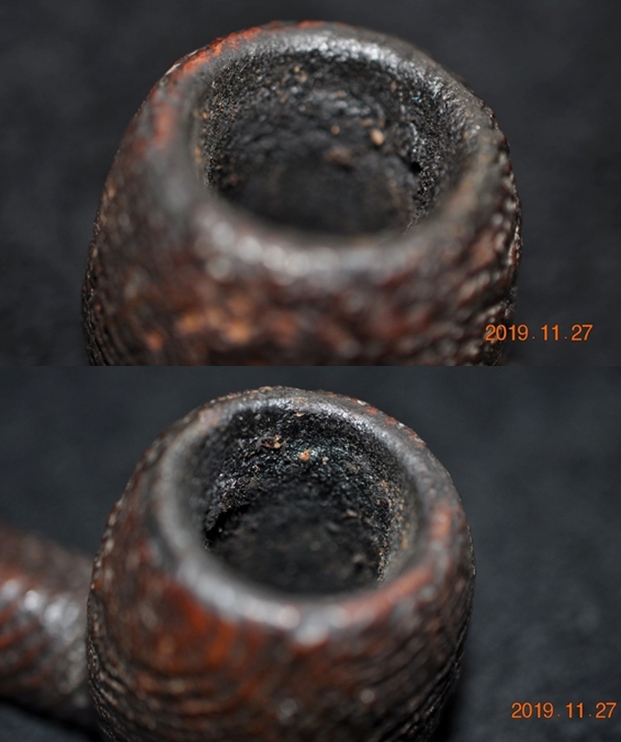
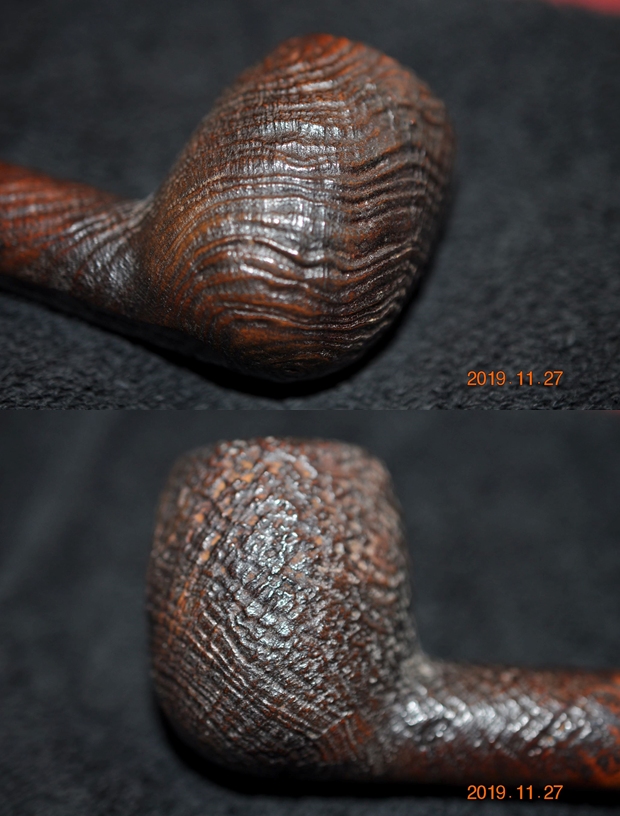
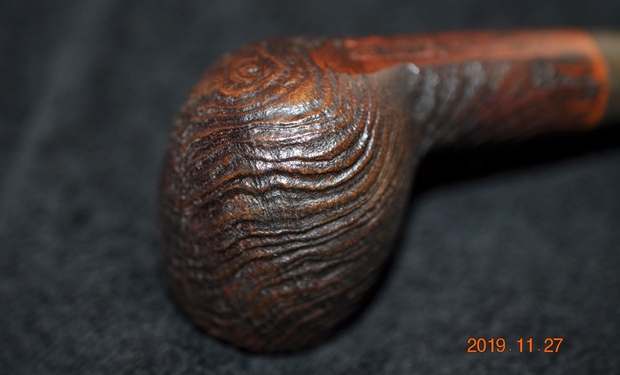
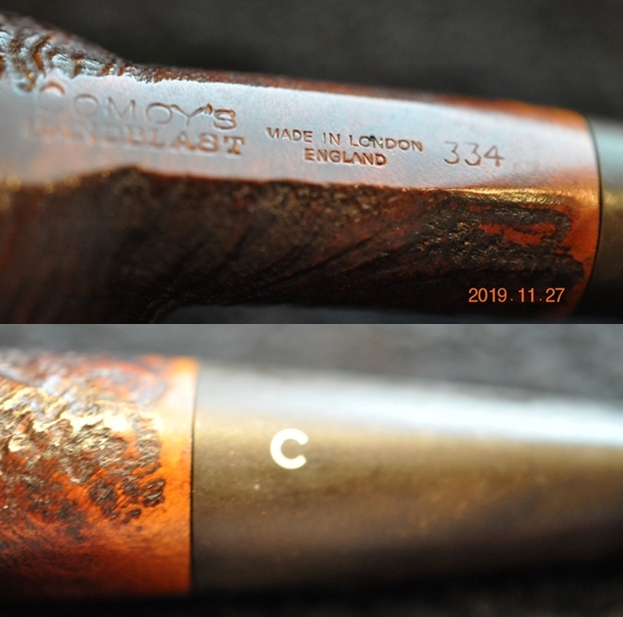
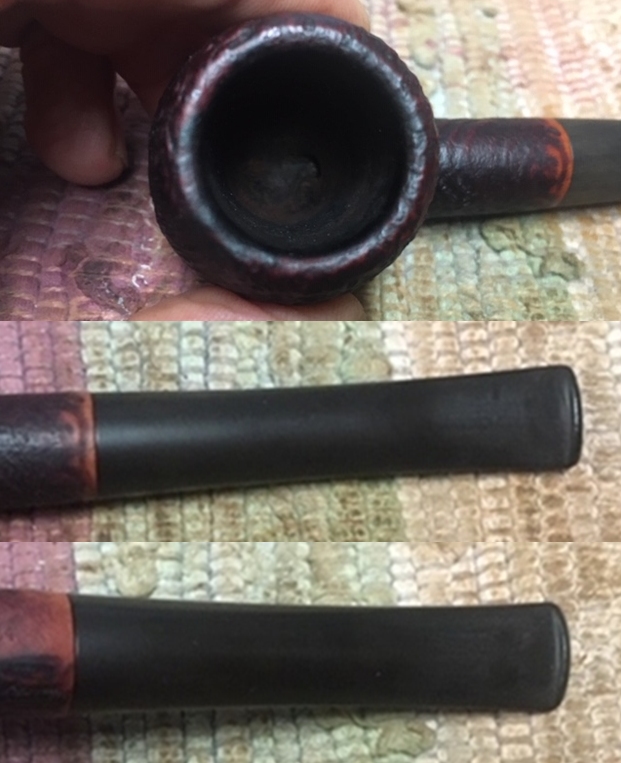
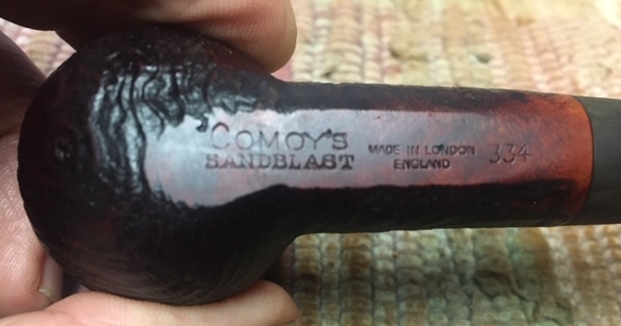
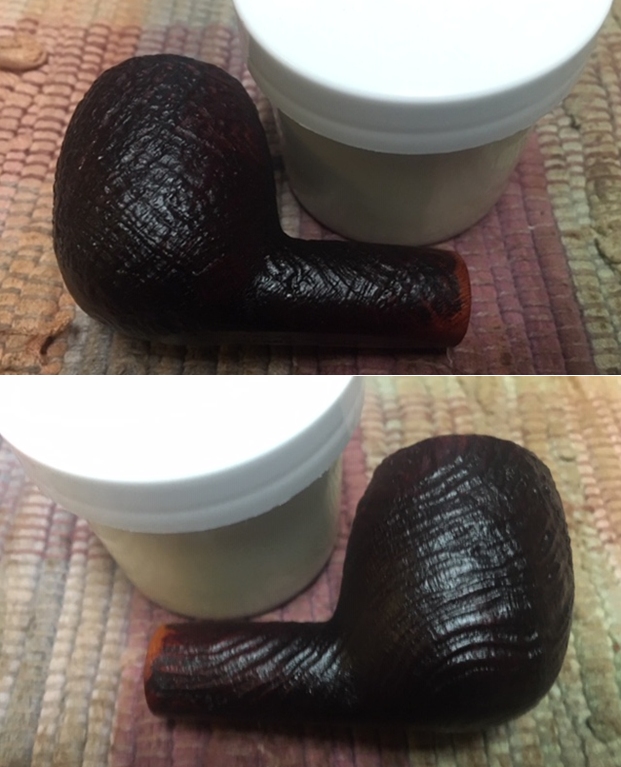
This Comoy’s Sandblast has a rugged, swirling sandblast finish with lots of nooks and crannies in the briar. It is a beauty! The pipe is stamped on a smooth panel on the underside of the heel and shank and reads Comoy’s Sandblast. That is followed by Made in London England and the shape number 334. The valleys and ridges of the sandblasted grain showing through the grime and dirt are a mixture that leaves a rich texture. It had a rich dark and medium contrasting brown stain that does not look too bad. There was a thick cake in the bowl with remnants of tobacco stuck on the walls. There was a fair lava overflow filling in the blast on the rim. The edges of the rim and top are dirty but look pretty pristine under the grime. It was a beautiful pipe that was dirty and tired looking. The stem was oxidized and calcified toward the end. Again, surprisingly it did not have the tooth marks that I have come to expect from Bob’s pipes. Jeff took photos of the pipe before he started his cleanup work on it. Jeff took photos of the bowl and rim top to show the cake in the bowl and the lava build up on the edges of the bowl. It was thick and hard but hopefully it had protected the rim and edges from damage. The edges look pretty good.Jeff took photos of the sides and heel of the bowl to show the condition of the finish. You can see the beautiful swirls of the sandblast. There is a lot of dust and grime filling in the valleys. He took a photo of the stamping on the smooth panel on the underside of the bowl and shank. The stamping was readable as you can see from the photos. It read Comoy’s Sandblast followed by Made in London England and the shape number 334.  The second photo shows the C logo on the left side of the taper stem is formed by three circles working to make the C. Jeff took photos of the top and underside of the stem showing the tooth chatter, scratching and oxidation on the stem surface and wear on the edges of the button.Before my work on the pipe began, I wanted to see where it fit in the Comoy’s timeline. I looked on Pipedia to pin down a date for the pipe. Since the pipe is stamped Made in London England I decided to use that to see what I could find. Pipedia has a great article on dating these pipes (https://pipedia.org/index.php?title=Comoy%27s_Dating_Guide#Made_in_London_England). I found the information below. I have highlighted the pertinent portion in red in the paragraph below. The stamping matches the pipe I am working on.

Appears in two versions. This is again stamped in a circle with “MADE” at the top, “IN” in the middle, and “LONDON” at the bottom, with “ENGLAND” in a straight line beneath. It can be assumed that this stamp was first used in the export drive in the early 1950s. On a Bulldog Sandblast from the early 50s the Comoy name no. 2 above [I insert number 2 here. A return to the slightly more fancy block letters with serifs and the apostrophe. (It seems that some grades carried different stamps, or at least that the stamping changed in different years for some grades.)] was used together with “MADE IN LONDON” over “ENGLAND”. There are no known examples of pre-WW II Comoy’s stamped in this way. The second version is the same as above but in a “rugby ball” shape. This shape is verified on Comoy´s “Extraordinaire” pipes.

From that I knew that I was working a Comoy’s Sandblast from the early 1950’s which fit very well into the timeframe of Bob’s other pipes.

I have also included two catalogue pages from Pipedia as well to show the line for sale at several time periods in Comoy’s history (https://pipedia.org/wiki/Comoy%27s). The first page is from the 1922 Catalogue and the second one is from a later date. Read the description that highlights how they did their sandblasting combining heat and sand to bring out the grain. With over 125 pipes to clean from Bob’s estate I took a batch of them to the states with me when I visited and left them with Jeff so he could help me out. Jeff cleaned the pipe with his usual penchant for thoroughness that I really appreciate. This one was a real mess and I did not know what to expect when I unwrapped it from his box. He reamed it with a PipNet pipe reamer and cleaned up the reaming with a Savinelli Fitsall Pipe Knife. He scrubbed out the internals with alcohol, pipe cleaners and cotton swabs until the pipe was clean. He scrubbed the exterior of the bowl with Murphy’s Oil Soap and a tooth brush to remove the grime and grit on the briar and the lava on the rim top. The finish looks very good with good looking grain around the bowl and shank. Jeff scrubbed the stem down with Soft Scrub and then soaked it in Before & After Deoxidizer to remove the oxidation on the rubber. When the pipe arrived here in Vancouver for the second stop of its restoration tour it looked very good. I took photos before I started my part of the work.   I took some close up photos of the rim top and also of the stem surface. I wanted to show what cleaned bowl and rim top looked like. The rim top looks excellent and the edges and surface are undamaged. The sandblast finish is very nice. I also took close up photos of the stem to show the light tooth marks and the remaining oxidation on the stem surface.I took a photo of the stamping on the underside of the shank and it is clear and readable. It is stamped as noted above.I took the stem off the shank and took some photos to give a clear picture of the pipe from the left side profile and the top looking down. It is a really pretty pipe.Since this is another pipe Bob’s estate I am sure that some of you have read at least some of the other restoration work that has been done on the previous pipes. You have also read what I have included about Bob Kerr, the pipeman who held these pipes in trust before I came to work on them (see photo to the left). Also, if you have followed the blog for long you will already know that I like to include background information on the pipeman whose pipes I am restoring. For me, when I am working on an estate I really like to have a sense of the person who held the pipes in trust before I worked on them. It gives me another dimension of the restoration work. I asked Brian if he or his wife would like to write a brief biographical tribute to her father, Bob. His daughter worked on it and I received the following short write up on him and some pictures to go along with the words including one of Bob’s carvings. Once again I thank you Brian and tell your wife thank you as well.

I am delighted to pass on these beloved pipes of my father’s. I hope each user gets many hours of contemplative pleasure as he did. I remember the aroma of tobacco in the rec room, as he put up his feet on his lazy boy. He’d be first at the paper then, no one could touch it before him. Maybe there would be a movie on with an actor smoking a pipe. He would have very definite opinions on whether the performer was a ‘real’ smoker or not, a distinction which I could never see but it would be very clear to him. He worked by day as a sales manager of a paper products company, a job he hated. What he longed for was the life of an artist, so on the weekends and sometimes mid-week evenings he would journey to his workshop and come out with wood sculptures, all of which he declared as crap but every one of them treasured by my sister and myself. Enjoy the pipes, and maybe a little of his creative spirit will enter you!

Now on to my part of the restoration of this Comoy’s Apple. The bowl and rim top were in great condition so this part of the restoration was very easy for me. I only had to rub the bowl down with Before & After Restoration Balm. I worked it into the surface of the briar with my fingertips and a horsehair shoe brush to clean, enliven and protect it. I let the balm sit for a little while and then buffed with a cotton cloth and shoe brush to raise the shine. Mark Hoover’s Balm is a product that I have come to appreciate and one I use on every pipe I have been working on. I set the bowl aside and turned my attention to the stem. I worked over the light tooth marks and blended them into the stem surface with 220 grit sandpaper. I started polishing the stem with 400 grit wet dry sandpaper. At this point it is starting to look much better.  I polished the vulcanite with micromesh sanding pads – 1500-12000 grit pads. I wiped it down with a damp cloth after each sanding pad. I used Before & After Pipe Polish – both Fine and Extra Fine to further polish the stem. This Comoy’s Sandblast 334 Apple turned out to be a great looking pipe. The mix of brown stains highlights the sandblasted grain around the bowl sides, top and bottom. The lighter brown stain on the flat bottom of the heel and shank as well forming a band around the shank end is a great contrast. The finish on the pipe is in excellent condition and the contrasting stains work well with the polished vulcanite taper stem. I put the stem back on the bowl and carefully buffed the pipe with Blue Diamond on the buffing wheel using a light touch on the briar. I gave the bowl and stem multiple coats of carnauba wax on the buffing wheel and followed that by buffing the entire pipe with a clean buffing pad. I hand buffed the pipe with a microfiber cloth to deepen the shine. The finished Comoy’s Sandblast Apple fits nicely in the hand and feels great. Give the finished pipe a look in the photos below. The dimensions of the pipe are Length: 5 ½ inches, Height: 1 ¾ inches, Outside diameter of the bowl: 1 ¼ inches, Chamber diameter: ¾ of an inch. If you are interested in carrying on Bob’s legacy with this pipe send me a message or an email. I have a lot more to work on of various brands. Perhaps one of those will catch your attention. Thanks for reading this blog and my reflections on the pipe while I worked on it. This is an interesting estate to bring back to life.

Renewed Life for a Comoy’s Tradition 496 Pot


Blog by Steve Laug

The next pipe on the table is a Comoy’s pipe from Alex’s collection. It is a pot shaped pipe with a saddle stem. It is a Cadogan period Comoy’s and has a single inlaid C on the left side of the saddle rather than the three circle version. It is a pretty pipe with a nice looking shape. The condition is another of those pipes that is shiny and polished on the outside and very dirty on the inside. It had been reamed but the shank and mortise were filthy with tars and oils. The pipe is stamped on both sides of the shank and reads Comoy’s over Tradition on the left side and on the right it has the Made in London England COM stamp circle followed by the shape number 496 near the bowl. The vulcanite saddle stem looks good at first glance but has tooth marks on both sides at the button. It has a stamped C on the left side of the saddle. I took photos of the pipe before I started my clean up work on the pipe. I took photos of the rim top and stem to show the condition of the bowl, rim top and edges and stem. The bowl looks clean and the rim top and beveled inner edge look very good. I was hopeful that the pipe was actually as clean as it was shiny! The next photos show the condition of the stem. It is also clean and has no remaining oxidation. There are tooth marks and chatter under the shine on both sides near the button.I took photos of the stamping on both sides of the shank. You can see that it is clear and readable on the left side and a little more blurry on the right side. There is also the inset C on the saddle stem – a new one piece inlaid C rather than the earlier version with the circles.I took the stem off the shank and took a photo of the pipe.The “C” stem logo on Comoy’s pipes was the “three-piece C” insert until the Cadogan era in the 1980s. That helped me with a potential date on this pipe – 1980s or later. Knowing that this was a newer Comoy’s pipe from the Cadogan time period did not deter me as the shape on this one fascinated me. I turned to work on the pipe on my work table. The pipe was externally quite clean and I wanted to make sure that the internals were also clean. I scrubbed the interior of the bowl and shank with pipe cleaners, cotton swabs and alcohol to remove the tars and oils. I scrubbed the inside of the stem with alcohol and pipe cleaners. The shank was very dirty and appeared to not have been cleaned. The stem was much better.I polished the briar with micromesh sanding pads – wet sanding with 1500-12000 grit pads. I wiped the briar down with a damp cloth after each sanding pad. I rubbed the briar down with Before & After Restoration Balm. I worked it into the briar with my fingertips. The product works to clean, enliven and preserve the briar. I let it sit for 10 minutes while I worked on the stem. After the time passed I buffed it with a cotton cloth to deepen the shine. The briar really comes alive with the balm.  I worked over the light tooth marks and blended them into the stem surface with 220 grit sandpaper. I started polishing the stem with 400 grit wet dry sandpaper. At this point it is starting to look much better.  I polished the vulcanite with micromesh sanding pads – 1500-12000 grit pads. I wiped it down with a damp cloth after each sanding pad. I used Before & After Pipe Polish – both Fine and Extra Fine to further polish the stem.   This Comoy’s Tradition 496 Pot turned out to be a great looking pipe. The mix of brown stains highlights the mix of grain around the bowl sides, top and bottom. The finish on the pipe is in excellent condition and the contrasting stains work well with the polished vulcanite saddle stem. I put the stem back on the bowl and carefully buffed the pipe with Blue Diamond on the buffing wheel using a light touch on the briar. I gave the bowl and stem multiple coats of carnauba wax on the buffing wheel and followed that by buffing the entire pipe with a clean buffing pad. I hand buffed the pipe with a microfiber cloth to deepen the shine. The finished Comoy’s Tradition fits nicely in the hand and feels great. Give the finished pipe a look in the photos below. The dimensions of the pipe are Length: 5 ½ inches, Height: 1 ¾ inches, Outside diameter of the bowl: 1 ½ inches, Chamber diameter: 7/8 of an inch. Thanks for walking through the restoration with me as I worked over another beautiful pipe. This pipe will be going back into the box of finished pipes that I have done for Alex so he can pick them up when COVID-19 allows. Looking forward to hearing what Alex thinks of this one. Thanks for your time.